window.__IS_SSR__=true
window.__INITIAL_STATE__={
"attachmentsReducer": {
"audio_0": {
"type": "attachments",
"id": "audio_0",
"imgSizes": {
"kqedFullSize": {
"file": "https://ww2.kqed.org/news/wp-content/themes/KQED-unified/img/audio_bgs/background0.jpg"
}
}
},
"audio_1": {
"type": "attachments",
"id": "audio_1",
"imgSizes": {
"kqedFullSize": {
"file": "https://ww2.kqed.org/news/wp-content/themes/KQED-unified/img/audio_bgs/background1.jpg"
}
}
},
"audio_2": {
"type": "attachments",
"id": "audio_2",
"imgSizes": {
"kqedFullSize": {
"file": "https://ww2.kqed.org/news/wp-content/themes/KQED-unified/img/audio_bgs/background2.jpg"
}
}
},
"audio_3": {
"type": "attachments",
"id": "audio_3",
"imgSizes": {
"kqedFullSize": {
"file": "https://ww2.kqed.org/news/wp-content/themes/KQED-unified/img/audio_bgs/background3.jpg"
}
}
},
"audio_4": {
"type": "attachments",
"id": "audio_4",
"imgSizes": {
"kqedFullSize": {
"file": "https://ww2.kqed.org/news/wp-content/themes/KQED-unified/img/audio_bgs/background4.jpg"
}
}
},
"placeholder": {
"type": "attachments",
"id": "placeholder",
"imgSizes": {
"thumbnail": {
"file": "https://cdn.kqed.org/wp-content/uploads/2024/12/KQED-Default-Image-816638274-2000x1333-1-160x107.jpg",
"width": 160,
"height": 107,
"mimeType": "image/jpeg"
},
"medium": {
"file": "https://cdn.kqed.org/wp-content/uploads/2024/12/KQED-Default-Image-816638274-2000x1333-1-800x533.jpg",
"width": 800,
"height": 533,
"mimeType": "image/jpeg"
},
"medium_large": {
"file": "https://cdn.kqed.org/wp-content/uploads/2024/12/KQED-Default-Image-816638274-2000x1333-1-768x512.jpg",
"width": 768,
"height": 512,
"mimeType": "image/jpeg"
},
"large": {
"file": "https://cdn.kqed.org/wp-content/uploads/2024/12/KQED-Default-Image-816638274-2000x1333-1-1020x680.jpg",
"width": 1020,
"height": 680,
"mimeType": "image/jpeg"
},
"1536x1536": {
"file": "https://cdn.kqed.org/wp-content/uploads/2024/12/KQED-Default-Image-816638274-2000x1333-1-1536x1024.jpg",
"width": 1536,
"height": 1024,
"mimeType": "image/jpeg"
},
"fd-lrg": {
"file": "https://cdn.kqed.org/wp-content/uploads/2024/12/KQED-Default-Image-816638274-2000x1333-1-1536x1024.jpg",
"width": 1536,
"height": 1024,
"mimeType": "image/jpeg"
},
"fd-med": {
"file": "https://cdn.kqed.org/wp-content/uploads/2024/12/KQED-Default-Image-816638274-2000x1333-1-1020x680.jpg",
"width": 1020,
"height": 680,
"mimeType": "image/jpeg"
},
"fd-sm": {
"file": "https://cdn.kqed.org/wp-content/uploads/2024/12/KQED-Default-Image-816638274-2000x1333-1-800x533.jpg",
"width": 800,
"height": 533,
"mimeType": "image/jpeg"
},
"post-thumbnail": {
"file": "https://cdn.kqed.org/wp-content/uploads/2024/12/KQED-Default-Image-816638274-2000x1333-1-672x372.jpg",
"width": 672,
"height": 372,
"mimeType": "image/jpeg"
},
"twentyfourteen-full-width": {
"file": "https://cdn.kqed.org/wp-content/uploads/2024/12/KQED-Default-Image-816638274-2000x1333-1-1038x576.jpg",
"width": 1038,
"height": 576,
"mimeType": "image/jpeg"
},
"xxsmall": {
"file": "https://cdn.kqed.org/wp-content/uploads/2024/12/KQED-Default-Image-816638274-2000x1333-1-160x107.jpg",
"width": 160,
"height": 107,
"mimeType": "image/jpeg"
},
"xsmall": {
"file": "https://cdn.kqed.org/wp-content/uploads/2024/12/KQED-Default-Image-816638274-2000x1333-1-672x372.jpg",
"width": 672,
"height": 372,
"mimeType": "image/jpeg"
},
"small": {
"file": "https://cdn.kqed.org/wp-content/uploads/2024/12/KQED-Default-Image-816638274-2000x1333-1-672x372.jpg",
"width": 672,
"height": 372,
"mimeType": "image/jpeg"
},
"xlarge": {
"file": "https://cdn.kqed.org/wp-content/uploads/2024/12/KQED-Default-Image-816638274-2000x1333-1-1020x680.jpg",
"width": 1020,
"height": 680,
"mimeType": "image/jpeg"
},
"full-width": {
"file": "https://cdn.kqed.org/wp-content/uploads/2024/12/KQED-Default-Image-816638274-2000x1333-1-1920x1280.jpg",
"width": 1920,
"height": 1280,
"mimeType": "image/jpeg"
},
"guest-author-32": {
"file": "https://cdn.kqed.org/wp-content/uploads/2025/01/KQED-Default-Image-816638274-1333x1333-1-160x160.jpg",
"width": 32,
"height": 32,
"mimeType": "image/jpeg"
},
"guest-author-50": {
"file": "https://cdn.kqed.org/wp-content/uploads/2025/01/KQED-Default-Image-816638274-1333x1333-1-160x160.jpg",
"width": 50,
"height": 50,
"mimeType": "image/jpeg"
},
"guest-author-64": {
"file": "https://cdn.kqed.org/wp-content/uploads/2025/01/KQED-Default-Image-816638274-1333x1333-1-160x160.jpg",
"width": 64,
"height": 64,
"mimeType": "image/jpeg"
},
"guest-author-96": {
"file": "https://cdn.kqed.org/wp-content/uploads/2025/01/KQED-Default-Image-816638274-1333x1333-1-160x160.jpg",
"width": 96,
"height": 96,
"mimeType": "image/jpeg"
},
"guest-author-128": {
"file": "https://cdn.kqed.org/wp-content/uploads/2025/01/KQED-Default-Image-816638274-1333x1333-1-160x160.jpg",
"width": 128,
"height": 128,
"mimeType": "image/jpeg"
},
"detail": {
"file": "https://cdn.kqed.org/wp-content/uploads/2025/01/KQED-Default-Image-816638274-1333x1333-1-160x160.jpg",
"width": 160,
"height": 160,
"mimeType": "image/jpeg"
},
"kqedFullSize": {
"file": "https://cdn.kqed.org/wp-content/uploads/2024/12/KQED-Default-Image-816638274-2000x1333-1.jpg",
"width": 2000,
"height": 1333
}
}
},
"news_63672": {
"type": "attachments",
"id": "news_63672",
"meta": {
"index": "attachments_1716263798",
"site": "news",
"id": "63672",
"found": true
},
"parent": 63663,
"imgSizes": {
"kqedFullSize": {
"file": "https://ww2.kqed.org/app/uploads/sites/10/2012/04/deathpenalty0516-e1447348826906.jpg",
"width": 1920,
"height": 1440
}
},
"publishDate": 1335488952,
"modified": 1447366779,
"caption": "Execution table at San Quentin State Prison. ",
"description": "Chair in San Quentin's death row. (Scott Shafer/KQED)",
"title": "San Quentin-Death Chamber",
"credit": "Scott Shafer/KQED",
"status": "inherit",
"isLoading": false,
"fetchFailed": false
},
"news_138614": {
"type": "attachments",
"id": "news_138614",
"meta": {
"index": "attachments_1716263798",
"site": "news",
"id": "138614",
"found": true
},
"parent": 138599,
"imgSizes": {
"kqedFullSize": {
"file": "https://ww2.kqed.org/app/uploads/sites/10/2014/06/Parolee-Medi-cal-2-Kamka-richard-2.jpeg",
"width": 2816,
"height": 2112
}
},
"publishDate": 1402361583,
"modified": 1402361583,
"caption": "California prisoner Richard Kamka gets help applying for Medi-Cal before he is paroled. (Julie Small/KQED)",
"description": null,
"title": "Parolee",
"credit": null,
"status": "inherit",
"isLoading": false,
"fetchFailed": false
},
"news_10341818": {
"type": "attachments",
"id": "news_10341818",
"meta": {
"index": "attachments_1716263798",
"site": "news",
"id": "10341818",
"found": true
},
"parent": 10341817,
"imgSizes": {
"thumbnail": {
"file": "https://ww2.kqed.org/app/uploads/sites/10/2014/09/OptionsBerkeley-400x225.jpg",
"width": 400,
"mimeType": "image/jpeg",
"height": 225
},
"kqedFullSize": {
"file": "https://ww2.kqed.org/app/uploads/sites/10/2014/09/OptionsBerkeley.jpg",
"width": 640,
"height": 360
},
"guest-author-96": {
"file": "https://ww2.kqed.org/app/uploads/sites/10/2014/09/OptionsBerkeley-96x96.jpg",
"width": 96,
"mimeType": "image/jpeg",
"height": 96
},
"guest-author-64": {
"file": "https://ww2.kqed.org/app/uploads/sites/10/2014/09/OptionsBerkeley-64x64.jpg",
"width": 64,
"mimeType": "image/jpeg",
"height": 64
},
"detail": {
"file": "https://ww2.kqed.org/app/uploads/sites/10/2014/09/OptionsBerkeley-75x75.jpg",
"width": 75,
"mimeType": "image/jpeg",
"height": 75
},
"guest-author-32": {
"file": "https://ww2.kqed.org/app/uploads/sites/10/2014/09/OptionsBerkeley-32x32.jpg",
"width": 32,
"mimeType": "image/jpeg",
"height": 32
},
"guest-author-128": {
"file": "https://ww2.kqed.org/app/uploads/sites/10/2014/09/OptionsBerkeley-128x128.jpg",
"width": 128,
"mimeType": "image/jpeg",
"height": 128
}
},
"publishDate": 1412135140,
"modified": 1412135140,
"caption": "Just-released lifers can find housing, counseling, and help getting a driver's license at Options Recovery in Berkeley. (Jeremy Raff/KQED)",
"description": null,
"title": "OptionsBerkeley",
"credit": null,
"status": "inherit",
"isLoading": false,
"fetchFailed": false
},
"news_93554": {
"type": "attachments",
"id": "news_93554",
"meta": {
"index": "attachments_1716263798",
"site": "news",
"id": "93554",
"found": true
},
"parent": 93552,
"imgSizes": {
"kqedFullSize": {
"file": "https://cdn.kqed.org/wp-content/uploads/sites/10/2013/04/RS50_ChinoStatePrisonInmates20130108-e1381859885435.jpg",
"width": 640,
"height": 460
}
},
"publishDate": 1365204240,
"modified": 1707835461,
"caption": "Inmates at Chino State Prison. ",
"description": "An inmate at Chino State Prison sleeps on his bunk bed in a gymnasium that was modified to house prisoners on December 10, 2010 in Chino, California. The U.S. Supreme Court is preparing to hear arguments to appeal a federal court's ruling last year that the California state prison system would have to release 40,000 prisoners to cope with overcrowding so severe that it violated their human rights. More than 144,000 inmates are currently incarcerated in prisons that were designed to hold about 80,000.",
"title": "Supreme Court To Rule On California's Overcrowded Prisons",
"credit": "Photo By: Kevork Djansezian/Getty Images",
"status": "inherit",
"altTag": null,
"isLoading": false,
"fetchFailed": false
},
"news_132450": {
"type": "attachments",
"id": "news_132450",
"meta": {
"index": "attachments_1716263798",
"site": "news",
"id": "132450",
"found": true
},
"parent": 132446,
"imgSizes": {
"kqedFullSize": {
"file": "https://ww2.kqed.org/app/uploads/sites/10/2014/04/pepperspray.jpg",
"width": 590,
"height": 333
}
},
"publishDate": 1397261554,
"modified": 1540421975,
"caption": "A still image from a video showing California prison guards dousing mentally ill inmates repeatedly with pepper spray.",
"description": "A still image from a video showing California prison guards dousing mentally ill inmates repeatedly with pepper spray.",
"title": "pepperspray",
"credit": "CDCR video released via federal court case",
"status": "inherit",
"isLoading": false,
"fetchFailed": false
},
"news_126836": {
"type": "attachments",
"id": "news_126836",
"meta": {
"index": "attachments_1716263798",
"site": "news",
"id": "126836",
"found": true
},
"parent": 126817,
"imgSizes": {
"kqedFullSize": {
"file": "https://ww2.kqed.org/app/uploads/sites/10/2014/02/handcuffs.jpg",
"width": 1700,
"height": 800
}
},
"publishDate": 1392769899,
"modified": 1392769899,
"caption": "(Photo: Wikimedia Commons)",
"description": "(Photo: Wikimedia Commons)",
"title": "Handcuffs",
"credit": null,
"status": "inherit",
"isLoading": false,
"fetchFailed": false
},
"news_100716": {
"type": "attachments",
"id": "news_100716",
"meta": {
"index": "attachments_1716263798",
"site": "news",
"id": "100716",
"found": true
},
"parent": 100707,
"imgSizes": {
"kqedFullSize": {
"file": "https://ww2.kqed.org/app/uploads/sites/10/2013/06/RS50_ChinoStatePrisonInmates20130108-scr.jpg",
"width": 850,
"height": 611
}
},
"publishDate": 1371761589,
"modified": 1371761589,
"caption": "Inmates at Chino State Prison in California. (Kevork Djansezian/Getty Images)",
"description": null,
"title": "RS50_ChinoStatePrisonInmates20130108-scr",
"credit": null,
"status": "inherit",
"isLoading": false,
"fetchFailed": false
},
"news_93223": {
"type": "attachments",
"id": "news_93223",
"meta": {
"index": "attachments_1716263798",
"site": "news",
"id": "93223",
"found": true
},
"parent": 93219,
"imgSizes": {
"kqedFullSize": {
"file": "https://ww2.kqed.org/app/uploads/sites/10/2013/04/RS1033_PrisonCrowding-e1414171546235.jpg",
"width": 1440,
"height": 934
}
},
"publishDate": 1365023072,
"modified": 1365023072,
"caption": "In 2013, a guard kept watch at Chino State Prison. (Kevork Djansezian/Getty Images)",
"description": "An inmate at Chino State Prison sleeps on his bunk bed in a gymnasium that was modified to house prisoners on December 10, 2010 in Chino, California. The U.S. Supreme Court is preparing to hear arguments to appeal a federal court's ruling last year that the California state prison system would have to release 40,000 prisoners to cope with overcrowding so severe that it violated their human rights. More than 144,000 inmates are currently incarcerated in prisons that were designed to hold about 80,000.",
"title": "Prison guard",
"credit": null,
"status": "inherit",
"isLoading": false,
"fetchFailed": false
},
"news_118324": {
"type": "attachments",
"id": "news_118324",
"meta": {
"index": "attachments_1716263798",
"site": "news",
"id": "118324",
"found": true
},
"parent": 0,
"imgSizes": {
"kqedFullSize": {
"file": "https://ww2.kqed.org/app/uploads/sites/10/2013/11/RichardBrown11.jpg",
"width": 640,
"height": 419
}
},
"publishDate": 1384481172,
"modified": 1384481172,
"caption": "From left, Minard and Vivian Roorda, with Richard Brown. (Sarah Rice/KQED)",
"description": null,
"title": "RichardBrown11",
"credit": null,
"status": "inherit",
"isLoading": false,
"fetchFailed": false
},
"news_118370": {
"type": "attachments",
"id": "news_118370",
"meta": {
"index": "attachments_1716263798",
"site": "news",
"id": "118370",
"found": true
},
"parent": 118343,
"imgSizes": {
"kqedFullSize": {
"file": "https://ww2.kqed.org/app/uploads/sites/10/2013/11/RS7602_threestrikers03_adi-hpf.jpg",
"width": 640,
"height": 427
}
},
"publishDate": 1384500664,
"modified": 1384500664,
"caption": "Pete Marin, 52, served 18 years for petty theft under California's 1994 Three Strikes law. (Adithya Sambamurthy/KQED)",
"description": null,
"title": "RS7602_threestrikers03_adi-hpf",
"credit": null,
"status": "inherit",
"isLoading": false,
"fetchFailed": false
}
},
"audioPlayerReducer": {
"postId": "stream_live",
"isPaused": true,
"isPlaying": false,
"pfsActive": false,
"pledgeModalIsOpen": true,
"playerDrawerIsOpen": false,
"liveAudioPlayStartedAt": 0,
"liveAudioPlayContext": ""
},
"authorsReducer": {
"dclyde": {
"type": "authors",
"id": "104",
"meta": {
"index": "authors_1716337520",
"id": "104",
"found": true
},
"name": "Don Clyde",
"firstName": "Don",
"lastName": "Clyde",
"slug": "dclyde",
"email": "dclyde@kqed.org",
"display_author_email": false,
"staff_mastheads": [],
"title": "KQED Contributor",
"bio": "Don Clyde is an online producer, reporter and copy editor for KQED News. Before venturing into journalism, he worked as a medical device engineer and scientist for nearly a decade after earning a degree in physics from UC Berkeley. He loves travel, reading, living in Oakland, and most importantly, a good walk. Email him at dclyde@kqed.org or follow him @clydedon.",
"avatar": "https://secure.gravatar.com/avatar/decd3e640c3eedbd0a574275aebb2d19?s=600&d=blank&r=g",
"twitter": "clydedon",
"facebook": null,
"instagram": null,
"linkedin": null,
"sites": [
{
"site": "artschool",
"roles": [
"editor"
]
},
{
"site": "news",
"roles": [
"administrator"
]
},
{
"site": "futureofyou",
"roles": [
"editor"
]
},
{
"site": "about",
"roles": [
"editor"
]
},
{
"site": "mindshift",
"roles": [
"contributor"
]
},
{
"site": "bayareabites",
"roles": [
"contributor"
]
},
{
"site": "lowdown",
"roles": [
"editor"
]
},
{
"site": "stateofhealth",
"roles": [
"administrator"
]
},
{
"site": "spark",
"roles": [
"administrator"
]
},
{
"site": "trulyca",
"roles": [
"administrator"
]
},
{
"site": "imagemakers",
"roles": [
"administrator"
]
},
{
"site": "science",
"roles": []
},
{
"site": "education",
"roles": [
"editor"
]
},
{
"site": "quest",
"roles": [
"subscriber"
]
},
{
"site": "checkplease",
"roles": [
"subscriber"
]
},
{
"site": "forum",
"roles": [
"editor"
]
},
{
"site": "perspectives",
"roles": [
"editor"
]
}
],
"headData": {
"title": "Don Clyde | KQED",
"description": "KQED Contributor",
"ogImgSrc": "https://secure.gravatar.com/avatar/decd3e640c3eedbd0a574275aebb2d19?s=600&d=blank&r=g",
"twImgSrc": "https://secure.gravatar.com/avatar/decd3e640c3eedbd0a574275aebb2d19?s=600&d=blank&r=g"
},
"isLoading": false,
"link": "/author/dclyde"
},
"danbrekke": {
"type": "authors",
"id": "222",
"meta": {
"index": "authors_1716337520",
"id": "222",
"found": true
},
"name": "Dan Brekke",
"firstName": "Dan",
"lastName": "Brekke",
"slug": "danbrekke",
"email": "dbrekke@kqed.org",
"display_author_email": true,
"staff_mastheads": [
"news",
"science"
],
"title": "KQED Editor and Reporter",
"bio": "Dan Brekke is a reporter and editor for KQED News, responsible for coverage of topics ranging from California water issues to the Bay Area's transportation challenges. In a newsroom career that began in Chicago in 1972, Dan has worked for \u003cem>The San Francisco Examiner,\u003c/em> Wired and TechTV and has been published in The New York Times, The New York Times Magazine, Business 2.0, Salon and elsewhere.\r\n\r\nSince joining KQED in 2007, Dan has reported, edited and produced both radio and online features and breaking news pieces. He has shared as both editor and reporter in four Society of Professional Journalists Norcal Excellence in Journalism awards and one Edward R. Murrow regional award. He was chosen for a spring 2017 residency at the Mesa Refuge to advance his research on California salmon.\r\n\r\nEmail Dan at: \u003ca href=\"mailto:dbrekke@kqed.org\">dbrekke@kqed.org\u003c/a>\r\n\r\n\u003cstrong>Twitter:\u003c/strong> \u003ca href=\"https://twitter.com/danbrekke\" rel=\"noopener noreferrer\">twitter.com/danbrekke\u003c/a>\r\n\u003cstrong>Facebook:\u003c/strong> \u003ca href=\"https://www.facebook.com/danbrekke\" rel=\"noopener noreferrer\">www.facebook.com/danbrekke\u003c/a>\r\n\u003cstrong>LinkedIn:\u003c/strong> \u003ca href=\"https://www.linkedin.com/in/danbrekke\" rel=\"noopener noreferrer\">www.linkedin.com/in/danbrekke\u003c/a>",
"avatar": "https://secure.gravatar.com/avatar/8f1f0d2a978fb3b23426c922c7e2af558fa36905b49c4ce76a97dc3c72d27226?s=600&d=mm&r=g",
"twitter": "danbrekke",
"bluesky": null,
"facebook": null,
"instagram": "https://www.instagram.com/dan.brekke/",
"linkedin": "https://www.linkedin.com/in/danbrekke/",
"sites": [
{
"site": "news",
"roles": [
"administrator",
"create_posts"
]
},
{
"site": "stateofhealth",
"roles": [
"editor"
]
},
{
"site": "science",
"roles": [
"editor"
]
},
{
"site": "quest",
"roles": [
"contributor"
]
},
{
"site": "food",
"roles": [
"contributor"
]
},
{
"site": "forum",
"roles": [
"contributor"
]
},
{
"site": "elections",
"roles": [
"editor"
]
},
{
"site": "liveblog",
"roles": [
"editor"
]
}
],
"headData": {
"title": "Dan Brekke | KQED",
"description": "KQED Editor and Reporter",
"ogImgSrc": "https://secure.gravatar.com/avatar/8f1f0d2a978fb3b23426c922c7e2af558fa36905b49c4ce76a97dc3c72d27226?s=600&d=mm&r=g",
"twImgSrc": "https://secure.gravatar.com/avatar/8f1f0d2a978fb3b23426c922c7e2af558fa36905b49c4ce76a97dc3c72d27226?s=600&d=mm&r=g"
},
"isLoading": false,
"link": "/author/danbrekke"
},
"kqed": {
"type": "authors",
"id": "236",
"meta": {
"index": "authors_1716337520",
"id": "236",
"found": true
},
"name": "KQED News Staff",
"firstName": "KQED News Staff",
"lastName": null,
"slug": "kqed",
"email": "faq@kqed.org",
"display_author_email": false,
"staff_mastheads": [],
"title": null,
"bio": null,
"avatar": "https://secure.gravatar.com/avatar/ef0e801a68c4c54afa9180db14084167?s=600&d=blank&r=g",
"twitter": null,
"facebook": null,
"instagram": null,
"linkedin": null,
"sites": [
{
"site": "arts",
"roles": [
"contributor"
]
},
{
"site": "news",
"roles": [
"editor"
]
},
{
"site": "futureofyou",
"roles": [
"author"
]
}
],
"headData": {
"title": "KQED News Staff | KQED",
"description": null,
"ogImgSrc": "https://secure.gravatar.com/avatar/ef0e801a68c4c54afa9180db14084167?s=600&d=blank&r=g",
"twImgSrc": "https://secure.gravatar.com/avatar/ef0e801a68c4c54afa9180db14084167?s=600&d=blank&r=g"
},
"isLoading": false,
"link": "/author/kqed"
},
"kqednewsstaffandwires": {
"type": "authors",
"id": "237",
"meta": {
"index": "authors_1716337520",
"id": "237",
"found": true
},
"name": "KQED News Staff and Wires",
"firstName": "KQED News Staff and Wires",
"lastName": null,
"slug": "kqednewsstaffandwires",
"email": "onlinenewsstaff@kqed.org",
"display_author_email": false,
"staff_mastheads": [],
"title": null,
"bio": null,
"avatar": "https://secure.gravatar.com/avatar/72295af8ebbfbd19a4948f5271285664?s=600&d=blank&r=g",
"twitter": null,
"facebook": null,
"instagram": null,
"linkedin": null,
"sites": [
{
"site": "arts",
"roles": [
"contributor"
]
},
{
"site": "news",
"roles": [
"contributor"
]
},
{
"site": "lowdown",
"roles": [
"author"
]
},
{
"site": "stateofhealth",
"roles": [
"contributor"
]
},
{
"site": "food",
"roles": [
"author"
]
}
],
"headData": {
"title": "KQED News Staff and Wires | KQED",
"description": null,
"ogImgSrc": "https://secure.gravatar.com/avatar/72295af8ebbfbd19a4948f5271285664?s=600&d=blank&r=g",
"twImgSrc": "https://secure.gravatar.com/avatar/72295af8ebbfbd19a4948f5271285664?s=600&d=blank&r=g"
},
"isLoading": false,
"link": "/author/kqednewsstaffandwires"
},
"minakim": {
"type": "authors",
"id": "243",
"meta": {
"index": "authors_1716337520",
"id": "243",
"found": true
},
"name": "Mina Kim",
"firstName": "Mina",
"lastName": "Kim",
"slug": "minakim",
"email": "mkim@kqed.org",
"display_author_email": false,
"staff_mastheads": [
"news"
],
"title": "Host, Forum",
"bio": "Mina Kim is host of the 10 a.m. statewide hour of Forum; a live daily talk show for curious Californians on issues that matter to the state and nation, with a particular emphasis on race and equity.\r\n\r\nBefore joining the Forum team, Mina was KQED’s evening news anchor, and health reporter for The California Report. Her award-winning work has included natural disasters in Napa and gun violence in Oakland. Mina grew up in St. John’s, Newfoundland.",
"avatar": "https://secure.gravatar.com/avatar/145ce657a2d08cb86d93686beb958982?s=600&d=blank&r=g",
"twitter": "mkimreporter",
"facebook": null,
"instagram": null,
"linkedin": null,
"sites": [
{
"site": "news",
"roles": [
"contributor"
]
},
{
"site": "stateofhealth",
"roles": [
"author"
]
},
{
"site": "forum",
"roles": [
"editor"
]
}
],
"headData": {
"title": "Mina Kim | KQED",
"description": "Host, Forum",
"ogImgSrc": "https://secure.gravatar.com/avatar/145ce657a2d08cb86d93686beb958982?s=600&d=blank&r=g",
"twImgSrc": "https://secure.gravatar.com/avatar/145ce657a2d08cb86d93686beb958982?s=600&d=blank&r=g"
},
"isLoading": false,
"link": "/author/minakim"
},
"mmontgomery": {
"type": "authors",
"id": "245",
"meta": {
"index": "authors_1716337520",
"id": "245",
"found": true
},
"name": "Michael Montgomery",
"firstName": "Michael",
"lastName": "Montgomery",
"slug": "mmontgomery",
"email": "t4monk@gmail.com",
"display_author_email": false,
"staff_mastheads": [],
"title": null,
"bio": null,
"avatar": "https://secure.gravatar.com/avatar/79a5f79d5aa798ddff903c26834bb398?s=600&d=blank&r=g",
"twitter": null,
"facebook": null,
"instagram": null,
"linkedin": null,
"sites": [
{
"site": "news",
"roles": [
"contributor"
]
}
],
"headData": {
"title": "Michael Montgomery | KQED",
"description": null,
"ogImgSrc": "https://secure.gravatar.com/avatar/79a5f79d5aa798ddff903c26834bb398?s=600&d=blank&r=g",
"twImgSrc": "https://secure.gravatar.com/avatar/79a5f79d5aa798ddff903c26834bb398?s=600&d=blank&r=g"
},
"isLoading": false,
"link": "/author/mmontgomery"
},
"scottshafer": {
"type": "authors",
"id": "255",
"meta": {
"index": "authors_1716337520",
"id": "255",
"found": true
},
"name": "Scott Shafer",
"firstName": "Scott",
"lastName": "Shafer",
"slug": "scottshafer",
"email": "sshafer@kqed.org",
"display_author_email": false,
"staff_mastheads": [
"news"
],
"title": "KQED Contributor",
"bio": "Scott Shafer is a senior editor with the KQED Politics and Government desk. He is co-host of Political Breakdown, the award-winning radio show and podcast with a personal take on the world of politics. Scott came to KQED in 1998 to host the statewide\u003cem> California Report\u003c/em>. Prior to that he had extended stints in politics and government\u003cem>.\u003c/em> He uses that inside experience at KQED in his, reporting, hosting and analysis for the politics desk. Scott collaborated \u003cem>Political Breakdown a\u003c/em>nd on \u003cem>The Political Mind of Jerry Brown, \u003c/em>an eight-part series about the life and extraordinary political career of the former governor. For fun, he plays water polo with the San Francisco Tsunami.",
"avatar": "https://secure.gravatar.com/avatar/a62ebae45b79d7aed1a39a0e3bf68104?s=600&d=blank&r=g",
"twitter": "scottshafer",
"bluesky": null,
"facebook": null,
"instagram": null,
"linkedin": null,
"sites": [
{
"site": "news",
"roles": [
"editor"
]
},
{
"site": "stateofhealth",
"roles": [
"author"
]
},
{
"site": "science",
"roles": [
"author"
]
},
{
"site": "forum",
"roles": [
"subscriber"
]
},
{
"site": "liveblog",
"roles": [
"author"
]
}
],
"headData": {
"title": "Scott Shafer | KQED",
"description": "KQED Contributor",
"ogImgSrc": "https://secure.gravatar.com/avatar/a62ebae45b79d7aed1a39a0e3bf68104?s=600&d=blank&r=g",
"twImgSrc": "https://secure.gravatar.com/avatar/a62ebae45b79d7aed1a39a0e3bf68104?s=600&d=blank&r=g"
},
"isLoading": false,
"link": "/author/scottshafer"
},
"aemslie": {
"type": "authors",
"id": "3206",
"meta": {
"index": "authors_1716337520",
"id": "3206",
"found": true
},
"name": "Alex Emslie",
"firstName": "Alex",
"lastName": "Emslie",
"slug": "aemslie",
"email": "aemslie@kqed.org",
"display_author_email": true,
"staff_mastheads": [
"news"
],
"title": "KQED Senior Editor",
"bio": "Alex Emslie is senior editor of talent and development at KQED, where he manages dozens of early career journalists and oversees news department internships.\r\n\r\nHe is a former carpenter and proud graduate of City College of San Francisco and San Francisco State University, where he studied journalism and criminal justice before joining KQED in 2013.\r\n\r\nAlex produced investigative journalism focused on \u003ca href=\"https://www.kqed.org/news/11667594/the-trials-of-marvin-mutch-video\">criminal justice\u003c/a> and policing for most of a decade. He has broken major stories about \u003ca href=\"https://www.kqed.org/news/135682/amid-a-series-of-vallejo-police-shootings-one-officers-name-stands-out\">police use of deadly force\u003c/a>, \u003ca href=\"https://www.kqed.org/news/10454955/racist-texts-prompt-sfpd-internal-investigation\">officer misconduct\u003c/a> and \u003ca href=\"https://www.kqed.org/news/11712239/terrorist-or-troll-judge-to-weigh-whether-oakland-man-really-intended-to-attack-bay-area\">other\u003c/a> \u003ca href=\"https://www.kqed.org/news/11221414/hayward-paid-159000-to-husband-of-retired-police-chief-documents-show\">high\u003c/a>-\u003ca href=\"https://www.kqed.org/news/10622762/the-forgotten-tracking-two-homicides-in-san-francisco-public-housing\">profile\u003c/a> \u003ca href=\"https://www.kqed.org/news/11624516/federal-agency-promoted-ranger-just-months-after-his-gun-was-stolen-and-used-in-steinle-killing\">cases\u003c/a>. He co-founded the \u003ca href=\"https://projects.scpr.org/california-reporting-project/\">California Reporting Project\u003c/a> in 2019 to obtain and report on previously confidential police internal investigations. The effort produced well over 100 original stories and changed the course of multiple criminal cases.\r\n\r\nHis work has been recognized with numerous journalism awards, including a national Edward R. Murrow award for several years of \u003ca href=\"https://www.kqed.org/news/11688481/sfpd-officers-in-mario-woods-case-recount-shooting-in-newly-filed-depositions\">reporting\u003c/a> on the San Francisco Police shooting of Mario Woods. His \u003ca href=\"https://www.kqed.org/news/147854/half-of-those-killed-by-san-francisco-police-are-mentally-ill\">reporting\u003c/a> on police killings of people in psychiatric crisis was cited in amicus briefs before the U.S. Supreme Court.\r\n\r\nAlex now enjoys mentoring the next generation of journalists at KQED.",
"avatar": "https://secure.gravatar.com/avatar/e691e65209f20e9da202bd730ead5663?s=600&d=blank&r=g",
"twitter": "SFNewsReporter",
"facebook": null,
"instagram": null,
"linkedin": null,
"sites": [
{
"site": "arts",
"roles": [
"editor"
]
},
{
"site": "news",
"roles": [
"editor"
]
},
{
"site": "mindshift",
"roles": [
"editor"
]
},
{
"site": "stateofhealth",
"roles": [
"editor"
]
},
{
"site": "science",
"roles": [
"administrator"
]
}
],
"headData": {
"title": "Alex Emslie | KQED",
"description": "KQED Senior Editor",
"ogImgSrc": "https://secure.gravatar.com/avatar/e691e65209f20e9da202bd730ead5663?s=600&d=blank&r=g",
"twImgSrc": "https://secure.gravatar.com/avatar/e691e65209f20e9da202bd730ead5663?s=600&d=blank&r=g"
},
"isLoading": false,
"link": "/author/aemslie"
}
},
"pagesReducer": {
"news_tag_prisons": {
"type": "terms",
"id": "news_1471",
"meta": {
"index": "terms_1716263798",
"site": "news",
"id": "1471",
"score": 9.305508
},
"featImg": null,
"name": "prisons",
"description": null,
"taxonomy": "tag",
"headData": {
"twImgId": null,
"twTitle": null,
"ogTitle": null,
"ogImgId": null,
"twDescription": null,
"description": null,
"title": "prisons Archives | KQED News",
"ogDescription": null
},
"ttid": 1483,
"slug": "prisons",
"isLoading": false,
"title": "prisons",
"pageMeta": {
"site": "news",
"WpPageTemplate": "page-topic-editorial",
"currentPage": 14
},
"blocks": [
{
"blockName": "kqed/post-list",
"attrs": {
"layout": "cardArticle2",
"query": "posts/news?tag=prisons",
"seeMore": false,
"paginated": true,
"page": 14
}
},
{
"blockName": "kqed/ad"
}
]
}
},
"pfsSessionReducer": {},
"postsReducer": {
"stream_live": {
"type": "live",
"id": "stream_live",
"audioUrl": "https://streams.kqed.org/kqedradio",
"title": "Live Stream",
"excerpt": "Live Stream information currently unavailable.",
"link": "/radio",
"featImg": "",
"label": {
"name": "KQED Live",
"link": "/"
}
},
"stream_kqedNewscast": {
"type": "posts",
"id": "stream_kqedNewscast",
"audioUrl": "https://www.kqed.org/.stream/anon/radio/RDnews/newscast.mp3?_=1",
"title": "KQED Newscast",
"featImg": "",
"label": {
"name": "88.5 FM",
"link": "/"
}
},
"news_141962": {
"type": "posts",
"id": "news_141962",
"meta": {
"index": "posts_1716263798",
"site": "news",
"id": "141962",
"score": null,
"sort": [
1405543114000
]
},
"parent": 0,
"labelTerm": {
"site": "news",
"term": 6944
},
"blocks": [],
"publishDate": 1405543114,
"format": "aside",
"disqusTitle": "Los Angeles Judge Finds California Death Penalty Unconstitutional",
"title": "Los Angeles Judge Finds California Death Penalty Unconstitutional",
"headTitle": "News Fix | KQED News",
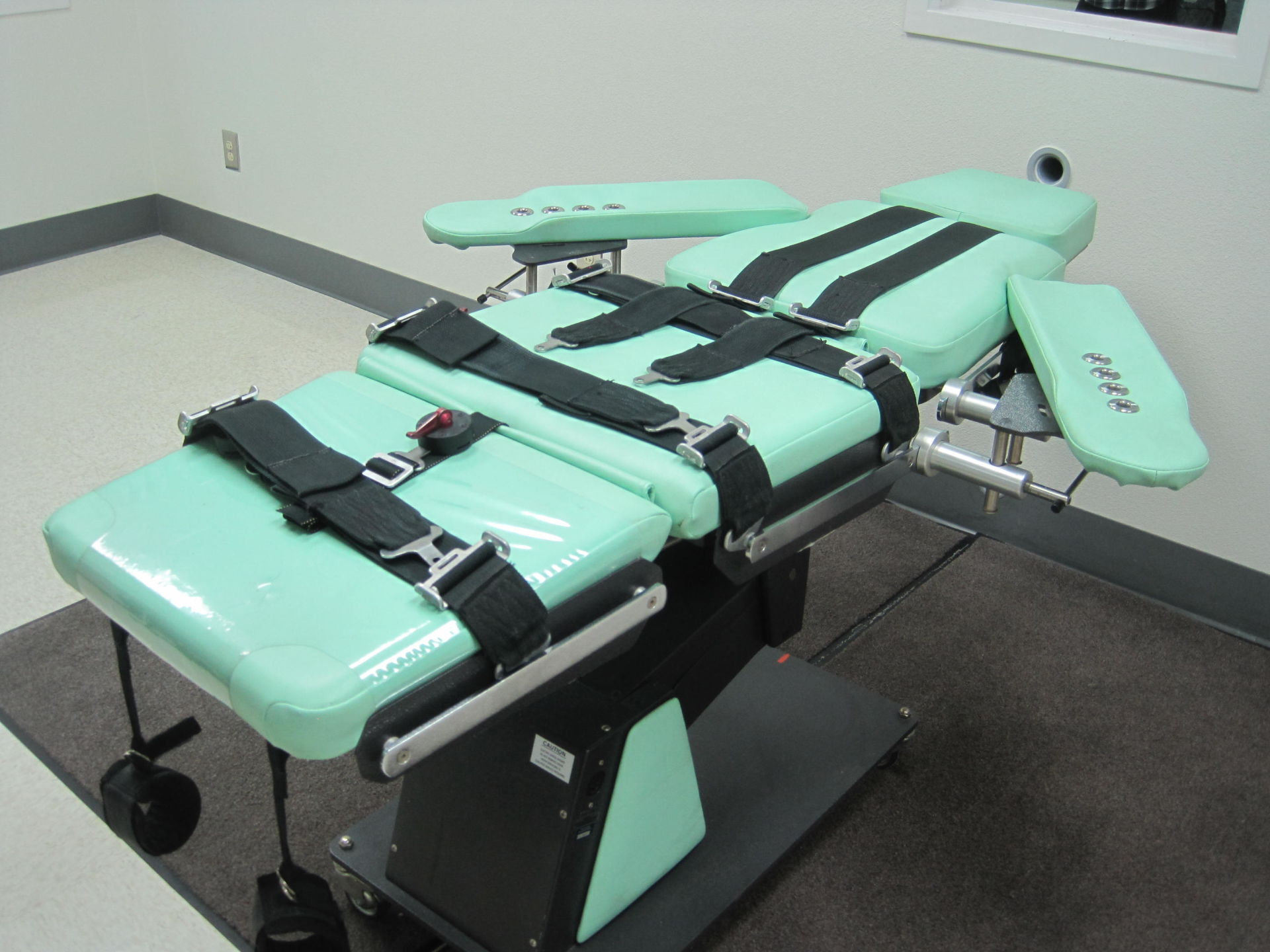
"content": "\u003cfigure id=\"attachment_142000\" class=\"wp-caption aligncenter\" style=\"max-width: 640px\">\u003ca href=\"http://ww2.kqed.org/news/wp-content/uploads/sites/10/2014/07/RS3262_deathpenalty0516-lpr.jpg\">\u003cimg class=\"size-medium wp-image-142000\" src=\"http://ww2.kqed.org/news/wp-content/uploads/sites/10/2014/07/RS3262_deathpenalty0516-lpr-640x480.jpg\" alt=\"Gurney in seldom-used death chamber at San Quentin State Prison. (Scott Shafer/KQED)\" width=\"640\" height=\"480\">\u003c/a>\u003cfigcaption class=\"wp-caption-text\">Gurney in seldom-used death chamber at San Quentin State Prison. (Scott Shafer/KQED)\u003c/figcaption>\u003c/figure>\n\u003cp>A federal judge in Los Angeles has ruled that California's death penalty is unconstitutional because the \"dysfunctional administration\" of sentences subjects prisoners to \"inordinate and unpredictable\" delays of 20 years or more.\u003c/p>\n\u003cp>U.S. District Court Judge Cormac J. Carney said the state's system of capital punishment results in sentences that \"no rational jury or legislature could ever impose:\u003cem> life in prison, with the remote possibility of death.\u003c/em>\" (Emphasis from text of the decision.)\u003c/p>\n\u003cp>Carney ruled that the system violates the Eighth Amendment's prohibition on cruel and unusual punishment. His decision, \u003ca href=\"#jonesruling\">embedded below\u003c/a>, may be appealed to the 9th U.S. Circuit Court of Appeals.In overturning the death sentence \u003ca href=\"http://articles.latimes.com/1995-04-06/news/mn-51562_1_murder-trials\" target=\"_blank\">a jury imposed on convicted murderer Ernest Dewayne Jones\u003c/a> in 1995, Carney noted that only 13 of the more than 900 people sentenced to death in California since the late 1970s have been put to death. \"For the random few for whom execution does become a reality,\" he wrote, \"they will have languished for so long on Death Row that their execution will serve no retributive or deterrent purpose and will be arbitrary.\"\u003c/p>\n\u003cp>The Jones case is different from two Northern California cases — one in state court, one in federal court — that have essentially put the death penalty on hold because the state's lethal injection method of execution has been found to violate the Eighth Amendment.\u003c/p>\n\u003cp>Here are the first responses to today's ruling, \u003ca href=\"http://www.latimes.com/local/lanow/la-me-ln-california-death-penalty-ruled-unconstitutional-20140716-story.html\" target=\"_blank\">by way of Maura Dolan of the Los Angeles Times\u003c/a>:\u003c/p>\n\u003cblockquote>\u003cp>Natasha Minsker, a director of the ACLU of Northern California, said Wednesday’s ruling marked the first time that a federal judge had found the state’s current system unconstitutional. She said it was also “the first time any judge has ruled systemic delay creates an arbitrary system that serves no legitimate purpose and is therefore unconstitutional....\"\u003c/p>\n\u003cp>A spokesman for Attorney General Kamala Harris said only that her office was reviewing the decision. Harris has stated she personally opposes the death penalty, though she has vowed to uphold the state's capital punishment law.\u003c/p>\u003c/blockquote>\n\u003cp>\u003ca id=\"jonesruling\">\u003c/a>\u003ciframe id=\"doc_59440\" class=\"scribd_iframe_embed\" src=\"//www.scribd.com/embeds/234145473/content?start_page=1&view_mode=scroll&show_recommendations=true\" width=\"100%\" height=\"600\" frameborder=\"0\" scrolling=\"no\">\u003c/iframe>\u003c/p>\n\u003cp>[ad fullwidth]\u003c/p>\u003cp>\u003c/p>\n",
"disqusIdentifier": "141962 http://ww2.kqed.org/news/?p=141962",
"disqusUrl": "https://ww2.kqed.org/news/2014/07/16/141962/",
"stats": {
"hasVideo": false,
"hasChartOrMap": false,
"hasAudio": false,
"hasPolis": false,
"wordCount": 367,
"hasGoogleForm": false,
"hasGallery": false,
"hasHearkenModule": false,
"iframeSrcs": [],
"paragraphCount": 10
},
"modified": 1408724595,
"excerpt": "Ruling declares system 'dysfunctional' and vacates a death sentence imposed nearly 20 years ago. ",
"headData": {
"twImgId": "",
"twTitle": "",
"ogTitle": "",
"ogImgId": "",
"twDescription": "",
"description": "Ruling declares system 'dysfunctional' and vacates a death sentence imposed nearly 20 years ago. ",
"title": "Los Angeles Judge Finds California Death Penalty Unconstitutional | KQED",
"ogDescription": "",
"schema": {
"@context": "https://schema.org",
"@type": "NewsArticle",
"headline": "Los Angeles Judge Finds California Death Penalty Unconstitutional",
"datePublished": "2014-07-16T13:38:34-07:00",
"dateModified": "2014-08-22T09:23:15-07:00",
"image": "https://cdn.kqed.org/wp-content/uploads/2020/02/KQED-OG-Image@1x.png",
"isAccessibleForFree": "True",
"publisher": {
"@type": "NewsMediaOrganization",
"@id": "https://www.kqed.org/#organization",
"name": "KQED",
"logo": "https://cdn.kqed.org/wp-content/uploads/2020/02/KQED-OG-Image@1x.png",
"url": "https://www.kqed.org",
"sameAs": [
"https://www.facebook.com/KQED",
"https://twitter.com/KQED",
"https://www.instagram.com/kqed/",
"https://www.tiktok.com/@kqedofficial",
"https://www.linkedin.com/company/kqed",
"https://www.youtube.com/channel/UCeC0IOo7i1P_61zVUWbJ4nw"
]
}
}
},
"guestAuthors": [],
"slug": "141962",
"status": "publish",
"path": "/news/141962/141962",
"audioTrackLength": null,
"parsedContent": [
{
"type": "contentString",
"content": "\u003cdiv class=\"post-body\">\u003cp>\u003cfigure id=\"attachment_142000\" class=\"wp-caption aligncenter\" style=\"max-width: 640px\">\u003ca href=\"http://ww2.kqed.org/news/wp-content/uploads/sites/10/2014/07/RS3262_deathpenalty0516-lpr.jpg\">\u003cimg class=\"size-medium wp-image-142000\" src=\"http://ww2.kqed.org/news/wp-content/uploads/sites/10/2014/07/RS3262_deathpenalty0516-lpr-640x480.jpg\" alt=\"Gurney in seldom-used death chamber at San Quentin State Prison. (Scott Shafer/KQED)\" width=\"640\" height=\"480\">\u003c/a>\u003cfigcaption class=\"wp-caption-text\">Gurney in seldom-used death chamber at San Quentin State Prison. (Scott Shafer/KQED)\u003c/figcaption>\u003c/figure>\n\u003cp>A federal judge in Los Angeles has ruled that California's death penalty is unconstitutional because the \"dysfunctional administration\" of sentences subjects prisoners to \"inordinate and unpredictable\" delays of 20 years or more.\u003c/p>\n\u003cp>U.S. District Court Judge Cormac J. Carney said the state's system of capital punishment results in sentences that \"no rational jury or legislature could ever impose:\u003cem> life in prison, with the remote possibility of death.\u003c/em>\" (Emphasis from text of the decision.)\u003c/p>\n\u003cp>Carney ruled that the system violates the Eighth Amendment's prohibition on cruel and unusual punishment. His decision, \u003ca href=\"#jonesruling\">embedded below\u003c/a>, may be appealed to the 9th U.S. Circuit Court of Appeals.In overturning the death sentence \u003ca href=\"http://articles.latimes.com/1995-04-06/news/mn-51562_1_murder-trials\" target=\"_blank\">a jury imposed on convicted murderer Ernest Dewayne Jones\u003c/a> in 1995, Carney noted that only 13 of the more than 900 people sentenced to death in California since the late 1970s have been put to death. \"For the random few for whom execution does become a reality,\" he wrote, \"they will have languished for so long on Death Row that their execution will serve no retributive or deterrent purpose and will be arbitrary.\"\u003c/p>\n\u003cp>The Jones case is different from two Northern California cases — one in state court, one in federal court — that have essentially put the death penalty on hold because the state's lethal injection method of execution has been found to violate the Eighth Amendment.\u003c/p>\n\u003cp>Here are the first responses to today's ruling, \u003ca href=\"http://www.latimes.com/local/lanow/la-me-ln-california-death-penalty-ruled-unconstitutional-20140716-story.html\" target=\"_blank\">by way of Maura Dolan of the Los Angeles Times\u003c/a>:\u003c/p>\n\u003cblockquote>\u003cp>Natasha Minsker, a director of the ACLU of Northern California, said Wednesday’s ruling marked the first time that a federal judge had found the state’s current system unconstitutional. She said it was also “the first time any judge has ruled systemic delay creates an arbitrary system that serves no legitimate purpose and is therefore unconstitutional....\"\u003c/p>\n\u003cp>A spokesman for Attorney General Kamala Harris said only that her office was reviewing the decision. Harris has stated she personally opposes the death penalty, though she has vowed to uphold the state's capital punishment law.\u003c/p>\u003c/blockquote>\n\u003cp>\u003ca id=\"jonesruling\">\u003c/a>\u003ciframe id=\"doc_59440\" class=\"scribd_iframe_embed\" src=\"//www.scribd.com/embeds/234145473/content?start_page=1&view_mode=scroll&show_recommendations=true\" width=\"100%\" height=\"600\" frameborder=\"0\" scrolling=\"no\">\u003c/iframe>\u003c/p>\n\u003cp>\u003c/p>\u003c/div>",
"attributes": {
"named": {},
"numeric": []
}
},
{
"type": "component",
"content": "",
"name": "ad",
"attributes": {
"named": {
"label": "fullwidth"
},
"numeric": [
"fullwidth"
]
}
},
{
"type": "contentString",
"content": "\u003cdiv class=\"post-body\">\u003cp>\u003c/p>\u003cp>\u003c/p>\n\u003c/div>\u003c/p>",
"attributes": {
"named": {},
"numeric": []
}
}
],
"link": "/news/141962/141962",
"authors": [
"222"
],
"programs": [
"news_6944"
],
"categories": [
"news_6188",
"news_8"
],
"tags": [
"news_6613",
"news_1471"
],
"featImg": "news_63672",
"label": "news_6944"
},
"news_138599": {
"type": "posts",
"id": "news_138599",
"meta": {
"index": "posts_1716263798",
"site": "news",
"id": "138599",
"score": null,
"sort": [
1402412442000
]
},
"parent": 0,
"labelTerm": {
"site": "news",
"term": 6944
},
"blocks": [],
"publishDate": 1402412442,
"format": "aside",
"disqusTitle": "Prisons Boost Efforts to Enroll Parolees In Medi-Cal",
"title": "Prisons Boost Efforts to Enroll Parolees In Medi-Cal",
"headTitle": "News Fix | KQED News",
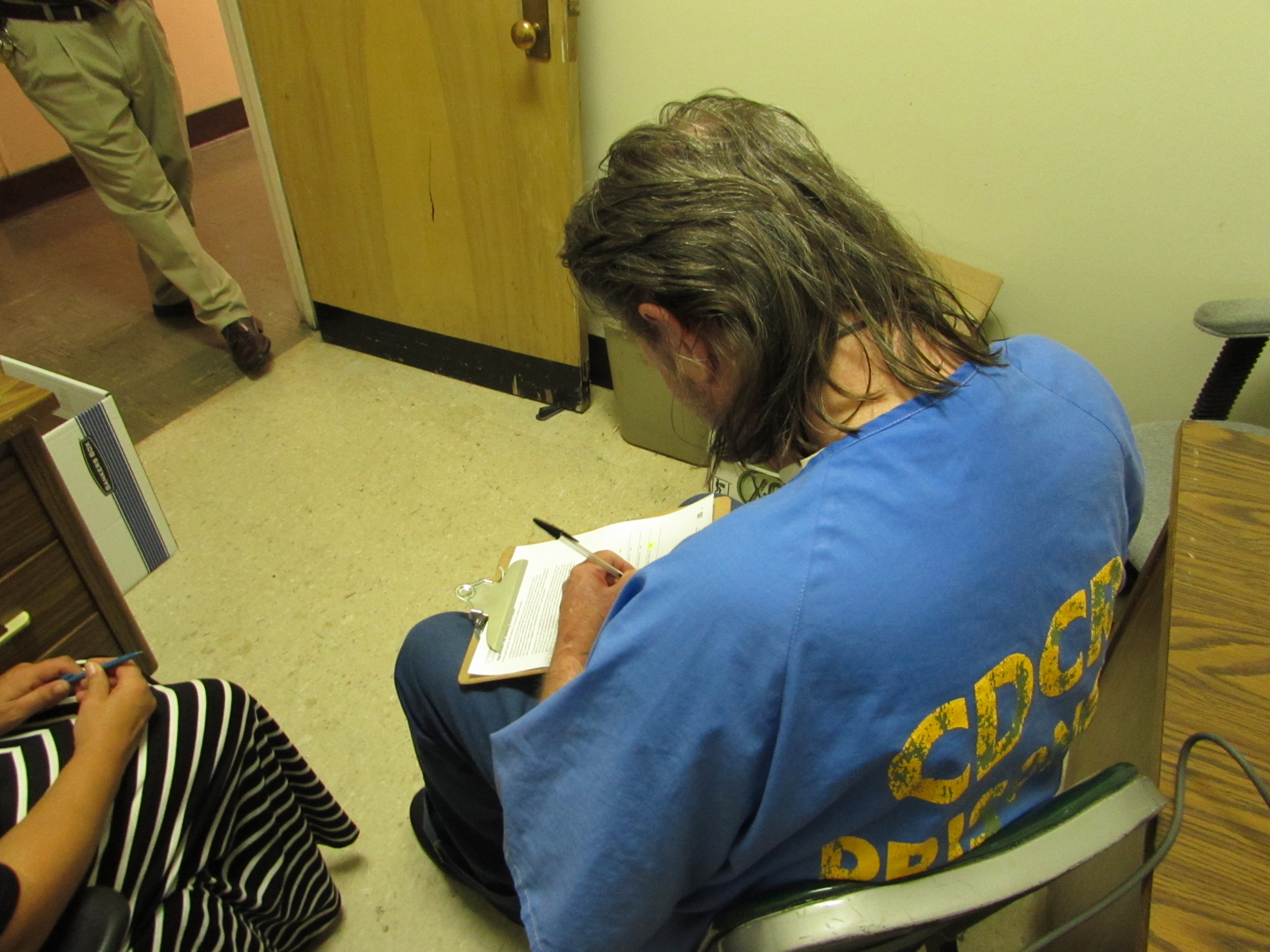
"content": "\u003cfigure id=\"attachment_138614\" class=\"wp-caption aligncenter\" style=\"max-width: 640px\">\u003ca href=\"http://ww2.kqed.org/news/wp-content/uploads/sites/10/2014/06/Parolee-Medi-cal-2-Kamka-richard-2.jpeg\">\u003cimg class=\"size-medium wp-image-138614\" src=\"http://ww2.kqed.org/news/wp-content/uploads/sites/10/2014/06/Parolee-Medi-cal-2-Kamka-richard-2-640x480.jpeg\" alt=\"California prisoner Richard Kamka gets help applying for Medi-Cal before he is paroled. (Julie Small/KQED)\" width=\"640\" height=\"480\">\u003c/a>\u003cfigcaption class=\"wp-caption-text\">California prisoner Richard Kamka gets help applying for Medi-Cal before he is paroled. (Julie Small/KQED)\u003c/figcaption>\u003c/figure>\n\u003cp>\u003cstrong>By Julie Small\u003c/strong>\u003c/p>\n\u003cp>Of the roughly 40,000 people California state prisons will parole this year, only a fraction can rely on income or jobs to sustain themselves. The majority will hit the streets penniless, and often in poor health. For them, immediate access to low-cost or free health care would be a big help.\u003c/p>\n\u003cp>So, now that federal health reforms have made most parolees eligible for Medi-Cal — California’s version of Medicaid — prisons are doubling their efforts to enroll them.\u003c/p>\n\u003cp>On a recent visit to the California Medical Facility in Vacaville, a pair of counselors helped dozens of inmates fill out paperwork for Medi-Cal shortly before their scheduled release.\u003c/p>\n\u003cp>Richard Kamka, 64, said he welcomed the help. Kamka has been locked up for nearly a decade after being convicted of making criminal threats, possessing illegal drugs and stalking. He will be paroled to Butte County this fall. Unless prison doctors remove his cataracts, Kamka said, he won’t be able to work.\u003c/p>\n\u003cp>[ad fullwidth]\u003c/p>\n\u003cp>“I need to have my eyes so I can at least, you know, do something,” he said.\u003c/p>\n\u003cp>Before the Affordable Care Act took effect, California’s Department of Corrections and Rehabilitation (CDCR) could enroll only about 15 to 20 percent of parolees in Medi-Cal. That’s because only low-income parents, pregnant mothers and disabled people used to qualify. Now anyone who earns less than $15,000 annually can sign up.\u003c/p>\n\u003cp>The department’s Robert Storms estimates that 90 percent of parolees will be eligible under the new criteria. Storms wants them to walk out of prison with a Medi-Cal card in hand — and a medical provider already selected.\u003c/p>\n\u003cp>“What this does is provides an opportunity for immediate access to care,” Storms says.\u003c/p>\n\u003cp>Having Medi-Cal will allow parolees to enroll in programs to treat drug and alcohol addiction — something 75 percent of them struggle with. They’ll also be able to get preventative care and treat ongoing chronic conditions and serious illness. That’s significant in California, where nearly a third of inmates have some kind of condition that requires ongoing medical care.\u003c/p>\n\u003cp>Storms believes having access to treatment could reduce the risk that parolees will commit new crimes.\u003c/p>\n\u003cp>“They’re becoming more responsible for their own health and achieving things that helps them become independent, productive and hopefully working towards a better life,” Storms says.\u003c/p>\n\u003cp>\u003ciframe width=\"100%\" height=\"166\" scrolling=\"no\" frameborder=\"no\" src=\"https://w.soundcloud.com/player/?url=https%3A//api.soundcloud.com/tracks/153752144&color=ff5500&auto_play=false&hide_related=false&show_artwork=true&show_comments=true&show_user=true&show_reposts=false\">\u003c/iframe>\u003c/p>\n\u003cp>CDCR officials estimate that enrolling parolees in Medi-Cal will cut parole costs by millions of dollars a year. Prison officials shifted $2.4 million in projected savings from a budget for psychotropic medicines for parolees to nearly double the number of benefit counselors. But it’s taken corrections longer to hire and train them than anticipated. One reason: They lost counselors when one of the counties providing that service quit the business.\u003c/p>\n\u003cp>For now, California prisons can screen only 40 percent of inmates for Medi-Cal. Corrections officials are working with counties and community groups to enroll the other 60 percent after they get out of prison. But there’s consensus that waiting to do that is risky.\u003c/p>\n\u003cp>“If they have the ability to go straight to a medical provider like us and be seen — it would be huge,” says John Holman of Healthy Oakland. The nonprofit offers parolees low-cost medical and mental health treatment.\u003c/p>\n\u003cp>Holman says former prisoners who apply for Medi-Cal when they get out wait months to get coverage. In the meantime, they still need care. Most of them take multiple drugs for chronic conditions like diabetes and hypertension. Many rely on medications to treat anxiety, depression and psychosis.\u003c/p>\n\u003caside class=\"pullquote alignleft\">Having Medi-Cal will allow parolees to enroll in programs to treat drug and alcohol addiction — something 75 percent of them struggle with.\u003c/aside>\n\u003cp>“If someone has all these conditions and they see that they can’t get any help, they know they can self-medicate,” Holman says.\u003c/p>\n\u003cp>Or they can turn to emergency rooms and rack up large bills they can’t afford to pay. That’s how 55-year-old Leonard Johnson dealt with it.\u003c/p>\n\u003cp>“When they let me out of prison I didn’t have no medical for like seven months,” Johnson says.\u003c/p>\n\u003cp>He served 17.5 years for assault and robbery. At Pleasant Valley State Prison he caught an airborne fungal infection called Valley Fever. But when Johnson paroled to Antioch over a year ago, he lacked medication for the disease and for his diabetes. \u003c/p>\n\u003cp>“I got real sick and went to the hospital,” Johnson says.\u003c/p>\n\u003cp>One of the biggest challenges is signing up the 27 percent of parolees diagnosed with mental disorders.\u003c/p>\n\u003cp>At Telecare, a national mental health service provider that treats parolees in Southern California, Senior Vice President Faith Richie says it’s hard to locate them after they get out of prison.\u003c/p>\n\u003cp>“They’re coming out, and essentially the minute they hit the street, they’re homeless — unless they have a family member or friend who will take them in,\" Richie says. \"They don’t have income. Once they’ve burned through their gate money, they’re in the wind.”\u003c/p>\n\u003cp>Richie says Telecare’s staff helps patients enroll in Medi-Cal and will meet them under freeway bridges to do it. But tens of thousands of inmates paroled to other parts of the state each year won’t get that kind of individual help.\u003c/p>\n\u003cp>At the California Medical Facility, inmate Richard Kamka says knowing that he can go to any Medi-Cal provider in his county when he gets out calms at least one of his fears about paroling.\u003c/p>\n\u003cp>“It’s a scary thing,” Kamka says. “I mean it’s a happy thing, but then you’re going out there, going, ‘Hey where’s my breakfast this morning?’”\u003c/p>\n\u003cp>CDCR’s Robert Storms says that by spring 2015, the department will be able to help all paroling inmates apply for Medi-Cal.\u003c/p>\n\u003cp>\u003c/p>\n\u003cp>For now, California’s prisons are focusing their Medi-Cal enrollment efforts on inmates with mental disorders, serious or chronic diseases and disabilities.\u003c/p>\n\n",
"disqusIdentifier": "138599 http://ww2.kqed.org/news/?p=138599",
"disqusUrl": "https://ww2.kqed.org/news/2014/06/10/prisons-boost-efforts-to-enroll-parolees-in-medi-cal/",
"stats": {
"hasVideo": false,
"hasChartOrMap": false,
"hasAudio": true,
"hasPolis": false,
"wordCount": 1088,
"hasGoogleForm": false,
"hasGallery": false,
"hasHearkenModule": false,
"iframeSrcs": [],
"paragraphCount": 32
},
"modified": 1402440015,
"excerpt": "As a result of the ACA, more inmates will be able to get access to immediate care when they're out.",
"headData": {
"twImgId": "",
"twTitle": "",
"ogTitle": "",
"ogImgId": "",
"twDescription": "",
"description": "As a result of the ACA, more inmates will be able to get access to immediate care when they're out.",
"title": "Prisons Boost Efforts to Enroll Parolees In Medi-Cal | KQED",
"ogDescription": "",
"schema": {
"@context": "https://schema.org",
"@type": "NewsArticle",
"headline": "Prisons Boost Efforts to Enroll Parolees In Medi-Cal",
"datePublished": "2014-06-10T08:00:42-07:00",
"dateModified": "2014-06-10T15:40:15-07:00",
"image": "https://cdn.kqed.org/wp-content/uploads/2020/02/KQED-OG-Image@1x.png",
"isAccessibleForFree": "True",
"publisher": {
"@type": "NewsMediaOrganization",
"@id": "https://www.kqed.org/#organization",
"name": "KQED",
"logo": "https://cdn.kqed.org/wp-content/uploads/2020/02/KQED-OG-Image@1x.png",
"url": "https://www.kqed.org",
"sameAs": [
"https://www.facebook.com/KQED",
"https://twitter.com/KQED",
"https://www.instagram.com/kqed/",
"https://www.tiktok.com/@kqedofficial",
"https://www.linkedin.com/company/kqed",
"https://www.youtube.com/channel/UCeC0IOo7i1P_61zVUWbJ4nw"
]
}
}
},
"guestAuthors": [],
"slug": "prisons-boost-efforts-to-enroll-parolees-in-medi-cal",
"status": "publish",
"customPermalink": "2014/06/10/prisons-boost-efforts-health-care-parolees/",
"path": "/news/138599/prisons-boost-efforts-to-enroll-parolees-in-medi-cal",
"audioTrackLength": null,
"parsedContent": [
{
"type": "contentString",
"content": "\u003cdiv class=\"post-body\">\u003cp>\u003cfigure id=\"attachment_138614\" class=\"wp-caption aligncenter\" style=\"max-width: 640px\">\u003ca href=\"http://ww2.kqed.org/news/wp-content/uploads/sites/10/2014/06/Parolee-Medi-cal-2-Kamka-richard-2.jpeg\">\u003cimg class=\"size-medium wp-image-138614\" src=\"http://ww2.kqed.org/news/wp-content/uploads/sites/10/2014/06/Parolee-Medi-cal-2-Kamka-richard-2-640x480.jpeg\" alt=\"California prisoner Richard Kamka gets help applying for Medi-Cal before he is paroled. (Julie Small/KQED)\" width=\"640\" height=\"480\">\u003c/a>\u003cfigcaption class=\"wp-caption-text\">California prisoner Richard Kamka gets help applying for Medi-Cal before he is paroled. (Julie Small/KQED)\u003c/figcaption>\u003c/figure>\n\u003cp>\u003cstrong>By Julie Small\u003c/strong>\u003c/p>\n\u003cp>Of the roughly 40,000 people California state prisons will parole this year, only a fraction can rely on income or jobs to sustain themselves. The majority will hit the streets penniless, and often in poor health. For them, immediate access to low-cost or free health care would be a big help.\u003c/p>\n\u003cp>So, now that federal health reforms have made most parolees eligible for Medi-Cal — California’s version of Medicaid — prisons are doubling their efforts to enroll them.\u003c/p>\n\u003cp>On a recent visit to the California Medical Facility in Vacaville, a pair of counselors helped dozens of inmates fill out paperwork for Medi-Cal shortly before their scheduled release.\u003c/p>\n\u003cp>Richard Kamka, 64, said he welcomed the help. Kamka has been locked up for nearly a decade after being convicted of making criminal threats, possessing illegal drugs and stalking. He will be paroled to Butte County this fall. Unless prison doctors remove his cataracts, Kamka said, he won’t be able to work.\u003c/p>\n\u003cp>\u003c/p>\u003c/div>",
"attributes": {
"named": {},
"numeric": []
}
},
{
"type": "component",
"content": "",
"name": "ad",
"attributes": {
"named": {
"label": "fullwidth"
},
"numeric": [
"fullwidth"
]
}
},
{
"type": "contentString",
"content": "\u003cdiv class=\"post-body\">\u003cp>\u003c/p>\n\u003cp>“I need to have my eyes so I can at least, you know, do something,” he said.\u003c/p>\n\u003cp>Before the Affordable Care Act took effect, California’s Department of Corrections and Rehabilitation (CDCR) could enroll only about 15 to 20 percent of parolees in Medi-Cal. That’s because only low-income parents, pregnant mothers and disabled people used to qualify. Now anyone who earns less than $15,000 annually can sign up.\u003c/p>\n\u003cp>The department’s Robert Storms estimates that 90 percent of parolees will be eligible under the new criteria. Storms wants them to walk out of prison with a Medi-Cal card in hand — and a medical provider already selected.\u003c/p>\n\u003cp>“What this does is provides an opportunity for immediate access to care,” Storms says.\u003c/p>\n\u003cp>Having Medi-Cal will allow parolees to enroll in programs to treat drug and alcohol addiction — something 75 percent of them struggle with. They’ll also be able to get preventative care and treat ongoing chronic conditions and serious illness. That’s significant in California, where nearly a third of inmates have some kind of condition that requires ongoing medical care.\u003c/p>\n\u003cp>Storms believes having access to treatment could reduce the risk that parolees will commit new crimes.\u003c/p>\n\u003cp>“They’re becoming more responsible for their own health and achieving things that helps them become independent, productive and hopefully working towards a better life,” Storms says.\u003c/p>\n\u003cp>\u003ciframe width=\"100%\" height=\"166\" scrolling=\"no\" frameborder=\"no\" src=\"https://w.soundcloud.com/player/?url=https%3A//api.soundcloud.com/tracks/153752144&color=ff5500&auto_play=false&hide_related=false&show_artwork=true&show_comments=true&show_user=true&show_reposts=false\">\u003c/iframe>\u003c/p>\n\u003cp>CDCR officials estimate that enrolling parolees in Medi-Cal will cut parole costs by millions of dollars a year. Prison officials shifted $2.4 million in projected savings from a budget for psychotropic medicines for parolees to nearly double the number of benefit counselors. But it’s taken corrections longer to hire and train them than anticipated. One reason: They lost counselors when one of the counties providing that service quit the business.\u003c/p>\n\u003cp>For now, California prisons can screen only 40 percent of inmates for Medi-Cal. Corrections officials are working with counties and community groups to enroll the other 60 percent after they get out of prison. But there’s consensus that waiting to do that is risky.\u003c/p>\n\u003cp>“If they have the ability to go straight to a medical provider like us and be seen — it would be huge,” says John Holman of Healthy Oakland. The nonprofit offers parolees low-cost medical and mental health treatment.\u003c/p>\n\u003cp>Holman says former prisoners who apply for Medi-Cal when they get out wait months to get coverage. In the meantime, they still need care. Most of them take multiple drugs for chronic conditions like diabetes and hypertension. Many rely on medications to treat anxiety, depression and psychosis.\u003c/p>\n\u003caside class=\"pullquote alignleft\">Having Medi-Cal will allow parolees to enroll in programs to treat drug and alcohol addiction — something 75 percent of them struggle with.\u003c/aside>\n\u003cp>“If someone has all these conditions and they see that they can’t get any help, they know they can self-medicate,” Holman says.\u003c/p>\n\u003cp>Or they can turn to emergency rooms and rack up large bills they can’t afford to pay. That’s how 55-year-old Leonard Johnson dealt with it.\u003c/p>\n\u003cp>“When they let me out of prison I didn’t have no medical for like seven months,” Johnson says.\u003c/p>\n\u003cp>He served 17.5 years for assault and robbery. At Pleasant Valley State Prison he caught an airborne fungal infection called Valley Fever. But when Johnson paroled to Antioch over a year ago, he lacked medication for the disease and for his diabetes. \u003c/p>\n\u003cp>“I got real sick and went to the hospital,” Johnson says.\u003c/p>\n\u003cp>One of the biggest challenges is signing up the 27 percent of parolees diagnosed with mental disorders.\u003c/p>\n\u003cp>At Telecare, a national mental health service provider that treats parolees in Southern California, Senior Vice President Faith Richie says it’s hard to locate them after they get out of prison.\u003c/p>\n\u003cp>“They’re coming out, and essentially the minute they hit the street, they’re homeless — unless they have a family member or friend who will take them in,\" Richie says. \"They don’t have income. Once they’ve burned through their gate money, they’re in the wind.”\u003c/p>\n\u003cp>Richie says Telecare’s staff helps patients enroll in Medi-Cal and will meet them under freeway bridges to do it. But tens of thousands of inmates paroled to other parts of the state each year won’t get that kind of individual help.\u003c/p>\n\u003cp>At the California Medical Facility, inmate Richard Kamka says knowing that he can go to any Medi-Cal provider in his county when he gets out calms at least one of his fears about paroling.\u003c/p>\n\u003cp>“It’s a scary thing,” Kamka says. “I mean it’s a happy thing, but then you’re going out there, going, ‘Hey where’s my breakfast this morning?’”\u003c/p>\n\u003cp>CDCR’s Robert Storms says that by spring 2015, the department will be able to help all paroling inmates apply for Medi-Cal.\u003c/p>\n\u003cp>\u003c/p>\n\u003cp>For now, California’s prisons are focusing their Medi-Cal enrollment efforts on inmates with mental disorders, serious or chronic diseases and disabilities.\u003c/p>\n\n\u003c/div>\u003c/p>",
"attributes": {
"named": {},
"numeric": []
}
}
],
"link": "/news/138599/prisons-boost-efforts-to-enroll-parolees-in-medi-cal",
"authors": [
"236"
],
"programs": [
"news_6944"
],
"categories": [
"news_8"
],
"tags": [
"news_6436",
"news_1471"
],
"featImg": "news_138614",
"label": "news_6944"
},
"news_10341817": {
"type": "posts",
"id": "news_10341817",
"meta": {
"index": "posts_1716263798",
"site": "news",
"id": "10341817",
"score": null,
"sort": [
1400252402000
]
},
"guestAuthors": [],
"slug": "record-numbers-of-states-lifer-inmates-granted-parole",
"title": "Record Numbers of State's Lifer Inmates Granted Parole",
"publishDate": 1400252402,
"format": "standard",
"headTitle": "Record Numbers of State’s Lifer Inmates Granted Parole | KQED",
"labelTerm": {
"term": 72,
"site": "news"
},
"content": "\u003cp>http://www.kqed.org/.stream/anon/radio/tcr/2014/05/2014-05-16a-tcr.mp3\u003c/p>\n\u003cp>For decades, California inmates serving life sentences with the possibility of parole rarely got out of prison. Most of these so-called lifers committed murder, and most were routinely denied parole by the state.\u003c/p>\n\u003cp>But that’s changing. The past few years have seen record numbers of lifers getting out.\u003c/p>\n\u003cp>In a spare room just outside the main walls of San Quentin Prison, Kent Wimberly makes his case for parole in mid-March. In 1979, he stabbed and killed two people in San Diego. He was 17 at the time. Today, he’s 51.\u003c/p>\n\u003cp>“Today I’ve moved so far from that person that I was,” Wimberly says in a voice with little emotion. “I’ve developed so many tools and so much understanding and maturity, and so much more compassion for others.”\u003c/p>\n\u003cp>[ad fullwidth]\u003c/p>\n\u003cp>This is the 12th time Wimberly has appeared before the parole board. But it’s his first hearing under a new state law (SB260) requiring the parole board to weigh the age of inmates who committed their crimes as juveniles.\u003c/p>\n\u003cp>After nearly three hours of questions and testimony, the parole board deliberates for less than 30 minutes. They reconvene, and Parole Commissioner Marisela Montes announces the board’s decision.\u003c/p>\n\u003cp>“We find that Mr. Wimberly does not pose an unreasonable risk of danger to society or threat to public safety and is therefore now eligible for parole,” she says.\u003c/p>\n\u003cp>But that’s not the final word. California is one of just three states where governors can block parole decisions. And while previous California governors routinely vetoed parole for lifers, Jerry Brown is taking a very different approach — allowing 80 percent of parole recommendations to move forward.\u003c/p>\n\u003cp>Stanford law Professor Robert Weisberg says the change is striking.\u003c/p>\n\u003cp>“I mean statistically it’s a very dramatic change from the Schwarzenegger administration and an unbelievable change from the Gray Davis administration,” Weisberg says.\u003c/p>\n\u003cp>http://youtu.be/-LiBf4jQ814\u003c/p>\n\u003cp>The California Report’s analysis of state parole data finds that since 2009, more than 1,700 lifers have been released in California — that’s more than twice the number paroled in the previous two decades combined.\u003c/p>\n\u003cp>And not everyone is happy about the trend.\u003c/p>\n\u003cp>At a rally for crime victims’ families in Sacramento recently, Susan Hamlin describes the upset caused by having to attend a parole hearing for someone who victimized her family.\u003c/p>\n\u003cp>“And the dread of this hearing, and fear of his possible release, set in a full year prior to the hearing,” Hamlin says.\u003c/p>\n\u003cp>The Capitol sidewalk is lined with posters showing photos of relatives who were murdered. Gov. Brown tells the crowd they aren’t forgotten.\u003c/p>\n\u003cp>“When you come here and show us the pictures of real human beings who are your loved ones who were murdered, then it isn’t abstract,” the governor says. “It’s very real. It’s very individual. It’s a person.”\u003c/p>\n\u003cp>Afterward, I ask the governor if he ever worries about a paroled lifer committing another violent crime.\u003c/p>\n\u003cp>“I’m worried about a number of things,” he says, rattling off concerns like climate change and childhood hunger. “But after we catalog our worries, we have to do what our job is. And I try to do that with common sense and a certain degree of compassion.”\u003c/p>\n\u003cp>Asked to describe his approach toward lifer parole, Brown says simply “to follow the law and evaluate very carefully each case, which I do every week.”\u003c/p>\n\u003cp>When told that his record is very different from past governors, he said, “Well, I don’t know what they did and whether they read the record or whether they looked at the law. The law has changed.”\u003c/p>\n\u003cp>Brown is referring to a 2008 decision by the California Supreme Court. It stopped blanket denials of parole based on the viciousness of a crime alone. The justices ruled that there must also be evidence that an inmate is still a threat to public safety.\u003c/p>\n\u003cp>Jennifer Shaffer, executive director of the state Board of Parole Hearings, says that decision changed everything.\u003c/p>\n\u003cp>“As you can imagine, if their crime alone could keep them from being paroled forever, then that was really not life with the possibility of parole,” Shaffer notes. “So there had to be something else.”\u003c/p>\n\u003cp>By following the new legal guidelines Shaffer says, Brown is saving the time and taxpayer expense of inmate appeals that result in lifers being paroled anyway.\u003c/p>\n\u003cp>A California Report analysis also finds that under Brown, the parole board is granting parole at a rate that’s more than triple what it was five years ago.\u003c/p>\n\u003cp>Attorney Charles Carbone represents hundreds of lifers. He says Brown’s appointees are taking a different approach.\u003c/p>\n\u003cp>“They’re more sensitive and understanding of the rights of life inmates to receive parole,” Carbone says. “There were parole commissioners in the past who just had a philosophy, if you want to call it, where they issued blanket denials.”\u003c/p>\n\u003cp>But some critics, like Christine Ward with the Crime Victims Action Alliance, believe the current parole board is simply too lenient.\u003c/p>\n\u003cp>“It really is like playing Russian roulette,” she says. “We just hope that that one time bomb doesn’t go off and create that really serious, heinous crime that will leave, not only that family devastated, but the entire state devastated. We’ve seen it before.”\u003c/p>\n\u003cp>And what kind of risk do paroled lifers present? The Stanford Criminal Justice Center examined 860 murderers paroled in California over 15 years and found that only five were returned to prison for new felonies. That works out to less than 1 percent.\u003c/p>\n\u003cp>The main reason, says Weisberg, is that paroled lifers are typically older. Young people, he says, are far more likely to commit violent crimes.\u003c/p>\n\u003cp>James Thomas can attest to that. He went to prison at the age of 17 after killing someone during a robbery in Los Angeles. He’s now 47.\u003c/p>\n\u003cp>After being denied parole 14 times, Thomas was finally released last year — after 30 years in prison.\u003c/p>\n\u003cp>“Everybody makes mistakes,” Thomas says. “Some are just more costly than others. I think once a person makes that transition from one lifestyle to another, he should be or she should be able to live their life in peace and be respected for it.”\u003c/p>\n\u003cp> Given the rising number of lifers winning parole, the State Department of Corrections and Rehabilitation has begun new programs to help inmates prepare for life on the outside.\u003c/p>\n\u003cp>\u003cem>This story is part of our series, “Second Chance: Lifers and Parole in California.”\u003c/em>\u003c/p>\n\u003cp>More: \u003ca href=\"http://ww2.kqed.org/news/behind-californias-dramatic-increase-in-lifers-freed-from-prison/\" target=\"_blank\">Behind California?s Dramatic Increase in Lifers Freed from Prisons\u003c/a>\u003c/p>\n\u003cp>More: \u003ca href=\"http://www.californiareport.org/archive/R201405161630/b\" target=\"_blank\">Former Lifers Discuss Hopes, Fears After Winning Parole\u003c/a>\u003c/p>\n\u003cp>[ad floatright]\u003c/p>\n\u003cp>More: \u003ca href=\"http://ww2.kqed.org/news/timeline-a-history-of-the-california-lifers-up-for-parole/?__utma=34673459.643003035.1412104317.1412121311.1412130030.7&__utmb=34673459.55.10.1412130032&__utmc=34673459&__utmx=-&__utmz=34673459.1412116048.4.2.utmcsr=google%7Cutmccn=%28organic%29%7Cutmcmd=organic%7Cutmctr=%28not%20provided%29&__utmv=-&__utmk=152166971\" target=\"_blank\">Timeline: History of California Lifers Up for Parole\u003c/a>\u003c/p>\n\n",
"blocks": [],
"excerpt": "Most of these so-called lifers committed murder, and most were routinely denied parole by the state.",
"status": "publish",
"parent": 0,
"modified": 1738778467,
"stats": {
"hasAudio": true,
"hasVideo": false,
"hasChartOrMap": false,
"iframeSrcs": [],
"hasGoogleForm": false,
"hasGallery": false,
"hasHearkenModule": false,
"hasPolis": false,
"paragraphCount": 41,
"wordCount": 1194
},
"headData": {
"title": "Record Numbers of State's Lifer Inmates Granted Parole | KQED",
"description": "Most of these so-called lifers committed murder, and most were routinely denied parole by the state.",
"ogTitle": "",
"ogDescription": "",
"ogImgId": "",
"twTitle": "",
"twDescription": "",
"twImgId": "",
"schema": {
"@context": "https://schema.org",
"@type": "NewsArticle",
"headline": "Record Numbers of State's Lifer Inmates Granted Parole",
"datePublished": "2014-05-16T08:00:02-07:00",
"dateModified": "2025-02-05T10:01:07-08:00",
"image": "https://cdn.kqed.org/wp-content/uploads/2020/02/KQED-OG-Image@1x.png",
"isAccessibleForFree": "True",
"publisher": {
"@type": "NewsMediaOrganization",
"@id": "https://www.kqed.org/#organization",
"name": "KQED",
"logo": "https://cdn.kqed.org/wp-content/uploads/2020/02/KQED-OG-Image@1x.png",
"url": "https://www.kqed.org",
"sameAs": [
"https://www.facebook.com/KQED",
"https://twitter.com/KQED",
"https://www.instagram.com/kqed/",
"https://www.tiktok.com/@kqedofficial",
"https://www.linkedin.com/company/kqed",
"https://www.youtube.com/channel/UCeC0IOo7i1P_61zVUWbJ4nw"
]
}
}
},
"sticky": false,
"path": "/news/10341817/record-numbers-of-states-lifer-inmates-granted-parole",
"audioUrl": "http://www.kqed.org/.stream/anon/radio/tcr/2014/05/2014-05-16a-tcr.mp3",
"audioDuration": null,
"audioTrackLength": null,
"parsedContent": [
{
"type": "contentString",
"content": "\u003cdiv class=\"post-body\">\u003cp>\u003cp>http://www.kqed.org/.stream/anon/radio/tcr/2014/05/2014-05-16a-tcr.mp3\u003c/p>\n\u003cp>For decades, California inmates serving life sentences with the possibility of parole rarely got out of prison. Most of these so-called lifers committed murder, and most were routinely denied parole by the state.\u003c/p>\n\u003cp>But that’s changing. The past few years have seen record numbers of lifers getting out.\u003c/p>\n\u003cp>In a spare room just outside the main walls of San Quentin Prison, Kent Wimberly makes his case for parole in mid-March. In 1979, he stabbed and killed two people in San Diego. He was 17 at the time. Today, he’s 51.\u003c/p>\n\u003cp>“Today I’ve moved so far from that person that I was,” Wimberly says in a voice with little emotion. “I’ve developed so many tools and so much understanding and maturity, and so much more compassion for others.”\u003c/p>\n\u003cp>\u003c/p>\u003c/div>",
"attributes": {
"named": {},
"numeric": []
}
},
{
"type": "component",
"content": "",
"name": "ad",
"attributes": {
"named": {
"label": "fullwidth"
},
"numeric": [
"fullwidth"
]
}
},
{
"type": "contentString",
"content": "\u003cdiv class=\"post-body\">\u003cp>\u003c/p>\n\u003cp>This is the 12th time Wimberly has appeared before the parole board. But it’s his first hearing under a new state law (SB260) requiring the parole board to weigh the age of inmates who committed their crimes as juveniles.\u003c/p>\n\u003cp>After nearly three hours of questions and testimony, the parole board deliberates for less than 30 minutes. They reconvene, and Parole Commissioner Marisela Montes announces the board’s decision.\u003c/p>\n\u003cp>“We find that Mr. Wimberly does not pose an unreasonable risk of danger to society or threat to public safety and is therefore now eligible for parole,” she says.\u003c/p>\n\u003cp>But that’s not the final word. California is one of just three states where governors can block parole decisions. And while previous California governors routinely vetoed parole for lifers, Jerry Brown is taking a very different approach — allowing 80 percent of parole recommendations to move forward.\u003c/p>\n\u003cp>Stanford law Professor Robert Weisberg says the change is striking.\u003c/p>\n\u003cp>“I mean statistically it’s a very dramatic change from the Schwarzenegger administration and an unbelievable change from the Gray Davis administration,” Weisberg says.\u003c/p>\u003c/p>\u003cp>\u003cspan class='utils-parseShortcode-shortcodes-__youtubeShortcode__embedYoutube'>\n \u003cspan class='utils-parseShortcode-shortcodes-__youtubeShortcode__embedYoutubeInside'>\n \u003ciframe\n loading='lazy'\n class='utils-parseShortcode-shortcodes-__youtubeShortcode__youtubePlayer'\n type='text/html'\n src='//www.youtube.com/embed/-LiBf4jQ814'\n title='//www.youtube.com/embed/-LiBf4jQ814'\n allowfullscreen='true'\n style='border:0;'>\u003c/iframe>\n \u003c/span>\n \u003c/span>\u003c/p>\u003cp>\u003cp>The California Report’s analysis of state parole data finds that since 2009, more than 1,700 lifers have been released in California — that’s more than twice the number paroled in the previous two decades combined.\u003c/p>\n\u003cp>And not everyone is happy about the trend.\u003c/p>\n\u003cp>At a rally for crime victims’ families in Sacramento recently, Susan Hamlin describes the upset caused by having to attend a parole hearing for someone who victimized her family.\u003c/p>\n\u003cp>“And the dread of this hearing, and fear of his possible release, set in a full year prior to the hearing,” Hamlin says.\u003c/p>\n\u003cp>The Capitol sidewalk is lined with posters showing photos of relatives who were murdered. Gov. Brown tells the crowd they aren’t forgotten.\u003c/p>\n\u003cp>“When you come here and show us the pictures of real human beings who are your loved ones who were murdered, then it isn’t abstract,” the governor says. “It’s very real. It’s very individual. It’s a person.”\u003c/p>\n\u003cp>Afterward, I ask the governor if he ever worries about a paroled lifer committing another violent crime.\u003c/p>\n\u003cp>“I’m worried about a number of things,” he says, rattling off concerns like climate change and childhood hunger. “But after we catalog our worries, we have to do what our job is. And I try to do that with common sense and a certain degree of compassion.”\u003c/p>\n\u003cp>Asked to describe his approach toward lifer parole, Brown says simply “to follow the law and evaluate very carefully each case, which I do every week.”\u003c/p>\n\u003cp>When told that his record is very different from past governors, he said, “Well, I don’t know what they did and whether they read the record or whether they looked at the law. The law has changed.”\u003c/p>\n\u003cp>Brown is referring to a 2008 decision by the California Supreme Court. It stopped blanket denials of parole based on the viciousness of a crime alone. The justices ruled that there must also be evidence that an inmate is still a threat to public safety.\u003c/p>\n\u003cp>Jennifer Shaffer, executive director of the state Board of Parole Hearings, says that decision changed everything.\u003c/p>\n\u003cp>“As you can imagine, if their crime alone could keep them from being paroled forever, then that was really not life with the possibility of parole,” Shaffer notes. “So there had to be something else.”\u003c/p>\n\u003cp>By following the new legal guidelines Shaffer says, Brown is saving the time and taxpayer expense of inmate appeals that result in lifers being paroled anyway.\u003c/p>\n\u003cp>A California Report analysis also finds that under Brown, the parole board is granting parole at a rate that’s more than triple what it was five years ago.\u003c/p>\n\u003cp>Attorney Charles Carbone represents hundreds of lifers. He says Brown’s appointees are taking a different approach.\u003c/p>\n\u003cp>“They’re more sensitive and understanding of the rights of life inmates to receive parole,” Carbone says. “There were parole commissioners in the past who just had a philosophy, if you want to call it, where they issued blanket denials.”\u003c/p>\n\u003cp>But some critics, like Christine Ward with the Crime Victims Action Alliance, believe the current parole board is simply too lenient.\u003c/p>\n\u003cp>“It really is like playing Russian roulette,” she says. “We just hope that that one time bomb doesn’t go off and create that really serious, heinous crime that will leave, not only that family devastated, but the entire state devastated. We’ve seen it before.”\u003c/p>\n\u003cp>And what kind of risk do paroled lifers present? The Stanford Criminal Justice Center examined 860 murderers paroled in California over 15 years and found that only five were returned to prison for new felonies. That works out to less than 1 percent.\u003c/p>\n\u003cp>The main reason, says Weisberg, is that paroled lifers are typically older. Young people, he says, are far more likely to commit violent crimes.\u003c/p>\n\u003cp>James Thomas can attest to that. He went to prison at the age of 17 after killing someone during a robbery in Los Angeles. He’s now 47.\u003c/p>\n\u003cp>After being denied parole 14 times, Thomas was finally released last year — after 30 years in prison.\u003c/p>\n\u003cp>“Everybody makes mistakes,” Thomas says. “Some are just more costly than others. I think once a person makes that transition from one lifestyle to another, he should be or she should be able to live their life in peace and be respected for it.”\u003c/p>\n\u003cp> Given the rising number of lifers winning parole, the State Department of Corrections and Rehabilitation has begun new programs to help inmates prepare for life on the outside.\u003c/p>\n\u003cp>\u003cem>This story is part of our series, “Second Chance: Lifers and Parole in California.”\u003c/em>\u003c/p>\n\u003cp>More: \u003ca href=\"http://ww2.kqed.org/news/behind-californias-dramatic-increase-in-lifers-freed-from-prison/\" target=\"_blank\">Behind California?s Dramatic Increase in Lifers Freed from Prisons\u003c/a>\u003c/p>\n\u003cp>More: \u003ca href=\"http://www.californiareport.org/archive/R201405161630/b\" target=\"_blank\">Former Lifers Discuss Hopes, Fears After Winning Parole\u003c/a>\u003c/p>\n\u003cp>\u003c/p>\u003c/div>",
"attributes": {
"named": {},
"numeric": []
}
},
{
"type": "component",
"content": "",
"name": "ad",
"attributes": {
"named": {
"label": "floatright"
},
"numeric": [
"floatright"
]
}
},
{
"type": "contentString",
"content": "\u003cdiv class=\"post-body\">\u003cp>\u003c/p>\n\u003cp>More: \u003ca href=\"http://ww2.kqed.org/news/timeline-a-history-of-the-california-lifers-up-for-parole/?__utma=34673459.643003035.1412104317.1412121311.1412130030.7&__utmb=34673459.55.10.1412130032&__utmc=34673459&__utmx=-&__utmz=34673459.1412116048.4.2.utmcsr=google%7Cutmccn=%28organic%29%7Cutmcmd=organic%7Cutmctr=%28not%20provided%29&__utmv=-&__utmk=152166971\" target=\"_blank\">Timeline: History of California Lifers Up for Parole\u003c/a>\u003c/p>\n\n\u003c/div>\u003c/p>",
"attributes": {
"named": {},
"numeric": []
}
}
],
"link": "/news/10341817/record-numbers-of-states-lifer-inmates-granted-parole",
"authors": [
"255"
],
"programs": [
"news_72"
],
"categories": [
"news_6188",
"news_33520"
],
"tags": [
"news_6327",
"news_1471"
],
"featImg": "news_10341818",
"label": "news_72"
},
"news_136126": {
"type": "posts",
"id": "news_136126",
"meta": {
"index": "posts_1716263798",
"site": "news",
"id": "136126",
"score": null,
"sort": [
1400156128000
]
},
"guestAuthors": [],
"slug": "timeline-history-of-california-lifers-up-for-parole",
"title": "Timeline: History of California Lifers Up for Parole",
"publishDate": 1400156128,
"format": "aside",
"headTitle": "Timeline: History of California Lifers Up for Parole | KQED",
"labelTerm": {
"term": 6944,
"site": "news"
},
"content": "\u003cp>\u003cstrong>By Matt Levin\u003c/strong>\u003c/p>\n\u003cp>\u003cstrong>1991\u003c/strong> — Gov. Pete Wilson assumes office. Despite his support of “tough on crime” measures like the state’s three-strikes law, Wilson allows the vast majority of parole recommendations for lifers to stand.\u003c/p>\n\u003cp>\u003cstrong>1994\u003c/strong> — California voters pass the “Three Strikes and You’re Out” ballot measure, imposing a life sentence for any crime if an offender had two prior serious convictions. While not “lifers” in the traditional sense, the three-strikes law swells the ranks of prisoners sentenced to life with the possibility of parole.\u003c/p>\n\u003cp>\u003cstrong>1999\u003c/strong> — Gov. Gray Davis takes office. Davis is far less lenient than his Republican predecessor, declaring shortly after taking office that “if you take someone else’s life, forget it.” Davis blocks more than 95 percent of the murder parole decisions that reach him.\u003c/p>\n\u003cp>\u003cstrong>November 2003\u003c/strong> — Davis is recalled.\u003c/p>\n\u003cp>[ad fullwidth]\u003c/p>\n\u003cp>\u003cstrong>November 2003\u003c/strong> — Gov. Schwarzenegger takes office. While more likely than Davis to sustain parole decisions, Schwarzenegger still reverses 70 percent of the murder cases that cross his desk. Schwarzenegger’s two terms in office will witness the beginning of a significant increase in lifers granted parole.\u003c/p>\n\u003cp>\u003cstrong>August 2008\u003c/strong> — The California Supreme Court considers the case of Sandra Davis Lawrence, an inmate who had spent 24 years in prison convicted of murdering her lover’s wife. Lawrence’s parole had been overturned by Schwarzenegger. In a 4-3 decision overruling Schwarzenegger’s reversal, the court holds that inmates could not be denied parole solely on the basis of their crime. Instead, there must be evidence that the inmate is still a threat to public safety. The ruling shifts the way the parole board and the governor’s office treat lifer parole decisions.\u003c/p>\n\u003cp>\u003cstrong>November 2008\u003c/strong> — California voters approve Proposition 9, or “Marsy’s Law”, which strengthened victims’ rights in lifer parole hearings. Victims, next of kin and other members of victims’ families are awarded the right to make statements at parole hearings. When victims attend hearings, parole is awarded half as often as when they do not attend.\u003c/p>\n\u003cp>\u003cstrong>2009\u003c/strong> — In the wake of the Lawrence decision, the number of lifers granted parole and leaving prison begins to grow significantly.\u003c/p>\n\u003cp>\u003cstrong>2011\u003c/strong> — Gov. Brown takes office. Brown’s reversal rate for murder cases never exceeds 20 percent. During his term, the Board of Parole Hearings, which now consists entirely of Brown appointees, grants parole at a historically high rate. Brown also faces pressure from federal courts to reduce the state’s bloated prison population.\u003c/p>\n\u003cp>\u003cstrong>September 2012\u003c/strong> — Brown signs into law SB9, a bill sponsored by then-Sen. Leland Yee, that allows certain offenders to petition for resentencing if originally sentenced to life without parole as a youth.\u003c/p>\n\u003cp>\u003cstrong>November 2012\u003c/strong> — California passes Proposition 36, which allows reduced sentences for three-strike inmates serving life sentences for a nonviolent third strike. More than 1,600 three-strikers who once faced life in prison have been released since 2012.\u003c/p>\n\u003cp>\u003c/p>\n\u003cp>\u003cstrong>2014\u003c/strong> — State law SB260 goes into effect, establishing new and more permissive parole criteria for offenders under the age of 18 at the time of their crimes. The law applies to offenders who have served at least 15 years of sentence, including those sentenced to life with the possibility of parole. The law could affect about 5,700 California inmates.\u003c/p>\n\n",
"blocks": [],
"excerpt": "A look back on the laws and governors who have shaped the parole process today.",
"status": "publish",
"parent": 0,
"modified": 1738778471,
"stats": {
"hasAudio": false,
"hasVideo": false,
"hasChartOrMap": false,
"iframeSrcs": [],
"hasGoogleForm": false,
"hasGallery": false,
"hasHearkenModule": false,
"hasPolis": false,
"paragraphCount": 15,
"wordCount": 576
},
"headData": {
"title": "Timeline: History of California Lifers Up for Parole | KQED",
"description": "A look back on the laws and governors who have shaped the parole process today.",
"ogTitle": "",
"ogDescription": "",
"ogImgId": "",
"twTitle": "",
"twDescription": "",
"twImgId": "",
"schema": {
"@context": "https://schema.org",
"@type": "NewsArticle",
"headline": "Timeline: History of California Lifers Up for Parole",
"datePublished": "2014-05-15T05:15:28-07:00",
"dateModified": "2025-02-05T10:01:11-08:00",
"image": "https://cdn.kqed.org/wp-content/uploads/2020/02/KQED-OG-Image@1x.png",
"isAccessibleForFree": "True",
"publisher": {
"@type": "NewsMediaOrganization",
"@id": "https://www.kqed.org/#organization",
"name": "KQED",
"logo": "https://cdn.kqed.org/wp-content/uploads/2020/02/KQED-OG-Image@1x.png",
"url": "https://www.kqed.org",
"sameAs": [
"https://www.facebook.com/KQED",
"https://twitter.com/KQED",
"https://www.instagram.com/kqed/",
"https://www.tiktok.com/@kqedofficial",
"https://www.linkedin.com/company/kqed",
"https://www.youtube.com/channel/UCeC0IOo7i1P_61zVUWbJ4nw"
]
}
}
},
"sticky": false,
"customPermalink": "timeline-a-history-of-the-california-lifers-up-for-parole/",
"path": "/news/136126/timeline-history-of-california-lifers-up-for-parole",
"audioTrackLength": null,
"parsedContent": [
{
"type": "contentString",
"content": "\u003cdiv class=\"post-body\">\u003cp>\u003cp>\u003cstrong>By Matt Levin\u003c/strong>\u003c/p>\n\u003cp>\u003cstrong>1991\u003c/strong> — Gov. Pete Wilson assumes office. Despite his support of “tough on crime” measures like the state’s three-strikes law, Wilson allows the vast majority of parole recommendations for lifers to stand.\u003c/p>\n\u003cp>\u003cstrong>1994\u003c/strong> — California voters pass the “Three Strikes and You’re Out” ballot measure, imposing a life sentence for any crime if an offender had two prior serious convictions. While not “lifers” in the traditional sense, the three-strikes law swells the ranks of prisoners sentenced to life with the possibility of parole.\u003c/p>\n\u003cp>\u003cstrong>1999\u003c/strong> — Gov. Gray Davis takes office. Davis is far less lenient than his Republican predecessor, declaring shortly after taking office that “if you take someone else’s life, forget it.” Davis blocks more than 95 percent of the murder parole decisions that reach him.\u003c/p>\n\u003cp>\u003cstrong>November 2003\u003c/strong> — Davis is recalled.\u003c/p>\n\u003cp>\u003c/p>\u003c/div>",
"attributes": {
"named": {},
"numeric": []
}
},
{
"type": "component",
"content": "",
"name": "ad",
"attributes": {
"named": {
"label": "fullwidth"
},
"numeric": [
"fullwidth"
]
}
},
{
"type": "contentString",
"content": "\u003cdiv class=\"post-body\">\u003cp>\u003c/p>\n\u003cp>\u003cstrong>November 2003\u003c/strong> — Gov. Schwarzenegger takes office. While more likely than Davis to sustain parole decisions, Schwarzenegger still reverses 70 percent of the murder cases that cross his desk. Schwarzenegger’s two terms in office will witness the beginning of a significant increase in lifers granted parole.\u003c/p>\n\u003cp>\u003cstrong>August 2008\u003c/strong> — The California Supreme Court considers the case of Sandra Davis Lawrence, an inmate who had spent 24 years in prison convicted of murdering her lover’s wife. Lawrence’s parole had been overturned by Schwarzenegger. In a 4-3 decision overruling Schwarzenegger’s reversal, the court holds that inmates could not be denied parole solely on the basis of their crime. Instead, there must be evidence that the inmate is still a threat to public safety. The ruling shifts the way the parole board and the governor’s office treat lifer parole decisions.\u003c/p>\n\u003cp>\u003cstrong>November 2008\u003c/strong> — California voters approve Proposition 9, or “Marsy’s Law”, which strengthened victims’ rights in lifer parole hearings. Victims, next of kin and other members of victims’ families are awarded the right to make statements at parole hearings. When victims attend hearings, parole is awarded half as often as when they do not attend.\u003c/p>\n\u003cp>\u003cstrong>2009\u003c/strong> — In the wake of the Lawrence decision, the number of lifers granted parole and leaving prison begins to grow significantly.\u003c/p>\n\u003cp>\u003cstrong>2011\u003c/strong> — Gov. Brown takes office. Brown’s reversal rate for murder cases never exceeds 20 percent. During his term, the Board of Parole Hearings, which now consists entirely of Brown appointees, grants parole at a historically high rate. Brown also faces pressure from federal courts to reduce the state’s bloated prison population.\u003c/p>\n\u003cp>\u003cstrong>September 2012\u003c/strong> — Brown signs into law SB9, a bill sponsored by then-Sen. Leland Yee, that allows certain offenders to petition for resentencing if originally sentenced to life without parole as a youth.\u003c/p>\n\u003cp>\u003cstrong>November 2012\u003c/strong> — California passes Proposition 36, which allows reduced sentences for three-strike inmates serving life sentences for a nonviolent third strike. More than 1,600 three-strikers who once faced life in prison have been released since 2012.\u003c/p>\n\u003cp>\u003c/p>\n\u003cp>\u003cstrong>2014\u003c/strong> — State law SB260 goes into effect, establishing new and more permissive parole criteria for offenders under the age of 18 at the time of their crimes. The law applies to offenders who have served at least 15 years of sentence, including those sentenced to life with the possibility of parole. The law could affect about 5,700 California inmates.\u003c/p>\n\n\u003c/div>\u003c/p>",
"attributes": {
"named": {},
"numeric": []
}
}
],
"link": "/news/136126/timeline-history-of-california-lifers-up-for-parole",
"authors": [
"236"
],
"programs": [
"news_6944"
],
"categories": [
"news_8"
],
"tags": [
"news_616",
"news_1471"
],
"label": "news_6944"
},
"news_134745": {
"type": "posts",
"id": "news_134745",
"meta": {
"index": "posts_1716263798",
"site": "news",
"id": "134745",
"score": null,
"sort": [
1398952855000
]
},
"parent": 0,
"labelTerm": {
"site": "news",
"term": 6944
},
"blocks": [],
"publishDate": 1398952855,
"format": "standard",
"disqusTitle": "California Releasing Some Nonviolent Inmates Early",
"title": "California Releasing Some Nonviolent Inmates Early",
"headTitle": "News Fix | KQED News",
"content": "\u003cp>California has begun releasing some nonviolent prisoners early in order to meet a court order to ease overcrowding in the state's prison population.\u003c/p>\n\u003cp>Those early releases began two weeks ago, according to a \u003ca href=\"http://www.latimes.com/local/la-me-ff-prison-release-20140430,0,122976.story#axzz30Q7lmeSU\" target=\"_blank\">Los Angeles Times report\u003c/a> Tuesday.\u003c/p>\n\u003cp>Back in February, a panel of federal judges agreed to give Gov. Jerry Brown two more years to meet the court's inmate population targets. The state remains more than 5,000 inmates over that target.\u003c/p>\n\u003cp>The Brown administration has estimated that about 1,400 inmates would be released early over the federally granted two-year period.\u003c/p>\n\u003cp>L.A. Times reporter Paige St. John spoke with KQED's Mina Kim about the releases (listen to the interview below). St. John said the California Department of Corrections and Rehabilitation has not told her how many inmates have been released so far.\u003c/p>\n\u003cp>[ad fullwidth]\u003c/p>\n\u003cp>\"The Corrections Department has been refusing for a week to comment on this matter, and in fact, probation departments themselves were unaware they were already receiving these released prisoners until we contacted them and had them go through the intake forms of people arriving at the door,\" St. John said.\u003c/p>\n\u003cp>But the Corrections Department has to give an update to federal judges by May 15 on what it's doing, and St. John said it's likely to count those numbers in its next report. St. John also said concerns over public safety and recidivism of these early inmate releases are probably overblown.\u003c/p>\n\u003cp>\"This particular population is not expected to have a dramatic or even measurable increase on public safety or crime rates, largely because these are individuals who would be released anyway,\" St. John said. \"They're just being released sooner. And experts who had been working for the prisoners in the class-action litigation over California's prison conditions have submitted their own reports finding that there would be no impact on public safety, and in fact, might improve things by allowing people to have a goal of working toward early release by allowing them to earn good-behavior credits, encouraging them to participate in things that will give them a better chance of staying out of trouble when they're on the street.\"\u003c/p>\n\u003cp>Listen to the full interview below.\u003c/p>\n\u003cp>\u003c/p>\n\u003cp>[soundcloud url=\"https://api.soundcloud.com/tracks/147311240\"]\u003c/p>\n\n",
"disqusIdentifier": "134745 http://ww2.kqed.org/news/?p=134745",
"disqusUrl": "https://ww2.kqed.org/news/2014/05/01/california-releasing-some-nonviolent-inmates-early/",
"stats": {
"hasVideo": false,
"hasChartOrMap": false,
"hasAudio": false,
"hasPolis": false,
"wordCount": 382,
"hasGoogleForm": false,
"hasGallery": false,
"hasHearkenModule": false,
"iframeSrcs": [],
"paragraphCount": 12
},
"modified": 1430682119,
"excerpt": "Early inmate releases began two weeks ago, according to a Los Angeles Times report released Tuesday.",
"headData": {
"twImgId": "",
"twTitle": "",
"ogTitle": "",
"ogImgId": "",
"twDescription": "",
"description": "Early inmate releases began two weeks ago, according to a Los Angeles Times report released Tuesday.",
"title": "California Releasing Some Nonviolent Inmates Early | KQED",
"ogDescription": "",
"schema": {
"@context": "https://schema.org",
"@type": "NewsArticle",
"headline": "California Releasing Some Nonviolent Inmates Early",
"datePublished": "2014-05-01T07:00:55-07:00",
"dateModified": "2015-05-03T12:41:59-07:00",
"image": "https://cdn.kqed.org/wp-content/uploads/2020/02/KQED-OG-Image@1x.png",
"isAccessibleForFree": "True",
"publisher": {
"@type": "NewsMediaOrganization",
"@id": "https://www.kqed.org/#organization",
"name": "KQED",
"logo": "https://cdn.kqed.org/wp-content/uploads/2020/02/KQED-OG-Image@1x.png",
"url": "https://www.kqed.org",
"sameAs": [
"https://www.facebook.com/KQED",
"https://twitter.com/KQED",
"https://www.instagram.com/kqed/",
"https://www.tiktok.com/@kqedofficial",
"https://www.linkedin.com/company/kqed",
"https://www.youtube.com/channel/UCeC0IOo7i1P_61zVUWbJ4nw"
]
}
}
},
"guestAuthors": [],
"slug": "california-releasing-some-nonviolent-inmates-early",
"status": "publish",
"customPermalink": "20140430-california-releasing-nonviolent-inmates-early/",
"path": "/news/134745/california-releasing-some-nonviolent-inmates-early",
"audioTrackLength": null,
"parsedContent": [
{
"type": "contentString",
"content": "\u003cdiv class=\"post-body\">\u003cp>\u003cp>California has begun releasing some nonviolent prisoners early in order to meet a court order to ease overcrowding in the state's prison population.\u003c/p>\n\u003cp>Those early releases began two weeks ago, according to a \u003ca href=\"http://www.latimes.com/local/la-me-ff-prison-release-20140430,0,122976.story#axzz30Q7lmeSU\" target=\"_blank\">Los Angeles Times report\u003c/a> Tuesday.\u003c/p>\n\u003cp>Back in February, a panel of federal judges agreed to give Gov. Jerry Brown two more years to meet the court's inmate population targets. The state remains more than 5,000 inmates over that target.\u003c/p>\n\u003cp>The Brown administration has estimated that about 1,400 inmates would be released early over the federally granted two-year period.\u003c/p>\n\u003cp>L.A. Times reporter Paige St. John spoke with KQED's Mina Kim about the releases (listen to the interview below). St. John said the California Department of Corrections and Rehabilitation has not told her how many inmates have been released so far.\u003c/p>\n\u003cp>\u003c/p>\u003c/div>",
"attributes": {
"named": {},
"numeric": []
}
},
{
"type": "component",
"content": "",
"name": "ad",
"attributes": {
"named": {
"label": "fullwidth"
},
"numeric": [
"fullwidth"
]
}
},
{
"type": "contentString",
"content": "\u003cdiv class=\"post-body\">\u003cp>\u003c/p>\n\u003cp>\"The Corrections Department has been refusing for a week to comment on this matter, and in fact, probation departments themselves were unaware they were already receiving these released prisoners until we contacted them and had them go through the intake forms of people arriving at the door,\" St. John said.\u003c/p>\n\u003cp>But the Corrections Department has to give an update to federal judges by May 15 on what it's doing, and St. John said it's likely to count those numbers in its next report. St. John also said concerns over public safety and recidivism of these early inmate releases are probably overblown.\u003c/p>\n\u003cp>\"This particular population is not expected to have a dramatic or even measurable increase on public safety or crime rates, largely because these are individuals who would be released anyway,\" St. John said. \"They're just being released sooner. And experts who had been working for the prisoners in the class-action litigation over California's prison conditions have submitted their own reports finding that there would be no impact on public safety, and in fact, might improve things by allowing people to have a goal of working toward early release by allowing them to earn good-behavior credits, encouraging them to participate in things that will give them a better chance of staying out of trouble when they're on the street.\"\u003c/p>\n\u003cp>Listen to the full interview below.\u003c/p>\n\u003cp>\u003c/p>\n\u003cp>\u003c/p>\u003cp>\u003cdiv class='utils-parseShortcode-shortcodes-__shortcodes__shortcodeWrapper'>\n \u003ciframe width='undefined' height='undefined'\n scrolling='no' frameborder='no'\n src='https://w.soundcloud.com/player/?url=https://api.soundcloud.com/tracks/147311240&visual=true&undefined'\n title='https://api.soundcloud.com/tracks/147311240'>\n \u003c/iframe>\n \u003c/div>\u003c/p>\u003cp>\u003c/p>\n\n\u003c/div>\u003c/p>",
"attributes": {
"named": {},
"numeric": []
}
}
],
"link": "/news/134745/california-releasing-some-nonviolent-inmates-early",
"authors": [
"104",
"243"
],
"programs": [
"news_6944"
],
"categories": [
"news_6188",
"news_8"
],
"tags": [
"news_5294",
"news_1471",
"news_765"
],
"featImg": "news_93554",
"label": "news_6944"
},
"news_132446": {
"type": "posts",
"id": "news_132446",
"meta": {
"index": "posts_1716263798",
"site": "news",
"id": "132446",
"score": null,
"sort": [
1397263090000
]
},
"guestAuthors": [],
"slug": "judge-using-peppers-spray-on-mentally-ill-inmates-horrific",
"title": "Judge: Using Pepper Spray on Mentally Ill Inmates 'Horrific'",
"publishDate": 1397263090,
"format": "aside",
"headTitle": "Judge: Using Pepper Spray on Mentally Ill Inmates ‘Horrific’ | KQED",
"labelTerm": {
"term": 6944,
"site": "news"
},
"content": "\u003cp>\u003cstrong>By Don Thompson, Associated Press\u003cbr>\n\u003c/strong>\u003c/p>\n\u003cp> \u003c/p>\n\u003cfigure id=\"attachment_132450\" class=\"wp-caption aligncenter\" style=\"max-width: 590px\">\u003ca href=\"http://www.latimes.com/local/political/la-me-pc-prison-inmate-pepper-spray-20131031,0,5296924.story#axzz2ycoYRTlF\">\u003cimg loading=\"lazy\" decoding=\"async\" class=\"size-full wp-image-132450 \" src=\"http://ww2.kqed.org/news/wp-content/uploads/sites/10/2014/04/pepperspray.jpg\" alt=\"A still image from a video showing California prison guards dousing mentally ill inmates repeatedly with pepper spray.\" width=\"590\" height=\"333\">\u003c/a>\u003cfigcaption class=\"wp-caption-text\">A still image from a video showing California prison guards dousing mentally ill inmates repeatedly with pepper spray. \u003ccite>(CDCR video released via federal court case)\u003c/cite>\u003c/figcaption>\u003c/figure>\n\u003cp>A federal judge ruled Thursday that California’s treatment of mentally ill inmates violates constitutional safeguards against cruel and unusual punishment through excessive use of pepper spray and isolation.\u003c/p>\n\u003cp>U.S. District Court Judge Lawrence Karlton in Sacramento gave the corrections department time to issue updated policies on the use of both methods but did not ban them.\u003c/p>\n\u003cp>He offered a range of options on how officials could limit the use of pepper spray and isolation units when dealing with more than 33,000 mentally ill inmates, who account for 28 percent of the 120,000 inmates in California’s major prisons.\u003c/p>\n\u003cp>[ad fullwidth]\u003c/p>\n\u003cp>The ruling came after the public release of \u003ca href=\"http://www.latimes.com/local/political/la-me-pc-prison-inmate-pepper-spray-20131031,0,5296924.story#axzz2ycoYRTlF\" target=\"_blank\">videotapes made by prison guards\u003c/a> showing them throwing chemical grenades and pumping large amounts of pepper spray into the cells of mentally ill inmates, some of whom are heard screaming.\u003c/p>\n\u003cp>“Most of the videos were horrific,” Karlton wrote in his 74-page order.\u003c/p>\n\u003cp>[contextly_sidebar id=”eb9886240f6ac54aa1a3648631e8335e”]\u003c/p>\n\u003cp>Corrections department spokeswoman Deborah Hoffman said prison officials are reviewing the order.\u003c/p>\n\u003cp>Prison officials had already promised to make some changes in how much pepper spray they use and how long mentally ill inmates can be kept in isolation, but attorneys representing inmates said those changes did not go far enough.\u003c/p>\n\u003cp>Karlton gave the state 60 days to work with his court-appointed special master to further revise its policy for using force against mentally ill inmates.\u003c/p>\n\u003cp>The inmates’ attorneys and witnesses also told Karlton during recent hearings that the prolonged solitary confinement of mentally ill inmates frequently aggravates their condition, leading to a downward spiral.\u003c/p>\n\u003cp>Karlton agreed, ruling that placement of seriously mentally ill inmates in segregated housing causes serious psychological harm, including exacerbation of mental illness, inducement of psychosis and increased risk of suicide.\u003c/p>\n\u003cp>“He made findings in every area of ongoing constitutional violations,” said Michael Bien, an attorney who represents mentally ill inmates in the long-running class-action lawsuit. “Despite all these years of legal efforts, he found that there needs to be more done.”\u003c/p>\n\u003cp>\u003ciframe loading=\"lazy\" width=\"100%\" height=\"166\" scrolling=\"no\" frameborder=\"no\" src=\"https://w.soundcloud.com/player/?url=https%3A//api.soundcloud.com/tracks/144283450&color=ff5500&auto_play=false&hide_related=false&show_artwork=true\">\u003c/iframe>\u003c/p>\n\u003cp>Karlton ordered the Department of Corrections and Rehabilitation to develop a plan to keep mentally ill inmates out of segregation units when there is a substantial risk that it will worsen their illness or prompt suicide attempts.\u003c/p>\n\u003cp>He found that keeping mentally ill inmates in isolation when they have not done anything wrong violates their rights against cruel and unusual punishment. He gave the state 60 days to stop the practice of holding mentally ill inmates in the segregation units simply because there is no room for them in more appropriate housing.\u003c/p>\n\u003cp>\u003cstrong>Keeping Mentally Ill Prisoners In Isolation Causes Harm\u003c/strong>\u003c/p>\n\u003cp>Even before the latest rulings, the hearings before Karlton spurred the department to limit the time that mentally ill inmates spend in isolation units if they have not broken prison rules.\u003c/p>\n\u003cp>Karlton also ruled that mentally ill inmates cannot be placed in special security housing units unless corrections officials can demonstrate that the isolation will not further harm their mental state.\u003c/p>\n\u003cp>The state’s practice of housing inmates in the units for years, even decades, prompted a series of widespread inmate hunger strikes and led to two bills being considered in the Legislature this year that would restrict their use.\u003c/p>\n\u003cp>Finally, Karlton ordered the state to revise its policy for strip-searching mentally ill inmates as they enter and leave housing units.\u003c/p>\n\u003cp>Bien said he hopes that Karlton’s decision to let the department work out the details of reforms with the court’s special master will encourage the state to make improvements without appealing the order.\u003c/p>\n\u003cp>Karlton praised Gov. Jerry Brown’s administration for making progress, but said the continuing rights violations are proof that he acted properly a year ago when he rejected Brown’s attempt to end court oversight of prison mental health programs.\u003c/p>\n\u003cp>The 24-year-old lawsuit over the state’s treatment of its mentally ill inmates has prompted sweeping changes in the state prison system, though the latest ruling is limited to excessive use of force and the isolation of mentally ill inmates.\u003c/p>\n\u003cp>The mental health lawsuit, along with a separate lawsuit over poor medical care, prompted the state to spend billions of dollars for improvements while dramatically realigning its criminal justice system to keep less serious criminals in county jails instead of state prisons.\u003c/p>\n\u003cp style=\"margin: 12px auto 6px auto;font-family: Helvetica,Arial,Sans-serif;font-style: normal;font-variant: normal;font-weight: normal;font-size: 14px;line-height: normal\">\u003ca style=\"text-decoration: underline\" title=\"View Judge: Using Peppers Spray on Mentally Ill Inmates 'Horrific' on Scribd\" href=\"http://www.scribd.com/doc/217740654/Judge-Using-Peppers-Spray-on-Mentally-Ill-Inmates-Horrific\">Judge: Using Pepper Spray on Mentally Ill Inmates ‘Horrific’\u003c/a> by \u003ca style=\"text-decoration: underline\" title=\"View KQED News's profile on Scribd\" href=\"http://www.scribd.com/KQED_News\">KQED News\u003c/a>\u003c/p>\n\u003cp>\u003c/p>\n\u003cp>\u003ciframe loading=\"lazy\" id=\"doc_25808\" src=\"//www.scribd.com/embeds/217740654/content?start_page=1&view_mode=scroll&access_key=key-2oa2fcy74aae14t6nucw&show_recommendations=false\" frameborder=\"0\" scrolling=\"no\" width=\"640\" height=\"853\">\u003c/iframe>\u003c/p>\n\n",
"blocks": [],
"excerpt": "Prison officials have 60 days to revise their policies for using pepper spray and isolation units.",
"status": "publish",
"parent": 0,
"modified": 1738778476,
"stats": {
"hasAudio": true,
"hasVideo": false,
"hasChartOrMap": true,
"iframeSrcs": [
"//www.scribd.com/embeds/217740654/content"
],
"hasGoogleForm": false,
"hasGallery": false,
"hasHearkenModule": false,
"hasPolis": false,
"paragraphCount": 28,
"wordCount": 780
},
"headData": {
"title": "Judge: Using Pepper Spray on Mentally Ill Inmates 'Horrific' | KQED",
"description": "Prison officials have 60 days to revise their policies for using pepper spray and isolation units.",
"ogTitle": "",
"ogDescription": "",
"ogImgId": "",
"twTitle": "",
"twDescription": "",
"twImgId": "",
"schema": {
"@context": "https://schema.org",
"@type": "NewsArticle",
"headline": "Judge: Using Pepper Spray on Mentally Ill Inmates 'Horrific'",
"datePublished": "2014-04-11T17:38:10-07:00",
"dateModified": "2025-02-05T10:01:16-08:00",
"image": "https://cdn.kqed.org/wp-content/uploads/2020/02/KQED-OG-Image@1x.png",
"isAccessibleForFree": "True",
"publisher": {
"@type": "NewsMediaOrganization",
"@id": "https://www.kqed.org/#organization",
"name": "KQED",
"logo": "https://cdn.kqed.org/wp-content/uploads/2020/02/KQED-OG-Image@1x.png",
"url": "https://www.kqed.org",
"sameAs": [
"https://www.facebook.com/KQED",
"https://twitter.com/KQED",
"https://www.instagram.com/kqed/",
"https://www.tiktok.com/@kqedofficial",
"https://www.linkedin.com/company/kqed",
"https://www.youtube.com/channel/UCeC0IOo7i1P_61zVUWbJ4nw"
]
}
}
},
"sticky": false,
"customPermalink": "2014/04/11/california-mistreating-mentally-ill-inmates/",
"path": "/news/132446/judge-using-peppers-spray-on-mentally-ill-inmates-horrific",
"audioTrackLength": null,
"parsedContent": [
{
"type": "contentString",
"content": "\u003cdiv class=\"post-body\">\u003cp>\u003cp>\u003cstrong>By Don Thompson, Associated Press\u003cbr>\n\u003c/strong>\u003c/p>\n\u003cp> \u003c/p>\n\u003cfigure id=\"attachment_132450\" class=\"wp-caption aligncenter\" style=\"max-width: 590px\">\u003ca href=\"http://www.latimes.com/local/political/la-me-pc-prison-inmate-pepper-spray-20131031,0,5296924.story#axzz2ycoYRTlF\">\u003cimg loading=\"lazy\" decoding=\"async\" class=\"size-full wp-image-132450 \" src=\"http://ww2.kqed.org/news/wp-content/uploads/sites/10/2014/04/pepperspray.jpg\" alt=\"A still image from a video showing California prison guards dousing mentally ill inmates repeatedly with pepper spray.\" width=\"590\" height=\"333\">\u003c/a>\u003cfigcaption class=\"wp-caption-text\">A still image from a video showing California prison guards dousing mentally ill inmates repeatedly with pepper spray. \u003ccite>(CDCR video released via federal court case)\u003c/cite>\u003c/figcaption>\u003c/figure>\n\u003cp>A federal judge ruled Thursday that California’s treatment of mentally ill inmates violates constitutional safeguards against cruel and unusual punishment through excessive use of pepper spray and isolation.\u003c/p>\n\u003cp>U.S. District Court Judge Lawrence Karlton in Sacramento gave the corrections department time to issue updated policies on the use of both methods but did not ban them.\u003c/p>\n\u003cp>He offered a range of options on how officials could limit the use of pepper spray and isolation units when dealing with more than 33,000 mentally ill inmates, who account for 28 percent of the 120,000 inmates in California’s major prisons.\u003c/p>\n\u003cp>\u003c/p>\u003c/div>",
"attributes": {
"named": {},
"numeric": []
}
},
{
"type": "component",
"content": "",
"name": "ad",
"attributes": {
"named": {
"label": "fullwidth"
},
"numeric": [
"fullwidth"
]
}
},
{
"type": "contentString",
"content": "\u003cdiv class=\"post-body\">\u003cp>\u003c/p>\n\u003cp>The ruling came after the public release of \u003ca href=\"http://www.latimes.com/local/political/la-me-pc-prison-inmate-pepper-spray-20131031,0,5296924.story#axzz2ycoYRTlF\" target=\"_blank\">videotapes made by prison guards\u003c/a> showing them throwing chemical grenades and pumping large amounts of pepper spray into the cells of mentally ill inmates, some of whom are heard screaming.\u003c/p>\n\u003cp>“Most of the videos were horrific,” Karlton wrote in his 74-page order.\u003c/p>\n\u003cp>\u003c/p>\u003cp>\u003c/p>\u003cp>\u003c/p>\n\u003cp>Corrections department spokeswoman Deborah Hoffman said prison officials are reviewing the order.\u003c/p>\n\u003cp>Prison officials had already promised to make some changes in how much pepper spray they use and how long mentally ill inmates can be kept in isolation, but attorneys representing inmates said those changes did not go far enough.\u003c/p>\n\u003cp>Karlton gave the state 60 days to work with his court-appointed special master to further revise its policy for using force against mentally ill inmates.\u003c/p>\n\u003cp>The inmates’ attorneys and witnesses also told Karlton during recent hearings that the prolonged solitary confinement of mentally ill inmates frequently aggravates their condition, leading to a downward spiral.\u003c/p>\n\u003cp>Karlton agreed, ruling that placement of seriously mentally ill inmates in segregated housing causes serious psychological harm, including exacerbation of mental illness, inducement of psychosis and increased risk of suicide.\u003c/p>\n\u003cp>“He made findings in every area of ongoing constitutional violations,” said Michael Bien, an attorney who represents mentally ill inmates in the long-running class-action lawsuit. “Despite all these years of legal efforts, he found that there needs to be more done.”\u003c/p>\n\u003cp>\u003ciframe loading=\"lazy\" width=\"100%\" height=\"166\" scrolling=\"no\" frameborder=\"no\" src=\"https://w.soundcloud.com/player/?url=https%3A//api.soundcloud.com/tracks/144283450&color=ff5500&auto_play=false&hide_related=false&show_artwork=true\">\u003c/iframe>\u003c/p>\n\u003cp>Karlton ordered the Department of Corrections and Rehabilitation to develop a plan to keep mentally ill inmates out of segregation units when there is a substantial risk that it will worsen their illness or prompt suicide attempts.\u003c/p>\n\u003cp>He found that keeping mentally ill inmates in isolation when they have not done anything wrong violates their rights against cruel and unusual punishment. He gave the state 60 days to stop the practice of holding mentally ill inmates in the segregation units simply because there is no room for them in more appropriate housing.\u003c/p>\n\u003cp>\u003cstrong>Keeping Mentally Ill Prisoners In Isolation Causes Harm\u003c/strong>\u003c/p>\n\u003cp>Even before the latest rulings, the hearings before Karlton spurred the department to limit the time that mentally ill inmates spend in isolation units if they have not broken prison rules.\u003c/p>\n\u003cp>Karlton also ruled that mentally ill inmates cannot be placed in special security housing units unless corrections officials can demonstrate that the isolation will not further harm their mental state.\u003c/p>\n\u003cp>The state’s practice of housing inmates in the units for years, even decades, prompted a series of widespread inmate hunger strikes and led to two bills being considered in the Legislature this year that would restrict their use.\u003c/p>\n\u003cp>Finally, Karlton ordered the state to revise its policy for strip-searching mentally ill inmates as they enter and leave housing units.\u003c/p>\n\u003cp>Bien said he hopes that Karlton’s decision to let the department work out the details of reforms with the court’s special master will encourage the state to make improvements without appealing the order.\u003c/p>\n\u003cp>Karlton praised Gov. Jerry Brown’s administration for making progress, but said the continuing rights violations are proof that he acted properly a year ago when he rejected Brown’s attempt to end court oversight of prison mental health programs.\u003c/p>\n\u003cp>The 24-year-old lawsuit over the state’s treatment of its mentally ill inmates has prompted sweeping changes in the state prison system, though the latest ruling is limited to excessive use of force and the isolation of mentally ill inmates.\u003c/p>\n\u003cp>The mental health lawsuit, along with a separate lawsuit over poor medical care, prompted the state to spend billions of dollars for improvements while dramatically realigning its criminal justice system to keep less serious criminals in county jails instead of state prisons.\u003c/p>\n\u003cp style=\"margin: 12px auto 6px auto;font-family: Helvetica,Arial,Sans-serif;font-style: normal;font-variant: normal;font-weight: normal;font-size: 14px;line-height: normal\">\u003ca style=\"text-decoration: underline\" title=\"View Judge: Using Peppers Spray on Mentally Ill Inmates 'Horrific' on Scribd\" href=\"http://www.scribd.com/doc/217740654/Judge-Using-Peppers-Spray-on-Mentally-Ill-Inmates-Horrific\">Judge: Using Pepper Spray on Mentally Ill Inmates ‘Horrific’\u003c/a> by \u003ca style=\"text-decoration: underline\" title=\"View KQED News's profile on Scribd\" href=\"http://www.scribd.com/KQED_News\">KQED News\u003c/a>\u003c/p>\n\u003cp>\u003c/p>\n\u003cp>\u003ciframe loading=\"lazy\" id=\"doc_25808\" src=\"//www.scribd.com/embeds/217740654/content?start_page=1&view_mode=scroll&access_key=key-2oa2fcy74aae14t6nucw&show_recommendations=false\" frameborder=\"0\" scrolling=\"no\" width=\"640\" height=\"853\">\u003c/iframe>\u003c/p>\n\n\u003c/div>\u003c/p>",
"attributes": {
"named": {},
"numeric": []
}
}
],
"link": "/news/132446/judge-using-peppers-spray-on-mentally-ill-inmates-horrific",
"authors": [
"237"
],
"programs": [
"news_6944"
],
"categories": [
"news_6188"
],
"tags": [
"news_616",
"news_686",
"news_1471"
],
"featImg": "news_132450",
"label": "news_6944"
},
"news_126817": {
"type": "posts",
"id": "news_126817",
"meta": {
"index": "posts_1716263798",
"site": "news",
"id": "126817",
"score": null,
"sort": [
1392771150000
]
},
"parent": 0,
"labelTerm": {
"site": "news",
"term": 6944
},
"blocks": [],
"publishDate": 1392771150,
"format": "aside",
"disqusTitle": "Many Jails Not Complying With State Law on Shackling Pregnant Inmates",
"title": "Many Jails Not Complying With State Law on Shackling Pregnant Inmates",
"headTitle": "News Fix | KQED News",
"content": "\u003cfigure id=\"attachment_126836\" class=\"wp-caption aligncenter\" style=\"max-width: 640px\">\u003ca href=\"http://ww2.kqed.org/news/wp-content/uploads/sites/10/2014/02/handcuffs.jpg\">\u003cimg class=\"size-medium wp-image-126836\" src=\"http://ww2.kqed.org/news/wp-content/uploads/sites/10/2014/02/handcuffs-640x301.jpg\" alt=\"(Photo: Wikimedia Commons)\" width=\"640\" height=\"301\">\u003c/a>\u003cfigcaption class=\"wp-caption-text\">(Photo: Wikimedia Commons)\u003c/figcaption>\u003c/figure>\n\u003cp>A report out Tuesday on county jail implementation of a state law regulating how and when pregnant inmates can be shackled finds almost two-thirds of counties are not in full compliance.\u003c/p>\n\u003cp>The report by San Francisco's \u003ca href=\"http://www.prisonerswithchildren.org/\" target=\"_blank\">Legal Services for Prisoners with Children\u003c/a> found that 21 California counties have updated their policies to fully comply with \u003ca href=\"http://leginfo.legislature.ca.gov/faces/billNavClient.xhtml?bill_id=201120120AB2530\" target=\"_blank\">a state law that took effect last year\u003c/a> restricting how pregnant women can be restrained. An additional 32 counties were in partial compliance with the law. Two were entirely noncompliant and three counties did not respond to LSPC informal and formal information requests.\u003c/p>\n\u003caside class=\"pullquote alignleft\">'There are still dozens of counties ... that do not fully follow these very basic health and safety protections for pregnant women.'\u003c/aside>\n\u003cp>\"We see it as very promising that dozens of counties have already taken steps to comply with this law,\" LSPC Policy Director Jesse Stout told KQED's Tara Siler. \"But we still see a need for more work, since there are still dozens of counties that have compliance issues that do not fully follow these very basic health and safety protections for pregnant women.\"\u003c/p>\n\u003cp>The law bans restraining pregnant inmates with leg irons, waist chains or handcuffs behind the body. Incarcerated pregnant women are more likely to experience miscarriage, pre-eclampsia, pre-term birth and low birth weight, compared with pregnant women who are not behind bars, according to the report. It lists restraints that interfere with an expecting mother's ability to move, increasing the likelihood of these complications.\u003c/p>\n\u003cp>The law also says pregnant women should only be restrained in other ways — such as handcuffed in front of their bodies — and only if absolutely necessary to safeguard prison staff, other inmates or the public. The law gives medical professionals final authority to remove restraints from a pregnant inmate.\u003c/p>\n\u003cp>[ad fullwidth]\u003c/p>\n\u003cp>The statute also requires pregnant prisoners to be advised of these rights. At least 26 counties are not notifying pregnant prisoners, according to the LSPC survey.\u003c/p>\n\u003cp>A statement from the \u003ca href=\"http://www.bscc.ca.gov/\" target=\"_blank\">Board of State and Community Corrections\u003c/a> says regulators are concerned with helping counties implement the state law, but the board is also questioning the survey's methodology.\u003c/p>\n\u003cp>\"It’s important to note that the report cites no evidence that women are being shackled contrary to law,\" the statement says. \"The question it raises concerns whether counties are compliant in developing written policies and are notifying inmates of those policies.\"\u003c/p>\n\u003cp>\u003c/p>\n\u003cp>The board is charged with developing more detailed standards for restraining pregnant inmates. That process will begin in fall 2014.\u003c/p>\n\n",
"disqusIdentifier": "126817 http://ww2.kqed.org/news/?p=126817",
"disqusUrl": "https://ww2.kqed.org/news/2014/02/18/many-california-counties-dont-fully-comply-with-law-pregnant-shackling-law/",
"stats": {
"hasVideo": false,
"hasChartOrMap": false,
"hasAudio": false,
"hasPolis": false,
"wordCount": 427,
"hasGoogleForm": false,
"hasGallery": false,
"hasHearkenModule": false,
"iframeSrcs": [],
"paragraphCount": 11
},
"modified": 1392878352,
"excerpt": "Prisoners' rights group says, despite progress, dozens of counties still have not met letter of 2013 law. ",
"headData": {
"twImgId": "",
"twTitle": "",
"ogTitle": "",
"ogImgId": "",
"twDescription": "",
"description": "Prisoners' rights group says, despite progress, dozens of counties still have not met letter of 2013 law. ",
"title": "Many Jails Not Complying With State Law on Shackling Pregnant Inmates | KQED",
"ogDescription": "",
"schema": {
"@context": "https://schema.org",
"@type": "NewsArticle",
"headline": "Many Jails Not Complying With State Law on Shackling Pregnant Inmates",
"datePublished": "2014-02-18T16:52:30-08:00",
"dateModified": "2014-02-19T22:39:12-08:00",
"image": "https://cdn.kqed.org/wp-content/uploads/2020/02/KQED-OG-Image@1x.png",
"isAccessibleForFree": "True",
"publisher": {
"@type": "NewsMediaOrganization",
"@id": "https://www.kqed.org/#organization",
"name": "KQED",
"logo": "https://cdn.kqed.org/wp-content/uploads/2020/02/KQED-OG-Image@1x.png",
"url": "https://www.kqed.org",
"sameAs": [
"https://www.facebook.com/KQED",
"https://twitter.com/KQED",
"https://www.instagram.com/kqed/",
"https://www.tiktok.com/@kqedofficial",
"https://www.linkedin.com/company/kqed",
"https://www.youtube.com/channel/UCeC0IOo7i1P_61zVUWbJ4nw"
]
}
}
},
"guestAuthors": [],
"slug": "many-california-counties-dont-fully-comply-with-law-pregnant-shackling-law",
"status": "publish",
"customPermalink": "2014/02/18/many-california-counties-dont-fully-comply-with-pregnant-shackling-law/",
"path": "/news/126817/many-california-counties-dont-fully-comply-with-law-pregnant-shackling-law",
"audioTrackLength": null,
"parsedContent": [
{
"type": "contentString",
"content": "\u003cdiv class=\"post-body\">\u003cp>\u003cfigure id=\"attachment_126836\" class=\"wp-caption aligncenter\" style=\"max-width: 640px\">\u003ca href=\"http://ww2.kqed.org/news/wp-content/uploads/sites/10/2014/02/handcuffs.jpg\">\u003cimg class=\"size-medium wp-image-126836\" src=\"http://ww2.kqed.org/news/wp-content/uploads/sites/10/2014/02/handcuffs-640x301.jpg\" alt=\"(Photo: Wikimedia Commons)\" width=\"640\" height=\"301\">\u003c/a>\u003cfigcaption class=\"wp-caption-text\">(Photo: Wikimedia Commons)\u003c/figcaption>\u003c/figure>\n\u003cp>A report out Tuesday on county jail implementation of a state law regulating how and when pregnant inmates can be shackled finds almost two-thirds of counties are not in full compliance.\u003c/p>\n\u003cp>The report by San Francisco's \u003ca href=\"http://www.prisonerswithchildren.org/\" target=\"_blank\">Legal Services for Prisoners with Children\u003c/a> found that 21 California counties have updated their policies to fully comply with \u003ca href=\"http://leginfo.legislature.ca.gov/faces/billNavClient.xhtml?bill_id=201120120AB2530\" target=\"_blank\">a state law that took effect last year\u003c/a> restricting how pregnant women can be restrained. An additional 32 counties were in partial compliance with the law. Two were entirely noncompliant and three counties did not respond to LSPC informal and formal information requests.\u003c/p>\n\u003caside class=\"pullquote alignleft\">'There are still dozens of counties ... that do not fully follow these very basic health and safety protections for pregnant women.'\u003c/aside>\n\u003cp>\"We see it as very promising that dozens of counties have already taken steps to comply with this law,\" LSPC Policy Director Jesse Stout told KQED's Tara Siler. \"But we still see a need for more work, since there are still dozens of counties that have compliance issues that do not fully follow these very basic health and safety protections for pregnant women.\"\u003c/p>\n\u003cp>The law bans restraining pregnant inmates with leg irons, waist chains or handcuffs behind the body. Incarcerated pregnant women are more likely to experience miscarriage, pre-eclampsia, pre-term birth and low birth weight, compared with pregnant women who are not behind bars, according to the report. It lists restraints that interfere with an expecting mother's ability to move, increasing the likelihood of these complications.\u003c/p>\n\u003cp>The law also says pregnant women should only be restrained in other ways — such as handcuffed in front of their bodies — and only if absolutely necessary to safeguard prison staff, other inmates or the public. The law gives medical professionals final authority to remove restraints from a pregnant inmate.\u003c/p>\n\u003cp>\u003c/p>\u003c/div>",
"attributes": {
"named": {},
"numeric": []
}
},
{
"type": "component",
"content": "",
"name": "ad",
"attributes": {
"named": {
"label": "fullwidth"
},
"numeric": [
"fullwidth"
]
}
},
{
"type": "contentString",
"content": "\u003cdiv class=\"post-body\">\u003cp>\u003c/p>\n\u003cp>The statute also requires pregnant prisoners to be advised of these rights. At least 26 counties are not notifying pregnant prisoners, according to the LSPC survey.\u003c/p>\n\u003cp>A statement from the \u003ca href=\"http://www.bscc.ca.gov/\" target=\"_blank\">Board of State and Community Corrections\u003c/a> says regulators are concerned with helping counties implement the state law, but the board is also questioning the survey's methodology.\u003c/p>\n\u003cp>\"It’s important to note that the report cites no evidence that women are being shackled contrary to law,\" the statement says. \"The question it raises concerns whether counties are compliant in developing written policies and are notifying inmates of those policies.\"\u003c/p>\n\u003cp>\u003c/p>\n\u003cp>The board is charged with developing more detailed standards for restraining pregnant inmates. That process will begin in fall 2014.\u003c/p>\n\n\u003c/div>\u003c/p>",
"attributes": {
"named": {},
"numeric": []
}
}
],
"link": "/news/126817/many-california-counties-dont-fully-comply-with-law-pregnant-shackling-law",
"authors": [
"3206"
],
"programs": [
"news_6944"
],
"categories": [
"news_6188",
"news_8"
],
"tags": [
"news_2842",
"news_2727",
"news_1471"
],
"featImg": "news_126836",
"label": "news_6944"
},
"news_125797": {
"type": "posts",
"id": "news_125797",
"meta": {
"index": "posts_1716263798",
"site": "news",
"id": "125797",
"score": null,
"sort": [
1392067511000
]
},
"parent": 0,
"labelTerm": {
"site": "news",
"term": 6944
},
"blocks": [],
"publishDate": 1392067511,
"format": "aside",
"disqusTitle": "Federal Judges Give State Two More Years to Cut Prison Population",
"title": "Federal Judges Give State Two More Years to Cut Prison Population",
"headTitle": "News Fix | KQED News",
"content": "\u003cfigure id=\"attachment_110461\" class=\"wp-caption aligncenter\" style=\"max-width: 640px\">\u003ca href=\"http://ww2.kqed.org/news/wp-content/uploads/sites/10/2013/09/RS50_ChinoStatePrisonInmates20130108-scr-e1378755097923.jpg\">\u003cimg class=\"size-full wp-image-110461\" src=\"http://ww2.kqed.org/news/wp-content/uploads/sites/10/2013/09/RS50_ChinoStatePrisonInmates20130108-scr-e1378755097923.jpg\" alt=\"Prisoners at Chino State Prison, one of many California correctional institutions with a history of severe overcrowding. (Kevork Djansezian/Getty Images)\" width=\"640\" height=\"460\">\u003c/a>\u003cfigcaption class=\"wp-caption-text\">Prisoners at Chino State Prison, one of many California correctional institutions with a history of severe overcrowding. (Kevork Djansezian/Getty Images)\u003c/figcaption>\u003c/figure>\n\u003cp>A three-judge federal court panel has granted the state of California two more years to meet its order to reduce prison overcrowding.\u003c/p>\n\u003cp>In a six-page order issued Monday morning, U.S. District Court judges Thelton Henderson of San Francisco, Lawrence Karlton of Sacramento and Stephen Reinhardt of the 9th U.S. Circuit Court of Appeals gave the state until Feb. 28, 2016, to comply with a 2013 order for \"durable\" long-term reductions in its inmate population.\u003c/p>\n\u003cp>The court granted the extension despite continuing protests from inmates' lawyers that conditions in California continue to violate prisoners' constitutional rights. They said they may appeal the extension.\u003c/p>\n\u003cp>The key part today's order: appointment of a compliance officer who will oversee a series of benchmarks to bring the inmate population down by about 5,000 inmates to a total of roughly 112,000 in the \u003ca href=\"http://www.cdcr.ca.gov/Facilities_Locator/index.html\" target=\"_blank\">California Department of Corrections and Rehabilitation's 37 adult prisons\u003c/a>. The compliance official will have wide-ranging power to not only monitor the number of prisoners in the state's prisons, but also to order the release of inmates if the state misses benchmarks or its ultimate population target. The judges directed state officials and inmates' attorneys to jointly recommend candidates and compensation for the compliance position.\u003c/p>\n\u003cp>\"There's a fair amount of of mistrust,\" says \u003ca href=\"http://www.law.stanford.edu/profile/robert-weisberg\" target=\"_blank\">Robert Weisberg\u003c/a> co-director of Stanford's Criminal Justice Center, \"So inserting a court official into the system with the power to demand accountability on an almost week-by-week or month-by-month basis was very crucial to the compromise.\"\u003c/p>\n\u003cp>[ad fullwidth]\u003c/p>\n\u003cp>\u003ciframe src=\"https://w.soundcloud.com/player/?url=https%3A//api.soundcloud.com/tracks/134151427&color=ff5500&auto_play=false&hide_related=false&show_artwork=true\" frameborder=\"no\" scrolling=\"no\" width=\"100%\" height=\"166\">\u003c/iframe>\u003c/p>\n\u003cp>The state had asked the judges for a delay until the end of 2016 to meet their population order, which was originally set to take effect last Dec. 31. Brown administration officials argued that the state has already made significant progress toward meeting the population limit and that, under a bill enacted last September, the state had set aside funding to bring the prisons into compliance.\u003c/p>\n\u003cp>The court said it was granting today's extension through February 2016 on the understanding that California officials will undertake a sweeping program to cut the number of inmates, including:\u003c/p>\n\u003cul>\n\u003cli>Contracting for additional inmate space in county jails and private facilities.\u003c/li>\n\u003cli>Increasing credits for time served for nonviolent, second-strike and minimum-security inmates.\u003c/li>\n\u003cli>Granting earlier parole hearings for second-strike inmates.\u003c/li>\n\u003cli>Granting early parole to certain inmates who already have future parole dates set.\u003c/li>\n\u003cli>Expanding the parole program for medically incapacitated inmates.\u003c/li>\n\u003cli>Adopting new parole reviews for inmates 60 years old and older who have served 25 year or more of their sentences.\u003c/li>\n\u003cli>Expanding inmate re-entry programs throughout the state.\u003c/li>\n\u003cli>Implementing a new alternative-custody system for female inmates.\u003c/li>\n\u003c/ul>\n\u003cp>In an accompanying opinion, the panel said that forcing the state to comply immediately with the inmate-reduction order would result in thousands of inmates being sent to facilities out of state. The judges said that outcome would be neither desirable nor durable:\u003c/p>\n\u003cblockquote>\u003cp>This solution is neither durable nor desirable. It would result in thousands of prisoners being incarcerated hundreds or thousands of miles from the support of their families, and in hundreds of millions of dollars that could be spent on long-lasting prison reform being spent instead on temporarily housing prisoners in out-of-state facilities.\u003c/p>\u003c/blockquote>\n\u003cp>The order is part of litigation that began in 1990, alleging the state was violating inmates' constitutional rights through substandard mental health and medical care. The three-judge panel has ordered cuts in the prison population as part of its prescription for dealing with the medical care issues.\u003c/p>\n\u003cp>In their opinion, the judges criticized the state for not having complied with its earlier prison population directives:\u003c/p>\n\u003cblockquote>\u003cp>In the four and a half years between our 2009 order and the date of this opinion, defendants have instituted only one significant measure to relieve overcrowding in California prisons: “Realignment,” a program that shifted responsibility for criminals who commit non-serious, non-violent, and non-registerable sex crimes from the state prison system to county jails. Apart from Realignment, defendants have taken no significant steps toward reducing the prison population and relieving overcrowding despite repeated orders by this Court requiring them to do so. Instead, defendants have continually failed to implement any of the measures approved by this Court and the Supreme Court that would have safely reduced the California prison population and alleviated the unconstitutional conditions of medical and mental health care in the prisons.\u003c/p>\u003c/blockquote>\n\u003cp>Gov. Jerry Brown issued a brief statement after today's ruling: “It is encouraging that the Three-Judge Court has agreed to a two-year extension. The state now has the time and resources necessary to help inmates become productive members of society and make our communities safer.”\u003c/p>\n\u003cp>Inmates' attorneys had wanted the judges to require the state to meet the population cap by May of this year.\u003c/p>\n\u003cp>\"We're very disappointed. We believe that there are substantial constitutional violations continuing right now, which result in prisoners suffering and dying because of prison overcrowding,\" said Don Specter, director of the nonprofit Prison Law Office that represented inmates in the crowding lawsuit.\u003c/p>\n\u003cp>Weisberg considers the order to be a victory for the plaintiffs though.\u003c/p>\n\u003cp>\"I think it's a significant victory in some ways for the plaintiffs, even if they don't acknowledge it, because this is the first order which really directs the state to take a hard look at some measures it hadn't looked at before, especially changes in parole policy,\" Weisberg says.\u003c/p>\n\u003cp>Specter said inmates' lawyers are pleased the judges will appoint compliance officer to police the population reduction targets, which will bring \"a certainty to the population reduction which hasn't been there before.\"\u003c/p>\n\u003cp>The inmates' attorneys could consider appealing the judges' order, he said.\u003c/p>\n\u003cp>Below: the panel's six-page order followed by its five-page opinion:\u003c/p>\n\u003cp>\u003ciframe id=\"doc_53271\" src=\"//www.scribd.com/embeds/206200951/content?start_page=1&view_mode=scroll&show_recommendations=true\" frameborder=\"0\" scrolling=\"no\" width=\"100%\" height=\"600\">\u003c/iframe>\u003c/p>\n\u003cp>\u003ciframe id=\"doc_93203\" src=\"//www.scribd.com/embeds/206136151/content?start_page=1&view_mode=scroll&show_recommendations=true\" frameborder=\"0\" scrolling=\"no\" width=\"100%\" height=\"600\">\u003c/iframe>\u003c/p>\n\u003cp>\u003c/p>\n\u003cp>\u003cem>Note: This post contains reporting from the Associated Press. \u003c/em>\u003c/p>\n\n",
"disqusIdentifier": "125797 http://ww2.kqed.org/news/?p=125797",
"disqusUrl": "https://ww2.kqed.org/news/2014/02/10/federal-judges-give-state-two-more-years-to-cut-prison-population/",
"stats": {
"hasVideo": false,
"hasChartOrMap": false,
"hasAudio": true,
"hasPolis": false,
"wordCount": 1008,
"hasGoogleForm": false,
"hasGallery": false,
"hasHearkenModule": false,
"iframeSrcs": [],
"paragraphCount": 26
},
"modified": 1398733177,
"excerpt": "Three-judge panel finds state has made steps toward 'durable' solution to prison overcrowding.",
"headData": {
"twImgId": "",
"twTitle": "",
"ogTitle": "",
"ogImgId": "",
"twDescription": "",
"description": "Three-judge panel finds state has made steps toward 'durable' solution to prison overcrowding.",
"title": "Federal Judges Give State Two More Years to Cut Prison Population | KQED",
"ogDescription": "",
"schema": {
"@context": "https://schema.org",
"@type": "NewsArticle",
"headline": "Federal Judges Give State Two More Years to Cut Prison Population",
"datePublished": "2014-02-10T13:25:11-08:00",
"dateModified": "2014-04-28T17:59:37-07:00",
"image": "https://cdn.kqed.org/wp-content/uploads/2020/02/KQED-OG-Image@1x.png",
"isAccessibleForFree": "True",
"publisher": {
"@type": "NewsMediaOrganization",
"@id": "https://www.kqed.org/#organization",
"name": "KQED",
"logo": "https://cdn.kqed.org/wp-content/uploads/2020/02/KQED-OG-Image@1x.png",
"url": "https://www.kqed.org",
"sameAs": [
"https://www.facebook.com/KQED",
"https://twitter.com/KQED",
"https://www.instagram.com/kqed/",
"https://www.tiktok.com/@kqedofficial",
"https://www.linkedin.com/company/kqed",
"https://www.youtube.com/channel/UCeC0IOo7i1P_61zVUWbJ4nw"
]
}
}
},
"guestAuthors": [],
"slug": "federal-judges-give-state-two-more-years-to-cut-prison-population",
"status": "publish",
"customPermalink": "2014/02/10/federal-judges-give-state-two-more-years-to-cut-prison-population/",
"path": "/news/125797/federal-judges-give-state-two-more-years-to-cut-prison-population",
"audioTrackLength": null,
"parsedContent": [
{
"type": "contentString",
"content": "\u003cdiv class=\"post-body\">\u003cp>\u003cfigure id=\"attachment_110461\" class=\"wp-caption aligncenter\" style=\"max-width: 640px\">\u003ca href=\"http://ww2.kqed.org/news/wp-content/uploads/sites/10/2013/09/RS50_ChinoStatePrisonInmates20130108-scr-e1378755097923.jpg\">\u003cimg class=\"size-full wp-image-110461\" src=\"http://ww2.kqed.org/news/wp-content/uploads/sites/10/2013/09/RS50_ChinoStatePrisonInmates20130108-scr-e1378755097923.jpg\" alt=\"Prisoners at Chino State Prison, one of many California correctional institutions with a history of severe overcrowding. (Kevork Djansezian/Getty Images)\" width=\"640\" height=\"460\">\u003c/a>\u003cfigcaption class=\"wp-caption-text\">Prisoners at Chino State Prison, one of many California correctional institutions with a history of severe overcrowding. (Kevork Djansezian/Getty Images)\u003c/figcaption>\u003c/figure>\n\u003cp>A three-judge federal court panel has granted the state of California two more years to meet its order to reduce prison overcrowding.\u003c/p>\n\u003cp>In a six-page order issued Monday morning, U.S. District Court judges Thelton Henderson of San Francisco, Lawrence Karlton of Sacramento and Stephen Reinhardt of the 9th U.S. Circuit Court of Appeals gave the state until Feb. 28, 2016, to comply with a 2013 order for \"durable\" long-term reductions in its inmate population.\u003c/p>\n\u003cp>The court granted the extension despite continuing protests from inmates' lawyers that conditions in California continue to violate prisoners' constitutional rights. They said they may appeal the extension.\u003c/p>\n\u003cp>The key part today's order: appointment of a compliance officer who will oversee a series of benchmarks to bring the inmate population down by about 5,000 inmates to a total of roughly 112,000 in the \u003ca href=\"http://www.cdcr.ca.gov/Facilities_Locator/index.html\" target=\"_blank\">California Department of Corrections and Rehabilitation's 37 adult prisons\u003c/a>. The compliance official will have wide-ranging power to not only monitor the number of prisoners in the state's prisons, but also to order the release of inmates if the state misses benchmarks or its ultimate population target. The judges directed state officials and inmates' attorneys to jointly recommend candidates and compensation for the compliance position.\u003c/p>\n\u003cp>\"There's a fair amount of of mistrust,\" says \u003ca href=\"http://www.law.stanford.edu/profile/robert-weisberg\" target=\"_blank\">Robert Weisberg\u003c/a> co-director of Stanford's Criminal Justice Center, \"So inserting a court official into the system with the power to demand accountability on an almost week-by-week or month-by-month basis was very crucial to the compromise.\"\u003c/p>\n\u003cp>\u003c/p>\u003c/div>",
"attributes": {
"named": {},
"numeric": []
}
},
{
"type": "component",
"content": "",
"name": "ad",
"attributes": {
"named": {
"label": "fullwidth"
},
"numeric": [
"fullwidth"
]
}
},
{
"type": "contentString",
"content": "\u003cdiv class=\"post-body\">\u003cp>\u003c/p>\n\u003cp>\u003ciframe src=\"https://w.soundcloud.com/player/?url=https%3A//api.soundcloud.com/tracks/134151427&color=ff5500&auto_play=false&hide_related=false&show_artwork=true\" frameborder=\"no\" scrolling=\"no\" width=\"100%\" height=\"166\">\u003c/iframe>\u003c/p>\n\u003cp>The state had asked the judges for a delay until the end of 2016 to meet their population order, which was originally set to take effect last Dec. 31. Brown administration officials argued that the state has already made significant progress toward meeting the population limit and that, under a bill enacted last September, the state had set aside funding to bring the prisons into compliance.\u003c/p>\n\u003cp>The court said it was granting today's extension through February 2016 on the understanding that California officials will undertake a sweeping program to cut the number of inmates, including:\u003c/p>\n\u003cul>\n\u003cli>Contracting for additional inmate space in county jails and private facilities.\u003c/li>\n\u003cli>Increasing credits for time served for nonviolent, second-strike and minimum-security inmates.\u003c/li>\n\u003cli>Granting earlier parole hearings for second-strike inmates.\u003c/li>\n\u003cli>Granting early parole to certain inmates who already have future parole dates set.\u003c/li>\n\u003cli>Expanding the parole program for medically incapacitated inmates.\u003c/li>\n\u003cli>Adopting new parole reviews for inmates 60 years old and older who have served 25 year or more of their sentences.\u003c/li>\n\u003cli>Expanding inmate re-entry programs throughout the state.\u003c/li>\n\u003cli>Implementing a new alternative-custody system for female inmates.\u003c/li>\n\u003c/ul>\n\u003cp>In an accompanying opinion, the panel said that forcing the state to comply immediately with the inmate-reduction order would result in thousands of inmates being sent to facilities out of state. The judges said that outcome would be neither desirable nor durable:\u003c/p>\n\u003cblockquote>\u003cp>This solution is neither durable nor desirable. It would result in thousands of prisoners being incarcerated hundreds or thousands of miles from the support of their families, and in hundreds of millions of dollars that could be spent on long-lasting prison reform being spent instead on temporarily housing prisoners in out-of-state facilities.\u003c/p>\u003c/blockquote>\n\u003cp>The order is part of litigation that began in 1990, alleging the state was violating inmates' constitutional rights through substandard mental health and medical care. The three-judge panel has ordered cuts in the prison population as part of its prescription for dealing with the medical care issues.\u003c/p>\n\u003cp>In their opinion, the judges criticized the state for not having complied with its earlier prison population directives:\u003c/p>\n\u003cblockquote>\u003cp>In the four and a half years between our 2009 order and the date of this opinion, defendants have instituted only one significant measure to relieve overcrowding in California prisons: “Realignment,” a program that shifted responsibility for criminals who commit non-serious, non-violent, and non-registerable sex crimes from the state prison system to county jails. Apart from Realignment, defendants have taken no significant steps toward reducing the prison population and relieving overcrowding despite repeated orders by this Court requiring them to do so. Instead, defendants have continually failed to implement any of the measures approved by this Court and the Supreme Court that would have safely reduced the California prison population and alleviated the unconstitutional conditions of medical and mental health care in the prisons.\u003c/p>\u003c/blockquote>\n\u003cp>Gov. Jerry Brown issued a brief statement after today's ruling: “It is encouraging that the Three-Judge Court has agreed to a two-year extension. The state now has the time and resources necessary to help inmates become productive members of society and make our communities safer.”\u003c/p>\n\u003cp>Inmates' attorneys had wanted the judges to require the state to meet the population cap by May of this year.\u003c/p>\n\u003cp>\"We're very disappointed. We believe that there are substantial constitutional violations continuing right now, which result in prisoners suffering and dying because of prison overcrowding,\" said Don Specter, director of the nonprofit Prison Law Office that represented inmates in the crowding lawsuit.\u003c/p>\n\u003cp>Weisberg considers the order to be a victory for the plaintiffs though.\u003c/p>\n\u003cp>\"I think it's a significant victory in some ways for the plaintiffs, even if they don't acknowledge it, because this is the first order which really directs the state to take a hard look at some measures it hadn't looked at before, especially changes in parole policy,\" Weisberg says.\u003c/p>\n\u003cp>Specter said inmates' lawyers are pleased the judges will appoint compliance officer to police the population reduction targets, which will bring \"a certainty to the population reduction which hasn't been there before.\"\u003c/p>\n\u003cp>The inmates' attorneys could consider appealing the judges' order, he said.\u003c/p>\n\u003cp>Below: the panel's six-page order followed by its five-page opinion:\u003c/p>\n\u003cp>\u003ciframe id=\"doc_53271\" src=\"//www.scribd.com/embeds/206200951/content?start_page=1&view_mode=scroll&show_recommendations=true\" frameborder=\"0\" scrolling=\"no\" width=\"100%\" height=\"600\">\u003c/iframe>\u003c/p>\n\u003cp>\u003ciframe id=\"doc_93203\" src=\"//www.scribd.com/embeds/206136151/content?start_page=1&view_mode=scroll&show_recommendations=true\" frameborder=\"0\" scrolling=\"no\" width=\"100%\" height=\"600\">\u003c/iframe>\u003c/p>\n\u003cp>\u003c/p>\n\u003cp>\u003cem>Note: This post contains reporting from the Associated Press. \u003c/em>\u003c/p>\n\n\u003c/div>\u003c/p>",
"attributes": {
"named": {},
"numeric": []
}
}
],
"link": "/news/125797/federal-judges-give-state-two-more-years-to-cut-prison-population",
"authors": [
"222"
],
"programs": [
"news_6944"
],
"categories": [
"news_6188"
],
"tags": [
"news_18538",
"news_30",
"news_1472",
"news_1471"
],
"featImg": "news_100716",
"label": "news_6944"
},
"news_124315": {
"type": "posts",
"id": "news_124315",
"meta": {
"index": "posts_1716263798",
"site": "news",
"id": "124315",
"score": null,
"sort": [
1390525742000
]
},
"parent": 0,
"labelTerm": {
"site": "news",
"term": 6944
},
"blocks": [],
"publishDate": 1390525742,
"format": "aside",
"disqusTitle": "Governor Seeks Two More Years to Cut Prison Population",
"title": "Governor Seeks Two More Years to Cut Prison Population",
"headTitle": "News Fix | KQED News",
"content": "\u003cfigure id=\"attachment_93223\" class=\"wp-caption aligncenter\" style=\"max-width: 640px\">\u003ca href=\"http://ww2.kqed.org/news/wp-content/uploads/sites/10/2013/04/RS1033_PrisonCrowding.jpg\">\u003cimg src=\"http://ww2.kqed.org/news/wp-content/uploads/sites/10/2013/04/RS1033_PrisonCrowding-640x415.jpg\" alt=\"Prison guard\" width=\"640\" height=\"415\" class=\"size-medium wp-image-93223\">\u003c/a>\u003cfigcaption class=\"wp-caption-text\">A guard and inmates at Chino State Prison. (Kevork Djansezian/Getty Images)\u003c/figcaption>\u003c/figure>\n\u003cp>\u003cstrong>Associated Press\u003c/strong>\u003c/p>\n\u003cp>Gov. Jerry Brown is asking federal judges to give the state two more years to reduce its prison population to the level set by the court, and says inmates could be released early if the state fails to meet its goals.\u003c/p>\n\u003cp>The proposal presented to special panel of three federal judges on Thursday calls for the court to appoint a compliance officer to choose which inmates would be freed.\u003c/p>\n\u003cp>The state faces an April 18 deadline to reduce the prison population to about 112,000 — a reduction of roughly 6,000 from current levels — to comply with the court's population cap.\u003c/p>\n\u003cp>Brown wants the deadline extended to Feb. 28, 2016. He proposes to meet interim population reduction deadlines in June and February 2015.\u003c/p>\n\u003cp>[ad fullwidth]\u003c/p>\n\u003cp>\u003c/p>\n\u003cp>The judges ordered the state and lawyers for inmates to propose their separate plans after \u003ca href=\"http://ww2.kqed.org/news/2014/01/13/judges-say-they-will-impose-solution-on-state-prison-cap\" target=\"_blank\">they failed to reach an agreement\u003c/a> earlier this month. \u003c/p>\n\n",
"disqusIdentifier": "124315 http://ww2.kqed.org/news/?p=124315",
"disqusUrl": "https://ww2.kqed.org/news/2014/01/23/governor-seeks-two-more-years-to-cut-prison-population/",
"stats": {
"hasVideo": false,
"hasChartOrMap": false,
"hasAudio": false,
"hasPolis": false,
"wordCount": 166,
"hasGoogleForm": false,
"hasGallery": false,
"hasHearkenModule": false,
"iframeSrcs": [],
"paragraphCount": 8
},
"modified": 1390525990,
"excerpt": "Facing a court-ordered April deadline, state says it needs more time to cut number of inmates.",
"headData": {
"twImgId": "",
"twTitle": "",
"ogTitle": "",
"ogImgId": "",
"twDescription": "",
"description": "Facing a court-ordered April deadline, state says it needs more time to cut number of inmates.",
"title": "Governor Seeks Two More Years to Cut Prison Population | KQED",
"ogDescription": "",
"schema": {
"@context": "https://schema.org",
"@type": "NewsArticle",
"headline": "Governor Seeks Two More Years to Cut Prison Population",
"datePublished": "2014-01-23T17:09:02-08:00",
"dateModified": "2014-01-23T17:13:10-08:00",
"image": "https://cdn.kqed.org/wp-content/uploads/2020/02/KQED-OG-Image@1x.png",
"isAccessibleForFree": "True",
"publisher": {
"@type": "NewsMediaOrganization",
"@id": "https://www.kqed.org/#organization",
"name": "KQED",
"logo": "https://cdn.kqed.org/wp-content/uploads/2020/02/KQED-OG-Image@1x.png",
"url": "https://www.kqed.org",
"sameAs": [
"https://www.facebook.com/KQED",
"https://twitter.com/KQED",
"https://www.instagram.com/kqed/",
"https://www.tiktok.com/@kqedofficial",
"https://www.linkedin.com/company/kqed",
"https://www.youtube.com/channel/UCeC0IOo7i1P_61zVUWbJ4nw"
]
}
}
},
"guestAuthors": [],
"slug": "governor-seeks-two-more-years-to-cut-prison-population",
"status": "publish",
"customPermalink": "2014/01/23/governor-jerry-brown-seeks-two-more-years-to-cut-prison-population/",
"path": "/news/124315/governor-seeks-two-more-years-to-cut-prison-population",
"audioTrackLength": null,
"parsedContent": [
{
"type": "contentString",
"content": "\u003cdiv class=\"post-body\">\u003cp>\u003cfigure id=\"attachment_93223\" class=\"wp-caption aligncenter\" style=\"max-width: 640px\">\u003ca href=\"http://ww2.kqed.org/news/wp-content/uploads/sites/10/2013/04/RS1033_PrisonCrowding.jpg\">\u003cimg src=\"http://ww2.kqed.org/news/wp-content/uploads/sites/10/2013/04/RS1033_PrisonCrowding-640x415.jpg\" alt=\"Prison guard\" width=\"640\" height=\"415\" class=\"size-medium wp-image-93223\">\u003c/a>\u003cfigcaption class=\"wp-caption-text\">A guard and inmates at Chino State Prison. (Kevork Djansezian/Getty Images)\u003c/figcaption>\u003c/figure>\n\u003cp>\u003cstrong>Associated Press\u003c/strong>\u003c/p>\n\u003cp>Gov. Jerry Brown is asking federal judges to give the state two more years to reduce its prison population to the level set by the court, and says inmates could be released early if the state fails to meet its goals.\u003c/p>\n\u003cp>The proposal presented to special panel of three federal judges on Thursday calls for the court to appoint a compliance officer to choose which inmates would be freed.\u003c/p>\n\u003cp>The state faces an April 18 deadline to reduce the prison population to about 112,000 — a reduction of roughly 6,000 from current levels — to comply with the court's population cap.\u003c/p>\n\u003cp>Brown wants the deadline extended to Feb. 28, 2016. He proposes to meet interim population reduction deadlines in June and February 2015.\u003c/p>\n\u003cp>\u003c/p>\u003c/div>",
"attributes": {
"named": {},
"numeric": []
}
},
{
"type": "component",
"content": "",
"name": "ad",
"attributes": {
"named": {
"label": "fullwidth"
},
"numeric": [
"fullwidth"
]
}
},
{
"type": "contentString",
"content": "\u003cdiv class=\"post-body\">\u003cp>\u003c/p>\n\u003cp>\u003c/p>\n\u003cp>The judges ordered the state and lawyers for inmates to propose their separate plans after \u003ca href=\"http://ww2.kqed.org/news/2014/01/13/judges-say-they-will-impose-solution-on-state-prison-cap\" target=\"_blank\">they failed to reach an agreement\u003c/a> earlier this month. \u003c/p>\n\n\u003c/div>\u003c/p>",
"attributes": {
"named": {},
"numeric": []
}
}
],
"link": "/news/124315/governor-seeks-two-more-years-to-cut-prison-population",
"authors": [
"222"
],
"programs": [
"news_6944"
],
"categories": [
"news_8"
],
"tags": [
"news_1628",
"news_2727",
"news_30",
"news_1472",
"news_1471"
],
"featImg": "news_93223",
"label": "news_6944"
},
"news_123323": {
"type": "posts",
"id": "news_123323",
"meta": {
"index": "posts_1716263798",
"site": "news",
"id": "123323",
"score": null,
"sort": [
1389664024000
]
},
"parent": 0,
"labelTerm": {
"site": "news",
"term": 6944
},
"blocks": [],
"publishDate": 1389664024,
"format": "aside",
"disqusTitle": "Judges Say Talks on State Prison Cap Have Failed; They'll Impose a Solution",
"title": "Judges Say Talks on State Prison Cap Have Failed; They'll Impose a Solution",
"headTitle": "News Fix | KQED News",
"content": "\u003cfigure id=\"attachment_105477\" class=\"wp-caption aligncenter\" style=\"max-width: 640px\">\u003ca href=\"http://ww2.kqed.org/news/2013/08/02/105475/supreme-court-state-prisoner-release/rs50_chinostateprisoninmates20130108-scr-2/\" rel=\"attachment wp-att-105477\">\u003cimg class=\"size-full wp-image-105477\" src=\"http://ww2.kqed.org/news/wp-content/uploads/sites/10/2013/08/RS50_ChinoStatePrisonInmates20130108-scr-e1375475166921.jpg\" alt=\"Inmates at Chino State Prison. (Kevork Djansezian/Getty Images)\" width=\"640\" height=\"460\">\u003c/a>\u003cfigcaption class=\"wp-caption-text\">Inmates at Chino State Prison. (Kevork Djansezian/Getty Images)\u003c/figcaption>\u003c/figure>\n\u003cp>The three federal judges overseeing the reduction of California's prison population say state officials and inmates' lawyers have failed to reach a long-term agreement to deal with overcrowding — so the court will decide for them.\u003c/p>\n\u003cp>The three-judge panel has ordered the state to cut the number of inmates in the state's prison's to 137.5 percent of their design capacity — about 112,000 prisoners in all. The California Department of Corrections and Rehabilitation is under an April 18 deadline to comply with the panel's order, but has sought a two-year extension. The state has been negotiating with inmate lawyers to come up with a long-term plan to present to the court, which had given them until Friday to find a mutually agreeable solution.\u003c/p>\n\u003cp>The three judges — U.S. District Court Judges Thelton Henderson of San Francisco, Lawrence Karlton of Sacramento and Judge Stephen Reinhardt of the 9th U.S. Circuit Court of Appeals — issued a brief order giving the two sides 10 days to file their proposals for meeting the prison inmate limit. Based on those proposals and brief responses from each side, the judges said they'll issue a decision on the state's request for an extension.\u003c/p>\n\u003cp>The language in today's order (embedded below) can be read as impatient, if not exasperated:\u003c/p>\n\u003cblockquote>\u003cp>This Court has repeatedly extended the meet-and-confer process, and by virtue thereof the date for the State’s compliance, in hopes that the parties could reach agreement on how this Court can best ensure a durable solution to the prison population problem as required by our orders of August 4, 2009, June 30, 2011, and June 20, 2013. It now appears that no such agreement will be reached, and the Court therefore intends to issue an order within the next 30 days as to whether it will grant, deny, or grant in part and deny in part the State’s request for an extension of time in which to comply with those orders.\u003c/p>\u003c/blockquote>\n\u003cp>The panel also warned that the proposals from each side should be practical and suited to attaining lasting compliance with the prison population cap:\u003c/p>\n\u003cblockquote>\u003cp>These proposed orders shall not be statements of the parties’ ultimate wishes but, rather, shall include those terms, and only those terms, that the parties believe are best suited to achieve durable compliance with this Court’s orders to maintain a prison population of no more than 137.5 percent design capacity.\u003c/p>\u003c/blockquote>\n\u003cp>In a statement, Corrections and Rehabilitation spokeswoman Deborah Hoffman said, “We are hopeful the court will recognize that the state has made significant reforms to our criminal justice system and will allow us an extension so we can build upon these landmark reforms.”\u003c/p>\n\u003cp>[ad fullwidth]\u003c/p>\n\u003cp>The department said the 137.5 percent population limit would allow about 112,000 inmates in the system's 34 facilities. The current population is just over 118,000. \u003c/p>\n\u003cp>As \u003ca href=\"https://twitter.com/paigestjohn\" target=\"_blank\">Paige St. John\u003c/a> reports in the Los Angeles Times, the delay in deciding whether to give the state more time to meet the 137.5 percent limit will have \u003ca href=\"http://www.latimes.com/local/political/la-me-ff-federal-judges-seek-input-on-prison-order-20140113,0,7623603.story#ixzz2qKFfbfav\" target=\"_blank\">an immediate impact\u003c/a> on Gov. Jerry Brown's new budget.\u003c/p>\n\u003cblockquote>\u003cp>For now, California will still be blocked from expanding its contracts with private prison operators for cells out of state. And it means a short delay before Brown and state lawmakers learn if California will need to spend a planned $315 million to expand private prison leases, or just $228 million to keep those lease contracts at their current level. If the crowding deadline is pushed back to 2016, as Brown seeks, the governor pledges to give $81 million of the savings to counties for prisoner rehabilitation programs.\u003c/p>\u003c/blockquote>\n\u003cp>\u003c/p>\n\u003cp>\u003ciframe id=\"doc_58321\" src=\"//www.scribd.com/embeds/199485564/content?start_page=1&view_mode=scroll&show_recommendations=true\" frameborder=\"0\" scrolling=\"no\" width=\"100%\" height=\"600\">\u003c/iframe>\u003c/p>\n\n",
"disqusIdentifier": "123323 http://ww2.kqed.org/news/?p=123323",
"disqusUrl": "https://ww2.kqed.org/news/2014/01/13/judges-say-talks-on-state-prison-cap-have-failed-theyll-impose-a-solution/",
"stats": {
"hasVideo": false,
"hasChartOrMap": false,
"hasAudio": false,
"hasPolis": false,
"wordCount": 637,
"hasGoogleForm": false,
"hasGallery": false,
"hasHearkenModule": false,
"iframeSrcs": [],
"paragraphCount": 14
},
"modified": 1390525651,
"excerpt": "Court says it will act in next 30 days on state's request to delay complying with limit on inmates. ",
"headData": {
"twImgId": "",
"twTitle": "",
"ogTitle": "",
"ogImgId": "",
"twDescription": "",
"description": "Court says it will act in next 30 days on state's request to delay complying with limit on inmates. ",
"title": "Judges Say Talks on State Prison Cap Have Failed; They'll Impose a Solution | KQED",
"ogDescription": "",
"schema": {
"@context": "https://schema.org",
"@type": "NewsArticle",
"headline": "Judges Say Talks on State Prison Cap Have Failed; They'll Impose a Solution",
"datePublished": "2014-01-13T17:47:04-08:00",
"dateModified": "2014-01-23T17:07:31-08:00",
"image": "https://cdn.kqed.org/wp-content/uploads/2020/02/KQED-OG-Image@1x.png",
"isAccessibleForFree": "True",
"publisher": {
"@type": "NewsMediaOrganization",
"@id": "https://www.kqed.org/#organization",
"name": "KQED",
"logo": "https://cdn.kqed.org/wp-content/uploads/2020/02/KQED-OG-Image@1x.png",
"url": "https://www.kqed.org",
"sameAs": [
"https://www.facebook.com/KQED",
"https://twitter.com/KQED",
"https://www.instagram.com/kqed/",
"https://www.tiktok.com/@kqedofficial",
"https://www.linkedin.com/company/kqed",
"https://www.youtube.com/channel/UCeC0IOo7i1P_61zVUWbJ4nw"
]
}
}
},
"guestAuthors": [],
"slug": "judges-say-talks-on-state-prison-cap-have-failed-theyll-impose-a-solution",
"status": "publish",
"customPermalink": "2014/01/13/judges-say-they-will-impose-solution-on-state-prison-cap/",
"path": "/news/123323/judges-say-talks-on-state-prison-cap-have-failed-theyll-impose-a-solution",
"audioTrackLength": null,
"parsedContent": [
{
"type": "contentString",
"content": "\u003cdiv class=\"post-body\">\u003cp>\u003cfigure id=\"attachment_105477\" class=\"wp-caption aligncenter\" style=\"max-width: 640px\">\u003ca href=\"http://ww2.kqed.org/news/2013/08/02/105475/supreme-court-state-prisoner-release/rs50_chinostateprisoninmates20130108-scr-2/\" rel=\"attachment wp-att-105477\">\u003cimg class=\"size-full wp-image-105477\" src=\"http://ww2.kqed.org/news/wp-content/uploads/sites/10/2013/08/RS50_ChinoStatePrisonInmates20130108-scr-e1375475166921.jpg\" alt=\"Inmates at Chino State Prison. (Kevork Djansezian/Getty Images)\" width=\"640\" height=\"460\">\u003c/a>\u003cfigcaption class=\"wp-caption-text\">Inmates at Chino State Prison. (Kevork Djansezian/Getty Images)\u003c/figcaption>\u003c/figure>\n\u003cp>The three federal judges overseeing the reduction of California's prison population say state officials and inmates' lawyers have failed to reach a long-term agreement to deal with overcrowding — so the court will decide for them.\u003c/p>\n\u003cp>The three-judge panel has ordered the state to cut the number of inmates in the state's prison's to 137.5 percent of their design capacity — about 112,000 prisoners in all. The California Department of Corrections and Rehabilitation is under an April 18 deadline to comply with the panel's order, but has sought a two-year extension. The state has been negotiating with inmate lawyers to come up with a long-term plan to present to the court, which had given them until Friday to find a mutually agreeable solution.\u003c/p>\n\u003cp>The three judges — U.S. District Court Judges Thelton Henderson of San Francisco, Lawrence Karlton of Sacramento and Judge Stephen Reinhardt of the 9th U.S. Circuit Court of Appeals — issued a brief order giving the two sides 10 days to file their proposals for meeting the prison inmate limit. Based on those proposals and brief responses from each side, the judges said they'll issue a decision on the state's request for an extension.\u003c/p>\n\u003cp>The language in today's order (embedded below) can be read as impatient, if not exasperated:\u003c/p>\n\u003cblockquote>\u003cp>This Court has repeatedly extended the meet-and-confer process, and by virtue thereof the date for the State’s compliance, in hopes that the parties could reach agreement on how this Court can best ensure a durable solution to the prison population problem as required by our orders of August 4, 2009, June 30, 2011, and June 20, 2013. It now appears that no such agreement will be reached, and the Court therefore intends to issue an order within the next 30 days as to whether it will grant, deny, or grant in part and deny in part the State’s request for an extension of time in which to comply with those orders.\u003c/p>\u003c/blockquote>\n\u003cp>The panel also warned that the proposals from each side should be practical and suited to attaining lasting compliance with the prison population cap:\u003c/p>\n\u003cblockquote>\u003cp>These proposed orders shall not be statements of the parties’ ultimate wishes but, rather, shall include those terms, and only those terms, that the parties believe are best suited to achieve durable compliance with this Court’s orders to maintain a prison population of no more than 137.5 percent design capacity.\u003c/p>\u003c/blockquote>\n\u003cp>In a statement, Corrections and Rehabilitation spokeswoman Deborah Hoffman said, “We are hopeful the court will recognize that the state has made significant reforms to our criminal justice system and will allow us an extension so we can build upon these landmark reforms.”\u003c/p>\n\u003cp>\u003c/p>\u003c/div>",
"attributes": {
"named": {},
"numeric": []
}
},
{
"type": "component",
"content": "",
"name": "ad",
"attributes": {
"named": {
"label": "fullwidth"
},
"numeric": [
"fullwidth"
]
}
},
{
"type": "contentString",
"content": "\u003cdiv class=\"post-body\">\u003cp>\u003c/p>\n\u003cp>The department said the 137.5 percent population limit would allow about 112,000 inmates in the system's 34 facilities. The current population is just over 118,000. \u003c/p>\n\u003cp>As \u003ca href=\"https://twitter.com/paigestjohn\" target=\"_blank\">Paige St. John\u003c/a> reports in the Los Angeles Times, the delay in deciding whether to give the state more time to meet the 137.5 percent limit will have \u003ca href=\"http://www.latimes.com/local/political/la-me-ff-federal-judges-seek-input-on-prison-order-20140113,0,7623603.story#ixzz2qKFfbfav\" target=\"_blank\">an immediate impact\u003c/a> on Gov. Jerry Brown's new budget.\u003c/p>\n\u003cblockquote>\u003cp>For now, California will still be blocked from expanding its contracts with private prison operators for cells out of state. And it means a short delay before Brown and state lawmakers learn if California will need to spend a planned $315 million to expand private prison leases, or just $228 million to keep those lease contracts at their current level. If the crowding deadline is pushed back to 2016, as Brown seeks, the governor pledges to give $81 million of the savings to counties for prisoner rehabilitation programs.\u003c/p>\u003c/blockquote>\n\u003cp>\u003c/p>\n\u003cp>\u003ciframe id=\"doc_58321\" src=\"//www.scribd.com/embeds/199485564/content?start_page=1&view_mode=scroll&show_recommendations=true\" frameborder=\"0\" scrolling=\"no\" width=\"100%\" height=\"600\">\u003c/iframe>\u003c/p>\n\n\u003c/div>\u003c/p>",
"attributes": {
"named": {},
"numeric": []
}
}
],
"link": "/news/123323/judges-say-talks-on-state-prison-cap-have-failed-theyll-impose-a-solution",
"authors": [
"222"
],
"programs": [
"news_6944"
],
"categories": [
"news_6188"
],
"tags": [
"news_5294",
"news_1629",
"news_30",
"news_1471"
],
"featImg": "news_93554",
"label": "news_6944"
},
"news_118343": {
"type": "posts",
"id": "news_118343",
"meta": {
"index": "posts_1716263798",
"site": "news",
"id": "118343",
"score": null,
"sort": [
1384540806000
]
},
"guestAuthors": [],
"slug": "california-third-strikers-have-to-find-their-own-path-to-freedom",
"title": "California Three Strikers Have to Find Their Own Path to Freedom",
"publishDate": 1384540806,
"format": "aside",
"headTitle": "California Three Strikers Have to Find Their Own Path to Freedom | KQED",
"labelTerm": {
"term": 6944,
"site": "news"
},
"content": "\u003cp>\u003cstrong>By Michael Montgomery, Lisa Pickoff-White and Suzie Racho\u003c/strong>\u003c/p>\n\u003cp>A little more than a year ago, Californians voted to allow the release of third strikers convicted of non-violent, non-serious crimes. \u003ca href=\"http://ww2.kqed.org/news/2013/11/14/a-year-after-three-strikes-california/\">Since then, about 1,000 people have been released.\u003c/a> KQED followed three men from prison to their new lives outside.\u003c/p>\n\u003cp>\u003cstrong>Richard Brown\u003c/strong>\u003c/p>\n\u003cfigure id=\"attachment_118324\" class=\"wp-caption aligncenter\" style=\"max-width: 640px\">\u003ca href=\"http://ww2.kqed.org/news/wp-content/uploads/sites/10/2013/11/RichardBrown11.jpg\">\u003cimg loading=\"lazy\" decoding=\"async\" class=\"size-full wp-image-118324\" src=\"http://ww2.kqed.org/news/wp-content/uploads/sites/10/2013/11/RichardBrown11.jpg\" alt=\"From left, Minard and Vivian Roorda, with Richard Brown. (Sarah Rice/KQED)\" width=\"640\" height=\"419\">\u003c/a>\u003cfigcaption class=\"wp-caption-text\">From left, Minard and Viviane Roorda, with Richard Brown. (Sarah Rice/KQED)\u003c/figcaption>\u003c/figure>\n\u003cp>Richard Brown, 61, was sentenced to 25 years to life in 1995 after he was arrested while stealing two car alarms from a Walgreens store in Stockton. Brown, a former heroin addict, served prison time for assault in the 1970s.\u003c/p>\n\u003cp>\u003ciframe loading=\"lazy\" src=\"https://w.soundcloud.com/player/?url=https%3A//api.soundcloud.com/tracks/120203629\" frameborder=\"no\" scrolling=\"no\" width=\"100%\" height=\"166\">\u003c/iframe>\u003c/p>\n\u003cp>[ad fullwidth]\u003c/p>\n\u003cp>Most three strikers who are released have served so much extra time that they’re not placed on parole or probation. Often that means they don’t have access to substance abuse, mental health and other re-entry programs as well as housing. Brown, who served 17 years for a 5-year sentence, finds the lack of assistance insulting:\u003c/p>\n\u003cp>“We just get the regular $200 that everyone else gets, with no transitional programs. No type of assistance, no consideration of families being lost, families being separated, people dying, things happening in our lives over the years, or getting older.\u003c/p>\n\u003cp>“They don’t have any type of transitional programs for people that are getting released that have served a lot of extra time for the crimes that were committed. So it is unfair, the way we’re being treated. I’m… blessed because of the support system that I have and the people that’s been right there for me throughout the course of these 18 years that I was in prison. Everyone doesn’t have this.”\u003c/p>\n\u003cfigure id=\"attachment_118322\" class=\"wp-caption aligncenter\" style=\"max-width: 640px\">\u003ca href=\"http://ww2.kqed.org/news/wp-content/uploads/sites/10/2013/11/brownfather.jpg\">\u003cimg loading=\"lazy\" decoding=\"async\" class=\"size-full wp-image-118322\" src=\"http://ww2.kqed.org/news/wp-content/uploads/sites/10/2013/11/brownfather.jpg\" alt=\"Brown, at home, reads a letter from his friend Shorty, who's still in San Quentin, out loud to Roorda. (Deborah Svoboda/KQED) \" width=\"640\" height=\"427\">\u003c/a>\u003cfigcaption class=\"wp-caption-text\">Brown, at home in Ripon with Roorda, reads a letter from his friend Shorty, who’s still in San Quentin. (Deborah Svoboda/KQED)\u003c/figcaption>\u003c/figure>\n\u003cp>Brown met Minard and Vivian Roorda in 1995 after his conviction. They became friends, and the Roordas visited Brown regularly in prison. They visited Brown one night after church. Brown saw their visit as a sign:\u003c/p>\n\u003cp>“I went back to my cell and cried like a baby and thanked the Lord because he answered a prayer that I asked. I said, ‘Lord, I’m going to prison with 25 years to life for this petty theft offense and I don’t want to go in there with an attitude, rambunctious. I want to go in there to serve you. So let me know if you’re real in my life and that you hear this prayer.'”\u003c/p>\n\u003cp>After Brown’s release, the Roordas helped him settle in Ripon, where they own a farm.\u003c/p>\n\u003cfigure id=\"attachment_118323\" class=\"wp-caption aligncenter\" style=\"max-width: 640px\">\u003ca href=\"http://ww2.kqed.org/news/wp-content/uploads/sites/10/2013/11/brownweld.jpg\">\u003cimg loading=\"lazy\" decoding=\"async\" class=\"size-full wp-image-118323\" src=\"http://ww2.kqed.org/news/wp-content/uploads/sites/10/2013/11/brownweld.jpg\" alt=\"Brown operates a forklift, moving almond harvesting equipment. He also welds and paints. (Deborah Svoboda/KQED)\" width=\"640\" height=\"427\">\u003c/a>\u003cfigcaption class=\"wp-caption-text\">Brown operates a forklift, moving almond-harvesting equipment. He also welds and paints. (Deborah Svoboda/KQED)\u003c/figcaption>\u003c/figure>\n\u003cp>A longtime singer, Brown formed a gospel group, Neu Dae, while serving time in San Quentin.\u003c/p>\n\u003cp>“I got together with two other prisoners, Rico and Shorty, and we formed this gospel group. …All we had, basically, was a keyboard that we operated with, that had a drum machine set in and all, but for the most part our voices would complement one another when we sang, and we knew that it had to be a gift, which it was a gift, and is a gift, from God.”\u003c/p>\n\u003cp>\u003cstrong>Robert Watts\u003c/strong>\u003c/p>\n\u003cfigure id=\"attachment_118450\" class=\"wp-caption aligncenter\" style=\"max-width: 640px\">\u003ca href=\"http://ww2.kqed.org/news/wp-content/uploads/sites/10/2013/11/7607_transform.jpg\">\u003cimg loading=\"lazy\" decoding=\"async\" class=\"size-full wp-image-118450\" src=\"http://ww2.kqed.org/news/wp-content/uploads/sites/10/2013/11/7607_transform.jpg\" alt=\"Robert Watts in Berkeley. (Adithya Sambamurthy/The Center for Investigative Reporting)\" width=\"640\" height=\"427\">\u003c/a>\u003cfigcaption class=\"wp-caption-text\">Robert Watts in Berkeley. (Adithya Sambamurthy/The Center for Investigative Reporting)\u003c/figcaption>\u003c/figure>\n\u003cp>Robert Watts, 41, was sentenced to life under California’s Three Strikes law for possession of stolen property. He had been in and out of prison on assault and robbery charges. He was released from San Quentin and currently is enrolled in a re-entry program in Berkeley.\u003c/p>\n\u003cp>\u003ciframe loading=\"lazy\" src=\"https://w.soundcloud.com/player/?url=https%3A//api.soundcloud.com/tracks/120204283\" frameborder=\"no\" scrolling=\"no\" width=\"100%\" height=\"166\">\u003c/iframe>\u003c/p>\n\u003cp>Prosecutors can challenge Prop. 36 petitions, arguing that the inmates pose an unacceptable public-safety risk. Watts felt his hearing had gone poorly, and was shocked when a parole officer took him to the bus station instead of San Quentin.\u003c/p>\n\u003cp>“[They took me to the] Greyhound bus station, and the cop asked me when he opened the door, he goes ‘You’re from Kern County?’ and I said ‘Yeah.’ He goes ‘You just walk.’ He walked off. I just went to the phone and called my dad and my dad freaked out. It was kind of weird.\u003c/p>\n\u003cp>“I didn’t know if it was real or not. They dropped me off, but I’m standing there, and he walks away.”\u003c/p>\n\u003cfigure id=\"attachment_118354\" class=\"wp-caption aligncenter\" style=\"max-width: 640px\">\u003ca href=\"http://ww2.kqed.org/news/wp-content/uploads/sites/10/2013/11/watts03.jpg\">\u003cimg loading=\"lazy\" decoding=\"async\" class=\"size-full wp-image-118354\" src=\"http://ww2.kqed.org/news/wp-content/uploads/sites/10/2013/11/watts03.jpg\" alt=\"Robert Watts in Kern County Prison. (Gregory D. Cook/KQED)\" width=\"640\" height=\"813\">\u003c/a>\u003cfigcaption class=\"wp-caption-text\">Robert Watts in Kern County Prison. (Gregory D. Cook/KQED)\u003c/figcaption>\u003c/figure>\n\u003cfigure id=\"attachment_118355\" class=\"wp-caption aligncenter\" style=\"max-width: 640px\">\u003ca href=\"http://ww2.kqed.org/news/wp-content/uploads/sites/10/2013/11/wattsfam.jpg\">\u003cimg loading=\"lazy\" decoding=\"async\" class=\"size-full wp-image-118355\" src=\"http://ww2.kqed.org/news/wp-content/uploads/sites/10/2013/11/wattsfam.jpg\" alt=\"Robert Watts' son, Nicky, and father, Tom, wait before his hearing. (Gregory Cook/KQED)\" width=\"640\" height=\"426\">\u003c/a>\u003cfigcaption class=\"wp-caption-text\">Robert Watts’ son Nicky, and father, Tom, wait before his hearing. (Gregory D. Cook/KQED)\u003c/figcaption>\u003c/figure>\n\u003cp>Watts’ parents have been raising his 13-year-old son, Nicky, in Bakersfield. Since his release, Watts has moved to Berkeley and into a re-entry program, but he is still having a hard time readjusting.\u003c/p>\n\u003cp>“I don’t think anybody owes me anything. I don’t want to put that off on anybody, but I wish there was some kind of structure. … Like ‘Here, just get out. Here’s $200, leave.’ If you’re on parole, you have somebody looking over you, and if you don’t have no place to stay, parole is going to find you an address because they need an address for you to stay, so you’ve got some place to stay. Right now, you’re done. You’re over it. So in the back of my mind, if I could get a 16-month term, half-time, I’d probably go back real quick so I could be on parole. Just so I could come back and be on parole and I’d have all this funding. Eight months wouldn’t be anything in prison, and I’d be on parole then, and then I’d have this funding to help me through basic needs, I guess, without trying to bother my family for other things that I don’t really want to bother them for.”\u003c/p>\n\u003cp>\u003cstrong>Pete Marin\u003c/strong>\u003c/p>\n\u003cfigure id=\"attachment_118369\" class=\"wp-caption aligncenter\" style=\"max-width: 640px\">\u003ca href=\"http://ww2.kqed.org/news/wp-content/uploads/sites/10/2013/11/7603_transform.jpg\">\u003cimg loading=\"lazy\" decoding=\"async\" class=\"size-full wp-image-118369\" src=\"http://ww2.kqed.org/news/wp-content/uploads/sites/10/2013/11/7603_transform.jpg\" alt=\"Pete Marin served 18 years for petty theft. (Adithya Sambamurthy/The Center for Investigative Reporting)\" width=\"640\" height=\"425\">\u003c/a>\u003cfigcaption class=\"wp-caption-text\">Pete Marin served 18 years for petty theft. (Adithya Sambamurthy/The Center for Investigative Reporting)\u003c/figcaption>\u003c/figure>\n\u003cp>Pete Marin, 52, served 18 years for petty theft under Three Strikes.\u003c/p>\n\u003cp>\u003ciframe loading=\"lazy\" src=\"https://w.soundcloud.com/player/?url=https%3A//api.soundcloud.com/tracks/120203941\" frameborder=\"no\" scrolling=\"no\" width=\"100%\" height=\"166\">\u003c/iframe>\u003c/p>\n\u003cp>Marin says that some inmates feel that their Three Strikes sentences helped them live.\u003c/p>\n\u003cp>“What would happen to us if we didn’t get this life sentence? There’s a saying that God rescued us. He sent a black-and-white, and that’s how God rescued us… A police car. I probably would have either OD’d or maybe died, got killed… The lifestyle that we had, I used to do drugs. If I had more money, I’d do more drugs, and keep doing it and doing it.\u003c/p>\n\u003cp>“When you’re facing a life sentence, that really is a rude awakening. It awakens you, and it’s for real.\u003cbr>\nWhen I got busted, and I was in jail, and they told me that I was a Three Strike candidate, it really shook me. It broke me; it really broke me. A lot of things developed that night that I got busted, in my life. It was part of my testimony, how God revealed himself to me.”\u003c/p>\n\u003cfigure id=\"attachment_118370\" class=\"wp-caption aligncenter\" style=\"max-width: 640px\">\u003ca href=\"http://ww2.kqed.org/news/wp-content/uploads/sites/10/2013/11/RS7602_threestrikers03_adi-hpf.jpg\">\u003cimg loading=\"lazy\" decoding=\"async\" class=\"size-full wp-image-118370\" src=\"http://ww2.kqed.org/news/wp-content/uploads/sites/10/2013/11/RS7602_threestrikers03_adi-hpf.jpg\" alt=\"Marin at his sister's home. (Adithya Sambamurthy/The Center for Investigative Reporting)\" width=\"640\" height=\"427\">\u003c/a>\u003cfigcaption class=\"wp-caption-text\">Marin at his sister’s home. (Adithya Sambamurthy/The Center for Investigative Reporting)\u003c/figcaption>\u003c/figure>\n\u003cp>Since his release, Marin spends time helping other former third strikers.\u003c/p>\n\u003cp>“When I got out, my mind was running so fast. It was kind of hard to explain. When I was trying to read, I couldn’t read. I caught myself thinking; my mind was running, and it was hard for me to concentrate, because there were so many things happening. I was a little shy and reserved, being amazed at a lot of things.\u003c/p>\n\u003cp>“For instance, when we got off the freeway, the area where I grew up at, I didn’t even recognize it. They did sidewalks and trees; I couldn’t believe where I was at.\u003c/p>\n\u003cp>“The cell phone thing; I would be in my cell, and we would see TV, and we would see people, everyone texting and using the cell phone. I would think in my mind, ‘I would never do that. I’ll be out there, and I’ll be talking to people, and have conversations one-on-one with people.'”\u003c/p>\n\u003cp>Now, Marin’s nieces and nephews are teaching him how to text. While Marin’s family is supportive, he says his prison time makes many people uncomfortable.\u003c/p>\n\u003cp>“I was talking to a gentleman the other day, and he realized that I was in prison. His demeanor changed. I knew what it was. He was uncomfortable. It kind of hurt a little bit. I could understand his not feeling comfortable. I could understand it. I know, every time I was in prison, I realized that a lot of people who are on the streets, they believe that we’re the scum of the earth. That’s one of the reasons why I am sitting here in this interview. There are a lot of good people that had addictions, and that have come out; that have changed their life, and the system did do its job. There’s men that have changed, that have came out, and they’ve changed their life. I would like to be a representative, so to speak, to let them know that there are men that have changed their life.”\u003c/p>\n\u003cp>[ad floatright]\u003c/p>\n\u003cp>[contextly_sidebar id=”b486dc817180f8c947cbadcbec3ee55c”]\u003c/p>\n\n",
"blocks": [],
"excerpt": "After long prison sentences, third strikers who are released must readjust with little assistance.",
"status": "publish",
"parent": 0,
"modified": 1738778480,
"stats": {
"hasAudio": true,
"hasVideo": false,
"hasChartOrMap": false,
"iframeSrcs": [],
"hasGoogleForm": false,
"hasGallery": false,
"hasHearkenModule": false,
"hasPolis": false,
"paragraphCount": 36,
"wordCount": 1625
},
"headData": {
"title": "California Three Strikers Have to Find Their Own Path to Freedom | KQED",
"description": "After long prison sentences, third strikers who are released must readjust with little assistance.",
"ogTitle": "",
"ogDescription": "",
"ogImgId": "",
"twTitle": "",
"twDescription": "",
"twImgId": "",
"schema": {
"@context": "https://schema.org",
"@type": "NewsArticle",
"headline": "California Three Strikers Have to Find Their Own Path to Freedom",
"datePublished": "2013-11-15T10:40:06-08:00",
"dateModified": "2025-02-05T10:01:20-08:00",
"image": "https://cdn.kqed.org/wp-content/uploads/2020/02/KQED-OG-Image@1x.png",
"isAccessibleForFree": "True",
"publisher": {
"@type": "NewsMediaOrganization",
"@id": "https://www.kqed.org/#organization",
"name": "KQED",
"logo": "https://cdn.kqed.org/wp-content/uploads/2020/02/KQED-OG-Image@1x.png",
"url": "https://www.kqed.org",
"sameAs": [
"https://www.facebook.com/KQED",
"https://twitter.com/KQED",
"https://www.instagram.com/kqed/",
"https://www.tiktok.com/@kqedofficial",
"https://www.linkedin.com/company/kqed",
"https://www.youtube.com/channel/UCeC0IOo7i1P_61zVUWbJ4nw"
]
}
}
},
"sticky": false,
"customPermalink": "2013/11/14/california-third-strikers-find-their-own-path-to-freedom/",
"templateType": "standard",
"featuredImageType": "standard",
"excludeFromSiteSearch": "Include",
"articleAge": "0",
"path": "/news/118343/california-third-strikers-have-to-find-their-own-path-to-freedom",
"audioTrackLength": null,
"parsedContent": [
{
"type": "contentString",
"content": "\u003cdiv class=\"post-body\">\u003cp>\u003cp>\u003cstrong>By Michael Montgomery, Lisa Pickoff-White and Suzie Racho\u003c/strong>\u003c/p>\n\u003cp>A little more than a year ago, Californians voted to allow the release of third strikers convicted of non-violent, non-serious crimes. \u003ca href=\"http://ww2.kqed.org/news/2013/11/14/a-year-after-three-strikes-california/\">Since then, about 1,000 people have been released.\u003c/a> KQED followed three men from prison to their new lives outside.\u003c/p>\n\u003cp>\u003cstrong>Richard Brown\u003c/strong>\u003c/p>\n\u003cfigure id=\"attachment_118324\" class=\"wp-caption aligncenter\" style=\"max-width: 640px\">\u003ca href=\"http://ww2.kqed.org/news/wp-content/uploads/sites/10/2013/11/RichardBrown11.jpg\">\u003cimg loading=\"lazy\" decoding=\"async\" class=\"size-full wp-image-118324\" src=\"http://ww2.kqed.org/news/wp-content/uploads/sites/10/2013/11/RichardBrown11.jpg\" alt=\"From left, Minard and Vivian Roorda, with Richard Brown. (Sarah Rice/KQED)\" width=\"640\" height=\"419\">\u003c/a>\u003cfigcaption class=\"wp-caption-text\">From left, Minard and Viviane Roorda, with Richard Brown. (Sarah Rice/KQED)\u003c/figcaption>\u003c/figure>\n\u003cp>Richard Brown, 61, was sentenced to 25 years to life in 1995 after he was arrested while stealing two car alarms from a Walgreens store in Stockton. Brown, a former heroin addict, served prison time for assault in the 1970s.\u003c/p>\n\u003cp>\u003ciframe loading=\"lazy\" src=\"https://w.soundcloud.com/player/?url=https%3A//api.soundcloud.com/tracks/120203629\" frameborder=\"no\" scrolling=\"no\" width=\"100%\" height=\"166\">\u003c/iframe>\u003c/p>\n\u003cp>\u003c/p>\u003c/div>",
"attributes": {
"named": {},
"numeric": []
}
},
{
"type": "component",
"content": "",
"name": "ad",
"attributes": {
"named": {
"label": "fullwidth"
},
"numeric": [
"fullwidth"
]
}
},
{
"type": "contentString",
"content": "\u003cdiv class=\"post-body\">\u003cp>\u003c/p>\n\u003cp>Most three strikers who are released have served so much extra time that they’re not placed on parole or probation. Often that means they don’t have access to substance abuse, mental health and other re-entry programs as well as housing. Brown, who served 17 years for a 5-year sentence, finds the lack of assistance insulting:\u003c/p>\n\u003cp>“We just get the regular $200 that everyone else gets, with no transitional programs. No type of assistance, no consideration of families being lost, families being separated, people dying, things happening in our lives over the years, or getting older.\u003c/p>\n\u003cp>“They don’t have any type of transitional programs for people that are getting released that have served a lot of extra time for the crimes that were committed. So it is unfair, the way we’re being treated. I’m… blessed because of the support system that I have and the people that’s been right there for me throughout the course of these 18 years that I was in prison. Everyone doesn’t have this.”\u003c/p>\n\u003cfigure id=\"attachment_118322\" class=\"wp-caption aligncenter\" style=\"max-width: 640px\">\u003ca href=\"http://ww2.kqed.org/news/wp-content/uploads/sites/10/2013/11/brownfather.jpg\">\u003cimg loading=\"lazy\" decoding=\"async\" class=\"size-full wp-image-118322\" src=\"http://ww2.kqed.org/news/wp-content/uploads/sites/10/2013/11/brownfather.jpg\" alt=\"Brown, at home, reads a letter from his friend Shorty, who's still in San Quentin, out loud to Roorda. (Deborah Svoboda/KQED) \" width=\"640\" height=\"427\">\u003c/a>\u003cfigcaption class=\"wp-caption-text\">Brown, at home in Ripon with Roorda, reads a letter from his friend Shorty, who’s still in San Quentin. (Deborah Svoboda/KQED)\u003c/figcaption>\u003c/figure>\n\u003cp>Brown met Minard and Vivian Roorda in 1995 after his conviction. They became friends, and the Roordas visited Brown regularly in prison. They visited Brown one night after church. Brown saw their visit as a sign:\u003c/p>\n\u003cp>“I went back to my cell and cried like a baby and thanked the Lord because he answered a prayer that I asked. I said, ‘Lord, I’m going to prison with 25 years to life for this petty theft offense and I don’t want to go in there with an attitude, rambunctious. I want to go in there to serve you. So let me know if you’re real in my life and that you hear this prayer.'”\u003c/p>\n\u003cp>After Brown’s release, the Roordas helped him settle in Ripon, where they own a farm.\u003c/p>\n\u003cfigure id=\"attachment_118323\" class=\"wp-caption aligncenter\" style=\"max-width: 640px\">\u003ca href=\"http://ww2.kqed.org/news/wp-content/uploads/sites/10/2013/11/brownweld.jpg\">\u003cimg loading=\"lazy\" decoding=\"async\" class=\"size-full wp-image-118323\" src=\"http://ww2.kqed.org/news/wp-content/uploads/sites/10/2013/11/brownweld.jpg\" alt=\"Brown operates a forklift, moving almond harvesting equipment. He also welds and paints. (Deborah Svoboda/KQED)\" width=\"640\" height=\"427\">\u003c/a>\u003cfigcaption class=\"wp-caption-text\">Brown operates a forklift, moving almond-harvesting equipment. He also welds and paints. (Deborah Svoboda/KQED)\u003c/figcaption>\u003c/figure>\n\u003cp>A longtime singer, Brown formed a gospel group, Neu Dae, while serving time in San Quentin.\u003c/p>\n\u003cp>“I got together with two other prisoners, Rico and Shorty, and we formed this gospel group. …All we had, basically, was a keyboard that we operated with, that had a drum machine set in and all, but for the most part our voices would complement one another when we sang, and we knew that it had to be a gift, which it was a gift, and is a gift, from God.”\u003c/p>\n\u003cp>\u003cstrong>Robert Watts\u003c/strong>\u003c/p>\n\u003cfigure id=\"attachment_118450\" class=\"wp-caption aligncenter\" style=\"max-width: 640px\">\u003ca href=\"http://ww2.kqed.org/news/wp-content/uploads/sites/10/2013/11/7607_transform.jpg\">\u003cimg loading=\"lazy\" decoding=\"async\" class=\"size-full wp-image-118450\" src=\"http://ww2.kqed.org/news/wp-content/uploads/sites/10/2013/11/7607_transform.jpg\" alt=\"Robert Watts in Berkeley. (Adithya Sambamurthy/The Center for Investigative Reporting)\" width=\"640\" height=\"427\">\u003c/a>\u003cfigcaption class=\"wp-caption-text\">Robert Watts in Berkeley. (Adithya Sambamurthy/The Center for Investigative Reporting)\u003c/figcaption>\u003c/figure>\n\u003cp>Robert Watts, 41, was sentenced to life under California’s Three Strikes law for possession of stolen property. He had been in and out of prison on assault and robbery charges. He was released from San Quentin and currently is enrolled in a re-entry program in Berkeley.\u003c/p>\n\u003cp>\u003ciframe loading=\"lazy\" src=\"https://w.soundcloud.com/player/?url=https%3A//api.soundcloud.com/tracks/120204283\" frameborder=\"no\" scrolling=\"no\" width=\"100%\" height=\"166\">\u003c/iframe>\u003c/p>\n\u003cp>Prosecutors can challenge Prop. 36 petitions, arguing that the inmates pose an unacceptable public-safety risk. Watts felt his hearing had gone poorly, and was shocked when a parole officer took him to the bus station instead of San Quentin.\u003c/p>\n\u003cp>“[They took me to the] Greyhound bus station, and the cop asked me when he opened the door, he goes ‘You’re from Kern County?’ and I said ‘Yeah.’ He goes ‘You just walk.’ He walked off. I just went to the phone and called my dad and my dad freaked out. It was kind of weird.\u003c/p>\n\u003cp>“I didn’t know if it was real or not. They dropped me off, but I’m standing there, and he walks away.”\u003c/p>\n\u003cfigure id=\"attachment_118354\" class=\"wp-caption aligncenter\" style=\"max-width: 640px\">\u003ca href=\"http://ww2.kqed.org/news/wp-content/uploads/sites/10/2013/11/watts03.jpg\">\u003cimg loading=\"lazy\" decoding=\"async\" class=\"size-full wp-image-118354\" src=\"http://ww2.kqed.org/news/wp-content/uploads/sites/10/2013/11/watts03.jpg\" alt=\"Robert Watts in Kern County Prison. (Gregory D. Cook/KQED)\" width=\"640\" height=\"813\">\u003c/a>\u003cfigcaption class=\"wp-caption-text\">Robert Watts in Kern County Prison. (Gregory D. Cook/KQED)\u003c/figcaption>\u003c/figure>\n\u003cfigure id=\"attachment_118355\" class=\"wp-caption aligncenter\" style=\"max-width: 640px\">\u003ca href=\"http://ww2.kqed.org/news/wp-content/uploads/sites/10/2013/11/wattsfam.jpg\">\u003cimg loading=\"lazy\" decoding=\"async\" class=\"size-full wp-image-118355\" src=\"http://ww2.kqed.org/news/wp-content/uploads/sites/10/2013/11/wattsfam.jpg\" alt=\"Robert Watts' son, Nicky, and father, Tom, wait before his hearing. (Gregory Cook/KQED)\" width=\"640\" height=\"426\">\u003c/a>\u003cfigcaption class=\"wp-caption-text\">Robert Watts’ son Nicky, and father, Tom, wait before his hearing. (Gregory D. Cook/KQED)\u003c/figcaption>\u003c/figure>\n\u003cp>Watts’ parents have been raising his 13-year-old son, Nicky, in Bakersfield. Since his release, Watts has moved to Berkeley and into a re-entry program, but he is still having a hard time readjusting.\u003c/p>\n\u003cp>“I don’t think anybody owes me anything. I don’t want to put that off on anybody, but I wish there was some kind of structure. … Like ‘Here, just get out. Here’s $200, leave.’ If you’re on parole, you have somebody looking over you, and if you don’t have no place to stay, parole is going to find you an address because they need an address for you to stay, so you’ve got some place to stay. Right now, you’re done. You’re over it. So in the back of my mind, if I could get a 16-month term, half-time, I’d probably go back real quick so I could be on parole. Just so I could come back and be on parole and I’d have all this funding. Eight months wouldn’t be anything in prison, and I’d be on parole then, and then I’d have this funding to help me through basic needs, I guess, without trying to bother my family for other things that I don’t really want to bother them for.”\u003c/p>\n\u003cp>\u003cstrong>Pete Marin\u003c/strong>\u003c/p>\n\u003cfigure id=\"attachment_118369\" class=\"wp-caption aligncenter\" style=\"max-width: 640px\">\u003ca href=\"http://ww2.kqed.org/news/wp-content/uploads/sites/10/2013/11/7603_transform.jpg\">\u003cimg loading=\"lazy\" decoding=\"async\" class=\"size-full wp-image-118369\" src=\"http://ww2.kqed.org/news/wp-content/uploads/sites/10/2013/11/7603_transform.jpg\" alt=\"Pete Marin served 18 years for petty theft. (Adithya Sambamurthy/The Center for Investigative Reporting)\" width=\"640\" height=\"425\">\u003c/a>\u003cfigcaption class=\"wp-caption-text\">Pete Marin served 18 years for petty theft. (Adithya Sambamurthy/The Center for Investigative Reporting)\u003c/figcaption>\u003c/figure>\n\u003cp>Pete Marin, 52, served 18 years for petty theft under Three Strikes.\u003c/p>\n\u003cp>\u003ciframe loading=\"lazy\" src=\"https://w.soundcloud.com/player/?url=https%3A//api.soundcloud.com/tracks/120203941\" frameborder=\"no\" scrolling=\"no\" width=\"100%\" height=\"166\">\u003c/iframe>\u003c/p>\n\u003cp>Marin says that some inmates feel that their Three Strikes sentences helped them live.\u003c/p>\n\u003cp>“What would happen to us if we didn’t get this life sentence? There’s a saying that God rescued us. He sent a black-and-white, and that’s how God rescued us… A police car. I probably would have either OD’d or maybe died, got killed… The lifestyle that we had, I used to do drugs. If I had more money, I’d do more drugs, and keep doing it and doing it.\u003c/p>\n\u003cp>“When you’re facing a life sentence, that really is a rude awakening. It awakens you, and it’s for real.\u003cbr>\nWhen I got busted, and I was in jail, and they told me that I was a Three Strike candidate, it really shook me. It broke me; it really broke me. A lot of things developed that night that I got busted, in my life. It was part of my testimony, how God revealed himself to me.”\u003c/p>\n\u003cfigure id=\"attachment_118370\" class=\"wp-caption aligncenter\" style=\"max-width: 640px\">\u003ca href=\"http://ww2.kqed.org/news/wp-content/uploads/sites/10/2013/11/RS7602_threestrikers03_adi-hpf.jpg\">\u003cimg loading=\"lazy\" decoding=\"async\" class=\"size-full wp-image-118370\" src=\"http://ww2.kqed.org/news/wp-content/uploads/sites/10/2013/11/RS7602_threestrikers03_adi-hpf.jpg\" alt=\"Marin at his sister's home. (Adithya Sambamurthy/The Center for Investigative Reporting)\" width=\"640\" height=\"427\">\u003c/a>\u003cfigcaption class=\"wp-caption-text\">Marin at his sister’s home. (Adithya Sambamurthy/The Center for Investigative Reporting)\u003c/figcaption>\u003c/figure>\n\u003cp>Since his release, Marin spends time helping other former third strikers.\u003c/p>\n\u003cp>“When I got out, my mind was running so fast. It was kind of hard to explain. When I was trying to read, I couldn’t read. I caught myself thinking; my mind was running, and it was hard for me to concentrate, because there were so many things happening. I was a little shy and reserved, being amazed at a lot of things.\u003c/p>\n\u003cp>“For instance, when we got off the freeway, the area where I grew up at, I didn’t even recognize it. They did sidewalks and trees; I couldn’t believe where I was at.\u003c/p>\n\u003cp>“The cell phone thing; I would be in my cell, and we would see TV, and we would see people, everyone texting and using the cell phone. I would think in my mind, ‘I would never do that. I’ll be out there, and I’ll be talking to people, and have conversations one-on-one with people.'”\u003c/p>\n\u003cp>Now, Marin’s nieces and nephews are teaching him how to text. While Marin’s family is supportive, he says his prison time makes many people uncomfortable.\u003c/p>\n\u003cp>“I was talking to a gentleman the other day, and he realized that I was in prison. His demeanor changed. I knew what it was. He was uncomfortable. It kind of hurt a little bit. I could understand his not feeling comfortable. I could understand it. I know, every time I was in prison, I realized that a lot of people who are on the streets, they believe that we’re the scum of the earth. That’s one of the reasons why I am sitting here in this interview. There are a lot of good people that had addictions, and that have come out; that have changed their life, and the system did do its job. There’s men that have changed, that have came out, and they’ve changed their life. I would like to be a representative, so to speak, to let them know that there are men that have changed their life.”\u003c/p>\n\u003cp>\u003c/p>\u003c/div>",
"attributes": {
"named": {},
"numeric": []
}
},
{
"type": "component",
"content": "",
"name": "ad",
"attributes": {
"named": {
"label": "floatright"
},
"numeric": [
"floatright"
]
}
},
{
"type": "contentString",
"content": "\u003cdiv class=\"post-body\">\u003cp>\u003c/p>\n\u003cp>\u003c/p>\u003cp>\u003c/p>\u003cp>\u003c/p>\n\n\u003c/div>\u003c/p>",
"attributes": {
"named": {},
"numeric": []
}
}
],
"link": "/news/118343/california-third-strikers-have-to-find-their-own-path-to-freedom",
"authors": [
"236"
],
"programs": [
"news_6944"
],
"categories": [
"news_34167",
"news_6188"
],
"tags": [
"news_1629",
"news_17725",
"news_6327",
"news_1471",
"news_3611",
"news_38"
],
"featImg": "news_118324",
"label": "news_6944"
},
"news_118282": {
"type": "posts",
"id": "news_118282",
"meta": {
"index": "posts_1716263798",
"site": "news",
"id": "118282",
"score": null,
"sort": [
1384539846000
]
},
"guestAuthors": [],
"slug": "a-year-after-release-only-2-percent-of-three-strikers-have-committed-new-crimes",
"title": "A Year After Release, Only 2 Percent of Three Strikers Charged With New Crimes",
"publishDate": 1384539846,
"format": "aside",
"headTitle": "A Year After Release, Only 2 Percent of Three Strikers Charged With New Crimes | KQED",
"labelTerm": {
"term": 6944,
"site": "news"
},
"content": "\u003cfigure id=\"attachment_118370\" class=\"wp-caption aligncenter\" style=\"max-width: 640px\">\u003ca href=\"http://ww2.kqed.org/news/wp-content/uploads/sites/10/2013/11/RS7602_threestrikers03_adi-hpf.jpg\">\u003cimg loading=\"lazy\" decoding=\"async\" class=\"size-full wp-image-118370\" src=\"http://ww2.kqed.org/news/wp-content/uploads/sites/10/2013/11/RS7602_threestrikers03_adi-hpf.jpg\" alt=\"Pete Marin, 52, served 18 years for petty theft under California's 1994 Three Strikes law. (Adithya Sambamurthy/KQED)\" width=\"640\" height=\"427\">\u003c/a>\u003cfigcaption class=\"wp-caption-text\">Pete Marin, 52, served 18 years for petty theft under California’s 1994 Three Strikes law. (Adithya Sambamurthy/The Center for Investigative Reporting)\u003c/figcaption>\u003c/figure>\n\u003cp>\u003cem>A little more than a year ago, Californians voted for Proposition 36, allowing the release of three-strikers convicted of non-violent, non-serious crimes. Since then, about 1,000 people have been released. \u003cstrong>KQED’s Michael Montgomery\u003c/strong> followed three men as they left prison and adapted to their new lives outside, and interviewed multiple experts and stakeholders about the state’s criminal justice system.\u003c/em>\u003c/p>\n\u003cp>\u003ciframe loading=\"lazy\" src=\"https://w.soundcloud.com/player/?url=https%3A//api.soundcloud.com/tracks/120493008\" frameborder=\"no\" scrolling=\"no\" width=\"100%\" height=\"166\">\u003c/iframe>\u003c/p>\n\u003cp>\u003cspan style=\"font-size: 4.6875em;float: left;line-height: 0.733em;padding: 0.05em 0.1em 0 0;font-family: times, serif, georgia\">C\u003c/span>onvicted of stealing two car alarms from a Walgreens store, Richard Brown spent 18 years in prison under California’s notorious Three Strikes law. Then, quite suddenly, he was standing outside the gates of San Quentin earlier this year, a free man.\u003c/p>\n\u003cp>“They told me to get off the property,” he says. “I asked if there was a phone booth or something. They said no.”\u003c/p>\n\u003cp>For Robert Watts, who served 13 years for receiving stolen property, getting out of prison involved an emotional legal tangle with local prosecutors who insisted he was an unredeemed career criminal and should remain behind bars.\u003c/p>\n\u003cp>[ad fullwidth]\u003c/p>\n\u003cp>“It was unpleasant,” he says. “But at least it’s over.”\u003c/p>\n\u003caside class=\"pullquote alignleft\">The measure does not appear to be endangering public safety.\u003c/aside>\n\u003cp>For both men, freedom came as the result of Proposition 36, the ballot initiative approved last year by voters in every county in California.\u003c/p>\n\u003cp>The measure changed the 1994 law that had allowed judges to impose life sentences for low-level felonies such as petty theft and drug possession. The new law focuses on serious and violent crimes. It’s also retroactive, allowing current inmates whose third strike was non-violent and non-serious to petition the courts for resentencing and possible release.\u003c/p>\n\u003cp>Opponents of the measure have argued that the original Three Strikes law worked well and contributed to a dramatic fall in violent crime over the past two decades. Granting some inmates early release, they said, would lead to a spike in crime.\u003c/p>\n\u003cp>“I guarantee that a significant percentage of them are going to re-offend, and re-offend in serious ways,” said Ed Jagels, the former District Attorney for Kern County.\u003c/p>\n\u003cp>Opponents also said prosecutors today are using the law judiciously, pointing out that more than 80 percent of three strikers were sentenced prior to 2000. Changing the law, they said, would remove an important tool from the prosecutorial toolbox.\u003c/p>\n\u003cp>But so far, Prop. 36 does not appear to be endangering public safety, according to a recent report by Stanford Law School and the NAACP Legal Defense and Education Fund.\u003c/p>\n\u003cp>Citing state data, the report concluded that of the more than 1,000 inmates released from prison under the measure, fewer than 2 percent have been charged with new crimes. By comparison, the average recidivism rate over a similar time period for non-Prop. 36 inmates is 16 percent.\u003c/p>\n\u003cfigure id=\"attachment_118400\" class=\"wp-caption alignleft\" style=\"max-width: 242px\">\u003ca href=\"http://ww2.kqed.org/news/wp-content/uploads/sites/10/2013/11/RS7606_RichardBrown17-hpf.jpg\">\u003cimg loading=\"lazy\" decoding=\"async\" class=\"size-medium wp-image-118400\" src=\"http://ww2.kqed.org/news/wp-content/uploads/sites/10/2013/11/RS7606_RichardBrown17-hpf-242x300.jpg\" alt=\"From left: Minard Roorda, Richard Brown and Vivian Roorda\" width=\"242\" height=\"300\">\u003c/a>\u003cfigcaption class=\"wp-caption-text\">From left: Minard Roorda, Richard Brown and Vivian Roorda\u003c/figcaption>\u003c/figure>\n\u003cp>Opponents’ prediction of the measure unleashing “blood in the streets” was hyperbole, said David Mills, a Stanford law professor who helped fund the initiative. “Millions of dollars have been saved and many lives changed, hopefully for the better,” he says.\u003c/p>\n\u003cp>\u003cstrong>Like their adopted son\u003cbr>\n\u003c/strong>\u003c/p>\n\u003cp>“It’s a blessing,” says Richard Brown, a 61-year-old former drug addict.\u003c/p>\n\u003cp>At the time of his arrest in 1995, Brown says he was unaware that the Three Strikes law had been implemented the previous year. “I heard about it but I didn’t think they’d be that out of control with the sentencing guidelines,” he says.\u003c/p>\n\u003cp>After his release, Brown moved to Ripon, a small farming community south of Stockton, where he found a job with a company that assembles agricultural machinery. An aspiring gospel musician, he also sings in a local church.\u003c/p>\n\u003cp>Brown was drawn to Ripon by Minard and Vivian Roorda, local farmers who learned of his case from a neighbor 18 years ago. The Roordas supported Brown like an adopted son, visiting him regularly in prisons around the state.\u003c/p>\n\u003cp>Minard Roorda says he voted for the original Three Strikes law but realized it cast too wide a net and left men like Brown languishing in prison.\u003c/p>\n\u003cp>“Are they not deserved a second chance?” he said. “Are they not deserving our help? Are they not deserving our love?”\u003c/p>\n\u003cp>[contextly_sidebar id=”65205eb25f5e5994cdf081bee3ffdbd1″]\u003c/p>\n\u003cp>While prosecutors have challenged some Prop. 36 petitions, arguing that the inmates pose an unacceptable public safety risk, few of those efforts have been successful.\u003c/p>\n\u003cp>In Robert Watts’ case, Kern County prosecutors sought to block his release, citing evidence of marijuana use in prison and his prior convictions for robbery and assault. But the effort failed and the judge ordered Watts’ release.\u003c/p>\n\u003cp>Still, after a flurry of releases earlier this year, the pace has slowed to a trickle. In Los Angeles and some other counties, inmate petitions are getting stuck in the courts, creating a backlog of inmates who are still in prison even though they are eligible for resentencing.\u003c/p>\n\u003cp>“There’s been a steady decline in the number of petitions that have been reviewed,” said Bonnie Dumanis, district attorney for San Diego County.\u003c/p>\n\u003cp>The initial round of Prop. 36 reviews mainly involved low-risk inmates who were being fast-tracked for release. Now, courts are facing “hard, challenging cases where people have mental health issues or have some issues that need to be dealt with,” she said.\u003c/p>\n\u003cp>Recently, California Chief Justice Tani Cantil-Sakauye met with officials from several large counties to discuss ways to make the petition process “more efficient and effective,” Dumanis said.\u003c/p>\n\u003cp>An estimated 2,000 inmates eligible for resentencing under Prop. 36 remain in prison.\u003c/p>\n\u003cp>\u003cstrong>‘They give you $200 and kick you out’\u003cbr>\n\u003c/strong>\u003c/p>\n\u003cp>Several former three strikers say their challenge has been coping with life on the streets without the structure of prison and support normally provided to newly released felons.\u003c/p>\n\u003cp>Most three strikers who qualify for release have served so much extra time they’re not placed on parole or probation. Often that means that don’t have access to substance abuse, mental health and other re-entry programs as well as housing.\u003c/p>\n\u003cp>“They give you $200 and kick you out, and they don’t give you any type of papers to indicate that you can go down to this program or (that) program,” said Brown. He considers himself lucky to have a job, home and support network.\u003c/p>\n\u003cp>“For many people coming out, it’s a nightmare,” he said.\u003c/p>\n\u003caside class=\"pullquote alignleft\">Most three strikers have served so much time they aren’t placed on parole or probation when released.\u003c/aside>\n\u003cp>In some counties, prosecutors, public defenders and legal aid groups are starting to develop support networks for three strikers coming out of prison.\u003c/p>\n\u003cp>Former inmates are also supporting each other. Twice each week Pete Marin of Bakersfield checks in on his friend Eddie Alwell. Marin and Alwell served 18 years behind bars, one for petty theft, the other for drug possession.\u003c/p>\n\u003cp>Alwell, 65, is frail and was recently diagnosed with Parkinson’s disease. Much of his day is spent looking after six grandchildren. He met them for the first time after leaving prison.\u003c/p>\n\u003cp>Marin says he helps out Alwell around his house and drives him to the store and to church.\u003c/p>\n\u003cp>[ad floatright]\u003c/p>\n\u003cp>“A lot of men who were sentenced under three strikes…have realized that their life before was bad,” he said. “So a lot of them want to change. I think some kind of program to help them get on their feet and lead them in the right way…would be very important.”\u003c/p>\n\n",
"blocks": [],
"excerpt": "More than 1,000 three strikers have been released since voters passed Prop. 36, softening the law.",
"status": "publish",
"parent": 0,
"modified": 1738778487,
"stats": {
"hasAudio": true,
"hasVideo": false,
"hasChartOrMap": false,
"iframeSrcs": [],
"hasGoogleForm": false,
"hasGallery": false,
"hasHearkenModule": false,
"hasPolis": false,
"paragraphCount": 41,
"wordCount": 1323
},
"headData": {
"title": "A Year After Release, Only 2 Percent of Three Strikers Charged With New Crimes | KQED",
"description": "More than 1,000 three strikers have been released since voters passed Prop. 36, softening the law.",
"ogTitle": "",
"ogDescription": "",
"ogImgId": "",
"twTitle": "",
"twDescription": "",
"twImgId": "",
"schema": {
"@context": "https://schema.org",
"@type": "NewsArticle",
"headline": "A Year After Release, Only 2 Percent of Three Strikers Charged With New Crimes",
"datePublished": "2013-11-15T10:24:06-08:00",
"dateModified": "2025-02-05T10:01:27-08:00",
"image": "https://cdn.kqed.org/wp-content/uploads/2020/02/KQED-OG-Image@1x.png",
"isAccessibleForFree": "True",
"publisher": {
"@type": "NewsMediaOrganization",
"@id": "https://www.kqed.org/#organization",
"name": "KQED",
"logo": "https://cdn.kqed.org/wp-content/uploads/2020/02/KQED-OG-Image@1x.png",
"url": "https://www.kqed.org",
"sameAs": [
"https://www.facebook.com/KQED",
"https://twitter.com/KQED",
"https://www.instagram.com/kqed/",
"https://www.tiktok.com/@kqedofficial",
"https://www.linkedin.com/company/kqed",
"https://www.youtube.com/channel/UCeC0IOo7i1P_61zVUWbJ4nw"
]
}
}
},
"sticky": false,
"customPermalink": "2013/11/14/a-year-after-three-strikes-california/",
"path": "/news/118282/a-year-after-release-only-2-percent-of-three-strikers-have-committed-new-crimes",
"audioTrackLength": null,
"parsedContent": [
{
"type": "contentString",
"content": "\u003cdiv class=\"post-body\">\u003cp>\u003cfigure id=\"attachment_118370\" class=\"wp-caption aligncenter\" style=\"max-width: 640px\">\u003ca href=\"http://ww2.kqed.org/news/wp-content/uploads/sites/10/2013/11/RS7602_threestrikers03_adi-hpf.jpg\">\u003cimg loading=\"lazy\" decoding=\"async\" class=\"size-full wp-image-118370\" src=\"http://ww2.kqed.org/news/wp-content/uploads/sites/10/2013/11/RS7602_threestrikers03_adi-hpf.jpg\" alt=\"Pete Marin, 52, served 18 years for petty theft under California's 1994 Three Strikes law. (Adithya Sambamurthy/KQED)\" width=\"640\" height=\"427\">\u003c/a>\u003cfigcaption class=\"wp-caption-text\">Pete Marin, 52, served 18 years for petty theft under California’s 1994 Three Strikes law. (Adithya Sambamurthy/The Center for Investigative Reporting)\u003c/figcaption>\u003c/figure>\n\u003cp>\u003cem>A little more than a year ago, Californians voted for Proposition 36, allowing the release of three-strikers convicted of non-violent, non-serious crimes. Since then, about 1,000 people have been released. \u003cstrong>KQED’s Michael Montgomery\u003c/strong> followed three men as they left prison and adapted to their new lives outside, and interviewed multiple experts and stakeholders about the state’s criminal justice system.\u003c/em>\u003c/p>\n\u003cp>\u003ciframe loading=\"lazy\" src=\"https://w.soundcloud.com/player/?url=https%3A//api.soundcloud.com/tracks/120493008\" frameborder=\"no\" scrolling=\"no\" width=\"100%\" height=\"166\">\u003c/iframe>\u003c/p>\n\u003cp>\u003cspan style=\"font-size: 4.6875em;float: left;line-height: 0.733em;padding: 0.05em 0.1em 0 0;font-family: times, serif, georgia\">C\u003c/span>onvicted of stealing two car alarms from a Walgreens store, Richard Brown spent 18 years in prison under California’s notorious Three Strikes law. Then, quite suddenly, he was standing outside the gates of San Quentin earlier this year, a free man.\u003c/p>\n\u003cp>“They told me to get off the property,” he says. “I asked if there was a phone booth or something. They said no.”\u003c/p>\n\u003cp>For Robert Watts, who served 13 years for receiving stolen property, getting out of prison involved an emotional legal tangle with local prosecutors who insisted he was an unredeemed career criminal and should remain behind bars.\u003c/p>\n\u003cp>\u003c/p>\u003c/div>",
"attributes": {
"named": {},
"numeric": []
}
},
{
"type": "component",
"content": "",
"name": "ad",
"attributes": {
"named": {
"label": "fullwidth"
},
"numeric": [
"fullwidth"
]
}
},
{
"type": "contentString",
"content": "\u003cdiv class=\"post-body\">\u003cp>\u003c/p>\n\u003cp>“It was unpleasant,” he says. “But at least it’s over.”\u003c/p>\n\u003caside class=\"pullquote alignleft\">The measure does not appear to be endangering public safety.\u003c/aside>\n\u003cp>For both men, freedom came as the result of Proposition 36, the ballot initiative approved last year by voters in every county in California.\u003c/p>\n\u003cp>The measure changed the 1994 law that had allowed judges to impose life sentences for low-level felonies such as petty theft and drug possession. The new law focuses on serious and violent crimes. It’s also retroactive, allowing current inmates whose third strike was non-violent and non-serious to petition the courts for resentencing and possible release.\u003c/p>\n\u003cp>Opponents of the measure have argued that the original Three Strikes law worked well and contributed to a dramatic fall in violent crime over the past two decades. Granting some inmates early release, they said, would lead to a spike in crime.\u003c/p>\n\u003cp>“I guarantee that a significant percentage of them are going to re-offend, and re-offend in serious ways,” said Ed Jagels, the former District Attorney for Kern County.\u003c/p>\n\u003cp>Opponents also said prosecutors today are using the law judiciously, pointing out that more than 80 percent of three strikers were sentenced prior to 2000. Changing the law, they said, would remove an important tool from the prosecutorial toolbox.\u003c/p>\n\u003cp>But so far, Prop. 36 does not appear to be endangering public safety, according to a recent report by Stanford Law School and the NAACP Legal Defense and Education Fund.\u003c/p>\n\u003cp>Citing state data, the report concluded that of the more than 1,000 inmates released from prison under the measure, fewer than 2 percent have been charged with new crimes. By comparison, the average recidivism rate over a similar time period for non-Prop. 36 inmates is 16 percent.\u003c/p>\n\u003cfigure id=\"attachment_118400\" class=\"wp-caption alignleft\" style=\"max-width: 242px\">\u003ca href=\"http://ww2.kqed.org/news/wp-content/uploads/sites/10/2013/11/RS7606_RichardBrown17-hpf.jpg\">\u003cimg loading=\"lazy\" decoding=\"async\" class=\"size-medium wp-image-118400\" src=\"http://ww2.kqed.org/news/wp-content/uploads/sites/10/2013/11/RS7606_RichardBrown17-hpf-242x300.jpg\" alt=\"From left: Minard Roorda, Richard Brown and Vivian Roorda\" width=\"242\" height=\"300\">\u003c/a>\u003cfigcaption class=\"wp-caption-text\">From left: Minard Roorda, Richard Brown and Vivian Roorda\u003c/figcaption>\u003c/figure>\n\u003cp>Opponents’ prediction of the measure unleashing “blood in the streets” was hyperbole, said David Mills, a Stanford law professor who helped fund the initiative. “Millions of dollars have been saved and many lives changed, hopefully for the better,” he says.\u003c/p>\n\u003cp>\u003cstrong>Like their adopted son\u003cbr>\n\u003c/strong>\u003c/p>\n\u003cp>“It’s a blessing,” says Richard Brown, a 61-year-old former drug addict.\u003c/p>\n\u003cp>At the time of his arrest in 1995, Brown says he was unaware that the Three Strikes law had been implemented the previous year. “I heard about it but I didn’t think they’d be that out of control with the sentencing guidelines,” he says.\u003c/p>\n\u003cp>After his release, Brown moved to Ripon, a small farming community south of Stockton, where he found a job with a company that assembles agricultural machinery. An aspiring gospel musician, he also sings in a local church.\u003c/p>\n\u003cp>Brown was drawn to Ripon by Minard and Vivian Roorda, local farmers who learned of his case from a neighbor 18 years ago. The Roordas supported Brown like an adopted son, visiting him regularly in prisons around the state.\u003c/p>\n\u003cp>Minard Roorda says he voted for the original Three Strikes law but realized it cast too wide a net and left men like Brown languishing in prison.\u003c/p>\n\u003cp>“Are they not deserved a second chance?” he said. “Are they not deserving our help? Are they not deserving our love?”\u003c/p>\n\u003cp>\u003c/p>\u003cp>\u003c/p>\u003cp>\u003c/p>\n\u003cp>While prosecutors have challenged some Prop. 36 petitions, arguing that the inmates pose an unacceptable public safety risk, few of those efforts have been successful.\u003c/p>\n\u003cp>In Robert Watts’ case, Kern County prosecutors sought to block his release, citing evidence of marijuana use in prison and his prior convictions for robbery and assault. But the effort failed and the judge ordered Watts’ release.\u003c/p>\n\u003cp>Still, after a flurry of releases earlier this year, the pace has slowed to a trickle. In Los Angeles and some other counties, inmate petitions are getting stuck in the courts, creating a backlog of inmates who are still in prison even though they are eligible for resentencing.\u003c/p>\n\u003cp>“There’s been a steady decline in the number of petitions that have been reviewed,” said Bonnie Dumanis, district attorney for San Diego County.\u003c/p>\n\u003cp>The initial round of Prop. 36 reviews mainly involved low-risk inmates who were being fast-tracked for release. Now, courts are facing “hard, challenging cases where people have mental health issues or have some issues that need to be dealt with,” she said.\u003c/p>\n\u003cp>Recently, California Chief Justice Tani Cantil-Sakauye met with officials from several large counties to discuss ways to make the petition process “more efficient and effective,” Dumanis said.\u003c/p>\n\u003cp>An estimated 2,000 inmates eligible for resentencing under Prop. 36 remain in prison.\u003c/p>\n\u003cp>\u003cstrong>‘They give you $200 and kick you out’\u003cbr>\n\u003c/strong>\u003c/p>\n\u003cp>Several former three strikers say their challenge has been coping with life on the streets without the structure of prison and support normally provided to newly released felons.\u003c/p>\n\u003cp>Most three strikers who qualify for release have served so much extra time they’re not placed on parole or probation. Often that means that don’t have access to substance abuse, mental health and other re-entry programs as well as housing.\u003c/p>\n\u003cp>“They give you $200 and kick you out, and they don’t give you any type of papers to indicate that you can go down to this program or (that) program,” said Brown. He considers himself lucky to have a job, home and support network.\u003c/p>\n\u003cp>“For many people coming out, it’s a nightmare,” he said.\u003c/p>\n\u003caside class=\"pullquote alignleft\">Most three strikers have served so much time they aren’t placed on parole or probation when released.\u003c/aside>\n\u003cp>In some counties, prosecutors, public defenders and legal aid groups are starting to develop support networks for three strikers coming out of prison.\u003c/p>\n\u003cp>Former inmates are also supporting each other. Twice each week Pete Marin of Bakersfield checks in on his friend Eddie Alwell. Marin and Alwell served 18 years behind bars, one for petty theft, the other for drug possession.\u003c/p>\n\u003cp>Alwell, 65, is frail and was recently diagnosed with Parkinson’s disease. Much of his day is spent looking after six grandchildren. He met them for the first time after leaving prison.\u003c/p>\n\u003cp>Marin says he helps out Alwell around his house and drives him to the store and to church.\u003c/p>\n\u003cp>\u003c/p>\u003c/div>",
"attributes": {
"named": {},
"numeric": []
}
},
{
"type": "component",
"content": "",
"name": "ad",
"attributes": {
"named": {
"label": "floatright"
},
"numeric": [
"floatright"
]
}
},
{
"type": "contentString",
"content": "\u003cdiv class=\"post-body\">\u003cp>\u003c/p>\n\u003cp>“A lot of men who were sentenced under three strikes…have realized that their life before was bad,” he said. “So a lot of them want to change. I think some kind of program to help them get on their feet and lead them in the right way…would be very important.”\u003c/p>\n\n\u003c/div>\u003c/p>",
"attributes": {
"named": {},
"numeric": []
}
}
],
"link": "/news/118282/a-year-after-release-only-2-percent-of-three-strikers-have-committed-new-crimes",
"authors": [
"245"
],
"programs": [
"news_6944"
],
"categories": [
"news_34167",
"news_6188"
],
"tags": [
"news_1629",
"news_17725",
"news_152",
"news_1471",
"news_3611"
],
"featImg": "news_118370",
"label": "news_6944"
}
},
"podcastsReducer": {
"isFetching": false,
"fetchFailed": false,
"hasFetched": false,
"podcasts": {}
},
"radioProgramsReducer": {
"isFetching": false,
"fetchFailed": false,
"hasFetched": false,
"radioPrograms": {}
},
"radioSearchSegmentsReducer": {},
"programsReducer": {
"all-things-considered": {
"id": "all-things-considered",
"title": "All Things Considered",
"info": "Every weekday, \u003cem>All Things Considered\u003c/em> hosts Robert Siegel, Audie Cornish, Ari Shapiro, and Kelly McEvers present the program's trademark mix of news, interviews, commentaries, reviews, and offbeat features. Michel Martin hosts on the weekends.",
"airtime": "MON-FRI 1pm-2pm, 4:30pm-6:30pm\u003cbr />SAT-SUN 5pm-6pm",
"imageSrc": "https://cdn.kqed.org/wp-content/uploads/2024/04/All-Things-Considered-Podcast-Tile-360x360-1.jpg",
"officialWebsiteLink": "https://www.npr.org/programs/all-things-considered/",
"meta": {
"site": "news",
"source": "npr"
},
"link": "/radio/program/all-things-considered"
},
"american-suburb-podcast": {
"id": "american-suburb-podcast",
"title": "American Suburb: The Podcast",
"tagline": "The flip side of gentrification, told through one town",
"info": "Gentrification is changing cities across America, forcing people from neighborhoods they have long called home. Call them the displaced. Now those priced out of the Bay Area are looking for a better life in an unlikely place. American Suburb follows this migration to one California town along the Delta, 45 miles from San Francisco. But is this once sleepy suburb ready for them?",
"imageSrc": "https://cdn.kqed.org/wp-content/uploads/2024/04/American-Suburb-Podcast-Tile-703x703-1.jpg",
"officialWebsiteLink": "/news/series/american-suburb-podcast",
"meta": {
"site": "news",
"source": "kqed",
"order": 19
},
"link": "/news/series/american-suburb-podcast/",
"subscribe": {
"npr": "https://rpb3r.app.goo.gl/RBrW",
"apple": "https://itunes.apple.com/WebObjects/MZStore.woa/wa/viewPodcast?mt=2&id=1287748328",
"tuneIn": "https://tunein.com/radio/American-Suburb-p1086805/",
"rss": "https://ww2.kqed.org/news/series/american-suburb-podcast/feed/podcast",
"google": "https://podcasts.google.com/feed/aHR0cHM6Ly9mZWVkcy5tZWdhcGhvbmUuZm0vS1FJTkMzMDExODgxNjA5"
}
},
"baycurious": {
"id": "baycurious",
"title": "Bay Curious",
"tagline": "Exploring the Bay Area, one question at a time",
"info": "KQED’s new podcast, Bay Curious, gets to the bottom of the mysteries — both profound and peculiar — that give the Bay Area its unique identity. And we’ll do it with your help! You ask the questions. You decide what Bay Curious investigates. And you join us on the journey to find the answers.",
"imageSrc": "https://cdn.kqed.org/wp-content/uploads/2024/04/Bay-Curious-Podcast-Tile-703x703-1.jpg",
"imageAlt": "KQED Bay Curious",
"officialWebsiteLink": "/news/series/baycurious",
"meta": {
"site": "news",
"source": "kqed",
"order": 3
},
"link": "/podcasts/baycurious",
"subscribe": {
"apple": "https://podcasts.apple.com/us/podcast/bay-curious/id1172473406",
"npr": "https://www.npr.org/podcasts/500557090/bay-curious",
"rss": "https://ww2.kqed.org/news/category/bay-curious-podcast/feed/podcast",
"amazon": "https://music.amazon.com/podcasts/9a90d476-aa04-455d-9a4c-0871ed6216d4/bay-curious",
"stitcher": "https://www.stitcher.com/podcast/kqed/bay-curious",
"spotify": "https://open.spotify.com/show/6O76IdmhixfijmhTZLIJ8k"
}
},
"bbc-world-service": {
"id": "bbc-world-service",
"title": "BBC World Service",
"info": "The day's top stories from BBC News compiled twice daily in the week, once at weekends.",
"airtime": "MON-FRI 9pm-10pm, TUE-FRI 1am-2am",
"imageSrc": "https://cdn.kqed.org/wp-content/uploads/2024/04/BBC-World-Service-Podcast-Tile-360x360-1.jpg",
"officialWebsiteLink": "https://www.bbc.co.uk/sounds/play/live:bbc_world_service",
"meta": {
"site": "news",
"source": "BBC World Service"
},
"link": "/radio/program/bbc-world-service",
"subscribe": {
"apple": "https://itunes.apple.com/us/podcast/global-news-podcast/id135067274?mt=2",
"tuneIn": "https://tunein.com/radio/BBC-World-Service-p455581/",
"rss": "https://podcasts.files.bbci.co.uk/p02nq0gn.rss"
}
},
"californiareport": {
"id": "californiareport",
"title": "The California Report",
"tagline": "California, day by day",
"info": "KQED’s statewide radio news program providing daily coverage of issues, trends and public policy decisions.",
"imageSrc": "https://cdn.kqed.org/wp-content/uploads/2024/04/The-California-Report-Podcast-Tile-703x703-1.jpg",
"imageAlt": "KQED The California Report",
"officialWebsiteLink": "/californiareport",
"meta": {
"site": "news",
"source": "kqed",
"order": 8
},
"link": "/californiareport",
"subscribe": {
"apple": "https://podcasts.apple.com/us/podcast/kqeds-the-california-report/id79681292",
"amazon": "https://music.amazon.com/podcasts/26099305-72af-4542-9dde-ac1807fe36d5/kqed-s-the-california-report",
"npr": "https://www.npr.org/podcasts/432285393/the-california-report",
"stitcher": "https://www.stitcher.com/podcast/kqedfm-kqeds-the-california-report-podcast-8838",
"rss": "https://ww2.kqed.org/news/tag/tcram/feed/podcast"
}
},
"californiareportmagazine": {
"id": "californiareportmagazine",
"title": "The California Report Magazine",
"tagline": "Your state, your stories",
"info": "Every week, The California Report Magazine takes you on a road trip for the ears: to visit the places and meet the people who make California unique. The in-depth storytelling podcast from the California Report.",
"airtime": "FRI 4:30pm-5pm, 6:30pm-7pm, 11pm-11:30pm",
"imageSrc": "https://cdn.kqed.org/wp-content/uploads/2024/04/The-California-Report-Magazine-Podcast-Tile-703x703-1.jpg",
"imageAlt": "KQED The California Report Magazine",
"officialWebsiteLink": "/californiareportmagazine",
"meta": {
"site": "news",
"source": "kqed",
"order": 10
},
"link": "/californiareportmagazine",
"subscribe": {
"apple": "https://podcasts.apple.com/us/podcast/the-california-report-magazine/id1314750545",
"google": "https://podcasts.google.com/feed/aHR0cHM6Ly9mZWVkcy5tZWdhcGhvbmUuZm0vS1FJTkM3NjkwNjk1OTAz",
"npr": "https://www.npr.org/podcasts/564733126/the-california-report-magazine",
"stitcher": "https://www.stitcher.com/podcast/kqed/the-california-report-magazine",
"rss": "https://ww2.kqed.org/news/tag/tcrmag/feed/podcast"
}
},
"city-arts": {
"id": "city-arts",
"title": "City Arts & Lectures",
"info": "A one-hour radio program to hear celebrated writers, artists and thinkers address contemporary ideas and values, often discussing the creative process. Please note: tapes or transcripts are not available",
"imageSrc": "https://ww2.kqed.org/radio/wp-content/uploads/sites/50/2018/05/cityartsandlecture-300x300.jpg",
"officialWebsiteLink": "https://www.cityarts.net/",
"airtime": "SUN 1pm-2pm, TUE 10pm, WED 1am",
"meta": {
"site": "news",
"source": "City Arts & Lectures"
},
"link": "https://www.cityarts.net",
"subscribe": {
"tuneIn": "https://tunein.com/radio/City-Arts-and-Lectures-p692/",
"rss": "https://www.cityarts.net/feed/"
}
},
"closealltabs": {
"id": "closealltabs",
"title": "Close All Tabs",
"tagline": "Your irreverent guide to the trends redefining our world",
"info": "Close All Tabs breaks down how digital culture shapes our world through thoughtful insights and irreverent humor.",
"imageSrc": "https://cdn.kqed.org/wp-content/uploads/2025/02/CAT_2_Tile-scaled.jpg",
"imageAlt": "KQED Close All Tabs",
"officialWebsiteLink": "/podcasts/closealltabs",
"meta": {
"site": "news",
"source": "kqed",
"order": 1
},
"link": "/podcasts/closealltabs",
"subscribe": {
"apple": "https://podcasts.apple.com/us/podcast/close-all-tabs/id214663465",
"rss": "https://feeds.megaphone.fm/KQINC6993880386",
"amazon": "https://music.amazon.com/podcasts/92d9d4ac-67a3-4eed-b10a-fb45d45b1ef2/close-all-tabs",
"spotify": "https://open.spotify.com/show/6LAJFHnGK1pYXYzv6SIol6?si=deb0cae19813417c"
}
},
"code-switch-life-kit": {
"id": "code-switch-life-kit",
"title": "Code Switch / Life Kit",
"info": "\u003cem>Code Switch\u003c/em>, which listeners will hear in the first part of the hour, has fearless and much-needed conversations about race. Hosted by journalists of color, the show tackles the subject of race head-on, exploring how it impacts every part of society — from politics and pop culture to history, sports and more.\u003cbr />\u003cbr />\u003cem>Life Kit\u003c/em>, which will be in the second part of the hour, guides you through spaces and feelings no one prepares you for — from finances to mental health, from workplace microaggressions to imposter syndrome, from relationships to parenting. The show features experts with real world experience and shares their knowledge. Because everyone needs a little help being human.\u003cbr />\u003cbr />\u003ca href=\"https://www.npr.org/podcasts/510312/codeswitch\">\u003cem>Code Switch\u003c/em> offical site and podcast\u003c/a>\u003cbr />\u003ca href=\"https://www.npr.org/lifekit\">\u003cem>Life Kit\u003c/em> offical site and podcast\u003c/a>\u003cbr />",
"airtime": "SUN 9pm-10pm",
"imageSrc": "https://cdn.kqed.org/wp-content/uploads/2024/04/Code-Switch-Life-Kit-Podcast-Tile-360x360-1.jpg",
"meta": {
"site": "radio",
"source": "npr"
},
"link": "/radio/program/code-switch-life-kit",
"subscribe": {
"apple": "https://podcasts.apple.com/podcast/1112190608?mt=2&at=11l79Y&ct=nprdirectory",
"google": "https://podcasts.google.com/feed/aHR0cHM6Ly93d3cubnByLm9yZy9yc3MvcG9kY2FzdC5waHA_aWQ9NTEwMzEy",
"spotify": "https://open.spotify.com/show/3bExJ9JQpkwNhoHvaIIuyV",
"rss": "https://feeds.npr.org/510312/podcast.xml"
}
},
"commonwealth-club": {
"id": "commonwealth-club",
"title": "Commonwealth Club of California Podcast",
"info": "The Commonwealth Club of California is the nation's oldest and largest public affairs forum. As a non-partisan forum, The Club brings to the public airwaves diverse viewpoints on important topics. The Club's weekly radio broadcast - the oldest in the U.S., dating back to 1924 - is carried across the nation on public radio stations and is now podcasting. Our website archive features audio of our recent programs, as well as selected speeches from our long and distinguished history. This podcast feed is usually updated twice a week and is always un-edited.",
"airtime": "THU 10pm, FRI 1am",
"imageSrc": "https://cdn.kqed.org/wp-content/uploads/2024/04/Commonwealth-Club-Podcast-Tile-360x360-1.jpg",
"officialWebsiteLink": "https://www.commonwealthclub.org/podcasts",
"meta": {
"site": "news",
"source": "Commonwealth Club of California"
},
"link": "/radio/program/commonwealth-club",
"subscribe": {
"apple": "https://itunes.apple.com/us/podcast/commonwealth-club-of-california-podcast/id976334034?mt=2",
"google": "https://podcasts.google.com/feed/aHR0cDovL3d3dy5jb21tb253ZWFsdGhjbHViLm9yZy9hdWRpby9wb2RjYXN0L3dlZWtseS54bWw",
"tuneIn": "https://tunein.com/radio/Commonwealth-Club-of-California-p1060/"
}
},
"forum": {
"id": "forum",
"title": "Forum",
"tagline": "The conversation starts here",
"info": "KQED’s live call-in program discussing local, state, national and international issues, as well as in-depth interviews.",
"airtime": "MON-FRI 9am-11am, 10pm-11pm",
"imageSrc": "https://cdn.kqed.org/wp-content/uploads/2024/04/Forum-Podcast-Tile-703x703-1.jpg",
"imageAlt": "KQED Forum with Mina Kim and Alexis Madrigal",
"officialWebsiteLink": "/forum",
"meta": {
"site": "news",
"source": "kqed",
"order": 9
},
"link": "/forum",
"subscribe": {
"apple": "https://podcasts.apple.com/us/podcast/kqeds-forum/id73329719",
"google": "https://podcasts.google.com/feed/aHR0cHM6Ly9mZWVkcy5tZWdhcGhvbmUuZm0vS1FJTkM5NTU3MzgxNjMz",
"npr": "https://www.npr.org/podcasts/432307980/forum",
"stitcher": "https://www.stitcher.com/podcast/kqedfm-kqeds-forum-podcast",
"rss": "https://feeds.megaphone.fm/KQINC9557381633"
}
},
"freakonomics-radio": {
"id": "freakonomics-radio",
"title": "Freakonomics Radio",
"info": "Freakonomics Radio is a one-hour award-winning podcast and public-radio project hosted by Stephen Dubner, with co-author Steve Levitt as a regular guest. It is produced in partnership with WNYC.",
"imageSrc": "https://ww2.kqed.org/news/wp-content/uploads/sites/10/2018/05/freakonomicsRadio.png",
"officialWebsiteLink": "http://freakonomics.com/",
"airtime": "SUN 1am-2am, SAT 3pm-4pm",
"meta": {
"site": "radio",
"source": "WNYC"
},
"link": "/radio/program/freakonomics-radio",
"subscribe": {
"npr": "https://rpb3r.app.goo.gl/4s8b",
"apple": "https://itunes.apple.com/us/podcast/freakonomics-radio/id354668519",
"tuneIn": "https://tunein.com/podcasts/WNYC-Podcasts/Freakonomics-Radio-p272293/",
"rss": "https://feeds.feedburner.com/freakonomicsradio"
}
},
"fresh-air": {
"id": "fresh-air",
"title": "Fresh Air",
"info": "Hosted by Terry Gross, \u003cem>Fresh Air from WHYY\u003c/em> is the Peabody Award-winning weekday magazine of contemporary arts and issues. One of public radio's most popular programs, Fresh Air features intimate conversations with today's biggest luminaries.",
"airtime": "MON-FRI 7pm-8pm",
"imageSrc": "https://cdn.kqed.org/wp-content/uploads/2024/04/Fresh-Air-Podcast-Tile-360x360-1.jpg",
"officialWebsiteLink": "https://www.npr.org/programs/fresh-air/",
"meta": {
"site": "radio",
"source": "npr"
},
"link": "/radio/program/fresh-air",
"subscribe": {
"npr": "https://rpb3r.app.goo.gl/4s8b",
"apple": "https://itunes.apple.com/WebObjects/MZStore.woa/wa/viewPodcast?s=143441&mt=2&id=214089682&at=11l79Y&ct=nprdirectory",
"tuneIn": "https://tunein.com/radio/Fresh-Air-p17/",
"rss": "https://feeds.npr.org/381444908/podcast.xml"
}
},
"here-and-now": {
"id": "here-and-now",
"title": "Here & Now",
"info": "A live production of NPR and WBUR Boston, in collaboration with stations across the country, Here & Now reflects the fluid world of news as it's happening in the middle of the day, with timely, in-depth news, interviews and conversation. Hosted by Robin Young, Jeremy Hobson and Tonya Mosley.",
"airtime": "MON-THU 11am-12pm",
"imageSrc": "https://cdn.kqed.org/wp-content/uploads/2024/04/Here-And-Now-Podcast-Tile-360x360-1.jpg",
"officialWebsiteLink": "http://www.wbur.org/hereandnow",
"meta": {
"site": "news",
"source": "npr"
},
"link": "/radio/program/here-and-now",
"subsdcribe": {
"apple": "https://itunes.apple.com/WebObjects/MZStore.woa/wa/viewPodcast?mt=2&id=426698661",
"tuneIn": "https://tunein.com/radio/Here--Now-p211/",
"rss": "https://feeds.npr.org/510051/podcast.xml"
}
},
"hidden-brain": {
"id": "hidden-brain",
"title": "Hidden Brain",
"info": "Shankar Vedantam uses science and storytelling to reveal the unconscious patterns that drive human behavior, shape our choices and direct our relationships.",
"imageSrc": "https://ww2.kqed.org/radio/wp-content/uploads/sites/50/2018/05/hiddenbrain.jpg",
"officialWebsiteLink": "https://www.npr.org/series/423302056/hidden-brain",
"airtime": "SUN 7pm-8pm",
"meta": {
"site": "news",
"source": "NPR"
},
"link": "/radio/program/hidden-brain",
"subscribe": {
"apple": "https://itunes.apple.com/us/podcast/hidden-brain/id1028908750?mt=2",
"tuneIn": "https://tunein.com/podcasts/Science-Podcasts/Hidden-Brain-p787503/",
"rss": "https://feeds.npr.org/510308/podcast.xml"
}
},
"how-i-built-this": {
"id": "how-i-built-this",
"title": "How I Built This with Guy Raz",
"info": "Guy Raz dives into the stories behind some of the world's best known companies. How I Built This weaves a narrative journey about innovators, entrepreneurs and idealists—and the movements they built.",
"imageSrc": "https://ww2.kqed.org/news/wp-content/uploads/sites/10/2018/05/howIBuiltThis.png",
"officialWebsiteLink": "https://www.npr.org/podcasts/510313/how-i-built-this",
"airtime": "SUN 7:30pm-8pm",
"meta": {
"site": "news",
"source": "npr"
},
"link": "/radio/program/how-i-built-this",
"subscribe": {
"npr": "https://rpb3r.app.goo.gl/3zxy",
"apple": "https://itunes.apple.com/us/podcast/how-i-built-this-with-guy-raz/id1150510297?mt=2",
"tuneIn": "https://tunein.com/podcasts/Arts--Culture-Podcasts/How-I-Built-This-p910896/",
"rss": "https://feeds.npr.org/510313/podcast.xml"
}
},
"hyphenacion": {
"id": "hyphenacion",
"title": "Hyphenación",
"tagline": "Where conversation and cultura meet",
"info": "What kind of no sabo word is Hyphenación? For us, it’s about living within a hyphenation. Like being a third-gen Mexican-American from the Texas border now living that Bay Area Chicano life. Like Xorje! Each week we bring together a couple of hyphenated Latinos to talk all about personal life choices: family, careers, relationships, belonging … everything is on the table. ",
"imageSrc": "https://cdn.kqed.org/wp-content/uploads/2025/03/Hyphenacion_FinalAssets_PodcastTile.png",
"imageAlt": "KQED Hyphenación",
"officialWebsiteLink": "/podcasts/hyphenacion",
"meta": {
"site": "news",
"source": "kqed",
"order": 15
},
"link": "/podcasts/hyphenacion",
"subscribe": {
"apple": "https://podcasts.apple.com/us/podcast/hyphenaci%C3%B3n/id1191591838",
"spotify": "https://open.spotify.com/show/2p3Fifq96nw9BPcmFdIq0o?si=39209f7b25774f38",
"youtube": "https://www.youtube.com/c/kqedarts",
"amazon": "https://music.amazon.com/podcasts/6c3dd23c-93fb-4aab-97ba-1725fa6315f1/hyphenaci%C3%B3n",
"rss": "https://feeds.megaphone.fm/KQINC2275451163"
}
},
"jerrybrown": {
"id": "jerrybrown",
"title": "The Political Mind of Jerry Brown",
"tagline": "Lessons from a lifetime in politics",
"info": "The Political Mind of Jerry Brown brings listeners the wisdom of the former Governor, Mayor, and presidential candidate. Scott Shafer interviewed Brown for more than 40 hours, covering the former governor's life and half-century in the political game – and Brown has some lessons he'd like to share. ",
"imageSrc": "https://cdn.kqed.org/wp-content/uploads/2024/04/The-Political-Mind-of-Jerry-Brown-Podcast-Tile-703x703-1.jpg",
"imageAlt": "KQED The Political Mind of Jerry Brown",
"officialWebsiteLink": "/podcasts/jerrybrown",
"meta": {
"site": "news",
"source": "kqed",
"order": 18
},
"link": "/podcasts/jerrybrown",
"subscribe": {
"npr": "https://www.npr.org/podcasts/790253322/the-political-mind-of-jerry-brown",
"apple": "https://itunes.apple.com/us/podcast/id1492194549",
"rss": "https://ww2.kqed.org/news/series/jerrybrown/feed/podcast/",
"tuneIn": "http://tun.in/pjGcK",
"stitcher": "https://www.stitcher.com/podcast/kqed/the-political-mind-of-jerry-brown",
"spotify": "https://open.spotify.com/show/54C1dmuyFyKMFttY6X2j6r?si=K8SgRCoISNK6ZbjpXrX5-w",
"amazon": "https://music.amazon.com/podcasts/44420f75-3b0e-4301-ab3b-16da6b09e543/the-political-mind-of-jerry-brown"
}
},
"latino-usa": {
"id": "latino-usa",
"title": "Latino USA",
"airtime": "MON 1am-2am, SUN 6pm-7pm",
"info": "Latino USA, the radio journal of news and culture, is the only national, English-language radio program produced from a Latino perspective.",
"imageSrc": "https://ww2.kqed.org/radio/wp-content/uploads/sites/50/2018/04/latinoUsa.jpg",
"officialWebsiteLink": "http://latinousa.org/",
"meta": {
"site": "news",
"source": "npr"
},
"link": "/radio/program/latino-usa",
"subscribe": {
"npr": "https://rpb3r.app.goo.gl/xtTd",
"apple": "https://itunes.apple.com/WebObjects/MZStore.woa/wa/viewPodcast?s=143441&mt=2&id=79681317&at=11l79Y&ct=nprdirectory",
"tuneIn": "https://tunein.com/radio/Latino-USA-p621/",
"rss": "https://feeds.npr.org/510016/podcast.xml"
}
},
"marketplace": {
"id": "marketplace",
"title": "Marketplace",
"info": "Our flagship program, helmed by Kai Ryssdal, examines what the day in money delivered, through stories, conversations, newsworthy numbers and more. Updated Monday through Friday at about 3:30 p.m. PT.",
"airtime": "MON-FRI 4pm-4:30pm, MON-WED 6:30pm-7pm",
"imageSrc": "https://cdn.kqed.org/wp-content/uploads/2024/04/Marketplace-Podcast-Tile-360x360-1.jpg",
"officialWebsiteLink": "https://www.marketplace.org/",
"meta": {
"site": "news",
"source": "American Public Media"
},
"link": "/radio/program/marketplace",
"subscribe": {
"apple": "https://itunes.apple.com/WebObjects/MZStore.woa/wa/viewPodcast?s=143441&mt=2&id=201853034&at=11l79Y&ct=nprdirectory",
"tuneIn": "https://tunein.com/radio/APM-Marketplace-p88/",
"rss": "https://feeds.publicradio.org/public_feeds/marketplace-pm/rss/rss"
}
},
"masters-of-scale": {
"id": "masters-of-scale",
"title": "Masters of Scale",
"info": "Masters of Scale is an original podcast in which LinkedIn co-founder and Greylock Partner Reid Hoffman sets out to describe and prove theories that explain how great entrepreneurs take their companies from zero to a gazillion in ingenious fashion.",
"airtime": "Every other Wednesday June 12 through October 16 at 8pm (repeats Thursdays at 2am)",
"imageSrc": "https://cdn.kqed.org/wp-content/uploads/2024/04/Masters-of-Scale-Podcast-Tile-360x360-1.jpg",
"officialWebsiteLink": "https://mastersofscale.com/",
"meta": {
"site": "radio",
"source": "WaitWhat"
},
"link": "/radio/program/masters-of-scale",
"subscribe": {
"apple": "http://mastersofscale.app.link/",
"rss": "https://rss.art19.com/masters-of-scale"
}
},
"mindshift": {
"id": "mindshift",
"title": "MindShift",
"tagline": "A podcast about the future of learning and how we raise our kids",
"info": "The MindShift podcast explores the innovations in education that are shaping how kids learn. Hosts Ki Sung and Katrina Schwartz introduce listeners to educators, researchers, parents and students who are developing effective ways to improve how kids learn. We cover topics like how fed-up administrators are developing surprising tactics to deal with classroom disruptions; how listening to podcasts are helping kids develop reading skills; the consequences of overparenting; and why interdisciplinary learning can engage students on all ends of the traditional achievement spectrum. This podcast is part of the MindShift education site, a division of KQED News. KQED is an NPR/PBS member station based in San Francisco. You can also visit the MindShift website for episodes and supplemental blog posts or tweet us \u003ca href=\"https://twitter.com/MindShiftKQED\">@MindShiftKQED\u003c/a> or visit us at \u003ca href=\"/mindshift\">MindShift.KQED.org\u003c/a>",
"imageSrc": "https://cdn.kqed.org/wp-content/uploads/2024/04/Mindshift-Podcast-Tile-703x703-1.jpg",
"imageAlt": "KQED MindShift: How We Will Learn",
"officialWebsiteLink": "/mindshift/",
"meta": {
"site": "news",
"source": "kqed",
"order": 12
},
"link": "/podcasts/mindshift",
"subscribe": {
"apple": "https://podcasts.apple.com/us/podcast/mindshift-podcast/id1078765985",
"google": "https://podcasts.google.com/feed/aHR0cHM6Ly9mZWVkcy5tZWdhcGhvbmUuZm0vS1FJTkM1NzY0NjAwNDI5",
"npr": "https://www.npr.org/podcasts/464615685/mind-shift-podcast",
"stitcher": "https://www.stitcher.com/podcast/kqed/stories-teachers-share",
"spotify": "https://open.spotify.com/show/0MxSpNYZKNprFLCl7eEtyx"
}
},
"morning-edition": {
"id": "morning-edition",
"title": "Morning Edition",
"info": "\u003cem>Morning Edition\u003c/em> takes listeners around the country and the world with multi-faceted stories and commentaries every weekday. Hosts Steve Inskeep, David Greene and Rachel Martin bring you the latest breaking news and features to prepare you for the day.",
"airtime": "MON-FRI 3am-9am",
"imageSrc": "https://cdn.kqed.org/wp-content/uploads/2024/04/Morning-Edition-Podcast-Tile-360x360-1.jpg",
"officialWebsiteLink": "https://www.npr.org/programs/morning-edition/",
"meta": {
"site": "news",
"source": "npr"
},
"link": "/radio/program/morning-edition"
},
"onourwatch": {
"id": "onourwatch",
"title": "On Our Watch",
"tagline": "Deeply-reported investigative journalism",
"info": "For decades, the process for how police police themselves has been inconsistent – if not opaque. In some states, like California, these proceedings were completely hidden. After a new police transparency law unsealed scores of internal affairs files, our reporters set out to examine these cases and the shadow world of police discipline. On Our Watch brings listeners into the rooms where officers are questioned and witnesses are interrogated to find out who this system is really protecting. Is it the officers, or the public they've sworn to serve?",
"imageSrc": "https://cdn.kqed.org/wp-content/uploads/2024/04/On-Our-Watch-Podcast-Tile-703x703-1.jpg",
"imageAlt": "On Our Watch from NPR and KQED",
"officialWebsiteLink": "/podcasts/onourwatch",
"meta": {
"site": "news",
"source": "kqed",
"order": 11
},
"link": "/podcasts/onourwatch",
"subscribe": {
"apple": "https://podcasts.apple.com/podcast/id1567098962",
"google": "https://podcasts.google.com/feed/aHR0cHM6Ly9mZWVkcy5ucHIub3JnLzUxMDM2MC9wb2RjYXN0LnhtbD9zYz1nb29nbGVwb2RjYXN0cw",
"npr": "https://rpb3r.app.goo.gl/onourwatch",
"spotify": "https://open.spotify.com/show/0OLWoyizopu6tY1XiuX70x",
"tuneIn": "https://tunein.com/radio/On-Our-Watch-p1436229/",
"stitcher": "https://www.stitcher.com/show/on-our-watch",
"rss": "https://feeds.npr.org/510360/podcast.xml"
}
},
"on-the-media": {
"id": "on-the-media",
"title": "On The Media",
"info": "Our weekly podcast explores how the media 'sausage' is made, casts an incisive eye on fluctuations in the marketplace of ideas, and examines threats to the freedom of information and expression in America and abroad. For one hour a week, the show tries to lift the veil from the process of \"making media,\" especially news media, because it's through that lens that we see the world and the world sees us",
"airtime": "SUN 2pm-3pm, MON 12am-1am",
"imageSrc": "https://ww2.kqed.org/radio/wp-content/uploads/sites/50/2018/04/onTheMedia.png",
"officialWebsiteLink": "https://www.wnycstudios.org/shows/otm",
"meta": {
"site": "news",
"source": "wnyc"
},
"link": "/radio/program/on-the-media",
"subscribe": {
"apple": "https://itunes.apple.com/us/podcast/on-the-media/id73330715?mt=2",
"tuneIn": "https://tunein.com/radio/On-the-Media-p69/",
"rss": "http://feeds.wnyc.org/onthemedia"
}
},
"pbs-newshour": {
"id": "pbs-newshour",
"title": "PBS NewsHour",
"info": "Analysis, background reports and updates from the PBS NewsHour putting today's news in context.",
"airtime": "MON-FRI 3pm-4pm",
"imageSrc": "https://cdn.kqed.org/wp-content/uploads/2024/04/PBS-News-Hour-Podcast-Tile-360x360-1.jpg",
"officialWebsiteLink": "https://www.pbs.org/newshour/",
"meta": {
"site": "news",
"source": "pbs"
},
"link": "/radio/program/pbs-newshour",
"subscribe": {
"apple": "https://itunes.apple.com/us/podcast/pbs-newshour-full-show/id394432287?mt=2",
"tuneIn": "https://tunein.com/radio/PBS-NewsHour---Full-Show-p425698/",
"rss": "https://www.pbs.org/newshour/feeds/rss/podcasts/show"
}
},
"perspectives": {
"id": "perspectives",
"title": "Perspectives",
"tagline": "KQED's series of daily listener commentaries since 1991",
"info": "KQED's series of daily listener commentaries since 1991.",
"imageSrc": "https://cdn.kqed.org/wp-content/uploads/2025/01/Perspectives_Tile_Final.jpg",
"imageAlt": "KQED Perspectives",
"officialWebsiteLink": "/perspectives/",
"meta": {
"site": "radio",
"source": "kqed",
"order": 14
},
"link": "/perspectives",
"subscribe": {
"apple": "https://podcasts.apple.com/us/podcast/id73801135",
"npr": "https://www.npr.org/podcasts/432309616/perspectives",
"rss": "https://ww2.kqed.org/perspectives/category/perspectives/feed/",
"google": "https://podcasts.google.com/feed/aHR0cHM6Ly93dzIua3FlZC5vcmcvcGVyc3BlY3RpdmVzL2NhdGVnb3J5L3BlcnNwZWN0aXZlcy9mZWVkLw"
}
},
"planet-money": {
"id": "planet-money",
"title": "Planet Money",
"info": "The economy explained. Imagine you could call up a friend and say, Meet me at the bar and tell me what's going on with the economy. Now imagine that's actually a fun evening.",
"airtime": "SUN 3pm-4pm",
"imageSrc": "https://ww2.kqed.org/radio/wp-content/uploads/sites/50/2018/04/planetmoney.jpg",
"officialWebsiteLink": "https://www.npr.org/sections/money/",
"meta": {
"site": "news",
"source": "npr"
},
"link": "/radio/program/planet-money",
"subscribe": {
"npr": "https://rpb3r.app.goo.gl/M4f5",
"apple": "https://itunes.apple.com/us/podcast/planet-money/id290783428?mt=2",
"tuneIn": "https://tunein.com/podcasts/Business--Economics-Podcasts/Planet-Money-p164680/",
"rss": "https://feeds.npr.org/510289/podcast.xml"
}
},
"politicalbreakdown": {
"id": "politicalbreakdown",
"title": "Political Breakdown",
"tagline": "Politics from a personal perspective",
"info": "Political Breakdown is a new series that explores the political intersection of California and the nation. Each week hosts Scott Shafer and Marisa Lagos are joined with a new special guest to unpack politics -- with personality — and offer an insider’s glimpse at how politics happens.",
"airtime": "THU 6:30pm-7pm",
"imageSrc": "https://cdn.kqed.org/wp-content/uploads/2024/04/Political-Breakdown-2024-Podcast-Tile-703x703-1.jpg",
"imageAlt": "KQED Political Breakdown",
"officialWebsiteLink": "/podcasts/politicalbreakdown",
"meta": {
"site": "radio",
"source": "kqed",
"order": 5
},
"link": "/podcasts/politicalbreakdown",
"subscribe": {
"apple": "https://podcasts.apple.com/us/podcast/political-breakdown/id1327641087",
"amazon": "https://music.amazon.com/podcasts/e0c2d153-ad36-4c8d-901d-f1da6a724824/political-breakdown",
"npr": "https://www.npr.org/podcasts/572155894/political-breakdown",
"stitcher": "https://www.stitcher.com/podcast/kqed/political-breakdown",
"spotify": "https://open.spotify.com/show/07RVyIjIdk2WDuVehvBMoN",
"rss": "https://ww2.kqed.org/news/tag/political-breakdown/feed/podcast"
}
},
"possible": {
"id": "possible",
"title": "Possible",
"info": "Possible is hosted by entrepreneur Reid Hoffman and writer Aria Finger. Together in Possible, Hoffman and Finger lead enlightening discussions about building a brighter collective future. The show features interviews with visionary guests like Trevor Noah, Sam Altman and Janette Sadik-Khan. Possible paints an optimistic portrait of the world we can create through science, policy, business, art and our shared humanity. It asks: What if everything goes right for once? How can we get there? Each episode also includes a short fiction story generated by advanced AI GPT-4, serving as a thought-provoking springboard to speculate how humanity could leverage technology for good.",
"airtime": "SUN 2pm",
"imageSrc": "https://cdn.kqed.org/wp-content/uploads/2024/04/Possible-Podcast-Tile-360x360-1.jpg",
"officialWebsiteLink": "https://www.possible.fm/",
"meta": {
"site": "news",
"source": "Possible"
},
"link": "/radio/program/possible",
"subscribe": {
"apple": "https://podcasts.apple.com/us/podcast/possible/id1677184070",
"spotify": "https://open.spotify.com/show/730YpdUSNlMyPQwNnyjp4k"
}
},
"pri-the-world": {
"id": "pri-the-world",
"title": "PRI's The World: Latest Edition",
"info": "Each weekday, host Marco Werman and his team of producers bring you the world's most interesting stories in an hour of radio that reminds us just how small our planet really is.",
"airtime": "MON-FRI 2pm-3pm",
"imageSrc": "https://cdn.kqed.org/wp-content/uploads/2024/04/The-World-Podcast-Tile-360x360-1.jpg",
"officialWebsiteLink": "https://www.pri.org/programs/the-world",
"meta": {
"site": "news",
"source": "PRI"
},
"link": "/radio/program/pri-the-world",
"subscribe": {
"apple": "https://itunes.apple.com/us/podcast/pris-the-world-latest-edition/id278196007?mt=2",
"tuneIn": "https://tunein.com/podcasts/News--Politics-Podcasts/PRIs-The-World-p24/",
"rss": "http://feeds.feedburner.com/pri/theworld"
}
},
"radiolab": {
"id": "radiolab",
"title": "Radiolab",
"info": "A two-time Peabody Award-winner, Radiolab is an investigation told through sounds and stories, and centered around one big idea. In the Radiolab world, information sounds like music and science and culture collide. Hosted by Jad Abumrad and Robert Krulwich, the show is designed for listeners who demand skepticism, but appreciate wonder. WNYC Studios is the producer of other leading podcasts including Freakonomics Radio, Death, Sex & Money, On the Media and many more.",
"airtime": "SUN 12am-1am, SAT 2pm-3pm",
"imageSrc": "https://ww2.kqed.org/radio/wp-content/uploads/sites/50/2018/04/radiolab1400.png",
"officialWebsiteLink": "https://www.wnycstudios.org/shows/radiolab/",
"meta": {
"site": "science",
"source": "WNYC"
},
"link": "/radio/program/radiolab",
"subscribe": {
"apple": "https://itunes.apple.com/us/podcast/radiolab/id152249110?mt=2",
"tuneIn": "https://tunein.com/radio/RadioLab-p68032/",
"rss": "https://feeds.wnyc.org/radiolab"
}
},
"reveal": {
"id": "reveal",
"title": "Reveal",
"info": "Created by The Center for Investigative Reporting and PRX, Reveal is public radios first one-hour weekly radio show and podcast dedicated to investigative reporting. Credible, fact based and without a partisan agenda, Reveal combines the power and artistry of driveway moment storytelling with data-rich reporting on critically important issues. The result is stories that inform and inspire, arming our listeners with information to right injustices, hold the powerful accountable and improve lives.Reveal is hosted by Al Letson and showcases the award-winning work of CIR and newsrooms large and small across the nation. In a radio and podcast market crowded with choices, Reveal focuses on important and often surprising stories that illuminate the world for our listeners.",
"airtime": "SAT 4pm-5pm",
"imageSrc": "https://ww2.kqed.org/radio/wp-content/uploads/sites/50/2018/04/reveal300px.png",
"officialWebsiteLink": "https://www.revealnews.org/episodes/",
"meta": {
"site": "news",
"source": "npr"
},
"link": "/radio/program/reveal",
"subscribe": {
"apple": "https://itunes.apple.com/us/podcast/reveal/id886009669",
"tuneIn": "https://tunein.com/radio/Reveal-p679597/",
"rss": "http://feeds.revealradio.org/revealpodcast"
}
},
"rightnowish": {
"id": "rightnowish",
"title": "Rightnowish",
"tagline": "Art is where you find it",
"info": "Rightnowish digs into life in the Bay Area right now… ish. Journalist Pendarvis Harshaw takes us to galleries painted on the sides of liquor stores in West Oakland. We'll dance in warehouses in the Bayview, make smoothies with kids in South Berkeley, and listen to classical music in a 1984 Cutlass Supreme in Richmond. Every week, Pen talks to movers and shakers about how the Bay Area shapes what they create, and how they shape the place we call home.",
"imageSrc": "https://cdn.kqed.org/wp-content/uploads/2024/04/Rightnowish-Podcast-Tile-500x500-1.jpg",
"imageAlt": "KQED Rightnowish with Pendarvis Harshaw",
"officialWebsiteLink": "/podcasts/rightnowish",
"meta": {
"site": "arts",
"source": "kqed",
"order": 16
},
"link": "/podcasts/rightnowish",
"subscribe": {
"npr": "https://www.npr.org/podcasts/721590300/rightnowish",
"rss": "https://ww2.kqed.org/arts/programs/rightnowish/feed/podcast",
"apple": "https://podcasts.apple.com/us/podcast/rightnowish/id1482187648",
"stitcher": "https://www.stitcher.com/podcast/kqed/rightnowish",
"google": "https://podcasts.google.com/feed/aHR0cHM6Ly9mZWVkcy5tZWdhcGhvbmUuZm0vS1FJTkMxMjU5MTY3NDc4",
"spotify": "https://open.spotify.com/show/7kEJuafTzTVan7B78ttz1I"
}
},
"science-friday": {
"id": "science-friday",
"title": "Science Friday",
"info": "Science Friday is a weekly science talk show, broadcast live over public radio stations nationwide. Each week, the show focuses on science topics that are in the news and tries to bring an educated, balanced discussion to bear on the scientific issues at hand. Panels of expert guests join host Ira Flatow, a veteran science journalist, to discuss science and to take questions from listeners during the call-in portion of the program.",
"airtime": "FRI 11am-1pm",
"imageSrc": "https://cdn.kqed.org/wp-content/uploads/2024/04/Science-Friday-Podcast-Tile-360x360-1.jpg",
"officialWebsiteLink": "https://www.wnycstudios.org/shows/science-friday",
"meta": {
"site": "news",
"source": "npr"
},
"link": "/radio/program/science-friday",
"subscribe": {
"apple": "https://itunes.apple.com/WebObjects/MZStore.woa/wa/viewPodcast?s=143441&mt=2&id=73329284&at=11l79Y&ct=nprdirectory",
"tuneIn": "https://tunein.com/radio/Science-Friday-p394/",
"rss": "http://feeds.wnyc.org/science-friday"
}
},
"snap-judgment": {
"id": "snap-judgment",
"title": "Snap Judgment",
"tagline": "Real stories with killer beats",
"info": "The Snap Judgment radio show and podcast mixes real stories with killer beats to produce cinematic, dramatic radio. Snap's musical brand of storytelling dares listeners to see the world through the eyes of another. This is storytelling... with a BEAT!! Snap first aired on public radio stations nationwide in July 2010. Today, Snap Judgment airs on over 450 public radio stations and is brought to the airwaves by KQED & PRX.",
"airtime": "SAT 1pm-2pm, 9pm-10pm",
"imageSrc": "https://cdn.kqed.org/wp-content/uploads/2024/05/Snap-Judgment-Podcast-Tile-703x703-1.jpg",
"imageAlt": "KQED Snap Judgment",
"officialWebsiteLink": "https://snapjudgment.org",
"meta": {
"site": "arts",
"source": "kqed",
"order": 4
},
"link": "https://snapjudgment.org",
"subscribe": {
"apple": "https://podcasts.apple.com/us/podcast/snap-judgment/id283657561",
"npr": "https://www.npr.org/podcasts/449018144/snap-judgment",
"stitcher": "https://www.pandora.com/podcast/snap-judgment/PC:241?source=stitcher-sunset",
"spotify": "https://open.spotify.com/show/3Cct7ZWmxHNAtLgBTqjC5v",
"rss": "https://snap.feed.snapjudgment.org/"
}
},
"soldout": {
"id": "soldout",
"title": "SOLD OUT: Rethinking Housing in America",
"tagline": "A new future for housing",
"info": "Sold Out: Rethinking Housing in America",
"imageSrc": "https://cdn.kqed.org/wp-content/uploads/2024/04/Sold-Out-Podcast-Tile-703x703-1.jpg",
"imageAlt": "KQED Sold Out: Rethinking Housing in America",
"officialWebsiteLink": "/podcasts/soldout",
"meta": {
"site": "news",
"source": "kqed",
"order": 13
},
"link": "/podcasts/soldout",
"subscribe": {
"npr": "https://www.npr.org/podcasts/911586047/s-o-l-d-o-u-t-a-new-future-for-housing",
"apple": "https://podcasts.apple.com/us/podcast/introducing-sold-out-rethinking-housing-in-america/id1531354937",
"rss": "https://feeds.megaphone.fm/soldout",
"spotify": "https://open.spotify.com/show/38dTBSk2ISFoPiyYNoKn1X",
"stitcher": "https://www.stitcher.com/podcast/kqed/sold-out-rethinking-housing-in-america",
"tunein": "https://tunein.com/radio/SOLD-OUT-Rethinking-Housing-in-America-p1365871/"
}
},
"spooked": {
"id": "spooked",
"title": "Spooked",
"tagline": "True-life supernatural stories",
"info": "",
"imageSrc": "https://cdn.kqed.org/wp-content/uploads/2024/10/Spooked-Podcast-Tile-703x703-1.jpg",
"imageAlt": "KQED Spooked",
"officialWebsiteLink": "https://spookedpodcast.org/",
"meta": {
"site": "news",
"source": "kqed",
"order": 7
},
"link": "https://spookedpodcast.org/",
"subscribe": {
"apple": "https://podcasts.apple.com/us/podcast/spooked/id1279361017",
"npr": "https://www.npr.org/podcasts/549547848/snap-judgment-presents-spooked",
"spotify": "https://open.spotify.com/show/76571Rfl3m7PLJQZKQIGCT",
"rss": "https://feeds.simplecast.com/TBotaapn"
}
},
"tech-nation": {
"id": "tech-nation",
"title": "Tech Nation Radio Podcast",
"info": "Tech Nation is a weekly public radio program, hosted by Dr. Moira Gunn. Founded in 1993, it has grown from a simple interview show to a multi-faceted production, featuring conversations with noted technology and science leaders, and a weekly science and technology-related commentary.",
"airtime": "FRI 10pm",
"imageSrc": "https://cdn.kqed.org/wp-content/uploads/2024/04/Tech-Nation-Radio-Podcast-Tile-360x360-1.jpg",
"officialWebsiteLink": "http://technation.podomatic.com/",
"meta": {
"site": "science",
"source": "Tech Nation Media"
},
"link": "/radio/program/tech-nation",
"subscribe": {
"rss": "https://technation.podomatic.com/rss2.xml"
}
},
"ted-radio-hour": {
"id": "ted-radio-hour",
"title": "TED Radio Hour",
"info": "The TED Radio Hour is a journey through fascinating ideas, astonishing inventions, fresh approaches to old problems, and new ways to think and create.",
"airtime": "SUN 3pm-4pm, SAT 10pm-11pm",
"imageSrc": "https://ww2.kqed.org/radio/wp-content/uploads/sites/50/2018/04/tedRadioHour.jpg",
"officialWebsiteLink": "https://www.npr.org/programs/ted-radio-hour/?showDate=2018-06-22",
"meta": {
"site": "news",
"source": "npr"
},
"link": "/radio/program/ted-radio-hour",
"subscribe": {
"npr": "https://rpb3r.app.goo.gl/8vsS",
"apple": "https://itunes.apple.com/WebObjects/MZStore.woa/wa/viewPodcast?s=143441&mt=2&id=523121474&at=11l79Y&ct=nprdirectory",
"tuneIn": "https://tunein.com/radio/TED-Radio-Hour-p418021/",
"rss": "https://feeds.npr.org/510298/podcast.xml"
}
},
"thebay": {
"id": "thebay",
"title": "The Bay",
"tagline": "Local news to keep you rooted",
"info": "Host Devin Katayama walks you through the biggest story of the day with reporters and newsmakers.",
"imageSrc": "https://cdn.kqed.org/wp-content/uploads/2024/04/The-Bay-Podcast-Tile-703x703-1.jpg",
"imageAlt": "KQED The Bay",
"officialWebsiteLink": "/podcasts/thebay",
"meta": {
"site": "radio",
"source": "kqed",
"order": 2
},
"link": "/podcasts/thebay",
"subscribe": {
"apple": "https://podcasts.apple.com/us/podcast/the-bay/id1350043452",
"amazon": "https://music.amazon.com/podcasts/d800ea4c-7a2c-42f2-b861-edaf78a5db0b/the-bay",
"npr": "https://www.npr.org/podcasts/586725995/the-bay",
"stitcher": "https://www.stitcher.com/podcast/kqed/the-bay",
"spotify": "https://open.spotify.com/show/4BIKBKIujizLHlIlBNaAqQ",
"rss": "https://feeds.megaphone.fm/KQINC8259786327"
}
},
"thelatest": {
"id": "thelatest",
"title": "The Latest",
"tagline": "Trusted local news in real time",
"info": "",
"imageSrc": "https://cdn.kqed.org/wp-content/uploads/2025/05/The-Latest-2025-Podcast-Tile-703x703-1.jpg",
"imageAlt": "KQED The Latest",
"officialWebsiteLink": "/thelatest",
"meta": {
"site": "news",
"source": "kqed",
"order": 6
},
"link": "/thelatest",
"subscribe": {
"apple": "https://podcasts.apple.com/us/podcast/the-latest-from-kqed/id1197721799",
"npr": "https://www.npr.org/podcasts/1257949365/the-latest-from-k-q-e-d",
"spotify": "https://open.spotify.com/show/5KIIXMgM9GTi5AepwOYvIZ?si=bd3053fec7244dba",
"rss": "https://feeds.megaphone.fm/KQINC9137121918"
}
},
"theleap": {
"id": "theleap",
"title": "The Leap",
"tagline": "What if you closed your eyes, and jumped?",
"info": "Stories about people making dramatic, risky changes, told by award-winning public radio reporter Judy Campbell.",
"imageSrc": "https://cdn.kqed.org/wp-content/uploads/2024/04/The-Leap-Podcast-Tile-703x703-1.jpg",
"imageAlt": "KQED The Leap",
"officialWebsiteLink": "/podcasts/theleap",
"meta": {
"site": "news",
"source": "kqed",
"order": 17
},
"link": "/podcasts/theleap",
"subscribe": {
"apple": "https://podcasts.apple.com/us/podcast/the-leap/id1046668171",
"npr": "https://www.npr.org/podcasts/447248267/the-leap",
"stitcher": "https://www.stitcher.com/podcast/kqed/the-leap",
"spotify": "https://open.spotify.com/show/3sSlVHHzU0ytLwuGs1SD1U",
"rss": "https://ww2.kqed.org/news/programs/the-leap/feed/podcast"
}
},
"the-moth-radio-hour": {
"id": "the-moth-radio-hour",
"title": "The Moth Radio Hour",
"info": "Since its launch in 1997, The Moth has presented thousands of true stories, told live and without notes, to standing-room-only crowds worldwide. Moth storytellers stand alone, under a spotlight, with only a microphone and a roomful of strangers. The storyteller and the audience embark on a high-wire act of shared experience which is both terrifying and exhilarating. Since 2008, The Moth podcast has featured many of our favorite stories told live on Moth stages around the country. For information on all of our programs and live events, visit themoth.org.",
"airtime": "SAT 8pm-9pm and SUN 11am-12pm",
"imageSrc": "https://ww2.kqed.org/radio/wp-content/uploads/sites/50/2018/04/theMoth.jpg",
"officialWebsiteLink": "https://themoth.org/",
"meta": {
"site": "arts",
"source": "prx"
},
"link": "/radio/program/the-moth-radio-hour",
"subscribe": {
"apple": "https://itunes.apple.com/us/podcast/the-moth-podcast/id275699983?mt=2",
"tuneIn": "https://tunein.com/radio/The-Moth-p273888/",
"rss": "http://feeds.themoth.org/themothpodcast"
}
},
"the-new-yorker-radio-hour": {
"id": "the-new-yorker-radio-hour",
"title": "The New Yorker Radio Hour",
"info": "The New Yorker Radio Hour is a weekly program presented by the magazine's editor, David Remnick, and produced by WNYC Studios and The New Yorker. Each episode features a diverse mix of interviews, profiles, storytelling, and an occasional burst of humor inspired by the magazine, and shaped by its writers, artists, and editors. This isn't a radio version of a magazine, but something all its own, reflecting the rich possibilities of audio storytelling and conversation. Theme music for the show was composed and performed by Merrill Garbus of tUnE-YArDs.",
"airtime": "SAT 10am-11am",
"imageSrc": "https://cdn.kqed.org/wp-content/uploads/2024/04/The-New-Yorker-Podcast-Tile-360x360-1.jpg",
"officialWebsiteLink": "https://www.wnycstudios.org/shows/tnyradiohour",
"meta": {
"site": "arts",
"source": "WNYC"
},
"link": "/radio/program/the-new-yorker-radio-hour",
"subscribe": {
"apple": "https://itunes.apple.com/us/podcast/id1050430296",
"tuneIn": "https://tunein.com/podcasts/WNYC-Podcasts/New-Yorker-Radio-Hour-p803804/",
"rss": "https://feeds.feedburner.com/newyorkerradiohour"
}
},
"the-sam-sanders-show": {
"id": "the-sam-sanders-show",
"title": "The Sam Sanders Show",
"info": "One of public radio's most dynamic voices, Sam Sanders helped launch The NPR Politics Podcast and hosted NPR's hit show It's Been A Minute. Now, the award-winning host returns with something brand new, The Sam Sanders Show. Every week, Sam Sanders and friends dig into the culture that shapes our lives: what's driving the biggest trends, how artists really think, and even the memes you can't stop scrolling past. Sam is beloved for his way of unpacking the world and bringing you up close to fresh currents and engaging conversations. The Sam Sanders Show is smart, funny and always a good time.",
"airtime": "FRI 12-1pm AND SAT 11am-12pm",
"imageSrc": "https://cdn.kqed.org/wp-content/uploads/2025/11/The-Sam-Sanders-Show-Podcast-Tile-400x400-1.jpg",
"officialWebsiteLink": "https://www.kcrw.com/shows/the-sam-sanders-show/latest",
"meta": {
"site": "arts",
"source": "KCRW"
},
"link": "https://www.kcrw.com/shows/the-sam-sanders-show/latest",
"subscribe": {
"rss": "https://feed.cdnstream1.com/zjb/feed/download/ac/28/59/ac28594c-e1d0-4231-8728-61865cdc80e8.xml"
}
},
"the-splendid-table": {
"id": "the-splendid-table",
"title": "The Splendid Table",
"info": "\u003cem>The Splendid Table\u003c/em> hosts our nation's conversations about cooking, sustainability and food culture.",
"imageSrc": "https://cdn.kqed.org/wp-content/uploads/2024/04/The-Splendid-Table-Podcast-Tile-360x360-1.jpg",
"officialWebsiteLink": "https://www.splendidtable.org/",
"airtime": "SUN 10-11 pm",
"meta": {
"site": "radio",
"source": "npr"
},
"link": "/radio/program/the-splendid-table"
},
"this-american-life": {
"id": "this-american-life",
"title": "This American Life",
"info": "This American Life is a weekly public radio show, heard by 2.2 million people on more than 500 stations. Another 2.5 million people download the weekly podcast. It is hosted by Ira Glass, produced in collaboration with Chicago Public Media, delivered to stations by PRX The Public Radio Exchange, and has won all of the major broadcasting awards.",
"airtime": "SAT 12pm-1pm, 7pm-8pm",
"imageSrc": "https://ww2.kqed.org/radio/wp-content/uploads/sites/50/2018/04/thisAmericanLife.png",
"officialWebsiteLink": "https://www.thisamericanlife.org/",
"meta": {
"site": "news",
"source": "wbez"
},
"link": "/radio/program/this-american-life",
"subscribe": {
"apple": "https://itunes.apple.com/WebObjects/MZStore.woa/wa/viewPodcast?s=143441&mt=2&id=201671138&at=11l79Y&ct=nprdirectory",
"rss": "https://www.thisamericanlife.org/podcast/rss.xml"
}
},
"tinydeskradio": {
"id": "tinydeskradio",
"title": "Tiny Desk Radio",
"info": "We're bringing the best of Tiny Desk to the airwaves, only on public radio.",
"airtime": "SUN 8pm and SAT 9pm",
"imageSrc": "https://cdn.kqed.org/wp-content/uploads/2025/04/300x300-For-Member-Station-Logo-Tiny-Desk-Radio-@2x.png",
"officialWebsiteLink": "https://www.npr.org/series/g-s1-52030/tiny-desk-radio",
"meta": {
"site": "news",
"source": "npr"
},
"link": "/radio/program/tinydeskradio",
"subscribe": {
"rss": "https://feeds.npr.org/g-s1-52030/rss.xml"
}
},
"wait-wait-dont-tell-me": {
"id": "wait-wait-dont-tell-me",
"title": "Wait Wait... Don't Tell Me!",
"info": "Peter Sagal and Bill Kurtis host the weekly NPR News quiz show alongside some of the best and brightest news and entertainment personalities.",
"airtime": "SUN 10am-11am, SAT 11am-12pm, SAT 6pm-7pm",
"imageSrc": "https://cdn.kqed.org/wp-content/uploads/2024/04/Wait-Wait-Podcast-Tile-300x300-1.jpg",
"officialWebsiteLink": "https://www.npr.org/programs/wait-wait-dont-tell-me/",
"meta": {
"site": "news",
"source": "npr"
},
"link": "/radio/program/wait-wait-dont-tell-me",
"subscribe": {
"npr": "https://rpb3r.app.goo.gl/Xogv",
"apple": "https://itunes.apple.com/WebObjects/MZStore.woa/wa/viewPodcast?s=143441&mt=2&id=121493804&at=11l79Y&ct=nprdirectory",
"tuneIn": "https://tunein.com/radio/Wait-Wait-Dont-Tell-Me-p46/",
"rss": "https://feeds.npr.org/344098539/podcast.xml"
}
},
"weekend-edition-saturday": {
"id": "weekend-edition-saturday",
"title": "Weekend Edition Saturday",
"info": "Weekend Edition Saturday wraps up the week's news and offers a mix of analysis and features on a wide range of topics, including arts, sports, entertainment, and human interest stories. The two-hour program is hosted by NPR's Peabody Award-winning Scott Simon.",
"airtime": "SAT 5am-10am",
"imageSrc": "https://cdn.kqed.org/wp-content/uploads/2024/04/Weekend-Edition-Podcast-Tile-360x360-1.jpg",
"officialWebsiteLink": "https://www.npr.org/programs/weekend-edition-saturday/",
"meta": {
"site": "news",
"source": "npr"
},
"link": "/radio/program/weekend-edition-saturday"
},
"weekend-edition-sunday": {
"id": "weekend-edition-sunday",
"title": "Weekend Edition Sunday",
"info": "Weekend Edition Sunday features interviews with newsmakers, artists, scientists, politicians, musicians, writers, theologians and historians. The program has covered news events from Nelson Mandela's 1990 release from a South African prison to the capture of Saddam Hussein.",
"airtime": "SUN 5am-10am",
"imageSrc": "https://cdn.kqed.org/wp-content/uploads/2024/04/Weekend-Edition-Podcast-Tile-360x360-1.jpg",
"officialWebsiteLink": "https://www.npr.org/programs/weekend-edition-sunday/",
"meta": {
"site": "news",
"source": "npr"
},
"link": "/radio/program/weekend-edition-sunday"
}
},
"racesReducer": {},
"racesGenElectionReducer": {},
"racesGenElection2026Reducer": {},
"racesGenElection2026PresidentialReducer": {},
"radioSchedulesReducer": {},
"listsReducer": {
"posts/news?tag=prisons": {
"isFetching": false,
"latestQuery": {
"from": 156,
"size": 12
},
"vitalsOnly": false,
"totalRequested": 12,
"isLoading": false,
"isLoadingMore": true,
"total": {
"value": 208,
"relation": "eq"
},
"items": [
"news_141962",
"news_138599",
"news_10341817",
"news_136126",
"news_134745",
"news_132446",
"news_126817",
"news_125797",
"news_124315",
"news_123323",
"news_118343",
"news_118282"
],
"complete": true
}
},
"recallGuideReducer": {
"intros": {},
"policy": {},
"candidates": {}
},
"savedArticleReducer": {
"articles": [],
"status": {}
},
"newslettersReducer": {
"isFetching": false,
"fetchFailed": false,
"hasFetched": false,
"newsletters": {},
"isSubscribing": false,
"isUnsubscribing": false,
"subscribedNewsletters": {}
},
"termsReducer": {
"about": {
"name": "About",
"type": "terms",
"id": "about",
"slug": "about",
"link": "/about",
"taxonomy": "site"
},
"arts": {
"name": "Arts & Culture",
"grouping": [
"arts",
"pop",
"trulyca"
],
"description": "KQED Arts provides daily in-depth coverage of the Bay Area's music, art, film, performing arts, literature and arts news, as well as cultural commentary and criticism.",
"type": "terms",
"id": "arts",
"slug": "arts",
"link": "/arts",
"taxonomy": "site"
},
"artschool": {
"name": "Art School",
"parent": "arts",
"type": "terms",
"id": "artschool",
"slug": "artschool",
"link": "/artschool",
"taxonomy": "site"
},
"bayareabites": {
"name": "KQED food",
"grouping": [
"food",
"bayareabites",
"checkplease"
],
"parent": "food",
"type": "terms",
"id": "bayareabites",
"slug": "bayareabites",
"link": "/food",
"taxonomy": "site"
},
"bayareahiphop": {
"name": "Bay Area Hiphop",
"type": "terms",
"id": "bayareahiphop",
"slug": "bayareahiphop",
"link": "/bayareahiphop",
"taxonomy": "site"
},
"campaign21": {
"name": "Campaign 21",
"type": "terms",
"id": "campaign21",
"slug": "campaign21",
"link": "/campaign21",
"taxonomy": "site"
},
"careers": {
"name": "Careers",
"type": "terms",
"id": "careers",
"slug": "careers",
"link": "/careers",
"taxonomy": "site"
},
"checkplease": {
"name": "KQED food",
"grouping": [
"food",
"bayareabites",
"checkplease"
],
"parent": "food",
"type": "terms",
"id": "checkplease",
"slug": "checkplease",
"link": "/food",
"taxonomy": "site"
},
"education": {
"name": "Education",
"grouping": [
"education"
],
"type": "terms",
"id": "education",
"slug": "education",
"link": "/education",
"taxonomy": "site"
},
"elections": {
"name": "Elections",
"type": "terms",
"id": "elections",
"slug": "elections",
"link": "/elections",
"taxonomy": "site"
},
"events": {
"name": "Events",
"type": "terms",
"id": "events",
"slug": "events",
"link": "/events",
"taxonomy": "site"
},
"event": {
"name": "Event",
"alias": "events",
"type": "terms",
"id": "event",
"slug": "event",
"link": "/event",
"taxonomy": "site"
},
"filmschoolshorts": {
"name": "Film School Shorts",
"type": "terms",
"id": "filmschoolshorts",
"slug": "filmschoolshorts",
"link": "/filmschoolshorts",
"taxonomy": "site"
},
"food": {
"name": "KQED food",
"grouping": [
"food",
"bayareabites",
"checkplease"
],
"type": "terms",
"id": "food",
"slug": "food",
"link": "/food",
"taxonomy": "site"
},
"forum": {
"name": "Forum",
"relatedContentQuery": "posts/forum?",
"parent": "news",
"type": "terms",
"id": "forum",
"slug": "forum",
"link": "/forum",
"taxonomy": "site"
},
"futureofyou": {
"name": "Future of You",
"grouping": [
"science",
"futureofyou"
],
"parent": "science",
"type": "terms",
"id": "futureofyou",
"slug": "futureofyou",
"link": "/futureofyou",
"taxonomy": "site"
},
"jpepinheart": {
"name": "KQED food",
"relatedContentQuery": "posts/food,bayareabites,checkplease",
"parent": "food",
"type": "terms",
"id": "jpepinheart",
"slug": "jpepinheart",
"link": "/food",
"taxonomy": "site"
},
"liveblog": {
"name": "Live Blog",
"type": "terms",
"id": "liveblog",
"slug": "liveblog",
"link": "/liveblog",
"taxonomy": "site"
},
"livetv": {
"name": "Live TV",
"parent": "tv",
"type": "terms",
"id": "livetv",
"slug": "livetv",
"link": "/livetv",
"taxonomy": "site"
},
"lowdown": {
"name": "The Lowdown",
"relatedContentQuery": "posts/lowdown?",
"parent": "news",
"type": "terms",
"id": "lowdown",
"slug": "lowdown",
"link": "/lowdown",
"taxonomy": "site"
},
"mindshift": {
"name": "Mindshift",
"parent": "news",
"description": "MindShift explores the future of education by highlighting the innovative – and sometimes counterintuitive – ways educators and parents are helping all children succeed.",
"type": "terms",
"id": "mindshift",
"slug": "mindshift",
"link": "/mindshift",
"taxonomy": "site"
},
"news": {
"name": "News",
"grouping": [
"news",
"forum"
],
"type": "terms",
"id": "news",
"slug": "news",
"link": "/news",
"taxonomy": "site"
},
"newsletters": {
"name": "newsletters",
"type": "terms",
"id": "newsletters",
"slug": "newsletters",
"link": "/newsletters",
"taxonomy": "site"
},
"perspectives": {
"name": "Perspectives",
"parent": "radio",
"type": "terms",
"id": "perspectives",
"slug": "perspectives",
"link": "/perspectives",
"taxonomy": "site"
},
"podcasts": {
"name": "Podcasts",
"type": "terms",
"id": "podcasts",
"slug": "podcasts",
"link": "/podcasts",
"taxonomy": "site"
},
"pop": {
"name": "Pop",
"parent": "arts",
"type": "terms",
"id": "pop",
"slug": "pop",
"link": "/pop",
"taxonomy": "site"
},
"pressroom": {
"name": "Pressroom",
"type": "terms",
"id": "pressroom",
"slug": "pressroom",
"link": "/pressroom",
"taxonomy": "site"
},
"quest": {
"name": "Quest",
"parent": "science",
"type": "terms",
"id": "quest",
"slug": "quest",
"link": "/quest",
"taxonomy": "site"
},
"radio": {
"name": "Radio",
"grouping": [
"forum",
"perspectives"
],
"description": "Listen to KQED Public Radio – home of Forum and The California Report – on 88.5 FM in San Francisco, 89.3 FM in Sacramento, 88.3 FM in Santa Rosa and 88.1 FM in Martinez.",
"type": "terms",
"id": "radio",
"slug": "radio",
"link": "/radio",
"taxonomy": "site"
},
"root": {
"name": "KQED",
"image": "https://ww2.kqed.org/app/uploads/2020/02/KQED-OG-Image@1x.png",
"imageWidth": 1200,
"imageHeight": 630,
"headData": {
"title": "KQED | News, Radio, Podcasts, TV | Public Media for Northern California",
"description": "KQED provides public radio, television, and independent reporting on issues that matter to the Bay Area. We’re the NPR and PBS member station for Northern California."
},
"type": "terms",
"id": "root",
"slug": "root",
"link": "/root",
"taxonomy": "site"
},
"science": {
"name": "Science",
"grouping": [
"science",
"futureofyou"
],
"description": "KQED Science brings you award-winning science and environment coverage from the Bay Area and beyond.",
"type": "terms",
"id": "science",
"slug": "science",
"link": "/science",
"taxonomy": "site"
},
"stateofhealth": {
"name": "State of Health",
"parent": "science",
"type": "terms",
"id": "stateofhealth",
"slug": "stateofhealth",
"link": "/stateofhealth",
"taxonomy": "site"
},
"support": {
"name": "Support",
"type": "terms",
"id": "support",
"slug": "support",
"link": "/support",
"taxonomy": "site"
},
"thedolist": {
"name": "The Do List",
"parent": "arts",
"type": "terms",
"id": "thedolist",
"slug": "thedolist",
"link": "/thedolist",
"taxonomy": "site"
},
"trulyca": {
"name": "Truly CA",
"grouping": [
"arts",
"pop",
"trulyca"
],
"parent": "arts",
"type": "terms",
"id": "trulyca",
"slug": "trulyca",
"link": "/trulyca",
"taxonomy": "site"
},
"tv": {
"name": "TV",
"type": "terms",
"id": "tv",
"slug": "tv",
"link": "/tv",
"taxonomy": "site"
},
"voterguide": {
"name": "Voter Guide",
"parent": "elections",
"alias": "elections",
"type": "terms",
"id": "voterguide",
"slug": "voterguide",
"link": "/voterguide",
"taxonomy": "site"
},
"guiaelectoral": {
"name": "Guia Electoral",
"parent": "elections",
"alias": "elections",
"type": "terms",
"id": "guiaelectoral",
"slug": "guiaelectoral",
"link": "/guiaelectoral",
"taxonomy": "site"
},
"news_tag_prisons": {
"isLoading": true
},
"news_1471": {
"type": "terms",
"id": "news_1471",
"meta": {
"index": "terms_1716263798",
"site": "news",
"id": "1471",
"found": true
},
"relationships": {},
"featImg": null,
"name": "prisons",
"description": null,
"taxonomy": "tag",
"headData": {
"twImgId": null,
"twTitle": null,
"ogTitle": null,
"ogImgId": null,
"twDescription": null,
"description": null,
"title": "prisons Archives | KQED News",
"ogDescription": null
},
"ttid": 1483,
"slug": "prisons",
"isLoading": false,
"link": "/news/tag/prisons"
},
"news_6944": {
"type": "terms",
"id": "news_6944",
"meta": {
"index": "terms_1716263798",
"site": "news",
"id": "6944",
"found": true
},
"relationships": {},
"featImg": "https://ww2.kqed.org/app/uploads/sites/10/2014/10/News-Fix-Logo-Web-Banners-04.png",
"name": "News Fix",
"description": null,
"taxonomy": "program",
"headData": {
"twImgId": null,
"twTitle": null,
"ogTitle": null,
"ogImgId": null,
"twDescription": null,
"description": "The News Fix is a daily news podcast from KQED that breaks down the latest headlines and provides in-depth analysis of the stories that matter to the Bay Area.",
"title": "News Fix - Daily Dose of Bay Area News | KQED",
"ogDescription": null
},
"ttid": 6968,
"slug": "news-fix",
"isLoading": false,
"link": "/news/program/news-fix"
},
"news_6188": {
"type": "terms",
"id": "news_6188",
"meta": {
"index": "terms_1716263798",
"site": "news",
"id": "6188",
"found": true
},
"relationships": {},
"featImg": null,
"name": "Law and Justice",
"description": null,
"taxonomy": "category",
"headData": {
"twImgId": null,
"twTitle": null,
"ogTitle": null,
"ogImgId": null,
"twDescription": null,
"description": null,
"title": "Law and Justice Archives | KQED News",
"ogDescription": null
},
"ttid": 6212,
"slug": "law-and-justice",
"isLoading": false,
"link": "/news/category/law-and-justice"
},
"news_8": {
"type": "terms",
"id": "news_8",
"meta": {
"index": "terms_1716263798",
"site": "news",
"id": "8",
"found": true
},
"relationships": {},
"featImg": null,
"name": "News",
"description": null,
"taxonomy": "category",
"headData": {
"twImgId": null,
"twTitle": null,
"ogTitle": null,
"ogImgId": null,
"twDescription": null,
"description": null,
"title": "News Archives | KQED News",
"ogDescription": null
},
"ttid": 8,
"slug": "news",
"isLoading": false,
"link": "/news/category/news"
},
"news_6613": {
"type": "terms",
"id": "news_6613",
"meta": {
"index": "terms_1716263798",
"site": "news",
"id": "6613",
"found": true
},
"relationships": {},
"featImg": null,
"name": "Bill of Rights",
"description": null,
"taxonomy": "tag",
"headData": {
"twImgId": null,
"twTitle": null,
"ogTitle": null,
"ogImgId": null,
"twDescription": null,
"description": null,
"title": "Bill of Rights Archives | KQED News",
"ogDescription": null
},
"ttid": 6637,
"slug": "bill-of-rights",
"isLoading": false,
"link": "/news/tag/bill-of-rights"
},
"news_6436": {
"type": "terms",
"id": "news_6436",
"meta": {
"index": "terms_1716263798",
"site": "news",
"id": "6436",
"found": true
},
"relationships": {},
"featImg": null,
"name": "Medi-Cal for parolees",
"description": null,
"taxonomy": "tag",
"headData": {
"twImgId": null,
"twTitle": null,
"ogTitle": null,
"ogImgId": null,
"twDescription": null,
"description": null,
"title": "Medi-Cal for parolees Archives | KQED News",
"ogDescription": null
},
"ttid": 6460,
"slug": "medi-cal-for-parolees",
"isLoading": false,
"link": "/news/tag/medi-cal-for-parolees"
},
"news_72": {
"type": "terms",
"id": "news_72",
"meta": {
"index": "terms_1716263798",
"site": "news",
"id": "72",
"found": true
},
"relationships": {},
"featImg": "https://ww2.kqed.org/app/uploads/sites/10/2014/10/TCR-2-Logo-Web-Banners-03.png",
"name": "The California Report",
"description": null,
"taxonomy": "program",
"headData": {
"twImgId": null,
"twTitle": null,
"ogTitle": null,
"ogImgId": null,
"twDescription": null,
"description": null,
"title": "The California Report Archives | KQED News",
"ogDescription": null
},
"ttid": 6969,
"slug": "the-california-report",
"isLoading": false,
"link": "/news/program/the-california-report"
},
"news_33520": {
"type": "terms",
"id": "news_33520",
"meta": {
"index": "terms_1716263798",
"site": "news",
"id": "33520",
"found": true
},
"relationships": {},
"featImg": null,
"name": "Podcast",
"description": null,
"taxonomy": "category",
"headData": {
"twImgId": null,
"twTitle": null,
"ogTitle": null,
"ogImgId": null,
"twDescription": null,
"description": null,
"title": "Podcast Archives | KQED News",
"ogDescription": null
},
"ttid": 33537,
"slug": "podcast",
"isLoading": false,
"link": "/news/category/podcast"
},
"news_6327": {
"type": "terms",
"id": "news_6327",
"meta": {
"index": "terms_1716263798",
"site": "news",
"id": "6327",
"found": true
},
"relationships": {},
"featImg": null,
"name": "Lifers",
"description": null,
"taxonomy": "tag",
"headData": {
"twImgId": null,
"twTitle": null,
"ogTitle": null,
"ogImgId": null,
"twDescription": null,
"description": null,
"title": "Lifers Archives | KQED News",
"ogDescription": null
},
"ttid": 6351,
"slug": "lifers",
"isLoading": false,
"link": "/news/tag/lifers"
},
"news_616": {
"type": "terms",
"id": "news_616",
"meta": {
"index": "terms_1716263798",
"site": "news",
"id": "616",
"found": true
},
"relationships": {},
"featImg": null,
"name": "California prisons",
"description": null,
"taxonomy": "tag",
"headData": {
"twImgId": null,
"twTitle": null,
"ogTitle": null,
"ogImgId": null,
"twDescription": null,
"description": null,
"title": "California prisons Archives | KQED News",
"ogDescription": null
},
"ttid": 625,
"slug": "california-prisons",
"isLoading": false,
"link": "/news/tag/california-prisons"
},
"news_5294": {
"type": "terms",
"id": "news_5294",
"meta": {
"index": "terms_1716263798",
"site": "news",
"id": "5294",
"found": true
},
"relationships": {},
"featImg": null,
"name": "California prison overcrowding",
"description": null,
"taxonomy": "tag",
"headData": {
"twImgId": null,
"twTitle": null,
"ogTitle": null,
"ogImgId": null,
"twDescription": null,
"description": null,
"title": "California prison overcrowding Archives | KQED News",
"ogDescription": null
},
"ttid": 5316,
"slug": "california-prison-overcrowding",
"isLoading": false,
"link": "/news/tag/california-prison-overcrowding"
},
"news_765": {
"type": "terms",
"id": "news_765",
"meta": {
"index": "terms_1716263798",
"site": "news",
"id": "765",
"found": true
},
"relationships": {},
"featImg": null,
"name": "realignment",
"description": null,
"taxonomy": "tag",
"headData": {
"twImgId": null,
"twTitle": null,
"ogTitle": null,
"ogImgId": null,
"twDescription": null,
"description": null,
"title": "realignment Archives | KQED News",
"ogDescription": null
},
"ttid": 774,
"slug": "realignment",
"isLoading": false,
"link": "/news/tag/realignment"
},
"news_686": {
"type": "terms",
"id": "news_686",
"meta": {
"index": "terms_1716263798",
"site": "news",
"id": "686",
"found": true
},
"relationships": {},
"featImg": null,
"name": "Human Rights",
"description": null,
"taxonomy": "tag",
"headData": {
"twImgId": null,
"twTitle": null,
"ogTitle": null,
"ogImgId": null,
"twDescription": null,
"description": null,
"title": "Human Rights Archives | KQED News",
"ogDescription": null
},
"ttid": 695,
"slug": "human-rights",
"isLoading": false,
"link": "/news/tag/human-rights"
},
"news_2842": {
"type": "terms",
"id": "news_2842",
"meta": {
"index": "terms_1716263798",
"site": "news",
"id": "2842",
"found": true
},
"relationships": {},
"featImg": null,
"name": "incarceration",
"description": null,
"taxonomy": "tag",
"headData": {
"twImgId": null,
"twTitle": null,
"ogTitle": null,
"ogImgId": null,
"twDescription": null,
"description": null,
"title": "incarceration Archives | KQED News",
"ogDescription": null
},
"ttid": 2860,
"slug": "incarceration",
"isLoading": false,
"link": "/news/tag/incarceration"
},
"news_2727": {
"type": "terms",
"id": "news_2727",
"meta": {
"index": "terms_1716263798",
"site": "news",
"id": "2727",
"found": true
},
"relationships": {},
"featImg": null,
"name": "inmates",
"description": null,
"taxonomy": "tag",
"headData": {
"twImgId": null,
"twTitle": null,
"ogTitle": null,
"ogImgId": null,
"twDescription": null,
"description": null,
"title": "inmates Archives | KQED News",
"ogDescription": null
},
"ttid": 2745,
"slug": "inmates",
"isLoading": false,
"link": "/news/tag/inmates"
},
"news_18538": {
"type": "terms",
"id": "news_18538",
"meta": {
"index": "terms_1716263798",
"site": "news",
"id": "18538",
"found": true
},
"relationships": {},
"featImg": null,
"name": "California",
"description": null,
"taxonomy": "tag",
"headData": {
"twImgId": null,
"twTitle": null,
"ogTitle": null,
"ogImgId": null,
"twDescription": null,
"description": null,
"title": "California Archives | KQED News",
"ogDescription": null
},
"ttid": 31,
"slug": "california",
"isLoading": false,
"link": "/news/tag/california"
},
"news_30": {
"type": "terms",
"id": "news_30",
"meta": {
"index": "terms_1716263798",
"site": "news",
"id": "30",
"found": true
},
"relationships": {},
"featImg": null,
"name": "Jerry Brown",
"description": null,
"taxonomy": "tag",
"headData": {
"twImgId": null,
"twTitle": null,
"ogTitle": null,
"ogImgId": null,
"twDescription": null,
"description": null,
"title": "Jerry Brown Archives | KQED News",
"ogDescription": null
},
"ttid": 30,
"slug": "jerry-brown",
"isLoading": false,
"link": "/news/tag/jerry-brown"
},
"news_1472": {
"type": "terms",
"id": "news_1472",
"meta": {
"index": "terms_1716263798",
"site": "news",
"id": "1472",
"found": true
},
"relationships": {},
"featImg": null,
"name": "prison overcrowding",
"description": null,
"taxonomy": "tag",
"headData": {
"twImgId": null,
"twTitle": null,
"ogTitle": null,
"ogImgId": null,
"twDescription": null,
"description": null,
"title": "prison overcrowding Archives | KQED News",
"ogDescription": null
},
"ttid": 1484,
"slug": "prison-overcrowding",
"isLoading": false,
"link": "/news/tag/prison-overcrowding"
},
"news_1628": {
"type": "terms",
"id": "news_1628",
"meta": {
"index": "terms_1716263798",
"site": "news",
"id": "1628",
"found": true
},
"relationships": {},
"featImg": null,
"name": "California Department of Corrections and Rehabilitation",
"description": null,
"taxonomy": "tag",
"headData": {
"twImgId": null,
"twTitle": null,
"ogTitle": null,
"ogImgId": null,
"twDescription": null,
"description": null,
"title": "California Department of Corrections and Rehabilitation Archives | KQED News",
"ogDescription": null
},
"ttid": 1640,
"slug": "california-department-of-corrections-and-rehabilitation",
"isLoading": false,
"link": "/news/tag/california-department-of-corrections-and-rehabilitation"
},
"news_1629": {
"type": "terms",
"id": "news_1629",
"meta": {
"index": "terms_1716263798",
"site": "news",
"id": "1629",
"found": true
},
"relationships": {},
"featImg": null,
"name": "CDCR",
"description": null,
"taxonomy": "tag",
"headData": {
"twImgId": null,
"twTitle": null,
"ogTitle": null,
"ogImgId": null,
"twDescription": null,
"description": null,
"title": "CDCR Archives | KQED News",
"ogDescription": null
},
"ttid": 1641,
"slug": "cdcr",
"isLoading": false,
"link": "/news/tag/cdcr"
},
"news_34167": {
"type": "terms",
"id": "news_34167",
"meta": {
"index": "terms_1716263798",
"site": "news",
"id": "34167",
"found": true
},
"relationships": {},
"name": "Criminal Justice",
"slug": "criminal-justice",
"taxonomy": "category",
"description": null,
"featImg": null,
"headData": {
"title": "Criminal Justice Archives | KQED News",
"description": null,
"ogTitle": null,
"ogDescription": null,
"ogImgId": null,
"twTitle": null,
"twDescription": null,
"twImgId": null
},
"ttid": 34184,
"isLoading": false,
"link": "/news/category/criminal-justice"
},
"news_17725": {
"type": "terms",
"id": "news_17725",
"meta": {
"index": "terms_1716263798",
"site": "news",
"id": "17725",
"found": true
},
"relationships": {},
"featImg": null,
"name": "criminal justice",
"description": null,
"taxonomy": "tag",
"headData": {
"twImgId": null,
"twTitle": null,
"ogTitle": null,
"ogImgId": null,
"twDescription": null,
"description": null,
"title": "criminal justice Archives | KQED News",
"ogDescription": null
},
"ttid": 17759,
"slug": "criminal-justice",
"isLoading": false,
"link": "/news/tag/criminal-justice"
},
"news_3611": {
"type": "terms",
"id": "news_3611",
"meta": {
"index": "terms_1716263798",
"site": "news",
"id": "3611",
"found": true
},
"relationships": {},
"featImg": null,
"name": "Proposition 36",
"description": null,
"taxonomy": "tag",
"headData": {
"twImgId": null,
"twTitle": null,
"ogTitle": null,
"ogImgId": null,
"twDescription": null,
"description": null,
"title": "Proposition 36 Archives | KQED News",
"ogDescription": null
},
"ttid": 3629,
"slug": "proposition-36",
"isLoading": false,
"link": "/news/tag/proposition-36"
},
"news_38": {
"type": "terms",
"id": "news_38",
"meta": {
"index": "terms_1716263798",
"site": "news",
"id": "38",
"found": true
},
"relationships": {},
"featImg": null,
"name": "San Francisco",
"description": null,
"taxonomy": "tag",
"headData": {
"twImgId": null,
"twTitle": null,
"ogTitle": null,
"ogImgId": null,
"twDescription": null,
"description": null,
"title": "San Francisco Archives | KQED News",
"ogDescription": null
},
"ttid": 58,
"slug": "san-francisco",
"isLoading": false,
"link": "/news/tag/san-francisco"
},
"news_152": {
"type": "terms",
"id": "news_152",
"meta": {
"index": "terms_1716263798",
"site": "news",
"id": "152",
"found": true
},
"relationships": {},
"featImg": null,
"name": "Government",
"description": null,
"taxonomy": "tag",
"headData": {
"twImgId": null,
"twTitle": null,
"ogTitle": null,
"ogImgId": null,
"twDescription": null,
"description": null,
"title": "Government Archives | KQED News",
"ogDescription": null
},
"ttid": 159,
"slug": "government",
"isLoading": false,
"link": "/news/tag/government"
}
},
"userPermissionsReducer": {
"wpLoggedIn": false
},
"eventsReducer": {},
"fssReducer": {},
"tvDailyScheduleReducer": {},
"tvWeeklyScheduleReducer": {},
"tvPrimetimeScheduleReducer": {},
"tvMonthlyScheduleReducer": {},
"userAccountReducer": {
"user": {
"email": null,
"emailStatus": "EMAIL_UNVALIDATED",
"loggedStatus": "LOGGED_OUT",
"loggingChecked": false,
"articles": [],
"firstName": null,
"lastName": null,
"phoneNumber": null,
"fetchingMembership": false,
"membershipError": false,
"memberships": [
{
"id": null,
"startDate": null,
"firstName": null,
"lastName": null,
"familyNumber": null,
"memberNumber": null,
"memberSince": null,
"expirationDate": null,
"pfsEligible": false,
"isSustaining": false,
"membershipLevel": "Prospect",
"membershipStatus": "Non Member",
"lastGiftDate": null,
"renewalDate": null,
"lastDonationAmount": null
}
]
},
"authModal": {
"isOpen": false,
"view": "LANDING_VIEW"
},
"error": null
},
"youthMediaReducer": {},
"checkPleaseReducer": {
"filterData": {
"region": {
"key": "Restaurant Region",
"filters": [
"Any Region"
]
},
"cuisine": {
"key": "Restaurant Cuisine",
"filters": [
"Any Cuisine"
]
}
},
"restaurantDataById": {},
"restaurantIdsSorted": [],
"error": null
},
"userAgentReducer": {
"userAgent": "Mozilla/5.0 AppleWebKit/537.36 (KHTML, like Gecko; compatible; ClaudeBot/1.0; +claudebot@anthropic.com)",
"isBot": true
},
"requestOutcomesReducer": {
"notFound": []
}
}