window.__IS_SSR__=true
window.__INITIAL_STATE__={
"attachmentsReducer": {
"audio_0": {
"type": "attachments",
"id": "audio_0",
"imgSizes": {
"kqedFullSize": {
"file": "https://ww2.kqed.org/news/wp-content/themes/KQED-unified/img/audio_bgs/background0.jpg"
}
}
},
"audio_1": {
"type": "attachments",
"id": "audio_1",
"imgSizes": {
"kqedFullSize": {
"file": "https://ww2.kqed.org/news/wp-content/themes/KQED-unified/img/audio_bgs/background1.jpg"
}
}
},
"audio_2": {
"type": "attachments",
"id": "audio_2",
"imgSizes": {
"kqedFullSize": {
"file": "https://ww2.kqed.org/news/wp-content/themes/KQED-unified/img/audio_bgs/background2.jpg"
}
}
},
"audio_3": {
"type": "attachments",
"id": "audio_3",
"imgSizes": {
"kqedFullSize": {
"file": "https://ww2.kqed.org/news/wp-content/themes/KQED-unified/img/audio_bgs/background3.jpg"
}
}
},
"audio_4": {
"type": "attachments",
"id": "audio_4",
"imgSizes": {
"kqedFullSize": {
"file": "https://ww2.kqed.org/news/wp-content/themes/KQED-unified/img/audio_bgs/background4.jpg"
}
}
},
"placeholder": {
"type": "attachments",
"id": "placeholder",
"imgSizes": {
"thumbnail": {
"file": "https://cdn.kqed.org/wp-content/uploads/2024/12/KQED-Default-Image-816638274-2000x1333-1-160x107.jpg",
"width": 160,
"height": 107,
"mimeType": "image/jpeg"
},
"medium": {
"file": "https://cdn.kqed.org/wp-content/uploads/2024/12/KQED-Default-Image-816638274-2000x1333-1-800x533.jpg",
"width": 800,
"height": 533,
"mimeType": "image/jpeg"
},
"medium_large": {
"file": "https://cdn.kqed.org/wp-content/uploads/2024/12/KQED-Default-Image-816638274-2000x1333-1-768x512.jpg",
"width": 768,
"height": 512,
"mimeType": "image/jpeg"
},
"large": {
"file": "https://cdn.kqed.org/wp-content/uploads/2024/12/KQED-Default-Image-816638274-2000x1333-1-1020x680.jpg",
"width": 1020,
"height": 680,
"mimeType": "image/jpeg"
},
"1536x1536": {
"file": "https://cdn.kqed.org/wp-content/uploads/2024/12/KQED-Default-Image-816638274-2000x1333-1-1536x1024.jpg",
"width": 1536,
"height": 1024,
"mimeType": "image/jpeg"
},
"fd-lrg": {
"file": "https://cdn.kqed.org/wp-content/uploads/2024/12/KQED-Default-Image-816638274-2000x1333-1-1536x1024.jpg",
"width": 1536,
"height": 1024,
"mimeType": "image/jpeg"
},
"fd-med": {
"file": "https://cdn.kqed.org/wp-content/uploads/2024/12/KQED-Default-Image-816638274-2000x1333-1-1020x680.jpg",
"width": 1020,
"height": 680,
"mimeType": "image/jpeg"
},
"fd-sm": {
"file": "https://cdn.kqed.org/wp-content/uploads/2024/12/KQED-Default-Image-816638274-2000x1333-1-800x533.jpg",
"width": 800,
"height": 533,
"mimeType": "image/jpeg"
},
"post-thumbnail": {
"file": "https://cdn.kqed.org/wp-content/uploads/2024/12/KQED-Default-Image-816638274-2000x1333-1-672x372.jpg",
"width": 672,
"height": 372,
"mimeType": "image/jpeg"
},
"twentyfourteen-full-width": {
"file": "https://cdn.kqed.org/wp-content/uploads/2024/12/KQED-Default-Image-816638274-2000x1333-1-1038x576.jpg",
"width": 1038,
"height": 576,
"mimeType": "image/jpeg"
},
"xxsmall": {
"file": "https://cdn.kqed.org/wp-content/uploads/2024/12/KQED-Default-Image-816638274-2000x1333-1-160x107.jpg",
"width": 160,
"height": 107,
"mimeType": "image/jpeg"
},
"xsmall": {
"file": "https://cdn.kqed.org/wp-content/uploads/2024/12/KQED-Default-Image-816638274-2000x1333-1-672x372.jpg",
"width": 672,
"height": 372,
"mimeType": "image/jpeg"
},
"small": {
"file": "https://cdn.kqed.org/wp-content/uploads/2024/12/KQED-Default-Image-816638274-2000x1333-1-672x372.jpg",
"width": 672,
"height": 372,
"mimeType": "image/jpeg"
},
"xlarge": {
"file": "https://cdn.kqed.org/wp-content/uploads/2024/12/KQED-Default-Image-816638274-2000x1333-1-1020x680.jpg",
"width": 1020,
"height": 680,
"mimeType": "image/jpeg"
},
"full-width": {
"file": "https://cdn.kqed.org/wp-content/uploads/2024/12/KQED-Default-Image-816638274-2000x1333-1-1920x1280.jpg",
"width": 1920,
"height": 1280,
"mimeType": "image/jpeg"
},
"guest-author-32": {
"file": "https://cdn.kqed.org/wp-content/uploads/2025/01/KQED-Default-Image-816638274-1333x1333-1-160x160.jpg",
"width": 32,
"height": 32,
"mimeType": "image/jpeg"
},
"guest-author-50": {
"file": "https://cdn.kqed.org/wp-content/uploads/2025/01/KQED-Default-Image-816638274-1333x1333-1-160x160.jpg",
"width": 50,
"height": 50,
"mimeType": "image/jpeg"
},
"guest-author-64": {
"file": "https://cdn.kqed.org/wp-content/uploads/2025/01/KQED-Default-Image-816638274-1333x1333-1-160x160.jpg",
"width": 64,
"height": 64,
"mimeType": "image/jpeg"
},
"guest-author-96": {
"file": "https://cdn.kqed.org/wp-content/uploads/2025/01/KQED-Default-Image-816638274-1333x1333-1-160x160.jpg",
"width": 96,
"height": 96,
"mimeType": "image/jpeg"
},
"guest-author-128": {
"file": "https://cdn.kqed.org/wp-content/uploads/2025/01/KQED-Default-Image-816638274-1333x1333-1-160x160.jpg",
"width": 128,
"height": 128,
"mimeType": "image/jpeg"
},
"detail": {
"file": "https://cdn.kqed.org/wp-content/uploads/2025/01/KQED-Default-Image-816638274-1333x1333-1-160x160.jpg",
"width": 160,
"height": 160,
"mimeType": "image/jpeg"
},
"kqedFullSize": {
"file": "https://cdn.kqed.org/wp-content/uploads/2024/12/KQED-Default-Image-816638274-2000x1333-1.jpg",
"width": 2000,
"height": 1333
}
}
},
"news_11735080": {
"type": "attachments",
"id": "news_11735080",
"meta": {
"index": "attachments_1716263798",
"site": "news",
"id": "11735080",
"found": true
},
"title": "Valero Refinery-Benicia-20190323",
"publishDate": 1553446329,
"status": "inherit",
"parent": 11735065,
"modified": 1741204009,
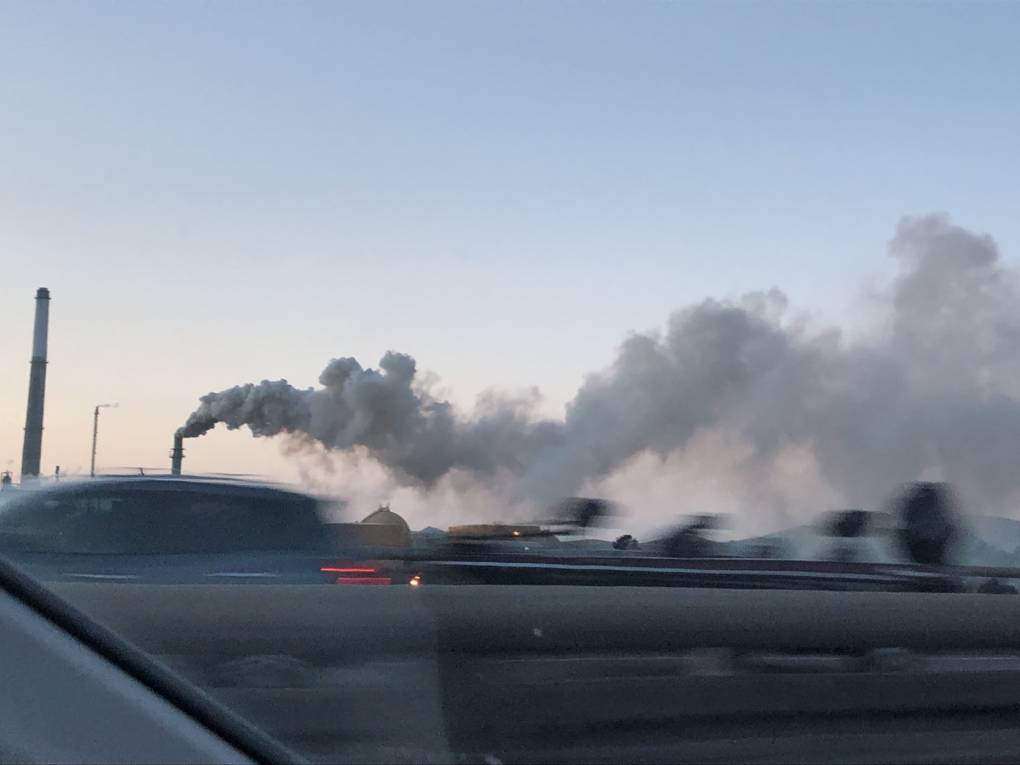
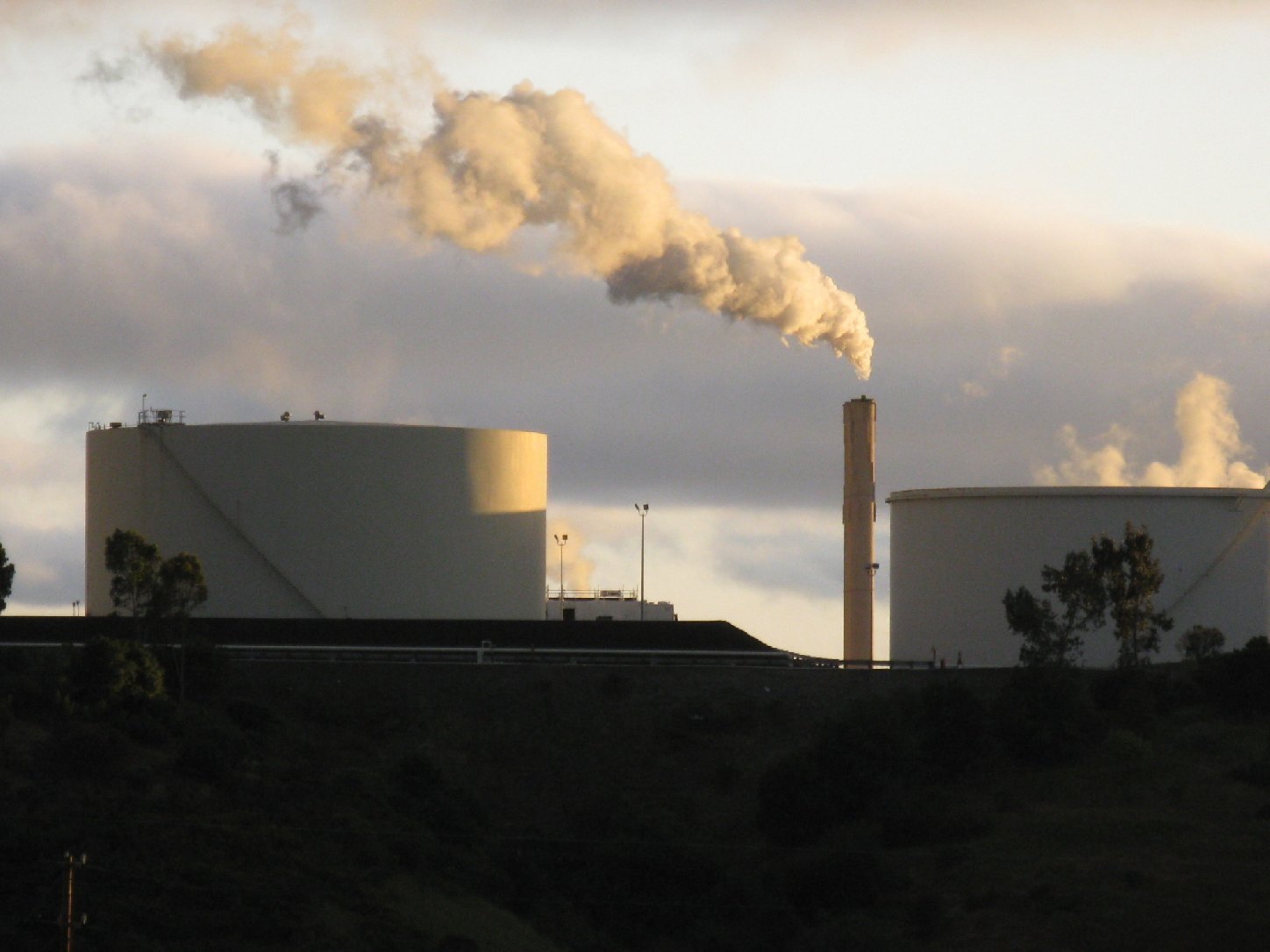
"caption": "A plume containing petroleum coke dusts wafts from a smokestack at Valero's Benicia oil refinery on March 23, 2019.",
"credit": "Sasha Khokha/KQED",
"altTag": "Problems began at the refinery on March 11 when a malfunction involving one of the refinery's units led to the release of petroleum coke dust.",
"description": "Problems began at the refinery on March 11 when a malfunction involving one of the refinery's units led to the release of petroleum coke dust.",
"imgSizes": {
"thumbnail": {
"file": "https://cdn.kqed.org/wp-content/uploads/sites/10/2019/03/IMG_5553-1-160x120.jpg",
"width": 160,
"height": 120,
"mimeType": "image/jpeg"
},
"medium": {
"file": "https://cdn.kqed.org/wp-content/uploads/sites/10/2019/03/IMG_5553-1-800x600.jpg",
"width": 800,
"height": 600,
"mimeType": "image/jpeg"
},
"large": {
"file": "https://cdn.kqed.org/wp-content/uploads/sites/10/2019/03/IMG_5553-1-1020x765.jpg",
"width": 1020,
"height": 765,
"mimeType": "image/jpeg"
},
"complete_open_graph": {
"file": "https://cdn.kqed.org/wp-content/uploads/sites/10/2019/03/IMG_5553-1-1200x900.jpg",
"width": 1200,
"height": 900,
"mimeType": "image/jpeg"
},
"post-thumbnail": {
"file": "https://cdn.kqed.org/wp-content/uploads/sites/10/2019/03/IMG_5553-1-672x372.jpg",
"width": 672,
"height": 372,
"mimeType": "image/jpeg"
},
"twentyfourteen-full-width": {
"file": "https://cdn.kqed.org/wp-content/uploads/sites/10/2019/03/IMG_5553-1-1038x576.jpg",
"width": 1038,
"height": 576,
"mimeType": "image/jpeg"
},
"full-width": {
"file": "https://cdn.kqed.org/wp-content/uploads/sites/10/2019/03/IMG_5553-1-1920x1440.jpg",
"width": 1920,
"height": 1440,
"mimeType": "image/jpeg"
},
"guest-author-32": {
"file": "https://cdn.kqed.org/wp-content/uploads/sites/10/2019/03/IMG_5553-1-32x32.jpg",
"width": 32,
"height": 32,
"mimeType": "image/jpeg"
},
"guest-author-50": {
"file": "https://cdn.kqed.org/wp-content/uploads/sites/10/2019/03/IMG_5553-1-50x50.jpg",
"width": 50,
"height": 50,
"mimeType": "image/jpeg"
},
"guest-author-64": {
"file": "https://cdn.kqed.org/wp-content/uploads/sites/10/2019/03/IMG_5553-1-64x64.jpg",
"width": 64,
"height": 64,
"mimeType": "image/jpeg"
},
"guest-author-96": {
"file": "https://cdn.kqed.org/wp-content/uploads/sites/10/2019/03/IMG_5553-1-96x96.jpg",
"width": 96,
"height": 96,
"mimeType": "image/jpeg"
},
"guest-author-128": {
"file": "https://cdn.kqed.org/wp-content/uploads/sites/10/2019/03/IMG_5553-1-128x128.jpg",
"width": 128,
"height": 128,
"mimeType": "image/jpeg"
},
"apple_news_ca_landscape_12_9": {
"file": "https://cdn.kqed.org/wp-content/uploads/sites/10/2019/03/IMG_5553-1-1832x1374.jpg",
"width": 1832,
"height": 1374,
"mimeType": "image/jpeg"
},
"apple_news_ca_landscape_9_7": {
"file": "https://cdn.kqed.org/wp-content/uploads/sites/10/2019/03/IMG_5553-1-1376x1032.jpg",
"width": 1376,
"height": 1032,
"mimeType": "image/jpeg"
},
"apple_news_ca_landscape_5_5": {
"file": "https://cdn.kqed.org/wp-content/uploads/sites/10/2019/03/IMG_5553-1-1044x783.jpg",
"width": 1044,
"height": 783,
"mimeType": "image/jpeg"
},
"apple_news_ca_landscape_4_7": {
"file": "https://cdn.kqed.org/wp-content/uploads/sites/10/2019/03/IMG_5553-1-632x474.jpg",
"width": 632,
"height": 474,
"mimeType": "image/jpeg"
},
"apple_news_ca_landscape_4_0": {
"file": "https://cdn.kqed.org/wp-content/uploads/sites/10/2019/03/IMG_5553-1-536x402.jpg",
"width": 536,
"height": 402,
"mimeType": "image/jpeg"
},
"apple_news_ca_portrait_12_9": {
"file": "https://cdn.kqed.org/wp-content/uploads/sites/10/2019/03/IMG_5553-1-1122x1496.jpg",
"width": 1122,
"height": 1496,
"mimeType": "image/jpeg"
},
"apple_news_ca_portrait_9_7": {
"file": "https://cdn.kqed.org/wp-content/uploads/sites/10/2019/03/IMG_5553-1-840x1120.jpg",
"width": 840,
"height": 1120,
"mimeType": "image/jpeg"
},
"apple_news_ca_portrait_5_5": {
"file": "https://cdn.kqed.org/wp-content/uploads/sites/10/2019/03/IMG_5553-1-687x916.jpg",
"width": 687,
"height": 916,
"mimeType": "image/jpeg"
},
"apple_news_ca_portrait_4_7": {
"file": "https://cdn.kqed.org/wp-content/uploads/sites/10/2019/03/IMG_5553-1-414x552.jpg",
"width": 414,
"height": 552,
"mimeType": "image/jpeg"
},
"apple_news_ca_portrait_4_0": {
"file": "https://cdn.kqed.org/wp-content/uploads/sites/10/2019/03/IMG_5553-1-354x472.jpg",
"width": 354,
"height": 472,
"mimeType": "image/jpeg"
},
"apple_news_ca_square_12_9": {
"file": "https://cdn.kqed.org/wp-content/uploads/sites/10/2019/03/IMG_5553-1-1472x1472.jpg",
"width": 1472,
"height": 1472,
"mimeType": "image/jpeg"
},
"apple_news_ca_square_9_7": {
"file": "https://cdn.kqed.org/wp-content/uploads/sites/10/2019/03/IMG_5553-1-1104x1104.jpg",
"width": 1104,
"height": 1104,
"mimeType": "image/jpeg"
},
"apple_news_ca_square_5_5": {
"file": "https://cdn.kqed.org/wp-content/uploads/sites/10/2019/03/IMG_5553-1-912x912.jpg",
"width": 912,
"height": 912,
"mimeType": "image/jpeg"
},
"apple_news_ca_square_4_7": {
"file": "https://cdn.kqed.org/wp-content/uploads/sites/10/2019/03/IMG_5553-1-550x550.jpg",
"width": 550,
"height": 550,
"mimeType": "image/jpeg"
},
"apple_news_ca_square_4_0": {
"file": "https://cdn.kqed.org/wp-content/uploads/sites/10/2019/03/IMG_5553-1-470x470.jpg",
"width": 470,
"height": 470,
"mimeType": "image/jpeg"
},
"kqedFullSize": {
"file": "https://cdn.kqed.org/wp-content/uploads/sites/10/2019/03/IMG_5553-1-e1553446402845.jpg",
"width": 1920,
"height": 1440
}
},
"isLoading": false,
"fetchFailed": false
},
"news_11733681": {
"type": "attachments",
"id": "news_11733681",
"meta": {
"index": "attachments_1716263798",
"site": "news",
"id": "11733681",
"found": true
},
"parent": 0,
"imgSizes": {
"twentyfourteen-full-width": {
"file": "https://ww2.kqed.org/app/uploads/sites/10/2019/03/IMG_20190317_122430-1038x576.jpg",
"width": 1038,
"mimeType": "image/jpeg",
"height": 576
},
"thumbnail": {
"file": "https://ww2.kqed.org/app/uploads/sites/10/2019/03/IMG_20190317_122430-160x120.jpg",
"width": 160,
"mimeType": "image/jpeg",
"height": 120
},
"post-thumbnail": {
"file": "https://ww2.kqed.org/app/uploads/sites/10/2019/03/IMG_20190317_122430-672x372.jpg",
"width": 672,
"mimeType": "image/jpeg",
"height": 372
},
"kqedFullSize": {
"file": "https://ww2.kqed.org/app/uploads/sites/10/2019/03/IMG_20190317_122430.jpg",
"width": 2048,
"height": 1536
},
"large": {
"file": "https://ww2.kqed.org/app/uploads/sites/10/2019/03/IMG_20190317_122430-1020x765.jpg",
"width": 1020,
"mimeType": "image/jpeg",
"height": 765
},
"complete_open_graph": {
"file": "https://ww2.kqed.org/app/uploads/sites/10/2019/03/IMG_20190317_122430-1200x900.jpg",
"width": 1200,
"mimeType": "image/jpeg",
"height": 900
},
"guest-author-50": {
"file": "https://ww2.kqed.org/app/uploads/sites/10/2019/03/IMG_20190317_122430-50x50.jpg",
"width": 50,
"mimeType": "image/jpeg",
"height": 50
},
"guest-author-96": {
"file": "https://ww2.kqed.org/app/uploads/sites/10/2019/03/IMG_20190317_122430-96x96.jpg",
"width": 96,
"mimeType": "image/jpeg",
"height": 96
},
"medium": {
"file": "https://ww2.kqed.org/app/uploads/sites/10/2019/03/IMG_20190317_122430-800x600.jpg",
"width": 800,
"mimeType": "image/jpeg",
"height": 600
},
"guest-author-64": {
"file": "https://ww2.kqed.org/app/uploads/sites/10/2019/03/IMG_20190317_122430-64x64.jpg",
"width": 64,
"mimeType": "image/jpeg",
"height": 64
},
"guest-author-32": {
"file": "https://ww2.kqed.org/app/uploads/sites/10/2019/03/IMG_20190317_122430-32x32.jpg",
"width": 32,
"mimeType": "image/jpeg",
"height": 32
},
"full-width": {
"file": "https://ww2.kqed.org/app/uploads/sites/10/2019/03/IMG_20190317_122430-1920x1440.jpg",
"width": 1920,
"mimeType": "image/jpeg",
"height": 1440
},
"guest-author-128": {
"file": "https://ww2.kqed.org/app/uploads/sites/10/2019/03/IMG_20190317_122430-128x128.jpg",
"width": 128,
"mimeType": "image/jpeg",
"height": 128
}
},
"publishDate": 1552944964,
"modified": 1552945074,
"caption": "Flaring at Chevron's Richmond refinery seen on March 17, 2019.",
"description": null,
"title": "IMG_20190317_122430",
"credit": "Courtesy of Brian Krans",
"status": "inherit",
"isLoading": false,
"fetchFailed": false
},
"news_11714798": {
"type": "attachments",
"id": "news_11714798",
"meta": {
"index": "attachments_1716263798",
"site": "news",
"id": "11714798",
"found": true
},
"parent": 11714786,
"imgSizes": {
"small": {
"file": "https://ww2.kqed.org/app/uploads/sites/10/2018/12/drifties_122718_final-520x349.jpg",
"width": 520,
"mimeType": "image/jpeg",
"height": 349
},
"twentyfourteen-full-width": {
"file": "https://ww2.kqed.org/app/uploads/sites/10/2018/12/drifties_122718_final-1038x576.jpg",
"width": 1038,
"mimeType": "image/jpeg",
"height": 576
},
"thumbnail": {
"file": "https://ww2.kqed.org/app/uploads/sites/10/2018/12/drifties_122718_final-160x107.jpg",
"width": 160,
"mimeType": "image/jpeg",
"height": 107
},
"fd-sm": {
"file": "https://ww2.kqed.org/app/uploads/sites/10/2018/12/drifties_122718_final-960x644.jpg",
"width": 960,
"mimeType": "image/jpeg",
"height": 644
},
"post-thumbnail": {
"file": "https://ww2.kqed.org/app/uploads/sites/10/2018/12/drifties_122718_final-672x372.jpg",
"width": 672,
"mimeType": "image/jpeg",
"height": 372
},
"xsmall": {
"file": "https://ww2.kqed.org/app/uploads/sites/10/2018/12/drifties_122718_final-375x252.jpg",
"width": 375,
"mimeType": "image/jpeg",
"height": 252
},
"kqedFullSize": {
"file": "https://ww2.kqed.org/app/uploads/sites/10/2018/12/drifties_122718_final.jpg",
"width": 1920,
"height": 1288
},
"large": {
"file": "https://ww2.kqed.org/app/uploads/sites/10/2018/12/drifties_122718_final-1020x684.jpg",
"width": 1020,
"mimeType": "image/jpeg",
"height": 684
},
"xlarge": {
"file": "https://ww2.kqed.org/app/uploads/sites/10/2018/12/drifties_122718_final-1180x792.jpg",
"width": 1180,
"mimeType": "image/jpeg",
"height": 792
},
"complete_open_graph": {
"file": "https://ww2.kqed.org/app/uploads/sites/10/2018/12/drifties_122718_final-1200x805.jpg",
"width": 1200,
"mimeType": "image/jpeg",
"height": 805
},
"guest-author-50": {
"file": "https://ww2.kqed.org/app/uploads/sites/10/2018/12/drifties_122718_final-50x50.jpg",
"width": 50,
"mimeType": "image/jpeg",
"height": 50
},
"guest-author-96": {
"file": "https://ww2.kqed.org/app/uploads/sites/10/2018/12/drifties_122718_final-96x96.jpg",
"width": 96,
"mimeType": "image/jpeg",
"height": 96
},
"medium": {
"file": "https://ww2.kqed.org/app/uploads/sites/10/2018/12/drifties_122718_final-800x537.jpg",
"width": 800,
"mimeType": "image/jpeg",
"height": 537
},
"guest-author-64": {
"file": "https://ww2.kqed.org/app/uploads/sites/10/2018/12/drifties_122718_final-64x64.jpg",
"width": 64,
"mimeType": "image/jpeg",
"height": 64
},
"guest-author-32": {
"file": "https://ww2.kqed.org/app/uploads/sites/10/2018/12/drifties_122718_final-32x32.jpg",
"width": 32,
"mimeType": "image/jpeg",
"height": 32
},
"fd-lrg": {
"file": "https://ww2.kqed.org/app/uploads/sites/10/2018/12/drifties_122718_final-1920x1288.jpg",
"width": 1920,
"mimeType": "image/jpeg",
"height": 1288
},
"fd-med": {
"file": "https://ww2.kqed.org/app/uploads/sites/10/2018/12/drifties_122718_final-1180x792.jpg",
"width": 1180,
"mimeType": "image/jpeg",
"height": 792
},
"full-width": {
"file": "https://ww2.kqed.org/app/uploads/sites/10/2018/12/drifties_122718_final-1920x1288.jpg",
"width": 1920,
"mimeType": "image/jpeg",
"height": 1288
},
"detail": {
"file": "https://ww2.kqed.org/app/uploads/sites/10/2018/12/drifties_122718_final-150x150.jpg",
"width": 150,
"mimeType": "image/jpeg",
"height": 150
},
"guest-author-128": {
"file": "https://ww2.kqed.org/app/uploads/sites/10/2018/12/drifties_122718_final-128x128.jpg",
"width": 128,
"mimeType": "image/jpeg",
"height": 128
},
"xxsmall": {
"file": "https://ww2.kqed.org/app/uploads/sites/10/2018/12/drifties_122718_final-240x161.jpg",
"width": 240,
"mimeType": "image/jpeg",
"height": 161
}
},
"publishDate": 1545938237,
"modified": 1545938264,
"caption": null,
"description": null,
"title": "drifties_122718_final",
"credit": null,
"status": "inherit",
"isLoading": false,
"fetchFailed": false
},
"news_11690930": {
"type": "attachments",
"id": "news_11690930",
"meta": {
"index": "attachments_1716263798",
"site": "news",
"id": "11690930",
"found": true
},
"parent": 11690926,
"imgSizes": {
"small": {
"file": "https://ww2.kqed.org/app/uploads/sites/10/2018/09/ContaminatedWater-520x390.jpg",
"width": 520,
"mimeType": "image/jpeg",
"height": 390
},
"twentyfourteen-full-width": {
"file": "https://ww2.kqed.org/app/uploads/sites/10/2018/09/ContaminatedWater-800x576.jpg",
"width": 800,
"mimeType": "image/jpeg",
"height": 576
},
"thumbnail": {
"file": "https://ww2.kqed.org/app/uploads/sites/10/2018/09/ContaminatedWater-160x120.jpg",
"width": 160,
"mimeType": "image/jpeg",
"height": 120
},
"post-thumbnail": {
"file": "https://ww2.kqed.org/app/uploads/sites/10/2018/09/ContaminatedWater-672x372.jpg",
"width": 672,
"mimeType": "image/jpeg",
"height": 372
},
"xsmall": {
"file": "https://ww2.kqed.org/app/uploads/sites/10/2018/09/ContaminatedWater-375x281.jpg",
"width": 375,
"mimeType": "image/jpeg",
"height": 281
},
"kqedFullSize": {
"file": "https://ww2.kqed.org/app/uploads/sites/10/2018/09/ContaminatedWater.jpg",
"width": 800,
"height": 600
},
"guest-author-50": {
"file": "https://ww2.kqed.org/app/uploads/sites/10/2018/09/ContaminatedWater-50x50.jpg",
"width": 50,
"mimeType": "image/jpeg",
"height": 50
},
"guest-author-96": {
"file": "https://ww2.kqed.org/app/uploads/sites/10/2018/09/ContaminatedWater-96x96.jpg",
"width": 96,
"mimeType": "image/jpeg",
"height": 96
},
"medium": {
"file": "https://ww2.kqed.org/app/uploads/sites/10/2018/09/ContaminatedWater-800x600.jpg",
"width": 800,
"mimeType": "image/jpeg",
"height": 600
},
"guest-author-64": {
"file": "https://ww2.kqed.org/app/uploads/sites/10/2018/09/ContaminatedWater-64x64.jpg",
"width": 64,
"mimeType": "image/jpeg",
"height": 64
},
"guest-author-32": {
"file": "https://ww2.kqed.org/app/uploads/sites/10/2018/09/ContaminatedWater-32x32.jpg",
"width": 32,
"mimeType": "image/jpeg",
"height": 32
},
"detail": {
"file": "https://ww2.kqed.org/app/uploads/sites/10/2018/09/ContaminatedWater-150x150.jpg",
"width": 150,
"mimeType": "image/jpeg",
"height": 150
},
"guest-author-128": {
"file": "https://ww2.kqed.org/app/uploads/sites/10/2018/09/ContaminatedWater-128x128.jpg",
"width": 128,
"mimeType": "image/jpeg",
"height": 128
},
"xxsmall": {
"file": "https://ww2.kqed.org/app/uploads/sites/10/2018/09/ContaminatedWater-240x180.jpg",
"width": 240,
"mimeType": "image/jpeg",
"height": 180
}
},
"publishDate": 1536276366,
"modified": 1536276445,
"caption": "A danger sign at Imperial Beach in San Diego County, just north of the U.S.-Mexico border, is shown on March. 2, 2018.",
"description": "A danger sign at Imperial Beach in San Diego County, just north of the U.S.-Mexico border, is shown on March. 2, 2018.",
"title": "ContaminatedWater",
"credit": "Erik Anderson/KPBS",
"status": "inherit",
"isLoading": false,
"fetchFailed": false
},
"news_11684020": {
"type": "attachments",
"id": "news_11684020",
"meta": {
"index": "attachments_1716263798",
"site": "news",
"id": "11684020",
"found": true
},
"parent": 11684016,
"imgSizes": {
"small": {
"file": "https://ww2.kqed.org/app/uploads/sites/10/2018/07/farmfine_073118_final-520x339.jpg",
"width": 520,
"mimeType": "image/jpeg",
"height": 339
},
"twentyfourteen-full-width": {
"file": "https://ww2.kqed.org/app/uploads/sites/10/2018/07/farmfine_073118_final-1038x576.jpg",
"width": 1038,
"mimeType": "image/jpeg",
"height": 576
},
"thumbnail": {
"file": "https://ww2.kqed.org/app/uploads/sites/10/2018/07/farmfine_073118_final-160x104.jpg",
"width": 160,
"mimeType": "image/jpeg",
"height": 104
},
"fd-sm": {
"file": "https://ww2.kqed.org/app/uploads/sites/10/2018/07/farmfine_073118_final-960x626.jpg",
"width": 960,
"mimeType": "image/jpeg",
"height": 626
},
"post-thumbnail": {
"file": "https://ww2.kqed.org/app/uploads/sites/10/2018/07/farmfine_073118_final-672x372.jpg",
"width": 672,
"mimeType": "image/jpeg",
"height": 372
},
"xsmall": {
"file": "https://ww2.kqed.org/app/uploads/sites/10/2018/07/farmfine_073118_final-375x245.jpg",
"width": 375,
"mimeType": "image/jpeg",
"height": 245
},
"kqedFullSize": {
"file": "https://ww2.kqed.org/app/uploads/sites/10/2018/07/farmfine_073118_final.jpg",
"width": 1920,
"height": 1252
},
"large": {
"file": "https://ww2.kqed.org/app/uploads/sites/10/2018/07/farmfine_073118_final-1020x665.jpg",
"width": 1020,
"mimeType": "image/jpeg",
"height": 665
},
"xlarge": {
"file": "https://ww2.kqed.org/app/uploads/sites/10/2018/07/farmfine_073118_final-1180x769.jpg",
"width": 1180,
"mimeType": "image/jpeg",
"height": 769
},
"complete_open_graph": {
"file": "https://ww2.kqed.org/app/uploads/sites/10/2018/07/farmfine_073118_final-1200x783.jpg",
"width": 1200,
"mimeType": "image/jpeg",
"height": 783
},
"guest-author-50": {
"file": "https://ww2.kqed.org/app/uploads/sites/10/2018/07/farmfine_073118_final-50x50.jpg",
"width": 50,
"mimeType": "image/jpeg",
"height": 50
},
"guest-author-96": {
"file": "https://ww2.kqed.org/app/uploads/sites/10/2018/07/farmfine_073118_final-96x96.jpg",
"width": 96,
"mimeType": "image/jpeg",
"height": 96
},
"medium": {
"file": "https://ww2.kqed.org/app/uploads/sites/10/2018/07/farmfine_073118_final-800x522.jpg",
"width": 800,
"mimeType": "image/jpeg",
"height": 522
},
"guest-author-64": {
"file": "https://ww2.kqed.org/app/uploads/sites/10/2018/07/farmfine_073118_final-64x64.jpg",
"width": 64,
"mimeType": "image/jpeg",
"height": 64
},
"guest-author-32": {
"file": "https://ww2.kqed.org/app/uploads/sites/10/2018/07/farmfine_073118_final-32x32.jpg",
"width": 32,
"mimeType": "image/jpeg",
"height": 32
},
"fd-lrg": {
"file": "https://ww2.kqed.org/app/uploads/sites/10/2018/07/farmfine_073118_final-1920x1252.jpg",
"width": 1920,
"mimeType": "image/jpeg",
"height": 1252
},
"fd-med": {
"file": "https://ww2.kqed.org/app/uploads/sites/10/2018/07/farmfine_073118_final-1180x769.jpg",
"width": 1180,
"mimeType": "image/jpeg",
"height": 769
},
"full-width": {
"file": "https://ww2.kqed.org/app/uploads/sites/10/2018/07/farmfine_073118_final-1920x1252.jpg",
"width": 1920,
"mimeType": "image/jpeg",
"height": 1252
},
"detail": {
"file": "https://ww2.kqed.org/app/uploads/sites/10/2018/07/farmfine_073118_final-150x150.jpg",
"width": 150,
"mimeType": "image/jpeg",
"height": 150
},
"guest-author-128": {
"file": "https://ww2.kqed.org/app/uploads/sites/10/2018/07/farmfine_073118_final-128x128.jpg",
"width": 128,
"mimeType": "image/jpeg",
"height": 128
},
"xxsmall": {
"file": "https://ww2.kqed.org/app/uploads/sites/10/2018/07/farmfine_073118_final-240x157.jpg",
"width": 240,
"mimeType": "image/jpeg",
"height": 157
}
},
"publishDate": 1533070411,
"modified": 1533070433,
"caption": null,
"description": null,
"title": "farmfine_073118_final",
"credit": null,
"status": "inherit",
"isLoading": false,
"fetchFailed": false
},
"news_11661883": {
"type": "attachments",
"id": "news_11661883",
"meta": {
"index": "attachments_1716263798",
"site": "news",
"id": "11661883",
"found": true
},
"parent": 11661676,
"imgSizes": {
"small": {
"file": "https://ww2.kqed.org/app/uploads/sites/10/2018/04/ShipyardLarge-520x335.jpg",
"width": 520,
"mimeType": "image/jpeg",
"height": 335
},
"twentyfourteen-full-width": {
"file": "https://ww2.kqed.org/app/uploads/sites/10/2018/04/ShipyardLarge-1038x576.jpg",
"width": 1038,
"mimeType": "image/jpeg",
"height": 576
},
"thumbnail": {
"file": "https://ww2.kqed.org/app/uploads/sites/10/2018/04/ShipyardLarge-160x103.jpg",
"width": 160,
"mimeType": "image/jpeg",
"height": 103
},
"fd-sm": {
"file": "https://ww2.kqed.org/app/uploads/sites/10/2018/04/ShipyardLarge-960x618.jpg",
"width": 960,
"mimeType": "image/jpeg",
"height": 618
},
"post-thumbnail": {
"file": "https://ww2.kqed.org/app/uploads/sites/10/2018/04/ShipyardLarge-672x372.jpg",
"width": 672,
"mimeType": "image/jpeg",
"height": 372
},
"xsmall": {
"file": "https://ww2.kqed.org/app/uploads/sites/10/2018/04/ShipyardLarge-375x242.jpg",
"width": 375,
"mimeType": "image/jpeg",
"height": 242
},
"kqedFullSize": {
"file": "https://ww2.kqed.org/app/uploads/sites/10/2018/04/ShipyardLarge.jpg",
"width": 1863,
"height": 1200
},
"large": {
"file": "https://ww2.kqed.org/app/uploads/sites/10/2018/04/ShipyardLarge-1020x657.jpg",
"width": 1020,
"mimeType": "image/jpeg",
"height": 657
},
"xlarge": {
"file": "https://ww2.kqed.org/app/uploads/sites/10/2018/04/ShipyardLarge-1180x760.jpg",
"width": 1180,
"mimeType": "image/jpeg",
"height": 760
},
"complete_open_graph": {
"file": "https://ww2.kqed.org/app/uploads/sites/10/2018/04/ShipyardLarge-1200x773.jpg",
"width": 1200,
"mimeType": "image/jpeg",
"height": 773
},
"guest-author-50": {
"file": "https://ww2.kqed.org/app/uploads/sites/10/2018/04/ShipyardLarge-50x50.jpg",
"width": 50,
"mimeType": "image/jpeg",
"height": 50
},
"guest-author-96": {
"file": "https://ww2.kqed.org/app/uploads/sites/10/2018/04/ShipyardLarge-96x96.jpg",
"width": 96,
"mimeType": "image/jpeg",
"height": 96
},
"medium": {
"file": "https://ww2.kqed.org/app/uploads/sites/10/2018/04/ShipyardLarge-800x515.jpg",
"width": 800,
"mimeType": "image/jpeg",
"height": 515
},
"guest-author-64": {
"file": "https://ww2.kqed.org/app/uploads/sites/10/2018/04/ShipyardLarge-64x64.jpg",
"width": 64,
"mimeType": "image/jpeg",
"height": 64
},
"guest-author-32": {
"file": "https://ww2.kqed.org/app/uploads/sites/10/2018/04/ShipyardLarge-32x32.jpg",
"width": 32,
"mimeType": "image/jpeg",
"height": 32
},
"fd-med": {
"file": "https://ww2.kqed.org/app/uploads/sites/10/2018/04/ShipyardLarge-1180x760.jpg",
"width": 1180,
"mimeType": "image/jpeg",
"height": 760
},
"detail": {
"file": "https://ww2.kqed.org/app/uploads/sites/10/2018/04/ShipyardLarge-150x150.jpg",
"width": 150,
"mimeType": "image/jpeg",
"height": 150
},
"guest-author-128": {
"file": "https://ww2.kqed.org/app/uploads/sites/10/2018/04/ShipyardLarge-128x128.jpg",
"width": 128,
"mimeType": "image/jpeg",
"height": 128
},
"xxsmall": {
"file": "https://ww2.kqed.org/app/uploads/sites/10/2018/04/ShipyardLarge-240x155.jpg",
"width": 240,
"mimeType": "image/jpeg",
"height": 155
}
},
"publishDate": 1523576456,
"modified": 1523576473,
"caption": "An aerial view of the Hunters Point Naval Shipyard from 2012.",
"description": "An aerial view of the Hunters Point Naval Shipyard from 2012.",
"title": "ShipyardLarge",
"credit": "Molly Samuel/KQED",
"status": "inherit",
"isLoading": false,
"fetchFailed": false
},
"news_11630862": {
"type": "attachments",
"id": "news_11630862",
"meta": {
"index": "attachments_1716263798",
"site": "news",
"id": "11630862",
"found": true
},
"parent": 11630861,
"imgSizes": {
"small": {
"file": "https://ww2.kqed.org/app/uploads/sites/10/2017/11/valley-file-20171027-2402-15ejnas-520x256.jpg",
"width": 520,
"mimeType": "image/jpeg",
"height": 256
},
"twentyfourteen-full-width": {
"file": "https://ww2.kqed.org/app/uploads/sites/10/2017/11/valley-file-20171027-2402-15ejnas-1038x576.jpg",
"width": 1038,
"mimeType": "image/jpeg",
"height": 576
},
"thumbnail": {
"file": "https://ww2.kqed.org/app/uploads/sites/10/2017/11/valley-file-20171027-2402-15ejnas-160x79.jpg",
"width": 160,
"mimeType": "image/jpeg",
"height": 79
},
"fd-sm": {
"file": "https://ww2.kqed.org/app/uploads/sites/10/2017/11/valley-file-20171027-2402-15ejnas-960x473.jpg",
"width": 960,
"mimeType": "image/jpeg",
"height": 473
},
"post-thumbnail": {
"file": "https://ww2.kqed.org/app/uploads/sites/10/2017/11/valley-file-20171027-2402-15ejnas-672x372.jpg",
"width": 672,
"mimeType": "image/jpeg",
"height": 372
},
"xsmall": {
"file": "https://ww2.kqed.org/app/uploads/sites/10/2017/11/valley-file-20171027-2402-15ejnas-375x185.jpg",
"width": 375,
"mimeType": "image/jpeg",
"height": 185
},
"kqedFullSize": {
"file": "https://ww2.kqed.org/app/uploads/sites/10/2017/11/valley-file-20171027-2402-15ejnas.jpg",
"width": 1356,
"height": 668
},
"large": {
"file": "https://ww2.kqed.org/app/uploads/sites/10/2017/11/valley-file-20171027-2402-15ejnas-1020x502.jpg",
"width": 1020,
"mimeType": "image/jpeg",
"height": 502
},
"xlarge": {
"file": "https://ww2.kqed.org/app/uploads/sites/10/2017/11/valley-file-20171027-2402-15ejnas-1180x581.jpg",
"width": 1180,
"mimeType": "image/jpeg",
"height": 581
},
"guest-author-50": {
"file": "https://ww2.kqed.org/app/uploads/sites/10/2017/11/valley-file-20171027-2402-15ejnas-50x50.jpg",
"width": 50,
"mimeType": "image/jpeg",
"height": 50
},
"guest-author-96": {
"file": "https://ww2.kqed.org/app/uploads/sites/10/2017/11/valley-file-20171027-2402-15ejnas-96x96.jpg",
"width": 96,
"mimeType": "image/jpeg",
"height": 96
},
"medium": {
"file": "https://ww2.kqed.org/app/uploads/sites/10/2017/11/valley-file-20171027-2402-15ejnas-800x394.jpg",
"width": 800,
"mimeType": "image/jpeg",
"height": 394
},
"guest-author-64": {
"file": "https://ww2.kqed.org/app/uploads/sites/10/2017/11/valley-file-20171027-2402-15ejnas-64x64.jpg",
"width": 64,
"mimeType": "image/jpeg",
"height": 64
},
"guest-author-32": {
"file": "https://ww2.kqed.org/app/uploads/sites/10/2017/11/valley-file-20171027-2402-15ejnas-32x32.jpg",
"width": 32,
"mimeType": "image/jpeg",
"height": 32
},
"fd-med": {
"file": "https://ww2.kqed.org/app/uploads/sites/10/2017/11/valley-file-20171027-2402-15ejnas-1180x581.jpg",
"width": 1180,
"mimeType": "image/jpeg",
"height": 581
},
"detail": {
"file": "https://ww2.kqed.org/app/uploads/sites/10/2017/11/valley-file-20171027-2402-15ejnas-150x150.jpg",
"width": 150,
"mimeType": "image/jpeg",
"height": 150
},
"guest-author-128": {
"file": "https://ww2.kqed.org/app/uploads/sites/10/2017/11/valley-file-20171027-2402-15ejnas-128x128.jpg",
"width": 128,
"mimeType": "image/jpeg",
"height": 128
},
"xxsmall": {
"file": "https://ww2.kqed.org/app/uploads/sites/10/2017/11/valley-file-20171027-2402-15ejnas-240x118.jpg",
"width": 240,
"mimeType": "image/jpeg",
"height": 118
}
},
"publishDate": 1510696275,
"modified": 1510696447,
"caption": "Aerial view of San Jose, California, 2016. \n",
"description": "Aerial view of San Jose, California, 2016",
"title": "valley-file-20171027-2402-15ejnas",
"credit": "\u003ca href=\"https://www.flickr.com/photos/gordon-s/29670306746/\">Gordon-Shukwit\u003c/a>, \u003ca href=\"http://creativecommons.org/licenses/by-nc-nd/4.0/\">CC BY-NC-ND\u003c/a>",
"status": "inherit",
"isLoading": false,
"fetchFailed": false
},
"news_11467102": {
"type": "attachments",
"id": "news_11467102",
"meta": {
"index": "attachments_1716263798",
"site": "news",
"id": "11467102",
"found": true
},
"parent": 11463233,
"imgSizes": {
"small": {
"file": "https://ww2.kqed.org/app/uploads/sites/10/2017/05/SeyedSadredin-520x274.jpg",
"width": 520,
"mimeType": "image/jpeg",
"height": 274
},
"twentyfourteen-full-width": {
"file": "https://ww2.kqed.org/app/uploads/sites/10/2017/05/SeyedSadredin-1038x576.jpg",
"width": 1038,
"mimeType": "image/jpeg",
"height": 576
},
"thumbnail": {
"file": "https://ww2.kqed.org/app/uploads/sites/10/2017/05/SeyedSadredin-160x84.jpg",
"width": 160,
"mimeType": "image/jpeg",
"height": 84
},
"fd-sm": {
"file": "https://ww2.kqed.org/app/uploads/sites/10/2017/05/SeyedSadredin-960x507.jpg",
"width": 960,
"mimeType": "image/jpeg",
"height": 507
},
"post-thumbnail": {
"file": "https://ww2.kqed.org/app/uploads/sites/10/2017/05/SeyedSadredin-672x372.jpg",
"width": 672,
"mimeType": "image/jpeg",
"height": 372
},
"xsmall": {
"file": "https://ww2.kqed.org/app/uploads/sites/10/2017/05/SeyedSadredin-375x198.jpg",
"width": 375,
"mimeType": "image/jpeg",
"height": 198
},
"kqedFullSize": {
"file": "https://ww2.kqed.org/app/uploads/sites/10/2017/05/SeyedSadredin.jpg",
"width": 1920,
"height": 1013
},
"large": {
"file": "https://ww2.kqed.org/app/uploads/sites/10/2017/05/SeyedSadredin-1020x538.jpg",
"width": 1020,
"mimeType": "image/jpeg",
"height": 538
},
"xlarge": {
"file": "https://ww2.kqed.org/app/uploads/sites/10/2017/05/SeyedSadredin-1180x623.jpg",
"width": 1180,
"mimeType": "image/jpeg",
"height": 623
},
"guest-author-50": {
"file": "https://ww2.kqed.org/app/uploads/sites/10/2017/05/SeyedSadredin-50x50.jpg",
"width": 50,
"mimeType": "image/jpeg",
"height": 50
},
"guest-author-96": {
"file": "https://ww2.kqed.org/app/uploads/sites/10/2017/05/SeyedSadredin-96x96.jpg",
"width": 96,
"mimeType": "image/jpeg",
"height": 96
},
"medium": {
"file": "https://ww2.kqed.org/app/uploads/sites/10/2017/05/SeyedSadredin-800x422.jpg",
"width": 800,
"mimeType": "image/jpeg",
"height": 422
},
"guest-author-64": {
"file": "https://ww2.kqed.org/app/uploads/sites/10/2017/05/SeyedSadredin-64x64.jpg",
"width": 64,
"mimeType": "image/jpeg",
"height": 64
},
"guest-author-32": {
"file": "https://ww2.kqed.org/app/uploads/sites/10/2017/05/SeyedSadredin-32x32.jpg",
"width": 32,
"mimeType": "image/jpeg",
"height": 32
},
"fd-lrg": {
"file": "https://ww2.kqed.org/app/uploads/sites/10/2017/05/SeyedSadredin-1920x1013.jpg",
"width": 1920,
"mimeType": "image/jpeg",
"height": 1013
},
"fd-med": {
"file": "https://ww2.kqed.org/app/uploads/sites/10/2017/05/SeyedSadredin-1180x623.jpg",
"width": 1180,
"mimeType": "image/jpeg",
"height": 623
},
"full-width": {
"file": "https://ww2.kqed.org/app/uploads/sites/10/2017/05/SeyedSadredin-1920x1013.jpg",
"width": 1920,
"mimeType": "image/jpeg",
"height": 1013
},
"detail": {
"file": "https://ww2.kqed.org/app/uploads/sites/10/2017/05/SeyedSadredin-150x150.jpg",
"width": 150,
"mimeType": "image/jpeg",
"height": 150
},
"guest-author-128": {
"file": "https://ww2.kqed.org/app/uploads/sites/10/2017/05/SeyedSadredin-128x128.jpg",
"width": 128,
"mimeType": "image/jpeg",
"height": 128
},
"xxsmall": {
"file": "https://ww2.kqed.org/app/uploads/sites/10/2017/05/SeyedSadredin-240x127.jpg",
"width": 240,
"mimeType": "image/jpeg",
"height": 127
}
},
"publishDate": 1495227538,
"modified": 1495243394,
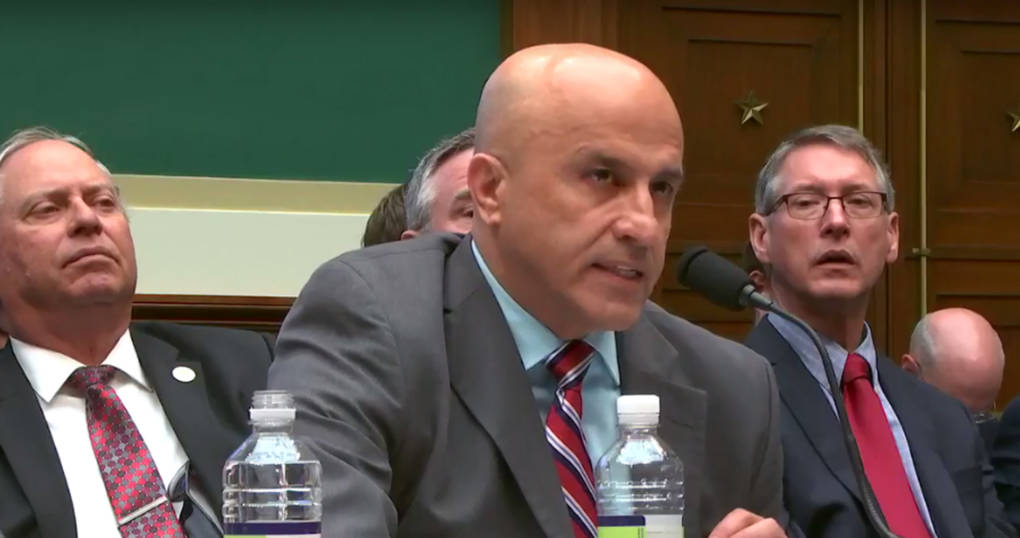
"caption": "Seyed Sadredin, executive director of the San Joaquin Valley Air Pollution Control District, testifies at a March 22 congressional subcommittee hearing to delay ozone standards. ",
"description": "Seyed Sadredin, executive director of the San Joaquin Valley Air Pollution Control District, testifies at a March 22 Congressional subcommittee hearing to delay ozone standards. ",
"title": "SeyedSadredin",
"credit": "YouTube",
"status": "inherit",
"isLoading": false,
"fetchFailed": false
},
"news_11361555": {
"type": "attachments",
"id": "news_11361555",
"meta": {
"index": "attachments_1716263798",
"site": "news",
"id": "11361555",
"found": true
},
"parent": 11359480,
"imgSizes": {
"small": {
"file": "https://ww2.kqed.org/app/uploads/sites/10/2017/03/RS24625_DSC_0026-qut-520x348.jpg",
"width": 520,
"mimeType": "image/jpeg",
"height": 348
},
"twentyfourteen-full-width": {
"file": "https://ww2.kqed.org/app/uploads/sites/10/2017/03/RS24625_DSC_0026-qut-1038x576.jpg",
"width": 1038,
"mimeType": "image/jpeg",
"height": 576
},
"thumbnail": {
"file": "https://ww2.kqed.org/app/uploads/sites/10/2017/03/RS24625_DSC_0026-qut-160x107.jpg",
"width": 160,
"mimeType": "image/jpeg",
"height": 107
},
"fd-sm": {
"file": "https://ww2.kqed.org/app/uploads/sites/10/2017/03/RS24625_DSC_0026-qut-960x643.jpg",
"width": 960,
"mimeType": "image/jpeg",
"height": 643
},
"post-thumbnail": {
"file": "https://ww2.kqed.org/app/uploads/sites/10/2017/03/RS24625_DSC_0026-qut-672x372.jpg",
"width": 672,
"mimeType": "image/jpeg",
"height": 372
},
"xsmall": {
"file": "https://ww2.kqed.org/app/uploads/sites/10/2017/03/RS24625_DSC_0026-qut-375x251.jpg",
"width": 375,
"mimeType": "image/jpeg",
"height": 251
},
"kqedFullSize": {
"file": "https://ww2.kqed.org/app/uploads/sites/10/2017/03/RS24625_DSC_0026-qut.jpg",
"width": 1920,
"height": 1285
},
"large": {
"file": "https://ww2.kqed.org/app/uploads/sites/10/2017/03/RS24625_DSC_0026-qut-1020x683.jpg",
"width": 1020,
"mimeType": "image/jpeg",
"height": 683
},
"xlarge": {
"file": "https://ww2.kqed.org/app/uploads/sites/10/2017/03/RS24625_DSC_0026-qut-1180x790.jpg",
"width": 1180,
"mimeType": "image/jpeg",
"height": 790
},
"guest-author-50": {
"file": "https://ww2.kqed.org/app/uploads/sites/10/2017/03/RS24625_DSC_0026-qut-50x50.jpg",
"width": 50,
"mimeType": "image/jpeg",
"height": 50
},
"guest-author-96": {
"file": "https://ww2.kqed.org/app/uploads/sites/10/2017/03/RS24625_DSC_0026-qut-96x96.jpg",
"width": 96,
"mimeType": "image/jpeg",
"height": 96
},
"medium": {
"file": "https://ww2.kqed.org/app/uploads/sites/10/2017/03/RS24625_DSC_0026-qut-800x535.jpg",
"width": 800,
"mimeType": "image/jpeg",
"height": 535
},
"guest-author-64": {
"file": "https://ww2.kqed.org/app/uploads/sites/10/2017/03/RS24625_DSC_0026-qut-64x64.jpg",
"width": 64,
"mimeType": "image/jpeg",
"height": 64
},
"guest-author-32": {
"file": "https://ww2.kqed.org/app/uploads/sites/10/2017/03/RS24625_DSC_0026-qut-32x32.jpg",
"width": 32,
"mimeType": "image/jpeg",
"height": 32
},
"fd-lrg": {
"file": "https://ww2.kqed.org/app/uploads/sites/10/2017/03/RS24625_DSC_0026-qut-1920x1285.jpg",
"width": 1920,
"mimeType": "image/jpeg",
"height": 1285
},
"fd-med": {
"file": "https://ww2.kqed.org/app/uploads/sites/10/2017/03/RS24625_DSC_0026-qut-1180x790.jpg",
"width": 1180,
"mimeType": "image/jpeg",
"height": 790
},
"full-width": {
"file": "https://ww2.kqed.org/app/uploads/sites/10/2017/03/RS24625_DSC_0026-qut-1920x1285.jpg",
"width": 1920,
"mimeType": "image/jpeg",
"height": 1285
},
"detail": {
"file": "https://ww2.kqed.org/app/uploads/sites/10/2017/03/RS24625_DSC_0026-qut-150x150.jpg",
"width": 150,
"mimeType": "image/jpeg",
"height": 150
},
"guest-author-128": {
"file": "https://ww2.kqed.org/app/uploads/sites/10/2017/03/RS24625_DSC_0026-qut-128x128.jpg",
"width": 128,
"mimeType": "image/jpeg",
"height": 128
},
"xxsmall": {
"file": "https://ww2.kqed.org/app/uploads/sites/10/2017/03/RS24625_DSC_0026-qut-240x161.jpg",
"width": 240,
"mimeType": "image/jpeg",
"height": 161
}
},
"publishDate": 1489644496,
"modified": 1492734749,
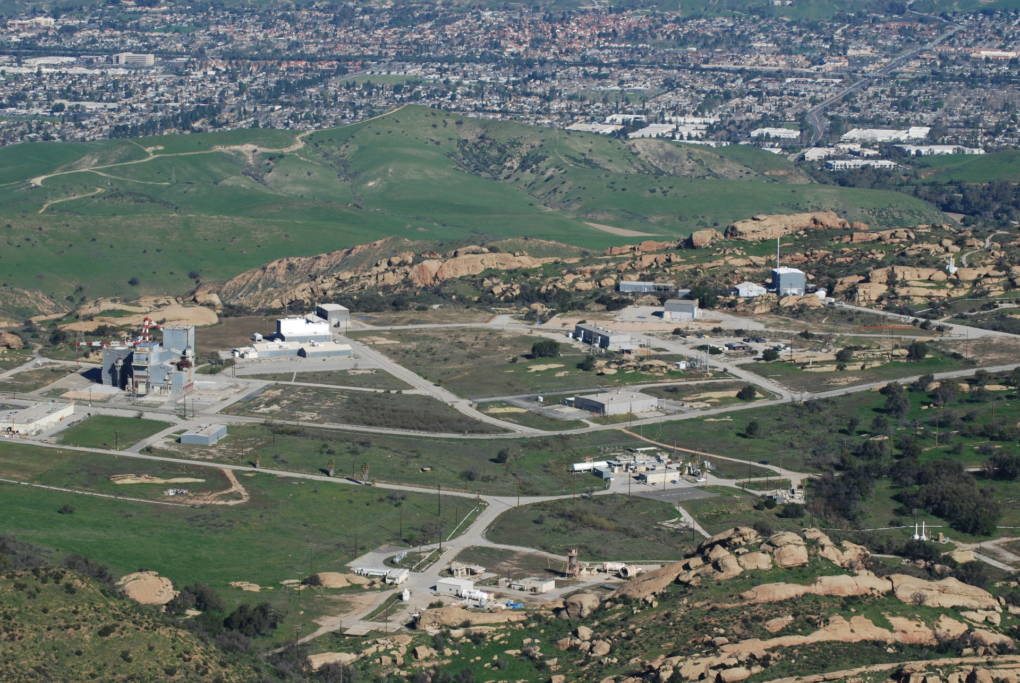
"caption": "The Santa Susana Field Laboratory lies in a mountain range between the San Fernando Valley and the city of Simi Valley. This is a view of the part of the laboratory where a nuclear reactor underwent a partial meltdown in 1959. Santa Susana's nuclear and chemical contamination has never been fully cleaned up.",
"description": "The Santa Susana Field Laboratory lies in a mountain range between the San Fernando Valley and the city of Simi Valley. This is a view of the part of the laboratory where a nuclear reactor underwent a partial meltdown in 1954. Santa Susana's nuclear and chemical contamination has never been cleaned up.",
"title": "RS24625_DSC_0026-qut",
"credit": "William Preston Bowling",
"status": "inherit",
"isLoading": false,
"fetchFailed": false
},
"news_133596": {
"type": "attachments",
"id": "news_133596",
"meta": {
"index": "attachments_1716263798",
"site": "news",
"id": "133596",
"found": true
},
"parent": 133567,
"imgSizes": {
"kqedFullSize": {
"file": "https://ww2.kqed.org/app/uploads/sites/10/2014/04/RS2636_Download090427-050-lpr.jpg",
"width": 1448,
"height": 1086
}
},
"publishDate": 1398281396,
"modified": 1398281396,
"caption": "Photo by Craig Miller/KQED",
"description": null,
"title": "EPA map",
"credit": null,
"status": "inherit",
"isLoading": false,
"fetchFailed": false
},
"news_124407": {
"type": "attachments",
"id": "news_124407",
"meta": {
"index": "attachments_1716263798",
"site": "news",
"id": "124407",
"found": true
},
"parent": 124401,
"imgSizes": {
"kqedFullSize": {
"file": "https://ww2.kqed.org/app/uploads/sites/10/2014/01/RS8259_IMG_4445-lpr.jpg",
"width": 1448,
"height": 1086
}
},
"publishDate": 1390599001,
"modified": 1390599001,
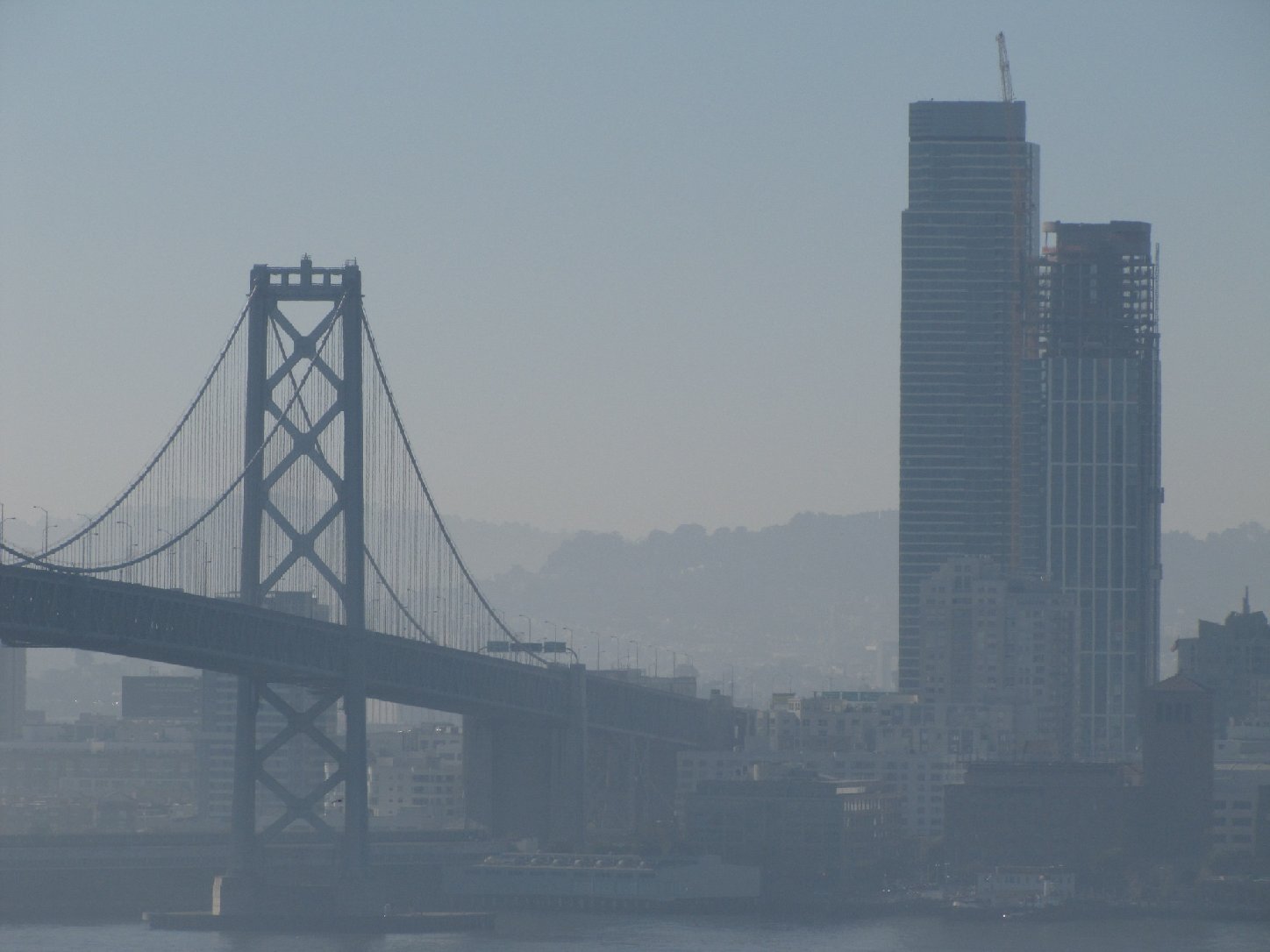
"caption": "Poor air quality in San Francisco during a string of Spare the Air days in December. (Craig Miller/KQED)",
"description": "Poor air quality in San Francisco during a string of Spare the Air days in December. (Craig Miller/KQED)",
"title": "Bad Air -- Bay Area",
"credit": null,
"status": "inherit",
"isLoading": false,
"fetchFailed": false
}
},
"audioPlayerReducer": {
"postId": "stream_live",
"isPaused": true,
"isPlaying": false,
"pfsActive": false,
"pledgeModalIsOpen": true,
"playerDrawerIsOpen": false,
"liveAudioPlayStartedAt": 0,
"liveAudioPlayContext": ""
},
"authorsReducer": {
"byline_news_11690926": {
"type": "authors",
"id": "byline_news_11690926",
"meta": {
"override": true
},
"slug": "byline_news_11690926",
"name": "\u003cstrong>\u003ca href=\"https://www.kpbs.org/staff/erik-anderson/\">Erik Anderson\u003c/a>\u003c/strong>",
"isLoading": false
},
"byline_news_11630861": {
"type": "authors",
"id": "byline_news_11630861",
"meta": {
"override": true
},
"slug": "byline_news_11630861",
"name": "\u003cstrong>\u003ca href=\"https://theconversation.com/profiles/jason-a-heppler-342338\">Jason A. Heppler\u003c/a>\u003c/strong>\u003cbr>University of Nebraska Omaha for \u003ca href=\"https://theconversation.com\">The Conversation\u003c/a>",
"isLoading": false
},
"byline_news_11463233": {
"type": "authors",
"id": "byline_news_11463233",
"meta": {
"override": true
},
"slug": "byline_news_11463233",
"name": "\u003cstrong>\u003ca href=\"https://www.publicintegrity.org/authors/jim-morris\">Jim Morris\u003c/a>\u003c/strong> and \u003cstrong>\u003ca href=\"https://ww2.kqed.org/news/author/sasha-khokha/\">Sasha Khokha\u003c/a>\u003c/strong>",
"isLoading": false
},
"chrisrichard": {
"type": "authors",
"id": "219",
"meta": {
"index": "authors_1716337520",
"id": "219",
"found": true
},
"name": "Chris Richard",
"firstName": "Chris",
"lastName": "Richard",
"slug": "chrisrichard",
"email": "chris@chrisrichard.org",
"display_author_email": false,
"staff_mastheads": [],
"title": null,
"bio": null,
"avatar": "https://secure.gravatar.com/avatar/0a5aab2628cba861c36f5f2142bf3e9c?s=600&d=blank&r=g",
"twitter": null,
"facebook": null,
"instagram": null,
"linkedin": null,
"sites": [
{
"site": "news",
"roles": [
"author"
]
},
{
"site": "stateofhealth",
"roles": [
"author"
]
}
],
"headData": {
"title": "Chris Richard | KQED",
"description": null,
"ogImgSrc": "https://secure.gravatar.com/avatar/0a5aab2628cba861c36f5f2142bf3e9c?s=600&d=blank&r=g",
"twImgSrc": "https://secure.gravatar.com/avatar/0a5aab2628cba861c36f5f2142bf3e9c?s=600&d=blank&r=g"
},
"isLoading": false,
"link": "/author/chrisrichard"
},
"danbrekke": {
"type": "authors",
"id": "222",
"meta": {
"index": "authors_1716337520",
"id": "222",
"found": true
},
"name": "Dan Brekke",
"firstName": "Dan",
"lastName": "Brekke",
"slug": "danbrekke",
"email": "dbrekke@kqed.org",
"display_author_email": true,
"staff_mastheads": [
"news",
"science"
],
"title": "KQED Editor and Reporter",
"bio": "Dan Brekke is a reporter and editor for KQED News, responsible for coverage of topics ranging from California water issues to the Bay Area's transportation challenges. In a newsroom career that began in Chicago in 1972, Dan has worked for \u003cem>The San Francisco Examiner,\u003c/em> Wired and TechTV and has been published in The New York Times, The New York Times Magazine, Business 2.0, Salon and elsewhere.\r\n\r\nSince joining KQED in 2007, Dan has reported, edited and produced both radio and online features and breaking news pieces. He has shared as both editor and reporter in four Society of Professional Journalists Norcal Excellence in Journalism awards and one Edward R. Murrow regional award. He was chosen for a spring 2017 residency at the Mesa Refuge to advance his research on California salmon.\r\n\r\nEmail Dan at: \u003ca href=\"mailto:dbrekke@kqed.org\">dbrekke@kqed.org\u003c/a>\r\n\r\n\u003cstrong>Twitter:\u003c/strong> \u003ca href=\"https://twitter.com/danbrekke\" rel=\"noopener noreferrer\">twitter.com/danbrekke\u003c/a>\r\n\u003cstrong>Facebook:\u003c/strong> \u003ca href=\"https://www.facebook.com/danbrekke\" rel=\"noopener noreferrer\">www.facebook.com/danbrekke\u003c/a>\r\n\u003cstrong>LinkedIn:\u003c/strong> \u003ca href=\"https://www.linkedin.com/in/danbrekke\" rel=\"noopener noreferrer\">www.linkedin.com/in/danbrekke\u003c/a>",
"avatar": "https://secure.gravatar.com/avatar/c8126230345efca3f7aa89b1a402be45?s=600&d=mm&r=g",
"twitter": "danbrekke",
"facebook": null,
"instagram": "https://www.instagram.com/dan.brekke/",
"linkedin": "https://www.linkedin.com/in/danbrekke/",
"sites": [
{
"site": "news",
"roles": [
"administrator",
"create_posts"
]
},
{
"site": "stateofhealth",
"roles": [
"editor"
]
},
{
"site": "science",
"roles": [
"editor"
]
},
{
"site": "quest",
"roles": [
"contributor"
]
},
{
"site": "food",
"roles": [
"contributor"
]
},
{
"site": "forum",
"roles": [
"contributor"
]
},
{
"site": "liveblog",
"roles": [
"editor"
]
}
],
"headData": {
"title": "Dan Brekke | KQED",
"description": "KQED Editor and Reporter",
"ogImgSrc": "https://secure.gravatar.com/avatar/c8126230345efca3f7aa89b1a402be45?s=600&d=mm&r=g",
"twImgSrc": "https://secure.gravatar.com/avatar/c8126230345efca3f7aa89b1a402be45?s=600&d=mm&r=g"
},
"isLoading": false,
"link": "/author/danbrekke"
},
"kqed": {
"type": "authors",
"id": "236",
"meta": {
"index": "authors_1716337520",
"id": "236",
"found": true
},
"name": "KQED News Staff",
"firstName": "KQED News Staff",
"lastName": null,
"slug": "kqed",
"email": "faq@kqed.org",
"display_author_email": false,
"staff_mastheads": [],
"title": null,
"bio": null,
"avatar": "https://secure.gravatar.com/avatar/ef0e801a68c4c54afa9180db14084167?s=600&d=blank&r=g",
"twitter": null,
"facebook": null,
"instagram": null,
"linkedin": null,
"sites": [
{
"site": "arts",
"roles": [
"contributor"
]
},
{
"site": "news",
"roles": [
"editor"
]
},
{
"site": "futureofyou",
"roles": [
"author"
]
}
],
"headData": {
"title": "KQED News Staff | KQED",
"description": null,
"ogImgSrc": "https://secure.gravatar.com/avatar/ef0e801a68c4c54afa9180db14084167?s=600&d=blank&r=g",
"twImgSrc": "https://secure.gravatar.com/avatar/ef0e801a68c4c54afa9180db14084167?s=600&d=blank&r=g"
},
"isLoading": false,
"link": "/author/kqed"
},
"patyollin": {
"type": "authors",
"id": "247",
"meta": {
"index": "authors_1716337520",
"id": "247",
"found": true
},
"name": "Patricia Yollin",
"firstName": "Patricia",
"lastName": "Yollin",
"slug": "patyollin",
"email": "pyollin@kqed.org",
"display_author_email": false,
"staff_mastheads": [],
"title": "KQED Contributor",
"bio": "Pat Yollin has written about lots of stuff, including organ transplants, wayward penguins at the San Francisco Zoo, the comeback of the cream puff, New York on the fifth anniversary of 9/11, a Slow Food gathering in Italy, and the microcredit movement in Northern California. Among her favorite stories: an interview with George Lucas at Skywalker Ranch that broke the story about his plan to build a cultural museum, and a pirate Trader Joe's operation in Vancouver that prompted the grocery chain to sue -- and lose. She joined KQED in 2013 and was previously a reporter and editor at the San Francisco Chronicle, the Hearst-owned San Francisco Examiner and the Hayward Daily Review.",
"avatar": "https://secure.gravatar.com/avatar/0a18ac41a263665c04b25b2c7d6b817c?s=600&d=blank&r=g",
"twitter": null,
"facebook": null,
"instagram": null,
"linkedin": null,
"sites": [
{
"site": "arts",
"roles": [
"subscriber"
]
},
{
"site": "news",
"roles": [
"subscriber"
]
},
{
"site": "futureofyou",
"roles": [
"editor"
]
},
{
"site": "lowdown",
"roles": [
"editor"
]
},
{
"site": "stateofhealth",
"roles": [
"editor"
]
}
],
"headData": {
"title": "Patricia Yollin | KQED",
"description": "KQED Contributor",
"ogImgSrc": "https://secure.gravatar.com/avatar/0a18ac41a263665c04b25b2c7d6b817c?s=600&d=blank&r=g",
"twImgSrc": "https://secure.gravatar.com/avatar/0a18ac41a263665c04b25b2c7d6b817c?s=600&d=blank&r=g"
},
"isLoading": false,
"link": "/author/patyollin"
},
"tgoldberg": {
"type": "authors",
"id": "258",
"meta": {
"index": "authors_1716337520",
"id": "258",
"found": true
},
"name": "Ted Goldberg",
"firstName": "Ted",
"lastName": "Goldberg",
"slug": "tgoldberg",
"email": "tgoldberg@kqed.org",
"display_author_email": true,
"staff_mastheads": [
"news"
],
"title": "KQED Managing Editor, News and Newscasts",
"bio": "Ted Goldberg is Managing Editor of News and Newscasts at KQED. His main reporting beat is the Bay Area's oil refining industry.\r\n\r\nPrior to joining KQED in 2014, Ted worked at CBS News and WCBS AM in New York and Bay City News and KCBS Radio in San Francisco. He graduated from Oberlin College in Ohio in 1998.",
"avatar": "https://secure.gravatar.com/avatar/16d702c9ec5f696d78dbfb76b592cf0a?s=600&d=blank&r=g",
"twitter": "TedrickG",
"bluesky": null,
"facebook": null,
"instagram": null,
"linkedin": null,
"sites": [
{
"site": "news",
"roles": [
"editor"
]
},
{
"site": "science",
"roles": [
"editor"
]
}
],
"headData": {
"title": "Ted Goldberg | KQED",
"description": "KQED Managing Editor, News and Newscasts",
"ogImgSrc": "https://secure.gravatar.com/avatar/16d702c9ec5f696d78dbfb76b592cf0a?s=600&d=blank&r=g",
"twImgSrc": "https://secure.gravatar.com/avatar/16d702c9ec5f696d78dbfb76b592cf0a?s=600&d=blank&r=g"
},
"isLoading": false,
"link": "/author/tgoldberg"
},
"markfiore": {
"type": "authors",
"id": "3236",
"meta": {
"index": "authors_1716337520",
"id": "3236",
"found": true
},
"name": "Mark Fiore",
"firstName": "Mark",
"lastName": "Fiore",
"slug": "markfiore",
"email": "mark@markfiore.com",
"display_author_email": false,
"staff_mastheads": [
"news"
],
"title": "KQED News Cartoonist",
"bio": "\u003ca href=\"http://www.MarkFiore.com\">MarkFiore.com\u003c/a> | \u003ca href=\"https://twitter.com/markfiore\">Follow on Twitter\u003c/a> | \u003ca href=\"https://www.facebook.com/pages/Mark-Fiore-Animated-Political-Cartoons/94451707396?ref=bookmarks\">Facebook\u003c/a> | \u003ca href=\"mailto:mark@markfiore.com\">email\u003c/a>\r\n\r\nPulitzer Prize-winner, Mark Fiore, who the Wall Street Journal has called “the undisputed guru of the form,” creates animated political cartoons in San Francisco, where his work has been featured regularly on the San Francisco Chronicle’s web site, SFGate.com. His work has appeared on Newsweek.com, Slate.com, CBSNews.com, MotherJones.com, DailyKos.com and NPR’s web site. Fiore’s political animation has appeared on CNN, Frontline, Bill Moyers Journal, Salon.com and cable and broadcast outlets across the globe.\r\n\r\nBeginning his professional life by drawing traditional political cartoons for newspapers, Fiore’s work appeared in publications ranging from the Washington Post to the Los Angeles Times. In the late 1990s, he began to experiment with animating political cartoons and, after a short stint at the San Jose Mercury News as their staff cartoonist, Fiore devoted all his energies to animation.\r\nGrowing up in California, Fiore also spent a good portion of his life in the backwoods of Idaho. It was this combination that shaped him politically. Mark majored in political science at Colorado College, where, in a perfect send-off for a cartoonist, he received his diploma in 1991 as commencement speaker Dick Cheney smiled approvingly.\r\nMark Fiore was awarded the Pulitzer Prize for political cartooning in 2010, a Robert F. Kennedy Journalism Award in 2004 and has twice received an Online Journalism Award for commentary from the Online News Association (2002, 2008). Fiore has received two awards for his work in new media from the National Cartoonists Society (2001, 2002), and in 2006 received The James Madison Freedom of Information Award from The Society of Professional Journalists.",
"avatar": "https://secure.gravatar.com/avatar/fc4e2a612b15b67bad0c6f0e1db4ca9b?s=600&d=blank&r=g",
"twitter": "MarkFiore",
"facebook": null,
"instagram": "https://www.instagram.com/markfiore/?hl=en",
"linkedin": null,
"sites": [
{
"site": "arts",
"roles": [
"contributor"
]
},
{
"site": "news",
"roles": [
"editor"
]
},
{
"site": "futureofyou",
"roles": [
"editor"
]
},
{
"site": "science",
"roles": [
"editor"
]
}
],
"headData": {
"title": "Mark Fiore | KQED",
"description": "KQED News Cartoonist",
"ogImgSrc": "https://secure.gravatar.com/avatar/fc4e2a612b15b67bad0c6f0e1db4ca9b?s=600&d=blank&r=g",
"twImgSrc": "https://secure.gravatar.com/avatar/fc4e2a612b15b67bad0c6f0e1db4ca9b?s=600&d=blank&r=g"
},
"isLoading": false,
"link": "/author/markfiore"
},
"mwiley": {
"type": "authors",
"id": "11526",
"meta": {
"index": "authors_1716337520",
"id": "11526",
"found": true
},
"name": "Michelle Wiley",
"firstName": "Michelle",
"lastName": "Wiley",
"slug": "mwiley",
"email": "mwiley@KQED.org",
"display_author_email": true,
"staff_mastheads": [],
"title": null,
"bio": "Michelle Wiley was the senior editor of weekends.",
"avatar": "https://secure.gravatar.com/avatar/3b897d82a09e8587e8e73fa69fbcc635?s=600&d=blank&r=g",
"twitter": "michelleewiley",
"facebook": null,
"instagram": null,
"linkedin": null,
"sites": [
{
"site": "",
"roles": [
"editor"
]
},
{
"site": "arts",
"roles": [
"editor"
]
},
{
"site": "news",
"roles": [
"subscriber"
]
},
{
"site": "lowdown",
"roles": [
"editor"
]
},
{
"site": "science",
"roles": [
"editor"
]
},
{
"site": "podcasts",
"roles": [
"editor"
]
}
],
"headData": {
"title": "Michelle Wiley | KQED",
"description": null,
"ogImgSrc": "https://secure.gravatar.com/avatar/3b897d82a09e8587e8e73fa69fbcc635?s=600&d=blank&r=g",
"twImgSrc": "https://secure.gravatar.com/avatar/3b897d82a09e8587e8e73fa69fbcc635?s=600&d=blank&r=g"
},
"isLoading": false,
"link": "/author/mwiley"
}
},
"pagesReducer": {
"news_tag_pollution": {
"type": "terms",
"id": "news_2920",
"meta": {
"index": "terms_1716263798",
"site": "news",
"id": "2920",
"score": 9.301779
},
"featImg": null,
"name": "pollution",
"description": null,
"taxonomy": "tag",
"headData": {
"twImgId": null,
"twTitle": null,
"ogTitle": null,
"ogImgId": null,
"twDescription": null,
"description": null,
"title": "pollution Archives | KQED News",
"ogDescription": null
},
"ttid": 2938,
"slug": "pollution",
"isLoading": false,
"title": "pollution",
"pageMeta": {
"site": "news",
"WpPageTemplate": "page-topic-editorial",
"currentPage": 4
},
"blocks": [
{
"blockName": "kqed/post-list",
"attrs": {
"layout": "cardArticle2",
"query": "posts/news?tag=pollution",
"seeMore": false,
"paginated": true,
"page": 4
}
},
{
"blockName": "kqed/ad"
}
]
}
},
"pfsSessionReducer": {},
"postsReducer": {
"stream_live": {
"type": "live",
"id": "stream_live",
"audioUrl": "https://streams.kqed.org/kqedradio",
"title": "Live Stream",
"excerpt": "Live Stream information currently unavailable.",
"link": "/radio",
"featImg": "",
"label": {
"name": "KQED Live",
"link": "/"
}
},
"stream_kqedNewscast": {
"type": "posts",
"id": "stream_kqedNewscast",
"audioUrl": "https://www.kqed.org/.stream/anon/radio/RDnews/newscast.mp3?_=1",
"title": "KQED Newscast",
"featImg": "",
"label": {
"name": "88.5 FM",
"link": "/"
}
},
"news_11735065": {
"type": "posts",
"id": "news_11735065",
"meta": {
"index": "posts_1716263798",
"site": "news",
"id": "11735065",
"score": null,
"sort": [
1553444034000
]
},
"parent": 0,
"labelTerm": {
"site": "news",
"term": 72
},
"blocks": [],
"publishDate": 1553444034,
"format": "standard",
"disqusTitle": "After Weeks of Issues, Valero's Benicia Refinery to Temporarily Shut Down",
"title": "After Weeks of Issues, Valero's Benicia Refinery to Temporarily Shut Down",
"headTitle": "The California Report | KQED News",
"content": "\u003cp>\u003cem>Updated Sunday, 11:30 a.m.\u003c/em>\u003c/p>\n\u003cp>The Valero refinery is performing a controlled shutdown to \"improve conditions and minimize risk,\" according to a \u003ca href=\"https://www.ci.benicia.ca.us/index.asp?SEC=168344BF-D432-4104-A49E-CCC4A509780B&DE=727A7651-863F-4A53-AED6-92FB7619366B&Type=B_PR\">statement\u003c/a> from Benicia city officials. The shutdown could last multiple days and result in visible flaring.\u003c/p>\n\u003cp>Earlier Sunday, city officials issued an advisory notice for residents with respiratory issues to stay inside after a 2-week-old problem at the Valero refinery worsened.\u003c/p>\n\u003cp>But now that the refinery is shutting down, city officials and Solano County health officer Bela Matyas say the air quality is safe for residents.\u003c/p>\n\u003cblockquote class=\"twitter-tweet\">\n\u003cp dir=\"ltr\" lang=\"en\">Valero Advisory Update - 10:30 a.m.\u003cbr>\nBenicia Fire Department continues to monitor air quality. Readings show that levels have significantly improved and are currently in the safe range. \u003ca href=\"https://twitter.com/hashtag/ValeroScrubberIncident?src=hash&ref_src=twsrc%5Etfw\">#ValeroScrubberIncident\u003c/a>\u003c/p>\n\u003cp>— City of Benicia (@CityofBenicia) \u003ca href=\"https://twitter.com/CityofBenicia/status/1109871678937423872?ref_src=twsrc%5Etfw\">March 24, 2019\u003c/a>\u003c/p>\u003c/blockquote>\n\u003cp>The problem at the Valero refinery began on March 11 when a malfunction involving one of the refinery's units led to the release of \u003ca href=\"https://www.epa.gov/petroleum-coke-chicago/health-effects-petroleum-coke\" target=\"_blank\" rel=\"noopener\">petroleum coke dust\u003c/a>.\u003c/p>\n\u003cp>[ad fullwidth]\u003c/p>\n\u003cp>A Valero representative said then that the refinery's flue gas scrubber was \"experiencing operational issues.\"\u003c/p>\n\u003cp>The releases prompted local air regulators to issue \u003ca href=\"https://www.kqed.org/news/11733145/air-district-hits-valero-with-violations-over-benicia-refinery-releases\" target=\"_blank\" rel=\"noopener\">seven notices of violation against the refinery. \u003c/a>\u003c/p>\n\u003cp>Those problems eased after a few days but continued intermittently, air district officials said.\u003c/p>\n\u003cp>On Saturday several Benicia residents posted comments on the social media site Nextdoor, expressing concerns about what appeared to be more black smoke coming from Valero's stacks.\u003c/p>\n\u003cp>On Sunday, the particulate matter in the air increased.\u003c/p>\n\u003cp>https://twitter.com/TedrickG/status/1109828119693684736\u003c/p>\n\u003cp>\"The concentration of particulate matter has become significantly higher over the past day. The emissions contain coke, a by-product of the refining process that is made up primarily of carbon particles,\" the city's statement said.\u003c/p>\n\u003cp>Benicia officials said testing of the coke dust released so far did not show heavy metals at harmful levels but warned that breathing in air from the releases could worsen underlying respiratory conditions like asthma.\u003c/p>\n\u003cp>“Inspectors are on scene working with the facility and with Solano County and making a determination if additional violations will be coming,” said Lisa Fasano, a spokeswoman with the Bay Area Air Quality Management District.\u003c/p>\n\u003cp>\u003c/p>\n\u003cp>The air district also deployed a monitoring van to drive throughout Benicia to \"gather ground-level emissions data.\"\u003c/p>\n\n",
"disqusIdentifier": "11735065 https://ww2.kqed.org/news/?p=11735065",
"disqusUrl": "https://ww2.kqed.org/news/2019/03/24/problems-at-valeros-benicia-refinery-increase-prompt-health-advisory/",
"stats": {
"hasVideo": false,
"hasChartOrMap": false,
"hasAudio": false,
"hasPolis": false,
"wordCount": 377,
"hasGoogleForm": false,
"hasGallery": false,
"hasHearkenModule": false,
"iframeSrcs": [],
"paragraphCount": 17
},
"modified": 1553560976,
"excerpt": "Releases from particulate matter from the refinery, which began two weeks ago, worsened over the weekend. ",
"headData": {
"twImgId": "",
"twTitle": "",
"ogTitle": "",
"ogImgId": "",
"twDescription": "",
"description": "Releases from particulate matter from the refinery, which began two weeks ago, worsened over the weekend. ",
"title": "After Weeks of Issues, Valero's Benicia Refinery to Temporarily Shut Down | KQED",
"ogDescription": "",
"schema": {
"@context": "https://schema.org",
"@type": "NewsArticle",
"headline": "After Weeks of Issues, Valero's Benicia Refinery to Temporarily Shut Down",
"datePublished": "2019-03-24T09:13:54-07:00",
"dateModified": "2019-03-25T17:42:56-07:00",
"image": "https://cdn.kqed.org/wp-content/uploads/2020/02/KQED-OG-Image@1x.png",
"isAccessibleForFree": "True",
"publisher": {
"@type": "NewsMediaOrganization",
"@id": "https://www.kqed.org/#organization",
"name": "KQED",
"logo": "https://cdn.kqed.org/wp-content/uploads/2020/02/KQED-OG-Image@1x.png",
"url": "https://www.kqed.org",
"sameAs": [
"https://www.facebook.com/KQED",
"https://twitter.com/KQED",
"https://www.instagram.com/kqed/",
"https://www.tiktok.com/@kqedofficial",
"https://www.linkedin.com/company/kqed",
"https://www.youtube.com/channel/UCeC0IOo7i1P_61zVUWbJ4nw"
]
}
}
},
"guestAuthors": [],
"slug": "problems-at-valeros-benicia-refinery-increase-prompt-health-advisory",
"status": "publish",
"path": "/news/11735065/problems-at-valeros-benicia-refinery-increase-prompt-health-advisory",
"audioTrackLength": null,
"parsedContent": [
{
"type": "contentString",
"content": "\u003cdiv class=\"post-body\">\u003cp>\u003cp>\u003cem>Updated Sunday, 11:30 a.m.\u003c/em>\u003c/p>\n\u003cp>The Valero refinery is performing a controlled shutdown to \"improve conditions and minimize risk,\" according to a \u003ca href=\"https://www.ci.benicia.ca.us/index.asp?SEC=168344BF-D432-4104-A49E-CCC4A509780B&DE=727A7651-863F-4A53-AED6-92FB7619366B&Type=B_PR\">statement\u003c/a> from Benicia city officials. The shutdown could last multiple days and result in visible flaring.\u003c/p>\n\u003cp>Earlier Sunday, city officials issued an advisory notice for residents with respiratory issues to stay inside after a 2-week-old problem at the Valero refinery worsened.\u003c/p>\n\u003cp>But now that the refinery is shutting down, city officials and Solano County health officer Bela Matyas say the air quality is safe for residents.\u003c/p>\n\u003cblockquote class=\"twitter-tweet\">\n\u003cp dir=\"ltr\" lang=\"en\">Valero Advisory Update - 10:30 a.m.\u003cbr>\nBenicia Fire Department continues to monitor air quality. Readings show that levels have significantly improved and are currently in the safe range. \u003ca href=\"https://twitter.com/hashtag/ValeroScrubberIncident?src=hash&ref_src=twsrc%5Etfw\">#ValeroScrubberIncident\u003c/a>\u003c/p>\n\u003cp>— City of Benicia (@CityofBenicia) \u003ca href=\"https://twitter.com/CityofBenicia/status/1109871678937423872?ref_src=twsrc%5Etfw\">March 24, 2019\u003c/a>\u003c/p>\u003c/blockquote>\n\u003cp>The problem at the Valero refinery began on March 11 when a malfunction involving one of the refinery's units led to the release of \u003ca href=\"https://www.epa.gov/petroleum-coke-chicago/health-effects-petroleum-coke\" target=\"_blank\" rel=\"noopener\">petroleum coke dust\u003c/a>.\u003c/p>\n\u003cp>\u003c/p>\u003c/div>",
"attributes": {
"named": {},
"numeric": []
}
},
{
"type": "component",
"content": "",
"name": "ad",
"attributes": {
"named": {
"label": "fullwidth"
},
"numeric": [
"fullwidth"
]
}
},
{
"type": "contentString",
"content": "\u003cdiv class=\"post-body\">\u003cp>\u003c/p>\n\u003cp>A Valero representative said then that the refinery's flue gas scrubber was \"experiencing operational issues.\"\u003c/p>\n\u003cp>The releases prompted local air regulators to issue \u003ca href=\"https://www.kqed.org/news/11733145/air-district-hits-valero-with-violations-over-benicia-refinery-releases\" target=\"_blank\" rel=\"noopener\">seven notices of violation against the refinery. \u003c/a>\u003c/p>\n\u003cp>Those problems eased after a few days but continued intermittently, air district officials said.\u003c/p>\n\u003cp>On Saturday several Benicia residents posted comments on the social media site Nextdoor, expressing concerns about what appeared to be more black smoke coming from Valero's stacks.\u003c/p>\n\u003cp>On Sunday, the particulate matter in the air increased.\u003c/p>\u003c/p>\u003c/div>",
"attributes": {
"named": {},
"numeric": []
}
},
{
"type": "component",
"content": "",
"name": "singleTwitterStatus",
"attributes": {
"named": {
"id": "1109828119693684736"
},
"numeric": []
}
},
{
"type": "contentString",
"content": "\u003cdiv class=\"post-body\">\u003cp>\n\u003cp>\"The concentration of particulate matter has become significantly higher over the past day. The emissions contain coke, a by-product of the refining process that is made up primarily of carbon particles,\" the city's statement said.\u003c/p>\n\u003cp>Benicia officials said testing of the coke dust released so far did not show heavy metals at harmful levels but warned that breathing in air from the releases could worsen underlying respiratory conditions like asthma.\u003c/p>\n\u003cp>“Inspectors are on scene working with the facility and with Solano County and making a determination if additional violations will be coming,” said Lisa Fasano, a spokeswoman with the Bay Area Air Quality Management District.\u003c/p>\n\u003cp>\u003c/p>\n\u003cp>The air district also deployed a monitoring van to drive throughout Benicia to \"gather ground-level emissions data.\"\u003c/p>\n\n\u003c/div>\u003c/p>",
"attributes": {
"named": {},
"numeric": []
}
}
],
"link": "/news/11735065/problems-at-valeros-benicia-refinery-increase-prompt-health-advisory",
"authors": [
"258",
"11526"
],
"programs": [
"news_72"
],
"categories": [
"news_19906",
"news_8"
],
"tags": [
"news_20902",
"news_21826",
"news_2920",
"news_2919",
"news_23938",
"news_20022"
],
"featImg": "news_11735080",
"label": "news_72"
},
"news_11733638": {
"type": "posts",
"id": "news_11733638",
"meta": {
"index": "posts_1716263798",
"site": "news",
"id": "11733638",
"score": null,
"sort": [
1552954426000
]
},
"parent": 0,
"labelTerm": {
"site": "news"
},
"blocks": [],
"publishDate": 1552954426,
"format": "standard",
"disqusTitle": "Chevron's Richmond Refinery Flaring Incidents at Highest Level in More Than a Decade",
"title": "Chevron's Richmond Refinery Flaring Incidents at Highest Level in More Than a Decade",
"headTitle": "KQED News",
"content": "\u003cp>The number of flaring incidents in 2018 at Chevron's Richmond refinery was at its highest level in 12 years, according to \u003ca href=\"http://www.baaqmd.gov/~/media/files/board-of-directors/2019/ssc_presentations_031819-pdf.pdf?la=en\" target=\"_blank\" rel=\"noopener\">data\u003c/a> the Bay Area Air Quality Management District released Monday at a board of directors committee meeting.\u003c/p>\n\u003cp>The refinery experienced nine flaring events last year, more than any other refinery in the Bay Area. That's the highest number of such incidents since 2006, when the Chevron refinery experienced 21 flaring events.\u003c/p>\n\u003cp>The Tesoro refinery in Pacheco experienced five flaring incidents last year, Valero's Benicia refinery conducted four, Shell in Martinez had three and Phillips 66 in Rodeo had two, according to the air district.\u003c/p>\n\u003cp>The jump, which started in the last eight months, is connected to the start up of a new hydrogen plant that recently began operating at the facility, according to John Gioia, who represents the area of the refinery on the Contra Costa County Board of Supervisors and sits on the air district's board of directors.\u003c/p>\n\u003cp>\"All the sudden we saw this spike,\" Gioia said in an interview. \"There are some issues related to the new hydrogen plant and how it is integrated with the existing refinery.\"\u003c/p>\n\u003cp>[ad fullwidth]\u003c/p>\n\u003cp>Gioia said it will probably take several months for Chevron to make fixes at the plant to reduce future flaring operations.\u003c/p>\n\u003cp>\"For those of us who live in Richmond, we may continue to see some additional flaring while these issues are resolved,\" he said.\u003c/p>\n\u003cp>Air regulators and oil industry officials emphasize that flares are used as safety devices to reduce pressure inside refineries by burning off gases during facility malfunctions as well as start up and shutdown operations.\u003c/p>\n\u003cp>[aside postID=\"news_11730997\" label=\"Chevron Refinery Flaring Incidents\"]\u003c/p>\n\u003cp>Chevron's hydrogen plant is part of the refinery's modernization project, \u003ca href=\"https://www.kqed.org/science/20001/richmond-approves-contentious-chevron-project\" target=\"_blank\" rel=\"noopener\">approved by the Richmond City Council in 2014\u003c/a>, that is aimed at helping the facility refine higher-sulfur crude oil.\u003c/p>\n\u003cp>Braden Reddall, a company spokesman, said late Monday that the refinery was flaring \"due to startup activities at a processing unit.\"\u003c/p>\n\u003cp>\"The flaring does not pose any environmental or health risk to the community,\" Reddall said in an email. \u003c/p>\n\u003cp>\"We want to assure our neighbors that flares are highly regulated safety devices, designed to relieve pressure during the refining processes and help keep our equipment and plants operating safety,\" he said, adding that the refinery continues to supply its customers.\u003c/p>\n\u003cp>But Reddall did not answer questions about the connection between the hydrogen plant and the refinery's recent uptick in flaring incidents as well as what kind of fixes the company is putting in place.\u003c/p>\n\u003cp>Gioia said the refinery began using the hydrogen unit last fall.\u003c/p>\n\u003cp>In the first three months of 2019, there have been five malfunctions at Chevron, the most recent one on Sunday afternoon, according to Randy Sawyer, Contra Costa County's chief environmental health and hazardous materials officer.\u003c/p>\n\u003cp>That incident sent black smoke into the air and lasted two-and-a-half hours, Sawyer said.\u003c/p>\n\u003cp>It came 11 days after the refinery suffered an outage that caused several processing units at the facility to shut down, prompting the facility to send gas through its flares.\u003c/p>\n\u003cp>The refinery also \u003ca href=\"https://www.kqed.org/news/11730997/chevron-refinery-suffers-third-power-outage-in-two-months-with-another-round-of-flaring\" target=\"_blank\" rel=\"noopener\">suffered outages\u003c/a> on Feb. 2 and Jan. 17 and conducted a separate flaring operation on Feb. 24.\u003c/p>\n\u003cp>The air district is investigating most of those incidents, according to agency spokeswoman Kristine Roselius.\u003c/p>\n\u003cp>\"We don't think this is an acceptable situation,\" said Jack Broadbent, chief executive officer of the air district, during Monday's meeting before the district's Stationary Source Committee.\u003c/p>\n\u003cp>\u003c/p>\n\u003cp>Gioia said a significant portion of the gas coming from the refinery's flares during the recent incidents has been pure hydrogen, which does not present the same health risk as other gases like sulfur dioxide and benzene, which tend to get released during other flaring operations.\u003c/p>\n\n",
"disqusIdentifier": "11733638 https://ww2.kqed.org/news/?p=11733638",
"disqusUrl": "https://ww2.kqed.org/news/2019/03/18/chevrons-richmond-refinery-flaring-incidents-at-highest-level-in-more-than-a-decade/",
"stats": {
"hasVideo": false,
"hasChartOrMap": false,
"hasAudio": false,
"hasPolis": false,
"wordCount": 642,
"hasGoogleForm": false,
"hasGallery": false,
"hasHearkenModule": false,
"iframeSrcs": [],
"paragraphCount": 24
},
"modified": 1552971120,
"excerpt": "The jump in flaring incidents, which started in the last eight months, is connected to the start up of a new hydrogen plant that recently began operating at the facility, according to an air district director.",
"headData": {
"twImgId": "",
"twTitle": "",
"ogTitle": "",
"ogImgId": "",
"twDescription": "",
"description": "The jump in flaring incidents, which started in the last eight months, is connected to the start up of a new hydrogen plant that recently began operating at the facility, according to an air district director.",
"title": "Chevron's Richmond Refinery Flaring Incidents at Highest Level in More Than a Decade | KQED",
"ogDescription": "",
"schema": {
"@context": "https://schema.org",
"@type": "NewsArticle",
"headline": "Chevron's Richmond Refinery Flaring Incidents at Highest Level in More Than a Decade",
"datePublished": "2019-03-18T17:13:46-07:00",
"dateModified": "2019-03-18T21:52:00-07:00",
"image": "https://cdn.kqed.org/wp-content/uploads/2020/02/KQED-OG-Image@1x.png",
"isAccessibleForFree": "True",
"publisher": {
"@type": "NewsMediaOrganization",
"@id": "https://www.kqed.org/#organization",
"name": "KQED",
"logo": "https://cdn.kqed.org/wp-content/uploads/2020/02/KQED-OG-Image@1x.png",
"url": "https://www.kqed.org",
"sameAs": [
"https://www.facebook.com/KQED",
"https://twitter.com/KQED",
"https://www.instagram.com/kqed/",
"https://www.tiktok.com/@kqedofficial",
"https://www.linkedin.com/company/kqed",
"https://www.youtube.com/channel/UCeC0IOo7i1P_61zVUWbJ4nw"
]
}
}
},
"guestAuthors": [],
"slug": "chevrons-richmond-refinery-flaring-incidents-at-highest-level-in-more-than-a-decade",
"status": "publish",
"path": "/news/11733638/chevrons-richmond-refinery-flaring-incidents-at-highest-level-in-more-than-a-decade",
"audioTrackLength": null,
"parsedContent": [
{
"type": "contentString",
"content": "\u003cdiv class=\"post-body\">\u003cp>\u003cp>The number of flaring incidents in 2018 at Chevron's Richmond refinery was at its highest level in 12 years, according to \u003ca href=\"http://www.baaqmd.gov/~/media/files/board-of-directors/2019/ssc_presentations_031819-pdf.pdf?la=en\" target=\"_blank\" rel=\"noopener\">data\u003c/a> the Bay Area Air Quality Management District released Monday at a board of directors committee meeting.\u003c/p>\n\u003cp>The refinery experienced nine flaring events last year, more than any other refinery in the Bay Area. That's the highest number of such incidents since 2006, when the Chevron refinery experienced 21 flaring events.\u003c/p>\n\u003cp>The Tesoro refinery in Pacheco experienced five flaring incidents last year, Valero's Benicia refinery conducted four, Shell in Martinez had three and Phillips 66 in Rodeo had two, according to the air district.\u003c/p>\n\u003cp>The jump, which started in the last eight months, is connected to the start up of a new hydrogen plant that recently began operating at the facility, according to John Gioia, who represents the area of the refinery on the Contra Costa County Board of Supervisors and sits on the air district's board of directors.\u003c/p>\n\u003cp>\"All the sudden we saw this spike,\" Gioia said in an interview. \"There are some issues related to the new hydrogen plant and how it is integrated with the existing refinery.\"\u003c/p>\n\u003cp>\u003c/p>\u003c/div>",
"attributes": {
"named": {},
"numeric": []
}
},
{
"type": "component",
"content": "",
"name": "ad",
"attributes": {
"named": {
"label": "fullwidth"
},
"numeric": [
"fullwidth"
]
}
},
{
"type": "contentString",
"content": "\u003cdiv class=\"post-body\">\u003cp>\u003c/p>\n\u003cp>Gioia said it will probably take several months for Chevron to make fixes at the plant to reduce future flaring operations.\u003c/p>\n\u003cp>\"For those of us who live in Richmond, we may continue to see some additional flaring while these issues are resolved,\" he said.\u003c/p>\n\u003cp>Air regulators and oil industry officials emphasize that flares are used as safety devices to reduce pressure inside refineries by burning off gases during facility malfunctions as well as start up and shutdown operations.\u003c/p>\n\u003cp>\u003c/p>\u003c/div>",
"attributes": {
"named": {},
"numeric": []
}
},
{
"type": "component",
"content": "",
"name": "aside",
"attributes": {
"named": {
"postid": "news_11730997",
"label": "Chevron Refinery Flaring Incidents "
},
"numeric": []
}
},
{
"type": "contentString",
"content": "\u003cdiv class=\"post-body\">\u003cp>\u003c/p>\n\u003cp>Chevron's hydrogen plant is part of the refinery's modernization project, \u003ca href=\"https://www.kqed.org/science/20001/richmond-approves-contentious-chevron-project\" target=\"_blank\" rel=\"noopener\">approved by the Richmond City Council in 2014\u003c/a>, that is aimed at helping the facility refine higher-sulfur crude oil.\u003c/p>\n\u003cp>Braden Reddall, a company spokesman, said late Monday that the refinery was flaring \"due to startup activities at a processing unit.\"\u003c/p>\n\u003cp>\"The flaring does not pose any environmental or health risk to the community,\" Reddall said in an email. \u003c/p>\n\u003cp>\"We want to assure our neighbors that flares are highly regulated safety devices, designed to relieve pressure during the refining processes and help keep our equipment and plants operating safety,\" he said, adding that the refinery continues to supply its customers.\u003c/p>\n\u003cp>But Reddall did not answer questions about the connection between the hydrogen plant and the refinery's recent uptick in flaring incidents as well as what kind of fixes the company is putting in place.\u003c/p>\n\u003cp>Gioia said the refinery began using the hydrogen unit last fall.\u003c/p>\n\u003cp>In the first three months of 2019, there have been five malfunctions at Chevron, the most recent one on Sunday afternoon, according to Randy Sawyer, Contra Costa County's chief environmental health and hazardous materials officer.\u003c/p>\n\u003cp>That incident sent black smoke into the air and lasted two-and-a-half hours, Sawyer said.\u003c/p>\n\u003cp>It came 11 days after the refinery suffered an outage that caused several processing units at the facility to shut down, prompting the facility to send gas through its flares.\u003c/p>\n\u003cp>The refinery also \u003ca href=\"https://www.kqed.org/news/11730997/chevron-refinery-suffers-third-power-outage-in-two-months-with-another-round-of-flaring\" target=\"_blank\" rel=\"noopener\">suffered outages\u003c/a> on Feb. 2 and Jan. 17 and conducted a separate flaring operation on Feb. 24.\u003c/p>\n\u003cp>The air district is investigating most of those incidents, according to agency spokeswoman Kristine Roselius.\u003c/p>\n\u003cp>\"We don't think this is an acceptable situation,\" said Jack Broadbent, chief executive officer of the air district, during Monday's meeting before the district's Stationary Source Committee.\u003c/p>\n\u003cp>\u003c/p>\n\u003cp>Gioia said a significant portion of the gas coming from the refinery's flares during the recent incidents has been pure hydrogen, which does not present the same health risk as other gases like sulfur dioxide and benzene, which tend to get released during other flaring operations.\u003c/p>\n\n\u003c/div>\u003c/p>",
"attributes": {
"named": {},
"numeric": []
}
}
],
"link": "/news/11733638/chevrons-richmond-refinery-flaring-incidents-at-highest-level-in-more-than-a-decade",
"authors": [
"258"
],
"categories": [
"news_19906",
"news_457",
"news_8",
"news_356"
],
"tags": [
"news_424",
"news_19542",
"news_2920",
"news_579"
],
"featImg": "news_11733681",
"label": "news"
},
"news_11714786": {
"type": "posts",
"id": "news_11714786",
"meta": {
"index": "posts_1716263798",
"site": "news",
"id": "11714786",
"score": null,
"sort": [
1545958288000
]
},
"guestAuthors": [],
"slug": "a-win-for-cuties-company",
"title": "A Win for 'Cuties' Company",
"publishDate": 1545958288,
"format": "standard",
"headTitle": "A Win for ‘Cuties’ Company | KQED",
"labelTerm": {},
"content": "\u003cp>In a win for the company behind Cuties mandarins, Kern County agricultural officials \u003ca href=\"http://bit.ly/fiorepesticidedrift\" target=\"_blank\" rel=\"noopener\">slashed the fines\u003c/a> for a pesticide drift incident that sickened dozens of farmworkers last year.\u003c/p>\n\u003cp>Farmworker advocates pushed a bill earlier this year that would have increased fines for violating California’s pesticide regulations, but the bill was defeated amid \u003ca href=\"https://www.kqed.org/news/11652279/assembly-rejection-of-pesticide-bill-came-after-farm-industry-campaign-donations\" target=\"_blank\" rel=\"noopener\">fierce opposition\u003c/a> from industry groups.\u003c/p>\n\u003cp>There were four separate pesticide drift incidents in Central California in 2017 that sickened a total of 150 workers.\u003c/p>\n\u003cp>[ad fullwidth]\u003c/p>\u003cp>\u003c/p>\n",
"blocks": [],
"excerpt": " In a win for the company behind Cuties mandarins, Kern County agricultural officials slashed the fines for a pesticide drift incident that sickened dozens of farmworkers.",
"status": "publish",
"parent": 0,
"modified": 1721117511,
"stats": {
"hasAudio": false,
"hasVideo": false,
"hasChartOrMap": false,
"iframeSrcs": [],
"hasGoogleForm": false,
"hasGallery": false,
"hasHearkenModule": false,
"hasPolis": false,
"paragraphCount": 5,
"wordCount": 81
},
"headData": {
"title": "A Win for 'Cuties' Company | KQED",
"description": " In a win for the company behind Cuties mandarins, Kern County agricultural officials slashed the fines for a pesticide drift incident that sickened dozens of farmworkers.",
"ogTitle": "",
"ogDescription": "",
"ogImgId": "",
"twTitle": "",
"twDescription": "",
"twImgId": "",
"schema": {
"@context": "https://schema.org",
"@type": "NewsArticle",
"headline": "A Win for 'Cuties' Company",
"datePublished": "2018-12-27T16:51:28-08:00",
"dateModified": "2024-07-16T01:11:51-07:00",
"image": "https://cdn.kqed.org/wp-content/uploads/2020/02/KQED-OG-Image@1x.png",
"isAccessibleForFree": "True",
"publisher": {
"@type": "NewsMediaOrganization",
"@id": "https://www.kqed.org/#organization",
"name": "KQED",
"logo": "https://cdn.kqed.org/wp-content/uploads/2020/02/KQED-OG-Image@1x.png",
"url": "https://www.kqed.org",
"sameAs": [
"https://www.facebook.com/KQED",
"https://twitter.com/KQED",
"https://www.instagram.com/kqed/",
"https://www.tiktok.com/@kqedofficial",
"https://www.linkedin.com/company/kqed",
"https://www.youtube.com/channel/UCeC0IOo7i1P_61zVUWbJ4nw"
]
}
}
},
"sticky": false,
"path": "/news/11714786/a-win-for-cuties-company",
"audioTrackLength": null,
"parsedContent": [
{
"type": "contentString",
"content": "\u003cdiv class=\"post-body\">\u003cp>\u003cp>In a win for the company behind Cuties mandarins, Kern County agricultural officials \u003ca href=\"http://bit.ly/fiorepesticidedrift\" target=\"_blank\" rel=\"noopener\">slashed the fines\u003c/a> for a pesticide drift incident that sickened dozens of farmworkers last year.\u003c/p>\n\u003cp>Farmworker advocates pushed a bill earlier this year that would have increased fines for violating California’s pesticide regulations, but the bill was defeated amid \u003ca href=\"https://www.kqed.org/news/11652279/assembly-rejection-of-pesticide-bill-came-after-farm-industry-campaign-donations\" target=\"_blank\" rel=\"noopener\">fierce opposition\u003c/a> from industry groups.\u003c/p>\n\u003cp>There were four separate pesticide drift incidents in Central California in 2017 that sickened a total of 150 workers.\u003c/p>\n\u003cp>\u003c/p>\u003c/div>",
"attributes": {
"named": {},
"numeric": []
}
},
{
"type": "component",
"content": "",
"name": "ad",
"attributes": {
"named": {
"label": "fullwidth"
},
"numeric": [
"fullwidth"
]
}
},
{
"type": "contentString",
"content": "\u003cdiv class=\"post-body\">\u003cp>\u003c/p>\u003cp>\u003c/p>\n\u003c/div>\u003c/p>",
"attributes": {
"named": {},
"numeric": []
}
}
],
"link": "/news/11714786/a-win-for-cuties-company",
"authors": [
"3236"
],
"series": [
"news_18515"
],
"categories": [
"news_19906",
"news_24114",
"news_457",
"news_6188",
"news_8",
"news_13"
],
"tags": [
"news_4092",
"news_20320",
"news_20949",
"news_22225",
"news_2920"
],
"featImg": "news_11714798",
"label": "news"
},
"news_11690926": {
"type": "posts",
"id": "news_11690926",
"meta": {
"index": "posts_1716263798",
"site": "news",
"id": "11690926",
"score": null,
"sort": [
1536277160000
]
},
"guestAuthors": [],
"slug": "california-sues-feds-to-stop-renegade-sewage-flows-in-san-diego",
"title": "California Sues Feds to Stop Renegade Sewage Flows in San Diego",
"publishDate": 1536277160,
"format": "audio",
"headTitle": "California Sues Feds to Stop Renegade Sewage Flows in San Diego | KQED",
"labelTerm": {},
"content": "\u003cp>The state of California is suing the federal government over persistent cross-border renegade sewage flows in the Tijuana River Valley.\u003c/p>\n\u003cp>California Attorney General Xavier Becerra and \u003ca href=\"https://www.waterboards.ca.gov/rwqcb9/\">San Diego’s Regional Water Quality Control Board\u003c/a> contend the federal government has repeatedly violated the Clean Water Act.\u003c/p>\n\u003cp>The \u003ca href=\"https://kpbs.media.clients.ellingtoncms.com/news/documents/2018/09/05/tijuana_border0905181.pdf?_ga=2.151311292.487377626.1536266464-1013504934.1510598243\" rel=\"noopener\" target=\"_blank\">lawsuit says\u003c/a> federal officials have failed to collect and divert contaminated renegade flows that ended up fouling U.S. waters.\u003c/p>\n\u003cp>The federally owned sewage plant near the border has continually violated its discharge permits, according to Regional Board executive officer David Gibson.\u003c/p>\n\u003cp>Gibson said the federal government can’t be fined. So the state is seeking improvements that will stop the contaminated flows.\u003c/p>\n\u003cp>[ad fullwidth]\u003c/p>\n\u003cp>“That includes intercepting and diverting those flows, monitoring them when they can’t do so and ensuring that the public is adequately informed and has a clean-up plan that they can count on,” Gibson said.\u003c/p>\n\u003cp>The \u003ca href=\"https://ibwc.gov/\">International Boundary and Water Commission’s\u003c/a> sewage treatment plant near the U.S.-Mexico border has a discharge permit that acknowledges that the plant and nearby sewage collectors lack the capacity to deal with wet weather flows.\u003c/p>\n\u003cp>However, the lawsuit says the federal government routinely violated its pollution discharge permit during dry weather conditions.\u003c/p>\n\u003cp>“Those flows can be captured and diverted during the dry season and on several occasions, the IBWC failed to intercept those flows and then failed to do monitoring or clean-up actions to address those flows,” Gibson said.\u003c/p>\n\u003cp>The state’s legal challenge was widely expected. The attorney general filed an intent to sue two months ago.\u003c/p>\n\u003cp>Imperial Beach, Chula Vista and the Port of San Diego already sued the federal government to stop cross-border sewage flows.\u003c/p>\n\u003cp>\u003c/p>\n\u003cp>The Surfrider Foundation has also notified the federal government that it plans to sue because of the persistent pollution of ocean waters.\u003c/p>\n\n",
"blocks": [],
"excerpt": "California Attorney General Xavier Becerra and San Diego’s Regional Water Quality Control Board contend the federal government has repeatedly violated the Clean Water Act.",
"status": "publish",
"parent": 0,
"modified": 1721117855,
"stats": {
"hasAudio": false,
"hasVideo": false,
"hasChartOrMap": false,
"iframeSrcs": [],
"hasGoogleForm": false,
"hasGallery": false,
"hasHearkenModule": false,
"hasPolis": false,
"paragraphCount": 14,
"wordCount": 316
},
"headData": {
"title": "California Sues Feds to Stop Renegade Sewage Flows in San Diego | KQED",
"description": "California Attorney General Xavier Becerra and San Diego’s Regional Water Quality Control Board contend the federal government has repeatedly violated the Clean Water Act.",
"ogTitle": "",
"ogDescription": "",
"ogImgId": "",
"twTitle": "",
"twDescription": "",
"twImgId": "",
"schema": {
"@context": "https://schema.org",
"@type": "NewsArticle",
"headline": "California Sues Feds to Stop Renegade Sewage Flows in San Diego",
"datePublished": "2018-09-06T16:39:20-07:00",
"dateModified": "2024-07-16T01:17:35-07:00",
"image": "https://cdn.kqed.org/wp-content/uploads/2020/02/KQED-OG-Image@1x.png",
"isAccessibleForFree": "True",
"publisher": {
"@type": "NewsMediaOrganization",
"@id": "https://www.kqed.org/#organization",
"name": "KQED",
"logo": "https://cdn.kqed.org/wp-content/uploads/2020/02/KQED-OG-Image@1x.png",
"url": "https://www.kqed.org",
"sameAs": [
"https://www.facebook.com/KQED",
"https://twitter.com/KQED",
"https://www.instagram.com/kqed/",
"https://www.tiktok.com/@kqedofficial",
"https://www.linkedin.com/company/kqed",
"https://www.youtube.com/channel/UCeC0IOo7i1P_61zVUWbJ4nw"
]
}
}
},
"source": "KPBS",
"sourceUrl": "https://www.kpbs.org/",
"audioUrl": "https://www.kqed.org/.stream/anon/radio/tcr/2018/09/AndersonSewageTCRAM180906.mp3",
"sticky": false,
"nprByline": "\u003cstrong>\u003ca href=\"https://www.kpbs.org/staff/erik-anderson/\">Erik Anderson\u003c/a>\u003c/strong>",
"audioTrackLength": 81,
"path": "/news/11690926/california-sues-feds-to-stop-renegade-sewage-flows-in-san-diego",
"audioDuration": 95000,
"parsedContent": [
{
"type": "contentString",
"content": "\u003cdiv class=\"post-body\">\u003cp>\u003cp>The state of California is suing the federal government over persistent cross-border renegade sewage flows in the Tijuana River Valley.\u003c/p>\n\u003cp>California Attorney General Xavier Becerra and \u003ca href=\"https://www.waterboards.ca.gov/rwqcb9/\">San Diego’s Regional Water Quality Control Board\u003c/a> contend the federal government has repeatedly violated the Clean Water Act.\u003c/p>\n\u003cp>The \u003ca href=\"https://kpbs.media.clients.ellingtoncms.com/news/documents/2018/09/05/tijuana_border0905181.pdf?_ga=2.151311292.487377626.1536266464-1013504934.1510598243\" rel=\"noopener\" target=\"_blank\">lawsuit says\u003c/a> federal officials have failed to collect and divert contaminated renegade flows that ended up fouling U.S. waters.\u003c/p>\n\u003cp>The federally owned sewage plant near the border has continually violated its discharge permits, according to Regional Board executive officer David Gibson.\u003c/p>\n\u003cp>Gibson said the federal government can’t be fined. So the state is seeking improvements that will stop the contaminated flows.\u003c/p>\n\u003cp>\u003c/p>\u003c/div>",
"attributes": {
"named": {},
"numeric": []
}
},
{
"type": "component",
"content": "",
"name": "ad",
"attributes": {
"named": {
"label": "fullwidth"
},
"numeric": [
"fullwidth"
]
}
},
{
"type": "contentString",
"content": "\u003cdiv class=\"post-body\">\u003cp>\u003c/p>\n\u003cp>“That includes intercepting and diverting those flows, monitoring them when they can’t do so and ensuring that the public is adequately informed and has a clean-up plan that they can count on,” Gibson said.\u003c/p>\n\u003cp>The \u003ca href=\"https://ibwc.gov/\">International Boundary and Water Commission’s\u003c/a> sewage treatment plant near the U.S.-Mexico border has a discharge permit that acknowledges that the plant and nearby sewage collectors lack the capacity to deal with wet weather flows.\u003c/p>\n\u003cp>However, the lawsuit says the federal government routinely violated its pollution discharge permit during dry weather conditions.\u003c/p>\n\u003cp>“Those flows can be captured and diverted during the dry season and on several occasions, the IBWC failed to intercept those flows and then failed to do monitoring or clean-up actions to address those flows,” Gibson said.\u003c/p>\n\u003cp>The state’s legal challenge was widely expected. The attorney general filed an intent to sue two months ago.\u003c/p>\n\u003cp>Imperial Beach, Chula Vista and the Port of San Diego already sued the federal government to stop cross-border sewage flows.\u003c/p>\n\u003cp>\u003c/p>\n\u003cp>The Surfrider Foundation has also notified the federal government that it plans to sue because of the persistent pollution of ocean waters.\u003c/p>\n\n\u003c/div>\u003c/p>",
"attributes": {
"named": {},
"numeric": []
}
}
],
"link": "/news/11690926/california-sues-feds-to-stop-renegade-sewage-flows-in-san-diego",
"authors": [
"byline_news_11690926"
],
"categories": [
"news_19906",
"news_6188",
"news_8",
"news_13",
"news_356"
],
"tags": [
"news_31711",
"news_2920",
"news_4486",
"news_5909",
"news_18121",
"news_21038",
"news_5891",
"news_20378"
],
"featImg": "news_11690930",
"label": "source_news_11690926"
},
"news_11684016": {
"type": "posts",
"id": "news_11684016",
"meta": {
"index": "posts_1716263798",
"site": "news",
"id": "11684016",
"score": null,
"sort": [
1533074661000
]
},
"guestAuthors": [],
"slug": "17-sickened-farmworkers-9-pesticides-1-fine",
"title": "17 Sickened Farmworkers, 9 Pesticides, 1 Fine",
"publishDate": 1533074661,
"format": "standard",
"headTitle": "17 Sickened Farmworkers, 9 Pesticides, 1 Fine | KQED",
"labelTerm": {
"term": 18515,
"site": "news"
},
"content": "\u003cp>The company involved in a pesticide drift incident that sickened 17 farmworkers last year\u003ca href=\"http://bit.ly/fioredriftfine\" target=\"_blank\" rel=\"noopener\"> will pay at most $5,000\u003c/a>.\u003c/p>\n\u003cp>“I began crying because I couldn’t breathe and my vision was blurred,” said one unidentified worker who was sickened.\u003c/p>\n\u003cp>An attempt to increase fines for companies responsible for incidents like this one\u003ca href=\"https://www.kqed.org/news/11652279/assembly-rejection-of-pesticide-bill-came-after-farm-industry-campaign-donations\" target=\"_blank\" rel=\"noopener\"> failed in the Legislature\u003c/a> in January.\u003c/p>\n\u003cp>[ad fullwidth]\u003c/p>\u003cp>\u003c/p>\n",
"blocks": [],
"excerpt": "The company involved in a pesticide drift incident that sickened 17 farmworkers last year will pay at most $5,000. ",
"status": "publish",
"parent": 0,
"modified": 1721117516,
"stats": {
"hasAudio": false,
"hasVideo": false,
"hasChartOrMap": false,
"iframeSrcs": [],
"hasGoogleForm": false,
"hasGallery": false,
"hasHearkenModule": false,
"hasPolis": false,
"paragraphCount": 5,
"wordCount": 65
},
"headData": {
"title": "17 Sickened Farmworkers, 9 Pesticides, 1 Fine | KQED",
"description": "The company involved in a pesticide drift incident that sickened 17 farmworkers last year will pay at most $5,000. ",
"ogTitle": "",
"ogDescription": "",
"ogImgId": "",
"twTitle": "",
"twDescription": "",
"twImgId": "",
"schema": {
"@context": "https://schema.org",
"@type": "NewsArticle",
"headline": "17 Sickened Farmworkers, 9 Pesticides, 1 Fine",
"datePublished": "2018-07-31T15:04:21-07:00",
"dateModified": "2024-07-16T01:11:56-07:00",
"image": "https://cdn.kqed.org/wp-content/uploads/2020/02/KQED-OG-Image@1x.png",
"isAccessibleForFree": "True",
"publisher": {
"@type": "NewsMediaOrganization",
"@id": "https://www.kqed.org/#organization",
"name": "KQED",
"logo": "https://cdn.kqed.org/wp-content/uploads/2020/02/KQED-OG-Image@1x.png",
"url": "https://www.kqed.org",
"sameAs": [
"https://www.facebook.com/KQED",
"https://twitter.com/KQED",
"https://www.instagram.com/kqed/",
"https://www.tiktok.com/@kqedofficial",
"https://www.linkedin.com/company/kqed",
"https://www.youtube.com/channel/UCeC0IOo7i1P_61zVUWbJ4nw"
]
}
}
},
"sticky": false,
"path": "/news/11684016/17-sickened-farmworkers-9-pesticides-1-fine",
"audioTrackLength": null,
"parsedContent": [
{
"type": "contentString",
"content": "\u003cdiv class=\"post-body\">\u003cp>\u003cp>The company involved in a pesticide drift incident that sickened 17 farmworkers last year\u003ca href=\"http://bit.ly/fioredriftfine\" target=\"_blank\" rel=\"noopener\"> will pay at most $5,000\u003c/a>.\u003c/p>\n\u003cp>“I began crying because I couldn’t breathe and my vision was blurred,” said one unidentified worker who was sickened.\u003c/p>\n\u003cp>An attempt to increase fines for companies responsible for incidents like this one\u003ca href=\"https://www.kqed.org/news/11652279/assembly-rejection-of-pesticide-bill-came-after-farm-industry-campaign-donations\" target=\"_blank\" rel=\"noopener\"> failed in the Legislature\u003c/a> in January.\u003c/p>\n\u003cp>\u003c/p>\u003c/div>",
"attributes": {
"named": {},
"numeric": []
}
},
{
"type": "component",
"content": "",
"name": "ad",
"attributes": {
"named": {
"label": "fullwidth"
},
"numeric": [
"fullwidth"
]
}
},
{
"type": "contentString",
"content": "\u003cdiv class=\"post-body\">\u003cp>\u003c/p>\u003cp>\u003c/p>\n\u003c/div>\u003c/p>",
"attributes": {
"named": {},
"numeric": []
}
}
],
"link": "/news/11684016/17-sickened-farmworkers-9-pesticides-1-fine",
"authors": [
"3236"
],
"series": [
"news_18515"
],
"categories": [
"news_457",
"news_6188",
"news_8",
"news_13"
],
"tags": [
"news_4092",
"news_20023",
"news_20949",
"news_6701",
"news_22225",
"news_2920"
],
"featImg": "news_11684020",
"label": "news_18515"
},
"news_11661676": {
"type": "posts",
"id": "news_11661676",
"meta": {
"index": "posts_1716263798",
"site": "news",
"id": "11661676",
"score": null,
"sort": [
1523568686000
]
},
"parent": 0,
"labelTerm": {
"site": "news",
"term": 72
},
"blocks": [],
"publishDate": 1523568686,
"format": "standard",
"disqusTitle": "S.F. Supervisor Calls for Hearing Into Hunters Point Shipyard Cleanup",
"title": "S.F. Supervisor Calls for Hearing Into Hunters Point Shipyard Cleanup",
"headTitle": "The California Report | KQED News",
"content": "\u003cp>San Francisco Supervisor Malia Cohen is calling for a hearing into problems plaguing the cleanup of radioactive material from the Hunters Point Shipyard, after a federal report found contractors falsified soil sample data from the site to a much greater degree than previously known.\u003c/p>\n\u003cp>[contextly_sidebar id=\"6twQisbzkTumh8Fq1ZuznCXtUbyASvwc\"]The shipyard, a former nuclear weapons research facility in the southeast section of the city, was designated in 1989 as a Superfund site. Now it is slated to become the future location of one of San Francisco's largest redevelopment projects in decades, providing 12,000 new housing units, as well as office and commercial space.\u003c/p>\n\u003caside class=\"pullquote alignright\">'Would this happen in the Marina? Would this happen in other parts of San Francisco? I would argue, absolutely not.'\u003ccite>Malia Cohen, San Francisco supervisor\u003c/cite>\u003c/aside>\n\u003cp>An Environmental Protection Agency report, \u003ca href=\"https://www.peer.org/news/news-releases/radiation-problems-multiply-for-san-francisco%E2%80%99s-hunters-point.html\" target=\"_blank\" rel=\"noopener\">recently revealed by a scientific advocacy organization\u003c/a>, found that the Navy understated the scope of the decades-old cleanup of the contaminated site.\u003c/p>\n\u003cp>\"I share the community's outrage. This is disgusting and completely unacceptable that the cleanup has taken this long,\" said Cohen, whose district includes the old shipyard, in an interview on \u003ca href=\"https://www.kqed.org/forum/2010101864720/hunters-point-shipyard-cleanup-called-into-question\" target=\"_blank\" rel=\"noopener\">KQED's Forum\u003c/a>. \"As far as I'm concerned, there will be no transfer of land until things are cleaned up to the highest standard possible.\"\u003c/p>\n\u003cp>The Navy hired \u003ca href=\"http://www.tetratech.com/en\" target=\"_blank\" rel=\"noopener\">Tetra Tech\u003c/a> to clean up the shipyard's radioactive material. Workers at the company came forward several years ago to allege that the cleanup was faked.\u003c/p>\n\u003cp>[ad fullwidth]\u003c/p>\n\u003cp>A review of the contractor data last year, first reported by \u003ca href=\"https://sf.curbed.com/2018/1/26/16916742/hunters-point-shipyard-toxic-cleanup\" target=\"_blank\" rel=\"noopener\">Curbed SF\u003c/a> in January, found that close to half of the company's data could be fraudulent.\u003c/p>\n\u003cp>Navy officials said the agency would conduct extensive retesting of soil.\u003c/p>\n\u003cp>This week the group \u003ca href=\"https://www.peer.org/news/news-releases/radiation-problems-multiply-for-san-francisco%E2%80%99s-hunters-point.html\" target=\"_blank\" rel=\"noopener\">Public Employees for Environmental Responsibility\u003c/a> published the EPA report that found up to 97 percent of the Navy soil samples on two of the site's parcels that were re-examined by the federal agency were \"neither reliable nor defensible.\"\u003c/p>\n\u003cp>\"Would this happen in the Marina? Would this happen in other parts of San Francisco? I would argue, absolutely not,\" Cohen said, noting that cleanup work at Treasure Island has moved much faster.\u003c/p>\n\u003cfigure id=\"attachment_11027330\" class=\"wp-caption aligncenter\" style=\"max-width: 800px\">\u003cimg class=\"size-medium wp-image-11027330\" src=\"https://ww2.kqed.org/news/wp-content/uploads/sites/10/2017/07/ShipyardBanners-800x522.jpg\" alt=\"Signs advertising the new Shipyard development surround one of the project's ongoing construction sites at Hunters Point.\" width=\"800\" height=\"522\" srcset=\"https://ww2.kqed.org/app/uploads/sites/10/2017/07/ShipyardBanners-800x522.jpg 800w, https://ww2.kqed.org/app/uploads/sites/10/2017/07/ShipyardBanners-400x261.jpg 400w, https://ww2.kqed.org/app/uploads/sites/10/2017/07/ShipyardBanners.jpg 1920w, https://ww2.kqed.org/app/uploads/sites/10/2017/07/ShipyardBanners-1180x769.jpg 1180w, https://ww2.kqed.org/app/uploads/sites/10/2017/07/ShipyardBanners-960x626.jpg 960w\" sizes=\"(max-width: 800px) 100vw, 800px\">\u003cfigcaption class=\"wp-caption-text\">Signs advertising the new Shipyard development surround one of the project's ongoing construction sites at Hunters Point. \u003ccite>(Brittany Hosea-Small/KQED)\u003c/cite>\u003c/figcaption>\u003c/figure>\n\u003cp>EPA officials say there's a reason why their report showed more evidence of false data.\u003c/p>\n\u003cp>\"EPA's assessment of the data included looking more closely for signs of potential data quality problems, in addition to signs of potential falsification,\" said agency spokeswoman Michele Huitric.\u003c/p>\n\u003cp>\"EPA is pleased that the Navy will be resampling the impacted parcels and relying on these new data to determine where additional cleanup may be needed,\" Huitric said in an email. \"EPA's input, which is based on our independent review of the data, will help inform where the resampling will be done.\"\u003c/p>\n\u003cp>In response to a request for comment, Tetra Tech directed inquiries to the Navy. Navy officials have yet to respond.\u003c/p>\n\u003cp>Environmental and community activists have tried to call attention to the cleanup problems for years.\u003c/p>\n\u003cp>\"You need to be up in arms about what's gone on at the Hunters Point shipyard,\" said Bradley Angel, executive director of Greenaction, a health and environmental justice organization based in San Francisco.\u003c/p>\n\u003cp>\"For years now, falling on deaf ears of our elected officials and government regulatory and health agencies, was that the cleanup was a farce,\" said Angel. \"The government was deaf, dumb and blind ... because they were pushing the building of thousands of new homes ... next to toxic and radioactive contaminated land,\" he said.\u003c/p>\n\u003cp>\u003c/p>\n\u003cp>Cohen expects the Board of Supervisors to hold a hearing on the cleanup problems in the coming weeks.\u003c/p>\n\n",
"disqusIdentifier": "11661676 https://ww2.kqed.org/news/?p=11661676",
"disqusUrl": "https://ww2.kqed.org/news/2018/04/12/sf-supervisor-calls-for-hearing-into-hunters-point-shipyard-cleanup/",
"stats": {
"hasVideo": false,
"hasChartOrMap": false,
"hasAudio": false,
"hasPolis": false,
"wordCount": 626,
"hasGoogleForm": false,
"hasGallery": false,
"hasHearkenModule": false,
"iframeSrcs": [],
"paragraphCount": 19
},
"modified": 1523576477,
"excerpt": "'I share the community's outrage. This is disgusting and completely unacceptable,' said Supervisor Malia Cohen.",
"headData": {
"twImgId": "",
"twTitle": "",
"ogTitle": "",
"ogImgId": "",
"twDescription": "",
"description": "'I share the community's outrage. This is disgusting and completely unacceptable,' said Supervisor Malia Cohen.",
"title": "S.F. Supervisor Calls for Hearing Into Hunters Point Shipyard Cleanup | KQED",
"ogDescription": "",
"schema": {
"@context": "https://schema.org",
"@type": "NewsArticle",
"headline": "S.F. Supervisor Calls for Hearing Into Hunters Point Shipyard Cleanup",
"datePublished": "2018-04-12T14:31:26-07:00",
"dateModified": "2018-04-12T16:41:17-07:00",
"image": "https://cdn.kqed.org/wp-content/uploads/2020/02/KQED-OG-Image@1x.png",
"isAccessibleForFree": "True",
"publisher": {
"@type": "NewsMediaOrganization",
"@id": "https://www.kqed.org/#organization",
"name": "KQED",
"logo": "https://cdn.kqed.org/wp-content/uploads/2020/02/KQED-OG-Image@1x.png",
"url": "https://www.kqed.org",
"sameAs": [
"https://www.facebook.com/KQED",
"https://twitter.com/KQED",
"https://www.instagram.com/kqed/",
"https://www.tiktok.com/@kqedofficial",
"https://www.linkedin.com/company/kqed",
"https://www.youtube.com/channel/UCeC0IOo7i1P_61zVUWbJ4nw"
]
}
}
},
"guestAuthors": [],
"slug": "sf-supervisor-calls-for-hearing-into-hunters-point-shipyard-cleanup",
"status": "publish",
"path": "/news/11661676/sf-supervisor-calls-for-hearing-into-hunters-point-shipyard-cleanup",
"audioTrackLength": null,
"parsedContent": [
{
"type": "contentString",
"content": "\u003cdiv class=\"post-body\">\u003cp>\u003cp>San Francisco Supervisor Malia Cohen is calling for a hearing into problems plaguing the cleanup of radioactive material from the Hunters Point Shipyard, after a federal report found contractors falsified soil sample data from the site to a much greater degree than previously known.\u003c/p>\n\u003cp>\u003c/p>\u003cp>\u003c/p>\u003cp>The shipyard, a former nuclear weapons research facility in the southeast section of the city, was designated in 1989 as a Superfund site. Now it is slated to become the future location of one of San Francisco's largest redevelopment projects in decades, providing 12,000 new housing units, as well as office and commercial space.\u003c/p>\n\u003caside class=\"pullquote alignright\">'Would this happen in the Marina? Would this happen in other parts of San Francisco? I would argue, absolutely not.'\u003ccite>Malia Cohen, San Francisco supervisor\u003c/cite>\u003c/aside>\n\u003cp>An Environmental Protection Agency report, \u003ca href=\"https://www.peer.org/news/news-releases/radiation-problems-multiply-for-san-francisco%E2%80%99s-hunters-point.html\" target=\"_blank\" rel=\"noopener\">recently revealed by a scientific advocacy organization\u003c/a>, found that the Navy understated the scope of the decades-old cleanup of the contaminated site.\u003c/p>\n\u003cp>\"I share the community's outrage. This is disgusting and completely unacceptable that the cleanup has taken this long,\" said Cohen, whose district includes the old shipyard, in an interview on \u003ca href=\"https://www.kqed.org/forum/2010101864720/hunters-point-shipyard-cleanup-called-into-question\" target=\"_blank\" rel=\"noopener\">KQED's Forum\u003c/a>. \"As far as I'm concerned, there will be no transfer of land until things are cleaned up to the highest standard possible.\"\u003c/p>\n\u003cp>The Navy hired \u003ca href=\"http://www.tetratech.com/en\" target=\"_blank\" rel=\"noopener\">Tetra Tech\u003c/a> to clean up the shipyard's radioactive material. Workers at the company came forward several years ago to allege that the cleanup was faked.\u003c/p>\n\u003cp>\u003c/p>\u003c/div>",
"attributes": {
"named": {},
"numeric": []
}
},
{
"type": "component",
"content": "",
"name": "ad",
"attributes": {
"named": {
"label": "fullwidth"
},
"numeric": [
"fullwidth"
]
}
},
{
"type": "contentString",
"content": "\u003cdiv class=\"post-body\">\u003cp>\u003c/p>\n\u003cp>A review of the contractor data last year, first reported by \u003ca href=\"https://sf.curbed.com/2018/1/26/16916742/hunters-point-shipyard-toxic-cleanup\" target=\"_blank\" rel=\"noopener\">Curbed SF\u003c/a> in January, found that close to half of the company's data could be fraudulent.\u003c/p>\n\u003cp>Navy officials said the agency would conduct extensive retesting of soil.\u003c/p>\n\u003cp>This week the group \u003ca href=\"https://www.peer.org/news/news-releases/radiation-problems-multiply-for-san-francisco%E2%80%99s-hunters-point.html\" target=\"_blank\" rel=\"noopener\">Public Employees for Environmental Responsibility\u003c/a> published the EPA report that found up to 97 percent of the Navy soil samples on two of the site's parcels that were re-examined by the federal agency were \"neither reliable nor defensible.\"\u003c/p>\n\u003cp>\"Would this happen in the Marina? Would this happen in other parts of San Francisco? I would argue, absolutely not,\" Cohen said, noting that cleanup work at Treasure Island has moved much faster.\u003c/p>\n\u003cfigure id=\"attachment_11027330\" class=\"wp-caption aligncenter\" style=\"max-width: 800px\">\u003cimg class=\"size-medium wp-image-11027330\" src=\"https://ww2.kqed.org/news/wp-content/uploads/sites/10/2017/07/ShipyardBanners-800x522.jpg\" alt=\"Signs advertising the new Shipyard development surround one of the project's ongoing construction sites at Hunters Point.\" width=\"800\" height=\"522\" srcset=\"https://ww2.kqed.org/app/uploads/sites/10/2017/07/ShipyardBanners-800x522.jpg 800w, https://ww2.kqed.org/app/uploads/sites/10/2017/07/ShipyardBanners-400x261.jpg 400w, https://ww2.kqed.org/app/uploads/sites/10/2017/07/ShipyardBanners.jpg 1920w, https://ww2.kqed.org/app/uploads/sites/10/2017/07/ShipyardBanners-1180x769.jpg 1180w, https://ww2.kqed.org/app/uploads/sites/10/2017/07/ShipyardBanners-960x626.jpg 960w\" sizes=\"(max-width: 800px) 100vw, 800px\">\u003cfigcaption class=\"wp-caption-text\">Signs advertising the new Shipyard development surround one of the project's ongoing construction sites at Hunters Point. \u003ccite>(Brittany Hosea-Small/KQED)\u003c/cite>\u003c/figcaption>\u003c/figure>\n\u003cp>EPA officials say there's a reason why their report showed more evidence of false data.\u003c/p>\n\u003cp>\"EPA's assessment of the data included looking more closely for signs of potential data quality problems, in addition to signs of potential falsification,\" said agency spokeswoman Michele Huitric.\u003c/p>\n\u003cp>\"EPA is pleased that the Navy will be resampling the impacted parcels and relying on these new data to determine where additional cleanup may be needed,\" Huitric said in an email. \"EPA's input, which is based on our independent review of the data, will help inform where the resampling will be done.\"\u003c/p>\n\u003cp>In response to a request for comment, Tetra Tech directed inquiries to the Navy. Navy officials have yet to respond.\u003c/p>\n\u003cp>Environmental and community activists have tried to call attention to the cleanup problems for years.\u003c/p>\n\u003cp>\"You need to be up in arms about what's gone on at the Hunters Point shipyard,\" said Bradley Angel, executive director of Greenaction, a health and environmental justice organization based in San Francisco.\u003c/p>\n\u003cp>\"For years now, falling on deaf ears of our elected officials and government regulatory and health agencies, was that the cleanup was a farce,\" said Angel. \"The government was deaf, dumb and blind ... because they were pushing the building of thousands of new homes ... next to toxic and radioactive contaminated land,\" he said.\u003c/p>\n\u003cp>\u003c/p>\n\u003cp>Cohen expects the Board of Supervisors to hold a hearing on the cleanup problems in the coming weeks.\u003c/p>\n\n\u003c/div>\u003c/p>",
"attributes": {
"named": {},
"numeric": []
}
}
],
"link": "/news/11661676/sf-supervisor-calls-for-hearing-into-hunters-point-shipyard-cleanup",
"authors": [
"258"
],
"programs": [
"news_72"
],
"categories": [
"news_19906",
"news_457",
"news_6266",
"news_6188",
"news_8",
"news_13",
"news_356"
],
"tags": [
"news_1700",
"news_19542",
"news_5407",
"news_2920"
],
"featImg": "news_11661883",
"label": "news_72"
},
"news_11630861": {
"type": "posts",
"id": "news_11630861",
"meta": {
"index": "posts_1716263798",
"site": "news",
"id": "11630861",
"score": null,
"sort": [
1511035219000
]
},
"guestAuthors": [],
"slug": "how-silicon-valley-industry-polluted-the-sylvan-california-dream",
"title": "How Silicon Valley Industry Polluted the Sylvan California Dream",
"publishDate": 1511035219,
"format": "image",
"headTitle": "How Silicon Valley Industry Polluted the Sylvan California Dream | KQED",
"labelTerm": {
"term": 72,
"site": "news"
},
"content": "\u003cp>\u003cem>\u003ca href=\"https://theconversation.com/profiles/jason-a-heppler-342338\">Jason A. Heppler\u003c/a> is assistant professor of history at the \u003ca href=\"http://theconversation.com/institutions/university-of-nebraska-omaha-1660\">University of Nebraska Omaha\u003c/a>\u003c/em>\u003c/p>\n\u003cp>On Labor Day 1956, a caravan of moving trucks wound their way into Santa Clara County, just south of San Francisco, carrying the possessions of 600 families and equipment for the missile and space labs of the Lockheed Corporation. One month later, Lockheed’s Sunnyvale campus opened for business. Many of the arriving families were relocating to Sunnyvale from the company’s facility in Burbank, in Southern California.\u003c/p>\n\u003cp>The draw included good jobs in the emerging businesses of electronics research and development, as well as manufacturing of semiconductors and other electronic components for machinery and computers. Affordable housing, a pastoral landscape and a pleasant environment proved very attractive for newcomers. Local boosters, corporate executives and new residents alike \u003ca href=\"https://books.google.com/books?id=KwvEBAAAQBAJ&pg=PT54&dq=Margaret+O%27Mara+environmental+contradictions&hl=en&sa=X&ved=0ahUKEwjDxbPal7LXAhUS3YMKHbuvBiwQ6AEIKDAA#v=onepage&q&f=false\">envisioned a modern future\u003c/a> in stark contrast with the declining dirty urban industrial model of the Northeast and Midwest.\u003c/p>\n\u003cp>This type of industrial work and manufacturing didn’t need smokestacks, large warehouses, or other markers of the industrial age. The Santa Clara Valley’s promise for leading Northern California into a bright economic future quickly brought the area the nickname “Silicon Valley.” But in the book I am writing, I note that if this convergence of natural surroundings, suburban homes and high-tech industrialization represented a facet of the California dream, it also betrayed it.\u003c/p>\n\u003ch2>A Bright Illusion of the Future\u003c/h2>\n\u003cp>In addition to jobs in electronics and aerospace, the emerging suburbs of Silicon Valley promised newcomers a countryside experience. David Beers, whose father worked at the Sunnyvale Lockheed campus, \u003ca href=\"https://books.google.com/books?id=bVMuLOrHoU8C&pg=PT50&dq=Beers+%22all-year+garden%22&hl=en&sa=X&ved=0ahUKEwjz7KDatP_WAhWB64MKHRy-BGgQ6AEIKDAA#v=onepage&q=Beers%20%22all-year%20garden%22&f=false\">remembered\u003c/a> the chamber of commerce brochures claiming an “all-year garden” and “the most beautiful valleys in the world.” Such advertisements were common, assuring home buyers “good living,” the “calm of the country” and “a beautiful walnut and cherry orchard” that “the builder is leaving … for your enjoyment.” The white-collar workers of high tech could make their homes in what appeared to be the countryside.\u003c/p>\n\u003cp>[ad fullwidth]\u003c/p>\n\u003cp>[contextly_sidebar id=”VIdNmdAj84Svw9BXpHXJ6f6voj4pYKMK”]\u003c/p>\n\u003cp>Workplaces, too, were different, with manufacturing happening in places that didn’t look like the old industries of the East. The Stanford Industrial Park, founded in the early 1950s, had \u003ca href=\"https://www.cityofpaloalto.org/civicax/filebank/documents/58349\">strict building guidelines\u003c/a> that made it look more like a suburban area than a manufacturing center. Crucially, 60 percent of each lot had to be preserved as open green space, and no smokestacks were allowed.\u003c/p>\n\u003cp>“Everyone thought of smokestacks,” \u003ca href=\"https://purl.stanford.edu/dv559gn8984\">recalled Alf Brandin\u003c/a>, Stanford’s business manager in the 1940s and 1950s. “These new people who came out from the East and settled here thought, ‘Don’t change it. We just left all the smoke and all that junk. Don’t change this.’”\u003c/p>\n\u003cp>The overall feeling was of much more than just a good job and a nice place to live: a new world was opening, based on computing. Promising young engineers could come west, buy a home and work in the future of the nation’s industry. “There’s a sense of being pioneers here,” Mark Leslie, founder of Synapse Computers, \u003ca href=\"https://www.inc.com/magazine/19820901/3259.html\">told a reporter\u003c/a> in 1982. “I view myself as the kind of guy who would have been living in Detroit in 1910. The future depends on high technology, and we are spearheading it.”\u003c/p>\n\u003cp>Recent college graduates and white-collar workers flocked to the valley to work at companies like Fairchild, Intel, Hewlett-Packard, International Business Machines and Lockheed. The county’s population \u003ca href=\"http://www.bayareacensus.ca.gov/bayarea70.htm\">more than quadrupled\u003c/a> in 30 years, from 290,547 in 1950 to 1,265,200 in 1980. But the clean, gleaming future they imagined was already being tarnished.\u003c/p>\n\u003ch2>Fairchild Contamination\u003c/h2>\n\u003cp>Semiconductor manufacturing involves very carefully connecting microscopic electrical components to each other on large plates of silicon. Pieces of dust can block sensitive circuits, and the smallest scratches can render everything useless. So to clean the silicon wafers and the parts joined to them, manufacturers used \u003ca href=\"https://books.google.com/books?id=-L0ODAAAQBAJ&pg=PA185&dq=semiconductor+chemical+solvents+cleaning+TCE&hl=en&sa=X&ved=0ahUKEwjxra6JuP_WAhXE1IMKHUqAD6cQ6AEINzAD#v=onepage&q=semiconductor%20chemical%20solvents%20cleaning%20TCE&f=false\">harsh chemical solvents\u003c/a> like \u003ca href=\"https://www.epa.gov/assessing-and-managing-chemicals-under-tsca/risk-management-trichloroethylene-tce\">1,1,1 trichloroethane\u003c/a>, \u003ca href=\"https://www.atsdr.cdc.gov/mmg/mmg.asp?id=291&tid=53\">xylene\u003c/a> and \u003ca href=\"https://toxtown.nlm.nih.gov/text_version/chemicals.php?id=77\">methanol\u003c/a>. These chemicals were stored on-site in containers designed to safely hold them.\u003c/p>\n\u003cp>[contextly_sidebar id=”1ztNgjHptbjViwOK9hqyctztdk6xB0mK”]\u003c/p>\n\u003cp>But in December 1981, construction workers discovered a leaking chemical solvents tank at Fairchild Semiconductor’s southern San Jose facility.\u003c/p>\n\u003cp>A cancer-causing chemical, TCE, had found its way into \u003ca href=\"https://www.inc.com/magazine/19820901/3259.html\">nearby drinking-water wells\u003c/a>. The water company promptly shut off pumping water from those wells. A month later, the San Jose Mercury News broke the story of the chemical leak. TCE accumulated in wells at nearly 20 times the permissible limit established by the Environmental Protection Agency. Over the course of two years, \u003ca href=\"https://nepis.epa.gov/Exe/ZyNET.exe/9100976C.txt?ZyActionD=ZyDocument&Client=EPA&Index=1986%20Thru%201990&Docs=&Query=&Time=&EndTime=&SearchMethod=1&TocRestrict=n&Toc=&TocEntry=&QField=&QFieldYear=&QFieldMonth=&QFieldDay=&UseQField=&IntQFieldOp=0&ExtQFieldOp=0&XmlQuery=&File=D%3A%5CZYFILES%5CINDEX%20DATA%5C86THRU90%5CTXT%5C00000020%5C9100976C.txt&User=ANONYMOUS&Password=anonymous&SortMethod=h%7C-&MaximumDocuments=1&FuzzyDegree=0&ImageQuality=r75g8/r75g8/x150y150g16/i425&Display=hpfr&DefSeekPage=x&SearchBack=ZyActionL&Back=ZyActionS&BackDesc=Results%20page&MaximumPages=1&ZyEntry=4\">more than 60,000 gallons\u003c/a> of toxic chemicals had leaked from the tank, spreading underground more than half a mile into the surrounding neighborhood of Los Paseos.\u003c/p>\n\u003ch2>Neighbors Speak Up\u003c/h2>\n\u003cp>For the residents of the Los Paseos neighborhood, just across the street from Fairchild, the news of the chemical leak suddenly explained the stories of birth defects among their neighbors. \u003ca href=\"https://www.inc.com/magazine/19820901/3259.html\">Lorraine Ross\u003c/a>, whose daughter had her first open-heart surgery at nine months old, couldn’t help but wonder if the four birth defects, two miscarriages and one stillbirth of Los Paseos in the past two years were \u003ca href=\"http://www.nytimes.com/1982/05/20/us/leaking-chemicals-in-california-s-silicon-valley-alarm-neighbors.html\">connected to water contamination\u003c/a>.\u003c/p>\n\u003cp>She organized others in the neighborhood to ask questions, eventually partnering with a young lawyer, Ted Smith, who founded a new advocacy organization called the \u003ca href=\"http://svtc.org/\">Silicon Valley Toxics Coalition\u003c/a>. The Silicon Valley Toxics Coalition was designed to advocate for neighborhoods, helping draft new county and city ordinances related to the storage, transportation and disposal of chemicals and gases in Santa Clara County.\u003c/p>\n\u003cfigure id=\"attachment_11630865\" class=\"wp-caption aligncenter\" style=\"max-width: 800px\">\u003cimg loading=\"lazy\" decoding=\"async\" class=\"size-medium wp-image-11630865\" src=\"https://ww2.kqed.org/news/wp-content/uploads/sites/10/2017/11/valley-toxics-file-20171018-32348-9u7c5d-800x478.png\" alt=\"\" width=\"800\" height=\"478\" srcset=\"https://cdn.kqed.org/wp-content/uploads/sites/10/2017/11/valley-toxics-file-20171018-32348-9u7c5d-800x478.png 800w, https://cdn.kqed.org/wp-content/uploads/sites/10/2017/11/valley-toxics-file-20171018-32348-9u7c5d-160x96.png 160w, https://cdn.kqed.org/wp-content/uploads/sites/10/2017/11/valley-toxics-file-20171018-32348-9u7c5d-960x574.png 960w, https://cdn.kqed.org/wp-content/uploads/sites/10/2017/11/valley-toxics-file-20171018-32348-9u7c5d-240x144.png 240w, https://cdn.kqed.org/wp-content/uploads/sites/10/2017/11/valley-toxics-file-20171018-32348-9u7c5d-375x224.png 375w, https://cdn.kqed.org/wp-content/uploads/sites/10/2017/11/valley-toxics-file-20171018-32348-9u7c5d-520x311.png 520w, https://cdn.kqed.org/wp-content/uploads/sites/10/2017/11/valley-toxics-file-20171018-32348-9u7c5d.png 1000w\" sizes=\"(max-width: 800px) 100vw, 800px\">\u003cfigcaption class=\"wp-caption-text\">Silicon Valley Toxics Coalition flyer \u003ccite>(\u003ca class=\"source\" href=\"http://www.oac.cdlib.org/findaid/ark:/13030/kt2b69r7hf/\">Folder 3, Box 11, Silicon Valley Toxics Coalition Papers, San Jose State University\u003c/a>)\u003c/cite>\u003c/figcaption>\u003c/figure>\n\u003cp>News of the Fairchild leak captured the attention of the Bay Area. The presence of these chemicals and synthetics were a revelation.\u003c/p>\n\u003cp>“There was no doubt in my mind that this was a clean industry,” \u003ca href=\"http://www.nytimes.com/1982/05/20/us/leaking-chemicals-in-california-s-silicon-valley-alarm-neighbors.html\">remarked\u003c/a> San Jose Mayor Janet Gray Hayes. Lorraine Ross echoed this sentiment, telling a reporter that “we thought we were living with a clean industry.” But it wasn’t true.\u003c/p>\n\u003ch2>Widespread Pollution\u003c/h2>\n\u003cp>Fairchild wasn’t alone in leaking pollution into the vibrant environment and thriving communities around its industrial sites.\u003c/p>\n\u003cp>[contextly_sidebar id=”5wUjDuF9sZhdXXbosaSakSb3TfaQyPOj”]\u003c/p>\n\u003cp>By 1992, one study found that \u003ca href=\"https://nyupress.org/books/9780814767092/\">57 private and 47 public drinking wells\u003c/a> were contaminated. Santa Clara County authorities determined that 65 of the 79 companies they investigated had contaminated the soil beneath their facilities. Several companies were forced to pay several million dollars for the cleanup of polluted sites, as well as install new monitoring equipment to prevent leaks for occurring again. Fairchild Semiconductor and other companies in the Los Paseos area found to have contaminated the water agreed to pay a multi-million-dollar settlement to 530 residents in southern San Jose.\u003c/p>\n\u003cp>The U.S. Environmental Protection Agency eventually \u003ca href=\"http://dissertation.jasonheppler.org/visualizations/companies/\">determined 29 polluted sites were eligible for Superfund\u003c/a> cleanup money over the course of the 1980s — 24 of which resulted from high-tech industries. Under \u003ca href=\"https://www.epa.gov/superfund\">Superfund\u003c/a>, polluted sites that particularly threaten wildlife or human health become eligible for federal funding to help clean up hazardous and contaminated sites. By the end of the ’80s, Santa Clara County had \u003ca href=\"https://qz.com/1017181/silicon-valley-pollution-there-are-more-superfund-sites-in-santa-clara-than-any-other-us-county/\">more Superfund sites\u003c/a> than any other county in the United States. \u003ca href=\"https://www.epa.gov/superfund/search-superfund-sites-where-you-live\">Twenty-three of the sites\u003c/a> remain in remediation today.\u003c/p>\n\u003cp>\u003cimg loading=\"lazy\" decoding=\"async\" src=\"https://counter.theconversation.com/content/85810/count.gif?distributor=republish-lightbox-basic\" alt=\"The Conversation\" width=\"1\" height=\"1\">By accident and by neglect, the promise of clean industrialization proved elusive. Thousands of people migrated to the Santa Clara Valley hoping to take part in the remarkable convergence of affordable housing and new jobs. And while smokestacks were absent from electronics manufacturing, the presence of highly toxic chemicals – trichloroethane and chlorinated solvents – shattered the illusion behind the tech industry’s green image. The industry permanently altered the land and human bodies.\u003c/p>\n\u003cp>\u003cem>This article originally appeared in \u003ca href=\"http://theconversation.com\" target=\"_blank\" rel=\"noopener\">The Conversation\u003c/a>, a publication that features academics writing about their research and ideas for the public. KQED and The Conversation are partners in the \u003ca href=\"https://ww2.kqed.org/news/series/californiadream/\" target=\"_blank\" rel=\"noopener\">California Dream\u003c/a> project, a collaboration looking at the Golden State’s promise, whether we are achieving it, and the future of California.\u003c/em>\u003c/p>\n\u003cp>\u003cem>\u003ca href=\"https://www.kqed.org/news/series/californiadream/\" target=\"_blank\" rel=\"noopener\">The California Dream series\u003c/a> is a statewide media collaboration of CALmatters, KPBS, KPCC, KQED and Capital Public Radio with support from the Corporation for Public Broadcasting, the James Irvine Foundation and the College Futures Foundation.\u003c/em>\u003c/p>\n\u003cp>[ad floatright]\u003c/p>\n\u003cp>\u003cimg loading=\"lazy\" decoding=\"async\" class=\"aligncenter size-medium wp-image-11660142\" src=\"https://ww2.kqed.org/news/wp-content/uploads/sites/10/2018/04/CADreamBanner-800x219.jpg\" alt=\"\" width=\"800\" height=\"219\" srcset=\"https://cdn.kqed.org/wp-content/uploads/sites/10/2018/04/CADreamBanner-800x219.jpg 800w, https://cdn.kqed.org/wp-content/uploads/sites/10/2018/04/CADreamBanner-160x44.jpg 160w, https://cdn.kqed.org/wp-content/uploads/sites/10/2018/04/CADreamBanner-1020x280.jpg 1020w, https://cdn.kqed.org/wp-content/uploads/sites/10/2018/04/CADreamBanner-1180x324.jpg 1180w, https://cdn.kqed.org/wp-content/uploads/sites/10/2018/04/CADreamBanner-960x263.jpg 960w, https://cdn.kqed.org/wp-content/uploads/sites/10/2018/04/CADreamBanner-240x66.jpg 240w, https://cdn.kqed.org/wp-content/uploads/sites/10/2018/04/CADreamBanner-375x103.jpg 375w, https://cdn.kqed.org/wp-content/uploads/sites/10/2018/04/CADreamBanner-520x143.jpg 520w, https://cdn.kqed.org/wp-content/uploads/sites/10/2018/04/CADreamBanner.jpg 1867w\" sizes=\"(max-width: 800px) 100vw, 800px\">\u003c/p>\n\n",
"blocks": [],
"excerpt": "The earliest visions of Silicon Valley as a new hub of clean manufacturing represented a facet of the California dream -- but the industry betrayed it, says history professor Jason Heppler.",
"status": "publish",
"parent": 0,
"modified": 1729029443,
"stats": {
"hasAudio": false,
"hasVideo": false,
"hasChartOrMap": false,
"iframeSrcs": [],
"hasGoogleForm": false,
"hasGallery": false,
"hasHearkenModule": false,
"hasPolis": false,
"paragraphCount": 28,
"wordCount": 1417
},
"headData": {
"title": "How Silicon Valley Industry Polluted the Sylvan California Dream | KQED",
"description": "The earliest visions of Silicon Valley as a new hub of clean manufacturing represented a facet of the California dream -- but the industry betrayed it, says history professor Jason Heppler.",
"ogTitle": "",
"ogDescription": "",
"ogImgId": "",
"twTitle": "",
"twDescription": "",
"twImgId": "",
"schema": {
"@context": "https://schema.org",
"@type": "NewsArticle",
"headline": "How Silicon Valley Industry Polluted the Sylvan California Dream",
"datePublished": "2017-11-18T12:00:19-08:00",
"dateModified": "2024-10-15T14:57:23-07:00",
"image": "https://cdn.kqed.org/wp-content/uploads/2020/02/KQED-OG-Image@1x.png",
"isAccessibleForFree": "True",
"publisher": {
"@type": "NewsMediaOrganization",
"@id": "https://www.kqed.org/#organization",
"name": "KQED",
"logo": "https://cdn.kqed.org/wp-content/uploads/2020/02/KQED-OG-Image@1x.png",
"url": "https://www.kqed.org",
"sameAs": [
"https://www.facebook.com/KQED",
"https://twitter.com/KQED",
"https://www.instagram.com/kqed/",
"https://www.tiktok.com/@kqedofficial",
"https://www.linkedin.com/company/kqed",
"https://www.youtube.com/channel/UCeC0IOo7i1P_61zVUWbJ4nw"
]
}
}
},
"sticky": false,
"nprByline": "\u003cstrong>\u003ca href=\"https://theconversation.com/profiles/jason-a-heppler-342338\">Jason A. Heppler\u003c/a>\u003c/strong>\u003cbr>University of Nebraska Omaha for \u003ca href=\"https://theconversation.com\">The Conversation\u003c/a>",
"path": "/news/11630861/how-silicon-valley-industry-polluted-the-sylvan-california-dream",
"audioTrackLength": null,
"parsedContent": [
{
"type": "contentString",
"content": "\u003cdiv class=\"post-body\">\u003cp>\u003cp>\u003cem>\u003ca href=\"https://theconversation.com/profiles/jason-a-heppler-342338\">Jason A. Heppler\u003c/a> is assistant professor of history at the \u003ca href=\"http://theconversation.com/institutions/university-of-nebraska-omaha-1660\">University of Nebraska Omaha\u003c/a>\u003c/em>\u003c/p>\n\u003cp>On Labor Day 1956, a caravan of moving trucks wound their way into Santa Clara County, just south of San Francisco, carrying the possessions of 600 families and equipment for the missile and space labs of the Lockheed Corporation. One month later, Lockheed’s Sunnyvale campus opened for business. Many of the arriving families were relocating to Sunnyvale from the company’s facility in Burbank, in Southern California.\u003c/p>\n\u003cp>The draw included good jobs in the emerging businesses of electronics research and development, as well as manufacturing of semiconductors and other electronic components for machinery and computers. Affordable housing, a pastoral landscape and a pleasant environment proved very attractive for newcomers. Local boosters, corporate executives and new residents alike \u003ca href=\"https://books.google.com/books?id=KwvEBAAAQBAJ&pg=PT54&dq=Margaret+O%27Mara+environmental+contradictions&hl=en&sa=X&ved=0ahUKEwjDxbPal7LXAhUS3YMKHbuvBiwQ6AEIKDAA#v=onepage&q&f=false\">envisioned a modern future\u003c/a> in stark contrast with the declining dirty urban industrial model of the Northeast and Midwest.\u003c/p>\n\u003cp>This type of industrial work and manufacturing didn’t need smokestacks, large warehouses, or other markers of the industrial age. The Santa Clara Valley’s promise for leading Northern California into a bright economic future quickly brought the area the nickname “Silicon Valley.” But in the book I am writing, I note that if this convergence of natural surroundings, suburban homes and high-tech industrialization represented a facet of the California dream, it also betrayed it.\u003c/p>\n\u003ch2>A Bright Illusion of the Future\u003c/h2>\n\u003cp>In addition to jobs in electronics and aerospace, the emerging suburbs of Silicon Valley promised newcomers a countryside experience. David Beers, whose father worked at the Sunnyvale Lockheed campus, \u003ca href=\"https://books.google.com/books?id=bVMuLOrHoU8C&pg=PT50&dq=Beers+%22all-year+garden%22&hl=en&sa=X&ved=0ahUKEwjz7KDatP_WAhWB64MKHRy-BGgQ6AEIKDAA#v=onepage&q=Beers%20%22all-year%20garden%22&f=false\">remembered\u003c/a> the chamber of commerce brochures claiming an “all-year garden” and “the most beautiful valleys in the world.” Such advertisements were common, assuring home buyers “good living,” the “calm of the country” and “a beautiful walnut and cherry orchard” that “the builder is leaving … for your enjoyment.” The white-collar workers of high tech could make their homes in what appeared to be the countryside.\u003c/p>\n\u003cp>\u003c/p>\u003c/div>",
"attributes": {
"named": {},
"numeric": []
}
},
{
"type": "component",
"content": "",
"name": "ad",
"attributes": {
"named": {
"label": "fullwidth"
},
"numeric": [
"fullwidth"
]
}
},
{
"type": "contentString",
"content": "\u003cdiv class=\"post-body\">\u003cp>\u003c/p>\n\u003cp>\u003c/p>\u003cp>\u003c/p>\u003cp>\u003c/p>\n\u003cp>Workplaces, too, were different, with manufacturing happening in places that didn’t look like the old industries of the East. The Stanford Industrial Park, founded in the early 1950s, had \u003ca href=\"https://www.cityofpaloalto.org/civicax/filebank/documents/58349\">strict building guidelines\u003c/a> that made it look more like a suburban area than a manufacturing center. Crucially, 60 percent of each lot had to be preserved as open green space, and no smokestacks were allowed.\u003c/p>\n\u003cp>“Everyone thought of smokestacks,” \u003ca href=\"https://purl.stanford.edu/dv559gn8984\">recalled Alf Brandin\u003c/a>, Stanford’s business manager in the 1940s and 1950s. “These new people who came out from the East and settled here thought, ‘Don’t change it. We just left all the smoke and all that junk. Don’t change this.’”\u003c/p>\n\u003cp>The overall feeling was of much more than just a good job and a nice place to live: a new world was opening, based on computing. Promising young engineers could come west, buy a home and work in the future of the nation’s industry. “There’s a sense of being pioneers here,” Mark Leslie, founder of Synapse Computers, \u003ca href=\"https://www.inc.com/magazine/19820901/3259.html\">told a reporter\u003c/a> in 1982. “I view myself as the kind of guy who would have been living in Detroit in 1910. The future depends on high technology, and we are spearheading it.”\u003c/p>\n\u003cp>Recent college graduates and white-collar workers flocked to the valley to work at companies like Fairchild, Intel, Hewlett-Packard, International Business Machines and Lockheed. The county’s population \u003ca href=\"http://www.bayareacensus.ca.gov/bayarea70.htm\">more than quadrupled\u003c/a> in 30 years, from 290,547 in 1950 to 1,265,200 in 1980. But the clean, gleaming future they imagined was already being tarnished.\u003c/p>\n\u003ch2>Fairchild Contamination\u003c/h2>\n\u003cp>Semiconductor manufacturing involves very carefully connecting microscopic electrical components to each other on large plates of silicon. Pieces of dust can block sensitive circuits, and the smallest scratches can render everything useless. So to clean the silicon wafers and the parts joined to them, manufacturers used \u003ca href=\"https://books.google.com/books?id=-L0ODAAAQBAJ&pg=PA185&dq=semiconductor+chemical+solvents+cleaning+TCE&hl=en&sa=X&ved=0ahUKEwjxra6JuP_WAhXE1IMKHUqAD6cQ6AEINzAD#v=onepage&q=semiconductor%20chemical%20solvents%20cleaning%20TCE&f=false\">harsh chemical solvents\u003c/a> like \u003ca href=\"https://www.epa.gov/assessing-and-managing-chemicals-under-tsca/risk-management-trichloroethylene-tce\">1,1,1 trichloroethane\u003c/a>, \u003ca href=\"https://www.atsdr.cdc.gov/mmg/mmg.asp?id=291&tid=53\">xylene\u003c/a> and \u003ca href=\"https://toxtown.nlm.nih.gov/text_version/chemicals.php?id=77\">methanol\u003c/a>. These chemicals were stored on-site in containers designed to safely hold them.\u003c/p>\n\u003cp>\u003c/p>\u003cp>\u003c/p>\u003cp>\u003c/p>\n\u003cp>But in December 1981, construction workers discovered a leaking chemical solvents tank at Fairchild Semiconductor’s southern San Jose facility.\u003c/p>\n\u003cp>A cancer-causing chemical, TCE, had found its way into \u003ca href=\"https://www.inc.com/magazine/19820901/3259.html\">nearby drinking-water wells\u003c/a>. The water company promptly shut off pumping water from those wells. A month later, the San Jose Mercury News broke the story of the chemical leak. TCE accumulated in wells at nearly 20 times the permissible limit established by the Environmental Protection Agency. Over the course of two years, \u003ca href=\"https://nepis.epa.gov/Exe/ZyNET.exe/9100976C.txt?ZyActionD=ZyDocument&Client=EPA&Index=1986%20Thru%201990&Docs=&Query=&Time=&EndTime=&SearchMethod=1&TocRestrict=n&Toc=&TocEntry=&QField=&QFieldYear=&QFieldMonth=&QFieldDay=&UseQField=&IntQFieldOp=0&ExtQFieldOp=0&XmlQuery=&File=D%3A%5CZYFILES%5CINDEX%20DATA%5C86THRU90%5CTXT%5C00000020%5C9100976C.txt&User=ANONYMOUS&Password=anonymous&SortMethod=h%7C-&MaximumDocuments=1&FuzzyDegree=0&ImageQuality=r75g8/r75g8/x150y150g16/i425&Display=hpfr&DefSeekPage=x&SearchBack=ZyActionL&Back=ZyActionS&BackDesc=Results%20page&MaximumPages=1&ZyEntry=4\">more than 60,000 gallons\u003c/a> of toxic chemicals had leaked from the tank, spreading underground more than half a mile into the surrounding neighborhood of Los Paseos.\u003c/p>\n\u003ch2>Neighbors Speak Up\u003c/h2>\n\u003cp>For the residents of the Los Paseos neighborhood, just across the street from Fairchild, the news of the chemical leak suddenly explained the stories of birth defects among their neighbors. \u003ca href=\"https://www.inc.com/magazine/19820901/3259.html\">Lorraine Ross\u003c/a>, whose daughter had her first open-heart surgery at nine months old, couldn’t help but wonder if the four birth defects, two miscarriages and one stillbirth of Los Paseos in the past two years were \u003ca href=\"http://www.nytimes.com/1982/05/20/us/leaking-chemicals-in-california-s-silicon-valley-alarm-neighbors.html\">connected to water contamination\u003c/a>.\u003c/p>\n\u003cp>She organized others in the neighborhood to ask questions, eventually partnering with a young lawyer, Ted Smith, who founded a new advocacy organization called the \u003ca href=\"http://svtc.org/\">Silicon Valley Toxics Coalition\u003c/a>. The Silicon Valley Toxics Coalition was designed to advocate for neighborhoods, helping draft new county and city ordinances related to the storage, transportation and disposal of chemicals and gases in Santa Clara County.\u003c/p>\n\u003cfigure id=\"attachment_11630865\" class=\"wp-caption aligncenter\" style=\"max-width: 800px\">\u003cimg loading=\"lazy\" decoding=\"async\" class=\"size-medium wp-image-11630865\" src=\"https://ww2.kqed.org/news/wp-content/uploads/sites/10/2017/11/valley-toxics-file-20171018-32348-9u7c5d-800x478.png\" alt=\"\" width=\"800\" height=\"478\" srcset=\"https://cdn.kqed.org/wp-content/uploads/sites/10/2017/11/valley-toxics-file-20171018-32348-9u7c5d-800x478.png 800w, https://cdn.kqed.org/wp-content/uploads/sites/10/2017/11/valley-toxics-file-20171018-32348-9u7c5d-160x96.png 160w, https://cdn.kqed.org/wp-content/uploads/sites/10/2017/11/valley-toxics-file-20171018-32348-9u7c5d-960x574.png 960w, https://cdn.kqed.org/wp-content/uploads/sites/10/2017/11/valley-toxics-file-20171018-32348-9u7c5d-240x144.png 240w, https://cdn.kqed.org/wp-content/uploads/sites/10/2017/11/valley-toxics-file-20171018-32348-9u7c5d-375x224.png 375w, https://cdn.kqed.org/wp-content/uploads/sites/10/2017/11/valley-toxics-file-20171018-32348-9u7c5d-520x311.png 520w, https://cdn.kqed.org/wp-content/uploads/sites/10/2017/11/valley-toxics-file-20171018-32348-9u7c5d.png 1000w\" sizes=\"(max-width: 800px) 100vw, 800px\">\u003cfigcaption class=\"wp-caption-text\">Silicon Valley Toxics Coalition flyer \u003ccite>(\u003ca class=\"source\" href=\"http://www.oac.cdlib.org/findaid/ark:/13030/kt2b69r7hf/\">Folder 3, Box 11, Silicon Valley Toxics Coalition Papers, San Jose State University\u003c/a>)\u003c/cite>\u003c/figcaption>\u003c/figure>\n\u003cp>News of the Fairchild leak captured the attention of the Bay Area. The presence of these chemicals and synthetics were a revelation.\u003c/p>\n\u003cp>“There was no doubt in my mind that this was a clean industry,” \u003ca href=\"http://www.nytimes.com/1982/05/20/us/leaking-chemicals-in-california-s-silicon-valley-alarm-neighbors.html\">remarked\u003c/a> San Jose Mayor Janet Gray Hayes. Lorraine Ross echoed this sentiment, telling a reporter that “we thought we were living with a clean industry.” But it wasn’t true.\u003c/p>\n\u003ch2>Widespread Pollution\u003c/h2>\n\u003cp>Fairchild wasn’t alone in leaking pollution into the vibrant environment and thriving communities around its industrial sites.\u003c/p>\n\u003cp>\u003c/p>\u003cp>\u003c/p>\u003cp>\u003c/p>\n\u003cp>By 1992, one study found that \u003ca href=\"https://nyupress.org/books/9780814767092/\">57 private and 47 public drinking wells\u003c/a> were contaminated. Santa Clara County authorities determined that 65 of the 79 companies they investigated had contaminated the soil beneath their facilities. Several companies were forced to pay several million dollars for the cleanup of polluted sites, as well as install new monitoring equipment to prevent leaks for occurring again. Fairchild Semiconductor and other companies in the Los Paseos area found to have contaminated the water agreed to pay a multi-million-dollar settlement to 530 residents in southern San Jose.\u003c/p>\n\u003cp>The U.S. Environmental Protection Agency eventually \u003ca href=\"http://dissertation.jasonheppler.org/visualizations/companies/\">determined 29 polluted sites were eligible for Superfund\u003c/a> cleanup money over the course of the 1980s — 24 of which resulted from high-tech industries. Under \u003ca href=\"https://www.epa.gov/superfund\">Superfund\u003c/a>, polluted sites that particularly threaten wildlife or human health become eligible for federal funding to help clean up hazardous and contaminated sites. By the end of the ’80s, Santa Clara County had \u003ca href=\"https://qz.com/1017181/silicon-valley-pollution-there-are-more-superfund-sites-in-santa-clara-than-any-other-us-county/\">more Superfund sites\u003c/a> than any other county in the United States. \u003ca href=\"https://www.epa.gov/superfund/search-superfund-sites-where-you-live\">Twenty-three of the sites\u003c/a> remain in remediation today.\u003c/p>\n\u003cp>\u003cimg loading=\"lazy\" decoding=\"async\" src=\"https://counter.theconversation.com/content/85810/count.gif?distributor=republish-lightbox-basic\" alt=\"The Conversation\" width=\"1\" height=\"1\">By accident and by neglect, the promise of clean industrialization proved elusive. Thousands of people migrated to the Santa Clara Valley hoping to take part in the remarkable convergence of affordable housing and new jobs. And while smokestacks were absent from electronics manufacturing, the presence of highly toxic chemicals – trichloroethane and chlorinated solvents – shattered the illusion behind the tech industry’s green image. The industry permanently altered the land and human bodies.\u003c/p>\n\u003cp>\u003cem>This article originally appeared in \u003ca href=\"http://theconversation.com\" target=\"_blank\" rel=\"noopener\">The Conversation\u003c/a>, a publication that features academics writing about their research and ideas for the public. KQED and The Conversation are partners in the \u003ca href=\"https://ww2.kqed.org/news/series/californiadream/\" target=\"_blank\" rel=\"noopener\">California Dream\u003c/a> project, a collaboration looking at the Golden State’s promise, whether we are achieving it, and the future of California.\u003c/em>\u003c/p>\n\u003cp>\u003cem>\u003ca href=\"https://www.kqed.org/news/series/californiadream/\" target=\"_blank\" rel=\"noopener\">The California Dream series\u003c/a> is a statewide media collaboration of CALmatters, KPBS, KPCC, KQED and Capital Public Radio with support from the Corporation for Public Broadcasting, the James Irvine Foundation and the College Futures Foundation.\u003c/em>\u003c/p>\n\u003cp>\u003c/p>\u003c/div>",
"attributes": {
"named": {},
"numeric": []
}
},
{
"type": "component",
"content": "",
"name": "ad",
"attributes": {
"named": {
"label": "floatright"
},
"numeric": [
"floatright"
]
}
},
{
"type": "contentString",
"content": "\u003cdiv class=\"post-body\">\u003cp>\u003c/p>\n\u003cp>\u003cimg loading=\"lazy\" decoding=\"async\" class=\"aligncenter size-medium wp-image-11660142\" src=\"https://ww2.kqed.org/news/wp-content/uploads/sites/10/2018/04/CADreamBanner-800x219.jpg\" alt=\"\" width=\"800\" height=\"219\" srcset=\"https://cdn.kqed.org/wp-content/uploads/sites/10/2018/04/CADreamBanner-800x219.jpg 800w, https://cdn.kqed.org/wp-content/uploads/sites/10/2018/04/CADreamBanner-160x44.jpg 160w, https://cdn.kqed.org/wp-content/uploads/sites/10/2018/04/CADreamBanner-1020x280.jpg 1020w, https://cdn.kqed.org/wp-content/uploads/sites/10/2018/04/CADreamBanner-1180x324.jpg 1180w, https://cdn.kqed.org/wp-content/uploads/sites/10/2018/04/CADreamBanner-960x263.jpg 960w, https://cdn.kqed.org/wp-content/uploads/sites/10/2018/04/CADreamBanner-240x66.jpg 240w, https://cdn.kqed.org/wp-content/uploads/sites/10/2018/04/CADreamBanner-375x103.jpg 375w, https://cdn.kqed.org/wp-content/uploads/sites/10/2018/04/CADreamBanner-520x143.jpg 520w, https://cdn.kqed.org/wp-content/uploads/sites/10/2018/04/CADreamBanner.jpg 1867w\" sizes=\"(max-width: 800px) 100vw, 800px\">\u003c/p>\n\n\u003c/div>\u003c/p>",
"attributes": {
"named": {},
"numeric": []
}
}
],
"link": "/news/11630861/how-silicon-valley-industry-polluted-the-sylvan-california-dream",
"authors": [
"byline_news_11630861"
],
"programs": [
"news_6944",
"news_72"
],
"series": [
"news_21879"
],
"categories": [
"news_19906",
"news_8",
"news_33520",
"news_356",
"news_248"
],
"tags": [
"news_2036",
"news_2920",
"news_18541",
"news_17286",
"news_1631",
"news_17041"
],
"featImg": "news_11630862",
"label": "news_72"
},
"news_11463233": {
"type": "posts",
"id": "news_11463233",
"meta": {
"index": "posts_1716263798",
"site": "news",
"id": "11463233",
"score": null,
"sort": [
1495436486000
]
},
"guestAuthors": [],
"slug": "a-california-regulators-curious-crusade-to-remake-the-clean-air-act",
"title": "A California Regulator's Curious Crusade to Remake the Clean Air Act",
"publishDate": 1495436486,
"format": "audio",
"headTitle": "A California Regulator’s Curious Crusade to Remake the Clean Air Act | KQED",
"labelTerm": {
"term": 72,
"site": "news"
},
"content": "\u003cp>\u003cstrong>UPDATE: June 8, 2017:\u003c/strong>\u003c/p>\n\u003cp>Environmental Protection Agency Chief Scott Pruitt this week announced he is delaying a new federal ozone standard by a year. Ozone is a gas in smog that triggers asthma and other respiratory problems. \u003c/p>\n\u003cp>The agency was scheduled to begin assessing this month which areas of the country were out of compliance, and make final determinations by October. Now the EPA will make those decisions by October 2018. \u003c/p>\n\u003cp>The Obama Administration lowered the federal standard for ozone to 70 parts per billion in 2015, a move the EPA says will prevent hundreds of premature deaths and hundreds of thousands of asthma attacks in children, across the nation.\u003c/p>\n\u003cp>\u003cstrong>Original Story:\u003c/strong>\u003c/p>\n\u003cp>[ad fullwidth]\u003c/p>\n\u003cp>\u003cem>In California’s polluted San Joaquin Valley, a regulator is under fire for allying with members of Congress who want to weaken the venerable law: A joint investigation from the\u003ca href=\"https://www.publicintegrity.org/\"> Center for Public Integrity\u003c/a> and The California Report.\u003c/em>\u003c/p>\n\u003cp>FRESNO — The 250-mile-long San Joaquin Valley is an economic powerhouse, producing everything from crude oil to grapes, cotton to pistachios.\u003c/p>\n\u003caside class=\"pullquote alignright\">‘[Sadredin] swears an oath to uphold the Clean Air Act, and yet he is actively working to undermine this important environmental law.’\u003ccite>Jared Blumenfeld, former EPA regional administrator\u003c/cite>\u003c/aside>\n\u003cp>It’s also a pollution-trapping bowl, bounded on three sides by mountains and punished by meteorological conditions that cause dirty air to stagnate. All eight counties in the valley are in \u003ca href=\"https://www3.epa.gov/airquality/greenbook/ancl.html\">“extreme non-attainment\u003c/a>” of the federal smog standard, which has led to penalties. Lung-searing ozone, the main component of smog, is cooked by triple-digit summer heat. Fine particles, tied to both heart and respiratory disease, fill the air on foggy winter days.\u003c/p>\n\u003cp>In theory, the Clean Air Act was built for places like this.\u003c/p>\n\u003cp>The 1970 law has succeeded by any number of measures. Its benefits — in the form of improved health and productivity, along with lower medical expenses — have \u003ca href=\"https://www.epa.gov/clean-air-act-overview/benefits-and-costs-clean-air-act-1990-2020-second-prospective-study\">far exceeded its economic costs\u003c/a>, according to the U.S. Environmental Protection Agency.\u003c/p>\n\u003cfigure id=\"attachment_11463329\" class=\"wp-caption alignright\" style=\"max-width: 800px\">\u003cimg loading=\"lazy\" decoding=\"async\" class=\"wp-image-11463329 size-medium\" src=\"https://ww2.kqed.org/news/wp-content/uploads/sites/10/2017/05/RS25392_Lost-Hills-4-qut-e1495055685594-800x600.jpg\" alt=\"\" width=\"800\" height=\"600\" srcset=\"https://cdn.kqed.org/wp-content/uploads/sites/10/2017/05/RS25392_Lost-Hills-4-qut-e1495055685594-800x600.jpg 800w, https://cdn.kqed.org/wp-content/uploads/sites/10/2017/05/RS25392_Lost-Hills-4-qut-e1495055685594-160x120.jpg 160w, https://cdn.kqed.org/wp-content/uploads/sites/10/2017/05/RS25392_Lost-Hills-4-qut-e1495055685594-1020x765.jpg 1020w, https://cdn.kqed.org/wp-content/uploads/sites/10/2017/05/RS25392_Lost-Hills-4-qut-e1495055685594.jpg 1920w, https://cdn.kqed.org/wp-content/uploads/sites/10/2017/05/RS25392_Lost-Hills-4-qut-e1495055685594-1180x885.jpg 1180w, https://cdn.kqed.org/wp-content/uploads/sites/10/2017/05/RS25392_Lost-Hills-4-qut-e1495055685594-960x720.jpg 960w, https://cdn.kqed.org/wp-content/uploads/sites/10/2017/05/RS25392_Lost-Hills-4-qut-e1495055685594-240x180.jpg 240w, https://cdn.kqed.org/wp-content/uploads/sites/10/2017/05/RS25392_Lost-Hills-4-qut-e1495055685594-375x281.jpg 375w, https://cdn.kqed.org/wp-content/uploads/sites/10/2017/05/RS25392_Lost-Hills-4-qut-e1495055685594-520x390.jpg 520w\" sizes=\"(max-width: 800px) 100vw, 800px\">\u003cfigcaption class=\"wp-caption-text\">An oil field in Lost Hills, California. The nearest air monitor measuring fine particles in the air is some 50 miles away. \u003ccite>(Sasha Khokha/KQED)\u003c/cite>\u003c/figcaption>\u003c/figure>\n\u003cp>By 2020, the EPA estimated in a peer-reviewed, congressionally mandated report, it will prevent more than 230,000 premature deaths annually from \u003ca href=\"https://www.epa.gov/pm-pollution/particulate-matter-pm-basics#effects\">microscopic particles\u003c/a> that can make their way deep into the lungs and bloodstream after being discharged by cars, trucks, industrial sites and agricultural operations.\u003c/p>\n\u003cp>Even here, the law has had demonstrable effects. In 2015, for example, the valley exceeded the federal ozone standard on 55 days, compared to 90 days in 2005 and 113 days in 1995, data from the California Air Resources Board show.\u003c/p>\n\u003cp>In a place where agriculture and oil rule, however, the act has become a bone of contention, fueled by an anti-regulatory mood in Washington and a curious and controversial alliance of business interests and the local air pollution control agency.\u003c/p>\n\u003cp>The head of that agency, Seyed Sadredin, is a favorite of lawmakers who want to soften the act. In his third appearance before Congress since October 2015, Sadredin \u003ca href=\"https://energycommerce.house.gov/hearings-and-votes/hearings/hr-806-ozone-standards-implementation-act-2017\">complained at a House hearing\u003c/a> this spring about the law’s “artificial and arbitrary” deadlines, which he said could lead to “devastating federal sanctions” in the valley for pollution beyond his regulatory reach.\u003c/p>\n\u003caside class=\"alignright\">\n\u003ch3>Letters to members of Congress\u003c/h3>\n\u003cp>One example of a letter Seyed Sadredin sent to members of Congress last year, urging them to co-sponsor a bill making changes to the Clean Air Act. The letter argues the region is “hampered by the unintended consequences of many outdated provisions of the Clean Air Act.” The letter was sent to Devin Nunes but accidentally addressed to Congressman Jim Costa.\u003c/p>\n\u003cp>[LetterNunes]\u003c/p>\n\u003c/aside>\n\u003cp>“Some of the provisions of the Clean Air Act, although well-intentioned, are leading to unintended consequences,” Sadredin said.\u003c/p>\n\u003cp>The key elements of this esoteric drama are these: At the same time the valley is violating federal standards, its chief air pollution cop is deflecting blame and aiding politicians in D.C. eager to pry open a venerable public health statute.\u003c/p>\n\u003cp>“[Sadredin] is a state officer,” said Jared Blumenfeld, the EPA’s regional administrator in California until last year. “He swears an oath to uphold the Clean Air Act, and yet he is actively working to undermine this important environmental law.”\u003c/p>\n\u003ch3>Looking for a Scapegoat\u003c/h3>\n\u003cp>The conflict in the valley has roots going back 70 years. In 1947, Gov. Earl Warren signed into law the Air Pollution Control Act, authorizing each of the state’s 58 counties to create an air pollution control district. Los Angeles County, routinely enveloped in a brown cloud by that point, was the first to do so.\u003c/p>\n\u003cp>As the years passed, state lawmakers came to realize that, as one historical document put it, “air pollution does not respect political boundaries.” At their direction the \u003ca href=\"https://www.arb.ca.gov/homepage.htm\">California Air Resources Board\u003c/a> divided the state into \u003ca href=\"https://www.arb.ca.gov/knowzone/basin/basin.htm\">15 air basins\u003c/a> based on geological and meteorological characteristics. Starting with one in the Los Angeles basin in 1976, 35 regional air pollution control districts were created to address stationary sources of pollution — oil refineries, power plants, farms — as well as area sources like gas stations and dust from unpaved roads.\u003c/p>\n\u003caside class=\"pullquote alignright\">‘We’re not trying to get out of our responsibilities. We just don’t want to be unfairly penalized.’\u003ccite>Seyed Sadredin,\u003cbr>\nSan Joaquin Valley Air Pollution Control District\u003c/cite>\u003c/aside>\n\u003cp>The districts prepare detailed plans stating how they intend to meet Clean Air Act standards. The plans are sent to the Air Resources Board, which regulates mobile pollution sources such as cars and trucks (more rigorously than the federal government — the Trump administration wants to change that). All of this is folded into a single document that goes to the EPA, which can accept or reject all or part of it. If the EPA thinks a state is malingering, it has the power to withhold federal highway funds or impose other sanctions, though it rarely does.\u003c/p>\n\u003cp>The \u003ca href=\"http://www.valleyair.org/Home.htm\">San Joaquin Valley Air Pollution Control District\u003c/a>, composed of eight former county offices, was formed in 1991. The district, with a staff of 310 and an annual budget of nearly $200 million, faces a herculean task in a region of 4.2 million people.\u003cstrong> \u003c/strong>\u003c/p>\n\u003cp>[contextly_sidebar id=”91jjJ9XHt4cYJ2TwscrpLlbiCbHX7Y7u”]In Fresno, one in five children has asthma — among the highest rates in the country. Bakersfield — seat of Kern County, California’s oil-producing leviathan — ranked first in the nation for short-term particle pollution in the American Lung Association’s most recent \u003ca href=\"http://www.lung.org/assets/documents/healthy-air/state-of-the-air/state-of-the-air-2017.pdf\">“State of the Air”\u003c/a> report. Valley-wide, 1,200 premature deaths each year are blamed on the bad air.\u003c/p>\n\u003cp>What to do about all of this has become the subject of endless debate and vitriol spewed by a disparate cast of characters and fueled by a changing political climate. In Washington, newly emboldened Republicans and at least one Democrat in Congress are seeking to \u003ca href=\"https://olson.house.gov/media-center/press-releases/olson-capito-flake-manchin-flores-latta-reintroduce-ozone-bill\">stretch compliance deadlines\u003c/a> under the Clean Air Act, calling them unreasonable and counterproductive.\u003c/p>\n\u003cp>Many regulators and public health advocates in traditionally liberal California are watching with trepidation, but Sadredin, the air district’s executive director, is not one of them. Within weeks of Donald Trump’s election, Sadredin’s name was atop a \u003ca href=\"http://www.valleyair.org/documents/PRESIDENTIAL-TRANSITION-WHITE-PAPER.pdf\">“presidential transition white paper”\u003c/a> calling for an end to “costly bureaucratic red tape” associated with the act.\u003c/p>\n\u003cp>In interviews, Sadredin insisted he has no desire to see the law eviscerated and pointed to a district proposal sent to state legislators in February. The document said a redo of the Clean Air Act wouldn’t be necessary if Congress could find some other way to inoculate California’s hazy midsection from EPA sanctions for air pollution beyond local control — from heavy trucks that barrel down Interstate 5 and state Highway 99, for example.\u003c/p>\n\u003cfigure id=\"attachment_11467563\" class=\"wp-caption aligncenter\" style=\"max-width: 1920px\">\u003ca href=\"https://ww2.kqed.org/news/wp-content/uploads/sites/10/2017/05/HazyRoad.jpg\">\u003cimg loading=\"lazy\" decoding=\"async\" class=\"size-full wp-image-11467563\" src=\"https://ww2.kqed.org/news/wp-content/uploads/sites/10/2017/05/HazyRoad.jpg\" alt=\"Haze hangs over a road close to I-5 near Buttonwillow, in Kern County.\" width=\"1920\" height=\"1279\" srcset=\"https://cdn.kqed.org/wp-content/uploads/sites/10/2017/05/HazyRoad.jpg 1920w, https://cdn.kqed.org/wp-content/uploads/sites/10/2017/05/HazyRoad-160x107.jpg 160w, https://cdn.kqed.org/wp-content/uploads/sites/10/2017/05/HazyRoad-800x533.jpg 800w, https://cdn.kqed.org/wp-content/uploads/sites/10/2017/05/HazyRoad-1020x679.jpg 1020w, https://cdn.kqed.org/wp-content/uploads/sites/10/2017/05/HazyRoad-1180x786.jpg 1180w, https://cdn.kqed.org/wp-content/uploads/sites/10/2017/05/HazyRoad-960x640.jpg 960w, https://cdn.kqed.org/wp-content/uploads/sites/10/2017/05/HazyRoad-240x160.jpg 240w, https://cdn.kqed.org/wp-content/uploads/sites/10/2017/05/HazyRoad-375x250.jpg 375w, https://cdn.kqed.org/wp-content/uploads/sites/10/2017/05/HazyRoad-520x346.jpg 520w\" sizes=\"(max-width: 1920px) 100vw, 1920px\">\u003c/a>\u003cfigcaption class=\"wp-caption-text\">Haze hangs over a road close to I-5 near Buttonwillow, in Kern County. \u003ccite>(David McNew/Getty Images)\u003c/cite>\u003c/figcaption>\u003c/figure>\n\u003cp>“We’re not trying to get out of our responsibilities,” Sadredin said. “We just don’t want to be unfairly penalized.”\u003c/p>\n\u003cp>The proposal, however, leaves open the option of lobbying to weaken the federal law. Dr. Alexander Sherriffs, a physician in the town of Fowler who sits on the district’s 15-member governing board, cast one of two “no” votes against the plan. At his busy clinic, just south of Fresno, Sherriffs lamented the “terrible” rates of childhood asthma he sees. Even more alarming, he said, are heart attacks among adults that may be pollution-related but aren’t recorded as such on death certificates — “hundreds, if not a thousand, a year.”\u003c/p>\n\u003caside class=\"alignright\">\n\u003ch3>Air district seeks oil lobby’s help in D.C.\u003c/h3>\n\u003cp>In this email exchange, a senior staffer at the San Joaquin Valley Air Pollution Control District tries to convince the Western States Petroleum Association, a trade group, to send a representative on an upcoming lobbying trip to Washington, D.C.\u003c/p>\n\u003cp>[LetterNoble]\u003c/p>\n\u003c/aside>\n\u003cp>Sherriffs acknowledged that anti-pollution measures can be costly. But so are disease and its byproducts: emergency-room visits, medication, lost school days. “We’re paying this hidden expense every day,” he said. The doctor said he’s unwilling to “get off a winning racehorse” and endorse changes to the Clean Air Act. He worries that Sadredin has joined “people with axes” in Washington who want to dismantle the law.\u003c/p>\n\u003ch3>‘Unfair Sanctions’\u003c/h3>\n\u003cp>For the past five years, valley residents and business owners have paid a $12 vehicle-registration surcharge for violating the federal one-hour ozone standard. An agreement between the EPA and the air district has allowed the cumulative $168 million in penalties to be used for local projects such as replacement of diesel trucks, school buses and tractors, which contribute to both smog and particle pollution.\u003c/p>\n\u003cp>Sadredin says he fears the EPA could impose more draconian measures on a region of vast oil fields and farms interspersed with swaths of poverty. Among them: “no-drive” and “no-farming” days, and the withholding of billions of dollars in federal highway funds.\u003c/p>\n\u003cp>“A federal remedy to bar the imposition of these unfair sanctions is our top legislative priority,” Sadredin told the \u003ca href=\"https://energycommerce.house.gov/hearings-and-votes/hearings/hr-806-ozone-standards-implementation-act-2017\">House Environment Subcommittee\u003c/a> on March 22.\u003c/p>\n\u003cfigure id=\"attachment_11463336\" class=\"wp-caption alignright\" style=\"max-width: 576px\">\u003cimg loading=\"lazy\" decoding=\"async\" class=\"wp-image-11463336 size-full\" src=\"https://ww2.kqed.org/news/wp-content/uploads/sites/10/2017/05/RS25397_Kurt-Karperos-qut.jpg\" alt=\"\" width=\"576\" height=\"408\" srcset=\"https://cdn.kqed.org/wp-content/uploads/sites/10/2017/05/RS25397_Kurt-Karperos-qut.jpg 576w, https://cdn.kqed.org/wp-content/uploads/sites/10/2017/05/RS25397_Kurt-Karperos-qut-160x113.jpg 160w, https://cdn.kqed.org/wp-content/uploads/sites/10/2017/05/RS25397_Kurt-Karperos-qut-240x170.jpg 240w, https://cdn.kqed.org/wp-content/uploads/sites/10/2017/05/RS25397_Kurt-Karperos-qut-375x266.jpg 375w, https://cdn.kqed.org/wp-content/uploads/sites/10/2017/05/RS25397_Kurt-Karperos-qut-520x368.jpg 520w\" sizes=\"(max-width: 576px) 100vw, 576px\">\u003cfigcaption class=\"wp-caption-text\">Kurt Karperos of the California Air Resources Board, urged lawmakers not to weaken the Clean Air Act at a hearing on March 22. The state air board says there’s much more the San Joaquin Valley Air Pollution Control District can do to reduce pollution from the sources it regulates.\u003c/figcaption>\u003c/figure>\n\u003cp>At the same hearing, Kurt Karperos, deputy executive officer at the state Air Resources Board, painted a less dire picture and urged lawmakers not to weaken the Clean Air Act. Driven by the law’s health-based deadlines, the state’s air quality has improved even as its economy — the world’s sixth-largest — has “continued to grow and prosper,” Karperos said.\u003c/p>\n\u003cp>Clean air advocates – some of whom have clashed with Sadredin for years — say the district has dallied, especially on fine particles. The EPA defines these as being 2.5 micrometers — 1/30th the diameter of a human hair — or smaller.\u003c/p>\n\u003cp>“They are constantly looking to put the blame somewhere else, find a scapegoat,” said Dolores Weller, director of the \u003ca href=\"http://www.calcleanair.org/\">Central Valley Air Quality Coalition\u003c/a> in Fresno. “They’re supposed to be a public health agency, but they pride themselves on the customer service they offer to [air-pollution] permit holders. That’s who they want to make happy. They could care less about people who have asthma.”\u003c/p>\n\u003cfigure id=\"attachment_11467565\" class=\"wp-caption alignright\" style=\"max-width: 800px\">\u003cimg loading=\"lazy\" decoding=\"async\" class=\"size-medium wp-image-11467565\" src=\"https://ww2.kqed.org/news/wp-content/uploads/sites/10/2017/05/GasFlaring-800x533.jpg\" alt=\"Gas flaring in an oil production area near Buttonwillow, in Kern County.\" width=\"800\" height=\"533\" srcset=\"https://cdn.kqed.org/wp-content/uploads/sites/10/2017/05/GasFlaring-800x533.jpg 800w, https://cdn.kqed.org/wp-content/uploads/sites/10/2017/05/GasFlaring-160x107.jpg 160w, https://cdn.kqed.org/wp-content/uploads/sites/10/2017/05/GasFlaring-1020x680.jpg 1020w, https://cdn.kqed.org/wp-content/uploads/sites/10/2017/05/GasFlaring.jpg 1920w, https://cdn.kqed.org/wp-content/uploads/sites/10/2017/05/GasFlaring-1180x787.jpg 1180w, https://cdn.kqed.org/wp-content/uploads/sites/10/2017/05/GasFlaring-960x640.jpg 960w, https://cdn.kqed.org/wp-content/uploads/sites/10/2017/05/GasFlaring-240x160.jpg 240w, https://cdn.kqed.org/wp-content/uploads/sites/10/2017/05/GasFlaring-375x250.jpg 375w, https://cdn.kqed.org/wp-content/uploads/sites/10/2017/05/GasFlaring-520x347.jpg 520w\" sizes=\"(max-width: 800px) 100vw, 800px\">\u003cfigcaption class=\"wp-caption-text\">Gas flaring in an oil production area near Buttonwillow, in Kern County. \u003ccite>(David McNew/Getty Images)\u003c/cite>\u003c/figcaption>\u003c/figure>\n\u003cp>The coalition has compiled a list of steps it says the district could take to meet the EPA’s \u003ca href=\"https://www.epa.gov/naaqs/particulate-matter-pm-air-quality-standards\">PM 2.5 standard\u003c/a>, including a ban on the burning of agricultural waste and stricter controls on natural-gas flaring in oil production areas.\u003c/p>\n\u003cp>Sadredin says the district has adopted more than 600 rules since 1992 and is pondering others. People’s exposure to high smog levels is down by 90 percent since the passage of the Clean Air Act 47 years ago, he says. “If we ever reach a day when we cannot find more things to do to reduce air pollution in the valley, we’ll close shop and I will quit my job,” he wrote in an email to the Center for Public Integrity.\u003c/p>\n\u003cp>Sadredin says the federal law’s overlapping deadlines and ever-tightening requirements impede progress in places like the valley: Just as the district figures out how to meet one standard, another appears on the horizon. The Air Resources Board, however, characterizes this as a self-inflicted problem. The San Joaquin Valley air district “has chosen to develop separate plans for individual standards,” the board said in a written statement. In contrast, the South Coast Air Quality Management District, in the Los Angeles area, has found a way to “address all standards simultaneously.”\u003c/p>\n\u003caside class=\"pullquote alignright\">“When the air is really bad, everybody in Lost Hills complains — they have weepy eyes, they’re getting sick. We need the air district to do something about this.’\u003ccite>Saul Ruiz, Homeowner\u003c/cite>\u003c/aside>\n\u003cp>Sadredin speaks often about a family of chemicals called \u003ca href=\"https://www.epa.gov/no2-pollution/basic-information-about-no2#What%20is%20NO2\">nitrogen oxides\u003c/a>, or NOx, which contribute to the valley’s vexing fine-particle problem. Eighty-five percent of NOx emissions come from mobile sources “outside our regulatory authority” — mostly trucks and locomotives — he testified at the House hearing in March. But state officials say that up to half of the particle pollution in the valley comes from sources regulated by the district. In October, the Air Resources Board kicked back for revisions a district plan to address the problem. The plan is scheduled to come up for discussion by the board this week.\u003c/p>\n\u003cp>“Our job is to make sure [districts] are working in tandem and meet federal standards,” board member Dean Florez, a former Democratic state senator from Bakersfield, wrote in an email to the Center for Public Integrity. “If one district goes astray, that’s really concerning.”\u003c/p>\n\u003cp>Sadredin “does not represent California or other air districts in his messages in D.C.,” Florez wrote. “His constant refrain that they have left no stone unturned is disingenuous. He needs to take a proactive approach to meeting federal and state air quality requirements as opposed to dragging his feet and only complying minimally at the last minute.”\u003cbr>\n[contextly_sidebar id=”CSdoeBaNOEfucy439XPWzZP6HQCWXVUD”]\u003c/p>\n\u003ch3>‘Pro-business’ Regulator\u003c/h3>\n\u003cp>Most members of the air district’s \u003ca href=\"http://www.valleyair.org/Board_meetings/GB/governing_board_roster.htm\">governing board\u003c/a> have parochial interests: eight of the 15 are county supervisors, five sit on city councils. Ties to oil and agriculture – which together contribute some $40 billion to the valley economy – are strong. The exceptions: two board members appointed by the governor to make sure the health of all valley residents is considered and science is respected as policy is made. Legislation was required to create those seats, which are occupied by Dr. Sherriffs and John Capitman, director of the \u003ca href=\"https://www.fresnostate.edu/chhs/cvhpi/\">Central Valley Health Policy Institute\u003c/a> at California State University, Fresno.\u003c/p>\n\u003cp>Sadredin, 57, began working for the district in 1981 and became executive director in 2006. In a 2013 radio talk-show interview, he described himself as a “pro-business conservative” and blamed “extremist environmental groups” for the EPA sanctions that led to the $12-per-vehicle surcharge.\u003c/p>\n\u003caside class=\"pullquote alignright\">‘The district is scrambling to figure out how to meet the national air standards. The response has been to ask for amendments to the Clean Air Act to give them excuses for not meeting certain requirements.’\u003ccite>Paul Cort, Earthjustice\u003c/cite>\u003c/aside>\n\u003cp>The board’s chairman, Fresno City Councilman Oliver L. Baines III, said the initiative merely argued for “common-sense” updates to the law that would help protect low-income communities like his West Fresno district, home to one of the \u003ca href=\"https://ww2.kqed.org/stateofhealth/2013/04/23/worried-about-pollution-where-you-live-check-how-your-zip-code-ranks/\">most polluted ZIP codes in the state.\u003c/a>\u003cbr>\nSadredin wrote in an email that he is a “life-long Democrat” who twice voted for Barack Obama. While he reports to a “conservative, pro-Business board,” he wrote, the body “has promulgated clean air programs that serve as a model for the rest of the nation.”\u003c/p>\n\u003cp>In 2015, the district’s board adopted a Clean Air Act “\u003ca href=\"http://www.valleyair.org/2015-Clean-Air-Act-Modernization-Proposal.pdf\">modernization\u003c/a>” proposal, which suggested, among other things, that “technological and economic feasibility” be contemplated along with the health benefits of pollution controls. When the proposal came up for a vote, Sherriffs and Capitman were the only dissenters. Capitman said the plan “picks up the worst ideas in the country on how to move away from the Clean Air Act. I’m extremely uncomfortable about it.”\u003c/p>\n\u003caside class=\"alignright\">\n\u003ch3>A fellow regulator chastises Sadredin for his congressional testimony.\u003c/h3>\n\u003cp>Immediately after Seyed Sadredin, executive director of the San Joaquin Valley Air Pollution Control District, finishes testifying before Congress, his counterpart in California’s San Luis Obispo County expresses his displeasure. “O3” is shorthand for ozone, a key component of smog.\u003c/p>\n\u003cp>[SadredinTestimony]\u003c/p>\n\u003c/aside>\n\u003cp>“No person in my position who represents a disadvantaged community is going to jeopardize public health,” Baines said. But he said he’s puzzled by resistance to legislative remedies that would shield such places from crippling sanctions.\u003c/p>\n\u003cp>“We actually approached air quality advocates in the valley and said, ‘Hey, this is what we’d like to do. We would like your support,’ ” Baines said. “And, you know, they refuse to help. They are simply afraid to introduce any legislation that would allow the Clean Air Act to be opened up.”\u003c/p>\n\u003cp>Emails obtained by the Center for Public Integrity under the California Public Records Act seem to underpin the advocates’ skepticism. They show, for example, that the district solicited the lobbying help of an oil industry trade group, the Western States Petroleum Association, “a strong supporter of our federal efforts to improve the Clean Air Act.” Those efforts have aligned the district with an informal coalition led by \u003ca href=\"http://www.allawgp.com/attorneys/jed-anderson/\">Jed Anderson\u003c/a>, a Houston-area lawyer who represents corporations in pollution cases and runs a website called \u003ca href=\"https://cleanairreform.org/\">cleanairreform.org\u003c/a>.\u003c/p>\n\u003cp>Two years ago, Anderson attended a \u003ca href=\"http://www.valleyair.org/topc/presentations.htm\">district-organized scientific conference\u003c/a> at Yosemite National Park addressing one of Sadredin’s fixations: pollution that drifts into California from as far away as China. The California Air Resources Board says the phenomenon has a negligible effect on the San Joaquin Valley’s air.\u003c/p>\n\u003cfigure id=\"attachment_11463339\" class=\"wp-caption aligncenter\" style=\"max-width: 800px\">\u003cimg loading=\"lazy\" decoding=\"async\" class=\"size-medium wp-image-11463339\" src=\"https://ww2.kqed.org/news/wp-content/uploads/sites/10/2017/05/RS25405_Ruiz-family-2-qut-800x600.jpg\" alt=\"\" width=\"800\" height=\"600\" srcset=\"https://cdn.kqed.org/wp-content/uploads/sites/10/2017/05/RS25405_Ruiz-family-2-qut-800x600.jpg 800w, https://cdn.kqed.org/wp-content/uploads/sites/10/2017/05/RS25405_Ruiz-family-2-qut-160x120.jpg 160w, https://cdn.kqed.org/wp-content/uploads/sites/10/2017/05/RS25405_Ruiz-family-2-qut-1020x765.jpg 1020w, https://cdn.kqed.org/wp-content/uploads/sites/10/2017/05/RS25405_Ruiz-family-2-qut.jpg 1920w, https://cdn.kqed.org/wp-content/uploads/sites/10/2017/05/RS25405_Ruiz-family-2-qut-1180x885.jpg 1180w, https://cdn.kqed.org/wp-content/uploads/sites/10/2017/05/RS25405_Ruiz-family-2-qut-960x720.jpg 960w, https://cdn.kqed.org/wp-content/uploads/sites/10/2017/05/RS25405_Ruiz-family-2-qut-240x180.jpg 240w, https://cdn.kqed.org/wp-content/uploads/sites/10/2017/05/RS25405_Ruiz-family-2-qut-375x281.jpg 375w, https://cdn.kqed.org/wp-content/uploads/sites/10/2017/05/RS25405_Ruiz-family-2-qut-520x390.jpg 520w\" sizes=\"(max-width: 800px) 100vw, 800px\">\u003cfigcaption class=\"wp-caption-text\">The Ruiz family lives in Lost Hills, near dusty pistachio farms and less than a quarter-mile from an active oil field … and just off I-5, where trucks rumble past day and night. 14-year old Saul Ruiz Jr. gets sudden nosebleeds when the air is bad. 21-year old sister, Ericka, has asthma. Their younger sister, Julissa, falls asleep frequently at school and doctors can’t figure out why. Her parents say it happens more often on bad-air days. \u003ccite>(Sasha Khokha/KQED)\u003c/cite>\u003c/figcaption>\u003c/figure>\n\u003cp>In a telephone interview, Anderson said he was “blown away” by Sadredin’s commitment to fixing the federal law. Sadredin called Anderson “an interesting character” who had “zero input” on district policy.\u003c/p>\n\u003ch3>Nosebleeds and Asthma Attacks in Lost Hills\u003c/h3>\n\u003cp>The 11 members of the Ruiz family breathe some of the valley’s worst air. They live in the Kern County community of Lost Hills, which adjoins an oil field of the same name. Emissions from the field mingle with those from farms and traffic; the Tehachapi Mountains to the southeast hold much of it in.\u003c/p>\n\u003cp>The nine Ruiz children suffer chronic health problems their parents blame on pollution. Saul Jr., 14, gets nosebleeds and headaches when the air is especially fetid.\u003c/p>\n\u003cp>“He’ll be out playing, and suddenly he’s bathed in blood,” his father, Saul Sr., said in Spanish. Twenty-one-year-old Ericka is asthmatic and had attacks so severe when she was younger that she would turn purple, necessitating visits to the emergency room. Nine-year-old Julissa is constantly exhausted and falls asleep in class.\u003c/p>\n\u003cfigure id=\"attachment_11463351\" class=\"wp-caption alignright\" style=\"max-width: 800px\">\u003cimg loading=\"lazy\" decoding=\"async\" class=\"size-medium wp-image-11463351\" src=\"https://ww2.kqed.org/news/wp-content/uploads/sites/10/2017/05/RS25410_Rosanna-demonstrates-indoor-air-monitor-qut-800x533.jpg\" alt=\"\" width=\"800\" height=\"533\" srcset=\"https://cdn.kqed.org/wp-content/uploads/sites/10/2017/05/RS25410_Rosanna-demonstrates-indoor-air-monitor-qut-800x533.jpg 800w, https://cdn.kqed.org/wp-content/uploads/sites/10/2017/05/RS25410_Rosanna-demonstrates-indoor-air-monitor-qut-160x107.jpg 160w, https://cdn.kqed.org/wp-content/uploads/sites/10/2017/05/RS25410_Rosanna-demonstrates-indoor-air-monitor-qut-1020x680.jpg 1020w, https://cdn.kqed.org/wp-content/uploads/sites/10/2017/05/RS25410_Rosanna-demonstrates-indoor-air-monitor-qut.jpg 1920w, https://cdn.kqed.org/wp-content/uploads/sites/10/2017/05/RS25410_Rosanna-demonstrates-indoor-air-monitor-qut-1180x787.jpg 1180w, https://cdn.kqed.org/wp-content/uploads/sites/10/2017/05/RS25410_Rosanna-demonstrates-indoor-air-monitor-qut-960x640.jpg 960w, https://cdn.kqed.org/wp-content/uploads/sites/10/2017/05/RS25410_Rosanna-demonstrates-indoor-air-monitor-qut-240x160.jpg 240w, https://cdn.kqed.org/wp-content/uploads/sites/10/2017/05/RS25410_Rosanna-demonstrates-indoor-air-monitor-qut-375x250.jpg 375w, https://cdn.kqed.org/wp-content/uploads/sites/10/2017/05/RS25410_Rosanna-demonstrates-indoor-air-monitor-qut-520x347.jpg 520w\" sizes=\"(max-width: 800px) 100vw, 800px\">\u003cfigcaption class=\"wp-caption-text\">Environmental Justice organizer Rosanna Esparza shows the Ruiz family how to measure indoor and outdoor air quality with a monitor as part of a community monitoring project. They’ve collected data using Speck Monitors developed at Carnegie Mellon University Robotics Institute. Monitoring data will be collected at 20 homes.\u003c/figcaption>\u003c/figure>\n\u003cp>Leaving is out of the question, Saul Sr. said. He stays home on disability and takes care of the children; his wife works at a pistachio-packing plant nearby. “When the air is really bad, everybody in Lost Hills complains — they have weepy eyes, they’re getting sick,” he said. “We need the air district to do something about this.”\u003c/p>\n\u003cp>What, exactly, is in the air? It’s hard to say.\u003c/p>\n\u003cp>The nearest district air-monitoring stations for ozone and fine particles are about 25 miles and 50 miles away, respectively. With modest foundation funding, Rosanna Esparza, an organizer with the \u003ca href=\"http://www.crpe-ej.org/\">Center on Race, Poverty & the Environment\u003c/a>, last year installed monitors inside and outside 20 homes, including the Ruizes’, in and around Lost Hills. Esparza said the devices have detected spikes of fine particles, which can cause symptoms reported by residents: headaches, lethargy, respiratory problems.\u003c/p>\n\u003cp>Earlier sampling outside three homes picked up consistent levels of volatile organic compounds, or VOCs, as well as the toxic gas methane. While none of the individual VOC levels was above short-term limits, Esparza said she worries about the cumulative effects. She expects the current round of testing to continue through August and said the results will be presented to air district officials.\u003c/p>\n\u003cp>http://bakersfieldnow.com/news/local/armed-with-infrared-camera-citizen-group-monitors-oil-gas-emissions\u003c/p>\n\u003cp>“They’re not doing their job,” she said. “Somebody’s got to do it. We shouldn’t be picking up the tab on this kind of work.”\u003c/p>\n\u003cp>Sadredin said the district has “one of the most extensive air-monitoring systems in the nation.” But each station costs about $500,000 to build and $70,000 a year to maintain, with the EPA traditionally footing most of the bill. People in places like Lost Hills are left with a web-based tool that allows a user to type in an address and get an estimate of local air quality based on computer modeling.\u003c/p>\n\u003cp>Kern County embraces the oil industry as warmly as it does country-music legends Merle Haggard and Buck Owens, who created the rock ‘n’ roll-influenced Bakersfield Sound. More than 80 percent of California’s oil production comes from the county, which had 44,000 active wells in 2015 and, thanks to an ordinance that eased permitting, could have 72,000 more by 2035. Clean air activists like Tom Frantz are a decided minority.\u003c/p>\n\u003cp>Frantz, an almond farmer and a member of the Air Resources Board’s Environmental Justice Advisory Committee, complains regularly about flaring — the burning of natural gas for economic or safety reasons — which throws off NOx and VOCs and adds to the valley’s smog and particle burdens. He kept close watch over one flare in the city of Shafter, six-tenths of a mile from an elementary school, which roared off and on for 17 years until it finally was extinguished. Last year the district gave it permission to release 70,017 pounds of pollutants.\u003c/p>\n\u003cp>\u003cem>Explore this interactive map to find out how many active wells there are across Kern County. Circle size corresponds to the number of wells within one mile of a school:\u003c/em>\u003c/p>\n\u003cp>[KernCountyMap]\u003c/p>\n\u003cp>“It’s like having maybe a dozen diesel trucks making a 1-mile loop, continuously, in your neighborhood,” Frantz said.\u003c/p>\n\u003cp>The public interest law firm Earthjustice, the “extremist” group to which Sadredin says he was referring in the 2013 radio interview, has challenged — unsuccessfully thus far — district permits issued to two Kern County facilities that accept rail shipments of exceptionally noxious crude oil from North Dakota and tar sands from Canada.\u003c/p>\n\u003cp>The firm has had better luck pushing back on district air-pollution plans, convincing the EPA and a federal appeals court to reject aspects as deficient. “The district is scrambling to figure out how to meet the national air standards,” said Paul Cort, an Earthjustice lawyer in San Francisco. “The response has been to ask for amendments to the Clean Air Act to give them excuses for not meeting certain requirements.”\u003c/p>\n\u003ch3>Improving the Process\u003c/h3>\n\u003cp>The \u003ca href=\"https://www.epa.gov/clean-air-act-overview/evolution-clean-air-act\">Clean Air Act\u003c/a> is not immutable. It was amended — fortified — by Congress in 1990 to address airborne chemicals and acid rain. President George H.W. Bush \u003ca href=\"http://www.presidency.ucsb.edu/ws/?pid=19039\">signed the legislation\u003c/a> — “a demonstration to the American people,” he said, “of my determination that each and every American shall breathe clean air.”\u003c/p>\n\u003cp>Now, however, some lawmakers want to relax the act rather than strengthen it. The \u003ca href=\"http://docs.house.gov/meetings/IF/IF18/20170322/105754/BILLS-115HR806ih.pdf\">bill\u003c/a> on which Sadredin testified in March would, among other things, slow mandatory review of clean air standards by the EPA from every five years to every 10 years and require the agency to consider “technological feasibility” when revising those standards.\u003c/p>\n\u003cp>In a statement to the Center for Public Integrity, the bill’s sponsor, \u003ca href=\"https://olson.house.gov/\">Rep. Pete Olson\u003c/a>, R-Texas, wrote, “We have made important progress in improving air quality, but state after state has informed us that under the current system, there are Administrative nightmares with respect to compliance and feasibility. We also know that there is pollution beyond our control that drifts into the U.S. from around the world or occurs naturally. This bill is simply about improving the process for state air regulators and industry.”\u003c/p>\n\u003cp>But Janet McCabe, who ran the EPA’s Office of Air and Radiation late in the Obama administration, sees something more ominous at work. The feasibility provision of Olson’s bill is “a big, big deal,” she said in an interview.\u003c/p>\n\u003cp>The Clean Air Act dictates that standards be health-based, driven by science and not economics, McCabe said; cost comes into play only after the numbers are set. The law already gives states time to devise and implement pollution-control strategies, she said. “They are not expected to do things that are ridiculously costly or that don’t make sense.” Nor are states responsible for pollution beyond their control.\u003c/p>\n\u003cp>An EPA spokeswoman declined to comment on the Olson bill.\u003c/p>\n\u003ch3>Tighter Standards, More Alarming Science\u003c/h3>\n\u003cp>It’s true that standards under the act keep changing. In 1997, the federal ozone limit was set at 80 parts per billion. It went down to 75 ppb in 2008 and 70 ppb in 2015 (a number Trump’s EPA chief, Scott Pruitt, is reconsidering). The San Joaquin Valley isn’t projected to hit these targets until 2023, 2031 and 2037, respectively.\u003c/p>\n\u003cp>[contextly_sidebar id=”h3ViIvhbrJm7AurqAEjpR8zBXhzBMZaT”]\u003c/p>\n\u003cp>There’s a reason ozone limits have gotten stricter: The science has gotten scarier.\u003c/p>\n\u003cp>At the March 22 hearing, \u003ca href=\"http://docs.house.gov/meetings/IF/IF18/20170322/105754/HHRG-115-IF18-Wstate-BousheyH-20170322.pdf\">Dr. Homer Boushey\u003c/a>, a lung specialist at the University of California, San Francisco, said there is mounting evidence that ozone not only worsens asthma in children but also may induce it, and that it causes premature death and neurological changes — like those seen in victims of Parkinson’s and Alzheimer’s — among adults.\u003c/p>\n\u003cp>\u003ca href=\"http://docs.house.gov/meetings/IF/IF18/20170322/105754/HHRG-115-IF18-Wstate-KarperosK-20170322.pdf\">Karperos\u003c/a>, of the California Air Resources Board, testified that Olson’s bill “would mean more people would breathe dirty air longer.” He singled out Sadredin’s domain, saying, “The San Joaquin Valley, in particular, is home to high rates of poverty, pollution and asthma. It is especially critical to continue progress in that region.”\u003c/p>\n\u003cp>Sadredin said he’s spoken privately to progressive elected officials and environmentalists who have warned, “You don’t want to open the act in this Congress, because then they would go beyond some of the reasonable things you’re asking.”\u003c/p>\n\u003cp>He finds this illogical, he said, but allowed, “I suppose they have to say things like that — that, you know, the Clean Air Act is the holy grail we should not even think about changing.”\u003c/p>\n\u003cp>[ad floatright]\u003c/p>\n\u003cp>\u003cem>Jim Morris is managing editor for environment and labor at the \u003c/em>\u003ca href=\"https://www.publicintegrity.org/\">\u003cem>Center for Public Integrity\u003c/em>\u003c/a>\u003cem>, a nonprofit investigative news organization in Washington, D.C. Sasha Khokha is host of KQED’s \u003c/em>\u003ca href=\"https://ww2.kqed.org/news/programs/the-california-report/\">\u003cem>The California Report Magazine\u003c/em>\u003c/a>\u003cem>, a statewide public radio program, and reported for 12 years from Fresno as KQED’s Central Valley bureau chief. Kimberly Kenny, Ana Santos and Carolyn Zhang contributed to this story. \u003c/em>\u003c/p>\n\n",
"blocks": [],
"excerpt": "In state's polluted San Joaquin Valley, an air pollution control officer is under fire for allying with members of Congress who want to weaken the Clean Air Act.",
"status": "publish",
"parent": 0,
"modified": 1721151880,
"stats": {
"hasAudio": false,
"hasVideo": false,
"hasChartOrMap": false,
"iframeSrcs": [],
"hasGoogleForm": false,
"hasGallery": false,
"hasHearkenModule": false,
"hasPolis": false,
"paragraphCount": 87,
"wordCount": 4922
},
"headData": {
"title": "A California Regulator's Curious Crusade to Remake the Clean Air Act | KQED",
"description": "In state's polluted San Joaquin Valley, an air pollution control officer is under fire for allying with members of Congress who want to weaken the Clean Air Act.",
"ogTitle": "",
"ogDescription": "",
"ogImgId": "",
"twTitle": "",
"twDescription": "",
"twImgId": "",
"schema": {
"@context": "https://schema.org",
"@type": "NewsArticle",
"headline": "A California Regulator's Curious Crusade to Remake the Clean Air Act",
"datePublished": "2017-05-22T00:01:26-07:00",
"dateModified": "2024-07-16T10:44:40-07:00",
"image": "https://cdn.kqed.org/wp-content/uploads/2020/02/KQED-OG-Image@1x.png",
"isAccessibleForFree": "True",
"publisher": {
"@type": "NewsMediaOrganization",
"@id": "https://www.kqed.org/#organization",
"name": "KQED",
"logo": "https://cdn.kqed.org/wp-content/uploads/2020/02/KQED-OG-Image@1x.png",
"url": "https://www.kqed.org",
"sameAs": [
"https://www.facebook.com/KQED",
"https://twitter.com/KQED",
"https://www.instagram.com/kqed/",
"https://www.tiktok.com/@kqedofficial",
"https://www.linkedin.com/company/kqed",
"https://www.youtube.com/channel/UCeC0IOo7i1P_61zVUWbJ4nw"
]
}
}
},
"audioUrl": "https://www.kqed.org/.stream/anon/radio//2017/06/CleanAirAct170605.mp3",
"sticky": false,
"nprByline": "\u003cstrong>\u003ca href=\"https://www.publicintegrity.org/authors/jim-morris\">Jim Morris\u003c/a>\u003c/strong> and \u003cstrong>\u003ca href=\"https://ww2.kqed.org/news/author/sasha-khokha/\">Sasha Khokha\u003c/a>\u003c/strong>",
"path": "/news/11463233/a-california-regulators-curious-crusade-to-remake-the-clean-air-act",
"audioTrackLength": null,
"parsedContent": [
{
"type": "contentString",
"content": "\u003cdiv class=\"post-body\">\u003cp>\u003cp>\u003cstrong>UPDATE: June 8, 2017:\u003c/strong>\u003c/p>\n\u003cp>Environmental Protection Agency Chief Scott Pruitt this week announced he is delaying a new federal ozone standard by a year. Ozone is a gas in smog that triggers asthma and other respiratory problems. \u003c/p>\n\u003cp>The agency was scheduled to begin assessing this month which areas of the country were out of compliance, and make final determinations by October. Now the EPA will make those decisions by October 2018. \u003c/p>\n\u003cp>The Obama Administration lowered the federal standard for ozone to 70 parts per billion in 2015, a move the EPA says will prevent hundreds of premature deaths and hundreds of thousands of asthma attacks in children, across the nation.\u003c/p>\n\u003cp>\u003cstrong>Original Story:\u003c/strong>\u003c/p>\n\u003cp>\u003c/p>\u003c/div>",
"attributes": {
"named": {},
"numeric": []
}
},
{
"type": "component",
"content": "",
"name": "ad",
"attributes": {
"named": {
"label": "fullwidth"
},
"numeric": [
"fullwidth"
]
}
},
{
"type": "contentString",
"content": "\u003cdiv class=\"post-body\">\u003cp>\u003c/p>\n\u003cp>\u003cem>In California’s polluted San Joaquin Valley, a regulator is under fire for allying with members of Congress who want to weaken the venerable law: A joint investigation from the\u003ca href=\"https://www.publicintegrity.org/\"> Center for Public Integrity\u003c/a> and The California Report.\u003c/em>\u003c/p>\n\u003cp>FRESNO — The 250-mile-long San Joaquin Valley is an economic powerhouse, producing everything from crude oil to grapes, cotton to pistachios.\u003c/p>\n\u003caside class=\"pullquote alignright\">‘[Sadredin] swears an oath to uphold the Clean Air Act, and yet he is actively working to undermine this important environmental law.’\u003ccite>Jared Blumenfeld, former EPA regional administrator\u003c/cite>\u003c/aside>\n\u003cp>It’s also a pollution-trapping bowl, bounded on three sides by mountains and punished by meteorological conditions that cause dirty air to stagnate. All eight counties in the valley are in \u003ca href=\"https://www3.epa.gov/airquality/greenbook/ancl.html\">“extreme non-attainment\u003c/a>” of the federal smog standard, which has led to penalties. Lung-searing ozone, the main component of smog, is cooked by triple-digit summer heat. Fine particles, tied to both heart and respiratory disease, fill the air on foggy winter days.\u003c/p>\n\u003cp>In theory, the Clean Air Act was built for places like this.\u003c/p>\n\u003cp>The 1970 law has succeeded by any number of measures. Its benefits — in the form of improved health and productivity, along with lower medical expenses — have \u003ca href=\"https://www.epa.gov/clean-air-act-overview/benefits-and-costs-clean-air-act-1990-2020-second-prospective-study\">far exceeded its economic costs\u003c/a>, according to the U.S. Environmental Protection Agency.\u003c/p>\n\u003cfigure id=\"attachment_11463329\" class=\"wp-caption alignright\" style=\"max-width: 800px\">\u003cimg loading=\"lazy\" decoding=\"async\" class=\"wp-image-11463329 size-medium\" src=\"https://ww2.kqed.org/news/wp-content/uploads/sites/10/2017/05/RS25392_Lost-Hills-4-qut-e1495055685594-800x600.jpg\" alt=\"\" width=\"800\" height=\"600\" srcset=\"https://cdn.kqed.org/wp-content/uploads/sites/10/2017/05/RS25392_Lost-Hills-4-qut-e1495055685594-800x600.jpg 800w, https://cdn.kqed.org/wp-content/uploads/sites/10/2017/05/RS25392_Lost-Hills-4-qut-e1495055685594-160x120.jpg 160w, https://cdn.kqed.org/wp-content/uploads/sites/10/2017/05/RS25392_Lost-Hills-4-qut-e1495055685594-1020x765.jpg 1020w, https://cdn.kqed.org/wp-content/uploads/sites/10/2017/05/RS25392_Lost-Hills-4-qut-e1495055685594.jpg 1920w, https://cdn.kqed.org/wp-content/uploads/sites/10/2017/05/RS25392_Lost-Hills-4-qut-e1495055685594-1180x885.jpg 1180w, https://cdn.kqed.org/wp-content/uploads/sites/10/2017/05/RS25392_Lost-Hills-4-qut-e1495055685594-960x720.jpg 960w, https://cdn.kqed.org/wp-content/uploads/sites/10/2017/05/RS25392_Lost-Hills-4-qut-e1495055685594-240x180.jpg 240w, https://cdn.kqed.org/wp-content/uploads/sites/10/2017/05/RS25392_Lost-Hills-4-qut-e1495055685594-375x281.jpg 375w, https://cdn.kqed.org/wp-content/uploads/sites/10/2017/05/RS25392_Lost-Hills-4-qut-e1495055685594-520x390.jpg 520w\" sizes=\"(max-width: 800px) 100vw, 800px\">\u003cfigcaption class=\"wp-caption-text\">An oil field in Lost Hills, California. The nearest air monitor measuring fine particles in the air is some 50 miles away. \u003ccite>(Sasha Khokha/KQED)\u003c/cite>\u003c/figcaption>\u003c/figure>\n\u003cp>By 2020, the EPA estimated in a peer-reviewed, congressionally mandated report, it will prevent more than 230,000 premature deaths annually from \u003ca href=\"https://www.epa.gov/pm-pollution/particulate-matter-pm-basics#effects\">microscopic particles\u003c/a> that can make their way deep into the lungs and bloodstream after being discharged by cars, trucks, industrial sites and agricultural operations.\u003c/p>\n\u003cp>Even here, the law has had demonstrable effects. In 2015, for example, the valley exceeded the federal ozone standard on 55 days, compared to 90 days in 2005 and 113 days in 1995, data from the California Air Resources Board show.\u003c/p>\n\u003cp>In a place where agriculture and oil rule, however, the act has become a bone of contention, fueled by an anti-regulatory mood in Washington and a curious and controversial alliance of business interests and the local air pollution control agency.\u003c/p>\n\u003cp>The head of that agency, Seyed Sadredin, is a favorite of lawmakers who want to soften the act. In his third appearance before Congress since October 2015, Sadredin \u003ca href=\"https://energycommerce.house.gov/hearings-and-votes/hearings/hr-806-ozone-standards-implementation-act-2017\">complained at a House hearing\u003c/a> this spring about the law’s “artificial and arbitrary” deadlines, which he said could lead to “devastating federal sanctions” in the valley for pollution beyond his regulatory reach.\u003c/p>\n\u003caside class=\"alignright\">\n\u003ch3>Letters to members of Congress\u003c/h3>\n\u003cp>One example of a letter Seyed Sadredin sent to members of Congress last year, urging them to co-sponsor a bill making changes to the Clean Air Act. The letter argues the region is “hampered by the unintended consequences of many outdated provisions of the Clean Air Act.” The letter was sent to Devin Nunes but accidentally addressed to Congressman Jim Costa.\u003c/p>\n\u003cp>[LetterNunes]\u003c/p>\n\u003c/aside>\n\u003cp>“Some of the provisions of the Clean Air Act, although well-intentioned, are leading to unintended consequences,” Sadredin said.\u003c/p>\n\u003cp>The key elements of this esoteric drama are these: At the same time the valley is violating federal standards, its chief air pollution cop is deflecting blame and aiding politicians in D.C. eager to pry open a venerable public health statute.\u003c/p>\n\u003cp>“[Sadredin] is a state officer,” said Jared Blumenfeld, the EPA’s regional administrator in California until last year. “He swears an oath to uphold the Clean Air Act, and yet he is actively working to undermine this important environmental law.”\u003c/p>\n\u003ch3>Looking for a Scapegoat\u003c/h3>\n\u003cp>The conflict in the valley has roots going back 70 years. In 1947, Gov. Earl Warren signed into law the Air Pollution Control Act, authorizing each of the state’s 58 counties to create an air pollution control district. Los Angeles County, routinely enveloped in a brown cloud by that point, was the first to do so.\u003c/p>\n\u003cp>As the years passed, state lawmakers came to realize that, as one historical document put it, “air pollution does not respect political boundaries.” At their direction the \u003ca href=\"https://www.arb.ca.gov/homepage.htm\">California Air Resources Board\u003c/a> divided the state into \u003ca href=\"https://www.arb.ca.gov/knowzone/basin/basin.htm\">15 air basins\u003c/a> based on geological and meteorological characteristics. Starting with one in the Los Angeles basin in 1976, 35 regional air pollution control districts were created to address stationary sources of pollution — oil refineries, power plants, farms — as well as area sources like gas stations and dust from unpaved roads.\u003c/p>\n\u003caside class=\"pullquote alignright\">‘We’re not trying to get out of our responsibilities. We just don’t want to be unfairly penalized.’\u003ccite>Seyed Sadredin,\u003cbr>\nSan Joaquin Valley Air Pollution Control District\u003c/cite>\u003c/aside>\n\u003cp>The districts prepare detailed plans stating how they intend to meet Clean Air Act standards. The plans are sent to the Air Resources Board, which regulates mobile pollution sources such as cars and trucks (more rigorously than the federal government — the Trump administration wants to change that). All of this is folded into a single document that goes to the EPA, which can accept or reject all or part of it. If the EPA thinks a state is malingering, it has the power to withhold federal highway funds or impose other sanctions, though it rarely does.\u003c/p>\n\u003cp>The \u003ca href=\"http://www.valleyair.org/Home.htm\">San Joaquin Valley Air Pollution Control District\u003c/a>, composed of eight former county offices, was formed in 1991. The district, with a staff of 310 and an annual budget of nearly $200 million, faces a herculean task in a region of 4.2 million people.\u003cstrong> \u003c/strong>\u003c/p>\n\u003cp>\u003c/p>\u003cp>\u003c/p>\u003cp>In Fresno, one in five children has asthma — among the highest rates in the country. Bakersfield — seat of Kern County, California’s oil-producing leviathan — ranked first in the nation for short-term particle pollution in the American Lung Association’s most recent \u003ca href=\"http://www.lung.org/assets/documents/healthy-air/state-of-the-air/state-of-the-air-2017.pdf\">“State of the Air”\u003c/a> report. Valley-wide, 1,200 premature deaths each year are blamed on the bad air.\u003c/p>\n\u003cp>What to do about all of this has become the subject of endless debate and vitriol spewed by a disparate cast of characters and fueled by a changing political climate. In Washington, newly emboldened Republicans and at least one Democrat in Congress are seeking to \u003ca href=\"https://olson.house.gov/media-center/press-releases/olson-capito-flake-manchin-flores-latta-reintroduce-ozone-bill\">stretch compliance deadlines\u003c/a> under the Clean Air Act, calling them unreasonable and counterproductive.\u003c/p>\n\u003cp>Many regulators and public health advocates in traditionally liberal California are watching with trepidation, but Sadredin, the air district’s executive director, is not one of them. Within weeks of Donald Trump’s election, Sadredin’s name was atop a \u003ca href=\"http://www.valleyair.org/documents/PRESIDENTIAL-TRANSITION-WHITE-PAPER.pdf\">“presidential transition white paper”\u003c/a> calling for an end to “costly bureaucratic red tape” associated with the act.\u003c/p>\n\u003cp>In interviews, Sadredin insisted he has no desire to see the law eviscerated and pointed to a district proposal sent to state legislators in February. The document said a redo of the Clean Air Act wouldn’t be necessary if Congress could find some other way to inoculate California’s hazy midsection from EPA sanctions for air pollution beyond local control — from heavy trucks that barrel down Interstate 5 and state Highway 99, for example.\u003c/p>\n\u003cfigure id=\"attachment_11467563\" class=\"wp-caption aligncenter\" style=\"max-width: 1920px\">\u003ca href=\"https://ww2.kqed.org/news/wp-content/uploads/sites/10/2017/05/HazyRoad.jpg\">\u003cimg loading=\"lazy\" decoding=\"async\" class=\"size-full wp-image-11467563\" src=\"https://ww2.kqed.org/news/wp-content/uploads/sites/10/2017/05/HazyRoad.jpg\" alt=\"Haze hangs over a road close to I-5 near Buttonwillow, in Kern County.\" width=\"1920\" height=\"1279\" srcset=\"https://cdn.kqed.org/wp-content/uploads/sites/10/2017/05/HazyRoad.jpg 1920w, https://cdn.kqed.org/wp-content/uploads/sites/10/2017/05/HazyRoad-160x107.jpg 160w, https://cdn.kqed.org/wp-content/uploads/sites/10/2017/05/HazyRoad-800x533.jpg 800w, https://cdn.kqed.org/wp-content/uploads/sites/10/2017/05/HazyRoad-1020x679.jpg 1020w, https://cdn.kqed.org/wp-content/uploads/sites/10/2017/05/HazyRoad-1180x786.jpg 1180w, https://cdn.kqed.org/wp-content/uploads/sites/10/2017/05/HazyRoad-960x640.jpg 960w, https://cdn.kqed.org/wp-content/uploads/sites/10/2017/05/HazyRoad-240x160.jpg 240w, https://cdn.kqed.org/wp-content/uploads/sites/10/2017/05/HazyRoad-375x250.jpg 375w, https://cdn.kqed.org/wp-content/uploads/sites/10/2017/05/HazyRoad-520x346.jpg 520w\" sizes=\"(max-width: 1920px) 100vw, 1920px\">\u003c/a>\u003cfigcaption class=\"wp-caption-text\">Haze hangs over a road close to I-5 near Buttonwillow, in Kern County. \u003ccite>(David McNew/Getty Images)\u003c/cite>\u003c/figcaption>\u003c/figure>\n\u003cp>“We’re not trying to get out of our responsibilities,” Sadredin said. “We just don’t want to be unfairly penalized.”\u003c/p>\n\u003cp>The proposal, however, leaves open the option of lobbying to weaken the federal law. Dr. Alexander Sherriffs, a physician in the town of Fowler who sits on the district’s 15-member governing board, cast one of two “no” votes against the plan. At his busy clinic, just south of Fresno, Sherriffs lamented the “terrible” rates of childhood asthma he sees. Even more alarming, he said, are heart attacks among adults that may be pollution-related but aren’t recorded as such on death certificates — “hundreds, if not a thousand, a year.”\u003c/p>\n\u003caside class=\"alignright\">\n\u003ch3>Air district seeks oil lobby’s help in D.C.\u003c/h3>\n\u003cp>In this email exchange, a senior staffer at the San Joaquin Valley Air Pollution Control District tries to convince the Western States Petroleum Association, a trade group, to send a representative on an upcoming lobbying trip to Washington, D.C.\u003c/p>\n\u003cp>[LetterNoble]\u003c/p>\n\u003c/aside>\n\u003cp>Sherriffs acknowledged that anti-pollution measures can be costly. But so are disease and its byproducts: emergency-room visits, medication, lost school days. “We’re paying this hidden expense every day,” he said. The doctor said he’s unwilling to “get off a winning racehorse” and endorse changes to the Clean Air Act. He worries that Sadredin has joined “people with axes” in Washington who want to dismantle the law.\u003c/p>\n\u003ch3>‘Unfair Sanctions’\u003c/h3>\n\u003cp>For the past five years, valley residents and business owners have paid a $12 vehicle-registration surcharge for violating the federal one-hour ozone standard. An agreement between the EPA and the air district has allowed the cumulative $168 million in penalties to be used for local projects such as replacement of diesel trucks, school buses and tractors, which contribute to both smog and particle pollution.\u003c/p>\n\u003cp>Sadredin says he fears the EPA could impose more draconian measures on a region of vast oil fields and farms interspersed with swaths of poverty. Among them: “no-drive” and “no-farming” days, and the withholding of billions of dollars in federal highway funds.\u003c/p>\n\u003cp>“A federal remedy to bar the imposition of these unfair sanctions is our top legislative priority,” Sadredin told the \u003ca href=\"https://energycommerce.house.gov/hearings-and-votes/hearings/hr-806-ozone-standards-implementation-act-2017\">House Environment Subcommittee\u003c/a> on March 22.\u003c/p>\n\u003cfigure id=\"attachment_11463336\" class=\"wp-caption alignright\" style=\"max-width: 576px\">\u003cimg loading=\"lazy\" decoding=\"async\" class=\"wp-image-11463336 size-full\" src=\"https://ww2.kqed.org/news/wp-content/uploads/sites/10/2017/05/RS25397_Kurt-Karperos-qut.jpg\" alt=\"\" width=\"576\" height=\"408\" srcset=\"https://cdn.kqed.org/wp-content/uploads/sites/10/2017/05/RS25397_Kurt-Karperos-qut.jpg 576w, https://cdn.kqed.org/wp-content/uploads/sites/10/2017/05/RS25397_Kurt-Karperos-qut-160x113.jpg 160w, https://cdn.kqed.org/wp-content/uploads/sites/10/2017/05/RS25397_Kurt-Karperos-qut-240x170.jpg 240w, https://cdn.kqed.org/wp-content/uploads/sites/10/2017/05/RS25397_Kurt-Karperos-qut-375x266.jpg 375w, https://cdn.kqed.org/wp-content/uploads/sites/10/2017/05/RS25397_Kurt-Karperos-qut-520x368.jpg 520w\" sizes=\"(max-width: 576px) 100vw, 576px\">\u003cfigcaption class=\"wp-caption-text\">Kurt Karperos of the California Air Resources Board, urged lawmakers not to weaken the Clean Air Act at a hearing on March 22. The state air board says there’s much more the San Joaquin Valley Air Pollution Control District can do to reduce pollution from the sources it regulates.\u003c/figcaption>\u003c/figure>\n\u003cp>At the same hearing, Kurt Karperos, deputy executive officer at the state Air Resources Board, painted a less dire picture and urged lawmakers not to weaken the Clean Air Act. Driven by the law’s health-based deadlines, the state’s air quality has improved even as its economy — the world’s sixth-largest — has “continued to grow and prosper,” Karperos said.\u003c/p>\n\u003cp>Clean air advocates – some of whom have clashed with Sadredin for years — say the district has dallied, especially on fine particles. The EPA defines these as being 2.5 micrometers — 1/30th the diameter of a human hair — or smaller.\u003c/p>\n\u003cp>“They are constantly looking to put the blame somewhere else, find a scapegoat,” said Dolores Weller, director of the \u003ca href=\"http://www.calcleanair.org/\">Central Valley Air Quality Coalition\u003c/a> in Fresno. “They’re supposed to be a public health agency, but they pride themselves on the customer service they offer to [air-pollution] permit holders. That’s who they want to make happy. They could care less about people who have asthma.”\u003c/p>\n\u003cfigure id=\"attachment_11467565\" class=\"wp-caption alignright\" style=\"max-width: 800px\">\u003cimg loading=\"lazy\" decoding=\"async\" class=\"size-medium wp-image-11467565\" src=\"https://ww2.kqed.org/news/wp-content/uploads/sites/10/2017/05/GasFlaring-800x533.jpg\" alt=\"Gas flaring in an oil production area near Buttonwillow, in Kern County.\" width=\"800\" height=\"533\" srcset=\"https://cdn.kqed.org/wp-content/uploads/sites/10/2017/05/GasFlaring-800x533.jpg 800w, https://cdn.kqed.org/wp-content/uploads/sites/10/2017/05/GasFlaring-160x107.jpg 160w, https://cdn.kqed.org/wp-content/uploads/sites/10/2017/05/GasFlaring-1020x680.jpg 1020w, https://cdn.kqed.org/wp-content/uploads/sites/10/2017/05/GasFlaring.jpg 1920w, https://cdn.kqed.org/wp-content/uploads/sites/10/2017/05/GasFlaring-1180x787.jpg 1180w, https://cdn.kqed.org/wp-content/uploads/sites/10/2017/05/GasFlaring-960x640.jpg 960w, https://cdn.kqed.org/wp-content/uploads/sites/10/2017/05/GasFlaring-240x160.jpg 240w, https://cdn.kqed.org/wp-content/uploads/sites/10/2017/05/GasFlaring-375x250.jpg 375w, https://cdn.kqed.org/wp-content/uploads/sites/10/2017/05/GasFlaring-520x347.jpg 520w\" sizes=\"(max-width: 800px) 100vw, 800px\">\u003cfigcaption class=\"wp-caption-text\">Gas flaring in an oil production area near Buttonwillow, in Kern County. \u003ccite>(David McNew/Getty Images)\u003c/cite>\u003c/figcaption>\u003c/figure>\n\u003cp>The coalition has compiled a list of steps it says the district could take to meet the EPA’s \u003ca href=\"https://www.epa.gov/naaqs/particulate-matter-pm-air-quality-standards\">PM 2.5 standard\u003c/a>, including a ban on the burning of agricultural waste and stricter controls on natural-gas flaring in oil production areas.\u003c/p>\n\u003cp>Sadredin says the district has adopted more than 600 rules since 1992 and is pondering others. People’s exposure to high smog levels is down by 90 percent since the passage of the Clean Air Act 47 years ago, he says. “If we ever reach a day when we cannot find more things to do to reduce air pollution in the valley, we’ll close shop and I will quit my job,” he wrote in an email to the Center for Public Integrity.\u003c/p>\n\u003cp>Sadredin says the federal law’s overlapping deadlines and ever-tightening requirements impede progress in places like the valley: Just as the district figures out how to meet one standard, another appears on the horizon. The Air Resources Board, however, characterizes this as a self-inflicted problem. The San Joaquin Valley air district “has chosen to develop separate plans for individual standards,” the board said in a written statement. In contrast, the South Coast Air Quality Management District, in the Los Angeles area, has found a way to “address all standards simultaneously.”\u003c/p>\n\u003caside class=\"pullquote alignright\">“When the air is really bad, everybody in Lost Hills complains — they have weepy eyes, they’re getting sick. We need the air district to do something about this.’\u003ccite>Saul Ruiz, Homeowner\u003c/cite>\u003c/aside>\n\u003cp>Sadredin speaks often about a family of chemicals called \u003ca href=\"https://www.epa.gov/no2-pollution/basic-information-about-no2#What%20is%20NO2\">nitrogen oxides\u003c/a>, or NOx, which contribute to the valley’s vexing fine-particle problem. Eighty-five percent of NOx emissions come from mobile sources “outside our regulatory authority” — mostly trucks and locomotives — he testified at the House hearing in March. But state officials say that up to half of the particle pollution in the valley comes from sources regulated by the district. In October, the Air Resources Board kicked back for revisions a district plan to address the problem. The plan is scheduled to come up for discussion by the board this week.\u003c/p>\n\u003cp>“Our job is to make sure [districts] are working in tandem and meet federal standards,” board member Dean Florez, a former Democratic state senator from Bakersfield, wrote in an email to the Center for Public Integrity. “If one district goes astray, that’s really concerning.”\u003c/p>\n\u003cp>Sadredin “does not represent California or other air districts in his messages in D.C.,” Florez wrote. “His constant refrain that they have left no stone unturned is disingenuous. He needs to take a proactive approach to meeting federal and state air quality requirements as opposed to dragging his feet and only complying minimally at the last minute.”\u003cbr>\n\u003c/p>\u003cp>\u003c/p>\u003cp>\u003c/p>\n\u003ch3>‘Pro-business’ Regulator\u003c/h3>\n\u003cp>Most members of the air district’s \u003ca href=\"http://www.valleyair.org/Board_meetings/GB/governing_board_roster.htm\">governing board\u003c/a> have parochial interests: eight of the 15 are county supervisors, five sit on city councils. Ties to oil and agriculture – which together contribute some $40 billion to the valley economy – are strong. The exceptions: two board members appointed by the governor to make sure the health of all valley residents is considered and science is respected as policy is made. Legislation was required to create those seats, which are occupied by Dr. Sherriffs and John Capitman, director of the \u003ca href=\"https://www.fresnostate.edu/chhs/cvhpi/\">Central Valley Health Policy Institute\u003c/a> at California State University, Fresno.\u003c/p>\n\u003cp>Sadredin, 57, began working for the district in 1981 and became executive director in 2006. In a 2013 radio talk-show interview, he described himself as a “pro-business conservative” and blamed “extremist environmental groups” for the EPA sanctions that led to the $12-per-vehicle surcharge.\u003c/p>\n\u003caside class=\"pullquote alignright\">‘The district is scrambling to figure out how to meet the national air standards. The response has been to ask for amendments to the Clean Air Act to give them excuses for not meeting certain requirements.’\u003ccite>Paul Cort, Earthjustice\u003c/cite>\u003c/aside>\n\u003cp>The board’s chairman, Fresno City Councilman Oliver L. Baines III, said the initiative merely argued for “common-sense” updates to the law that would help protect low-income communities like his West Fresno district, home to one of the \u003ca href=\"https://ww2.kqed.org/stateofhealth/2013/04/23/worried-about-pollution-where-you-live-check-how-your-zip-code-ranks/\">most polluted ZIP codes in the state.\u003c/a>\u003cbr>\nSadredin wrote in an email that he is a “life-long Democrat” who twice voted for Barack Obama. While he reports to a “conservative, pro-Business board,” he wrote, the body “has promulgated clean air programs that serve as a model for the rest of the nation.”\u003c/p>\n\u003cp>In 2015, the district’s board adopted a Clean Air Act “\u003ca href=\"http://www.valleyair.org/2015-Clean-Air-Act-Modernization-Proposal.pdf\">modernization\u003c/a>” proposal, which suggested, among other things, that “technological and economic feasibility” be contemplated along with the health benefits of pollution controls. When the proposal came up for a vote, Sherriffs and Capitman were the only dissenters. Capitman said the plan “picks up the worst ideas in the country on how to move away from the Clean Air Act. I’m extremely uncomfortable about it.”\u003c/p>\n\u003caside class=\"alignright\">\n\u003ch3>A fellow regulator chastises Sadredin for his congressional testimony.\u003c/h3>\n\u003cp>Immediately after Seyed Sadredin, executive director of the San Joaquin Valley Air Pollution Control District, finishes testifying before Congress, his counterpart in California’s San Luis Obispo County expresses his displeasure. “O3” is shorthand for ozone, a key component of smog.\u003c/p>\n\u003cp>[SadredinTestimony]\u003c/p>\n\u003c/aside>\n\u003cp>“No person in my position who represents a disadvantaged community is going to jeopardize public health,” Baines said. But he said he’s puzzled by resistance to legislative remedies that would shield such places from crippling sanctions.\u003c/p>\n\u003cp>“We actually approached air quality advocates in the valley and said, ‘Hey, this is what we’d like to do. We would like your support,’ ” Baines said. “And, you know, they refuse to help. They are simply afraid to introduce any legislation that would allow the Clean Air Act to be opened up.”\u003c/p>\n\u003cp>Emails obtained by the Center for Public Integrity under the California Public Records Act seem to underpin the advocates’ skepticism. They show, for example, that the district solicited the lobbying help of an oil industry trade group, the Western States Petroleum Association, “a strong supporter of our federal efforts to improve the Clean Air Act.” Those efforts have aligned the district with an informal coalition led by \u003ca href=\"http://www.allawgp.com/attorneys/jed-anderson/\">Jed Anderson\u003c/a>, a Houston-area lawyer who represents corporations in pollution cases and runs a website called \u003ca href=\"https://cleanairreform.org/\">cleanairreform.org\u003c/a>.\u003c/p>\n\u003cp>Two years ago, Anderson attended a \u003ca href=\"http://www.valleyair.org/topc/presentations.htm\">district-organized scientific conference\u003c/a> at Yosemite National Park addressing one of Sadredin’s fixations: pollution that drifts into California from as far away as China. The California Air Resources Board says the phenomenon has a negligible effect on the San Joaquin Valley’s air.\u003c/p>\n\u003cfigure id=\"attachment_11463339\" class=\"wp-caption aligncenter\" style=\"max-width: 800px\">\u003cimg loading=\"lazy\" decoding=\"async\" class=\"size-medium wp-image-11463339\" src=\"https://ww2.kqed.org/news/wp-content/uploads/sites/10/2017/05/RS25405_Ruiz-family-2-qut-800x600.jpg\" alt=\"\" width=\"800\" height=\"600\" srcset=\"https://cdn.kqed.org/wp-content/uploads/sites/10/2017/05/RS25405_Ruiz-family-2-qut-800x600.jpg 800w, https://cdn.kqed.org/wp-content/uploads/sites/10/2017/05/RS25405_Ruiz-family-2-qut-160x120.jpg 160w, https://cdn.kqed.org/wp-content/uploads/sites/10/2017/05/RS25405_Ruiz-family-2-qut-1020x765.jpg 1020w, https://cdn.kqed.org/wp-content/uploads/sites/10/2017/05/RS25405_Ruiz-family-2-qut.jpg 1920w, https://cdn.kqed.org/wp-content/uploads/sites/10/2017/05/RS25405_Ruiz-family-2-qut-1180x885.jpg 1180w, https://cdn.kqed.org/wp-content/uploads/sites/10/2017/05/RS25405_Ruiz-family-2-qut-960x720.jpg 960w, https://cdn.kqed.org/wp-content/uploads/sites/10/2017/05/RS25405_Ruiz-family-2-qut-240x180.jpg 240w, https://cdn.kqed.org/wp-content/uploads/sites/10/2017/05/RS25405_Ruiz-family-2-qut-375x281.jpg 375w, https://cdn.kqed.org/wp-content/uploads/sites/10/2017/05/RS25405_Ruiz-family-2-qut-520x390.jpg 520w\" sizes=\"(max-width: 800px) 100vw, 800px\">\u003cfigcaption class=\"wp-caption-text\">The Ruiz family lives in Lost Hills, near dusty pistachio farms and less than a quarter-mile from an active oil field … and just off I-5, where trucks rumble past day and night. 14-year old Saul Ruiz Jr. gets sudden nosebleeds when the air is bad. 21-year old sister, Ericka, has asthma. Their younger sister, Julissa, falls asleep frequently at school and doctors can’t figure out why. Her parents say it happens more often on bad-air days. \u003ccite>(Sasha Khokha/KQED)\u003c/cite>\u003c/figcaption>\u003c/figure>\n\u003cp>In a telephone interview, Anderson said he was “blown away” by Sadredin’s commitment to fixing the federal law. Sadredin called Anderson “an interesting character” who had “zero input” on district policy.\u003c/p>\n\u003ch3>Nosebleeds and Asthma Attacks in Lost Hills\u003c/h3>\n\u003cp>The 11 members of the Ruiz family breathe some of the valley’s worst air. They live in the Kern County community of Lost Hills, which adjoins an oil field of the same name. Emissions from the field mingle with those from farms and traffic; the Tehachapi Mountains to the southeast hold much of it in.\u003c/p>\n\u003cp>The nine Ruiz children suffer chronic health problems their parents blame on pollution. Saul Jr., 14, gets nosebleeds and headaches when the air is especially fetid.\u003c/p>\n\u003cp>“He’ll be out playing, and suddenly he’s bathed in blood,” his father, Saul Sr., said in Spanish. Twenty-one-year-old Ericka is asthmatic and had attacks so severe when she was younger that she would turn purple, necessitating visits to the emergency room. Nine-year-old Julissa is constantly exhausted and falls asleep in class.\u003c/p>\n\u003cfigure id=\"attachment_11463351\" class=\"wp-caption alignright\" style=\"max-width: 800px\">\u003cimg loading=\"lazy\" decoding=\"async\" class=\"size-medium wp-image-11463351\" src=\"https://ww2.kqed.org/news/wp-content/uploads/sites/10/2017/05/RS25410_Rosanna-demonstrates-indoor-air-monitor-qut-800x533.jpg\" alt=\"\" width=\"800\" height=\"533\" srcset=\"https://cdn.kqed.org/wp-content/uploads/sites/10/2017/05/RS25410_Rosanna-demonstrates-indoor-air-monitor-qut-800x533.jpg 800w, https://cdn.kqed.org/wp-content/uploads/sites/10/2017/05/RS25410_Rosanna-demonstrates-indoor-air-monitor-qut-160x107.jpg 160w, https://cdn.kqed.org/wp-content/uploads/sites/10/2017/05/RS25410_Rosanna-demonstrates-indoor-air-monitor-qut-1020x680.jpg 1020w, https://cdn.kqed.org/wp-content/uploads/sites/10/2017/05/RS25410_Rosanna-demonstrates-indoor-air-monitor-qut.jpg 1920w, https://cdn.kqed.org/wp-content/uploads/sites/10/2017/05/RS25410_Rosanna-demonstrates-indoor-air-monitor-qut-1180x787.jpg 1180w, https://cdn.kqed.org/wp-content/uploads/sites/10/2017/05/RS25410_Rosanna-demonstrates-indoor-air-monitor-qut-960x640.jpg 960w, https://cdn.kqed.org/wp-content/uploads/sites/10/2017/05/RS25410_Rosanna-demonstrates-indoor-air-monitor-qut-240x160.jpg 240w, https://cdn.kqed.org/wp-content/uploads/sites/10/2017/05/RS25410_Rosanna-demonstrates-indoor-air-monitor-qut-375x250.jpg 375w, https://cdn.kqed.org/wp-content/uploads/sites/10/2017/05/RS25410_Rosanna-demonstrates-indoor-air-monitor-qut-520x347.jpg 520w\" sizes=\"(max-width: 800px) 100vw, 800px\">\u003cfigcaption class=\"wp-caption-text\">Environmental Justice organizer Rosanna Esparza shows the Ruiz family how to measure indoor and outdoor air quality with a monitor as part of a community monitoring project. They’ve collected data using Speck Monitors developed at Carnegie Mellon University Robotics Institute. Monitoring data will be collected at 20 homes.\u003c/figcaption>\u003c/figure>\n\u003cp>Leaving is out of the question, Saul Sr. said. He stays home on disability and takes care of the children; his wife works at a pistachio-packing plant nearby. “When the air is really bad, everybody in Lost Hills complains — they have weepy eyes, they’re getting sick,” he said. “We need the air district to do something about this.”\u003c/p>\n\u003cp>What, exactly, is in the air? It’s hard to say.\u003c/p>\n\u003cp>The nearest district air-monitoring stations for ozone and fine particles are about 25 miles and 50 miles away, respectively. With modest foundation funding, Rosanna Esparza, an organizer with the \u003ca href=\"http://www.crpe-ej.org/\">Center on Race, Poverty & the Environment\u003c/a>, last year installed monitors inside and outside 20 homes, including the Ruizes’, in and around Lost Hills. Esparza said the devices have detected spikes of fine particles, which can cause symptoms reported by residents: headaches, lethargy, respiratory problems.\u003c/p>\n\u003cp>Earlier sampling outside three homes picked up consistent levels of volatile organic compounds, or VOCs, as well as the toxic gas methane. While none of the individual VOC levels was above short-term limits, Esparza said she worries about the cumulative effects. She expects the current round of testing to continue through August and said the results will be presented to air district officials.\u003c/p>\n\u003cp>http://bakersfieldnow.com/news/local/armed-with-infrared-camera-citizen-group-monitors-oil-gas-emissions\u003c/p>\n\u003cp>“They’re not doing their job,” she said. “Somebody’s got to do it. We shouldn’t be picking up the tab on this kind of work.”\u003c/p>\n\u003cp>Sadredin said the district has “one of the most extensive air-monitoring systems in the nation.” But each station costs about $500,000 to build and $70,000 a year to maintain, with the EPA traditionally footing most of the bill. People in places like Lost Hills are left with a web-based tool that allows a user to type in an address and get an estimate of local air quality based on computer modeling.\u003c/p>\n\u003cp>Kern County embraces the oil industry as warmly as it does country-music legends Merle Haggard and Buck Owens, who created the rock ‘n’ roll-influenced Bakersfield Sound. More than 80 percent of California’s oil production comes from the county, which had 44,000 active wells in 2015 and, thanks to an ordinance that eased permitting, could have 72,000 more by 2035. Clean air activists like Tom Frantz are a decided minority.\u003c/p>\n\u003cp>Frantz, an almond farmer and a member of the Air Resources Board’s Environmental Justice Advisory Committee, complains regularly about flaring — the burning of natural gas for economic or safety reasons — which throws off NOx and VOCs and adds to the valley’s smog and particle burdens. He kept close watch over one flare in the city of Shafter, six-tenths of a mile from an elementary school, which roared off and on for 17 years until it finally was extinguished. Last year the district gave it permission to release 70,017 pounds of pollutants.\u003c/p>\n\u003cp>\u003cem>Explore this interactive map to find out how many active wells there are across Kern County. Circle size corresponds to the number of wells within one mile of a school:\u003c/em>\u003c/p>\n\u003cp>[KernCountyMap]\u003c/p>\n\u003cp>“It’s like having maybe a dozen diesel trucks making a 1-mile loop, continuously, in your neighborhood,” Frantz said.\u003c/p>\n\u003cp>The public interest law firm Earthjustice, the “extremist” group to which Sadredin says he was referring in the 2013 radio interview, has challenged — unsuccessfully thus far — district permits issued to two Kern County facilities that accept rail shipments of exceptionally noxious crude oil from North Dakota and tar sands from Canada.\u003c/p>\n\u003cp>The firm has had better luck pushing back on district air-pollution plans, convincing the EPA and a federal appeals court to reject aspects as deficient. “The district is scrambling to figure out how to meet the national air standards,” said Paul Cort, an Earthjustice lawyer in San Francisco. “The response has been to ask for amendments to the Clean Air Act to give them excuses for not meeting certain requirements.”\u003c/p>\n\u003ch3>Improving the Process\u003c/h3>\n\u003cp>The \u003ca href=\"https://www.epa.gov/clean-air-act-overview/evolution-clean-air-act\">Clean Air Act\u003c/a> is not immutable. It was amended — fortified — by Congress in 1990 to address airborne chemicals and acid rain. President George H.W. Bush \u003ca href=\"http://www.presidency.ucsb.edu/ws/?pid=19039\">signed the legislation\u003c/a> — “a demonstration to the American people,” he said, “of my determination that each and every American shall breathe clean air.”\u003c/p>\n\u003cp>Now, however, some lawmakers want to relax the act rather than strengthen it. The \u003ca href=\"http://docs.house.gov/meetings/IF/IF18/20170322/105754/BILLS-115HR806ih.pdf\">bill\u003c/a> on which Sadredin testified in March would, among other things, slow mandatory review of clean air standards by the EPA from every five years to every 10 years and require the agency to consider “technological feasibility” when revising those standards.\u003c/p>\n\u003cp>In a statement to the Center for Public Integrity, the bill’s sponsor, \u003ca href=\"https://olson.house.gov/\">Rep. Pete Olson\u003c/a>, R-Texas, wrote, “We have made important progress in improving air quality, but state after state has informed us that under the current system, there are Administrative nightmares with respect to compliance and feasibility. We also know that there is pollution beyond our control that drifts into the U.S. from around the world or occurs naturally. This bill is simply about improving the process for state air regulators and industry.”\u003c/p>\n\u003cp>But Janet McCabe, who ran the EPA’s Office of Air and Radiation late in the Obama administration, sees something more ominous at work. The feasibility provision of Olson’s bill is “a big, big deal,” she said in an interview.\u003c/p>\n\u003cp>The Clean Air Act dictates that standards be health-based, driven by science and not economics, McCabe said; cost comes into play only after the numbers are set. The law already gives states time to devise and implement pollution-control strategies, she said. “They are not expected to do things that are ridiculously costly or that don’t make sense.” Nor are states responsible for pollution beyond their control.\u003c/p>\n\u003cp>An EPA spokeswoman declined to comment on the Olson bill.\u003c/p>\n\u003ch3>Tighter Standards, More Alarming Science\u003c/h3>\n\u003cp>It’s true that standards under the act keep changing. In 1997, the federal ozone limit was set at 80 parts per billion. It went down to 75 ppb in 2008 and 70 ppb in 2015 (a number Trump’s EPA chief, Scott Pruitt, is reconsidering). The San Joaquin Valley isn’t projected to hit these targets until 2023, 2031 and 2037, respectively.\u003c/p>\n\u003cp>\u003c/p>\u003cp>\u003c/p>\u003cp>\u003c/p>\n\u003cp>There’s a reason ozone limits have gotten stricter: The science has gotten scarier.\u003c/p>\n\u003cp>At the March 22 hearing, \u003ca href=\"http://docs.house.gov/meetings/IF/IF18/20170322/105754/HHRG-115-IF18-Wstate-BousheyH-20170322.pdf\">Dr. Homer Boushey\u003c/a>, a lung specialist at the University of California, San Francisco, said there is mounting evidence that ozone not only worsens asthma in children but also may induce it, and that it causes premature death and neurological changes — like those seen in victims of Parkinson’s and Alzheimer’s — among adults.\u003c/p>\n\u003cp>\u003ca href=\"http://docs.house.gov/meetings/IF/IF18/20170322/105754/HHRG-115-IF18-Wstate-KarperosK-20170322.pdf\">Karperos\u003c/a>, of the California Air Resources Board, testified that Olson’s bill “would mean more people would breathe dirty air longer.” He singled out Sadredin’s domain, saying, “The San Joaquin Valley, in particular, is home to high rates of poverty, pollution and asthma. It is especially critical to continue progress in that region.”\u003c/p>\n\u003cp>Sadredin said he’s spoken privately to progressive elected officials and environmentalists who have warned, “You don’t want to open the act in this Congress, because then they would go beyond some of the reasonable things you’re asking.”\u003c/p>\n\u003cp>He finds this illogical, he said, but allowed, “I suppose they have to say things like that — that, you know, the Clean Air Act is the holy grail we should not even think about changing.”\u003c/p>\n\u003cp>\u003c/p>\u003c/div>",
"attributes": {
"named": {},
"numeric": []
}
},
{
"type": "component",
"content": "",
"name": "ad",
"attributes": {
"named": {
"label": "floatright"
},
"numeric": [
"floatright"
]
}
},
{
"type": "contentString",
"content": "\u003cdiv class=\"post-body\">\u003cp>\u003c/p>\n\u003cp>\u003cem>Jim Morris is managing editor for environment and labor at the \u003c/em>\u003ca href=\"https://www.publicintegrity.org/\">\u003cem>Center for Public Integrity\u003c/em>\u003c/a>\u003cem>, a nonprofit investigative news organization in Washington, D.C. Sasha Khokha is host of KQED’s \u003c/em>\u003ca href=\"https://ww2.kqed.org/news/programs/the-california-report/\">\u003cem>The California Report Magazine\u003c/em>\u003c/a>\u003cem>, a statewide public radio program, and reported for 12 years from Fresno as KQED’s Central Valley bureau chief. Kimberly Kenny, Ana Santos and Carolyn Zhang contributed to this story. \u003c/em>\u003c/p>\n\n\u003c/div>\u003c/p>",
"attributes": {
"named": {},
"numeric": []
}
}
],
"link": "/news/11463233/a-california-regulators-curious-crusade-to-remake-the-clean-air-act",
"authors": [
"byline_news_11463233"
],
"programs": [
"news_6944",
"news_72"
],
"categories": [
"news_19906",
"news_457",
"news_8",
"news_356"
],
"tags": [
"news_2036",
"news_2928",
"news_20962",
"news_1116",
"news_19542",
"news_2920",
"news_312",
"news_17286",
"news_17041"
],
"affiliates": [
"news_18975"
],
"featImg": "news_11467102",
"label": "news_72"
},
"news_11359480": {
"type": "posts",
"id": "news_11359480",
"meta": {
"index": "posts_1716263798",
"site": "news",
"id": "11359480",
"score": null,
"sort": [
1492758607000
]
},
"guestAuthors": [],
"slug": "decades-later-industry-and-regulators-fail-to-clean-up-former-rocket-test-site",
"title": "Decades Later, Industry and Regulators Fail to Clean Up Former Rocket Test Site",
"publishDate": 1492758607,
"format": "image",
"headTitle": "Decades Later, Industry and Regulators Fail to Clean Up Former Rocket Test Site | KQED",
"labelTerm": {
"term": 72,
"site": "news"
},
"content": "\u003cp>\u003cem> Reporting for this story was supported by the \u003ca href=\"http://www.fij.org\" target=\"_blank\" rel=\"noopener\">Fund for Investigative Journalism.\u003c/a>\u003c/em>\u003c/p>\n\u003cp>One sleepy Saturday morning in late August 1959, the federal Atomic Energy Commission issued \u003ca href=\"https://www.documentcloud.org/documents/2703248-Atomic-Energy-Commission-Press-Release.html\" target=\"_blank\" rel=\"noopener\">a press release\u003c/a>.\u003c/p>\n\u003cblockquote>\u003cp>During an inspection of fuel elements on July 26 at the Sodium Reactor Experiment, operated for the Atomic Energy Commission at Santa Susana, California by Atomics International, a division of North American Aviation, Inc., a parted fuel element was observed.\u003c/p>\n\u003cp>The fuel element damage is not an indication of unsafe reactor conditions. No release of radioactive materials to the plant or its environs occurred and operating personnel were not exposed to harmful conditions.\u003c/p>\u003c/blockquote>\n\u003cp>In fact, there was a partial nuclear plant meltdown in the hills just 30 miles northwest of downtown Los Angeles.\u003c/p>\n\u003cp>The details of what happened at the Santa Susana Field Laboratory, including the venting of an unknown amount of radioactive gases, did not receive much media attention, and the facts of the accident weren’t really known to the public for the better part of two decades.\u003c/p>\n\u003cp>Today, the environmental damage has yet to be fully addressed.\u003c/p>\n\u003cp>[ad fullwidth]\u003c/p>\n\u003cp>[audio src=\"http://www.kqed.org/.stream/anon/radio/tcr/2017/04/2017-04-21a-tcr.mp3\" Image=\"https://ww2.kqed.org/news/wp-content/uploads/sites/10/2017/03/RS24625_DSC_0026-qut-1920x1285.jpg\" Title=\"Decades Later, Industry and Regulators Fail to Clean Up Former Rocket Test Site\" program=\"The California Report\"]\u003c/p>\n\u003ch3>Decades of Polluting the Mountains\u003c/h3>\n\u003cp>Santa Susana was founded in the mid-1940s at what was then the remote fringe of a largely rural San Fernando Valley. The laboratory developed and tested 10 nuclear reactors for the federal government and tested rocket engines for half a century.\u003c/p>\n\u003cp>The 1959 meltdown was just one mishap in decades of pollution \u003ca href=\"https://www.documentcloud.org/documents/2271069-report-of-the-santa-susana-field-laboratory-panel.html\" target=\"_blank\" rel=\"noopener\">left by atomic research\u003c/a>, the open-air \u003ca href=\"https://www.documentcloud.org/documents/2339522-3131-a1bp-lr1.html#document/p17/a238264\" target=\"_blank\" rel=\"noopener\">burning of toxic wastes\u003c/a> and thousands of \u003ca href=\"https://www.documentcloud.org/documents/3473599-Space-History-at-SSFL-2010-04-28.html\">NASA rocket engine tests\u003c/a>.\u003c/p>\n\u003cp>[contextly_sidebar id=”WTxtI9KNKG0pwjmpsmg5Ci4rqA2kZbEX”]\u003c/p>\n\u003cp>Space agency technicians used at least 800,000 gallons of the carcinogenic chemical compound \u003ca href=\"https://www.epa.gov/assessing-and-managing-chemicals-under-tsca/trichloroethylene-tce\" target=\"_blank\" rel=\"noopener\">trichloroethylene (TCE) \u003c/a>as a degreasing agent, then poured it out on the ground, where it flowed into unlined ponds and percolated down to local aquifers, \u003ca href=\"https://www.documentcloud.org/documents/2752182-SSFL-PASI-Report-r2-Complete.html#document/p8/a282098\" target=\"_blank\" rel=\"noopener\">records show\u003c/a>. The \u003ca href=\"http://yosemite.epa.gov/r9/sfund/r9sfdocw.nsf/ViewByEPAID/CAN000908498\" target=\"_blank\" rel=\"noopener\">EPA estimates\u003c/a> that half a million gallons of the substance remain in the soil and groundwater beneath the lab. Other contaminants from NASA’s activities include \u003ca href=\"https://www.epa.gov/sites/production/files/2014-03/documents/ffrrofactsheet_contaminant_perchlorate_january2014_final.pdf\" target=\"_blank\" rel=\"noopener\">perchlorate, \u003c/a>\u003ca href=\"https://www.cdc.gov/niosh/topics/hydrazine/\" target=\"_blank\" rel=\"noopener\">hydrazines\u003c/a>, \u003ca href=\"https://www.epa.gov/pcbs/learn-about-polychlorinated-biphenyls-pcbs\" target=\"_blank\" rel=\"noopener\">PCBs\u003c/a>, \u003ca href=\"https://www.epa.gov/dioxin\" target=\"_blank\" rel=\"noopener\">dioxins\u003c/a> and heavy metals, \u003ca href=\"https://www.documentcloud.org/documents/2424338-11-30-07-preliminary-assessment-site-inspection.html\" target=\"_blank\" rel=\"noopener\">the EPA found\u003c/a>.\u003c/p>\n\u003cfigure id=\"attachment_11383385\" class=\"wp-caption aligncenter\" style=\"max-width: 1920px\">\u003cimg loading=\"lazy\" decoding=\"async\" class=\"size-full wp-image-11383385\" src=\"https://ww2.kqed.org/news/wp-content/uploads/sites/10/2017/03/RS24626_DSC_1223-photo-by-William-Preston-Bowling-qut.jpg\" alt=\"NASA used trichloroethylene, a carcinogen, as a degreaser on its rocket test stands, then poured it into unlined storage ponds. An estimated half-million gallons of trichloroethylene have contaminated the ground beneath Santa Susana.\" width=\"1920\" height=\"1285\" srcset=\"https://cdn.kqed.org/wp-content/uploads/sites/10/2017/03/RS24626_DSC_1223-photo-by-William-Preston-Bowling-qut.jpg 1920w, https://cdn.kqed.org/wp-content/uploads/sites/10/2017/03/RS24626_DSC_1223-photo-by-William-Preston-Bowling-qut-160x107.jpg 160w, https://cdn.kqed.org/wp-content/uploads/sites/10/2017/03/RS24626_DSC_1223-photo-by-William-Preston-Bowling-qut-800x535.jpg 800w, https://cdn.kqed.org/wp-content/uploads/sites/10/2017/03/RS24626_DSC_1223-photo-by-William-Preston-Bowling-qut-1020x683.jpg 1020w, https://cdn.kqed.org/wp-content/uploads/sites/10/2017/03/RS24626_DSC_1223-photo-by-William-Preston-Bowling-qut-1180x790.jpg 1180w, https://cdn.kqed.org/wp-content/uploads/sites/10/2017/03/RS24626_DSC_1223-photo-by-William-Preston-Bowling-qut-960x643.jpg 960w, https://cdn.kqed.org/wp-content/uploads/sites/10/2017/03/RS24626_DSC_1223-photo-by-William-Preston-Bowling-qut-240x161.jpg 240w, https://cdn.kqed.org/wp-content/uploads/sites/10/2017/03/RS24626_DSC_1223-photo-by-William-Preston-Bowling-qut-375x251.jpg 375w, https://cdn.kqed.org/wp-content/uploads/sites/10/2017/03/RS24626_DSC_1223-photo-by-William-Preston-Bowling-qut-520x348.jpg 520w\" sizes=\"(max-width: 1920px) 100vw, 1920px\">\u003cfigcaption class=\"wp-caption-text\">NASA used trichloroethylene, a carcinogen, as a degreaser on its rocket test stands, and then poured it into unlined storage ponds. An estimated half-million gallons of trichloroethylene have contaminated the ground beneath Santa Susana. \u003ccite>(William Preston Bowling)\u003c/cite>\u003c/figcaption>\u003c/figure>\n\u003cp>At its height in the 1960s, the laboratory employed some 9,000 workers and carried out as many as eight rocket engine tests a day. People remember how the thundering roar of the rockets used to rattle windows in the rapidly growing suburbs nearby.\u003c/p>\n\u003cp>Today, the lab sits idle behind a security fence. The last nuclear experiment there concluded nearly 30 years ago, and the rocket engine testing wound up in 2006.\u003c/p>\n\u003cp>Giant rocket engine test stands still loom intact, but many of the lab’s industrial buildings have been leveled. Those remaining are slowly weathering. The rusting industrial wasteland seems incongruous today, a silent blot on a vista of chaparral and majestic sandstone bluffs. Still, nature is fighting back. In places, black sage, mule fat bush and \u003ca href=\"http://www.flowersociety.org/Yerba_About.htm\" target=\"_blank\" rel=\"noopener\">yerba santa\u003c/a> are starting to crowd the roads. Mountain lions, bobcats, coyotes and deer roam the grounds.\u003c/p>\n\u003cp>\u003ca href=\"http://www.boeing.com\" target=\"_blank\" rel=\"noopener\">The Boeing Co. \u003c/a>took over most of the 2,850-acre lab site when it acquired \u003ca href=\"http://www.rocket.com/\" target=\"_blank\" rel=\"noopener\">Aerojet Rocketdyne\u003c/a> in 1996, and has pledged to preserve its portion of the land as open space.\u003c/p>\n\u003cfigure id=\"attachment_11371914\" class=\"wp-caption aligncenter\" style=\"max-width: 1920px\">\u003cimg loading=\"lazy\" decoding=\"async\" class=\"size-full wp-image-11371914\" src=\"https://ww2.kqed.org/news/wp-content/uploads/sites/10/2017/03/RS24703_DTSC_Map-qut-1.jpg\" alt=\"The Santa Susana Field Laboratory is in the Simi Hills about 30 miles west of downtown Los Angeles.\" width=\"1920\" height=\"1292\" srcset=\"https://cdn.kqed.org/wp-content/uploads/sites/10/2017/03/RS24703_DTSC_Map-qut-1.jpg 1920w, https://cdn.kqed.org/wp-content/uploads/sites/10/2017/03/RS24703_DTSC_Map-qut-1-160x108.jpg 160w, https://cdn.kqed.org/wp-content/uploads/sites/10/2017/03/RS24703_DTSC_Map-qut-1-800x538.jpg 800w, https://cdn.kqed.org/wp-content/uploads/sites/10/2017/03/RS24703_DTSC_Map-qut-1-1020x686.jpg 1020w, https://cdn.kqed.org/wp-content/uploads/sites/10/2017/03/RS24703_DTSC_Map-qut-1-1180x794.jpg 1180w, https://cdn.kqed.org/wp-content/uploads/sites/10/2017/03/RS24703_DTSC_Map-qut-1-960x646.jpg 960w, https://cdn.kqed.org/wp-content/uploads/sites/10/2017/03/RS24703_DTSC_Map-qut-1-240x162.jpg 240w, https://cdn.kqed.org/wp-content/uploads/sites/10/2017/03/RS24703_DTSC_Map-qut-1-375x252.jpg 375w, https://cdn.kqed.org/wp-content/uploads/sites/10/2017/03/RS24703_DTSC_Map-qut-1-520x350.jpg 520w\" sizes=\"(max-width: 1920px) 100vw, 1920px\">\u003cfigcaption class=\"wp-caption-text\">The Santa Susana Field Laboratory is in the Simi Hills about 30 miles northwest of downtown Los Angeles. \u003ccite>(Source: California Department of Toxic Substances Control)\u003c/cite>\u003c/figcaption>\u003c/figure>\n\u003cp>But some neighbors and nuclear watchdog groups call that a public relations ploy meant to obscure the extent of the contamination. They fear that by getting Santa Susana designated as parkland, Boeing could avoid hundreds of millions of dollars in cleanup costs. Environmental remediation standards for such land are less stringent than they are for places where people live. They point out that even if nobody ever lives on the mountain site itself, the suburbs extend to just half a mile from the lab gates.\u003c/p>\n\u003cp>Critics are also wary of the lab’s two other landowners, the \u003ca href=\"https://energy.gov/\" target=\"_blank\" rel=\"noopener\">Department of Energy, or DOE, \u003c/a>and\u003ca href=\"https://www.nasa.gov\" target=\"_blank\" rel=\"noopener\"> NASA. \u003c/a> In half a century of polluting the mountains, neither agency has come up with a thorough cleanup plan.\u003c/p>\n\u003ch3>A Moment of Hope Turns Sour\u003c/h3>\n\u003cp>In late 2010, the \u003ca href=\"http://www.dtsc.ca.gov\" target=\"_blank\" rel=\"noopener\">California Department of Toxic Substances Control \u003c/a> — the state agency in charge of regulating California’s most polluted sites — tried to get things moving. It signed \u003ca href=\"https://www.nasa.gov/home/hqnews/2010/dec/HQ_10-326_Santa_Susana.html\" target=\"_blank\" rel=\"noopener\">agreements\u003c/a> with \u003ca href=\"https://www.documentcloud.org/documents/2761442-64791-SSFL-DOE-AOC-Final.html#document/p5/a339563\">DOE\u003c/a> and \u003ca href=\"https://www.documentcloud.org/documents/2761443-NASA-DTSC-Final-AOC-Dec-2010.html\">NASA \u003c/a> that required the federal agencies to remove all radioactive and chemical contamination from federally controlled property at Santa Susana, restoring the land to the condition it was in before rocketry and nuclear experiments began.\u003c/p>\n\u003cp>Activists called the agreement a triumph for the environment and public health. They trusted state regulators’ \u003ca href=\"https://www.documentcloud.org/documents/2703460-DTSC-s-2010-Explanation-For-Applying.html#document/p21/a275250\" target=\"_blank\" rel=\"noopener\">promise\u003c/a> to make Boeing follow suit.\u003c/p>\n\u003caside class=\"pullquote alignright\">‘The history of this has been that of callous disregard for public health and safety, essentially cutting every corner you can.’\u003ccite>Dan Hirsch, UC Santa Cruz\u003c/cite>\u003c/aside>\n\u003cp>Instead, the standards for Boeing’s portion of the cleanup have been weakened to match company wishes. And both federal agencies are questioning the extent of their commitments to restore the land. The cleanup, which was supposed to be finished by now, hasn’t even cleared the planning stage.\u003c/p>\n\u003cp>Some activists wonder whether the toxic threats in the land will ever be removed.\u003c/p>\n\u003cp>“The history of this has been that of callous disregard for public health and safety, essentially cutting every corner you can, having a cozy relationship with regulators that lets you bypass normal rules,” says longtime lab critic Dan Hirsch. He’s president of the nuclear watchdog group \u003ca href=\"http://committeetobridgethegap.org/\">Committee to Bridge the Gap\u003c/a> and directs the \u003ca href=\"https://socialsciences.ucsc.edu/academics/singleton.php?&singleton=true&cruz_id=dohirsch\" target=\"_blank\" rel=\"noopener\">Program on Environmental and Nuclear Policy at UC Santa Cruz.\u003c/a>\u003c/p>\n\u003ch3>Cancer Risk Studies Hotly Debated\u003c/h3>\n\u003cp>Several studies have linked Santa Susana to increased cancer risks. However, scientists associated with the laboratory’s owners have questioned such findings, saying they make unwarranted assumptions about how much poison people actually are exposed to, or extrapolate from study populations that are too small.\u003c/p>\n\u003cp>The debate has gone on for decades.\u003c/p>\n\u003cp>In 1997, UCLA School of Public Health researchers \u003ca href=\"https://www.documentcloud.org/documents/2752394-UCLA-Rocketdyne-Radiation-Study-Sept-1997-Release.html#document/p8/a282262\">found\u003c/a> that field lab workers who were exposed to radiation at Santa Susana have an increased risk of dying of cancer. Researchers estimated the risks at six to eight times higher than those permitted under federal guidelines for long-term exposure to low-level radiation. News stories at the time quoted scholars hired by the laboratory to review the findings as questioning the study’s methodology.\u003c/p>\n\u003cp>Two years later, the School of Public Health scientists \u003ca href=\"https://www.documentcloud.org/documents/2752395-UCLA-Rocketdyne-Chemical-Study-Jan-1999.html#document/p7/a286836\" target=\"_blank\" rel=\"noopener\">published research\u003c/a> showing twice as many lung cancers in workers who faced a lot of exposure to hydrazine on the job, compared with workers who didn’t. The authors said they couldn’t prove hydrazine exposure was to blame, but they were confident some chemical or chemicals related to hydrazine or other aspects of rocket engine fueling was the source of the danger. Again, scholars under contract with the laboratory’s owners called the findings inconclusive.\u003c/p>\n\u003cp>In 2005, Boeing funded its own \u003ca href=\"https://www.documentcloud.org/documents/2339865-rocketdyne-worker-health-study-executive-summary.html#document/p8/a238275\" target=\"_blank\" rel=\"noopener\">study,\u003c/a> which offered sharply different findings. After examining more than 46,000 people who worked for six months or longer at Santa Susana and an affiliated research facility in Canoga Park, researchers found a cancer death rate lower than that of the general population. Further, the paper’s authors pointed out that “no cause of death was significantly elevated,” even among those exposed to radiation and toxic chemicals.\u003c/p>\n\u003cp>This time, press accounts quoted a UCLA researcher who noted that Boeing had paid a private research company more than twice what the DOE paid for the UCLA studies, and who speculated that the Boeing report’s conclusions were tailored to meet the client’s wishes.\u003c/p>\n\u003caside class=\"pullquote alignright\">‘All the older people who lived above me, to the east, they all died of some sort of cancer.’\u003ccite>Holly Huff, Santa Susana neighbor\u003c/cite>\u003c/aside>\n\u003cp>The debate resumed the following year, when another UCLA scholar published \u003ca href=\"https://www.documentcloud.org/documents/2752826-UCLA-2006-Cohen-UCLA-2006-02-02.html#document/p107/a282273\">findings\u003c/a> on how poisons appear to have migrated from Santa Susana. Researchers reported that, from the 1950s through the ’70s, people living within 2 miles of the field laboratory could have been exposed to significant amounts of TCE, hydrazine and other contaminants.\u003c/p>\n\u003cp>This time, Boeing \u003ca href=\"https://www.documentcloud.org/documents/2752866-Boeing-2006-Boeing-Comments-on-UCLA-Exposure.html#document/p1/a282285\" target=\"_blank\" rel=\"noopener\">replied with a letter\u003c/a> to the study’s lead author, with copies to federal, state and local legislators, saying he was overstating the health risks by consistently choosing the worst-case exposure scenario. Boeing asserted that many of the contaminants cited in the report probably dissipate as they migrate from the site.\u003c/p>\n\u003cp>In 2007, University of Michigan researchers found the incidence of thyroid, bladder and blood system cancers to be \u003ca href=\"https://www.documentcloud.org/documents/2343941-uofm-rocketdyne-epidemiologic-study-feb-2007.html#document/p4/a349138\">more than 60 percent higher\u003c/a> for people living within 2 miles of the site than for those more than 5 miles away.\u003c/p>\n\u003cp>For all the scientific claims and counterclaims, Santa Susana neighbor Holly Huff knows what she sees in her own body and among her friends and relatives. She has leukemia.\u003c/p>\n\u003cfigure id=\"attachment_11367302\" class=\"wp-caption aligncenter\" style=\"max-width: 800px\">\u003cimg loading=\"lazy\" decoding=\"async\" class=\"size-medium wp-image-11367302\" src=\"https://ww2.kqed.org/news/wp-content/uploads/sites/10/2017/03/RS24628__DSC0196-qut-800x535.jpg\" alt=\"Santa Susana neighbor Holly Huff recently visited the place just outside the the field laboratory where she once grew flowers for sale. She thinks poison from the laboratory caused her leukemia.\" width=\"800\" height=\"535\" srcset=\"https://cdn.kqed.org/wp-content/uploads/sites/10/2017/03/RS24628__DSC0196-qut-800x535.jpg 800w, https://cdn.kqed.org/wp-content/uploads/sites/10/2017/03/RS24628__DSC0196-qut-160x107.jpg 160w, https://cdn.kqed.org/wp-content/uploads/sites/10/2017/03/RS24628__DSC0196-qut-1020x683.jpg 1020w, https://cdn.kqed.org/wp-content/uploads/sites/10/2017/03/RS24628__DSC0196-qut.jpg 1920w, https://cdn.kqed.org/wp-content/uploads/sites/10/2017/03/RS24628__DSC0196-qut-1180x790.jpg 1180w, https://cdn.kqed.org/wp-content/uploads/sites/10/2017/03/RS24628__DSC0196-qut-960x643.jpg 960w, https://cdn.kqed.org/wp-content/uploads/sites/10/2017/03/RS24628__DSC0196-qut-240x161.jpg 240w, https://cdn.kqed.org/wp-content/uploads/sites/10/2017/03/RS24628__DSC0196-qut-375x251.jpg 375w, https://cdn.kqed.org/wp-content/uploads/sites/10/2017/03/RS24628__DSC0196-qut-520x348.jpg 520w\" sizes=\"(max-width: 800px) 100vw, 800px\">\u003cfigcaption class=\"wp-caption-text\">Santa Susana neighbor Holly Huff recently visited the place just outside the the field laboratory where she once grew flowers for sale. She thinks poison from the laboratory caused her leukemia. \u003ccite>(Chris Richard/KQED)\u003c/cite>\u003c/figcaption>\u003c/figure>\n\u003cp>“A good friend, I just found out has esophagus cancer,” she says. “My brother’s friend he went to school with all his life, over at Chatsworth Lake, she died last summer from a brain tumor. All the older people who lived above me, to the east, they all died of some sort of cancer. I don’t know. Is it just because cancer is everywhere? I don’t think so. I do know it’s here.”\u003c/p>\n\u003ch3>Local Governments Say Cleanup Plan Fails to Address Problem\u003c/h3>\n\u003cp>The DOE estimates that honoring its pledge to remove all the pollution it caused could mean excavating up to \u003ca href=\"https://www.documentcloud.org/documents/3472706-Summary.html#document/p49/a339476\" target=\"_blank\" rel=\"noopener\">1.4 million cubic yards\u003c/a> of contaminated dirt from the 130 acres of land it is responsible for. That’s more than three times the volume of the Rose Bowl — and removing that much dirt could cost at least \u003ca href=\"https://www.documentcloud.org/documents/3472706-Summary.html#document/p48/a339588\" target=\"_blank\" rel=\"noopener\">$468 million\u003c/a>.\u003c/p>\n\u003cp>A DOE study published in January proposes leaving \u003ca href=\"https://www.documentcloud.org/documents/3472706-Summary.html#document/p29/a346483\" target=\"_blank\" rel=\"noopener\">more than a third\u003c/a> of the department’s pollution in place. It includes the option of reducing the cleanup much more and cutting costs \u003ca href=\"https://www.documentcloud.org/documents/3472706-Summary.html#document/p48/a339588\" target=\"_blank\" rel=\"noopener\">by up to 75 percent\u003c/a>.\u003c/p>\n\u003cp>The \u003ca href=\"https://www.documentcloud.org/documents/3560276-Ventura-County-Board-of-Supervisors-Letter.html\">Ventura County Board of Supervisors\u003c/a>, the \u003ca href=\"https://www.documentcloud.org/documents/3515481-SSFL-Letter-to-B-Lee.html\" target=\"_blank\" rel=\"noopener\">Los Angeles County Board of Supervisors\u003c/a> and the \u003ca href=\"https://www.documentcloud.org/documents/3560273-LA-City-Mayor-Letter-and-Council-Resolution.html\" target=\"_blank\" rel=\"noopener\">Los Angeles City Council\u003c/a> have all protested the study — and this April they reiterated their criticism in a \u003ca href=\"https://www.documentcloud.org/documents/3617755-Signed-Joint-Letter-DOE-DEIS.html\" target=\"_blank\" rel=\"noopener\">joint letter\u003c/a>. The state Department of Toxic Substances Control also has \u003ca href=\"https://www.documentcloud.org/documents/3617756-DTSC-Comments-on-DOE-s-DEIS-for-Area-IV-Santa.html#document/p1/a348882\">declared\u003c/a> that the proposed cleanup fails to meet DOE’s 2010 commitment.\u003c/p>\n\u003cp>For its part, NASA has estimated that keeping its agreement to remove all its waste would mean digging out up to \u003ca href=\"https://www.documentcloud.org/documents/2755545-SSFL-Final-EIS.html#document/p91/a282753\" target=\"_blank\" rel=\"noopener\">half a million cubic yards of dirt at a cost of $200 million\u003c/a>. The agency’s inspector general has pointed out that that’s more than three times \u003ca href=\"https://www.documentcloud.org/documents/3473565-IG-14-021.html#document/p18/a339579\" target=\"_blank\" rel=\"noopener\">NASA’s annual cleanup budget\u003c/a> for the entire country. NASA has yet to come up with a concrete plan to proceed.\u003c/p>\n\u003caside class=\"pullquote alignright\">“It doesn’t make any sense at all to put this habitat at risk, and people use the term ‘moonscape.’ “\u003ccite>Dave Dassler, Boeing site program closure director\u003c/cite>\u003c/aside>\n\u003cp>The Boeing Co., which is responsible for more than three-quarters of the land, hasn’t published any cost analysis as detailed as the federal agencies have provided.\u003c/p>\n\u003cp>Whenever Boeing’s site program closure director, Dave Dassler, talks about cleanup standards, he stresses the environmental cost of removing too much dirt.\u003c/p>\n\u003cp>“It doesn’t make any sense at all to put this habitat at risk, and people use the term ‘moonscape,’ ” he says.\u003c/p>\n\u003cp>Dassler advocates what he calls a “suburban residential” cleanup standard for Boeing’s property. Environmental activists say that he’s distorting that regulatory category and that in fact the standards he’s pushing don’t meet residential requirements at all. Dassler insists that the standard is safe, especially since Santa Susana will eventually become a park where nobody lives and people visit only occasionally.\u003c/p>\n\u003cp>He estimates that the company could finish its share of the cleanup by removing no more than 400,000 cubic yards of dirt.\u003c/p>\n\u003cp>That’s less than either NASA or the DOE face on their much smaller portions of Santa Susana’s grounds.\u003c/p>\n\u003cfigure id=\"attachment_11367366\" class=\"wp-caption aligncenter\" style=\"max-width: 800px\">\u003cimg loading=\"lazy\" decoding=\"async\" class=\"wp-image-11367366 size-medium\" src=\"https://ww2.kqed.org/news/wp-content/uploads/sites/10/2017/03/RS24634_DSC_0064-qut-800x535.jpg\" alt=\"Abe Weitzberg, a former Santa Susana physicist who lives about three miles from the lab, is active in the SSFL Community Advisory Group, which opposes the stringent cleanups at Santa Susana that NASA and the federal Department of Energy have agreed to. Weitzberg predicts that if NASA and the DOE do meet the terms of their 2010 commitments, they’ll start a years-long parade of demolition debris through his neighborhood\" width=\"800\" height=\"535\" srcset=\"https://cdn.kqed.org/wp-content/uploads/sites/10/2017/03/RS24634_DSC_0064-qut-800x535.jpg 800w, https://cdn.kqed.org/wp-content/uploads/sites/10/2017/03/RS24634_DSC_0064-qut-160x107.jpg 160w, https://cdn.kqed.org/wp-content/uploads/sites/10/2017/03/RS24634_DSC_0064-qut-1020x683.jpg 1020w, https://cdn.kqed.org/wp-content/uploads/sites/10/2017/03/RS24634_DSC_0064-qut.jpg 1920w, https://cdn.kqed.org/wp-content/uploads/sites/10/2017/03/RS24634_DSC_0064-qut-1180x790.jpg 1180w, https://cdn.kqed.org/wp-content/uploads/sites/10/2017/03/RS24634_DSC_0064-qut-960x643.jpg 960w, https://cdn.kqed.org/wp-content/uploads/sites/10/2017/03/RS24634_DSC_0064-qut-240x161.jpg 240w, https://cdn.kqed.org/wp-content/uploads/sites/10/2017/03/RS24634_DSC_0064-qut-375x251.jpg 375w, https://cdn.kqed.org/wp-content/uploads/sites/10/2017/03/RS24634_DSC_0064-qut-520x348.jpg 520w\" sizes=\"(max-width: 800px) 100vw, 800px\">\u003cfigcaption class=\"wp-caption-text\">The Boeing Company’s Dave Dassler, right, with company attorney and lobbyist Peter Weiner, at a regulatory hearing. Weiner, a former environmental aide to Gov. Jerry Brown during Brown’s first administration, is considered to be one of the most influential environmental attorneys in the state.\u003c/figcaption>\u003c/figure>\n\u003cp>Boeing has acknowledged in \u003ca href=\"https://www.documentcloud.org/documents/2429094-64847-boeing-sj-memorandum.html#document/p40/a243517\" target=\"_blank\" rel=\"noopener\">a court filing\u003c/a> that requiring it to match NASA’s and the DOE’s cleanup standards could cost the company hundreds of millions of dollars. Any comparison of Boeing’s plan with what the federal agencies are facing makes clear that Boeing stands to save a lot more money than that.\u003c/p>\n\u003cp>The Santa Susana project director for the DOE, John Jones, also has questioned whether his department’s promise to clean up its nuclear waste needs to be as rigorous. He points out that Santa Susana is the only place where the DOE has agreed to such stringent cleanup rules.\u003c/p>\n\u003ch3>How Clean Is Clean Enough?\u003c/h3>\n\u003cp>In 2012, the federal Environmental Protection Agency completed a detailed radiation map.\u003c/p>\n\u003cp>Eight out of 10 times, when technicians found radiation, it was at concentrations low enough that it wasn’t considered a health threat that must be removed. But that \u003ca href=\"https://www.documentcloud.org/documents/2313920-65789-final-radiological-characterization-of.html#document/p64/a237500\" target=\"_blank\" rel=\"noopener\">still left\u003c/a> nearly 300 hot spots where radioactive \u003ca href=\"https://www.epa.gov/radiation/radionuclide-basics-cesium-137\" target=\"_blank\" rel=\"noopener\">cesium-137\u003c/a> exceeded the safety threshold. Another 153 samples had strontium-90 at much higher concentrations than regulators considered safe.\u003c/p>\n\u003cp>\u003ca href=\"http://www.psr-la.org/about-psr-la/board-of-directors/\" target=\"_blank\" rel=\"noopener\">Robert Dodge of Physicians for Social Responsibility \u003c/a>called the pollution a grave public health risk. To the human body, strontium-90 looks like calcium.\u003c/p>\n\u003cp>“It’s taken up and deposited where calcium would be, which means teeth and bones, therefore causing problems down the road of bone cancer and leukemia,” he says. And cesium can actually cause cancer in any organ of the body.”\u003c/p>\n\u003cp>During an October 2015 tour of the Field Lab grounds, DOE Santa Susana Project Director John Jones discounted the threat.\u003c/p>\n\u003cp>“Although there are those who are very politically connected who are very good for talking about vast radiological contamination, they need to define what is ‘vast amounts,’ ” he said.\u003c/p>\n\u003cfigure id=\"attachment_11367369\" class=\"wp-caption aligncenter\" style=\"max-width: 1920px\">\u003ca href=\"https://ww2.kqed.org/news/wp-content/uploads/sites/10/2017/03/RS24635_RadiationMap-qut.jpg\">\u003cimg loading=\"lazy\" decoding=\"async\" class=\"wp-image-11367369 size-full\" src=\"https://ww2.kqed.org/news/wp-content/uploads/sites/10/2017/03/RS24635_RadiationMap-qut.jpg\" alt=\"In a survey of land around the former reactor site, the U.S. EPA found radioactive cesium, strontium, cobalt and plutonium at levels exceeding the cleanup thresholds, or 'Radiation Trigger Levels.' This detail from a survey map superimposes radiation findings on an aerial photograph.\" width=\"1920\" height=\"1251\" srcset=\"https://cdn.kqed.org/wp-content/uploads/sites/10/2017/03/RS24635_RadiationMap-qut.jpg 1920w, https://cdn.kqed.org/wp-content/uploads/sites/10/2017/03/RS24635_RadiationMap-qut-160x104.jpg 160w, https://cdn.kqed.org/wp-content/uploads/sites/10/2017/03/RS24635_RadiationMap-qut-800x521.jpg 800w, https://cdn.kqed.org/wp-content/uploads/sites/10/2017/03/RS24635_RadiationMap-qut-1020x665.jpg 1020w, https://cdn.kqed.org/wp-content/uploads/sites/10/2017/03/RS24635_RadiationMap-qut-1180x769.jpg 1180w, https://cdn.kqed.org/wp-content/uploads/sites/10/2017/03/RS24635_RadiationMap-qut-960x626.jpg 960w, https://cdn.kqed.org/wp-content/uploads/sites/10/2017/03/RS24635_RadiationMap-qut-240x156.jpg 240w, https://cdn.kqed.org/wp-content/uploads/sites/10/2017/03/RS24635_RadiationMap-qut-375x244.jpg 375w, https://cdn.kqed.org/wp-content/uploads/sites/10/2017/03/RS24635_RadiationMap-qut-520x339.jpg 520w\" sizes=\"(max-width: 1920px) 100vw, 1920px\">\u003c/a>\u003cfigcaption class=\"wp-caption-text\">In a survey of land around the former reactor site, the U.S. EPA found radioactive cesium, strontium, cobalt and plutonium at levels exceeding the cleanup thresholds, or ‘Radiation Trigger Levels.’ This detail from a survey map superimposes radiation findings on an aerial photograph. \u003ccite>(United States Environmental Protection Agency)\u003c/cite>\u003c/figcaption>\u003c/figure>\n\u003cp>Jones described most of the hot spots identified in the survey as just slightly more radioactive than what the EPA had declared safe.\u003c/p>\n\u003cp>“I’m an engineer, so to me, the numbers don’t lie,” he said.\u003c/p>\n\u003cp>However, the numbers Jones cited to discredit fears of radiation poisoning were out of date. A year before the interview, the EPA had markedly tightened its national safety \u003ca href=\"http://epa-prgs.ornl.gov/cgi-bin/radionuclides/rprg_search\">guidelines\u003c/a>.\u003c/p>\n\u003cp>Jones has not responded to repeated requests to say whether he still considers the cleanup too rigorous.\u003c/p>\n\u003cp>To critic Dan Hirsch, the EPA’s new stricter rules mean that “the agreement to clean up everything they can detect, that they created, becomes critically more important.”\u003c/p>\n\u003ch3>Neighborhood Groups in Conflict\u003c/h3>\n\u003cp>Some neighborhood organizations are also pushing for a strict cleanup. The \u003ca href=\"http://www.rocketdynecleanupcoalition.org/\" target=\"_blank\" rel=\"noopener\">Rocketdyne Cleanup Coalition\u003c/a> and the \u003ca href=\"http://www.ssflworkgroup.org/\" target=\"_blank\" rel=\"noopener\">Santa Susana Field Laboratory Work Group\u003c/a> meet regularly for briefings on developments regarding the laboratory. Members frequently testify before local and state lawmakers, urging them to enforce the terms of the 2010 federal agreements and to strengthen the terms that Boeing must meet.\u003c/p>\n\u003caside class=\"pullquote alignright\">‘It feels like we’re back on square one.’\u003ccite>Devyn Gortner, founder Teens Against Toxins\u003c/cite>\u003c/aside>\n\u003cp>Another group, Teens Against Toxins, formed at the local high school. Co-founder Devyn Gortner has long since graduated.\u003c/p>\n\u003cp>Seven years ago, when NASA and the DOE signed their agreements, Devyn felt sure her neighborhood would soon be free of pollution.\u003c/p>\n\u003cfigure id=\"attachment_11369637\" class=\"wp-caption aligncenter\" style=\"max-width: 1920px\">\u003cimg loading=\"lazy\" decoding=\"async\" class=\"wp-image-11369637 size-full\" src=\"https://ww2.kqed.org/news/wp-content/uploads/sites/10/2017/03/RS24677__DSC0012-3-qut.jpg\" alt=\"Jeanne Fjelstand hands out a leaflet warning Santa Susana visitors of remaining chemical and nuclear contamination during a Boeing-sponsored nature tour. Activists say Boeing is emphasizing Santa Susana's environmental value as a tactic to minimize the risk posed by the pollutants that remain at the site.\" width=\"1920\" height=\"1285\" srcset=\"https://cdn.kqed.org/wp-content/uploads/sites/10/2017/03/RS24677__DSC0012-3-qut.jpg 1920w, https://cdn.kqed.org/wp-content/uploads/sites/10/2017/03/RS24677__DSC0012-3-qut-160x107.jpg 160w, https://cdn.kqed.org/wp-content/uploads/sites/10/2017/03/RS24677__DSC0012-3-qut-800x535.jpg 800w, https://cdn.kqed.org/wp-content/uploads/sites/10/2017/03/RS24677__DSC0012-3-qut-1020x683.jpg 1020w, https://cdn.kqed.org/wp-content/uploads/sites/10/2017/03/RS24677__DSC0012-3-qut-1180x790.jpg 1180w, https://cdn.kqed.org/wp-content/uploads/sites/10/2017/03/RS24677__DSC0012-3-qut-960x643.jpg 960w, https://cdn.kqed.org/wp-content/uploads/sites/10/2017/03/RS24677__DSC0012-3-qut-240x161.jpg 240w, https://cdn.kqed.org/wp-content/uploads/sites/10/2017/03/RS24677__DSC0012-3-qut-375x251.jpg 375w, https://cdn.kqed.org/wp-content/uploads/sites/10/2017/03/RS24677__DSC0012-3-qut-520x348.jpg 520w\" sizes=\"(max-width: 1920px) 100vw, 1920px\">\u003cfigcaption class=\"wp-caption-text\">Jeanne Fjelstad hands out a leaflet warning Santa Susana visitors of remaining chemical and nuclear contamination during a Boeing-sponsored nature tour. Activists say Boeing is emphasizing Santa Susana’s environmental value as a tactic to minimize the risk posed by the pollutants that remain at the site. \u003ccite>(Chris Richard/KQED)\u003c/cite>\u003c/figcaption>\u003c/figure>\n\u003cp>Today, “It feels like we’re back on square one,” she says.\u003c/p>\n\u003cp>Still, some of Santa Susana’s neighbors say the environmental activists worry about the wrong things.\u003c/p>\n\u003caside class=\"pullquote alignright\">‘You should only clean up those materials that pose a risk to communities.’\u003ccite>Abe Weitzberg, community advisory group member and former lab physicist\u003c/cite>\u003c/aside>\n\u003cp>The \u003ca href=\"http://ssflcag.net/\" target=\"_blank\" rel=\"noopener\">SSFL Community Advisory Group\u003c/a> is \u003ca href=\"https://www.documentcloud.org/documents/3474280-SSFL-CAG-Documents.html#document/p5/a339739\">against enforcing\u003c/a> the DOE’s and NASA’s cleanup commitments, arguing that scouring away all pollution will scar the beautiful Simi Hills, damage pre-Colombian historic sites, endanger local wildlife and jeopardize the health of neighbors. They are concerned about trucks carrying hazardous debris through the surrounding suburbs.\u003c/p>\n\u003cp>Group member Abe Weitzberg is a former Santa Susana physicist who lives about 3 miles from the lab. He says he helped start the advisory group in part because Hirsch and his supporters kept shouting down skeptics at meetings.\u003c/p>\n\u003cfigure id=\"attachment_11367364\" class=\"wp-caption aligncenter\" style=\"max-width: 800px\">\u003cimg loading=\"lazy\" decoding=\"async\" class=\"wp-image-11367364 size-medium\" src=\"https://ww2.kqed.org/news/wp-content/uploads/sites/10/2017/03/RS24637_DSC_0020-qut-800x535.jpg\" alt=\"Abe Weitzberg, a former Santa Susana physicist who lives about three miles from the lab, is active in the SSFL Community Advisory Group, which opposes the stringent cleanups at Santa Susana that NASA and the federal Department of Energy have agreed to. Weitzberg predicts that if NASA and the DOE do meet the terms of their 2010 commitments, they’ll start a years-long parade of demolition debris through his neighborhood.\" width=\"800\" height=\"535\" srcset=\"https://cdn.kqed.org/wp-content/uploads/sites/10/2017/03/RS24637_DSC_0020-qut-800x535.jpg 800w, https://cdn.kqed.org/wp-content/uploads/sites/10/2017/03/RS24637_DSC_0020-qut-160x107.jpg 160w, https://cdn.kqed.org/wp-content/uploads/sites/10/2017/03/RS24637_DSC_0020-qut-1020x683.jpg 1020w, https://cdn.kqed.org/wp-content/uploads/sites/10/2017/03/RS24637_DSC_0020-qut.jpg 1920w, https://cdn.kqed.org/wp-content/uploads/sites/10/2017/03/RS24637_DSC_0020-qut-1180x790.jpg 1180w, https://cdn.kqed.org/wp-content/uploads/sites/10/2017/03/RS24637_DSC_0020-qut-960x643.jpg 960w, https://cdn.kqed.org/wp-content/uploads/sites/10/2017/03/RS24637_DSC_0020-qut-240x161.jpg 240w, https://cdn.kqed.org/wp-content/uploads/sites/10/2017/03/RS24637_DSC_0020-qut-375x251.jpg 375w, https://cdn.kqed.org/wp-content/uploads/sites/10/2017/03/RS24637_DSC_0020-qut-520x348.jpg 520w\" sizes=\"(max-width: 800px) 100vw, 800px\">\u003cfigcaption class=\"wp-caption-text\">Abe Weitzberg, a former Santa Susana physicist who lives about 3 miles from the lab, is active in the SSFL Community Advisory Group, which opposes the stringent cleanups at Santa Susana that NASA and the federal Department of Energy have agreed to. Weitzberg predicts that if NASA and the DOE do meet the terms of their 2010 commitments, they’ll start a years-long parade of demolition debris through his neighborhood. \u003ccite>(Chris Richard/KQED)\u003c/cite>\u003c/figcaption>\u003c/figure>\n\u003cp>The advisory group has been asking Southern California neighborhood councils — appointed boards that report community sentiment to the Los Angeles City Council — to oppose the state’s cleanup agreements with NASA and the DOE.\u003c/p>\n\u003cp>“You should only clean up those materials that pose a risk to communities. The hydrocarbons from the truck traffic actually pose more of a risk than very small quantities of cesium or strontium or chemicals, up at a place remote to where you live,” Weitzberg says.\u003c/p>\n\u003cp>But not everyone agrees. Melissa Bumstead attended the West Hills Neighborhood Council one night early this month when it considered a resolution opposing the agreements.\u003c/p>\n\u003cp>“They voted overwhelmingly for a very limited cleanup option as I held up a picture of my daughter with no hair,” she says. “I feel that denial is a very, very powerful force.”\u003c/p>\n\u003cfigure id=\"attachment_11378520\" class=\"wp-caption aligncenter\" style=\"max-width: 1920px\">\u003cimg loading=\"lazy\" decoding=\"async\" class=\"wp-image-11378520 size-full\" src=\"https://ww2.kqed.org/news/wp-content/uploads/sites/10/2017/03/RS24774__DSC0106-2-qut.jpg\" alt=\"Gracie Bumstead, 7, was diagnosed at age 4 with a rare form of leukemia. The necklace she wears is made of "courage beads" she received each time she completed a chemotherapy treatment. She's been cancer-free since January 2016. Gracie's mother Melissa, right, says neighborhood children have an unusually high cancer rate.\" width=\"1920\" height=\"1285\" srcset=\"https://cdn.kqed.org/wp-content/uploads/sites/10/2017/03/RS24774__DSC0106-2-qut.jpg 1920w, https://cdn.kqed.org/wp-content/uploads/sites/10/2017/03/RS24774__DSC0106-2-qut-160x107.jpg 160w, https://cdn.kqed.org/wp-content/uploads/sites/10/2017/03/RS24774__DSC0106-2-qut-800x535.jpg 800w, https://cdn.kqed.org/wp-content/uploads/sites/10/2017/03/RS24774__DSC0106-2-qut-1020x683.jpg 1020w, https://cdn.kqed.org/wp-content/uploads/sites/10/2017/03/RS24774__DSC0106-2-qut-1180x790.jpg 1180w, https://cdn.kqed.org/wp-content/uploads/sites/10/2017/03/RS24774__DSC0106-2-qut-960x643.jpg 960w, https://cdn.kqed.org/wp-content/uploads/sites/10/2017/03/RS24774__DSC0106-2-qut-240x161.jpg 240w, https://cdn.kqed.org/wp-content/uploads/sites/10/2017/03/RS24774__DSC0106-2-qut-375x251.jpg 375w, https://cdn.kqed.org/wp-content/uploads/sites/10/2017/03/RS24774__DSC0106-2-qut-520x348.jpg 520w\" sizes=\"(max-width: 1920px) 100vw, 1920px\">\u003cfigcaption class=\"wp-caption-text\">Gracie Bumstead, 7, was diagnosed at age 4 with a rare form of leukemia. The necklace she wears is made of “courage beads” she received each time she completed a cancer treatment. She’s been cancer-free since January 2016, but still keeps the hairless Barbie doll her parents gave her to help her through the trauma of chemotherapy. Gracie’s mother, Melissa, right, believes neighborhood children have an unusually high cancer rate. \u003ccite>(Chris Richard/KQED)\u003c/cite>\u003c/figcaption>\u003c/figure>\n\u003cp>When Bumstead and her husband, Chad, bought their home in 2012, they thought they’d found a fantastic deal. Melissa had checked crime statistics and the performance of local schools. They were thrilled with the backyard pool.\u003c/p>\n\u003cp>Then in January 2014, they took their daughter, Gracie, to a hospital emergency room after she suddenly showed bruising all over her body. Gracie was diagnosed with a rare form of blood cancer.\u003c/p>\n\u003cp>As her child underwent two years of chemotherapy, Bumstead said she kept meeting other parents at the local hospital whose children suffered from rare illnesses.\u003c/p>\n\u003cp>She’s \u003ca href=\"https://www.documentcloud.org/documents/3525565-ReportPediatricCancerCluster-PUBLIC.html#document/p4/a345647\">made a map\u003c/a> of pediatric cancers in her neighborhood. She acknowledges that her data are comprised of family accounts.\u003c/p>\n\u003cp>Still, “even with our rudimentary data, the numbers are alarming,” Bumstead says.\u003c/p>\n\u003cp>Dan Hirsch believes the advisory group is a case of “Astroturfing,” where a polluter sets up a fake grass-roots organization that promotes its agenda and opposes strict environmental regulation. Email \u003ca href=\"https://www.documentcloud.org/documents/2474383-boeingcagemails.html\">records\u003c/a> show that a Boeing public relations executive advised the group as it was being formed.\u003c/p>\n\u003cp>But advisory group member John Luker gets tired of such talk. He says he has yet to see any pollution readings that make him fear Santa Susana will poison him. Meanwhile, he says, the need for a park is clear.\u003c/p>\n\u003cp>“There are people who say I work for the Boeing Co., or they qualify that by saying I work for the goals and the ends of the Boeing Co.,” he says. “My answer to that is the Boeing Co. works for me. Preserve what we can, clean up what we must, and save for future generations the wonders that are up here.”\u003c/p>\n\u003cp>In August 2015, the DOE \u003ca href=\"https://www.usaspending.gov/Pages/AdvancedSearch.aspx?k=SSFL%20CAG%20Foundation\" target=\"_blank\" rel=\"noopener\">awarded\u003c/a> a $34,100 grant to a \u003ca href=\"https://www.documentcloud.org/documents/3474345-2015-472219588-0c59ea88-Z.html#document/p2/a339756\" target=\"_blank\" rel=\"noopener\">foundation\u003c/a> set up and run by advisory group members. Alec Uzemeck, a former advisory group chairman who now serves as the foundation’s secretary and treasurer, says the foundation was created for educational purposes.\u003c/p>\n\u003cp>“The $34,000 is for the CAG (community advisory group) to understand the cleanup process, the documentation, and what’s going on with the agencies and (polluters) and to communicate that to the public. So we’re a communications service to the public and from the public,” he says. “We don’t lobby.”\u003c/p>\n\u003cp>He declined to provide a copy of the bid request and grant documents.\u003c/p>\n\u003cp>[ad floatright]\u003c/p>\n\u003cp>So far, the DOE has proved equally guarded. Responding to a Freedom of Information Act request in October, a DOE official said he’d completed his review of the documents, but the department’s Washington office wanted to check them prior to release. The department has not produced the records.\u003c/p>\n\n",
"blocks": [],
"excerpt": "Agencies, government and community groups debate risks and costs associated with cleanup at Santa Susana Field Lab in Ventura County.",
"status": "publish",
"parent": 0,
"modified": 1721152575,
"stats": {
"hasAudio": true,
"hasVideo": false,
"hasChartOrMap": false,
"iframeSrcs": [],
"hasGoogleForm": false,
"hasGallery": false,
"hasHearkenModule": false,
"hasPolis": false,
"paragraphCount": 80,
"wordCount": 3790
},
"headData": {
"title": "Decades Later, Industry and Regulators Fail to Clean Up Former Rocket Test Site | KQED",
"description": "Agencies, government and community groups debate risks and costs associated with cleanup at Santa Susana Field Lab in Ventura County.",
"ogTitle": "",
"ogDescription": "",
"ogImgId": "",
"twTitle": "",
"twDescription": "",
"twImgId": "",
"schema": {
"@context": "https://schema.org",
"@type": "NewsArticle",
"headline": "Decades Later, Industry and Regulators Fail to Clean Up Former Rocket Test Site",
"datePublished": "2017-04-21T00:10:07-07:00",
"dateModified": "2024-07-16T10:56:15-07:00",
"image": "https://cdn.kqed.org/wp-content/uploads/2020/02/KQED-OG-Image@1x.png",
"isAccessibleForFree": "True",
"publisher": {
"@type": "NewsMediaOrganization",
"@id": "https://www.kqed.org/#organization",
"name": "KQED",
"logo": "https://cdn.kqed.org/wp-content/uploads/2020/02/KQED-OG-Image@1x.png",
"url": "https://www.kqed.org",
"sameAs": [
"https://www.facebook.com/KQED",
"https://twitter.com/KQED",
"https://www.instagram.com/kqed/",
"https://www.tiktok.com/@kqedofficial",
"https://www.linkedin.com/company/kqed",
"https://www.youtube.com/channel/UCeC0IOo7i1P_61zVUWbJ4nw"
]
}
}
},
"sticky": false,
"path": "/news/11359480/decades-later-industry-and-regulators-fail-to-clean-up-former-rocket-test-site",
"audioTrackLength": null,
"parsedContent": [
{
"type": "contentString",
"content": "\u003cdiv class=\"post-body\">\u003cp>\u003cp>\u003cem> Reporting for this story was supported by the \u003ca href=\"http://www.fij.org\" target=\"_blank\" rel=\"noopener\">Fund for Investigative Journalism.\u003c/a>\u003c/em>\u003c/p>\n\u003cp>One sleepy Saturday morning in late August 1959, the federal Atomic Energy Commission issued \u003ca href=\"https://www.documentcloud.org/documents/2703248-Atomic-Energy-Commission-Press-Release.html\" target=\"_blank\" rel=\"noopener\">a press release\u003c/a>.\u003c/p>\n\u003cblockquote>\u003cp>During an inspection of fuel elements on July 26 at the Sodium Reactor Experiment, operated for the Atomic Energy Commission at Santa Susana, California by Atomics International, a division of North American Aviation, Inc., a parted fuel element was observed.\u003c/p>\n\u003cp>The fuel element damage is not an indication of unsafe reactor conditions. No release of radioactive materials to the plant or its environs occurred and operating personnel were not exposed to harmful conditions.\u003c/p>\u003c/blockquote>\n\u003cp>In fact, there was a partial nuclear plant meltdown in the hills just 30 miles northwest of downtown Los Angeles.\u003c/p>\n\u003cp>The details of what happened at the Santa Susana Field Laboratory, including the venting of an unknown amount of radioactive gases, did not receive much media attention, and the facts of the accident weren’t really known to the public for the better part of two decades.\u003c/p>\n\u003cp>Today, the environmental damage has yet to be fully addressed.\u003c/p>\n\u003cp>\u003c/p>\u003c/div>",
"attributes": {
"named": {},
"numeric": []
}
},
{
"type": "component",
"content": "",
"name": "ad",
"attributes": {
"named": {
"label": "fullwidth"
},
"numeric": [
"fullwidth"
]
}
},
{
"type": "contentString",
"content": "\u003cdiv class=\"post-body\">\u003cp>\u003c/p>\n\u003cp>\u003c/p>\u003c/div>",
"attributes": {
"named": {},
"numeric": []
}
},
{
"type": "component",
"content": "",
"name": "audio",
"attributes": {
"named": {
"src": "http://www.kqed.org/.stream/anon/radio/tcr/2017/04/2017-04-21a-tcr.mp3",
"image": "https://ww2.kqed.org/news/wp-content/uploads/sites/10/2017/03/RS24625_DSC_0026-qut-1920x1285.jpg",
"title": "Decades Later, Industry and Regulators Fail to Clean Up Former Rocket Test Site",
"program": "The California Report",
"label": ""
},
"numeric": []
}
},
{
"type": "contentString",
"content": "\u003cdiv class=\"post-body\">\u003cp>\u003c/p>\n\u003ch3>Decades of Polluting the Mountains\u003c/h3>\n\u003cp>Santa Susana was founded in the mid-1940s at what was then the remote fringe of a largely rural San Fernando Valley. The laboratory developed and tested 10 nuclear reactors for the federal government and tested rocket engines for half a century.\u003c/p>\n\u003cp>The 1959 meltdown was just one mishap in decades of pollution \u003ca href=\"https://www.documentcloud.org/documents/2271069-report-of-the-santa-susana-field-laboratory-panel.html\" target=\"_blank\" rel=\"noopener\">left by atomic research\u003c/a>, the open-air \u003ca href=\"https://www.documentcloud.org/documents/2339522-3131-a1bp-lr1.html#document/p17/a238264\" target=\"_blank\" rel=\"noopener\">burning of toxic wastes\u003c/a> and thousands of \u003ca href=\"https://www.documentcloud.org/documents/3473599-Space-History-at-SSFL-2010-04-28.html\">NASA rocket engine tests\u003c/a>.\u003c/p>\n\u003cp>\u003c/p>\u003cp>\u003c/p>\u003cp>\u003c/p>\n\u003cp>Space agency technicians used at least 800,000 gallons of the carcinogenic chemical compound \u003ca href=\"https://www.epa.gov/assessing-and-managing-chemicals-under-tsca/trichloroethylene-tce\" target=\"_blank\" rel=\"noopener\">trichloroethylene (TCE) \u003c/a>as a degreasing agent, then poured it out on the ground, where it flowed into unlined ponds and percolated down to local aquifers, \u003ca href=\"https://www.documentcloud.org/documents/2752182-SSFL-PASI-Report-r2-Complete.html#document/p8/a282098\" target=\"_blank\" rel=\"noopener\">records show\u003c/a>. The \u003ca href=\"http://yosemite.epa.gov/r9/sfund/r9sfdocw.nsf/ViewByEPAID/CAN000908498\" target=\"_blank\" rel=\"noopener\">EPA estimates\u003c/a> that half a million gallons of the substance remain in the soil and groundwater beneath the lab. Other contaminants from NASA’s activities include \u003ca href=\"https://www.epa.gov/sites/production/files/2014-03/documents/ffrrofactsheet_contaminant_perchlorate_january2014_final.pdf\" target=\"_blank\" rel=\"noopener\">perchlorate, \u003c/a>\u003ca href=\"https://www.cdc.gov/niosh/topics/hydrazine/\" target=\"_blank\" rel=\"noopener\">hydrazines\u003c/a>, \u003ca href=\"https://www.epa.gov/pcbs/learn-about-polychlorinated-biphenyls-pcbs\" target=\"_blank\" rel=\"noopener\">PCBs\u003c/a>, \u003ca href=\"https://www.epa.gov/dioxin\" target=\"_blank\" rel=\"noopener\">dioxins\u003c/a> and heavy metals, \u003ca href=\"https://www.documentcloud.org/documents/2424338-11-30-07-preliminary-assessment-site-inspection.html\" target=\"_blank\" rel=\"noopener\">the EPA found\u003c/a>.\u003c/p>\n\u003cfigure id=\"attachment_11383385\" class=\"wp-caption aligncenter\" style=\"max-width: 1920px\">\u003cimg loading=\"lazy\" decoding=\"async\" class=\"size-full wp-image-11383385\" src=\"https://ww2.kqed.org/news/wp-content/uploads/sites/10/2017/03/RS24626_DSC_1223-photo-by-William-Preston-Bowling-qut.jpg\" alt=\"NASA used trichloroethylene, a carcinogen, as a degreaser on its rocket test stands, then poured it into unlined storage ponds. An estimated half-million gallons of trichloroethylene have contaminated the ground beneath Santa Susana.\" width=\"1920\" height=\"1285\" srcset=\"https://cdn.kqed.org/wp-content/uploads/sites/10/2017/03/RS24626_DSC_1223-photo-by-William-Preston-Bowling-qut.jpg 1920w, https://cdn.kqed.org/wp-content/uploads/sites/10/2017/03/RS24626_DSC_1223-photo-by-William-Preston-Bowling-qut-160x107.jpg 160w, https://cdn.kqed.org/wp-content/uploads/sites/10/2017/03/RS24626_DSC_1223-photo-by-William-Preston-Bowling-qut-800x535.jpg 800w, https://cdn.kqed.org/wp-content/uploads/sites/10/2017/03/RS24626_DSC_1223-photo-by-William-Preston-Bowling-qut-1020x683.jpg 1020w, https://cdn.kqed.org/wp-content/uploads/sites/10/2017/03/RS24626_DSC_1223-photo-by-William-Preston-Bowling-qut-1180x790.jpg 1180w, https://cdn.kqed.org/wp-content/uploads/sites/10/2017/03/RS24626_DSC_1223-photo-by-William-Preston-Bowling-qut-960x643.jpg 960w, https://cdn.kqed.org/wp-content/uploads/sites/10/2017/03/RS24626_DSC_1223-photo-by-William-Preston-Bowling-qut-240x161.jpg 240w, https://cdn.kqed.org/wp-content/uploads/sites/10/2017/03/RS24626_DSC_1223-photo-by-William-Preston-Bowling-qut-375x251.jpg 375w, https://cdn.kqed.org/wp-content/uploads/sites/10/2017/03/RS24626_DSC_1223-photo-by-William-Preston-Bowling-qut-520x348.jpg 520w\" sizes=\"(max-width: 1920px) 100vw, 1920px\">\u003cfigcaption class=\"wp-caption-text\">NASA used trichloroethylene, a carcinogen, as a degreaser on its rocket test stands, and then poured it into unlined storage ponds. An estimated half-million gallons of trichloroethylene have contaminated the ground beneath Santa Susana. \u003ccite>(William Preston Bowling)\u003c/cite>\u003c/figcaption>\u003c/figure>\n\u003cp>At its height in the 1960s, the laboratory employed some 9,000 workers and carried out as many as eight rocket engine tests a day. People remember how the thundering roar of the rockets used to rattle windows in the rapidly growing suburbs nearby.\u003c/p>\n\u003cp>Today, the lab sits idle behind a security fence. The last nuclear experiment there concluded nearly 30 years ago, and the rocket engine testing wound up in 2006.\u003c/p>\n\u003cp>Giant rocket engine test stands still loom intact, but many of the lab’s industrial buildings have been leveled. Those remaining are slowly weathering. The rusting industrial wasteland seems incongruous today, a silent blot on a vista of chaparral and majestic sandstone bluffs. Still, nature is fighting back. In places, black sage, mule fat bush and \u003ca href=\"http://www.flowersociety.org/Yerba_About.htm\" target=\"_blank\" rel=\"noopener\">yerba santa\u003c/a> are starting to crowd the roads. Mountain lions, bobcats, coyotes and deer roam the grounds.\u003c/p>\n\u003cp>\u003ca href=\"http://www.boeing.com\" target=\"_blank\" rel=\"noopener\">The Boeing Co. \u003c/a>took over most of the 2,850-acre lab site when it acquired \u003ca href=\"http://www.rocket.com/\" target=\"_blank\" rel=\"noopener\">Aerojet Rocketdyne\u003c/a> in 1996, and has pledged to preserve its portion of the land as open space.\u003c/p>\n\u003cfigure id=\"attachment_11371914\" class=\"wp-caption aligncenter\" style=\"max-width: 1920px\">\u003cimg loading=\"lazy\" decoding=\"async\" class=\"size-full wp-image-11371914\" src=\"https://ww2.kqed.org/news/wp-content/uploads/sites/10/2017/03/RS24703_DTSC_Map-qut-1.jpg\" alt=\"The Santa Susana Field Laboratory is in the Simi Hills about 30 miles west of downtown Los Angeles.\" width=\"1920\" height=\"1292\" srcset=\"https://cdn.kqed.org/wp-content/uploads/sites/10/2017/03/RS24703_DTSC_Map-qut-1.jpg 1920w, https://cdn.kqed.org/wp-content/uploads/sites/10/2017/03/RS24703_DTSC_Map-qut-1-160x108.jpg 160w, https://cdn.kqed.org/wp-content/uploads/sites/10/2017/03/RS24703_DTSC_Map-qut-1-800x538.jpg 800w, https://cdn.kqed.org/wp-content/uploads/sites/10/2017/03/RS24703_DTSC_Map-qut-1-1020x686.jpg 1020w, https://cdn.kqed.org/wp-content/uploads/sites/10/2017/03/RS24703_DTSC_Map-qut-1-1180x794.jpg 1180w, https://cdn.kqed.org/wp-content/uploads/sites/10/2017/03/RS24703_DTSC_Map-qut-1-960x646.jpg 960w, https://cdn.kqed.org/wp-content/uploads/sites/10/2017/03/RS24703_DTSC_Map-qut-1-240x162.jpg 240w, https://cdn.kqed.org/wp-content/uploads/sites/10/2017/03/RS24703_DTSC_Map-qut-1-375x252.jpg 375w, https://cdn.kqed.org/wp-content/uploads/sites/10/2017/03/RS24703_DTSC_Map-qut-1-520x350.jpg 520w\" sizes=\"(max-width: 1920px) 100vw, 1920px\">\u003cfigcaption class=\"wp-caption-text\">The Santa Susana Field Laboratory is in the Simi Hills about 30 miles northwest of downtown Los Angeles. \u003ccite>(Source: California Department of Toxic Substances Control)\u003c/cite>\u003c/figcaption>\u003c/figure>\n\u003cp>But some neighbors and nuclear watchdog groups call that a public relations ploy meant to obscure the extent of the contamination. They fear that by getting Santa Susana designated as parkland, Boeing could avoid hundreds of millions of dollars in cleanup costs. Environmental remediation standards for such land are less stringent than they are for places where people live. They point out that even if nobody ever lives on the mountain site itself, the suburbs extend to just half a mile from the lab gates.\u003c/p>\n\u003cp>Critics are also wary of the lab’s two other landowners, the \u003ca href=\"https://energy.gov/\" target=\"_blank\" rel=\"noopener\">Department of Energy, or DOE, \u003c/a>and\u003ca href=\"https://www.nasa.gov\" target=\"_blank\" rel=\"noopener\"> NASA. \u003c/a> In half a century of polluting the mountains, neither agency has come up with a thorough cleanup plan.\u003c/p>\n\u003ch3>A Moment of Hope Turns Sour\u003c/h3>\n\u003cp>In late 2010, the \u003ca href=\"http://www.dtsc.ca.gov\" target=\"_blank\" rel=\"noopener\">California Department of Toxic Substances Control \u003c/a> — the state agency in charge of regulating California’s most polluted sites — tried to get things moving. It signed \u003ca href=\"https://www.nasa.gov/home/hqnews/2010/dec/HQ_10-326_Santa_Susana.html\" target=\"_blank\" rel=\"noopener\">agreements\u003c/a> with \u003ca href=\"https://www.documentcloud.org/documents/2761442-64791-SSFL-DOE-AOC-Final.html#document/p5/a339563\">DOE\u003c/a> and \u003ca href=\"https://www.documentcloud.org/documents/2761443-NASA-DTSC-Final-AOC-Dec-2010.html\">NASA \u003c/a> that required the federal agencies to remove all radioactive and chemical contamination from federally controlled property at Santa Susana, restoring the land to the condition it was in before rocketry and nuclear experiments began.\u003c/p>\n\u003cp>Activists called the agreement a triumph for the environment and public health. They trusted state regulators’ \u003ca href=\"https://www.documentcloud.org/documents/2703460-DTSC-s-2010-Explanation-For-Applying.html#document/p21/a275250\" target=\"_blank\" rel=\"noopener\">promise\u003c/a> to make Boeing follow suit.\u003c/p>\n\u003caside class=\"pullquote alignright\">‘The history of this has been that of callous disregard for public health and safety, essentially cutting every corner you can.’\u003ccite>Dan Hirsch, UC Santa Cruz\u003c/cite>\u003c/aside>\n\u003cp>Instead, the standards for Boeing’s portion of the cleanup have been weakened to match company wishes. And both federal agencies are questioning the extent of their commitments to restore the land. The cleanup, which was supposed to be finished by now, hasn’t even cleared the planning stage.\u003c/p>\n\u003cp>Some activists wonder whether the toxic threats in the land will ever be removed.\u003c/p>\n\u003cp>“The history of this has been that of callous disregard for public health and safety, essentially cutting every corner you can, having a cozy relationship with regulators that lets you bypass normal rules,” says longtime lab critic Dan Hirsch. He’s president of the nuclear watchdog group \u003ca href=\"http://committeetobridgethegap.org/\">Committee to Bridge the Gap\u003c/a> and directs the \u003ca href=\"https://socialsciences.ucsc.edu/academics/singleton.php?&singleton=true&cruz_id=dohirsch\" target=\"_blank\" rel=\"noopener\">Program on Environmental and Nuclear Policy at UC Santa Cruz.\u003c/a>\u003c/p>\n\u003ch3>Cancer Risk Studies Hotly Debated\u003c/h3>\n\u003cp>Several studies have linked Santa Susana to increased cancer risks. However, scientists associated with the laboratory’s owners have questioned such findings, saying they make unwarranted assumptions about how much poison people actually are exposed to, or extrapolate from study populations that are too small.\u003c/p>\n\u003cp>The debate has gone on for decades.\u003c/p>\n\u003cp>In 1997, UCLA School of Public Health researchers \u003ca href=\"https://www.documentcloud.org/documents/2752394-UCLA-Rocketdyne-Radiation-Study-Sept-1997-Release.html#document/p8/a282262\">found\u003c/a> that field lab workers who were exposed to radiation at Santa Susana have an increased risk of dying of cancer. Researchers estimated the risks at six to eight times higher than those permitted under federal guidelines for long-term exposure to low-level radiation. News stories at the time quoted scholars hired by the laboratory to review the findings as questioning the study’s methodology.\u003c/p>\n\u003cp>Two years later, the School of Public Health scientists \u003ca href=\"https://www.documentcloud.org/documents/2752395-UCLA-Rocketdyne-Chemical-Study-Jan-1999.html#document/p7/a286836\" target=\"_blank\" rel=\"noopener\">published research\u003c/a> showing twice as many lung cancers in workers who faced a lot of exposure to hydrazine on the job, compared with workers who didn’t. The authors said they couldn’t prove hydrazine exposure was to blame, but they were confident some chemical or chemicals related to hydrazine or other aspects of rocket engine fueling was the source of the danger. Again, scholars under contract with the laboratory’s owners called the findings inconclusive.\u003c/p>\n\u003cp>In 2005, Boeing funded its own \u003ca href=\"https://www.documentcloud.org/documents/2339865-rocketdyne-worker-health-study-executive-summary.html#document/p8/a238275\" target=\"_blank\" rel=\"noopener\">study,\u003c/a> which offered sharply different findings. After examining more than 46,000 people who worked for six months or longer at Santa Susana and an affiliated research facility in Canoga Park, researchers found a cancer death rate lower than that of the general population. Further, the paper’s authors pointed out that “no cause of death was significantly elevated,” even among those exposed to radiation and toxic chemicals.\u003c/p>\n\u003cp>This time, press accounts quoted a UCLA researcher who noted that Boeing had paid a private research company more than twice what the DOE paid for the UCLA studies, and who speculated that the Boeing report’s conclusions were tailored to meet the client’s wishes.\u003c/p>\n\u003caside class=\"pullquote alignright\">‘All the older people who lived above me, to the east, they all died of some sort of cancer.’\u003ccite>Holly Huff, Santa Susana neighbor\u003c/cite>\u003c/aside>\n\u003cp>The debate resumed the following year, when another UCLA scholar published \u003ca href=\"https://www.documentcloud.org/documents/2752826-UCLA-2006-Cohen-UCLA-2006-02-02.html#document/p107/a282273\">findings\u003c/a> on how poisons appear to have migrated from Santa Susana. Researchers reported that, from the 1950s through the ’70s, people living within 2 miles of the field laboratory could have been exposed to significant amounts of TCE, hydrazine and other contaminants.\u003c/p>\n\u003cp>This time, Boeing \u003ca href=\"https://www.documentcloud.org/documents/2752866-Boeing-2006-Boeing-Comments-on-UCLA-Exposure.html#document/p1/a282285\" target=\"_blank\" rel=\"noopener\">replied with a letter\u003c/a> to the study’s lead author, with copies to federal, state and local legislators, saying he was overstating the health risks by consistently choosing the worst-case exposure scenario. Boeing asserted that many of the contaminants cited in the report probably dissipate as they migrate from the site.\u003c/p>\n\u003cp>In 2007, University of Michigan researchers found the incidence of thyroid, bladder and blood system cancers to be \u003ca href=\"https://www.documentcloud.org/documents/2343941-uofm-rocketdyne-epidemiologic-study-feb-2007.html#document/p4/a349138\">more than 60 percent higher\u003c/a> for people living within 2 miles of the site than for those more than 5 miles away.\u003c/p>\n\u003cp>For all the scientific claims and counterclaims, Santa Susana neighbor Holly Huff knows what she sees in her own body and among her friends and relatives. She has leukemia.\u003c/p>\n\u003cfigure id=\"attachment_11367302\" class=\"wp-caption aligncenter\" style=\"max-width: 800px\">\u003cimg loading=\"lazy\" decoding=\"async\" class=\"size-medium wp-image-11367302\" src=\"https://ww2.kqed.org/news/wp-content/uploads/sites/10/2017/03/RS24628__DSC0196-qut-800x535.jpg\" alt=\"Santa Susana neighbor Holly Huff recently visited the place just outside the the field laboratory where she once grew flowers for sale. She thinks poison from the laboratory caused her leukemia.\" width=\"800\" height=\"535\" srcset=\"https://cdn.kqed.org/wp-content/uploads/sites/10/2017/03/RS24628__DSC0196-qut-800x535.jpg 800w, https://cdn.kqed.org/wp-content/uploads/sites/10/2017/03/RS24628__DSC0196-qut-160x107.jpg 160w, https://cdn.kqed.org/wp-content/uploads/sites/10/2017/03/RS24628__DSC0196-qut-1020x683.jpg 1020w, https://cdn.kqed.org/wp-content/uploads/sites/10/2017/03/RS24628__DSC0196-qut.jpg 1920w, https://cdn.kqed.org/wp-content/uploads/sites/10/2017/03/RS24628__DSC0196-qut-1180x790.jpg 1180w, https://cdn.kqed.org/wp-content/uploads/sites/10/2017/03/RS24628__DSC0196-qut-960x643.jpg 960w, https://cdn.kqed.org/wp-content/uploads/sites/10/2017/03/RS24628__DSC0196-qut-240x161.jpg 240w, https://cdn.kqed.org/wp-content/uploads/sites/10/2017/03/RS24628__DSC0196-qut-375x251.jpg 375w, https://cdn.kqed.org/wp-content/uploads/sites/10/2017/03/RS24628__DSC0196-qut-520x348.jpg 520w\" sizes=\"(max-width: 800px) 100vw, 800px\">\u003cfigcaption class=\"wp-caption-text\">Santa Susana neighbor Holly Huff recently visited the place just outside the the field laboratory where she once grew flowers for sale. She thinks poison from the laboratory caused her leukemia. \u003ccite>(Chris Richard/KQED)\u003c/cite>\u003c/figcaption>\u003c/figure>\n\u003cp>“A good friend, I just found out has esophagus cancer,” she says. “My brother’s friend he went to school with all his life, over at Chatsworth Lake, she died last summer from a brain tumor. All the older people who lived above me, to the east, they all died of some sort of cancer. I don’t know. Is it just because cancer is everywhere? I don’t think so. I do know it’s here.”\u003c/p>\n\u003ch3>Local Governments Say Cleanup Plan Fails to Address Problem\u003c/h3>\n\u003cp>The DOE estimates that honoring its pledge to remove all the pollution it caused could mean excavating up to \u003ca href=\"https://www.documentcloud.org/documents/3472706-Summary.html#document/p49/a339476\" target=\"_blank\" rel=\"noopener\">1.4 million cubic yards\u003c/a> of contaminated dirt from the 130 acres of land it is responsible for. That’s more than three times the volume of the Rose Bowl — and removing that much dirt could cost at least \u003ca href=\"https://www.documentcloud.org/documents/3472706-Summary.html#document/p48/a339588\" target=\"_blank\" rel=\"noopener\">$468 million\u003c/a>.\u003c/p>\n\u003cp>A DOE study published in January proposes leaving \u003ca href=\"https://www.documentcloud.org/documents/3472706-Summary.html#document/p29/a346483\" target=\"_blank\" rel=\"noopener\">more than a third\u003c/a> of the department’s pollution in place. It includes the option of reducing the cleanup much more and cutting costs \u003ca href=\"https://www.documentcloud.org/documents/3472706-Summary.html#document/p48/a339588\" target=\"_blank\" rel=\"noopener\">by up to 75 percent\u003c/a>.\u003c/p>\n\u003cp>The \u003ca href=\"https://www.documentcloud.org/documents/3560276-Ventura-County-Board-of-Supervisors-Letter.html\">Ventura County Board of Supervisors\u003c/a>, the \u003ca href=\"https://www.documentcloud.org/documents/3515481-SSFL-Letter-to-B-Lee.html\" target=\"_blank\" rel=\"noopener\">Los Angeles County Board of Supervisors\u003c/a> and the \u003ca href=\"https://www.documentcloud.org/documents/3560273-LA-City-Mayor-Letter-and-Council-Resolution.html\" target=\"_blank\" rel=\"noopener\">Los Angeles City Council\u003c/a> have all protested the study — and this April they reiterated their criticism in a \u003ca href=\"https://www.documentcloud.org/documents/3617755-Signed-Joint-Letter-DOE-DEIS.html\" target=\"_blank\" rel=\"noopener\">joint letter\u003c/a>. The state Department of Toxic Substances Control also has \u003ca href=\"https://www.documentcloud.org/documents/3617756-DTSC-Comments-on-DOE-s-DEIS-for-Area-IV-Santa.html#document/p1/a348882\">declared\u003c/a> that the proposed cleanup fails to meet DOE’s 2010 commitment.\u003c/p>\n\u003cp>For its part, NASA has estimated that keeping its agreement to remove all its waste would mean digging out up to \u003ca href=\"https://www.documentcloud.org/documents/2755545-SSFL-Final-EIS.html#document/p91/a282753\" target=\"_blank\" rel=\"noopener\">half a million cubic yards of dirt at a cost of $200 million\u003c/a>. The agency’s inspector general has pointed out that that’s more than three times \u003ca href=\"https://www.documentcloud.org/documents/3473565-IG-14-021.html#document/p18/a339579\" target=\"_blank\" rel=\"noopener\">NASA’s annual cleanup budget\u003c/a> for the entire country. NASA has yet to come up with a concrete plan to proceed.\u003c/p>\n\u003caside class=\"pullquote alignright\">“It doesn’t make any sense at all to put this habitat at risk, and people use the term ‘moonscape.’ “\u003ccite>Dave Dassler, Boeing site program closure director\u003c/cite>\u003c/aside>\n\u003cp>The Boeing Co., which is responsible for more than three-quarters of the land, hasn’t published any cost analysis as detailed as the federal agencies have provided.\u003c/p>\n\u003cp>Whenever Boeing’s site program closure director, Dave Dassler, talks about cleanup standards, he stresses the environmental cost of removing too much dirt.\u003c/p>\n\u003cp>“It doesn’t make any sense at all to put this habitat at risk, and people use the term ‘moonscape,’ ” he says.\u003c/p>\n\u003cp>Dassler advocates what he calls a “suburban residential” cleanup standard for Boeing’s property. Environmental activists say that he’s distorting that regulatory category and that in fact the standards he’s pushing don’t meet residential requirements at all. Dassler insists that the standard is safe, especially since Santa Susana will eventually become a park where nobody lives and people visit only occasionally.\u003c/p>\n\u003cp>He estimates that the company could finish its share of the cleanup by removing no more than 400,000 cubic yards of dirt.\u003c/p>\n\u003cp>That’s less than either NASA or the DOE face on their much smaller portions of Santa Susana’s grounds.\u003c/p>\n\u003cfigure id=\"attachment_11367366\" class=\"wp-caption aligncenter\" style=\"max-width: 800px\">\u003cimg loading=\"lazy\" decoding=\"async\" class=\"wp-image-11367366 size-medium\" src=\"https://ww2.kqed.org/news/wp-content/uploads/sites/10/2017/03/RS24634_DSC_0064-qut-800x535.jpg\" alt=\"Abe Weitzberg, a former Santa Susana physicist who lives about three miles from the lab, is active in the SSFL Community Advisory Group, which opposes the stringent cleanups at Santa Susana that NASA and the federal Department of Energy have agreed to. Weitzberg predicts that if NASA and the DOE do meet the terms of their 2010 commitments, they’ll start a years-long parade of demolition debris through his neighborhood\" width=\"800\" height=\"535\" srcset=\"https://cdn.kqed.org/wp-content/uploads/sites/10/2017/03/RS24634_DSC_0064-qut-800x535.jpg 800w, https://cdn.kqed.org/wp-content/uploads/sites/10/2017/03/RS24634_DSC_0064-qut-160x107.jpg 160w, https://cdn.kqed.org/wp-content/uploads/sites/10/2017/03/RS24634_DSC_0064-qut-1020x683.jpg 1020w, https://cdn.kqed.org/wp-content/uploads/sites/10/2017/03/RS24634_DSC_0064-qut.jpg 1920w, https://cdn.kqed.org/wp-content/uploads/sites/10/2017/03/RS24634_DSC_0064-qut-1180x790.jpg 1180w, https://cdn.kqed.org/wp-content/uploads/sites/10/2017/03/RS24634_DSC_0064-qut-960x643.jpg 960w, https://cdn.kqed.org/wp-content/uploads/sites/10/2017/03/RS24634_DSC_0064-qut-240x161.jpg 240w, https://cdn.kqed.org/wp-content/uploads/sites/10/2017/03/RS24634_DSC_0064-qut-375x251.jpg 375w, https://cdn.kqed.org/wp-content/uploads/sites/10/2017/03/RS24634_DSC_0064-qut-520x348.jpg 520w\" sizes=\"(max-width: 800px) 100vw, 800px\">\u003cfigcaption class=\"wp-caption-text\">The Boeing Company’s Dave Dassler, right, with company attorney and lobbyist Peter Weiner, at a regulatory hearing. Weiner, a former environmental aide to Gov. Jerry Brown during Brown’s first administration, is considered to be one of the most influential environmental attorneys in the state.\u003c/figcaption>\u003c/figure>\n\u003cp>Boeing has acknowledged in \u003ca href=\"https://www.documentcloud.org/documents/2429094-64847-boeing-sj-memorandum.html#document/p40/a243517\" target=\"_blank\" rel=\"noopener\">a court filing\u003c/a> that requiring it to match NASA’s and the DOE’s cleanup standards could cost the company hundreds of millions of dollars. Any comparison of Boeing’s plan with what the federal agencies are facing makes clear that Boeing stands to save a lot more money than that.\u003c/p>\n\u003cp>The Santa Susana project director for the DOE, John Jones, also has questioned whether his department’s promise to clean up its nuclear waste needs to be as rigorous. He points out that Santa Susana is the only place where the DOE has agreed to such stringent cleanup rules.\u003c/p>\n\u003ch3>How Clean Is Clean Enough?\u003c/h3>\n\u003cp>In 2012, the federal Environmental Protection Agency completed a detailed radiation map.\u003c/p>\n\u003cp>Eight out of 10 times, when technicians found radiation, it was at concentrations low enough that it wasn’t considered a health threat that must be removed. But that \u003ca href=\"https://www.documentcloud.org/documents/2313920-65789-final-radiological-characterization-of.html#document/p64/a237500\" target=\"_blank\" rel=\"noopener\">still left\u003c/a> nearly 300 hot spots where radioactive \u003ca href=\"https://www.epa.gov/radiation/radionuclide-basics-cesium-137\" target=\"_blank\" rel=\"noopener\">cesium-137\u003c/a> exceeded the safety threshold. Another 153 samples had strontium-90 at much higher concentrations than regulators considered safe.\u003c/p>\n\u003cp>\u003ca href=\"http://www.psr-la.org/about-psr-la/board-of-directors/\" target=\"_blank\" rel=\"noopener\">Robert Dodge of Physicians for Social Responsibility \u003c/a>called the pollution a grave public health risk. To the human body, strontium-90 looks like calcium.\u003c/p>\n\u003cp>“It’s taken up and deposited where calcium would be, which means teeth and bones, therefore causing problems down the road of bone cancer and leukemia,” he says. And cesium can actually cause cancer in any organ of the body.”\u003c/p>\n\u003cp>During an October 2015 tour of the Field Lab grounds, DOE Santa Susana Project Director John Jones discounted the threat.\u003c/p>\n\u003cp>“Although there are those who are very politically connected who are very good for talking about vast radiological contamination, they need to define what is ‘vast amounts,’ ” he said.\u003c/p>\n\u003cfigure id=\"attachment_11367369\" class=\"wp-caption aligncenter\" style=\"max-width: 1920px\">\u003ca href=\"https://ww2.kqed.org/news/wp-content/uploads/sites/10/2017/03/RS24635_RadiationMap-qut.jpg\">\u003cimg loading=\"lazy\" decoding=\"async\" class=\"wp-image-11367369 size-full\" src=\"https://ww2.kqed.org/news/wp-content/uploads/sites/10/2017/03/RS24635_RadiationMap-qut.jpg\" alt=\"In a survey of land around the former reactor site, the U.S. EPA found radioactive cesium, strontium, cobalt and plutonium at levels exceeding the cleanup thresholds, or 'Radiation Trigger Levels.' This detail from a survey map superimposes radiation findings on an aerial photograph.\" width=\"1920\" height=\"1251\" srcset=\"https://cdn.kqed.org/wp-content/uploads/sites/10/2017/03/RS24635_RadiationMap-qut.jpg 1920w, https://cdn.kqed.org/wp-content/uploads/sites/10/2017/03/RS24635_RadiationMap-qut-160x104.jpg 160w, https://cdn.kqed.org/wp-content/uploads/sites/10/2017/03/RS24635_RadiationMap-qut-800x521.jpg 800w, https://cdn.kqed.org/wp-content/uploads/sites/10/2017/03/RS24635_RadiationMap-qut-1020x665.jpg 1020w, https://cdn.kqed.org/wp-content/uploads/sites/10/2017/03/RS24635_RadiationMap-qut-1180x769.jpg 1180w, https://cdn.kqed.org/wp-content/uploads/sites/10/2017/03/RS24635_RadiationMap-qut-960x626.jpg 960w, https://cdn.kqed.org/wp-content/uploads/sites/10/2017/03/RS24635_RadiationMap-qut-240x156.jpg 240w, https://cdn.kqed.org/wp-content/uploads/sites/10/2017/03/RS24635_RadiationMap-qut-375x244.jpg 375w, https://cdn.kqed.org/wp-content/uploads/sites/10/2017/03/RS24635_RadiationMap-qut-520x339.jpg 520w\" sizes=\"(max-width: 1920px) 100vw, 1920px\">\u003c/a>\u003cfigcaption class=\"wp-caption-text\">In a survey of land around the former reactor site, the U.S. EPA found radioactive cesium, strontium, cobalt and plutonium at levels exceeding the cleanup thresholds, or ‘Radiation Trigger Levels.’ This detail from a survey map superimposes radiation findings on an aerial photograph. \u003ccite>(United States Environmental Protection Agency)\u003c/cite>\u003c/figcaption>\u003c/figure>\n\u003cp>Jones described most of the hot spots identified in the survey as just slightly more radioactive than what the EPA had declared safe.\u003c/p>\n\u003cp>“I’m an engineer, so to me, the numbers don’t lie,” he said.\u003c/p>\n\u003cp>However, the numbers Jones cited to discredit fears of radiation poisoning were out of date. A year before the interview, the EPA had markedly tightened its national safety \u003ca href=\"http://epa-prgs.ornl.gov/cgi-bin/radionuclides/rprg_search\">guidelines\u003c/a>.\u003c/p>\n\u003cp>Jones has not responded to repeated requests to say whether he still considers the cleanup too rigorous.\u003c/p>\n\u003cp>To critic Dan Hirsch, the EPA’s new stricter rules mean that “the agreement to clean up everything they can detect, that they created, becomes critically more important.”\u003c/p>\n\u003ch3>Neighborhood Groups in Conflict\u003c/h3>\n\u003cp>Some neighborhood organizations are also pushing for a strict cleanup. The \u003ca href=\"http://www.rocketdynecleanupcoalition.org/\" target=\"_blank\" rel=\"noopener\">Rocketdyne Cleanup Coalition\u003c/a> and the \u003ca href=\"http://www.ssflworkgroup.org/\" target=\"_blank\" rel=\"noopener\">Santa Susana Field Laboratory Work Group\u003c/a> meet regularly for briefings on developments regarding the laboratory. Members frequently testify before local and state lawmakers, urging them to enforce the terms of the 2010 federal agreements and to strengthen the terms that Boeing must meet.\u003c/p>\n\u003caside class=\"pullquote alignright\">‘It feels like we’re back on square one.’\u003ccite>Devyn Gortner, founder Teens Against Toxins\u003c/cite>\u003c/aside>\n\u003cp>Another group, Teens Against Toxins, formed at the local high school. Co-founder Devyn Gortner has long since graduated.\u003c/p>\n\u003cp>Seven years ago, when NASA and the DOE signed their agreements, Devyn felt sure her neighborhood would soon be free of pollution.\u003c/p>\n\u003cfigure id=\"attachment_11369637\" class=\"wp-caption aligncenter\" style=\"max-width: 1920px\">\u003cimg loading=\"lazy\" decoding=\"async\" class=\"wp-image-11369637 size-full\" src=\"https://ww2.kqed.org/news/wp-content/uploads/sites/10/2017/03/RS24677__DSC0012-3-qut.jpg\" alt=\"Jeanne Fjelstand hands out a leaflet warning Santa Susana visitors of remaining chemical and nuclear contamination during a Boeing-sponsored nature tour. Activists say Boeing is emphasizing Santa Susana's environmental value as a tactic to minimize the risk posed by the pollutants that remain at the site.\" width=\"1920\" height=\"1285\" srcset=\"https://cdn.kqed.org/wp-content/uploads/sites/10/2017/03/RS24677__DSC0012-3-qut.jpg 1920w, https://cdn.kqed.org/wp-content/uploads/sites/10/2017/03/RS24677__DSC0012-3-qut-160x107.jpg 160w, https://cdn.kqed.org/wp-content/uploads/sites/10/2017/03/RS24677__DSC0012-3-qut-800x535.jpg 800w, https://cdn.kqed.org/wp-content/uploads/sites/10/2017/03/RS24677__DSC0012-3-qut-1020x683.jpg 1020w, https://cdn.kqed.org/wp-content/uploads/sites/10/2017/03/RS24677__DSC0012-3-qut-1180x790.jpg 1180w, https://cdn.kqed.org/wp-content/uploads/sites/10/2017/03/RS24677__DSC0012-3-qut-960x643.jpg 960w, https://cdn.kqed.org/wp-content/uploads/sites/10/2017/03/RS24677__DSC0012-3-qut-240x161.jpg 240w, https://cdn.kqed.org/wp-content/uploads/sites/10/2017/03/RS24677__DSC0012-3-qut-375x251.jpg 375w, https://cdn.kqed.org/wp-content/uploads/sites/10/2017/03/RS24677__DSC0012-3-qut-520x348.jpg 520w\" sizes=\"(max-width: 1920px) 100vw, 1920px\">\u003cfigcaption class=\"wp-caption-text\">Jeanne Fjelstad hands out a leaflet warning Santa Susana visitors of remaining chemical and nuclear contamination during a Boeing-sponsored nature tour. Activists say Boeing is emphasizing Santa Susana’s environmental value as a tactic to minimize the risk posed by the pollutants that remain at the site. \u003ccite>(Chris Richard/KQED)\u003c/cite>\u003c/figcaption>\u003c/figure>\n\u003cp>Today, “It feels like we’re back on square one,” she says.\u003c/p>\n\u003cp>Still, some of Santa Susana’s neighbors say the environmental activists worry about the wrong things.\u003c/p>\n\u003caside class=\"pullquote alignright\">‘You should only clean up those materials that pose a risk to communities.’\u003ccite>Abe Weitzberg, community advisory group member and former lab physicist\u003c/cite>\u003c/aside>\n\u003cp>The \u003ca href=\"http://ssflcag.net/\" target=\"_blank\" rel=\"noopener\">SSFL Community Advisory Group\u003c/a> is \u003ca href=\"https://www.documentcloud.org/documents/3474280-SSFL-CAG-Documents.html#document/p5/a339739\">against enforcing\u003c/a> the DOE’s and NASA’s cleanup commitments, arguing that scouring away all pollution will scar the beautiful Simi Hills, damage pre-Colombian historic sites, endanger local wildlife and jeopardize the health of neighbors. They are concerned about trucks carrying hazardous debris through the surrounding suburbs.\u003c/p>\n\u003cp>Group member Abe Weitzberg is a former Santa Susana physicist who lives about 3 miles from the lab. He says he helped start the advisory group in part because Hirsch and his supporters kept shouting down skeptics at meetings.\u003c/p>\n\u003cfigure id=\"attachment_11367364\" class=\"wp-caption aligncenter\" style=\"max-width: 800px\">\u003cimg loading=\"lazy\" decoding=\"async\" class=\"wp-image-11367364 size-medium\" src=\"https://ww2.kqed.org/news/wp-content/uploads/sites/10/2017/03/RS24637_DSC_0020-qut-800x535.jpg\" alt=\"Abe Weitzberg, a former Santa Susana physicist who lives about three miles from the lab, is active in the SSFL Community Advisory Group, which opposes the stringent cleanups at Santa Susana that NASA and the federal Department of Energy have agreed to. Weitzberg predicts that if NASA and the DOE do meet the terms of their 2010 commitments, they’ll start a years-long parade of demolition debris through his neighborhood.\" width=\"800\" height=\"535\" srcset=\"https://cdn.kqed.org/wp-content/uploads/sites/10/2017/03/RS24637_DSC_0020-qut-800x535.jpg 800w, https://cdn.kqed.org/wp-content/uploads/sites/10/2017/03/RS24637_DSC_0020-qut-160x107.jpg 160w, https://cdn.kqed.org/wp-content/uploads/sites/10/2017/03/RS24637_DSC_0020-qut-1020x683.jpg 1020w, https://cdn.kqed.org/wp-content/uploads/sites/10/2017/03/RS24637_DSC_0020-qut.jpg 1920w, https://cdn.kqed.org/wp-content/uploads/sites/10/2017/03/RS24637_DSC_0020-qut-1180x790.jpg 1180w, https://cdn.kqed.org/wp-content/uploads/sites/10/2017/03/RS24637_DSC_0020-qut-960x643.jpg 960w, https://cdn.kqed.org/wp-content/uploads/sites/10/2017/03/RS24637_DSC_0020-qut-240x161.jpg 240w, https://cdn.kqed.org/wp-content/uploads/sites/10/2017/03/RS24637_DSC_0020-qut-375x251.jpg 375w, https://cdn.kqed.org/wp-content/uploads/sites/10/2017/03/RS24637_DSC_0020-qut-520x348.jpg 520w\" sizes=\"(max-width: 800px) 100vw, 800px\">\u003cfigcaption class=\"wp-caption-text\">Abe Weitzberg, a former Santa Susana physicist who lives about 3 miles from the lab, is active in the SSFL Community Advisory Group, which opposes the stringent cleanups at Santa Susana that NASA and the federal Department of Energy have agreed to. Weitzberg predicts that if NASA and the DOE do meet the terms of their 2010 commitments, they’ll start a years-long parade of demolition debris through his neighborhood. \u003ccite>(Chris Richard/KQED)\u003c/cite>\u003c/figcaption>\u003c/figure>\n\u003cp>The advisory group has been asking Southern California neighborhood councils — appointed boards that report community sentiment to the Los Angeles City Council — to oppose the state’s cleanup agreements with NASA and the DOE.\u003c/p>\n\u003cp>“You should only clean up those materials that pose a risk to communities. The hydrocarbons from the truck traffic actually pose more of a risk than very small quantities of cesium or strontium or chemicals, up at a place remote to where you live,” Weitzberg says.\u003c/p>\n\u003cp>But not everyone agrees. Melissa Bumstead attended the West Hills Neighborhood Council one night early this month when it considered a resolution opposing the agreements.\u003c/p>\n\u003cp>“They voted overwhelmingly for a very limited cleanup option as I held up a picture of my daughter with no hair,” she says. “I feel that denial is a very, very powerful force.”\u003c/p>\n\u003cfigure id=\"attachment_11378520\" class=\"wp-caption aligncenter\" style=\"max-width: 1920px\">\u003cimg loading=\"lazy\" decoding=\"async\" class=\"wp-image-11378520 size-full\" src=\"https://ww2.kqed.org/news/wp-content/uploads/sites/10/2017/03/RS24774__DSC0106-2-qut.jpg\" alt=\"Gracie Bumstead, 7, was diagnosed at age 4 with a rare form of leukemia. The necklace she wears is made of "courage beads" she received each time she completed a chemotherapy treatment. She's been cancer-free since January 2016. Gracie's mother Melissa, right, says neighborhood children have an unusually high cancer rate.\" width=\"1920\" height=\"1285\" srcset=\"https://cdn.kqed.org/wp-content/uploads/sites/10/2017/03/RS24774__DSC0106-2-qut.jpg 1920w, https://cdn.kqed.org/wp-content/uploads/sites/10/2017/03/RS24774__DSC0106-2-qut-160x107.jpg 160w, https://cdn.kqed.org/wp-content/uploads/sites/10/2017/03/RS24774__DSC0106-2-qut-800x535.jpg 800w, https://cdn.kqed.org/wp-content/uploads/sites/10/2017/03/RS24774__DSC0106-2-qut-1020x683.jpg 1020w, https://cdn.kqed.org/wp-content/uploads/sites/10/2017/03/RS24774__DSC0106-2-qut-1180x790.jpg 1180w, https://cdn.kqed.org/wp-content/uploads/sites/10/2017/03/RS24774__DSC0106-2-qut-960x643.jpg 960w, https://cdn.kqed.org/wp-content/uploads/sites/10/2017/03/RS24774__DSC0106-2-qut-240x161.jpg 240w, https://cdn.kqed.org/wp-content/uploads/sites/10/2017/03/RS24774__DSC0106-2-qut-375x251.jpg 375w, https://cdn.kqed.org/wp-content/uploads/sites/10/2017/03/RS24774__DSC0106-2-qut-520x348.jpg 520w\" sizes=\"(max-width: 1920px) 100vw, 1920px\">\u003cfigcaption class=\"wp-caption-text\">Gracie Bumstead, 7, was diagnosed at age 4 with a rare form of leukemia. The necklace she wears is made of “courage beads” she received each time she completed a cancer treatment. She’s been cancer-free since January 2016, but still keeps the hairless Barbie doll her parents gave her to help her through the trauma of chemotherapy. Gracie’s mother, Melissa, right, believes neighborhood children have an unusually high cancer rate. \u003ccite>(Chris Richard/KQED)\u003c/cite>\u003c/figcaption>\u003c/figure>\n\u003cp>When Bumstead and her husband, Chad, bought their home in 2012, they thought they’d found a fantastic deal. Melissa had checked crime statistics and the performance of local schools. They were thrilled with the backyard pool.\u003c/p>\n\u003cp>Then in January 2014, they took their daughter, Gracie, to a hospital emergency room after she suddenly showed bruising all over her body. Gracie was diagnosed with a rare form of blood cancer.\u003c/p>\n\u003cp>As her child underwent two years of chemotherapy, Bumstead said she kept meeting other parents at the local hospital whose children suffered from rare illnesses.\u003c/p>\n\u003cp>She’s \u003ca href=\"https://www.documentcloud.org/documents/3525565-ReportPediatricCancerCluster-PUBLIC.html#document/p4/a345647\">made a map\u003c/a> of pediatric cancers in her neighborhood. She acknowledges that her data are comprised of family accounts.\u003c/p>\n\u003cp>Still, “even with our rudimentary data, the numbers are alarming,” Bumstead says.\u003c/p>\n\u003cp>Dan Hirsch believes the advisory group is a case of “Astroturfing,” where a polluter sets up a fake grass-roots organization that promotes its agenda and opposes strict environmental regulation. Email \u003ca href=\"https://www.documentcloud.org/documents/2474383-boeingcagemails.html\">records\u003c/a> show that a Boeing public relations executive advised the group as it was being formed.\u003c/p>\n\u003cp>But advisory group member John Luker gets tired of such talk. He says he has yet to see any pollution readings that make him fear Santa Susana will poison him. Meanwhile, he says, the need for a park is clear.\u003c/p>\n\u003cp>“There are people who say I work for the Boeing Co., or they qualify that by saying I work for the goals and the ends of the Boeing Co.,” he says. “My answer to that is the Boeing Co. works for me. Preserve what we can, clean up what we must, and save for future generations the wonders that are up here.”\u003c/p>\n\u003cp>In August 2015, the DOE \u003ca href=\"https://www.usaspending.gov/Pages/AdvancedSearch.aspx?k=SSFL%20CAG%20Foundation\" target=\"_blank\" rel=\"noopener\">awarded\u003c/a> a $34,100 grant to a \u003ca href=\"https://www.documentcloud.org/documents/3474345-2015-472219588-0c59ea88-Z.html#document/p2/a339756\" target=\"_blank\" rel=\"noopener\">foundation\u003c/a> set up and run by advisory group members. Alec Uzemeck, a former advisory group chairman who now serves as the foundation’s secretary and treasurer, says the foundation was created for educational purposes.\u003c/p>\n\u003cp>“The $34,000 is for the CAG (community advisory group) to understand the cleanup process, the documentation, and what’s going on with the agencies and (polluters) and to communicate that to the public. So we’re a communications service to the public and from the public,” he says. “We don’t lobby.”\u003c/p>\n\u003cp>He declined to provide a copy of the bid request and grant documents.\u003c/p>\n\u003cp>\u003c/p>\u003c/div>",
"attributes": {
"named": {},
"numeric": []
}
},
{
"type": "component",
"content": "",
"name": "ad",
"attributes": {
"named": {
"label": "floatright"
},
"numeric": [
"floatright"
]
}
},
{
"type": "contentString",
"content": "\u003cdiv class=\"post-body\">\u003cp>\u003c/p>\n\u003cp>So far, the DOE has proved equally guarded. Responding to a Freedom of Information Act request in October, a DOE official said he’d completed his review of the documents, but the department’s Washington office wanted to check them prior to release. The department has not produced the records.\u003c/p>\n\n\u003c/div>\u003c/p>",
"attributes": {
"named": {},
"numeric": []
}
}
],
"link": "/news/11359480/decades-later-industry-and-regulators-fail-to-clean-up-former-rocket-test-site",
"authors": [
"219"
],
"programs": [
"news_72"
],
"categories": [
"news_19906",
"news_457",
"news_8",
"news_356"
],
"tags": [
"news_355",
"news_1029",
"news_2920",
"news_17286",
"news_17041"
],
"featImg": "news_11361555",
"label": "news_72"
},
"news_133567": {
"type": "posts",
"id": "news_133567",
"meta": {
"index": "posts_1716263798",
"site": "news",
"id": "133567",
"score": null,
"sort": [
1398281603000
]
},
"parent": 0,
"labelTerm": {
"site": "news",
"term": 6944
},
"blocks": [],
"publishDate": 1398281603,
"format": "aside",
"disqusTitle": "New Interactive Map: How Polluted Is Census Tract Where You Live or Work?",
"title": "New Interactive Map: How Polluted Is Census Tract Where You Live or Work?",
"headTitle": "News Fix | KQED News",
"content": "\u003cfigure id=\"attachment_133596\" class=\"wp-caption aligncenter\" style=\"max-width: 640px\">\u003ca href=\"http://ww2.kqed.org/news/wp-content/uploads/sites/10/2014/04/RS2636_Download090427-050-lpr.jpg\">\u003cimg class=\"size-medium wp-image-133596\" src=\"http://ww2.kqed.org/news/wp-content/uploads/sites/10/2014/04/RS2636_Download090427-050-lpr-640x480.jpg\" alt=\"Photo by Craig Miller/KQED\" width=\"640\" height=\"480\">\u003c/a>\u003cfigcaption class=\"wp-caption-text\">Photo by Craig Miller/KQED\u003c/figcaption>\u003c/figure>\n\u003cp>A new map of pollution statewide, put together by the Los Angeles Times, is based on data from the Environmental Protection Agency that allows people to check out census tracts — there are more than 8,000 of them — to see how toxic their home or workplace is. You can navigate by dragging your mouse along or simply by entering an address or ZIP Code in the search box.\u003c/p>\n\u003cp>The environmental impact index allows people to get very specific. They can find out about diesel particulate matter, drinking water toxicity, ozone concentration and toxic releases into the air.\u003c/p>\n\u003cp>Here's the \u003ca href=\"http://oehha.ca.gov/ej/pdf/CES20PublicReview04212014.pdf\" target=\"_blank\">draft report\u003c/a> upon which the data are based, as well as the L.A. Times \u003ca href=\"http://www.latimes.com/science/la-me-0423-pollution-neighborhoods-20140423,0,1487851.story#axzz2zjeYHNHW\" target=\"_blank\">story\u003c/a>, which notes that the EPA's new approach comes in the wake of heavy criticism for assessing California's environmental hazards only by its 1,800 ZIP Codes.\u003c/p>\n\u003cp>\u003ciframe src=\"http://latimes-graphics-media.s3.amazonaws.com/charts/pollution-map.html\" frameborder=\"0\" width=\"100%\" height=\"520\">\u003c/iframe>\u003c/p>\n\u003cp>[ad fullwidth]\u003c/p>\u003cp>\u003c/p>\n",
"disqusIdentifier": "133567 http://ww2.kqed.org/news/?p=133567",
"disqusUrl": "https://ww2.kqed.org/news/2014/04/23/new-interactive-map-how-polluted-is-census-tract-where-you-live-or-work/",
"stats": {
"hasVideo": false,
"hasChartOrMap": false,
"hasAudio": false,
"hasPolis": false,
"wordCount": 155,
"hasGoogleForm": false,
"hasGallery": false,
"hasHearkenModule": false,
"iframeSrcs": [],
"paragraphCount": 6
},
"modified": 1398290677,
"excerpt": "Now you can easily figure out the impact that pollution is having on your neighborhood or workplace.",
"headData": {
"twImgId": "",
"twTitle": "",
"ogTitle": "",
"ogImgId": "",
"twDescription": "",
"description": "Now you can easily figure out the impact that pollution is having on your neighborhood or workplace.",
"title": "New Interactive Map: How Polluted Is Census Tract Where You Live or Work? | KQED",
"ogDescription": "",
"schema": {
"@context": "https://schema.org",
"@type": "NewsArticle",
"headline": "New Interactive Map: How Polluted Is Census Tract Where You Live or Work?",
"datePublished": "2014-04-23T12:33:23-07:00",
"dateModified": "2014-04-23T15:04:37-07:00",
"image": "https://cdn.kqed.org/wp-content/uploads/2020/02/KQED-OG-Image@1x.png",
"isAccessibleForFree": "True",
"publisher": {
"@type": "NewsMediaOrganization",
"@id": "https://www.kqed.org/#organization",
"name": "KQED",
"logo": "https://cdn.kqed.org/wp-content/uploads/2020/02/KQED-OG-Image@1x.png",
"url": "https://www.kqed.org",
"sameAs": [
"https://www.facebook.com/KQED",
"https://twitter.com/KQED",
"https://www.instagram.com/kqed/",
"https://www.tiktok.com/@kqedofficial",
"https://www.linkedin.com/company/kqed",
"https://www.youtube.com/channel/UCeC0IOo7i1P_61zVUWbJ4nw"
]
}
}
},
"guestAuthors": [],
"slug": "new-interactive-map-how-polluted-is-census-tract-where-you-live-or-work",
"status": "publish",
"customPermalink": "2014/04/23/map-air-pollution-california/",
"path": "/news/133567/new-interactive-map-how-polluted-is-census-tract-where-you-live-or-work",
"audioTrackLength": null,
"parsedContent": [
{
"type": "contentString",
"content": "\u003cdiv class=\"post-body\">\u003cp>\u003cfigure id=\"attachment_133596\" class=\"wp-caption aligncenter\" style=\"max-width: 640px\">\u003ca href=\"http://ww2.kqed.org/news/wp-content/uploads/sites/10/2014/04/RS2636_Download090427-050-lpr.jpg\">\u003cimg class=\"size-medium wp-image-133596\" src=\"http://ww2.kqed.org/news/wp-content/uploads/sites/10/2014/04/RS2636_Download090427-050-lpr-640x480.jpg\" alt=\"Photo by Craig Miller/KQED\" width=\"640\" height=\"480\">\u003c/a>\u003cfigcaption class=\"wp-caption-text\">Photo by Craig Miller/KQED\u003c/figcaption>\u003c/figure>\n\u003cp>A new map of pollution statewide, put together by the Los Angeles Times, is based on data from the Environmental Protection Agency that allows people to check out census tracts — there are more than 8,000 of them — to see how toxic their home or workplace is. You can navigate by dragging your mouse along or simply by entering an address or ZIP Code in the search box.\u003c/p>\n\u003cp>The environmental impact index allows people to get very specific. They can find out about diesel particulate matter, drinking water toxicity, ozone concentration and toxic releases into the air.\u003c/p>\n\u003cp>Here's the \u003ca href=\"http://oehha.ca.gov/ej/pdf/CES20PublicReview04212014.pdf\" target=\"_blank\">draft report\u003c/a> upon which the data are based, as well as the L.A. Times \u003ca href=\"http://www.latimes.com/science/la-me-0423-pollution-neighborhoods-20140423,0,1487851.story#axzz2zjeYHNHW\" target=\"_blank\">story\u003c/a>, which notes that the EPA's new approach comes in the wake of heavy criticism for assessing California's environmental hazards only by its 1,800 ZIP Codes.\u003c/p>\n\u003cp>\u003ciframe src=\"http://latimes-graphics-media.s3.amazonaws.com/charts/pollution-map.html\" frameborder=\"0\" width=\"100%\" height=\"520\">\u003c/iframe>\u003c/p>\n\u003cp>\u003c/p>\u003c/div>",
"attributes": {
"named": {},
"numeric": []
}
},
{
"type": "component",
"content": "",
"name": "ad",
"attributes": {
"named": {
"label": "fullwidth"
},
"numeric": [
"fullwidth"
]
}
},
{
"type": "contentString",
"content": "\u003cdiv class=\"post-body\">\u003cp>\u003c/p>\u003cp>\u003c/p>\n\u003c/div>\u003c/p>",
"attributes": {
"named": {},
"numeric": []
}
}
],
"link": "/news/133567/new-interactive-map-how-polluted-is-census-tract-where-you-live-or-work",
"authors": [
"247"
],
"programs": [
"news_6944"
],
"categories": [
"news_19906",
"news_356"
],
"tags": [
"news_1116",
"news_6167",
"news_2920"
],
"featImg": "news_133596",
"label": "news_6944"
},
"news_124401": {
"type": "posts",
"id": "news_124401",
"meta": {
"index": "posts_1716263798",
"site": "news",
"id": "124401",
"score": null,
"sort": [
1390599355000
]
},
"parent": 0,
"labelTerm": {
"site": "news",
"term": 6944
},
"blocks": [],
"publishDate": 1390599355,
"format": "aside",
"disqusTitle": "State: Overall Air Quality Improving Despite Our 'Spare the Air' Winter",
"title": "State: Overall Air Quality Improving Despite Our 'Spare the Air' Winter",
"headTitle": "News Fix | KQED News",
"content": "\u003cfigure id=\"attachment_124407\" class=\"wp-caption aligncenter\" style=\"max-width: 640px\">\u003ca href=\"http://ww2.kqed.org/news/wp-content/uploads/sites/10/2014/01/RS8259_IMG_4445-lpr.jpg\">\u003cimg class=\"size-medium wp-image-124407\" src=\"http://ww2.kqed.org/news/wp-content/uploads/sites/10/2014/01/RS8259_IMG_4445-lpr-640x480.jpg\" alt=\"Poor air quality in San Francisco during a string of Spare the Air days in December. (Craig Miller/KQED)\" width=\"640\" height=\"480\">\u003c/a>\u003cfigcaption class=\"wp-caption-text\">Poor air quality in San Francisco during a string of Spare the Air days in December. (Craig Miller/KQED)\u003c/figcaption>\u003c/figure>\n\u003cp>The California Air Resources Board heard \u003ca href=\"http://www.arb.ca.gov/board/books/2014/012314/14-1-3pres.pdf\" target=\"_blank\">a staff presentation\u003c/a> in Sacramento on Thursday that shows most parts of the state are continuing to make progress in reducing air pollution. But the report also notes that 32 percent of Californians — more than 12 million people, mostly residents of the San Joaquin Valley and Southern California — live in communities where pollution still violates federal clean-air standards.\u003c/p>\n\u003cp>The report, embedded below, says the Bay Area is the only region in the state that meets both federal ozone and particulate pollution standards, though it still violates stricter state standards.\u003c/p>\n\u003cp>The presentation also noted the high number of \"s\u003ca href=\"http://sparetheair.org/\" target=\"_blank\">pare the air\u003c/a>\" advisories declared in the Bay Area and other regions -- with the worst pollution measured in the San Joaquin Valley -- due to our siege of calm, rainless weather and the lack of \"\u003ca href=\"http://www.britannica.com/EBchecked/topic/1521112/vertical-mixing\" target=\"_blank\">vertical mixing\u003c/a>\" in the atmosphere. The CARB staff presentation says agency scientists are assessing the impact of the recent bad air on the state's long-term effort to meet federal air standards.\u003c/p>\n\u003cp>Here's a writeup from the Associated Press based on \u003ca href=\"http://lat.ms/1mR1yI9\" target=\"_blank\">the Los Angeles Times story\u003c/a> on the report:\u003c/p>\n\u003cp>\u003cstrong>Associated Press\u003c/strong>\u003c/p>\n\u003cp>[ad fullwidth]\u003c/p>\n\u003cp>While overall air quality in California has improved significantly over the past decade, about a third of the population lives where pollution is in excess of federal health standards, according to state officials.\u003c/p>\n\u003cp>The California Air Resources Board presented an assessment of smog and soot levels on Thursday in Sacramento, \u003ca href=\"http://lat.ms/1mR1yI9\" target=\"_blank\">the Los Angeles Times reported\u003c/a>.\u003c/p>\n\u003cp>The board's report said smog fell 15 to 20 percent in urban areas since 2003, yet levels remain above federal health standards in parts of greater Los Angeles, the San Joaquin Valley, Sacramento and San Diego.\u003c/p>\n\u003cp>In the South Coast region, which includes Los Angeles and Orange counties, the number of high-ozone days has dropped 21 percent since 2003. State officials now estimate about 60 percent of people, including all coastal residents, live where smog meets federal health standards. But 6 million people in inland areas still live with unacceptably smoggy air, officials said.\u003c/p>\n\u003cp>Of the state's five biggest urban areas, only the San Francisco Bay Area meets all federal standards for ozone — the worst component of smog — and fine particulate matter, or soot, according to the assessment.\u003c/p>\n\u003cp>Air board officials took no action after hearing the staff report.\u003c/p>\n\u003cp>The evaluation came as exceptionally dry and stagnant weather this winter has worsened air pollution across California and the Southwest, with some of the highest levels in the Central Valley, the Times said. Officials said continuing spells of bad air could set the state back.\u003c/p>\n\u003cp>\"I don't think we should be too congratulatory because this year has been a bad year,\" said board member John Balmes, a professor of medicine at UC San Francisco.\u003c/p>\n\u003cp>Health studies link ozone and fine-particle pollution to respiratory illness and other health problems, including asthma, heart disease and cancer.\u003c/p>\n\u003cp>Curbing smog over the next decade will require big cuts in nitrogen oxides and volatile organic compounds, according to the board's report. Those gases — emitted by vehicles, factories and power plants — react in the air to form ozone and fine particles.\u003c/p>\n\u003cp>\u003c/p>\n\u003cp>\u003ciframe id=\"doc_99113\" src=\"//www.scribd.com/embeds/202026570/content?start_page=1&view_mode=scroll&show_recommendations=true\" frameborder=\"0\" scrolling=\"no\" width=\"100%\" height=\"600\">\u003c/iframe>\u003c/p>\n\n",
"disqusIdentifier": "124401 http://ww2.kqed.org/news/?p=124401",
"disqusUrl": "https://ww2.kqed.org/news/2014/01/24/state-overall-air-quality-improving-despite-our-spare-the-air-winter/",
"stats": {
"hasVideo": false,
"hasChartOrMap": false,
"hasAudio": false,
"hasPolis": false,
"wordCount": 555,
"hasGoogleForm": false,
"hasGallery": false,
"hasHearkenModule": false,
"iframeSrcs": [],
"paragraphCount": 18
},
"modified": 1390604168,
"excerpt": "But regulators also report that 12 million Californians live in areas where air violates federal rules.",
"headData": {
"twImgId": "",
"twTitle": "",
"ogTitle": "",
"ogImgId": "",
"twDescription": "",
"description": "But regulators also report that 12 million Californians live in areas where air violates federal rules.",
"title": "State: Overall Air Quality Improving Despite Our 'Spare the Air' Winter | KQED",
"ogDescription": "",
"schema": {
"@context": "https://schema.org",
"@type": "NewsArticle",
"headline": "State: Overall Air Quality Improving Despite Our 'Spare the Air' Winter",
"datePublished": "2014-01-24T13:35:55-08:00",
"dateModified": "2014-01-24T14:56:08-08:00",
"image": "https://cdn.kqed.org/wp-content/uploads/2020/02/KQED-OG-Image@1x.png",
"isAccessibleForFree": "True",
"publisher": {
"@type": "NewsMediaOrganization",
"@id": "https://www.kqed.org/#organization",
"name": "KQED",
"logo": "https://cdn.kqed.org/wp-content/uploads/2020/02/KQED-OG-Image@1x.png",
"url": "https://www.kqed.org",
"sameAs": [
"https://www.facebook.com/KQED",
"https://twitter.com/KQED",
"https://www.instagram.com/kqed/",
"https://www.tiktok.com/@kqedofficial",
"https://www.linkedin.com/company/kqed",
"https://www.youtube.com/channel/UCeC0IOo7i1P_61zVUWbJ4nw"
]
}
}
},
"guestAuthors": [],
"slug": "state-overall-air-quality-improving-despite-our-spare-the-air-winter",
"status": "publish",
"customPermalink": "2014/01/24/california-air-quality-improving-despite-spare-the-air-days/",
"path": "/news/124401/state-overall-air-quality-improving-despite-our-spare-the-air-winter",
"audioTrackLength": null,
"parsedContent": [
{
"type": "contentString",
"content": "\u003cdiv class=\"post-body\">\u003cp>\u003cfigure id=\"attachment_124407\" class=\"wp-caption aligncenter\" style=\"max-width: 640px\">\u003ca href=\"http://ww2.kqed.org/news/wp-content/uploads/sites/10/2014/01/RS8259_IMG_4445-lpr.jpg\">\u003cimg class=\"size-medium wp-image-124407\" src=\"http://ww2.kqed.org/news/wp-content/uploads/sites/10/2014/01/RS8259_IMG_4445-lpr-640x480.jpg\" alt=\"Poor air quality in San Francisco during a string of Spare the Air days in December. (Craig Miller/KQED)\" width=\"640\" height=\"480\">\u003c/a>\u003cfigcaption class=\"wp-caption-text\">Poor air quality in San Francisco during a string of Spare the Air days in December. (Craig Miller/KQED)\u003c/figcaption>\u003c/figure>\n\u003cp>The California Air Resources Board heard \u003ca href=\"http://www.arb.ca.gov/board/books/2014/012314/14-1-3pres.pdf\" target=\"_blank\">a staff presentation\u003c/a> in Sacramento on Thursday that shows most parts of the state are continuing to make progress in reducing air pollution. But the report also notes that 32 percent of Californians — more than 12 million people, mostly residents of the San Joaquin Valley and Southern California — live in communities where pollution still violates federal clean-air standards.\u003c/p>\n\u003cp>The report, embedded below, says the Bay Area is the only region in the state that meets both federal ozone and particulate pollution standards, though it still violates stricter state standards.\u003c/p>\n\u003cp>The presentation also noted the high number of \"s\u003ca href=\"http://sparetheair.org/\" target=\"_blank\">pare the air\u003c/a>\" advisories declared in the Bay Area and other regions -- with the worst pollution measured in the San Joaquin Valley -- due to our siege of calm, rainless weather and the lack of \"\u003ca href=\"http://www.britannica.com/EBchecked/topic/1521112/vertical-mixing\" target=\"_blank\">vertical mixing\u003c/a>\" in the atmosphere. The CARB staff presentation says agency scientists are assessing the impact of the recent bad air on the state's long-term effort to meet federal air standards.\u003c/p>\n\u003cp>Here's a writeup from the Associated Press based on \u003ca href=\"http://lat.ms/1mR1yI9\" target=\"_blank\">the Los Angeles Times story\u003c/a> on the report:\u003c/p>\n\u003cp>\u003cstrong>Associated Press\u003c/strong>\u003c/p>\n\u003cp>\u003c/p>\u003c/div>",
"attributes": {
"named": {},
"numeric": []
}
},
{
"type": "component",
"content": "",
"name": "ad",
"attributes": {
"named": {
"label": "fullwidth"
},
"numeric": [
"fullwidth"
]
}
},
{
"type": "contentString",
"content": "\u003cdiv class=\"post-body\">\u003cp>\u003c/p>\n\u003cp>While overall air quality in California has improved significantly over the past decade, about a third of the population lives where pollution is in excess of federal health standards, according to state officials.\u003c/p>\n\u003cp>The California Air Resources Board presented an assessment of smog and soot levels on Thursday in Sacramento, \u003ca href=\"http://lat.ms/1mR1yI9\" target=\"_blank\">the Los Angeles Times reported\u003c/a>.\u003c/p>\n\u003cp>The board's report said smog fell 15 to 20 percent in urban areas since 2003, yet levels remain above federal health standards in parts of greater Los Angeles, the San Joaquin Valley, Sacramento and San Diego.\u003c/p>\n\u003cp>In the South Coast region, which includes Los Angeles and Orange counties, the number of high-ozone days has dropped 21 percent since 2003. State officials now estimate about 60 percent of people, including all coastal residents, live where smog meets federal health standards. But 6 million people in inland areas still live with unacceptably smoggy air, officials said.\u003c/p>\n\u003cp>Of the state's five biggest urban areas, only the San Francisco Bay Area meets all federal standards for ozone — the worst component of smog — and fine particulate matter, or soot, according to the assessment.\u003c/p>\n\u003cp>Air board officials took no action after hearing the staff report.\u003c/p>\n\u003cp>The evaluation came as exceptionally dry and stagnant weather this winter has worsened air pollution across California and the Southwest, with some of the highest levels in the Central Valley, the Times said. Officials said continuing spells of bad air could set the state back.\u003c/p>\n\u003cp>\"I don't think we should be too congratulatory because this year has been a bad year,\" said board member John Balmes, a professor of medicine at UC San Francisco.\u003c/p>\n\u003cp>Health studies link ozone and fine-particle pollution to respiratory illness and other health problems, including asthma, heart disease and cancer.\u003c/p>\n\u003cp>Curbing smog over the next decade will require big cuts in nitrogen oxides and volatile organic compounds, according to the board's report. Those gases — emitted by vehicles, factories and power plants — react in the air to form ozone and fine particles.\u003c/p>\n\u003cp>\u003c/p>\n\u003cp>\u003ciframe id=\"doc_99113\" src=\"//www.scribd.com/embeds/202026570/content?start_page=1&view_mode=scroll&show_recommendations=true\" frameborder=\"0\" scrolling=\"no\" width=\"100%\" height=\"600\">\u003c/iframe>\u003c/p>\n\n\u003c/div>\u003c/p>",
"attributes": {
"named": {},
"numeric": []
}
}
],
"link": "/news/124401/state-overall-air-quality-improving-despite-our-spare-the-air-winter",
"authors": [
"222"
],
"programs": [
"news_6944"
],
"categories": [
"news_19906",
"news_356"
],
"tags": [
"news_2928",
"news_18538",
"news_246",
"news_2920"
],
"featImg": "news_124407",
"label": "news_6944"
},
"news_76312": {
"type": "posts",
"id": "news_76312",
"meta": {
"index": "posts_1716263798",
"site": "news",
"id": "76312",
"score": null,
"sort": [
1348079617000
]
},
"guestAuthors": [],
"slug": "aging-polluting-school-buses-remain-on-calif-roads",
"title": "Aging, Polluting School Buses Remain on Calif. Roads",
"publishDate": 1348079617,
"format": "aside",
"headTitle": "Aging, Polluting School Buses Remain on Calif. Roads | KQED",
"labelTerm": {
"term": 6944,
"site": "news"
},
"content": "\u003cp>Kendall Taggart, \u003ca href=\"http://californiawatch.org/dailyreport/aging-polluting-school-buses-remain-calif-roads-17964\">California Watch\u003c/a>\u003c/p>\n\u003cp>Tens of thousands of California schoolchildren ride aging school buses that emit harmful pollutants, an analysis of state data shows.\u003c/p>\n\u003cfigure id=\"attachment_76320\" class=\"wp-caption alignleft\" style=\"max-width: 300px\">\u003ca href=\"http://ww2.kqed.org/news/wp-content/uploads/sites/10/2012/09/school-bus.jpg\">\u003cimg loading=\"lazy\" decoding=\"async\" class=\"size-medium wp-image-76320\" title=\"school bus\" src=\"http://ww2.kqed.org/news/wp-content/uploads/sites/10/2012/09/school-bus-300x169.jpg\" alt=\"\" width=\"300\" height=\"169\">\u003c/a>\u003cfigcaption class=\"wp-caption-text\">David McNew/Getty Images\u003c/figcaption>\u003c/figure>\n\u003cp>Unlike many states, California does not require bus owners to take buses off the road after a set number of years. As a result, California has some of the oldest buses in the nation.\u003c/p>\n\u003cp>The emissions from older school buses are harmful to both children and air quality for the broader community.\u003c/p>\n\u003cp>Children riding in conventional diesel school buses are exposed to more air pollution than those riding in cleaner natural gas or low emission diesel buses, according to a 2003 \u003ca href=\"http://www.arb.ca.gov/research/schoolbus/schoolbus.htm\">study\u003c/a> conducted by the California Air Resources Board.\u003c!--more-->\u003c/p>\n\u003cp>[ad fullwidth]\u003c/p>\n\u003cp>Buses manufactured before 1990 can pollute as much as six times more than new buses, according to the Environmental Protection Agency. There are about 3,000 buses in the state built in the 1980s and earlier, according to a \u003ca href=\"http://californiawatch.org/dailyreport/aging-polluting-school-buses-remain-calif-roads-17964#database\">California Watch analysis\u003c/a>of data maintained by the California Highway Patrol.\u003c/p>\n\u003cp>Some buses have been equipped with filters that greatly reduce the harmful health effects, but buses\u003cstrong> \u003c/strong>that are more than two decades old often can’t be retrofitted because the pollutants clog the filters or the engine. The CHP data doesn’t indicate which buses – with a combined capacity to carry about 190,000 students each day – have been modified.\u003cstrong> \u003c/strong>\u003c/p>\n\u003cp>Newer buses also have additional safety features such as seat belts and additional emergency exits.\u003c/p>\n\u003cp>The state Department of Education referred a request for comment to the California Air Resources Board.\u003c/p>\n\u003cp>As part of a new state \u003ca href=\"http://www.arb.ca.gov/msprog/onrdiesel/documents/fsschoolbus.pdf\" target=\"_blank\" rel=\"noopener\">regulation\u003c/a> that’s currently being phased in, the California Air Resources Board is requiring districts to add filters that trap harmful pollutants to all buses or take them off the road by 2018.\u003c/p>\n\u003cp>The goal of the regulatory changes has been to protect children’s health, said Lisa Jennings, an air pollution specialist at the California Air Resources Board.\u003c/p>\n\u003cp>While the retrofits can help reduce emissions, some critics argue that they’re a costly, short-term solution. Although retrofits cost less than a new bus initially, they come with additional maintenance costs and don’t remove as many emissions, said Stephen Rhodes, a legislative advocate for School Transportation Coalition.\u003c/p>\n\u003cp>“The reason we went to retrofits is there is not enough to funding to replace all the buses in California,” Jennings said.\u003c/p>\n\u003cp>Funding is tight for school transportation. Earlier this year, Gov. Jerry Brown \u003ca href=\"http://californiawatch.org/dailyreport/rural-schools-struggle-keep-buses-running-14340\">proposed\u003c/a> cutting all state funding for school transportation, but the money was ultimately restored.\u003c/p>\n\u003cp>Despite the fiscal climate, some school districts have found innovative ways to get old buses off the road.\u003c/p>\n\u003cp>Kings Canyon Unified School District recently unveiled the first electric school bus in the country. The district\u003cstrong> \u003c/strong>is in the Central Valley, where air quality is ranked among the worst in the nation. John Clements, director of transportation, has made it his mission to upgrade his school bus fleet and said he’s brought in about $10 million in grant money since 1993.\u003c/p>\n\u003cp>“Back in the ’60s and ’70s, districts had budgeted school bus replacement programs,” he said. “That’s not the case under our stiffer fiscal situations. It would be rare to find one.”\u003c/p>\n\u003cp>While he’s tried putting filters on his buses, he said they can make the buses less reliable. “I can’t send them on field trips outside the district because I run the risk of them plugging up and the light turning on, which means the bus can actually shut down,” Clements said. He prefers to replace the buses when he can.\u003c/p>\n\u003cp>An average filter costs about $17,900, while a new bus can cost about $150,000. Clements estimated the new electric bus costs about $230,000, although he was able to access more funding sources than he would have for a traditional bus.\u003c/p>\n\u003cp>Seven years ago, there were almost 6,000 school buses in use that were manufactured before 1990, said Cassandra Hockenson, a spokeswoman for the Air Resources Board. “We are making progress in updating the California school bus fleet,” she said.\u003c/p>\n\u003cp>\u003c/p>\n\u003cp>\u003cstrong>To learn about the ages of buses in your local school district, go to the version of \u003ca href=\"http://californiawatch.org/dailyreport/aging-polluting-school-buses-remain-calif-roads-17964\">this article on the California Watch website\u003c/a>, and scroll to the bottom.\u003c/strong>\u003c/p>\n\n",
"blocks": [],
"excerpt": null,
"status": "publish",
"parent": 0,
"modified": 1721103917,
"stats": {
"hasAudio": false,
"hasVideo": false,
"hasChartOrMap": false,
"iframeSrcs": [],
"hasGoogleForm": false,
"hasGallery": false,
"hasHearkenModule": false,
"hasPolis": false,
"paragraphCount": 23,
"wordCount": 752
},
"headData": {
"title": "Aging, Polluting School Buses Remain on Calif. Roads | KQED",
"description": "Kendall Taggart, California Watch Tens of thousands of California schoolchildren ride aging school buses that emit harmful pollutants, an analysis of state data shows. Unlike many states, California does not require bus owners to take buses off the road after a set number of years. As a result, California has some of the oldest buses",
"ogTitle": "",
"ogDescription": "",
"ogImgId": "",
"twTitle": "",
"twDescription": "",
"twImgId": "",
"schema": {
"@context": "https://schema.org",
"@type": "NewsArticle",
"headline": "Aging, Polluting School Buses Remain on Calif. Roads",
"datePublished": "2012-09-19T11:33:37-07:00",
"dateModified": "2024-07-15T21:25:17-07:00",
"image": "https://cdn.kqed.org/wp-content/uploads/2020/02/KQED-OG-Image@1x.png",
"isAccessibleForFree": "True",
"publisher": {
"@type": "NewsMediaOrganization",
"@id": "https://www.kqed.org/#organization",
"name": "KQED",
"logo": "https://cdn.kqed.org/wp-content/uploads/2020/02/KQED-OG-Image@1x.png",
"url": "https://www.kqed.org",
"sameAs": [
"https://www.facebook.com/KQED",
"https://twitter.com/KQED",
"https://www.instagram.com/kqed/",
"https://www.tiktok.com/@kqedofficial",
"https://www.linkedin.com/company/kqed",
"https://www.youtube.com/channel/UCeC0IOo7i1P_61zVUWbJ4nw"
]
}
}
},
"sticky": false,
"path": "/news/76312/aging-polluting-school-buses-remain-on-calif-roads",
"audioTrackLength": null,
"parsedContent": [
{
"type": "contentString",
"content": "\u003cdiv class=\"post-body\">\u003cp>\u003cp>Kendall Taggart, \u003ca href=\"http://californiawatch.org/dailyreport/aging-polluting-school-buses-remain-calif-roads-17964\">California Watch\u003c/a>\u003c/p>\n\u003cp>Tens of thousands of California schoolchildren ride aging school buses that emit harmful pollutants, an analysis of state data shows.\u003c/p>\n\u003cfigure id=\"attachment_76320\" class=\"wp-caption alignleft\" style=\"max-width: 300px\">\u003ca href=\"http://ww2.kqed.org/news/wp-content/uploads/sites/10/2012/09/school-bus.jpg\">\u003cimg loading=\"lazy\" decoding=\"async\" class=\"size-medium wp-image-76320\" title=\"school bus\" src=\"http://ww2.kqed.org/news/wp-content/uploads/sites/10/2012/09/school-bus-300x169.jpg\" alt=\"\" width=\"300\" height=\"169\">\u003c/a>\u003cfigcaption class=\"wp-caption-text\">David McNew/Getty Images\u003c/figcaption>\u003c/figure>\n\u003cp>Unlike many states, California does not require bus owners to take buses off the road after a set number of years. As a result, California has some of the oldest buses in the nation.\u003c/p>\n\u003cp>The emissions from older school buses are harmful to both children and air quality for the broader community.\u003c/p>\n\u003cp>Children riding in conventional diesel school buses are exposed to more air pollution than those riding in cleaner natural gas or low emission diesel buses, according to a 2003 \u003ca href=\"http://www.arb.ca.gov/research/schoolbus/schoolbus.htm\">study\u003c/a> conducted by the California Air Resources Board.\u003c!--more-->\u003c/p>\n\u003cp>\u003c/p>\u003c/div>",
"attributes": {
"named": {},
"numeric": []
}
},
{
"type": "component",
"content": "",
"name": "ad",
"attributes": {
"named": {
"label": "fullwidth"
},
"numeric": [
"fullwidth"
]
}
},
{
"type": "contentString",
"content": "\u003cdiv class=\"post-body\">\u003cp>\u003c/p>\n\u003cp>Buses manufactured before 1990 can pollute as much as six times more than new buses, according to the Environmental Protection Agency. There are about 3,000 buses in the state built in the 1980s and earlier, according to a \u003ca href=\"http://californiawatch.org/dailyreport/aging-polluting-school-buses-remain-calif-roads-17964#database\">California Watch analysis\u003c/a>of data maintained by the California Highway Patrol.\u003c/p>\n\u003cp>Some buses have been equipped with filters that greatly reduce the harmful health effects, but buses\u003cstrong> \u003c/strong>that are more than two decades old often can’t be retrofitted because the pollutants clog the filters or the engine. The CHP data doesn’t indicate which buses – with a combined capacity to carry about 190,000 students each day – have been modified.\u003cstrong> \u003c/strong>\u003c/p>\n\u003cp>Newer buses also have additional safety features such as seat belts and additional emergency exits.\u003c/p>\n\u003cp>The state Department of Education referred a request for comment to the California Air Resources Board.\u003c/p>\n\u003cp>As part of a new state \u003ca href=\"http://www.arb.ca.gov/msprog/onrdiesel/documents/fsschoolbus.pdf\" target=\"_blank\" rel=\"noopener\">regulation\u003c/a> that’s currently being phased in, the California Air Resources Board is requiring districts to add filters that trap harmful pollutants to all buses or take them off the road by 2018.\u003c/p>\n\u003cp>The goal of the regulatory changes has been to protect children’s health, said Lisa Jennings, an air pollution specialist at the California Air Resources Board.\u003c/p>\n\u003cp>While the retrofits can help reduce emissions, some critics argue that they’re a costly, short-term solution. Although retrofits cost less than a new bus initially, they come with additional maintenance costs and don’t remove as many emissions, said Stephen Rhodes, a legislative advocate for School Transportation Coalition.\u003c/p>\n\u003cp>“The reason we went to retrofits is there is not enough to funding to replace all the buses in California,” Jennings said.\u003c/p>\n\u003cp>Funding is tight for school transportation. Earlier this year, Gov. Jerry Brown \u003ca href=\"http://californiawatch.org/dailyreport/rural-schools-struggle-keep-buses-running-14340\">proposed\u003c/a> cutting all state funding for school transportation, but the money was ultimately restored.\u003c/p>\n\u003cp>Despite the fiscal climate, some school districts have found innovative ways to get old buses off the road.\u003c/p>\n\u003cp>Kings Canyon Unified School District recently unveiled the first electric school bus in the country. The district\u003cstrong> \u003c/strong>is in the Central Valley, where air quality is ranked among the worst in the nation. John Clements, director of transportation, has made it his mission to upgrade his school bus fleet and said he’s brought in about $10 million in grant money since 1993.\u003c/p>\n\u003cp>“Back in the ’60s and ’70s, districts had budgeted school bus replacement programs,” he said. “That’s not the case under our stiffer fiscal situations. It would be rare to find one.”\u003c/p>\n\u003cp>While he’s tried putting filters on his buses, he said they can make the buses less reliable. “I can’t send them on field trips outside the district because I run the risk of them plugging up and the light turning on, which means the bus can actually shut down,” Clements said. He prefers to replace the buses when he can.\u003c/p>\n\u003cp>An average filter costs about $17,900, while a new bus can cost about $150,000. Clements estimated the new electric bus costs about $230,000, although he was able to access more funding sources than he would have for a traditional bus.\u003c/p>\n\u003cp>Seven years ago, there were almost 6,000 school buses in use that were manufactured before 1990, said Cassandra Hockenson, a spokeswoman for the Air Resources Board. “We are making progress in updating the California school bus fleet,” she said.\u003c/p>\n\u003cp>\u003c/p>\n\u003cp>\u003cstrong>To learn about the ages of buses in your local school district, go to the version of \u003ca href=\"http://californiawatch.org/dailyreport/aging-polluting-school-buses-remain-calif-roads-17964\">this article on the California Watch website\u003c/a>, and scroll to the bottom.\u003c/strong>\u003c/p>\n\n\u003c/div>\u003c/p>",
"attributes": {
"named": {},
"numeric": []
}
}
],
"link": "/news/76312/aging-polluting-school-buses-remain-on-calif-roads",
"authors": [
"236"
],
"programs": [
"news_6944"
],
"categories": [
"news_19906",
"news_1397"
],
"tags": [
"news_2036",
"news_20013",
"news_2920"
],
"label": "news_6944"
}
},
"podcastsReducer": {
"isFetching": false,
"fetchFailed": false,
"hasFetched": false,
"podcasts": {}
},
"radioProgramsReducer": {
"isFetching": false,
"fetchFailed": false,
"hasFetched": false,
"radioPrograms": {}
},
"programsReducer": {
"all-things-considered": {
"id": "all-things-considered",
"title": "All Things Considered",
"info": "Every weekday, \u003cem>All Things Considered\u003c/em> hosts Robert Siegel, Audie Cornish, Ari Shapiro, and Kelly McEvers present the program's trademark mix of news, interviews, commentaries, reviews, and offbeat features. Michel Martin hosts on the weekends.",
"airtime": "MON-FRI 1pm-2pm, 4:30pm-6:30pm\u003cbr />SAT-SUN 5pm-6pm",
"imageSrc": "https://cdn.kqed.org/wp-content/uploads/2024/04/All-Things-Considered-Podcast-Tile-360x360-1.jpg",
"officialWebsiteLink": "https://www.npr.org/programs/all-things-considered/",
"meta": {
"site": "news",
"source": "npr"
},
"link": "/radio/program/all-things-considered"
},
"american-suburb-podcast": {
"id": "american-suburb-podcast",
"title": "American Suburb: The Podcast",
"tagline": "The flip side of gentrification, told through one town",
"info": "Gentrification is changing cities across America, forcing people from neighborhoods they have long called home. Call them the displaced. Now those priced out of the Bay Area are looking for a better life in an unlikely place. American Suburb follows this migration to one California town along the Delta, 45 miles from San Francisco. But is this once sleepy suburb ready for them?",
"imageSrc": "https://cdn.kqed.org/wp-content/uploads/2024/04/American-Suburb-Podcast-Tile-703x703-1.jpg",
"officialWebsiteLink": "/news/series/american-suburb-podcast",
"meta": {
"site": "news",
"source": "kqed",
"order": 19
},
"link": "/news/series/american-suburb-podcast/",
"subscribe": {
"npr": "https://rpb3r.app.goo.gl/RBrW",
"apple": "https://itunes.apple.com/WebObjects/MZStore.woa/wa/viewPodcast?mt=2&id=1287748328",
"tuneIn": "https://tunein.com/radio/American-Suburb-p1086805/",
"rss": "https://ww2.kqed.org/news/series/american-suburb-podcast/feed/podcast",
"google": "https://podcasts.google.com/feed/aHR0cHM6Ly9mZWVkcy5tZWdhcGhvbmUuZm0vS1FJTkMzMDExODgxNjA5"
}
},
"baycurious": {
"id": "baycurious",
"title": "Bay Curious",
"tagline": "Exploring the Bay Area, one question at a time",
"info": "KQED’s new podcast, Bay Curious, gets to the bottom of the mysteries — both profound and peculiar — that give the Bay Area its unique identity. And we’ll do it with your help! You ask the questions. You decide what Bay Curious investigates. And you join us on the journey to find the answers.",
"imageSrc": "https://cdn.kqed.org/wp-content/uploads/2024/04/Bay-Curious-Podcast-Tile-703x703-1.jpg",
"imageAlt": "KQED Bay Curious",
"officialWebsiteLink": "/news/series/baycurious",
"meta": {
"site": "news",
"source": "kqed",
"order": 3
},
"link": "/podcasts/baycurious",
"subscribe": {
"apple": "https://podcasts.apple.com/us/podcast/bay-curious/id1172473406",
"npr": "https://www.npr.org/podcasts/500557090/bay-curious",
"rss": "https://ww2.kqed.org/news/category/bay-curious-podcast/feed/podcast",
"amazon": "https://music.amazon.com/podcasts/9a90d476-aa04-455d-9a4c-0871ed6216d4/bay-curious",
"stitcher": "https://www.stitcher.com/podcast/kqed/bay-curious",
"spotify": "https://open.spotify.com/show/6O76IdmhixfijmhTZLIJ8k"
}
},
"bbc-world-service": {
"id": "bbc-world-service",
"title": "BBC World Service",
"info": "The day's top stories from BBC News compiled twice daily in the week, once at weekends.",
"airtime": "MON-FRI 9pm-10pm, TUE-FRI 1am-2am",
"imageSrc": "https://cdn.kqed.org/wp-content/uploads/2024/04/BBC-World-Service-Podcast-Tile-360x360-1.jpg",
"officialWebsiteLink": "https://www.bbc.co.uk/sounds/play/live:bbc_world_service",
"meta": {
"site": "news",
"source": "BBC World Service"
},
"link": "/radio/program/bbc-world-service",
"subscribe": {
"apple": "https://itunes.apple.com/us/podcast/global-news-podcast/id135067274?mt=2",
"tuneIn": "https://tunein.com/radio/BBC-World-Service-p455581/",
"rss": "https://podcasts.files.bbci.co.uk/p02nq0gn.rss"
}
},
"californiareport": {
"id": "californiareport",
"title": "The California Report",
"tagline": "California, day by day",
"info": "KQED’s statewide radio news program providing daily coverage of issues, trends and public policy decisions.",
"imageSrc": "https://cdn.kqed.org/wp-content/uploads/2024/04/The-California-Report-Podcast-Tile-703x703-1.jpg",
"imageAlt": "KQED The California Report",
"officialWebsiteLink": "/californiareport",
"meta": {
"site": "news",
"source": "kqed",
"order": 8
},
"link": "/californiareport",
"subscribe": {
"apple": "https://podcasts.apple.com/us/podcast/kqeds-the-california-report/id79681292",
"amazon": "https://music.amazon.com/podcasts/26099305-72af-4542-9dde-ac1807fe36d5/kqed-s-the-california-report",
"npr": "https://www.npr.org/podcasts/432285393/the-california-report",
"stitcher": "https://www.stitcher.com/podcast/kqedfm-kqeds-the-california-report-podcast-8838",
"rss": "https://ww2.kqed.org/news/tag/tcram/feed/podcast"
}
},
"californiareportmagazine": {
"id": "californiareportmagazine",
"title": "The California Report Magazine",
"tagline": "Your state, your stories",
"info": "Every week, The California Report Magazine takes you on a road trip for the ears: to visit the places and meet the people who make California unique. The in-depth storytelling podcast from the California Report.",
"airtime": "FRI 4:30pm-5pm, 6:30pm-7pm, 11pm-11:30pm",
"imageSrc": "https://cdn.kqed.org/wp-content/uploads/2024/04/The-California-Report-Magazine-Podcast-Tile-703x703-1.jpg",
"imageAlt": "KQED The California Report Magazine",
"officialWebsiteLink": "/californiareportmagazine",
"meta": {
"site": "news",
"source": "kqed",
"order": 10
},
"link": "/californiareportmagazine",
"subscribe": {
"apple": "https://podcasts.apple.com/us/podcast/the-california-report-magazine/id1314750545",
"google": "https://podcasts.google.com/feed/aHR0cHM6Ly9mZWVkcy5tZWdhcGhvbmUuZm0vS1FJTkM3NjkwNjk1OTAz",
"npr": "https://www.npr.org/podcasts/564733126/the-california-report-magazine",
"stitcher": "https://www.stitcher.com/podcast/kqed/the-california-report-magazine",
"rss": "https://ww2.kqed.org/news/tag/tcrmag/feed/podcast"
}
},
"city-arts": {
"id": "city-arts",
"title": "City Arts & Lectures",
"info": "A one-hour radio program to hear celebrated writers, artists and thinkers address contemporary ideas and values, often discussing the creative process. Please note: tapes or transcripts are not available",
"imageSrc": "https://ww2.kqed.org/radio/wp-content/uploads/sites/50/2018/05/cityartsandlecture-300x300.jpg",
"officialWebsiteLink": "https://www.cityarts.net/",
"airtime": "SUN 1pm-2pm, TUE 10pm, WED 1am",
"meta": {
"site": "news",
"source": "City Arts & Lectures"
},
"link": "https://www.cityarts.net",
"subscribe": {
"tuneIn": "https://tunein.com/radio/City-Arts-and-Lectures-p692/",
"rss": "https://www.cityarts.net/feed/"
}
},
"closealltabs": {
"id": "closealltabs",
"title": "Close All Tabs",
"tagline": "Your irreverent guide to the trends redefining our world",
"info": "Close All Tabs breaks down how digital culture shapes our world through thoughtful insights and irreverent humor.",
"imageSrc": "https://cdn.kqed.org/wp-content/uploads/2025/02/CAT_2_Tile-scaled.jpg",
"imageAlt": "KQED Close All Tabs",
"officialWebsiteLink": "/podcasts/closealltabs",
"meta": {
"site": "news",
"source": "kqed",
"order": 1
},
"link": "/podcasts/closealltabs",
"subscribe": {
"apple": "https://podcasts.apple.com/us/podcast/close-all-tabs/id214663465",
"rss": "https://feeds.megaphone.fm/KQINC6993880386",
"amazon": "https://music.amazon.com/podcasts/92d9d4ac-67a3-4eed-b10a-fb45d45b1ef2/close-all-tabs",
"spotify": "https://open.spotify.com/show/6LAJFHnGK1pYXYzv6SIol6?si=deb0cae19813417c"
}
},
"code-switch-life-kit": {
"id": "code-switch-life-kit",
"title": "Code Switch / Life Kit",
"info": "\u003cem>Code Switch\u003c/em>, which listeners will hear in the first part of the hour, has fearless and much-needed conversations about race. Hosted by journalists of color, the show tackles the subject of race head-on, exploring how it impacts every part of society — from politics and pop culture to history, sports and more.\u003cbr />\u003cbr />\u003cem>Life Kit\u003c/em>, which will be in the second part of the hour, guides you through spaces and feelings no one prepares you for — from finances to mental health, from workplace microaggressions to imposter syndrome, from relationships to parenting. The show features experts with real world experience and shares their knowledge. Because everyone needs a little help being human.\u003cbr />\u003cbr />\u003ca href=\"https://www.npr.org/podcasts/510312/codeswitch\">\u003cem>Code Switch\u003c/em> offical site and podcast\u003c/a>\u003cbr />\u003ca href=\"https://www.npr.org/lifekit\">\u003cem>Life Kit\u003c/em> offical site and podcast\u003c/a>\u003cbr />",
"airtime": "SUN 9pm-10pm",
"imageSrc": "https://cdn.kqed.org/wp-content/uploads/2024/04/Code-Switch-Life-Kit-Podcast-Tile-360x360-1.jpg",
"meta": {
"site": "radio",
"source": "npr"
},
"link": "/radio/program/code-switch-life-kit",
"subscribe": {
"apple": "https://podcasts.apple.com/podcast/1112190608?mt=2&at=11l79Y&ct=nprdirectory",
"google": "https://podcasts.google.com/feed/aHR0cHM6Ly93d3cubnByLm9yZy9yc3MvcG9kY2FzdC5waHA_aWQ9NTEwMzEy",
"spotify": "https://open.spotify.com/show/3bExJ9JQpkwNhoHvaIIuyV",
"rss": "https://feeds.npr.org/510312/podcast.xml"
}
},
"commonwealth-club": {
"id": "commonwealth-club",
"title": "Commonwealth Club of California Podcast",
"info": "The Commonwealth Club of California is the nation's oldest and largest public affairs forum. As a non-partisan forum, The Club brings to the public airwaves diverse viewpoints on important topics. The Club's weekly radio broadcast - the oldest in the U.S., dating back to 1924 - is carried across the nation on public radio stations and is now podcasting. Our website archive features audio of our recent programs, as well as selected speeches from our long and distinguished history. This podcast feed is usually updated twice a week and is always un-edited.",
"airtime": "THU 10pm, FRI 1am",
"imageSrc": "https://cdn.kqed.org/wp-content/uploads/2024/04/Commonwealth-Club-Podcast-Tile-360x360-1.jpg",
"officialWebsiteLink": "https://www.commonwealthclub.org/podcasts",
"meta": {
"site": "news",
"source": "Commonwealth Club of California"
},
"link": "/radio/program/commonwealth-club",
"subscribe": {
"apple": "https://itunes.apple.com/us/podcast/commonwealth-club-of-california-podcast/id976334034?mt=2",
"google": "https://podcasts.google.com/feed/aHR0cDovL3d3dy5jb21tb253ZWFsdGhjbHViLm9yZy9hdWRpby9wb2RjYXN0L3dlZWtseS54bWw",
"tuneIn": "https://tunein.com/radio/Commonwealth-Club-of-California-p1060/"
}
},
"forum": {
"id": "forum",
"title": "Forum",
"tagline": "The conversation starts here",
"info": "KQED’s live call-in program discussing local, state, national and international issues, as well as in-depth interviews.",
"airtime": "MON-FRI 9am-11am, 10pm-11pm",
"imageSrc": "https://cdn.kqed.org/wp-content/uploads/2024/04/Forum-Podcast-Tile-703x703-1.jpg",
"imageAlt": "KQED Forum with Mina Kim and Alexis Madrigal",
"officialWebsiteLink": "/forum",
"meta": {
"site": "news",
"source": "kqed",
"order": 9
},
"link": "/forum",
"subscribe": {
"apple": "https://podcasts.apple.com/us/podcast/kqeds-forum/id73329719",
"google": "https://podcasts.google.com/feed/aHR0cHM6Ly9mZWVkcy5tZWdhcGhvbmUuZm0vS1FJTkM5NTU3MzgxNjMz",
"npr": "https://www.npr.org/podcasts/432307980/forum",
"stitcher": "https://www.stitcher.com/podcast/kqedfm-kqeds-forum-podcast",
"rss": "https://feeds.megaphone.fm/KQINC9557381633"
}
},
"freakonomics-radio": {
"id": "freakonomics-radio",
"title": "Freakonomics Radio",
"info": "Freakonomics Radio is a one-hour award-winning podcast and public-radio project hosted by Stephen Dubner, with co-author Steve Levitt as a regular guest. It is produced in partnership with WNYC.",
"imageSrc": "https://ww2.kqed.org/news/wp-content/uploads/sites/10/2018/05/freakonomicsRadio.png",
"officialWebsiteLink": "http://freakonomics.com/",
"airtime": "SUN 1am-2am, SAT 3pm-4pm",
"meta": {
"site": "radio",
"source": "WNYC"
},
"link": "/radio/program/freakonomics-radio",
"subscribe": {
"npr": "https://rpb3r.app.goo.gl/4s8b",
"apple": "https://itunes.apple.com/us/podcast/freakonomics-radio/id354668519",
"tuneIn": "https://tunein.com/podcasts/WNYC-Podcasts/Freakonomics-Radio-p272293/",
"rss": "https://feeds.feedburner.com/freakonomicsradio"
}
},
"fresh-air": {
"id": "fresh-air",
"title": "Fresh Air",
"info": "Hosted by Terry Gross, \u003cem>Fresh Air from WHYY\u003c/em> is the Peabody Award-winning weekday magazine of contemporary arts and issues. One of public radio's most popular programs, Fresh Air features intimate conversations with today's biggest luminaries.",
"airtime": "MON-FRI 7pm-8pm",
"imageSrc": "https://cdn.kqed.org/wp-content/uploads/2024/04/Fresh-Air-Podcast-Tile-360x360-1.jpg",
"officialWebsiteLink": "https://www.npr.org/programs/fresh-air/",
"meta": {
"site": "radio",
"source": "npr"
},
"link": "/radio/program/fresh-air",
"subscribe": {
"npr": "https://rpb3r.app.goo.gl/4s8b",
"apple": "https://itunes.apple.com/WebObjects/MZStore.woa/wa/viewPodcast?s=143441&mt=2&id=214089682&at=11l79Y&ct=nprdirectory",
"tuneIn": "https://tunein.com/radio/Fresh-Air-p17/",
"rss": "https://feeds.npr.org/381444908/podcast.xml"
}
},
"here-and-now": {
"id": "here-and-now",
"title": "Here & Now",
"info": "A live production of NPR and WBUR Boston, in collaboration with stations across the country, Here & Now reflects the fluid world of news as it's happening in the middle of the day, with timely, in-depth news, interviews and conversation. Hosted by Robin Young, Jeremy Hobson and Tonya Mosley.",
"airtime": "MON-THU 11am-12pm",
"imageSrc": "https://cdn.kqed.org/wp-content/uploads/2024/04/Here-And-Now-Podcast-Tile-360x360-1.jpg",
"officialWebsiteLink": "http://www.wbur.org/hereandnow",
"meta": {
"site": "news",
"source": "npr"
},
"link": "/radio/program/here-and-now",
"subsdcribe": {
"apple": "https://itunes.apple.com/WebObjects/MZStore.woa/wa/viewPodcast?mt=2&id=426698661",
"tuneIn": "https://tunein.com/radio/Here--Now-p211/",
"rss": "https://feeds.npr.org/510051/podcast.xml"
}
},
"hidden-brain": {
"id": "hidden-brain",
"title": "Hidden Brain",
"info": "Shankar Vedantam uses science and storytelling to reveal the unconscious patterns that drive human behavior, shape our choices and direct our relationships.",
"imageSrc": "https://ww2.kqed.org/radio/wp-content/uploads/sites/50/2018/05/hiddenbrain.jpg",
"officialWebsiteLink": "https://www.npr.org/series/423302056/hidden-brain",
"airtime": "SUN 7pm-8pm",
"meta": {
"site": "news",
"source": "NPR"
},
"link": "/radio/program/hidden-brain",
"subscribe": {
"apple": "https://itunes.apple.com/us/podcast/hidden-brain/id1028908750?mt=2",
"tuneIn": "https://tunein.com/podcasts/Science-Podcasts/Hidden-Brain-p787503/",
"rss": "https://feeds.npr.org/510308/podcast.xml"
}
},
"how-i-built-this": {
"id": "how-i-built-this",
"title": "How I Built This with Guy Raz",
"info": "Guy Raz dives into the stories behind some of the world's best known companies. How I Built This weaves a narrative journey about innovators, entrepreneurs and idealists—and the movements they built.",
"imageSrc": "https://ww2.kqed.org/news/wp-content/uploads/sites/10/2018/05/howIBuiltThis.png",
"officialWebsiteLink": "https://www.npr.org/podcasts/510313/how-i-built-this",
"airtime": "SUN 7:30pm-8pm",
"meta": {
"site": "news",
"source": "npr"
},
"link": "/radio/program/how-i-built-this",
"subscribe": {
"npr": "https://rpb3r.app.goo.gl/3zxy",
"apple": "https://itunes.apple.com/us/podcast/how-i-built-this-with-guy-raz/id1150510297?mt=2",
"tuneIn": "https://tunein.com/podcasts/Arts--Culture-Podcasts/How-I-Built-This-p910896/",
"rss": "https://feeds.npr.org/510313/podcast.xml"
}
},
"hyphenacion": {
"id": "hyphenacion",
"title": "Hyphenación",
"tagline": "Where conversation and cultura meet",
"info": "What kind of no sabo word is Hyphenación? For us, it’s about living within a hyphenation. Like being a third-gen Mexican-American from the Texas border now living that Bay Area Chicano life. Like Xorje! Each week we bring together a couple of hyphenated Latinos to talk all about personal life choices: family, careers, relationships, belonging … everything is on the table. ",
"imageSrc": "https://cdn.kqed.org/wp-content/uploads/2025/03/Hyphenacion_FinalAssets_PodcastTile.png",
"imageAlt": "KQED Hyphenación",
"officialWebsiteLink": "/podcasts/hyphenacion",
"meta": {
"site": "news",
"source": "kqed",
"order": 15
},
"link": "/podcasts/hyphenacion",
"subscribe": {
"apple": "https://podcasts.apple.com/us/podcast/hyphenaci%C3%B3n/id1191591838",
"spotify": "https://open.spotify.com/show/2p3Fifq96nw9BPcmFdIq0o?si=39209f7b25774f38",
"youtube": "https://www.youtube.com/c/kqedarts",
"amazon": "https://music.amazon.com/podcasts/6c3dd23c-93fb-4aab-97ba-1725fa6315f1/hyphenaci%C3%B3n",
"rss": "https://feeds.megaphone.fm/KQINC2275451163"
}
},
"jerrybrown": {
"id": "jerrybrown",
"title": "The Political Mind of Jerry Brown",
"tagline": "Lessons from a lifetime in politics",
"info": "The Political Mind of Jerry Brown brings listeners the wisdom of the former Governor, Mayor, and presidential candidate. Scott Shafer interviewed Brown for more than 40 hours, covering the former governor's life and half-century in the political game – and Brown has some lessons he'd like to share. ",
"imageSrc": "https://cdn.kqed.org/wp-content/uploads/2024/04/The-Political-Mind-of-Jerry-Brown-Podcast-Tile-703x703-1.jpg",
"imageAlt": "KQED The Political Mind of Jerry Brown",
"officialWebsiteLink": "/podcasts/jerrybrown",
"meta": {
"site": "news",
"source": "kqed",
"order": 18
},
"link": "/podcasts/jerrybrown",
"subscribe": {
"npr": "https://www.npr.org/podcasts/790253322/the-political-mind-of-jerry-brown",
"apple": "https://itunes.apple.com/us/podcast/id1492194549",
"rss": "https://ww2.kqed.org/news/series/jerrybrown/feed/podcast/",
"tuneIn": "http://tun.in/pjGcK",
"stitcher": "https://www.stitcher.com/podcast/kqed/the-political-mind-of-jerry-brown",
"spotify": "https://open.spotify.com/show/54C1dmuyFyKMFttY6X2j6r?si=K8SgRCoISNK6ZbjpXrX5-w",
"amazon": "https://music.amazon.com/podcasts/44420f75-3b0e-4301-ab3b-16da6b09e543/the-political-mind-of-jerry-brown"
}
},
"latino-usa": {
"id": "latino-usa",
"title": "Latino USA",
"airtime": "MON 1am-2am, SUN 6pm-7pm",
"info": "Latino USA, the radio journal of news and culture, is the only national, English-language radio program produced from a Latino perspective.",
"imageSrc": "https://ww2.kqed.org/radio/wp-content/uploads/sites/50/2018/04/latinoUsa.jpg",
"officialWebsiteLink": "http://latinousa.org/",
"meta": {
"site": "news",
"source": "npr"
},
"link": "/radio/program/latino-usa",
"subscribe": {
"npr": "https://rpb3r.app.goo.gl/xtTd",
"apple": "https://itunes.apple.com/WebObjects/MZStore.woa/wa/viewPodcast?s=143441&mt=2&id=79681317&at=11l79Y&ct=nprdirectory",
"tuneIn": "https://tunein.com/radio/Latino-USA-p621/",
"rss": "https://feeds.npr.org/510016/podcast.xml"
}
},
"marketplace": {
"id": "marketplace",
"title": "Marketplace",
"info": "Our flagship program, helmed by Kai Ryssdal, examines what the day in money delivered, through stories, conversations, newsworthy numbers and more. Updated Monday through Friday at about 3:30 p.m. PT.",
"airtime": "MON-FRI 4pm-4:30pm, MON-WED 6:30pm-7pm",
"imageSrc": "https://cdn.kqed.org/wp-content/uploads/2024/04/Marketplace-Podcast-Tile-360x360-1.jpg",
"officialWebsiteLink": "https://www.marketplace.org/",
"meta": {
"site": "news",
"source": "American Public Media"
},
"link": "/radio/program/marketplace",
"subscribe": {
"apple": "https://itunes.apple.com/WebObjects/MZStore.woa/wa/viewPodcast?s=143441&mt=2&id=201853034&at=11l79Y&ct=nprdirectory",
"tuneIn": "https://tunein.com/radio/APM-Marketplace-p88/",
"rss": "https://feeds.publicradio.org/public_feeds/marketplace-pm/rss/rss"
}
},
"masters-of-scale": {
"id": "masters-of-scale",
"title": "Masters of Scale",
"info": "Masters of Scale is an original podcast in which LinkedIn co-founder and Greylock Partner Reid Hoffman sets out to describe and prove theories that explain how great entrepreneurs take their companies from zero to a gazillion in ingenious fashion.",
"airtime": "Every other Wednesday June 12 through October 16 at 8pm (repeats Thursdays at 2am)",
"imageSrc": "https://cdn.kqed.org/wp-content/uploads/2024/04/Masters-of-Scale-Podcast-Tile-360x360-1.jpg",
"officialWebsiteLink": "https://mastersofscale.com/",
"meta": {
"site": "radio",
"source": "WaitWhat"
},
"link": "/radio/program/masters-of-scale",
"subscribe": {
"apple": "http://mastersofscale.app.link/",
"rss": "https://rss.art19.com/masters-of-scale"
}
},
"mindshift": {
"id": "mindshift",
"title": "MindShift",
"tagline": "A podcast about the future of learning and how we raise our kids",
"info": "The MindShift podcast explores the innovations in education that are shaping how kids learn. Hosts Ki Sung and Katrina Schwartz introduce listeners to educators, researchers, parents and students who are developing effective ways to improve how kids learn. We cover topics like how fed-up administrators are developing surprising tactics to deal with classroom disruptions; how listening to podcasts are helping kids develop reading skills; the consequences of overparenting; and why interdisciplinary learning can engage students on all ends of the traditional achievement spectrum. This podcast is part of the MindShift education site, a division of KQED News. KQED is an NPR/PBS member station based in San Francisco. You can also visit the MindShift website for episodes and supplemental blog posts or tweet us \u003ca href=\"https://twitter.com/MindShiftKQED\">@MindShiftKQED\u003c/a> or visit us at \u003ca href=\"/mindshift\">MindShift.KQED.org\u003c/a>",
"imageSrc": "https://cdn.kqed.org/wp-content/uploads/2024/04/Mindshift-Podcast-Tile-703x703-1.jpg",
"imageAlt": "KQED MindShift: How We Will Learn",
"officialWebsiteLink": "/mindshift/",
"meta": {
"site": "news",
"source": "kqed",
"order": 12
},
"link": "/podcasts/mindshift",
"subscribe": {
"apple": "https://podcasts.apple.com/us/podcast/mindshift-podcast/id1078765985",
"google": "https://podcasts.google.com/feed/aHR0cHM6Ly9mZWVkcy5tZWdhcGhvbmUuZm0vS1FJTkM1NzY0NjAwNDI5",
"npr": "https://www.npr.org/podcasts/464615685/mind-shift-podcast",
"stitcher": "https://www.stitcher.com/podcast/kqed/stories-teachers-share",
"spotify": "https://open.spotify.com/show/0MxSpNYZKNprFLCl7eEtyx"
}
},
"morning-edition": {
"id": "morning-edition",
"title": "Morning Edition",
"info": "\u003cem>Morning Edition\u003c/em> takes listeners around the country and the world with multi-faceted stories and commentaries every weekday. Hosts Steve Inskeep, David Greene and Rachel Martin bring you the latest breaking news and features to prepare you for the day.",
"airtime": "MON-FRI 3am-9am",
"imageSrc": "https://cdn.kqed.org/wp-content/uploads/2024/04/Morning-Edition-Podcast-Tile-360x360-1.jpg",
"officialWebsiteLink": "https://www.npr.org/programs/morning-edition/",
"meta": {
"site": "news",
"source": "npr"
},
"link": "/radio/program/morning-edition"
},
"onourwatch": {
"id": "onourwatch",
"title": "On Our Watch",
"tagline": "Deeply-reported investigative journalism",
"info": "For decades, the process for how police police themselves has been inconsistent – if not opaque. In some states, like California, these proceedings were completely hidden. After a new police transparency law unsealed scores of internal affairs files, our reporters set out to examine these cases and the shadow world of police discipline. On Our Watch brings listeners into the rooms where officers are questioned and witnesses are interrogated to find out who this system is really protecting. Is it the officers, or the public they've sworn to serve?",
"imageSrc": "https://cdn.kqed.org/wp-content/uploads/2024/04/On-Our-Watch-Podcast-Tile-703x703-1.jpg",
"imageAlt": "On Our Watch from NPR and KQED",
"officialWebsiteLink": "/podcasts/onourwatch",
"meta": {
"site": "news",
"source": "kqed",
"order": 11
},
"link": "/podcasts/onourwatch",
"subscribe": {
"apple": "https://podcasts.apple.com/podcast/id1567098962",
"google": "https://podcasts.google.com/feed/aHR0cHM6Ly9mZWVkcy5ucHIub3JnLzUxMDM2MC9wb2RjYXN0LnhtbD9zYz1nb29nbGVwb2RjYXN0cw",
"npr": "https://rpb3r.app.goo.gl/onourwatch",
"spotify": "https://open.spotify.com/show/0OLWoyizopu6tY1XiuX70x",
"tuneIn": "https://tunein.com/radio/On-Our-Watch-p1436229/",
"stitcher": "https://www.stitcher.com/show/on-our-watch",
"rss": "https://feeds.npr.org/510360/podcast.xml"
}
},
"on-the-media": {
"id": "on-the-media",
"title": "On The Media",
"info": "Our weekly podcast explores how the media 'sausage' is made, casts an incisive eye on fluctuations in the marketplace of ideas, and examines threats to the freedom of information and expression in America and abroad. For one hour a week, the show tries to lift the veil from the process of \"making media,\" especially news media, because it's through that lens that we see the world and the world sees us",
"airtime": "SUN 2pm-3pm, MON 12am-1am",
"imageSrc": "https://ww2.kqed.org/radio/wp-content/uploads/sites/50/2018/04/onTheMedia.png",
"officialWebsiteLink": "https://www.wnycstudios.org/shows/otm",
"meta": {
"site": "news",
"source": "wnyc"
},
"link": "/radio/program/on-the-media",
"subscribe": {
"apple": "https://itunes.apple.com/us/podcast/on-the-media/id73330715?mt=2",
"tuneIn": "https://tunein.com/radio/On-the-Media-p69/",
"rss": "http://feeds.wnyc.org/onthemedia"
}
},
"pbs-newshour": {
"id": "pbs-newshour",
"title": "PBS NewsHour",
"info": "Analysis, background reports and updates from the PBS NewsHour putting today's news in context.",
"airtime": "MON-FRI 3pm-4pm",
"imageSrc": "https://cdn.kqed.org/wp-content/uploads/2024/04/PBS-News-Hour-Podcast-Tile-360x360-1.jpg",
"officialWebsiteLink": "https://www.pbs.org/newshour/",
"meta": {
"site": "news",
"source": "pbs"
},
"link": "/radio/program/pbs-newshour",
"subscribe": {
"apple": "https://itunes.apple.com/us/podcast/pbs-newshour-full-show/id394432287?mt=2",
"tuneIn": "https://tunein.com/radio/PBS-NewsHour---Full-Show-p425698/",
"rss": "https://www.pbs.org/newshour/feeds/rss/podcasts/show"
}
},
"perspectives": {
"id": "perspectives",
"title": "Perspectives",
"tagline": "KQED's series of daily listener commentaries since 1991",
"info": "KQED's series of daily listener commentaries since 1991.",
"imageSrc": "https://cdn.kqed.org/wp-content/uploads/2025/01/Perspectives_Tile_Final.jpg",
"imageAlt": "KQED Perspectives",
"officialWebsiteLink": "/perspectives/",
"meta": {
"site": "radio",
"source": "kqed",
"order": 14
},
"link": "/perspectives",
"subscribe": {
"apple": "https://podcasts.apple.com/us/podcast/id73801135",
"npr": "https://www.npr.org/podcasts/432309616/perspectives",
"rss": "https://ww2.kqed.org/perspectives/category/perspectives/feed/",
"google": "https://podcasts.google.com/feed/aHR0cHM6Ly93dzIua3FlZC5vcmcvcGVyc3BlY3RpdmVzL2NhdGVnb3J5L3BlcnNwZWN0aXZlcy9mZWVkLw"
}
},
"planet-money": {
"id": "planet-money",
"title": "Planet Money",
"info": "The economy explained. Imagine you could call up a friend and say, Meet me at the bar and tell me what's going on with the economy. Now imagine that's actually a fun evening.",
"airtime": "SUN 3pm-4pm",
"imageSrc": "https://ww2.kqed.org/radio/wp-content/uploads/sites/50/2018/04/planetmoney.jpg",
"officialWebsiteLink": "https://www.npr.org/sections/money/",
"meta": {
"site": "news",
"source": "npr"
},
"link": "/radio/program/planet-money",
"subscribe": {
"npr": "https://rpb3r.app.goo.gl/M4f5",
"apple": "https://itunes.apple.com/us/podcast/planet-money/id290783428?mt=2",
"tuneIn": "https://tunein.com/podcasts/Business--Economics-Podcasts/Planet-Money-p164680/",
"rss": "https://feeds.npr.org/510289/podcast.xml"
}
},
"politicalbreakdown": {
"id": "politicalbreakdown",
"title": "Political Breakdown",
"tagline": "Politics from a personal perspective",
"info": "Political Breakdown is a new series that explores the political intersection of California and the nation. Each week hosts Scott Shafer and Marisa Lagos are joined with a new special guest to unpack politics -- with personality — and offer an insider’s glimpse at how politics happens.",
"airtime": "THU 6:30pm-7pm",
"imageSrc": "https://cdn.kqed.org/wp-content/uploads/2024/04/Political-Breakdown-2024-Podcast-Tile-703x703-1.jpg",
"imageAlt": "KQED Political Breakdown",
"officialWebsiteLink": "/podcasts/politicalbreakdown",
"meta": {
"site": "radio",
"source": "kqed",
"order": 5
},
"link": "/podcasts/politicalbreakdown",
"subscribe": {
"apple": "https://podcasts.apple.com/us/podcast/political-breakdown/id1327641087",
"amazon": "https://music.amazon.com/podcasts/e0c2d153-ad36-4c8d-901d-f1da6a724824/political-breakdown",
"npr": "https://www.npr.org/podcasts/572155894/political-breakdown",
"stitcher": "https://www.stitcher.com/podcast/kqed/political-breakdown",
"spotify": "https://open.spotify.com/show/07RVyIjIdk2WDuVehvBMoN",
"rss": "https://ww2.kqed.org/news/tag/political-breakdown/feed/podcast"
}
},
"possible": {
"id": "possible",
"title": "Possible",
"info": "Possible is hosted by entrepreneur Reid Hoffman and writer Aria Finger. Together in Possible, Hoffman and Finger lead enlightening discussions about building a brighter collective future. The show features interviews with visionary guests like Trevor Noah, Sam Altman and Janette Sadik-Khan. Possible paints an optimistic portrait of the world we can create through science, policy, business, art and our shared humanity. It asks: What if everything goes right for once? How can we get there? Each episode also includes a short fiction story generated by advanced AI GPT-4, serving as a thought-provoking springboard to speculate how humanity could leverage technology for good.",
"airtime": "SUN 2pm",
"imageSrc": "https://cdn.kqed.org/wp-content/uploads/2024/04/Possible-Podcast-Tile-360x360-1.jpg",
"officialWebsiteLink": "https://www.possible.fm/",
"meta": {
"site": "news",
"source": "Possible"
},
"link": "/radio/program/possible",
"subscribe": {
"apple": "https://podcasts.apple.com/us/podcast/possible/id1677184070",
"spotify": "https://open.spotify.com/show/730YpdUSNlMyPQwNnyjp4k"
}
},
"pri-the-world": {
"id": "pri-the-world",
"title": "PRI's The World: Latest Edition",
"info": "Each weekday, host Marco Werman and his team of producers bring you the world's most interesting stories in an hour of radio that reminds us just how small our planet really is.",
"airtime": "MON-FRI 2pm-3pm",
"imageSrc": "https://cdn.kqed.org/wp-content/uploads/2024/04/The-World-Podcast-Tile-360x360-1.jpg",
"officialWebsiteLink": "https://www.pri.org/programs/the-world",
"meta": {
"site": "news",
"source": "PRI"
},
"link": "/radio/program/pri-the-world",
"subscribe": {
"apple": "https://itunes.apple.com/us/podcast/pris-the-world-latest-edition/id278196007?mt=2",
"tuneIn": "https://tunein.com/podcasts/News--Politics-Podcasts/PRIs-The-World-p24/",
"rss": "http://feeds.feedburner.com/pri/theworld"
}
},
"radiolab": {
"id": "radiolab",
"title": "Radiolab",
"info": "A two-time Peabody Award-winner, Radiolab is an investigation told through sounds and stories, and centered around one big idea. In the Radiolab world, information sounds like music and science and culture collide. Hosted by Jad Abumrad and Robert Krulwich, the show is designed for listeners who demand skepticism, but appreciate wonder. WNYC Studios is the producer of other leading podcasts including Freakonomics Radio, Death, Sex & Money, On the Media and many more.",
"airtime": "SUN 12am-1am, SAT 2pm-3pm",
"imageSrc": "https://ww2.kqed.org/radio/wp-content/uploads/sites/50/2018/04/radiolab1400.png",
"officialWebsiteLink": "https://www.wnycstudios.org/shows/radiolab/",
"meta": {
"site": "science",
"source": "WNYC"
},
"link": "/radio/program/radiolab",
"subscribe": {
"apple": "https://itunes.apple.com/us/podcast/radiolab/id152249110?mt=2",
"tuneIn": "https://tunein.com/radio/RadioLab-p68032/",
"rss": "https://feeds.wnyc.org/radiolab"
}
},
"reveal": {
"id": "reveal",
"title": "Reveal",
"info": "Created by The Center for Investigative Reporting and PRX, Reveal is public radios first one-hour weekly radio show and podcast dedicated to investigative reporting. Credible, fact based and without a partisan agenda, Reveal combines the power and artistry of driveway moment storytelling with data-rich reporting on critically important issues. The result is stories that inform and inspire, arming our listeners with information to right injustices, hold the powerful accountable and improve lives.Reveal is hosted by Al Letson and showcases the award-winning work of CIR and newsrooms large and small across the nation. In a radio and podcast market crowded with choices, Reveal focuses on important and often surprising stories that illuminate the world for our listeners.",
"airtime": "SAT 4pm-5pm",
"imageSrc": "https://ww2.kqed.org/radio/wp-content/uploads/sites/50/2018/04/reveal300px.png",
"officialWebsiteLink": "https://www.revealnews.org/episodes/",
"meta": {
"site": "news",
"source": "npr"
},
"link": "/radio/program/reveal",
"subscribe": {
"apple": "https://itunes.apple.com/us/podcast/reveal/id886009669",
"tuneIn": "https://tunein.com/radio/Reveal-p679597/",
"rss": "http://feeds.revealradio.org/revealpodcast"
}
},
"rightnowish": {
"id": "rightnowish",
"title": "Rightnowish",
"tagline": "Art is where you find it",
"info": "Rightnowish digs into life in the Bay Area right now… ish. Journalist Pendarvis Harshaw takes us to galleries painted on the sides of liquor stores in West Oakland. We'll dance in warehouses in the Bayview, make smoothies with kids in South Berkeley, and listen to classical music in a 1984 Cutlass Supreme in Richmond. Every week, Pen talks to movers and shakers about how the Bay Area shapes what they create, and how they shape the place we call home.",
"imageSrc": "https://cdn.kqed.org/wp-content/uploads/2024/04/Rightnowish-Podcast-Tile-500x500-1.jpg",
"imageAlt": "KQED Rightnowish with Pendarvis Harshaw",
"officialWebsiteLink": "/podcasts/rightnowish",
"meta": {
"site": "arts",
"source": "kqed",
"order": 16
},
"link": "/podcasts/rightnowish",
"subscribe": {
"npr": "https://www.npr.org/podcasts/721590300/rightnowish",
"rss": "https://ww2.kqed.org/arts/programs/rightnowish/feed/podcast",
"apple": "https://podcasts.apple.com/us/podcast/rightnowish/id1482187648",
"stitcher": "https://www.stitcher.com/podcast/kqed/rightnowish",
"google": "https://podcasts.google.com/feed/aHR0cHM6Ly9mZWVkcy5tZWdhcGhvbmUuZm0vS1FJTkMxMjU5MTY3NDc4",
"spotify": "https://open.spotify.com/show/7kEJuafTzTVan7B78ttz1I"
}
},
"science-friday": {
"id": "science-friday",
"title": "Science Friday",
"info": "Science Friday is a weekly science talk show, broadcast live over public radio stations nationwide. Each week, the show focuses on science topics that are in the news and tries to bring an educated, balanced discussion to bear on the scientific issues at hand. Panels of expert guests join host Ira Flatow, a veteran science journalist, to discuss science and to take questions from listeners during the call-in portion of the program.",
"airtime": "FRI 11am-1pm",
"imageSrc": "https://cdn.kqed.org/wp-content/uploads/2024/04/Science-Friday-Podcast-Tile-360x360-1.jpg",
"officialWebsiteLink": "https://www.wnycstudios.org/shows/science-friday",
"meta": {
"site": "news",
"source": "npr"
},
"link": "/radio/program/science-friday",
"subscribe": {
"apple": "https://itunes.apple.com/WebObjects/MZStore.woa/wa/viewPodcast?s=143441&mt=2&id=73329284&at=11l79Y&ct=nprdirectory",
"tuneIn": "https://tunein.com/radio/Science-Friday-p394/",
"rss": "http://feeds.wnyc.org/science-friday"
}
},
"snap-judgment": {
"id": "snap-judgment",
"title": "Snap Judgment",
"tagline": "Real stories with killer beats",
"info": "The Snap Judgment radio show and podcast mixes real stories with killer beats to produce cinematic, dramatic radio. Snap's musical brand of storytelling dares listeners to see the world through the eyes of another. This is storytelling... with a BEAT!! Snap first aired on public radio stations nationwide in July 2010. Today, Snap Judgment airs on over 450 public radio stations and is brought to the airwaves by KQED & PRX.",
"airtime": "SAT 1pm-2pm, 9pm-10pm",
"imageSrc": "https://cdn.kqed.org/wp-content/uploads/2024/05/Snap-Judgment-Podcast-Tile-703x703-1.jpg",
"imageAlt": "KQED Snap Judgment",
"officialWebsiteLink": "https://snapjudgment.org",
"meta": {
"site": "arts",
"source": "kqed",
"order": 4
},
"link": "https://snapjudgment.org",
"subscribe": {
"apple": "https://podcasts.apple.com/us/podcast/snap-judgment/id283657561",
"npr": "https://www.npr.org/podcasts/449018144/snap-judgment",
"stitcher": "https://www.pandora.com/podcast/snap-judgment/PC:241?source=stitcher-sunset",
"spotify": "https://open.spotify.com/show/3Cct7ZWmxHNAtLgBTqjC5v",
"rss": "https://snap.feed.snapjudgment.org/"
}
},
"soldout": {
"id": "soldout",
"title": "SOLD OUT: Rethinking Housing in America",
"tagline": "A new future for housing",
"info": "Sold Out: Rethinking Housing in America",
"imageSrc": "https://cdn.kqed.org/wp-content/uploads/2024/04/Sold-Out-Podcast-Tile-703x703-1.jpg",
"imageAlt": "KQED Sold Out: Rethinking Housing in America",
"officialWebsiteLink": "/podcasts/soldout",
"meta": {
"site": "news",
"source": "kqed",
"order": 13
},
"link": "/podcasts/soldout",
"subscribe": {
"npr": "https://www.npr.org/podcasts/911586047/s-o-l-d-o-u-t-a-new-future-for-housing",
"apple": "https://podcasts.apple.com/us/podcast/introducing-sold-out-rethinking-housing-in-america/id1531354937",
"rss": "https://feeds.megaphone.fm/soldout",
"spotify": "https://open.spotify.com/show/38dTBSk2ISFoPiyYNoKn1X",
"stitcher": "https://www.stitcher.com/podcast/kqed/sold-out-rethinking-housing-in-america",
"tunein": "https://tunein.com/radio/SOLD-OUT-Rethinking-Housing-in-America-p1365871/"
}
},
"spooked": {
"id": "spooked",
"title": "Spooked",
"tagline": "True-life supernatural stories",
"info": "",
"imageSrc": "https://cdn.kqed.org/wp-content/uploads/2024/10/Spooked-Podcast-Tile-703x703-1.jpg",
"imageAlt": "KQED Spooked",
"officialWebsiteLink": "https://spookedpodcast.org/",
"meta": {
"site": "news",
"source": "kqed",
"order": 7
},
"link": "https://spookedpodcast.org/",
"subscribe": {
"apple": "https://podcasts.apple.com/us/podcast/spooked/id1279361017",
"npr": "https://www.npr.org/podcasts/549547848/snap-judgment-presents-spooked",
"spotify": "https://open.spotify.com/show/76571Rfl3m7PLJQZKQIGCT",
"rss": "https://feeds.simplecast.com/TBotaapn"
}
},
"tech-nation": {
"id": "tech-nation",
"title": "Tech Nation Radio Podcast",
"info": "Tech Nation is a weekly public radio program, hosted by Dr. Moira Gunn. Founded in 1993, it has grown from a simple interview show to a multi-faceted production, featuring conversations with noted technology and science leaders, and a weekly science and technology-related commentary.",
"airtime": "FRI 10pm",
"imageSrc": "https://cdn.kqed.org/wp-content/uploads/2024/04/Tech-Nation-Radio-Podcast-Tile-360x360-1.jpg",
"officialWebsiteLink": "http://technation.podomatic.com/",
"meta": {
"site": "science",
"source": "Tech Nation Media"
},
"link": "/radio/program/tech-nation",
"subscribe": {
"rss": "https://technation.podomatic.com/rss2.xml"
}
},
"ted-radio-hour": {
"id": "ted-radio-hour",
"title": "TED Radio Hour",
"info": "The TED Radio Hour is a journey through fascinating ideas, astonishing inventions, fresh approaches to old problems, and new ways to think and create.",
"airtime": "SUN 3pm-4pm, SAT 10pm-11pm",
"imageSrc": "https://ww2.kqed.org/radio/wp-content/uploads/sites/50/2018/04/tedRadioHour.jpg",
"officialWebsiteLink": "https://www.npr.org/programs/ted-radio-hour/?showDate=2018-06-22",
"meta": {
"site": "news",
"source": "npr"
},
"link": "/radio/program/ted-radio-hour",
"subscribe": {
"npr": "https://rpb3r.app.goo.gl/8vsS",
"apple": "https://itunes.apple.com/WebObjects/MZStore.woa/wa/viewPodcast?s=143441&mt=2&id=523121474&at=11l79Y&ct=nprdirectory",
"tuneIn": "https://tunein.com/radio/TED-Radio-Hour-p418021/",
"rss": "https://feeds.npr.org/510298/podcast.xml"
}
},
"thebay": {
"id": "thebay",
"title": "The Bay",
"tagline": "Local news to keep you rooted",
"info": "Host Devin Katayama walks you through the biggest story of the day with reporters and newsmakers.",
"imageSrc": "https://cdn.kqed.org/wp-content/uploads/2024/04/The-Bay-Podcast-Tile-703x703-1.jpg",
"imageAlt": "KQED The Bay",
"officialWebsiteLink": "/podcasts/thebay",
"meta": {
"site": "radio",
"source": "kqed",
"order": 2
},
"link": "/podcasts/thebay",
"subscribe": {
"apple": "https://podcasts.apple.com/us/podcast/the-bay/id1350043452",
"amazon": "https://music.amazon.com/podcasts/d800ea4c-7a2c-42f2-b861-edaf78a5db0b/the-bay",
"npr": "https://www.npr.org/podcasts/586725995/the-bay",
"stitcher": "https://www.stitcher.com/podcast/kqed/the-bay",
"spotify": "https://open.spotify.com/show/4BIKBKIujizLHlIlBNaAqQ",
"rss": "https://feeds.megaphone.fm/KQINC8259786327"
}
},
"thelatest": {
"id": "thelatest",
"title": "The Latest",
"tagline": "Trusted local news in real time",
"info": "",
"imageSrc": "https://cdn.kqed.org/wp-content/uploads/2025/05/The-Latest-2025-Podcast-Tile-703x703-1.jpg",
"imageAlt": "KQED The Latest",
"officialWebsiteLink": "/thelatest",
"meta": {
"site": "news",
"source": "kqed",
"order": 6
},
"link": "/thelatest",
"subscribe": {
"apple": "https://podcasts.apple.com/us/podcast/the-latest-from-kqed/id1197721799",
"npr": "https://www.npr.org/podcasts/1257949365/the-latest-from-k-q-e-d",
"spotify": "https://open.spotify.com/show/5KIIXMgM9GTi5AepwOYvIZ?si=bd3053fec7244dba",
"rss": "https://feeds.megaphone.fm/KQINC9137121918"
}
},
"theleap": {
"id": "theleap",
"title": "The Leap",
"tagline": "What if you closed your eyes, and jumped?",
"info": "Stories about people making dramatic, risky changes, told by award-winning public radio reporter Judy Campbell.",
"imageSrc": "https://cdn.kqed.org/wp-content/uploads/2024/04/The-Leap-Podcast-Tile-703x703-1.jpg",
"imageAlt": "KQED The Leap",
"officialWebsiteLink": "/podcasts/theleap",
"meta": {
"site": "news",
"source": "kqed",
"order": 17
},
"link": "/podcasts/theleap",
"subscribe": {
"apple": "https://podcasts.apple.com/us/podcast/the-leap/id1046668171",
"npr": "https://www.npr.org/podcasts/447248267/the-leap",
"stitcher": "https://www.stitcher.com/podcast/kqed/the-leap",
"spotify": "https://open.spotify.com/show/3sSlVHHzU0ytLwuGs1SD1U",
"rss": "https://ww2.kqed.org/news/programs/the-leap/feed/podcast"
}
},
"the-moth-radio-hour": {
"id": "the-moth-radio-hour",
"title": "The Moth Radio Hour",
"info": "Since its launch in 1997, The Moth has presented thousands of true stories, told live and without notes, to standing-room-only crowds worldwide. Moth storytellers stand alone, under a spotlight, with only a microphone and a roomful of strangers. The storyteller and the audience embark on a high-wire act of shared experience which is both terrifying and exhilarating. Since 2008, The Moth podcast has featured many of our favorite stories told live on Moth stages around the country. For information on all of our programs and live events, visit themoth.org.",
"airtime": "SAT 8pm-9pm and SUN 11am-12pm",
"imageSrc": "https://ww2.kqed.org/radio/wp-content/uploads/sites/50/2018/04/theMoth.jpg",
"officialWebsiteLink": "https://themoth.org/",
"meta": {
"site": "arts",
"source": "prx"
},
"link": "/radio/program/the-moth-radio-hour",
"subscribe": {
"apple": "https://itunes.apple.com/us/podcast/the-moth-podcast/id275699983?mt=2",
"tuneIn": "https://tunein.com/radio/The-Moth-p273888/",
"rss": "http://feeds.themoth.org/themothpodcast"
}
},
"the-new-yorker-radio-hour": {
"id": "the-new-yorker-radio-hour",
"title": "The New Yorker Radio Hour",
"info": "The New Yorker Radio Hour is a weekly program presented by the magazine's editor, David Remnick, and produced by WNYC Studios and The New Yorker. Each episode features a diverse mix of interviews, profiles, storytelling, and an occasional burst of humor inspired by the magazine, and shaped by its writers, artists, and editors. This isn't a radio version of a magazine, but something all its own, reflecting the rich possibilities of audio storytelling and conversation. Theme music for the show was composed and performed by Merrill Garbus of tUnE-YArDs.",
"airtime": "SAT 10am-11am",
"imageSrc": "https://cdn.kqed.org/wp-content/uploads/2024/04/The-New-Yorker-Podcast-Tile-360x360-1.jpg",
"officialWebsiteLink": "https://www.wnycstudios.org/shows/tnyradiohour",
"meta": {
"site": "arts",
"source": "WNYC"
},
"link": "/radio/program/the-new-yorker-radio-hour",
"subscribe": {
"apple": "https://itunes.apple.com/us/podcast/id1050430296",
"tuneIn": "https://tunein.com/podcasts/WNYC-Podcasts/New-Yorker-Radio-Hour-p803804/",
"rss": "https://feeds.feedburner.com/newyorkerradiohour"
}
},
"the-sam-sanders-show": {
"id": "the-sam-sanders-show",
"title": "The Sam Sanders Show",
"info": "One of public radio's most dynamic voices, Sam Sanders helped launch The NPR Politics Podcast and hosted NPR's hit show It's Been A Minute. Now, the award-winning host returns with something brand new, The Sam Sanders Show. Every week, Sam Sanders and friends dig into the culture that shapes our lives: what's driving the biggest trends, how artists really think, and even the memes you can't stop scrolling past. Sam is beloved for his way of unpacking the world and bringing you up close to fresh currents and engaging conversations. The Sam Sanders Show is smart, funny and always a good time.",
"airtime": "FRI 12-1pm AND SAT 11am-12pm",
"imageSrc": "https://cdn.kqed.org/wp-content/uploads/2025/11/The-Sam-Sanders-Show-Podcast-Tile-400x400-1.jpg",
"officialWebsiteLink": "https://www.kcrw.com/shows/the-sam-sanders-show/latest",
"meta": {
"site": "arts",
"source": "KCRW"
},
"link": "https://www.kcrw.com/shows/the-sam-sanders-show/latest",
"subscribe": {
"rss": "https://feed.cdnstream1.com/zjb/feed/download/ac/28/59/ac28594c-e1d0-4231-8728-61865cdc80e8.xml"
}
},
"the-splendid-table": {
"id": "the-splendid-table",
"title": "The Splendid Table",
"info": "\u003cem>The Splendid Table\u003c/em> hosts our nation's conversations about cooking, sustainability and food culture.",
"imageSrc": "https://cdn.kqed.org/wp-content/uploads/2024/04/The-Splendid-Table-Podcast-Tile-360x360-1.jpg",
"officialWebsiteLink": "https://www.splendidtable.org/",
"airtime": "SUN 10-11 pm",
"meta": {
"site": "radio",
"source": "npr"
},
"link": "/radio/program/the-splendid-table"
},
"this-american-life": {
"id": "this-american-life",
"title": "This American Life",
"info": "This American Life is a weekly public radio show, heard by 2.2 million people on more than 500 stations. Another 2.5 million people download the weekly podcast. It is hosted by Ira Glass, produced in collaboration with Chicago Public Media, delivered to stations by PRX The Public Radio Exchange, and has won all of the major broadcasting awards.",
"airtime": "SAT 12pm-1pm, 7pm-8pm",
"imageSrc": "https://ww2.kqed.org/radio/wp-content/uploads/sites/50/2018/04/thisAmericanLife.png",
"officialWebsiteLink": "https://www.thisamericanlife.org/",
"meta": {
"site": "news",
"source": "wbez"
},
"link": "/radio/program/this-american-life",
"subscribe": {
"apple": "https://itunes.apple.com/WebObjects/MZStore.woa/wa/viewPodcast?s=143441&mt=2&id=201671138&at=11l79Y&ct=nprdirectory",
"rss": "https://www.thisamericanlife.org/podcast/rss.xml"
}
},
"tinydeskradio": {
"id": "tinydeskradio",
"title": "Tiny Desk Radio",
"info": "We're bringing the best of Tiny Desk to the airwaves, only on public radio.",
"airtime": "SUN 8pm and SAT 9pm",
"imageSrc": "https://cdn.kqed.org/wp-content/uploads/2025/04/300x300-For-Member-Station-Logo-Tiny-Desk-Radio-@2x.png",
"officialWebsiteLink": "https://www.npr.org/series/g-s1-52030/tiny-desk-radio",
"meta": {
"site": "news",
"source": "npr"
},
"link": "/radio/program/tinydeskradio",
"subscribe": {
"rss": "https://feeds.npr.org/g-s1-52030/rss.xml"
}
},
"wait-wait-dont-tell-me": {
"id": "wait-wait-dont-tell-me",
"title": "Wait Wait... Don't Tell Me!",
"info": "Peter Sagal and Bill Kurtis host the weekly NPR News quiz show alongside some of the best and brightest news and entertainment personalities.",
"airtime": "SUN 10am-11am, SAT 11am-12pm, SAT 6pm-7pm",
"imageSrc": "https://cdn.kqed.org/wp-content/uploads/2024/04/Wait-Wait-Podcast-Tile-300x300-1.jpg",
"officialWebsiteLink": "https://www.npr.org/programs/wait-wait-dont-tell-me/",
"meta": {
"site": "news",
"source": "npr"
},
"link": "/radio/program/wait-wait-dont-tell-me",
"subscribe": {
"npr": "https://rpb3r.app.goo.gl/Xogv",
"apple": "https://itunes.apple.com/WebObjects/MZStore.woa/wa/viewPodcast?s=143441&mt=2&id=121493804&at=11l79Y&ct=nprdirectory",
"tuneIn": "https://tunein.com/radio/Wait-Wait-Dont-Tell-Me-p46/",
"rss": "https://feeds.npr.org/344098539/podcast.xml"
}
},
"weekend-edition-saturday": {
"id": "weekend-edition-saturday",
"title": "Weekend Edition Saturday",
"info": "Weekend Edition Saturday wraps up the week's news and offers a mix of analysis and features on a wide range of topics, including arts, sports, entertainment, and human interest stories. The two-hour program is hosted by NPR's Peabody Award-winning Scott Simon.",
"airtime": "SAT 5am-10am",
"imageSrc": "https://cdn.kqed.org/wp-content/uploads/2024/04/Weekend-Edition-Podcast-Tile-360x360-1.jpg",
"officialWebsiteLink": "https://www.npr.org/programs/weekend-edition-saturday/",
"meta": {
"site": "news",
"source": "npr"
},
"link": "/radio/program/weekend-edition-saturday"
},
"weekend-edition-sunday": {
"id": "weekend-edition-sunday",
"title": "Weekend Edition Sunday",
"info": "Weekend Edition Sunday features interviews with newsmakers, artists, scientists, politicians, musicians, writers, theologians and historians. The program has covered news events from Nelson Mandela's 1990 release from a South African prison to the capture of Saddam Hussein.",
"airtime": "SUN 5am-10am",
"imageSrc": "https://cdn.kqed.org/wp-content/uploads/2024/04/Weekend-Edition-Podcast-Tile-360x360-1.jpg",
"officialWebsiteLink": "https://www.npr.org/programs/weekend-edition-sunday/",
"meta": {
"site": "news",
"source": "npr"
},
"link": "/radio/program/weekend-edition-sunday"
}
},
"racesReducer": {},
"racesGenElectionReducer": {},
"racesGenElection2026Reducer": {},
"radioSchedulesReducer": {},
"listsReducer": {
"posts/news?tag=pollution": {
"isFetching": false,
"latestQuery": {
"from": 36,
"size": 12
},
"vitalsOnly": false,
"totalRequested": 12,
"isLoading": false,
"isLoadingMore": true,
"total": {
"value": 52,
"relation": "eq"
},
"items": [
"news_11735065",
"news_11733638",
"news_11714786",
"news_11690926",
"news_11684016",
"news_11661676",
"news_11630861",
"news_11463233",
"news_11359480",
"news_133567",
"news_124401",
"news_76312"
],
"complete": true
}
},
"recallGuideReducer": {
"intros": {},
"policy": {},
"candidates": {}
},
"savedArticleReducer": {
"articles": [],
"status": {}
},
"newslettersReducer": {
"isFetching": false,
"fetchFailed": false,
"hasFetched": false,
"newsletters": {},
"isSubscribing": false,
"isUnsubscribing": false,
"subscribedNewsletters": {}
},
"termsReducer": {
"about": {
"name": "About",
"type": "terms",
"id": "about",
"slug": "about",
"link": "/about",
"taxonomy": "site"
},
"arts": {
"name": "Arts & Culture",
"grouping": [
"arts",
"pop",
"trulyca"
],
"description": "KQED Arts provides daily in-depth coverage of the Bay Area's music, art, film, performing arts, literature and arts news, as well as cultural commentary and criticism.",
"type": "terms",
"id": "arts",
"slug": "arts",
"link": "/arts",
"taxonomy": "site"
},
"artschool": {
"name": "Art School",
"parent": "arts",
"type": "terms",
"id": "artschool",
"slug": "artschool",
"link": "/artschool",
"taxonomy": "site"
},
"bayareabites": {
"name": "KQED food",
"grouping": [
"food",
"bayareabites",
"checkplease"
],
"parent": "food",
"type": "terms",
"id": "bayareabites",
"slug": "bayareabites",
"link": "/food",
"taxonomy": "site"
},
"bayareahiphop": {
"name": "Bay Area Hiphop",
"type": "terms",
"id": "bayareahiphop",
"slug": "bayareahiphop",
"link": "/bayareahiphop",
"taxonomy": "site"
},
"campaign21": {
"name": "Campaign 21",
"type": "terms",
"id": "campaign21",
"slug": "campaign21",
"link": "/campaign21",
"taxonomy": "site"
},
"careers": {
"name": "Careers",
"type": "terms",
"id": "careers",
"slug": "careers",
"link": "/careers",
"taxonomy": "site"
},
"checkplease": {
"name": "KQED food",
"grouping": [
"food",
"bayareabites",
"checkplease"
],
"parent": "food",
"type": "terms",
"id": "checkplease",
"slug": "checkplease",
"link": "/food",
"taxonomy": "site"
},
"education": {
"name": "Education",
"grouping": [
"education"
],
"type": "terms",
"id": "education",
"slug": "education",
"link": "/education",
"taxonomy": "site"
},
"elections": {
"name": "Elections",
"type": "terms",
"id": "elections",
"slug": "elections",
"link": "/elections",
"taxonomy": "site"
},
"events": {
"name": "Events",
"type": "terms",
"id": "events",
"slug": "events",
"link": "/events",
"taxonomy": "site"
},
"event": {
"name": "Event",
"alias": "events",
"type": "terms",
"id": "event",
"slug": "event",
"link": "/event",
"taxonomy": "site"
},
"filmschoolshorts": {
"name": "Film School Shorts",
"type": "terms",
"id": "filmschoolshorts",
"slug": "filmschoolshorts",
"link": "/filmschoolshorts",
"taxonomy": "site"
},
"food": {
"name": "KQED food",
"grouping": [
"food",
"bayareabites",
"checkplease"
],
"type": "terms",
"id": "food",
"slug": "food",
"link": "/food",
"taxonomy": "site"
},
"forum": {
"name": "Forum",
"relatedContentQuery": "posts/forum?",
"parent": "news",
"type": "terms",
"id": "forum",
"slug": "forum",
"link": "/forum",
"taxonomy": "site"
},
"futureofyou": {
"name": "Future of You",
"grouping": [
"science",
"futureofyou"
],
"parent": "science",
"type": "terms",
"id": "futureofyou",
"slug": "futureofyou",
"link": "/futureofyou",
"taxonomy": "site"
},
"jpepinheart": {
"name": "KQED food",
"relatedContentQuery": "posts/food,bayareabites,checkplease",
"parent": "food",
"type": "terms",
"id": "jpepinheart",
"slug": "jpepinheart",
"link": "/food",
"taxonomy": "site"
},
"liveblog": {
"name": "Live Blog",
"type": "terms",
"id": "liveblog",
"slug": "liveblog",
"link": "/liveblog",
"taxonomy": "site"
},
"livetv": {
"name": "Live TV",
"parent": "tv",
"type": "terms",
"id": "livetv",
"slug": "livetv",
"link": "/livetv",
"taxonomy": "site"
},
"lowdown": {
"name": "The Lowdown",
"relatedContentQuery": "posts/lowdown?",
"parent": "news",
"type": "terms",
"id": "lowdown",
"slug": "lowdown",
"link": "/lowdown",
"taxonomy": "site"
},
"mindshift": {
"name": "Mindshift",
"parent": "news",
"description": "MindShift explores the future of education by highlighting the innovative – and sometimes counterintuitive – ways educators and parents are helping all children succeed.",
"type": "terms",
"id": "mindshift",
"slug": "mindshift",
"link": "/mindshift",
"taxonomy": "site"
},
"news": {
"name": "News",
"grouping": [
"news",
"forum"
],
"type": "terms",
"id": "news",
"slug": "news",
"link": "/news",
"taxonomy": "site"
},
"newsletters": {
"name": "newsletters",
"type": "terms",
"id": "newsletters",
"slug": "newsletters",
"link": "/newsletters",
"taxonomy": "site"
},
"perspectives": {
"name": "Perspectives",
"parent": "radio",
"type": "terms",
"id": "perspectives",
"slug": "perspectives",
"link": "/perspectives",
"taxonomy": "site"
},
"podcasts": {
"name": "Podcasts",
"type": "terms",
"id": "podcasts",
"slug": "podcasts",
"link": "/podcasts",
"taxonomy": "site"
},
"pop": {
"name": "Pop",
"parent": "arts",
"type": "terms",
"id": "pop",
"slug": "pop",
"link": "/pop",
"taxonomy": "site"
},
"pressroom": {
"name": "Pressroom",
"type": "terms",
"id": "pressroom",
"slug": "pressroom",
"link": "/pressroom",
"taxonomy": "site"
},
"quest": {
"name": "Quest",
"parent": "science",
"type": "terms",
"id": "quest",
"slug": "quest",
"link": "/quest",
"taxonomy": "site"
},
"radio": {
"name": "Radio",
"grouping": [
"forum",
"perspectives"
],
"description": "Listen to KQED Public Radio – home of Forum and The California Report – on 88.5 FM in San Francisco, 89.3 FM in Sacramento, 88.3 FM in Santa Rosa and 88.1 FM in Martinez.",
"type": "terms",
"id": "radio",
"slug": "radio",
"link": "/radio",
"taxonomy": "site"
},
"root": {
"name": "KQED",
"image": "https://ww2.kqed.org/app/uploads/2020/02/KQED-OG-Image@1x.png",
"imageWidth": 1200,
"imageHeight": 630,
"headData": {
"title": "KQED | News, Radio, Podcasts, TV | Public Media for Northern California",
"description": "KQED provides public radio, television, and independent reporting on issues that matter to the Bay Area. We’re the NPR and PBS member station for Northern California."
},
"type": "terms",
"id": "root",
"slug": "root",
"link": "/root",
"taxonomy": "site"
},
"science": {
"name": "Science",
"grouping": [
"science",
"futureofyou"
],
"description": "KQED Science brings you award-winning science and environment coverage from the Bay Area and beyond.",
"type": "terms",
"id": "science",
"slug": "science",
"link": "/science",
"taxonomy": "site"
},
"stateofhealth": {
"name": "State of Health",
"parent": "science",
"type": "terms",
"id": "stateofhealth",
"slug": "stateofhealth",
"link": "/stateofhealth",
"taxonomy": "site"
},
"support": {
"name": "Support",
"type": "terms",
"id": "support",
"slug": "support",
"link": "/support",
"taxonomy": "site"
},
"thedolist": {
"name": "The Do List",
"parent": "arts",
"type": "terms",
"id": "thedolist",
"slug": "thedolist",
"link": "/thedolist",
"taxonomy": "site"
},
"trulyca": {
"name": "Truly CA",
"grouping": [
"arts",
"pop",
"trulyca"
],
"parent": "arts",
"type": "terms",
"id": "trulyca",
"slug": "trulyca",
"link": "/trulyca",
"taxonomy": "site"
},
"tv": {
"name": "TV",
"type": "terms",
"id": "tv",
"slug": "tv",
"link": "/tv",
"taxonomy": "site"
},
"voterguide": {
"name": "Voter Guide",
"parent": "elections",
"alias": "elections",
"type": "terms",
"id": "voterguide",
"slug": "voterguide",
"link": "/voterguide",
"taxonomy": "site"
},
"guiaelectoral": {
"name": "Guia Electoral",
"parent": "elections",
"alias": "elections",
"type": "terms",
"id": "guiaelectoral",
"slug": "guiaelectoral",
"link": "/guiaelectoral",
"taxonomy": "site"
},
"news_tag_pollution": {
"isLoading": true
},
"news_2920": {
"type": "terms",
"id": "news_2920",
"meta": {
"index": "terms_1716263798",
"site": "news",
"id": "2920",
"found": true
},
"relationships": {},
"featImg": null,
"name": "pollution",
"description": null,
"taxonomy": "tag",
"headData": {
"twImgId": null,
"twTitle": null,
"ogTitle": null,
"ogImgId": null,
"twDescription": null,
"description": null,
"title": "pollution Archives | KQED News",
"ogDescription": null
},
"ttid": 2938,
"slug": "pollution",
"isLoading": false,
"link": "/news/tag/pollution"
},
"source_news_11690926": {
"type": "terms",
"id": "source_news_11690926",
"meta": {
"override": true
},
"name": "KPBS",
"link": "https://www.kpbs.org/",
"isLoading": false
},
"news_72": {
"type": "terms",
"id": "news_72",
"meta": {
"index": "terms_1716263798",
"site": "news",
"id": "72",
"found": true
},
"relationships": {},
"featImg": "https://ww2.kqed.org/app/uploads/sites/10/2014/10/TCR-2-Logo-Web-Banners-03.png",
"name": "The California Report",
"description": null,
"taxonomy": "program",
"headData": {
"twImgId": null,
"twTitle": null,
"ogTitle": null,
"ogImgId": null,
"twDescription": null,
"description": null,
"title": "The California Report Archives | KQED News",
"ogDescription": null
},
"ttid": 6969,
"slug": "the-california-report",
"isLoading": false,
"link": "/news/program/the-california-report"
},
"news_19906": {
"type": "terms",
"id": "news_19906",
"meta": {
"index": "terms_1716263798",
"site": "news",
"id": "19906",
"found": true
},
"relationships": {},
"featImg": null,
"name": "Environment",
"description": null,
"taxonomy": "category",
"headData": {
"twImgId": null,
"twTitle": null,
"ogTitle": null,
"ogImgId": null,
"twDescription": null,
"description": null,
"title": "Environment Archives | KQED News",
"ogDescription": null
},
"ttid": 19923,
"slug": "environment",
"isLoading": false,
"link": "/news/category/environment"
},
"news_8": {
"type": "terms",
"id": "news_8",
"meta": {
"index": "terms_1716263798",
"site": "news",
"id": "8",
"found": true
},
"relationships": {},
"featImg": null,
"name": "News",
"description": null,
"taxonomy": "category",
"headData": {
"twImgId": null,
"twTitle": null,
"ogTitle": null,
"ogImgId": null,
"twDescription": null,
"description": null,
"title": "News Archives | KQED News",
"ogDescription": null
},
"ttid": 8,
"slug": "news",
"isLoading": false,
"link": "/news/category/news"
},
"news_20902": {
"type": "terms",
"id": "news_20902",
"meta": {
"index": "terms_1716263798",
"site": "news",
"id": "20902",
"found": true
},
"relationships": {},
"featImg": null,
"name": "Benicia",
"description": null,
"taxonomy": "tag",
"headData": {
"twImgId": null,
"twTitle": null,
"ogTitle": null,
"ogImgId": null,
"twDescription": null,
"description": null,
"title": "Benicia Archives | KQED News",
"ogDescription": null
},
"ttid": 20919,
"slug": "benicia",
"isLoading": false,
"link": "/news/tag/benicia"
},
"news_21826": {
"type": "terms",
"id": "news_21826",
"meta": {
"index": "terms_1716263798",
"site": "news",
"id": "21826",
"found": true
},
"relationships": {},
"featImg": null,
"name": "Benicia Refinery",
"description": null,
"taxonomy": "tag",
"headData": {
"twImgId": null,
"twTitle": null,
"ogTitle": null,
"ogImgId": null,
"twDescription": null,
"description": null,
"title": "Benicia Refinery Archives | KQED News",
"ogDescription": null
},
"ttid": 21843,
"slug": "benicia-refinery",
"isLoading": false,
"link": "/news/tag/benicia-refinery"
},
"news_2919": {
"type": "terms",
"id": "news_2919",
"meta": {
"index": "terms_1716263798",
"site": "news",
"id": "2919",
"found": true
},
"relationships": {},
"featImg": null,
"name": "refinery",
"description": null,
"taxonomy": "tag",
"headData": {
"twImgId": null,
"twTitle": null,
"ogTitle": null,
"ogImgId": null,
"twDescription": null,
"description": null,
"title": "refinery Archives | KQED News",
"ogDescription": null
},
"ttid": 2937,
"slug": "refinery",
"isLoading": false,
"link": "/news/tag/refinery"
},
"news_23938": {
"type": "terms",
"id": "news_23938",
"meta": {
"index": "terms_1716263798",
"site": "news",
"id": "23938",
"found": true
},
"relationships": {},
"featImg": null,
"name": "Solano County",
"description": null,
"taxonomy": "tag",
"headData": {
"twImgId": null,
"twTitle": null,
"ogTitle": null,
"ogImgId": null,
"twDescription": null,
"description": null,
"title": "Solano County Archives | KQED News",
"ogDescription": null
},
"ttid": 23955,
"slug": "solano-county",
"isLoading": false,
"link": "/news/tag/solano-county"
},
"news_20022": {
"type": "terms",
"id": "news_20022",
"meta": {
"index": "terms_1716263798",
"site": "news",
"id": "20022",
"found": true
},
"relationships": {},
"featImg": null,
"name": "Valero",
"description": null,
"taxonomy": "tag",
"headData": {
"twImgId": null,
"twTitle": null,
"ogTitle": null,
"ogImgId": null,
"twDescription": null,
"description": null,
"title": "Valero Archives | KQED News",
"ogDescription": null
},
"ttid": 20039,
"slug": "valero",
"isLoading": false,
"link": "/news/tag/valero"
},
"news_457": {
"type": "terms",
"id": "news_457",
"meta": {
"index": "terms_1716263798",
"site": "news",
"id": "457",
"found": true
},
"relationships": {},
"featImg": null,
"name": "Health",
"description": null,
"taxonomy": "category",
"headData": {
"twImgId": null,
"twTitle": null,
"ogTitle": null,
"ogImgId": null,
"twDescription": null,
"description": null,
"title": "Health Archives | KQED News",
"ogDescription": null
},
"ttid": 16998,
"slug": "health",
"isLoading": false,
"link": "/news/category/health"
},
"news_356": {
"type": "terms",
"id": "news_356",
"meta": {
"index": "terms_1716263798",
"site": "news",
"id": "356",
"found": true
},
"relationships": {},
"featImg": null,
"name": "Science",
"description": null,
"taxonomy": "category",
"headData": {
"twImgId": null,
"twTitle": null,
"ogTitle": null,
"ogImgId": null,
"twDescription": null,
"description": null,
"title": "Science Archives | KQED News",
"ogDescription": null
},
"ttid": 364,
"slug": "science",
"isLoading": false,
"link": "/news/category/science"
},
"news_424": {
"type": "terms",
"id": "news_424",
"meta": {
"index": "terms_1716263798",
"site": "news",
"id": "424",
"found": true
},
"relationships": {},
"featImg": null,
"name": "Chevron",
"description": null,
"taxonomy": "tag",
"headData": {
"twImgId": null,
"twTitle": null,
"ogTitle": null,
"ogImgId": null,
"twDescription": null,
"description": null,
"title": "Chevron Archives | KQED News",
"ogDescription": null
},
"ttid": 433,
"slug": "chevron",
"isLoading": false,
"link": "/news/tag/chevron"
},
"news_19542": {
"type": "terms",
"id": "news_19542",
"meta": {
"index": "terms_1716263798",
"site": "news",
"id": "19542",
"found": true
},
"relationships": {},
"featImg": null,
"name": "featured",
"description": null,
"taxonomy": "tag",
"headData": {
"twImgId": null,
"twTitle": null,
"ogTitle": null,
"ogImgId": null,
"twDescription": null,
"description": null,
"title": "featured Archives | KQED News",
"ogDescription": null
},
"ttid": 19559,
"slug": "featured",
"isLoading": false,
"link": "/news/tag/featured"
},
"news_579": {
"type": "terms",
"id": "news_579",
"meta": {
"index": "terms_1716263798",
"site": "news",
"id": "579",
"found": true
},
"relationships": {},
"featImg": null,
"name": "Richmond",
"description": null,
"taxonomy": "tag",
"headData": {
"twImgId": null,
"twTitle": null,
"ogTitle": null,
"ogImgId": null,
"twDescription": null,
"description": null,
"title": "Richmond Archives | KQED News",
"ogDescription": null
},
"ttid": 2717,
"slug": "richmond",
"isLoading": false,
"link": "/news/tag/richmond"
},
"news_18515": {
"type": "terms",
"id": "news_18515",
"meta": {
"index": "terms_1716263798",
"site": "news",
"id": "18515",
"found": true
},
"relationships": {},
"featImg": "https://ww2.kqed.org/app/uploads/sites/10/2015/09/DrawnBayHeader.jpg",
"name": "Mark Fiore: Drawn to the Bay",
"description": "\"Mark Fiore: Drawn to the Bay\" is a look at the Bay Area through the eyes of a longtime local cartoonist. Sometimes current, sometimes quirky, always interesting and engaging, you can find Drawn to the Bay here and on KQED’s Facebook, Twitter and Instagram feeds Monday through Friday. Mark Fiore is a Pulitzer Prize-winning political animator and cartoonist who hatched in California before the Intertubes were even invented.\r\n",
"taxonomy": "series",
"headData": {
"twImgId": null,
"twTitle": null,
"ogTitle": null,
"ogImgId": null,
"twDescription": null,
"description": "\"Mark Fiore: Drawn to the Bay\" is a look at the Bay Area through the eyes of a longtime local cartoonist. Sometimes current, sometimes quirky, always interesting and engaging, you can find Drawn to the Bay here and on KQED’s Facebook, Twitter and Instagram feeds Monday through Friday. Mark Fiore is a Pulitzer Prize-winning political animator and cartoonist who hatched in California before the Intertubes were even invented.",
"title": "Mark Fiore: Drawn to the Bay Archives | KQED News",
"ogDescription": null
},
"ttid": 18549,
"slug": "mark-fiore-drawn-to-the-bay",
"isLoading": false,
"link": "/news/series/mark-fiore-drawn-to-the-bay"
},
"news_24114": {
"type": "terms",
"id": "news_24114",
"meta": {
"index": "terms_1716263798",
"site": "news",
"id": "24114",
"found": true
},
"relationships": {},
"featImg": null,
"name": "Food",
"description": null,
"taxonomy": "category",
"headData": {
"twImgId": null,
"twTitle": null,
"ogTitle": null,
"ogImgId": null,
"twDescription": null,
"description": null,
"title": "Food Archives | KQED News",
"ogDescription": null
},
"ttid": 24131,
"slug": "food",
"isLoading": false,
"link": "/news/category/food"
},
"news_6188": {
"type": "terms",
"id": "news_6188",
"meta": {
"index": "terms_1716263798",
"site": "news",
"id": "6188",
"found": true
},
"relationships": {},
"featImg": null,
"name": "Law and Justice",
"description": null,
"taxonomy": "category",
"headData": {
"twImgId": null,
"twTitle": null,
"ogTitle": null,
"ogImgId": null,
"twDescription": null,
"description": null,
"title": "Law and Justice Archives | KQED News",
"ogDescription": null
},
"ttid": 6212,
"slug": "law-and-justice",
"isLoading": false,
"link": "/news/category/law-and-justice"
},
"news_13": {
"type": "terms",
"id": "news_13",
"meta": {
"index": "terms_1716263798",
"site": "news",
"id": "13",
"found": true
},
"relationships": {},
"name": "Politics",
"slug": "politics",
"taxonomy": "category",
"description": null,
"featImg": null,
"headData": {
"title": "Politics | KQED News",
"description": null,
"ogTitle": null,
"ogDescription": null,
"ogImgId": null,
"twTitle": null,
"twDescription": null,
"twImgId": null
},
"ttid": 13,
"isLoading": false,
"link": "/news/category/politics"
},
"news_4092": {
"type": "terms",
"id": "news_4092",
"meta": {
"index": "terms_1716263798",
"site": "news",
"id": "4092",
"found": true
},
"relationships": {},
"featImg": null,
"name": "agriculture",
"description": null,
"taxonomy": "tag",
"headData": {
"twImgId": null,
"twTitle": null,
"ogTitle": null,
"ogImgId": null,
"twDescription": null,
"description": null,
"title": "agriculture Archives | KQED News",
"ogDescription": null
},
"ttid": 4111,
"slug": "agriculture-2",
"isLoading": false,
"link": "/news/tag/agriculture-2"
},
"news_20320": {
"type": "terms",
"id": "news_20320",
"meta": {
"index": "terms_1716263798",
"site": "news",
"id": "20320",
"found": true
},
"relationships": {},
"featImg": null,
"name": "kern county",
"description": null,
"taxonomy": "tag",
"headData": {
"twImgId": null,
"twTitle": null,
"ogTitle": null,
"ogImgId": null,
"twDescription": null,
"description": null,
"title": "kern county Archives | KQED News",
"ogDescription": null
},
"ttid": 20337,
"slug": "kern-county",
"isLoading": false,
"link": "/news/tag/kern-county"
},
"news_20949": {
"type": "terms",
"id": "news_20949",
"meta": {
"index": "terms_1716263798",
"site": "news",
"id": "20949",
"found": true
},
"relationships": {},
"featImg": null,
"name": "mark-fiore-drawn-to-the-bay-featured",
"description": null,
"taxonomy": "tag",
"headData": {
"twImgId": null,
"twTitle": null,
"ogTitle": null,
"ogImgId": null,
"twDescription": null,
"description": null,
"title": "mark-fiore-drawn-to-the-bay-featured Archives | KQED News",
"ogDescription": null
},
"ttid": 20966,
"slug": "mark-fiore-drawn-to-the-bay-featured",
"isLoading": false,
"link": "/news/tag/mark-fiore-drawn-to-the-bay-featured"
},
"news_22225": {
"type": "terms",
"id": "news_22225",
"meta": {
"index": "terms_1716263798",
"site": "news",
"id": "22225",
"found": true
},
"relationships": {},
"featImg": null,
"name": "pesticides",
"description": null,
"taxonomy": "tag",
"headData": {
"twImgId": null,
"twTitle": null,
"ogTitle": null,
"ogImgId": null,
"twDescription": null,
"description": null,
"title": "pesticides Archives | KQED News",
"ogDescription": null
},
"ttid": 22242,
"slug": "pesticides",
"isLoading": false,
"link": "/news/tag/pesticides"
},
"news_31711": {
"type": "terms",
"id": "news_31711",
"meta": {
"index": "terms_1716263798",
"site": "news",
"id": "31711",
"found": true
},
"relationships": {},
"name": "#water",
"slug": "water",
"taxonomy": "tag",
"description": null,
"featImg": null,
"headData": {
"title": "#water | KQED News",
"description": null,
"ogTitle": null,
"ogDescription": null,
"ogImgId": null,
"twTitle": null,
"twDescription": null,
"twImgId": null
},
"ttid": 31728,
"isLoading": false,
"link": "/news/tag/water"
},
"news_4486": {
"type": "terms",
"id": "news_4486",
"meta": {
"index": "terms_1716263798",
"site": "news",
"id": "4486",
"found": true
},
"relationships": {},
"featImg": null,
"name": "San Diego",
"description": null,
"taxonomy": "tag",
"headData": {
"twImgId": null,
"twTitle": null,
"ogTitle": null,
"ogImgId": null,
"twDescription": null,
"description": null,
"title": "San Diego Archives | KQED News",
"ogDescription": null
},
"ttid": 4505,
"slug": "san-diego",
"isLoading": false,
"link": "/news/tag/san-diego"
},
"news_5909": {
"type": "terms",
"id": "news_5909",
"meta": {
"index": "terms_1716263798",
"site": "news",
"id": "5909",
"found": true
},
"relationships": {},
"featImg": null,
"name": "sewage",
"description": null,
"taxonomy": "tag",
"headData": {
"twImgId": null,
"twTitle": null,
"ogTitle": null,
"ogImgId": null,
"twDescription": null,
"description": null,
"title": "sewage Archives | KQED News",
"ogDescription": null
},
"ttid": 5933,
"slug": "sewage",
"isLoading": false,
"link": "/news/tag/sewage"
},
"news_18121": {
"type": "terms",
"id": "news_18121",
"meta": {
"index": "terms_1716263798",
"site": "news",
"id": "18121",
"found": true
},
"relationships": {},
"featImg": null,
"name": "Tijuana",
"description": null,
"taxonomy": "tag",
"headData": {
"twImgId": null,
"twTitle": null,
"ogTitle": null,
"ogImgId": null,
"twDescription": null,
"description": null,
"title": "Tijuana Archives | KQED News",
"ogDescription": null
},
"ttid": 18155,
"slug": "tijuana",
"isLoading": false,
"link": "/news/tag/tijuana"
},
"news_21038": {
"type": "terms",
"id": "news_21038",
"meta": {
"index": "terms_1716263798",
"site": "news",
"id": "21038",
"found": true
},
"relationships": {},
"featImg": null,
"name": "U.S. Mexico border",
"description": null,
"taxonomy": "tag",
"headData": {
"twImgId": null,
"twTitle": null,
"ogTitle": null,
"ogImgId": null,
"twDescription": null,
"description": null,
"title": "U.S. Mexico border Archives | KQED News",
"ogDescription": null
},
"ttid": 21055,
"slug": "u-s-mexico-border",
"isLoading": false,
"link": "/news/tag/u-s-mexico-border"
},
"news_5891": {
"type": "terms",
"id": "news_5891",
"meta": {
"index": "terms_1716263798",
"site": "news",
"id": "5891",
"found": true
},
"relationships": {},
"featImg": null,
"name": "water pollution",
"description": null,
"taxonomy": "tag",
"headData": {
"twImgId": null,
"twTitle": null,
"ogTitle": null,
"ogImgId": null,
"twDescription": null,
"description": null,
"title": "water pollution Archives | KQED News",
"ogDescription": null
},
"ttid": 5915,
"slug": "water-pollution",
"isLoading": false,
"link": "/news/tag/water-pollution"
},
"news_20378": {
"type": "terms",
"id": "news_20378",
"meta": {
"index": "terms_1716263798",
"site": "news",
"id": "20378",
"found": true
},
"relationships": {},
"featImg": null,
"name": "Xavier Becerra",
"description": null,
"taxonomy": "tag",
"headData": {
"twImgId": null,
"twTitle": null,
"ogTitle": null,
"ogImgId": null,
"twDescription": null,
"description": null,
"title": "Xavier Becerra Archives | KQED News",
"ogDescription": null
},
"ttid": 20395,
"slug": "xavier-becerra",
"isLoading": false,
"link": "/news/tag/xavier-becerra"
},
"news_20023": {
"type": "terms",
"id": "news_20023",
"meta": {
"index": "terms_1716263798",
"site": "news",
"id": "20023",
"found": true
},
"relationships": {},
"featImg": null,
"name": "environment",
"description": null,
"taxonomy": "tag",
"headData": {
"twImgId": null,
"twTitle": null,
"ogTitle": null,
"ogImgId": null,
"twDescription": null,
"description": null,
"title": "environment Archives | KQED News",
"ogDescription": null
},
"ttid": 20040,
"slug": "environment",
"isLoading": false,
"link": "/news/tag/environment"
},
"news_6701": {
"type": "terms",
"id": "news_6701",
"meta": {
"index": "terms_1716263798",
"site": "news",
"id": "6701",
"found": true
},
"relationships": {},
"featImg": null,
"name": "pesticide spraying",
"description": null,
"taxonomy": "tag",
"headData": {
"twImgId": null,
"twTitle": null,
"ogTitle": null,
"ogImgId": null,
"twDescription": null,
"description": null,
"title": "pesticide spraying Archives | KQED News",
"ogDescription": null
},
"ttid": 6725,
"slug": "pesticide-spraying",
"isLoading": false,
"link": "/news/tag/pesticide-spraying"
},
"news_6266": {
"type": "terms",
"id": "news_6266",
"meta": {
"index": "terms_1716263798",
"site": "news",
"id": "6266",
"found": true
},
"relationships": {},
"featImg": null,
"name": "Housing",
"description": null,
"taxonomy": "category",
"headData": {
"twImgId": null,
"twTitle": null,
"ogTitle": null,
"ogImgId": null,
"twDescription": null,
"description": null,
"title": "Housing Archives | KQED News",
"ogDescription": null
},
"ttid": 6290,
"slug": "housing",
"isLoading": false,
"link": "/news/category/housing"
},
"news_1700": {
"type": "terms",
"id": "news_1700",
"meta": {
"index": "terms_1716263798",
"site": "news",
"id": "1700",
"found": true
},
"relationships": {},
"featImg": null,
"name": "Bayview Hunters Point",
"description": null,
"taxonomy": "tag",
"headData": {
"twImgId": null,
"twTitle": null,
"ogTitle": null,
"ogImgId": null,
"twDescription": null,
"description": null,
"title": "Bayview Hunters Point Archives | KQED News",
"ogDescription": null
},
"ttid": 1712,
"slug": "bayview-hunters-point",
"isLoading": false,
"link": "/news/tag/bayview-hunters-point"
},
"news_6944": {
"type": "terms",
"id": "news_6944",
"meta": {
"index": "terms_1716263798",
"site": "news",
"id": "6944",
"found": true
},
"relationships": {},
"featImg": "https://ww2.kqed.org/app/uploads/sites/10/2014/10/News-Fix-Logo-Web-Banners-04.png",
"name": "News Fix",
"description": null,
"taxonomy": "program",
"headData": {
"twImgId": null,
"twTitle": null,
"ogTitle": null,
"ogImgId": null,
"twDescription": null,
"description": "The News Fix is a daily news podcast from KQED that breaks down the latest headlines and provides in-depth analysis of the stories that matter to the Bay Area.",
"title": "News Fix - Daily Dose of Bay Area News | KQED",
"ogDescription": null
},
"ttid": 6968,
"slug": "news-fix",
"isLoading": false,
"link": "/news/program/news-fix"
},
"news_21879": {
"type": "terms",
"id": "news_21879",
"meta": {
"index": "terms_1716263798",
"site": "news",
"id": "21879",
"found": true
},
"relationships": {},
"featImg": "https://ww2.kqed.org/app/uploads/sites/10/2017/10/interstate-1920x1080-tight-crop.jpg",
"name": "The California Dream",
"description": "\u003ch1>The California Dream\u003c/h1>\r\nYou became a Californian because someone in your family believed in a dream. A strong public education. The promise of a job. The weather. (Ahhh, the weather.) In its long history, the California Dream has meant different things to different people. Today, the state’s identity is in marked contrast to the rest of the country. The dream may still be alive, but it’s challenged at every corner.\r\n\r\nWhat does it mean today?\r\n\r\nKQED and mission-driven media organizations around the state will explore the California Dream starting this year. Reporters and producers will tell the personal stories and discuss the ideas that make up the history, future and current state of the California Dream.\r\n\r\nIs the dream still attainable for most people who live here? \u003ca href=\"https://www.kqed.org/news/11671006/what-was-your-familys-california-dream\">\u003cstrong>Tell us your California Dream story\u003c/strong>\u003c/a>.\r\n\r\n\u003ca href=\"https://www.kqed.org/news/11671006/what-was-your-familys-california-dream\">\u003cimg class=\"aligncenter size-medium wp-image-11660152\" src=\"https://ww2.kqed.org/news/wp-content/uploads/sites/10/2018/04/CADreamBanner-1-800x219.jpg\" alt=\"\" width=\"800\" height=\"219\" />\u003c/a>",
"taxonomy": "series",
"headData": {
"twImgId": null,
"twTitle": null,
"ogTitle": null,
"ogImgId": null,
"twDescription": null,
"description": "The California Dream You became a Californian because someone in your family believed in a dream. A strong public education. The promise of a job. The weather. (Ahhh, the weather.) In its long history, the California Dream has meant different things to different people. Today, the state’s identity is in marked contrast to the rest of the country. The dream may still be alive, but it’s challenged at every corner. What does it mean today? KQED and mission-driven media organizations around the state will explore the California Dream starting this year. Reporters and producers will tell the personal stories and discuss the ideas that make up the history, future and current state of the California Dream. Is the dream still attainable for most people who live here? Tell us your California Dream story.",
"title": "The California Dream Archives | KQED News",
"ogDescription": null
},
"ttid": 21896,
"slug": "californiadream",
"isLoading": false,
"link": "/news/series/californiadream"
},
"news_33520": {
"type": "terms",
"id": "news_33520",
"meta": {
"index": "terms_1716263798",
"site": "news",
"id": "33520",
"found": true
},
"relationships": {},
"featImg": null,
"name": "Podcast",
"description": null,
"taxonomy": "category",
"headData": {
"twImgId": null,
"twTitle": null,
"ogTitle": null,
"ogImgId": null,
"twDescription": null,
"description": null,
"title": "Podcast Archives | KQED News",
"ogDescription": null
},
"ttid": 33537,
"slug": "podcast",
"isLoading": false,
"link": "/news/category/podcast"
},
"news_248": {
"type": "terms",
"id": "news_248",
"meta": {
"index": "terms_1716263798",
"site": "news",
"id": "248",
"found": true
},
"relationships": {},
"featImg": null,
"name": "Technology",
"description": null,
"taxonomy": "category",
"headData": {
"twImgId": null,
"twTitle": null,
"ogTitle": null,
"ogImgId": null,
"twDescription": null,
"description": null,
"title": "Technology Archives | KQED News",
"ogDescription": null
},
"ttid": 256,
"slug": "technology",
"isLoading": false,
"link": "/news/category/technology"
},
"news_2036": {
"type": "terms",
"id": "news_2036",
"meta": {
"index": "terms_1716263798",
"site": "news",
"id": "2036",
"found": true
},
"relationships": {},
"featImg": null,
"name": "air pollution",
"description": null,
"taxonomy": "tag",
"headData": {
"twImgId": null,
"twTitle": null,
"ogTitle": null,
"ogImgId": null,
"twDescription": null,
"description": null,
"title": "air pollution Archives | KQED News",
"ogDescription": null
},
"ttid": 2051,
"slug": "air-pollution",
"isLoading": false,
"link": "/news/tag/air-pollution"
},
"news_18541": {
"type": "terms",
"id": "news_18541",
"meta": {
"index": "terms_1716263798",
"site": "news",
"id": "18541",
"found": true
},
"relationships": {},
"featImg": null,
"name": "San Jose",
"description": null,
"taxonomy": "tag",
"headData": {
"twImgId": null,
"twTitle": null,
"ogTitle": null,
"ogImgId": null,
"twDescription": null,
"description": null,
"title": "San Jose Archives | KQED News",
"ogDescription": null
},
"ttid": 91,
"slug": "san-jose",
"isLoading": false,
"link": "/news/tag/san-jose"
},
"news_17286": {
"type": "terms",
"id": "news_17286",
"meta": {
"index": "terms_1716263798",
"site": "news",
"id": "17286",
"found": true
},
"relationships": {},
"featImg": null,
"name": "tcr",
"description": null,
"taxonomy": "tag",
"headData": {
"twImgId": null,
"twTitle": null,
"ogTitle": null,
"ogImgId": null,
"twDescription": null,
"description": null,
"title": "tcr Archives | KQED News",
"ogDescription": null
},
"ttid": 17318,
"slug": "tcr",
"isLoading": false,
"link": "/news/tag/tcr"
},
"news_1631": {
"type": "terms",
"id": "news_1631",
"meta": {
"index": "terms_1716263798",
"site": "news",
"id": "1631",
"found": true
},
"relationships": {},
"name": "Technology",
"slug": "technology",
"taxonomy": "tag",
"description": null,
"featImg": null,
"headData": {
"title": "Technology | KQED News",
"description": null,
"ogTitle": null,
"ogDescription": null,
"ogImgId": null,
"twTitle": null,
"twDescription": null,
"twImgId": null
},
"ttid": 1643,
"isLoading": false,
"link": "/news/tag/technology"
},
"news_17041": {
"type": "terms",
"id": "news_17041",
"meta": {
"index": "terms_1716263798",
"site": "news",
"id": "17041",
"found": true
},
"relationships": {},
"featImg": null,
"name": "the-california-report-featured",
"description": null,
"taxonomy": "tag",
"headData": {
"twImgId": null,
"twTitle": null,
"ogTitle": null,
"ogImgId": null,
"twDescription": null,
"description": null,
"title": "the-california-report-featured Archives | KQED News",
"ogDescription": null
},
"ttid": 17067,
"slug": "the-california-report-featured",
"isLoading": false,
"link": "/news/tag/the-california-report-featured"
},
"news_2928": {
"type": "terms",
"id": "news_2928",
"meta": {
"index": "terms_1716263798",
"site": "news",
"id": "2928",
"found": true
},
"relationships": {},
"featImg": null,
"name": "air quality",
"description": null,
"taxonomy": "tag",
"headData": {
"twImgId": null,
"twTitle": null,
"ogTitle": null,
"ogImgId": null,
"twDescription": null,
"description": null,
"title": "air quality Archives | KQED News",
"ogDescription": null
},
"ttid": 2946,
"slug": "air-quality",
"isLoading": false,
"link": "/news/tag/air-quality"
},
"news_20962": {
"type": "terms",
"id": "news_20962",
"meta": {
"index": "terms_1716263798",
"site": "news",
"id": "20962",
"found": true
},
"relationships": {},
"featImg": null,
"name": "Clean Air Act",
"description": null,
"taxonomy": "tag",
"headData": {
"twImgId": null,
"twTitle": null,
"ogTitle": null,
"ogImgId": null,
"twDescription": null,
"description": null,
"title": "Clean Air Act Archives | KQED News",
"ogDescription": null
},
"ttid": 20979,
"slug": "clean-air-act",
"isLoading": false,
"link": "/news/tag/clean-air-act"
},
"news_1116": {
"type": "terms",
"id": "news_1116",
"meta": {
"index": "terms_1716263798",
"site": "news",
"id": "1116",
"found": true
},
"relationships": {},
"featImg": null,
"name": "EPA",
"description": null,
"taxonomy": "tag",
"headData": {
"twImgId": null,
"twTitle": null,
"ogTitle": null,
"ogImgId": null,
"twDescription": null,
"description": null,
"title": "EPA Archives | KQED News",
"ogDescription": null
},
"ttid": 1127,
"slug": "epa",
"isLoading": false,
"link": "/news/tag/epa"
},
"news_312": {
"type": "terms",
"id": "news_312",
"meta": {
"index": "terms_1716263798",
"site": "news",
"id": "312",
"found": true
},
"relationships": {},
"featImg": null,
"name": "San Joaquin Valley",
"description": null,
"taxonomy": "tag",
"headData": {
"twImgId": null,
"twTitle": null,
"ogTitle": null,
"ogImgId": null,
"twDescription": null,
"description": null,
"title": "San Joaquin Valley Archives | KQED News",
"ogDescription": null
},
"ttid": 320,
"slug": "san-joaquin-valley",
"isLoading": false,
"link": "/news/tag/san-joaquin-valley"
},
"news_18975": {
"type": "terms",
"id": "news_18975",
"meta": {
"index": "terms_1716263798",
"site": "news",
"id": "18975",
"found": true
},
"relationships": {},
"featImg": null,
"name": "Center for Public Integrity",
"description": null,
"taxonomy": "affiliate",
"headData": {
"twImgId": null,
"twTitle": null,
"ogTitle": null,
"ogImgId": null,
"twDescription": null,
"description": null,
"title": "Center for Public Integrity Archives | KQED Arts",
"ogDescription": null
},
"ttid": 18992,
"slug": "center-for-public-integrity",
"isLoading": false,
"link": "/news/affiliate/center-for-public-integrity"
},
"news_355": {
"type": "terms",
"id": "news_355",
"meta": {
"index": "terms_1716263798",
"site": "news",
"id": "355",
"found": true
},
"relationships": {},
"featImg": null,
"name": "NASA",
"description": null,
"taxonomy": "tag",
"headData": {
"twImgId": null,
"twTitle": null,
"ogTitle": null,
"ogImgId": null,
"twDescription": null,
"description": null,
"title": "NASA Archives | KQED News",
"ogDescription": null
},
"ttid": 363,
"slug": "nasa",
"isLoading": false,
"link": "/news/tag/nasa"
},
"news_1029": {
"type": "terms",
"id": "news_1029",
"meta": {
"index": "terms_1716263798",
"site": "news",
"id": "1029",
"found": true
},
"relationships": {},
"featImg": null,
"name": "nuclear plants",
"description": null,
"taxonomy": "tag",
"headData": {
"twImgId": null,
"twTitle": null,
"ogTitle": null,
"ogImgId": null,
"twDescription": null,
"description": null,
"title": "nuclear plants Archives | KQED News",
"ogDescription": null
},
"ttid": 1039,
"slug": "nuclear-plants",
"isLoading": false,
"link": "/news/tag/nuclear-plants"
},
"news_6167": {
"type": "terms",
"id": "news_6167",
"meta": {
"index": "terms_1716263798",
"site": "news",
"id": "6167",
"found": true
},
"relationships": {},
"featImg": null,
"name": "interactive map",
"description": null,
"taxonomy": "tag",
"headData": {
"twImgId": null,
"twTitle": null,
"ogTitle": null,
"ogImgId": null,
"twDescription": null,
"description": null,
"title": "interactive map Archives | KQED News",
"ogDescription": null
},
"ttid": 6191,
"slug": "interactive-map",
"isLoading": false,
"link": "/news/tag/interactive-map"
},
"news_18538": {
"type": "terms",
"id": "news_18538",
"meta": {
"index": "terms_1716263798",
"site": "news",
"id": "18538",
"found": true
},
"relationships": {},
"featImg": null,
"name": "California",
"description": null,
"taxonomy": "tag",
"headData": {
"twImgId": null,
"twTitle": null,
"ogTitle": null,
"ogImgId": null,
"twDescription": null,
"description": null,
"title": "California Archives | KQED News",
"ogDescription": null
},
"ttid": 31,
"slug": "california",
"isLoading": false,
"link": "/news/tag/california"
},
"news_246": {
"type": "terms",
"id": "news_246",
"meta": {
"index": "terms_1716263798",
"site": "news",
"id": "246",
"found": true
},
"relationships": {},
"featImg": null,
"name": "California Air Resources Board",
"description": null,
"taxonomy": "tag",
"headData": {
"twImgId": null,
"twTitle": null,
"ogTitle": null,
"ogImgId": null,
"twDescription": null,
"description": null,
"title": "California Air Resources Board Archives | KQED News",
"ogDescription": null
},
"ttid": 254,
"slug": "california-air-resources-board",
"isLoading": false,
"link": "/news/tag/california-air-resources-board"
},
"news_1397": {
"type": "terms",
"id": "news_1397",
"meta": {
"index": "terms_1716263798",
"site": "news",
"id": "1397",
"found": true
},
"relationships": {},
"featImg": null,
"name": "Transportation",
"description": null,
"taxonomy": "category",
"headData": {
"twImgId": null,
"twTitle": null,
"ogTitle": null,
"ogImgId": null,
"twDescription": null,
"description": null,
"title": "Transportation Archives | KQED News",
"ogDescription": null
},
"ttid": 1409,
"slug": "transportation",
"isLoading": false,
"link": "/news/category/transportation"
},
"news_20013": {
"type": "terms",
"id": "news_20013",
"meta": {
"index": "terms_1716263798",
"site": "news",
"id": "20013",
"found": true
},
"relationships": {},
"featImg": null,
"name": "education",
"description": null,
"taxonomy": "tag",
"headData": {
"twImgId": null,
"twTitle": null,
"ogTitle": null,
"ogImgId": null,
"twDescription": null,
"description": null,
"title": "education Archives | KQED News",
"ogDescription": null
},
"ttid": 20030,
"slug": "education",
"isLoading": false,
"link": "/news/tag/education"
}
},
"userPermissionsReducer": {
"wpLoggedIn": false
},
"eventsReducer": {},
"fssReducer": {},
"tvDailyScheduleReducer": {},
"tvWeeklyScheduleReducer": {},
"tvPrimetimeScheduleReducer": {},
"tvMonthlyScheduleReducer": {},
"userAccountReducer": {
"user": {
"email": null,
"emailStatus": "EMAIL_UNVALIDATED",
"loggedStatus": "LOGGED_OUT",
"loggingChecked": false,
"articles": [],
"firstName": null,
"lastName": null,
"phoneNumber": null,
"fetchingMembership": false,
"membershipError": false,
"memberships": [
{
"id": null,
"startDate": null,
"firstName": null,
"lastName": null,
"familyNumber": null,
"memberNumber": null,
"memberSince": null,
"expirationDate": null,
"pfsEligible": false,
"isSustaining": false,
"membershipLevel": "Prospect",
"membershipStatus": "Non Member",
"lastGiftDate": null,
"renewalDate": null,
"lastDonationAmount": null
}
]
},
"authModal": {
"isOpen": false,
"view": "LANDING_VIEW"
},
"error": null
},
"youthMediaReducer": {},
"checkPleaseReducer": {
"filterData": {
"region": {
"key": "Restaurant Region",
"filters": [
"Any Region"
]
},
"cuisine": {
"key": "Restaurant Cuisine",
"filters": [
"Any Cuisine"
]
}
},
"restaurantDataById": {},
"restaurantIdsSorted": [],
"error": null
},
"userAgentReducer": {
"userAgent": "Mozilla/5.0 AppleWebKit/537.36 (KHTML, like Gecko; compatible; ClaudeBot/1.0; +claudebot@anthropic.com)",
"isBot": true
}
}