window.__IS_SSR__=true
window.__INITIAL_STATE__={
"attachmentsReducer": {
"audio_0": {
"type": "attachments",
"id": "audio_0",
"imgSizes": {
"kqedFullSize": {
"file": "https://ww2.kqed.org/news/wp-content/themes/KQED-unified/img/audio_bgs/background0.jpg"
}
}
},
"audio_1": {
"type": "attachments",
"id": "audio_1",
"imgSizes": {
"kqedFullSize": {
"file": "https://ww2.kqed.org/news/wp-content/themes/KQED-unified/img/audio_bgs/background1.jpg"
}
}
},
"audio_2": {
"type": "attachments",
"id": "audio_2",
"imgSizes": {
"kqedFullSize": {
"file": "https://ww2.kqed.org/news/wp-content/themes/KQED-unified/img/audio_bgs/background2.jpg"
}
}
},
"audio_3": {
"type": "attachments",
"id": "audio_3",
"imgSizes": {
"kqedFullSize": {
"file": "https://ww2.kqed.org/news/wp-content/themes/KQED-unified/img/audio_bgs/background3.jpg"
}
}
},
"audio_4": {
"type": "attachments",
"id": "audio_4",
"imgSizes": {
"kqedFullSize": {
"file": "https://ww2.kqed.org/news/wp-content/themes/KQED-unified/img/audio_bgs/background4.jpg"
}
}
},
"placeholder": {
"type": "attachments",
"id": "placeholder",
"imgSizes": {
"thumbnail": {
"file": "https://cdn.kqed.org/wp-content/uploads/2024/12/KQED-Default-Image-816638274-2000x1333-1-160x107.jpg",
"width": 160,
"height": 107,
"mimeType": "image/jpeg"
},
"medium": {
"file": "https://cdn.kqed.org/wp-content/uploads/2024/12/KQED-Default-Image-816638274-2000x1333-1-800x533.jpg",
"width": 800,
"height": 533,
"mimeType": "image/jpeg"
},
"medium_large": {
"file": "https://cdn.kqed.org/wp-content/uploads/2024/12/KQED-Default-Image-816638274-2000x1333-1-768x512.jpg",
"width": 768,
"height": 512,
"mimeType": "image/jpeg"
},
"large": {
"file": "https://cdn.kqed.org/wp-content/uploads/2024/12/KQED-Default-Image-816638274-2000x1333-1-1020x680.jpg",
"width": 1020,
"height": 680,
"mimeType": "image/jpeg"
},
"1536x1536": {
"file": "https://cdn.kqed.org/wp-content/uploads/2024/12/KQED-Default-Image-816638274-2000x1333-1-1536x1024.jpg",
"width": 1536,
"height": 1024,
"mimeType": "image/jpeg"
},
"fd-lrg": {
"file": "https://cdn.kqed.org/wp-content/uploads/2024/12/KQED-Default-Image-816638274-2000x1333-1-1536x1024.jpg",
"width": 1536,
"height": 1024,
"mimeType": "image/jpeg"
},
"fd-med": {
"file": "https://cdn.kqed.org/wp-content/uploads/2024/12/KQED-Default-Image-816638274-2000x1333-1-1020x680.jpg",
"width": 1020,
"height": 680,
"mimeType": "image/jpeg"
},
"fd-sm": {
"file": "https://cdn.kqed.org/wp-content/uploads/2024/12/KQED-Default-Image-816638274-2000x1333-1-800x533.jpg",
"width": 800,
"height": 533,
"mimeType": "image/jpeg"
},
"post-thumbnail": {
"file": "https://cdn.kqed.org/wp-content/uploads/2024/12/KQED-Default-Image-816638274-2000x1333-1-672x372.jpg",
"width": 672,
"height": 372,
"mimeType": "image/jpeg"
},
"twentyfourteen-full-width": {
"file": "https://cdn.kqed.org/wp-content/uploads/2024/12/KQED-Default-Image-816638274-2000x1333-1-1038x576.jpg",
"width": 1038,
"height": 576,
"mimeType": "image/jpeg"
},
"xxsmall": {
"file": "https://cdn.kqed.org/wp-content/uploads/2024/12/KQED-Default-Image-816638274-2000x1333-1-160x107.jpg",
"width": 160,
"height": 107,
"mimeType": "image/jpeg"
},
"xsmall": {
"file": "https://cdn.kqed.org/wp-content/uploads/2024/12/KQED-Default-Image-816638274-2000x1333-1-672x372.jpg",
"width": 672,
"height": 372,
"mimeType": "image/jpeg"
},
"small": {
"file": "https://cdn.kqed.org/wp-content/uploads/2024/12/KQED-Default-Image-816638274-2000x1333-1-672x372.jpg",
"width": 672,
"height": 372,
"mimeType": "image/jpeg"
},
"xlarge": {
"file": "https://cdn.kqed.org/wp-content/uploads/2024/12/KQED-Default-Image-816638274-2000x1333-1-1020x680.jpg",
"width": 1020,
"height": 680,
"mimeType": "image/jpeg"
},
"full-width": {
"file": "https://cdn.kqed.org/wp-content/uploads/2024/12/KQED-Default-Image-816638274-2000x1333-1-1920x1280.jpg",
"width": 1920,
"height": 1280,
"mimeType": "image/jpeg"
},
"guest-author-32": {
"file": "https://cdn.kqed.org/wp-content/uploads/2025/01/KQED-Default-Image-816638274-1333x1333-1-160x160.jpg",
"width": 32,
"height": 32,
"mimeType": "image/jpeg"
},
"guest-author-50": {
"file": "https://cdn.kqed.org/wp-content/uploads/2025/01/KQED-Default-Image-816638274-1333x1333-1-160x160.jpg",
"width": 50,
"height": 50,
"mimeType": "image/jpeg"
},
"guest-author-64": {
"file": "https://cdn.kqed.org/wp-content/uploads/2025/01/KQED-Default-Image-816638274-1333x1333-1-160x160.jpg",
"width": 64,
"height": 64,
"mimeType": "image/jpeg"
},
"guest-author-96": {
"file": "https://cdn.kqed.org/wp-content/uploads/2025/01/KQED-Default-Image-816638274-1333x1333-1-160x160.jpg",
"width": 96,
"height": 96,
"mimeType": "image/jpeg"
},
"guest-author-128": {
"file": "https://cdn.kqed.org/wp-content/uploads/2025/01/KQED-Default-Image-816638274-1333x1333-1-160x160.jpg",
"width": 128,
"height": 128,
"mimeType": "image/jpeg"
},
"detail": {
"file": "https://cdn.kqed.org/wp-content/uploads/2025/01/KQED-Default-Image-816638274-1333x1333-1-160x160.jpg",
"width": 160,
"height": 160,
"mimeType": "image/jpeg"
},
"kqedFullSize": {
"file": "https://cdn.kqed.org/wp-content/uploads/2024/12/KQED-Default-Image-816638274-2000x1333-1.jpg",
"width": 2000,
"height": 1333
}
}
},
"news_12016456": {
"type": "attachments",
"id": "news_12016456",
"meta": {
"index": "attachments_1716263798",
"site": "news",
"id": "12016456",
"found": true
},
"title": "BCN-20241113-SHERIFFCORPUS-01",
"publishDate": 1733259575,
"status": "inherit",
"parent": 12016445,
"modified": 1733259688,
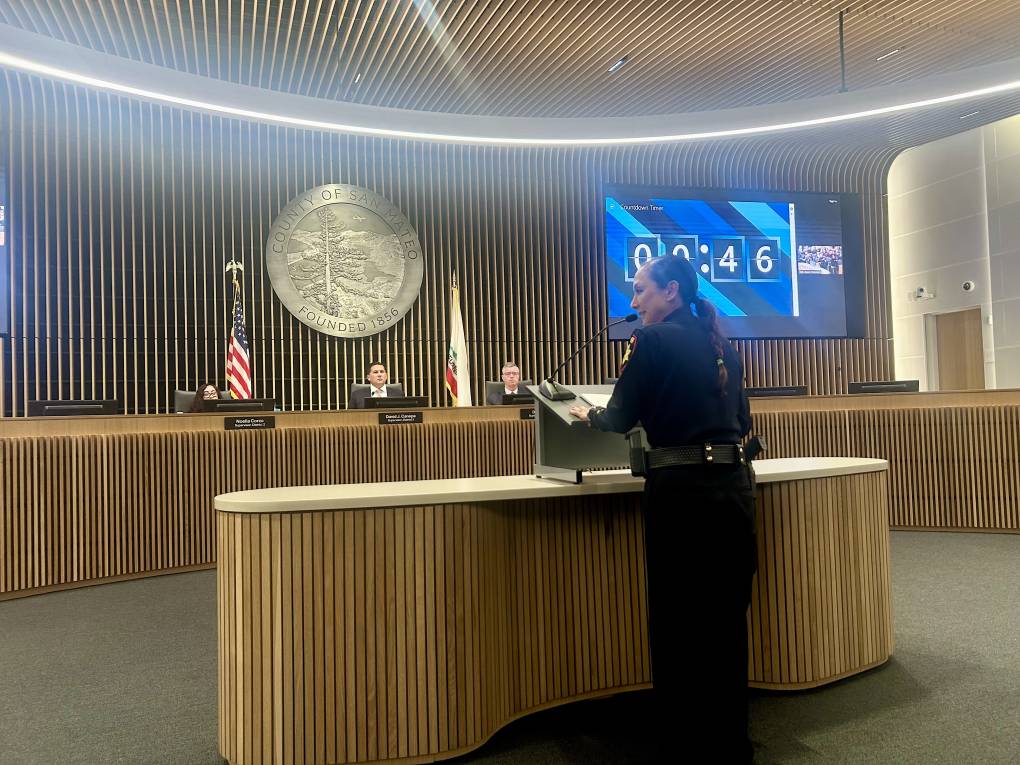
"caption": "San Mateo County Sheriff Christina Corpus addressing the county Board of Supervisors on Nov. 13, 2024, in Redwood City, following a scathing report about her leadership team. In a first in California’s history, San Mateo County’s Board of Supervisors unanimously voted to remove Sheriff Corpus, a decision she can appeal. ",
"credit": "Alise Maripuu/Bay City News",
"altTag": null,
"description": null,
"imgSizes": {
"medium": {
"file": "https://cdn.kqed.org/wp-content/uploads/sites/10/2024/12/BCN-20241113-SHERIFFCORPUS-01-800x600.jpeg",
"width": 800,
"height": 600,
"mimeType": "image/jpeg"
},
"large": {
"file": "https://cdn.kqed.org/wp-content/uploads/sites/10/2024/12/BCN-20241113-SHERIFFCORPUS-01-1020x765.jpeg",
"width": 1020,
"height": 765,
"mimeType": "image/jpeg"
},
"thumbnail": {
"file": "https://cdn.kqed.org/wp-content/uploads/sites/10/2024/12/BCN-20241113-SHERIFFCORPUS-01-160x120.jpeg",
"width": 160,
"height": 120,
"mimeType": "image/jpeg"
},
"1536x1536": {
"file": "https://cdn.kqed.org/wp-content/uploads/sites/10/2024/12/BCN-20241113-SHERIFFCORPUS-01-1536x1152.jpeg",
"width": 1536,
"height": 1152,
"mimeType": "image/jpeg"
},
"2048x2048": {
"file": "https://cdn.kqed.org/wp-content/uploads/sites/10/2024/12/BCN-20241113-SHERIFFCORPUS-01-2048x1536.jpeg",
"width": 2048,
"height": 1536,
"mimeType": "image/jpeg"
},
"post-thumbnail": {
"file": "https://cdn.kqed.org/wp-content/uploads/sites/10/2024/12/BCN-20241113-SHERIFFCORPUS-01-672x372.jpeg",
"width": 672,
"height": 372,
"mimeType": "image/jpeg"
},
"twentyfourteen-full-width": {
"file": "https://cdn.kqed.org/wp-content/uploads/sites/10/2024/12/BCN-20241113-SHERIFFCORPUS-01-1038x576.jpeg",
"width": 1038,
"height": 576,
"mimeType": "image/jpeg"
},
"full-width": {
"file": "https://cdn.kqed.org/wp-content/uploads/sites/10/2024/12/BCN-20241113-SHERIFFCORPUS-01-1920x1440.jpeg",
"width": 1920,
"height": 1440,
"mimeType": "image/jpeg"
},
"kqedFullSize": {
"file": "https://cdn.kqed.org/wp-content/uploads/sites/10/2024/12/BCN-20241113-SHERIFFCORPUS-01-scaled-e1740697386743.jpeg",
"width": 2000,
"height": 1500
}
},
"isLoading": false,
"fetchFailed": false
},
"news_11981484": {
"type": "attachments",
"id": "news_11981484",
"meta": {
"index": "attachments_1716263798",
"site": "news",
"id": "11981484",
"found": true
},
"title": "240328-BAYWOODHISTORICDISTRICT-JY-001-KQED",
"publishDate": 1711975132,
"status": "inherit",
"parent": 0,
"modified": 1743209248,
"caption": "Lead organizer of Less Red Tape, Frank Elliott, stands for a portrait outside his home in San Mateo, California, on Thursday, March 28, 2024. Elliott, who has lived in his home in the Baywood neighborhood of San Mateo since 1997, founded Less Red Tape to protest the designation of Baywood as a historic district.",
"credit": "Juliana Yamada/KQED",
"altTag": null,
"description": null,
"imgSizes": {
"medium": {
"file": "https://cdn.kqed.org/wp-content/uploads/sites/10/2024/04/240328-BAYWOODHISTORICDISTRICT-JY-001-KQED-800x533.jpg",
"width": 800,
"height": 533,
"mimeType": "image/jpeg"
},
"large": {
"file": "https://cdn.kqed.org/wp-content/uploads/sites/10/2024/04/240328-BAYWOODHISTORICDISTRICT-JY-001-KQED-1020x680.jpg",
"width": 1020,
"height": 680,
"mimeType": "image/jpeg"
},
"thumbnail": {
"file": "https://cdn.kqed.org/wp-content/uploads/sites/10/2024/04/240328-BAYWOODHISTORICDISTRICT-JY-001-KQED-160x107.jpg",
"width": 160,
"height": 107,
"mimeType": "image/jpeg"
},
"1536x1536": {
"file": "https://cdn.kqed.org/wp-content/uploads/sites/10/2024/04/240328-BAYWOODHISTORICDISTRICT-JY-001-KQED-1536x1024.jpg",
"width": 1536,
"height": 1024,
"mimeType": "image/jpeg"
},
"post-thumbnail": {
"file": "https://cdn.kqed.org/wp-content/uploads/sites/10/2024/04/240328-BAYWOODHISTORICDISTRICT-JY-001-KQED-672x372.jpg",
"width": 672,
"height": 372,
"mimeType": "image/jpeg"
},
"twentyfourteen-full-width": {
"file": "https://cdn.kqed.org/wp-content/uploads/sites/10/2024/04/240328-BAYWOODHISTORICDISTRICT-JY-001-KQED-1038x576.jpg",
"width": 1038,
"height": 576,
"mimeType": "image/jpeg"
},
"full-width": {
"file": "https://cdn.kqed.org/wp-content/uploads/sites/10/2024/04/240328-BAYWOODHISTORICDISTRICT-JY-001-KQED-1920x1280.jpg",
"width": 1920,
"height": 1280,
"mimeType": "image/jpeg"
},
"kqedFullSize": {
"file": "https://cdn.kqed.org/wp-content/uploads/sites/10/2024/04/240328-BAYWOODHISTORICDISTRICT-JY-001-KQED.jpg",
"width": 2000,
"height": 1333
}
},
"isLoading": false,
"fetchFailed": false
},
"news_12030660": {
"type": "attachments",
"id": "news_12030660",
"meta": {
"index": "attachments_1716263798",
"site": "news",
"id": "12030660",
"found": true
},
"title": "20250308_BESANS-MARKET_DMB_00963-KQED",
"publishDate": 1741647858,
"status": "inherit",
"parent": 0,
"modified": 1743099554,
"caption": "Customers greet each other at Besan's International Market in San Bruno on Saturday, March 8, 2025. Besan's is a halal butcher, take-out restaurant and market in San Bruno, California. A go-to spot year-round for local Arab, North African, South Asian and Middle Eastern communities, the shop is especially busy during Ramadan, when customers shop for iftar meals and the coming Eid al-fitr holiday.",
"credit": "David M. Barreda/KQED",
"altTag": null,
"description": null,
"imgSizes": {
"medium": {
"file": "https://cdn.kqed.org/wp-content/uploads/sites/10/2025/03/20250308_BESANS-MARKET_DMB_00963-KQED-800x533.jpg",
"width": 800,
"height": 533,
"mimeType": "image/jpeg"
},
"large": {
"file": "https://cdn.kqed.org/wp-content/uploads/sites/10/2025/03/20250308_BESANS-MARKET_DMB_00963-KQED-1020x680.jpg",
"width": 1020,
"height": 680,
"mimeType": "image/jpeg"
},
"thumbnail": {
"file": "https://cdn.kqed.org/wp-content/uploads/sites/10/2025/03/20250308_BESANS-MARKET_DMB_00963-KQED-160x107.jpg",
"width": 160,
"height": 107,
"mimeType": "image/jpeg"
},
"1536x1536": {
"file": "https://cdn.kqed.org/wp-content/uploads/sites/10/2025/03/20250308_BESANS-MARKET_DMB_00963-KQED-1536x1024.jpg",
"width": 1536,
"height": 1024,
"mimeType": "image/jpeg"
},
"post-thumbnail": {
"file": "https://cdn.kqed.org/wp-content/uploads/sites/10/2025/03/20250308_BESANS-MARKET_DMB_00963-KQED-672x372.jpg",
"width": 672,
"height": 372,
"mimeType": "image/jpeg"
},
"twentyfourteen-full-width": {
"file": "https://cdn.kqed.org/wp-content/uploads/sites/10/2025/03/20250308_BESANS-MARKET_DMB_00963-KQED-1038x576.jpg",
"width": 1038,
"height": 576,
"mimeType": "image/jpeg"
},
"full-width": {
"file": "https://cdn.kqed.org/wp-content/uploads/sites/10/2025/03/20250308_BESANS-MARKET_DMB_00963-KQED-1920x1280.jpg",
"width": 1920,
"height": 1280,
"mimeType": "image/jpeg"
},
"kqedFullSize": {
"file": "https://cdn.kqed.org/wp-content/uploads/sites/10/2025/03/20250308_BESANS-MARKET_DMB_00963-KQED.jpg",
"width": 2000,
"height": 1333
}
},
"isLoading": false,
"fetchFailed": false
},
"news_12015445": {
"type": "attachments",
"id": "news_12015445",
"meta": {
"index": "attachments_1716263798",
"site": "news",
"id": "12015445",
"found": true
},
"title": "US-CALIFORNIA-CRIME-SHOOTING",
"publishDate": 1732233616,
"status": "inherit",
"parent": 12015360,
"modified": 1739063399,
"caption": "Sheriff Christina Corpus (center) speaks about a shooting at the Half Moon Bay IDES Society in Half Moon Bay, San Mateo County, on Jan. 24, 2023. ",
"credit": "Samantha Laurey/AFP via Getty Images",
"altTag": null,
"description": null,
"imgSizes": {
"medium": {
"file": "https://cdn.kqed.org/wp-content/uploads/sites/10/2024/11/ChristinaCorpusGetty-800x532.jpg",
"width": 800,
"height": 532,
"mimeType": "image/jpeg"
},
"large": {
"file": "https://cdn.kqed.org/wp-content/uploads/sites/10/2024/11/ChristinaCorpusGetty-1020x678.jpg",
"width": 1020,
"height": 678,
"mimeType": "image/jpeg"
},
"thumbnail": {
"file": "https://cdn.kqed.org/wp-content/uploads/sites/10/2024/11/ChristinaCorpusGetty-160x106.jpg",
"width": 160,
"height": 106,
"mimeType": "image/jpeg"
},
"1536x1536": {
"file": "https://cdn.kqed.org/wp-content/uploads/sites/10/2024/11/ChristinaCorpusGetty-1536x1021.jpg",
"width": 1536,
"height": 1021,
"mimeType": "image/jpeg"
},
"post-thumbnail": {
"file": "https://cdn.kqed.org/wp-content/uploads/sites/10/2024/11/ChristinaCorpusGetty-672x372.jpg",
"width": 672,
"height": 372,
"mimeType": "image/jpeg"
},
"twentyfourteen-full-width": {
"file": "https://cdn.kqed.org/wp-content/uploads/sites/10/2024/11/ChristinaCorpusGetty-1038x576.jpg",
"width": 1038,
"height": 576,
"mimeType": "image/jpeg"
},
"full-width": {
"file": "https://cdn.kqed.org/wp-content/uploads/sites/10/2024/11/ChristinaCorpusGetty-1920x1277.jpg",
"width": 1920,
"height": 1277,
"mimeType": "image/jpeg"
},
"kqedFullSize": {
"file": "https://cdn.kqed.org/wp-content/uploads/sites/10/2024/11/ChristinaCorpusGetty.jpg",
"width": 2000,
"height": 1330
}
},
"isLoading": false,
"fetchFailed": false
},
"news_11977785": {
"type": "attachments",
"id": "news_11977785",
"meta": {
"index": "attachments_1716263798",
"site": "news",
"id": "11977785",
"found": true
},
"title": "A ballot box at the San Mateo County Elections Office on Oct. 21, 2020.",
"publishDate": 1709329093,
"status": "inherit",
"parent": 11977769,
"modified": 1730924081,
"caption": "Woodside voters headed to the polls for a special election in November of 2021 and narrowly passed Measure A, which rezoned two parcels of land in the town center to be used for community gatherings. It was one of the closest elections in San Mateo County history, according to Jim Irizarry, assistant assessor-county clerk-recorder.",
"credit": "Beth LaBerge/KQED",
"altTag": null,
"description": null,
"imgSizes": {
"medium": {
"file": "https://cdn.kqed.org/wp-content/uploads/sites/10/2024/03/036_KQED_SanMateo_ElectionsOffice_10212020_qut-800x533.jpg",
"width": 800,
"height": 533,
"mimeType": "image/jpeg"
},
"large": {
"file": "https://cdn.kqed.org/wp-content/uploads/sites/10/2024/03/036_KQED_SanMateo_ElectionsOffice_10212020_qut-1020x680.jpg",
"width": 1020,
"height": 680,
"mimeType": "image/jpeg"
},
"thumbnail": {
"file": "https://cdn.kqed.org/wp-content/uploads/sites/10/2024/03/036_KQED_SanMateo_ElectionsOffice_10212020_qut-160x107.jpg",
"width": 160,
"height": 107,
"mimeType": "image/jpeg"
},
"1536x1536": {
"file": "https://cdn.kqed.org/wp-content/uploads/sites/10/2024/03/036_KQED_SanMateo_ElectionsOffice_10212020_qut-1536x1024.jpg",
"width": 1536,
"height": 1024,
"mimeType": "image/jpeg"
},
"post-thumbnail": {
"file": "https://cdn.kqed.org/wp-content/uploads/sites/10/2024/03/036_KQED_SanMateo_ElectionsOffice_10212020_qut-672x372.jpg",
"width": 672,
"height": 372,
"mimeType": "image/jpeg"
},
"twentyfourteen-full-width": {
"file": "https://cdn.kqed.org/wp-content/uploads/sites/10/2024/03/036_KQED_SanMateo_ElectionsOffice_10212020_qut-1038x576.jpg",
"width": 1038,
"height": 576,
"mimeType": "image/jpeg"
},
"kqedFullSize": {
"file": "https://cdn.kqed.org/wp-content/uploads/sites/10/2024/03/036_KQED_SanMateo_ElectionsOffice_10212020_qut.jpg",
"width": 1920,
"height": 1280
}
},
"isLoading": false,
"fetchFailed": false
},
"news_11912619": {
"type": "attachments",
"id": "news_11912619",
"meta": {
"index": "attachments_1716263798",
"site": "news",
"id": "11912619",
"found": true
},
"parent": 11912590,
"imgSizes": {
"twentyfourteen-full-width": {
"file": "https://ww2.kqed.org/app/uploads/sites/10/2022/04/64667143290__84C93925-9FB3-4BA8-9CDD-959DE9D525B8.fullsizerender-2-1038x576.jpeg",
"width": 1038,
"mimeType": "image/jpeg",
"height": 576
},
"thumbnail": {
"file": "https://ww2.kqed.org/app/uploads/sites/10/2022/04/64667143290__84C93925-9FB3-4BA8-9CDD-959DE9D525B8.fullsizerender-2-160x151.jpeg",
"width": 160,
"mimeType": "image/jpeg",
"height": 151
},
"post-thumbnail": {
"file": "https://ww2.kqed.org/app/uploads/sites/10/2022/04/64667143290__84C93925-9FB3-4BA8-9CDD-959DE9D525B8.fullsizerender-2-672x372.jpeg",
"width": 672,
"mimeType": "image/jpeg",
"height": 372
},
"kqedFullSize": {
"file": "https://ww2.kqed.org/app/uploads/sites/10/2022/04/64667143290__84C93925-9FB3-4BA8-9CDD-959DE9D525B8.fullsizerender-2-scaled.jpeg",
"width": 2560,
"height": 2416
},
"2048x2048": {
"file": "https://ww2.kqed.org/app/uploads/sites/10/2022/04/64667143290__84C93925-9FB3-4BA8-9CDD-959DE9D525B8.fullsizerender-2-2048x1933.jpeg",
"width": 2048,
"mimeType": "image/jpeg",
"height": 1933
},
"large": {
"file": "https://ww2.kqed.org/app/uploads/sites/10/2022/04/64667143290__84C93925-9FB3-4BA8-9CDD-959DE9D525B8.fullsizerender-2-1020x963.jpeg",
"width": 1020,
"mimeType": "image/jpeg",
"height": 963
},
"1536x1536": {
"file": "https://ww2.kqed.org/app/uploads/sites/10/2022/04/64667143290__84C93925-9FB3-4BA8-9CDD-959DE9D525B8.fullsizerender-2-1536x1449.jpeg",
"width": 1536,
"mimeType": "image/jpeg",
"height": 1449
},
"full-width": {
"file": "https://ww2.kqed.org/app/uploads/sites/10/2022/04/64667143290__84C93925-9FB3-4BA8-9CDD-959DE9D525B8.fullsizerender-2-1920x1812.jpeg",
"width": 1920,
"mimeType": "image/jpeg",
"height": 1812
},
"medium": {
"file": "https://ww2.kqed.org/app/uploads/sites/10/2022/04/64667143290__84C93925-9FB3-4BA8-9CDD-959DE9D525B8.fullsizerender-2-800x755.jpeg",
"width": 800,
"mimeType": "image/jpeg",
"height": 755
}
},
"publishDate": 1651253967,
"modified": 1651254000,
"caption": "The Dish, aka the Stanford Dish, is a radio antenna in the Stanford foothills. It's also an iconic local landmark, and the centerpiece of a popular hiking path on the Stanford campus.",
"description": "The Dish, aka the Stanford Dish, is a radio antenna in the Stanford foothills. It's also an iconic local landmark, and the centerpiece of a popular hiking path on the Stanford campus.",
"title": "64667143290__84C93925-9FB3-4BA8-9CDD-959DE9D525B8.fullsizerender 2",
"credit": "Rachael Myrow/KQED",
"status": "inherit",
"altTag": "A satellite dish points up into the blue sky.",
"isLoading": false,
"fetchFailed": false
},
"news_11578271": {
"type": "attachments",
"id": "news_11578271",
"meta": {
"index": "attachments_1716263798",
"site": "news",
"id": "11578271",
"found": true
},
"parent": 11578267,
"imgSizes": {
"small": {
"file": "https://ww2.kqed.org/app/uploads/sites/10/2017/07/RS26047_DSC_1214-qut-520x345.jpg",
"width": 520,
"mimeType": "image/jpeg",
"height": 345
},
"twentyfourteen-full-width": {
"file": "https://ww2.kqed.org/app/uploads/sites/10/2017/07/RS26047_DSC_1214-qut-1038x576.jpg",
"width": 1038,
"mimeType": "image/jpeg",
"height": 576
},
"thumbnail": {
"file": "https://ww2.kqed.org/app/uploads/sites/10/2017/07/RS26047_DSC_1214-qut-160x106.jpg",
"width": 160,
"mimeType": "image/jpeg",
"height": 106
},
"fd-sm": {
"file": "https://ww2.kqed.org/app/uploads/sites/10/2017/07/RS26047_DSC_1214-qut-960x636.jpg",
"width": 960,
"mimeType": "image/jpeg",
"height": 636
},
"post-thumbnail": {
"file": "https://ww2.kqed.org/app/uploads/sites/10/2017/07/RS26047_DSC_1214-qut-672x372.jpg",
"width": 672,
"mimeType": "image/jpeg",
"height": 372
},
"xsmall": {
"file": "https://ww2.kqed.org/app/uploads/sites/10/2017/07/RS26047_DSC_1214-qut-375x248.jpg",
"width": 375,
"mimeType": "image/jpeg",
"height": 248
},
"kqedFullSize": {
"file": "https://ww2.kqed.org/app/uploads/sites/10/2017/07/RS26047_DSC_1214-qut.jpg",
"width": 1920,
"height": 1272
},
"large": {
"file": "https://ww2.kqed.org/app/uploads/sites/10/2017/07/RS26047_DSC_1214-qut-1020x676.jpg",
"width": 1020,
"mimeType": "image/jpeg",
"height": 676
},
"xlarge": {
"file": "https://ww2.kqed.org/app/uploads/sites/10/2017/07/RS26047_DSC_1214-qut-1180x782.jpg",
"width": 1180,
"mimeType": "image/jpeg",
"height": 782
},
"guest-author-50": {
"file": "https://ww2.kqed.org/app/uploads/sites/10/2017/07/RS26047_DSC_1214-qut-50x50.jpg",
"width": 50,
"mimeType": "image/jpeg",
"height": 50
},
"guest-author-96": {
"file": "https://ww2.kqed.org/app/uploads/sites/10/2017/07/RS26047_DSC_1214-qut-96x96.jpg",
"width": 96,
"mimeType": "image/jpeg",
"height": 96
},
"medium": {
"file": "https://ww2.kqed.org/app/uploads/sites/10/2017/07/RS26047_DSC_1214-qut-800x530.jpg",
"width": 800,
"mimeType": "image/jpeg",
"height": 530
},
"guest-author-64": {
"file": "https://ww2.kqed.org/app/uploads/sites/10/2017/07/RS26047_DSC_1214-qut-64x64.jpg",
"width": 64,
"mimeType": "image/jpeg",
"height": 64
},
"guest-author-32": {
"file": "https://ww2.kqed.org/app/uploads/sites/10/2017/07/RS26047_DSC_1214-qut-32x32.jpg",
"width": 32,
"mimeType": "image/jpeg",
"height": 32
},
"fd-lrg": {
"file": "https://ww2.kqed.org/app/uploads/sites/10/2017/07/RS26047_DSC_1214-qut-1920x1272.jpg",
"width": 1920,
"mimeType": "image/jpeg",
"height": 1272
},
"fd-med": {
"file": "https://ww2.kqed.org/app/uploads/sites/10/2017/07/RS26047_DSC_1214-qut-1180x782.jpg",
"width": 1180,
"mimeType": "image/jpeg",
"height": 782
},
"full-width": {
"file": "https://ww2.kqed.org/app/uploads/sites/10/2017/07/RS26047_DSC_1214-qut-1920x1272.jpg",
"width": 1920,
"mimeType": "image/jpeg",
"height": 1272
},
"detail": {
"file": "https://ww2.kqed.org/app/uploads/sites/10/2017/07/RS26047_DSC_1214-qut-150x150.jpg",
"width": 150,
"mimeType": "image/jpeg",
"height": 150
},
"guest-author-128": {
"file": "https://ww2.kqed.org/app/uploads/sites/10/2017/07/RS26047_DSC_1214-qut-128x128.jpg",
"width": 128,
"mimeType": "image/jpeg",
"height": 128
},
"xxsmall": {
"file": "https://ww2.kqed.org/app/uploads/sites/10/2017/07/RS26047_DSC_1214-qut-240x159.jpg",
"width": 240,
"mimeType": "image/jpeg",
"height": 159
}
},
"publishDate": 1500601811,
"modified": 1500602184,
"caption": "Hobee's famous blueberry coffee cake was invented by Peter Taber in the restaurant's early years.",
"description": null,
"title": "RS26047_DSC_1214-qut",
"credit": "Ryan Levi/KQED",
"status": "inherit",
"isLoading": false,
"fetchFailed": false
},
"news_10919932": {
"type": "attachments",
"id": "news_10919932",
"meta": {
"index": "attachments_1716263798",
"site": "news",
"id": "10919932",
"found": true
},
"parent": 10919489,
"imgSizes": {
"twentyfourteen-full-width": {
"file": "https://ww2.kqed.org/app/uploads/sites/10/2016/04/RS18971_IMG_9541-qut-1038x576.jpg",
"width": 1038,
"mimeType": "image/jpeg",
"height": 576
},
"thumbnail": {
"file": "https://ww2.kqed.org/app/uploads/sites/10/2016/04/RS18971_IMG_9541-qut-400x267.jpg",
"width": 400,
"mimeType": "image/jpeg",
"height": 267
},
"fd-sm": {
"file": "https://ww2.kqed.org/app/uploads/sites/10/2016/04/RS18971_IMG_9541-qut-960x640.jpg",
"width": 960,
"mimeType": "image/jpeg",
"height": 640
},
"post-thumbnail": {
"file": "https://ww2.kqed.org/app/uploads/sites/10/2016/04/RS18971_IMG_9541-qut-672x372.jpg",
"width": 672,
"mimeType": "image/jpeg",
"height": 372
},
"kqedFullSize": {
"file": "https://ww2.kqed.org/app/uploads/sites/10/2016/04/RS18971_IMG_9541-qut.jpg",
"width": 1920,
"height": 1280
},
"large": {
"file": "https://ww2.kqed.org/app/uploads/sites/10/2016/04/RS18971_IMG_9541-qut-1920x1280.jpg",
"width": 1920,
"mimeType": "image/jpeg",
"height": 1280
},
"guest-author-96": {
"file": "https://ww2.kqed.org/app/uploads/sites/10/2016/04/RS18971_IMG_9541-qut-96x96.jpg",
"width": 96,
"mimeType": "image/jpeg",
"height": 96
},
"medium": {
"file": "https://ww2.kqed.org/app/uploads/sites/10/2016/04/RS18971_IMG_9541-qut-800x533.jpg",
"width": 800,
"mimeType": "image/jpeg",
"height": 533
},
"guest-author-64": {
"file": "https://ww2.kqed.org/app/uploads/sites/10/2016/04/RS18971_IMG_9541-qut-64x64.jpg",
"width": 64,
"mimeType": "image/jpeg",
"height": 64
},
"guest-author-32": {
"file": "https://ww2.kqed.org/app/uploads/sites/10/2016/04/RS18971_IMG_9541-qut-32x32.jpg",
"width": 32,
"mimeType": "image/jpeg",
"height": 32
},
"jmtc-small-thumb": {
"file": "https://ww2.kqed.org/app/uploads/sites/10/2016/04/RS18971_IMG_9541-qut-280x150.jpg",
"width": 280,
"mimeType": "image/jpeg",
"height": 150
},
"fd-lrg": {
"file": "https://ww2.kqed.org/app/uploads/sites/10/2016/04/RS18971_IMG_9541-qut-1920x1280.jpg",
"width": 1920,
"mimeType": "image/jpeg",
"height": 1280
},
"fd-med": {
"file": "https://ww2.kqed.org/app/uploads/sites/10/2016/04/RS18971_IMG_9541-qut-1180x787.jpg",
"width": 1180,
"mimeType": "image/jpeg",
"height": 787
},
"detail": {
"file": "https://ww2.kqed.org/app/uploads/sites/10/2016/04/RS18971_IMG_9541-qut-75x75.jpg",
"width": 75,
"mimeType": "image/jpeg",
"height": 75
},
"guest-author-128": {
"file": "https://ww2.kqed.org/app/uploads/sites/10/2016/04/RS18971_IMG_9541-qut-128x128.jpg",
"width": 128,
"mimeType": "image/jpeg",
"height": 128
}
},
"publishDate": 1459820059,
"modified": 1459896857,
"caption": "About 70 liveaboards are moored at Redwood City's Docktown Marina -- floating buildings or boats adapted for residential uses. The city is looking to potentially relocate residents.",
"description": null,
"title": "RS18971_IMG_9541-qut",
"credit": "Farida Jhabvala Romero / KQED",
"status": "inherit",
"isLoading": false,
"fetchFailed": false
},
"news_10756133": {
"type": "attachments",
"id": "news_10756133",
"meta": {
"index": "attachments_1716263798",
"site": "news",
"id": "10756133",
"found": true
},
"parent": 10756084,
"imgSizes": {
"twentyfourteen-full-width": {
"file": "https://ww2.kqed.org/app/uploads/sites/10/2015/11/RS14451_IMG_0859-qut-1038x576.jpg",
"width": 1038,
"mimeType": "image/jpeg",
"height": 576
},
"thumbnail": {
"file": "https://ww2.kqed.org/app/uploads/sites/10/2015/11/RS14451_IMG_0859-qut-400x300.jpg",
"width": 400,
"mimeType": "image/jpeg",
"height": 300
},
"fd-sm": {
"file": "https://ww2.kqed.org/app/uploads/sites/10/2015/11/RS14451_IMG_0859-qut-960x720.jpg",
"width": 960,
"mimeType": "image/jpeg",
"height": 720
},
"post-thumbnail": {
"file": "https://ww2.kqed.org/app/uploads/sites/10/2015/11/RS14451_IMG_0859-qut-672x372.jpg",
"width": 672,
"mimeType": "image/jpeg",
"height": 372
},
"kqedFullSize": {
"file": "https://ww2.kqed.org/app/uploads/sites/10/2015/11/RS14451_IMG_0859-qut.jpg",
"width": 1920,
"height": 1440
},
"large": {
"file": "https://ww2.kqed.org/app/uploads/sites/10/2015/11/RS14451_IMG_0859-qut-1440x1080.jpg",
"width": 1440,
"mimeType": "image/jpeg",
"height": 1080
},
"guest-author-96": {
"file": "https://ww2.kqed.org/app/uploads/sites/10/2015/11/RS14451_IMG_0859-qut-96x96.jpg",
"width": 96,
"mimeType": "image/jpeg",
"height": 96
},
"medium": {
"file": "https://ww2.kqed.org/app/uploads/sites/10/2015/11/RS14451_IMG_0859-qut-800x600.jpg",
"width": 800,
"mimeType": "image/jpeg",
"height": 600
},
"guest-author-64": {
"file": "https://ww2.kqed.org/app/uploads/sites/10/2015/11/RS14451_IMG_0859-qut-64x64.jpg",
"width": 64,
"mimeType": "image/jpeg",
"height": 64
},
"guest-author-32": {
"file": "https://ww2.kqed.org/app/uploads/sites/10/2015/11/RS14451_IMG_0859-qut-32x32.jpg",
"width": 32,
"mimeType": "image/jpeg",
"height": 32
},
"jmtc-small-thumb": {
"file": "https://ww2.kqed.org/app/uploads/sites/10/2015/11/RS14451_IMG_0859-qut-280x150.jpg",
"width": 280,
"mimeType": "image/jpeg",
"height": 150
},
"fd-lrg": {
"file": "https://ww2.kqed.org/app/uploads/sites/10/2015/11/RS14451_IMG_0859-qut-1920x1440.jpg",
"width": 1920,
"mimeType": "image/jpeg",
"height": 1440
},
"fd-med": {
"file": "https://ww2.kqed.org/app/uploads/sites/10/2015/11/RS14451_IMG_0859-qut-1180x885.jpg",
"width": 1180,
"mimeType": "image/jpeg",
"height": 885
},
"detail": {
"file": "https://ww2.kqed.org/app/uploads/sites/10/2015/11/RS14451_IMG_0859-qut-75x75.jpg",
"width": 75,
"mimeType": "image/jpeg",
"height": 75
},
"guest-author-128": {
"file": "https://ww2.kqed.org/app/uploads/sites/10/2015/11/RS14451_IMG_0859-qut-128x128.jpg",
"width": 128,
"mimeType": "image/jpeg",
"height": 128
}
},
"publishDate": 1447352698,
"modified": 1447374364,
"caption": "Cynthia D’Agosta has left her position at Filoli, a beloved California historical landmark in Woodside.",
"description": "Cynthia D’Agosta has left her position at Filoli, a beloved California historical Landmark in Woodside.",
"title": "RS14451_IMG_0859-qut",
"credit": "Rachael Myrow/KQED",
"status": "inherit",
"isLoading": false,
"fetchFailed": false
},
"news_10474037": {
"type": "attachments",
"id": "news_10474037",
"meta": {
"index": "attachments_1716263798",
"site": "news",
"id": "10474037",
"found": true
},
"parent": 10472738,
"imgSizes": {
"twentyfourteen-full-width": {
"file": "https://ww2.kqed.org/app/uploads/sites/10/2015/04/RS14687_tothesea-qut-1038x576.jpg",
"width": 1038,
"mimeType": "image/jpeg",
"height": 576
},
"thumbnail": {
"file": "https://ww2.kqed.org/app/uploads/sites/10/2015/04/RS14687_tothesea-qut-400x300.jpg",
"width": 400,
"mimeType": "image/jpeg",
"height": 300
},
"fd-sm": {
"file": "https://ww2.kqed.org/app/uploads/sites/10/2015/04/RS14687_tothesea-qut-320x240.jpg",
"width": 320,
"mimeType": "image/jpeg",
"height": 240
},
"post-thumbnail": {
"file": "https://ww2.kqed.org/app/uploads/sites/10/2015/04/RS14687_tothesea-qut-672x372.jpg",
"width": 672,
"mimeType": "image/jpeg",
"height": 372
},
"kqedFullSize": {
"file": "https://ww2.kqed.org/app/uploads/sites/10/2015/04/RS14687_tothesea-qut.jpg",
"width": 1920,
"height": 1440
},
"large": {
"file": "https://ww2.kqed.org/app/uploads/sites/10/2015/04/RS14687_tothesea-qut-1440x1080.jpg",
"width": 1440,
"mimeType": "image/jpeg",
"height": 1080
},
"guest-author-96": {
"file": "https://ww2.kqed.org/app/uploads/sites/10/2015/04/RS14687_tothesea-qut-96x96.jpg",
"width": 96,
"mimeType": "image/jpeg",
"height": 96
},
"medium": {
"file": "https://ww2.kqed.org/app/uploads/sites/10/2015/04/RS14687_tothesea-qut-800x600.jpg",
"width": 800,
"mimeType": "image/jpeg",
"height": 600
},
"guest-author-64": {
"file": "https://ww2.kqed.org/app/uploads/sites/10/2015/04/RS14687_tothesea-qut-64x64.jpg",
"width": 64,
"mimeType": "image/jpeg",
"height": 64
},
"guest-author-32": {
"file": "https://ww2.kqed.org/app/uploads/sites/10/2015/04/RS14687_tothesea-qut-32x32.jpg",
"width": 32,
"mimeType": "image/jpeg",
"height": 32
},
"fd-lrg": {
"file": "https://ww2.kqed.org/app/uploads/sites/10/2015/04/RS14687_tothesea-qut-1180x885.jpg",
"width": 1180,
"mimeType": "image/jpeg",
"height": 885
},
"fd-med": {
"file": "https://ww2.kqed.org/app/uploads/sites/10/2015/04/RS14687_tothesea-qut-768x576.jpg",
"width": 768,
"mimeType": "image/jpeg",
"height": 576
},
"detail": {
"file": "https://ww2.kqed.org/app/uploads/sites/10/2015/04/RS14687_tothesea-qut-75x75.jpg",
"width": 75,
"mimeType": "image/jpeg",
"height": 75
},
"guest-author-128": {
"file": "https://ww2.kqed.org/app/uploads/sites/10/2015/04/RS14687_tothesea-qut-128x128.jpg",
"width": 128,
"mimeType": "image/jpeg",
"height": 128
}
},
"publishDate": 1427925888,
"modified": 1427925922,
"caption": "A group called Open the SF Watershed is pushing for the SF PUC to open up more of 23,000 acres it holds on the Peninsula to public access.",
"description": "A group called Open the SF Watershed is pushing for the SF PUC to open up more of 23,000 acres it holds on the Peninsula to public access.",
"title": "RS14687_tothesea-qut",
"credit": "Rachael Myrow/KQED",
"status": "inherit",
"isLoading": false,
"fetchFailed": false
},
"news_10341475": {
"type": "attachments",
"id": "news_10341475",
"meta": {
"index": "attachments_1716263798",
"site": "news",
"id": "10341475",
"found": true
},
"parent": 10141472,
"imgSizes": {
"thumbnail": {
"file": "https://ww2.kqed.org/app/uploads/sites/10/2014/09/boccecrop-400x225.jpg",
"width": 400,
"mimeType": "image/jpeg",
"height": 225
},
"kqedFullSize": {
"file": "https://ww2.kqed.org/app/uploads/sites/10/2014/09/boccecrop.jpg",
"width": 640,
"height": 360
},
"guest-author-96": {
"file": "https://ww2.kqed.org/app/uploads/sites/10/2014/09/boccecrop-96x96.jpg",
"width": 96,
"mimeType": "image/jpeg",
"height": 96
},
"guest-author-64": {
"file": "https://ww2.kqed.org/app/uploads/sites/10/2014/09/boccecrop-64x64.jpg",
"width": 64,
"mimeType": "image/jpeg",
"height": 64
},
"detail": {
"file": "https://ww2.kqed.org/app/uploads/sites/10/2014/09/boccecrop-75x75.jpg",
"width": 75,
"mimeType": "image/jpeg",
"height": 75
},
"guest-author-32": {
"file": "https://ww2.kqed.org/app/uploads/sites/10/2014/09/boccecrop-32x32.jpg",
"width": 32,
"mimeType": "image/jpeg",
"height": 32
},
"guest-author-128": {
"file": "https://ww2.kqed.org/app/uploads/sites/10/2014/09/boccecrop-128x128.jpg",
"width": 128,
"mimeType": "image/jpeg",
"height": 128
}
},
"publishDate": 1411494230,
"modified": 1411494230,
"caption": "Joseph Lencioni (right) and other members of San Mateo's Peninsula Italian American Social Club during weekly bocce league play. (Vanessa Rancaño/KQED)",
"description": null,
"title": "boccecrop",
"credit": null,
"status": "inherit",
"isLoading": false,
"fetchFailed": false
}
},
"audioPlayerReducer": {
"postId": "stream_live",
"isPaused": true,
"isPlaying": false,
"pfsActive": false,
"pledgeModalIsOpen": true,
"playerDrawerIsOpen": false,
"liveAudioPlayStartedAt": 0,
"liveAudioPlayContext": ""
},
"authorsReducer": {
"byline_news_10341472": {
"type": "authors",
"id": "byline_news_10341472",
"meta": {
"override": true
},
"slug": "byline_news_10341472",
"name": "Vanessa Rancaño",
"isLoading": false
},
"jbrooks": {
"type": "authors",
"id": "80",
"meta": {
"index": "authors_1716337520",
"id": "80",
"found": true
},
"name": "Jon Brooks",
"firstName": "Jon",
"lastName": "Brooks",
"slug": "jbrooks",
"email": "jbrooks@kqed.org",
"display_author_email": true,
"staff_mastheads": [
"science"
],
"title": "Digital Editor",
"bio": "Jon Brooks is a former Digital Editor for KQED Science. He is the former editor of KQED’s daily news blog, News Fix. In 2014, he won a California Journalism Award for his coverage of ride services like Uber and Lyft and the taxi industry. A veteran blogger, he previously worked for Yahoo! in various news writing and editing roles. Jon is also a playwright whose work has been produced in San Francisco, New York, Italy, and around the U.S. He has written about film for his own blog and studied film at Boston University.",
"avatar": "https://secure.gravatar.com/avatar/98887f7ed1c876ed414d4c915e969584?s=600&d=blank&r=g",
"twitter": "jbrooksfoy",
"facebook": null,
"instagram": null,
"linkedin": null,
"sites": [
{
"site": "arts",
"roles": [
"Contributor",
"editor"
]
},
{
"site": "news",
"roles": [
"author"
]
},
{
"site": "futureofyou",
"roles": [
"administrator"
]
},
{
"site": "mindshift",
"roles": [
"editor"
]
},
{
"site": "stateofhealth",
"roles": [
"editor"
]
},
{
"site": "science",
"roles": [
"administrator"
]
},
{
"site": "quest",
"roles": [
"editor"
]
}
],
"headData": {
"title": "Jon Brooks | KQED",
"description": "Digital Editor",
"ogImgSrc": "https://secure.gravatar.com/avatar/98887f7ed1c876ed414d4c915e969584?s=600&d=blank&r=g",
"twImgSrc": "https://secure.gravatar.com/avatar/98887f7ed1c876ed414d4c915e969584?s=600&d=blank&r=g"
},
"isLoading": false,
"link": "/author/jbrooks"
},
"rachael-myrow": {
"type": "authors",
"id": "251",
"meta": {
"index": "authors_1716337520",
"id": "251",
"found": true
},
"name": "Rachael Myrow",
"firstName": "Rachael",
"lastName": "Myrow",
"slug": "rachael-myrow",
"email": "rmyrow@kqed.org",
"display_author_email": true,
"staff_mastheads": [
"news"
],
"title": "Senior Editor of KQED's Silicon Valley News Desk",
"bio": "• I write and edit stories about how Silicon Valley power and policies shape everyday life in California. I’m also passionate about making Bay Area history and culture more accessible to a broad public. • I’ve been a journalist for most of my life, starting in high school with The Franklin Press in Los Angeles, where I grew up. While earning my first degree in English at UC Berkeley, I got my start in public radio at KALX-FM. After completing a second degree in journalism at Cal, I landed my first professional job at Marketplace, then moved on to KPCC (now LAist), and then KQED, where I hosted The California Report for more than seven years. • My reporting has appeared on NPR, The World, WBUR’s \u003ci>Here & Now\u003c/i>, and the BBC. I also guest host for KQED’s \u003ci>Forum\u003c/i>, as well as the Commonwealth Club in San Francisco. • I speak periodically on media, democracy and technology issues, and do voiceover work for documentaries and educational video projects. • Outside of the studio, you'll find me hiking Bay Area trails and whipping up Insta-ready meals in my kitchen. • I do not accept gifts, money, or favors from anyone connected to my reporting, I don't pay people for information, and I do not support or donate to political causes. • I strive to treat the people I report on with fairness, honesty, and respect. I also recognize there are often multiple sides to a story and work to verify information through multiple sources and documentation. If I get something wrong, I correct it.",
"avatar": "https://secure.gravatar.com/avatar/3ed8a3c5f26025e4a805ba634cda8cd764906b97438a6d9ce216b044e340da4e?s=600&d=blank&r=g",
"twitter": "rachaelmyrow",
"bluesky": null,
"facebook": null,
"instagram": null,
"linkedin": "https://www.linkedin.com/in/rachaelmyrow/",
"sites": [
{
"site": "arts",
"roles": [
"administrator"
]
},
{
"site": "news",
"roles": [
"edit_others_posts",
"editor"
]
},
{
"site": "futureofyou",
"roles": [
"editor"
]
},
{
"site": "bayareabites",
"roles": [
"editor"
]
},
{
"site": "stateofhealth",
"roles": [
"editor"
]
},
{
"site": "science",
"roles": [
"editor"
]
},
{
"site": "food",
"roles": [
"editor"
]
},
{
"site": "forum",
"roles": [
"editor"
]
},
{
"site": "liveblog",
"roles": [
"author"
]
}
],
"headData": {
"title": "Rachael Myrow | KQED",
"description": "Senior Editor of KQED's Silicon Valley News Desk",
"ogImgSrc": "https://secure.gravatar.com/avatar/3ed8a3c5f26025e4a805ba634cda8cd764906b97438a6d9ce216b044e340da4e?s=600&d=blank&r=g",
"twImgSrc": "https://secure.gravatar.com/avatar/3ed8a3c5f26025e4a805ba634cda8cd764906b97438a6d9ce216b044e340da4e?s=600&d=blank&r=g"
},
"isLoading": false,
"link": "/author/rachael-myrow"
},
"tgoldberg": {
"type": "authors",
"id": "258",
"meta": {
"index": "authors_1716337520",
"id": "258",
"found": true
},
"name": "Ted Goldberg",
"firstName": "Ted",
"lastName": "Goldberg",
"slug": "tgoldberg",
"email": "tgoldberg@kqed.org",
"display_author_email": true,
"staff_mastheads": [
"news"
],
"title": "KQED Managing Editor, News and Newscasts",
"bio": "Ted Goldberg is Managing Editor of News and Newscasts at KQED. His main reporting beat is the Bay Area's oil refining industry.\r\n\r\nPrior to joining KQED in 2014, Ted worked at CBS News and WCBS AM in New York and Bay City News and KCBS Radio in San Francisco. He graduated from Oberlin College in Ohio in 1998.",
"avatar": "https://secure.gravatar.com/avatar/30ce2e4fe89135e104f89be2394d16225b9d36c121b5b3cb7651ce642978b96f?s=600&d=blank&r=g",
"twitter": "TedrickG",
"bluesky": null,
"facebook": null,
"instagram": null,
"linkedin": null,
"sites": [
{
"site": "news",
"roles": [
"editor"
]
},
{
"site": "science",
"roles": [
"editor"
]
}
],
"headData": {
"title": "Ted Goldberg | KQED",
"description": "KQED Managing Editor, News and Newscasts",
"ogImgSrc": "https://secure.gravatar.com/avatar/30ce2e4fe89135e104f89be2394d16225b9d36c121b5b3cb7651ce642978b96f?s=600&d=blank&r=g",
"twImgSrc": "https://secure.gravatar.com/avatar/30ce2e4fe89135e104f89be2394d16225b9d36c121b5b3cb7651ce642978b96f?s=600&d=blank&r=g"
},
"isLoading": false,
"link": "/author/tgoldberg"
},
"lmorehouse": {
"type": "authors",
"id": "3229",
"meta": {
"index": "authors_1716337520",
"id": "3229",
"found": true
},
"name": "Lisa Morehouse",
"firstName": "Lisa",
"lastName": "Morehouse",
"slug": "lmorehouse",
"email": "morehouse.lisa@gmail.com",
"display_author_email": false,
"staff_mastheads": [],
"title": "KQED Contributor",
"bio": "Lisa Morehouse is an award-winning public radio and print journalist, who has filed for National Public Radio, American Public Media, KQED Public Radio, Edutopia, and McSweeney’s. Her reporting has taken her from Samoan traveling circuses to Mississippi Delta classrooms to the homes of Lao refugees in rural Iowa. In addition to reporting, she teaches radio production to at-risk youth in the Bay Area. Her series \u003ca href=\"http://afterthegoldrushradio.com/\">After the Gold Rush\u003c/a> featured the changing industries, populations and identities of rural towns throughout California. She’s now producing \u003ca href=\"http://www.californiafoodways.com/\">California Foodways\u003c/a>, a series exploring the intersections of food, culture, economics, history and labor. Follow along on the \u003ca href=\"https://www.facebook.com/californiafoodways?ref=hl\">Facebook page\u003c/a> or on Twitter @cafoodways.",
"avatar": "https://secure.gravatar.com/avatar/dae74b002a6e256f39abb19d6f5acaea?s=600&d=blank&r=g",
"twitter": null,
"facebook": null,
"instagram": null,
"linkedin": null,
"sites": [
{
"site": "",
"roles": [
"editor"
]
},
{
"site": "news",
"roles": [
"author"
]
}
],
"headData": {
"title": "Lisa Morehouse | KQED",
"description": "KQED Contributor",
"ogImgSrc": "https://secure.gravatar.com/avatar/dae74b002a6e256f39abb19d6f5acaea?s=600&d=blank&r=g",
"twImgSrc": "https://secure.gravatar.com/avatar/dae74b002a6e256f39abb19d6f5acaea?s=600&d=blank&r=g"
},
"isLoading": false,
"link": "/author/lmorehouse"
},
"fjhabvala": {
"type": "authors",
"id": "8659",
"meta": {
"index": "authors_1716337520",
"id": "8659",
"found": true
},
"name": "Farida Jhabvala Romero",
"firstName": "Farida",
"lastName": "Jhabvala Romero",
"slug": "fjhabvala",
"email": "fjhabvala@kqed.org",
"display_author_email": true,
"staff_mastheads": [
"news"
],
"title": "KQED Contributor",
"bio": "Farida Jhabvala Romero is a Labor Correspondent for KQED. She previously covered immigration. Farida was \u003ca href=\"https://www.ccnma.org/2022-most-influential-latina-journalists\">named\u003c/a> one of the 10 Most Influential Latina Journalists in California in 2022 by the California Chicano News Media Association. Her work has won awards from the Society of Professional Journalists (Northern California), as well as a national and regional Edward M. Murrow Award for the collaborative reporting projects “Dangerous Air” and “Graying California.” Before joining KQED, Farida worked as a producer at Radio Bilingüe, a national public radio network. Farida earned her master’s degree in journalism from Stanford University.",
"avatar": "https://secure.gravatar.com/avatar/f9f022d4e2609741874222a1e9d41f48fea74011aa7c615eef91d9a50c944ebe?s=600&d=blank&r=g",
"twitter": "FaridaJhabvala",
"bluesky": null,
"facebook": null,
"instagram": null,
"linkedin": "https://www.linkedin.com/in/faridajhabvala/",
"sites": [
{
"site": "news",
"roles": [
"editor"
]
},
{
"site": "stateofhealth",
"roles": [
"author"
]
},
{
"site": "liveblog",
"roles": [
"author"
]
}
],
"headData": {
"title": "Farida Jhabvala Romero | KQED",
"description": "KQED Contributor",
"ogImgSrc": "https://secure.gravatar.com/avatar/f9f022d4e2609741874222a1e9d41f48fea74011aa7c615eef91d9a50c944ebe?s=600&d=blank&r=g",
"twImgSrc": "https://secure.gravatar.com/avatar/f9f022d4e2609741874222a1e9d41f48fea74011aa7c615eef91d9a50c944ebe?s=600&d=blank&r=g"
},
"isLoading": false,
"link": "/author/fjhabvala"
},
"rlevi": {
"type": "authors",
"id": "11260",
"meta": {
"index": "authors_1716337520",
"id": "11260",
"found": true
},
"name": "Ryan Levi",
"firstName": "Ryan",
"lastName": "Levi",
"slug": "rlevi",
"email": "rlevi@KQED.org",
"display_author_email": false,
"staff_mastheads": [],
"title": "KQED Contributor",
"bio": "Ryan Levi was a reporter and podcast producer at KQED News from 2016-2019. He worked on \u003ca href=\"https://www.kqed.org/news/series/baycurious\">Bay Curious\u003c/a>, \u003ca href=\"https://www.kqed.org/news/tag/the-bay/\">The Bay, \u003c/a>and \u003ca href=\"https://podcasts.apple.com/us/podcast/the-california-report-magazine/id1314750545\">The California Report Magazine\u003c/a>, as well as hosting and producing the weekly \u003ca href=\"https://www.kqed.org/news/program/qedup/\">Q'ed Up podcast. \u003c/a>He also helped inaugurate KQED's weekend news coverage in 2017 as one of two original digital producers. Ryan holds degrees in multimedia journalism and Spanish from the University of Missouri.",
"avatar": "https://secure.gravatar.com/avatar/4cb2ddd028ac8807d1adf09609c5555d?s=600&d=blank&r=g",
"twitter": "ryan_levi",
"facebook": null,
"instagram": null,
"linkedin": null,
"sites": [
{
"site": "arts",
"roles": [
"editor"
]
},
{
"site": "news",
"roles": [
"subscriber"
]
},
{
"site": "stateofhealth",
"roles": [
"editor"
]
},
{
"site": "science",
"roles": [
"editor"
]
},
{
"site": "forum",
"roles": [
"administrator"
]
},
{
"site": "perspectives",
"roles": [
"administrator"
]
}
],
"headData": {
"title": "Ryan Levi | KQED",
"description": "KQED Contributor",
"ogImgSrc": "https://secure.gravatar.com/avatar/4cb2ddd028ac8807d1adf09609c5555d?s=600&d=blank&r=g",
"twImgSrc": "https://secure.gravatar.com/avatar/4cb2ddd028ac8807d1adf09609c5555d?s=600&d=blank&r=g"
},
"isLoading": false,
"link": "/author/rlevi"
},
"kdebenedetti": {
"type": "authors",
"id": "11913",
"meta": {
"index": "authors_1716337520",
"id": "11913",
"found": true
},
"name": "Katie DeBenedetti",
"firstName": "Katie",
"lastName": "DeBenedetti",
"slug": "kdebenedetti",
"email": "kdebenedetti@kqed.org",
"display_author_email": false,
"staff_mastheads": [
"news",
"science"
],
"title": "KQED Contributor",
"bio": "Katie DeBenedetti is a digital reporter covering daily news for the Express Desk. Prior to joining KQED as a culture reporting intern in January 2024, she covered education and city government for the Napa Valley Register.",
"avatar": "https://secure.gravatar.com/avatar/6e31073cb8f7e4214ab03f42771d0f45?s=600&d=blank&r=g",
"twitter": null,
"facebook": null,
"instagram": null,
"linkedin": null,
"sites": [
{
"site": "news",
"roles": [
"author"
]
},
{
"site": "science",
"roles": [
"author"
]
},
{
"site": "liveblog",
"roles": [
"author"
]
}
],
"headData": {
"title": "Katie DeBenedetti | KQED",
"description": "KQED Contributor",
"ogImgSrc": "https://secure.gravatar.com/avatar/6e31073cb8f7e4214ab03f42771d0f45?s=600&d=blank&r=g",
"twImgSrc": "https://secure.gravatar.com/avatar/6e31073cb8f7e4214ab03f42771d0f45?s=600&d=blank&r=g"
},
"isLoading": false,
"link": "/author/kdebenedetti"
},
"bkrans": {
"type": "authors",
"id": "11923",
"meta": {
"index": "authors_1716337520",
"id": "11923",
"found": true
},
"name": "Brian Krans",
"firstName": "Brian",
"lastName": "Krans",
"slug": "bkrans",
"email": "bkrans@kqed.org",
"display_author_email": false,
"staff_mastheads": [
"news"
],
"title": "KQED Contributing Reporter",
"bio": "Brian Krans is an award-winning local news and investigative reporter who has been proudly working as a general assignment reporter for KQED since August 2023. He lives in Richmond, where he also reports on air pollution for Richmondside. He is also a founding member of the Vallejo Sun.",
"avatar": "https://secure.gravatar.com/avatar/71fa91f931774612559f7640390b53d9c2840ff72b20f195a25239aab2d9fbb9?s=600&d=blank&r=g",
"twitter": "citizenkrans",
"bluesky": null,
"facebook": null,
"instagram": null,
"linkedin": null,
"sites": [
{
"site": "news",
"roles": [
"editor"
]
}
],
"headData": {
"title": "Brian Krans | KQED",
"description": "KQED Contributing Reporter",
"ogImgSrc": "https://secure.gravatar.com/avatar/71fa91f931774612559f7640390b53d9c2840ff72b20f195a25239aab2d9fbb9?s=600&d=blank&r=g",
"twImgSrc": "https://secure.gravatar.com/avatar/71fa91f931774612559f7640390b53d9c2840ff72b20f195a25239aab2d9fbb9?s=600&d=blank&r=g"
},
"isLoading": false,
"link": "/author/bkrans"
},
"lbassouni": {
"type": "authors",
"id": "11948",
"meta": {
"index": "authors_1716337520",
"id": "11948",
"found": true
},
"name": "Leenah Bassouni",
"firstName": "Leenah",
"lastName": "Bassouni",
"slug": "lbassouni",
"email": "leenahb@berkeley.edu",
"display_author_email": false,
"staff_mastheads": [
"news"
],
"title": "KQED Contributor",
"bio": null,
"avatar": "https://secure.gravatar.com/avatar/64a2cd0590ddcdcf6367140eee225cca?s=600&d=blank&r=g",
"twitter": null,
"facebook": null,
"instagram": null,
"linkedin": null,
"sites": [
{
"site": "news",
"roles": [
"author"
]
}
],
"headData": {
"title": "Leenah Bassouni | KQED",
"description": "KQED Contributor",
"ogImgSrc": "https://secure.gravatar.com/avatar/64a2cd0590ddcdcf6367140eee225cca?s=600&d=blank&r=g",
"twImgSrc": "https://secure.gravatar.com/avatar/64a2cd0590ddcdcf6367140eee225cca?s=600&d=blank&r=g"
},
"isLoading": false,
"link": "/author/lbassouni"
}
},
"pagesReducer": {
"news_tag_peninsula": {
"type": "terms",
"id": "news_1259",
"meta": {
"index": "terms_1716263798",
"site": "news",
"id": "1259",
"score": 7.1885996
},
"featImg": null,
"name": "Peninsula",
"description": null,
"taxonomy": "tag",
"headData": {
"twImgId": null,
"twTitle": null,
"ogTitle": null,
"ogImgId": null,
"twDescription": null,
"description": null,
"title": "Peninsula Archives | KQED News",
"ogDescription": null
},
"ttid": 1271,
"slug": "peninsula",
"isLoading": false,
"title": "Peninsula",
"pageMeta": {
"site": "news",
"WpPageTemplate": "page-topic-editorial",
"currentPage": 2
},
"blocks": [
{
"blockName": "kqed/post-list",
"attrs": {
"layout": "cardArticle2",
"query": "posts/news?tag=peninsula",
"seeMore": false,
"paginated": true,
"page": 2
}
},
{
"blockName": "kqed/ad"
}
]
}
},
"pfsSessionReducer": {},
"postsReducer": {
"stream_live": {
"type": "live",
"id": "stream_live",
"audioUrl": "https://hls.kqed.org/hls/kqed_app/playlist.m3u8",
"title": "Live Stream",
"excerpt": "Live Stream information currently unavailable.",
"link": "/radio",
"featImg": "",
"label": {
"name": "KQED Live",
"link": "/"
}
},
"stream_kqedNewscast": {
"type": "posts",
"id": "stream_kqedNewscast",
"audioUrl": "https://www.kqed.org/.stream/anon/radio/RDnews/newscast.mp3?_=1",
"title": "KQED Newscast",
"featImg": "",
"label": {
"name": "88.5 FM",
"link": "/"
}
},
"news_12045697": {
"type": "posts",
"id": "news_12045697",
"meta": {
"index": "posts_1716263798",
"site": "news",
"id": "12045697",
"score": null,
"sort": [
1750795882000
]
},
"guestAuthors": [],
"slug": "san-mateo-county-supervisors-take-historic-vote-to-remove-sheriff",
"title": "San Mateo County Supervisors Take Historic Vote to Remove Sheriff",
"publishDate": 1750795882,
"format": "standard",
"headTitle": "San Mateo County Supervisors Take Historic Vote to Remove Sheriff | KQED",
"labelTerm": {
"site": "news"
},
"content": "\u003cp>In a rapid-fire roll-call vote, \u003ca href=\"https://www.kqed.org/news/tag/san-mateo-county\">San Mateo County\u003c/a> supervisors moved unanimously Tuesday morning to use their voter-approved authority to remove Sheriff Christina Corpus from office before the end of her first term.\u003c/p>\n\u003cp>The vote is historic on many levels, as Corpus was the first woman and first Latina to run for sheriff in county history. It also marks the first time in California’s history that an elected body voted to remove an elected sheriff from office.\u003c/p>\n\u003cp>“I think this is a very regrettable chapter in the history of San Mateo County, and the taxpayers are paying a very heavy price,” Supervisor Jackie Speier said in Tuesday’s special meeting before making the motion for the vote to remove Corpus, which Supervisor Lisa Gauthier immediately seconded.\u003c/p>\n\u003cp>[ad fullwidth]\u003c/p>\n\u003cp>Corpus did not appear publicly before the five-member Board of Supervisors at the hearing, and she has not responded to a request for comment. She will have the opportunity to appeal the board’s vote, a move her attorneys say she will absolutely take.\u003c/p>\n\u003cp>The process of removing Corpus began last year when an “unprecedented” number of complaints were filed against Corpus’ former \u003ca href=\"https://www.kqed.org/news/12015538/timeline-whats-going-on-with-the-san-mateo-county-sheriffs-office\">Executive Director Victor Aenlle\u003c/a>, who was also Corpus’ campaign manager.\u003c/p>\n\u003cfigure id=\"attachment_11969606\" class=\"wp-caption aligncenter\" style=\"max-width: 2000px\">\u003cimg loading=\"lazy\" decoding=\"async\" class=\"size-full wp-image-11969606\" src=\"https://cdn.kqed.org/wp-content/uploads/sites/10/2023/12/20231211-SAN-MATEO-SHERIFF-020-JY-KQED.jpg\" alt=\"The side of a police car.\" width=\"2000\" height=\"1333\" srcset=\"https://cdn.kqed.org/wp-content/uploads/sites/10/2023/12/20231211-SAN-MATEO-SHERIFF-020-JY-KQED.jpg 2000w, https://cdn.kqed.org/wp-content/uploads/sites/10/2023/12/20231211-SAN-MATEO-SHERIFF-020-JY-KQED-800x533.jpg 800w, https://cdn.kqed.org/wp-content/uploads/sites/10/2023/12/20231211-SAN-MATEO-SHERIFF-020-JY-KQED-1020x680.jpg 1020w, https://cdn.kqed.org/wp-content/uploads/sites/10/2023/12/20231211-SAN-MATEO-SHERIFF-020-JY-KQED-160x107.jpg 160w, https://cdn.kqed.org/wp-content/uploads/sites/10/2023/12/20231211-SAN-MATEO-SHERIFF-020-JY-KQED-1536x1024.jpg 1536w, https://cdn.kqed.org/wp-content/uploads/sites/10/2023/12/20231211-SAN-MATEO-SHERIFF-020-JY-KQED-1920x1280.jpg 1920w\" sizes=\"auto, (max-width: 2000px) 100vw, 2000px\">\u003cfigcaption class=\"wp-caption-text\">A San Mateo County Sheriff’s Department squad car is seen in Redwood City on Dec. 11, 2023. \u003ccite>(Juliana Yamada/KQED)\u003c/cite>\u003c/figcaption>\u003c/figure>\n\u003cp>The county hired retired Judge LaDoris Cordell to conduct an independent investigation, and the report \u003ca href=\"https://sanmateocounty.legistar.com/View.ashx?M=F&ID=13544883&GUID=95923619-2B6F-477A-8684-CD64124A3BAA\">published in November\u003c/a> sustained several findings against Corpus, including that Corpus used racial and homophobic slurs in the workplace; that she and her executive team engaged in retaliation and intimidation; and that she and Aenlle were in a romantic relationship that created a conflict of interest.\u003c/p>\n\u003cp>Overall, Cordell \u003ca href=\"https://www.kqed.org/news/12015538/timeline-whats-going-on-with-the-san-mateo-county-sheriffs-office\">concluded Corpus’ leadership\u003c/a> was beset with “lies, secrecy, intimidation, retaliation, conflicts of interest, and abuses of authority.”\u003c/p>\n\u003cp>The day that report was set to come out, sheriff’s deputies arrested Carlos Tapia, the head of the deputies’ union and a vocal critic of Corpus. San Mateo County District Attorney Stephen Wagstaffe soon found “there was no basis to believe any violation of law had occurred, and Tapia “should not have been arrested” on suspicion of time card fraud.\u003c/p>\n\u003cp>The board soon took a \u003ca href=\"https://www.kqed.org/news/12014310/san-mateo-county-supervisors-to-hold-vote-of-no-confidence-in-sheriff-christina-corpus\">vote of no confidence\u003c/a> in Corpus and eliminated Aenlle’s \u003ca href=\"https://www.kqed.org/news/12037502/embattled-san-mateo-sheriff-brings-back-former-aide-alleged-romantic-partner\">civilian position\u003c/a>. Corpus, instead, promoted Aenlle to assistant sheriff, a sworn position the county determined he wasn’t fit to occupy.[aside postID=news_12015538 hero='https://cdn.kqed.org/wp-content/uploads/sites/10/2024/11/GettyImages-1459218721-1020x694.jpg']In the following months, local, state and federal lawmakers — many of whom were previously Corpus’ supporters — called on the sheriff to resign. She didn’t, but most of her leadership team did. Many of them had been personally recruited by Corpus to join her, including \u003ca href=\"https://www.kqed.org/news/12026356/lawsuit-alleges-continued-intimidation-retaliation-at-san-mateo-sheriffs-office\">several who have filed lawsuits\u003c/a> against Corpus and the county.\u003c/p>\n\u003cp>In March, voters \u003ca href=\"https://www.kqed.org/news/12029793/san-mateo-county-poised-historic-removal-sheriff-after-special-election\">passed the measure\u003c/a> by 84% to allow supervisors to remove Corpus.\u003c/p>\n\u003cp>Thomas “Tip” Mazzucco, one of three attorneys appearing on behalf of Corpus at Tuesday’s meeting, said the board shouldn’t have been able to reach the four votes needed to remove the sheriff. He said Supervisors Noelia Corzo and Ray Mueller, two former Corpus supporters who later championed the push to remove her, should have recused themselves from the vote because of “statements they have made.”\u003c/p>\n\u003cp>“Sheriff Corpus is not resigning. She hasn’t run and hid from you. She’s not going anywhere,” Mazzucco said. “She will exhaust all her administrative remedies and then all her judicial remedies. This is political. It’s not practical. It’s become personal, and we will take this as far as we need to take it.”\u003c/p>\n\u003cp>Corzo said she looks forward to the day when all the information available to supervisors is made public, including transcripts from Corpus’ Skelly hearing, a routine, pre-disciplinary process for public employees in California.\u003c/p>\n\u003cp>That pre-removal conference was held behind closed doors, and the report from the county’s Chief Probation Officer John Keene has been kept confidential at Corpus’ request, according to the county. In it, \u003ca href=\"https://www.smcgov.org/ceo/news/san-mateo-county-supervisors-accept-recommendation-remove-sheriff-christina-corpus-office\">he stated\u003c/a> that he found Corpus “violated the for-cause provisions” and that her removal was warranted.\u003c/p>\n\u003cp>Besides Cordell’s extensive report, the county also relied on an investigation prepared by the law firm Keker, Van Nest & Peters, which used 524 pages of documentary evidence and 42 witness interviews. That report concluded that Corpus violated the law “related to the performance of the sheriff’s duties … flagrant and repeated neglect of the sheriff’s duties … and obstruction of an investigation into the conduct of the sheriff.”\u003c/p>\n\u003cp>“We stand firm in knowing that this process is one that will do right by the community and is the right thing to do,” Corzo said.\u003c/p>\n\u003cp>The board’s vote on Tuesday brings San Mateo County into entirely uncharted territory, as no other charter county board has successfully voted to remove its sheriff.\u003c/p>\n\u003cp>Los Angeles County voters gave supervisors the authority to remove then-Sheriff Alex Villanueva in 2022, but the board didn’t need to use it as he lost re-election to a primary challenger. San Francisco’s board brought then-Sheriff Ross Mirkarimi to a vote of potential removal in 2012, but not enough supervisors voted to do so.\u003c/p>\n\u003cp>County Attorney John D. Nibbelin said the county would officially notify Corpus of the board’s vote via email. She then has five calendar days to file a notice of appeal.\u003c/p>\n\u003cp>The county, then, is obligated to offer her the option to pick one of “three neutral hearing officers with experience in public safety officer disciplinary matters” to oversee a formal removal hearing.\u003c/p>\n\u003cp>Once Corpus chooses her preferred officer to oversee her hearing, it could occur in private, if Corpus chooses to, within 30 to 60 calendar days after the officer has been notified. After that hearing is concluded, the hearing officer would have 45 days to submit a written advisory opinion to the board.\u003c/p>\n\u003cp>“Thereafter, the board would have 30 days to act on that advisory opinion,” Nibbelin said, reiterating that Tuesday’s vote “would constitute a final decision of this board to remove the sheriff.”\u003c/p>\n\u003cp>[ad floatright]\u003c/p>\n",
"blocks": [],
"excerpt": "In a first in California’s history, San Mateo County’s Board of Supervisors unanimously voted to remove Sheriff Christina Corpus, a decision she can appeal. ",
"status": "publish",
"parent": 0,
"modified": 1750797575,
"stats": {
"hasAudio": false,
"hasVideo": false,
"hasChartOrMap": false,
"iframeSrcs": [],
"hasGoogleForm": false,
"hasGallery": false,
"hasHearkenModule": false,
"hasPolis": false,
"paragraphCount": 24,
"wordCount": 1094
},
"headData": {
"title": "San Mateo County Supervisors Take Historic Vote to Remove Sheriff | KQED",
"description": "In a first in California’s history, San Mateo County’s Board of Supervisors unanimously voted to remove Sheriff Christina Corpus, a decision she can appeal. ",
"ogTitle": "",
"ogDescription": "",
"ogImgId": "",
"twTitle": "",
"twDescription": "",
"twImgId": "",
"schema": {
"@context": "https://schema.org",
"@type": "NewsArticle",
"headline": "San Mateo County Supervisors Take Historic Vote to Remove Sheriff",
"datePublished": "2025-06-24T13:11:22-07:00",
"dateModified": "2025-06-24T13:39:35-07:00",
"image": "https://cdn.kqed.org/wp-content/uploads/2020/02/KQED-OG-Image@1x.png",
"isAccessibleForFree": "True",
"publisher": {
"@type": "NewsMediaOrganization",
"@id": "https://www.kqed.org/#organization",
"name": "KQED",
"logo": "https://cdn.kqed.org/wp-content/uploads/2020/02/KQED-OG-Image@1x.png",
"url": "https://www.kqed.org",
"sameAs": [
"https://www.facebook.com/KQED",
"https://twitter.com/KQED",
"https://www.instagram.com/kqed/",
"https://www.tiktok.com/@kqedofficial",
"https://www.linkedin.com/company/kqed",
"https://www.youtube.com/channel/UCeC0IOo7i1P_61zVUWbJ4nw"
]
}
}
},
"sticky": false,
"nprStoryId": "kqed-12045697",
"templateType": "standard",
"featuredImageType": "standard",
"excludeFromSiteSearch": "Include",
"articleAge": "0",
"path": "/news/12045697/san-mateo-county-supervisors-take-historic-vote-to-remove-sheriff",
"audioTrackLength": null,
"parsedContent": [
{
"type": "contentString",
"content": "\u003cdiv class=\"post-body\">\u003cp>\u003cp>In a rapid-fire roll-call vote, \u003ca href=\"https://www.kqed.org/news/tag/san-mateo-county\">San Mateo County\u003c/a> supervisors moved unanimously Tuesday morning to use their voter-approved authority to remove Sheriff Christina Corpus from office before the end of her first term.\u003c/p>\n\u003cp>The vote is historic on many levels, as Corpus was the first woman and first Latina to run for sheriff in county history. It also marks the first time in California’s history that an elected body voted to remove an elected sheriff from office.\u003c/p>\n\u003cp>“I think this is a very regrettable chapter in the history of San Mateo County, and the taxpayers are paying a very heavy price,” Supervisor Jackie Speier said in Tuesday’s special meeting before making the motion for the vote to remove Corpus, which Supervisor Lisa Gauthier immediately seconded.\u003c/p>\n\u003cp>\u003c/p>\u003c/div>",
"attributes": {
"named": {},
"numeric": []
}
},
{
"type": "component",
"content": "",
"name": "ad",
"attributes": {
"named": {
"label": "fullwidth"
},
"numeric": [
"fullwidth"
]
}
},
{
"type": "contentString",
"content": "\u003cdiv class=\"post-body\">\u003cp>\u003c/p>\n\u003cp>Corpus did not appear publicly before the five-member Board of Supervisors at the hearing, and she has not responded to a request for comment. She will have the opportunity to appeal the board’s vote, a move her attorneys say she will absolutely take.\u003c/p>\n\u003cp>The process of removing Corpus began last year when an “unprecedented” number of complaints were filed against Corpus’ former \u003ca href=\"https://www.kqed.org/news/12015538/timeline-whats-going-on-with-the-san-mateo-county-sheriffs-office\">Executive Director Victor Aenlle\u003c/a>, who was also Corpus’ campaign manager.\u003c/p>\n\u003cfigure id=\"attachment_11969606\" class=\"wp-caption aligncenter\" style=\"max-width: 2000px\">\u003cimg loading=\"lazy\" decoding=\"async\" class=\"size-full wp-image-11969606\" src=\"https://cdn.kqed.org/wp-content/uploads/sites/10/2023/12/20231211-SAN-MATEO-SHERIFF-020-JY-KQED.jpg\" alt=\"The side of a police car.\" width=\"2000\" height=\"1333\" srcset=\"https://cdn.kqed.org/wp-content/uploads/sites/10/2023/12/20231211-SAN-MATEO-SHERIFF-020-JY-KQED.jpg 2000w, https://cdn.kqed.org/wp-content/uploads/sites/10/2023/12/20231211-SAN-MATEO-SHERIFF-020-JY-KQED-800x533.jpg 800w, https://cdn.kqed.org/wp-content/uploads/sites/10/2023/12/20231211-SAN-MATEO-SHERIFF-020-JY-KQED-1020x680.jpg 1020w, https://cdn.kqed.org/wp-content/uploads/sites/10/2023/12/20231211-SAN-MATEO-SHERIFF-020-JY-KQED-160x107.jpg 160w, https://cdn.kqed.org/wp-content/uploads/sites/10/2023/12/20231211-SAN-MATEO-SHERIFF-020-JY-KQED-1536x1024.jpg 1536w, https://cdn.kqed.org/wp-content/uploads/sites/10/2023/12/20231211-SAN-MATEO-SHERIFF-020-JY-KQED-1920x1280.jpg 1920w\" sizes=\"auto, (max-width: 2000px) 100vw, 2000px\">\u003cfigcaption class=\"wp-caption-text\">A San Mateo County Sheriff’s Department squad car is seen in Redwood City on Dec. 11, 2023. \u003ccite>(Juliana Yamada/KQED)\u003c/cite>\u003c/figcaption>\u003c/figure>\n\u003cp>The county hired retired Judge LaDoris Cordell to conduct an independent investigation, and the report \u003ca href=\"https://sanmateocounty.legistar.com/View.ashx?M=F&ID=13544883&GUID=95923619-2B6F-477A-8684-CD64124A3BAA\">published in November\u003c/a> sustained several findings against Corpus, including that Corpus used racial and homophobic slurs in the workplace; that she and her executive team engaged in retaliation and intimidation; and that she and Aenlle were in a romantic relationship that created a conflict of interest.\u003c/p>\n\u003cp>Overall, Cordell \u003ca href=\"https://www.kqed.org/news/12015538/timeline-whats-going-on-with-the-san-mateo-county-sheriffs-office\">concluded Corpus’ leadership\u003c/a> was beset with “lies, secrecy, intimidation, retaliation, conflicts of interest, and abuses of authority.”\u003c/p>\n\u003cp>The day that report was set to come out, sheriff’s deputies arrested Carlos Tapia, the head of the deputies’ union and a vocal critic of Corpus. San Mateo County District Attorney Stephen Wagstaffe soon found “there was no basis to believe any violation of law had occurred, and Tapia “should not have been arrested” on suspicion of time card fraud.\u003c/p>\n\u003cp>The board soon took a \u003ca href=\"https://www.kqed.org/news/12014310/san-mateo-county-supervisors-to-hold-vote-of-no-confidence-in-sheriff-christina-corpus\">vote of no confidence\u003c/a> in Corpus and eliminated Aenlle’s \u003ca href=\"https://www.kqed.org/news/12037502/embattled-san-mateo-sheriff-brings-back-former-aide-alleged-romantic-partner\">civilian position\u003c/a>. Corpus, instead, promoted Aenlle to assistant sheriff, a sworn position the county determined he wasn’t fit to occupy.\u003c/p>\u003c/div>",
"attributes": {
"named": {},
"numeric": []
}
},
{
"type": "component",
"content": "",
"name": "aside",
"attributes": {
"named": {
"postid": "news_12015538",
"hero": "https://cdn.kqed.org/wp-content/uploads/sites/10/2024/11/GettyImages-1459218721-1020x694.jpg",
"label": ""
},
"numeric": []
}
},
{
"type": "contentString",
"content": "\u003cdiv class=\"post-body\">\u003cp>In the following months, local, state and federal lawmakers — many of whom were previously Corpus’ supporters — called on the sheriff to resign. She didn’t, but most of her leadership team did. Many of them had been personally recruited by Corpus to join her, including \u003ca href=\"https://www.kqed.org/news/12026356/lawsuit-alleges-continued-intimidation-retaliation-at-san-mateo-sheriffs-office\">several who have filed lawsuits\u003c/a> against Corpus and the county.\u003c/p>\n\u003cp>In March, voters \u003ca href=\"https://www.kqed.org/news/12029793/san-mateo-county-poised-historic-removal-sheriff-after-special-election\">passed the measure\u003c/a> by 84% to allow supervisors to remove Corpus.\u003c/p>\n\u003cp>Thomas “Tip” Mazzucco, one of three attorneys appearing on behalf of Corpus at Tuesday’s meeting, said the board shouldn’t have been able to reach the four votes needed to remove the sheriff. He said Supervisors Noelia Corzo and Ray Mueller, two former Corpus supporters who later championed the push to remove her, should have recused themselves from the vote because of “statements they have made.”\u003c/p>\n\u003cp>“Sheriff Corpus is not resigning. She hasn’t run and hid from you. She’s not going anywhere,” Mazzucco said. “She will exhaust all her administrative remedies and then all her judicial remedies. This is political. It’s not practical. It’s become personal, and we will take this as far as we need to take it.”\u003c/p>\n\u003cp>Corzo said she looks forward to the day when all the information available to supervisors is made public, including transcripts from Corpus’ Skelly hearing, a routine, pre-disciplinary process for public employees in California.\u003c/p>\n\u003cp>That pre-removal conference was held behind closed doors, and the report from the county’s Chief Probation Officer John Keene has been kept confidential at Corpus’ request, according to the county. In it, \u003ca href=\"https://www.smcgov.org/ceo/news/san-mateo-county-supervisors-accept-recommendation-remove-sheriff-christina-corpus-office\">he stated\u003c/a> that he found Corpus “violated the for-cause provisions” and that her removal was warranted.\u003c/p>\n\u003cp>Besides Cordell’s extensive report, the county also relied on an investigation prepared by the law firm Keker, Van Nest & Peters, which used 524 pages of documentary evidence and 42 witness interviews. That report concluded that Corpus violated the law “related to the performance of the sheriff’s duties … flagrant and repeated neglect of the sheriff’s duties … and obstruction of an investigation into the conduct of the sheriff.”\u003c/p>\n\u003cp>“We stand firm in knowing that this process is one that will do right by the community and is the right thing to do,” Corzo said.\u003c/p>\n\u003cp>The board’s vote on Tuesday brings San Mateo County into entirely uncharted territory, as no other charter county board has successfully voted to remove its sheriff.\u003c/p>\n\u003cp>Los Angeles County voters gave supervisors the authority to remove then-Sheriff Alex Villanueva in 2022, but the board didn’t need to use it as he lost re-election to a primary challenger. San Francisco’s board brought then-Sheriff Ross Mirkarimi to a vote of potential removal in 2012, but not enough supervisors voted to do so.\u003c/p>\n\u003cp>County Attorney John D. Nibbelin said the county would officially notify Corpus of the board’s vote via email. She then has five calendar days to file a notice of appeal.\u003c/p>\n\u003cp>The county, then, is obligated to offer her the option to pick one of “three neutral hearing officers with experience in public safety officer disciplinary matters” to oversee a formal removal hearing.\u003c/p>\n\u003cp>Once Corpus chooses her preferred officer to oversee her hearing, it could occur in private, if Corpus chooses to, within 30 to 60 calendar days after the officer has been notified. After that hearing is concluded, the hearing officer would have 45 days to submit a written advisory opinion to the board.\u003c/p>\n\u003cp>“Thereafter, the board would have 30 days to act on that advisory opinion,” Nibbelin said, reiterating that Tuesday’s vote “would constitute a final decision of this board to remove the sheriff.”\u003c/p>\n\u003cp>\u003c/p>\u003c/div>",
"attributes": {
"named": {},
"numeric": []
}
},
{
"type": "component",
"content": "",
"name": "ad",
"attributes": {
"named": {
"label": "floatright"
},
"numeric": [
"floatright"
]
}
},
{
"type": "contentString",
"content": "\u003cdiv class=\"post-body\">\u003cp>\u003c/p>\n\u003c/div>\u003c/p>",
"attributes": {
"named": {},
"numeric": []
}
}
],
"link": "/news/12045697/san-mateo-county-supervisors-take-historic-vote-to-remove-sheriff",
"authors": [
"11923"
],
"categories": [
"news_31795",
"news_28250",
"news_8",
"news_13"
],
"tags": [
"news_32354",
"news_27626",
"news_1259",
"news_17968",
"news_551",
"news_20846"
],
"featImg": "news_12016456",
"label": "news"
},
"news_12033491": {
"type": "posts",
"id": "news_12033491",
"meta": {
"index": "posts_1716263798",
"site": "news",
"id": "12033491",
"score": null,
"sort": [
1743332455000
]
},
"guestAuthors": [],
"slug": "wealthy-bay-area-enclave-battle-historic-homes-hits-boiling-point",
"title": "In Wealthy Bay Area Enclave, a Battle Over ‘Historic’ Homes Hits Boiling Point",
"publishDate": 1743332455,
"format": "standard",
"headTitle": "In Wealthy Bay Area Enclave, a Battle Over ‘Historic’ Homes Hits Boiling Point | KQED",
"labelTerm": {},
"content": "\u003cp>A yearslong, drag-out fight in a wealthy Bay Area enclave over \u003ca href=\"https://www.kqed.org/news/12024770/north-beach-a-historic-district-not-yet-sf-mayor-lurie-says\">what should be considered “historic”\u003c/a> has reached a breaking point.\u003c/p>\n\u003cp>Last week, the San Mateo City Council sent a letter pleading with California’s historic preservation board to delay a decision on whether to deem Baywood, one of its most coveted neighborhoods, eligible for the National Register of Historic Places. The coalition of homeowners who launched the effort shot back, accusing the city of defamation.\u003c/p>\n\u003cp>For four years, a contentious battle has raged between the group, which said it wants to “protect historic resources” in San Mateo, and other homeowners who don’t see their 20th-century homes as particularly extraordinary. It all began when a few homeowners along Fairfax Avenue decided to renovate.\u003c/p>\n\u003cp>[ad fullwidth]\u003c/p>\n\u003cp>One of them was Gene Alston. He and his wife bought their home in 2021 and were drawn to Baywood’s wide, quiet streets, quick commute to their daughters’ school and strong community feel.\u003c/p>\n\u003cp>However, their excitement was quickly tainted. As Alston began preparing to renovate their new home — which included shifting the house forward on the lot, changing the architecture style and building an accessory dwelling unit for his mother-in-law in the backyard — neighbors got wind. They weren’t happy.\u003c/p>\n\u003cp>Flyers stuck in mailboxes warned that the new homeowners were going to destroy a historic property. When Alston hosted a meeting to discuss the remodel with neighbors who live within 500 feet, per city policy, he said a “flash mob” of people who live outside the radius joined the video call.\u003c/p>\n\u003cfigure id=\"attachment_11981486\" class=\"wp-caption aligncenter\" style=\"max-width: 2000px\">\u003cimg loading=\"lazy\" decoding=\"async\" class=\"size-full wp-image-11981486\" src=\"https://cdn.kqed.org/wp-content/uploads/sites/10/2024/04/240328-BAYWOODHISTORICDISTRICT-JY-017-KQED.jpg\" alt=\"\" width=\"2000\" height=\"1333\" srcset=\"https://cdn.kqed.org/wp-content/uploads/sites/10/2024/04/240328-BAYWOODHISTORICDISTRICT-JY-017-KQED.jpg 2000w, https://cdn.kqed.org/wp-content/uploads/sites/10/2024/04/240328-BAYWOODHISTORICDISTRICT-JY-017-KQED-800x533.jpg 800w, https://cdn.kqed.org/wp-content/uploads/sites/10/2024/04/240328-BAYWOODHISTORICDISTRICT-JY-017-KQED-1020x680.jpg 1020w, https://cdn.kqed.org/wp-content/uploads/sites/10/2024/04/240328-BAYWOODHISTORICDISTRICT-JY-017-KQED-160x107.jpg 160w, https://cdn.kqed.org/wp-content/uploads/sites/10/2024/04/240328-BAYWOODHISTORICDISTRICT-JY-017-KQED-1536x1024.jpg 1536w, https://cdn.kqed.org/wp-content/uploads/sites/10/2024/04/240328-BAYWOODHISTORICDISTRICT-JY-017-KQED-1920x1280.jpg 1920w\" sizes=\"auto, (max-width: 2000px) 100vw, 2000px\">\u003cfigcaption class=\"wp-caption-text\">A Less Red Tape yard sign is placed in the yard of a home in the Baywood neighborhood in San Mateo, California, on Thursday, March 28, 2024. Less Red Tape is a neighborhood grassroots organization that aims to stop the designation of Baywood as a historic district, which would prevent homeowners from easily making renovations, as well as drive up the cost. \u003ccite>(Juliana Yamada/KQED)\u003c/cite>\u003c/figcaption>\u003c/figure>\n\u003cp>Leaders of the Baywood Neighborhood Association hired a historic preservation architect who deemed Alston’s home historic and retained attorneys to oppose the remodel. At the time, that included Mike Nash, whose property abuts the Alstons’ and who is married to San Mateo Councilmember Lisa Diaz Nash.\u003c/p>\n\u003cp>Alston, who is Black and Korean, said the effort felt hostile and made his family feel unwelcome.\u003c/p>\n\u003cp>Diaz Nash told KQED at the time that opposition to Alston’s renovation had nothing to do with proximity to her home.\u003c/p>\n\u003cp>“Is it because we are not established residents in Baywood, even though we’re established in San Mateo?” asked Alston, who has lived on the San Francisco Peninsula for decades.\u003c/p>\n\u003cp>The city approved his planning proposal in 2022, but it spurred a larger movement against development in Baywood.\u003c/p>\n\u003ch2>‘It was a catalyst’\u003c/h2>\n\u003cp>A few neighbors who had opposed the renovation of Alston’s home and two others nearby that year formed the San Mateo Heritage Alliance.\u003c/p>\n\u003cp>Under the organization, they applied to have Baywood added to the National Register of Historic Places as a historic district, which requires approval from California’s state historic resources commission. President Laurie Hietter said they wanted to preserve San Mateo’s architecture and history.\u003c/p>\n\u003cfigure id=\"attachment_11981487\" class=\"wp-caption aligncenter\" style=\"max-width: 2000px\">\u003cimg loading=\"lazy\" decoding=\"async\" class=\"size-full wp-image-11981487\" src=\"https://cdn.kqed.org/wp-content/uploads/sites/10/2024/04/240328-BAYWOODHISTORICDISTRICT-JY-023-KQED.jpg\" alt=\"\" width=\"2000\" height=\"1333\" srcset=\"https://cdn.kqed.org/wp-content/uploads/sites/10/2024/04/240328-BAYWOODHISTORICDISTRICT-JY-023-KQED.jpg 2000w, https://cdn.kqed.org/wp-content/uploads/sites/10/2024/04/240328-BAYWOODHISTORICDISTRICT-JY-023-KQED-800x533.jpg 800w, https://cdn.kqed.org/wp-content/uploads/sites/10/2024/04/240328-BAYWOODHISTORICDISTRICT-JY-023-KQED-1020x680.jpg 1020w, https://cdn.kqed.org/wp-content/uploads/sites/10/2024/04/240328-BAYWOODHISTORICDISTRICT-JY-023-KQED-160x107.jpg 160w, https://cdn.kqed.org/wp-content/uploads/sites/10/2024/04/240328-BAYWOODHISTORICDISTRICT-JY-023-KQED-1536x1024.jpg 1536w, https://cdn.kqed.org/wp-content/uploads/sites/10/2024/04/240328-BAYWOODHISTORICDISTRICT-JY-023-KQED-1920x1280.jpg 1920w\" sizes=\"auto, (max-width: 2000px) 100vw, 2000px\">\u003cfigcaption class=\"wp-caption-text\">Houses in the Baywood neighborhood are seen in San Mateo, California, on Thursday, March 28, 2024. The San Mateo Heritage Alliance (SMHA) wants to designate Baywood as a historic district, which would prevent homeowners from making changes to their homes as they would have to adhere to specific guidelines. \u003ccite>(Juliana Yamada/KQED)\u003c/cite>\u003c/figcaption>\u003c/figure>\n\u003cp>Critics of the group stuck yellow signs in their lawns and formed their own organization, Less Red Tape, to inform Baywood residents — most of whom were entirely removed from this debate at the time — about the potential drawbacks of the historic designation, which they said would include stricter environmental impact scrutiny and parameters on how they can renovate the exteriors of their homes in the future.\u003c/p>\n\u003cp>Since then, talk of the looming decision by the state has been continuous, at least at City Hall. Residents of Baywood and nearby neighborhoods have attended City Council meetings and signed petitions — some set on preserving the look of the neighborhood they moved into decades ago, and others arguing that new restrictions would make renovating their homes nearly impossible.\u003c/p>\n\u003cp>In June 2024, the council tried to broker an agreement between SMHA and Less Red Tape, proposing to create its own updated local historic resources program. In the meantime, council members hoped that SMHA would pause its appeal to the state.\u003c/p>\n\u003cp>The deal fell apart, but Hietter said SMHA still pulled back for about six months. In December, she announced that the group would resume its push for state recognition, citing slow movement on the part of the city.\u003c/p>\n\u003cp>In the council’s letter urging the historic resources board not to vote on Baywood’s status during its May meeting, officials said San Mateo had “recently allocated funds to develop a local process for evaluating and designating historic resources, including updates to related ordinances,” which it said would increase community engagement and “build consensus around our historic preservation efforts.”\u003c/p>\n\u003cp>“Should the nomination advance at the state level before our local process is fully developed, it could inadvertently undermine these efforts — not only in Baywood but across the entire City of San Mateo,” the council said.\u003c/p>\n\u003ch2>What makes a neighborhood historic?\u003c/h2>\n\u003cp>According to SMHA’s application to the state board, Baywood became a commuter suburb of San Francisco as the city emerged as an industrial hub in the 1920s and ’30s. Upper and middle-class businesspeople who wanted to get out of the dense cityscape after much of it was destroyed in the 1906 earthquake moved a 20- to 30-minute streetcar ride down the peninsula and built homes in the hills.\u003c/p>\n\u003cp>Hietter said the mix of French, Spanish revival and Tudor style homes are signatories of the time period and important to preserve. But not all Baywood neighbors agree.\u003c/p>\n\u003cfigure id=\"attachment_12033671\" class=\"wp-caption aligncenter\" style=\"max-width: 2000px\">\u003cimg loading=\"lazy\" decoding=\"async\" class=\"size-full wp-image-12033671\" src=\"https://cdn.kqed.org/wp-content/uploads/sites/10/2025/03/240328-BaywoodHistoricDistrict-JY-008_qed.jpg\" alt=\"\" width=\"2000\" height=\"1333\" srcset=\"https://cdn.kqed.org/wp-content/uploads/sites/10/2025/03/240328-BaywoodHistoricDistrict-JY-008_qed.jpg 2000w, https://cdn.kqed.org/wp-content/uploads/sites/10/2025/03/240328-BaywoodHistoricDistrict-JY-008_qed-800x533.jpg 800w, https://cdn.kqed.org/wp-content/uploads/sites/10/2025/03/240328-BaywoodHistoricDistrict-JY-008_qed-1020x680.jpg 1020w, https://cdn.kqed.org/wp-content/uploads/sites/10/2025/03/240328-BaywoodHistoricDistrict-JY-008_qed-160x107.jpg 160w, https://cdn.kqed.org/wp-content/uploads/sites/10/2025/03/240328-BaywoodHistoricDistrict-JY-008_qed-1536x1024.jpg 1536w, https://cdn.kqed.org/wp-content/uploads/sites/10/2025/03/240328-BaywoodHistoricDistrict-JY-008_qed-1920x1280.jpg 1920w\" sizes=\"auto, (max-width: 2000px) 100vw, 2000px\">\u003cfigcaption class=\"wp-caption-text\">Lead organizer of Less Red Tape Frank Elliott stands for a portrait in the Baywood neighborhood in San Mateo, California, on Thursday, March 28, 2024. Elliott, who has lived in his home since 1997, founded Less Red Tape to protest the designation of Baywood as a historic district. \u003ccite>(Juliana Yamada/KQED)\u003c/cite>\u003c/figcaption>\u003c/figure>\n\u003cp>“It’s an invented history,” said Frank Elliott, a fellow resident and founder of Less Red Tape. “The architecture is only distinct because the homes represent styles of houses that were built at the time they were built.”\u003c/p>\n\u003cp>The area that would be covered by the historic designation, which includes about 440 homes, is a mix of over 40 styles designed by more than 20 architects, he argues. Almost 100 have been renovated significantly enough that they no longer qualify as historic on their own, according to SMHA’s application.\u003c/p>\n\u003cp>The city has three existing historic districts, two of which have been recognized at the local level since the early 1990s.\u003c/p>\n\u003cp>Glazenwood — a neighborhood that spans one U-shaped road and a short offshoot just south of the city’s downtown — is the only residential zone considered historic. Most of the 70 single-story homes within the restored white pillars that stand at its three entrances are 1920s-style Spanish colonial structures.\u003c/p>\n\u003cp>The neighborhood was originally part of the estate of Alvinza Hayward, a San Francisco businessman in the late 1800s. When Hayward died, his mansion was turned into the ritzy Peninsula Hotel, which operated until the property burned down in 1920. After the fire, the land was divided into single-family homes, most of which were built between 1922 and 1925 by one company.\u003c/p>\n\u003ch2>Exacerbating patterns of segregation\u003c/h2>\n\u003cp>Just one additional property, the Yoshiko Yamanouchi House, has been deemed historic in San Mateo since the ’90s. However, across California, the number of applications from neighborhoods requesting historic status has been increasing over the last decade, according to Annie Fryman, the director of special projects at the housing advocacy group SPUR.\u003c/p>\n\u003cp>Although no searchable database of historic district nominations exists, according to the state parks department, six neighborhoods in California — including St. Francis Wood in southwest San Francisco — were granted historic status between October 2020 and March 2024 based on applications with the same loose outline as Baywood’s.[aside postID=news_12024770 hero='https://cdn.kqed.org/wp-content/uploads/sites/10/2025/01/20250113_North-Beach_DMB_00193-1020x680.jpg']The increase in historic district applications could be a reaction to new state housing legislation being implemented at the same time, much of which is meant to ease development and help cities meet lofty requirements for building new housing, Fryman said.\u003c/p>\n\u003cp>Many of these laws, which aim to rectify years of housing discrimination, expedite permitting and allow more single-family lots to be subdivided into duplexes. They also carve out exemptions for historic places.\u003c/p>\n\u003cp>“One of the challenges with historic districts is that they’re often exacerbating existing patterns of segregation by saying, ‘This is already a segregated place and nothing here can ever change,’” Fryman said.\u003c/p>\n\u003cp>Disproportionately, neighborhoods that get these designations are in wealthier, more segregated areas.\u003c/p>\n\u003cp>“So many state housing laws are basically attempts on the edges to address existing patterns of segregation,” Fryman told KQED. “And establishing historic districts squarely takes us backwards in that journey. That’s something that hasn’t been reconciled in the field yet.”\u003c/p>\n\u003cp>When Baywood was developed in the 1920s and ’30s, it had housing covenants that blocked Black and Asian people from purchasing homes.\u003c/p>\n\u003cp>Today, it remains one of San Mateo’s most prestigious — and wealthiest — neighborhoods. It’s 70% white, and the median sale price for three-bedroom properties like the one Alston purchased was $3.03 million from 2021 to 2024, according to Zillow, an online real estate marketplace.\u003c/p>\n\u003ch2>More ‘Red Tape’\u003c/h2>\n\u003cp>Elliott and Alston believe the SMHA is motivated by a desire to “control the neighborhood.”\u003c/p>\n\u003cp>A historic designation could force homeowners to hire historic consultants, go through additional California Environmental Quality Act reviews or face lawsuits, making renovations more expensive and resource-intensive, Elliott said. CEQA litigation adds an average of two years to a housing project’s timeline, according to a report from the state’s Little Hoover Commission, an independent oversight agency that investigates state government operations and policy.\u003c/p>\n\u003cfigure id=\"attachment_12033668\" class=\"wp-caption aligncenter\" style=\"max-width: 2000px\">\u003cimg loading=\"lazy\" decoding=\"async\" class=\"size-full wp-image-12033668\" src=\"https://cdn.kqed.org/wp-content/uploads/sites/10/2025/03/240328-BaywoodHistoricDistrict-JY-022_qed.jpg\" alt=\"\" width=\"2000\" height=\"1333\" srcset=\"https://cdn.kqed.org/wp-content/uploads/sites/10/2025/03/240328-BaywoodHistoricDistrict-JY-022_qed.jpg 2000w, https://cdn.kqed.org/wp-content/uploads/sites/10/2025/03/240328-BaywoodHistoricDistrict-JY-022_qed-800x533.jpg 800w, https://cdn.kqed.org/wp-content/uploads/sites/10/2025/03/240328-BaywoodHistoricDistrict-JY-022_qed-1020x680.jpg 1020w, https://cdn.kqed.org/wp-content/uploads/sites/10/2025/03/240328-BaywoodHistoricDistrict-JY-022_qed-160x107.jpg 160w, https://cdn.kqed.org/wp-content/uploads/sites/10/2025/03/240328-BaywoodHistoricDistrict-JY-022_qed-1536x1024.jpg 1536w, https://cdn.kqed.org/wp-content/uploads/sites/10/2025/03/240328-BaywoodHistoricDistrict-JY-022_qed-1920x1280.jpg 1920w\" sizes=\"auto, (max-width: 2000px) 100vw, 2000px\">\u003cfigcaption class=\"wp-caption-text\">Houses in the Baywood neighborhood are seen in San Mateo, California, on Thursday, March 28, 2024. \u003ccite>(Juliana Yamada/KQED)\u003c/cite>\u003c/figcaption>\u003c/figure>\n\u003cp>“In the face of such lengthy delays, financing can vanish, stopping a project even if it would eventually have survived the CEQA process and been approved,” the report said.\u003c/p>\n\u003cp>Hietter argues that a historic designation’s effect on homeowners would be minimal and maintains that the designation is symbolic.\u003c/p>\n\u003cp>Historic resource regulations are enforced at the local level, and it would be up to San Mateo to add Baywood to its historic resource ordinance, Hietter said. San Mateo is considering updating its ordinance, and SMHA would advocate for Baywood to be added, she told KQED.\u003c/p>\n\u003cp>“We’re not looking to have an extremely restrictive ordinance. The ordinance would only apply if you’re doing something that’s visible from the street,” she said.\u003c/p>\n\u003cp>“The gain for us is to raise awareness about historic resources, to have a sign that says, ‘This is a historic district,’ so that if people want to come in here and mow down a house, they’re going to think twice,” Hietter told KQED.\u003c/p>\n\u003ch2>A time-consuming, costly process\u003c/h2>\n\u003cp>The Alstons bought their first home in San Mateo 25 years ago and have built successful careers working for various Silicon Valley tech giants since.\u003c/p>\n\u003cp>After having two daughters and outgrowing that home, they moved around Burlingame and San Mateo several times, finally planning to settle in Baywood. Alston said the neighborhood finally met his wife’s top priority — a strong community feel similar to that of their first home, where young families were always hosting backyard barbecues and birthday celebrations or inviting the kids to shoot hoops and ride bikes.\u003c/p>\n\u003cfigure id=\"attachment_11981485\" class=\"wp-caption aligncenter\" style=\"max-width: 2000px\">\u003cimg loading=\"lazy\" decoding=\"async\" class=\"wp-image-11981485 size-full\" src=\"https://cdn.kqed.org/wp-content/uploads/sites/10/2024/04/240328-BAYWOODHISTORICDISTRICT-JY-016-KQED.jpg\" alt=\"\" width=\"2000\" height=\"1333\" srcset=\"https://cdn.kqed.org/wp-content/uploads/sites/10/2024/04/240328-BAYWOODHISTORICDISTRICT-JY-016-KQED.jpg 2000w, https://cdn.kqed.org/wp-content/uploads/sites/10/2024/04/240328-BAYWOODHISTORICDISTRICT-JY-016-KQED-800x533.jpg 800w, https://cdn.kqed.org/wp-content/uploads/sites/10/2024/04/240328-BAYWOODHISTORICDISTRICT-JY-016-KQED-1020x680.jpg 1020w, https://cdn.kqed.org/wp-content/uploads/sites/10/2024/04/240328-BAYWOODHISTORICDISTRICT-JY-016-KQED-160x107.jpg 160w, https://cdn.kqed.org/wp-content/uploads/sites/10/2024/04/240328-BAYWOODHISTORICDISTRICT-JY-016-KQED-1536x1024.jpg 1536w, https://cdn.kqed.org/wp-content/uploads/sites/10/2024/04/240328-BAYWOODHISTORICDISTRICT-JY-016-KQED-1920x1280.jpg 1920w\" sizes=\"auto, (max-width: 2000px) 100vw, 2000px\">\u003cfigcaption class=\"wp-caption-text\">A Less Red Tape yard sign is placed in the yard of a home in the Baywood neighborhood in San Mateo on March 28, 2024. Less Red Tape is a neighborhood grassroots organization that aims to stop the designation of Baywood as a historic district, which would prevent homeowners from easily making renovations, as well as drive up the cost. \u003ccite>(Juliana Yamada/KQED)\u003c/cite>\u003c/figcaption>\u003c/figure>\n\u003cp>The renovation, though, has been discouraging.\u003c/p>\n\u003cp>After Alston’s project plans were originally approved, neighbors submitted a historic evaluation of his house and a letter from an attorney, asking the city to apply historic preservation restrictions. Alston commissioned his own historic assessment, racked up thousands of dollars in city fees, and fielded multiple nuisance complaints in the following years.\u003c/p>\n\u003cp>His whole family, including his mother-in-law, presented the renovation project to the city’s planning commission in July 2022, anticipating appeals. It was unanimously approved.\u003c/p>\n\u003cp>Alston hoped to complete the renovation last year, but he said that additional pushback — and changes he made to the renovated design to try to nullify some of the controversy — slowed progress. He now believes the time-consuming and costly process will be over in May.\u003c/p>\n\u003cp>Alston said he thinks his project ultimately gained approval because it includes an ADU. California legislation passed in 2021 requires that cities limit project-by-project discretionary reviews of renovations that subdivide single-family lots into duplexes or add junior units.\u003c/p>\n\u003cp>The law, Senate Bill 9, has a carve-out for homes in historic districts.\u003c/p>\n\u003cp>Alston believes that if Baywood had been historic when he started the renovation process four years ago, “you wouldn’t be able to do it. If they for some reason wanted to pick on your project, you couldn’t do it.”\u003c/p>\n\u003cp>[ad floatright]\u003c/p>\n",
"blocks": [],
"excerpt": "For four years, a contentious battle has raged over whether San Mateo’s Baywood neighborhood should be a historic district. The City Council is urging California not to take action.",
"status": "publish",
"parent": 0,
"modified": 1748619129,
"stats": {
"hasAudio": false,
"hasVideo": false,
"hasChartOrMap": false,
"iframeSrcs": [],
"hasGoogleForm": false,
"hasGallery": false,
"hasHearkenModule": false,
"hasPolis": false,
"paragraphCount": 52,
"wordCount": 2375
},
"headData": {
"title": "In Wealthy Bay Area Enclave, a Battle Over ‘Historic’ Homes Hits Boiling Point | KQED",
"description": "For four years, a contentious battle has raged over whether San Mateo’s Baywood neighborhood should be a historic district. The City Council is urging California not to take action.",
"ogTitle": "",
"ogDescription": "",
"ogImgId": "",
"twTitle": "",
"twDescription": "",
"twImgId": "",
"schema": {
"@context": "https://schema.org",
"@type": "NewsArticle",
"headline": "In Wealthy Bay Area Enclave, a Battle Over ‘Historic’ Homes Hits Boiling Point",
"datePublished": "2025-03-30T04:00:55-07:00",
"dateModified": "2025-05-30T08:32:09-07:00",
"image": "https://cdn.kqed.org/wp-content/uploads/2020/02/KQED-OG-Image@1x.png",
"isAccessibleForFree": "True",
"publisher": {
"@type": "NewsMediaOrganization",
"@id": "https://www.kqed.org/#organization",
"name": "KQED",
"logo": "https://cdn.kqed.org/wp-content/uploads/2020/02/KQED-OG-Image@1x.png",
"url": "https://www.kqed.org",
"sameAs": [
"https://www.facebook.com/KQED",
"https://twitter.com/KQED",
"https://www.instagram.com/kqed/",
"https://www.tiktok.com/@kqedofficial",
"https://www.linkedin.com/company/kqed",
"https://www.youtube.com/channel/UCeC0IOo7i1P_61zVUWbJ4nw"
]
}
}
},
"source": "News",
"audioUrl": "https://traffic.omny.fm/d/clips/0af137ef-751e-4b19-a055-aaef00d2d578/ffca7e9f-6831-41c5-bcaf-aaef00f5a073/56ab62f7-af04-4461-8bfd-b2ec0101ae88/audio.mp3",
"sticky": false,
"nprStoryId": "kqed-12033491",
"templateType": "standard",
"featuredImageType": "standard",
"excludeFromSiteSearch": "Include",
"articleAge": "0",
"path": "/news/12033491/wealthy-bay-area-enclave-battle-historic-homes-hits-boiling-point",
"audioTrackLength": null,
"parsedContent": [
{
"type": "contentString",
"content": "\u003cdiv class=\"post-body\">\u003cp>\u003cp>A yearslong, drag-out fight in a wealthy Bay Area enclave over \u003ca href=\"https://www.kqed.org/news/12024770/north-beach-a-historic-district-not-yet-sf-mayor-lurie-says\">what should be considered “historic”\u003c/a> has reached a breaking point.\u003c/p>\n\u003cp>Last week, the San Mateo City Council sent a letter pleading with California’s historic preservation board to delay a decision on whether to deem Baywood, one of its most coveted neighborhoods, eligible for the National Register of Historic Places. The coalition of homeowners who launched the effort shot back, accusing the city of defamation.\u003c/p>\n\u003cp>For four years, a contentious battle has raged between the group, which said it wants to “protect historic resources” in San Mateo, and other homeowners who don’t see their 20th-century homes as particularly extraordinary. It all began when a few homeowners along Fairfax Avenue decided to renovate.\u003c/p>\n\u003cp>\u003c/p>\u003c/div>",
"attributes": {
"named": {},
"numeric": []
}
},
{
"type": "component",
"content": "",
"name": "ad",
"attributes": {
"named": {
"label": "fullwidth"
},
"numeric": [
"fullwidth"
]
}
},
{
"type": "contentString",
"content": "\u003cdiv class=\"post-body\">\u003cp>\u003c/p>\n\u003cp>One of them was Gene Alston. He and his wife bought their home in 2021 and were drawn to Baywood’s wide, quiet streets, quick commute to their daughters’ school and strong community feel.\u003c/p>\n\u003cp>However, their excitement was quickly tainted. As Alston began preparing to renovate their new home — which included shifting the house forward on the lot, changing the architecture style and building an accessory dwelling unit for his mother-in-law in the backyard — neighbors got wind. They weren’t happy.\u003c/p>\n\u003cp>Flyers stuck in mailboxes warned that the new homeowners were going to destroy a historic property. When Alston hosted a meeting to discuss the remodel with neighbors who live within 500 feet, per city policy, he said a “flash mob” of people who live outside the radius joined the video call.\u003c/p>\n\u003cfigure id=\"attachment_11981486\" class=\"wp-caption aligncenter\" style=\"max-width: 2000px\">\u003cimg loading=\"lazy\" decoding=\"async\" class=\"size-full wp-image-11981486\" src=\"https://cdn.kqed.org/wp-content/uploads/sites/10/2024/04/240328-BAYWOODHISTORICDISTRICT-JY-017-KQED.jpg\" alt=\"\" width=\"2000\" height=\"1333\" srcset=\"https://cdn.kqed.org/wp-content/uploads/sites/10/2024/04/240328-BAYWOODHISTORICDISTRICT-JY-017-KQED.jpg 2000w, https://cdn.kqed.org/wp-content/uploads/sites/10/2024/04/240328-BAYWOODHISTORICDISTRICT-JY-017-KQED-800x533.jpg 800w, https://cdn.kqed.org/wp-content/uploads/sites/10/2024/04/240328-BAYWOODHISTORICDISTRICT-JY-017-KQED-1020x680.jpg 1020w, https://cdn.kqed.org/wp-content/uploads/sites/10/2024/04/240328-BAYWOODHISTORICDISTRICT-JY-017-KQED-160x107.jpg 160w, https://cdn.kqed.org/wp-content/uploads/sites/10/2024/04/240328-BAYWOODHISTORICDISTRICT-JY-017-KQED-1536x1024.jpg 1536w, https://cdn.kqed.org/wp-content/uploads/sites/10/2024/04/240328-BAYWOODHISTORICDISTRICT-JY-017-KQED-1920x1280.jpg 1920w\" sizes=\"auto, (max-width: 2000px) 100vw, 2000px\">\u003cfigcaption class=\"wp-caption-text\">A Less Red Tape yard sign is placed in the yard of a home in the Baywood neighborhood in San Mateo, California, on Thursday, March 28, 2024. Less Red Tape is a neighborhood grassroots organization that aims to stop the designation of Baywood as a historic district, which would prevent homeowners from easily making renovations, as well as drive up the cost. \u003ccite>(Juliana Yamada/KQED)\u003c/cite>\u003c/figcaption>\u003c/figure>\n\u003cp>Leaders of the Baywood Neighborhood Association hired a historic preservation architect who deemed Alston’s home historic and retained attorneys to oppose the remodel. At the time, that included Mike Nash, whose property abuts the Alstons’ and who is married to San Mateo Councilmember Lisa Diaz Nash.\u003c/p>\n\u003cp>Alston, who is Black and Korean, said the effort felt hostile and made his family feel unwelcome.\u003c/p>\n\u003cp>Diaz Nash told KQED at the time that opposition to Alston’s renovation had nothing to do with proximity to her home.\u003c/p>\n\u003cp>“Is it because we are not established residents in Baywood, even though we’re established in San Mateo?” asked Alston, who has lived on the San Francisco Peninsula for decades.\u003c/p>\n\u003cp>The city approved his planning proposal in 2022, but it spurred a larger movement against development in Baywood.\u003c/p>\n\u003ch2>‘It was a catalyst’\u003c/h2>\n\u003cp>A few neighbors who had opposed the renovation of Alston’s home and two others nearby that year formed the San Mateo Heritage Alliance.\u003c/p>\n\u003cp>Under the organization, they applied to have Baywood added to the National Register of Historic Places as a historic district, which requires approval from California’s state historic resources commission. President Laurie Hietter said they wanted to preserve San Mateo’s architecture and history.\u003c/p>\n\u003cfigure id=\"attachment_11981487\" class=\"wp-caption aligncenter\" style=\"max-width: 2000px\">\u003cimg loading=\"lazy\" decoding=\"async\" class=\"size-full wp-image-11981487\" src=\"https://cdn.kqed.org/wp-content/uploads/sites/10/2024/04/240328-BAYWOODHISTORICDISTRICT-JY-023-KQED.jpg\" alt=\"\" width=\"2000\" height=\"1333\" srcset=\"https://cdn.kqed.org/wp-content/uploads/sites/10/2024/04/240328-BAYWOODHISTORICDISTRICT-JY-023-KQED.jpg 2000w, https://cdn.kqed.org/wp-content/uploads/sites/10/2024/04/240328-BAYWOODHISTORICDISTRICT-JY-023-KQED-800x533.jpg 800w, https://cdn.kqed.org/wp-content/uploads/sites/10/2024/04/240328-BAYWOODHISTORICDISTRICT-JY-023-KQED-1020x680.jpg 1020w, https://cdn.kqed.org/wp-content/uploads/sites/10/2024/04/240328-BAYWOODHISTORICDISTRICT-JY-023-KQED-160x107.jpg 160w, https://cdn.kqed.org/wp-content/uploads/sites/10/2024/04/240328-BAYWOODHISTORICDISTRICT-JY-023-KQED-1536x1024.jpg 1536w, https://cdn.kqed.org/wp-content/uploads/sites/10/2024/04/240328-BAYWOODHISTORICDISTRICT-JY-023-KQED-1920x1280.jpg 1920w\" sizes=\"auto, (max-width: 2000px) 100vw, 2000px\">\u003cfigcaption class=\"wp-caption-text\">Houses in the Baywood neighborhood are seen in San Mateo, California, on Thursday, March 28, 2024. The San Mateo Heritage Alliance (SMHA) wants to designate Baywood as a historic district, which would prevent homeowners from making changes to their homes as they would have to adhere to specific guidelines. \u003ccite>(Juliana Yamada/KQED)\u003c/cite>\u003c/figcaption>\u003c/figure>\n\u003cp>Critics of the group stuck yellow signs in their lawns and formed their own organization, Less Red Tape, to inform Baywood residents — most of whom were entirely removed from this debate at the time — about the potential drawbacks of the historic designation, which they said would include stricter environmental impact scrutiny and parameters on how they can renovate the exteriors of their homes in the future.\u003c/p>\n\u003cp>Since then, talk of the looming decision by the state has been continuous, at least at City Hall. Residents of Baywood and nearby neighborhoods have attended City Council meetings and signed petitions — some set on preserving the look of the neighborhood they moved into decades ago, and others arguing that new restrictions would make renovating their homes nearly impossible.\u003c/p>\n\u003cp>In June 2024, the council tried to broker an agreement between SMHA and Less Red Tape, proposing to create its own updated local historic resources program. In the meantime, council members hoped that SMHA would pause its appeal to the state.\u003c/p>\n\u003cp>The deal fell apart, but Hietter said SMHA still pulled back for about six months. In December, she announced that the group would resume its push for state recognition, citing slow movement on the part of the city.\u003c/p>\n\u003cp>In the council’s letter urging the historic resources board not to vote on Baywood’s status during its May meeting, officials said San Mateo had “recently allocated funds to develop a local process for evaluating and designating historic resources, including updates to related ordinances,” which it said would increase community engagement and “build consensus around our historic preservation efforts.”\u003c/p>\n\u003cp>“Should the nomination advance at the state level before our local process is fully developed, it could inadvertently undermine these efforts — not only in Baywood but across the entire City of San Mateo,” the council said.\u003c/p>\n\u003ch2>What makes a neighborhood historic?\u003c/h2>\n\u003cp>According to SMHA’s application to the state board, Baywood became a commuter suburb of San Francisco as the city emerged as an industrial hub in the 1920s and ’30s. Upper and middle-class businesspeople who wanted to get out of the dense cityscape after much of it was destroyed in the 1906 earthquake moved a 20- to 30-minute streetcar ride down the peninsula and built homes in the hills.\u003c/p>\n\u003cp>Hietter said the mix of French, Spanish revival and Tudor style homes are signatories of the time period and important to preserve. But not all Baywood neighbors agree.\u003c/p>\n\u003cfigure id=\"attachment_12033671\" class=\"wp-caption aligncenter\" style=\"max-width: 2000px\">\u003cimg loading=\"lazy\" decoding=\"async\" class=\"size-full wp-image-12033671\" src=\"https://cdn.kqed.org/wp-content/uploads/sites/10/2025/03/240328-BaywoodHistoricDistrict-JY-008_qed.jpg\" alt=\"\" width=\"2000\" height=\"1333\" srcset=\"https://cdn.kqed.org/wp-content/uploads/sites/10/2025/03/240328-BaywoodHistoricDistrict-JY-008_qed.jpg 2000w, https://cdn.kqed.org/wp-content/uploads/sites/10/2025/03/240328-BaywoodHistoricDistrict-JY-008_qed-800x533.jpg 800w, https://cdn.kqed.org/wp-content/uploads/sites/10/2025/03/240328-BaywoodHistoricDistrict-JY-008_qed-1020x680.jpg 1020w, https://cdn.kqed.org/wp-content/uploads/sites/10/2025/03/240328-BaywoodHistoricDistrict-JY-008_qed-160x107.jpg 160w, https://cdn.kqed.org/wp-content/uploads/sites/10/2025/03/240328-BaywoodHistoricDistrict-JY-008_qed-1536x1024.jpg 1536w, https://cdn.kqed.org/wp-content/uploads/sites/10/2025/03/240328-BaywoodHistoricDistrict-JY-008_qed-1920x1280.jpg 1920w\" sizes=\"auto, (max-width: 2000px) 100vw, 2000px\">\u003cfigcaption class=\"wp-caption-text\">Lead organizer of Less Red Tape Frank Elliott stands for a portrait in the Baywood neighborhood in San Mateo, California, on Thursday, March 28, 2024. Elliott, who has lived in his home since 1997, founded Less Red Tape to protest the designation of Baywood as a historic district. \u003ccite>(Juliana Yamada/KQED)\u003c/cite>\u003c/figcaption>\u003c/figure>\n\u003cp>“It’s an invented history,” said Frank Elliott, a fellow resident and founder of Less Red Tape. “The architecture is only distinct because the homes represent styles of houses that were built at the time they were built.”\u003c/p>\n\u003cp>The area that would be covered by the historic designation, which includes about 440 homes, is a mix of over 40 styles designed by more than 20 architects, he argues. Almost 100 have been renovated significantly enough that they no longer qualify as historic on their own, according to SMHA’s application.\u003c/p>\n\u003cp>The city has three existing historic districts, two of which have been recognized at the local level since the early 1990s.\u003c/p>\n\u003cp>Glazenwood — a neighborhood that spans one U-shaped road and a short offshoot just south of the city’s downtown — is the only residential zone considered historic. Most of the 70 single-story homes within the restored white pillars that stand at its three entrances are 1920s-style Spanish colonial structures.\u003c/p>\n\u003cp>The neighborhood was originally part of the estate of Alvinza Hayward, a San Francisco businessman in the late 1800s. When Hayward died, his mansion was turned into the ritzy Peninsula Hotel, which operated until the property burned down in 1920. After the fire, the land was divided into single-family homes, most of which were built between 1922 and 1925 by one company.\u003c/p>\n\u003ch2>Exacerbating patterns of segregation\u003c/h2>\n\u003cp>Just one additional property, the Yoshiko Yamanouchi House, has been deemed historic in San Mateo since the ’90s. However, across California, the number of applications from neighborhoods requesting historic status has been increasing over the last decade, according to Annie Fryman, the director of special projects at the housing advocacy group SPUR.\u003c/p>\n\u003cp>Although no searchable database of historic district nominations exists, according to the state parks department, six neighborhoods in California — including St. Francis Wood in southwest San Francisco — were granted historic status between October 2020 and March 2024 based on applications with the same loose outline as Baywood’s.\u003c/p>\u003c/div>",
"attributes": {
"named": {},
"numeric": []
}
},
{
"type": "component",
"content": "",
"name": "aside",
"attributes": {
"named": {
"postid": "news_12024770",
"hero": "https://cdn.kqed.org/wp-content/uploads/sites/10/2025/01/20250113_North-Beach_DMB_00193-1020x680.jpg",
"label": ""
},
"numeric": []
}
},
{
"type": "contentString",
"content": "\u003cdiv class=\"post-body\">\u003cp>The increase in historic district applications could be a reaction to new state housing legislation being implemented at the same time, much of which is meant to ease development and help cities meet lofty requirements for building new housing, Fryman said.\u003c/p>\n\u003cp>Many of these laws, which aim to rectify years of housing discrimination, expedite permitting and allow more single-family lots to be subdivided into duplexes. They also carve out exemptions for historic places.\u003c/p>\n\u003cp>“One of the challenges with historic districts is that they’re often exacerbating existing patterns of segregation by saying, ‘This is already a segregated place and nothing here can ever change,’” Fryman said.\u003c/p>\n\u003cp>Disproportionately, neighborhoods that get these designations are in wealthier, more segregated areas.\u003c/p>\n\u003cp>“So many state housing laws are basically attempts on the edges to address existing patterns of segregation,” Fryman told KQED. “And establishing historic districts squarely takes us backwards in that journey. That’s something that hasn’t been reconciled in the field yet.”\u003c/p>\n\u003cp>When Baywood was developed in the 1920s and ’30s, it had housing covenants that blocked Black and Asian people from purchasing homes.\u003c/p>\n\u003cp>Today, it remains one of San Mateo’s most prestigious — and wealthiest — neighborhoods. It’s 70% white, and the median sale price for three-bedroom properties like the one Alston purchased was $3.03 million from 2021 to 2024, according to Zillow, an online real estate marketplace.\u003c/p>\n\u003ch2>More ‘Red Tape’\u003c/h2>\n\u003cp>Elliott and Alston believe the SMHA is motivated by a desire to “control the neighborhood.”\u003c/p>\n\u003cp>A historic designation could force homeowners to hire historic consultants, go through additional California Environmental Quality Act reviews or face lawsuits, making renovations more expensive and resource-intensive, Elliott said. CEQA litigation adds an average of two years to a housing project’s timeline, according to a report from the state’s Little Hoover Commission, an independent oversight agency that investigates state government operations and policy.\u003c/p>\n\u003cfigure id=\"attachment_12033668\" class=\"wp-caption aligncenter\" style=\"max-width: 2000px\">\u003cimg loading=\"lazy\" decoding=\"async\" class=\"size-full wp-image-12033668\" src=\"https://cdn.kqed.org/wp-content/uploads/sites/10/2025/03/240328-BaywoodHistoricDistrict-JY-022_qed.jpg\" alt=\"\" width=\"2000\" height=\"1333\" srcset=\"https://cdn.kqed.org/wp-content/uploads/sites/10/2025/03/240328-BaywoodHistoricDistrict-JY-022_qed.jpg 2000w, https://cdn.kqed.org/wp-content/uploads/sites/10/2025/03/240328-BaywoodHistoricDistrict-JY-022_qed-800x533.jpg 800w, https://cdn.kqed.org/wp-content/uploads/sites/10/2025/03/240328-BaywoodHistoricDistrict-JY-022_qed-1020x680.jpg 1020w, https://cdn.kqed.org/wp-content/uploads/sites/10/2025/03/240328-BaywoodHistoricDistrict-JY-022_qed-160x107.jpg 160w, https://cdn.kqed.org/wp-content/uploads/sites/10/2025/03/240328-BaywoodHistoricDistrict-JY-022_qed-1536x1024.jpg 1536w, https://cdn.kqed.org/wp-content/uploads/sites/10/2025/03/240328-BaywoodHistoricDistrict-JY-022_qed-1920x1280.jpg 1920w\" sizes=\"auto, (max-width: 2000px) 100vw, 2000px\">\u003cfigcaption class=\"wp-caption-text\">Houses in the Baywood neighborhood are seen in San Mateo, California, on Thursday, March 28, 2024. \u003ccite>(Juliana Yamada/KQED)\u003c/cite>\u003c/figcaption>\u003c/figure>\n\u003cp>“In the face of such lengthy delays, financing can vanish, stopping a project even if it would eventually have survived the CEQA process and been approved,” the report said.\u003c/p>\n\u003cp>Hietter argues that a historic designation’s effect on homeowners would be minimal and maintains that the designation is symbolic.\u003c/p>\n\u003cp>Historic resource regulations are enforced at the local level, and it would be up to San Mateo to add Baywood to its historic resource ordinance, Hietter said. San Mateo is considering updating its ordinance, and SMHA would advocate for Baywood to be added, she told KQED.\u003c/p>\n\u003cp>“We’re not looking to have an extremely restrictive ordinance. The ordinance would only apply if you’re doing something that’s visible from the street,” she said.\u003c/p>\n\u003cp>“The gain for us is to raise awareness about historic resources, to have a sign that says, ‘This is a historic district,’ so that if people want to come in here and mow down a house, they’re going to think twice,” Hietter told KQED.\u003c/p>\n\u003ch2>A time-consuming, costly process\u003c/h2>\n\u003cp>The Alstons bought their first home in San Mateo 25 years ago and have built successful careers working for various Silicon Valley tech giants since.\u003c/p>\n\u003cp>After having two daughters and outgrowing that home, they moved around Burlingame and San Mateo several times, finally planning to settle in Baywood. Alston said the neighborhood finally met his wife’s top priority — a strong community feel similar to that of their first home, where young families were always hosting backyard barbecues and birthday celebrations or inviting the kids to shoot hoops and ride bikes.\u003c/p>\n\u003cfigure id=\"attachment_11981485\" class=\"wp-caption aligncenter\" style=\"max-width: 2000px\">\u003cimg loading=\"lazy\" decoding=\"async\" class=\"wp-image-11981485 size-full\" src=\"https://cdn.kqed.org/wp-content/uploads/sites/10/2024/04/240328-BAYWOODHISTORICDISTRICT-JY-016-KQED.jpg\" alt=\"\" width=\"2000\" height=\"1333\" srcset=\"https://cdn.kqed.org/wp-content/uploads/sites/10/2024/04/240328-BAYWOODHISTORICDISTRICT-JY-016-KQED.jpg 2000w, https://cdn.kqed.org/wp-content/uploads/sites/10/2024/04/240328-BAYWOODHISTORICDISTRICT-JY-016-KQED-800x533.jpg 800w, https://cdn.kqed.org/wp-content/uploads/sites/10/2024/04/240328-BAYWOODHISTORICDISTRICT-JY-016-KQED-1020x680.jpg 1020w, https://cdn.kqed.org/wp-content/uploads/sites/10/2024/04/240328-BAYWOODHISTORICDISTRICT-JY-016-KQED-160x107.jpg 160w, https://cdn.kqed.org/wp-content/uploads/sites/10/2024/04/240328-BAYWOODHISTORICDISTRICT-JY-016-KQED-1536x1024.jpg 1536w, https://cdn.kqed.org/wp-content/uploads/sites/10/2024/04/240328-BAYWOODHISTORICDISTRICT-JY-016-KQED-1920x1280.jpg 1920w\" sizes=\"auto, (max-width: 2000px) 100vw, 2000px\">\u003cfigcaption class=\"wp-caption-text\">A Less Red Tape yard sign is placed in the yard of a home in the Baywood neighborhood in San Mateo on March 28, 2024. Less Red Tape is a neighborhood grassroots organization that aims to stop the designation of Baywood as a historic district, which would prevent homeowners from easily making renovations, as well as drive up the cost. \u003ccite>(Juliana Yamada/KQED)\u003c/cite>\u003c/figcaption>\u003c/figure>\n\u003cp>The renovation, though, has been discouraging.\u003c/p>\n\u003cp>After Alston’s project plans were originally approved, neighbors submitted a historic evaluation of his house and a letter from an attorney, asking the city to apply historic preservation restrictions. Alston commissioned his own historic assessment, racked up thousands of dollars in city fees, and fielded multiple nuisance complaints in the following years.\u003c/p>\n\u003cp>His whole family, including his mother-in-law, presented the renovation project to the city’s planning commission in July 2022, anticipating appeals. It was unanimously approved.\u003c/p>\n\u003cp>Alston hoped to complete the renovation last year, but he said that additional pushback — and changes he made to the renovated design to try to nullify some of the controversy — slowed progress. He now believes the time-consuming and costly process will be over in May.\u003c/p>\n\u003cp>Alston said he thinks his project ultimately gained approval because it includes an ADU. California legislation passed in 2021 requires that cities limit project-by-project discretionary reviews of renovations that subdivide single-family lots into duplexes or add junior units.\u003c/p>\n\u003cp>The law, Senate Bill 9, has a carve-out for homes in historic districts.\u003c/p>\n\u003cp>Alston believes that if Baywood had been historic when he started the renovation process four years ago, “you wouldn’t be able to do it. If they for some reason wanted to pick on your project, you couldn’t do it.”\u003c/p>\n\u003cp>\u003c/p>\u003c/div>",
"attributes": {
"named": {},
"numeric": []
}
},
{
"type": "component",
"content": "",
"name": "ad",
"attributes": {
"named": {
"label": "floatright"
},
"numeric": [
"floatright"
]
}
},
{
"type": "contentString",
"content": "\u003cdiv class=\"post-body\">\u003cp>\u003c/p>\n\u003c/div>\u003c/p>",
"attributes": {
"named": {},
"numeric": []
}
}
],
"link": "/news/12033491/wealthy-bay-area-enclave-battle-historic-homes-hits-boiling-point",
"authors": [
"11913"
],
"series": [
"news_34369"
],
"categories": [
"news_31795",
"news_6266",
"news_8"
],
"tags": [
"news_3921",
"news_18538",
"news_30652",
"news_33935",
"news_27626",
"news_34512",
"news_1775",
"news_34502",
"news_1259",
"news_2923",
"news_19192",
"news_551",
"news_21285"
],
"featImg": "news_11981484",
"label": "source_news_12033491"
},
"news_12029568": {
"type": "posts",
"id": "news_12029568",
"meta": {
"index": "posts_1716263798",
"site": "news",
"id": "12029568",
"score": null,
"sort": [
1743177630000
]
},
"guestAuthors": [],
"slug": "in-san-mateo-county-this-market-is-a-community-destination-for-food-faith-and-ramadan-staples",
"title": "In San Mateo County, This Market Is a Community Destination for Food, Faith and Ramadan Staples",
"publishDate": 1743177630,
"format": "standard",
"headTitle": "In San Mateo County, This Market Is a Community Destination for Food, Faith and Ramadan Staples | KQED",
"labelTerm": {
"term": 26731,
"site": "news"
},
"content": "\u003cp>\u003cem>For her series \u003ca href=\"https://www.kqed.org/californiafoodways\">California Foodways\u003c/a>, Lisa Morehouse is reporting a story about food and farming from each of California’s 58 counties. \u003c/em>\u003c/p>\n\u003cp>This weekend, Muslims \u003ca href=\"https://www.kqed.org/news/tag/california\">around California\u003c/a> will celebrate Eid al-fitr to mark the end of the \u003ca href=\"https://www.kqed.org/news/tag/ramadan\">holy month of Ramadan\u003c/a>. For the past month, observers have fasted from dawn to dusk. And though fasting is a big part of Ramadan, so is food.\u003c/p>\n\u003cp>All month long, all across the state, markets have been central to Ramadan. Not only do they supply the ingredients for the holiday, they also connect people from all ethnicities who follow Islam.\u003c/p>\n\u003cp>[ad fullwidth]\u003c/p>\n\u003cp>One such place is \u003ca href=\"https://www.besanmarket.com/\">Besan’s International\u003c/a> Market in San Bruno, right under the flight path of San Francisco International Airport. It’s essentially three businesses in one: a Halal butcher in the back, a kitchen for take-out and catering and a market that carries Arab, Middle Eastern and South Asian goods, from staples to snacks.\u003c/p>\n\u003cp>Owner Thaher Shehadeh said the days around the beginning of Ramadan are some of his busiest of the year.\u003c/p>\n\u003cfigure id=\"attachment_12030656\" class=\"wp-caption aligncenter\" style=\"max-width: 2000px\">\u003ca href=\"https://cdn.kqed.org/wp-content/uploads/sites/10/2025/03/20250308_BESANS-MARKET_DMB_00369-KQED.jpg\">\u003cimg loading=\"lazy\" decoding=\"async\" class=\"size-full wp-image-12030656\" src=\"https://cdn.kqed.org/wp-content/uploads/sites/10/2025/03/20250308_BESANS-MARKET_DMB_00369-KQED.jpg\" alt=\"\" width=\"2000\" height=\"1334\" srcset=\"https://cdn.kqed.org/wp-content/uploads/sites/10/2025/03/20250308_BESANS-MARKET_DMB_00369-KQED.jpg 2000w, https://cdn.kqed.org/wp-content/uploads/sites/10/2025/03/20250308_BESANS-MARKET_DMB_00369-KQED-800x534.jpg 800w, https://cdn.kqed.org/wp-content/uploads/sites/10/2025/03/20250308_BESANS-MARKET_DMB_00369-KQED-1020x680.jpg 1020w, https://cdn.kqed.org/wp-content/uploads/sites/10/2025/03/20250308_BESANS-MARKET_DMB_00369-KQED-160x107.jpg 160w, https://cdn.kqed.org/wp-content/uploads/sites/10/2025/03/20250308_BESANS-MARKET_DMB_00369-KQED-1536x1025.jpg 1536w, https://cdn.kqed.org/wp-content/uploads/sites/10/2025/03/20250308_BESANS-MARKET_DMB_00369-KQED-1920x1281.jpg 1920w\" sizes=\"auto, (max-width: 2000px) 100vw, 2000px\">\u003c/a>\u003cfigcaption class=\"wp-caption-text\">Shop owner Thaher Shehadeh, left, checks over the stock of groceries. Shehadeh bought the business a decade ago. \u003ccite>(David M. Barreda/KQED)\u003c/cite>\u003c/figcaption>\u003c/figure>\n\u003cp>“I have to be ready for it and prepare for it for months before it starts,” he said, in between fielding calls from customers.\u003c/p>\n\u003cp>The market is stuffed with goods, but it’s as tidy as a library. Because it’s Ramadan, it has even more merchandise than during the rest of the year — especially dates.\u003c/p>\n\u003cp>Boxes of dates from all over the world are stacked waist-high in every available space because it’s traditional to break the Ramadan fast with dates.\u003c/p>\n\u003cp>“We have dates from Palestine,” Shehadeh said. “They’re hard to find. Also from California, of course, one of the best dates we have.”\u003c/p>\n\u003cp>[aside postID=news_12032039 hero='https://cdn.kqed.org/wp-content/uploads/sites/10/2025/03/240410-BilalMahmood-041-BL_qed-1020x680.jpg']\u003c/p>\n\u003cp>Shehadeh supplies other ingredients for Ramadan specialties from Asia to Africa.\u003c/p>\n\u003cp>“In Ramadan, people use a lot of puff pastry and \u003cem>sambusa \u003c/em>and spring rolls,” he said.\u003c/p>\n\u003cp>But he has to have more of everything on hand: more pita, cheese, meat, everything. “People in Ramadan, they fast, but they eat more. I think because people invite each other [over]. You invite four, you cook for eight.”\u003c/p>\n\u003cp>Towards the back of the shop, shelves are stacked with at least 15 kinds of rice — from India, Pakistan, Egypt and Turkey. Shehadeh said that rice is an ingredient customers can get really picky about.\u003c/p>\n\u003cp>In the sweets aisle, he pointed out \u003cem>ma’amoul\u003c/em>, a semolina cookie filled with dates or figs, and \u003cem>baklava\u003c/em> — some made in Jordan, some in Fremont. He stopped in front of a cream biscuit from Yemen that’s been in production for 50 years.\u003c/p>\n\u003cfigure id=\"attachment_12030661\" class=\"wp-caption aligncenter\" style=\"max-width: 2000px\">\u003ca href=\"https://cdn.kqed.org/wp-content/uploads/sites/10/2025/03/20250308_BESANS-MARKET_DMB_01277-KQED.jpg\">\u003cimg loading=\"lazy\" decoding=\"async\" class=\"size-full wp-image-12030661\" src=\"https://cdn.kqed.org/wp-content/uploads/sites/10/2025/03/20250308_BESANS-MARKET_DMB_01277-KQED.jpg\" alt=\"\" width=\"2000\" height=\"1333\" srcset=\"https://cdn.kqed.org/wp-content/uploads/sites/10/2025/03/20250308_BESANS-MARKET_DMB_01277-KQED.jpg 2000w, https://cdn.kqed.org/wp-content/uploads/sites/10/2025/03/20250308_BESANS-MARKET_DMB_01277-KQED-800x533.jpg 800w, https://cdn.kqed.org/wp-content/uploads/sites/10/2025/03/20250308_BESANS-MARKET_DMB_01277-KQED-1020x680.jpg 1020w, https://cdn.kqed.org/wp-content/uploads/sites/10/2025/03/20250308_BESANS-MARKET_DMB_01277-KQED-160x107.jpg 160w, https://cdn.kqed.org/wp-content/uploads/sites/10/2025/03/20250308_BESANS-MARKET_DMB_01277-KQED-1536x1024.jpg 1536w, https://cdn.kqed.org/wp-content/uploads/sites/10/2025/03/20250308_BESANS-MARKET_DMB_01277-KQED-1920x1280.jpg 1920w\" sizes=\"auto, (max-width: 2000px) 100vw, 2000px\">\u003c/a>\u003cfigcaption class=\"wp-caption-text\">Grape leaves, pickled olives and oils are on display in the window. \u003ccite>(David M. Barreda/KQED)\u003c/cite>\u003c/figcaption>\u003c/figure>\n\u003cp>“At least three generations, the same shape, the same taste. Just [a] very simple thing,” Shehadeh said. “But it reminds people of their childhood back home, and they have memories with the food.”\u003c/p>\n\u003cp>From the bottom shelf of the candy section, he picks up a glass jar holding candies shaped like fruit, something he remembers from when he was about six years old. “Back then, not many snacks were available where I grew up,” he said.\u003c/p>\n\u003cp>Shehadeh moved here from Palestine in the early 1990s, when he was 22 years old.\u003c/p>\n\u003cp>“The first time I came here, for me it was a culture shock,” he said.\u003c/p>\n\u003cp>He left a place where people socialized a lot. He said it was absolutely expected that people would knock on your door at any time. Here, he said, the expectation is privacy.\u003c/p>\n\u003cp>[aside postID=news_12029560 hero='https://cdn.kqed.org/wp-content/uploads/sites/10/2024/12/CSRM_39595_p-1020x679.jpg']\u003c/p>\n\u003cp>But during Ramadan, people gather: to worship, to be in community and to step away from material life.\u003c/p>\n\u003cp>San Mateo County is home to the largest \u003ca href=\"https://statisticalatlas.com/county/California/San-Mateo-County/Ancestry\">percentage\u003c/a> of Arabs of all faiths in the state of California. Even though it’s a small part of the total population, the \u003ca href=\"https://www.thearda.com/us-religion/census/congregational-membership?y=2020&y2=0&t=0&c=06081\">number\u003c/a> of Muslims here tripled in the last 15 years.\u003c/p>\n\u003cp>Shehadeh said that when he moved to the U.S. from Palestine, he worked for UPS for years. Since he purchased Besan’s from a family friend 10 years ago, Shehadeh has made sure the store reflects the community. He even closes up shop for an hour on Fridays so he and other Muslims in the neighborhood can pray together.\u003c/p>\n\u003cp>As he gave a tour of Besan’s, Shehadeh received a call from a friend who’s not a strict Muslim. When he hung up, Shehadeh said with a laugh, “Some people call me to ask me, ‘When is Ramadan?’”\u003c/p>\n\u003cp>That’s a fair question. Ramadan follows the lunar calendar, starting after the sighting of the new moon, which is the subject of an annual debate. The holiday moves up about ten days every year.\u003c/p>\n\u003cfigure id=\"attachment_12030665\" class=\"wp-caption aligncenter\" style=\"max-width: 2000px\">\u003ca href=\"https://cdn.kqed.org/wp-content/uploads/sites/10/2025/03/20250308_BESANS-MARKET_DMB_04292-KQED.jpg\">\u003cimg loading=\"lazy\" decoding=\"async\" class=\"size-full wp-image-12030665\" src=\"https://cdn.kqed.org/wp-content/uploads/sites/10/2025/03/20250308_BESANS-MARKET_DMB_04292-KQED.jpg\" alt=\"\" width=\"2000\" height=\"1333\" srcset=\"https://cdn.kqed.org/wp-content/uploads/sites/10/2025/03/20250308_BESANS-MARKET_DMB_04292-KQED.jpg 2000w, https://cdn.kqed.org/wp-content/uploads/sites/10/2025/03/20250308_BESANS-MARKET_DMB_04292-KQED-800x533.jpg 800w, https://cdn.kqed.org/wp-content/uploads/sites/10/2025/03/20250308_BESANS-MARKET_DMB_04292-KQED-1020x680.jpg 1020w, https://cdn.kqed.org/wp-content/uploads/sites/10/2025/03/20250308_BESANS-MARKET_DMB_04292-KQED-160x107.jpg 160w, https://cdn.kqed.org/wp-content/uploads/sites/10/2025/03/20250308_BESANS-MARKET_DMB_04292-KQED-1536x1024.jpg 1536w, https://cdn.kqed.org/wp-content/uploads/sites/10/2025/03/20250308_BESANS-MARKET_DMB_04292-KQED-1920x1280.jpg 1920w\" sizes=\"auto, (max-width: 2000px) 100vw, 2000px\">\u003c/a>\u003cfigcaption class=\"wp-caption-text\">Employees (left to right) Rachid Mouhaya, Arif Shehadeh and Mahmood Al Nasr prepare to break fast behind the deli counter. \u003ccite>(David M. Barreda/KQED)\u003c/cite>\u003c/figcaption>\u003c/figure>\n\u003cp>Souad Elibrami said shopping in a store like this brings her back to Morocco. “When you come to the Arabic store, you feel like your country,” she said. “Everyone is celebrating Ramadan, and I like it.”\u003c/p>\n\u003cp>She comes to Besan’s every month for staples: meat, chicken and semolina. For Ramadan, she’s preparing special dishes from her hometown of Casablanca.\u003c/p>\n\u003cp>“We make \u003cem>chebakia\u003c/em>,” Elibrami said, of a dessert made from deep-fried strips of dough rolled into the shape of a rose. “We make soup, \u003cem>harira\u003c/em>, and sometimes \u003cem>tagine\u003c/em>,” she added.\u003c/p>\n\u003cp>Besan’s isn’t just about tapping into nostalgia. Shehadeh keeps his eye on what’s trending on social media. He knows what his community wants, like Salaam Cola, for example.\u003c/p>\n\u003cfigure id=\"attachment_12030658\" class=\"wp-caption aligncenter\" style=\"max-width: 2000px\">\u003ca href=\"https://cdn.kqed.org/wp-content/uploads/sites/10/2025/03/20250308_BESANS-MARKET_DMB_00865-KQED.jpg\">\u003cimg loading=\"lazy\" decoding=\"async\" class=\"size-full wp-image-12030658\" src=\"https://cdn.kqed.org/wp-content/uploads/sites/10/2025/03/20250308_BESANS-MARKET_DMB_00865-KQED.jpg\" alt=\"\" width=\"2000\" height=\"1334\" srcset=\"https://cdn.kqed.org/wp-content/uploads/sites/10/2025/03/20250308_BESANS-MARKET_DMB_00865-KQED.jpg 2000w, https://cdn.kqed.org/wp-content/uploads/sites/10/2025/03/20250308_BESANS-MARKET_DMB_00865-KQED-800x534.jpg 800w, https://cdn.kqed.org/wp-content/uploads/sites/10/2025/03/20250308_BESANS-MARKET_DMB_00865-KQED-1020x680.jpg 1020w, https://cdn.kqed.org/wp-content/uploads/sites/10/2025/03/20250308_BESANS-MARKET_DMB_00865-KQED-160x107.jpg 160w, https://cdn.kqed.org/wp-content/uploads/sites/10/2025/03/20250308_BESANS-MARKET_DMB_00865-KQED-1536x1025.jpg 1536w, https://cdn.kqed.org/wp-content/uploads/sites/10/2025/03/20250308_BESANS-MARKET_DMB_00865-KQED-1920x1281.jpg 1920w\" sizes=\"auto, (max-width: 2000px) 100vw, 2000px\">\u003c/a>\u003cfigcaption class=\"wp-caption-text\">Shoppers stroll the aisles as sunset nears. \u003ccite>(David M. Barreda/KQED)\u003c/cite>\u003c/figcaption>\u003c/figure>\n\u003cp>“That’s just a regular replacement for Coca-Cola, but it’s Turkish,” Shehadeh explained. “People who are boycotting Coca-Cola, they buy this.”\u003c/p>\n\u003cp>Pro-Palestinian activists have long scrutinized Coca-Cola’s operations in the Atarot Settlement Industrial Zone in Israeli-occupied Palestinian territory. \u003ca href=\"https://www.palestine-studies.org/en/node/1649529#endnote-019\">Israel forcibly removes\u003c/a> Palestinian communities in order to build settlements like Atarot. The United Nations has called such Israeli settlements a “\u003ca href=\"https://www.un.org/unispal/document/israeli-settlements-in-the-occupied-palestinian-territory-including-east-jerusalem-and-the-occupied-syrian-golan-report-of-the-secretary-general/\">flagrant\u003c/a>” violation of international law.\u003c/p>\n\u003cp>In opposition to Israel’s occupation of Palestine and their \u003ca href=\"https://www.nytimes.com/live/2025/03/17/world/israel-gaza-airstrikes#tuesday-was-one-of-the-wars-deadlier-days-gaza-officials-say\">ongoing\u003c/a> bombardment in Gaza, global boycotts against reportedly complicit companies have surged. Coca-Cola and other U.S. megabrands like McDonald’s, Starbucks and KFC have all experienced a \u003ca href=\"https://washingtonpost.com/national-security/2024/08/12/coca-cola-boycott-israel-gaza/\">decline \u003c/a>in sales in regions that have had Palestine-related boycotts, the \u003cem>Washington Post\u003c/em> reported.\u003c/p>\n\u003cp>[aside postID=news_12033099 hero='https://cdn.kqed.org/wp-content/uploads/sites/10/2025/03/GettyImages-1399231798.jpg']\u003c/p>\n\u003cp>Toward the back of the shop, a man navigated one of Besan’s narrow aisles, carrying a whole frozen lamb on his shoulder. Shehadeh explained that people can source their meat elsewhere and bring it here to be butchered.\u003c/p>\n\u003cp>“Of course, we have halal fresh meat,” he said, explaining that the meat has been butchered by Islamic guidelines.\u003c/p>\n\u003cp>In shops like this, the relationship between butchers and customers is special: butchers need to have options for every budget and every background. It’s the most crowded corner of the store, with a growing line of people placing and picking up orders. Butcher Rachid Mouhaya took the order of one man ordering 12 pounds of goat meat.\u003c/p>\n\u003cp>“He needs shoulder; he doesn’t like leg,” Mouhaya explained. “He wants something more juicy. Maybe he’s going to cook something like \u003cem>biryani\u003c/em>. I mean, he’s Indian.” Arab customers may want different cuts, different meats for dishes like \u003cem>maqluba, \u003c/em>he explained.\u003c/p>\n\u003cfigure id=\"attachment_12030662\" class=\"wp-caption aligncenter\" style=\"max-width: 2000px\">\u003ca href=\"https://cdn.kqed.org/wp-content/uploads/sites/10/2025/03/20250308_BESANS-MARKET_DMB_01537-KQED.jpg\">\u003cimg loading=\"lazy\" decoding=\"async\" class=\"size-full wp-image-12030662\" src=\"https://cdn.kqed.org/wp-content/uploads/sites/10/2025/03/20250308_BESANS-MARKET_DMB_01537-KQED.jpg\" alt=\"\" width=\"2000\" height=\"1333\" srcset=\"https://cdn.kqed.org/wp-content/uploads/sites/10/2025/03/20250308_BESANS-MARKET_DMB_01537-KQED.jpg 2000w, https://cdn.kqed.org/wp-content/uploads/sites/10/2025/03/20250308_BESANS-MARKET_DMB_01537-KQED-800x533.jpg 800w, https://cdn.kqed.org/wp-content/uploads/sites/10/2025/03/20250308_BESANS-MARKET_DMB_01537-KQED-1020x680.jpg 1020w, https://cdn.kqed.org/wp-content/uploads/sites/10/2025/03/20250308_BESANS-MARKET_DMB_01537-KQED-160x107.jpg 160w, https://cdn.kqed.org/wp-content/uploads/sites/10/2025/03/20250308_BESANS-MARKET_DMB_01537-KQED-1536x1024.jpg 1536w, https://cdn.kqed.org/wp-content/uploads/sites/10/2025/03/20250308_BESANS-MARKET_DMB_01537-KQED-1920x1280.jpg 1920w\" sizes=\"auto, (max-width: 2000px) 100vw, 2000px\">\u003c/a>\u003cfigcaption class=\"wp-caption-text\">Kamal Boussaid cuts a quartered lamb in the walk-in cooler. Born in Algeria, Boussaid worked in a butcher shop in Brooklyn’s Bay Ridge neighborhood for years before getting married and moving to the Bay Area. \u003ccite>(David M. Barreda/KQED)\u003c/cite>\u003c/figcaption>\u003c/figure>\n\u003cp>Mouhaya said he’s worked at Besan’s for four years and has been breaking down animals since he was a teenager, learning from butchers in Morocco and France. After he came to the Bay Area, he worked at halal butcher shops and at Indian and Pakistani restaurants while getting his Master in Business Administration.\u003c/p>\n\u003cp>Another customer approached the butcher counter to pick up an order. Joe Akhmed said he’s from Uzbekistan and was buying for the Central Asian restaurant Sofiya in San Francisco.\u003c/p>\n\u003cp>During Ramadan, the butcher counter is especially busy, but Mouhaya said he loves this time of year. He cooks for others and gets invited over. It’s a month of reflection, salvation and community.\u003c/p>\n\u003cfigure id=\"attachment_12032523\" class=\"wp-caption aligncenter\" style=\"max-width: 2000px\">\u003ca href=\"https://cdn.kqed.org/wp-content/uploads/sites/10/2025/03/20250308_Besans-Market_DMB_03105.jpg\">\u003cimg loading=\"lazy\" decoding=\"async\" class=\"size-full wp-image-12032523\" src=\"https://cdn.kqed.org/wp-content/uploads/sites/10/2025/03/20250308_Besans-Market_DMB_03105.jpg\" alt=\"\" width=\"2000\" height=\"1334\" srcset=\"https://cdn.kqed.org/wp-content/uploads/sites/10/2025/03/20250308_Besans-Market_DMB_03105.jpg 2000w, https://cdn.kqed.org/wp-content/uploads/sites/10/2025/03/20250308_Besans-Market_DMB_03105-800x534.jpg 800w, https://cdn.kqed.org/wp-content/uploads/sites/10/2025/03/20250308_Besans-Market_DMB_03105-1020x680.jpg 1020w, https://cdn.kqed.org/wp-content/uploads/sites/10/2025/03/20250308_Besans-Market_DMB_03105-160x107.jpg 160w, https://cdn.kqed.org/wp-content/uploads/sites/10/2025/03/20250308_Besans-Market_DMB_03105-1536x1025.jpg 1536w, https://cdn.kqed.org/wp-content/uploads/sites/10/2025/03/20250308_Besans-Market_DMB_03105-1920x1281.jpg 1920w\" sizes=\"auto, (max-width: 2000px) 100vw, 2000px\">\u003c/a>\u003cfigcaption class=\"wp-caption-text\">Shehadeh stands in the afternoon sun along San Mateo Avenue in San Bruno. During Ramadan, he generally leaves the store before sundown so he can break fast with his family. \u003ccite>(David M. Barreda/KQED)\u003c/cite>\u003c/figcaption>\u003c/figure>\n\u003cp>Shehadeh agreed. He said he’s proud to run this business that brings his neighbors closer together.\u003c/p>\n\u003cp>“I’m glad I can be part of it,” he said, supplying the community with the ingredients to gather and observe.\u003c/p>\n\u003cp>This time of year, those things become more important. But for Shehadeh, Ramadan boils down to one thing: “To me, it’s my chance to go closer to my Creator,” he said.\u003c/p>\n\u003cp>And in this shop, you can just feel a kind of communion — of faith, food and togetherness.\u003c/p>\n\u003cp>[ad floatright]\u003c/p>\n",
"blocks": [],
"excerpt": "Besan’s International Market in San Bruno supplies the Bay Area’s Islamic community with essential ingredients for the holy month of Ramadan and unites a wide variety of shoppers with food that feels like home. ",
"status": "publish",
"parent": 0,
"modified": 1743208559,
"stats": {
"hasAudio": false,
"hasVideo": false,
"hasChartOrMap": false,
"iframeSrcs": [],
"hasGoogleForm": false,
"hasGallery": false,
"hasHearkenModule": false,
"hasPolis": false,
"paragraphCount": 47,
"wordCount": 1669
},
"headData": {
"title": "In San Mateo County, This Market Is a Community Destination for Food, Faith and Ramadan Staples | KQED",
"description": "Besan’s International Market in San Bruno supplies the Bay Area’s Islamic community with essential ingredients for the holy month of Ramadan and unites a wide variety of shoppers with food that feels like home. ",
"ogTitle": "",
"ogDescription": "",
"ogImgId": "",
"twTitle": "",
"twDescription": "",
"twImgId": "",
"schema": {
"@context": "https://schema.org",
"@type": "NewsArticle",
"headline": "In San Mateo County, This Market Is a Community Destination for Food, Faith and Ramadan Staples",
"datePublished": "2025-03-28T09:00:30-07:00",
"dateModified": "2025-03-28T17:35:59-07:00",
"image": "https://cdn.kqed.org/wp-content/uploads/2020/02/KQED-OG-Image@1x.png",
"isAccessibleForFree": "True",
"publisher": {
"@type": "NewsMediaOrganization",
"@id": "https://www.kqed.org/#organization",
"name": "KQED",
"logo": "https://cdn.kqed.org/wp-content/uploads/2020/02/KQED-OG-Image@1x.png",
"url": "https://www.kqed.org",
"sameAs": [
"https://www.facebook.com/KQED",
"https://twitter.com/KQED",
"https://www.instagram.com/kqed/",
"https://www.tiktok.com/@kqedofficial",
"https://www.linkedin.com/company/kqed",
"https://www.youtube.com/channel/UCeC0IOo7i1P_61zVUWbJ4nw"
]
}
}
},
"audioUrl": "https://traffic.omny.fm/d/clips/0af137ef-751e-4b19-a055-aaef00d2d578/ffca7e9f-6831-41c5-bcaf-aaef00f5a073/adba767a-11b7-48a8-99cf-b2ad01388d1c/audio.mp3",
"sticky": false,
"nprStoryId": "kqed-12029568",
"templateType": "standard",
"featuredImageType": "standard",
"excludeFromSiteSearch": "Include",
"showOnAuthorArchivePages": "No",
"articleAge": "0",
"path": "/news/12029568/in-san-mateo-county-this-market-is-a-community-destination-for-food-faith-and-ramadan-staples",
"audioTrackLength": null,
"parsedContent": [
{
"type": "contentString",
"content": "\u003cdiv class=\"post-body\">\u003cp>\u003cp>\u003cem>For her series \u003ca href=\"https://www.kqed.org/californiafoodways\">California Foodways\u003c/a>, Lisa Morehouse is reporting a story about food and farming from each of California’s 58 counties. \u003c/em>\u003c/p>\n\u003cp>This weekend, Muslims \u003ca href=\"https://www.kqed.org/news/tag/california\">around California\u003c/a> will celebrate Eid al-fitr to mark the end of the \u003ca href=\"https://www.kqed.org/news/tag/ramadan\">holy month of Ramadan\u003c/a>. For the past month, observers have fasted from dawn to dusk. And though fasting is a big part of Ramadan, so is food.\u003c/p>\n\u003cp>All month long, all across the state, markets have been central to Ramadan. Not only do they supply the ingredients for the holiday, they also connect people from all ethnicities who follow Islam.\u003c/p>\n\u003cp>\u003c/p>\u003c/div>",
"attributes": {
"named": {},
"numeric": []
}
},
{
"type": "component",
"content": "",
"name": "ad",
"attributes": {
"named": {
"label": "fullwidth"
},
"numeric": [
"fullwidth"
]
}
},
{
"type": "contentString",
"content": "\u003cdiv class=\"post-body\">\u003cp>\u003c/p>\n\u003cp>One such place is \u003ca href=\"https://www.besanmarket.com/\">Besan’s International\u003c/a> Market in San Bruno, right under the flight path of San Francisco International Airport. It’s essentially three businesses in one: a Halal butcher in the back, a kitchen for take-out and catering and a market that carries Arab, Middle Eastern and South Asian goods, from staples to snacks.\u003c/p>\n\u003cp>Owner Thaher Shehadeh said the days around the beginning of Ramadan are some of his busiest of the year.\u003c/p>\n\u003cfigure id=\"attachment_12030656\" class=\"wp-caption aligncenter\" style=\"max-width: 2000px\">\u003ca href=\"https://cdn.kqed.org/wp-content/uploads/sites/10/2025/03/20250308_BESANS-MARKET_DMB_00369-KQED.jpg\">\u003cimg loading=\"lazy\" decoding=\"async\" class=\"size-full wp-image-12030656\" src=\"https://cdn.kqed.org/wp-content/uploads/sites/10/2025/03/20250308_BESANS-MARKET_DMB_00369-KQED.jpg\" alt=\"\" width=\"2000\" height=\"1334\" srcset=\"https://cdn.kqed.org/wp-content/uploads/sites/10/2025/03/20250308_BESANS-MARKET_DMB_00369-KQED.jpg 2000w, https://cdn.kqed.org/wp-content/uploads/sites/10/2025/03/20250308_BESANS-MARKET_DMB_00369-KQED-800x534.jpg 800w, https://cdn.kqed.org/wp-content/uploads/sites/10/2025/03/20250308_BESANS-MARKET_DMB_00369-KQED-1020x680.jpg 1020w, https://cdn.kqed.org/wp-content/uploads/sites/10/2025/03/20250308_BESANS-MARKET_DMB_00369-KQED-160x107.jpg 160w, https://cdn.kqed.org/wp-content/uploads/sites/10/2025/03/20250308_BESANS-MARKET_DMB_00369-KQED-1536x1025.jpg 1536w, https://cdn.kqed.org/wp-content/uploads/sites/10/2025/03/20250308_BESANS-MARKET_DMB_00369-KQED-1920x1281.jpg 1920w\" sizes=\"auto, (max-width: 2000px) 100vw, 2000px\">\u003c/a>\u003cfigcaption class=\"wp-caption-text\">Shop owner Thaher Shehadeh, left, checks over the stock of groceries. Shehadeh bought the business a decade ago. \u003ccite>(David M. Barreda/KQED)\u003c/cite>\u003c/figcaption>\u003c/figure>\n\u003cp>“I have to be ready for it and prepare for it for months before it starts,” he said, in between fielding calls from customers.\u003c/p>\n\u003cp>The market is stuffed with goods, but it’s as tidy as a library. Because it’s Ramadan, it has even more merchandise than during the rest of the year — especially dates.\u003c/p>\n\u003cp>Boxes of dates from all over the world are stacked waist-high in every available space because it’s traditional to break the Ramadan fast with dates.\u003c/p>\n\u003cp>“We have dates from Palestine,” Shehadeh said. “They’re hard to find. Also from California, of course, one of the best dates we have.”\u003c/p>\n\u003cp>\u003c/p>\u003c/div>",
"attributes": {
"named": {},
"numeric": []
}
},
{
"type": "component",
"content": "",
"name": "aside",
"attributes": {
"named": {
"postid": "news_12032039",
"hero": "https://cdn.kqed.org/wp-content/uploads/sites/10/2025/03/240410-BilalMahmood-041-BL_qed-1020x680.jpg",
"label": ""
},
"numeric": []
}
},
{
"type": "contentString",
"content": "\u003cdiv class=\"post-body\">\u003cp>\u003c/p>\n\u003cp>Shehadeh supplies other ingredients for Ramadan specialties from Asia to Africa.\u003c/p>\n\u003cp>“In Ramadan, people use a lot of puff pastry and \u003cem>sambusa \u003c/em>and spring rolls,” he said.\u003c/p>\n\u003cp>But he has to have more of everything on hand: more pita, cheese, meat, everything. “People in Ramadan, they fast, but they eat more. I think because people invite each other [over]. You invite four, you cook for eight.”\u003c/p>\n\u003cp>Towards the back of the shop, shelves are stacked with at least 15 kinds of rice — from India, Pakistan, Egypt and Turkey. Shehadeh said that rice is an ingredient customers can get really picky about.\u003c/p>\n\u003cp>In the sweets aisle, he pointed out \u003cem>ma’amoul\u003c/em>, a semolina cookie filled with dates or figs, and \u003cem>baklava\u003c/em> — some made in Jordan, some in Fremont. He stopped in front of a cream biscuit from Yemen that’s been in production for 50 years.\u003c/p>\n\u003cfigure id=\"attachment_12030661\" class=\"wp-caption aligncenter\" style=\"max-width: 2000px\">\u003ca href=\"https://cdn.kqed.org/wp-content/uploads/sites/10/2025/03/20250308_BESANS-MARKET_DMB_01277-KQED.jpg\">\u003cimg loading=\"lazy\" decoding=\"async\" class=\"size-full wp-image-12030661\" src=\"https://cdn.kqed.org/wp-content/uploads/sites/10/2025/03/20250308_BESANS-MARKET_DMB_01277-KQED.jpg\" alt=\"\" width=\"2000\" height=\"1333\" srcset=\"https://cdn.kqed.org/wp-content/uploads/sites/10/2025/03/20250308_BESANS-MARKET_DMB_01277-KQED.jpg 2000w, https://cdn.kqed.org/wp-content/uploads/sites/10/2025/03/20250308_BESANS-MARKET_DMB_01277-KQED-800x533.jpg 800w, https://cdn.kqed.org/wp-content/uploads/sites/10/2025/03/20250308_BESANS-MARKET_DMB_01277-KQED-1020x680.jpg 1020w, https://cdn.kqed.org/wp-content/uploads/sites/10/2025/03/20250308_BESANS-MARKET_DMB_01277-KQED-160x107.jpg 160w, https://cdn.kqed.org/wp-content/uploads/sites/10/2025/03/20250308_BESANS-MARKET_DMB_01277-KQED-1536x1024.jpg 1536w, https://cdn.kqed.org/wp-content/uploads/sites/10/2025/03/20250308_BESANS-MARKET_DMB_01277-KQED-1920x1280.jpg 1920w\" sizes=\"auto, (max-width: 2000px) 100vw, 2000px\">\u003c/a>\u003cfigcaption class=\"wp-caption-text\">Grape leaves, pickled olives and oils are on display in the window. \u003ccite>(David M. Barreda/KQED)\u003c/cite>\u003c/figcaption>\u003c/figure>\n\u003cp>“At least three generations, the same shape, the same taste. Just [a] very simple thing,” Shehadeh said. “But it reminds people of their childhood back home, and they have memories with the food.”\u003c/p>\n\u003cp>From the bottom shelf of the candy section, he picks up a glass jar holding candies shaped like fruit, something he remembers from when he was about six years old. “Back then, not many snacks were available where I grew up,” he said.\u003c/p>\n\u003cp>Shehadeh moved here from Palestine in the early 1990s, when he was 22 years old.\u003c/p>\n\u003cp>“The first time I came here, for me it was a culture shock,” he said.\u003c/p>\n\u003cp>He left a place where people socialized a lot. He said it was absolutely expected that people would knock on your door at any time. Here, he said, the expectation is privacy.\u003c/p>\n\u003cp>\u003c/p>\u003c/div>",
"attributes": {
"named": {},
"numeric": []
}
},
{
"type": "component",
"content": "",
"name": "aside",
"attributes": {
"named": {
"postid": "news_12029560",
"hero": "https://cdn.kqed.org/wp-content/uploads/sites/10/2024/12/CSRM_39595_p-1020x679.jpg",
"label": ""
},
"numeric": []
}
},
{
"type": "contentString",
"content": "\u003cdiv class=\"post-body\">\u003cp>\u003c/p>\n\u003cp>But during Ramadan, people gather: to worship, to be in community and to step away from material life.\u003c/p>\n\u003cp>San Mateo County is home to the largest \u003ca href=\"https://statisticalatlas.com/county/California/San-Mateo-County/Ancestry\">percentage\u003c/a> of Arabs of all faiths in the state of California. Even though it’s a small part of the total population, the \u003ca href=\"https://www.thearda.com/us-religion/census/congregational-membership?y=2020&y2=0&t=0&c=06081\">number\u003c/a> of Muslims here tripled in the last 15 years.\u003c/p>\n\u003cp>Shehadeh said that when he moved to the U.S. from Palestine, he worked for UPS for years. Since he purchased Besan’s from a family friend 10 years ago, Shehadeh has made sure the store reflects the community. He even closes up shop for an hour on Fridays so he and other Muslims in the neighborhood can pray together.\u003c/p>\n\u003cp>As he gave a tour of Besan’s, Shehadeh received a call from a friend who’s not a strict Muslim. When he hung up, Shehadeh said with a laugh, “Some people call me to ask me, ‘When is Ramadan?’”\u003c/p>\n\u003cp>That’s a fair question. Ramadan follows the lunar calendar, starting after the sighting of the new moon, which is the subject of an annual debate. The holiday moves up about ten days every year.\u003c/p>\n\u003cfigure id=\"attachment_12030665\" class=\"wp-caption aligncenter\" style=\"max-width: 2000px\">\u003ca href=\"https://cdn.kqed.org/wp-content/uploads/sites/10/2025/03/20250308_BESANS-MARKET_DMB_04292-KQED.jpg\">\u003cimg loading=\"lazy\" decoding=\"async\" class=\"size-full wp-image-12030665\" src=\"https://cdn.kqed.org/wp-content/uploads/sites/10/2025/03/20250308_BESANS-MARKET_DMB_04292-KQED.jpg\" alt=\"\" width=\"2000\" height=\"1333\" srcset=\"https://cdn.kqed.org/wp-content/uploads/sites/10/2025/03/20250308_BESANS-MARKET_DMB_04292-KQED.jpg 2000w, https://cdn.kqed.org/wp-content/uploads/sites/10/2025/03/20250308_BESANS-MARKET_DMB_04292-KQED-800x533.jpg 800w, https://cdn.kqed.org/wp-content/uploads/sites/10/2025/03/20250308_BESANS-MARKET_DMB_04292-KQED-1020x680.jpg 1020w, https://cdn.kqed.org/wp-content/uploads/sites/10/2025/03/20250308_BESANS-MARKET_DMB_04292-KQED-160x107.jpg 160w, https://cdn.kqed.org/wp-content/uploads/sites/10/2025/03/20250308_BESANS-MARKET_DMB_04292-KQED-1536x1024.jpg 1536w, https://cdn.kqed.org/wp-content/uploads/sites/10/2025/03/20250308_BESANS-MARKET_DMB_04292-KQED-1920x1280.jpg 1920w\" sizes=\"auto, (max-width: 2000px) 100vw, 2000px\">\u003c/a>\u003cfigcaption class=\"wp-caption-text\">Employees (left to right) Rachid Mouhaya, Arif Shehadeh and Mahmood Al Nasr prepare to break fast behind the deli counter. \u003ccite>(David M. Barreda/KQED)\u003c/cite>\u003c/figcaption>\u003c/figure>\n\u003cp>Souad Elibrami said shopping in a store like this brings her back to Morocco. “When you come to the Arabic store, you feel like your country,” she said. “Everyone is celebrating Ramadan, and I like it.”\u003c/p>\n\u003cp>She comes to Besan’s every month for staples: meat, chicken and semolina. For Ramadan, she’s preparing special dishes from her hometown of Casablanca.\u003c/p>\n\u003cp>“We make \u003cem>chebakia\u003c/em>,” Elibrami said, of a dessert made from deep-fried strips of dough rolled into the shape of a rose. “We make soup, \u003cem>harira\u003c/em>, and sometimes \u003cem>tagine\u003c/em>,” she added.\u003c/p>\n\u003cp>Besan’s isn’t just about tapping into nostalgia. Shehadeh keeps his eye on what’s trending on social media. He knows what his community wants, like Salaam Cola, for example.\u003c/p>\n\u003cfigure id=\"attachment_12030658\" class=\"wp-caption aligncenter\" style=\"max-width: 2000px\">\u003ca href=\"https://cdn.kqed.org/wp-content/uploads/sites/10/2025/03/20250308_BESANS-MARKET_DMB_00865-KQED.jpg\">\u003cimg loading=\"lazy\" decoding=\"async\" class=\"size-full wp-image-12030658\" src=\"https://cdn.kqed.org/wp-content/uploads/sites/10/2025/03/20250308_BESANS-MARKET_DMB_00865-KQED.jpg\" alt=\"\" width=\"2000\" height=\"1334\" srcset=\"https://cdn.kqed.org/wp-content/uploads/sites/10/2025/03/20250308_BESANS-MARKET_DMB_00865-KQED.jpg 2000w, https://cdn.kqed.org/wp-content/uploads/sites/10/2025/03/20250308_BESANS-MARKET_DMB_00865-KQED-800x534.jpg 800w, https://cdn.kqed.org/wp-content/uploads/sites/10/2025/03/20250308_BESANS-MARKET_DMB_00865-KQED-1020x680.jpg 1020w, https://cdn.kqed.org/wp-content/uploads/sites/10/2025/03/20250308_BESANS-MARKET_DMB_00865-KQED-160x107.jpg 160w, https://cdn.kqed.org/wp-content/uploads/sites/10/2025/03/20250308_BESANS-MARKET_DMB_00865-KQED-1536x1025.jpg 1536w, https://cdn.kqed.org/wp-content/uploads/sites/10/2025/03/20250308_BESANS-MARKET_DMB_00865-KQED-1920x1281.jpg 1920w\" sizes=\"auto, (max-width: 2000px) 100vw, 2000px\">\u003c/a>\u003cfigcaption class=\"wp-caption-text\">Shoppers stroll the aisles as sunset nears. \u003ccite>(David M. Barreda/KQED)\u003c/cite>\u003c/figcaption>\u003c/figure>\n\u003cp>“That’s just a regular replacement for Coca-Cola, but it’s Turkish,” Shehadeh explained. “People who are boycotting Coca-Cola, they buy this.”\u003c/p>\n\u003cp>Pro-Palestinian activists have long scrutinized Coca-Cola’s operations in the Atarot Settlement Industrial Zone in Israeli-occupied Palestinian territory. \u003ca href=\"https://www.palestine-studies.org/en/node/1649529#endnote-019\">Israel forcibly removes\u003c/a> Palestinian communities in order to build settlements like Atarot. The United Nations has called such Israeli settlements a “\u003ca href=\"https://www.un.org/unispal/document/israeli-settlements-in-the-occupied-palestinian-territory-including-east-jerusalem-and-the-occupied-syrian-golan-report-of-the-secretary-general/\">flagrant\u003c/a>” violation of international law.\u003c/p>\n\u003cp>In opposition to Israel’s occupation of Palestine and their \u003ca href=\"https://www.nytimes.com/live/2025/03/17/world/israel-gaza-airstrikes#tuesday-was-one-of-the-wars-deadlier-days-gaza-officials-say\">ongoing\u003c/a> bombardment in Gaza, global boycotts against reportedly complicit companies have surged. Coca-Cola and other U.S. megabrands like McDonald’s, Starbucks and KFC have all experienced a \u003ca href=\"https://washingtonpost.com/national-security/2024/08/12/coca-cola-boycott-israel-gaza/\">decline \u003c/a>in sales in regions that have had Palestine-related boycotts, the \u003cem>Washington Post\u003c/em> reported.\u003c/p>\n\u003cp>\u003c/p>\u003c/div>",
"attributes": {
"named": {},
"numeric": []
}
},
{
"type": "component",
"content": "",
"name": "aside",
"attributes": {
"named": {
"postid": "news_12033099",
"hero": "https://cdn.kqed.org/wp-content/uploads/sites/10/2025/03/GettyImages-1399231798.jpg",
"label": ""
},
"numeric": []
}
},
{
"type": "contentString",
"content": "\u003cdiv class=\"post-body\">\u003cp>\u003c/p>\n\u003cp>Toward the back of the shop, a man navigated one of Besan’s narrow aisles, carrying a whole frozen lamb on his shoulder. Shehadeh explained that people can source their meat elsewhere and bring it here to be butchered.\u003c/p>\n\u003cp>“Of course, we have halal fresh meat,” he said, explaining that the meat has been butchered by Islamic guidelines.\u003c/p>\n\u003cp>In shops like this, the relationship between butchers and customers is special: butchers need to have options for every budget and every background. It’s the most crowded corner of the store, with a growing line of people placing and picking up orders. Butcher Rachid Mouhaya took the order of one man ordering 12 pounds of goat meat.\u003c/p>\n\u003cp>“He needs shoulder; he doesn’t like leg,” Mouhaya explained. “He wants something more juicy. Maybe he’s going to cook something like \u003cem>biryani\u003c/em>. I mean, he’s Indian.” Arab customers may want different cuts, different meats for dishes like \u003cem>maqluba, \u003c/em>he explained.\u003c/p>\n\u003cfigure id=\"attachment_12030662\" class=\"wp-caption aligncenter\" style=\"max-width: 2000px\">\u003ca href=\"https://cdn.kqed.org/wp-content/uploads/sites/10/2025/03/20250308_BESANS-MARKET_DMB_01537-KQED.jpg\">\u003cimg loading=\"lazy\" decoding=\"async\" class=\"size-full wp-image-12030662\" src=\"https://cdn.kqed.org/wp-content/uploads/sites/10/2025/03/20250308_BESANS-MARKET_DMB_01537-KQED.jpg\" alt=\"\" width=\"2000\" height=\"1333\" srcset=\"https://cdn.kqed.org/wp-content/uploads/sites/10/2025/03/20250308_BESANS-MARKET_DMB_01537-KQED.jpg 2000w, https://cdn.kqed.org/wp-content/uploads/sites/10/2025/03/20250308_BESANS-MARKET_DMB_01537-KQED-800x533.jpg 800w, https://cdn.kqed.org/wp-content/uploads/sites/10/2025/03/20250308_BESANS-MARKET_DMB_01537-KQED-1020x680.jpg 1020w, https://cdn.kqed.org/wp-content/uploads/sites/10/2025/03/20250308_BESANS-MARKET_DMB_01537-KQED-160x107.jpg 160w, https://cdn.kqed.org/wp-content/uploads/sites/10/2025/03/20250308_BESANS-MARKET_DMB_01537-KQED-1536x1024.jpg 1536w, https://cdn.kqed.org/wp-content/uploads/sites/10/2025/03/20250308_BESANS-MARKET_DMB_01537-KQED-1920x1280.jpg 1920w\" sizes=\"auto, (max-width: 2000px) 100vw, 2000px\">\u003c/a>\u003cfigcaption class=\"wp-caption-text\">Kamal Boussaid cuts a quartered lamb in the walk-in cooler. Born in Algeria, Boussaid worked in a butcher shop in Brooklyn’s Bay Ridge neighborhood for years before getting married and moving to the Bay Area. \u003ccite>(David M. Barreda/KQED)\u003c/cite>\u003c/figcaption>\u003c/figure>\n\u003cp>Mouhaya said he’s worked at Besan’s for four years and has been breaking down animals since he was a teenager, learning from butchers in Morocco and France. After he came to the Bay Area, he worked at halal butcher shops and at Indian and Pakistani restaurants while getting his Master in Business Administration.\u003c/p>\n\u003cp>Another customer approached the butcher counter to pick up an order. Joe Akhmed said he’s from Uzbekistan and was buying for the Central Asian restaurant Sofiya in San Francisco.\u003c/p>\n\u003cp>During Ramadan, the butcher counter is especially busy, but Mouhaya said he loves this time of year. He cooks for others and gets invited over. It’s a month of reflection, salvation and community.\u003c/p>\n\u003cfigure id=\"attachment_12032523\" class=\"wp-caption aligncenter\" style=\"max-width: 2000px\">\u003ca href=\"https://cdn.kqed.org/wp-content/uploads/sites/10/2025/03/20250308_Besans-Market_DMB_03105.jpg\">\u003cimg loading=\"lazy\" decoding=\"async\" class=\"size-full wp-image-12032523\" src=\"https://cdn.kqed.org/wp-content/uploads/sites/10/2025/03/20250308_Besans-Market_DMB_03105.jpg\" alt=\"\" width=\"2000\" height=\"1334\" srcset=\"https://cdn.kqed.org/wp-content/uploads/sites/10/2025/03/20250308_Besans-Market_DMB_03105.jpg 2000w, https://cdn.kqed.org/wp-content/uploads/sites/10/2025/03/20250308_Besans-Market_DMB_03105-800x534.jpg 800w, https://cdn.kqed.org/wp-content/uploads/sites/10/2025/03/20250308_Besans-Market_DMB_03105-1020x680.jpg 1020w, https://cdn.kqed.org/wp-content/uploads/sites/10/2025/03/20250308_Besans-Market_DMB_03105-160x107.jpg 160w, https://cdn.kqed.org/wp-content/uploads/sites/10/2025/03/20250308_Besans-Market_DMB_03105-1536x1025.jpg 1536w, https://cdn.kqed.org/wp-content/uploads/sites/10/2025/03/20250308_Besans-Market_DMB_03105-1920x1281.jpg 1920w\" sizes=\"auto, (max-width: 2000px) 100vw, 2000px\">\u003c/a>\u003cfigcaption class=\"wp-caption-text\">Shehadeh stands in the afternoon sun along San Mateo Avenue in San Bruno. During Ramadan, he generally leaves the store before sundown so he can break fast with his family. \u003ccite>(David M. Barreda/KQED)\u003c/cite>\u003c/figcaption>\u003c/figure>\n\u003cp>Shehadeh agreed. He said he’s proud to run this business that brings his neighbors closer together.\u003c/p>\n\u003cp>“I’m glad I can be part of it,” he said, supplying the community with the ingredients to gather and observe.\u003c/p>\n\u003cp>This time of year, those things become more important. But for Shehadeh, Ramadan boils down to one thing: “To me, it’s my chance to go closer to my Creator,” he said.\u003c/p>\n\u003cp>And in this shop, you can just feel a kind of communion — of faith, food and togetherness.\u003c/p>\n\u003cp>\u003c/p>\u003c/div>",
"attributes": {
"named": {},
"numeric": []
}
},
{
"type": "component",
"content": "",
"name": "ad",
"attributes": {
"named": {
"label": "floatright"
},
"numeric": [
"floatright"
]
}
},
{
"type": "contentString",
"content": "\u003cdiv class=\"post-body\">\u003cp>\u003c/p>\n\u003c/div>\u003c/p>",
"attributes": {
"named": {},
"numeric": []
}
}
],
"link": "/news/12029568/in-san-mateo-county-this-market-is-a-community-destination-for-food-faith-and-ramadan-staples",
"authors": [
"3229",
"11948"
],
"programs": [
"news_72",
"news_26731"
],
"series": [
"news_17045"
],
"categories": [
"news_29992",
"news_31795",
"news_8",
"news_33520"
],
"tags": [
"news_1386",
"news_18538",
"news_27626",
"news_17996",
"news_29475",
"news_1259",
"news_2672",
"news_28426",
"news_1767",
"news_22018"
],
"featImg": "news_12030660",
"label": "news_26731"
},
"news_12029072": {
"type": "posts",
"id": "news_12029072",
"meta": {
"index": "posts_1716263798",
"site": "news",
"id": "12029072",
"score": null,
"sort": [
1740702024000
]
},
"guestAuthors": [],
"slug": "embattled-san-mateo-county-sheriff-loses-bid-to-block-vote-that-could-end-in-her-removal",
"title": "Embattled San Mateo County Sheriff Loses Bid to Block Vote That Could End in Her Removal",
"publishDate": 1740702024,
"format": "standard",
"headTitle": "Embattled San Mateo County Sheriff Loses Bid to Block Vote That Could End in Her Removal | KQED",
"labelTerm": {
"site": "news"
},
"content": "\u003cp>A special election on Tuesday to determine whether \u003ca href=\"https://www.kqed.org/news/tag/san-mateo-county\">San Mateo County\u003c/a> supervisors will have the power to oust embattled Sheriff Christina Corpus can move forward, a judge ruled this week.\u003c/p>\n\u003cp>Ballots had already started to go out to voters when Corpus filed a challenge last month to \u003ca href=\"https://smcacre.gov/media/7604/download?attachment\">Measure A\u003c/a>, which the Board of Supervisors \u003ca href=\"https://www.kqed.org/news/12016445/san-mateo-county-board-asks-voters-for-authority-to-remove-sheriff-christina-corpus\">moved to put on the ballot\u003c/a> in December. The proposed charter amendment would give the board the authority to remove an elected sheriff without putting voters through a full recall vote.\u003c/p>\n\u003cp>Corpus contended that the board “lacked statutory authority to present Measure A to the voters in a special election and that the Resolution was tainted by bias and cannot proceed.”\u003c/p>\n\u003cp>[ad fullwidth]\u003c/p>\n\u003cp>In \u003ca href=\"https://web.sanmateocourt.org/online_services/law_and_motion_tentative_rulings/lawmotion/wednesday_healy/wedlm.pdf?t=1740600060765&_gl=1*1qnpfpm*_ga*NjIyODE1NDcwLjE3MjU0MDY2MjM.*_ga_Q54155JCX0*MTc0MDYwMDA2MC40MC4wLjE3NDA2MDAwNjAuMC4wLjA\">her ruling on Wednesday\u003c/a>, San Mateo County Superior Court Judge Nicole Healy wrote she wouldn’t cancel the election as Corpus wanted because, among other reasons, county officials followed proper legal protocols. Healy also denied Corpus’ claim that the state Public Safety Officers’ Procedural Bill of Rights should shield her from the special election, ruling that the county is not her actual employer because “the Attorney General has direct supervisory authority over sheriffs.”\u003c/p>\n\u003cp>Describing Corpus as “a fighter,” Thomas “Tip” Mazzucco of the San Francisco-based law firm of Murphy, Pearson, Bradley & Feeney said in a statement that her legal team is disappointed that the judge didn’t stop the special election, but he added that they “respect the thoughtful consideration” Healy gave to the matter.\u003c/p>\n\u003cfigure id=\"attachment_12016456\" class=\"wp-caption alignnone\" style=\"max-width: 2000px\">\u003ca href=\"https://cdn.kqed.org/wp-content/uploads/sites/10/2024/12/BCN-20241113-SHERIFFCORPUS-01-scaled-e1740697386743.jpeg\">\u003cimg loading=\"lazy\" decoding=\"async\" class=\"size-full wp-image-12016456\" src=\"https://cdn.kqed.org/wp-content/uploads/sites/10/2024/12/BCN-20241113-SHERIFFCORPUS-01-scaled-e1740697386743.jpeg\" alt=\"\" width=\"2000\" height=\"1500\">\u003c/a>\u003cfigcaption class=\"wp-caption-text\">San Mateo County Sheriff Christina Corpus addressing the county Board of Supervisors on Nov. 13, 2024, in Redwood City, following a scathing report about her leadership team. \u003ccite>(Alise Maripuu/Bay City News)\u003c/cite>\u003c/figcaption>\u003c/figure>\n\u003cp>County Attorney John Nibbelin \u003ca href=\"https://www.smcgov.org/ceo/news/special-election-measure-move-forward-after-judge-rejects-sheriffs-challenge\">said in a statement\u003c/a> that Corpus’ decision not to challenge Healy’s tentative ruling “reflects the strength of the County’s legal position” and the care Healy used in reaching her decision.\u003c/p>\n\u003cp>Corpus took office in 2023 after being the first woman and first Latina candidate to seek the position in county history. It’s because of that she has alleged that she has been unfairly targeted by county officials and those she called “the old guard.”\u003c/p>\n\u003cp>But early into her term, county officials hired retired judge LaDoris Cordell to investigate what they said was an “unprecedented amount” of complaints against her and her appointed executive director, Victor Aenlle. In her \u003ca href=\"https://sanmateocounty.legistar.com/View.ashx?M=F&ID=13544883&GUID=95923619-2B6F-477A-8684-CD64124A3BAA\">408-page report\u003c/a> released in November, Cordell found that Corpus and Aenlle — who were alleged to be in a romantic relationship, which they deny — led the department with “lies, secrecy, intimidation, retaliation, conflicts of interest, and abuses of authority.”\u003c/p>\n\u003cp>Corpus and Aenlle were found to have retaliated against department employees for reasons including engaging in union activities, moving on to other positions or participating in Cordell’s investigation.\u003c/p>\n\u003cp>On Nov. 12, the day Cordell’s report was to be made public, Corpus called for the head of the sheriff’s deputy’s union, Carlos Tapia, to be arrested on suspicion of time card fraud. San Mateo County District Attorney Stephen Wagstaffe \u003ca href=\"https://www.kqed.org/news/12018543/san-mateo-county-da-throws-out-charges-against-sheriffs-union-president\">later determined\u003c/a> that there was no evidence to support those claims and cleared Tapia of any wrongdoing.\u003c/p>\n\u003cp>[aside postID=news_12027891 hero='https://cdn.kqed.org/wp-content/uploads/sites/10/2025/02/RobloxGetty.jpg']\u003c/p>\n\u003cp>Tapia alleged he was targeted for being an outspoken critic of the sheriff’s leadership.\u003c/p>\n\u003cp>In December, supervisors took a vote of no confidence in Corpus’ leadership and advanced Measure A to amend the county’s charter to give them the authority to remove a sheriff for cause by a four-fifths vote, following written notice and a chance to address the allegations against her. Corpus declined to be interviewed by Cordell and only briefly addressed the board at its Nov. 13 meeting, saying she was the victim of a politically motivated attack.\u003c/p>\n\u003cp>Since then, several county, state and federal lawmakers have called for Corpus to resign, and several municipalities under her jurisdiction have also placed votes of no confidence in her leadership. Still, Corpus has denied those calls, even as all but one of her executive team has resigned.\u003c/p>\n\u003cp>Most recently, a \u003ca href=\"https://www.kqed.org/news/12026356/lawsuit-alleges-continued-intimidation-retaliation-at-san-mateo-sheriffs-office\">lawsuit filed\u003c/a> by former San Mateo County Sheriff’s Capt. Brian Philip — who was recruited into the role by Corpus and then resigned after defying orders to arrest Tapia — alleges a pattern and practice of behavior inside the sheriff’s department under Corpus’ leadership, including affirming allegations of retaliation and intimidation that Cordell found during her investigation.\u003c/p>\n\u003cp>If passed, Measure A would be a rare feat in California, as only two other boards of charter counties have been granted such authority before: San Bernardino County in 2001 and Los Angeles County in 2022. Neither board elected to use that power, so should San Mateo County supervisors ultimately decide to vote out its sheriff, it may be \u003ca href=\"https://www.kqed.org/news/12018283/california-sheriffs-are-rarely-removed-from-office-san-mateo-is-trying-anyway\">the first time in state history\u003c/a>.\u003c/p>\n\u003cp>Those who have signed paperwork in favor of Measure A include U.S. Reps. Anna Eshoo and Kevin Mullin, state Assemblymember Diane Papan, former state Sen. Gerald Hill, South San Francisco Mayor Eddie Flores, San Mateo County Supervisor Noelia Corzo and the heads of the two unions representing deputies and sergeants in the San Mateo County Sheriff’s Office.\u003c/p>\n\u003cp>\u003c/p>\n",
"blocks": [],
"excerpt": "A judge ruled against Sheriff Christina Corpus’ challenge and cleared the way for Tuesday’s special election on Measure A, which would allow supervisors to oust her from office. ",
"status": "publish",
"parent": 0,
"modified": 1740703987,
"stats": {
"hasAudio": false,
"hasVideo": false,
"hasChartOrMap": false,
"iframeSrcs": [],
"hasGoogleForm": false,
"hasGallery": false,
"hasHearkenModule": false,
"hasPolis": false,
"paragraphCount": 19,
"wordCount": 902
},
"headData": {
"title": "Embattled San Mateo County Sheriff Loses Bid to Block Vote That Could End in Her Removal | KQED",
"description": "A judge ruled against Sheriff Christina Corpus’ challenge and cleared the way for Tuesday’s special election on Measure A, which would allow supervisors to oust her from office. ",
"ogTitle": "",
"ogDescription": "",
"ogImgId": "",
"twTitle": "",
"twDescription": "",
"twImgId": "",
"schema": {
"@context": "https://schema.org",
"@type": "NewsArticle",
"headline": "Embattled San Mateo County Sheriff Loses Bid to Block Vote That Could End in Her Removal",
"datePublished": "2025-02-27T16:20:24-08:00",
"dateModified": "2025-02-27T16:53:07-08:00",
"image": "https://cdn.kqed.org/wp-content/uploads/2020/02/KQED-OG-Image@1x.png",
"isAccessibleForFree": "True",
"publisher": {
"@type": "NewsMediaOrganization",
"@id": "https://www.kqed.org/#organization",
"name": "KQED",
"logo": "https://cdn.kqed.org/wp-content/uploads/2020/02/KQED-OG-Image@1x.png",
"url": "https://www.kqed.org",
"sameAs": [
"https://www.facebook.com/KQED",
"https://twitter.com/KQED",
"https://www.instagram.com/kqed/",
"https://www.tiktok.com/@kqedofficial",
"https://www.linkedin.com/company/kqed",
"https://www.youtube.com/channel/UCeC0IOo7i1P_61zVUWbJ4nw"
]
}
}
},
"sticky": false,
"nprStoryId": "kqed-12029072",
"templateType": "standard",
"featuredImageType": "standard",
"excludeFromSiteSearch": "Include",
"articleAge": "0",
"path": "/news/12029072/embattled-san-mateo-county-sheriff-loses-bid-to-block-vote-that-could-end-in-her-removal",
"audioTrackLength": null,
"parsedContent": [
{
"type": "contentString",
"content": "\u003cdiv class=\"post-body\">\u003cp>\u003cp>A special election on Tuesday to determine whether \u003ca href=\"https://www.kqed.org/news/tag/san-mateo-county\">San Mateo County\u003c/a> supervisors will have the power to oust embattled Sheriff Christina Corpus can move forward, a judge ruled this week.\u003c/p>\n\u003cp>Ballots had already started to go out to voters when Corpus filed a challenge last month to \u003ca href=\"https://smcacre.gov/media/7604/download?attachment\">Measure A\u003c/a>, which the Board of Supervisors \u003ca href=\"https://www.kqed.org/news/12016445/san-mateo-county-board-asks-voters-for-authority-to-remove-sheriff-christina-corpus\">moved to put on the ballot\u003c/a> in December. The proposed charter amendment would give the board the authority to remove an elected sheriff without putting voters through a full recall vote.\u003c/p>\n\u003cp>Corpus contended that the board “lacked statutory authority to present Measure A to the voters in a special election and that the Resolution was tainted by bias and cannot proceed.”\u003c/p>\n\u003cp>\u003c/p>\u003c/div>",
"attributes": {
"named": {},
"numeric": []
}
},
{
"type": "component",
"content": "",
"name": "ad",
"attributes": {
"named": {
"label": "fullwidth"
},
"numeric": [
"fullwidth"
]
}
},
{
"type": "contentString",
"content": "\u003cdiv class=\"post-body\">\u003cp>\u003c/p>\n\u003cp>In \u003ca href=\"https://web.sanmateocourt.org/online_services/law_and_motion_tentative_rulings/lawmotion/wednesday_healy/wedlm.pdf?t=1740600060765&_gl=1*1qnpfpm*_ga*NjIyODE1NDcwLjE3MjU0MDY2MjM.*_ga_Q54155JCX0*MTc0MDYwMDA2MC40MC4wLjE3NDA2MDAwNjAuMC4wLjA\">her ruling on Wednesday\u003c/a>, San Mateo County Superior Court Judge Nicole Healy wrote she wouldn’t cancel the election as Corpus wanted because, among other reasons, county officials followed proper legal protocols. Healy also denied Corpus’ claim that the state Public Safety Officers’ Procedural Bill of Rights should shield her from the special election, ruling that the county is not her actual employer because “the Attorney General has direct supervisory authority over sheriffs.”\u003c/p>\n\u003cp>Describing Corpus as “a fighter,” Thomas “Tip” Mazzucco of the San Francisco-based law firm of Murphy, Pearson, Bradley & Feeney said in a statement that her legal team is disappointed that the judge didn’t stop the special election, but he added that they “respect the thoughtful consideration” Healy gave to the matter.\u003c/p>\n\u003cfigure id=\"attachment_12016456\" class=\"wp-caption alignnone\" style=\"max-width: 2000px\">\u003ca href=\"https://cdn.kqed.org/wp-content/uploads/sites/10/2024/12/BCN-20241113-SHERIFFCORPUS-01-scaled-e1740697386743.jpeg\">\u003cimg loading=\"lazy\" decoding=\"async\" class=\"size-full wp-image-12016456\" src=\"https://cdn.kqed.org/wp-content/uploads/sites/10/2024/12/BCN-20241113-SHERIFFCORPUS-01-scaled-e1740697386743.jpeg\" alt=\"\" width=\"2000\" height=\"1500\">\u003c/a>\u003cfigcaption class=\"wp-caption-text\">San Mateo County Sheriff Christina Corpus addressing the county Board of Supervisors on Nov. 13, 2024, in Redwood City, following a scathing report about her leadership team. \u003ccite>(Alise Maripuu/Bay City News)\u003c/cite>\u003c/figcaption>\u003c/figure>\n\u003cp>County Attorney John Nibbelin \u003ca href=\"https://www.smcgov.org/ceo/news/special-election-measure-move-forward-after-judge-rejects-sheriffs-challenge\">said in a statement\u003c/a> that Corpus’ decision not to challenge Healy’s tentative ruling “reflects the strength of the County’s legal position” and the care Healy used in reaching her decision.\u003c/p>\n\u003cp>Corpus took office in 2023 after being the first woman and first Latina candidate to seek the position in county history. It’s because of that she has alleged that she has been unfairly targeted by county officials and those she called “the old guard.”\u003c/p>\n\u003cp>But early into her term, county officials hired retired judge LaDoris Cordell to investigate what they said was an “unprecedented amount” of complaints against her and her appointed executive director, Victor Aenlle. In her \u003ca href=\"https://sanmateocounty.legistar.com/View.ashx?M=F&ID=13544883&GUID=95923619-2B6F-477A-8684-CD64124A3BAA\">408-page report\u003c/a> released in November, Cordell found that Corpus and Aenlle — who were alleged to be in a romantic relationship, which they deny — led the department with “lies, secrecy, intimidation, retaliation, conflicts of interest, and abuses of authority.”\u003c/p>\n\u003cp>Corpus and Aenlle were found to have retaliated against department employees for reasons including engaging in union activities, moving on to other positions or participating in Cordell’s investigation.\u003c/p>\n\u003cp>On Nov. 12, the day Cordell’s report was to be made public, Corpus called for the head of the sheriff’s deputy’s union, Carlos Tapia, to be arrested on suspicion of time card fraud. San Mateo County District Attorney Stephen Wagstaffe \u003ca href=\"https://www.kqed.org/news/12018543/san-mateo-county-da-throws-out-charges-against-sheriffs-union-president\">later determined\u003c/a> that there was no evidence to support those claims and cleared Tapia of any wrongdoing.\u003c/p>\n\u003cp>\u003c/p>\u003c/div>",
"attributes": {
"named": {},
"numeric": []
}
},
{
"type": "component",
"content": "",
"name": "aside",
"attributes": {
"named": {
"postid": "news_12027891",
"hero": "https://cdn.kqed.org/wp-content/uploads/sites/10/2025/02/RobloxGetty.jpg",
"label": ""
},
"numeric": []
}
},
{
"type": "contentString",
"content": "\u003cdiv class=\"post-body\">\u003cp>\u003c/p>\n\u003cp>Tapia alleged he was targeted for being an outspoken critic of the sheriff’s leadership.\u003c/p>\n\u003cp>In December, supervisors took a vote of no confidence in Corpus’ leadership and advanced Measure A to amend the county’s charter to give them the authority to remove a sheriff for cause by a four-fifths vote, following written notice and a chance to address the allegations against her. Corpus declined to be interviewed by Cordell and only briefly addressed the board at its Nov. 13 meeting, saying she was the victim of a politically motivated attack.\u003c/p>\n\u003cp>Since then, several county, state and federal lawmakers have called for Corpus to resign, and several municipalities under her jurisdiction have also placed votes of no confidence in her leadership. Still, Corpus has denied those calls, even as all but one of her executive team has resigned.\u003c/p>\n\u003cp>Most recently, a \u003ca href=\"https://www.kqed.org/news/12026356/lawsuit-alleges-continued-intimidation-retaliation-at-san-mateo-sheriffs-office\">lawsuit filed\u003c/a> by former San Mateo County Sheriff’s Capt. Brian Philip — who was recruited into the role by Corpus and then resigned after defying orders to arrest Tapia — alleges a pattern and practice of behavior inside the sheriff’s department under Corpus’ leadership, including affirming allegations of retaliation and intimidation that Cordell found during her investigation.\u003c/p>\n\u003cp>If passed, Measure A would be a rare feat in California, as only two other boards of charter counties have been granted such authority before: San Bernardino County in 2001 and Los Angeles County in 2022. Neither board elected to use that power, so should San Mateo County supervisors ultimately decide to vote out its sheriff, it may be \u003ca href=\"https://www.kqed.org/news/12018283/california-sheriffs-are-rarely-removed-from-office-san-mateo-is-trying-anyway\">the first time in state history\u003c/a>.\u003c/p>\n\u003cp>Those who have signed paperwork in favor of Measure A include U.S. Reps. Anna Eshoo and Kevin Mullin, state Assemblymember Diane Papan, former state Sen. Gerald Hill, South San Francisco Mayor Eddie Flores, San Mateo County Supervisor Noelia Corzo and the heads of the two unions representing deputies and sergeants in the San Mateo County Sheriff’s Office.\u003c/p>\n\u003cp>\u003c/p>\n\u003c/div>\u003c/p>",
"attributes": {
"named": {},
"numeric": []
}
}
],
"link": "/news/12029072/embattled-san-mateo-county-sheriff-loses-bid-to-block-vote-that-could-end-in-her-removal",
"authors": [
"11923"
],
"categories": [
"news_31795",
"news_6188",
"news_8"
],
"tags": [
"news_18538",
"news_19522",
"news_17996",
"news_1259",
"news_116",
"news_551",
"news_20846"
],
"featImg": "news_12015445",
"label": "news"
},
"news_12013171": {
"type": "posts",
"id": "news_12013171",
"meta": {
"index": "posts_1716263798",
"site": "news",
"id": "12013171",
"score": null,
"sort": [
1730923703000
]
},
"guestAuthors": [],
"slug": "belmont-council-member-opposed-by-oil-industry-money-headed-for-defeat",
"title": "Belmont Council Member Opposed by Oil Industry Money Is Headed for Defeat",
"publishDate": 1730923703,
"format": "standard",
"headTitle": "Belmont Council Member Opposed by Oil Industry Money Is Headed for Defeat | KQED",
"labelTerm": {
"site": "news"
},
"content": "\u003cp>A member of the Belmont City Council who chairs the regional air-quality board appears certain to lose her bid for reelection after the \u003ca href=\"https://www.kqed.org/news/12010828/oil-industry-spends-thousands-on-local-bay-area-election-in-city-with-no-refineries\">oil industry poured thousands of dollars\u003c/a> into an effort to back her opponent.\u003c/p>\n\u003cp>Davina Hurt trailed fellow Councilmember Tom McCune 53% to 33%, down by nearly 400 votes in a district of just over 4,500 registered voters, \u003ca href=\"https://www.kqed.org/elections/results/sanmateo/belmont#city-council-district-4\">according to the latest numbers\u003c/a> from San Mateo County elections officials.\u003c/p>\n\u003cp>“I was the target of big oil money, and it played a major role in the election results last night,” Hurt said in a text to KQED on Wednesday morning. “The sheer amount of money poured in to sway this District 4 election for the city of Belmont was staggering and unprecedented.”\u003c/p>\n\u003cp>[ad fullwidth]\u003c/p>\n\u003cp>An independent expenditure committee funded by Chevron, Phillips 66, Marathon Petroleum and PBF Energy spent $23,545 supporting McCune, according to campaign disclosure forms filed with the city.\u003c/p>\n\u003cp>Hurt, who chairs the Bay Area Air Quality Management District board and is a member of the California Air Resources Board, has been an outspoken advocate for more regulatory oversight of the oil refining industry.\u003c/p>\n\u003cp>“The fact big oil targeted me is evidence I was effective and did great work” at the two agencies, Hurt said. “Losing this election is a small price to pay for holding big oil accountable for the past four years and standing up for all communities to breathe cleaner air.”\u003c/p>\n\u003cp>[aside label=\"Live 2024 Election Results\" link1='https://www.kqed.org/elections/results/sanmateo,San Mateo County: Stay informed with the latest results for elected leaders and measures passed' hero=https://cdn.kqed.org/wp-content/uploads/sites/80/2024/10/Aside-Results-Local-Elections-San-Mateo-County-1200x1200-1.png]\u003c/p>\n\u003cp>The election came several days after the regional air district hit oil company Valero with the agency’s largest penalty ever, \u003ca href=\"https://www.kqed.org/news/12011785/bay-area-air-district-hits-valeros-benicia-refinery-with-historic-82-million-fine\">an $82 million fine\u003c/a> for at least 15 years of unreported toxic emissions and other alleged air quality violations at its Benicia refinery. And it came nine months after Chevron and PBF gave up their attack on new refinery pollution controls, leading to a settlement with the companies worth tens of millions of dollars.\u003c/p>\n\u003cp>McCune said he earned the win and that the oil industry super PAC had no big influence.\u003c/p>\n\u003cp>“I started campaigning somewhat early. I started walking streets and knocking on doors in August, and I managed to walk every street in the district by Election Day. I put out yard signs six weeks before any other candidate,” McCune said in an email to KQED.\u003c/p>\n\u003cp>“I think of myself as the most centrist candidate in this race. I didn’t try to appeal to the extremes. I think that worked well in Belmont District 4,” he said.\u003c/p>\n\u003cp>Hurt and McCune faced off against each other because Belmont recently transitioned from citywide, at-large elections to district contests.\u003c/p>\n\u003cp>In the past, oil industry groups have poured money into elections in Richmond and Benicia, cities that are home to the Chevron and Valero refineries.\u003c/p>\n\u003cp>Hurt has pointed out that Belmont has no oil industry infrastructure.\u003c/p>\n\u003cp>The super PAC involved in Belmont’s election is officially called the Committee for Jobs and the Economy, Sponsored by Energy Companies and Building Trades Unions Representing Working Men and Women. Its representatives and those for the oil companies funding it have not commented on why they spent money on flyers supporting McCune.\u003c/p>\n\u003cp>Melissa Michelson, a political scientist at the Peninsula’s Menlo College, said McCune’s win is another example of the power of outside spending unleashed by the Supreme Court’s 2010 \u003ca href=\"https://www.brennancenter.org/our-work/research-reports/citizens-united-explained\">Citizens United decision\u003c/a>. That 5–4 ruling opened the way for corporations and unions to give unlimited amounts of money to political committees active in election campaigns.\u003c/p>\n\u003cp>“In a down-ballot race during a presidential election, candidates for local office often have a challenging time breaking through the noise to get their message out to voters,” Michelson said. “An outside group with deep pockets can get their message out and influence vote choice. It’s not unique to this race. We saw it all over the country yesterday.”\u003c/p>\n\u003cp>\u003c/p>\n",
"blocks": [],
"excerpt": "Davina Hurt, who has been an outspoken advocate for stepping up regulation of oil refineries in her work on air quality boards, said she “was the target of big oil money.”",
"status": "publish",
"parent": 0,
"modified": 1730929476,
"stats": {
"hasAudio": false,
"hasVideo": false,
"hasChartOrMap": false,
"iframeSrcs": [],
"hasGoogleForm": false,
"hasGallery": false,
"hasHearkenModule": false,
"hasPolis": false,
"paragraphCount": 19,
"wordCount": 713
},
"headData": {
"title": "Belmont Council Member Opposed by Oil Industry Money Is Headed for Defeat | KQED",
"description": "Davina Hurt, who has been an outspoken advocate for stepping up regulation of oil refineries in her work on air quality boards, said she “was the target of big oil money.”",
"ogTitle": "",
"ogDescription": "",
"ogImgId": "",
"twTitle": "",
"twDescription": "",
"twImgId": "",
"schema": {
"@context": "https://schema.org",
"@type": "NewsArticle",
"headline": "Belmont Council Member Opposed by Oil Industry Money Is Headed for Defeat",
"datePublished": "2024-11-06T12:08:23-08:00",
"dateModified": "2024-11-06T13:44:36-08:00",
"image": "https://cdn.kqed.org/wp-content/uploads/2020/02/KQED-OG-Image@1x.png",
"isAccessibleForFree": "True",
"publisher": {
"@type": "NewsMediaOrganization",
"@id": "https://www.kqed.org/#organization",
"name": "KQED",
"logo": "https://cdn.kqed.org/wp-content/uploads/2020/02/KQED-OG-Image@1x.png",
"url": "https://www.kqed.org",
"sameAs": [
"https://www.facebook.com/KQED",
"https://twitter.com/KQED",
"https://www.instagram.com/kqed/",
"https://www.tiktok.com/@kqedofficial",
"https://www.linkedin.com/company/kqed",
"https://www.youtube.com/channel/UCeC0IOo7i1P_61zVUWbJ4nw"
]
}
}
},
"sticky": false,
"nprStoryId": "kqed-12013171",
"excludeFromSiteSearch": "Include",
"articleAge": "0",
"path": "/news/12013171/belmont-council-member-opposed-by-oil-industry-money-headed-for-defeat",
"audioTrackLength": null,
"parsedContent": [
{
"type": "contentString",
"content": "\u003cdiv class=\"post-body\">\u003cp>\u003cp>A member of the Belmont City Council who chairs the regional air-quality board appears certain to lose her bid for reelection after the \u003ca href=\"https://www.kqed.org/news/12010828/oil-industry-spends-thousands-on-local-bay-area-election-in-city-with-no-refineries\">oil industry poured thousands of dollars\u003c/a> into an effort to back her opponent.\u003c/p>\n\u003cp>Davina Hurt trailed fellow Councilmember Tom McCune 53% to 33%, down by nearly 400 votes in a district of just over 4,500 registered voters, \u003ca href=\"https://www.kqed.org/elections/results/sanmateo/belmont#city-council-district-4\">according to the latest numbers\u003c/a> from San Mateo County elections officials.\u003c/p>\n\u003cp>“I was the target of big oil money, and it played a major role in the election results last night,” Hurt said in a text to KQED on Wednesday morning. “The sheer amount of money poured in to sway this District 4 election for the city of Belmont was staggering and unprecedented.”\u003c/p>\n\u003cp>\u003c/p>\u003c/div>",
"attributes": {
"named": {},
"numeric": []
}
},
{
"type": "component",
"content": "",
"name": "ad",
"attributes": {
"named": {
"label": "fullwidth"
},
"numeric": [
"fullwidth"
]
}
},
{
"type": "contentString",
"content": "\u003cdiv class=\"post-body\">\u003cp>\u003c/p>\n\u003cp>An independent expenditure committee funded by Chevron, Phillips 66, Marathon Petroleum and PBF Energy spent $23,545 supporting McCune, according to campaign disclosure forms filed with the city.\u003c/p>\n\u003cp>Hurt, who chairs the Bay Area Air Quality Management District board and is a member of the California Air Resources Board, has been an outspoken advocate for more regulatory oversight of the oil refining industry.\u003c/p>\n\u003cp>“The fact big oil targeted me is evidence I was effective and did great work” at the two agencies, Hurt said. “Losing this election is a small price to pay for holding big oil accountable for the past four years and standing up for all communities to breathe cleaner air.”\u003c/p>\n\u003cp>\u003c/p>\u003c/div>",
"attributes": {
"named": {},
"numeric": []
}
},
{
"type": "component",
"content": "",
"name": "aside",
"attributes": {
"named": {
"label": "Live 2024 Election Results ",
"link1": "https://www.kqed.org/elections/results/sanmateo,San Mateo County: Stay informed with the latest results for elected leaders and measures passed",
"hero": "https://cdn.kqed.org/wp-content/uploads/sites/80/2024/10/Aside-Results-Local-Elections-San-Mateo-County-1200x1200-1.png"
},
"numeric": []
}
},
{
"type": "contentString",
"content": "\u003cdiv class=\"post-body\">\u003cp>\u003c/p>\n\u003cp>The election came several days after the regional air district hit oil company Valero with the agency’s largest penalty ever, \u003ca href=\"https://www.kqed.org/news/12011785/bay-area-air-district-hits-valeros-benicia-refinery-with-historic-82-million-fine\">an $82 million fine\u003c/a> for at least 15 years of unreported toxic emissions and other alleged air quality violations at its Benicia refinery. And it came nine months after Chevron and PBF gave up their attack on new refinery pollution controls, leading to a settlement with the companies worth tens of millions of dollars.\u003c/p>\n\u003cp>McCune said he earned the win and that the oil industry super PAC had no big influence.\u003c/p>\n\u003cp>“I started campaigning somewhat early. I started walking streets and knocking on doors in August, and I managed to walk every street in the district by Election Day. I put out yard signs six weeks before any other candidate,” McCune said in an email to KQED.\u003c/p>\n\u003cp>“I think of myself as the most centrist candidate in this race. I didn’t try to appeal to the extremes. I think that worked well in Belmont District 4,” he said.\u003c/p>\n\u003cp>Hurt and McCune faced off against each other because Belmont recently transitioned from citywide, at-large elections to district contests.\u003c/p>\n\u003cp>In the past, oil industry groups have poured money into elections in Richmond and Benicia, cities that are home to the Chevron and Valero refineries.\u003c/p>\n\u003cp>Hurt has pointed out that Belmont has no oil industry infrastructure.\u003c/p>\n\u003cp>The super PAC involved in Belmont’s election is officially called the Committee for Jobs and the Economy, Sponsored by Energy Companies and Building Trades Unions Representing Working Men and Women. Its representatives and those for the oil companies funding it have not commented on why they spent money on flyers supporting McCune.\u003c/p>\n\u003cp>Melissa Michelson, a political scientist at the Peninsula’s Menlo College, said McCune’s win is another example of the power of outside spending unleashed by the Supreme Court’s 2010 \u003ca href=\"https://www.brennancenter.org/our-work/research-reports/citizens-united-explained\">Citizens United decision\u003c/a>. That 5–4 ruling opened the way for corporations and unions to give unlimited amounts of money to political committees active in election campaigns.\u003c/p>\n\u003cp>“In a down-ballot race during a presidential election, candidates for local office often have a challenging time breaking through the noise to get their message out to voters,” Michelson said. “An outside group with deep pockets can get their message out and influence vote choice. It’s not unique to this race. We saw it all over the country yesterday.”\u003c/p>\n\u003cp>\u003c/p>\n\u003c/div>\u003c/p>",
"attributes": {
"named": {},
"numeric": []
}
}
],
"link": "/news/12013171/belmont-council-member-opposed-by-oil-industry-money-headed-for-defeat",
"authors": [
"258"
],
"categories": [
"news_31795",
"news_8",
"news_13"
],
"tags": [
"news_2928",
"news_1386",
"news_983",
"news_424",
"news_32839",
"news_34377",
"news_21390",
"news_1259",
"news_17968",
"news_551"
],
"featImg": "news_11977785",
"label": "news"
},
"news_11912590": {
"type": "posts",
"id": "news_11912590",
"meta": {
"index": "posts_1716263798",
"site": "news",
"id": "11912590",
"score": null,
"sort": [
1651744889000
]
},
"guestAuthors": [],
"slug": "no-the-stanford-dish-isnt-listening-for-aliens-but-it-was-designed-to-spy-on-russia",
"title": "No, the Stanford Dish Isn't Listening for Aliens — but It Was Built to Spy on Russia",
"publishDate": 1651744889,
"format": "standard",
"headTitle": "No, the Stanford Dish Isn’t Listening for Aliens — but It Was Built to Spy on Russia | KQED",
"labelTerm": {},
"content": "\u003cp>On the western edge of Stanford University’s sprawling, 8,180-acre campus stands a giant satellite dish pointed at the sky. It’s known simply as “\u003ca href=\"https://dish.stanford.edu\" target=\"_blank\" rel=\"noopener noreferrer\">The Dish\u003c/a>,” and it stands out among Stanford’s rolling hills — green or yellow, depending on the season.\u003c/p>\n\u003cp>[baycuriouspodcastinfo]\u003c/p>\n\u003cp>“Who built The Dish?” asked former Menlo Park resident Jim Timmins. He also wanted to know, “When was it built? For what purpose? Is it still in service? If it’s not in service, when was it taken out of service?”\u003c/p>\n\u003cp>Timmins retired from a career in finance four years ago and moved to a dairy farm outside of Toronto, Canada. But he still listens to Bay Curious, and he still dreams about The Dish — not just the satellite dish, but the sprawling park and walking paths surrounding the massive saucer that thousands of people visit each year.\u003c/p>\n\u003cfigure id=\"attachment_11912625\" class=\"wp-caption aligncenter\" style=\"max-width: 2560px\">\u003cimg loading=\"lazy\" decoding=\"async\" class=\"size-full wp-image-11912625\" src=\"https://ww2.kqed.org/app/uploads/sites/10/2022/04/IMG_5780-scaled.jpeg\" alt=\"An elevated view of green hills dotted with oak trees and the San Francisco Bay in the distance.\" width=\"2560\" height=\"1920\" srcset=\"https://cdn.kqed.org/wp-content/uploads/sites/10/2022/04/IMG_5780-scaled.jpeg 2560w, https://cdn.kqed.org/wp-content/uploads/sites/10/2022/04/IMG_5780-800x600.jpeg 800w, https://cdn.kqed.org/wp-content/uploads/sites/10/2022/04/IMG_5780-1020x765.jpeg 1020w, https://cdn.kqed.org/wp-content/uploads/sites/10/2022/04/IMG_5780-160x120.jpeg 160w, https://cdn.kqed.org/wp-content/uploads/sites/10/2022/04/IMG_5780-1536x1152.jpeg 1536w, https://cdn.kqed.org/wp-content/uploads/sites/10/2022/04/IMG_5780-2048x1536.jpeg 2048w, https://cdn.kqed.org/wp-content/uploads/sites/10/2022/04/IMG_5780-1920x1440.jpeg 1920w\" sizes=\"(max-width: 2560px) 100vw, 2560px\">\u003cfigcaption class=\"wp-caption-text\">An elevated view, from the mezzanine of the Stanford Dish, of surrounding green hills dotted with oak trees, and the San Francisco Bay in the distance. \u003ccite>(Rachael Myrow/KQED)\u003c/cite>\u003c/figcaption>\u003c/figure>\n\u003cp>“It’s just an incredible view,” Timmins explained. “I can remember it like it was yesterday. To the west, is the Pacific Ocean. To the south, I could see past San Jose. To the east, I could see well into the Central Valley. And to the north, I could see all the way past San Francisco and the Golden Gate in to Marin.”\u003c/p>\n\u003cp>[ad fullwidth]\u003c/p>\n\u003cp>Now, this reporter has never seen quite so far as Timmins says he did when he started running around The Dish, as a Stanford student, back in 1979. But I do spot San Jose and San Francisco on clear days, and I love the way I can watch the landscape change over the seasons.\u003c/p>\n\u003cfigure id=\"attachment_11912633\" class=\"wp-caption aligncenter\" style=\"max-width: 2560px\">\u003cimg loading=\"lazy\" decoding=\"async\" class=\"size-full wp-image-11912633\" src=\"https://ww2.kqed.org/app/uploads/sites/10/2022/04/40E5EEAA-9216-4CA3-9C40-3549EE977935-scaled.jpg\" alt=\"A close up of oak acorns still on the tree.\" width=\"2560\" height=\"2560\" srcset=\"https://cdn.kqed.org/wp-content/uploads/sites/10/2022/04/40E5EEAA-9216-4CA3-9C40-3549EE977935-scaled.jpg 2560w, https://cdn.kqed.org/wp-content/uploads/sites/10/2022/04/40E5EEAA-9216-4CA3-9C40-3549EE977935-800x800.jpg 800w, https://cdn.kqed.org/wp-content/uploads/sites/10/2022/04/40E5EEAA-9216-4CA3-9C40-3549EE977935-1020x1020.jpg 1020w, https://cdn.kqed.org/wp-content/uploads/sites/10/2022/04/40E5EEAA-9216-4CA3-9C40-3549EE977935-160x160.jpg 160w, https://cdn.kqed.org/wp-content/uploads/sites/10/2022/04/40E5EEAA-9216-4CA3-9C40-3549EE977935-1536x1536.jpg 1536w, https://cdn.kqed.org/wp-content/uploads/sites/10/2022/04/40E5EEAA-9216-4CA3-9C40-3549EE977935-2048x2048.jpg 2048w, https://cdn.kqed.org/wp-content/uploads/sites/10/2022/04/40E5EEAA-9216-4CA3-9C40-3549EE977935-1920x1920.jpg 1920w\" sizes=\"(max-width: 2560px) 100vw, 2560px\">\u003cfigcaption class=\"wp-caption-text\">Oak trees sprout leaves — and acorns — in the spring. \u003ccite>(Rachael Myrow/KQED)\u003c/cite>\u003c/figcaption>\u003c/figure>\n\u003cp>Clutches of deer and turkeys roam the grounds in the spring. Coyotes and tarantulas, too, in the late summer.\u003c/p>\n\u003cp>Red-tailed hawks coast on thermals, hunting for chirping ground squirrels in the grass below all year. I’ve spotted egrets, woodpeckers and hummingbirds. I’ve never seen a mountain lion, but signs warn me they’re out there as well.\u003c/p>\n\u003cp>Even though I — and some 600,000 visitors a year — think of The Dish as a public park, it’s actually owned by Stanford. “The Dish is primarily used for academic research purposes, but in addition to that, it’s used for habitat restoration conservation efforts,” said Jovan Solis, who works with \u003ca href=\"https://lbre.stanford.edu\" target=\"_blank\" rel=\"noopener noreferrer\">Stanford Land, Buildings & Real Estate\u003c/a>.\u003c/p>\n\u003cfigure id=\"attachment_11912632\" class=\"wp-caption aligncenter\" style=\"max-width: 2560px\">\u003cimg loading=\"lazy\" decoding=\"async\" class=\"wp-image-11912632 size-full\" src=\"https://ww2.kqed.org/app/uploads/sites/10/2022/04/IMG_4483-scaled.jpeg\" alt=\"A young male turkey shows his tail on a paved hiking path.\" width=\"2560\" height=\"1920\" srcset=\"https://cdn.kqed.org/wp-content/uploads/sites/10/2022/04/IMG_4483-scaled.jpeg 2560w, https://cdn.kqed.org/wp-content/uploads/sites/10/2022/04/IMG_4483-800x600.jpeg 800w, https://cdn.kqed.org/wp-content/uploads/sites/10/2022/04/IMG_4483-1020x765.jpeg 1020w, https://cdn.kqed.org/wp-content/uploads/sites/10/2022/04/IMG_4483-160x120.jpeg 160w, https://cdn.kqed.org/wp-content/uploads/sites/10/2022/04/IMG_4483-1536x1152.jpeg 1536w, https://cdn.kqed.org/wp-content/uploads/sites/10/2022/04/IMG_4483-2048x1536.jpeg 2048w, https://cdn.kqed.org/wp-content/uploads/sites/10/2022/04/IMG_4483-1920x1440.jpeg 1920w\" sizes=\"(max-width: 2560px) 100vw, 2560px\">\u003cfigcaption class=\"wp-caption-text\">A young male turkey eyes a KQED reporter warily on the hiking path at the Stanford Dish. \u003ccite>(Rachael Myrow/KQED)\u003c/cite>\u003c/figcaption>\u003c/figure>\n\u003cp>Look closely and you’ll spot all kinds of habitat restoration projects Stanford students and professors are working on. There are efforts to encourage \u003ca href=\"https://news.stanford.edu/2019/01/15/save-native-grasslands-study-invasive-species/\" target=\"_blank\" rel=\"noopener noreferrer\">native grasses\u003c/a> and plants, like the \u003ca href=\"https://jrbp.stanford.edu/research/projects/floral-ecology-mimulus-aurantiacus-and-pedicularis-densiflora\" target=\"_blank\" rel=\"noopener noreferrer\">sticky monkey flower\u003c/a> and California \u003ca href=\"https://web.stanford.edu/~siegelr/flora/poppy.html\" target=\"_blank\" rel=\"noopener noreferrer\">poppies\u003c/a>, as well as critters, like the \u003ca href=\"https://hcp.stanford.edu/salamander.html\" target=\"_blank\" rel=\"noopener noreferrer\">California tiger salamander\u003c/a>. There also are two massive, solar-powered water storage facilities and a \u003ca href=\"https://www.alertwildfire.org/region/southeastbay/?camera=Axis-StanfordDish&v=81e002f\" target=\"_blank\" rel=\"noopener noreferrer\">wildfire alert system\u003c/a>.\u003cspan class=\"Apple-converted-space\"> \u003c/span>\u003c/p>\n\u003ch2>\u003cstrong>The dish about the Dish at the Dish\u003c/strong>\u003c/h2>\n\u003cp>The Dish is a parabolic antenna radio telescope pointed at the heavens. It’s basically a giant, U-shaped dish, 150 feet from edge to edge, that sends and receives signals from space. And who’s the wizard of this Oz? It’s Stephen Muther, a senior research engineer with \u003ca href=\"https://www.sri.com/hoi/dish-radio-antenna/\" target=\"_blank\" rel=\"noopener noreferrer\">SRI International\u003c/a>, a nonprofit scientific research institute started by Stanford in 1946.[emailsignup newslettername=\"baycurious\" align=\"right\"]He explained that The Dish was built in the early 1960s as a Cold War response to Sputnik 1, the first artificial satellite launched into space. Sputnik, launched by the Soviet Union in 1957, was about the size and shape of a beach ball, and it sent the U.S. into a national panic that was eventually channeled into a space program of our own.\u003c/p>\n\u003cfigure id=\"attachment_11912627\" class=\"wp-caption aligncenter\" style=\"max-width: 2560px\">\u003cimg loading=\"lazy\" decoding=\"async\" class=\"size-full wp-image-11912627\" src=\"https://ww2.kqed.org/app/uploads/sites/10/2022/04/IMG_5772-scaled.jpeg\" alt=\"A man standing several flights of stairs up a giant satellite dish smiles at the view.\" width=\"2560\" height=\"1920\" srcset=\"https://cdn.kqed.org/wp-content/uploads/sites/10/2022/04/IMG_5772-scaled.jpeg 2560w, https://cdn.kqed.org/wp-content/uploads/sites/10/2022/04/IMG_5772-800x600.jpeg 800w, https://cdn.kqed.org/wp-content/uploads/sites/10/2022/04/IMG_5772-1020x765.jpeg 1020w, https://cdn.kqed.org/wp-content/uploads/sites/10/2022/04/IMG_5772-160x120.jpeg 160w, https://cdn.kqed.org/wp-content/uploads/sites/10/2022/04/IMG_5772-1536x1152.jpeg 1536w, https://cdn.kqed.org/wp-content/uploads/sites/10/2022/04/IMG_5772-2048x1536.jpeg 2048w, https://cdn.kqed.org/wp-content/uploads/sites/10/2022/04/IMG_5772-1920x1440.jpeg 1920w\" sizes=\"(max-width: 2560px) 100vw, 2560px\">\u003cfigcaption class=\"wp-caption-text\">Stephen Muther, a senior research engineer at SRI International, takes in the view from the mezzanine level of his office. \u003ccite>(Rachael Myrow/KQED)\u003c/cite>\u003c/figcaption>\u003c/figure>\n\u003cp>“We were … listening to signals from [the Soviet Union] as they bounced off of the moon, using the moon as a reflector,” Muther said. The Dish was basically a giant spying device. (You can watch \u003ca href=\"https://youtu.be/bAvwUjN30kY\">silent footage of its construction here\u003c/a>.)\u003c/p>\n\u003cp>To this day, scientists and amateur radio enthusiasts like to demonstrate the process, for research purposes and for fun. The Dish concentrates radio waves into a narrow beam of energy, most of which gets absorbed by the moon. The rest bounces back our way, a round trip that takes about 2.5 seconds.\u003c/p>\n\u003cp>“We’ve sent Morse code signals to the moon and back,” Muther said. “Testing, one, two, three. Hello. Hello. That kind of thing.”\u003c/p>\n\u003cfigure id=\"attachment_11912628\" class=\"wp-caption aligncenter\" style=\"max-width: 2493px\">\u003cimg loading=\"lazy\" decoding=\"async\" class=\"size-full wp-image-11912628\" src=\"https://ww2.kqed.org/app/uploads/sites/10/2022/04/IMG_5801-scaled.jpeg\" alt=\"A 1960s era control panel features knobs and meters.\" width=\"2493\" height=\"2560\" srcset=\"https://cdn.kqed.org/wp-content/uploads/sites/10/2022/04/IMG_5801-scaled.jpeg 2493w, https://cdn.kqed.org/wp-content/uploads/sites/10/2022/04/IMG_5801-800x821.jpeg 800w, https://cdn.kqed.org/wp-content/uploads/sites/10/2022/04/IMG_5801-1020x1047.jpeg 1020w, https://cdn.kqed.org/wp-content/uploads/sites/10/2022/04/IMG_5801-160x164.jpeg 160w, https://cdn.kqed.org/wp-content/uploads/sites/10/2022/04/IMG_5801-1496x1536.jpeg 1496w, https://cdn.kqed.org/wp-content/uploads/sites/10/2022/04/IMG_5801-1995x2048.jpeg 1995w, https://cdn.kqed.org/wp-content/uploads/sites/10/2022/04/IMG_5801-1920x1971.jpeg 1920w\" sizes=\"(max-width: 2493px) 100vw, 2493px\">\u003cfigcaption class=\"wp-caption-text\">A 1960s-era control panel inside the observation desk of The Dish. \u003ccite>(Rachael Myrow/KQED)\u003c/cite>\u003c/figcaption>\u003c/figure>\n\u003cp>For years, I presumed The Dish was designed to listen for aliens. “No,” said Muther. It turns out that the airwaves above the hills on the Stanford campus are filled with all sorts of extraneous sounds, “from cellphones to broadcast stations, radio-dispatched anything. It’s a very noisy environment,” Muther said.\u003c/p>\n\u003cp>“You really want to be out in the middle of nowhere [to listen for signs of extraterrestrial life],” he continued. “We mostly talk to spacecraft [i.e., human-made satellites] closer to home.”\u003c/p>\n\u003cp>Muther also offered me a tour of the observation deck at ground level of The Dish, his day-to-day office. It looks like a science classroom circa 1960, albeit one with a great view.\u003c/p>\n\u003cfigure id=\"attachment_11912822\" class=\"wp-caption aligncenter\" style=\"max-width: 2560px\">\u003cimg loading=\"lazy\" decoding=\"async\" class=\"wp-image-11912822 size-full\" src=\"https://ww2.kqed.org/app/uploads/sites/10/2022/04/IMG_4811-scaled.jpeg\" alt=\"A sign is posted next to neat rows of flowers planted where grass has been cleared.\" width=\"2560\" height=\"1920\" srcset=\"https://cdn.kqed.org/wp-content/uploads/sites/10/2022/04/IMG_4811-scaled.jpeg 2560w, https://cdn.kqed.org/wp-content/uploads/sites/10/2022/04/IMG_4811-800x600.jpeg 800w, https://cdn.kqed.org/wp-content/uploads/sites/10/2022/04/IMG_4811-1020x765.jpeg 1020w, https://cdn.kqed.org/wp-content/uploads/sites/10/2022/04/IMG_4811-160x120.jpeg 160w, https://cdn.kqed.org/wp-content/uploads/sites/10/2022/04/IMG_4811-1536x1152.jpeg 1536w, https://cdn.kqed.org/wp-content/uploads/sites/10/2022/04/IMG_4811-2048x1536.jpeg 2048w, https://cdn.kqed.org/wp-content/uploads/sites/10/2022/04/IMG_4811-1920x1440.jpeg 1920w\" sizes=\"(max-width: 2560px) 100vw, 2560px\">\u003cfigcaption class=\"wp-caption-text\">A sign tells passersby about efforts to more fully establish the sticky monkey flower, a favorite of local hummingbirds, on the grounds of the Stanford Dish. \u003ccite>(Rachael Myrow/KQED)\u003c/cite>\u003c/figcaption>\u003c/figure>\n\u003cp>“All these buttons here are the same ones you see on the control consoles in the old \u003ca href=\"https://www.nasa.gov/sites/default/files/thumbnails/image/s69-40022_orig.jpg\" target=\"_blank\" rel=\"noopener noreferrer\">Apollo Mission Control\u003c/a>,” he said. “It’s the same hardware, came from the same era, and it’s still in use today. We still have spare parts for it.”\u003c/p>\n\u003cp>The Dish sits on a circular rail, rotating upon command from these very controls inside the observation deck. It also can be tilted up or to the side, as desired. “This whole structure rotates — the building and everything,” Muther said.\u003c/p>\n\u003cp>I asked Muther what the red “panic” button in the center of the main console is used for. “Well, sometimes the computer doesn’t do what you think it should be doing, and sends you off in the wrong direction really fast, and you’ve got to put a stop to it,” he said.\u003c/p>\n\u003cfigure id=\"attachment_11912636\" class=\"wp-caption aligncenter\" style=\"max-width: 1213px\">\u003cimg loading=\"lazy\" decoding=\"async\" class=\"size-full wp-image-11912636\" src=\"https://ww2.kqed.org/app/uploads/sites/10/2022/04/IMG_2177.jpeg\" alt=\"A tarantula stands atop dry grass.\" width=\"1213\" height=\"1213\" srcset=\"https://cdn.kqed.org/wp-content/uploads/sites/10/2022/04/IMG_2177.jpeg 1213w, https://cdn.kqed.org/wp-content/uploads/sites/10/2022/04/IMG_2177-800x800.jpeg 800w, https://cdn.kqed.org/wp-content/uploads/sites/10/2022/04/IMG_2177-1020x1020.jpeg 1020w, https://cdn.kqed.org/wp-content/uploads/sites/10/2022/04/IMG_2177-160x160.jpeg 160w\" sizes=\"(max-width: 1213px) 100vw, 1213px\">\u003cfigcaption class=\"wp-caption-text\">A tarantula eyes a KQED reporter along the hiking trail at the Stanford Dish. \u003ccite>(Rachael Myrow/KQED)\u003c/cite>\u003c/figcaption>\u003c/figure>\n\u003cp>A chain-link fence keeps most nosy humans away from the satellite dish, but there is a lot of wildlife in the area. Birds, in particular, like to perch on The Dish and watch the goings-on below.\u003c/p>\n\u003cp>Why not see for yourself what draws the crowds? No dogs or bicycles are allowed, but The Dish is open seven days a week, typically sunup to sundown.\u003c/p>\n\u003cfigure id=\"attachment_11912823\" class=\"wp-caption aligncenter\" style=\"max-width: 2560px\">\u003cimg loading=\"lazy\" decoding=\"async\" class=\"size-full wp-image-11912823\" src=\"https://ww2.kqed.org/app/uploads/sites/10/2022/04/IMG_4803-scaled-e1651344034172.jpeg\" alt=\"A woman with sunglasses and a striped sunhat smiles in the foreground. A satellite dish sits on the hills behind her.\" width=\"2560\" height=\"1920\" srcset=\"https://cdn.kqed.org/wp-content/uploads/sites/10/2022/04/IMG_4803-scaled-e1651344034172.jpeg 2560w, https://cdn.kqed.org/wp-content/uploads/sites/10/2022/04/IMG_4803-scaled-e1651344034172-800x600.jpeg 800w, https://cdn.kqed.org/wp-content/uploads/sites/10/2022/04/IMG_4803-scaled-e1651344034172-1020x765.jpeg 1020w, https://cdn.kqed.org/wp-content/uploads/sites/10/2022/04/IMG_4803-scaled-e1651344034172-160x120.jpeg 160w, https://cdn.kqed.org/wp-content/uploads/sites/10/2022/04/IMG_4803-scaled-e1651344034172-1536x1152.jpeg 1536w, https://cdn.kqed.org/wp-content/uploads/sites/10/2022/04/IMG_4803-scaled-e1651344034172-2048x1536.jpeg 2048w, https://cdn.kqed.org/wp-content/uploads/sites/10/2022/04/IMG_4803-scaled-e1651344034172-1920x1440.jpeg 1920w\" sizes=\"(max-width: 2560px) 100vw, 2560px\">\u003cfigcaption class=\"wp-caption-text\">KQED’s Rachael Myrow has struggled to take a selfie that includes her and The Dish while delivering a proper sense of scale. \u003ccite>(Rachael Myrow/KQED)\u003c/cite>\u003c/figcaption>\u003c/figure>\n\u003cp>[ad floatright]\u003c/p>\n\u003cp>[baycuriousquestion]\u003c/p>\n\n",
"blocks": [],
"excerpt": "The Stanford Dish is a popular park as well as the home of a 1960s-era parabolic antenna radio telescope built to keep tabs on the Russian space program at the height of the Cold War. It's still used for research.",
"status": "publish",
"parent": 0,
"modified": 1729027672,
"stats": {
"hasAudio": false,
"hasVideo": false,
"hasChartOrMap": false,
"iframeSrcs": [],
"hasGoogleForm": false,
"hasGallery": false,
"hasHearkenModule": true,
"hasPolis": false,
"paragraphCount": 25,
"wordCount": 1265
},
"headData": {
"title": "No, the Stanford Dish Isn't Listening for Aliens — but It Was Built to Spy on Russia | KQED",
"description": "The Stanford Dish is a popular park as well as the home of a 1960s-era parabolic antenna radio telescope built to keep tabs on the Russian space program at the height of the Cold War. It's still used for research.",
"ogTitle": "",
"ogDescription": "",
"ogImgId": "",
"twTitle": "",
"twDescription": "",
"twImgId": "",
"schema": {
"@context": "https://schema.org",
"@type": "NewsArticle",
"headline": "No, the Stanford Dish Isn't Listening for Aliens — but It Was Built to Spy on Russia",
"datePublished": "2022-05-05T03:01:29-07:00",
"dateModified": "2024-10-15T14:27:52-07:00",
"image": "https://cdn.kqed.org/wp-content/uploads/2020/02/KQED-OG-Image@1x.png",
"isAccessibleForFree": "True",
"publisher": {
"@type": "NewsMediaOrganization",
"@id": "https://www.kqed.org/#organization",
"name": "KQED",
"logo": "https://cdn.kqed.org/wp-content/uploads/2020/02/KQED-OG-Image@1x.png",
"url": "https://www.kqed.org",
"sameAs": [
"https://www.facebook.com/KQED",
"https://twitter.com/KQED",
"https://www.instagram.com/kqed/",
"https://www.tiktok.com/@kqedofficial",
"https://www.linkedin.com/company/kqed",
"https://www.youtube.com/channel/UCeC0IOo7i1P_61zVUWbJ4nw"
]
}
}
},
"source": "Bay Curious",
"sourceUrl": "https://www.kqed.org/podcasts/baycurious",
"audioUrl": "https://www.podtrac.com/pts/redirect.mp3/traffic.megaphone.fm/KQINC8535676983.mp3?updated=1651707265",
"sticky": false,
"excludeFromSiteSearch": "Include",
"path": "/news/11912590/no-the-stanford-dish-isnt-listening-for-aliens-but-it-was-designed-to-spy-on-russia",
"audioTrackLength": null,
"parsedContent": [
{
"type": "contentString",
"content": "\u003cdiv class=\"post-body\">\u003cp>\u003cp>On the western edge of Stanford University’s sprawling, 8,180-acre campus stands a giant satellite dish pointed at the sky. It’s known simply as “\u003ca href=\"https://dish.stanford.edu\" target=\"_blank\" rel=\"noopener noreferrer\">The Dish\u003c/a>,” and it stands out among Stanford’s rolling hills — green or yellow, depending on the season.\u003c/p>\n\u003cp>\u003c/p>\u003cp>\u003caside class=\"alignleft utils-parseShortcode-shortcodes-__bayCuriousPodcastShortcode__bayCurious\">\u003cimg src=https://cdn.kqed.org/wp-content/uploads/2023/02/bayCuriousLogo.png alt=\"Bay Curious Podcast\" loading=\"lazy\" />\n \u003ca href=\"/news/series/baycurious\">Bay Curious\u003c/a> is a podcast that answers your questions about the Bay Area.\n Subscribe on \u003ca href=\"https://itunes.apple.com/us/podcast/bay-curious/id1172473406\" target=\"_blank\" rel=\"noopener noreferrer\">Apple Podcasts\u003c/a>,\n \u003ca href=\"http://www.npr.org/podcasts/500557090/bay-curious\" target=\"_blank\" rel=\"noopener noreferrer\">NPR One\u003c/a> or your favorite podcast platform.\u003c/aside>\u003c/p>\u003cp>\u003c/p>\n\u003cp>“Who built The Dish?” asked former Menlo Park resident Jim Timmins. He also wanted to know, “When was it built? For what purpose? Is it still in service? If it’s not in service, when was it taken out of service?”\u003c/p>\n\u003cp>Timmins retired from a career in finance four years ago and moved to a dairy farm outside of Toronto, Canada. But he still listens to Bay Curious, and he still dreams about The Dish — not just the satellite dish, but the sprawling park and walking paths surrounding the massive saucer that thousands of people visit each year.\u003c/p>\n\u003cfigure id=\"attachment_11912625\" class=\"wp-caption aligncenter\" style=\"max-width: 2560px\">\u003cimg loading=\"lazy\" decoding=\"async\" class=\"size-full wp-image-11912625\" src=\"https://ww2.kqed.org/app/uploads/sites/10/2022/04/IMG_5780-scaled.jpeg\" alt=\"An elevated view of green hills dotted with oak trees and the San Francisco Bay in the distance.\" width=\"2560\" height=\"1920\" srcset=\"https://cdn.kqed.org/wp-content/uploads/sites/10/2022/04/IMG_5780-scaled.jpeg 2560w, https://cdn.kqed.org/wp-content/uploads/sites/10/2022/04/IMG_5780-800x600.jpeg 800w, https://cdn.kqed.org/wp-content/uploads/sites/10/2022/04/IMG_5780-1020x765.jpeg 1020w, https://cdn.kqed.org/wp-content/uploads/sites/10/2022/04/IMG_5780-160x120.jpeg 160w, https://cdn.kqed.org/wp-content/uploads/sites/10/2022/04/IMG_5780-1536x1152.jpeg 1536w, https://cdn.kqed.org/wp-content/uploads/sites/10/2022/04/IMG_5780-2048x1536.jpeg 2048w, https://cdn.kqed.org/wp-content/uploads/sites/10/2022/04/IMG_5780-1920x1440.jpeg 1920w\" sizes=\"(max-width: 2560px) 100vw, 2560px\">\u003cfigcaption class=\"wp-caption-text\">An elevated view, from the mezzanine of the Stanford Dish, of surrounding green hills dotted with oak trees, and the San Francisco Bay in the distance. \u003ccite>(Rachael Myrow/KQED)\u003c/cite>\u003c/figcaption>\u003c/figure>\n\u003cp>“It’s just an incredible view,” Timmins explained. “I can remember it like it was yesterday. To the west, is the Pacific Ocean. To the south, I could see past San Jose. To the east, I could see well into the Central Valley. And to the north, I could see all the way past San Francisco and the Golden Gate in to Marin.”\u003c/p>\n\u003cp>\u003c/p>\u003c/div>",
"attributes": {
"named": {},
"numeric": []
}
},
{
"type": "component",
"content": "",
"name": "ad",
"attributes": {
"named": {
"label": "fullwidth"
},
"numeric": [
"fullwidth"
]
}
},
{
"type": "contentString",
"content": "\u003cdiv class=\"post-body\">\u003cp>\u003c/p>\n\u003cp>Now, this reporter has never seen quite so far as Timmins says he did when he started running around The Dish, as a Stanford student, back in 1979. But I do spot San Jose and San Francisco on clear days, and I love the way I can watch the landscape change over the seasons.\u003c/p>\n\u003cfigure id=\"attachment_11912633\" class=\"wp-caption aligncenter\" style=\"max-width: 2560px\">\u003cimg loading=\"lazy\" decoding=\"async\" class=\"size-full wp-image-11912633\" src=\"https://ww2.kqed.org/app/uploads/sites/10/2022/04/40E5EEAA-9216-4CA3-9C40-3549EE977935-scaled.jpg\" alt=\"A close up of oak acorns still on the tree.\" width=\"2560\" height=\"2560\" srcset=\"https://cdn.kqed.org/wp-content/uploads/sites/10/2022/04/40E5EEAA-9216-4CA3-9C40-3549EE977935-scaled.jpg 2560w, https://cdn.kqed.org/wp-content/uploads/sites/10/2022/04/40E5EEAA-9216-4CA3-9C40-3549EE977935-800x800.jpg 800w, https://cdn.kqed.org/wp-content/uploads/sites/10/2022/04/40E5EEAA-9216-4CA3-9C40-3549EE977935-1020x1020.jpg 1020w, https://cdn.kqed.org/wp-content/uploads/sites/10/2022/04/40E5EEAA-9216-4CA3-9C40-3549EE977935-160x160.jpg 160w, https://cdn.kqed.org/wp-content/uploads/sites/10/2022/04/40E5EEAA-9216-4CA3-9C40-3549EE977935-1536x1536.jpg 1536w, https://cdn.kqed.org/wp-content/uploads/sites/10/2022/04/40E5EEAA-9216-4CA3-9C40-3549EE977935-2048x2048.jpg 2048w, https://cdn.kqed.org/wp-content/uploads/sites/10/2022/04/40E5EEAA-9216-4CA3-9C40-3549EE977935-1920x1920.jpg 1920w\" sizes=\"(max-width: 2560px) 100vw, 2560px\">\u003cfigcaption class=\"wp-caption-text\">Oak trees sprout leaves — and acorns — in the spring. \u003ccite>(Rachael Myrow/KQED)\u003c/cite>\u003c/figcaption>\u003c/figure>\n\u003cp>Clutches of deer and turkeys roam the grounds in the spring. Coyotes and tarantulas, too, in the late summer.\u003c/p>\n\u003cp>Red-tailed hawks coast on thermals, hunting for chirping ground squirrels in the grass below all year. I’ve spotted egrets, woodpeckers and hummingbirds. I’ve never seen a mountain lion, but signs warn me they’re out there as well.\u003c/p>\n\u003cp>Even though I — and some 600,000 visitors a year — think of The Dish as a public park, it’s actually owned by Stanford. “The Dish is primarily used for academic research purposes, but in addition to that, it’s used for habitat restoration conservation efforts,” said Jovan Solis, who works with \u003ca href=\"https://lbre.stanford.edu\" target=\"_blank\" rel=\"noopener noreferrer\">Stanford Land, Buildings & Real Estate\u003c/a>.\u003c/p>\n\u003cfigure id=\"attachment_11912632\" class=\"wp-caption aligncenter\" style=\"max-width: 2560px\">\u003cimg loading=\"lazy\" decoding=\"async\" class=\"wp-image-11912632 size-full\" src=\"https://ww2.kqed.org/app/uploads/sites/10/2022/04/IMG_4483-scaled.jpeg\" alt=\"A young male turkey shows his tail on a paved hiking path.\" width=\"2560\" height=\"1920\" srcset=\"https://cdn.kqed.org/wp-content/uploads/sites/10/2022/04/IMG_4483-scaled.jpeg 2560w, https://cdn.kqed.org/wp-content/uploads/sites/10/2022/04/IMG_4483-800x600.jpeg 800w, https://cdn.kqed.org/wp-content/uploads/sites/10/2022/04/IMG_4483-1020x765.jpeg 1020w, https://cdn.kqed.org/wp-content/uploads/sites/10/2022/04/IMG_4483-160x120.jpeg 160w, https://cdn.kqed.org/wp-content/uploads/sites/10/2022/04/IMG_4483-1536x1152.jpeg 1536w, https://cdn.kqed.org/wp-content/uploads/sites/10/2022/04/IMG_4483-2048x1536.jpeg 2048w, https://cdn.kqed.org/wp-content/uploads/sites/10/2022/04/IMG_4483-1920x1440.jpeg 1920w\" sizes=\"(max-width: 2560px) 100vw, 2560px\">\u003cfigcaption class=\"wp-caption-text\">A young male turkey eyes a KQED reporter warily on the hiking path at the Stanford Dish. \u003ccite>(Rachael Myrow/KQED)\u003c/cite>\u003c/figcaption>\u003c/figure>\n\u003cp>Look closely and you’ll spot all kinds of habitat restoration projects Stanford students and professors are working on. There are efforts to encourage \u003ca href=\"https://news.stanford.edu/2019/01/15/save-native-grasslands-study-invasive-species/\" target=\"_blank\" rel=\"noopener noreferrer\">native grasses\u003c/a> and plants, like the \u003ca href=\"https://jrbp.stanford.edu/research/projects/floral-ecology-mimulus-aurantiacus-and-pedicularis-densiflora\" target=\"_blank\" rel=\"noopener noreferrer\">sticky monkey flower\u003c/a> and California \u003ca href=\"https://web.stanford.edu/~siegelr/flora/poppy.html\" target=\"_blank\" rel=\"noopener noreferrer\">poppies\u003c/a>, as well as critters, like the \u003ca href=\"https://hcp.stanford.edu/salamander.html\" target=\"_blank\" rel=\"noopener noreferrer\">California tiger salamander\u003c/a>. There also are two massive, solar-powered water storage facilities and a \u003ca href=\"https://www.alertwildfire.org/region/southeastbay/?camera=Axis-StanfordDish&v=81e002f\" target=\"_blank\" rel=\"noopener noreferrer\">wildfire alert system\u003c/a>.\u003cspan class=\"Apple-converted-space\"> \u003c/span>\u003c/p>\n\u003ch2>\u003cstrong>The dish about the Dish at the Dish\u003c/strong>\u003c/h2>\n\u003cp>The Dish is a parabolic antenna radio telescope pointed at the heavens. It’s basically a giant, U-shaped dish, 150 feet from edge to edge, that sends and receives signals from space. And who’s the wizard of this Oz? It’s Stephen Muther, a senior research engineer with \u003ca href=\"https://www.sri.com/hoi/dish-radio-antenna/\" target=\"_blank\" rel=\"noopener noreferrer\">SRI International\u003c/a>, a nonprofit scientific research institute started by Stanford in 1946.\u003c/p>\u003c/div>",
"attributes": {
"named": {},
"numeric": []
}
},
{
"type": "component",
"content": "",
"name": "emailsignup",
"attributes": {
"named": {
"newslettername": "baycurious",
"align": "right",
"label": ""
},
"numeric": []
}
},
{
"type": "contentString",
"content": "\u003cdiv class=\"post-body\">\u003cp>He explained that The Dish was built in the early 1960s as a Cold War response to Sputnik 1, the first artificial satellite launched into space. Sputnik, launched by the Soviet Union in 1957, was about the size and shape of a beach ball, and it sent the U.S. into a national panic that was eventually channeled into a space program of our own.\u003c/p>\n\u003cfigure id=\"attachment_11912627\" class=\"wp-caption aligncenter\" style=\"max-width: 2560px\">\u003cimg loading=\"lazy\" decoding=\"async\" class=\"size-full wp-image-11912627\" src=\"https://ww2.kqed.org/app/uploads/sites/10/2022/04/IMG_5772-scaled.jpeg\" alt=\"A man standing several flights of stairs up a giant satellite dish smiles at the view.\" width=\"2560\" height=\"1920\" srcset=\"https://cdn.kqed.org/wp-content/uploads/sites/10/2022/04/IMG_5772-scaled.jpeg 2560w, https://cdn.kqed.org/wp-content/uploads/sites/10/2022/04/IMG_5772-800x600.jpeg 800w, https://cdn.kqed.org/wp-content/uploads/sites/10/2022/04/IMG_5772-1020x765.jpeg 1020w, https://cdn.kqed.org/wp-content/uploads/sites/10/2022/04/IMG_5772-160x120.jpeg 160w, https://cdn.kqed.org/wp-content/uploads/sites/10/2022/04/IMG_5772-1536x1152.jpeg 1536w, https://cdn.kqed.org/wp-content/uploads/sites/10/2022/04/IMG_5772-2048x1536.jpeg 2048w, https://cdn.kqed.org/wp-content/uploads/sites/10/2022/04/IMG_5772-1920x1440.jpeg 1920w\" sizes=\"(max-width: 2560px) 100vw, 2560px\">\u003cfigcaption class=\"wp-caption-text\">Stephen Muther, a senior research engineer at SRI International, takes in the view from the mezzanine level of his office. \u003ccite>(Rachael Myrow/KQED)\u003c/cite>\u003c/figcaption>\u003c/figure>\n\u003cp>“We were … listening to signals from [the Soviet Union] as they bounced off of the moon, using the moon as a reflector,” Muther said. The Dish was basically a giant spying device. (You can watch \u003ca href=\"https://youtu.be/bAvwUjN30kY\">silent footage of its construction here\u003c/a>.)\u003c/p>\n\u003cp>To this day, scientists and amateur radio enthusiasts like to demonstrate the process, for research purposes and for fun. The Dish concentrates radio waves into a narrow beam of energy, most of which gets absorbed by the moon. The rest bounces back our way, a round trip that takes about 2.5 seconds.\u003c/p>\n\u003cp>“We’ve sent Morse code signals to the moon and back,” Muther said. “Testing, one, two, three. Hello. Hello. That kind of thing.”\u003c/p>\n\u003cfigure id=\"attachment_11912628\" class=\"wp-caption aligncenter\" style=\"max-width: 2493px\">\u003cimg loading=\"lazy\" decoding=\"async\" class=\"size-full wp-image-11912628\" src=\"https://ww2.kqed.org/app/uploads/sites/10/2022/04/IMG_5801-scaled.jpeg\" alt=\"A 1960s era control panel features knobs and meters.\" width=\"2493\" height=\"2560\" srcset=\"https://cdn.kqed.org/wp-content/uploads/sites/10/2022/04/IMG_5801-scaled.jpeg 2493w, https://cdn.kqed.org/wp-content/uploads/sites/10/2022/04/IMG_5801-800x821.jpeg 800w, https://cdn.kqed.org/wp-content/uploads/sites/10/2022/04/IMG_5801-1020x1047.jpeg 1020w, https://cdn.kqed.org/wp-content/uploads/sites/10/2022/04/IMG_5801-160x164.jpeg 160w, https://cdn.kqed.org/wp-content/uploads/sites/10/2022/04/IMG_5801-1496x1536.jpeg 1496w, https://cdn.kqed.org/wp-content/uploads/sites/10/2022/04/IMG_5801-1995x2048.jpeg 1995w, https://cdn.kqed.org/wp-content/uploads/sites/10/2022/04/IMG_5801-1920x1971.jpeg 1920w\" sizes=\"(max-width: 2493px) 100vw, 2493px\">\u003cfigcaption class=\"wp-caption-text\">A 1960s-era control panel inside the observation desk of The Dish. \u003ccite>(Rachael Myrow/KQED)\u003c/cite>\u003c/figcaption>\u003c/figure>\n\u003cp>For years, I presumed The Dish was designed to listen for aliens. “No,” said Muther. It turns out that the airwaves above the hills on the Stanford campus are filled with all sorts of extraneous sounds, “from cellphones to broadcast stations, radio-dispatched anything. It’s a very noisy environment,” Muther said.\u003c/p>\n\u003cp>“You really want to be out in the middle of nowhere [to listen for signs of extraterrestrial life],” he continued. “We mostly talk to spacecraft [i.e., human-made satellites] closer to home.”\u003c/p>\n\u003cp>Muther also offered me a tour of the observation deck at ground level of The Dish, his day-to-day office. It looks like a science classroom circa 1960, albeit one with a great view.\u003c/p>\n\u003cfigure id=\"attachment_11912822\" class=\"wp-caption aligncenter\" style=\"max-width: 2560px\">\u003cimg loading=\"lazy\" decoding=\"async\" class=\"wp-image-11912822 size-full\" src=\"https://ww2.kqed.org/app/uploads/sites/10/2022/04/IMG_4811-scaled.jpeg\" alt=\"A sign is posted next to neat rows of flowers planted where grass has been cleared.\" width=\"2560\" height=\"1920\" srcset=\"https://cdn.kqed.org/wp-content/uploads/sites/10/2022/04/IMG_4811-scaled.jpeg 2560w, https://cdn.kqed.org/wp-content/uploads/sites/10/2022/04/IMG_4811-800x600.jpeg 800w, https://cdn.kqed.org/wp-content/uploads/sites/10/2022/04/IMG_4811-1020x765.jpeg 1020w, https://cdn.kqed.org/wp-content/uploads/sites/10/2022/04/IMG_4811-160x120.jpeg 160w, https://cdn.kqed.org/wp-content/uploads/sites/10/2022/04/IMG_4811-1536x1152.jpeg 1536w, https://cdn.kqed.org/wp-content/uploads/sites/10/2022/04/IMG_4811-2048x1536.jpeg 2048w, https://cdn.kqed.org/wp-content/uploads/sites/10/2022/04/IMG_4811-1920x1440.jpeg 1920w\" sizes=\"(max-width: 2560px) 100vw, 2560px\">\u003cfigcaption class=\"wp-caption-text\">A sign tells passersby about efforts to more fully establish the sticky monkey flower, a favorite of local hummingbirds, on the grounds of the Stanford Dish. \u003ccite>(Rachael Myrow/KQED)\u003c/cite>\u003c/figcaption>\u003c/figure>\n\u003cp>“All these buttons here are the same ones you see on the control consoles in the old \u003ca href=\"https://www.nasa.gov/sites/default/files/thumbnails/image/s69-40022_orig.jpg\" target=\"_blank\" rel=\"noopener noreferrer\">Apollo Mission Control\u003c/a>,” he said. “It’s the same hardware, came from the same era, and it’s still in use today. We still have spare parts for it.”\u003c/p>\n\u003cp>The Dish sits on a circular rail, rotating upon command from these very controls inside the observation deck. It also can be tilted up or to the side, as desired. “This whole structure rotates — the building and everything,” Muther said.\u003c/p>\n\u003cp>I asked Muther what the red “panic” button in the center of the main console is used for. “Well, sometimes the computer doesn’t do what you think it should be doing, and sends you off in the wrong direction really fast, and you’ve got to put a stop to it,” he said.\u003c/p>\n\u003cfigure id=\"attachment_11912636\" class=\"wp-caption aligncenter\" style=\"max-width: 1213px\">\u003cimg loading=\"lazy\" decoding=\"async\" class=\"size-full wp-image-11912636\" src=\"https://ww2.kqed.org/app/uploads/sites/10/2022/04/IMG_2177.jpeg\" alt=\"A tarantula stands atop dry grass.\" width=\"1213\" height=\"1213\" srcset=\"https://cdn.kqed.org/wp-content/uploads/sites/10/2022/04/IMG_2177.jpeg 1213w, https://cdn.kqed.org/wp-content/uploads/sites/10/2022/04/IMG_2177-800x800.jpeg 800w, https://cdn.kqed.org/wp-content/uploads/sites/10/2022/04/IMG_2177-1020x1020.jpeg 1020w, https://cdn.kqed.org/wp-content/uploads/sites/10/2022/04/IMG_2177-160x160.jpeg 160w\" sizes=\"(max-width: 1213px) 100vw, 1213px\">\u003cfigcaption class=\"wp-caption-text\">A tarantula eyes a KQED reporter along the hiking trail at the Stanford Dish. \u003ccite>(Rachael Myrow/KQED)\u003c/cite>\u003c/figcaption>\u003c/figure>\n\u003cp>A chain-link fence keeps most nosy humans away from the satellite dish, but there is a lot of wildlife in the area. Birds, in particular, like to perch on The Dish and watch the goings-on below.\u003c/p>\n\u003cp>Why not see for yourself what draws the crowds? No dogs or bicycles are allowed, but The Dish is open seven days a week, typically sunup to sundown.\u003c/p>\n\u003cfigure id=\"attachment_11912823\" class=\"wp-caption aligncenter\" style=\"max-width: 2560px\">\u003cimg loading=\"lazy\" decoding=\"async\" class=\"size-full wp-image-11912823\" src=\"https://ww2.kqed.org/app/uploads/sites/10/2022/04/IMG_4803-scaled-e1651344034172.jpeg\" alt=\"A woman with sunglasses and a striped sunhat smiles in the foreground. A satellite dish sits on the hills behind her.\" width=\"2560\" height=\"1920\" srcset=\"https://cdn.kqed.org/wp-content/uploads/sites/10/2022/04/IMG_4803-scaled-e1651344034172.jpeg 2560w, https://cdn.kqed.org/wp-content/uploads/sites/10/2022/04/IMG_4803-scaled-e1651344034172-800x600.jpeg 800w, https://cdn.kqed.org/wp-content/uploads/sites/10/2022/04/IMG_4803-scaled-e1651344034172-1020x765.jpeg 1020w, https://cdn.kqed.org/wp-content/uploads/sites/10/2022/04/IMG_4803-scaled-e1651344034172-160x120.jpeg 160w, https://cdn.kqed.org/wp-content/uploads/sites/10/2022/04/IMG_4803-scaled-e1651344034172-1536x1152.jpeg 1536w, https://cdn.kqed.org/wp-content/uploads/sites/10/2022/04/IMG_4803-scaled-e1651344034172-2048x1536.jpeg 2048w, https://cdn.kqed.org/wp-content/uploads/sites/10/2022/04/IMG_4803-scaled-e1651344034172-1920x1440.jpeg 1920w\" sizes=\"(max-width: 2560px) 100vw, 2560px\">\u003cfigcaption class=\"wp-caption-text\">KQED’s Rachael Myrow has struggled to take a selfie that includes her and The Dish while delivering a proper sense of scale. \u003ccite>(Rachael Myrow/KQED)\u003c/cite>\u003c/figcaption>\u003c/figure>\n\u003cp>\u003c/p>\u003c/div>",
"attributes": {
"named": {},
"numeric": []
}
},
{
"type": "component",
"content": "",
"name": "ad",
"attributes": {
"named": {
"label": "floatright"
},
"numeric": [
"floatright"
]
}
},
{
"type": "contentString",
"content": "\u003cdiv class=\"post-body\">\u003cp>\u003c/p>\n\u003cp>\u003c/p>\u003c/div>",
"attributes": {
"named": {},
"numeric": []
}
},
{
"type": "component",
"content": "",
"name": "baycuriousquestion",
"attributes": {
"named": {
"label": ""
},
"numeric": []
}
},
{
"type": "contentString",
"content": "\u003cdiv class=\"post-body\">\u003cp>\u003c/p>\n\n\u003c/div>\u003c/p>",
"attributes": {
"named": {},
"numeric": []
}
}
],
"link": "/news/11912590/no-the-stanford-dish-isnt-listening-for-aliens-but-it-was-designed-to-spy-on-russia",
"authors": [
"251"
],
"programs": [
"news_28779",
"news_34552",
"news_33523"
],
"series": [
"news_17986"
],
"categories": [
"news_28250",
"news_8",
"news_33520",
"news_248"
],
"tags": [
"news_17925",
"news_1259",
"news_1770",
"news_178",
"news_1631"
],
"featImg": "news_11912619",
"label": "source_news_11912590"
},
"news_11578267": {
"type": "posts",
"id": "news_11578267",
"meta": {
"index": "posts_1716263798",
"site": "news",
"id": "11578267",
"score": null,
"sort": [
1500681445000
]
},
"guestAuthors": [],
"slug": "in-a-startup-and-cash-out-world-one-silicon-valley-restaurant-keeps-it-homespun",
"title": "In a Startup and Cash-Out World, One Silicon Valley Restaurant Keeps It Homespun",
"publishDate": 1500681445,
"format": "image",
"headTitle": "In a Startup and Cash-Out World, One Silicon Valley Restaurant Keeps It Homespun | KQED",
"labelTerm": {
"term": 72,
"site": "news"
},
"content": "\u003cp>Tim Diebert has been a regular at Hobee’s Restaurant in Palo Alto for the past 30 years.\u003c/p>\n\u003cp>“I believe in good food. They have great food here,” Diebert says.\u003c/p>\n\u003cp>He’s especially partial to the chorizo scramble with onions, garlic and runny scrambled eggs.\u003c/p>\n\u003cp>And it’s not just the food that’s kept him coming back to the restaurant for breakfast every day since he retired two years ago. The staff at Hobee’s know Diebert, and he says it’s one of the few places in the area that still has that old familiar feel.\u003c/p>\n\u003cp>Hobee’s has been owned and operated by the same family since opening in 1974. So he was understandably concerned when he saw a big yellow sign go up in the restaurant’s window in mid-June announcing a change in ownership.\u003c/p>\n\u003cfigure id=\"attachment_11578276\" class=\"wp-caption aligncenter\" style=\"max-width: 800px\">\u003cimg loading=\"lazy\" decoding=\"async\" class=\"size-medium wp-image-11578276\" src=\"https://ww2.kqed.org/news/wp-content/uploads/sites/10/2017/07/RS26043_DSC_1231-qut-800x530.jpg\" alt=\"\" width=\"800\" height=\"530\" srcset=\"https://cdn.kqed.org/wp-content/uploads/sites/10/2017/07/RS26043_DSC_1231-qut-800x530.jpg 800w, https://cdn.kqed.org/wp-content/uploads/sites/10/2017/07/RS26043_DSC_1231-qut-160x106.jpg 160w, https://cdn.kqed.org/wp-content/uploads/sites/10/2017/07/RS26043_DSC_1231-qut-1020x676.jpg 1020w, https://cdn.kqed.org/wp-content/uploads/sites/10/2017/07/RS26043_DSC_1231-qut.jpg 1920w, https://cdn.kqed.org/wp-content/uploads/sites/10/2017/07/RS26043_DSC_1231-qut-1180x782.jpg 1180w, https://cdn.kqed.org/wp-content/uploads/sites/10/2017/07/RS26043_DSC_1231-qut-960x636.jpg 960w, https://cdn.kqed.org/wp-content/uploads/sites/10/2017/07/RS26043_DSC_1231-qut-240x159.jpg 240w, https://cdn.kqed.org/wp-content/uploads/sites/10/2017/07/RS26043_DSC_1231-qut-375x248.jpg 375w, https://cdn.kqed.org/wp-content/uploads/sites/10/2017/07/RS26043_DSC_1231-qut-520x345.jpg 520w\" sizes=\"(max-width: 800px) 100vw, 800px\">\u003cfigcaption class=\"wp-caption-text\">Tim Diebert sits at his favorite table at Hobee’s Restaurant in Palo Alto. Diebert has been a Hobee’s regular for 30 years, and he’s been coming almost every day since he retired two years ago. \u003ccite>(Ryan Levi/KQED)\u003c/cite>\u003c/figcaption>\u003c/figure>\n\u003cp>“Then I learned that it was Danny and Camille, and when I learned that they were going to acquire the place, I knew things weren’t going to change,” Diebert says.\u003c/p>\n\u003cp>[ad fullwidth]\u003c/p>\n\u003cp>Danny and Camille Chijate aren’t part of a big private equity firm or venture capitalists trying to make it big in Silicon Valley. They’ve been working at Hobee’s — Danny in the kitchen and Camille as a waitress and manager — for the past 28 years.\u003c/p>\n\u003cp>Camille and Danny met while working at a Hobee’s in San Jose, married and grew with the restaurant chain, which has five locations across the Peninsula and South Bay. They were tapped to open a new San Jose location in the late 1990s, and Camille was eventually promoted to the corporate office, while Danny runs the kitchen in Palo Alto.\u003c/p>\n\u003cp>“This opportunity was amazing for us because it was our lifelong dream to be able to do this,” Camille said.\u003c/p>\n\u003cp>[audio src=\"http://www.kqed.org/.stream/anon/radio/tcrmag/2017/07/HobeesFIX.mp3\" Image=\"https://ww2.kqed.org/news/wp-content/uploads/sites/10/2017/07/RS26047_DSC_1214-qut-1920x1272.jpg\" Title=\"In a Startup and Cash-Out World, One Silicon Valley Restaurant Keeps It Homespun\" program=\"The California Report\"]\u003c/p>\n\u003ch3>Keeping it in the Family\u003c/h3>\n\u003cp>Hobee’s was founded by a Hawaii transplant named Paul Taber in 1974. It started as a single hamburger shop in Mountain View but quickly morphed and grew into a popular, quirky, family-run chain.\u003c/p>\n\u003cp>“Before you knew it, we were throughout Silicon Valley serving the best breakfasts in the area,” says Ed Fike, Paul’s son-in-law and one of the current owners.\u003c/p>\n\u003cp>Peter Taber — Ed’s husband and Paul’s son — helped his dad run the family business for years. In 2005, Peter passed daily operating duties over to Ed, and this year, after running the restaurant for decades, the family decided they were ready for a change and started preparing to sell the restaurant.\u003c/p>\n\u003cp>The family looked at a few buyers, but nobody felt right. They didn’t want the new owners to just see Hobee’s as a balance sheet.\u003c/p>\n\u003cp>“We’ve never wanted to be slick,” Ed said. “It’s just not a slick operation. It’s very homespun.”\u003c/p>\n\u003cp>Eventually, they turned to Danny and Camille.\u003c/p>\n\u003cfigure id=\"attachment_11578268\" class=\"wp-caption aligncenter\" style=\"max-width: 800px\">\u003cimg loading=\"lazy\" decoding=\"async\" class=\"size-medium wp-image-11578268\" src=\"https://ww2.kqed.org/news/wp-content/uploads/sites/10/2017/07/RS26048_DSC_1218-qut-800x530.jpg\" alt=\"\" width=\"800\" height=\"530\" srcset=\"https://cdn.kqed.org/wp-content/uploads/sites/10/2017/07/RS26048_DSC_1218-qut-800x530.jpg 800w, https://cdn.kqed.org/wp-content/uploads/sites/10/2017/07/RS26048_DSC_1218-qut-160x106.jpg 160w, https://cdn.kqed.org/wp-content/uploads/sites/10/2017/07/RS26048_DSC_1218-qut-1020x676.jpg 1020w, https://cdn.kqed.org/wp-content/uploads/sites/10/2017/07/RS26048_DSC_1218-qut.jpg 1920w, https://cdn.kqed.org/wp-content/uploads/sites/10/2017/07/RS26048_DSC_1218-qut-1180x782.jpg 1180w, https://cdn.kqed.org/wp-content/uploads/sites/10/2017/07/RS26048_DSC_1218-qut-960x636.jpg 960w, https://cdn.kqed.org/wp-content/uploads/sites/10/2017/07/RS26048_DSC_1218-qut-240x159.jpg 240w, https://cdn.kqed.org/wp-content/uploads/sites/10/2017/07/RS26048_DSC_1218-qut-375x248.jpg 375w, https://cdn.kqed.org/wp-content/uploads/sites/10/2017/07/RS26048_DSC_1218-qut-520x345.jpg 520w\" sizes=\"(max-width: 800px) 100vw, 800px\">\u003cfigcaption class=\"wp-caption-text\">Ed Fike (R) and his family sold Hobee’s Restaurants to Camille Chijate (L) this summer. Hobee’s has been owned by the same family since it opened in 1974, and the Chijates have worked for the chain for almost 30 years. \u003ccite>(Ryan Levi/KQED)\u003c/cite>\u003c/figcaption>\u003c/figure>\n\u003cp>“We don’t have heirs, and it couldn’t have gone to our family,” Ed says. “But certainly Camille and Daniel are like our family.”\u003c/p>\n\u003cp>It wasn’t easy for two restaurant workers to come up with the cash to buy a Silicon Valley restaurant chain. The Chijates used up their life savings, took a loan out against their house and borrowed from friends and family.\u003c/p>\n\u003cp>They have some plans to modernize the restaurant’s technology and increase the number of locally sourced ingredients it uses, but Camille says the homey vibe that’s defined Hobee’s for decades won’t change.\u003c/p>\n\u003cp>“We kind of keep one foot really firmly planted in sort of the legacy and the concept of the Hobee’s that people are comfortable with, and that other foot sort of testing the waters of what new things people might be interested in,” Camille said.\u003c/p>\n\u003ch3>‘Mile-High Coffee Cake’\u003c/h3>\n\u003cfigure id=\"attachment_11578274\" class=\"wp-caption alignright\" style=\"max-width: 800px\">\u003cimg loading=\"lazy\" decoding=\"async\" class=\"size-medium wp-image-11578274\" src=\"https://ww2.kqed.org/news/wp-content/uploads/sites/10/2017/07/RS26045_DSC_1230-qut-e1500602589485-800x1208.jpg\" alt=\"\" width=\"800\" height=\"1208\" srcset=\"https://cdn.kqed.org/wp-content/uploads/sites/10/2017/07/RS26045_DSC_1230-qut-e1500602589485-800x1208.jpg 800w, https://cdn.kqed.org/wp-content/uploads/sites/10/2017/07/RS26045_DSC_1230-qut-e1500602589485-160x242.jpg 160w, https://cdn.kqed.org/wp-content/uploads/sites/10/2017/07/RS26045_DSC_1230-qut-e1500602589485-1020x1540.jpg 1020w, https://cdn.kqed.org/wp-content/uploads/sites/10/2017/07/RS26045_DSC_1230-qut-e1500602589485-1180x1781.jpg 1180w, https://cdn.kqed.org/wp-content/uploads/sites/10/2017/07/RS26045_DSC_1230-qut-e1500602589485-960x1449.jpg 960w, https://cdn.kqed.org/wp-content/uploads/sites/10/2017/07/RS26045_DSC_1230-qut-e1500602589485-240x362.jpg 240w, https://cdn.kqed.org/wp-content/uploads/sites/10/2017/07/RS26045_DSC_1230-qut-e1500602589485-375x566.jpg 375w, https://cdn.kqed.org/wp-content/uploads/sites/10/2017/07/RS26045_DSC_1230-qut-e1500602589485-520x785.jpg 520w, https://cdn.kqed.org/wp-content/uploads/sites/10/2017/07/RS26045_DSC_1230-qut-e1500602589485.jpg 1272w\" sizes=\"(max-width: 800px) 100vw, 800px\">\u003cfigcaption class=\"wp-caption-text\">Pans of Hobee’s famous blueberry coffee cake cool in the kitchen in the Palo Alto location. \u003ccite>(Ryan Levi/KQED )\u003c/cite>\u003c/figcaption>\u003c/figure>\n\u003cp>In addition to helping his dad run the restaurant, Peter Taber also created Hobee’s signature item: its blueberry coffee cake.\u003c/p>\n\u003cp>“Basically it is a mile-high piece of coffee cake with blueberries on the inside,” Camille says, “and our famous streusel topping on top, which our customers always want more of because that’s the best part.”\u003c/p>\n\u003cp>Part of Camille’s corporate office job is going to the different locations to make sure everything tastes how it’s supposed to, including the coffee cake. She estimates she’s eaten around 2,500 pieces of coffee cake in her time at Hobee’s.\u003c/p>\n\u003cp>“When I’m at the kids’ high school or soccer games, people are like, ‘Oh, you’re the coffee cake lady.’ This is what we’re known for,” Camille says.\u003c/p>\n\u003cp>A lot of that coffee cake has been made by Juan Carlos Zaragosa. He’s been working at Hobee’s for 25 years.\u003c/p>\n\u003cp>He uses a small metal bowl to scoop frozen blueberries out of a box and sprinkles them on the cake batter. Then he takes handfuls of streusel topping and carefully adds it on top, gently spreading it out with a flat hand.\u003c/p>\n\u003cp>It’s like watching an artist at work. And it makes him happy knowing that people come in just for his coffee cake.\u003c/p>\n\u003cfigure id=\"attachment_11578272\" class=\"wp-caption aligncenter\" style=\"max-width: 800px\">\u003cimg loading=\"lazy\" decoding=\"async\" class=\"size-medium wp-image-11578272\" src=\"https://ww2.kqed.org/news/wp-content/uploads/sites/10/2017/07/RS26046_DSC_1226-qut-800x530.jpg\" alt=\"\" width=\"800\" height=\"530\" srcset=\"https://cdn.kqed.org/wp-content/uploads/sites/10/2017/07/RS26046_DSC_1226-qut-800x530.jpg 800w, https://cdn.kqed.org/wp-content/uploads/sites/10/2017/07/RS26046_DSC_1226-qut-160x106.jpg 160w, https://cdn.kqed.org/wp-content/uploads/sites/10/2017/07/RS26046_DSC_1226-qut-1020x676.jpg 1020w, https://cdn.kqed.org/wp-content/uploads/sites/10/2017/07/RS26046_DSC_1226-qut.jpg 1920w, https://cdn.kqed.org/wp-content/uploads/sites/10/2017/07/RS26046_DSC_1226-qut-1180x782.jpg 1180w, https://cdn.kqed.org/wp-content/uploads/sites/10/2017/07/RS26046_DSC_1226-qut-960x636.jpg 960w, https://cdn.kqed.org/wp-content/uploads/sites/10/2017/07/RS26046_DSC_1226-qut-240x159.jpg 240w, https://cdn.kqed.org/wp-content/uploads/sites/10/2017/07/RS26046_DSC_1226-qut-375x248.jpg 375w, https://cdn.kqed.org/wp-content/uploads/sites/10/2017/07/RS26046_DSC_1226-qut-520x345.jpg 520w\" sizes=\"(max-width: 800px) 100vw, 800px\">\u003cfigcaption class=\"wp-caption-text\">Juan Carlos Zaragosa sprinkles cinnamon streusel topping on Hobee’s famous blueberry coffee cake. Zaragosa has been making coffee cake at Hobee’s for 25 years. \u003ccite>(Ryan Levi/KQED)\u003c/cite>\u003c/figcaption>\u003c/figure>\n\u003cp>“People come in and they ask, ‘Who’s in the kitchen? Oh Juan Carlos!’ ” he says, a big smile plastered on his face.\u003c/p>\n\u003cp>Hobee’s is filled with people like Zaragosa who have worked there for decades, and people like Tim Diebert who have been eating there just as long.\u003c/p>\n\u003cp>“The reason that we’re still successful is because people want a place that’s familiar,” Camille says. “It’s kind of like the old ‘Cheers’ thing. They want to be recognized. They want you know to know their name. They want to know the employees. You know people come in here, and they hug employees.”\u003c/p>\n\u003cp>[ad floatright]\u003c/p>\n\u003cp>And as if on cue, Diebert gets up from his favorite table and gives Camille a hug.\u003c/p>\n\n",
"blocks": [],
"excerpt": "The same family has owned the restaurant since 1974. Now they're selling it to two longtime employees.",
"status": "publish",
"parent": 0,
"modified": 1729029577,
"stats": {
"hasAudio": true,
"hasVideo": false,
"hasChartOrMap": false,
"iframeSrcs": [],
"hasGoogleForm": false,
"hasGallery": false,
"hasHearkenModule": false,
"hasPolis": false,
"paragraphCount": 32,
"wordCount": 1260
},
"headData": {
"title": "In a Startup and Cash-Out World, One Silicon Valley Restaurant Keeps It Homespun | KQED",
"description": "The same family has owned the restaurant since 1974. Now they're selling it to two longtime employees.",
"ogTitle": "",
"ogDescription": "",
"ogImgId": "",
"twTitle": "",
"twDescription": "",
"twImgId": "",
"schema": {
"@context": "https://schema.org",
"@type": "NewsArticle",
"headline": "In a Startup and Cash-Out World, One Silicon Valley Restaurant Keeps It Homespun",
"datePublished": "2017-07-21T16:57:25-07:00",
"dateModified": "2024-10-15T14:59:37-07:00",
"image": "https://cdn.kqed.org/wp-content/uploads/2020/02/KQED-OG-Image@1x.png",
"isAccessibleForFree": "True",
"publisher": {
"@type": "NewsMediaOrganization",
"@id": "https://www.kqed.org/#organization",
"name": "KQED",
"logo": "https://cdn.kqed.org/wp-content/uploads/2020/02/KQED-OG-Image@1x.png",
"url": "https://www.kqed.org",
"sameAs": [
"https://www.facebook.com/KQED",
"https://twitter.com/KQED",
"https://www.instagram.com/kqed/",
"https://www.tiktok.com/@kqedofficial",
"https://www.linkedin.com/company/kqed",
"https://www.youtube.com/channel/UCeC0IOo7i1P_61zVUWbJ4nw"
]
}
}
},
"audioUrl": "http://www.kqed.org/.stream/anon/radio/tcrmag/2017/07/TCRMag20170721seg2Hobees.mp3",
"guestFields": "0",
"sticky": false,
"path": "/news/11578267/in-a-startup-and-cash-out-world-one-silicon-valley-restaurant-keeps-it-homespun",
"audioDuration": null,
"audioTrackLength": null,
"parsedContent": [
{
"type": "contentString",
"content": "\u003cdiv class=\"post-body\">\u003cp>\u003cp>Tim Diebert has been a regular at Hobee’s Restaurant in Palo Alto for the past 30 years.\u003c/p>\n\u003cp>“I believe in good food. They have great food here,” Diebert says.\u003c/p>\n\u003cp>He’s especially partial to the chorizo scramble with onions, garlic and runny scrambled eggs.\u003c/p>\n\u003cp>And it’s not just the food that’s kept him coming back to the restaurant for breakfast every day since he retired two years ago. The staff at Hobee’s know Diebert, and he says it’s one of the few places in the area that still has that old familiar feel.\u003c/p>\n\u003cp>Hobee’s has been owned and operated by the same family since opening in 1974. So he was understandably concerned when he saw a big yellow sign go up in the restaurant’s window in mid-June announcing a change in ownership.\u003c/p>\n\u003cfigure id=\"attachment_11578276\" class=\"wp-caption aligncenter\" style=\"max-width: 800px\">\u003cimg loading=\"lazy\" decoding=\"async\" class=\"size-medium wp-image-11578276\" src=\"https://ww2.kqed.org/news/wp-content/uploads/sites/10/2017/07/RS26043_DSC_1231-qut-800x530.jpg\" alt=\"\" width=\"800\" height=\"530\" srcset=\"https://cdn.kqed.org/wp-content/uploads/sites/10/2017/07/RS26043_DSC_1231-qut-800x530.jpg 800w, https://cdn.kqed.org/wp-content/uploads/sites/10/2017/07/RS26043_DSC_1231-qut-160x106.jpg 160w, https://cdn.kqed.org/wp-content/uploads/sites/10/2017/07/RS26043_DSC_1231-qut-1020x676.jpg 1020w, https://cdn.kqed.org/wp-content/uploads/sites/10/2017/07/RS26043_DSC_1231-qut.jpg 1920w, https://cdn.kqed.org/wp-content/uploads/sites/10/2017/07/RS26043_DSC_1231-qut-1180x782.jpg 1180w, https://cdn.kqed.org/wp-content/uploads/sites/10/2017/07/RS26043_DSC_1231-qut-960x636.jpg 960w, https://cdn.kqed.org/wp-content/uploads/sites/10/2017/07/RS26043_DSC_1231-qut-240x159.jpg 240w, https://cdn.kqed.org/wp-content/uploads/sites/10/2017/07/RS26043_DSC_1231-qut-375x248.jpg 375w, https://cdn.kqed.org/wp-content/uploads/sites/10/2017/07/RS26043_DSC_1231-qut-520x345.jpg 520w\" sizes=\"(max-width: 800px) 100vw, 800px\">\u003cfigcaption class=\"wp-caption-text\">Tim Diebert sits at his favorite table at Hobee’s Restaurant in Palo Alto. Diebert has been a Hobee’s regular for 30 years, and he’s been coming almost every day since he retired two years ago. \u003ccite>(Ryan Levi/KQED)\u003c/cite>\u003c/figcaption>\u003c/figure>\n\u003cp>“Then I learned that it was Danny and Camille, and when I learned that they were going to acquire the place, I knew things weren’t going to change,” Diebert says.\u003c/p>\n\u003cp>\u003c/p>\u003c/div>",
"attributes": {
"named": {},
"numeric": []
}
},
{
"type": "component",
"content": "",
"name": "ad",
"attributes": {
"named": {
"label": "fullwidth"
},
"numeric": [
"fullwidth"
]
}
},
{
"type": "contentString",
"content": "\u003cdiv class=\"post-body\">\u003cp>\u003c/p>\n\u003cp>Danny and Camille Chijate aren’t part of a big private equity firm or venture capitalists trying to make it big in Silicon Valley. They’ve been working at Hobee’s — Danny in the kitchen and Camille as a waitress and manager — for the past 28 years.\u003c/p>\n\u003cp>Camille and Danny met while working at a Hobee’s in San Jose, married and grew with the restaurant chain, which has five locations across the Peninsula and South Bay. They were tapped to open a new San Jose location in the late 1990s, and Camille was eventually promoted to the corporate office, while Danny runs the kitchen in Palo Alto.\u003c/p>\n\u003cp>“This opportunity was amazing for us because it was our lifelong dream to be able to do this,” Camille said.\u003c/p>\n\u003cp>\u003c/p>\u003c/div>",
"attributes": {
"named": {},
"numeric": []
}
},
{
"type": "component",
"content": "",
"name": "audio",
"attributes": {
"named": {
"src": "http://www.kqed.org/.stream/anon/radio/tcrmag/2017/07/HobeesFIX.mp3",
"image": "https://ww2.kqed.org/news/wp-content/uploads/sites/10/2017/07/RS26047_DSC_1214-qut-1920x1272.jpg",
"title": "In a Startup and Cash-Out World, One Silicon Valley Restaurant Keeps It Homespun",
"program": "The California Report",
"label": ""
},
"numeric": []
}
},
{
"type": "contentString",
"content": "\u003cdiv class=\"post-body\">\u003cp>\u003c/p>\n\u003ch3>Keeping it in the Family\u003c/h3>\n\u003cp>Hobee’s was founded by a Hawaii transplant named Paul Taber in 1974. It started as a single hamburger shop in Mountain View but quickly morphed and grew into a popular, quirky, family-run chain.\u003c/p>\n\u003cp>“Before you knew it, we were throughout Silicon Valley serving the best breakfasts in the area,” says Ed Fike, Paul’s son-in-law and one of the current owners.\u003c/p>\n\u003cp>Peter Taber — Ed’s husband and Paul’s son — helped his dad run the family business for years. In 2005, Peter passed daily operating duties over to Ed, and this year, after running the restaurant for decades, the family decided they were ready for a change and started preparing to sell the restaurant.\u003c/p>\n\u003cp>The family looked at a few buyers, but nobody felt right. They didn’t want the new owners to just see Hobee’s as a balance sheet.\u003c/p>\n\u003cp>“We’ve never wanted to be slick,” Ed said. “It’s just not a slick operation. It’s very homespun.”\u003c/p>\n\u003cp>Eventually, they turned to Danny and Camille.\u003c/p>\n\u003cfigure id=\"attachment_11578268\" class=\"wp-caption aligncenter\" style=\"max-width: 800px\">\u003cimg loading=\"lazy\" decoding=\"async\" class=\"size-medium wp-image-11578268\" src=\"https://ww2.kqed.org/news/wp-content/uploads/sites/10/2017/07/RS26048_DSC_1218-qut-800x530.jpg\" alt=\"\" width=\"800\" height=\"530\" srcset=\"https://cdn.kqed.org/wp-content/uploads/sites/10/2017/07/RS26048_DSC_1218-qut-800x530.jpg 800w, https://cdn.kqed.org/wp-content/uploads/sites/10/2017/07/RS26048_DSC_1218-qut-160x106.jpg 160w, https://cdn.kqed.org/wp-content/uploads/sites/10/2017/07/RS26048_DSC_1218-qut-1020x676.jpg 1020w, https://cdn.kqed.org/wp-content/uploads/sites/10/2017/07/RS26048_DSC_1218-qut.jpg 1920w, https://cdn.kqed.org/wp-content/uploads/sites/10/2017/07/RS26048_DSC_1218-qut-1180x782.jpg 1180w, https://cdn.kqed.org/wp-content/uploads/sites/10/2017/07/RS26048_DSC_1218-qut-960x636.jpg 960w, https://cdn.kqed.org/wp-content/uploads/sites/10/2017/07/RS26048_DSC_1218-qut-240x159.jpg 240w, https://cdn.kqed.org/wp-content/uploads/sites/10/2017/07/RS26048_DSC_1218-qut-375x248.jpg 375w, https://cdn.kqed.org/wp-content/uploads/sites/10/2017/07/RS26048_DSC_1218-qut-520x345.jpg 520w\" sizes=\"(max-width: 800px) 100vw, 800px\">\u003cfigcaption class=\"wp-caption-text\">Ed Fike (R) and his family sold Hobee’s Restaurants to Camille Chijate (L) this summer. Hobee’s has been owned by the same family since it opened in 1974, and the Chijates have worked for the chain for almost 30 years. \u003ccite>(Ryan Levi/KQED)\u003c/cite>\u003c/figcaption>\u003c/figure>\n\u003cp>“We don’t have heirs, and it couldn’t have gone to our family,” Ed says. “But certainly Camille and Daniel are like our family.”\u003c/p>\n\u003cp>It wasn’t easy for two restaurant workers to come up with the cash to buy a Silicon Valley restaurant chain. The Chijates used up their life savings, took a loan out against their house and borrowed from friends and family.\u003c/p>\n\u003cp>They have some plans to modernize the restaurant’s technology and increase the number of locally sourced ingredients it uses, but Camille says the homey vibe that’s defined Hobee’s for decades won’t change.\u003c/p>\n\u003cp>“We kind of keep one foot really firmly planted in sort of the legacy and the concept of the Hobee’s that people are comfortable with, and that other foot sort of testing the waters of what new things people might be interested in,” Camille said.\u003c/p>\n\u003ch3>‘Mile-High Coffee Cake’\u003c/h3>\n\u003cfigure id=\"attachment_11578274\" class=\"wp-caption alignright\" style=\"max-width: 800px\">\u003cimg loading=\"lazy\" decoding=\"async\" class=\"size-medium wp-image-11578274\" src=\"https://ww2.kqed.org/news/wp-content/uploads/sites/10/2017/07/RS26045_DSC_1230-qut-e1500602589485-800x1208.jpg\" alt=\"\" width=\"800\" height=\"1208\" srcset=\"https://cdn.kqed.org/wp-content/uploads/sites/10/2017/07/RS26045_DSC_1230-qut-e1500602589485-800x1208.jpg 800w, https://cdn.kqed.org/wp-content/uploads/sites/10/2017/07/RS26045_DSC_1230-qut-e1500602589485-160x242.jpg 160w, https://cdn.kqed.org/wp-content/uploads/sites/10/2017/07/RS26045_DSC_1230-qut-e1500602589485-1020x1540.jpg 1020w, https://cdn.kqed.org/wp-content/uploads/sites/10/2017/07/RS26045_DSC_1230-qut-e1500602589485-1180x1781.jpg 1180w, https://cdn.kqed.org/wp-content/uploads/sites/10/2017/07/RS26045_DSC_1230-qut-e1500602589485-960x1449.jpg 960w, https://cdn.kqed.org/wp-content/uploads/sites/10/2017/07/RS26045_DSC_1230-qut-e1500602589485-240x362.jpg 240w, https://cdn.kqed.org/wp-content/uploads/sites/10/2017/07/RS26045_DSC_1230-qut-e1500602589485-375x566.jpg 375w, https://cdn.kqed.org/wp-content/uploads/sites/10/2017/07/RS26045_DSC_1230-qut-e1500602589485-520x785.jpg 520w, https://cdn.kqed.org/wp-content/uploads/sites/10/2017/07/RS26045_DSC_1230-qut-e1500602589485.jpg 1272w\" sizes=\"(max-width: 800px) 100vw, 800px\">\u003cfigcaption class=\"wp-caption-text\">Pans of Hobee’s famous blueberry coffee cake cool in the kitchen in the Palo Alto location. \u003ccite>(Ryan Levi/KQED )\u003c/cite>\u003c/figcaption>\u003c/figure>\n\u003cp>In addition to helping his dad run the restaurant, Peter Taber also created Hobee’s signature item: its blueberry coffee cake.\u003c/p>\n\u003cp>“Basically it is a mile-high piece of coffee cake with blueberries on the inside,” Camille says, “and our famous streusel topping on top, which our customers always want more of because that’s the best part.”\u003c/p>\n\u003cp>Part of Camille’s corporate office job is going to the different locations to make sure everything tastes how it’s supposed to, including the coffee cake. She estimates she’s eaten around 2,500 pieces of coffee cake in her time at Hobee’s.\u003c/p>\n\u003cp>“When I’m at the kids’ high school or soccer games, people are like, ‘Oh, you’re the coffee cake lady.’ This is what we’re known for,” Camille says.\u003c/p>\n\u003cp>A lot of that coffee cake has been made by Juan Carlos Zaragosa. He’s been working at Hobee’s for 25 years.\u003c/p>\n\u003cp>He uses a small metal bowl to scoop frozen blueberries out of a box and sprinkles them on the cake batter. Then he takes handfuls of streusel topping and carefully adds it on top, gently spreading it out with a flat hand.\u003c/p>\n\u003cp>It’s like watching an artist at work. And it makes him happy knowing that people come in just for his coffee cake.\u003c/p>\n\u003cfigure id=\"attachment_11578272\" class=\"wp-caption aligncenter\" style=\"max-width: 800px\">\u003cimg loading=\"lazy\" decoding=\"async\" class=\"size-medium wp-image-11578272\" src=\"https://ww2.kqed.org/news/wp-content/uploads/sites/10/2017/07/RS26046_DSC_1226-qut-800x530.jpg\" alt=\"\" width=\"800\" height=\"530\" srcset=\"https://cdn.kqed.org/wp-content/uploads/sites/10/2017/07/RS26046_DSC_1226-qut-800x530.jpg 800w, https://cdn.kqed.org/wp-content/uploads/sites/10/2017/07/RS26046_DSC_1226-qut-160x106.jpg 160w, https://cdn.kqed.org/wp-content/uploads/sites/10/2017/07/RS26046_DSC_1226-qut-1020x676.jpg 1020w, https://cdn.kqed.org/wp-content/uploads/sites/10/2017/07/RS26046_DSC_1226-qut.jpg 1920w, https://cdn.kqed.org/wp-content/uploads/sites/10/2017/07/RS26046_DSC_1226-qut-1180x782.jpg 1180w, https://cdn.kqed.org/wp-content/uploads/sites/10/2017/07/RS26046_DSC_1226-qut-960x636.jpg 960w, https://cdn.kqed.org/wp-content/uploads/sites/10/2017/07/RS26046_DSC_1226-qut-240x159.jpg 240w, https://cdn.kqed.org/wp-content/uploads/sites/10/2017/07/RS26046_DSC_1226-qut-375x248.jpg 375w, https://cdn.kqed.org/wp-content/uploads/sites/10/2017/07/RS26046_DSC_1226-qut-520x345.jpg 520w\" sizes=\"(max-width: 800px) 100vw, 800px\">\u003cfigcaption class=\"wp-caption-text\">Juan Carlos Zaragosa sprinkles cinnamon streusel topping on Hobee’s famous blueberry coffee cake. Zaragosa has been making coffee cake at Hobee’s for 25 years. \u003ccite>(Ryan Levi/KQED)\u003c/cite>\u003c/figcaption>\u003c/figure>\n\u003cp>“People come in and they ask, ‘Who’s in the kitchen? Oh Juan Carlos!’ ” he says, a big smile plastered on his face.\u003c/p>\n\u003cp>Hobee’s is filled with people like Zaragosa who have worked there for decades, and people like Tim Diebert who have been eating there just as long.\u003c/p>\n\u003cp>“The reason that we’re still successful is because people want a place that’s familiar,” Camille says. “It’s kind of like the old ‘Cheers’ thing. They want to be recognized. They want you know to know their name. They want to know the employees. You know people come in here, and they hug employees.”\u003c/p>\n\u003cp>\u003c/p>\u003c/div>",
"attributes": {
"named": {},
"numeric": []
}
},
{
"type": "component",
"content": "",
"name": "ad",
"attributes": {
"named": {
"label": "floatright"
},
"numeric": [
"floatright"
]
}
},
{
"type": "contentString",
"content": "\u003cdiv class=\"post-body\">\u003cp>\u003c/p>\n\u003cp>And as if on cue, Diebert gets up from his favorite table and gives Camille a hug.\u003c/p>\n\n\u003c/div>\u003c/p>",
"attributes": {
"named": {},
"numeric": []
}
}
],
"link": "/news/11578267/in-a-startup-and-cash-out-world-one-silicon-valley-restaurant-keeps-it-homespun",
"authors": [
"11260"
],
"programs": [
"news_6944",
"news_72"
],
"categories": [
"news_223",
"news_1758",
"news_8",
"news_33520",
"news_248"
],
"tags": [
"news_333",
"news_803",
"news_1259",
"news_21285",
"news_17286",
"news_1631"
],
"featImg": "news_11578271",
"label": "news_72"
},
"news_10919489": {
"type": "posts",
"id": "news_10919489",
"meta": {
"index": "posts_1716263798",
"site": "news",
"id": "10919489",
"score": null,
"sort": [
1459885379000
]
},
"parent": 0,
"labelTerm": {
"site": "news",
"term": 6944
},
"blocks": [],
"publishDate": 1459885379,
"format": "image",
"disqusTitle": "Floating Home Community Vying for Survival in Redwood City",
"title": "Floating Home Community Vying for Survival in Redwood City",
"headTitle": "News Fix | KQED News",
"content": "\u003cp>\u003cstrong>Update, April 5, 6:46 p.m.:\u003c/strong> The State Lands Commission directed staff to work together with Redwood City and residents at Docktown Marina to craft a proposal that would allow residents to stay at the marina for 15 years. The city wants to restrict the rental and transfer of liveaboards during that time, which residents oppose. The final proposal would have to be approved by the state Legislature.\u003c/p>\n\u003cp>\u003cstrong>Original story:\u003c/strong>\u003cbr>\n[dropcap]T[/dropcap]oday the State Lands Commission is considering the future of Redwood City's Docktown Marina, where more than 85 residents rent dock slips from the city to live in floating homes -- also called liveaboards -- on the flowing waters of Redwood Creek.\u003c/p>\n\u003cp>The floating home community of retirees, young families and veterans has been around for decades. But now, residents who raised children and bought homes at Docktown are being told they never really had a right to live there, even though they held leases for dock slips all along.\u003c/p>\n\u003cp>[soundcloud url=\"https://api.soundcloud.com/tracks/257469367\" params=\"color=ff5500&auto_play=false&hide_related=false&show_comments=true&show_user=true&show_reposts=false\" width=\"100%\" height=\"166\" iframe=\"true\" /]\u003c/p>\n\u003cp>Lt. Gov. Gavin Newsom and the other two State Lands commissioners are deciding whether to support a request by Redwood City to allow for a 15-year transitional period to move residents out. If the commission approves the city's proposal, state legislators would still have to introduce and approve a bill, with an uncertain timeline.\u003c/p>\n\u003cfigure id=\"attachment_10919936\" class=\"wp-caption aligncenter\" style=\"max-width: 1920px\">\u003cimg class=\"wp-image-10919936 size-full\" src=\"http://ww2.kqed.org/news/wp-content/uploads/sites/10/2016/04/RS18974_IMG_9562-qut.jpg\" alt=\"Pedestrian bridges connect the docks to adjacent land. \" width=\"1920\" height=\"1280\" srcset=\"https://ww2.kqed.org/app/uploads/sites/10/2016/04/RS18974_IMG_9562-qut.jpg 1920w, https://ww2.kqed.org/app/uploads/sites/10/2016/04/RS18974_IMG_9562-qut-400x267.jpg 400w, https://ww2.kqed.org/app/uploads/sites/10/2016/04/RS18974_IMG_9562-qut-800x533.jpg 800w, https://ww2.kqed.org/app/uploads/sites/10/2016/04/RS18974_IMG_9562-qut-1180x787.jpg 1180w, https://ww2.kqed.org/app/uploads/sites/10/2016/04/RS18974_IMG_9562-qut-960x640.jpg 960w\" sizes=\"(max-width: 1920px) 100vw, 1920px\">\u003cfigcaption class=\"wp-caption-text\">Pedestrian bridges connect the docks to adjacent land. Across the creek, new housing developments are growing. \u003ccite>(Farida Jhabvala Romero / KQED)\u003c/cite>\u003c/figcaption>\u003c/figure>\n\u003ch2>Redwood City Illegally Renting Marina for Residences\u003c/h2>\n\u003cp>Staff at the Office of the Attorney General and the State Lands Commission, which controls tidal and submerged lands, wrote to Redwood City in recent years that residential uses at Docktown Marina are not permitted, as liveaboards are located on public land.\u003c/p>\n\u003cp>[ad fullwidth]\u003c/p>\n\u003cp>Redwood City is currently looking at options to potentially relocate residents to bring the city back into compliance.\u003c/p>\n\u003cp>\"We have to be consistent with state law. We don’t have a choice about that,\" Vice Mayor Ian Bain said. \"If state law or policy doesn’t change, that means liveaboard uses are not allowed.\"\u003c/p>\n\u003cp>The news came as a shock to residents such as Ellen Savage, who bought her two-story floating home at Docktown more than 14 years ago. Savage says she loves smelling the sea breeze and seeing the wildlife and occasional seal from her back porch right above the creek. But more than anything, she loves the community she's built there over the years.\u003c/p>\n\u003cp>\"I don't want to move,\" says Savage, 66. \"I love living here with these people. It's very eclectic but it works really well. We are all very good friends and look out for one another.\"\u003c/p>\n\u003cfigure id=\"attachment_10919928\" class=\"wp-caption aligncenter\" style=\"max-width: 1920px\">\u003cimg class=\"wp-image-10919928 size-full\" src=\"http://ww2.kqed.org/news/wp-content/uploads/sites/10/2016/04/RS18964_IMG_9505-qut.jpg\" alt=\"Ellen Savage has lived for over 14 years at the floating home she bought at Docktown. Savage says she would be unable to afford to live elsewhere in Redwood City or the Peninsula if evicted.\" width=\"1920\" height=\"1280\" srcset=\"https://ww2.kqed.org/app/uploads/sites/10/2016/04/RS18964_IMG_9505-qut.jpg 1920w, https://ww2.kqed.org/app/uploads/sites/10/2016/04/RS18964_IMG_9505-qut-400x267.jpg 400w, https://ww2.kqed.org/app/uploads/sites/10/2016/04/RS18964_IMG_9505-qut-800x533.jpg 800w, https://ww2.kqed.org/app/uploads/sites/10/2016/04/RS18964_IMG_9505-qut-1180x787.jpg 1180w, https://ww2.kqed.org/app/uploads/sites/10/2016/04/RS18964_IMG_9505-qut-960x640.jpg 960w\" sizes=\"(max-width: 1920px) 100vw, 1920px\">\u003cfigcaption class=\"wp-caption-text\">Ellen Savage has lived for over 14 years at the floating home she owns at Docktown. Savage rents her dock slip for $710 a month and says she would be unable to afford to live elsewhere in Redwood City or the Peninsula if the marina closes.\u003c/figcaption>\u003c/figure>\n\u003cp>Savage, a Palo Alto native who is now retired, pays the city $710 to rent her dock slip and for city services such as sewage pumpout. She began leasing directly from Redwood City in 2013, when the city took over management of the marina. Before then, Savage paid rent to the private business operating Docktown.\u003c/p>\n\u003cp>\"I find myself feeling like a pawn in a chess game. Somebody else is going to determine my fate, while they take money from me,\" says Savage, adding that if she had known earlier that residential uses might be unlawful at Redwood Creek, she would not have invested in buying her one-bedroom floating home at Docktown.\u003c/p>\n\u003cp>Savage and other residents believe relocating many of the floating homes, which look more like houses than boats and can't navigate on their own, would be nearly impossible. Other Bay Area marinas, such as in Berkeley and Vallejo, have a years-long wait list for residential slips and require boats to be seaworthy and able to navigate away from those slips every so often.\u003c/p>\n\u003cp>\"If Docktown is closed and there is no place to relocate us, I'll probably get some settlement from the city and that would be it -- the house would go to the crusher,\" says Savage, glancing at her living room full of books, music CDs and other possessions she collected throughout her life with her late husband.\u003c/p>\n\u003cp>Attorney Bill Sloan, of San Francisco's Morrison and Foerster law firm, is concerned that Docktown residents found out about their potential eviction from letters between the city and staff at State Lands, without a proper public hearing or discussion.\u003c/p>\n\u003cp>\"How can it be that this community has been allowed to exist for 50 years and now it's suddenly revealed to them ... that somehow their existence there is not even permitted,\" says Sloan, who is representing Docktowners before the State Lands Commission. \"That to us doesn't sound right. It doesn't sound right as a matter of fairness. But we also have some questions on whether that is an appropriate interpretation of the law.\"\u003c/p>\n\u003cp>Vice Mayor Bain, who has been part of Redwood City's City Council for 13 years, said it's standard practice for cities to consult with their own legal counsel on issues like this. The city's goal is to have a plan for Docktown's future by the end of this year.\u003c/p>\n\u003cp>\"We are committed to working with Docktown residents who will be heavily involved in developing the plan going forward,\" says Bain.\u003c/p>\n\u003cp>Bain says he found out residential uses were not allowed at Docktown only in 2014 from staff at State Lands. Redwood City invited the State Lands Commission to participate in the city's planning process to revamp the 100-acre Inner Harbor area northeast of Highway 101 and along Redwood Creek.\u003c/p>\n\u003cp>\"We allowed liveaboard uses because we weren’t aware that that’s what the state policy was,\" says Bain. \"Once we became aware of the issue with State Lands policy, it’s something that we have been working on ... and our No.1 commitment is to our residents.\"\u003c/p>\n\u003cfigure id=\"attachment_10919929\" class=\"wp-caption aligncenter\" style=\"max-width: 1920px\">\u003cimg class=\"wp-image-10919929 size-full\" src=\"http://ww2.kqed.org/news/wp-content/uploads/sites/10/2016/04/RS18976_IMG_9656-qut.jpg\" alt=\"Emilio Diaz, 71, at the liveaboard he shares with his 20-year old son. Diaz, a Vietnam veteran, says he has stayed at Docktown for more than 15 years because he enjoys the community.\" width=\"1920\" height=\"1280\" srcset=\"https://ww2.kqed.org/app/uploads/sites/10/2016/04/RS18976_IMG_9656-qut.jpg 1920w, https://ww2.kqed.org/app/uploads/sites/10/2016/04/RS18976_IMG_9656-qut-400x267.jpg 400w, https://ww2.kqed.org/app/uploads/sites/10/2016/04/RS18976_IMG_9656-qut-800x533.jpg 800w, https://ww2.kqed.org/app/uploads/sites/10/2016/04/RS18976_IMG_9656-qut-1180x787.jpg 1180w, https://ww2.kqed.org/app/uploads/sites/10/2016/04/RS18976_IMG_9656-qut-960x640.jpg 960w\" sizes=\"(max-width: 1920px) 100vw, 1920px\">\u003cfigcaption class=\"wp-caption-text\">Emilio Diaz, 71, at the liveaboard he shares with his 20-year-old son. Diaz, a Vietnam veteran, says he has stayed at Docktown for 18 years because he values the community. \u003ccite>(Farida Jhabvala Romero / KQED)\u003c/cite>\u003c/figcaption>\u003c/figure>\n\u003ch2>History: Docktown Marina\u003c/h2>\n\u003cp>The state of California granted control and management of \"certain salt marsh, tide and submerged lands\" at Redwood Creek to the city in 1945. In 1964, the city leased the waterway to the owner of the adjacent land, J. Franklin Salaman, who created a marina business that was eventually transferred to Fred Earnhardt Jr.\u003c/p>\n\u003cp>Records show the city became concerned about residential uses at Docktown Marina, particularly the construction of floating homes without permits, safety issues related to the conditions of some vessels and water pollution.\u003c/p>\n\u003cp>By 2001, then-city manager Ed Everett was calling Docktown a \"major concern to the city\" and a \"public nuisance.\"\u003c/p>\n\u003cp>Residents say they have repeatedly requested sewage connections, but the city has connected sewage for only four of the 70 liveaboards. The rest have a sewage pumpout service, and gray water from sinks and showers goes into the creek.\u003c/p>\n\u003cp>In 2013, Earnhardt closed his marina business, and the city began managing Docktown and collecting rent from its residents. The city's revenue for the marina over the last eight months was nearly $422,000, which City Manager Melissa Stevenson Diaz says is not enough to cover operating costs.\u003c/p>\n\u003cp>Between 2011 and 2012, the city earned only $20,400, as most of the dock's rents were going to Earndardt's business.\u003c/p>\n\u003cp> \u003c/p>\n\u003cfigure id=\"attachment_10919938\" class=\"wp-caption aligncenter\" style=\"max-width: 1920px\">\u003cimg class=\"wp-image-10919938 size-full\" src=\"http://ww2.kqed.org/news/wp-content/uploads/sites/10/2016/04/RS18975_IMG_9643-qut-1.jpg\" alt=\"New condo and hotel developments are underway near Docktown Marina. The city is planning to revamp the Inner Harbor area, along Redwood Creek.\" width=\"1920\" height=\"1280\" srcset=\"https://ww2.kqed.org/app/uploads/sites/10/2016/04/RS18975_IMG_9643-qut-1.jpg 1920w, https://ww2.kqed.org/app/uploads/sites/10/2016/04/RS18975_IMG_9643-qut-1-400x267.jpg 400w, https://ww2.kqed.org/app/uploads/sites/10/2016/04/RS18975_IMG_9643-qut-1-800x533.jpg 800w, https://ww2.kqed.org/app/uploads/sites/10/2016/04/RS18975_IMG_9643-qut-1-1180x787.jpg 1180w, https://ww2.kqed.org/app/uploads/sites/10/2016/04/RS18975_IMG_9643-qut-1-960x640.jpg 960w\" sizes=\"(max-width: 1920px) 100vw, 1920px\">\u003cfigcaption class=\"wp-caption-text\">Neighboring condo and hotel developments are underway near Docktown Marina. The city is planning to revamp the 100-acre Inner Harbor area, along Redwood Creek. \u003ccite>(Farida Jhabvala Romero / KQED)\u003c/cite>\u003c/figcaption>\u003c/figure>\n\u003ch2>City Agrees To Settlement Over Docktown\u003c/h2>\n\u003cp>Real estate attorney and sailing enthusiast Ted Hannig can see Docktown every day from his new condo right across the creek. Hannig says the city knew residential uses were not included in the state's land grant for a long time, at least 15 years.\u003c/p>\n\u003cp>\"Everyone has a right to that space under the public trust doctrine,\" says Hannig. \"And the city has been knowingly violating that state law by allowing people to isolate parts of it for residential use.\"\u003c/p>\n\u003cp>Hannig is not popular with his neighbors at the docks. He slammed the city with a 480-page lawsuit last year over public doctrine and environmental violations at Docktown. His lawsuit includes claims that the city didn't properly notify residents or county authorities that the mud under Docktown's liveaboards is highly contaminated with mercury and lead from the area's industrial past.\u003c/p>\n\u003cp>The city settled the case within two months. They agreed to set aside $3 million to address potential relocation assistance and contamination costs for Docktown. The city also awarded Hannig and the group he founded, Citizens for the Public Trust, $1.5 million.\u003c/p>\n\u003cp>\"I wanted the city to know that when they stray off and they continue to do something unlawful for a period of time ... there will be people who come after them. There will be people who recover attorney's fees against them,\" says Hannig.\u003c/p>\n\u003cfigure id=\"attachment_10919933\" class=\"wp-caption aligncenter\" style=\"max-width: 1920px\">\u003cimg class=\"size-full wp-image-10919933\" src=\"http://ww2.kqed.org/news/wp-content/uploads/sites/10/2016/04/RS18969_IMG_9532-qut.jpg\" alt=\"Lush gardens grow from pots at liveaboards in Docktown. The community is fighting for survival.\" width=\"1920\" height=\"1280\" srcset=\"https://ww2.kqed.org/app/uploads/sites/10/2016/04/RS18969_IMG_9532-qut.jpg 1920w, https://ww2.kqed.org/app/uploads/sites/10/2016/04/RS18969_IMG_9532-qut-400x267.jpg 400w, https://ww2.kqed.org/app/uploads/sites/10/2016/04/RS18969_IMG_9532-qut-800x533.jpg 800w, https://ww2.kqed.org/app/uploads/sites/10/2016/04/RS18969_IMG_9532-qut-1180x787.jpg 1180w, https://ww2.kqed.org/app/uploads/sites/10/2016/04/RS18969_IMG_9532-qut-960x640.jpg 960w\" sizes=\"(max-width: 1920px) 100vw, 1920px\">\u003cfigcaption class=\"wp-caption-text\">Lush gardens grow from pots at liveaboards in Docktown. The community is fighting for survival. \u003ccite>(Farida Jhabvala Romero / KQED)\u003c/cite>\u003c/figcaption>\u003c/figure>\n\u003cp>The agreement baffles Docktown residents, who say they are good stewards of the creek, cleaning up trash regularly, and that everyone is welcome to enjoy the waterway. They wonder if Hannig, who worked in the sale and closure of a nearby houseboat marina, sued the city to get Docktowners out of the picture and to benefit developers.\u003c/p>\n\u003cp>But Hannig denies those claims vehemently. He is aware his lawsuit sped up the potential relocation of Docktowners who can't afford to live anywhere else in the city.\u003c/p>\n\u003cp>\"It's not that we're opposed to affordable housing. What we're saying is this is the wrong place, and it's causing potentially long-term damage,\" says Hannig.\u003c/p>\n\u003cp>Vice Mayor Bain says that at this point the city is trying to balance the hardship of requiring the relocation of all tenants from homes that are naturally affordable, with the public's need for greater access to that area. That is why the city is requesting State Lands support legislation that would allow Docktown to remain for a period of 15 years.\u003c/p>\n\u003cp>\"We need a lot of time to look at whether or not we can build another floating community in Redwood City or whether they’ll have to relocate elsewhere,\" says Bain. \"Personally with this community, I would like to keep the community together and I’d like to keep the community in Redwood City.\"\u003c/p>\n\u003cp>Ellen Savage, the Docktown resident, hopes State Lands commissioners will approve the city's request to allow for temporary residential uses at Docktown.\u003c/p>\n\u003cp>[ad floatright]\u003c/p>\n\u003cp>\"It sure beats hearing that we have to be out in 15 months,\" says Savage. \"I can live with this.\"\u003c/p>\n\n",
"disqusIdentifier": "10919489 http://ww2.kqed.org/news/?p=10919489",
"disqusUrl": "https://ww2.kqed.org/news/2016/04/05/floating-home-community-vying-for-survival-in-redwood-city/",
"stats": {
"hasVideo": false,
"hasChartOrMap": false,
"hasAudio": false,
"hasPolis": false,
"wordCount": 1923,
"hasGoogleForm": false,
"hasGallery": false,
"hasHearkenModule": false,
"iframeSrcs": [],
"paragraphCount": 40
},
"modified": 1459919361,
"excerpt": "Residents of Docktown Marina are being told they never really had a right to live there, even though they held leases for dock slips all along.",
"headData": {
"twImgId": "",
"twTitle": "",
"ogTitle": "",
"ogImgId": "",
"twDescription": "",
"description": "Residents of Docktown Marina are being told they never really had a right to live there, even though they held leases for dock slips all along.",
"title": "Floating Home Community Vying for Survival in Redwood City | KQED",
"ogDescription": "",
"schema": {
"@context": "https://schema.org",
"@type": "NewsArticle",
"headline": "Floating Home Community Vying for Survival in Redwood City",
"datePublished": "2016-04-05T12:42:59-07:00",
"dateModified": "2016-04-05T22:09:21-07:00",
"image": "https://cdn.kqed.org/wp-content/uploads/2020/02/KQED-OG-Image@1x.png",
"isAccessibleForFree": "True",
"publisher": {
"@type": "NewsMediaOrganization",
"@id": "https://www.kqed.org/#organization",
"name": "KQED",
"logo": "https://cdn.kqed.org/wp-content/uploads/2020/02/KQED-OG-Image@1x.png",
"url": "https://www.kqed.org",
"sameAs": [
"https://www.facebook.com/KQED",
"https://twitter.com/KQED",
"https://www.instagram.com/kqed/",
"https://www.tiktok.com/@kqedofficial",
"https://www.linkedin.com/company/kqed",
"https://www.youtube.com/channel/UCeC0IOo7i1P_61zVUWbJ4nw"
]
}
}
},
"guestAuthors": [],
"slug": "floating-home-community-vying-for-survival-in-redwood-city",
"status": "publish",
"path": "/news/10919489/floating-home-community-vying-for-survival-in-redwood-city",
"audioTrackLength": null,
"parsedContent": [
{
"type": "contentString",
"content": "\u003cdiv class=\"post-body\">\u003cp>\u003cp>\u003cstrong>Update, April 5, 6:46 p.m.:\u003c/strong> The State Lands Commission directed staff to work together with Redwood City and residents at Docktown Marina to craft a proposal that would allow residents to stay at the marina for 15 years. The city wants to restrict the rental and transfer of liveaboards during that time, which residents oppose. The final proposal would have to be approved by the state Legislature.\u003c/p>\n\u003cp>\u003cstrong>Original story:\u003c/strong>\u003cbr>\n\u003c/p>\u003cp>\u003cspan class=\"utils-parseShortcode-shortcodes-__dropcapShortcode__dropcap\">T\u003c/span>\u003c/p>\u003cp>oday the State Lands Commission is considering the future of Redwood City's Docktown Marina, where more than 85 residents rent dock slips from the city to live in floating homes -- also called liveaboards -- on the flowing waters of Redwood Creek.\u003c/p>\n\u003cp>The floating home community of retirees, young families and veterans has been around for decades. But now, residents who raised children and bought homes at Docktown are being told they never really had a right to live there, even though they held leases for dock slips all along.\u003c/p>\n\u003cp>\u003c/p>\u003cp>\u003cdiv class='utils-parseShortcode-shortcodes-__shortcodes__shortcodeWrapper'>\n \u003ciframe width='100%' height='166'\n scrolling='no' frameborder='no'\n src='https://w.soundcloud.com/player/?url=https://api.soundcloud.com/tracks/257469367&visual=true&color=ff5500&auto_play=false&hide_related=false&show_comments=true&show_user=true&show_reposts=false'\n title='https://api.soundcloud.com/tracks/257469367'>\n \u003c/iframe>\n \u003c/div>\u003c/p>\u003cp>\u003c/p>\n\u003cp>Lt. Gov. Gavin Newsom and the other two State Lands commissioners are deciding whether to support a request by Redwood City to allow for a 15-year transitional period to move residents out. If the commission approves the city's proposal, state legislators would still have to introduce and approve a bill, with an uncertain timeline.\u003c/p>\n\u003cfigure id=\"attachment_10919936\" class=\"wp-caption aligncenter\" style=\"max-width: 1920px\">\u003cimg class=\"wp-image-10919936 size-full\" src=\"http://ww2.kqed.org/news/wp-content/uploads/sites/10/2016/04/RS18974_IMG_9562-qut.jpg\" alt=\"Pedestrian bridges connect the docks to adjacent land. \" width=\"1920\" height=\"1280\" srcset=\"https://ww2.kqed.org/app/uploads/sites/10/2016/04/RS18974_IMG_9562-qut.jpg 1920w, https://ww2.kqed.org/app/uploads/sites/10/2016/04/RS18974_IMG_9562-qut-400x267.jpg 400w, https://ww2.kqed.org/app/uploads/sites/10/2016/04/RS18974_IMG_9562-qut-800x533.jpg 800w, https://ww2.kqed.org/app/uploads/sites/10/2016/04/RS18974_IMG_9562-qut-1180x787.jpg 1180w, https://ww2.kqed.org/app/uploads/sites/10/2016/04/RS18974_IMG_9562-qut-960x640.jpg 960w\" sizes=\"(max-width: 1920px) 100vw, 1920px\">\u003cfigcaption class=\"wp-caption-text\">Pedestrian bridges connect the docks to adjacent land. Across the creek, new housing developments are growing. \u003ccite>(Farida Jhabvala Romero / KQED)\u003c/cite>\u003c/figcaption>\u003c/figure>\n\u003ch2>Redwood City Illegally Renting Marina for Residences\u003c/h2>\n\u003cp>Staff at the Office of the Attorney General and the State Lands Commission, which controls tidal and submerged lands, wrote to Redwood City in recent years that residential uses at Docktown Marina are not permitted, as liveaboards are located on public land.\u003c/p>\n\u003cp>\u003c/p>\u003c/div>",
"attributes": {
"named": {},
"numeric": []
}
},
{
"type": "component",
"content": "",
"name": "ad",
"attributes": {
"named": {
"label": "fullwidth"
},
"numeric": [
"fullwidth"
]
}
},
{
"type": "contentString",
"content": "\u003cdiv class=\"post-body\">\u003cp>\u003c/p>\n\u003cp>Redwood City is currently looking at options to potentially relocate residents to bring the city back into compliance.\u003c/p>\n\u003cp>\"We have to be consistent with state law. We don’t have a choice about that,\" Vice Mayor Ian Bain said. \"If state law or policy doesn’t change, that means liveaboard uses are not allowed.\"\u003c/p>\n\u003cp>The news came as a shock to residents such as Ellen Savage, who bought her two-story floating home at Docktown more than 14 years ago. Savage says she loves smelling the sea breeze and seeing the wildlife and occasional seal from her back porch right above the creek. But more than anything, she loves the community she's built there over the years.\u003c/p>\n\u003cp>\"I don't want to move,\" says Savage, 66. \"I love living here with these people. It's very eclectic but it works really well. We are all very good friends and look out for one another.\"\u003c/p>\n\u003cfigure id=\"attachment_10919928\" class=\"wp-caption aligncenter\" style=\"max-width: 1920px\">\u003cimg class=\"wp-image-10919928 size-full\" src=\"http://ww2.kqed.org/news/wp-content/uploads/sites/10/2016/04/RS18964_IMG_9505-qut.jpg\" alt=\"Ellen Savage has lived for over 14 years at the floating home she bought at Docktown. Savage says she would be unable to afford to live elsewhere in Redwood City or the Peninsula if evicted.\" width=\"1920\" height=\"1280\" srcset=\"https://ww2.kqed.org/app/uploads/sites/10/2016/04/RS18964_IMG_9505-qut.jpg 1920w, https://ww2.kqed.org/app/uploads/sites/10/2016/04/RS18964_IMG_9505-qut-400x267.jpg 400w, https://ww2.kqed.org/app/uploads/sites/10/2016/04/RS18964_IMG_9505-qut-800x533.jpg 800w, https://ww2.kqed.org/app/uploads/sites/10/2016/04/RS18964_IMG_9505-qut-1180x787.jpg 1180w, https://ww2.kqed.org/app/uploads/sites/10/2016/04/RS18964_IMG_9505-qut-960x640.jpg 960w\" sizes=\"(max-width: 1920px) 100vw, 1920px\">\u003cfigcaption class=\"wp-caption-text\">Ellen Savage has lived for over 14 years at the floating home she owns at Docktown. Savage rents her dock slip for $710 a month and says she would be unable to afford to live elsewhere in Redwood City or the Peninsula if the marina closes.\u003c/figcaption>\u003c/figure>\n\u003cp>Savage, a Palo Alto native who is now retired, pays the city $710 to rent her dock slip and for city services such as sewage pumpout. She began leasing directly from Redwood City in 2013, when the city took over management of the marina. Before then, Savage paid rent to the private business operating Docktown.\u003c/p>\n\u003cp>\"I find myself feeling like a pawn in a chess game. Somebody else is going to determine my fate, while they take money from me,\" says Savage, adding that if she had known earlier that residential uses might be unlawful at Redwood Creek, she would not have invested in buying her one-bedroom floating home at Docktown.\u003c/p>\n\u003cp>Savage and other residents believe relocating many of the floating homes, which look more like houses than boats and can't navigate on their own, would be nearly impossible. Other Bay Area marinas, such as in Berkeley and Vallejo, have a years-long wait list for residential slips and require boats to be seaworthy and able to navigate away from those slips every so often.\u003c/p>\n\u003cp>\"If Docktown is closed and there is no place to relocate us, I'll probably get some settlement from the city and that would be it -- the house would go to the crusher,\" says Savage, glancing at her living room full of books, music CDs and other possessions she collected throughout her life with her late husband.\u003c/p>\n\u003cp>Attorney Bill Sloan, of San Francisco's Morrison and Foerster law firm, is concerned that Docktown residents found out about their potential eviction from letters between the city and staff at State Lands, without a proper public hearing or discussion.\u003c/p>\n\u003cp>\"How can it be that this community has been allowed to exist for 50 years and now it's suddenly revealed to them ... that somehow their existence there is not even permitted,\" says Sloan, who is representing Docktowners before the State Lands Commission. \"That to us doesn't sound right. It doesn't sound right as a matter of fairness. But we also have some questions on whether that is an appropriate interpretation of the law.\"\u003c/p>\n\u003cp>Vice Mayor Bain, who has been part of Redwood City's City Council for 13 years, said it's standard practice for cities to consult with their own legal counsel on issues like this. The city's goal is to have a plan for Docktown's future by the end of this year.\u003c/p>\n\u003cp>\"We are committed to working with Docktown residents who will be heavily involved in developing the plan going forward,\" says Bain.\u003c/p>\n\u003cp>Bain says he found out residential uses were not allowed at Docktown only in 2014 from staff at State Lands. Redwood City invited the State Lands Commission to participate in the city's planning process to revamp the 100-acre Inner Harbor area northeast of Highway 101 and along Redwood Creek.\u003c/p>\n\u003cp>\"We allowed liveaboard uses because we weren’t aware that that’s what the state policy was,\" says Bain. \"Once we became aware of the issue with State Lands policy, it’s something that we have been working on ... and our No.1 commitment is to our residents.\"\u003c/p>\n\u003cfigure id=\"attachment_10919929\" class=\"wp-caption aligncenter\" style=\"max-width: 1920px\">\u003cimg class=\"wp-image-10919929 size-full\" src=\"http://ww2.kqed.org/news/wp-content/uploads/sites/10/2016/04/RS18976_IMG_9656-qut.jpg\" alt=\"Emilio Diaz, 71, at the liveaboard he shares with his 20-year old son. Diaz, a Vietnam veteran, says he has stayed at Docktown for more than 15 years because he enjoys the community.\" width=\"1920\" height=\"1280\" srcset=\"https://ww2.kqed.org/app/uploads/sites/10/2016/04/RS18976_IMG_9656-qut.jpg 1920w, https://ww2.kqed.org/app/uploads/sites/10/2016/04/RS18976_IMG_9656-qut-400x267.jpg 400w, https://ww2.kqed.org/app/uploads/sites/10/2016/04/RS18976_IMG_9656-qut-800x533.jpg 800w, https://ww2.kqed.org/app/uploads/sites/10/2016/04/RS18976_IMG_9656-qut-1180x787.jpg 1180w, https://ww2.kqed.org/app/uploads/sites/10/2016/04/RS18976_IMG_9656-qut-960x640.jpg 960w\" sizes=\"(max-width: 1920px) 100vw, 1920px\">\u003cfigcaption class=\"wp-caption-text\">Emilio Diaz, 71, at the liveaboard he shares with his 20-year-old son. Diaz, a Vietnam veteran, says he has stayed at Docktown for 18 years because he values the community. \u003ccite>(Farida Jhabvala Romero / KQED)\u003c/cite>\u003c/figcaption>\u003c/figure>\n\u003ch2>History: Docktown Marina\u003c/h2>\n\u003cp>The state of California granted control and management of \"certain salt marsh, tide and submerged lands\" at Redwood Creek to the city in 1945. In 1964, the city leased the waterway to the owner of the adjacent land, J. Franklin Salaman, who created a marina business that was eventually transferred to Fred Earnhardt Jr.\u003c/p>\n\u003cp>Records show the city became concerned about residential uses at Docktown Marina, particularly the construction of floating homes without permits, safety issues related to the conditions of some vessels and water pollution.\u003c/p>\n\u003cp>By 2001, then-city manager Ed Everett was calling Docktown a \"major concern to the city\" and a \"public nuisance.\"\u003c/p>\n\u003cp>Residents say they have repeatedly requested sewage connections, but the city has connected sewage for only four of the 70 liveaboards. The rest have a sewage pumpout service, and gray water from sinks and showers goes into the creek.\u003c/p>\n\u003cp>In 2013, Earnhardt closed his marina business, and the city began managing Docktown and collecting rent from its residents. The city's revenue for the marina over the last eight months was nearly $422,000, which City Manager Melissa Stevenson Diaz says is not enough to cover operating costs.\u003c/p>\n\u003cp>Between 2011 and 2012, the city earned only $20,400, as most of the dock's rents were going to Earndardt's business.\u003c/p>\n\u003cp> \u003c/p>\n\u003cfigure id=\"attachment_10919938\" class=\"wp-caption aligncenter\" style=\"max-width: 1920px\">\u003cimg class=\"wp-image-10919938 size-full\" src=\"http://ww2.kqed.org/news/wp-content/uploads/sites/10/2016/04/RS18975_IMG_9643-qut-1.jpg\" alt=\"New condo and hotel developments are underway near Docktown Marina. The city is planning to revamp the Inner Harbor area, along Redwood Creek.\" width=\"1920\" height=\"1280\" srcset=\"https://ww2.kqed.org/app/uploads/sites/10/2016/04/RS18975_IMG_9643-qut-1.jpg 1920w, https://ww2.kqed.org/app/uploads/sites/10/2016/04/RS18975_IMG_9643-qut-1-400x267.jpg 400w, https://ww2.kqed.org/app/uploads/sites/10/2016/04/RS18975_IMG_9643-qut-1-800x533.jpg 800w, https://ww2.kqed.org/app/uploads/sites/10/2016/04/RS18975_IMG_9643-qut-1-1180x787.jpg 1180w, https://ww2.kqed.org/app/uploads/sites/10/2016/04/RS18975_IMG_9643-qut-1-960x640.jpg 960w\" sizes=\"(max-width: 1920px) 100vw, 1920px\">\u003cfigcaption class=\"wp-caption-text\">Neighboring condo and hotel developments are underway near Docktown Marina. The city is planning to revamp the 100-acre Inner Harbor area, along Redwood Creek. \u003ccite>(Farida Jhabvala Romero / KQED)\u003c/cite>\u003c/figcaption>\u003c/figure>\n\u003ch2>City Agrees To Settlement Over Docktown\u003c/h2>\n\u003cp>Real estate attorney and sailing enthusiast Ted Hannig can see Docktown every day from his new condo right across the creek. Hannig says the city knew residential uses were not included in the state's land grant for a long time, at least 15 years.\u003c/p>\n\u003cp>\"Everyone has a right to that space under the public trust doctrine,\" says Hannig. \"And the city has been knowingly violating that state law by allowing people to isolate parts of it for residential use.\"\u003c/p>\n\u003cp>Hannig is not popular with his neighbors at the docks. He slammed the city with a 480-page lawsuit last year over public doctrine and environmental violations at Docktown. His lawsuit includes claims that the city didn't properly notify residents or county authorities that the mud under Docktown's liveaboards is highly contaminated with mercury and lead from the area's industrial past.\u003c/p>\n\u003cp>The city settled the case within two months. They agreed to set aside $3 million to address potential relocation assistance and contamination costs for Docktown. The city also awarded Hannig and the group he founded, Citizens for the Public Trust, $1.5 million.\u003c/p>\n\u003cp>\"I wanted the city to know that when they stray off and they continue to do something unlawful for a period of time ... there will be people who come after them. There will be people who recover attorney's fees against them,\" says Hannig.\u003c/p>\n\u003cfigure id=\"attachment_10919933\" class=\"wp-caption aligncenter\" style=\"max-width: 1920px\">\u003cimg class=\"size-full wp-image-10919933\" src=\"http://ww2.kqed.org/news/wp-content/uploads/sites/10/2016/04/RS18969_IMG_9532-qut.jpg\" alt=\"Lush gardens grow from pots at liveaboards in Docktown. The community is fighting for survival.\" width=\"1920\" height=\"1280\" srcset=\"https://ww2.kqed.org/app/uploads/sites/10/2016/04/RS18969_IMG_9532-qut.jpg 1920w, https://ww2.kqed.org/app/uploads/sites/10/2016/04/RS18969_IMG_9532-qut-400x267.jpg 400w, https://ww2.kqed.org/app/uploads/sites/10/2016/04/RS18969_IMG_9532-qut-800x533.jpg 800w, https://ww2.kqed.org/app/uploads/sites/10/2016/04/RS18969_IMG_9532-qut-1180x787.jpg 1180w, https://ww2.kqed.org/app/uploads/sites/10/2016/04/RS18969_IMG_9532-qut-960x640.jpg 960w\" sizes=\"(max-width: 1920px) 100vw, 1920px\">\u003cfigcaption class=\"wp-caption-text\">Lush gardens grow from pots at liveaboards in Docktown. The community is fighting for survival. \u003ccite>(Farida Jhabvala Romero / KQED)\u003c/cite>\u003c/figcaption>\u003c/figure>\n\u003cp>The agreement baffles Docktown residents, who say they are good stewards of the creek, cleaning up trash regularly, and that everyone is welcome to enjoy the waterway. They wonder if Hannig, who worked in the sale and closure of a nearby houseboat marina, sued the city to get Docktowners out of the picture and to benefit developers.\u003c/p>\n\u003cp>But Hannig denies those claims vehemently. He is aware his lawsuit sped up the potential relocation of Docktowners who can't afford to live anywhere else in the city.\u003c/p>\n\u003cp>\"It's not that we're opposed to affordable housing. What we're saying is this is the wrong place, and it's causing potentially long-term damage,\" says Hannig.\u003c/p>\n\u003cp>Vice Mayor Bain says that at this point the city is trying to balance the hardship of requiring the relocation of all tenants from homes that are naturally affordable, with the public's need for greater access to that area. That is why the city is requesting State Lands support legislation that would allow Docktown to remain for a period of 15 years.\u003c/p>\n\u003cp>\"We need a lot of time to look at whether or not we can build another floating community in Redwood City or whether they’ll have to relocate elsewhere,\" says Bain. \"Personally with this community, I would like to keep the community together and I’d like to keep the community in Redwood City.\"\u003c/p>\n\u003cp>Ellen Savage, the Docktown resident, hopes State Lands commissioners will approve the city's request to allow for temporary residential uses at Docktown.\u003c/p>\n\u003cp>\u003c/p>\u003c/div>",
"attributes": {
"named": {},
"numeric": []
}
},
{
"type": "component",
"content": "",
"name": "ad",
"attributes": {
"named": {
"label": "floatright"
},
"numeric": [
"floatright"
]
}
},
{
"type": "contentString",
"content": "\u003cdiv class=\"post-body\">\u003cp>\u003c/p>\n\u003cp>\"It sure beats hearing that we have to be out in 15 months,\" says Savage. \"I can live with this.\"\u003c/p>\n\n\u003c/div>\u003c/p>",
"attributes": {
"named": {},
"numeric": []
}
}
],
"link": "/news/10919489/floating-home-community-vying-for-survival-in-redwood-city",
"authors": [
"8659"
],
"programs": [
"news_6944"
],
"categories": [
"news_6266",
"news_8"
],
"tags": [
"news_1259",
"news_17867"
],
"featImg": "news_10919932",
"label": "news_6944"
},
"news_10756084": {
"type": "posts",
"id": "news_10756084",
"meta": {
"index": "posts_1716263798",
"site": "news",
"id": "10756084",
"score": null,
"sort": [
1447432997000
]
},
"guestAuthors": [],
"slug": "controversial-head-of-filoli-estate-gone-with-no-explanation",
"title": "Controversial Head of Filoli Estate Gone With No Explanation",
"publishDate": 1447432997,
"format": "standard",
"headTitle": "Controversial Head of Filoli Estate Gone With No Explanation | KQED",
"labelTerm": {
"term": 6944,
"site": "news"
},
"content": "\u003cp>Every year more than 100,000 people visit Filoli, a Georgian-style mansion and formal gardens in Woodside. And more than 1,000 volunteers keep it running. This week, they \u003ca href=\"http://www.almanacnews.com/news/2015/11/11/filoli-head-cynthia-dagosta-is-no-longer-with-organization\" target=\"_blank\" rel=\"noopener\">got an email\u003c/a> from Filoli’s executive committee alerting them to the departure of Executive Director Cynthia D’Agosta and the search for an interim replacement.\u003c/p>\n\u003cp>Did she resign? Was she fired? The email doesn’t say, and a spokeswoman for Filoli wouldn’t elaborate. But the timing raises eyebrows, as Filoli’s biggest annual event, “\u003ca href=\"http://www.filoli.org/holiday-traditions/\" target=\"_blank\" rel=\"noopener\">Holiday Traditions\u003c/a>,” begins the day after Thanksgiving.\u003c/p>\n\u003cp>Last winter, after D’Agosta required all volunteers to sign a new legal agreement to continue at Filoli, roughly 100 left. The \u003ca href=\"http://ww2.kqed.org/news/2015/03/03/upset-at-filoli-100-plus-volunteers-quit-california-landmark-over-legal-waiver/\" target=\"_blank\" rel=\"noopener\">bitter battle\u003c/a> may well be the defining event of D’Agosta’s three-year tenure at Filoli. But it’s not clear whether that had anything to do with her departure.\u003c/p>\n\u003cp>[contextly_sidebar id=”FOJwuBH88ZkBCUXYLvqC8R4AfbDwVgn6″]\u003c/p>\n\u003cp>The new guidelines require volunteers to donate their services, perform duties as assigned, allow Filoli to use photos for promotional purposes and pay for medical costs incurred by accident, illness or injury associated with volunteering.\u003c/p>\n\u003cp>[ad fullwidth]\u003c/p>\n\u003cp>“We are trying to move Filoli out of a 40-year-old business plan and into today’s world, which is multifaceted and very litigious,” D’Agosta told KQED in March. Attempts to reach her for this story were unsuccessful.\u003c/p>\n\u003cp>After 36 years at Filoli, Judy Harris was one of those who left over the legal agreement, and the way it was handled. Regardless of what prompted D’Agosta’s departure, Harris wrote KQED, “I can not tell you how ecstatic I am!!!!!!!”\u003c/p>\n\u003cp>\u003c/p>\n\u003cp>\u003cstrong>Read the Email \u003c/strong>\u003c/p>\n\u003cblockquote>\u003cp>\u003cem>We are writing to inform you that Executive Director Cynthia D’Agosta is no longer with Filoli. Carolyn Daley, Chair of the Governing Board’s Finance Committee and a member of the Governing Board Executive Committee will oversee Cynthia’s direct reports until an interim Executive Director can be named.\u003c/em>\u003c/p>\n\u003cp>\u003cem>We are confident that this change will not impact the continuing operations of Filoli or Holiday Traditions. As you know, Filoli has a strong staff and the Friends Organization and the Governing Board have committed leadership. HT is fully organized, staffed and in the final stages of preparation with a confident momentum of its own.\u003c/em>\u003c/p>\n\u003cp>\u003cem>Our plan is to immediately retain an interim Executive Director from a professional agency, followed by a search for a permanent replacement. During this transition period the Governing Board Executive Committee will provide continuing oversight of all Filoli operations and ongoing projects. We know we can count on the help and support of the Board and the Friend’s leadership.\u003c/em>\u003c/p>\n\u003cp>\u003cem>We thank Cynthia for her contributions to Filoli and wish her the best. We thank you all for your support as we move forward.\u003c/em>\u003c/p>\n\u003cp>\u003cem>Filoli Governing Board Executive Committee\u003c/em>\u003c/p>\u003c/blockquote>\n\n",
"blocks": [],
"excerpt": "Executive director of Woodside estate, Cynthia D'Agosta, left abruptly this week.",
"status": "publish",
"parent": 0,
"modified": 1721108037,
"stats": {
"hasAudio": false,
"hasVideo": false,
"hasChartOrMap": false,
"iframeSrcs": [],
"hasGoogleForm": false,
"hasGallery": false,
"hasHearkenModule": false,
"hasPolis": false,
"paragraphCount": 15,
"wordCount": 498
},
"headData": {
"title": "Controversial Head of Filoli Estate Gone With No Explanation | KQED",
"description": "Executive director of Woodside estate, Cynthia D'Agosta, left abruptly this week.",
"ogTitle": "",
"ogDescription": "",
"ogImgId": "",
"twTitle": "",
"twDescription": "",
"twImgId": "",
"schema": {
"@context": "https://schema.org",
"@type": "NewsArticle",
"headline": "Controversial Head of Filoli Estate Gone With No Explanation",
"datePublished": "2015-11-13T08:43:17-08:00",
"dateModified": "2024-07-15T22:33:57-07:00",
"image": "https://cdn.kqed.org/wp-content/uploads/2020/02/KQED-OG-Image@1x.png",
"isAccessibleForFree": "True",
"publisher": {
"@type": "NewsMediaOrganization",
"@id": "https://www.kqed.org/#organization",
"name": "KQED",
"logo": "https://cdn.kqed.org/wp-content/uploads/2020/02/KQED-OG-Image@1x.png",
"url": "https://www.kqed.org",
"sameAs": [
"https://www.facebook.com/KQED",
"https://twitter.com/KQED",
"https://www.instagram.com/kqed/",
"https://www.tiktok.com/@kqedofficial",
"https://www.linkedin.com/company/kqed",
"https://www.youtube.com/channel/UCeC0IOo7i1P_61zVUWbJ4nw"
]
}
}
},
"sticky": false,
"path": "/news/10756084/controversial-head-of-filoli-estate-gone-with-no-explanation",
"audioTrackLength": null,
"parsedContent": [
{
"type": "contentString",
"content": "\u003cdiv class=\"post-body\">\u003cp>\u003cp>Every year more than 100,000 people visit Filoli, a Georgian-style mansion and formal gardens in Woodside. And more than 1,000 volunteers keep it running. This week, they \u003ca href=\"http://www.almanacnews.com/news/2015/11/11/filoli-head-cynthia-dagosta-is-no-longer-with-organization\" target=\"_blank\" rel=\"noopener\">got an email\u003c/a> from Filoli’s executive committee alerting them to the departure of Executive Director Cynthia D’Agosta and the search for an interim replacement.\u003c/p>\n\u003cp>Did she resign? Was she fired? The email doesn’t say, and a spokeswoman for Filoli wouldn’t elaborate. But the timing raises eyebrows, as Filoli’s biggest annual event, “\u003ca href=\"http://www.filoli.org/holiday-traditions/\" target=\"_blank\" rel=\"noopener\">Holiday Traditions\u003c/a>,” begins the day after Thanksgiving.\u003c/p>\n\u003cp>Last winter, after D’Agosta required all volunteers to sign a new legal agreement to continue at Filoli, roughly 100 left. The \u003ca href=\"http://ww2.kqed.org/news/2015/03/03/upset-at-filoli-100-plus-volunteers-quit-california-landmark-over-legal-waiver/\" target=\"_blank\" rel=\"noopener\">bitter battle\u003c/a> may well be the defining event of D’Agosta’s three-year tenure at Filoli. But it’s not clear whether that had anything to do with her departure.\u003c/p>\n\u003cp>\u003c/p>\u003cp>\u003c/p>\u003cp>\u003c/p>\n\u003cp>The new guidelines require volunteers to donate their services, perform duties as assigned, allow Filoli to use photos for promotional purposes and pay for medical costs incurred by accident, illness or injury associated with volunteering.\u003c/p>\n\u003cp>\u003c/p>\u003c/div>",
"attributes": {
"named": {},
"numeric": []
}
},
{
"type": "component",
"content": "",
"name": "ad",
"attributes": {
"named": {
"label": "fullwidth"
},
"numeric": [
"fullwidth"
]
}
},
{
"type": "contentString",
"content": "\u003cdiv class=\"post-body\">\u003cp>\u003c/p>\n\u003cp>“We are trying to move Filoli out of a 40-year-old business plan and into today’s world, which is multifaceted and very litigious,” D’Agosta told KQED in March. Attempts to reach her for this story were unsuccessful.\u003c/p>\n\u003cp>After 36 years at Filoli, Judy Harris was one of those who left over the legal agreement, and the way it was handled. Regardless of what prompted D’Agosta’s departure, Harris wrote KQED, “I can not tell you how ecstatic I am!!!!!!!”\u003c/p>\n\u003cp>\u003c/p>\n\u003cp>\u003cstrong>Read the Email \u003c/strong>\u003c/p>\n\u003cblockquote>\u003cp>\u003cem>We are writing to inform you that Executive Director Cynthia D’Agosta is no longer with Filoli. Carolyn Daley, Chair of the Governing Board’s Finance Committee and a member of the Governing Board Executive Committee will oversee Cynthia’s direct reports until an interim Executive Director can be named.\u003c/em>\u003c/p>\n\u003cp>\u003cem>We are confident that this change will not impact the continuing operations of Filoli or Holiday Traditions. As you know, Filoli has a strong staff and the Friends Organization and the Governing Board have committed leadership. HT is fully organized, staffed and in the final stages of preparation with a confident momentum of its own.\u003c/em>\u003c/p>\n\u003cp>\u003cem>Our plan is to immediately retain an interim Executive Director from a professional agency, followed by a search for a permanent replacement. During this transition period the Governing Board Executive Committee will provide continuing oversight of all Filoli operations and ongoing projects. We know we can count on the help and support of the Board and the Friend’s leadership.\u003c/em>\u003c/p>\n\u003cp>\u003cem>We thank Cynthia for her contributions to Filoli and wish her the best. We thank you all for your support as we move forward.\u003c/em>\u003c/p>\n\u003cp>\u003cem>Filoli Governing Board Executive Committee\u003c/em>\u003c/p>\u003c/blockquote>\n\n\u003c/div>\u003c/p>",
"attributes": {
"named": {},
"numeric": []
}
}
],
"link": "/news/10756084/controversial-head-of-filoli-estate-gone-with-no-explanation",
"authors": [
"251"
],
"programs": [
"news_6944"
],
"categories": [
"news_223",
"news_8"
],
"tags": [
"news_18538",
"news_1259"
],
"featImg": "news_10756133",
"label": "news_6944"
},
"news_10472738": {
"type": "posts",
"id": "news_10472738",
"meta": {
"index": "posts_1716263798",
"site": "news",
"id": "10472738",
"score": null,
"sort": [
1427981417000
]
},
"parent": 0,
"labelTerm": {
"site": "news",
"term": 6944
},
"blocks": [],
"publishDate": 1427981417,
"format": "standard",
"disqusTitle": "Hikers, Bikers Press for More Public Trails in Peninsula Watershed",
"title": "Hikers, Bikers Press for More Public Trails in Peninsula Watershed",
"headTitle": "News Fix | KQED News",
"content": "\u003cp>Commuters on Interstate Highway 280 see it to the west every day. Rolling green hills carpeted with trees, stunning cloud formations along the ridge line, and down below, sparkling blue reservoirs. This green stretches all the way from Pacifica to Highway 84. First you ask, “What IS that?” Then you ask, “How do I get IN there?”\u003c/p>\n\u003cp>It's a watershed for the \u003ca href=\"http://www.sfwater.org/index.aspx?page=199\" target=\"_blank\">San Francisco Public Utilities Commission\u003c/a>, and most of it is not open to the public.\u003c/p>\n\u003cp>San Francisco Supervisors, led by Supervisor John Avalos, have started talking about expanding access to more trails. The \u003ca href=\"http://www.sfbos.org/Modules/ShowDocument.aspx?documentid=51976\" target=\"_blank\">agenda item\u003c/a>, which is not expected to lead to an immediate vote, comes at the prompting of a group called \u003ca href=\"http://www.openthewatershed.org/\" target=\"_blank\">Open the SF Watershed\u003c/a>.\u003c/p>\n\u003cp>[soundcloud url=\"https://api.soundcloud.com/tracks/198926725\" params=\"color=ff5500&auto_play=false&hide_related=false&show_comments=true&show_user=true&show_reposts=false\" width=\"100%\" height=\"166\" iframe=\"true\" /]\u003c/p>\n\u003cp>There are 31 miles of public trails between Highway 280 and the reservoirs. The \u003ca href=\"https://parks.smcgov.org/crystal-springs-regional-trail\" target=\"_blank\">Crystal Springs Regional Trail\u003c/a> system is paved and popular -- 325,000 people visit a year. But Open the SF Watershed wants more, as group member Charlie Krenz explains.\u003c/p>\n\u003cp>[ad fullwidth]\u003c/p>\n\u003cp>\"The watershed is massive,\" Krenz says. \"It’s 23,000 acres. It’s really the heart of the Northern Peninsula’s wilderness area.\u003c/p>\n\u003cp>He's put together a video with helpful visuals about what Open the SF Watershed wants to see happen.\u003c/p>\n\u003cp>[youtube http://www.youtube.com/watch?v=aeJUmANEAiU]\u003c/p>\n\u003cp>Krenz is a board member with the \u003ca href=\"www.ltcwd.org\" target=\"_blank\">Los Trancos County Water District\u003c/a> on the Peninsula, as well as with \u003ca href=\"http://www.svmtb.org/\" target=\"_blank\">Silicon Valley Mountain Bikers\u003c/a>.\u003c/p>\n\u003cp>He wants the land west of the reservoirs opened to hikers, bikers and equestrians.\u003c/p>\n\u003cp>\"For hiking, it’s going to be beautiful, but it also lends itself to mountain biking because it’s so big,\" Krenz says. \"People will definitely hike it, but the distances really lend themselves to mountain bikes.\"\u003c/p>\n\u003cp>He adds, \"It’s one of the most spectacular coastlines that exists.\"\u003c/p>\n\u003cp>Brian Coyne agrees. He writes about mountain biking for the San Francisco Chronicle. One of Coyne’s headlines last year: “\u003ca href=\"http://blog.sfgate.com/bicycle/2014/10/04/the-best-bay-area-bike-trails-youre-not-allowed-to-ride/\" target=\"_blank\">The Best Bay Area bike trails you’re not allowed to ride.\u003c/a>”\u003c/p>\n\u003cp>Coyne insists, \"For public land, there should be a presumption in favor of public access,\" adding there are already established trails and roads on the land in question. \"We’re not requesting that any new trails or roads be built. It’s all already there. So really it’s a matter of just physically opening the gates.\"\u003c/p>\n\u003cfigure id=\"attachment_10474112\" class=\"wp-caption alignleft\" style=\"max-width: 400px\">\u003ca href=\"http://ww2.kqed.org/news/wp-content/uploads/sites/10/2015/04/RS14689_watershed-qut.jpg\">\u003cimg class=\"size-thumbnail wp-image-10474112\" src=\"http://ww2.kqed.org/news/wp-content/uploads/sites/10/2015/04/RS14689_watershed-qut-400x300.jpg\" alt='The Spring Valley Water Company owned and operated the watershed until 1930. Brian Coyne of Open the SF Watershed laments, \"When the land was owned by a private company, you were allowed in, but when it was purchased by a public agency, the public was kicked out.\"' width=\"400\" height=\"300\" srcset=\"https://ww2.kqed.org/app/uploads/sites/10/2015/04/RS14689_watershed-qut-400x300.jpg 400w, https://ww2.kqed.org/app/uploads/sites/10/2015/04/RS14689_watershed-qut-800x600.jpg 800w, https://ww2.kqed.org/app/uploads/sites/10/2015/04/RS14689_watershed-qut-1440x1080.jpg 1440w, https://ww2.kqed.org/app/uploads/sites/10/2015/04/RS14689_watershed-qut-1180x885.jpg 1180w, https://ww2.kqed.org/app/uploads/sites/10/2015/04/RS14689_watershed-qut-768x576.jpg 768w, https://ww2.kqed.org/app/uploads/sites/10/2015/04/RS14689_watershed-qut-320x240.jpg 320w, https://ww2.kqed.org/app/uploads/sites/10/2015/04/RS14689_watershed-qut.jpg 1920w\" sizes=\"(max-width: 400px) 100vw, 400px\">\u003c/a>\u003cfigcaption class=\"wp-caption-text\">The Spring Valley Water Company owned and operated the watershed until 1930. Brian Coyne of Open the SF Watershed laments, \"When the land was owned by a private company, you were allowed in, but when it was purchased by a public agency, the public was kicked out.\" \u003ccite>(Rachael Myrow/KQED)\u003c/cite>\u003c/figcaption>\u003c/figure>\n\u003cp>Well, it’s not exactly that simple. Tim Ramirez manages the Crystal Springs watershed for the San Francisco Public Utilities Commission. He says the public has no idea of the complex of bureaucracies operating behind those gates.\u003c/p>\n\u003cp>\"They just look at hiking trails,\" Ramirez says. \"They look at where the trail goes. They don’t look at who owns the land.\"\u003c/p>\n\u003cp>It’s not just the PUC that regulates the watershed. So do agencies at every level: city, county, state and federal. It's even part of the \u003ca href=\"http://www.unesco.org/mabdb/br/brdir/directory/biores.asp?mode=all&code=USA+42\" target=\"_blank\">UNESCO Golden Gate Biosphere Reserve\u003c/a>. A lot of protected plants and animals call this place home, including the marbled murrelet, the fountain thistle and Marin Dwarf Flax. Ramirez says \u003cem>nothing \u003c/em>happens here without a lot of conversation. \"All these folks are going to have an opportunity to say, 'Yes, it’s fine,' or 'No, it’s not,' or 'These are the conditions under which you may.'\"\u003c/p>\n\u003cp>Ramirez says the PUC actually has a 15-year-old \u003ca href=\"http://www.sfwater.org/modules/showdocument.aspx?documentid=756\" target=\"_blank\">plan in place\u003c/a> to expand public access. By the end of next year, he hopes to provide unrestricted access to the \u003ca href=\"http://sfwater.org/index.aspx?page=147\" target=\"_blank\">Fifield-Cahill Ridge Trail\u003c/a>, which runs parallel to the Crystal Springs Trail, but is only available to see with a docent. Thanks to a $1 million grant from the \u003ca href=\"http://scc.ca.gov/\" target=\"_blank\">California Coastal Conservancy\u003c/a>, Ramirez hopes to begin work next year on a new six-mile trail from Highway 92 to the redwood groves of \u003ca href=\"http://www.parksconservancy.org/visit/park-sites/phleger-estate.html\" target=\"_blank\">Phleger Estate\u003c/a>, a Golden Gate National Recreation Area property north of Woodside.\u003c/p>\n\u003cfigure id=\"attachment_10474106\" class=\"wp-caption alignright\" style=\"max-width: 400px\">\u003ca href=\"http://ww2.kqed.org/news/wp-content/uploads/sites/10/2015/04/RS14686_timramirez-qut.jpg\">\u003cimg class=\"wp-image-10474106 size-thumbnail\" src=\"http://ww2.kqed.org/news/wp-content/uploads/sites/10/2015/04/RS14686_timramirez-qut-400x400.jpg\" alt='\"There’s a lot of details that need to be sorted out,\" says Watershed Manager Tim Ramirez of the SF PUC, \"but the intention is to provide a little less restriction and a little more access.\"' width=\"400\" height=\"400\" srcset=\"https://ww2.kqed.org/app/uploads/sites/10/2015/04/RS14686_timramirez-qut-400x400.jpg 400w, https://ww2.kqed.org/app/uploads/sites/10/2015/04/RS14686_timramirez-qut-800x800.jpg 800w, https://ww2.kqed.org/app/uploads/sites/10/2015/04/RS14686_timramirez-qut-1440x1440.jpg 1440w, https://ww2.kqed.org/app/uploads/sites/10/2015/04/RS14686_timramirez-qut-1180x1180.jpg 1180w, https://ww2.kqed.org/app/uploads/sites/10/2015/04/RS14686_timramirez-qut-768x768.jpg 768w, https://ww2.kqed.org/app/uploads/sites/10/2015/04/RS14686_timramirez-qut-320x320.jpg 320w, https://ww2.kqed.org/app/uploads/sites/10/2015/04/RS14686_timramirez-qut-32x32.jpg 32w, https://ww2.kqed.org/app/uploads/sites/10/2015/04/RS14686_timramirez-qut-64x64.jpg 64w, https://ww2.kqed.org/app/uploads/sites/10/2015/04/RS14686_timramirez-qut-96x96.jpg 96w, https://ww2.kqed.org/app/uploads/sites/10/2015/04/RS14686_timramirez-qut-128x128.jpg 128w, https://ww2.kqed.org/app/uploads/sites/10/2015/04/RS14686_timramirez-qut-75x75.jpg 75w, https://ww2.kqed.org/app/uploads/sites/10/2015/04/RS14686_timramirez-qut.jpg 1920w\" sizes=\"(max-width: 400px) 100vw, 400px\">\u003c/a>\u003cfigcaption class=\"wp-caption-text\">\"There’s a lot of details that need to be sorted out,\" says Watershed Manager Tim Ramirez of the SF PUC, \"but the intention is to provide a little less restriction and a little more access.\" \u003ccite>(Rachael Myrow/KQED)\u003c/cite>\u003c/figcaption>\u003c/figure>\n\u003cp>The folks with Open the SF Watershed would prefer the peninsula follow the wide-open access model of \u003ca href=\"http://www.marinwater.org/188/Visiting-Watershed-Lands\" target=\"_blank\">the Marin Municipal Water District\u003c/a>. Most of Marin’s 22,000 acres are open. \u003ca href=\"http://www.marinwater.org/357/Mt-Tamalpais-Visitor-Use-Census-and-Surv\" target=\"_blank\">1.8 million people\u003c/a> visit each year.\u003c/p>\n\u003cp>But other utilities are more conservative. Like the \u003ca href=\"http://www.ebmud.com/recreation/east-bay-trails\" target=\"_blank\">East Bay Municipal Utility District\u003c/a>. EBMUD Watershed manager Scott Hill gets 50,000 visitors a year and they all have to apply for permits. \"I don’t think that it’s appropriate to open up all areas of the watershed to public access.\"\u003c/p>\n\u003cp>Hill says inviting more people in boosts all kinds of risks: fires, poaching, disturbing sensitive habitat and more. Those concerns are shared by the \u003ca href=\"http://www.lomaprieta.sierraclub.org/\" target=\"_blank\">Loma Prieta Chapter\u003c/a> of the Sierra Club and the\u003ca href=\"http://www.greenfoothills.org/\" target=\"_blank\"> Committee for Green Foothills.\u003c/a> Lennie Roberts of the committee sees no reason to change the status quo on the Peninsula.\u003c/p>\n\u003cp>\"We have a lot of trails already,\" Roberts says. \"I think it would be great if the PUC expanded the docent program [on the Fifield-Cahill Ridge Trail] to seven days a week.\"\u003c/p>\n\u003cp>Despite Hill’s reservations, he sees a big benefit to public access, too. People who get to enjoy the watershed want to protect it.\u003c/p>\n\u003cp>\"You do develop this constituency that has a proprietary attitude in the watershed and a sense of stewardship,\" Hill says.\u003c/p>\n\u003cp>[ad floatright]\u003c/p>\n\u003cp>When Bay Area utilities started buying up land decades ago, open space was everywhere. Now, the watersheds are some of the biggest islands of green in the region -- visual relief in a sea of concrete and steel as the peninsula becomes more crowded.\u003c/p>\n\u003cfigure id=\"attachment_10474104\" class=\"wp-caption aligncenter\" style=\"max-width: 800px\">\u003ca href=\"http://ww2.kqed.org/news/wp-content/uploads/sites/10/2015/04/RS14688_trees-qut.jpg\">\u003cimg class=\"size-medium wp-image-10474104\" src=\"http://ww2.kqed.org/news/wp-content/uploads/sites/10/2015/04/RS14688_trees-qut-800x600.jpg\" alt=\"That carpet of lush trees are not native to the watershed! Tim Ramirez of the SF PUC says they were planted about 150 years ago by ranchers, often as wind breaks. What would this place look like without human intervention? Grassland.\" width=\"800\" height=\"600\" srcset=\"https://ww2.kqed.org/app/uploads/sites/10/2015/04/RS14688_trees-qut-800x600.jpg 800w, https://ww2.kqed.org/app/uploads/sites/10/2015/04/RS14688_trees-qut-400x300.jpg 400w, https://ww2.kqed.org/app/uploads/sites/10/2015/04/RS14688_trees-qut-1440x1080.jpg 1440w, https://ww2.kqed.org/app/uploads/sites/10/2015/04/RS14688_trees-qut-1180x885.jpg 1180w, https://ww2.kqed.org/app/uploads/sites/10/2015/04/RS14688_trees-qut-768x576.jpg 768w, https://ww2.kqed.org/app/uploads/sites/10/2015/04/RS14688_trees-qut-320x240.jpg 320w, https://ww2.kqed.org/app/uploads/sites/10/2015/04/RS14688_trees-qut.jpg 1920w\" sizes=\"(max-width: 800px) 100vw, 800px\">\u003c/a>\u003cfigcaption class=\"wp-caption-text\">That carpet of lush trees is not native to the watershed! Tim Ramirez of the SF PUC says they were planted about 150 years ago by ranchers, often as wind breaks. What would this place look like without human intervention? Grassland. \u003ccite>(Rachael Myrow/KQED)\u003c/cite>\u003c/figcaption>\u003c/figure>\n\n",
"disqusIdentifier": "10472738 http://ww2.kqed.org/news/?p=10472738",
"disqusUrl": "https://ww2.kqed.org/news/2015/04/02/hikers-bikers-press-for-more-public-trails-in-peninsula-watershed/",
"stats": {
"hasVideo": true,
"hasChartOrMap": false,
"hasAudio": false,
"hasPolis": false,
"wordCount": 1097,
"hasGoogleForm": false,
"hasGallery": false,
"hasHearkenModule": false,
"iframeSrcs": [],
"paragraphCount": 27
},
"modified": 1428083068,
"excerpt": "Open the SF Watershed is pushing for the SF PUC to open up more of its 23,000 acres to the public.",
"headData": {
"twImgId": "",
"twTitle": "",
"ogTitle": "",
"ogImgId": "",
"twDescription": "",
"description": "Open the SF Watershed is pushing for the SF PUC to open up more of its 23,000 acres to the public.",
"title": "Hikers, Bikers Press for More Public Trails in Peninsula Watershed | KQED",
"ogDescription": "",
"schema": {
"@context": "https://schema.org",
"@type": "NewsArticle",
"headline": "Hikers, Bikers Press for More Public Trails in Peninsula Watershed",
"datePublished": "2015-04-02T06:30:17-07:00",
"dateModified": "2015-04-03T10:44:28-07:00",
"image": "https://cdn.kqed.org/wp-content/uploads/2020/02/KQED-OG-Image@1x.png",
"isAccessibleForFree": "True",
"publisher": {
"@type": "NewsMediaOrganization",
"@id": "https://www.kqed.org/#organization",
"name": "KQED",
"logo": "https://cdn.kqed.org/wp-content/uploads/2020/02/KQED-OG-Image@1x.png",
"url": "https://www.kqed.org",
"sameAs": [
"https://www.facebook.com/KQED",
"https://twitter.com/KQED",
"https://www.instagram.com/kqed/",
"https://www.tiktok.com/@kqedofficial",
"https://www.linkedin.com/company/kqed",
"https://www.youtube.com/channel/UCeC0IOo7i1P_61zVUWbJ4nw"
]
}
}
},
"guestAuthors": [],
"slug": "hikers-bikers-press-for-more-public-trails-in-peninsula-watershed",
"status": "publish",
"path": "/news/10472738/hikers-bikers-press-for-more-public-trails-in-peninsula-watershed",
"audioTrackLength": null,
"parsedContent": [
{
"type": "contentString",
"content": "\u003cdiv class=\"post-body\">\u003cp>\u003cp>Commuters on Interstate Highway 280 see it to the west every day. Rolling green hills carpeted with trees, stunning cloud formations along the ridge line, and down below, sparkling blue reservoirs. This green stretches all the way from Pacifica to Highway 84. First you ask, “What IS that?” Then you ask, “How do I get IN there?”\u003c/p>\n\u003cp>It's a watershed for the \u003ca href=\"http://www.sfwater.org/index.aspx?page=199\" target=\"_blank\">San Francisco Public Utilities Commission\u003c/a>, and most of it is not open to the public.\u003c/p>\n\u003cp>San Francisco Supervisors, led by Supervisor John Avalos, have started talking about expanding access to more trails. The \u003ca href=\"http://www.sfbos.org/Modules/ShowDocument.aspx?documentid=51976\" target=\"_blank\">agenda item\u003c/a>, which is not expected to lead to an immediate vote, comes at the prompting of a group called \u003ca href=\"http://www.openthewatershed.org/\" target=\"_blank\">Open the SF Watershed\u003c/a>.\u003c/p>\n\u003cp>\u003c/p>\u003cp>\u003cdiv class='utils-parseShortcode-shortcodes-__shortcodes__shortcodeWrapper'>\n \u003ciframe width='100%' height='166'\n scrolling='no' frameborder='no'\n src='https://w.soundcloud.com/player/?url=https://api.soundcloud.com/tracks/198926725&visual=true&color=ff5500&auto_play=false&hide_related=false&show_comments=true&show_user=true&show_reposts=false'\n title='https://api.soundcloud.com/tracks/198926725'>\n \u003c/iframe>\n \u003c/div>\u003c/p>\u003cp>\u003c/p>\n\u003cp>There are 31 miles of public trails between Highway 280 and the reservoirs. The \u003ca href=\"https://parks.smcgov.org/crystal-springs-regional-trail\" target=\"_blank\">Crystal Springs Regional Trail\u003c/a> system is paved and popular -- 325,000 people visit a year. But Open the SF Watershed wants more, as group member Charlie Krenz explains.\u003c/p>\n\u003cp>\u003c/p>\u003c/div>",
"attributes": {
"named": {},
"numeric": []
}
},
{
"type": "component",
"content": "",
"name": "ad",
"attributes": {
"named": {
"label": "fullwidth"
},
"numeric": [
"fullwidth"
]
}
},
{
"type": "contentString",
"content": "\u003cdiv class=\"post-body\">\u003cp>\u003c/p>\n\u003cp>\"The watershed is massive,\" Krenz says. \"It’s 23,000 acres. It’s really the heart of the Northern Peninsula’s wilderness area.\u003c/p>\n\u003cp>He's put together a video with helpful visuals about what Open the SF Watershed wants to see happen.\u003c/p>\n\u003cp>\u003c/p>\u003cp>\u003cspan class='utils-parseShortcode-shortcodes-__youtubeShortcode__embedYoutube'>\n \u003cspan class='utils-parseShortcode-shortcodes-__youtubeShortcode__embedYoutubeInside'>\n \u003ciframe\n loading='lazy'\n class='utils-parseShortcode-shortcodes-__youtubeShortcode__youtubePlayer'\n type='text/html'\n src='//www.youtube.com/embed/aeJUmANEAiU'\n title='//www.youtube.com/embed/aeJUmANEAiU'\n allowfullscreen='true'\n style='border:0;'>\u003c/iframe>\n \u003c/span>\n \u003c/span>\u003c/p>\u003cp>\u003c/p>\n\u003cp>Krenz is a board member with the \u003ca href=\"www.ltcwd.org\" target=\"_blank\">Los Trancos County Water District\u003c/a> on the Peninsula, as well as with \u003ca href=\"http://www.svmtb.org/\" target=\"_blank\">Silicon Valley Mountain Bikers\u003c/a>.\u003c/p>\n\u003cp>He wants the land west of the reservoirs opened to hikers, bikers and equestrians.\u003c/p>\n\u003cp>\"For hiking, it’s going to be beautiful, but it also lends itself to mountain biking because it’s so big,\" Krenz says. \"People will definitely hike it, but the distances really lend themselves to mountain bikes.\"\u003c/p>\n\u003cp>He adds, \"It’s one of the most spectacular coastlines that exists.\"\u003c/p>\n\u003cp>Brian Coyne agrees. He writes about mountain biking for the San Francisco Chronicle. One of Coyne’s headlines last year: “\u003ca href=\"http://blog.sfgate.com/bicycle/2014/10/04/the-best-bay-area-bike-trails-youre-not-allowed-to-ride/\" target=\"_blank\">The Best Bay Area bike trails you’re not allowed to ride.\u003c/a>”\u003c/p>\n\u003cp>Coyne insists, \"For public land, there should be a presumption in favor of public access,\" adding there are already established trails and roads on the land in question. \"We’re not requesting that any new trails or roads be built. It’s all already there. So really it’s a matter of just physically opening the gates.\"\u003c/p>\n\u003cfigure id=\"attachment_10474112\" class=\"wp-caption alignleft\" style=\"max-width: 400px\">\u003ca href=\"http://ww2.kqed.org/news/wp-content/uploads/sites/10/2015/04/RS14689_watershed-qut.jpg\">\u003cimg class=\"size-thumbnail wp-image-10474112\" src=\"http://ww2.kqed.org/news/wp-content/uploads/sites/10/2015/04/RS14689_watershed-qut-400x300.jpg\" alt='The Spring Valley Water Company owned and operated the watershed until 1930. Brian Coyne of Open the SF Watershed laments, \"When the land was owned by a private company, you were allowed in, but when it was purchased by a public agency, the public was kicked out.\"' width=\"400\" height=\"300\" srcset=\"https://ww2.kqed.org/app/uploads/sites/10/2015/04/RS14689_watershed-qut-400x300.jpg 400w, https://ww2.kqed.org/app/uploads/sites/10/2015/04/RS14689_watershed-qut-800x600.jpg 800w, https://ww2.kqed.org/app/uploads/sites/10/2015/04/RS14689_watershed-qut-1440x1080.jpg 1440w, https://ww2.kqed.org/app/uploads/sites/10/2015/04/RS14689_watershed-qut-1180x885.jpg 1180w, https://ww2.kqed.org/app/uploads/sites/10/2015/04/RS14689_watershed-qut-768x576.jpg 768w, https://ww2.kqed.org/app/uploads/sites/10/2015/04/RS14689_watershed-qut-320x240.jpg 320w, https://ww2.kqed.org/app/uploads/sites/10/2015/04/RS14689_watershed-qut.jpg 1920w\" sizes=\"(max-width: 400px) 100vw, 400px\">\u003c/a>\u003cfigcaption class=\"wp-caption-text\">The Spring Valley Water Company owned and operated the watershed until 1930. Brian Coyne of Open the SF Watershed laments, \"When the land was owned by a private company, you were allowed in, but when it was purchased by a public agency, the public was kicked out.\" \u003ccite>(Rachael Myrow/KQED)\u003c/cite>\u003c/figcaption>\u003c/figure>\n\u003cp>Well, it’s not exactly that simple. Tim Ramirez manages the Crystal Springs watershed for the San Francisco Public Utilities Commission. He says the public has no idea of the complex of bureaucracies operating behind those gates.\u003c/p>\n\u003cp>\"They just look at hiking trails,\" Ramirez says. \"They look at where the trail goes. They don’t look at who owns the land.\"\u003c/p>\n\u003cp>It’s not just the PUC that regulates the watershed. So do agencies at every level: city, county, state and federal. It's even part of the \u003ca href=\"http://www.unesco.org/mabdb/br/brdir/directory/biores.asp?mode=all&code=USA+42\" target=\"_blank\">UNESCO Golden Gate Biosphere Reserve\u003c/a>. A lot of protected plants and animals call this place home, including the marbled murrelet, the fountain thistle and Marin Dwarf Flax. Ramirez says \u003cem>nothing \u003c/em>happens here without a lot of conversation. \"All these folks are going to have an opportunity to say, 'Yes, it’s fine,' or 'No, it’s not,' or 'These are the conditions under which you may.'\"\u003c/p>\n\u003cp>Ramirez says the PUC actually has a 15-year-old \u003ca href=\"http://www.sfwater.org/modules/showdocument.aspx?documentid=756\" target=\"_blank\">plan in place\u003c/a> to expand public access. By the end of next year, he hopes to provide unrestricted access to the \u003ca href=\"http://sfwater.org/index.aspx?page=147\" target=\"_blank\">Fifield-Cahill Ridge Trail\u003c/a>, which runs parallel to the Crystal Springs Trail, but is only available to see with a docent. Thanks to a $1 million grant from the \u003ca href=\"http://scc.ca.gov/\" target=\"_blank\">California Coastal Conservancy\u003c/a>, Ramirez hopes to begin work next year on a new six-mile trail from Highway 92 to the redwood groves of \u003ca href=\"http://www.parksconservancy.org/visit/park-sites/phleger-estate.html\" target=\"_blank\">Phleger Estate\u003c/a>, a Golden Gate National Recreation Area property north of Woodside.\u003c/p>\n\u003cfigure id=\"attachment_10474106\" class=\"wp-caption alignright\" style=\"max-width: 400px\">\u003ca href=\"http://ww2.kqed.org/news/wp-content/uploads/sites/10/2015/04/RS14686_timramirez-qut.jpg\">\u003cimg class=\"wp-image-10474106 size-thumbnail\" src=\"http://ww2.kqed.org/news/wp-content/uploads/sites/10/2015/04/RS14686_timramirez-qut-400x400.jpg\" alt='\"There’s a lot of details that need to be sorted out,\" says Watershed Manager Tim Ramirez of the SF PUC, \"but the intention is to provide a little less restriction and a little more access.\"' width=\"400\" height=\"400\" srcset=\"https://ww2.kqed.org/app/uploads/sites/10/2015/04/RS14686_timramirez-qut-400x400.jpg 400w, https://ww2.kqed.org/app/uploads/sites/10/2015/04/RS14686_timramirez-qut-800x800.jpg 800w, https://ww2.kqed.org/app/uploads/sites/10/2015/04/RS14686_timramirez-qut-1440x1440.jpg 1440w, https://ww2.kqed.org/app/uploads/sites/10/2015/04/RS14686_timramirez-qut-1180x1180.jpg 1180w, https://ww2.kqed.org/app/uploads/sites/10/2015/04/RS14686_timramirez-qut-768x768.jpg 768w, https://ww2.kqed.org/app/uploads/sites/10/2015/04/RS14686_timramirez-qut-320x320.jpg 320w, https://ww2.kqed.org/app/uploads/sites/10/2015/04/RS14686_timramirez-qut-32x32.jpg 32w, https://ww2.kqed.org/app/uploads/sites/10/2015/04/RS14686_timramirez-qut-64x64.jpg 64w, https://ww2.kqed.org/app/uploads/sites/10/2015/04/RS14686_timramirez-qut-96x96.jpg 96w, https://ww2.kqed.org/app/uploads/sites/10/2015/04/RS14686_timramirez-qut-128x128.jpg 128w, https://ww2.kqed.org/app/uploads/sites/10/2015/04/RS14686_timramirez-qut-75x75.jpg 75w, https://ww2.kqed.org/app/uploads/sites/10/2015/04/RS14686_timramirez-qut.jpg 1920w\" sizes=\"(max-width: 400px) 100vw, 400px\">\u003c/a>\u003cfigcaption class=\"wp-caption-text\">\"There’s a lot of details that need to be sorted out,\" says Watershed Manager Tim Ramirez of the SF PUC, \"but the intention is to provide a little less restriction and a little more access.\" \u003ccite>(Rachael Myrow/KQED)\u003c/cite>\u003c/figcaption>\u003c/figure>\n\u003cp>The folks with Open the SF Watershed would prefer the peninsula follow the wide-open access model of \u003ca href=\"http://www.marinwater.org/188/Visiting-Watershed-Lands\" target=\"_blank\">the Marin Municipal Water District\u003c/a>. Most of Marin’s 22,000 acres are open. \u003ca href=\"http://www.marinwater.org/357/Mt-Tamalpais-Visitor-Use-Census-and-Surv\" target=\"_blank\">1.8 million people\u003c/a> visit each year.\u003c/p>\n\u003cp>But other utilities are more conservative. Like the \u003ca href=\"http://www.ebmud.com/recreation/east-bay-trails\" target=\"_blank\">East Bay Municipal Utility District\u003c/a>. EBMUD Watershed manager Scott Hill gets 50,000 visitors a year and they all have to apply for permits. \"I don’t think that it’s appropriate to open up all areas of the watershed to public access.\"\u003c/p>\n\u003cp>Hill says inviting more people in boosts all kinds of risks: fires, poaching, disturbing sensitive habitat and more. Those concerns are shared by the \u003ca href=\"http://www.lomaprieta.sierraclub.org/\" target=\"_blank\">Loma Prieta Chapter\u003c/a> of the Sierra Club and the\u003ca href=\"http://www.greenfoothills.org/\" target=\"_blank\"> Committee for Green Foothills.\u003c/a> Lennie Roberts of the committee sees no reason to change the status quo on the Peninsula.\u003c/p>\n\u003cp>\"We have a lot of trails already,\" Roberts says. \"I think it would be great if the PUC expanded the docent program [on the Fifield-Cahill Ridge Trail] to seven days a week.\"\u003c/p>\n\u003cp>Despite Hill’s reservations, he sees a big benefit to public access, too. People who get to enjoy the watershed want to protect it.\u003c/p>\n\u003cp>\"You do develop this constituency that has a proprietary attitude in the watershed and a sense of stewardship,\" Hill says.\u003c/p>\n\u003cp>\u003c/p>\u003c/div>",
"attributes": {
"named": {},
"numeric": []
}
},
{
"type": "component",
"content": "",
"name": "ad",
"attributes": {
"named": {
"label": "floatright"
},
"numeric": [
"floatright"
]
}
},
{
"type": "contentString",
"content": "\u003cdiv class=\"post-body\">\u003cp>\u003c/p>\n\u003cp>When Bay Area utilities started buying up land decades ago, open space was everywhere. Now, the watersheds are some of the biggest islands of green in the region -- visual relief in a sea of concrete and steel as the peninsula becomes more crowded.\u003c/p>\n\u003cfigure id=\"attachment_10474104\" class=\"wp-caption aligncenter\" style=\"max-width: 800px\">\u003ca href=\"http://ww2.kqed.org/news/wp-content/uploads/sites/10/2015/04/RS14688_trees-qut.jpg\">\u003cimg class=\"size-medium wp-image-10474104\" src=\"http://ww2.kqed.org/news/wp-content/uploads/sites/10/2015/04/RS14688_trees-qut-800x600.jpg\" alt=\"That carpet of lush trees are not native to the watershed! Tim Ramirez of the SF PUC says they were planted about 150 years ago by ranchers, often as wind breaks. What would this place look like without human intervention? Grassland.\" width=\"800\" height=\"600\" srcset=\"https://ww2.kqed.org/app/uploads/sites/10/2015/04/RS14688_trees-qut-800x600.jpg 800w, https://ww2.kqed.org/app/uploads/sites/10/2015/04/RS14688_trees-qut-400x300.jpg 400w, https://ww2.kqed.org/app/uploads/sites/10/2015/04/RS14688_trees-qut-1440x1080.jpg 1440w, https://ww2.kqed.org/app/uploads/sites/10/2015/04/RS14688_trees-qut-1180x885.jpg 1180w, https://ww2.kqed.org/app/uploads/sites/10/2015/04/RS14688_trees-qut-768x576.jpg 768w, https://ww2.kqed.org/app/uploads/sites/10/2015/04/RS14688_trees-qut-320x240.jpg 320w, https://ww2.kqed.org/app/uploads/sites/10/2015/04/RS14688_trees-qut.jpg 1920w\" sizes=\"(max-width: 800px) 100vw, 800px\">\u003c/a>\u003cfigcaption class=\"wp-caption-text\">That carpet of lush trees is not native to the watershed! Tim Ramirez of the SF PUC says they were planted about 150 years ago by ranchers, often as wind breaks. What would this place look like without human intervention? Grassland. \u003ccite>(Rachael Myrow/KQED)\u003c/cite>\u003c/figcaption>\u003c/figure>\n\n\u003c/div>\u003c/p>",
"attributes": {
"named": {},
"numeric": []
}
}
],
"link": "/news/10472738/hikers-bikers-press-for-more-public-trails-in-peninsula-watershed",
"authors": [
"251"
],
"programs": [
"news_6944"
],
"categories": [
"news_19906",
"news_13",
"news_10"
],
"tags": [
"news_295",
"news_17925",
"news_2780",
"news_1259"
],
"featImg": "news_10474037",
"label": "news_6944"
},
"news_10341472": {
"type": "posts",
"id": "news_10341472",
"meta": {
"index": "posts_1716263798",
"site": "news",
"id": "10341472",
"score": null,
"sort": [
1394213192000
]
},
"parent": 0,
"labelTerm": {
"site": "news",
"term": 72
},
"blocks": [],
"publishDate": 1394213192,
"format": "standard",
"disqusTitle": "San Mateo Bocce Club Hopes to Keep Tradition Alive",
"title": "San Mateo Bocce Club Hopes to Keep Tradition Alive",
"headTitle": "The California Report | KQED News",
"content": "\u003cp>http://www.kqed.org/.stream/anon/radio/tcrmag/2014/03/20140307etcrmag.mp3\u003c/p>\n\u003cp>The sport of bocce ball is played all over the world. In Northern California, it has traditionally been an Italian game, but as the community of Italian immigrants continues to shrink, one San Mateo social club is struggling to keep the tradition alive.\u003c/p>\n\u003cp>On Wednesday nights it’s league play at the \u003ca href=\"http://www.peninsulasocialclub.org/index.php#\" target=\"_blank\">Peninsula Italian American Social Club\u003c/a>. Two dozen people fill the echo-prone hall that houses the club’s two bocce courts. One wall is painted to look like the view from a Tuscan veranda -- with stone archways and rolling hills. The other is covered with team photos dating back to the ‘70s when the bocce league first got started.\u003c/p>\n\u003cp>Tonight, Nerina DiBella’s team is winning. She stands at one end of a court made of sand and crushed oyster shells that’s a little shorter than a bowling lane. “Come on, Bruno! Come on, come on!” she shouts, bracing as her teammate takes a shot. It’s green team versus red team, and DiBella is watching Bruno try to roll his green balls closer to the pallino -- the little white ball that’s their target. “It’s a good one,” she says. “He’s going to make it. Done!”\u003c/p>\n\u003cp>Teams play year-round at the club. These aren’t pros. In fact, most of the players are in their 70s, and they don’t play for big prizes. They play for fun -- mostly. “Sometimes you play for a dollar here and you’d think their life was riding on it,” says Joseph Lencioni, aka Joe, the resident jokester. “They get down on their knees and they’re checking it and they’re like, ‘Don’t touch it’ and oh boy!”\u003c/p>\n\u003cp>[ad fullwidth]\u003c/p>\n\u003cp>Mario Conti runs the league. “Just because you’re Italian doesn’t make you a good bocce player, let me tell you,” he says, “It’s like any other game – either you have it or you don’t.” Being Italian does help get you into this social club. When it was started in the ‘30s it was called the \u003ca href=\"http://www.peninsulasocialclub.org/index.php/component/content/article?id=2\" target=\"_blank\">New Deal Italian American Federation\u003c/a>. At first they held meetings in members’ basements. Now it’s mostly a place where people socialize at dinners and cultural events.\u003c/p>\n\u003cp>Mario and his wife, Nella, were born in Italy and grew up in the Bay Area. Nella Conti remembers the South San Francisco of her childhood as a tight-knit Italian community. The city was completely Italian, she says, “It was like being in Italy almost. It was great.” Mario Conti remembers it the same way. “You go to the bank, everyone spoke Italian,” he says. “Just like now you walk downtown South San Francisco, everyone speaks Spanish.”\u003c/p>\n\u003cp>The Contis say the social club keeps them tied to their roots, to their families and to their dwindling Italian American community here.\u003c/p>\n\u003cp>For Alberto Biancalana, who’s originally from Lucca, Italy, this club is one of the best in the Bay Area. He points out that the club has more than 800 members, and it’s just one of many in the area. But they’re all in trouble if young people don’t show interest. “If the young people don’t come in, we are an endangered species,” he says. “If the young people don’t carry on with the tradition, what are you gonna do? Everything’s gonna end, see.”\u003c/p>\n\u003cp>In fact, on this night, there were no young players in sight, but Biancalana is hopeful that it will change. “I bet you my son would like to play if he ever felt like coming here to try,” he says. “Because that’s what it takes -- it takes a little bit to try and then you get hooked.”\u003c/p>\n\u003cp>Nerina DiBella watches as her teammate is inches from hitting the pallino.\u003c/p>\n\u003cp>\u003c/p>\n\u003cp>“We got 2 points now!” she says. “This is it -- it’s game! We won both games. We did it, Bruno!”\u003c/p>\n\n",
"disqusIdentifier": "10341472 http://ww2.kqed.org/news/?p=10141472",
"disqusUrl": "https://ww2.kqed.org/news/2014/03/07/san-mateo-bocce-club-hopes-to-keep-tradition-alive/",
"stats": {
"hasVideo": false,
"hasChartOrMap": false,
"hasAudio": true,
"hasPolis": false,
"wordCount": 731,
"hasGoogleForm": false,
"hasGallery": false,
"hasHearkenModule": false,
"iframeSrcs": [],
"paragraphCount": 13
},
"modified": 1412122471,
"excerpt": "Club seeks new members and wider appeal for traditionally Italian game as that population shrinks.",
"headData": {
"twImgId": "",
"twTitle": "",
"ogTitle": "",
"ogImgId": "",
"twDescription": "",
"description": "Club seeks new members and wider appeal for traditionally Italian game as that population shrinks.",
"title": "San Mateo Bocce Club Hopes to Keep Tradition Alive | KQED",
"ogDescription": "",
"schema": {
"@context": "https://schema.org",
"@type": "NewsArticle",
"headline": "San Mateo Bocce Club Hopes to Keep Tradition Alive",
"datePublished": "2014-03-07T09:26:32-08:00",
"dateModified": "2014-09-30T17:14:31-07:00",
"image": "https://cdn.kqed.org/wp-content/uploads/2020/02/KQED-OG-Image@1x.png",
"isAccessibleForFree": "True",
"publisher": {
"@type": "NewsMediaOrganization",
"@id": "https://www.kqed.org/#organization",
"name": "KQED",
"logo": "https://cdn.kqed.org/wp-content/uploads/2020/02/KQED-OG-Image@1x.png",
"url": "https://www.kqed.org",
"sameAs": [
"https://www.facebook.com/KQED",
"https://twitter.com/KQED",
"https://www.instagram.com/kqed/",
"https://www.tiktok.com/@kqedofficial",
"https://www.linkedin.com/company/kqed",
"https://www.youtube.com/channel/UCeC0IOo7i1P_61zVUWbJ4nw"
]
}
}
},
"guestAuthors": [],
"slug": "san-mateo-bocce-club-hopes-to-keep-tradition-alive",
"status": "publish",
"nprByline": "Vanessa Rancaño",
"path": "/news/10341472/san-mateo-bocce-club-hopes-to-keep-tradition-alive",
"audioUrl": "http://www.kqed.org/.stream/anon/radio/tcrmag/2014/03/20140307etcrmag.mp3",
"audioDuration": null,
"audioTrackLength": null,
"parsedContent": [
{
"type": "contentString",
"content": "\u003cdiv class=\"post-body\">\u003cp>\u003c/p>\u003c/div>",
"attributes": {
"named": {},
"numeric": []
}
},
{
"type": "component",
"content": "",
"name": "audioLink",
"attributes": {
"named": {
"src": "http://www.kqed.org/.stream/anon/radio/tcrmag/2014/03/20140307etcrmag.mp3"
},
"numeric": []
}
},
{
"type": "contentString",
"content": "\u003cdiv class=\"post-body\">\u003cp>\u003cp>The sport of bocce ball is played all over the world. In Northern California, it has traditionally been an Italian game, but as the community of Italian immigrants continues to shrink, one San Mateo social club is struggling to keep the tradition alive.\u003c/p>\n\u003cp>On Wednesday nights it’s league play at the \u003ca href=\"http://www.peninsulasocialclub.org/index.php#\" target=\"_blank\">Peninsula Italian American Social Club\u003c/a>. Two dozen people fill the echo-prone hall that houses the club’s two bocce courts. One wall is painted to look like the view from a Tuscan veranda -- with stone archways and rolling hills. The other is covered with team photos dating back to the ‘70s when the bocce league first got started.\u003c/p>\n\u003cp>Tonight, Nerina DiBella’s team is winning. She stands at one end of a court made of sand and crushed oyster shells that’s a little shorter than a bowling lane. “Come on, Bruno! Come on, come on!” she shouts, bracing as her teammate takes a shot. It’s green team versus red team, and DiBella is watching Bruno try to roll his green balls closer to the pallino -- the little white ball that’s their target. “It’s a good one,” she says. “He’s going to make it. Done!”\u003c/p>\n\u003cp>Teams play year-round at the club. These aren’t pros. In fact, most of the players are in their 70s, and they don’t play for big prizes. They play for fun -- mostly. “Sometimes you play for a dollar here and you’d think their life was riding on it,” says Joseph Lencioni, aka Joe, the resident jokester. “They get down on their knees and they’re checking it and they’re like, ‘Don’t touch it’ and oh boy!”\u003c/p>\n\u003cp>\u003c/p>\u003c/div>",
"attributes": {
"named": {},
"numeric": []
}
},
{
"type": "component",
"content": "",
"name": "ad",
"attributes": {
"named": {
"label": "fullwidth"
},
"numeric": [
"fullwidth"
]
}
},
{
"type": "contentString",
"content": "\u003cdiv class=\"post-body\">\u003cp>\u003c/p>\n\u003cp>Mario Conti runs the league. “Just because you’re Italian doesn’t make you a good bocce player, let me tell you,” he says, “It’s like any other game – either you have it or you don’t.” Being Italian does help get you into this social club. When it was started in the ‘30s it was called the \u003ca href=\"http://www.peninsulasocialclub.org/index.php/component/content/article?id=2\" target=\"_blank\">New Deal Italian American Federation\u003c/a>. At first they held meetings in members’ basements. Now it’s mostly a place where people socialize at dinners and cultural events.\u003c/p>\n\u003cp>Mario and his wife, Nella, were born in Italy and grew up in the Bay Area. Nella Conti remembers the South San Francisco of her childhood as a tight-knit Italian community. The city was completely Italian, she says, “It was like being in Italy almost. It was great.” Mario Conti remembers it the same way. “You go to the bank, everyone spoke Italian,” he says. “Just like now you walk downtown South San Francisco, everyone speaks Spanish.”\u003c/p>\n\u003cp>The Contis say the social club keeps them tied to their roots, to their families and to their dwindling Italian American community here.\u003c/p>\n\u003cp>For Alberto Biancalana, who’s originally from Lucca, Italy, this club is one of the best in the Bay Area. He points out that the club has more than 800 members, and it’s just one of many in the area. But they’re all in trouble if young people don’t show interest. “If the young people don’t come in, we are an endangered species,” he says. “If the young people don’t carry on with the tradition, what are you gonna do? Everything’s gonna end, see.”\u003c/p>\n\u003cp>In fact, on this night, there were no young players in sight, but Biancalana is hopeful that it will change. “I bet you my son would like to play if he ever felt like coming here to try,” he says. “Because that’s what it takes -- it takes a little bit to try and then you get hooked.”\u003c/p>\n\u003cp>Nerina DiBella watches as her teammate is inches from hitting the pallino.\u003c/p>\n\u003cp>\u003c/p>\n\u003cp>“We got 2 points now!” she says. “This is it -- it’s game! We won both games. We did it, Bruno!”\u003c/p>\n\n\u003c/div>\u003c/p>",
"attributes": {
"named": {},
"numeric": []
}
}
],
"link": "/news/10341472/san-mateo-bocce-club-hopes-to-keep-tradition-alive",
"authors": [
"byline_news_10341472"
],
"programs": [
"news_72"
],
"categories": [
"news_223"
],
"tags": [
"news_1259"
],
"featImg": "news_10341475",
"label": "news_72"
},
"news_24231": {
"type": "posts",
"id": "news_24231",
"meta": {
"index": "posts_1716263798",
"site": "news",
"id": "24231",
"score": null,
"sort": [
1303165523000
]
},
"parent": 0,
"labelTerm": {
"site": "news",
"term": 6944
},
"blocks": [],
"publishDate": 1303165523,
"format": "aside",
"disqusTitle": "Peninsula Lawmakers Want High-Speed Rail to Run on Caltrain Tracks",
"title": "Peninsula Lawmakers Want High-Speed Rail to Run on Caltrain Tracks",
"headTitle": "News Fix | KQED News",
"content": "\u003cp>Congresswoman Anna Eshoo and state Sen Joe Simitian of Palo Alto, and state Assemblyman Rich Gordon of Los Altos held a joint press conference today \u003ca href=\"http://www.mercurynews.com/peninsula/ci_17874555\">\u003cstrong>calling\u003c/strong>\u003c/a> for the California High-Speed Rail Authority to abandon plans to build elevated tracks through the Peninsula and instead integrate the project into the existing Caltrain system. \u003c/p>\n\u003cp>KQED's Kelly Wilkinson attended the press conference and fills us in:\u003c/p>\n\u003cp>\u003ca href=\"http://ww2.kqed.org/news/wp-content/uploads/sites/10/2011/04/WilkinsonHSR.mp3\">\u003cem>Kelly Wilkinson on today's call for high-speed rail change by Peninsula officeholders\u003c/em>\u003c/a>\u003cbr>\n[audio:http://ww2.kqed.org/news/wp-content/uploads/sites/10/2011/04/WilkinsonHSR.mp3|titles=WilkinsonHSR]\u003cbr>\n\u003c!--more-->\u003cbr>\nRobert Cruickshank at the California High Speed Rail Blog has a \u003ca href=\"http://www.cahsrblog.com/2011/04/eshoo-simitian-gordon-oppose-aerial-structures/\">post\u003c/a> up about today's announcement. He's less than enthusiastic:\u003c/p>\n\u003cblockquote>\u003cp>Big picture: Nobody here is showing real leadership. Eshoo, Simitian, and now Gordon have all been cowed by a small group of NIMBYs into opposing an aerial solution which, as we’ve talked about before, works perfectly well for other Bay Area communities such as Albany and Oakland’s Rockridge neighborhood. These three elected officials do realize that large majorities of their constituents support high speed rail and clearly they’re trying to find a middle ground between the vocal yet unrepresentative NIMBYs, and the silent majority who actually matter.\u003c/p>\n\u003cp>Some of these proposals are worth considering, others might not be. But it’s unfortunate to see all three of these electeds basically giving in to the NIMBYs on some core points, and ignoring and even mocking the support for HSR that their constituents and the people of California as a whole have shown.\u003c/p>\u003c/blockquote>\n\u003cp>[ad fullwidth]\u003c/p>\u003cp>\u003c/p>\n",
"disqusIdentifier": "24231 http://ww2.kqed.org/news/?p=24231",
"disqusUrl": "https://ww2.kqed.org/news/2011/04/18/peninsula-lawmakers-want-high-speed-rail-to-run-on-caltrain-tracks/",
"stats": {
"hasVideo": false,
"hasChartOrMap": false,
"hasAudio": true,
"hasPolis": false,
"wordCount": 268,
"hasGoogleForm": false,
"hasGallery": false,
"hasHearkenModule": false,
"iframeSrcs": [],
"paragraphCount": 7
},
"modified": 1303166938,
"excerpt": null,
"headData": {
"twImgId": "",
"twTitle": "",
"ogTitle": "",
"ogImgId": "",
"twDescription": "",
"description": "Congresswoman Anna Eshoo and state Sen Joe Simitian of Palo Alto, and state Assemblyman Rich Gordon of Los Altos held a joint press conference today calling for the California High-Speed Rail Authority to abandon plans to build elevated tracks through the Peninsula and instead integrate the project into the existing Caltrain system. KQED's Kelly Wilkinson",
"title": "Peninsula Lawmakers Want High-Speed Rail to Run on Caltrain Tracks | KQED",
"ogDescription": "",
"schema": {
"@context": "https://schema.org",
"@type": "NewsArticle",
"headline": "Peninsula Lawmakers Want High-Speed Rail to Run on Caltrain Tracks",
"datePublished": "2011-04-18T15:25:23-07:00",
"dateModified": "2011-04-18T15:48:58-07:00",
"image": "https://cdn.kqed.org/wp-content/uploads/2020/02/KQED-OG-Image@1x.png",
"isAccessibleForFree": "True",
"publisher": {
"@type": "NewsMediaOrganization",
"@id": "https://www.kqed.org/#organization",
"name": "KQED",
"logo": "https://cdn.kqed.org/wp-content/uploads/2020/02/KQED-OG-Image@1x.png",
"url": "https://www.kqed.org",
"sameAs": [
"https://www.facebook.com/KQED",
"https://twitter.com/KQED",
"https://www.instagram.com/kqed/",
"https://www.tiktok.com/@kqedofficial",
"https://www.linkedin.com/company/kqed",
"https://www.youtube.com/channel/UCeC0IOo7i1P_61zVUWbJ4nw"
]
}
}
},
"guestAuthors": [],
"slug": "peninsula-lawmakers-want-high-speed-rail-to-run-on-caltrain-tracks",
"status": "publish",
"path": "/news/24231/peninsula-lawmakers-want-high-speed-rail-to-run-on-caltrain-tracks",
"audioUrl": "http://ww2.kqed.org/news/files/2011/04/WilkinsonHSR.mp3",
"audioDuration": null,
"audioTrackLength": null,
"parsedContent": [
{
"type": "contentString",
"content": "\u003cdiv class=\"post-body\">\u003cp>\u003cp>Congresswoman Anna Eshoo and state Sen Joe Simitian of Palo Alto, and state Assemblyman Rich Gordon of Los Altos held a joint press conference today \u003ca href=\"http://www.mercurynews.com/peninsula/ci_17874555\">\u003cstrong>calling\u003c/strong>\u003c/a> for the California High-Speed Rail Authority to abandon plans to build elevated tracks through the Peninsula and instead integrate the project into the existing Caltrain system. \u003c/p>\n\u003cp>KQED's Kelly Wilkinson attended the press conference and fills us in:\u003c/p>\n\u003cp>\u003ca href=\"http://ww2.kqed.org/news/wp-content/uploads/sites/10/2011/04/WilkinsonHSR.mp3\">\u003cem>Kelly Wilkinson on today's call for high-speed rail change by Peninsula officeholders\u003c/em>\u003c/a>\u003cbr>\n\u003c/p>\u003c/div>",
"attributes": {
"named": {},
"numeric": []
}
},
{
"type": "component",
"content": "",
"name": "audio",
"attributes": {
"named": {
"label": ":http://ww2.kqed.org/news/wp-content/uploads/sites/10/2011/04/WilkinsonHSR.mp3|titles=WilkinsonHSR"
},
"numeric": [
":http://ww2.kqed.org/news/wp-content/uploads/sites/10/2011/04/WilkinsonHSR.mp3|titles=WilkinsonHSR"
]
}
},
{
"type": "contentString",
"content": "\u003cdiv class=\"post-body\">\u003cp>\u003cbr>\n\u003c!--more-->\u003cbr>\nRobert Cruickshank at the California High Speed Rail Blog has a \u003ca href=\"http://www.cahsrblog.com/2011/04/eshoo-simitian-gordon-oppose-aerial-structures/\">post\u003c/a> up about today's announcement. He's less than enthusiastic:\u003c/p>\n\u003cblockquote>\u003cp>Big picture: Nobody here is showing real leadership. Eshoo, Simitian, and now Gordon have all been cowed by a small group of NIMBYs into opposing an aerial solution which, as we’ve talked about before, works perfectly well for other Bay Area communities such as Albany and Oakland’s Rockridge neighborhood. These three elected officials do realize that large majorities of their constituents support high speed rail and clearly they’re trying to find a middle ground between the vocal yet unrepresentative NIMBYs, and the silent majority who actually matter.\u003c/p>\n\u003cp>Some of these proposals are worth considering, others might not be. But it’s unfortunate to see all three of these electeds basically giving in to the NIMBYs on some core points, and ignoring and even mocking the support for HSR that their constituents and the people of California as a whole have shown.\u003c/p>\u003c/blockquote>\n\u003cp>\u003c/p>\u003c/div>",
"attributes": {
"named": {},
"numeric": []
}
},
{
"type": "component",
"content": "",
"name": "ad",
"attributes": {
"named": {
"label": "fullwidth"
},
"numeric": [
"fullwidth"
]
}
},
{
"type": "contentString",
"content": "\u003cdiv class=\"post-body\">\u003cp>\u003c/p>\u003cp>\u003c/p>\n\u003c/div>\u003c/p>",
"attributes": {
"named": {},
"numeric": []
}
}
],
"link": "/news/24231/peninsula-lawmakers-want-high-speed-rail-to-run-on-caltrain-tracks",
"authors": [
"80"
],
"programs": [
"news_6944"
],
"categories": [
"news_8",
"news_1397"
],
"tags": [
"news_309",
"news_1259"
],
"label": "news_6944"
}
},
"podcastsReducer": {
"isFetching": false,
"fetchFailed": false,
"hasFetched": false,
"podcasts": {}
},
"radioProgramsReducer": {
"isFetching": false,
"fetchFailed": false,
"hasFetched": false,
"radioPrograms": {}
},
"radioSearchSegmentsReducer": {},
"programsReducer": {
"all-things-considered": {
"id": "all-things-considered",
"title": "All Things Considered",
"info": "Every weekday, \u003cem>All Things Considered\u003c/em> hosts Robert Siegel, Audie Cornish, Ari Shapiro, and Kelly McEvers present the program's trademark mix of news, interviews, commentaries, reviews, and offbeat features. Michel Martin hosts on the weekends.",
"airtime": "MON-FRI 1pm-2pm, 4:30pm-6:30pm\u003cbr />SAT-SUN 5pm-6pm",
"imageSrc": "https://cdn.kqed.org/wp-content/uploads/2024/04/All-Things-Considered-Podcast-Tile-360x360-1.jpg",
"officialWebsiteLink": "https://www.npr.org/programs/all-things-considered/",
"meta": {
"site": "news",
"source": "npr"
},
"link": "/radio/program/all-things-considered"
},
"american-suburb-podcast": {
"id": "american-suburb-podcast",
"title": "American Suburb: The Podcast",
"tagline": "The flip side of gentrification, told through one town",
"info": "Gentrification is changing cities across America, forcing people from neighborhoods they have long called home. Call them the displaced. Now those priced out of the Bay Area are looking for a better life in an unlikely place. American Suburb follows this migration to one California town along the Delta, 45 miles from San Francisco. But is this once sleepy suburb ready for them?",
"imageSrc": "https://cdn.kqed.org/wp-content/uploads/2024/04/American-Suburb-Podcast-Tile-703x703-1.jpg",
"officialWebsiteLink": "/news/series/american-suburb-podcast",
"meta": {
"site": "news",
"source": "kqed",
"order": 19
},
"link": "/news/series/american-suburb-podcast/",
"subscribe": {
"npr": "https://rpb3r.app.goo.gl/RBrW",
"apple": "https://itunes.apple.com/WebObjects/MZStore.woa/wa/viewPodcast?mt=2&id=1287748328",
"tuneIn": "https://tunein.com/radio/American-Suburb-p1086805/",
"rss": "https://ww2.kqed.org/news/series/american-suburb-podcast/feed/podcast",
"google": "https://podcasts.google.com/feed/aHR0cHM6Ly9mZWVkcy5tZWdhcGhvbmUuZm0vS1FJTkMzMDExODgxNjA5"
}
},
"baycurious": {
"id": "baycurious",
"title": "Bay Curious",
"tagline": "Exploring the Bay Area, one question at a time",
"info": "KQED’s new podcast, Bay Curious, gets to the bottom of the mysteries — both profound and peculiar — that give the Bay Area its unique identity. And we’ll do it with your help! You ask the questions. You decide what Bay Curious investigates. And you join us on the journey to find the answers.",
"imageSrc": "https://cdn.kqed.org/wp-content/uploads/2024/04/Bay-Curious-Podcast-Tile-703x703-1.jpg",
"imageAlt": "KQED Bay Curious",
"officialWebsiteLink": "/news/series/baycurious",
"meta": {
"site": "news",
"source": "kqed",
"order": 3
},
"link": "/podcasts/baycurious",
"subscribe": {
"apple": "https://podcasts.apple.com/us/podcast/bay-curious/id1172473406",
"npr": "https://www.npr.org/podcasts/500557090/bay-curious",
"rss": "https://ww2.kqed.org/news/category/bay-curious-podcast/feed/podcast",
"amazon": "https://music.amazon.com/podcasts/9a90d476-aa04-455d-9a4c-0871ed6216d4/bay-curious",
"stitcher": "https://www.stitcher.com/podcast/kqed/bay-curious",
"spotify": "https://open.spotify.com/show/6O76IdmhixfijmhTZLIJ8k"
}
},
"bbc-world-service": {
"id": "bbc-world-service",
"title": "BBC World Service",
"info": "The day's top stories from BBC News compiled twice daily in the week, once at weekends.",
"airtime": "MON-FRI 9pm-10pm, TUE-FRI 1am-2am",
"imageSrc": "https://cdn.kqed.org/wp-content/uploads/2024/04/BBC-World-Service-Podcast-Tile-360x360-1.jpg",
"officialWebsiteLink": "https://www.bbc.co.uk/sounds/play/live:bbc_world_service",
"meta": {
"site": "news",
"source": "BBC World Service"
},
"link": "/radio/program/bbc-world-service",
"subscribe": {
"apple": "https://itunes.apple.com/us/podcast/global-news-podcast/id135067274?mt=2",
"tuneIn": "https://tunein.com/radio/BBC-World-Service-p455581/",
"rss": "https://podcasts.files.bbci.co.uk/p02nq0gn.rss"
}
},
"californiareport": {
"id": "californiareport",
"title": "The California Report",
"tagline": "California, day by day",
"info": "KQED’s statewide radio news program providing daily coverage of issues, trends and public policy decisions.",
"imageSrc": "https://cdn.kqed.org/wp-content/uploads/2024/04/The-California-Report-Podcast-Tile-703x703-1.jpg",
"imageAlt": "KQED The California Report",
"officialWebsiteLink": "/californiareport",
"meta": {
"site": "news",
"source": "kqed",
"order": 8
},
"link": "/californiareport",
"subscribe": {
"apple": "https://podcasts.apple.com/us/podcast/kqeds-the-california-report/id79681292",
"amazon": "https://music.amazon.com/podcasts/26099305-72af-4542-9dde-ac1807fe36d5/kqed-s-the-california-report",
"npr": "https://www.npr.org/podcasts/432285393/the-california-report",
"stitcher": "https://www.stitcher.com/podcast/kqedfm-kqeds-the-california-report-podcast-8838",
"rss": "https://ww2.kqed.org/news/tag/tcram/feed/podcast"
}
},
"californiareportmagazine": {
"id": "californiareportmagazine",
"title": "The California Report Magazine",
"tagline": "Your state, your stories",
"info": "Every week, The California Report Magazine takes you on a road trip for the ears: to visit the places and meet the people who make California unique. The in-depth storytelling podcast from the California Report.",
"airtime": "FRI 4:30pm-5pm, 6:30pm-7pm, 11pm-11:30pm",
"imageSrc": "https://cdn.kqed.org/wp-content/uploads/2024/04/The-California-Report-Magazine-Podcast-Tile-703x703-1.jpg",
"imageAlt": "KQED The California Report Magazine",
"officialWebsiteLink": "/californiareportmagazine",
"meta": {
"site": "news",
"source": "kqed",
"order": 10
},
"link": "/californiareportmagazine",
"subscribe": {
"apple": "https://podcasts.apple.com/us/podcast/the-california-report-magazine/id1314750545",
"google": "https://podcasts.google.com/feed/aHR0cHM6Ly9mZWVkcy5tZWdhcGhvbmUuZm0vS1FJTkM3NjkwNjk1OTAz",
"npr": "https://www.npr.org/podcasts/564733126/the-california-report-magazine",
"stitcher": "https://www.stitcher.com/podcast/kqed/the-california-report-magazine",
"rss": "https://ww2.kqed.org/news/tag/tcrmag/feed/podcast"
}
},
"city-arts": {
"id": "city-arts",
"title": "City Arts & Lectures",
"info": "A one-hour radio program to hear celebrated writers, artists and thinkers address contemporary ideas and values, often discussing the creative process. Please note: tapes or transcripts are not available",
"imageSrc": "https://ww2.kqed.org/radio/wp-content/uploads/sites/50/2018/05/cityartsandlecture-300x300.jpg",
"officialWebsiteLink": "https://www.cityarts.net/",
"airtime": "SUN 1pm-2pm, TUE 10pm, WED 1am",
"meta": {
"site": "news",
"source": "City Arts & Lectures"
},
"link": "https://www.cityarts.net",
"subscribe": {
"tuneIn": "https://tunein.com/radio/City-Arts-and-Lectures-p692/",
"rss": "https://www.cityarts.net/feed/"
}
},
"closealltabs": {
"id": "closealltabs",
"title": "Close All Tabs",
"tagline": "Your irreverent guide to the trends redefining our world",
"info": "Close All Tabs breaks down how digital culture shapes our world through thoughtful insights and irreverent humor.",
"imageSrc": "https://cdn.kqed.org/wp-content/uploads/2025/02/CAT_2_Tile-scaled.jpg",
"imageAlt": "KQED Close All Tabs",
"officialWebsiteLink": "/podcasts/closealltabs",
"meta": {
"site": "news",
"source": "kqed",
"order": 1
},
"link": "/podcasts/closealltabs",
"subscribe": {
"apple": "https://podcasts.apple.com/us/podcast/close-all-tabs/id214663465",
"rss": "https://feeds.megaphone.fm/KQINC6993880386",
"amazon": "https://music.amazon.com/podcasts/92d9d4ac-67a3-4eed-b10a-fb45d45b1ef2/close-all-tabs",
"spotify": "https://open.spotify.com/show/6LAJFHnGK1pYXYzv6SIol6?si=deb0cae19813417c"
}
},
"code-switch-life-kit": {
"id": "code-switch-life-kit",
"title": "Code Switch / Life Kit",
"info": "\u003cem>Code Switch\u003c/em>, which listeners will hear in the first part of the hour, has fearless and much-needed conversations about race. Hosted by journalists of color, the show tackles the subject of race head-on, exploring how it impacts every part of society — from politics and pop culture to history, sports and more.\u003cbr />\u003cbr />\u003cem>Life Kit\u003c/em>, which will be in the second part of the hour, guides you through spaces and feelings no one prepares you for — from finances to mental health, from workplace microaggressions to imposter syndrome, from relationships to parenting. The show features experts with real world experience and shares their knowledge. Because everyone needs a little help being human.\u003cbr />\u003cbr />\u003ca href=\"https://www.npr.org/podcasts/510312/codeswitch\">\u003cem>Code Switch\u003c/em> offical site and podcast\u003c/a>\u003cbr />\u003ca href=\"https://www.npr.org/lifekit\">\u003cem>Life Kit\u003c/em> offical site and podcast\u003c/a>\u003cbr />",
"airtime": "SUN 9pm-10pm",
"imageSrc": "https://cdn.kqed.org/wp-content/uploads/2024/04/Code-Switch-Life-Kit-Podcast-Tile-360x360-1.jpg",
"meta": {
"site": "radio",
"source": "npr"
},
"link": "/radio/program/code-switch-life-kit",
"subscribe": {
"apple": "https://podcasts.apple.com/podcast/1112190608?mt=2&at=11l79Y&ct=nprdirectory",
"google": "https://podcasts.google.com/feed/aHR0cHM6Ly93d3cubnByLm9yZy9yc3MvcG9kY2FzdC5waHA_aWQ9NTEwMzEy",
"spotify": "https://open.spotify.com/show/3bExJ9JQpkwNhoHvaIIuyV",
"rss": "https://feeds.npr.org/510312/podcast.xml"
}
},
"commonwealth-club": {
"id": "commonwealth-club",
"title": "Commonwealth Club of California Podcast",
"info": "The Commonwealth Club of California is the nation's oldest and largest public affairs forum. As a non-partisan forum, The Club brings to the public airwaves diverse viewpoints on important topics. The Club's weekly radio broadcast - the oldest in the U.S., dating back to 1924 - is carried across the nation on public radio stations and is now podcasting. Our website archive features audio of our recent programs, as well as selected speeches from our long and distinguished history. This podcast feed is usually updated twice a week and is always un-edited.",
"airtime": "THU 10pm, FRI 1am",
"imageSrc": "https://cdn.kqed.org/wp-content/uploads/2024/04/Commonwealth-Club-Podcast-Tile-360x360-1.jpg",
"officialWebsiteLink": "https://www.commonwealthclub.org/podcasts",
"meta": {
"site": "news",
"source": "Commonwealth Club of California"
},
"link": "/radio/program/commonwealth-club",
"subscribe": {
"apple": "https://itunes.apple.com/us/podcast/commonwealth-club-of-california-podcast/id976334034?mt=2",
"google": "https://podcasts.google.com/feed/aHR0cDovL3d3dy5jb21tb253ZWFsdGhjbHViLm9yZy9hdWRpby9wb2RjYXN0L3dlZWtseS54bWw",
"tuneIn": "https://tunein.com/radio/Commonwealth-Club-of-California-p1060/"
}
},
"forum": {
"id": "forum",
"title": "Forum",
"tagline": "The conversation starts here",
"info": "KQED’s live call-in program discussing local, state, national and international issues, as well as in-depth interviews.",
"airtime": "MON-FRI 9am-11am, 10pm-11pm",
"imageSrc": "https://cdn.kqed.org/wp-content/uploads/2024/04/Forum-Podcast-Tile-703x703-1.jpg",
"imageAlt": "KQED Forum with Mina Kim and Alexis Madrigal",
"officialWebsiteLink": "/forum",
"meta": {
"site": "news",
"source": "kqed",
"order": 9
},
"link": "/forum",
"subscribe": {
"apple": "https://podcasts.apple.com/us/podcast/kqeds-forum/id73329719",
"google": "https://podcasts.google.com/feed/aHR0cHM6Ly9mZWVkcy5tZWdhcGhvbmUuZm0vS1FJTkM5NTU3MzgxNjMz",
"npr": "https://www.npr.org/podcasts/432307980/forum",
"stitcher": "https://www.stitcher.com/podcast/kqedfm-kqeds-forum-podcast",
"rss": "https://feeds.megaphone.fm/KQINC9557381633"
}
},
"freakonomics-radio": {
"id": "freakonomics-radio",
"title": "Freakonomics Radio",
"info": "Freakonomics Radio is a one-hour award-winning podcast and public-radio project hosted by Stephen Dubner, with co-author Steve Levitt as a regular guest. It is produced in partnership with WNYC.",
"imageSrc": "https://ww2.kqed.org/news/wp-content/uploads/sites/10/2018/05/freakonomicsRadio.png",
"officialWebsiteLink": "http://freakonomics.com/",
"airtime": "SUN 1am-2am, SAT 3pm-4pm",
"meta": {
"site": "radio",
"source": "WNYC"
},
"link": "/radio/program/freakonomics-radio",
"subscribe": {
"npr": "https://rpb3r.app.goo.gl/4s8b",
"apple": "https://itunes.apple.com/us/podcast/freakonomics-radio/id354668519",
"tuneIn": "https://tunein.com/podcasts/WNYC-Podcasts/Freakonomics-Radio-p272293/",
"rss": "https://feeds.feedburner.com/freakonomicsradio"
}
},
"fresh-air": {
"id": "fresh-air",
"title": "Fresh Air",
"info": "Hosted by Terry Gross, \u003cem>Fresh Air from WHYY\u003c/em> is the Peabody Award-winning weekday magazine of contemporary arts and issues. One of public radio's most popular programs, Fresh Air features intimate conversations with today's biggest luminaries.",
"airtime": "MON-FRI 7pm-8pm",
"imageSrc": "https://cdn.kqed.org/wp-content/uploads/2024/04/Fresh-Air-Podcast-Tile-360x360-1.jpg",
"officialWebsiteLink": "https://www.npr.org/programs/fresh-air/",
"meta": {
"site": "radio",
"source": "npr"
},
"link": "/radio/program/fresh-air",
"subscribe": {
"npr": "https://rpb3r.app.goo.gl/4s8b",
"apple": "https://itunes.apple.com/WebObjects/MZStore.woa/wa/viewPodcast?s=143441&mt=2&id=214089682&at=11l79Y&ct=nprdirectory",
"tuneIn": "https://tunein.com/radio/Fresh-Air-p17/",
"rss": "https://feeds.npr.org/381444908/podcast.xml"
}
},
"here-and-now": {
"id": "here-and-now",
"title": "Here & Now",
"info": "A live production of NPR and WBUR Boston, in collaboration with stations across the country, Here & Now reflects the fluid world of news as it's happening in the middle of the day, with timely, in-depth news, interviews and conversation. Hosted by Robin Young, Jeremy Hobson and Tonya Mosley.",
"airtime": "MON-THU 11am-12pm",
"imageSrc": "https://cdn.kqed.org/wp-content/uploads/2024/04/Here-And-Now-Podcast-Tile-360x360-1.jpg",
"officialWebsiteLink": "http://www.wbur.org/hereandnow",
"meta": {
"site": "news",
"source": "npr"
},
"link": "/radio/program/here-and-now",
"subsdcribe": {
"apple": "https://itunes.apple.com/WebObjects/MZStore.woa/wa/viewPodcast?mt=2&id=426698661",
"tuneIn": "https://tunein.com/radio/Here--Now-p211/",
"rss": "https://feeds.npr.org/510051/podcast.xml"
}
},
"hidden-brain": {
"id": "hidden-brain",
"title": "Hidden Brain",
"info": "Shankar Vedantam uses science and storytelling to reveal the unconscious patterns that drive human behavior, shape our choices and direct our relationships.",
"imageSrc": "https://ww2.kqed.org/radio/wp-content/uploads/sites/50/2018/05/hiddenbrain.jpg",
"officialWebsiteLink": "https://www.npr.org/series/423302056/hidden-brain",
"airtime": "SUN 7pm-8pm",
"meta": {
"site": "news",
"source": "NPR"
},
"link": "/radio/program/hidden-brain",
"subscribe": {
"apple": "https://itunes.apple.com/us/podcast/hidden-brain/id1028908750?mt=2",
"tuneIn": "https://tunein.com/podcasts/Science-Podcasts/Hidden-Brain-p787503/",
"rss": "https://feeds.npr.org/510308/podcast.xml"
}
},
"how-i-built-this": {
"id": "how-i-built-this",
"title": "How I Built This with Guy Raz",
"info": "Guy Raz dives into the stories behind some of the world's best known companies. How I Built This weaves a narrative journey about innovators, entrepreneurs and idealists—and the movements they built.",
"imageSrc": "https://ww2.kqed.org/news/wp-content/uploads/sites/10/2018/05/howIBuiltThis.png",
"officialWebsiteLink": "https://www.npr.org/podcasts/510313/how-i-built-this",
"airtime": "SUN 7:30pm-8pm",
"meta": {
"site": "news",
"source": "npr"
},
"link": "/radio/program/how-i-built-this",
"subscribe": {
"npr": "https://rpb3r.app.goo.gl/3zxy",
"apple": "https://itunes.apple.com/us/podcast/how-i-built-this-with-guy-raz/id1150510297?mt=2",
"tuneIn": "https://tunein.com/podcasts/Arts--Culture-Podcasts/How-I-Built-This-p910896/",
"rss": "https://feeds.npr.org/510313/podcast.xml"
}
},
"hyphenacion": {
"id": "hyphenacion",
"title": "Hyphenación",
"tagline": "Where conversation and cultura meet",
"info": "What kind of no sabo word is Hyphenación? For us, it’s about living within a hyphenation. Like being a third-gen Mexican-American from the Texas border now living that Bay Area Chicano life. Like Xorje! Each week we bring together a couple of hyphenated Latinos to talk all about personal life choices: family, careers, relationships, belonging … everything is on the table. ",
"imageSrc": "https://cdn.kqed.org/wp-content/uploads/2025/03/Hyphenacion_FinalAssets_PodcastTile.png",
"imageAlt": "KQED Hyphenación",
"officialWebsiteLink": "/podcasts/hyphenacion",
"meta": {
"site": "news",
"source": "kqed",
"order": 15
},
"link": "/podcasts/hyphenacion",
"subscribe": {
"apple": "https://podcasts.apple.com/us/podcast/hyphenaci%C3%B3n/id1191591838",
"spotify": "https://open.spotify.com/show/2p3Fifq96nw9BPcmFdIq0o?si=39209f7b25774f38",
"youtube": "https://www.youtube.com/c/kqedarts",
"amazon": "https://music.amazon.com/podcasts/6c3dd23c-93fb-4aab-97ba-1725fa6315f1/hyphenaci%C3%B3n",
"rss": "https://feeds.megaphone.fm/KQINC2275451163"
}
},
"jerrybrown": {
"id": "jerrybrown",
"title": "The Political Mind of Jerry Brown",
"tagline": "Lessons from a lifetime in politics",
"info": "The Political Mind of Jerry Brown brings listeners the wisdom of the former Governor, Mayor, and presidential candidate. Scott Shafer interviewed Brown for more than 40 hours, covering the former governor's life and half-century in the political game – and Brown has some lessons he'd like to share. ",
"imageSrc": "https://cdn.kqed.org/wp-content/uploads/2024/04/The-Political-Mind-of-Jerry-Brown-Podcast-Tile-703x703-1.jpg",
"imageAlt": "KQED The Political Mind of Jerry Brown",
"officialWebsiteLink": "/podcasts/jerrybrown",
"meta": {
"site": "news",
"source": "kqed",
"order": 18
},
"link": "/podcasts/jerrybrown",
"subscribe": {
"npr": "https://www.npr.org/podcasts/790253322/the-political-mind-of-jerry-brown",
"apple": "https://itunes.apple.com/us/podcast/id1492194549",
"rss": "https://ww2.kqed.org/news/series/jerrybrown/feed/podcast/",
"tuneIn": "http://tun.in/pjGcK",
"stitcher": "https://www.stitcher.com/podcast/kqed/the-political-mind-of-jerry-brown",
"spotify": "https://open.spotify.com/show/54C1dmuyFyKMFttY6X2j6r?si=K8SgRCoISNK6ZbjpXrX5-w",
"amazon": "https://music.amazon.com/podcasts/44420f75-3b0e-4301-ab3b-16da6b09e543/the-political-mind-of-jerry-brown"
}
},
"latino-usa": {
"id": "latino-usa",
"title": "Latino USA",
"airtime": "MON 1am-2am, SUN 6pm-7pm",
"info": "Latino USA, the radio journal of news and culture, is the only national, English-language radio program produced from a Latino perspective.",
"imageSrc": "https://ww2.kqed.org/radio/wp-content/uploads/sites/50/2018/04/latinoUsa.jpg",
"officialWebsiteLink": "http://latinousa.org/",
"meta": {
"site": "news",
"source": "npr"
},
"link": "/radio/program/latino-usa",
"subscribe": {
"npr": "https://rpb3r.app.goo.gl/xtTd",
"apple": "https://itunes.apple.com/WebObjects/MZStore.woa/wa/viewPodcast?s=143441&mt=2&id=79681317&at=11l79Y&ct=nprdirectory",
"tuneIn": "https://tunein.com/radio/Latino-USA-p621/",
"rss": "https://feeds.npr.org/510016/podcast.xml"
}
},
"marketplace": {
"id": "marketplace",
"title": "Marketplace",
"info": "Our flagship program, helmed by Kai Ryssdal, examines what the day in money delivered, through stories, conversations, newsworthy numbers and more. Updated Monday through Friday at about 3:30 p.m. PT.",
"airtime": "MON-FRI 4pm-4:30pm, MON-WED 6:30pm-7pm",
"imageSrc": "https://cdn.kqed.org/wp-content/uploads/2024/04/Marketplace-Podcast-Tile-360x360-1.jpg",
"officialWebsiteLink": "https://www.marketplace.org/",
"meta": {
"site": "news",
"source": "American Public Media"
},
"link": "/radio/program/marketplace",
"subscribe": {
"apple": "https://itunes.apple.com/WebObjects/MZStore.woa/wa/viewPodcast?s=143441&mt=2&id=201853034&at=11l79Y&ct=nprdirectory",
"tuneIn": "https://tunein.com/radio/APM-Marketplace-p88/",
"rss": "https://feeds.publicradio.org/public_feeds/marketplace-pm/rss/rss"
}
},
"masters-of-scale": {
"id": "masters-of-scale",
"title": "Masters of Scale",
"info": "Masters of Scale is an original podcast in which LinkedIn co-founder and Greylock Partner Reid Hoffman sets out to describe and prove theories that explain how great entrepreneurs take their companies from zero to a gazillion in ingenious fashion.",
"airtime": "Every other Wednesday June 12 through October 16 at 8pm (repeats Thursdays at 2am)",
"imageSrc": "https://cdn.kqed.org/wp-content/uploads/2024/04/Masters-of-Scale-Podcast-Tile-360x360-1.jpg",
"officialWebsiteLink": "https://mastersofscale.com/",
"meta": {
"site": "radio",
"source": "WaitWhat"
},
"link": "/radio/program/masters-of-scale",
"subscribe": {
"apple": "http://mastersofscale.app.link/",
"rss": "https://rss.art19.com/masters-of-scale"
}
},
"mindshift": {
"id": "mindshift",
"title": "MindShift",
"tagline": "A podcast about the future of learning and how we raise our kids",
"info": "The MindShift podcast explores the innovations in education that are shaping how kids learn. Hosts Ki Sung and Katrina Schwartz introduce listeners to educators, researchers, parents and students who are developing effective ways to improve how kids learn. We cover topics like how fed-up administrators are developing surprising tactics to deal with classroom disruptions; how listening to podcasts are helping kids develop reading skills; the consequences of overparenting; and why interdisciplinary learning can engage students on all ends of the traditional achievement spectrum. This podcast is part of the MindShift education site, a division of KQED News. KQED is an NPR/PBS member station based in San Francisco. You can also visit the MindShift website for episodes and supplemental blog posts or tweet us \u003ca href=\"https://twitter.com/MindShiftKQED\">@MindShiftKQED\u003c/a> or visit us at \u003ca href=\"/mindshift\">MindShift.KQED.org\u003c/a>",
"imageSrc": "https://cdn.kqed.org/wp-content/uploads/2024/04/Mindshift-Podcast-Tile-703x703-1.jpg",
"imageAlt": "KQED MindShift: How We Will Learn",
"officialWebsiteLink": "/mindshift/",
"meta": {
"site": "news",
"source": "kqed",
"order": 12
},
"link": "/podcasts/mindshift",
"subscribe": {
"apple": "https://podcasts.apple.com/us/podcast/mindshift-podcast/id1078765985",
"google": "https://podcasts.google.com/feed/aHR0cHM6Ly9mZWVkcy5tZWdhcGhvbmUuZm0vS1FJTkM1NzY0NjAwNDI5",
"npr": "https://www.npr.org/podcasts/464615685/mind-shift-podcast",
"stitcher": "https://www.stitcher.com/podcast/kqed/stories-teachers-share",
"spotify": "https://open.spotify.com/show/0MxSpNYZKNprFLCl7eEtyx"
}
},
"morning-edition": {
"id": "morning-edition",
"title": "Morning Edition",
"info": "\u003cem>Morning Edition\u003c/em> takes listeners around the country and the world with multi-faceted stories and commentaries every weekday. Hosts Steve Inskeep, David Greene and Rachel Martin bring you the latest breaking news and features to prepare you for the day.",
"airtime": "MON-FRI 3am-9am",
"imageSrc": "https://cdn.kqed.org/wp-content/uploads/2024/04/Morning-Edition-Podcast-Tile-360x360-1.jpg",
"officialWebsiteLink": "https://www.npr.org/programs/morning-edition/",
"meta": {
"site": "news",
"source": "npr"
},
"link": "/radio/program/morning-edition"
},
"onourwatch": {
"id": "onourwatch",
"title": "On Our Watch",
"tagline": "Deeply-reported investigative journalism",
"info": "For decades, the process for how police police themselves has been inconsistent – if not opaque. In some states, like California, these proceedings were completely hidden. After a new police transparency law unsealed scores of internal affairs files, our reporters set out to examine these cases and the shadow world of police discipline. On Our Watch brings listeners into the rooms where officers are questioned and witnesses are interrogated to find out who this system is really protecting. Is it the officers, or the public they've sworn to serve?",
"imageSrc": "https://cdn.kqed.org/wp-content/uploads/2024/04/On-Our-Watch-Podcast-Tile-703x703-1.jpg",
"imageAlt": "On Our Watch from NPR and KQED",
"officialWebsiteLink": "/podcasts/onourwatch",
"meta": {
"site": "news",
"source": "kqed",
"order": 11
},
"link": "/podcasts/onourwatch",
"subscribe": {
"apple": "https://podcasts.apple.com/podcast/id1567098962",
"google": "https://podcasts.google.com/feed/aHR0cHM6Ly9mZWVkcy5ucHIub3JnLzUxMDM2MC9wb2RjYXN0LnhtbD9zYz1nb29nbGVwb2RjYXN0cw",
"npr": "https://rpb3r.app.goo.gl/onourwatch",
"spotify": "https://open.spotify.com/show/0OLWoyizopu6tY1XiuX70x",
"tuneIn": "https://tunein.com/radio/On-Our-Watch-p1436229/",
"stitcher": "https://www.stitcher.com/show/on-our-watch",
"rss": "https://feeds.npr.org/510360/podcast.xml"
}
},
"on-the-media": {
"id": "on-the-media",
"title": "On The Media",
"info": "Our weekly podcast explores how the media 'sausage' is made, casts an incisive eye on fluctuations in the marketplace of ideas, and examines threats to the freedom of information and expression in America and abroad. For one hour a week, the show tries to lift the veil from the process of \"making media,\" especially news media, because it's through that lens that we see the world and the world sees us",
"airtime": "SUN 2pm-3pm, MON 12am-1am",
"imageSrc": "https://ww2.kqed.org/radio/wp-content/uploads/sites/50/2018/04/onTheMedia.png",
"officialWebsiteLink": "https://www.wnycstudios.org/shows/otm",
"meta": {
"site": "news",
"source": "wnyc"
},
"link": "/radio/program/on-the-media",
"subscribe": {
"apple": "https://itunes.apple.com/us/podcast/on-the-media/id73330715?mt=2",
"tuneIn": "https://tunein.com/radio/On-the-Media-p69/",
"rss": "http://feeds.wnyc.org/onthemedia"
}
},
"pbs-newshour": {
"id": "pbs-newshour",
"title": "PBS NewsHour",
"info": "Analysis, background reports and updates from the PBS NewsHour putting today's news in context.",
"airtime": "MON-FRI 3pm-4pm",
"imageSrc": "https://cdn.kqed.org/wp-content/uploads/2024/04/PBS-News-Hour-Podcast-Tile-360x360-1.jpg",
"officialWebsiteLink": "https://www.pbs.org/newshour/",
"meta": {
"site": "news",
"source": "pbs"
},
"link": "/radio/program/pbs-newshour",
"subscribe": {
"apple": "https://itunes.apple.com/us/podcast/pbs-newshour-full-show/id394432287?mt=2",
"tuneIn": "https://tunein.com/radio/PBS-NewsHour---Full-Show-p425698/",
"rss": "https://www.pbs.org/newshour/feeds/rss/podcasts/show"
}
},
"perspectives": {
"id": "perspectives",
"title": "Perspectives",
"tagline": "KQED's series of daily listener commentaries since 1991",
"info": "KQED's series of daily listener commentaries since 1991.",
"imageSrc": "https://cdn.kqed.org/wp-content/uploads/2025/01/Perspectives_Tile_Final.jpg",
"imageAlt": "KQED Perspectives",
"officialWebsiteLink": "/perspectives/",
"meta": {
"site": "radio",
"source": "kqed",
"order": 14
},
"link": "/perspectives",
"subscribe": {
"apple": "https://podcasts.apple.com/us/podcast/id73801135",
"npr": "https://www.npr.org/podcasts/432309616/perspectives",
"rss": "https://ww2.kqed.org/perspectives/category/perspectives/feed/",
"google": "https://podcasts.google.com/feed/aHR0cHM6Ly93dzIua3FlZC5vcmcvcGVyc3BlY3RpdmVzL2NhdGVnb3J5L3BlcnNwZWN0aXZlcy9mZWVkLw"
}
},
"planet-money": {
"id": "planet-money",
"title": "Planet Money",
"info": "The economy explained. Imagine you could call up a friend and say, Meet me at the bar and tell me what's going on with the economy. Now imagine that's actually a fun evening.",
"airtime": "SUN 3pm-4pm",
"imageSrc": "https://ww2.kqed.org/radio/wp-content/uploads/sites/50/2018/04/planetmoney.jpg",
"officialWebsiteLink": "https://www.npr.org/sections/money/",
"meta": {
"site": "news",
"source": "npr"
},
"link": "/radio/program/planet-money",
"subscribe": {
"npr": "https://rpb3r.app.goo.gl/M4f5",
"apple": "https://itunes.apple.com/us/podcast/planet-money/id290783428?mt=2",
"tuneIn": "https://tunein.com/podcasts/Business--Economics-Podcasts/Planet-Money-p164680/",
"rss": "https://feeds.npr.org/510289/podcast.xml"
}
},
"politicalbreakdown": {
"id": "politicalbreakdown",
"title": "Political Breakdown",
"tagline": "Politics from a personal perspective",
"info": "Political Breakdown is a new series that explores the political intersection of California and the nation. Each week hosts Scott Shafer and Marisa Lagos are joined with a new special guest to unpack politics -- with personality — and offer an insider’s glimpse at how politics happens.",
"airtime": "THU 6:30pm-7pm",
"imageSrc": "https://cdn.kqed.org/wp-content/uploads/2024/04/Political-Breakdown-2024-Podcast-Tile-703x703-1.jpg",
"imageAlt": "KQED Political Breakdown",
"officialWebsiteLink": "/podcasts/politicalbreakdown",
"meta": {
"site": "radio",
"source": "kqed",
"order": 5
},
"link": "/podcasts/politicalbreakdown",
"subscribe": {
"apple": "https://podcasts.apple.com/us/podcast/political-breakdown/id1327641087",
"amazon": "https://music.amazon.com/podcasts/e0c2d153-ad36-4c8d-901d-f1da6a724824/political-breakdown",
"npr": "https://www.npr.org/podcasts/572155894/political-breakdown",
"stitcher": "https://www.stitcher.com/podcast/kqed/political-breakdown",
"spotify": "https://open.spotify.com/show/07RVyIjIdk2WDuVehvBMoN",
"rss": "https://ww2.kqed.org/news/tag/political-breakdown/feed/podcast"
}
},
"possible": {
"id": "possible",
"title": "Possible",
"info": "Possible is hosted by entrepreneur Reid Hoffman and writer Aria Finger. Together in Possible, Hoffman and Finger lead enlightening discussions about building a brighter collective future. The show features interviews with visionary guests like Trevor Noah, Sam Altman and Janette Sadik-Khan. Possible paints an optimistic portrait of the world we can create through science, policy, business, art and our shared humanity. It asks: What if everything goes right for once? How can we get there? Each episode also includes a short fiction story generated by advanced AI GPT-4, serving as a thought-provoking springboard to speculate how humanity could leverage technology for good.",
"airtime": "SUN 2pm",
"imageSrc": "https://cdn.kqed.org/wp-content/uploads/2024/04/Possible-Podcast-Tile-360x360-1.jpg",
"officialWebsiteLink": "https://www.possible.fm/",
"meta": {
"site": "news",
"source": "Possible"
},
"link": "/radio/program/possible",
"subscribe": {
"apple": "https://podcasts.apple.com/us/podcast/possible/id1677184070",
"spotify": "https://open.spotify.com/show/730YpdUSNlMyPQwNnyjp4k"
}
},
"pri-the-world": {
"id": "pri-the-world",
"title": "PRI's The World: Latest Edition",
"info": "Each weekday, host Marco Werman and his team of producers bring you the world's most interesting stories in an hour of radio that reminds us just how small our planet really is.",
"airtime": "MON-FRI 2pm-3pm",
"imageSrc": "https://cdn.kqed.org/wp-content/uploads/2024/04/The-World-Podcast-Tile-360x360-1.jpg",
"officialWebsiteLink": "https://www.pri.org/programs/the-world",
"meta": {
"site": "news",
"source": "PRI"
},
"link": "/radio/program/pri-the-world",
"subscribe": {
"apple": "https://itunes.apple.com/us/podcast/pris-the-world-latest-edition/id278196007?mt=2",
"tuneIn": "https://tunein.com/podcasts/News--Politics-Podcasts/PRIs-The-World-p24/",
"rss": "http://feeds.feedburner.com/pri/theworld"
}
},
"radiolab": {
"id": "radiolab",
"title": "Radiolab",
"info": "A two-time Peabody Award-winner, Radiolab is an investigation told through sounds and stories, and centered around one big idea. In the Radiolab world, information sounds like music and science and culture collide. Hosted by Jad Abumrad and Robert Krulwich, the show is designed for listeners who demand skepticism, but appreciate wonder. WNYC Studios is the producer of other leading podcasts including Freakonomics Radio, Death, Sex & Money, On the Media and many more.",
"airtime": "SUN 12am-1am, SAT 2pm-3pm",
"imageSrc": "https://ww2.kqed.org/radio/wp-content/uploads/sites/50/2018/04/radiolab1400.png",
"officialWebsiteLink": "https://www.wnycstudios.org/shows/radiolab/",
"meta": {
"site": "science",
"source": "WNYC"
},
"link": "/radio/program/radiolab",
"subscribe": {
"apple": "https://itunes.apple.com/us/podcast/radiolab/id152249110?mt=2",
"tuneIn": "https://tunein.com/radio/RadioLab-p68032/",
"rss": "https://feeds.wnyc.org/radiolab"
}
},
"reveal": {
"id": "reveal",
"title": "Reveal",
"info": "Created by The Center for Investigative Reporting and PRX, Reveal is public radios first one-hour weekly radio show and podcast dedicated to investigative reporting. Credible, fact based and without a partisan agenda, Reveal combines the power and artistry of driveway moment storytelling with data-rich reporting on critically important issues. The result is stories that inform and inspire, arming our listeners with information to right injustices, hold the powerful accountable and improve lives.Reveal is hosted by Al Letson and showcases the award-winning work of CIR and newsrooms large and small across the nation. In a radio and podcast market crowded with choices, Reveal focuses on important and often surprising stories that illuminate the world for our listeners.",
"airtime": "SAT 4pm-5pm",
"imageSrc": "https://ww2.kqed.org/radio/wp-content/uploads/sites/50/2018/04/reveal300px.png",
"officialWebsiteLink": "https://www.revealnews.org/episodes/",
"meta": {
"site": "news",
"source": "npr"
},
"link": "/radio/program/reveal",
"subscribe": {
"apple": "https://itunes.apple.com/us/podcast/reveal/id886009669",
"tuneIn": "https://tunein.com/radio/Reveal-p679597/",
"rss": "http://feeds.revealradio.org/revealpodcast"
}
},
"rightnowish": {
"id": "rightnowish",
"title": "Rightnowish",
"tagline": "Art is where you find it",
"info": "Rightnowish digs into life in the Bay Area right now… ish. Journalist Pendarvis Harshaw takes us to galleries painted on the sides of liquor stores in West Oakland. We'll dance in warehouses in the Bayview, make smoothies with kids in South Berkeley, and listen to classical music in a 1984 Cutlass Supreme in Richmond. Every week, Pen talks to movers and shakers about how the Bay Area shapes what they create, and how they shape the place we call home.",
"imageSrc": "https://cdn.kqed.org/wp-content/uploads/2024/04/Rightnowish-Podcast-Tile-500x500-1.jpg",
"imageAlt": "KQED Rightnowish with Pendarvis Harshaw",
"officialWebsiteLink": "/podcasts/rightnowish",
"meta": {
"site": "arts",
"source": "kqed",
"order": 16
},
"link": "/podcasts/rightnowish",
"subscribe": {
"npr": "https://www.npr.org/podcasts/721590300/rightnowish",
"rss": "https://ww2.kqed.org/arts/programs/rightnowish/feed/podcast",
"apple": "https://podcasts.apple.com/us/podcast/rightnowish/id1482187648",
"stitcher": "https://www.stitcher.com/podcast/kqed/rightnowish",
"google": "https://podcasts.google.com/feed/aHR0cHM6Ly9mZWVkcy5tZWdhcGhvbmUuZm0vS1FJTkMxMjU5MTY3NDc4",
"spotify": "https://open.spotify.com/show/7kEJuafTzTVan7B78ttz1I"
}
},
"science-friday": {
"id": "science-friday",
"title": "Science Friday",
"info": "Science Friday is a weekly science talk show, broadcast live over public radio stations nationwide. Each week, the show focuses on science topics that are in the news and tries to bring an educated, balanced discussion to bear on the scientific issues at hand. Panels of expert guests join host Ira Flatow, a veteran science journalist, to discuss science and to take questions from listeners during the call-in portion of the program.",
"airtime": "FRI 11am-1pm",
"imageSrc": "https://cdn.kqed.org/wp-content/uploads/2024/04/Science-Friday-Podcast-Tile-360x360-1.jpg",
"officialWebsiteLink": "https://www.wnycstudios.org/shows/science-friday",
"meta": {
"site": "news",
"source": "npr"
},
"link": "/radio/program/science-friday",
"subscribe": {
"apple": "https://itunes.apple.com/WebObjects/MZStore.woa/wa/viewPodcast?s=143441&mt=2&id=73329284&at=11l79Y&ct=nprdirectory",
"tuneIn": "https://tunein.com/radio/Science-Friday-p394/",
"rss": "http://feeds.wnyc.org/science-friday"
}
},
"snap-judgment": {
"id": "snap-judgment",
"title": "Snap Judgment",
"tagline": "Real stories with killer beats",
"info": "The Snap Judgment radio show and podcast mixes real stories with killer beats to produce cinematic, dramatic radio. Snap's musical brand of storytelling dares listeners to see the world through the eyes of another. This is storytelling... with a BEAT!! Snap first aired on public radio stations nationwide in July 2010. Today, Snap Judgment airs on over 450 public radio stations and is brought to the airwaves by KQED & PRX.",
"airtime": "SAT 1pm-2pm, 9pm-10pm",
"imageSrc": "https://cdn.kqed.org/wp-content/uploads/2024/05/Snap-Judgment-Podcast-Tile-703x703-1.jpg",
"imageAlt": "KQED Snap Judgment",
"officialWebsiteLink": "https://snapjudgment.org",
"meta": {
"site": "arts",
"source": "kqed",
"order": 4
},
"link": "https://snapjudgment.org",
"subscribe": {
"apple": "https://podcasts.apple.com/us/podcast/snap-judgment/id283657561",
"npr": "https://www.npr.org/podcasts/449018144/snap-judgment",
"stitcher": "https://www.pandora.com/podcast/snap-judgment/PC:241?source=stitcher-sunset",
"spotify": "https://open.spotify.com/show/3Cct7ZWmxHNAtLgBTqjC5v",
"rss": "https://snap.feed.snapjudgment.org/"
}
},
"soldout": {
"id": "soldout",
"title": "SOLD OUT: Rethinking Housing in America",
"tagline": "A new future for housing",
"info": "Sold Out: Rethinking Housing in America",
"imageSrc": "https://cdn.kqed.org/wp-content/uploads/2024/04/Sold-Out-Podcast-Tile-703x703-1.jpg",
"imageAlt": "KQED Sold Out: Rethinking Housing in America",
"officialWebsiteLink": "/podcasts/soldout",
"meta": {
"site": "news",
"source": "kqed",
"order": 13
},
"link": "/podcasts/soldout",
"subscribe": {
"npr": "https://www.npr.org/podcasts/911586047/s-o-l-d-o-u-t-a-new-future-for-housing",
"apple": "https://podcasts.apple.com/us/podcast/introducing-sold-out-rethinking-housing-in-america/id1531354937",
"rss": "https://feeds.megaphone.fm/soldout",
"spotify": "https://open.spotify.com/show/38dTBSk2ISFoPiyYNoKn1X",
"stitcher": "https://www.stitcher.com/podcast/kqed/sold-out-rethinking-housing-in-america",
"tunein": "https://tunein.com/radio/SOLD-OUT-Rethinking-Housing-in-America-p1365871/"
}
},
"spooked": {
"id": "spooked",
"title": "Spooked",
"tagline": "True-life supernatural stories",
"info": "",
"imageSrc": "https://cdn.kqed.org/wp-content/uploads/2024/10/Spooked-Podcast-Tile-703x703-1.jpg",
"imageAlt": "KQED Spooked",
"officialWebsiteLink": "https://spookedpodcast.org/",
"meta": {
"site": "news",
"source": "kqed",
"order": 7
},
"link": "https://spookedpodcast.org/",
"subscribe": {
"apple": "https://podcasts.apple.com/us/podcast/spooked/id1279361017",
"npr": "https://www.npr.org/podcasts/549547848/snap-judgment-presents-spooked",
"spotify": "https://open.spotify.com/show/76571Rfl3m7PLJQZKQIGCT",
"rss": "https://feeds.simplecast.com/TBotaapn"
}
},
"tech-nation": {
"id": "tech-nation",
"title": "Tech Nation Radio Podcast",
"info": "Tech Nation is a weekly public radio program, hosted by Dr. Moira Gunn. Founded in 1993, it has grown from a simple interview show to a multi-faceted production, featuring conversations with noted technology and science leaders, and a weekly science and technology-related commentary.",
"airtime": "FRI 10pm",
"imageSrc": "https://cdn.kqed.org/wp-content/uploads/2024/04/Tech-Nation-Radio-Podcast-Tile-360x360-1.jpg",
"officialWebsiteLink": "http://technation.podomatic.com/",
"meta": {
"site": "science",
"source": "Tech Nation Media"
},
"link": "/radio/program/tech-nation",
"subscribe": {
"rss": "https://technation.podomatic.com/rss2.xml"
}
},
"ted-radio-hour": {
"id": "ted-radio-hour",
"title": "TED Radio Hour",
"info": "The TED Radio Hour is a journey through fascinating ideas, astonishing inventions, fresh approaches to old problems, and new ways to think and create.",
"airtime": "SUN 3pm-4pm, SAT 10pm-11pm",
"imageSrc": "https://ww2.kqed.org/radio/wp-content/uploads/sites/50/2018/04/tedRadioHour.jpg",
"officialWebsiteLink": "https://www.npr.org/programs/ted-radio-hour/?showDate=2018-06-22",
"meta": {
"site": "news",
"source": "npr"
},
"link": "/radio/program/ted-radio-hour",
"subscribe": {
"npr": "https://rpb3r.app.goo.gl/8vsS",
"apple": "https://itunes.apple.com/WebObjects/MZStore.woa/wa/viewPodcast?s=143441&mt=2&id=523121474&at=11l79Y&ct=nprdirectory",
"tuneIn": "https://tunein.com/radio/TED-Radio-Hour-p418021/",
"rss": "https://feeds.npr.org/510298/podcast.xml"
}
},
"thebay": {
"id": "thebay",
"title": "The Bay",
"tagline": "Local news to keep you rooted",
"info": "Host Devin Katayama walks you through the biggest story of the day with reporters and newsmakers.",
"imageSrc": "https://cdn.kqed.org/wp-content/uploads/2024/04/The-Bay-Podcast-Tile-703x703-1.jpg",
"imageAlt": "KQED The Bay",
"officialWebsiteLink": "/podcasts/thebay",
"meta": {
"site": "radio",
"source": "kqed",
"order": 2
},
"link": "/podcasts/thebay",
"subscribe": {
"apple": "https://podcasts.apple.com/us/podcast/the-bay/id1350043452",
"amazon": "https://music.amazon.com/podcasts/d800ea4c-7a2c-42f2-b861-edaf78a5db0b/the-bay",
"npr": "https://www.npr.org/podcasts/586725995/the-bay",
"stitcher": "https://www.stitcher.com/podcast/kqed/the-bay",
"spotify": "https://open.spotify.com/show/4BIKBKIujizLHlIlBNaAqQ",
"rss": "https://feeds.megaphone.fm/KQINC8259786327"
}
},
"thelatest": {
"id": "thelatest",
"title": "The Latest",
"tagline": "Trusted local news in real time",
"info": "",
"imageSrc": "https://cdn.kqed.org/wp-content/uploads/2025/05/The-Latest-2025-Podcast-Tile-703x703-1.jpg",
"imageAlt": "KQED The Latest",
"officialWebsiteLink": "/thelatest",
"meta": {
"site": "news",
"source": "kqed",
"order": 6
},
"link": "/thelatest",
"subscribe": {
"apple": "https://podcasts.apple.com/us/podcast/the-latest-from-kqed/id1197721799",
"npr": "https://www.npr.org/podcasts/1257949365/the-latest-from-k-q-e-d",
"spotify": "https://open.spotify.com/show/5KIIXMgM9GTi5AepwOYvIZ?si=bd3053fec7244dba",
"rss": "https://feeds.megaphone.fm/KQINC9137121918"
}
},
"theleap": {
"id": "theleap",
"title": "The Leap",
"tagline": "What if you closed your eyes, and jumped?",
"info": "Stories about people making dramatic, risky changes, told by award-winning public radio reporter Judy Campbell.",
"imageSrc": "https://cdn.kqed.org/wp-content/uploads/2024/04/The-Leap-Podcast-Tile-703x703-1.jpg",
"imageAlt": "KQED The Leap",
"officialWebsiteLink": "/podcasts/theleap",
"meta": {
"site": "news",
"source": "kqed",
"order": 17
},
"link": "/podcasts/theleap",
"subscribe": {
"apple": "https://podcasts.apple.com/us/podcast/the-leap/id1046668171",
"npr": "https://www.npr.org/podcasts/447248267/the-leap",
"stitcher": "https://www.stitcher.com/podcast/kqed/the-leap",
"spotify": "https://open.spotify.com/show/3sSlVHHzU0ytLwuGs1SD1U",
"rss": "https://ww2.kqed.org/news/programs/the-leap/feed/podcast"
}
},
"the-moth-radio-hour": {
"id": "the-moth-radio-hour",
"title": "The Moth Radio Hour",
"info": "Since its launch in 1997, The Moth has presented thousands of true stories, told live and without notes, to standing-room-only crowds worldwide. Moth storytellers stand alone, under a spotlight, with only a microphone and a roomful of strangers. The storyteller and the audience embark on a high-wire act of shared experience which is both terrifying and exhilarating. Since 2008, The Moth podcast has featured many of our favorite stories told live on Moth stages around the country. For information on all of our programs and live events, visit themoth.org.",
"airtime": "SAT 8pm-9pm and SUN 11am-12pm",
"imageSrc": "https://ww2.kqed.org/radio/wp-content/uploads/sites/50/2018/04/theMoth.jpg",
"officialWebsiteLink": "https://themoth.org/",
"meta": {
"site": "arts",
"source": "prx"
},
"link": "/radio/program/the-moth-radio-hour",
"subscribe": {
"apple": "https://itunes.apple.com/us/podcast/the-moth-podcast/id275699983?mt=2",
"tuneIn": "https://tunein.com/radio/The-Moth-p273888/",
"rss": "http://feeds.themoth.org/themothpodcast"
}
},
"the-new-yorker-radio-hour": {
"id": "the-new-yorker-radio-hour",
"title": "The New Yorker Radio Hour",
"info": "The New Yorker Radio Hour is a weekly program presented by the magazine's editor, David Remnick, and produced by WNYC Studios and The New Yorker. Each episode features a diverse mix of interviews, profiles, storytelling, and an occasional burst of humor inspired by the magazine, and shaped by its writers, artists, and editors. This isn't a radio version of a magazine, but something all its own, reflecting the rich possibilities of audio storytelling and conversation. Theme music for the show was composed and performed by Merrill Garbus of tUnE-YArDs.",
"airtime": "SAT 10am-11am",
"imageSrc": "https://cdn.kqed.org/wp-content/uploads/2024/04/The-New-Yorker-Podcast-Tile-360x360-1.jpg",
"officialWebsiteLink": "https://www.wnycstudios.org/shows/tnyradiohour",
"meta": {
"site": "arts",
"source": "WNYC"
},
"link": "/radio/program/the-new-yorker-radio-hour",
"subscribe": {
"apple": "https://itunes.apple.com/us/podcast/id1050430296",
"tuneIn": "https://tunein.com/podcasts/WNYC-Podcasts/New-Yorker-Radio-Hour-p803804/",
"rss": "https://feeds.feedburner.com/newyorkerradiohour"
}
},
"the-sam-sanders-show": {
"id": "the-sam-sanders-show",
"title": "The Sam Sanders Show",
"info": "One of public radio's most dynamic voices, Sam Sanders helped launch The NPR Politics Podcast and hosted NPR's hit show It's Been A Minute. Now, the award-winning host returns with something brand new, The Sam Sanders Show. Every week, Sam Sanders and friends dig into the culture that shapes our lives: what's driving the biggest trends, how artists really think, and even the memes you can't stop scrolling past. Sam is beloved for his way of unpacking the world and bringing you up close to fresh currents and engaging conversations. The Sam Sanders Show is smart, funny and always a good time.",
"airtime": "FRI 12-1pm AND SAT 11am-12pm",
"imageSrc": "https://cdn.kqed.org/wp-content/uploads/2025/11/The-Sam-Sanders-Show-Podcast-Tile-400x400-1.jpg",
"officialWebsiteLink": "https://www.kcrw.com/shows/the-sam-sanders-show/latest",
"meta": {
"site": "arts",
"source": "KCRW"
},
"link": "https://www.kcrw.com/shows/the-sam-sanders-show/latest",
"subscribe": {
"rss": "https://feed.cdnstream1.com/zjb/feed/download/ac/28/59/ac28594c-e1d0-4231-8728-61865cdc80e8.xml"
}
},
"the-splendid-table": {
"id": "the-splendid-table",
"title": "The Splendid Table",
"info": "\u003cem>The Splendid Table\u003c/em> hosts our nation's conversations about cooking, sustainability and food culture.",
"imageSrc": "https://cdn.kqed.org/wp-content/uploads/2024/04/The-Splendid-Table-Podcast-Tile-360x360-1.jpg",
"officialWebsiteLink": "https://www.splendidtable.org/",
"airtime": "SUN 10-11 pm",
"meta": {
"site": "radio",
"source": "npr"
},
"link": "/radio/program/the-splendid-table"
},
"this-american-life": {
"id": "this-american-life",
"title": "This American Life",
"info": "This American Life is a weekly public radio show, heard by 2.2 million people on more than 500 stations. Another 2.5 million people download the weekly podcast. It is hosted by Ira Glass, produced in collaboration with Chicago Public Media, delivered to stations by PRX The Public Radio Exchange, and has won all of the major broadcasting awards.",
"airtime": "SAT 12pm-1pm, 7pm-8pm",
"imageSrc": "https://ww2.kqed.org/radio/wp-content/uploads/sites/50/2018/04/thisAmericanLife.png",
"officialWebsiteLink": "https://www.thisamericanlife.org/",
"meta": {
"site": "news",
"source": "wbez"
},
"link": "/radio/program/this-american-life",
"subscribe": {
"apple": "https://itunes.apple.com/WebObjects/MZStore.woa/wa/viewPodcast?s=143441&mt=2&id=201671138&at=11l79Y&ct=nprdirectory",
"rss": "https://www.thisamericanlife.org/podcast/rss.xml"
}
},
"tinydeskradio": {
"id": "tinydeskradio",
"title": "Tiny Desk Radio",
"info": "We're bringing the best of Tiny Desk to the airwaves, only on public radio.",
"airtime": "SUN 8pm and SAT 9pm",
"imageSrc": "https://cdn.kqed.org/wp-content/uploads/2025/04/300x300-For-Member-Station-Logo-Tiny-Desk-Radio-@2x.png",
"officialWebsiteLink": "https://www.npr.org/series/g-s1-52030/tiny-desk-radio",
"meta": {
"site": "news",
"source": "npr"
},
"link": "/radio/program/tinydeskradio",
"subscribe": {
"rss": "https://feeds.npr.org/g-s1-52030/rss.xml"
}
},
"wait-wait-dont-tell-me": {
"id": "wait-wait-dont-tell-me",
"title": "Wait Wait... Don't Tell Me!",
"info": "Peter Sagal and Bill Kurtis host the weekly NPR News quiz show alongside some of the best and brightest news and entertainment personalities.",
"airtime": "SUN 10am-11am, SAT 11am-12pm, SAT 6pm-7pm",
"imageSrc": "https://cdn.kqed.org/wp-content/uploads/2024/04/Wait-Wait-Podcast-Tile-300x300-1.jpg",
"officialWebsiteLink": "https://www.npr.org/programs/wait-wait-dont-tell-me/",
"meta": {
"site": "news",
"source": "npr"
},
"link": "/radio/program/wait-wait-dont-tell-me",
"subscribe": {
"npr": "https://rpb3r.app.goo.gl/Xogv",
"apple": "https://itunes.apple.com/WebObjects/MZStore.woa/wa/viewPodcast?s=143441&mt=2&id=121493804&at=11l79Y&ct=nprdirectory",
"tuneIn": "https://tunein.com/radio/Wait-Wait-Dont-Tell-Me-p46/",
"rss": "https://feeds.npr.org/344098539/podcast.xml"
}
},
"weekend-edition-saturday": {
"id": "weekend-edition-saturday",
"title": "Weekend Edition Saturday",
"info": "Weekend Edition Saturday wraps up the week's news and offers a mix of analysis and features on a wide range of topics, including arts, sports, entertainment, and human interest stories. The two-hour program is hosted by NPR's Peabody Award-winning Scott Simon.",
"airtime": "SAT 5am-10am",
"imageSrc": "https://cdn.kqed.org/wp-content/uploads/2024/04/Weekend-Edition-Podcast-Tile-360x360-1.jpg",
"officialWebsiteLink": "https://www.npr.org/programs/weekend-edition-saturday/",
"meta": {
"site": "news",
"source": "npr"
},
"link": "/radio/program/weekend-edition-saturday"
},
"weekend-edition-sunday": {
"id": "weekend-edition-sunday",
"title": "Weekend Edition Sunday",
"info": "Weekend Edition Sunday features interviews with newsmakers, artists, scientists, politicians, musicians, writers, theologians and historians. The program has covered news events from Nelson Mandela's 1990 release from a South African prison to the capture of Saddam Hussein.",
"airtime": "SUN 5am-10am",
"imageSrc": "https://cdn.kqed.org/wp-content/uploads/2024/04/Weekend-Edition-Podcast-Tile-360x360-1.jpg",
"officialWebsiteLink": "https://www.npr.org/programs/weekend-edition-sunday/",
"meta": {
"site": "news",
"source": "npr"
},
"link": "/radio/program/weekend-edition-sunday"
}
},
"racesReducer": {},
"racesGenElectionReducer": {},
"racesGenElection2026Reducer": {},
"racesGeneralEl2026Reducer": {},
"radioSchedulesReducer": {},
"listsReducer": {
"posts/news?tag=peninsula": {
"isFetching": false,
"latestQuery": {
"from": 12,
"size": 12
},
"vitalsOnly": false,
"totalRequested": 12,
"isLoading": false,
"isLoadingMore": true,
"total": {
"value": 24,
"relation": "eq"
},
"items": [
"news_12045697",
"news_12033491",
"news_12029568",
"news_12029072",
"news_12013171",
"news_11912590",
"news_11578267",
"news_10919489",
"news_10756084",
"news_10472738",
"news_10341472",
"news_24231"
],
"complete": true
}
},
"recallGuideReducer": {
"intros": {},
"policy": {},
"candidates": {}
},
"savedArticleReducer": {
"articles": [],
"status": {}
},
"newslettersReducer": {
"isFetching": false,
"fetchFailed": false,
"hasFetched": false,
"newsletters": {},
"isSubscribing": false,
"isUnsubscribing": false,
"subscribedNewsletters": {}
},
"termsReducer": {
"about": {
"name": "About",
"type": "terms",
"id": "about",
"slug": "about",
"link": "/about",
"taxonomy": "site"
},
"arts": {
"name": "Arts & Culture",
"grouping": [
"arts",
"pop",
"trulyca"
],
"description": "KQED Arts provides daily in-depth coverage of the Bay Area's music, art, film, performing arts, literature and arts news, as well as cultural commentary and criticism.",
"type": "terms",
"id": "arts",
"slug": "arts",
"link": "/arts",
"taxonomy": "site"
},
"artschool": {
"name": "Art School",
"parent": "arts",
"type": "terms",
"id": "artschool",
"slug": "artschool",
"link": "/artschool",
"taxonomy": "site"
},
"bayareabites": {
"name": "KQED food",
"grouping": [
"food",
"bayareabites",
"checkplease"
],
"parent": "food",
"type": "terms",
"id": "bayareabites",
"slug": "bayareabites",
"link": "/food",
"taxonomy": "site"
},
"bayareahiphop": {
"name": "Bay Area Hiphop",
"type": "terms",
"id": "bayareahiphop",
"slug": "bayareahiphop",
"link": "/bayareahiphop",
"taxonomy": "site"
},
"campaign21": {
"name": "Campaign 21",
"type": "terms",
"id": "campaign21",
"slug": "campaign21",
"link": "/campaign21",
"taxonomy": "site"
},
"careers": {
"name": "Careers",
"type": "terms",
"id": "careers",
"slug": "careers",
"link": "/careers",
"taxonomy": "site"
},
"checkplease": {
"name": "KQED food",
"grouping": [
"food",
"bayareabites",
"checkplease"
],
"parent": "food",
"type": "terms",
"id": "checkplease",
"slug": "checkplease",
"link": "/food",
"taxonomy": "site"
},
"education": {
"name": "Education",
"grouping": [
"education"
],
"type": "terms",
"id": "education",
"slug": "education",
"link": "/education",
"taxonomy": "site"
},
"elections": {
"name": "Elections",
"type": "terms",
"id": "elections",
"slug": "elections",
"link": "/elections",
"taxonomy": "site"
},
"events": {
"name": "Events",
"type": "terms",
"id": "events",
"slug": "events",
"link": "/events",
"taxonomy": "site"
},
"event": {
"name": "Event",
"alias": "events",
"type": "terms",
"id": "event",
"slug": "event",
"link": "/event",
"taxonomy": "site"
},
"filmschoolshorts": {
"name": "Film School Shorts",
"type": "terms",
"id": "filmschoolshorts",
"slug": "filmschoolshorts",
"link": "/filmschoolshorts",
"taxonomy": "site"
},
"food": {
"name": "KQED food",
"grouping": [
"food",
"bayareabites",
"checkplease"
],
"type": "terms",
"id": "food",
"slug": "food",
"link": "/food",
"taxonomy": "site"
},
"forum": {
"name": "Forum",
"relatedContentQuery": "posts/forum?",
"parent": "news",
"type": "terms",
"id": "forum",
"slug": "forum",
"link": "/forum",
"taxonomy": "site"
},
"futureofyou": {
"name": "Future of You",
"grouping": [
"science",
"futureofyou"
],
"parent": "science",
"type": "terms",
"id": "futureofyou",
"slug": "futureofyou",
"link": "/futureofyou",
"taxonomy": "site"
},
"jpepinheart": {
"name": "KQED food",
"relatedContentQuery": "posts/food,bayareabites,checkplease",
"parent": "food",
"type": "terms",
"id": "jpepinheart",
"slug": "jpepinheart",
"link": "/food",
"taxonomy": "site"
},
"liveblog": {
"name": "Live Blog",
"type": "terms",
"id": "liveblog",
"slug": "liveblog",
"link": "/liveblog",
"taxonomy": "site"
},
"livetv": {
"name": "Live TV",
"parent": "tv",
"type": "terms",
"id": "livetv",
"slug": "livetv",
"link": "/livetv",
"taxonomy": "site"
},
"lowdown": {
"name": "The Lowdown",
"relatedContentQuery": "posts/lowdown?",
"parent": "news",
"type": "terms",
"id": "lowdown",
"slug": "lowdown",
"link": "/lowdown",
"taxonomy": "site"
},
"mindshift": {
"name": "Mindshift",
"parent": "news",
"description": "MindShift explores the future of education by highlighting the innovative – and sometimes counterintuitive – ways educators and parents are helping all children succeed.",
"type": "terms",
"id": "mindshift",
"slug": "mindshift",
"link": "/mindshift",
"taxonomy": "site"
},
"news": {
"name": "News",
"grouping": [
"news",
"forum"
],
"type": "terms",
"id": "news",
"slug": "news",
"link": "/news",
"taxonomy": "site"
},
"newsletters": {
"name": "newsletters",
"type": "terms",
"id": "newsletters",
"slug": "newsletters",
"link": "/newsletters",
"taxonomy": "site"
},
"perspectives": {
"name": "Perspectives",
"parent": "radio",
"type": "terms",
"id": "perspectives",
"slug": "perspectives",
"link": "/perspectives",
"taxonomy": "site"
},
"podcasts": {
"name": "Podcasts",
"type": "terms",
"id": "podcasts",
"slug": "podcasts",
"link": "/podcasts",
"taxonomy": "site"
},
"pop": {
"name": "Pop",
"parent": "arts",
"type": "terms",
"id": "pop",
"slug": "pop",
"link": "/pop",
"taxonomy": "site"
},
"pressroom": {
"name": "Pressroom",
"type": "terms",
"id": "pressroom",
"slug": "pressroom",
"link": "/pressroom",
"taxonomy": "site"
},
"quest": {
"name": "Quest",
"parent": "science",
"type": "terms",
"id": "quest",
"slug": "quest",
"link": "/quest",
"taxonomy": "site"
},
"radio": {
"name": "Radio",
"grouping": [
"forum",
"perspectives"
],
"description": "Listen to KQED Public Radio – home of Forum and The California Report – on 88.5 FM in San Francisco, 89.3 FM in Sacramento, 88.3 FM in Santa Rosa and 88.1 FM in Martinez.",
"type": "terms",
"id": "radio",
"slug": "radio",
"link": "/radio",
"taxonomy": "site"
},
"root": {
"name": "KQED",
"image": "https://ww2.kqed.org/app/uploads/2020/02/KQED-OG-Image@1x.png",
"imageWidth": 1200,
"imageHeight": 630,
"headData": {
"title": "KQED | News, Radio, Podcasts, TV | Public Media for Northern California",
"description": "KQED provides public radio, television, and independent reporting on issues that matter to the Bay Area. We’re the NPR and PBS member station for Northern California."
},
"type": "terms",
"id": "root",
"slug": "root",
"link": "/root",
"taxonomy": "site"
},
"science": {
"name": "Science",
"grouping": [
"science",
"futureofyou"
],
"description": "KQED Science brings you award-winning science and environment coverage from the Bay Area and beyond.",
"type": "terms",
"id": "science",
"slug": "science",
"link": "/science",
"taxonomy": "site"
},
"stateofhealth": {
"name": "State of Health",
"parent": "science",
"type": "terms",
"id": "stateofhealth",
"slug": "stateofhealth",
"link": "/stateofhealth",
"taxonomy": "site"
},
"support": {
"name": "Support",
"type": "terms",
"id": "support",
"slug": "support",
"link": "/support",
"taxonomy": "site"
},
"thedolist": {
"name": "The Do List",
"parent": "arts",
"type": "terms",
"id": "thedolist",
"slug": "thedolist",
"link": "/thedolist",
"taxonomy": "site"
},
"trulyca": {
"name": "Truly CA",
"grouping": [
"arts",
"pop",
"trulyca"
],
"parent": "arts",
"type": "terms",
"id": "trulyca",
"slug": "trulyca",
"link": "/trulyca",
"taxonomy": "site"
},
"tv": {
"name": "TV",
"type": "terms",
"id": "tv",
"slug": "tv",
"link": "/tv",
"taxonomy": "site"
},
"voterguide": {
"name": "Voter Guide",
"parent": "elections",
"alias": "elections",
"type": "terms",
"id": "voterguide",
"slug": "voterguide",
"link": "/voterguide",
"taxonomy": "site"
},
"guiaelectoral": {
"name": "Guia Electoral",
"parent": "elections",
"alias": "elections",
"type": "terms",
"id": "guiaelectoral",
"slug": "guiaelectoral",
"link": "/guiaelectoral",
"taxonomy": "site"
},
"news_tag_peninsula": {
"isLoading": true
},
"news_1259": {
"type": "terms",
"id": "news_1259",
"meta": {
"index": "terms_1716263798",
"site": "news",
"id": "1259",
"found": true
},
"relationships": {},
"featImg": null,
"name": "Peninsula",
"description": null,
"taxonomy": "tag",
"headData": {
"twImgId": null,
"twTitle": null,
"ogTitle": null,
"ogImgId": null,
"twDescription": null,
"description": null,
"title": "Peninsula Archives | KQED News",
"ogDescription": null
},
"ttid": 1271,
"slug": "peninsula",
"isLoading": false,
"link": "/news/tag/peninsula"
},
"source_news_12033491": {
"type": "terms",
"id": "source_news_12033491",
"meta": {
"override": true
},
"name": "News",
"isLoading": false
},
"source_news_11912590": {
"type": "terms",
"id": "source_news_11912590",
"meta": {
"override": true
},
"name": "Bay Curious",
"link": "https://www.kqed.org/podcasts/baycurious",
"isLoading": false
},
"news_31795": {
"type": "terms",
"id": "news_31795",
"meta": {
"index": "terms_1716263798",
"site": "news",
"id": "31795",
"found": true
},
"relationships": {},
"featImg": null,
"name": "California",
"description": null,
"taxonomy": "category",
"headData": {
"twImgId": null,
"twTitle": null,
"ogTitle": null,
"ogImgId": null,
"twDescription": null,
"description": null,
"title": "California Archives | KQED News",
"ogDescription": null
},
"ttid": 31812,
"slug": "california",
"isLoading": false,
"link": "/news/category/california"
},
"news_28250": {
"type": "terms",
"id": "news_28250",
"meta": {
"index": "terms_1716263798",
"site": "news",
"id": "28250",
"found": true
},
"relationships": {},
"featImg": null,
"name": "Local",
"description": null,
"taxonomy": "category",
"headData": {
"twImgId": null,
"twTitle": null,
"ogTitle": null,
"ogImgId": null,
"twDescription": null,
"description": null,
"title": "Local Archives | KQED News",
"ogDescription": null
},
"ttid": 28267,
"slug": "local",
"isLoading": false,
"link": "/news/category/local"
},
"news_8": {
"type": "terms",
"id": "news_8",
"meta": {
"index": "terms_1716263798",
"site": "news",
"id": "8",
"found": true
},
"relationships": {},
"featImg": null,
"name": "News",
"description": null,
"taxonomy": "category",
"headData": {
"twImgId": null,
"twTitle": null,
"ogTitle": null,
"ogImgId": null,
"twDescription": null,
"description": null,
"title": "News Archives | KQED News",
"ogDescription": null
},
"ttid": 8,
"slug": "news",
"isLoading": false,
"link": "/news/category/news"
},
"news_13": {
"type": "terms",
"id": "news_13",
"meta": {
"index": "terms_1716263798",
"site": "news",
"id": "13",
"found": true
},
"relationships": {},
"name": "Politics",
"slug": "politics",
"taxonomy": "category",
"description": null,
"featImg": null,
"headData": {
"title": "Politics | KQED News",
"description": null,
"ogTitle": null,
"ogDescription": null,
"ogImgId": null,
"twTitle": null,
"twDescription": null,
"twImgId": null
},
"ttid": 13,
"isLoading": false,
"link": "/news/category/politics"
},
"news_32354": {
"type": "terms",
"id": "news_32354",
"meta": {
"index": "terms_1716263798",
"site": "news",
"id": "32354",
"found": true
},
"relationships": {},
"featImg": null,
"name": "christina corpus",
"description": null,
"taxonomy": "tag",
"headData": {
"twImgId": null,
"twTitle": null,
"ogTitle": null,
"ogImgId": null,
"twDescription": null,
"description": null,
"title": "christina corpus Archives | KQED News",
"ogDescription": null
},
"ttid": 32371,
"slug": "christina-corpus",
"isLoading": false,
"link": "/news/tag/christina-corpus"
},
"news_27626": {
"type": "terms",
"id": "news_27626",
"meta": {
"index": "terms_1716263798",
"site": "news",
"id": "27626",
"found": true
},
"relationships": {},
"featImg": null,
"name": "featured-news",
"description": null,
"taxonomy": "tag",
"headData": {
"twImgId": null,
"twTitle": null,
"ogTitle": null,
"ogImgId": null,
"twDescription": null,
"description": null,
"title": "featured-news Archives | KQED News",
"ogDescription": null
},
"ttid": 27643,
"slug": "featured-news",
"isLoading": false,
"link": "/news/tag/featured-news"
},
"news_17968": {
"type": "terms",
"id": "news_17968",
"meta": {
"index": "terms_1716263798",
"site": "news",
"id": "17968",
"found": true
},
"relationships": {},
"name": "Politics",
"slug": "politics",
"taxonomy": "tag",
"description": null,
"featImg": null,
"headData": {
"title": "Politics | KQED News",
"description": null,
"ogTitle": null,
"ogDescription": null,
"ogImgId": null,
"twTitle": null,
"twDescription": null,
"twImgId": null
},
"ttid": 18002,
"isLoading": false,
"link": "/news/tag/politics"
},
"news_551": {
"type": "terms",
"id": "news_551",
"meta": {
"index": "terms_1716263798",
"site": "news",
"id": "551",
"found": true
},
"relationships": {},
"featImg": null,
"name": "San Mateo County",
"description": null,
"taxonomy": "tag",
"headData": {
"twImgId": null,
"twTitle": null,
"ogTitle": null,
"ogImgId": null,
"twDescription": null,
"description": null,
"title": "San Mateo County Archives | KQED News",
"ogDescription": null
},
"ttid": 560,
"slug": "san-mateo-county",
"isLoading": false,
"link": "/news/tag/san-mateo-county"
},
"news_20846": {
"type": "terms",
"id": "news_20846",
"meta": {
"index": "terms_1716263798",
"site": "news",
"id": "20846",
"found": true
},
"relationships": {},
"featImg": null,
"name": "San Mateo County Sheriff's Office",
"description": null,
"taxonomy": "tag",
"headData": {
"twImgId": null,
"twTitle": null,
"ogTitle": null,
"ogImgId": null,
"twDescription": null,
"description": null,
"title": "San Mateo County Sheriff's Office Archives | KQED News",
"ogDescription": null
},
"ttid": 20863,
"slug": "san-mateo-county-sheriffs-office",
"isLoading": false,
"link": "/news/tag/san-mateo-county-sheriffs-office"
},
"news_33734": {
"type": "terms",
"id": "news_33734",
"meta": {
"index": "terms_1716263798",
"site": "news",
"id": "33734",
"found": true
},
"relationships": {},
"featImg": null,
"name": "Local Politics",
"description": null,
"taxonomy": "interest",
"headData": {
"twImgId": null,
"twTitle": null,
"ogTitle": null,
"ogImgId": null,
"twDescription": null,
"description": null,
"title": "Local Politics Archives | KQED News",
"ogDescription": null
},
"ttid": 33751,
"slug": "local-politics",
"isLoading": false,
"link": "/news/interest/local-politics"
},
"news_33733": {
"type": "terms",
"id": "news_33733",
"meta": {
"index": "terms_1716263798",
"site": "news",
"id": "33733",
"found": true
},
"relationships": {},
"featImg": null,
"name": "News",
"description": null,
"taxonomy": "interest",
"headData": {
"twImgId": null,
"twTitle": null,
"ogTitle": null,
"ogImgId": null,
"twDescription": null,
"description": null,
"title": "News Archives | KQED News",
"ogDescription": null
},
"ttid": 33750,
"slug": "news",
"isLoading": false,
"link": "/news/interest/news"
},
"news_33744": {
"type": "terms",
"id": "news_33744",
"meta": {
"index": "terms_1716263798",
"site": "news",
"id": "33744",
"found": true
},
"relationships": {},
"featImg": null,
"name": "Peninsula",
"description": null,
"taxonomy": "interest",
"headData": {
"twImgId": null,
"twTitle": null,
"ogTitle": null,
"ogImgId": null,
"twDescription": null,
"description": null,
"title": "Peninsula Archives | KQED News",
"ogDescription": null
},
"ttid": 33761,
"slug": "peninsula",
"isLoading": false,
"link": "/news/interest/peninsula"
},
"news_34369": {
"type": "terms",
"id": "news_34369",
"meta": {
"index": "terms_1716263798",
"site": "news",
"id": "34369",
"found": true
},
"relationships": {},
"name": "Reparations",
"slug": "reparations",
"taxonomy": "series",
"description": null,
"featImg": null,
"headData": {
"title": "Reparations Archives | KQED News",
"description": null,
"ogTitle": null,
"ogDescription": null,
"ogImgId": null,
"twTitle": null,
"twDescription": null,
"twImgId": null
},
"ttid": 34386,
"isLoading": false,
"link": "/news/series/reparations"
},
"news_6266": {
"type": "terms",
"id": "news_6266",
"meta": {
"index": "terms_1716263798",
"site": "news",
"id": "6266",
"found": true
},
"relationships": {},
"featImg": null,
"name": "Housing",
"description": null,
"taxonomy": "category",
"headData": {
"twImgId": null,
"twTitle": null,
"ogTitle": null,
"ogImgId": null,
"twDescription": null,
"description": null,
"title": "Housing Archives | KQED News",
"ogDescription": null
},
"ttid": 6290,
"slug": "housing",
"isLoading": false,
"link": "/news/category/housing"
},
"news_3921": {
"type": "terms",
"id": "news_3921",
"meta": {
"index": "terms_1716263798",
"site": "news",
"id": "3921",
"found": true
},
"relationships": {},
"featImg": null,
"name": "affordable housing",
"description": null,
"taxonomy": "tag",
"headData": {
"twImgId": null,
"twTitle": null,
"ogTitle": null,
"ogImgId": null,
"twDescription": null,
"description": null,
"title": "affordable housing Archives | KQED News",
"ogDescription": null
},
"ttid": 3940,
"slug": "affordable-housing",
"isLoading": false,
"link": "/news/tag/affordable-housing"
},
"news_18538": {
"type": "terms",
"id": "news_18538",
"meta": {
"index": "terms_1716263798",
"site": "news",
"id": "18538",
"found": true
},
"relationships": {},
"featImg": null,
"name": "California",
"description": null,
"taxonomy": "tag",
"headData": {
"twImgId": null,
"twTitle": null,
"ogTitle": null,
"ogImgId": null,
"twDescription": null,
"description": null,
"title": "California Archives | KQED News",
"ogDescription": null
},
"ttid": 31,
"slug": "california",
"isLoading": false,
"link": "/news/tag/california"
},
"news_30652": {
"type": "terms",
"id": "news_30652",
"meta": {
"index": "terms_1716263798",
"site": "news",
"id": "30652",
"found": true
},
"relationships": {},
"featImg": null,
"name": "california-reparations",
"description": null,
"taxonomy": "tag",
"headData": {
"twImgId": null,
"twTitle": null,
"ogTitle": null,
"ogImgId": null,
"twDescription": null,
"description": null,
"title": "california-reparations Archives | KQED News",
"ogDescription": null
},
"ttid": 30669,
"slug": "california-reparations",
"isLoading": false,
"link": "/news/tag/california-reparations"
},
"news_33935": {
"type": "terms",
"id": "news_33935",
"meta": {
"index": "terms_1716263798",
"site": "news",
"id": "33935",
"found": true
},
"relationships": {},
"featImg": null,
"name": "featured-california-reparations",
"description": null,
"taxonomy": "tag",
"headData": {
"twImgId": null,
"twTitle": null,
"ogTitle": null,
"ogImgId": null,
"twDescription": null,
"description": null,
"title": "featured-california-reparations Archives | KQED News",
"ogDescription": null
},
"ttid": 33952,
"slug": "featured-california-reparations",
"isLoading": false,
"link": "/news/tag/featured-california-reparations"
},
"news_34512": {
"type": "terms",
"id": "news_34512",
"meta": {
"index": "terms_1716263798",
"site": "news",
"id": "34512",
"found": true
},
"relationships": {},
"name": "featured-reparations",
"slug": "featured-reparations",
"taxonomy": "tag",
"description": null,
"featImg": null,
"headData": {
"title": "featured-reparations | KQED News",
"description": null,
"ogTitle": null,
"ogDescription": null,
"ogImgId": null,
"twTitle": null,
"twDescription": null,
"twImgId": null
},
"ttid": 34529,
"isLoading": false,
"link": "/news/tag/featured-reparations"
},
"news_1775": {
"type": "terms",
"id": "news_1775",
"meta": {
"index": "terms_1716263798",
"site": "news",
"id": "1775",
"found": true
},
"relationships": {},
"featImg": null,
"name": "housing",
"description": null,
"taxonomy": "tag",
"headData": {
"twImgId": null,
"twTitle": null,
"ogTitle": null,
"ogImgId": null,
"twDescription": null,
"description": null,
"title": "housing Archives | KQED News",
"ogDescription": null
},
"ttid": 1790,
"slug": "housing",
"isLoading": false,
"link": "/news/tag/housing"
},
"news_34502": {
"type": "terms",
"id": "news_34502",
"meta": {
"index": "terms_1716263798",
"site": "news",
"id": "34502",
"found": true
},
"relationships": {},
"name": "housing laws",
"slug": "housing-laws",
"taxonomy": "tag",
"description": null,
"featImg": null,
"headData": {
"title": "housing laws | KQED News",
"description": null,
"ogTitle": null,
"ogDescription": null,
"ogImgId": null,
"twTitle": null,
"twDescription": null,
"twImgId": null
},
"ttid": 34519,
"isLoading": false,
"link": "/news/tag/housing-laws"
},
"news_2923": {
"type": "terms",
"id": "news_2923",
"meta": {
"index": "terms_1716263798",
"site": "news",
"id": "2923",
"found": true
},
"relationships": {},
"featImg": null,
"name": "reparations",
"description": null,
"taxonomy": "tag",
"headData": {
"twImgId": null,
"twTitle": null,
"ogTitle": null,
"ogImgId": null,
"twDescription": null,
"description": null,
"title": "reparations Archives | KQED News",
"ogDescription": null
},
"ttid": 2941,
"slug": "reparations",
"isLoading": false,
"link": "/news/tag/reparations"
},
"news_19192": {
"type": "terms",
"id": "news_19192",
"meta": {
"index": "terms_1716263798",
"site": "news",
"id": "19192",
"found": true
},
"relationships": {},
"featImg": null,
"name": "San Mateo",
"description": null,
"taxonomy": "tag",
"headData": {
"twImgId": null,
"twTitle": null,
"ogTitle": null,
"ogImgId": null,
"twDescription": null,
"description": null,
"title": "San Mateo Archives | KQED News",
"ogDescription": null
},
"ttid": 19209,
"slug": "san-mateo",
"isLoading": false,
"link": "/news/tag/san-mateo"
},
"news_21285": {
"type": "terms",
"id": "news_21285",
"meta": {
"index": "terms_1716263798",
"site": "news",
"id": "21285",
"found": true
},
"relationships": {},
"featImg": null,
"name": "South Bay",
"description": null,
"taxonomy": "tag",
"headData": {
"twImgId": null,
"twTitle": null,
"ogTitle": null,
"ogImgId": null,
"twDescription": null,
"description": null,
"title": "South Bay Archives | KQED News",
"ogDescription": null
},
"ttid": 21302,
"slug": "south-bay",
"isLoading": false,
"link": "/news/tag/south-bay"
},
"news_33739": {
"type": "terms",
"id": "news_33739",
"meta": {
"index": "terms_1716263798",
"site": "news",
"id": "33739",
"found": true
},
"relationships": {},
"featImg": null,
"name": "Housing",
"description": null,
"taxonomy": "interest",
"headData": {
"twImgId": null,
"twTitle": null,
"ogTitle": null,
"ogImgId": null,
"twDescription": null,
"description": null,
"title": "Housing Archives | KQED News",
"ogDescription": null
},
"ttid": 33756,
"slug": "housing",
"isLoading": false,
"link": "/news/interest/housing"
},
"news_72": {
"type": "terms",
"id": "news_72",
"meta": {
"index": "terms_1716263798",
"site": "news",
"id": "72",
"found": true
},
"relationships": {},
"featImg": "https://ww2.kqed.org/app/uploads/sites/10/2014/10/TCR-2-Logo-Web-Banners-03.png",
"name": "The California Report",
"description": null,
"taxonomy": "program",
"headData": {
"twImgId": null,
"twTitle": null,
"ogTitle": null,
"ogImgId": null,
"twDescription": null,
"description": null,
"title": "The California Report Archives | KQED News",
"ogDescription": null
},
"ttid": 6969,
"slug": "the-california-report",
"isLoading": false,
"link": "/news/program/the-california-report"
},
"news_26731": {
"type": "terms",
"id": "news_26731",
"meta": {
"index": "terms_1716263798",
"site": "news",
"id": "26731",
"found": true
},
"relationships": {},
"featImg": null,
"name": "The California Report Magazine",
"description": null,
"taxonomy": "program",
"headData": {
"twImgId": null,
"twTitle": null,
"ogTitle": null,
"ogImgId": null,
"twDescription": null,
"description": null,
"title": "The California Report Magazine Archives | KQED News",
"ogDescription": null
},
"ttid": 26748,
"slug": "the-california-report-magazine",
"isLoading": false,
"link": "/news/program/the-california-report-magazine"
},
"news_17045": {
"type": "terms",
"id": "news_17045",
"meta": {
"index": "terms_1716263798",
"site": "news",
"id": "17045",
"found": true
},
"relationships": {},
"featImg": null,
"name": "California Foodways",
"description": "\u003ca href=\"http://www.californiafoodways.com/\" target=\"_blank\">California Foodways\u003c/a> is a series by independent producer Lisa Morehouse. She's traveling county by county reporting on people and places at the intersection of food, culture, history and economy.\r\n\r\nFollow the series on \u003ca href=\"https://www.facebook.com/californiafoodways\">Facebook\u003c/a> and Twitter \u003ca href=\"https://twitter.com/cafoodways\">@cafoodways.\r\n\u003c/a>\r\n\u003cem>Funded in part by \u003ca href=\"http://www.calhum.org/\">Cal Humanities\u003c/a>.\u003c/em>",
"taxonomy": "series",
"headData": {
"twImgId": null,
"twTitle": null,
"ogTitle": null,
"ogImgId": null,
"twDescription": null,
"description": "California Foodways is a series by independent producer Lisa Morehouse. She's traveling county by county reporting on people and places at the intersection of food, culture, history and economy. Follow the series on Facebook and Twitter @cafoodways. Funded in part by Cal Humanities.",
"title": "California Foodways Archives | KQED News",
"ogDescription": null
},
"ttid": 17073,
"slug": "california-foodways",
"isLoading": false,
"link": "/news/series/california-foodways"
},
"news_29992": {
"type": "terms",
"id": "news_29992",
"meta": {
"index": "terms_1716263798",
"site": "news",
"id": "29992",
"found": true
},
"relationships": {},
"featImg": null,
"name": "Arts",
"description": null,
"taxonomy": "category",
"headData": {
"twImgId": null,
"twTitle": null,
"ogTitle": null,
"ogImgId": null,
"twDescription": null,
"description": null,
"title": "Arts Archives | KQED News",
"ogDescription": null
},
"ttid": 30009,
"slug": "arts",
"isLoading": false,
"link": "/news/category/arts"
},
"news_33520": {
"type": "terms",
"id": "news_33520",
"meta": {
"index": "terms_1716263798",
"site": "news",
"id": "33520",
"found": true
},
"relationships": {},
"featImg": null,
"name": "Podcast",
"description": null,
"taxonomy": "category",
"headData": {
"twImgId": null,
"twTitle": null,
"ogTitle": null,
"ogImgId": null,
"twDescription": null,
"description": null,
"title": "Podcast Archives | KQED News",
"ogDescription": null
},
"ttid": 33537,
"slug": "podcast",
"isLoading": false,
"link": "/news/category/podcast"
},
"news_1386": {
"type": "terms",
"id": "news_1386",
"meta": {
"index": "terms_1716263798",
"site": "news",
"id": "1386",
"found": true
},
"relationships": {},
"featImg": null,
"name": "Bay Area",
"description": null,
"taxonomy": "tag",
"headData": {
"twImgId": null,
"twTitle": null,
"ogTitle": null,
"ogImgId": null,
"twDescription": null,
"description": null,
"title": "Bay Area Archives | KQED News",
"ogDescription": null
},
"ttid": 1398,
"slug": "bay-area",
"isLoading": false,
"link": "/news/tag/bay-area"
},
"news_17996": {
"type": "terms",
"id": "news_17996",
"meta": {
"index": "terms_1716263798",
"site": "news",
"id": "17996",
"found": true
},
"relationships": {},
"featImg": null,
"name": "News",
"description": null,
"taxonomy": "tag",
"headData": {
"twImgId": null,
"twTitle": null,
"ogTitle": null,
"ogImgId": null,
"twDescription": null,
"description": null,
"title": "News Archives | KQED News",
"ogDescription": null
},
"ttid": 18030,
"slug": "news",
"isLoading": false,
"link": "/news/tag/news"
},
"news_29475": {
"type": "terms",
"id": "news_29475",
"meta": {
"index": "terms_1716263798",
"site": "news",
"id": "29475",
"found": true
},
"relationships": {},
"featImg": null,
"name": "palestine",
"description": null,
"taxonomy": "tag",
"headData": {
"twImgId": null,
"twTitle": null,
"ogTitle": null,
"ogImgId": null,
"twDescription": null,
"description": null,
"title": "palestine Archives | KQED News",
"ogDescription": null
},
"ttid": 29492,
"slug": "palestine",
"isLoading": false,
"link": "/news/tag/palestine"
},
"news_2672": {
"type": "terms",
"id": "news_2672",
"meta": {
"index": "terms_1716263798",
"site": "news",
"id": "2672",
"found": true
},
"relationships": {},
"featImg": null,
"name": "Photography",
"description": "Witness the Bay Area through captivating images and compelling narratives. Explore the latest visually-driven storytelling by KQED and immerse yourself in the heart of our community.",
"taxonomy": "tag",
"headData": {
"twImgId": null,
"twTitle": null,
"ogTitle": null,
"ogImgId": null,
"twDescription": null,
"description": "Witness the Bay Area through captivating images and compelling narratives. Explore the latest visually-driven storytelling by KQED and immerse yourself in the heart of our community.",
"title": "Photography Archives | KQED News",
"ogDescription": null
},
"ttid": 2689,
"slug": "photography",
"isLoading": false,
"link": "/news/tag/photography"
},
"news_28426": {
"type": "terms",
"id": "news_28426",
"meta": {
"index": "terms_1716263798",
"site": "news",
"id": "28426",
"found": true
},
"relationships": {},
"featImg": null,
"name": "podcast",
"description": null,
"taxonomy": "tag",
"headData": {
"twImgId": null,
"twTitle": null,
"ogTitle": null,
"ogImgId": null,
"twDescription": null,
"description": null,
"title": "podcast Archives | KQED News",
"ogDescription": null
},
"ttid": 28443,
"slug": "podcast",
"isLoading": false,
"link": "/news/tag/podcast"
},
"news_1767": {
"type": "terms",
"id": "news_1767",
"meta": {
"index": "terms_1716263798",
"site": "news",
"id": "1767",
"found": true
},
"relationships": {},
"featImg": null,
"name": "Ramadan",
"description": null,
"taxonomy": "tag",
"headData": {
"twImgId": null,
"twTitle": null,
"ogTitle": null,
"ogImgId": null,
"twDescription": null,
"description": null,
"title": "Ramadan Archives | KQED News",
"ogDescription": null
},
"ttid": 1781,
"slug": "ramadan",
"isLoading": false,
"link": "/news/tag/ramadan"
},
"news_22018": {
"type": "terms",
"id": "news_22018",
"meta": {
"index": "terms_1716263798",
"site": "news",
"id": "22018",
"found": true
},
"relationships": {},
"featImg": null,
"name": "TCRMag",
"description": null,
"taxonomy": "tag",
"headData": {
"twImgId": null,
"twTitle": null,
"ogTitle": null,
"ogImgId": null,
"twDescription": null,
"description": null,
"title": "TCRMag Archives | KQED News",
"ogDescription": null
},
"ttid": 22035,
"slug": "tcrmag",
"isLoading": false,
"link": "/news/tag/tcrmag"
},
"news_33738": {
"type": "terms",
"id": "news_33738",
"meta": {
"index": "terms_1716263798",
"site": "news",
"id": "33738",
"found": true
},
"relationships": {},
"featImg": null,
"name": "California",
"description": null,
"taxonomy": "interest",
"headData": {
"twImgId": null,
"twTitle": null,
"ogTitle": null,
"ogImgId": null,
"twDescription": null,
"description": null,
"title": "California Archives | KQED News",
"ogDescription": null
},
"ttid": 33755,
"slug": "california",
"isLoading": false,
"link": "/news/interest/california"
},
"news_6188": {
"type": "terms",
"id": "news_6188",
"meta": {
"index": "terms_1716263798",
"site": "news",
"id": "6188",
"found": true
},
"relationships": {},
"featImg": null,
"name": "Law and Justice",
"description": null,
"taxonomy": "category",
"headData": {
"twImgId": null,
"twTitle": null,
"ogTitle": null,
"ogImgId": null,
"twDescription": null,
"description": null,
"title": "Law and Justice Archives | KQED News",
"ogDescription": null
},
"ttid": 6212,
"slug": "law-and-justice",
"isLoading": false,
"link": "/news/category/law-and-justice"
},
"news_19522": {
"type": "terms",
"id": "news_19522",
"meta": {
"index": "terms_1716263798",
"site": "news",
"id": "19522",
"found": true
},
"relationships": {},
"featImg": null,
"name": "corruption",
"description": null,
"taxonomy": "tag",
"headData": {
"twImgId": null,
"twTitle": null,
"ogTitle": null,
"ogImgId": null,
"twDescription": null,
"description": null,
"title": "corruption Archives | KQED News",
"ogDescription": null
},
"ttid": 19539,
"slug": "corruption",
"isLoading": false,
"link": "/news/tag/corruption"
},
"news_116": {
"type": "terms",
"id": "news_116",
"meta": {
"index": "terms_1716263798",
"site": "news",
"id": "116",
"found": true
},
"relationships": {},
"featImg": null,
"name": "police",
"description": null,
"taxonomy": "tag",
"headData": {
"twImgId": null,
"twTitle": null,
"ogTitle": null,
"ogImgId": null,
"twDescription": null,
"description": null,
"title": "police Archives | KQED News",
"ogDescription": null
},
"ttid": 120,
"slug": "police",
"isLoading": false,
"link": "/news/tag/police"
},
"news_2928": {
"type": "terms",
"id": "news_2928",
"meta": {
"index": "terms_1716263798",
"site": "news",
"id": "2928",
"found": true
},
"relationships": {},
"featImg": null,
"name": "air quality",
"description": null,
"taxonomy": "tag",
"headData": {
"twImgId": null,
"twTitle": null,
"ogTitle": null,
"ogImgId": null,
"twDescription": null,
"description": null,
"title": "air quality Archives | KQED News",
"ogDescription": null
},
"ttid": 2946,
"slug": "air-quality",
"isLoading": false,
"link": "/news/tag/air-quality"
},
"news_983": {
"type": "terms",
"id": "news_983",
"meta": {
"index": "terms_1716263798",
"site": "news",
"id": "983",
"found": true
},
"relationships": {},
"featImg": null,
"name": "Belmont",
"description": null,
"taxonomy": "tag",
"headData": {
"twImgId": null,
"twTitle": null,
"ogTitle": null,
"ogImgId": null,
"twDescription": null,
"description": null,
"title": "Belmont Archives | KQED News",
"ogDescription": null
},
"ttid": 993,
"slug": "belmont",
"isLoading": false,
"link": "/news/tag/belmont"
},
"news_424": {
"type": "terms",
"id": "news_424",
"meta": {
"index": "terms_1716263798",
"site": "news",
"id": "424",
"found": true
},
"relationships": {},
"featImg": null,
"name": "Chevron",
"description": null,
"taxonomy": "tag",
"headData": {
"twImgId": null,
"twTitle": null,
"ogTitle": null,
"ogImgId": null,
"twDescription": null,
"description": null,
"title": "Chevron Archives | KQED News",
"ogDescription": null
},
"ttid": 433,
"slug": "chevron",
"isLoading": false,
"link": "/news/tag/chevron"
},
"news_32839": {
"type": "terms",
"id": "news_32839",
"meta": {
"index": "terms_1716263798",
"site": "news",
"id": "32839",
"found": true
},
"relationships": {},
"featImg": null,
"name": "Election 2024",
"description": null,
"taxonomy": "tag",
"headData": {
"twImgId": null,
"twTitle": null,
"ogTitle": null,
"ogImgId": null,
"twDescription": null,
"description": null,
"title": "Election 2024 Archives | KQED News",
"ogDescription": null
},
"ttid": 32856,
"slug": "election-2024",
"isLoading": false,
"link": "/news/tag/election-2024"
},
"news_34377": {
"type": "terms",
"id": "news_34377",
"meta": {
"index": "terms_1716263798",
"site": "news",
"id": "34377",
"found": true
},
"relationships": {},
"name": "featured-politics",
"slug": "featured-politics",
"taxonomy": "tag",
"description": null,
"featImg": null,
"headData": {
"title": "featured-politics Archives | KQED News",
"description": null,
"ogTitle": null,
"ogDescription": null,
"ogImgId": null,
"twTitle": null,
"twDescription": null,
"twImgId": null
},
"ttid": 34394,
"isLoading": false,
"link": "/news/tag/featured-politics"
},
"news_21390": {
"type": "terms",
"id": "news_21390",
"meta": {
"index": "terms_1716263798",
"site": "news",
"id": "21390",
"found": true
},
"relationships": {},
"featImg": null,
"name": "oil industry",
"description": null,
"taxonomy": "tag",
"headData": {
"twImgId": null,
"twTitle": null,
"ogTitle": null,
"ogImgId": null,
"twDescription": null,
"description": null,
"title": "oil industry Archives | KQED News",
"ogDescription": null
},
"ttid": 21407,
"slug": "oil-industry",
"isLoading": false,
"link": "/news/tag/oil-industry"
},
"news_28779": {
"type": "terms",
"id": "news_28779",
"meta": {
"index": "terms_1716263798",
"site": "news",
"id": "28779",
"found": true
},
"relationships": {},
"featImg": null,
"name": "The Bay",
"description": null,
"taxonomy": "program",
"headData": {
"twImgId": null,
"twTitle": null,
"ogTitle": null,
"ogImgId": null,
"twDescription": null,
"description": "The Bay is a daily news and culture program from KQED that covers the latest headlines, trends, and stories that matter to the Bay Area.",
"title": "The Bay Area Archives | KQED",
"ogDescription": null
},
"ttid": 28796,
"slug": "the-bay",
"isLoading": false,
"link": "/news/program/the-bay"
},
"news_34552": {
"type": "terms",
"id": "news_34552",
"meta": {
"index": "terms_1716263798",
"site": "news",
"id": "34552",
"found": true
},
"relationships": {},
"name": "baycurious",
"slug": "baycurious",
"taxonomy": "program",
"description": null,
"featImg": null,
"headData": {
"title": "baycurious | KQED News",
"description": null,
"ogTitle": null,
"ogDescription": null,
"ogImgId": null,
"twTitle": null,
"twDescription": null,
"twImgId": null
},
"ttid": 34569,
"isLoading": false,
"link": "/news/program/baycurious"
},
"news_33523": {
"type": "terms",
"id": "news_33523",
"meta": {
"index": "terms_1716263798",
"site": "news",
"id": "33523",
"found": true
},
"relationships": {},
"featImg": null,
"name": "Bay Curious",
"description": null,
"taxonomy": "program",
"headData": {
"twImgId": null,
"twTitle": null,
"ogTitle": null,
"ogImgId": null,
"twDescription": null,
"description": null,
"title": "Bay Curious Archives | KQED News",
"ogDescription": null
},
"ttid": 33540,
"slug": "bay-curious",
"isLoading": false,
"link": "/news/program/bay-curious"
},
"news_17986": {
"type": "terms",
"id": "news_17986",
"meta": {
"index": "terms_1716263798",
"site": "news",
"id": "17986",
"found": true
},
"relationships": {},
"featImg": "https://ww2.kqed.org/app/uploads/sites/10/2016/11/BayCuriousLogoFinal01-e1493662037229.png",
"name": "Bay Curious",
"description": "\u003ch2>A podcast exploring the Bay Area one question at a time\u003c/h2>\r\n\r\n\u003caside>\r\n\u003cdiv style=\"width: 100%; padding-right: 20px;\">\r\n\r\nKQED’s \u003cstrong>Bay Curious\u003c/strong> gets to the bottom of the mysteries — both profound and peculiar — that give the Bay Area its unique identity. And we’ll do it with your help! You ask the questions. You decide what Bay Curious investigates. And you join us on the journey to find the answers.\r\n\u003cbr />\r\n\u003cspan class=\"alignleft\">\u003ca href=\"https://itunes.apple.com/us/podcast/id1172473406\">\u003cimg width=\"75px\" src=\"https://ww2.kqed.org/news/wp-content/uploads/sites/10/2016/11/DownloadOniTunes_100x100.png\">\u003c/a> \u003ca href=\"https://goo.gl/app/playmusic?ibi=com.google.PlayMusic&isi=691797987&ius=googleplaymusic&link=https://play.google.com/music/m/Ipi2mc5aqfen4nr2daayiziiyuy?t%3DBay_Curious\">\u003cimg width=\"75px\" src=\"https://ww2.kqed.org/news/wp-content/uploads/sites/10/2016/11/Google_Play_100x100.png\">\u003c/a>\u003c/span>\u003c/div>\r\n\u003c/aside> \r\n\u003ch2>What's your question?\u003c/h2>\r\n\u003cdiv id=\"huxq6\" class=\"curiosity-module\" data-pym-src=\"//modules.wearehearken.com/kqed/curiosity_modules/133\">\u003c/div>\r\n\u003cscript src=\"//assets.wearehearken.com/production/thirdparty/p.m.js\">\u003c/script>\r\n\u003ch2>Bay Curious monthly newsletter\u003c/h2>\r\nWe're launching it soon! \u003ca href=\"https://docs.google.com/forms/d/e/1FAIpQLSdEtzbyNbSQkRHCCAkKhoGiAl3Bd0zWxhk0ZseJ1KH_o_ZDjQ/viewform\" target=\"_blank\">Sign up\u003c/a> so you don't miss it when it drops.\r\n",
"taxonomy": "series",
"headData": {
"twImgId": null,
"twTitle": null,
"ogTitle": null,
"ogImgId": null,
"twDescription": null,
"description": "A podcast exploring the Bay Area one question at a time KQED’s Bay Curious gets to the bottom of the mysteries — both profound and peculiar — that give the Bay Area its unique identity. And we’ll do it with your help! You ask the questions. You decide what Bay Curious investigates. And you join us on the journey to find the answers. What's your question? Bay Curious monthly newsletter We're launching it soon! Sign up so you don't miss it when it drops.",
"title": "Bay Curious Archives | KQED News",
"ogDescription": null
},
"ttid": 18020,
"slug": "baycurious",
"isLoading": false,
"link": "/news/series/baycurious"
},
"news_248": {
"type": "terms",
"id": "news_248",
"meta": {
"index": "terms_1716263798",
"site": "news",
"id": "248",
"found": true
},
"relationships": {},
"featImg": null,
"name": "Technology",
"description": null,
"taxonomy": "category",
"headData": {
"twImgId": null,
"twTitle": null,
"ogTitle": null,
"ogImgId": null,
"twDescription": null,
"description": null,
"title": "Technology Archives | KQED News",
"ogDescription": null
},
"ttid": 256,
"slug": "technology",
"isLoading": false,
"link": "/news/category/technology"
},
"news_17925": {
"type": "terms",
"id": "news_17925",
"meta": {
"index": "terms_1716263798",
"site": "news",
"id": "17925",
"found": true
},
"relationships": {},
"featImg": null,
"name": "hiking",
"description": null,
"taxonomy": "tag",
"headData": {
"twImgId": null,
"twTitle": null,
"ogTitle": null,
"ogImgId": null,
"twDescription": null,
"description": null,
"title": "hiking Archives | KQED News",
"ogDescription": null
},
"ttid": 17959,
"slug": "hiking",
"isLoading": false,
"link": "/news/tag/hiking"
},
"news_1770": {
"type": "terms",
"id": "news_1770",
"meta": {
"index": "terms_1716263798",
"site": "news",
"id": "1770",
"found": true
},
"relationships": {},
"featImg": null,
"name": "space",
"description": null,
"taxonomy": "tag",
"headData": {
"twImgId": null,
"twTitle": null,
"ogTitle": null,
"ogImgId": null,
"twDescription": null,
"description": null,
"title": "space Archives | KQED News",
"ogDescription": null
},
"ttid": 1785,
"slug": "space",
"isLoading": false,
"link": "/news/tag/space"
},
"news_178": {
"type": "terms",
"id": "news_178",
"meta": {
"index": "terms_1716263798",
"site": "news",
"id": "178",
"found": true
},
"relationships": {},
"featImg": null,
"name": "Stanford",
"description": null,
"taxonomy": "tag",
"headData": {
"twImgId": null,
"twTitle": null,
"ogTitle": null,
"ogImgId": null,
"twDescription": null,
"description": null,
"title": "Stanford Archives | KQED News",
"ogDescription": null
},
"ttid": 185,
"slug": "stanford",
"isLoading": false,
"link": "/news/tag/stanford"
},
"news_1631": {
"type": "terms",
"id": "news_1631",
"meta": {
"index": "terms_1716263798",
"site": "news",
"id": "1631",
"found": true
},
"relationships": {},
"name": "Technology",
"slug": "technology",
"taxonomy": "tag",
"description": null,
"featImg": null,
"headData": {
"title": "Technology | KQED News",
"description": null,
"ogTitle": null,
"ogDescription": null,
"ogImgId": null,
"twTitle": null,
"twDescription": null,
"twImgId": null
},
"ttid": 1643,
"isLoading": false,
"link": "/news/tag/technology"
},
"news_6944": {
"type": "terms",
"id": "news_6944",
"meta": {
"index": "terms_1716263798",
"site": "news",
"id": "6944",
"found": true
},
"relationships": {},
"featImg": "https://ww2.kqed.org/app/uploads/sites/10/2014/10/News-Fix-Logo-Web-Banners-04.png",
"name": "News Fix",
"description": null,
"taxonomy": "program",
"headData": {
"twImgId": null,
"twTitle": null,
"ogTitle": null,
"ogImgId": null,
"twDescription": null,
"description": "The News Fix is a daily news podcast from KQED that breaks down the latest headlines and provides in-depth analysis of the stories that matter to the Bay Area.",
"title": "News Fix - Daily Dose of Bay Area News | KQED",
"ogDescription": null
},
"ttid": 6968,
"slug": "news-fix",
"isLoading": false,
"link": "/news/program/news-fix"
},
"news_223": {
"type": "terms",
"id": "news_223",
"meta": {
"index": "terms_1716263798",
"site": "news",
"id": "223",
"found": true
},
"relationships": {},
"featImg": null,
"name": "Arts and Culture",
"description": null,
"taxonomy": "category",
"headData": {
"twImgId": null,
"twTitle": null,
"ogTitle": null,
"ogImgId": null,
"twDescription": null,
"description": null,
"title": "Arts and Culture Archives | KQED News",
"ogDescription": null
},
"ttid": 231,
"slug": "arts-and-culture",
"isLoading": false,
"link": "/news/category/arts-and-culture"
},
"news_1758": {
"type": "terms",
"id": "news_1758",
"meta": {
"index": "terms_1716263798",
"site": "news",
"id": "1758",
"found": true
},
"relationships": {},
"featImg": null,
"name": "Economy",
"description": null,
"taxonomy": "category",
"headData": {
"twImgId": null,
"twTitle": null,
"ogTitle": null,
"ogImgId": null,
"twDescription": null,
"description": "Full coverage of the economy",
"title": "Economy Archives | KQED News",
"ogDescription": null
},
"ttid": 2648,
"slug": "economy",
"isLoading": false,
"link": "/news/category/economy"
},
"news_333": {
"type": "terms",
"id": "news_333",
"meta": {
"index": "terms_1716263798",
"site": "news",
"id": "333",
"found": true
},
"relationships": {},
"featImg": null,
"name": "Food",
"description": null,
"taxonomy": "tag",
"headData": {
"twImgId": null,
"twTitle": null,
"ogTitle": null,
"ogImgId": null,
"twDescription": null,
"description": null,
"title": "Food Archives | KQED News",
"ogDescription": null
},
"ttid": 341,
"slug": "food",
"isLoading": false,
"link": "/news/tag/food"
},
"news_803": {
"type": "terms",
"id": "news_803",
"meta": {
"index": "terms_1716263798",
"site": "news",
"id": "803",
"found": true
},
"relationships": {},
"featImg": null,
"name": "Palo Alto",
"description": null,
"taxonomy": "tag",
"headData": {
"twImgId": null,
"twTitle": null,
"ogTitle": null,
"ogImgId": null,
"twDescription": null,
"description": null,
"title": "Palo Alto Archives | KQED News",
"ogDescription": null
},
"ttid": 813,
"slug": "palo-alto",
"isLoading": false,
"link": "/news/tag/palo-alto"
},
"news_17286": {
"type": "terms",
"id": "news_17286",
"meta": {
"index": "terms_1716263798",
"site": "news",
"id": "17286",
"found": true
},
"relationships": {},
"featImg": null,
"name": "tcr",
"description": null,
"taxonomy": "tag",
"headData": {
"twImgId": null,
"twTitle": null,
"ogTitle": null,
"ogImgId": null,
"twDescription": null,
"description": null,
"title": "tcr Archives | KQED News",
"ogDescription": null
},
"ttid": 17318,
"slug": "tcr",
"isLoading": false,
"link": "/news/tag/tcr"
},
"news_17867": {
"type": "terms",
"id": "news_17867",
"meta": {
"index": "terms_1716263798",
"site": "news",
"id": "17867",
"found": true
},
"relationships": {},
"featImg": null,
"name": "Redwood City",
"description": null,
"taxonomy": "tag",
"headData": {
"twImgId": null,
"twTitle": null,
"ogTitle": null,
"ogImgId": null,
"twDescription": null,
"description": null,
"title": "Redwood City Archives | KQED News",
"ogDescription": null
},
"ttid": 17901,
"slug": "redwood-city",
"isLoading": false,
"link": "/news/tag/redwood-city"
},
"news_19906": {
"type": "terms",
"id": "news_19906",
"meta": {
"index": "terms_1716263798",
"site": "news",
"id": "19906",
"found": true
},
"relationships": {},
"featImg": null,
"name": "Environment",
"description": null,
"taxonomy": "category",
"headData": {
"twImgId": null,
"twTitle": null,
"ogTitle": null,
"ogImgId": null,
"twDescription": null,
"description": null,
"title": "Environment Archives | KQED News",
"ogDescription": null
},
"ttid": 19923,
"slug": "environment",
"isLoading": false,
"link": "/news/category/environment"
},
"news_10": {
"type": "terms",
"id": "news_10",
"meta": {
"index": "terms_1716263798",
"site": "news",
"id": "10",
"found": true
},
"relationships": {},
"featImg": null,
"name": "Sports",
"description": null,
"taxonomy": "category",
"headData": {
"twImgId": null,
"twTitle": null,
"ogTitle": null,
"ogImgId": null,
"twDescription": null,
"description": null,
"title": "Sports Archives | KQED News",
"ogDescription": null
},
"ttid": 10,
"slug": "sports",
"isLoading": false,
"link": "/news/category/sports"
},
"news_295": {
"type": "terms",
"id": "news_295",
"meta": {
"index": "terms_1716263798",
"site": "news",
"id": "295",
"found": true
},
"relationships": {},
"featImg": null,
"name": "EBMUD",
"description": null,
"taxonomy": "tag",
"headData": {
"twImgId": null,
"twTitle": null,
"ogTitle": null,
"ogImgId": null,
"twDescription": null,
"description": null,
"title": "EBMUD Archives | KQED News",
"ogDescription": null
},
"ttid": 303,
"slug": "ebmud",
"isLoading": false,
"link": "/news/tag/ebmud"
},
"news_2780": {
"type": "terms",
"id": "news_2780",
"meta": {
"index": "terms_1716263798",
"site": "news",
"id": "2780",
"found": true
},
"relationships": {},
"featImg": null,
"name": "horses",
"description": null,
"taxonomy": "tag",
"headData": {
"twImgId": null,
"twTitle": null,
"ogTitle": null,
"ogImgId": null,
"twDescription": null,
"description": null,
"title": "horses Archives | KQED News",
"ogDescription": null
},
"ttid": 2798,
"slug": "horses",
"isLoading": false,
"link": "/news/tag/horses"
},
"news_1397": {
"type": "terms",
"id": "news_1397",
"meta": {
"index": "terms_1716263798",
"site": "news",
"id": "1397",
"found": true
},
"relationships": {},
"featImg": null,
"name": "Transportation",
"description": null,
"taxonomy": "category",
"headData": {
"twImgId": null,
"twTitle": null,
"ogTitle": null,
"ogImgId": null,
"twDescription": null,
"description": null,
"title": "Transportation Archives | KQED News",
"ogDescription": null
},
"ttid": 1409,
"slug": "transportation",
"isLoading": false,
"link": "/news/category/transportation"
},
"news_309": {
"type": "terms",
"id": "news_309",
"meta": {
"index": "terms_1716263798",
"site": "news",
"id": "309",
"found": true
},
"relationships": {},
"featImg": null,
"name": "high-speed rail",
"description": null,
"taxonomy": "tag",
"headData": {
"twImgId": null,
"twTitle": null,
"ogTitle": null,
"ogImgId": null,
"twDescription": null,
"description": null,
"title": "high-speed rail Archives | KQED News",
"ogDescription": null
},
"ttid": 317,
"slug": "high-speed-rail",
"isLoading": false,
"link": "/news/tag/high-speed-rail"
}
},
"userPermissionsReducer": {
"wpLoggedIn": false
},
"eventsReducer": {},
"fssReducer": {},
"tvDailyScheduleReducer": {},
"tvWeeklyScheduleReducer": {},
"tvPrimetimeScheduleReducer": {},
"tvMonthlyScheduleReducer": {},
"userAccountReducer": {
"user": {
"email": null,
"emailStatus": "EMAIL_UNVALIDATED",
"loggedStatus": "LOGGED_OUT",
"loggingChecked": false,
"articles": [],
"firstName": null,
"lastName": null,
"phoneNumber": null,
"fetchingMembership": false,
"membershipError": false,
"memberships": [
{
"id": null,
"startDate": null,
"firstName": null,
"lastName": null,
"familyNumber": null,
"memberNumber": null,
"memberSince": null,
"expirationDate": null,
"pfsEligible": false,
"isSustaining": false,
"membershipLevel": "Prospect",
"membershipStatus": "Non Member",
"lastGiftDate": null,
"renewalDate": null,
"lastDonationAmount": null
}
]
},
"authModal": {
"isOpen": false,
"view": "LANDING_VIEW"
},
"error": null
},
"youthMediaReducer": {},
"checkPleaseReducer": {
"filterData": {
"region": {
"key": "Restaurant Region",
"filters": [
"Any Region"
]
},
"cuisine": {
"key": "Restaurant Cuisine",
"filters": [
"Any Cuisine"
]
}
},
"restaurantDataById": {},
"restaurantIdsSorted": [],
"error": null
},
"userAgentReducer": {
"userAgent": "Mozilla/5.0 AppleWebKit/537.36 (KHTML, like Gecko; compatible; ClaudeBot/1.0; +claudebot@anthropic.com)",
"isBot": true
},
"requestOutcomesReducer": {
"notFound": []
},
"navPromosReducer": {
"isFetching": false,
"fetchFailed": false,
"hasFetched": true,
"promos": {
"news": {
"name": "2026 Voter Guide",
"link": "/voterguide",
"imageURL": "https://cdn.kqed.org/wp-content/uploads/2026/10/Nav-News-Nov2026ElectionCoverage@2x-7bd4aad4.png",
"description": "Get informed in minutes with our Voter Guide for California’s November 3 election."
},
"podcasts-radio": {},
"video-tv": {},
"events": {},
"support": {}
}
}
}