window.__IS_SSR__=true
window.__INITIAL_STATE__={
"attachmentsReducer": {
"audio_0": {
"type": "attachments",
"id": "audio_0",
"imgSizes": {
"kqedFullSize": {
"file": "https://ww2.kqed.org/news/wp-content/themes/KQED-unified/img/audio_bgs/background0.jpg"
}
}
},
"audio_1": {
"type": "attachments",
"id": "audio_1",
"imgSizes": {
"kqedFullSize": {
"file": "https://ww2.kqed.org/news/wp-content/themes/KQED-unified/img/audio_bgs/background1.jpg"
}
}
},
"audio_2": {
"type": "attachments",
"id": "audio_2",
"imgSizes": {
"kqedFullSize": {
"file": "https://ww2.kqed.org/news/wp-content/themes/KQED-unified/img/audio_bgs/background2.jpg"
}
}
},
"audio_3": {
"type": "attachments",
"id": "audio_3",
"imgSizes": {
"kqedFullSize": {
"file": "https://ww2.kqed.org/news/wp-content/themes/KQED-unified/img/audio_bgs/background3.jpg"
}
}
},
"audio_4": {
"type": "attachments",
"id": "audio_4",
"imgSizes": {
"kqedFullSize": {
"file": "https://ww2.kqed.org/news/wp-content/themes/KQED-unified/img/audio_bgs/background4.jpg"
}
}
},
"placeholder": {
"type": "attachments",
"id": "placeholder",
"imgSizes": {
"thumbnail": {
"file": "https://cdn.kqed.org/wp-content/uploads/2024/12/KQED-Default-Image-816638274-2000x1333-1-160x107.jpg",
"width": 160,
"height": 107,
"mimeType": "image/jpeg"
},
"medium": {
"file": "https://cdn.kqed.org/wp-content/uploads/2024/12/KQED-Default-Image-816638274-2000x1333-1-800x533.jpg",
"width": 800,
"height": 533,
"mimeType": "image/jpeg"
},
"medium_large": {
"file": "https://cdn.kqed.org/wp-content/uploads/2024/12/KQED-Default-Image-816638274-2000x1333-1-768x512.jpg",
"width": 768,
"height": 512,
"mimeType": "image/jpeg"
},
"large": {
"file": "https://cdn.kqed.org/wp-content/uploads/2024/12/KQED-Default-Image-816638274-2000x1333-1-1020x680.jpg",
"width": 1020,
"height": 680,
"mimeType": "image/jpeg"
},
"1536x1536": {
"file": "https://cdn.kqed.org/wp-content/uploads/2024/12/KQED-Default-Image-816638274-2000x1333-1-1536x1024.jpg",
"width": 1536,
"height": 1024,
"mimeType": "image/jpeg"
},
"fd-lrg": {
"file": "https://cdn.kqed.org/wp-content/uploads/2024/12/KQED-Default-Image-816638274-2000x1333-1-1536x1024.jpg",
"width": 1536,
"height": 1024,
"mimeType": "image/jpeg"
},
"fd-med": {
"file": "https://cdn.kqed.org/wp-content/uploads/2024/12/KQED-Default-Image-816638274-2000x1333-1-1020x680.jpg",
"width": 1020,
"height": 680,
"mimeType": "image/jpeg"
},
"fd-sm": {
"file": "https://cdn.kqed.org/wp-content/uploads/2024/12/KQED-Default-Image-816638274-2000x1333-1-800x533.jpg",
"width": 800,
"height": 533,
"mimeType": "image/jpeg"
},
"post-thumbnail": {
"file": "https://cdn.kqed.org/wp-content/uploads/2024/12/KQED-Default-Image-816638274-2000x1333-1-672x372.jpg",
"width": 672,
"height": 372,
"mimeType": "image/jpeg"
},
"twentyfourteen-full-width": {
"file": "https://cdn.kqed.org/wp-content/uploads/2024/12/KQED-Default-Image-816638274-2000x1333-1-1038x576.jpg",
"width": 1038,
"height": 576,
"mimeType": "image/jpeg"
},
"xxsmall": {
"file": "https://cdn.kqed.org/wp-content/uploads/2024/12/KQED-Default-Image-816638274-2000x1333-1-160x107.jpg",
"width": 160,
"height": 107,
"mimeType": "image/jpeg"
},
"xsmall": {
"file": "https://cdn.kqed.org/wp-content/uploads/2024/12/KQED-Default-Image-816638274-2000x1333-1-672x372.jpg",
"width": 672,
"height": 372,
"mimeType": "image/jpeg"
},
"small": {
"file": "https://cdn.kqed.org/wp-content/uploads/2024/12/KQED-Default-Image-816638274-2000x1333-1-672x372.jpg",
"width": 672,
"height": 372,
"mimeType": "image/jpeg"
},
"xlarge": {
"file": "https://cdn.kqed.org/wp-content/uploads/2024/12/KQED-Default-Image-816638274-2000x1333-1-1020x680.jpg",
"width": 1020,
"height": 680,
"mimeType": "image/jpeg"
},
"full-width": {
"file": "https://cdn.kqed.org/wp-content/uploads/2024/12/KQED-Default-Image-816638274-2000x1333-1-1920x1280.jpg",
"width": 1920,
"height": 1280,
"mimeType": "image/jpeg"
},
"guest-author-32": {
"file": "https://cdn.kqed.org/wp-content/uploads/2025/01/KQED-Default-Image-816638274-1333x1333-1-160x160.jpg",
"width": 32,
"height": 32,
"mimeType": "image/jpeg"
},
"guest-author-50": {
"file": "https://cdn.kqed.org/wp-content/uploads/2025/01/KQED-Default-Image-816638274-1333x1333-1-160x160.jpg",
"width": 50,
"height": 50,
"mimeType": "image/jpeg"
},
"guest-author-64": {
"file": "https://cdn.kqed.org/wp-content/uploads/2025/01/KQED-Default-Image-816638274-1333x1333-1-160x160.jpg",
"width": 64,
"height": 64,
"mimeType": "image/jpeg"
},
"guest-author-96": {
"file": "https://cdn.kqed.org/wp-content/uploads/2025/01/KQED-Default-Image-816638274-1333x1333-1-160x160.jpg",
"width": 96,
"height": 96,
"mimeType": "image/jpeg"
},
"guest-author-128": {
"file": "https://cdn.kqed.org/wp-content/uploads/2025/01/KQED-Default-Image-816638274-1333x1333-1-160x160.jpg",
"width": 128,
"height": 128,
"mimeType": "image/jpeg"
},
"detail": {
"file": "https://cdn.kqed.org/wp-content/uploads/2025/01/KQED-Default-Image-816638274-1333x1333-1-160x160.jpg",
"width": 160,
"height": 160,
"mimeType": "image/jpeg"
},
"kqedFullSize": {
"file": "https://cdn.kqed.org/wp-content/uploads/2024/12/KQED-Default-Image-816638274-2000x1333-1.jpg",
"width": 2000,
"height": 1333
}
}
},
"news_11888798": {
"type": "attachments",
"id": "news_11888798",
"meta": {
"index": "attachments_1716263798",
"site": "news",
"id": "11888798",
"found": true
},
"parent": 11888796,
"imgSizes": {
"twentyfourteen-full-width": {
"file": "https://ww2.kqed.org/app/uploads/sites/10/2021/09/011_Fruitvale_MichaelCortezVigil_09152021-1038x576.jpg",
"width": 1038,
"mimeType": "image/jpeg",
"height": 576
},
"thumbnail": {
"file": "https://ww2.kqed.org/app/uploads/sites/10/2021/09/011_Fruitvale_MichaelCortezVigil_09152021-160x107.jpg",
"width": 160,
"mimeType": "image/jpeg",
"height": 107
},
"post-thumbnail": {
"file": "https://ww2.kqed.org/app/uploads/sites/10/2021/09/011_Fruitvale_MichaelCortezVigil_09152021-672x372.jpg",
"width": 672,
"mimeType": "image/jpeg",
"height": 372
},
"kqedFullSize": {
"file": "https://ww2.kqed.org/app/uploads/sites/10/2021/09/011_Fruitvale_MichaelCortezVigil_09152021.jpg",
"width": 1920,
"height": 1280
},
"large": {
"file": "https://ww2.kqed.org/app/uploads/sites/10/2021/09/011_Fruitvale_MichaelCortezVigil_09152021-1020x680.jpg",
"width": 1020,
"mimeType": "image/jpeg",
"height": 680
},
"1536x1536": {
"file": "https://ww2.kqed.org/app/uploads/sites/10/2021/09/011_Fruitvale_MichaelCortezVigil_09152021-1536x1024.jpg",
"width": 1536,
"mimeType": "image/jpeg",
"height": 1024
},
"medium": {
"file": "https://ww2.kqed.org/app/uploads/sites/10/2021/09/011_Fruitvale_MichaelCortezVigil_09152021-800x533.jpg",
"width": 800,
"mimeType": "image/jpeg",
"height": 533
}
},
"publishDate": 1631770300,
"modified": 1631809137,
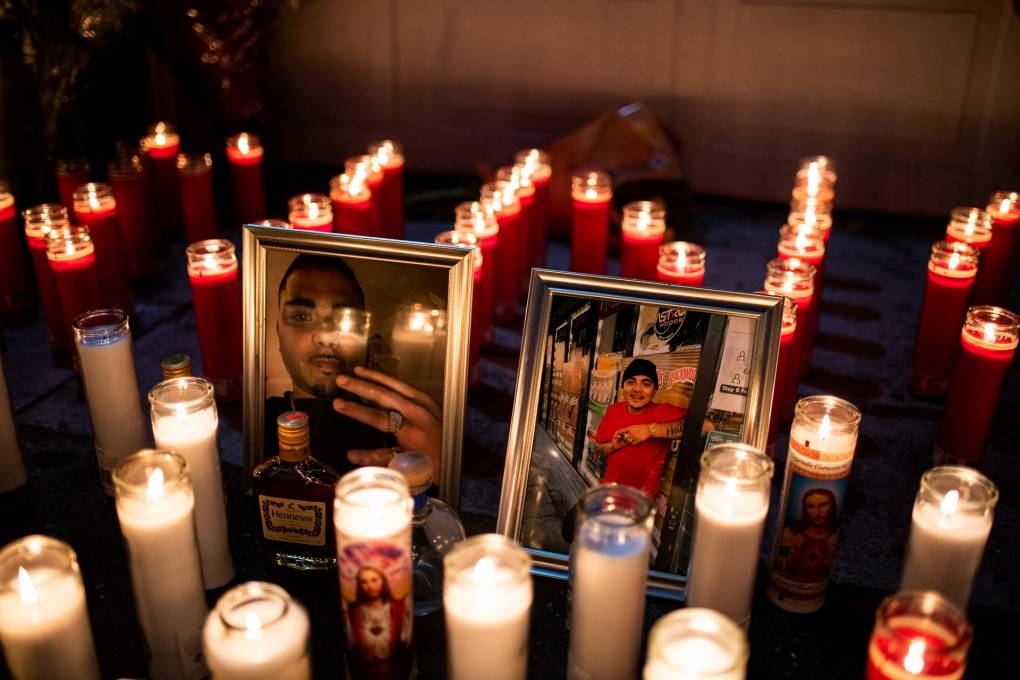
"caption": "Photos of Michael Jonathan Cortez were placed among candles at a vigil Wednesday in Oakland's Fruitvale neighborhood. Family members identified Cortez, 31, as the man shot and killed by an FBI agent Monday.",
"description": "Oakland's Fruitvale neighborhood. Family members identified Cortez, 31, as the man shot and killed by an FBI agent Monday.",
"title": "011_Fruitvale_MichaelCortezVigil_09152021",
"credit": "Beth LaBerge/KQED",
"status": "inherit",
"altTag": "Lit candles surround two photographs.",
"isLoading": false,
"fetchFailed": false
},
"news_11881826": {
"type": "attachments",
"id": "news_11881826",
"meta": {
"index": "attachments_1716263798",
"site": "news",
"id": "11881826",
"found": true
},
"parent": 11881816,
"imgSizes": {
"twentyfourteen-full-width": {
"file": "https://ww2.kqed.org/app/uploads/sites/10/2021/07/OaklandPark-1038x576.jpeg",
"width": 1038,
"mimeType": "image/jpeg",
"height": 576
},
"thumbnail": {
"file": "https://ww2.kqed.org/app/uploads/sites/10/2021/07/OaklandPark-160x90.jpeg",
"width": 160,
"mimeType": "image/jpeg",
"height": 90
},
"post-thumbnail": {
"file": "https://ww2.kqed.org/app/uploads/sites/10/2021/07/OaklandPark-672x372.jpeg",
"width": 672,
"mimeType": "image/jpeg",
"height": 372
},
"kqedFullSize": {
"file": "https://ww2.kqed.org/app/uploads/sites/10/2021/07/OaklandPark.jpeg",
"width": 2400,
"height": 1350
},
"2048x2048": {
"file": "https://ww2.kqed.org/app/uploads/sites/10/2021/07/OaklandPark-2048x1152.jpeg",
"width": 2048,
"mimeType": "image/jpeg",
"height": 1152
},
"large": {
"file": "https://ww2.kqed.org/app/uploads/sites/10/2021/07/OaklandPark-1020x574.jpeg",
"width": 1020,
"mimeType": "image/jpeg",
"height": 574
},
"1536x1536": {
"file": "https://ww2.kqed.org/app/uploads/sites/10/2021/07/OaklandPark-1536x864.jpeg",
"width": 1536,
"mimeType": "image/jpeg",
"height": 864
},
"full-width": {
"file": "https://ww2.kqed.org/app/uploads/sites/10/2021/07/OaklandPark-1920x1080.jpeg",
"width": 1920,
"mimeType": "image/jpeg",
"height": 1080
},
"medium": {
"file": "https://ww2.kqed.org/app/uploads/sites/10/2021/07/OaklandPark-800x450.jpeg",
"width": 800,
"mimeType": "image/jpeg",
"height": 450
}
},
"publishDate": 1626820621,
"modified": 1626822093,
"caption": "The most recent rendering of the Oakland A's proposed Howard Terminal stadium.",
"description": null,
"title": "OaklandPark",
"credit": "Courtesy of the Oakland A's",
"status": "inherit",
"altTag": null,
"isLoading": false,
"fetchFailed": false
},
"news_11876101": {
"type": "attachments",
"id": "news_11876101",
"meta": {
"index": "attachments_1716263798",
"site": "news",
"id": "11876101",
"found": true
},
"parent": 11876100,
"imgSizes": {
"twentyfourteen-full-width": {
"file": "https://ww2.kqed.org/app/uploads/sites/10/2021/05/IMG_4679-1038x576.jpg",
"width": 1038,
"mimeType": "image/jpeg",
"height": 576
},
"thumbnail": {
"file": "https://ww2.kqed.org/app/uploads/sites/10/2021/05/IMG_4679-160x120.jpg",
"width": 160,
"mimeType": "image/jpeg",
"height": 120
},
"post-thumbnail": {
"file": "https://ww2.kqed.org/app/uploads/sites/10/2021/05/IMG_4679-672x372.jpg",
"width": 672,
"mimeType": "image/jpeg",
"height": 372
},
"kqedFullSize": {
"file": "https://ww2.kqed.org/app/uploads/sites/10/2021/05/IMG_4679-scaled.jpg",
"width": 2560,
"height": 1920
},
"2048x2048": {
"file": "https://ww2.kqed.org/app/uploads/sites/10/2021/05/IMG_4679-2048x1536.jpg",
"width": 2048,
"mimeType": "image/jpeg",
"height": 1536
},
"large": {
"file": "https://ww2.kqed.org/app/uploads/sites/10/2021/05/IMG_4679-1020x765.jpg",
"width": 1020,
"mimeType": "image/jpeg",
"height": 765
},
"1536x1536": {
"file": "https://ww2.kqed.org/app/uploads/sites/10/2021/05/IMG_4679-1536x1152.jpg",
"width": 1536,
"mimeType": "image/jpeg",
"height": 1152
},
"full-width": {
"file": "https://ww2.kqed.org/app/uploads/sites/10/2021/05/IMG_4679-1920x1440.jpg",
"width": 1920,
"mimeType": "image/jpeg",
"height": 1440
},
"medium": {
"file": "https://ww2.kqed.org/app/uploads/sites/10/2021/05/IMG_4679-800x600.jpg",
"width": 800,
"mimeType": "image/jpeg",
"height": 600
}
},
"publishDate": 1622495336,
"modified": 1622495394,
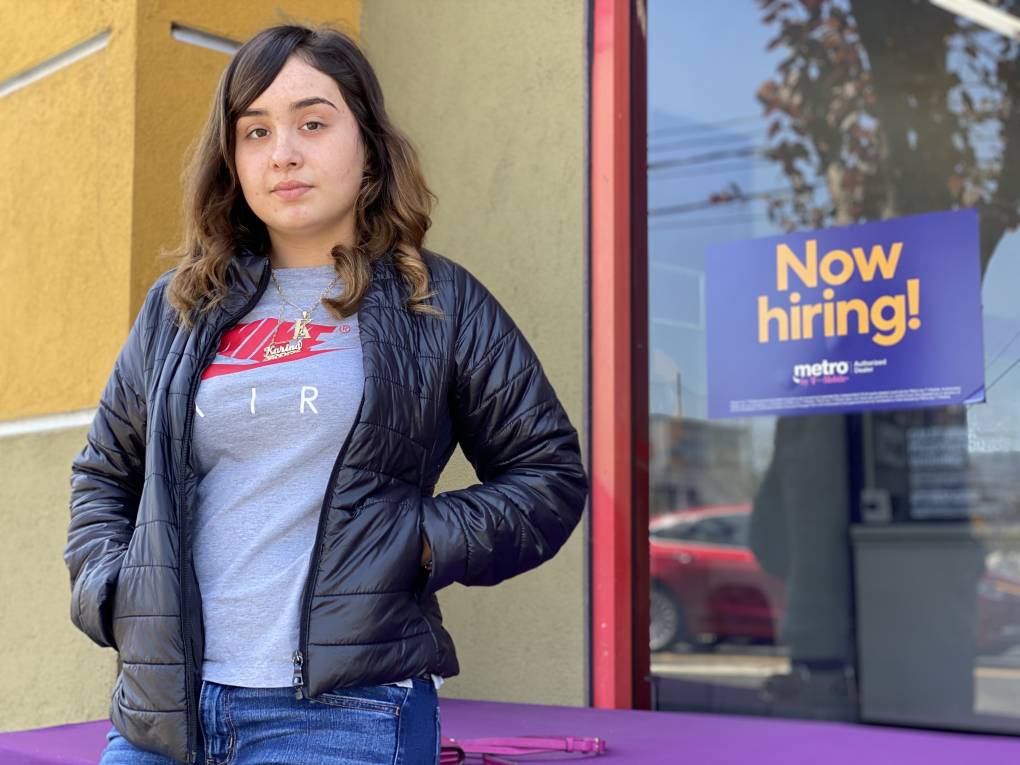
"caption": "Work is top priority for Fremont graduate, Karina Dealba Perez.",
"description": null,
"title": "IMG_4679",
"credit": "Julia McEvoy/KQED",
"status": "inherit",
"altTag": null,
"isLoading": false,
"fetchFailed": false
},
"news_11874869": {
"type": "attachments",
"id": "news_11874869",
"meta": {
"index": "attachments_1716263798",
"site": "news",
"id": "11874869",
"found": true
},
"parent": 11874704,
"imgSizes": {
"twentyfourteen-full-width": {
"file": "https://ww2.kqed.org/app/uploads/sites/10/2021/05/Juanita-Portrait-1038x576.jpg",
"width": 1038,
"mimeType": "image/jpeg",
"height": 576
},
"thumbnail": {
"file": "https://ww2.kqed.org/app/uploads/sites/10/2021/05/Juanita-Portrait-160x189.jpg",
"width": 160,
"mimeType": "image/jpeg",
"height": 189
},
"post-thumbnail": {
"file": "https://ww2.kqed.org/app/uploads/sites/10/2021/05/Juanita-Portrait-672x372.jpg",
"width": 672,
"mimeType": "image/jpeg",
"height": 372
},
"kqedFullSize": {
"file": "https://ww2.kqed.org/app/uploads/sites/10/2021/05/Juanita-Portrait.jpg",
"width": 1920,
"height": 2272
},
"2048x2048": {
"file": "https://ww2.kqed.org/app/uploads/sites/10/2021/05/Juanita-Portrait-1731x2048.jpg",
"width": 1731,
"mimeType": "image/jpeg",
"height": 2048
},
"large": {
"file": "https://ww2.kqed.org/app/uploads/sites/10/2021/05/Juanita-Portrait-1020x1207.jpg",
"width": 1020,
"mimeType": "image/jpeg",
"height": 1207
},
"1536x1536": {
"file": "https://ww2.kqed.org/app/uploads/sites/10/2021/05/Juanita-Portrait-1298x1536.jpg",
"width": 1298,
"mimeType": "image/jpeg",
"height": 1536
},
"medium": {
"file": "https://ww2.kqed.org/app/uploads/sites/10/2021/05/Juanita-Portrait-800x947.jpg",
"width": 800,
"mimeType": "image/jpeg",
"height": 947
}
},
"publishDate": 1621642014,
"modified": 1621642044,
"caption": "Portrait of Juanita Moore",
"description": null,
"title": "Juanita Portrait",
"credit": "Courtesy of Arnett Moore",
"status": "inherit",
"altTag": null,
"isLoading": false,
"fetchFailed": false
},
"news_11823006": {
"type": "attachments",
"id": "news_11823006",
"meta": {
"index": "attachments_1716263798",
"site": "news",
"id": "11823006",
"found": true
},
"parent": 11822817,
"imgSizes": {
"apple_news_ca_landscape_5_5": {
"file": "https://ww2.kqed.org/app/uploads/sites/10/2020/06/RS43444_043_KQED_Oakland_GeorgeFloydProtest_05292020-qut-1044x783.jpg",
"width": 1044,
"mimeType": "image/jpeg",
"height": 783
},
"apple_news_ca_square_4_0": {
"file": "https://ww2.kqed.org/app/uploads/sites/10/2020/06/RS43444_043_KQED_Oakland_GeorgeFloydProtest_05292020-qut-470x470.jpg",
"width": 470,
"mimeType": "image/jpeg",
"height": 470
},
"twentyfourteen-full-width": {
"file": "https://ww2.kqed.org/app/uploads/sites/10/2020/06/RS43444_043_KQED_Oakland_GeorgeFloydProtest_05292020-qut-1038x576.jpg",
"width": 1038,
"mimeType": "image/jpeg",
"height": 576
},
"thumbnail": {
"file": "https://ww2.kqed.org/app/uploads/sites/10/2020/06/RS43444_043_KQED_Oakland_GeorgeFloydProtest_05292020-qut-160x107.jpg",
"width": 160,
"mimeType": "image/jpeg",
"height": 107
},
"post-thumbnail": {
"file": "https://ww2.kqed.org/app/uploads/sites/10/2020/06/RS43444_043_KQED_Oakland_GeorgeFloydProtest_05292020-qut-672x372.jpg",
"width": 672,
"mimeType": "image/jpeg",
"height": 372
},
"kqedFullSize": {
"file": "https://ww2.kqed.org/app/uploads/sites/10/2020/06/RS43444_043_KQED_Oakland_GeorgeFloydProtest_05292020-qut.jpg",
"width": 1920,
"height": 1280
},
"apple_news_ca_landscape_4_7": {
"file": "https://ww2.kqed.org/app/uploads/sites/10/2020/06/RS43444_043_KQED_Oakland_GeorgeFloydProtest_05292020-qut-632x474.jpg",
"width": 632,
"mimeType": "image/jpeg",
"height": 474
},
"large": {
"file": "https://ww2.kqed.org/app/uploads/sites/10/2020/06/RS43444_043_KQED_Oakland_GeorgeFloydProtest_05292020-qut-1020x680.jpg",
"width": 1020,
"mimeType": "image/jpeg",
"height": 680
},
"apple_news_ca_landscape_4_0": {
"file": "https://ww2.kqed.org/app/uploads/sites/10/2020/06/RS43444_043_KQED_Oakland_GeorgeFloydProtest_05292020-qut-536x402.jpg",
"width": 536,
"mimeType": "image/jpeg",
"height": 402
},
"apple_news_ca_portrait_12_9": {
"file": "https://ww2.kqed.org/app/uploads/sites/10/2020/06/RS43444_043_KQED_Oakland_GeorgeFloydProtest_05292020-qut-1122x1280.jpg",
"width": 1122,
"mimeType": "image/jpeg",
"height": 1280
},
"medium": {
"file": "https://ww2.kqed.org/app/uploads/sites/10/2020/06/RS43444_043_KQED_Oakland_GeorgeFloydProtest_05292020-qut-800x533.jpg",
"width": 800,
"mimeType": "image/jpeg",
"height": 533
},
"apple_news_ca_portrait_4_0": {
"file": "https://ww2.kqed.org/app/uploads/sites/10/2020/06/RS43444_043_KQED_Oakland_GeorgeFloydProtest_05292020-qut-354x472.jpg",
"width": 354,
"mimeType": "image/jpeg",
"height": 472
},
"apple_news_ca_portrait_9_7": {
"file": "https://ww2.kqed.org/app/uploads/sites/10/2020/06/RS43444_043_KQED_Oakland_GeorgeFloydProtest_05292020-qut-840x1120.jpg",
"width": 840,
"mimeType": "image/jpeg",
"height": 1120
},
"apple_news_ca_landscape_12_9": {
"file": "https://ww2.kqed.org/app/uploads/sites/10/2020/06/RS43444_043_KQED_Oakland_GeorgeFloydProtest_05292020-qut-1832x1280.jpg",
"width": 1832,
"mimeType": "image/jpeg",
"height": 1280
},
"apple_news_ca_square_9_7": {
"file": "https://ww2.kqed.org/app/uploads/sites/10/2020/06/RS43444_043_KQED_Oakland_GeorgeFloydProtest_05292020-qut-1104x1104.jpg",
"width": 1104,
"mimeType": "image/jpeg",
"height": 1104
},
"apple_news_ca_portrait_4_7": {
"file": "https://ww2.kqed.org/app/uploads/sites/10/2020/06/RS43444_043_KQED_Oakland_GeorgeFloydProtest_05292020-qut-414x552.jpg",
"width": 414,
"mimeType": "image/jpeg",
"height": 552
},
"apple_news_ca_square_12_9": {
"file": "https://ww2.kqed.org/app/uploads/sites/10/2020/06/RS43444_043_KQED_Oakland_GeorgeFloydProtest_05292020-qut-1472x1280.jpg",
"width": 1472,
"mimeType": "image/jpeg",
"height": 1280
},
"apple_news_ca_portrait_5_5": {
"file": "https://ww2.kqed.org/app/uploads/sites/10/2020/06/RS43444_043_KQED_Oakland_GeorgeFloydProtest_05292020-qut-687x916.jpg",
"width": 687,
"mimeType": "image/jpeg",
"height": 916
},
"full-width": {
"file": "https://ww2.kqed.org/app/uploads/sites/10/2020/06/RS43444_043_KQED_Oakland_GeorgeFloydProtest_05292020-qut-1920x1280.jpg",
"width": 1920,
"mimeType": "image/jpeg",
"height": 1280
},
"apple_news_ca_square_4_7": {
"file": "https://ww2.kqed.org/app/uploads/sites/10/2020/06/RS43444_043_KQED_Oakland_GeorgeFloydProtest_05292020-qut-550x550.jpg",
"width": 550,
"mimeType": "image/jpeg",
"height": 550
},
"apple_news_ca_landscape_9_7": {
"file": "https://ww2.kqed.org/app/uploads/sites/10/2020/06/RS43444_043_KQED_Oakland_GeorgeFloydProtest_05292020-qut-1376x1032.jpg",
"width": 1376,
"mimeType": "image/jpeg",
"height": 1032
},
"apple_news_ca_square_5_5": {
"file": "https://ww2.kqed.org/app/uploads/sites/10/2020/06/RS43444_043_KQED_Oakland_GeorgeFloydProtest_05292020-qut-912x912.jpg",
"width": 912,
"mimeType": "image/jpeg",
"height": 912
}
},
"publishDate": 1591318054,
"modified": 1591318710,
"caption": "Demonstrators fill Broadway near Oakland Police Department headquarters on May 29, 2020 during a protest over the Minneapolis police killing of George Floyd.",
"description": null,
"title": "RS43444_043_KQED_Oakland_GeorgeFloydProtest_05292020-qut",
"credit": "Beth LaBerge/KQED",
"status": "inherit",
"isLoading": false,
"fetchFailed": false
},
"news_11869966": {
"type": "attachments",
"id": "news_11869966",
"meta": {
"index": "attachments_1716263798",
"site": "news",
"id": "11869966",
"found": true
},
"parent": 11869776,
"imgSizes": {
"twentyfourteen-full-width": {
"file": "https://ww2.kqed.org/app/uploads/sites/10/2021/04/RS48642_032_Oakland_AustinFamily_04142021-qut-1038x576.jpg",
"width": 1038,
"mimeType": "image/jpeg",
"height": 576
},
"thumbnail": {
"file": "https://ww2.kqed.org/app/uploads/sites/10/2021/04/RS48642_032_Oakland_AustinFamily_04142021-qut-160x107.jpg",
"width": 160,
"mimeType": "image/jpeg",
"height": 107
},
"post-thumbnail": {
"file": "https://ww2.kqed.org/app/uploads/sites/10/2021/04/RS48642_032_Oakland_AustinFamily_04142021-qut-672x372.jpg",
"width": 672,
"mimeType": "image/jpeg",
"height": 372
},
"kqedFullSize": {
"file": "https://ww2.kqed.org/app/uploads/sites/10/2021/04/RS48642_032_Oakland_AustinFamily_04142021-qut.jpg",
"width": 1920,
"height": 1280
},
"large": {
"file": "https://ww2.kqed.org/app/uploads/sites/10/2021/04/RS48642_032_Oakland_AustinFamily_04142021-qut-1020x680.jpg",
"width": 1020,
"mimeType": "image/jpeg",
"height": 680
},
"1536x1536": {
"file": "https://ww2.kqed.org/app/uploads/sites/10/2021/04/RS48642_032_Oakland_AustinFamily_04142021-qut-1536x1024.jpg",
"width": 1536,
"mimeType": "image/jpeg",
"height": 1024
},
"medium": {
"file": "https://ww2.kqed.org/app/uploads/sites/10/2021/04/RS48642_032_Oakland_AustinFamily_04142021-qut-800x533.jpg",
"width": 800,
"mimeType": "image/jpeg",
"height": 533
}
},
"publishDate": 1618618571,
"modified": 1618722231,
"caption": "Ryan Austin, artist educator, helps her son Onyx with school through Zoom at their home in Oakland on April 14, 2021. According to Austin, Onyx has thrived during distance learning because the family can actively engage in his learning. However, Austin is quick to point out that this is only possible due to the fact that both her and her husband, Michael, work from home.",
"description": "Ryan Austin, artist educator, helps her son Onyx with school through Zoom at their home in Oakland on April 14, 2021.",
"title": "RS48642_032_Oakland_AustinFamily_04142021-qut",
"credit": "Beth LaBerge/KQED",
"status": "inherit",
"altTag": "Ryan Austin, artist educator, helps her son Onyx with school through Zoom at their home in Oakland on April 14, 2021.",
"isLoading": false,
"fetchFailed": false
},
"news_11867959": {
"type": "attachments",
"id": "news_11867959",
"meta": {
"index": "attachments_1716263798",
"site": "news",
"id": "11867959",
"found": true
},
"parent": 11867881,
"imgSizes": {
"twentyfourteen-full-width": {
"file": "https://ww2.kqed.org/app/uploads/sites/10/2021/04/RS47864_018_Oakland_03112021-qut-1038x576.jpg",
"width": 1038,
"mimeType": "image/jpeg",
"height": 576
},
"thumbnail": {
"file": "https://ww2.kqed.org/app/uploads/sites/10/2021/04/RS47864_018_Oakland_03112021-qut-160x107.jpg",
"width": 160,
"mimeType": "image/jpeg",
"height": 107
},
"post-thumbnail": {
"file": "https://ww2.kqed.org/app/uploads/sites/10/2021/04/RS47864_018_Oakland_03112021-qut-672x372.jpg",
"width": 672,
"mimeType": "image/jpeg",
"height": 372
},
"kqedFullSize": {
"file": "https://ww2.kqed.org/app/uploads/sites/10/2021/04/RS47864_018_Oakland_03112021-qut.jpg",
"width": 1920,
"height": 1280
},
"large": {
"file": "https://ww2.kqed.org/app/uploads/sites/10/2021/04/RS47864_018_Oakland_03112021-qut-1020x680.jpg",
"width": 1020,
"mimeType": "image/jpeg",
"height": 680
},
"1536x1536": {
"file": "https://ww2.kqed.org/app/uploads/sites/10/2021/04/RS47864_018_Oakland_03112021-qut-1536x1024.jpg",
"width": 1536,
"mimeType": "image/jpeg",
"height": 1024
},
"medium": {
"file": "https://ww2.kqed.org/app/uploads/sites/10/2021/04/RS47864_018_Oakland_03112021-qut-800x533.jpg",
"width": 800,
"mimeType": "image/jpeg",
"height": 533
}
},
"publishDate": 1617419116,
"modified": 1617419217,
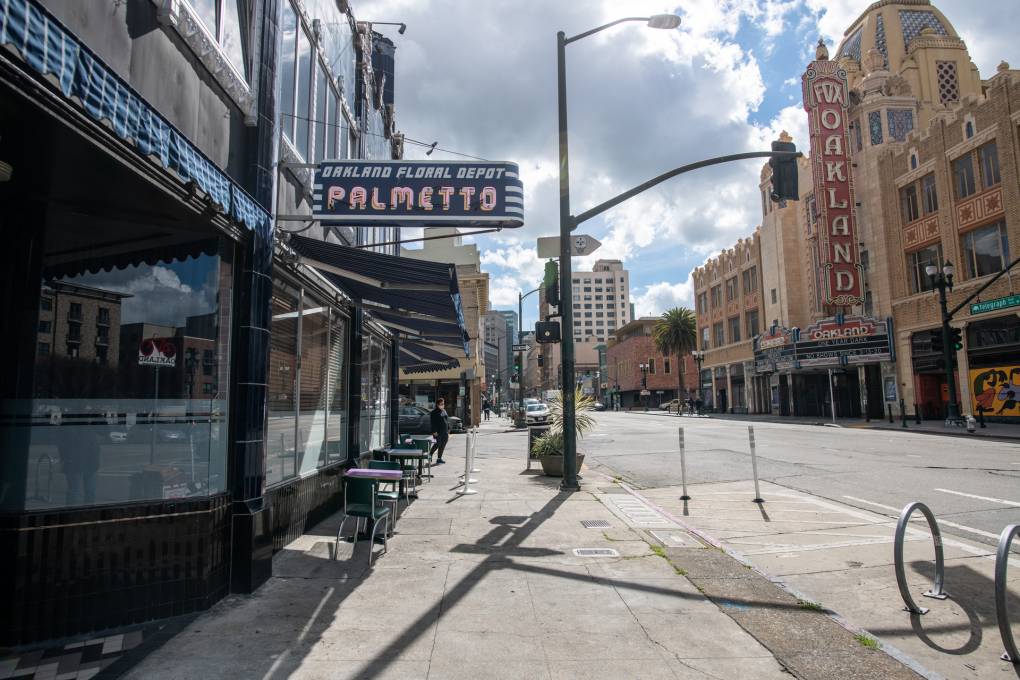
"caption": "The Fox Theater in Oakland on March 11, 2021. The city is the latest to host a guaranteed income pilot program. ",
"description": null,
"title": "RS47864_018_Oakland_03112021-qut",
"credit": "Beth LaBerge/KQED",
"status": "inherit",
"altTag": null,
"isLoading": false,
"fetchFailed": false
},
"news_11852956": {
"type": "attachments",
"id": "news_11852956",
"meta": {
"index": "attachments_1716263798",
"site": "news",
"id": "11852956",
"found": true
},
"parent": 11852506,
"imgSizes": {
"apple_news_ca_landscape_5_5": {
"file": "https://ww2.kqed.org/app/uploads/sites/10/2021/01/pjimage9-1044x720.jpg",
"width": 1044,
"mimeType": "image/jpeg",
"height": 720
},
"apple_news_ca_square_4_0": {
"file": "https://ww2.kqed.org/app/uploads/sites/10/2021/01/pjimage9-470x470.jpg",
"width": 470,
"mimeType": "image/jpeg",
"height": 470
},
"twentyfourteen-full-width": {
"file": "https://ww2.kqed.org/app/uploads/sites/10/2021/01/pjimage9-1038x576.jpg",
"width": 1038,
"mimeType": "image/jpeg",
"height": 576
},
"thumbnail": {
"file": "https://ww2.kqed.org/app/uploads/sites/10/2021/01/pjimage9-160x90.jpg",
"width": 160,
"mimeType": "image/jpeg",
"height": 90
},
"post-thumbnail": {
"file": "https://ww2.kqed.org/app/uploads/sites/10/2021/01/pjimage9-672x372.jpg",
"width": 672,
"mimeType": "image/jpeg",
"height": 372
},
"kqedFullSize": {
"file": "https://ww2.kqed.org/app/uploads/sites/10/2021/01/pjimage9.jpg",
"width": 1280,
"height": 720
},
"apple_news_ca_landscape_4_7": {
"file": "https://ww2.kqed.org/app/uploads/sites/10/2021/01/pjimage9-632x474.jpg",
"width": 632,
"mimeType": "image/jpeg",
"height": 474
},
"large": {
"file": "https://ww2.kqed.org/app/uploads/sites/10/2021/01/pjimage9-1020x574.jpg",
"width": 1020,
"mimeType": "image/jpeg",
"height": 574
},
"apple_news_ca_landscape_4_0": {
"file": "https://ww2.kqed.org/app/uploads/sites/10/2021/01/pjimage9-536x402.jpg",
"width": 536,
"mimeType": "image/jpeg",
"height": 402
},
"apple_news_ca_portrait_12_9": {
"file": "https://ww2.kqed.org/app/uploads/sites/10/2021/01/pjimage9-1122x720.jpg",
"width": 1122,
"mimeType": "image/jpeg",
"height": 720
},
"medium": {
"file": "https://ww2.kqed.org/app/uploads/sites/10/2021/01/pjimage9-800x450.jpg",
"width": 800,
"mimeType": "image/jpeg",
"height": 450
},
"apple_news_ca_portrait_4_0": {
"file": "https://ww2.kqed.org/app/uploads/sites/10/2021/01/pjimage9-354x472.jpg",
"width": 354,
"mimeType": "image/jpeg",
"height": 472
},
"apple_news_ca_portrait_9_7": {
"file": "https://ww2.kqed.org/app/uploads/sites/10/2021/01/pjimage9-840x720.jpg",
"width": 840,
"mimeType": "image/jpeg",
"height": 720
},
"apple_news_ca_square_9_7": {
"file": "https://ww2.kqed.org/app/uploads/sites/10/2021/01/pjimage9-1104x720.jpg",
"width": 1104,
"mimeType": "image/jpeg",
"height": 720
},
"apple_news_ca_portrait_4_7": {
"file": "https://ww2.kqed.org/app/uploads/sites/10/2021/01/pjimage9-414x552.jpg",
"width": 414,
"mimeType": "image/jpeg",
"height": 552
},
"apple_news_ca_portrait_5_5": {
"file": "https://ww2.kqed.org/app/uploads/sites/10/2021/01/pjimage9-687x720.jpg",
"width": 687,
"mimeType": "image/jpeg",
"height": 720
},
"apple_news_ca_square_4_7": {
"file": "https://ww2.kqed.org/app/uploads/sites/10/2021/01/pjimage9-550x550.jpg",
"width": 550,
"mimeType": "image/jpeg",
"height": 550
},
"apple_news_ca_square_5_5": {
"file": "https://ww2.kqed.org/app/uploads/sites/10/2021/01/pjimage9-912x720.jpg",
"width": 912,
"mimeType": "image/jpeg",
"height": 720
}
},
"publishDate": 1609189010,
"modified": 1609189050,
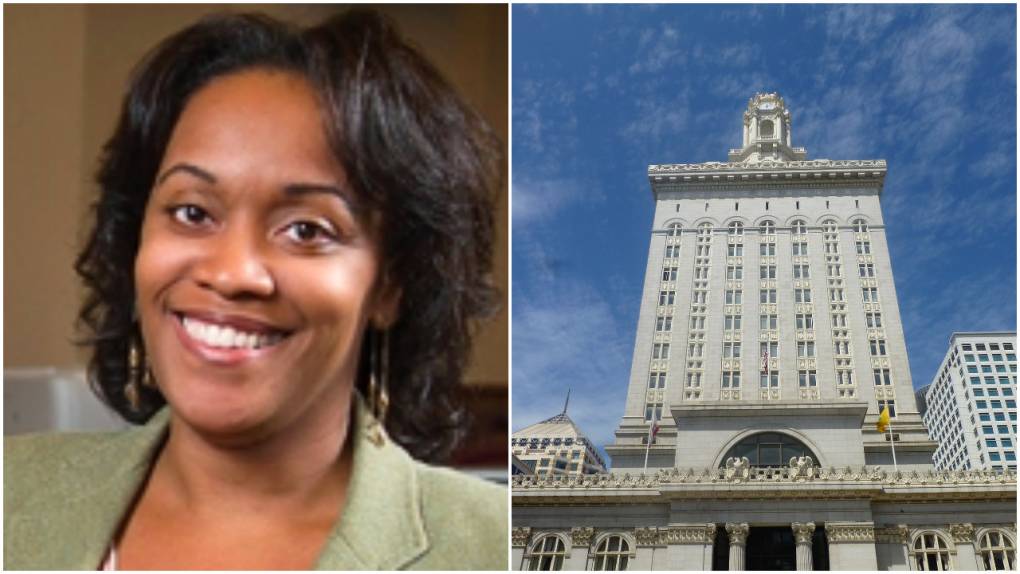
"caption": "LaTonda Simmons is assistant city administrator for the City of Oakland. Before that, she was City Clerk from 2004-2020.",
"description": null,
"title": "pjimage(9)",
"credit": "City of Oakland",
"status": "inherit",
"altTag": null,
"isLoading": false,
"fetchFailed": false
},
"news_11852867": {
"type": "attachments",
"id": "news_11852867",
"meta": {
"index": "attachments_1716263798",
"site": "news",
"id": "11852867",
"found": true
},
"parent": 11852863,
"imgSizes": {
"apple_news_ca_landscape_5_5": {
"file": "https://ww2.kqed.org/app/uploads/sites/10/2020/12/IMG_5152-1-1044x783.jpg",
"width": 1044,
"mimeType": "image/jpeg",
"height": 783
},
"apple_news_ca_square_4_0": {
"file": "https://ww2.kqed.org/app/uploads/sites/10/2020/12/IMG_5152-1-470x470.jpg",
"width": 470,
"mimeType": "image/jpeg",
"height": 470
},
"twentyfourteen-full-width": {
"file": "https://ww2.kqed.org/app/uploads/sites/10/2020/12/IMG_5152-1-1038x576.jpg",
"width": 1038,
"mimeType": "image/jpeg",
"height": 576
},
"thumbnail": {
"file": "https://ww2.kqed.org/app/uploads/sites/10/2020/12/IMG_5152-1-160x120.jpg",
"width": 160,
"mimeType": "image/jpeg",
"height": 120
},
"post-thumbnail": {
"file": "https://ww2.kqed.org/app/uploads/sites/10/2020/12/IMG_5152-1-672x372.jpg",
"width": 672,
"mimeType": "image/jpeg",
"height": 372
},
"kqedFullSize": {
"file": "https://ww2.kqed.org/app/uploads/sites/10/2020/12/IMG_5152-1.jpg",
"width": 1900,
"height": 1425
},
"apple_news_ca_landscape_4_7": {
"file": "https://ww2.kqed.org/app/uploads/sites/10/2020/12/IMG_5152-1-632x474.jpg",
"width": 632,
"mimeType": "image/jpeg",
"height": 474
},
"large": {
"file": "https://ww2.kqed.org/app/uploads/sites/10/2020/12/IMG_5152-1-1020x765.jpg",
"width": 1020,
"mimeType": "image/jpeg",
"height": 765
},
"apple_news_ca_landscape_4_0": {
"file": "https://ww2.kqed.org/app/uploads/sites/10/2020/12/IMG_5152-1-536x402.jpg",
"width": 536,
"mimeType": "image/jpeg",
"height": 402
},
"apple_news_ca_portrait_12_9": {
"file": "https://ww2.kqed.org/app/uploads/sites/10/2020/12/IMG_5152-1-1122x1425.jpg",
"width": 1122,
"mimeType": "image/jpeg",
"height": 1425
},
"medium": {
"file": "https://ww2.kqed.org/app/uploads/sites/10/2020/12/IMG_5152-1-800x600.jpg",
"width": 800,
"mimeType": "image/jpeg",
"height": 600
},
"apple_news_ca_portrait_4_0": {
"file": "https://ww2.kqed.org/app/uploads/sites/10/2020/12/IMG_5152-1-354x472.jpg",
"width": 354,
"mimeType": "image/jpeg",
"height": 472
},
"apple_news_ca_portrait_9_7": {
"file": "https://ww2.kqed.org/app/uploads/sites/10/2020/12/IMG_5152-1-840x1120.jpg",
"width": 840,
"mimeType": "image/jpeg",
"height": 1120
},
"apple_news_ca_landscape_12_9": {
"file": "https://ww2.kqed.org/app/uploads/sites/10/2020/12/IMG_5152-1-1832x1374.jpg",
"width": 1832,
"mimeType": "image/jpeg",
"height": 1374
},
"apple_news_ca_square_9_7": {
"file": "https://ww2.kqed.org/app/uploads/sites/10/2020/12/IMG_5152-1-1104x1104.jpg",
"width": 1104,
"mimeType": "image/jpeg",
"height": 1104
},
"1536x1536": {
"file": "https://ww2.kqed.org/app/uploads/sites/10/2020/12/IMG_5152-1-1536x1152.jpg",
"width": 1536,
"mimeType": "image/jpeg",
"height": 1152
},
"apple_news_ca_portrait_4_7": {
"file": "https://ww2.kqed.org/app/uploads/sites/10/2020/12/IMG_5152-1-414x552.jpg",
"width": 414,
"mimeType": "image/jpeg",
"height": 552
},
"apple_news_ca_square_12_9": {
"file": "https://ww2.kqed.org/app/uploads/sites/10/2020/12/IMG_5152-1-1472x1425.jpg",
"width": 1472,
"mimeType": "image/jpeg",
"height": 1425
},
"apple_news_ca_portrait_5_5": {
"file": "https://ww2.kqed.org/app/uploads/sites/10/2020/12/IMG_5152-1-687x916.jpg",
"width": 687,
"mimeType": "image/jpeg",
"height": 916
},
"apple_news_ca_square_4_7": {
"file": "https://ww2.kqed.org/app/uploads/sites/10/2020/12/IMG_5152-1-550x550.jpg",
"width": 550,
"mimeType": "image/jpeg",
"height": 550
},
"apple_news_ca_landscape_9_7": {
"file": "https://ww2.kqed.org/app/uploads/sites/10/2020/12/IMG_5152-1-1376x1032.jpg",
"width": 1376,
"mimeType": "image/jpeg",
"height": 1032
},
"apple_news_ca_square_5_5": {
"file": "https://ww2.kqed.org/app/uploads/sites/10/2020/12/IMG_5152-1-912x912.jpg",
"width": 912,
"mimeType": "image/jpeg",
"height": 912
}
},
"publishDate": 1609032467,
"modified": 1609291552,
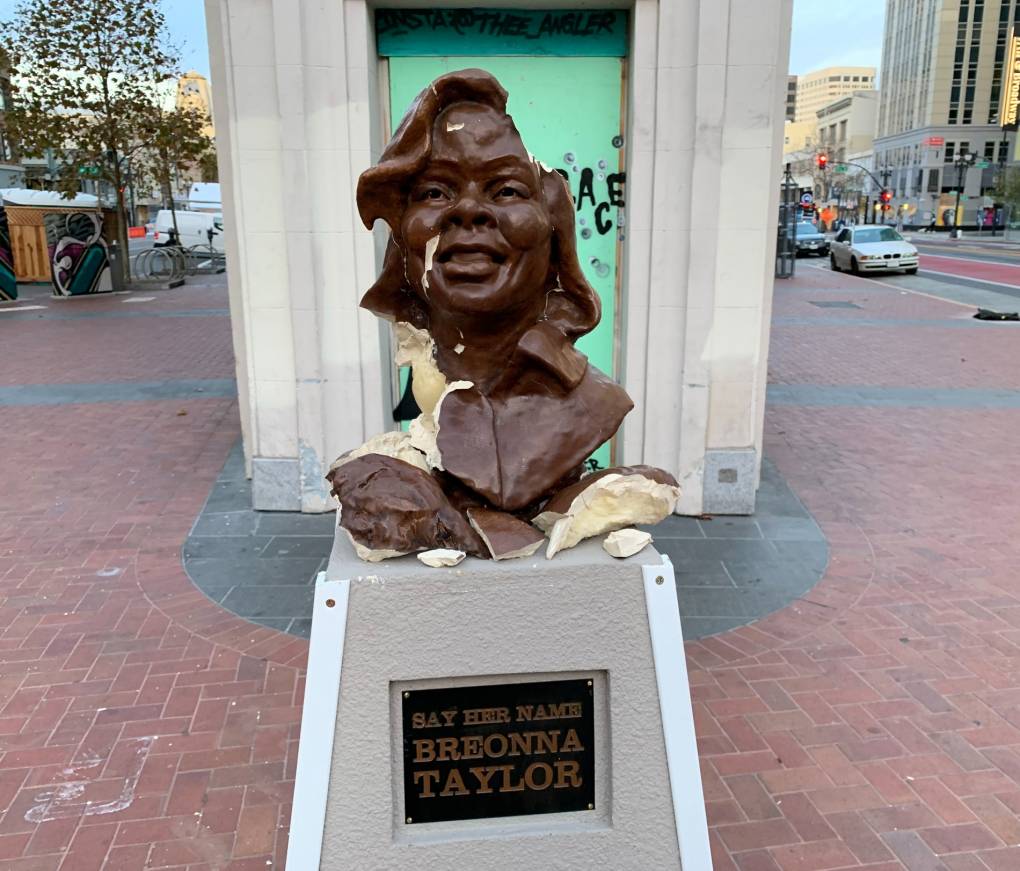
"caption": "What remained of the sculpted bust of Breonna Taylor was entirely destroyed Tuesday morning. ",
"description": null,
"title": "IMG_5152 (1)",
"credit": "Erin Baldassari/KQED",
"status": "inherit",
"altTag": "What remained of the sculpted bust of Breonna Taylor was entirely destroyed Tuesday morning.",
"isLoading": false,
"fetchFailed": false
},
"news_11852865": {
"type": "attachments",
"id": "news_11852865",
"meta": {
"index": "attachments_1716263798",
"site": "news",
"id": "11852865",
"found": true
},
"parent": 11852863,
"imgSizes": {
"apple_news_ca_landscape_5_5": {
"file": "https://ww2.kqed.org/app/uploads/sites/10/2020/12/IMG_5150-1-1044x783.jpg",
"width": 1044,
"mimeType": "image/jpeg",
"height": 783
},
"apple_news_ca_square_4_0": {
"file": "https://ww2.kqed.org/app/uploads/sites/10/2020/12/IMG_5150-1-470x470.jpg",
"width": 470,
"mimeType": "image/jpeg",
"height": 470
},
"twentyfourteen-full-width": {
"file": "https://ww2.kqed.org/app/uploads/sites/10/2020/12/IMG_5150-1-1038x576.jpg",
"width": 1038,
"mimeType": "image/jpeg",
"height": 576
},
"thumbnail": {
"file": "https://ww2.kqed.org/app/uploads/sites/10/2020/12/IMG_5150-1-160x137.jpg",
"width": 160,
"mimeType": "image/jpeg",
"height": 137
},
"post-thumbnail": {
"file": "https://ww2.kqed.org/app/uploads/sites/10/2020/12/IMG_5150-1-672x372.jpg",
"width": 672,
"mimeType": "image/jpeg",
"height": 372
},
"kqedFullSize": {
"file": "https://ww2.kqed.org/app/uploads/sites/10/2020/12/IMG_5150-1.jpg",
"width": 1900,
"height": 1623
},
"apple_news_ca_landscape_4_7": {
"file": "https://ww2.kqed.org/app/uploads/sites/10/2020/12/IMG_5150-1-632x474.jpg",
"width": 632,
"mimeType": "image/jpeg",
"height": 474
},
"large": {
"file": "https://ww2.kqed.org/app/uploads/sites/10/2020/12/IMG_5150-1-1020x871.jpg",
"width": 1020,
"mimeType": "image/jpeg",
"height": 871
},
"apple_news_ca_landscape_4_0": {
"file": "https://ww2.kqed.org/app/uploads/sites/10/2020/12/IMG_5150-1-536x402.jpg",
"width": 536,
"mimeType": "image/jpeg",
"height": 402
},
"apple_news_ca_portrait_12_9": {
"file": "https://ww2.kqed.org/app/uploads/sites/10/2020/12/IMG_5150-1-1122x1496.jpg",
"width": 1122,
"mimeType": "image/jpeg",
"height": 1496
},
"medium": {
"file": "https://ww2.kqed.org/app/uploads/sites/10/2020/12/IMG_5150-1-800x683.jpg",
"width": 800,
"mimeType": "image/jpeg",
"height": 683
},
"apple_news_ca_portrait_4_0": {
"file": "https://ww2.kqed.org/app/uploads/sites/10/2020/12/IMG_5150-1-354x472.jpg",
"width": 354,
"mimeType": "image/jpeg",
"height": 472
},
"apple_news_ca_portrait_9_7": {
"file": "https://ww2.kqed.org/app/uploads/sites/10/2020/12/IMG_5150-1-840x1120.jpg",
"width": 840,
"mimeType": "image/jpeg",
"height": 1120
},
"apple_news_ca_landscape_12_9": {
"file": "https://ww2.kqed.org/app/uploads/sites/10/2020/12/IMG_5150-1-1832x1374.jpg",
"width": 1832,
"mimeType": "image/jpeg",
"height": 1374
},
"apple_news_ca_square_9_7": {
"file": "https://ww2.kqed.org/app/uploads/sites/10/2020/12/IMG_5150-1-1104x1104.jpg",
"width": 1104,
"mimeType": "image/jpeg",
"height": 1104
},
"1536x1536": {
"file": "https://ww2.kqed.org/app/uploads/sites/10/2020/12/IMG_5150-1-1536x1312.jpg",
"width": 1536,
"mimeType": "image/jpeg",
"height": 1312
},
"apple_news_ca_portrait_4_7": {
"file": "https://ww2.kqed.org/app/uploads/sites/10/2020/12/IMG_5150-1-414x552.jpg",
"width": 414,
"mimeType": "image/jpeg",
"height": 552
},
"apple_news_ca_square_12_9": {
"file": "https://ww2.kqed.org/app/uploads/sites/10/2020/12/IMG_5150-1-1472x1472.jpg",
"width": 1472,
"mimeType": "image/jpeg",
"height": 1472
},
"apple_news_ca_portrait_5_5": {
"file": "https://ww2.kqed.org/app/uploads/sites/10/2020/12/IMG_5150-1-687x916.jpg",
"width": 687,
"mimeType": "image/jpeg",
"height": 916
},
"apple_news_ca_square_4_7": {
"file": "https://ww2.kqed.org/app/uploads/sites/10/2020/12/IMG_5150-1-550x550.jpg",
"width": 550,
"mimeType": "image/jpeg",
"height": 550
},
"apple_news_ca_landscape_9_7": {
"file": "https://ww2.kqed.org/app/uploads/sites/10/2020/12/IMG_5150-1-1376x1032.jpg",
"width": 1376,
"mimeType": "image/jpeg",
"height": 1032
},
"apple_news_ca_square_5_5": {
"file": "https://ww2.kqed.org/app/uploads/sites/10/2020/12/IMG_5150-1-912x912.jpg",
"width": 912,
"mimeType": "image/jpeg",
"height": 912
}
},
"publishDate": 1609031775,
"modified": 1609200157,
"caption": "A vandalized bust of Breonna Taylor in downtown Oakland.",
"description": null,
"title": "IMG_5150 (1)",
"credit": "Erin Baldassari/KQED",
"status": "inherit",
"altTag": "A vandalized bust of Breonna Taylor in downtown Oakland.",
"isLoading": false,
"fetchFailed": false
},
"news_11852252": {
"type": "attachments",
"id": "news_11852252",
"meta": {
"index": "attachments_1716263798",
"site": "news",
"id": "11852252",
"found": true
},
"parent": 11851735,
"imgSizes": {
"apple_news_ca_landscape_5_5": {
"file": "https://ww2.kqed.org/app/uploads/sites/10/2020/12/RS46439_001_KQED_Oakland_Chinatown_12182020-qut-1044x783.jpg",
"width": 1044,
"mimeType": "image/jpeg",
"height": 783
},
"apple_news_ca_square_4_0": {
"file": "https://ww2.kqed.org/app/uploads/sites/10/2020/12/RS46439_001_KQED_Oakland_Chinatown_12182020-qut-470x470.jpg",
"width": 470,
"mimeType": "image/jpeg",
"height": 470
},
"twentyfourteen-full-width": {
"file": "https://ww2.kqed.org/app/uploads/sites/10/2020/12/RS46439_001_KQED_Oakland_Chinatown_12182020-qut-1038x576.jpg",
"width": 1038,
"mimeType": "image/jpeg",
"height": 576
},
"thumbnail": {
"file": "https://ww2.kqed.org/app/uploads/sites/10/2020/12/RS46439_001_KQED_Oakland_Chinatown_12182020-qut-160x107.jpg",
"width": 160,
"mimeType": "image/jpeg",
"height": 107
},
"post-thumbnail": {
"file": "https://ww2.kqed.org/app/uploads/sites/10/2020/12/RS46439_001_KQED_Oakland_Chinatown_12182020-qut-672x372.jpg",
"width": 672,
"mimeType": "image/jpeg",
"height": 372
},
"kqedFullSize": {
"file": "https://ww2.kqed.org/app/uploads/sites/10/2020/12/RS46439_001_KQED_Oakland_Chinatown_12182020-qut.jpg",
"width": 1920,
"height": 1280
},
"apple_news_ca_landscape_4_7": {
"file": "https://ww2.kqed.org/app/uploads/sites/10/2020/12/RS46439_001_KQED_Oakland_Chinatown_12182020-qut-632x474.jpg",
"width": 632,
"mimeType": "image/jpeg",
"height": 474
},
"large": {
"file": "https://ww2.kqed.org/app/uploads/sites/10/2020/12/RS46439_001_KQED_Oakland_Chinatown_12182020-qut-1020x680.jpg",
"width": 1020,
"mimeType": "image/jpeg",
"height": 680
},
"apple_news_ca_landscape_4_0": {
"file": "https://ww2.kqed.org/app/uploads/sites/10/2020/12/RS46439_001_KQED_Oakland_Chinatown_12182020-qut-536x402.jpg",
"width": 536,
"mimeType": "image/jpeg",
"height": 402
},
"apple_news_ca_portrait_12_9": {
"file": "https://ww2.kqed.org/app/uploads/sites/10/2020/12/RS46439_001_KQED_Oakland_Chinatown_12182020-qut-1122x1280.jpg",
"width": 1122,
"mimeType": "image/jpeg",
"height": 1280
},
"medium": {
"file": "https://ww2.kqed.org/app/uploads/sites/10/2020/12/RS46439_001_KQED_Oakland_Chinatown_12182020-qut-800x533.jpg",
"width": 800,
"mimeType": "image/jpeg",
"height": 533
},
"apple_news_ca_portrait_4_0": {
"file": "https://ww2.kqed.org/app/uploads/sites/10/2020/12/RS46439_001_KQED_Oakland_Chinatown_12182020-qut-354x472.jpg",
"width": 354,
"mimeType": "image/jpeg",
"height": 472
},
"apple_news_ca_portrait_9_7": {
"file": "https://ww2.kqed.org/app/uploads/sites/10/2020/12/RS46439_001_KQED_Oakland_Chinatown_12182020-qut-840x1120.jpg",
"width": 840,
"mimeType": "image/jpeg",
"height": 1120
},
"apple_news_ca_landscape_12_9": {
"file": "https://ww2.kqed.org/app/uploads/sites/10/2020/12/RS46439_001_KQED_Oakland_Chinatown_12182020-qut-1832x1280.jpg",
"width": 1832,
"mimeType": "image/jpeg",
"height": 1280
},
"apple_news_ca_square_9_7": {
"file": "https://ww2.kqed.org/app/uploads/sites/10/2020/12/RS46439_001_KQED_Oakland_Chinatown_12182020-qut-1104x1104.jpg",
"width": 1104,
"mimeType": "image/jpeg",
"height": 1104
},
"1536x1536": {
"file": "https://ww2.kqed.org/app/uploads/sites/10/2020/12/RS46439_001_KQED_Oakland_Chinatown_12182020-qut-1536x1024.jpg",
"width": 1536,
"mimeType": "image/jpeg",
"height": 1024
},
"apple_news_ca_portrait_4_7": {
"file": "https://ww2.kqed.org/app/uploads/sites/10/2020/12/RS46439_001_KQED_Oakland_Chinatown_12182020-qut-414x552.jpg",
"width": 414,
"mimeType": "image/jpeg",
"height": 552
},
"apple_news_ca_square_12_9": {
"file": "https://ww2.kqed.org/app/uploads/sites/10/2020/12/RS46439_001_KQED_Oakland_Chinatown_12182020-qut-1472x1280.jpg",
"width": 1472,
"mimeType": "image/jpeg",
"height": 1280
},
"apple_news_ca_portrait_5_5": {
"file": "https://ww2.kqed.org/app/uploads/sites/10/2020/12/RS46439_001_KQED_Oakland_Chinatown_12182020-qut-687x916.jpg",
"width": 687,
"mimeType": "image/jpeg",
"height": 916
},
"apple_news_ca_square_4_7": {
"file": "https://ww2.kqed.org/app/uploads/sites/10/2020/12/RS46439_001_KQED_Oakland_Chinatown_12182020-qut-550x550.jpg",
"width": 550,
"mimeType": "image/jpeg",
"height": 550
},
"apple_news_ca_landscape_9_7": {
"file": "https://ww2.kqed.org/app/uploads/sites/10/2020/12/RS46439_001_KQED_Oakland_Chinatown_12182020-qut-1376x1032.jpg",
"width": 1376,
"mimeType": "image/jpeg",
"height": 1032
},
"apple_news_ca_square_5_5": {
"file": "https://ww2.kqed.org/app/uploads/sites/10/2020/12/RS46439_001_KQED_Oakland_Chinatown_12182020-qut-912x912.jpg",
"width": 912,
"mimeType": "image/jpeg",
"height": 912
}
},
"publishDate": 1608575861,
"modified": 1608576056,
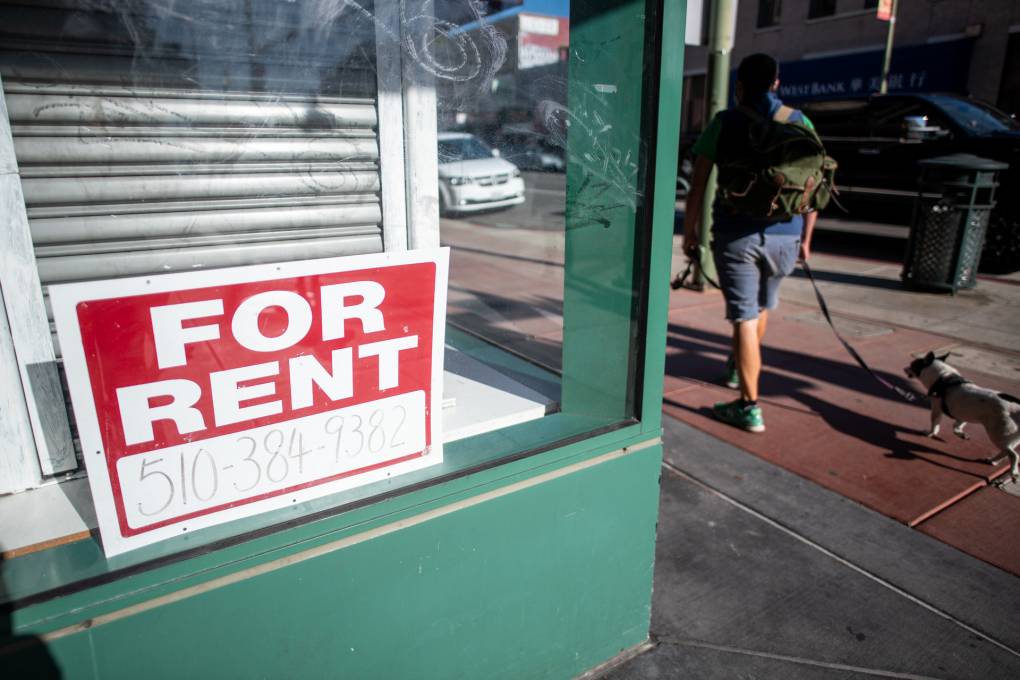
"caption": "A 'For Rent' sign on a shop in Oakland's Chinatown on Dec. 18, 2020.",
"description": "A 'For Rent' sign on a shop in Oakland's Chinatown on Dec. 18, 2020.",
"title": "A 'For Rent' sign on a shop in Oakland's Chinatown on Dec. 18, 2020.",
"credit": "Beth LaBerge/KQED",
"status": "inherit",
"altTag": "\"\"",
"isLoading": false,
"fetchFailed": false
},
"news_11849741": {
"type": "attachments",
"id": "news_11849741",
"meta": {
"index": "attachments_1716263798",
"site": "news",
"id": "11849741",
"found": true
},
"parent": 11849740,
"imgSizes": {
"apple_news_ca_square_4_0": {
"file": "https://ww2.kqed.org/app/uploads/sites/10/2020/12/oaklandvote1973-470x470.png",
"width": 470,
"mimeType": "image/png",
"height": 470
},
"twentyfourteen-full-width": {
"file": "https://ww2.kqed.org/app/uploads/sites/10/2020/12/oaklandvote1973-960x576.png",
"width": 960,
"mimeType": "image/png",
"height": 576
},
"thumbnail": {
"file": "https://ww2.kqed.org/app/uploads/sites/10/2020/12/oaklandvote1973-160x112.png",
"width": 160,
"mimeType": "image/png",
"height": 112
},
"post-thumbnail": {
"file": "https://ww2.kqed.org/app/uploads/sites/10/2020/12/oaklandvote1973-672x372.png",
"width": 672,
"mimeType": "image/png",
"height": 372
},
"kqedFullSize": {
"file": "https://ww2.kqed.org/app/uploads/sites/10/2020/12/oaklandvote1973.png",
"width": 960,
"height": 671
},
"apple_news_ca_landscape_4_7": {
"file": "https://ww2.kqed.org/app/uploads/sites/10/2020/12/oaklandvote1973-632x474.png",
"width": 632,
"mimeType": "image/png",
"height": 474
},
"apple_news_ca_landscape_4_0": {
"file": "https://ww2.kqed.org/app/uploads/sites/10/2020/12/oaklandvote1973-536x402.png",
"width": 536,
"mimeType": "image/png",
"height": 402
},
"medium": {
"file": "https://ww2.kqed.org/app/uploads/sites/10/2020/12/oaklandvote1973-800x559.png",
"width": 800,
"mimeType": "image/png",
"height": 559
},
"apple_news_ca_portrait_4_0": {
"file": "https://ww2.kqed.org/app/uploads/sites/10/2020/12/oaklandvote1973-354x472.png",
"width": 354,
"mimeType": "image/png",
"height": 472
},
"apple_news_ca_portrait_9_7": {
"file": "https://ww2.kqed.org/app/uploads/sites/10/2020/12/oaklandvote1973-840x671.png",
"width": 840,
"mimeType": "image/png",
"height": 671
},
"apple_news_ca_portrait_4_7": {
"file": "https://ww2.kqed.org/app/uploads/sites/10/2020/12/oaklandvote1973-414x552.png",
"width": 414,
"mimeType": "image/png",
"height": 552
},
"apple_news_ca_portrait_5_5": {
"file": "https://ww2.kqed.org/app/uploads/sites/10/2020/12/oaklandvote1973-687x671.png",
"width": 687,
"mimeType": "image/png",
"height": 671
},
"apple_news_ca_square_4_7": {
"file": "https://ww2.kqed.org/app/uploads/sites/10/2020/12/oaklandvote1973-550x550.png",
"width": 550,
"mimeType": "image/png",
"height": 550
},
"apple_news_ca_square_5_5": {
"file": "https://ww2.kqed.org/app/uploads/sites/10/2020/12/oaklandvote1973-912x671.png",
"width": 912,
"mimeType": "image/png",
"height": 671
}
},
"publishDate": 1607115268,
"modified": 1607115286,
"caption": null,
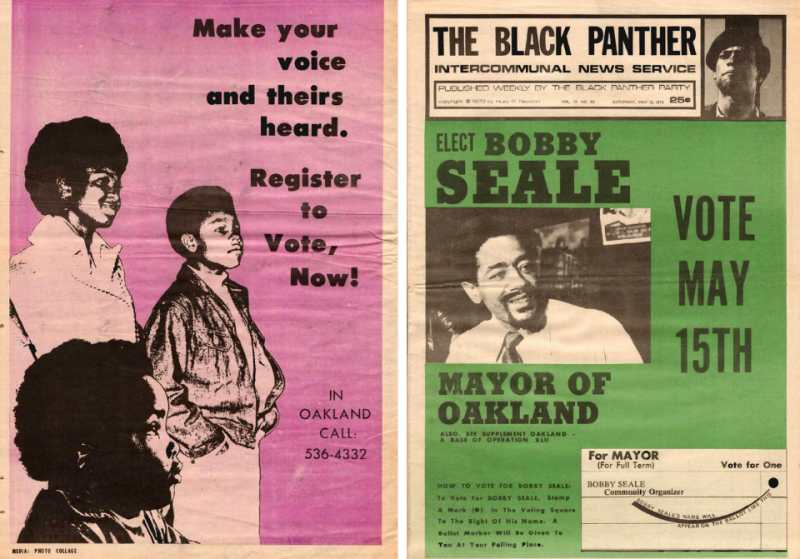
"description": "Campaign posters from a 1973 edition of The Black Panther newspaper. ",
"title": "oaklandvote1973",
"credit": "(Courtesy of Freedom Archives)",
"status": "inherit",
"altTag": null,
"isLoading": false,
"fetchFailed": false
}
},
"audioPlayerReducer": {
"postId": "stream_live",
"isPaused": true,
"isPlaying": false,
"pfsActive": false,
"pledgeModalIsOpen": true,
"playerDrawerIsOpen": false,
"liveAudioPlayStartedAt": 0,
"liveAudioPlayContext": ""
},
"authorsReducer": {
"byline_news_11873608": {
"type": "authors",
"id": "byline_news_11873608",
"meta": {
"override": true
},
"slug": "byline_news_11873608",
"name": "Noah Baustin",
"isLoading": false
},
"gmarzorati": {
"type": "authors",
"id": "227",
"meta": {
"index": "authors_1716337520",
"id": "227",
"found": true
},
"name": "Guy Marzorati",
"firstName": "Guy",
"lastName": "Marzorati",
"slug": "gmarzorati",
"email": "gmarzorati@KQED.org",
"display_author_email": true,
"staff_mastheads": [
"news"
],
"title": "Correspondent",
"bio": "Guy Marzorati is a correspondent on KQED's California Politics and Government Desk, based in San Jose. A graduate of Santa Clara University, Guy joined KQED in 2013. He reports on state and local politics and produces KQED's digital voter guide.",
"avatar": "https://secure.gravatar.com/avatar/e7038b8dbfd55b104369b76b1cd0b9de?s=600&d=blank&r=g",
"twitter": "guymarzorati",
"facebook": null,
"instagram": null,
"linkedin": null,
"sites": [
{
"site": "",
"roles": [
"editor"
]
},
{
"site": "news",
"roles": [
"editor"
]
},
{
"site": "science",
"roles": [
"editor"
]
},
{
"site": "forum",
"roles": [
"editor"
]
},
{
"site": "elections",
"roles": [
"editor"
]
},
{
"site": "liveblog",
"roles": [
"editor"
]
}
],
"headData": {
"title": "Guy Marzorati | KQED",
"description": "Correspondent",
"ogImgSrc": "https://secure.gravatar.com/avatar/e7038b8dbfd55b104369b76b1cd0b9de?s=600&d=blank&r=g",
"twImgSrc": "https://secure.gravatar.com/avatar/e7038b8dbfd55b104369b76b1cd0b9de?s=600&d=blank&r=g"
},
"isLoading": false,
"link": "/author/gmarzorati"
},
"jmcevoy": {
"type": "authors",
"id": "231",
"meta": {
"index": "authors_1716337520",
"id": "231",
"found": true
},
"name": "Julia McEvoy",
"firstName": "Julia",
"lastName": "McEvoy",
"slug": "jmcevoy",
"email": "jmcevoy@KQED.org",
"display_author_email": true,
"staff_mastheads": [
"news"
],
"title": "KQED Senior Editor",
"bio": "Julia McEvoy is KQED's Senior Editor, Education Equity.\r\n\r\nJulia heads KQED’s education coverage examining inequities students face in Bay Area and California schools, and reports on what it will take to educate the next generation.\r\n\r\nJulia's editorial work has received a Peabody Award, a Casey Medal for Coverage of Children and Families, several Edward R. Murrow awards, as well as awards from the Public Radio News Directors Inc. and the Society for Professional Journalists.",
"avatar": "https://secure.gravatar.com/avatar/aec3ce21abe02b302fd33638abd56a22?s=600&d=blank&r=g",
"twitter": "juliamcevoy1",
"facebook": null,
"instagram": null,
"linkedin": null,
"sites": [
{
"site": "news",
"roles": []
},
{
"site": "stateofhealth",
"roles": [
"author"
]
}
],
"headData": {
"title": "Julia McEvoy | KQED",
"description": "KQED Senior Editor",
"ogImgSrc": "https://secure.gravatar.com/avatar/aec3ce21abe02b302fd33638abd56a22?s=600&d=blank&r=g",
"twImgSrc": "https://secure.gravatar.com/avatar/aec3ce21abe02b302fd33638abd56a22?s=600&d=blank&r=g"
},
"isLoading": false,
"link": "/author/jmcevoy"
},
"kqed": {
"type": "authors",
"id": "236",
"meta": {
"index": "authors_1716337520",
"id": "236",
"found": true
},
"name": "KQED News Staff",
"firstName": "KQED News Staff",
"lastName": null,
"slug": "kqed",
"email": "faq@kqed.org",
"display_author_email": false,
"staff_mastheads": [],
"title": null,
"bio": null,
"avatar": "https://secure.gravatar.com/avatar/ef0e801a68c4c54afa9180db14084167?s=600&d=blank&r=g",
"twitter": null,
"facebook": null,
"instagram": null,
"linkedin": null,
"sites": [
{
"site": "arts",
"roles": [
"contributor"
]
},
{
"site": "news",
"roles": [
"editor"
]
},
{
"site": "futureofyou",
"roles": [
"author"
]
}
],
"headData": {
"title": "KQED News Staff | KQED",
"description": null,
"ogImgSrc": "https://secure.gravatar.com/avatar/ef0e801a68c4c54afa9180db14084167?s=600&d=blank&r=g",
"twImgSrc": "https://secure.gravatar.com/avatar/ef0e801a68c4c54afa9180db14084167?s=600&d=blank&r=g"
},
"isLoading": false,
"link": "/author/kqed"
},
"matthewgreen": {
"type": "authors",
"id": "1263",
"meta": {
"index": "authors_1716337520",
"id": "1263",
"found": true
},
"name": "Matthew Green",
"firstName": "Matthew",
"lastName": "Green",
"slug": "matthewgreen",
"email": "mgreen@kqed.org",
"display_author_email": false,
"staff_mastheads": [],
"title": "KQED Editor/Reporter",
"bio": "Matthew Green is a digital media producer for KQED News. He previously produced \u003ca href=\"http://www.kqed.org/lowdown\">The Lowdown\u003c/a>, KQED’s multimedia news education blog. Matthew's written for numerous Bay Area publications, including the Oakland Tribune and San Francisco Chronicle. He also taught journalism classes at Fremont High School in East Oakland.\r\n\r\nEmail: mgreen@kqed.org; Twitter: @MGreenKQED",
"avatar": "https://secure.gravatar.com/avatar/3bf498d1267ca02c8494f33d8cfc575e?s=600&d=blank&r=g",
"twitter": "MGreenKQED",
"facebook": null,
"instagram": null,
"linkedin": null,
"sites": [
{
"site": "news",
"roles": []
},
{
"site": "lowdown",
"roles": []
},
{
"site": "science",
"roles": []
},
{
"site": "education",
"roles": []
},
{
"site": "quest",
"roles": []
},
{
"site": "liveblog",
"roles": []
}
],
"headData": {
"title": "Matthew Green | KQED",
"description": "KQED Editor/Reporter",
"ogImgSrc": "https://secure.gravatar.com/avatar/3bf498d1267ca02c8494f33d8cfc575e?s=600&d=blank&r=g",
"twImgSrc": "https://secure.gravatar.com/avatar/3bf498d1267ca02c8494f33d8cfc575e?s=600&d=blank&r=g"
},
"isLoading": false,
"link": "/author/matthewgreen"
},
"shossaini": {
"type": "authors",
"id": "3214",
"meta": {
"index": "authors_1716337520",
"id": "3214",
"found": true
},
"name": "Sara Hossaini",
"firstName": "Sara",
"lastName": "Hossaini",
"slug": "shossaini",
"email": "shossaini@kqed.org",
"display_author_email": true,
"staff_mastheads": [
"news"
],
"title": "KQED Reporter",
"bio": "Sara Hossaini came to general assignment reporting at KQED in 2013 after two winters reporting at Wyoming Public Radio. She holds a bachelor's degree in broadcast journalism from the University of Nebraska-Lincoln. Her radio romance began after a bitter breakup with documentary film (Ok, maybe it's still complicated). Her first simultaneous jobs in San Francisco were as Associate Producer on a PBS film series through the Center for Asian American Media and as a butler. She likes to trot, plot and make things with her hands.",
"avatar": "https://secure.gravatar.com/avatar/060e9f56b9554e17942e89f413242774?s=600&d=blank&r=g",
"twitter": "mshossaini",
"facebook": null,
"instagram": null,
"linkedin": null,
"sites": [
{
"site": "news",
"roles": [
"author"
]
},
{
"site": "stateofhealth",
"roles": [
"author"
]
}
],
"headData": {
"title": "Sara Hossaini | KQED",
"description": "KQED Reporter",
"ogImgSrc": "https://secure.gravatar.com/avatar/060e9f56b9554e17942e89f413242774?s=600&d=blank&r=g",
"twImgSrc": "https://secure.gravatar.com/avatar/060e9f56b9554e17942e89f413242774?s=600&d=blank&r=g"
},
"isLoading": false,
"link": "/author/shossaini"
},
"dkatayama": {
"type": "authors",
"id": "7240",
"meta": {
"index": "authors_1716337520",
"id": "7240",
"found": true
},
"name": "Devin Katayama",
"firstName": "Devin",
"lastName": "Katayama",
"slug": "dkatayama",
"email": "dkatayama@kqed.org",
"display_author_email": true,
"staff_mastheads": [
"news"
],
"title": "Editor of Talent and Development",
"bio": "Devin Katayama is former Editor of Talent and Development for KQED. He supported our internship program and on-call staff by looking for equitable opportunities to improve the newsroom.\r\n\r\nHe previously hosted The Bay and American Suburb podcasts from KQED News. Prior to returning to the Bay Area in 2015, Devin was the education reporter for WFPL in Louisville and worked as a producer with radio stations in Chicago and Portland, OR. His work has appeared on NPR’s \u003cem>Morning Edition, All Things Considered, The Takeaway\u003c/em> and \u003cem>Here and Now.\u003c/em>\r\n\r\nDevin earned his MA in Journalism from Columbia College Chicago, where he was a Follett Fellow and the recipient of the 2011 Studs Terkel Community Media Workshop Scholarship for his story on Chicago's homeless youth. He won WBUR's 2014 Daniel Schorr award and a regional RTNDA Edward R. Murrow Award for his documentary \"At Risk\" that looked at issues facing some of Louisville's students. Devin has also received numerous local awards from the Associated Press and the Society of Professional Journalists.",
"avatar": "https://secure.gravatar.com/avatar/d0d2978a31002fb2de107921a8e18405?s=600&d=blank&r=g",
"twitter": "RadioDevin",
"facebook": null,
"instagram": null,
"linkedin": null,
"sites": [
{
"site": "arts",
"roles": []
},
{
"site": "news",
"roles": [
"author"
]
},
{
"site": "stateofhealth",
"roles": [
"author"
]
},
{
"site": "forum",
"roles": [
"editor"
]
},
{
"site": "perspectives",
"roles": [
"editor"
]
}
],
"headData": {
"title": "Devin Katayama | KQED",
"description": "Editor of Talent and Development",
"ogImgSrc": "https://secure.gravatar.com/avatar/d0d2978a31002fb2de107921a8e18405?s=600&d=blank&r=g",
"twImgSrc": "https://secure.gravatar.com/avatar/d0d2978a31002fb2de107921a8e18405?s=600&d=blank&r=g"
},
"isLoading": false,
"link": "/author/dkatayama"
},
"clei": {
"type": "authors",
"id": "8617",
"meta": {
"index": "authors_1716337520",
"id": "8617",
"found": true
},
"name": "Cecilia Lei",
"firstName": "Cecilia",
"lastName": "Lei",
"slug": "clei",
"email": "clei@KQED.org",
"display_author_email": false,
"staff_mastheads": [],
"title": "KQED Contributor",
"bio": "Cecilia Lei is an on-call host and producer for KQED News and Podcasts. Previously, she was the executive producer and host of the San Francisco Chronicle's daily news podcast, 'Fifth and Mission'. Cecilia is a graduate of UC Berkeley’s Graduate School of Journalism and the former president of the Asian American Journalists Association San Francisco Bay Area chapter.",
"avatar": "https://secure.gravatar.com/avatar/40975f1f88fccf628ee537bf6ffc2af8?s=600&d=blank&r=g",
"twitter": null,
"facebook": null,
"instagram": null,
"linkedin": null,
"sites": [
{
"site": "arts",
"roles": [
"contributor"
]
},
{
"site": "news",
"roles": [
"author",
"read_private_posts"
]
},
{
"site": "about",
"roles": [
"editor"
]
}
],
"headData": {
"title": "Cecilia Lei | KQED",
"description": "KQED Contributor",
"ogImgSrc": "https://secure.gravatar.com/avatar/40975f1f88fccf628ee537bf6ffc2af8?s=600&d=blank&r=g",
"twImgSrc": "https://secure.gravatar.com/avatar/40975f1f88fccf628ee537bf6ffc2af8?s=600&d=blank&r=g"
},
"isLoading": false,
"link": "/author/clei"
},
"ecruzguevarra": {
"type": "authors",
"id": "8654",
"meta": {
"index": "authors_1716337520",
"id": "8654",
"found": true
},
"name": "Ericka Cruz Guevarra",
"firstName": "Ericka",
"lastName": "Cruz Guevarra",
"slug": "ecruzguevarra",
"email": "ecruzguevarra@kqed.org",
"display_author_email": true,
"staff_mastheads": [
"news"
],
"title": "Producer, The Bay Podcast",
"bio": "Ericka Cruz Guevarra is host of \u003ca href=\"https://www.kqed.org/podcasts/thebay\">\u003cem>The Bay\u003c/em>\u003c/a> podcast at KQED. Before host, she was the show’s producer. Her work in that capacity includes a three-part reported series on policing in Vallejo, which won a 2020 excellence in journalism award from the Society of Professional Journalists. Ericka has worked as a breaking news reporter at Oregon Public Broadcasting, helped produce the Code Switch podcast, and was KQED’s inaugural Raul Ramirez Diversity Fund intern. She’s also an alumna of NPR’s Next Generation Radio program. Send her an email if you have strong feelings about whether Fairfield and Suisun City are the Bay. Ericka is represented by SAG-AFTRA.",
"avatar": "https://secure.gravatar.com/avatar/25e5ab8d3d53fad2dcc7bb2b5c506b1a?s=600&d=blank&r=g",
"twitter": "NotoriousECG",
"facebook": null,
"instagram": null,
"linkedin": null,
"sites": [
{
"site": "arts",
"roles": [
"subscriber"
]
},
{
"site": "news",
"roles": [
"editor",
"manage_categories"
]
},
{
"site": "futureofyou",
"roles": [
"subscriber"
]
},
{
"site": "stateofhealth",
"roles": [
"subscriber"
]
},
{
"site": "science",
"roles": [
"editor"
]
},
{
"site": "forum",
"roles": [
"subscriber"
]
}
],
"headData": {
"title": "Ericka Cruz Guevarra | KQED",
"description": "Producer, The Bay Podcast",
"ogImgSrc": "https://secure.gravatar.com/avatar/25e5ab8d3d53fad2dcc7bb2b5c506b1a?s=600&d=blank&r=g",
"twImgSrc": "https://secure.gravatar.com/avatar/25e5ab8d3d53fad2dcc7bb2b5c506b1a?s=600&d=blank&r=g"
},
"isLoading": false,
"link": "/author/ecruzguevarra"
},
"fjhabvala": {
"type": "authors",
"id": "8659",
"meta": {
"index": "authors_1716337520",
"id": "8659",
"found": true
},
"name": "Farida Jhabvala Romero",
"firstName": "Farida",
"lastName": "Jhabvala Romero",
"slug": "fjhabvala",
"email": "fjhabvala@kqed.org",
"display_author_email": true,
"staff_mastheads": [
"news"
],
"title": "KQED Contributor",
"bio": "\u003cspan style=\"font-weight: 400;\">Farida Jhabvala Romero is a Labor Correspondent for KQED. She previously covered immigration. Farida was \u003ca href=\"https://www.ccnma.org/2022-most-influential-latina-journalists\">named\u003c/a> one of the 10 Most Influential Latina Journalists in California in 2022 by the California Chicano News Media Association. Her work has won awards from the Society of Professional Journalists (Northern California), as well as a national and regional Edward M. Murrow Award for the collaborative reporting projects “Dangerous Air” and “Graying California.” \u003c/span>\u003cspan style=\"font-weight: 400;\">Before joining KQED, Farida worked as a producer at Radio Bilingüe, a national public radio network. Farida earned her master’s degree in journalism from Stanford University.\u003c/span>",
"avatar": "https://secure.gravatar.com/avatar/c3ab27c5554b67b478f80971e515aa02?s=600&d=blank&r=g",
"twitter": "FaridaJhabvala",
"facebook": null,
"instagram": null,
"linkedin": "https://www.linkedin.com/in/faridajhabvala/",
"sites": [
{
"site": "news",
"roles": [
"editor"
]
},
{
"site": "stateofhealth",
"roles": [
"author"
]
}
],
"headData": {
"title": "Farida Jhabvala Romero | KQED",
"description": "KQED Contributor",
"ogImgSrc": "https://secure.gravatar.com/avatar/c3ab27c5554b67b478f80971e515aa02?s=600&d=blank&r=g",
"twImgSrc": "https://secure.gravatar.com/avatar/c3ab27c5554b67b478f80971e515aa02?s=600&d=blank&r=g"
},
"isLoading": false,
"link": "/author/fjhabvala"
},
"kmoghadam": {
"type": "authors",
"id": "11637",
"meta": {
"index": "authors_1716337520",
"id": "11637",
"found": true
},
"name": "Kyana Moghadam",
"firstName": "Kyana",
"lastName": "Moghadam",
"slug": "kmoghadam",
"email": "kmoghadam@kqed.org",
"display_author_email": false,
"staff_mastheads": [
"news"
],
"title": "Senior Producer ",
"bio": "Kyana Moghadam is a senior producer at KQED. Prior to joining KQED, she was an audio producer and editor with Al Jazeera, Jetty Studios, VOX Media, Democracy Now!, and Global Press.",
"avatar": "https://secure.gravatar.com/avatar/cdbd6cb0b9e99deaa9eb618abdba56f265d374a2c614710aebeb4e58decbc5f0?s=600&d=blank&r=g",
"twitter": null,
"bluesky": null,
"facebook": null,
"instagram": null,
"linkedin": "https://www.linkedin.com/in/kyanamoghadam/",
"sites": [
{
"site": "",
"roles": [
"editor"
]
},
{
"site": "arts",
"roles": [
"editor"
]
},
{
"site": "news",
"roles": [
"administrator"
]
},
{
"site": "pop",
"roles": [
"editor"
]
},
{
"site": "about",
"roles": [
"editor"
]
},
{
"site": "forum",
"roles": [
"editor"
]
},
{
"site": "perspectives",
"roles": [
"editor"
]
},
{
"site": "podcasts",
"roles": [
"administrator"
]
}
],
"headData": {
"title": "Kyana Moghadam | KQED",
"description": "Senior Producer ",
"ogImgSrc": "https://secure.gravatar.com/avatar/cdbd6cb0b9e99deaa9eb618abdba56f265d374a2c614710aebeb4e58decbc5f0?s=600&d=blank&r=g",
"twImgSrc": "https://secure.gravatar.com/avatar/cdbd6cb0b9e99deaa9eb618abdba56f265d374a2c614710aebeb4e58decbc5f0?s=600&d=blank&r=g"
},
"isLoading": false,
"link": "/author/kmoghadam"
},
"amontecillo": {
"type": "authors",
"id": "11649",
"meta": {
"index": "authors_1716337520",
"id": "11649",
"found": true
},
"name": "Alan Montecillo",
"firstName": "Alan",
"lastName": "Montecillo",
"slug": "amontecillo",
"email": "amontecillo@kqed.org",
"display_author_email": false,
"staff_mastheads": [
"news"
],
"title": "KQED Contributor",
"bio": "Alan Montecillo is the senior editor of \u003cem>\u003ca href=\"http://kqed.org/thebay\">The Bay\u003c/a>, \u003c/em> KQED's local news podcast. Before moving to the Bay Area, he worked as a senior talk show producer for WILL in Champaign-Urbana, Illinois and at Oregon Public Broadcasting in Portland, Oregon. He has won journalism awards from the Society of Professional Journalists Northern California, the Public Media Journalists Association, The Signal Awards, and has also received a regional Edward R. Murrow award. Alan is a Filipino American from Hong Kong and a graduate of Reed College.",
"avatar": "https://secure.gravatar.com/avatar/d5e4e7a76481969ccba76f4e2b5ccabc?s=600&d=blank&r=g",
"twitter": "alanmontecillo",
"facebook": null,
"instagram": null,
"linkedin": null,
"sites": [
{
"site": "",
"roles": [
"editor"
]
},
{
"site": "news",
"roles": [
"editor",
"manage_categories"
]
}
],
"headData": {
"title": "Alan Montecillo | KQED",
"description": "KQED Contributor",
"ogImgSrc": "https://secure.gravatar.com/avatar/d5e4e7a76481969ccba76f4e2b5ccabc?s=600&d=blank&r=g",
"twImgSrc": "https://secure.gravatar.com/avatar/d5e4e7a76481969ccba76f4e2b5ccabc?s=600&d=blank&r=g"
},
"isLoading": false,
"link": "/author/amontecillo"
},
"jrodriguez": {
"type": "authors",
"id": "11690",
"meta": {
"index": "authors_1716337520",
"id": "11690",
"found": true
},
"name": "Joe Fitzgerald Rodriguez",
"firstName": "Joe",
"lastName": "Fitzgerald Rodriguez",
"slug": "jrodriguez",
"email": "jrodriguez@kqed.org",
"display_author_email": true,
"staff_mastheads": [
"news"
],
"title": "Reporter and Producer",
"bio": "Joe Fitzgerald Rodriguez is a reporter and digital producer for KQED covering politics. Joe most recently wrote for the \u003cem>San Francisco Examiner\u003c/em> as a political columnist covering The City. He was raised in San Francisco and has spent his reporting career in his beloved, foggy, city by the bay. Joe was 12-years-old when he conducted his first interview in journalism, grilling former San Francisco Mayor Willie Brown for the Marina Middle School newspaper, \u003cem>The Penguin Press, \u003c/em>and he continues to report on the San Francisco Bay Area to this day.",
"avatar": "https://secure.gravatar.com/avatar/2247beb0564c1e9c62228d5649d2edac?s=600&d=blank&r=g",
"twitter": "FitztheReporter",
"facebook": null,
"instagram": "https://www.instagram.com/fitzthereporter/",
"linkedin": null,
"sites": [
{
"site": "",
"roles": [
"editor"
]
},
{
"site": "arts",
"roles": [
"editor"
]
},
{
"site": "news",
"roles": [
"editor"
]
},
{
"site": "science",
"roles": [
"editor"
]
},
{
"site": "elections",
"roles": [
"editor"
]
},
{
"site": "liveblog",
"roles": [
"editor"
]
}
],
"headData": {
"title": "Joe Fitzgerald Rodriguez | KQED",
"description": "Reporter and Producer",
"ogImgSrc": "https://secure.gravatar.com/avatar/2247beb0564c1e9c62228d5649d2edac?s=600&d=blank&r=g",
"twImgSrc": "https://secure.gravatar.com/avatar/2247beb0564c1e9c62228d5649d2edac?s=600&d=blank&r=g"
},
"isLoading": false,
"link": "/author/jrodriguez"
},
"ccabreralomeli": {
"type": "authors",
"id": "11708",
"meta": {
"index": "authors_1716337520",
"id": "11708",
"found": true
},
"name": "Carlos Cabrera-Lomelí",
"firstName": "Carlos",
"lastName": "Cabrera-Lomelí",
"slug": "ccabreralomeli",
"email": "ccabreralomeli@KQED.org",
"display_author_email": true,
"staff_mastheads": [
"news"
],
"title": "Community Reporter",
"bio": "Carlos Cabrera-Lomelí is a community reporter with KQED's digital engagement team. He also reports and co-produces for KQED's bilingual news hub KQED en Español. He grew up in San Francisco's Mission District and has previously worked with Univision, 48 Hills and REFORMA in Mexico City.",
"avatar": "https://secure.gravatar.com/avatar/c309be9665e484f887b818c89e273ecc673004f426f36b24d00a4d813a2e0518?s=600&d=blank&r=g",
"twitter": "@LomeliCabrera",
"bluesky": null,
"facebook": null,
"instagram": null,
"linkedin": null,
"sites": [
{
"site": "arts",
"roles": [
"editor"
]
},
{
"site": "news",
"roles": [
"editor"
]
},
{
"site": "about",
"roles": [
"editor"
]
},
{
"site": "science",
"roles": [
"editor"
]
},
{
"site": "perspectives",
"roles": [
"editor"
]
},
{
"site": "elections",
"roles": [
"editor"
]
},
{
"site": "liveblog",
"roles": [
"contributor"
]
}
],
"headData": {
"title": "Carlos Cabrera-Lomelí | KQED",
"description": "Community Reporter",
"ogImgSrc": "https://secure.gravatar.com/avatar/c309be9665e484f887b818c89e273ecc673004f426f36b24d00a4d813a2e0518?s=600&d=blank&r=g",
"twImgSrc": "https://secure.gravatar.com/avatar/c309be9665e484f887b818c89e273ecc673004f426f36b24d00a4d813a2e0518?s=600&d=blank&r=g"
},
"isLoading": false,
"link": "/author/ccabreralomeli"
},
"afinney": {
"type": "authors",
"id": "11772",
"meta": {
"index": "authors_1716337520",
"id": "11772",
"found": true
},
"name": "Annelise Finney",
"firstName": "Annelise",
"lastName": "Finney",
"slug": "afinney",
"email": "afinney@kqed.org",
"display_author_email": true,
"staff_mastheads": [
"news"
],
"title": "Reporter",
"bio": "Annelise reports on reparations in California and East Bay politics. She co-produced the Sunday Music Drop, a limited-term radio series featuring Bay Area musicians that aired between Sept 2022 and Oct 2024. She joined KQED in 2021 as a general assignment reporter and is an alumna of KALW's Audio Academy. She was born and raised in the East Bay. She is currently away from KQED completing a year-long reporting project in Berlin, Germany as a Alexander Von Humboldt German Chancellor Fellow.",
"avatar": "https://secure.gravatar.com/avatar/5fded66cae47704cdfc5021cde0f3aa4?s=600&d=blank&r=g",
"twitter": null,
"facebook": null,
"instagram": null,
"linkedin": null,
"sites": [
{
"site": "news",
"roles": [
"editor"
]
},
{
"site": "liveblog",
"roles": [
"author"
]
}
],
"headData": {
"title": "Annelise Finney | KQED",
"description": "Reporter",
"ogImgSrc": "https://secure.gravatar.com/avatar/5fded66cae47704cdfc5021cde0f3aa4?s=600&d=blank&r=g",
"twImgSrc": "https://secure.gravatar.com/avatar/5fded66cae47704cdfc5021cde0f3aa4?s=600&d=blank&r=g"
},
"isLoading": false,
"link": "/author/afinney"
}
},
"pagesReducer": {
"news_tag_oakland": {
"type": "terms",
"id": "news_34054",
"meta": {
"index": "terms_1716263798",
"site": "news",
"id": "34054",
"score": 6.883923
},
"featImg": null,
"name": "oakland",
"description": null,
"taxonomy": "tag",
"headData": {
"twImgId": null,
"twTitle": null,
"ogTitle": null,
"ogImgId": null,
"twDescription": null,
"description": null,
"title": "oakland Archives | KQED News",
"ogDescription": null
},
"ttid": 34071,
"slug": "oakland",
"isLoading": false,
"title": "oakland",
"pageMeta": {
"site": "news",
"WpPageTemplate": "page-topic-editorial",
"currentPage": 42
},
"blocks": [
{
"blockName": "kqed/post-list",
"attrs": {
"layout": "cardArticle2",
"query": "posts/news?tag=oakland",
"seeMore": false,
"paginated": true,
"page": 42
}
},
{
"blockName": "kqed/ad"
}
]
}
},
"pfsSessionReducer": {},
"postsReducer": {
"stream_live": {
"type": "live",
"id": "stream_live",
"audioUrl": "https://streams.kqed.org/kqedradio",
"title": "Live Stream",
"excerpt": "Live Stream information currently unavailable.",
"link": "/radio",
"featImg": "",
"label": {
"name": "KQED Live",
"link": "/"
}
},
"stream_kqedNewscast": {
"type": "posts",
"id": "stream_kqedNewscast",
"audioUrl": "https://www.kqed.org/.stream/anon/radio/RDnews/newscast.mp3?_=1",
"title": "KQED Newscast",
"featImg": "",
"label": {
"name": "88.5 FM",
"link": "/"
}
},
"news_11888796": {
"type": "posts",
"id": "news_11888796",
"meta": {
"index": "posts_1716263798",
"site": "news",
"id": "11888796",
"score": null,
"sort": [
1631815811000
]
},
"parent": 0,
"labelTerm": {
"site": "news"
},
"blocks": [],
"publishDate": 1631815811,
"format": "audio",
"disqusTitle": "'We Just Don't Understand': Family and Friends of Man Killed by FBI Inside Oakland Store Hold Vigil",
"title": "'We Just Don't Understand': Family and Friends of Man Killed by FBI Inside Oakland Store Hold Vigil",
"headTitle": "KQED News",
"content": "\u003cp>Friends and family of a man shot and killed by an FBI agent this week gathered in Oakland’s Fruitvale neighborhood on Wednesday night to honor his life.\u003c/p>\n\u003cp>Balloons blew in the wind as around 50 people gathered around candles in front of a garage door on Blossom Street adorned with photos of Michael Jonathan Cortez and lined with flowers. Cortez was 31 years old.\u003c/p>\n\u003cp>The FBI said in a series of statements this week that the agent was working with the U.S. Marshals to serve an arrest warrant Monday afternoon when the shooting occurred.\u003c/p>\n\u003cp>The FBI hasn’t said whether the person killed was the subject of the warrant and hasn’t identified the agent who fired. The bureau hasn’t released any details of what led to the shooting, apart from saying that the person who was killed was armed.\u003c/p>\n\u003cp>Cortez's cousin Alexis Castillo said his family is now connected to the experience he’s seen other people go through who have family members killed by law enforcement.\u003c/p>\n\u003cp>[ad fullwidth]\u003c/p>\n\u003cp>“They call themselves the law, but act like a gang gunning down my little cousin in broad daylight,” he said.\u003c/p>\n\u003cp>Jackie Nguyen was also among a group gathered at the vigil. She said Cortez was her boyfriend, and they met in San Francisco when she was 15 years old.\u003c/p>\n\u003cp>She said she wants to know why Cortez was killed.\u003c/p>\n\u003cp>“We just don't understand why it was handled the way it was, regardless of the criminal background or history of whatever happened. This is their job to protect us and do things the right way. And they did not do it the right way,” she said.\u003c/p>\n\u003cp>Mohamed Aldahmi watched the vigil crowd from outside the Upstairs Underground Smoke Shop at the corner of Fruitvale Avenue and Blossom Street, where the shooting took place. Aldahmi was working inside during the shooting. He said Cortez was buying a drink and some snacks at the store when an officer wearing a bulletproof vest came into the store with his gun drawn, yelling, “Get down!”\u003c/p>\n\u003cp>Aldahmi said he and his 21-year-old cousin Issa, who was visiting him in the shop, ran into a storage area at the back of the store and laid on the ground.\u003c/p>\n\u003cp>“I just ran to the back to save my life,” he said.\u003c/p>\n\u003cp>While he was lying on the floor, Aldahmi said, he heard a gunshot. Some time after that he heard police knocking on the door between the cashiers area and the rest of the store telling him to come out. Police took him and his cousin out of the store.\u003c/p>\n\u003cfigure id=\"attachment_11888815\" class=\"wp-caption alignnone\" style=\"max-width: 1920px\">\u003cimg class=\"size-full wp-image-11888815\" src=\"https://ww2.kqed.org/app/uploads/sites/10/2021/09/016_Fruitvale_MichaelCortezVigil_09152021.jpg\" alt=\"Two people kneel next to a group of lit candles, and one of the people lights a candle.\" width=\"1920\" height=\"1280\" srcset=\"https://ww2.kqed.org/app/uploads/sites/10/2021/09/016_Fruitvale_MichaelCortezVigil_09152021.jpg 1920w, https://ww2.kqed.org/app/uploads/sites/10/2021/09/016_Fruitvale_MichaelCortezVigil_09152021-800x533.jpg 800w, https://ww2.kqed.org/app/uploads/sites/10/2021/09/016_Fruitvale_MichaelCortezVigil_09152021-1020x680.jpg 1020w, https://ww2.kqed.org/app/uploads/sites/10/2021/09/016_Fruitvale_MichaelCortezVigil_09152021-160x107.jpg 160w, https://ww2.kqed.org/app/uploads/sites/10/2021/09/016_Fruitvale_MichaelCortezVigil_09152021-1536x1024.jpg 1536w\" sizes=\"(max-width: 1920px) 100vw, 1920px\">\u003cfigcaption class=\"wp-caption-text\">Marilyn Cortez (center), sister of Michael Jonathan Cortez, lights a candle during a vigil for her brother in Oakland on Wednesday. \u003ccite>(Beth LaBerge/KQED)\u003c/cite>\u003c/figcaption>\u003c/figure>\n\u003cp>Aldahmi said what happened at his shop is upsetting.\u003c/p>\n\u003cp>“I’m against any shooting or pointing a gun,” he said. “Even if they have a warrant, that's not right at all.”\u003c/p>\n\u003cp>He also worries about what will happen to his family’s shop and whether customers will stop coming to their store after the shooting.\u003c/p>\n\u003cp>“We are affected by what the police have done inside our shop, and we didn’t do anything,” he said.\u003c/p>\n\u003cp>The FBI and Oakland police are investigating the shooting. Oakland officers took Upstairs Underground’s video surveillance system after the shooting.\u003c/p>\n\u003cp>On Twitter, the Anti Police-Terror Project \u003ca href=\"https://twitter.com/APTPaction/status/1437636818078343172\" target=\"_blank\" rel=\"noopener noreferrer\">demanded\u003c/a> answers about the shooting and the scope of the FBI’s presence in Oakland.\u003c/p>\n\u003cp>The shooting was just one of seven that occurred Monday in the Fruitvale neighborhood, according to the Oakland Police Department. On Tuesday, there was another fatal shooting. OPD reports that 94 people have been killed since the start of the year.\u003c/p>\n\u003cp>\u003c/p>\n\u003cp>Michael Cortez leaves behind three children, four siblings and his mother and father, according to his family.\u003c/p>\n\n",
"disqusIdentifier": "11888796 https://ww2.kqed.org/news/?p=11888796",
"disqusUrl": "https://ww2.kqed.org/news/2021/09/16/we-just-dont-understand-family-and-friends-of-man-killed-by-fbi-inside-oakland-store-hold-vigil/",
"stats": {
"hasVideo": false,
"hasChartOrMap": false,
"hasAudio": false,
"hasPolis": false,
"wordCount": 664,
"hasGoogleForm": false,
"hasGallery": false,
"hasHearkenModule": false,
"iframeSrcs": [],
"paragraphCount": 23
},
"modified": 1642810413,
"excerpt": "Loved ones are seeking details of what led to the deadly shooting of 31-year-old Michael Jonathan Cortez by an FBI agent in Oakland's Fruitvale neighborhood.",
"headData": {
"twImgId": "",
"twTitle": "",
"ogTitle": "",
"ogImgId": "",
"twDescription": "",
"description": "Loved ones are seeking details of what led to the deadly shooting of 31-year-old Michael Jonathan Cortez by an FBI agent in Oakland's Fruitvale neighborhood.",
"title": "'We Just Don't Understand': Family and Friends of Man Killed by FBI Inside Oakland Store Hold Vigil | KQED",
"ogDescription": "",
"schema": {
"@context": "https://schema.org",
"@type": "NewsArticle",
"headline": "'We Just Don't Understand': Family and Friends of Man Killed by FBI Inside Oakland Store Hold Vigil",
"datePublished": "2021-09-16T11:10:11-07:00",
"dateModified": "2022-01-21T16:13:33-08:00",
"image": "https://cdn.kqed.org/wp-content/uploads/2020/02/KQED-OG-Image@1x.png",
"isAccessibleForFree": "True",
"publisher": {
"@type": "NewsMediaOrganization",
"@id": "https://www.kqed.org/#organization",
"name": "KQED",
"logo": "https://cdn.kqed.org/wp-content/uploads/2020/02/KQED-OG-Image@1x.png",
"url": "https://www.kqed.org",
"sameAs": [
"https://www.facebook.com/KQED",
"https://twitter.com/KQED",
"https://www.instagram.com/kqed/",
"https://www.tiktok.com/@kqedofficial",
"https://www.linkedin.com/company/kqed",
"https://www.youtube.com/channel/UCeC0IOo7i1P_61zVUWbJ4nw"
]
}
}
},
"guestAuthors": [],
"slug": "we-just-dont-understand-family-and-friends-of-man-killed-by-fbi-inside-oakland-store-hold-vigil",
"status": "publish",
"audioUrl": "https://www.kqed.org/.stream/anon/radio/RDnews/2022/01/FinneyFruitvaleShooting20210915.mp3",
"excludeFromSiteSearch": "Include",
"path": "/news/11888796/we-just-dont-understand-family-and-friends-of-man-killed-by-fbi-inside-oakland-store-hold-vigil",
"audioTrackLength": null,
"parsedContent": [
{
"type": "contentString",
"content": "\u003cdiv class=\"post-body\">\u003cp>\u003cp>Friends and family of a man shot and killed by an FBI agent this week gathered in Oakland’s Fruitvale neighborhood on Wednesday night to honor his life.\u003c/p>\n\u003cp>Balloons blew in the wind as around 50 people gathered around candles in front of a garage door on Blossom Street adorned with photos of Michael Jonathan Cortez and lined with flowers. Cortez was 31 years old.\u003c/p>\n\u003cp>The FBI said in a series of statements this week that the agent was working with the U.S. Marshals to serve an arrest warrant Monday afternoon when the shooting occurred.\u003c/p>\n\u003cp>The FBI hasn’t said whether the person killed was the subject of the warrant and hasn’t identified the agent who fired. The bureau hasn’t released any details of what led to the shooting, apart from saying that the person who was killed was armed.\u003c/p>\n\u003cp>Cortez's cousin Alexis Castillo said his family is now connected to the experience he’s seen other people go through who have family members killed by law enforcement.\u003c/p>\n\u003cp>\u003c/p>\u003c/div>",
"attributes": {
"named": {},
"numeric": []
}
},
{
"type": "component",
"content": "",
"name": "ad",
"attributes": {
"named": {
"label": "fullwidth"
},
"numeric": [
"fullwidth"
]
}
},
{
"type": "contentString",
"content": "\u003cdiv class=\"post-body\">\u003cp>\u003c/p>\n\u003cp>“They call themselves the law, but act like a gang gunning down my little cousin in broad daylight,” he said.\u003c/p>\n\u003cp>Jackie Nguyen was also among a group gathered at the vigil. She said Cortez was her boyfriend, and they met in San Francisco when she was 15 years old.\u003c/p>\n\u003cp>She said she wants to know why Cortez was killed.\u003c/p>\n\u003cp>“We just don't understand why it was handled the way it was, regardless of the criminal background or history of whatever happened. This is their job to protect us and do things the right way. And they did not do it the right way,” she said.\u003c/p>\n\u003cp>Mohamed Aldahmi watched the vigil crowd from outside the Upstairs Underground Smoke Shop at the corner of Fruitvale Avenue and Blossom Street, where the shooting took place. Aldahmi was working inside during the shooting. He said Cortez was buying a drink and some snacks at the store when an officer wearing a bulletproof vest came into the store with his gun drawn, yelling, “Get down!”\u003c/p>\n\u003cp>Aldahmi said he and his 21-year-old cousin Issa, who was visiting him in the shop, ran into a storage area at the back of the store and laid on the ground.\u003c/p>\n\u003cp>“I just ran to the back to save my life,” he said.\u003c/p>\n\u003cp>While he was lying on the floor, Aldahmi said, he heard a gunshot. Some time after that he heard police knocking on the door between the cashiers area and the rest of the store telling him to come out. Police took him and his cousin out of the store.\u003c/p>\n\u003cfigure id=\"attachment_11888815\" class=\"wp-caption alignnone\" style=\"max-width: 1920px\">\u003cimg class=\"size-full wp-image-11888815\" src=\"https://ww2.kqed.org/app/uploads/sites/10/2021/09/016_Fruitvale_MichaelCortezVigil_09152021.jpg\" alt=\"Two people kneel next to a group of lit candles, and one of the people lights a candle.\" width=\"1920\" height=\"1280\" srcset=\"https://ww2.kqed.org/app/uploads/sites/10/2021/09/016_Fruitvale_MichaelCortezVigil_09152021.jpg 1920w, https://ww2.kqed.org/app/uploads/sites/10/2021/09/016_Fruitvale_MichaelCortezVigil_09152021-800x533.jpg 800w, https://ww2.kqed.org/app/uploads/sites/10/2021/09/016_Fruitvale_MichaelCortezVigil_09152021-1020x680.jpg 1020w, https://ww2.kqed.org/app/uploads/sites/10/2021/09/016_Fruitvale_MichaelCortezVigil_09152021-160x107.jpg 160w, https://ww2.kqed.org/app/uploads/sites/10/2021/09/016_Fruitvale_MichaelCortezVigil_09152021-1536x1024.jpg 1536w\" sizes=\"(max-width: 1920px) 100vw, 1920px\">\u003cfigcaption class=\"wp-caption-text\">Marilyn Cortez (center), sister of Michael Jonathan Cortez, lights a candle during a vigil for her brother in Oakland on Wednesday. \u003ccite>(Beth LaBerge/KQED)\u003c/cite>\u003c/figcaption>\u003c/figure>\n\u003cp>Aldahmi said what happened at his shop is upsetting.\u003c/p>\n\u003cp>“I’m against any shooting or pointing a gun,” he said. “Even if they have a warrant, that's not right at all.”\u003c/p>\n\u003cp>He also worries about what will happen to his family’s shop and whether customers will stop coming to their store after the shooting.\u003c/p>\n\u003cp>“We are affected by what the police have done inside our shop, and we didn’t do anything,” he said.\u003c/p>\n\u003cp>The FBI and Oakland police are investigating the shooting. Oakland officers took Upstairs Underground’s video surveillance system after the shooting.\u003c/p>\n\u003cp>On Twitter, the Anti Police-Terror Project \u003ca href=\"https://twitter.com/APTPaction/status/1437636818078343172\" target=\"_blank\" rel=\"noopener noreferrer\">demanded\u003c/a> answers about the shooting and the scope of the FBI’s presence in Oakland.\u003c/p>\n\u003cp>The shooting was just one of seven that occurred Monday in the Fruitvale neighborhood, according to the Oakland Police Department. On Tuesday, there was another fatal shooting. OPD reports that 94 people have been killed since the start of the year.\u003c/p>\n\u003cp>\u003c/p>\n\u003cp>Michael Cortez leaves behind three children, four siblings and his mother and father, according to his family.\u003c/p>\n\n\u003c/div>\u003c/p>",
"attributes": {
"named": {},
"numeric": []
}
}
],
"link": "/news/11888796/we-just-dont-understand-family-and-friends-of-man-killed-by-fbi-inside-oakland-store-hold-vigil",
"authors": [
"11772"
],
"categories": [
"news_6188",
"news_8"
],
"tags": [
"news_425",
"news_18246",
"news_18",
"news_4379"
],
"featImg": "news_11888798",
"label": "news"
},
"news_11881816": {
"type": "posts",
"id": "news_11881816",
"meta": {
"index": "posts_1716263798",
"site": "news",
"id": "11881816",
"score": null,
"sort": [
1626829114000
]
},
"parent": 0,
"labelTerm": {
"site": "news"
},
"blocks": [],
"publishDate": 1626829114,
"format": "standard",
"disqusTitle": "Oakland City Council Approves Terms for Howard Terminal Ballpark Plan — But the A's Aren't Happy",
"title": "Oakland City Council Approves Terms for Howard Terminal Ballpark Plan — But the A's Aren't Happy",
"headTitle": "KQED News",
"content": "\u003cp>Following hours of pleas from the public to keep the A's in Oakland, the Oakland City Council on Tuesday approved a non-binding financial plan for a new $12 billion waterfront stadium and village at Howard Terminal near Jack London Square.\u003c/p>\n\u003cp>But the A's were quick to criticize the amended plan, leaving it unclear how much longer the team is willing to negotiate with the city before packing up and moving elsewhere.\u003c/p>\n\u003cp>[pullquote size=\"medium\" align=\"right\" citation=\"Dan Kalb, Oakland City Councilmember\"]'If I vote for this today, I’m going to be holding my nose and probably going to the bathroom, throwing up afterwards. I'm not very happy.’[/pullquote]\u003c/p>\n\u003cp>“The current term sheet as it's constructed and its current language is not a business partnership that works for us,” Oakland Athletics President Dave Kaval said during the virtual meeting.\u003c/p>\n\u003cp>He said the A's will take a close look at the city's term sheet, but was disappointed it differed so much from the term sheet the team submitted in April.\u003c/p>\n\u003cp>In a departure from the A’s proposal, the new plan would require 35% of the project’s housing units be affordable, establish additional environmental protections and tenant anti-displacement safeguards, and include a community benefits fund to support neighborhoods in Chinatown and West Oakland impacted by the development.\u003c/p>\n\u003cp>[ad fullwidth]\u003c/p>\n\u003cp>It would also create a single large tax district — rather than the two proposed by the team — to generate additional revenue for infrastructure costs, and require the team to stay in the city for at least 25 years after playing its first game at the new stadium.\u003c/p>\n\u003cp>“To vote on something we have not been privy to and not had time to digest is a difficult thing for us,\" Kaval said. \"It’s hard to understand how that is a path forward.”\u003c/p>\n\u003cp>Even some of the six councilmembers who approved the deal expressed serious misgivings about it.\u003c/p>\n\u003cp>\"I will say this, if I vote for this today, I’m going to be holding my nose and probably going to the bathroom, throwing up afterwards. I'm not very happy,\" said Councilmember Dan Kalb.\u003c/p>\n\u003cp>He said the plan included too many concessions to the team, including not requiring them to contribute to the estimated $352 million in off-site infrastructure and transportation costs, or help pay for the development of most planned affordable housing units. But approving it, he added, would at least \"move the negotiations forward\" and increase the odds of the team remaining in Oakland.\u003c/p>\n\u003cp>\"And I want to be open to that, even though I have reservations about this site and some skepticism about whether it's actually going to happen or not,\" Kalb said.\u003c/p>\n\u003cp>[aside label=\"related coverage\" tag=\"oakland-as\"]The approved term sheet allows both parties to continue negotiating, with no set deadline, although pressure to make a deal is mounting quickly after years of often tense negotiations between the team and the city.\u003c/p>\n\u003cp>The A's recently \u003ca href=\"https://www.kqed.org/news/11873231/mlb-tells-oakland-athletics-to-explore-relocation-if-no-new-ballpark\">received permission from Major League Baseball to start looking at other markets\u003c/a> if a deal with Oakland can't be reached, and have already met with officials in Las Vegas. Failing an agreement with the city, they would be the third professional sports team to leave Oakland since 2019 — following the departure of the Warriors and the Raiders.\u003c/p>\n\u003cp>During the meeting, Councilmember Carroll Fife, who represents the district where the proposed development would be, voiced her frustration with the A's, following Kaval's initial rejection of the proposal.\u003c/p>\n\u003cp>\"I'm not exactly sure why we're even here today,\" said Fife, who ultimately abstained from voting. \"If the A's are not happy with what was produced today and are still talking about leaving — after the city has bent over backwards and provided some of their best work in the interest of Oakland residents and come up with all of these concessions, even about how these wealthy owners don't have to pay for off-site infrastructure — I don't know where we go from here.\"\u003c/p>\n\u003cp>The proposed project includes a privately financed $1 billion 35,000-seat ballpark at Howard Terminal, along with a village surrounding the stadium that the city says will be paid for through regional, state and federal funds. The development would include 3,000 housing units, over 1 million square feet of commercial and retail space, hotel rooms, an indoor performance venue and 18 acres of open space.\u003c/p>\n\u003cp>Standing at the windy waterfront site of the proposed mega-development, Mayor Libby Schaaf on Wednesday morning championed the new plan, calling it a win-win for the city and team.\u003c/p>\n\u003cp>https://twitter.com/LibbySchaaf/status/1417928479555735555\u003c/p>\n\u003cp>\"What the City Council approved yesterday is not just one of the most iconic ballparks that the world will ever see, but an entire, beautiful community-serving ballpark district,\" Schaaf said. \"A new neighborhood, with amazing union jobs, public parks, affordable housing and safety improvements.\"\u003c/p>\n\u003cp>She also promised the plan would create significant tax revenue, ensuring the project's financial viability, unlike past sports deals gone bad; Oakland is still paying off the bonds that financed the remodeling of the Coliseum for the Raiders' return in 1995.\u003c/p>\n\u003cp>\"We are doing everything within our power to move this process along in a way that is not just great for the A’s and our A’s fans and the community, but also responsible to the taxpayers,\" she said. \"We are never going to do a Raiders deal again.\"\u003c/p>\n\u003cp>The team’s lease at the aging Oakland Coliseum in East Oakland runs through 2024. The league has said rebuilding at the current location is not a viable option.\u003c/p>\n\u003cp>Several Coliseum employees were among the throngs of residents who called in during the public comment period at Tuesday's meeting.\u003c/p>\n\u003cp>\"Those jobs are very important to us. We got a lot of seniors that work here like myself. And we need that job to make ends meet,\" a man named Tony, who works at the current stadium, told councilmembers. \"You're talking about over 600 jobs that are lost. People are getting displaced again. So we are really asking the council to please vote yes on this issue so we can keep our jobs and continue to live in Oakland.\"\u003c/p>\n\u003cp>Other callers, though, like Emily Wheeler, a member of the Oakland Tenants Union, said the team was all \"about greed,\" and urged the city not to capitulate.\u003c/p>\n\u003cp>\"The A’s are like an abusive boyfriend and you need to stand up to them,\" Wheeler said.\u003c/p>\n\u003cp>[ad floatright]\u003c/p>\n",
"disqusIdentifier": "11881816 https://ww2.kqed.org/news/?p=11881816",
"disqusUrl": "https://ww2.kqed.org/news/2021/07/20/oakland-city-council-approves-amended-terms-for-as-howard-terminal-ballpark-plan-and-no-one-seems-happy-about-it/",
"stats": {
"hasVideo": false,
"hasChartOrMap": false,
"hasAudio": false,
"hasPolis": false,
"wordCount": 1121,
"hasGoogleForm": false,
"hasGallery": false,
"hasHearkenModule": false,
"iframeSrcs": [],
"paragraphCount": 28
},
"modified": 1626988427,
"excerpt": "The A's were quick to dismiss the amended plan, leaving it uncertain if the team will continue to negotiate with the city or pack up and move elsewhere.",
"headData": {
"twImgId": "",
"twTitle": "",
"ogTitle": "",
"ogImgId": "",
"twDescription": "",
"description": "The A's were quick to dismiss the amended plan, leaving it uncertain if the team will continue to negotiate with the city or pack up and move elsewhere.",
"title": "Oakland City Council Approves Terms for Howard Terminal Ballpark Plan — But the A's Aren't Happy | KQED",
"ogDescription": "",
"schema": {
"@context": "https://schema.org",
"@type": "NewsArticle",
"headline": "Oakland City Council Approves Terms for Howard Terminal Ballpark Plan — But the A's Aren't Happy",
"datePublished": "2021-07-20T17:58:34-07:00",
"dateModified": "2021-07-22T14:13:47-07:00",
"image": "https://cdn.kqed.org/wp-content/uploads/2020/02/KQED-OG-Image@1x.png",
"isAccessibleForFree": "True",
"publisher": {
"@type": "NewsMediaOrganization",
"@id": "https://www.kqed.org/#organization",
"name": "KQED",
"logo": "https://cdn.kqed.org/wp-content/uploads/2020/02/KQED-OG-Image@1x.png",
"url": "https://www.kqed.org",
"sameAs": [
"https://www.facebook.com/KQED",
"https://twitter.com/KQED",
"https://www.instagram.com/kqed/",
"https://www.tiktok.com/@kqedofficial",
"https://www.linkedin.com/company/kqed",
"https://www.youtube.com/channel/UCeC0IOo7i1P_61zVUWbJ4nw"
]
}
}
},
"guestAuthors": [],
"slug": "oakland-city-council-approves-amended-terms-for-as-howard-terminal-ballpark-plan-and-no-one-seems-happy-about-it",
"status": "publish",
"audioUrl": "https://www.kqed.org/.stream/anon/radio/RDnews/2021/07/AsTeam.mp3",
"path": "/news/11881816/oakland-city-council-approves-amended-terms-for-as-howard-terminal-ballpark-plan-and-no-one-seems-happy-about-it",
"audioTrackLength": null,
"parsedContent": [
{
"type": "contentString",
"content": "\u003cdiv class=\"post-body\">\u003cp>\u003cp>Following hours of pleas from the public to keep the A's in Oakland, the Oakland City Council on Tuesday approved a non-binding financial plan for a new $12 billion waterfront stadium and village at Howard Terminal near Jack London Square.\u003c/p>\n\u003cp>But the A's were quick to criticize the amended plan, leaving it unclear how much longer the team is willing to negotiate with the city before packing up and moving elsewhere.\u003c/p>\n\u003cp>\u003c/p>\u003c/div>",
"attributes": {
"named": {},
"numeric": []
}
},
{
"type": "component",
"content": "'If I vote for this today, I’m going to be holding my nose and probably going to the bathroom, throwing up afterwards. I'm not very happy.’",
"name": "pullquote",
"attributes": {
"named": {
"size": "medium",
"align": "right",
"citation": "Dan Kalb, Oakland City Councilmember",
"label": ""
},
"numeric": []
}
},
{
"type": "contentString",
"content": "\u003cdiv class=\"post-body\">\u003cp>\u003c/p>\n\u003cp>“The current term sheet as it's constructed and its current language is not a business partnership that works for us,” Oakland Athletics President Dave Kaval said during the virtual meeting.\u003c/p>\n\u003cp>He said the A's will take a close look at the city's term sheet, but was disappointed it differed so much from the term sheet the team submitted in April.\u003c/p>\n\u003cp>In a departure from the A’s proposal, the new plan would require 35% of the project’s housing units be affordable, establish additional environmental protections and tenant anti-displacement safeguards, and include a community benefits fund to support neighborhoods in Chinatown and West Oakland impacted by the development.\u003c/p>\n\u003cp>\u003c/p>\u003c/div>",
"attributes": {
"named": {},
"numeric": []
}
},
{
"type": "component",
"content": "",
"name": "ad",
"attributes": {
"named": {
"label": "fullwidth"
},
"numeric": [
"fullwidth"
]
}
},
{
"type": "contentString",
"content": "\u003cdiv class=\"post-body\">\u003cp>\u003c/p>\n\u003cp>It would also create a single large tax district — rather than the two proposed by the team — to generate additional revenue for infrastructure costs, and require the team to stay in the city for at least 25 years after playing its first game at the new stadium.\u003c/p>\n\u003cp>“To vote on something we have not been privy to and not had time to digest is a difficult thing for us,\" Kaval said. \"It’s hard to understand how that is a path forward.”\u003c/p>\n\u003cp>Even some of the six councilmembers who approved the deal expressed serious misgivings about it.\u003c/p>\n\u003cp>\"I will say this, if I vote for this today, I’m going to be holding my nose and probably going to the bathroom, throwing up afterwards. I'm not very happy,\" said Councilmember Dan Kalb.\u003c/p>\n\u003cp>He said the plan included too many concessions to the team, including not requiring them to contribute to the estimated $352 million in off-site infrastructure and transportation costs, or help pay for the development of most planned affordable housing units. But approving it, he added, would at least \"move the negotiations forward\" and increase the odds of the team remaining in Oakland.\u003c/p>\n\u003cp>\"And I want to be open to that, even though I have reservations about this site and some skepticism about whether it's actually going to happen or not,\" Kalb said.\u003c/p>\n\u003cp>\u003c/p>\u003c/div>",
"attributes": {
"named": {},
"numeric": []
}
},
{
"type": "component",
"content": "",
"name": "aside",
"attributes": {
"named": {
"label": "related coverage ",
"tag": "oakland-as"
},
"numeric": []
}
},
{
"type": "contentString",
"content": "\u003cdiv class=\"post-body\">\u003cp>The approved term sheet allows both parties to continue negotiating, with no set deadline, although pressure to make a deal is mounting quickly after years of often tense negotiations between the team and the city.\u003c/p>\n\u003cp>The A's recently \u003ca href=\"https://www.kqed.org/news/11873231/mlb-tells-oakland-athletics-to-explore-relocation-if-no-new-ballpark\">received permission from Major League Baseball to start looking at other markets\u003c/a> if a deal with Oakland can't be reached, and have already met with officials in Las Vegas. Failing an agreement with the city, they would be the third professional sports team to leave Oakland since 2019 — following the departure of the Warriors and the Raiders.\u003c/p>\n\u003cp>During the meeting, Councilmember Carroll Fife, who represents the district where the proposed development would be, voiced her frustration with the A's, following Kaval's initial rejection of the proposal.\u003c/p>\n\u003cp>\"I'm not exactly sure why we're even here today,\" said Fife, who ultimately abstained from voting. \"If the A's are not happy with what was produced today and are still talking about leaving — after the city has bent over backwards and provided some of their best work in the interest of Oakland residents and come up with all of these concessions, even about how these wealthy owners don't have to pay for off-site infrastructure — I don't know where we go from here.\"\u003c/p>\n\u003cp>The proposed project includes a privately financed $1 billion 35,000-seat ballpark at Howard Terminal, along with a village surrounding the stadium that the city says will be paid for through regional, state and federal funds. The development would include 3,000 housing units, over 1 million square feet of commercial and retail space, hotel rooms, an indoor performance venue and 18 acres of open space.\u003c/p>\n\u003cp>Standing at the windy waterfront site of the proposed mega-development, Mayor Libby Schaaf on Wednesday morning championed the new plan, calling it a win-win for the city and team.\u003c/p>\u003c/p>\u003c/div>",
"attributes": {
"named": {},
"numeric": []
}
},
{
"type": "component",
"content": "",
"name": "singleTwitterStatus",
"attributes": {
"named": {
"id": "1417928479555735555"
},
"numeric": []
}
},
{
"type": "contentString",
"content": "\u003cdiv class=\"post-body\">\u003cp>\n\u003cp>\"What the City Council approved yesterday is not just one of the most iconic ballparks that the world will ever see, but an entire, beautiful community-serving ballpark district,\" Schaaf said. \"A new neighborhood, with amazing union jobs, public parks, affordable housing and safety improvements.\"\u003c/p>\n\u003cp>She also promised the plan would create significant tax revenue, ensuring the project's financial viability, unlike past sports deals gone bad; Oakland is still paying off the bonds that financed the remodeling of the Coliseum for the Raiders' return in 1995.\u003c/p>\n\u003cp>\"We are doing everything within our power to move this process along in a way that is not just great for the A’s and our A’s fans and the community, but also responsible to the taxpayers,\" she said. \"We are never going to do a Raiders deal again.\"\u003c/p>\n\u003cp>The team’s lease at the aging Oakland Coliseum in East Oakland runs through 2024. The league has said rebuilding at the current location is not a viable option.\u003c/p>\n\u003cp>Several Coliseum employees were among the throngs of residents who called in during the public comment period at Tuesday's meeting.\u003c/p>\n\u003cp>\"Those jobs are very important to us. We got a lot of seniors that work here like myself. And we need that job to make ends meet,\" a man named Tony, who works at the current stadium, told councilmembers. \"You're talking about over 600 jobs that are lost. People are getting displaced again. So we are really asking the council to please vote yes on this issue so we can keep our jobs and continue to live in Oakland.\"\u003c/p>\n\u003cp>Other callers, though, like Emily Wheeler, a member of the Oakland Tenants Union, said the team was all \"about greed,\" and urged the city not to capitulate.\u003c/p>\n\u003cp>\"The A’s are like an abusive boyfriend and you need to stand up to them,\" Wheeler said.\u003c/p>\n\u003cp>\u003c/p>\u003c/div>",
"attributes": {
"named": {},
"numeric": []
}
},
{
"type": "component",
"content": "",
"name": "ad",
"attributes": {
"named": {
"label": "floatright"
},
"numeric": [
"floatright"
]
}
},
{
"type": "contentString",
"content": "\u003cdiv class=\"post-body\">\u003cp>\u003c/p>\n\u003c/div>\u003c/p>",
"attributes": {
"named": {},
"numeric": []
}
}
],
"link": "/news/11881816/oakland-city-council-approves-amended-terms-for-as-howard-terminal-ballpark-plan-and-no-one-seems-happy-about-it",
"authors": [
"1263"
],
"categories": [
"news_8",
"news_10"
],
"tags": [
"news_29692",
"news_18203",
"news_18",
"news_161",
"news_643"
],
"featImg": "news_11881826",
"label": "news"
},
"news_11876100": {
"type": "posts",
"id": "news_11876100",
"meta": {
"index": "posts_1716263798",
"site": "news",
"id": "11876100",
"score": null,
"sort": [
1622680115000
]
},
"parent": 0,
"labelTerm": {
"site": "news"
},
"blocks": [],
"publishDate": 1622680115,
"format": "audio",
"disqusTitle": "For Oakland Student and Her Teacher, Graduation Means Both Celebration and Loss",
"title": "For Oakland Student and Her Teacher, Graduation Means Both Celebration and Loss",
"headTitle": "KQED News",
"content": "\u003cp>Students at Oakland’s Fremont High School will collect their diplomas in person this week, part of a wave of Oakland public school seniors who’ve managed to make it through a year of distance learning. But at Fremont High where staff focus heavily on getting English language learners to academic success, the pandemic has left gaps, unraveling the kind of in-person support system that helped students not only graduate but plan their next steps.\u003c/p>\n\u003cp>The Friday before graduation Karina Dealba Perez was inside Fremont High bent over a computer, working on her post graduation plan with her teacher, Maya Brodkey. They were looking over the AmeriCorps community service program while other students in the room were getting last minute projects done in order to graduate on time.\u003c/p>\n\u003cp>There was a moment in this school year when Dealba Perez wasn’t sure she was going to graduate. She was working so many hours to support her family that school went by the wayside. Even when her father got his restaurant job back this spring, things didn’t get easier on the family financially.\u003c/p>\n\u003cp>“We just had a funeral and we have a lot of funeral expenses going on and it’s a lot,” Dealba Perez explained. Her cousin who had been living with her family died of gunshot wounds earlier this year.\u003c/p>\n\u003cp>“My mom was his guardian so he was like a brother to me,\" she said. \"We didn’t have money, we weren’t prepared for it,\" said Dealba Perez. She says she stopped going to classes for almost a month, but once she let her teacher know, Brodkey helped her out.\u003c/p>\n\u003cp>[ad fullwidth]\u003c/p>\n\u003cp>Brodkey gave Dealba Perez work she could do on her own time, as part of a capstone project to help make up for lost attendance. It’s common at Fremont High for teachers to be more than educators and yet, at this point in the pandemic, Maya Brodkey was also having financial issues of her own.\u003c/p>\n\u003cp>“My partner had to close her business due to COVID and all of a sudden Oakland rent was really expensive and we had to move someplace where we could afford to be,” Brodkey said. The couple decided to try out living in Eureka, roughly five hours north of the Bay Area, where rent was cheaper, until school reopened in person.\u003c/p>\n\u003cp>Brodkey’s partner found work and Brodkey taught remotely. They both planned to return to Oakland, but when they tried to find housing in February, Brodkey said rents had increased even more. “In some ways I'm making a decision and in some ways the decision was made for me,” she said, of her choice to quit teaching in Fremont after this year. She’s looking for a teaching post in Eureka now.\u003c/p>\n\u003cp>Brodkey says she applied to teach at Fremont five years ago because people who work at the school are \"scrappy and creative\" and fight hard for their English language learner students, who make up the majority of the school. But she says things have been different for this graduating class.\u003c/p>\n\u003cp>“I’m very worried about them going out into the world with I think much less preparation than seniors normally get,\" she said. \"And this year, there's been so many students that have just kind of fallen off the map.” Of 153 seniors who began the year at Fremont, 138 will graduate according to school administrators, a graduation rate of about 90 percent, similar to the senior class from last year, according to Nidya Baez, Fremont High School's assistant principal.\u003c/p>\n\u003cp>Brodkey says school staff was able to reconnect with many students by doing outreach to homes and helping provide assistance to families, but the continuous in-person support that the school prides itself on took a hit during distance learning. Brodkey says that’s the kind of support that can not only help determine whether a kid graduates, but also sets them up for their future.\u003c/p>\n\u003cp>“There are students who could have had a more solid post-high school plan, who don't have that because that support hasn't been there,\" Brodkey said, adding that not all seniors are interested in college because many see work as a priority.\u003c/p>\n\u003cp>“There's a lot of students who really would benefit from something structured and something that's really going to put them on a path for some kind of career, build a real strong skill set,” Brodkey said. For the last couple of years, she's brought in speakers from places like AmeriCorps, California Conservation Corps and Cal Fire to talk about other post high school options. This year, she said there was increased interest for these programs, even if it was done virtually this year.\u003c/p>\n\u003cp>Dealba Perez herself needed a plan. “I didn't even apply for colleges because I was so busy with work,\" she said. \"Ms. Brodkey was helping me with programs that were going to be in the summer.” Dealba Perez liked the idea of entering a program that would give her exposure to different career paths.\u003c/p>\n\u003cp>Brodkey said this kind of plan also protects students from moving onto community college without a focus, potentially using up credits while trying to find a direction, resulting in them having to pay for college before they have determined a career path.\u003c/p>\n\u003cp>Dealba Perez is counting on a program like AmeriCorps to pay her living expenses over the summer so she doesn’t have to work. As she and Brodkey wrap up their in-person session at Fremont they agree to stay in contact over the summer to follow up on more applications. But until she has something solid, Dealba Perez says she will be picking up more hours where she works now, at the phone store. [aside tag=\"education\" label=\"More Related Stories\"]\u003c/p>\n\u003cp>\"It was a struggle for everybody in one way or another. To just be able to want to continue,\" she said, and to have motivation to graduate. \"It's something to be very proud of, something you push yourself to.\"\u003c/p>\n\u003cp>Karina’s parents were in the stands at Fremont High June 1, although she's disappointed that due to COVID-19 only two guests per graduate will be allowed. Her advisor, Ms. Brodkey, also attended, making the trip from Eureka to Fremont High one last time.\u003c/p>\n\u003cp>[ad floatright]\u003c/p>\n\u003cp>\"I've been teaching some of these students for three years, so seeing them graduate is important to me,\" Brodkey said, adding that she wishes she could have done even more. \"This class is graduating with even more uncertainty about what the future holds for them than previous classes. And I think that uncertainty is exacerbated by the fact that we haven't been able to support them as much as we would have in-person.\"\u003c/p>\n\n",
"disqusIdentifier": "11876100 https://ww2.kqed.org/news/?p=11876100",
"disqusUrl": "https://ww2.kqed.org/news/2021/06/02/for-oakland-student-and-her-teacher-graduation-means-both-celebration-and-loss/",
"stats": {
"hasVideo": false,
"hasChartOrMap": false,
"hasAudio": false,
"hasPolis": false,
"wordCount": 1165,
"hasGoogleForm": false,
"hasGallery": false,
"hasHearkenModule": false,
"iframeSrcs": [],
"paragraphCount": 21
},
"modified": 1622756919,
"excerpt": "Students at Oakland’s Fremont High will collect their diplomas in person this week, part of a wave of Oakland public school seniors who’ve managed to make it through a year of distance learning. But for one student and her teacher, the joy also comes with a sense of loss.",
"headData": {
"twImgId": "",
"twTitle": "",
"ogTitle": "",
"ogImgId": "",
"twDescription": "",
"description": "Students at Oakland’s Fremont High will collect their diplomas in person this week, part of a wave of Oakland public school seniors who’ve managed to make it through a year of distance learning. But for one student and her teacher, the joy also comes with a sense of loss.",
"title": "For Oakland Student and Her Teacher, Graduation Means Both Celebration and Loss | KQED",
"ogDescription": "",
"schema": {
"@context": "https://schema.org",
"@type": "NewsArticle",
"headline": "For Oakland Student and Her Teacher, Graduation Means Both Celebration and Loss",
"datePublished": "2021-06-02T17:28:35-07:00",
"dateModified": "2021-06-03T14:48:39-07:00",
"image": "https://cdn.kqed.org/wp-content/uploads/2020/02/KQED-OG-Image@1x.png",
"isAccessibleForFree": "True",
"publisher": {
"@type": "NewsMediaOrganization",
"@id": "https://www.kqed.org/#organization",
"name": "KQED",
"logo": "https://cdn.kqed.org/wp-content/uploads/2020/02/KQED-OG-Image@1x.png",
"url": "https://www.kqed.org",
"sameAs": [
"https://www.facebook.com/KQED",
"https://twitter.com/KQED",
"https://www.instagram.com/kqed/",
"https://www.tiktok.com/@kqedofficial",
"https://www.linkedin.com/company/kqed",
"https://www.youtube.com/channel/UCeC0IOo7i1P_61zVUWbJ4nw"
]
}
}
},
"guestAuthors": [],
"slug": "for-oakland-student-and-her-teacher-graduation-means-both-celebration-and-loss",
"status": "publish",
"audioUrl": "https://traffic.omny.fm/d/clips/0af137ef-751e-4b19-a055-aaef00d2d578/ffca7e9f-6831-4[…]f-aaef00f5a073/ea75838c-c7b5-4c69-aa2a-ad3a012548ad/audio.mp3",
"path": "/news/11876100/for-oakland-student-and-her-teacher-graduation-means-both-celebration-and-loss",
"audioTrackLength": null,
"parsedContent": [
{
"type": "contentString",
"content": "\u003cdiv class=\"post-body\">\u003cp>\u003cp>Students at Oakland’s Fremont High School will collect their diplomas in person this week, part of a wave of Oakland public school seniors who’ve managed to make it through a year of distance learning. But at Fremont High where staff focus heavily on getting English language learners to academic success, the pandemic has left gaps, unraveling the kind of in-person support system that helped students not only graduate but plan their next steps.\u003c/p>\n\u003cp>The Friday before graduation Karina Dealba Perez was inside Fremont High bent over a computer, working on her post graduation plan with her teacher, Maya Brodkey. They were looking over the AmeriCorps community service program while other students in the room were getting last minute projects done in order to graduate on time.\u003c/p>\n\u003cp>There was a moment in this school year when Dealba Perez wasn’t sure she was going to graduate. She was working so many hours to support her family that school went by the wayside. Even when her father got his restaurant job back this spring, things didn’t get easier on the family financially.\u003c/p>\n\u003cp>“We just had a funeral and we have a lot of funeral expenses going on and it’s a lot,” Dealba Perez explained. Her cousin who had been living with her family died of gunshot wounds earlier this year.\u003c/p>\n\u003cp>“My mom was his guardian so he was like a brother to me,\" she said. \"We didn’t have money, we weren’t prepared for it,\" said Dealba Perez. She says she stopped going to classes for almost a month, but once she let her teacher know, Brodkey helped her out.\u003c/p>\n\u003cp>\u003c/p>\u003c/div>",
"attributes": {
"named": {},
"numeric": []
}
},
{
"type": "component",
"content": "",
"name": "ad",
"attributes": {
"named": {
"label": "fullwidth"
},
"numeric": [
"fullwidth"
]
}
},
{
"type": "contentString",
"content": "\u003cdiv class=\"post-body\">\u003cp>\u003c/p>\n\u003cp>Brodkey gave Dealba Perez work she could do on her own time, as part of a capstone project to help make up for lost attendance. It’s common at Fremont High for teachers to be more than educators and yet, at this point in the pandemic, Maya Brodkey was also having financial issues of her own.\u003c/p>\n\u003cp>“My partner had to close her business due to COVID and all of a sudden Oakland rent was really expensive and we had to move someplace where we could afford to be,” Brodkey said. The couple decided to try out living in Eureka, roughly five hours north of the Bay Area, where rent was cheaper, until school reopened in person.\u003c/p>\n\u003cp>Brodkey’s partner found work and Brodkey taught remotely. They both planned to return to Oakland, but when they tried to find housing in February, Brodkey said rents had increased even more. “In some ways I'm making a decision and in some ways the decision was made for me,” she said, of her choice to quit teaching in Fremont after this year. She’s looking for a teaching post in Eureka now.\u003c/p>\n\u003cp>Brodkey says she applied to teach at Fremont five years ago because people who work at the school are \"scrappy and creative\" and fight hard for their English language learner students, who make up the majority of the school. But she says things have been different for this graduating class.\u003c/p>\n\u003cp>“I’m very worried about them going out into the world with I think much less preparation than seniors normally get,\" she said. \"And this year, there's been so many students that have just kind of fallen off the map.” Of 153 seniors who began the year at Fremont, 138 will graduate according to school administrators, a graduation rate of about 90 percent, similar to the senior class from last year, according to Nidya Baez, Fremont High School's assistant principal.\u003c/p>\n\u003cp>Brodkey says school staff was able to reconnect with many students by doing outreach to homes and helping provide assistance to families, but the continuous in-person support that the school prides itself on took a hit during distance learning. Brodkey says that’s the kind of support that can not only help determine whether a kid graduates, but also sets them up for their future.\u003c/p>\n\u003cp>“There are students who could have had a more solid post-high school plan, who don't have that because that support hasn't been there,\" Brodkey said, adding that not all seniors are interested in college because many see work as a priority.\u003c/p>\n\u003cp>“There's a lot of students who really would benefit from something structured and something that's really going to put them on a path for some kind of career, build a real strong skill set,” Brodkey said. For the last couple of years, she's brought in speakers from places like AmeriCorps, California Conservation Corps and Cal Fire to talk about other post high school options. This year, she said there was increased interest for these programs, even if it was done virtually this year.\u003c/p>\n\u003cp>Dealba Perez herself needed a plan. “I didn't even apply for colleges because I was so busy with work,\" she said. \"Ms. Brodkey was helping me with programs that were going to be in the summer.” Dealba Perez liked the idea of entering a program that would give her exposure to different career paths.\u003c/p>\n\u003cp>Brodkey said this kind of plan also protects students from moving onto community college without a focus, potentially using up credits while trying to find a direction, resulting in them having to pay for college before they have determined a career path.\u003c/p>\n\u003cp>Dealba Perez is counting on a program like AmeriCorps to pay her living expenses over the summer so she doesn’t have to work. As she and Brodkey wrap up their in-person session at Fremont they agree to stay in contact over the summer to follow up on more applications. But until she has something solid, Dealba Perez says she will be picking up more hours where she works now, at the phone store. \u003c/p>\u003c/div>",
"attributes": {
"named": {},
"numeric": []
}
},
{
"type": "component",
"content": "",
"name": "aside",
"attributes": {
"named": {
"tag": "education",
"label": "More Related Stories "
},
"numeric": []
}
},
{
"type": "contentString",
"content": "\u003cdiv class=\"post-body\">\u003cp>\u003c/p>\n\u003cp>\"It was a struggle for everybody in one way or another. To just be able to want to continue,\" she said, and to have motivation to graduate. \"It's something to be very proud of, something you push yourself to.\"\u003c/p>\n\u003cp>Karina’s parents were in the stands at Fremont High June 1, although she's disappointed that due to COVID-19 only two guests per graduate will be allowed. Her advisor, Ms. Brodkey, also attended, making the trip from Eureka to Fremont High one last time.\u003c/p>\n\u003cp>\u003c/p>\u003c/div>",
"attributes": {
"named": {},
"numeric": []
}
},
{
"type": "component",
"content": "",
"name": "ad",
"attributes": {
"named": {
"label": "floatright"
},
"numeric": [
"floatright"
]
}
},
{
"type": "contentString",
"content": "\u003cdiv class=\"post-body\">\u003cp>\u003c/p>\n\u003cp>\"I've been teaching some of these students for three years, so seeing them graduate is important to me,\" Brodkey said, adding that she wishes she could have done even more. \"This class is graduating with even more uncertainty about what the future holds for them than previous classes. And I think that uncertainty is exacerbated by the fact that we haven't been able to support them as much as we would have in-person.\"\u003c/p>\n\n\u003c/div>\u003c/p>",
"attributes": {
"named": {},
"numeric": []
}
}
],
"link": "/news/11876100/for-oakland-student-and-her-teacher-graduation-means-both-celebration-and-loss",
"authors": [
"231"
],
"categories": [
"news_18540",
"news_8"
],
"tags": [
"news_20013",
"news_66",
"news_27967",
"news_4922",
"news_18"
],
"featImg": "news_11876101",
"label": "news"
},
"news_11874876": {
"type": "posts",
"id": "news_11874876",
"meta": {
"index": "posts_1716263798",
"site": "news",
"id": "11874876",
"score": null,
"sort": [
1621643815000
]
},
"parent": 0,
"labelTerm": {
"site": "news",
"term": 26731
},
"blocks": [],
"publishDate": 1621643815,
"format": "audio",
"disqusTitle": "Quest for a Hollywood Star, Traveling Violinists Bring Joy, & California's 'Top Chef'",
"title": "Quest for a Hollywood Star, Traveling Violinists Bring Joy, & California's 'Top Chef'",
"headTitle": "The California Report Magazine | KQED News",
"content": "\u003cp>\u003cem>\u003ca href=\"http://itunes.apple.com/us/podcast/the-california-report-magazine/id1314750545?mt=2\" target=\"_blank\" rel=\"noopener noreferrer\">Listen to this and more in-depth storytelling by subscribing to The California Report Magazine podcast.\u003c/a>\u003c/em>\u003c/p>\n\u003ch2>‘She’s a Star Without a Star:’ One Man’s Mission to Get his Aunt on the Hollywood Walk of Fame\u003c/h2>\n\u003cp>Arnett Moore is launching a one-man campaign: to get his aunt a posthumous star on the Hollywood Walk of Fame. In her seven-decade career, Juanita Moore performed in more than 80 films and TV shows. But she was largely uncredited for many of her roles. Moore got her big break in 1959, when she was cast in the film “Imitation of Life.” Her performance earned her an Academy Award nomination for Best Supporting Actress, and Moore became the fifth Black actor to be nominated for an Oscar. Moore was a trailblazer for other Black actors over the course of her career. The Hollywood chamber only picks one posthumous candidate each year to get a star. Applications are due next week.\u003c/p>\n\u003ch2>MusiKaravan: Bringing Tunes and Human Bonding to California’s Countryside\u003c/h2>\n\u003cp>Imagine a little red 1971 Volkswagen bus pulling up to your driveway. Two violinists pop out. They’ve been on the road for hours. They’re exhausted, and they need a shower and place to park overnight. They ask if they can play for you. Reporter Polina Cherezova brings us the story of MusiKaravan, two LA violinists – Etienne Gara and YuEun Kim – who hit the road during the pandemic, driving through politically divided states, and bringing music to farmers, winemakers, and anyone else they meet along the way.\u003c/p>\n\u003ch2>California’s Only ‘Top Chef’ contestant Taps His Afro-Latino Roots\u003c/h2>\n\u003cp>Host Sasha Khokha heads into the kitchen to watch Nelson German at work. German owns two restaurants in Oakland where he showcases his culinary roots, making the kinds of dishes he grew up eating as the child of Dominican immigrants. German is the only California contestant on this season of the reality cooking competition series \"Top Chef.\" His newest venture, an Afro-Caribbean cocktail bar, opened just nine days before it was shuttered due to shelter-in-place orders last March.\u003c/p>\n\u003cp>[ad fullwidth]\u003c/p>\u003cp>\u003c/p>\n",
"disqusIdentifier": "11874876 https://ww2.kqed.org/news/?p=11874876",
"disqusUrl": "https://ww2.kqed.org/news/2021/05/21/quest-for-a-hollywood-star-traveling-violinists-bring-joy-californias-top-chef/",
"stats": {
"hasVideo": false,
"hasChartOrMap": false,
"hasAudio": false,
"hasPolis": false,
"wordCount": 365,
"hasGoogleForm": false,
"hasGallery": false,
"hasHearkenModule": false,
"iframeSrcs": [],
"paragraphCount": 6
},
"modified": 1621643815,
"excerpt": null,
"headData": {
"twImgId": "",
"twTitle": "",
"ogTitle": "",
"ogImgId": "",
"twDescription": "",
"description": "Listen to this and more in-depth storytelling by subscribing to The California Report Magazine podcast. ‘She’s a Star Without a Star:’ One Man’s Mission to Get his Aunt on the Hollywood Walk of Fame Arnett Moore is launching a one-man campaign: to get his aunt a posthumous star on the Hollywood Walk of Fame. In",
"title": "Quest for a Hollywood Star, Traveling Violinists Bring Joy, & California's 'Top Chef' | KQED",
"ogDescription": "",
"schema": {
"@context": "https://schema.org",
"@type": "NewsArticle",
"headline": "Quest for a Hollywood Star, Traveling Violinists Bring Joy, & California's 'Top Chef'",
"datePublished": "2021-05-21T17:36:55-07:00",
"dateModified": "2021-05-21T17:36:55-07:00",
"image": "https://cdn.kqed.org/wp-content/uploads/2020/02/KQED-OG-Image@1x.png",
"isAccessibleForFree": "True",
"publisher": {
"@type": "NewsMediaOrganization",
"@id": "https://www.kqed.org/#organization",
"name": "KQED",
"logo": "https://cdn.kqed.org/wp-content/uploads/2020/02/KQED-OG-Image@1x.png",
"url": "https://www.kqed.org",
"sameAs": [
"https://www.facebook.com/KQED",
"https://twitter.com/KQED",
"https://www.instagram.com/kqed/",
"https://www.tiktok.com/@kqedofficial",
"https://www.linkedin.com/company/kqed",
"https://www.youtube.com/channel/UCeC0IOo7i1P_61zVUWbJ4nw"
]
}
}
},
"guestAuthors": [],
"slug": "quest-for-a-hollywood-star-traveling-violinists-bring-joy-californias-top-chef",
"status": "publish",
"audioUrl": "https://www.podtrac.com/pts/redirect.mp3/traffic.megaphone.fm/KQINC3577848247.mp3",
"path": "/news/11874876/quest-for-a-hollywood-star-traveling-violinists-bring-joy-californias-top-chef",
"audioTrackLength": null,
"parsedContent": [
{
"type": "contentString",
"content": "\u003cdiv class=\"post-body\">\u003cp>\u003cp>\u003cem>\u003ca href=\"http://itunes.apple.com/us/podcast/the-california-report-magazine/id1314750545?mt=2\" target=\"_blank\" rel=\"noopener noreferrer\">Listen to this and more in-depth storytelling by subscribing to The California Report Magazine podcast.\u003c/a>\u003c/em>\u003c/p>\n\u003ch2>‘She’s a Star Without a Star:’ One Man’s Mission to Get his Aunt on the Hollywood Walk of Fame\u003c/h2>\n\u003cp>Arnett Moore is launching a one-man campaign: to get his aunt a posthumous star on the Hollywood Walk of Fame. In her seven-decade career, Juanita Moore performed in more than 80 films and TV shows. But she was largely uncredited for many of her roles. Moore got her big break in 1959, when she was cast in the film “Imitation of Life.” Her performance earned her an Academy Award nomination for Best Supporting Actress, and Moore became the fifth Black actor to be nominated for an Oscar. Moore was a trailblazer for other Black actors over the course of her career. The Hollywood chamber only picks one posthumous candidate each year to get a star. Applications are due next week.\u003c/p>\n\u003ch2>MusiKaravan: Bringing Tunes and Human Bonding to California’s Countryside\u003c/h2>\n\u003cp>Imagine a little red 1971 Volkswagen bus pulling up to your driveway. Two violinists pop out. They’ve been on the road for hours. They’re exhausted, and they need a shower and place to park overnight. They ask if they can play for you. Reporter Polina Cherezova brings us the story of MusiKaravan, two LA violinists – Etienne Gara and YuEun Kim – who hit the road during the pandemic, driving through politically divided states, and bringing music to farmers, winemakers, and anyone else they meet along the way.\u003c/p>\n\u003ch2>California’s Only ‘Top Chef’ contestant Taps His Afro-Latino Roots\u003c/h2>\n\u003cp>Host Sasha Khokha heads into the kitchen to watch Nelson German at work. German owns two restaurants in Oakland where he showcases his culinary roots, making the kinds of dishes he grew up eating as the child of Dominican immigrants. German is the only California contestant on this season of the reality cooking competition series \"Top Chef.\" His newest venture, an Afro-Caribbean cocktail bar, opened just nine days before it was shuttered due to shelter-in-place orders last March.\u003c/p>\n\u003cp>\u003c/p>\u003c/div>",
"attributes": {
"named": {},
"numeric": []
}
},
{
"type": "component",
"content": "",
"name": "ad",
"attributes": {
"named": {
"label": "fullwidth"
},
"numeric": [
"fullwidth"
]
}
},
{
"type": "contentString",
"content": "\u003cdiv class=\"post-body\">\u003cp>\u003c/p>\u003cp>\u003c/p>\n\u003c/div>\u003c/p>",
"attributes": {
"named": {},
"numeric": []
}
}
],
"link": "/news/11874876/quest-for-a-hollywood-star-traveling-violinists-bring-joy-californias-top-chef",
"authors": [
"236"
],
"programs": [
"news_72",
"news_26731"
],
"categories": [
"news_21291"
],
"tags": [
"news_19133",
"news_29496",
"news_1425",
"news_18"
],
"featImg": "news_11874869",
"label": "news_26731"
},
"news_11873608": {
"type": "posts",
"id": "news_11873608",
"meta": {
"index": "posts_1716263798",
"site": "news",
"id": "11873608",
"score": null,
"sort": [
1621429200000
]
},
"parent": 0,
"labelTerm": {},
"blocks": [],
"publishDate": 1621429200,
"format": "standard",
"disqusTitle": "Dozens of Oakland Police Officers Collect 6-Figure Overtime Payments, Straining City's Budget",
"title": "Dozens of Oakland Police Officers Collect 6-Figure Overtime Payments, Straining City's Budget",
"headTitle": "KQED News",
"content": "\u003cp>Oakland Mayor Libby Schaaf’s\u003ca href=\"https://stories.opengov.com/oaklandca/published/lTrMIWK3R\"> proposed budget\u003c/a> for the coming fiscal year would nearly double the amount of money for police overtime, increasing the city’s law enforcement spending by almost 8% — even as city leaders last summer pledged to slash the department’s budget amid widespread racial justice protests.\u003c/p>\n\u003cp>Schaaf's proposed budget for the 2021-23 budget cycle, which\u003ca href=\"https://www.eastbaytimes.com/2021/05/11/oakland-mayors-proposed-budget-increases-police-spending/\"> she presented last Monday\u003c/a> to the Oakland City Council, includes about $61 million over the next two years for police overtime — up from roughly $32 million in the last two-year budget cycle.\u003c/p>\n\u003cp>[pullquote align=\"right\" size=\"medium\" citation=\"Ed Reiskin, Oakland city administrator\"]'If people are working so much that they can’t be effective and work safely, that’s my concern.'[/pullquote]That would increase total police spending from about $317 million this fiscal year to $341 million starting in July — or roughly 41% of the city's general fund — and then up to nearly $352 million the year after.\u003c/p>\n\u003cp>Schaaf's proposal, which she says “aligns with historical spending,” comes after a year of already hefty police overtime expenditures. In the 2020 calendar year, the city spent more than $35 million on police overtime, enabling more than 100 officers to more than double their base salaries, which raised total police personnel costs well above $250 million.\u003c/p>\n\u003ch3>Overtime Windfall\u003c/h3>\n\u003cp>That year, 73 officers and 63 sergeants earned more than Schaaf herself, whose own compensation package, including pay and benefits, was $337,140, according to city salary data obtained through a public records request.\u003c/p>\n\u003cp>Topping that list was Officer Timothy S. Dolan, who was the highest compensated employee in the department and the second-highest in all of city government. On top of his reported 2020 base salary of $134,080, Dolan earned more than $301,000 in overtime pay. That put his total compensation package, including health care and payments the city made into his pension fund, at $589,809.\u003c/p>\n\u003cp>The city has investigated the possibility that some of the highest-earning Oakland Police Department employees were taking advantage of the overtime system, said Oakland City Administrator Ed Reiskin. But he said no abuse has been found, as far as he is aware. Rather, he pointed to short staffing as the primary driver of overtime spending.\u003c/p>\n\u003cp>“My concern isn’t one officer making a lot of money. That’s not inherently problematic,” Reiskin said. “If people are working so much that they can’t be effective and work safely, that’s my concern.”\u003c/p>\n\u003cp>Last year, 64 OPD employees made over $100,000 in overtime alone.\u003c/p>\n\u003cp>Records show that many OPD employees brought in significant portions of their income through overtime work, in addition to lump-sum payments and other types of compensation. The data show that 107 OPD employees were paid more than double their base salary in 2020, including 17 who were paid more than triple, and five who were paid about quadruple.\u003c/p>\n\u003cp>That includes Officer Malcolm E. Miller, who brought home $362,000 last year (not including benefits), though his base salary was only $82,925.\u003c/p>\n\u003cp>Miller, Dolan and all other police personnel named in this story did not respond to emails requesting comment. OPD also would not comment and declined our requests to interview the officers.\u003c/p>\n\u003ch3>‘You’re Making a Choice’\u003c/h3>\n\u003cp>Sgt. Barry Donelan, president of the Oakland Police Officers' Association, said logging this many overtime hours suggests that these top earners volunteered for many additional assignments. The department regularly sends out emails to staff looking for officers willing to work overtime on special details or at public events, like Oakland A’s games, he noted.\u003c/p>\n\u003cp>[aside label=\"related coverage\" tag=\"opd\"]“When you get to those kinds of numbers, you’re making a choice,” Donelan said.\u003c/p>\n\u003cp>The city has policies intended to prevent officers from working too often. For example, OPD’s overtime policy states that department members who are ordered to work beyond their regular shifts are entitled to eight hours of rest before their next assignment begins. Members who work voluntary overtime are also supposed to have at least eight hours of rest between work periods, unless otherwise authorized by a commander. They are also supposed to take one day off each week, but a commander can override that.\u003c/p>\n\u003cp>The overtime policy places the burden of tracking rest periods on the officers, who are supposed to notify their managers.\u003c/p>\n\u003cp>Donelan said that OPD management waives overtime restrictions to meet demands for services, especially during periods of frequent mass demonstrations, like the Black Lives Matter protests last summer after the murder of George Floyd by a Minneapolis police officer.\u003c/p>\n\u003cp>Those same protests led to mounting pressure to scale back police funding. In response, city leaders formed a task force to rethink the department's operations and make recommendations for cutting its annual budget by $150 million — or roughly half.\u003c/p>\n\u003ch3>History of Spending Over Budget\u003c/h3>\n\u003cp>A 2019 city auditor’s\u003ca href=\"https://www.oaklandauditor.com/wp-content/uploads/2019/06/20190610_Performance-Audit_OPD-Overtime_Report.pdf\"> investigation\u003c/a> into OPD’s overtime use found that many officers worked a staggering number of off-duty hours. The report noted that police officers in San Francisco were not allowed to work more than 520 overtime hours each year. But in Oakland, 30% of officers exceeded that limit in the 2017-2018 fiscal year, when 24 sworn officers worked more than 1,249 overtime hours, and one member logged at least 2,600 hours.\u003c/p>\n\u003cp>The auditor recommended OPD establish an annual limit on how many overtime hours employees can work in one year. But the Schaaf administration disagreed, and when OPD implemented its new overtime policy in December, it did not include an annual limit.\u003c/p>\n\u003cp>For over a decade, OPD has consistently spent millions more than the amount allotted by the city, mostly driven by overtime hours and other personnel spending. For example, in the 2019-2020 fiscal year, OPD spent a total of nearly $338 million, according to the city’s comprehensive annual financial \u003ca href=\"https://cao-94612.s3.amazonaws.com/documents/CAFR-2020.pdf\">analysis\u003c/a>. And in a report to the City Council \u003ca href=\"https://cao-94612.s3.amazonaws.com/documents/FY-2019-20-Q4-Rev-Exp-Agenda-Report-FINAL120720-002.pdf\">last October, \u003c/a>Oakland Director of Finance Margaret O’Brien wrote that OPD exceeded its general-purpose fund budget by more than $32 million.\u003c/p>\n\u003cp>And in recent years, the department has regularly paid out more than twice as much for overtime as the council has budgeted.\u003c/p>\n\u003cfigure id=\"attachment_11874450\" class=\"wp-caption aligncenter\" style=\"max-width: 1640px\">\u003ca href=\"https://ww2.kqed.org/app/uploads/sites/10/2021/05/opd2.png\">\u003cimg class=\"size-full wp-image-11874450\" src=\"https://ww2.kqed.org/app/uploads/sites/10/2021/05/opd2.png\" alt=\"\" width=\"1640\" height=\"873\" srcset=\"https://ww2.kqed.org/app/uploads/sites/10/2021/05/opd2.png 1640w, https://ww2.kqed.org/app/uploads/sites/10/2021/05/opd2-800x426.png 800w, https://ww2.kqed.org/app/uploads/sites/10/2021/05/opd2-1020x543.png 1020w, https://ww2.kqed.org/app/uploads/sites/10/2021/05/opd2-160x85.png 160w, https://ww2.kqed.org/app/uploads/sites/10/2021/05/opd2-1536x818.png 1536w\" sizes=\"(max-width: 1640px) 100vw, 1640px\">\u003c/a>\u003cfigcaption class=\"wp-caption-text\">Source: Data from a March 2021 memo sent by Oakland Police Chief LeRonne Armstrong showing the difference between how much overtime the Oakland City Council approved in its budget versus how much OPD actually spent on overtime pay. The FY 2020-21 actual amount is a projection because the fiscal year has not ended. \u003ccite>(Matthew Green/KQED)\u003c/cite>\u003c/figcaption>\u003c/figure>\n\u003cp>As OPD continued to exceed its overtime budget in 2020, the city’s revenue plummeted due to the COVID-19 pandemic, prompting O’Brien to write \u003ca href=\"https://cao-94612.s3.amazonaws.com/documents/FY-2020-21-Q2-RE-Report.pdf\">in a February memo\u003c/a> that the city was “experiencing a financial crisis.”\u003c/p>\n\u003cp>If the city continued to spend at the rate it did in 2020, she cautioned, it would drain its emergency reserves. “This situation puts the City in jeopardy of being unable to pay for its daily operations,” O’Brien wrote.\u003c/p>\n\u003cp>She added that “personnel costs in the Police Department (OPD) is the primary area of overspending in the City’s budget.”\u003c/p>\n\u003cp>In 2020, the city spent over $257 million on police department employee compensation, including base salaries, overtime, benefits, and other pay. That made up over 35% of citywide personnel spending that year.\u003c/p>\n\u003cp>Oakland Councilmember At Large Rebecca Kaplan said that last year’s OPD spending is the latest example of how Schaaf and Reiskin disregard spending restrictions laid out in the city’s budget and adopted by the council. They have given some city departments more than they were budgeted, and others less than they were budgeted, skirting the public budget process, she added.\u003c/p>\n\u003cp>“Not only are they spending money that wasn’t authorized, and not only is this a violation of democracy, but the extra things that the administrator has been giving [OPD] without council approval are largely things that have nothing to do with public safety,” Kaplan said.\u003c/p>\n\u003cp>She pointed out that OPD’s overtime spending was particularly egregious in 2020, blaming the department's heavy-handed response to Black Lives Matter protests in June.\u003c/p>\n\u003cp>In a December 2020 memo, then-interim Police Chief Susan Manheimer, who has since been replaced by LeRonne Armstrong, wrote that the department spent nearly $2.5 million on protest activity “associated with Minneapolis Solidarity” by the end of June, and another $1.28 million on protest activity throughout the rest of the summer.\u003c/p>\n\u003ch3>\u003cstrong>The Steep Costs of Backfilling \u003c/strong>\u003c/h3>\n\u003cp>Demonstrations, however, weren’t the biggest reason for overtime spending last year. Manheimer’s December memo shows that backfill and shift extensions, which are largely used to maintain minimum patrol staffing of 35 officers per shift, had a much larger price tag. Those two categories cost the city $12.8 million in fiscal year 2019-20 and another $9.8 million so far in 2020-21.\u003c/p>\n\u003cp>Reiskin, the city administrator, said that OPD’s reliance on overtime to maintain minimum staffing levels speaks to a core problem: The department is too understaffed to fulfill all the services the city is demanding of its police. The city is budgeted to have 786 sworn police personnel, which he noted is significantly lower than in other cities of comparable population and level of violent crime. And that, he said, forces OPD to fill in the gaps by assigning overtime.\u003c/p>\n\u003cp>Further compounding the problem, the department last year had 47 sworn vacancies and 62 professional staff vacancies, Manheimer wrote in her memo.\u003c/p>\n\u003cp>Additionally, an uptick in homicides this year prompted Armstrong, the police chief, to recently create a\u003ca href=\"https://oaklandnorth.net/2021/04/05/oakland-police-create-new-division-to-address-murder-spike/\"> special division on violent crime\u003c/a>, which he filled by reassigning 60 officers.\u003c/p>\n\u003cp>[ad fullwidth]In a March memo to the Oakland City Council, Armstrong wrote that as the department struggles to maintain its minimum patrol staff at 35 officers per shift, there is little capacity to assign officers to special assignments on their regular shift time. For that reason, he said, the department has “become almost entirely reliant on overtime” to address many specialized police details. That includes response teams focused on sideshows, areas with high levels of violent crime, homicide operations, Lake Merritt patrols, and traffic investigations, he said.\u003c/p>\n\u003cp>Many overtime assignments come from superiors as orders, Donelan, the union president, said. “The gripe I get more than anything is the guy who \u003cem>doesn’t \u003c/em>want to work overtime,” he said.\u003c/p>\n\u003cp>Donelan explained that overtime orders can come in different forms. A watch commander might hold an officer on the clock after realizing that not enough officers are coming in for the next shift. Or the chief might order a “one call” phone notification, in which an officer is reached at home and ordered to report to work.\u003c/p>\n\u003ch3>Comp Time\u003c/h3>\n\u003cp>The 2019 city audit identified another big reason for OPD's glut in overtime: Officers can choose to receive compensatory time off (comp time) instead of money as reimbursement for working overtime. Since overtime work is compensated at time and a half, an officer working 10 hours of overtime can elect to receive 15 hours of comp time. When an officer takes that paid time off, another officer has to fill in, most likely using more overtime.\u003c/p>\n\u003cfigure id=\"attachment_11873804\" class=\"wp-caption aligncenter\" style=\"max-width: 1007px\">\u003ca href=\"https://ww2.kqed.org/app/uploads/sites/10/2021/05/comp.time_.png\">\u003cimg class=\"size-full wp-image-11873804\" src=\"https://ww2.kqed.org/app/uploads/sites/10/2021/05/comp.time_.png\" alt=\"\" width=\"1007\" height=\"445\" srcset=\"https://ww2.kqed.org/app/uploads/sites/10/2021/05/comp.time_.png 1007w, https://ww2.kqed.org/app/uploads/sites/10/2021/05/comp.time_-800x354.png 800w, https://ww2.kqed.org/app/uploads/sites/10/2021/05/comp.time_-160x71.png 160w\" sizes=\"(max-width: 1007px) 100vw, 1007px\">\u003c/a>\u003cfigcaption class=\"wp-caption-text\">This figure, published in a 2019 report by the Oakland city auditor, shows how reimbursing overtime work with comp time can make overtime hours, and costs, soar. \u003ccite>(Courtesy Oakland City Auditor)\u003c/cite>\u003c/figcaption>\u003c/figure>\n\u003cp>The 2019 audit reported that OPD officers are capped at 300 hours of comp time, the highest limit of any major city in California. Despite previous warnings from the city auditor about the comp time issue, the city did not address OPD’s high comp time accrual limit during its \u003ca href=\"https://www.oaklandca.gov/documents/union-contracts\">most recent negotiation\u003c/a> with the police officers union, which went into effect in December 2018. Since comp time accrual is part of the city’s agreement with the union, this system is set in stone until the next contract negotiation in 2024.\u003c/p>\n\u003cp>The audit noted that one specific officer was mostly responsible for determining the number of officers needed to staff events. It didn’t name the officer, but said he regularly assigned himself to work special events, and that he was the department’s second-highest overtime earner for five years in a row.\u003c/p>\n\u003cp>In December, the Schaaf administration implemented service cuts across departments to get a handle on the city’s overspending. Many of those cuts were to OPD overtime work, including sideshow enforcement, as well as some homicide and ceasefire operations, with personnel re-assigned to supplement understaffed patrol squads.\u003c/p>\n\u003cp>Those cuts also included a reduction of police patrols in Oakland's Chinatown shortly before a streak of attacks against the Asian community in Oakland and other cities across the country.\u003c/p>\n\u003cp>[pullquote align=\"right\" size=\"medium\" citation=\"Sgt. Barry Donelan, president of the Oakland Police Officers' Association\"]'The challenge within the police department is that everything every day is the highest community priority. Our service load is continuing to rise.'[/pullquote]On April 12, the City Council passed a resolution to use federal relief funding to reverse some of the service cuts. After a four-month hiatus, the city said it would restore funding for OPD community safety ambassadors in Chinatown and other neighborhoods, foot-patrol officers and ceasefire operations. This came amid a wave of violence that hit the city in the first quarter of 2021, resulting in 34 homicides, triple the number recorded in the first quarter of 2020.\u003c/p>\n\u003cp>“The challenge within the police department is that everything every day is the highest community priority,” Donelan said. “Our service load is continuing to rise.”\u003c/p>\n\u003cp>That could change if the Oakland City Council adopts the recommendations of the \u003ca href=\"https://www.oaklandca.gov/topics/reimagining-public-safety\">Reimagining Public Safety Taskforce\u003c/a> that it created after last summer's protests. Among the task force’s proposals are shifting staffing from police to civilian workers for a range of services, including responses to mental health calls and internal affairs investigations.\u003c/p>\n\u003ch3>An Uncertain Future\u003c/h3>\n\u003cp>Schaaf’s proposed $341 million police budget for next year is a far cry from the Oakland City Council’s pledge last summer to cut OPD funding in half.\u003c/p>\n\u003cp>The proposed budget would fund six police recruiting academies in the next two years, bringing additional officers onto the force — a move Chief Armstrong argues will reduce overtime expenses by increasing the department’s capacity to cover assignments on regularly assigned time. It would also transfer OPD’s vehicle enforcement unit to the city’s transportation department, as recommended by the task force, and add $2.6 million in funding over two years to launch a program to dispatch community responders, instead of police, to non-violent emergency calls.\u003c/p>\n\u003cp>However, the proposed budget does not incorporate other key recommendations of the task force, including staffing the 911 call center with employees from other departments.\u003c/p>\n\u003cp>Over the next six weeks, the Oakland City Council will decide what changes to make to Schaaf’s proposal before adopting the final two-year city budget.\u003c/p>\n\u003cp>“I fully agree with the Reimagining Public Safety Taskforce recommendation that we need to cap OPD overtime,” said Councilmember Loren Taylor, who co-chairs the task force, at the May 10 council meeting.\u003c/p>\n\u003cp>\"What I want to do is roll up sleeves and figure out what is a realistic overtime to hold ourselves to,” Taylor added. “That's something we have never been able to do because we have never been honest about what past overtime expenditures were and therefore, we were setting ourselves up for failure the entire time.\"\u003c/p>\n\u003cp>\u003cem>This story comes to KQED through a partnership with the\u003c/em>\u003ca href=\"https://journalism.berkeley.edu/programs/mj/investigative-reporting/\"> \u003cem>Investigative Reporting Program\u003c/em>\u003c/a>\u003cem> at the UC Berkeley Graduate School of Journalism. A version of the story first appeared in the publication\u003c/em>\u003ca href=\"https://oaklandnorth.net/2021/04/28/oakland-police-overtime-payments/\"> \u003cem>Oakland North\u003c/em>\u003c/a>\u003cem> on April 28, 2021.\u003c/em>\u003c/p>\n\u003cp>[ad floatright]\u003c/p>\n",
"disqusIdentifier": "11873608 https://ww2.kqed.org/news/?p=11873608",
"disqusUrl": "https://ww2.kqed.org/news/2021/05/19/dozens-of-oakland-police-officers-collect-6-figure-overtime-payments-straining-citys-budget/",
"stats": {
"hasVideo": false,
"hasChartOrMap": false,
"hasAudio": false,
"hasPolis": false,
"wordCount": 2709,
"hasGoogleForm": false,
"hasGallery": false,
"hasHearkenModule": false,
"iframeSrcs": [],
"paragraphCount": 53
},
"modified": 1621539985,
"excerpt": "The Oakland Police Department has for years spent far more than its allotted budget, a factor largely due to its heavy use of overtime amid perennial understaffing.",
"headData": {
"twImgId": "",
"twTitle": "",
"ogTitle": "",
"ogImgId": "",
"twDescription": "",
"description": "The Oakland Police Department has for years spent far more than its allotted budget, a factor largely due to its heavy use of overtime amid perennial understaffing.",
"title": "Dozens of Oakland Police Officers Collect 6-Figure Overtime Payments, Straining City's Budget | KQED",
"ogDescription": "",
"schema": {
"@context": "https://schema.org",
"@type": "NewsArticle",
"headline": "Dozens of Oakland Police Officers Collect 6-Figure Overtime Payments, Straining City's Budget",
"datePublished": "2021-05-19T06:00:00-07:00",
"dateModified": "2021-05-20T12:46:25-07:00",
"image": "https://cdn.kqed.org/wp-content/uploads/2020/02/KQED-OG-Image@1x.png",
"isAccessibleForFree": "True",
"publisher": {
"@type": "NewsMediaOrganization",
"@id": "https://www.kqed.org/#organization",
"name": "KQED",
"logo": "https://cdn.kqed.org/wp-content/uploads/2020/02/KQED-OG-Image@1x.png",
"url": "https://www.kqed.org",
"sameAs": [
"https://www.facebook.com/KQED",
"https://twitter.com/KQED",
"https://www.instagram.com/kqed/",
"https://www.tiktok.com/@kqedofficial",
"https://www.linkedin.com/company/kqed",
"https://www.youtube.com/channel/UCeC0IOo7i1P_61zVUWbJ4nw"
]
}
}
},
"guestAuthors": [],
"slug": "dozens-of-oakland-police-officers-collect-6-figure-overtime-payments-straining-citys-budget",
"status": "publish",
"sourceUrl": "https://journalism.berkeley.edu/programs/mj/investigative-reporting/",
"nprByline": "Noah Baustin",
"source": "UC Berkeley Investigative Reporting Program",
"path": "/news/11873608/dozens-of-oakland-police-officers-collect-6-figure-overtime-payments-straining-citys-budget",
"audioTrackLength": null,
"parsedContent": [
{
"type": "contentString",
"content": "\u003cdiv class=\"post-body\">\u003cp>\u003cp>Oakland Mayor Libby Schaaf’s\u003ca href=\"https://stories.opengov.com/oaklandca/published/lTrMIWK3R\"> proposed budget\u003c/a> for the coming fiscal year would nearly double the amount of money for police overtime, increasing the city’s law enforcement spending by almost 8% — even as city leaders last summer pledged to slash the department’s budget amid widespread racial justice protests.\u003c/p>\n\u003cp>Schaaf's proposed budget for the 2021-23 budget cycle, which\u003ca href=\"https://www.eastbaytimes.com/2021/05/11/oakland-mayors-proposed-budget-increases-police-spending/\"> she presented last Monday\u003c/a> to the Oakland City Council, includes about $61 million over the next two years for police overtime — up from roughly $32 million in the last two-year budget cycle.\u003c/p>\n\u003cp>\u003c/p>\u003c/div>",
"attributes": {
"named": {},
"numeric": []
}
},
{
"type": "component",
"content": "'If people are working so much that they can’t be effective and work safely, that’s my concern.'",
"name": "pullquote",
"attributes": {
"named": {
"align": "right",
"size": "medium",
"citation": "Ed Reiskin, Oakland city administrator",
"label": ""
},
"numeric": []
}
},
{
"type": "contentString",
"content": "\u003cdiv class=\"post-body\">\u003cp>That would increase total police spending from about $317 million this fiscal year to $341 million starting in July — or roughly 41% of the city's general fund — and then up to nearly $352 million the year after.\u003c/p>\n\u003cp>Schaaf's proposal, which she says “aligns with historical spending,” comes after a year of already hefty police overtime expenditures. In the 2020 calendar year, the city spent more than $35 million on police overtime, enabling more than 100 officers to more than double their base salaries, which raised total police personnel costs well above $250 million.\u003c/p>\n\u003ch3>Overtime Windfall\u003c/h3>\n\u003cp>That year, 73 officers and 63 sergeants earned more than Schaaf herself, whose own compensation package, including pay and benefits, was $337,140, according to city salary data obtained through a public records request.\u003c/p>\n\u003cp>Topping that list was Officer Timothy S. Dolan, who was the highest compensated employee in the department and the second-highest in all of city government. On top of his reported 2020 base salary of $134,080, Dolan earned more than $301,000 in overtime pay. That put his total compensation package, including health care and payments the city made into his pension fund, at $589,809.\u003c/p>\n\u003cp>The city has investigated the possibility that some of the highest-earning Oakland Police Department employees were taking advantage of the overtime system, said Oakland City Administrator Ed Reiskin. But he said no abuse has been found, as far as he is aware. Rather, he pointed to short staffing as the primary driver of overtime spending.\u003c/p>\n\u003cp>“My concern isn’t one officer making a lot of money. That’s not inherently problematic,” Reiskin said. “If people are working so much that they can’t be effective and work safely, that’s my concern.”\u003c/p>\n\u003cp>Last year, 64 OPD employees made over $100,000 in overtime alone.\u003c/p>\n\u003cp>Records show that many OPD employees brought in significant portions of their income through overtime work, in addition to lump-sum payments and other types of compensation. The data show that 107 OPD employees were paid more than double their base salary in 2020, including 17 who were paid more than triple, and five who were paid about quadruple.\u003c/p>\n\u003cp>That includes Officer Malcolm E. Miller, who brought home $362,000 last year (not including benefits), though his base salary was only $82,925.\u003c/p>\n\u003cp>Miller, Dolan and all other police personnel named in this story did not respond to emails requesting comment. OPD also would not comment and declined our requests to interview the officers.\u003c/p>\n\u003ch3>‘You’re Making a Choice’\u003c/h3>\n\u003cp>Sgt. Barry Donelan, president of the Oakland Police Officers' Association, said logging this many overtime hours suggests that these top earners volunteered for many additional assignments. The department regularly sends out emails to staff looking for officers willing to work overtime on special details or at public events, like Oakland A’s games, he noted.\u003c/p>\n\u003cp>\u003c/p>\u003c/div>",
"attributes": {
"named": {},
"numeric": []
}
},
{
"type": "component",
"content": "",
"name": "aside",
"attributes": {
"named": {
"label": "related coverage ",
"tag": "opd"
},
"numeric": []
}
},
{
"type": "contentString",
"content": "\u003cdiv class=\"post-body\">\u003cp>“When you get to those kinds of numbers, you’re making a choice,” Donelan said.\u003c/p>\n\u003cp>The city has policies intended to prevent officers from working too often. For example, OPD’s overtime policy states that department members who are ordered to work beyond their regular shifts are entitled to eight hours of rest before their next assignment begins. Members who work voluntary overtime are also supposed to have at least eight hours of rest between work periods, unless otherwise authorized by a commander. They are also supposed to take one day off each week, but a commander can override that.\u003c/p>\n\u003cp>The overtime policy places the burden of tracking rest periods on the officers, who are supposed to notify their managers.\u003c/p>\n\u003cp>Donelan said that OPD management waives overtime restrictions to meet demands for services, especially during periods of frequent mass demonstrations, like the Black Lives Matter protests last summer after the murder of George Floyd by a Minneapolis police officer.\u003c/p>\n\u003cp>Those same protests led to mounting pressure to scale back police funding. In response, city leaders formed a task force to rethink the department's operations and make recommendations for cutting its annual budget by $150 million — or roughly half.\u003c/p>\n\u003ch3>History of Spending Over Budget\u003c/h3>\n\u003cp>A 2019 city auditor’s\u003ca href=\"https://www.oaklandauditor.com/wp-content/uploads/2019/06/20190610_Performance-Audit_OPD-Overtime_Report.pdf\"> investigation\u003c/a> into OPD’s overtime use found that many officers worked a staggering number of off-duty hours. The report noted that police officers in San Francisco were not allowed to work more than 520 overtime hours each year. But in Oakland, 30% of officers exceeded that limit in the 2017-2018 fiscal year, when 24 sworn officers worked more than 1,249 overtime hours, and one member logged at least 2,600 hours.\u003c/p>\n\u003cp>The auditor recommended OPD establish an annual limit on how many overtime hours employees can work in one year. But the Schaaf administration disagreed, and when OPD implemented its new overtime policy in December, it did not include an annual limit.\u003c/p>\n\u003cp>For over a decade, OPD has consistently spent millions more than the amount allotted by the city, mostly driven by overtime hours and other personnel spending. For example, in the 2019-2020 fiscal year, OPD spent a total of nearly $338 million, according to the city’s comprehensive annual financial \u003ca href=\"https://cao-94612.s3.amazonaws.com/documents/CAFR-2020.pdf\">analysis\u003c/a>. And in a report to the City Council \u003ca href=\"https://cao-94612.s3.amazonaws.com/documents/FY-2019-20-Q4-Rev-Exp-Agenda-Report-FINAL120720-002.pdf\">last October, \u003c/a>Oakland Director of Finance Margaret O’Brien wrote that OPD exceeded its general-purpose fund budget by more than $32 million.\u003c/p>\n\u003cp>And in recent years, the department has regularly paid out more than twice as much for overtime as the council has budgeted.\u003c/p>\n\u003cfigure id=\"attachment_11874450\" class=\"wp-caption aligncenter\" style=\"max-width: 1640px\">\u003ca href=\"https://ww2.kqed.org/app/uploads/sites/10/2021/05/opd2.png\">\u003cimg class=\"size-full wp-image-11874450\" src=\"https://ww2.kqed.org/app/uploads/sites/10/2021/05/opd2.png\" alt=\"\" width=\"1640\" height=\"873\" srcset=\"https://ww2.kqed.org/app/uploads/sites/10/2021/05/opd2.png 1640w, https://ww2.kqed.org/app/uploads/sites/10/2021/05/opd2-800x426.png 800w, https://ww2.kqed.org/app/uploads/sites/10/2021/05/opd2-1020x543.png 1020w, https://ww2.kqed.org/app/uploads/sites/10/2021/05/opd2-160x85.png 160w, https://ww2.kqed.org/app/uploads/sites/10/2021/05/opd2-1536x818.png 1536w\" sizes=\"(max-width: 1640px) 100vw, 1640px\">\u003c/a>\u003cfigcaption class=\"wp-caption-text\">Source: Data from a March 2021 memo sent by Oakland Police Chief LeRonne Armstrong showing the difference between how much overtime the Oakland City Council approved in its budget versus how much OPD actually spent on overtime pay. The FY 2020-21 actual amount is a projection because the fiscal year has not ended. \u003ccite>(Matthew Green/KQED)\u003c/cite>\u003c/figcaption>\u003c/figure>\n\u003cp>As OPD continued to exceed its overtime budget in 2020, the city’s revenue plummeted due to the COVID-19 pandemic, prompting O’Brien to write \u003ca href=\"https://cao-94612.s3.amazonaws.com/documents/FY-2020-21-Q2-RE-Report.pdf\">in a February memo\u003c/a> that the city was “experiencing a financial crisis.”\u003c/p>\n\u003cp>If the city continued to spend at the rate it did in 2020, she cautioned, it would drain its emergency reserves. “This situation puts the City in jeopardy of being unable to pay for its daily operations,” O’Brien wrote.\u003c/p>\n\u003cp>She added that “personnel costs in the Police Department (OPD) is the primary area of overspending in the City’s budget.”\u003c/p>\n\u003cp>In 2020, the city spent over $257 million on police department employee compensation, including base salaries, overtime, benefits, and other pay. That made up over 35% of citywide personnel spending that year.\u003c/p>\n\u003cp>Oakland Councilmember At Large Rebecca Kaplan said that last year’s OPD spending is the latest example of how Schaaf and Reiskin disregard spending restrictions laid out in the city’s budget and adopted by the council. They have given some city departments more than they were budgeted, and others less than they were budgeted, skirting the public budget process, she added.\u003c/p>\n\u003cp>“Not only are they spending money that wasn’t authorized, and not only is this a violation of democracy, but the extra things that the administrator has been giving [OPD] without council approval are largely things that have nothing to do with public safety,” Kaplan said.\u003c/p>\n\u003cp>She pointed out that OPD’s overtime spending was particularly egregious in 2020, blaming the department's heavy-handed response to Black Lives Matter protests in June.\u003c/p>\n\u003cp>In a December 2020 memo, then-interim Police Chief Susan Manheimer, who has since been replaced by LeRonne Armstrong, wrote that the department spent nearly $2.5 million on protest activity “associated with Minneapolis Solidarity” by the end of June, and another $1.28 million on protest activity throughout the rest of the summer.\u003c/p>\n\u003ch3>\u003cstrong>The Steep Costs of Backfilling \u003c/strong>\u003c/h3>\n\u003cp>Demonstrations, however, weren’t the biggest reason for overtime spending last year. Manheimer’s December memo shows that backfill and shift extensions, which are largely used to maintain minimum patrol staffing of 35 officers per shift, had a much larger price tag. Those two categories cost the city $12.8 million in fiscal year 2019-20 and another $9.8 million so far in 2020-21.\u003c/p>\n\u003cp>Reiskin, the city administrator, said that OPD’s reliance on overtime to maintain minimum staffing levels speaks to a core problem: The department is too understaffed to fulfill all the services the city is demanding of its police. The city is budgeted to have 786 sworn police personnel, which he noted is significantly lower than in other cities of comparable population and level of violent crime. And that, he said, forces OPD to fill in the gaps by assigning overtime.\u003c/p>\n\u003cp>Further compounding the problem, the department last year had 47 sworn vacancies and 62 professional staff vacancies, Manheimer wrote in her memo.\u003c/p>\n\u003cp>Additionally, an uptick in homicides this year prompted Armstrong, the police chief, to recently create a\u003ca href=\"https://oaklandnorth.net/2021/04/05/oakland-police-create-new-division-to-address-murder-spike/\"> special division on violent crime\u003c/a>, which he filled by reassigning 60 officers.\u003c/p>\n\u003cp>\u003c/p>\u003c/div>",
"attributes": {
"named": {},
"numeric": []
}
},
{
"type": "component",
"content": "",
"name": "ad",
"attributes": {
"named": {
"label": "fullwidth"
},
"numeric": [
"fullwidth"
]
}
},
{
"type": "contentString",
"content": "\u003cdiv class=\"post-body\">\u003cp>In a March memo to the Oakland City Council, Armstrong wrote that as the department struggles to maintain its minimum patrol staff at 35 officers per shift, there is little capacity to assign officers to special assignments on their regular shift time. For that reason, he said, the department has “become almost entirely reliant on overtime” to address many specialized police details. That includes response teams focused on sideshows, areas with high levels of violent crime, homicide operations, Lake Merritt patrols, and traffic investigations, he said.\u003c/p>\n\u003cp>Many overtime assignments come from superiors as orders, Donelan, the union president, said. “The gripe I get more than anything is the guy who \u003cem>doesn’t \u003c/em>want to work overtime,” he said.\u003c/p>\n\u003cp>Donelan explained that overtime orders can come in different forms. A watch commander might hold an officer on the clock after realizing that not enough officers are coming in for the next shift. Or the chief might order a “one call” phone notification, in which an officer is reached at home and ordered to report to work.\u003c/p>\n\u003ch3>Comp Time\u003c/h3>\n\u003cp>The 2019 city audit identified another big reason for OPD's glut in overtime: Officers can choose to receive compensatory time off (comp time) instead of money as reimbursement for working overtime. Since overtime work is compensated at time and a half, an officer working 10 hours of overtime can elect to receive 15 hours of comp time. When an officer takes that paid time off, another officer has to fill in, most likely using more overtime.\u003c/p>\n\u003cfigure id=\"attachment_11873804\" class=\"wp-caption aligncenter\" style=\"max-width: 1007px\">\u003ca href=\"https://ww2.kqed.org/app/uploads/sites/10/2021/05/comp.time_.png\">\u003cimg class=\"size-full wp-image-11873804\" src=\"https://ww2.kqed.org/app/uploads/sites/10/2021/05/comp.time_.png\" alt=\"\" width=\"1007\" height=\"445\" srcset=\"https://ww2.kqed.org/app/uploads/sites/10/2021/05/comp.time_.png 1007w, https://ww2.kqed.org/app/uploads/sites/10/2021/05/comp.time_-800x354.png 800w, https://ww2.kqed.org/app/uploads/sites/10/2021/05/comp.time_-160x71.png 160w\" sizes=\"(max-width: 1007px) 100vw, 1007px\">\u003c/a>\u003cfigcaption class=\"wp-caption-text\">This figure, published in a 2019 report by the Oakland city auditor, shows how reimbursing overtime work with comp time can make overtime hours, and costs, soar. \u003ccite>(Courtesy Oakland City Auditor)\u003c/cite>\u003c/figcaption>\u003c/figure>\n\u003cp>The 2019 audit reported that OPD officers are capped at 300 hours of comp time, the highest limit of any major city in California. Despite previous warnings from the city auditor about the comp time issue, the city did not address OPD’s high comp time accrual limit during its \u003ca href=\"https://www.oaklandca.gov/documents/union-contracts\">most recent negotiation\u003c/a> with the police officers union, which went into effect in December 2018. Since comp time accrual is part of the city’s agreement with the union, this system is set in stone until the next contract negotiation in 2024.\u003c/p>\n\u003cp>The audit noted that one specific officer was mostly responsible for determining the number of officers needed to staff events. It didn’t name the officer, but said he regularly assigned himself to work special events, and that he was the department’s second-highest overtime earner for five years in a row.\u003c/p>\n\u003cp>In December, the Schaaf administration implemented service cuts across departments to get a handle on the city’s overspending. Many of those cuts were to OPD overtime work, including sideshow enforcement, as well as some homicide and ceasefire operations, with personnel re-assigned to supplement understaffed patrol squads.\u003c/p>\n\u003cp>Those cuts also included a reduction of police patrols in Oakland's Chinatown shortly before a streak of attacks against the Asian community in Oakland and other cities across the country.\u003c/p>\n\u003cp>\u003c/p>\u003c/div>",
"attributes": {
"named": {},
"numeric": []
}
},
{
"type": "component",
"content": "'The challenge within the police department is that everything every day is the highest community priority. Our service load is continuing to rise.'",
"name": "pullquote",
"attributes": {
"named": {
"align": "right",
"size": "medium",
"citation": "Sgt. Barry Donelan, president of the Oakland Police Officers' Association",
"label": ""
},
"numeric": []
}
},
{
"type": "contentString",
"content": "\u003cdiv class=\"post-body\">\u003cp>On April 12, the City Council passed a resolution to use federal relief funding to reverse some of the service cuts. After a four-month hiatus, the city said it would restore funding for OPD community safety ambassadors in Chinatown and other neighborhoods, foot-patrol officers and ceasefire operations. This came amid a wave of violence that hit the city in the first quarter of 2021, resulting in 34 homicides, triple the number recorded in the first quarter of 2020.\u003c/p>\n\u003cp>“The challenge within the police department is that everything every day is the highest community priority,” Donelan said. “Our service load is continuing to rise.”\u003c/p>\n\u003cp>That could change if the Oakland City Council adopts the recommendations of the \u003ca href=\"https://www.oaklandca.gov/topics/reimagining-public-safety\">Reimagining Public Safety Taskforce\u003c/a> that it created after last summer's protests. Among the task force’s proposals are shifting staffing from police to civilian workers for a range of services, including responses to mental health calls and internal affairs investigations.\u003c/p>\n\u003ch3>An Uncertain Future\u003c/h3>\n\u003cp>Schaaf’s proposed $341 million police budget for next year is a far cry from the Oakland City Council’s pledge last summer to cut OPD funding in half.\u003c/p>\n\u003cp>The proposed budget would fund six police recruiting academies in the next two years, bringing additional officers onto the force — a move Chief Armstrong argues will reduce overtime expenses by increasing the department’s capacity to cover assignments on regularly assigned time. It would also transfer OPD’s vehicle enforcement unit to the city’s transportation department, as recommended by the task force, and add $2.6 million in funding over two years to launch a program to dispatch community responders, instead of police, to non-violent emergency calls.\u003c/p>\n\u003cp>However, the proposed budget does not incorporate other key recommendations of the task force, including staffing the 911 call center with employees from other departments.\u003c/p>\n\u003cp>Over the next six weeks, the Oakland City Council will decide what changes to make to Schaaf’s proposal before adopting the final two-year city budget.\u003c/p>\n\u003cp>“I fully agree with the Reimagining Public Safety Taskforce recommendation that we need to cap OPD overtime,” said Councilmember Loren Taylor, who co-chairs the task force, at the May 10 council meeting.\u003c/p>\n\u003cp>\"What I want to do is roll up sleeves and figure out what is a realistic overtime to hold ourselves to,” Taylor added. “That's something we have never been able to do because we have never been honest about what past overtime expenditures were and therefore, we were setting ourselves up for failure the entire time.\"\u003c/p>\n\u003cp>\u003cem>This story comes to KQED through a partnership with the\u003c/em>\u003ca href=\"https://journalism.berkeley.edu/programs/mj/investigative-reporting/\"> \u003cem>Investigative Reporting Program\u003c/em>\u003c/a>\u003cem> at the UC Berkeley Graduate School of Journalism. A version of the story first appeared in the publication\u003c/em>\u003ca href=\"https://oaklandnorth.net/2021/04/28/oakland-police-overtime-payments/\"> \u003cem>Oakland North\u003c/em>\u003c/a>\u003cem> on April 28, 2021.\u003c/em>\u003c/p>\n\u003cp>\u003c/p>\u003c/div>",
"attributes": {
"named": {},
"numeric": []
}
},
{
"type": "component",
"content": "",
"name": "ad",
"attributes": {
"named": {
"label": "floatright"
},
"numeric": [
"floatright"
]
}
},
{
"type": "contentString",
"content": "\u003cdiv class=\"post-body\">\u003cp>\u003c/p>\n\u003c/div>\u003c/p>",
"attributes": {
"named": {},
"numeric": []
}
}
],
"link": "/news/11873608/dozens-of-oakland-police-officers-collect-6-figure-overtime-payments-straining-citys-budget",
"authors": [
"byline_news_11873608"
],
"categories": [
"news_6188",
"news_8"
],
"tags": [
"news_28066",
"news_27626",
"news_6905",
"news_18",
"news_416",
"news_1526",
"news_20081",
"news_20625",
"news_17968"
],
"featImg": "news_11823006",
"label": "source_news_11873608"
},
"news_11869776": {
"type": "posts",
"id": "news_11869776",
"meta": {
"index": "posts_1716263798",
"site": "news",
"id": "11869776",
"score": null,
"sort": [
1618761652000
]
},
"parent": 0,
"labelTerm": {
"site": "news"
},
"blocks": [],
"publishDate": 1618761652,
"format": "standard",
"disqusTitle": "'We're Not a Monolith': Some Black and Brown Parents in Oakland Feel Conflicted as In-Person Learning Returns",
"title": "'We're Not a Monolith': Some Black and Brown Parents in Oakland Feel Conflicted as In-Person Learning Returns",
"headTitle": "KQED News",
"content": "\u003cp>On Monday, the Oakland Unified School District will welcome back third through sixth graders at select schools. But as kids prepare a gradual return to in-person learning, some parents are still feeling hesitant about ending distance learning altogether.\u003c/p>\n\u003cp>Ryan Austin, artist educator and Oakland resident, said she's seen the wide range of effects that distance learning can have on kids, in part based on the kind of support systems they have at home.\u003c/p>\n\u003cp>Austin’s sister, Arayna, is an OUSD sixth grader. She attends all her classes through Zoom and does her best to keep up with schoolwork. But Austin said it’s difficult for her to engage with the material and her classmates.\u003c/p>\n\u003cp>“She’s not very present,” Austin said. “I’m witnessing a dearth of her education experience.”\u003c/p>\n\u003cp>But Austin's 6-year-old son, Onyx, who attends a private school in the city, has been thriving during his remote classes. That's in part because Austin and her husband, Michael, work from home, she said, and they’ve been able to spend a lot of time together with Onyx to work with him to understand what his learning styles and interests are.\u003c/p>\n\u003cfigure id=\"attachment_11869967\" class=\"wp-caption alignnone\" style=\"max-width: 1920px\">\u003cimg class=\"size-full wp-image-11869967\" src=\"https://ww2.kqed.org/app/uploads/sites/10/2021/04/RS48640_030_Oakland_AustinFamily_04142021-qut.jpg\" alt=\"Ryan Austin helps her son Onyx with school through Zoom at their home in Oakland on April 14, 2021.\" width=\"1920\" height=\"1280\" srcset=\"https://ww2.kqed.org/app/uploads/sites/10/2021/04/RS48640_030_Oakland_AustinFamily_04142021-qut.jpg 1920w, https://ww2.kqed.org/app/uploads/sites/10/2021/04/RS48640_030_Oakland_AustinFamily_04142021-qut-800x533.jpg 800w, https://ww2.kqed.org/app/uploads/sites/10/2021/04/RS48640_030_Oakland_AustinFamily_04142021-qut-1020x680.jpg 1020w, https://ww2.kqed.org/app/uploads/sites/10/2021/04/RS48640_030_Oakland_AustinFamily_04142021-qut-160x107.jpg 160w, https://ww2.kqed.org/app/uploads/sites/10/2021/04/RS48640_030_Oakland_AustinFamily_04142021-qut-1536x1024.jpg 1536w\" sizes=\"(max-width: 1920px) 100vw, 1920px\">\u003cfigcaption class=\"wp-caption-text\">Ryan Austin helps her son Onyx with school through Zoom at their home in Oakland on April 14, 2021. Austin has expressed concern that the reopening debate has used the narratives of Black and brown parents without actively engaging these families and their needs. \u003ccite>(Beth LaBerge./KQED)\u003c/cite>\u003c/figcaption>\u003c/figure>\n\u003cp>“We’ve hit our stride. He’s learned the expectations about how his day goes, he’s fallen into a rhythm,” Austin said. When she is able to, she sometimes audits Onyx’s classes to learn how her son is adjusting to distance learning and jots down what he needs extra help with.\u003c/p>\n\u003cp>Staying at home has also helped boost Onyx’s health. When he entered kindergarten last school year, he had to miss 11 days of school after coming down with a heavy cold. This especially worried his parents because Onyx has serious allergies.\u003c/p>\n\u003cp>This school year, Onyx has not missed a single day of school.\u003c/p>\n\u003cp>“As a family, we’ve maintained that it’s best for him to keep learning here at home,” Austin said. “We just want to make sure that there are better safety protocols before we put him back into a space where we know he will be exposed to all kinds of illnesses, namely COVID-19.”\u003c/p>\n\u003cp>Despite the fact that Onyx is allowed to return to in-person classes, Austin said she's keeping him home for now.\u003c/p>\n\u003cp>Why? Because Austin and her husband can be at home throughout the day to provide him support.\u003c/p>\n\u003cp>“We’re aware that we have a privilege that we’re able to be here with him, that other people don’t have,” Austin pointed out, “so I wouldn’t dare to tell other folks to not take their kids to school.”\u003c/p>\n\u003cp>Other parents she knows are front-line workers who don’t have the option to stay home with their kids. Having schools reopen allowed them to drop off their kids and head to work knowing that they won’t be alone in the house.\u003c/p>\n\u003cp>As districts across California have grappled with difficult conversations around reopening, Austin said she's been troubled by a certain aspect of the \u003ca href=\"https://www.kqed.org/news/11858457/as-battle-over-reopening-san-francisco-schools-turns-ugly-equity-emerges-as-fault-line\" target=\"_blank\" rel=\"noopener noreferrer\">school reopening conversation\u003c/a>: Organizations and advocates — both for and against reopening the Bay Area’s schools — have both cited the needs and experiences of Black and brown parents to support their viewpoints.\u003c/p>\n\u003cp>“Going back to school, the narrative that is out there for Black and brown folks doesn’t necessarily represent everybody,” she said. “We’re not a monolith.”\u003c/p>\n\u003cp>Austin feels that those pushing to delay or speed reopening should be talking less \u003cem>about\u003c/em> Black and brown parents, and should be spending more time talking \u003cem>with\u003c/em> them.\u003c/p>\n\u003cfigure id=\"attachment_11869981\" class=\"wp-caption aligncenter\" style=\"max-width: 1920px\">\u003cimg class=\"wp-image-11869981 size-full\" src=\"https://ww2.kqed.org/app/uploads/sites/10/2021/04/RS48625_015_Oakland_AustinFamily_04142021-qut.jpg\" alt=\"\" width=\"1920\" height=\"1280\" srcset=\"https://ww2.kqed.org/app/uploads/sites/10/2021/04/RS48625_015_Oakland_AustinFamily_04142021-qut.jpg 1920w, https://ww2.kqed.org/app/uploads/sites/10/2021/04/RS48625_015_Oakland_AustinFamily_04142021-qut-800x533.jpg 800w, https://ww2.kqed.org/app/uploads/sites/10/2021/04/RS48625_015_Oakland_AustinFamily_04142021-qut-1020x680.jpg 1020w, https://ww2.kqed.org/app/uploads/sites/10/2021/04/RS48625_015_Oakland_AustinFamily_04142021-qut-160x107.jpg 160w, https://ww2.kqed.org/app/uploads/sites/10/2021/04/RS48625_015_Oakland_AustinFamily_04142021-qut-1536x1024.jpg 1536w\" sizes=\"(max-width: 1920px) 100vw, 1920px\">\u003cfigcaption class=\"wp-caption-text\">Austin's husband, Michael, and their son Onyx at their home in Oakland on April 14, 2021. \u003ccite>(Beth LaBerge/KQED)\u003c/cite>\u003c/figcaption>\u003c/figure>\n\u003ch3>For Parents of Color, Mixed Data and Mixed Experiences\u003c/h3>\n\u003cp>In March, OUSD \u003ca href=\"https://dashboards.ousd.org/views/MSPElementary/TK-5PreferencebyGroup?%3Aembed=y\">released the results\u003c/a> of the form it sent out to parents of kids in transitional kindergarten through fifth grade. The choice the district offered parents was simple: a return in-person, at least part-time, or remaining in distance learning for the remainder of the school year.\u003c/p>\n\u003cp>Parents of white students are the group with the highest preference for in-person learning at 76%, while 21% chose distance learning.\u003c/p>\n\u003cp>But results are more mixed among Black and Latino families.\u003c/p>\n\u003cp>Of the Black parents surveyed, 52% said they favored in-person learning, while 36% chose to continue distance learning. With Latino students, the margin is even smaller: 52% of parents selected in-person and 48% went with distance learning.\u003c/p>\n\u003cp>Among parents of Native American students, both options tied at 49%, while slightly more than a majority, 52%, of Asian families preferred to continue distance learning.\u003c/p>\n\u003cfigure id=\"attachment_11869970\" class=\"wp-caption alignright\" style=\"max-width: 835px\">\u003cimg class=\"size-full wp-image-11869970\" src=\"https://ww2.kqed.org/app/uploads/sites/10/2021/04/OUSD-form-results.jpg\" alt=\"A screen grab of the OUSD dashboard tracking the results of the TK-5 Mandatory Student Preference form where parents could decide whether their child would return to in-person classes or continue distance learning.\" width=\"835\" height=\"721\" srcset=\"https://ww2.kqed.org/app/uploads/sites/10/2021/04/OUSD-form-results.jpg 835w, https://ww2.kqed.org/app/uploads/sites/10/2021/04/OUSD-form-results-800x691.jpg 800w, https://ww2.kqed.org/app/uploads/sites/10/2021/04/OUSD-form-results-160x138.jpg 160w\" sizes=\"(max-width: 835px) 100vw, 835px\">\u003cfigcaption class=\"wp-caption-text\">A screen grab of the OUSD dashboard tracking the results of the TK-5 Mandatory Student Preference form where parents could decide whether their child would return to in-person classes or continue distance learning.\u003c/figcaption>\u003c/figure>\n\u003cp>While the survey shows a majority of white families are in support of returning to in-person learning, the situation isn't as clear cut for families of color. And the small margins between the numbers suggest that race is not the best indicator of what those families might do in regards to school reopening.\u003c/p>\n\u003cp>Fruitvale resident Antonio Escobar is the parent of two kids. He said he felt relief when he heard schools were reopening.\u003c/p>\n\u003cp>Having his first grader and pre-kindergarten student home all the time has been extremely difficult for him and his wife. Because they both have jobs outside the house, they’ve had to coordinate a system during the pandemic so that one parent is always home.\u003c/p>\n\u003cp>“When the kids are in the house, they just want to play. If they go into class, they don’t learn much because they are so distracted,” he said in Spanish.\u003c/p>\n\u003cp>If the kids need help with their classes, Escobar is not always sure how to help them. His biggest concern is that they’re not learning what they need to, and his family doesn’t have the time or the resources to provide extra academic support.\u003c/p>\n\u003cp>“It’s going to be so much better as the kids go back to school because there they can actually focus and do their schoolwork,” he explained.\u003c/p>\n\u003cp>On the other hand, Claudia Guzmán, also a Fruitvale resident, decided her first grader, Alexis, would continue distance learning.\u003c/p>\n\u003cp>“When they go in, they will need to have the mask on the whole day, wash their hands every so often and keep social distance. So I think it will be difficult for him to keep his facemask on all day and just take it off to eat,” Guzmán said.\u003c/p>\n\u003cp>She’s a stay-at-home mom which, as she points out, allows her to assist Alexis with any bumps in the road, like bad Wi-Fi or a new lesson. “So being at home seems better to me even though I know he's not concentrating as much as he should be,” Claudia adds. [ad fullwidth]\u003c/p>\n\u003ch3>\u003cstrong>Unpacking 'School Hesitancy' \u003c/strong>\u003c/h3>\n\u003cp>With many parents expressing feelings of anxiety, or saying they're uncomfortable sending their kids back to school after over a year at home, some researchers have \u003ca href=\"https://www.crpe.org/thelens/whats-behind-racial-divide-school-reopening\" target=\"_blank\" rel=\"noopener noreferrer\">started to use the term “school hesitancy”\u003c/a> to describe the discomfort that families may have about the return to in-person learning. The term draws its inspiration from “vaccine hesitancy” — the reluctance someone may feel about getting vaccinated.\u003c/p>\n\u003cp>But the term \"vaccine hesitancy\" has also gotten some pushback from public health experts for not representing the full picture.\u003c/p>\n\u003cp>“I don't use that terminology. People want information about the vaccine. And I think that's a perfectly reasonable thing to ask for before you say, ‘I’m going to get a vaccine,’ ” said \u003ca href=\"https://cancer.ucsf.edu/people/rhoads.kim\">Dr. Kim Rhoads\u003c/a>, an epidemiologist and biostatistician at UCSF who \u003ca href=\"https://www.kqed.org/news/11852147/ucsf-doctor-challenges-reports-of-high-covid-rates-in-black-community\">helped start Umoja\u003c/a>, a coalition of community groups helping get Black residents in Oakland vaccinated and tested for COVID-19. [aside tag=\"school-reopening\" label=\"more coverage\"]\u003c/p>\n\u003cp>This information, Rhoads affirms, should be “from people that they know and trust.”\u003c/p>\n\u003cp>And other experts say the same goes for \"school hesitancy.\"\u003c/p>\n\u003cp>\u003ca href=\"https://med.stanford.edu/profiles/yvonne-maldonado\">Dr. Yvonne Maldonado\u003c/a> is a professor of pediatrics and epidemiology at Stanford. She’s been a part of vaccination efforts in East Palo Alto and East San Jose and has found that many parents of color are just looking for a bit more information and assurance on how health guidelines will be carried out in schools.\u003c/p>\n\u003cp>“What we’re hearing is that [parents] want their kids to go back. A lot of them have to work and they don’t like leaving their kids alone at home and there’s nobody that can come into the house even if they could afford it,” Maldonado said.\u003c/p>\n\u003cp>She argues that the \u003ca href=\"https://www.kqed.org/news/11865058/childrens-mental-health-still-big-concern-as-schools-begin-reopening\">growing number of cases of depression and dysregulation\u003c/a> among kids in distance learning is a reason to address the return to schools as a public health issue instead of a political one.\u003c/p>\n\u003cp>“We’re talking about mental health issues and physical health problems,” she explained.\u003c/p>\n\u003cp>Maldonado also notes that low-income students and students of color could be the most affected if school authorities don’t adopt a public health model of talking to families about returning to in-person classes. This could include community members reaching out to families one-to-one to explain what precautions schools are taking to prevent infections and the possible health risks of extending distance learning.\u003c/p>\n\u003cp>But she stresses that it should be the school district taking on this responsibility, not necessarily parents.\u003c/p>\n\u003cp>\"It’s like saying, ‘Well the parent should have told the doctor what to do.’ That’s not their job, it should be the school district,\" she said.\u003c/p>\n\u003cp>For its part, OUSD said they have employed a variety of strategies to engage families of color in the reopening process. John Sasaki, a spokesperson for OUSD, references the multiple listening sessions held through Zoom where medical staff from UCSF Benioff Children's Hospital answered questions from parents and students.\u003c/p>\n\u003cp>“We just want to make sure that we are being a good source for this information,” Sasaki said.\u003c/p>\n\u003cp>OUSD reopened its doors on March 30 to pre-K through second graders in several dozen schools. To demonstrate how it had prepared to follow health protocols, the district invited the media to Garfield Elementary School — \u003ca href=\"https://www.kqed.org/news/11866418/some-oakland-elementary-schools-to-remain-closed-next-week-as-many-teachers-choose-to-stay-home\" target=\"_blank\" rel=\"noopener noreferrer\">one of the schools included in the reopening.\u003c/a>\u003c/p>\n\u003cp>“We invited our community in to see what our schools look like with all the precautions we put in place, the kinds of markings on the floor, the kind of signage we have, the kinds of air filters, the PPE [personal protective equipment] that’s on hand, the spacing of desks,” he explained.\u003c/p>\n\u003cfigure id=\"attachment_11866508\" class=\"wp-caption alignnone\" style=\"max-width: 2016px\">\u003cimg class=\"wp-image-11866508 size-full\" src=\"https://ww2.kqed.org/app/uploads/sites/10/2021/03/OUSD2.jpeg\" alt=\"\" width=\"2016\" height=\"1512\" srcset=\"https://ww2.kqed.org/app/uploads/sites/10/2021/03/OUSD2.jpeg 2016w, https://ww2.kqed.org/app/uploads/sites/10/2021/03/OUSD2-800x600.jpeg 800w, https://ww2.kqed.org/app/uploads/sites/10/2021/03/OUSD2-1020x765.jpeg 1020w, https://ww2.kqed.org/app/uploads/sites/10/2021/03/OUSD2-160x120.jpeg 160w, https://ww2.kqed.org/app/uploads/sites/10/2021/03/OUSD2-1536x1152.jpeg 1536w, https://ww2.kqed.org/app/uploads/sites/10/2021/03/OUSD2-1920x1440.jpeg 1920w\" sizes=\"(max-width: 2016px) 100vw, 2016px\">\u003cfigcaption class=\"wp-caption-text\">Bathrooms at Garfield Elementary School in preparation for students' return on March 30. \u003ccite>(Vanessa Rancano/KQED)\u003c/cite>\u003c/figcaption>\u003c/figure>\n\u003cp>But parents, like Ryan Austin, suggest a more direct approach. She’s seen how \u003ca href=\"https://www.kqed.org/news/11852147/ucsf-doctor-challenges-reports-of-high-covid-rates-in-black-community\" target=\"_blank\" rel=\"noopener noreferrer\">community-led vaccination efforts\u003c/a> in predominantly Black neighborhoods in Oakland have disproven any assumption that Black residents fear the vaccine, and thinks a similar strategy can address any concerns holding back parents of color from sending their children back to in-person learning.\u003c/p>\n\u003cp>“It’s the same argument that they make about vaccinations, that Black and brown people just don’t want to get vaccinated, which is not true,\" Austin said. \"If you're not doing the work to reach out to people in culturally relevant ways, you're going to miss them every time.\"\u003c/p>\n\u003cp>\u003cem>This post includes reporting from \u003ca href=\"https://www.kqed.org/author/qkim\">Queena Kim\u003c/a> and \u003ca href=\"https://www.kqed.org/author/vrancano\">Vanessa Rancaño\u003c/a>.\u003c/em>\u003c/p>\n\u003cp>[ad floatright]\u003c/p>\n",
"disqusIdentifier": "11869776 https://ww2.kqed.org/news/?p=11869776",
"disqusUrl": "https://ww2.kqed.org/news/2021/04/18/were-not-a-monolith-some-black-and-brown-parents-in-oakland-feel-conflicted-as-in-person-learning-returns/",
"stats": {
"hasVideo": false,
"hasChartOrMap": false,
"hasAudio": false,
"hasPolis": false,
"wordCount": 2067,
"hasGoogleForm": false,
"hasGallery": false,
"hasHearkenModule": false,
"iframeSrcs": [],
"paragraphCount": 50
},
"modified": 1618860650,
"excerpt": "As Oakland Unified School District is set to welcome back more students this Monday, Black and brown parents share what their experiences have been during reopening.",
"headData": {
"twImgId": "",
"twTitle": "",
"ogTitle": "",
"ogImgId": "",
"twDescription": "",
"description": "As Oakland Unified School District is set to welcome back more students this Monday, Black and brown parents share what their experiences have been during reopening.",
"title": "'We're Not a Monolith': Some Black and Brown Parents in Oakland Feel Conflicted as In-Person Learning Returns | KQED",
"ogDescription": "",
"schema": {
"@context": "https://schema.org",
"@type": "NewsArticle",
"headline": "'We're Not a Monolith': Some Black and Brown Parents in Oakland Feel Conflicted as In-Person Learning Returns",
"datePublished": "2021-04-18T09:00:52-07:00",
"dateModified": "2021-04-19T12:30:50-07:00",
"image": "https://cdn.kqed.org/wp-content/uploads/2020/02/KQED-OG-Image@1x.png",
"isAccessibleForFree": "True",
"publisher": {
"@type": "NewsMediaOrganization",
"@id": "https://www.kqed.org/#organization",
"name": "KQED",
"logo": "https://cdn.kqed.org/wp-content/uploads/2020/02/KQED-OG-Image@1x.png",
"url": "https://www.kqed.org",
"sameAs": [
"https://www.facebook.com/KQED",
"https://twitter.com/KQED",
"https://www.instagram.com/kqed/",
"https://www.tiktok.com/@kqedofficial",
"https://www.linkedin.com/company/kqed",
"https://www.youtube.com/channel/UCeC0IOo7i1P_61zVUWbJ4nw"
]
}
}
},
"guestAuthors": [],
"slug": "were-not-a-monolith-some-black-and-brown-parents-in-oakland-feel-conflicted-as-in-person-learning-returns",
"status": "publish",
"path": "/news/11869776/were-not-a-monolith-some-black-and-brown-parents-in-oakland-feel-conflicted-as-in-person-learning-returns",
"audioTrackLength": null,
"parsedContent": [
{
"type": "contentString",
"content": "\u003cdiv class=\"post-body\">\u003cp>\u003cp>On Monday, the Oakland Unified School District will welcome back third through sixth graders at select schools. But as kids prepare a gradual return to in-person learning, some parents are still feeling hesitant about ending distance learning altogether.\u003c/p>\n\u003cp>Ryan Austin, artist educator and Oakland resident, said she's seen the wide range of effects that distance learning can have on kids, in part based on the kind of support systems they have at home.\u003c/p>\n\u003cp>Austin’s sister, Arayna, is an OUSD sixth grader. She attends all her classes through Zoom and does her best to keep up with schoolwork. But Austin said it’s difficult for her to engage with the material and her classmates.\u003c/p>\n\u003cp>“She’s not very present,” Austin said. “I’m witnessing a dearth of her education experience.”\u003c/p>\n\u003cp>But Austin's 6-year-old son, Onyx, who attends a private school in the city, has been thriving during his remote classes. That's in part because Austin and her husband, Michael, work from home, she said, and they’ve been able to spend a lot of time together with Onyx to work with him to understand what his learning styles and interests are.\u003c/p>\n\u003cfigure id=\"attachment_11869967\" class=\"wp-caption alignnone\" style=\"max-width: 1920px\">\u003cimg class=\"size-full wp-image-11869967\" src=\"https://ww2.kqed.org/app/uploads/sites/10/2021/04/RS48640_030_Oakland_AustinFamily_04142021-qut.jpg\" alt=\"Ryan Austin helps her son Onyx with school through Zoom at their home in Oakland on April 14, 2021.\" width=\"1920\" height=\"1280\" srcset=\"https://ww2.kqed.org/app/uploads/sites/10/2021/04/RS48640_030_Oakland_AustinFamily_04142021-qut.jpg 1920w, https://ww2.kqed.org/app/uploads/sites/10/2021/04/RS48640_030_Oakland_AustinFamily_04142021-qut-800x533.jpg 800w, https://ww2.kqed.org/app/uploads/sites/10/2021/04/RS48640_030_Oakland_AustinFamily_04142021-qut-1020x680.jpg 1020w, https://ww2.kqed.org/app/uploads/sites/10/2021/04/RS48640_030_Oakland_AustinFamily_04142021-qut-160x107.jpg 160w, https://ww2.kqed.org/app/uploads/sites/10/2021/04/RS48640_030_Oakland_AustinFamily_04142021-qut-1536x1024.jpg 1536w\" sizes=\"(max-width: 1920px) 100vw, 1920px\">\u003cfigcaption class=\"wp-caption-text\">Ryan Austin helps her son Onyx with school through Zoom at their home in Oakland on April 14, 2021. Austin has expressed concern that the reopening debate has used the narratives of Black and brown parents without actively engaging these families and their needs. \u003ccite>(Beth LaBerge./KQED)\u003c/cite>\u003c/figcaption>\u003c/figure>\n\u003cp>“We’ve hit our stride. He’s learned the expectations about how his day goes, he’s fallen into a rhythm,” Austin said. When she is able to, she sometimes audits Onyx’s classes to learn how her son is adjusting to distance learning and jots down what he needs extra help with.\u003c/p>\n\u003cp>Staying at home has also helped boost Onyx’s health. When he entered kindergarten last school year, he had to miss 11 days of school after coming down with a heavy cold. This especially worried his parents because Onyx has serious allergies.\u003c/p>\n\u003cp>This school year, Onyx has not missed a single day of school.\u003c/p>\n\u003cp>“As a family, we’ve maintained that it’s best for him to keep learning here at home,” Austin said. “We just want to make sure that there are better safety protocols before we put him back into a space where we know he will be exposed to all kinds of illnesses, namely COVID-19.”\u003c/p>\n\u003cp>Despite the fact that Onyx is allowed to return to in-person classes, Austin said she's keeping him home for now.\u003c/p>\n\u003cp>Why? Because Austin and her husband can be at home throughout the day to provide him support.\u003c/p>\n\u003cp>“We’re aware that we have a privilege that we’re able to be here with him, that other people don’t have,” Austin pointed out, “so I wouldn’t dare to tell other folks to not take their kids to school.”\u003c/p>\n\u003cp>Other parents she knows are front-line workers who don’t have the option to stay home with their kids. Having schools reopen allowed them to drop off their kids and head to work knowing that they won’t be alone in the house.\u003c/p>\n\u003cp>As districts across California have grappled with difficult conversations around reopening, Austin said she's been troubled by a certain aspect of the \u003ca href=\"https://www.kqed.org/news/11858457/as-battle-over-reopening-san-francisco-schools-turns-ugly-equity-emerges-as-fault-line\" target=\"_blank\" rel=\"noopener noreferrer\">school reopening conversation\u003c/a>: Organizations and advocates — both for and against reopening the Bay Area’s schools — have both cited the needs and experiences of Black and brown parents to support their viewpoints.\u003c/p>\n\u003cp>“Going back to school, the narrative that is out there for Black and brown folks doesn’t necessarily represent everybody,” she said. “We’re not a monolith.”\u003c/p>\n\u003cp>Austin feels that those pushing to delay or speed reopening should be talking less \u003cem>about\u003c/em> Black and brown parents, and should be spending more time talking \u003cem>with\u003c/em> them.\u003c/p>\n\u003cfigure id=\"attachment_11869981\" class=\"wp-caption aligncenter\" style=\"max-width: 1920px\">\u003cimg class=\"wp-image-11869981 size-full\" src=\"https://ww2.kqed.org/app/uploads/sites/10/2021/04/RS48625_015_Oakland_AustinFamily_04142021-qut.jpg\" alt=\"\" width=\"1920\" height=\"1280\" srcset=\"https://ww2.kqed.org/app/uploads/sites/10/2021/04/RS48625_015_Oakland_AustinFamily_04142021-qut.jpg 1920w, https://ww2.kqed.org/app/uploads/sites/10/2021/04/RS48625_015_Oakland_AustinFamily_04142021-qut-800x533.jpg 800w, https://ww2.kqed.org/app/uploads/sites/10/2021/04/RS48625_015_Oakland_AustinFamily_04142021-qut-1020x680.jpg 1020w, https://ww2.kqed.org/app/uploads/sites/10/2021/04/RS48625_015_Oakland_AustinFamily_04142021-qut-160x107.jpg 160w, https://ww2.kqed.org/app/uploads/sites/10/2021/04/RS48625_015_Oakland_AustinFamily_04142021-qut-1536x1024.jpg 1536w\" sizes=\"(max-width: 1920px) 100vw, 1920px\">\u003cfigcaption class=\"wp-caption-text\">Austin's husband, Michael, and their son Onyx at their home in Oakland on April 14, 2021. \u003ccite>(Beth LaBerge/KQED)\u003c/cite>\u003c/figcaption>\u003c/figure>\n\u003ch3>For Parents of Color, Mixed Data and Mixed Experiences\u003c/h3>\n\u003cp>In March, OUSD \u003ca href=\"https://dashboards.ousd.org/views/MSPElementary/TK-5PreferencebyGroup?%3Aembed=y\">released the results\u003c/a> of the form it sent out to parents of kids in transitional kindergarten through fifth grade. The choice the district offered parents was simple: a return in-person, at least part-time, or remaining in distance learning for the remainder of the school year.\u003c/p>\n\u003cp>Parents of white students are the group with the highest preference for in-person learning at 76%, while 21% chose distance learning.\u003c/p>\n\u003cp>But results are more mixed among Black and Latino families.\u003c/p>\n\u003cp>Of the Black parents surveyed, 52% said they favored in-person learning, while 36% chose to continue distance learning. With Latino students, the margin is even smaller: 52% of parents selected in-person and 48% went with distance learning.\u003c/p>\n\u003cp>Among parents of Native American students, both options tied at 49%, while slightly more than a majority, 52%, of Asian families preferred to continue distance learning.\u003c/p>\n\u003cfigure id=\"attachment_11869970\" class=\"wp-caption alignright\" style=\"max-width: 835px\">\u003cimg class=\"size-full wp-image-11869970\" src=\"https://ww2.kqed.org/app/uploads/sites/10/2021/04/OUSD-form-results.jpg\" alt=\"A screen grab of the OUSD dashboard tracking the results of the TK-5 Mandatory Student Preference form where parents could decide whether their child would return to in-person classes or continue distance learning.\" width=\"835\" height=\"721\" srcset=\"https://ww2.kqed.org/app/uploads/sites/10/2021/04/OUSD-form-results.jpg 835w, https://ww2.kqed.org/app/uploads/sites/10/2021/04/OUSD-form-results-800x691.jpg 800w, https://ww2.kqed.org/app/uploads/sites/10/2021/04/OUSD-form-results-160x138.jpg 160w\" sizes=\"(max-width: 835px) 100vw, 835px\">\u003cfigcaption class=\"wp-caption-text\">A screen grab of the OUSD dashboard tracking the results of the TK-5 Mandatory Student Preference form where parents could decide whether their child would return to in-person classes or continue distance learning.\u003c/figcaption>\u003c/figure>\n\u003cp>While the survey shows a majority of white families are in support of returning to in-person learning, the situation isn't as clear cut for families of color. And the small margins between the numbers suggest that race is not the best indicator of what those families might do in regards to school reopening.\u003c/p>\n\u003cp>Fruitvale resident Antonio Escobar is the parent of two kids. He said he felt relief when he heard schools were reopening.\u003c/p>\n\u003cp>Having his first grader and pre-kindergarten student home all the time has been extremely difficult for him and his wife. Because they both have jobs outside the house, they’ve had to coordinate a system during the pandemic so that one parent is always home.\u003c/p>\n\u003cp>“When the kids are in the house, they just want to play. If they go into class, they don’t learn much because they are so distracted,” he said in Spanish.\u003c/p>\n\u003cp>If the kids need help with their classes, Escobar is not always sure how to help them. His biggest concern is that they’re not learning what they need to, and his family doesn’t have the time or the resources to provide extra academic support.\u003c/p>\n\u003cp>“It’s going to be so much better as the kids go back to school because there they can actually focus and do their schoolwork,” he explained.\u003c/p>\n\u003cp>On the other hand, Claudia Guzmán, also a Fruitvale resident, decided her first grader, Alexis, would continue distance learning.\u003c/p>\n\u003cp>“When they go in, they will need to have the mask on the whole day, wash their hands every so often and keep social distance. So I think it will be difficult for him to keep his facemask on all day and just take it off to eat,” Guzmán said.\u003c/p>\n\u003cp>She’s a stay-at-home mom which, as she points out, allows her to assist Alexis with any bumps in the road, like bad Wi-Fi or a new lesson. “So being at home seems better to me even though I know he's not concentrating as much as he should be,” Claudia adds. \u003c/p>\u003c/div>",
"attributes": {
"named": {},
"numeric": []
}
},
{
"type": "component",
"content": "",
"name": "ad",
"attributes": {
"named": {
"label": "fullwidth"
},
"numeric": [
"fullwidth"
]
}
},
{
"type": "contentString",
"content": "\u003cdiv class=\"post-body\">\u003cp>\u003c/p>\n\u003ch3>\u003cstrong>Unpacking 'School Hesitancy' \u003c/strong>\u003c/h3>\n\u003cp>With many parents expressing feelings of anxiety, or saying they're uncomfortable sending their kids back to school after over a year at home, some researchers have \u003ca href=\"https://www.crpe.org/thelens/whats-behind-racial-divide-school-reopening\" target=\"_blank\" rel=\"noopener noreferrer\">started to use the term “school hesitancy”\u003c/a> to describe the discomfort that families may have about the return to in-person learning. The term draws its inspiration from “vaccine hesitancy” — the reluctance someone may feel about getting vaccinated.\u003c/p>\n\u003cp>But the term \"vaccine hesitancy\" has also gotten some pushback from public health experts for not representing the full picture.\u003c/p>\n\u003cp>“I don't use that terminology. People want information about the vaccine. And I think that's a perfectly reasonable thing to ask for before you say, ‘I’m going to get a vaccine,’ ” said \u003ca href=\"https://cancer.ucsf.edu/people/rhoads.kim\">Dr. Kim Rhoads\u003c/a>, an epidemiologist and biostatistician at UCSF who \u003ca href=\"https://www.kqed.org/news/11852147/ucsf-doctor-challenges-reports-of-high-covid-rates-in-black-community\">helped start Umoja\u003c/a>, a coalition of community groups helping get Black residents in Oakland vaccinated and tested for COVID-19. \u003c/p>\u003c/div>",
"attributes": {
"named": {},
"numeric": []
}
},
{
"type": "component",
"content": "",
"name": "aside",
"attributes": {
"named": {
"tag": "school-reopening",
"label": "more coverage "
},
"numeric": []
}
},
{
"type": "contentString",
"content": "\u003cdiv class=\"post-body\">\u003cp>\u003c/p>\n\u003cp>This information, Rhoads affirms, should be “from people that they know and trust.”\u003c/p>\n\u003cp>And other experts say the same goes for \"school hesitancy.\"\u003c/p>\n\u003cp>\u003ca href=\"https://med.stanford.edu/profiles/yvonne-maldonado\">Dr. Yvonne Maldonado\u003c/a> is a professor of pediatrics and epidemiology at Stanford. She’s been a part of vaccination efforts in East Palo Alto and East San Jose and has found that many parents of color are just looking for a bit more information and assurance on how health guidelines will be carried out in schools.\u003c/p>\n\u003cp>“What we’re hearing is that [parents] want their kids to go back. A lot of them have to work and they don’t like leaving their kids alone at home and there’s nobody that can come into the house even if they could afford it,” Maldonado said.\u003c/p>\n\u003cp>She argues that the \u003ca href=\"https://www.kqed.org/news/11865058/childrens-mental-health-still-big-concern-as-schools-begin-reopening\">growing number of cases of depression and dysregulation\u003c/a> among kids in distance learning is a reason to address the return to schools as a public health issue instead of a political one.\u003c/p>\n\u003cp>“We’re talking about mental health issues and physical health problems,” she explained.\u003c/p>\n\u003cp>Maldonado also notes that low-income students and students of color could be the most affected if school authorities don’t adopt a public health model of talking to families about returning to in-person classes. This could include community members reaching out to families one-to-one to explain what precautions schools are taking to prevent infections and the possible health risks of extending distance learning.\u003c/p>\n\u003cp>But she stresses that it should be the school district taking on this responsibility, not necessarily parents.\u003c/p>\n\u003cp>\"It’s like saying, ‘Well the parent should have told the doctor what to do.’ That’s not their job, it should be the school district,\" she said.\u003c/p>\n\u003cp>For its part, OUSD said they have employed a variety of strategies to engage families of color in the reopening process. John Sasaki, a spokesperson for OUSD, references the multiple listening sessions held through Zoom where medical staff from UCSF Benioff Children's Hospital answered questions from parents and students.\u003c/p>\n\u003cp>“We just want to make sure that we are being a good source for this information,” Sasaki said.\u003c/p>\n\u003cp>OUSD reopened its doors on March 30 to pre-K through second graders in several dozen schools. To demonstrate how it had prepared to follow health protocols, the district invited the media to Garfield Elementary School — \u003ca href=\"https://www.kqed.org/news/11866418/some-oakland-elementary-schools-to-remain-closed-next-week-as-many-teachers-choose-to-stay-home\" target=\"_blank\" rel=\"noopener noreferrer\">one of the schools included in the reopening.\u003c/a>\u003c/p>\n\u003cp>“We invited our community in to see what our schools look like with all the precautions we put in place, the kinds of markings on the floor, the kind of signage we have, the kinds of air filters, the PPE [personal protective equipment] that’s on hand, the spacing of desks,” he explained.\u003c/p>\n\u003cfigure id=\"attachment_11866508\" class=\"wp-caption alignnone\" style=\"max-width: 2016px\">\u003cimg class=\"wp-image-11866508 size-full\" src=\"https://ww2.kqed.org/app/uploads/sites/10/2021/03/OUSD2.jpeg\" alt=\"\" width=\"2016\" height=\"1512\" srcset=\"https://ww2.kqed.org/app/uploads/sites/10/2021/03/OUSD2.jpeg 2016w, https://ww2.kqed.org/app/uploads/sites/10/2021/03/OUSD2-800x600.jpeg 800w, https://ww2.kqed.org/app/uploads/sites/10/2021/03/OUSD2-1020x765.jpeg 1020w, https://ww2.kqed.org/app/uploads/sites/10/2021/03/OUSD2-160x120.jpeg 160w, https://ww2.kqed.org/app/uploads/sites/10/2021/03/OUSD2-1536x1152.jpeg 1536w, https://ww2.kqed.org/app/uploads/sites/10/2021/03/OUSD2-1920x1440.jpeg 1920w\" sizes=\"(max-width: 2016px) 100vw, 2016px\">\u003cfigcaption class=\"wp-caption-text\">Bathrooms at Garfield Elementary School in preparation for students' return on March 30. \u003ccite>(Vanessa Rancano/KQED)\u003c/cite>\u003c/figcaption>\u003c/figure>\n\u003cp>But parents, like Ryan Austin, suggest a more direct approach. She’s seen how \u003ca href=\"https://www.kqed.org/news/11852147/ucsf-doctor-challenges-reports-of-high-covid-rates-in-black-community\" target=\"_blank\" rel=\"noopener noreferrer\">community-led vaccination efforts\u003c/a> in predominantly Black neighborhoods in Oakland have disproven any assumption that Black residents fear the vaccine, and thinks a similar strategy can address any concerns holding back parents of color from sending their children back to in-person learning.\u003c/p>\n\u003cp>“It’s the same argument that they make about vaccinations, that Black and brown people just don’t want to get vaccinated, which is not true,\" Austin said. \"If you're not doing the work to reach out to people in culturally relevant ways, you're going to miss them every time.\"\u003c/p>\n\u003cp>\u003cem>This post includes reporting from \u003ca href=\"https://www.kqed.org/author/qkim\">Queena Kim\u003c/a> and \u003ca href=\"https://www.kqed.org/author/vrancano\">Vanessa Rancaño\u003c/a>.\u003c/em>\u003c/p>\n\u003cp>\u003c/p>\u003c/div>",
"attributes": {
"named": {},
"numeric": []
}
},
{
"type": "component",
"content": "",
"name": "ad",
"attributes": {
"named": {
"label": "floatright"
},
"numeric": [
"floatright"
]
}
},
{
"type": "contentString",
"content": "\u003cdiv class=\"post-body\">\u003cp>\u003c/p>\n\u003c/div>\u003c/p>",
"attributes": {
"named": {},
"numeric": []
}
}
],
"link": "/news/11869776/were-not-a-monolith-some-black-and-brown-parents-in-oakland-feel-conflicted-as-in-person-learning-returns",
"authors": [
"11708",
"3214"
],
"categories": [
"news_18540",
"news_8"
],
"tags": [
"news_20013",
"news_27626",
"news_18",
"news_3366",
"news_28267",
"news_2998"
],
"featImg": "news_11869966",
"label": "news"
},
"news_11867881": {
"type": "posts",
"id": "news_11867881",
"meta": {
"index": "posts_1716263798",
"site": "news",
"id": "11867881",
"score": null,
"sort": [
1617418463000
]
},
"parent": 0,
"labelTerm": {
"site": "news"
},
"blocks": [],
"publishDate": 1617418463,
"format": "standard",
"disqusTitle": "Oakland Guaranteed Income Program Now Says It's Not Exclusively for People of Color",
"title": "Oakland Guaranteed Income Program Now Says It's Not Exclusively for People of Color",
"headTitle": "KQED News",
"content": "\u003cp>After initially asking exclusively for applicants of color, organizers of a pilot program to provide a guaranteed income to hundreds of low-income Oaklanders now say all residents who meet the program's criteria are welcome to apply, regardless of race.\u003c/p>\n\u003cp>The \u003ca href=\"https://oaklandresilientfamilies.org/\" target=\"_blank\" rel=\"noopener noreferrer\">Oakland Resilient Families\u003c/a> program was announced last week as the latest experiment in a nationwide movement to aid low-income families by providing direct cash payments with no strings attached.\u003c/p>\n\u003cp>“We will enroll 600 BIPOC [Black, Indigenous, and People of Color] families in Oakland living with low-income,” said Jesús Gerena, CEO of the Family Independence Initiative, one of the nonprofit organizations running the program, at a press conference announcing the initiative. \"And [they] will receive $500 a month for 18 months.\"\u003c/p>\n\u003cp>But now, a frequently asked questions section on the program's website has been altered to omit references to BIPOC.\u003c/p>\n\u003cp>Under the question \"Who is this for?\", the original language read \"Black, Indigenous, and People of Color (BIPOC) families ... with low income and at least 1 child under 18... .\"\u003c/p>\n\u003cp>The updated version says the program is \"targeted to support families with the greatest wealth disparities,\" with no mention of BIPOC, but the other requirements remaining the same.\u003c/p>\n\u003cp>\u003ca href=\"https://ww2.kqed.org/app/uploads/sites/10/2021/04/OakandFamilies1.jpg\">\u003cimg class=\"aligncenter size-medium wp-image-11867931\" src=\"https://ww2.kqed.org/app/uploads/sites/10/2021/04/OakandFamilies1-800x331.jpg\" alt=\"\" width=\"800\" height=\"331\" srcset=\"https://ww2.kqed.org/app/uploads/sites/10/2021/04/OakandFamilies1-800x331.jpg 800w, https://ww2.kqed.org/app/uploads/sites/10/2021/04/OakandFamilies1-1020x421.jpg 1020w, https://ww2.kqed.org/app/uploads/sites/10/2021/04/OakandFamilies1-160x66.jpg 160w, https://ww2.kqed.org/app/uploads/sites/10/2021/04/OakandFamilies1-1536x635.jpg 1536w, https://ww2.kqed.org/app/uploads/sites/10/2021/04/OakandFamilies1.jpg 1859w\" sizes=\"(max-width: 800px) 100vw, 800px\">\u003c/a>\u003c/p>\n\u003cp>A different section previously stated, “Any low-income BIPOC family in Oakland is eligible to apply to be randomly selected.\"\u003c/p>\n\u003cp>Now, “BIPOC” has been removed from that sentence.\u003c/p>\n\u003cp>\u003ca href=\"https://ww2.kqed.org/app/uploads/sites/10/2021/04/OaklandFamilies2.jpg\">\u003cimg class=\"aligncenter size-medium wp-image-11867933\" src=\"https://ww2.kqed.org/app/uploads/sites/10/2021/04/OaklandFamilies2-800x331.jpg\" alt=\"\" width=\"800\" height=\"331\" srcset=\"https://ww2.kqed.org/app/uploads/sites/10/2021/04/OaklandFamilies2-800x331.jpg 800w, https://ww2.kqed.org/app/uploads/sites/10/2021/04/OaklandFamilies2-1020x421.jpg 1020w, https://ww2.kqed.org/app/uploads/sites/10/2021/04/OaklandFamilies2-160x66.jpg 160w, https://ww2.kqed.org/app/uploads/sites/10/2021/04/OaklandFamilies2-1536x635.jpg 1536w, https://ww2.kqed.org/app/uploads/sites/10/2021/04/OaklandFamilies2.jpg 1859w\" sizes=\"(max-width: 800px) 100vw, 800px\">\u003c/a>\u003c/p>\n\u003cp>When questioned about the changes, Rae Oglesby, vice president of membership and communications at the Family Independence Initiative, said in an email that, “The program is targeting racial groups experiencing the largest disparities. That said, it is open to all residents. We just clarified the language.”\u003c/p>\n\u003cp>According to the program website, applicants will be randomly selected \"with an intentional focus on groups with the greatest wealth disparities per the Oakland Equity Index.\"\u003c/p>\n\u003cp>The families will still be selected from two geographic pools of applicants: one pool from East Oakland, the other including residents from other parts of the city.\u003c/p>\n\u003cp>Half of the participants will be low-income, as defined by families earning below 50% of area median income. The other half will be \"very-low income families\" earning below 138% of the federal poverty level.\u003c/p>\n\u003cp>“We have not changed the program,\" said Justin Berton, communications director for Mayor Libby Schaaf. \"We have had to clarify that while no family is prohibited from applying, this pilot is intentionally designed to serve and support BIPOC families, who evidence shows suffer the greatest and most disproportionate impacts of poverty.\"\u003c/p>\n\u003cp>The explicit focus on families of color had been hailed by supporters of the idea that unrestricted cash payments are a crucial tool to lift families out of poverty.\u003c/p>\n\u003cp>[aside label=\"related coverage\" tag=\"guaranteed-income\"]Unlike other guaranteed income programs, however, organizers in Oakland asked specifically for residents of color to take part.\u003cbr>\n“I especially appreciate the explicit focus on racial justice,” said former Stockton Mayor Michael Tubbs, the founder of Mayors for a Guaranteed Income, last week. \"Because we understand that civil rights has always been about protection — not just from police brutality, but also from the brutality of poverty.”\u003c/p>\n\u003cp>The city's Equity Indicators \u003ca href=\"https://data.oaklandca.gov/stories/s/brb2-j4ad\" target=\"_blank\" rel=\"noopener noreferrer\">highlight the disparities\u003c/a> between white and BIPOC residents of Oakland.\u003c/p>\n\u003cp>For example, in 2018, white Oaklanders had the highest levels of household income among any racial and ethnic group, and the lowest percentage of residents (8.4%) living below the poverty line.\u003c/p>\n\u003cp>But the explicit pitch to residents of color rankled some critics. Fox News host Tucker Carlson labeled the idea \"racist craziness\" in a broadcast this week.\u003c/p>\n\u003cp>He and others have inaccurately described the initiative as a government program, which could presumably open it to equal protection challenges.\u003c/p>\n\u003cp>In reality, the program is not paid for with taxpayer dollars — instead, funding comes chiefly from Blue Meridian Partners, a philanthropic nonprofit.\u003c/p>\n\u003cp>Still, Oakland Mayor Libby Schaaf was among the public officials who appeared at the launch event, specifically encouraging \"low-income BIPOC families to apply for the chance to be selected.\"\u003c/p>\n\u003cp>The program is modeled on a guaranteed income experiment in Stockton, California, which provided funds to low-income residents for two years. Independent researchers found that the \u003ca href=\"https://www.kqed.org/news/11863446/like-being-able-to-breathe-stocktons-universal-basic-income-experiment-paid-off-study-finds\" target=\"_blank\" rel=\"noopener noreferrer\">participants ended up with\u003c/a> improved financial, physical and mental health.\u003c/p>\n\u003cp>Tubbs, the city's former mayor, has launched a nationwide coalition to expand the pilots.\u003c/p>\n\u003cp>Recently, Marin County signed on to a guaranteed income program, in which the county will fund services like job training for low-income BIPOC mothers who are receiving direct cash payments from a nonprofit.\u003c/p>\n\u003cp>The pilot programs, small in scale, are designed to build momentum toward larger adoption of guaranteed income policies. In Oakland, a city with nearly 70,000 residents living in poverty, the program targets aid to a few hundred households.\u003c/p>\n\u003cp>Oakland Resilient Families is set to launch later this spring.\u003c/p>\n\u003cp>\u003cem>Jon Brooks contributed to this report.\u003c/em>\u003c/p>\n\u003cp>[ad fullwidth]\u003c/p>\n\u003cp>\u003c/p>\n",
"disqusIdentifier": "11867881 https://ww2.kqed.org/news/?p=11867881",
"disqusUrl": "https://ww2.kqed.org/news/2021/04/02/oakland-guaranteed-income-program-now-says-its-not-exclusively-for-people-of-color/",
"stats": {
"hasVideo": false,
"hasChartOrMap": false,
"hasAudio": false,
"hasPolis": false,
"wordCount": 822,
"hasGoogleForm": false,
"hasGallery": false,
"hasHearkenModule": false,
"iframeSrcs": [],
"paragraphCount": 31
},
"modified": 1623179068,
"excerpt": "After initially asking exclusively for applicants of color, organizers of a pilot program to provide a guaranteed income to low-income Oaklanders now say that all residents who meet the program's criteria are welcome to apply, regardless of race.",
"headData": {
"twImgId": "",
"twTitle": "",
"ogTitle": "",
"ogImgId": "",
"twDescription": "",
"description": "After initially asking exclusively for applicants of color, organizers of a pilot program to provide a guaranteed income to low-income Oaklanders now say that all residents who meet the program's criteria are welcome to apply, regardless of race.",
"title": "Oakland Guaranteed Income Program Now Says It's Not Exclusively for People of Color | KQED",
"ogDescription": "",
"schema": {
"@context": "https://schema.org",
"@type": "NewsArticle",
"headline": "Oakland Guaranteed Income Program Now Says It's Not Exclusively for People of Color",
"datePublished": "2021-04-02T19:54:23-07:00",
"dateModified": "2021-06-08T12:04:28-07:00",
"image": "https://cdn.kqed.org/wp-content/uploads/2020/02/KQED-OG-Image@1x.png",
"isAccessibleForFree": "True",
"publisher": {
"@type": "NewsMediaOrganization",
"@id": "https://www.kqed.org/#organization",
"name": "KQED",
"logo": "https://cdn.kqed.org/wp-content/uploads/2020/02/KQED-OG-Image@1x.png",
"url": "https://www.kqed.org",
"sameAs": [
"https://www.facebook.com/KQED",
"https://twitter.com/KQED",
"https://www.instagram.com/kqed/",
"https://www.tiktok.com/@kqedofficial",
"https://www.linkedin.com/company/kqed",
"https://www.youtube.com/channel/UCeC0IOo7i1P_61zVUWbJ4nw"
]
}
}
},
"guestAuthors": [],
"slug": "oakland-guaranteed-income-program-now-says-its-not-exclusively-for-people-of-color",
"status": "publish",
"path": "/news/11867881/oakland-guaranteed-income-program-now-says-its-not-exclusively-for-people-of-color",
"audioTrackLength": null,
"parsedContent": [
{
"type": "contentString",
"content": "\u003cdiv class=\"post-body\">\u003cp>\u003cp>After initially asking exclusively for applicants of color, organizers of a pilot program to provide a guaranteed income to hundreds of low-income Oaklanders now say all residents who meet the program's criteria are welcome to apply, regardless of race.\u003c/p>\n\u003cp>The \u003ca href=\"https://oaklandresilientfamilies.org/\" target=\"_blank\" rel=\"noopener noreferrer\">Oakland Resilient Families\u003c/a> program was announced last week as the latest experiment in a nationwide movement to aid low-income families by providing direct cash payments with no strings attached.\u003c/p>\n\u003cp>“We will enroll 600 BIPOC [Black, Indigenous, and People of Color] families in Oakland living with low-income,” said Jesús Gerena, CEO of the Family Independence Initiative, one of the nonprofit organizations running the program, at a press conference announcing the initiative. \"And [they] will receive $500 a month for 18 months.\"\u003c/p>\n\u003cp>But now, a frequently asked questions section on the program's website has been altered to omit references to BIPOC.\u003c/p>\n\u003cp>Under the question \"Who is this for?\", the original language read \"Black, Indigenous, and People of Color (BIPOC) families ... with low income and at least 1 child under 18... .\"\u003c/p>\n\u003cp>The updated version says the program is \"targeted to support families with the greatest wealth disparities,\" with no mention of BIPOC, but the other requirements remaining the same.\u003c/p>\n\u003cp>\u003ca href=\"https://ww2.kqed.org/app/uploads/sites/10/2021/04/OakandFamilies1.jpg\">\u003cimg class=\"aligncenter size-medium wp-image-11867931\" src=\"https://ww2.kqed.org/app/uploads/sites/10/2021/04/OakandFamilies1-800x331.jpg\" alt=\"\" width=\"800\" height=\"331\" srcset=\"https://ww2.kqed.org/app/uploads/sites/10/2021/04/OakandFamilies1-800x331.jpg 800w, https://ww2.kqed.org/app/uploads/sites/10/2021/04/OakandFamilies1-1020x421.jpg 1020w, https://ww2.kqed.org/app/uploads/sites/10/2021/04/OakandFamilies1-160x66.jpg 160w, https://ww2.kqed.org/app/uploads/sites/10/2021/04/OakandFamilies1-1536x635.jpg 1536w, https://ww2.kqed.org/app/uploads/sites/10/2021/04/OakandFamilies1.jpg 1859w\" sizes=\"(max-width: 800px) 100vw, 800px\">\u003c/a>\u003c/p>\n\u003cp>A different section previously stated, “Any low-income BIPOC family in Oakland is eligible to apply to be randomly selected.\"\u003c/p>\n\u003cp>Now, “BIPOC” has been removed from that sentence.\u003c/p>\n\u003cp>\u003ca href=\"https://ww2.kqed.org/app/uploads/sites/10/2021/04/OaklandFamilies2.jpg\">\u003cimg class=\"aligncenter size-medium wp-image-11867933\" src=\"https://ww2.kqed.org/app/uploads/sites/10/2021/04/OaklandFamilies2-800x331.jpg\" alt=\"\" width=\"800\" height=\"331\" srcset=\"https://ww2.kqed.org/app/uploads/sites/10/2021/04/OaklandFamilies2-800x331.jpg 800w, https://ww2.kqed.org/app/uploads/sites/10/2021/04/OaklandFamilies2-1020x421.jpg 1020w, https://ww2.kqed.org/app/uploads/sites/10/2021/04/OaklandFamilies2-160x66.jpg 160w, https://ww2.kqed.org/app/uploads/sites/10/2021/04/OaklandFamilies2-1536x635.jpg 1536w, https://ww2.kqed.org/app/uploads/sites/10/2021/04/OaklandFamilies2.jpg 1859w\" sizes=\"(max-width: 800px) 100vw, 800px\">\u003c/a>\u003c/p>\n\u003cp>When questioned about the changes, Rae Oglesby, vice president of membership and communications at the Family Independence Initiative, said in an email that, “The program is targeting racial groups experiencing the largest disparities. That said, it is open to all residents. We just clarified the language.”\u003c/p>\n\u003cp>According to the program website, applicants will be randomly selected \"with an intentional focus on groups with the greatest wealth disparities per the Oakland Equity Index.\"\u003c/p>\n\u003cp>The families will still be selected from two geographic pools of applicants: one pool from East Oakland, the other including residents from other parts of the city.\u003c/p>\n\u003cp>Half of the participants will be low-income, as defined by families earning below 50% of area median income. The other half will be \"very-low income families\" earning below 138% of the federal poverty level.\u003c/p>\n\u003cp>“We have not changed the program,\" said Justin Berton, communications director for Mayor Libby Schaaf. \"We have had to clarify that while no family is prohibited from applying, this pilot is intentionally designed to serve and support BIPOC families, who evidence shows suffer the greatest and most disproportionate impacts of poverty.\"\u003c/p>\n\u003cp>The explicit focus on families of color had been hailed by supporters of the idea that unrestricted cash payments are a crucial tool to lift families out of poverty.\u003c/p>\n\u003cp>\u003c/p>\u003c/div>",
"attributes": {
"named": {},
"numeric": []
}
},
{
"type": "component",
"content": "",
"name": "aside",
"attributes": {
"named": {
"label": "related coverage ",
"tag": "guaranteed-income"
},
"numeric": []
}
},
{
"type": "contentString",
"content": "\u003cdiv class=\"post-body\">\u003cp>Unlike other guaranteed income programs, however, organizers in Oakland asked specifically for residents of color to take part.\u003cbr>\n“I especially appreciate the explicit focus on racial justice,” said former Stockton Mayor Michael Tubbs, the founder of Mayors for a Guaranteed Income, last week. \"Because we understand that civil rights has always been about protection — not just from police brutality, but also from the brutality of poverty.”\u003c/p>\n\u003cp>The city's Equity Indicators \u003ca href=\"https://data.oaklandca.gov/stories/s/brb2-j4ad\" target=\"_blank\" rel=\"noopener noreferrer\">highlight the disparities\u003c/a> between white and BIPOC residents of Oakland.\u003c/p>\n\u003cp>For example, in 2018, white Oaklanders had the highest levels of household income among any racial and ethnic group, and the lowest percentage of residents (8.4%) living below the poverty line.\u003c/p>\n\u003cp>But the explicit pitch to residents of color rankled some critics. Fox News host Tucker Carlson labeled the idea \"racist craziness\" in a broadcast this week.\u003c/p>\n\u003cp>He and others have inaccurately described the initiative as a government program, which could presumably open it to equal protection challenges.\u003c/p>\n\u003cp>In reality, the program is not paid for with taxpayer dollars — instead, funding comes chiefly from Blue Meridian Partners, a philanthropic nonprofit.\u003c/p>\n\u003cp>Still, Oakland Mayor Libby Schaaf was among the public officials who appeared at the launch event, specifically encouraging \"low-income BIPOC families to apply for the chance to be selected.\"\u003c/p>\n\u003cp>The program is modeled on a guaranteed income experiment in Stockton, California, which provided funds to low-income residents for two years. Independent researchers found that the \u003ca href=\"https://www.kqed.org/news/11863446/like-being-able-to-breathe-stocktons-universal-basic-income-experiment-paid-off-study-finds\" target=\"_blank\" rel=\"noopener noreferrer\">participants ended up with\u003c/a> improved financial, physical and mental health.\u003c/p>\n\u003cp>Tubbs, the city's former mayor, has launched a nationwide coalition to expand the pilots.\u003c/p>\n\u003cp>Recently, Marin County signed on to a guaranteed income program, in which the county will fund services like job training for low-income BIPOC mothers who are receiving direct cash payments from a nonprofit.\u003c/p>\n\u003cp>The pilot programs, small in scale, are designed to build momentum toward larger adoption of guaranteed income policies. In Oakland, a city with nearly 70,000 residents living in poverty, the program targets aid to a few hundred households.\u003c/p>\n\u003cp>Oakland Resilient Families is set to launch later this spring.\u003c/p>\n\u003cp>\u003cem>Jon Brooks contributed to this report.\u003c/em>\u003c/p>\n\u003cp>\u003c/p>\u003c/div>",
"attributes": {
"named": {},
"numeric": []
}
},
{
"type": "component",
"content": "",
"name": "ad",
"attributes": {
"named": {
"label": "fullwidth"
},
"numeric": [
"fullwidth"
]
}
},
{
"type": "contentString",
"content": "\u003cdiv class=\"post-body\">\u003cp>\u003c/p>\n\u003cp>\u003c/p>\n\u003c/div>\u003c/p>",
"attributes": {
"named": {},
"numeric": []
}
}
],
"link": "/news/11867881/oakland-guaranteed-income-program-now-says-its-not-exclusively-for-people-of-color",
"authors": [
"227"
],
"categories": [
"news_8"
],
"tags": [
"news_28824",
"news_6905",
"news_18",
"news_22418",
"news_19961"
],
"featImg": "news_11867959",
"label": "news"
},
"news_11852506": {
"type": "posts",
"id": "news_11852506",
"meta": {
"index": "posts_1716263798",
"site": "news",
"id": "11852506",
"score": null,
"sort": [
1609758035000
]
},
"parent": 0,
"labelTerm": {},
"blocks": [],
"publishDate": 1609758035,
"format": "audio",
"title": "By the People: Oakland’s Longtime City Clerk on Participating in Council Meetings",
"headTitle": "By the People: Oakland’s Longtime City Clerk on Participating in Council Meetings | KQED",
"content": "\u003cp>If you want to get involved in local politics, your city council meeting can be a good place to start.\u003c/p>\n\u003cp>But it can also be a lot. It’s where your elected representatives make decisions that directly affect your life. And it’s where anybody can tell their local leaders what they really think about those decisions.\u003c/p>\n\u003cp>LaTonda Simmons knows all about this. Today, she looks back on 16 years running Oakland City Council meetings and offers some advice for people hoping to participate for the first time.\u003c/p>\n\u003cp>\u003cb data-stringify-type=\"bold\">Guest: \u003c/b>LaTonda Simmons, Oakland city clerk from 2004 to 2020, currently assistant city administrator.\u003c/p>\n\u003ch5 id=\"embed-code\" class=\"inconsolata\">\n\u003c!-- iframe plugin v.4.3 wordpress.org/plugins/iframe/ -->\u003cbr>\n\u003ciframe loading=\"lazy\" frameborder=\"0\" height=\"200\" scrolling=\"no\" src=\"https://playlist.megaphone.fm?e=KQINC2983267421&light=true\" width=\"100%\" class=\"iframe-class\">\u003c/iframe>\u003cbr>\n\u003c/h5>\n\u003cp>Read the transcript \u003ca href=\"http://bit.ly/3pwvduT\" target=\"_blank\" rel=\"noopener noreferrer\">here\u003c/a>.\u003c/p>\n\u003cp>[ad fullwidth]\u003c/p>\u003cp>\u003c/p>\n",
"stats": {
"hasVideo": false,
"hasChartOrMap": false,
"hasAudio": true,
"hasPolis": false,
"wordCount": 111,
"hasGoogleForm": false,
"hasGallery": false,
"hasHearkenModule": false,
"iframeSrcs": [],
"paragraphCount": 7
},
"modified": 1700693654,
"excerpt": null,
"headData": {
"twImgId": "",
"twTitle": "",
"ogTitle": "",
"ogImgId": "",
"twDescription": "",
"description": "If you want to get involved in local politics, your city council meeting can be a good place to start. But it can also be a lot. It's where your elected representatives make decisions that directly affect your life. And it's where anybody can tell their local leaders what they really think about those decisions.",
"title": "By the People: Oakland’s Longtime City Clerk on Participating in Council Meetings | KQED",
"ogDescription": "",
"schema": {
"@context": "https://schema.org",
"@type": "NewsArticle",
"headline": "By the People: Oakland’s Longtime City Clerk on Participating in Council Meetings",
"datePublished": "2021-01-04T03:00:35-08:00",
"dateModified": "2023-11-22T14:54:14-08:00",
"image": "https://cdn.kqed.org/wp-content/uploads/2020/02/KQED-OG-Image@1x.png",
"isAccessibleForFree": "True",
"publisher": {
"@type": "NewsMediaOrganization",
"@id": "https://www.kqed.org/#organization",
"name": "KQED",
"logo": "https://cdn.kqed.org/wp-content/uploads/2020/02/KQED-OG-Image@1x.png",
"url": "https://www.kqed.org",
"sameAs": [
"https://www.facebook.com/KQED",
"https://twitter.com/KQED",
"https://www.instagram.com/kqed/",
"https://www.tiktok.com/@kqedofficial",
"https://www.linkedin.com/company/kqed",
"https://www.youtube.com/channel/UCeC0IOo7i1P_61zVUWbJ4nw"
]
}
}
},
"guestAuthors": [],
"slug": "by-the-people-oaklands-longtime-city-clerk-on-how-to-make-use-of-city-council-meetings",
"status": "publish",
"sourceUrl": "https://www.kqed.org/podcasts/thebay",
"audioUrl": "https://www.podtrac.com/pts/redirect.mp3/traffic.megaphone.fm/KQINC2983267421.mp3",
"source": "The Bay",
"path": "/news/11852506/by-the-people-oaklands-longtime-city-clerk-on-how-to-make-use-of-city-council-meetings",
"audioTrackLength": null,
"parsedContent": [
{
"type": "contentString",
"content": "\u003cdiv class=\"post-body\">\u003cp>\u003cp>If you want to get involved in local politics, your city council meeting can be a good place to start.\u003c/p>\n\u003cp>But it can also be a lot. It’s where your elected representatives make decisions that directly affect your life. And it’s where anybody can tell their local leaders what they really think about those decisions.\u003c/p>\n\u003cp>LaTonda Simmons knows all about this. Today, she looks back on 16 years running Oakland City Council meetings and offers some advice for people hoping to participate for the first time.\u003c/p>\n\u003cp>\u003cb data-stringify-type=\"bold\">Guest: \u003c/b>LaTonda Simmons, Oakland city clerk from 2004 to 2020, currently assistant city administrator.\u003c/p>\n\u003ch5 id=\"embed-code\" class=\"inconsolata\">\n\u003c!-- iframe plugin v.4.3 wordpress.org/plugins/iframe/ -->\u003cbr>\n\u003ciframe loading=\"lazy\" frameborder=\"0\" height=\"200\" scrolling=\"no\" src=\"https://playlist.megaphone.fm?e=KQINC2983267421&light=true\" width=\"100%\" class=\"iframe-class\">\u003c/iframe>\u003cbr>\n\u003c/h5>\n\u003cp>Read the transcript \u003ca href=\"http://bit.ly/3pwvduT\" target=\"_blank\" rel=\"noopener noreferrer\">here\u003c/a>.\u003c/p>\n\u003cp>\u003c/p>\u003c/div>",
"attributes": {
"named": {},
"numeric": []
}
},
{
"type": "component",
"content": "",
"name": "ad",
"attributes": {
"named": {
"label": "fullwidth"
},
"numeric": [
"fullwidth"
]
}
},
{
"type": "contentString",
"content": "\u003cdiv class=\"post-body\">\u003cp>\u003c/p>\u003cp>\u003c/p>\n\u003c/div>\u003c/p>",
"attributes": {
"named": {},
"numeric": []
}
}
],
"link": "/news/11852506/by-the-people-oaklands-longtime-city-clerk-on-how-to-make-use-of-city-council-meetings",
"authors": [
"7240",
"8654",
"11637",
"11649"
],
"programs": [
"news_28779"
],
"series": [
"news_28975"
],
"categories": [
"news_8",
"news_33520"
],
"tags": [
"news_28976",
"news_18",
"news_643",
"news_22598"
],
"featImg": "news_11852956",
"label": "source_news_11852506"
},
"news_11853164": {
"type": "posts",
"id": "news_11853164",
"meta": {
"index": "posts_1716263798",
"site": "news",
"id": "11853164",
"score": null,
"sort": [
1609297407000
]
},
"parent": 0,
"labelTerm": {
"site": "news"
},
"blocks": [],
"publishDate": 1609297407,
"format": "standard",
"disqusTitle": "‘They Can’t Erase Breonna’s Name’: Oakland Artist’s Vandalized Sculpture Now Missing",
"title": "‘They Can’t Erase Breonna’s Name’: Oakland Artist’s Vandalized Sculpture Now Missing",
"headTitle": "KQED News",
"content": "\u003cp>A sculpture of Breonna Taylor in downtown Oakland went missing on Tuesday after \u003ca href=\"https://www.kqed.org/news/11852863/vandalism-oakland-bust-of-breonna-taylor-broken-into-pieces\">first being vandalized this past weekend\u003c/a>.\u003c/p>\n\u003cp>On Saturday, the bust of Taylor located at the city’s Latham Square was found broken in pieces after being installed two weeks ago, eliciting outcry from the local community. On Tuesday morning, Leo Carson, the artist who created the piece, discovered that what remained of the ceramic sculpted bust of Taylor had been completely removed from its pedestal.\u003c/p>\n\u003cp>Carson told KQED that the sculpture \"has been stolen and likely completely destroyed.\"\u003c/p>\n\u003cp>https://www.instagram.com/p/CJY5cObJunq/\u003c/p>\n\u003cp>\"This is a second attack on Breonna Taylor's image,\" Carson said. \"Their first attack had absolutely the opposite effect of what they intended.\"\u003c/p>\n\u003cp>Concerned community members responded to that first instance of apparent vandalism by donating to a GoFundMe fundraiser hosted by Carson to help repair the damage. It has now raised more than $20,000 — more than four times its original goal.\u003c/p>\n\u003cp>https://twitter.com/KCBSRadio/status/1344085715974455296?s=20\u003c/p>\n\u003cp>Carson says he had initially estimated $5,000 to repair the original damage but now \"there's a significantly greater amount of labor that will need to go into it [and] recreate the bust.\" He says any leftover funds will be donated to Taylor's family.[pullquote size=\"medium\" align=\"right\" citation=\"Leo Carson, sculptor\"]'I think the most important thing right now is that we make a physical statement to the vandals that they can't push us out and they can't erase Breonna's name.'[/pullquote]\u003c/p>\n\u003cp>Originally, Carson had created the sculpture to honor Taylor and \"to be a part of that chorus of art that's supporting Black Lives Matter.\" The death of Taylor, a Black woman shot and killed by Louisville police, rallied nationwide protests over the summer. In downtown Oakland, \u003ca href=\"https://www.kqed.org/arts/13882412/what-will-become-of-oaklands-black-lives-matter-murals\">dozens of murals and other artistic expressions\u003c/a> supporting the Black Lives Matter movement were erected during local protests.\u003c/p>\n\u003cp>In a Tuesday afternoon press conference held at the now-empty pedestal, which originally housed the sculpture, Carson told reporters that he's still deciding how he'll rebuild the piece.\u003c/p>\n\u003cp>\"If it's a different design, it will be bigger but I haven't gotten that far yet,\" he said.\u003c/p>\n\u003cp>[ad fullwidth]\u003c/p>\n\u003cp>Mike Hutchinson, an elected member of the Oakland Unified Board of Education who represents District 5, also spoke at the press conference and said the sculpture's damage was indicative of the larger, historical mistreatment of the city's Black residents, including gentrification and displacement.[aside postID=news_11852863,arts_13890127 label=\"Related Coverage\"]\u003c/p>\n\u003cp>\"We have had a complicated history here in Oakland, but let's not forget what was once a 'Chocolate City' that was known around the world for what our Indigenous Black residents have produced, and now today we have this treatment,\" Hutchinson said, pointing to the empty pedestal.\u003c/p>\n\u003cp>In a statement to KQED, a city official said that the Oakland Police Department is investigating this latest incident.\u003c/p>\n\u003cp>\"The sculpture was not a City-approved piece of public art, and the City encourages the artist, and all artists, to work with the City on public art installations,\" the statement said.\u003c/p>\n\u003cp>Carson told KQED that the latest attack on his sculpture is a call to the larger community to double down in its efforts against racism and to continue its support of the Black Lives Matter movement.\u003c/p>\n\u003cp>\"I think the most important thing right now is that we make a physical statement to the vandals that they can't push us out and they can't erase Breonna's name,\" he said.\u003c/p>\n\u003cp>\u003cem>KQED’s Marco Siler-Gonzalez and Joe Fitzgerald Rodriguez contributed to this report.\u003c/em>\u003c/p>\n\u003cp>\u003c/p>\n",
"disqusIdentifier": "11853164 https://ww2.kqed.org/news/?p=11853164",
"disqusUrl": "https://ww2.kqed.org/news/2020/12/29/they-cant-erase-breonnas-name-oakland-artists-vandalized-sculpture-now-missing/",
"stats": {
"hasVideo": false,
"hasChartOrMap": false,
"hasAudio": false,
"hasPolis": false,
"wordCount": 615,
"hasGoogleForm": false,
"hasGallery": false,
"hasHearkenModule": false,
"iframeSrcs": [],
"paragraphCount": 18
},
"modified": 1609356649,
"excerpt": "The sculpted bust of Breonna Taylor has now been completely destroyed in a second attack by vandals.",
"headData": {
"twImgId": "",
"twTitle": "",
"ogTitle": "",
"ogImgId": "",
"twDescription": "",
"description": "The sculpted bust of Breonna Taylor has now been completely destroyed in a second attack by vandals.",
"title": "‘They Can’t Erase Breonna’s Name’: Oakland Artist’s Vandalized Sculpture Now Missing | KQED",
"ogDescription": "",
"schema": {
"@context": "https://schema.org",
"@type": "NewsArticle",
"headline": "‘They Can’t Erase Breonna’s Name’: Oakland Artist’s Vandalized Sculpture Now Missing",
"datePublished": "2020-12-29T19:03:27-08:00",
"dateModified": "2020-12-30T11:30:49-08:00",
"image": "https://cdn.kqed.org/wp-content/uploads/2020/02/KQED-OG-Image@1x.png",
"isAccessibleForFree": "True",
"publisher": {
"@type": "NewsMediaOrganization",
"@id": "https://www.kqed.org/#organization",
"name": "KQED",
"logo": "https://cdn.kqed.org/wp-content/uploads/2020/02/KQED-OG-Image@1x.png",
"url": "https://www.kqed.org",
"sameAs": [
"https://www.facebook.com/KQED",
"https://twitter.com/KQED",
"https://www.instagram.com/kqed/",
"https://www.tiktok.com/@kqedofficial",
"https://www.linkedin.com/company/kqed",
"https://www.youtube.com/channel/UCeC0IOo7i1P_61zVUWbJ4nw"
]
}
}
},
"guestAuthors": [],
"slug": "they-cant-erase-breonnas-name-oakland-artists-vandalized-sculpture-now-missing",
"status": "publish",
"path": "/news/11853164/they-cant-erase-breonnas-name-oakland-artists-vandalized-sculpture-now-missing",
"audioTrackLength": null,
"parsedContent": [
{
"type": "contentString",
"content": "\u003cdiv class=\"post-body\">\u003cp>\u003cp>A sculpture of Breonna Taylor in downtown Oakland went missing on Tuesday after \u003ca href=\"https://www.kqed.org/news/11852863/vandalism-oakland-bust-of-breonna-taylor-broken-into-pieces\">first being vandalized this past weekend\u003c/a>.\u003c/p>\n\u003cp>On Saturday, the bust of Taylor located at the city’s Latham Square was found broken in pieces after being installed two weeks ago, eliciting outcry from the local community. On Tuesday morning, Leo Carson, the artist who created the piece, discovered that what remained of the ceramic sculpted bust of Taylor had been completely removed from its pedestal.\u003c/p>\n\u003cp>Carson told KQED that the sculpture \"has been stolen and likely completely destroyed.\"\u003c/p>\u003c/p>\u003c/div>",
"attributes": {
"named": {},
"numeric": []
}
},
{
"type": "component",
"content": "",
"name": "instagramLink",
"attributes": {
"named": {
"instagramUrl": "https://www.instagram.com/p/CJY5cObJunq/"
},
"numeric": []
}
},
{
"type": "contentString",
"content": "\u003cdiv class=\"post-body\">\u003cp>\u003cp>\"This is a second attack on Breonna Taylor's image,\" Carson said. \"Their first attack had absolutely the opposite effect of what they intended.\"\u003c/p>\n\u003cp>Concerned community members responded to that first instance of apparent vandalism by donating to a GoFundMe fundraiser hosted by Carson to help repair the damage. It has now raised more than $20,000 — more than four times its original goal.\u003c/p>\u003c/p>\u003c/div>",
"attributes": {
"named": {},
"numeric": []
}
},
{
"type": "component",
"content": "",
"name": "singleTwitterStatus",
"attributes": {
"named": {
"id": "1344085715974455296"
},
"numeric": []
}
},
{
"type": "contentString",
"content": "\u003cdiv class=\"post-body\">\u003cp>\n\u003cp>Carson says he had initially estimated $5,000 to repair the original damage but now \"there's a significantly greater amount of labor that will need to go into it [and] recreate the bust.\" He says any leftover funds will be donated to Taylor's family.\u003c/p>\u003c/div>",
"attributes": {
"named": {},
"numeric": []
}
},
{
"type": "component",
"content": "'I think the most important thing right now is that we make a physical statement to the vandals that they can't push us out and they can't erase Breonna's name.'",
"name": "pullquote",
"attributes": {
"named": {
"size": "medium",
"align": "right",
"citation": "Leo Carson, sculptor",
"label": ""
},
"numeric": []
}
},
{
"type": "contentString",
"content": "\u003cdiv class=\"post-body\">\u003cp>\u003c/p>\n\u003cp>Originally, Carson had created the sculpture to honor Taylor and \"to be a part of that chorus of art that's supporting Black Lives Matter.\" The death of Taylor, a Black woman shot and killed by Louisville police, rallied nationwide protests over the summer. In downtown Oakland, \u003ca href=\"https://www.kqed.org/arts/13882412/what-will-become-of-oaklands-black-lives-matter-murals\">dozens of murals and other artistic expressions\u003c/a> supporting the Black Lives Matter movement were erected during local protests.\u003c/p>\n\u003cp>In a Tuesday afternoon press conference held at the now-empty pedestal, which originally housed the sculpture, Carson told reporters that he's still deciding how he'll rebuild the piece.\u003c/p>\n\u003cp>\"If it's a different design, it will be bigger but I haven't gotten that far yet,\" he said.\u003c/p>\n\u003cp>\u003c/p>\u003c/div>",
"attributes": {
"named": {},
"numeric": []
}
},
{
"type": "component",
"content": "",
"name": "ad",
"attributes": {
"named": {
"label": "fullwidth"
},
"numeric": [
"fullwidth"
]
}
},
{
"type": "contentString",
"content": "\u003cdiv class=\"post-body\">\u003cp>\u003c/p>\n\u003cp>Mike Hutchinson, an elected member of the Oakland Unified Board of Education who represents District 5, also spoke at the press conference and said the sculpture's damage was indicative of the larger, historical mistreatment of the city's Black residents, including gentrification and displacement.\u003c/p>\u003c/div>",
"attributes": {
"named": {},
"numeric": []
}
},
{
"type": "component",
"content": "",
"name": "aside",
"attributes": {
"named": {
"postid": "news_11852863,arts_13890127",
"label": "Related Coverage "
},
"numeric": []
}
},
{
"type": "contentString",
"content": "\u003cdiv class=\"post-body\">\u003cp>\u003c/p>\n\u003cp>\"We have had a complicated history here in Oakland, but let's not forget what was once a 'Chocolate City' that was known around the world for what our Indigenous Black residents have produced, and now today we have this treatment,\" Hutchinson said, pointing to the empty pedestal.\u003c/p>\n\u003cp>In a statement to KQED, a city official said that the Oakland Police Department is investigating this latest incident.\u003c/p>\n\u003cp>\"The sculpture was not a City-approved piece of public art, and the City encourages the artist, and all artists, to work with the City on public art installations,\" the statement said.\u003c/p>\n\u003cp>Carson told KQED that the latest attack on his sculpture is a call to the larger community to double down in its efforts against racism and to continue its support of the Black Lives Matter movement.\u003c/p>\n\u003cp>\"I think the most important thing right now is that we make a physical statement to the vandals that they can't push us out and they can't erase Breonna's name,\" he said.\u003c/p>\n\u003cp>\u003cem>KQED’s Marco Siler-Gonzalez and Joe Fitzgerald Rodriguez contributed to this report.\u003c/em>\u003c/p>\n\u003cp>\u003c/p>\n\u003c/div>\u003c/p>",
"attributes": {
"named": {},
"numeric": []
}
}
],
"link": "/news/11853164/they-cant-erase-breonnas-name-oakland-artists-vandalized-sculpture-now-missing",
"authors": [
"8617"
],
"categories": [
"news_8"
],
"tags": [
"news_19133",
"news_19971",
"news_28067",
"news_18"
],
"featImg": "news_11852867",
"label": "news"
},
"news_11852863": {
"type": "posts",
"id": "news_11852863",
"meta": {
"index": "posts_1716263798",
"site": "news",
"id": "11852863",
"score": null,
"sort": [
1609032620000
]
},
"parent": 0,
"labelTerm": {
"site": "news"
},
"blocks": [],
"publishDate": 1609032620,
"format": "standard",
"disqusTitle": "Police Investigate Vandalism of Oakland Breonna Taylor Sculpture",
"title": "Police Investigate Vandalism of Oakland Breonna Taylor Sculpture",
"headTitle": "KQED News",
"content": "\u003cp>\u003cem>This story has been updated.\u003c/em>\u003c/p>\n\u003cp>A sculpted bust of Breonna Taylor in downtown Oakland lay in pieces Saturday, apparently vandalized just two weeks after it was first installed.\u003c/p>\n\u003cp>The bust's sculptor, \u003ca href=\"https://www.instagram.com/leo_carson_art/\">Leo Carson\u003c/a>, told KQED that the sculpture was created to support Black lives.\u003c/p>\n\u003cp>\"This vandalism is an act of racist aggression, and it shows why sculpture and art matters,\" he said. \"I made this sculpture to support the Black Lives Matter movement, and while I'm overcome with rage and sadness at their cowardly act, their vandalism will make her even more potent.\"\u003c/p>\n\u003cp>It is not immediately clear who, or how, the bust was broken. The Oakland Police Department told KQED they are \"aware of the incident regarding the vandalism of a bust honoring Breonna Taylor.\" A police report has been filed and the incident is under investigation.\u003c/p>\n\u003cfigure id=\"attachment_11852866\" class=\"wp-caption alignnone\" style=\"max-width: 800px\">\u003cimg class=\"size-medium wp-image-11852866\" src=\"https://ww2.kqed.org/app/uploads/sites/10/2020/12/IMG_5154-1-800x600.jpg\" alt=\"A report of the statue's vandalism has been filed with the Oakland Police Department and the incident is currently under investigation.\" width=\"800\" height=\"600\" srcset=\"https://ww2.kqed.org/app/uploads/sites/10/2020/12/IMG_5154-1-800x600.jpg 800w, https://ww2.kqed.org/app/uploads/sites/10/2020/12/IMG_5154-1-1020x765.jpg 1020w, https://ww2.kqed.org/app/uploads/sites/10/2020/12/IMG_5154-1-160x120.jpg 160w, https://ww2.kqed.org/app/uploads/sites/10/2020/12/IMG_5154-1-1536x1152.jpg 1536w, https://ww2.kqed.org/app/uploads/sites/10/2020/12/IMG_5154-1-1832x1374.jpg 1832w, https://ww2.kqed.org/app/uploads/sites/10/2020/12/IMG_5154-1-1376x1032.jpg 1376w, https://ww2.kqed.org/app/uploads/sites/10/2020/12/IMG_5154-1-1044x783.jpg 1044w, https://ww2.kqed.org/app/uploads/sites/10/2020/12/IMG_5154-1-632x474.jpg 632w, https://ww2.kqed.org/app/uploads/sites/10/2020/12/IMG_5154-1-536x402.jpg 536w, https://ww2.kqed.org/app/uploads/sites/10/2020/12/IMG_5154-1.jpg 1900w\" sizes=\"(max-width: 800px) 100vw, 800px\">\u003cfigcaption class=\"wp-caption-text\">A report of the statue's vandalism has been filed with the Oakland Police Department and the incident is currently under investigation. \u003ccite>(Erin Baldassari/KQED)\u003c/cite>\u003c/figcaption>\u003c/figure>\n\u003cp>The vandalism \u003ca href=\"https://twitter.com/aziaticblack/status/1342962973099233282\">was first reported by local news outlet The Oaklandside\u003c/a>.\u003c/p>\n\u003cp>[ad fullwidth]\u003c/p>\n\u003cp>Protests erupted across the nation in mid-2020 in the name of George Floyd and Taylor, who both were killed by police. Oaklanders \u003ca href=\"https://www.kqed.org/news/11839529/war-on-us-black-women-rally-in-oakland-for-breonna-taylor\">also made their voices heard\u003c/a> in anger, in pain, and often with art — from poetry and music to the bust installed on Dec. 12.\u003c/p>\n\u003cp>Officers shot Taylor, an emergency medical worker, multiple times after they entered her Louisville, Kentucky home using a \"no-knock\" warrant in a botched drug raid in March. The warrant used to search her home was connected to a suspect who did not live there, and no drugs were found inside.\u003c/p>\n\u003cfigure id=\"attachment_11852867\" class=\"wp-caption alignnone\" style=\"max-width: 800px\">\u003cimg class=\"size-medium wp-image-11852867\" src=\"https://ww2.kqed.org/app/uploads/sites/10/2020/12/IMG_5152-1-800x600.jpg\" alt=\"As of Monday afternoon, a GoFundMe campaign to repair the statue nearly doubled its $5,000 fundraising goal.\" width=\"800\" height=\"600\" srcset=\"https://ww2.kqed.org/app/uploads/sites/10/2020/12/IMG_5152-1-800x600.jpg 800w, https://ww2.kqed.org/app/uploads/sites/10/2020/12/IMG_5152-1-1020x765.jpg 1020w, https://ww2.kqed.org/app/uploads/sites/10/2020/12/IMG_5152-1-160x120.jpg 160w, https://ww2.kqed.org/app/uploads/sites/10/2020/12/IMG_5152-1-1536x1152.jpg 1536w, https://ww2.kqed.org/app/uploads/sites/10/2020/12/IMG_5152-1-1832x1374.jpg 1832w, https://ww2.kqed.org/app/uploads/sites/10/2020/12/IMG_5152-1-1376x1032.jpg 1376w, https://ww2.kqed.org/app/uploads/sites/10/2020/12/IMG_5152-1-1044x783.jpg 1044w, https://ww2.kqed.org/app/uploads/sites/10/2020/12/IMG_5152-1-632x474.jpg 632w, https://ww2.kqed.org/app/uploads/sites/10/2020/12/IMG_5152-1-536x402.jpg 536w, https://ww2.kqed.org/app/uploads/sites/10/2020/12/IMG_5152-1.jpg 1900w\" sizes=\"(max-width: 800px) 100vw, 800px\">\u003cfigcaption class=\"wp-caption-text\">As of Monday afternoon, a GoFundMe campaign to repair the statue nearly doubled its $5,000 fundraising goal. \u003ccite>(Erin Baldassari/KQED)\u003c/cite>\u003c/figcaption>\u003c/figure>\n\u003cp>In September, grand jurors brought only one indictment against an officer for the reckless use of a gun. Brett Hankison, who has since been dismissed from the force, was charged with three counts of \"wanton endangerment\" for firing into Taylor’s neighbors’ apartment.\u003c/p>\n\u003cp>The two other officers whose bullets hit Taylor were not charged.\u003c/p>\n\u003cp>https://twitter.com/FeelmoreAdult/status/1337898742515527680\u003c/p>\n\u003cp>That news \u003ca href=\"https://www.kqed.org/news/11839529/war-on-us-black-women-rally-in-oakland-for-breonna-taylor\">brought renewed action in Oakland\u003c/a>. During a rally in front of an Oakland mural honoring Taylor at 15th Street and Broadway, Cat Brooks, one of the event’s organizers and co-founder of the Anti Police-Terror Project, spoke to the crowd.\u003c/p>\n\u003cp>“Breonna Taylor did not die in a vacuum. She died inside of a paradigm in this country where the lives of Black women and girls do not matter,” Brooks said.\u003c/p>\n\u003cp>Carson hosted a \u003ca href=\"https://www.gofundme.com/f/rebuild-the-breonna-taylor-sculpture-in-dt-oakland?utm_source=twitter&utm_medium=social&utm_campaign=m_pd+share-sheet\">GoFundMe fundraiser\u003c/a> to rebuild Taylor's sculpture in bronze \"to prevent further damage.\"\u003c/p>\n\u003cp>\"As an unemployed server, this isn't something I can afford to do on my own,\" Carson explained in the post.\u003c/p>\n\u003cp>Donations, to date, have well surpassed the $5,000 fundraising goal. Leftover funds will be donated to Taylor's family, according to Carson.\u003c/p>\n\u003cp>\u003c/p>\n\u003cp>\u003cem>This story was updated Sunday morning at 11:19 a.m. to reflect a new comment from the Oakland Police Department, and on \u003c/em>\u003cem>Monday afternoon at 12:45 p.m. to include the GoFundMe sculpture repairs fundraiser. \u003c/em>\u003c/p>\n\n",
"disqusIdentifier": "11852863 https://ww2.kqed.org/news/?p=11852863",
"disqusUrl": "https://ww2.kqed.org/news/2020/12/26/vandalism-oakland-bust-of-breonna-taylor-broken-into-pieces/",
"stats": {
"hasVideo": false,
"hasChartOrMap": false,
"hasAudio": false,
"hasPolis": false,
"wordCount": 536,
"hasGoogleForm": false,
"hasGallery": false,
"hasHearkenModule": false,
"iframeSrcs": [],
"paragraphCount": 18
},
"modified": 1609203781,
"excerpt": "A sculpted bust of Breonna Taylor in downtown Oakland lay in pieces Saturday, vandalized just two weeks after it was first installed.",
"headData": {
"twImgId": "",
"twTitle": "",
"ogTitle": "",
"ogImgId": "",
"twDescription": "",
"description": "A sculpted bust of Breonna Taylor in downtown Oakland lay in pieces Saturday, vandalized just two weeks after it was first installed.",
"title": "Police Investigate Vandalism of Oakland Breonna Taylor Sculpture | KQED",
"ogDescription": "",
"schema": {
"@context": "https://schema.org",
"@type": "NewsArticle",
"headline": "Police Investigate Vandalism of Oakland Breonna Taylor Sculpture",
"datePublished": "2020-12-26T17:30:20-08:00",
"dateModified": "2020-12-28T17:03:01-08:00",
"image": "https://cdn.kqed.org/wp-content/uploads/2020/02/KQED-OG-Image@1x.png",
"isAccessibleForFree": "True",
"publisher": {
"@type": "NewsMediaOrganization",
"@id": "https://www.kqed.org/#organization",
"name": "KQED",
"logo": "https://cdn.kqed.org/wp-content/uploads/2020/02/KQED-OG-Image@1x.png",
"url": "https://www.kqed.org",
"sameAs": [
"https://www.facebook.com/KQED",
"https://twitter.com/KQED",
"https://www.instagram.com/kqed/",
"https://www.tiktok.com/@kqedofficial",
"https://www.linkedin.com/company/kqed",
"https://www.youtube.com/channel/UCeC0IOo7i1P_61zVUWbJ4nw"
]
}
}
},
"guestAuthors": [],
"slug": "vandalism-oakland-bust-of-breonna-taylor-broken-into-pieces",
"status": "publish",
"path": "/news/11852863/vandalism-oakland-bust-of-breonna-taylor-broken-into-pieces",
"audioTrackLength": null,
"parsedContent": [
{
"type": "contentString",
"content": "\u003cdiv class=\"post-body\">\u003cp>\u003cp>\u003cem>This story has been updated.\u003c/em>\u003c/p>\n\u003cp>A sculpted bust of Breonna Taylor in downtown Oakland lay in pieces Saturday, apparently vandalized just two weeks after it was first installed.\u003c/p>\n\u003cp>The bust's sculptor, \u003ca href=\"https://www.instagram.com/leo_carson_art/\">Leo Carson\u003c/a>, told KQED that the sculpture was created to support Black lives.\u003c/p>\n\u003cp>\"This vandalism is an act of racist aggression, and it shows why sculpture and art matters,\" he said. \"I made this sculpture to support the Black Lives Matter movement, and while I'm overcome with rage and sadness at their cowardly act, their vandalism will make her even more potent.\"\u003c/p>\n\u003cp>It is not immediately clear who, or how, the bust was broken. The Oakland Police Department told KQED they are \"aware of the incident regarding the vandalism of a bust honoring Breonna Taylor.\" A police report has been filed and the incident is under investigation.\u003c/p>\n\u003cfigure id=\"attachment_11852866\" class=\"wp-caption alignnone\" style=\"max-width: 800px\">\u003cimg class=\"size-medium wp-image-11852866\" src=\"https://ww2.kqed.org/app/uploads/sites/10/2020/12/IMG_5154-1-800x600.jpg\" alt=\"A report of the statue's vandalism has been filed with the Oakland Police Department and the incident is currently under investigation.\" width=\"800\" height=\"600\" srcset=\"https://ww2.kqed.org/app/uploads/sites/10/2020/12/IMG_5154-1-800x600.jpg 800w, https://ww2.kqed.org/app/uploads/sites/10/2020/12/IMG_5154-1-1020x765.jpg 1020w, https://ww2.kqed.org/app/uploads/sites/10/2020/12/IMG_5154-1-160x120.jpg 160w, https://ww2.kqed.org/app/uploads/sites/10/2020/12/IMG_5154-1-1536x1152.jpg 1536w, https://ww2.kqed.org/app/uploads/sites/10/2020/12/IMG_5154-1-1832x1374.jpg 1832w, https://ww2.kqed.org/app/uploads/sites/10/2020/12/IMG_5154-1-1376x1032.jpg 1376w, https://ww2.kqed.org/app/uploads/sites/10/2020/12/IMG_5154-1-1044x783.jpg 1044w, https://ww2.kqed.org/app/uploads/sites/10/2020/12/IMG_5154-1-632x474.jpg 632w, https://ww2.kqed.org/app/uploads/sites/10/2020/12/IMG_5154-1-536x402.jpg 536w, https://ww2.kqed.org/app/uploads/sites/10/2020/12/IMG_5154-1.jpg 1900w\" sizes=\"(max-width: 800px) 100vw, 800px\">\u003cfigcaption class=\"wp-caption-text\">A report of the statue's vandalism has been filed with the Oakland Police Department and the incident is currently under investigation. \u003ccite>(Erin Baldassari/KQED)\u003c/cite>\u003c/figcaption>\u003c/figure>\n\u003cp>The vandalism \u003ca href=\"https://twitter.com/aziaticblack/status/1342962973099233282\">was first reported by local news outlet The Oaklandside\u003c/a>.\u003c/p>\n\u003cp>\u003c/p>\u003c/div>",
"attributes": {
"named": {},
"numeric": []
}
},
{
"type": "component",
"content": "",
"name": "ad",
"attributes": {
"named": {
"label": "fullwidth"
},
"numeric": [
"fullwidth"
]
}
},
{
"type": "contentString",
"content": "\u003cdiv class=\"post-body\">\u003cp>\u003c/p>\n\u003cp>Protests erupted across the nation in mid-2020 in the name of George Floyd and Taylor, who both were killed by police. Oaklanders \u003ca href=\"https://www.kqed.org/news/11839529/war-on-us-black-women-rally-in-oakland-for-breonna-taylor\">also made their voices heard\u003c/a> in anger, in pain, and often with art — from poetry and music to the bust installed on Dec. 12.\u003c/p>\n\u003cp>Officers shot Taylor, an emergency medical worker, multiple times after they entered her Louisville, Kentucky home using a \"no-knock\" warrant in a botched drug raid in March. The warrant used to search her home was connected to a suspect who did not live there, and no drugs were found inside.\u003c/p>\n\u003cfigure id=\"attachment_11852867\" class=\"wp-caption alignnone\" style=\"max-width: 800px\">\u003cimg class=\"size-medium wp-image-11852867\" src=\"https://ww2.kqed.org/app/uploads/sites/10/2020/12/IMG_5152-1-800x600.jpg\" alt=\"As of Monday afternoon, a GoFundMe campaign to repair the statue nearly doubled its $5,000 fundraising goal.\" width=\"800\" height=\"600\" srcset=\"https://ww2.kqed.org/app/uploads/sites/10/2020/12/IMG_5152-1-800x600.jpg 800w, https://ww2.kqed.org/app/uploads/sites/10/2020/12/IMG_5152-1-1020x765.jpg 1020w, https://ww2.kqed.org/app/uploads/sites/10/2020/12/IMG_5152-1-160x120.jpg 160w, https://ww2.kqed.org/app/uploads/sites/10/2020/12/IMG_5152-1-1536x1152.jpg 1536w, https://ww2.kqed.org/app/uploads/sites/10/2020/12/IMG_5152-1-1832x1374.jpg 1832w, https://ww2.kqed.org/app/uploads/sites/10/2020/12/IMG_5152-1-1376x1032.jpg 1376w, https://ww2.kqed.org/app/uploads/sites/10/2020/12/IMG_5152-1-1044x783.jpg 1044w, https://ww2.kqed.org/app/uploads/sites/10/2020/12/IMG_5152-1-632x474.jpg 632w, https://ww2.kqed.org/app/uploads/sites/10/2020/12/IMG_5152-1-536x402.jpg 536w, https://ww2.kqed.org/app/uploads/sites/10/2020/12/IMG_5152-1.jpg 1900w\" sizes=\"(max-width: 800px) 100vw, 800px\">\u003cfigcaption class=\"wp-caption-text\">As of Monday afternoon, a GoFundMe campaign to repair the statue nearly doubled its $5,000 fundraising goal. \u003ccite>(Erin Baldassari/KQED)\u003c/cite>\u003c/figcaption>\u003c/figure>\n\u003cp>In September, grand jurors brought only one indictment against an officer for the reckless use of a gun. Brett Hankison, who has since been dismissed from the force, was charged with three counts of \"wanton endangerment\" for firing into Taylor’s neighbors’ apartment.\u003c/p>\n\u003cp>The two other officers whose bullets hit Taylor were not charged.\u003c/p>\u003c/p>\u003c/div>",
"attributes": {
"named": {},
"numeric": []
}
},
{
"type": "component",
"content": "",
"name": "singleTwitterStatus",
"attributes": {
"named": {
"id": "1337898742515527680"
},
"numeric": []
}
},
{
"type": "contentString",
"content": "\u003cdiv class=\"post-body\">\u003cp>\n\u003cp>That news \u003ca href=\"https://www.kqed.org/news/11839529/war-on-us-black-women-rally-in-oakland-for-breonna-taylor\">brought renewed action in Oakland\u003c/a>. During a rally in front of an Oakland mural honoring Taylor at 15th Street and Broadway, Cat Brooks, one of the event’s organizers and co-founder of the Anti Police-Terror Project, spoke to the crowd.\u003c/p>\n\u003cp>“Breonna Taylor did not die in a vacuum. She died inside of a paradigm in this country where the lives of Black women and girls do not matter,” Brooks said.\u003c/p>\n\u003cp>Carson hosted a \u003ca href=\"https://www.gofundme.com/f/rebuild-the-breonna-taylor-sculpture-in-dt-oakland?utm_source=twitter&utm_medium=social&utm_campaign=m_pd+share-sheet\">GoFundMe fundraiser\u003c/a> to rebuild Taylor's sculpture in bronze \"to prevent further damage.\"\u003c/p>\n\u003cp>\"As an unemployed server, this isn't something I can afford to do on my own,\" Carson explained in the post.\u003c/p>\n\u003cp>Donations, to date, have well surpassed the $5,000 fundraising goal. Leftover funds will be donated to Taylor's family, according to Carson.\u003c/p>\n\u003cp>\u003c/p>\n\u003cp>\u003cem>This story was updated Sunday morning at 11:19 a.m. to reflect a new comment from the Oakland Police Department, and on \u003c/em>\u003cem>Monday afternoon at 12:45 p.m. to include the GoFundMe sculpture repairs fundraiser. \u003c/em>\u003c/p>\n\n\u003c/div>\u003c/p>",
"attributes": {
"named": {},
"numeric": []
}
}
],
"link": "/news/11852863/vandalism-oakland-bust-of-breonna-taylor-broken-into-pieces",
"authors": [
"11690"
],
"categories": [
"news_8"
],
"tags": [
"news_28067",
"news_27626",
"news_28031",
"news_17827",
"news_18",
"news_6091"
],
"featImg": "news_11852865",
"label": "news"
},
"news_11851735": {
"type": "posts",
"id": "news_11851735",
"meta": {
"index": "posts_1716263798",
"site": "news",
"id": "11851735",
"score": null,
"sort": [
1608590026000
]
},
"parent": 0,
"labelTerm": {
"site": "news"
},
"blocks": [],
"publishDate": 1608590026,
"format": "image",
"disqusTitle": "Small Business Owners Struggle to Stay Open in an Empty Oakland Chinatown",
"title": "Small Business Owners Struggle to Stay Open in an Empty Oakland Chinatown",
"headTitle": "KQED News",
"content": "\u003cp>Before the pandemic, dozens of shoppers streamed through 9th and Webster, a busy intersection in Oakland. But on a recent afternoon, Carl Chan marveled at the sight of nearly empty streets. Only two pedestrians lingered on a corner, waiting for the green light to cross.\u003c/p>\n\u003cp>“Oh my God, this is Chinatown?” said Chan, president of the \u003ca href=\"https://www.oaklandchinatownchamber.org\" target=\"_blank\" rel=\"noopener noreferrer\">Oakland Chinatown Chamber of Commerce\u003c/a>.\u003c/p>\n\u003cp>Restaurants in the neighborhood were some of the first hit by the pandemic, Chan said. As early as January, Bay Area residents with Asian roots were getting word of the deadly toll of COVID-19 in China and canceled large banquets booked months in advance. Instead of shopping and gathering to celebrate the Chinese New Year, many opted to stay home.\u003c/p>\n\u003cp>“So even before the shelter in place, we had quite a few businesses already closed,” Chan said, standing near shuttered shops and ‘For Rent’ signs. “The impact has been huge.”\u003c/p>\n\u003cfigure id=\"attachment_11852247\" class=\"wp-caption aligncenter\" style=\"max-width: 1920px\">\u003cimg class=\"size-full wp-image-11852247\" src=\"https://ww2.kqed.org/app/uploads/sites/10/2020/12/RS46444_007_KQED_Oakland_Chinatown_12182020-qut.jpg\" alt='\"\"' width=\"1920\" height=\"1280\" srcset=\"https://ww2.kqed.org/app/uploads/sites/10/2020/12/RS46444_007_KQED_Oakland_Chinatown_12182020-qut.jpg 1920w, https://ww2.kqed.org/app/uploads/sites/10/2020/12/RS46444_007_KQED_Oakland_Chinatown_12182020-qut-800x533.jpg 800w, https://ww2.kqed.org/app/uploads/sites/10/2020/12/RS46444_007_KQED_Oakland_Chinatown_12182020-qut-1020x680.jpg 1020w, https://ww2.kqed.org/app/uploads/sites/10/2020/12/RS46444_007_KQED_Oakland_Chinatown_12182020-qut-160x107.jpg 160w, https://ww2.kqed.org/app/uploads/sites/10/2020/12/RS46444_007_KQED_Oakland_Chinatown_12182020-qut-1536x1024.jpg 1536w\" sizes=\"(max-width: 1920px) 100vw, 1920px\">\u003cfigcaption class=\"wp-caption-text\">Carl Chan, president of Chinatown Chamber of Commerce, poses for a portrait in Oakland's Chinatown on Dec. 18, 2020. \u003ccite>(Beth LaBerge/KQED)\u003c/cite>\u003c/figcaption>\u003c/figure>\n\u003cp>While exact figures are hard to come by, Chan says he believes more than 30% of businesses in the neighborhood have closed their doors temporarily, or for good. According to the \u003ca href=\"https://eastbayeda.org/covid-business-impacts/\">East Bay Economic Development Alliance\u003c/a>, close to 900 businesses in Oakland discontinued operations in the first six months of shelter-in-place restrictions.\u003c/p>\n\u003cp>Businesses in Chinatown have also had to contend with a drop in customers due to \u003ca href=\"https://www.hrw.org/news/2020/05/12/covid-19-fueling-anti-asian-racism-and-xenophobia-worldwide\">anti-Asian sentiment\u003c/a> mistakenly connecting COVID-19 with all Asian people.\u003c/p>\n\u003cp>“It’s so hurtful,” said Chan, who has frequented the neighborhood since moving to the U.S. from Hong Kong as a teenager, and often waves to acquaintances passing by on the street. “I'm seeing so many people not only losing the business they worked so hard to build, but also, I'm seeing so many people are losing their jobs.”\u003c/p>\n\u003cp>For most of the pandemic, county public health orders have required Anna Bui to close Diva Nails, the nail salon she’s owned in Chinatown for 18 years. Still, she has been on the hook for $2,250 per month in commercial rent.\u003c/p>\n\u003cfigure id=\"attachment_11852253\" class=\"wp-caption aligncenter\" style=\"max-width: 1920px\">\u003cimg class=\"size-full wp-image-11852253\" src=\"https://ww2.kqed.org/app/uploads/sites/10/2020/12/RS46449_012_KQED_Oakland_Chinatown_12182020-qut.jpg\" alt=\"\" width=\"1920\" height=\"1280\" srcset=\"https://ww2.kqed.org/app/uploads/sites/10/2020/12/RS46449_012_KQED_Oakland_Chinatown_12182020-qut.jpg 1920w, https://ww2.kqed.org/app/uploads/sites/10/2020/12/RS46449_012_KQED_Oakland_Chinatown_12182020-qut-800x533.jpg 800w, https://ww2.kqed.org/app/uploads/sites/10/2020/12/RS46449_012_KQED_Oakland_Chinatown_12182020-qut-1020x680.jpg 1020w, https://ww2.kqed.org/app/uploads/sites/10/2020/12/RS46449_012_KQED_Oakland_Chinatown_12182020-qut-160x107.jpg 160w, https://ww2.kqed.org/app/uploads/sites/10/2020/12/RS46449_012_KQED_Oakland_Chinatown_12182020-qut-1536x1024.jpg 1536w\" sizes=\"(max-width: 1920px) 100vw, 1920px\">\u003cfigcaption class=\"wp-caption-text\">Diva Nails in Oakland on Dec. 18, 2020. \u003ccite>(Beth LaBerge/KQED)\u003c/cite>\u003c/figcaption>\u003c/figure>\n\u003cp>After April, Bui tried negotiating with the landlord to reduce her payments, but he he faced a mortgage bill of his own for the property, and threatened to sue her. “I’m very stressed, and often up all night worrying about what I’m going to do with my salon and my family,” said Bui, 46.\u003c/p>\n\u003cp>Finally, in November, Bui’s landlord agreed to offer a discount on her burgeoning debt with him, but she still owes $11,000 in back rent.\u003c/p>\n\u003cp>Other landlords in the neighborhood said they are working with tenants who are missing rent payments. At Pacific Renaissance Plaza, which includes 90,000 square feet of commercial space in the heart of Chinatown, several tenants have paid partial or no rent since April and May, according to Rick da Silva, principal with Loh Realty and Wellington Property, which owns and manages the property.\u003c/p>\n\u003cp>“When this started, we actually told our tenants here and in other locations, ‘Pay what you can. We will work all of this out,' ” da Silva said. “We view our tenants as our partners. I mean, we would not want to push anybody out.”\u003c/p>\n\u003cfigure id=\"attachment_11852269\" class=\"wp-caption aligncenter\" style=\"max-width: 1920px\">\u003cimg class=\"size-full wp-image-11852269\" src=\"https://ww2.kqed.org/app/uploads/sites/10/2020/12/RS46447_010_KQED_Oakland_Chinatown_12182020-qut.jpg\" alt=\"A person wearing a mask takes a to-go order while standing outside a restaurant in Oakland's Chinatown\" width=\"1920\" height=\"1280\" srcset=\"https://ww2.kqed.org/app/uploads/sites/10/2020/12/RS46447_010_KQED_Oakland_Chinatown_12182020-qut.jpg 1920w, https://ww2.kqed.org/app/uploads/sites/10/2020/12/RS46447_010_KQED_Oakland_Chinatown_12182020-qut-800x533.jpg 800w, https://ww2.kqed.org/app/uploads/sites/10/2020/12/RS46447_010_KQED_Oakland_Chinatown_12182020-qut-1020x680.jpg 1020w, https://ww2.kqed.org/app/uploads/sites/10/2020/12/RS46447_010_KQED_Oakland_Chinatown_12182020-qut-160x107.jpg 160w, https://ww2.kqed.org/app/uploads/sites/10/2020/12/RS46447_010_KQED_Oakland_Chinatown_12182020-qut-1536x1024.jpg 1536w\" sizes=\"(max-width: 1920px) 100vw, 1920px\">\u003cfigcaption class=\"wp-caption-text\">May Zhong, owner of Ying Kee Restaurant, takes a to-go order for local resident Caxton Fung in Oakland on Dec. 18, 2020. \u003ccite>(Beth LaBerge/KQED)\u003c/cite>\u003c/figcaption>\u003c/figure>\n\u003cp>But not all landlords are as understanding, and demand for help to renegotiate commercial lease terms has shot up, said Tobias Damm-Luhr with the San Francisco-based \u003ca href=\"https://lawyerscommittee.org\" target=\"_blank\" rel=\"noopener noreferrer\">Lawyers' Committee for Civil Rights\u003c/a>. The organization provides free legal counseling to people of color and \u003ca href=\"https://lccrsf.org/legal-services-for-oakland-small-businesses/\">webinars on lease negotiation\u003c/a> in Vietnamese, Cantonese and other languages.\u003c/p>\n\u003cp>“The number one tip that we give people as part of these webinars is to remember that you have the upper hand as a small business tenant in these negotiations, because the market for commercial space right now is a renter's market,” Damm-Luhr said. [ad fullwidth]\u003c/p>\n\u003cp>Immigrant business owners in particular may struggle with language issues to communicate effectively with their landlords and understand the contents of their lease agreements in English, he said.\u003c/p>\n\u003cp>The city of Oakland recently allocated \u003ca href=\"https://www.oaklandca.gov/news/2020/city-lawyers-committee-for-civil-rights-of-the-sf-bay-area-to-provide-webinars-consultations-to-assist-oakland-small-businesses-with-lease-negotiations\">$150,000\u003c/a> to the civil rights nonprofit to help local businesses impacted by COVID-19 negotiate their leases, and try to avoid eviction or closure. But local business tenants must sign up for the assistance before Dec. 21, Damm-Luhr said.\u003c/p>\n\u003cfigure id=\"attachment_11851757\" class=\"wp-caption aligncenter\" style=\"max-width: 1920px\">\u003cimg class=\"size-full wp-image-11851757\" src=\"https://ww2.kqed.org/app/uploads/sites/10/2020/12/RS46431_IMG_3075-qut.jpg\" alt=\"\" width=\"1920\" height=\"1440\" srcset=\"https://ww2.kqed.org/app/uploads/sites/10/2020/12/RS46431_IMG_3075-qut.jpg 1920w, https://ww2.kqed.org/app/uploads/sites/10/2020/12/RS46431_IMG_3075-qut-800x600.jpg 800w, https://ww2.kqed.org/app/uploads/sites/10/2020/12/RS46431_IMG_3075-qut-1020x765.jpg 1020w, https://ww2.kqed.org/app/uploads/sites/10/2020/12/RS46431_IMG_3075-qut-160x120.jpg 160w, https://ww2.kqed.org/app/uploads/sites/10/2020/12/RS46431_IMG_3075-qut-1536x1152.jpg 1536w, https://ww2.kqed.org/app/uploads/sites/10/2020/12/RS46431_IMG_3075-qut-1832x1374.jpg 1832w, https://ww2.kqed.org/app/uploads/sites/10/2020/12/RS46431_IMG_3075-qut-1376x1032.jpg 1376w, https://ww2.kqed.org/app/uploads/sites/10/2020/12/RS46431_IMG_3075-qut-1044x783.jpg 1044w, https://ww2.kqed.org/app/uploads/sites/10/2020/12/RS46431_IMG_3075-qut-632x474.jpg 632w, https://ww2.kqed.org/app/uploads/sites/10/2020/12/RS46431_IMG_3075-qut-536x402.jpg 536w\" sizes=\"(max-width: 1920px) 100vw, 1920px\">\u003cfigcaption class=\"wp-caption-text\">A jewelry store is shuttered in Oakland's Chinatown on Dec. 15, 2020. The local chamber of commerce said the business may be closed permanently. \u003ccite>(Farida Jhabvala Romero/KQED)\u003c/cite>\u003c/figcaption>\u003c/figure>\n\u003cp>Oakland’s current \u003ca href=\"https://www.oaklandca.gov/resources/oaklands-moratorium-on-residential-and-commercial-evictions\" target=\"_blank\" rel=\"noopener noreferrer\">moratorium\u003c/a> on commercial and residential evictions ends on March 31. But after, the city’s business tenants will be responsible for all the back rent they owe. Damm-Luhr worries that without substantial federal aid for small businesses, as well as more resources for legal assistance, there could be a huge wave of evictions in 2021.\u003c/p>\n\u003cp>“Displacement of small business tenants has been an issue way before the pandemic even started,” he said, pointing to high rents. “But it was just exacerbated by the COVID-19 pandemic, especially in low-income communities and communities of color in the Bay Area.”\u003c/p>\n\u003cp>\u003c/p>\n",
"disqusIdentifier": "11851735 https://ww2.kqed.org/news/?p=11851735",
"disqusUrl": "https://ww2.kqed.org/news/2020/12/21/small-business-owners-struggle-to-stay-open-in-an-empty-oakland-chinatown/",
"stats": {
"hasVideo": false,
"hasChartOrMap": false,
"hasAudio": false,
"hasPolis": false,
"wordCount": 929,
"hasGoogleForm": false,
"hasGallery": false,
"hasHearkenModule": false,
"iframeSrcs": [],
"paragraphCount": 19
},
"modified": 1613171581,
"excerpt": "Oakland’s current moratorium on commercial and residential evictions ends on March 31. ",
"headData": {
"twImgId": "",
"twTitle": "",
"ogTitle": "",
"ogImgId": "",
"twDescription": "",
"description": "Oakland’s current moratorium on commercial and residential evictions ends on March 31. ",
"title": "Small Business Owners Struggle to Stay Open in an Empty Oakland Chinatown | KQED",
"ogDescription": "",
"schema": {
"@context": "https://schema.org",
"@type": "NewsArticle",
"headline": "Small Business Owners Struggle to Stay Open in an Empty Oakland Chinatown",
"datePublished": "2020-12-21T14:33:46-08:00",
"dateModified": "2021-02-12T15:13:01-08:00",
"image": "https://cdn.kqed.org/wp-content/uploads/2020/02/KQED-OG-Image@1x.png",
"isAccessibleForFree": "True",
"publisher": {
"@type": "NewsMediaOrganization",
"@id": "https://www.kqed.org/#organization",
"name": "KQED",
"logo": "https://cdn.kqed.org/wp-content/uploads/2020/02/KQED-OG-Image@1x.png",
"url": "https://www.kqed.org",
"sameAs": [
"https://www.facebook.com/KQED",
"https://twitter.com/KQED",
"https://www.instagram.com/kqed/",
"https://www.tiktok.com/@kqedofficial",
"https://www.linkedin.com/company/kqed",
"https://www.youtube.com/channel/UCeC0IOo7i1P_61zVUWbJ4nw"
]
}
}
},
"guestAuthors": [],
"slug": "small-business-owners-struggle-to-stay-open-in-an-empty-oakland-chinatown",
"status": "publish",
"audioUrl": "https://traffic.omny.fm/d/clips/0af137ef-751e-4b19-a055-aaef00d2d578/ffca7e9f-6831-4[…]f-aaef00f5a073/b4c3b5cb-827f-4711-8084-ac95012aaf2d/audio.mp3",
"path": "/news/11851735/small-business-owners-struggle-to-stay-open-in-an-empty-oakland-chinatown",
"audioTrackLength": null,
"parsedContent": [
{
"type": "contentString",
"content": "\u003cdiv class=\"post-body\">\u003cp>\u003cp>Before the pandemic, dozens of shoppers streamed through 9th and Webster, a busy intersection in Oakland. But on a recent afternoon, Carl Chan marveled at the sight of nearly empty streets. Only two pedestrians lingered on a corner, waiting for the green light to cross.\u003c/p>\n\u003cp>“Oh my God, this is Chinatown?” said Chan, president of the \u003ca href=\"https://www.oaklandchinatownchamber.org\" target=\"_blank\" rel=\"noopener noreferrer\">Oakland Chinatown Chamber of Commerce\u003c/a>.\u003c/p>\n\u003cp>Restaurants in the neighborhood were some of the first hit by the pandemic, Chan said. As early as January, Bay Area residents with Asian roots were getting word of the deadly toll of COVID-19 in China and canceled large banquets booked months in advance. Instead of shopping and gathering to celebrate the Chinese New Year, many opted to stay home.\u003c/p>\n\u003cp>“So even before the shelter in place, we had quite a few businesses already closed,” Chan said, standing near shuttered shops and ‘For Rent’ signs. “The impact has been huge.”\u003c/p>\n\u003cfigure id=\"attachment_11852247\" class=\"wp-caption aligncenter\" style=\"max-width: 1920px\">\u003cimg class=\"size-full wp-image-11852247\" src=\"https://ww2.kqed.org/app/uploads/sites/10/2020/12/RS46444_007_KQED_Oakland_Chinatown_12182020-qut.jpg\" alt='\"\"' width=\"1920\" height=\"1280\" srcset=\"https://ww2.kqed.org/app/uploads/sites/10/2020/12/RS46444_007_KQED_Oakland_Chinatown_12182020-qut.jpg 1920w, https://ww2.kqed.org/app/uploads/sites/10/2020/12/RS46444_007_KQED_Oakland_Chinatown_12182020-qut-800x533.jpg 800w, https://ww2.kqed.org/app/uploads/sites/10/2020/12/RS46444_007_KQED_Oakland_Chinatown_12182020-qut-1020x680.jpg 1020w, https://ww2.kqed.org/app/uploads/sites/10/2020/12/RS46444_007_KQED_Oakland_Chinatown_12182020-qut-160x107.jpg 160w, https://ww2.kqed.org/app/uploads/sites/10/2020/12/RS46444_007_KQED_Oakland_Chinatown_12182020-qut-1536x1024.jpg 1536w\" sizes=\"(max-width: 1920px) 100vw, 1920px\">\u003cfigcaption class=\"wp-caption-text\">Carl Chan, president of Chinatown Chamber of Commerce, poses for a portrait in Oakland's Chinatown on Dec. 18, 2020. \u003ccite>(Beth LaBerge/KQED)\u003c/cite>\u003c/figcaption>\u003c/figure>\n\u003cp>While exact figures are hard to come by, Chan says he believes more than 30% of businesses in the neighborhood have closed their doors temporarily, or for good. According to the \u003ca href=\"https://eastbayeda.org/covid-business-impacts/\">East Bay Economic Development Alliance\u003c/a>, close to 900 businesses in Oakland discontinued operations in the first six months of shelter-in-place restrictions.\u003c/p>\n\u003cp>Businesses in Chinatown have also had to contend with a drop in customers due to \u003ca href=\"https://www.hrw.org/news/2020/05/12/covid-19-fueling-anti-asian-racism-and-xenophobia-worldwide\">anti-Asian sentiment\u003c/a> mistakenly connecting COVID-19 with all Asian people.\u003c/p>\n\u003cp>“It’s so hurtful,” said Chan, who has frequented the neighborhood since moving to the U.S. from Hong Kong as a teenager, and often waves to acquaintances passing by on the street. “I'm seeing so many people not only losing the business they worked so hard to build, but also, I'm seeing so many people are losing their jobs.”\u003c/p>\n\u003cp>For most of the pandemic, county public health orders have required Anna Bui to close Diva Nails, the nail salon she’s owned in Chinatown for 18 years. Still, she has been on the hook for $2,250 per month in commercial rent.\u003c/p>\n\u003cfigure id=\"attachment_11852253\" class=\"wp-caption aligncenter\" style=\"max-width: 1920px\">\u003cimg class=\"size-full wp-image-11852253\" src=\"https://ww2.kqed.org/app/uploads/sites/10/2020/12/RS46449_012_KQED_Oakland_Chinatown_12182020-qut.jpg\" alt=\"\" width=\"1920\" height=\"1280\" srcset=\"https://ww2.kqed.org/app/uploads/sites/10/2020/12/RS46449_012_KQED_Oakland_Chinatown_12182020-qut.jpg 1920w, https://ww2.kqed.org/app/uploads/sites/10/2020/12/RS46449_012_KQED_Oakland_Chinatown_12182020-qut-800x533.jpg 800w, https://ww2.kqed.org/app/uploads/sites/10/2020/12/RS46449_012_KQED_Oakland_Chinatown_12182020-qut-1020x680.jpg 1020w, https://ww2.kqed.org/app/uploads/sites/10/2020/12/RS46449_012_KQED_Oakland_Chinatown_12182020-qut-160x107.jpg 160w, https://ww2.kqed.org/app/uploads/sites/10/2020/12/RS46449_012_KQED_Oakland_Chinatown_12182020-qut-1536x1024.jpg 1536w\" sizes=\"(max-width: 1920px) 100vw, 1920px\">\u003cfigcaption class=\"wp-caption-text\">Diva Nails in Oakland on Dec. 18, 2020. \u003ccite>(Beth LaBerge/KQED)\u003c/cite>\u003c/figcaption>\u003c/figure>\n\u003cp>After April, Bui tried negotiating with the landlord to reduce her payments, but he he faced a mortgage bill of his own for the property, and threatened to sue her. “I’m very stressed, and often up all night worrying about what I’m going to do with my salon and my family,” said Bui, 46.\u003c/p>\n\u003cp>Finally, in November, Bui’s landlord agreed to offer a discount on her burgeoning debt with him, but she still owes $11,000 in back rent.\u003c/p>\n\u003cp>Other landlords in the neighborhood said they are working with tenants who are missing rent payments. At Pacific Renaissance Plaza, which includes 90,000 square feet of commercial space in the heart of Chinatown, several tenants have paid partial or no rent since April and May, according to Rick da Silva, principal with Loh Realty and Wellington Property, which owns and manages the property.\u003c/p>\n\u003cp>“When this started, we actually told our tenants here and in other locations, ‘Pay what you can. We will work all of this out,' ” da Silva said. “We view our tenants as our partners. I mean, we would not want to push anybody out.”\u003c/p>\n\u003cfigure id=\"attachment_11852269\" class=\"wp-caption aligncenter\" style=\"max-width: 1920px\">\u003cimg class=\"size-full wp-image-11852269\" src=\"https://ww2.kqed.org/app/uploads/sites/10/2020/12/RS46447_010_KQED_Oakland_Chinatown_12182020-qut.jpg\" alt=\"A person wearing a mask takes a to-go order while standing outside a restaurant in Oakland's Chinatown\" width=\"1920\" height=\"1280\" srcset=\"https://ww2.kqed.org/app/uploads/sites/10/2020/12/RS46447_010_KQED_Oakland_Chinatown_12182020-qut.jpg 1920w, https://ww2.kqed.org/app/uploads/sites/10/2020/12/RS46447_010_KQED_Oakland_Chinatown_12182020-qut-800x533.jpg 800w, https://ww2.kqed.org/app/uploads/sites/10/2020/12/RS46447_010_KQED_Oakland_Chinatown_12182020-qut-1020x680.jpg 1020w, https://ww2.kqed.org/app/uploads/sites/10/2020/12/RS46447_010_KQED_Oakland_Chinatown_12182020-qut-160x107.jpg 160w, https://ww2.kqed.org/app/uploads/sites/10/2020/12/RS46447_010_KQED_Oakland_Chinatown_12182020-qut-1536x1024.jpg 1536w\" sizes=\"(max-width: 1920px) 100vw, 1920px\">\u003cfigcaption class=\"wp-caption-text\">May Zhong, owner of Ying Kee Restaurant, takes a to-go order for local resident Caxton Fung in Oakland on Dec. 18, 2020. \u003ccite>(Beth LaBerge/KQED)\u003c/cite>\u003c/figcaption>\u003c/figure>\n\u003cp>But not all landlords are as understanding, and demand for help to renegotiate commercial lease terms has shot up, said Tobias Damm-Luhr with the San Francisco-based \u003ca href=\"https://lawyerscommittee.org\" target=\"_blank\" rel=\"noopener noreferrer\">Lawyers' Committee for Civil Rights\u003c/a>. The organization provides free legal counseling to people of color and \u003ca href=\"https://lccrsf.org/legal-services-for-oakland-small-businesses/\">webinars on lease negotiation\u003c/a> in Vietnamese, Cantonese and other languages.\u003c/p>\n\u003cp>“The number one tip that we give people as part of these webinars is to remember that you have the upper hand as a small business tenant in these negotiations, because the market for commercial space right now is a renter's market,” Damm-Luhr said. \u003c/p>\u003c/div>",
"attributes": {
"named": {},
"numeric": []
}
},
{
"type": "component",
"content": "",
"name": "ad",
"attributes": {
"named": {
"label": "fullwidth"
},
"numeric": [
"fullwidth"
]
}
},
{
"type": "contentString",
"content": "\u003cdiv class=\"post-body\">\u003cp>\u003c/p>\n\u003cp>Immigrant business owners in particular may struggle with language issues to communicate effectively with their landlords and understand the contents of their lease agreements in English, he said.\u003c/p>\n\u003cp>The city of Oakland recently allocated \u003ca href=\"https://www.oaklandca.gov/news/2020/city-lawyers-committee-for-civil-rights-of-the-sf-bay-area-to-provide-webinars-consultations-to-assist-oakland-small-businesses-with-lease-negotiations\">$150,000\u003c/a> to the civil rights nonprofit to help local businesses impacted by COVID-19 negotiate their leases, and try to avoid eviction or closure. But local business tenants must sign up for the assistance before Dec. 21, Damm-Luhr said.\u003c/p>\n\u003cfigure id=\"attachment_11851757\" class=\"wp-caption aligncenter\" style=\"max-width: 1920px\">\u003cimg class=\"size-full wp-image-11851757\" src=\"https://ww2.kqed.org/app/uploads/sites/10/2020/12/RS46431_IMG_3075-qut.jpg\" alt=\"\" width=\"1920\" height=\"1440\" srcset=\"https://ww2.kqed.org/app/uploads/sites/10/2020/12/RS46431_IMG_3075-qut.jpg 1920w, https://ww2.kqed.org/app/uploads/sites/10/2020/12/RS46431_IMG_3075-qut-800x600.jpg 800w, https://ww2.kqed.org/app/uploads/sites/10/2020/12/RS46431_IMG_3075-qut-1020x765.jpg 1020w, https://ww2.kqed.org/app/uploads/sites/10/2020/12/RS46431_IMG_3075-qut-160x120.jpg 160w, https://ww2.kqed.org/app/uploads/sites/10/2020/12/RS46431_IMG_3075-qut-1536x1152.jpg 1536w, https://ww2.kqed.org/app/uploads/sites/10/2020/12/RS46431_IMG_3075-qut-1832x1374.jpg 1832w, https://ww2.kqed.org/app/uploads/sites/10/2020/12/RS46431_IMG_3075-qut-1376x1032.jpg 1376w, https://ww2.kqed.org/app/uploads/sites/10/2020/12/RS46431_IMG_3075-qut-1044x783.jpg 1044w, https://ww2.kqed.org/app/uploads/sites/10/2020/12/RS46431_IMG_3075-qut-632x474.jpg 632w, https://ww2.kqed.org/app/uploads/sites/10/2020/12/RS46431_IMG_3075-qut-536x402.jpg 536w\" sizes=\"(max-width: 1920px) 100vw, 1920px\">\u003cfigcaption class=\"wp-caption-text\">A jewelry store is shuttered in Oakland's Chinatown on Dec. 15, 2020. The local chamber of commerce said the business may be closed permanently. \u003ccite>(Farida Jhabvala Romero/KQED)\u003c/cite>\u003c/figcaption>\u003c/figure>\n\u003cp>Oakland’s current \u003ca href=\"https://www.oaklandca.gov/resources/oaklands-moratorium-on-residential-and-commercial-evictions\" target=\"_blank\" rel=\"noopener noreferrer\">moratorium\u003c/a> on commercial and residential evictions ends on March 31. But after, the city’s business tenants will be responsible for all the back rent they owe. Damm-Luhr worries that without substantial federal aid for small businesses, as well as more resources for legal assistance, there could be a huge wave of evictions in 2021.\u003c/p>\n\u003cp>“Displacement of small business tenants has been an issue way before the pandemic even started,” he said, pointing to high rents. “But it was just exacerbated by the COVID-19 pandemic, especially in low-income communities and communities of color in the Bay Area.”\u003c/p>\n\u003cp>\u003c/p>\n\u003c/div>\u003c/p>",
"attributes": {
"named": {},
"numeric": []
}
}
],
"link": "/news/11851735/small-business-owners-struggle-to-stay-open-in-an-empty-oakland-chinatown",
"authors": [
"8659"
],
"categories": [
"news_1758",
"news_1169",
"news_8"
],
"tags": [
"news_17611",
"news_393",
"news_23078",
"news_27504",
"news_21883",
"news_24256",
"news_20202",
"news_18",
"news_29160",
"news_20043"
],
"featImg": "news_11852252",
"label": "news"
},
"news_11849740": {
"type": "posts",
"id": "news_11849740",
"meta": {
"index": "posts_1716263798",
"site": "news",
"id": "11849740",
"score": null,
"sort": [
1607338855000
]
},
"parent": 0,
"labelTerm": {},
"blocks": [],
"publishDate": 1607338855,
"format": "audio",
"title": "By The People: How Black Activists Transformed Voting in Oakland",
"headTitle": "By The People: How Black Activists Transformed Voting in Oakland | KQED",
"content": "\u003cp>\u003cstrong>This is the third episode of \u003cem>By The People, \u003c/em>\u003ca href=\"https://www.kqed.org/podcasts/thebay\">The Bay podcast\u003c/a>’s new series highlighting the way democracy shows up in the places around us, and how we can all plug in.\u003c/strong>\u003c/p>\n\u003cp>A vote in Oakland today goes farther than it did prior to 1980. That’s when voters passed Measure H, which moved the city from at-large to district-based elections . The change was huge for Black and brown voters, who now had the opportunity to elect candidates from their neighborhoods instead of being represented by white men backed by money and power. The reason why Measure H passed can be traced back through decades of organizing by Black activists seeking political representation.\u003c/p>\n\u003cp>Guest: \u003ca href=\"https://twitter.com/DarwinBondGraha\">Darwin BondGraham,\u003c/a> editor of The Oaklandside\u003c/p>\n\u003cp>\u003c!-- iframe plugin v.4.3 wordpress.org/plugins/iframe/ -->\u003cbr>\n\u003ciframe loading=\"lazy\" frameborder=\"0\" height=\"200\" scrolling=\"no\" src=\"https://playlist.megaphone.fm?e=KQINC2433718764&light=true\" width=\"100%\" class=\"iframe-class\">\u003c/iframe>\u003c/p>\n\u003cp>Read the transcript \u003ca href=\"https://bit.ly/2JYHit7\" target=\"_blank\" rel=\"noopener noreferrer\">here\u003c/a>. You can read Darwin’s \u003ca href=\"https://oaklandside.org/2020/09/29/district-elections-the-surprising-history-explaining-how-we-vote-in-oakland/\">full article here\u003c/a>\u003c/p>\n\u003cp>[ad fullwidth]\u003c/p>\n\u003cp>\u003cem>\u003ca href=\"https://donate.kqed.org/thebay\">Donate\u003c/a> to KQED and support The Bay or\u003ca href=\"https://www.kqed.org/thebaynewsletter\"> subscribe \u003c/a>to our weekly newsletter!\u003c/em>\u003c/p>\n\u003cp>\u003c/p>\n\u003cp> \u003c/p>\n\n",
"stats": {
"hasVideo": false,
"hasChartOrMap": false,
"hasAudio": true,
"hasPolis": false,
"wordCount": 155,
"hasGoogleForm": false,
"hasGallery": false,
"hasHearkenModule": false,
"iframeSrcs": [],
"paragraphCount": 8
},
"modified": 1700693701,
"excerpt": null,
"headData": {
"twImgId": "",
"twTitle": "",
"ogTitle": "",
"ogImgId": "",
"twDescription": "",
"description": "This is the third episode of By The People, The Bay podcast’s new series highlighting the way democracy shows up in the places around us, and how we can all plug in. A vote in Oakland today goes farther than it did prior to 1980. That’s when voters passed Measure H, which moved the city from",
"title": "By The People: How Black Activists Transformed Voting in Oakland | KQED",
"ogDescription": "",
"schema": {
"@context": "https://schema.org",
"@type": "NewsArticle",
"headline": "By The People: How Black Activists Transformed Voting in Oakland",
"datePublished": "2020-12-07T03:00:55-08:00",
"dateModified": "2023-11-22T14:55:01-08:00",
"image": "https://cdn.kqed.org/wp-content/uploads/2020/02/KQED-OG-Image@1x.png",
"isAccessibleForFree": "True",
"publisher": {
"@type": "NewsMediaOrganization",
"@id": "https://www.kqed.org/#organization",
"name": "KQED",
"logo": "https://cdn.kqed.org/wp-content/uploads/2020/02/KQED-OG-Image@1x.png",
"url": "https://www.kqed.org",
"sameAs": [
"https://www.facebook.com/KQED",
"https://twitter.com/KQED",
"https://www.instagram.com/kqed/",
"https://www.tiktok.com/@kqedofficial",
"https://www.linkedin.com/company/kqed",
"https://www.youtube.com/channel/UCeC0IOo7i1P_61zVUWbJ4nw"
]
}
}
},
"guestAuthors": [],
"slug": "by-the-people-how-black-activists-transformed-how-oakland-elects-local-leaders",
"status": "publish",
"sourceUrl": "https://www.kqed.org/podcasts/thebay",
"audioUrl": "https://www.podtrac.com/pts/redirect.mp3/traffic.megaphone.fm/KQINC2433718764.mp3",
"source": "The Bay",
"path": "/news/11849740/by-the-people-how-black-activists-transformed-how-oakland-elects-local-leaders",
"audioTrackLength": null,
"parsedContent": [
{
"type": "contentString",
"content": "\u003cdiv class=\"post-body\">\u003cp>\u003cp>\u003cstrong>This is the third episode of \u003cem>By The People, \u003c/em>\u003ca href=\"https://www.kqed.org/podcasts/thebay\">The Bay podcast\u003c/a>’s new series highlighting the way democracy shows up in the places around us, and how we can all plug in.\u003c/strong>\u003c/p>\n\u003cp>A vote in Oakland today goes farther than it did prior to 1980. That’s when voters passed Measure H, which moved the city from at-large to district-based elections . The change was huge for Black and brown voters, who now had the opportunity to elect candidates from their neighborhoods instead of being represented by white men backed by money and power. The reason why Measure H passed can be traced back through decades of organizing by Black activists seeking political representation.\u003c/p>\n\u003cp>Guest: \u003ca href=\"https://twitter.com/DarwinBondGraha\">Darwin BondGraham,\u003c/a> editor of The Oaklandside\u003c/p>\n\u003cp>\u003c!-- iframe plugin v.4.3 wordpress.org/plugins/iframe/ -->\u003cbr>\n\u003ciframe loading=\"lazy\" frameborder=\"0\" height=\"200\" scrolling=\"no\" src=\"https://playlist.megaphone.fm?e=KQINC2433718764&light=true\" width=\"100%\" class=\"iframe-class\">\u003c/iframe>\u003c/p>\n\u003cp>Read the transcript \u003ca href=\"https://bit.ly/2JYHit7\" target=\"_blank\" rel=\"noopener noreferrer\">here\u003c/a>. You can read Darwin’s \u003ca href=\"https://oaklandside.org/2020/09/29/district-elections-the-surprising-history-explaining-how-we-vote-in-oakland/\">full article here\u003c/a>\u003c/p>\n\u003cp>\u003c/p>\u003c/div>",
"attributes": {
"named": {},
"numeric": []
}
},
{
"type": "component",
"content": "",
"name": "ad",
"attributes": {
"named": {
"label": "fullwidth"
},
"numeric": [
"fullwidth"
]
}
},
{
"type": "contentString",
"content": "\u003cdiv class=\"post-body\">\u003cp>\u003c/p>\n\u003cp>\u003cem>\u003ca href=\"https://donate.kqed.org/thebay\">Donate\u003c/a> to KQED and support The Bay or\u003ca href=\"https://www.kqed.org/thebaynewsletter\"> subscribe \u003c/a>to our weekly newsletter!\u003c/em>\u003c/p>\n\u003cp>\u003c/p>\n\u003cp> \u003c/p>\n\n\u003c/div>\u003c/p>",
"attributes": {
"named": {},
"numeric": []
}
}
],
"link": "/news/11849740/by-the-people-how-black-activists-transformed-how-oakland-elects-local-leaders",
"authors": [
"7240",
"8654",
"11637"
],
"programs": [
"news_28779"
],
"categories": [
"news_8",
"news_33520"
],
"tags": [
"news_28976",
"news_18",
"news_22598",
"news_23471"
],
"featImg": "news_11849741",
"label": "source_news_11849740"
}
},
"podcastsReducer": {
"isFetching": false,
"fetchFailed": false,
"hasFetched": false,
"podcasts": {}
},
"radioProgramsReducer": {
"isFetching": false,
"fetchFailed": false,
"hasFetched": false,
"radioPrograms": {}
},
"programsReducer": {
"all-things-considered": {
"id": "all-things-considered",
"title": "All Things Considered",
"info": "Every weekday, \u003cem>All Things Considered\u003c/em> hosts Robert Siegel, Audie Cornish, Ari Shapiro, and Kelly McEvers present the program's trademark mix of news, interviews, commentaries, reviews, and offbeat features. Michel Martin hosts on the weekends.",
"airtime": "MON-FRI 1pm-2pm, 4:30pm-6:30pm\u003cbr />SAT-SUN 5pm-6pm",
"imageSrc": "https://cdn.kqed.org/wp-content/uploads/2024/04/All-Things-Considered-Podcast-Tile-360x360-1.jpg",
"officialWebsiteLink": "https://www.npr.org/programs/all-things-considered/",
"meta": {
"site": "news",
"source": "npr"
},
"link": "/radio/program/all-things-considered"
},
"american-suburb-podcast": {
"id": "american-suburb-podcast",
"title": "American Suburb: The Podcast",
"tagline": "The flip side of gentrification, told through one town",
"info": "Gentrification is changing cities across America, forcing people from neighborhoods they have long called home. Call them the displaced. Now those priced out of the Bay Area are looking for a better life in an unlikely place. American Suburb follows this migration to one California town along the Delta, 45 miles from San Francisco. But is this once sleepy suburb ready for them?",
"imageSrc": "https://cdn.kqed.org/wp-content/uploads/2024/04/American-Suburb-Podcast-Tile-703x703-1.jpg",
"officialWebsiteLink": "/news/series/american-suburb-podcast",
"meta": {
"site": "news",
"source": "kqed",
"order": 19
},
"link": "/news/series/american-suburb-podcast/",
"subscribe": {
"npr": "https://rpb3r.app.goo.gl/RBrW",
"apple": "https://itunes.apple.com/WebObjects/MZStore.woa/wa/viewPodcast?mt=2&id=1287748328",
"tuneIn": "https://tunein.com/radio/American-Suburb-p1086805/",
"rss": "https://ww2.kqed.org/news/series/american-suburb-podcast/feed/podcast",
"google": "https://podcasts.google.com/feed/aHR0cHM6Ly9mZWVkcy5tZWdhcGhvbmUuZm0vS1FJTkMzMDExODgxNjA5"
}
},
"baycurious": {
"id": "baycurious",
"title": "Bay Curious",
"tagline": "Exploring the Bay Area, one question at a time",
"info": "KQED’s new podcast, Bay Curious, gets to the bottom of the mysteries — both profound and peculiar — that give the Bay Area its unique identity. And we’ll do it with your help! You ask the questions. You decide what Bay Curious investigates. And you join us on the journey to find the answers.",
"imageSrc": "https://cdn.kqed.org/wp-content/uploads/2024/04/Bay-Curious-Podcast-Tile-703x703-1.jpg",
"imageAlt": "KQED Bay Curious",
"officialWebsiteLink": "/news/series/baycurious",
"meta": {
"site": "news",
"source": "kqed",
"order": 3
},
"link": "/podcasts/baycurious",
"subscribe": {
"apple": "https://podcasts.apple.com/us/podcast/bay-curious/id1172473406",
"npr": "https://www.npr.org/podcasts/500557090/bay-curious",
"rss": "https://ww2.kqed.org/news/category/bay-curious-podcast/feed/podcast",
"amazon": "https://music.amazon.com/podcasts/9a90d476-aa04-455d-9a4c-0871ed6216d4/bay-curious",
"stitcher": "https://www.stitcher.com/podcast/kqed/bay-curious",
"spotify": "https://open.spotify.com/show/6O76IdmhixfijmhTZLIJ8k"
}
},
"bbc-world-service": {
"id": "bbc-world-service",
"title": "BBC World Service",
"info": "The day's top stories from BBC News compiled twice daily in the week, once at weekends.",
"airtime": "MON-FRI 9pm-10pm, TUE-FRI 1am-2am",
"imageSrc": "https://cdn.kqed.org/wp-content/uploads/2024/04/BBC-World-Service-Podcast-Tile-360x360-1.jpg",
"officialWebsiteLink": "https://www.bbc.co.uk/sounds/play/live:bbc_world_service",
"meta": {
"site": "news",
"source": "BBC World Service"
},
"link": "/radio/program/bbc-world-service",
"subscribe": {
"apple": "https://itunes.apple.com/us/podcast/global-news-podcast/id135067274?mt=2",
"tuneIn": "https://tunein.com/radio/BBC-World-Service-p455581/",
"rss": "https://podcasts.files.bbci.co.uk/p02nq0gn.rss"
}
},
"californiareport": {
"id": "californiareport",
"title": "The California Report",
"tagline": "California, day by day",
"info": "KQED’s statewide radio news program providing daily coverage of issues, trends and public policy decisions.",
"imageSrc": "https://cdn.kqed.org/wp-content/uploads/2024/04/The-California-Report-Podcast-Tile-703x703-1.jpg",
"imageAlt": "KQED The California Report",
"officialWebsiteLink": "/californiareport",
"meta": {
"site": "news",
"source": "kqed",
"order": 8
},
"link": "/californiareport",
"subscribe": {
"apple": "https://podcasts.apple.com/us/podcast/kqeds-the-california-report/id79681292",
"amazon": "https://music.amazon.com/podcasts/26099305-72af-4542-9dde-ac1807fe36d5/kqed-s-the-california-report",
"npr": "https://www.npr.org/podcasts/432285393/the-california-report",
"stitcher": "https://www.stitcher.com/podcast/kqedfm-kqeds-the-california-report-podcast-8838",
"rss": "https://ww2.kqed.org/news/tag/tcram/feed/podcast"
}
},
"californiareportmagazine": {
"id": "californiareportmagazine",
"title": "The California Report Magazine",
"tagline": "Your state, your stories",
"info": "Every week, The California Report Magazine takes you on a road trip for the ears: to visit the places and meet the people who make California unique. The in-depth storytelling podcast from the California Report.",
"airtime": "FRI 4:30pm-5pm, 6:30pm-7pm, 11pm-11:30pm",
"imageSrc": "https://cdn.kqed.org/wp-content/uploads/2024/04/The-California-Report-Magazine-Podcast-Tile-703x703-1.jpg",
"imageAlt": "KQED The California Report Magazine",
"officialWebsiteLink": "/californiareportmagazine",
"meta": {
"site": "news",
"source": "kqed",
"order": 10
},
"link": "/californiareportmagazine",
"subscribe": {
"apple": "https://podcasts.apple.com/us/podcast/the-california-report-magazine/id1314750545",
"google": "https://podcasts.google.com/feed/aHR0cHM6Ly9mZWVkcy5tZWdhcGhvbmUuZm0vS1FJTkM3NjkwNjk1OTAz",
"npr": "https://www.npr.org/podcasts/564733126/the-california-report-magazine",
"stitcher": "https://www.stitcher.com/podcast/kqed/the-california-report-magazine",
"rss": "https://ww2.kqed.org/news/tag/tcrmag/feed/podcast"
}
},
"city-arts": {
"id": "city-arts",
"title": "City Arts & Lectures",
"info": "A one-hour radio program to hear celebrated writers, artists and thinkers address contemporary ideas and values, often discussing the creative process. Please note: tapes or transcripts are not available",
"imageSrc": "https://ww2.kqed.org/radio/wp-content/uploads/sites/50/2018/05/cityartsandlecture-300x300.jpg",
"officialWebsiteLink": "https://www.cityarts.net/",
"airtime": "SUN 1pm-2pm, TUE 10pm, WED 1am",
"meta": {
"site": "news",
"source": "City Arts & Lectures"
},
"link": "https://www.cityarts.net",
"subscribe": {
"tuneIn": "https://tunein.com/radio/City-Arts-and-Lectures-p692/",
"rss": "https://www.cityarts.net/feed/"
}
},
"closealltabs": {
"id": "closealltabs",
"title": "Close All Tabs",
"tagline": "Your irreverent guide to the trends redefining our world",
"info": "Close All Tabs breaks down how digital culture shapes our world through thoughtful insights and irreverent humor.",
"imageSrc": "https://cdn.kqed.org/wp-content/uploads/2025/02/CAT_2_Tile-scaled.jpg",
"imageAlt": "KQED Close All Tabs",
"officialWebsiteLink": "/podcasts/closealltabs",
"meta": {
"site": "news",
"source": "kqed",
"order": 1
},
"link": "/podcasts/closealltabs",
"subscribe": {
"apple": "https://podcasts.apple.com/us/podcast/close-all-tabs/id214663465",
"rss": "https://feeds.megaphone.fm/KQINC6993880386",
"amazon": "https://music.amazon.com/podcasts/92d9d4ac-67a3-4eed-b10a-fb45d45b1ef2/close-all-tabs",
"spotify": "https://open.spotify.com/show/6LAJFHnGK1pYXYzv6SIol6?si=deb0cae19813417c"
}
},
"code-switch-life-kit": {
"id": "code-switch-life-kit",
"title": "Code Switch / Life Kit",
"info": "\u003cem>Code Switch\u003c/em>, which listeners will hear in the first part of the hour, has fearless and much-needed conversations about race. Hosted by journalists of color, the show tackles the subject of race head-on, exploring how it impacts every part of society — from politics and pop culture to history, sports and more.\u003cbr />\u003cbr />\u003cem>Life Kit\u003c/em>, which will be in the second part of the hour, guides you through spaces and feelings no one prepares you for — from finances to mental health, from workplace microaggressions to imposter syndrome, from relationships to parenting. The show features experts with real world experience and shares their knowledge. Because everyone needs a little help being human.\u003cbr />\u003cbr />\u003ca href=\"https://www.npr.org/podcasts/510312/codeswitch\">\u003cem>Code Switch\u003c/em> offical site and podcast\u003c/a>\u003cbr />\u003ca href=\"https://www.npr.org/lifekit\">\u003cem>Life Kit\u003c/em> offical site and podcast\u003c/a>\u003cbr />",
"airtime": "SUN 9pm-10pm",
"imageSrc": "https://cdn.kqed.org/wp-content/uploads/2024/04/Code-Switch-Life-Kit-Podcast-Tile-360x360-1.jpg",
"meta": {
"site": "radio",
"source": "npr"
},
"link": "/radio/program/code-switch-life-kit",
"subscribe": {
"apple": "https://podcasts.apple.com/podcast/1112190608?mt=2&at=11l79Y&ct=nprdirectory",
"google": "https://podcasts.google.com/feed/aHR0cHM6Ly93d3cubnByLm9yZy9yc3MvcG9kY2FzdC5waHA_aWQ9NTEwMzEy",
"spotify": "https://open.spotify.com/show/3bExJ9JQpkwNhoHvaIIuyV",
"rss": "https://feeds.npr.org/510312/podcast.xml"
}
},
"commonwealth-club": {
"id": "commonwealth-club",
"title": "Commonwealth Club of California Podcast",
"info": "The Commonwealth Club of California is the nation's oldest and largest public affairs forum. As a non-partisan forum, The Club brings to the public airwaves diverse viewpoints on important topics. The Club's weekly radio broadcast - the oldest in the U.S., dating back to 1924 - is carried across the nation on public radio stations and is now podcasting. Our website archive features audio of our recent programs, as well as selected speeches from our long and distinguished history. This podcast feed is usually updated twice a week and is always un-edited.",
"airtime": "THU 10pm, FRI 1am",
"imageSrc": "https://cdn.kqed.org/wp-content/uploads/2024/04/Commonwealth-Club-Podcast-Tile-360x360-1.jpg",
"officialWebsiteLink": "https://www.commonwealthclub.org/podcasts",
"meta": {
"site": "news",
"source": "Commonwealth Club of California"
},
"link": "/radio/program/commonwealth-club",
"subscribe": {
"apple": "https://itunes.apple.com/us/podcast/commonwealth-club-of-california-podcast/id976334034?mt=2",
"google": "https://podcasts.google.com/feed/aHR0cDovL3d3dy5jb21tb253ZWFsdGhjbHViLm9yZy9hdWRpby9wb2RjYXN0L3dlZWtseS54bWw",
"tuneIn": "https://tunein.com/radio/Commonwealth-Club-of-California-p1060/"
}
},
"forum": {
"id": "forum",
"title": "Forum",
"tagline": "The conversation starts here",
"info": "KQED’s live call-in program discussing local, state, national and international issues, as well as in-depth interviews.",
"airtime": "MON-FRI 9am-11am, 10pm-11pm",
"imageSrc": "https://cdn.kqed.org/wp-content/uploads/2024/04/Forum-Podcast-Tile-703x703-1.jpg",
"imageAlt": "KQED Forum with Mina Kim and Alexis Madrigal",
"officialWebsiteLink": "/forum",
"meta": {
"site": "news",
"source": "kqed",
"order": 9
},
"link": "/forum",
"subscribe": {
"apple": "https://podcasts.apple.com/us/podcast/kqeds-forum/id73329719",
"google": "https://podcasts.google.com/feed/aHR0cHM6Ly9mZWVkcy5tZWdhcGhvbmUuZm0vS1FJTkM5NTU3MzgxNjMz",
"npr": "https://www.npr.org/podcasts/432307980/forum",
"stitcher": "https://www.stitcher.com/podcast/kqedfm-kqeds-forum-podcast",
"rss": "https://feeds.megaphone.fm/KQINC9557381633"
}
},
"freakonomics-radio": {
"id": "freakonomics-radio",
"title": "Freakonomics Radio",
"info": "Freakonomics Radio is a one-hour award-winning podcast and public-radio project hosted by Stephen Dubner, with co-author Steve Levitt as a regular guest. It is produced in partnership with WNYC.",
"imageSrc": "https://ww2.kqed.org/news/wp-content/uploads/sites/10/2018/05/freakonomicsRadio.png",
"officialWebsiteLink": "http://freakonomics.com/",
"airtime": "SUN 1am-2am, SAT 3pm-4pm",
"meta": {
"site": "radio",
"source": "WNYC"
},
"link": "/radio/program/freakonomics-radio",
"subscribe": {
"npr": "https://rpb3r.app.goo.gl/4s8b",
"apple": "https://itunes.apple.com/us/podcast/freakonomics-radio/id354668519",
"tuneIn": "https://tunein.com/podcasts/WNYC-Podcasts/Freakonomics-Radio-p272293/",
"rss": "https://feeds.feedburner.com/freakonomicsradio"
}
},
"fresh-air": {
"id": "fresh-air",
"title": "Fresh Air",
"info": "Hosted by Terry Gross, \u003cem>Fresh Air from WHYY\u003c/em> is the Peabody Award-winning weekday magazine of contemporary arts and issues. One of public radio's most popular programs, Fresh Air features intimate conversations with today's biggest luminaries.",
"airtime": "MON-FRI 7pm-8pm",
"imageSrc": "https://cdn.kqed.org/wp-content/uploads/2024/04/Fresh-Air-Podcast-Tile-360x360-1.jpg",
"officialWebsiteLink": "https://www.npr.org/programs/fresh-air/",
"meta": {
"site": "radio",
"source": "npr"
},
"link": "/radio/program/fresh-air",
"subscribe": {
"npr": "https://rpb3r.app.goo.gl/4s8b",
"apple": "https://itunes.apple.com/WebObjects/MZStore.woa/wa/viewPodcast?s=143441&mt=2&id=214089682&at=11l79Y&ct=nprdirectory",
"tuneIn": "https://tunein.com/radio/Fresh-Air-p17/",
"rss": "https://feeds.npr.org/381444908/podcast.xml"
}
},
"here-and-now": {
"id": "here-and-now",
"title": "Here & Now",
"info": "A live production of NPR and WBUR Boston, in collaboration with stations across the country, Here & Now reflects the fluid world of news as it's happening in the middle of the day, with timely, in-depth news, interviews and conversation. Hosted by Robin Young, Jeremy Hobson and Tonya Mosley.",
"airtime": "MON-THU 11am-12pm",
"imageSrc": "https://cdn.kqed.org/wp-content/uploads/2024/04/Here-And-Now-Podcast-Tile-360x360-1.jpg",
"officialWebsiteLink": "http://www.wbur.org/hereandnow",
"meta": {
"site": "news",
"source": "npr"
},
"link": "/radio/program/here-and-now",
"subsdcribe": {
"apple": "https://itunes.apple.com/WebObjects/MZStore.woa/wa/viewPodcast?mt=2&id=426698661",
"tuneIn": "https://tunein.com/radio/Here--Now-p211/",
"rss": "https://feeds.npr.org/510051/podcast.xml"
}
},
"hidden-brain": {
"id": "hidden-brain",
"title": "Hidden Brain",
"info": "Shankar Vedantam uses science and storytelling to reveal the unconscious patterns that drive human behavior, shape our choices and direct our relationships.",
"imageSrc": "https://ww2.kqed.org/radio/wp-content/uploads/sites/50/2018/05/hiddenbrain.jpg",
"officialWebsiteLink": "https://www.npr.org/series/423302056/hidden-brain",
"airtime": "SUN 7pm-8pm",
"meta": {
"site": "news",
"source": "NPR"
},
"link": "/radio/program/hidden-brain",
"subscribe": {
"apple": "https://itunes.apple.com/us/podcast/hidden-brain/id1028908750?mt=2",
"tuneIn": "https://tunein.com/podcasts/Science-Podcasts/Hidden-Brain-p787503/",
"rss": "https://feeds.npr.org/510308/podcast.xml"
}
},
"how-i-built-this": {
"id": "how-i-built-this",
"title": "How I Built This with Guy Raz",
"info": "Guy Raz dives into the stories behind some of the world's best known companies. How I Built This weaves a narrative journey about innovators, entrepreneurs and idealists—and the movements they built.",
"imageSrc": "https://ww2.kqed.org/news/wp-content/uploads/sites/10/2018/05/howIBuiltThis.png",
"officialWebsiteLink": "https://www.npr.org/podcasts/510313/how-i-built-this",
"airtime": "SUN 7:30pm-8pm",
"meta": {
"site": "news",
"source": "npr"
},
"link": "/radio/program/how-i-built-this",
"subscribe": {
"npr": "https://rpb3r.app.goo.gl/3zxy",
"apple": "https://itunes.apple.com/us/podcast/how-i-built-this-with-guy-raz/id1150510297?mt=2",
"tuneIn": "https://tunein.com/podcasts/Arts--Culture-Podcasts/How-I-Built-This-p910896/",
"rss": "https://feeds.npr.org/510313/podcast.xml"
}
},
"hyphenacion": {
"id": "hyphenacion",
"title": "Hyphenación",
"tagline": "Where conversation and cultura meet",
"info": "What kind of no sabo word is Hyphenación? For us, it’s about living within a hyphenation. Like being a third-gen Mexican-American from the Texas border now living that Bay Area Chicano life. Like Xorje! Each week we bring together a couple of hyphenated Latinos to talk all about personal life choices: family, careers, relationships, belonging … everything is on the table. ",
"imageSrc": "https://cdn.kqed.org/wp-content/uploads/2025/03/Hyphenacion_FinalAssets_PodcastTile.png",
"imageAlt": "KQED Hyphenación",
"officialWebsiteLink": "/podcasts/hyphenacion",
"meta": {
"site": "news",
"source": "kqed",
"order": 15
},
"link": "/podcasts/hyphenacion",
"subscribe": {
"apple": "https://podcasts.apple.com/us/podcast/hyphenaci%C3%B3n/id1191591838",
"spotify": "https://open.spotify.com/show/2p3Fifq96nw9BPcmFdIq0o?si=39209f7b25774f38",
"youtube": "https://www.youtube.com/c/kqedarts",
"amazon": "https://music.amazon.com/podcasts/6c3dd23c-93fb-4aab-97ba-1725fa6315f1/hyphenaci%C3%B3n",
"rss": "https://feeds.megaphone.fm/KQINC2275451163"
}
},
"jerrybrown": {
"id": "jerrybrown",
"title": "The Political Mind of Jerry Brown",
"tagline": "Lessons from a lifetime in politics",
"info": "The Political Mind of Jerry Brown brings listeners the wisdom of the former Governor, Mayor, and presidential candidate. Scott Shafer interviewed Brown for more than 40 hours, covering the former governor's life and half-century in the political game – and Brown has some lessons he'd like to share. ",
"imageSrc": "https://cdn.kqed.org/wp-content/uploads/2024/04/The-Political-Mind-of-Jerry-Brown-Podcast-Tile-703x703-1.jpg",
"imageAlt": "KQED The Political Mind of Jerry Brown",
"officialWebsiteLink": "/podcasts/jerrybrown",
"meta": {
"site": "news",
"source": "kqed",
"order": 18
},
"link": "/podcasts/jerrybrown",
"subscribe": {
"npr": "https://www.npr.org/podcasts/790253322/the-political-mind-of-jerry-brown",
"apple": "https://itunes.apple.com/us/podcast/id1492194549",
"rss": "https://ww2.kqed.org/news/series/jerrybrown/feed/podcast/",
"tuneIn": "http://tun.in/pjGcK",
"stitcher": "https://www.stitcher.com/podcast/kqed/the-political-mind-of-jerry-brown",
"spotify": "https://open.spotify.com/show/54C1dmuyFyKMFttY6X2j6r?si=K8SgRCoISNK6ZbjpXrX5-w",
"amazon": "https://music.amazon.com/podcasts/44420f75-3b0e-4301-ab3b-16da6b09e543/the-political-mind-of-jerry-brown"
}
},
"latino-usa": {
"id": "latino-usa",
"title": "Latino USA",
"airtime": "MON 1am-2am, SUN 6pm-7pm",
"info": "Latino USA, the radio journal of news and culture, is the only national, English-language radio program produced from a Latino perspective.",
"imageSrc": "https://ww2.kqed.org/radio/wp-content/uploads/sites/50/2018/04/latinoUsa.jpg",
"officialWebsiteLink": "http://latinousa.org/",
"meta": {
"site": "news",
"source": "npr"
},
"link": "/radio/program/latino-usa",
"subscribe": {
"npr": "https://rpb3r.app.goo.gl/xtTd",
"apple": "https://itunes.apple.com/WebObjects/MZStore.woa/wa/viewPodcast?s=143441&mt=2&id=79681317&at=11l79Y&ct=nprdirectory",
"tuneIn": "https://tunein.com/radio/Latino-USA-p621/",
"rss": "https://feeds.npr.org/510016/podcast.xml"
}
},
"marketplace": {
"id": "marketplace",
"title": "Marketplace",
"info": "Our flagship program, helmed by Kai Ryssdal, examines what the day in money delivered, through stories, conversations, newsworthy numbers and more. Updated Monday through Friday at about 3:30 p.m. PT.",
"airtime": "MON-FRI 4pm-4:30pm, MON-WED 6:30pm-7pm",
"imageSrc": "https://cdn.kqed.org/wp-content/uploads/2024/04/Marketplace-Podcast-Tile-360x360-1.jpg",
"officialWebsiteLink": "https://www.marketplace.org/",
"meta": {
"site": "news",
"source": "American Public Media"
},
"link": "/radio/program/marketplace",
"subscribe": {
"apple": "https://itunes.apple.com/WebObjects/MZStore.woa/wa/viewPodcast?s=143441&mt=2&id=201853034&at=11l79Y&ct=nprdirectory",
"tuneIn": "https://tunein.com/radio/APM-Marketplace-p88/",
"rss": "https://feeds.publicradio.org/public_feeds/marketplace-pm/rss/rss"
}
},
"masters-of-scale": {
"id": "masters-of-scale",
"title": "Masters of Scale",
"info": "Masters of Scale is an original podcast in which LinkedIn co-founder and Greylock Partner Reid Hoffman sets out to describe and prove theories that explain how great entrepreneurs take their companies from zero to a gazillion in ingenious fashion.",
"airtime": "Every other Wednesday June 12 through October 16 at 8pm (repeats Thursdays at 2am)",
"imageSrc": "https://cdn.kqed.org/wp-content/uploads/2024/04/Masters-of-Scale-Podcast-Tile-360x360-1.jpg",
"officialWebsiteLink": "https://mastersofscale.com/",
"meta": {
"site": "radio",
"source": "WaitWhat"
},
"link": "/radio/program/masters-of-scale",
"subscribe": {
"apple": "http://mastersofscale.app.link/",
"rss": "https://rss.art19.com/masters-of-scale"
}
},
"mindshift": {
"id": "mindshift",
"title": "MindShift",
"tagline": "A podcast about the future of learning and how we raise our kids",
"info": "The MindShift podcast explores the innovations in education that are shaping how kids learn. Hosts Ki Sung and Katrina Schwartz introduce listeners to educators, researchers, parents and students who are developing effective ways to improve how kids learn. We cover topics like how fed-up administrators are developing surprising tactics to deal with classroom disruptions; how listening to podcasts are helping kids develop reading skills; the consequences of overparenting; and why interdisciplinary learning can engage students on all ends of the traditional achievement spectrum. This podcast is part of the MindShift education site, a division of KQED News. KQED is an NPR/PBS member station based in San Francisco. You can also visit the MindShift website for episodes and supplemental blog posts or tweet us \u003ca href=\"https://twitter.com/MindShiftKQED\">@MindShiftKQED\u003c/a> or visit us at \u003ca href=\"/mindshift\">MindShift.KQED.org\u003c/a>",
"imageSrc": "https://cdn.kqed.org/wp-content/uploads/2024/04/Mindshift-Podcast-Tile-703x703-1.jpg",
"imageAlt": "KQED MindShift: How We Will Learn",
"officialWebsiteLink": "/mindshift/",
"meta": {
"site": "news",
"source": "kqed",
"order": 12
},
"link": "/podcasts/mindshift",
"subscribe": {
"apple": "https://podcasts.apple.com/us/podcast/mindshift-podcast/id1078765985",
"google": "https://podcasts.google.com/feed/aHR0cHM6Ly9mZWVkcy5tZWdhcGhvbmUuZm0vS1FJTkM1NzY0NjAwNDI5",
"npr": "https://www.npr.org/podcasts/464615685/mind-shift-podcast",
"stitcher": "https://www.stitcher.com/podcast/kqed/stories-teachers-share",
"spotify": "https://open.spotify.com/show/0MxSpNYZKNprFLCl7eEtyx"
}
},
"morning-edition": {
"id": "morning-edition",
"title": "Morning Edition",
"info": "\u003cem>Morning Edition\u003c/em> takes listeners around the country and the world with multi-faceted stories and commentaries every weekday. Hosts Steve Inskeep, David Greene and Rachel Martin bring you the latest breaking news and features to prepare you for the day.",
"airtime": "MON-FRI 3am-9am",
"imageSrc": "https://cdn.kqed.org/wp-content/uploads/2024/04/Morning-Edition-Podcast-Tile-360x360-1.jpg",
"officialWebsiteLink": "https://www.npr.org/programs/morning-edition/",
"meta": {
"site": "news",
"source": "npr"
},
"link": "/radio/program/morning-edition"
},
"onourwatch": {
"id": "onourwatch",
"title": "On Our Watch",
"tagline": "Deeply-reported investigative journalism",
"info": "For decades, the process for how police police themselves has been inconsistent – if not opaque. In some states, like California, these proceedings were completely hidden. After a new police transparency law unsealed scores of internal affairs files, our reporters set out to examine these cases and the shadow world of police discipline. On Our Watch brings listeners into the rooms where officers are questioned and witnesses are interrogated to find out who this system is really protecting. Is it the officers, or the public they've sworn to serve?",
"imageSrc": "https://cdn.kqed.org/wp-content/uploads/2024/04/On-Our-Watch-Podcast-Tile-703x703-1.jpg",
"imageAlt": "On Our Watch from NPR and KQED",
"officialWebsiteLink": "/podcasts/onourwatch",
"meta": {
"site": "news",
"source": "kqed",
"order": 11
},
"link": "/podcasts/onourwatch",
"subscribe": {
"apple": "https://podcasts.apple.com/podcast/id1567098962",
"google": "https://podcasts.google.com/feed/aHR0cHM6Ly9mZWVkcy5ucHIub3JnLzUxMDM2MC9wb2RjYXN0LnhtbD9zYz1nb29nbGVwb2RjYXN0cw",
"npr": "https://rpb3r.app.goo.gl/onourwatch",
"spotify": "https://open.spotify.com/show/0OLWoyizopu6tY1XiuX70x",
"tuneIn": "https://tunein.com/radio/On-Our-Watch-p1436229/",
"stitcher": "https://www.stitcher.com/show/on-our-watch",
"rss": "https://feeds.npr.org/510360/podcast.xml"
}
},
"on-the-media": {
"id": "on-the-media",
"title": "On The Media",
"info": "Our weekly podcast explores how the media 'sausage' is made, casts an incisive eye on fluctuations in the marketplace of ideas, and examines threats to the freedom of information and expression in America and abroad. For one hour a week, the show tries to lift the veil from the process of \"making media,\" especially news media, because it's through that lens that we see the world and the world sees us",
"airtime": "SUN 2pm-3pm, MON 12am-1am",
"imageSrc": "https://ww2.kqed.org/radio/wp-content/uploads/sites/50/2018/04/onTheMedia.png",
"officialWebsiteLink": "https://www.wnycstudios.org/shows/otm",
"meta": {
"site": "news",
"source": "wnyc"
},
"link": "/radio/program/on-the-media",
"subscribe": {
"apple": "https://itunes.apple.com/us/podcast/on-the-media/id73330715?mt=2",
"tuneIn": "https://tunein.com/radio/On-the-Media-p69/",
"rss": "http://feeds.wnyc.org/onthemedia"
}
},
"pbs-newshour": {
"id": "pbs-newshour",
"title": "PBS NewsHour",
"info": "Analysis, background reports and updates from the PBS NewsHour putting today's news in context.",
"airtime": "MON-FRI 3pm-4pm",
"imageSrc": "https://cdn.kqed.org/wp-content/uploads/2024/04/PBS-News-Hour-Podcast-Tile-360x360-1.jpg",
"officialWebsiteLink": "https://www.pbs.org/newshour/",
"meta": {
"site": "news",
"source": "pbs"
},
"link": "/radio/program/pbs-newshour",
"subscribe": {
"apple": "https://itunes.apple.com/us/podcast/pbs-newshour-full-show/id394432287?mt=2",
"tuneIn": "https://tunein.com/radio/PBS-NewsHour---Full-Show-p425698/",
"rss": "https://www.pbs.org/newshour/feeds/rss/podcasts/show"
}
},
"perspectives": {
"id": "perspectives",
"title": "Perspectives",
"tagline": "KQED's series of daily listener commentaries since 1991",
"info": "KQED's series of daily listener commentaries since 1991.",
"imageSrc": "https://cdn.kqed.org/wp-content/uploads/2025/01/Perspectives_Tile_Final.jpg",
"imageAlt": "KQED Perspectives",
"officialWebsiteLink": "/perspectives/",
"meta": {
"site": "radio",
"source": "kqed",
"order": 14
},
"link": "/perspectives",
"subscribe": {
"apple": "https://podcasts.apple.com/us/podcast/id73801135",
"npr": "https://www.npr.org/podcasts/432309616/perspectives",
"rss": "https://ww2.kqed.org/perspectives/category/perspectives/feed/",
"google": "https://podcasts.google.com/feed/aHR0cHM6Ly93dzIua3FlZC5vcmcvcGVyc3BlY3RpdmVzL2NhdGVnb3J5L3BlcnNwZWN0aXZlcy9mZWVkLw"
}
},
"planet-money": {
"id": "planet-money",
"title": "Planet Money",
"info": "The economy explained. Imagine you could call up a friend and say, Meet me at the bar and tell me what's going on with the economy. Now imagine that's actually a fun evening.",
"airtime": "SUN 3pm-4pm",
"imageSrc": "https://ww2.kqed.org/radio/wp-content/uploads/sites/50/2018/04/planetmoney.jpg",
"officialWebsiteLink": "https://www.npr.org/sections/money/",
"meta": {
"site": "news",
"source": "npr"
},
"link": "/radio/program/planet-money",
"subscribe": {
"npr": "https://rpb3r.app.goo.gl/M4f5",
"apple": "https://itunes.apple.com/us/podcast/planet-money/id290783428?mt=2",
"tuneIn": "https://tunein.com/podcasts/Business--Economics-Podcasts/Planet-Money-p164680/",
"rss": "https://feeds.npr.org/510289/podcast.xml"
}
},
"politicalbreakdown": {
"id": "politicalbreakdown",
"title": "Political Breakdown",
"tagline": "Politics from a personal perspective",
"info": "Political Breakdown is a new series that explores the political intersection of California and the nation. Each week hosts Scott Shafer and Marisa Lagos are joined with a new special guest to unpack politics -- with personality — and offer an insider’s glimpse at how politics happens.",
"airtime": "THU 6:30pm-7pm",
"imageSrc": "https://cdn.kqed.org/wp-content/uploads/2024/04/Political-Breakdown-2024-Podcast-Tile-703x703-1.jpg",
"imageAlt": "KQED Political Breakdown",
"officialWebsiteLink": "/podcasts/politicalbreakdown",
"meta": {
"site": "radio",
"source": "kqed",
"order": 5
},
"link": "/podcasts/politicalbreakdown",
"subscribe": {
"apple": "https://podcasts.apple.com/us/podcast/political-breakdown/id1327641087",
"amazon": "https://music.amazon.com/podcasts/e0c2d153-ad36-4c8d-901d-f1da6a724824/political-breakdown",
"npr": "https://www.npr.org/podcasts/572155894/political-breakdown",
"stitcher": "https://www.stitcher.com/podcast/kqed/political-breakdown",
"spotify": "https://open.spotify.com/show/07RVyIjIdk2WDuVehvBMoN",
"rss": "https://ww2.kqed.org/news/tag/political-breakdown/feed/podcast"
}
},
"possible": {
"id": "possible",
"title": "Possible",
"info": "Possible is hosted by entrepreneur Reid Hoffman and writer Aria Finger. Together in Possible, Hoffman and Finger lead enlightening discussions about building a brighter collective future. The show features interviews with visionary guests like Trevor Noah, Sam Altman and Janette Sadik-Khan. Possible paints an optimistic portrait of the world we can create through science, policy, business, art and our shared humanity. It asks: What if everything goes right for once? How can we get there? Each episode also includes a short fiction story generated by advanced AI GPT-4, serving as a thought-provoking springboard to speculate how humanity could leverage technology for good.",
"airtime": "SUN 2pm",
"imageSrc": "https://cdn.kqed.org/wp-content/uploads/2024/04/Possible-Podcast-Tile-360x360-1.jpg",
"officialWebsiteLink": "https://www.possible.fm/",
"meta": {
"site": "news",
"source": "Possible"
},
"link": "/radio/program/possible",
"subscribe": {
"apple": "https://podcasts.apple.com/us/podcast/possible/id1677184070",
"spotify": "https://open.spotify.com/show/730YpdUSNlMyPQwNnyjp4k"
}
},
"pri-the-world": {
"id": "pri-the-world",
"title": "PRI's The World: Latest Edition",
"info": "Each weekday, host Marco Werman and his team of producers bring you the world's most interesting stories in an hour of radio that reminds us just how small our planet really is.",
"airtime": "MON-FRI 2pm-3pm",
"imageSrc": "https://cdn.kqed.org/wp-content/uploads/2024/04/The-World-Podcast-Tile-360x360-1.jpg",
"officialWebsiteLink": "https://www.pri.org/programs/the-world",
"meta": {
"site": "news",
"source": "PRI"
},
"link": "/radio/program/pri-the-world",
"subscribe": {
"apple": "https://itunes.apple.com/us/podcast/pris-the-world-latest-edition/id278196007?mt=2",
"tuneIn": "https://tunein.com/podcasts/News--Politics-Podcasts/PRIs-The-World-p24/",
"rss": "http://feeds.feedburner.com/pri/theworld"
}
},
"radiolab": {
"id": "radiolab",
"title": "Radiolab",
"info": "A two-time Peabody Award-winner, Radiolab is an investigation told through sounds and stories, and centered around one big idea. In the Radiolab world, information sounds like music and science and culture collide. Hosted by Jad Abumrad and Robert Krulwich, the show is designed for listeners who demand skepticism, but appreciate wonder. WNYC Studios is the producer of other leading podcasts including Freakonomics Radio, Death, Sex & Money, On the Media and many more.",
"airtime": "SUN 12am-1am, SAT 2pm-3pm",
"imageSrc": "https://ww2.kqed.org/radio/wp-content/uploads/sites/50/2018/04/radiolab1400.png",
"officialWebsiteLink": "https://www.wnycstudios.org/shows/radiolab/",
"meta": {
"site": "science",
"source": "WNYC"
},
"link": "/radio/program/radiolab",
"subscribe": {
"apple": "https://itunes.apple.com/us/podcast/radiolab/id152249110?mt=2",
"tuneIn": "https://tunein.com/radio/RadioLab-p68032/",
"rss": "https://feeds.wnyc.org/radiolab"
}
},
"reveal": {
"id": "reveal",
"title": "Reveal",
"info": "Created by The Center for Investigative Reporting and PRX, Reveal is public radios first one-hour weekly radio show and podcast dedicated to investigative reporting. Credible, fact based and without a partisan agenda, Reveal combines the power and artistry of driveway moment storytelling with data-rich reporting on critically important issues. The result is stories that inform and inspire, arming our listeners with information to right injustices, hold the powerful accountable and improve lives.Reveal is hosted by Al Letson and showcases the award-winning work of CIR and newsrooms large and small across the nation. In a radio and podcast market crowded with choices, Reveal focuses on important and often surprising stories that illuminate the world for our listeners.",
"airtime": "SAT 4pm-5pm",
"imageSrc": "https://ww2.kqed.org/radio/wp-content/uploads/sites/50/2018/04/reveal300px.png",
"officialWebsiteLink": "https://www.revealnews.org/episodes/",
"meta": {
"site": "news",
"source": "npr"
},
"link": "/radio/program/reveal",
"subscribe": {
"apple": "https://itunes.apple.com/us/podcast/reveal/id886009669",
"tuneIn": "https://tunein.com/radio/Reveal-p679597/",
"rss": "http://feeds.revealradio.org/revealpodcast"
}
},
"rightnowish": {
"id": "rightnowish",
"title": "Rightnowish",
"tagline": "Art is where you find it",
"info": "Rightnowish digs into life in the Bay Area right now… ish. Journalist Pendarvis Harshaw takes us to galleries painted on the sides of liquor stores in West Oakland. We'll dance in warehouses in the Bayview, make smoothies with kids in South Berkeley, and listen to classical music in a 1984 Cutlass Supreme in Richmond. Every week, Pen talks to movers and shakers about how the Bay Area shapes what they create, and how they shape the place we call home.",
"imageSrc": "https://cdn.kqed.org/wp-content/uploads/2024/04/Rightnowish-Podcast-Tile-500x500-1.jpg",
"imageAlt": "KQED Rightnowish with Pendarvis Harshaw",
"officialWebsiteLink": "/podcasts/rightnowish",
"meta": {
"site": "arts",
"source": "kqed",
"order": 16
},
"link": "/podcasts/rightnowish",
"subscribe": {
"npr": "https://www.npr.org/podcasts/721590300/rightnowish",
"rss": "https://ww2.kqed.org/arts/programs/rightnowish/feed/podcast",
"apple": "https://podcasts.apple.com/us/podcast/rightnowish/id1482187648",
"stitcher": "https://www.stitcher.com/podcast/kqed/rightnowish",
"google": "https://podcasts.google.com/feed/aHR0cHM6Ly9mZWVkcy5tZWdhcGhvbmUuZm0vS1FJTkMxMjU5MTY3NDc4",
"spotify": "https://open.spotify.com/show/7kEJuafTzTVan7B78ttz1I"
}
},
"science-friday": {
"id": "science-friday",
"title": "Science Friday",
"info": "Science Friday is a weekly science talk show, broadcast live over public radio stations nationwide. Each week, the show focuses on science topics that are in the news and tries to bring an educated, balanced discussion to bear on the scientific issues at hand. Panels of expert guests join host Ira Flatow, a veteran science journalist, to discuss science and to take questions from listeners during the call-in portion of the program.",
"airtime": "FRI 11am-1pm",
"imageSrc": "https://cdn.kqed.org/wp-content/uploads/2024/04/Science-Friday-Podcast-Tile-360x360-1.jpg",
"officialWebsiteLink": "https://www.wnycstudios.org/shows/science-friday",
"meta": {
"site": "news",
"source": "npr"
},
"link": "/radio/program/science-friday",
"subscribe": {
"apple": "https://itunes.apple.com/WebObjects/MZStore.woa/wa/viewPodcast?s=143441&mt=2&id=73329284&at=11l79Y&ct=nprdirectory",
"tuneIn": "https://tunein.com/radio/Science-Friday-p394/",
"rss": "http://feeds.wnyc.org/science-friday"
}
},
"snap-judgment": {
"id": "snap-judgment",
"title": "Snap Judgment",
"tagline": "Real stories with killer beats",
"info": "The Snap Judgment radio show and podcast mixes real stories with killer beats to produce cinematic, dramatic radio. Snap's musical brand of storytelling dares listeners to see the world through the eyes of another. This is storytelling... with a BEAT!! Snap first aired on public radio stations nationwide in July 2010. Today, Snap Judgment airs on over 450 public radio stations and is brought to the airwaves by KQED & PRX.",
"airtime": "SAT 1pm-2pm, 9pm-10pm",
"imageSrc": "https://cdn.kqed.org/wp-content/uploads/2024/05/Snap-Judgment-Podcast-Tile-703x703-1.jpg",
"imageAlt": "KQED Snap Judgment",
"officialWebsiteLink": "https://snapjudgment.org",
"meta": {
"site": "arts",
"source": "kqed",
"order": 4
},
"link": "https://snapjudgment.org",
"subscribe": {
"apple": "https://podcasts.apple.com/us/podcast/snap-judgment/id283657561",
"npr": "https://www.npr.org/podcasts/449018144/snap-judgment",
"stitcher": "https://www.pandora.com/podcast/snap-judgment/PC:241?source=stitcher-sunset",
"spotify": "https://open.spotify.com/show/3Cct7ZWmxHNAtLgBTqjC5v",
"rss": "https://snap.feed.snapjudgment.org/"
}
},
"soldout": {
"id": "soldout",
"title": "SOLD OUT: Rethinking Housing in America",
"tagline": "A new future for housing",
"info": "Sold Out: Rethinking Housing in America",
"imageSrc": "https://cdn.kqed.org/wp-content/uploads/2024/04/Sold-Out-Podcast-Tile-703x703-1.jpg",
"imageAlt": "KQED Sold Out: Rethinking Housing in America",
"officialWebsiteLink": "/podcasts/soldout",
"meta": {
"site": "news",
"source": "kqed",
"order": 13
},
"link": "/podcasts/soldout",
"subscribe": {
"npr": "https://www.npr.org/podcasts/911586047/s-o-l-d-o-u-t-a-new-future-for-housing",
"apple": "https://podcasts.apple.com/us/podcast/introducing-sold-out-rethinking-housing-in-america/id1531354937",
"rss": "https://feeds.megaphone.fm/soldout",
"spotify": "https://open.spotify.com/show/38dTBSk2ISFoPiyYNoKn1X",
"stitcher": "https://www.stitcher.com/podcast/kqed/sold-out-rethinking-housing-in-america",
"tunein": "https://tunein.com/radio/SOLD-OUT-Rethinking-Housing-in-America-p1365871/"
}
},
"spooked": {
"id": "spooked",
"title": "Spooked",
"tagline": "True-life supernatural stories",
"info": "",
"imageSrc": "https://cdn.kqed.org/wp-content/uploads/2024/10/Spooked-Podcast-Tile-703x703-1.jpg",
"imageAlt": "KQED Spooked",
"officialWebsiteLink": "https://spookedpodcast.org/",
"meta": {
"site": "news",
"source": "kqed",
"order": 7
},
"link": "https://spookedpodcast.org/",
"subscribe": {
"apple": "https://podcasts.apple.com/us/podcast/spooked/id1279361017",
"npr": "https://www.npr.org/podcasts/549547848/snap-judgment-presents-spooked",
"spotify": "https://open.spotify.com/show/76571Rfl3m7PLJQZKQIGCT",
"rss": "https://feeds.simplecast.com/TBotaapn"
}
},
"tech-nation": {
"id": "tech-nation",
"title": "Tech Nation Radio Podcast",
"info": "Tech Nation is a weekly public radio program, hosted by Dr. Moira Gunn. Founded in 1993, it has grown from a simple interview show to a multi-faceted production, featuring conversations with noted technology and science leaders, and a weekly science and technology-related commentary.",
"airtime": "FRI 10pm",
"imageSrc": "https://cdn.kqed.org/wp-content/uploads/2024/04/Tech-Nation-Radio-Podcast-Tile-360x360-1.jpg",
"officialWebsiteLink": "http://technation.podomatic.com/",
"meta": {
"site": "science",
"source": "Tech Nation Media"
},
"link": "/radio/program/tech-nation",
"subscribe": {
"rss": "https://technation.podomatic.com/rss2.xml"
}
},
"ted-radio-hour": {
"id": "ted-radio-hour",
"title": "TED Radio Hour",
"info": "The TED Radio Hour is a journey through fascinating ideas, astonishing inventions, fresh approaches to old problems, and new ways to think and create.",
"airtime": "SUN 3pm-4pm, SAT 10pm-11pm",
"imageSrc": "https://ww2.kqed.org/radio/wp-content/uploads/sites/50/2018/04/tedRadioHour.jpg",
"officialWebsiteLink": "https://www.npr.org/programs/ted-radio-hour/?showDate=2018-06-22",
"meta": {
"site": "news",
"source": "npr"
},
"link": "/radio/program/ted-radio-hour",
"subscribe": {
"npr": "https://rpb3r.app.goo.gl/8vsS",
"apple": "https://itunes.apple.com/WebObjects/MZStore.woa/wa/viewPodcast?s=143441&mt=2&id=523121474&at=11l79Y&ct=nprdirectory",
"tuneIn": "https://tunein.com/radio/TED-Radio-Hour-p418021/",
"rss": "https://feeds.npr.org/510298/podcast.xml"
}
},
"thebay": {
"id": "thebay",
"title": "The Bay",
"tagline": "Local news to keep you rooted",
"info": "Host Devin Katayama walks you through the biggest story of the day with reporters and newsmakers.",
"imageSrc": "https://cdn.kqed.org/wp-content/uploads/2024/04/The-Bay-Podcast-Tile-703x703-1.jpg",
"imageAlt": "KQED The Bay",
"officialWebsiteLink": "/podcasts/thebay",
"meta": {
"site": "radio",
"source": "kqed",
"order": 2
},
"link": "/podcasts/thebay",
"subscribe": {
"apple": "https://podcasts.apple.com/us/podcast/the-bay/id1350043452",
"amazon": "https://music.amazon.com/podcasts/d800ea4c-7a2c-42f2-b861-edaf78a5db0b/the-bay",
"npr": "https://www.npr.org/podcasts/586725995/the-bay",
"stitcher": "https://www.stitcher.com/podcast/kqed/the-bay",
"spotify": "https://open.spotify.com/show/4BIKBKIujizLHlIlBNaAqQ",
"rss": "https://feeds.megaphone.fm/KQINC8259786327"
}
},
"thelatest": {
"id": "thelatest",
"title": "The Latest",
"tagline": "Trusted local news in real time",
"info": "",
"imageSrc": "https://cdn.kqed.org/wp-content/uploads/2025/05/The-Latest-2025-Podcast-Tile-703x703-1.jpg",
"imageAlt": "KQED The Latest",
"officialWebsiteLink": "/thelatest",
"meta": {
"site": "news",
"source": "kqed",
"order": 6
},
"link": "/thelatest",
"subscribe": {
"apple": "https://podcasts.apple.com/us/podcast/the-latest-from-kqed/id1197721799",
"npr": "https://www.npr.org/podcasts/1257949365/the-latest-from-k-q-e-d",
"spotify": "https://open.spotify.com/show/5KIIXMgM9GTi5AepwOYvIZ?si=bd3053fec7244dba",
"rss": "https://feeds.megaphone.fm/KQINC9137121918"
}
},
"theleap": {
"id": "theleap",
"title": "The Leap",
"tagline": "What if you closed your eyes, and jumped?",
"info": "Stories about people making dramatic, risky changes, told by award-winning public radio reporter Judy Campbell.",
"imageSrc": "https://cdn.kqed.org/wp-content/uploads/2024/04/The-Leap-Podcast-Tile-703x703-1.jpg",
"imageAlt": "KQED The Leap",
"officialWebsiteLink": "/podcasts/theleap",
"meta": {
"site": "news",
"source": "kqed",
"order": 17
},
"link": "/podcasts/theleap",
"subscribe": {
"apple": "https://podcasts.apple.com/us/podcast/the-leap/id1046668171",
"npr": "https://www.npr.org/podcasts/447248267/the-leap",
"stitcher": "https://www.stitcher.com/podcast/kqed/the-leap",
"spotify": "https://open.spotify.com/show/3sSlVHHzU0ytLwuGs1SD1U",
"rss": "https://ww2.kqed.org/news/programs/the-leap/feed/podcast"
}
},
"the-moth-radio-hour": {
"id": "the-moth-radio-hour",
"title": "The Moth Radio Hour",
"info": "Since its launch in 1997, The Moth has presented thousands of true stories, told live and without notes, to standing-room-only crowds worldwide. Moth storytellers stand alone, under a spotlight, with only a microphone and a roomful of strangers. The storyteller and the audience embark on a high-wire act of shared experience which is both terrifying and exhilarating. Since 2008, The Moth podcast has featured many of our favorite stories told live on Moth stages around the country. For information on all of our programs and live events, visit themoth.org.",
"airtime": "SAT 8pm-9pm and SUN 11am-12pm",
"imageSrc": "https://ww2.kqed.org/radio/wp-content/uploads/sites/50/2018/04/theMoth.jpg",
"officialWebsiteLink": "https://themoth.org/",
"meta": {
"site": "arts",
"source": "prx"
},
"link": "/radio/program/the-moth-radio-hour",
"subscribe": {
"apple": "https://itunes.apple.com/us/podcast/the-moth-podcast/id275699983?mt=2",
"tuneIn": "https://tunein.com/radio/The-Moth-p273888/",
"rss": "http://feeds.themoth.org/themothpodcast"
}
},
"the-new-yorker-radio-hour": {
"id": "the-new-yorker-radio-hour",
"title": "The New Yorker Radio Hour",
"info": "The New Yorker Radio Hour is a weekly program presented by the magazine's editor, David Remnick, and produced by WNYC Studios and The New Yorker. Each episode features a diverse mix of interviews, profiles, storytelling, and an occasional burst of humor inspired by the magazine, and shaped by its writers, artists, and editors. This isn't a radio version of a magazine, but something all its own, reflecting the rich possibilities of audio storytelling and conversation. Theme music for the show was composed and performed by Merrill Garbus of tUnE-YArDs.",
"airtime": "SAT 10am-11am",
"imageSrc": "https://cdn.kqed.org/wp-content/uploads/2024/04/The-New-Yorker-Podcast-Tile-360x360-1.jpg",
"officialWebsiteLink": "https://www.wnycstudios.org/shows/tnyradiohour",
"meta": {
"site": "arts",
"source": "WNYC"
},
"link": "/radio/program/the-new-yorker-radio-hour",
"subscribe": {
"apple": "https://itunes.apple.com/us/podcast/id1050430296",
"tuneIn": "https://tunein.com/podcasts/WNYC-Podcasts/New-Yorker-Radio-Hour-p803804/",
"rss": "https://feeds.feedburner.com/newyorkerradiohour"
}
},
"the-sam-sanders-show": {
"id": "the-sam-sanders-show",
"title": "The Sam Sanders Show",
"info": "One of public radio's most dynamic voices, Sam Sanders helped launch The NPR Politics Podcast and hosted NPR's hit show It's Been A Minute. Now, the award-winning host returns with something brand new, The Sam Sanders Show. Every week, Sam Sanders and friends dig into the culture that shapes our lives: what's driving the biggest trends, how artists really think, and even the memes you can't stop scrolling past. Sam is beloved for his way of unpacking the world and bringing you up close to fresh currents and engaging conversations. The Sam Sanders Show is smart, funny and always a good time.",
"airtime": "FRI 12-1pm AND SAT 11am-12pm",
"imageSrc": "https://cdn.kqed.org/wp-content/uploads/2025/11/The-Sam-Sanders-Show-Podcast-Tile-400x400-1.jpg",
"officialWebsiteLink": "https://www.kcrw.com/shows/the-sam-sanders-show/latest",
"meta": {
"site": "arts",
"source": "KCRW"
},
"link": "https://www.kcrw.com/shows/the-sam-sanders-show/latest",
"subscribe": {
"rss": "https://feed.cdnstream1.com/zjb/feed/download/ac/28/59/ac28594c-e1d0-4231-8728-61865cdc80e8.xml"
}
},
"the-splendid-table": {
"id": "the-splendid-table",
"title": "The Splendid Table",
"info": "\u003cem>The Splendid Table\u003c/em> hosts our nation's conversations about cooking, sustainability and food culture.",
"imageSrc": "https://cdn.kqed.org/wp-content/uploads/2024/04/The-Splendid-Table-Podcast-Tile-360x360-1.jpg",
"officialWebsiteLink": "https://www.splendidtable.org/",
"airtime": "SUN 10-11 pm",
"meta": {
"site": "radio",
"source": "npr"
},
"link": "/radio/program/the-splendid-table"
},
"this-american-life": {
"id": "this-american-life",
"title": "This American Life",
"info": "This American Life is a weekly public radio show, heard by 2.2 million people on more than 500 stations. Another 2.5 million people download the weekly podcast. It is hosted by Ira Glass, produced in collaboration with Chicago Public Media, delivered to stations by PRX The Public Radio Exchange, and has won all of the major broadcasting awards.",
"airtime": "SAT 12pm-1pm, 7pm-8pm",
"imageSrc": "https://ww2.kqed.org/radio/wp-content/uploads/sites/50/2018/04/thisAmericanLife.png",
"officialWebsiteLink": "https://www.thisamericanlife.org/",
"meta": {
"site": "news",
"source": "wbez"
},
"link": "/radio/program/this-american-life",
"subscribe": {
"apple": "https://itunes.apple.com/WebObjects/MZStore.woa/wa/viewPodcast?s=143441&mt=2&id=201671138&at=11l79Y&ct=nprdirectory",
"rss": "https://www.thisamericanlife.org/podcast/rss.xml"
}
},
"tinydeskradio": {
"id": "tinydeskradio",
"title": "Tiny Desk Radio",
"info": "We're bringing the best of Tiny Desk to the airwaves, only on public radio.",
"airtime": "SUN 8pm and SAT 9pm",
"imageSrc": "https://cdn.kqed.org/wp-content/uploads/2025/04/300x300-For-Member-Station-Logo-Tiny-Desk-Radio-@2x.png",
"officialWebsiteLink": "https://www.npr.org/series/g-s1-52030/tiny-desk-radio",
"meta": {
"site": "news",
"source": "npr"
},
"link": "/radio/program/tinydeskradio",
"subscribe": {
"rss": "https://feeds.npr.org/g-s1-52030/rss.xml"
}
},
"wait-wait-dont-tell-me": {
"id": "wait-wait-dont-tell-me",
"title": "Wait Wait... Don't Tell Me!",
"info": "Peter Sagal and Bill Kurtis host the weekly NPR News quiz show alongside some of the best and brightest news and entertainment personalities.",
"airtime": "SUN 10am-11am, SAT 11am-12pm, SAT 6pm-7pm",
"imageSrc": "https://cdn.kqed.org/wp-content/uploads/2024/04/Wait-Wait-Podcast-Tile-300x300-1.jpg",
"officialWebsiteLink": "https://www.npr.org/programs/wait-wait-dont-tell-me/",
"meta": {
"site": "news",
"source": "npr"
},
"link": "/radio/program/wait-wait-dont-tell-me",
"subscribe": {
"npr": "https://rpb3r.app.goo.gl/Xogv",
"apple": "https://itunes.apple.com/WebObjects/MZStore.woa/wa/viewPodcast?s=143441&mt=2&id=121493804&at=11l79Y&ct=nprdirectory",
"tuneIn": "https://tunein.com/radio/Wait-Wait-Dont-Tell-Me-p46/",
"rss": "https://feeds.npr.org/344098539/podcast.xml"
}
},
"weekend-edition-saturday": {
"id": "weekend-edition-saturday",
"title": "Weekend Edition Saturday",
"info": "Weekend Edition Saturday wraps up the week's news and offers a mix of analysis and features on a wide range of topics, including arts, sports, entertainment, and human interest stories. The two-hour program is hosted by NPR's Peabody Award-winning Scott Simon.",
"airtime": "SAT 5am-10am",
"imageSrc": "https://cdn.kqed.org/wp-content/uploads/2024/04/Weekend-Edition-Podcast-Tile-360x360-1.jpg",
"officialWebsiteLink": "https://www.npr.org/programs/weekend-edition-saturday/",
"meta": {
"site": "news",
"source": "npr"
},
"link": "/radio/program/weekend-edition-saturday"
},
"weekend-edition-sunday": {
"id": "weekend-edition-sunday",
"title": "Weekend Edition Sunday",
"info": "Weekend Edition Sunday features interviews with newsmakers, artists, scientists, politicians, musicians, writers, theologians and historians. The program has covered news events from Nelson Mandela's 1990 release from a South African prison to the capture of Saddam Hussein.",
"airtime": "SUN 5am-10am",
"imageSrc": "https://cdn.kqed.org/wp-content/uploads/2024/04/Weekend-Edition-Podcast-Tile-360x360-1.jpg",
"officialWebsiteLink": "https://www.npr.org/programs/weekend-edition-sunday/",
"meta": {
"site": "news",
"source": "npr"
},
"link": "/radio/program/weekend-edition-sunday"
}
},
"racesReducer": {},
"racesGenElectionReducer": {},
"racesGenElection2026Reducer": {},
"radioSchedulesReducer": {},
"listsReducer": {
"posts/news?tag=oakland": {
"isFetching": false,
"latestQuery": {
"from": 492,
"size": 12
},
"vitalsOnly": false,
"totalRequested": 12,
"isLoading": false,
"isLoadingMore": true,
"total": {
"value": 1206,
"relation": "eq"
},
"items": [
"news_11888796",
"news_11881816",
"news_11876100",
"news_11874876",
"news_11873608",
"news_11869776",
"news_11867881",
"news_11852506",
"news_11853164",
"news_11852863",
"news_11851735",
"news_11849740"
],
"complete": true
}
},
"recallGuideReducer": {
"intros": {},
"policy": {},
"candidates": {}
},
"savedArticleReducer": {
"articles": [],
"status": {}
},
"newslettersReducer": {
"isFetching": false,
"fetchFailed": false,
"hasFetched": false,
"newsletters": {},
"isSubscribing": false,
"isUnsubscribing": false,
"subscribedNewsletters": {}
},
"termsReducer": {
"about": {
"name": "About",
"type": "terms",
"id": "about",
"slug": "about",
"link": "/about",
"taxonomy": "site"
},
"arts": {
"name": "Arts & Culture",
"grouping": [
"arts",
"pop",
"trulyca"
],
"description": "KQED Arts provides daily in-depth coverage of the Bay Area's music, art, film, performing arts, literature and arts news, as well as cultural commentary and criticism.",
"type": "terms",
"id": "arts",
"slug": "arts",
"link": "/arts",
"taxonomy": "site"
},
"artschool": {
"name": "Art School",
"parent": "arts",
"type": "terms",
"id": "artschool",
"slug": "artschool",
"link": "/artschool",
"taxonomy": "site"
},
"bayareabites": {
"name": "KQED food",
"grouping": [
"food",
"bayareabites",
"checkplease"
],
"parent": "food",
"type": "terms",
"id": "bayareabites",
"slug": "bayareabites",
"link": "/food",
"taxonomy": "site"
},
"bayareahiphop": {
"name": "Bay Area Hiphop",
"type": "terms",
"id": "bayareahiphop",
"slug": "bayareahiphop",
"link": "/bayareahiphop",
"taxonomy": "site"
},
"campaign21": {
"name": "Campaign 21",
"type": "terms",
"id": "campaign21",
"slug": "campaign21",
"link": "/campaign21",
"taxonomy": "site"
},
"careers": {
"name": "Careers",
"type": "terms",
"id": "careers",
"slug": "careers",
"link": "/careers",
"taxonomy": "site"
},
"checkplease": {
"name": "KQED food",
"grouping": [
"food",
"bayareabites",
"checkplease"
],
"parent": "food",
"type": "terms",
"id": "checkplease",
"slug": "checkplease",
"link": "/food",
"taxonomy": "site"
},
"education": {
"name": "Education",
"grouping": [
"education"
],
"type": "terms",
"id": "education",
"slug": "education",
"link": "/education",
"taxonomy": "site"
},
"elections": {
"name": "Elections",
"type": "terms",
"id": "elections",
"slug": "elections",
"link": "/elections",
"taxonomy": "site"
},
"events": {
"name": "Events",
"type": "terms",
"id": "events",
"slug": "events",
"link": "/events",
"taxonomy": "site"
},
"event": {
"name": "Event",
"alias": "events",
"type": "terms",
"id": "event",
"slug": "event",
"link": "/event",
"taxonomy": "site"
},
"filmschoolshorts": {
"name": "Film School Shorts",
"type": "terms",
"id": "filmschoolshorts",
"slug": "filmschoolshorts",
"link": "/filmschoolshorts",
"taxonomy": "site"
},
"food": {
"name": "KQED food",
"grouping": [
"food",
"bayareabites",
"checkplease"
],
"type": "terms",
"id": "food",
"slug": "food",
"link": "/food",
"taxonomy": "site"
},
"forum": {
"name": "Forum",
"relatedContentQuery": "posts/forum?",
"parent": "news",
"type": "terms",
"id": "forum",
"slug": "forum",
"link": "/forum",
"taxonomy": "site"
},
"futureofyou": {
"name": "Future of You",
"grouping": [
"science",
"futureofyou"
],
"parent": "science",
"type": "terms",
"id": "futureofyou",
"slug": "futureofyou",
"link": "/futureofyou",
"taxonomy": "site"
},
"jpepinheart": {
"name": "KQED food",
"relatedContentQuery": "posts/food,bayareabites,checkplease",
"parent": "food",
"type": "terms",
"id": "jpepinheart",
"slug": "jpepinheart",
"link": "/food",
"taxonomy": "site"
},
"liveblog": {
"name": "Live Blog",
"type": "terms",
"id": "liveblog",
"slug": "liveblog",
"link": "/liveblog",
"taxonomy": "site"
},
"livetv": {
"name": "Live TV",
"parent": "tv",
"type": "terms",
"id": "livetv",
"slug": "livetv",
"link": "/livetv",
"taxonomy": "site"
},
"lowdown": {
"name": "The Lowdown",
"relatedContentQuery": "posts/lowdown?",
"parent": "news",
"type": "terms",
"id": "lowdown",
"slug": "lowdown",
"link": "/lowdown",
"taxonomy": "site"
},
"mindshift": {
"name": "Mindshift",
"parent": "news",
"description": "MindShift explores the future of education by highlighting the innovative – and sometimes counterintuitive – ways educators and parents are helping all children succeed.",
"type": "terms",
"id": "mindshift",
"slug": "mindshift",
"link": "/mindshift",
"taxonomy": "site"
},
"news": {
"name": "News",
"grouping": [
"news",
"forum"
],
"type": "terms",
"id": "news",
"slug": "news",
"link": "/news",
"taxonomy": "site"
},
"newsletters": {
"name": "newsletters",
"type": "terms",
"id": "newsletters",
"slug": "newsletters",
"link": "/newsletters",
"taxonomy": "site"
},
"perspectives": {
"name": "Perspectives",
"parent": "radio",
"type": "terms",
"id": "perspectives",
"slug": "perspectives",
"link": "/perspectives",
"taxonomy": "site"
},
"podcasts": {
"name": "Podcasts",
"type": "terms",
"id": "podcasts",
"slug": "podcasts",
"link": "/podcasts",
"taxonomy": "site"
},
"pop": {
"name": "Pop",
"parent": "arts",
"type": "terms",
"id": "pop",
"slug": "pop",
"link": "/pop",
"taxonomy": "site"
},
"pressroom": {
"name": "Pressroom",
"type": "terms",
"id": "pressroom",
"slug": "pressroom",
"link": "/pressroom",
"taxonomy": "site"
},
"quest": {
"name": "Quest",
"parent": "science",
"type": "terms",
"id": "quest",
"slug": "quest",
"link": "/quest",
"taxonomy": "site"
},
"radio": {
"name": "Radio",
"grouping": [
"forum",
"perspectives"
],
"description": "Listen to KQED Public Radio – home of Forum and The California Report – on 88.5 FM in San Francisco, 89.3 FM in Sacramento, 88.3 FM in Santa Rosa and 88.1 FM in Martinez.",
"type": "terms",
"id": "radio",
"slug": "radio",
"link": "/radio",
"taxonomy": "site"
},
"root": {
"name": "KQED",
"image": "https://ww2.kqed.org/app/uploads/2020/02/KQED-OG-Image@1x.png",
"imageWidth": 1200,
"imageHeight": 630,
"headData": {
"title": "KQED | News, Radio, Podcasts, TV | Public Media for Northern California",
"description": "KQED provides public radio, television, and independent reporting on issues that matter to the Bay Area. We’re the NPR and PBS member station for Northern California."
},
"type": "terms",
"id": "root",
"slug": "root",
"link": "/root",
"taxonomy": "site"
},
"science": {
"name": "Science",
"grouping": [
"science",
"futureofyou"
],
"description": "KQED Science brings you award-winning science and environment coverage from the Bay Area and beyond.",
"type": "terms",
"id": "science",
"slug": "science",
"link": "/science",
"taxonomy": "site"
},
"stateofhealth": {
"name": "State of Health",
"parent": "science",
"type": "terms",
"id": "stateofhealth",
"slug": "stateofhealth",
"link": "/stateofhealth",
"taxonomy": "site"
},
"support": {
"name": "Support",
"type": "terms",
"id": "support",
"slug": "support",
"link": "/support",
"taxonomy": "site"
},
"thedolist": {
"name": "The Do List",
"parent": "arts",
"type": "terms",
"id": "thedolist",
"slug": "thedolist",
"link": "/thedolist",
"taxonomy": "site"
},
"trulyca": {
"name": "Truly CA",
"grouping": [
"arts",
"pop",
"trulyca"
],
"parent": "arts",
"type": "terms",
"id": "trulyca",
"slug": "trulyca",
"link": "/trulyca",
"taxonomy": "site"
},
"tv": {
"name": "TV",
"type": "terms",
"id": "tv",
"slug": "tv",
"link": "/tv",
"taxonomy": "site"
},
"voterguide": {
"name": "Voter Guide",
"parent": "elections",
"alias": "elections",
"type": "terms",
"id": "voterguide",
"slug": "voterguide",
"link": "/voterguide",
"taxonomy": "site"
},
"guiaelectoral": {
"name": "Guia Electoral",
"parent": "elections",
"alias": "elections",
"type": "terms",
"id": "guiaelectoral",
"slug": "guiaelectoral",
"link": "/guiaelectoral",
"taxonomy": "site"
},
"news_tag_oakland": {
"isLoading": true
},
"news_34054": {
"type": "terms",
"id": "news_34054",
"meta": "[Circular]",
"relationships": {},
"featImg": null,
"name": "oakland",
"description": null,
"taxonomy": "tag",
"headData": {
"twImgId": null,
"twTitle": null,
"ogTitle": null,
"ogImgId": null,
"twDescription": null,
"description": null,
"title": "oakland Archives | KQED News",
"ogDescription": null
},
"ttid": 34071,
"slug": "oakland",
"isLoading": false,
"link": "/news/tag/oakland"
},
"source_news_11873608": {
"type": "terms",
"id": "source_news_11873608",
"meta": {
"override": true
},
"name": "UC Berkeley Investigative Reporting Program",
"link": "https://journalism.berkeley.edu/programs/mj/investigative-reporting/",
"isLoading": false
},
"source_news_11852506": {
"type": "terms",
"id": "source_news_11852506",
"meta": {
"override": true
},
"name": "The Bay",
"link": "https://www.kqed.org/podcasts/thebay",
"isLoading": false
},
"source_news_11849740": {
"type": "terms",
"id": "source_news_11849740",
"meta": {
"override": true
},
"name": "The Bay",
"link": "https://www.kqed.org/podcasts/thebay",
"isLoading": false
},
"news_6188": {
"type": "terms",
"id": "news_6188",
"meta": {
"index": "terms_1716263798",
"site": "news",
"id": "6188",
"found": true
},
"relationships": {},
"featImg": null,
"name": "Law and Justice",
"description": null,
"taxonomy": "category",
"headData": {
"twImgId": null,
"twTitle": null,
"ogTitle": null,
"ogImgId": null,
"twDescription": null,
"description": null,
"title": "Law and Justice Archives | KQED News",
"ogDescription": null
},
"ttid": 6212,
"slug": "law-and-justice",
"isLoading": false,
"link": "/news/category/law-and-justice"
},
"news_8": {
"type": "terms",
"id": "news_8",
"meta": {
"index": "terms_1716263798",
"site": "news",
"id": "8",
"found": true
},
"relationships": {},
"featImg": null,
"name": "News",
"description": null,
"taxonomy": "category",
"headData": {
"twImgId": null,
"twTitle": null,
"ogTitle": null,
"ogImgId": null,
"twDescription": null,
"description": null,
"title": "News Archives | KQED News",
"ogDescription": null
},
"ttid": 8,
"slug": "news",
"isLoading": false,
"link": "/news/category/news"
},
"news_425": {
"type": "terms",
"id": "news_425",
"meta": {
"index": "terms_1716263798",
"site": "news",
"id": "425",
"found": true
},
"relationships": {},
"featImg": null,
"name": "FBI",
"description": null,
"taxonomy": "tag",
"headData": {
"twImgId": null,
"twTitle": null,
"ogTitle": null,
"ogImgId": null,
"twDescription": null,
"description": null,
"title": "FBI Archives | KQED News",
"ogDescription": null
},
"ttid": 434,
"slug": "fbi",
"isLoading": false,
"link": "/news/tag/fbi"
},
"news_4379": {
"type": "terms",
"id": "news_4379",
"meta": {
"index": "terms_1716263798",
"site": "news",
"id": "4379",
"found": true
},
"relationships": {},
"featImg": null,
"name": "police shootings",
"description": null,
"taxonomy": "tag",
"headData": {
"twImgId": null,
"twTitle": null,
"ogTitle": null,
"ogImgId": null,
"twDescription": null,
"description": null,
"title": "police shootings Archives | KQED News",
"ogDescription": null
},
"ttid": 4398,
"slug": "police-shootings",
"isLoading": false,
"link": "/news/tag/police-shootings"
},
"news_10": {
"type": "terms",
"id": "news_10",
"meta": {
"index": "terms_1716263798",
"site": "news",
"id": "10",
"found": true
},
"relationships": {},
"featImg": null,
"name": "Sports",
"description": null,
"taxonomy": "category",
"headData": {
"twImgId": null,
"twTitle": null,
"ogTitle": null,
"ogImgId": null,
"twDescription": null,
"description": null,
"title": "Sports Archives | KQED News",
"ogDescription": null
},
"ttid": 10,
"slug": "sports",
"isLoading": false,
"link": "/news/category/sports"
},
"news_29692": {
"type": "terms",
"id": "news_29692",
"meta": {
"index": "terms_1716263798",
"site": "news",
"id": "29692",
"found": true
},
"relationships": {},
"featImg": null,
"name": "Athletics",
"description": null,
"taxonomy": "tag",
"headData": {
"twImgId": null,
"twTitle": null,
"ogTitle": null,
"ogImgId": null,
"twDescription": null,
"description": null,
"title": "Athletics Archives | KQED News",
"ogDescription": null
},
"ttid": 29709,
"slug": "athletics",
"isLoading": false,
"link": "/news/tag/athletics"
},
"news_18203": {
"type": "terms",
"id": "news_18203",
"meta": {
"index": "terms_1716263798",
"site": "news",
"id": "18203",
"found": true
},
"relationships": {},
"featImg": null,
"name": "baseball",
"description": null,
"taxonomy": "tag",
"headData": {
"twImgId": null,
"twTitle": null,
"ogTitle": null,
"ogImgId": null,
"twDescription": null,
"description": null,
"title": "baseball Archives | KQED News",
"ogDescription": null
},
"ttid": 18237,
"slug": "baseball",
"isLoading": false,
"link": "/news/tag/baseball"
},
"news_161": {
"type": "terms",
"id": "news_161",
"meta": {
"index": "terms_1716263798",
"site": "news",
"id": "161",
"found": true
},
"relationships": {},
"name": "Oakland As",
"slug": "oakland-as",
"taxonomy": "tag",
"description": null,
"featImg": null,
"headData": {
"title": "Oakland As | KQED News",
"description": null,
"ogTitle": null,
"ogDescription": null,
"ogImgId": null,
"twTitle": null,
"twDescription": null,
"twImgId": null
},
"ttid": 168,
"isLoading": false,
"link": "/news/tag/oakland-as"
},
"news_643": {
"type": "terms",
"id": "news_643",
"meta": {
"index": "terms_1716263798",
"site": "news",
"id": "643",
"found": true
},
"relationships": {},
"featImg": null,
"name": "Oakland City Council",
"description": null,
"taxonomy": "tag",
"headData": {
"twImgId": null,
"twTitle": null,
"ogTitle": null,
"ogImgId": null,
"twDescription": null,
"description": null,
"title": "Oakland City Council Archives | KQED News",
"ogDescription": null
},
"ttid": 652,
"slug": "oakland-city-council",
"isLoading": false,
"link": "/news/tag/oakland-city-council"
},
"news_18540": {
"type": "terms",
"id": "news_18540",
"meta": {
"index": "terms_1716263798",
"site": "news",
"id": "18540",
"found": true
},
"relationships": {},
"featImg": null,
"name": "Education",
"description": null,
"taxonomy": "category",
"headData": {
"twImgId": null,
"twTitle": null,
"ogTitle": null,
"ogImgId": null,
"twDescription": null,
"description": null,
"title": "Education Archives | KQED News",
"ogDescription": null
},
"ttid": 2595,
"slug": "education",
"isLoading": false,
"link": "/news/category/education"
},
"news_20013": {
"type": "terms",
"id": "news_20013",
"meta": {
"index": "terms_1716263798",
"site": "news",
"id": "20013",
"found": true
},
"relationships": {},
"featImg": null,
"name": "education",
"description": null,
"taxonomy": "tag",
"headData": {
"twImgId": null,
"twTitle": null,
"ogTitle": null,
"ogImgId": null,
"twDescription": null,
"description": null,
"title": "education Archives | KQED News",
"ogDescription": null
},
"ttid": 20030,
"slug": "education",
"isLoading": false,
"link": "/news/tag/education"
},
"news_66": {
"type": "terms",
"id": "news_66",
"meta": {
"index": "terms_1716263798",
"site": "news",
"id": "66",
"found": true
},
"relationships": {},
"featImg": null,
"name": "Fremont",
"description": null,
"taxonomy": "tag",
"headData": {
"twImgId": null,
"twTitle": null,
"ogTitle": null,
"ogImgId": null,
"twDescription": null,
"description": null,
"title": "Fremont Archives | KQED News",
"ogDescription": null
},
"ttid": 67,
"slug": "fremont",
"isLoading": false,
"link": "/news/tag/fremont"
},
"news_27967": {
"type": "terms",
"id": "news_27967",
"meta": {
"index": "terms_1716263798",
"site": "news",
"id": "27967",
"found": true
},
"relationships": {},
"featImg": null,
"name": "graduation",
"description": null,
"taxonomy": "tag",
"headData": {
"twImgId": null,
"twTitle": null,
"ogTitle": null,
"ogImgId": null,
"twDescription": null,
"description": null,
"title": "graduation Archives | KQED News",
"ogDescription": null
},
"ttid": 27984,
"slug": "graduation",
"isLoading": false,
"link": "/news/tag/graduation"
},
"news_4922": {
"type": "terms",
"id": "news_4922",
"meta": {
"index": "terms_1716263798",
"site": "news",
"id": "4922",
"found": true
},
"relationships": {},
"featImg": null,
"name": "high school",
"description": null,
"taxonomy": "tag",
"headData": {
"twImgId": null,
"twTitle": null,
"ogTitle": null,
"ogImgId": null,
"twDescription": null,
"description": null,
"title": "high school Archives | KQED News",
"ogDescription": null
},
"ttid": 4941,
"slug": "high-school",
"isLoading": false,
"link": "/news/tag/high-school"
},
"news_72": {
"type": "terms",
"id": "news_72",
"meta": {
"index": "terms_1716263798",
"site": "news",
"id": "72",
"found": true
},
"relationships": {},
"featImg": "https://ww2.kqed.org/app/uploads/sites/10/2014/10/TCR-2-Logo-Web-Banners-03.png",
"name": "The California Report",
"description": null,
"taxonomy": "program",
"headData": {
"twImgId": null,
"twTitle": null,
"ogTitle": null,
"ogImgId": null,
"twDescription": null,
"description": null,
"title": "The California Report Archives | KQED News",
"ogDescription": null
},
"ttid": 6969,
"slug": "the-california-report",
"isLoading": false,
"link": "/news/program/the-california-report"
},
"news_26731": {
"type": "terms",
"id": "news_26731",
"meta": {
"index": "terms_1716263798",
"site": "news",
"id": "26731",
"found": true
},
"relationships": {},
"featImg": null,
"name": "The California Report Magazine",
"description": null,
"taxonomy": "program",
"headData": {
"twImgId": null,
"twTitle": null,
"ogTitle": null,
"ogImgId": null,
"twDescription": null,
"description": null,
"title": "The California Report Magazine Archives | KQED News",
"ogDescription": null
},
"ttid": 26748,
"slug": "the-california-report-magazine",
"isLoading": false,
"link": "/news/program/the-california-report-magazine"
},
"news_21291": {
"type": "terms",
"id": "news_21291",
"meta": {
"index": "terms_1716263798",
"site": "news",
"id": "21291",
"found": true
},
"relationships": {},
"featImg": null,
"name": "Uncategorized",
"description": null,
"taxonomy": "category",
"headData": {
"twImgId": null,
"twTitle": null,
"ogTitle": null,
"ogImgId": null,
"twDescription": null,
"description": null,
"title": "Uncategorized Archives | KQED News",
"ogDescription": null
},
"ttid": 21308,
"slug": "uncategorized",
"isLoading": false,
"link": "/news/category/uncategorized"
},
"news_19133": {
"type": "terms",
"id": "news_19133",
"meta": {
"index": "terms_1716263798",
"site": "news",
"id": "19133",
"found": true
},
"relationships": {},
"featImg": null,
"name": "Arts",
"description": null,
"taxonomy": "tag",
"headData": {
"twImgId": null,
"twTitle": null,
"ogTitle": null,
"ogImgId": null,
"twDescription": null,
"description": null,
"title": "Arts Archives | KQED News",
"ogDescription": null
},
"ttid": 19150,
"slug": "arts",
"isLoading": false,
"link": "/news/tag/arts"
},
"news_1425": {
"type": "terms",
"id": "news_1425",
"meta": {
"index": "terms_1716263798",
"site": "news",
"id": "1425",
"found": true
},
"relationships": {},
"featImg": null,
"name": "music",
"description": null,
"taxonomy": "tag",
"headData": {
"twImgId": null,
"twTitle": null,
"ogTitle": null,
"ogImgId": null,
"twDescription": null,
"description": null,
"title": "music Archives | KQED News",
"ogDescription": null
},
"ttid": 1437,
"slug": "music",
"isLoading": false,
"link": "/news/tag/music"
},
"news_28066": {
"type": "terms",
"id": "news_28066",
"meta": {
"index": "terms_1716263798",
"site": "news",
"id": "28066",
"found": true
},
"relationships": {},
"featImg": null,
"name": "defund police",
"description": null,
"taxonomy": "tag",
"headData": {
"twImgId": null,
"twTitle": null,
"ogTitle": null,
"ogImgId": null,
"twDescription": null,
"description": null,
"title": "defund police Archives | KQED News",
"ogDescription": null
},
"ttid": 28083,
"slug": "defund-police",
"isLoading": false,
"link": "/news/tag/defund-police"
},
"news_27626": {
"type": "terms",
"id": "news_27626",
"meta": {
"index": "terms_1716263798",
"site": "news",
"id": "27626",
"found": true
},
"relationships": {},
"featImg": null,
"name": "featured-news",
"description": null,
"taxonomy": "tag",
"headData": {
"twImgId": null,
"twTitle": null,
"ogTitle": null,
"ogImgId": null,
"twDescription": null,
"description": null,
"title": "featured-news Archives | KQED News",
"ogDescription": null
},
"ttid": 27643,
"slug": "featured-news",
"isLoading": false,
"link": "/news/tag/featured-news"
},
"news_6905": {
"type": "terms",
"id": "news_6905",
"meta": {
"index": "terms_1716263798",
"site": "news",
"id": "6905",
"found": true
},
"relationships": {},
"featImg": null,
"name": "Libby Schaaf",
"description": null,
"taxonomy": "tag",
"headData": {
"twImgId": null,
"twTitle": null,
"ogTitle": null,
"ogImgId": null,
"twDescription": null,
"description": null,
"title": "Libby Schaaf Archives | KQED News",
"ogDescription": null
},
"ttid": 6929,
"slug": "libby-schaaf",
"isLoading": false,
"link": "/news/tag/libby-schaaf"
},
"news_416": {
"type": "terms",
"id": "news_416",
"meta": {
"index": "terms_1716263798",
"site": "news",
"id": "416",
"found": true
},
"relationships": {},
"featImg": null,
"name": "Oakland Police Department",
"description": null,
"taxonomy": "tag",
"headData": {
"twImgId": null,
"twTitle": null,
"ogTitle": null,
"ogImgId": null,
"twDescription": null,
"description": null,
"title": "Oakland Police Department Archives | KQED News",
"ogDescription": null
},
"ttid": 425,
"slug": "oakland-police-department",
"isLoading": false,
"link": "/news/tag/oakland-police-department"
},
"news_1526": {
"type": "terms",
"id": "news_1526",
"meta": {
"index": "terms_1716263798",
"site": "news",
"id": "1526",
"found": true
},
"relationships": {},
"featImg": null,
"name": "OPD",
"description": null,
"taxonomy": "tag",
"headData": {
"twImgId": null,
"twTitle": null,
"ogTitle": null,
"ogImgId": null,
"twDescription": null,
"description": null,
"title": "OPD Archives | KQED News",
"ogDescription": null
},
"ttid": 1538,
"slug": "opd",
"isLoading": false,
"link": "/news/tag/opd"
},
"news_20081": {
"type": "terms",
"id": "news_20081",
"meta": {
"index": "terms_1716263798",
"site": "news",
"id": "20081",
"found": true
},
"relationships": {},
"featImg": null,
"name": "police reform",
"description": null,
"taxonomy": "tag",
"headData": {
"twImgId": null,
"twTitle": null,
"ogTitle": null,
"ogImgId": null,
"twDescription": null,
"description": null,
"title": "police reform Archives | KQED News",
"ogDescription": null
},
"ttid": 20098,
"slug": "police-reform",
"isLoading": false,
"link": "/news/tag/police-reform"
},
"news_20625": {
"type": "terms",
"id": "news_20625",
"meta": {
"index": "terms_1716263798",
"site": "news",
"id": "20625",
"found": true
},
"relationships": {},
"featImg": null,
"name": "policing",
"description": null,
"taxonomy": "tag",
"headData": {
"twImgId": null,
"twTitle": null,
"ogTitle": null,
"ogImgId": null,
"twDescription": null,
"description": null,
"title": "policing Archives | KQED News",
"ogDescription": null
},
"ttid": 20642,
"slug": "policing",
"isLoading": false,
"link": "/news/tag/policing"
},
"news_17968": {
"type": "terms",
"id": "news_17968",
"meta": {
"index": "terms_1716263798",
"site": "news",
"id": "17968",
"found": true
},
"relationships": {},
"name": "Politics",
"slug": "politics",
"taxonomy": "tag",
"description": null,
"featImg": null,
"headData": {
"title": "Politics | KQED News",
"description": null,
"ogTitle": null,
"ogDescription": null,
"ogImgId": null,
"twTitle": null,
"twDescription": null,
"twImgId": null
},
"ttid": 18002,
"isLoading": false,
"link": "/news/tag/politics"
},
"news_3366": {
"type": "terms",
"id": "news_3366",
"meta": {
"index": "terms_1716263798",
"site": "news",
"id": "3366",
"found": true
},
"relationships": {},
"featImg": null,
"name": "OUSD",
"description": null,
"taxonomy": "tag",
"headData": {
"twImgId": null,
"twTitle": null,
"ogTitle": null,
"ogImgId": null,
"twDescription": null,
"description": null,
"title": "OUSD Archives | KQED News",
"ogDescription": null
},
"ttid": 3384,
"slug": "ousd",
"isLoading": false,
"link": "/news/tag/ousd"
},
"news_28267": {
"type": "terms",
"id": "news_28267",
"meta": {
"index": "terms_1716263798",
"site": "news",
"id": "28267",
"found": true
},
"relationships": {},
"featImg": null,
"name": "school reopening",
"description": null,
"taxonomy": "tag",
"headData": {
"twImgId": null,
"twTitle": null,
"ogTitle": null,
"ogImgId": null,
"twDescription": null,
"description": null,
"title": "school reopening Archives | KQED News",
"ogDescription": null
},
"ttid": 28284,
"slug": "school-reopening",
"isLoading": false,
"link": "/news/tag/school-reopening"
},
"news_2998": {
"type": "terms",
"id": "news_2998",
"meta": {
"index": "terms_1716263798",
"site": "news",
"id": "2998",
"found": true
},
"relationships": {},
"featImg": null,
"name": "schools",
"description": null,
"taxonomy": "tag",
"headData": {
"twImgId": null,
"twTitle": null,
"ogTitle": null,
"ogImgId": null,
"twDescription": null,
"description": null,
"title": "schools Archives | KQED News",
"ogDescription": null
},
"ttid": 3016,
"slug": "schools",
"isLoading": false,
"link": "/news/tag/schools"
},
"news_28824": {
"type": "terms",
"id": "news_28824",
"meta": {
"index": "terms_1716263798",
"site": "news",
"id": "28824",
"found": true
},
"relationships": {},
"featImg": null,
"name": "guaranteed income",
"description": null,
"taxonomy": "tag",
"headData": {
"twImgId": null,
"twTitle": null,
"ogTitle": null,
"ogImgId": null,
"twDescription": null,
"description": null,
"title": "guaranteed income Archives | KQED News",
"ogDescription": null
},
"ttid": 28841,
"slug": "guaranteed-income",
"isLoading": false,
"link": "/news/tag/guaranteed-income"
},
"news_22418": {
"type": "terms",
"id": "news_22418",
"meta": {
"index": "terms_1716263798",
"site": "news",
"id": "22418",
"found": true
},
"relationships": {},
"featImg": null,
"name": "UBI",
"description": null,
"taxonomy": "tag",
"headData": {
"twImgId": null,
"twTitle": null,
"ogTitle": null,
"ogImgId": null,
"twDescription": null,
"description": null,
"title": "UBI Archives | KQED News",
"ogDescription": null
},
"ttid": 22435,
"slug": "ubi",
"isLoading": false,
"link": "/news/tag/ubi"
},
"news_19961": {
"type": "terms",
"id": "news_19961",
"meta": {
"index": "terms_1716263798",
"site": "news",
"id": "19961",
"found": true
},
"relationships": {},
"featImg": null,
"name": "universal basic income",
"description": null,
"taxonomy": "tag",
"headData": {
"twImgId": null,
"twTitle": null,
"ogTitle": null,
"ogImgId": null,
"twDescription": null,
"description": null,
"title": "universal basic income Archives | KQED News",
"ogDescription": null
},
"ttid": 19978,
"slug": "universal-basic-income",
"isLoading": false,
"link": "/news/tag/universal-basic-income"
},
"news_28779": {
"type": "terms",
"id": "news_28779",
"meta": {
"index": "terms_1716263798",
"site": "news",
"id": "28779",
"found": true
},
"relationships": {},
"featImg": null,
"name": "The Bay",
"description": null,
"taxonomy": "program",
"headData": {
"twImgId": null,
"twTitle": null,
"ogTitle": null,
"ogImgId": null,
"twDescription": null,
"description": "The Bay is a daily news and culture program from KQED that covers the latest headlines, trends, and stories that matter to the Bay Area.",
"title": "The Bay Area Archives | KQED",
"ogDescription": null
},
"ttid": 28796,
"slug": "the-bay",
"isLoading": false,
"link": "/news/program/the-bay"
},
"news_28975": {
"type": "terms",
"id": "news_28975",
"meta": {
"index": "terms_1716263798",
"site": "news",
"id": "28975",
"found": true
},
"relationships": {},
"featImg": null,
"name": "By The People",
"description": null,
"taxonomy": "series",
"headData": {
"twImgId": null,
"twTitle": null,
"ogTitle": null,
"ogImgId": null,
"twDescription": null,
"description": null,
"title": "By The People Archives | KQED News",
"ogDescription": null
},
"ttid": 28992,
"slug": "by-the-people",
"isLoading": false,
"link": "/news/series/by-the-people"
},
"news_33520": {
"type": "terms",
"id": "news_33520",
"meta": {
"index": "terms_1716263798",
"site": "news",
"id": "33520",
"found": true
},
"relationships": {},
"featImg": null,
"name": "Podcast",
"description": null,
"taxonomy": "category",
"headData": {
"twImgId": null,
"twTitle": null,
"ogTitle": null,
"ogImgId": null,
"twDescription": null,
"description": null,
"title": "Podcast Archives | KQED News",
"ogDescription": null
},
"ttid": 33537,
"slug": "podcast",
"isLoading": false,
"link": "/news/category/podcast"
},
"news_28976": {
"type": "terms",
"id": "news_28976",
"meta": {
"index": "terms_1716263798",
"site": "news",
"id": "28976",
"found": true
},
"relationships": {},
"featImg": null,
"name": "bythepeople",
"description": null,
"taxonomy": "tag",
"headData": {
"twImgId": null,
"twTitle": null,
"ogTitle": null,
"ogImgId": null,
"twDescription": null,
"description": null,
"title": "bythepeople Archives | KQED News",
"ogDescription": null
},
"ttid": 28993,
"slug": "bythepeople",
"isLoading": false,
"link": "/news/tag/bythepeople"
},
"news_22598": {
"type": "terms",
"id": "news_22598",
"meta": {
"index": "terms_1716263798",
"site": "news",
"id": "22598",
"found": true
},
"relationships": {},
"featImg": null,
"name": "The Bay",
"description": "\u003cimg class=\"alignnone size-medium wp-image-11638190\" src=\"https://ww2.kqed.org/news/wp-content/uploads/sites/10/2018/02/TheBay_1200x6301.png\" alt=\"\" />\r\n\u003cbr/>\r\n\r\nEvery good story starts local. So that’s where we start. \u003ci>The Bay\u003c/i> is storytelling for daily news. KQED host Devin Katayama talks with reporters to help us make sense of what’s happening in the Bay Area. One story. One conversation. One idea.\r\n\r\n\u003cstrong>Subscribe to The Bay:\u003c/strong>\r\n\r\n\u003ca href=\"https://itunes.apple.com/us/podcast/the-bay/id1350043452?mt=2\">\u003cimg src=\"https://ww2.kqed.org/news/wp-content/uploads/sites/10/2018/01/Listen_on_Apple_Podcasts_sRGB_US-e1515635079510.png\" />\u003c/a>",
"taxonomy": "tag",
"headData": {
"twImgId": null,
"twTitle": null,
"ogTitle": null,
"ogImgId": null,
"twDescription": null,
"description": "Every good story starts local. So that’s where we start. The Bay is storytelling for daily news. KQED host Devin Katayama talks with reporters to help us make sense of what’s happening in the Bay Area. One story. One conversation. One idea. Subscribe to The Bay:",
"title": "The Bay Archives | KQED News",
"ogDescription": null
},
"ttid": 22615,
"slug": "the-bay",
"isLoading": false,
"link": "/news/tag/the-bay"
},
"news_19971": {
"type": "terms",
"id": "news_19971",
"meta": {
"index": "terms_1716263798",
"site": "news",
"id": "19971",
"found": true
},
"relationships": {},
"featImg": null,
"name": "black lives matter",
"description": null,
"taxonomy": "tag",
"headData": {
"twImgId": null,
"twTitle": null,
"ogTitle": null,
"ogImgId": null,
"twDescription": null,
"description": null,
"title": "black lives matter Archives | KQED News",
"ogDescription": null
},
"ttid": 19988,
"slug": "black-lives-matter",
"isLoading": false,
"link": "/news/tag/black-lives-matter"
},
"news_28067": {
"type": "terms",
"id": "news_28067",
"meta": {
"index": "terms_1716263798",
"site": "news",
"id": "28067",
"found": true
},
"relationships": {},
"featImg": null,
"name": "Breonna Taylor",
"description": null,
"taxonomy": "tag",
"headData": {
"twImgId": null,
"twTitle": null,
"ogTitle": null,
"ogImgId": null,
"twDescription": null,
"description": null,
"title": "Breonna Taylor Archives | KQED News",
"ogDescription": null
},
"ttid": 28084,
"slug": "breonna-taylor",
"isLoading": false,
"link": "/news/tag/breonna-taylor"
},
"news_28031": {
"type": "terms",
"id": "news_28031",
"meta": {
"index": "terms_1716263798",
"site": "news",
"id": "28031",
"found": true
},
"relationships": {},
"featImg": null,
"name": "George Floyd",
"description": null,
"taxonomy": "tag",
"headData": {
"twImgId": null,
"twTitle": null,
"ogTitle": null,
"ogImgId": null,
"twDescription": null,
"description": null,
"title": "George Floyd Archives | KQED News",
"ogDescription": null
},
"ttid": 28048,
"slug": "george-floyd",
"isLoading": false,
"link": "/news/tag/george-floyd"
},
"news_6091": {
"type": "terms",
"id": "news_6091",
"meta": {
"index": "terms_1716263798",
"site": "news",
"id": "6091",
"found": true
},
"relationships": {},
"featImg": null,
"name": "vandalism",
"description": null,
"taxonomy": "tag",
"headData": {
"twImgId": null,
"twTitle": null,
"ogTitle": null,
"ogImgId": null,
"twDescription": null,
"description": null,
"title": "vandalism Archives | KQED News",
"ogDescription": null
},
"ttid": 6115,
"slug": "vandalism",
"isLoading": false,
"link": "/news/tag/vandalism"
},
"news_1758": {
"type": "terms",
"id": "news_1758",
"meta": {
"index": "terms_1716263798",
"site": "news",
"id": "1758",
"found": true
},
"relationships": {},
"featImg": null,
"name": "Economy",
"description": null,
"taxonomy": "category",
"headData": {
"twImgId": null,
"twTitle": null,
"ogTitle": null,
"ogImgId": null,
"twDescription": null,
"description": "Full coverage of the economy",
"title": "Economy Archives | KQED News",
"ogDescription": null
},
"ttid": 2648,
"slug": "economy",
"isLoading": false,
"link": "/news/category/economy"
},
"news_1169": {
"type": "terms",
"id": "news_1169",
"meta": {
"index": "terms_1716263798",
"site": "news",
"id": "1169",
"found": true
},
"relationships": {},
"featImg": null,
"name": "Immigration",
"description": null,
"taxonomy": "category",
"headData": {
"twImgId": null,
"twTitle": null,
"ogTitle": null,
"ogImgId": null,
"twDescription": null,
"description": null,
"title": "Immigration Archives | KQED News",
"ogDescription": null
},
"ttid": 1180,
"slug": "immigration",
"isLoading": false,
"link": "/news/category/immigration"
},
"news_17611": {
"type": "terms",
"id": "news_17611",
"meta": {
"index": "terms_1716263798",
"site": "news",
"id": "17611",
"found": true
},
"relationships": {},
"featImg": null,
"name": "business",
"description": null,
"taxonomy": "tag",
"headData": {
"twImgId": null,
"twTitle": null,
"ogTitle": null,
"ogImgId": null,
"twDescription": null,
"description": null,
"title": "business Archives | KQED News",
"ogDescription": null
},
"ttid": 17645,
"slug": "business",
"isLoading": false,
"link": "/news/tag/business"
},
"news_393": {
"type": "terms",
"id": "news_393",
"meta": {
"index": "terms_1716263798",
"site": "news",
"id": "393",
"found": true
},
"relationships": {},
"featImg": null,
"name": "Chinatown",
"description": null,
"taxonomy": "tag",
"headData": {
"twImgId": null,
"twTitle": null,
"ogTitle": null,
"ogImgId": null,
"twDescription": null,
"description": null,
"title": "Chinatown Archives | KQED News",
"ogDescription": null
},
"ttid": 401,
"slug": "chinatown",
"isLoading": false,
"link": "/news/tag/chinatown"
},
"news_23078": {
"type": "terms",
"id": "news_23078",
"meta": {
"index": "terms_1716263798",
"site": "news",
"id": "23078",
"found": true
},
"relationships": {},
"featImg": null,
"name": "Chinese Americans",
"description": null,
"taxonomy": "tag",
"headData": {
"twImgId": null,
"twTitle": null,
"ogTitle": null,
"ogImgId": null,
"twDescription": null,
"description": null,
"title": "Chinese Americans Archives | KQED News",
"ogDescription": null
},
"ttid": 23095,
"slug": "chinese-americans",
"isLoading": false,
"link": "/news/tag/chinese-americans"
},
"news_27504": {
"type": "terms",
"id": "news_27504",
"meta": {
"index": "terms_1716263798",
"site": "news",
"id": "27504",
"found": true
},
"relationships": {},
"featImg": null,
"name": "covid-19",
"description": null,
"taxonomy": "tag",
"headData": {
"twImgId": null,
"twTitle": null,
"ogTitle": null,
"ogImgId": null,
"twDescription": null,
"description": null,
"title": "covid-19 Archives | KQED News",
"ogDescription": null
},
"ttid": 27521,
"slug": "covid-19",
"isLoading": false,
"link": "/news/tag/covid-19"
},
"news_21883": {
"type": "terms",
"id": "news_21883",
"meta": {
"index": "terms_1716263798",
"site": "news",
"id": "21883",
"found": true
},
"relationships": {},
"featImg": null,
"name": "eviction",
"description": null,
"taxonomy": "tag",
"headData": {
"twImgId": null,
"twTitle": null,
"ogTitle": null,
"ogImgId": null,
"twDescription": null,
"description": null,
"title": "eviction Archives | KQED News",
"ogDescription": null
},
"ttid": 21900,
"slug": "eviction",
"isLoading": false,
"link": "/news/tag/eviction"
},
"news_24256": {
"type": "terms",
"id": "news_24256",
"meta": {
"index": "terms_1716263798",
"site": "news",
"id": "24256",
"found": true
},
"relationships": {},
"name": "farida jhabvala romero",
"slug": "farida-jhabvala-romero",
"taxonomy": "tag",
"description": null,
"featImg": null,
"headData": {
"title": "farida jhabvala romero | KQED News",
"description": null,
"ogTitle": null,
"ogDescription": null,
"ogImgId": null,
"twTitle": null,
"twDescription": null,
"twImgId": null,
"metaRobotsNoIndex": "noindex"
},
"ttid": 24273,
"isLoading": false,
"link": "/news/tag/farida-jhabvala-romero"
},
"news_20202": {
"type": "terms",
"id": "news_20202",
"meta": {
"index": "terms_1716263798",
"site": "news",
"id": "20202",
"found": true
},
"relationships": {},
"featImg": null,
"name": "immigration",
"description": null,
"taxonomy": "tag",
"headData": {
"twImgId": null,
"twTitle": null,
"ogTitle": null,
"ogImgId": null,
"twDescription": null,
"description": null,
"title": "immigration Archives | KQED News",
"ogDescription": null
},
"ttid": 20219,
"slug": "immigration",
"isLoading": false,
"link": "/news/tag/immigration"
},
"news_29160": {
"type": "terms",
"id": "news_29160",
"meta": {
"index": "terms_1716263798",
"site": "news",
"id": "29160",
"found": true
},
"relationships": {},
"featImg": null,
"name": "Oakland Chinatown",
"description": null,
"taxonomy": "tag",
"headData": {
"twImgId": null,
"twTitle": null,
"ogTitle": null,
"ogImgId": null,
"twDescription": null,
"description": null,
"title": "Oakland Chinatown Archives | KQED News",
"ogDescription": null
},
"ttid": 29177,
"slug": "oakland-chinatown",
"isLoading": false,
"link": "/news/tag/oakland-chinatown"
},
"news_20043": {
"type": "terms",
"id": "news_20043",
"meta": {
"index": "terms_1716263798",
"site": "news",
"id": "20043",
"found": true
},
"relationships": {},
"featImg": null,
"name": "Vietnamese-Americans",
"description": null,
"taxonomy": "tag",
"headData": {
"twImgId": null,
"twTitle": null,
"ogTitle": null,
"ogImgId": null,
"twDescription": null,
"description": null,
"title": "Vietnamese-Americans Archives | KQED News",
"ogDescription": null
},
"ttid": 20060,
"slug": "vietnamese-americans",
"isLoading": false,
"link": "/news/tag/vietnamese-americans"
},
"news_23471": {
"type": "terms",
"id": "news_23471",
"meta": {
"index": "terms_1716263798",
"site": "news",
"id": "23471",
"found": true
},
"relationships": {},
"featImg": null,
"name": "voting rights",
"description": null,
"taxonomy": "tag",
"headData": {
"twImgId": null,
"twTitle": null,
"ogTitle": null,
"ogImgId": null,
"twDescription": null,
"description": null,
"title": "voting rights Archives | KQED News",
"ogDescription": null
},
"ttid": 23488,
"slug": "voting-rights",
"isLoading": false,
"link": "/news/tag/voting-rights"
}
},
"userPermissionsReducer": {
"wpLoggedIn": false
},
"eventsReducer": {},
"fssReducer": {},
"tvDailyScheduleReducer": {},
"tvWeeklyScheduleReducer": {},
"tvPrimetimeScheduleReducer": {},
"tvMonthlyScheduleReducer": {},
"userAccountReducer": {
"user": {
"email": null,
"emailStatus": "EMAIL_UNVALIDATED",
"loggedStatus": "LOGGED_OUT",
"loggingChecked": false,
"articles": [],
"firstName": null,
"lastName": null,
"phoneNumber": null,
"fetchingMembership": false,
"membershipError": false,
"memberships": [
{
"id": null,
"startDate": null,
"firstName": null,
"lastName": null,
"familyNumber": null,
"memberNumber": null,
"memberSince": null,
"expirationDate": null,
"pfsEligible": false,
"isSustaining": false,
"membershipLevel": "Prospect",
"membershipStatus": "Non Member",
"lastGiftDate": null,
"renewalDate": null,
"lastDonationAmount": null
}
]
},
"authModal": {
"isOpen": false,
"view": "LANDING_VIEW"
},
"error": null
},
"youthMediaReducer": {},
"checkPleaseReducer": {
"filterData": {
"region": {
"key": "Restaurant Region",
"filters": [
"Any Region"
]
},
"cuisine": {
"key": "Restaurant Cuisine",
"filters": [
"Any Cuisine"
]
}
},
"restaurantDataById": {},
"restaurantIdsSorted": [],
"error": null
},
"userAgentReducer": {
"userAgent": "Mozilla/5.0 AppleWebKit/537.36 (KHTML, like Gecko; compatible; ClaudeBot/1.0; +claudebot@anthropic.com)",
"isBot": true
}
}