window.__IS_SSR__=true
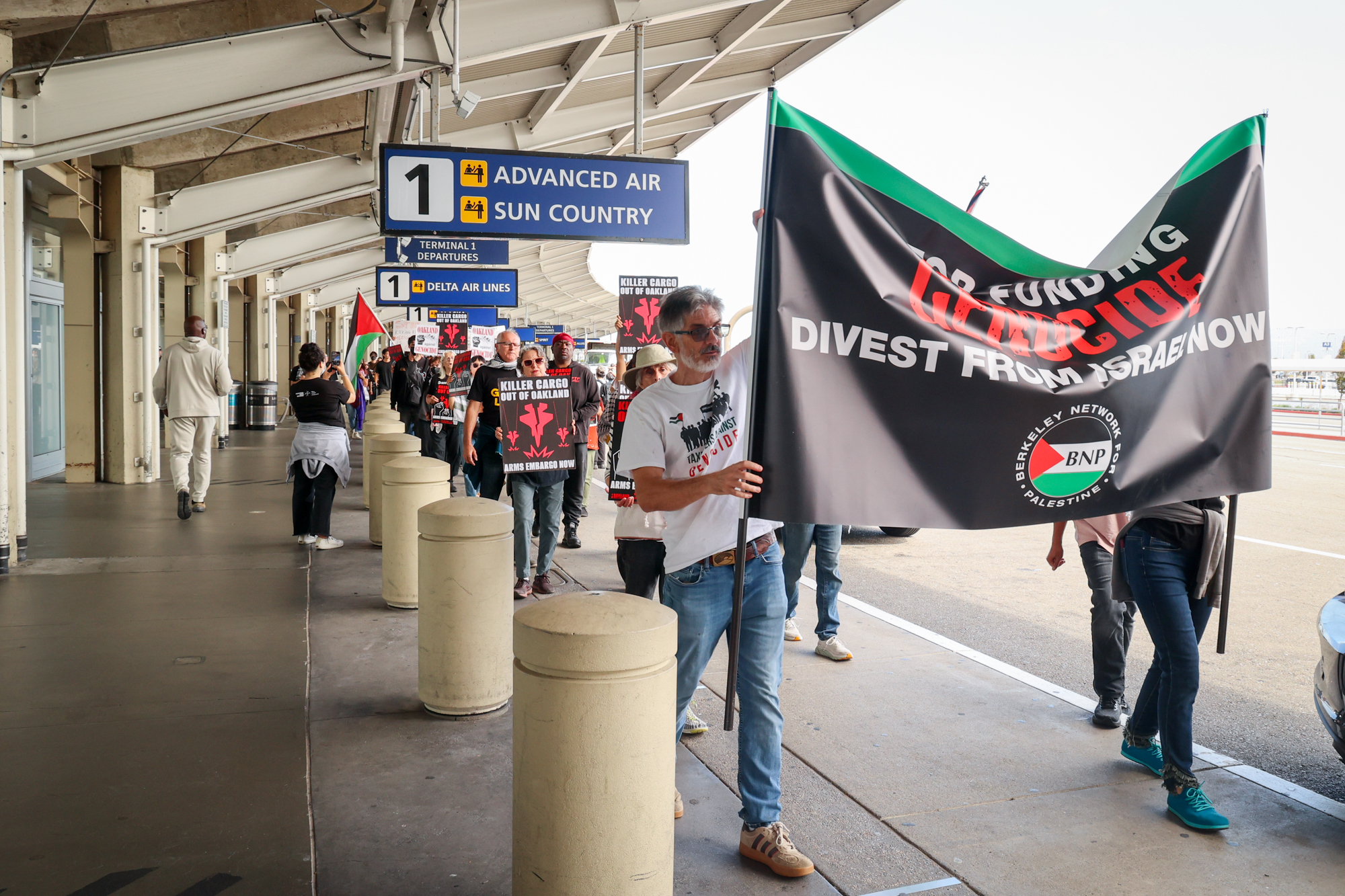
window.__INITIAL_STATE__={
"attachmentsReducer": {
"audio_0": {
"type": "attachments",
"id": "audio_0",
"imgSizes": {
"kqedFullSize": {
"file": "https://ww2.kqed.org/news/wp-content/themes/KQED-unified/img/audio_bgs/background0.jpg"
}
}
},
"audio_1": {
"type": "attachments",
"id": "audio_1",
"imgSizes": {
"kqedFullSize": {
"file": "https://ww2.kqed.org/news/wp-content/themes/KQED-unified/img/audio_bgs/background1.jpg"
}
}
},
"audio_2": {
"type": "attachments",
"id": "audio_2",
"imgSizes": {
"kqedFullSize": {
"file": "https://ww2.kqed.org/news/wp-content/themes/KQED-unified/img/audio_bgs/background2.jpg"
}
}
},
"audio_3": {
"type": "attachments",
"id": "audio_3",
"imgSizes": {
"kqedFullSize": {
"file": "https://ww2.kqed.org/news/wp-content/themes/KQED-unified/img/audio_bgs/background3.jpg"
}
}
},
"audio_4": {
"type": "attachments",
"id": "audio_4",
"imgSizes": {
"kqedFullSize": {
"file": "https://ww2.kqed.org/news/wp-content/themes/KQED-unified/img/audio_bgs/background4.jpg"
}
}
},
"placeholder": {
"type": "attachments",
"id": "placeholder",
"imgSizes": {
"thumbnail": {
"file": "https://cdn.kqed.org/wp-content/uploads/2024/12/KQED-Default-Image-816638274-2000x1333-1-160x107.jpg",
"width": 160,
"height": 107,
"mimeType": "image/jpeg"
},
"medium": {
"file": "https://cdn.kqed.org/wp-content/uploads/2024/12/KQED-Default-Image-816638274-2000x1333-1-800x533.jpg",
"width": 800,
"height": 533,
"mimeType": "image/jpeg"
},
"medium_large": {
"file": "https://cdn.kqed.org/wp-content/uploads/2024/12/KQED-Default-Image-816638274-2000x1333-1-768x512.jpg",
"width": 768,
"height": 512,
"mimeType": "image/jpeg"
},
"large": {
"file": "https://cdn.kqed.org/wp-content/uploads/2024/12/KQED-Default-Image-816638274-2000x1333-1-1020x680.jpg",
"width": 1020,
"height": 680,
"mimeType": "image/jpeg"
},
"1536x1536": {
"file": "https://cdn.kqed.org/wp-content/uploads/2024/12/KQED-Default-Image-816638274-2000x1333-1-1536x1024.jpg",
"width": 1536,
"height": 1024,
"mimeType": "image/jpeg"
},
"fd-lrg": {
"file": "https://cdn.kqed.org/wp-content/uploads/2024/12/KQED-Default-Image-816638274-2000x1333-1-1536x1024.jpg",
"width": 1536,
"height": 1024,
"mimeType": "image/jpeg"
},
"fd-med": {
"file": "https://cdn.kqed.org/wp-content/uploads/2024/12/KQED-Default-Image-816638274-2000x1333-1-1020x680.jpg",
"width": 1020,
"height": 680,
"mimeType": "image/jpeg"
},
"fd-sm": {
"file": "https://cdn.kqed.org/wp-content/uploads/2024/12/KQED-Default-Image-816638274-2000x1333-1-800x533.jpg",
"width": 800,
"height": 533,
"mimeType": "image/jpeg"
},
"post-thumbnail": {
"file": "https://cdn.kqed.org/wp-content/uploads/2024/12/KQED-Default-Image-816638274-2000x1333-1-672x372.jpg",
"width": 672,
"height": 372,
"mimeType": "image/jpeg"
},
"twentyfourteen-full-width": {
"file": "https://cdn.kqed.org/wp-content/uploads/2024/12/KQED-Default-Image-816638274-2000x1333-1-1038x576.jpg",
"width": 1038,
"height": 576,
"mimeType": "image/jpeg"
},
"xxsmall": {
"file": "https://cdn.kqed.org/wp-content/uploads/2024/12/KQED-Default-Image-816638274-2000x1333-1-160x107.jpg",
"width": 160,
"height": 107,
"mimeType": "image/jpeg"
},
"xsmall": {
"file": "https://cdn.kqed.org/wp-content/uploads/2024/12/KQED-Default-Image-816638274-2000x1333-1-672x372.jpg",
"width": 672,
"height": 372,
"mimeType": "image/jpeg"
},
"small": {
"file": "https://cdn.kqed.org/wp-content/uploads/2024/12/KQED-Default-Image-816638274-2000x1333-1-672x372.jpg",
"width": 672,
"height": 372,
"mimeType": "image/jpeg"
},
"xlarge": {
"file": "https://cdn.kqed.org/wp-content/uploads/2024/12/KQED-Default-Image-816638274-2000x1333-1-1020x680.jpg",
"width": 1020,
"height": 680,
"mimeType": "image/jpeg"
},
"full-width": {
"file": "https://cdn.kqed.org/wp-content/uploads/2024/12/KQED-Default-Image-816638274-2000x1333-1-1920x1280.jpg",
"width": 1920,
"height": 1280,
"mimeType": "image/jpeg"
},
"guest-author-32": {
"file": "https://cdn.kqed.org/wp-content/uploads/2025/01/KQED-Default-Image-816638274-1333x1333-1-160x160.jpg",
"width": 32,
"height": 32,
"mimeType": "image/jpeg"
},
"guest-author-50": {
"file": "https://cdn.kqed.org/wp-content/uploads/2025/01/KQED-Default-Image-816638274-1333x1333-1-160x160.jpg",
"width": 50,
"height": 50,
"mimeType": "image/jpeg"
},
"guest-author-64": {
"file": "https://cdn.kqed.org/wp-content/uploads/2025/01/KQED-Default-Image-816638274-1333x1333-1-160x160.jpg",
"width": 64,
"height": 64,
"mimeType": "image/jpeg"
},
"guest-author-96": {
"file": "https://cdn.kqed.org/wp-content/uploads/2025/01/KQED-Default-Image-816638274-1333x1333-1-160x160.jpg",
"width": 96,
"height": 96,
"mimeType": "image/jpeg"
},
"guest-author-128": {
"file": "https://cdn.kqed.org/wp-content/uploads/2025/01/KQED-Default-Image-816638274-1333x1333-1-160x160.jpg",
"width": 128,
"height": 128,
"mimeType": "image/jpeg"
},
"detail": {
"file": "https://cdn.kqed.org/wp-content/uploads/2025/01/KQED-Default-Image-816638274-1333x1333-1-160x160.jpg",
"width": 160,
"height": 160,
"mimeType": "image/jpeg"
},
"kqedFullSize": {
"file": "https://cdn.kqed.org/wp-content/uploads/2024/12/KQED-Default-Image-816638274-2000x1333-1.jpg",
"width": 2000,
"height": 1333
}
}
},
"news_12056703": {
"type": "attachments",
"id": "news_12056703",
"meta": {
"index": "attachments_1716263798",
"site": "news",
"id": "12056703",
"found": true
},
"title": "250918-Oakland Arms Folo-JCL-01-KQED",
"publishDate": 1758236396,
"status": "inherit",
"parent": 12056544,
"modified": 1758240270,
"caption": "Protesters march across OAK’s Terminal 1 chanting “Oakland Airport, drop your cargo! We demand an arms embargo!” on Sept. 18, 2025. The Oakland People’s Arms Embargo Coalition is calling for Oakland officials, including Mayor Barbara Lee, to end military cargo shipments through the civilian airport. ",
"credit": "Juan Carlos Lara/KQED",
"altTag": null,
"description": null,
"imgSizes": {
"thumbnail": {
"file": "https://cdn.kqed.org/wp-content/uploads/sites/10/2025/09/250918-Oakland-Arms-Folo-JCL-01-KQED-160x107.jpg",
"width": 160,
"height": 107,
"mimeType": "image/jpeg"
},
"1536x1536": {
"file": "https://cdn.kqed.org/wp-content/uploads/sites/10/2025/09/250918-Oakland-Arms-Folo-JCL-01-KQED-1536x1024.jpg",
"width": 1536,
"height": 1024,
"mimeType": "image/jpeg"
},
"post-thumbnail": {
"file": "https://cdn.kqed.org/wp-content/uploads/sites/10/2025/09/250918-Oakland-Arms-Folo-JCL-01-KQED-672x372.jpg",
"width": 672,
"height": 372,
"mimeType": "image/jpeg"
},
"twentyfourteen-full-width": {
"file": "https://cdn.kqed.org/wp-content/uploads/sites/10/2025/09/250918-Oakland-Arms-Folo-JCL-01-KQED-1038x576.jpg",
"width": 1038,
"height": 576,
"mimeType": "image/jpeg"
},
"kqedFullSize": {
"file": "https://cdn.kqed.org/wp-content/uploads/sites/10/2025/09/250918-Oakland-Arms-Folo-JCL-01-KQED.jpg",
"width": 2000,
"height": 1333
}
},
"isLoading": false,
"fetchFailed": false
},
"news_12055135": {
"type": "attachments",
"id": "news_12055135",
"meta": {
"index": "attachments_1716263798",
"site": "news",
"id": "12055135",
"found": true
},
"title": "250814-OaklandPushback-10_qed",
"publishDate": 1757355034,
"status": "inherit",
"parent": 12055131,
"modified": 1757355046,
"caption": "Mayor Barbara Lee speaks during a press conference at Oakland City Hall in Oakland on Aug. 14, 2025, condemning President Trump’s recent remarks about Oakland.",
"credit": "Beth LaBerge/KQED",
"altTag": null,
"description": null,
"imgSizes": {
"thumbnail": {
"file": "https://cdn.kqed.org/wp-content/uploads/sites/10/2025/09/250814-OaklandPushback-10_qed-160x107.jpg",
"width": 160,
"height": 107,
"mimeType": "image/jpeg"
},
"1536x1536": {
"file": "https://cdn.kqed.org/wp-content/uploads/sites/10/2025/09/250814-OaklandPushback-10_qed-1536x1024.jpg",
"width": 1536,
"height": 1024,
"mimeType": "image/jpeg"
},
"post-thumbnail": {
"file": "https://cdn.kqed.org/wp-content/uploads/sites/10/2025/09/250814-OaklandPushback-10_qed-672x372.jpg",
"width": 672,
"height": 372,
"mimeType": "image/jpeg"
},
"twentyfourteen-full-width": {
"file": "https://cdn.kqed.org/wp-content/uploads/sites/10/2025/09/250814-OaklandPushback-10_qed-1038x576.jpg",
"width": 1038,
"height": 576,
"mimeType": "image/jpeg"
},
"kqedFullSize": {
"file": "https://cdn.kqed.org/wp-content/uploads/sites/10/2025/09/250814-OaklandPushback-10_qed.jpg",
"width": 2000,
"height": 1333
}
},
"isLoading": false,
"fetchFailed": false
},
"news_12044001": {
"type": "attachments",
"id": "news_12044001",
"meta": {
"index": "attachments_1716263798",
"site": "news",
"id": "12044001",
"found": true
},
"title": "JENN OAKLEY_HOMELESSNESSHOMEOWNERSHIP_MO50-KQED",
"publishDate": 1749757338,
"status": "inherit",
"parent": 0,
"modified": 1757103222,
"caption": "Jenn Oakley — who experienced homelessness just four and a half years ago, became a homeowner through the First Home Emeryville program — photographed on June 7, 2025.",
"credit": "Manuel Orbegozo for KQED",
"altTag": null,
"description": null,
"imgSizes": {
"thumbnail": {
"file": "https://cdn.kqed.org/wp-content/uploads/sites/10/2025/06/JENN-OAKLEY_HOMELESSNESSHOMEOWNERSHIP_MO50-KQED-160x107.jpg",
"width": 160,
"height": 107,
"mimeType": "image/jpeg"
},
"1536x1536": {
"file": "https://cdn.kqed.org/wp-content/uploads/sites/10/2025/06/JENN-OAKLEY_HOMELESSNESSHOMEOWNERSHIP_MO50-KQED-1536x1024.jpg",
"width": 1536,
"height": 1024,
"mimeType": "image/jpeg"
},
"post-thumbnail": {
"file": "https://cdn.kqed.org/wp-content/uploads/sites/10/2025/06/JENN-OAKLEY_HOMELESSNESSHOMEOWNERSHIP_MO50-KQED-672x372.jpg",
"width": 672,
"height": 372,
"mimeType": "image/jpeg"
},
"twentyfourteen-full-width": {
"file": "https://cdn.kqed.org/wp-content/uploads/sites/10/2025/06/JENN-OAKLEY_HOMELESSNESSHOMEOWNERSHIP_MO50-KQED-1038x576.jpg",
"width": 1038,
"height": 576,
"mimeType": "image/jpeg"
},
"kqedFullSize": {
"file": "https://cdn.kqed.org/wp-content/uploads/sites/10/2025/06/JENN-OAKLEY_HOMELESSNESSHOMEOWNERSHIP_MO50-KQED.jpg",
"width": 2000,
"height": 1333
}
},
"isLoading": false,
"fetchFailed": false
},
"news_12054963": {
"type": "attachments",
"id": "news_12054963",
"meta": {
"index": "attachments_1716263798",
"site": "news",
"id": "12054963",
"found": true
},
"title": "250905_OAKLANDWALKOUT_GH-KQED",
"publishDate": 1757110575,
"status": "inherit",
"parent": 0,
"modified": 1757110601,
"caption": "Alexander Ybarra, an 11th grader at Coliseum College Prep Academy, leads classmates in a walkout against gun violence on Sept. 5, 2025.",
"credit": "Gustavo Hernandez/KQED",
"altTag": null,
"description": null,
"imgSizes": {
"thumbnail": {
"file": "https://cdn.kqed.org/wp-content/uploads/sites/10/2025/09/250905_OAKLANDWALKOUT_GH-KQED-160x107.jpg",
"width": 160,
"height": 107,
"mimeType": "image/jpeg"
},
"1536x1536": {
"file": "https://cdn.kqed.org/wp-content/uploads/sites/10/2025/09/250905_OAKLANDWALKOUT_GH-KQED-1536x1025.jpg",
"width": 1536,
"height": 1025,
"mimeType": "image/jpeg"
},
"post-thumbnail": {
"file": "https://cdn.kqed.org/wp-content/uploads/sites/10/2025/09/250905_OAKLANDWALKOUT_GH-KQED-672x372.jpg",
"width": 672,
"height": 372,
"mimeType": "image/jpeg"
},
"twentyfourteen-full-width": {
"file": "https://cdn.kqed.org/wp-content/uploads/sites/10/2025/09/250905_OAKLANDWALKOUT_GH-KQED-1038x576.jpg",
"width": 1038,
"height": 576,
"mimeType": "image/jpeg"
},
"kqedFullSize": {
"file": "https://cdn.kqed.org/wp-content/uploads/sites/10/2025/09/250905_OAKLANDWALKOUT_GH-KQED.jpg",
"width": 2000,
"height": 1334
}
},
"isLoading": false,
"fetchFailed": false
},
"news_12054818": {
"type": "attachments",
"id": "news_12054818",
"meta": {
"index": "attachments_1716263798",
"site": "news",
"id": "12054818",
"found": true
},
"title": "250905-bartoutage00435_TV_qed",
"publishDate": 1757095692,
"status": "inherit",
"parent": 12054754,
"modified": 1757095717,
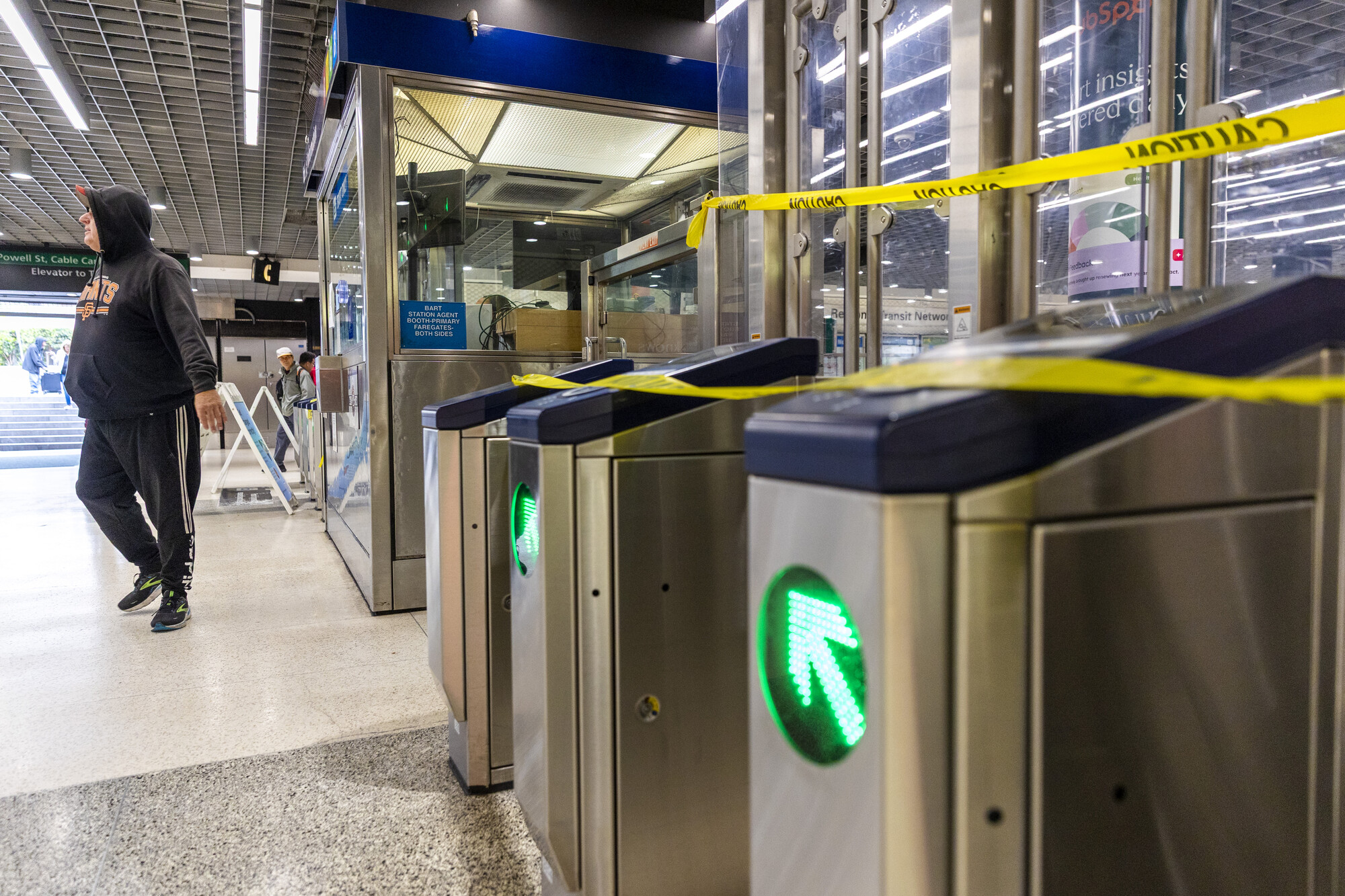
"caption": "A person walks away from Powell Bart station as it is not in service due to an electrical outage in San Francisco on Sept. 5, 2025.",
"credit": "Tâm Vũ/KQED",
"altTag": null,
"description": null,
"imgSizes": {
"thumbnail": {
"file": "https://cdn.kqed.org/wp-content/uploads/sites/10/2025/09/250905-bartoutage00435_TV_qed-160x107.jpg",
"width": 160,
"height": 107,
"mimeType": "image/jpeg"
},
"1536x1536": {
"file": "https://cdn.kqed.org/wp-content/uploads/sites/10/2025/09/250905-bartoutage00435_TV_qed-1536x1024.jpg",
"width": 1536,
"height": 1024,
"mimeType": "image/jpeg"
},
"post-thumbnail": {
"file": "https://cdn.kqed.org/wp-content/uploads/sites/10/2025/09/250905-bartoutage00435_TV_qed-672x372.jpg",
"width": 672,
"height": 372,
"mimeType": "image/jpeg"
},
"twentyfourteen-full-width": {
"file": "https://cdn.kqed.org/wp-content/uploads/sites/10/2025/09/250905-bartoutage00435_TV_qed-1038x576.jpg",
"width": 1038,
"height": 576,
"mimeType": "image/jpeg"
},
"kqedFullSize": {
"file": "https://cdn.kqed.org/wp-content/uploads/sites/10/2025/09/250905-bartoutage00435_TV_qed.jpg",
"width": 2000,
"height": 1333
}
},
"isLoading": false,
"fetchFailed": false
},
"news_12054681": {
"type": "attachments",
"id": "news_12054681",
"meta": {
"index": "attachments_1716263798",
"site": "news",
"id": "12054681",
"found": true
},
"title": "US-POLITICS-IMMIGRATION",
"publishDate": 1757020526,
"status": "inherit",
"parent": 12054668,
"modified": 1757362676,
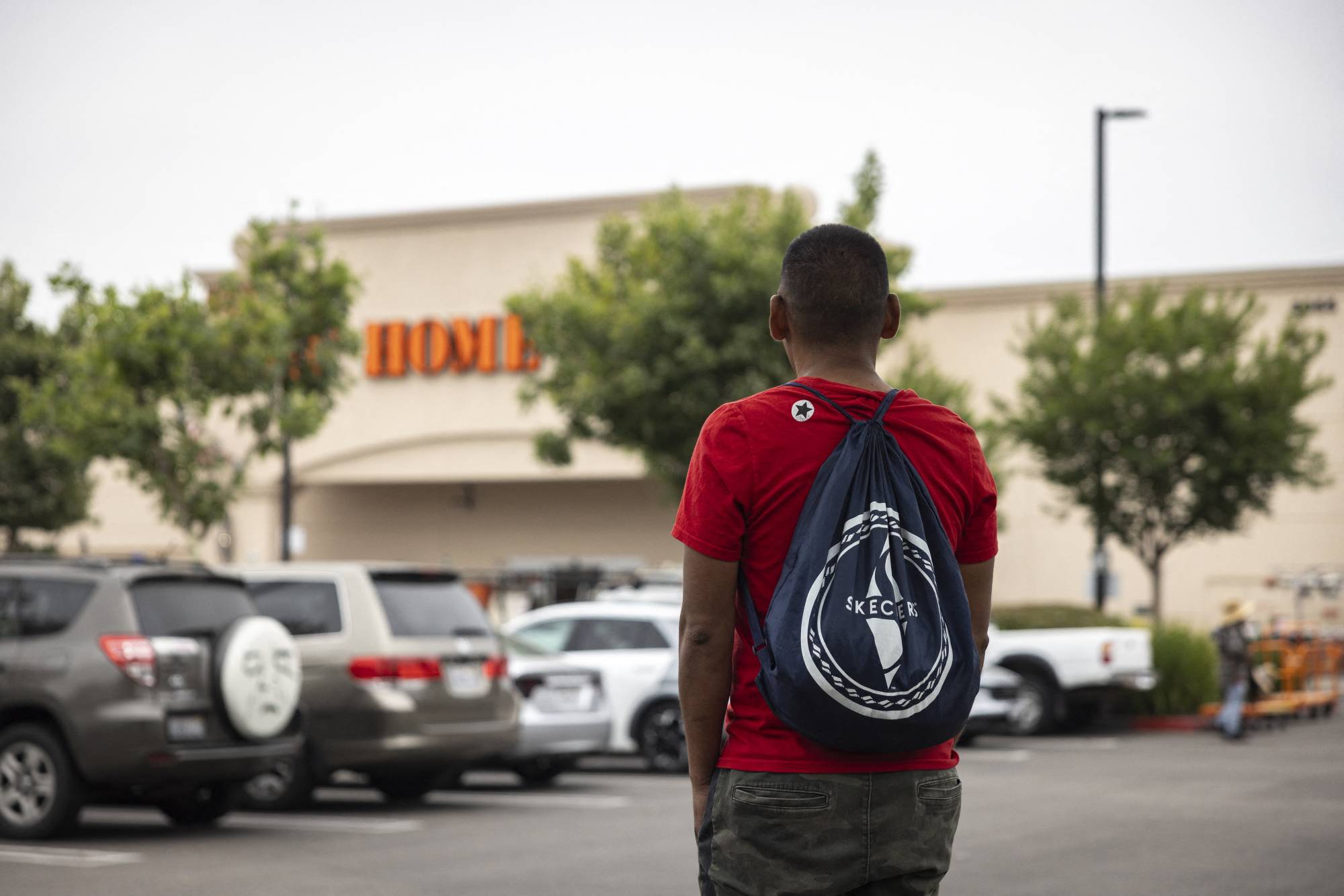
"caption": "A day laborer waits on the parking lot of a Home Depot as federal immigration conducts raids in Los Angeles, California on June 20, 2025. ",
"credit": "Etienne Laurent/AFP via Getty Images",
"altTag": null,
"description": null,
"imgSizes": {
"medium": {
"file": "https://cdn.kqed.org/wp-content/uploads/sites/10/2025/09/GettyImages-2220320695-2000x1334.jpg",
"width": 2000,
"height": 1334,
"mimeType": "image/jpeg"
},
"large": {
"file": "https://cdn.kqed.org/wp-content/uploads/sites/10/2025/09/GettyImages-2220320695-2000x1334.jpg",
"width": 2000,
"height": 1334,
"mimeType": "image/jpeg"
},
"thumbnail": {
"file": "https://cdn.kqed.org/wp-content/uploads/sites/10/2025/09/GettyImages-2220320695-160x107.jpg",
"width": 160,
"height": 107,
"mimeType": "image/jpeg"
},
"1536x1536": {
"file": "https://cdn.kqed.org/wp-content/uploads/sites/10/2025/09/GettyImages-2220320695-1536x1025.jpg",
"width": 1536,
"height": 1025,
"mimeType": "image/jpeg"
},
"2048x2048": {
"file": "https://cdn.kqed.org/wp-content/uploads/sites/10/2025/09/GettyImages-2220320695-2048x1366.jpg",
"width": 2048,
"height": 1366,
"mimeType": "image/jpeg"
},
"post-thumbnail": {
"file": "https://cdn.kqed.org/wp-content/uploads/sites/10/2025/09/GettyImages-2220320695-672x372.jpg",
"width": 672,
"height": 372,
"mimeType": "image/jpeg"
},
"twentyfourteen-full-width": {
"file": "https://cdn.kqed.org/wp-content/uploads/sites/10/2025/09/GettyImages-2220320695-1038x576.jpg",
"width": 1038,
"height": 576,
"mimeType": "image/jpeg"
},
"full-width": {
"file": "https://cdn.kqed.org/wp-content/uploads/sites/10/2025/09/GettyImages-2220320695-2000x1334.jpg",
"width": 2000,
"height": 1334,
"mimeType": "image/jpeg"
},
"kqedFullSize": {
"file": "https://cdn.kqed.org/wp-content/uploads/sites/10/2025/09/GettyImages-2220320695-scaled.jpg",
"width": 2560,
"height": 1708
}
},
"isLoading": false,
"fetchFailed": false
},
"news_12053653": {
"type": "attachments",
"id": "news_12053653",
"meta": {
"index": "attachments_1716263798",
"site": "news",
"id": "12053653",
"found": true
},
"title": "The entrance to the Oakland International Airport in Oakland on April 12, 2024.",
"publishDate": 1756159972,
"status": "inherit",
"parent": 12053637,
"modified": 1756159981,
"caption": "The entrance to the Oakland International Airport in Oakland on April 12, 2024.",
"credit": "Beth LaBerge/KQED",
"altTag": null,
"description": null,
"imgSizes": {
"thumbnail": {
"file": "https://cdn.kqed.org/wp-content/uploads/sites/10/2025/08/240412-OAKAirport-004-BL_qed-160x107.jpg",
"width": 160,
"height": 107,
"mimeType": "image/jpeg"
},
"1536x1536": {
"file": "https://cdn.kqed.org/wp-content/uploads/sites/10/2025/08/240412-OAKAirport-004-BL_qed-1536x1024.jpg",
"width": 1536,
"height": 1024,
"mimeType": "image/jpeg"
},
"post-thumbnail": {
"file": "https://cdn.kqed.org/wp-content/uploads/sites/10/2025/08/240412-OAKAirport-004-BL_qed-672x372.jpg",
"width": 672,
"height": 372,
"mimeType": "image/jpeg"
},
"twentyfourteen-full-width": {
"file": "https://cdn.kqed.org/wp-content/uploads/sites/10/2025/08/240412-OAKAirport-004-BL_qed-1038x576.jpg",
"width": 1038,
"height": 576,
"mimeType": "image/jpeg"
},
"kqedFullSize": {
"file": "https://cdn.kqed.org/wp-content/uploads/sites/10/2025/08/240412-OAKAirport-004-BL_qed.jpg",
"width": 2000,
"height": 1333
}
},
"isLoading": false,
"fetchFailed": false
},
"news_12053169": {
"type": "attachments",
"id": "news_12053169",
"meta": {
"index": "attachments_1716263798",
"site": "news",
"id": "12053169",
"found": true
},
"title": "250821-MONK HEARING-MD-07-KQED",
"publishDate": 1755802264,
"status": "inherit",
"parent": 0,
"modified": 1755802298,
"caption": "Debbie Bow holds a banner calling for justice for Maurice Monk outside the Wiley Manuel Courthouse in Oakland on Aug. 21, 2025.",
"credit": "Martin do Nascimento/KQED",
"altTag": null,
"description": null,
"imgSizes": {
"thumbnail": {
"file": "https://cdn.kqed.org/wp-content/uploads/sites/10/2025/08/250821-MONK-HEARING-MD-07-KQED-160x107.jpg",
"width": 160,
"height": 107,
"mimeType": "image/jpeg"
},
"1536x1536": {
"file": "https://cdn.kqed.org/wp-content/uploads/sites/10/2025/08/250821-MONK-HEARING-MD-07-KQED-1536x1025.jpg",
"width": 1536,
"height": 1025,
"mimeType": "image/jpeg"
},
"post-thumbnail": {
"file": "https://cdn.kqed.org/wp-content/uploads/sites/10/2025/08/250821-MONK-HEARING-MD-07-KQED-672x372.jpg",
"width": 672,
"height": 372,
"mimeType": "image/jpeg"
},
"twentyfourteen-full-width": {
"file": "https://cdn.kqed.org/wp-content/uploads/sites/10/2025/08/250821-MONK-HEARING-MD-07-KQED-1038x576.jpg",
"width": 1038,
"height": 576,
"mimeType": "image/jpeg"
},
"kqedFullSize": {
"file": "https://cdn.kqed.org/wp-content/uploads/sites/10/2025/08/250821-MONK-HEARING-MD-07-KQED.jpg",
"width": 2000,
"height": 1334
}
},
"isLoading": false,
"fetchFailed": false
},
"news_12053154": {
"type": "attachments",
"id": "news_12053154",
"meta": {
"index": "attachments_1716263798",
"site": "news",
"id": "12053154",
"found": true
},
"title": "250821-OAK CHINATOWN ROBBERIES-MD-01-KQED",
"publishDate": 1755801207,
"status": "inherit",
"parent": 0,
"modified": 1755801424,
"caption": "The Sterling Bank & Trust in Oakland's Chinatown was one of two banks targeted in early morning robberies on Aug. 21, 2025.",
"credit": "Martin do Nascimento/KQED",
"altTag": null,
"description": null,
"imgSizes": {
"thumbnail": {
"file": "https://cdn.kqed.org/wp-content/uploads/sites/10/2025/08/250821-OAK-CHINATOWN-ROBBERIES-MD-01-KQED-160x107.jpg",
"width": 160,
"height": 107,
"mimeType": "image/jpeg"
},
"1536x1536": {
"file": "https://cdn.kqed.org/wp-content/uploads/sites/10/2025/08/250821-OAK-CHINATOWN-ROBBERIES-MD-01-KQED-1536x1025.jpg",
"width": 1536,
"height": 1025,
"mimeType": "image/jpeg"
},
"post-thumbnail": {
"file": "https://cdn.kqed.org/wp-content/uploads/sites/10/2025/08/250821-OAK-CHINATOWN-ROBBERIES-MD-01-KQED-672x372.jpg",
"width": 672,
"height": 372,
"mimeType": "image/jpeg"
},
"twentyfourteen-full-width": {
"file": "https://cdn.kqed.org/wp-content/uploads/sites/10/2025/08/250821-OAK-CHINATOWN-ROBBERIES-MD-01-KQED-1038x576.jpg",
"width": 1038,
"height": 576,
"mimeType": "image/jpeg"
},
"kqedFullSize": {
"file": "https://cdn.kqed.org/wp-content/uploads/sites/10/2025/08/250821-OAK-CHINATOWN-ROBBERIES-MD-01-KQED.jpg",
"width": 2000,
"height": 1334
}
},
"isLoading": false,
"fetchFailed": false
},
"news_12051481": {
"type": "attachments",
"id": "news_12051481",
"meta": {
"index": "attachments_1716263798",
"site": "news",
"id": "12051481",
"found": true
},
"title": "Cars drive along the 580 freeway in Oakland on Aug. 8, 2025.",
"publishDate": 1754677890,
"status": "inherit",
"parent": 12051292,
"modified": 1754696299,
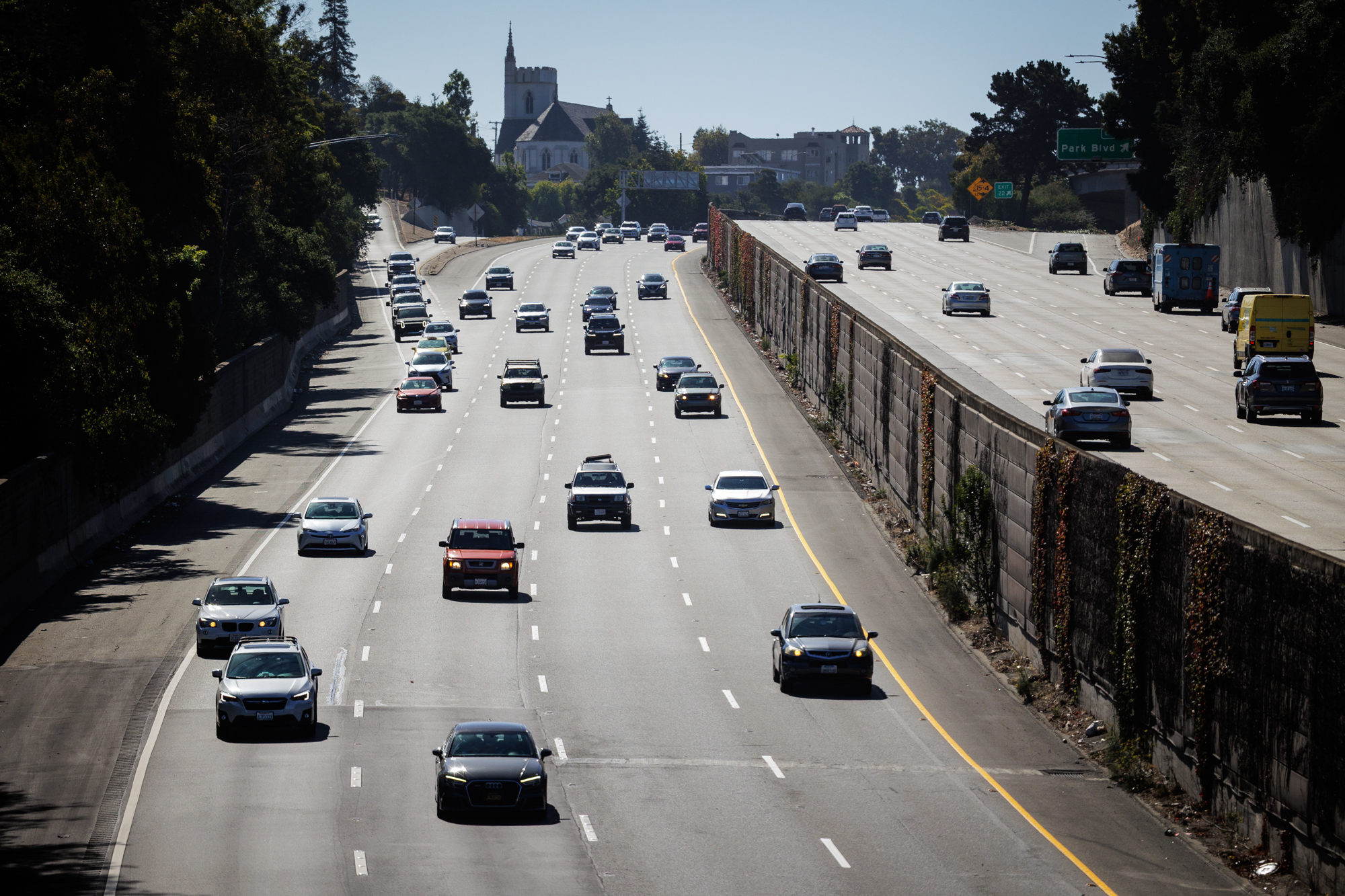
"caption": "Cars drive along the 580 freeway in Oakland on Aug. 8, 2025.",
"credit": "Martin do Nascimento/KQED",
"altTag": null,
"description": null,
"imgSizes": {
"thumbnail": {
"file": "https://cdn.kqed.org/wp-content/uploads/sites/10/2025/08/250808-CASUAL-CARPOOL-MD-03-KQED-160x107.jpg",
"width": 160,
"height": 107,
"mimeType": "image/jpeg"
},
"1536x1536": {
"file": "https://cdn.kqed.org/wp-content/uploads/sites/10/2025/08/250808-CASUAL-CARPOOL-MD-03-KQED-1536x1024.jpg",
"width": 1536,
"height": 1024,
"mimeType": "image/jpeg"
},
"post-thumbnail": {
"file": "https://cdn.kqed.org/wp-content/uploads/sites/10/2025/08/250808-CASUAL-CARPOOL-MD-03-KQED-672x372.jpg",
"width": 672,
"height": 372,
"mimeType": "image/jpeg"
},
"twentyfourteen-full-width": {
"file": "https://cdn.kqed.org/wp-content/uploads/sites/10/2025/08/250808-CASUAL-CARPOOL-MD-03-KQED-1038x576.jpg",
"width": 1038,
"height": 576,
"mimeType": "image/jpeg"
},
"kqedFullSize": {
"file": "https://cdn.kqed.org/wp-content/uploads/sites/10/2025/08/250808-CASUAL-CARPOOL-MD-03-KQED.jpg",
"width": 2000,
"height": 1333
}
},
"isLoading": false,
"fetchFailed": false
},
"news_12049998": {
"type": "attachments",
"id": "news_12049998",
"meta": {
"index": "attachments_1716263798",
"site": "news",
"id": "12049998",
"found": true
},
"title": "20250725_OAKLANDDAYLABORERS_GC-3-KQED",
"publishDate": 1753721859,
"status": "inherit",
"parent": 0,
"modified": 1755298552,
"caption": "Day laborers wait for work at a Walgreens in Oakland on July 25, 2025. Fewer people have come to the stop out of fear of being deported.",
"credit": "Gina Castro for KQED",
"altTag": null,
"description": null,
"imgSizes": {
"thumbnail": {
"file": "https://cdn.kqed.org/wp-content/uploads/sites/10/2025/07/20250725_OAKLANDDAYLABORERS_GC-3-KQED-160x107.jpg",
"width": 160,
"height": 107,
"mimeType": "image/jpeg"
},
"1536x1536": {
"file": "https://cdn.kqed.org/wp-content/uploads/sites/10/2025/07/20250725_OAKLANDDAYLABORERS_GC-3-KQED-1536x1024.jpg",
"width": 1536,
"height": 1024,
"mimeType": "image/jpeg"
},
"post-thumbnail": {
"file": "https://cdn.kqed.org/wp-content/uploads/sites/10/2025/07/20250725_OAKLANDDAYLABORERS_GC-3-KQED-672x372.jpg",
"width": 672,
"height": 372,
"mimeType": "image/jpeg"
},
"twentyfourteen-full-width": {
"file": "https://cdn.kqed.org/wp-content/uploads/sites/10/2025/07/20250725_OAKLANDDAYLABORERS_GC-3-KQED-1038x576.jpg",
"width": 1038,
"height": 576,
"mimeType": "image/jpeg"
},
"kqedFullSize": {
"file": "https://cdn.kqed.org/wp-content/uploads/sites/10/2025/07/20250725_OAKLANDDAYLABORERS_GC-3-KQED.jpg",
"width": 2000,
"height": 1333
}
},
"isLoading": false,
"fetchFailed": false
},
"news_12052244": {
"type": "attachments",
"id": "news_12052244",
"meta": {
"index": "attachments_1716263798",
"site": "news",
"id": "12052244",
"found": true
},
"title": "250814-OAKLANDPUSHBACK-08-KQED",
"publishDate": 1755202777,
"status": "inherit",
"parent": 12054322,
"modified": 1763165876,
"caption": "Mayor Barbara Lee speaks during a press conference at Oakland City Hall in Oakland on Aug. 14, 2025.",
"credit": "Beth LaBerge/KQED",
"altTag": null,
"description": null,
"imgSizes": {
"thumbnail": {
"file": "https://cdn.kqed.org/wp-content/uploads/sites/10/2025/08/250814-OAKLANDPUSHBACK-08-KQED-160x107.jpg",
"width": 160,
"height": 107,
"mimeType": "image/jpeg"
},
"1536x1536": {
"file": "https://cdn.kqed.org/wp-content/uploads/sites/10/2025/08/250814-OAKLANDPUSHBACK-08-KQED-1536x1024.jpg",
"width": 1536,
"height": 1024,
"mimeType": "image/jpeg"
},
"post-thumbnail": {
"file": "https://cdn.kqed.org/wp-content/uploads/sites/10/2025/08/250814-OAKLANDPUSHBACK-08-KQED-672x372.jpg",
"width": 672,
"height": 372,
"mimeType": "image/jpeg"
},
"twentyfourteen-full-width": {
"file": "https://cdn.kqed.org/wp-content/uploads/sites/10/2025/08/250814-OAKLANDPUSHBACK-08-KQED-1038x576.jpg",
"width": 1038,
"height": 576,
"mimeType": "image/jpeg"
},
"kqedFullSize": {
"file": "https://cdn.kqed.org/wp-content/uploads/sites/10/2025/08/250814-OAKLANDPUSHBACK-08-KQED.jpg",
"width": 2000,
"height": 1333
}
},
"isLoading": false,
"fetchFailed": false
}
},
"audioPlayerReducer": {
"postId": "stream_live",
"isPaused": true,
"isPlaying": false,
"pfsActive": false,
"pledgeModalIsOpen": true,
"playerDrawerIsOpen": false,
"liveAudioPlayStartedAt": 0,
"liveAudioPlayContext": ""
},
"authorsReducer": {
"danbrekke": {
"type": "authors",
"id": "222",
"meta": {
"index": "authors_1716337520",
"id": "222",
"found": true
},
"name": "Dan Brekke",
"firstName": "Dan",
"lastName": "Brekke",
"slug": "danbrekke",
"email": "dbrekke@kqed.org",
"display_author_email": true,
"staff_mastheads": [
"news",
"science"
],
"title": "KQED Editor and Reporter",
"bio": "Dan Brekke is a reporter and editor for KQED News, responsible for coverage of topics ranging from California water issues to the Bay Area's transportation challenges. In a newsroom career that began in Chicago in 1972, Dan has worked for \u003cem>The San Francisco Examiner,\u003c/em> Wired and TechTV and has been published in The New York Times, The New York Times Magazine, Business 2.0, Salon and elsewhere.\r\n\r\nSince joining KQED in 2007, Dan has reported, edited and produced both radio and online features and breaking news pieces. He has shared as both editor and reporter in four Society of Professional Journalists Norcal Excellence in Journalism awards and one Edward R. Murrow regional award. He was chosen for a spring 2017 residency at the Mesa Refuge to advance his research on California salmon.\r\n\r\nEmail Dan at: \u003ca href=\"mailto:dbrekke@kqed.org\">dbrekke@kqed.org\u003c/a>\r\n\r\n\u003cstrong>Twitter:\u003c/strong> \u003ca href=\"https://twitter.com/danbrekke\" rel=\"noopener noreferrer\">twitter.com/danbrekke\u003c/a>\r\n\u003cstrong>Facebook:\u003c/strong> \u003ca href=\"https://www.facebook.com/danbrekke\" rel=\"noopener noreferrer\">www.facebook.com/danbrekke\u003c/a>\r\n\u003cstrong>LinkedIn:\u003c/strong> \u003ca href=\"https://www.linkedin.com/in/danbrekke\" rel=\"noopener noreferrer\">www.linkedin.com/in/danbrekke\u003c/a>",
"avatar": "https://secure.gravatar.com/avatar/c8126230345efca3f7aa89b1a402be45?s=600&d=mm&r=g",
"twitter": "danbrekke",
"facebook": null,
"instagram": "https://www.instagram.com/dan.brekke/",
"linkedin": "https://www.linkedin.com/in/danbrekke/",
"sites": [
{
"site": "news",
"roles": [
"administrator",
"create_posts"
]
},
{
"site": "stateofhealth",
"roles": [
"editor"
]
},
{
"site": "science",
"roles": [
"editor"
]
},
{
"site": "quest",
"roles": [
"contributor"
]
},
{
"site": "food",
"roles": [
"contributor"
]
},
{
"site": "forum",
"roles": [
"contributor"
]
},
{
"site": "liveblog",
"roles": [
"editor"
]
}
],
"headData": {
"title": "Dan Brekke | KQED",
"description": "KQED Editor and Reporter",
"ogImgSrc": "https://secure.gravatar.com/avatar/c8126230345efca3f7aa89b1a402be45?s=600&d=mm&r=g",
"twImgSrc": "https://secure.gravatar.com/avatar/c8126230345efca3f7aa89b1a402be45?s=600&d=mm&r=g"
},
"isLoading": false,
"link": "/author/danbrekke"
},
"ecruzguevarra": {
"type": "authors",
"id": "8654",
"meta": {
"index": "authors_1716337520",
"id": "8654",
"found": true
},
"name": "Ericka Cruz Guevarra",
"firstName": "Ericka",
"lastName": "Cruz Guevarra",
"slug": "ecruzguevarra",
"email": "ecruzguevarra@kqed.org",
"display_author_email": true,
"staff_mastheads": [
"news"
],
"title": "Producer, The Bay Podcast",
"bio": "Ericka Cruz Guevarra is host of \u003ca href=\"https://www.kqed.org/podcasts/thebay\">\u003cem>The Bay\u003c/em>\u003c/a> podcast at KQED. Before host, she was the show’s producer. Her work in that capacity includes a three-part reported series on policing in Vallejo, which won a 2020 excellence in journalism award from the Society of Professional Journalists. Ericka has worked as a breaking news reporter at Oregon Public Broadcasting, helped produce the Code Switch podcast, and was KQED’s inaugural Raul Ramirez Diversity Fund intern. She’s also an alumna of NPR’s Next Generation Radio program. Send her an email if you have strong feelings about whether Fairfield and Suisun City are the Bay. Ericka is represented by SAG-AFTRA.",
"avatar": "https://secure.gravatar.com/avatar/25e5ab8d3d53fad2dcc7bb2b5c506b1a?s=600&d=blank&r=g",
"twitter": "NotoriousECG",
"facebook": null,
"instagram": null,
"linkedin": null,
"sites": [
{
"site": "arts",
"roles": [
"subscriber"
]
},
{
"site": "news",
"roles": [
"editor",
"manage_categories"
]
},
{
"site": "futureofyou",
"roles": [
"subscriber"
]
},
{
"site": "stateofhealth",
"roles": [
"subscriber"
]
},
{
"site": "science",
"roles": [
"editor"
]
},
{
"site": "forum",
"roles": [
"subscriber"
]
}
],
"headData": {
"title": "Ericka Cruz Guevarra | KQED",
"description": "Producer, The Bay Podcast",
"ogImgSrc": "https://secure.gravatar.com/avatar/25e5ab8d3d53fad2dcc7bb2b5c506b1a?s=600&d=blank&r=g",
"twImgSrc": "https://secure.gravatar.com/avatar/25e5ab8d3d53fad2dcc7bb2b5c506b1a?s=600&d=blank&r=g"
},
"isLoading": false,
"link": "/author/ecruzguevarra"
},
"fjhabvala": {
"type": "authors",
"id": "8659",
"meta": {
"index": "authors_1716337520",
"id": "8659",
"found": true
},
"name": "Farida Jhabvala Romero",
"firstName": "Farida",
"lastName": "Jhabvala Romero",
"slug": "fjhabvala",
"email": "fjhabvala@kqed.org",
"display_author_email": true,
"staff_mastheads": [
"news"
],
"title": "KQED Contributor",
"bio": "\u003cspan style=\"font-weight: 400;\">Farida Jhabvala Romero is a Labor Correspondent for KQED. She previously covered immigration. Farida was \u003ca href=\"https://www.ccnma.org/2022-most-influential-latina-journalists\">named\u003c/a> one of the 10 Most Influential Latina Journalists in California in 2022 by the California Chicano News Media Association. Her work has won awards from the Society of Professional Journalists (Northern California), as well as a national and regional Edward M. Murrow Award for the collaborative reporting projects “Dangerous Air” and “Graying California.” \u003c/span>\u003cspan style=\"font-weight: 400;\">Before joining KQED, Farida worked as a producer at Radio Bilingüe, a national public radio network. Farida earned her master’s degree in journalism from Stanford University.\u003c/span>",
"avatar": "https://secure.gravatar.com/avatar/c3ab27c5554b67b478f80971e515aa02?s=600&d=blank&r=g",
"twitter": "FaridaJhabvala",
"facebook": null,
"instagram": null,
"linkedin": "https://www.linkedin.com/in/faridajhabvala/",
"sites": [
{
"site": "news",
"roles": [
"editor"
]
},
{
"site": "stateofhealth",
"roles": [
"author"
]
}
],
"headData": {
"title": "Farida Jhabvala Romero | KQED",
"description": "KQED Contributor",
"ogImgSrc": "https://secure.gravatar.com/avatar/c3ab27c5554b67b478f80971e515aa02?s=600&d=blank&r=g",
"twImgSrc": "https://secure.gravatar.com/avatar/c3ab27c5554b67b478f80971e515aa02?s=600&d=blank&r=g"
},
"isLoading": false,
"link": "/author/fjhabvala"
},
"ahall": {
"type": "authors",
"id": "11490",
"meta": {
"index": "authors_1716337520",
"id": "11490",
"found": true
},
"name": "Alex Hall",
"firstName": "Alex",
"lastName": "Hall",
"slug": "ahall",
"email": "ahall@kqed.org",
"display_author_email": false,
"staff_mastheads": [
"news"
],
"title": "KQED Enterprise & Accountability Reporter",
"bio": "Alex Hall is KQED's Enterprise and Accountability Reporter. She previously covered the Central Valley for five years from KQED's bureau in Fresno. Before joining KQED, Alex was an investigative reporting fellow at Wisconsin Public Radio and the Wisconsin Center for Investigative Journalism. She has also worked as a bilingual producer for NPR's investigative unit and freelance video producer for Reuters TV on the Latin America desk. She got her start in journalism in South America, where she worked as a radio producer and Spanish-English translator for CNN Chile. Her documentary and investigation into the series of deadly COVID-19 outbreaks at Foster Farms won a national Edward R. Murrow award and was named an Investigative Reporters & Editors award finalist. Alex's reporting for Reveal on the Wisconsin dairy industry's reliance on undocumented immigrant labor was made into a film, Los Lecheros, which won a regional Edward R. Murrow award for best news documentary.",
"avatar": "https://secure.gravatar.com/avatar/defcbeb88b0bf591ff9af41f22644051?s=600&d=blank&r=g",
"twitter": "@chalexhall",
"facebook": null,
"instagram": null,
"linkedin": null,
"sites": [
{
"site": "news",
"roles": [
"editor"
]
},
{
"site": "liveblog",
"roles": [
"author"
]
}
],
"headData": {
"title": "Alex Hall | KQED",
"description": "KQED Enterprise & Accountability Reporter",
"ogImgSrc": "https://secure.gravatar.com/avatar/defcbeb88b0bf591ff9af41f22644051?s=600&d=blank&r=g",
"twImgSrc": "https://secure.gravatar.com/avatar/defcbeb88b0bf591ff9af41f22644051?s=600&d=blank&r=g"
},
"isLoading": false,
"link": "/author/ahall"
},
"amontecillo": {
"type": "authors",
"id": "11649",
"meta": {
"index": "authors_1716337520",
"id": "11649",
"found": true
},
"name": "Alan Montecillo",
"firstName": "Alan",
"lastName": "Montecillo",
"slug": "amontecillo",
"email": "amontecillo@kqed.org",
"display_author_email": false,
"staff_mastheads": [
"news"
],
"title": "KQED Contributor",
"bio": "Alan Montecillo is the senior editor of \u003cem>\u003ca href=\"http://kqed.org/thebay\">The Bay\u003c/a>, \u003c/em> KQED's local news podcast. Before moving to the Bay Area, he worked as a senior talk show producer for WILL in Champaign-Urbana, Illinois and at Oregon Public Broadcasting in Portland, Oregon. He has won journalism awards from the Society of Professional Journalists Northern California, the Public Media Journalists Association, The Signal Awards, and has also received a regional Edward R. Murrow award. Alan is a Filipino American from Hong Kong and a graduate of Reed College.",
"avatar": "https://secure.gravatar.com/avatar/d5e4e7a76481969ccba76f4e2b5ccabc?s=600&d=blank&r=g",
"twitter": "alanmontecillo",
"facebook": null,
"instagram": null,
"linkedin": null,
"sites": [
{
"site": "",
"roles": [
"editor"
]
},
{
"site": "news",
"roles": [
"editor",
"manage_categories"
]
}
],
"headData": {
"title": "Alan Montecillo | KQED",
"description": "KQED Contributor",
"ogImgSrc": "https://secure.gravatar.com/avatar/d5e4e7a76481969ccba76f4e2b5ccabc?s=600&d=blank&r=g",
"twImgSrc": "https://secure.gravatar.com/avatar/d5e4e7a76481969ccba76f4e2b5ccabc?s=600&d=blank&r=g"
},
"isLoading": false,
"link": "/author/amontecillo"
},
"jlara": {
"type": "authors",
"id": "11761",
"meta": {
"index": "authors_1716337520",
"id": "11761",
"found": true
},
"name": "Juan Carlos Lara",
"firstName": "Juan Carlos",
"lastName": "Lara",
"slug": "jlara",
"email": "jlara@kqed.org",
"display_author_email": false,
"staff_mastheads": [],
"title": "KQED Contributor",
"bio": null,
"avatar": "https://secure.gravatar.com/avatar/19e2052b9b05657c5ff2af2121846e9c?s=600&d=blank&r=g",
"twitter": null,
"facebook": null,
"instagram": null,
"linkedin": null,
"sites": [
{
"site": "arts",
"roles": [
"editor"
]
},
{
"site": "news",
"roles": [
"editor"
]
},
{
"site": "forum",
"roles": [
"editor"
]
},
{
"site": "liveblog",
"roles": [
"contributor"
]
}
],
"headData": {
"title": "Juan Carlos Lara | KQED",
"description": "KQED Contributor",
"ogImgSrc": "https://secure.gravatar.com/avatar/19e2052b9b05657c5ff2af2121846e9c?s=600&d=blank&r=g",
"twImgSrc": "https://secure.gravatar.com/avatar/19e2052b9b05657c5ff2af2121846e9c?s=600&d=blank&r=g"
},
"isLoading": false,
"link": "/author/jlara"
},
"otaylor": {
"type": "authors",
"id": "11770",
"meta": {
"index": "authors_1716337520",
"id": "11770",
"found": true
},
"name": "Otis R. Taylor Jr.",
"firstName": "Otis R.",
"lastName": "Taylor Jr.",
"slug": "otaylor",
"email": "otaylor@kqed.org",
"display_author_email": false,
"staff_mastheads": [
"news"
],
"title": "KQED Editor",
"bio": null,
"avatar": "https://secure.gravatar.com/avatar/fe73e14d4842ac8e1c03d57def2530f57f1c5b0ca7d4a987ccc5bd90956cb7c6?s=600&d=mm&r=g",
"twitter": "otisrtaylorjr",
"bluesky": null,
"facebook": null,
"instagram": null,
"linkedin": null,
"sites": [
{
"site": "arts",
"roles": [
"editor"
]
},
{
"site": "news",
"roles": [
"subscriber"
]
},
{
"site": "science",
"roles": [
"subscriber"
]
},
{
"site": "liveblog",
"roles": [
"subscriber"
]
}
],
"headData": {
"title": "Otis R. Taylor Jr. | KQED",
"description": "KQED Editor",
"ogImgSrc": "https://secure.gravatar.com/avatar/fe73e14d4842ac8e1c03d57def2530f57f1c5b0ca7d4a987ccc5bd90956cb7c6?s=600&d=mm&r=g",
"twImgSrc": "https://secure.gravatar.com/avatar/fe73e14d4842ac8e1c03d57def2530f57f1c5b0ca7d4a987ccc5bd90956cb7c6?s=600&d=mm&r=g"
},
"isLoading": false,
"link": "/author/otaylor"
},
"jessicakariisa": {
"type": "authors",
"id": "11831",
"meta": {
"index": "authors_1716337520",
"id": "11831",
"found": true
},
"name": "Jessica Kariisa",
"firstName": "Jessica",
"lastName": "Kariisa",
"slug": "jessicakariisa",
"email": "jkariisa@kqed.org",
"display_author_email": false,
"staff_mastheads": [],
"title": "Producer, The Bay",
"bio": "Jessica Kariisa is the producer of The Bay. She first joined KQED as an intern for The California Report Magazine, after which she became an on-call producer. She reported a Bay Curious episode on the use of rap lyrics in criminal trials which won a Society of Professional Journalists award in 2023 for Excellence in Features Journalism and the 2023 Signal Award for Best Conversation Starter. She’s worked on podcasts for Snap Judgment and American Public Media. Before embarking on her audio career, she was a music journalist.\r\n\r\nJessica Kariisa is represented by SAG-AFTRA.",
"avatar": "https://secure.gravatar.com/avatar/522e97b28ac0b3d411621c0fde8f3419c7b71ea2c5c262c57c4bb600963f328c?s=600&d=blank&r=g",
"twitter": null,
"bluesky": null,
"facebook": null,
"instagram": null,
"linkedin": null,
"sites": [
{
"site": "arts",
"roles": [
"author"
]
},
{
"site": "news",
"roles": [
"editor",
"manage_categories"
]
}
],
"headData": {
"title": "Jessica Kariisa | KQED",
"description": "Producer, The Bay",
"ogImgSrc": "https://secure.gravatar.com/avatar/522e97b28ac0b3d411621c0fde8f3419c7b71ea2c5c262c57c4bb600963f328c?s=600&d=blank&r=g",
"twImgSrc": "https://secure.gravatar.com/avatar/522e97b28ac0b3d411621c0fde8f3419c7b71ea2c5c262c57c4bb600963f328c?s=600&d=blank&r=g"
},
"isLoading": false,
"link": "/author/jessicakariisa"
},
"kdebenedetti": {
"type": "authors",
"id": "11913",
"meta": {
"index": "authors_1716337520",
"id": "11913",
"found": true
},
"name": "Katie DeBenedetti",
"firstName": "Katie",
"lastName": "DeBenedetti",
"slug": "kdebenedetti",
"email": "kdebenedetti@kqed.org",
"display_author_email": false,
"staff_mastheads": [
"news",
"science"
],
"title": "KQED Contributor",
"bio": "Katie DeBenedetti is a digital reporter covering daily news for the Express Desk. Prior to joining KQED as a culture reporting intern in January 2024, she covered education and city government for the Napa Valley Register.",
"avatar": "https://secure.gravatar.com/avatar/6e31073cb8f7e4214ab03f42771d0f45?s=600&d=blank&r=g",
"twitter": null,
"facebook": null,
"instagram": null,
"linkedin": null,
"sites": [
{
"site": "news",
"roles": [
"author"
]
},
{
"site": "science",
"roles": [
"author"
]
},
{
"site": "liveblog",
"roles": [
"author"
]
}
],
"headData": {
"title": "Katie DeBenedetti | KQED",
"description": "KQED Contributor",
"ogImgSrc": "https://secure.gravatar.com/avatar/6e31073cb8f7e4214ab03f42771d0f45?s=600&d=blank&r=g",
"twImgSrc": "https://secure.gravatar.com/avatar/6e31073cb8f7e4214ab03f42771d0f45?s=600&d=blank&r=g"
},
"isLoading": false,
"link": "/author/kdebenedetti"
},
"gzada": {
"type": "authors",
"id": "11929",
"meta": {
"index": "authors_1716337520",
"id": "11929",
"found": true
},
"name": "Gilare Zada",
"firstName": "Gilare",
"lastName": "Zada",
"slug": "gzada",
"email": "gzada@kqed.org",
"display_author_email": true,
"staff_mastheads": [
"news"
],
"title": null,
"bio": "Gilare Zada is a Kurdish-American from San Diego, CA. Storytelling, fitness, and binge reading are some of her passions outside of news reporting. Her work has appeared in Mission Local, the Peninsula Press, the San Francisco Press Club, and more. She also writes as a class correspondent for the Stanford Magazine - go Card!",
"avatar": "https://secure.gravatar.com/avatar/33a75f2b947669a488a805edec3fbf3838c1cedaedda710e983770633b4d6a75?s=600&d=blank&r=g",
"twitter": null,
"bluesky": null,
"facebook": null,
"instagram": null,
"linkedin": null,
"sites": [
{
"site": "arts",
"roles": [
"editor"
]
},
{
"site": "news",
"roles": [
"editor",
"contributor"
]
},
{
"site": "science",
"roles": [
"editor"
]
}
],
"headData": {
"title": "Gilare Zada | KQED",
"description": null,
"ogImgSrc": "https://secure.gravatar.com/avatar/33a75f2b947669a488a805edec3fbf3838c1cedaedda710e983770633b4d6a75?s=600&d=blank&r=g",
"twImgSrc": "https://secure.gravatar.com/avatar/33a75f2b947669a488a805edec3fbf3838c1cedaedda710e983770633b4d6a75?s=600&d=blank&r=g"
},
"isLoading": false,
"link": "/author/gzada"
},
"skennedy": {
"type": "authors",
"id": "11935",
"meta": {
"index": "authors_1716337520",
"id": "11935",
"found": true
},
"name": "Samantha Kennedy",
"firstName": "Samantha",
"lastName": "Kennedy",
"slug": "skennedy",
"email": "SKennedy@kqed.org",
"display_author_email": false,
"staff_mastheads": [],
"title": "KQED Contributor",
"bio": null,
"avatar": "https://secure.gravatar.com/avatar/adc7b14bf1e801793202a156ecc864d4ad505b0fd63162a2f3da0e5ba57222d0?s=600&d=blank&r=g",
"twitter": null,
"bluesky": null,
"facebook": null,
"instagram": null,
"linkedin": null,
"sites": [
{
"site": "arts",
"roles": [
"author"
]
},
{
"site": "news",
"roles": [
"editor"
]
},
{
"site": "science",
"roles": [
"editor"
]
}
],
"headData": {
"title": "Samantha Kennedy | KQED",
"description": "KQED Contributor",
"ogImgSrc": "https://secure.gravatar.com/avatar/adc7b14bf1e801793202a156ecc864d4ad505b0fd63162a2f3da0e5ba57222d0?s=600&d=blank&r=g",
"twImgSrc": "https://secure.gravatar.com/avatar/adc7b14bf1e801793202a156ecc864d4ad505b0fd63162a2f3da0e5ba57222d0?s=600&d=blank&r=g"
},
"isLoading": false,
"link": "/author/skennedy"
},
"aamaral": {
"type": "authors",
"id": "11947",
"meta": {
"index": "authors_1716337520",
"id": "11947",
"found": true
},
"name": "Ana De Almeida Amaral",
"firstName": "Ana",
"lastName": "De Almeida Amaral",
"slug": "aamaral",
"email": "aamaral@kqed.org",
"display_author_email": false,
"staff_mastheads": [],
"title": "KQED Contributor",
"bio": null,
"avatar": "https://secure.gravatar.com/avatar/672b76ff04db4395a9d984fc88202b4e?s=600&d=blank&r=g",
"twitter": null,
"facebook": null,
"instagram": null,
"linkedin": null,
"sites": [
{
"site": "arts",
"roles": [
"editor"
]
}
],
"headData": {
"title": "Ana De Almeida Amaral | KQED",
"description": "KQED Contributor",
"ogImgSrc": "https://secure.gravatar.com/avatar/672b76ff04db4395a9d984fc88202b4e?s=600&d=blank&r=g",
"twImgSrc": "https://secure.gravatar.com/avatar/672b76ff04db4395a9d984fc88202b4e?s=600&d=blank&r=g"
},
"isLoading": false,
"link": "/author/aamaral"
},
"mbernal": {
"type": "authors",
"id": "11977",
"meta": {
"index": "authors_1716337520",
"id": "11977",
"found": true
},
"name": "María Fernanda Bernal",
"firstName": "María Fernanda",
"lastName": "Bernal",
"slug": "mbernal",
"email": "mbernal@kqed.org",
"display_author_email": false,
"staff_mastheads": [
"news"
],
"title": "KQED Contributor",
"bio": "Maria Fernanda is a UC Berkeley J-School alum and was named Innovation Fellow in 2023. She was the 2022 White House Correspondents' Fellow and Cokie Roberts Scholar. In her time at the Investigative Reporting Program, she led an investigative team and received a National Press Award in 2025 for the story on Chevron's Manipulation of Media. She is most proud of her international recognition with the first place podcast award from the Insituto Mexicano de la radio in 2021. Maria Fernanda is a Bay Area-based journalist who is currently working as a general assignment reporter, weekend host and producer at KQED.",
"avatar": "https://secure.gravatar.com/avatar/f44c9ad4bd3426006b0def803428a08a?s=600&d=blank&r=g",
"twitter": null,
"facebook": null,
"instagram": null,
"linkedin": null,
"sites": [
{
"site": "arts",
"roles": [
"editor"
]
},
{
"site": "news",
"roles": [
"editor",
"author"
]
},
{
"site": "science",
"roles": [
"editor"
]
}
],
"headData": {
"title": "María Fernanda Bernal | KQED",
"description": "KQED Contributor",
"ogImgSrc": "https://secure.gravatar.com/avatar/f44c9ad4bd3426006b0def803428a08a?s=600&d=blank&r=g",
"twImgSrc": "https://secure.gravatar.com/avatar/f44c9ad4bd3426006b0def803428a08a?s=600&d=blank&r=g"
},
"isLoading": false,
"link": "/author/mbernal"
}
},
"pagesReducer": {
"news_tag_oakland": {
"type": "terms",
"id": "news_34054",
"meta": {
"index": "terms_1716263798",
"site": "news",
"id": "34054",
"score": 6.883923
},
"featImg": null,
"name": "oakland",
"description": null,
"taxonomy": "tag",
"headData": {
"twImgId": null,
"twTitle": null,
"ogTitle": null,
"ogImgId": null,
"twDescription": null,
"description": null,
"title": "oakland Archives | KQED News",
"ogDescription": null
},
"ttid": 34071,
"slug": "oakland",
"isLoading": false,
"title": "oakland",
"pageMeta": {
"site": "news",
"WpPageTemplate": "page-topic-editorial",
"currentPage": 14
},
"blocks": [
{
"blockName": "kqed/post-list",
"attrs": {
"layout": "cardArticle2",
"query": "posts/news?tag=oakland",
"seeMore": false,
"paginated": true,
"page": 14
}
},
{
"blockName": "kqed/ad"
}
]
}
},
"pfsSessionReducer": {},
"postsReducer": {
"stream_live": {
"type": "live",
"id": "stream_live",
"audioUrl": "https://streams.kqed.org/kqedradio",
"title": "Live Stream",
"excerpt": "Live Stream information currently unavailable.",
"link": "/radio",
"featImg": "",
"label": {
"name": "KQED Live",
"link": "/"
}
},
"stream_kqedNewscast": {
"type": "posts",
"id": "stream_kqedNewscast",
"audioUrl": "https://www.kqed.org/.stream/anon/radio/RDnews/newscast.mp3?_=1",
"title": "KQED Newscast",
"featImg": "",
"label": {
"name": "88.5 FM",
"link": "/"
}
},
"news_12056544": {
"type": "posts",
"id": "news_12056544",
"meta": {
"index": "posts_1716263798",
"site": "news",
"id": "12056544",
"score": null,
"sort": [
1758241359000
]
},
"guestAuthors": [],
"slug": "bay-area-groups-call-for-end-of-military-shipments-to-israel-from-oakland-airport",
"title": "Bay Area Groups Call for End of Military Shipments to Israel From Oakland Airport",
"publishDate": 1758241359,
"format": "standard",
"headTitle": "Bay Area Groups Call for End of Military Shipments to Israel From Oakland Airport | KQED",
"labelTerm": {
"site": "news"
},
"content": "\u003cp>Hundreds of protesters rallied in Oakland on Thursday to call on local officials to \u003ca href=\"https://www.kqed.org/news/12053637/palestinian-activists-urge-oakland-to-stop-military-shipments-to-israel\">end the shipment of military cargo to Israel\u003c/a> through the city’s airport.\u003c/p>\n\u003cp>The group waved Palestinian flags and chanted, “Oakland Airport, drop your cargo! We demand an arms embargo!”\u003c/p>\n\u003cp>A report from the Palestinian Youth Movement last month found that at least \u003ca href=\"https://www.kqed.org/news/12053637/palestinian-activists-urge-oakland-to-stop-military-shipments-to-israel\">280 shipments of military cargo\u003c/a> had flowed through the Oakland San Francisco Bay Airport via FedEx this year. The shipments appear to include parts for the F-35 fighter jets and almost all shipments were destined for Israel’s Nevatim Air Base, where the country stations its F-35s.\u003c/p>\n\u003cp>[ad fullwidth]\u003c/p>\n\u003cp>Dozens of other organizations have joined in demanding an end to the shipments since the report’s release, the coalition said.\u003c/p>\n\u003cp>“We were shocked to learn that our very own airport here in Oakland has been serving as a major hub in the supply chain of military cargo being shipped straight to Israel, military cargo that has been directly used in massacring Palestinians,” said Mohamed Shehk, with the Arab Resource and Organizing Center Action. “This is unconscionable and unacceptable.”\u003c/p>\n\u003cfigure id=\"attachment_12056704\" class=\"wp-caption aligncenter\" style=\"max-width: 2000px\">\u003cimg loading=\"lazy\" decoding=\"async\" class=\"size-full wp-image-12056704\" src=\"https://cdn.kqed.org/wp-content/uploads/sites/10/2025/09/250918-Oakland-Arms-Folo-JCL-02-KQED.jpg\" alt=\"\" width=\"2000\" height=\"1333\" srcset=\"https://cdn.kqed.org/wp-content/uploads/sites/10/2025/09/250918-Oakland-Arms-Folo-JCL-02-KQED.jpg 2000w, https://cdn.kqed.org/wp-content/uploads/sites/10/2025/09/250918-Oakland-Arms-Folo-JCL-02-KQED-160x107.jpg 160w, https://cdn.kqed.org/wp-content/uploads/sites/10/2025/09/250918-Oakland-Arms-Folo-JCL-02-KQED-1536x1024.jpg 1536w\" sizes=\"auto, (max-width: 2000px) 100vw, 2000px\">\u003cfigcaption class=\"wp-caption-text\">Mohamed Shehk, with the Arab Resource and Organizing Center Action, leads rally attendees in chants of “Free, Free Palestine” on Sept. 18, 2025. AROC Action is one of the organizations leading the Oakland People’s Arms Embargo Coalition, which calls for an end to military cargo shipments through Oakland’s airport. \u003ccite>(Juan Carlos Lara/KQED)\u003c/cite>\u003c/figcaption>\u003c/figure>\n\u003cp>Organized labor has also joined a coalition, led by the Palestinian Youth Movement and AROC Action, to pressure city leaders to block the shipments.\u003c/p>\n\u003cp>United Auto Workers member Renee Coe announced that the union’s region 6, which represents some 120,000 workers in various fields including manufacturing and higher education across the West Coast, Alaska and Hawaii endorsed the coalition’s efforts.\u003c/p>\n\u003cp>“Our members join our union because they want a dignified life. They want dignified jobs,” Coe said. “Working people need free healthcare, safe schools, lower rents and healthy communities with strong public infrastructure. We don’t want our taxes to pay or our public infrastructure to be used for murdering children in imperialist wars.”[aside postID=news_12053637 hero='https://cdn.kqed.org/wp-content/uploads/sites/10/2025/08/240412-OAKAirport-004-BL_qed.jpg']“People of Oakland, across faiths and religions, have steadily raised calls for the end to Israel’s violence against Gaza, and have been advocating for elected officials across California to do their part to stop arming Israel,” said Rev. Jeanelle Ablola, with the California-Nevada Philippine Solidarity Task Force.\u003c/p>\n\u003cp>“It is the call of our faith to love our neighbor, to support those targeted and oppressed by dominant powers and to do what we can to make peace based on justice rather than a false peace based on military domination and subjugation,” Ablola said.\u003c/p>\n\u003cp>A few members at Thursday’s protest unfurled a large banner which read “KILLER CARGO OUT OF OAK. ARMS EMBARGO NOW.”\u003c/p>\n\u003cp>Kaley Skantz, the airport’s public information officer, told KQED in a statement that OAK is “legally required to accommodate federally authorized air traffic, including air cargo arranged by the U.S. government and/or private air cargo providers, including FedEx.”\u003c/p>\n\u003cp>“FedEx has a long-term ground lease with the Port of Oakland and is the largest air cargo carrier operating at the airport,” Skantz added. “All of FedEx’s flight and loading operations are carried out by FedEx employees directly in areas that FedEx exclusively controls.”\u003c/p>\n\u003cfigure id=\"attachment_12056705\" class=\"wp-caption aligncenter\" style=\"max-width: 2000px\">\u003cimg loading=\"lazy\" decoding=\"async\" class=\"size-full wp-image-12056705\" src=\"https://cdn.kqed.org/wp-content/uploads/sites/10/2025/09/250918-Oakland-Arms-Folo-JCL-03-KQED.jpg\" alt=\"\" width=\"2000\" height=\"1333\" srcset=\"https://cdn.kqed.org/wp-content/uploads/sites/10/2025/09/250918-Oakland-Arms-Folo-JCL-03-KQED.jpg 2000w, https://cdn.kqed.org/wp-content/uploads/sites/10/2025/09/250918-Oakland-Arms-Folo-JCL-03-KQED-160x107.jpg 160w, https://cdn.kqed.org/wp-content/uploads/sites/10/2025/09/250918-Oakland-Arms-Folo-JCL-03-KQED-1536x1024.jpg 1536w\" sizes=\"auto, (max-width: 2000px) 100vw, 2000px\">\u003cfigcaption class=\"wp-caption-text\">Rev. Jeanelle Ablola with the California-Nevada Philippine Solidarity Task Force speaks to the crowd about increasing militarization in the United States and the Philippines on Sept. 18, 2025. Ablola joined other organizers in calling for Oakland officials to issue an arms embargo against Israel. \u003ccite>(Juan Carlos Lara/KQED)\u003c/cite>\u003c/figcaption>\u003c/figure>\n\u003cp>The calls for action come as Israel’s military has begun a new offensive in Gaza City. Bombings have destroyed several high-rise buildings and killed dozens, \u003ca href=\"https://www.npr.org/2025/09/16/nx-s1-5543151/israel-begins-large-offensive-in-gaza-city-as-airstrikes-kill-scores#:~:text=The%20military%20says%20it's%20begun,families%20are%20trapped%20under%20rubble.\">NPR reported. \u003c/a>\u003c/p>\n\u003cp>A report released this week by the UN Independent International Commission of Inquiry on the Occupied Palestinian Territory has also accused Israel of committing genocide in the Gaza Strip. The commission joined the list of groups, including two human rights groups within Israel, accusing the Israeli government of genocide, which Israel denies.\u003c/p>\n\u003cp>So far, Oakland City Council members have not responded to questions about shipments passing through OAK.\u003c/p>\n\u003cp>A spokesperson from Oakland Mayor Barbara Lee’s office told KQED: “Mayor Lee values Oaklanders’ voices when residents speak to global issues locally. Our office has asked the Port to verify the facts on this and to get back to the office with details.”\u003c/p>\n\u003cp>Lee was famously the only member of Congress in 2001 to vote against a bill authorizing widespread use of military force in the wake of the Sept. 11 attacks on the United States.\u003c/p>\n\u003cp>\u003c/p>\n",
"blocks": [],
"excerpt": "A growing coalition of pro-Palestinian activists have called on Oakland Mayor Barbara Lee and other leaders to end shipments destined for an air base in Israel. ",
"status": "publish",
"parent": 0,
"modified": 1758242708,
"stats": {
"hasAudio": false,
"hasVideo": false,
"hasChartOrMap": false,
"iframeSrcs": [],
"hasGoogleForm": false,
"hasGallery": false,
"hasHearkenModule": false,
"hasPolis": false,
"paragraphCount": 19,
"wordCount": 846
},
"headData": {
"title": "Bay Area Groups Call for End of Military Shipments to Israel From Oakland Airport | KQED",
"description": "A growing coalition of pro-Palestinian activists have called on Oakland Mayor Barbara Lee and other leaders to end shipments destined for an air base in Israel. ",
"ogTitle": "",
"ogDescription": "",
"ogImgId": "",
"twTitle": "",
"twDescription": "",
"twImgId": "",
"schema": {
"@context": "https://schema.org",
"@type": "NewsArticle",
"headline": "Bay Area Groups Call for End of Military Shipments to Israel From Oakland Airport",
"datePublished": "2025-09-18T17:22:39-07:00",
"dateModified": "2025-09-18T17:45:08-07:00",
"image": "https://cdn.kqed.org/wp-content/uploads/2020/02/KQED-OG-Image@1x.png",
"isAccessibleForFree": "True",
"publisher": {
"@type": "NewsMediaOrganization",
"@id": "https://www.kqed.org/#organization",
"name": "KQED",
"logo": "https://cdn.kqed.org/wp-content/uploads/2020/02/KQED-OG-Image@1x.png",
"url": "https://www.kqed.org",
"sameAs": [
"https://www.facebook.com/KQED",
"https://twitter.com/KQED",
"https://www.instagram.com/kqed/",
"https://www.tiktok.com/@kqedofficial",
"https://www.linkedin.com/company/kqed",
"https://www.youtube.com/channel/UCeC0IOo7i1P_61zVUWbJ4nw"
]
}
}
},
"primaryCategory": {
"termId": 13,
"slug": "politics",
"name": "Politics"
},
"sticky": false,
"nprStoryId": "kqed-12056544",
"templateType": "standard",
"featuredImageType": "standard",
"excludeFromSiteSearch": "Include",
"articleAge": "0",
"path": "/news/12056544/bay-area-groups-call-for-end-of-military-shipments-to-israel-from-oakland-airport",
"audioTrackLength": null,
"parsedContent": [
{
"type": "contentString",
"content": "\u003cdiv class=\"post-body\">\u003cp>\u003cp>Hundreds of protesters rallied in Oakland on Thursday to call on local officials to \u003ca href=\"https://www.kqed.org/news/12053637/palestinian-activists-urge-oakland-to-stop-military-shipments-to-israel\">end the shipment of military cargo to Israel\u003c/a> through the city’s airport.\u003c/p>\n\u003cp>The group waved Palestinian flags and chanted, “Oakland Airport, drop your cargo! We demand an arms embargo!”\u003c/p>\n\u003cp>A report from the Palestinian Youth Movement last month found that at least \u003ca href=\"https://www.kqed.org/news/12053637/palestinian-activists-urge-oakland-to-stop-military-shipments-to-israel\">280 shipments of military cargo\u003c/a> had flowed through the Oakland San Francisco Bay Airport via FedEx this year. The shipments appear to include parts for the F-35 fighter jets and almost all shipments were destined for Israel’s Nevatim Air Base, where the country stations its F-35s.\u003c/p>\n\u003cp>\u003c/p>\u003c/div>",
"attributes": {
"named": {},
"numeric": []
}
},
{
"type": "component",
"content": "",
"name": "ad",
"attributes": {
"named": {
"label": "fullwidth"
},
"numeric": [
"fullwidth"
]
}
},
{
"type": "contentString",
"content": "\u003cdiv class=\"post-body\">\u003cp>\u003c/p>\n\u003cp>Dozens of other organizations have joined in demanding an end to the shipments since the report’s release, the coalition said.\u003c/p>\n\u003cp>“We were shocked to learn that our very own airport here in Oakland has been serving as a major hub in the supply chain of military cargo being shipped straight to Israel, military cargo that has been directly used in massacring Palestinians,” said Mohamed Shehk, with the Arab Resource and Organizing Center Action. “This is unconscionable and unacceptable.”\u003c/p>\n\u003cfigure id=\"attachment_12056704\" class=\"wp-caption aligncenter\" style=\"max-width: 2000px\">\u003cimg loading=\"lazy\" decoding=\"async\" class=\"size-full wp-image-12056704\" src=\"https://cdn.kqed.org/wp-content/uploads/sites/10/2025/09/250918-Oakland-Arms-Folo-JCL-02-KQED.jpg\" alt=\"\" width=\"2000\" height=\"1333\" srcset=\"https://cdn.kqed.org/wp-content/uploads/sites/10/2025/09/250918-Oakland-Arms-Folo-JCL-02-KQED.jpg 2000w, https://cdn.kqed.org/wp-content/uploads/sites/10/2025/09/250918-Oakland-Arms-Folo-JCL-02-KQED-160x107.jpg 160w, https://cdn.kqed.org/wp-content/uploads/sites/10/2025/09/250918-Oakland-Arms-Folo-JCL-02-KQED-1536x1024.jpg 1536w\" sizes=\"auto, (max-width: 2000px) 100vw, 2000px\">\u003cfigcaption class=\"wp-caption-text\">Mohamed Shehk, with the Arab Resource and Organizing Center Action, leads rally attendees in chants of “Free, Free Palestine” on Sept. 18, 2025. AROC Action is one of the organizations leading the Oakland People’s Arms Embargo Coalition, which calls for an end to military cargo shipments through Oakland’s airport. \u003ccite>(Juan Carlos Lara/KQED)\u003c/cite>\u003c/figcaption>\u003c/figure>\n\u003cp>Organized labor has also joined a coalition, led by the Palestinian Youth Movement and AROC Action, to pressure city leaders to block the shipments.\u003c/p>\n\u003cp>United Auto Workers member Renee Coe announced that the union’s region 6, which represents some 120,000 workers in various fields including manufacturing and higher education across the West Coast, Alaska and Hawaii endorsed the coalition’s efforts.\u003c/p>\n\u003cp>“Our members join our union because they want a dignified life. They want dignified jobs,” Coe said. “Working people need free healthcare, safe schools, lower rents and healthy communities with strong public infrastructure. We don’t want our taxes to pay or our public infrastructure to be used for murdering children in imperialist wars.”\u003c/p>\u003c/div>",
"attributes": {
"named": {},
"numeric": []
}
},
{
"type": "component",
"content": "",
"name": "aside",
"attributes": {
"named": {
"postid": "news_12053637",
"hero": "https://cdn.kqed.org/wp-content/uploads/sites/10/2025/08/240412-OAKAirport-004-BL_qed.jpg",
"label": ""
},
"numeric": []
}
},
{
"type": "contentString",
"content": "\u003cdiv class=\"post-body\">\u003cp>“People of Oakland, across faiths and religions, have steadily raised calls for the end to Israel’s violence against Gaza, and have been advocating for elected officials across California to do their part to stop arming Israel,” said Rev. Jeanelle Ablola, with the California-Nevada Philippine Solidarity Task Force.\u003c/p>\n\u003cp>“It is the call of our faith to love our neighbor, to support those targeted and oppressed by dominant powers and to do what we can to make peace based on justice rather than a false peace based on military domination and subjugation,” Ablola said.\u003c/p>\n\u003cp>A few members at Thursday’s protest unfurled a large banner which read “KILLER CARGO OUT OF OAK. ARMS EMBARGO NOW.”\u003c/p>\n\u003cp>Kaley Skantz, the airport’s public information officer, told KQED in a statement that OAK is “legally required to accommodate federally authorized air traffic, including air cargo arranged by the U.S. government and/or private air cargo providers, including FedEx.”\u003c/p>\n\u003cp>“FedEx has a long-term ground lease with the Port of Oakland and is the largest air cargo carrier operating at the airport,” Skantz added. “All of FedEx’s flight and loading operations are carried out by FedEx employees directly in areas that FedEx exclusively controls.”\u003c/p>\n\u003cfigure id=\"attachment_12056705\" class=\"wp-caption aligncenter\" style=\"max-width: 2000px\">\u003cimg loading=\"lazy\" decoding=\"async\" class=\"size-full wp-image-12056705\" src=\"https://cdn.kqed.org/wp-content/uploads/sites/10/2025/09/250918-Oakland-Arms-Folo-JCL-03-KQED.jpg\" alt=\"\" width=\"2000\" height=\"1333\" srcset=\"https://cdn.kqed.org/wp-content/uploads/sites/10/2025/09/250918-Oakland-Arms-Folo-JCL-03-KQED.jpg 2000w, https://cdn.kqed.org/wp-content/uploads/sites/10/2025/09/250918-Oakland-Arms-Folo-JCL-03-KQED-160x107.jpg 160w, https://cdn.kqed.org/wp-content/uploads/sites/10/2025/09/250918-Oakland-Arms-Folo-JCL-03-KQED-1536x1024.jpg 1536w\" sizes=\"auto, (max-width: 2000px) 100vw, 2000px\">\u003cfigcaption class=\"wp-caption-text\">Rev. Jeanelle Ablola with the California-Nevada Philippine Solidarity Task Force speaks to the crowd about increasing militarization in the United States and the Philippines on Sept. 18, 2025. Ablola joined other organizers in calling for Oakland officials to issue an arms embargo against Israel. \u003ccite>(Juan Carlos Lara/KQED)\u003c/cite>\u003c/figcaption>\u003c/figure>\n\u003cp>The calls for action come as Israel’s military has begun a new offensive in Gaza City. Bombings have destroyed several high-rise buildings and killed dozens, \u003ca href=\"https://www.npr.org/2025/09/16/nx-s1-5543151/israel-begins-large-offensive-in-gaza-city-as-airstrikes-kill-scores#:~:text=The%20military%20says%20it's%20begun,families%20are%20trapped%20under%20rubble.\">NPR reported. \u003c/a>\u003c/p>\n\u003cp>A report released this week by the UN Independent International Commission of Inquiry on the Occupied Palestinian Territory has also accused Israel of committing genocide in the Gaza Strip. The commission joined the list of groups, including two human rights groups within Israel, accusing the Israeli government of genocide, which Israel denies.\u003c/p>\n\u003cp>So far, Oakland City Council members have not responded to questions about shipments passing through OAK.\u003c/p>\n\u003cp>A spokesperson from Oakland Mayor Barbara Lee’s office told KQED: “Mayor Lee values Oaklanders’ voices when residents speak to global issues locally. Our office has asked the Port to verify the facts on this and to get back to the office with details.”\u003c/p>\n\u003cp>Lee was famously the only member of Congress in 2001 to vote against a bill authorizing widespread use of military force in the wake of the Sept. 11 attacks on the United States.\u003c/p>\n\u003cp>\u003c/p>\n\u003c/div>\u003c/p>",
"attributes": {
"named": {},
"numeric": []
}
}
],
"link": "/news/12056544/bay-area-groups-call-for-end-of-military-shipments-to-israel-from-oakland-airport",
"authors": [
"11761"
],
"categories": [
"news_28250",
"news_8",
"news_13"
],
"tags": [
"news_34377",
"news_6631",
"news_33333",
"news_34054",
"news_33915",
"news_17968",
"news_21417"
],
"featImg": "news_12056703",
"label": "news"
},
"news_12055131": {
"type": "posts",
"id": "news_12055131",
"meta": {
"index": "posts_1716263798",
"site": "news",
"id": "12055131",
"score": null,
"sort": [
1757370619000
]
},
"guestAuthors": [],
"slug": "oakland-officials-are-preparing-for-trumps-possible-national-guard-deployment",
"title": "Oakland Officials Are Preparing for Trump’s Possible National Guard Deployment",
"publishDate": 1757370619,
"format": "standard",
"headTitle": "Oakland Officials Are Preparing for Trump’s Possible National Guard Deployment | KQED",
"labelTerm": {
"site": "news"
},
"content": "\u003cp>\u003ca href=\"https://www.kqed.org/news/tag/oakland\">Oakland\u003c/a> city officials are putting together a plan in preparation for the possible deployment of National Guard troops to the city, Oakland Mayor Barbara Lee said Monday morning.\u003c/p>\n\u003cp>“We do not intend to welcome federal intervention and a military occupation,” Lee said, speaking on KQED’s Forum. “We certainly know how to police, and we certainly do not need federal intervention.”\u003c/p>\n\u003cp>Lee said the city is coordinating with Alameda County and California Attorney General Rob Bonta on the plan.\u003c/p>\n\u003cp>[ad fullwidth]\u003c/p>\n\u003cp>“We will be unveiling the full plan as soon as all of the pieces are in place,” she said.\u003c/p>\n\u003cp>After deploying the National Guard to Washington, D.C. in August, President Trump has suggested for weeks that he could send troops to other cities as part of a crackdown on crime.\u003c/p>\n\u003cp>On Sunday, Trump \u003ca href=\"https://www.npr.org/2025/09/07/nx-s1-5533191/trump-chicago-threat-baltimore-new-orleans\">told reporters\u003c/a> that he planned to “clean up” major U.S. cities struggling with crime.\u003c/p>\n\u003cfigure id=\"attachment_12051925\" class=\"wp-caption aligncenter\" style=\"max-width: 2000px\">\u003cimg loading=\"lazy\" decoding=\"async\" class=\"size-full wp-image-12051925\" src=\"https://cdn.kqed.org/wp-content/uploads/sites/10/2025/08/GettyImages-2229572233-scaled-e1756854510343.jpg\" alt=\"\" width=\"2000\" height=\"1334\">\u003cfigcaption class=\"wp-caption-text\">U.S. President Donald Trump answers questions during a press conference in the James S. Brady Press Briefing Room of the White House on Aug. 11, 2025, in Washington, D.C. Trump announced he will use his authority to place the D.C. Metropolitan Police Department under federal control to assist in crime prevention in the nation’s capital, and that the National Guard will be deployed to D.C. Also pictured (L-R) are Secretary of the Interior Doug Burgum, Secretary of Defense Pete Hegseth, Attorney General Pam Bondi and FBI Director Kash Patel. \u003ccite>(Andrew Harnik/Getty Images)\u003c/cite>\u003c/figcaption>\u003c/figure>\n\u003cp>“We’re not going to war. We’re going to clean up our cities,” Trump said as he was leaving the White House.\u003c/p>\n\u003cp>The day before, he posted an \u003ca href=\"https://truthsocial.com/@realDonaldTrump/posts/115158096026629509\">image on social media\u003c/a> of himself with the Chicago skyline in the background and references to the 1979 Vietnam War film \u003cem>Apocalypse Now\u003c/em>, accompanied by the words: “‘I love the smell of deportations in the morning …’ Chicago about to find out why it’s called the Department of WAR.”\u003c/p>\n\u003cp>Last month, Trump included Oakland on a list of cities he said were “so far gone” when it comes to crime.\u003c/p>\n\u003cp>While the city has struggled with crime in recent years, \u003ca href=\"https://cityofoakland2.app.box.com/s/sjiq7usfy27gy9dfe51hp8arz5l1ixad/file/1979139463103\">police data show\u003c/a> violent crime is down 26% compared to this time last year.[aside postID=news_12052249 hero='https://cdn.kqed.org/wp-content/uploads/sites/10/2025/08/250814-OAKLANDPUSHBACK-08-KQED.jpg']“He has targeted certain cities, he has talked about certain cities, including Oakland, and so we have to be prepared, and that’s what we’re doing,” Lee said.\u003c/p>\n\u003cp>Some parts of the plan, she said, are already in place and on the city’s website.\u003c/p>\n\u003cp>A spokesperson for the mayor’s office pointed to a \u003ca href=\"https://www.oaklandca.gov/Government/City-Council-Leadership/Leadership/Office-of-the-Mayor/Immigrant-Rights-and-Resources\">web page on immigrant rights and resources in Oakland\u003c/a>. The site includes details about Oakland’s policies as a sanctuary city and “know your rights” information.\u003c/p>\n\u003cp>\u003cspan style=\"font-weight: 400\">The California Attorney General’s office declined to comment on, or even confirm, any discussions with Oakland officials, but said the office is “committed to holding President Trump and his administration accountable for overreaching their authority under the law and infringing on Californians’ constitutional rights. We’ll continue to monitor any federalization and deployment of National Guard troops closely.” \u003c/span>\u003c/p>\n\u003cp>The Department of Homeland Security announced a new immigration enforcement operation on Monday in Chicago as part of the Trump administration’s effort to target sanctuary policies.\u003c/p>\n\u003cp>Lee said Oakland does not cooperate with Immigration and Customs Enforcement and that the city will protect its immigrant communities.\u003c/p>\n\u003cfigure id=\"attachment_12038301\" class=\"wp-caption aligncenter\" style=\"max-width: 2000px\">\u003cimg loading=\"lazy\" decoding=\"async\" class=\"size-full wp-image-12038301\" src=\"https://cdn.kqed.org/wp-content/uploads/sites/10/2025/04/250430-OAKLAND-CITY-HALL-MD-04-KQED.jpg\" alt=\"\" width=\"2000\" height=\"1333\" srcset=\"https://cdn.kqed.org/wp-content/uploads/sites/10/2025/04/250430-OAKLAND-CITY-HALL-MD-04-KQED.jpg 2000w, https://cdn.kqed.org/wp-content/uploads/sites/10/2025/04/250430-OAKLAND-CITY-HALL-MD-04-KQED-800x533.jpg 800w, https://cdn.kqed.org/wp-content/uploads/sites/10/2025/04/250430-OAKLAND-CITY-HALL-MD-04-KQED-1020x680.jpg 1020w, https://cdn.kqed.org/wp-content/uploads/sites/10/2025/04/250430-OAKLAND-CITY-HALL-MD-04-KQED-160x107.jpg 160w, https://cdn.kqed.org/wp-content/uploads/sites/10/2025/04/250430-OAKLAND-CITY-HALL-MD-04-KQED-1536x1024.jpg 1536w, https://cdn.kqed.org/wp-content/uploads/sites/10/2025/04/250430-OAKLAND-CITY-HALL-MD-04-KQED-1920x1280.jpg 1920w\" sizes=\"auto, (max-width: 2000px) 100vw, 2000px\">\u003cfigcaption class=\"wp-caption-text\">Oakland City Hall in Oakland on April 30, 2025. \u003ccite>(Martin do Nascimento/KQED)\u003c/cite>\u003c/figcaption>\u003c/figure>\n\u003cp>“We have a unified effort, we’re going to make sure that we circle the wagons with our immigrant community,” Lee said.\u003c/p>\n\u003cp>Lee also urged residents who choose to protest to do so peacefully. Demonstrations that turn violent, Lee said, could give the federal government a pretext to intervene.\u003c/p>\n\u003cp>“They’re waiting for chaos as they did in Los Angeles, so then they can say it’s an emergency, we have to send the National Guard in,” Lee said. “We cannot allow Donald Trump to send in troops to provoke chaos. And that is part of his playbook, so then he can send in troops and conduct massive ICE raids.”\u003c/p>\n\u003cp>“Right now, we have to maintain our unified posture and make sure we protect everybody. Safe, secure, keep the peace and push back and resist what is taking place,” she said.\u003c/p>\n\u003cp>\u003c/p>\n",
"blocks": [],
"excerpt": "Oakland Mayor Barbara Lee said on KQED’s Forum that the city is working with Alameda County and California’s attorney general on a plan. ",
"status": "publish",
"parent": 0,
"modified": 1757375295,
"stats": {
"hasAudio": false,
"hasVideo": false,
"hasChartOrMap": false,
"iframeSrcs": [],
"hasGoogleForm": false,
"hasGallery": false,
"hasHearkenModule": false,
"hasPolis": false,
"paragraphCount": 21,
"wordCount": 782
},
"headData": {
"title": "Oakland Officials Are Preparing for Trump’s Possible National Guard Deployment | KQED",
"description": "Oakland Mayor Barbara Lee said on KQED’s Forum that the city is working with Alameda County and California’s attorney general on a plan. ",
"ogTitle": "",
"ogDescription": "",
"ogImgId": "",
"twTitle": "",
"twDescription": "",
"twImgId": "",
"schema": {
"@context": "https://schema.org",
"@type": "NewsArticle",
"headline": "Oakland Officials Are Preparing for Trump’s Possible National Guard Deployment",
"datePublished": "2025-09-08T15:30:19-07:00",
"dateModified": "2025-09-08T16:48:15-07:00",
"image": "https://cdn.kqed.org/wp-content/uploads/2020/02/KQED-OG-Image@1x.png",
"isAccessibleForFree": "True",
"publisher": {
"@type": "NewsMediaOrganization",
"@id": "https://www.kqed.org/#organization",
"name": "KQED",
"logo": "https://cdn.kqed.org/wp-content/uploads/2020/02/KQED-OG-Image@1x.png",
"url": "https://www.kqed.org",
"sameAs": [
"https://www.facebook.com/KQED",
"https://twitter.com/KQED",
"https://www.instagram.com/kqed/",
"https://www.tiktok.com/@kqedofficial",
"https://www.linkedin.com/company/kqed",
"https://www.youtube.com/channel/UCeC0IOo7i1P_61zVUWbJ4nw"
]
}
}
},
"primaryCategory": {
"termId": 13,
"slug": "politics",
"name": "Politics"
},
"sticky": false,
"nprStoryId": "kqed-12055131",
"templateType": "standard",
"featuredImageType": "standard",
"excludeFromSiteSearch": "Include",
"articleAge": "0",
"path": "/news/12055131/oakland-officials-are-preparing-for-trumps-possible-national-guard-deployment",
"audioTrackLength": null,
"parsedContent": [
{
"type": "contentString",
"content": "\u003cdiv class=\"post-body\">\u003cp>\u003cp>\u003ca href=\"https://www.kqed.org/news/tag/oakland\">Oakland\u003c/a> city officials are putting together a plan in preparation for the possible deployment of National Guard troops to the city, Oakland Mayor Barbara Lee said Monday morning.\u003c/p>\n\u003cp>“We do not intend to welcome federal intervention and a military occupation,” Lee said, speaking on KQED’s Forum. “We certainly know how to police, and we certainly do not need federal intervention.”\u003c/p>\n\u003cp>Lee said the city is coordinating with Alameda County and California Attorney General Rob Bonta on the plan.\u003c/p>\n\u003cp>\u003c/p>\u003c/div>",
"attributes": {
"named": {},
"numeric": []
}
},
{
"type": "component",
"content": "",
"name": "ad",
"attributes": {
"named": {
"label": "fullwidth"
},
"numeric": [
"fullwidth"
]
}
},
{
"type": "contentString",
"content": "\u003cdiv class=\"post-body\">\u003cp>\u003c/p>\n\u003cp>“We will be unveiling the full plan as soon as all of the pieces are in place,” she said.\u003c/p>\n\u003cp>After deploying the National Guard to Washington, D.C. in August, President Trump has suggested for weeks that he could send troops to other cities as part of a crackdown on crime.\u003c/p>\n\u003cp>On Sunday, Trump \u003ca href=\"https://www.npr.org/2025/09/07/nx-s1-5533191/trump-chicago-threat-baltimore-new-orleans\">told reporters\u003c/a> that he planned to “clean up” major U.S. cities struggling with crime.\u003c/p>\n\u003cfigure id=\"attachment_12051925\" class=\"wp-caption aligncenter\" style=\"max-width: 2000px\">\u003cimg loading=\"lazy\" decoding=\"async\" class=\"size-full wp-image-12051925\" src=\"https://cdn.kqed.org/wp-content/uploads/sites/10/2025/08/GettyImages-2229572233-scaled-e1756854510343.jpg\" alt=\"\" width=\"2000\" height=\"1334\">\u003cfigcaption class=\"wp-caption-text\">U.S. President Donald Trump answers questions during a press conference in the James S. Brady Press Briefing Room of the White House on Aug. 11, 2025, in Washington, D.C. Trump announced he will use his authority to place the D.C. Metropolitan Police Department under federal control to assist in crime prevention in the nation’s capital, and that the National Guard will be deployed to D.C. Also pictured (L-R) are Secretary of the Interior Doug Burgum, Secretary of Defense Pete Hegseth, Attorney General Pam Bondi and FBI Director Kash Patel. \u003ccite>(Andrew Harnik/Getty Images)\u003c/cite>\u003c/figcaption>\u003c/figure>\n\u003cp>“We’re not going to war. We’re going to clean up our cities,” Trump said as he was leaving the White House.\u003c/p>\n\u003cp>The day before, he posted an \u003ca href=\"https://truthsocial.com/@realDonaldTrump/posts/115158096026629509\">image on social media\u003c/a> of himself with the Chicago skyline in the background and references to the 1979 Vietnam War film \u003cem>Apocalypse Now\u003c/em>, accompanied by the words: “‘I love the smell of deportations in the morning …’ Chicago about to find out why it’s called the Department of WAR.”\u003c/p>\n\u003cp>Last month, Trump included Oakland on a list of cities he said were “so far gone” when it comes to crime.\u003c/p>\n\u003cp>While the city has struggled with crime in recent years, \u003ca href=\"https://cityofoakland2.app.box.com/s/sjiq7usfy27gy9dfe51hp8arz5l1ixad/file/1979139463103\">police data show\u003c/a> violent crime is down 26% compared to this time last year.\u003c/p>\u003c/div>",
"attributes": {
"named": {},
"numeric": []
}
},
{
"type": "component",
"content": "",
"name": "aside",
"attributes": {
"named": {
"postid": "news_12052249",
"hero": "https://cdn.kqed.org/wp-content/uploads/sites/10/2025/08/250814-OAKLANDPUSHBACK-08-KQED.jpg",
"label": ""
},
"numeric": []
}
},
{
"type": "contentString",
"content": "\u003cdiv class=\"post-body\">\u003cp>“He has targeted certain cities, he has talked about certain cities, including Oakland, and so we have to be prepared, and that’s what we’re doing,” Lee said.\u003c/p>\n\u003cp>Some parts of the plan, she said, are already in place and on the city’s website.\u003c/p>\n\u003cp>A spokesperson for the mayor’s office pointed to a \u003ca href=\"https://www.oaklandca.gov/Government/City-Council-Leadership/Leadership/Office-of-the-Mayor/Immigrant-Rights-and-Resources\">web page on immigrant rights and resources in Oakland\u003c/a>. The site includes details about Oakland’s policies as a sanctuary city and “know your rights” information.\u003c/p>\n\u003cp>\u003cspan style=\"font-weight: 400\">The California Attorney General’s office declined to comment on, or even confirm, any discussions with Oakland officials, but said the office is “committed to holding President Trump and his administration accountable for overreaching their authority under the law and infringing on Californians’ constitutional rights. We’ll continue to monitor any federalization and deployment of National Guard troops closely.” \u003c/span>\u003c/p>\n\u003cp>The Department of Homeland Security announced a new immigration enforcement operation on Monday in Chicago as part of the Trump administration’s effort to target sanctuary policies.\u003c/p>\n\u003cp>Lee said Oakland does not cooperate with Immigration and Customs Enforcement and that the city will protect its immigrant communities.\u003c/p>\n\u003cfigure id=\"attachment_12038301\" class=\"wp-caption aligncenter\" style=\"max-width: 2000px\">\u003cimg loading=\"lazy\" decoding=\"async\" class=\"size-full wp-image-12038301\" src=\"https://cdn.kqed.org/wp-content/uploads/sites/10/2025/04/250430-OAKLAND-CITY-HALL-MD-04-KQED.jpg\" alt=\"\" width=\"2000\" height=\"1333\" srcset=\"https://cdn.kqed.org/wp-content/uploads/sites/10/2025/04/250430-OAKLAND-CITY-HALL-MD-04-KQED.jpg 2000w, https://cdn.kqed.org/wp-content/uploads/sites/10/2025/04/250430-OAKLAND-CITY-HALL-MD-04-KQED-800x533.jpg 800w, https://cdn.kqed.org/wp-content/uploads/sites/10/2025/04/250430-OAKLAND-CITY-HALL-MD-04-KQED-1020x680.jpg 1020w, https://cdn.kqed.org/wp-content/uploads/sites/10/2025/04/250430-OAKLAND-CITY-HALL-MD-04-KQED-160x107.jpg 160w, https://cdn.kqed.org/wp-content/uploads/sites/10/2025/04/250430-OAKLAND-CITY-HALL-MD-04-KQED-1536x1024.jpg 1536w, https://cdn.kqed.org/wp-content/uploads/sites/10/2025/04/250430-OAKLAND-CITY-HALL-MD-04-KQED-1920x1280.jpg 1920w\" sizes=\"auto, (max-width: 2000px) 100vw, 2000px\">\u003cfigcaption class=\"wp-caption-text\">Oakland City Hall in Oakland on April 30, 2025. \u003ccite>(Martin do Nascimento/KQED)\u003c/cite>\u003c/figcaption>\u003c/figure>\n\u003cp>“We have a unified effort, we’re going to make sure that we circle the wagons with our immigrant community,” Lee said.\u003c/p>\n\u003cp>Lee also urged residents who choose to protest to do so peacefully. Demonstrations that turn violent, Lee said, could give the federal government a pretext to intervene.\u003c/p>\n\u003cp>“They’re waiting for chaos as they did in Los Angeles, so then they can say it’s an emergency, we have to send the National Guard in,” Lee said. “We cannot allow Donald Trump to send in troops to provoke chaos. And that is part of his playbook, so then he can send in troops and conduct massive ICE raids.”\u003c/p>\n\u003cp>“Right now, we have to maintain our unified posture and make sure we protect everybody. Safe, secure, keep the peace and push back and resist what is taking place,” she said.\u003c/p>\n\u003cp>\u003c/p>\n\u003c/div>\u003c/p>",
"attributes": {
"named": {},
"numeric": []
}
}
],
"link": "/news/12055131/oakland-officials-are-preparing-for-trumps-possible-national-guard-deployment",
"authors": [
"11490"
],
"categories": [
"news_28250",
"news_8",
"news_13"
],
"tags": [
"news_22185",
"news_34377",
"news_34054",
"news_17968"
],
"featImg": "news_12055135",
"label": "news"
},
"news_12054805": {
"type": "posts",
"id": "news_12054805",
"meta": {
"index": "posts_1716263798",
"site": "news",
"id": "12054805",
"score": null,
"sort": [
1757340015000
]
},
"guestAuthors": [],
"slug": "this-is-how-one-bay-area-woman-went-from-homelessness-to-homeownership",
"title": "From Homeless to Homeowner: One Bay Area Woman's Journey",
"publishDate": 1757340015,
"format": "standard",
"headTitle": "From Homeless to Homeowner: One Bay Area Woman’s Journey | KQED",
"labelTerm": {
"site": "news"
},
"content": "\u003cp>This summer, Jenn Oakley bought a one-bedroom condo in Emeryville — a milestone that once seemed impossible after more than a decade of \u003ca href=\"https://www.kqed.org/news/tag/homelessness\">homelessness\u003c/a>, addiction, recovery and rehabilitation.\u003c/p>\n\u003cp>Her journey is wild, full of sharp turns and near collapses. Before I get to it, know this: When I first \u003ca href=\"https://www.sfchronicle.com/bayarea/otisrtaylorjr/article/Who-can-really-afford-rent-in-the-Bay-Area-Beats-15271337.php\">told her story\u003c/a> as a \u003cem>San Francisco Chronicle\u003c/em> columnist, readers sent money. Their generosity gave her the foothold she needed to start climbing back.\u003c/p>\n\u003cp>That’s the truth about touching the bottom: No one climbs out alone. Some land on a safety net. Others crash onto concrete. We pass them every day — in tents, in shacks, at stoplights with cardboard pleas.\u003c/p>\n\u003cp>[ad fullwidth]\u003c/p>\n\u003cp>Oakley’s story makes me wonder what else might be possible in the Bay Area, where stability feels impossible for many. Her story illuminates the cruelty of a system that punishes those who lose their housing. Years of homelessness, addiction and structural barriers made Oakley — the most determined unhoused person I’ve reported on — a long shot. She did nearly everything right — sobriety, training, work, service — and still needed luck and the kindness of strangers.\u003c/p>\n\u003cp>For the tens of thousands drifting street to street and the countless more hanging on by a rent check, the door to stable, permanent housing isn’t just closed — it’s bolted.\u003c/p>\n\u003cfigure id=\"attachment_12054862\" class=\"wp-caption aligncenter\" style=\"max-width: 2000px\">\u003cimg loading=\"lazy\" decoding=\"async\" class=\"wp-image-12054862 size-full\" src=\"https://cdn.kqed.org/wp-content/uploads/sites/10/2025/09/Jenn-Oakley_homelessnesshomeownership_MO32_qed.jpg\" alt=\"\" width=\"2000\" height=\"1333\" srcset=\"https://cdn.kqed.org/wp-content/uploads/sites/10/2025/09/Jenn-Oakley_homelessnesshomeownership_MO32_qed.jpg 2000w, https://cdn.kqed.org/wp-content/uploads/sites/10/2025/09/Jenn-Oakley_homelessnesshomeownership_MO32_qed-160x107.jpg 160w, https://cdn.kqed.org/wp-content/uploads/sites/10/2025/09/Jenn-Oakley_homelessnesshomeownership_MO32_qed-1536x1024.jpg 1536w\" sizes=\"auto, (max-width: 2000px) 100vw, 2000px\">\u003cfigcaption class=\"wp-caption-text\">Jenn Oakley poses for a portrait inside her moving truck after moving out her belongings from a storage unit en route to her first-ever owned home in the East Bay on June 7, 2025. \u003ccite>(Manuel Orbegozo for KQED)\u003c/cite>\u003c/figcaption>\u003c/figure>\n\u003cp>When I first met Oakley, she had her face buried in the hood of a beat-up Nissan Altima, which was leaking oil. It was May 2020, outside the Lake Merritt Tuff Sheds, Oakland’s transitional housing for the unhoused. It was the early pandemic, and most of us were going stir-crazy inside. I wanted to talk to the people who didn’t have the luxury.\u003c/p>\n\u003cp>Oakley told me she’d been homeless for a decade. After moving to Oakland from Tennessee nearly two decades ago, Oakley, a college graduate, sold insurance. Her slide began in 2009, after her father died. Grief pushed her into meth. The spiral was swift and merciless: she lost her housing, her work and nearly herself. Then came the stroke, which left her partially paralyzed in a room at the Value Inn at the corner of MacArthur Boulevard and Shafter Avenue.\u003c/p>\n\u003cp>I followed her for seven months. In December 2020, she moved into her own room near UC Berkeley — $950 a month for a chance at stability, made possible in part by the generosity of \u003cem>Chronicle\u003c/em> readers. The distance \u003ca href=\"https://www.sfchronicle.com/bayarea/otisrtaylorjr/article/Bay-Area-has-been-memorable-but-family-s-15780385.php\">between the streets and a bed\u003c/a> with a roof came down to just $3,000.[aside postID=news_12051236 hero='https://cdn.kqed.org/wp-content/uploads/sites/10/2025/07/250626-GRANTSPASSDECISIONANNI-03-BL-KQED.jpg']On May 28, 2025, Oakley became the owner of a waterfront condo in Emeryville. The complex has gyms, jacuzzis and saunas.\u003c/p>\n\u003cp>“I’m working so much I can’t even enjoy it yet,” Oakley told me, standing in the breakfast nook where she has her work-from-home station. She’s juggling three jobs and nearly 80 hours a week. “In the future, I’m gonna make some changes to this place.”\u003c/p>\n\u003cp>She wants to get rid of the beige carpet. Oakley, who regularly runs five miles a day, still has to hang her running medals, patches and bibs.\u003c/p>\n\u003cp>We’ve kept in touch since meeting five years ago. The more I got to know her, the more I realized: If someone as focused as Oakley can barely grasp an affordable apartment, what hope remains for those on the street?\u003c/p>\n\u003cp>Gov. Gavin Newsom has pushed cities to \u003ca href=\"https://www.kqed.org/news/12039730/newsom-pushes-cities-ban-homeless-encampments-across-california\">ban homeless encampments\u003c/a> across California.\u003c/p>\n\u003cp>RV communities are asphalt villages, stubborn and sprawling, their challenges mounting as more Californians \u003ca href=\"https://www.kqed.org/news/12043516/rv-encampments-are-notoriously-hard-to-close-this-city-found-something-that-works\">trade driveways for curbsides\u003c/a> and turn vehicles into permanent homes. California’s homeless population is still the largest in the country, with more than 187,000 people \u003ca href=\"https://www.huduser.gov/portal/sites/default/files/pdf/2024-AHAR-Part-1.pdf\">at last count\u003c/a>.\u003c/p>\n\u003cfigure id=\"attachment_12043991\" class=\"wp-caption aligncenter\" style=\"max-width: 2000px\">\u003cimg loading=\"lazy\" decoding=\"async\" class=\"wp-image-12043991 size-full\" src=\"https://cdn.kqed.org/wp-content/uploads/sites/10/2025/06/JENN-OAKLEY_HOMELESSNESSHOMEOWNERSHIP_MO15-KQED.jpg\" alt=\"\" width=\"2000\" height=\"1333\" srcset=\"https://cdn.kqed.org/wp-content/uploads/sites/10/2025/06/JENN-OAKLEY_HOMELESSNESSHOMEOWNERSHIP_MO15-KQED.jpg 2000w, https://cdn.kqed.org/wp-content/uploads/sites/10/2025/06/JENN-OAKLEY_HOMELESSNESSHOMEOWNERSHIP_MO15-KQED-160x107.jpg 160w, https://cdn.kqed.org/wp-content/uploads/sites/10/2025/06/JENN-OAKLEY_HOMELESSNESSHOMEOWNERSHIP_MO15-KQED-1536x1024.jpg 1536w\" sizes=\"auto, (max-width: 2000px) 100vw, 2000px\">\u003cfigcaption class=\"wp-caption-text\">Jenn Oakley relied on her community of friends and graduates from Rising Sun Center for Opportunity, where she is a case manager, for assistance in moving out of her storage unit in Emeryville on June 7, 2025. \u003ccite>(Manuel Orbegozo for KQED)\u003c/cite>\u003c/figcaption>\u003c/figure>\n\u003cp>In the Bay Area, the homelessness crisis continues to swell, reaching a record 38,891 people in 2024 — a 6% jump from the year before, according to the Bay Area Council Economic Institute. The surge is driven by the relentless housing and affordability crunch, compounded by struggles with mental health and substance use. Already stretched shelters and supportive housing programs struggle to keep up with a growing population.\u003c/p>\n\u003cp>For most, the odds of escaping homelessness are grim. But every so often, someone beats them.\u003c/p>\n\u003cp>Oakley, known as Tennessee Jenn on the streets, won the lottery. No, not like the unhoused man who \u003ca href=\"https://www.sfchronicle.com/california/article/california-lottery-homeless-man-20769219.php\">won a $1 million prize\u003c/a> from a California Lottery scratcher. Oakley won the housing lottery in Emeryville. She’s the first person to become a homeowner through First Home Emeryville, the city’s down payment assistance program for first-time buyers.\u003c/p>\n\u003cp>“If your credit’s not good enough, if you don’t have enough money, then you’re out,” she told me as she showed me around her place. “And even if you do get approved, then you gotta find a spot. There’s only 40 condos for sale in Emeryville at any given time.”\u003c/p>\n\u003cfigure id=\"attachment_12043988\" class=\"wp-caption aligncenter\" style=\"max-width: 2000px\">\u003cimg loading=\"lazy\" decoding=\"async\" class=\"wp-image-12043988 size-full\" src=\"https://cdn.kqed.org/wp-content/uploads/sites/10/2025/06/JENN-OAKLEY_HOMELESSNESSHOMEOWNERSHIP_MO02-KQED.jpg\" alt=\"\" width=\"2000\" height=\"1333\" srcset=\"https://cdn.kqed.org/wp-content/uploads/sites/10/2025/06/JENN-OAKLEY_HOMELESSNESSHOMEOWNERSHIP_MO02-KQED.jpg 2000w, https://cdn.kqed.org/wp-content/uploads/sites/10/2025/06/JENN-OAKLEY_HOMELESSNESSHOMEOWNERSHIP_MO02-KQED-160x107.jpg 160w, https://cdn.kqed.org/wp-content/uploads/sites/10/2025/06/JENN-OAKLEY_HOMELESSNESSHOMEOWNERSHIP_MO02-KQED-1536x1024.jpg 1536w\" sizes=\"auto, (max-width: 2000px) 100vw, 2000px\">\u003cfigcaption class=\"wp-caption-text\">Jenn Oakley carries a box filled with her belongings into a moving truck in Emeryville on June 7, 2025. \u003ccite>(Manuel Orbegozo for KQED)\u003c/cite>\u003c/figcaption>\u003c/figure>\n\u003cp>Only three were in her price range — and she needed to qualify for a loan. Another buyer made an offer, and she nearly lost the place, but her mortgage broker hustled to close the deal.\u003c/p>\n\u003cp>As we sat on her porch one Sunday afternoon last month, Fattie, Oakley’s lab-mastiff mix, nudged my leg, drooling for attention. Until her stroke, Oakley, now 47, had lived and worked in a hotel for three years, she said. The stroke only slowed her down temporarily. As she recovered, she threw herself into learning new trades, determined to build a stable future.\u003c/p>\n\u003cp>Oakley’s leadership and passion for helping others were obvious the first time she met former Oakland Mayor Libby Schaaf.[aside postID=news_12050701 hero='https://cdn.kqed.org/wp-content/uploads/sites/10/2025/07/250722-SHELTERFAMILIES-08-BL-KQED.jpg']“It was a pleasure to stay in touch and see those gifts develop,” Schaaf said. “I’m grateful she stayed in touch with me. So often, as policymakers, we launch a program like Cabin Communities, we only get to evaluate its success with cold aggregated data or, sadly, not at all. To see intimately how Jenn was affected by the city’s actions was a profound gift for me. And I got a friend in the bargain.”\u003c/p>\n\u003cp>While living in the cabins, Oakley took automotive tech classes at Chabot College in Hayward. She completed a construction-training program at Rising Sun Center for Opportunity, which helps low-income people enter trades. She trained for two years to be a heavy equipment mechanic, only to be dismissed, she said, by a sexist instructor who questioned her age and mocked her background. Oakley said she was the third woman in 10 years to complete the program.\u003c/p>\n\u003cp>She’s worked security, changed oil at Jiffy Lube in Castro Valley, even fueled airplanes at San Francisco International Airport — until a background check flagged old drug and weapon charges, and she was escorted off the premises, she said.\u003c/p>\n\u003cp>She found her occupational calling by leaning into what she knows. She thrived working at Lifelong Medical Care, an organization that helps residents navigate the transition from homelessness into permanent housing.\u003c/p>\n\u003cfigure id=\"attachment_12043998\" class=\"wp-caption aligncenter\" style=\"max-width: 2000px\">\u003cimg loading=\"lazy\" decoding=\"async\" class=\"wp-image-12043998 size-full\" src=\"https://cdn.kqed.org/wp-content/uploads/sites/10/2025/06/JENN-OAKLEY_HOMELESSNESSHOMEOWNERSHIP_MO42-KQED.jpg\" alt=\"\" width=\"2000\" height=\"1333\" srcset=\"https://cdn.kqed.org/wp-content/uploads/sites/10/2025/06/JENN-OAKLEY_HOMELESSNESSHOMEOWNERSHIP_MO42-KQED.jpg 2000w, https://cdn.kqed.org/wp-content/uploads/sites/10/2025/06/JENN-OAKLEY_HOMELESSNESSHOMEOWNERSHIP_MO42-KQED-160x107.jpg 160w, https://cdn.kqed.org/wp-content/uploads/sites/10/2025/06/JENN-OAKLEY_HOMELESSNESSHOMEOWNERSHIP_MO42-KQED-1536x1024.jpg 1536w\" sizes=\"auto, (max-width: 2000px) 100vw, 2000px\">\u003cfigcaption class=\"wp-caption-text\">Jenn Oakley moves her belongings into the bedroom of her first-ever owned home in the East Bay on June 7, 2025. \u003ccite>(Manuel Orbegozo for KQED)\u003c/cite>\u003c/figcaption>\u003c/figure>\n\u003cp>“All these people had been homeless, now they’re trying to figure out how to live inside,” she told me. “They’ve got disabilities, addiction, violence — but I loved it. And they loved me. I was good at it.”\u003c/p>\n\u003cp>She’s now the lead case manager at Rising Sun, helping others move out of homelessness.\u003c/p>\n\u003cp>“I was homeless for 10 years. I was on drugs for 30. I can tell them all that stuff, and it gives me instant credibility,” she said.\u003c/p>\n\u003cp>Her compassion isn’t limited to her job description. She also looks after a man she met while homeless — a man who had a stroke and cannot speak. She helped him secure an apartment in Brooklyn Basin and still checks in, making sure he has meals, medication and the support he needs.\u003c/p>\n\u003cfigure id=\"attachment_12043997\" class=\"wp-caption aligncenter\" style=\"max-width: 2000px\">\u003cimg loading=\"lazy\" decoding=\"async\" class=\"wp-image-12043997 size-full\" src=\"https://cdn.kqed.org/wp-content/uploads/sites/10/2025/06/JENN-OAKLEY_HOMELESSNESSHOMEOWNERSHIP_MO39-KQED.jpg\" alt=\"\" width=\"2000\" height=\"1333\" srcset=\"https://cdn.kqed.org/wp-content/uploads/sites/10/2025/06/JENN-OAKLEY_HOMELESSNESSHOMEOWNERSHIP_MO39-KQED.jpg 2000w, https://cdn.kqed.org/wp-content/uploads/sites/10/2025/06/JENN-OAKLEY_HOMELESSNESSHOMEOWNERSHIP_MO39-KQED-160x107.jpg 160w, https://cdn.kqed.org/wp-content/uploads/sites/10/2025/06/JENN-OAKLEY_HOMELESSNESSHOMEOWNERSHIP_MO39-KQED-1536x1024.jpg 1536w\" sizes=\"auto, (max-width: 2000px) 100vw, 2000px\">\u003cfigcaption class=\"wp-caption-text\">Jenn Oakley has championed advocacy for equal access to housing and opportunities in the East Bay and plans to write a book about her journey from homelessness to home ownership. Photographed on June 7, 2025. \u003ccite>(Manuel Orbegozo for KQED)\u003c/cite>\u003c/figcaption>\u003c/figure>\n\u003cp>“We were friends, but we weren’t that close. He’s older, and I saw him, and I had instant survivor’s guilt,” Oakley said. “I mean, my stroke — I came back. I started taking care of him and doing his case work, doing all this stuff.”\u003c/p>\n\u003cp>On the weekends, she surveys unhoused people across East Oakland, where encampments have been pushed. She navigates streets to connect with people who would otherwise disappear.\u003c/p>\n\u003cp>“They’re scattered. It’s a whole different climate than it was five years ago. Ever since Grants Pass passed, everything has changed,” she said, referring to the Supreme Court decision that gives cities \u003ca href=\"https://www.kqed.org/news/11991340/supreme-court-says-laws-criminalizing-homeless-camping-do-not-violate-constitution\">more power to regulate\u003c/a> encampments on sidewalks and public property.\u003c/p>\n\u003cp>It’s a long way from the street to where she lives now, in a complex with Bay Bridge views and three swimming pools. We watched as neighbors shuffled past in robes, heading to swim or sunbathe.\u003c/p>\n\u003cp>“Like, wait,” Oakley said, shaking her head, “this is where I live now?”\u003c/p>\n\u003cp>[ad floatright]\u003c/p>\n",
"blocks": [],
"excerpt": "Jenn Oakley, a formerly homeless Oakland woman, overcame addiction, systemic barriers and a decade on the streets to buy her a home in Emeryville, highlighting the challenges of affordable housing in the Bay Area.",
"status": "publish",
"parent": 0,
"modified": 1757715101,
"stats": {
"hasAudio": false,
"hasVideo": false,
"hasChartOrMap": false,
"iframeSrcs": [],
"hasGoogleForm": false,
"hasGallery": false,
"hasHearkenModule": false,
"hasPolis": false,
"paragraphCount": 34,
"wordCount": 1745
},
"headData": {
"title": "From Homeless to Homeowner: One Bay Area Woman's Journey | KQED",
"description": "Jenn Oakley, a formerly homeless Oakland woman, overcame addiction, systemic barriers and a decade on the streets to buy her a home in Emeryville, highlighting the challenges of affordable housing in the Bay Area.",
"ogTitle": "",
"ogDescription": "",
"ogImgId": "",
"twTitle": "",
"twDescription": "",
"twImgId": "",
"schema": {
"@context": "https://schema.org",
"@type": "NewsArticle",
"headline": "From Homeless to Homeowner: One Bay Area Woman's Journey",
"datePublished": "2025-09-08T07:00:15-07:00",
"dateModified": "2025-09-12T15:11:41-07:00",
"image": "https://cdn.kqed.org/wp-content/uploads/2020/02/KQED-OG-Image@1x.png",
"isAccessibleForFree": "True",
"publisher": {
"@type": "NewsMediaOrganization",
"@id": "https://www.kqed.org/#organization",
"name": "KQED",
"logo": "https://cdn.kqed.org/wp-content/uploads/2020/02/KQED-OG-Image@1x.png",
"url": "https://www.kqed.org",
"sameAs": [
"https://www.facebook.com/KQED",
"https://twitter.com/KQED",
"https://www.instagram.com/kqed/",
"https://www.tiktok.com/@kqedofficial",
"https://www.linkedin.com/company/kqed",
"https://www.youtube.com/channel/UCeC0IOo7i1P_61zVUWbJ4nw"
]
}
}
},
"primaryCategory": {
"termId": 6266,
"slug": "housing",
"name": "Housing"
},
"sticky": false,
"nprStoryId": "kqed-12054805",
"templateType": "standard",
"featuredImageType": "standard",
"excludeFromSiteSearch": "Include",
"articleAge": "0",
"path": "/news/12054805/this-is-how-one-bay-area-woman-went-from-homelessness-to-homeownership",
"audioTrackLength": null,
"parsedContent": [
{
"type": "contentString",
"content": "\u003cdiv class=\"post-body\">\u003cp>\u003cp>This summer, Jenn Oakley bought a one-bedroom condo in Emeryville — a milestone that once seemed impossible after more than a decade of \u003ca href=\"https://www.kqed.org/news/tag/homelessness\">homelessness\u003c/a>, addiction, recovery and rehabilitation.\u003c/p>\n\u003cp>Her journey is wild, full of sharp turns and near collapses. Before I get to it, know this: When I first \u003ca href=\"https://www.sfchronicle.com/bayarea/otisrtaylorjr/article/Who-can-really-afford-rent-in-the-Bay-Area-Beats-15271337.php\">told her story\u003c/a> as a \u003cem>San Francisco Chronicle\u003c/em> columnist, readers sent money. Their generosity gave her the foothold she needed to start climbing back.\u003c/p>\n\u003cp>That’s the truth about touching the bottom: No one climbs out alone. Some land on a safety net. Others crash onto concrete. We pass them every day — in tents, in shacks, at stoplights with cardboard pleas.\u003c/p>\n\u003cp>\u003c/p>\u003c/div>",
"attributes": {
"named": {},
"numeric": []
}
},
{
"type": "component",
"content": "",
"name": "ad",
"attributes": {
"named": {
"label": "fullwidth"
},
"numeric": [
"fullwidth"
]
}
},
{
"type": "contentString",
"content": "\u003cdiv class=\"post-body\">\u003cp>\u003c/p>\n\u003cp>Oakley’s story makes me wonder what else might be possible in the Bay Area, where stability feels impossible for many. Her story illuminates the cruelty of a system that punishes those who lose their housing. Years of homelessness, addiction and structural barriers made Oakley — the most determined unhoused person I’ve reported on — a long shot. She did nearly everything right — sobriety, training, work, service — and still needed luck and the kindness of strangers.\u003c/p>\n\u003cp>For the tens of thousands drifting street to street and the countless more hanging on by a rent check, the door to stable, permanent housing isn’t just closed — it’s bolted.\u003c/p>\n\u003cfigure id=\"attachment_12054862\" class=\"wp-caption aligncenter\" style=\"max-width: 2000px\">\u003cimg loading=\"lazy\" decoding=\"async\" class=\"wp-image-12054862 size-full\" src=\"https://cdn.kqed.org/wp-content/uploads/sites/10/2025/09/Jenn-Oakley_homelessnesshomeownership_MO32_qed.jpg\" alt=\"\" width=\"2000\" height=\"1333\" srcset=\"https://cdn.kqed.org/wp-content/uploads/sites/10/2025/09/Jenn-Oakley_homelessnesshomeownership_MO32_qed.jpg 2000w, https://cdn.kqed.org/wp-content/uploads/sites/10/2025/09/Jenn-Oakley_homelessnesshomeownership_MO32_qed-160x107.jpg 160w, https://cdn.kqed.org/wp-content/uploads/sites/10/2025/09/Jenn-Oakley_homelessnesshomeownership_MO32_qed-1536x1024.jpg 1536w\" sizes=\"auto, (max-width: 2000px) 100vw, 2000px\">\u003cfigcaption class=\"wp-caption-text\">Jenn Oakley poses for a portrait inside her moving truck after moving out her belongings from a storage unit en route to her first-ever owned home in the East Bay on June 7, 2025. \u003ccite>(Manuel Orbegozo for KQED)\u003c/cite>\u003c/figcaption>\u003c/figure>\n\u003cp>When I first met Oakley, she had her face buried in the hood of a beat-up Nissan Altima, which was leaking oil. It was May 2020, outside the Lake Merritt Tuff Sheds, Oakland’s transitional housing for the unhoused. It was the early pandemic, and most of us were going stir-crazy inside. I wanted to talk to the people who didn’t have the luxury.\u003c/p>\n\u003cp>Oakley told me she’d been homeless for a decade. After moving to Oakland from Tennessee nearly two decades ago, Oakley, a college graduate, sold insurance. Her slide began in 2009, after her father died. Grief pushed her into meth. The spiral was swift and merciless: she lost her housing, her work and nearly herself. Then came the stroke, which left her partially paralyzed in a room at the Value Inn at the corner of MacArthur Boulevard and Shafter Avenue.\u003c/p>\n\u003cp>I followed her for seven months. In December 2020, she moved into her own room near UC Berkeley — $950 a month for a chance at stability, made possible in part by the generosity of \u003cem>Chronicle\u003c/em> readers. The distance \u003ca href=\"https://www.sfchronicle.com/bayarea/otisrtaylorjr/article/Bay-Area-has-been-memorable-but-family-s-15780385.php\">between the streets and a bed\u003c/a> with a roof came down to just $3,000.\u003c/p>\u003c/div>",
"attributes": {
"named": {},
"numeric": []
}
},
{
"type": "component",
"content": "",
"name": "aside",
"attributes": {
"named": {
"postid": "news_12051236",
"hero": "https://cdn.kqed.org/wp-content/uploads/sites/10/2025/07/250626-GRANTSPASSDECISIONANNI-03-BL-KQED.jpg",
"label": ""
},
"numeric": []
}
},
{
"type": "contentString",
"content": "\u003cdiv class=\"post-body\">\u003cp>On May 28, 2025, Oakley became the owner of a waterfront condo in Emeryville. The complex has gyms, jacuzzis and saunas.\u003c/p>\n\u003cp>“I’m working so much I can’t even enjoy it yet,” Oakley told me, standing in the breakfast nook where she has her work-from-home station. She’s juggling three jobs and nearly 80 hours a week. “In the future, I’m gonna make some changes to this place.”\u003c/p>\n\u003cp>She wants to get rid of the beige carpet. Oakley, who regularly runs five miles a day, still has to hang her running medals, patches and bibs.\u003c/p>\n\u003cp>We’ve kept in touch since meeting five years ago. The more I got to know her, the more I realized: If someone as focused as Oakley can barely grasp an affordable apartment, what hope remains for those on the street?\u003c/p>\n\u003cp>Gov. Gavin Newsom has pushed cities to \u003ca href=\"https://www.kqed.org/news/12039730/newsom-pushes-cities-ban-homeless-encampments-across-california\">ban homeless encampments\u003c/a> across California.\u003c/p>\n\u003cp>RV communities are asphalt villages, stubborn and sprawling, their challenges mounting as more Californians \u003ca href=\"https://www.kqed.org/news/12043516/rv-encampments-are-notoriously-hard-to-close-this-city-found-something-that-works\">trade driveways for curbsides\u003c/a> and turn vehicles into permanent homes. California’s homeless population is still the largest in the country, with more than 187,000 people \u003ca href=\"https://www.huduser.gov/portal/sites/default/files/pdf/2024-AHAR-Part-1.pdf\">at last count\u003c/a>.\u003c/p>\n\u003cfigure id=\"attachment_12043991\" class=\"wp-caption aligncenter\" style=\"max-width: 2000px\">\u003cimg loading=\"lazy\" decoding=\"async\" class=\"wp-image-12043991 size-full\" src=\"https://cdn.kqed.org/wp-content/uploads/sites/10/2025/06/JENN-OAKLEY_HOMELESSNESSHOMEOWNERSHIP_MO15-KQED.jpg\" alt=\"\" width=\"2000\" height=\"1333\" srcset=\"https://cdn.kqed.org/wp-content/uploads/sites/10/2025/06/JENN-OAKLEY_HOMELESSNESSHOMEOWNERSHIP_MO15-KQED.jpg 2000w, https://cdn.kqed.org/wp-content/uploads/sites/10/2025/06/JENN-OAKLEY_HOMELESSNESSHOMEOWNERSHIP_MO15-KQED-160x107.jpg 160w, https://cdn.kqed.org/wp-content/uploads/sites/10/2025/06/JENN-OAKLEY_HOMELESSNESSHOMEOWNERSHIP_MO15-KQED-1536x1024.jpg 1536w\" sizes=\"auto, (max-width: 2000px) 100vw, 2000px\">\u003cfigcaption class=\"wp-caption-text\">Jenn Oakley relied on her community of friends and graduates from Rising Sun Center for Opportunity, where she is a case manager, for assistance in moving out of her storage unit in Emeryville on June 7, 2025. \u003ccite>(Manuel Orbegozo for KQED)\u003c/cite>\u003c/figcaption>\u003c/figure>\n\u003cp>In the Bay Area, the homelessness crisis continues to swell, reaching a record 38,891 people in 2024 — a 6% jump from the year before, according to the Bay Area Council Economic Institute. The surge is driven by the relentless housing and affordability crunch, compounded by struggles with mental health and substance use. Already stretched shelters and supportive housing programs struggle to keep up with a growing population.\u003c/p>\n\u003cp>For most, the odds of escaping homelessness are grim. But every so often, someone beats them.\u003c/p>\n\u003cp>Oakley, known as Tennessee Jenn on the streets, won the lottery. No, not like the unhoused man who \u003ca href=\"https://www.sfchronicle.com/california/article/california-lottery-homeless-man-20769219.php\">won a $1 million prize\u003c/a> from a California Lottery scratcher. Oakley won the housing lottery in Emeryville. She’s the first person to become a homeowner through First Home Emeryville, the city’s down payment assistance program for first-time buyers.\u003c/p>\n\u003cp>“If your credit’s not good enough, if you don’t have enough money, then you’re out,” she told me as she showed me around her place. “And even if you do get approved, then you gotta find a spot. There’s only 40 condos for sale in Emeryville at any given time.”\u003c/p>\n\u003cfigure id=\"attachment_12043988\" class=\"wp-caption aligncenter\" style=\"max-width: 2000px\">\u003cimg loading=\"lazy\" decoding=\"async\" class=\"wp-image-12043988 size-full\" src=\"https://cdn.kqed.org/wp-content/uploads/sites/10/2025/06/JENN-OAKLEY_HOMELESSNESSHOMEOWNERSHIP_MO02-KQED.jpg\" alt=\"\" width=\"2000\" height=\"1333\" srcset=\"https://cdn.kqed.org/wp-content/uploads/sites/10/2025/06/JENN-OAKLEY_HOMELESSNESSHOMEOWNERSHIP_MO02-KQED.jpg 2000w, https://cdn.kqed.org/wp-content/uploads/sites/10/2025/06/JENN-OAKLEY_HOMELESSNESSHOMEOWNERSHIP_MO02-KQED-160x107.jpg 160w, https://cdn.kqed.org/wp-content/uploads/sites/10/2025/06/JENN-OAKLEY_HOMELESSNESSHOMEOWNERSHIP_MO02-KQED-1536x1024.jpg 1536w\" sizes=\"auto, (max-width: 2000px) 100vw, 2000px\">\u003cfigcaption class=\"wp-caption-text\">Jenn Oakley carries a box filled with her belongings into a moving truck in Emeryville on June 7, 2025. \u003ccite>(Manuel Orbegozo for KQED)\u003c/cite>\u003c/figcaption>\u003c/figure>\n\u003cp>Only three were in her price range — and she needed to qualify for a loan. Another buyer made an offer, and she nearly lost the place, but her mortgage broker hustled to close the deal.\u003c/p>\n\u003cp>As we sat on her porch one Sunday afternoon last month, Fattie, Oakley’s lab-mastiff mix, nudged my leg, drooling for attention. Until her stroke, Oakley, now 47, had lived and worked in a hotel for three years, she said. The stroke only slowed her down temporarily. As she recovered, she threw herself into learning new trades, determined to build a stable future.\u003c/p>\n\u003cp>Oakley’s leadership and passion for helping others were obvious the first time she met former Oakland Mayor Libby Schaaf.\u003c/p>\u003c/div>",
"attributes": {
"named": {},
"numeric": []
}
},
{
"type": "component",
"content": "",
"name": "aside",
"attributes": {
"named": {
"postid": "news_12050701",
"hero": "https://cdn.kqed.org/wp-content/uploads/sites/10/2025/07/250722-SHELTERFAMILIES-08-BL-KQED.jpg",
"label": ""
},
"numeric": []
}
},
{
"type": "contentString",
"content": "\u003cdiv class=\"post-body\">\u003cp>“It was a pleasure to stay in touch and see those gifts develop,” Schaaf said. “I’m grateful she stayed in touch with me. So often, as policymakers, we launch a program like Cabin Communities, we only get to evaluate its success with cold aggregated data or, sadly, not at all. To see intimately how Jenn was affected by the city’s actions was a profound gift for me. And I got a friend in the bargain.”\u003c/p>\n\u003cp>While living in the cabins, Oakley took automotive tech classes at Chabot College in Hayward. She completed a construction-training program at Rising Sun Center for Opportunity, which helps low-income people enter trades. She trained for two years to be a heavy equipment mechanic, only to be dismissed, she said, by a sexist instructor who questioned her age and mocked her background. Oakley said she was the third woman in 10 years to complete the program.\u003c/p>\n\u003cp>She’s worked security, changed oil at Jiffy Lube in Castro Valley, even fueled airplanes at San Francisco International Airport — until a background check flagged old drug and weapon charges, and she was escorted off the premises, she said.\u003c/p>\n\u003cp>She found her occupational calling by leaning into what she knows. She thrived working at Lifelong Medical Care, an organization that helps residents navigate the transition from homelessness into permanent housing.\u003c/p>\n\u003cfigure id=\"attachment_12043998\" class=\"wp-caption aligncenter\" style=\"max-width: 2000px\">\u003cimg loading=\"lazy\" decoding=\"async\" class=\"wp-image-12043998 size-full\" src=\"https://cdn.kqed.org/wp-content/uploads/sites/10/2025/06/JENN-OAKLEY_HOMELESSNESSHOMEOWNERSHIP_MO42-KQED.jpg\" alt=\"\" width=\"2000\" height=\"1333\" srcset=\"https://cdn.kqed.org/wp-content/uploads/sites/10/2025/06/JENN-OAKLEY_HOMELESSNESSHOMEOWNERSHIP_MO42-KQED.jpg 2000w, https://cdn.kqed.org/wp-content/uploads/sites/10/2025/06/JENN-OAKLEY_HOMELESSNESSHOMEOWNERSHIP_MO42-KQED-160x107.jpg 160w, https://cdn.kqed.org/wp-content/uploads/sites/10/2025/06/JENN-OAKLEY_HOMELESSNESSHOMEOWNERSHIP_MO42-KQED-1536x1024.jpg 1536w\" sizes=\"auto, (max-width: 2000px) 100vw, 2000px\">\u003cfigcaption class=\"wp-caption-text\">Jenn Oakley moves her belongings into the bedroom of her first-ever owned home in the East Bay on June 7, 2025. \u003ccite>(Manuel Orbegozo for KQED)\u003c/cite>\u003c/figcaption>\u003c/figure>\n\u003cp>“All these people had been homeless, now they’re trying to figure out how to live inside,” she told me. “They’ve got disabilities, addiction, violence — but I loved it. And they loved me. I was good at it.”\u003c/p>\n\u003cp>She’s now the lead case manager at Rising Sun, helping others move out of homelessness.\u003c/p>\n\u003cp>“I was homeless for 10 years. I was on drugs for 30. I can tell them all that stuff, and it gives me instant credibility,” she said.\u003c/p>\n\u003cp>Her compassion isn’t limited to her job description. She also looks after a man she met while homeless — a man who had a stroke and cannot speak. She helped him secure an apartment in Brooklyn Basin and still checks in, making sure he has meals, medication and the support he needs.\u003c/p>\n\u003cfigure id=\"attachment_12043997\" class=\"wp-caption aligncenter\" style=\"max-width: 2000px\">\u003cimg loading=\"lazy\" decoding=\"async\" class=\"wp-image-12043997 size-full\" src=\"https://cdn.kqed.org/wp-content/uploads/sites/10/2025/06/JENN-OAKLEY_HOMELESSNESSHOMEOWNERSHIP_MO39-KQED.jpg\" alt=\"\" width=\"2000\" height=\"1333\" srcset=\"https://cdn.kqed.org/wp-content/uploads/sites/10/2025/06/JENN-OAKLEY_HOMELESSNESSHOMEOWNERSHIP_MO39-KQED.jpg 2000w, https://cdn.kqed.org/wp-content/uploads/sites/10/2025/06/JENN-OAKLEY_HOMELESSNESSHOMEOWNERSHIP_MO39-KQED-160x107.jpg 160w, https://cdn.kqed.org/wp-content/uploads/sites/10/2025/06/JENN-OAKLEY_HOMELESSNESSHOMEOWNERSHIP_MO39-KQED-1536x1024.jpg 1536w\" sizes=\"auto, (max-width: 2000px) 100vw, 2000px\">\u003cfigcaption class=\"wp-caption-text\">Jenn Oakley has championed advocacy for equal access to housing and opportunities in the East Bay and plans to write a book about her journey from homelessness to home ownership. Photographed on June 7, 2025. \u003ccite>(Manuel Orbegozo for KQED)\u003c/cite>\u003c/figcaption>\u003c/figure>\n\u003cp>“We were friends, but we weren’t that close. He’s older, and I saw him, and I had instant survivor’s guilt,” Oakley said. “I mean, my stroke — I came back. I started taking care of him and doing his case work, doing all this stuff.”\u003c/p>\n\u003cp>On the weekends, she surveys unhoused people across East Oakland, where encampments have been pushed. She navigates streets to connect with people who would otherwise disappear.\u003c/p>\n\u003cp>“They’re scattered. It’s a whole different climate than it was five years ago. Ever since Grants Pass passed, everything has changed,” she said, referring to the Supreme Court decision that gives cities \u003ca href=\"https://www.kqed.org/news/11991340/supreme-court-says-laws-criminalizing-homeless-camping-do-not-violate-constitution\">more power to regulate\u003c/a> encampments on sidewalks and public property.\u003c/p>\n\u003cp>It’s a long way from the street to where she lives now, in a complex with Bay Bridge views and three swimming pools. We watched as neighbors shuffled past in robes, heading to swim or sunbathe.\u003c/p>\n\u003cp>“Like, wait,” Oakley said, shaking her head, “this is where I live now?”\u003c/p>\n\u003cp>\u003c/p>\u003c/div>",
"attributes": {
"named": {},
"numeric": []
}
},
{
"type": "component",
"content": "",
"name": "ad",
"attributes": {
"named": {
"label": "floatright"
},
"numeric": [
"floatright"
]
}
},
{
"type": "contentString",
"content": "\u003cdiv class=\"post-body\">\u003cp>\u003c/p>\n\u003c/div>\u003c/p>",
"attributes": {
"named": {},
"numeric": []
}
}
],
"link": "/news/12054805/this-is-how-one-bay-area-woman-went-from-homelessness-to-homeownership",
"authors": [
"11770"
],
"categories": [
"news_31795",
"news_6266",
"news_8"
],
"tags": [
"news_3921",
"news_1386",
"news_18538",
"news_27626",
"news_4020",
"news_1775",
"news_6905",
"news_34054"
],
"featImg": "news_12044001",
"label": "news"
},
"news_12054838": {
"type": "posts",
"id": "news_12054838",
"meta": {
"index": "posts_1716263798",
"site": "news",
"id": "12054838",
"score": null,
"sort": [
1757167225000
]
},
"guestAuthors": [],
"slug": "oakland-walkout",
"title": "Oakland High School Students Walk Out of Class, Demanding End to Gun Violence",
"publishDate": 1757167225,
"format": "standard",
"headTitle": "Oakland High School Students Walk Out of Class, Demanding End to Gun Violence | KQED",
"labelTerm": {
"site": "news"
},
"content": "\u003cp>On an overcast Friday at noon, students spilled onto the blacktop outside of Coliseum College Prep Academy, a public middle and high school in east \u003ca href=\"https://www.kqed.org/news/tag/oakland\">Oakland\u003c/a>. Instead of heading to lunch, they carried oversized posterboards with a simple block-letter message: “WE DESERVE TO LIVE.”\u003c/p>\n\u003cp>The high schoolers joined a nationwide walkout with Students Demand Action, a grassroots organization focused on ending gun violence.\u003c/p>\n\u003cp>The protest was organized in response to the fatal shooting of two children at a Minneapolis Catholic school in late August.\u003c/p>\n\u003cp>[ad fullwidth]\u003c/p>\n\u003cp>For Coliseum College Prep junior Alexander Ibarra, 15, Friday’s walkout felt like a deja vu moment — because it was.\u003c/p>\n\u003cp>Ibarra remembers spearheading his middle school’s awareness march when he was 11 years old, after the shooting deaths of 19 students and two teachers in Uvalde, Texas.\u003c/p>\n\u003cp>“I don’t feel like anything has changed nationally,” Ibarra said. “We are simply asking to put a federal ban on assault weapons because we don’t believe that anyone needs the access to assault rifles except for the military.”\u003c/p>\n\u003cfigure id=\"attachment_12054958\" class=\"wp-caption alignnone\" style=\"max-width: 2000px\">\u003cimg loading=\"lazy\" decoding=\"async\" class=\"size-full wp-image-12054958\" src=\"https://cdn.kqed.org/wp-content/uploads/sites/10/2025/09/250905_OAKLANDWALKOUT_GH-2-KQED.jpg\" alt=\"\" width=\"2000\" height=\"1333\" srcset=\"https://cdn.kqed.org/wp-content/uploads/sites/10/2025/09/250905_OAKLANDWALKOUT_GH-2-KQED.jpg 2000w, https://cdn.kqed.org/wp-content/uploads/sites/10/2025/09/250905_OAKLANDWALKOUT_GH-2-KQED-160x107.jpg 160w, https://cdn.kqed.org/wp-content/uploads/sites/10/2025/09/250905_OAKLANDWALKOUT_GH-2-KQED-1536x1024.jpg 1536w\" sizes=\"auto, (max-width: 2000px) 100vw, 2000px\">\u003cfigcaption class=\"wp-caption-text\">Alexander Ybarra, an 11th grader at Coliseum College Prep Academy, speaks through a megaphone during a student walkout on Sept. 5, 2025, in East Oakland. Ybarra and classmates organized the action in response to last week’s school shooting in Minneapolis and ongoing gun violence in their community. \u003ccite>(Gustavo Hernandez/KQED)\u003c/cite>\u003c/figcaption>\u003c/figure>\n\u003cp>Ibarra’s classmate, 16-year-old Enemesio Ayala, said that the students’ call to prevent gun violence wasn’t just about school shootings.\u003c/p>\n\u003cp>“I’ve been affected by gun violence with my family,” Ayala, who co-organized the 2022 protest with Ibarra and other students, said. “Even walking, sometimes you gotta be cautious of how you’re walking and who you’re walking with because you never really know.”[aside postID=news_12049635 hero='https://cdn.kqed.org/wp-content/uploads/sites/10/2025/07/CaliforniaAmmoAP.jpg']Oakland, and Alameda County at large, has long grappled with higher-than-average gun violence rates — a December 2024 report by then-District Attorney Pamela Price concluded that gun violence was the leading cause of death among Alameda’s children and young people under the age of 24.\u003c/p>\n\u003cp>Ayala added that he thinks the federal government needs to do a better job of cracking down on people who purchase guns illegally, and should ban the distribution of automatic assault rifles.\u003c/p>\n\u003cp>Nelson Perez, a 17-year-old Coliseum College Prep senior, said his little sister is a fifth grader at the elementary school across the street. He always has a plan in case things take a turn for the worse.\u003c/p>\n\u003cp>“As soon as I hear a gunshot, to run towards my sister’s school,” Perez said, of the worst-case scenario. “I really don’t think this is an environment and mindset we should have. We should have a mindset of achieving our goals.”\u003c/p>\n\u003cfigure id=\"attachment_12054962\" class=\"wp-caption aligncenter\" style=\"max-width: 2000px\">\u003cimg loading=\"lazy\" decoding=\"async\" class=\"size-full wp-image-12054962\" src=\"https://cdn.kqed.org/wp-content/uploads/sites/10/2025/09/250905_OAKLANDWALKOUT_GH-12-KQED.jpg\" alt=\"\" width=\"2000\" height=\"1333\" srcset=\"https://cdn.kqed.org/wp-content/uploads/sites/10/2025/09/250905_OAKLANDWALKOUT_GH-12-KQED.jpg 2000w, https://cdn.kqed.org/wp-content/uploads/sites/10/2025/09/250905_OAKLANDWALKOUT_GH-12-KQED-160x107.jpg 160w, https://cdn.kqed.org/wp-content/uploads/sites/10/2025/09/250905_OAKLANDWALKOUT_GH-12-KQED-1536x1024.jpg 1536w\" sizes=\"auto, (max-width: 2000px) 100vw, 2000px\">\u003cfigcaption class=\"wp-caption-text\">Posters made by students at Coliseum College Prep Academy call for change, with messages including “Students Are Not Targets” and “Protect Students, Protect the Future.” \u003ccite>(Gustavo Hernandez/KQED)\u003c/cite>\u003c/figcaption>\u003c/figure>\n\u003cp>Coliseum College Prep administrator Michael Jenkins said he feels the country is still “on ground-zero” in terms of progress toward adequate gun safety laws, but he is proud nonetheless that his students wish “to be the spark plug or the catalyst to actually drum up the action that they want.”\u003c/p>\n\u003cp>Jenkins also spoke of the gun violence plaguing Oakland and pointed to the fact that many students don’t feel safe stepping outside of their own homes.\u003c/p>\n\u003cp>“What the students are feeling is real,” Jenkins said. “There is a clear need to curtail gun violence — inside and outside the school.”\u003c/p>\n\u003cp>\u003c/p>\n",
"blocks": [],
"excerpt": "In 2022, a group of Oakland middle school students organized a march in response to the Uvalde shooting. Three years later, those same students joined a nationwide walkout to demand change.",
"status": "publish",
"parent": 0,
"modified": 1757195437,
"stats": {
"hasAudio": false,
"hasVideo": false,
"hasChartOrMap": false,
"iframeSrcs": [],
"hasGoogleForm": false,
"hasGallery": false,
"hasHearkenModule": false,
"hasPolis": false,
"paragraphCount": 16,
"wordCount": 648
},
"headData": {
"title": "Oakland High School Students Walk Out of Class, Demanding End to Gun Violence | KQED",
"description": "In 2022, a group of Oakland middle school students organized a march in response to the Uvalde shooting. Three years later, those same students joined a nationwide walkout to demand change.",
"ogTitle": "",
"ogDescription": "",
"ogImgId": "",
"twTitle": "",
"twDescription": "",
"twImgId": "",
"schema": {
"@context": "https://schema.org",
"@type": "NewsArticle",
"headline": "Oakland High School Students Walk Out of Class, Demanding End to Gun Violence",
"datePublished": "2025-09-06T07:00:25-07:00",
"dateModified": "2025-09-06T14:50:37-07:00",
"image": "https://cdn.kqed.org/wp-content/uploads/2020/02/KQED-OG-Image@1x.png",
"isAccessibleForFree": "True",
"publisher": {
"@type": "NewsMediaOrganization",
"@id": "https://www.kqed.org/#organization",
"name": "KQED",
"logo": "https://cdn.kqed.org/wp-content/uploads/2020/02/KQED-OG-Image@1x.png",
"url": "https://www.kqed.org",
"sameAs": [
"https://www.facebook.com/KQED",
"https://twitter.com/KQED",
"https://www.instagram.com/kqed/",
"https://www.tiktok.com/@kqedofficial",
"https://www.linkedin.com/company/kqed",
"https://www.youtube.com/channel/UCeC0IOo7i1P_61zVUWbJ4nw"
]
}
}
},
"primaryCategory": {
"termId": 18540,
"slug": "education",
"name": "Education"
},
"sticky": false,
"nprStoryId": "kqed-12054838",
"templateType": "standard",
"featuredImageType": "standard",
"excludeFromSiteSearch": "Include",
"articleAge": "0",
"path": "/news/12054838/oakland-walkout",
"audioTrackLength": null,
"parsedContent": [
{
"type": "contentString",
"content": "\u003cdiv class=\"post-body\">\u003cp>\u003cp>On an overcast Friday at noon, students spilled onto the blacktop outside of Coliseum College Prep Academy, a public middle and high school in east \u003ca href=\"https://www.kqed.org/news/tag/oakland\">Oakland\u003c/a>. Instead of heading to lunch, they carried oversized posterboards with a simple block-letter message: “WE DESERVE TO LIVE.”\u003c/p>\n\u003cp>The high schoolers joined a nationwide walkout with Students Demand Action, a grassroots organization focused on ending gun violence.\u003c/p>\n\u003cp>The protest was organized in response to the fatal shooting of two children at a Minneapolis Catholic school in late August.\u003c/p>\n\u003cp>\u003c/p>\u003c/div>",
"attributes": {
"named": {},
"numeric": []
}
},
{
"type": "component",
"content": "",
"name": "ad",
"attributes": {
"named": {
"label": "fullwidth"
},
"numeric": [
"fullwidth"
]
}
},
{
"type": "contentString",
"content": "\u003cdiv class=\"post-body\">\u003cp>\u003c/p>\n\u003cp>For Coliseum College Prep junior Alexander Ibarra, 15, Friday’s walkout felt like a deja vu moment — because it was.\u003c/p>\n\u003cp>Ibarra remembers spearheading his middle school’s awareness march when he was 11 years old, after the shooting deaths of 19 students and two teachers in Uvalde, Texas.\u003c/p>\n\u003cp>“I don’t feel like anything has changed nationally,” Ibarra said. “We are simply asking to put a federal ban on assault weapons because we don’t believe that anyone needs the access to assault rifles except for the military.”\u003c/p>\n\u003cfigure id=\"attachment_12054958\" class=\"wp-caption alignnone\" style=\"max-width: 2000px\">\u003cimg loading=\"lazy\" decoding=\"async\" class=\"size-full wp-image-12054958\" src=\"https://cdn.kqed.org/wp-content/uploads/sites/10/2025/09/250905_OAKLANDWALKOUT_GH-2-KQED.jpg\" alt=\"\" width=\"2000\" height=\"1333\" srcset=\"https://cdn.kqed.org/wp-content/uploads/sites/10/2025/09/250905_OAKLANDWALKOUT_GH-2-KQED.jpg 2000w, https://cdn.kqed.org/wp-content/uploads/sites/10/2025/09/250905_OAKLANDWALKOUT_GH-2-KQED-160x107.jpg 160w, https://cdn.kqed.org/wp-content/uploads/sites/10/2025/09/250905_OAKLANDWALKOUT_GH-2-KQED-1536x1024.jpg 1536w\" sizes=\"auto, (max-width: 2000px) 100vw, 2000px\">\u003cfigcaption class=\"wp-caption-text\">Alexander Ybarra, an 11th grader at Coliseum College Prep Academy, speaks through a megaphone during a student walkout on Sept. 5, 2025, in East Oakland. Ybarra and classmates organized the action in response to last week’s school shooting in Minneapolis and ongoing gun violence in their community. \u003ccite>(Gustavo Hernandez/KQED)\u003c/cite>\u003c/figcaption>\u003c/figure>\n\u003cp>Ibarra’s classmate, 16-year-old Enemesio Ayala, said that the students’ call to prevent gun violence wasn’t just about school shootings.\u003c/p>\n\u003cp>“I’ve been affected by gun violence with my family,” Ayala, who co-organized the 2022 protest with Ibarra and other students, said. “Even walking, sometimes you gotta be cautious of how you’re walking and who you’re walking with because you never really know.”\u003c/p>\u003c/div>",
"attributes": {
"named": {},
"numeric": []
}
},
{
"type": "component",
"content": "",
"name": "aside",
"attributes": {
"named": {
"postid": "news_12049635",
"hero": "https://cdn.kqed.org/wp-content/uploads/sites/10/2025/07/CaliforniaAmmoAP.jpg",
"label": ""
},
"numeric": []
}
},
{
"type": "contentString",
"content": "\u003cdiv class=\"post-body\">\u003cp>Oakland, and Alameda County at large, has long grappled with higher-than-average gun violence rates — a December 2024 report by then-District Attorney Pamela Price concluded that gun violence was the leading cause of death among Alameda’s children and young people under the age of 24.\u003c/p>\n\u003cp>Ayala added that he thinks the federal government needs to do a better job of cracking down on people who purchase guns illegally, and should ban the distribution of automatic assault rifles.\u003c/p>\n\u003cp>Nelson Perez, a 17-year-old Coliseum College Prep senior, said his little sister is a fifth grader at the elementary school across the street. He always has a plan in case things take a turn for the worse.\u003c/p>\n\u003cp>“As soon as I hear a gunshot, to run towards my sister’s school,” Perez said, of the worst-case scenario. “I really don’t think this is an environment and mindset we should have. We should have a mindset of achieving our goals.”\u003c/p>\n\u003cfigure id=\"attachment_12054962\" class=\"wp-caption aligncenter\" style=\"max-width: 2000px\">\u003cimg loading=\"lazy\" decoding=\"async\" class=\"size-full wp-image-12054962\" src=\"https://cdn.kqed.org/wp-content/uploads/sites/10/2025/09/250905_OAKLANDWALKOUT_GH-12-KQED.jpg\" alt=\"\" width=\"2000\" height=\"1333\" srcset=\"https://cdn.kqed.org/wp-content/uploads/sites/10/2025/09/250905_OAKLANDWALKOUT_GH-12-KQED.jpg 2000w, https://cdn.kqed.org/wp-content/uploads/sites/10/2025/09/250905_OAKLANDWALKOUT_GH-12-KQED-160x107.jpg 160w, https://cdn.kqed.org/wp-content/uploads/sites/10/2025/09/250905_OAKLANDWALKOUT_GH-12-KQED-1536x1024.jpg 1536w\" sizes=\"auto, (max-width: 2000px) 100vw, 2000px\">\u003cfigcaption class=\"wp-caption-text\">Posters made by students at Coliseum College Prep Academy call for change, with messages including “Students Are Not Targets” and “Protect Students, Protect the Future.” \u003ccite>(Gustavo Hernandez/KQED)\u003c/cite>\u003c/figcaption>\u003c/figure>\n\u003cp>Coliseum College Prep administrator Michael Jenkins said he feels the country is still “on ground-zero” in terms of progress toward adequate gun safety laws, but he is proud nonetheless that his students wish “to be the spark plug or the catalyst to actually drum up the action that they want.”\u003c/p>\n\u003cp>Jenkins also spoke of the gun violence plaguing Oakland and pointed to the fact that many students don’t feel safe stepping outside of their own homes.\u003c/p>\n\u003cp>“What the students are feeling is real,” Jenkins said. “There is a clear need to curtail gun violence — inside and outside the school.”\u003c/p>\n\u003cp>\u003c/p>\n\u003c/div>\u003c/p>",
"attributes": {
"named": {},
"numeric": []
}
}
],
"link": "/news/12054838/oakland-walkout",
"authors": [
"11929"
],
"categories": [
"news_18540",
"news_28250",
"news_8"
],
"tags": [
"news_18066",
"news_20013",
"news_2795",
"news_22711",
"news_24228",
"news_4922",
"news_34054",
"news_35836"
],
"featImg": "news_12054963",
"label": "news"
},
"news_12054754": {
"type": "posts",
"id": "news_12054754",
"meta": {
"index": "posts_1716263798",
"site": "news",
"id": "12054754",
"score": null,
"sort": [
1757086787000
]
},
"guestAuthors": [],
"slug": "bart-outage-shuts-down-entire-system-for-2nd-time-in-months",
"title": "BART Outage Is Over After Second Systemwide Meltdown in Months",
"publishDate": 1757086787,
"format": "standard",
"headTitle": "BART Outage Is Over After Second Systemwide Meltdown in Months | KQED",
"labelTerm": {
"site": "news"
},
"content": "\u003cp>\u003ca href=\"https://www.kqed.org/news/tag/bart\">BART\u003c/a> resumed all service just before noon Friday, ending an hourslong system shutdown that left thousands of commuters scrambling for alternative routes around the Bay Area during peak commute hours.\u003c/p>\n\u003cp>A limited number of trains operating within the East Bay resumed around 9:30 a.m., but it took hours longer to get trains running to and from San Francisco, as people who found themselves stranded waited for any answers.\u003c/p>\n\u003cp>“’I’m so tired,” said Shantay Clark, who was arriving at the shuttered station on Powell Street at 10 a.m. She had just finished an overnight shift at her security job and had planned to take BART home to the East Bay.\u003c/p>\n\u003cp>[ad fullwidth]\u003c/p>\n\u003cp>“I’m ready to get home because I have to come back to the city, and I’m just hoping that later on tonight, when it gets time for me to commute, that transportation is up and running,” she said.\u003c/p>\n\u003cp>“I’m exhausted, and to be honest, I shouldn’t say what I want to say, because I want a drink,” she continued.\u003c/p>\n\u003cfigure id=\"attachment_12054820\" class=\"wp-caption aligncenter\" style=\"max-width: 2000px\">\u003cimg loading=\"lazy\" decoding=\"async\" class=\"size-full wp-image-12054820\" src=\"https://cdn.kqed.org/wp-content/uploads/sites/10/2025/09/250905-BARTOutage-02-BL_qed.jpg\" alt=\"\" width=\"2000\" height=\"1333\" srcset=\"https://cdn.kqed.org/wp-content/uploads/sites/10/2025/09/250905-BARTOutage-02-BL_qed.jpg 2000w, https://cdn.kqed.org/wp-content/uploads/sites/10/2025/09/250905-BARTOutage-02-BL_qed-160x107.jpg 160w, https://cdn.kqed.org/wp-content/uploads/sites/10/2025/09/250905-BARTOutage-02-BL_qed-1536x1024.jpg 1536w\" sizes=\"auto, (max-width: 2000px) 100vw, 2000px\">\u003cfigcaption class=\"wp-caption-text\">BART employees advise passengers of the BART outage at the 24th Street BART station in San Francisco on Sept. 5, 2025. \u003ccite>(Beth LaBerge/KQED)\u003c/cite>\u003c/figcaption>\u003c/figure>\n\u003cp>The outage was the \u003ca href=\"https://www.kqed.org/news/12039472/bart-shuts-down-entire-train-service-due-to-computer-networking-problem\">second BART has experienced in recent months\u003c/a>, though the agency said it did not know if Friday’s issue was related to May’s.\u003c/p>\n\u003cp>The transit agency said that after conducting a network upgrade overnight, it had a computer equipment problem that prevented it from beginning service shortly before 5 a.m.\u003c/p>\n\u003cp>Throughout the morning, BART employees working at stations in San Francisco were directing riders headed to the East Bay to take a bus or the ferry, which was looking to expand capacity on regularly scheduled transbay trips and add additional trips on its Oakland route.[aside postID=news_12053738 hero='https://cdn.kqed.org/wp-content/uploads/sites/10/2025/08/250623-VTAWESTPORTAL-JG-4_qed.jpg']“The only way to get there, I was told, is that you have to go on a bus,” said Angelina Rivera, who was headed to the courthouse in Martinez. “I don’t know where the bus is, but you have to go on the bus. … It’s been a little crazy morning so far, just kind of wasting a little more time than expected.”\u003c/p>\n\u003cp>Arlene Gemmell was hoping to meet her sister, who was visiting from Oregon, in the East Bay before they headed over to their hometown in Mill Valley.\u003c/p>\n\u003cp>“It’s her last full day here,” she told KQED, adding that she would probably just head home. “I’m really let down, but sort of relieved too. I’m tired, so I don’t know, maybe we can do it tomorrow.”\u003c/p>\n\u003cp>The transit shutdown had rippling effects on other Bay Area commutes.\u003c/p>\n\u003cp>Muni said it experienced minor delays after an earlier \u003ca href=\"https://x.com/SFMTA_Muni/status/1963954623519375819\">warning\u003c/a> that its buses might run behind as its operators struggled to travel into the city, the transit agency \u003ca href=\"https://x.com/SFMTA_Muni/status/1963954623519375819\">said on social media\u003c/a>.\u003c/p>\n\u003cfigure id=\"attachment_12054821\" class=\"wp-caption aligncenter\" style=\"max-width: 2000px\">\u003cimg loading=\"lazy\" decoding=\"async\" class=\"size-full wp-image-12054821\" src=\"https://cdn.kqed.org/wp-content/uploads/sites/10/2025/09/250905-BARTOutage-03-BL_qed.jpg\" alt=\"\" width=\"2000\" height=\"1333\" srcset=\"https://cdn.kqed.org/wp-content/uploads/sites/10/2025/09/250905-BARTOutage-03-BL_qed.jpg 2000w, https://cdn.kqed.org/wp-content/uploads/sites/10/2025/09/250905-BARTOutage-03-BL_qed-160x107.jpg 160w, https://cdn.kqed.org/wp-content/uploads/sites/10/2025/09/250905-BARTOutage-03-BL_qed-1536x1024.jpg 1536w\" sizes=\"auto, (max-width: 2000px) 100vw, 2000px\">\u003cfigcaption class=\"wp-caption-text\">Tape blocks the entrance at the 24th Street BART station in San Francisco on Sept. 5, 2025, during an outage. \u003ccite>(Beth LaBerge/KQED)\u003c/cite>\u003c/figcaption>\u003c/figure>\n\u003cp>Traffic also backed up quickly on Bay Area freeways as more people opted to drive to or from San Francisco.\u003c/p>\n\u003cp>During May’s four-hour outage, traffic on the Bay Bridge backed up for miles as hundreds more cars traveled across than during the same time in previous weeks. The San Mateo-Hayward and Dumbarton bridges were similarly affected.\u003c/p>\n\u003cp>That outage was blamed on two network devices “that were not properly communicating to each other,” BART spokesperson Alicia Trost told KQED at the time.\u003c/p>\n\u003cfigure id=\"attachment_12054840\" class=\"wp-caption aligncenter\" style=\"max-width: 2000px\">\u003cimg loading=\"lazy\" decoding=\"async\" class=\"size-full wp-image-12054840\" src=\"https://cdn.kqed.org/wp-content/uploads/sites/10/2025/09/250905-BARTOutage-05-BL_qed.jpg\" alt=\"\" width=\"2000\" height=\"1333\" srcset=\"https://cdn.kqed.org/wp-content/uploads/sites/10/2025/09/250905-BARTOutage-05-BL_qed.jpg 2000w, https://cdn.kqed.org/wp-content/uploads/sites/10/2025/09/250905-BARTOutage-05-BL_qed-160x107.jpg 160w, https://cdn.kqed.org/wp-content/uploads/sites/10/2025/09/250905-BARTOutage-05-BL_qed-1536x1024.jpg 1536w\" sizes=\"auto, (max-width: 2000px) 100vw, 2000px\">\u003cfigcaption class=\"wp-caption-text\">A passenger looks for alternate routes during a BART outage at the 24th Street BART station in San Francisco on Sept. 5, 2025. \u003ccite>(Beth LaBerge/KQED)\u003c/cite>\u003c/figcaption>\u003c/figure>\n\u003cp>The two shutdowns are BART’s largest since 2019, and come as it and other Bay Area transit systems are lobbying the state Legislature to place a measure on November’s ballot that would fill a more than $1 billion hole left by state budget cuts.\u003c/p>\n\u003cp>The region’s transit operators were already struggling to recover from low ridership after the COVID-19 pandemic, and recent data shows they are facing a \u003ca href=\"https://www.kqed.org/news/12043556/california-lawmakers-plan-would-help-bay-area-transit-avoid-fiscal-disaster-for-now\">more than $3.7 billion combined deficit\u003c/a> over the next five years, most of which comes from BART and Muni.\u003c/p>\n\u003cp>BART has said that if it’s unable to patch the budget hole, it might have to cancel two of its five lines, shorten service hours or run less frequent trains.\u003c/p>\n\u003cp>\u003c/p>\n",
"blocks": [],
"excerpt": "BART resumed all service after trains were shut down for hours on Friday morning due to a computer issue following an overnight network upgrade, the Bay Area transit agency said.",
"status": "publish",
"parent": 0,
"modified": 1757102194,
"stats": {
"hasAudio": false,
"hasVideo": false,
"hasChartOrMap": false,
"iframeSrcs": [],
"hasGoogleForm": false,
"hasGallery": false,
"hasHearkenModule": false,
"hasPolis": false,
"paragraphCount": 20,
"wordCount": 791
},
"headData": {
"title": "BART Outage Is Over After Second Systemwide Meltdown in Months | KQED",
"description": "BART resumed all service after trains were shut down for hours on Friday morning due to a computer issue following an overnight network upgrade, the Bay Area transit agency said.",
"ogTitle": "",
"ogDescription": "",
"ogImgId": "",
"twTitle": "",
"twDescription": "",
"twImgId": "",
"schema": {
"@context": "https://schema.org",
"@type": "NewsArticle",
"headline": "BART Outage Is Over After Second Systemwide Meltdown in Months",
"datePublished": "2025-09-05T08:39:47-07:00",
"dateModified": "2025-09-05T12:56:34-07:00",
"image": "https://cdn.kqed.org/wp-content/uploads/2020/02/KQED-OG-Image@1x.png",
"isAccessibleForFree": "True",
"publisher": {
"@type": "NewsMediaOrganization",
"@id": "https://www.kqed.org/#organization",
"name": "KQED",
"logo": "https://cdn.kqed.org/wp-content/uploads/2020/02/KQED-OG-Image@1x.png",
"url": "https://www.kqed.org",
"sameAs": [
"https://www.facebook.com/KQED",
"https://twitter.com/KQED",
"https://www.instagram.com/kqed/",
"https://www.tiktok.com/@kqedofficial",
"https://www.linkedin.com/company/kqed",
"https://www.youtube.com/channel/UCeC0IOo7i1P_61zVUWbJ4nw"
]
}
}
},
"primaryCategory": {
"termId": 1397,
"slug": "transportation",
"name": "Transportation"
},
"sticky": false,
"nprStoryId": "kqed-12054754",
"templateType": "standard",
"featuredImageType": "standard",
"excludeFromSiteSearch": "Include",
"articleAge": "0",
"path": "/news/12054754/bart-outage-shuts-down-entire-system-for-2nd-time-in-months",
"audioTrackLength": null,
"parsedContent": [
{
"type": "contentString",
"content": "\u003cdiv class=\"post-body\">\u003cp>\u003cp>\u003ca href=\"https://www.kqed.org/news/tag/bart\">BART\u003c/a> resumed all service just before noon Friday, ending an hourslong system shutdown that left thousands of commuters scrambling for alternative routes around the Bay Area during peak commute hours.\u003c/p>\n\u003cp>A limited number of trains operating within the East Bay resumed around 9:30 a.m., but it took hours longer to get trains running to and from San Francisco, as people who found themselves stranded waited for any answers.\u003c/p>\n\u003cp>“’I’m so tired,” said Shantay Clark, who was arriving at the shuttered station on Powell Street at 10 a.m. She had just finished an overnight shift at her security job and had planned to take BART home to the East Bay.\u003c/p>\n\u003cp>\u003c/p>\u003c/div>",
"attributes": {
"named": {},
"numeric": []
}
},
{
"type": "component",
"content": "",
"name": "ad",
"attributes": {
"named": {
"label": "fullwidth"
},
"numeric": [
"fullwidth"
]
}
},
{
"type": "contentString",
"content": "\u003cdiv class=\"post-body\">\u003cp>\u003c/p>\n\u003cp>“I’m ready to get home because I have to come back to the city, and I’m just hoping that later on tonight, when it gets time for me to commute, that transportation is up and running,” she said.\u003c/p>\n\u003cp>“I’m exhausted, and to be honest, I shouldn’t say what I want to say, because I want a drink,” she continued.\u003c/p>\n\u003cfigure id=\"attachment_12054820\" class=\"wp-caption aligncenter\" style=\"max-width: 2000px\">\u003cimg loading=\"lazy\" decoding=\"async\" class=\"size-full wp-image-12054820\" src=\"https://cdn.kqed.org/wp-content/uploads/sites/10/2025/09/250905-BARTOutage-02-BL_qed.jpg\" alt=\"\" width=\"2000\" height=\"1333\" srcset=\"https://cdn.kqed.org/wp-content/uploads/sites/10/2025/09/250905-BARTOutage-02-BL_qed.jpg 2000w, https://cdn.kqed.org/wp-content/uploads/sites/10/2025/09/250905-BARTOutage-02-BL_qed-160x107.jpg 160w, https://cdn.kqed.org/wp-content/uploads/sites/10/2025/09/250905-BARTOutage-02-BL_qed-1536x1024.jpg 1536w\" sizes=\"auto, (max-width: 2000px) 100vw, 2000px\">\u003cfigcaption class=\"wp-caption-text\">BART employees advise passengers of the BART outage at the 24th Street BART station in San Francisco on Sept. 5, 2025. \u003ccite>(Beth LaBerge/KQED)\u003c/cite>\u003c/figcaption>\u003c/figure>\n\u003cp>The outage was the \u003ca href=\"https://www.kqed.org/news/12039472/bart-shuts-down-entire-train-service-due-to-computer-networking-problem\">second BART has experienced in recent months\u003c/a>, though the agency said it did not know if Friday’s issue was related to May’s.\u003c/p>\n\u003cp>The transit agency said that after conducting a network upgrade overnight, it had a computer equipment problem that prevented it from beginning service shortly before 5 a.m.\u003c/p>\n\u003cp>Throughout the morning, BART employees working at stations in San Francisco were directing riders headed to the East Bay to take a bus or the ferry, which was looking to expand capacity on regularly scheduled transbay trips and add additional trips on its Oakland route.\u003c/p>\u003c/div>",
"attributes": {
"named": {},
"numeric": []
}
},
{
"type": "component",
"content": "",
"name": "aside",
"attributes": {
"named": {
"postid": "news_12053738",
"hero": "https://cdn.kqed.org/wp-content/uploads/sites/10/2025/08/250623-VTAWESTPORTAL-JG-4_qed.jpg",
"label": ""
},
"numeric": []
}
},
{
"type": "contentString",
"content": "\u003cdiv class=\"post-body\">\u003cp>“The only way to get there, I was told, is that you have to go on a bus,” said Angelina Rivera, who was headed to the courthouse in Martinez. “I don’t know where the bus is, but you have to go on the bus. … It’s been a little crazy morning so far, just kind of wasting a little more time than expected.”\u003c/p>\n\u003cp>Arlene Gemmell was hoping to meet her sister, who was visiting from Oregon, in the East Bay before they headed over to their hometown in Mill Valley.\u003c/p>\n\u003cp>“It’s her last full day here,” she told KQED, adding that she would probably just head home. “I’m really let down, but sort of relieved too. I’m tired, so I don’t know, maybe we can do it tomorrow.”\u003c/p>\n\u003cp>The transit shutdown had rippling effects on other Bay Area commutes.\u003c/p>\n\u003cp>Muni said it experienced minor delays after an earlier \u003ca href=\"https://x.com/SFMTA_Muni/status/1963954623519375819\">warning\u003c/a> that its buses might run behind as its operators struggled to travel into the city, the transit agency \u003ca href=\"https://x.com/SFMTA_Muni/status/1963954623519375819\">said on social media\u003c/a>.\u003c/p>\n\u003cfigure id=\"attachment_12054821\" class=\"wp-caption aligncenter\" style=\"max-width: 2000px\">\u003cimg loading=\"lazy\" decoding=\"async\" class=\"size-full wp-image-12054821\" src=\"https://cdn.kqed.org/wp-content/uploads/sites/10/2025/09/250905-BARTOutage-03-BL_qed.jpg\" alt=\"\" width=\"2000\" height=\"1333\" srcset=\"https://cdn.kqed.org/wp-content/uploads/sites/10/2025/09/250905-BARTOutage-03-BL_qed.jpg 2000w, https://cdn.kqed.org/wp-content/uploads/sites/10/2025/09/250905-BARTOutage-03-BL_qed-160x107.jpg 160w, https://cdn.kqed.org/wp-content/uploads/sites/10/2025/09/250905-BARTOutage-03-BL_qed-1536x1024.jpg 1536w\" sizes=\"auto, (max-width: 2000px) 100vw, 2000px\">\u003cfigcaption class=\"wp-caption-text\">Tape blocks the entrance at the 24th Street BART station in San Francisco on Sept. 5, 2025, during an outage. \u003ccite>(Beth LaBerge/KQED)\u003c/cite>\u003c/figcaption>\u003c/figure>\n\u003cp>Traffic also backed up quickly on Bay Area freeways as more people opted to drive to or from San Francisco.\u003c/p>\n\u003cp>During May’s four-hour outage, traffic on the Bay Bridge backed up for miles as hundreds more cars traveled across than during the same time in previous weeks. The San Mateo-Hayward and Dumbarton bridges were similarly affected.\u003c/p>\n\u003cp>That outage was blamed on two network devices “that were not properly communicating to each other,” BART spokesperson Alicia Trost told KQED at the time.\u003c/p>\n\u003cfigure id=\"attachment_12054840\" class=\"wp-caption aligncenter\" style=\"max-width: 2000px\">\u003cimg loading=\"lazy\" decoding=\"async\" class=\"size-full wp-image-12054840\" src=\"https://cdn.kqed.org/wp-content/uploads/sites/10/2025/09/250905-BARTOutage-05-BL_qed.jpg\" alt=\"\" width=\"2000\" height=\"1333\" srcset=\"https://cdn.kqed.org/wp-content/uploads/sites/10/2025/09/250905-BARTOutage-05-BL_qed.jpg 2000w, https://cdn.kqed.org/wp-content/uploads/sites/10/2025/09/250905-BARTOutage-05-BL_qed-160x107.jpg 160w, https://cdn.kqed.org/wp-content/uploads/sites/10/2025/09/250905-BARTOutage-05-BL_qed-1536x1024.jpg 1536w\" sizes=\"auto, (max-width: 2000px) 100vw, 2000px\">\u003cfigcaption class=\"wp-caption-text\">A passenger looks for alternate routes during a BART outage at the 24th Street BART station in San Francisco on Sept. 5, 2025. \u003ccite>(Beth LaBerge/KQED)\u003c/cite>\u003c/figcaption>\u003c/figure>\n\u003cp>The two shutdowns are BART’s largest since 2019, and come as it and other Bay Area transit systems are lobbying the state Legislature to place a measure on November’s ballot that would fill a more than $1 billion hole left by state budget cuts.\u003c/p>\n\u003cp>The region’s transit operators were already struggling to recover from low ridership after the COVID-19 pandemic, and recent data shows they are facing a \u003ca href=\"https://www.kqed.org/news/12043556/california-lawmakers-plan-would-help-bay-area-transit-avoid-fiscal-disaster-for-now\">more than $3.7 billion combined deficit\u003c/a> over the next five years, most of which comes from BART and Muni.\u003c/p>\n\u003cp>BART has said that if it’s unable to patch the budget hole, it might have to cancel two of its five lines, shorten service hours or run less frequent trains.\u003c/p>\n\u003cp>\u003c/p>\n\u003c/div>\u003c/p>",
"attributes": {
"named": {},
"numeric": []
}
}
],
"link": "/news/12054754/bart-outage-shuts-down-entire-system-for-2nd-time-in-months",
"authors": [
"11913"
],
"categories": [
"news_31795",
"news_8",
"news_1397"
],
"tags": [
"news_269",
"news_27626",
"news_34054",
"news_38",
"news_18541",
"news_20517"
],
"featImg": "news_12054818",
"label": "news"
},
"news_12054668": {
"type": "posts",
"id": "news_12054668",
"meta": {
"index": "posts_1716263798",
"site": "news",
"id": "12054668",
"score": null,
"sort": [
1757066427000
]
},
"guestAuthors": [],
"slug": "to-monitor-ice-activity-some-volunteers-are-adopting-street-corners",
"title": "To Monitor ICE Activity, Volunteers Are ‘Adopting’ Street Corners Near Day Laborers",
"publishDate": 1757066427,
"format": "audio",
"headTitle": "To Monitor ICE Activity, Volunteers Are ‘Adopting’ Street Corners Near Day Laborers | KQED",
"labelTerm": {},
"content": "\u003cp>Hundreds of volunteers across the state have signed up to ‘\u003ca href=\"https://ndlon.org/adopt-a-day-labor-corner/\">adopt\u003c/a>‘ street corners near where day laborers gather to find work. Their goal? To keep an eye out for Immigration and Customs Enforcement agents.\u003c/p>\n\u003cp>KQED labor correspondent Farida Jhabvala Romero takes us to one intersection in East Oakland to meet the people offering their time to watch out for ICE.\u003c/p>\n\u003cp>\u003cem>\u003ci>Some members of the KQED podcast team are represented by The Screen Actors Guild, American Federation of Television and Radio Artists. San Francisco Northern California Local.\u003c/i>\u003c/em>\u003c/p>\n\u003cp>\u003cstrong>Links:\u003c/strong>\u003c/p>\n\u003cul>\n\u003cli>\u003ca href=\"https://www.kqed.org/news/12054317/volunteers-help-monitor-for-ice-activity-near-where-day-laborers-gather\">Volunteers ‘Adopt’ Street Corners To Monitor For ICE Activity \u003c/a>\u003c/li>\n\u003c/ul>\n\u003cp>\u003c!-- iframe plugin v.4.3 wordpress.org/plugins/iframe/ -->\u003cbr>\n\u003ciframe loading=\"lazy\" frameborder=\"0\" height=\"200\" scrolling=\"no\" src=\"https://playlist.megaphone.fm?e=KQINC7640200941&light=true\" width=\"100%\" class=\"iframe-class\">\u003c/iframe>\u003c/p>\n\u003cp>[ad fullwidth]\u003c/p>\n\u003cp>\u003cem>This is a computer-generated transcript. While our team has reviewed it, there may be errors.\u003c/em>\u003c/p>\n\u003cp>\u003cstrong>Jessica Kariisa \u003c/strong>[00:00:00] I’m Jessica Kariisa, in for Ericka Cruz Guevara, and welcome to The Bay, local news to keep you rooted.\u003c/p>\n\u003cp>\u003cstrong>Julio \u003c/strong>[00:00:07] Way over there. You have to look at a car that comes in, it’s suspicious, we’re all there.\u003c/p>\n\u003cp>\u003cstrong>Jessica Kariisa \u003c/strong>[00:00:17] This is Julio. He’s a day laborer in Oakland. On some mornings, he stands on a corner waiting for someone to offer him work. It could be in landscaping or construction, but he’s really not picky. He’ll do most work.\u003c/p>\n\u003cp>\u003cstrong>Julio \u003c/strong>[00:00:37] Whatever, whatever.\u003c/p>\n\u003cp>\u003cstrong>Jessica Kariisa \u003c/strong>[00:00:43] Julio’s already in a vulnerable position. He’s standing outside on a public corner, waiting to interact with strangers. But these days, it’s even more dangerous because many day laborers, including Julio, are undocumented.\u003c/p>\n\u003cp>\u003cstrong>Newsreel \u003c/strong>[00:01:00] This cell phone video shows another raid. This happened at a Home Depot in Westlake. Now agents pulled up in unmarked vans and you can see the panic and the fear in the streets among the street vendors.\u003c/p>\n\u003cp>\u003cstrong>Jessica Kariisa \u003c/strong>[00:01:12] An increase in ICE activity has also led to a lot more fear among day laborers like Julio. But volunteers are responding. They’re showing up to those same street corners to keep watch.\u003c/p>\n\u003cp>\u003cstrong>Christy \u003c/strong>[00:01:29] I believe in social justice, I believe right and wrong, and I can’t sit on my hands and say that’s wrong without doing something about it.\u003c/p>\n\u003cp>\u003cstrong>Jessica Kariisa \u003c/strong>[00:01:41] Today, why volunteers are adopting street corners for day laborers.\u003c/p>\n\u003cp>\u003cstrong>Farida Jhabvala Romero \u003c/strong>[00:01:56] So I went to this intersection in East Oakland in the morning.\u003c/p>\n\u003cp>\u003cstrong>Farida Jhabvala Romero \u003c/strong>[00:02:07] It’s really busy, you know. There’s a lot of parents walking their kids to a nearby school, people waiting for the bus. It was a U-Haul parking lot. There was a lot activity there, in addition to about 10 to 12 day laborers waiting for jobs.\u003c/p>\n\u003cp>\u003cstrong>Jessica Kariisa \u003c/strong>[00:02:23] And why did you want to go to to that corner?\u003c/p>\n\u003cp>\u003cstrong>Farida Jhabvala Romero \u003c/strong>[00:02:26] Yeah, so that’s where a training was gonna happen for volunteers of a program called Adopt a Day Laborer Corner.\u003c/p>\n\u003cp>\u003cstrong>Steve Robles \u003c/strong>[00:02:37] Right, the hardest thing is always being a step ahead of this department, right, of this agency.\u003c/p>\n\u003cp>\u003cstrong>Farida Jhabvala Romero \u003c/strong>[00:02:42] The idea is that people who want to support folks who might be at risk of detention by immigration authorities or stops by immigration authorities and who want to just, you know, support physically often vulnerable immigrants like delivers by being there.\u003c/p>\n\u003cp>\u003cstrong>Jessica Kariisa \u003c/strong>[00:03:02] And yeah, I’ve definitely seen corners where, you know, day laborers are waiting for work. I haven’t seen volunteers there waiting there with them. Can you tell me a little bit more about what the volunteers were doing when you were there?\u003c/p>\n\u003cp>\u003cstrong>Farida Jhabvala Romero \u003c/strong>[00:03:15] Yeah, yeah, yeah. So I didn’t know what exactly we were going to find, but I was very curious and the reason I worked on the story was I was curious about who was getting up early in the morning to do something like that.\u003c/p>\n\u003cp>\u003cstrong>Christy \u003c/strong>[00:03:28] I need to be out with the community I can’t and immigration has always been a real heartbreaker for me and it’s always been in my heart.\u003c/p>\n\u003cp>\u003cstrong>Farida Jhabvala Romero \u003c/strong>[00:03:37] I’m gonna only use their first names because both were afraid or concerned about negative impacts of their full names being out. So one of the volunteers I met, her name is Christy, and she’s 60 years old. She’s an interpreter. She lives in Alameda.\u003c/p>\n\u003cp>\u003cstrong>Christy \u003c/strong>[00:03:54] So I just decided, this seems like something I can do. I’m bilingual, I can look out, I have…\u003c/p>\n\u003cp>\u003cstrong>Farida Jhabvala Romero \u003c/strong>[00:04:00] And then the other volunteer is Wendy.\u003c/p>\n\u003cp>\u003cstrong>Wendy \u003c/strong>[00:04:03] Yeah, I’ve been here a few times. This will be my second week.\u003c/p>\n\u003cp>\u003cstrong>Farida Jhabvala Romero \u003c/strong>[00:04:10] And it was really interesting because Wendy works in public health, she actually lives nearby and she said she’d been you know spending time in the mornings there bringing her knitting and like chatting with with workers while she sat there. Both of them spoke Spanish you know they’re you know white American ladies who speak Spanish and so they felt like their jobs were either flexible enough in schedule or they could make time in a morning before their jobs to show up and do this.\u003c/p>\n\u003cp>\u003cstrong>Wendy \u003c/strong>[00:04:41] I’m not much of one for writing letters or emailing or calling, but this is something I can do.\u003c/p>\n\u003cp>\u003cstrong>Jessica Kariisa \u003c/strong>[00:04:49] Can you tell me a bit more about why they said they were out there?\u003c/p>\n\u003cp>\u003cstrong>Farida Jhabvala Romero \u003c/strong>[00:04:53] So I think both of these women were really activated by the recent bystander videos we’ve seen of federal agents detaining people in the Los Angeles area and nearby counties.\u003c/p>\n\u003cp>\u003cstrong>Christy \u003c/strong>[00:05:10] You know, watching what was going on in LA just broke my heart. It’s like, how can I, you know, be of service for a community?\u003c/p>\n\u003cp>\u003cstrong>Farida Jhabvala Romero \u003c/strong>[00:05:18] And then, especially, Christy talked about how she was really distressed by videos of immigration agents violently detaining people.\u003c/p>\n\u003cp>\u003cstrong>Christy \u003c/strong>[00:05:29] I believe in social justice. I believe in right and wrong and I can’t sit on my hands and say that’s wrong without doing something about it.\u003c/p>\n\u003cp>\u003cstrong>Jessica Kariisa \u003c/strong>[00:05:43] And this call that they heard to adopt a day laborer corner, where did it come from? Who’s behind it?\u003c/p>\n\u003cp>\u003cstrong>Farida Jhabvala Romero \u003c/strong>[00:05:50] Yeah, so there’s been an organization for a long time called the National Day Laborer Organizing Network. They’re based in Southern California, but they’re national. They have, I think, dozens of organizations like Street Level Health Project in Oakland that are part of this network. And so what they told me is that for years they’ve encouraged people to sort of make neighbors, employers, other folks to make a connection with these day laborers, you know, and like bring them coffee or not be afraid to chat with them outside of, you know, work projects. When the LA immigration operations started really heating up in the summer, they sort of formalized that initiative and made it into this Adopt a Corner program. They said they got like thousands of people, you know, attending their trainings, and so they’ve had a massive spike in interest, you now, to show up.\u003c/p>\n\u003cp>\u003cstrong>Jessica Kariisa \u003c/strong>[00:06:53] So say I decide to adopt a coroner. Is the goal for me if I see an ICE raid happening or if I see ICE coming to stop that from happening or to stop someone from being detained, what exactly is the goal?\u003c/p>\n\u003cp>\u003cstrong>Farida Jhabvala Romero \u003c/strong>[00:07:08] No, that is not the goal. The main goal is just to first monitor what’s happening. What we’ve seen with immigration enforcement is often they don’t have identification that says immigration or ICE.\u003c/p>\n\u003cp>\u003cstrong>Steve Robles \u003c/strong>[00:07:26] When it comes to adopt a corner, your position is more as a watch out. We want you to be very aware of your surroundings and very vigilant.\u003c/p>\n\u003cp>\u003cstrong>Farida Jhabvala Romero \u003c/strong>[00:07:36] Steve Robles is with Street Level Health Project, which is an organization, I think their office is in the Fruitvale. Steve was talking to the volunteers about what they were expected to do.\u003c/p>\n\u003cp>\u003cstrong>Steve Robles \u003c/strong>[00:07:50] One thing that we’ve noticed is if a truck is large enough to have people standing up in the back, that’s a big red flag because what they’re doing is these raids happen in maybe five minutes.\u003c/p>\n\u003cp>\u003cstrong>Farida Jhabvala Romero \u003c/strong>[00:08:03] He told them that ICE arrests, especially in public places, can happen very quickly. And their job as volunteers is to, as soon as they spot, you know, this kind of activity happening or something they suspect, this, you know immigration enforcement showing up, to call a number that alerts a wider network of immigrant advocates and lawyers, and at the same time to try to document what’s happening with their cell phones. After arrests happen, people need to figure out who was arrested, you know, and then try to alert the relatives. So there’s that kind of gathering of information that will help later on. It’s getting maybe legal help to people who need it, alerting relatives or friends about what’s happened and that kind stuff.\u003c/p>\n\u003cp>\u003cstrong>Jessica Kariisa \u003c/strong>[00:08:59] So really like serving as a witness and then helping to activate a chain of events that might allow someone to get more resources and more help.\u003c/p>\n\u003cp>\u003cstrong>Jessica Kariisa \u003c/strong>[00:09:16] For the day laborers themselves, seeing these volunteers, how does that make them feel? Do they feel safer?\u003c/p>\n\u003cp>\u003cstrong>Farida Jhabvala Romero \u003c/strong>[00:09:34] At first people are like who are these folks you know why are you just standing there and then the day laborers felt like well I mean it’s another pair of eyes right that is here.\u003c/p>\n\u003cp>\u003cstrong>Julio \u003c/strong>[00:09:45] It’s good that they live here because it’s more protected.\u003c/p>\n\u003cp>\u003cstrong>Farida Jhabvala Romero \u003c/strong>[00:09:49] It feels like there’s more people besides the workers.\u003c/p>\n\u003cp>\u003cstrong>Julio \u003c/strong>[00:09:53] There’s more people, yeah.\u003c/p>\n\u003cp>\u003cstrong>Farida Jhabvala Romero \u003c/strong>[00:09:54] Julio is a day laborer, originally from Honduras, because of his immigration status, we’re not using his full name. He’s been in the States for a long time, and mostly works construction, landscaping jobs, but he says he comes to this particular corner in Oakland, you know, when he’s done with those jobs and is in between jobs, to try to supplement his income.\u003c/p>\n\u003cp>\u003cstrong>Farida Jhabvala Romero \u003c/strong>[00:10:22] You have to be careful because you don’t know what’s going to happen. You have a suspicious car coming. We’re all there.\u003c/p>\n\u003cp>\u003cstrong>Farida Jhabvala Romero \u003c/strong>[00:10:32] He was very vigilant while we were talking. A lot of these, I think the immigration enforcement in Southern California has really made these folks who were already concerned about ICE agents showing up be even more worried about that. And because of the nature of their job, I mean, you have like vehicles coming up to them and then a potential employer asking who wants to work, explaining about the terms for the project. But when new people approach, they’re trying to figure out if it’s safe to even come close to that vehicle.\u003c/p>\n\u003cp>\u003cstrong>Jessica Kariisa \u003c/strong>[00:11:09] Yeah, I mean, it sounds incredibly stressful. And I imagine Julio has so many other things going on, you know, trying to get work and, you know trying to also stay in the country. I wonder what is his most pressing need as a day laborer? And like, are initiatives like Adopt a Corner helping him?\u003c/p>\n\u003cp>\u003cstrong>Farida Jhabvala Romero \u003c/strong>[00:11:30] We’ll see you know what the impact is but for day laborers I mean they’re out there because they need the work. They need to make money they need to pay rent they need to they often send money back to their home countries to their families Julio said he was like sending money to his daughter he’s you know in college in Honduras so I think their most pressing needs remain the same which is you know like make a living. Even though we’ve heard that the number of day laborers definitely went down in these very public spaces, you know, many still need to like make money so they have to come out. And here in Northern California, we have not seen that level of immigration enforcement that we’ve seen in LA. But there’s definitely a sense that people are watching and they’re trying to prepare. And so I think the volunteers I spoke with felt like this was something that they could start doing now to build those relationships, figure out what corner they’re going to be in, and then if needed, they’ll be there. So I think a lot of this is a lot preparation in the Bay Area.\u003c/p>\n\u003cp>\u003cstrong>Jessica Kariisa \u003c/strong>[00:12:44] Yeah, yeah. Sort of picking up on that, you know, on the other side of it, you know, people watching all these things happening, seeing all these viral videos. There have been different responses to it. We’ve seen huge protests in the Bay Area all across California. I’m wondering how you see a program like this, you know, fitting into, like, the broader efforts around, like responding to what’s happening around immigration.\u003c/p>\n\u003cp>\u003cstrong>Farida Jhabvala Romero \u003c/strong>[00:13:10] I think there’s a lot of organizing and trying to reach out to different people that are interested in getting involved. And so I think that there’s been a little more urgency. With this program, in particular, what the volunteers told me is they needed another avenue to feel like they could do something that they believe will help the broader community.\u003c/p>\n\u003cp>\u003cstrong>Wendy \u003c/strong>[00:13:40] It helps to be actually doing a thing and even if it’s only a little bit useful, you know, because me being here, is that going to prevent people getting picked up by ICE if ICE shows up? Probably not, but we can mitigate some of the harm.\u003c/p>\n\u003cp>\u003cstrong>Farida Jhabvala Romero \u003c/strong>[00:13:53] For Wendy, that was a way to show solidarity. She also lives in the neighborhood, and so these folks are part of her community in a way. She sees them all the time as she’s going to work. And so for her, it was like going a step beyond and spend time at the corner, observing and just monitoring for things.\u003c/p>\n\u003cp>[ad floatright]\u003c/p>\n\u003cp>\u003cstrong>Wendy \u003c/strong>[00:14:17] There’s so much going on, but you have to find something. It’s important. We got to take, we have to take care of ourselves. You know, it’s only us.\u003c/p>\n\n",
"blocks": [],
"excerpt": "KQED's Farida Jhabvala Romero takes us to one intersection in East Oakland to meet the people \"adopting\" street corners.",
"status": "publish",
"parent": 0,
"modified": 1757097010,
"stats": {
"hasAudio": true,
"hasVideo": false,
"hasChartOrMap": false,
"iframeSrcs": [],
"hasGoogleForm": false,
"hasGallery": false,
"hasHearkenModule": false,
"hasPolis": false,
"paragraphCount": 61,
"wordCount": 2631
},
"headData": {
"title": "To Monitor ICE Activity, Volunteers Are ‘Adopting’ Street Corners Near Day Laborers | KQED",
"description": "KQED's Farida Jhabvala Romero takes us to one intersection in East Oakland to meet the people "adopting" street corners.",
"ogTitle": "",
"ogDescription": "",
"ogImgId": "",
"twTitle": "",
"twDescription": "",
"twImgId": "",
"schema": {
"@context": "https://schema.org",
"@type": "NewsArticle",
"headline": "To Monitor ICE Activity, Volunteers Are ‘Adopting’ Street Corners Near Day Laborers",
"datePublished": "2025-09-05T03:00:27-07:00",
"dateModified": "2025-09-05T11:30:10-07:00",
"image": "https://cdn.kqed.org/wp-content/uploads/2020/02/KQED-OG-Image@1x.png",
"isAccessibleForFree": "True",
"publisher": {
"@type": "NewsMediaOrganization",
"@id": "https://www.kqed.org/#organization",
"name": "KQED",
"logo": "https://cdn.kqed.org/wp-content/uploads/2020/02/KQED-OG-Image@1x.png",
"url": "https://www.kqed.org",
"sameAs": [
"https://www.facebook.com/KQED",
"https://twitter.com/KQED",
"https://www.instagram.com/kqed/",
"https://www.tiktok.com/@kqedofficial",
"https://www.linkedin.com/company/kqed",
"https://www.youtube.com/channel/UCeC0IOo7i1P_61zVUWbJ4nw"
]
}
}
},
"primaryCategory": {
"termId": 8,
"slug": "news",
"name": "News"
},
"source": "The Bay",
"sourceUrl": "https://www.kqed.org/podcasts/thebay",
"audioUrl": "https://www.podtrac.com/pts/redirect.mp3/chrt.fm/track/G6C7C3/traffic.megaphone.fm/KQINC7640200941.mp3",
"sticky": false,
"nprStoryId": "kqed-12054668",
"templateType": "standard",
"featuredImageType": "standard",
"excludeFromSiteSearch": "Include",
"articleAge": "0",
"path": "/news/12054668/to-monitor-ice-activity-some-volunteers-are-adopting-street-corners",
"audioTrackLength": null,
"parsedContent": [
{
"type": "contentString",
"content": "\u003cdiv class=\"post-body\">\u003cp>\u003cp>Hundreds of volunteers across the state have signed up to ‘\u003ca href=\"https://ndlon.org/adopt-a-day-labor-corner/\">adopt\u003c/a>‘ street corners near where day laborers gather to find work. Their goal? To keep an eye out for Immigration and Customs Enforcement agents.\u003c/p>\n\u003cp>KQED labor correspondent Farida Jhabvala Romero takes us to one intersection in East Oakland to meet the people offering their time to watch out for ICE.\u003c/p>\n\u003cp>\u003cem>\u003ci>Some members of the KQED podcast team are represented by The Screen Actors Guild, American Federation of Television and Radio Artists. San Francisco Northern California Local.\u003c/i>\u003c/em>\u003c/p>\n\u003cp>\u003cstrong>Links:\u003c/strong>\u003c/p>\n\u003cul>\n\u003cli>\u003ca href=\"https://www.kqed.org/news/12054317/volunteers-help-monitor-for-ice-activity-near-where-day-laborers-gather\">Volunteers ‘Adopt’ Street Corners To Monitor For ICE Activity \u003c/a>\u003c/li>\n\u003c/ul>\n\u003cp>\u003c!-- iframe plugin v.4.3 wordpress.org/plugins/iframe/ -->\u003cbr>\n\u003ciframe loading=\"lazy\" frameborder=\"0\" height=\"200\" scrolling=\"no\" src=\"https://playlist.megaphone.fm?e=KQINC7640200941&light=true\" width=\"100%\" class=\"iframe-class\">\u003c/iframe>\u003c/p>\n\u003cp>\u003c/p>\u003c/div>",
"attributes": {
"named": {},
"numeric": []
}
},
{
"type": "component",
"content": "",
"name": "ad",
"attributes": {
"named": {
"label": "fullwidth"
},
"numeric": [
"fullwidth"
]
}
},
{
"type": "contentString",
"content": "\u003cdiv class=\"post-body\">\u003cp>\u003c/p>\n\u003cp>\u003cem>This is a computer-generated transcript. While our team has reviewed it, there may be errors.\u003c/em>\u003c/p>\n\u003cp>\u003cstrong>Jessica Kariisa \u003c/strong>[00:00:00] I’m Jessica Kariisa, in for Ericka Cruz Guevara, and welcome to The Bay, local news to keep you rooted.\u003c/p>\n\u003cp>\u003cstrong>Julio \u003c/strong>[00:00:07] Way over there. You have to look at a car that comes in, it’s suspicious, we’re all there.\u003c/p>\n\u003cp>\u003cstrong>Jessica Kariisa \u003c/strong>[00:00:17] This is Julio. He’s a day laborer in Oakland. On some mornings, he stands on a corner waiting for someone to offer him work. It could be in landscaping or construction, but he’s really not picky. He’ll do most work.\u003c/p>\n\u003cp>\u003cstrong>Julio \u003c/strong>[00:00:37] Whatever, whatever.\u003c/p>\n\u003cp>\u003cstrong>Jessica Kariisa \u003c/strong>[00:00:43] Julio’s already in a vulnerable position. He’s standing outside on a public corner, waiting to interact with strangers. But these days, it’s even more dangerous because many day laborers, including Julio, are undocumented.\u003c/p>\n\u003cp>\u003cstrong>Newsreel \u003c/strong>[00:01:00] This cell phone video shows another raid. This happened at a Home Depot in Westlake. Now agents pulled up in unmarked vans and you can see the panic and the fear in the streets among the street vendors.\u003c/p>\n\u003cp>\u003cstrong>Jessica Kariisa \u003c/strong>[00:01:12] An increase in ICE activity has also led to a lot more fear among day laborers like Julio. But volunteers are responding. They’re showing up to those same street corners to keep watch.\u003c/p>\n\u003cp>\u003cstrong>Christy \u003c/strong>[00:01:29] I believe in social justice, I believe right and wrong, and I can’t sit on my hands and say that’s wrong without doing something about it.\u003c/p>\n\u003cp>\u003cstrong>Jessica Kariisa \u003c/strong>[00:01:41] Today, why volunteers are adopting street corners for day laborers.\u003c/p>\n\u003cp>\u003cstrong>Farida Jhabvala Romero \u003c/strong>[00:01:56] So I went to this intersection in East Oakland in the morning.\u003c/p>\n\u003cp>\u003cstrong>Farida Jhabvala Romero \u003c/strong>[00:02:07] It’s really busy, you know. There’s a lot of parents walking their kids to a nearby school, people waiting for the bus. It was a U-Haul parking lot. There was a lot activity there, in addition to about 10 to 12 day laborers waiting for jobs.\u003c/p>\n\u003cp>\u003cstrong>Jessica Kariisa \u003c/strong>[00:02:23] And why did you want to go to to that corner?\u003c/p>\n\u003cp>\u003cstrong>Farida Jhabvala Romero \u003c/strong>[00:02:26] Yeah, so that’s where a training was gonna happen for volunteers of a program called Adopt a Day Laborer Corner.\u003c/p>\n\u003cp>\u003cstrong>Steve Robles \u003c/strong>[00:02:37] Right, the hardest thing is always being a step ahead of this department, right, of this agency.\u003c/p>\n\u003cp>\u003cstrong>Farida Jhabvala Romero \u003c/strong>[00:02:42] The idea is that people who want to support folks who might be at risk of detention by immigration authorities or stops by immigration authorities and who want to just, you know, support physically often vulnerable immigrants like delivers by being there.\u003c/p>\n\u003cp>\u003cstrong>Jessica Kariisa \u003c/strong>[00:03:02] And yeah, I’ve definitely seen corners where, you know, day laborers are waiting for work. I haven’t seen volunteers there waiting there with them. Can you tell me a little bit more about what the volunteers were doing when you were there?\u003c/p>\n\u003cp>\u003cstrong>Farida Jhabvala Romero \u003c/strong>[00:03:15] Yeah, yeah, yeah. So I didn’t know what exactly we were going to find, but I was very curious and the reason I worked on the story was I was curious about who was getting up early in the morning to do something like that.\u003c/p>\n\u003cp>\u003cstrong>Christy \u003c/strong>[00:03:28] I need to be out with the community I can’t and immigration has always been a real heartbreaker for me and it’s always been in my heart.\u003c/p>\n\u003cp>\u003cstrong>Farida Jhabvala Romero \u003c/strong>[00:03:37] I’m gonna only use their first names because both were afraid or concerned about negative impacts of their full names being out. So one of the volunteers I met, her name is Christy, and she’s 60 years old. She’s an interpreter. She lives in Alameda.\u003c/p>\n\u003cp>\u003cstrong>Christy \u003c/strong>[00:03:54] So I just decided, this seems like something I can do. I’m bilingual, I can look out, I have…\u003c/p>\n\u003cp>\u003cstrong>Farida Jhabvala Romero \u003c/strong>[00:04:00] And then the other volunteer is Wendy.\u003c/p>\n\u003cp>\u003cstrong>Wendy \u003c/strong>[00:04:03] Yeah, I’ve been here a few times. This will be my second week.\u003c/p>\n\u003cp>\u003cstrong>Farida Jhabvala Romero \u003c/strong>[00:04:10] And it was really interesting because Wendy works in public health, she actually lives nearby and she said she’d been you know spending time in the mornings there bringing her knitting and like chatting with with workers while she sat there. Both of them spoke Spanish you know they’re you know white American ladies who speak Spanish and so they felt like their jobs were either flexible enough in schedule or they could make time in a morning before their jobs to show up and do this.\u003c/p>\n\u003cp>\u003cstrong>Wendy \u003c/strong>[00:04:41] I’m not much of one for writing letters or emailing or calling, but this is something I can do.\u003c/p>\n\u003cp>\u003cstrong>Jessica Kariisa \u003c/strong>[00:04:49] Can you tell me a bit more about why they said they were out there?\u003c/p>\n\u003cp>\u003cstrong>Farida Jhabvala Romero \u003c/strong>[00:04:53] So I think both of these women were really activated by the recent bystander videos we’ve seen of federal agents detaining people in the Los Angeles area and nearby counties.\u003c/p>\n\u003cp>\u003cstrong>Christy \u003c/strong>[00:05:10] You know, watching what was going on in LA just broke my heart. It’s like, how can I, you know, be of service for a community?\u003c/p>\n\u003cp>\u003cstrong>Farida Jhabvala Romero \u003c/strong>[00:05:18] And then, especially, Christy talked about how she was really distressed by videos of immigration agents violently detaining people.\u003c/p>\n\u003cp>\u003cstrong>Christy \u003c/strong>[00:05:29] I believe in social justice. I believe in right and wrong and I can’t sit on my hands and say that’s wrong without doing something about it.\u003c/p>\n\u003cp>\u003cstrong>Jessica Kariisa \u003c/strong>[00:05:43] And this call that they heard to adopt a day laborer corner, where did it come from? Who’s behind it?\u003c/p>\n\u003cp>\u003cstrong>Farida Jhabvala Romero \u003c/strong>[00:05:50] Yeah, so there’s been an organization for a long time called the National Day Laborer Organizing Network. They’re based in Southern California, but they’re national. They have, I think, dozens of organizations like Street Level Health Project in Oakland that are part of this network. And so what they told me is that for years they’ve encouraged people to sort of make neighbors, employers, other folks to make a connection with these day laborers, you know, and like bring them coffee or not be afraid to chat with them outside of, you know, work projects. When the LA immigration operations started really heating up in the summer, they sort of formalized that initiative and made it into this Adopt a Corner program. They said they got like thousands of people, you know, attending their trainings, and so they’ve had a massive spike in interest, you now, to show up.\u003c/p>\n\u003cp>\u003cstrong>Jessica Kariisa \u003c/strong>[00:06:53] So say I decide to adopt a coroner. Is the goal for me if I see an ICE raid happening or if I see ICE coming to stop that from happening or to stop someone from being detained, what exactly is the goal?\u003c/p>\n\u003cp>\u003cstrong>Farida Jhabvala Romero \u003c/strong>[00:07:08] No, that is not the goal. The main goal is just to first monitor what’s happening. What we’ve seen with immigration enforcement is often they don’t have identification that says immigration or ICE.\u003c/p>\n\u003cp>\u003cstrong>Steve Robles \u003c/strong>[00:07:26] When it comes to adopt a corner, your position is more as a watch out. We want you to be very aware of your surroundings and very vigilant.\u003c/p>\n\u003cp>\u003cstrong>Farida Jhabvala Romero \u003c/strong>[00:07:36] Steve Robles is with Street Level Health Project, which is an organization, I think their office is in the Fruitvale. Steve was talking to the volunteers about what they were expected to do.\u003c/p>\n\u003cp>\u003cstrong>Steve Robles \u003c/strong>[00:07:50] One thing that we’ve noticed is if a truck is large enough to have people standing up in the back, that’s a big red flag because what they’re doing is these raids happen in maybe five minutes.\u003c/p>\n\u003cp>\u003cstrong>Farida Jhabvala Romero \u003c/strong>[00:08:03] He told them that ICE arrests, especially in public places, can happen very quickly. And their job as volunteers is to, as soon as they spot, you know, this kind of activity happening or something they suspect, this, you know immigration enforcement showing up, to call a number that alerts a wider network of immigrant advocates and lawyers, and at the same time to try to document what’s happening with their cell phones. After arrests happen, people need to figure out who was arrested, you know, and then try to alert the relatives. So there’s that kind of gathering of information that will help later on. It’s getting maybe legal help to people who need it, alerting relatives or friends about what’s happened and that kind stuff.\u003c/p>\n\u003cp>\u003cstrong>Jessica Kariisa \u003c/strong>[00:08:59] So really like serving as a witness and then helping to activate a chain of events that might allow someone to get more resources and more help.\u003c/p>\n\u003cp>\u003cstrong>Jessica Kariisa \u003c/strong>[00:09:16] For the day laborers themselves, seeing these volunteers, how does that make them feel? Do they feel safer?\u003c/p>\n\u003cp>\u003cstrong>Farida Jhabvala Romero \u003c/strong>[00:09:34] At first people are like who are these folks you know why are you just standing there and then the day laborers felt like well I mean it’s another pair of eyes right that is here.\u003c/p>\n\u003cp>\u003cstrong>Julio \u003c/strong>[00:09:45] It’s good that they live here because it’s more protected.\u003c/p>\n\u003cp>\u003cstrong>Farida Jhabvala Romero \u003c/strong>[00:09:49] It feels like there’s more people besides the workers.\u003c/p>\n\u003cp>\u003cstrong>Julio \u003c/strong>[00:09:53] There’s more people, yeah.\u003c/p>\n\u003cp>\u003cstrong>Farida Jhabvala Romero \u003c/strong>[00:09:54] Julio is a day laborer, originally from Honduras, because of his immigration status, we’re not using his full name. He’s been in the States for a long time, and mostly works construction, landscaping jobs, but he says he comes to this particular corner in Oakland, you know, when he’s done with those jobs and is in between jobs, to try to supplement his income.\u003c/p>\n\u003cp>\u003cstrong>Farida Jhabvala Romero \u003c/strong>[00:10:22] You have to be careful because you don’t know what’s going to happen. You have a suspicious car coming. We’re all there.\u003c/p>\n\u003cp>\u003cstrong>Farida Jhabvala Romero \u003c/strong>[00:10:32] He was very vigilant while we were talking. A lot of these, I think the immigration enforcement in Southern California has really made these folks who were already concerned about ICE agents showing up be even more worried about that. And because of the nature of their job, I mean, you have like vehicles coming up to them and then a potential employer asking who wants to work, explaining about the terms for the project. But when new people approach, they’re trying to figure out if it’s safe to even come close to that vehicle.\u003c/p>\n\u003cp>\u003cstrong>Jessica Kariisa \u003c/strong>[00:11:09] Yeah, I mean, it sounds incredibly stressful. And I imagine Julio has so many other things going on, you know, trying to get work and, you know trying to also stay in the country. I wonder what is his most pressing need as a day laborer? And like, are initiatives like Adopt a Corner helping him?\u003c/p>\n\u003cp>\u003cstrong>Farida Jhabvala Romero \u003c/strong>[00:11:30] We’ll see you know what the impact is but for day laborers I mean they’re out there because they need the work. They need to make money they need to pay rent they need to they often send money back to their home countries to their families Julio said he was like sending money to his daughter he’s you know in college in Honduras so I think their most pressing needs remain the same which is you know like make a living. Even though we’ve heard that the number of day laborers definitely went down in these very public spaces, you know, many still need to like make money so they have to come out. And here in Northern California, we have not seen that level of immigration enforcement that we’ve seen in LA. But there’s definitely a sense that people are watching and they’re trying to prepare. And so I think the volunteers I spoke with felt like this was something that they could start doing now to build those relationships, figure out what corner they’re going to be in, and then if needed, they’ll be there. So I think a lot of this is a lot preparation in the Bay Area.\u003c/p>\n\u003cp>\u003cstrong>Jessica Kariisa \u003c/strong>[00:12:44] Yeah, yeah. Sort of picking up on that, you know, on the other side of it, you know, people watching all these things happening, seeing all these viral videos. There have been different responses to it. We’ve seen huge protests in the Bay Area all across California. I’m wondering how you see a program like this, you know, fitting into, like, the broader efforts around, like responding to what’s happening around immigration.\u003c/p>\n\u003cp>\u003cstrong>Farida Jhabvala Romero \u003c/strong>[00:13:10] I think there’s a lot of organizing and trying to reach out to different people that are interested in getting involved. And so I think that there’s been a little more urgency. With this program, in particular, what the volunteers told me is they needed another avenue to feel like they could do something that they believe will help the broader community.\u003c/p>\n\u003cp>\u003cstrong>Wendy \u003c/strong>[00:13:40] It helps to be actually doing a thing and even if it’s only a little bit useful, you know, because me being here, is that going to prevent people getting picked up by ICE if ICE shows up? Probably not, but we can mitigate some of the harm.\u003c/p>\n\u003cp>\u003cstrong>Farida Jhabvala Romero \u003c/strong>[00:13:53] For Wendy, that was a way to show solidarity. She also lives in the neighborhood, and so these folks are part of her community in a way. She sees them all the time as she’s going to work. And so for her, it was like going a step beyond and spend time at the corner, observing and just monitoring for things.\u003c/p>\n\u003cp>\u003c/p>\u003c/div>",
"attributes": {
"named": {},
"numeric": []
}
},
{
"type": "component",
"content": "",
"name": "ad",
"attributes": {
"named": {
"label": "floatright"
},
"numeric": [
"floatright"
]
}
},
{
"type": "contentString",
"content": "\u003cdiv class=\"post-body\">\u003cp>\u003c/p>\n\u003cp>\u003cstrong>Wendy \u003c/strong>[00:14:17] There’s so much going on, but you have to find something. It’s important. We got to take, we have to take care of ourselves. You know, it’s only us.\u003c/p>\n\n\u003c/div>\u003c/p>",
"attributes": {
"named": {},
"numeric": []
}
}
],
"link": "/news/12054668/to-monitor-ice-activity-some-volunteers-are-adopting-street-corners",
"authors": [
"11831",
"8659",
"11649",
"11947"
],
"programs": [
"news_28779"
],
"categories": [
"news_1169",
"news_8"
],
"tags": [
"news_35134",
"news_18066",
"news_21027",
"news_20202",
"news_21791",
"news_33812",
"news_34054",
"news_22598",
"news_20529",
"news_244",
"news_32380",
"news_21221"
],
"featImg": "news_12054681",
"label": "source_news_12054668"
},
"news_12053637": {
"type": "posts",
"id": "news_12053637",
"meta": {
"index": "posts_1716263798",
"site": "news",
"id": "12053637",
"score": null,
"sort": [
1756393237000
]
},
"guestAuthors": [],
"slug": "palestinian-activists-urge-oakland-to-stop-military-shipments-to-israel",
"title": "Palestinian Activists Urge Oakland to Stop Military Shipments to Israel",
"publishDate": 1756393237,
"format": "standard",
"headTitle": "Palestinian Activists Urge Oakland to Stop Military Shipments to Israel | KQED",
"labelTerm": {
"site": "news"
},
"content": "\u003cp>Palestinian activists are calling on \u003ca href=\"https://www.kqed.org/news/tag/oakland\">Oakland\u003c/a> officials to halt military cargo shipments through the city’s airport to Israel, saying the shipments have supported Israeli airstrikes on Gaza.\u003c/p>\n\u003cp>In a \u003ca href=\"https://armsembargonow.com/report\">report released Thursday\u003c/a>, the Palestinian Youth Movement said it documented at least 280 shipments of military equipment this year routed through Oakland San Francisco Bay Airport, often via FedEx, to Israel.\u003c/p>\n\u003cp>Shipping documents obtained by PYM and viewed by KQED show shipments appear to include replacement parts for the U.S.-made F-35 fighter jets, which Israel has used in aerial bombardments of Gaza. Nearly all were bound for Nevatim Airbase, where Israel stations its F-35 fleet.\u003c/p>\n\u003cp>[ad fullwidth]\u003c/p>\n\u003cp>The report calls these shipments “a striking example of civilian infrastructure being used to sustain and enable a military campaign that leading human rights organizations have described as genocide under the Genocide Convention.”\u003c/p>\n\u003cp>“This is happening at an alarming frequency, multiple days per week. Every single week,” said Aisha Nizar, a Palestinian Youth Movement organizer.\u003c/p>\n\u003cfigure id=\"attachment_12053971\" class=\"wp-caption aligncenter\" style=\"max-width: 2000px\">\u003cimg loading=\"lazy\" decoding=\"async\" class=\"size-full wp-image-12053971\" src=\"https://cdn.kqed.org/wp-content/uploads/sites/10/2025/08/20240829-SFSUGazarally-JY-011_qed.jpg\" alt=\"\" width=\"2000\" height=\"1333\" srcset=\"https://cdn.kqed.org/wp-content/uploads/sites/10/2025/08/20240829-SFSUGazarally-JY-011_qed.jpg 2000w, https://cdn.kqed.org/wp-content/uploads/sites/10/2025/08/20240829-SFSUGazarally-JY-011_qed-160x107.jpg 160w, https://cdn.kqed.org/wp-content/uploads/sites/10/2025/08/20240829-SFSUGazarally-JY-011_qed-1536x1024.jpg 1536w\" sizes=\"auto, (max-width: 2000px) 100vw, 2000px\">\u003cfigcaption class=\"wp-caption-text\">A Palestinian Youth Movement press conference and rally to announce the university’s divestments from weapons manufacturers at Malcolm X Plaza on campus in San Francisco on Aug. 29, 2024. \u003ccite>(Juliana Yamada/KQED)\u003c/cite>\u003c/figcaption>\u003c/figure>\n\u003cp>Kaley Skantz, OAK’s public information officer, said in a statement to KQED that the airport has no information about the contents of shipments by cargo carrier tenants and that all of FedEx’s flight and loading operations are carried out directly by FedEx employees.\u003c/p>\n\u003cp>She added that FedEx — which has recently faced criticism for its role in shipping military cargo — is the airport’s largest cargo carrier and accounts for most of the 1.1 billion pounds of air freight passing through annually.\u003c/p>\n\u003cp>One of the most notable items listed in the shipping documents is the BRU-68, a bomb release unit made for the \u003ca href=\"https://www.l3harris.com/all-capabilities/pneumatic-single-carriage-and-release-systems\">F-35 Lightning II\u003c/a> and capable of dropping \u003ca href=\"https://www.l3harris.com/sites/default/files/2020-08/l3harris-release-systems-product-catalog-sas.pdf\">2,000-pound bombs\u003c/a>.\u003c/p>\n\u003cp>“These are the same bombs that we have seen destroy hospitals, churches, mosques. They have leveled entire refugee camps over these past two years,” Nizar said. “And it’s concerning to us because this is being flown out of a civilian airport in a city that was \u003ca href=\"https://www.kqed.org/news/11968400/oakland-city-council-set-to-vote-on-gaza-cease-fire-resolution\">one of the first cities to call for a ceasefire\u003c/a>.”[aside postID=news_12047968 hero='https://cdn.kqed.org/wp-content/uploads/sites/10/2025/07/250630-HUMANITARIANPAROLEDEEPDIVE-13-BL-KQED.jpg']On July 13, 2024, \u003ca href=\"http://aljazeera.com/features/2024/7/13/israeli-air-raid-on-al-mawasi-kills-90-people-what-we-know-so-far\">Israel bombed the al-Mawasi camp\u003c/a> in southern Gaza, where officials said two senior Hamas members were hiding. The local health ministry said the strike killed at least 90 people and injured hundreds of others.\u003c/p>\n\u003cp>After the strike, Yoav Gallant, Israel’s Minister of Defense at the time, \u003ca href=\"https://x.com/yoavgallant/status/1812505691652808883\">posted to social media\u003c/a> a photo with fighter pilots, seated in front of what appeared to be an F-35.\u003c/p>\n\u003cp>Other F-35 parts in the shipments included components used to “guide weapons, power surveillance and targeting systems, and support critical flight operations — all essential to sustaining the combat readiness of Israel’s Air Force,” the report said.\u003c/p>\n\u003cp>“We are able to conclude, beyond reasonable doubt, that military cargo being shipped out of OAK has been used by the Israeli Air Force to carry out airstrikes and commit genocide in Gaza,” the report said.\u003c/p>\n\u003cp>International human rights groups have sharply criticized Israel for what some describe as indiscriminate bombing of Gaza.\u003c/p>\n\u003cp>A United Nations special committee investigating Israeli practices cited the use of heavy bombs in a report last year, concluding that Israel’s campaign in Gaza is consistent with the \u003ca href=\"https://www.ohchr.org/en/press-releases/2024/11/un-special-committee-finds-israels-warfare-methods-gaza-consistent-genocide\">characteristics of genocide\u003c/a>.\u003c/p>\n\u003cfigure id=\"attachment_12050066\" class=\"wp-caption aligncenter\" style=\"max-width: 2000px\">\u003cimg loading=\"lazy\" decoding=\"async\" class=\"size-full wp-image-12050066\" src=\"https://cdn.kqed.org/wp-content/uploads/sites/10/2025/07/GazaHumanitarianCrisisJuly2025Getty.jpg\" alt=\"\" width=\"2000\" height=\"1333\" srcset=\"https://cdn.kqed.org/wp-content/uploads/sites/10/2025/07/GazaHumanitarianCrisisJuly2025Getty.jpg 2000w, https://cdn.kqed.org/wp-content/uploads/sites/10/2025/07/GazaHumanitarianCrisisJuly2025Getty-160x107.jpg 160w, https://cdn.kqed.org/wp-content/uploads/sites/10/2025/07/GazaHumanitarianCrisisJuly2025Getty-1536x1024.jpg 1536w\" sizes=\"auto, (max-width: 2000px) 100vw, 2000px\">\u003cfigcaption class=\"wp-caption-text\">Thousands of Palestinians struggling with hunger in Gaza flock to the Zakim area in the north of the region to receive aid on July 22, 2025. \u003ccite>(Hamza Z. H. Qraiqea/Anadolu via Getty Images)\u003c/cite>\u003c/figcaption>\u003c/figure>\n\u003cp>“Israel’s means and methods of warfare, including its indiscriminate bombing campaign, resulted in the widespread killing of civilians and mass destruction of civilian infrastructure, raising grave concerns of violations under international humanitarian law,” the committee wrote.\u003c/p>\n\u003cp>Israel has rejected allegations of genocide and defended its actions, saying civilians receive advance notice to evacuate areas targeted for military operations. Israeli officials have also blamed Hamas for operating within population centers.\u003c/p>\n\u003cp>Documents reviewed by KQED, along with FedEx tracking data, show the cargo originated from the city of Tracy, home to a military equipment distribution depot operated by the \u003ca href=\"https://www.dla.mil/Distribution/Locations/San-Joaquin/\">Defense Logistics Agency\u003c/a>.[aside postID=news_12052642 hero='https://cdn.kqed.org/wp-content/uploads/sites/10/2025/08/GazaGetty.jpg']A 2021 post from the agency’s website said that, “Defense Logistics Agency Distribution San Joaquin, located in Tracy, California, was selected as the Wholesale Air Vehicle Storage and Distribution location for F-35 Lightning II aircraft parts.”\u003c/p>\n\u003cp>Organizers stressed that they were limited by information accessible through public or commercially available datasets and that the total number of shipments could be higher.\u003c/p>\n\u003cp>An investigation by Belgian news outlets \u003ca href=\"https://www.demorgen.be/snelnieuws/f-35-componenten-via-belgie-naar-israel-vredesactie-dient-klacht-in-strafbare-medewerking-aan-oorlogsmisdaden~b57ad7c0/?ref=ontheditch.com&referrer=https%3A%2F%2Fwww.ontheditch.com%2Ffedex-under-criminal-investigation%2F\">\u003cem>De Morgen\u003c/em>\u003c/a> and \u003ca href=\"https://www.lesoir.be/684075/article/2025-06-26/une-plainte-contre-fedex-pour-des-cargaisons-suspectes-destination-disrael?ref=ontheditch.com\">\u003cem>La Soir\u003c/em>\u003c/a> reported in June that FedEx transported F-35 parts through Belgium on their way to Israel. They also list Tracy as the origin of some of those shipments.\u003c/p>\n\u003cp>“As a matter of policy, FedEx does not disclose customer shipment details,” FedEx wrote in a statement.\u003c/p>\n\u003cp>PYM also examined a sample of 500 shipments to Israel routed through FedEx’s Global Superhub in Memphis, Tennessee, between April and June. Oakland was the second most frequent U.S. transit point, accounting for 16% of Israel-bound shipments, the report said.\u003c/p>\n\u003cp>“The frequency, consistency, and content of these shipments underscore Oakland’s role not as a peripheral transit point, but as a dependable conduit for critical military technologies,” the report said.\u003c/p>\n\u003cp>The group is calling on Oakland officials to end these shipments.\u003c/p>\n\u003cp>“Oakland has a history of standing against apartheid, standing against war. We are a city of social justice and shared values from different liberation struggles around the world,” Nizar said. “So what’s happening here is actually our responsibility as civil society organizations and civilian institutions to stop our participation in a genocide that we never consented to.”\u003c/p>\n\u003cp>\u003c/p>\n",
"blocks": [],
"excerpt": "A new report links hundreds of military shipments through Oakland’s airport to Israel’s F-35 fleet, raising concerns over U.S. supply chains and civilian infrastructure aiding the war in Gaza.",
"status": "publish",
"parent": 0,
"modified": 1756398988,
"stats": {
"hasAudio": false,
"hasVideo": false,
"hasChartOrMap": false,
"iframeSrcs": [],
"hasGoogleForm": false,
"hasGallery": false,
"hasHearkenModule": false,
"hasPolis": false,
"paragraphCount": 26,
"wordCount": 1045
},
"headData": {
"title": "Palestinian Activists Urge Oakland to Stop Military Shipments to Israel | KQED",
"description": "A new report links hundreds of military shipments through Oakland’s airport to Israel’s F-35 fleet, raising concerns over U.S. supply chains and civilian infrastructure aiding the war in Gaza.",
"ogTitle": "",
"ogDescription": "",
"ogImgId": "",
"twTitle": "",
"twDescription": "",
"twImgId": "",
"schema": {
"@context": "https://schema.org",
"@type": "NewsArticle",
"headline": "Palestinian Activists Urge Oakland to Stop Military Shipments to Israel",
"datePublished": "2025-08-28T08:00:37-07:00",
"dateModified": "2025-08-28T09:36:28-07:00",
"image": "https://cdn.kqed.org/wp-content/uploads/2020/02/KQED-OG-Image@1x.png",
"isAccessibleForFree": "True",
"publisher": {
"@type": "NewsMediaOrganization",
"@id": "https://www.kqed.org/#organization",
"name": "KQED",
"logo": "https://cdn.kqed.org/wp-content/uploads/2020/02/KQED-OG-Image@1x.png",
"url": "https://www.kqed.org",
"sameAs": [
"https://www.facebook.com/KQED",
"https://twitter.com/KQED",
"https://www.instagram.com/kqed/",
"https://www.tiktok.com/@kqedofficial",
"https://www.linkedin.com/company/kqed",
"https://www.youtube.com/channel/UCeC0IOo7i1P_61zVUWbJ4nw"
]
}
}
},
"primaryCategory": {
"termId": 8,
"slug": "news",
"name": "News"
},
"sticky": false,
"nprStoryId": "kqed-12053637",
"templateType": "standard",
"featuredImageType": "standard",
"excludeFromSiteSearch": "Include",
"articleAge": "0",
"path": "/news/12053637/palestinian-activists-urge-oakland-to-stop-military-shipments-to-israel",
"audioTrackLength": null,
"parsedContent": [
{
"type": "contentString",
"content": "\u003cdiv class=\"post-body\">\u003cp>\u003cp>Palestinian activists are calling on \u003ca href=\"https://www.kqed.org/news/tag/oakland\">Oakland\u003c/a> officials to halt military cargo shipments through the city’s airport to Israel, saying the shipments have supported Israeli airstrikes on Gaza.\u003c/p>\n\u003cp>In a \u003ca href=\"https://armsembargonow.com/report\">report released Thursday\u003c/a>, the Palestinian Youth Movement said it documented at least 280 shipments of military equipment this year routed through Oakland San Francisco Bay Airport, often via FedEx, to Israel.\u003c/p>\n\u003cp>Shipping documents obtained by PYM and viewed by KQED show shipments appear to include replacement parts for the U.S.-made F-35 fighter jets, which Israel has used in aerial bombardments of Gaza. Nearly all were bound for Nevatim Airbase, where Israel stations its F-35 fleet.\u003c/p>\n\u003cp>\u003c/p>\u003c/div>",
"attributes": {
"named": {},
"numeric": []
}
},
{
"type": "component",
"content": "",
"name": "ad",
"attributes": {
"named": {
"label": "fullwidth"
},
"numeric": [
"fullwidth"
]
}
},
{
"type": "contentString",
"content": "\u003cdiv class=\"post-body\">\u003cp>\u003c/p>\n\u003cp>The report calls these shipments “a striking example of civilian infrastructure being used to sustain and enable a military campaign that leading human rights organizations have described as genocide under the Genocide Convention.”\u003c/p>\n\u003cp>“This is happening at an alarming frequency, multiple days per week. Every single week,” said Aisha Nizar, a Palestinian Youth Movement organizer.\u003c/p>\n\u003cfigure id=\"attachment_12053971\" class=\"wp-caption aligncenter\" style=\"max-width: 2000px\">\u003cimg loading=\"lazy\" decoding=\"async\" class=\"size-full wp-image-12053971\" src=\"https://cdn.kqed.org/wp-content/uploads/sites/10/2025/08/20240829-SFSUGazarally-JY-011_qed.jpg\" alt=\"\" width=\"2000\" height=\"1333\" srcset=\"https://cdn.kqed.org/wp-content/uploads/sites/10/2025/08/20240829-SFSUGazarally-JY-011_qed.jpg 2000w, https://cdn.kqed.org/wp-content/uploads/sites/10/2025/08/20240829-SFSUGazarally-JY-011_qed-160x107.jpg 160w, https://cdn.kqed.org/wp-content/uploads/sites/10/2025/08/20240829-SFSUGazarally-JY-011_qed-1536x1024.jpg 1536w\" sizes=\"auto, (max-width: 2000px) 100vw, 2000px\">\u003cfigcaption class=\"wp-caption-text\">A Palestinian Youth Movement press conference and rally to announce the university’s divestments from weapons manufacturers at Malcolm X Plaza on campus in San Francisco on Aug. 29, 2024. \u003ccite>(Juliana Yamada/KQED)\u003c/cite>\u003c/figcaption>\u003c/figure>\n\u003cp>Kaley Skantz, OAK’s public information officer, said in a statement to KQED that the airport has no information about the contents of shipments by cargo carrier tenants and that all of FedEx’s flight and loading operations are carried out directly by FedEx employees.\u003c/p>\n\u003cp>She added that FedEx — which has recently faced criticism for its role in shipping military cargo — is the airport’s largest cargo carrier and accounts for most of the 1.1 billion pounds of air freight passing through annually.\u003c/p>\n\u003cp>One of the most notable items listed in the shipping documents is the BRU-68, a bomb release unit made for the \u003ca href=\"https://www.l3harris.com/all-capabilities/pneumatic-single-carriage-and-release-systems\">F-35 Lightning II\u003c/a> and capable of dropping \u003ca href=\"https://www.l3harris.com/sites/default/files/2020-08/l3harris-release-systems-product-catalog-sas.pdf\">2,000-pound bombs\u003c/a>.\u003c/p>\n\u003cp>“These are the same bombs that we have seen destroy hospitals, churches, mosques. They have leveled entire refugee camps over these past two years,” Nizar said. “And it’s concerning to us because this is being flown out of a civilian airport in a city that was \u003ca href=\"https://www.kqed.org/news/11968400/oakland-city-council-set-to-vote-on-gaza-cease-fire-resolution\">one of the first cities to call for a ceasefire\u003c/a>.”\u003c/p>\u003c/div>",
"attributes": {
"named": {},
"numeric": []
}
},
{
"type": "component",
"content": "",
"name": "aside",
"attributes": {
"named": {
"postid": "news_12047968",
"hero": "https://cdn.kqed.org/wp-content/uploads/sites/10/2025/07/250630-HUMANITARIANPAROLEDEEPDIVE-13-BL-KQED.jpg",
"label": ""
},
"numeric": []
}
},
{
"type": "contentString",
"content": "\u003cdiv class=\"post-body\">\u003cp>On July 13, 2024, \u003ca href=\"http://aljazeera.com/features/2024/7/13/israeli-air-raid-on-al-mawasi-kills-90-people-what-we-know-so-far\">Israel bombed the al-Mawasi camp\u003c/a> in southern Gaza, where officials said two senior Hamas members were hiding. The local health ministry said the strike killed at least 90 people and injured hundreds of others.\u003c/p>\n\u003cp>After the strike, Yoav Gallant, Israel’s Minister of Defense at the time, \u003ca href=\"https://x.com/yoavgallant/status/1812505691652808883\">posted to social media\u003c/a> a photo with fighter pilots, seated in front of what appeared to be an F-35.\u003c/p>\n\u003cp>Other F-35 parts in the shipments included components used to “guide weapons, power surveillance and targeting systems, and support critical flight operations — all essential to sustaining the combat readiness of Israel’s Air Force,” the report said.\u003c/p>\n\u003cp>“We are able to conclude, beyond reasonable doubt, that military cargo being shipped out of OAK has been used by the Israeli Air Force to carry out airstrikes and commit genocide in Gaza,” the report said.\u003c/p>\n\u003cp>International human rights groups have sharply criticized Israel for what some describe as indiscriminate bombing of Gaza.\u003c/p>\n\u003cp>A United Nations special committee investigating Israeli practices cited the use of heavy bombs in a report last year, concluding that Israel’s campaign in Gaza is consistent with the \u003ca href=\"https://www.ohchr.org/en/press-releases/2024/11/un-special-committee-finds-israels-warfare-methods-gaza-consistent-genocide\">characteristics of genocide\u003c/a>.\u003c/p>\n\u003cfigure id=\"attachment_12050066\" class=\"wp-caption aligncenter\" style=\"max-width: 2000px\">\u003cimg loading=\"lazy\" decoding=\"async\" class=\"size-full wp-image-12050066\" src=\"https://cdn.kqed.org/wp-content/uploads/sites/10/2025/07/GazaHumanitarianCrisisJuly2025Getty.jpg\" alt=\"\" width=\"2000\" height=\"1333\" srcset=\"https://cdn.kqed.org/wp-content/uploads/sites/10/2025/07/GazaHumanitarianCrisisJuly2025Getty.jpg 2000w, https://cdn.kqed.org/wp-content/uploads/sites/10/2025/07/GazaHumanitarianCrisisJuly2025Getty-160x107.jpg 160w, https://cdn.kqed.org/wp-content/uploads/sites/10/2025/07/GazaHumanitarianCrisisJuly2025Getty-1536x1024.jpg 1536w\" sizes=\"auto, (max-width: 2000px) 100vw, 2000px\">\u003cfigcaption class=\"wp-caption-text\">Thousands of Palestinians struggling with hunger in Gaza flock to the Zakim area in the north of the region to receive aid on July 22, 2025. \u003ccite>(Hamza Z. H. Qraiqea/Anadolu via Getty Images)\u003c/cite>\u003c/figcaption>\u003c/figure>\n\u003cp>“Israel’s means and methods of warfare, including its indiscriminate bombing campaign, resulted in the widespread killing of civilians and mass destruction of civilian infrastructure, raising grave concerns of violations under international humanitarian law,” the committee wrote.\u003c/p>\n\u003cp>Israel has rejected allegations of genocide and defended its actions, saying civilians receive advance notice to evacuate areas targeted for military operations. Israeli officials have also blamed Hamas for operating within population centers.\u003c/p>\n\u003cp>Documents reviewed by KQED, along with FedEx tracking data, show the cargo originated from the city of Tracy, home to a military equipment distribution depot operated by the \u003ca href=\"https://www.dla.mil/Distribution/Locations/San-Joaquin/\">Defense Logistics Agency\u003c/a>.\u003c/p>\u003c/div>",
"attributes": {
"named": {},
"numeric": []
}
},
{
"type": "component",
"content": "",
"name": "aside",
"attributes": {
"named": {
"postid": "news_12052642",
"hero": "https://cdn.kqed.org/wp-content/uploads/sites/10/2025/08/GazaGetty.jpg",
"label": ""
},
"numeric": []
}
},
{
"type": "contentString",
"content": "\u003cdiv class=\"post-body\">\u003cp>A 2021 post from the agency’s website said that, “Defense Logistics Agency Distribution San Joaquin, located in Tracy, California, was selected as the Wholesale Air Vehicle Storage and Distribution location for F-35 Lightning II aircraft parts.”\u003c/p>\n\u003cp>Organizers stressed that they were limited by information accessible through public or commercially available datasets and that the total number of shipments could be higher.\u003c/p>\n\u003cp>An investigation by Belgian news outlets \u003ca href=\"https://www.demorgen.be/snelnieuws/f-35-componenten-via-belgie-naar-israel-vredesactie-dient-klacht-in-strafbare-medewerking-aan-oorlogsmisdaden~b57ad7c0/?ref=ontheditch.com&referrer=https%3A%2F%2Fwww.ontheditch.com%2Ffedex-under-criminal-investigation%2F\">\u003cem>De Morgen\u003c/em>\u003c/a> and \u003ca href=\"https://www.lesoir.be/684075/article/2025-06-26/une-plainte-contre-fedex-pour-des-cargaisons-suspectes-destination-disrael?ref=ontheditch.com\">\u003cem>La Soir\u003c/em>\u003c/a> reported in June that FedEx transported F-35 parts through Belgium on their way to Israel. They also list Tracy as the origin of some of those shipments.\u003c/p>\n\u003cp>“As a matter of policy, FedEx does not disclose customer shipment details,” FedEx wrote in a statement.\u003c/p>\n\u003cp>PYM also examined a sample of 500 shipments to Israel routed through FedEx’s Global Superhub in Memphis, Tennessee, between April and June. Oakland was the second most frequent U.S. transit point, accounting for 16% of Israel-bound shipments, the report said.\u003c/p>\n\u003cp>“The frequency, consistency, and content of these shipments underscore Oakland’s role not as a peripheral transit point, but as a dependable conduit for critical military technologies,” the report said.\u003c/p>\n\u003cp>The group is calling on Oakland officials to end these shipments.\u003c/p>\n\u003cp>“Oakland has a history of standing against apartheid, standing against war. We are a city of social justice and shared values from different liberation struggles around the world,” Nizar said. “So what’s happening here is actually our responsibility as civil society organizations and civilian institutions to stop our participation in a genocide that we never consented to.”\u003c/p>\n\u003cp>\u003c/p>\n\u003c/div>\u003c/p>",
"attributes": {
"named": {},
"numeric": []
}
}
],
"link": "/news/12053637/palestinian-activists-urge-oakland-to-stop-military-shipments-to-israel",
"authors": [
"11761"
],
"categories": [
"news_31795",
"news_8",
"news_13"
],
"tags": [
"news_1386",
"news_18538",
"news_1323",
"news_34377",
"news_6631",
"news_20202",
"news_33333",
"news_80",
"news_34913",
"news_34054",
"news_33915",
"news_17968",
"news_21068",
"news_21417"
],
"featImg": "news_12053653",
"label": "news"
},
"news_12053158": {
"type": "posts",
"id": "news_12053158",
"meta": {
"index": "posts_1716263798",
"site": "news",
"id": "12053158",
"score": null,
"sort": [
1755817976000
]
},
"guestAuthors": [],
"slug": "alameda-da-drops-charges-against-8-involved-in-maurice-monk-case",
"title": "Alameda DA Drops Charges Against 8 Involved in Maurice Monk Case",
"publishDate": 1755817976,
"format": "standard",
"headTitle": "Alameda DA Drops Charges Against 8 Involved in Maurice Monk Case | KQED",
"labelTerm": {
"site": "news"
},
"content": "\u003cp>The Alameda County District Attorney dropped felony charges on Thursday against eight staffers of a Santa Rita jail in connection with the \u003ca href=\"https://www.kqed.org/news/12014238/11-charged-in-alameda-county-jail-death-but-recall-leaves-case-up-in-the-air\">2021 death of Maurice Monk\u003c/a>, a man who died in custody after allegedly being left unresponsive for days.\u003c/p>\n\u003cp>Three other staffers still face felony charges of dependent adult abuse and neglect.\u003c/p>\n\u003cp>Monk’s family attended the hearing at the Wiley Manuel Courthouse in Oakland and told KQED they were heartbroken when they learned the news.\u003c/p>\n\u003cp>[ad fullwidth]\u003c/p>\n\u003cp>“The people who should have got charged and already got away with my brother’s murder — they still got a job, they’re still living their life,” Tiffany Monk said. “There’s no justice in this so-called justice system that we’re supposed to have.”\u003c/p>\n\u003cp>Charges against nine jail deputies and two health care workers were first filed last November by former district attorney Pamela Price, just days after Alameda County voters recalled her. On Thursday, prosecutors said in court that there was insufficient evidence to charge all 11 staff members.\u003c/p>\n\u003cfigure id=\"attachment_12053164\" class=\"wp-caption aligncenter\" style=\"max-width: 2000px\">\u003cimg loading=\"lazy\" decoding=\"async\" class=\"size-full wp-image-12053164\" src=\"https://cdn.kqed.org/wp-content/uploads/sites/10/2025/08/250821-MONK-HEARING-MD-02-KQED.jpg\" alt=\"\" width=\"2000\" height=\"1334\" srcset=\"https://cdn.kqed.org/wp-content/uploads/sites/10/2025/08/250821-MONK-HEARING-MD-02-KQED.jpg 2000w, https://cdn.kqed.org/wp-content/uploads/sites/10/2025/08/250821-MONK-HEARING-MD-02-KQED-160x107.jpg 160w, https://cdn.kqed.org/wp-content/uploads/sites/10/2025/08/250821-MONK-HEARING-MD-02-KQED-1536x1025.jpg 1536w\" sizes=\"auto, (max-width: 2000px) 100vw, 2000px\">\u003cfigcaption class=\"wp-caption-text\">Tiffany Monk, Maurice Monk’s sister, stands outside the Wiley Manuel Courthouse in Oakland on Aug. 21, 2025. \u003ccite>(Martin do Nascimento/KQED)\u003c/cite>\u003c/figcaption>\u003c/figure>\n\u003cp>Monk was found dead in his cell after days of neglect by jail staff, according to \u003ca href=\"https://www.documentcloud.org/documents/24019056-maurice-monk-amended-complaint/\">court documents\u003c/a>. \u003ca href=\"https://www.kqed.org/news/11945438/community-and-civil-rights-groups-hold-vigil-and-rally-over-recent-deaths-at-santa-rita-jail\">Tiffany Monk\u003c/a>, Maurice’s younger sister, told KQED her brother suffered from schizophrenia, bipolar disorder and high blood pressure.\u003c/p>\n\u003cp>Security footage of Santa Rita Jail revealed deputies and nurses throwing pill cups into his cell. Body camera footage from Nov. 11, 2021, showed a deputy county sheriff officer knocking on Monk’s cell asking if he wanted his medicine. The officer can be heard commenting to the nurse that Monk is “butt-naked and asleep.”[aside postID=news_12014238 hero='https://cdn.kqed.org/wp-content/uploads/sites/10/2024/11/240408-FCIDublin-022-BL_qed-1020x680.jpg']This continued for days, until Monk’s death on Nov. 15.\u003c/p>\n\u003cp>Sheriff’s deputies Donall Rowe, Robinderpal Hayer and former deputy Thomas Mowrer will continue to face felony charges in Monk’s death. Hayer also faces charges of falsifying documents.\u003c/p>\n\u003cp>Alameda County Deputy District Attorney dismissed charges against Alameda County Behavioral Health clinician Dr. Neal Edwards, Wellpath nurse David E. Donoho and Alameda County Sheriff’s Deputies Ross Burruel, Andre Gaston, Syear Osmani, Mateusz Laszuk, Troy White and Christopher Haendel.\u003c/p>\n\u003cp>Monk’s sister said the family learned of the prosecutors’ decision on Wednesday — Monk’s birthday.\u003c/p>\n\u003cp>Monk’s family reached a $7 million settlement with Alameda County, but Monk said her family never received an apology.\u003c/p>\n\u003cfigure id=\"attachment_12053168\" class=\"wp-caption aligncenter\" style=\"max-width: 2000px\">\u003cimg loading=\"lazy\" decoding=\"async\" class=\"size-full wp-image-12053168\" src=\"https://cdn.kqed.org/wp-content/uploads/sites/10/2025/08/250821-MONK-HEARING-MD-06-KQED.jpg\" alt=\"\" width=\"2000\" height=\"1334\" srcset=\"https://cdn.kqed.org/wp-content/uploads/sites/10/2025/08/250821-MONK-HEARING-MD-06-KQED.jpg 2000w, https://cdn.kqed.org/wp-content/uploads/sites/10/2025/08/250821-MONK-HEARING-MD-06-KQED-160x107.jpg 160w, https://cdn.kqed.org/wp-content/uploads/sites/10/2025/08/250821-MONK-HEARING-MD-06-KQED-1536x1025.jpg 1536w\" sizes=\"auto, (max-width: 2000px) 100vw, 2000px\">\u003cfigcaption class=\"wp-caption-text\">Niaamore Monk holds a banner calling for justice for her father, Maurice Monk, outside the Wiley Manuel Courthouse in Oakland on Aug. 21, 2025. \u003ccite>(Martin do Nascimento/KQED)\u003c/cite>\u003c/figcaption>\u003c/figure>\n\u003cp>Before and after the hearing on Thursday, Monk’s children, siblings and supporters rallied outside of the courthouse, holding a banner that said “Justice for Maurice Monk,” and signs with the names of the 11 staff members originally charged.\u003c/p>\n\u003cp>The protesters eyed a small group of Sheriff’s Deputies who stood outside of the hearing. Tiffany Monk said the family was warned there would be several cops at the hearing for protection, but she said it wasn’t made clear to her who they were protecting.\u003c/p>\n\u003cp>“We just want justice,” Monk said. “They’re the one that did something wrong, but y’all are looking at us like we’re the criminals, like we’re about to attack them.”\u003c/p>\n\u003cp>\u003c/p>\n",
"blocks": [],
"excerpt": "Former Alameda County District Attorney Pamela Price originally filed charges against 11 Santa Rita jail staff members, days after her recall in November 2024. ",
"status": "publish",
"parent": 0,
"modified": 1755823021,
"stats": {
"hasAudio": false,
"hasVideo": false,
"hasChartOrMap": false,
"iframeSrcs": [],
"hasGoogleForm": false,
"hasGallery": false,
"hasHearkenModule": false,
"hasPolis": false,
"paragraphCount": 16,
"wordCount": 607
},
"headData": {
"title": "Alameda DA Drops Charges Against 8 Involved in Maurice Monk Case | KQED",
"description": "Former Alameda County District Attorney Pamela Price originally filed charges against 11 Santa Rita jail staff members, days after her recall in November 2024. ",
"ogTitle": "",
"ogDescription": "",
"ogImgId": "",
"twTitle": "",
"twDescription": "",
"twImgId": "",
"schema": {
"@context": "https://schema.org",
"@type": "NewsArticle",
"headline": "Alameda DA Drops Charges Against 8 Involved in Maurice Monk Case",
"datePublished": "2025-08-21T16:12:56-07:00",
"dateModified": "2025-08-21T17:37:01-07:00",
"image": "https://cdn.kqed.org/wp-content/uploads/2020/02/KQED-OG-Image@1x.png",
"isAccessibleForFree": "True",
"publisher": {
"@type": "NewsMediaOrganization",
"@id": "https://www.kqed.org/#organization",
"name": "KQED",
"logo": "https://cdn.kqed.org/wp-content/uploads/2020/02/KQED-OG-Image@1x.png",
"url": "https://www.kqed.org",
"sameAs": [
"https://www.facebook.com/KQED",
"https://twitter.com/KQED",
"https://www.instagram.com/kqed/",
"https://www.tiktok.com/@kqedofficial",
"https://www.linkedin.com/company/kqed",
"https://www.youtube.com/channel/UCeC0IOo7i1P_61zVUWbJ4nw"
]
}
}
},
"primaryCategory": {
"termId": 8,
"slug": "news",
"name": "News"
},
"sticky": false,
"nprStoryId": "kqed-12053158",
"templateType": "standard",
"featuredImageType": "standard",
"excludeFromSiteSearch": "Include",
"articleAge": "0",
"path": "/news/12053158/alameda-da-drops-charges-against-8-involved-in-maurice-monk-case",
"audioTrackLength": null,
"parsedContent": [
{
"type": "contentString",
"content": "\u003cdiv class=\"post-body\">\u003cp>\u003cp>The Alameda County District Attorney dropped felony charges on Thursday against eight staffers of a Santa Rita jail in connection with the \u003ca href=\"https://www.kqed.org/news/12014238/11-charged-in-alameda-county-jail-death-but-recall-leaves-case-up-in-the-air\">2021 death of Maurice Monk\u003c/a>, a man who died in custody after allegedly being left unresponsive for days.\u003c/p>\n\u003cp>Three other staffers still face felony charges of dependent adult abuse and neglect.\u003c/p>\n\u003cp>Monk’s family attended the hearing at the Wiley Manuel Courthouse in Oakland and told KQED they were heartbroken when they learned the news.\u003c/p>\n\u003cp>\u003c/p>\u003c/div>",
"attributes": {
"named": {},
"numeric": []
}
},
{
"type": "component",
"content": "",
"name": "ad",
"attributes": {
"named": {
"label": "fullwidth"
},
"numeric": [
"fullwidth"
]
}
},
{
"type": "contentString",
"content": "\u003cdiv class=\"post-body\">\u003cp>\u003c/p>\n\u003cp>“The people who should have got charged and already got away with my brother’s murder — they still got a job, they’re still living their life,” Tiffany Monk said. “There’s no justice in this so-called justice system that we’re supposed to have.”\u003c/p>\n\u003cp>Charges against nine jail deputies and two health care workers were first filed last November by former district attorney Pamela Price, just days after Alameda County voters recalled her. On Thursday, prosecutors said in court that there was insufficient evidence to charge all 11 staff members.\u003c/p>\n\u003cfigure id=\"attachment_12053164\" class=\"wp-caption aligncenter\" style=\"max-width: 2000px\">\u003cimg loading=\"lazy\" decoding=\"async\" class=\"size-full wp-image-12053164\" src=\"https://cdn.kqed.org/wp-content/uploads/sites/10/2025/08/250821-MONK-HEARING-MD-02-KQED.jpg\" alt=\"\" width=\"2000\" height=\"1334\" srcset=\"https://cdn.kqed.org/wp-content/uploads/sites/10/2025/08/250821-MONK-HEARING-MD-02-KQED.jpg 2000w, https://cdn.kqed.org/wp-content/uploads/sites/10/2025/08/250821-MONK-HEARING-MD-02-KQED-160x107.jpg 160w, https://cdn.kqed.org/wp-content/uploads/sites/10/2025/08/250821-MONK-HEARING-MD-02-KQED-1536x1025.jpg 1536w\" sizes=\"auto, (max-width: 2000px) 100vw, 2000px\">\u003cfigcaption class=\"wp-caption-text\">Tiffany Monk, Maurice Monk’s sister, stands outside the Wiley Manuel Courthouse in Oakland on Aug. 21, 2025. \u003ccite>(Martin do Nascimento/KQED)\u003c/cite>\u003c/figcaption>\u003c/figure>\n\u003cp>Monk was found dead in his cell after days of neglect by jail staff, according to \u003ca href=\"https://www.documentcloud.org/documents/24019056-maurice-monk-amended-complaint/\">court documents\u003c/a>. \u003ca href=\"https://www.kqed.org/news/11945438/community-and-civil-rights-groups-hold-vigil-and-rally-over-recent-deaths-at-santa-rita-jail\">Tiffany Monk\u003c/a>, Maurice’s younger sister, told KQED her brother suffered from schizophrenia, bipolar disorder and high blood pressure.\u003c/p>\n\u003cp>Security footage of Santa Rita Jail revealed deputies and nurses throwing pill cups into his cell. Body camera footage from Nov. 11, 2021, showed a deputy county sheriff officer knocking on Monk’s cell asking if he wanted his medicine. The officer can be heard commenting to the nurse that Monk is “butt-naked and asleep.”\u003c/p>\u003c/div>",
"attributes": {
"named": {},
"numeric": []
}
},
{
"type": "component",
"content": "",
"name": "aside",
"attributes": {
"named": {
"postid": "news_12014238",
"hero": "https://cdn.kqed.org/wp-content/uploads/sites/10/2024/11/240408-FCIDublin-022-BL_qed-1020x680.jpg",
"label": ""
},
"numeric": []
}
},
{
"type": "contentString",
"content": "\u003cdiv class=\"post-body\">\u003cp>This continued for days, until Monk’s death on Nov. 15.\u003c/p>\n\u003cp>Sheriff’s deputies Donall Rowe, Robinderpal Hayer and former deputy Thomas Mowrer will continue to face felony charges in Monk’s death. Hayer also faces charges of falsifying documents.\u003c/p>\n\u003cp>Alameda County Deputy District Attorney dismissed charges against Alameda County Behavioral Health clinician Dr. Neal Edwards, Wellpath nurse David E. Donoho and Alameda County Sheriff’s Deputies Ross Burruel, Andre Gaston, Syear Osmani, Mateusz Laszuk, Troy White and Christopher Haendel.\u003c/p>\n\u003cp>Monk’s sister said the family learned of the prosecutors’ decision on Wednesday — Monk’s birthday.\u003c/p>\n\u003cp>Monk’s family reached a $7 million settlement with Alameda County, but Monk said her family never received an apology.\u003c/p>\n\u003cfigure id=\"attachment_12053168\" class=\"wp-caption aligncenter\" style=\"max-width: 2000px\">\u003cimg loading=\"lazy\" decoding=\"async\" class=\"size-full wp-image-12053168\" src=\"https://cdn.kqed.org/wp-content/uploads/sites/10/2025/08/250821-MONK-HEARING-MD-06-KQED.jpg\" alt=\"\" width=\"2000\" height=\"1334\" srcset=\"https://cdn.kqed.org/wp-content/uploads/sites/10/2025/08/250821-MONK-HEARING-MD-06-KQED.jpg 2000w, https://cdn.kqed.org/wp-content/uploads/sites/10/2025/08/250821-MONK-HEARING-MD-06-KQED-160x107.jpg 160w, https://cdn.kqed.org/wp-content/uploads/sites/10/2025/08/250821-MONK-HEARING-MD-06-KQED-1536x1025.jpg 1536w\" sizes=\"auto, (max-width: 2000px) 100vw, 2000px\">\u003cfigcaption class=\"wp-caption-text\">Niaamore Monk holds a banner calling for justice for her father, Maurice Monk, outside the Wiley Manuel Courthouse in Oakland on Aug. 21, 2025. \u003ccite>(Martin do Nascimento/KQED)\u003c/cite>\u003c/figcaption>\u003c/figure>\n\u003cp>Before and after the hearing on Thursday, Monk’s children, siblings and supporters rallied outside of the courthouse, holding a banner that said “Justice for Maurice Monk,” and signs with the names of the 11 staff members originally charged.\u003c/p>\n\u003cp>The protesters eyed a small group of Sheriff’s Deputies who stood outside of the hearing. Tiffany Monk said the family was warned there would be several cops at the hearing for protection, but she said it wasn’t made clear to her who they were protecting.\u003c/p>\n\u003cp>“We just want justice,” Monk said. “They’re the one that did something wrong, but y’all are looking at us like we’re the criminals, like we’re about to attack them.”\u003c/p>\n\u003cp>\u003c/p>\n\u003c/div>\u003c/p>",
"attributes": {
"named": {},
"numeric": []
}
}
],
"link": "/news/12053158/alameda-da-drops-charges-against-8-involved-in-maurice-monk-case",
"authors": [
"11977"
],
"categories": [
"news_31795",
"news_34167",
"news_28250",
"news_8"
],
"tags": [
"news_260",
"news_18906",
"news_17725",
"news_22434",
"news_18563",
"news_34054"
],
"featImg": "news_12053169",
"label": "news"
},
"news_12053148": {
"type": "posts",
"id": "news_12053148",
"meta": {
"index": "posts_1716263798",
"site": "news",
"id": "12053148",
"score": null,
"sort": [
1755814355000
]
},
"guestAuthors": [],
"slug": "after-smash-and-grab-bank-robberies-oakland-business-leaders-call-for-more-police",
"title": "After Smash-and-Grab Bank Robberies, Oakland Business Leaders Call for More Police",
"publishDate": 1755814355,
"format": "standard",
"headTitle": "After Smash-and-Grab Bank Robberies, Oakland Business Leaders Call for More Police | KQED",
"labelTerm": {
"site": "news"
},
"content": "\u003cp>A group of business leaders in \u003ca href=\"https://www.kqed.org/news/tag/oakland-chinatown\">Oakland’s Chinatown\u003c/a> is demanding an increased police presence to protect the commercial corridor following two smash-and-grab bank robberies earlier this week.\u003c/p>\n\u003cp>The suspects reportedly used a U-Haul truck to smash into the front windows of Sterling Bank and Cathay Bank, both located on Chinatown’s Webster Street, a few hours before dawn on Wednesday.\u003c/p>\n\u003cp>“These crimes are not just about broken windows and stolen property,” Oakland Chinatown Chamber of Commerce’s President Stephanie Tran said at a press conference about the robberies on Thursday. “They are about the safety, stability and trust of an entire neighborhood.”\u003c/p>\n\u003cp>[ad fullwidth]\u003c/p>\n\u003cp>The thieves were able to make away with an ATM from Cathay Bank, according to a statement from the Chamber of Commerce.\u003c/p>\n\u003cp>The robberies hit a sore spot for public safety; Oakland experienced an uptick in property crime since the pandemic, according to a \u003ca href=\"https://www.bayareaeconomy.org/files/pdf/BACEI_OaklandPublicSafety_June2025_FINAL-WebReady.pdf\">report\u003c/a> by the Bay Area Council Economic Institute.\u003c/p>\n\u003cfigure id=\"attachment_12053157\" class=\"wp-caption aligncenter\" style=\"max-width: 2000px\">\u003cimg loading=\"lazy\" decoding=\"async\" class=\"size-full wp-image-12053157\" src=\"https://cdn.kqed.org/wp-content/uploads/sites/10/2025/08/250821-OAK-CHINATOWN-ROBBERIES-MD-04-KQED.jpg\" alt=\"\" width=\"2000\" height=\"1334\" srcset=\"https://cdn.kqed.org/wp-content/uploads/sites/10/2025/08/250821-OAK-CHINATOWN-ROBBERIES-MD-04-KQED.jpg 2000w, https://cdn.kqed.org/wp-content/uploads/sites/10/2025/08/250821-OAK-CHINATOWN-ROBBERIES-MD-04-KQED-160x107.jpg 160w, https://cdn.kqed.org/wp-content/uploads/sites/10/2025/08/250821-OAK-CHINATOWN-ROBBERIES-MD-04-KQED-1536x1025.jpg 1536w\" sizes=\"auto, (max-width: 2000px) 100vw, 2000px\">\u003cfigcaption class=\"wp-caption-text\">Cathay Bank in Oakland’s Chinatown was one of two banks targeted in early morning robberies on Aug. 21, 2025. \u003ccite>(Martin do Nascimento/KQED)\u003c/cite>\u003c/figcaption>\u003c/figure>\n\u003cp>The study, which was sponsored by a coalition of Oakland employers, revealed that between 2020 and 2023, reports of property crime increased by an average of 20% annually, and listed Oakland’s Chinatown as one of the target areas in the goal to “strengthen OPD’s [Oakland Police Department] real-time crime response and investigative capabilities.”\u003c/p>\n\u003cp>Since the start of the COVID-19 pandemic, Oakland’s Chinatown has also experienced a documented \u003ca href=\"https://www.npr.org/2022/06/14/1104881768/as-hate-crimes-against-asian-americans-rise-a-california-neighborhood-takes-acti\">spike\u003c/a> in anti-Asian sentiment and hate crimes, fueled by xenophobic rhetoric and scapegoating.\u003c/p>\n\u003cp>Tran, other members of the Chamber of Commerce and local business owners gathered at Oakland’s Pacific Renaissance Plaza to air their grievances about the lack of police presence in the corridor.[aside postID=news_12038033 hero='https://cdn.kqed.org/wp-content/uploads/sites/10/2025/04/250421-CHINATOWNTARIFFS-30-BL-KQED-1020x680.jpg']Tran expressed a sense of collective outrage, “that our community continues to be a repeated target.”\u003c/p>\n\u003cp>Oakland Chinatown Chamber Foundation President Carl Chan pointed out that during pandemic years, which saw an increase in anti-Asian hate crimes, Oakland police were deployed to the area in greater numbers, cutting crime “down more than 95% immediately.”\u003c/p>\n\u003cp>“We want to make sure that we have sufficient police officers on the street,” Chan said. “In order to do that, we have to put resources back into OPD.”\u003c/p>\n\u003cp>Tran said that while the community appreciated Oakland Police’s response to the incident on Wednesday, they would “like to see a more coordinated effort between city and law enforcement to protect local Chinatown.”\u003c/p>\n\u003cp>“Especially when we’re seeing incidents like this,” Tran added.\u003c/p>\n\u003cp>Oakland Police did not respond to KQED’s requests for comment or for the police report pertaining to the robbery.\u003c/p>\n\u003cp>Fiona Ngan, a manager at the Webster Street location of Cathay Bank, said she felt that Oakland Chinatown was being targeted.\u003c/p>\n\u003cp>“No one comes here,” Ngan said. “We need support, we need police, we need someone to make this area safe.”\u003c/p>\n\u003cp>\u003cem>KQED’s Eliza Peppel contributed to this report.\u003c/em>\u003c/p>\n\u003cp>\u003c/p>\n",
"blocks": [],
"excerpt": "After thieves targeted two banks in Oakland’s Chinatown, the city’s Chamber of Commerce gathered to demand better police protection.",
"status": "publish",
"parent": 0,
"modified": 1755819923,
"stats": {
"hasAudio": false,
"hasVideo": false,
"hasChartOrMap": false,
"iframeSrcs": [],
"hasGoogleForm": false,
"hasGallery": false,
"hasHearkenModule": false,
"hasPolis": false,
"paragraphCount": 18,
"wordCount": 555
},
"headData": {
"title": "After Smash-and-Grab Bank Robberies, Oakland Business Leaders Call for More Police | KQED",
"description": "After thieves targeted two banks in Oakland’s Chinatown, the city’s Chamber of Commerce gathered to demand better police protection.",
"ogTitle": "",
"ogDescription": "",
"ogImgId": "",
"twTitle": "",
"twDescription": "",
"twImgId": "",
"schema": {
"@context": "https://schema.org",
"@type": "NewsArticle",
"headline": "After Smash-and-Grab Bank Robberies, Oakland Business Leaders Call for More Police",
"datePublished": "2025-08-21T15:12:35-07:00",
"dateModified": "2025-08-21T16:45:23-07:00",
"image": "https://cdn.kqed.org/wp-content/uploads/2020/02/KQED-OG-Image@1x.png",
"isAccessibleForFree": "True",
"publisher": {
"@type": "NewsMediaOrganization",
"@id": "https://www.kqed.org/#organization",
"name": "KQED",
"logo": "https://cdn.kqed.org/wp-content/uploads/2020/02/KQED-OG-Image@1x.png",
"url": "https://www.kqed.org",
"sameAs": [
"https://www.facebook.com/KQED",
"https://twitter.com/KQED",
"https://www.instagram.com/kqed/",
"https://www.tiktok.com/@kqedofficial",
"https://www.linkedin.com/company/kqed",
"https://www.youtube.com/channel/UCeC0IOo7i1P_61zVUWbJ4nw"
]
}
}
},
"primaryCategory": {
"termId": 8,
"slug": "news",
"name": "News"
},
"sticky": false,
"nprStoryId": "kqed-12053148",
"templateType": "standard",
"featuredImageType": "standard",
"excludeFromSiteSearch": "Include",
"articleAge": "0",
"path": "/news/12053148/after-smash-and-grab-bank-robberies-oakland-business-leaders-call-for-more-police",
"audioTrackLength": null,
"parsedContent": [
{
"type": "contentString",
"content": "\u003cdiv class=\"post-body\">\u003cp>\u003cp>A group of business leaders in \u003ca href=\"https://www.kqed.org/news/tag/oakland-chinatown\">Oakland’s Chinatown\u003c/a> is demanding an increased police presence to protect the commercial corridor following two smash-and-grab bank robberies earlier this week.\u003c/p>\n\u003cp>The suspects reportedly used a U-Haul truck to smash into the front windows of Sterling Bank and Cathay Bank, both located on Chinatown’s Webster Street, a few hours before dawn on Wednesday.\u003c/p>\n\u003cp>“These crimes are not just about broken windows and stolen property,” Oakland Chinatown Chamber of Commerce’s President Stephanie Tran said at a press conference about the robberies on Thursday. “They are about the safety, stability and trust of an entire neighborhood.”\u003c/p>\n\u003cp>\u003c/p>\u003c/div>",
"attributes": {
"named": {},
"numeric": []
}
},
{
"type": "component",
"content": "",
"name": "ad",
"attributes": {
"named": {
"label": "fullwidth"
},
"numeric": [
"fullwidth"
]
}
},
{
"type": "contentString",
"content": "\u003cdiv class=\"post-body\">\u003cp>\u003c/p>\n\u003cp>The thieves were able to make away with an ATM from Cathay Bank, according to a statement from the Chamber of Commerce.\u003c/p>\n\u003cp>The robberies hit a sore spot for public safety; Oakland experienced an uptick in property crime since the pandemic, according to a \u003ca href=\"https://www.bayareaeconomy.org/files/pdf/BACEI_OaklandPublicSafety_June2025_FINAL-WebReady.pdf\">report\u003c/a> by the Bay Area Council Economic Institute.\u003c/p>\n\u003cfigure id=\"attachment_12053157\" class=\"wp-caption aligncenter\" style=\"max-width: 2000px\">\u003cimg loading=\"lazy\" decoding=\"async\" class=\"size-full wp-image-12053157\" src=\"https://cdn.kqed.org/wp-content/uploads/sites/10/2025/08/250821-OAK-CHINATOWN-ROBBERIES-MD-04-KQED.jpg\" alt=\"\" width=\"2000\" height=\"1334\" srcset=\"https://cdn.kqed.org/wp-content/uploads/sites/10/2025/08/250821-OAK-CHINATOWN-ROBBERIES-MD-04-KQED.jpg 2000w, https://cdn.kqed.org/wp-content/uploads/sites/10/2025/08/250821-OAK-CHINATOWN-ROBBERIES-MD-04-KQED-160x107.jpg 160w, https://cdn.kqed.org/wp-content/uploads/sites/10/2025/08/250821-OAK-CHINATOWN-ROBBERIES-MD-04-KQED-1536x1025.jpg 1536w\" sizes=\"auto, (max-width: 2000px) 100vw, 2000px\">\u003cfigcaption class=\"wp-caption-text\">Cathay Bank in Oakland’s Chinatown was one of two banks targeted in early morning robberies on Aug. 21, 2025. \u003ccite>(Martin do Nascimento/KQED)\u003c/cite>\u003c/figcaption>\u003c/figure>\n\u003cp>The study, which was sponsored by a coalition of Oakland employers, revealed that between 2020 and 2023, reports of property crime increased by an average of 20% annually, and listed Oakland’s Chinatown as one of the target areas in the goal to “strengthen OPD’s [Oakland Police Department] real-time crime response and investigative capabilities.”\u003c/p>\n\u003cp>Since the start of the COVID-19 pandemic, Oakland’s Chinatown has also experienced a documented \u003ca href=\"https://www.npr.org/2022/06/14/1104881768/as-hate-crimes-against-asian-americans-rise-a-california-neighborhood-takes-acti\">spike\u003c/a> in anti-Asian sentiment and hate crimes, fueled by xenophobic rhetoric and scapegoating.\u003c/p>\n\u003cp>Tran, other members of the Chamber of Commerce and local business owners gathered at Oakland’s Pacific Renaissance Plaza to air their grievances about the lack of police presence in the corridor.\u003c/p>\u003c/div>",
"attributes": {
"named": {},
"numeric": []
}
},
{
"type": "component",
"content": "",
"name": "aside",
"attributes": {
"named": {
"postid": "news_12038033",
"hero": "https://cdn.kqed.org/wp-content/uploads/sites/10/2025/04/250421-CHINATOWNTARIFFS-30-BL-KQED-1020x680.jpg",
"label": ""
},
"numeric": []
}
},
{
"type": "contentString",
"content": "\u003cdiv class=\"post-body\">\u003cp>Tran expressed a sense of collective outrage, “that our community continues to be a repeated target.”\u003c/p>\n\u003cp>Oakland Chinatown Chamber Foundation President Carl Chan pointed out that during pandemic years, which saw an increase in anti-Asian hate crimes, Oakland police were deployed to the area in greater numbers, cutting crime “down more than 95% immediately.”\u003c/p>\n\u003cp>“We want to make sure that we have sufficient police officers on the street,” Chan said. “In order to do that, we have to put resources back into OPD.”\u003c/p>\n\u003cp>Tran said that while the community appreciated Oakland Police’s response to the incident on Wednesday, they would “like to see a more coordinated effort between city and law enforcement to protect local Chinatown.”\u003c/p>\n\u003cp>“Especially when we’re seeing incidents like this,” Tran added.\u003c/p>\n\u003cp>Oakland Police did not respond to KQED’s requests for comment or for the police report pertaining to the robbery.\u003c/p>\n\u003cp>Fiona Ngan, a manager at the Webster Street location of Cathay Bank, said she felt that Oakland Chinatown was being targeted.\u003c/p>\n\u003cp>“No one comes here,” Ngan said. “We need support, we need police, we need someone to make this area safe.”\u003c/p>\n\u003cp>\u003cem>KQED’s Eliza Peppel contributed to this report.\u003c/em>\u003c/p>\n\u003cp>\u003c/p>\n\u003c/div>\u003c/p>",
"attributes": {
"named": {},
"numeric": []
}
}
],
"link": "/news/12053148/after-smash-and-grab-bank-robberies-oakland-business-leaders-call-for-more-police",
"authors": [
"11929"
],
"categories": [
"news_34167",
"news_28250",
"news_8"
],
"tags": [
"news_22185",
"news_1386",
"news_17626",
"news_17725",
"news_18352",
"news_34054",
"news_29160"
],
"featImg": "news_12053154",
"label": "news"
},
"news_12052422": {
"type": "posts",
"id": "news_12052422",
"meta": {
"index": "posts_1716263798",
"site": "news",
"id": "12052422",
"score": null,
"sort": [
1755511217000
]
},
"guestAuthors": [],
"slug": "the-relaunch-of-casual-carpool",
"title": "The Relaunch of Casual Carpool",
"publishDate": 1755511217,
"format": "audio",
"headTitle": "The Relaunch of Casual Carpool | KQED",
"labelTerm": {},
"content": "\u003cp>Before the pandemic, casual carpool was a completely organic system of pickup spots and patient passengers looking for a quick, comfortable way to head into San Francisco.\u003c/p>\n\u003cp>Casual carpool collapsed when the pandemic hit. \u003ca href=\"https://sfcasualcarpool.my.canva.site/casualcarpool\">But now it’s been relaunched.\u003c/a>\u003c/p>\n\u003cp>\u003cem>\u003ci>Some members of the KQED podcast team are represented by The Screen Actors Guild, American Federation of Television and Radio Artists. San Francisco Northern California Local.\u003c/i>\u003c/em>\u003c/p>\n\u003cp>\u003c!-- iframe plugin v.4.3 wordpress.org/plugins/iframe/ -->\u003cbr>\n\u003ciframe loading=\"lazy\" frameborder=\"0\" height=\"200\" scrolling=\"no\" src=\"https://playlist.megaphone.fm?e=KQINC5435571911\" width=\"100%\" class=\"iframe-class\">\u003c/iframe>\u003c/p>\n\u003cdiv>\u003cem>This is a computer-generated transcript. While our team has reviewed it, there may be errors.\u003c/em>\u003c/div>\n\n\u003cdiv>\u003c/div>\n\u003cdiv>\n\u003cp>\u003cstrong>Ericka Cruz Guevarra \u003c/strong>[00:00:00] I’m Ericka Cruz-Guevarra and welcome to The Bay, local news to keep you rooted. So back in the before times, you could stand in a designated pickup spot at more than a dozen places around the Bay Area and hop into a stranger’s car, zooming towards San Francisco in the carpool lane. Casual carpool was this completely normal and organic system of strangers carpooling with other strangers. Sometimes things got weird.\u003c/p>\n\u003cp>\u003cstrong>Jahan Sagafi \u003c/strong>[00:00:34] I got into a car and the woman who was driving had her bird loose in the car. The bird cage was next to me in the back. There was bird sort of mess all over the place and I immediately got out and said I’m not riding in this car.\u003c/p>\n\u003cp>\u003cstrong>Ericka Cruz Guevarra \u003c/strong>[00:00:52] But for the most part, casual carpool was just a faster and more comfortable way of getting into the city. Until, of course, the pandemic.\u003c/p>\n\u003cp>\u003cstrong>Camille Bermudez \u003c/strong>[00:01:03] Just as we were told five years ago to stay home, we’re also now being told five year later, hey, time to start coming back into the office. And so that is part of why we think now is the perfect time to bring casual carpool back.\u003c/p>\n\u003cp>\u003cstrong>Ericka Cruz Guevarra \u003c/strong>[00:01:18] Casual carpool is making a comeback, but it’s gonna depend on how many strangers decide to do the thing again. Today, the woman who is resurrecting casual carpool and how it’s going so far. So Dan, you went to the casual carpool pickup spot in Oakland on Tuesday for the relaunch. Can you set the scene for me? What did it look like?\u003c/p>\n\u003cp>\u003cstrong>Dan Brekke \u003c/strong>[00:01:50] Yeah, so I got to the garage around seven o’clock, which in traditional casual carpool times was a little on the early side.\u003c/p>\n\u003cp>\u003cstrong>Ericka Cruz Guevarra \u003c/strong>[00:01:59] Dan Brekke is a transportation editor for KQED.\u003c/p>\n\u003cp>\u003cstrong>Dan Brekke \u003c/strong>[00:02:05] Where this casual carpool spot is, is in a parking garage directly under the MacArthur Freeway. It’s not a cheerful spot, right? It’s kind of dingy, but it was one of the original casual carpool spots before the pandemic happened in 2020. I saw the organizer of this relaunch of the carpool, Camille Bermudez, putting up these silver balloons near the corner of Lake Park and Lake Shore to advertise the fact that there was something going on there.\u003c/p>\n\u003cp>\u003cstrong>Dan Brekke \u003c/strong>[00:02:46] I saw a few people waiting in the garage and it turned out most of them were news people. There was one car waiting, and she was waiting for riders to go into the city with her. She had a limited amount of time to wait. And so after, I don’t know, 10, 15 minutes maybe, she left. Then we’re getting to around 8 o’clock. Riders were appearing, getting in the cars, and they were taking off. Getting close to 8.30 now. There was 1 car waiting. There was a passenger in the back seat and a driver.\u003c/p>\n\u003cp>\u003cstrong>Dan Brekke \u003c/strong>[00:03:21] I’m a reporter from KQED. If I ride along with you, can I interview you too? Yeah?\u003c/p>\n\u003cp>\u003cstrong>Dan Brekke \u003c/strong>[00:03:30] And so I jumped in with them and we rode over to the city together just like old times.\u003c/p>\n\u003cp>\u003cstrong>Jahan Sagafi \u003c/strong>[00:03:36] She’s listening to KQED right now.\u003c/p>\n\u003cp>\u003cstrong>Dan Brekke \u003c/strong>[00:03:39] It’s a great station.\u003c/p>\n\u003cp>\u003cstrong>Jahan Sagafi \u003c/strong>[00:03:41] It is!\u003c/p>\n\u003cp>\u003cstrong>Ericka Cruz Guevarra \u003c/strong>[00:03:46] Yeah I want to ask you about the folks that you hopped in the car with. Who did you meet?\u003c/p>\n\u003cp>\u003cstrong>Dan Brekke \u003c/strong>[00:03:52] So the people who picked me up turned out to be long time casual carpoolers and real fans.\u003c/p>\n\u003cp>\u003cstrong>Jahan Sagafi \u003c/strong>[00:03:58] I mean, it seemed like a quintessentially Bay Area thing.\u003c/p>\n\u003cp>\u003cstrong>Dan Brekke \u003c/strong>[00:04:01] I met Jahan Sagafi.\u003c/p>\n\u003cp>\u003cstrong>Jahan Sagafi \u003c/strong>[00:04:04] I was trying to do the math in my head, having done it from 2009 until the pandemic, I probably rode casual carpool, you know, 1,500 times.\u003c/p>\n\u003cp>\u003cstrong>Dan Brekke \u003c/strong>[00:04:12] And Melissa Abad.\u003c/p>\n\u003cp>\u003cstrong>Dan Brekke \u003c/strong>[00:04:14] Did you ever drive casual carpool in the past?\u003c/p>\n\u003cp>\u003cstrong>Melissa Abad \u003c/strong>[00:04:18] I did. I drove it quite a bit. I’ve always worked in the Presidio.\u003c/p>\n\u003cp>\u003cstrong>Dan Brekke \u003c/strong>[00:04:24] Melissa was the driver and Jahan was the rider and I would say they were both really committed and for both of them something that impressed me was that they’re really into it sort of as an aspect of community.\u003c/p>\n\u003cp>\u003cstrong>Jahan Sagafi \u003c/strong>[00:04:41] And not just a community of people who already know each other and are loyal to each other, but people who don’t know each can pull together for that one moment and help each other out. I think that’s very Bay Area.\u003c/p>\n\u003cp>\u003cstrong>Melissa Abad \u003c/strong>[00:04:54] There’s also some nice conversation. I have some very memorable conversations over the years and there’s nothing I’ve never felt unsafe or it’s always been a great experience.\u003c/p>\n\u003cp>\u003cstrong>Ericka Cruz Guevarra \u003c/strong>[00:05:07] Why not just take transit?\u003c/p>\n\u003cp>\u003cstrong>Dan Brekke \u003c/strong>[00:05:10] The advantages, sort of efficiency things that people talk about, are just too good. For instance, you usually don’t have to wait long for a ride. Sometimes you’re getting a ride in a really nice car. It’s cheaper for everybody, right? Because the driver in a carpool is only paying half the toll and the riders may pay nothing. And the time savings is huge. On a bad day at the Bay Bridge toll plaza, You’re saving… you know, 20, 30 minutes probably. Look, I think the main thing is comfort. I mean, people are choosing to ride in a private car that’s not crowded. Maybe somebody has some nice music on, maybe they have KQED, and it’s quiet if they want it to be, and they can talk to these strangers they’re riding with if that’s part of the ride too.\u003c/p>\n\u003cp>\u003cstrong>Ericka Cruz Guevarra \u003c/strong>[00:06:23] As someone who does try and use public transit when I can, I totally get the appeal of casual carpool. I mean, we’re talking about comfort. You always get a seat. You’re not dealing with big crowds on a BART train. But of course it went away because of the pandemic, but we’re taking now because of this relaunch. And I want to ask you more about the person behind it. Camille Bermudez. I mean what is her story and why is she so invested in making casual carpooling a thing again?\u003c/p>\n\u003cp>\u003cstrong>Dan Brekke \u003c/strong>[00:06:57] So Camille is a long time East Bay resident. She used to take the carpool with her father when she was a teenager. She went to high school in San Francisco. Her father worked on the Embarcadero downtown and she would ride in.\u003c/p>\n\u003cp>\u003cstrong>Camille Bermudez \u003c/strong>[00:07:14] It is very much something that brings neighborhoods together, or can bring neighborhoods together.\u003c/p>\n\u003cp>\u003cstrong>Dan Brekke \u003c/strong>[00:07:22] You know, she used it before the pandemic, and then for her and everybody else, it went away. And it’s never left her mind that, you know, this is something that should come back.\u003c/p>\n\u003cp>\u003cstrong>Camille Bermudez \u003c/strong>[00:07:34] When I did move to Alameda, knowing that I had maybe more limited options, I was looking for casual carpool and that’s when I really felt this is something that’s missing from our system.\u003c/p>\n\u003cp>\u003cstrong>Dan Brekke \u003c/strong>[00:07:46] You know, Camille, she is very, very determined and driven. I got this feeling every time I talked to her. And when we were out at the Lake Park Avenue Garage the other day, I mean, you can hear it in her voice. You can hear this really high-level energy in most of her exchanges.\u003c/p>\n\u003cp>\u003cstrong>Ericka Cruz Guevarra \u003c/strong>[00:08:10] As part of her determination around getting this thing together, I know she did this whole survey. What did her survey find exactly?\u003c/p>\n\u003cp>\u003cstrong>Dan Brekke \u003c/strong>[00:08:19] Well, what she was trying to find out was a general level of interest. And so she was asking people about their experience with it, whether they’d like to go back to it, where they would like to ride from, what time of day. She wanted to see what was viable for a relaunch. And I think where she started was, I want this thing to come back completely this summer. And she’s got reasons for thinking that’s possible. There are two main reasons. One is the fact that there are more return to work mandates.\u003c/p>\n\u003cp>\u003cstrong>Camille Bermudez \u003c/strong>[00:08:56] Just as we were told five years ago to stay home, we’re also now being told five years later, hey, time to start coming back into the office. And so that is part of why we-\u003c/p>\n\u003cp>\u003cstrong>Dan Brekke \u003c/strong>[00:09:05] The other thing that she sees happening, and this is also very real, is that people who have electric vehicles or other zero emission vehicles and have been able to drive in the carpool lanes solo, because they have that little sticker that we’ve all seen, they’re gonna lose that privileged access at the end of September. So if they wanna still drive in a carpool lane and not cheat, they are gonna have to get on board maybe with doing real carpooling to get in those carpool lines. So she thinks those two things will really persuade a lot of people to get back to casual carpooling. Within a few weeks of really looking at the data, she told me, well, we’re going to narrow our focus to three stations. One in Berkeley, one in Emeryville, one in Oakland, the Lake Park Avenue stop. And then by the time we actually got to her designated launch day, August 12, That was down to one. She felt like the numbers she saw in her survey really only supported the official relaunch of one site, the Lake Park Avenue site.\u003c/p>\n\u003cp>\u003cstrong>Ericka Cruz Guevarra \u003c/strong>[00:10:14] Could casual carpool take away from public transit? I mean, we know BART and Muni and all these other agencies are already struggling. Could casual carpool make it worse, somehow?\u003c/p>\n\u003cp>\u003cstrong>Dan Brekke \u003c/strong>[00:10:25] There is money that goes into the agencies from every rider, right? I mean, that is true. But if you think practically about how this works, I mean there were never that many people who used casual carpool. There was one pretty thorough study done before casual car pooling ended in 2020 that showed that Bay Area-wide there were about 6,000 people who might use it. Now that 6,000 people probably split between three or four different transit agencies. So yes, there is a cost. But if you think about how those same people are getting back home, the vast majority of them are riding transit. So it’s like you’re losing half of your transit revenue from a very small number of riders. Now, we’ll see what happens going forward. I mean, if this thing takes off and there’s mass adoption, maybe that’s something to think about.\u003c/p>\n\u003cp>\u003cstrong>Ericka Cruz Guevarra \u003c/strong>[00:11:19] I mean, what do you make of the return of the casual carpool this week? Was it a success? Like, is casual car pool coming back? Is it safe to say?\u003c/p>\n\u003cp>\u003cstrong>Dan Brekke \u003c/strong>[00:11:29] It’s a little too early to say exactly how it’s going to play out. I mean, we’re not talking big numbers. It’s like they’ve had half a dozen carpools per day. People’s commute habits have changed dramatically since March, 2020. And what we’re expecting them to do is to reverse some choices they’ve made since the pandemic started. And I’m not so sure it’s easy to do. Camille’s goal is to get more pickup spots up and running. And she imagines all 20 plus of them going full time, just like they were in the before times by a year from now. I think that could happen, but I think if it does, it’s gonna take some heavy lifting from other volunteers. Camille can’t do it all by herself. I mean, that’s just more than one person can do.\u003c/p>\n\u003cp>\u003cstrong>Ericka Cruz Guevarra \u003c/strong>[00:12:23] And that’s not the point, right? The whole system relies on many people buying it.\u003c/p>\n\u003cp>\u003cstrong>Dan Brekke \u003c/strong>[00:12:27] Exactly. There’s some kind of magic element of, like people were telling me the other morning, of, you know, community and a cooperative spirit to do this. And maybe that’s a place where you look at that and you have some optimism. Because I think people do want more of that. And to the extent that casual carpool is a community endeavor, people helping people. One person used the term mutual aid when we were talking about it. I think that may offer grounds for thinking that this could be a thing going forward.\u003c/p>\n\u003c/div>\n\u003cp>[ad fullwidth]\u003c/p>\u003cp>[ad floatright]\u003c/p>\n",
"blocks": [],
"excerpt": null,
"status": "publish",
"parent": 0,
"modified": 1755550850,
"stats": {
"hasAudio": true,
"hasVideo": false,
"hasChartOrMap": false,
"iframeSrcs": [],
"hasGoogleForm": false,
"hasGallery": false,
"hasHearkenModule": false,
"hasPolis": false,
"paragraphCount": 49,
"wordCount": 2400
},
"headData": {
"title": "The Relaunch of Casual Carpool | KQED",
"description": "Before the pandemic, casual carpool was a completely organic system of pickup spots and patient passengers looking for a quick, comfortable way to head into San Francisco. Casual carpool collapsed when the pandemic hit. But now it’s been relaunched. Some members of the KQED podcast team are represented by The Screen Actors Guild, American Federation of Television and Radio Artists. San Francisco Northern California Local. This is a computer-generated transcript. While our team has reviewed it, there may be errors. Ericka Cruz Guevarra I'm Ericka Cruz-Guevarra and welcome to The Bay, local news to keep you rooted. So back",
"ogTitle": "",
"ogDescription": "",
"ogImgId": "",
"twTitle": "",
"twDescription": "",
"twImgId": "",
"schema": {
"@context": "https://schema.org",
"@type": "NewsArticle",
"headline": "The Relaunch of Casual Carpool",
"datePublished": "2025-08-18T03:00:17-07:00",
"dateModified": "2025-08-18T14:00:50-07:00",
"image": "https://cdn.kqed.org/wp-content/uploads/2020/02/KQED-OG-Image@1x.png",
"isAccessibleForFree": "True",
"publisher": {
"@type": "NewsMediaOrganization",
"@id": "https://www.kqed.org/#organization",
"name": "KQED",
"logo": "https://cdn.kqed.org/wp-content/uploads/2020/02/KQED-OG-Image@1x.png",
"url": "https://www.kqed.org",
"sameAs": [
"https://www.facebook.com/KQED",
"https://twitter.com/KQED",
"https://www.instagram.com/kqed/",
"https://www.tiktok.com/@kqedofficial",
"https://www.linkedin.com/company/kqed",
"https://www.youtube.com/channel/UCeC0IOo7i1P_61zVUWbJ4nw"
]
}
}
},
"source": "The Bay",
"sourceUrl": "https://www.kqed.org/podcasts/thebay",
"audioUrl": "https://www.podtrac.com/pts/redirect.mp3/chrt.fm/track/G6C7C3/traffic.megaphone.fm/KQINC5435571911.mp3?updated=1755367725",
"sticky": false,
"nprStoryId": "kqed-12052422",
"templateType": "standard",
"featuredImageType": "standard",
"excludeFromSiteSearch": "Include",
"articleAge": "0",
"path": "/news/12052422/the-relaunch-of-casual-carpool",
"audioTrackLength": null,
"parsedContent": [
{
"type": "contentString",
"content": "\u003cdiv class=\"post-body\">\u003cp>\u003cp>Before the pandemic, casual carpool was a completely organic system of pickup spots and patient passengers looking for a quick, comfortable way to head into San Francisco.\u003c/p>\n\u003cp>Casual carpool collapsed when the pandemic hit. \u003ca href=\"https://sfcasualcarpool.my.canva.site/casualcarpool\">But now it’s been relaunched.\u003c/a>\u003c/p>\n\u003cp>\u003cem>\u003ci>Some members of the KQED podcast team are represented by The Screen Actors Guild, American Federation of Television and Radio Artists. San Francisco Northern California Local.\u003c/i>\u003c/em>\u003c/p>\n\u003cp>\u003c!-- iframe plugin v.4.3 wordpress.org/plugins/iframe/ -->\u003cbr>\n\u003ciframe loading=\"lazy\" frameborder=\"0\" height=\"200\" scrolling=\"no\" src=\"https://playlist.megaphone.fm?e=KQINC5435571911\" width=\"100%\" class=\"iframe-class\">\u003c/iframe>\u003c/p>\n\u003cdiv>\u003cem>This is a computer-generated transcript. While our team has reviewed it, there may be errors.\u003c/em>\u003c/div>\n\n\u003cdiv>\u003c/div>\n\u003cdiv>\n\u003cp>\u003cstrong>Ericka Cruz Guevarra \u003c/strong>[00:00:00] I’m Ericka Cruz-Guevarra and welcome to The Bay, local news to keep you rooted. So back in the before times, you could stand in a designated pickup spot at more than a dozen places around the Bay Area and hop into a stranger’s car, zooming towards San Francisco in the carpool lane. Casual carpool was this completely normal and organic system of strangers carpooling with other strangers. Sometimes things got weird.\u003c/p>\n\u003cp>\u003cstrong>Jahan Sagafi \u003c/strong>[00:00:34] I got into a car and the woman who was driving had her bird loose in the car. The bird cage was next to me in the back. There was bird sort of mess all over the place and I immediately got out and said I’m not riding in this car.\u003c/p>\n\u003cp>\u003cstrong>Ericka Cruz Guevarra \u003c/strong>[00:00:52] But for the most part, casual carpool was just a faster and more comfortable way of getting into the city. Until, of course, the pandemic.\u003c/p>\n\u003cp>\u003cstrong>Camille Bermudez \u003c/strong>[00:01:03] Just as we were told five years ago to stay home, we’re also now being told five year later, hey, time to start coming back into the office. And so that is part of why we think now is the perfect time to bring casual carpool back.\u003c/p>\n\u003cp>\u003cstrong>Ericka Cruz Guevarra \u003c/strong>[00:01:18] Casual carpool is making a comeback, but it’s gonna depend on how many strangers decide to do the thing again. Today, the woman who is resurrecting casual carpool and how it’s going so far. So Dan, you went to the casual carpool pickup spot in Oakland on Tuesday for the relaunch. Can you set the scene for me? What did it look like?\u003c/p>\n\u003cp>\u003cstrong>Dan Brekke \u003c/strong>[00:01:50] Yeah, so I got to the garage around seven o’clock, which in traditional casual carpool times was a little on the early side.\u003c/p>\n\u003cp>\u003cstrong>Ericka Cruz Guevarra \u003c/strong>[00:01:59] Dan Brekke is a transportation editor for KQED.\u003c/p>\n\u003cp>\u003cstrong>Dan Brekke \u003c/strong>[00:02:05] Where this casual carpool spot is, is in a parking garage directly under the MacArthur Freeway. It’s not a cheerful spot, right? It’s kind of dingy, but it was one of the original casual carpool spots before the pandemic happened in 2020. I saw the organizer of this relaunch of the carpool, Camille Bermudez, putting up these silver balloons near the corner of Lake Park and Lake Shore to advertise the fact that there was something going on there.\u003c/p>\n\u003cp>\u003cstrong>Dan Brekke \u003c/strong>[00:02:46] I saw a few people waiting in the garage and it turned out most of them were news people. There was one car waiting, and she was waiting for riders to go into the city with her. She had a limited amount of time to wait. And so after, I don’t know, 10, 15 minutes maybe, she left. Then we’re getting to around 8 o’clock. Riders were appearing, getting in the cars, and they were taking off. Getting close to 8.30 now. There was 1 car waiting. There was a passenger in the back seat and a driver.\u003c/p>\n\u003cp>\u003cstrong>Dan Brekke \u003c/strong>[00:03:21] I’m a reporter from KQED. If I ride along with you, can I interview you too? Yeah?\u003c/p>\n\u003cp>\u003cstrong>Dan Brekke \u003c/strong>[00:03:30] And so I jumped in with them and we rode over to the city together just like old times.\u003c/p>\n\u003cp>\u003cstrong>Jahan Sagafi \u003c/strong>[00:03:36] She’s listening to KQED right now.\u003c/p>\n\u003cp>\u003cstrong>Dan Brekke \u003c/strong>[00:03:39] It’s a great station.\u003c/p>\n\u003cp>\u003cstrong>Jahan Sagafi \u003c/strong>[00:03:41] It is!\u003c/p>\n\u003cp>\u003cstrong>Ericka Cruz Guevarra \u003c/strong>[00:03:46] Yeah I want to ask you about the folks that you hopped in the car with. Who did you meet?\u003c/p>\n\u003cp>\u003cstrong>Dan Brekke \u003c/strong>[00:03:52] So the people who picked me up turned out to be long time casual carpoolers and real fans.\u003c/p>\n\u003cp>\u003cstrong>Jahan Sagafi \u003c/strong>[00:03:58] I mean, it seemed like a quintessentially Bay Area thing.\u003c/p>\n\u003cp>\u003cstrong>Dan Brekke \u003c/strong>[00:04:01] I met Jahan Sagafi.\u003c/p>\n\u003cp>\u003cstrong>Jahan Sagafi \u003c/strong>[00:04:04] I was trying to do the math in my head, having done it from 2009 until the pandemic, I probably rode casual carpool, you know, 1,500 times.\u003c/p>\n\u003cp>\u003cstrong>Dan Brekke \u003c/strong>[00:04:12] And Melissa Abad.\u003c/p>\n\u003cp>\u003cstrong>Dan Brekke \u003c/strong>[00:04:14] Did you ever drive casual carpool in the past?\u003c/p>\n\u003cp>\u003cstrong>Melissa Abad \u003c/strong>[00:04:18] I did. I drove it quite a bit. I’ve always worked in the Presidio.\u003c/p>\n\u003cp>\u003cstrong>Dan Brekke \u003c/strong>[00:04:24] Melissa was the driver and Jahan was the rider and I would say they were both really committed and for both of them something that impressed me was that they’re really into it sort of as an aspect of community.\u003c/p>\n\u003cp>\u003cstrong>Jahan Sagafi \u003c/strong>[00:04:41] And not just a community of people who already know each other and are loyal to each other, but people who don’t know each can pull together for that one moment and help each other out. I think that’s very Bay Area.\u003c/p>\n\u003cp>\u003cstrong>Melissa Abad \u003c/strong>[00:04:54] There’s also some nice conversation. I have some very memorable conversations over the years and there’s nothing I’ve never felt unsafe or it’s always been a great experience.\u003c/p>\n\u003cp>\u003cstrong>Ericka Cruz Guevarra \u003c/strong>[00:05:07] Why not just take transit?\u003c/p>\n\u003cp>\u003cstrong>Dan Brekke \u003c/strong>[00:05:10] The advantages, sort of efficiency things that people talk about, are just too good. For instance, you usually don’t have to wait long for a ride. Sometimes you’re getting a ride in a really nice car. It’s cheaper for everybody, right? Because the driver in a carpool is only paying half the toll and the riders may pay nothing. And the time savings is huge. On a bad day at the Bay Bridge toll plaza, You’re saving… you know, 20, 30 minutes probably. Look, I think the main thing is comfort. I mean, people are choosing to ride in a private car that’s not crowded. Maybe somebody has some nice music on, maybe they have KQED, and it’s quiet if they want it to be, and they can talk to these strangers they’re riding with if that’s part of the ride too.\u003c/p>\n\u003cp>\u003cstrong>Ericka Cruz Guevarra \u003c/strong>[00:06:23] As someone who does try and use public transit when I can, I totally get the appeal of casual carpool. I mean, we’re talking about comfort. You always get a seat. You’re not dealing with big crowds on a BART train. But of course it went away because of the pandemic, but we’re taking now because of this relaunch. And I want to ask you more about the person behind it. Camille Bermudez. I mean what is her story and why is she so invested in making casual carpooling a thing again?\u003c/p>\n\u003cp>\u003cstrong>Dan Brekke \u003c/strong>[00:06:57] So Camille is a long time East Bay resident. She used to take the carpool with her father when she was a teenager. She went to high school in San Francisco. Her father worked on the Embarcadero downtown and she would ride in.\u003c/p>\n\u003cp>\u003cstrong>Camille Bermudez \u003c/strong>[00:07:14] It is very much something that brings neighborhoods together, or can bring neighborhoods together.\u003c/p>\n\u003cp>\u003cstrong>Dan Brekke \u003c/strong>[00:07:22] You know, she used it before the pandemic, and then for her and everybody else, it went away. And it’s never left her mind that, you know, this is something that should come back.\u003c/p>\n\u003cp>\u003cstrong>Camille Bermudez \u003c/strong>[00:07:34] When I did move to Alameda, knowing that I had maybe more limited options, I was looking for casual carpool and that’s when I really felt this is something that’s missing from our system.\u003c/p>\n\u003cp>\u003cstrong>Dan Brekke \u003c/strong>[00:07:46] You know, Camille, she is very, very determined and driven. I got this feeling every time I talked to her. And when we were out at the Lake Park Avenue Garage the other day, I mean, you can hear it in her voice. You can hear this really high-level energy in most of her exchanges.\u003c/p>\n\u003cp>\u003cstrong>Ericka Cruz Guevarra \u003c/strong>[00:08:10] As part of her determination around getting this thing together, I know she did this whole survey. What did her survey find exactly?\u003c/p>\n\u003cp>\u003cstrong>Dan Brekke \u003c/strong>[00:08:19] Well, what she was trying to find out was a general level of interest. And so she was asking people about their experience with it, whether they’d like to go back to it, where they would like to ride from, what time of day. She wanted to see what was viable for a relaunch. And I think where she started was, I want this thing to come back completely this summer. And she’s got reasons for thinking that’s possible. There are two main reasons. One is the fact that there are more return to work mandates.\u003c/p>\n\u003cp>\u003cstrong>Camille Bermudez \u003c/strong>[00:08:56] Just as we were told five years ago to stay home, we’re also now being told five years later, hey, time to start coming back into the office. And so that is part of why we-\u003c/p>\n\u003cp>\u003cstrong>Dan Brekke \u003c/strong>[00:09:05] The other thing that she sees happening, and this is also very real, is that people who have electric vehicles or other zero emission vehicles and have been able to drive in the carpool lanes solo, because they have that little sticker that we’ve all seen, they’re gonna lose that privileged access at the end of September. So if they wanna still drive in a carpool lane and not cheat, they are gonna have to get on board maybe with doing real carpooling to get in those carpool lines. So she thinks those two things will really persuade a lot of people to get back to casual carpooling. Within a few weeks of really looking at the data, she told me, well, we’re going to narrow our focus to three stations. One in Berkeley, one in Emeryville, one in Oakland, the Lake Park Avenue stop. And then by the time we actually got to her designated launch day, August 12, That was down to one. She felt like the numbers she saw in her survey really only supported the official relaunch of one site, the Lake Park Avenue site.\u003c/p>\n\u003cp>\u003cstrong>Ericka Cruz Guevarra \u003c/strong>[00:10:14] Could casual carpool take away from public transit? I mean, we know BART and Muni and all these other agencies are already struggling. Could casual carpool make it worse, somehow?\u003c/p>\n\u003cp>\u003cstrong>Dan Brekke \u003c/strong>[00:10:25] There is money that goes into the agencies from every rider, right? I mean, that is true. But if you think practically about how this works, I mean there were never that many people who used casual carpool. There was one pretty thorough study done before casual car pooling ended in 2020 that showed that Bay Area-wide there were about 6,000 people who might use it. Now that 6,000 people probably split between three or four different transit agencies. So yes, there is a cost. But if you think about how those same people are getting back home, the vast majority of them are riding transit. So it’s like you’re losing half of your transit revenue from a very small number of riders. Now, we’ll see what happens going forward. I mean, if this thing takes off and there’s mass adoption, maybe that’s something to think about.\u003c/p>\n\u003cp>\u003cstrong>Ericka Cruz Guevarra \u003c/strong>[00:11:19] I mean, what do you make of the return of the casual carpool this week? Was it a success? Like, is casual car pool coming back? Is it safe to say?\u003c/p>\n\u003cp>\u003cstrong>Dan Brekke \u003c/strong>[00:11:29] It’s a little too early to say exactly how it’s going to play out. I mean, we’re not talking big numbers. It’s like they’ve had half a dozen carpools per day. People’s commute habits have changed dramatically since March, 2020. And what we’re expecting them to do is to reverse some choices they’ve made since the pandemic started. And I’m not so sure it’s easy to do. Camille’s goal is to get more pickup spots up and running. And she imagines all 20 plus of them going full time, just like they were in the before times by a year from now. I think that could happen, but I think if it does, it’s gonna take some heavy lifting from other volunteers. Camille can’t do it all by herself. I mean, that’s just more than one person can do.\u003c/p>\n\u003cp>\u003cstrong>Ericka Cruz Guevarra \u003c/strong>[00:12:23] And that’s not the point, right? The whole system relies on many people buying it.\u003c/p>\n\u003cp>\u003cstrong>Dan Brekke \u003c/strong>[00:12:27] Exactly. There’s some kind of magic element of, like people were telling me the other morning, of, you know, community and a cooperative spirit to do this. And maybe that’s a place where you look at that and you have some optimism. Because I think people do want more of that. And to the extent that casual carpool is a community endeavor, people helping people. One person used the term mutual aid when we were talking about it. I think that may offer grounds for thinking that this could be a thing going forward.\u003c/p>\n\u003c/div>\n\u003cp>\u003c/p>\u003c/div>",
"attributes": {
"named": {},
"numeric": []
}
},
{
"type": "component",
"content": "",
"name": "ad",
"attributes": {
"named": {
"label": "fullwidth"
},
"numeric": [
"fullwidth"
]
}
},
{
"type": "contentString",
"content": "\u003cdiv class=\"post-body\">\u003cp>\u003c/p>\u003cp>\u003c/p>\u003c/div>",
"attributes": {
"named": {},
"numeric": []
}
},
{
"type": "component",
"content": "",
"name": "ad",
"attributes": {
"named": {
"label": "floatright"
},
"numeric": [
"floatright"
]
}
},
{
"type": "contentString",
"content": "\u003cdiv class=\"post-body\">\u003cp>\u003c/p>\n\u003c/div>\u003c/p>",
"attributes": {
"named": {},
"numeric": []
}
}
],
"link": "/news/12052422/the-relaunch-of-casual-carpool",
"authors": [
"8654",
"222",
"11831",
"11649"
],
"categories": [
"news_8"
],
"tags": [
"news_231",
"news_1202",
"news_33812",
"news_34054",
"news_38",
"news_22598",
"news_92",
"news_20517"
],
"featImg": "news_12051481",
"label": "source_news_12052422"
},
"news_12052452": {
"type": "posts",
"id": "news_12052452",
"meta": {
"index": "posts_1716263798",
"site": "news",
"id": "12052452",
"score": null,
"sort": [
1755352853000
]
},
"guestAuthors": [],
"slug": "you-cant-trust-anyone-in-oakland-fear-of-ice-raids-grips-day-laborers",
"title": "‘You Can’t Trust Anyone’: In Oakland, Fear of ICE Raids Grips Day Laborers",
"publishDate": 1755352853,
"format": "standard",
"headTitle": "‘You Can’t Trust Anyone’: In Oakland, Fear of ICE Raids Grips Day Laborers | KQED",
"labelTerm": {
"site": "news"
},
"content": "\u003cp>Weekdays at the Walgreens parking lot in \u003ca href=\"https://www.kqed.org/news/tag/fruitvale\">Fruitvale\u003c/a> have grown eerily quiet.\u003c/p>\n\u003cp>On a typical morning months ago, upwards of 60 men in work boots and dark hoodies would have been gathered around light poles and pop-up food stands in the large lot, chatting and drinking coffee out of paper cups. But on a recent gloomy Friday, only about a dozen day laborers milled about, hoping to find work.\u003c/p>\n\u003cp>“I think people are starting to feel it. I’m scared,” a man in a black hooded sweatshirt, leaning against the Oakland drugstore building, said in Spanish. “It’s not like last year. Right now, I’m just scared. You can’t trust anyone anymore.”\u003c/p>\n\u003cp>[ad fullwidth]\u003c/p>\n\u003cp>He and other workers who spoke with KQED anonymously, fearing identification by immigration officials, said the number of day laborers gathering there has dwindled in recent months as the immigration raids sweeping through Southern and Central California stoke a foreboding feeling that they’ll hit the Bay Area next.\u003c/p>\n\u003cp>Since President Donald Trump took office with a campaign pledge to carry out mass deportations of undocumented immigrants, Immigration and Customs Enforcement’s daily arrest targets have swelled as its operations pick up significantly across California. And there’s little sign of a slowdown — in July, Congress granted ICE \u003ca href=\"https://www.kqed.org/forum/2010101910650/ices-budget-just-tripled-whats-next\">an additional $75 billion\u003c/a> over the next four years to hire more officers and expand detention capacity, making it the largest law enforcement agency in the country.\u003c/p>\n\u003cfigure id=\"attachment_12049999\" class=\"wp-caption aligncenter\" style=\"max-width: 2000px\">\u003cimg loading=\"lazy\" decoding=\"async\" class=\"size-full wp-image-12049999\" src=\"https://cdn.kqed.org/wp-content/uploads/sites/10/2025/07/20250725_OAKLANDDAYLABORERS_GC-4-KQED.jpg\" alt=\"\" width=\"2000\" height=\"1333\" srcset=\"https://cdn.kqed.org/wp-content/uploads/sites/10/2025/07/20250725_OAKLANDDAYLABORERS_GC-4-KQED.jpg 2000w, https://cdn.kqed.org/wp-content/uploads/sites/10/2025/07/20250725_OAKLANDDAYLABORERS_GC-4-KQED-160x107.jpg 160w, https://cdn.kqed.org/wp-content/uploads/sites/10/2025/07/20250725_OAKLANDDAYLABORERS_GC-4-KQED-1536x1024.jpg 1536w\" sizes=\"auto, (max-width: 2000px) 100vw, 2000px\">\u003cfigcaption class=\"wp-caption-text\">A day laborer waits for work at a Walgreens in Oakland on July 25, 2025. \u003ccite>(Gina Castro for KQED)\u003c/cite>\u003c/figcaption>\u003c/figure>\n\u003cp>Raids have shaken gas stations, farms and hardware stores across the state, and ICE officers have taken to arresting people outside immigration courts and local immigration offices where they’re summoned for check-ins on their asylum cases — a tactic \u003ca href=\"https://www.kqed.org/news/12041473/unprecedented-ice-officers-operating-inside-bay-area-immigration-courts-lawyers-say\">previously unheard of\u003c/a> by immigrant advocates.\u003c/p>\n\u003cp>On Tuesday, officials detained six people, including a teenager and a young adult with Down syndrome, after \u003ca href=\"https://www.kqed.org/news/12052198/teen-arrested-in-ice-raid-at-an-oakland-home-detained-out-of-state-attorney-says\">raiding a house in East Oakland\u003c/a>.[aside postID=news_12052198 hero='https://cdn.kqed.org/wp-content/uploads/sites/10/2025/07/GettyImages-2220045842-2000x1334.jpg']Outside the Walgreens in Oakland, the man in the black hoodie said he’s been watching this unfold on the news. Though he is increasingly wary of the risk it puts him in, he still comes here most days because he needs the work.\u003c/p>\n\u003cp>Now, he said, he stays more alert and regularly checks his phone for any warning of ICE activity.\u003c/p>\n\u003cp>He recounted what he’s been told to do if ICE officers appear: “They say, ‘Don’t talk, don’t say anything. If they stop you, if they detain you, you’re never going to say anything. If they take you to the immigration, never say if you have papers. You will never speak and that’s it.’”\u003c/p>\n\u003cp>The man said he knows his rights and carries a red wallet-sized card that says in both English and Spanish that he does not want to answer questions, speak with immigration officials or hand over any documentation. But he also relies on faith to keep him safe.\u003c/p>\n\u003cp>“I know that I have faith in God and I ask God and I am sure that if God tells me that it is my time, then it is my time, my destiny,” he said.\u003c/p>\n\u003ch2>‘A chilling effect’\u003c/h2>\n\u003cp>That morning, a team of outreach workers with Street Level Health Project, an Oakland nonprofit that serves undocumented immigrants and is part of Alameda County’s Rapid Response Network, also headed out of their Fruitvale office onto deserted roads.\u003c/p>\n\u003cp>The team regularly checks in with day laborers at the Walgreens store on Foothill Boulevard. While walking there, executive director Gabriela Galicia told KQED that Street Level has had fewer clients coming in over the past few weeks, and she’s seeing fewer people on the streets and in stores in the neighborhood.\u003c/p>\n\u003cfigure id=\"attachment_12050003\" class=\"wp-caption aligncenter\" style=\"max-width: 2000px\">\u003cimg loading=\"lazy\" decoding=\"async\" class=\"wp-image-12050003 size-full\" src=\"https://cdn.kqed.org/wp-content/uploads/sites/10/2025/07/20250725_OAKLANDDAYLABORERS_GC-15-KQED.jpg\" alt=\"\" width=\"2000\" height=\"1366\" srcset=\"https://cdn.kqed.org/wp-content/uploads/sites/10/2025/07/20250725_OAKLANDDAYLABORERS_GC-15-KQED.jpg 2000w, https://cdn.kqed.org/wp-content/uploads/sites/10/2025/07/20250725_OAKLANDDAYLABORERS_GC-15-KQED-160x109.jpg 160w, https://cdn.kqed.org/wp-content/uploads/sites/10/2025/07/20250725_OAKLANDDAYLABORERS_GC-15-KQED-1536x1049.jpg 1536w\" sizes=\"auto, (max-width: 2000px) 100vw, 2000px\">\u003cfigcaption class=\"wp-caption-text\">Gabriela Galicia, executive director of Street Level Health Project, poses for a photo in Oakland on July 25, 2025. \u003ccite>(Gina Castro for KQED)\u003c/cite>\u003c/figcaption>\u003c/figure>\n\u003cp>“It’s definitely apparent that there is a chilling effect,” she said.\u003c/p>\n\u003cp>Although Galicia said Street Level saw an increase in weekly clients during the first few months of the Trump administration, she believes some are now worried the office itself could be a target for immigration officers.[aside postID=news_12052249 hero='https://cdn.kqed.org/wp-content/uploads/sites/10/2025/08/250814-OAKLANDPUSHBACK-08-KQED.jpg']“We’ve received community members that have stated very upfront that they are scared to sometimes leave the house, go to work, do their normal activities in the neighborhood or take their kids to summer programming,” she said.\u003c/p>\n\u003cp>One laborer outside Walgreens told KQED he’s drastically reduced how much time he spends out of the house, leaving virtually only to work at this point.\u003c/p>\n\u003cp>“I don’t think there’s a way to protect yourself,” he said. “What you can do is avoid going out a lot, and only go out to the [day laborer] stops out of necessity.”\u003c/p>\n\u003cp>He’s also altered his work routine. On days he might have once stood around on Foothill through the afternoon, he now waits just a few hours in the morning to see if a truck rolls into the lot with a job.\u003c/p>\n\u003cp>“You only come out here for a bit because there’s no other way, and after that, you get exhausted,” he said. “Before, with more confidence, people stayed longer. You felt more free.”\u003c/p>\n\u003ch2>Struggling to find work\u003c/h2>\n\u003cp>Laborers said even as their numbers drop, work is becoming harder to find.\u003c/p>\n\u003cp>Potential employers “don’t come” any longer, one told KQED in Spanish. “Some say they are afraid. They are afraid of coming to hire people.”\u003c/p>\n\u003cp>Workers said there have been weeks when they’ve found work for only a few days. Other weeks, there’s been none at all.\u003c/p>\n\u003cfigure id=\"attachment_12050000\" class=\"wp-caption aligncenter\" style=\"max-width: 2000px\">\u003cimg loading=\"lazy\" decoding=\"async\" class=\"size-full wp-image-12050000\" src=\"https://cdn.kqed.org/wp-content/uploads/sites/10/2025/07/20250725_OAKLANDDAYLABORERS_GC-6-KQED.jpg\" alt=\"\" width=\"2000\" height=\"1333\" srcset=\"https://cdn.kqed.org/wp-content/uploads/sites/10/2025/07/20250725_OAKLANDDAYLABORERS_GC-6-KQED.jpg 2000w, https://cdn.kqed.org/wp-content/uploads/sites/10/2025/07/20250725_OAKLANDDAYLABORERS_GC-6-KQED-160x107.jpg 160w, https://cdn.kqed.org/wp-content/uploads/sites/10/2025/07/20250725_OAKLANDDAYLABORERS_GC-6-KQED-1536x1024.jpg 1536w\" sizes=\"auto, (max-width: 2000px) 100vw, 2000px\">\u003cfigcaption class=\"wp-caption-text\">Steve Robles, left, and Norma Calvo, right, both of Street Level Health Project, speak to and offer services to a day laborer waiting for work at a Walgreens in Oakland on July 25, 2025. \u003ccite>(Gina Castro for KQED)\u003c/cite>\u003c/figcaption>\u003c/figure>\n\u003cp>Multiple day laborers told KQED that they used to work for companies but were recently let go or had their hours cut short. One works for an electrical company where he’s promised 25 hours of work a week.\u003c/p>\n\u003cp>But he said he’s only been getting about five hours consistently, and he has had to supplement his income by picking up more one-off jobs.\u003c/p>\n\u003cp>“The company also went down and has less staff and is letting people go,” he said. “We don’t know the motive.”\u003c/p>\n\u003cfigure id=\"attachment_12050001\" class=\"wp-caption aligncenter\" style=\"max-width: 2000px\">\u003cimg loading=\"lazy\" decoding=\"async\" class=\"size-full wp-image-12050001\" src=\"https://cdn.kqed.org/wp-content/uploads/sites/10/2025/07/20250725_OAKLANDDAYLABORERS_GC-11-KQED.jpg\" alt=\"\" width=\"2000\" height=\"1333\" srcset=\"https://cdn.kqed.org/wp-content/uploads/sites/10/2025/07/20250725_OAKLANDDAYLABORERS_GC-11-KQED.jpg 2000w, https://cdn.kqed.org/wp-content/uploads/sites/10/2025/07/20250725_OAKLANDDAYLABORERS_GC-11-KQED-160x107.jpg 160w, https://cdn.kqed.org/wp-content/uploads/sites/10/2025/07/20250725_OAKLANDDAYLABORERS_GC-11-KQED-1536x1024.jpg 1536w\" sizes=\"auto, (max-width: 2000px) 100vw, 2000px\">\u003cfigcaption class=\"wp-caption-text\">Steve Robles holds a red card, listing people’s rights and protections if they are approached by ICE agents, in Oakland on July 25, 2025. \u003ccite>(Gina Castro for KQED)\u003c/cite>\u003c/figcaption>\u003c/figure>\n\u003cp>\u003ca href=\"https://www.congress.gov/bill/99th-congress/senate-bill/1200\">Federal immigration law\u003c/a> bars employers from hiring people who are not authorized to work in the U.S. Historically, the government has rarely targeted companies or people who do hire these workers, but it’s possible that they could face prosecution, fines and even jail time.\u003c/p>\n\u003cp>Although some employees at Street Level believe the labor downturn could be a regular summer slump, the nonprofit’s employment advocate, Steve Robles Ramirez, doesn’t anticipate work picking back up in the fall. If it does, he said, Street Level will be focused on trying to help protect immigrant laborers from the new reality they face under the Trump administration.\u003c/p>\n\u003cp>“We’ve heard from a lot of day laborers that they fear that a lot of bosses now can freely be comfortable with their bigotry and their racism,” he told KQED. “I think this has become normalized, unfortunately. The people who are employing our day laborers already have that power over them, which could just lead to a lot of exploitation.\u003c/p>\n\u003cp>“While this isn’t new … I think it’s been amplified to another level, to where it’s a real crisis,” he said.\u003c/p>\n\u003cp>\u003cem>KQED’s \u003c/em>\u003ca href=\"https://www.kqed.org/author/gcastro\">\u003cem>Gina Castro\u003c/em>\u003c/a>\u003cem> contributed to this report. \u003c/em>\u003c/p>\n\u003cp>[ad floatright]\u003c/p>\n",
"blocks": [],
"excerpt": "At one popular day laborer spot in Fruitvale, far fewer men are looking for work amid the Trump administration’s immigration crackdown. Those who remain are on edge.",
"status": "publish",
"parent": 0,
"modified": 1755364110,
"stats": {
"hasAudio": false,
"hasVideo": false,
"hasChartOrMap": false,
"iframeSrcs": [],
"hasGoogleForm": false,
"hasGallery": false,
"hasHearkenModule": false,
"hasPolis": false,
"paragraphCount": 32,
"wordCount": 1414
},
"headData": {
"title": "‘You Can’t Trust Anyone’: In Oakland, Fear of ICE Raids Grips Day Laborers | KQED",
"description": "At one popular day laborer spot in Fruitvale, far fewer men are looking for work amid the Trump administration’s immigration crackdown. Those who remain are on edge.",
"ogTitle": "",
"ogDescription": "",
"ogImgId": "",
"twTitle": "",
"twDescription": "",
"twImgId": "",
"schema": {
"@context": "https://schema.org",
"@type": "NewsArticle",
"headline": "‘You Can’t Trust Anyone’: In Oakland, Fear of ICE Raids Grips Day Laborers",
"datePublished": "2025-08-16T07:00:53-07:00",
"dateModified": "2025-08-16T10:08:30-07:00",
"image": "https://cdn.kqed.org/wp-content/uploads/2020/02/KQED-OG-Image@1x.png",
"isAccessibleForFree": "True",
"publisher": {
"@type": "NewsMediaOrganization",
"@id": "https://www.kqed.org/#organization",
"name": "KQED",
"logo": "https://cdn.kqed.org/wp-content/uploads/2020/02/KQED-OG-Image@1x.png",
"url": "https://www.kqed.org",
"sameAs": [
"https://www.facebook.com/KQED",
"https://twitter.com/KQED",
"https://www.instagram.com/kqed/",
"https://www.tiktok.com/@kqedofficial",
"https://www.linkedin.com/company/kqed",
"https://www.youtube.com/channel/UCeC0IOo7i1P_61zVUWbJ4nw"
]
}
}
},
"primaryCategory": {
"termId": 8,
"slug": "news",
"name": "News"
},
"sticky": false,
"nprStoryId": "kqed-12052452",
"templateType": "standard",
"featuredImageType": "standard",
"excludeFromSiteSearch": "Include",
"articleAge": "0",
"path": "/news/12052452/you-cant-trust-anyone-in-oakland-fear-of-ice-raids-grips-day-laborers",
"audioTrackLength": null,
"parsedContent": [
{
"type": "contentString",
"content": "\u003cdiv class=\"post-body\">\u003cp>\u003cp>Weekdays at the Walgreens parking lot in \u003ca href=\"https://www.kqed.org/news/tag/fruitvale\">Fruitvale\u003c/a> have grown eerily quiet.\u003c/p>\n\u003cp>On a typical morning months ago, upwards of 60 men in work boots and dark hoodies would have been gathered around light poles and pop-up food stands in the large lot, chatting and drinking coffee out of paper cups. But on a recent gloomy Friday, only about a dozen day laborers milled about, hoping to find work.\u003c/p>\n\u003cp>“I think people are starting to feel it. I’m scared,” a man in a black hooded sweatshirt, leaning against the Oakland drugstore building, said in Spanish. “It’s not like last year. Right now, I’m just scared. You can’t trust anyone anymore.”\u003c/p>\n\u003cp>\u003c/p>\u003c/div>",
"attributes": {
"named": {},
"numeric": []
}
},
{
"type": "component",
"content": "",
"name": "ad",
"attributes": {
"named": {
"label": "fullwidth"
},
"numeric": [
"fullwidth"
]
}
},
{
"type": "contentString",
"content": "\u003cdiv class=\"post-body\">\u003cp>\u003c/p>\n\u003cp>He and other workers who spoke with KQED anonymously, fearing identification by immigration officials, said the number of day laborers gathering there has dwindled in recent months as the immigration raids sweeping through Southern and Central California stoke a foreboding feeling that they’ll hit the Bay Area next.\u003c/p>\n\u003cp>Since President Donald Trump took office with a campaign pledge to carry out mass deportations of undocumented immigrants, Immigration and Customs Enforcement’s daily arrest targets have swelled as its operations pick up significantly across California. And there’s little sign of a slowdown — in July, Congress granted ICE \u003ca href=\"https://www.kqed.org/forum/2010101910650/ices-budget-just-tripled-whats-next\">an additional $75 billion\u003c/a> over the next four years to hire more officers and expand detention capacity, making it the largest law enforcement agency in the country.\u003c/p>\n\u003cfigure id=\"attachment_12049999\" class=\"wp-caption aligncenter\" style=\"max-width: 2000px\">\u003cimg loading=\"lazy\" decoding=\"async\" class=\"size-full wp-image-12049999\" src=\"https://cdn.kqed.org/wp-content/uploads/sites/10/2025/07/20250725_OAKLANDDAYLABORERS_GC-4-KQED.jpg\" alt=\"\" width=\"2000\" height=\"1333\" srcset=\"https://cdn.kqed.org/wp-content/uploads/sites/10/2025/07/20250725_OAKLANDDAYLABORERS_GC-4-KQED.jpg 2000w, https://cdn.kqed.org/wp-content/uploads/sites/10/2025/07/20250725_OAKLANDDAYLABORERS_GC-4-KQED-160x107.jpg 160w, https://cdn.kqed.org/wp-content/uploads/sites/10/2025/07/20250725_OAKLANDDAYLABORERS_GC-4-KQED-1536x1024.jpg 1536w\" sizes=\"auto, (max-width: 2000px) 100vw, 2000px\">\u003cfigcaption class=\"wp-caption-text\">A day laborer waits for work at a Walgreens in Oakland on July 25, 2025. \u003ccite>(Gina Castro for KQED)\u003c/cite>\u003c/figcaption>\u003c/figure>\n\u003cp>Raids have shaken gas stations, farms and hardware stores across the state, and ICE officers have taken to arresting people outside immigration courts and local immigration offices where they’re summoned for check-ins on their asylum cases — a tactic \u003ca href=\"https://www.kqed.org/news/12041473/unprecedented-ice-officers-operating-inside-bay-area-immigration-courts-lawyers-say\">previously unheard of\u003c/a> by immigrant advocates.\u003c/p>\n\u003cp>On Tuesday, officials detained six people, including a teenager and a young adult with Down syndrome, after \u003ca href=\"https://www.kqed.org/news/12052198/teen-arrested-in-ice-raid-at-an-oakland-home-detained-out-of-state-attorney-says\">raiding a house in East Oakland\u003c/a>.\u003c/p>\u003c/div>",
"attributes": {
"named": {},
"numeric": []
}
},
{
"type": "component",
"content": "",
"name": "aside",
"attributes": {
"named": {
"postid": "news_12052198",
"hero": "https://cdn.kqed.org/wp-content/uploads/sites/10/2025/07/GettyImages-2220045842-2000x1334.jpg",
"label": ""
},
"numeric": []
}
},
{
"type": "contentString",
"content": "\u003cdiv class=\"post-body\">\u003cp>Outside the Walgreens in Oakland, the man in the black hoodie said he’s been watching this unfold on the news. Though he is increasingly wary of the risk it puts him in, he still comes here most days because he needs the work.\u003c/p>\n\u003cp>Now, he said, he stays more alert and regularly checks his phone for any warning of ICE activity.\u003c/p>\n\u003cp>He recounted what he’s been told to do if ICE officers appear: “They say, ‘Don’t talk, don’t say anything. If they stop you, if they detain you, you’re never going to say anything. If they take you to the immigration, never say if you have papers. You will never speak and that’s it.’”\u003c/p>\n\u003cp>The man said he knows his rights and carries a red wallet-sized card that says in both English and Spanish that he does not want to answer questions, speak with immigration officials or hand over any documentation. But he also relies on faith to keep him safe.\u003c/p>\n\u003cp>“I know that I have faith in God and I ask God and I am sure that if God tells me that it is my time, then it is my time, my destiny,” he said.\u003c/p>\n\u003ch2>‘A chilling effect’\u003c/h2>\n\u003cp>That morning, a team of outreach workers with Street Level Health Project, an Oakland nonprofit that serves undocumented immigrants and is part of Alameda County’s Rapid Response Network, also headed out of their Fruitvale office onto deserted roads.\u003c/p>\n\u003cp>The team regularly checks in with day laborers at the Walgreens store on Foothill Boulevard. While walking there, executive director Gabriela Galicia told KQED that Street Level has had fewer clients coming in over the past few weeks, and she’s seeing fewer people on the streets and in stores in the neighborhood.\u003c/p>\n\u003cfigure id=\"attachment_12050003\" class=\"wp-caption aligncenter\" style=\"max-width: 2000px\">\u003cimg loading=\"lazy\" decoding=\"async\" class=\"wp-image-12050003 size-full\" src=\"https://cdn.kqed.org/wp-content/uploads/sites/10/2025/07/20250725_OAKLANDDAYLABORERS_GC-15-KQED.jpg\" alt=\"\" width=\"2000\" height=\"1366\" srcset=\"https://cdn.kqed.org/wp-content/uploads/sites/10/2025/07/20250725_OAKLANDDAYLABORERS_GC-15-KQED.jpg 2000w, https://cdn.kqed.org/wp-content/uploads/sites/10/2025/07/20250725_OAKLANDDAYLABORERS_GC-15-KQED-160x109.jpg 160w, https://cdn.kqed.org/wp-content/uploads/sites/10/2025/07/20250725_OAKLANDDAYLABORERS_GC-15-KQED-1536x1049.jpg 1536w\" sizes=\"auto, (max-width: 2000px) 100vw, 2000px\">\u003cfigcaption class=\"wp-caption-text\">Gabriela Galicia, executive director of Street Level Health Project, poses for a photo in Oakland on July 25, 2025. \u003ccite>(Gina Castro for KQED)\u003c/cite>\u003c/figcaption>\u003c/figure>\n\u003cp>“It’s definitely apparent that there is a chilling effect,” she said.\u003c/p>\n\u003cp>Although Galicia said Street Level saw an increase in weekly clients during the first few months of the Trump administration, she believes some are now worried the office itself could be a target for immigration officers.\u003c/p>\u003c/div>",
"attributes": {
"named": {},
"numeric": []
}
},
{
"type": "component",
"content": "",
"name": "aside",
"attributes": {
"named": {
"postid": "news_12052249",
"hero": "https://cdn.kqed.org/wp-content/uploads/sites/10/2025/08/250814-OAKLANDPUSHBACK-08-KQED.jpg",
"label": ""
},
"numeric": []
}
},
{
"type": "contentString",
"content": "\u003cdiv class=\"post-body\">\u003cp>“We’ve received community members that have stated very upfront that they are scared to sometimes leave the house, go to work, do their normal activities in the neighborhood or take their kids to summer programming,” she said.\u003c/p>\n\u003cp>One laborer outside Walgreens told KQED he’s drastically reduced how much time he spends out of the house, leaving virtually only to work at this point.\u003c/p>\n\u003cp>“I don’t think there’s a way to protect yourself,” he said. “What you can do is avoid going out a lot, and only go out to the [day laborer] stops out of necessity.”\u003c/p>\n\u003cp>He’s also altered his work routine. On days he might have once stood around on Foothill through the afternoon, he now waits just a few hours in the morning to see if a truck rolls into the lot with a job.\u003c/p>\n\u003cp>“You only come out here for a bit because there’s no other way, and after that, you get exhausted,” he said. “Before, with more confidence, people stayed longer. You felt more free.”\u003c/p>\n\u003ch2>Struggling to find work\u003c/h2>\n\u003cp>Laborers said even as their numbers drop, work is becoming harder to find.\u003c/p>\n\u003cp>Potential employers “don’t come” any longer, one told KQED in Spanish. “Some say they are afraid. They are afraid of coming to hire people.”\u003c/p>\n\u003cp>Workers said there have been weeks when they’ve found work for only a few days. Other weeks, there’s been none at all.\u003c/p>\n\u003cfigure id=\"attachment_12050000\" class=\"wp-caption aligncenter\" style=\"max-width: 2000px\">\u003cimg loading=\"lazy\" decoding=\"async\" class=\"size-full wp-image-12050000\" src=\"https://cdn.kqed.org/wp-content/uploads/sites/10/2025/07/20250725_OAKLANDDAYLABORERS_GC-6-KQED.jpg\" alt=\"\" width=\"2000\" height=\"1333\" srcset=\"https://cdn.kqed.org/wp-content/uploads/sites/10/2025/07/20250725_OAKLANDDAYLABORERS_GC-6-KQED.jpg 2000w, https://cdn.kqed.org/wp-content/uploads/sites/10/2025/07/20250725_OAKLANDDAYLABORERS_GC-6-KQED-160x107.jpg 160w, https://cdn.kqed.org/wp-content/uploads/sites/10/2025/07/20250725_OAKLANDDAYLABORERS_GC-6-KQED-1536x1024.jpg 1536w\" sizes=\"auto, (max-width: 2000px) 100vw, 2000px\">\u003cfigcaption class=\"wp-caption-text\">Steve Robles, left, and Norma Calvo, right, both of Street Level Health Project, speak to and offer services to a day laborer waiting for work at a Walgreens in Oakland on July 25, 2025. \u003ccite>(Gina Castro for KQED)\u003c/cite>\u003c/figcaption>\u003c/figure>\n\u003cp>Multiple day laborers told KQED that they used to work for companies but were recently let go or had their hours cut short. One works for an electrical company where he’s promised 25 hours of work a week.\u003c/p>\n\u003cp>But he said he’s only been getting about five hours consistently, and he has had to supplement his income by picking up more one-off jobs.\u003c/p>\n\u003cp>“The company also went down and has less staff and is letting people go,” he said. “We don’t know the motive.”\u003c/p>\n\u003cfigure id=\"attachment_12050001\" class=\"wp-caption aligncenter\" style=\"max-width: 2000px\">\u003cimg loading=\"lazy\" decoding=\"async\" class=\"size-full wp-image-12050001\" src=\"https://cdn.kqed.org/wp-content/uploads/sites/10/2025/07/20250725_OAKLANDDAYLABORERS_GC-11-KQED.jpg\" alt=\"\" width=\"2000\" height=\"1333\" srcset=\"https://cdn.kqed.org/wp-content/uploads/sites/10/2025/07/20250725_OAKLANDDAYLABORERS_GC-11-KQED.jpg 2000w, https://cdn.kqed.org/wp-content/uploads/sites/10/2025/07/20250725_OAKLANDDAYLABORERS_GC-11-KQED-160x107.jpg 160w, https://cdn.kqed.org/wp-content/uploads/sites/10/2025/07/20250725_OAKLANDDAYLABORERS_GC-11-KQED-1536x1024.jpg 1536w\" sizes=\"auto, (max-width: 2000px) 100vw, 2000px\">\u003cfigcaption class=\"wp-caption-text\">Steve Robles holds a red card, listing people’s rights and protections if they are approached by ICE agents, in Oakland on July 25, 2025. \u003ccite>(Gina Castro for KQED)\u003c/cite>\u003c/figcaption>\u003c/figure>\n\u003cp>\u003ca href=\"https://www.congress.gov/bill/99th-congress/senate-bill/1200\">Federal immigration law\u003c/a> bars employers from hiring people who are not authorized to work in the U.S. Historically, the government has rarely targeted companies or people who do hire these workers, but it’s possible that they could face prosecution, fines and even jail time.\u003c/p>\n\u003cp>Although some employees at Street Level believe the labor downturn could be a regular summer slump, the nonprofit’s employment advocate, Steve Robles Ramirez, doesn’t anticipate work picking back up in the fall. If it does, he said, Street Level will be focused on trying to help protect immigrant laborers from the new reality they face under the Trump administration.\u003c/p>\n\u003cp>“We’ve heard from a lot of day laborers that they fear that a lot of bosses now can freely be comfortable with their bigotry and their racism,” he told KQED. “I think this has become normalized, unfortunately. The people who are employing our day laborers already have that power over them, which could just lead to a lot of exploitation.\u003c/p>\n\u003cp>“While this isn’t new … I think it’s been amplified to another level, to where it’s a real crisis,” he said.\u003c/p>\n\u003cp>\u003cem>KQED’s \u003c/em>\u003ca href=\"https://www.kqed.org/author/gcastro\">\u003cem>Gina Castro\u003c/em>\u003c/a>\u003cem> contributed to this report. \u003c/em>\u003c/p>\n\u003cp>\u003c/p>\u003c/div>",
"attributes": {
"named": {},
"numeric": []
}
},
{
"type": "component",
"content": "",
"name": "ad",
"attributes": {
"named": {
"label": "floatright"
},
"numeric": [
"floatright"
]
}
},
{
"type": "contentString",
"content": "\u003cdiv class=\"post-body\">\u003cp>\u003c/p>\n\u003c/div>\u003c/p>",
"attributes": {
"named": {},
"numeric": []
}
}
],
"link": "/news/12052452/you-cant-trust-anyone-in-oakland-fear-of-ice-raids-grips-day-laborers",
"authors": [
"11913"
],
"categories": [
"news_31795",
"news_1169",
"news_34551",
"news_28250",
"news_8",
"news_13"
],
"tags": [
"news_1386",
"news_18538",
"news_35134",
"news_1323",
"news_18352",
"news_27626",
"news_34377",
"news_85",
"news_17708",
"news_20202",
"news_19904",
"news_34054",
"news_17968",
"news_244",
"news_32380",
"news_2211"
],
"featImg": "news_12049998",
"label": "news"
},
"news_12052249": {
"type": "posts",
"id": "news_12052249",
"meta": {
"index": "posts_1716263798",
"site": "news",
"id": "12052249",
"score": null,
"sort": [
1755262846000
]
},
"guestAuthors": [],
"slug": "amid-trumps-dc-takeover-oakland-and-other-very-bad-cities-push-back-on-threats",
"title": "Amid Trump’s DC Takeover, Oakland and Other ‘Very Bad’ Cities Push Back on Threats",
"publishDate": 1755262846,
"format": "standard",
"headTitle": "Amid Trump’s DC Takeover, Oakland and Other ‘Very Bad’ Cities Push Back on Threats | KQED",
"labelTerm": {
"site": "news"
},
"content": "\u003cp>\u003ca href=\"https://www.kqed.org/news/tag/oakland\">Oakland\u003c/a> is on a “very bad” list. The Bay Area city this week joined New York, Baltimore, Chicago and Los Angeles as one of the Democrat-led jurisdictions President Donald Trump signaled could be next for a federal takeover.\u003c/p>\n\u003cp>Trump’s comments on Monday came as he \u003ca href=\"https://www.kqed.org/news/12051916\">sent National Guard troops\u003c/a> into Washington, D.C., and said the federal government would take control of local police to help make what he has called an “incredibly dangerous” city safe again. Washington, however, saw its lowest incidence of violent crime last year in decades, \u003ca href=\"https://www.justice.gov/usao-dc/pr/violent-crime-dc-hits-30-year-low\">according to\u003c/a> U.S. Department of Justice officials.\u003c/p>\n\u003cp>“We have other cities also that are bad, very bad,” Trump \u003ca href=\"https://www.rev.com/transcripts/trump-details-crime-crackdown-for-d-c\">said Monday\u003c/a>. “You look at Chicago, how bad it is. You look at Los Angeles, how bad it is. We have other cities that are very bad. New York has a problem. And then you have, of course, Baltimore and Oakland.\u003c/p>\n\u003cp>“We don’t even mention that anymore; they’re so far gone,” he said. “We’re not going to let it happen. We’re not going to lose our cities over this, and this will go further.”\u003c/p>\n\u003cp>[ad fullwidth]\u003c/p>\n\u003cp>Oakland Mayor Barbara Lee, who joined other city leaders on Thursday to push back against Trump’s remarks, said the president’s list intentionally targets Black and brown-led communities. And she’s “not going to back down.”\u003c/p>\n\u003cp>“These are cities that happen to be led by Black mayors — what is this about? His motives are fear-mongering and diversionary,” Lee said. “When Donald Trump threatens our communities, we stand up.”\u003c/p>\n\u003cfigure id=\"attachment_12052245\" class=\"wp-caption aligncenter\" style=\"max-width: 2000px\">\u003cimg loading=\"lazy\" decoding=\"async\" class=\"size-full wp-image-12052245\" src=\"https://cdn.kqed.org/wp-content/uploads/sites/10/2025/08/250814-OAKLANDPUSHBACK-17-KQED.jpg\" alt=\"\" width=\"2000\" height=\"1333\" srcset=\"https://cdn.kqed.org/wp-content/uploads/sites/10/2025/08/250814-OAKLANDPUSHBACK-17-KQED.jpg 2000w, https://cdn.kqed.org/wp-content/uploads/sites/10/2025/08/250814-OAKLANDPUSHBACK-17-KQED-160x107.jpg 160w, https://cdn.kqed.org/wp-content/uploads/sites/10/2025/08/250814-OAKLANDPUSHBACK-17-KQED-1536x1024.jpg 1536w\" sizes=\"auto, (max-width: 2000px) 100vw, 2000px\">\u003cfigcaption class=\"wp-caption-text\">Councilmember Carroll Fife speaks during a press conference at Oakland City Hall in Oakland on Aug. 14, 2025, condemning President Trump’s recent remarks about Oakland. \u003ccite>(Beth LaBerge/KQED)\u003c/cite>\u003c/figcaption>\u003c/figure>\n\u003cp>Oakland leaders said they wanted to “set the record straight” on false claims Trump made about their city, citing his comments about large amounts of crime in the Democrat-led cities.\u003c/p>\n\u003cp>Crime in the city has dropped by 29% between Jan. 1 and June 30 compared to that same period last year, according to data from the Oakland Police Department released last week. The data also showed a 21% decrease in homicides and a 24% decrease in rapes.\u003c/p>\n\u003cp>Trump’s warning came as the federal government moved to take more control over D.C., whose local government is Democrat-led but has only a limited form of self-governance granted by Congress. The president controls D.C.’s National Guard and has the power to federalize its police in an emergency — setting it apart from the other cities he called out this week.\u003c/p>\n\u003cp>Still, Trump’s remarks also come months after he deployed more than 4,000 National Guard troops to Los Angeles following protests in response to the administration’s increased immigration enforcement.\u003c/p>\n\u003cfigure id=\"attachment_12052243\" class=\"wp-caption aligncenter\" style=\"max-width: 2000px\">\u003cimg loading=\"lazy\" decoding=\"async\" class=\"size-full wp-image-12052243\" src=\"https://cdn.kqed.org/wp-content/uploads/sites/10/2025/08/250814-OAKLANDPUSHBACK-02-KQED.jpg\" alt=\"\" width=\"2000\" height=\"1333\" srcset=\"https://cdn.kqed.org/wp-content/uploads/sites/10/2025/08/250814-OAKLANDPUSHBACK-02-KQED.jpg 2000w, https://cdn.kqed.org/wp-content/uploads/sites/10/2025/08/250814-OAKLANDPUSHBACK-02-KQED-160x107.jpg 160w, https://cdn.kqed.org/wp-content/uploads/sites/10/2025/08/250814-OAKLANDPUSHBACK-02-KQED-1536x1024.jpg 1536w\" sizes=\"auto, (max-width: 2000px) 100vw, 2000px\">\u003cfigcaption class=\"wp-caption-text\">A crowd fills the room during a press conference at Oakland City Hall in Oakland on Aug. 14, 2025, condemning President Trump’s recent remarks about Oakland. \u003ccite>(Beth LaBerge/KQED)\u003c/cite>\u003c/figcaption>\u003c/figure>\n\u003cp>Civil rights attorney Adanté Pointer echoed Lee’s comments on Trump calling out Oakland and the other Democrat-led cities.\u003c/p>\n\u003cp>“This is a signal that he has been sending out throughout his campaign — and now his administration as the president — which is that Black communities are open season,” Pointer told KQED. “But in the process of doing that, what he’s saying to his base is, ‘Hey, these are problem places, and you know what, I’m going to come in there and clean up shop.’”[aside postID=news_12052198 hero='https://cdn.kqed.org/wp-content/uploads/sites/10/2025/07/GettyImages-2220045842-2000x1334.jpg']Even with Oakland’s decline in crime, Pointer said that Trump “feels comfortable misrepresenting the data” because it’s accepted that “you can humiliate Black people and their community.”\u003c/p>\n\u003cp>Pointer said that while the decline in crime in Oakland is noticeable, that doesn’t mean all crime was stamped out. And the cities that Trump is targeting where crime has decreased have something else in common, he said.\u003c/p>\n\u003cp>“What you see are there are mayors and administrations there — and governors even — who are using a more comprehensive approach to deal with crime,” Pointer said. “So it’s not just lock people up and being completely punitive that’s been driving the crime numbers down. Instead, it’s been trying to raise everyone’s boats.”\u003c/p>\n\u003cp>The Oakland Police Department this month \u003ca href=\"https://www.oaklandca.gov/News-Releases/Police/OPD-Shares-Crime-Statistics-for-First-Half-of-2025\">credited partnerships\u003c/a> with the community — including those with community-based organizations and city departments — for helping to reduce crime.\u003c/p>\n\u003cp>“Let’s be clear: This is not about public safety, this is about power,” City Councilmember Rowena Brown said Thursday. “We’ll continue moving forward with determination, despite those who seek to underestimate the strength and resiliency of our city that we love so much.”\u003c/p>\n\u003cp>\u003c/p>\n",
"blocks": [],
"excerpt": "Oakland Mayor Barbara Lee said the city is “not going to back down” after President Trump called it out among a list of other cities led by Black Democrats.\r\n",
"status": "publish",
"parent": 0,
"modified": 1755281092,
"stats": {
"hasAudio": false,
"hasVideo": false,
"hasChartOrMap": false,
"iframeSrcs": [],
"hasGoogleForm": false,
"hasGallery": false,
"hasHearkenModule": false,
"hasPolis": false,
"paragraphCount": 18,
"wordCount": 866
},
"headData": {
"title": "Amid Trump’s DC Takeover, Oakland and Other ‘Very Bad’ Cities Push Back on Threats | KQED",
"description": "Oakland Mayor Barbara Lee said the city is “not going to back down” after President Trump called it out among a list of other cities led by Black Democrats.\r\n",
"ogTitle": "",
"ogDescription": "",
"ogImgId": "",
"twTitle": "",
"twDescription": "",
"twImgId": "",
"schema": {
"@context": "https://schema.org",
"@type": "NewsArticle",
"headline": "Amid Trump’s DC Takeover, Oakland and Other ‘Very Bad’ Cities Push Back on Threats",
"datePublished": "2025-08-15T06:00:46-07:00",
"dateModified": "2025-08-15T11:04:52-07:00",
"image": "https://cdn.kqed.org/wp-content/uploads/2020/02/KQED-OG-Image@1x.png",
"isAccessibleForFree": "True",
"publisher": {
"@type": "NewsMediaOrganization",
"@id": "https://www.kqed.org/#organization",
"name": "KQED",
"logo": "https://cdn.kqed.org/wp-content/uploads/2020/02/KQED-OG-Image@1x.png",
"url": "https://www.kqed.org",
"sameAs": [
"https://www.facebook.com/KQED",
"https://twitter.com/KQED",
"https://www.instagram.com/kqed/",
"https://www.tiktok.com/@kqedofficial",
"https://www.linkedin.com/company/kqed",
"https://www.youtube.com/channel/UCeC0IOo7i1P_61zVUWbJ4nw"
]
}
}
},
"primaryCategory": {
"termId": 8,
"slug": "news",
"name": "News"
},
"audioUrl": "https://traffic.omny.fm/d/clips/0af137ef-751e-4b19-a055-aaef00d2d578/ffca7e9f-6831-41c5-bcaf-aaef00f5a073/a1caf640-35fe-4f5f-a155-b33a010d8d22/audio.mp3",
"sticky": false,
"nprStoryId": "kqed-12052249",
"templateType": "standard",
"featuredImageType": "standard",
"excludeFromSiteSearch": "Include",
"articleAge": "0",
"path": "/news/12052249/amid-trumps-dc-takeover-oakland-and-other-very-bad-cities-push-back-on-threats",
"audioTrackLength": null,
"parsedContent": [
{
"type": "contentString",
"content": "\u003cdiv class=\"post-body\">\u003cp>\u003cp>\u003ca href=\"https://www.kqed.org/news/tag/oakland\">Oakland\u003c/a> is on a “very bad” list. The Bay Area city this week joined New York, Baltimore, Chicago and Los Angeles as one of the Democrat-led jurisdictions President Donald Trump signaled could be next for a federal takeover.\u003c/p>\n\u003cp>Trump’s comments on Monday came as he \u003ca href=\"https://www.kqed.org/news/12051916\">sent National Guard troops\u003c/a> into Washington, D.C., and said the federal government would take control of local police to help make what he has called an “incredibly dangerous” city safe again. Washington, however, saw its lowest incidence of violent crime last year in decades, \u003ca href=\"https://www.justice.gov/usao-dc/pr/violent-crime-dc-hits-30-year-low\">according to\u003c/a> U.S. Department of Justice officials.\u003c/p>\n\u003cp>“We have other cities also that are bad, very bad,” Trump \u003ca href=\"https://www.rev.com/transcripts/trump-details-crime-crackdown-for-d-c\">said Monday\u003c/a>. “You look at Chicago, how bad it is. You look at Los Angeles, how bad it is. We have other cities that are very bad. New York has a problem. And then you have, of course, Baltimore and Oakland.\u003c/p>\n\u003cp>“We don’t even mention that anymore; they’re so far gone,” he said. “We’re not going to let it happen. We’re not going to lose our cities over this, and this will go further.”\u003c/p>\n\u003cp>\u003c/p>\u003c/div>",
"attributes": {
"named": {},
"numeric": []
}
},
{
"type": "component",
"content": "",
"name": "ad",
"attributes": {
"named": {
"label": "fullwidth"
},
"numeric": [
"fullwidth"
]
}
},
{
"type": "contentString",
"content": "\u003cdiv class=\"post-body\">\u003cp>\u003c/p>\n\u003cp>Oakland Mayor Barbara Lee, who joined other city leaders on Thursday to push back against Trump’s remarks, said the president’s list intentionally targets Black and brown-led communities. And she’s “not going to back down.”\u003c/p>\n\u003cp>“These are cities that happen to be led by Black mayors — what is this about? His motives are fear-mongering and diversionary,” Lee said. “When Donald Trump threatens our communities, we stand up.”\u003c/p>\n\u003cfigure id=\"attachment_12052245\" class=\"wp-caption aligncenter\" style=\"max-width: 2000px\">\u003cimg loading=\"lazy\" decoding=\"async\" class=\"size-full wp-image-12052245\" src=\"https://cdn.kqed.org/wp-content/uploads/sites/10/2025/08/250814-OAKLANDPUSHBACK-17-KQED.jpg\" alt=\"\" width=\"2000\" height=\"1333\" srcset=\"https://cdn.kqed.org/wp-content/uploads/sites/10/2025/08/250814-OAKLANDPUSHBACK-17-KQED.jpg 2000w, https://cdn.kqed.org/wp-content/uploads/sites/10/2025/08/250814-OAKLANDPUSHBACK-17-KQED-160x107.jpg 160w, https://cdn.kqed.org/wp-content/uploads/sites/10/2025/08/250814-OAKLANDPUSHBACK-17-KQED-1536x1024.jpg 1536w\" sizes=\"auto, (max-width: 2000px) 100vw, 2000px\">\u003cfigcaption class=\"wp-caption-text\">Councilmember Carroll Fife speaks during a press conference at Oakland City Hall in Oakland on Aug. 14, 2025, condemning President Trump’s recent remarks about Oakland. \u003ccite>(Beth LaBerge/KQED)\u003c/cite>\u003c/figcaption>\u003c/figure>\n\u003cp>Oakland leaders said they wanted to “set the record straight” on false claims Trump made about their city, citing his comments about large amounts of crime in the Democrat-led cities.\u003c/p>\n\u003cp>Crime in the city has dropped by 29% between Jan. 1 and June 30 compared to that same period last year, according to data from the Oakland Police Department released last week. The data also showed a 21% decrease in homicides and a 24% decrease in rapes.\u003c/p>\n\u003cp>Trump’s warning came as the federal government moved to take more control over D.C., whose local government is Democrat-led but has only a limited form of self-governance granted by Congress. The president controls D.C.’s National Guard and has the power to federalize its police in an emergency — setting it apart from the other cities he called out this week.\u003c/p>\n\u003cp>Still, Trump’s remarks also come months after he deployed more than 4,000 National Guard troops to Los Angeles following protests in response to the administration’s increased immigration enforcement.\u003c/p>\n\u003cfigure id=\"attachment_12052243\" class=\"wp-caption aligncenter\" style=\"max-width: 2000px\">\u003cimg loading=\"lazy\" decoding=\"async\" class=\"size-full wp-image-12052243\" src=\"https://cdn.kqed.org/wp-content/uploads/sites/10/2025/08/250814-OAKLANDPUSHBACK-02-KQED.jpg\" alt=\"\" width=\"2000\" height=\"1333\" srcset=\"https://cdn.kqed.org/wp-content/uploads/sites/10/2025/08/250814-OAKLANDPUSHBACK-02-KQED.jpg 2000w, https://cdn.kqed.org/wp-content/uploads/sites/10/2025/08/250814-OAKLANDPUSHBACK-02-KQED-160x107.jpg 160w, https://cdn.kqed.org/wp-content/uploads/sites/10/2025/08/250814-OAKLANDPUSHBACK-02-KQED-1536x1024.jpg 1536w\" sizes=\"auto, (max-width: 2000px) 100vw, 2000px\">\u003cfigcaption class=\"wp-caption-text\">A crowd fills the room during a press conference at Oakland City Hall in Oakland on Aug. 14, 2025, condemning President Trump’s recent remarks about Oakland. \u003ccite>(Beth LaBerge/KQED)\u003c/cite>\u003c/figcaption>\u003c/figure>\n\u003cp>Civil rights attorney Adanté Pointer echoed Lee’s comments on Trump calling out Oakland and the other Democrat-led cities.\u003c/p>\n\u003cp>“This is a signal that he has been sending out throughout his campaign — and now his administration as the president — which is that Black communities are open season,” Pointer told KQED. “But in the process of doing that, what he’s saying to his base is, ‘Hey, these are problem places, and you know what, I’m going to come in there and clean up shop.’”\u003c/p>\u003c/div>",
"attributes": {
"named": {},
"numeric": []
}
},
{
"type": "component",
"content": "",
"name": "aside",
"attributes": {
"named": {
"postid": "news_12052198",
"hero": "https://cdn.kqed.org/wp-content/uploads/sites/10/2025/07/GettyImages-2220045842-2000x1334.jpg",
"label": ""
},
"numeric": []
}
},
{
"type": "contentString",
"content": "\u003cdiv class=\"post-body\">\u003cp>Even with Oakland’s decline in crime, Pointer said that Trump “feels comfortable misrepresenting the data” because it’s accepted that “you can humiliate Black people and their community.”\u003c/p>\n\u003cp>Pointer said that while the decline in crime in Oakland is noticeable, that doesn’t mean all crime was stamped out. And the cities that Trump is targeting where crime has decreased have something else in common, he said.\u003c/p>\n\u003cp>“What you see are there are mayors and administrations there — and governors even — who are using a more comprehensive approach to deal with crime,” Pointer said. “So it’s not just lock people up and being completely punitive that’s been driving the crime numbers down. Instead, it’s been trying to raise everyone’s boats.”\u003c/p>\n\u003cp>The Oakland Police Department this month \u003ca href=\"https://www.oaklandca.gov/News-Releases/Police/OPD-Shares-Crime-Statistics-for-First-Half-of-2025\">credited partnerships\u003c/a> with the community — including those with community-based organizations and city departments — for helping to reduce crime.\u003c/p>\n\u003cp>“Let’s be clear: This is not about public safety, this is about power,” City Councilmember Rowena Brown said Thursday. “We’ll continue moving forward with determination, despite those who seek to underestimate the strength and resiliency of our city that we love so much.”\u003c/p>\n\u003cp>\u003c/p>\n\u003c/div>\u003c/p>",
"attributes": {
"named": {},
"numeric": []
}
}
],
"link": "/news/12052249/amid-trumps-dc-takeover-oakland-and-other-very-bad-cities-push-back-on-threats",
"authors": [
"11935"
],
"categories": [
"news_31795",
"news_1169",
"news_28250",
"news_8",
"news_13"
],
"tags": [
"news_22185",
"news_20098",
"news_1323",
"news_18352",
"news_34377",
"news_35606",
"news_20202",
"news_79",
"news_34054",
"news_17968"
],
"featImg": "news_12052244",
"label": "news"
}
},
"podcastsReducer": {
"isFetching": false,
"fetchFailed": false,
"hasFetched": false,
"podcasts": {}
},
"radioProgramsReducer": {
"isFetching": false,
"fetchFailed": false,
"hasFetched": false,
"radioPrograms": {}
},
"programsReducer": {
"all-things-considered": {
"id": "all-things-considered",
"title": "All Things Considered",
"info": "Every weekday, \u003cem>All Things Considered\u003c/em> hosts Robert Siegel, Audie Cornish, Ari Shapiro, and Kelly McEvers present the program's trademark mix of news, interviews, commentaries, reviews, and offbeat features. Michel Martin hosts on the weekends.",
"airtime": "MON-FRI 1pm-2pm, 4:30pm-6:30pm\u003cbr />SAT-SUN 5pm-6pm",
"imageSrc": "https://cdn.kqed.org/wp-content/uploads/2024/04/All-Things-Considered-Podcast-Tile-360x360-1.jpg",
"officialWebsiteLink": "https://www.npr.org/programs/all-things-considered/",
"meta": {
"site": "news",
"source": "npr"
},
"link": "/radio/program/all-things-considered"
},
"american-suburb-podcast": {
"id": "american-suburb-podcast",
"title": "American Suburb: The Podcast",
"tagline": "The flip side of gentrification, told through one town",
"info": "Gentrification is changing cities across America, forcing people from neighborhoods they have long called home. Call them the displaced. Now those priced out of the Bay Area are looking for a better life in an unlikely place. American Suburb follows this migration to one California town along the Delta, 45 miles from San Francisco. But is this once sleepy suburb ready for them?",
"imageSrc": "https://cdn.kqed.org/wp-content/uploads/2024/04/American-Suburb-Podcast-Tile-703x703-1.jpg",
"officialWebsiteLink": "/news/series/american-suburb-podcast",
"meta": {
"site": "news",
"source": "kqed",
"order": 19
},
"link": "/news/series/american-suburb-podcast/",
"subscribe": {
"npr": "https://rpb3r.app.goo.gl/RBrW",
"apple": "https://itunes.apple.com/WebObjects/MZStore.woa/wa/viewPodcast?mt=2&id=1287748328",
"tuneIn": "https://tunein.com/radio/American-Suburb-p1086805/",
"rss": "https://ww2.kqed.org/news/series/american-suburb-podcast/feed/podcast",
"google": "https://podcasts.google.com/feed/aHR0cHM6Ly9mZWVkcy5tZWdhcGhvbmUuZm0vS1FJTkMzMDExODgxNjA5"
}
},
"baycurious": {
"id": "baycurious",
"title": "Bay Curious",
"tagline": "Exploring the Bay Area, one question at a time",
"info": "KQED’s new podcast, Bay Curious, gets to the bottom of the mysteries — both profound and peculiar — that give the Bay Area its unique identity. And we’ll do it with your help! You ask the questions. You decide what Bay Curious investigates. And you join us on the journey to find the answers.",
"imageSrc": "https://cdn.kqed.org/wp-content/uploads/2024/04/Bay-Curious-Podcast-Tile-703x703-1.jpg",
"imageAlt": "KQED Bay Curious",
"officialWebsiteLink": "/news/series/baycurious",
"meta": {
"site": "news",
"source": "kqed",
"order": 3
},
"link": "/podcasts/baycurious",
"subscribe": {
"apple": "https://podcasts.apple.com/us/podcast/bay-curious/id1172473406",
"npr": "https://www.npr.org/podcasts/500557090/bay-curious",
"rss": "https://ww2.kqed.org/news/category/bay-curious-podcast/feed/podcast",
"amazon": "https://music.amazon.com/podcasts/9a90d476-aa04-455d-9a4c-0871ed6216d4/bay-curious",
"stitcher": "https://www.stitcher.com/podcast/kqed/bay-curious",
"spotify": "https://open.spotify.com/show/6O76IdmhixfijmhTZLIJ8k"
}
},
"bbc-world-service": {
"id": "bbc-world-service",
"title": "BBC World Service",
"info": "The day's top stories from BBC News compiled twice daily in the week, once at weekends.",
"airtime": "MON-FRI 9pm-10pm, TUE-FRI 1am-2am",
"imageSrc": "https://cdn.kqed.org/wp-content/uploads/2024/04/BBC-World-Service-Podcast-Tile-360x360-1.jpg",
"officialWebsiteLink": "https://www.bbc.co.uk/sounds/play/live:bbc_world_service",
"meta": {
"site": "news",
"source": "BBC World Service"
},
"link": "/radio/program/bbc-world-service",
"subscribe": {
"apple": "https://itunes.apple.com/us/podcast/global-news-podcast/id135067274?mt=2",
"tuneIn": "https://tunein.com/radio/BBC-World-Service-p455581/",
"rss": "https://podcasts.files.bbci.co.uk/p02nq0gn.rss"
}
},
"californiareport": {
"id": "californiareport",
"title": "The California Report",
"tagline": "California, day by day",
"info": "KQED’s statewide radio news program providing daily coverage of issues, trends and public policy decisions.",
"imageSrc": "https://cdn.kqed.org/wp-content/uploads/2024/04/The-California-Report-Podcast-Tile-703x703-1.jpg",
"imageAlt": "KQED The California Report",
"officialWebsiteLink": "/californiareport",
"meta": {
"site": "news",
"source": "kqed",
"order": 8
},
"link": "/californiareport",
"subscribe": {
"apple": "https://podcasts.apple.com/us/podcast/kqeds-the-california-report/id79681292",
"amazon": "https://music.amazon.com/podcasts/26099305-72af-4542-9dde-ac1807fe36d5/kqed-s-the-california-report",
"npr": "https://www.npr.org/podcasts/432285393/the-california-report",
"stitcher": "https://www.stitcher.com/podcast/kqedfm-kqeds-the-california-report-podcast-8838",
"rss": "https://ww2.kqed.org/news/tag/tcram/feed/podcast"
}
},
"californiareportmagazine": {
"id": "californiareportmagazine",
"title": "The California Report Magazine",
"tagline": "Your state, your stories",
"info": "Every week, The California Report Magazine takes you on a road trip for the ears: to visit the places and meet the people who make California unique. The in-depth storytelling podcast from the California Report.",
"airtime": "FRI 4:30pm-5pm, 6:30pm-7pm, 11pm-11:30pm",
"imageSrc": "https://cdn.kqed.org/wp-content/uploads/2024/04/The-California-Report-Magazine-Podcast-Tile-703x703-1.jpg",
"imageAlt": "KQED The California Report Magazine",
"officialWebsiteLink": "/californiareportmagazine",
"meta": {
"site": "news",
"source": "kqed",
"order": 10
},
"link": "/californiareportmagazine",
"subscribe": {
"apple": "https://podcasts.apple.com/us/podcast/the-california-report-magazine/id1314750545",
"google": "https://podcasts.google.com/feed/aHR0cHM6Ly9mZWVkcy5tZWdhcGhvbmUuZm0vS1FJTkM3NjkwNjk1OTAz",
"npr": "https://www.npr.org/podcasts/564733126/the-california-report-magazine",
"stitcher": "https://www.stitcher.com/podcast/kqed/the-california-report-magazine",
"rss": "https://ww2.kqed.org/news/tag/tcrmag/feed/podcast"
}
},
"city-arts": {
"id": "city-arts",
"title": "City Arts & Lectures",
"info": "A one-hour radio program to hear celebrated writers, artists and thinkers address contemporary ideas and values, often discussing the creative process. Please note: tapes or transcripts are not available",
"imageSrc": "https://ww2.kqed.org/radio/wp-content/uploads/sites/50/2018/05/cityartsandlecture-300x300.jpg",
"officialWebsiteLink": "https://www.cityarts.net/",
"airtime": "SUN 1pm-2pm, TUE 10pm, WED 1am",
"meta": {
"site": "news",
"source": "City Arts & Lectures"
},
"link": "https://www.cityarts.net",
"subscribe": {
"tuneIn": "https://tunein.com/radio/City-Arts-and-Lectures-p692/",
"rss": "https://www.cityarts.net/feed/"
}
},
"closealltabs": {
"id": "closealltabs",
"title": "Close All Tabs",
"tagline": "Your irreverent guide to the trends redefining our world",
"info": "Close All Tabs breaks down how digital culture shapes our world through thoughtful insights and irreverent humor.",
"imageSrc": "https://cdn.kqed.org/wp-content/uploads/2025/02/CAT_2_Tile-scaled.jpg",
"imageAlt": "KQED Close All Tabs",
"officialWebsiteLink": "/podcasts/closealltabs",
"meta": {
"site": "news",
"source": "kqed",
"order": 1
},
"link": "/podcasts/closealltabs",
"subscribe": {
"apple": "https://podcasts.apple.com/us/podcast/close-all-tabs/id214663465",
"rss": "https://feeds.megaphone.fm/KQINC6993880386",
"amazon": "https://music.amazon.com/podcasts/92d9d4ac-67a3-4eed-b10a-fb45d45b1ef2/close-all-tabs",
"spotify": "https://open.spotify.com/show/6LAJFHnGK1pYXYzv6SIol6?si=deb0cae19813417c"
}
},
"code-switch-life-kit": {
"id": "code-switch-life-kit",
"title": "Code Switch / Life Kit",
"info": "\u003cem>Code Switch\u003c/em>, which listeners will hear in the first part of the hour, has fearless and much-needed conversations about race. Hosted by journalists of color, the show tackles the subject of race head-on, exploring how it impacts every part of society — from politics and pop culture to history, sports and more.\u003cbr />\u003cbr />\u003cem>Life Kit\u003c/em>, which will be in the second part of the hour, guides you through spaces and feelings no one prepares you for — from finances to mental health, from workplace microaggressions to imposter syndrome, from relationships to parenting. The show features experts with real world experience and shares their knowledge. Because everyone needs a little help being human.\u003cbr />\u003cbr />\u003ca href=\"https://www.npr.org/podcasts/510312/codeswitch\">\u003cem>Code Switch\u003c/em> offical site and podcast\u003c/a>\u003cbr />\u003ca href=\"https://www.npr.org/lifekit\">\u003cem>Life Kit\u003c/em> offical site and podcast\u003c/a>\u003cbr />",
"airtime": "SUN 9pm-10pm",
"imageSrc": "https://cdn.kqed.org/wp-content/uploads/2024/04/Code-Switch-Life-Kit-Podcast-Tile-360x360-1.jpg",
"meta": {
"site": "radio",
"source": "npr"
},
"link": "/radio/program/code-switch-life-kit",
"subscribe": {
"apple": "https://podcasts.apple.com/podcast/1112190608?mt=2&at=11l79Y&ct=nprdirectory",
"google": "https://podcasts.google.com/feed/aHR0cHM6Ly93d3cubnByLm9yZy9yc3MvcG9kY2FzdC5waHA_aWQ9NTEwMzEy",
"spotify": "https://open.spotify.com/show/3bExJ9JQpkwNhoHvaIIuyV",
"rss": "https://feeds.npr.org/510312/podcast.xml"
}
},
"commonwealth-club": {
"id": "commonwealth-club",
"title": "Commonwealth Club of California Podcast",
"info": "The Commonwealth Club of California is the nation's oldest and largest public affairs forum. As a non-partisan forum, The Club brings to the public airwaves diverse viewpoints on important topics. The Club's weekly radio broadcast - the oldest in the U.S., dating back to 1924 - is carried across the nation on public radio stations and is now podcasting. Our website archive features audio of our recent programs, as well as selected speeches from our long and distinguished history. This podcast feed is usually updated twice a week and is always un-edited.",
"airtime": "THU 10pm, FRI 1am",
"imageSrc": "https://cdn.kqed.org/wp-content/uploads/2024/04/Commonwealth-Club-Podcast-Tile-360x360-1.jpg",
"officialWebsiteLink": "https://www.commonwealthclub.org/podcasts",
"meta": {
"site": "news",
"source": "Commonwealth Club of California"
},
"link": "/radio/program/commonwealth-club",
"subscribe": {
"apple": "https://itunes.apple.com/us/podcast/commonwealth-club-of-california-podcast/id976334034?mt=2",
"google": "https://podcasts.google.com/feed/aHR0cDovL3d3dy5jb21tb253ZWFsdGhjbHViLm9yZy9hdWRpby9wb2RjYXN0L3dlZWtseS54bWw",
"tuneIn": "https://tunein.com/radio/Commonwealth-Club-of-California-p1060/"
}
},
"forum": {
"id": "forum",
"title": "Forum",
"tagline": "The conversation starts here",
"info": "KQED’s live call-in program discussing local, state, national and international issues, as well as in-depth interviews.",
"airtime": "MON-FRI 9am-11am, 10pm-11pm",
"imageSrc": "https://cdn.kqed.org/wp-content/uploads/2024/04/Forum-Podcast-Tile-703x703-1.jpg",
"imageAlt": "KQED Forum with Mina Kim and Alexis Madrigal",
"officialWebsiteLink": "/forum",
"meta": {
"site": "news",
"source": "kqed",
"order": 9
},
"link": "/forum",
"subscribe": {
"apple": "https://podcasts.apple.com/us/podcast/kqeds-forum/id73329719",
"google": "https://podcasts.google.com/feed/aHR0cHM6Ly9mZWVkcy5tZWdhcGhvbmUuZm0vS1FJTkM5NTU3MzgxNjMz",
"npr": "https://www.npr.org/podcasts/432307980/forum",
"stitcher": "https://www.stitcher.com/podcast/kqedfm-kqeds-forum-podcast",
"rss": "https://feeds.megaphone.fm/KQINC9557381633"
}
},
"freakonomics-radio": {
"id": "freakonomics-radio",
"title": "Freakonomics Radio",
"info": "Freakonomics Radio is a one-hour award-winning podcast and public-radio project hosted by Stephen Dubner, with co-author Steve Levitt as a regular guest. It is produced in partnership with WNYC.",
"imageSrc": "https://ww2.kqed.org/news/wp-content/uploads/sites/10/2018/05/freakonomicsRadio.png",
"officialWebsiteLink": "http://freakonomics.com/",
"airtime": "SUN 1am-2am, SAT 3pm-4pm",
"meta": {
"site": "radio",
"source": "WNYC"
},
"link": "/radio/program/freakonomics-radio",
"subscribe": {
"npr": "https://rpb3r.app.goo.gl/4s8b",
"apple": "https://itunes.apple.com/us/podcast/freakonomics-radio/id354668519",
"tuneIn": "https://tunein.com/podcasts/WNYC-Podcasts/Freakonomics-Radio-p272293/",
"rss": "https://feeds.feedburner.com/freakonomicsradio"
}
},
"fresh-air": {
"id": "fresh-air",
"title": "Fresh Air",
"info": "Hosted by Terry Gross, \u003cem>Fresh Air from WHYY\u003c/em> is the Peabody Award-winning weekday magazine of contemporary arts and issues. One of public radio's most popular programs, Fresh Air features intimate conversations with today's biggest luminaries.",
"airtime": "MON-FRI 7pm-8pm",
"imageSrc": "https://cdn.kqed.org/wp-content/uploads/2024/04/Fresh-Air-Podcast-Tile-360x360-1.jpg",
"officialWebsiteLink": "https://www.npr.org/programs/fresh-air/",
"meta": {
"site": "radio",
"source": "npr"
},
"link": "/radio/program/fresh-air",
"subscribe": {
"npr": "https://rpb3r.app.goo.gl/4s8b",
"apple": "https://itunes.apple.com/WebObjects/MZStore.woa/wa/viewPodcast?s=143441&mt=2&id=214089682&at=11l79Y&ct=nprdirectory",
"tuneIn": "https://tunein.com/radio/Fresh-Air-p17/",
"rss": "https://feeds.npr.org/381444908/podcast.xml"
}
},
"here-and-now": {
"id": "here-and-now",
"title": "Here & Now",
"info": "A live production of NPR and WBUR Boston, in collaboration with stations across the country, Here & Now reflects the fluid world of news as it's happening in the middle of the day, with timely, in-depth news, interviews and conversation. Hosted by Robin Young, Jeremy Hobson and Tonya Mosley.",
"airtime": "MON-THU 11am-12pm",
"imageSrc": "https://cdn.kqed.org/wp-content/uploads/2024/04/Here-And-Now-Podcast-Tile-360x360-1.jpg",
"officialWebsiteLink": "http://www.wbur.org/hereandnow",
"meta": {
"site": "news",
"source": "npr"
},
"link": "/radio/program/here-and-now",
"subsdcribe": {
"apple": "https://itunes.apple.com/WebObjects/MZStore.woa/wa/viewPodcast?mt=2&id=426698661",
"tuneIn": "https://tunein.com/radio/Here--Now-p211/",
"rss": "https://feeds.npr.org/510051/podcast.xml"
}
},
"hidden-brain": {
"id": "hidden-brain",
"title": "Hidden Brain",
"info": "Shankar Vedantam uses science and storytelling to reveal the unconscious patterns that drive human behavior, shape our choices and direct our relationships.",
"imageSrc": "https://ww2.kqed.org/radio/wp-content/uploads/sites/50/2018/05/hiddenbrain.jpg",
"officialWebsiteLink": "https://www.npr.org/series/423302056/hidden-brain",
"airtime": "SUN 7pm-8pm",
"meta": {
"site": "news",
"source": "NPR"
},
"link": "/radio/program/hidden-brain",
"subscribe": {
"apple": "https://itunes.apple.com/us/podcast/hidden-brain/id1028908750?mt=2",
"tuneIn": "https://tunein.com/podcasts/Science-Podcasts/Hidden-Brain-p787503/",
"rss": "https://feeds.npr.org/510308/podcast.xml"
}
},
"how-i-built-this": {
"id": "how-i-built-this",
"title": "How I Built This with Guy Raz",
"info": "Guy Raz dives into the stories behind some of the world's best known companies. How I Built This weaves a narrative journey about innovators, entrepreneurs and idealists—and the movements they built.",
"imageSrc": "https://ww2.kqed.org/news/wp-content/uploads/sites/10/2018/05/howIBuiltThis.png",
"officialWebsiteLink": "https://www.npr.org/podcasts/510313/how-i-built-this",
"airtime": "SUN 7:30pm-8pm",
"meta": {
"site": "news",
"source": "npr"
},
"link": "/radio/program/how-i-built-this",
"subscribe": {
"npr": "https://rpb3r.app.goo.gl/3zxy",
"apple": "https://itunes.apple.com/us/podcast/how-i-built-this-with-guy-raz/id1150510297?mt=2",
"tuneIn": "https://tunein.com/podcasts/Arts--Culture-Podcasts/How-I-Built-This-p910896/",
"rss": "https://feeds.npr.org/510313/podcast.xml"
}
},
"hyphenacion": {
"id": "hyphenacion",
"title": "Hyphenación",
"tagline": "Where conversation and cultura meet",
"info": "What kind of no sabo word is Hyphenación? For us, it’s about living within a hyphenation. Like being a third-gen Mexican-American from the Texas border now living that Bay Area Chicano life. Like Xorje! Each week we bring together a couple of hyphenated Latinos to talk all about personal life choices: family, careers, relationships, belonging … everything is on the table. ",
"imageSrc": "https://cdn.kqed.org/wp-content/uploads/2025/03/Hyphenacion_FinalAssets_PodcastTile.png",
"imageAlt": "KQED Hyphenación",
"officialWebsiteLink": "/podcasts/hyphenacion",
"meta": {
"site": "news",
"source": "kqed",
"order": 15
},
"link": "/podcasts/hyphenacion",
"subscribe": {
"apple": "https://podcasts.apple.com/us/podcast/hyphenaci%C3%B3n/id1191591838",
"spotify": "https://open.spotify.com/show/2p3Fifq96nw9BPcmFdIq0o?si=39209f7b25774f38",
"youtube": "https://www.youtube.com/c/kqedarts",
"amazon": "https://music.amazon.com/podcasts/6c3dd23c-93fb-4aab-97ba-1725fa6315f1/hyphenaci%C3%B3n",
"rss": "https://feeds.megaphone.fm/KQINC2275451163"
}
},
"jerrybrown": {
"id": "jerrybrown",
"title": "The Political Mind of Jerry Brown",
"tagline": "Lessons from a lifetime in politics",
"info": "The Political Mind of Jerry Brown brings listeners the wisdom of the former Governor, Mayor, and presidential candidate. Scott Shafer interviewed Brown for more than 40 hours, covering the former governor's life and half-century in the political game – and Brown has some lessons he'd like to share. ",
"imageSrc": "https://cdn.kqed.org/wp-content/uploads/2024/04/The-Political-Mind-of-Jerry-Brown-Podcast-Tile-703x703-1.jpg",
"imageAlt": "KQED The Political Mind of Jerry Brown",
"officialWebsiteLink": "/podcasts/jerrybrown",
"meta": {
"site": "news",
"source": "kqed",
"order": 18
},
"link": "/podcasts/jerrybrown",
"subscribe": {
"npr": "https://www.npr.org/podcasts/790253322/the-political-mind-of-jerry-brown",
"apple": "https://itunes.apple.com/us/podcast/id1492194549",
"rss": "https://ww2.kqed.org/news/series/jerrybrown/feed/podcast/",
"tuneIn": "http://tun.in/pjGcK",
"stitcher": "https://www.stitcher.com/podcast/kqed/the-political-mind-of-jerry-brown",
"spotify": "https://open.spotify.com/show/54C1dmuyFyKMFttY6X2j6r?si=K8SgRCoISNK6ZbjpXrX5-w",
"amazon": "https://music.amazon.com/podcasts/44420f75-3b0e-4301-ab3b-16da6b09e543/the-political-mind-of-jerry-brown"
}
},
"latino-usa": {
"id": "latino-usa",
"title": "Latino USA",
"airtime": "MON 1am-2am, SUN 6pm-7pm",
"info": "Latino USA, the radio journal of news and culture, is the only national, English-language radio program produced from a Latino perspective.",
"imageSrc": "https://ww2.kqed.org/radio/wp-content/uploads/sites/50/2018/04/latinoUsa.jpg",
"officialWebsiteLink": "http://latinousa.org/",
"meta": {
"site": "news",
"source": "npr"
},
"link": "/radio/program/latino-usa",
"subscribe": {
"npr": "https://rpb3r.app.goo.gl/xtTd",
"apple": "https://itunes.apple.com/WebObjects/MZStore.woa/wa/viewPodcast?s=143441&mt=2&id=79681317&at=11l79Y&ct=nprdirectory",
"tuneIn": "https://tunein.com/radio/Latino-USA-p621/",
"rss": "https://feeds.npr.org/510016/podcast.xml"
}
},
"marketplace": {
"id": "marketplace",
"title": "Marketplace",
"info": "Our flagship program, helmed by Kai Ryssdal, examines what the day in money delivered, through stories, conversations, newsworthy numbers and more. Updated Monday through Friday at about 3:30 p.m. PT.",
"airtime": "MON-FRI 4pm-4:30pm, MON-WED 6:30pm-7pm",
"imageSrc": "https://cdn.kqed.org/wp-content/uploads/2024/04/Marketplace-Podcast-Tile-360x360-1.jpg",
"officialWebsiteLink": "https://www.marketplace.org/",
"meta": {
"site": "news",
"source": "American Public Media"
},
"link": "/radio/program/marketplace",
"subscribe": {
"apple": "https://itunes.apple.com/WebObjects/MZStore.woa/wa/viewPodcast?s=143441&mt=2&id=201853034&at=11l79Y&ct=nprdirectory",
"tuneIn": "https://tunein.com/radio/APM-Marketplace-p88/",
"rss": "https://feeds.publicradio.org/public_feeds/marketplace-pm/rss/rss"
}
},
"masters-of-scale": {
"id": "masters-of-scale",
"title": "Masters of Scale",
"info": "Masters of Scale is an original podcast in which LinkedIn co-founder and Greylock Partner Reid Hoffman sets out to describe and prove theories that explain how great entrepreneurs take their companies from zero to a gazillion in ingenious fashion.",
"airtime": "Every other Wednesday June 12 through October 16 at 8pm (repeats Thursdays at 2am)",
"imageSrc": "https://cdn.kqed.org/wp-content/uploads/2024/04/Masters-of-Scale-Podcast-Tile-360x360-1.jpg",
"officialWebsiteLink": "https://mastersofscale.com/",
"meta": {
"site": "radio",
"source": "WaitWhat"
},
"link": "/radio/program/masters-of-scale",
"subscribe": {
"apple": "http://mastersofscale.app.link/",
"rss": "https://rss.art19.com/masters-of-scale"
}
},
"mindshift": {
"id": "mindshift",
"title": "MindShift",
"tagline": "A podcast about the future of learning and how we raise our kids",
"info": "The MindShift podcast explores the innovations in education that are shaping how kids learn. Hosts Ki Sung and Katrina Schwartz introduce listeners to educators, researchers, parents and students who are developing effective ways to improve how kids learn. We cover topics like how fed-up administrators are developing surprising tactics to deal with classroom disruptions; how listening to podcasts are helping kids develop reading skills; the consequences of overparenting; and why interdisciplinary learning can engage students on all ends of the traditional achievement spectrum. This podcast is part of the MindShift education site, a division of KQED News. KQED is an NPR/PBS member station based in San Francisco. You can also visit the MindShift website for episodes and supplemental blog posts or tweet us \u003ca href=\"https://twitter.com/MindShiftKQED\">@MindShiftKQED\u003c/a> or visit us at \u003ca href=\"/mindshift\">MindShift.KQED.org\u003c/a>",
"imageSrc": "https://cdn.kqed.org/wp-content/uploads/2024/04/Mindshift-Podcast-Tile-703x703-1.jpg",
"imageAlt": "KQED MindShift: How We Will Learn",
"officialWebsiteLink": "/mindshift/",
"meta": {
"site": "news",
"source": "kqed",
"order": 12
},
"link": "/podcasts/mindshift",
"subscribe": {
"apple": "https://podcasts.apple.com/us/podcast/mindshift-podcast/id1078765985",
"google": "https://podcasts.google.com/feed/aHR0cHM6Ly9mZWVkcy5tZWdhcGhvbmUuZm0vS1FJTkM1NzY0NjAwNDI5",
"npr": "https://www.npr.org/podcasts/464615685/mind-shift-podcast",
"stitcher": "https://www.stitcher.com/podcast/kqed/stories-teachers-share",
"spotify": "https://open.spotify.com/show/0MxSpNYZKNprFLCl7eEtyx"
}
},
"morning-edition": {
"id": "morning-edition",
"title": "Morning Edition",
"info": "\u003cem>Morning Edition\u003c/em> takes listeners around the country and the world with multi-faceted stories and commentaries every weekday. Hosts Steve Inskeep, David Greene and Rachel Martin bring you the latest breaking news and features to prepare you for the day.",
"airtime": "MON-FRI 3am-9am",
"imageSrc": "https://cdn.kqed.org/wp-content/uploads/2024/04/Morning-Edition-Podcast-Tile-360x360-1.jpg",
"officialWebsiteLink": "https://www.npr.org/programs/morning-edition/",
"meta": {
"site": "news",
"source": "npr"
},
"link": "/radio/program/morning-edition"
},
"onourwatch": {
"id": "onourwatch",
"title": "On Our Watch",
"tagline": "Deeply-reported investigative journalism",
"info": "For decades, the process for how police police themselves has been inconsistent – if not opaque. In some states, like California, these proceedings were completely hidden. After a new police transparency law unsealed scores of internal affairs files, our reporters set out to examine these cases and the shadow world of police discipline. On Our Watch brings listeners into the rooms where officers are questioned and witnesses are interrogated to find out who this system is really protecting. Is it the officers, or the public they've sworn to serve?",
"imageSrc": "https://cdn.kqed.org/wp-content/uploads/2024/04/On-Our-Watch-Podcast-Tile-703x703-1.jpg",
"imageAlt": "On Our Watch from NPR and KQED",
"officialWebsiteLink": "/podcasts/onourwatch",
"meta": {
"site": "news",
"source": "kqed",
"order": 11
},
"link": "/podcasts/onourwatch",
"subscribe": {
"apple": "https://podcasts.apple.com/podcast/id1567098962",
"google": "https://podcasts.google.com/feed/aHR0cHM6Ly9mZWVkcy5ucHIub3JnLzUxMDM2MC9wb2RjYXN0LnhtbD9zYz1nb29nbGVwb2RjYXN0cw",
"npr": "https://rpb3r.app.goo.gl/onourwatch",
"spotify": "https://open.spotify.com/show/0OLWoyizopu6tY1XiuX70x",
"tuneIn": "https://tunein.com/radio/On-Our-Watch-p1436229/",
"stitcher": "https://www.stitcher.com/show/on-our-watch",
"rss": "https://feeds.npr.org/510360/podcast.xml"
}
},
"on-the-media": {
"id": "on-the-media",
"title": "On The Media",
"info": "Our weekly podcast explores how the media 'sausage' is made, casts an incisive eye on fluctuations in the marketplace of ideas, and examines threats to the freedom of information and expression in America and abroad. For one hour a week, the show tries to lift the veil from the process of \"making media,\" especially news media, because it's through that lens that we see the world and the world sees us",
"airtime": "SUN 2pm-3pm, MON 12am-1am",
"imageSrc": "https://ww2.kqed.org/radio/wp-content/uploads/sites/50/2018/04/onTheMedia.png",
"officialWebsiteLink": "https://www.wnycstudios.org/shows/otm",
"meta": {
"site": "news",
"source": "wnyc"
},
"link": "/radio/program/on-the-media",
"subscribe": {
"apple": "https://itunes.apple.com/us/podcast/on-the-media/id73330715?mt=2",
"tuneIn": "https://tunein.com/radio/On-the-Media-p69/",
"rss": "http://feeds.wnyc.org/onthemedia"
}
},
"pbs-newshour": {
"id": "pbs-newshour",
"title": "PBS NewsHour",
"info": "Analysis, background reports and updates from the PBS NewsHour putting today's news in context.",
"airtime": "MON-FRI 3pm-4pm",
"imageSrc": "https://cdn.kqed.org/wp-content/uploads/2024/04/PBS-News-Hour-Podcast-Tile-360x360-1.jpg",
"officialWebsiteLink": "https://www.pbs.org/newshour/",
"meta": {
"site": "news",
"source": "pbs"
},
"link": "/radio/program/pbs-newshour",
"subscribe": {
"apple": "https://itunes.apple.com/us/podcast/pbs-newshour-full-show/id394432287?mt=2",
"tuneIn": "https://tunein.com/radio/PBS-NewsHour---Full-Show-p425698/",
"rss": "https://www.pbs.org/newshour/feeds/rss/podcasts/show"
}
},
"perspectives": {
"id": "perspectives",
"title": "Perspectives",
"tagline": "KQED's series of daily listener commentaries since 1991",
"info": "KQED's series of daily listener commentaries since 1991.",
"imageSrc": "https://cdn.kqed.org/wp-content/uploads/2025/01/Perspectives_Tile_Final.jpg",
"imageAlt": "KQED Perspectives",
"officialWebsiteLink": "/perspectives/",
"meta": {
"site": "radio",
"source": "kqed",
"order": 14
},
"link": "/perspectives",
"subscribe": {
"apple": "https://podcasts.apple.com/us/podcast/id73801135",
"npr": "https://www.npr.org/podcasts/432309616/perspectives",
"rss": "https://ww2.kqed.org/perspectives/category/perspectives/feed/",
"google": "https://podcasts.google.com/feed/aHR0cHM6Ly93dzIua3FlZC5vcmcvcGVyc3BlY3RpdmVzL2NhdGVnb3J5L3BlcnNwZWN0aXZlcy9mZWVkLw"
}
},
"planet-money": {
"id": "planet-money",
"title": "Planet Money",
"info": "The economy explained. Imagine you could call up a friend and say, Meet me at the bar and tell me what's going on with the economy. Now imagine that's actually a fun evening.",
"airtime": "SUN 3pm-4pm",
"imageSrc": "https://ww2.kqed.org/radio/wp-content/uploads/sites/50/2018/04/planetmoney.jpg",
"officialWebsiteLink": "https://www.npr.org/sections/money/",
"meta": {
"site": "news",
"source": "npr"
},
"link": "/radio/program/planet-money",
"subscribe": {
"npr": "https://rpb3r.app.goo.gl/M4f5",
"apple": "https://itunes.apple.com/us/podcast/planet-money/id290783428?mt=2",
"tuneIn": "https://tunein.com/podcasts/Business--Economics-Podcasts/Planet-Money-p164680/",
"rss": "https://feeds.npr.org/510289/podcast.xml"
}
},
"politicalbreakdown": {
"id": "politicalbreakdown",
"title": "Political Breakdown",
"tagline": "Politics from a personal perspective",
"info": "Political Breakdown is a new series that explores the political intersection of California and the nation. Each week hosts Scott Shafer and Marisa Lagos are joined with a new special guest to unpack politics -- with personality — and offer an insider’s glimpse at how politics happens.",
"airtime": "THU 6:30pm-7pm",
"imageSrc": "https://cdn.kqed.org/wp-content/uploads/2024/04/Political-Breakdown-2024-Podcast-Tile-703x703-1.jpg",
"imageAlt": "KQED Political Breakdown",
"officialWebsiteLink": "/podcasts/politicalbreakdown",
"meta": {
"site": "radio",
"source": "kqed",
"order": 5
},
"link": "/podcasts/politicalbreakdown",
"subscribe": {
"apple": "https://podcasts.apple.com/us/podcast/political-breakdown/id1327641087",
"amazon": "https://music.amazon.com/podcasts/e0c2d153-ad36-4c8d-901d-f1da6a724824/political-breakdown",
"npr": "https://www.npr.org/podcasts/572155894/political-breakdown",
"stitcher": "https://www.stitcher.com/podcast/kqed/political-breakdown",
"spotify": "https://open.spotify.com/show/07RVyIjIdk2WDuVehvBMoN",
"rss": "https://ww2.kqed.org/news/tag/political-breakdown/feed/podcast"
}
},
"possible": {
"id": "possible",
"title": "Possible",
"info": "Possible is hosted by entrepreneur Reid Hoffman and writer Aria Finger. Together in Possible, Hoffman and Finger lead enlightening discussions about building a brighter collective future. The show features interviews with visionary guests like Trevor Noah, Sam Altman and Janette Sadik-Khan. Possible paints an optimistic portrait of the world we can create through science, policy, business, art and our shared humanity. It asks: What if everything goes right for once? How can we get there? Each episode also includes a short fiction story generated by advanced AI GPT-4, serving as a thought-provoking springboard to speculate how humanity could leverage technology for good.",
"airtime": "SUN 2pm",
"imageSrc": "https://cdn.kqed.org/wp-content/uploads/2024/04/Possible-Podcast-Tile-360x360-1.jpg",
"officialWebsiteLink": "https://www.possible.fm/",
"meta": {
"site": "news",
"source": "Possible"
},
"link": "/radio/program/possible",
"subscribe": {
"apple": "https://podcasts.apple.com/us/podcast/possible/id1677184070",
"spotify": "https://open.spotify.com/show/730YpdUSNlMyPQwNnyjp4k"
}
},
"pri-the-world": {
"id": "pri-the-world",
"title": "PRI's The World: Latest Edition",
"info": "Each weekday, host Marco Werman and his team of producers bring you the world's most interesting stories in an hour of radio that reminds us just how small our planet really is.",
"airtime": "MON-FRI 2pm-3pm",
"imageSrc": "https://cdn.kqed.org/wp-content/uploads/2024/04/The-World-Podcast-Tile-360x360-1.jpg",
"officialWebsiteLink": "https://www.pri.org/programs/the-world",
"meta": {
"site": "news",
"source": "PRI"
},
"link": "/radio/program/pri-the-world",
"subscribe": {
"apple": "https://itunes.apple.com/us/podcast/pris-the-world-latest-edition/id278196007?mt=2",
"tuneIn": "https://tunein.com/podcasts/News--Politics-Podcasts/PRIs-The-World-p24/",
"rss": "http://feeds.feedburner.com/pri/theworld"
}
},
"radiolab": {
"id": "radiolab",
"title": "Radiolab",
"info": "A two-time Peabody Award-winner, Radiolab is an investigation told through sounds and stories, and centered around one big idea. In the Radiolab world, information sounds like music and science and culture collide. Hosted by Jad Abumrad and Robert Krulwich, the show is designed for listeners who demand skepticism, but appreciate wonder. WNYC Studios is the producer of other leading podcasts including Freakonomics Radio, Death, Sex & Money, On the Media and many more.",
"airtime": "SUN 12am-1am, SAT 2pm-3pm",
"imageSrc": "https://ww2.kqed.org/radio/wp-content/uploads/sites/50/2018/04/radiolab1400.png",
"officialWebsiteLink": "https://www.wnycstudios.org/shows/radiolab/",
"meta": {
"site": "science",
"source": "WNYC"
},
"link": "/radio/program/radiolab",
"subscribe": {
"apple": "https://itunes.apple.com/us/podcast/radiolab/id152249110?mt=2",
"tuneIn": "https://tunein.com/radio/RadioLab-p68032/",
"rss": "https://feeds.wnyc.org/radiolab"
}
},
"reveal": {
"id": "reveal",
"title": "Reveal",
"info": "Created by The Center for Investigative Reporting and PRX, Reveal is public radios first one-hour weekly radio show and podcast dedicated to investigative reporting. Credible, fact based and without a partisan agenda, Reveal combines the power and artistry of driveway moment storytelling with data-rich reporting on critically important issues. The result is stories that inform and inspire, arming our listeners with information to right injustices, hold the powerful accountable and improve lives.Reveal is hosted by Al Letson and showcases the award-winning work of CIR and newsrooms large and small across the nation. In a radio and podcast market crowded with choices, Reveal focuses on important and often surprising stories that illuminate the world for our listeners.",
"airtime": "SAT 4pm-5pm",
"imageSrc": "https://ww2.kqed.org/radio/wp-content/uploads/sites/50/2018/04/reveal300px.png",
"officialWebsiteLink": "https://www.revealnews.org/episodes/",
"meta": {
"site": "news",
"source": "npr"
},
"link": "/radio/program/reveal",
"subscribe": {
"apple": "https://itunes.apple.com/us/podcast/reveal/id886009669",
"tuneIn": "https://tunein.com/radio/Reveal-p679597/",
"rss": "http://feeds.revealradio.org/revealpodcast"
}
},
"rightnowish": {
"id": "rightnowish",
"title": "Rightnowish",
"tagline": "Art is where you find it",
"info": "Rightnowish digs into life in the Bay Area right now… ish. Journalist Pendarvis Harshaw takes us to galleries painted on the sides of liquor stores in West Oakland. We'll dance in warehouses in the Bayview, make smoothies with kids in South Berkeley, and listen to classical music in a 1984 Cutlass Supreme in Richmond. Every week, Pen talks to movers and shakers about how the Bay Area shapes what they create, and how they shape the place we call home.",
"imageSrc": "https://cdn.kqed.org/wp-content/uploads/2024/04/Rightnowish-Podcast-Tile-500x500-1.jpg",
"imageAlt": "KQED Rightnowish with Pendarvis Harshaw",
"officialWebsiteLink": "/podcasts/rightnowish",
"meta": {
"site": "arts",
"source": "kqed",
"order": 16
},
"link": "/podcasts/rightnowish",
"subscribe": {
"npr": "https://www.npr.org/podcasts/721590300/rightnowish",
"rss": "https://ww2.kqed.org/arts/programs/rightnowish/feed/podcast",
"apple": "https://podcasts.apple.com/us/podcast/rightnowish/id1482187648",
"stitcher": "https://www.stitcher.com/podcast/kqed/rightnowish",
"google": "https://podcasts.google.com/feed/aHR0cHM6Ly9mZWVkcy5tZWdhcGhvbmUuZm0vS1FJTkMxMjU5MTY3NDc4",
"spotify": "https://open.spotify.com/show/7kEJuafTzTVan7B78ttz1I"
}
},
"science-friday": {
"id": "science-friday",
"title": "Science Friday",
"info": "Science Friday is a weekly science talk show, broadcast live over public radio stations nationwide. Each week, the show focuses on science topics that are in the news and tries to bring an educated, balanced discussion to bear on the scientific issues at hand. Panels of expert guests join host Ira Flatow, a veteran science journalist, to discuss science and to take questions from listeners during the call-in portion of the program.",
"airtime": "FRI 11am-1pm",
"imageSrc": "https://cdn.kqed.org/wp-content/uploads/2024/04/Science-Friday-Podcast-Tile-360x360-1.jpg",
"officialWebsiteLink": "https://www.wnycstudios.org/shows/science-friday",
"meta": {
"site": "news",
"source": "npr"
},
"link": "/radio/program/science-friday",
"subscribe": {
"apple": "https://itunes.apple.com/WebObjects/MZStore.woa/wa/viewPodcast?s=143441&mt=2&id=73329284&at=11l79Y&ct=nprdirectory",
"tuneIn": "https://tunein.com/radio/Science-Friday-p394/",
"rss": "http://feeds.wnyc.org/science-friday"
}
},
"snap-judgment": {
"id": "snap-judgment",
"title": "Snap Judgment",
"tagline": "Real stories with killer beats",
"info": "The Snap Judgment radio show and podcast mixes real stories with killer beats to produce cinematic, dramatic radio. Snap's musical brand of storytelling dares listeners to see the world through the eyes of another. This is storytelling... with a BEAT!! Snap first aired on public radio stations nationwide in July 2010. Today, Snap Judgment airs on over 450 public radio stations and is brought to the airwaves by KQED & PRX.",
"airtime": "SAT 1pm-2pm, 9pm-10pm",
"imageSrc": "https://cdn.kqed.org/wp-content/uploads/2024/05/Snap-Judgment-Podcast-Tile-703x703-1.jpg",
"imageAlt": "KQED Snap Judgment",
"officialWebsiteLink": "https://snapjudgment.org",
"meta": {
"site": "arts",
"source": "kqed",
"order": 4
},
"link": "https://snapjudgment.org",
"subscribe": {
"apple": "https://podcasts.apple.com/us/podcast/snap-judgment/id283657561",
"npr": "https://www.npr.org/podcasts/449018144/snap-judgment",
"stitcher": "https://www.pandora.com/podcast/snap-judgment/PC:241?source=stitcher-sunset",
"spotify": "https://open.spotify.com/show/3Cct7ZWmxHNAtLgBTqjC5v",
"rss": "https://snap.feed.snapjudgment.org/"
}
},
"soldout": {
"id": "soldout",
"title": "SOLD OUT: Rethinking Housing in America",
"tagline": "A new future for housing",
"info": "Sold Out: Rethinking Housing in America",
"imageSrc": "https://cdn.kqed.org/wp-content/uploads/2024/04/Sold-Out-Podcast-Tile-703x703-1.jpg",
"imageAlt": "KQED Sold Out: Rethinking Housing in America",
"officialWebsiteLink": "/podcasts/soldout",
"meta": {
"site": "news",
"source": "kqed",
"order": 13
},
"link": "/podcasts/soldout",
"subscribe": {
"npr": "https://www.npr.org/podcasts/911586047/s-o-l-d-o-u-t-a-new-future-for-housing",
"apple": "https://podcasts.apple.com/us/podcast/introducing-sold-out-rethinking-housing-in-america/id1531354937",
"rss": "https://feeds.megaphone.fm/soldout",
"spotify": "https://open.spotify.com/show/38dTBSk2ISFoPiyYNoKn1X",
"stitcher": "https://www.stitcher.com/podcast/kqed/sold-out-rethinking-housing-in-america",
"tunein": "https://tunein.com/radio/SOLD-OUT-Rethinking-Housing-in-America-p1365871/"
}
},
"spooked": {
"id": "spooked",
"title": "Spooked",
"tagline": "True-life supernatural stories",
"info": "",
"imageSrc": "https://cdn.kqed.org/wp-content/uploads/2024/10/Spooked-Podcast-Tile-703x703-1.jpg",
"imageAlt": "KQED Spooked",
"officialWebsiteLink": "https://spookedpodcast.org/",
"meta": {
"site": "news",
"source": "kqed",
"order": 7
},
"link": "https://spookedpodcast.org/",
"subscribe": {
"apple": "https://podcasts.apple.com/us/podcast/spooked/id1279361017",
"npr": "https://www.npr.org/podcasts/549547848/snap-judgment-presents-spooked",
"spotify": "https://open.spotify.com/show/76571Rfl3m7PLJQZKQIGCT",
"rss": "https://feeds.simplecast.com/TBotaapn"
}
},
"tech-nation": {
"id": "tech-nation",
"title": "Tech Nation Radio Podcast",
"info": "Tech Nation is a weekly public radio program, hosted by Dr. Moira Gunn. Founded in 1993, it has grown from a simple interview show to a multi-faceted production, featuring conversations with noted technology and science leaders, and a weekly science and technology-related commentary.",
"airtime": "FRI 10pm",
"imageSrc": "https://cdn.kqed.org/wp-content/uploads/2024/04/Tech-Nation-Radio-Podcast-Tile-360x360-1.jpg",
"officialWebsiteLink": "http://technation.podomatic.com/",
"meta": {
"site": "science",
"source": "Tech Nation Media"
},
"link": "/radio/program/tech-nation",
"subscribe": {
"rss": "https://technation.podomatic.com/rss2.xml"
}
},
"ted-radio-hour": {
"id": "ted-radio-hour",
"title": "TED Radio Hour",
"info": "The TED Radio Hour is a journey through fascinating ideas, astonishing inventions, fresh approaches to old problems, and new ways to think and create.",
"airtime": "SUN 3pm-4pm, SAT 10pm-11pm",
"imageSrc": "https://ww2.kqed.org/radio/wp-content/uploads/sites/50/2018/04/tedRadioHour.jpg",
"officialWebsiteLink": "https://www.npr.org/programs/ted-radio-hour/?showDate=2018-06-22",
"meta": {
"site": "news",
"source": "npr"
},
"link": "/radio/program/ted-radio-hour",
"subscribe": {
"npr": "https://rpb3r.app.goo.gl/8vsS",
"apple": "https://itunes.apple.com/WebObjects/MZStore.woa/wa/viewPodcast?s=143441&mt=2&id=523121474&at=11l79Y&ct=nprdirectory",
"tuneIn": "https://tunein.com/radio/TED-Radio-Hour-p418021/",
"rss": "https://feeds.npr.org/510298/podcast.xml"
}
},
"thebay": {
"id": "thebay",
"title": "The Bay",
"tagline": "Local news to keep you rooted",
"info": "Host Devin Katayama walks you through the biggest story of the day with reporters and newsmakers.",
"imageSrc": "https://cdn.kqed.org/wp-content/uploads/2024/04/The-Bay-Podcast-Tile-703x703-1.jpg",
"imageAlt": "KQED The Bay",
"officialWebsiteLink": "/podcasts/thebay",
"meta": {
"site": "radio",
"source": "kqed",
"order": 2
},
"link": "/podcasts/thebay",
"subscribe": {
"apple": "https://podcasts.apple.com/us/podcast/the-bay/id1350043452",
"amazon": "https://music.amazon.com/podcasts/d800ea4c-7a2c-42f2-b861-edaf78a5db0b/the-bay",
"npr": "https://www.npr.org/podcasts/586725995/the-bay",
"stitcher": "https://www.stitcher.com/podcast/kqed/the-bay",
"spotify": "https://open.spotify.com/show/4BIKBKIujizLHlIlBNaAqQ",
"rss": "https://feeds.megaphone.fm/KQINC8259786327"
}
},
"thelatest": {
"id": "thelatest",
"title": "The Latest",
"tagline": "Trusted local news in real time",
"info": "",
"imageSrc": "https://cdn.kqed.org/wp-content/uploads/2025/05/The-Latest-2025-Podcast-Tile-703x703-1.jpg",
"imageAlt": "KQED The Latest",
"officialWebsiteLink": "/thelatest",
"meta": {
"site": "news",
"source": "kqed",
"order": 6
},
"link": "/thelatest",
"subscribe": {
"apple": "https://podcasts.apple.com/us/podcast/the-latest-from-kqed/id1197721799",
"npr": "https://www.npr.org/podcasts/1257949365/the-latest-from-k-q-e-d",
"spotify": "https://open.spotify.com/show/5KIIXMgM9GTi5AepwOYvIZ?si=bd3053fec7244dba",
"rss": "https://feeds.megaphone.fm/KQINC9137121918"
}
},
"theleap": {
"id": "theleap",
"title": "The Leap",
"tagline": "What if you closed your eyes, and jumped?",
"info": "Stories about people making dramatic, risky changes, told by award-winning public radio reporter Judy Campbell.",
"imageSrc": "https://cdn.kqed.org/wp-content/uploads/2024/04/The-Leap-Podcast-Tile-703x703-1.jpg",
"imageAlt": "KQED The Leap",
"officialWebsiteLink": "/podcasts/theleap",
"meta": {
"site": "news",
"source": "kqed",
"order": 17
},
"link": "/podcasts/theleap",
"subscribe": {
"apple": "https://podcasts.apple.com/us/podcast/the-leap/id1046668171",
"npr": "https://www.npr.org/podcasts/447248267/the-leap",
"stitcher": "https://www.stitcher.com/podcast/kqed/the-leap",
"spotify": "https://open.spotify.com/show/3sSlVHHzU0ytLwuGs1SD1U",
"rss": "https://ww2.kqed.org/news/programs/the-leap/feed/podcast"
}
},
"the-moth-radio-hour": {
"id": "the-moth-radio-hour",
"title": "The Moth Radio Hour",
"info": "Since its launch in 1997, The Moth has presented thousands of true stories, told live and without notes, to standing-room-only crowds worldwide. Moth storytellers stand alone, under a spotlight, with only a microphone and a roomful of strangers. The storyteller and the audience embark on a high-wire act of shared experience which is both terrifying and exhilarating. Since 2008, The Moth podcast has featured many of our favorite stories told live on Moth stages around the country. For information on all of our programs and live events, visit themoth.org.",
"airtime": "SAT 8pm-9pm and SUN 11am-12pm",
"imageSrc": "https://ww2.kqed.org/radio/wp-content/uploads/sites/50/2018/04/theMoth.jpg",
"officialWebsiteLink": "https://themoth.org/",
"meta": {
"site": "arts",
"source": "prx"
},
"link": "/radio/program/the-moth-radio-hour",
"subscribe": {
"apple": "https://itunes.apple.com/us/podcast/the-moth-podcast/id275699983?mt=2",
"tuneIn": "https://tunein.com/radio/The-Moth-p273888/",
"rss": "http://feeds.themoth.org/themothpodcast"
}
},
"the-new-yorker-radio-hour": {
"id": "the-new-yorker-radio-hour",
"title": "The New Yorker Radio Hour",
"info": "The New Yorker Radio Hour is a weekly program presented by the magazine's editor, David Remnick, and produced by WNYC Studios and The New Yorker. Each episode features a diverse mix of interviews, profiles, storytelling, and an occasional burst of humor inspired by the magazine, and shaped by its writers, artists, and editors. This isn't a radio version of a magazine, but something all its own, reflecting the rich possibilities of audio storytelling and conversation. Theme music for the show was composed and performed by Merrill Garbus of tUnE-YArDs.",
"airtime": "SAT 10am-11am",
"imageSrc": "https://cdn.kqed.org/wp-content/uploads/2024/04/The-New-Yorker-Podcast-Tile-360x360-1.jpg",
"officialWebsiteLink": "https://www.wnycstudios.org/shows/tnyradiohour",
"meta": {
"site": "arts",
"source": "WNYC"
},
"link": "/radio/program/the-new-yorker-radio-hour",
"subscribe": {
"apple": "https://itunes.apple.com/us/podcast/id1050430296",
"tuneIn": "https://tunein.com/podcasts/WNYC-Podcasts/New-Yorker-Radio-Hour-p803804/",
"rss": "https://feeds.feedburner.com/newyorkerradiohour"
}
},
"the-sam-sanders-show": {
"id": "the-sam-sanders-show",
"title": "The Sam Sanders Show",
"info": "One of public radio's most dynamic voices, Sam Sanders helped launch The NPR Politics Podcast and hosted NPR's hit show It's Been A Minute. Now, the award-winning host returns with something brand new, The Sam Sanders Show. Every week, Sam Sanders and friends dig into the culture that shapes our lives: what's driving the biggest trends, how artists really think, and even the memes you can't stop scrolling past. Sam is beloved for his way of unpacking the world and bringing you up close to fresh currents and engaging conversations. The Sam Sanders Show is smart, funny and always a good time.",
"airtime": "FRI 12-1pm AND SAT 11am-12pm",
"imageSrc": "https://cdn.kqed.org/wp-content/uploads/2025/11/The-Sam-Sanders-Show-Podcast-Tile-400x400-1.jpg",
"officialWebsiteLink": "https://www.kcrw.com/shows/the-sam-sanders-show/latest",
"meta": {
"site": "arts",
"source": "KCRW"
},
"link": "https://www.kcrw.com/shows/the-sam-sanders-show/latest",
"subscribe": {
"rss": "https://feed.cdnstream1.com/zjb/feed/download/ac/28/59/ac28594c-e1d0-4231-8728-61865cdc80e8.xml"
}
},
"the-splendid-table": {
"id": "the-splendid-table",
"title": "The Splendid Table",
"info": "\u003cem>The Splendid Table\u003c/em> hosts our nation's conversations about cooking, sustainability and food culture.",
"imageSrc": "https://cdn.kqed.org/wp-content/uploads/2024/04/The-Splendid-Table-Podcast-Tile-360x360-1.jpg",
"officialWebsiteLink": "https://www.splendidtable.org/",
"airtime": "SUN 10-11 pm",
"meta": {
"site": "radio",
"source": "npr"
},
"link": "/radio/program/the-splendid-table"
},
"this-american-life": {
"id": "this-american-life",
"title": "This American Life",
"info": "This American Life is a weekly public radio show, heard by 2.2 million people on more than 500 stations. Another 2.5 million people download the weekly podcast. It is hosted by Ira Glass, produced in collaboration with Chicago Public Media, delivered to stations by PRX The Public Radio Exchange, and has won all of the major broadcasting awards.",
"airtime": "SAT 12pm-1pm, 7pm-8pm",
"imageSrc": "https://ww2.kqed.org/radio/wp-content/uploads/sites/50/2018/04/thisAmericanLife.png",
"officialWebsiteLink": "https://www.thisamericanlife.org/",
"meta": {
"site": "news",
"source": "wbez"
},
"link": "/radio/program/this-american-life",
"subscribe": {
"apple": "https://itunes.apple.com/WebObjects/MZStore.woa/wa/viewPodcast?s=143441&mt=2&id=201671138&at=11l79Y&ct=nprdirectory",
"rss": "https://www.thisamericanlife.org/podcast/rss.xml"
}
},
"tinydeskradio": {
"id": "tinydeskradio",
"title": "Tiny Desk Radio",
"info": "We're bringing the best of Tiny Desk to the airwaves, only on public radio.",
"airtime": "SUN 8pm and SAT 9pm",
"imageSrc": "https://cdn.kqed.org/wp-content/uploads/2025/04/300x300-For-Member-Station-Logo-Tiny-Desk-Radio-@2x.png",
"officialWebsiteLink": "https://www.npr.org/series/g-s1-52030/tiny-desk-radio",
"meta": {
"site": "news",
"source": "npr"
},
"link": "/radio/program/tinydeskradio",
"subscribe": {
"rss": "https://feeds.npr.org/g-s1-52030/rss.xml"
}
},
"wait-wait-dont-tell-me": {
"id": "wait-wait-dont-tell-me",
"title": "Wait Wait... Don't Tell Me!",
"info": "Peter Sagal and Bill Kurtis host the weekly NPR News quiz show alongside some of the best and brightest news and entertainment personalities.",
"airtime": "SUN 10am-11am, SAT 11am-12pm, SAT 6pm-7pm",
"imageSrc": "https://cdn.kqed.org/wp-content/uploads/2024/04/Wait-Wait-Podcast-Tile-300x300-1.jpg",
"officialWebsiteLink": "https://www.npr.org/programs/wait-wait-dont-tell-me/",
"meta": {
"site": "news",
"source": "npr"
},
"link": "/radio/program/wait-wait-dont-tell-me",
"subscribe": {
"npr": "https://rpb3r.app.goo.gl/Xogv",
"apple": "https://itunes.apple.com/WebObjects/MZStore.woa/wa/viewPodcast?s=143441&mt=2&id=121493804&at=11l79Y&ct=nprdirectory",
"tuneIn": "https://tunein.com/radio/Wait-Wait-Dont-Tell-Me-p46/",
"rss": "https://feeds.npr.org/344098539/podcast.xml"
}
},
"weekend-edition-saturday": {
"id": "weekend-edition-saturday",
"title": "Weekend Edition Saturday",
"info": "Weekend Edition Saturday wraps up the week's news and offers a mix of analysis and features on a wide range of topics, including arts, sports, entertainment, and human interest stories. The two-hour program is hosted by NPR's Peabody Award-winning Scott Simon.",
"airtime": "SAT 5am-10am",
"imageSrc": "https://cdn.kqed.org/wp-content/uploads/2024/04/Weekend-Edition-Podcast-Tile-360x360-1.jpg",
"officialWebsiteLink": "https://www.npr.org/programs/weekend-edition-saturday/",
"meta": {
"site": "news",
"source": "npr"
},
"link": "/radio/program/weekend-edition-saturday"
},
"weekend-edition-sunday": {
"id": "weekend-edition-sunday",
"title": "Weekend Edition Sunday",
"info": "Weekend Edition Sunday features interviews with newsmakers, artists, scientists, politicians, musicians, writers, theologians and historians. The program has covered news events from Nelson Mandela's 1990 release from a South African prison to the capture of Saddam Hussein.",
"airtime": "SUN 5am-10am",
"imageSrc": "https://cdn.kqed.org/wp-content/uploads/2024/04/Weekend-Edition-Podcast-Tile-360x360-1.jpg",
"officialWebsiteLink": "https://www.npr.org/programs/weekend-edition-sunday/",
"meta": {
"site": "news",
"source": "npr"
},
"link": "/radio/program/weekend-edition-sunday"
}
},
"racesReducer": {},
"racesGenElectionReducer": {},
"racesGenElection2026Reducer": {},
"radioSchedulesReducer": {},
"listsReducer": {
"posts/news?tag=oakland": {
"isFetching": false,
"latestQuery": {
"from": 156,
"size": 12
},
"vitalsOnly": false,
"totalRequested": 12,
"isLoading": false,
"isLoadingMore": true,
"total": {
"value": 1206,
"relation": "eq"
},
"items": [
"news_12056544",
"news_12055131",
"news_12054805",
"news_12054838",
"news_12054754",
"news_12054668",
"news_12053637",
"news_12053158",
"news_12053148",
"news_12052422",
"news_12052452",
"news_12052249"
],
"complete": true
}
},
"recallGuideReducer": {
"intros": {},
"policy": {},
"candidates": {}
},
"savedArticleReducer": {
"articles": [],
"status": {}
},
"newslettersReducer": {
"isFetching": false,
"fetchFailed": false,
"hasFetched": false,
"newsletters": {},
"isSubscribing": false,
"isUnsubscribing": false,
"subscribedNewsletters": {}
},
"termsReducer": {
"about": {
"name": "About",
"type": "terms",
"id": "about",
"slug": "about",
"link": "/about",
"taxonomy": "site"
},
"arts": {
"name": "Arts & Culture",
"grouping": [
"arts",
"pop",
"trulyca"
],
"description": "KQED Arts provides daily in-depth coverage of the Bay Area's music, art, film, performing arts, literature and arts news, as well as cultural commentary and criticism.",
"type": "terms",
"id": "arts",
"slug": "arts",
"link": "/arts",
"taxonomy": "site"
},
"artschool": {
"name": "Art School",
"parent": "arts",
"type": "terms",
"id": "artschool",
"slug": "artschool",
"link": "/artschool",
"taxonomy": "site"
},
"bayareabites": {
"name": "KQED food",
"grouping": [
"food",
"bayareabites",
"checkplease"
],
"parent": "food",
"type": "terms",
"id": "bayareabites",
"slug": "bayareabites",
"link": "/food",
"taxonomy": "site"
},
"bayareahiphop": {
"name": "Bay Area Hiphop",
"type": "terms",
"id": "bayareahiphop",
"slug": "bayareahiphop",
"link": "/bayareahiphop",
"taxonomy": "site"
},
"campaign21": {
"name": "Campaign 21",
"type": "terms",
"id": "campaign21",
"slug": "campaign21",
"link": "/campaign21",
"taxonomy": "site"
},
"careers": {
"name": "Careers",
"type": "terms",
"id": "careers",
"slug": "careers",
"link": "/careers",
"taxonomy": "site"
},
"checkplease": {
"name": "KQED food",
"grouping": [
"food",
"bayareabites",
"checkplease"
],
"parent": "food",
"type": "terms",
"id": "checkplease",
"slug": "checkplease",
"link": "/food",
"taxonomy": "site"
},
"education": {
"name": "Education",
"grouping": [
"education"
],
"type": "terms",
"id": "education",
"slug": "education",
"link": "/education",
"taxonomy": "site"
},
"elections": {
"name": "Elections",
"type": "terms",
"id": "elections",
"slug": "elections",
"link": "/elections",
"taxonomy": "site"
},
"events": {
"name": "Events",
"type": "terms",
"id": "events",
"slug": "events",
"link": "/events",
"taxonomy": "site"
},
"event": {
"name": "Event",
"alias": "events",
"type": "terms",
"id": "event",
"slug": "event",
"link": "/event",
"taxonomy": "site"
},
"filmschoolshorts": {
"name": "Film School Shorts",
"type": "terms",
"id": "filmschoolshorts",
"slug": "filmschoolshorts",
"link": "/filmschoolshorts",
"taxonomy": "site"
},
"food": {
"name": "KQED food",
"grouping": [
"food",
"bayareabites",
"checkplease"
],
"type": "terms",
"id": "food",
"slug": "food",
"link": "/food",
"taxonomy": "site"
},
"forum": {
"name": "Forum",
"relatedContentQuery": "posts/forum?",
"parent": "news",
"type": "terms",
"id": "forum",
"slug": "forum",
"link": "/forum",
"taxonomy": "site"
},
"futureofyou": {
"name": "Future of You",
"grouping": [
"science",
"futureofyou"
],
"parent": "science",
"type": "terms",
"id": "futureofyou",
"slug": "futureofyou",
"link": "/futureofyou",
"taxonomy": "site"
},
"jpepinheart": {
"name": "KQED food",
"relatedContentQuery": "posts/food,bayareabites,checkplease",
"parent": "food",
"type": "terms",
"id": "jpepinheart",
"slug": "jpepinheart",
"link": "/food",
"taxonomy": "site"
},
"liveblog": {
"name": "Live Blog",
"type": "terms",
"id": "liveblog",
"slug": "liveblog",
"link": "/liveblog",
"taxonomy": "site"
},
"livetv": {
"name": "Live TV",
"parent": "tv",
"type": "terms",
"id": "livetv",
"slug": "livetv",
"link": "/livetv",
"taxonomy": "site"
},
"lowdown": {
"name": "The Lowdown",
"relatedContentQuery": "posts/lowdown?",
"parent": "news",
"type": "terms",
"id": "lowdown",
"slug": "lowdown",
"link": "/lowdown",
"taxonomy": "site"
},
"mindshift": {
"name": "Mindshift",
"parent": "news",
"description": "MindShift explores the future of education by highlighting the innovative – and sometimes counterintuitive – ways educators and parents are helping all children succeed.",
"type": "terms",
"id": "mindshift",
"slug": "mindshift",
"link": "/mindshift",
"taxonomy": "site"
},
"news": {
"name": "News",
"grouping": [
"news",
"forum"
],
"type": "terms",
"id": "news",
"slug": "news",
"link": "/news",
"taxonomy": "site"
},
"newsletters": {
"name": "newsletters",
"type": "terms",
"id": "newsletters",
"slug": "newsletters",
"link": "/newsletters",
"taxonomy": "site"
},
"perspectives": {
"name": "Perspectives",
"parent": "radio",
"type": "terms",
"id": "perspectives",
"slug": "perspectives",
"link": "/perspectives",
"taxonomy": "site"
},
"podcasts": {
"name": "Podcasts",
"type": "terms",
"id": "podcasts",
"slug": "podcasts",
"link": "/podcasts",
"taxonomy": "site"
},
"pop": {
"name": "Pop",
"parent": "arts",
"type": "terms",
"id": "pop",
"slug": "pop",
"link": "/pop",
"taxonomy": "site"
},
"pressroom": {
"name": "Pressroom",
"type": "terms",
"id": "pressroom",
"slug": "pressroom",
"link": "/pressroom",
"taxonomy": "site"
},
"quest": {
"name": "Quest",
"parent": "science",
"type": "terms",
"id": "quest",
"slug": "quest",
"link": "/quest",
"taxonomy": "site"
},
"radio": {
"name": "Radio",
"grouping": [
"forum",
"perspectives"
],
"description": "Listen to KQED Public Radio – home of Forum and The California Report – on 88.5 FM in San Francisco, 89.3 FM in Sacramento, 88.3 FM in Santa Rosa and 88.1 FM in Martinez.",
"type": "terms",
"id": "radio",
"slug": "radio",
"link": "/radio",
"taxonomy": "site"
},
"root": {
"name": "KQED",
"image": "https://ww2.kqed.org/app/uploads/2020/02/KQED-OG-Image@1x.png",
"imageWidth": 1200,
"imageHeight": 630,
"headData": {
"title": "KQED | News, Radio, Podcasts, TV | Public Media for Northern California",
"description": "KQED provides public radio, television, and independent reporting on issues that matter to the Bay Area. We’re the NPR and PBS member station for Northern California."
},
"type": "terms",
"id": "root",
"slug": "root",
"link": "/root",
"taxonomy": "site"
},
"science": {
"name": "Science",
"grouping": [
"science",
"futureofyou"
],
"description": "KQED Science brings you award-winning science and environment coverage from the Bay Area and beyond.",
"type": "terms",
"id": "science",
"slug": "science",
"link": "/science",
"taxonomy": "site"
},
"stateofhealth": {
"name": "State of Health",
"parent": "science",
"type": "terms",
"id": "stateofhealth",
"slug": "stateofhealth",
"link": "/stateofhealth",
"taxonomy": "site"
},
"support": {
"name": "Support",
"type": "terms",
"id": "support",
"slug": "support",
"link": "/support",
"taxonomy": "site"
},
"thedolist": {
"name": "The Do List",
"parent": "arts",
"type": "terms",
"id": "thedolist",
"slug": "thedolist",
"link": "/thedolist",
"taxonomy": "site"
},
"trulyca": {
"name": "Truly CA",
"grouping": [
"arts",
"pop",
"trulyca"
],
"parent": "arts",
"type": "terms",
"id": "trulyca",
"slug": "trulyca",
"link": "/trulyca",
"taxonomy": "site"
},
"tv": {
"name": "TV",
"type": "terms",
"id": "tv",
"slug": "tv",
"link": "/tv",
"taxonomy": "site"
},
"voterguide": {
"name": "Voter Guide",
"parent": "elections",
"alias": "elections",
"type": "terms",
"id": "voterguide",
"slug": "voterguide",
"link": "/voterguide",
"taxonomy": "site"
},
"guiaelectoral": {
"name": "Guia Electoral",
"parent": "elections",
"alias": "elections",
"type": "terms",
"id": "guiaelectoral",
"slug": "guiaelectoral",
"link": "/guiaelectoral",
"taxonomy": "site"
},
"news_tag_oakland": {
"isLoading": true
},
"news_34054": {
"type": "terms",
"id": "news_34054",
"meta": {
"index": "terms_1716263798",
"site": "news",
"id": "34054",
"found": true
},
"relationships": {},
"featImg": null,
"name": "oakland",
"description": null,
"taxonomy": "tag",
"headData": {
"twImgId": null,
"twTitle": null,
"ogTitle": null,
"ogImgId": null,
"twDescription": null,
"description": null,
"title": "oakland Archives | KQED News",
"ogDescription": null
},
"ttid": 34071,
"slug": "oakland",
"isLoading": false,
"link": "/news/tag/oakland"
},
"source_news_12054668": {
"type": "terms",
"id": "source_news_12054668",
"meta": {
"override": true
},
"name": "The Bay",
"link": "https://www.kqed.org/podcasts/thebay",
"isLoading": false
},
"source_news_12052422": {
"type": "terms",
"id": "source_news_12052422",
"meta": {
"override": true
},
"name": "The Bay",
"link": "https://www.kqed.org/podcasts/thebay",
"isLoading": false
},
"news_28250": {
"type": "terms",
"id": "news_28250",
"meta": {
"index": "terms_1716263798",
"site": "news",
"id": "28250",
"found": true
},
"relationships": {},
"featImg": null,
"name": "Local",
"description": null,
"taxonomy": "category",
"headData": {
"twImgId": null,
"twTitle": null,
"ogTitle": null,
"ogImgId": null,
"twDescription": null,
"description": null,
"title": "Local Archives | KQED News",
"ogDescription": null
},
"ttid": 28267,
"slug": "local",
"isLoading": false,
"link": "/news/category/local"
},
"news_8": {
"type": "terms",
"id": "news_8",
"meta": {
"index": "terms_1716263798",
"site": "news",
"id": "8",
"found": true
},
"relationships": {},
"featImg": null,
"name": "News",
"description": null,
"taxonomy": "category",
"headData": {
"twImgId": null,
"twTitle": null,
"ogTitle": null,
"ogImgId": null,
"twDescription": null,
"description": null,
"title": "News Archives | KQED News",
"ogDescription": null
},
"ttid": 8,
"slug": "news",
"isLoading": false,
"link": "/news/category/news"
},
"news_13": {
"type": "terms",
"id": "news_13",
"meta": {
"index": "terms_1716263798",
"site": "news",
"id": "13",
"found": true
},
"relationships": {},
"name": "Politics",
"slug": "politics",
"taxonomy": "category",
"description": null,
"featImg": null,
"headData": {
"title": "Politics | KQED News",
"description": null,
"ogTitle": null,
"ogDescription": null,
"ogImgId": null,
"twTitle": null,
"twDescription": null,
"twImgId": null
},
"ttid": 13,
"isLoading": false,
"link": "/news/category/politics"
},
"news_34377": {
"type": "terms",
"id": "news_34377",
"meta": {
"index": "terms_1716263798",
"site": "news",
"id": "34377",
"found": true
},
"relationships": {},
"name": "featured-politics",
"slug": "featured-politics",
"taxonomy": "tag",
"description": null,
"featImg": null,
"headData": {
"title": "featured-politics Archives | KQED News",
"description": null,
"ogTitle": null,
"ogDescription": null,
"ogImgId": null,
"twTitle": null,
"twDescription": null,
"twImgId": null
},
"ttid": 34394,
"isLoading": false,
"link": "/news/tag/featured-politics"
},
"news_6631": {
"type": "terms",
"id": "news_6631",
"meta": {
"index": "terms_1716263798",
"site": "news",
"id": "6631",
"found": true
},
"relationships": {},
"featImg": null,
"name": "Gaza",
"description": null,
"taxonomy": "tag",
"headData": {
"twImgId": null,
"twTitle": null,
"ogTitle": null,
"ogImgId": null,
"twDescription": null,
"description": null,
"title": "Gaza Archives | KQED News",
"ogDescription": null
},
"ttid": 6655,
"slug": "gaza",
"isLoading": false,
"link": "/news/tag/gaza"
},
"news_33333": {
"type": "terms",
"id": "news_33333",
"meta": {
"index": "terms_1716263798",
"site": "news",
"id": "33333",
"found": true
},
"relationships": {},
"featImg": null,
"name": "Israel-Hamas War",
"description": null,
"taxonomy": "tag",
"headData": {
"twImgId": null,
"twTitle": null,
"ogTitle": null,
"ogImgId": null,
"twDescription": null,
"description": null,
"title": "Israel-Hamas War Archives | KQED News",
"ogDescription": null
},
"ttid": 33350,
"slug": "israel-hamas-war",
"isLoading": false,
"link": "/news/tag/israel-hamas-war"
},
"news_33915": {
"type": "terms",
"id": "news_33915",
"meta": {
"index": "terms_1716263798",
"site": "news",
"id": "33915",
"found": true
},
"relationships": {},
"featImg": null,
"name": "Oakland Airport",
"description": null,
"taxonomy": "tag",
"headData": {
"twImgId": null,
"twTitle": null,
"ogTitle": null,
"ogImgId": null,
"twDescription": null,
"description": null,
"title": "Oakland Airport Archives | KQED News",
"ogDescription": null
},
"ttid": 33932,
"slug": "oakland-airport",
"isLoading": false,
"link": "/news/tag/oakland-airport"
},
"news_17968": {
"type": "terms",
"id": "news_17968",
"meta": {
"index": "terms_1716263798",
"site": "news",
"id": "17968",
"found": true
},
"relationships": {},
"name": "Politics",
"slug": "politics",
"taxonomy": "tag",
"description": null,
"featImg": null,
"headData": {
"title": "Politics | KQED News",
"description": null,
"ogTitle": null,
"ogDescription": null,
"ogImgId": null,
"twTitle": null,
"twDescription": null,
"twImgId": null
},
"ttid": 18002,
"isLoading": false,
"link": "/news/tag/politics"
},
"news_21417": {
"type": "terms",
"id": "news_21417",
"meta": {
"index": "terms_1716263798",
"site": "news",
"id": "21417",
"found": true
},
"relationships": {},
"featImg": null,
"name": "U.S. Military",
"description": null,
"taxonomy": "tag",
"headData": {
"twImgId": null,
"twTitle": null,
"ogTitle": null,
"ogImgId": null,
"twDescription": null,
"description": null,
"title": "U.S. Military Archives | KQED News",
"ogDescription": null
},
"ttid": 21434,
"slug": "u-s-military",
"isLoading": false,
"link": "/news/tag/u-s-military"
},
"news_33734": {
"type": "terms",
"id": "news_33734",
"meta": {
"index": "terms_1716263798",
"site": "news",
"id": "33734",
"found": true
},
"relationships": {},
"featImg": null,
"name": "Local Politics",
"description": null,
"taxonomy": "interest",
"headData": {
"twImgId": null,
"twTitle": null,
"ogTitle": null,
"ogImgId": null,
"twDescription": null,
"description": null,
"title": "Local Politics Archives | KQED News",
"ogDescription": null
},
"ttid": 33751,
"slug": "local-politics",
"isLoading": false,
"link": "/news/interest/local-politics"
},
"news_33733": {
"type": "terms",
"id": "news_33733",
"meta": {
"index": "terms_1716263798",
"site": "news",
"id": "33733",
"found": true
},
"relationships": {},
"featImg": null,
"name": "News",
"description": null,
"taxonomy": "interest",
"headData": {
"twImgId": null,
"twTitle": null,
"ogTitle": null,
"ogImgId": null,
"twDescription": null,
"description": null,
"title": "News Archives | KQED News",
"ogDescription": null
},
"ttid": 33750,
"slug": "news",
"isLoading": false,
"link": "/news/interest/news"
},
"news_33730": {
"type": "terms",
"id": "news_33730",
"meta": {
"index": "terms_1716263798",
"site": "news",
"id": "33730",
"found": true
},
"relationships": {},
"featImg": null,
"name": "Oakland",
"description": null,
"taxonomy": "interest",
"headData": {
"twImgId": null,
"twTitle": null,
"ogTitle": null,
"ogImgId": null,
"twDescription": null,
"description": null,
"title": "Oakland Archives | KQED News",
"ogDescription": null
},
"ttid": 33747,
"slug": "oakland",
"isLoading": false,
"link": "/news/interest/oakland"
},
"news_22185": {
"type": "terms",
"id": "news_22185",
"meta": {
"index": "terms_1716263798",
"site": "news",
"id": "22185",
"found": true
},
"relationships": {},
"featImg": null,
"name": "Barbara Lee",
"description": null,
"taxonomy": "tag",
"headData": {
"twImgId": null,
"twTitle": null,
"ogTitle": null,
"ogImgId": null,
"twDescription": null,
"description": null,
"title": "Barbara Lee Archives | KQED News",
"ogDescription": null
},
"ttid": 22202,
"slug": "barbara-lee",
"isLoading": false,
"link": "/news/tag/barbara-lee"
},
"news_31795": {
"type": "terms",
"id": "news_31795",
"meta": {
"index": "terms_1716263798",
"site": "news",
"id": "31795",
"found": true
},
"relationships": {},
"featImg": null,
"name": "California",
"description": null,
"taxonomy": "category",
"headData": {
"twImgId": null,
"twTitle": null,
"ogTitle": null,
"ogImgId": null,
"twDescription": null,
"description": null,
"title": "California Archives | KQED News",
"ogDescription": null
},
"ttid": 31812,
"slug": "california",
"isLoading": false,
"link": "/news/category/california"
},
"news_6266": {
"type": "terms",
"id": "news_6266",
"meta": {
"index": "terms_1716263798",
"site": "news",
"id": "6266",
"found": true
},
"relationships": {},
"featImg": null,
"name": "Housing",
"description": null,
"taxonomy": "category",
"headData": {
"twImgId": null,
"twTitle": null,
"ogTitle": null,
"ogImgId": null,
"twDescription": null,
"description": null,
"title": "Housing Archives | KQED News",
"ogDescription": null
},
"ttid": 6290,
"slug": "housing",
"isLoading": false,
"link": "/news/category/housing"
},
"news_3921": {
"type": "terms",
"id": "news_3921",
"meta": {
"index": "terms_1716263798",
"site": "news",
"id": "3921",
"found": true
},
"relationships": {},
"featImg": null,
"name": "affordable housing",
"description": null,
"taxonomy": "tag",
"headData": {
"twImgId": null,
"twTitle": null,
"ogTitle": null,
"ogImgId": null,
"twDescription": null,
"description": null,
"title": "affordable housing Archives | KQED News",
"ogDescription": null
},
"ttid": 3940,
"slug": "affordable-housing",
"isLoading": false,
"link": "/news/tag/affordable-housing"
},
"news_1386": {
"type": "terms",
"id": "news_1386",
"meta": {
"index": "terms_1716263798",
"site": "news",
"id": "1386",
"found": true
},
"relationships": {},
"featImg": null,
"name": "Bay Area",
"description": null,
"taxonomy": "tag",
"headData": {
"twImgId": null,
"twTitle": null,
"ogTitle": null,
"ogImgId": null,
"twDescription": null,
"description": null,
"title": "Bay Area Archives | KQED News",
"ogDescription": null
},
"ttid": 1398,
"slug": "bay-area",
"isLoading": false,
"link": "/news/tag/bay-area"
},
"news_18538": {
"type": "terms",
"id": "news_18538",
"meta": {
"index": "terms_1716263798",
"site": "news",
"id": "18538",
"found": true
},
"relationships": {},
"featImg": null,
"name": "California",
"description": null,
"taxonomy": "tag",
"headData": {
"twImgId": null,
"twTitle": null,
"ogTitle": null,
"ogImgId": null,
"twDescription": null,
"description": null,
"title": "California Archives | KQED News",
"ogDescription": null
},
"ttid": 31,
"slug": "california",
"isLoading": false,
"link": "/news/tag/california"
},
"news_27626": {
"type": "terms",
"id": "news_27626",
"meta": {
"index": "terms_1716263798",
"site": "news",
"id": "27626",
"found": true
},
"relationships": {},
"featImg": null,
"name": "featured-news",
"description": null,
"taxonomy": "tag",
"headData": {
"twImgId": null,
"twTitle": null,
"ogTitle": null,
"ogImgId": null,
"twDescription": null,
"description": null,
"title": "featured-news Archives | KQED News",
"ogDescription": null
},
"ttid": 27643,
"slug": "featured-news",
"isLoading": false,
"link": "/news/tag/featured-news"
},
"news_4020": {
"type": "terms",
"id": "news_4020",
"meta": {
"index": "terms_1716263798",
"site": "news",
"id": "4020",
"found": true
},
"relationships": {},
"name": "Homelessness",
"slug": "homelessness",
"taxonomy": "tag",
"description": null,
"featImg": null,
"headData": {
"title": "Homelessness | KQED News",
"description": null,
"ogTitle": null,
"ogDescription": null,
"ogImgId": null,
"twTitle": null,
"twDescription": null,
"twImgId": null,
"metaRobotsNoIndex": "index"
},
"ttid": 4039,
"isLoading": false,
"link": "/news/tag/homelessness"
},
"news_1775": {
"type": "terms",
"id": "news_1775",
"meta": {
"index": "terms_1716263798",
"site": "news",
"id": "1775",
"found": true
},
"relationships": {},
"featImg": null,
"name": "housing",
"description": null,
"taxonomy": "tag",
"headData": {
"twImgId": null,
"twTitle": null,
"ogTitle": null,
"ogImgId": null,
"twDescription": null,
"description": null,
"title": "housing Archives | KQED News",
"ogDescription": null
},
"ttid": 1790,
"slug": "housing",
"isLoading": false,
"link": "/news/tag/housing"
},
"news_6905": {
"type": "terms",
"id": "news_6905",
"meta": {
"index": "terms_1716263798",
"site": "news",
"id": "6905",
"found": true
},
"relationships": {},
"featImg": null,
"name": "Libby Schaaf",
"description": null,
"taxonomy": "tag",
"headData": {
"twImgId": null,
"twTitle": null,
"ogTitle": null,
"ogImgId": null,
"twDescription": null,
"description": null,
"title": "Libby Schaaf Archives | KQED News",
"ogDescription": null
},
"ttid": 6929,
"slug": "libby-schaaf",
"isLoading": false,
"link": "/news/tag/libby-schaaf"
},
"news_33738": {
"type": "terms",
"id": "news_33738",
"meta": {
"index": "terms_1716263798",
"site": "news",
"id": "33738",
"found": true
},
"relationships": {},
"featImg": null,
"name": "California",
"description": null,
"taxonomy": "interest",
"headData": {
"twImgId": null,
"twTitle": null,
"ogTitle": null,
"ogImgId": null,
"twDescription": null,
"description": null,
"title": "California Archives | KQED News",
"ogDescription": null
},
"ttid": 33755,
"slug": "california",
"isLoading": false,
"link": "/news/interest/california"
},
"news_33739": {
"type": "terms",
"id": "news_33739",
"meta": {
"index": "terms_1716263798",
"site": "news",
"id": "33739",
"found": true
},
"relationships": {},
"featImg": null,
"name": "Housing",
"description": null,
"taxonomy": "interest",
"headData": {
"twImgId": null,
"twTitle": null,
"ogTitle": null,
"ogImgId": null,
"twDescription": null,
"description": null,
"title": "Housing Archives | KQED News",
"ogDescription": null
},
"ttid": 33756,
"slug": "housing",
"isLoading": false,
"link": "/news/interest/housing"
},
"news_18540": {
"type": "terms",
"id": "news_18540",
"meta": {
"index": "terms_1716263798",
"site": "news",
"id": "18540",
"found": true
},
"relationships": {},
"featImg": null,
"name": "Education",
"description": null,
"taxonomy": "category",
"headData": {
"twImgId": null,
"twTitle": null,
"ogTitle": null,
"ogImgId": null,
"twDescription": null,
"description": null,
"title": "Education Archives | KQED News",
"ogDescription": null
},
"ttid": 2595,
"slug": "education",
"isLoading": false,
"link": "/news/category/education"
},
"news_18066": {
"type": "terms",
"id": "news_18066",
"meta": {
"index": "terms_1716263798",
"site": "news",
"id": "18066",
"found": true
},
"relationships": {},
"featImg": null,
"name": "east oakland",
"description": null,
"taxonomy": "tag",
"headData": {
"twImgId": null,
"twTitle": null,
"ogTitle": null,
"ogImgId": null,
"twDescription": null,
"description": null,
"title": "east oakland Archives | KQED News",
"ogDescription": null
},
"ttid": 18100,
"slug": "east-oakland",
"isLoading": false,
"link": "/news/tag/east-oakland"
},
"news_20013": {
"type": "terms",
"id": "news_20013",
"meta": {
"index": "terms_1716263798",
"site": "news",
"id": "20013",
"found": true
},
"relationships": {},
"featImg": null,
"name": "education",
"description": null,
"taxonomy": "tag",
"headData": {
"twImgId": null,
"twTitle": null,
"ogTitle": null,
"ogImgId": null,
"twDescription": null,
"description": null,
"title": "education Archives | KQED News",
"ogDescription": null
},
"ttid": 20030,
"slug": "education",
"isLoading": false,
"link": "/news/tag/education"
},
"news_2795": {
"type": "terms",
"id": "news_2795",
"meta": {
"index": "terms_1716263798",
"site": "news",
"id": "2795",
"found": true
},
"relationships": {},
"featImg": null,
"name": "gun control",
"description": null,
"taxonomy": "tag",
"headData": {
"twImgId": null,
"twTitle": null,
"ogTitle": null,
"ogImgId": null,
"twDescription": null,
"description": null,
"title": "gun control Archives | KQED News",
"ogDescription": null
},
"ttid": 2813,
"slug": "gun-control",
"isLoading": false,
"link": "/news/tag/gun-control"
},
"news_22711": {
"type": "terms",
"id": "news_22711",
"meta": {
"index": "terms_1716263798",
"site": "news",
"id": "22711",
"found": true
},
"relationships": {},
"featImg": null,
"name": "gun laws",
"description": null,
"taxonomy": "tag",
"headData": {
"twImgId": null,
"twTitle": null,
"ogTitle": null,
"ogImgId": null,
"twDescription": null,
"description": null,
"title": "gun laws Archives | KQED News",
"ogDescription": null
},
"ttid": 22728,
"slug": "gun-laws",
"isLoading": false,
"link": "/news/tag/gun-laws"
},
"news_24228": {
"type": "terms",
"id": "news_24228",
"meta": {
"index": "terms_1716263798",
"site": "news",
"id": "24228",
"found": true
},
"relationships": {},
"featImg": null,
"name": "Gun Safety",
"description": null,
"taxonomy": "tag",
"headData": {
"twImgId": null,
"twTitle": null,
"ogTitle": null,
"ogImgId": null,
"twDescription": null,
"description": null,
"title": "Gun Safety Archives | KQED News",
"ogDescription": null
},
"ttid": 24245,
"slug": "gun-safety",
"isLoading": false,
"link": "/news/tag/gun-safety"
},
"news_4922": {
"type": "terms",
"id": "news_4922",
"meta": {
"index": "terms_1716263798",
"site": "news",
"id": "4922",
"found": true
},
"relationships": {},
"featImg": null,
"name": "high school",
"description": null,
"taxonomy": "tag",
"headData": {
"twImgId": null,
"twTitle": null,
"ogTitle": null,
"ogImgId": null,
"twDescription": null,
"description": null,
"title": "high school Archives | KQED News",
"ogDescription": null
},
"ttid": 4941,
"slug": "high-school",
"isLoading": false,
"link": "/news/tag/high-school"
},
"news_35836": {
"type": "terms",
"id": "news_35836",
"meta": {
"index": "terms_1716263798",
"site": "news",
"id": "35836",
"found": true
},
"relationships": {},
"name": "safety",
"slug": "safety",
"taxonomy": "tag",
"description": null,
"featImg": null,
"headData": {
"title": "safety | KQED News",
"description": null,
"ogTitle": null,
"ogDescription": null,
"ogImgId": null,
"twTitle": null,
"twDescription": null,
"twImgId": null
},
"ttid": 35853,
"isLoading": false,
"link": "/news/tag/safety"
},
"news_33741": {
"type": "terms",
"id": "news_33741",
"meta": {
"index": "terms_1716263798",
"site": "news",
"id": "33741",
"found": true
},
"relationships": {},
"featImg": null,
"name": "East Bay",
"description": null,
"taxonomy": "interest",
"headData": {
"twImgId": null,
"twTitle": null,
"ogTitle": null,
"ogImgId": null,
"twDescription": null,
"description": null,
"title": "East Bay Archives | KQED News",
"ogDescription": null
},
"ttid": 33758,
"slug": "east-bay",
"isLoading": false,
"link": "/news/interest/east-bay"
},
"news_33746": {
"type": "terms",
"id": "news_33746",
"meta": {
"index": "terms_1716263798",
"site": "news",
"id": "33746",
"found": true
},
"relationships": {},
"featImg": null,
"name": "Education",
"description": null,
"taxonomy": "interest",
"headData": {
"twImgId": null,
"twTitle": null,
"ogTitle": null,
"ogImgId": null,
"twDescription": null,
"description": null,
"title": "Education Archives | KQED News",
"ogDescription": null
},
"ttid": 33763,
"slug": "education",
"isLoading": false,
"link": "/news/interest/education"
},
"news_1397": {
"type": "terms",
"id": "news_1397",
"meta": {
"index": "terms_1716263798",
"site": "news",
"id": "1397",
"found": true
},
"relationships": {},
"featImg": null,
"name": "Transportation",
"description": null,
"taxonomy": "category",
"headData": {
"twImgId": null,
"twTitle": null,
"ogTitle": null,
"ogImgId": null,
"twDescription": null,
"description": null,
"title": "Transportation Archives | KQED News",
"ogDescription": null
},
"ttid": 1409,
"slug": "transportation",
"isLoading": false,
"link": "/news/category/transportation"
},
"news_269": {
"type": "terms",
"id": "news_269",
"meta": {
"index": "terms_1716263798",
"site": "news",
"id": "269",
"found": true
},
"relationships": {},
"featImg": null,
"name": "BART",
"description": null,
"taxonomy": "tag",
"headData": {
"twImgId": null,
"twTitle": null,
"ogTitle": null,
"ogImgId": null,
"twDescription": null,
"description": null,
"title": "BART Archives | KQED News",
"ogDescription": null
},
"ttid": 277,
"slug": "bart",
"isLoading": false,
"link": "/news/tag/bart"
},
"news_38": {
"type": "terms",
"id": "news_38",
"meta": {
"index": "terms_1716263798",
"site": "news",
"id": "38",
"found": true
},
"relationships": {},
"featImg": null,
"name": "San Francisco",
"description": null,
"taxonomy": "tag",
"headData": {
"twImgId": null,
"twTitle": null,
"ogTitle": null,
"ogImgId": null,
"twDescription": null,
"description": null,
"title": "San Francisco Archives | KQED News",
"ogDescription": null
},
"ttid": 58,
"slug": "san-francisco",
"isLoading": false,
"link": "/news/tag/san-francisco"
},
"news_18541": {
"type": "terms",
"id": "news_18541",
"meta": {
"index": "terms_1716263798",
"site": "news",
"id": "18541",
"found": true
},
"relationships": {},
"featImg": null,
"name": "San Jose",
"description": null,
"taxonomy": "tag",
"headData": {
"twImgId": null,
"twTitle": null,
"ogTitle": null,
"ogImgId": null,
"twDescription": null,
"description": null,
"title": "San Jose Archives | KQED News",
"ogDescription": null
},
"ttid": 91,
"slug": "san-jose",
"isLoading": false,
"link": "/news/tag/san-jose"
},
"news_20517": {
"type": "terms",
"id": "news_20517",
"meta": {
"index": "terms_1716263798",
"site": "news",
"id": "20517",
"found": true
},
"relationships": {},
"featImg": null,
"name": "transportation",
"description": null,
"taxonomy": "tag",
"headData": {
"twImgId": null,
"twTitle": null,
"ogTitle": null,
"ogImgId": null,
"twDescription": null,
"description": null,
"title": "transportation Archives | KQED News",
"ogDescription": null
},
"ttid": 20534,
"slug": "transportation",
"isLoading": false,
"link": "/news/tag/transportation"
},
"news_33729": {
"type": "terms",
"id": "news_33729",
"meta": {
"index": "terms_1716263798",
"site": "news",
"id": "33729",
"found": true
},
"relationships": {},
"featImg": null,
"name": "San Francisco",
"description": null,
"taxonomy": "interest",
"headData": {
"twImgId": null,
"twTitle": null,
"ogTitle": null,
"ogImgId": null,
"twDescription": null,
"description": null,
"title": "San Francisco Archives | KQED News",
"ogDescription": null
},
"ttid": 33746,
"slug": "san-francisco",
"isLoading": false,
"link": "/news/interest/san-francisco"
},
"news_33731": {
"type": "terms",
"id": "news_33731",
"meta": {
"index": "terms_1716263798",
"site": "news",
"id": "33731",
"found": true
},
"relationships": {},
"featImg": null,
"name": "South Bay",
"description": null,
"taxonomy": "interest",
"headData": {
"twImgId": null,
"twTitle": null,
"ogTitle": null,
"ogImgId": null,
"twDescription": null,
"description": null,
"title": "South Bay Archives | KQED News",
"ogDescription": null
},
"ttid": 33748,
"slug": "south-bay",
"isLoading": false,
"link": "/news/interest/south-bay"
},
"news_28779": {
"type": "terms",
"id": "news_28779",
"meta": {
"index": "terms_1716263798",
"site": "news",
"id": "28779",
"found": true
},
"relationships": {},
"featImg": null,
"name": "The Bay",
"description": null,
"taxonomy": "program",
"headData": {
"twImgId": null,
"twTitle": null,
"ogTitle": null,
"ogImgId": null,
"twDescription": null,
"description": "The Bay is a daily news and culture program from KQED that covers the latest headlines, trends, and stories that matter to the Bay Area.",
"title": "The Bay Area Archives | KQED",
"ogDescription": null
},
"ttid": 28796,
"slug": "the-bay",
"isLoading": false,
"link": "/news/program/the-bay"
},
"news_1169": {
"type": "terms",
"id": "news_1169",
"meta": {
"index": "terms_1716263798",
"site": "news",
"id": "1169",
"found": true
},
"relationships": {},
"featImg": null,
"name": "Immigration",
"description": null,
"taxonomy": "category",
"headData": {
"twImgId": null,
"twTitle": null,
"ogTitle": null,
"ogImgId": null,
"twDescription": null,
"description": null,
"title": "Immigration Archives | KQED News",
"ogDescription": null
},
"ttid": 1180,
"slug": "immigration",
"isLoading": false,
"link": "/news/category/immigration"
},
"news_35134": {
"type": "terms",
"id": "news_35134",
"meta": {
"index": "terms_1716263798",
"site": "news",
"id": "35134",
"found": true
},
"relationships": {},
"name": "day laborers",
"slug": "day-laborers",
"taxonomy": "tag",
"description": null,
"featImg": null,
"headData": {
"title": "day laborers | KQED News",
"description": null,
"ogTitle": null,
"ogDescription": null,
"ogImgId": null,
"twTitle": null,
"twDescription": null,
"twImgId": null
},
"ttid": 35151,
"isLoading": false,
"link": "/news/tag/day-laborers"
},
"news_21027": {
"type": "terms",
"id": "news_21027",
"meta": {
"index": "terms_1716263798",
"site": "news",
"id": "21027",
"found": true
},
"relationships": {},
"featImg": null,
"name": "ICE",
"description": null,
"taxonomy": "tag",
"headData": {
"twImgId": null,
"twTitle": null,
"ogTitle": null,
"ogImgId": null,
"twDescription": null,
"description": null,
"title": "ICE Archives | KQED News",
"ogDescription": null
},
"ttid": 21044,
"slug": "ice",
"isLoading": false,
"link": "/news/tag/ice"
},
"news_20202": {
"type": "terms",
"id": "news_20202",
"meta": {
"index": "terms_1716263798",
"site": "news",
"id": "20202",
"found": true
},
"relationships": {},
"featImg": null,
"name": "immigration",
"description": null,
"taxonomy": "tag",
"headData": {
"twImgId": null,
"twTitle": null,
"ogTitle": null,
"ogImgId": null,
"twDescription": null,
"description": null,
"title": "immigration Archives | KQED News",
"ogDescription": null
},
"ttid": 20219,
"slug": "immigration",
"isLoading": false,
"link": "/news/tag/immigration"
},
"news_21791": {
"type": "terms",
"id": "news_21791",
"meta": {
"index": "terms_1716263798",
"site": "news",
"id": "21791",
"found": true
},
"relationships": {},
"featImg": null,
"name": "immigration enforcement",
"description": null,
"taxonomy": "tag",
"headData": {
"twImgId": null,
"twTitle": null,
"ogTitle": null,
"ogImgId": null,
"twDescription": null,
"description": null,
"title": "immigration enforcement Archives | KQED News",
"ogDescription": null
},
"ttid": 21808,
"slug": "immigration-enforcement",
"isLoading": false,
"link": "/news/tag/immigration-enforcement"
},
"news_33812": {
"type": "terms",
"id": "news_33812",
"meta": {
"index": "terms_1716263798",
"site": "news",
"id": "33812",
"found": true
},
"relationships": {},
"featImg": null,
"name": "Interests",
"description": null,
"taxonomy": "tag",
"headData": {
"twImgId": null,
"twTitle": null,
"ogTitle": null,
"ogImgId": null,
"twDescription": null,
"description": null,
"title": "Interests Archives | KQED News",
"ogDescription": null
},
"ttid": 33829,
"slug": "interests",
"isLoading": false,
"link": "/news/tag/interests"
},
"news_22598": {
"type": "terms",
"id": "news_22598",
"meta": {
"index": "terms_1716263798",
"site": "news",
"id": "22598",
"found": true
},
"relationships": {},
"featImg": null,
"name": "The Bay",
"description": "\u003cimg class=\"alignnone size-medium wp-image-11638190\" src=\"https://ww2.kqed.org/news/wp-content/uploads/sites/10/2018/02/TheBay_1200x6301.png\" alt=\"\" />\r\n\u003cbr/>\r\n\r\nEvery good story starts local. So that’s where we start. \u003ci>The Bay\u003c/i> is storytelling for daily news. KQED host Devin Katayama talks with reporters to help us make sense of what’s happening in the Bay Area. One story. One conversation. One idea.\r\n\r\n\u003cstrong>Subscribe to The Bay:\u003c/strong>\r\n\r\n\u003ca href=\"https://itunes.apple.com/us/podcast/the-bay/id1350043452?mt=2\">\u003cimg src=\"https://ww2.kqed.org/news/wp-content/uploads/sites/10/2018/01/Listen_on_Apple_Podcasts_sRGB_US-e1515635079510.png\" />\u003c/a>",
"taxonomy": "tag",
"headData": {
"twImgId": null,
"twTitle": null,
"ogTitle": null,
"ogImgId": null,
"twDescription": null,
"description": "Every good story starts local. So that’s where we start. The Bay is storytelling for daily news. KQED host Devin Katayama talks with reporters to help us make sense of what’s happening in the Bay Area. One story. One conversation. One idea. Subscribe to The Bay:",
"title": "The Bay Archives | KQED News",
"ogDescription": null
},
"ttid": 22615,
"slug": "the-bay",
"isLoading": false,
"link": "/news/tag/the-bay"
},
"news_20529": {
"type": "terms",
"id": "news_20529",
"meta": {
"index": "terms_1716263798",
"site": "news",
"id": "20529",
"found": true
},
"relationships": {},
"featImg": null,
"name": "U.S. Immigration and Customs Enforcement",
"description": null,
"taxonomy": "tag",
"headData": {
"twImgId": null,
"twTitle": null,
"ogTitle": null,
"ogImgId": null,
"twDescription": null,
"description": null,
"title": "U.S. Immigration and Customs Enforcement Archives | KQED News",
"ogDescription": null
},
"ttid": 20546,
"slug": "u-s-immigration-and-customs-enforcement",
"isLoading": false,
"link": "/news/tag/u-s-immigration-and-customs-enforcement"
},
"news_244": {
"type": "terms",
"id": "news_244",
"meta": {
"index": "terms_1716263798",
"site": "news",
"id": "244",
"found": true
},
"relationships": {},
"featImg": null,
"name": "undocumented immigrants",
"description": null,
"taxonomy": "tag",
"headData": {
"twImgId": null,
"twTitle": null,
"ogTitle": null,
"ogImgId": null,
"twDescription": null,
"description": null,
"title": "undocumented immigrants Archives | KQED News",
"ogDescription": null
},
"ttid": 252,
"slug": "undocumented-immigrants",
"isLoading": false,
"link": "/news/tag/undocumented-immigrants"
},
"news_32380": {
"type": "terms",
"id": "news_32380",
"meta": {
"index": "terms_1716263798",
"site": "news",
"id": "32380",
"found": true
},
"relationships": {},
"featImg": null,
"name": "undocumented workers",
"description": null,
"taxonomy": "tag",
"headData": {
"twImgId": null,
"twTitle": null,
"ogTitle": null,
"ogImgId": null,
"twDescription": null,
"description": null,
"title": "undocumented workers Archives | KQED News",
"ogDescription": null
},
"ttid": 32397,
"slug": "undocumented-workers",
"isLoading": false,
"link": "/news/tag/undocumented-workers"
},
"news_21221": {
"type": "terms",
"id": "news_21221",
"meta": {
"index": "terms_1716263798",
"site": "news",
"id": "21221",
"found": true
},
"relationships": {},
"featImg": null,
"name": "volunteers",
"description": null,
"taxonomy": "tag",
"headData": {
"twImgId": null,
"twTitle": null,
"ogTitle": null,
"ogImgId": null,
"twDescription": null,
"description": null,
"title": "volunteers Archives | KQED News",
"ogDescription": null
},
"ttid": 21238,
"slug": "volunteers",
"isLoading": false,
"link": "/news/tag/volunteers"
},
"news_1323": {
"type": "terms",
"id": "news_1323",
"meta": {
"index": "terms_1716263798",
"site": "news",
"id": "1323",
"found": true
},
"relationships": {},
"featImg": null,
"name": "Donald Trump",
"description": null,
"taxonomy": "tag",
"headData": {
"twImgId": null,
"twTitle": null,
"ogTitle": null,
"ogImgId": null,
"twDescription": null,
"description": null,
"title": "Donald Trump Archives | KQED News",
"ogDescription": null
},
"ttid": 1335,
"slug": "donald-trump",
"isLoading": false,
"link": "/news/tag/donald-trump"
},
"news_80": {
"type": "terms",
"id": "news_80",
"meta": {
"index": "terms_1716263798",
"site": "news",
"id": "80",
"found": true
},
"relationships": {},
"featImg": null,
"name": "Military",
"description": null,
"taxonomy": "tag",
"headData": {
"twImgId": null,
"twTitle": null,
"ogTitle": null,
"ogImgId": null,
"twDescription": null,
"description": null,
"title": "Military Archives | KQED News",
"ogDescription": null
},
"ttid": 81,
"slug": "military",
"isLoading": false,
"link": "/news/tag/military"
},
"news_34913": {
"type": "terms",
"id": "news_34913",
"meta": {
"index": "terms_1716263798",
"site": "news",
"id": "34913",
"found": true
},
"relationships": {},
"name": "military bases",
"slug": "military-bases",
"taxonomy": "tag",
"description": null,
"featImg": null,
"headData": {
"title": "military bases | KQED News",
"description": null,
"ogTitle": null,
"ogDescription": null,
"ogImgId": null,
"twTitle": null,
"twDescription": null,
"twImgId": null
},
"ttid": 34930,
"isLoading": false,
"link": "/news/tag/military-bases"
},
"news_21068": {
"type": "terms",
"id": "news_21068",
"meta": {
"index": "terms_1716263798",
"site": "news",
"id": "21068",
"found": true
},
"relationships": {},
"featImg": null,
"name": "Tracy",
"description": null,
"taxonomy": "tag",
"headData": {
"twImgId": null,
"twTitle": null,
"ogTitle": null,
"ogImgId": null,
"twDescription": null,
"description": null,
"title": "Tracy Archives | KQED News",
"ogDescription": null
},
"ttid": 21085,
"slug": "tracy",
"isLoading": false,
"link": "/news/tag/tracy"
},
"news_34167": {
"type": "terms",
"id": "news_34167",
"meta": {
"index": "terms_1716263798",
"site": "news",
"id": "34167",
"found": true
},
"relationships": {},
"name": "Criminal Justice",
"slug": "criminal-justice",
"taxonomy": "category",
"description": null,
"featImg": null,
"headData": {
"title": "Criminal Justice Archives | KQED News",
"description": null,
"ogTitle": null,
"ogDescription": null,
"ogImgId": null,
"twTitle": null,
"twDescription": null,
"twImgId": null
},
"ttid": 34184,
"isLoading": false,
"link": "/news/category/criminal-justice"
},
"news_260": {
"type": "terms",
"id": "news_260",
"meta": {
"index": "terms_1716263798",
"site": "news",
"id": "260",
"found": true
},
"relationships": {},
"featImg": null,
"name": "Alameda County",
"description": null,
"taxonomy": "tag",
"headData": {
"twImgId": null,
"twTitle": null,
"ogTitle": null,
"ogImgId": null,
"twDescription": null,
"description": null,
"title": "Alameda County Archives | KQED News",
"ogDescription": null
},
"ttid": 268,
"slug": "alameda-county",
"isLoading": false,
"link": "/news/tag/alameda-county"
},
"news_18906": {
"type": "terms",
"id": "news_18906",
"meta": {
"index": "terms_1716263798",
"site": "news",
"id": "18906",
"found": true
},
"relationships": {},
"featImg": null,
"name": "Alameda County Sheriff's Office",
"description": null,
"taxonomy": "tag",
"headData": {
"twImgId": null,
"twTitle": null,
"ogTitle": null,
"ogImgId": null,
"twDescription": null,
"description": null,
"title": "Alameda County Sheriff's Office Archives | KQED News",
"ogDescription": null
},
"ttid": 18923,
"slug": "alameda-county-sheriffs-office",
"isLoading": false,
"link": "/news/tag/alameda-county-sheriffs-office"
},
"news_17725": {
"type": "terms",
"id": "news_17725",
"meta": {
"index": "terms_1716263798",
"site": "news",
"id": "17725",
"found": true
},
"relationships": {},
"featImg": null,
"name": "criminal justice",
"description": null,
"taxonomy": "tag",
"headData": {
"twImgId": null,
"twTitle": null,
"ogTitle": null,
"ogImgId": null,
"twDescription": null,
"description": null,
"title": "criminal justice Archives | KQED News",
"ogDescription": null
},
"ttid": 17759,
"slug": "criminal-justice",
"isLoading": false,
"link": "/news/tag/criminal-justice"
},
"news_22434": {
"type": "terms",
"id": "news_22434",
"meta": {
"index": "terms_1716263798",
"site": "news",
"id": "22434",
"found": true
},
"relationships": {},
"featImg": null,
"name": "death",
"description": null,
"taxonomy": "tag",
"headData": {
"twImgId": null,
"twTitle": null,
"ogTitle": null,
"ogImgId": null,
"twDescription": null,
"description": null,
"title": "death Archives | KQED News",
"ogDescription": null
},
"ttid": 22451,
"slug": "death",
"isLoading": false,
"link": "/news/tag/death"
},
"news_18563": {
"type": "terms",
"id": "news_18563",
"meta": {
"index": "terms_1716263798",
"site": "news",
"id": "18563",
"found": true
},
"relationships": {},
"featImg": null,
"name": "in-custody death",
"description": null,
"taxonomy": "tag",
"headData": {
"twImgId": null,
"twTitle": null,
"ogTitle": null,
"ogImgId": null,
"twDescription": null,
"description": null,
"title": "in-custody death Archives | KQED News",
"ogDescription": null
},
"ttid": 18580,
"slug": "in-custody-death",
"isLoading": false,
"link": "/news/tag/in-custody-death"
},
"news_33745": {
"type": "terms",
"id": "news_33745",
"meta": {
"index": "terms_1716263798",
"site": "news",
"id": "33745",
"found": true
},
"relationships": {},
"featImg": null,
"name": "Criminal Justice",
"description": null,
"taxonomy": "interest",
"headData": {
"twImgId": null,
"twTitle": null,
"ogTitle": null,
"ogImgId": null,
"twDescription": null,
"description": null,
"title": "Criminal Justice Archives | KQED News",
"ogDescription": null
},
"ttid": 33762,
"slug": "criminal-justice",
"isLoading": false,
"link": "/news/interest/criminal-justice"
},
"news_17626": {
"type": "terms",
"id": "news_17626",
"meta": {
"index": "terms_1716263798",
"site": "news",
"id": "17626",
"found": true
},
"relationships": {},
"featImg": null,
"name": "crime",
"description": null,
"taxonomy": "tag",
"headData": {
"twImgId": null,
"twTitle": null,
"ogTitle": null,
"ogImgId": null,
"twDescription": null,
"description": null,
"title": "crime Archives | KQED News",
"ogDescription": null
},
"ttid": 17660,
"slug": "crime",
"isLoading": false,
"link": "/news/tag/crime"
},
"news_18352": {
"type": "terms",
"id": "news_18352",
"meta": {
"index": "terms_1716263798",
"site": "news",
"id": "18352",
"found": true
},
"relationships": {},
"featImg": null,
"name": "East Bay",
"description": null,
"taxonomy": "tag",
"headData": {
"twImgId": null,
"twTitle": null,
"ogTitle": null,
"ogImgId": null,
"twDescription": null,
"description": null,
"title": "East Bay Archives | KQED News",
"ogDescription": null
},
"ttid": 18386,
"slug": "east-bay",
"isLoading": false,
"link": "/news/tag/east-bay"
},
"news_29160": {
"type": "terms",
"id": "news_29160",
"meta": {
"index": "terms_1716263798",
"site": "news",
"id": "29160",
"found": true
},
"relationships": {},
"featImg": null,
"name": "Oakland Chinatown",
"description": null,
"taxonomy": "tag",
"headData": {
"twImgId": null,
"twTitle": null,
"ogTitle": null,
"ogImgId": null,
"twDescription": null,
"description": null,
"title": "Oakland Chinatown Archives | KQED News",
"ogDescription": null
},
"ttid": 29177,
"slug": "oakland-chinatown",
"isLoading": false,
"link": "/news/tag/oakland-chinatown"
},
"news_231": {
"type": "terms",
"id": "news_231",
"meta": {
"index": "terms_1716263798",
"site": "news",
"id": "231",
"found": true
},
"relationships": {},
"featImg": null,
"name": "Bay Bridge",
"description": null,
"taxonomy": "tag",
"headData": {
"twImgId": null,
"twTitle": null,
"ogTitle": null,
"ogImgId": null,
"twDescription": null,
"description": null,
"title": "Bay Bridge Archives | KQED News",
"ogDescription": null
},
"ttid": 239,
"slug": "bay-bridge",
"isLoading": false,
"link": "/news/tag/bay-bridge"
},
"news_1202": {
"type": "terms",
"id": "news_1202",
"meta": {
"index": "terms_1716263798",
"site": "news",
"id": "1202",
"found": true
},
"relationships": {},
"featImg": null,
"name": "cars",
"description": null,
"taxonomy": "tag",
"headData": {
"twImgId": null,
"twTitle": null,
"ogTitle": null,
"ogImgId": null,
"twDescription": null,
"description": null,
"title": "cars Archives | KQED News",
"ogDescription": null
},
"ttid": 1214,
"slug": "cars",
"isLoading": false,
"link": "/news/tag/cars"
},
"news_92": {
"type": "terms",
"id": "news_92",
"meta": {
"index": "terms_1716263798",
"site": "news",
"id": "92",
"found": true
},
"relationships": {},
"featImg": null,
"name": "traffic",
"description": null,
"taxonomy": "tag",
"headData": {
"twImgId": null,
"twTitle": null,
"ogTitle": null,
"ogImgId": null,
"twDescription": null,
"description": null,
"title": "traffic Archives | KQED News",
"ogDescription": null
},
"ttid": 95,
"slug": "traffic",
"isLoading": false,
"link": "/news/tag/traffic"
},
"news_34551": {
"type": "terms",
"id": "news_34551",
"meta": {
"index": "terms_1716263798",
"site": "news",
"id": "34551",
"found": true
},
"relationships": {},
"name": "Labor",
"slug": "labor",
"taxonomy": "category",
"description": "We examine worker safety, workplace regulation, employment trends and union organizing.",
"featImg": null,
"headData": {
"title": "Labor | KQED News",
"description": "We examine worker safety, workplace regulation, employment trends and union organizing.",
"ogTitle": null,
"ogDescription": null,
"ogImgId": null,
"twTitle": null,
"twDescription": null,
"twImgId": null
},
"ttid": 34568,
"isLoading": false,
"link": "/news/category/labor"
},
"news_85": {
"type": "terms",
"id": "news_85",
"meta": {
"index": "terms_1716263798",
"site": "news",
"id": "85",
"found": true
},
"relationships": {},
"featImg": null,
"name": "Fruitvale",
"description": null,
"taxonomy": "tag",
"headData": {
"twImgId": null,
"twTitle": null,
"ogTitle": null,
"ogImgId": null,
"twDescription": null,
"description": null,
"title": "Fruitvale Archives | KQED News",
"ogDescription": null
},
"ttid": 87,
"slug": "fruitvale",
"isLoading": false,
"link": "/news/tag/fruitvale"
},
"news_17708": {
"type": "terms",
"id": "news_17708",
"meta": {
"index": "terms_1716263798",
"site": "news",
"id": "17708",
"found": true
},
"relationships": {},
"featImg": null,
"name": "immigrants",
"description": null,
"taxonomy": "tag",
"headData": {
"twImgId": null,
"twTitle": null,
"ogTitle": null,
"ogImgId": null,
"twDescription": null,
"description": null,
"title": "immigrants Archives | KQED News",
"ogDescription": null
},
"ttid": 17742,
"slug": "immigrants",
"isLoading": false,
"link": "/news/tag/immigrants"
},
"news_19904": {
"type": "terms",
"id": "news_19904",
"meta": {
"index": "terms_1716263798",
"site": "news",
"id": "19904",
"found": true
},
"relationships": {},
"name": "Labor",
"slug": "labor",
"taxonomy": "tag",
"description": null,
"featImg": null,
"headData": {
"title": "Labor | KQED News",
"description": null,
"ogTitle": null,
"ogDescription": null,
"ogImgId": null,
"twTitle": null,
"twDescription": null,
"twImgId": null
},
"ttid": 19921,
"isLoading": false,
"link": "/news/tag/labor"
},
"news_2211": {
"type": "terms",
"id": "news_2211",
"meta": {
"index": "terms_1716263798",
"site": "news",
"id": "2211",
"found": true
},
"relationships": {},
"featImg": null,
"name": "Walgreens",
"description": null,
"taxonomy": "tag",
"headData": {
"twImgId": null,
"twTitle": null,
"ogTitle": null,
"ogImgId": null,
"twDescription": null,
"description": null,
"title": "Walgreens Archives | KQED News",
"ogDescription": null
},
"ttid": 2226,
"slug": "walgreens",
"isLoading": false,
"link": "/news/tag/walgreens"
},
"news_33748": {
"type": "terms",
"id": "news_33748",
"meta": {
"index": "terms_1716263798",
"site": "news",
"id": "33748",
"found": true
},
"relationships": {},
"featImg": null,
"name": "Immigration",
"description": null,
"taxonomy": "interest",
"headData": {
"twImgId": null,
"twTitle": null,
"ogTitle": null,
"ogImgId": null,
"twDescription": null,
"description": null,
"title": "Immigration Archives | KQED News",
"ogDescription": null
},
"ttid": 33765,
"slug": "immigration",
"isLoading": false,
"link": "/news/interest/immigration"
},
"news_20098": {
"type": "terms",
"id": "news_20098",
"meta": {
"index": "terms_1716263798",
"site": "news",
"id": "20098",
"found": true
},
"relationships": {},
"featImg": null,
"name": "California National Guard",
"description": null,
"taxonomy": "tag",
"headData": {
"twImgId": null,
"twTitle": null,
"ogTitle": null,
"ogImgId": null,
"twDescription": null,
"description": null,
"title": "California National Guard Archives | KQED News",
"ogDescription": null
},
"ttid": 20115,
"slug": "california-national-guard",
"isLoading": false,
"link": "/news/tag/california-national-guard"
},
"news_35606": {
"type": "terms",
"id": "news_35606",
"meta": {
"index": "terms_1716263798",
"site": "news",
"id": "35606",
"found": true
},
"relationships": {},
"name": "ICE raids",
"slug": "ice-raids",
"taxonomy": "tag",
"description": null,
"featImg": null,
"headData": {
"title": "ICE raids | KQED News",
"description": null,
"ogTitle": null,
"ogDescription": null,
"ogImgId": null,
"twTitle": null,
"twDescription": null,
"twImgId": null
},
"ttid": 35623,
"isLoading": false,
"link": "/news/tag/ice-raids"
},
"news_79": {
"type": "terms",
"id": "news_79",
"meta": {
"index": "terms_1716263798",
"site": "news",
"id": "79",
"found": true
},
"relationships": {},
"featImg": null,
"name": "National Guard",
"description": null,
"taxonomy": "tag",
"headData": {
"twImgId": null,
"twTitle": null,
"ogTitle": null,
"ogImgId": null,
"twDescription": null,
"description": null,
"title": "National Guard Archives | KQED News",
"ogDescription": null
},
"ttid": 80,
"slug": "national-guard",
"isLoading": false,
"link": "/news/tag/national-guard"
}
},
"userPermissionsReducer": {
"wpLoggedIn": false
},
"eventsReducer": {},
"fssReducer": {},
"tvDailyScheduleReducer": {},
"tvWeeklyScheduleReducer": {},
"tvPrimetimeScheduleReducer": {},
"tvMonthlyScheduleReducer": {},
"userAccountReducer": {
"user": {
"email": null,
"emailStatus": "EMAIL_UNVALIDATED",
"loggedStatus": "LOGGED_OUT",
"loggingChecked": false,
"articles": [],
"firstName": null,
"lastName": null,
"phoneNumber": null,
"fetchingMembership": false,
"membershipError": false,
"memberships": [
{
"id": null,
"startDate": null,
"firstName": null,
"lastName": null,
"familyNumber": null,
"memberNumber": null,
"memberSince": null,
"expirationDate": null,
"pfsEligible": false,
"isSustaining": false,
"membershipLevel": "Prospect",
"membershipStatus": "Non Member",
"lastGiftDate": null,
"renewalDate": null,
"lastDonationAmount": null
}
]
},
"authModal": {
"isOpen": false,
"view": "LANDING_VIEW"
},
"error": null
},
"youthMediaReducer": {},
"checkPleaseReducer": {
"filterData": {
"region": {
"key": "Restaurant Region",
"filters": [
"Any Region"
]
},
"cuisine": {
"key": "Restaurant Cuisine",
"filters": [
"Any Cuisine"
]
}
},
"restaurantDataById": {},
"restaurantIdsSorted": [],
"error": null
},
"userAgentReducer": {
"userAgent": "Mozilla/5.0 AppleWebKit/537.36 (KHTML, like Gecko; compatible; ClaudeBot/1.0; +claudebot@anthropic.com)",
"isBot": true
}
}