window.__IS_SSR__=true
window.__INITIAL_STATE__={
"attachmentsReducer": {
"audio_0": {
"type": "attachments",
"id": "audio_0",
"imgSizes": {
"kqedFullSize": {
"file": "https://ww2.kqed.org/news/wp-content/themes/KQED-unified/img/audio_bgs/background0.jpg"
}
}
},
"audio_1": {
"type": "attachments",
"id": "audio_1",
"imgSizes": {
"kqedFullSize": {
"file": "https://ww2.kqed.org/news/wp-content/themes/KQED-unified/img/audio_bgs/background1.jpg"
}
}
},
"audio_2": {
"type": "attachments",
"id": "audio_2",
"imgSizes": {
"kqedFullSize": {
"file": "https://ww2.kqed.org/news/wp-content/themes/KQED-unified/img/audio_bgs/background2.jpg"
}
}
},
"audio_3": {
"type": "attachments",
"id": "audio_3",
"imgSizes": {
"kqedFullSize": {
"file": "https://ww2.kqed.org/news/wp-content/themes/KQED-unified/img/audio_bgs/background3.jpg"
}
}
},
"audio_4": {
"type": "attachments",
"id": "audio_4",
"imgSizes": {
"kqedFullSize": {
"file": "https://ww2.kqed.org/news/wp-content/themes/KQED-unified/img/audio_bgs/background4.jpg"
}
}
},
"placeholder": {
"type": "attachments",
"id": "placeholder",
"imgSizes": {
"thumbnail": {
"file": "https://cdn.kqed.org/wp-content/uploads/2024/12/KQED-Default-Image-816638274-2000x1333-1-160x107.jpg",
"width": 160,
"height": 107,
"mimeType": "image/jpeg"
},
"medium": {
"file": "https://cdn.kqed.org/wp-content/uploads/2024/12/KQED-Default-Image-816638274-2000x1333-1-800x533.jpg",
"width": 800,
"height": 533,
"mimeType": "image/jpeg"
},
"medium_large": {
"file": "https://cdn.kqed.org/wp-content/uploads/2024/12/KQED-Default-Image-816638274-2000x1333-1-768x512.jpg",
"width": 768,
"height": 512,
"mimeType": "image/jpeg"
},
"large": {
"file": "https://cdn.kqed.org/wp-content/uploads/2024/12/KQED-Default-Image-816638274-2000x1333-1-1020x680.jpg",
"width": 1020,
"height": 680,
"mimeType": "image/jpeg"
},
"1536x1536": {
"file": "https://cdn.kqed.org/wp-content/uploads/2024/12/KQED-Default-Image-816638274-2000x1333-1-1536x1024.jpg",
"width": 1536,
"height": 1024,
"mimeType": "image/jpeg"
},
"fd-lrg": {
"file": "https://cdn.kqed.org/wp-content/uploads/2024/12/KQED-Default-Image-816638274-2000x1333-1-1536x1024.jpg",
"width": 1536,
"height": 1024,
"mimeType": "image/jpeg"
},
"fd-med": {
"file": "https://cdn.kqed.org/wp-content/uploads/2024/12/KQED-Default-Image-816638274-2000x1333-1-1020x680.jpg",
"width": 1020,
"height": 680,
"mimeType": "image/jpeg"
},
"fd-sm": {
"file": "https://cdn.kqed.org/wp-content/uploads/2024/12/KQED-Default-Image-816638274-2000x1333-1-800x533.jpg",
"width": 800,
"height": 533,
"mimeType": "image/jpeg"
},
"post-thumbnail": {
"file": "https://cdn.kqed.org/wp-content/uploads/2024/12/KQED-Default-Image-816638274-2000x1333-1-672x372.jpg",
"width": 672,
"height": 372,
"mimeType": "image/jpeg"
},
"twentyfourteen-full-width": {
"file": "https://cdn.kqed.org/wp-content/uploads/2024/12/KQED-Default-Image-816638274-2000x1333-1-1038x576.jpg",
"width": 1038,
"height": 576,
"mimeType": "image/jpeg"
},
"xxsmall": {
"file": "https://cdn.kqed.org/wp-content/uploads/2024/12/KQED-Default-Image-816638274-2000x1333-1-160x107.jpg",
"width": 160,
"height": 107,
"mimeType": "image/jpeg"
},
"xsmall": {
"file": "https://cdn.kqed.org/wp-content/uploads/2024/12/KQED-Default-Image-816638274-2000x1333-1-672x372.jpg",
"width": 672,
"height": 372,
"mimeType": "image/jpeg"
},
"small": {
"file": "https://cdn.kqed.org/wp-content/uploads/2024/12/KQED-Default-Image-816638274-2000x1333-1-672x372.jpg",
"width": 672,
"height": 372,
"mimeType": "image/jpeg"
},
"xlarge": {
"file": "https://cdn.kqed.org/wp-content/uploads/2024/12/KQED-Default-Image-816638274-2000x1333-1-1020x680.jpg",
"width": 1020,
"height": 680,
"mimeType": "image/jpeg"
},
"full-width": {
"file": "https://cdn.kqed.org/wp-content/uploads/2024/12/KQED-Default-Image-816638274-2000x1333-1-1920x1280.jpg",
"width": 1920,
"height": 1280,
"mimeType": "image/jpeg"
},
"guest-author-32": {
"file": "https://cdn.kqed.org/wp-content/uploads/2025/01/KQED-Default-Image-816638274-1333x1333-1-160x160.jpg",
"width": 32,
"height": 32,
"mimeType": "image/jpeg"
},
"guest-author-50": {
"file": "https://cdn.kqed.org/wp-content/uploads/2025/01/KQED-Default-Image-816638274-1333x1333-1-160x160.jpg",
"width": 50,
"height": 50,
"mimeType": "image/jpeg"
},
"guest-author-64": {
"file": "https://cdn.kqed.org/wp-content/uploads/2025/01/KQED-Default-Image-816638274-1333x1333-1-160x160.jpg",
"width": 64,
"height": 64,
"mimeType": "image/jpeg"
},
"guest-author-96": {
"file": "https://cdn.kqed.org/wp-content/uploads/2025/01/KQED-Default-Image-816638274-1333x1333-1-160x160.jpg",
"width": 96,
"height": 96,
"mimeType": "image/jpeg"
},
"guest-author-128": {
"file": "https://cdn.kqed.org/wp-content/uploads/2025/01/KQED-Default-Image-816638274-1333x1333-1-160x160.jpg",
"width": 128,
"height": 128,
"mimeType": "image/jpeg"
},
"detail": {
"file": "https://cdn.kqed.org/wp-content/uploads/2025/01/KQED-Default-Image-816638274-1333x1333-1-160x160.jpg",
"width": 160,
"height": 160,
"mimeType": "image/jpeg"
},
"kqedFullSize": {
"file": "https://cdn.kqed.org/wp-content/uploads/2024/12/KQED-Default-Image-816638274-2000x1333-1.jpg",
"width": 2000,
"height": 1333
}
}
},
"news_11992401": {
"type": "attachments",
"id": "news_11992401",
"meta": {
"index": "attachments_1716263798",
"site": "news",
"id": "11992401",
"found": true
},
"title": "Statefarm Raises California Homeowners Insurance Rate By 20 Percent",
"publishDate": 1719602110,
"status": "inherit",
"parent": 11992399,
"modified": 1738616690,
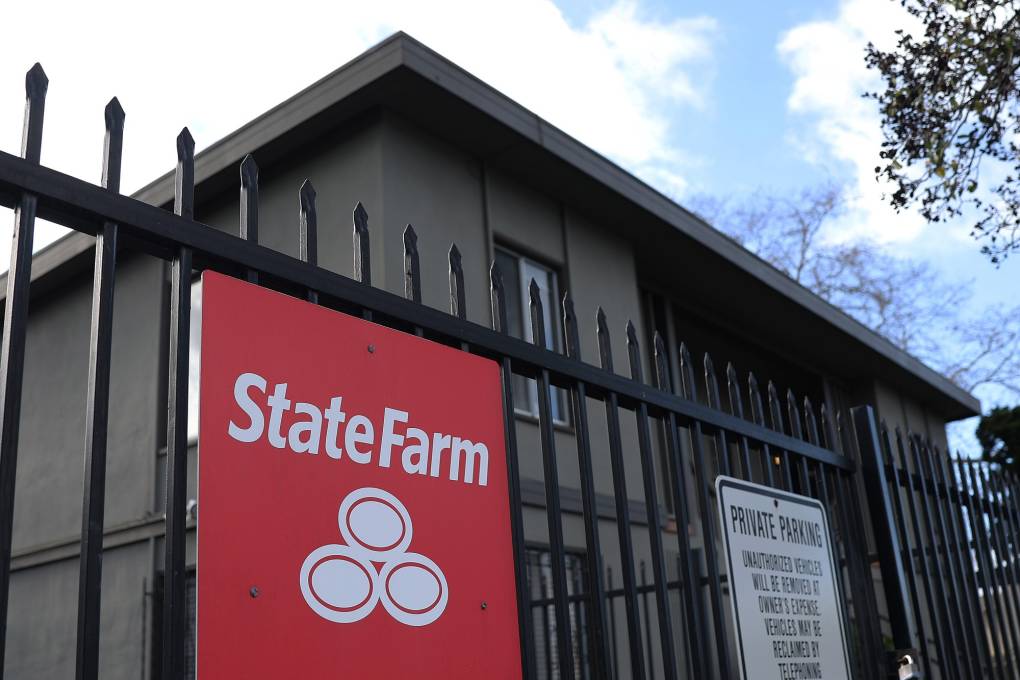
"caption": "A sign is posted in front of a State Farm insurance office on Jan. 3, 2024, in Berkeley, California. On Monday, State Farm said its request to California regulators is needed to avert a “dire situation,” raising serious questions about the insurance company’s financial condition.",
"credit": "Justin Sullivan/Getty Images",
"altTag": null,
"description": null,
"imgSizes": {
"medium": {
"file": "https://cdn.kqed.org/wp-content/uploads/sites/10/2024/06/StateFarmInsuranceCalifornia01-800x533.jpg",
"width": 800,
"height": 533,
"mimeType": "image/jpeg"
},
"large": {
"file": "https://cdn.kqed.org/wp-content/uploads/sites/10/2024/06/StateFarmInsuranceCalifornia01-1020x680.jpg",
"width": 1020,
"height": 680,
"mimeType": "image/jpeg"
},
"thumbnail": {
"file": "https://cdn.kqed.org/wp-content/uploads/sites/10/2024/06/StateFarmInsuranceCalifornia01-160x107.jpg",
"width": 160,
"height": 107,
"mimeType": "image/jpeg"
},
"1536x1536": {
"file": "https://cdn.kqed.org/wp-content/uploads/sites/10/2024/06/StateFarmInsuranceCalifornia01-1536x1024.jpg",
"width": 1536,
"height": 1024,
"mimeType": "image/jpeg"
},
"post-thumbnail": {
"file": "https://cdn.kqed.org/wp-content/uploads/sites/10/2024/06/StateFarmInsuranceCalifornia01-672x372.jpg",
"width": 672,
"height": 372,
"mimeType": "image/jpeg"
},
"twentyfourteen-full-width": {
"file": "https://cdn.kqed.org/wp-content/uploads/sites/10/2024/06/StateFarmInsuranceCalifornia01-1038x576.jpg",
"width": 1038,
"height": 576,
"mimeType": "image/jpeg"
},
"full-width": {
"file": "https://cdn.kqed.org/wp-content/uploads/sites/10/2024/06/StateFarmInsuranceCalifornia01-1920x1280.jpg",
"width": 1920,
"height": 1280,
"mimeType": "image/jpeg"
},
"kqedFullSize": {
"file": "https://cdn.kqed.org/wp-content/uploads/sites/10/2024/06/StateFarmInsuranceCalifornia01.jpg",
"width": 2000,
"height": 1333
}
},
"isLoading": false,
"fetchFailed": false
},
"news_12021200": {
"type": "attachments",
"id": "news_12021200",
"meta": {
"index": "attachments_1716263798",
"site": "news",
"id": "12021200",
"found": true
},
"title": "240109-CAWindStorm-038",
"publishDate": 1736456599,
"status": "inherit",
"parent": 0,
"modified": 1736456756,
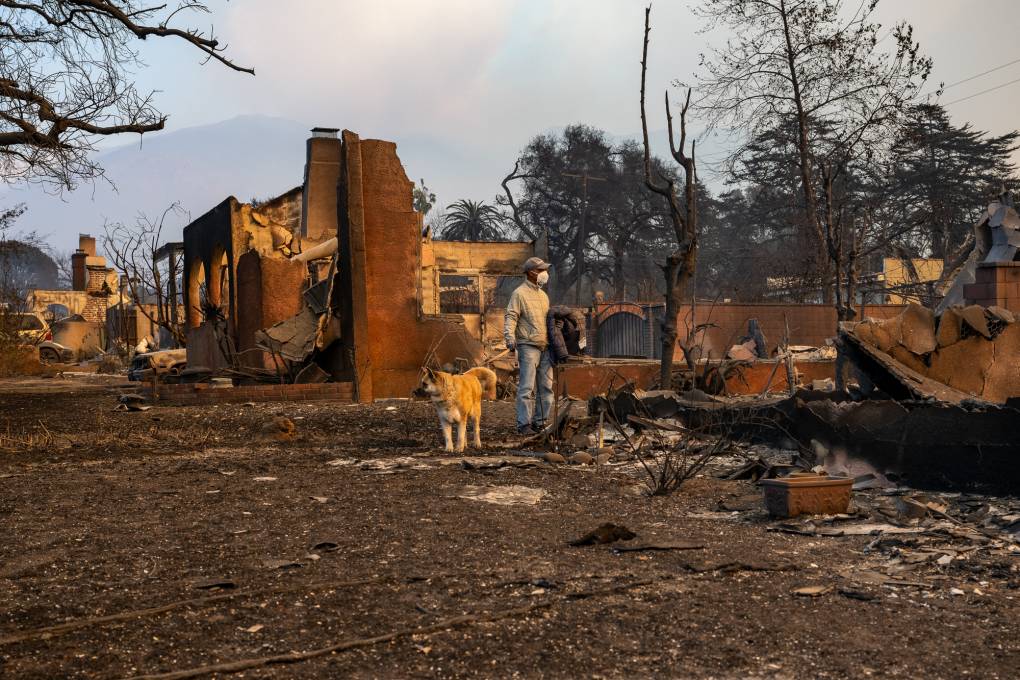
"caption": "Altadena resident Herb Wilson, 67, walks with his dog, Rosie, to survey the home he shares with his wife, Loyda, after it was destroyed in the Eaton Fire northeast of Los Angeles, California, on Thursday, Jan. 9, 2025. The couple was on vacation in Hawaii when the fire broke out, so they could not retrieve any belongings.",
"credit": "Beth LaBerge/KQED",
"altTag": null,
"description": null,
"imgSizes": {
"medium": {
"file": "https://cdn.kqed.org/wp-content/uploads/sites/10/2025/01/240109-CAWindStorm-038-800x533.jpg",
"width": 800,
"height": 533,
"mimeType": "image/jpeg"
},
"large": {
"file": "https://cdn.kqed.org/wp-content/uploads/sites/10/2025/01/240109-CAWindStorm-038-1020x680.jpg",
"width": 1020,
"height": 680,
"mimeType": "image/jpeg"
},
"thumbnail": {
"file": "https://cdn.kqed.org/wp-content/uploads/sites/10/2025/01/240109-CAWindStorm-038-160x107.jpg",
"width": 160,
"height": 107,
"mimeType": "image/jpeg"
},
"1536x1536": {
"file": "https://cdn.kqed.org/wp-content/uploads/sites/10/2025/01/240109-CAWindStorm-038-1536x1024.jpg",
"width": 1536,
"height": 1024,
"mimeType": "image/jpeg"
},
"post-thumbnail": {
"file": "https://cdn.kqed.org/wp-content/uploads/sites/10/2025/01/240109-CAWindStorm-038-672x372.jpg",
"width": 672,
"height": 372,
"mimeType": "image/jpeg"
},
"twentyfourteen-full-width": {
"file": "https://cdn.kqed.org/wp-content/uploads/sites/10/2025/01/240109-CAWindStorm-038-1038x576.jpg",
"width": 1038,
"height": 576,
"mimeType": "image/jpeg"
},
"full-width": {
"file": "https://cdn.kqed.org/wp-content/uploads/sites/10/2025/01/240109-CAWindStorm-038-1920x1280.jpg",
"width": 1920,
"height": 1280,
"mimeType": "image/jpeg"
},
"kqedFullSize": {
"file": "https://cdn.kqed.org/wp-content/uploads/sites/10/2025/01/240109-CAWindStorm-038.jpg",
"width": 2000,
"height": 1333
}
},
"isLoading": false,
"fetchFailed": false
},
"news_12024190": {
"type": "attachments",
"id": "news_12024190",
"meta": {
"index": "attachments_1716263798",
"site": "news",
"id": "12024190",
"found": true
},
"title": "download",
"publishDate": 1738001365,
"status": "inherit",
"parent": 12024186,
"modified": 1738001436,
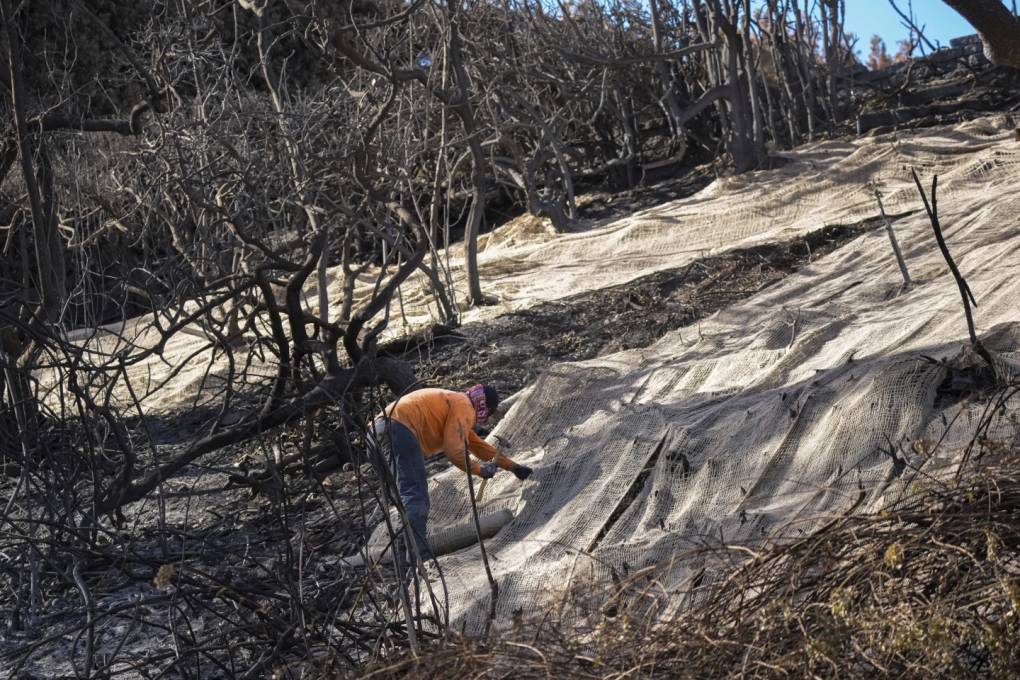
"caption": "Workers secure a net to prevent mudslides over the burned side of a mansion in the Pacific Palisades neighborhood of Los Angeles on Jan. 24, 2025.",
"credit": "Damian Dovarganes/AP",
"altTag": "A worker secures netting on a hillside.",
"description": null,
"imgSizes": {
"medium": {
"file": "https://cdn.kqed.org/wp-content/uploads/sites/10/2025/01/download-800x533.jpeg",
"width": 800,
"height": 533,
"mimeType": "image/jpeg"
},
"large": {
"file": "https://cdn.kqed.org/wp-content/uploads/sites/10/2025/01/download-1020x680.jpeg",
"width": 1020,
"height": 680,
"mimeType": "image/jpeg"
},
"thumbnail": {
"file": "https://cdn.kqed.org/wp-content/uploads/sites/10/2025/01/download-160x107.jpeg",
"width": 160,
"height": 107,
"mimeType": "image/jpeg"
},
"post-thumbnail": {
"file": "https://cdn.kqed.org/wp-content/uploads/sites/10/2025/01/download-672x372.jpeg",
"width": 672,
"height": 372,
"mimeType": "image/jpeg"
},
"twentyfourteen-full-width": {
"file": "https://cdn.kqed.org/wp-content/uploads/sites/10/2025/01/download-1038x576.jpeg",
"width": 1038,
"height": 576,
"mimeType": "image/jpeg"
},
"kqedFullSize": {
"file": "https://cdn.kqed.org/wp-content/uploads/sites/10/2025/01/download.jpeg",
"width": 1440,
"height": 960
}
},
"isLoading": false,
"fetchFailed": false
},
"news_12022580": {
"type": "attachments",
"id": "news_12022580",
"meta": {
"index": "attachments_1716263798",
"site": "news",
"id": "12022580",
"found": true
},
"title": "California Wildfires",
"publishDate": 1737054400,
"status": "inherit",
"parent": 12022532,
"modified": 1737747375,
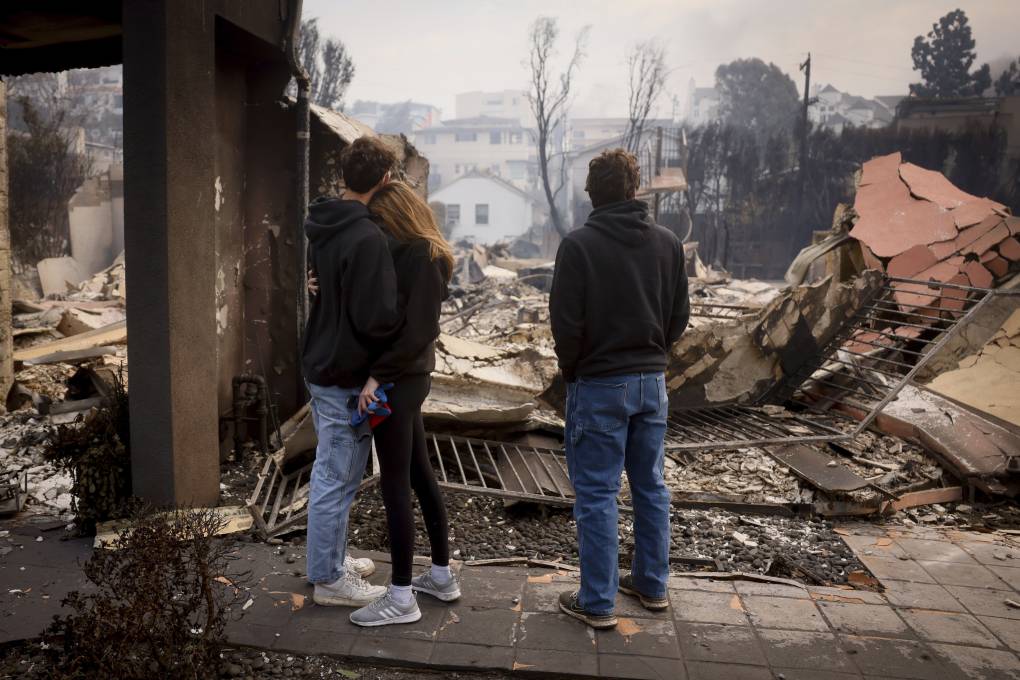
"caption": "Residents embrace in front of a fire-ravaged property after the Palisades Fire swept through the Pacific Palisades neighborhood of Los Angeles on Wednesday, Jan. 8, 2025. ",
"credit": "Etienne Laurent/AP Photo",
"altTag": null,
"description": null,
"imgSizes": {
"medium": {
"file": "https://cdn.kqed.org/wp-content/uploads/sites/10/2025/01/AP25016124878838-800x533.jpg",
"width": 800,
"height": 533,
"mimeType": "image/jpeg"
},
"large": {
"file": "https://cdn.kqed.org/wp-content/uploads/sites/10/2025/01/AP25016124878838-1020x680.jpg",
"width": 1020,
"height": 680,
"mimeType": "image/jpeg"
},
"thumbnail": {
"file": "https://cdn.kqed.org/wp-content/uploads/sites/10/2025/01/AP25016124878838-160x107.jpg",
"width": 160,
"height": 107,
"mimeType": "image/jpeg"
},
"1536x1536": {
"file": "https://cdn.kqed.org/wp-content/uploads/sites/10/2025/01/AP25016124878838-1536x1024.jpg",
"width": 1536,
"height": 1024,
"mimeType": "image/jpeg"
},
"2048x2048": {
"file": "https://cdn.kqed.org/wp-content/uploads/sites/10/2025/01/AP25016124878838-2048x1365.jpg",
"width": 2048,
"height": 1365,
"mimeType": "image/jpeg"
},
"post-thumbnail": {
"file": "https://cdn.kqed.org/wp-content/uploads/sites/10/2025/01/AP25016124878838-672x372.jpg",
"width": 672,
"height": 372,
"mimeType": "image/jpeg"
},
"twentyfourteen-full-width": {
"file": "https://cdn.kqed.org/wp-content/uploads/sites/10/2025/01/AP25016124878838-1038x576.jpg",
"width": 1038,
"height": 576,
"mimeType": "image/jpeg"
},
"full-width": {
"file": "https://cdn.kqed.org/wp-content/uploads/sites/10/2025/01/AP25016124878838-1920x1280.jpg",
"width": 1920,
"height": 1280,
"mimeType": "image/jpeg"
},
"kqedFullSize": {
"file": "https://cdn.kqed.org/wp-content/uploads/sites/10/2025/01/AP25016124878838-scaled-e1737665727227.jpg",
"width": 2000,
"height": 1334
}
},
"isLoading": false,
"fetchFailed": false
},
"news_12022720": {
"type": "attachments",
"id": "news_12022720",
"meta": {
"index": "attachments_1716263798",
"site": "news",
"id": "12022720",
"found": true
},
"title": "ReligiousCenterFire1",
"publishDate": 1737135043,
"status": "inherit",
"parent": 0,
"modified": 1737140373,
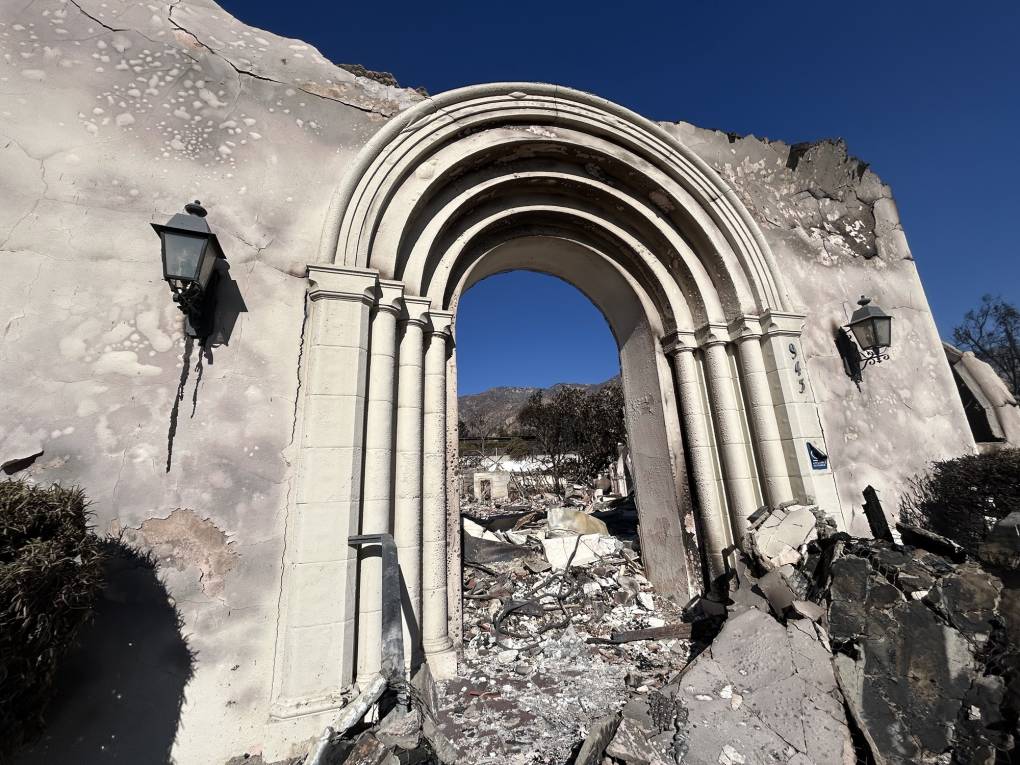
"caption": "The Altadena Community Church sits completely destroyed by the Eaton Fire on Jan. 14, 2025, leaving only the front wall standing.",
"credit": "Ezra David Romero/KQED",
"altTag": "A front archway to a tan church stands amongst the charred rubble of a burned church.",
"description": null,
"imgSizes": {
"medium": {
"file": "https://cdn.kqed.org/wp-content/uploads/sites/10/2025/01/ReligiousCenterFire1-800x600.jpg",
"width": 800,
"height": 600,
"mimeType": "image/jpeg"
},
"large": {
"file": "https://cdn.kqed.org/wp-content/uploads/sites/10/2025/01/ReligiousCenterFire1-1020x765.jpg",
"width": 1020,
"height": 765,
"mimeType": "image/jpeg"
},
"thumbnail": {
"file": "https://cdn.kqed.org/wp-content/uploads/sites/10/2025/01/ReligiousCenterFire1-160x120.jpg",
"width": 160,
"height": 120,
"mimeType": "image/jpeg"
},
"1536x1536": {
"file": "https://cdn.kqed.org/wp-content/uploads/sites/10/2025/01/ReligiousCenterFire1-1536x1152.jpg",
"width": 1536,
"height": 1152,
"mimeType": "image/jpeg"
},
"post-thumbnail": {
"file": "https://cdn.kqed.org/wp-content/uploads/sites/10/2025/01/ReligiousCenterFire1-672x372.jpg",
"width": 672,
"height": 372,
"mimeType": "image/jpeg"
},
"twentyfourteen-full-width": {
"file": "https://cdn.kqed.org/wp-content/uploads/sites/10/2025/01/ReligiousCenterFire1-1038x576.jpg",
"width": 1038,
"height": 576,
"mimeType": "image/jpeg"
},
"full-width": {
"file": "https://cdn.kqed.org/wp-content/uploads/sites/10/2025/01/ReligiousCenterFire1-1920x1440.jpg",
"width": 1920,
"height": 1440,
"mimeType": "image/jpeg"
},
"kqedFullSize": {
"file": "https://cdn.kqed.org/wp-content/uploads/sites/10/2025/01/ReligiousCenterFire1.jpg",
"width": 2000,
"height": 1500
}
},
"isLoading": false,
"fetchFailed": false
},
"news_12022769": {
"type": "attachments",
"id": "news_12022769",
"meta": {
"index": "attachments_1716263798",
"site": "news",
"id": "12022769",
"found": true
},
"title": "US-WEATHER-FIRE",
"publishDate": 1737141557,
"status": "inherit",
"parent": 12022760,
"modified": 1737141636,
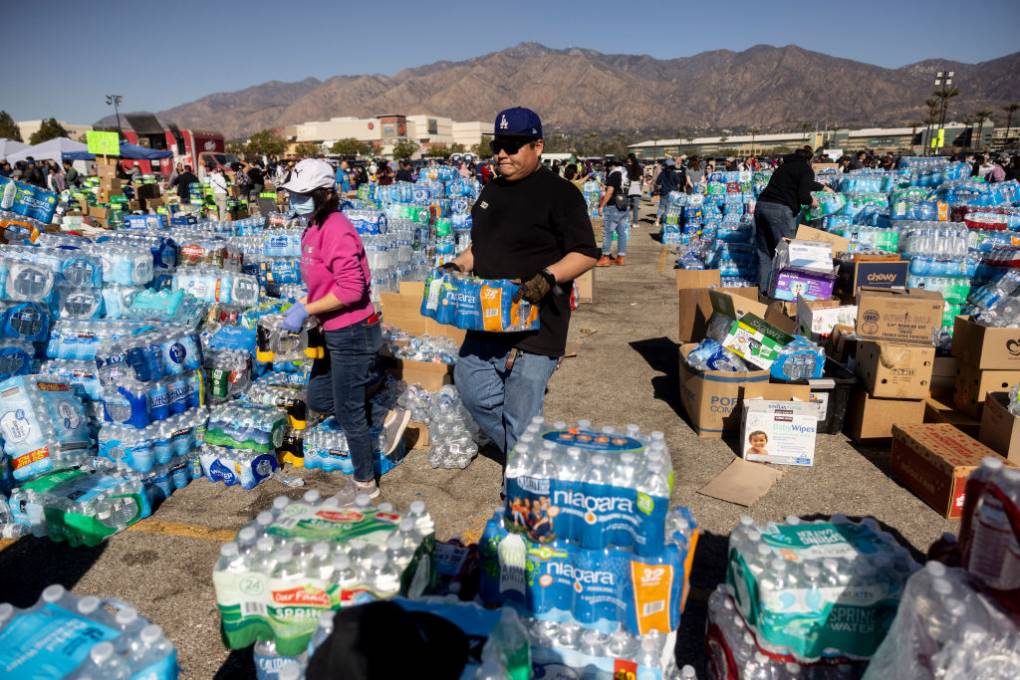
"caption": "Volunteers carry water for evacuees from the Eaton Fire dwell at a donation center in Santa Anita Park, Arcadia, Los Angeles, on Jan. 13, 2025. ",
"credit": "Etienne Laurent/AFP via Getty Images",
"altTag": null,
"description": null,
"imgSizes": {
"medium": {
"file": "https://cdn.kqed.org/wp-content/uploads/sites/10/2025/01/GettyImages-2193205551-800x534.jpg",
"width": 800,
"height": 534,
"mimeType": "image/jpeg"
},
"large": {
"file": "https://cdn.kqed.org/wp-content/uploads/sites/10/2025/01/GettyImages-2193205551-1020x680.jpg",
"width": 1020,
"height": 680,
"mimeType": "image/jpeg"
},
"thumbnail": {
"file": "https://cdn.kqed.org/wp-content/uploads/sites/10/2025/01/GettyImages-2193205551-160x107.jpg",
"width": 160,
"height": 107,
"mimeType": "image/jpeg"
},
"post-thumbnail": {
"file": "https://cdn.kqed.org/wp-content/uploads/sites/10/2025/01/GettyImages-2193205551-672x372.jpg",
"width": 672,
"height": 372,
"mimeType": "image/jpeg"
},
"twentyfourteen-full-width": {
"file": "https://cdn.kqed.org/wp-content/uploads/sites/10/2025/01/GettyImages-2193205551-1024x576.jpg",
"width": 1024,
"height": 576,
"mimeType": "image/jpeg"
},
"kqedFullSize": {
"file": "https://cdn.kqed.org/wp-content/uploads/sites/10/2025/01/GettyImages-2193205551.jpg",
"width": 1024,
"height": 683
}
},
"isLoading": false,
"fetchFailed": false
},
"news_12022726": {
"type": "attachments",
"id": "news_12022726",
"meta": {
"index": "attachments_1716263798",
"site": "news",
"id": "12022726",
"found": true
},
"title": "MossLandingFire1",
"publishDate": 1737135737,
"status": "inherit",
"parent": 12022725,
"modified": 1769529833,
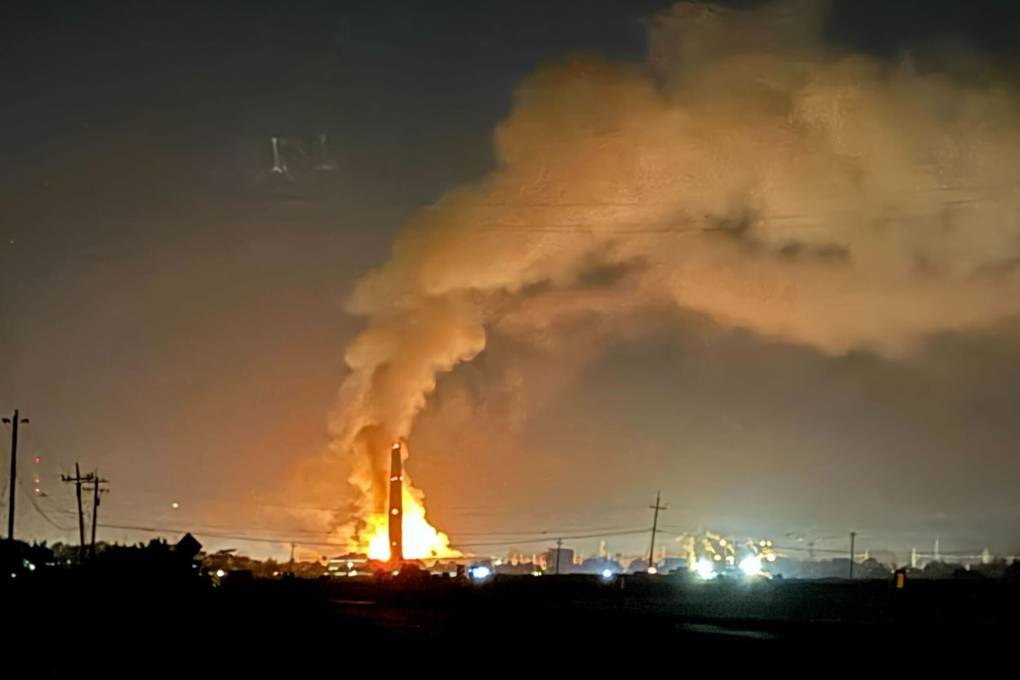
"caption": "A fire burns at Moss Landing Power Plant on Thursday, Jan. 16, 2025. Four Monterey County residents are suing PG&E and Vistra, alleging negligence in a battery storage fire that spread toxic chemicals and forced evacuations. (Courtesy Iman-Floyd Carroll)",
"credit": "Courtesy Iman-Floyd Carroll",
"altTag": null,
"description": null,
"imgSizes": {
"medium": {
"file": "https://cdn.kqed.org/wp-content/uploads/sites/10/2025/01/MossLandingFire1-800x533.jpg",
"width": 800,
"height": 533,
"mimeType": "image/jpeg"
},
"large": {
"file": "https://cdn.kqed.org/wp-content/uploads/sites/10/2025/01/MossLandingFire1-1020x680.jpg",
"width": 1020,
"height": 680,
"mimeType": "image/jpeg"
},
"thumbnail": {
"file": "https://cdn.kqed.org/wp-content/uploads/sites/10/2025/01/MossLandingFire1-160x107.jpg",
"width": 160,
"height": 107,
"mimeType": "image/jpeg"
},
"1536x1536": {
"file": "https://cdn.kqed.org/wp-content/uploads/sites/10/2025/01/MossLandingFire1-1536x1024.jpg",
"width": 1536,
"height": 1024,
"mimeType": "image/jpeg"
},
"post-thumbnail": {
"file": "https://cdn.kqed.org/wp-content/uploads/sites/10/2025/01/MossLandingFire1-672x372.jpg",
"width": 672,
"height": 372,
"mimeType": "image/jpeg"
},
"twentyfourteen-full-width": {
"file": "https://cdn.kqed.org/wp-content/uploads/sites/10/2025/01/MossLandingFire1-1038x576.jpg",
"width": 1038,
"height": 576,
"mimeType": "image/jpeg"
},
"full-width": {
"file": "https://cdn.kqed.org/wp-content/uploads/sites/10/2025/01/MossLandingFire1-1920x1280.jpg",
"width": 1920,
"height": 1280,
"mimeType": "image/jpeg"
},
"kqedFullSize": {
"file": "https://cdn.kqed.org/wp-content/uploads/sites/10/2025/01/MossLandingFire1.jpg",
"width": 2000,
"height": 1333
}
},
"isLoading": false,
"fetchFailed": false
},
"news_12021323": {
"type": "attachments",
"id": "news_12021323",
"meta": {
"index": "attachments_1716263798",
"site": "news",
"id": "12021323",
"found": true
},
"title": "240109-CAWindStorm-056",
"publishDate": 1736467983,
"status": "inherit",
"parent": 0,
"modified": 1737076475,
"caption": "The remains of a house in Altadena, California, after the Eaton Fire swept through the area northeast of Los Angeles on Thursday, Jan. 9, 2025.",
"credit": "Beth LaBerge/KQED",
"altTag": null,
"description": null,
"imgSizes": {
"medium": {
"file": "https://cdn.kqed.org/wp-content/uploads/sites/10/2025/01/240109-CAWindStorm-056-800x533.jpg",
"width": 800,
"height": 533,
"mimeType": "image/jpeg"
},
"large": {
"file": "https://cdn.kqed.org/wp-content/uploads/sites/10/2025/01/240109-CAWindStorm-056-1020x680.jpg",
"width": 1020,
"height": 680,
"mimeType": "image/jpeg"
},
"thumbnail": {
"file": "https://cdn.kqed.org/wp-content/uploads/sites/10/2025/01/240109-CAWindStorm-056-160x107.jpg",
"width": 160,
"height": 107,
"mimeType": "image/jpeg"
},
"1536x1536": {
"file": "https://cdn.kqed.org/wp-content/uploads/sites/10/2025/01/240109-CAWindStorm-056-1536x1024.jpg",
"width": 1536,
"height": 1024,
"mimeType": "image/jpeg"
},
"post-thumbnail": {
"file": "https://cdn.kqed.org/wp-content/uploads/sites/10/2025/01/240109-CAWindStorm-056-672x372.jpg",
"width": 672,
"height": 372,
"mimeType": "image/jpeg"
},
"twentyfourteen-full-width": {
"file": "https://cdn.kqed.org/wp-content/uploads/sites/10/2025/01/240109-CAWindStorm-056-1038x576.jpg",
"width": 1038,
"height": 576,
"mimeType": "image/jpeg"
},
"full-width": {
"file": "https://cdn.kqed.org/wp-content/uploads/sites/10/2025/01/240109-CAWindStorm-056-1920x1280.jpg",
"width": 1920,
"height": 1280,
"mimeType": "image/jpeg"
},
"kqedFullSize": {
"file": "https://cdn.kqed.org/wp-content/uploads/sites/10/2025/01/240109-CAWindStorm-056.jpg",
"width": 2000,
"height": 1333
}
},
"isLoading": false,
"fetchFailed": false
},
"news_12022599": {
"type": "attachments",
"id": "news_12022599",
"meta": {
"index": "attachments_1716263798",
"site": "news",
"id": "12022599",
"found": true
},
"title": "20250116_FireAnimalShelter-27_qed",
"publishDate": 1737056486,
"status": "inherit",
"parent": 0,
"modified": 1737057882,
"caption": "Sarah Leonard, intake coordinator at Muttville Senior Dog Rescue in San Francisco, plays with Lois on Thursday, Jan. 16, 2025. Lois is one of two pit bulls to arrive from Los Angeles following the fires who will now stay at Muttville.",
"credit": "Gina Castro/KQED",
"altTag": null,
"description": null,
"imgSizes": {
"medium": {
"file": "https://cdn.kqed.org/wp-content/uploads/sites/10/2025/01/20250116_FireAnimalShelter-27_qed-800x554.jpg",
"width": 800,
"height": 554,
"mimeType": "image/jpeg"
},
"large": {
"file": "https://cdn.kqed.org/wp-content/uploads/sites/10/2025/01/20250116_FireAnimalShelter-27_qed-1020x706.jpg",
"width": 1020,
"height": 706,
"mimeType": "image/jpeg"
},
"thumbnail": {
"file": "https://cdn.kqed.org/wp-content/uploads/sites/10/2025/01/20250116_FireAnimalShelter-27_qed-160x111.jpg",
"width": 160,
"height": 111,
"mimeType": "image/jpeg"
},
"1536x1536": {
"file": "https://cdn.kqed.org/wp-content/uploads/sites/10/2025/01/20250116_FireAnimalShelter-27_qed-1536x1064.jpg",
"width": 1536,
"height": 1064,
"mimeType": "image/jpeg"
},
"post-thumbnail": {
"file": "https://cdn.kqed.org/wp-content/uploads/sites/10/2025/01/20250116_FireAnimalShelter-27_qed-672x372.jpg",
"width": 672,
"height": 372,
"mimeType": "image/jpeg"
},
"twentyfourteen-full-width": {
"file": "https://cdn.kqed.org/wp-content/uploads/sites/10/2025/01/20250116_FireAnimalShelter-27_qed-1038x576.jpg",
"width": 1038,
"height": 576,
"mimeType": "image/jpeg"
},
"full-width": {
"file": "https://cdn.kqed.org/wp-content/uploads/sites/10/2025/01/20250116_FireAnimalShelter-27_qed-1920x1330.jpg",
"width": 1920,
"height": 1330,
"mimeType": "image/jpeg"
},
"kqedFullSize": {
"file": "https://cdn.kqed.org/wp-content/uploads/sites/10/2025/01/20250116_FireAnimalShelter-27_qed.jpg",
"width": 1925,
"height": 1333
}
},
"isLoading": false,
"fetchFailed": false
},
"news_12021500": {
"type": "attachments",
"id": "news_12021500",
"meta": {
"index": "attachments_1716263798",
"site": "news",
"id": "12021500",
"found": true
},
"title": "240110-CAWindStorm-004",
"publishDate": 1736540122,
"status": "inherit",
"parent": 0,
"modified": 1736817814,
"caption": "Foreman Mihlhauser (left) works with Acton Conservation Camp Crew 11-1, an incarcerated fire team, to fell burned trees in Altadena, California, on Jan. 10, 2025, after the Eaton Fire destroyed much of the area. The Los Angeles County Fire Department and the California Department of Corrections and Rehabilitation operate the camp to train incarcerated hand crews to fight fires around Los Angeles and California.",
"credit": "Beth LaBerge/KQED",
"altTag": null,
"description": null,
"imgSizes": {
"medium": {
"file": "https://cdn.kqed.org/wp-content/uploads/sites/10/2025/01/240110-CAWindStorm-004-800x533.jpg",
"width": 800,
"height": 533,
"mimeType": "image/jpeg"
},
"large": {
"file": "https://cdn.kqed.org/wp-content/uploads/sites/10/2025/01/240110-CAWindStorm-004-1020x680.jpg",
"width": 1020,
"height": 680,
"mimeType": "image/jpeg"
},
"thumbnail": {
"file": "https://cdn.kqed.org/wp-content/uploads/sites/10/2025/01/240110-CAWindStorm-004-160x107.jpg",
"width": 160,
"height": 107,
"mimeType": "image/jpeg"
},
"1536x1536": {
"file": "https://cdn.kqed.org/wp-content/uploads/sites/10/2025/01/240110-CAWindStorm-004-1536x1024.jpg",
"width": 1536,
"height": 1024,
"mimeType": "image/jpeg"
},
"post-thumbnail": {
"file": "https://cdn.kqed.org/wp-content/uploads/sites/10/2025/01/240110-CAWindStorm-004-672x372.jpg",
"width": 672,
"height": 372,
"mimeType": "image/jpeg"
},
"twentyfourteen-full-width": {
"file": "https://cdn.kqed.org/wp-content/uploads/sites/10/2025/01/240110-CAWindStorm-004-1038x576.jpg",
"width": 1038,
"height": 576,
"mimeType": "image/jpeg"
},
"kqedFullSize": {
"file": "https://cdn.kqed.org/wp-content/uploads/sites/10/2025/01/240110-CAWindStorm-004.jpg",
"width": 1734,
"height": 1156
}
},
"isLoading": false,
"fetchFailed": false
},
"news_12022379": {
"type": "attachments",
"id": "news_12022379",
"meta": {
"index": "attachments_1716263798",
"site": "news",
"id": "12022379",
"found": true
},
"title": "PacificPalisadesRebuild2",
"publishDate": 1736975553,
"status": "inherit",
"parent": 12022375,
"modified": 1736975824,
"caption": "Katharine Steffes consoles Emma Deiter on Saturday, Jan. 11, 2025, as she gazes at the ruins of her home at 910 Hartzell St., destroyed by the Palisades fire. Deiter had hoped to recover her late dog's ashes and her prom dress, but both were lost in the devastation.",
"credit": "Rachael Myrow/KQED",
"altTag": null,
"description": null,
"imgSizes": {
"medium": {
"file": "https://cdn.kqed.org/wp-content/uploads/sites/10/2025/01/PacificPalisadesRebuild2-800x649.jpg",
"width": 800,
"height": 649,
"mimeType": "image/jpeg"
},
"large": {
"file": "https://cdn.kqed.org/wp-content/uploads/sites/10/2025/01/PacificPalisadesRebuild2-1020x827.jpg",
"width": 1020,
"height": 827,
"mimeType": "image/jpeg"
},
"thumbnail": {
"file": "https://cdn.kqed.org/wp-content/uploads/sites/10/2025/01/PacificPalisadesRebuild2-160x130.jpg",
"width": 160,
"height": 130,
"mimeType": "image/jpeg"
},
"1536x1536": {
"file": "https://cdn.kqed.org/wp-content/uploads/sites/10/2025/01/PacificPalisadesRebuild2-1536x1246.jpg",
"width": 1536,
"height": 1246,
"mimeType": "image/jpeg"
},
"post-thumbnail": {
"file": "https://cdn.kqed.org/wp-content/uploads/sites/10/2025/01/PacificPalisadesRebuild2-672x372.jpg",
"width": 672,
"height": 372,
"mimeType": "image/jpeg"
},
"twentyfourteen-full-width": {
"file": "https://cdn.kqed.org/wp-content/uploads/sites/10/2025/01/PacificPalisadesRebuild2-1038x576.jpg",
"width": 1038,
"height": 576,
"mimeType": "image/jpeg"
},
"full-width": {
"file": "https://cdn.kqed.org/wp-content/uploads/sites/10/2025/01/PacificPalisadesRebuild2-1920x1557.jpg",
"width": 1920,
"height": 1557,
"mimeType": "image/jpeg"
},
"kqedFullSize": {
"file": "https://cdn.kqed.org/wp-content/uploads/sites/10/2025/01/PacificPalisadesRebuild2.jpg",
"width": 2000,
"height": 1622
}
},
"isLoading": false,
"fetchFailed": false
},
"news_12022144": {
"type": "attachments",
"id": "news_12022144",
"meta": {
"index": "attachments_1716263798",
"site": "news",
"id": "12022144",
"found": true
},
"title": "House Republicans Speak Following Vote On The Protection Of Women And Girls In Sports Act",
"publishDate": 1736892225,
"status": "inherit",
"parent": 12022111,
"modified": 1736905554,
"caption": "U.S. Speaker of the House Mike Johnson (R-La.) at a news conference at the U.S. Capitol on Jan. 14, 2025, in Washington, D.C. ",
"credit": "Anna Moneymaker/Getty Images",
"altTag": null,
"description": null,
"imgSizes": {
"medium": {
"file": "https://cdn.kqed.org/wp-content/uploads/sites/10/2025/01/MikeJohnsonGetty-800x533.jpg",
"width": 800,
"height": 533,
"mimeType": "image/jpeg"
},
"large": {
"file": "https://cdn.kqed.org/wp-content/uploads/sites/10/2025/01/MikeJohnsonGetty-1020x680.jpg",
"width": 1020,
"height": 680,
"mimeType": "image/jpeg"
},
"thumbnail": {
"file": "https://cdn.kqed.org/wp-content/uploads/sites/10/2025/01/MikeJohnsonGetty-160x107.jpg",
"width": 160,
"height": 107,
"mimeType": "image/jpeg"
},
"1536x1536": {
"file": "https://cdn.kqed.org/wp-content/uploads/sites/10/2025/01/MikeJohnsonGetty-1536x1024.jpg",
"width": 1536,
"height": 1024,
"mimeType": "image/jpeg"
},
"post-thumbnail": {
"file": "https://cdn.kqed.org/wp-content/uploads/sites/10/2025/01/MikeJohnsonGetty-672x372.jpg",
"width": 672,
"height": 372,
"mimeType": "image/jpeg"
},
"twentyfourteen-full-width": {
"file": "https://cdn.kqed.org/wp-content/uploads/sites/10/2025/01/MikeJohnsonGetty-1038x576.jpg",
"width": 1038,
"height": 576,
"mimeType": "image/jpeg"
},
"full-width": {
"file": "https://cdn.kqed.org/wp-content/uploads/sites/10/2025/01/MikeJohnsonGetty-1920x1280.jpg",
"width": 1920,
"height": 1280,
"mimeType": "image/jpeg"
},
"kqedFullSize": {
"file": "https://cdn.kqed.org/wp-content/uploads/sites/10/2025/01/MikeJohnsonGetty.jpg",
"width": 2000,
"height": 1333
}
},
"isLoading": false,
"fetchFailed": false
}
},
"audioPlayerReducer": {
"postId": "stream_live",
"isPaused": true,
"isPlaying": false,
"pfsActive": false,
"pledgeModalIsOpen": true,
"playerDrawerIsOpen": false,
"liveAudioPlayStartedAt": 0,
"liveAudioPlayContext": ""
},
"authorsReducer": {
"byline_news_12024186": {
"type": "authors",
"id": "byline_news_12024186",
"meta": {
"override": true
},
"slug": "byline_news_12024186",
"name": "Associated Press",
"isLoading": false
},
"gmarzorati": {
"type": "authors",
"id": "227",
"meta": {
"index": "authors_1716337520",
"id": "227",
"found": true
},
"name": "Guy Marzorati",
"firstName": "Guy",
"lastName": "Marzorati",
"slug": "gmarzorati",
"email": "gmarzorati@KQED.org",
"display_author_email": true,
"staff_mastheads": [
"news"
],
"title": "Correspondent",
"bio": "Guy Marzorati is a correspondent on KQED's California Politics and Government Desk, based in San Jose. A graduate of Santa Clara University, Guy joined KQED in 2013. He reports on state and local politics and produces KQED's digital voter guide.",
"avatar": "https://secure.gravatar.com/avatar/e7038b8dbfd55b104369b76b1cd0b9de?s=600&d=blank&r=g",
"twitter": "guymarzorati",
"facebook": null,
"instagram": null,
"linkedin": null,
"sites": [
{
"site": "",
"roles": [
"editor"
]
},
{
"site": "news",
"roles": [
"editor"
]
},
{
"site": "science",
"roles": [
"editor"
]
},
{
"site": "forum",
"roles": [
"editor"
]
},
{
"site": "elections",
"roles": [
"editor"
]
},
{
"site": "liveblog",
"roles": [
"editor"
]
}
],
"headData": {
"title": "Guy Marzorati | KQED",
"description": "Correspondent",
"ogImgSrc": "https://secure.gravatar.com/avatar/e7038b8dbfd55b104369b76b1cd0b9de?s=600&d=blank&r=g",
"twImgSrc": "https://secure.gravatar.com/avatar/e7038b8dbfd55b104369b76b1cd0b9de?s=600&d=blank&r=g"
},
"isLoading": false,
"link": "/author/gmarzorati"
},
"rachael-myrow": {
"type": "authors",
"id": "251",
"meta": {
"index": "authors_1716337520",
"id": "251",
"found": true
},
"name": "Rachael Myrow",
"firstName": "Rachael",
"lastName": "Myrow",
"slug": "rachael-myrow",
"email": "rmyrow@kqed.org",
"display_author_email": true,
"staff_mastheads": [
"news"
],
"title": "Senior Editor of KQED's Silicon Valley News Desk",
"bio": "• I write and edit stories about how Silicon Valley power and policies shape everyday life in California. I’m also passionate about making Bay Area history and culture more accessible to a broad public. • I’ve been a journalist for most of my life, starting in high school with The Franklin Press in Los Angeles, where I grew up. While earning my first degree in English at UC Berkeley, I got my start in public radio at KALX-FM. After completing a second degree in journalism at Cal, I landed my first professional job at Marketplace, then moved on to KPCC (now LAist), and then KQED, where I hosted The California Report for more than seven years. • My reporting has appeared on NPR, The World, WBUR’s \u003ci>Here & Now\u003c/i>, and the BBC. I also guest host for KQED’s \u003ci>Forum\u003c/i>, as well as the Commonwealth Club in San Francisco. • I speak periodically on media, democracy and technology issues, and do voiceover work for documentaries and educational video projects. • Outside of the studio, you'll find me hiking Bay Area trails and whipping up Insta-ready meals in my kitchen. • I do not accept gifts, money, or favors from anyone connected to my reporting, I don't pay people for information, and I do not support or donate to political causes. • I strive to treat the people I report on with fairness, honesty, and respect. I also recognize there are often multiple sides to a story and work to verify information through multiple sources and documentation. If I get something wrong, I correct it.",
"avatar": "https://secure.gravatar.com/avatar/3ed8a3c5f26025e4a805ba634cda8cd764906b97438a6d9ce216b044e340da4e?s=600&d=blank&r=g",
"twitter": "rachaelmyrow",
"bluesky": null,
"facebook": null,
"instagram": null,
"linkedin": "https://www.linkedin.com/in/rachaelmyrow/",
"sites": [
{
"site": "arts",
"roles": [
"administrator"
]
},
{
"site": "news",
"roles": [
"edit_others_posts",
"editor"
]
},
{
"site": "futureofyou",
"roles": [
"editor"
]
},
{
"site": "bayareabites",
"roles": [
"editor"
]
},
{
"site": "stateofhealth",
"roles": [
"editor"
]
},
{
"site": "science",
"roles": [
"editor"
]
},
{
"site": "food",
"roles": [
"editor"
]
},
{
"site": "forum",
"roles": [
"editor"
]
},
{
"site": "liveblog",
"roles": [
"author"
]
}
],
"headData": {
"title": "Rachael Myrow | KQED",
"description": "Senior Editor of KQED's Silicon Valley News Desk",
"ogImgSrc": "https://secure.gravatar.com/avatar/3ed8a3c5f26025e4a805ba634cda8cd764906b97438a6d9ce216b044e340da4e?s=600&d=blank&r=g",
"twImgSrc": "https://secure.gravatar.com/avatar/3ed8a3c5f26025e4a805ba634cda8cd764906b97438a6d9ce216b044e340da4e?s=600&d=blank&r=g"
},
"isLoading": false,
"link": "/author/rachael-myrow"
},
"sasha-khokha": {
"type": "authors",
"id": "254",
"meta": {
"index": "authors_1716337520",
"id": "254",
"found": true
},
"name": "Sasha Khokha",
"firstName": "Sasha",
"lastName": "Khokha",
"slug": "sasha-khokha",
"email": "skhokha@kqed.org",
"display_author_email": true,
"staff_mastheads": [
"news"
],
"title": "Host, The California Report Magazine",
"bio": "Sasha Khokha is the host of \u003cem>The California Report's \u003c/em> weekly magazine program, which takes listeners on sound-rich excursions to meet the people that make the Golden State unique -- through audio documentaries and long-form stories. As \u003cem>The California Report's\u003c/em> Central Valley Bureau Chief based in Fresno for nearly a dozen years, Sasha brought the lives and concerns of rural Californians to listeners around the state. Her reporting helped expose the hidden price immigrant women janitors and farmworkers may pay to keep their jobs: sexual assault at work. It inspired two new California laws to protect them from sexual harassment. She was a key member of the reporting team for the Frontline film \u003cem>Rape on the Night Shift, \u003c/em>which was nominated for two national Emmys. Sasha has also won a national Edward R. Murrow and a national PRNDI award for investigative reporting, as well as multiple prizes from the Society for Professional Journalists. Sasha is a proud alum of the UC Berkeley Graduate School of Journalism and Brown University and a member of the South Asian Journalists Association.",
"avatar": "https://secure.gravatar.com/avatar/e4b5e1541aaeea2aa356aa1fb2a68950?s=600&d=blank&r=g",
"twitter": "KQEDSashaKhokha",
"facebook": null,
"instagram": null,
"linkedin": null,
"sites": [
{
"site": "news",
"roles": [
"editor"
]
},
{
"site": "stateofhealth",
"roles": [
"author"
]
},
{
"site": "science",
"roles": [
"author"
]
},
{
"site": "quest",
"roles": [
"subscriber"
]
}
],
"headData": {
"title": "Sasha Khokha | KQED",
"description": "Host, The California Report Magazine",
"ogImgSrc": "https://secure.gravatar.com/avatar/e4b5e1541aaeea2aa356aa1fb2a68950?s=600&d=blank&r=g",
"twImgSrc": "https://secure.gravatar.com/avatar/e4b5e1541aaeea2aa356aa1fb2a68950?s=600&d=blank&r=g"
},
"isLoading": false,
"link": "/author/sasha-khokha"
},
"mlagos": {
"type": "authors",
"id": "3239",
"meta": {
"index": "authors_1716337520",
"id": "3239",
"found": true
},
"name": "Marisa Lagos",
"firstName": "Marisa",
"lastName": "Lagos",
"slug": "mlagos",
"email": "mlagos@kqed.org",
"display_author_email": false,
"staff_mastheads": [
"news"
],
"title": "KQED Contributor",
"bio": "Marisa Lagos is a correspondent for KQED’s California Politics and Government Desk and co-hosts the award-winning show and podcast, Political Breakdown. At KQED, Lagos also conducts reporting, analysis and investigations into state, local and national politics for radio, TV, online and onstage. In 2022, she and co-host, Scott Shafer, moderated the only gubernatorial debate in California. In 2020, the \u003ci>Washington Post\u003c/i> named her one of the top political journalists in California; she was nominated for a Peabody and won several other awards for her work investigating the 2017 California wildfires. She has worked at the \u003ci>San Francisco Chronicle\u003c/i>, \u003ci>San Francisco Examiner\u003c/i> and \u003ci>Los Angeles Times\u003c/i>. A UC Santa Barbara graduate, she lives in San Francisco with her two sons and husband.",
"avatar": "https://secure.gravatar.com/avatar/a261a0d3696fc066871ef96b85b5e7d2?s=600&d=blank&r=g",
"twitter": "@mlagos",
"facebook": null,
"instagram": null,
"linkedin": null,
"sites": [
{
"site": "arts",
"roles": [
"author"
]
},
{
"site": "news",
"roles": [
"editor"
]
},
{
"site": "science",
"roles": [
"editor"
]
},
{
"site": "forum",
"roles": [
"author"
]
},
{
"site": "liveblog",
"roles": [
"author"
]
}
],
"headData": {
"title": "Marisa Lagos | KQED",
"description": "KQED Contributor",
"ogImgSrc": "https://secure.gravatar.com/avatar/a261a0d3696fc066871ef96b85b5e7d2?s=600&d=blank&r=g",
"twImgSrc": "https://secure.gravatar.com/avatar/a261a0d3696fc066871ef96b85b5e7d2?s=600&d=blank&r=g"
},
"isLoading": false,
"link": "/author/mlagos"
},
"dventon": {
"type": "authors",
"id": "11088",
"meta": {
"index": "authors_1716337520",
"id": "11088",
"found": true
},
"name": "Danielle Venton",
"firstName": "Danielle",
"lastName": "Venton",
"slug": "dventon",
"email": "dventon@kqed.org",
"display_author_email": true,
"staff_mastheads": [
"science"
],
"title": "Science reporter",
"bio": "Danielle Venton is a reporter for KQED Science. She covers wildfires, space and oceans (though she is prone to sea sickness).\r\n\r\nBefore joining KQED in 2015, Danielle was a staff reporter at KRCB in Sonoma County and a freelancer. She studied science communication at UC Santa Cruz and formerly worked at CERN in Geneva, Switzerland where she wrote about computing. She lives in Sonoma County and enjoys backpacking.",
"avatar": "https://secure.gravatar.com/avatar/37b292b5c40c8d93959c4f48d73b5286f41b7abd8588277e941905a3ed4c801c?s=600&d=blank&r=g",
"twitter": "DanielleVenton",
"bluesky": null,
"facebook": null,
"instagram": null,
"linkedin": null,
"sites": [
{
"site": "arts",
"roles": [
"contributor"
]
},
{
"site": "news",
"roles": [
"editor"
]
},
{
"site": "futureofyou",
"roles": [
"editor"
]
},
{
"site": "science",
"roles": [
"editor"
]
},
{
"site": "liveblog",
"roles": [
"contributor"
]
}
],
"headData": {
"title": "Danielle Venton | KQED",
"description": "Science reporter",
"ogImgSrc": "https://secure.gravatar.com/avatar/37b292b5c40c8d93959c4f48d73b5286f41b7abd8588277e941905a3ed4c801c?s=600&d=blank&r=g",
"twImgSrc": "https://secure.gravatar.com/avatar/37b292b5c40c8d93959c4f48d73b5286f41b7abd8588277e941905a3ed4c801c?s=600&d=blank&r=g"
},
"isLoading": false,
"link": "/author/dventon"
},
"kevinstark": {
"type": "authors",
"id": "11608",
"meta": {
"index": "authors_1716337520",
"id": "11608",
"found": true
},
"name": "Kevin Stark",
"firstName": "Kevin",
"lastName": "Stark",
"slug": "kevinstark",
"email": "kstark@kqed.org",
"display_author_email": true,
"staff_mastheads": [
"science"
],
"title": "Senior Editor",
"bio": "Kevin is a senior editor for KQED Science, managing the station's health and climate desks. His journalism career began in the Pacific Northwest, and he later became a lead reporter for the San Francisco Public Press. His work has appeared in Pacific Standard magazine, the Energy News Network, the Center for Investigative Reporting's Reveal and WBEZ in Chicago. Kevin joined KQED in 2019, and has covered issues related to energy, wildfire, climate change and the environment.",
"avatar": "https://secure.gravatar.com/avatar/365aaa4b597d3a8374f67504ff0facd323d7906e8eb4be0a7efd2427408e802c?s=600&d=blank&r=g",
"twitter": "starkkev",
"bluesky": null,
"facebook": null,
"instagram": null,
"linkedin": null,
"sites": [
{
"site": "",
"roles": [
"editor"
]
},
{
"site": "news",
"roles": [
"editor"
]
},
{
"site": "science",
"roles": [
"administrator"
]
}
],
"headData": {
"title": "Kevin Stark | KQED",
"description": "Senior Editor",
"ogImgSrc": "https://secure.gravatar.com/avatar/365aaa4b597d3a8374f67504ff0facd323d7906e8eb4be0a7efd2427408e802c?s=600&d=blank&r=g",
"twImgSrc": "https://secure.gravatar.com/avatar/365aaa4b597d3a8374f67504ff0facd323d7906e8eb4be0a7efd2427408e802c?s=600&d=blank&r=g"
},
"isLoading": false,
"link": "/author/kevinstark"
},
"eromero": {
"type": "authors",
"id": "11746",
"meta": {
"index": "authors_1716337520",
"id": "11746",
"found": true
},
"name": "Ezra David Romero",
"firstName": "Ezra David",
"lastName": "Romero",
"slug": "eromero",
"email": "eromero@kqed.org",
"display_author_email": true,
"staff_mastheads": [
"news",
"science"
],
"title": "Climate Reporter",
"bio": "Ezra David Romero is a climate reporter for KQED News. He covers the absence and excess of water in the Bay Area — think sea level rise, flooding and drought. For nearly a decade he’s covered how warming temperatures are altering the lives of Californians. He’s reported on farmers worried their pistachio trees aren’t getting enough sleep, families desperate for water, scientists studying dying giant sequoias, and alongside firefighters containing wildfires. His work has appeared on local stations across California and nationally on public radio shows like Morning Edition, Here and Now, All Things Considered and Science Friday. ",
"avatar": "https://secure.gravatar.com/avatar/c76404d287c10ed40224227551ac36e24352c7306f106632caf6fead76f8801f?s=600&d=blank&r=g",
"twitter": "ezraromero",
"bluesky": null,
"facebook": null,
"instagram": null,
"linkedin": null,
"sites": [
{
"site": "arts",
"roles": [
"editor"
]
},
{
"site": "news",
"roles": [
"editor"
]
},
{
"site": "science",
"roles": [
"editor"
]
},
{
"site": "liveblog",
"roles": [
"author"
]
}
],
"headData": {
"title": "Ezra David Romero | KQED",
"description": "Climate Reporter",
"ogImgSrc": "https://secure.gravatar.com/avatar/c76404d287c10ed40224227551ac36e24352c7306f106632caf6fead76f8801f?s=600&d=blank&r=g",
"twImgSrc": "https://secure.gravatar.com/avatar/c76404d287c10ed40224227551ac36e24352c7306f106632caf6fead76f8801f?s=600&d=blank&r=g"
},
"isLoading": false,
"link": "/author/eromero"
},
"kmonahan": {
"type": "authors",
"id": "11842",
"meta": {
"index": "authors_1716337520",
"id": "11842",
"found": true
},
"name": "Katherine Monahan",
"firstName": "Katherine",
"lastName": "Monahan",
"slug": "kmonahan",
"email": "kmonahan@kqed.org",
"display_author_email": true,
"staff_mastheads": [],
"title": "Reporter / Sound Engineer",
"bio": "I cover state and local news. I’m also a sound engineer at the station, mixing stories and running live broadcasts. I link to source materials so that readers can draw their own conclusions, and seek comment from a range of perspectives, including from people directly affected by events. Awards received include from the Society of Professional Journalists, Northern California chapter and the Alaska Press Club. I speak multiple languages and have reported and engineered in the Bay Area, Alaska, West Africa and Latin America.",
"avatar": "https://secure.gravatar.com/avatar/ff257b3a5da88893781a3d3266904b2d2f91c7f0e1bbf728f61f5fb81b74a669?s=600&d=blank&r=g",
"twitter": null,
"bluesky": null,
"facebook": null,
"instagram": null,
"linkedin": null,
"sites": [
{
"site": "news",
"roles": [
"editor"
]
},
{
"site": "science",
"roles": [
"contributor"
]
}
],
"headData": {
"title": "Katherine Monahan | KQED",
"description": "Reporter / Sound Engineer",
"ogImgSrc": "https://secure.gravatar.com/avatar/ff257b3a5da88893781a3d3266904b2d2f91c7f0e1bbf728f61f5fb81b74a669?s=600&d=blank&r=g",
"twImgSrc": "https://secure.gravatar.com/avatar/ff257b3a5da88893781a3d3266904b2d2f91c7f0e1bbf728f61f5fb81b74a669?s=600&d=blank&r=g"
},
"isLoading": false,
"link": "/author/kmonahan"
},
"kdebenedetti": {
"type": "authors",
"id": "11913",
"meta": {
"index": "authors_1716337520",
"id": "11913",
"found": true
},
"name": "Katie DeBenedetti",
"firstName": "Katie",
"lastName": "DeBenedetti",
"slug": "kdebenedetti",
"email": "kdebenedetti@kqed.org",
"display_author_email": false,
"staff_mastheads": [
"news",
"science"
],
"title": "KQED Contributor",
"bio": "Katie DeBenedetti is a digital reporter covering daily news for the Express Desk. Prior to joining KQED as a culture reporting intern in January 2024, she covered education and city government for the Napa Valley Register.",
"avatar": "https://secure.gravatar.com/avatar/6e31073cb8f7e4214ab03f42771d0f45?s=600&d=blank&r=g",
"twitter": null,
"facebook": null,
"instagram": null,
"linkedin": null,
"sites": [
{
"site": "news",
"roles": [
"author"
]
},
{
"site": "science",
"roles": [
"author"
]
},
{
"site": "liveblog",
"roles": [
"author"
]
}
],
"headData": {
"title": "Katie DeBenedetti | KQED",
"description": "KQED Contributor",
"ogImgSrc": "https://secure.gravatar.com/avatar/6e31073cb8f7e4214ab03f42771d0f45?s=600&d=blank&r=g",
"twImgSrc": "https://secure.gravatar.com/avatar/6e31073cb8f7e4214ab03f42771d0f45?s=600&d=blank&r=g"
},
"isLoading": false,
"link": "/author/kdebenedetti"
},
"slim": {
"type": "authors",
"id": "11920",
"meta": {
"index": "authors_1716337520",
"id": "11920",
"found": true
},
"name": "Samantha Lim",
"firstName": "Samantha",
"lastName": "Lim",
"slug": "slim",
"email": "slim@KQED.org",
"display_author_email": false,
"staff_mastheads": [],
"title": "KQED Contributor",
"bio": null,
"avatar": "https://secure.gravatar.com/avatar/82e592e6c15fe1a04d385e8ad0fb0b4e?s=600&d=blank&r=g",
"twitter": null,
"facebook": null,
"instagram": null,
"linkedin": null,
"sites": [
{
"site": "news",
"roles": []
}
],
"headData": {
"title": "Samantha Lim | KQED",
"description": "KQED Contributor",
"ogImgSrc": "https://secure.gravatar.com/avatar/82e592e6c15fe1a04d385e8ad0fb0b4e?s=600&d=blank&r=g",
"twImgSrc": "https://secure.gravatar.com/avatar/82e592e6c15fe1a04d385e8ad0fb0b4e?s=600&d=blank&r=g"
},
"isLoading": false,
"link": "/author/slim"
},
"emanoukian": {
"type": "authors",
"id": "11925",
"meta": {
"index": "authors_1716337520",
"id": "11925",
"found": true
},
"name": "Elize Manoukian",
"firstName": "Elize",
"lastName": "Manoukian",
"slug": "emanoukian",
"email": "emanoukian@KQED.org",
"display_author_email": false,
"staff_mastheads": [
"news"
],
"title": "Digital News Editor",
"bio": "Elize Manoukian is an award-winning audio producer and Senior Editor on the Express Desk, KQED's digital news platform. Her work has appeared on KPFA, Interlochen Public Radio, Oregon Public Broadcast, the New York Daily News, LA Times and the San Diego Union-Tribune.",
"avatar": "https://secure.gravatar.com/avatar/4525f1a8e46ccb30933b32653d9772064cfefe3fa655eb45b3b3a80341f6bdad?s=600&d=blank&r=g",
"twitter": null,
"bluesky": null,
"facebook": null,
"instagram": null,
"linkedin": null,
"sites": [
{
"site": "arts",
"roles": [
"editor"
]
},
{
"site": "news",
"roles": [
"editor"
]
},
{
"site": "science",
"roles": [
"editor"
]
}
],
"headData": {
"title": "Elize Manoukian | KQED",
"description": "Digital News Editor",
"ogImgSrc": "https://secure.gravatar.com/avatar/4525f1a8e46ccb30933b32653d9772064cfefe3fa655eb45b3b3a80341f6bdad?s=600&d=blank&r=g",
"twImgSrc": "https://secure.gravatar.com/avatar/4525f1a8e46ccb30933b32653d9772064cfefe3fa655eb45b3b3a80341f6bdad?s=600&d=blank&r=g"
},
"isLoading": false,
"link": "/author/emanoukian"
}
},
"pagesReducer": {
"news_tag_natural-disasters": {
"type": "terms",
"id": "news_881",
"meta": {
"index": "terms_1716263798",
"site": "news",
"id": "881",
"score": 10.403938
},
"featImg": null,
"name": "Natural Disasters",
"description": null,
"taxonomy": "tag",
"headData": {
"twImgId": null,
"twTitle": null,
"ogTitle": null,
"ogImgId": null,
"twDescription": null,
"description": null,
"title": "Natural Disasters Archives | KQED News",
"ogDescription": null
},
"ttid": 891,
"slug": "natural-disasters",
"isLoading": false,
"title": "Natural Disasters",
"pageMeta": {
"site": "news",
"WpPageTemplate": "page-topic-editorial",
"currentPage": 2
},
"blocks": [
{
"blockName": "kqed/post-list",
"attrs": {
"layout": "cardArticle2",
"query": "posts/news?tag=natural-disasters",
"seeMore": false,
"paginated": true,
"page": 2
}
},
{
"blockName": "kqed/ad"
}
]
}
},
"pfsSessionReducer": {},
"postsReducer": {
"stream_live": {
"type": "live",
"id": "stream_live",
"audioUrl": "https://streams.kqed.org/kqedradio",
"title": "Live Stream",
"excerpt": "Live Stream information currently unavailable.",
"link": "/radio",
"featImg": "",
"label": {
"name": "KQED Live",
"link": "/"
}
},
"stream_kqedNewscast": {
"type": "posts",
"id": "stream_kqedNewscast",
"audioUrl": "https://www.kqed.org/.stream/anon/radio/RDnews/newscast.mp3?_=1",
"title": "KQED Newscast",
"featImg": "",
"label": {
"name": "88.5 FM",
"link": "/"
}
},
"news_12025436": {
"type": "posts",
"id": "news_12025436",
"meta": {
"index": "posts_1716263798",
"site": "news",
"id": "12025436",
"score": null,
"sort": [
1738620378000
]
},
"guestAuthors": [],
"slug": "state-farm-seeks-emergency-rate-hike-california-after-la-fires",
"title": "State Farm Seeks Emergency Rate Hike in California After LA Fires",
"publishDate": 1738620378,
"format": "standard",
"headTitle": "State Farm Seeks Emergency Rate Hike in California After LA Fires | KQED",
"labelTerm": {
"site": "news"
},
"content": "\u003cp>\u003cem>Updated 4:30 p.m. Monday\u003c/em>\u003c/p>\n\u003cp>State Farm is asking California regulators to approve a significant emergency rate hike, saying it is needed to avert a “dire situation for our customers and the insurance market in the state” accelerated by the \u003ca href=\"https://www.kqed.org/news/12025125/advice-to-those-recovering-from-wildfire-from-northern-californians-whove-been-there\">disastrous wildfires across Southern California\u003c/a>.\u003c/p>\n\u003cp>The company, California’s largest insurance group, requested “urgent assistance” in a letter to Insurance Commissioner Ricardo Lara on Monday asking for the following average rate hikes to be effective May 1, 2025:\u003c/p>\n\u003cul>\n\u003cli>22% increase in homeowners insurance\u003c/li>\n\u003cli>15% increase in condominium owners insurance\u003c/li>\n\u003cli>38% increase in renters insurance\u003c/li>\n\u003c/ul>\n\u003cp>[ad fullwidth]\u003c/p>\n\u003cp>State Farm General, the company’s California subsidiary, holds millions of policies and represents more than a million homeowners in the state.\u003c/p>\n\u003cp>Last June, the company sought \u003ca href=\"https://www.kqed.org/news/11992399/state-farm-seeks-enormous-rate-increases-in-california-to-prevent-insolvency\">a series of major rate increases to prevent insolvency\u003c/a>, which called its financial stability into doubt amid an ongoing \u003ca href=\"https://www.kqed.org/science/1992401/homeowners-insurance-market-stretched-even-thinner-as-2-more-companies-leave-california\">crisis in the state’s insurance market\u003c/a>.\u003c/p>\n\u003cfigure id=\"attachment_12022616\" class=\"wp-caption aligncenter\" style=\"max-width: 2000px\">\u003cimg loading=\"lazy\" decoding=\"async\" class=\"size-full wp-image-12022616\" src=\"https://cdn.kqed.org/wp-content/uploads/sites/10/2025/01/011525-California-Wildfires-MT-AP-CM-01-copy.jpg\" alt=\"\" width=\"2000\" height=\"1334\" srcset=\"https://cdn.kqed.org/wp-content/uploads/sites/10/2025/01/011525-California-Wildfires-MT-AP-CM-01-copy.jpg 2000w, https://cdn.kqed.org/wp-content/uploads/sites/10/2025/01/011525-California-Wildfires-MT-AP-CM-01-copy-800x534.jpg 800w, https://cdn.kqed.org/wp-content/uploads/sites/10/2025/01/011525-California-Wildfires-MT-AP-CM-01-copy-1020x680.jpg 1020w, https://cdn.kqed.org/wp-content/uploads/sites/10/2025/01/011525-California-Wildfires-MT-AP-CM-01-copy-160x107.jpg 160w, https://cdn.kqed.org/wp-content/uploads/sites/10/2025/01/011525-California-Wildfires-MT-AP-CM-01-copy-1536x1025.jpg 1536w, https://cdn.kqed.org/wp-content/uploads/sites/10/2025/01/011525-California-Wildfires-MT-AP-CM-01-copy-1920x1281.jpg 1920w\" sizes=\"auto, (max-width: 2000px) 100vw, 2000px\">\u003cfigcaption class=\"wp-caption-text\">The devastation from the Palisades Fire is seen from the air in the Pacific Palisades neighborhood of Los Angeles on Jan. 9, 2025. \u003ccite>(Mark J. Terrill/AP Photo)\u003c/cite>\u003c/figcaption>\u003c/figure>\n\u003cp>While regulators are still investigating those requests, which would raise rates an average of 30% for homeowners insurance and 52% for renters insurance, Monday’s letter asked the state to take quick action on an “emergency interim approval.”\u003c/p>\n\u003cp>“State Farm General’s rate filings raise serious questions about its financial condition,” Gabriel Sanchez, California Department of Insurance press secretary, said in a statement.\u003c/p>\n\u003cp>[aside postID=news_12025352 hero='https://cdn.kqed.org/wp-content/uploads/sites/10/2024/11/241122-StormHitsBayArea-06-BL-1020x680.jpg']\u003c/p>\n\u003cp>More than 1 in 5 homeowners have State Farm insurance in California, and that share has been growing in recent years, said Michael Wara, a climate and energy expert at Stanford University.\u003c/p>\n\u003cp>“State Farm isn’t very healthy financially because it has been really trying to stay in the California market and even grow in the California market as opposed to doing what most of the other companies have done, which is to shrink,” he told KQED.\u003c/p>\n\u003cp>“The financial health of State Farm is very significant, particularly to people in the fire footprint who now have claims to file,” Wara added.\u003c/p>\n\u003cp>Thousands of State Farm employees have assisted victims of the L.A. fires, the company said, processing nearly 8,700 claims and paying out more than $1 billion to customers.\u003c/p>\n\u003cp>“We know we will ultimately pay out significantly more, as these fires will collectively be the costliest in the history of the company,” the State Farm letter said, noting that its reinsurance — basically insurance for insurance companies — will assist it in paying out claims.\u003c/p>\n\u003cp>Nevertheless, the costs of these fires will further deplete its capital.\u003c/p>\n\u003cp>“Last year, one rating agency downgraded SFG and, with further capital deterioration as a result of the fires, additional downgrades could follow,” the letter said. “If that were to happen, customers with a mortgage might not be able to use State Farm General insurance as collateral backing for their mortgage.”\u003c/p>\n\u003cp>“Given State Farm’s obligations to policyholders who lost homes in the L.A. wildfires [and] their large share of the overall California market — if they provide data to the state Department of Insurance to substantiate their claim to have paid out their entire surplus already — it’s likely there will be some level of a negotiated emergency increase approval,” said Amy Bach, executive director of United Policyholders, a San Francisco-based nonprofit that advocates for insurance consumers.\u003c/p>\n\u003cp>\u003c/p>\n",
"blocks": [],
"excerpt": "State Farm said its request to California regulators is needed to avert a “dire situation,” raising serious questions about the insurance company’s financial condition.",
"status": "publish",
"parent": 0,
"modified": 1738695035,
"stats": {
"hasAudio": false,
"hasVideo": false,
"hasChartOrMap": false,
"iframeSrcs": [],
"hasGoogleForm": false,
"hasGallery": false,
"hasHearkenModule": false,
"hasPolis": false,
"paragraphCount": 18,
"wordCount": 608
},
"headData": {
"title": "State Farm Seeks Emergency Rate Hike in California After LA Fires | KQED",
"description": "State Farm said its request to California regulators is needed to avert a “dire situation,” raising serious questions about the insurance company’s financial condition.",
"ogTitle": "",
"ogDescription": "",
"ogImgId": "",
"twTitle": "",
"twDescription": "",
"twImgId": "",
"schema": {
"@context": "https://schema.org",
"@type": "NewsArticle",
"headline": "State Farm Seeks Emergency Rate Hike in California After LA Fires",
"datePublished": "2025-02-03T14:06:18-08:00",
"dateModified": "2025-02-04T10:50:35-08:00",
"image": "https://cdn.kqed.org/wp-content/uploads/2020/02/KQED-OG-Image@1x.png",
"isAccessibleForFree": "True",
"publisher": {
"@type": "NewsMediaOrganization",
"@id": "https://www.kqed.org/#organization",
"name": "KQED",
"logo": "https://cdn.kqed.org/wp-content/uploads/2020/02/KQED-OG-Image@1x.png",
"url": "https://www.kqed.org",
"sameAs": [
"https://www.facebook.com/KQED",
"https://twitter.com/KQED",
"https://www.instagram.com/kqed/",
"https://www.tiktok.com/@kqedofficial",
"https://www.linkedin.com/company/kqed",
"https://www.youtube.com/channel/UCeC0IOo7i1P_61zVUWbJ4nw"
]
}
}
},
"audioUrl": "https://traffic.omny.fm/d/clips/0af137ef-751e-4b19-a055-aaef00d2d578/ffca7e9f-6831-41c5-bcaf-aaef00f5a073/7dc24810-a0ea-44bb-aff3-b27a010ef2f5/audio.mp3",
"sticky": false,
"nprStoryId": "kqed-12025436",
"excludeFromSiteSearch": "Include",
"articleAge": "0",
"path": "/news/12025436/state-farm-seeks-emergency-rate-hike-california-after-la-fires",
"audioTrackLength": null,
"parsedContent": [
{
"type": "contentString",
"content": "\u003cdiv class=\"post-body\">\u003cp>\u003cp>\u003cem>Updated 4:30 p.m. Monday\u003c/em>\u003c/p>\n\u003cp>State Farm is asking California regulators to approve a significant emergency rate hike, saying it is needed to avert a “dire situation for our customers and the insurance market in the state” accelerated by the \u003ca href=\"https://www.kqed.org/news/12025125/advice-to-those-recovering-from-wildfire-from-northern-californians-whove-been-there\">disastrous wildfires across Southern California\u003c/a>.\u003c/p>\n\u003cp>The company, California’s largest insurance group, requested “urgent assistance” in a letter to Insurance Commissioner Ricardo Lara on Monday asking for the following average rate hikes to be effective May 1, 2025:\u003c/p>\n\u003cul>\n\u003cli>22% increase in homeowners insurance\u003c/li>\n\u003cli>15% increase in condominium owners insurance\u003c/li>\n\u003cli>38% increase in renters insurance\u003c/li>\n\u003c/ul>\n\u003cp>\u003c/p>\u003c/div>",
"attributes": {
"named": {},
"numeric": []
}
},
{
"type": "component",
"content": "",
"name": "ad",
"attributes": {
"named": {
"label": "fullwidth"
},
"numeric": [
"fullwidth"
]
}
},
{
"type": "contentString",
"content": "\u003cdiv class=\"post-body\">\u003cp>\u003c/p>\n\u003cp>State Farm General, the company’s California subsidiary, holds millions of policies and represents more than a million homeowners in the state.\u003c/p>\n\u003cp>Last June, the company sought \u003ca href=\"https://www.kqed.org/news/11992399/state-farm-seeks-enormous-rate-increases-in-california-to-prevent-insolvency\">a series of major rate increases to prevent insolvency\u003c/a>, which called its financial stability into doubt amid an ongoing \u003ca href=\"https://www.kqed.org/science/1992401/homeowners-insurance-market-stretched-even-thinner-as-2-more-companies-leave-california\">crisis in the state’s insurance market\u003c/a>.\u003c/p>\n\u003cfigure id=\"attachment_12022616\" class=\"wp-caption aligncenter\" style=\"max-width: 2000px\">\u003cimg loading=\"lazy\" decoding=\"async\" class=\"size-full wp-image-12022616\" src=\"https://cdn.kqed.org/wp-content/uploads/sites/10/2025/01/011525-California-Wildfires-MT-AP-CM-01-copy.jpg\" alt=\"\" width=\"2000\" height=\"1334\" srcset=\"https://cdn.kqed.org/wp-content/uploads/sites/10/2025/01/011525-California-Wildfires-MT-AP-CM-01-copy.jpg 2000w, https://cdn.kqed.org/wp-content/uploads/sites/10/2025/01/011525-California-Wildfires-MT-AP-CM-01-copy-800x534.jpg 800w, https://cdn.kqed.org/wp-content/uploads/sites/10/2025/01/011525-California-Wildfires-MT-AP-CM-01-copy-1020x680.jpg 1020w, https://cdn.kqed.org/wp-content/uploads/sites/10/2025/01/011525-California-Wildfires-MT-AP-CM-01-copy-160x107.jpg 160w, https://cdn.kqed.org/wp-content/uploads/sites/10/2025/01/011525-California-Wildfires-MT-AP-CM-01-copy-1536x1025.jpg 1536w, https://cdn.kqed.org/wp-content/uploads/sites/10/2025/01/011525-California-Wildfires-MT-AP-CM-01-copy-1920x1281.jpg 1920w\" sizes=\"auto, (max-width: 2000px) 100vw, 2000px\">\u003cfigcaption class=\"wp-caption-text\">The devastation from the Palisades Fire is seen from the air in the Pacific Palisades neighborhood of Los Angeles on Jan. 9, 2025. \u003ccite>(Mark J. Terrill/AP Photo)\u003c/cite>\u003c/figcaption>\u003c/figure>\n\u003cp>While regulators are still investigating those requests, which would raise rates an average of 30% for homeowners insurance and 52% for renters insurance, Monday’s letter asked the state to take quick action on an “emergency interim approval.”\u003c/p>\n\u003cp>“State Farm General’s rate filings raise serious questions about its financial condition,” Gabriel Sanchez, California Department of Insurance press secretary, said in a statement.\u003c/p>\n\u003cp>\u003c/p>\u003c/div>",
"attributes": {
"named": {},
"numeric": []
}
},
{
"type": "component",
"content": "",
"name": "aside",
"attributes": {
"named": {
"postid": "news_12025352",
"hero": "https://cdn.kqed.org/wp-content/uploads/sites/10/2024/11/241122-StormHitsBayArea-06-BL-1020x680.jpg",
"label": ""
},
"numeric": []
}
},
{
"type": "contentString",
"content": "\u003cdiv class=\"post-body\">\u003cp>\u003c/p>\n\u003cp>More than 1 in 5 homeowners have State Farm insurance in California, and that share has been growing in recent years, said Michael Wara, a climate and energy expert at Stanford University.\u003c/p>\n\u003cp>“State Farm isn’t very healthy financially because it has been really trying to stay in the California market and even grow in the California market as opposed to doing what most of the other companies have done, which is to shrink,” he told KQED.\u003c/p>\n\u003cp>“The financial health of State Farm is very significant, particularly to people in the fire footprint who now have claims to file,” Wara added.\u003c/p>\n\u003cp>Thousands of State Farm employees have assisted victims of the L.A. fires, the company said, processing nearly 8,700 claims and paying out more than $1 billion to customers.\u003c/p>\n\u003cp>“We know we will ultimately pay out significantly more, as these fires will collectively be the costliest in the history of the company,” the State Farm letter said, noting that its reinsurance — basically insurance for insurance companies — will assist it in paying out claims.\u003c/p>\n\u003cp>Nevertheless, the costs of these fires will further deplete its capital.\u003c/p>\n\u003cp>“Last year, one rating agency downgraded SFG and, with further capital deterioration as a result of the fires, additional downgrades could follow,” the letter said. “If that were to happen, customers with a mortgage might not be able to use State Farm General insurance as collateral backing for their mortgage.”\u003c/p>\n\u003cp>“Given State Farm’s obligations to policyholders who lost homes in the L.A. wildfires [and] their large share of the overall California market — if they provide data to the state Department of Insurance to substantiate their claim to have paid out their entire surplus already — it’s likely there will be some level of a negotiated emergency increase approval,” said Amy Bach, executive director of United Policyholders, a San Francisco-based nonprofit that advocates for insurance consumers.\u003c/p>\n\u003cp>\u003c/p>\n\u003c/div>\u003c/p>",
"attributes": {
"named": {},
"numeric": []
}
}
],
"link": "/news/12025436/state-farm-seeks-emergency-rate-hike-california-after-la-fires",
"authors": [
"11608"
],
"categories": [
"news_31795",
"news_34165",
"news_6266",
"news_8"
],
"tags": [
"news_3921",
"news_18538",
"news_19204",
"news_255",
"news_28199",
"news_34178",
"news_1775",
"news_881",
"news_4463"
],
"featImg": "news_11992401",
"label": "news"
},
"news_12024206": {
"type": "posts",
"id": "news_12024206",
"meta": {
"index": "posts_1716263798",
"site": "news",
"id": "12024206",
"score": null,
"sort": [
1738020210000
]
},
"guestAuthors": [],
"slug": "fire-survivors-insurers-could-sue-big-oil-climate-disasters-under-california-bill",
"title": "Fire Survivors, Insurers Could Sue Big Oil for Climate Disasters Under California Bill",
"publishDate": 1738020210,
"format": "standard",
"headTitle": "Fire Survivors, Insurers Could Sue Big Oil for Climate Disasters Under California Bill | KQED",
"labelTerm": {
"site": "news"
},
"content": "\u003cp>As climate disasters grow more frequent and costlier, a bill introduced Monday by two California state senators in the wake of the \u003ca href=\"https://www.kqed.org/news/12023814/california-approves-2-5-billion-fire-relief-plan-ahead-of-trumps-pacific-palisades-visit\">devastating Los Angeles fires\u003c/a> seeks to make the industry driving climate change start to pay for it.\u003c/p>\n\u003cp>Senate Bill 222, by Sens. Scott Wiener (D–San Francisco) and Sasha Renée Pérez (D–Pasadena), would allow people who’ve suffered losses in climate disasters to seek damages in court from fossil fuel companies that have done business in California and accuses them of suppressing climate science for decades. It would also allow insurance companies to seek damages from oil and gas companies.\u003c/p>\n\u003cp>The aim, Wiener said, is to allow insurers to recoup losses from climate disasters without having to rely solely on raising rates. “So that those increased costs that insurance companies are facing aren’t only passed along to policyholders,” Wiener said, “but that the fossil fuel companies are also helping.”\u003c/p>\n\u003cp>[ad fullwidth]\u003c/p>\n\u003cp>Consumers and governments generally bear the expense of climate disasters. Fossil fuel giants such as ExxonMobil, meanwhile, have been accused of casting doubt on the effects of human-caused climate change despite having internal research that showed otherwise.\u003c/p>\n\u003cp>“This is an industry that has known that its product was fueling climate change and was going to lead to these disasters,” Wiener said at a Monday press conference. “They sat on that science, \u003ca href=\"https://www.npr.org/2023/01/12/1148376084/exxon-climate-predictions-were-accurate-decades-ago-still-it-sowed-doubt%5d\">they suppressed it\u003c/a>. And then the fossil fuel industry for decades has played a huge role in incapacitating government policymakers from taking the steps that need to be taken to transition away from fossil fuels and towards a clean energy economy.”\u003c/p>\n\u003cfigure id=\"attachment_12010450\" class=\"wp-caption aligncenter\" style=\"max-width: 2000px\">\u003cimg loading=\"lazy\" decoding=\"async\" class=\"size-full wp-image-12010450\" src=\"https://cdn.kqed.org/wp-content/uploads/sites/10/2024/10/241021-SFUSD-BREED-STATE-PRESSER-MD-09-KQED.jpg\" alt=\"\" width=\"2000\" height=\"1333\" srcset=\"https://cdn.kqed.org/wp-content/uploads/sites/10/2024/10/241021-SFUSD-BREED-STATE-PRESSER-MD-09-KQED.jpg 2000w, https://cdn.kqed.org/wp-content/uploads/sites/10/2024/10/241021-SFUSD-BREED-STATE-PRESSER-MD-09-KQED-800x533.jpg 800w, https://cdn.kqed.org/wp-content/uploads/sites/10/2024/10/241021-SFUSD-BREED-STATE-PRESSER-MD-09-KQED-1020x680.jpg 1020w, https://cdn.kqed.org/wp-content/uploads/sites/10/2024/10/241021-SFUSD-BREED-STATE-PRESSER-MD-09-KQED-160x107.jpg 160w, https://cdn.kqed.org/wp-content/uploads/sites/10/2024/10/241021-SFUSD-BREED-STATE-PRESSER-MD-09-KQED-1536x1024.jpg 1536w, https://cdn.kqed.org/wp-content/uploads/sites/10/2024/10/241021-SFUSD-BREED-STATE-PRESSER-MD-09-KQED-1920x1280.jpg 1920w\" sizes=\"auto, (max-width: 2000px) 100vw, 2000px\">\u003cfigcaption class=\"wp-caption-text\">State Sen. Scott Wiener speaks at a press event in front of the SFUSD offices in San Francisco on Oct. 21, 2024. \u003ccite>(Martin do Nascimento/KQED)\u003c/cite>\u003c/figcaption>\u003c/figure>\n\u003cp>The third aspect of the bill is that it opens the possibility that the California FAIR plan, the state’s insurer of last resort, could also sue for damages. The bill calls for an evaluation of whether it makes financial sense for the FAIR plan to do so. If it does, the state’s insurer of last resort will be required to.\u003c/p>\n\u003cp>The FAIR plan, which will be especially strained by its \u003ca href=\"https://www.kqed.org/news/12021019/la-fires-threaten-california-insurance-market-stability-housing-costs\">financial exposure in the area of the Palisades Fire\u003c/a>, is in danger of running out of money. If it does, California policyholders will be chipping in to replenish it.\u003c/p>\n\u003cp>“The oil industry should be part of that solution as well,” Wiener said.\u003c/p>\n\u003cp>There are a number of lawsuits against the fossil fuel industry currently in courts, but they have been so far typically brought by state officials, including officials from Hawaii suing over increased fire risk. Allowing citizens and businesses to seek damages would be a new step.\u003c/p>\n\u003cp>[aside postID=news_12023129 hero='https://cdn.kqed.org/wp-content/uploads/sites/10/2025/01/240116-OaklandHillsHouseFire-30-1020x680.jpg']\u003c/p>\n\u003cp>“This gives consumers a fair shot at getting true accountability for these crises. To improve insurance affordability and availability, we must make fossil fuel companies pay their fair share,” said Consumer Federation of California executive director Robert Herrell, who supports the bill. “This will help level the playing field between consumers and the raw exercise of corporate power that they’re facing.”\u003c/p>\n\u003cp>While insurance companies are accustomed to being able to sue utility companies whose equipment causes wildfires, such as the more than $10 billion PG&E paid to settle claims from the Camp Fire that destroyed Paradise, they have yet to go after fossil fuel companies.\u003c/p>\n\u003cp>Insurance companies, including State Farm, have \u003ca href=\"https://www.wsj.com/us-news/climate-environment/the-two-big-insurers-still-betting-on-fossil-fuels-fa31bb15\">many billions of dollars\u003c/a> invested in fossil fuels (collectively, an estimated \u003ca href=\"https://www.insurancebusinessmag.com/us/news/environmental/insurers-still-have-over-half-a-trillion-invested-in-fossil-fuels-458310.aspx\">half a trillion\u003c/a>).\u003c/p>\n\u003cp>The fossil fuel industry is slamming the proposed bill.\u003c/p>\n\u003cp>“It is a shame that Sen. Scott Wiener and Sen. Sasha Renée Pérez see the Los Angeles fires as nothing more than a political opportunity. We need real solutions to help victims in the wake of this tragedy, not theatrics,” Western States Petroleum Association CEO Catherine Reheis-Boyd said in a statement.\u003c/p>\n\u003cp>“Every day, consumers, including Sen. Wiener, rely on and choose to use gasoline-powered cars and purchase products made from fossil fuels. Our economy depends on oil and gas even as California looks to reduce its carbon footprint,” Reheis-Boyd said. “The vulnerabilities in the existing oil and gas infrastructure must be addressed. Otherwise, technical realities will get in the way of aspirational goals if left ignored.”\u003c/p>\n\u003cp>Last week, in an \u003ca href=\"https://www.nytimes.com/2025/01/22/opinion/los-angeles-wildfires-insurance.html\">opinion piece in \u003cem>The New York Times\u003c/em>\u003c/a>, former California Insurance Commissioner Dave Jones said big oil companies should foot the bill for these disasters.\u003c/p>\n\u003cp>“As the former insurance commissioner of California, I can confirm that private insurance companies cannot continue to provide coverage at anything approaching affordable rates in the face of increasing climate-driven disasters,” Jones wrote. “States, cities and regulators urgently need to hold the oil and gas industry accountable for the devastation that fossil fuels cause.”\u003c/p>\n\u003cp>\u003c/p>\n",
"blocks": [],
"excerpt": "The proposal, introduced in the wake of the L.A. fires, would allow people and insurers who have suffered losses in climate disasters to seek damages in court from fossil fuel companies.",
"status": "publish",
"parent": 0,
"modified": 1738022612,
"stats": {
"hasAudio": false,
"hasVideo": false,
"hasChartOrMap": false,
"iframeSrcs": [],
"hasGoogleForm": false,
"hasGallery": false,
"hasHearkenModule": false,
"hasPolis": false,
"paragraphCount": 20,
"wordCount": 852
},
"headData": {
"title": "Fire Survivors, Insurers Could Sue Big Oil for Climate Disasters Under California Bill | KQED",
"description": "The proposal, introduced in the wake of the L.A. fires, would allow people and insurers who have suffered losses in climate disasters to seek damages in court from fossil fuel companies.",
"ogTitle": "",
"ogDescription": "",
"ogImgId": "",
"twTitle": "",
"twDescription": "",
"twImgId": "",
"schema": {
"@context": "https://schema.org",
"@type": "NewsArticle",
"headline": "Fire Survivors, Insurers Could Sue Big Oil for Climate Disasters Under California Bill",
"datePublished": "2025-01-27T15:23:30-08:00",
"dateModified": "2025-01-27T16:03:32-08:00",
"image": "https://cdn.kqed.org/wp-content/uploads/2020/02/KQED-OG-Image@1x.png",
"isAccessibleForFree": "True",
"publisher": {
"@type": "NewsMediaOrganization",
"@id": "https://www.kqed.org/#organization",
"name": "KQED",
"logo": "https://cdn.kqed.org/wp-content/uploads/2020/02/KQED-OG-Image@1x.png",
"url": "https://www.kqed.org",
"sameAs": [
"https://www.facebook.com/KQED",
"https://twitter.com/KQED",
"https://www.instagram.com/kqed/",
"https://www.tiktok.com/@kqedofficial",
"https://www.linkedin.com/company/kqed",
"https://www.youtube.com/channel/UCeC0IOo7i1P_61zVUWbJ4nw"
]
}
}
},
"sticky": false,
"nprStoryId": "kqed-12024206",
"excludeFromSiteSearch": "Include",
"articleAge": "0",
"path": "/news/12024206/fire-survivors-insurers-could-sue-big-oil-climate-disasters-under-california-bill",
"audioTrackLength": null,
"parsedContent": [
{
"type": "contentString",
"content": "\u003cdiv class=\"post-body\">\u003cp>\u003cp>As climate disasters grow more frequent and costlier, a bill introduced Monday by two California state senators in the wake of the \u003ca href=\"https://www.kqed.org/news/12023814/california-approves-2-5-billion-fire-relief-plan-ahead-of-trumps-pacific-palisades-visit\">devastating Los Angeles fires\u003c/a> seeks to make the industry driving climate change start to pay for it.\u003c/p>\n\u003cp>Senate Bill 222, by Sens. Scott Wiener (D–San Francisco) and Sasha Renée Pérez (D–Pasadena), would allow people who’ve suffered losses in climate disasters to seek damages in court from fossil fuel companies that have done business in California and accuses them of suppressing climate science for decades. It would also allow insurance companies to seek damages from oil and gas companies.\u003c/p>\n\u003cp>The aim, Wiener said, is to allow insurers to recoup losses from climate disasters without having to rely solely on raising rates. “So that those increased costs that insurance companies are facing aren’t only passed along to policyholders,” Wiener said, “but that the fossil fuel companies are also helping.”\u003c/p>\n\u003cp>\u003c/p>\u003c/div>",
"attributes": {
"named": {},
"numeric": []
}
},
{
"type": "component",
"content": "",
"name": "ad",
"attributes": {
"named": {
"label": "fullwidth"
},
"numeric": [
"fullwidth"
]
}
},
{
"type": "contentString",
"content": "\u003cdiv class=\"post-body\">\u003cp>\u003c/p>\n\u003cp>Consumers and governments generally bear the expense of climate disasters. Fossil fuel giants such as ExxonMobil, meanwhile, have been accused of casting doubt on the effects of human-caused climate change despite having internal research that showed otherwise.\u003c/p>\n\u003cp>“This is an industry that has known that its product was fueling climate change and was going to lead to these disasters,” Wiener said at a Monday press conference. “They sat on that science, \u003ca href=\"https://www.npr.org/2023/01/12/1148376084/exxon-climate-predictions-were-accurate-decades-ago-still-it-sowed-doubt%5d\">they suppressed it\u003c/a>. And then the fossil fuel industry for decades has played a huge role in incapacitating government policymakers from taking the steps that need to be taken to transition away from fossil fuels and towards a clean energy economy.”\u003c/p>\n\u003cfigure id=\"attachment_12010450\" class=\"wp-caption aligncenter\" style=\"max-width: 2000px\">\u003cimg loading=\"lazy\" decoding=\"async\" class=\"size-full wp-image-12010450\" src=\"https://cdn.kqed.org/wp-content/uploads/sites/10/2024/10/241021-SFUSD-BREED-STATE-PRESSER-MD-09-KQED.jpg\" alt=\"\" width=\"2000\" height=\"1333\" srcset=\"https://cdn.kqed.org/wp-content/uploads/sites/10/2024/10/241021-SFUSD-BREED-STATE-PRESSER-MD-09-KQED.jpg 2000w, https://cdn.kqed.org/wp-content/uploads/sites/10/2024/10/241021-SFUSD-BREED-STATE-PRESSER-MD-09-KQED-800x533.jpg 800w, https://cdn.kqed.org/wp-content/uploads/sites/10/2024/10/241021-SFUSD-BREED-STATE-PRESSER-MD-09-KQED-1020x680.jpg 1020w, https://cdn.kqed.org/wp-content/uploads/sites/10/2024/10/241021-SFUSD-BREED-STATE-PRESSER-MD-09-KQED-160x107.jpg 160w, https://cdn.kqed.org/wp-content/uploads/sites/10/2024/10/241021-SFUSD-BREED-STATE-PRESSER-MD-09-KQED-1536x1024.jpg 1536w, https://cdn.kqed.org/wp-content/uploads/sites/10/2024/10/241021-SFUSD-BREED-STATE-PRESSER-MD-09-KQED-1920x1280.jpg 1920w\" sizes=\"auto, (max-width: 2000px) 100vw, 2000px\">\u003cfigcaption class=\"wp-caption-text\">State Sen. Scott Wiener speaks at a press event in front of the SFUSD offices in San Francisco on Oct. 21, 2024. \u003ccite>(Martin do Nascimento/KQED)\u003c/cite>\u003c/figcaption>\u003c/figure>\n\u003cp>The third aspect of the bill is that it opens the possibility that the California FAIR plan, the state’s insurer of last resort, could also sue for damages. The bill calls for an evaluation of whether it makes financial sense for the FAIR plan to do so. If it does, the state’s insurer of last resort will be required to.\u003c/p>\n\u003cp>The FAIR plan, which will be especially strained by its \u003ca href=\"https://www.kqed.org/news/12021019/la-fires-threaten-california-insurance-market-stability-housing-costs\">financial exposure in the area of the Palisades Fire\u003c/a>, is in danger of running out of money. If it does, California policyholders will be chipping in to replenish it.\u003c/p>\n\u003cp>“The oil industry should be part of that solution as well,” Wiener said.\u003c/p>\n\u003cp>There are a number of lawsuits against the fossil fuel industry currently in courts, but they have been so far typically brought by state officials, including officials from Hawaii suing over increased fire risk. Allowing citizens and businesses to seek damages would be a new step.\u003c/p>\n\u003cp>\u003c/p>\u003c/div>",
"attributes": {
"named": {},
"numeric": []
}
},
{
"type": "component",
"content": "",
"name": "aside",
"attributes": {
"named": {
"postid": "news_12023129",
"hero": "https://cdn.kqed.org/wp-content/uploads/sites/10/2025/01/240116-OaklandHillsHouseFire-30-1020x680.jpg",
"label": ""
},
"numeric": []
}
},
{
"type": "contentString",
"content": "\u003cdiv class=\"post-body\">\u003cp>\u003c/p>\n\u003cp>“This gives consumers a fair shot at getting true accountability for these crises. To improve insurance affordability and availability, we must make fossil fuel companies pay their fair share,” said Consumer Federation of California executive director Robert Herrell, who supports the bill. “This will help level the playing field between consumers and the raw exercise of corporate power that they’re facing.”\u003c/p>\n\u003cp>While insurance companies are accustomed to being able to sue utility companies whose equipment causes wildfires, such as the more than $10 billion PG&E paid to settle claims from the Camp Fire that destroyed Paradise, they have yet to go after fossil fuel companies.\u003c/p>\n\u003cp>Insurance companies, including State Farm, have \u003ca href=\"https://www.wsj.com/us-news/climate-environment/the-two-big-insurers-still-betting-on-fossil-fuels-fa31bb15\">many billions of dollars\u003c/a> invested in fossil fuels (collectively, an estimated \u003ca href=\"https://www.insurancebusinessmag.com/us/news/environmental/insurers-still-have-over-half-a-trillion-invested-in-fossil-fuels-458310.aspx\">half a trillion\u003c/a>).\u003c/p>\n\u003cp>The fossil fuel industry is slamming the proposed bill.\u003c/p>\n\u003cp>“It is a shame that Sen. Scott Wiener and Sen. Sasha Renée Pérez see the Los Angeles fires as nothing more than a political opportunity. We need real solutions to help victims in the wake of this tragedy, not theatrics,” Western States Petroleum Association CEO Catherine Reheis-Boyd said in a statement.\u003c/p>\n\u003cp>“Every day, consumers, including Sen. Wiener, rely on and choose to use gasoline-powered cars and purchase products made from fossil fuels. Our economy depends on oil and gas even as California looks to reduce its carbon footprint,” Reheis-Boyd said. “The vulnerabilities in the existing oil and gas infrastructure must be addressed. Otherwise, technical realities will get in the way of aspirational goals if left ignored.”\u003c/p>\n\u003cp>Last week, in an \u003ca href=\"https://www.nytimes.com/2025/01/22/opinion/los-angeles-wildfires-insurance.html\">opinion piece in \u003cem>The New York Times\u003c/em>\u003c/a>, former California Insurance Commissioner Dave Jones said big oil companies should foot the bill for these disasters.\u003c/p>\n\u003cp>“As the former insurance commissioner of California, I can confirm that private insurance companies cannot continue to provide coverage at anything approaching affordable rates in the face of increasing climate-driven disasters,” Jones wrote. “States, cities and regulators urgently need to hold the oil and gas industry accountable for the devastation that fossil fuels cause.”\u003c/p>\n\u003cp>\u003c/p>\n\u003c/div>\u003c/p>",
"attributes": {
"named": {},
"numeric": []
}
}
],
"link": "/news/12024206/fire-survivors-insurers-could-sue-big-oil-climate-disasters-under-california-bill",
"authors": [
"11088"
],
"categories": [
"news_31795",
"news_34165",
"news_6266",
"news_8"
],
"tags": [
"news_18538",
"news_19204",
"news_255",
"news_28199",
"news_34178",
"news_881",
"news_38",
"news_1217",
"news_4463"
],
"featImg": "news_12021200",
"label": "news"
},
"news_12024186": {
"type": "posts",
"id": "news_12024186",
"meta": {
"index": "posts_1716263798",
"site": "news",
"id": "12024186",
"score": null,
"sort": [
1738001675000
]
},
"guestAuthors": [],
"slug": "rain-helps-southern-california-firefighters-but-sends-ash-and-mud-flowing-down-hillsides",
"title": "Rain Helps Southern California Firefighters But Sends Ash and Mud Flowing Down Hillsides",
"publishDate": 1738001675,
"format": "standard",
"headTitle": "Rain Helps Southern California Firefighters But Sends Ash and Mud Flowing Down Hillsides | KQED",
"labelTerm": {
"site": "news"
},
"content": "\u003cp>Rain eased on Monday after Southern California’s first significant storm of the season brought weekend downpours that aided firefighters but caused ash, mud and debris to flow across streets in wildfire-burned areas.\u003c/p>\n\u003cp>Less than an inch of rain fell in most areas, but it was enough to loosen Los Angeles hillsides burned bare by the recent blaze \u003ca href=\"https://apnews.com/article/california-wildfires-evacuation-alerts-69f10d320df14c6394fc2c646d1ff0ce\">near the Pacific Palisades\u003c/a>, where crews working before dawn cleared inundated roadways, including the famed Pacific Coast Highway.\u003c/p>\n\u003cp>In neighboring Malibu, four schools were closed Monday “due to dangerous road conditions and challenges with access,” the Santa Monica-Malibu Unified School District said in a statement.\u003c/p>\n\u003cp>North of Los Angeles, snowy conditions late Sunday shut down the mountainous Tejon Pass section of Interstate 5, a key north-south artery. The California Department of Transportation said there was no estimated reopening time.\u003c/p>\n\u003cp>A winter storm warning remained in place until 4 p.m. Monday for mountains across San Bernardino and Riverside counties, where more than a foot of snow was predicted.\u003c/p>\n\u003cp>[ad fullwidth]\u003c/p>\n\u003cp>Flood watches also \u003ca href=\"https://apnews.com/article/california-wildfires-los-angeles-palisades-eaton-rain-93b6a9d46d021ba6200030a55ce1d6c8\">were in effect for\u003c/a> the Palisades, Altadena and Castaic Lake, said Joe Sirard, a meteorologist for the National Weather Service’s office for Los Angeles.\u003c/p>\n\u003cp>“All these fresh burns are very susceptible to rapid runoff,” Sirard said Sunday.\u003c/p>\n\u003cp>[aside label=\"more on the la fires\" tag=\"los-angeles-fires\"]Los Angeles International Airport reported just under an inch of rain in 24 hours ending at 3 a.m. Monday, the National Oceanic and Atmospheric Administration reported. Surrounding areas experienced lesser amounts.\u003c/p>\n\u003cp>The rain came Saturday after months of dry and often gusty weather that created dangerous fire conditions. The downpours were a boon for firefighters but created the risk of toxic ash runoff.\u003c/p>\n\u003cp>Los Angeles County crews spent much of last week removing vegetation, shoring up slopes and reinforcing roads in areas devastated by the \u003ca href=\"https://apnews.com/article/california-fires-los-angeles-winds-evacuations-ad521b22d8567d3ac8b865a715fee505\">Palisades and Eaton fires\u003c/a>, which reduced entire neighborhoods to rubble and ash after breaking out during powerful winds on Jan. 7.\u003c/p>\n\u003cp>The Palisades Fire, the largest of the blazes that destroyed thousands of homes and killed at least 11 people, reached 94% containment on Monday. The Eaton Fire, which broke out near Altadena and has killed at least 16 people, was 98% contained.\u003c/p>\n\u003cp>The \u003ca href=\"https://apnews.com/article/california-fires-los-angeles-winds-300bac5d21394adf9d44493c4ccd337b\">Hughes Fire,\u003c/a> which ignited north of Los Angeles last week and caused evacuation orders or warnings for more than 50,000 people, was 95% contained as of Monday morning.\u003c/p>\n\u003cp>In San Diego County, firefighters made progress to contain the smaller Border 2 Fire as it burned through a remote area of the Otay Mountain Wilderness near the U.S.-Mexico border.\u003c/p>\n\u003cp>Most of the region was forecast to get about an inch of precipitation over several days and the weather service warned of localized cloudbursts causing mud and debris to flow down hills.\u003c/p>\n\u003cp>“So the problem would be if one of those showers happens to park itself over a burn area,” weather service meteorologist Carol Smith said on social media. “That could be enough to create debris flows.”\u003c/p>\n\u003cp>City and county officials last week \u003ca href=\"https://apnews.com/article/california-fires-los-angeles-winds-red-flag-warnings-5e599783ebd34a446e5b6690e0ecc777\">expedited cleanup efforts\u003c/a> and other measures aimed at mitigating the environmental impacts of fire-related pollutants.\u003c/p>\n\u003cp>Officials cautioned that ash in recent burn zones was \u003ca href=\"https://apnews.com/article/california-fires-children-schools-toxic-ash-3295ce74c5b4d41d7db6a08428ddd2e8\">a toxic mix\u003c/a> of incinerated cars, electronics, batteries, building materials, paints, furniture and other household items. It contains pesticides, asbestos, plastics and lead. Residents were urged to wear protective gear while cleaning up.\u003c/p>\n\u003cp>Concerns about post-fire debris flows have been especially high since 2018, when the town of Montecito, up the coast from Los Angeles, was \u003ca href=\"https://apnews.com/article/ec4b52c64e954c5c91ad5d9dcb29ca98\">ravaged by mudslides\u003c/a> after a downpour hit mountain slopes charred by a huge wildfire. Hundreds of homes were damaged and 23 people died.\u003c/p>\n\u003cp>\u003c/p>\n\u003cp>The rain ended a near-record streak of dry weather for Southern California. Most of Southern California is currently in “extreme drought” or “severe drought,” according to the \u003ca href=\"https://droughtmonitor.unl.edu/CurrentMap/StateDroughtMonitor.aspx?West\">U.S. Drought Monitor\u003c/a>.\u003c/p>\n\n",
"blocks": [],
"excerpt": "Less than an inch of rain fell in most areas, but it was enough to loosen Los Angeles hillsides burned bare by the recent blaze near the Pacific Palisades, where crews working before dawn cleared inundated roadways.\r\n\r\n",
"status": "publish",
"parent": 0,
"modified": 1738008015,
"stats": {
"hasAudio": false,
"hasVideo": false,
"hasChartOrMap": false,
"iframeSrcs": [],
"hasGoogleForm": false,
"hasGallery": false,
"hasHearkenModule": false,
"hasPolis": false,
"paragraphCount": 21,
"wordCount": 671
},
"headData": {
"title": "Rain Helps Southern California Firefighters But Sends Ash and Mud Flowing Down Hillsides | KQED",
"description": "Less than an inch of rain fell in most areas, but it was enough to loosen Los Angeles hillsides burned bare by the recent blaze near the Pacific Palisades, where crews working before dawn cleared inundated roadways.\r\n\r\n",
"ogTitle": "",
"ogDescription": "",
"ogImgId": "",
"twTitle": "",
"twDescription": "",
"twImgId": "",
"schema": {
"@context": "https://schema.org",
"@type": "NewsArticle",
"headline": "Rain Helps Southern California Firefighters But Sends Ash and Mud Flowing Down Hillsides",
"datePublished": "2025-01-27T10:14:35-08:00",
"dateModified": "2025-01-27T12:00:15-08:00",
"image": "https://cdn.kqed.org/wp-content/uploads/2020/02/KQED-OG-Image@1x.png",
"isAccessibleForFree": "True",
"publisher": {
"@type": "NewsMediaOrganization",
"@id": "https://www.kqed.org/#organization",
"name": "KQED",
"logo": "https://cdn.kqed.org/wp-content/uploads/2020/02/KQED-OG-Image@1x.png",
"url": "https://www.kqed.org",
"sameAs": [
"https://www.facebook.com/KQED",
"https://twitter.com/KQED",
"https://www.instagram.com/kqed/",
"https://www.tiktok.com/@kqedofficial",
"https://www.linkedin.com/company/kqed",
"https://www.youtube.com/channel/UCeC0IOo7i1P_61zVUWbJ4nw"
]
}
}
},
"sticky": false,
"nprByline": "Associated Press",
"nprStoryId": "kqed-12024186",
"excludeFromSiteSearch": "Include",
"showOnAuthorArchivePages": "No",
"articleAge": "0",
"path": "/news/12024186/rain-helps-southern-california-firefighters-but-sends-ash-and-mud-flowing-down-hillsides",
"audioTrackLength": null,
"parsedContent": [
{
"type": "contentString",
"content": "\u003cdiv class=\"post-body\">\u003cp>\u003cp>Rain eased on Monday after Southern California’s first significant storm of the season brought weekend downpours that aided firefighters but caused ash, mud and debris to flow across streets in wildfire-burned areas.\u003c/p>\n\u003cp>Less than an inch of rain fell in most areas, but it was enough to loosen Los Angeles hillsides burned bare by the recent blaze \u003ca href=\"https://apnews.com/article/california-wildfires-evacuation-alerts-69f10d320df14c6394fc2c646d1ff0ce\">near the Pacific Palisades\u003c/a>, where crews working before dawn cleared inundated roadways, including the famed Pacific Coast Highway.\u003c/p>\n\u003cp>In neighboring Malibu, four schools were closed Monday “due to dangerous road conditions and challenges with access,” the Santa Monica-Malibu Unified School District said in a statement.\u003c/p>\n\u003cp>North of Los Angeles, snowy conditions late Sunday shut down the mountainous Tejon Pass section of Interstate 5, a key north-south artery. The California Department of Transportation said there was no estimated reopening time.\u003c/p>\n\u003cp>A winter storm warning remained in place until 4 p.m. Monday for mountains across San Bernardino and Riverside counties, where more than a foot of snow was predicted.\u003c/p>\n\u003cp>\u003c/p>\u003c/div>",
"attributes": {
"named": {},
"numeric": []
}
},
{
"type": "component",
"content": "",
"name": "ad",
"attributes": {
"named": {
"label": "fullwidth"
},
"numeric": [
"fullwidth"
]
}
},
{
"type": "contentString",
"content": "\u003cdiv class=\"post-body\">\u003cp>\u003c/p>\n\u003cp>Flood watches also \u003ca href=\"https://apnews.com/article/california-wildfires-los-angeles-palisades-eaton-rain-93b6a9d46d021ba6200030a55ce1d6c8\">were in effect for\u003c/a> the Palisades, Altadena and Castaic Lake, said Joe Sirard, a meteorologist for the National Weather Service’s office for Los Angeles.\u003c/p>\n\u003cp>“All these fresh burns are very susceptible to rapid runoff,” Sirard said Sunday.\u003c/p>\n\u003cp>\u003c/p>\u003c/div>",
"attributes": {
"named": {},
"numeric": []
}
},
{
"type": "component",
"content": "",
"name": "aside",
"attributes": {
"named": {
"label": "more on the la fires ",
"tag": "los-angeles-fires"
},
"numeric": []
}
},
{
"type": "contentString",
"content": "\u003cdiv class=\"post-body\">\u003cp>Los Angeles International Airport reported just under an inch of rain in 24 hours ending at 3 a.m. Monday, the National Oceanic and Atmospheric Administration reported. Surrounding areas experienced lesser amounts.\u003c/p>\n\u003cp>The rain came Saturday after months of dry and often gusty weather that created dangerous fire conditions. The downpours were a boon for firefighters but created the risk of toxic ash runoff.\u003c/p>\n\u003cp>Los Angeles County crews spent much of last week removing vegetation, shoring up slopes and reinforcing roads in areas devastated by the \u003ca href=\"https://apnews.com/article/california-fires-los-angeles-winds-evacuations-ad521b22d8567d3ac8b865a715fee505\">Palisades and Eaton fires\u003c/a>, which reduced entire neighborhoods to rubble and ash after breaking out during powerful winds on Jan. 7.\u003c/p>\n\u003cp>The Palisades Fire, the largest of the blazes that destroyed thousands of homes and killed at least 11 people, reached 94% containment on Monday. The Eaton Fire, which broke out near Altadena and has killed at least 16 people, was 98% contained.\u003c/p>\n\u003cp>The \u003ca href=\"https://apnews.com/article/california-fires-los-angeles-winds-300bac5d21394adf9d44493c4ccd337b\">Hughes Fire,\u003c/a> which ignited north of Los Angeles last week and caused evacuation orders or warnings for more than 50,000 people, was 95% contained as of Monday morning.\u003c/p>\n\u003cp>In San Diego County, firefighters made progress to contain the smaller Border 2 Fire as it burned through a remote area of the Otay Mountain Wilderness near the U.S.-Mexico border.\u003c/p>\n\u003cp>Most of the region was forecast to get about an inch of precipitation over several days and the weather service warned of localized cloudbursts causing mud and debris to flow down hills.\u003c/p>\n\u003cp>“So the problem would be if one of those showers happens to park itself over a burn area,” weather service meteorologist Carol Smith said on social media. “That could be enough to create debris flows.”\u003c/p>\n\u003cp>City and county officials last week \u003ca href=\"https://apnews.com/article/california-fires-los-angeles-winds-red-flag-warnings-5e599783ebd34a446e5b6690e0ecc777\">expedited cleanup efforts\u003c/a> and other measures aimed at mitigating the environmental impacts of fire-related pollutants.\u003c/p>\n\u003cp>Officials cautioned that ash in recent burn zones was \u003ca href=\"https://apnews.com/article/california-fires-children-schools-toxic-ash-3295ce74c5b4d41d7db6a08428ddd2e8\">a toxic mix\u003c/a> of incinerated cars, electronics, batteries, building materials, paints, furniture and other household items. It contains pesticides, asbestos, plastics and lead. Residents were urged to wear protective gear while cleaning up.\u003c/p>\n\u003cp>Concerns about post-fire debris flows have been especially high since 2018, when the town of Montecito, up the coast from Los Angeles, was \u003ca href=\"https://apnews.com/article/ec4b52c64e954c5c91ad5d9dcb29ca98\">ravaged by mudslides\u003c/a> after a downpour hit mountain slopes charred by a huge wildfire. Hundreds of homes were damaged and 23 people died.\u003c/p>\n\u003cp>\u003c/p>\n\u003cp>The rain ended a near-record streak of dry weather for Southern California. Most of Southern California is currently in “extreme drought” or “severe drought,” according to the \u003ca href=\"https://droughtmonitor.unl.edu/CurrentMap/StateDroughtMonitor.aspx?West\">U.S. Drought Monitor\u003c/a>.\u003c/p>\n\n\u003c/div>\u003c/p>",
"attributes": {
"named": {},
"numeric": []
}
}
],
"link": "/news/12024186/rain-helps-southern-california-firefighters-but-sends-ash-and-mud-flowing-down-hillsides",
"authors": [
"byline_news_12024186"
],
"categories": [
"news_8"
],
"tags": [
"news_34868",
"news_1143",
"news_881",
"news_4463"
],
"featImg": "news_12024190",
"label": "news"
},
"news_12023814": {
"type": "posts",
"id": "news_12023814",
"meta": {
"index": "posts_1716263798",
"site": "news",
"id": "12023814",
"score": null,
"sort": [
1737735212000
]
},
"guestAuthors": [],
"slug": "california-approves-2-5-billion-fire-relief-plan-ahead-of-trumps-pacific-palisades-visit",
"title": "California Approves $2.5 Billion Fire Relief Plan Ahead of Trump’s Pacific Palisades Visit",
"publishDate": 1737735212,
"format": "standard",
"headTitle": "California Approves $2.5 Billion Fire Relief Plan Ahead of Trump’s Pacific Palisades Visit | KQED",
"labelTerm": {
"term": 72,
"site": "news"
},
"content": "\u003cp>\u003cstrong>\u003cem>Updated at 11 a.m.\u003c/em>\u003c/strong>\u003c/p>\n\u003cp>Gov. Gavin Newsom signed a plan to \u003ca href=\"https://www.kqed.org/news/12023677/california-legislature-moves-toward-approving-aid-for-wildfire-recovery-and-legal-battles\">provide $2.5 billion in relief\u003c/a> to communities damaged by the Los Angeles fires ahead of President Donald Trump’s Friday tour of the Pacific Palisades.\u003c/p>\n\u003cp>“This money will be made available immediately,” Newsom said Thursday. “We want to get these dollars out in real-time, so there’s no anxiety and stress associated with that.”\u003c/p>\n\u003cp>Newsom and fellow Democrats in California continue to search for the right balance between collaboration and confrontation with the new president, who has repeatedly threatened to condition federal reimbursement on major changes to the state’s water system.\u003c/p>\n\u003cp>After approving bipartisan fire relief funding, the state Senate passed a more controversial proposal to \u003ca href=\"https://www.kqed.org/news/12023345/california-legislatures-special-session-fire-aid-trump-lawsuits-faces-1st-test\">finance legal battles against the federal government\u003c/a>, potentially including disputes over federal disaster aid.\u003c/p>\n\u003cp>“I’m here for the long haul, to support the president where we can, to defend our values where we must, to have the backs of diverse communities,” Newsom said. “At the same time, we work together on critical issues.”\u003c/p>\n\u003cp>[ad fullwidth]\u003c/p>\n\u003cp>Former President Joe Biden, in one of his final acts in office, pledged federal support for the next three months. But since the fires broke out earlier this month, Trump has \u003ca href=\"https://www.kqed.org/news/12021435/trumps-misinformation-la-fires-fuels-concerns-over-future-disaster-aid-california\">repeatedly insulted Newsom\u003c/a> and falsely blamed the fires on unrelated state water policy, including in a Wednesday interview with Fox News.\u003c/p>\n\u003cp>Though Newsom said he had not had any direct contact with Trump in advance of his visit, the governor expressed confidence that federal aid would not be delayed. On Friday morning, his office confirmed that Newsom would meet Trump on the tarmac when he arrives in California. Los Angeles Mayor Karen Bass and other elected officials will join Trump for a fire briefing after his Pacific Palisades tour this afternoon.\u003c/p>\n\u003cp>Trump’s threats to condition aid have already split Republicans, with some GOP House members from swing districts in California saying they \u003ca href=\"https://apnews.com/article/california-wildfires-conditional-aid-washington-trump-johnson-12c779b96e04d564802d4d06348aa0fc\">oppose attaching strings\u003c/a> when families are displaced and suffering.\u003c/p>\n\u003cp>The bills passed in Sacramento this week were part of a special session that Newsom initially called in the wake of the election to fund potential legal challenges against the Trump administration. In a special session, debate is limited to topics picked by the governor — and any bills signed can take effect more quickly. Newsom \u003ca href=\"https://www.kqed.org/news/12021941/newsom-expands-special-session-speed-up-los-angeles-wildfire-relief-funds\">expanded the session\u003c/a> last week to include proposals related to fire response.\u003c/p>\n\u003cp>The relief bills Newsom signed passed both the Assembly and Senate without opposition. The money can be spent in a variety of ways, including on hazardous waste removal, shelter for evacuees and preparation for compounding disasters such as mudslides.\u003c/p>\n\u003cp>“While we’ve made progress, there’s still a significant journey ahead as we transition from containment to recovery,” said state Sen. Sasha Renée Pérez, who represents Altadena, which was heavily damaged by the Eaton Fire. “As we begin that process, I’m also appreciative that this bill is supporting the cleanup efforts regarding air quality, water and other environmental testing.”\u003c/p>\n\u003cfigure id=\"attachment_12021950\" class=\"wp-caption aligncenter\" style=\"max-width: 2000px\">\u003cimg loading=\"lazy\" decoding=\"async\" class=\"size-full wp-image-12021950\" src=\"https://cdn.kqed.org/wp-content/uploads/sites/10/2025/01/GavinNewsomSpecialSessionGetty.jpg\" alt=\"\" width=\"2000\" height=\"1415\" srcset=\"https://cdn.kqed.org/wp-content/uploads/sites/10/2025/01/GavinNewsomSpecialSessionGetty.jpg 2000w, https://cdn.kqed.org/wp-content/uploads/sites/10/2025/01/GavinNewsomSpecialSessionGetty-800x566.jpg 800w, https://cdn.kqed.org/wp-content/uploads/sites/10/2025/01/GavinNewsomSpecialSessionGetty-1020x722.jpg 1020w, https://cdn.kqed.org/wp-content/uploads/sites/10/2025/01/GavinNewsomSpecialSessionGetty-160x113.jpg 160w, https://cdn.kqed.org/wp-content/uploads/sites/10/2025/01/GavinNewsomSpecialSessionGetty-1536x1087.jpg 1536w, https://cdn.kqed.org/wp-content/uploads/sites/10/2025/01/GavinNewsomSpecialSessionGetty-1920x1358.jpg 1920w\" sizes=\"auto, (max-width: 2000px) 100vw, 2000px\">\u003cfigcaption class=\"wp-caption-text\">Los Angeles Mayor Karen Bass joins Gov. Gavin Newsom, left, and State Sen. Alex Padilla while surveying damage during the Palisades Fire on Wednesday, Jan. 8, 2025, in Pacific Palisades, California. \u003ccite>(Jeff Gritchen/MediaNews Group/Orange County Register via Getty Images)\u003c/cite>\u003c/figcaption>\u003c/figure>\n\u003cp>But Trump — as well as House Speaker Mike Johnson and other Republicans in Congress — have repeatedly said that they want to \u003ca href=\"https://www.kqed.org/news/12022111/republican-leaders-push-conditions-disaster-relief-california-wildfire-victims\">condition federal help\u003c/a> on changes to California policies. \u003cem>Politico\u003c/em> reported that there have been \u003ca href=\"https://www.politico.com/news/2025/01/13/house-republicans-trump-wildfire-aid-00197766\">internal GOP discussions\u003c/a> about linking fire aid to an increase in the national debt limit in order to garner Democratic support for a bill that will not pass with just Republicans. House Minority Leader Hakeem Jeffries said Thursday that Democrats would \u003ca href=\"https://www.politico.com/live-updates/2025/01/23/congress/dems-fire-aid-debt-limit-00200221\">not support that plan\u003c/a>.\u003c/p>\n\u003cp>Beyond the debt limit, it’s not exactly clear what sort of conditions Republicans are considering. Trump has repeatedly made false claims that firefighters were unable to battle the Los Angeles blazes because Newsom declined to send more water south from the Sacramento-San Joaquin Delta. Los Angeles is not currently facing a water shortage.[aside postID=news_12021435 hero='https://cdn.kqed.org/wp-content/uploads/sites/10/2025/01/GettyImages-2192441530.jpg']\u003c/p>\n\u003cp>But that’s not what California Republican lawmakers have been pushing: Policy reforms introduced by state GOP legislators are more focused on increasing controlled burns and other wildfire prevention by suspending environmental laws. And some Republican Congress members who represent swing districts have flatly rejected any conditions on aid, including Orange County Republican Rep. Young Kim.\u003c/p>\n\u003cp>“When natural disaster hits your communities, it is not partisan, it is not a blue or red issue — we are talking about life and death,” Kim said in an \u003ca href=\"https://x.com/RepYoungKim/status/1881887004566114314\">interview\u003c/a> on \u003cem>Fox 11 Los Angeles\u003c/em>. “We are talking about communities that are hurting, so there shouldn’t be any conditions other than making sure we bring the resources and aid as soon as possible to our communities.”\u003c/p>\n\u003cp>California Democrats agree.\u003c/p>\n\u003cp>Rep. George Whitesides, who just flipped a Los Angeles swing district, called the idea of conditioning aid “absolutely unacceptable and really quite offensive.”\u003c/p>\n\u003cp>“To say to these people, because of politics, we need to slow down or reduce the aid of the type that we have given to North Carolina and Louisiana and Florida?” he said. “We need to get these people help in a huge amount as fast as we can.”\u003c/p>\n\u003cp>While Democrats are standing united on that issue, debate on Thursday over the Trump-related legal aid was more contentious in the state Capitol. The plan consisted of two bills: one to set aside $25 million for the state Department of Justice, which filed its first suit this week against Trump’s bid to end birthright citizenship, and another to earmark $25 million for nonprofits to represent Californians facing detention or deportation.\u003c/p>\n\u003cp>“These are the people that take care of our kids, that work in the fields, that do the landscaping, that work in a number of different industries, whether it’s construction or hospitality,” said state Sen. Anna Caballero (D–Merced). “How are we going to get things done?”\u003c/p>\n\u003cp>Republicans were joined in their opposition to the first proposal by Sen. Melissa Hurtado, a Democrat whose Central Valley district voted for Trump by nine points in November.\u003c/p>\n\u003cp>“I feel, personally, that ‘Trump-proofing’ is a missed opportunity to urge the president for meaningful change,” Hurtado said. “We should be working with the president to ensure that public safety deportations are targeted, protecting communities from genuine threats while safeguarding the dignity and rights of hardworking immigrants.”[aside postID=news_12016037 hero='https://cdn.kqed.org/wp-content/uploads/sites/10/2019/03/Immigration_Court-qut.jpg']\u003c/p>\n\u003cp>Echoing arguments made by Trump’s top immigration officials, Hurtado and Republicans in the state Senate criticized California’s sanctuary policy, arguing it endangers immigrant communities.\u003c/p>\n\u003cp>The state’s sanctuary law \u003ca href=\"https://www.kqed.org/news/12016037/california-is-a-sanctuary-state-how-much-protection-will-that-give-immigrants-from-trumps-deportation-plans\">restricts local and state law enforcement\u003c/a> from using their resources to enforce immigration law, though it doesn’t entirely bar state cooperation with immigration officials, particularly if an immigrant has a criminal conviction. For example, state prison officials have turned thousands of immigrants over to federal immigration authorities in recent years after they completed a state prison sentence.\u003c/p>\n\u003cp>Still, sanctuary opponents argue that if state and local police aren’t allowed to work more closely with immigration agents, raids will be pushed into the broader community and result in more people who do not have criminal records being deported.\u003c/p>\n\u003cp>Trump has made clear he opposes sanctuary policies and wants to punish cities and states that have them.\u003c/p>\n\u003cp>“We’re trying to get rid of them, and we’re trying to end them,” he said on Fox News this week.\u003c/p>\n\u003cp>Asked if he’d cut off federal funds to sanctuary jurisdictions entirely, the president responded, “I might have to do that.”\u003c/p>\n\u003cp>[ad floatright]\u003c/p>\n",
"blocks": [],
"excerpt": "Amid threats to withhold federal disaster aid to California, President Donald Trump will tour the Pacific Palisades this afternoon.",
"status": "publish",
"parent": 0,
"modified": 1737748382,
"stats": {
"hasAudio": false,
"hasVideo": false,
"hasChartOrMap": false,
"iframeSrcs": [],
"hasGoogleForm": false,
"hasGallery": false,
"hasHearkenModule": false,
"hasPolis": false,
"paragraphCount": 31,
"wordCount": 1362
},
"headData": {
"title": "California Approves $2.5 Billion Fire Relief Plan Ahead of Trump’s Pacific Palisades Visit | KQED",
"description": "Amid threats to withhold federal disaster aid to California, President Donald Trump will tour the Pacific Palisades this afternoon.",
"ogTitle": "",
"ogDescription": "",
"ogImgId": "",
"twTitle": "",
"twDescription": "",
"twImgId": "",
"schema": {
"@context": "https://schema.org",
"@type": "NewsArticle",
"headline": "California Approves $2.5 Billion Fire Relief Plan Ahead of Trump’s Pacific Palisades Visit",
"datePublished": "2025-01-24T08:13:32-08:00",
"dateModified": "2025-01-24T11:53:02-08:00",
"image": "https://cdn.kqed.org/wp-content/uploads/2020/02/KQED-OG-Image@1x.png",
"isAccessibleForFree": "True",
"publisher": {
"@type": "NewsMediaOrganization",
"@id": "https://www.kqed.org/#organization",
"name": "KQED",
"logo": "https://cdn.kqed.org/wp-content/uploads/2020/02/KQED-OG-Image@1x.png",
"url": "https://www.kqed.org",
"sameAs": [
"https://www.facebook.com/KQED",
"https://twitter.com/KQED",
"https://www.instagram.com/kqed/",
"https://www.tiktok.com/@kqedofficial",
"https://www.linkedin.com/company/kqed",
"https://www.youtube.com/channel/UCeC0IOo7i1P_61zVUWbJ4nw"
]
}
}
},
"audioUrl": "https://traffic.omny.fm/d/clips/0af137ef-751e-4b19-a055-aaef00d2d578/ffca7e9f-6831-41c5-bcaf-aaef00f5a073/564e0a11-fb81-4805-801f-b26f01135b1d/audio.mp3",
"sticky": false,
"nprStoryId": "kqed-12023814",
"excludeFromSiteSearch": "Include",
"articleAge": "0",
"path": "/news/12023814/california-approves-2-5-billion-fire-relief-plan-ahead-of-trumps-pacific-palisades-visit",
"audioTrackLength": null,
"parsedContent": [
{
"type": "contentString",
"content": "\u003cdiv class=\"post-body\">\u003cp>\u003cp>\u003cstrong>\u003cem>Updated at 11 a.m.\u003c/em>\u003c/strong>\u003c/p>\n\u003cp>Gov. Gavin Newsom signed a plan to \u003ca href=\"https://www.kqed.org/news/12023677/california-legislature-moves-toward-approving-aid-for-wildfire-recovery-and-legal-battles\">provide $2.5 billion in relief\u003c/a> to communities damaged by the Los Angeles fires ahead of President Donald Trump’s Friday tour of the Pacific Palisades.\u003c/p>\n\u003cp>“This money will be made available immediately,” Newsom said Thursday. “We want to get these dollars out in real-time, so there’s no anxiety and stress associated with that.”\u003c/p>\n\u003cp>Newsom and fellow Democrats in California continue to search for the right balance between collaboration and confrontation with the new president, who has repeatedly threatened to condition federal reimbursement on major changes to the state’s water system.\u003c/p>\n\u003cp>After approving bipartisan fire relief funding, the state Senate passed a more controversial proposal to \u003ca href=\"https://www.kqed.org/news/12023345/california-legislatures-special-session-fire-aid-trump-lawsuits-faces-1st-test\">finance legal battles against the federal government\u003c/a>, potentially including disputes over federal disaster aid.\u003c/p>\n\u003cp>“I’m here for the long haul, to support the president where we can, to defend our values where we must, to have the backs of diverse communities,” Newsom said. “At the same time, we work together on critical issues.”\u003c/p>\n\u003cp>\u003c/p>\u003c/div>",
"attributes": {
"named": {},
"numeric": []
}
},
{
"type": "component",
"content": "",
"name": "ad",
"attributes": {
"named": {
"label": "fullwidth"
},
"numeric": [
"fullwidth"
]
}
},
{
"type": "contentString",
"content": "\u003cdiv class=\"post-body\">\u003cp>\u003c/p>\n\u003cp>Former President Joe Biden, in one of his final acts in office, pledged federal support for the next three months. But since the fires broke out earlier this month, Trump has \u003ca href=\"https://www.kqed.org/news/12021435/trumps-misinformation-la-fires-fuels-concerns-over-future-disaster-aid-california\">repeatedly insulted Newsom\u003c/a> and falsely blamed the fires on unrelated state water policy, including in a Wednesday interview with Fox News.\u003c/p>\n\u003cp>Though Newsom said he had not had any direct contact with Trump in advance of his visit, the governor expressed confidence that federal aid would not be delayed. On Friday morning, his office confirmed that Newsom would meet Trump on the tarmac when he arrives in California. Los Angeles Mayor Karen Bass and other elected officials will join Trump for a fire briefing after his Pacific Palisades tour this afternoon.\u003c/p>\n\u003cp>Trump’s threats to condition aid have already split Republicans, with some GOP House members from swing districts in California saying they \u003ca href=\"https://apnews.com/article/california-wildfires-conditional-aid-washington-trump-johnson-12c779b96e04d564802d4d06348aa0fc\">oppose attaching strings\u003c/a> when families are displaced and suffering.\u003c/p>\n\u003cp>The bills passed in Sacramento this week were part of a special session that Newsom initially called in the wake of the election to fund potential legal challenges against the Trump administration. In a special session, debate is limited to topics picked by the governor — and any bills signed can take effect more quickly. Newsom \u003ca href=\"https://www.kqed.org/news/12021941/newsom-expands-special-session-speed-up-los-angeles-wildfire-relief-funds\">expanded the session\u003c/a> last week to include proposals related to fire response.\u003c/p>\n\u003cp>The relief bills Newsom signed passed both the Assembly and Senate without opposition. The money can be spent in a variety of ways, including on hazardous waste removal, shelter for evacuees and preparation for compounding disasters such as mudslides.\u003c/p>\n\u003cp>“While we’ve made progress, there’s still a significant journey ahead as we transition from containment to recovery,” said state Sen. Sasha Renée Pérez, who represents Altadena, which was heavily damaged by the Eaton Fire. “As we begin that process, I’m also appreciative that this bill is supporting the cleanup efforts regarding air quality, water and other environmental testing.”\u003c/p>\n\u003cfigure id=\"attachment_12021950\" class=\"wp-caption aligncenter\" style=\"max-width: 2000px\">\u003cimg loading=\"lazy\" decoding=\"async\" class=\"size-full wp-image-12021950\" src=\"https://cdn.kqed.org/wp-content/uploads/sites/10/2025/01/GavinNewsomSpecialSessionGetty.jpg\" alt=\"\" width=\"2000\" height=\"1415\" srcset=\"https://cdn.kqed.org/wp-content/uploads/sites/10/2025/01/GavinNewsomSpecialSessionGetty.jpg 2000w, https://cdn.kqed.org/wp-content/uploads/sites/10/2025/01/GavinNewsomSpecialSessionGetty-800x566.jpg 800w, https://cdn.kqed.org/wp-content/uploads/sites/10/2025/01/GavinNewsomSpecialSessionGetty-1020x722.jpg 1020w, https://cdn.kqed.org/wp-content/uploads/sites/10/2025/01/GavinNewsomSpecialSessionGetty-160x113.jpg 160w, https://cdn.kqed.org/wp-content/uploads/sites/10/2025/01/GavinNewsomSpecialSessionGetty-1536x1087.jpg 1536w, https://cdn.kqed.org/wp-content/uploads/sites/10/2025/01/GavinNewsomSpecialSessionGetty-1920x1358.jpg 1920w\" sizes=\"auto, (max-width: 2000px) 100vw, 2000px\">\u003cfigcaption class=\"wp-caption-text\">Los Angeles Mayor Karen Bass joins Gov. Gavin Newsom, left, and State Sen. Alex Padilla while surveying damage during the Palisades Fire on Wednesday, Jan. 8, 2025, in Pacific Palisades, California. \u003ccite>(Jeff Gritchen/MediaNews Group/Orange County Register via Getty Images)\u003c/cite>\u003c/figcaption>\u003c/figure>\n\u003cp>But Trump — as well as House Speaker Mike Johnson and other Republicans in Congress — have repeatedly said that they want to \u003ca href=\"https://www.kqed.org/news/12022111/republican-leaders-push-conditions-disaster-relief-california-wildfire-victims\">condition federal help\u003c/a> on changes to California policies. \u003cem>Politico\u003c/em> reported that there have been \u003ca href=\"https://www.politico.com/news/2025/01/13/house-republicans-trump-wildfire-aid-00197766\">internal GOP discussions\u003c/a> about linking fire aid to an increase in the national debt limit in order to garner Democratic support for a bill that will not pass with just Republicans. House Minority Leader Hakeem Jeffries said Thursday that Democrats would \u003ca href=\"https://www.politico.com/live-updates/2025/01/23/congress/dems-fire-aid-debt-limit-00200221\">not support that plan\u003c/a>.\u003c/p>\n\u003cp>Beyond the debt limit, it’s not exactly clear what sort of conditions Republicans are considering. Trump has repeatedly made false claims that firefighters were unable to battle the Los Angeles blazes because Newsom declined to send more water south from the Sacramento-San Joaquin Delta. Los Angeles is not currently facing a water shortage.\u003c/p>\u003c/div>",
"attributes": {
"named": {},
"numeric": []
}
},
{
"type": "component",
"content": "",
"name": "aside",
"attributes": {
"named": {
"postid": "news_12021435",
"hero": "https://cdn.kqed.org/wp-content/uploads/sites/10/2025/01/GettyImages-2192441530.jpg",
"label": ""
},
"numeric": []
}
},
{
"type": "contentString",
"content": "\u003cdiv class=\"post-body\">\u003cp>\u003c/p>\n\u003cp>But that’s not what California Republican lawmakers have been pushing: Policy reforms introduced by state GOP legislators are more focused on increasing controlled burns and other wildfire prevention by suspending environmental laws. And some Republican Congress members who represent swing districts have flatly rejected any conditions on aid, including Orange County Republican Rep. Young Kim.\u003c/p>\n\u003cp>“When natural disaster hits your communities, it is not partisan, it is not a blue or red issue — we are talking about life and death,” Kim said in an \u003ca href=\"https://x.com/RepYoungKim/status/1881887004566114314\">interview\u003c/a> on \u003cem>Fox 11 Los Angeles\u003c/em>. “We are talking about communities that are hurting, so there shouldn’t be any conditions other than making sure we bring the resources and aid as soon as possible to our communities.”\u003c/p>\n\u003cp>California Democrats agree.\u003c/p>\n\u003cp>Rep. George Whitesides, who just flipped a Los Angeles swing district, called the idea of conditioning aid “absolutely unacceptable and really quite offensive.”\u003c/p>\n\u003cp>“To say to these people, because of politics, we need to slow down or reduce the aid of the type that we have given to North Carolina and Louisiana and Florida?” he said. “We need to get these people help in a huge amount as fast as we can.”\u003c/p>\n\u003cp>While Democrats are standing united on that issue, debate on Thursday over the Trump-related legal aid was more contentious in the state Capitol. The plan consisted of two bills: one to set aside $25 million for the state Department of Justice, which filed its first suit this week against Trump’s bid to end birthright citizenship, and another to earmark $25 million for nonprofits to represent Californians facing detention or deportation.\u003c/p>\n\u003cp>“These are the people that take care of our kids, that work in the fields, that do the landscaping, that work in a number of different industries, whether it’s construction or hospitality,” said state Sen. Anna Caballero (D–Merced). “How are we going to get things done?”\u003c/p>\n\u003cp>Republicans were joined in their opposition to the first proposal by Sen. Melissa Hurtado, a Democrat whose Central Valley district voted for Trump by nine points in November.\u003c/p>\n\u003cp>“I feel, personally, that ‘Trump-proofing’ is a missed opportunity to urge the president for meaningful change,” Hurtado said. “We should be working with the president to ensure that public safety deportations are targeted, protecting communities from genuine threats while safeguarding the dignity and rights of hardworking immigrants.”\u003c/p>\u003c/div>",
"attributes": {
"named": {},
"numeric": []
}
},
{
"type": "component",
"content": "",
"name": "aside",
"attributes": {
"named": {
"postid": "news_12016037",
"hero": "https://cdn.kqed.org/wp-content/uploads/sites/10/2019/03/Immigration_Court-qut.jpg",
"label": ""
},
"numeric": []
}
},
{
"type": "contentString",
"content": "\u003cdiv class=\"post-body\">\u003cp>\u003c/p>\n\u003cp>Echoing arguments made by Trump’s top immigration officials, Hurtado and Republicans in the state Senate criticized California’s sanctuary policy, arguing it endangers immigrant communities.\u003c/p>\n\u003cp>The state’s sanctuary law \u003ca href=\"https://www.kqed.org/news/12016037/california-is-a-sanctuary-state-how-much-protection-will-that-give-immigrants-from-trumps-deportation-plans\">restricts local and state law enforcement\u003c/a> from using their resources to enforce immigration law, though it doesn’t entirely bar state cooperation with immigration officials, particularly if an immigrant has a criminal conviction. For example, state prison officials have turned thousands of immigrants over to federal immigration authorities in recent years after they completed a state prison sentence.\u003c/p>\n\u003cp>Still, sanctuary opponents argue that if state and local police aren’t allowed to work more closely with immigration agents, raids will be pushed into the broader community and result in more people who do not have criminal records being deported.\u003c/p>\n\u003cp>Trump has made clear he opposes sanctuary policies and wants to punish cities and states that have them.\u003c/p>\n\u003cp>“We’re trying to get rid of them, and we’re trying to end them,” he said on Fox News this week.\u003c/p>\n\u003cp>Asked if he’d cut off federal funds to sanctuary jurisdictions entirely, the president responded, “I might have to do that.”\u003c/p>\n\u003cp>\u003c/p>\u003c/div>",
"attributes": {
"named": {},
"numeric": []
}
},
{
"type": "component",
"content": "",
"name": "ad",
"attributes": {
"named": {
"label": "floatright"
},
"numeric": [
"floatright"
]
}
},
{
"type": "contentString",
"content": "\u003cdiv class=\"post-body\">\u003cp>\u003c/p>\n\u003c/div>\u003c/p>",
"attributes": {
"named": {},
"numeric": []
}
}
],
"link": "/news/12023814/california-approves-2-5-billion-fire-relief-plan-ahead-of-trumps-pacific-palisades-visit",
"authors": [
"3239",
"227"
],
"programs": [
"news_72"
],
"categories": [
"news_31795",
"news_34165",
"news_8",
"news_13"
],
"tags": [
"news_18538",
"news_19204",
"news_255",
"news_1323",
"news_34377",
"news_16",
"news_881",
"news_4463"
],
"featImg": "news_12022580",
"label": "news_72"
},
"news_12022718": {
"type": "posts",
"id": "news_12022718",
"meta": {
"index": "posts_1716263798",
"site": "news",
"id": "12022718",
"score": null,
"sort": [
1737298819000
]
},
"guestAuthors": [],
"slug": "altadena-rallies-to-rebuild-burned-spiritual-centers",
"title": "Scorched Sanctuaries: Altadena Rallies to Rebuild Burned Spiritual Centers",
"publishDate": 1737298819,
"format": "standard",
"headTitle": "Scorched Sanctuaries: Altadena Rallies to Rebuild Burned Spiritual Centers | KQED",
"labelTerm": {
"site": "news"
},
"content": "\u003cp>The Southern California \u003ca href=\"https://www.kqed.org/wildfires\">wildfires\u003c/a> didn’t just leave torched homes and businesses in ruin. They also consumed spiritual centers.\u003c/p>\n\u003cp>At least three houses of worship — Altadena Community Church, Pasadena Jewish Temple and Center and Masjid Al-Taqwa — burned in the Eaton Fire, destroying irreplaceable artifacts. The congregations are left with a major loss, but their leaders said they have felt an outpouring of generosity from the larger community, spurring hopes of rebuilding.\u003c/p>\n\u003cp>On Jan. 7, the fire ignited in Eaton Canyon in the San Gabriel Mountains before swiftly moving toward urban areas such as Altadena and Pasadena, burning more than \u003ca href=\"https://www.fire.ca.gov/incidents/2025/1/7/eaton-fire\">14,000 acres and destroying more than 7,000 structures\u003c/a>. The cause of the blaze is under investigation.\u003c/p>\n\u003cp>[ad fullwidth]\u003c/p>\n\u003cp>Paul Tellström, Altadena Community Church’s pastor, lives a few blocks from the fire evacuation line in Pasadena. Embers landed on the church, igniting the fire that consumed all but the arches and front wall.\u003c/p>\n\u003cp>All that was left of the front door was the frame, which looked as if it were a window to a magnificent view of the San Gabriel mountains. Half of the front wall of what used to be a cream-colored church, now charred black, fell on top of Tellström’s old office. The word “church,” outlined in metal, is the only word that remains of an otherwise obliterated welcome sign.\u003c/p>\n\u003cfigure id=\"attachment_12022722\" class=\"wp-caption aligncenter\" style=\"max-width: 2000px\">\u003cimg loading=\"lazy\" decoding=\"async\" class=\"size-full wp-image-12022722\" src=\"https://cdn.kqed.org/wp-content/uploads/sites/10/2025/01/ReligiousCenterFire3.jpg\" alt=\"The word 'CHURCH' in metal on a wall laying on top of a pile of debris.\" width=\"2000\" height=\"1500\" srcset=\"https://cdn.kqed.org/wp-content/uploads/sites/10/2025/01/ReligiousCenterFire3.jpg 2000w, https://cdn.kqed.org/wp-content/uploads/sites/10/2025/01/ReligiousCenterFire3-800x600.jpg 800w, https://cdn.kqed.org/wp-content/uploads/sites/10/2025/01/ReligiousCenterFire3-1020x765.jpg 1020w, https://cdn.kqed.org/wp-content/uploads/sites/10/2025/01/ReligiousCenterFire3-160x120.jpg 160w, https://cdn.kqed.org/wp-content/uploads/sites/10/2025/01/ReligiousCenterFire3-1536x1152.jpg 1536w, https://cdn.kqed.org/wp-content/uploads/sites/10/2025/01/ReligiousCenterFire3-1920x1440.jpg 1920w\" sizes=\"auto, (max-width: 2000px) 100vw, 2000px\">\u003cfigcaption class=\"wp-caption-text\">Altadena Community Church was completely destroyed by the Eaton Fire that ignited on Jan. 7, 2025. \u003ccite>(Ezra David Romero/KQED)\u003c/cite>\u003c/figcaption>\u003c/figure>\n\u003cp>Tellström has not been back to visit yet, but he said he hopes a clavichord — a stringed keyboard instrument he and his dad constructed many years ago — survived the fire.\u003c/p>\n\u003cp>“It was played for the first time in public on Christmas Eve,” he said.\u003c/p>\n\u003cp>The building was constructed in the late 1940s. Tellström said the congregation of about 60 is just beginning the hard conversation about whether or not to rebuild. They’re proud of being an openly queer-affirming church, and he said they refuse to see their message of acceptance incinerated by the flames.\u003c/p>\n\u003cp>“I will honor whatever they want to do,” said Tellström, who retires next month. “Churches are shrinking across America right now. They’re harder to maintain. On the other hand, [our congregation] loves what they stand for.”\u003c/p>\n\u003cfigure id=\"attachment_12022832\" class=\"wp-caption aligncenter\" style=\"max-width: 2000px\">\u003cimg loading=\"lazy\" decoding=\"async\" class=\"size-full wp-image-12022832\" src=\"https://cdn.kqed.org/wp-content/uploads/sites/10/2025/01/ReligiousCenterFirePasadenaJewishTempleGetty.jpg\" alt=\"\" width=\"2000\" height=\"1315\" srcset=\"https://cdn.kqed.org/wp-content/uploads/sites/10/2025/01/ReligiousCenterFirePasadenaJewishTempleGetty.jpg 2000w, https://cdn.kqed.org/wp-content/uploads/sites/10/2025/01/ReligiousCenterFirePasadenaJewishTempleGetty-800x526.jpg 800w, https://cdn.kqed.org/wp-content/uploads/sites/10/2025/01/ReligiousCenterFirePasadenaJewishTempleGetty-1020x671.jpg 1020w, https://cdn.kqed.org/wp-content/uploads/sites/10/2025/01/ReligiousCenterFirePasadenaJewishTempleGetty-160x105.jpg 160w, https://cdn.kqed.org/wp-content/uploads/sites/10/2025/01/ReligiousCenterFirePasadenaJewishTempleGetty-1536x1010.jpg 1536w, https://cdn.kqed.org/wp-content/uploads/sites/10/2025/01/ReligiousCenterFirePasadenaJewishTempleGetty-1920x1262.jpg 1920w\" sizes=\"auto, (max-width: 2000px) 100vw, 2000px\">\u003cfigcaption class=\"wp-caption-text\">The Pasadena Jewish Temple & Center burns during the Eaton fire in Pasadena, California, on Jan. 7, 2025. \u003ccite>(Josh Edelson/AFP via Getty Images)\u003c/cite>\u003c/figcaption>\u003c/figure>\n\u003cp>A few miles from the church, the Pasadena Jewish Temple and Center was also consumed by the Eaton Fire. Rabbi Jill Gold Wright said the temple, which was older than a century, boasts a large congregation with around 450 families. She was at the synagogue before the flames engulfed the church on Jan. 7, a night she described as harrowing.\u003c/p>\n\u003cp>Embers violently flared across the property as volunteers scrambled to determine what to save. The smoke was so thick inside the synagogue they could only rescue 11 Torah scrolls.\u003c/p>\n\u003cp>“There was no more time for them to rescue anything else,” Gold Wright said. “So they got into their cars with the Torah scrolls and drove away, and then our synagogue was on fire.”\u003c/p>\n\u003cp>She said at least one scroll dates back to the 17th century. Nine scrolls will be held indefinitely in the Huntington Library’s archives. The synagogue kept two for when the congregation gathers to worship online and at temporary venues. Gold Wright said at least 22 families lost their homes, and she is unsure if the congregation will decide to rebuild at the same site.\u003c/p>\n\u003cp>“I’m holding the grief and the loss and also holding a real confidence that the community will thrive and that we will stay together,” she said. “That is a very Jewish thing — to hold two seemingly opposing but actually very human experiences at the same time.”\u003c/p>\n\u003cfigure id=\"attachment_12022829\" class=\"wp-caption aligncenter\" style=\"max-width: 2000px\">\u003cimg loading=\"lazy\" decoding=\"async\" class=\"size-full wp-image-12022829\" src=\"https://cdn.kqed.org/wp-content/uploads/sites/10/2025/01/ReligiousCenterFireMosqueGetty.jpg\" alt=\"\" width=\"2000\" height=\"1333\" srcset=\"https://cdn.kqed.org/wp-content/uploads/sites/10/2025/01/ReligiousCenterFireMosqueGetty.jpg 2000w, https://cdn.kqed.org/wp-content/uploads/sites/10/2025/01/ReligiousCenterFireMosqueGetty-800x533.jpg 800w, https://cdn.kqed.org/wp-content/uploads/sites/10/2025/01/ReligiousCenterFireMosqueGetty-1020x680.jpg 1020w, https://cdn.kqed.org/wp-content/uploads/sites/10/2025/01/ReligiousCenterFireMosqueGetty-160x107.jpg 160w, https://cdn.kqed.org/wp-content/uploads/sites/10/2025/01/ReligiousCenterFireMosqueGetty-1536x1024.jpg 1536w, https://cdn.kqed.org/wp-content/uploads/sites/10/2025/01/ReligiousCenterFireMosqueGetty-1920x1280.jpg 1920w\" sizes=\"auto, (max-width: 2000px) 100vw, 2000px\">\u003cfigcaption class=\"wp-caption-text\">A worker with Southern California Edison walks through the ruins of the Masjid Al-Taqwa that was destroyed in the Eaton fire at 2183 N. Lake Avenue in Altadena on Jan. 15, 2025. \u003ccite>(Genaro Molina/Los Angeles Times via Getty Images)\u003c/cite>\u003c/figcaption>\u003c/figure>\n\u003cp>Masjid Al-Taqwa, the only mosque serving the area, was founded around 40 years ago by African-American Muslims, according to former Imam Jihad Saafir, who has been speaking to the media on the mosque’s behalf.\u003c/p>\n\u003cp>“This beautiful masjid that was beloved to us for years burnt down, and it broke all of our hearts,” he said, referring to the mosque in Arabic.\u003c/p>\n\u003cp>One of the mosque’s board members lost their home and business, while another’s home is the only house left standing on its block. Saafir said the community hopes to rebuild, but they need time to heal before making a decision.\u003c/p>\n\u003cp>[aside postID=news_12022146 hero='https://cdn.kqed.org/wp-content/uploads/sites/10/2025/01/240109-CAWindStorm-056-1020x680.jpg']\u003c/p>\n\u003cp>“This is a setback for a beautiful comeback, but we leave that up to the creator,” he said. “The future is looking bright even though we didn’t know what to think.”\u003c/p>\n\u003cp>He’s aware that rebuilding on the same site could mean a repeat of a future fire, and he is cognizant that \u003ca href=\"https://www.kqed.org/science/1995420/climate-scientists-warn-of-growing-whiplash-effect-on-weather-patterns\">human-caused climate change\u003c/a> led to the dry conditions that caused the fire to burn out of control. However, he is unsure where else to rebuild. Like the other congregations in this story, the mosque is seeking financial donations.\u003c/p>\n\u003cp>“The beautiful part is that the day we found out it burned, we started a \u003ca href=\"https://www.launchgood.com/v4/campaign/help_restore_our_beloved_masjid_in_altadena\">GoFundMe and a LaunchGood\u003c/a>,” he said. “We’re almost at a million dollars.”\u003c/p>\n\u003cp>Altadena Community Church is \u003ca href=\"https://altadenaucc.org/\">collecting donations through its website\u003c/a>. Pasadena Jewish Temple and Center has raised almost $150,000 of a \u003ca href=\"https://www.gofundme.com/f/help-pjtc-rebuild-after-the-eaton-canyon-fire\">$500,000 goal on GoFundMe\u003c/a>. Gold Wright said the temple is “raising funds more immediately for our families who have been impacted.”\u003c/p>\n\u003cp>All three leaders said that even though their physical buildings are gone, the spiritual home that remains within the heart of the community is still very much alive.\u003c/p>\n\u003cp>“The building is not the church,” Tellström said. “The people — that’s the church.”\u003c/p>\n\u003cp>\u003c/p>\n",
"blocks": [],
"excerpt": "The Southern California blazes left churches, temples and mosques in ash and debris, leaving congregations without spiritual homes.",
"status": "publish",
"parent": 0,
"modified": 1737314949,
"stats": {
"hasAudio": false,
"hasVideo": false,
"hasChartOrMap": false,
"iframeSrcs": [],
"hasGoogleForm": false,
"hasGallery": false,
"hasHearkenModule": false,
"hasPolis": false,
"paragraphCount": 26,
"wordCount": 1075
},
"headData": {
"title": "Scorched Sanctuaries: Altadena Rallies to Rebuild Burned Spiritual Centers | KQED",
"description": "The Southern California blazes left churches, temples and mosques in ash and debris, leaving congregations without spiritual homes.",
"ogTitle": "",
"ogDescription": "",
"ogImgId": "",
"twTitle": "",
"twDescription": "",
"twImgId": "",
"schema": {
"@context": "https://schema.org",
"@type": "NewsArticle",
"headline": "Scorched Sanctuaries: Altadena Rallies to Rebuild Burned Spiritual Centers",
"datePublished": "2025-01-19T07:00:19-08:00",
"dateModified": "2025-01-19T11:29:09-08:00",
"image": "https://cdn.kqed.org/wp-content/uploads/2020/02/KQED-OG-Image@1x.png",
"isAccessibleForFree": "True",
"publisher": {
"@type": "NewsMediaOrganization",
"@id": "https://www.kqed.org/#organization",
"name": "KQED",
"logo": "https://cdn.kqed.org/wp-content/uploads/2020/02/KQED-OG-Image@1x.png",
"url": "https://www.kqed.org",
"sameAs": [
"https://www.facebook.com/KQED",
"https://twitter.com/KQED",
"https://www.instagram.com/kqed/",
"https://www.tiktok.com/@kqedofficial",
"https://www.linkedin.com/company/kqed",
"https://www.youtube.com/channel/UCeC0IOo7i1P_61zVUWbJ4nw"
]
}
}
},
"audioUrl": "https://traffic.omny.fm/d/clips/0af137ef-751e-4b19-a055-aaef00d2d578/ffca7e9f-6831-41c5-bcaf-aaef00f5a073/624fcaee-bbf5-4cd9-8a14-b26801188391/audio.mp3",
"sticky": false,
"nprStoryId": "kqed-12022718",
"excludeFromSiteSearch": "Include",
"articleAge": "0",
"path": "/news/12022718/altadena-rallies-to-rebuild-burned-spiritual-centers",
"audioTrackLength": null,
"parsedContent": [
{
"type": "contentString",
"content": "\u003cdiv class=\"post-body\">\u003cp>\u003cp>The Southern California \u003ca href=\"https://www.kqed.org/wildfires\">wildfires\u003c/a> didn’t just leave torched homes and businesses in ruin. They also consumed spiritual centers.\u003c/p>\n\u003cp>At least three houses of worship — Altadena Community Church, Pasadena Jewish Temple and Center and Masjid Al-Taqwa — burned in the Eaton Fire, destroying irreplaceable artifacts. The congregations are left with a major loss, but their leaders said they have felt an outpouring of generosity from the larger community, spurring hopes of rebuilding.\u003c/p>\n\u003cp>On Jan. 7, the fire ignited in Eaton Canyon in the San Gabriel Mountains before swiftly moving toward urban areas such as Altadena and Pasadena, burning more than \u003ca href=\"https://www.fire.ca.gov/incidents/2025/1/7/eaton-fire\">14,000 acres and destroying more than 7,000 structures\u003c/a>. The cause of the blaze is under investigation.\u003c/p>\n\u003cp>\u003c/p>\u003c/div>",
"attributes": {
"named": {},
"numeric": []
}
},
{
"type": "component",
"content": "",
"name": "ad",
"attributes": {
"named": {
"label": "fullwidth"
},
"numeric": [
"fullwidth"
]
}
},
{
"type": "contentString",
"content": "\u003cdiv class=\"post-body\">\u003cp>\u003c/p>\n\u003cp>Paul Tellström, Altadena Community Church’s pastor, lives a few blocks from the fire evacuation line in Pasadena. Embers landed on the church, igniting the fire that consumed all but the arches and front wall.\u003c/p>\n\u003cp>All that was left of the front door was the frame, which looked as if it were a window to a magnificent view of the San Gabriel mountains. Half of the front wall of what used to be a cream-colored church, now charred black, fell on top of Tellström’s old office. The word “church,” outlined in metal, is the only word that remains of an otherwise obliterated welcome sign.\u003c/p>\n\u003cfigure id=\"attachment_12022722\" class=\"wp-caption aligncenter\" style=\"max-width: 2000px\">\u003cimg loading=\"lazy\" decoding=\"async\" class=\"size-full wp-image-12022722\" src=\"https://cdn.kqed.org/wp-content/uploads/sites/10/2025/01/ReligiousCenterFire3.jpg\" alt=\"The word 'CHURCH' in metal on a wall laying on top of a pile of debris.\" width=\"2000\" height=\"1500\" srcset=\"https://cdn.kqed.org/wp-content/uploads/sites/10/2025/01/ReligiousCenterFire3.jpg 2000w, https://cdn.kqed.org/wp-content/uploads/sites/10/2025/01/ReligiousCenterFire3-800x600.jpg 800w, https://cdn.kqed.org/wp-content/uploads/sites/10/2025/01/ReligiousCenterFire3-1020x765.jpg 1020w, https://cdn.kqed.org/wp-content/uploads/sites/10/2025/01/ReligiousCenterFire3-160x120.jpg 160w, https://cdn.kqed.org/wp-content/uploads/sites/10/2025/01/ReligiousCenterFire3-1536x1152.jpg 1536w, https://cdn.kqed.org/wp-content/uploads/sites/10/2025/01/ReligiousCenterFire3-1920x1440.jpg 1920w\" sizes=\"auto, (max-width: 2000px) 100vw, 2000px\">\u003cfigcaption class=\"wp-caption-text\">Altadena Community Church was completely destroyed by the Eaton Fire that ignited on Jan. 7, 2025. \u003ccite>(Ezra David Romero/KQED)\u003c/cite>\u003c/figcaption>\u003c/figure>\n\u003cp>Tellström has not been back to visit yet, but he said he hopes a clavichord — a stringed keyboard instrument he and his dad constructed many years ago — survived the fire.\u003c/p>\n\u003cp>“It was played for the first time in public on Christmas Eve,” he said.\u003c/p>\n\u003cp>The building was constructed in the late 1940s. Tellström said the congregation of about 60 is just beginning the hard conversation about whether or not to rebuild. They’re proud of being an openly queer-affirming church, and he said they refuse to see their message of acceptance incinerated by the flames.\u003c/p>\n\u003cp>“I will honor whatever they want to do,” said Tellström, who retires next month. “Churches are shrinking across America right now. They’re harder to maintain. On the other hand, [our congregation] loves what they stand for.”\u003c/p>\n\u003cfigure id=\"attachment_12022832\" class=\"wp-caption aligncenter\" style=\"max-width: 2000px\">\u003cimg loading=\"lazy\" decoding=\"async\" class=\"size-full wp-image-12022832\" src=\"https://cdn.kqed.org/wp-content/uploads/sites/10/2025/01/ReligiousCenterFirePasadenaJewishTempleGetty.jpg\" alt=\"\" width=\"2000\" height=\"1315\" srcset=\"https://cdn.kqed.org/wp-content/uploads/sites/10/2025/01/ReligiousCenterFirePasadenaJewishTempleGetty.jpg 2000w, https://cdn.kqed.org/wp-content/uploads/sites/10/2025/01/ReligiousCenterFirePasadenaJewishTempleGetty-800x526.jpg 800w, https://cdn.kqed.org/wp-content/uploads/sites/10/2025/01/ReligiousCenterFirePasadenaJewishTempleGetty-1020x671.jpg 1020w, https://cdn.kqed.org/wp-content/uploads/sites/10/2025/01/ReligiousCenterFirePasadenaJewishTempleGetty-160x105.jpg 160w, https://cdn.kqed.org/wp-content/uploads/sites/10/2025/01/ReligiousCenterFirePasadenaJewishTempleGetty-1536x1010.jpg 1536w, https://cdn.kqed.org/wp-content/uploads/sites/10/2025/01/ReligiousCenterFirePasadenaJewishTempleGetty-1920x1262.jpg 1920w\" sizes=\"auto, (max-width: 2000px) 100vw, 2000px\">\u003cfigcaption class=\"wp-caption-text\">The Pasadena Jewish Temple & Center burns during the Eaton fire in Pasadena, California, on Jan. 7, 2025. \u003ccite>(Josh Edelson/AFP via Getty Images)\u003c/cite>\u003c/figcaption>\u003c/figure>\n\u003cp>A few miles from the church, the Pasadena Jewish Temple and Center was also consumed by the Eaton Fire. Rabbi Jill Gold Wright said the temple, which was older than a century, boasts a large congregation with around 450 families. She was at the synagogue before the flames engulfed the church on Jan. 7, a night she described as harrowing.\u003c/p>\n\u003cp>Embers violently flared across the property as volunteers scrambled to determine what to save. The smoke was so thick inside the synagogue they could only rescue 11 Torah scrolls.\u003c/p>\n\u003cp>“There was no more time for them to rescue anything else,” Gold Wright said. “So they got into their cars with the Torah scrolls and drove away, and then our synagogue was on fire.”\u003c/p>\n\u003cp>She said at least one scroll dates back to the 17th century. Nine scrolls will be held indefinitely in the Huntington Library’s archives. The synagogue kept two for when the congregation gathers to worship online and at temporary venues. Gold Wright said at least 22 families lost their homes, and she is unsure if the congregation will decide to rebuild at the same site.\u003c/p>\n\u003cp>“I’m holding the grief and the loss and also holding a real confidence that the community will thrive and that we will stay together,” she said. “That is a very Jewish thing — to hold two seemingly opposing but actually very human experiences at the same time.”\u003c/p>\n\u003cfigure id=\"attachment_12022829\" class=\"wp-caption aligncenter\" style=\"max-width: 2000px\">\u003cimg loading=\"lazy\" decoding=\"async\" class=\"size-full wp-image-12022829\" src=\"https://cdn.kqed.org/wp-content/uploads/sites/10/2025/01/ReligiousCenterFireMosqueGetty.jpg\" alt=\"\" width=\"2000\" height=\"1333\" srcset=\"https://cdn.kqed.org/wp-content/uploads/sites/10/2025/01/ReligiousCenterFireMosqueGetty.jpg 2000w, https://cdn.kqed.org/wp-content/uploads/sites/10/2025/01/ReligiousCenterFireMosqueGetty-800x533.jpg 800w, https://cdn.kqed.org/wp-content/uploads/sites/10/2025/01/ReligiousCenterFireMosqueGetty-1020x680.jpg 1020w, https://cdn.kqed.org/wp-content/uploads/sites/10/2025/01/ReligiousCenterFireMosqueGetty-160x107.jpg 160w, https://cdn.kqed.org/wp-content/uploads/sites/10/2025/01/ReligiousCenterFireMosqueGetty-1536x1024.jpg 1536w, https://cdn.kqed.org/wp-content/uploads/sites/10/2025/01/ReligiousCenterFireMosqueGetty-1920x1280.jpg 1920w\" sizes=\"auto, (max-width: 2000px) 100vw, 2000px\">\u003cfigcaption class=\"wp-caption-text\">A worker with Southern California Edison walks through the ruins of the Masjid Al-Taqwa that was destroyed in the Eaton fire at 2183 N. Lake Avenue in Altadena on Jan. 15, 2025. \u003ccite>(Genaro Molina/Los Angeles Times via Getty Images)\u003c/cite>\u003c/figcaption>\u003c/figure>\n\u003cp>Masjid Al-Taqwa, the only mosque serving the area, was founded around 40 years ago by African-American Muslims, according to former Imam Jihad Saafir, who has been speaking to the media on the mosque’s behalf.\u003c/p>\n\u003cp>“This beautiful masjid that was beloved to us for years burnt down, and it broke all of our hearts,” he said, referring to the mosque in Arabic.\u003c/p>\n\u003cp>One of the mosque’s board members lost their home and business, while another’s home is the only house left standing on its block. Saafir said the community hopes to rebuild, but they need time to heal before making a decision.\u003c/p>\n\u003cp>\u003c/p>\u003c/div>",
"attributes": {
"named": {},
"numeric": []
}
},
{
"type": "component",
"content": "",
"name": "aside",
"attributes": {
"named": {
"postid": "news_12022146",
"hero": "https://cdn.kqed.org/wp-content/uploads/sites/10/2025/01/240109-CAWindStorm-056-1020x680.jpg",
"label": ""
},
"numeric": []
}
},
{
"type": "contentString",
"content": "\u003cdiv class=\"post-body\">\u003cp>\u003c/p>\n\u003cp>“This is a setback for a beautiful comeback, but we leave that up to the creator,” he said. “The future is looking bright even though we didn’t know what to think.”\u003c/p>\n\u003cp>He’s aware that rebuilding on the same site could mean a repeat of a future fire, and he is cognizant that \u003ca href=\"https://www.kqed.org/science/1995420/climate-scientists-warn-of-growing-whiplash-effect-on-weather-patterns\">human-caused climate change\u003c/a> led to the dry conditions that caused the fire to burn out of control. However, he is unsure where else to rebuild. Like the other congregations in this story, the mosque is seeking financial donations.\u003c/p>\n\u003cp>“The beautiful part is that the day we found out it burned, we started a \u003ca href=\"https://www.launchgood.com/v4/campaign/help_restore_our_beloved_masjid_in_altadena\">GoFundMe and a LaunchGood\u003c/a>,” he said. “We’re almost at a million dollars.”\u003c/p>\n\u003cp>Altadena Community Church is \u003ca href=\"https://altadenaucc.org/\">collecting donations through its website\u003c/a>. Pasadena Jewish Temple and Center has raised almost $150,000 of a \u003ca href=\"https://www.gofundme.com/f/help-pjtc-rebuild-after-the-eaton-canyon-fire\">$500,000 goal on GoFundMe\u003c/a>. Gold Wright said the temple is “raising funds more immediately for our families who have been impacted.”\u003c/p>\n\u003cp>All three leaders said that even though their physical buildings are gone, the spiritual home that remains within the heart of the community is still very much alive.\u003c/p>\n\u003cp>“The building is not the church,” Tellström said. “The people — that’s the church.”\u003c/p>\n\u003cp>\u003c/p>\n\u003c/div>\u003c/p>",
"attributes": {
"named": {},
"numeric": []
}
}
],
"link": "/news/12022718/altadena-rallies-to-rebuild-burned-spiritual-centers",
"authors": [
"11746"
],
"categories": [
"news_31795",
"news_34165",
"news_8"
],
"tags": [
"news_18538",
"news_21641",
"news_19204",
"news_255",
"news_27626",
"news_28199",
"news_4",
"news_21238",
"news_881",
"news_856",
"news_4463"
],
"featImg": "news_12022720",
"label": "news"
},
"news_12022760": {
"type": "posts",
"id": "news_12022760",
"meta": {
"index": "posts_1716263798",
"site": "news",
"id": "12022760",
"score": null,
"sort": [
1737157537000
]
},
"guestAuthors": [],
"slug": "wired-for-connection-what-science-tells-us-about-why-we-should-be-hopeful-even-in-hard-times",
"title": "‘Wired for Connection’: The Science of Kindness, and Why Hope Outweighs Cynicism",
"publishDate": 1737157537,
"format": "standard",
"headTitle": "‘Wired for Connection’: The Science of Kindness, and Why Hope Outweighs Cynicism | KQED",
"labelTerm": {
"term": 26731,
"site": "news"
},
"content": "\u003cp>So many people are jumping in to help \u003ca href=\"https://www.kcrw.com/news/shows/kcrw-features/topanga-palisades-fire\">neighbors\u003c/a>, friends, even \u003ca href=\"https://www.kqed.org/arts/13970214/supply-drives-mutual-aid-los-angeles-eaton-palisades-wildfires\">strangers\u003c/a> affected by the L.A. fires. Volunteering, donating, hosting people who’ve evacuated, \u003ca href=\"https://laist.com/news/food/la-restaurants-offering-free-meals-for-evacuees-and-first-responders\">providing meals\u003c/a> and organizing drives to collect toiletries and clothes.\u003c/p>\n\u003cp>Turns out, science shows we humans are actually wired for this kind of kindness, connection and empathy.\u003c/p>\n\u003cp>That’s what \u003ca href=\"https://www.jamil-zaki.com/\">Dr. Jamil Zaki\u003c/a> has discovered in the \u003ca href=\"https://www.ssnl.stanford.edu/\">Stanford Social Neuroscience Lab\u003c/a>. He’s a professor of psychology and the author of \u003ca href=\"https://www.hachettebookgroup.com/titles/jamil-zaki/hope-for-cynics/9781538743065/?lens=grand-central-publishing\">\u003cem>Hope for Cynics: The Surprising Science of Human Goodness\u003c/em>\u003c/a>. He shared some data-driven reasons why we shouldn’t be cynical, even in really hard times. Zaki spoke about his research with The California Report Magazine’s host, Sasha Khokha.\u003c/p>\n\u003cp>\u003cem>Below are excerpts from their conversation, edited for brevity and clarity. For the full interview on The California Report Magazine, listen to the audio at the top of this story.\u003c/em>\u003c/p>\n\u003cp>[ad fullwidth]\u003cem>\u003cbr>\n\u003c/em>\u003cstrong>\u003cbr>\nSasha Khokha: What does the incredible outpouring of support for fire survivors show us about human kindness and human goodness?\u003c/strong>\u003c/p>\n\u003cp>\u003cstrong>Jamil Zaki:\u003c/strong> The last week in California has just been unthinkably tragic and difficult. And I don’t think it takes away anything from the suffering that many people are experiencing to also shine a light on the beauty that people are producing. It turns out that this is a perennial feature of disasters. Although they’re horrible in so many ways, they can also bring out people’s best. There is a lot of evidence throughout history and from the scientific literature that when people face disaster or trauma, oftentimes they respond not by falling apart but by coming together and by helping one another, stepping across lines of difference that sometimes divide them and trying to be there to support each other during the hardest times.\u003c/p>\n\u003cp>When people are at their most needy, when we’re all going through something together, there’s an urgent sense of togetherness. There’s an urgent sense that we all need to be there for each other. And so I think that’s what elevates these wonderful human tendencies during our darkest times.\u003c/p>\n\u003cp>\u003cstrong>Why can’t people show up for each other like this all the time, not just during disasters?\u003c/strong>\u003c/p>\n\u003cp>We already are. Most people I’ve surveyed believed that the pandemic caused a decrease in human kindness. But the evidence goes the other way, that actually, in 2020, compared to the years before, people volunteered more, they donated more to charity, and they helped strangers more. But that elevated level of kindness didn’t stop after lockdown ended. Global kindness has remained higher than it did the decade or the years before the pandemic occurred.\u003c/p>\n\u003cp>There is a sense that our world is more chaotic than it was several years ago. But in that adversity that we’re all facing collectively, I think there has been an elevated sense of social responsibility. I know that we don’t hear about this on the news all the time, but maybe we should hear about it more because it’s been there the whole time.\u003c/p>\n\u003cp>https://www.youtube.com/watch?v=gTLkSD1Jw5E\u003c/p>\n\u003cp>\u003cstrong>What does the science tell us about human goodness?\u003c/strong>\u003c/p>\n\u003cp>The science is pretty clear that there is a lot of goodness in human beings. In some ways we are wired for connection with each other, to help each other, to be there for one another. That’s frankly what makes our species who we are.\u003c/p>\n\u003cp>People tend to act kindly when they’re not thinking about it. So if you ask people to make decisions very quickly, they tend to make kinder decisions than if they spend a long time deliberating. Look at stories from the \u003ca href=\"https://www.carnegiehero.org/\">Carnegie Heroes Project\u003c/a>, people who have risked their lives to save strangers. If you look at interviews with them, which have been coded by scientists, they often say, “I didn’t think about it. I just ran into the burning building. I wasn’t trying to calculate whether this would be good for my reputation or whether, you know, I would become a hero. I just did it.”\u003c/p>\n\u003cp>Another level of analysis comes from our biology. In my lab, we found that when people donate to charity or give money to somebody in need, the same parts of their brain are active as when they eat chocolate, for instance, or experience something else pleasurable. There is a lot about us that seems to lead us naturally towards acts of kindness, helping and togetherness.\u003c/p>\n\u003cp>One of the most powerful things about our species is that our response to suffering is to come together because that’s what we’re good at. If you think about us as animals, we’re not that impressive. Just medium-sized mammals. We can’t run that fast or swim that well. We certainly can’t fly. Our super skill is togetherness. That’s what has allowed us to hunt wooly mammoths and build suspension bridges and write arias. All of this comes from our ability to work together. And we do that most during difficult times.\u003c/p>\n\u003cp>People are struggling all around us all the time, and we are facing collective struggle all the time. So one thing to cultivate is what Viktor Frankl calls “tragic optimism.” Not shying away from, but looking directly into the pain that we are all going through at different times. Using that acknowledgment of our suffering as a way to keep us connected, to keep us showing up for one another the way that we do during awful disasters like this one.\u003c/p>\n\u003cfigure id=\"attachment_12022767\" class=\"wp-caption aligncenter\" style=\"max-width: 2560px\">\u003cimg loading=\"lazy\" decoding=\"async\" class=\"size-full wp-image-12022767\" src=\"https://cdn.kqed.org/wp-content/uploads/sites/10/2025/01/Jamil-Zaki-1-scaled.jpeg\" alt=\"\" width=\"2560\" height=\"1709\" srcset=\"https://cdn.kqed.org/wp-content/uploads/sites/10/2025/01/Jamil-Zaki-1-scaled.jpeg 2560w, https://cdn.kqed.org/wp-content/uploads/sites/10/2025/01/Jamil-Zaki-1-800x534.jpeg 800w, https://cdn.kqed.org/wp-content/uploads/sites/10/2025/01/Jamil-Zaki-1-1020x681.jpeg 1020w, https://cdn.kqed.org/wp-content/uploads/sites/10/2025/01/Jamil-Zaki-1-160x107.jpeg 160w, https://cdn.kqed.org/wp-content/uploads/sites/10/2025/01/Jamil-Zaki-1-1536x1025.jpeg 1536w, https://cdn.kqed.org/wp-content/uploads/sites/10/2025/01/Jamil-Zaki-1-2048x1367.jpeg 2048w, https://cdn.kqed.org/wp-content/uploads/sites/10/2025/01/Jamil-Zaki-1-1920x1282.jpeg 1920w\" sizes=\"auto, (max-width: 2560px) 100vw, 2560px\">\u003cfigcaption class=\"wp-caption-text\">Stanford neuroscientist Dr. Jamil Zaki says he’s a ‘recovering cynic’ himself, even though he’s spent decades studying optimism and hope. \u003ccite>(Courtesy of Jamil Zaki)\u003c/cite>\u003c/figcaption>\u003c/figure>\n\u003cp>\u003cstrong>We have this trope that it’s naive — or even privileged — to be optimistic or to be hopeful. That it’s cooler to be a cynic.\u003c/strong>\u003c/p>\n\u003cp>If you ask people who would be smarter, a cynic or a non-cynic, about 70% of people think that cynics would outperform non-cynics on cognitive tests, for instance. But the opposite is true. People who trust others more, who have more faith in people, tend to actually do better on those tests than cynical people.\u003c/p>\n\u003cp>We also find in research that cynicism is not radical at all. Cynics actually are less likely to vote, less likely to take part in social movements, and in fact, they’re more likely to embrace authoritarian leaders. Because if you don’t trust the people around you; if you think that people are generally awful, what do you need? You need somebody to protect you from your fellow citizens. So authoritarianism actually benefits from a cynical population. Totalitarians and propagandists have been using cynicism to pit people against each other for decades if not centuries.\u003c/p>\n\u003cp>If you want things to stay the same, one of the best things that you can do is encourage people to believe that nothing can get better.\u003c/p>\n\u003cp>\u003cstrong>Of course, a lot of people are feeling cynical about the divisions in this country. But your research shows we may not be as politically divided as we might think.\u003c/strong>\u003c/p>\n\u003cp>Absolutely. But first, let’s stipulate we\u003cem> are\u003c/em> more divided than we were in the past. And something that’s really troubling about American division now is that it’s become personal. We’ve disagreed for decades about everything you can imagine. But now, people imagine that somebody they disagree with is stupid and evil, mean-spirited and violent. We hate the people we disagree with much more than we did before.\u003c/p>\n\u003cp>But what we imagine about the “other side” is wrong in basically every way that scientists can measure. For instance, Democrats think that a quarter of Republicans make more than $250,000 a year. The real number is 2%. We think that the average person we disagree with is much more extreme than they really are. Is twice as hateful, twice as anti-democratic and four times as violent as they really are. We also underestimate the amount of common ground that we have, even on specific issues.\u003c/p>\n\u003cp>I’m not saying that America is a harmonious nation or that we could easily snap into some type of kumbaya situation on a national level. But I do think that there’s much more that we share than we realize.\u003c/p>\n\u003cp>\u003cstrong>Your lab actually did a very cool project where you had about 100 Americans talk with each other across divides over Zoom.\u003c/strong>\u003c/p>\n\u003cp>We brought these folks together to talk about gun control, abortion and climate change. We prepared them and made sure that they really disagreed on all three issues specifically.\u003c/p>\n\u003cp>We asked them before the conversations, “How do you think this is going to go?” And on a 1 to 100 scale, where 1 is absolutely the worst conversation you could have and 100 is a delightful conversation. In general, people [predicted] somewhere between neutral and awful.\u003c/p>\n\u003cp>\u003cimg loading=\"lazy\" decoding=\"async\" class=\"alignright size-thumbnail wp-image-12022790\" src=\"https://cdn.kqed.org/wp-content/uploads/sites/10/2025/01/Jamil-Zaki-book-cover-160x242.jpg\" alt=\"\" width=\"160\" height=\"242\" srcset=\"https://cdn.kqed.org/wp-content/uploads/sites/10/2025/01/Jamil-Zaki-book-cover-160x242.jpg 160w, https://cdn.kqed.org/wp-content/uploads/sites/10/2025/01/Jamil-Zaki-book-cover-800x1208.jpg 800w, https://cdn.kqed.org/wp-content/uploads/sites/10/2025/01/Jamil-Zaki-book-cover-1020x1540.jpg 1020w, https://cdn.kqed.org/wp-content/uploads/sites/10/2025/01/Jamil-Zaki-book-cover-1017x1536.jpg 1017w, https://cdn.kqed.org/wp-content/uploads/sites/10/2025/01/Jamil-Zaki-book-cover-1356x2048.jpg 1356w, https://cdn.kqed.org/wp-content/uploads/sites/10/2025/01/Jamil-Zaki-book-cover-scaled.jpg 1696w\" sizes=\"auto, (max-width: 160px) 100vw, 160px\">\u003c/p>\n\u003cp>After the conversations, we asked them [to rate the conversation] again. The most common response we got was a 100 out of 100. They were shocked at how positive these conversations were, and how reasonable the person they disagreed with was. That’s not to say that they agreed. I want to be really clear that empathy and connection is not the same as condoning what other people feel or agreeing with them. But these people found that they could at least respect each other’s humanity and have productive dialogue.\u003c/p>\n\u003cp>Afterwards, they didn’t just feel better about the person that they talked with. They felt less prejudiced against outsiders in general. So Democrats felt better about Republicans. Republicans felt better about Democrats. And those effects lasted three months after the conversation. So we rarely have chances for dialogue like this, but when they occur, they are much better than we expect them to be.\u003c/p>\n\u003cp>In general, people don’t trust their fellow citizens, but they do trust the people who they see: their neighbors, their grocer, their bus driver. Generally speaking, the closer you get to humanity, the better you feel about it. And that, to me, is a really powerful data point.\u003c/p>\n\u003cp>\u003cstrong>You admit that you actually are kind of a recovering cynic yourself! \u003c/strong>\u003c/p>\n\u003cp>For the last 20 years, I’ve studied empathy, kindness and connection. So people often assume that I must just go around blissed out by human goodness all the time. I really wanted to clarify right away in writing this book that that’s not where I’m coming from. I’m not some person who’s aspirational in terms of my inner life, and I’m going to teach you to be like me. I’m right there with you if you’re feeling cynicism.\u003c/p>\n\u003cp>\u003cstrong>What can people do on an everyday basis to fight cynicism? Tell us about your three-step plan.\u003c/strong>\u003c/p>\n\u003cp>Step one is to fact check our cynical feelings. Oftentimes, I’ll meet somebody and I’ll just kind of not trust them for no reason. It’s a pretty bold claim to say they’re a bad person, though you know nothing about them. What \u003cem>evidence\u003c/em> do you have to draw this conclusion? Are you sure that this is a defensible position? Oftentimes, for me, at least, the answer is absolutely not.\u003c/p>\n\u003cp>Step two is to collect more data. I call this taking leaps of faith on people. Give people chances to show you who they are, just taking little chances on people and also paying attention to what they give back. One version of this is striking up conversations with strangers. The data are pretty clear. If you actually try to talk with strangers, people are way friendlier than we think they’ll be.\u003c/p>\n\u003cp>Step three is to monitor what we’re sharing. If we’ve had eight positive interactions during a day and then one person was sort of a jerk to us, who are we going to talk about later on? For me, it’s that jerk.\u003c/p>\n\u003cp>[A couple years ago] I was driving my kids to school and somebody cut me off in traffic. I started saying all sorts of things about them. And my daughter said, “Dad, you don’t talk about all the people who \u003cem>didn’t \u003c/em>cut you off.” Ever since then, [my family has] been trying something called positive gossip. We all gather one example of human goodness from that day and share it in the evening. When you know that you’re going to share something, you start to look for it more. Positive gossip has sort of popped up an antenna where I now look for more instances of people being friendly or kind. And it turns out that once you’re looking for that, they’re not at all hard to find.\u003c/p>\n\u003cp>[ad floatright]\u003c/p>\n",
"blocks": [],
"excerpt": "Dr. Jamil Zaki of the Stanford Social Neuroscience Lab says the science shows that people are wired for kindness, connection and empathy.",
"status": "publish",
"parent": 0,
"modified": 1765928089,
"stats": {
"hasAudio": false,
"hasVideo": true,
"hasChartOrMap": false,
"iframeSrcs": [],
"hasGoogleForm": false,
"hasGallery": false,
"hasHearkenModule": false,
"hasPolis": false,
"paragraphCount": 39,
"wordCount": 2215
},
"headData": {
"title": "‘Wired for Connection’: The Science of Kindness, and Why Hope Outweighs Cynicism | KQED",
"description": "Dr. Jamil Zaki of the Stanford Social Neuroscience Lab says the science shows that people are wired for kindness, connection and empathy.",
"ogTitle": "",
"ogDescription": "",
"ogImgId": "",
"twTitle": "",
"twDescription": "",
"twImgId": "",
"schema": {
"@context": "https://schema.org",
"@type": "NewsArticle",
"headline": "‘Wired for Connection’: The Science of Kindness, and Why Hope Outweighs Cynicism",
"datePublished": "2025-01-17T15:45:37-08:00",
"dateModified": "2025-12-16T15:34:49-08:00",
"image": "https://cdn.kqed.org/wp-content/uploads/2020/02/KQED-OG-Image@1x.png",
"isAccessibleForFree": "True",
"publisher": {
"@type": "NewsMediaOrganization",
"@id": "https://www.kqed.org/#organization",
"name": "KQED",
"logo": "https://cdn.kqed.org/wp-content/uploads/2020/02/KQED-OG-Image@1x.png",
"url": "https://www.kqed.org",
"sameAs": [
"https://www.facebook.com/KQED",
"https://twitter.com/KQED",
"https://www.instagram.com/kqed/",
"https://www.tiktok.com/@kqedofficial",
"https://www.linkedin.com/company/kqed",
"https://www.youtube.com/channel/UCeC0IOo7i1P_61zVUWbJ4nw"
]
}
}
},
"primaryCategory": {
"termId": 8,
"slug": "news",
"name": "News"
},
"audioUrl": "https://cdn.kqed.org/wp-content/uploads/sites/10/2025/01/Disasters.mp3",
"sticky": false,
"nprStoryId": "kqed-12022760",
"templateType": "standard",
"featuredImageType": "standard",
"excludeFromSiteSearch": "Include",
"articleAge": "0",
"path": "/news/12022760/wired-for-connection-what-science-tells-us-about-why-we-should-be-hopeful-even-in-hard-times",
"audioTrackLength": null,
"parsedContent": [
{
"type": "contentString",
"content": "\u003cdiv class=\"post-body\">\u003cp>\u003cp>So many people are jumping in to help \u003ca href=\"https://www.kcrw.com/news/shows/kcrw-features/topanga-palisades-fire\">neighbors\u003c/a>, friends, even \u003ca href=\"https://www.kqed.org/arts/13970214/supply-drives-mutual-aid-los-angeles-eaton-palisades-wildfires\">strangers\u003c/a> affected by the L.A. fires. Volunteering, donating, hosting people who’ve evacuated, \u003ca href=\"https://laist.com/news/food/la-restaurants-offering-free-meals-for-evacuees-and-first-responders\">providing meals\u003c/a> and organizing drives to collect toiletries and clothes.\u003c/p>\n\u003cp>Turns out, science shows we humans are actually wired for this kind of kindness, connection and empathy.\u003c/p>\n\u003cp>That’s what \u003ca href=\"https://www.jamil-zaki.com/\">Dr. Jamil Zaki\u003c/a> has discovered in the \u003ca href=\"https://www.ssnl.stanford.edu/\">Stanford Social Neuroscience Lab\u003c/a>. He’s a professor of psychology and the author of \u003ca href=\"https://www.hachettebookgroup.com/titles/jamil-zaki/hope-for-cynics/9781538743065/?lens=grand-central-publishing\">\u003cem>Hope for Cynics: The Surprising Science of Human Goodness\u003c/em>\u003c/a>. He shared some data-driven reasons why we shouldn’t be cynical, even in really hard times. Zaki spoke about his research with The California Report Magazine’s host, Sasha Khokha.\u003c/p>\n\u003cp>\u003cem>Below are excerpts from their conversation, edited for brevity and clarity. For the full interview on The California Report Magazine, listen to the audio at the top of this story.\u003c/em>\u003c/p>\n\u003cp>\u003c/p>\u003c/div>",
"attributes": {
"named": {},
"numeric": []
}
},
{
"type": "component",
"content": "",
"name": "ad",
"attributes": {
"named": {
"label": "fullwidth"
},
"numeric": [
"fullwidth"
]
}
},
{
"type": "contentString",
"content": "\u003cdiv class=\"post-body\">\u003cp>\u003cem>\u003cbr>\n\u003c/em>\u003cstrong>\u003cbr>\nSasha Khokha: What does the incredible outpouring of support for fire survivors show us about human kindness and human goodness?\u003c/strong>\u003c/p>\n\u003cp>\u003cstrong>Jamil Zaki:\u003c/strong> The last week in California has just been unthinkably tragic and difficult. And I don’t think it takes away anything from the suffering that many people are experiencing to also shine a light on the beauty that people are producing. It turns out that this is a perennial feature of disasters. Although they’re horrible in so many ways, they can also bring out people’s best. There is a lot of evidence throughout history and from the scientific literature that when people face disaster or trauma, oftentimes they respond not by falling apart but by coming together and by helping one another, stepping across lines of difference that sometimes divide them and trying to be there to support each other during the hardest times.\u003c/p>\n\u003cp>When people are at their most needy, when we’re all going through something together, there’s an urgent sense of togetherness. There’s an urgent sense that we all need to be there for each other. And so I think that’s what elevates these wonderful human tendencies during our darkest times.\u003c/p>\n\u003cp>\u003cstrong>Why can’t people show up for each other like this all the time, not just during disasters?\u003c/strong>\u003c/p>\n\u003cp>We already are. Most people I’ve surveyed believed that the pandemic caused a decrease in human kindness. But the evidence goes the other way, that actually, in 2020, compared to the years before, people volunteered more, they donated more to charity, and they helped strangers more. But that elevated level of kindness didn’t stop after lockdown ended. Global kindness has remained higher than it did the decade or the years before the pandemic occurred.\u003c/p>\n\u003cp>There is a sense that our world is more chaotic than it was several years ago. But in that adversity that we’re all facing collectively, I think there has been an elevated sense of social responsibility. I know that we don’t hear about this on the news all the time, but maybe we should hear about it more because it’s been there the whole time.\u003c/p>\u003c/p>\u003cp>\u003cspan class='utils-parseShortcode-shortcodes-__youtubeShortcode__embedYoutube'>\n \u003cspan class='utils-parseShortcode-shortcodes-__youtubeShortcode__embedYoutubeInside'>\n \u003ciframe\n loading='lazy'\n class='utils-parseShortcode-shortcodes-__youtubeShortcode__youtubePlayer'\n type='text/html'\n src='//www.youtube.com/embed/gTLkSD1Jw5E'\n title='//www.youtube.com/embed/gTLkSD1Jw5E'\n allowfullscreen='true'\n style='border:0;'>\u003c/iframe>\n \u003c/span>\n \u003c/span>\u003c/p>\u003cp>\u003cp>\u003cstrong>What does the science tell us about human goodness?\u003c/strong>\u003c/p>\n\u003cp>The science is pretty clear that there is a lot of goodness in human beings. In some ways we are wired for connection with each other, to help each other, to be there for one another. That’s frankly what makes our species who we are.\u003c/p>\n\u003cp>People tend to act kindly when they’re not thinking about it. So if you ask people to make decisions very quickly, they tend to make kinder decisions than if they spend a long time deliberating. Look at stories from the \u003ca href=\"https://www.carnegiehero.org/\">Carnegie Heroes Project\u003c/a>, people who have risked their lives to save strangers. If you look at interviews with them, which have been coded by scientists, they often say, “I didn’t think about it. I just ran into the burning building. I wasn’t trying to calculate whether this would be good for my reputation or whether, you know, I would become a hero. I just did it.”\u003c/p>\n\u003cp>Another level of analysis comes from our biology. In my lab, we found that when people donate to charity or give money to somebody in need, the same parts of their brain are active as when they eat chocolate, for instance, or experience something else pleasurable. There is a lot about us that seems to lead us naturally towards acts of kindness, helping and togetherness.\u003c/p>\n\u003cp>One of the most powerful things about our species is that our response to suffering is to come together because that’s what we’re good at. If you think about us as animals, we’re not that impressive. Just medium-sized mammals. We can’t run that fast or swim that well. We certainly can’t fly. Our super skill is togetherness. That’s what has allowed us to hunt wooly mammoths and build suspension bridges and write arias. All of this comes from our ability to work together. And we do that most during difficult times.\u003c/p>\n\u003cp>People are struggling all around us all the time, and we are facing collective struggle all the time. So one thing to cultivate is what Viktor Frankl calls “tragic optimism.” Not shying away from, but looking directly into the pain that we are all going through at different times. Using that acknowledgment of our suffering as a way to keep us connected, to keep us showing up for one another the way that we do during awful disasters like this one.\u003c/p>\n\u003cfigure id=\"attachment_12022767\" class=\"wp-caption aligncenter\" style=\"max-width: 2560px\">\u003cimg loading=\"lazy\" decoding=\"async\" class=\"size-full wp-image-12022767\" src=\"https://cdn.kqed.org/wp-content/uploads/sites/10/2025/01/Jamil-Zaki-1-scaled.jpeg\" alt=\"\" width=\"2560\" height=\"1709\" srcset=\"https://cdn.kqed.org/wp-content/uploads/sites/10/2025/01/Jamil-Zaki-1-scaled.jpeg 2560w, https://cdn.kqed.org/wp-content/uploads/sites/10/2025/01/Jamil-Zaki-1-800x534.jpeg 800w, https://cdn.kqed.org/wp-content/uploads/sites/10/2025/01/Jamil-Zaki-1-1020x681.jpeg 1020w, https://cdn.kqed.org/wp-content/uploads/sites/10/2025/01/Jamil-Zaki-1-160x107.jpeg 160w, https://cdn.kqed.org/wp-content/uploads/sites/10/2025/01/Jamil-Zaki-1-1536x1025.jpeg 1536w, https://cdn.kqed.org/wp-content/uploads/sites/10/2025/01/Jamil-Zaki-1-2048x1367.jpeg 2048w, https://cdn.kqed.org/wp-content/uploads/sites/10/2025/01/Jamil-Zaki-1-1920x1282.jpeg 1920w\" sizes=\"auto, (max-width: 2560px) 100vw, 2560px\">\u003cfigcaption class=\"wp-caption-text\">Stanford neuroscientist Dr. Jamil Zaki says he’s a ‘recovering cynic’ himself, even though he’s spent decades studying optimism and hope. \u003ccite>(Courtesy of Jamil Zaki)\u003c/cite>\u003c/figcaption>\u003c/figure>\n\u003cp>\u003cstrong>We have this trope that it’s naive — or even privileged — to be optimistic or to be hopeful. That it’s cooler to be a cynic.\u003c/strong>\u003c/p>\n\u003cp>If you ask people who would be smarter, a cynic or a non-cynic, about 70% of people think that cynics would outperform non-cynics on cognitive tests, for instance. But the opposite is true. People who trust others more, who have more faith in people, tend to actually do better on those tests than cynical people.\u003c/p>\n\u003cp>We also find in research that cynicism is not radical at all. Cynics actually are less likely to vote, less likely to take part in social movements, and in fact, they’re more likely to embrace authoritarian leaders. Because if you don’t trust the people around you; if you think that people are generally awful, what do you need? You need somebody to protect you from your fellow citizens. So authoritarianism actually benefits from a cynical population. Totalitarians and propagandists have been using cynicism to pit people against each other for decades if not centuries.\u003c/p>\n\u003cp>If you want things to stay the same, one of the best things that you can do is encourage people to believe that nothing can get better.\u003c/p>\n\u003cp>\u003cstrong>Of course, a lot of people are feeling cynical about the divisions in this country. But your research shows we may not be as politically divided as we might think.\u003c/strong>\u003c/p>\n\u003cp>Absolutely. But first, let’s stipulate we\u003cem> are\u003c/em> more divided than we were in the past. And something that’s really troubling about American division now is that it’s become personal. We’ve disagreed for decades about everything you can imagine. But now, people imagine that somebody they disagree with is stupid and evil, mean-spirited and violent. We hate the people we disagree with much more than we did before.\u003c/p>\n\u003cp>But what we imagine about the “other side” is wrong in basically every way that scientists can measure. For instance, Democrats think that a quarter of Republicans make more than $250,000 a year. The real number is 2%. We think that the average person we disagree with is much more extreme than they really are. Is twice as hateful, twice as anti-democratic and four times as violent as they really are. We also underestimate the amount of common ground that we have, even on specific issues.\u003c/p>\n\u003cp>I’m not saying that America is a harmonious nation or that we could easily snap into some type of kumbaya situation on a national level. But I do think that there’s much more that we share than we realize.\u003c/p>\n\u003cp>\u003cstrong>Your lab actually did a very cool project where you had about 100 Americans talk with each other across divides over Zoom.\u003c/strong>\u003c/p>\n\u003cp>We brought these folks together to talk about gun control, abortion and climate change. We prepared them and made sure that they really disagreed on all three issues specifically.\u003c/p>\n\u003cp>We asked them before the conversations, “How do you think this is going to go?” And on a 1 to 100 scale, where 1 is absolutely the worst conversation you could have and 100 is a delightful conversation. In general, people [predicted] somewhere between neutral and awful.\u003c/p>\n\u003cp>\u003cimg loading=\"lazy\" decoding=\"async\" class=\"alignright size-thumbnail wp-image-12022790\" src=\"https://cdn.kqed.org/wp-content/uploads/sites/10/2025/01/Jamil-Zaki-book-cover-160x242.jpg\" alt=\"\" width=\"160\" height=\"242\" srcset=\"https://cdn.kqed.org/wp-content/uploads/sites/10/2025/01/Jamil-Zaki-book-cover-160x242.jpg 160w, https://cdn.kqed.org/wp-content/uploads/sites/10/2025/01/Jamil-Zaki-book-cover-800x1208.jpg 800w, https://cdn.kqed.org/wp-content/uploads/sites/10/2025/01/Jamil-Zaki-book-cover-1020x1540.jpg 1020w, https://cdn.kqed.org/wp-content/uploads/sites/10/2025/01/Jamil-Zaki-book-cover-1017x1536.jpg 1017w, https://cdn.kqed.org/wp-content/uploads/sites/10/2025/01/Jamil-Zaki-book-cover-1356x2048.jpg 1356w, https://cdn.kqed.org/wp-content/uploads/sites/10/2025/01/Jamil-Zaki-book-cover-scaled.jpg 1696w\" sizes=\"auto, (max-width: 160px) 100vw, 160px\">\u003c/p>\n\u003cp>After the conversations, we asked them [to rate the conversation] again. The most common response we got was a 100 out of 100. They were shocked at how positive these conversations were, and how reasonable the person they disagreed with was. That’s not to say that they agreed. I want to be really clear that empathy and connection is not the same as condoning what other people feel or agreeing with them. But these people found that they could at least respect each other’s humanity and have productive dialogue.\u003c/p>\n\u003cp>Afterwards, they didn’t just feel better about the person that they talked with. They felt less prejudiced against outsiders in general. So Democrats felt better about Republicans. Republicans felt better about Democrats. And those effects lasted three months after the conversation. So we rarely have chances for dialogue like this, but when they occur, they are much better than we expect them to be.\u003c/p>\n\u003cp>In general, people don’t trust their fellow citizens, but they do trust the people who they see: their neighbors, their grocer, their bus driver. Generally speaking, the closer you get to humanity, the better you feel about it. And that, to me, is a really powerful data point.\u003c/p>\n\u003cp>\u003cstrong>You admit that you actually are kind of a recovering cynic yourself! \u003c/strong>\u003c/p>\n\u003cp>For the last 20 years, I’ve studied empathy, kindness and connection. So people often assume that I must just go around blissed out by human goodness all the time. I really wanted to clarify right away in writing this book that that’s not where I’m coming from. I’m not some person who’s aspirational in terms of my inner life, and I’m going to teach you to be like me. I’m right there with you if you’re feeling cynicism.\u003c/p>\n\u003cp>\u003cstrong>What can people do on an everyday basis to fight cynicism? Tell us about your three-step plan.\u003c/strong>\u003c/p>\n\u003cp>Step one is to fact check our cynical feelings. Oftentimes, I’ll meet somebody and I’ll just kind of not trust them for no reason. It’s a pretty bold claim to say they’re a bad person, though you know nothing about them. What \u003cem>evidence\u003c/em> do you have to draw this conclusion? Are you sure that this is a defensible position? Oftentimes, for me, at least, the answer is absolutely not.\u003c/p>\n\u003cp>Step two is to collect more data. I call this taking leaps of faith on people. Give people chances to show you who they are, just taking little chances on people and also paying attention to what they give back. One version of this is striking up conversations with strangers. The data are pretty clear. If you actually try to talk with strangers, people are way friendlier than we think they’ll be.\u003c/p>\n\u003cp>Step three is to monitor what we’re sharing. If we’ve had eight positive interactions during a day and then one person was sort of a jerk to us, who are we going to talk about later on? For me, it’s that jerk.\u003c/p>\n\u003cp>[A couple years ago] I was driving my kids to school and somebody cut me off in traffic. I started saying all sorts of things about them. And my daughter said, “Dad, you don’t talk about all the people who \u003cem>didn’t \u003c/em>cut you off.” Ever since then, [my family has] been trying something called positive gossip. We all gather one example of human goodness from that day and share it in the evening. When you know that you’re going to share something, you start to look for it more. Positive gossip has sort of popped up an antenna where I now look for more instances of people being friendly or kind. And it turns out that once you’re looking for that, they’re not at all hard to find.\u003c/p>\n\u003cp>\u003c/p>\u003c/div>",
"attributes": {
"named": {},
"numeric": []
}
},
{
"type": "component",
"content": "",
"name": "ad",
"attributes": {
"named": {
"label": "floatright"
},
"numeric": [
"floatright"
]
}
},
{
"type": "contentString",
"content": "\u003cdiv class=\"post-body\">\u003cp>\u003c/p>\n\u003c/div>\u003c/p>",
"attributes": {
"named": {},
"numeric": []
}
}
],
"link": "/news/12022760/wired-for-connection-what-science-tells-us-about-why-we-should-be-hopeful-even-in-hard-times",
"authors": [
"254"
],
"programs": [
"news_26731"
],
"categories": [
"news_8",
"news_356"
],
"tags": [
"news_21636",
"news_27626",
"news_881",
"news_21423",
"news_35872",
"news_3187",
"news_178",
"news_30233"
],
"featImg": "news_12022769",
"label": "news_26731"
},
"news_12022725": {
"type": "posts",
"id": "news_12022725",
"meta": {
"index": "posts_1716263798",
"site": "news",
"id": "12022725",
"score": null,
"sort": [
1737138769000
]
},
"guestAuthors": [],
"slug": "massive-fire-monterey-county-battery-plant-spews-toxic-smoke-forces-evacuations",
"title": "Massive Fire at Monterey County Battery Plant Spews Plumes of Smoke, Forces Evacuations",
"publishDate": 1737138769,
"format": "standard",
"headTitle": "Massive Fire at Monterey County Battery Plant Spews Plumes of Smoke, Forces Evacuations | KQED",
"labelTerm": {
"site": "news"
},
"content": "\u003cp>\u003cem>Updated 3:27 p.m. Friday\u003c/em>\u003c/p>\n\u003cp>Iman Floyd-Carroll, whose home sits between the \u003ca href=\"https://www.kqed.org/news/tag/monterey-county\">Monterey County\u003c/a> towns of Moss Landing and Castroville, had just left her house to get dinner with friends when she noticed an orange glow in the sky.\u003c/p>\n\u003cp>For the last two weeks, fires have been top of mind for Floyd-Carroll. She moved to Los Angeles County almost five months ago but was forced to evacuate from her home in Runyon Canyon after the Sunset Fire broke out last week. Though the evacuation order was lifted, Floyd-Carroll decided to return to her Bay Area hometown for a moment of reprieve.\u003c/p>\n\u003cp>“There’s an omnipresent feeling of discomfort,” she said. “To have to relocate under such short notice, under such intense conditions, it’s been really emotionally taxing. I definitely feel spiritually and emotionally exhausted.”\u003c/p>\n\u003cp>[ad fullwidth]\u003c/p>\n\u003cp>But only a few days after arriving in Moss Landing, Floyd-Carroll was forced to pack up and leave once again after a huge fire erupted at a nearby battery plant on Thursday afternoon. She said she began packing family relics and an emergency bag as soon as she heard sirens in the distance. A formal evacuation order was issued for her neighborhood around 7 p.m., Floyd-Carroll said.\u003c/p>\n\u003cp>The fire at a facility operated by Vistra Corporation, an electricity company that helps supply energy to the power grid, has closed schools and roads and forced the evacuation of more than 1,000 Moss Landing residents as it sends up a plume of smoke, authorities said.\u003c/p>\n\u003cfigure id=\"attachment_12022877\" class=\"wp-caption aligncenter\" style=\"max-width: 2000px\">\u003cimg loading=\"lazy\" decoding=\"async\" class=\"size-full wp-image-12022877\" src=\"https://cdn.kqed.org/wp-content/uploads/sites/10/2025/01/MossLandingGetty.jpg\" alt=\"\" width=\"2000\" height=\"1333\" srcset=\"https://cdn.kqed.org/wp-content/uploads/sites/10/2025/01/MossLandingGetty.jpg 2000w, https://cdn.kqed.org/wp-content/uploads/sites/10/2025/01/MossLandingGetty-800x533.jpg 800w, https://cdn.kqed.org/wp-content/uploads/sites/10/2025/01/MossLandingGetty-1020x680.jpg 1020w, https://cdn.kqed.org/wp-content/uploads/sites/10/2025/01/MossLandingGetty-160x107.jpg 160w, https://cdn.kqed.org/wp-content/uploads/sites/10/2025/01/MossLandingGetty-1536x1024.jpg 1536w, https://cdn.kqed.org/wp-content/uploads/sites/10/2025/01/MossLandingGetty-1920x1280.jpg 1920w\" sizes=\"auto, (max-width: 2000px) 100vw, 2000px\">\u003cfigcaption class=\"wp-caption-text\">A view of flames at Moss Landing Power Plant located on Pacific Coast Highway in Monterey Bay, California, on Jan. 16, 2025. \u003ccite>(Tayfun Coskun/Anadolu via Getty Images)\u003c/cite>\u003c/figcaption>\u003c/figure>\n\u003cp>The plant at Moss Landing is one of the world’s largest storage facilities for lithium batteries, which are used to store solar power and other forms of electricity. The facility, a vital part of California’s effort to shift toward renewable energy and sustainability, contains over 100,000 batteries and can store up to 750 megawatts of electricity, according to a Vistra Corporation press release.\u003c/p>\n\u003cp>The California Energy Commission said 52,000 megawatts of storage is needed to meet its green energy goals by 2045.\u003c/p>\n\u003cp>County officials warned that because the fire involves batteries, it’s impossible to manually stop the burn. All residents could do was wait for the fire to burn itself out.\u003c/p>\n\u003cp>Areas in Moss Landing currently under mandatory evacuation orders include:\u003c/p>\n\u003cul>\n\u003cli>South of Elkhorn Slough.\u003c/li>\n\u003cli>North of Molera Road and Monterey Dunes Way.\u003c/li>\n\u003cli>West of Castroville Boulevard and Elkhorn Road.\u003c/li>\n\u003c/ul>\n\u003cp>Monterey County authorities are also advising residents in neighboring areas, including Watsonville and Marina, to take protective measures such as remaining indoors and closing windows and vents.\u003c/p>\n\u003cp>Highway 1 has been shut down between Molera Road and Struve Road, in addition to several local roads. The North Monterey County Unified School District, which services several cities in the area, also announced a closure in response to the fire.\u003c/p>\n\u003cp>At a press conference on Friday morning, county officials said the fire is beginning to slow down and that the imminent danger for residents has passed. No casualties have been reported.\u003c/p>\n\u003cp>[aside postID=news_12021911 hero='https://cdn.kqed.org/wp-content/uploads/sites/10/2025/01/20250113_Oakland-Fires_DMB_01810_qed-1020x680.jpg']\u003c/p>\n\u003cp>According to county officials, there were some concerns about toxic hydrofluoride fumes being released into the air by the fire and smoke. But on Friday morning, officials informed residents that there had been no signs of dangerous toxins in the air.\u003c/p>\n\u003cp>“We have very little active flame. We have very little products of combustion being put into the atmosphere,” said Joel Mendoza, chief of the North Monterey County Fire Protection District. “There was no hazardous hydrogen fluoride gas being emitted by the batteries. At no point did I get a report back that there was any of that being picked up by the monitors.”\u003c/p>\n\u003cp>Advanced monitoring equipment will be brought in to provide emergency responders and officials with more detailed information.\u003c/p>\n\u003cp>Monterey County Supervisor Glenn Church said the fire should be a wake-up call to industry leaders in sustainable energy. He echoed concerns shared with him by constituents about the battery plant’s proximity to environmentally significant areas like Elkhorn Slough and Monterey Bay.\u003c/p>\n\u003cp>“This is the fourth fire at that site since 2019,” Church said at a press conference. “This transition to a more sustainable energy source should not come before the safety of our families and our environment.”\u003c/p>\n\u003cp>The cause of the fire has yet to be determined, and nearly 40% of the building has been destroyed.\u003c/p>\n\u003cp>Floyd-Carroll said the experience has left her feeling uneasy. She’s preparing to return to Los Angeles County to avoid the smoke and possible fumes that may linger as a result of the Moss Landing fire. Fortunately, emergency responders were able to preserve the area around her home in L.A.\u003c/p>\n\u003cp>“At the moment, we’re still waiting for guidance as if it’s safe to return to that area of Moss Landing and Castroville,” Floyd-Carroll said. “It’s been hard to maintain a sense of safety and to go about business as usual time and time again.”\u003c/p>\n\u003cp>County officials told the press on Friday that they would be calling for an independent investigation into what caused the fire.\u003c/p>\n\u003cp>\u003c/p>\n",
"blocks": [],
"excerpt": "The Moss Landing fire can’t be put out because it involves batteries, authorities said. Residents must wait for it to burn itself out.",
"status": "publish",
"parent": 0,
"modified": 1737159247,
"stats": {
"hasAudio": false,
"hasVideo": false,
"hasChartOrMap": false,
"iframeSrcs": [],
"hasGoogleForm": false,
"hasGallery": false,
"hasHearkenModule": false,
"hasPolis": false,
"paragraphCount": 25,
"wordCount": 916
},
"headData": {
"title": "Massive Fire at Monterey County Battery Plant Spews Plumes of Smoke, Forces Evacuations | KQED",
"description": "The Moss Landing fire can’t be put out because it involves batteries, authorities said. Residents must wait for it to burn itself out.",
"ogTitle": "",
"ogDescription": "",
"ogImgId": "",
"twTitle": "",
"twDescription": "",
"twImgId": "",
"schema": {
"@context": "https://schema.org",
"@type": "NewsArticle",
"headline": "Massive Fire at Monterey County Battery Plant Spews Plumes of Smoke, Forces Evacuations",
"datePublished": "2025-01-17T10:32:49-08:00",
"dateModified": "2025-01-17T16:14:07-08:00",
"image": "https://cdn.kqed.org/wp-content/uploads/2020/02/KQED-OG-Image@1x.png",
"isAccessibleForFree": "True",
"publisher": {
"@type": "NewsMediaOrganization",
"@id": "https://www.kqed.org/#organization",
"name": "KQED",
"logo": "https://cdn.kqed.org/wp-content/uploads/2020/02/KQED-OG-Image@1x.png",
"url": "https://www.kqed.org",
"sameAs": [
"https://www.facebook.com/KQED",
"https://twitter.com/KQED",
"https://www.instagram.com/kqed/",
"https://www.tiktok.com/@kqedofficial",
"https://www.linkedin.com/company/kqed",
"https://www.youtube.com/channel/UCeC0IOo7i1P_61zVUWbJ4nw"
]
}
}
},
"sticky": false,
"nprStoryId": "kqed-12022725",
"excludeFromSiteSearch": "Include",
"articleAge": "0",
"path": "/news/12022725/massive-fire-monterey-county-battery-plant-spews-toxic-smoke-forces-evacuations",
"audioTrackLength": null,
"parsedContent": [
{
"type": "contentString",
"content": "\u003cdiv class=\"post-body\">\u003cp>\u003cp>\u003cem>Updated 3:27 p.m. Friday\u003c/em>\u003c/p>\n\u003cp>Iman Floyd-Carroll, whose home sits between the \u003ca href=\"https://www.kqed.org/news/tag/monterey-county\">Monterey County\u003c/a> towns of Moss Landing and Castroville, had just left her house to get dinner with friends when she noticed an orange glow in the sky.\u003c/p>\n\u003cp>For the last two weeks, fires have been top of mind for Floyd-Carroll. She moved to Los Angeles County almost five months ago but was forced to evacuate from her home in Runyon Canyon after the Sunset Fire broke out last week. Though the evacuation order was lifted, Floyd-Carroll decided to return to her Bay Area hometown for a moment of reprieve.\u003c/p>\n\u003cp>“There’s an omnipresent feeling of discomfort,” she said. “To have to relocate under such short notice, under such intense conditions, it’s been really emotionally taxing. I definitely feel spiritually and emotionally exhausted.”\u003c/p>\n\u003cp>\u003c/p>\u003c/div>",
"attributes": {
"named": {},
"numeric": []
}
},
{
"type": "component",
"content": "",
"name": "ad",
"attributes": {
"named": {
"label": "fullwidth"
},
"numeric": [
"fullwidth"
]
}
},
{
"type": "contentString",
"content": "\u003cdiv class=\"post-body\">\u003cp>\u003c/p>\n\u003cp>But only a few days after arriving in Moss Landing, Floyd-Carroll was forced to pack up and leave once again after a huge fire erupted at a nearby battery plant on Thursday afternoon. She said she began packing family relics and an emergency bag as soon as she heard sirens in the distance. A formal evacuation order was issued for her neighborhood around 7 p.m., Floyd-Carroll said.\u003c/p>\n\u003cp>The fire at a facility operated by Vistra Corporation, an electricity company that helps supply energy to the power grid, has closed schools and roads and forced the evacuation of more than 1,000 Moss Landing residents as it sends up a plume of smoke, authorities said.\u003c/p>\n\u003cfigure id=\"attachment_12022877\" class=\"wp-caption aligncenter\" style=\"max-width: 2000px\">\u003cimg loading=\"lazy\" decoding=\"async\" class=\"size-full wp-image-12022877\" src=\"https://cdn.kqed.org/wp-content/uploads/sites/10/2025/01/MossLandingGetty.jpg\" alt=\"\" width=\"2000\" height=\"1333\" srcset=\"https://cdn.kqed.org/wp-content/uploads/sites/10/2025/01/MossLandingGetty.jpg 2000w, https://cdn.kqed.org/wp-content/uploads/sites/10/2025/01/MossLandingGetty-800x533.jpg 800w, https://cdn.kqed.org/wp-content/uploads/sites/10/2025/01/MossLandingGetty-1020x680.jpg 1020w, https://cdn.kqed.org/wp-content/uploads/sites/10/2025/01/MossLandingGetty-160x107.jpg 160w, https://cdn.kqed.org/wp-content/uploads/sites/10/2025/01/MossLandingGetty-1536x1024.jpg 1536w, https://cdn.kqed.org/wp-content/uploads/sites/10/2025/01/MossLandingGetty-1920x1280.jpg 1920w\" sizes=\"auto, (max-width: 2000px) 100vw, 2000px\">\u003cfigcaption class=\"wp-caption-text\">A view of flames at Moss Landing Power Plant located on Pacific Coast Highway in Monterey Bay, California, on Jan. 16, 2025. \u003ccite>(Tayfun Coskun/Anadolu via Getty Images)\u003c/cite>\u003c/figcaption>\u003c/figure>\n\u003cp>The plant at Moss Landing is one of the world’s largest storage facilities for lithium batteries, which are used to store solar power and other forms of electricity. The facility, a vital part of California’s effort to shift toward renewable energy and sustainability, contains over 100,000 batteries and can store up to 750 megawatts of electricity, according to a Vistra Corporation press release.\u003c/p>\n\u003cp>The California Energy Commission said 52,000 megawatts of storage is needed to meet its green energy goals by 2045.\u003c/p>\n\u003cp>County officials warned that because the fire involves batteries, it’s impossible to manually stop the burn. All residents could do was wait for the fire to burn itself out.\u003c/p>\n\u003cp>Areas in Moss Landing currently under mandatory evacuation orders include:\u003c/p>\n\u003cul>\n\u003cli>South of Elkhorn Slough.\u003c/li>\n\u003cli>North of Molera Road and Monterey Dunes Way.\u003c/li>\n\u003cli>West of Castroville Boulevard and Elkhorn Road.\u003c/li>\n\u003c/ul>\n\u003cp>Monterey County authorities are also advising residents in neighboring areas, including Watsonville and Marina, to take protective measures such as remaining indoors and closing windows and vents.\u003c/p>\n\u003cp>Highway 1 has been shut down between Molera Road and Struve Road, in addition to several local roads. The North Monterey County Unified School District, which services several cities in the area, also announced a closure in response to the fire.\u003c/p>\n\u003cp>At a press conference on Friday morning, county officials said the fire is beginning to slow down and that the imminent danger for residents has passed. No casualties have been reported.\u003c/p>\n\u003cp>\u003c/p>\u003c/div>",
"attributes": {
"named": {},
"numeric": []
}
},
{
"type": "component",
"content": "",
"name": "aside",
"attributes": {
"named": {
"postid": "news_12021911",
"hero": "https://cdn.kqed.org/wp-content/uploads/sites/10/2025/01/20250113_Oakland-Fires_DMB_01810_qed-1020x680.jpg",
"label": ""
},
"numeric": []
}
},
{
"type": "contentString",
"content": "\u003cdiv class=\"post-body\">\u003cp>\u003c/p>\n\u003cp>According to county officials, there were some concerns about toxic hydrofluoride fumes being released into the air by the fire and smoke. But on Friday morning, officials informed residents that there had been no signs of dangerous toxins in the air.\u003c/p>\n\u003cp>“We have very little active flame. We have very little products of combustion being put into the atmosphere,” said Joel Mendoza, chief of the North Monterey County Fire Protection District. “There was no hazardous hydrogen fluoride gas being emitted by the batteries. At no point did I get a report back that there was any of that being picked up by the monitors.”\u003c/p>\n\u003cp>Advanced monitoring equipment will be brought in to provide emergency responders and officials with more detailed information.\u003c/p>\n\u003cp>Monterey County Supervisor Glenn Church said the fire should be a wake-up call to industry leaders in sustainable energy. He echoed concerns shared with him by constituents about the battery plant’s proximity to environmentally significant areas like Elkhorn Slough and Monterey Bay.\u003c/p>\n\u003cp>“This is the fourth fire at that site since 2019,” Church said at a press conference. “This transition to a more sustainable energy source should not come before the safety of our families and our environment.”\u003c/p>\n\u003cp>The cause of the fire has yet to be determined, and nearly 40% of the building has been destroyed.\u003c/p>\n\u003cp>Floyd-Carroll said the experience has left her feeling uneasy. She’s preparing to return to Los Angeles County to avoid the smoke and possible fumes that may linger as a result of the Moss Landing fire. Fortunately, emergency responders were able to preserve the area around her home in L.A.\u003c/p>\n\u003cp>“At the moment, we’re still waiting for guidance as if it’s safe to return to that area of Moss Landing and Castroville,” Floyd-Carroll said. “It’s been hard to maintain a sense of safety and to go about business as usual time and time again.”\u003c/p>\n\u003cp>County officials told the press on Friday that they would be calling for an independent investigation into what caused the fire.\u003c/p>\n\u003cp>\u003c/p>\n\u003c/div>\u003c/p>",
"attributes": {
"named": {},
"numeric": []
}
}
],
"link": "/news/12022725/massive-fire-monterey-county-battery-plant-spews-toxic-smoke-forces-evacuations",
"authors": [
"11920",
"11925"
],
"categories": [
"news_31795",
"news_34165",
"news_8"
],
"tags": [
"news_1386",
"news_18538",
"news_19204",
"news_255",
"news_4084",
"news_881",
"news_21285",
"news_1460",
"news_4463"
],
"featImg": "news_12022726",
"label": "news"
},
"news_12022146": {
"type": "posts",
"id": "news_12022146",
"meta": {
"index": "posts_1716263798",
"site": "news",
"id": "12022146",
"score": null,
"sort": [
1737127859000
]
},
"guestAuthors": [],
"slug": "california-fast-tracks-wildfire-recovery-eases-key-building-regulations-temporarily",
"title": "California Fast-Tracks Wildfire Recovery, Eases Key Building Regulations Temporarily",
"publishDate": 1737127859,
"format": "standard",
"headTitle": "California Fast-Tracks Wildfire Recovery, Eases Key Building Regulations Temporarily | KQED",
"labelTerm": {
"site": "news"
},
"content": "\u003cp>\u003ca href=\"https://www.kqed.org/news/tag/gavin-newsom\">Gov. Gavin Newsom\u003c/a> signed an executive order suspending environmental review processes for victims looking to rebuild after the \u003ca href=\"https://www.kqed.org/news/tag/wildfire\">Los Angeles wildfires\u003c/a> destroyed over 40,000 acres of land and more than 12,000 structures.\u003c/p>\n\u003cp>The decision, which effectively waives the California Environmental Quality Act and the California Coastal Act, comes as a surprise in a state that boasts some of the strictest building regulations and environmental review processes. California has received criticism for the difficulty of getting building projects approved, a process that is also notoriously expensive.\u003c/p>\n\u003cp>Under the order Newsom signed Sunday, state and local agencies are directed to help the residents of Los Angeles and Ventura Counties by expediting processes that would hinder reconstruction. They have also been tasked with identifying additional building codes that can be safely suspended.\u003c/p>\n\u003cp>[ad fullwidth]\u003c/p>\n\u003cp>“When the fires are extinguished, victims who have lost their homes and businesses must be able to rebuild quickly and without roadblocks,” Newsom said in a Sunday \u003ca href=\"https://www.gov.ca.gov/2025/01/12/governor-newsom-signs-executive-order-to-help-los-angeles-rebuild-faster-and-stronger/\">press release\u003c/a>. “The executive order I signed today will help cut permitting delays, an important first step in allowing our communities to recover faster and stronger.”\u003c/p>\n\u003cp>The environmental safety restrictions that govern construction projects are an obstacle for anyone looking to build in the state. Legislators have also expanded regulations aimed at \u003ca href=\"https://www.kqed.org/news/12021125/la-fires-renew-debate-over-prescribed-burns-and-fire-preparedness-in-california\">improving fire and earthquake resilience\u003c/a> in fire-prone neighborhoods. These requirements, like installing sprinkler systems and external water tanks, can be cost-prohibitive for homeowners.\u003c/p>\n\u003cfigure id=\"attachment_12021322\" class=\"wp-caption aligncenter\" style=\"max-width: 2000px\">\u003cimg loading=\"lazy\" decoding=\"async\" class=\"size-full wp-image-12021322\" src=\"https://cdn.kqed.org/wp-content/uploads/sites/10/2025/01/240109-CAWindStorm-055.jpg\" alt=\"\" width=\"2000\" height=\"1333\" srcset=\"https://cdn.kqed.org/wp-content/uploads/sites/10/2025/01/240109-CAWindStorm-055.jpg 2000w, https://cdn.kqed.org/wp-content/uploads/sites/10/2025/01/240109-CAWindStorm-055-800x533.jpg 800w, https://cdn.kqed.org/wp-content/uploads/sites/10/2025/01/240109-CAWindStorm-055-1020x680.jpg 1020w, https://cdn.kqed.org/wp-content/uploads/sites/10/2025/01/240109-CAWindStorm-055-160x107.jpg 160w, https://cdn.kqed.org/wp-content/uploads/sites/10/2025/01/240109-CAWindStorm-055-1536x1024.jpg 1536w, https://cdn.kqed.org/wp-content/uploads/sites/10/2025/01/240109-CAWindStorm-055-1920x1280.jpg 1920w\" sizes=\"auto, (max-width: 2000px) 100vw, 2000px\">\u003cfigcaption class=\"wp-caption-text\">The remains of a house in Altadena, California, after the Eaton Fire swept through the area northeast of Los Angeles, California, on Thursday, Jan. 9, 2025. \u003ccite>(Beth LaBerge/KQED)\u003c/cite>\u003c/figcaption>\u003c/figure>\n\u003cp>Some state residents have also questioned why the process for rebuilding was not streamlined after other wildfires. Republican Assemblymember David Tangipa, who represents the Central Valley, said that wildfire victims are still recovering from the Creek Fire in 2020 in a \u003ca href=\"https://x.com/DavidTangipa/status/1878470719161700812\">social media post\u003c/a> and called on the state government to address the disparity.\u003c/p>\n\u003cp>Matt Sedlar, a climate analyst at the Center for Economic and Policy Research, said the issue is more complex than simply rebuilding. He said he’s worried that Newsom’s order may come with unintended consequences.\u003c/p>\n\u003cp>“CEQA review is something that’s been a thorn in the side of many housing advocates because a lot of localities use that to hold up development,” Sedlar said. “My concern is that there’s a bullet point that directs state agencies to identify additional permanent requirements, including provisions of the building code, that can safely be suspended to accelerate rebuilding.”\u003c/p>\n\u003cp>Sedlar noted that in areas like Los Angeles County, a high risk of wildfires necessitates resiliency measures when it comes to rebuilding.\u003c/p>\n\u003cfigure id=\"attachment_12021263\" class=\"wp-caption aligncenter\" style=\"max-width: 2000px\">\u003cimg loading=\"lazy\" decoding=\"async\" class=\"size-full wp-image-12021263\" src=\"https://cdn.kqed.org/wp-content/uploads/sites/10/2025/01/240109-CAWindStorm-043.jpg\" alt=\"\" width=\"2000\" height=\"1333\" srcset=\"https://cdn.kqed.org/wp-content/uploads/sites/10/2025/01/240109-CAWindStorm-043.jpg 2000w, https://cdn.kqed.org/wp-content/uploads/sites/10/2025/01/240109-CAWindStorm-043-800x533.jpg 800w, https://cdn.kqed.org/wp-content/uploads/sites/10/2025/01/240109-CAWindStorm-043-1020x680.jpg 1020w, https://cdn.kqed.org/wp-content/uploads/sites/10/2025/01/240109-CAWindStorm-043-160x107.jpg 160w, https://cdn.kqed.org/wp-content/uploads/sites/10/2025/01/240109-CAWindStorm-043-1536x1024.jpg 1536w, https://cdn.kqed.org/wp-content/uploads/sites/10/2025/01/240109-CAWindStorm-043-1920x1280.jpg 1920w\" sizes=\"auto, (max-width: 2000px) 100vw, 2000px\">\u003cfigcaption class=\"wp-caption-text\">Buildings are destroyed along Fair Oaks Avenue in Altadena, California, after the Eaton Fire swept through the area northeast of Los Angeles, California, on Thursday, Jan. 9, 2025. \u003ccite>(Beth LaBerge/KQED)\u003c/cite>\u003c/figcaption>\u003c/figure>\n\u003cp>“It wouldn’t make a whole lot of sense to rebuild as things were before because that’s the opposite of adaptive resilience,” he said.\u003c/p>\n\u003cp>The focus instead should be on mitigating the costs associated with making these neighborhoods safer, whether that’s through state or federal assistance, according to Sedlar.\u003c/p>\n\u003cp>In the United States, experts and state officials are working together to find solutions that account for rising building costs, environmental safety and the need for hardened homes. In 2006, Florida legislators introduced \u003ca href=\"https://mysafeflhome.com/\">My Safe Florida Home\u003c/a>, a program that distributes funds to applicants looking to improve the resiliency of their homes against natural disasters like hurricanes. The program is wildly popular.\u003c/p>\n\u003cp>[aside postID=news_12022375 hero='https://cdn.kqed.org/wp-content/uploads/sites/10/2025/01/PacificPalisadesRebuild2-1020x827.jpg']\u003c/p>\n\u003cp>When Florida Gov. Ron DeSantis allocated $200 million to the program in July, funding ran out in less than 10 days, according to \u003ca href=\"https://www.fox13news.com/news/part-my-safe-florida-home-program-runs-out-funding-2-weeks-after-applications-open\">news reports\u003c/a>. Because applications were divided into five groups based on need, only lower-income applicants aged 60 were eligible for consideration.\u003c/p>\n\u003cp>Given California’s large population size, Sedlar said, the state would face similar difficulties in creating a grant program that covers all interested homeowners.\u003c/p>\n\u003cp>“There’s a huge risk of wildfire throughout the state,” Sedlar said. “How do you allocate enough money to cover everyone? Obviously, there are areas that are less susceptible to fires — urban fires, wildfires — than others, but it’s still going to be extremely competitive.”\u003c/p>\n\u003cp>Since the wildfires broke, several conservative politicians, pundits and donors have spread misinformation and criticized state leaders, alleging that inept policymaking led to disaster. President-elect Donald Trump’s comments have caused some state officials to \u003ca href=\"https://www.kqed.org/news/12021435/trumps-misinformation-la-fires-fuels-concerns-over-future-disaster-aid-california\">worry over how a Trump administration may affect future federal aid\u003c/a>.\u003c/p>\n\u003cp>Republican Congressional leaders have touted the idea of \u003ca href=\"https://www.kqed.org/news/12022111/republican-leaders-push-conditions-disaster-relief-california-wildfire-victims\">placing conditions\u003c/a> on federal assistance for California wildfire victims. At a Monday press conference, House Speaker Mike Johnson claimed, without evidence, that state and local officials were complicit in the scope of the fires.\u003c/p>\n\u003cfigure id=\"attachment_12021951\" class=\"wp-caption aligncenter\" style=\"max-width: 2000px\">\u003cimg loading=\"lazy\" decoding=\"async\" class=\"size-full wp-image-12021951\" src=\"https://cdn.kqed.org/wp-content/uploads/sites/10/2025/01/CAWildfireSchoolAP.jpg\" alt=\"\" width=\"2000\" height=\"1328\" srcset=\"https://cdn.kqed.org/wp-content/uploads/sites/10/2025/01/CAWildfireSchoolAP.jpg 2000w, https://cdn.kqed.org/wp-content/uploads/sites/10/2025/01/CAWildfireSchoolAP-800x531.jpg 800w, https://cdn.kqed.org/wp-content/uploads/sites/10/2025/01/CAWildfireSchoolAP-1020x677.jpg 1020w, https://cdn.kqed.org/wp-content/uploads/sites/10/2025/01/CAWildfireSchoolAP-160x106.jpg 160w, https://cdn.kqed.org/wp-content/uploads/sites/10/2025/01/CAWildfireSchoolAP-1536x1020.jpg 1536w, https://cdn.kqed.org/wp-content/uploads/sites/10/2025/01/CAWildfireSchoolAP-1920x1275.jpg 1920w\" sizes=\"auto, (max-width: 2000px) 100vw, 2000px\">\u003cfigcaption class=\"wp-caption-text\">A firefighter studies the charred remains of St. Mark’s School, a preschool and K-6 grade school on Altadena Drive, on Friday, Jan. 10, 2025, in Altadena, California. \u003ccite>(Chris Pizzello/AP Photo)\u003c/cite>\u003c/figcaption>\u003c/figure>\n\u003cp>Johnson and other conservatives have also suggested that federal assistance be made contingent upon California Democrats agreeing to raise the national debt ceiling, an issue that Trump has been vocal about in the past.\u003c/p>\n\u003cp>“What do we need to do to reduce the risk and make the Pacific Palisades buildable again?” said Bill Jackson, who leads the San Francisco Republican Party. “Our national governments are not piggy banks for communities that do not have a realistic approach toward sustaining themselves and defending themselves in the event of a natural disaster.”\u003c/p>\n\u003cp>California leaders have introduced several proposals to address fire mitigation. On Monday, Newsom \u003ca href=\"https://www.kqed.org/news/12021941/newsom-expands-special-session-speed-up-los-angeles-wildfire-relief-funds\">expanded the special session\u003c/a> that began in December to include $1.5 billion for fire preparedness.\u003c/p>\n\u003cp>The California Department of Insurance also introduced plans for a statewide home-hardening grant program that would fund projects such as installing fire-resistant roofs and defensible spaces.\u003c/p>\n\u003cp>“Making homes and communities safer from wildfires needs to be a top priority for our state,” Insurance Commissioner Ricardo Lara said during a press conference last week. “Looking forward, I will also work with the state Legislature and the Governor’s Administration to support my proposal to provide consumers with home hardening grants.”\u003c/p>\n\u003cp>[ad floatright]\u003c/p>\n",
"blocks": [],
"excerpt": "After L.A. wildfires scorched 40,000 acres and 12,000 structures, Gov. Gavin Newsom suspended environmental reviews to speed up rebuilding and reduce costly delays.",
"status": "publish",
"parent": 0,
"modified": 1737076938,
"stats": {
"hasAudio": false,
"hasVideo": false,
"hasChartOrMap": false,
"iframeSrcs": [],
"hasGoogleForm": false,
"hasGallery": false,
"hasHearkenModule": false,
"hasPolis": false,
"paragraphCount": 25,
"wordCount": 1076
},
"headData": {
"title": "California Fast-Tracks Wildfire Recovery, Eases Key Building Regulations Temporarily | KQED",
"description": "After L.A. wildfires scorched 40,000 acres and 12,000 structures, Gov. Gavin Newsom suspended environmental reviews to speed up rebuilding and reduce costly delays.",
"ogTitle": "",
"ogDescription": "",
"ogImgId": "",
"twTitle": "",
"twDescription": "",
"twImgId": "",
"schema": {
"@context": "https://schema.org",
"@type": "NewsArticle",
"headline": "California Fast-Tracks Wildfire Recovery, Eases Key Building Regulations Temporarily",
"datePublished": "2025-01-17T07:30:59-08:00",
"dateModified": "2025-01-16T17:22:18-08:00",
"image": "https://cdn.kqed.org/wp-content/uploads/2020/02/KQED-OG-Image@1x.png",
"isAccessibleForFree": "True",
"publisher": {
"@type": "NewsMediaOrganization",
"@id": "https://www.kqed.org/#organization",
"name": "KQED",
"logo": "https://cdn.kqed.org/wp-content/uploads/2020/02/KQED-OG-Image@1x.png",
"url": "https://www.kqed.org",
"sameAs": [
"https://www.facebook.com/KQED",
"https://twitter.com/KQED",
"https://www.instagram.com/kqed/",
"https://www.tiktok.com/@kqedofficial",
"https://www.linkedin.com/company/kqed",
"https://www.youtube.com/channel/UCeC0IOo7i1P_61zVUWbJ4nw"
]
}
}
},
"sticky": false,
"excludeFromSiteSearch": "Include",
"articleAge": "0",
"path": "/news/12022146/california-fast-tracks-wildfire-recovery-eases-key-building-regulations-temporarily",
"audioTrackLength": null,
"parsedContent": [
{
"type": "contentString",
"content": "\u003cdiv class=\"post-body\">\u003cp>\u003cp>\u003ca href=\"https://www.kqed.org/news/tag/gavin-newsom\">Gov. Gavin Newsom\u003c/a> signed an executive order suspending environmental review processes for victims looking to rebuild after the \u003ca href=\"https://www.kqed.org/news/tag/wildfire\">Los Angeles wildfires\u003c/a> destroyed over 40,000 acres of land and more than 12,000 structures.\u003c/p>\n\u003cp>The decision, which effectively waives the California Environmental Quality Act and the California Coastal Act, comes as a surprise in a state that boasts some of the strictest building regulations and environmental review processes. California has received criticism for the difficulty of getting building projects approved, a process that is also notoriously expensive.\u003c/p>\n\u003cp>Under the order Newsom signed Sunday, state and local agencies are directed to help the residents of Los Angeles and Ventura Counties by expediting processes that would hinder reconstruction. They have also been tasked with identifying additional building codes that can be safely suspended.\u003c/p>\n\u003cp>\u003c/p>\u003c/div>",
"attributes": {
"named": {},
"numeric": []
}
},
{
"type": "component",
"content": "",
"name": "ad",
"attributes": {
"named": {
"label": "fullwidth"
},
"numeric": [
"fullwidth"
]
}
},
{
"type": "contentString",
"content": "\u003cdiv class=\"post-body\">\u003cp>\u003c/p>\n\u003cp>“When the fires are extinguished, victims who have lost their homes and businesses must be able to rebuild quickly and without roadblocks,” Newsom said in a Sunday \u003ca href=\"https://www.gov.ca.gov/2025/01/12/governor-newsom-signs-executive-order-to-help-los-angeles-rebuild-faster-and-stronger/\">press release\u003c/a>. “The executive order I signed today will help cut permitting delays, an important first step in allowing our communities to recover faster and stronger.”\u003c/p>\n\u003cp>The environmental safety restrictions that govern construction projects are an obstacle for anyone looking to build in the state. Legislators have also expanded regulations aimed at \u003ca href=\"https://www.kqed.org/news/12021125/la-fires-renew-debate-over-prescribed-burns-and-fire-preparedness-in-california\">improving fire and earthquake resilience\u003c/a> in fire-prone neighborhoods. These requirements, like installing sprinkler systems and external water tanks, can be cost-prohibitive for homeowners.\u003c/p>\n\u003cfigure id=\"attachment_12021322\" class=\"wp-caption aligncenter\" style=\"max-width: 2000px\">\u003cimg loading=\"lazy\" decoding=\"async\" class=\"size-full wp-image-12021322\" src=\"https://cdn.kqed.org/wp-content/uploads/sites/10/2025/01/240109-CAWindStorm-055.jpg\" alt=\"\" width=\"2000\" height=\"1333\" srcset=\"https://cdn.kqed.org/wp-content/uploads/sites/10/2025/01/240109-CAWindStorm-055.jpg 2000w, https://cdn.kqed.org/wp-content/uploads/sites/10/2025/01/240109-CAWindStorm-055-800x533.jpg 800w, https://cdn.kqed.org/wp-content/uploads/sites/10/2025/01/240109-CAWindStorm-055-1020x680.jpg 1020w, https://cdn.kqed.org/wp-content/uploads/sites/10/2025/01/240109-CAWindStorm-055-160x107.jpg 160w, https://cdn.kqed.org/wp-content/uploads/sites/10/2025/01/240109-CAWindStorm-055-1536x1024.jpg 1536w, https://cdn.kqed.org/wp-content/uploads/sites/10/2025/01/240109-CAWindStorm-055-1920x1280.jpg 1920w\" sizes=\"auto, (max-width: 2000px) 100vw, 2000px\">\u003cfigcaption class=\"wp-caption-text\">The remains of a house in Altadena, California, after the Eaton Fire swept through the area northeast of Los Angeles, California, on Thursday, Jan. 9, 2025. \u003ccite>(Beth LaBerge/KQED)\u003c/cite>\u003c/figcaption>\u003c/figure>\n\u003cp>Some state residents have also questioned why the process for rebuilding was not streamlined after other wildfires. Republican Assemblymember David Tangipa, who represents the Central Valley, said that wildfire victims are still recovering from the Creek Fire in 2020 in a \u003ca href=\"https://x.com/DavidTangipa/status/1878470719161700812\">social media post\u003c/a> and called on the state government to address the disparity.\u003c/p>\n\u003cp>Matt Sedlar, a climate analyst at the Center for Economic and Policy Research, said the issue is more complex than simply rebuilding. He said he’s worried that Newsom’s order may come with unintended consequences.\u003c/p>\n\u003cp>“CEQA review is something that’s been a thorn in the side of many housing advocates because a lot of localities use that to hold up development,” Sedlar said. “My concern is that there’s a bullet point that directs state agencies to identify additional permanent requirements, including provisions of the building code, that can safely be suspended to accelerate rebuilding.”\u003c/p>\n\u003cp>Sedlar noted that in areas like Los Angeles County, a high risk of wildfires necessitates resiliency measures when it comes to rebuilding.\u003c/p>\n\u003cfigure id=\"attachment_12021263\" class=\"wp-caption aligncenter\" style=\"max-width: 2000px\">\u003cimg loading=\"lazy\" decoding=\"async\" class=\"size-full wp-image-12021263\" src=\"https://cdn.kqed.org/wp-content/uploads/sites/10/2025/01/240109-CAWindStorm-043.jpg\" alt=\"\" width=\"2000\" height=\"1333\" srcset=\"https://cdn.kqed.org/wp-content/uploads/sites/10/2025/01/240109-CAWindStorm-043.jpg 2000w, https://cdn.kqed.org/wp-content/uploads/sites/10/2025/01/240109-CAWindStorm-043-800x533.jpg 800w, https://cdn.kqed.org/wp-content/uploads/sites/10/2025/01/240109-CAWindStorm-043-1020x680.jpg 1020w, https://cdn.kqed.org/wp-content/uploads/sites/10/2025/01/240109-CAWindStorm-043-160x107.jpg 160w, https://cdn.kqed.org/wp-content/uploads/sites/10/2025/01/240109-CAWindStorm-043-1536x1024.jpg 1536w, https://cdn.kqed.org/wp-content/uploads/sites/10/2025/01/240109-CAWindStorm-043-1920x1280.jpg 1920w\" sizes=\"auto, (max-width: 2000px) 100vw, 2000px\">\u003cfigcaption class=\"wp-caption-text\">Buildings are destroyed along Fair Oaks Avenue in Altadena, California, after the Eaton Fire swept through the area northeast of Los Angeles, California, on Thursday, Jan. 9, 2025. \u003ccite>(Beth LaBerge/KQED)\u003c/cite>\u003c/figcaption>\u003c/figure>\n\u003cp>“It wouldn’t make a whole lot of sense to rebuild as things were before because that’s the opposite of adaptive resilience,” he said.\u003c/p>\n\u003cp>The focus instead should be on mitigating the costs associated with making these neighborhoods safer, whether that’s through state or federal assistance, according to Sedlar.\u003c/p>\n\u003cp>In the United States, experts and state officials are working together to find solutions that account for rising building costs, environmental safety and the need for hardened homes. In 2006, Florida legislators introduced \u003ca href=\"https://mysafeflhome.com/\">My Safe Florida Home\u003c/a>, a program that distributes funds to applicants looking to improve the resiliency of their homes against natural disasters like hurricanes. The program is wildly popular.\u003c/p>\n\u003cp>\u003c/p>\u003c/div>",
"attributes": {
"named": {},
"numeric": []
}
},
{
"type": "component",
"content": "",
"name": "aside",
"attributes": {
"named": {
"postid": "news_12022375",
"hero": "https://cdn.kqed.org/wp-content/uploads/sites/10/2025/01/PacificPalisadesRebuild2-1020x827.jpg",
"label": ""
},
"numeric": []
}
},
{
"type": "contentString",
"content": "\u003cdiv class=\"post-body\">\u003cp>\u003c/p>\n\u003cp>When Florida Gov. Ron DeSantis allocated $200 million to the program in July, funding ran out in less than 10 days, according to \u003ca href=\"https://www.fox13news.com/news/part-my-safe-florida-home-program-runs-out-funding-2-weeks-after-applications-open\">news reports\u003c/a>. Because applications were divided into five groups based on need, only lower-income applicants aged 60 were eligible for consideration.\u003c/p>\n\u003cp>Given California’s large population size, Sedlar said, the state would face similar difficulties in creating a grant program that covers all interested homeowners.\u003c/p>\n\u003cp>“There’s a huge risk of wildfire throughout the state,” Sedlar said. “How do you allocate enough money to cover everyone? Obviously, there are areas that are less susceptible to fires — urban fires, wildfires — than others, but it’s still going to be extremely competitive.”\u003c/p>\n\u003cp>Since the wildfires broke, several conservative politicians, pundits and donors have spread misinformation and criticized state leaders, alleging that inept policymaking led to disaster. President-elect Donald Trump’s comments have caused some state officials to \u003ca href=\"https://www.kqed.org/news/12021435/trumps-misinformation-la-fires-fuels-concerns-over-future-disaster-aid-california\">worry over how a Trump administration may affect future federal aid\u003c/a>.\u003c/p>\n\u003cp>Republican Congressional leaders have touted the idea of \u003ca href=\"https://www.kqed.org/news/12022111/republican-leaders-push-conditions-disaster-relief-california-wildfire-victims\">placing conditions\u003c/a> on federal assistance for California wildfire victims. At a Monday press conference, House Speaker Mike Johnson claimed, without evidence, that state and local officials were complicit in the scope of the fires.\u003c/p>\n\u003cfigure id=\"attachment_12021951\" class=\"wp-caption aligncenter\" style=\"max-width: 2000px\">\u003cimg loading=\"lazy\" decoding=\"async\" class=\"size-full wp-image-12021951\" src=\"https://cdn.kqed.org/wp-content/uploads/sites/10/2025/01/CAWildfireSchoolAP.jpg\" alt=\"\" width=\"2000\" height=\"1328\" srcset=\"https://cdn.kqed.org/wp-content/uploads/sites/10/2025/01/CAWildfireSchoolAP.jpg 2000w, https://cdn.kqed.org/wp-content/uploads/sites/10/2025/01/CAWildfireSchoolAP-800x531.jpg 800w, https://cdn.kqed.org/wp-content/uploads/sites/10/2025/01/CAWildfireSchoolAP-1020x677.jpg 1020w, https://cdn.kqed.org/wp-content/uploads/sites/10/2025/01/CAWildfireSchoolAP-160x106.jpg 160w, https://cdn.kqed.org/wp-content/uploads/sites/10/2025/01/CAWildfireSchoolAP-1536x1020.jpg 1536w, https://cdn.kqed.org/wp-content/uploads/sites/10/2025/01/CAWildfireSchoolAP-1920x1275.jpg 1920w\" sizes=\"auto, (max-width: 2000px) 100vw, 2000px\">\u003cfigcaption class=\"wp-caption-text\">A firefighter studies the charred remains of St. Mark’s School, a preschool and K-6 grade school on Altadena Drive, on Friday, Jan. 10, 2025, in Altadena, California. \u003ccite>(Chris Pizzello/AP Photo)\u003c/cite>\u003c/figcaption>\u003c/figure>\n\u003cp>Johnson and other conservatives have also suggested that federal assistance be made contingent upon California Democrats agreeing to raise the national debt ceiling, an issue that Trump has been vocal about in the past.\u003c/p>\n\u003cp>“What do we need to do to reduce the risk and make the Pacific Palisades buildable again?” said Bill Jackson, who leads the San Francisco Republican Party. “Our national governments are not piggy banks for communities that do not have a realistic approach toward sustaining themselves and defending themselves in the event of a natural disaster.”\u003c/p>\n\u003cp>California leaders have introduced several proposals to address fire mitigation. On Monday, Newsom \u003ca href=\"https://www.kqed.org/news/12021941/newsom-expands-special-session-speed-up-los-angeles-wildfire-relief-funds\">expanded the special session\u003c/a> that began in December to include $1.5 billion for fire preparedness.\u003c/p>\n\u003cp>The California Department of Insurance also introduced plans for a statewide home-hardening grant program that would fund projects such as installing fire-resistant roofs and defensible spaces.\u003c/p>\n\u003cp>“Making homes and communities safer from wildfires needs to be a top priority for our state,” Insurance Commissioner Ricardo Lara said during a press conference last week. “Looking forward, I will also work with the state Legislature and the Governor’s Administration to support my proposal to provide consumers with home hardening grants.”\u003c/p>\n\u003cp>\u003c/p>\u003c/div>",
"attributes": {
"named": {},
"numeric": []
}
},
{
"type": "component",
"content": "",
"name": "ad",
"attributes": {
"named": {
"label": "floatright"
},
"numeric": [
"floatright"
]
}
},
{
"type": "contentString",
"content": "\u003cdiv class=\"post-body\">\u003cp>\u003c/p>\n\u003c/div>\u003c/p>",
"attributes": {
"named": {},
"numeric": []
}
}
],
"link": "/news/12022146/california-fast-tracks-wildfire-recovery-eases-key-building-regulations-temporarily",
"authors": [
"11920"
],
"categories": [
"news_31795",
"news_6266",
"news_8"
],
"tags": [
"news_3921",
"news_18538",
"news_19204",
"news_255",
"news_1323",
"news_20023",
"news_16",
"news_34178",
"news_1775",
"news_4",
"news_21238",
"news_33426",
"news_881",
"news_4463"
],
"featImg": "news_12021323",
"label": "news"
},
"news_12022406": {
"type": "posts",
"id": "news_12022406",
"meta": {
"index": "posts_1716263798",
"site": "news",
"id": "12022406",
"score": null,
"sort": [
1737070104000
]
},
"guestAuthors": [],
"slug": "bay-area-animal-shelters-band-together-relieve-overcrowding-la-after-fires",
"title": "Bay Area Animal Shelters Band Together to Relieve Overcrowding in LA After Fires",
"publishDate": 1737070104,
"format": "standard",
"headTitle": "Bay Area Animal Shelters Band Together to Relieve Overcrowding in LA After Fires | KQED",
"labelTerm": {
"site": "news"
},
"content": "\u003cp>Muttville Senior Dog Rescue in San Francisco on Thursday morning welcomed its two newest “fire girls,” as founder Sherri Franklin has dubbed the shelter’s latest additions.\u003c/p>\n\u003cp>Now wagging their tails in the main playroom, the six senior dogs Muttville has taken in from the Los Angeles area so far have been in rescue centers since before the \u003ca href=\"https://www.kqed.org/news/12022540/windy-flame-fanning-weather-eases-up-as-progress-made-on-la-area-fires\">Eaton and Palisades fires\u003c/a> broke out. Franklin said Bay Area organizations are bringing the animals north to make room in overwhelmed Southern California shelters.\u003c/p>\n\u003cp>Senior pit bulls Lola and Cherry wagged their tails as they walked through the gates to the “Home of New Beginnings,” Muttville’s intake center.\u003c/p>\n\u003cp>[ad fullwidth]\u003c/p>\n\u003cp>“Welcome to Lombark Street, curviest dog path in the world,” volunteer Craig Hermes said as he guided a timid and slow-moving Cherry up the winding path.\u003c/p>\n\u003cp>Cherry and Lola — now bounding ahead — had just made the 400-mile trip up Interstate 5 on Wednesday afternoon from Downey Animal Care Center in Los Angeles to San Francisco’s Mission District.\u003c/p>\n\u003cfigure id=\"attachment_12022597\" class=\"wp-caption aligncenter\" style=\"max-width: 2000px\">\u003cimg loading=\"lazy\" decoding=\"async\" class=\"size-full wp-image-12022597\" src=\"https://cdn.kqed.org/wp-content/uploads/sites/10/2025/01/20250116_FireAnimalShelter-13_qed.jpg\" alt=\"\" width=\"2000\" height=\"1333\" srcset=\"https://cdn.kqed.org/wp-content/uploads/sites/10/2025/01/20250116_FireAnimalShelter-13_qed.jpg 2000w, https://cdn.kqed.org/wp-content/uploads/sites/10/2025/01/20250116_FireAnimalShelter-13_qed-800x533.jpg 800w, https://cdn.kqed.org/wp-content/uploads/sites/10/2025/01/20250116_FireAnimalShelter-13_qed-1020x680.jpg 1020w, https://cdn.kqed.org/wp-content/uploads/sites/10/2025/01/20250116_FireAnimalShelter-13_qed-160x107.jpg 160w, https://cdn.kqed.org/wp-content/uploads/sites/10/2025/01/20250116_FireAnimalShelter-13_qed-1536x1024.jpg 1536w, https://cdn.kqed.org/wp-content/uploads/sites/10/2025/01/20250116_FireAnimalShelter-13_qed-1920x1280.jpg 1920w\" sizes=\"auto, (max-width: 2000px) 100vw, 2000px\">\u003cfigcaption class=\"wp-caption-text\">Cherry, a pit bull, arrives at Muttville Senior Dog Rescue in San Francisco on Thursday, Jan. 16, 2025, after being brought from a shelter in Los Angeles. \u003ccite>(Gina Castro/KQED)\u003c/cite>\u003c/figcaption>\u003c/figure>\n\u003cp>Muttville volunteers plan to drive down to Ventura for four more senior dogs next week, hoping to relieve pressure on L.A.-area shelters for \u003ca href=\"https://www.kqed.org/news/12020808/as-la-fires-rage-harrowing-evacuations-play-out-on-traffic-choked-roads\">evacuated owners\u003c/a> looking to reunite in the coming days with pets they were separated from.\u003c/p>\n\u003cp>The East Bay SPCA has also taken in 10 dogs, and San Francisco’s branch brought 20 dogs and 10 cats to the city on Wednesday, including Lola and Cherry. They have been working with three shelters in the L.A. area since the fires began.\u003c/p>\n\u003cp>Muttville’s in-house veterinary staff could also head down to L.A. in the coming days to help shelters treating \u003ca href=\"https://www.kqed.org/news/12021824/how-pasadena-humane-mobilized-take-in-pets-wildlife-escaping-eaton-fire\">burned and injured animals\u003c/a> there, and all of the locations are busy making room for more incoming pups since the fires’ impact will likely last weeks.\u003c/p>\n\u003cfigure id=\"attachment_12022595\" class=\"wp-caption aligncenter\" style=\"max-width: 2000px\">\u003cimg loading=\"lazy\" decoding=\"async\" class=\"size-full wp-image-12022595\" src=\"https://cdn.kqed.org/wp-content/uploads/sites/10/2025/01/20250116_FireAnimalShelter-1_qed.jpg\" alt=\"\" width=\"2000\" height=\"1333\" srcset=\"https://cdn.kqed.org/wp-content/uploads/sites/10/2025/01/20250116_FireAnimalShelter-1_qed.jpg 2000w, https://cdn.kqed.org/wp-content/uploads/sites/10/2025/01/20250116_FireAnimalShelter-1_qed-800x533.jpg 800w, https://cdn.kqed.org/wp-content/uploads/sites/10/2025/01/20250116_FireAnimalShelter-1_qed-1020x680.jpg 1020w, https://cdn.kqed.org/wp-content/uploads/sites/10/2025/01/20250116_FireAnimalShelter-1_qed-160x107.jpg 160w, https://cdn.kqed.org/wp-content/uploads/sites/10/2025/01/20250116_FireAnimalShelter-1_qed-1536x1024.jpg 1536w, https://cdn.kqed.org/wp-content/uploads/sites/10/2025/01/20250116_FireAnimalShelter-1_qed-1920x1280.jpg 1920w\" sizes=\"auto, (max-width: 2000px) 100vw, 2000px\">\u003cfigcaption class=\"wp-caption-text\">Sierra, a 7-year-old Shih Tzu Maltese mix, arrived at Muttville Senior Dog Rescue in San Francisco on Monday from Los Angeles. \u003ccite>(Gina Castro/KQED)\u003c/cite>\u003c/figcaption>\u003c/figure>\n\u003cp>“It’s not all at the front,” Franklin told KQED. “Some of this will be a few months out, which will be very sad because some of the people will realize they can’t keep these animals.”\u003c/p>\n\u003cp>Shelters generally work hard to post potentially displaced animals on social media to help them find their families, and Los Angeles is in the process of setting up a website to reunite microchipped pets with their owners, according to Franklin.\u003c/p>\n\u003cp>[aside postID=news_12021824 hero='https://cdn.kqed.org/wp-content/uploads/sites/10/2025/01/240110-CAWindStorm-046-1020x680.jpg']\u003c/p>\n\u003cp>As weeks go by, though, there will likely be some who can’t be reconnected. Even before the blazes, many of the shelters in Southern California were already overflowing, according to Anne Moellering, the San Francisco SPCA’s chief of rescue and welfare. She said the best way people here can help is by taking in a rescue pet.\u003c/p>\n\u003cp>“We’re filling our shelter with the animals that are coming up here, as are some of the partner shelters that we’re working with to take more of the animals, so adoption is the number one [way people] can pull animals out of a shelter,” she told KQED. “Another great way to go is foster. That’s just a short-term hold of the animal, and that helps us to have more capacity for bringing in animals.”\u003c/p>\n\u003cp>Both the East Bay and San Francisco SPCAs are participating in free adoption events for puppies through Sunday to help clear their shelters. Both centers have adoption hours Wednesday through Sunday, and San Francisco’s is also open Tuesday afternoons.\u003c/p>\n\u003cp>“Come on down and talk to us and meet the animals,” Moellering said. “There’s no pressure, but we have an amazing team of adoption counselors here that can help you find exactly the right animal for you.”\u003c/p>\n\u003cp>\u003c/p>\n",
"blocks": [],
"excerpt": "By plane and by car, Bay Area animal rescues have taken in dozens of pets to make room in overwhelmed Southern California shelters. Now, they need people to adopt or foster.",
"status": "publish",
"parent": 0,
"modified": 1737071769,
"stats": {
"hasAudio": false,
"hasVideo": false,
"hasChartOrMap": false,
"iframeSrcs": [],
"hasGoogleForm": false,
"hasGallery": false,
"hasHearkenModule": false,
"hasPolis": false,
"paragraphCount": 17,
"wordCount": 705
},
"headData": {
"title": "Bay Area Animal Shelters Band Together to Relieve Overcrowding in LA After Fires | KQED",
"description": "By plane and by car, Bay Area animal rescues have taken in dozens of pets to make room in overwhelmed Southern California shelters. Now, they need people to adopt or foster.",
"ogTitle": "",
"ogDescription": "",
"ogImgId": "",
"twTitle": "",
"twDescription": "",
"twImgId": "",
"schema": {
"@context": "https://schema.org",
"@type": "NewsArticle",
"headline": "Bay Area Animal Shelters Band Together to Relieve Overcrowding in LA After Fires",
"datePublished": "2025-01-16T15:28:24-08:00",
"dateModified": "2025-01-16T15:56:09-08:00",
"image": "https://cdn.kqed.org/wp-content/uploads/2020/02/KQED-OG-Image@1x.png",
"isAccessibleForFree": "True",
"publisher": {
"@type": "NewsMediaOrganization",
"@id": "https://www.kqed.org/#organization",
"name": "KQED",
"logo": "https://cdn.kqed.org/wp-content/uploads/2020/02/KQED-OG-Image@1x.png",
"url": "https://www.kqed.org",
"sameAs": [
"https://www.facebook.com/KQED",
"https://twitter.com/KQED",
"https://www.instagram.com/kqed/",
"https://www.tiktok.com/@kqedofficial",
"https://www.linkedin.com/company/kqed",
"https://www.youtube.com/channel/UCeC0IOo7i1P_61zVUWbJ4nw"
]
}
}
},
"sticky": false,
"nprStoryId": "kqed-12022406",
"excludeFromSiteSearch": "Include",
"articleAge": "0",
"path": "/news/12022406/bay-area-animal-shelters-band-together-relieve-overcrowding-la-after-fires",
"audioTrackLength": null,
"parsedContent": [
{
"type": "contentString",
"content": "\u003cdiv class=\"post-body\">\u003cp>\u003cp>Muttville Senior Dog Rescue in San Francisco on Thursday morning welcomed its two newest “fire girls,” as founder Sherri Franklin has dubbed the shelter’s latest additions.\u003c/p>\n\u003cp>Now wagging their tails in the main playroom, the six senior dogs Muttville has taken in from the Los Angeles area so far have been in rescue centers since before the \u003ca href=\"https://www.kqed.org/news/12022540/windy-flame-fanning-weather-eases-up-as-progress-made-on-la-area-fires\">Eaton and Palisades fires\u003c/a> broke out. Franklin said Bay Area organizations are bringing the animals north to make room in overwhelmed Southern California shelters.\u003c/p>\n\u003cp>Senior pit bulls Lola and Cherry wagged their tails as they walked through the gates to the “Home of New Beginnings,” Muttville’s intake center.\u003c/p>\n\u003cp>\u003c/p>\u003c/div>",
"attributes": {
"named": {},
"numeric": []
}
},
{
"type": "component",
"content": "",
"name": "ad",
"attributes": {
"named": {
"label": "fullwidth"
},
"numeric": [
"fullwidth"
]
}
},
{
"type": "contentString",
"content": "\u003cdiv class=\"post-body\">\u003cp>\u003c/p>\n\u003cp>“Welcome to Lombark Street, curviest dog path in the world,” volunteer Craig Hermes said as he guided a timid and slow-moving Cherry up the winding path.\u003c/p>\n\u003cp>Cherry and Lola — now bounding ahead — had just made the 400-mile trip up Interstate 5 on Wednesday afternoon from Downey Animal Care Center in Los Angeles to San Francisco’s Mission District.\u003c/p>\n\u003cfigure id=\"attachment_12022597\" class=\"wp-caption aligncenter\" style=\"max-width: 2000px\">\u003cimg loading=\"lazy\" decoding=\"async\" class=\"size-full wp-image-12022597\" src=\"https://cdn.kqed.org/wp-content/uploads/sites/10/2025/01/20250116_FireAnimalShelter-13_qed.jpg\" alt=\"\" width=\"2000\" height=\"1333\" srcset=\"https://cdn.kqed.org/wp-content/uploads/sites/10/2025/01/20250116_FireAnimalShelter-13_qed.jpg 2000w, https://cdn.kqed.org/wp-content/uploads/sites/10/2025/01/20250116_FireAnimalShelter-13_qed-800x533.jpg 800w, https://cdn.kqed.org/wp-content/uploads/sites/10/2025/01/20250116_FireAnimalShelter-13_qed-1020x680.jpg 1020w, https://cdn.kqed.org/wp-content/uploads/sites/10/2025/01/20250116_FireAnimalShelter-13_qed-160x107.jpg 160w, https://cdn.kqed.org/wp-content/uploads/sites/10/2025/01/20250116_FireAnimalShelter-13_qed-1536x1024.jpg 1536w, https://cdn.kqed.org/wp-content/uploads/sites/10/2025/01/20250116_FireAnimalShelter-13_qed-1920x1280.jpg 1920w\" sizes=\"auto, (max-width: 2000px) 100vw, 2000px\">\u003cfigcaption class=\"wp-caption-text\">Cherry, a pit bull, arrives at Muttville Senior Dog Rescue in San Francisco on Thursday, Jan. 16, 2025, after being brought from a shelter in Los Angeles. \u003ccite>(Gina Castro/KQED)\u003c/cite>\u003c/figcaption>\u003c/figure>\n\u003cp>Muttville volunteers plan to drive down to Ventura for four more senior dogs next week, hoping to relieve pressure on L.A.-area shelters for \u003ca href=\"https://www.kqed.org/news/12020808/as-la-fires-rage-harrowing-evacuations-play-out-on-traffic-choked-roads\">evacuated owners\u003c/a> looking to reunite in the coming days with pets they were separated from.\u003c/p>\n\u003cp>The East Bay SPCA has also taken in 10 dogs, and San Francisco’s branch brought 20 dogs and 10 cats to the city on Wednesday, including Lola and Cherry. They have been working with three shelters in the L.A. area since the fires began.\u003c/p>\n\u003cp>Muttville’s in-house veterinary staff could also head down to L.A. in the coming days to help shelters treating \u003ca href=\"https://www.kqed.org/news/12021824/how-pasadena-humane-mobilized-take-in-pets-wildlife-escaping-eaton-fire\">burned and injured animals\u003c/a> there, and all of the locations are busy making room for more incoming pups since the fires’ impact will likely last weeks.\u003c/p>\n\u003cfigure id=\"attachment_12022595\" class=\"wp-caption aligncenter\" style=\"max-width: 2000px\">\u003cimg loading=\"lazy\" decoding=\"async\" class=\"size-full wp-image-12022595\" src=\"https://cdn.kqed.org/wp-content/uploads/sites/10/2025/01/20250116_FireAnimalShelter-1_qed.jpg\" alt=\"\" width=\"2000\" height=\"1333\" srcset=\"https://cdn.kqed.org/wp-content/uploads/sites/10/2025/01/20250116_FireAnimalShelter-1_qed.jpg 2000w, https://cdn.kqed.org/wp-content/uploads/sites/10/2025/01/20250116_FireAnimalShelter-1_qed-800x533.jpg 800w, https://cdn.kqed.org/wp-content/uploads/sites/10/2025/01/20250116_FireAnimalShelter-1_qed-1020x680.jpg 1020w, https://cdn.kqed.org/wp-content/uploads/sites/10/2025/01/20250116_FireAnimalShelter-1_qed-160x107.jpg 160w, https://cdn.kqed.org/wp-content/uploads/sites/10/2025/01/20250116_FireAnimalShelter-1_qed-1536x1024.jpg 1536w, https://cdn.kqed.org/wp-content/uploads/sites/10/2025/01/20250116_FireAnimalShelter-1_qed-1920x1280.jpg 1920w\" sizes=\"auto, (max-width: 2000px) 100vw, 2000px\">\u003cfigcaption class=\"wp-caption-text\">Sierra, a 7-year-old Shih Tzu Maltese mix, arrived at Muttville Senior Dog Rescue in San Francisco on Monday from Los Angeles. \u003ccite>(Gina Castro/KQED)\u003c/cite>\u003c/figcaption>\u003c/figure>\n\u003cp>“It’s not all at the front,” Franklin told KQED. “Some of this will be a few months out, which will be very sad because some of the people will realize they can’t keep these animals.”\u003c/p>\n\u003cp>Shelters generally work hard to post potentially displaced animals on social media to help them find their families, and Los Angeles is in the process of setting up a website to reunite microchipped pets with their owners, according to Franklin.\u003c/p>\n\u003cp>\u003c/p>\u003c/div>",
"attributes": {
"named": {},
"numeric": []
}
},
{
"type": "component",
"content": "",
"name": "aside",
"attributes": {
"named": {
"postid": "news_12021824",
"hero": "https://cdn.kqed.org/wp-content/uploads/sites/10/2025/01/240110-CAWindStorm-046-1020x680.jpg",
"label": ""
},
"numeric": []
}
},
{
"type": "contentString",
"content": "\u003cdiv class=\"post-body\">\u003cp>\u003c/p>\n\u003cp>As weeks go by, though, there will likely be some who can’t be reconnected. Even before the blazes, many of the shelters in Southern California were already overflowing, according to Anne Moellering, the San Francisco SPCA’s chief of rescue and welfare. She said the best way people here can help is by taking in a rescue pet.\u003c/p>\n\u003cp>“We’re filling our shelter with the animals that are coming up here, as are some of the partner shelters that we’re working with to take more of the animals, so adoption is the number one [way people] can pull animals out of a shelter,” she told KQED. “Another great way to go is foster. That’s just a short-term hold of the animal, and that helps us to have more capacity for bringing in animals.”\u003c/p>\n\u003cp>Both the East Bay and San Francisco SPCAs are participating in free adoption events for puppies through Sunday to help clear their shelters. Both centers have adoption hours Wednesday through Sunday, and San Francisco’s is also open Tuesday afternoons.\u003c/p>\n\u003cp>“Come on down and talk to us and meet the animals,” Moellering said. “There’s no pressure, but we have an amazing team of adoption counselors here that can help you find exactly the right animal for you.”\u003c/p>\n\u003cp>\u003c/p>\n\u003c/div>\u003c/p>",
"attributes": {
"named": {},
"numeric": []
}
}
],
"link": "/news/12022406/bay-area-animal-shelters-band-together-relieve-overcrowding-la-after-fires",
"authors": [
"11913"
],
"categories": [
"news_31795",
"news_34165",
"news_8"
],
"tags": [
"news_34576",
"news_18132",
"news_1386",
"news_18538",
"news_19204",
"news_255",
"news_19201",
"news_4",
"news_21238",
"news_881",
"news_38",
"news_4463"
],
"featImg": "news_12022599",
"label": "news"
},
"news_12022402": {
"type": "posts",
"id": "news_12022402",
"meta": {
"index": "posts_1716263798",
"site": "news",
"id": "12022402",
"score": null,
"sort": [
1736985332000
]
},
"guestAuthors": [],
"slug": "incarcerated-crews-fight-fires-for-dollars-a-day-once-free-jobs-hard-to-get",
"title": "Incarcerated Crews Fight Fires for Dollars a Day. Once Free, Jobs Are Hard to Get",
"publishDate": 1736985332,
"format": "standard",
"headTitle": "Incarcerated Crews Fight Fires for Dollars a Day. Once Free, Jobs Are Hard to Get | KQED",
"labelTerm": {
"site": "news"
},
"content": "\u003cp>Among the army of firefighters trying to contain the blazes in the \u003ca href=\"https://www.kqed.org/news/tag/los-angeles\">Los Angeles\u003c/a> area are over 1,000 incarcerated individuals hacking out fire lines with hand tools in rugged terrain for just dollars a day.\u003c/p>\n\u003cp>Despite the experience they gain, those who want to be hired as firefighters after their release will face an uphill battle. Now, lawmakers are considering legislation to make it easier for them to have their records cleared, smoothing their path to firefighting work.\u003c/p>\n\u003cp>Eddie Herrera Jr. served 18 years in state and county correctional facilities. After demonstrating good behavior, he was allowed to work as a firefighter.\u003c/p>\n\u003cp>[ad fullwidth]\u003c/p>\n\u003cp>One day, he was called to the burning home of a correctional officer from the prison where he was housed.\u003c/p>\n\u003cp>“We saved it,” Herrera said. “And I just remember them coming and shaking our hands afterwards. And I was like, ‘Whoa, this is surreal.’”\u003c/p>\n\u003cfigure id=\"attachment_12021502\" class=\"wp-caption aligncenter\" style=\"max-width: 1648px\">\u003cimg loading=\"lazy\" decoding=\"async\" class=\"size-full wp-image-12021502\" src=\"https://cdn.kqed.org/wp-content/uploads/sites/10/2025/01/240110-CAWindStorm-016.jpg\" alt=\"\" width=\"1648\" height=\"1098\" srcset=\"https://cdn.kqed.org/wp-content/uploads/sites/10/2025/01/240110-CAWindStorm-016.jpg 1648w, https://cdn.kqed.org/wp-content/uploads/sites/10/2025/01/240110-CAWindStorm-016-800x533.jpg 800w, https://cdn.kqed.org/wp-content/uploads/sites/10/2025/01/240110-CAWindStorm-016-1020x680.jpg 1020w, https://cdn.kqed.org/wp-content/uploads/sites/10/2025/01/240110-CAWindStorm-016-160x107.jpg 160w, https://cdn.kqed.org/wp-content/uploads/sites/10/2025/01/240110-CAWindStorm-016-1536x1023.jpg 1536w\" sizes=\"auto, (max-width: 1648px) 100vw, 1648px\">\u003cfigcaption class=\"wp-caption-text\">A member of Acton Conservation Camp Crew 11-1, an incarcerated fire team, works to fell burned trees in Altadena, California, on Jan. 10, 2025, after the Eaton Fire destroyed much of the area. \u003ccite>(Beth LaBerge/KQED)\u003c/cite>\u003c/figcaption>\u003c/figure>\n\u003cp>Herrera, who worked on a county crew, said his top pay was $56 a month. Wildland firefighters make between \u003ca href=\"https://www.cdcr.ca.gov/facility-locator/conservation-camps/faq-conservation-fire-camp-program/#:~:text=Are%20camp%20participants%20paid%20for,FIRE%2C%20regardless%20of%20skill%20level.\">$5.80 and $10.24 per day\u003c/a> from the California Department of Corrections and Rehabilitation, plus $1 an hour from Cal Fire while working active emergencies like the current Los Angeles fires.\u003c/p>\n\u003cp>Many of them say the experience alone is worth it.\u003c/p>\n\u003cp>“I didn’t even do it for the money,” said Herrera. “Because at the end of the day, giving back to the community, knowing you’re providing a service … you can’t put a price on that.”\u003c/p>\n\u003cp>However, those who wish to continue the work after their release often find that their criminal record poses a major obstacle.\u003c/p>\n\u003cp>Royal Ramey, who co-founded the Forestry and Fire Recruitment Program to help people through the process, said it’s especially difficult to get municipal firefighting jobs like the one Herrera trained in.\u003c/p>\n\u003cp>Those jobs require EMT certification. That’s a particular hurdle because \u003ca href=\"https://www.law.cornell.edu/regulations/california/22-CCR-100214.3\">California law\u003c/a> prohibits people with felony convictions from getting certified, effectively blocking many formerly incarcerated firefighters from jobs at county or city fire stations — jobs that tend to provide good benefits.\u003c/p>\n\u003cfigure id=\"attachment_12021503\" class=\"wp-caption aligncenter\" style=\"max-width: 2000px\">\u003cimg loading=\"lazy\" decoding=\"async\" class=\"size-full wp-image-12021503\" src=\"https://cdn.kqed.org/wp-content/uploads/sites/10/2025/01/240110-CAWindStorm-020.jpg\" alt=\"\" width=\"2000\" height=\"1333\" srcset=\"https://cdn.kqed.org/wp-content/uploads/sites/10/2025/01/240110-CAWindStorm-020.jpg 2000w, https://cdn.kqed.org/wp-content/uploads/sites/10/2025/01/240110-CAWindStorm-020-800x533.jpg 800w, https://cdn.kqed.org/wp-content/uploads/sites/10/2025/01/240110-CAWindStorm-020-1020x680.jpg 1020w, https://cdn.kqed.org/wp-content/uploads/sites/10/2025/01/240110-CAWindStorm-020-160x107.jpg 160w, https://cdn.kqed.org/wp-content/uploads/sites/10/2025/01/240110-CAWindStorm-020-1536x1024.jpg 1536w, https://cdn.kqed.org/wp-content/uploads/sites/10/2025/01/240110-CAWindStorm-020-1920x1280.jpg 1920w\" sizes=\"auto, (max-width: 2000px) 100vw, 2000px\">\u003cfigcaption class=\"wp-caption-text\">Members of Acton Conservation Camp Crew 11-1, an incarcerated fire team, work to fell burned trees in Altadena, California, on Jan. 10, 2025, after the Eaton Fire destroyed much of the area. \u003ccite>(Beth LaBerge/KQED)\u003c/cite>\u003c/figcaption>\u003c/figure>\n\u003cp>To try to ease some of those barriers, Gov. Gavin Newsom signed \u003ca href=\"https://www.gov.ca.gov/2020/09/11/governor-newsom-signs-bill-eliminating-barriers-that-block-former-inmate-fire-crews-from-becoming-career-firefighters-after-serving-their-sentences/\">AB 2147\u003c/a> in 2020. It allows nonviolent offenders who fought fires with prison crews to petition to get their records expunged.\u003c/p>\n\u003cp>But it’s not a sure thing, said Ramey.\u003c/p>\n\u003cp>“They are eligible for expungement, but it’s up to the judge’s discretion. So it all depends on the situation, the crime, how long they’ve been out, have they been rehabilitated, what have they been doing since they’ve been home.”\u003c/p>\n\u003cp>Esteban Núñez, a member of the Anti-Recidivism Coalition, has been communicating with state Sen. Eloise Reyes (D–San Bernardino) and Attorney General Rob Bonta’s office about follow-up legislation to AB 2147 to simplify and expedite the record-clearing process.\u003c/p>\n\u003cp>The idea is to have CDCR automatically provide the attorney general’s office with a record showing that a person has completed the fire camp program and then notify the person of their eligibility for having their record expunged.\u003c/p>\n\u003cp>“It would make it so that the responsibility doesn’t solely fall on the individual to have to file and either seek out a public defender or an attorney to help them file,” Núñez said.\u003c/p>\n\u003cp>[aside postID=news_12021720 hero='https://cdn.kqed.org/wp-content/uploads/sites/10/2025/01/GettyImages-2192478140-1020x680.jpg']\u003c/p>\n\u003cp>A judge would still have the final say in whether to grant the expungement petition.\u003c/p>\n\u003cp>Núñez expects the new bill to be introduced within the next month.\u003c/p>\n\u003cp>Helping more formerly incarcerated firefighters enter the workforce could be a boon for California, whose need for firefighters is only expected to grow as wildfires become bigger and more common with the effects of human-caused climate change. The Nature Conservancy estimates that the state will face a \u003ca href=\"https://www.scienceforconservation.org/assets/downloads/Building_CAs_Forest_Resilience_Workforce.pdf\">labor shortage\u003c/a> of close to 10,000 forestry workers by 2028.\u003c/p>\n\u003cp>During the COVID-19 pandemic, Newsom granted \u003ca href=\"https://www.cdcr.ca.gov/news/2020/07/10/cdcr-announces-additional-actions-to-reduce-population-and-maximize-space-systemwide-to-address-covid-19/\">early release\u003c/a> to some incarcerated firefighters, and he has \u003ca href=\"https://www.latimes.com/local/lanow/la-me-ln-inmate-fire-crew-civilian-recruitment-20160914-snap-story.html\">scaled back\u003c/a> the CDCR fire crew program while building up the civilian California Conservation Corps for young adults.\u003c/p>\n\u003cp>Scott McLean, a spokesperson for Cal Fire, said he’s noticed the reduction in the state’s use of incarcerated fire crews.\u003c/p>\n\u003cp>“There are fewer crews,” he said. “But we fill that void with our seasonal firefighter hand crews as well as [having] the CCC on board.”\u003c/p>\n\u003cp>For those who are released, the new legislation being considered by state officials would make it easier for them to help fill that shortage — and continue their rehabilitation in the process, Núñez said.\u003c/p>\n\u003cp>“There’s no better way to demonstrate restorative justice,” he said, “than to have folks who have previously harmed their communities really go out to preserve and protect other communities.”\u003c/p>\n\u003cp>\u003c/p>\n",
"blocks": [],
"excerpt": "California lawmakers are considering legislation to make it easier for nonviolent offenders to have their records expunged after working with prison fire crews.",
"status": "publish",
"parent": 0,
"modified": 1736987218,
"stats": {
"hasAudio": false,
"hasVideo": false,
"hasChartOrMap": false,
"iframeSrcs": [],
"hasGoogleForm": false,
"hasGallery": false,
"hasHearkenModule": false,
"hasPolis": false,
"paragraphCount": 28,
"wordCount": 920
},
"headData": {
"title": "Incarcerated Crews Fight Fires for Dollars a Day. Once Free, Jobs Are Hard to Get | KQED",
"description": "California lawmakers are considering legislation to make it easier for nonviolent offenders to have their records expunged after working with prison fire crews.",
"ogTitle": "",
"ogDescription": "",
"ogImgId": "",
"twTitle": "",
"twDescription": "",
"twImgId": "",
"schema": {
"@context": "https://schema.org",
"@type": "NewsArticle",
"headline": "Incarcerated Crews Fight Fires for Dollars a Day. Once Free, Jobs Are Hard to Get",
"datePublished": "2025-01-15T15:55:32-08:00",
"dateModified": "2025-01-15T16:26:58-08:00",
"image": "https://cdn.kqed.org/wp-content/uploads/2020/02/KQED-OG-Image@1x.png",
"isAccessibleForFree": "True",
"publisher": {
"@type": "NewsMediaOrganization",
"@id": "https://www.kqed.org/#organization",
"name": "KQED",
"logo": "https://cdn.kqed.org/wp-content/uploads/2020/02/KQED-OG-Image@1x.png",
"url": "https://www.kqed.org",
"sameAs": [
"https://www.facebook.com/KQED",
"https://twitter.com/KQED",
"https://www.instagram.com/kqed/",
"https://www.tiktok.com/@kqedofficial",
"https://www.linkedin.com/company/kqed",
"https://www.youtube.com/channel/UCeC0IOo7i1P_61zVUWbJ4nw"
]
}
}
},
"audioUrl": "https://traffic.omny.fm/d/clips/0af137ef-751e-4b19-a055-aaef00d2d578/ffca7e9f-6831-41c5-bcaf-aaef00f5a073/583b5a5a-8a3c-4909-a0c2-b26601113d90/audio.mp3",
"sticky": false,
"nprStoryId": "kqed-12022402",
"excludeFromSiteSearch": "Include",
"articleAge": "0",
"path": "/news/12022402/incarcerated-crews-fight-fires-for-dollars-a-day-once-free-jobs-hard-to-get",
"audioTrackLength": null,
"parsedContent": [
{
"type": "contentString",
"content": "\u003cdiv class=\"post-body\">\u003cp>\u003cp>Among the army of firefighters trying to contain the blazes in the \u003ca href=\"https://www.kqed.org/news/tag/los-angeles\">Los Angeles\u003c/a> area are over 1,000 incarcerated individuals hacking out fire lines with hand tools in rugged terrain for just dollars a day.\u003c/p>\n\u003cp>Despite the experience they gain, those who want to be hired as firefighters after their release will face an uphill battle. Now, lawmakers are considering legislation to make it easier for them to have their records cleared, smoothing their path to firefighting work.\u003c/p>\n\u003cp>Eddie Herrera Jr. served 18 years in state and county correctional facilities. After demonstrating good behavior, he was allowed to work as a firefighter.\u003c/p>\n\u003cp>\u003c/p>\u003c/div>",
"attributes": {
"named": {},
"numeric": []
}
},
{
"type": "component",
"content": "",
"name": "ad",
"attributes": {
"named": {
"label": "fullwidth"
},
"numeric": [
"fullwidth"
]
}
},
{
"type": "contentString",
"content": "\u003cdiv class=\"post-body\">\u003cp>\u003c/p>\n\u003cp>One day, he was called to the burning home of a correctional officer from the prison where he was housed.\u003c/p>\n\u003cp>“We saved it,” Herrera said. “And I just remember them coming and shaking our hands afterwards. And I was like, ‘Whoa, this is surreal.’”\u003c/p>\n\u003cfigure id=\"attachment_12021502\" class=\"wp-caption aligncenter\" style=\"max-width: 1648px\">\u003cimg loading=\"lazy\" decoding=\"async\" class=\"size-full wp-image-12021502\" src=\"https://cdn.kqed.org/wp-content/uploads/sites/10/2025/01/240110-CAWindStorm-016.jpg\" alt=\"\" width=\"1648\" height=\"1098\" srcset=\"https://cdn.kqed.org/wp-content/uploads/sites/10/2025/01/240110-CAWindStorm-016.jpg 1648w, https://cdn.kqed.org/wp-content/uploads/sites/10/2025/01/240110-CAWindStorm-016-800x533.jpg 800w, https://cdn.kqed.org/wp-content/uploads/sites/10/2025/01/240110-CAWindStorm-016-1020x680.jpg 1020w, https://cdn.kqed.org/wp-content/uploads/sites/10/2025/01/240110-CAWindStorm-016-160x107.jpg 160w, https://cdn.kqed.org/wp-content/uploads/sites/10/2025/01/240110-CAWindStorm-016-1536x1023.jpg 1536w\" sizes=\"auto, (max-width: 1648px) 100vw, 1648px\">\u003cfigcaption class=\"wp-caption-text\">A member of Acton Conservation Camp Crew 11-1, an incarcerated fire team, works to fell burned trees in Altadena, California, on Jan. 10, 2025, after the Eaton Fire destroyed much of the area. \u003ccite>(Beth LaBerge/KQED)\u003c/cite>\u003c/figcaption>\u003c/figure>\n\u003cp>Herrera, who worked on a county crew, said his top pay was $56 a month. Wildland firefighters make between \u003ca href=\"https://www.cdcr.ca.gov/facility-locator/conservation-camps/faq-conservation-fire-camp-program/#:~:text=Are%20camp%20participants%20paid%20for,FIRE%2C%20regardless%20of%20skill%20level.\">$5.80 and $10.24 per day\u003c/a> from the California Department of Corrections and Rehabilitation, plus $1 an hour from Cal Fire while working active emergencies like the current Los Angeles fires.\u003c/p>\n\u003cp>Many of them say the experience alone is worth it.\u003c/p>\n\u003cp>“I didn’t even do it for the money,” said Herrera. “Because at the end of the day, giving back to the community, knowing you’re providing a service … you can’t put a price on that.”\u003c/p>\n\u003cp>However, those who wish to continue the work after their release often find that their criminal record poses a major obstacle.\u003c/p>\n\u003cp>Royal Ramey, who co-founded the Forestry and Fire Recruitment Program to help people through the process, said it’s especially difficult to get municipal firefighting jobs like the one Herrera trained in.\u003c/p>\n\u003cp>Those jobs require EMT certification. That’s a particular hurdle because \u003ca href=\"https://www.law.cornell.edu/regulations/california/22-CCR-100214.3\">California law\u003c/a> prohibits people with felony convictions from getting certified, effectively blocking many formerly incarcerated firefighters from jobs at county or city fire stations — jobs that tend to provide good benefits.\u003c/p>\n\u003cfigure id=\"attachment_12021503\" class=\"wp-caption aligncenter\" style=\"max-width: 2000px\">\u003cimg loading=\"lazy\" decoding=\"async\" class=\"size-full wp-image-12021503\" src=\"https://cdn.kqed.org/wp-content/uploads/sites/10/2025/01/240110-CAWindStorm-020.jpg\" alt=\"\" width=\"2000\" height=\"1333\" srcset=\"https://cdn.kqed.org/wp-content/uploads/sites/10/2025/01/240110-CAWindStorm-020.jpg 2000w, https://cdn.kqed.org/wp-content/uploads/sites/10/2025/01/240110-CAWindStorm-020-800x533.jpg 800w, https://cdn.kqed.org/wp-content/uploads/sites/10/2025/01/240110-CAWindStorm-020-1020x680.jpg 1020w, https://cdn.kqed.org/wp-content/uploads/sites/10/2025/01/240110-CAWindStorm-020-160x107.jpg 160w, https://cdn.kqed.org/wp-content/uploads/sites/10/2025/01/240110-CAWindStorm-020-1536x1024.jpg 1536w, https://cdn.kqed.org/wp-content/uploads/sites/10/2025/01/240110-CAWindStorm-020-1920x1280.jpg 1920w\" sizes=\"auto, (max-width: 2000px) 100vw, 2000px\">\u003cfigcaption class=\"wp-caption-text\">Members of Acton Conservation Camp Crew 11-1, an incarcerated fire team, work to fell burned trees in Altadena, California, on Jan. 10, 2025, after the Eaton Fire destroyed much of the area. \u003ccite>(Beth LaBerge/KQED)\u003c/cite>\u003c/figcaption>\u003c/figure>\n\u003cp>To try to ease some of those barriers, Gov. Gavin Newsom signed \u003ca href=\"https://www.gov.ca.gov/2020/09/11/governor-newsom-signs-bill-eliminating-barriers-that-block-former-inmate-fire-crews-from-becoming-career-firefighters-after-serving-their-sentences/\">AB 2147\u003c/a> in 2020. It allows nonviolent offenders who fought fires with prison crews to petition to get their records expunged.\u003c/p>\n\u003cp>But it’s not a sure thing, said Ramey.\u003c/p>\n\u003cp>“They are eligible for expungement, but it’s up to the judge’s discretion. So it all depends on the situation, the crime, how long they’ve been out, have they been rehabilitated, what have they been doing since they’ve been home.”\u003c/p>\n\u003cp>Esteban Núñez, a member of the Anti-Recidivism Coalition, has been communicating with state Sen. Eloise Reyes (D–San Bernardino) and Attorney General Rob Bonta’s office about follow-up legislation to AB 2147 to simplify and expedite the record-clearing process.\u003c/p>\n\u003cp>The idea is to have CDCR automatically provide the attorney general’s office with a record showing that a person has completed the fire camp program and then notify the person of their eligibility for having their record expunged.\u003c/p>\n\u003cp>“It would make it so that the responsibility doesn’t solely fall on the individual to have to file and either seek out a public defender or an attorney to help them file,” Núñez said.\u003c/p>\n\u003cp>\u003c/p>\u003c/div>",
"attributes": {
"named": {},
"numeric": []
}
},
{
"type": "component",
"content": "",
"name": "aside",
"attributes": {
"named": {
"postid": "news_12021720",
"hero": "https://cdn.kqed.org/wp-content/uploads/sites/10/2025/01/GettyImages-2192478140-1020x680.jpg",
"label": ""
},
"numeric": []
}
},
{
"type": "contentString",
"content": "\u003cdiv class=\"post-body\">\u003cp>\u003c/p>\n\u003cp>A judge would still have the final say in whether to grant the expungement petition.\u003c/p>\n\u003cp>Núñez expects the new bill to be introduced within the next month.\u003c/p>\n\u003cp>Helping more formerly incarcerated firefighters enter the workforce could be a boon for California, whose need for firefighters is only expected to grow as wildfires become bigger and more common with the effects of human-caused climate change. The Nature Conservancy estimates that the state will face a \u003ca href=\"https://www.scienceforconservation.org/assets/downloads/Building_CAs_Forest_Resilience_Workforce.pdf\">labor shortage\u003c/a> of close to 10,000 forestry workers by 2028.\u003c/p>\n\u003cp>During the COVID-19 pandemic, Newsom granted \u003ca href=\"https://www.cdcr.ca.gov/news/2020/07/10/cdcr-announces-additional-actions-to-reduce-population-and-maximize-space-systemwide-to-address-covid-19/\">early release\u003c/a> to some incarcerated firefighters, and he has \u003ca href=\"https://www.latimes.com/local/lanow/la-me-ln-inmate-fire-crew-civilian-recruitment-20160914-snap-story.html\">scaled back\u003c/a> the CDCR fire crew program while building up the civilian California Conservation Corps for young adults.\u003c/p>\n\u003cp>Scott McLean, a spokesperson for Cal Fire, said he’s noticed the reduction in the state’s use of incarcerated fire crews.\u003c/p>\n\u003cp>“There are fewer crews,” he said. “But we fill that void with our seasonal firefighter hand crews as well as [having] the CCC on board.”\u003c/p>\n\u003cp>For those who are released, the new legislation being considered by state officials would make it easier for them to help fill that shortage — and continue their rehabilitation in the process, Núñez said.\u003c/p>\n\u003cp>“There’s no better way to demonstrate restorative justice,” he said, “than to have folks who have previously harmed their communities really go out to preserve and protect other communities.”\u003c/p>\n\u003cp>\u003c/p>\n\u003c/div>\u003c/p>",
"attributes": {
"named": {},
"numeric": []
}
}
],
"link": "/news/12022402/incarcerated-crews-fight-fires-for-dollars-a-day-once-free-jobs-hard-to-get",
"authors": [
"11842"
],
"categories": [
"news_31795",
"news_34551",
"news_8"
],
"tags": [
"news_18538",
"news_19204",
"news_255",
"news_27626",
"news_28199",
"news_34300",
"news_21241",
"news_19904",
"news_4",
"news_21238",
"news_881",
"news_4463"
],
"featImg": "news_12021500",
"label": "news"
},
"news_12022375": {
"type": "posts",
"id": "news_12022375",
"meta": {
"index": "posts_1716263798",
"site": "news",
"id": "12022375",
"score": null,
"sort": [
1736980880000
]
},
"guestAuthors": [],
"slug": "many-in-pacific-palisades-were-not-wealthy-after-fire-can-they-rebuild",
"title": "Many in Pacific Palisades Were Not Wealthy. After Fire, Can They Rebuild?",
"publishDate": 1736980880,
"format": "standard",
"headTitle": "Many in Pacific Palisades Were Not Wealthy. After Fire, Can They Rebuild? | KQED",
"labelTerm": {
"site": "news"
},
"content": "\u003cp>\u003cstrong>Los Angeles — \u003c/strong>Many Pacific Palisades locals, current and former, have been following the \u003ca href=\"https://www.facebook.com/kent.steffes.5\">Facebook feed of 56-year-old Kent Steffes\u003c/a>. He lives in nearby Brentwood now and hasn’t lost his home, but perhaps that’s given him the emotional bandwidth to share more effectively with others what’s happened to their old neighborhood.\u003c/p>\n\u003cp>Overlooking the Pacific Ocean like its neighbors Malibu and Santa Monica, Pacific Palisades is an affluent neighborhood by any measure. It’s home to celebrities like Arnold Schwarzenegger, Reese Witherspoon and Tom Hanks. Median home values often exceed $3 million. Luxury homes sell for tens of millions. But many of the families who’ve lost their homes are not fabulously wealthy.\u003c/p>\n\u003cp>“What most people don’t know is that a lot of the homes are owned by people who can’t afford to live here anymore. They won’t be able to rebuild,” Steffes said. That’s because many family members can’t afford to buy the homes they own at the current market rate. “They couldn’t afford to get a mortgage on it.”\u003c/p>\n\u003cp>[ad fullwidth]\u003c/p>\n\u003cp>Along with his 20-year-old daughter, Katharine Steffes, who also attended Palisades High (partially burned), we toured the neighborhood as it lay smoking. “All my friends live here,” the sophomore at the University of Notre Dame said. “I don’t know if this place will ever be the same.”\u003c/p>\n\u003cp>Kent Steffes’ family moved to the Pacific Palisades highlands in 1973 when he was 5. His dad, an engineer at Hughes Aircraft Co., bought a home for $75,000, which would be around $533,000 in today’s dollars. The house had five bedrooms, although many homes built in “Pali” in the 1960s and ’70s featured two or three bedrooms.\u003c/p>\n\u003cfigure id=\"attachment_12022381\" class=\"wp-caption aligncenter\" style=\"max-width: 1024px\">\u003cimg loading=\"lazy\" decoding=\"async\" class=\"size-full wp-image-12022381\" src=\"https://cdn.kqed.org/wp-content/uploads/sites/10/2025/01/PacificPalisadesRebuild1.jpeg\" alt=\"\" width=\"1024\" height=\"768\" srcset=\"https://cdn.kqed.org/wp-content/uploads/sites/10/2025/01/PacificPalisadesRebuild1.jpeg 1024w, https://cdn.kqed.org/wp-content/uploads/sites/10/2025/01/PacificPalisadesRebuild1-800x600.jpeg 800w, https://cdn.kqed.org/wp-content/uploads/sites/10/2025/01/PacificPalisadesRebuild1-1020x765.jpeg 1020w, https://cdn.kqed.org/wp-content/uploads/sites/10/2025/01/PacificPalisadesRebuild1-160x120.jpeg 160w\" sizes=\"auto, (max-width: 1024px) 100vw, 1024px\">\u003cfigcaption class=\"wp-caption-text\">“What most people don’t know is that a lot of the homes are owned by people who can’t afford to live here anymore. They won’t be able to rebuild,” said Kent Steffes, 56, who grew up in Pacific Palisades. \u003ccite>(Rachael Myrow/KQED)\u003c/cite>\u003c/figcaption>\u003c/figure>\n\u003cp>“You were always outside biking or riding skateboards around town,” said Steffes, who grew up to win the inaugural beach volleyball gold medal at the \u003ca href=\"https://en.wikipedia.org/wiki/1996_Summer_Olympics\">1996 Summer Olympics\u003c/a> in \u003ca href=\"https://en.wikipedia.org/wiki/Atlanta\">Atlanta\u003c/a>. He works in finance now. “There was always someplace to explore and have fun and plenty of friends to do it with. We ran out of the house in the morning and didn’t come home until the street lights came on.”\u003c/p>\n\u003cp>But as the decades passed, the neighborhood grew wealthier. By the time Steffes was in his 30s, many modest three- to four-bedroom homes were giving way to “McMansions,” double the size, on the same small lots. Big or small, the original owners aged and died and passed on their homes to their children, as Kent Steffes’ parents did. “We just sold that home last year for $2.5 million.”\u003c/p>\n\u003cp>Because of \u003ca href=\"https://www.kqed.org/news/11711689/40-years-on-how-does-proposition-13-impact-the-california-dream\">Proposition 13\u003c/a>, passed in 1978, family members who inherited properties were essentially given the original property tax rate. Steffes’ parents paid about $4,000 in property taxes. Steffes said the people who bought the house last year pay about $37,500.\u003c/p>\n\u003cp>In addition to the much higher tax rate, a lot of insurance plans cover only the value of the house as it is, not the cost to rebuild according to modern building codes.\u003c/p>\n\u003cp>“So they’ll say, ‘Hey, your house is worth $300,000,’” Steffes said hypothetically. “But it’ll cost you $1 million to rebuild that same thing.”\u003c/p>\n\u003cp>Nancy Wallace, a real estate professor at UC Berkeley’s Haas School of Business, \u003ca href=\"https://newsroom.haas.berkeley.edu/research/the-situation-is-dire-why-prof-nancy-wallace-researches-wildfire-risk/\">lost her own home\u003c/a> to the Oakland Hills fire of 1991. She’s now considered an expert in price modeling and wildfire “mispricing,” as she puts it, in the insurance market.\u003c/p>\n\u003cfigure id=\"attachment_12022382\" class=\"wp-caption aligncenter\" style=\"max-width: 1216px\">\u003cimg loading=\"lazy\" decoding=\"async\" class=\"size-full wp-image-12022382\" src=\"https://cdn.kqed.org/wp-content/uploads/sites/10/2025/01/PacificPalisadesRebuild3.jpg\" alt=\"\" width=\"1216\" height=\"912\" srcset=\"https://cdn.kqed.org/wp-content/uploads/sites/10/2025/01/PacificPalisadesRebuild3.jpg 1216w, https://cdn.kqed.org/wp-content/uploads/sites/10/2025/01/PacificPalisadesRebuild3-800x600.jpg 800w, https://cdn.kqed.org/wp-content/uploads/sites/10/2025/01/PacificPalisadesRebuild3-1020x765.jpg 1020w, https://cdn.kqed.org/wp-content/uploads/sites/10/2025/01/PacificPalisadesRebuild3-160x120.jpg 160w\" sizes=\"auto, (max-width: 1216px) 100vw, 1216px\">\u003cfigcaption class=\"wp-caption-text\">Marquez Charter Elementary School was destroyed in the Palisades fire, erasing cherished childhood memories for countless individuals. \u003ccite>(Courtesy Kent Steffes )\u003c/cite>\u003c/figcaption>\u003c/figure>\n\u003cp>“Insurance adjusters are not your friends,” she said. “They’re not there to sympathize. They’re there to minimize the payout of their company. It might be dressed up with nice words, but that is the challenge that you’re facing.”\u003c/p>\n\u003cp>Due in large part to \u003ca href=\"https://www.kqed.org/news/12020835/southern-california-fires-could-be-most-expensive-us-history\">climate-change-driven wildfires\u003c/a>, hundreds of thousands of Californians have lost their insurance policies altogether in 2024. This has forced many homeowners to turn to the \u003ca href=\"https://www.kqed.org/science/1992401/homeowners-insurance-market-stretched-even-thinner-as-2-more-companies-leave-california\">California FAIR Plan\u003c/a>, a state-mandated insurance market of last resort, which often provides more expensive and limited coverage.\u003c/p>\n\u003cp>State Farm, the largest insurer group in California,\u003ca href=\"https://apnews.com/article/california-wildfire-insurance-e31bef0ed7eeddcde096a5b8f2c1768f\"> announced a halt\u003c/a> to new homeowner insurance policies in the state in 2023 and began canceling or non-renewing policies for tens of thousands of properties in 2024.\u003c/p>\n\u003cp>[aside postID=news_12021911 hero='https://cdn.kqed.org/wp-content/uploads/sites/10/2025/01/20250113_Oakland-Fires_DMB_01810_qed-1020x680.jpg']\u003c/p>\n\u003cp>However, a spokesman told KQED State Farm still insures 250,000 homes and “As of Tuesday, Jan. 14, we’ve begun to process over 6,700 home and auto claims, already putting tens of millions of dollars back into customers’ hands. We are prepared to address the growing number of claims expected as residents return and assess damage.”\u003c/p>\n\u003cp>Allstate paused the sale of homeowners insurance policies for new customers in 2022. “We continue to offer coverage to most existing homeowners insurance customers,” an Allstate spokesperson wrote KQED.\u003c/p>\n\u003cp>Based on Wallace’s analysis, about 1 million California homes are in high- or very high-risk areas, with 2 million to 4.5 million more in vulnerable wildland-urban interface zones. The time it takes to rebuild a home after a wildfire varies significantly depending on the severity of the damage, availability of contractors, and compliance with updated building codes, but Wallace estimates it could take up to four years to rebuild a home destroyed by a wildfire.\u003c/p>\n\u003cp>“Four years is a lifetime for many people,” she said but noted the incentives in the current system are to rebuild, and for those with the money to rebuild, build back bigger and more expensively. That’s if they have insurance policies that will meet the demand now.\u003c/p>\n\u003cp>Given \u003ca href=\"https://abcnews.go.com/Business/los-angeles-fire-losses-reach-30-billion-insurers/story?id=117653563\">how expensive\u003c/a> the Palisades Fire is expected to be, Wallace warned the California insurance market could fail because many insurance policies are too generous given the actual risks, and the state insurance commissioner’s office has only recently begun to allow the industry to adjust for the changing reality.\u003c/p>\n\u003cp>All these factors exacerbate the trend toward gentrification in Pacific Palisades and neighborhoods like it, meaning home ownership in those places is becoming infeasible for any but the most wealthy Californians.\u003c/p>\n\u003cp>Ultimately, Wallace said, many homeowners in Pacific Palisades will choose to do what she did after the Oakland Hills fire took her home: move out of the neighborhood.\u003c/p>\n\u003cp>[ad floatright]\u003c/p>\n",
"blocks": [],
"excerpt": "Although the Palisades Fire affected a largely affluent area, many families who lost their homes were longtime residents who would not be able to afford to recreate what they had before.",
"status": "publish",
"parent": 0,
"modified": 1736984570,
"stats": {
"hasAudio": false,
"hasVideo": false,
"hasChartOrMap": false,
"iframeSrcs": [],
"hasGoogleForm": false,
"hasGallery": false,
"hasHearkenModule": false,
"hasPolis": false,
"paragraphCount": 24,
"wordCount": 1189
},
"headData": {
"title": "Many in Pacific Palisades Were Not Wealthy. After Fire, Can They Rebuild? | KQED",
"description": "Although the Palisades Fire affected a largely affluent area, many families who lost their homes were longtime residents who would not be able to afford to recreate what they had before.",
"ogTitle": "",
"ogDescription": "",
"ogImgId": "",
"twTitle": "",
"twDescription": "",
"twImgId": "",
"schema": {
"@context": "https://schema.org",
"@type": "NewsArticle",
"headline": "Many in Pacific Palisades Were Not Wealthy. After Fire, Can They Rebuild?",
"datePublished": "2025-01-15T14:41:20-08:00",
"dateModified": "2025-01-15T15:42:50-08:00",
"image": "https://cdn.kqed.org/wp-content/uploads/2020/02/KQED-OG-Image@1x.png",
"isAccessibleForFree": "True",
"publisher": {
"@type": "NewsMediaOrganization",
"@id": "https://www.kqed.org/#organization",
"name": "KQED",
"logo": "https://cdn.kqed.org/wp-content/uploads/2020/02/KQED-OG-Image@1x.png",
"url": "https://www.kqed.org",
"sameAs": [
"https://www.facebook.com/KQED",
"https://twitter.com/KQED",
"https://www.instagram.com/kqed/",
"https://www.tiktok.com/@kqedofficial",
"https://www.linkedin.com/company/kqed",
"https://www.youtube.com/channel/UCeC0IOo7i1P_61zVUWbJ4nw"
]
}
}
},
"sticky": false,
"nprStoryId": "kqed-12022375",
"excludeFromSiteSearch": "Include",
"articleAge": "0",
"path": "/news/12022375/many-in-pacific-palisades-were-not-wealthy-after-fire-can-they-rebuild",
"audioTrackLength": null,
"parsedContent": [
{
"type": "contentString",
"content": "\u003cdiv class=\"post-body\">\u003cp>\u003cp>\u003cstrong>Los Angeles — \u003c/strong>Many Pacific Palisades locals, current and former, have been following the \u003ca href=\"https://www.facebook.com/kent.steffes.5\">Facebook feed of 56-year-old Kent Steffes\u003c/a>. He lives in nearby Brentwood now and hasn’t lost his home, but perhaps that’s given him the emotional bandwidth to share more effectively with others what’s happened to their old neighborhood.\u003c/p>\n\u003cp>Overlooking the Pacific Ocean like its neighbors Malibu and Santa Monica, Pacific Palisades is an affluent neighborhood by any measure. It’s home to celebrities like Arnold Schwarzenegger, Reese Witherspoon and Tom Hanks. Median home values often exceed $3 million. Luxury homes sell for tens of millions. But many of the families who’ve lost their homes are not fabulously wealthy.\u003c/p>\n\u003cp>“What most people don’t know is that a lot of the homes are owned by people who can’t afford to live here anymore. They won’t be able to rebuild,” Steffes said. That’s because many family members can’t afford to buy the homes they own at the current market rate. “They couldn’t afford to get a mortgage on it.”\u003c/p>\n\u003cp>\u003c/p>\u003c/div>",
"attributes": {
"named": {},
"numeric": []
}
},
{
"type": "component",
"content": "",
"name": "ad",
"attributes": {
"named": {
"label": "fullwidth"
},
"numeric": [
"fullwidth"
]
}
},
{
"type": "contentString",
"content": "\u003cdiv class=\"post-body\">\u003cp>\u003c/p>\n\u003cp>Along with his 20-year-old daughter, Katharine Steffes, who also attended Palisades High (partially burned), we toured the neighborhood as it lay smoking. “All my friends live here,” the sophomore at the University of Notre Dame said. “I don’t know if this place will ever be the same.”\u003c/p>\n\u003cp>Kent Steffes’ family moved to the Pacific Palisades highlands in 1973 when he was 5. His dad, an engineer at Hughes Aircraft Co., bought a home for $75,000, which would be around $533,000 in today’s dollars. The house had five bedrooms, although many homes built in “Pali” in the 1960s and ’70s featured two or three bedrooms.\u003c/p>\n\u003cfigure id=\"attachment_12022381\" class=\"wp-caption aligncenter\" style=\"max-width: 1024px\">\u003cimg loading=\"lazy\" decoding=\"async\" class=\"size-full wp-image-12022381\" src=\"https://cdn.kqed.org/wp-content/uploads/sites/10/2025/01/PacificPalisadesRebuild1.jpeg\" alt=\"\" width=\"1024\" height=\"768\" srcset=\"https://cdn.kqed.org/wp-content/uploads/sites/10/2025/01/PacificPalisadesRebuild1.jpeg 1024w, https://cdn.kqed.org/wp-content/uploads/sites/10/2025/01/PacificPalisadesRebuild1-800x600.jpeg 800w, https://cdn.kqed.org/wp-content/uploads/sites/10/2025/01/PacificPalisadesRebuild1-1020x765.jpeg 1020w, https://cdn.kqed.org/wp-content/uploads/sites/10/2025/01/PacificPalisadesRebuild1-160x120.jpeg 160w\" sizes=\"auto, (max-width: 1024px) 100vw, 1024px\">\u003cfigcaption class=\"wp-caption-text\">“What most people don’t know is that a lot of the homes are owned by people who can’t afford to live here anymore. They won’t be able to rebuild,” said Kent Steffes, 56, who grew up in Pacific Palisades. \u003ccite>(Rachael Myrow/KQED)\u003c/cite>\u003c/figcaption>\u003c/figure>\n\u003cp>“You were always outside biking or riding skateboards around town,” said Steffes, who grew up to win the inaugural beach volleyball gold medal at the \u003ca href=\"https://en.wikipedia.org/wiki/1996_Summer_Olympics\">1996 Summer Olympics\u003c/a> in \u003ca href=\"https://en.wikipedia.org/wiki/Atlanta\">Atlanta\u003c/a>. He works in finance now. “There was always someplace to explore and have fun and plenty of friends to do it with. We ran out of the house in the morning and didn’t come home until the street lights came on.”\u003c/p>\n\u003cp>But as the decades passed, the neighborhood grew wealthier. By the time Steffes was in his 30s, many modest three- to four-bedroom homes were giving way to “McMansions,” double the size, on the same small lots. Big or small, the original owners aged and died and passed on their homes to their children, as Kent Steffes’ parents did. “We just sold that home last year for $2.5 million.”\u003c/p>\n\u003cp>Because of \u003ca href=\"https://www.kqed.org/news/11711689/40-years-on-how-does-proposition-13-impact-the-california-dream\">Proposition 13\u003c/a>, passed in 1978, family members who inherited properties were essentially given the original property tax rate. Steffes’ parents paid about $4,000 in property taxes. Steffes said the people who bought the house last year pay about $37,500.\u003c/p>\n\u003cp>In addition to the much higher tax rate, a lot of insurance plans cover only the value of the house as it is, not the cost to rebuild according to modern building codes.\u003c/p>\n\u003cp>“So they’ll say, ‘Hey, your house is worth $300,000,’” Steffes said hypothetically. “But it’ll cost you $1 million to rebuild that same thing.”\u003c/p>\n\u003cp>Nancy Wallace, a real estate professor at UC Berkeley’s Haas School of Business, \u003ca href=\"https://newsroom.haas.berkeley.edu/research/the-situation-is-dire-why-prof-nancy-wallace-researches-wildfire-risk/\">lost her own home\u003c/a> to the Oakland Hills fire of 1991. She’s now considered an expert in price modeling and wildfire “mispricing,” as she puts it, in the insurance market.\u003c/p>\n\u003cfigure id=\"attachment_12022382\" class=\"wp-caption aligncenter\" style=\"max-width: 1216px\">\u003cimg loading=\"lazy\" decoding=\"async\" class=\"size-full wp-image-12022382\" src=\"https://cdn.kqed.org/wp-content/uploads/sites/10/2025/01/PacificPalisadesRebuild3.jpg\" alt=\"\" width=\"1216\" height=\"912\" srcset=\"https://cdn.kqed.org/wp-content/uploads/sites/10/2025/01/PacificPalisadesRebuild3.jpg 1216w, https://cdn.kqed.org/wp-content/uploads/sites/10/2025/01/PacificPalisadesRebuild3-800x600.jpg 800w, https://cdn.kqed.org/wp-content/uploads/sites/10/2025/01/PacificPalisadesRebuild3-1020x765.jpg 1020w, https://cdn.kqed.org/wp-content/uploads/sites/10/2025/01/PacificPalisadesRebuild3-160x120.jpg 160w\" sizes=\"auto, (max-width: 1216px) 100vw, 1216px\">\u003cfigcaption class=\"wp-caption-text\">Marquez Charter Elementary School was destroyed in the Palisades fire, erasing cherished childhood memories for countless individuals. \u003ccite>(Courtesy Kent Steffes )\u003c/cite>\u003c/figcaption>\u003c/figure>\n\u003cp>“Insurance adjusters are not your friends,” she said. “They’re not there to sympathize. They’re there to minimize the payout of their company. It might be dressed up with nice words, but that is the challenge that you’re facing.”\u003c/p>\n\u003cp>Due in large part to \u003ca href=\"https://www.kqed.org/news/12020835/southern-california-fires-could-be-most-expensive-us-history\">climate-change-driven wildfires\u003c/a>, hundreds of thousands of Californians have lost their insurance policies altogether in 2024. This has forced many homeowners to turn to the \u003ca href=\"https://www.kqed.org/science/1992401/homeowners-insurance-market-stretched-even-thinner-as-2-more-companies-leave-california\">California FAIR Plan\u003c/a>, a state-mandated insurance market of last resort, which often provides more expensive and limited coverage.\u003c/p>\n\u003cp>State Farm, the largest insurer group in California,\u003ca href=\"https://apnews.com/article/california-wildfire-insurance-e31bef0ed7eeddcde096a5b8f2c1768f\"> announced a halt\u003c/a> to new homeowner insurance policies in the state in 2023 and began canceling or non-renewing policies for tens of thousands of properties in 2024.\u003c/p>\n\u003cp>\u003c/p>\u003c/div>",
"attributes": {
"named": {},
"numeric": []
}
},
{
"type": "component",
"content": "",
"name": "aside",
"attributes": {
"named": {
"postid": "news_12021911",
"hero": "https://cdn.kqed.org/wp-content/uploads/sites/10/2025/01/20250113_Oakland-Fires_DMB_01810_qed-1020x680.jpg",
"label": ""
},
"numeric": []
}
},
{
"type": "contentString",
"content": "\u003cdiv class=\"post-body\">\u003cp>\u003c/p>\n\u003cp>However, a spokesman told KQED State Farm still insures 250,000 homes and “As of Tuesday, Jan. 14, we’ve begun to process over 6,700 home and auto claims, already putting tens of millions of dollars back into customers’ hands. We are prepared to address the growing number of claims expected as residents return and assess damage.”\u003c/p>\n\u003cp>Allstate paused the sale of homeowners insurance policies for new customers in 2022. “We continue to offer coverage to most existing homeowners insurance customers,” an Allstate spokesperson wrote KQED.\u003c/p>\n\u003cp>Based on Wallace’s analysis, about 1 million California homes are in high- or very high-risk areas, with 2 million to 4.5 million more in vulnerable wildland-urban interface zones. The time it takes to rebuild a home after a wildfire varies significantly depending on the severity of the damage, availability of contractors, and compliance with updated building codes, but Wallace estimates it could take up to four years to rebuild a home destroyed by a wildfire.\u003c/p>\n\u003cp>“Four years is a lifetime for many people,” she said but noted the incentives in the current system are to rebuild, and for those with the money to rebuild, build back bigger and more expensively. That’s if they have insurance policies that will meet the demand now.\u003c/p>\n\u003cp>Given \u003ca href=\"https://abcnews.go.com/Business/los-angeles-fire-losses-reach-30-billion-insurers/story?id=117653563\">how expensive\u003c/a> the Palisades Fire is expected to be, Wallace warned the California insurance market could fail because many insurance policies are too generous given the actual risks, and the state insurance commissioner’s office has only recently begun to allow the industry to adjust for the changing reality.\u003c/p>\n\u003cp>All these factors exacerbate the trend toward gentrification in Pacific Palisades and neighborhoods like it, meaning home ownership in those places is becoming infeasible for any but the most wealthy Californians.\u003c/p>\n\u003cp>Ultimately, Wallace said, many homeowners in Pacific Palisades will choose to do what she did after the Oakland Hills fire took her home: move out of the neighborhood.\u003c/p>\n\u003cp>\u003c/p>\u003c/div>",
"attributes": {
"named": {},
"numeric": []
}
},
{
"type": "component",
"content": "",
"name": "ad",
"attributes": {
"named": {
"label": "floatright"
},
"numeric": [
"floatright"
]
}
},
{
"type": "contentString",
"content": "\u003cdiv class=\"post-body\">\u003cp>\u003c/p>\n\u003c/div>\u003c/p>",
"attributes": {
"named": {},
"numeric": []
}
}
],
"link": "/news/12022375/many-in-pacific-palisades-were-not-wealthy-after-fire-can-they-rebuild",
"authors": [
"251"
],
"categories": [
"news_31795",
"news_6266",
"news_8"
],
"tags": [
"news_3921",
"news_18538",
"news_19204",
"news_255",
"news_20023",
"news_27626",
"news_34178",
"news_4020",
"news_1775",
"news_881",
"news_4463"
],
"featImg": "news_12022379",
"label": "news"
},
"news_12022111": {
"type": "posts",
"id": "news_12022111",
"meta": {
"index": "posts_1716263798",
"site": "news",
"id": "12022111",
"score": null,
"sort": [
1736900299000
]
},
"guestAuthors": [],
"slug": "republican-leaders-push-conditions-disaster-relief-california-wildfire-victims",
"title": "Republican Leaders Push for Conditions on Disaster Relief for California Wildfire Victims",
"publishDate": 1736900299,
"format": "standard",
"headTitle": "Republican Leaders Push for Conditions on Disaster Relief for California Wildfire Victims | KQED",
"labelTerm": {
"site": "news"
},
"content": "\u003cp>Republican congressional leaders are touting the idea of placing conditions on the billions of dollars in federal aid for California’s \u003ca href=\"https://www.kqed.org/news/tag/wildfire\">wildfire\u003c/a> victims, a strategy they say will force state officials to address alleged resource mismanagement and poor policymaking.\u003c/p>\n\u003cp>At a Monday press conference, House Speaker Mike Johnson (R-Louisiana) criticized state and local officials for exacerbating conditions in California through “unwise” governance, something he said should be addressed before aid is distributed.\u003c/p>\n\u003cp>“We’re all Americans, and the Americans there that are affected desperately need and deserve help,” Johnson told reporters. “But you’ve also heard us talk about our concerns with the governance of the state of California — state and local — and to the extent that there is complicity involved in the scope of the disaster, then we think that’s something that needs to be carefully regarded.”\u003c/p>\n\u003cp>[ad fullwidth]\u003c/p>\n\u003cp>In Los Angeles County, deadly wildfires have burned more than 12,000 structures and forced over 100,000 people to evacuate. The suggestion that Congress should place conditions on relief aid needed by thousands of Californians provoked a mixed response from state leaders.\u003c/p>\n\u003cp>Bill Jackson, who leads the San Francisco Republican Party, said it would be appropriate to put stipulations on federal assistance. He agreed with Johnson’s reasoning.\u003c/p>\n\u003cfigure id=\"attachment_12021323\" class=\"wp-caption aligncenter\" style=\"max-width: 2000px\">\u003cimg loading=\"lazy\" decoding=\"async\" class=\"size-full wp-image-12021323\" src=\"https://cdn.kqed.org/wp-content/uploads/sites/10/2025/01/240109-CAWindStorm-056.jpg\" alt=\"\" width=\"2000\" height=\"1333\" srcset=\"https://cdn.kqed.org/wp-content/uploads/sites/10/2025/01/240109-CAWindStorm-056.jpg 2000w, https://cdn.kqed.org/wp-content/uploads/sites/10/2025/01/240109-CAWindStorm-056-800x533.jpg 800w, https://cdn.kqed.org/wp-content/uploads/sites/10/2025/01/240109-CAWindStorm-056-1020x680.jpg 1020w, https://cdn.kqed.org/wp-content/uploads/sites/10/2025/01/240109-CAWindStorm-056-160x107.jpg 160w, https://cdn.kqed.org/wp-content/uploads/sites/10/2025/01/240109-CAWindStorm-056-1536x1024.jpg 1536w, https://cdn.kqed.org/wp-content/uploads/sites/10/2025/01/240109-CAWindStorm-056-1920x1280.jpg 1920w\" sizes=\"auto, (max-width: 2000px) 100vw, 2000px\">\u003cfigcaption class=\"wp-caption-text\">The remains of a house in Altadena, California, after the Eaton Fire swept through the area northeast of Los Angeles on Thursday, Jan. 9, 2025. \u003ccite>(Beth LaBerge/KQED)\u003c/cite>\u003c/figcaption>\u003c/figure>\n\u003cp>“I don’t think it’s a left-wing or right-wing thing. It’s a pragmatic thing,” Jackson said. “We should not use our federal government as a piggy bank to bail out residents or cities that build extremely fire-prone areas, especially when they haven’t done enough mitigation to prevent a disaster like this.”\u003c/p>\n\u003cp>He added that while it would be impossible to completely prevent natural disasters from occurring, things can be done to reduce the impact of wildfires in cities such as Los Angeles. Californians, Jackson claimed, should consider how much risk is associated with building in certain areas and what measures can be taken to make sure \u003ca href=\"https://www.kqed.org/news/12021125/la-fires-renew-debate-over-prescribed-burns-and-fire-preparedness-in-california\">a neighborhood is more resilient to wildfire\u003c/a>.\u003c/p>\n\u003cp>[aside postID=news_12021435 hero='https://cdn.kqed.org/wp-content/uploads/sites/10/2025/01/CAPalisadesFireAP-1020x679.jpg']\u003c/p>\n\u003cp>Although he disagrees with tying relief considerations to political issues like the country’s debt ceiling, which Johnson and \u003ca href=\"https://www.politico.com/news/2025/01/13/house-republicans-trump-wildfire-aid-00197766\">other Republican politicians\u003c/a> have suggested, Jackson said state officials should feel the pressure to be fiscally responsible when it comes to recovering from the fires.\u003c/p>\n\u003cp>“The rules and policies have to change to force the state and localities to make shifts that dramatically reduce the chances that people are going to come back to the federal government for a large bailout in the future,” Jackson said.\u003c/p>\n\u003cp>Rep. Ted Lieu (D-Los Angeles), whose district faced evacuation orders last week, called Johnson’s stance “outrageous.”\u003c/p>\n\u003cp>Conditions such as low humidity, prolonged drought and strong winds contributed to the spread of the Los Angeles fires and, Lieu added, were outside of anyone’s control.\u003c/p>\n\u003cp>Lieu said the first concern of any representative right now should be figuring out how to help the impacted communities. Efforts to politicize the crisis or to \u003ca href=\"https://www.kqed.org/news/12021435/trumps-misinformation-la-fires-fuels-concerns-over-future-disaster-aid-california\">spread disinformation\u003c/a> should be met with resistance, Lieu told KQED.\u003c/p>\n\u003cp>“There is no human being or system that could have prevented most of this destruction,” Lieu said. “I am very distressed and upset that the Speaker of the House and other members of the Republican Caucus have politicized what is a tragedy. We should be focused on helping our fellow Americans.”\u003c/p>\n\u003cp>\u003c/p>\n",
"blocks": [],
"excerpt": "House Speaker Mike Johnson is one of many Republicans who have sought to blame state and local officials for the deadly wildfires in Los Angeles.",
"status": "publish",
"parent": 0,
"modified": 1736906102,
"stats": {
"hasAudio": false,
"hasVideo": false,
"hasChartOrMap": false,
"iframeSrcs": [],
"hasGoogleForm": false,
"hasGallery": false,
"hasHearkenModule": false,
"hasPolis": false,
"paragraphCount": 16,
"wordCount": 627
},
"headData": {
"title": "Republican Leaders Push for Conditions on Disaster Relief for California Wildfire Victims | KQED",
"description": "House Speaker Mike Johnson is one of many Republicans who have sought to blame state and local officials for the deadly wildfires in Los Angeles.",
"ogTitle": "",
"ogDescription": "",
"ogImgId": "",
"twTitle": "",
"twDescription": "",
"twImgId": "",
"schema": {
"@context": "https://schema.org",
"@type": "NewsArticle",
"headline": "Republican Leaders Push for Conditions on Disaster Relief for California Wildfire Victims",
"datePublished": "2025-01-14T16:18:19-08:00",
"dateModified": "2025-01-14T17:55:02-08:00",
"image": "https://cdn.kqed.org/wp-content/uploads/2020/02/KQED-OG-Image@1x.png",
"isAccessibleForFree": "True",
"publisher": {
"@type": "NewsMediaOrganization",
"@id": "https://www.kqed.org/#organization",
"name": "KQED",
"logo": "https://cdn.kqed.org/wp-content/uploads/2020/02/KQED-OG-Image@1x.png",
"url": "https://www.kqed.org",
"sameAs": [
"https://www.facebook.com/KQED",
"https://twitter.com/KQED",
"https://www.instagram.com/kqed/",
"https://www.tiktok.com/@kqedofficial",
"https://www.linkedin.com/company/kqed",
"https://www.youtube.com/channel/UCeC0IOo7i1P_61zVUWbJ4nw"
]
}
}
},
"sticky": false,
"nprStoryId": "kqed-12022111",
"excludeFromSiteSearch": "Include",
"articleAge": "0",
"path": "/news/12022111/republican-leaders-push-conditions-disaster-relief-california-wildfire-victims",
"audioTrackLength": null,
"parsedContent": [
{
"type": "contentString",
"content": "\u003cdiv class=\"post-body\">\u003cp>\u003cp>Republican congressional leaders are touting the idea of placing conditions on the billions of dollars in federal aid for California’s \u003ca href=\"https://www.kqed.org/news/tag/wildfire\">wildfire\u003c/a> victims, a strategy they say will force state officials to address alleged resource mismanagement and poor policymaking.\u003c/p>\n\u003cp>At a Monday press conference, House Speaker Mike Johnson (R-Louisiana) criticized state and local officials for exacerbating conditions in California through “unwise” governance, something he said should be addressed before aid is distributed.\u003c/p>\n\u003cp>“We’re all Americans, and the Americans there that are affected desperately need and deserve help,” Johnson told reporters. “But you’ve also heard us talk about our concerns with the governance of the state of California — state and local — and to the extent that there is complicity involved in the scope of the disaster, then we think that’s something that needs to be carefully regarded.”\u003c/p>\n\u003cp>\u003c/p>\u003c/div>",
"attributes": {
"named": {},
"numeric": []
}
},
{
"type": "component",
"content": "",
"name": "ad",
"attributes": {
"named": {
"label": "fullwidth"
},
"numeric": [
"fullwidth"
]
}
},
{
"type": "contentString",
"content": "\u003cdiv class=\"post-body\">\u003cp>\u003c/p>\n\u003cp>In Los Angeles County, deadly wildfires have burned more than 12,000 structures and forced over 100,000 people to evacuate. The suggestion that Congress should place conditions on relief aid needed by thousands of Californians provoked a mixed response from state leaders.\u003c/p>\n\u003cp>Bill Jackson, who leads the San Francisco Republican Party, said it would be appropriate to put stipulations on federal assistance. He agreed with Johnson’s reasoning.\u003c/p>\n\u003cfigure id=\"attachment_12021323\" class=\"wp-caption aligncenter\" style=\"max-width: 2000px\">\u003cimg loading=\"lazy\" decoding=\"async\" class=\"size-full wp-image-12021323\" src=\"https://cdn.kqed.org/wp-content/uploads/sites/10/2025/01/240109-CAWindStorm-056.jpg\" alt=\"\" width=\"2000\" height=\"1333\" srcset=\"https://cdn.kqed.org/wp-content/uploads/sites/10/2025/01/240109-CAWindStorm-056.jpg 2000w, https://cdn.kqed.org/wp-content/uploads/sites/10/2025/01/240109-CAWindStorm-056-800x533.jpg 800w, https://cdn.kqed.org/wp-content/uploads/sites/10/2025/01/240109-CAWindStorm-056-1020x680.jpg 1020w, https://cdn.kqed.org/wp-content/uploads/sites/10/2025/01/240109-CAWindStorm-056-160x107.jpg 160w, https://cdn.kqed.org/wp-content/uploads/sites/10/2025/01/240109-CAWindStorm-056-1536x1024.jpg 1536w, https://cdn.kqed.org/wp-content/uploads/sites/10/2025/01/240109-CAWindStorm-056-1920x1280.jpg 1920w\" sizes=\"auto, (max-width: 2000px) 100vw, 2000px\">\u003cfigcaption class=\"wp-caption-text\">The remains of a house in Altadena, California, after the Eaton Fire swept through the area northeast of Los Angeles on Thursday, Jan. 9, 2025. \u003ccite>(Beth LaBerge/KQED)\u003c/cite>\u003c/figcaption>\u003c/figure>\n\u003cp>“I don’t think it’s a left-wing or right-wing thing. It’s a pragmatic thing,” Jackson said. “We should not use our federal government as a piggy bank to bail out residents or cities that build extremely fire-prone areas, especially when they haven’t done enough mitigation to prevent a disaster like this.”\u003c/p>\n\u003cp>He added that while it would be impossible to completely prevent natural disasters from occurring, things can be done to reduce the impact of wildfires in cities such as Los Angeles. Californians, Jackson claimed, should consider how much risk is associated with building in certain areas and what measures can be taken to make sure \u003ca href=\"https://www.kqed.org/news/12021125/la-fires-renew-debate-over-prescribed-burns-and-fire-preparedness-in-california\">a neighborhood is more resilient to wildfire\u003c/a>.\u003c/p>\n\u003cp>\u003c/p>\u003c/div>",
"attributes": {
"named": {},
"numeric": []
}
},
{
"type": "component",
"content": "",
"name": "aside",
"attributes": {
"named": {
"postid": "news_12021435",
"hero": "https://cdn.kqed.org/wp-content/uploads/sites/10/2025/01/CAPalisadesFireAP-1020x679.jpg",
"label": ""
},
"numeric": []
}
},
{
"type": "contentString",
"content": "\u003cdiv class=\"post-body\">\u003cp>\u003c/p>\n\u003cp>Although he disagrees with tying relief considerations to political issues like the country’s debt ceiling, which Johnson and \u003ca href=\"https://www.politico.com/news/2025/01/13/house-republicans-trump-wildfire-aid-00197766\">other Republican politicians\u003c/a> have suggested, Jackson said state officials should feel the pressure to be fiscally responsible when it comes to recovering from the fires.\u003c/p>\n\u003cp>“The rules and policies have to change to force the state and localities to make shifts that dramatically reduce the chances that people are going to come back to the federal government for a large bailout in the future,” Jackson said.\u003c/p>\n\u003cp>Rep. Ted Lieu (D-Los Angeles), whose district faced evacuation orders last week, called Johnson’s stance “outrageous.”\u003c/p>\n\u003cp>Conditions such as low humidity, prolonged drought and strong winds contributed to the spread of the Los Angeles fires and, Lieu added, were outside of anyone’s control.\u003c/p>\n\u003cp>Lieu said the first concern of any representative right now should be figuring out how to help the impacted communities. Efforts to politicize the crisis or to \u003ca href=\"https://www.kqed.org/news/12021435/trumps-misinformation-la-fires-fuels-concerns-over-future-disaster-aid-california\">spread disinformation\u003c/a> should be met with resistance, Lieu told KQED.\u003c/p>\n\u003cp>“There is no human being or system that could have prevented most of this destruction,” Lieu said. “I am very distressed and upset that the Speaker of the House and other members of the Republican Caucus have politicized what is a tragedy. We should be focused on helping our fellow Americans.”\u003c/p>\n\u003cp>\u003c/p>\n\u003c/div>\u003c/p>",
"attributes": {
"named": {},
"numeric": []
}
}
],
"link": "/news/12022111/republican-leaders-push-conditions-disaster-relief-california-wildfire-victims",
"authors": [
"11920"
],
"categories": [
"news_31795",
"news_34165",
"news_8"
],
"tags": [
"news_18538",
"news_23064",
"news_19204",
"news_255",
"news_1323",
"news_27626",
"news_34377",
"news_16",
"news_4",
"news_21238",
"news_33426",
"news_881",
"news_17968",
"news_4463"
],
"featImg": "news_12022144",
"label": "news"
}
},
"podcastsReducer": {
"isFetching": false,
"fetchFailed": false,
"hasFetched": false,
"podcasts": {}
},
"radioProgramsReducer": {
"isFetching": false,
"fetchFailed": false,
"hasFetched": false,
"radioPrograms": {}
},
"radioSearchSegmentsReducer": {},
"programsReducer": {
"all-things-considered": {
"id": "all-things-considered",
"title": "All Things Considered",
"info": "Every weekday, \u003cem>All Things Considered\u003c/em> hosts Robert Siegel, Audie Cornish, Ari Shapiro, and Kelly McEvers present the program's trademark mix of news, interviews, commentaries, reviews, and offbeat features. Michel Martin hosts on the weekends.",
"airtime": "MON-FRI 1pm-2pm, 4:30pm-6:30pm\u003cbr />SAT-SUN 5pm-6pm",
"imageSrc": "https://cdn.kqed.org/wp-content/uploads/2024/04/All-Things-Considered-Podcast-Tile-360x360-1.jpg",
"officialWebsiteLink": "https://www.npr.org/programs/all-things-considered/",
"meta": {
"site": "news",
"source": "npr"
},
"link": "/radio/program/all-things-considered"
},
"american-suburb-podcast": {
"id": "american-suburb-podcast",
"title": "American Suburb: The Podcast",
"tagline": "The flip side of gentrification, told through one town",
"info": "Gentrification is changing cities across America, forcing people from neighborhoods they have long called home. Call them the displaced. Now those priced out of the Bay Area are looking for a better life in an unlikely place. American Suburb follows this migration to one California town along the Delta, 45 miles from San Francisco. But is this once sleepy suburb ready for them?",
"imageSrc": "https://cdn.kqed.org/wp-content/uploads/2024/04/American-Suburb-Podcast-Tile-703x703-1.jpg",
"officialWebsiteLink": "/news/series/american-suburb-podcast",
"meta": {
"site": "news",
"source": "kqed",
"order": 19
},
"link": "/news/series/american-suburb-podcast/",
"subscribe": {
"npr": "https://rpb3r.app.goo.gl/RBrW",
"apple": "https://itunes.apple.com/WebObjects/MZStore.woa/wa/viewPodcast?mt=2&id=1287748328",
"tuneIn": "https://tunein.com/radio/American-Suburb-p1086805/",
"rss": "https://ww2.kqed.org/news/series/american-suburb-podcast/feed/podcast",
"google": "https://podcasts.google.com/feed/aHR0cHM6Ly9mZWVkcy5tZWdhcGhvbmUuZm0vS1FJTkMzMDExODgxNjA5"
}
},
"baycurious": {
"id": "baycurious",
"title": "Bay Curious",
"tagline": "Exploring the Bay Area, one question at a time",
"info": "KQED’s new podcast, Bay Curious, gets to the bottom of the mysteries — both profound and peculiar — that give the Bay Area its unique identity. And we’ll do it with your help! You ask the questions. You decide what Bay Curious investigates. And you join us on the journey to find the answers.",
"imageSrc": "https://cdn.kqed.org/wp-content/uploads/2024/04/Bay-Curious-Podcast-Tile-703x703-1.jpg",
"imageAlt": "KQED Bay Curious",
"officialWebsiteLink": "/news/series/baycurious",
"meta": {
"site": "news",
"source": "kqed",
"order": 3
},
"link": "/podcasts/baycurious",
"subscribe": {
"apple": "https://podcasts.apple.com/us/podcast/bay-curious/id1172473406",
"npr": "https://www.npr.org/podcasts/500557090/bay-curious",
"rss": "https://ww2.kqed.org/news/category/bay-curious-podcast/feed/podcast",
"amazon": "https://music.amazon.com/podcasts/9a90d476-aa04-455d-9a4c-0871ed6216d4/bay-curious",
"stitcher": "https://www.stitcher.com/podcast/kqed/bay-curious",
"spotify": "https://open.spotify.com/show/6O76IdmhixfijmhTZLIJ8k"
}
},
"bbc-world-service": {
"id": "bbc-world-service",
"title": "BBC World Service",
"info": "The day's top stories from BBC News compiled twice daily in the week, once at weekends.",
"airtime": "MON-FRI 9pm-10pm, TUE-FRI 1am-2am",
"imageSrc": "https://cdn.kqed.org/wp-content/uploads/2024/04/BBC-World-Service-Podcast-Tile-360x360-1.jpg",
"officialWebsiteLink": "https://www.bbc.co.uk/sounds/play/live:bbc_world_service",
"meta": {
"site": "news",
"source": "BBC World Service"
},
"link": "/radio/program/bbc-world-service",
"subscribe": {
"apple": "https://itunes.apple.com/us/podcast/global-news-podcast/id135067274?mt=2",
"tuneIn": "https://tunein.com/radio/BBC-World-Service-p455581/",
"rss": "https://podcasts.files.bbci.co.uk/p02nq0gn.rss"
}
},
"californiareport": {
"id": "californiareport",
"title": "The California Report",
"tagline": "California, day by day",
"info": "KQED’s statewide radio news program providing daily coverage of issues, trends and public policy decisions.",
"imageSrc": "https://cdn.kqed.org/wp-content/uploads/2024/04/The-California-Report-Podcast-Tile-703x703-1.jpg",
"imageAlt": "KQED The California Report",
"officialWebsiteLink": "/californiareport",
"meta": {
"site": "news",
"source": "kqed",
"order": 8
},
"link": "/californiareport",
"subscribe": {
"apple": "https://podcasts.apple.com/us/podcast/kqeds-the-california-report/id79681292",
"amazon": "https://music.amazon.com/podcasts/26099305-72af-4542-9dde-ac1807fe36d5/kqed-s-the-california-report",
"npr": "https://www.npr.org/podcasts/432285393/the-california-report",
"stitcher": "https://www.stitcher.com/podcast/kqedfm-kqeds-the-california-report-podcast-8838",
"rss": "https://ww2.kqed.org/news/tag/tcram/feed/podcast"
}
},
"californiareportmagazine": {
"id": "californiareportmagazine",
"title": "The California Report Magazine",
"tagline": "Your state, your stories",
"info": "Every week, The California Report Magazine takes you on a road trip for the ears: to visit the places and meet the people who make California unique. The in-depth storytelling podcast from the California Report.",
"airtime": "FRI 4:30pm-5pm, 6:30pm-7pm, 11pm-11:30pm",
"imageSrc": "https://cdn.kqed.org/wp-content/uploads/2024/04/The-California-Report-Magazine-Podcast-Tile-703x703-1.jpg",
"imageAlt": "KQED The California Report Magazine",
"officialWebsiteLink": "/californiareportmagazine",
"meta": {
"site": "news",
"source": "kqed",
"order": 10
},
"link": "/californiareportmagazine",
"subscribe": {
"apple": "https://podcasts.apple.com/us/podcast/the-california-report-magazine/id1314750545",
"google": "https://podcasts.google.com/feed/aHR0cHM6Ly9mZWVkcy5tZWdhcGhvbmUuZm0vS1FJTkM3NjkwNjk1OTAz",
"npr": "https://www.npr.org/podcasts/564733126/the-california-report-magazine",
"stitcher": "https://www.stitcher.com/podcast/kqed/the-california-report-magazine",
"rss": "https://ww2.kqed.org/news/tag/tcrmag/feed/podcast"
}
},
"city-arts": {
"id": "city-arts",
"title": "City Arts & Lectures",
"info": "A one-hour radio program to hear celebrated writers, artists and thinkers address contemporary ideas and values, often discussing the creative process. Please note: tapes or transcripts are not available",
"imageSrc": "https://ww2.kqed.org/radio/wp-content/uploads/sites/50/2018/05/cityartsandlecture-300x300.jpg",
"officialWebsiteLink": "https://www.cityarts.net/",
"airtime": "SUN 1pm-2pm, TUE 10pm, WED 1am",
"meta": {
"site": "news",
"source": "City Arts & Lectures"
},
"link": "https://www.cityarts.net",
"subscribe": {
"tuneIn": "https://tunein.com/radio/City-Arts-and-Lectures-p692/",
"rss": "https://www.cityarts.net/feed/"
}
},
"closealltabs": {
"id": "closealltabs",
"title": "Close All Tabs",
"tagline": "Your irreverent guide to the trends redefining our world",
"info": "Close All Tabs breaks down how digital culture shapes our world through thoughtful insights and irreverent humor.",
"imageSrc": "https://cdn.kqed.org/wp-content/uploads/2025/02/CAT_2_Tile-scaled.jpg",
"imageAlt": "KQED Close All Tabs",
"officialWebsiteLink": "/podcasts/closealltabs",
"meta": {
"site": "news",
"source": "kqed",
"order": 1
},
"link": "/podcasts/closealltabs",
"subscribe": {
"apple": "https://podcasts.apple.com/us/podcast/close-all-tabs/id214663465",
"rss": "https://feeds.megaphone.fm/KQINC6993880386",
"amazon": "https://music.amazon.com/podcasts/92d9d4ac-67a3-4eed-b10a-fb45d45b1ef2/close-all-tabs",
"spotify": "https://open.spotify.com/show/6LAJFHnGK1pYXYzv6SIol6?si=deb0cae19813417c"
}
},
"code-switch-life-kit": {
"id": "code-switch-life-kit",
"title": "Code Switch / Life Kit",
"info": "\u003cem>Code Switch\u003c/em>, which listeners will hear in the first part of the hour, has fearless and much-needed conversations about race. Hosted by journalists of color, the show tackles the subject of race head-on, exploring how it impacts every part of society — from politics and pop culture to history, sports and more.\u003cbr />\u003cbr />\u003cem>Life Kit\u003c/em>, which will be in the second part of the hour, guides you through spaces and feelings no one prepares you for — from finances to mental health, from workplace microaggressions to imposter syndrome, from relationships to parenting. The show features experts with real world experience and shares their knowledge. Because everyone needs a little help being human.\u003cbr />\u003cbr />\u003ca href=\"https://www.npr.org/podcasts/510312/codeswitch\">\u003cem>Code Switch\u003c/em> offical site and podcast\u003c/a>\u003cbr />\u003ca href=\"https://www.npr.org/lifekit\">\u003cem>Life Kit\u003c/em> offical site and podcast\u003c/a>\u003cbr />",
"airtime": "SUN 9pm-10pm",
"imageSrc": "https://cdn.kqed.org/wp-content/uploads/2024/04/Code-Switch-Life-Kit-Podcast-Tile-360x360-1.jpg",
"meta": {
"site": "radio",
"source": "npr"
},
"link": "/radio/program/code-switch-life-kit",
"subscribe": {
"apple": "https://podcasts.apple.com/podcast/1112190608?mt=2&at=11l79Y&ct=nprdirectory",
"google": "https://podcasts.google.com/feed/aHR0cHM6Ly93d3cubnByLm9yZy9yc3MvcG9kY2FzdC5waHA_aWQ9NTEwMzEy",
"spotify": "https://open.spotify.com/show/3bExJ9JQpkwNhoHvaIIuyV",
"rss": "https://feeds.npr.org/510312/podcast.xml"
}
},
"commonwealth-club": {
"id": "commonwealth-club",
"title": "Commonwealth Club of California Podcast",
"info": "The Commonwealth Club of California is the nation's oldest and largest public affairs forum. As a non-partisan forum, The Club brings to the public airwaves diverse viewpoints on important topics. The Club's weekly radio broadcast - the oldest in the U.S., dating back to 1924 - is carried across the nation on public radio stations and is now podcasting. Our website archive features audio of our recent programs, as well as selected speeches from our long and distinguished history. This podcast feed is usually updated twice a week and is always un-edited.",
"airtime": "THU 10pm, FRI 1am",
"imageSrc": "https://cdn.kqed.org/wp-content/uploads/2024/04/Commonwealth-Club-Podcast-Tile-360x360-1.jpg",
"officialWebsiteLink": "https://www.commonwealthclub.org/podcasts",
"meta": {
"site": "news",
"source": "Commonwealth Club of California"
},
"link": "/radio/program/commonwealth-club",
"subscribe": {
"apple": "https://itunes.apple.com/us/podcast/commonwealth-club-of-california-podcast/id976334034?mt=2",
"google": "https://podcasts.google.com/feed/aHR0cDovL3d3dy5jb21tb253ZWFsdGhjbHViLm9yZy9hdWRpby9wb2RjYXN0L3dlZWtseS54bWw",
"tuneIn": "https://tunein.com/radio/Commonwealth-Club-of-California-p1060/"
}
},
"forum": {
"id": "forum",
"title": "Forum",
"tagline": "The conversation starts here",
"info": "KQED’s live call-in program discussing local, state, national and international issues, as well as in-depth interviews.",
"airtime": "MON-FRI 9am-11am, 10pm-11pm",
"imageSrc": "https://cdn.kqed.org/wp-content/uploads/2024/04/Forum-Podcast-Tile-703x703-1.jpg",
"imageAlt": "KQED Forum with Mina Kim and Alexis Madrigal",
"officialWebsiteLink": "/forum",
"meta": {
"site": "news",
"source": "kqed",
"order": 9
},
"link": "/forum",
"subscribe": {
"apple": "https://podcasts.apple.com/us/podcast/kqeds-forum/id73329719",
"google": "https://podcasts.google.com/feed/aHR0cHM6Ly9mZWVkcy5tZWdhcGhvbmUuZm0vS1FJTkM5NTU3MzgxNjMz",
"npr": "https://www.npr.org/podcasts/432307980/forum",
"stitcher": "https://www.stitcher.com/podcast/kqedfm-kqeds-forum-podcast",
"rss": "https://feeds.megaphone.fm/KQINC9557381633"
}
},
"freakonomics-radio": {
"id": "freakonomics-radio",
"title": "Freakonomics Radio",
"info": "Freakonomics Radio is a one-hour award-winning podcast and public-radio project hosted by Stephen Dubner, with co-author Steve Levitt as a regular guest. It is produced in partnership with WNYC.",
"imageSrc": "https://ww2.kqed.org/news/wp-content/uploads/sites/10/2018/05/freakonomicsRadio.png",
"officialWebsiteLink": "http://freakonomics.com/",
"airtime": "SUN 1am-2am, SAT 3pm-4pm",
"meta": {
"site": "radio",
"source": "WNYC"
},
"link": "/radio/program/freakonomics-radio",
"subscribe": {
"npr": "https://rpb3r.app.goo.gl/4s8b",
"apple": "https://itunes.apple.com/us/podcast/freakonomics-radio/id354668519",
"tuneIn": "https://tunein.com/podcasts/WNYC-Podcasts/Freakonomics-Radio-p272293/",
"rss": "https://feeds.feedburner.com/freakonomicsradio"
}
},
"fresh-air": {
"id": "fresh-air",
"title": "Fresh Air",
"info": "Hosted by Terry Gross, \u003cem>Fresh Air from WHYY\u003c/em> is the Peabody Award-winning weekday magazine of contemporary arts and issues. One of public radio's most popular programs, Fresh Air features intimate conversations with today's biggest luminaries.",
"airtime": "MON-FRI 7pm-8pm",
"imageSrc": "https://cdn.kqed.org/wp-content/uploads/2024/04/Fresh-Air-Podcast-Tile-360x360-1.jpg",
"officialWebsiteLink": "https://www.npr.org/programs/fresh-air/",
"meta": {
"site": "radio",
"source": "npr"
},
"link": "/radio/program/fresh-air",
"subscribe": {
"npr": "https://rpb3r.app.goo.gl/4s8b",
"apple": "https://itunes.apple.com/WebObjects/MZStore.woa/wa/viewPodcast?s=143441&mt=2&id=214089682&at=11l79Y&ct=nprdirectory",
"tuneIn": "https://tunein.com/radio/Fresh-Air-p17/",
"rss": "https://feeds.npr.org/381444908/podcast.xml"
}
},
"here-and-now": {
"id": "here-and-now",
"title": "Here & Now",
"info": "A live production of NPR and WBUR Boston, in collaboration with stations across the country, Here & Now reflects the fluid world of news as it's happening in the middle of the day, with timely, in-depth news, interviews and conversation. Hosted by Robin Young, Jeremy Hobson and Tonya Mosley.",
"airtime": "MON-THU 11am-12pm",
"imageSrc": "https://cdn.kqed.org/wp-content/uploads/2024/04/Here-And-Now-Podcast-Tile-360x360-1.jpg",
"officialWebsiteLink": "http://www.wbur.org/hereandnow",
"meta": {
"site": "news",
"source": "npr"
},
"link": "/radio/program/here-and-now",
"subsdcribe": {
"apple": "https://itunes.apple.com/WebObjects/MZStore.woa/wa/viewPodcast?mt=2&id=426698661",
"tuneIn": "https://tunein.com/radio/Here--Now-p211/",
"rss": "https://feeds.npr.org/510051/podcast.xml"
}
},
"hidden-brain": {
"id": "hidden-brain",
"title": "Hidden Brain",
"info": "Shankar Vedantam uses science and storytelling to reveal the unconscious patterns that drive human behavior, shape our choices and direct our relationships.",
"imageSrc": "https://ww2.kqed.org/radio/wp-content/uploads/sites/50/2018/05/hiddenbrain.jpg",
"officialWebsiteLink": "https://www.npr.org/series/423302056/hidden-brain",
"airtime": "SUN 7pm-8pm",
"meta": {
"site": "news",
"source": "NPR"
},
"link": "/radio/program/hidden-brain",
"subscribe": {
"apple": "https://itunes.apple.com/us/podcast/hidden-brain/id1028908750?mt=2",
"tuneIn": "https://tunein.com/podcasts/Science-Podcasts/Hidden-Brain-p787503/",
"rss": "https://feeds.npr.org/510308/podcast.xml"
}
},
"how-i-built-this": {
"id": "how-i-built-this",
"title": "How I Built This with Guy Raz",
"info": "Guy Raz dives into the stories behind some of the world's best known companies. How I Built This weaves a narrative journey about innovators, entrepreneurs and idealists—and the movements they built.",
"imageSrc": "https://ww2.kqed.org/news/wp-content/uploads/sites/10/2018/05/howIBuiltThis.png",
"officialWebsiteLink": "https://www.npr.org/podcasts/510313/how-i-built-this",
"airtime": "SUN 7:30pm-8pm",
"meta": {
"site": "news",
"source": "npr"
},
"link": "/radio/program/how-i-built-this",
"subscribe": {
"npr": "https://rpb3r.app.goo.gl/3zxy",
"apple": "https://itunes.apple.com/us/podcast/how-i-built-this-with-guy-raz/id1150510297?mt=2",
"tuneIn": "https://tunein.com/podcasts/Arts--Culture-Podcasts/How-I-Built-This-p910896/",
"rss": "https://feeds.npr.org/510313/podcast.xml"
}
},
"hyphenacion": {
"id": "hyphenacion",
"title": "Hyphenación",
"tagline": "Where conversation and cultura meet",
"info": "What kind of no sabo word is Hyphenación? For us, it’s about living within a hyphenation. Like being a third-gen Mexican-American from the Texas border now living that Bay Area Chicano life. Like Xorje! Each week we bring together a couple of hyphenated Latinos to talk all about personal life choices: family, careers, relationships, belonging … everything is on the table. ",
"imageSrc": "https://cdn.kqed.org/wp-content/uploads/2025/03/Hyphenacion_FinalAssets_PodcastTile.png",
"imageAlt": "KQED Hyphenación",
"officialWebsiteLink": "/podcasts/hyphenacion",
"meta": {
"site": "news",
"source": "kqed",
"order": 15
},
"link": "/podcasts/hyphenacion",
"subscribe": {
"apple": "https://podcasts.apple.com/us/podcast/hyphenaci%C3%B3n/id1191591838",
"spotify": "https://open.spotify.com/show/2p3Fifq96nw9BPcmFdIq0o?si=39209f7b25774f38",
"youtube": "https://www.youtube.com/c/kqedarts",
"amazon": "https://music.amazon.com/podcasts/6c3dd23c-93fb-4aab-97ba-1725fa6315f1/hyphenaci%C3%B3n",
"rss": "https://feeds.megaphone.fm/KQINC2275451163"
}
},
"jerrybrown": {
"id": "jerrybrown",
"title": "The Political Mind of Jerry Brown",
"tagline": "Lessons from a lifetime in politics",
"info": "The Political Mind of Jerry Brown brings listeners the wisdom of the former Governor, Mayor, and presidential candidate. Scott Shafer interviewed Brown for more than 40 hours, covering the former governor's life and half-century in the political game – and Brown has some lessons he'd like to share. ",
"imageSrc": "https://cdn.kqed.org/wp-content/uploads/2024/04/The-Political-Mind-of-Jerry-Brown-Podcast-Tile-703x703-1.jpg",
"imageAlt": "KQED The Political Mind of Jerry Brown",
"officialWebsiteLink": "/podcasts/jerrybrown",
"meta": {
"site": "news",
"source": "kqed",
"order": 18
},
"link": "/podcasts/jerrybrown",
"subscribe": {
"npr": "https://www.npr.org/podcasts/790253322/the-political-mind-of-jerry-brown",
"apple": "https://itunes.apple.com/us/podcast/id1492194549",
"rss": "https://ww2.kqed.org/news/series/jerrybrown/feed/podcast/",
"tuneIn": "http://tun.in/pjGcK",
"stitcher": "https://www.stitcher.com/podcast/kqed/the-political-mind-of-jerry-brown",
"spotify": "https://open.spotify.com/show/54C1dmuyFyKMFttY6X2j6r?si=K8SgRCoISNK6ZbjpXrX5-w",
"amazon": "https://music.amazon.com/podcasts/44420f75-3b0e-4301-ab3b-16da6b09e543/the-political-mind-of-jerry-brown"
}
},
"latino-usa": {
"id": "latino-usa",
"title": "Latino USA",
"airtime": "MON 1am-2am, SUN 6pm-7pm",
"info": "Latino USA, the radio journal of news and culture, is the only national, English-language radio program produced from a Latino perspective.",
"imageSrc": "https://ww2.kqed.org/radio/wp-content/uploads/sites/50/2018/04/latinoUsa.jpg",
"officialWebsiteLink": "http://latinousa.org/",
"meta": {
"site": "news",
"source": "npr"
},
"link": "/radio/program/latino-usa",
"subscribe": {
"npr": "https://rpb3r.app.goo.gl/xtTd",
"apple": "https://itunes.apple.com/WebObjects/MZStore.woa/wa/viewPodcast?s=143441&mt=2&id=79681317&at=11l79Y&ct=nprdirectory",
"tuneIn": "https://tunein.com/radio/Latino-USA-p621/",
"rss": "https://feeds.npr.org/510016/podcast.xml"
}
},
"marketplace": {
"id": "marketplace",
"title": "Marketplace",
"info": "Our flagship program, helmed by Kai Ryssdal, examines what the day in money delivered, through stories, conversations, newsworthy numbers and more. Updated Monday through Friday at about 3:30 p.m. PT.",
"airtime": "MON-FRI 4pm-4:30pm, MON-WED 6:30pm-7pm",
"imageSrc": "https://cdn.kqed.org/wp-content/uploads/2024/04/Marketplace-Podcast-Tile-360x360-1.jpg",
"officialWebsiteLink": "https://www.marketplace.org/",
"meta": {
"site": "news",
"source": "American Public Media"
},
"link": "/radio/program/marketplace",
"subscribe": {
"apple": "https://itunes.apple.com/WebObjects/MZStore.woa/wa/viewPodcast?s=143441&mt=2&id=201853034&at=11l79Y&ct=nprdirectory",
"tuneIn": "https://tunein.com/radio/APM-Marketplace-p88/",
"rss": "https://feeds.publicradio.org/public_feeds/marketplace-pm/rss/rss"
}
},
"masters-of-scale": {
"id": "masters-of-scale",
"title": "Masters of Scale",
"info": "Masters of Scale is an original podcast in which LinkedIn co-founder and Greylock Partner Reid Hoffman sets out to describe and prove theories that explain how great entrepreneurs take their companies from zero to a gazillion in ingenious fashion.",
"airtime": "Every other Wednesday June 12 through October 16 at 8pm (repeats Thursdays at 2am)",
"imageSrc": "https://cdn.kqed.org/wp-content/uploads/2024/04/Masters-of-Scale-Podcast-Tile-360x360-1.jpg",
"officialWebsiteLink": "https://mastersofscale.com/",
"meta": {
"site": "radio",
"source": "WaitWhat"
},
"link": "/radio/program/masters-of-scale",
"subscribe": {
"apple": "http://mastersofscale.app.link/",
"rss": "https://rss.art19.com/masters-of-scale"
}
},
"mindshift": {
"id": "mindshift",
"title": "MindShift",
"tagline": "A podcast about the future of learning and how we raise our kids",
"info": "The MindShift podcast explores the innovations in education that are shaping how kids learn. Hosts Ki Sung and Katrina Schwartz introduce listeners to educators, researchers, parents and students who are developing effective ways to improve how kids learn. We cover topics like how fed-up administrators are developing surprising tactics to deal with classroom disruptions; how listening to podcasts are helping kids develop reading skills; the consequences of overparenting; and why interdisciplinary learning can engage students on all ends of the traditional achievement spectrum. This podcast is part of the MindShift education site, a division of KQED News. KQED is an NPR/PBS member station based in San Francisco. You can also visit the MindShift website for episodes and supplemental blog posts or tweet us \u003ca href=\"https://twitter.com/MindShiftKQED\">@MindShiftKQED\u003c/a> or visit us at \u003ca href=\"/mindshift\">MindShift.KQED.org\u003c/a>",
"imageSrc": "https://cdn.kqed.org/wp-content/uploads/2024/04/Mindshift-Podcast-Tile-703x703-1.jpg",
"imageAlt": "KQED MindShift: How We Will Learn",
"officialWebsiteLink": "/mindshift/",
"meta": {
"site": "news",
"source": "kqed",
"order": 12
},
"link": "/podcasts/mindshift",
"subscribe": {
"apple": "https://podcasts.apple.com/us/podcast/mindshift-podcast/id1078765985",
"google": "https://podcasts.google.com/feed/aHR0cHM6Ly9mZWVkcy5tZWdhcGhvbmUuZm0vS1FJTkM1NzY0NjAwNDI5",
"npr": "https://www.npr.org/podcasts/464615685/mind-shift-podcast",
"stitcher": "https://www.stitcher.com/podcast/kqed/stories-teachers-share",
"spotify": "https://open.spotify.com/show/0MxSpNYZKNprFLCl7eEtyx"
}
},
"morning-edition": {
"id": "morning-edition",
"title": "Morning Edition",
"info": "\u003cem>Morning Edition\u003c/em> takes listeners around the country and the world with multi-faceted stories and commentaries every weekday. Hosts Steve Inskeep, David Greene and Rachel Martin bring you the latest breaking news and features to prepare you for the day.",
"airtime": "MON-FRI 3am-9am",
"imageSrc": "https://cdn.kqed.org/wp-content/uploads/2024/04/Morning-Edition-Podcast-Tile-360x360-1.jpg",
"officialWebsiteLink": "https://www.npr.org/programs/morning-edition/",
"meta": {
"site": "news",
"source": "npr"
},
"link": "/radio/program/morning-edition"
},
"onourwatch": {
"id": "onourwatch",
"title": "On Our Watch",
"tagline": "Deeply-reported investigative journalism",
"info": "For decades, the process for how police police themselves has been inconsistent – if not opaque. In some states, like California, these proceedings were completely hidden. After a new police transparency law unsealed scores of internal affairs files, our reporters set out to examine these cases and the shadow world of police discipline. On Our Watch brings listeners into the rooms where officers are questioned and witnesses are interrogated to find out who this system is really protecting. Is it the officers, or the public they've sworn to serve?",
"imageSrc": "https://cdn.kqed.org/wp-content/uploads/2024/04/On-Our-Watch-Podcast-Tile-703x703-1.jpg",
"imageAlt": "On Our Watch from NPR and KQED",
"officialWebsiteLink": "/podcasts/onourwatch",
"meta": {
"site": "news",
"source": "kqed",
"order": 11
},
"link": "/podcasts/onourwatch",
"subscribe": {
"apple": "https://podcasts.apple.com/podcast/id1567098962",
"google": "https://podcasts.google.com/feed/aHR0cHM6Ly9mZWVkcy5ucHIub3JnLzUxMDM2MC9wb2RjYXN0LnhtbD9zYz1nb29nbGVwb2RjYXN0cw",
"npr": "https://rpb3r.app.goo.gl/onourwatch",
"spotify": "https://open.spotify.com/show/0OLWoyizopu6tY1XiuX70x",
"tuneIn": "https://tunein.com/radio/On-Our-Watch-p1436229/",
"stitcher": "https://www.stitcher.com/show/on-our-watch",
"rss": "https://feeds.npr.org/510360/podcast.xml"
}
},
"on-the-media": {
"id": "on-the-media",
"title": "On The Media",
"info": "Our weekly podcast explores how the media 'sausage' is made, casts an incisive eye on fluctuations in the marketplace of ideas, and examines threats to the freedom of information and expression in America and abroad. For one hour a week, the show tries to lift the veil from the process of \"making media,\" especially news media, because it's through that lens that we see the world and the world sees us",
"airtime": "SUN 2pm-3pm, MON 12am-1am",
"imageSrc": "https://ww2.kqed.org/radio/wp-content/uploads/sites/50/2018/04/onTheMedia.png",
"officialWebsiteLink": "https://www.wnycstudios.org/shows/otm",
"meta": {
"site": "news",
"source": "wnyc"
},
"link": "/radio/program/on-the-media",
"subscribe": {
"apple": "https://itunes.apple.com/us/podcast/on-the-media/id73330715?mt=2",
"tuneIn": "https://tunein.com/radio/On-the-Media-p69/",
"rss": "http://feeds.wnyc.org/onthemedia"
}
},
"pbs-newshour": {
"id": "pbs-newshour",
"title": "PBS NewsHour",
"info": "Analysis, background reports and updates from the PBS NewsHour putting today's news in context.",
"airtime": "MON-FRI 3pm-4pm",
"imageSrc": "https://cdn.kqed.org/wp-content/uploads/2024/04/PBS-News-Hour-Podcast-Tile-360x360-1.jpg",
"officialWebsiteLink": "https://www.pbs.org/newshour/",
"meta": {
"site": "news",
"source": "pbs"
},
"link": "/radio/program/pbs-newshour",
"subscribe": {
"apple": "https://itunes.apple.com/us/podcast/pbs-newshour-full-show/id394432287?mt=2",
"tuneIn": "https://tunein.com/radio/PBS-NewsHour---Full-Show-p425698/",
"rss": "https://www.pbs.org/newshour/feeds/rss/podcasts/show"
}
},
"perspectives": {
"id": "perspectives",
"title": "Perspectives",
"tagline": "KQED's series of daily listener commentaries since 1991",
"info": "KQED's series of daily listener commentaries since 1991.",
"imageSrc": "https://cdn.kqed.org/wp-content/uploads/2025/01/Perspectives_Tile_Final.jpg",
"imageAlt": "KQED Perspectives",
"officialWebsiteLink": "/perspectives/",
"meta": {
"site": "radio",
"source": "kqed",
"order": 14
},
"link": "/perspectives",
"subscribe": {
"apple": "https://podcasts.apple.com/us/podcast/id73801135",
"npr": "https://www.npr.org/podcasts/432309616/perspectives",
"rss": "https://ww2.kqed.org/perspectives/category/perspectives/feed/",
"google": "https://podcasts.google.com/feed/aHR0cHM6Ly93dzIua3FlZC5vcmcvcGVyc3BlY3RpdmVzL2NhdGVnb3J5L3BlcnNwZWN0aXZlcy9mZWVkLw"
}
},
"planet-money": {
"id": "planet-money",
"title": "Planet Money",
"info": "The economy explained. Imagine you could call up a friend and say, Meet me at the bar and tell me what's going on with the economy. Now imagine that's actually a fun evening.",
"airtime": "SUN 3pm-4pm",
"imageSrc": "https://ww2.kqed.org/radio/wp-content/uploads/sites/50/2018/04/planetmoney.jpg",
"officialWebsiteLink": "https://www.npr.org/sections/money/",
"meta": {
"site": "news",
"source": "npr"
},
"link": "/radio/program/planet-money",
"subscribe": {
"npr": "https://rpb3r.app.goo.gl/M4f5",
"apple": "https://itunes.apple.com/us/podcast/planet-money/id290783428?mt=2",
"tuneIn": "https://tunein.com/podcasts/Business--Economics-Podcasts/Planet-Money-p164680/",
"rss": "https://feeds.npr.org/510289/podcast.xml"
}
},
"politicalbreakdown": {
"id": "politicalbreakdown",
"title": "Political Breakdown",
"tagline": "Politics from a personal perspective",
"info": "Political Breakdown is a new series that explores the political intersection of California and the nation. Each week hosts Scott Shafer and Marisa Lagos are joined with a new special guest to unpack politics -- with personality — and offer an insider’s glimpse at how politics happens.",
"airtime": "THU 6:30pm-7pm",
"imageSrc": "https://cdn.kqed.org/wp-content/uploads/2024/04/Political-Breakdown-2024-Podcast-Tile-703x703-1.jpg",
"imageAlt": "KQED Political Breakdown",
"officialWebsiteLink": "/podcasts/politicalbreakdown",
"meta": {
"site": "radio",
"source": "kqed",
"order": 5
},
"link": "/podcasts/politicalbreakdown",
"subscribe": {
"apple": "https://podcasts.apple.com/us/podcast/political-breakdown/id1327641087",
"amazon": "https://music.amazon.com/podcasts/e0c2d153-ad36-4c8d-901d-f1da6a724824/political-breakdown",
"npr": "https://www.npr.org/podcasts/572155894/political-breakdown",
"stitcher": "https://www.stitcher.com/podcast/kqed/political-breakdown",
"spotify": "https://open.spotify.com/show/07RVyIjIdk2WDuVehvBMoN",
"rss": "https://ww2.kqed.org/news/tag/political-breakdown/feed/podcast"
}
},
"possible": {
"id": "possible",
"title": "Possible",
"info": "Possible is hosted by entrepreneur Reid Hoffman and writer Aria Finger. Together in Possible, Hoffman and Finger lead enlightening discussions about building a brighter collective future. The show features interviews with visionary guests like Trevor Noah, Sam Altman and Janette Sadik-Khan. Possible paints an optimistic portrait of the world we can create through science, policy, business, art and our shared humanity. It asks: What if everything goes right for once? How can we get there? Each episode also includes a short fiction story generated by advanced AI GPT-4, serving as a thought-provoking springboard to speculate how humanity could leverage technology for good.",
"airtime": "SUN 2pm",
"imageSrc": "https://cdn.kqed.org/wp-content/uploads/2024/04/Possible-Podcast-Tile-360x360-1.jpg",
"officialWebsiteLink": "https://www.possible.fm/",
"meta": {
"site": "news",
"source": "Possible"
},
"link": "/radio/program/possible",
"subscribe": {
"apple": "https://podcasts.apple.com/us/podcast/possible/id1677184070",
"spotify": "https://open.spotify.com/show/730YpdUSNlMyPQwNnyjp4k"
}
},
"pri-the-world": {
"id": "pri-the-world",
"title": "PRI's The World: Latest Edition",
"info": "Each weekday, host Marco Werman and his team of producers bring you the world's most interesting stories in an hour of radio that reminds us just how small our planet really is.",
"airtime": "MON-FRI 2pm-3pm",
"imageSrc": "https://cdn.kqed.org/wp-content/uploads/2024/04/The-World-Podcast-Tile-360x360-1.jpg",
"officialWebsiteLink": "https://www.pri.org/programs/the-world",
"meta": {
"site": "news",
"source": "PRI"
},
"link": "/radio/program/pri-the-world",
"subscribe": {
"apple": "https://itunes.apple.com/us/podcast/pris-the-world-latest-edition/id278196007?mt=2",
"tuneIn": "https://tunein.com/podcasts/News--Politics-Podcasts/PRIs-The-World-p24/",
"rss": "http://feeds.feedburner.com/pri/theworld"
}
},
"radiolab": {
"id": "radiolab",
"title": "Radiolab",
"info": "A two-time Peabody Award-winner, Radiolab is an investigation told through sounds and stories, and centered around one big idea. In the Radiolab world, information sounds like music and science and culture collide. Hosted by Jad Abumrad and Robert Krulwich, the show is designed for listeners who demand skepticism, but appreciate wonder. WNYC Studios is the producer of other leading podcasts including Freakonomics Radio, Death, Sex & Money, On the Media and many more.",
"airtime": "SUN 12am-1am, SAT 2pm-3pm",
"imageSrc": "https://ww2.kqed.org/radio/wp-content/uploads/sites/50/2018/04/radiolab1400.png",
"officialWebsiteLink": "https://www.wnycstudios.org/shows/radiolab/",
"meta": {
"site": "science",
"source": "WNYC"
},
"link": "/radio/program/radiolab",
"subscribe": {
"apple": "https://itunes.apple.com/us/podcast/radiolab/id152249110?mt=2",
"tuneIn": "https://tunein.com/radio/RadioLab-p68032/",
"rss": "https://feeds.wnyc.org/radiolab"
}
},
"reveal": {
"id": "reveal",
"title": "Reveal",
"info": "Created by The Center for Investigative Reporting and PRX, Reveal is public radios first one-hour weekly radio show and podcast dedicated to investigative reporting. Credible, fact based and without a partisan agenda, Reveal combines the power and artistry of driveway moment storytelling with data-rich reporting on critically important issues. The result is stories that inform and inspire, arming our listeners with information to right injustices, hold the powerful accountable and improve lives.Reveal is hosted by Al Letson and showcases the award-winning work of CIR and newsrooms large and small across the nation. In a radio and podcast market crowded with choices, Reveal focuses on important and often surprising stories that illuminate the world for our listeners.",
"airtime": "SAT 4pm-5pm",
"imageSrc": "https://ww2.kqed.org/radio/wp-content/uploads/sites/50/2018/04/reveal300px.png",
"officialWebsiteLink": "https://www.revealnews.org/episodes/",
"meta": {
"site": "news",
"source": "npr"
},
"link": "/radio/program/reveal",
"subscribe": {
"apple": "https://itunes.apple.com/us/podcast/reveal/id886009669",
"tuneIn": "https://tunein.com/radio/Reveal-p679597/",
"rss": "http://feeds.revealradio.org/revealpodcast"
}
},
"rightnowish": {
"id": "rightnowish",
"title": "Rightnowish",
"tagline": "Art is where you find it",
"info": "Rightnowish digs into life in the Bay Area right now… ish. Journalist Pendarvis Harshaw takes us to galleries painted on the sides of liquor stores in West Oakland. We'll dance in warehouses in the Bayview, make smoothies with kids in South Berkeley, and listen to classical music in a 1984 Cutlass Supreme in Richmond. Every week, Pen talks to movers and shakers about how the Bay Area shapes what they create, and how they shape the place we call home.",
"imageSrc": "https://cdn.kqed.org/wp-content/uploads/2024/04/Rightnowish-Podcast-Tile-500x500-1.jpg",
"imageAlt": "KQED Rightnowish with Pendarvis Harshaw",
"officialWebsiteLink": "/podcasts/rightnowish",
"meta": {
"site": "arts",
"source": "kqed",
"order": 16
},
"link": "/podcasts/rightnowish",
"subscribe": {
"npr": "https://www.npr.org/podcasts/721590300/rightnowish",
"rss": "https://ww2.kqed.org/arts/programs/rightnowish/feed/podcast",
"apple": "https://podcasts.apple.com/us/podcast/rightnowish/id1482187648",
"stitcher": "https://www.stitcher.com/podcast/kqed/rightnowish",
"google": "https://podcasts.google.com/feed/aHR0cHM6Ly9mZWVkcy5tZWdhcGhvbmUuZm0vS1FJTkMxMjU5MTY3NDc4",
"spotify": "https://open.spotify.com/show/7kEJuafTzTVan7B78ttz1I"
}
},
"science-friday": {
"id": "science-friday",
"title": "Science Friday",
"info": "Science Friday is a weekly science talk show, broadcast live over public radio stations nationwide. Each week, the show focuses on science topics that are in the news and tries to bring an educated, balanced discussion to bear on the scientific issues at hand. Panels of expert guests join host Ira Flatow, a veteran science journalist, to discuss science and to take questions from listeners during the call-in portion of the program.",
"airtime": "FRI 11am-1pm",
"imageSrc": "https://cdn.kqed.org/wp-content/uploads/2024/04/Science-Friday-Podcast-Tile-360x360-1.jpg",
"officialWebsiteLink": "https://www.wnycstudios.org/shows/science-friday",
"meta": {
"site": "news",
"source": "npr"
},
"link": "/radio/program/science-friday",
"subscribe": {
"apple": "https://itunes.apple.com/WebObjects/MZStore.woa/wa/viewPodcast?s=143441&mt=2&id=73329284&at=11l79Y&ct=nprdirectory",
"tuneIn": "https://tunein.com/radio/Science-Friday-p394/",
"rss": "http://feeds.wnyc.org/science-friday"
}
},
"snap-judgment": {
"id": "snap-judgment",
"title": "Snap Judgment",
"tagline": "Real stories with killer beats",
"info": "The Snap Judgment radio show and podcast mixes real stories with killer beats to produce cinematic, dramatic radio. Snap's musical brand of storytelling dares listeners to see the world through the eyes of another. This is storytelling... with a BEAT!! Snap first aired on public radio stations nationwide in July 2010. Today, Snap Judgment airs on over 450 public radio stations and is brought to the airwaves by KQED & PRX.",
"airtime": "SAT 1pm-2pm, 9pm-10pm",
"imageSrc": "https://cdn.kqed.org/wp-content/uploads/2024/05/Snap-Judgment-Podcast-Tile-703x703-1.jpg",
"imageAlt": "KQED Snap Judgment",
"officialWebsiteLink": "https://snapjudgment.org",
"meta": {
"site": "arts",
"source": "kqed",
"order": 4
},
"link": "https://snapjudgment.org",
"subscribe": {
"apple": "https://podcasts.apple.com/us/podcast/snap-judgment/id283657561",
"npr": "https://www.npr.org/podcasts/449018144/snap-judgment",
"stitcher": "https://www.pandora.com/podcast/snap-judgment/PC:241?source=stitcher-sunset",
"spotify": "https://open.spotify.com/show/3Cct7ZWmxHNAtLgBTqjC5v",
"rss": "https://snap.feed.snapjudgment.org/"
}
},
"soldout": {
"id": "soldout",
"title": "SOLD OUT: Rethinking Housing in America",
"tagline": "A new future for housing",
"info": "Sold Out: Rethinking Housing in America",
"imageSrc": "https://cdn.kqed.org/wp-content/uploads/2024/04/Sold-Out-Podcast-Tile-703x703-1.jpg",
"imageAlt": "KQED Sold Out: Rethinking Housing in America",
"officialWebsiteLink": "/podcasts/soldout",
"meta": {
"site": "news",
"source": "kqed",
"order": 13
},
"link": "/podcasts/soldout",
"subscribe": {
"npr": "https://www.npr.org/podcasts/911586047/s-o-l-d-o-u-t-a-new-future-for-housing",
"apple": "https://podcasts.apple.com/us/podcast/introducing-sold-out-rethinking-housing-in-america/id1531354937",
"rss": "https://feeds.megaphone.fm/soldout",
"spotify": "https://open.spotify.com/show/38dTBSk2ISFoPiyYNoKn1X",
"stitcher": "https://www.stitcher.com/podcast/kqed/sold-out-rethinking-housing-in-america",
"tunein": "https://tunein.com/radio/SOLD-OUT-Rethinking-Housing-in-America-p1365871/"
}
},
"spooked": {
"id": "spooked",
"title": "Spooked",
"tagline": "True-life supernatural stories",
"info": "",
"imageSrc": "https://cdn.kqed.org/wp-content/uploads/2024/10/Spooked-Podcast-Tile-703x703-1.jpg",
"imageAlt": "KQED Spooked",
"officialWebsiteLink": "https://spookedpodcast.org/",
"meta": {
"site": "news",
"source": "kqed",
"order": 7
},
"link": "https://spookedpodcast.org/",
"subscribe": {
"apple": "https://podcasts.apple.com/us/podcast/spooked/id1279361017",
"npr": "https://www.npr.org/podcasts/549547848/snap-judgment-presents-spooked",
"spotify": "https://open.spotify.com/show/76571Rfl3m7PLJQZKQIGCT",
"rss": "https://feeds.simplecast.com/TBotaapn"
}
},
"tech-nation": {
"id": "tech-nation",
"title": "Tech Nation Radio Podcast",
"info": "Tech Nation is a weekly public radio program, hosted by Dr. Moira Gunn. Founded in 1993, it has grown from a simple interview show to a multi-faceted production, featuring conversations with noted technology and science leaders, and a weekly science and technology-related commentary.",
"airtime": "FRI 10pm",
"imageSrc": "https://cdn.kqed.org/wp-content/uploads/2024/04/Tech-Nation-Radio-Podcast-Tile-360x360-1.jpg",
"officialWebsiteLink": "http://technation.podomatic.com/",
"meta": {
"site": "science",
"source": "Tech Nation Media"
},
"link": "/radio/program/tech-nation",
"subscribe": {
"rss": "https://technation.podomatic.com/rss2.xml"
}
},
"ted-radio-hour": {
"id": "ted-radio-hour",
"title": "TED Radio Hour",
"info": "The TED Radio Hour is a journey through fascinating ideas, astonishing inventions, fresh approaches to old problems, and new ways to think and create.",
"airtime": "SUN 3pm-4pm, SAT 10pm-11pm",
"imageSrc": "https://ww2.kqed.org/radio/wp-content/uploads/sites/50/2018/04/tedRadioHour.jpg",
"officialWebsiteLink": "https://www.npr.org/programs/ted-radio-hour/?showDate=2018-06-22",
"meta": {
"site": "news",
"source": "npr"
},
"link": "/radio/program/ted-radio-hour",
"subscribe": {
"npr": "https://rpb3r.app.goo.gl/8vsS",
"apple": "https://itunes.apple.com/WebObjects/MZStore.woa/wa/viewPodcast?s=143441&mt=2&id=523121474&at=11l79Y&ct=nprdirectory",
"tuneIn": "https://tunein.com/radio/TED-Radio-Hour-p418021/",
"rss": "https://feeds.npr.org/510298/podcast.xml"
}
},
"thebay": {
"id": "thebay",
"title": "The Bay",
"tagline": "Local news to keep you rooted",
"info": "Host Devin Katayama walks you through the biggest story of the day with reporters and newsmakers.",
"imageSrc": "https://cdn.kqed.org/wp-content/uploads/2024/04/The-Bay-Podcast-Tile-703x703-1.jpg",
"imageAlt": "KQED The Bay",
"officialWebsiteLink": "/podcasts/thebay",
"meta": {
"site": "radio",
"source": "kqed",
"order": 2
},
"link": "/podcasts/thebay",
"subscribe": {
"apple": "https://podcasts.apple.com/us/podcast/the-bay/id1350043452",
"amazon": "https://music.amazon.com/podcasts/d800ea4c-7a2c-42f2-b861-edaf78a5db0b/the-bay",
"npr": "https://www.npr.org/podcasts/586725995/the-bay",
"stitcher": "https://www.stitcher.com/podcast/kqed/the-bay",
"spotify": "https://open.spotify.com/show/4BIKBKIujizLHlIlBNaAqQ",
"rss": "https://feeds.megaphone.fm/KQINC8259786327"
}
},
"thelatest": {
"id": "thelatest",
"title": "The Latest",
"tagline": "Trusted local news in real time",
"info": "",
"imageSrc": "https://cdn.kqed.org/wp-content/uploads/2025/05/The-Latest-2025-Podcast-Tile-703x703-1.jpg",
"imageAlt": "KQED The Latest",
"officialWebsiteLink": "/thelatest",
"meta": {
"site": "news",
"source": "kqed",
"order": 6
},
"link": "/thelatest",
"subscribe": {
"apple": "https://podcasts.apple.com/us/podcast/the-latest-from-kqed/id1197721799",
"npr": "https://www.npr.org/podcasts/1257949365/the-latest-from-k-q-e-d",
"spotify": "https://open.spotify.com/show/5KIIXMgM9GTi5AepwOYvIZ?si=bd3053fec7244dba",
"rss": "https://feeds.megaphone.fm/KQINC9137121918"
}
},
"theleap": {
"id": "theleap",
"title": "The Leap",
"tagline": "What if you closed your eyes, and jumped?",
"info": "Stories about people making dramatic, risky changes, told by award-winning public radio reporter Judy Campbell.",
"imageSrc": "https://cdn.kqed.org/wp-content/uploads/2024/04/The-Leap-Podcast-Tile-703x703-1.jpg",
"imageAlt": "KQED The Leap",
"officialWebsiteLink": "/podcasts/theleap",
"meta": {
"site": "news",
"source": "kqed",
"order": 17
},
"link": "/podcasts/theleap",
"subscribe": {
"apple": "https://podcasts.apple.com/us/podcast/the-leap/id1046668171",
"npr": "https://www.npr.org/podcasts/447248267/the-leap",
"stitcher": "https://www.stitcher.com/podcast/kqed/the-leap",
"spotify": "https://open.spotify.com/show/3sSlVHHzU0ytLwuGs1SD1U",
"rss": "https://ww2.kqed.org/news/programs/the-leap/feed/podcast"
}
},
"the-moth-radio-hour": {
"id": "the-moth-radio-hour",
"title": "The Moth Radio Hour",
"info": "Since its launch in 1997, The Moth has presented thousands of true stories, told live and without notes, to standing-room-only crowds worldwide. Moth storytellers stand alone, under a spotlight, with only a microphone and a roomful of strangers. The storyteller and the audience embark on a high-wire act of shared experience which is both terrifying and exhilarating. Since 2008, The Moth podcast has featured many of our favorite stories told live on Moth stages around the country. For information on all of our programs and live events, visit themoth.org.",
"airtime": "SAT 8pm-9pm and SUN 11am-12pm",
"imageSrc": "https://ww2.kqed.org/radio/wp-content/uploads/sites/50/2018/04/theMoth.jpg",
"officialWebsiteLink": "https://themoth.org/",
"meta": {
"site": "arts",
"source": "prx"
},
"link": "/radio/program/the-moth-radio-hour",
"subscribe": {
"apple": "https://itunes.apple.com/us/podcast/the-moth-podcast/id275699983?mt=2",
"tuneIn": "https://tunein.com/radio/The-Moth-p273888/",
"rss": "http://feeds.themoth.org/themothpodcast"
}
},
"the-new-yorker-radio-hour": {
"id": "the-new-yorker-radio-hour",
"title": "The New Yorker Radio Hour",
"info": "The New Yorker Radio Hour is a weekly program presented by the magazine's editor, David Remnick, and produced by WNYC Studios and The New Yorker. Each episode features a diverse mix of interviews, profiles, storytelling, and an occasional burst of humor inspired by the magazine, and shaped by its writers, artists, and editors. This isn't a radio version of a magazine, but something all its own, reflecting the rich possibilities of audio storytelling and conversation. Theme music for the show was composed and performed by Merrill Garbus of tUnE-YArDs.",
"airtime": "SAT 10am-11am",
"imageSrc": "https://cdn.kqed.org/wp-content/uploads/2024/04/The-New-Yorker-Podcast-Tile-360x360-1.jpg",
"officialWebsiteLink": "https://www.wnycstudios.org/shows/tnyradiohour",
"meta": {
"site": "arts",
"source": "WNYC"
},
"link": "/radio/program/the-new-yorker-radio-hour",
"subscribe": {
"apple": "https://itunes.apple.com/us/podcast/id1050430296",
"tuneIn": "https://tunein.com/podcasts/WNYC-Podcasts/New-Yorker-Radio-Hour-p803804/",
"rss": "https://feeds.feedburner.com/newyorkerradiohour"
}
},
"the-sam-sanders-show": {
"id": "the-sam-sanders-show",
"title": "The Sam Sanders Show",
"info": "One of public radio's most dynamic voices, Sam Sanders helped launch The NPR Politics Podcast and hosted NPR's hit show It's Been A Minute. Now, the award-winning host returns with something brand new, The Sam Sanders Show. Every week, Sam Sanders and friends dig into the culture that shapes our lives: what's driving the biggest trends, how artists really think, and even the memes you can't stop scrolling past. Sam is beloved for his way of unpacking the world and bringing you up close to fresh currents and engaging conversations. The Sam Sanders Show is smart, funny and always a good time.",
"airtime": "FRI 12-1pm AND SAT 11am-12pm",
"imageSrc": "https://cdn.kqed.org/wp-content/uploads/2025/11/The-Sam-Sanders-Show-Podcast-Tile-400x400-1.jpg",
"officialWebsiteLink": "https://www.kcrw.com/shows/the-sam-sanders-show/latest",
"meta": {
"site": "arts",
"source": "KCRW"
},
"link": "https://www.kcrw.com/shows/the-sam-sanders-show/latest",
"subscribe": {
"rss": "https://feed.cdnstream1.com/zjb/feed/download/ac/28/59/ac28594c-e1d0-4231-8728-61865cdc80e8.xml"
}
},
"the-splendid-table": {
"id": "the-splendid-table",
"title": "The Splendid Table",
"info": "\u003cem>The Splendid Table\u003c/em> hosts our nation's conversations about cooking, sustainability and food culture.",
"imageSrc": "https://cdn.kqed.org/wp-content/uploads/2024/04/The-Splendid-Table-Podcast-Tile-360x360-1.jpg",
"officialWebsiteLink": "https://www.splendidtable.org/",
"airtime": "SUN 10-11 pm",
"meta": {
"site": "radio",
"source": "npr"
},
"link": "/radio/program/the-splendid-table"
},
"this-american-life": {
"id": "this-american-life",
"title": "This American Life",
"info": "This American Life is a weekly public radio show, heard by 2.2 million people on more than 500 stations. Another 2.5 million people download the weekly podcast. It is hosted by Ira Glass, produced in collaboration with Chicago Public Media, delivered to stations by PRX The Public Radio Exchange, and has won all of the major broadcasting awards.",
"airtime": "SAT 12pm-1pm, 7pm-8pm",
"imageSrc": "https://ww2.kqed.org/radio/wp-content/uploads/sites/50/2018/04/thisAmericanLife.png",
"officialWebsiteLink": "https://www.thisamericanlife.org/",
"meta": {
"site": "news",
"source": "wbez"
},
"link": "/radio/program/this-american-life",
"subscribe": {
"apple": "https://itunes.apple.com/WebObjects/MZStore.woa/wa/viewPodcast?s=143441&mt=2&id=201671138&at=11l79Y&ct=nprdirectory",
"rss": "https://www.thisamericanlife.org/podcast/rss.xml"
}
},
"tinydeskradio": {
"id": "tinydeskradio",
"title": "Tiny Desk Radio",
"info": "We're bringing the best of Tiny Desk to the airwaves, only on public radio.",
"airtime": "SUN 8pm and SAT 9pm",
"imageSrc": "https://cdn.kqed.org/wp-content/uploads/2025/04/300x300-For-Member-Station-Logo-Tiny-Desk-Radio-@2x.png",
"officialWebsiteLink": "https://www.npr.org/series/g-s1-52030/tiny-desk-radio",
"meta": {
"site": "news",
"source": "npr"
},
"link": "/radio/program/tinydeskradio",
"subscribe": {
"rss": "https://feeds.npr.org/g-s1-52030/rss.xml"
}
},
"wait-wait-dont-tell-me": {
"id": "wait-wait-dont-tell-me",
"title": "Wait Wait... Don't Tell Me!",
"info": "Peter Sagal and Bill Kurtis host the weekly NPR News quiz show alongside some of the best and brightest news and entertainment personalities.",
"airtime": "SUN 10am-11am, SAT 11am-12pm, SAT 6pm-7pm",
"imageSrc": "https://cdn.kqed.org/wp-content/uploads/2024/04/Wait-Wait-Podcast-Tile-300x300-1.jpg",
"officialWebsiteLink": "https://www.npr.org/programs/wait-wait-dont-tell-me/",
"meta": {
"site": "news",
"source": "npr"
},
"link": "/radio/program/wait-wait-dont-tell-me",
"subscribe": {
"npr": "https://rpb3r.app.goo.gl/Xogv",
"apple": "https://itunes.apple.com/WebObjects/MZStore.woa/wa/viewPodcast?s=143441&mt=2&id=121493804&at=11l79Y&ct=nprdirectory",
"tuneIn": "https://tunein.com/radio/Wait-Wait-Dont-Tell-Me-p46/",
"rss": "https://feeds.npr.org/344098539/podcast.xml"
}
},
"weekend-edition-saturday": {
"id": "weekend-edition-saturday",
"title": "Weekend Edition Saturday",
"info": "Weekend Edition Saturday wraps up the week's news and offers a mix of analysis and features on a wide range of topics, including arts, sports, entertainment, and human interest stories. The two-hour program is hosted by NPR's Peabody Award-winning Scott Simon.",
"airtime": "SAT 5am-10am",
"imageSrc": "https://cdn.kqed.org/wp-content/uploads/2024/04/Weekend-Edition-Podcast-Tile-360x360-1.jpg",
"officialWebsiteLink": "https://www.npr.org/programs/weekend-edition-saturday/",
"meta": {
"site": "news",
"source": "npr"
},
"link": "/radio/program/weekend-edition-saturday"
},
"weekend-edition-sunday": {
"id": "weekend-edition-sunday",
"title": "Weekend Edition Sunday",
"info": "Weekend Edition Sunday features interviews with newsmakers, artists, scientists, politicians, musicians, writers, theologians and historians. The program has covered news events from Nelson Mandela's 1990 release from a South African prison to the capture of Saddam Hussein.",
"airtime": "SUN 5am-10am",
"imageSrc": "https://cdn.kqed.org/wp-content/uploads/2024/04/Weekend-Edition-Podcast-Tile-360x360-1.jpg",
"officialWebsiteLink": "https://www.npr.org/programs/weekend-edition-sunday/",
"meta": {
"site": "news",
"source": "npr"
},
"link": "/radio/program/weekend-edition-sunday"
}
},
"racesReducer": {},
"racesGenElectionReducer": {},
"racesGenElection2026Reducer": {},
"radioSchedulesReducer": {},
"listsReducer": {
"posts/news?tag=natural-disasters": {
"isFetching": false,
"latestQuery": {
"from": 12,
"size": 12
},
"vitalsOnly": false,
"totalRequested": 12,
"isLoading": false,
"isLoadingMore": true,
"total": {
"value": 151,
"relation": "eq"
},
"items": [
"news_12025436",
"news_12024206",
"news_12024186",
"news_12023814",
"news_12022718",
"news_12022760",
"news_12022725",
"news_12022146",
"news_12022406",
"news_12022402",
"news_12022375",
"news_12022111"
],
"complete": true
}
},
"recallGuideReducer": {
"intros": {},
"policy": {},
"candidates": {}
},
"savedArticleReducer": {
"articles": [],
"status": {}
},
"newslettersReducer": {
"isFetching": false,
"fetchFailed": false,
"hasFetched": false,
"newsletters": {},
"isSubscribing": false,
"isUnsubscribing": false,
"subscribedNewsletters": {}
},
"termsReducer": {
"about": {
"name": "About",
"type": "terms",
"id": "about",
"slug": "about",
"link": "/about",
"taxonomy": "site"
},
"arts": {
"name": "Arts & Culture",
"grouping": [
"arts",
"pop",
"trulyca"
],
"description": "KQED Arts provides daily in-depth coverage of the Bay Area's music, art, film, performing arts, literature and arts news, as well as cultural commentary and criticism.",
"type": "terms",
"id": "arts",
"slug": "arts",
"link": "/arts",
"taxonomy": "site"
},
"artschool": {
"name": "Art School",
"parent": "arts",
"type": "terms",
"id": "artschool",
"slug": "artschool",
"link": "/artschool",
"taxonomy": "site"
},
"bayareabites": {
"name": "KQED food",
"grouping": [
"food",
"bayareabites",
"checkplease"
],
"parent": "food",
"type": "terms",
"id": "bayareabites",
"slug": "bayareabites",
"link": "/food",
"taxonomy": "site"
},
"bayareahiphop": {
"name": "Bay Area Hiphop",
"type": "terms",
"id": "bayareahiphop",
"slug": "bayareahiphop",
"link": "/bayareahiphop",
"taxonomy": "site"
},
"campaign21": {
"name": "Campaign 21",
"type": "terms",
"id": "campaign21",
"slug": "campaign21",
"link": "/campaign21",
"taxonomy": "site"
},
"careers": {
"name": "Careers",
"type": "terms",
"id": "careers",
"slug": "careers",
"link": "/careers",
"taxonomy": "site"
},
"checkplease": {
"name": "KQED food",
"grouping": [
"food",
"bayareabites",
"checkplease"
],
"parent": "food",
"type": "terms",
"id": "checkplease",
"slug": "checkplease",
"link": "/food",
"taxonomy": "site"
},
"education": {
"name": "Education",
"grouping": [
"education"
],
"type": "terms",
"id": "education",
"slug": "education",
"link": "/education",
"taxonomy": "site"
},
"elections": {
"name": "Elections",
"type": "terms",
"id": "elections",
"slug": "elections",
"link": "/elections",
"taxonomy": "site"
},
"events": {
"name": "Events",
"type": "terms",
"id": "events",
"slug": "events",
"link": "/events",
"taxonomy": "site"
},
"event": {
"name": "Event",
"alias": "events",
"type": "terms",
"id": "event",
"slug": "event",
"link": "/event",
"taxonomy": "site"
},
"filmschoolshorts": {
"name": "Film School Shorts",
"type": "terms",
"id": "filmschoolshorts",
"slug": "filmschoolshorts",
"link": "/filmschoolshorts",
"taxonomy": "site"
},
"food": {
"name": "KQED food",
"grouping": [
"food",
"bayareabites",
"checkplease"
],
"type": "terms",
"id": "food",
"slug": "food",
"link": "/food",
"taxonomy": "site"
},
"forum": {
"name": "Forum",
"relatedContentQuery": "posts/forum?",
"parent": "news",
"type": "terms",
"id": "forum",
"slug": "forum",
"link": "/forum",
"taxonomy": "site"
},
"futureofyou": {
"name": "Future of You",
"grouping": [
"science",
"futureofyou"
],
"parent": "science",
"type": "terms",
"id": "futureofyou",
"slug": "futureofyou",
"link": "/futureofyou",
"taxonomy": "site"
},
"jpepinheart": {
"name": "KQED food",
"relatedContentQuery": "posts/food,bayareabites,checkplease",
"parent": "food",
"type": "terms",
"id": "jpepinheart",
"slug": "jpepinheart",
"link": "/food",
"taxonomy": "site"
},
"liveblog": {
"name": "Live Blog",
"type": "terms",
"id": "liveblog",
"slug": "liveblog",
"link": "/liveblog",
"taxonomy": "site"
},
"livetv": {
"name": "Live TV",
"parent": "tv",
"type": "terms",
"id": "livetv",
"slug": "livetv",
"link": "/livetv",
"taxonomy": "site"
},
"lowdown": {
"name": "The Lowdown",
"relatedContentQuery": "posts/lowdown?",
"parent": "news",
"type": "terms",
"id": "lowdown",
"slug": "lowdown",
"link": "/lowdown",
"taxonomy": "site"
},
"mindshift": {
"name": "Mindshift",
"parent": "news",
"description": "MindShift explores the future of education by highlighting the innovative – and sometimes counterintuitive – ways educators and parents are helping all children succeed.",
"type": "terms",
"id": "mindshift",
"slug": "mindshift",
"link": "/mindshift",
"taxonomy": "site"
},
"news": {
"name": "News",
"grouping": [
"news",
"forum"
],
"type": "terms",
"id": "news",
"slug": "news",
"link": "/news",
"taxonomy": "site"
},
"newsletters": {
"name": "newsletters",
"type": "terms",
"id": "newsletters",
"slug": "newsletters",
"link": "/newsletters",
"taxonomy": "site"
},
"perspectives": {
"name": "Perspectives",
"parent": "radio",
"type": "terms",
"id": "perspectives",
"slug": "perspectives",
"link": "/perspectives",
"taxonomy": "site"
},
"podcasts": {
"name": "Podcasts",
"type": "terms",
"id": "podcasts",
"slug": "podcasts",
"link": "/podcasts",
"taxonomy": "site"
},
"pop": {
"name": "Pop",
"parent": "arts",
"type": "terms",
"id": "pop",
"slug": "pop",
"link": "/pop",
"taxonomy": "site"
},
"pressroom": {
"name": "Pressroom",
"type": "terms",
"id": "pressroom",
"slug": "pressroom",
"link": "/pressroom",
"taxonomy": "site"
},
"quest": {
"name": "Quest",
"parent": "science",
"type": "terms",
"id": "quest",
"slug": "quest",
"link": "/quest",
"taxonomy": "site"
},
"radio": {
"name": "Radio",
"grouping": [
"forum",
"perspectives"
],
"description": "Listen to KQED Public Radio – home of Forum and The California Report – on 88.5 FM in San Francisco, 89.3 FM in Sacramento, 88.3 FM in Santa Rosa and 88.1 FM in Martinez.",
"type": "terms",
"id": "radio",
"slug": "radio",
"link": "/radio",
"taxonomy": "site"
},
"root": {
"name": "KQED",
"image": "https://ww2.kqed.org/app/uploads/2020/02/KQED-OG-Image@1x.png",
"imageWidth": 1200,
"imageHeight": 630,
"headData": {
"title": "KQED | News, Radio, Podcasts, TV | Public Media for Northern California",
"description": "KQED provides public radio, television, and independent reporting on issues that matter to the Bay Area. We’re the NPR and PBS member station for Northern California."
},
"type": "terms",
"id": "root",
"slug": "root",
"link": "/root",
"taxonomy": "site"
},
"science": {
"name": "Science",
"grouping": [
"science",
"futureofyou"
],
"description": "KQED Science brings you award-winning science and environment coverage from the Bay Area and beyond.",
"type": "terms",
"id": "science",
"slug": "science",
"link": "/science",
"taxonomy": "site"
},
"stateofhealth": {
"name": "State of Health",
"parent": "science",
"type": "terms",
"id": "stateofhealth",
"slug": "stateofhealth",
"link": "/stateofhealth",
"taxonomy": "site"
},
"support": {
"name": "Support",
"type": "terms",
"id": "support",
"slug": "support",
"link": "/support",
"taxonomy": "site"
},
"thedolist": {
"name": "The Do List",
"parent": "arts",
"type": "terms",
"id": "thedolist",
"slug": "thedolist",
"link": "/thedolist",
"taxonomy": "site"
},
"trulyca": {
"name": "Truly CA",
"grouping": [
"arts",
"pop",
"trulyca"
],
"parent": "arts",
"type": "terms",
"id": "trulyca",
"slug": "trulyca",
"link": "/trulyca",
"taxonomy": "site"
},
"tv": {
"name": "TV",
"type": "terms",
"id": "tv",
"slug": "tv",
"link": "/tv",
"taxonomy": "site"
},
"voterguide": {
"name": "Voter Guide",
"parent": "elections",
"alias": "elections",
"type": "terms",
"id": "voterguide",
"slug": "voterguide",
"link": "/voterguide",
"taxonomy": "site"
},
"guiaelectoral": {
"name": "Guia Electoral",
"parent": "elections",
"alias": "elections",
"type": "terms",
"id": "guiaelectoral",
"slug": "guiaelectoral",
"link": "/guiaelectoral",
"taxonomy": "site"
},
"news_tag_natural-disasters": {
"isLoading": true
},
"news_881": {
"type": "terms",
"id": "news_881",
"meta": {
"index": "terms_1716263798",
"site": "news",
"id": "881",
"found": true
},
"relationships": {},
"featImg": null,
"name": "Natural Disasters",
"description": null,
"taxonomy": "tag",
"headData": {
"twImgId": null,
"twTitle": null,
"ogTitle": null,
"ogImgId": null,
"twDescription": null,
"description": null,
"title": "Natural Disasters Archives | KQED News",
"ogDescription": null
},
"ttid": 891,
"slug": "natural-disasters",
"isLoading": false,
"link": "/news/tag/natural-disasters"
},
"news_31795": {
"type": "terms",
"id": "news_31795",
"meta": {
"index": "terms_1716263798",
"site": "news",
"id": "31795",
"found": true
},
"relationships": {},
"featImg": null,
"name": "California",
"description": null,
"taxonomy": "category",
"headData": {
"twImgId": null,
"twTitle": null,
"ogTitle": null,
"ogImgId": null,
"twDescription": null,
"description": null,
"title": "California Archives | KQED News",
"ogDescription": null
},
"ttid": 31812,
"slug": "california",
"isLoading": false,
"link": "/news/category/california"
},
"news_34165": {
"type": "terms",
"id": "news_34165",
"meta": {
"index": "terms_1716263798",
"site": "news",
"id": "34165",
"found": true
},
"relationships": {},
"name": "Climate",
"slug": "climate",
"taxonomy": "category",
"description": null,
"featImg": null,
"headData": {
"title": "Climate Archives | KQED News",
"description": null,
"ogTitle": null,
"ogDescription": null,
"ogImgId": null,
"twTitle": null,
"twDescription": null,
"twImgId": null
},
"ttid": 34182,
"isLoading": false,
"link": "/news/category/climate"
},
"news_6266": {
"type": "terms",
"id": "news_6266",
"meta": {
"index": "terms_1716263798",
"site": "news",
"id": "6266",
"found": true
},
"relationships": {},
"featImg": null,
"name": "Housing",
"description": null,
"taxonomy": "category",
"headData": {
"twImgId": null,
"twTitle": null,
"ogTitle": null,
"ogImgId": null,
"twDescription": null,
"description": null,
"title": "Housing Archives | KQED News",
"ogDescription": null
},
"ttid": 6290,
"slug": "housing",
"isLoading": false,
"link": "/news/category/housing"
},
"news_8": {
"type": "terms",
"id": "news_8",
"meta": {
"index": "terms_1716263798",
"site": "news",
"id": "8",
"found": true
},
"relationships": {},
"featImg": null,
"name": "News",
"description": null,
"taxonomy": "category",
"headData": {
"twImgId": null,
"twTitle": null,
"ogTitle": null,
"ogImgId": null,
"twDescription": null,
"description": null,
"title": "News Archives | KQED News",
"ogDescription": null
},
"ttid": 8,
"slug": "news",
"isLoading": false,
"link": "/news/category/news"
},
"news_3921": {
"type": "terms",
"id": "news_3921",
"meta": {
"index": "terms_1716263798",
"site": "news",
"id": "3921",
"found": true
},
"relationships": {},
"featImg": null,
"name": "affordable housing",
"description": null,
"taxonomy": "tag",
"headData": {
"twImgId": null,
"twTitle": null,
"ogTitle": null,
"ogImgId": null,
"twDescription": null,
"description": null,
"title": "affordable housing Archives | KQED News",
"ogDescription": null
},
"ttid": 3940,
"slug": "affordable-housing",
"isLoading": false,
"link": "/news/tag/affordable-housing"
},
"news_18538": {
"type": "terms",
"id": "news_18538",
"meta": {
"index": "terms_1716263798",
"site": "news",
"id": "18538",
"found": true
},
"relationships": {},
"featImg": null,
"name": "California",
"description": null,
"taxonomy": "tag",
"headData": {
"twImgId": null,
"twTitle": null,
"ogTitle": null,
"ogImgId": null,
"twDescription": null,
"description": null,
"title": "California Archives | KQED News",
"ogDescription": null
},
"ttid": 31,
"slug": "california",
"isLoading": false,
"link": "/news/tag/california"
},
"news_19204": {
"type": "terms",
"id": "news_19204",
"meta": {
"index": "terms_1716263798",
"site": "news",
"id": "19204",
"found": true
},
"relationships": {},
"featImg": null,
"name": "climate",
"description": null,
"taxonomy": "tag",
"headData": {
"twImgId": null,
"twTitle": null,
"ogTitle": null,
"ogImgId": null,
"twDescription": null,
"description": null,
"title": "climate Archives | KQED News",
"ogDescription": null
},
"ttid": 19221,
"slug": "climate",
"isLoading": false,
"link": "/news/tag/climate"
},
"news_255": {
"type": "terms",
"id": "news_255",
"meta": {
"index": "terms_1716263798",
"site": "news",
"id": "255",
"found": true
},
"relationships": {},
"featImg": null,
"name": "climate change",
"description": null,
"taxonomy": "tag",
"headData": {
"twImgId": null,
"twTitle": null,
"ogTitle": null,
"ogImgId": null,
"twDescription": null,
"description": null,
"title": "climate change Archives | KQED News",
"ogDescription": null
},
"ttid": 263,
"slug": "climate-change",
"isLoading": false,
"link": "/news/tag/climate-change"
},
"news_28199": {
"type": "terms",
"id": "news_28199",
"meta": {
"index": "terms_1716263798",
"site": "news",
"id": "28199",
"found": true
},
"relationships": {},
"featImg": null,
"name": "featured-science",
"description": null,
"taxonomy": "tag",
"headData": {
"twImgId": null,
"twTitle": null,
"ogTitle": null,
"ogImgId": null,
"twDescription": null,
"description": null,
"title": "featured-science Archives | KQED News",
"ogDescription": null
},
"ttid": 28216,
"slug": "featured-science",
"isLoading": false,
"link": "/news/tag/featured-science"
},
"news_34178": {
"type": "terms",
"id": "news_34178",
"meta": {
"index": "terms_1716263798",
"site": "news",
"id": "34178",
"found": true
},
"relationships": {},
"name": "home insurance",
"slug": "home-insurance",
"taxonomy": "tag",
"description": null,
"featImg": null,
"headData": {
"title": "home insurance Archives | KQED News",
"description": null,
"ogTitle": null,
"ogDescription": null,
"ogImgId": null,
"twTitle": null,
"twDescription": null,
"twImgId": null
},
"ttid": 34195,
"isLoading": false,
"link": "/news/tag/home-insurance"
},
"news_1775": {
"type": "terms",
"id": "news_1775",
"meta": {
"index": "terms_1716263798",
"site": "news",
"id": "1775",
"found": true
},
"relationships": {},
"featImg": null,
"name": "housing",
"description": null,
"taxonomy": "tag",
"headData": {
"twImgId": null,
"twTitle": null,
"ogTitle": null,
"ogImgId": null,
"twDescription": null,
"description": null,
"title": "housing Archives | KQED News",
"ogDescription": null
},
"ttid": 1790,
"slug": "housing",
"isLoading": false,
"link": "/news/tag/housing"
},
"news_4463": {
"type": "terms",
"id": "news_4463",
"meta": {
"index": "terms_1716263798",
"site": "news",
"id": "4463",
"found": true
},
"relationships": {},
"featImg": null,
"name": "wildfires",
"description": null,
"taxonomy": "tag",
"headData": {
"twImgId": null,
"twTitle": null,
"ogTitle": null,
"ogImgId": null,
"twDescription": null,
"description": null,
"title": "wildfires Archives | KQED News",
"ogDescription": null
},
"ttid": 4482,
"slug": "wildfires",
"isLoading": false,
"link": "/news/tag/wildfires"
},
"news_33738": {
"type": "terms",
"id": "news_33738",
"meta": {
"index": "terms_1716263798",
"site": "news",
"id": "33738",
"found": true
},
"relationships": {},
"featImg": null,
"name": "California",
"description": null,
"taxonomy": "interest",
"headData": {
"twImgId": null,
"twTitle": null,
"ogTitle": null,
"ogImgId": null,
"twDescription": null,
"description": null,
"title": "California Archives | KQED News",
"ogDescription": null
},
"ttid": 33755,
"slug": "california",
"isLoading": false,
"link": "/news/interest/california"
},
"news_33750": {
"type": "terms",
"id": "news_33750",
"meta": {
"index": "terms_1716263798",
"site": "news",
"id": "33750",
"found": true
},
"relationships": {},
"featImg": null,
"name": "Climate",
"description": null,
"taxonomy": "interest",
"headData": {
"twImgId": null,
"twTitle": null,
"ogTitle": null,
"ogImgId": null,
"twDescription": null,
"description": null,
"title": "Climate Archives | KQED News",
"ogDescription": null
},
"ttid": 33767,
"slug": "climate",
"isLoading": false,
"link": "/news/interest/climate"
},
"news_33739": {
"type": "terms",
"id": "news_33739",
"meta": {
"index": "terms_1716263798",
"site": "news",
"id": "33739",
"found": true
},
"relationships": {},
"featImg": null,
"name": "Housing",
"description": null,
"taxonomy": "interest",
"headData": {
"twImgId": null,
"twTitle": null,
"ogTitle": null,
"ogImgId": null,
"twDescription": null,
"description": null,
"title": "Housing Archives | KQED News",
"ogDescription": null
},
"ttid": 33756,
"slug": "housing",
"isLoading": false,
"link": "/news/interest/housing"
},
"news_33733": {
"type": "terms",
"id": "news_33733",
"meta": {
"index": "terms_1716263798",
"site": "news",
"id": "33733",
"found": true
},
"relationships": {},
"featImg": null,
"name": "News",
"description": null,
"taxonomy": "interest",
"headData": {
"twImgId": null,
"twTitle": null,
"ogTitle": null,
"ogImgId": null,
"twDescription": null,
"description": null,
"title": "News Archives | KQED News",
"ogDescription": null
},
"ttid": 33750,
"slug": "news",
"isLoading": false,
"link": "/news/interest/news"
},
"news_38": {
"type": "terms",
"id": "news_38",
"meta": {
"index": "terms_1716263798",
"site": "news",
"id": "38",
"found": true
},
"relationships": {},
"featImg": null,
"name": "San Francisco",
"description": null,
"taxonomy": "tag",
"headData": {
"twImgId": null,
"twTitle": null,
"ogTitle": null,
"ogImgId": null,
"twDescription": null,
"description": null,
"title": "San Francisco Archives | KQED News",
"ogDescription": null
},
"ttid": 58,
"slug": "san-francisco",
"isLoading": false,
"link": "/news/tag/san-francisco"
},
"news_1217": {
"type": "terms",
"id": "news_1217",
"meta": {
"index": "terms_1716263798",
"site": "news",
"id": "1217",
"found": true
},
"relationships": {},
"featImg": null,
"name": "Scott Wiener",
"description": null,
"taxonomy": "tag",
"headData": {
"twImgId": null,
"twTitle": null,
"ogTitle": null,
"ogImgId": null,
"twDescription": null,
"description": null,
"title": "Scott Wiener Archives | KQED News",
"ogDescription": null
},
"ttid": 1229,
"slug": "scott-wiener",
"isLoading": false,
"link": "/news/tag/scott-wiener"
},
"news_34868": {
"type": "terms",
"id": "news_34868",
"meta": {
"index": "terms_1716263798",
"site": "news",
"id": "34868",
"found": true
},
"relationships": {},
"name": "los angeles fires",
"slug": "los-angeles-fires",
"taxonomy": "tag",
"description": null,
"featImg": null,
"headData": {
"title": "los angeles fires | KQED News",
"description": null,
"ogTitle": null,
"ogDescription": null,
"ogImgId": null,
"twTitle": null,
"twDescription": null,
"twImgId": null
},
"ttid": 34885,
"isLoading": false,
"link": "/news/tag/los-angeles-fires"
},
"news_1143": {
"type": "terms",
"id": "news_1143",
"meta": {
"index": "terms_1716263798",
"site": "news",
"id": "1143",
"found": true
},
"relationships": {},
"featImg": null,
"name": "mudslides",
"description": null,
"taxonomy": "tag",
"headData": {
"twImgId": null,
"twTitle": null,
"ogTitle": null,
"ogImgId": null,
"twDescription": null,
"description": null,
"title": "mudslides Archives | KQED News",
"ogDescription": null
},
"ttid": 1154,
"slug": "mudslides",
"isLoading": false,
"link": "/news/tag/mudslides"
},
"news_72": {
"type": "terms",
"id": "news_72",
"meta": {
"index": "terms_1716263798",
"site": "news",
"id": "72",
"found": true
},
"relationships": {},
"featImg": "https://ww2.kqed.org/app/uploads/sites/10/2014/10/TCR-2-Logo-Web-Banners-03.png",
"name": "The California Report",
"description": null,
"taxonomy": "program",
"headData": {
"twImgId": null,
"twTitle": null,
"ogTitle": null,
"ogImgId": null,
"twDescription": null,
"description": null,
"title": "The California Report Archives | KQED News",
"ogDescription": null
},
"ttid": 6969,
"slug": "the-california-report",
"isLoading": false,
"link": "/news/program/the-california-report"
},
"news_13": {
"type": "terms",
"id": "news_13",
"meta": {
"index": "terms_1716263798",
"site": "news",
"id": "13",
"found": true
},
"relationships": {},
"name": "Politics",
"slug": "politics",
"taxonomy": "category",
"description": null,
"featImg": null,
"headData": {
"title": "Politics | KQED News",
"description": null,
"ogTitle": null,
"ogDescription": null,
"ogImgId": null,
"twTitle": null,
"twDescription": null,
"twImgId": null
},
"ttid": 13,
"isLoading": false,
"link": "/news/category/politics"
},
"news_1323": {
"type": "terms",
"id": "news_1323",
"meta": {
"index": "terms_1716263798",
"site": "news",
"id": "1323",
"found": true
},
"relationships": {},
"featImg": null,
"name": "Donald Trump",
"description": null,
"taxonomy": "tag",
"headData": {
"twImgId": null,
"twTitle": null,
"ogTitle": null,
"ogImgId": null,
"twDescription": null,
"description": null,
"title": "Donald Trump Archives | KQED News",
"ogDescription": null
},
"ttid": 1335,
"slug": "donald-trump",
"isLoading": false,
"link": "/news/tag/donald-trump"
},
"news_34377": {
"type": "terms",
"id": "news_34377",
"meta": {
"index": "terms_1716263798",
"site": "news",
"id": "34377",
"found": true
},
"relationships": {},
"name": "featured-politics",
"slug": "featured-politics",
"taxonomy": "tag",
"description": null,
"featImg": null,
"headData": {
"title": "featured-politics Archives | KQED News",
"description": null,
"ogTitle": null,
"ogDescription": null,
"ogImgId": null,
"twTitle": null,
"twDescription": null,
"twImgId": null
},
"ttid": 34394,
"isLoading": false,
"link": "/news/tag/featured-politics"
},
"news_16": {
"type": "terms",
"id": "news_16",
"meta": {
"index": "terms_1716263798",
"site": "news",
"id": "16",
"found": true
},
"relationships": {},
"featImg": null,
"name": "Gavin Newsom",
"description": null,
"taxonomy": "tag",
"headData": {
"twImgId": null,
"twTitle": null,
"ogTitle": null,
"ogImgId": null,
"twDescription": null,
"description": null,
"title": "Gavin Newsom Archives | KQED News",
"ogDescription": null
},
"ttid": 16,
"slug": "gavin-newsom",
"isLoading": false,
"link": "/news/tag/gavin-newsom"
},
"news_33734": {
"type": "terms",
"id": "news_33734",
"meta": {
"index": "terms_1716263798",
"site": "news",
"id": "33734",
"found": true
},
"relationships": {},
"featImg": null,
"name": "Local Politics",
"description": null,
"taxonomy": "interest",
"headData": {
"twImgId": null,
"twTitle": null,
"ogTitle": null,
"ogImgId": null,
"twDescription": null,
"description": null,
"title": "Local Politics Archives | KQED News",
"ogDescription": null
},
"ttid": 33751,
"slug": "local-politics",
"isLoading": false,
"link": "/news/interest/local-politics"
},
"news_21641": {
"type": "terms",
"id": "news_21641",
"meta": {
"index": "terms_1716263798",
"site": "news",
"id": "21641",
"found": true
},
"relationships": {},
"featImg": null,
"name": "churches",
"description": null,
"taxonomy": "tag",
"headData": {
"twImgId": null,
"twTitle": null,
"ogTitle": null,
"ogImgId": null,
"twDescription": null,
"description": null,
"title": "churches Archives | KQED News",
"ogDescription": null
},
"ttid": 21658,
"slug": "churches",
"isLoading": false,
"link": "/news/tag/churches"
},
"news_27626": {
"type": "terms",
"id": "news_27626",
"meta": {
"index": "terms_1716263798",
"site": "news",
"id": "27626",
"found": true
},
"relationships": {},
"featImg": null,
"name": "featured-news",
"description": null,
"taxonomy": "tag",
"headData": {
"twImgId": null,
"twTitle": null,
"ogTitle": null,
"ogImgId": null,
"twDescription": null,
"description": null,
"title": "featured-news Archives | KQED News",
"ogDescription": null
},
"ttid": 27643,
"slug": "featured-news",
"isLoading": false,
"link": "/news/tag/featured-news"
},
"news_4": {
"type": "terms",
"id": "news_4",
"meta": {
"index": "terms_1716263798",
"site": "news",
"id": "4",
"found": true
},
"relationships": {},
"featImg": null,
"name": "los angeles",
"description": null,
"taxonomy": "tag",
"headData": {
"twImgId": null,
"twTitle": null,
"ogTitle": null,
"ogImgId": null,
"twDescription": null,
"description": null,
"title": "los angeles Archives | KQED News",
"ogDescription": null
},
"ttid": 4,
"slug": "los-angeles",
"isLoading": false,
"link": "/news/tag/los-angeles"
},
"news_21238": {
"type": "terms",
"id": "news_21238",
"meta": {
"index": "terms_1716263798",
"site": "news",
"id": "21238",
"found": true
},
"relationships": {},
"featImg": null,
"name": "Los Angeles County",
"description": null,
"taxonomy": "tag",
"headData": {
"twImgId": null,
"twTitle": null,
"ogTitle": null,
"ogImgId": null,
"twDescription": null,
"description": null,
"title": "Los Angeles County Archives | KQED News",
"ogDescription": null
},
"ttid": 21255,
"slug": "los-angeles-county",
"isLoading": false,
"link": "/news/tag/los-angeles-county"
},
"news_856": {
"type": "terms",
"id": "news_856",
"meta": {
"index": "terms_1716263798",
"site": "news",
"id": "856",
"found": true
},
"relationships": {},
"featImg": null,
"name": "Religion",
"description": null,
"taxonomy": "tag",
"headData": {
"twImgId": null,
"twTitle": null,
"ogTitle": null,
"ogImgId": null,
"twDescription": null,
"description": null,
"title": "Religion Archives | KQED News",
"ogDescription": null
},
"ttid": 866,
"slug": "religion",
"isLoading": false,
"link": "/news/tag/religion"
},
"news_26731": {
"type": "terms",
"id": "news_26731",
"meta": {
"index": "terms_1716263798",
"site": "news",
"id": "26731",
"found": true
},
"relationships": {},
"featImg": null,
"name": "The California Report Magazine",
"description": null,
"taxonomy": "program",
"headData": {
"twImgId": null,
"twTitle": null,
"ogTitle": null,
"ogImgId": null,
"twDescription": null,
"description": null,
"title": "The California Report Magazine Archives | KQED News",
"ogDescription": null
},
"ttid": 26748,
"slug": "the-california-report-magazine",
"isLoading": false,
"link": "/news/program/the-california-report-magazine"
},
"news_356": {
"type": "terms",
"id": "news_356",
"meta": {
"index": "terms_1716263798",
"site": "news",
"id": "356",
"found": true
},
"relationships": {},
"featImg": null,
"name": "Science",
"description": null,
"taxonomy": "category",
"headData": {
"twImgId": null,
"twTitle": null,
"ogTitle": null,
"ogImgId": null,
"twDescription": null,
"description": null,
"title": "Science Archives | KQED News",
"ogDescription": null
},
"ttid": 364,
"slug": "science",
"isLoading": false,
"link": "/news/category/science"
},
"news_21636": {
"type": "terms",
"id": "news_21636",
"meta": {
"index": "terms_1716263798",
"site": "news",
"id": "21636",
"found": true
},
"relationships": {},
"featImg": null,
"name": "empathy",
"description": null,
"taxonomy": "tag",
"headData": {
"twImgId": null,
"twTitle": null,
"ogTitle": null,
"ogImgId": null,
"twDescription": null,
"description": null,
"title": "empathy Archives | KQED News",
"ogDescription": null
},
"ttid": 21653,
"slug": "empathy",
"isLoading": false,
"link": "/news/tag/empathy"
},
"news_21423": {
"type": "terms",
"id": "news_21423",
"meta": {
"index": "terms_1716263798",
"site": "news",
"id": "21423",
"found": true
},
"relationships": {},
"featImg": null,
"name": "psychology",
"description": null,
"taxonomy": "tag",
"headData": {
"twImgId": null,
"twTitle": null,
"ogTitle": null,
"ogImgId": null,
"twDescription": null,
"description": null,
"title": "psychology Archives | KQED News",
"ogDescription": null
},
"ttid": 21440,
"slug": "psychology",
"isLoading": false,
"link": "/news/tag/psychology"
},
"news_35872": {
"type": "terms",
"id": "news_35872",
"meta": {
"index": "terms_1716263798",
"site": "news",
"id": "35872",
"found": true
},
"relationships": {},
"name": "Resilience",
"slug": "resilience",
"taxonomy": "tag",
"description": "This story is part of The California Report Magazine’s series about resilient Californians, and what lessons they may have for the rest of us.",
"featImg": null,
"headData": {
"title": "Resilience | KQED News",
"description": "This story is part of The California Report Magazine’s series about resilient Californians, and what lessons they may have for the rest of us.",
"ogTitle": null,
"ogDescription": null,
"ogImgId": null,
"twTitle": null,
"twDescription": null,
"twImgId": null
},
"ttid": 35889,
"isLoading": false,
"link": "/news/tag/resilience"
},
"news_3187": {
"type": "terms",
"id": "news_3187",
"meta": {
"index": "terms_1716263798",
"site": "news",
"id": "3187",
"found": true
},
"relationships": {},
"featImg": null,
"name": "science",
"description": null,
"taxonomy": "tag",
"headData": {
"twImgId": null,
"twTitle": null,
"ogTitle": null,
"ogImgId": null,
"twDescription": null,
"description": null,
"title": "science Archives | KQED News",
"ogDescription": null
},
"ttid": 3205,
"slug": "science-2",
"isLoading": false,
"link": "/news/tag/science-2"
},
"news_178": {
"type": "terms",
"id": "news_178",
"meta": {
"index": "terms_1716263798",
"site": "news",
"id": "178",
"found": true
},
"relationships": {},
"featImg": null,
"name": "Stanford",
"description": null,
"taxonomy": "tag",
"headData": {
"twImgId": null,
"twTitle": null,
"ogTitle": null,
"ogImgId": null,
"twDescription": null,
"description": null,
"title": "Stanford Archives | KQED News",
"ogDescription": null
},
"ttid": 185,
"slug": "stanford",
"isLoading": false,
"link": "/news/tag/stanford"
},
"news_30233": {
"type": "terms",
"id": "news_30233",
"meta": {
"index": "terms_1716263798",
"site": "news",
"id": "30233",
"found": true
},
"relationships": {},
"featImg": null,
"name": "TCR Mag",
"description": null,
"taxonomy": "tag",
"headData": {
"twImgId": null,
"twTitle": null,
"ogTitle": null,
"ogImgId": null,
"twDescription": null,
"description": null,
"title": "TCR Mag Archives | KQED News",
"ogDescription": null
},
"ttid": 30250,
"slug": "tcr-mag",
"isLoading": false,
"link": "/news/tag/tcr-mag"
},
"news_33737": {
"type": "terms",
"id": "news_33737",
"meta": {
"index": "terms_1716263798",
"site": "news",
"id": "33737",
"found": true
},
"relationships": {},
"featImg": null,
"name": "Science",
"description": null,
"taxonomy": "interest",
"headData": {
"twImgId": null,
"twTitle": null,
"ogTitle": null,
"ogImgId": null,
"twDescription": null,
"description": null,
"title": "Science Archives | KQED News",
"ogDescription": null
},
"ttid": 33754,
"slug": "science",
"isLoading": false,
"link": "/news/interest/science"
},
"news_1386": {
"type": "terms",
"id": "news_1386",
"meta": {
"index": "terms_1716263798",
"site": "news",
"id": "1386",
"found": true
},
"relationships": {},
"featImg": null,
"name": "Bay Area",
"description": null,
"taxonomy": "tag",
"headData": {
"twImgId": null,
"twTitle": null,
"ogTitle": null,
"ogImgId": null,
"twDescription": null,
"description": null,
"title": "Bay Area Archives | KQED News",
"ogDescription": null
},
"ttid": 1398,
"slug": "bay-area",
"isLoading": false,
"link": "/news/tag/bay-area"
},
"news_4084": {
"type": "terms",
"id": "news_4084",
"meta": {
"index": "terms_1716263798",
"site": "news",
"id": "4084",
"found": true
},
"relationships": {},
"featImg": null,
"name": "Monterey County",
"description": null,
"taxonomy": "tag",
"headData": {
"twImgId": null,
"twTitle": null,
"ogTitle": null,
"ogImgId": null,
"twDescription": null,
"description": null,
"title": "Monterey County Archives | KQED News",
"ogDescription": null
},
"ttid": 4103,
"slug": "monterey-county",
"isLoading": false,
"link": "/news/tag/monterey-county"
},
"news_21285": {
"type": "terms",
"id": "news_21285",
"meta": {
"index": "terms_1716263798",
"site": "news",
"id": "21285",
"found": true
},
"relationships": {},
"featImg": null,
"name": "South Bay",
"description": null,
"taxonomy": "tag",
"headData": {
"twImgId": null,
"twTitle": null,
"ogTitle": null,
"ogImgId": null,
"twDescription": null,
"description": null,
"title": "South Bay Archives | KQED News",
"ogDescription": null
},
"ttid": 21302,
"slug": "south-bay",
"isLoading": false,
"link": "/news/tag/south-bay"
},
"news_1460": {
"type": "terms",
"id": "news_1460",
"meta": {
"index": "terms_1716263798",
"site": "news",
"id": "1460",
"found": true
},
"relationships": {},
"featImg": null,
"name": "South San Francisco",
"description": null,
"taxonomy": "tag",
"headData": {
"twImgId": null,
"twTitle": null,
"ogTitle": null,
"ogImgId": null,
"twDescription": null,
"description": null,
"title": "South San Francisco Archives | KQED News",
"ogDescription": null
},
"ttid": 1472,
"slug": "south-san-francisco",
"isLoading": false,
"link": "/news/tag/south-san-francisco"
},
"news_33731": {
"type": "terms",
"id": "news_33731",
"meta": {
"index": "terms_1716263798",
"site": "news",
"id": "33731",
"found": true
},
"relationships": {},
"featImg": null,
"name": "South Bay",
"description": null,
"taxonomy": "interest",
"headData": {
"twImgId": null,
"twTitle": null,
"ogTitle": null,
"ogImgId": null,
"twDescription": null,
"description": null,
"title": "South Bay Archives | KQED News",
"ogDescription": null
},
"ttid": 33748,
"slug": "south-bay",
"isLoading": false,
"link": "/news/interest/south-bay"
},
"news_20023": {
"type": "terms",
"id": "news_20023",
"meta": {
"index": "terms_1716263798",
"site": "news",
"id": "20023",
"found": true
},
"relationships": {},
"featImg": null,
"name": "environment",
"description": null,
"taxonomy": "tag",
"headData": {
"twImgId": null,
"twTitle": null,
"ogTitle": null,
"ogImgId": null,
"twDescription": null,
"description": null,
"title": "environment Archives | KQED News",
"ogDescription": null
},
"ttid": 20040,
"slug": "environment",
"isLoading": false,
"link": "/news/tag/environment"
},
"news_33426": {
"type": "terms",
"id": "news_33426",
"meta": {
"index": "terms_1716263798",
"site": "news",
"id": "33426",
"found": true
},
"relationships": {},
"featImg": null,
"name": "Mike Johnson",
"description": null,
"taxonomy": "tag",
"headData": {
"twImgId": null,
"twTitle": null,
"ogTitle": null,
"ogImgId": null,
"twDescription": null,
"description": null,
"title": "Mike Johnson Archives | KQED News",
"ogDescription": null
},
"ttid": 33443,
"slug": "mike-johnson",
"isLoading": false,
"link": "/news/tag/mike-johnson"
},
"news_34576": {
"type": "terms",
"id": "news_34576",
"meta": {
"index": "terms_1716263798",
"site": "news",
"id": "34576",
"found": true
},
"relationships": {},
"name": "animal welfare",
"slug": "animal-welfare",
"taxonomy": "tag",
"description": null,
"featImg": null,
"headData": {
"title": "animal welfare | KQED News",
"description": null,
"ogTitle": null,
"ogDescription": null,
"ogImgId": null,
"twTitle": null,
"twDescription": null,
"twImgId": null
},
"ttid": 34593,
"isLoading": false,
"link": "/news/tag/animal-welfare"
},
"news_18132": {
"type": "terms",
"id": "news_18132",
"meta": {
"index": "terms_1716263798",
"site": "news",
"id": "18132",
"found": true
},
"relationships": {},
"featImg": null,
"name": "animals",
"description": null,
"taxonomy": "tag",
"headData": {
"twImgId": null,
"twTitle": null,
"ogTitle": null,
"ogImgId": null,
"twDescription": null,
"description": null,
"title": "animals Archives | KQED News",
"ogDescription": null
},
"ttid": 18166,
"slug": "animals",
"isLoading": false,
"link": "/news/tag/animals"
},
"news_19201": {
"type": "terms",
"id": "news_19201",
"meta": {
"index": "terms_1716263798",
"site": "news",
"id": "19201",
"found": true
},
"relationships": {},
"featImg": null,
"name": "Dogs",
"description": null,
"taxonomy": "tag",
"headData": {
"twImgId": null,
"twTitle": null,
"ogTitle": null,
"ogImgId": null,
"twDescription": null,
"description": null,
"title": "Dogs Archives | KQED News",
"ogDescription": null
},
"ttid": 19218,
"slug": "dogs",
"isLoading": false,
"link": "/news/tag/dogs"
},
"news_34551": {
"type": "terms",
"id": "news_34551",
"meta": {
"index": "terms_1716263798",
"site": "news",
"id": "34551",
"found": true
},
"relationships": {},
"name": "Labor",
"slug": "labor",
"taxonomy": "category",
"description": "We examine worker safety, workplace regulation, employment trends and union organizing.",
"featImg": null,
"headData": {
"title": "Labor | KQED News",
"description": "We examine worker safety, workplace regulation, employment trends and union organizing.",
"ogTitle": null,
"ogDescription": null,
"ogImgId": null,
"twTitle": null,
"twDescription": null,
"twImgId": null
},
"ttid": 34568,
"isLoading": false,
"link": "/news/category/labor"
},
"news_34300": {
"type": "terms",
"id": "news_34300",
"meta": {
"index": "terms_1716263798",
"site": "news",
"id": "34300",
"found": true
},
"relationships": {},
"name": "forced labor",
"slug": "forced-labor",
"taxonomy": "tag",
"description": null,
"featImg": null,
"headData": {
"title": "forced labor Archives | KQED News",
"description": null,
"ogTitle": null,
"ogDescription": null,
"ogImgId": null,
"twTitle": null,
"twDescription": null,
"twImgId": null
},
"ttid": 34317,
"isLoading": false,
"link": "/news/tag/forced-labor"
},
"news_21241": {
"type": "terms",
"id": "news_21241",
"meta": {
"index": "terms_1716263798",
"site": "news",
"id": "21241",
"found": true
},
"relationships": {},
"featImg": null,
"name": "Inmate firefighters",
"description": null,
"taxonomy": "tag",
"headData": {
"twImgId": null,
"twTitle": null,
"ogTitle": null,
"ogImgId": null,
"twDescription": null,
"description": null,
"title": "Inmate firefighters Archives | KQED News",
"ogDescription": null
},
"ttid": 21258,
"slug": "inmate-firefighters",
"isLoading": false,
"link": "/news/tag/inmate-firefighters"
},
"news_19904": {
"type": "terms",
"id": "news_19904",
"meta": {
"index": "terms_1716263798",
"site": "news",
"id": "19904",
"found": true
},
"relationships": {},
"name": "Labor",
"slug": "labor",
"taxonomy": "tag",
"description": null,
"featImg": null,
"headData": {
"title": "Labor | KQED News",
"description": null,
"ogTitle": null,
"ogDescription": null,
"ogImgId": null,
"twTitle": null,
"twDescription": null,
"twImgId": null
},
"ttid": 19921,
"isLoading": false,
"link": "/news/tag/labor"
},
"news_4020": {
"type": "terms",
"id": "news_4020",
"meta": {
"index": "terms_1716263798",
"site": "news",
"id": "4020",
"found": true
},
"relationships": {},
"name": "Homelessness",
"slug": "homelessness",
"taxonomy": "tag",
"description": null,
"featImg": null,
"headData": {
"title": "Homelessness | KQED News",
"description": null,
"ogTitle": null,
"ogDescription": null,
"ogImgId": null,
"twTitle": null,
"twDescription": null,
"twImgId": null,
"metaRobotsNoIndex": "index"
},
"ttid": 4039,
"isLoading": false,
"link": "/news/tag/homelessness"
},
"news_23064": {
"type": "terms",
"id": "news_23064",
"meta": {
"index": "terms_1716263798",
"site": "news",
"id": "23064",
"found": true
},
"relationships": {},
"featImg": null,
"name": "California weather",
"description": null,
"taxonomy": "tag",
"headData": {
"twImgId": null,
"twTitle": null,
"ogTitle": null,
"ogImgId": null,
"twDescription": null,
"description": null,
"title": "California weather Archives | KQED News",
"ogDescription": null
},
"ttid": 23081,
"slug": "california-weather",
"isLoading": false,
"link": "/news/tag/california-weather"
},
"news_17968": {
"type": "terms",
"id": "news_17968",
"meta": {
"index": "terms_1716263798",
"site": "news",
"id": "17968",
"found": true
},
"relationships": {},
"name": "Politics",
"slug": "politics",
"taxonomy": "tag",
"description": null,
"featImg": null,
"headData": {
"title": "Politics | KQED News",
"description": null,
"ogTitle": null,
"ogDescription": null,
"ogImgId": null,
"twTitle": null,
"twDescription": null,
"twImgId": null
},
"ttid": 18002,
"isLoading": false,
"link": "/news/tag/politics"
}
},
"userPermissionsReducer": {
"wpLoggedIn": false
},
"eventsReducer": {},
"fssReducer": {},
"tvDailyScheduleReducer": {},
"tvWeeklyScheduleReducer": {},
"tvPrimetimeScheduleReducer": {},
"tvMonthlyScheduleReducer": {},
"userAccountReducer": {
"user": {
"email": null,
"emailStatus": "EMAIL_UNVALIDATED",
"loggedStatus": "LOGGED_OUT",
"loggingChecked": false,
"articles": [],
"firstName": null,
"lastName": null,
"phoneNumber": null,
"fetchingMembership": false,
"membershipError": false,
"memberships": [
{
"id": null,
"startDate": null,
"firstName": null,
"lastName": null,
"familyNumber": null,
"memberNumber": null,
"memberSince": null,
"expirationDate": null,
"pfsEligible": false,
"isSustaining": false,
"membershipLevel": "Prospect",
"membershipStatus": "Non Member",
"lastGiftDate": null,
"renewalDate": null,
"lastDonationAmount": null
}
]
},
"authModal": {
"isOpen": false,
"view": "LANDING_VIEW"
},
"error": null
},
"youthMediaReducer": {},
"checkPleaseReducer": {
"filterData": {
"region": {
"key": "Restaurant Region",
"filters": [
"Any Region"
]
},
"cuisine": {
"key": "Restaurant Cuisine",
"filters": [
"Any Cuisine"
]
}
},
"restaurantDataById": {},
"restaurantIdsSorted": [],
"error": null
},
"userAgentReducer": {
"userAgent": "Mozilla/5.0 AppleWebKit/537.36 (KHTML, like Gecko; compatible; ClaudeBot/1.0; +claudebot@anthropic.com)",
"isBot": true
},
"requestOutcomesReducer": {
"notFound": []
}
}