window.__IS_SSR__=true
window.__INITIAL_STATE__={
"attachmentsReducer": {
"audio_0": {
"type": "attachments",
"id": "audio_0",
"imgSizes": {
"kqedFullSize": {
"file": "https://ww2.kqed.org/news/wp-content/themes/KQED-unified/img/audio_bgs/background0.jpg"
}
}
},
"audio_1": {
"type": "attachments",
"id": "audio_1",
"imgSizes": {
"kqedFullSize": {
"file": "https://ww2.kqed.org/news/wp-content/themes/KQED-unified/img/audio_bgs/background1.jpg"
}
}
},
"audio_2": {
"type": "attachments",
"id": "audio_2",
"imgSizes": {
"kqedFullSize": {
"file": "https://ww2.kqed.org/news/wp-content/themes/KQED-unified/img/audio_bgs/background2.jpg"
}
}
},
"audio_3": {
"type": "attachments",
"id": "audio_3",
"imgSizes": {
"kqedFullSize": {
"file": "https://ww2.kqed.org/news/wp-content/themes/KQED-unified/img/audio_bgs/background3.jpg"
}
}
},
"audio_4": {
"type": "attachments",
"id": "audio_4",
"imgSizes": {
"kqedFullSize": {
"file": "https://ww2.kqed.org/news/wp-content/themes/KQED-unified/img/audio_bgs/background4.jpg"
}
}
},
"placeholder": {
"type": "attachments",
"id": "placeholder",
"imgSizes": {
"thumbnail": {
"file": "https://cdn.kqed.org/wp-content/uploads/2024/12/KQED-Default-Image-816638274-2000x1333-1-160x107.jpg",
"width": 160,
"height": 107,
"mimeType": "image/jpeg"
},
"medium": {
"file": "https://cdn.kqed.org/wp-content/uploads/2024/12/KQED-Default-Image-816638274-2000x1333-1-800x533.jpg",
"width": 800,
"height": 533,
"mimeType": "image/jpeg"
},
"medium_large": {
"file": "https://cdn.kqed.org/wp-content/uploads/2024/12/KQED-Default-Image-816638274-2000x1333-1-768x512.jpg",
"width": 768,
"height": 512,
"mimeType": "image/jpeg"
},
"large": {
"file": "https://cdn.kqed.org/wp-content/uploads/2024/12/KQED-Default-Image-816638274-2000x1333-1-1020x680.jpg",
"width": 1020,
"height": 680,
"mimeType": "image/jpeg"
},
"1536x1536": {
"file": "https://cdn.kqed.org/wp-content/uploads/2024/12/KQED-Default-Image-816638274-2000x1333-1-1536x1024.jpg",
"width": 1536,
"height": 1024,
"mimeType": "image/jpeg"
},
"fd-lrg": {
"file": "https://cdn.kqed.org/wp-content/uploads/2024/12/KQED-Default-Image-816638274-2000x1333-1-1536x1024.jpg",
"width": 1536,
"height": 1024,
"mimeType": "image/jpeg"
},
"fd-med": {
"file": "https://cdn.kqed.org/wp-content/uploads/2024/12/KQED-Default-Image-816638274-2000x1333-1-1020x680.jpg",
"width": 1020,
"height": 680,
"mimeType": "image/jpeg"
},
"fd-sm": {
"file": "https://cdn.kqed.org/wp-content/uploads/2024/12/KQED-Default-Image-816638274-2000x1333-1-800x533.jpg",
"width": 800,
"height": 533,
"mimeType": "image/jpeg"
},
"post-thumbnail": {
"file": "https://cdn.kqed.org/wp-content/uploads/2024/12/KQED-Default-Image-816638274-2000x1333-1-672x372.jpg",
"width": 672,
"height": 372,
"mimeType": "image/jpeg"
},
"twentyfourteen-full-width": {
"file": "https://cdn.kqed.org/wp-content/uploads/2024/12/KQED-Default-Image-816638274-2000x1333-1-1038x576.jpg",
"width": 1038,
"height": 576,
"mimeType": "image/jpeg"
},
"xxsmall": {
"file": "https://cdn.kqed.org/wp-content/uploads/2024/12/KQED-Default-Image-816638274-2000x1333-1-160x107.jpg",
"width": 160,
"height": 107,
"mimeType": "image/jpeg"
},
"xsmall": {
"file": "https://cdn.kqed.org/wp-content/uploads/2024/12/KQED-Default-Image-816638274-2000x1333-1-672x372.jpg",
"width": 672,
"height": 372,
"mimeType": "image/jpeg"
},
"small": {
"file": "https://cdn.kqed.org/wp-content/uploads/2024/12/KQED-Default-Image-816638274-2000x1333-1-672x372.jpg",
"width": 672,
"height": 372,
"mimeType": "image/jpeg"
},
"xlarge": {
"file": "https://cdn.kqed.org/wp-content/uploads/2024/12/KQED-Default-Image-816638274-2000x1333-1-1020x680.jpg",
"width": 1020,
"height": 680,
"mimeType": "image/jpeg"
},
"full-width": {
"file": "https://cdn.kqed.org/wp-content/uploads/2024/12/KQED-Default-Image-816638274-2000x1333-1-1920x1280.jpg",
"width": 1920,
"height": 1280,
"mimeType": "image/jpeg"
},
"guest-author-32": {
"file": "https://cdn.kqed.org/wp-content/uploads/2025/01/KQED-Default-Image-816638274-1333x1333-1-160x160.jpg",
"width": 32,
"height": 32,
"mimeType": "image/jpeg"
},
"guest-author-50": {
"file": "https://cdn.kqed.org/wp-content/uploads/2025/01/KQED-Default-Image-816638274-1333x1333-1-160x160.jpg",
"width": 50,
"height": 50,
"mimeType": "image/jpeg"
},
"guest-author-64": {
"file": "https://cdn.kqed.org/wp-content/uploads/2025/01/KQED-Default-Image-816638274-1333x1333-1-160x160.jpg",
"width": 64,
"height": 64,
"mimeType": "image/jpeg"
},
"guest-author-96": {
"file": "https://cdn.kqed.org/wp-content/uploads/2025/01/KQED-Default-Image-816638274-1333x1333-1-160x160.jpg",
"width": 96,
"height": 96,
"mimeType": "image/jpeg"
},
"guest-author-128": {
"file": "https://cdn.kqed.org/wp-content/uploads/2025/01/KQED-Default-Image-816638274-1333x1333-1-160x160.jpg",
"width": 128,
"height": 128,
"mimeType": "image/jpeg"
},
"detail": {
"file": "https://cdn.kqed.org/wp-content/uploads/2025/01/KQED-Default-Image-816638274-1333x1333-1-160x160.jpg",
"width": 160,
"height": 160,
"mimeType": "image/jpeg"
},
"kqedFullSize": {
"file": "https://cdn.kqed.org/wp-content/uploads/2024/12/KQED-Default-Image-816638274-2000x1333-1.jpg",
"width": 2000,
"height": 1333
}
}
},
"news_11992248": {
"type": "attachments",
"id": "news_11992248",
"meta": {
"index": "attachments_1716263798",
"site": "news",
"id": "11992248",
"found": true
},
"title": "240617-HEALTHCAREMINWAGE-07-BL-KQED",
"publishDate": 1719510797,
"status": "inherit",
"parent": 0,
"modified": 1719516777,
"caption": "Tessa Tuliao, a dialysis technician, poses for a portrait after work at Satellite Healthcare dialysis clinic in San José on June 17, 2024.",
"credit": "Beth LaBerge/KQED",
"altTag": null,
"description": null,
"imgSizes": {
"medium": {
"file": "https://cdn.kqed.org/wp-content/uploads/sites/10/2024/06/240617-HEALTHCAREMINWAGE-07-BL-KQED-800x533.jpg",
"width": 800,
"height": 533,
"mimeType": "image/jpeg"
},
"large": {
"file": "https://cdn.kqed.org/wp-content/uploads/sites/10/2024/06/240617-HEALTHCAREMINWAGE-07-BL-KQED-1020x680.jpg",
"width": 1020,
"height": 680,
"mimeType": "image/jpeg"
},
"thumbnail": {
"file": "https://cdn.kqed.org/wp-content/uploads/sites/10/2024/06/240617-HEALTHCAREMINWAGE-07-BL-KQED-160x107.jpg",
"width": 160,
"height": 107,
"mimeType": "image/jpeg"
},
"1536x1536": {
"file": "https://cdn.kqed.org/wp-content/uploads/sites/10/2024/06/240617-HEALTHCAREMINWAGE-07-BL-KQED-1536x1024.jpg",
"width": 1536,
"height": 1024,
"mimeType": "image/jpeg"
},
"post-thumbnail": {
"file": "https://cdn.kqed.org/wp-content/uploads/sites/10/2024/06/240617-HEALTHCAREMINWAGE-07-BL-KQED-672x372.jpg",
"width": 672,
"height": 372,
"mimeType": "image/jpeg"
},
"twentyfourteen-full-width": {
"file": "https://cdn.kqed.org/wp-content/uploads/sites/10/2024/06/240617-HEALTHCAREMINWAGE-07-BL-KQED-1038x576.jpg",
"width": 1038,
"height": 576,
"mimeType": "image/jpeg"
},
"full-width": {
"file": "https://cdn.kqed.org/wp-content/uploads/sites/10/2024/06/240617-HEALTHCAREMINWAGE-07-BL-KQED-1920x1280.jpg",
"width": 1920,
"height": 1280,
"mimeType": "image/jpeg"
},
"kqedFullSize": {
"file": "https://cdn.kqed.org/wp-content/uploads/sites/10/2024/06/240617-HEALTHCAREMINWAGE-07-BL-KQED.jpg",
"width": 2000,
"height": 1333
}
},
"isLoading": false,
"fetchFailed": false
},
"news_11990763": {
"type": "attachments",
"id": "news_11990763",
"meta": {
"index": "attachments_1716263798",
"site": "news",
"id": "11990763",
"found": true
},
"title": "npr.brightspotcdn copy",
"publishDate": 1718657883,
"status": "inherit",
"parent": 11990750,
"modified": 1718657907,
"caption": "Vehicles drive toward downtown Minneapolis on Interstate 35 on a Sunday in May.",
"credit": "Jenn Ackerman for NPR",
"altTag": null,
"description": null,
"imgSizes": {
"medium": {
"file": "https://cdn.kqed.org/wp-content/uploads/sites/10/2024/06/npr.brightspotcdn-copy-800x534.jpg",
"width": 800,
"height": 534,
"mimeType": "image/jpeg"
},
"large": {
"file": "https://cdn.kqed.org/wp-content/uploads/sites/10/2024/06/npr.brightspotcdn-copy-1020x680.jpg",
"width": 1020,
"height": 680,
"mimeType": "image/jpeg"
},
"thumbnail": {
"file": "https://cdn.kqed.org/wp-content/uploads/sites/10/2024/06/npr.brightspotcdn-copy-160x107.jpg",
"width": 160,
"height": 107,
"mimeType": "image/jpeg"
},
"1536x1536": {
"file": "https://cdn.kqed.org/wp-content/uploads/sites/10/2024/06/npr.brightspotcdn-copy-1536x1025.jpg",
"width": 1536,
"height": 1025,
"mimeType": "image/jpeg"
},
"post-thumbnail": {
"file": "https://cdn.kqed.org/wp-content/uploads/sites/10/2024/06/npr.brightspotcdn-copy-672x372.jpg",
"width": 672,
"height": 372,
"mimeType": "image/jpeg"
},
"twentyfourteen-full-width": {
"file": "https://cdn.kqed.org/wp-content/uploads/sites/10/2024/06/npr.brightspotcdn-copy-1038x576.jpg",
"width": 1038,
"height": 576,
"mimeType": "image/jpeg"
},
"kqedFullSize": {
"file": "https://cdn.kqed.org/wp-content/uploads/sites/10/2024/06/npr.brightspotcdn-copy.jpg",
"width": 1700,
"height": 1134
}
},
"isLoading": false,
"fetchFailed": false
},
"news_11987119": {
"type": "attachments",
"id": "news_11987119",
"meta": {
"index": "attachments_1716263798",
"site": "news",
"id": "11987119",
"found": true
},
"title": "240508-SWINGDISTRICTCLIMATE-12-BL-KQED-1020x680",
"publishDate": 1716302364,
"status": "inherit",
"parent": 11987117,
"modified": 1716302418,
"caption": "Sebastian Cervantes, an organizer in the Central Valley, stands in Merced, California, on May 8, 2024. ",
"credit": "Beth LaBerge/KQED",
"altTag": "central valley climate voters",
"description": null,
"imgSizes": {
"medium": {
"file": "https://cdn.kqed.org/wp-content/uploads/sites/10/2024/05/240508-SWINGDISTRICTCLIMATE-12-BL-KQED-1020x680-1-800x533.jpg",
"width": 800,
"height": 533,
"mimeType": "image/jpeg"
},
"thumbnail": {
"file": "https://cdn.kqed.org/wp-content/uploads/sites/10/2024/05/240508-SWINGDISTRICTCLIMATE-12-BL-KQED-1020x680-1-160x107.jpg",
"width": 160,
"height": 107,
"mimeType": "image/jpeg"
},
"post-thumbnail": {
"file": "https://cdn.kqed.org/wp-content/uploads/sites/10/2024/05/240508-SWINGDISTRICTCLIMATE-12-BL-KQED-1020x680-1-672x372.jpg",
"width": 672,
"height": 372,
"mimeType": "image/jpeg"
},
"twentyfourteen-full-width": {
"file": "https://cdn.kqed.org/wp-content/uploads/sites/10/2024/05/240508-SWINGDISTRICTCLIMATE-12-BL-KQED-1020x680-1-1020x576.jpg",
"width": 1020,
"height": 576,
"mimeType": "image/jpeg"
},
"kqedFullSize": {
"file": "https://cdn.kqed.org/wp-content/uploads/sites/10/2024/05/240508-SWINGDISTRICTCLIMATE-12-BL-KQED-1020x680-1.jpg",
"width": 1020,
"height": 680
}
},
"isLoading": false,
"fetchFailed": false
},
"news_11941679": {
"type": "attachments",
"id": "news_11941679",
"meta": {
"index": "attachments_1716263798",
"site": "news",
"id": "11941679",
"found": true
},
"parent": 11941618,
"imgSizes": {
"twentyfourteen-full-width": {
"file": "https://cdn.kqed.org/wp-content/uploads/sites/10/2023/02/RS62988_002_KQED_SFGeneralMethadoneClinic_02102023-qut-1038x576.jpg",
"width": 1038,
"mimeType": "image/jpeg",
"height": 576
},
"thumbnail": {
"file": "https://cdn.kqed.org/wp-content/uploads/sites/10/2023/02/RS62988_002_KQED_SFGeneralMethadoneClinic_02102023-qut-160x107.jpg",
"width": 160,
"mimeType": "image/jpeg",
"height": 107
},
"post-thumbnail": {
"file": "https://cdn.kqed.org/wp-content/uploads/sites/10/2023/02/RS62988_002_KQED_SFGeneralMethadoneClinic_02102023-qut-672x372.jpg",
"width": 672,
"mimeType": "image/jpeg",
"height": 372
},
"kqedFullSize": {
"file": "https://cdn.kqed.org/wp-content/uploads/sites/10/2023/02/RS62988_002_KQED_SFGeneralMethadoneClinic_02102023-qut.jpg",
"width": 1920,
"height": 1280
},
"large": {
"file": "https://cdn.kqed.org/wp-content/uploads/sites/10/2023/02/RS62988_002_KQED_SFGeneralMethadoneClinic_02102023-qut-1020x680.jpg",
"width": 1020,
"mimeType": "image/jpeg",
"height": 680
},
"1536x1536": {
"file": "https://cdn.kqed.org/wp-content/uploads/sites/10/2023/02/RS62988_002_KQED_SFGeneralMethadoneClinic_02102023-qut-1536x1024.jpg",
"width": 1536,
"mimeType": "image/jpeg",
"height": 1024
},
"medium": {
"file": "https://cdn.kqed.org/wp-content/uploads/sites/10/2023/02/RS62988_002_KQED_SFGeneralMethadoneClinic_02102023-qut-800x533.jpg",
"width": 800,
"mimeType": "image/jpeg",
"height": 533
}
},
"publishDate": 1677195113,
"modified": 1716245904,
"caption": "Registered nurse Sheena Simon prepares medication inside a mobile methadone clinic operated by SF General's Opiate Treatment Outpatient Program on Feb. 10, 2023.",
"description": null,
"title": "RS62988_002_KQED_SFGeneralMethadoneClinic_02102023-qut",
"credit": "Beth LaBerge/KQED",
"status": "inherit",
"altTag": "A nurse wearing a face mask fills medication.",
"isLoading": false,
"fetchFailed": false
},
"news_11981933": {
"type": "attachments",
"id": "news_11981933",
"meta": {
"index": "attachments_1716263798",
"site": "news",
"id": "11981933",
"found": true
},
"parent": 11981932,
"imgSizes": {
"twentyfourteen-full-width": {
"file": "https://cdn.kqed.org/wp-content/uploads/sites/10/2024/04/AP24094816165307-1038x576.jpg",
"width": 1038,
"mimeType": "image/jpeg",
"height": 576
},
"thumbnail": {
"file": "https://cdn.kqed.org/wp-content/uploads/sites/10/2024/04/AP24094816165307-160x107.jpg",
"width": 160,
"mimeType": "image/jpeg",
"height": 107
},
"post-thumbnail": {
"file": "https://cdn.kqed.org/wp-content/uploads/sites/10/2024/04/AP24094816165307-672x372.jpg",
"width": 672,
"mimeType": "image/jpeg",
"height": 372
},
"kqedFullSize": {
"file": "https://cdn.kqed.org/wp-content/uploads/sites/10/2024/04/AP24094816165307-scaled.jpg",
"width": 2560,
"height": 1707
},
"2048x2048": {
"file": "https://cdn.kqed.org/wp-content/uploads/sites/10/2024/04/AP24094816165307-2048x1365.jpg",
"width": 2048,
"mimeType": "image/jpeg",
"height": 1365
},
"large": {
"file": "https://cdn.kqed.org/wp-content/uploads/sites/10/2024/04/AP24094816165307-1020x680.jpg",
"width": 1020,
"mimeType": "image/jpeg",
"height": 680
},
"1536x1536": {
"file": "https://cdn.kqed.org/wp-content/uploads/sites/10/2024/04/AP24094816165307-1536x1024.jpg",
"width": 1536,
"mimeType": "image/jpeg",
"height": 1024
},
"full-width": {
"file": "https://cdn.kqed.org/wp-content/uploads/sites/10/2024/04/AP24094816165307-1920x1280.jpg",
"width": 1920,
"mimeType": "image/jpeg",
"height": 1280
},
"medium": {
"file": "https://cdn.kqed.org/wp-content/uploads/sites/10/2024/04/AP24094816165307-800x533.jpg",
"width": 800,
"mimeType": "image/jpeg",
"height": 533
}
},
"publishDate": 1712258193,
"modified": 1712266688,
"caption": "Cafeteria workers serve student lunches at Firebaugh High School in Lynwood on Wednesday, April 3, 2024. Demand for school lunches has increased after California guaranteed free meals to all students regardless of their family's income. Now, districts are preparing to compete with the fast-food industry for employees after a new law took effect guaranteeing a $20 minimum wage for fast-food workers. ",
"description": null,
"title": "California School Food Wages",
"credit": "Richard Vogel/The Associated Press",
"status": "inherit",
"altTag": "Two women lean over preparing food as several children holding food trays, and backpacks walk past in a cafeteria.",
"isLoading": false,
"fetchFailed": false
},
"news_11981336": {
"type": "attachments",
"id": "news_11981336",
"meta": {
"index": "attachments_1716263798",
"site": "news",
"id": "11981336",
"found": true
},
"parent": 11981294,
"imgSizes": {
"twentyfourteen-full-width": {
"file": "https://cdn.kqed.org/wp-content/uploads/sites/10/2024/04/GettyImages-1222296713-1038x576.jpg",
"width": 1038,
"mimeType": "image/jpeg",
"height": 576
},
"thumbnail": {
"file": "https://cdn.kqed.org/wp-content/uploads/sites/10/2024/04/GettyImages-1222296713-160x107.jpg",
"width": 160,
"mimeType": "image/jpeg",
"height": 107
},
"post-thumbnail": {
"file": "https://cdn.kqed.org/wp-content/uploads/sites/10/2024/04/GettyImages-1222296713-672x372.jpg",
"width": 672,
"mimeType": "image/jpeg",
"height": 372
},
"kqedFullSize": {
"file": "https://cdn.kqed.org/wp-content/uploads/sites/10/2024/04/GettyImages-1222296713.jpg",
"width": 2121,
"height": 1414
},
"2048x2048": {
"file": "https://cdn.kqed.org/wp-content/uploads/sites/10/2024/04/GettyImages-1222296713-2048x1365.jpg",
"width": 2048,
"mimeType": "image/jpeg",
"height": 1365
},
"large": {
"file": "https://cdn.kqed.org/wp-content/uploads/sites/10/2024/04/GettyImages-1222296713-1020x680.jpg",
"width": 1020,
"mimeType": "image/jpeg",
"height": 680
},
"1536x1536": {
"file": "https://cdn.kqed.org/wp-content/uploads/sites/10/2024/04/GettyImages-1222296713-1536x1024.jpg",
"width": 1536,
"mimeType": "image/jpeg",
"height": 1024
},
"full-width": {
"file": "https://cdn.kqed.org/wp-content/uploads/sites/10/2024/04/GettyImages-1222296713-1920x1280.jpg",
"width": 1920,
"mimeType": "image/jpeg",
"height": 1280
},
"medium": {
"file": "https://cdn.kqed.org/wp-content/uploads/sites/10/2024/04/GettyImages-1222296713-800x533.jpg",
"width": 800,
"mimeType": "image/jpeg",
"height": 533
}
},
"publishDate": 1711753821,
"modified": 1711999463,
"caption": "Who is eligible for California's new wage rise for fast-food workers? And what can you do if your boss isn’t giving you this increased wage?",
"description": null,
"title": null,
"credit": "Hal Bergman/Getty Images",
"status": "inherit",
"altTag": "workers prepare plates of food in a restaurant kitchen",
"isLoading": false,
"fetchFailed": false
},
"news_11979187": {
"type": "attachments",
"id": "news_11979187",
"meta": {
"index": "attachments_1716263798",
"site": "news",
"id": "11979187",
"found": true
},
"parent": 11979186,
"imgSizes": {
"twentyfourteen-full-width": {
"file": "https://cdn.kqed.org/wp-content/uploads/sites/10/2024/03/100821-Tahoe-Fire-Economy-SW-24-copy-1038x576.jpg",
"width": 1038,
"mimeType": "image/jpeg",
"height": 576
},
"thumbnail": {
"file": "https://cdn.kqed.org/wp-content/uploads/sites/10/2024/03/100821-Tahoe-Fire-Economy-SW-24-copy-160x107.jpg",
"width": 160,
"mimeType": "image/jpeg",
"height": 107
},
"post-thumbnail": {
"file": "https://cdn.kqed.org/wp-content/uploads/sites/10/2024/03/100821-Tahoe-Fire-Economy-SW-24-copy-672x372.jpg",
"width": 672,
"mimeType": "image/jpeg",
"height": 372
},
"kqedFullSize": {
"file": "https://cdn.kqed.org/wp-content/uploads/sites/10/2024/03/100821-Tahoe-Fire-Economy-SW-24-copy.jpg",
"width": 2000,
"height": 1333
},
"large": {
"file": "https://cdn.kqed.org/wp-content/uploads/sites/10/2024/03/100821-Tahoe-Fire-Economy-SW-24-copy-1020x680.jpg",
"width": 1020,
"mimeType": "image/jpeg",
"height": 680
},
"1536x1536": {
"file": "https://cdn.kqed.org/wp-content/uploads/sites/10/2024/03/100821-Tahoe-Fire-Economy-SW-24-copy-1536x1024.jpg",
"width": 1536,
"mimeType": "image/jpeg",
"height": 1024
},
"full-width": {
"file": "https://cdn.kqed.org/wp-content/uploads/sites/10/2024/03/100821-Tahoe-Fire-Economy-SW-24-copy-1920x1280.jpg",
"width": 1920,
"mimeType": "image/jpeg",
"height": 1280
},
"medium": {
"file": "https://cdn.kqed.org/wp-content/uploads/sites/10/2024/03/100821-Tahoe-Fire-Economy-SW-24-copy-800x533.jpg",
"width": 800,
"mimeType": "image/jpeg",
"height": 533
}
},
"publishDate": 1710289674,
"modified": 1710312463,
"caption": "Cook Martha Garcia preps food restaurant in South Lake Tahoe in 2021. Many of California’s low-wage workers are in the fast food and restaurant industry.",
"description": null,
"title": "100821-Tahoe-Fire-Economy-SW-24 copy",
"credit": "CalMatters",
"status": "inherit",
"altTag": null,
"isLoading": false,
"fetchFailed": false
},
"news_11978970": {
"type": "attachments",
"id": "news_11978970",
"meta": {
"index": "attachments_1716263798",
"site": "news",
"id": "11978970",
"found": true
},
"parent": 11978953,
"imgSizes": {
"twentyfourteen-full-width": {
"file": "https://cdn.kqed.org/wp-content/uploads/sites/10/2024/03/AP24068853174692-1038x576.jpg",
"width": 1038,
"mimeType": "image/jpeg",
"height": 576
},
"thumbnail": {
"file": "https://cdn.kqed.org/wp-content/uploads/sites/10/2024/03/AP24068853174692-160x103.jpg",
"width": 160,
"mimeType": "image/jpeg",
"height": 103
},
"post-thumbnail": {
"file": "https://cdn.kqed.org/wp-content/uploads/sites/10/2024/03/AP24068853174692-672x372.jpg",
"width": 672,
"mimeType": "image/jpeg",
"height": 372
},
"kqedFullSize": {
"file": "https://cdn.kqed.org/wp-content/uploads/sites/10/2024/03/AP24068853174692-scaled.jpg",
"width": 2560,
"height": 1653
},
"2048x2048": {
"file": "https://cdn.kqed.org/wp-content/uploads/sites/10/2024/03/AP24068853174692-2048x1322.jpg",
"width": 2048,
"mimeType": "image/jpeg",
"height": 1322
},
"large": {
"file": "https://cdn.kqed.org/wp-content/uploads/sites/10/2024/03/AP24068853174692-1020x658.jpg",
"width": 1020,
"mimeType": "image/jpeg",
"height": 658
},
"1536x1536": {
"file": "https://cdn.kqed.org/wp-content/uploads/sites/10/2024/03/AP24068853174692-1536x992.jpg",
"width": 1536,
"mimeType": "image/jpeg",
"height": 992
},
"full-width": {
"file": "https://cdn.kqed.org/wp-content/uploads/sites/10/2024/03/AP24068853174692-1920x1239.jpg",
"width": 1920,
"mimeType": "image/jpeg",
"height": 1239
},
"medium": {
"file": "https://cdn.kqed.org/wp-content/uploads/sites/10/2024/03/AP24068853174692-800x516.jpg",
"width": 800,
"mimeType": "image/jpeg",
"height": 516
}
},
"publishDate": 1710194663,
"modified": 1710194721,
"caption": "A Panera Bread sign and logo is attached to the outside of a Panera Bread restaurant location in the Studio City section of Los Angeles, Thursday, March 7, 2024. As California prepares to enforce a new $20-per-hour minimum wage for fast food workers in April 2024, an unusual exemption for eateries that bake their own bread has come under scrutiny due to allegations it was initially intended to benefit a wealthy donor to Democratic Gov. Gavin Newsom's campaign.",
"description": null,
"title": "California Governor Panera",
"credit": "Richard Vogel/The Associated Press",
"status": "inherit",
"altTag": "A business sign that reads \"Panera Bread.\"",
"isLoading": false,
"fetchFailed": false
},
"news_11978494": {
"type": "attachments",
"id": "news_11978494",
"meta": {
"index": "attachments_1716263798",
"site": "news",
"id": "11978494",
"found": true
},
"parent": 11978492,
"imgSizes": {
"twentyfourteen-full-width": {
"file": "https://cdn.kqed.org/wp-content/uploads/sites/10/2024/03/GettyImages-1706879532-1024x576.jpg",
"width": 1024,
"mimeType": "image/jpeg",
"height": 576
},
"thumbnail": {
"file": "https://cdn.kqed.org/wp-content/uploads/sites/10/2024/03/GettyImages-1706879532-160x107.jpg",
"width": 160,
"mimeType": "image/jpeg",
"height": 107
},
"post-thumbnail": {
"file": "https://cdn.kqed.org/wp-content/uploads/sites/10/2024/03/GettyImages-1706879532-672x372.jpg",
"width": 672,
"mimeType": "image/jpeg",
"height": 372
},
"kqedFullSize": {
"file": "https://cdn.kqed.org/wp-content/uploads/sites/10/2024/03/GettyImages-1706879532.jpg",
"width": 1024,
"height": 683
},
"large": {
"file": "https://cdn.kqed.org/wp-content/uploads/sites/10/2024/03/GettyImages-1706879532-1020x680.jpg",
"width": 1020,
"mimeType": "image/jpeg",
"height": 680
},
"medium": {
"file": "https://cdn.kqed.org/wp-content/uploads/sites/10/2024/03/GettyImages-1706879532-800x534.jpg",
"width": 800,
"mimeType": "image/jpeg",
"height": 534
}
},
"publishDate": 1709768859,
"modified": 1709768901,
"caption": "Gov. Gavin Newsom signs legislation raising California fast food workers minimum wage to $20 an hour at SEIU Local 721 in Los Angeles on Thursday, Sept. 28, 2023.",
"description": null,
"title": "Gov. Newsom Signs Bill Raising Fast Food Workers Minimum Wage To $20",
"credit": "Sarah Reingewirtz/MediaNews Group/Los Angeles Daily News via Getty Images",
"status": "inherit",
"altTag": null,
"isLoading": false,
"fetchFailed": false
},
"news_11978011": {
"type": "attachments",
"id": "news_11978011",
"meta": {
"index": "attachments_1716263798",
"site": "news",
"id": "11978011",
"found": true
},
"parent": 11977956,
"imgSizes": {
"twentyfourteen-full-width": {
"file": "https://cdn.kqed.org/wp-content/uploads/sites/10/2024/03/092823-Newsom-Fast-Food-Bill-AJ-CM-011-ezgif.com-webp-to-jpg-converter-1038x576.jpg",
"width": 1038,
"mimeType": "image/jpeg",
"height": 576
},
"thumbnail": {
"file": "https://cdn.kqed.org/wp-content/uploads/sites/10/2024/03/092823-Newsom-Fast-Food-Bill-AJ-CM-011-ezgif.com-webp-to-jpg-converter-160x107.jpg",
"width": 160,
"mimeType": "image/jpeg",
"height": 107
},
"post-thumbnail": {
"file": "https://cdn.kqed.org/wp-content/uploads/sites/10/2024/03/092823-Newsom-Fast-Food-Bill-AJ-CM-011-ezgif.com-webp-to-jpg-converter-672x372.jpg",
"width": 672,
"mimeType": "image/jpeg",
"height": 372
},
"kqedFullSize": {
"file": "https://cdn.kqed.org/wp-content/uploads/sites/10/2024/03/092823-Newsom-Fast-Food-Bill-AJ-CM-011-ezgif.com-webp-to-jpg-converter.jpg",
"width": 2000,
"height": 1333
},
"large": {
"file": "https://cdn.kqed.org/wp-content/uploads/sites/10/2024/03/092823-Newsom-Fast-Food-Bill-AJ-CM-011-ezgif.com-webp-to-jpg-converter-1020x680.jpg",
"width": 1020,
"mimeType": "image/jpeg",
"height": 680
},
"1536x1536": {
"file": "https://cdn.kqed.org/wp-content/uploads/sites/10/2024/03/092823-Newsom-Fast-Food-Bill-AJ-CM-011-ezgif.com-webp-to-jpg-converter-1536x1024.jpg",
"width": 1536,
"mimeType": "image/jpeg",
"height": 1024
},
"full-width": {
"file": "https://cdn.kqed.org/wp-content/uploads/sites/10/2024/03/092823-Newsom-Fast-Food-Bill-AJ-CM-011-ezgif.com-webp-to-jpg-converter-1920x1280.jpg",
"width": 1920,
"mimeType": "image/jpeg",
"height": 1280
},
"medium": {
"file": "https://cdn.kqed.org/wp-content/uploads/sites/10/2024/03/092823-Newsom-Fast-Food-Bill-AJ-CM-011-ezgif.com-webp-to-jpg-converter-800x533.jpg",
"width": 800,
"mimeType": "image/jpeg",
"height": 533
}
},
"publishDate": 1709588113,
"modified": 1709588160,
"caption": "Fast food workers rally at the state Capitol in Sacramento on Aug. 31, 2023.\n",
"description": null,
"title": "092823-Newsom-Fast-Food-Bill-AJ-CM-011-ezgif.com-webp-to-jpg-converter",
"credit": "Rahul Lal/CalMatters",
"status": "inherit",
"altTag": "Workers stand in front of a sign that reads, \"Si se pudo.\"",
"isLoading": false,
"fetchFailed": false
},
"news_11974074": {
"type": "attachments",
"id": "news_11974074",
"meta": {
"index": "attachments_1716263798",
"site": "news",
"id": "11974074",
"found": true
},
"parent": 11974073,
"imgSizes": {
"twentyfourteen-full-width": {
"file": "https://cdn.kqed.org/wp-content/uploads/sites/10/2024/01/111522-Fast-Food-Workers-Strike-RL-CM-04-copy-1038x576.jpg",
"width": 1038,
"mimeType": "image/jpeg",
"height": 576
},
"thumbnail": {
"file": "https://cdn.kqed.org/wp-content/uploads/sites/10/2024/01/111522-Fast-Food-Workers-Strike-RL-CM-04-copy-160x107.jpg",
"width": 160,
"mimeType": "image/jpeg",
"height": 107
},
"post-thumbnail": {
"file": "https://cdn.kqed.org/wp-content/uploads/sites/10/2024/01/111522-Fast-Food-Workers-Strike-RL-CM-04-copy-672x372.jpg",
"width": 672,
"mimeType": "image/jpeg",
"height": 372
},
"kqedFullSize": {
"file": "https://cdn.kqed.org/wp-content/uploads/sites/10/2024/01/111522-Fast-Food-Workers-Strike-RL-CM-04-copy.jpg",
"width": 2000,
"height": 1333
},
"large": {
"file": "https://cdn.kqed.org/wp-content/uploads/sites/10/2024/01/111522-Fast-Food-Workers-Strike-RL-CM-04-copy-1020x680.jpg",
"width": 1020,
"mimeType": "image/jpeg",
"height": 680
},
"1536x1536": {
"file": "https://cdn.kqed.org/wp-content/uploads/sites/10/2024/01/111522-Fast-Food-Workers-Strike-RL-CM-04-copy-1536x1024.jpg",
"width": 1536,
"mimeType": "image/jpeg",
"height": 1024
},
"full-width": {
"file": "https://cdn.kqed.org/wp-content/uploads/sites/10/2024/01/111522-Fast-Food-Workers-Strike-RL-CM-04-copy-1920x1280.jpg",
"width": 1920,
"mimeType": "image/jpeg",
"height": 1280
},
"medium": {
"file": "https://cdn.kqed.org/wp-content/uploads/sites/10/2024/01/111522-Fast-Food-Workers-Strike-RL-CM-04-copy-800x533.jpg",
"width": 800,
"mimeType": "image/jpeg",
"height": 533
}
},
"publishDate": 1706550372,
"modified": 1706550440,
"caption": "Fast food workers protest against efforts to repeal a law creating a council to help set workplace conditions in fast food restaurants in Sacramento on Nov. 15, 2022.",
"description": null,
"title": "111522-Fast-Food-Workers-Strike-RL-CM-04 copy",
"credit": "Rahul Lal/CalMatters",
"status": "inherit",
"altTag": "Protesters with yellow signs saying \"Justice for Fast Food Workers\" stand at a picket line.",
"isLoading": false,
"fetchFailed": false
},
"news_11970644": {
"type": "attachments",
"id": "news_11970644",
"meta": {
"index": "attachments_1716263798",
"site": "news",
"id": "11970644",
"found": true
},
"parent": 0,
"imgSizes": {
"twentyfourteen-full-width": {
"file": "https://cdn.kqed.org/wp-content/uploads/sites/10/2023/12/CMWage01-1038x576.jpg",
"width": 1038,
"mimeType": "image/jpeg",
"height": 576
},
"thumbnail": {
"file": "https://cdn.kqed.org/wp-content/uploads/sites/10/2023/12/CMWage01-160x107.jpg",
"width": 160,
"mimeType": "image/jpeg",
"height": 107
},
"post-thumbnail": {
"file": "https://cdn.kqed.org/wp-content/uploads/sites/10/2023/12/CMWage01-672x372.jpg",
"width": 672,
"mimeType": "image/jpeg",
"height": 372
},
"kqedFullSize": {
"file": "https://cdn.kqed.org/wp-content/uploads/sites/10/2023/12/CMWage01.jpg",
"width": 2000,
"height": 1333
},
"large": {
"file": "https://cdn.kqed.org/wp-content/uploads/sites/10/2023/12/CMWage01-1020x680.jpg",
"width": 1020,
"mimeType": "image/jpeg",
"height": 680
},
"1536x1536": {
"file": "https://cdn.kqed.org/wp-content/uploads/sites/10/2023/12/CMWage01-1536x1024.jpg",
"width": 1536,
"mimeType": "image/jpeg",
"height": 1024
},
"full-width": {
"file": "https://cdn.kqed.org/wp-content/uploads/sites/10/2023/12/CMWage01-1920x1280.jpg",
"width": 1920,
"mimeType": "image/jpeg",
"height": 1280
},
"medium": {
"file": "https://cdn.kqed.org/wp-content/uploads/sites/10/2023/12/CMWage01-800x533.jpg",
"width": 800,
"mimeType": "image/jpeg",
"height": 533
}
},
"publishDate": 1703190297,
"modified": 1703190553,
"caption": "Fast food workers rally at the state Capitol in Sacramento on Aug. 31, 2023.",
"description": null,
"title": "CMWage01",
"credit": "Rahul Lal/CalMatters",
"status": "inherit",
"altTag": "Men and women hold signs that say, \"Fast Food Workers Demand A Seat At The Table.\"",
"isLoading": false,
"fetchFailed": false
}
},
"audioPlayerReducer": {
"postId": "stream_live",
"isPaused": true,
"isPlaying": false,
"pfsActive": false,
"pledgeModalIsOpen": true,
"playerDrawerIsOpen": false,
"liveAudioPlayStartedAt": 0,
"liveAudioPlayContext": ""
},
"authorsReducer": {
"byline_news_11990750": {
"type": "authors",
"id": "byline_news_11990750",
"meta": {
"override": true
},
"slug": "byline_news_11990750",
"name": "\u003ca href=\"https://www.npr.org/people/1147860766/dara-kerr\">Dara Kerr\u003c/a>",
"isLoading": false
},
"byline_news_11981932": {
"type": "authors",
"id": "byline_news_11981932",
"meta": {
"override": true
},
"slug": "byline_news_11981932",
"name": "Adam Beam\u003cbr>Associated Press\u003c/br>",
"isLoading": false
},
"byline_news_11979186": {
"type": "authors",
"id": "byline_news_11979186",
"meta": {
"override": true
},
"slug": "byline_news_11979186",
"name": "\u003ca href=\"https://calmatters.org/author/alejandra-reyesvelarde/\">Alejandra Reyes-Velarde\u003c/a>",
"isLoading": false
},
"byline_news_11978953": {
"type": "authors",
"id": "byline_news_11978953",
"meta": {
"override": true
},
"slug": "byline_news_11978953",
"name": "Adam Beam\u003cbr>The Associated Press\u003c/br>",
"isLoading": false
},
"byline_news_11978492": {
"type": "authors",
"id": "byline_news_11978492",
"meta": {
"override": true
},
"slug": "byline_news_11978492",
"name": "Adam Beam\u003cbr>The Associated Press",
"isLoading": false
},
"byline_news_11977956": {
"type": "authors",
"id": "byline_news_11977956",
"meta": {
"override": true
},
"slug": "byline_news_11977956",
"name": "Jeanne Kuang ",
"isLoading": false
},
"byline_news_11974073": {
"type": "authors",
"id": "byline_news_11974073",
"meta": {
"override": true
},
"slug": "byline_news_11974073",
"name": "\u003ca href=\"https://calmatters.org/author/jeanne-kuang/\">Jeanne Kuang\u003c/a>",
"isLoading": false
},
"byline_news_11970640": {
"type": "authors",
"id": "byline_news_11970640",
"meta": {
"override": true
},
"slug": "byline_news_11970640",
"name": "Levi Sumagaysay and Shreya Agrawal",
"isLoading": false
},
"fjhabvala": {
"type": "authors",
"id": "8659",
"meta": {
"index": "authors_1716337520",
"id": "8659",
"found": true
},
"name": "Farida Jhabvala Romero",
"firstName": "Farida",
"lastName": "Jhabvala Romero",
"slug": "fjhabvala",
"email": "fjhabvala@kqed.org",
"display_author_email": true,
"staff_mastheads": [
"news"
],
"title": "KQED Contributor",
"bio": "Farida Jhabvala Romero is a Labor Correspondent for KQED. She previously covered immigration. Farida was \u003ca href=\"https://www.ccnma.org/2022-most-influential-latina-journalists\">named\u003c/a> one of the 10 Most Influential Latina Journalists in California in 2022 by the California Chicano News Media Association. Her work has won awards from the Society of Professional Journalists (Northern California), as well as a national and regional Edward M. Murrow Award for the collaborative reporting projects “Dangerous Air” and “Graying California.” Before joining KQED, Farida worked as a producer at Radio Bilingüe, a national public radio network. Farida earned her master’s degree in journalism from Stanford University.",
"avatar": "https://secure.gravatar.com/avatar/f9f022d4e2609741874222a1e9d41f48fea74011aa7c615eef91d9a50c944ebe?s=600&d=blank&r=g",
"twitter": "FaridaJhabvala",
"bluesky": null,
"facebook": null,
"instagram": null,
"linkedin": "https://www.linkedin.com/in/faridajhabvala/",
"sites": [
{
"site": "news",
"roles": [
"editor"
]
},
{
"site": "stateofhealth",
"roles": [
"author"
]
},
{
"site": "liveblog",
"roles": [
"author"
]
}
],
"headData": {
"title": "Farida Jhabvala Romero | KQED",
"description": "KQED Contributor",
"ogImgSrc": "https://secure.gravatar.com/avatar/f9f022d4e2609741874222a1e9d41f48fea74011aa7c615eef91d9a50c944ebe?s=600&d=blank&r=g",
"twImgSrc": "https://secure.gravatar.com/avatar/f9f022d4e2609741874222a1e9d41f48fea74011aa7c615eef91d9a50c944ebe?s=600&d=blank&r=g"
},
"isLoading": false,
"link": "/author/fjhabvala"
},
"kmizuguchi": {
"type": "authors",
"id": "11739",
"meta": {
"index": "authors_1716337520",
"id": "11739",
"found": true
},
"name": "Keith Mizuguchi",
"firstName": "Keith",
"lastName": "Mizuguchi",
"slug": "kmizuguchi",
"email": "kmizuguchi@kqed.org",
"display_author_email": false,
"staff_mastheads": [],
"title": "KQED Contributor",
"bio": null,
"avatar": "https://secure.gravatar.com/avatar/64d8a7de0723d4099b9fe4e915136103febcc20809abce228ee4415bcb237023?s=600&d=blank&r=g",
"twitter": null,
"bluesky": null,
"facebook": null,
"instagram": null,
"linkedin": null,
"sites": [
{
"site": "news",
"roles": [
"editor"
]
},
{
"site": "science",
"roles": [
"editor"
]
}
],
"headData": {
"title": "Keith Mizuguchi | KQED",
"description": "KQED Contributor",
"ogImgSrc": "https://secure.gravatar.com/avatar/64d8a7de0723d4099b9fe4e915136103febcc20809abce228ee4415bcb237023?s=600&d=blank&r=g",
"twImgSrc": "https://secure.gravatar.com/avatar/64d8a7de0723d4099b9fe4e915136103febcc20809abce228ee4415bcb237023?s=600&d=blank&r=g"
},
"isLoading": false,
"link": "/author/kmizuguchi"
},
"nkhan": {
"type": "authors",
"id": "11867",
"meta": {
"index": "authors_1716337520",
"id": "11867",
"found": true
},
"name": "Nisa Khan",
"firstName": "Nisa",
"lastName": "Khan",
"slug": "nkhan",
"email": "nkhan@kqed.org",
"display_author_email": false,
"staff_mastheads": [],
"title": "KQED Contributor",
"bio": "Nisa Khan is a reporter for KQED's Audience News Desk. She was formerly a data reporter at Michigan Radio. She earned a Bachelor of Science in Information from the University of Michigan and a Master of Arts in Communication from Stanford University.",
"avatar": "https://secure.gravatar.com/avatar/8720459eef081ff64582b3506b124d58523e80e120704a0cbd9892533c914991?s=600&d=blank&r=g",
"twitter": "mnisakhan",
"bluesky": null,
"facebook": null,
"instagram": null,
"linkedin": null,
"sites": [
{
"site": "arts",
"roles": [
"editor"
]
},
{
"site": "news",
"roles": [
"editor"
]
},
{
"site": "science",
"roles": [
"editor",
"author"
]
},
{
"site": "forum",
"roles": [
"editor"
]
},
{
"site": "liveblog",
"roles": [
"contributor"
]
}
],
"headData": {
"title": "Nisa Khan | KQED",
"description": "KQED Contributor",
"ogImgSrc": "https://secure.gravatar.com/avatar/8720459eef081ff64582b3506b124d58523e80e120704a0cbd9892533c914991?s=600&d=blank&r=g",
"twImgSrc": "https://secure.gravatar.com/avatar/8720459eef081ff64582b3506b124d58523e80e120704a0cbd9892533c914991?s=600&d=blank&r=g"
},
"isLoading": false,
"link": "/author/nkhan"
}
},
"pagesReducer": {
"news_tag_minimum-wage": {
"type": "terms",
"id": "news_2141",
"meta": {
"index": "terms_1716263798",
"site": "news",
"id": "2141",
"score": 9.304781
},
"featImg": null,
"name": "minimum wage",
"description": null,
"taxonomy": "tag",
"headData": {
"twImgId": null,
"twTitle": null,
"ogTitle": null,
"ogImgId": null,
"twDescription": null,
"description": null,
"title": "minimum wage Archives | KQED News",
"ogDescription": null
},
"ttid": 2156,
"slug": "minimum-wage",
"isLoading": false,
"title": "minimum wage",
"pageMeta": {
"site": "news",
"WpPageTemplate": "page-topic-editorial",
"currentPage": 2
},
"blocks": [
{
"blockName": "kqed/post-list",
"attrs": {
"layout": "cardArticle2",
"query": "posts/news?tag=minimum-wage",
"seeMore": false,
"paginated": true,
"page": 2
}
},
{
"blockName": "kqed/ad"
}
]
}
},
"pfsSessionReducer": {},
"postsReducer": {
"stream_live": {
"type": "live",
"id": "stream_live",
"audioUrl": "https://streams.kqed.org/kqedradio",
"title": "Live Stream",
"excerpt": "Live Stream information currently unavailable.",
"link": "/radio",
"featImg": "",
"label": {
"name": "KQED Live",
"link": "/"
}
},
"stream_kqedNewscast": {
"type": "posts",
"id": "stream_kqedNewscast",
"audioUrl": "https://www.kqed.org/.stream/anon/radio/RDnews/newscast.mp3?_=1",
"title": "KQED Newscast",
"featImg": "",
"label": {
"name": "88.5 FM",
"link": "/"
}
},
"news_11992165": {
"type": "posts",
"id": "news_11992165",
"meta": {
"index": "posts_1716263798",
"site": "news",
"id": "11992165",
"score": null,
"sort": [
1719498600000
]
},
"guestAuthors": [],
"slug": "why-the-budget-deal-delaying-the-health-care-minimum-wage-hike-is-not-as-big-as-you-might-think",
"title": "Health Care Minimum Wage Hike Delay Leaves Some Workers Behind",
"publishDate": 1719498600,
"format": "standard",
"headTitle": "Health Care Minimum Wage Hike Delay Leaves Some Workers Behind | KQED",
"labelTerm": {
"site": "news"
},
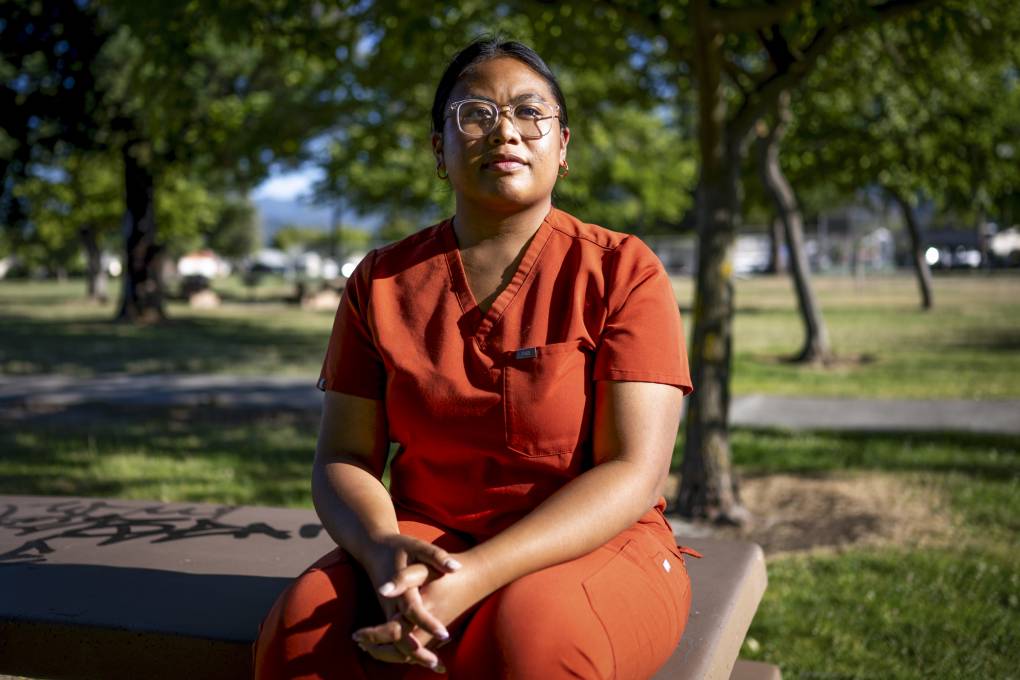
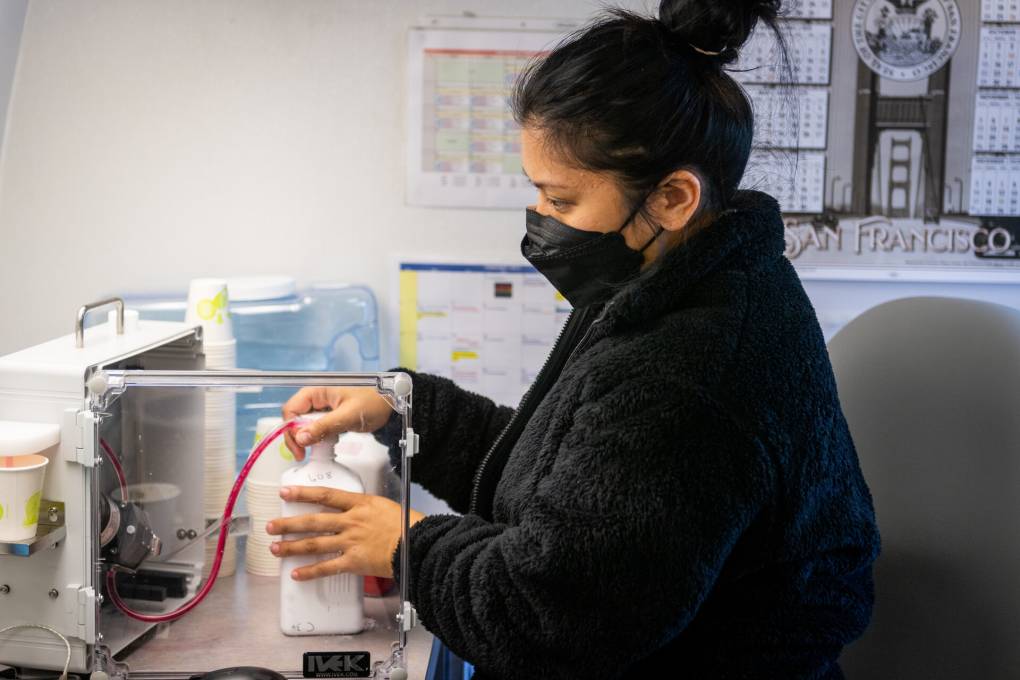
"content": "\u003cp>\u003cem>Updated 4:45 p.m. Thursday\u003c/em>\u003c/p>\n\u003cp>The state budget deal that delays gradually increasing the minimum hourly wage in health care to $25 will have a greater impact outside of the San Francisco Bay Area, according to economic experts. That’s because some large health care employers already pay workers higher wages, especially in the state’s most expensive regions.\u003c/p>\n\u003cp>But that doesn’t lessen the sting for those who currently earn much less than $25 an hour.\u003c/p>\n\u003cp>California lawmakers gave final approval Thursday to a compromise deferring the first programmed wage hikes until mid-October, if state revenues exceed projections by at least 3% for the next three months. If they don’t, the raises would be effective no later than January 1, 2025.\u003c/p>\n\u003cp>Democrats had \u003ca href=\"https://www.kqed.org/news/11986998/first-of-californias-healthcare-minimum-wage-hikes-likely-to-be-delayed\">already delayed\u003c/a> the health care wage boost once from June 1 to July 1 due to concerns that costs would exacerbate the state’s multibillion-dollar budget deficit. The legislation outlining the increases, \u003ca href=\"https://leginfo.legislature.ca.gov/faces/billNavClient.xhtml?bill_id=202320240SB525\">SB 525\u003c/a>, was approved last year to try to ease labor shortages in the industry and improve patient care.\u003c/p>\n\u003cp>[ad fullwidth]\u003c/p>\n\u003cp>“Workers led the way in this victory for wages that will lift 400,000 workers out of poverty,” said state Sen. María Elena Durazo (D-Los Angeles), who authored SB 525, in a statement after the latest delay was announced. “The impact of this community win will be greatest in our most underserved communities, a critical step forward for health care for all.”\u003c/p>\n\u003cp>Earlier figures by the Department of Finance pointed to $4 billion in costs to the state in the first year of implementing the legislation, which worker advocates criticized as too high. The department has since revised its cost estimates to $1.4 billion in 2025, and more later on, including increased pay for 26,000 state employees and higher Medi-Cal reimbursements for providers that will also be required to raise salaries.\u003c/p>\n\u003ch2>Where health care workers are paid less\u003c/h2>\n\u003cp>Large health care employers in the Bay Area tend to offer higher wages for their lowest-paid workers than smaller hospitals in the Central Valley, the Inland Empire and northern rural counties, said Joanne Spetz, an economist who directs the Institute for Health Policy Studies at UCSF.\u003c/p>\n\u003cp>State \u003ca href=\"https://data.chhs.ca.gov/dataset/hospital-annual-financial-data-selected-data-pivot-tables\">hospital data\u003c/a> reviewed by Spetz for KQED show that medical assistants and other aides at the Walnut Creek Medical Center, a Kaiser hospital, for instance, earned on average $40.73 in 2022, compared to $16.99 at an Adventist Health hospital in Tulare.\u003c/p>\n\u003cp>[aside label=\"Related Stories\" postID=\"news_11986998,news_11986871,news_11984163\"]“The Bay Area definitely has among the highest average wages that you see across California for the jobs that tend to have the lowest wages in the hospital,” Spetz said, adding that employers in the Bay Area and other pricey regions face more competitive labor markets.\u003c/p>\n\u003cp>“If you are in San José or Santa Barbara, you’ve got a limited talent pool that you are competing against all these other employers to get, so you are going to have to raise your wages,” she added. “In areas like the Central Valley, you’ve got a combination of the housing being cheaper, in general, the cost of living is lower, so wages tend to be lower.”\u003c/p>\n\u003cp>About \u003ca href=\"https://laborcenter.berkeley.edu/ca-health-care-minimum-wage-new-estimates-feb2024/\">426,000 people\u003c/a> statewide — or about 36% of the health care workforce — will benefit from the minimum wage hike, said Laurel Lucia, who directs the health care program at the UC Berkeley Labor Center.\u003c/p>\n\u003ch2>Some workers disappointed with the delay\u003c/h2>\n\u003cp>Workers who are set to get higher pay include clerical and food service staff, medical and nursing assistants, and hemodialysis technicians. Some, like Tessa Tuliao, who works at a dialysis clinic in San José, said the delay saddened them. Tuliao, 23, said her plans to become more financially independent and help support her parents, so they don’t have to work two jobs, will have to wait.\u003c/p>\n\u003cp>“When I found out, it was very, very disappointing because many private hospitals, which is a majority of California’s health care system, have the money to implement that minimum wage,” said a crestfallen Tuliao, who expected her hourly wage to jump from $19.75 to $23 on July 1. “And actually, many hospitals and clinics already have. So there’s no reason that others like ours shouldn’t start.”\u003c/p>\n\u003cp>Tuliao believes the higher pay would help retain workers in the industry and attract new ones, easing the staffing shortages that make her job more difficult and stressful.\u003c/p>\n\u003cfigure id=\"attachment_11990963\" class=\"wp-caption alignnone\" style=\"max-width: 2000px\">\u003cimg loading=\"lazy\" decoding=\"async\" class=\"size-full wp-image-11990963\" src=\"https://cdn.kqed.org/wp-content/uploads/sites/10/2024/06/240617-HEALTHCAREMINWAGE-14-BL-KQED.jpg\" alt=\"\" width=\"2000\" height=\"1333\" srcset=\"https://cdn.kqed.org/wp-content/uploads/sites/10/2024/06/240617-HEALTHCAREMINWAGE-14-BL-KQED.jpg 2000w, https://cdn.kqed.org/wp-content/uploads/sites/10/2024/06/240617-HEALTHCAREMINWAGE-14-BL-KQED-800x533.jpg 800w, https://cdn.kqed.org/wp-content/uploads/sites/10/2024/06/240617-HEALTHCAREMINWAGE-14-BL-KQED-1020x680.jpg 1020w, https://cdn.kqed.org/wp-content/uploads/sites/10/2024/06/240617-HEALTHCAREMINWAGE-14-BL-KQED-160x107.jpg 160w, https://cdn.kqed.org/wp-content/uploads/sites/10/2024/06/240617-HEALTHCAREMINWAGE-14-BL-KQED-1536x1024.jpg 1536w, https://cdn.kqed.org/wp-content/uploads/sites/10/2024/06/240617-HEALTHCAREMINWAGE-14-BL-KQED-1920x1280.jpg 1920w\" sizes=\"auto, (max-width: 2000px) 100vw, 2000px\">\u003cfigcaption class=\"wp-caption-text\">Satellite Healthcare dialysis clinic in San José on June 17, 2024. \u003ccite>(Beth LaBerge/KQED)\u003c/cite>\u003c/figcaption>\u003c/figure>\n\u003cp>She often has to take on more patients during her shifts at a dialysis clinic, while patients with kidney disease face longer wait times for the life-saving treatment they need, she said.\u003c/p>\n\u003cp>A spokesperson with Satellite Healthcare, Tuliao’s employer, said the nonprofit company had already increased its minimum wage to $23 an hour — which is also the first change outlined for dialysis clinics under SB 525 — but only for workers who are not part of ongoing collective bargaining negotiations. The raise excluded Tuliao and other employees at 11 Satellite Healthcare clinics who SEIU United Healthcare Workers said it has represented in contract negotiations that began in September 2023.\u003c/p>\n\u003cp>“A small portion of our employees have chosen to be represented by SEIU and we continue to bargain in good faith,” the Satellite Healthcare spokesperson said in a statement.\u003c/p>\n\u003cp>The California Kidney Care Alliance and California Hospital Association confirmed some of its members have also raised employee pay while others are working to meet the new requirements when they go into effect.\u003c/p>\n\u003cp>“Dialysis providers in California value their caregivers and are following the requirements laid out in SB 525, and in the new state budget deal, to establish a health care minimum wage,” said Jaycob Bytel, spokesperson for California Kidney Care Alliance. “In fact, many providers have already increased wages well ahead of the requirements of the bill.”\u003c/p>\n\u003cp>\u003c/p>\n",
"blocks": [],
"excerpt": "Even as most California health care workers already make more than $25 an hour, those impacted by the delay say it's disappointing.",
"status": "publish",
"parent": 0,
"modified": 1738186162,
"stats": {
"hasAudio": false,
"hasVideo": false,
"hasChartOrMap": false,
"iframeSrcs": [],
"hasGoogleForm": false,
"hasGallery": false,
"hasHearkenModule": false,
"hasPolis": false,
"paragraphCount": 22,
"wordCount": 1026
},
"headData": {
"title": "Health Care Minimum Wage Hike Delay Leaves Some Workers Behind | KQED",
"description": "Even as most California health care workers already make more than $25 an hour, those impacted by the delay say it's disappointing.",
"ogTitle": "",
"ogDescription": "",
"ogImgId": "",
"twTitle": "",
"twDescription": "",
"twImgId": "",
"schema": {
"@context": "https://schema.org",
"@type": "NewsArticle",
"headline": "Health Care Minimum Wage Hike Delay Leaves Some Workers Behind",
"datePublished": "2024-06-27T07:30:00-07:00",
"dateModified": "2025-01-29T13:29:22-08:00",
"image": "https://cdn.kqed.org/wp-content/uploads/2020/02/KQED-OG-Image@1x.png",
"isAccessibleForFree": "True",
"publisher": {
"@type": "NewsMediaOrganization",
"@id": "https://www.kqed.org/#organization",
"name": "KQED",
"logo": "https://cdn.kqed.org/wp-content/uploads/2020/02/KQED-OG-Image@1x.png",
"url": "https://www.kqed.org",
"sameAs": [
"https://www.facebook.com/KQED",
"https://twitter.com/KQED",
"https://www.instagram.com/kqed/",
"https://www.tiktok.com/@kqedofficial",
"https://www.linkedin.com/company/kqed",
"https://www.youtube.com/channel/UCeC0IOo7i1P_61zVUWbJ4nw"
]
}
}
},
"audioUrl": "https://traffic.omny.fm/d/clips/0af137ef-751e-4b19-a055-aaef00d2d578/ffca7e9f-6831-4[…]f-aaef00f5a073/a2a99936-03ea-4077-bd74-b19c0102498d/audio.mp3",
"sticky": false,
"nprStoryId": "kqed-11992165",
"excludeFromSiteSearch": "Include",
"articleAge": "0",
"path": "/news/11992165/why-the-budget-deal-delaying-the-health-care-minimum-wage-hike-is-not-as-big-as-you-might-think",
"audioTrackLength": null,
"parsedContent": [
{
"type": "contentString",
"content": "\u003cdiv class=\"post-body\">\u003cp>\u003cp>\u003cem>Updated 4:45 p.m. Thursday\u003c/em>\u003c/p>\n\u003cp>The state budget deal that delays gradually increasing the minimum hourly wage in health care to $25 will have a greater impact outside of the San Francisco Bay Area, according to economic experts. That’s because some large health care employers already pay workers higher wages, especially in the state’s most expensive regions.\u003c/p>\n\u003cp>But that doesn’t lessen the sting for those who currently earn much less than $25 an hour.\u003c/p>\n\u003cp>California lawmakers gave final approval Thursday to a compromise deferring the first programmed wage hikes until mid-October, if state revenues exceed projections by at least 3% for the next three months. If they don’t, the raises would be effective no later than January 1, 2025.\u003c/p>\n\u003cp>Democrats had \u003ca href=\"https://www.kqed.org/news/11986998/first-of-californias-healthcare-minimum-wage-hikes-likely-to-be-delayed\">already delayed\u003c/a> the health care wage boost once from June 1 to July 1 due to concerns that costs would exacerbate the state’s multibillion-dollar budget deficit. The legislation outlining the increases, \u003ca href=\"https://leginfo.legislature.ca.gov/faces/billNavClient.xhtml?bill_id=202320240SB525\">SB 525\u003c/a>, was approved last year to try to ease labor shortages in the industry and improve patient care.\u003c/p>\n\u003cp>\u003c/p>\u003c/div>",
"attributes": {
"named": {},
"numeric": []
}
},
{
"type": "component",
"content": "",
"name": "ad",
"attributes": {
"named": {
"label": "fullwidth"
},
"numeric": [
"fullwidth"
]
}
},
{
"type": "contentString",
"content": "\u003cdiv class=\"post-body\">\u003cp>\u003c/p>\n\u003cp>“Workers led the way in this victory for wages that will lift 400,000 workers out of poverty,” said state Sen. María Elena Durazo (D-Los Angeles), who authored SB 525, in a statement after the latest delay was announced. “The impact of this community win will be greatest in our most underserved communities, a critical step forward for health care for all.”\u003c/p>\n\u003cp>Earlier figures by the Department of Finance pointed to $4 billion in costs to the state in the first year of implementing the legislation, which worker advocates criticized as too high. The department has since revised its cost estimates to $1.4 billion in 2025, and more later on, including increased pay for 26,000 state employees and higher Medi-Cal reimbursements for providers that will also be required to raise salaries.\u003c/p>\n\u003ch2>Where health care workers are paid less\u003c/h2>\n\u003cp>Large health care employers in the Bay Area tend to offer higher wages for their lowest-paid workers than smaller hospitals in the Central Valley, the Inland Empire and northern rural counties, said Joanne Spetz, an economist who directs the Institute for Health Policy Studies at UCSF.\u003c/p>\n\u003cp>State \u003ca href=\"https://data.chhs.ca.gov/dataset/hospital-annual-financial-data-selected-data-pivot-tables\">hospital data\u003c/a> reviewed by Spetz for KQED show that medical assistants and other aides at the Walnut Creek Medical Center, a Kaiser hospital, for instance, earned on average $40.73 in 2022, compared to $16.99 at an Adventist Health hospital in Tulare.\u003c/p>\n\u003cp>\u003c/p>\u003c/div>",
"attributes": {
"named": {},
"numeric": []
}
},
{
"type": "component",
"content": "",
"name": "aside",
"attributes": {
"named": {
"label": "Related Stories ",
"postid": "news_11986998,news_11986871,news_11984163"
},
"numeric": []
}
},
{
"type": "contentString",
"content": "\u003cdiv class=\"post-body\">\u003cp>“The Bay Area definitely has among the highest average wages that you see across California for the jobs that tend to have the lowest wages in the hospital,” Spetz said, adding that employers in the Bay Area and other pricey regions face more competitive labor markets.\u003c/p>\n\u003cp>“If you are in San José or Santa Barbara, you’ve got a limited talent pool that you are competing against all these other employers to get, so you are going to have to raise your wages,” she added. “In areas like the Central Valley, you’ve got a combination of the housing being cheaper, in general, the cost of living is lower, so wages tend to be lower.”\u003c/p>\n\u003cp>About \u003ca href=\"https://laborcenter.berkeley.edu/ca-health-care-minimum-wage-new-estimates-feb2024/\">426,000 people\u003c/a> statewide — or about 36% of the health care workforce — will benefit from the minimum wage hike, said Laurel Lucia, who directs the health care program at the UC Berkeley Labor Center.\u003c/p>\n\u003ch2>Some workers disappointed with the delay\u003c/h2>\n\u003cp>Workers who are set to get higher pay include clerical and food service staff, medical and nursing assistants, and hemodialysis technicians. Some, like Tessa Tuliao, who works at a dialysis clinic in San José, said the delay saddened them. Tuliao, 23, said her plans to become more financially independent and help support her parents, so they don’t have to work two jobs, will have to wait.\u003c/p>\n\u003cp>“When I found out, it was very, very disappointing because many private hospitals, which is a majority of California’s health care system, have the money to implement that minimum wage,” said a crestfallen Tuliao, who expected her hourly wage to jump from $19.75 to $23 on July 1. “And actually, many hospitals and clinics already have. So there’s no reason that others like ours shouldn’t start.”\u003c/p>\n\u003cp>Tuliao believes the higher pay would help retain workers in the industry and attract new ones, easing the staffing shortages that make her job more difficult and stressful.\u003c/p>\n\u003cfigure id=\"attachment_11990963\" class=\"wp-caption alignnone\" style=\"max-width: 2000px\">\u003cimg loading=\"lazy\" decoding=\"async\" class=\"size-full wp-image-11990963\" src=\"https://cdn.kqed.org/wp-content/uploads/sites/10/2024/06/240617-HEALTHCAREMINWAGE-14-BL-KQED.jpg\" alt=\"\" width=\"2000\" height=\"1333\" srcset=\"https://cdn.kqed.org/wp-content/uploads/sites/10/2024/06/240617-HEALTHCAREMINWAGE-14-BL-KQED.jpg 2000w, https://cdn.kqed.org/wp-content/uploads/sites/10/2024/06/240617-HEALTHCAREMINWAGE-14-BL-KQED-800x533.jpg 800w, https://cdn.kqed.org/wp-content/uploads/sites/10/2024/06/240617-HEALTHCAREMINWAGE-14-BL-KQED-1020x680.jpg 1020w, https://cdn.kqed.org/wp-content/uploads/sites/10/2024/06/240617-HEALTHCAREMINWAGE-14-BL-KQED-160x107.jpg 160w, https://cdn.kqed.org/wp-content/uploads/sites/10/2024/06/240617-HEALTHCAREMINWAGE-14-BL-KQED-1536x1024.jpg 1536w, https://cdn.kqed.org/wp-content/uploads/sites/10/2024/06/240617-HEALTHCAREMINWAGE-14-BL-KQED-1920x1280.jpg 1920w\" sizes=\"auto, (max-width: 2000px) 100vw, 2000px\">\u003cfigcaption class=\"wp-caption-text\">Satellite Healthcare dialysis clinic in San José on June 17, 2024. \u003ccite>(Beth LaBerge/KQED)\u003c/cite>\u003c/figcaption>\u003c/figure>\n\u003cp>She often has to take on more patients during her shifts at a dialysis clinic, while patients with kidney disease face longer wait times for the life-saving treatment they need, she said.\u003c/p>\n\u003cp>A spokesperson with Satellite Healthcare, Tuliao’s employer, said the nonprofit company had already increased its minimum wage to $23 an hour — which is also the first change outlined for dialysis clinics under SB 525 — but only for workers who are not part of ongoing collective bargaining negotiations. The raise excluded Tuliao and other employees at 11 Satellite Healthcare clinics who SEIU United Healthcare Workers said it has represented in contract negotiations that began in September 2023.\u003c/p>\n\u003cp>“A small portion of our employees have chosen to be represented by SEIU and we continue to bargain in good faith,” the Satellite Healthcare spokesperson said in a statement.\u003c/p>\n\u003cp>The California Kidney Care Alliance and California Hospital Association confirmed some of its members have also raised employee pay while others are working to meet the new requirements when they go into effect.\u003c/p>\n\u003cp>“Dialysis providers in California value their caregivers and are following the requirements laid out in SB 525, and in the new state budget deal, to establish a health care minimum wage,” said Jaycob Bytel, spokesperson for California Kidney Care Alliance. “In fact, many providers have already increased wages well ahead of the requirements of the bill.”\u003c/p>\n\u003cp>\u003c/p>\n\u003c/div>\u003c/p>",
"attributes": {
"named": {},
"numeric": []
}
}
],
"link": "/news/11992165/why-the-budget-deal-delaying-the-health-care-minimum-wage-hike-is-not-as-big-as-you-might-think",
"authors": [
"8659"
],
"categories": [
"news_1758",
"news_457",
"news_8"
],
"tags": [
"news_27626",
"news_18543",
"news_24939",
"news_2141"
],
"featImg": "news_11992248",
"label": "news"
},
"news_11990750": {
"type": "posts",
"id": "news_11990750",
"meta": {
"index": "posts_1716263798",
"site": "news",
"id": "11990750",
"score": null,
"sort": [
1718721000000
]
},
"guestAuthors": [],
"slug": "uber-and-lyft-are-fighting-minimum-wage-laws-but-in-this-state-the-drivers-won",
"title": "Uber and Lyft Are Fighting Minimum Wage Laws. But in This State, the Drivers Won",
"publishDate": 1718721000,
"format": "standard",
"headTitle": "Uber and Lyft Are Fighting Minimum Wage Laws. But in This State, the Drivers Won | KQED",
"labelTerm": {
"term": 253,
"site": "news"
},
"content": "\u003cp>In a windowless room, Uber driver Farhan Badel took the podium in front of a committee of Minnesota state legislators in early May. As Badel leaned into the microphone and started speaking, the room quieted. Testifying before lawmakers was something he’d done nearly a dozen times before, but he says this time felt like his last chance.\u003c/p>\n\u003cp>“We’ve been fighting for two long years,” Badel stated, referencing ride-hail drivers’ battle to get a minimum wage law passed in the state. He said his message to lawmakers was this: “Uber and Lyft, especially Uber, notorious for their shady lobbying … should not be allowed to dictate what becomes law in this state.”\u003c/p>\n\u003cp>The lobbying Badel referenced is part of a playbook Uber and Lyft have used in cities across the country to curb minimum wage laws for drivers. The San Francisco-based companies have barraged lawmakers with emails, sent warning messages to riders and drivers, and threatened to vacate states if they were forced to pay minimum wage.\u003c/p>\n\u003cp>[ad fullwidth]\u003c/p>\n\u003cp>In Minnesota, the campaign was particularly aggressive. Interviews with drivers and lawmakers, along with internal emails and documents obtained by NPR, show that Minnesota was the target of an intense operation.\u003c/p>\n\u003cp>That hearing where Badel testified was the latest twist in a whiplash series of events. Over the last two years, ride-hail drivers had organized and grown into a more than 1,300-member group that marched at City Hall, met with lawmakers and brought national attention to their plight.\u003c/p>\n\u003cp>They had seen wins and losses in dizzying succession: Three separate bills mandating minimum wage for ride-hail drivers passed at the state and city levels, only to get unexpectedly vetoed by Gov. Tim Walz or Minneapolis Mayor Jacob Frey. The drivers say it felt to them like a true David and Goliath situation, pitting them against multibillion-dollar corporations that seemed to hold far more power.\u003c/p>\n\u003cfigure id=\"attachment_11990764\" class=\"wp-caption alignnone\" style=\"max-width: 1700px\">\u003cimg loading=\"lazy\" decoding=\"async\" class=\"size-full wp-image-11990764\" src=\"https://cdn.kqed.org/wp-content/uploads/sites/10/2024/06/npr.brightspotcdn-1-copy.jpg\" alt=\"\" width=\"1700\" height=\"1134\" srcset=\"https://cdn.kqed.org/wp-content/uploads/sites/10/2024/06/npr.brightspotcdn-1-copy.jpg 1700w, https://cdn.kqed.org/wp-content/uploads/sites/10/2024/06/npr.brightspotcdn-1-copy-800x534.jpg 800w, https://cdn.kqed.org/wp-content/uploads/sites/10/2024/06/npr.brightspotcdn-1-copy-1020x680.jpg 1020w, https://cdn.kqed.org/wp-content/uploads/sites/10/2024/06/npr.brightspotcdn-1-copy-160x107.jpg 160w, https://cdn.kqed.org/wp-content/uploads/sites/10/2024/06/npr.brightspotcdn-1-copy-1536x1025.jpg 1536w\" sizes=\"(max-width: 1700px) 100vw, 1700px\">\u003cfigcaption class=\"wp-caption-text\">Farhan Badel, an Uber/Lyft driver and MULDA organizer, in Apple Valley, Minn., on May 25. \u003ccite>(Jenn Ackerman for NPR)\u003c/cite>\u003c/figcaption>\u003c/figure>\n\u003cp>This spring it reached a boiling point. After gains by the drivers, Uber and Lyft stepped up their lobbying campaign and \u003ca href=\"https://www.npr.org/2024/03/15/1238885721/uber-lyft-minneapolis-minimum-wage-law\">threatened to pull out of Minneapolis\u003c/a>.\u003c/p>\n\u003cp>“This is part of their corporate playbook,” says Laura Padin, who \u003ca href=\"https://www.datocms-assets.com/64990/1714149807-the-bullys-playbook-april-2024.pdf\">studies lobbying in the gig economy (PDF)\u003c/a> at the National Employment Law Project, a labor rights advocacy organization. “The fact that they can issue threats and say ‘We’re going to leave if you treat us like everyone else’ is a big problem.”\u003c/p>\n\u003cp>Spokespeople for Uber and Lyft say the proposed minimum wage would have left the companies unable to sustain their businesses in the state. Uber says it would have made Minnesota “one of the most expensive markets in the country,” and Lyft says it would have made “prices rise so much that we would have seen a 51% decrease in ride requests.”\u003c/p>\n\u003cp>Walz and Frey, both labor-friendly Democrats, had been adamant that they wanted ride-hail drivers to make a livable wage. They also took the companies, and their warnings, seriously.\u003c/p>\n\u003cp>“From the very beginning, I had two primary goals,” Frey told NPR in an interview. “To get a very significant pay increase for drivers and to keep this very important rideshare service, including Uber and Lyft, in our city.”\u003c/p>\n\u003cp>Similar scenarios have played out in New York and Seattle, which ultimately passed city minimum wage laws. But every state law governing driver pay and protections that has been crafted to date has included provisions backed by Uber and Lyft — through their \u003ca href=\"https://www.nybooks.com/online/2024/05/09/inside-uber-political-machine/?utm_source=Twitter&utm_medium=social&utm_campaign=2024-05-09_Wells-Uber-1\">lobbying and public campaigns\u003c/a>. For example, in California, the companies \u003ca href=\"https://cal-access.sos.ca.gov/Campaign/Committees/Detail.aspx?id=1422181&session=2019&view=received\">spent a combined $108.5 million\u003c/a> on a successful \u003ca href=\"https://www.npr.org/2020/11/05/931561150/california-voters-give-uber-lyft-a-win-but-some-drivers-arent-so-sure\">ballot measure campaign\u003c/a> to exempt them from a state labor law. Another statewide battle happened in Washington, and one is underway in Massachusetts.\u003c/p>\n\u003cp>But in Minnesota, something wholly unexpected happened last month — the drivers won.\u003c/p>\n\u003ch2>‘The worst I’ve seen in eight years’\u003c/h2>\n\u003cp>It all started in a small coffee shop in Minneapolis. In the summer of 2022, ride-hail driver Eid Ali gathered with about 20 Uber and Lyft drivers to talk about low pay, safety concerns and other issues that come with the job. Ali is a father of five and the sole provider for his family. Before he started driving for Uber and Lyft in 2014, Ali was a taxi driver and had done some organizing. He says this helped him and the other drivers come up with a game plan.\u003c/p>\n\u003cp>The first step was to recruit more drivers. Ali and the others went to shopping malls and airport parking lots to speak with drivers. They also went to mosques — the majority of ride-hail drivers in Minneapolis are immigrants, according to \u003ca href=\"https://www.dli.mn.gov/sites/default/files/pdf/TNC_driver_earnings_analysis_pay_standard_options_report_030824.pdf\">state data (PDF)\u003c/a>, with many from East Africa, especially Somalia.\u003c/p>\n\u003cp>The drivers coalesced in a group called Minnesota Uber/Lyft Drivers Association, or MULDA, and Ali became the president.\u003c/p>\n\u003cfigure id=\"attachment_11990765\" class=\"wp-caption alignnone\" style=\"max-width: 1700px\">\u003cimg loading=\"lazy\" decoding=\"async\" class=\"size-full wp-image-11990765\" src=\"https://cdn.kqed.org/wp-content/uploads/sites/10/2024/06/npr.brightspotcdn2-copy.jpg\" alt=\"\" width=\"1700\" height=\"1134\" srcset=\"https://cdn.kqed.org/wp-content/uploads/sites/10/2024/06/npr.brightspotcdn2-copy.jpg 1700w, https://cdn.kqed.org/wp-content/uploads/sites/10/2024/06/npr.brightspotcdn2-copy-800x534.jpg 800w, https://cdn.kqed.org/wp-content/uploads/sites/10/2024/06/npr.brightspotcdn2-copy-1020x680.jpg 1020w, https://cdn.kqed.org/wp-content/uploads/sites/10/2024/06/npr.brightspotcdn2-copy-160x107.jpg 160w, https://cdn.kqed.org/wp-content/uploads/sites/10/2024/06/npr.brightspotcdn2-copy-1536x1025.jpg 1536w\" sizes=\"(max-width: 1700px) 100vw, 1700px\">\u003cfigcaption class=\"wp-caption-text\">Eid Ali, president of Minnesota Uber/Lyft Drivers Association (MULDA), at the organization’s offices in Bloomington, Minn., on May 25. \u003ccite>(Jenn Ackerman for NPR)\u003c/cite>\u003c/figcaption>\u003c/figure>\n\u003cp>He says drivers reached out to him constantly about not being able to make ends meet. “Family folks raising kids, who depend on this income, are coming to me every day and telling me ‘I don’t know what to do,’” Ali says. “I was thinking that if I don’t do anything, if I don’t fight a few more days or maybe a few more weeks, who’s going to do that?”\u003c/p>\n\u003cp>Uber and Lyft categorize drivers as independent contractors rather than employees. This means drivers pay their own expenses such as gas, car maintenance and cellphones, and they don’t have employee benefits, including health insurance, sick days and workers’ compensation.\u003c/p>\n\u003cp>Low pay is the top problem, drivers say, as their earnings have steadily shrunk and become harder to predict. In 2022, both Uber and Lyft \u003ca href=\"https://themarkup.org/working-for-an-algorithm/2022/03/01/secretive-algorithm-will-now-determine-uber-driver-pay-in-many-cities\">switched how they paid drivers\u003c/a>, going from a time-and-mileage calculation to an opaque algorithm. Uber and Lyft say the software helps drivers pick and choose trips, but drivers say since that change they’ve seen the companies take a bigger cut, while they’ve gotten less.\u003c/p>\n\u003cp>Sergio Avedian, a longtime ride-hail driver in Los Angeles and senior contributor to the popular blog the \u003ca href=\"https://therideshareguy.com/\">Rideshare Guy\u003c/a>, says thousands of drivers regularly send him their pay stubs. “This is the worst I’ve seen in eight years,” he says, estimating he often earns less than minimum wage after expenses. “But people are driving, they’re desperate.”\u003c/p>\n\u003cp>In the Twin Cities metro area, where 95% of all of Minnesota’s ride-hail trips happen, the median take-home wage for drivers is $13.63 per hour, according to a \u003ca href=\"https://www.dli.mn.gov/sites/default/files/pdf/TNC_driver_earnings_analysis_pay_standard_options_report_030824.pdf\">report (PDF)\u003c/a> by the Minnesota Department of Labor and Industry. That’s below the minimum wage for large businesses in St. Paul ($15) and Minneapolis ($15.57).\u003c/p>\n\u003cp>Uber’s spokesperson calls this report “\u003ca href=\"https://uberpubpolicy.medium.com/excessive-rates-and-their-negative-effects-a-review-of-minnesotas-proposed-pay-standard-9747c14d0254\">flawed\u003c/a>.” Lyft didn’t respond to questions about driver pay.\u003c/p>\n\u003cp>Uber and Lyft have shaped minimum wage laws in their favor in other states. In Washington, for example, after Seattle passed a minimum wage for ride-hail drivers, the two companies \u003ca href=\"https://themarkup.org/news/2022/03/04/bill-in-washington-state-would-be-first-to-bar-uber-and-lyft-drivers-from-being-classified-as-employees\">lobbied legislators\u003c/a> to pass a state law. That law gives drivers a minimum pay floor but also grants a key concession to the companies: ensuring that the drivers remain classified as independent contractors, which exempts the companies from providing customary worker benefits.\u003c/p>\n\u003cfigure id=\"attachment_11990766\" class=\"wp-caption alignnone\" style=\"max-width: 1700px\">\u003cimg loading=\"lazy\" decoding=\"async\" class=\"size-full wp-image-11990766\" src=\"https://cdn.kqed.org/wp-content/uploads/sites/10/2024/06/npr.brightspotcdn3-copy.jpg\" alt=\"\" width=\"1700\" height=\"1134\" srcset=\"https://cdn.kqed.org/wp-content/uploads/sites/10/2024/06/npr.brightspotcdn3-copy.jpg 1700w, https://cdn.kqed.org/wp-content/uploads/sites/10/2024/06/npr.brightspotcdn3-copy-800x534.jpg 800w, https://cdn.kqed.org/wp-content/uploads/sites/10/2024/06/npr.brightspotcdn3-copy-1020x680.jpg 1020w, https://cdn.kqed.org/wp-content/uploads/sites/10/2024/06/npr.brightspotcdn3-copy-160x107.jpg 160w, https://cdn.kqed.org/wp-content/uploads/sites/10/2024/06/npr.brightspotcdn3-copy-1536x1025.jpg 1536w\" sizes=\"(max-width: 1700px) 100vw, 1700px\">\u003cfigcaption class=\"wp-caption-text\">Symbols for Uber and Lyft adorn Farhan Badel’s vehicle in Apple Valley, Minn. \u003ccite>(Jenn Ackerman for NPR)\u003c/cite>\u003c/figcaption>\u003c/figure>\n\u003cp>By the fall of 2022, hundreds of drivers had joined MULDA, with the campaign crystallizing around the push for a minimum wage. That October, they \u003ca href=\"https://minnesotareformer.com/2022/10/20/uber-and-lyft-drivers-press-lawmakers-to-address-long-standing-labor-complaints/\">held their first press conference\u003c/a> at the Minnesota state Capitol. “Drivers are at a breaking point,” Ali announced, alongside state lawmakers that day. From there, their cause quickly picked up steam.\u003c/p>\n\u003cp>By March 2023, state legislators had introduced a \u003ca href=\"https://www.revisor.mn.gov/bills/bill.php?b=House&f=HF2369&ssn=0&y=2023\">bill\u003c/a> that set out minimum pay and other protections for ride-hail drivers. It swiftly passed the House and Senate and landed on Walz’s desk in late May 2023.\u003c/p>\n\u003cp>All signs pointed to Walz signing the bill, Badel says. The drivers got ready to celebrate a victory.\u003c/p>\n\u003cp>“Insiders told us to come to the state Capitol the day when they signed all these bills,” Badel says. “They told us to come there dressed well — you know, look presentable, look happy. So, we were getting all these checkmarks that he was going to sign the bill.”\u003c/p>\n\u003ch2>A lobbying blitz\u003c/h2>\n\u003cp>What Badel and Ali didn’t know was that Uber and Lyft’s lobbyists were hard at work behind the scenes.\u003c/p>\n\u003cp>Days before the governor received the bill, the companies’ lobbyists sent a slew of emails to his staffers and colleagues, according to public records obtained by NPR. Those included “talking points and numbers” that said rider fares would skyrocket if the bill passed. In Minneapolis, they said fares would go up 70%, without citing specific data.\u003c/p>\n\u003cp>\u003c!-- iframe plugin v.4.3 wordpress.org/plugins/iframe/ -->\u003cbr>\n\u003ciframe loading=\"lazy\" src=\"https://apps.npr.org/dailygraphics/graphics/lyft-uber-playbook-20240610/aiTimeline.html?initialWidth=840&childId=responsive-embed-lyft-uber-playbook-20240610-aiTimeline&parentTitle=Uber%20and%20Lyft%20use%20lobbying%20to%20fight%20minimum%20wage%20law%20in%20Minnesota%20%3A%20NPR&parentUrl=https%3A%2F%2Fwww.npr.org%2F2024%2F06%2F17%2Fnx-s1-4942958%2Fuber-minimum-wage-minnesota-lyft-lobbying\" width=\"800\" height=\"2200\" scrolling=\"yes\" class=\"iframe-class\" frameborder=\"0\">\u003c/iframe>\u003c/p>\n\u003cp>Brent Kent, a registered lobbyist for Lyft and the company’s director of public policy, sent a letter to Minnesota’s Senate president saying the bill would have a “catastrophic impact” and create “transportation deserts.” Rides in Minneapolis would go from $17 to $54, he said, also not citing specific data for that statistic.\u003c/p>\n\u003cp>As signing day neared, the lobbyists ramped up their efforts. They requested phone calls between Walz and the CEOs of both Uber and Lyft. At one point, Uber lobbyist Joel Carlson emailed the governor’s legislative assistant asking for an alternative email for the office, because he said he had a lot of people wanting to write in with opposition to the bill and didn’t want to “email bomb” her.\u003c/p>\n\u003cp>Carlson also fired off “veto request” letters he collected from 11 community groups — business and hospitality associations as well as organizations that work with people with disabilities, the elderly and domestic violence survivors. At least half of those groups have partnered with Uber or Lyft, but that wasn’t disclosed in their letters.\u003c/p>\n\u003cp>Uber’s spokesperson says it “engaged many organizations and local stakeholders to ensure they understood the impact of the legislation” and “many decided to express their concerns.” The spokesperson also confirmed that Uber CEO Dara Khosrowshahi had spoken with the governor.\u003c/p>\n\u003cfigure id=\"attachment_11990767\" class=\"wp-caption alignnone\" style=\"max-width: 1700px\">\u003cimg loading=\"lazy\" decoding=\"async\" class=\"size-full wp-image-11990767\" src=\"https://cdn.kqed.org/wp-content/uploads/sites/10/2024/06/npr.brightspotcdn4-copy.jpg\" alt=\"\" width=\"1700\" height=\"1134\" srcset=\"https://cdn.kqed.org/wp-content/uploads/sites/10/2024/06/npr.brightspotcdn4-copy.jpg 1700w, https://cdn.kqed.org/wp-content/uploads/sites/10/2024/06/npr.brightspotcdn4-copy-800x534.jpg 800w, https://cdn.kqed.org/wp-content/uploads/sites/10/2024/06/npr.brightspotcdn4-copy-1020x680.jpg 1020w, https://cdn.kqed.org/wp-content/uploads/sites/10/2024/06/npr.brightspotcdn4-copy-160x107.jpg 160w, https://cdn.kqed.org/wp-content/uploads/sites/10/2024/06/npr.brightspotcdn4-copy-1536x1025.jpg 1536w\" sizes=\"(max-width: 1700px) 100vw, 1700px\">\u003cfigcaption class=\"wp-caption-text\">Matthew McGlory, a rideshare driver and active member of MULDA, in downtown Minneapolis. \u003ccite>(Jenn Ackerman for NPR)\u003c/cite>\u003c/figcaption>\u003c/figure>\n\u003cp>“We urged the governor to veto the bill publicly, as well, via issued statements and in emails to riders and drivers,” the spokesperson says.\u003c/p>\n\u003cp>Lyft didn’t respond to questions about its involvement with the letters from community groups or conversations between its CEO and the governor.\u003c/p>\n\u003cp>Days before the anticipated signing, the companies rolled out a tactic they’d used in California, New York, Texas and other states: They \u003ca href=\"https://www.cbsnews.com/news/uber-minnesota-rideshare-driver-bill-veto-tim-walz/\">threatened to leave the state\u003c/a> if the bill was signed into law.\u003c/p>\n\u003cp>By May 25, 2023, Ali says he and the other drivers were anxious about the outcome. They gathered in front of Walz’s office chanting, “Governor sign the bill!”\u003c/p>\n\u003cp>That afternoon, Walz issued his \u003ca href=\"https://www.house.mn.gov/NewLaws/story/2023/5502\">first and only veto\u003c/a> in four years as governor.\u003c/p>\n\u003cp>His veto letter started off saying the minimum wage bill “could make Minnesota one of the most expensive states in the country for rideshare.” It cited the need to maintain ride-hail services in the state and also referenced the letters from community groups.\u003c/p>\n\u003cp>A spokeswoman for Walz says that alongside the veto, the governor \u003ca href=\"https://mn.gov/governor/assets/EO%2023-07%20TNC_tcm1055-579270.pdf\">formed a task force (PDF)\u003c/a> to study the issue. She pointed NPR to a \u003ca href=\"https://mn.gov/governor/newsroom/press-releases/#/detail/appId/1/id/579275\">press release\u003c/a> where he said, “Rideshare drivers deserve fair wages and safe working conditions … This is not the right bill to achieve these goals.”\u003c/p>\n\u003cp>Ali says it was a big surprise and a major blow for MULDA. “That was my worst nightmare, because I didn’t know what to say to those drivers.”\u003c/p>\n\u003ch2>‘You’re our last resort’\u003c/h2>\n\u003cp>As the state bill made its way through the Legislature, the MULDA drivers were also simultaneously working with city council members in Minneapolis. After the governor’s veto, the drivers reorganized and went all in at the local level — becoming ever-present at City Hall.\u003c/p>\n\u003cp>“They came to City Hall many, many times, saying: ‘Government officials, you’re our last resort,’” says Robin Wonsley, the Minneapolis council member for Ward 2.\u003c/p>\n\u003cp>“The makeup of the workforce for the rideshare companies is predominantly Black, predominantly immigrant and also predominantly low income,” she added. “And many of these drivers, or a disproportionate number of these drivers, are \u003ca href=\"https://www.dli.mn.gov/sites/default/files/pdf/TNC_driver_earnings_analysis_pay_standard_options_report_030824.pdf\">actually on public assistance (PDF)\u003c/a>.”\u003c/p>\n\u003cfigure id=\"attachment_11990768\" class=\"wp-caption alignnone\" style=\"max-width: 1700px\">\u003cimg loading=\"lazy\" decoding=\"async\" class=\"size-full wp-image-11990768\" src=\"https://cdn.kqed.org/wp-content/uploads/sites/10/2024/06/npr.brightspotcdn5-copy.jpg\" alt=\"\" width=\"1700\" height=\"1134\" srcset=\"https://cdn.kqed.org/wp-content/uploads/sites/10/2024/06/npr.brightspotcdn5-copy.jpg 1700w, https://cdn.kqed.org/wp-content/uploads/sites/10/2024/06/npr.brightspotcdn5-copy-800x534.jpg 800w, https://cdn.kqed.org/wp-content/uploads/sites/10/2024/06/npr.brightspotcdn5-copy-1020x680.jpg 1020w, https://cdn.kqed.org/wp-content/uploads/sites/10/2024/06/npr.brightspotcdn5-copy-160x107.jpg 160w, https://cdn.kqed.org/wp-content/uploads/sites/10/2024/06/npr.brightspotcdn5-copy-1536x1025.jpg 1536w\" sizes=\"(max-width: 1700px) 100vw, 1700px\">\u003cfigcaption class=\"wp-caption-text\">Robin Wonsley, Minneapolis council member for Ward 2, outside City Hall in Bloomington, Minn., on May 26. Wonsley and colleagues worked on a city ordinance to give ride-hail drivers a minimum wage in Minneapolis. \u003ccite>(Jenn Ackerman for NPR)\u003c/cite>\u003c/figcaption>\u003c/figure>\n\u003cp>She joined fellow council members Jamal Osman, who’d introduced her to MULDA, and Jason Chavez to work on a city ordinance. They reached out to economists and experts to come up with a calculation that would be equivalent to the city’s minimum wage. Uber and Lyft only pay drivers when they’re giving rides and not when they’re waiting for a passenger, so a straight hourly wage wouldn’t work. The \u003ca href=\"https://lims.minneapolismn.gov/Download/MetaData/31233/2023-052_Id_31233.pdf\">ordinance (PDF)\u003c/a> they introduced mandated that drivers be paid $1.40 per mile and 51¢ per minute.\u003c/p>\n\u003cp>It \u003ca href=\"https://www.mprnews.org/story/2023/08/17/minneapolis-approves-measure-to-boost-pay-for-uber-lyft-drivers\">passed the council\u003c/a> in August 2023 by a 7–5 vote. But behind the scenes, the companies’ lobbyists were leaning hard on Frey.\u003c/p>\n\u003cp>As with the governor, Uber and Lyft’s lobbyists targeted the mayor, according to internal emails obtained by NPR through public records requests. Lyft’s Kent reached out to staffers saying the company had “grave concerns.” He sent the mayor and council members an opposition letter from a Lyft executive that had one sentence bolded and underlined: “Should this proposal become law, Lyft will be forced to cease operations.”\u003c/p>\n\u003cp>Meanwhile, Uber’s Carlson called the ordinance “problematic.” On Aug. 21, Carlson emailed a senior aide at City Hall, saying he had spoken with the mayor.\u003c/p>\n\u003cp>“Uber understands the importance and optics to provide a thoughtful response to the council’s vote and have offered to him the opportunity to announce the following if he chooses,” the email reads. Carlson said the mayor could announce that Uber pledges to give drivers a minimum wage and a $5 minimum on all trips. He sent suggested language for the mayor’s announcement.\u003c/p>\n\u003cfigure id=\"attachment_11990769\" class=\"wp-caption alignnone\" style=\"max-width: 1700px\">\u003cimg loading=\"lazy\" decoding=\"async\" class=\"size-full wp-image-11990769\" src=\"https://cdn.kqed.org/wp-content/uploads/sites/10/2024/06/npr.brightspotcdn6-copy.jpg\" alt=\"\" width=\"1700\" height=\"1134\" srcset=\"https://cdn.kqed.org/wp-content/uploads/sites/10/2024/06/npr.brightspotcdn6-copy.jpg 1700w, https://cdn.kqed.org/wp-content/uploads/sites/10/2024/06/npr.brightspotcdn6-copy-800x534.jpg 800w, https://cdn.kqed.org/wp-content/uploads/sites/10/2024/06/npr.brightspotcdn6-copy-1020x680.jpg 1020w, https://cdn.kqed.org/wp-content/uploads/sites/10/2024/06/npr.brightspotcdn6-copy-160x107.jpg 160w, https://cdn.kqed.org/wp-content/uploads/sites/10/2024/06/npr.brightspotcdn6-copy-1536x1025.jpg 1536w\" sizes=\"(max-width: 1700px) 100vw, 1700px\">\u003cfigcaption class=\"wp-caption-text\">In Minneapolis, the median take-home wage for ride-hail drivers is nearly $2 less than the minimum wage. \u003ccite>(Jenn Ackerman for NPR)\u003c/cite>\u003c/figcaption>\u003c/figure>\n\u003cp>The next day, Frey \u003ca href=\"https://www.mprnews.org/story/2023/08/22/minneapolis-mayor-jacob-frey-vetoes-rideshare-bill\">vetoed the ordinance\u003c/a>. In his \u003ca href=\"https://lims.minneapolismn.gov/Download/FileV2/32370/2023_052-Veto-Letter.pdf\">veto letter (PDF)\u003c/a>, he said he’d work on another ordinance that included all stakeholders. The mayor also wrote that he was “pleased to share” that he secured a commitment from Uber to provide drivers a minimum wage and a $5 minimum per ride.\u003c/p>\n\u003cp>Uber’s spokesperson says the minimum wage guarantee “was not part of any negotiations.” A spokesperson for Frey says the commitment from Uber “was not in exchange for a veto.”\u003c/p>\n\u003cp>Wonsley says she was outraged.\u003c/p>\n\u003cp>“Why are we having city leaders now supporting a multibillion-dollar corporation and having an exemption from a city policy that hundreds of small businesses have been in compliance with?” she says, referring to the city’s minimum wage law. “And then he announced a nonbinding agreement with Uber, saying, ‘Look, we don’t need to change nothing, the company has made a commitment, a symbolic commitment to pay drivers more.’ ”\u003c/p>\n\u003cp>“We were like ‘Wait, what?’ ” Wonsley adds. “That makes absolutely no sense.”\u003c/p>\n\u003cp>Frey’s spokesperson says the commitment from Uber “was never intended to be a permanent solution.”\u003c/p>\n\u003ch2>Public pressure campaign\u003c/h2>\n\u003cp>The mayor’s veto, coming after the governor’s veto, could have been the end for MULDA drivers’ quest to get a minimum wage law. In other states that went through similar scenarios, such setbacks have taken the wind out of organizing efforts. But Ali and Badel say they came too close to give up. And council member Wonsley says she wasn’t ready to back down either.\u003c/p>\n\u003cp>She and her colleagues introduced two more ordinances in October 2023. One focused on minimum wage, the other on worker protections.\u003c/p>\n\u003cp>Less than six months later, the council passed the new minimum wage \u003ca href=\"https://lims.minneapolismn.gov/Download/FileV2/34129/Transportation-Rideshare-Compensation-Ordinance.pdf\">ordinance (PDF)\u003c/a> by a 9–4 vote. The next day, once again, Frey vetoed the ordinance.\u003c/p>\n\u003cp>“I asked the City Council to wait one day,” says Frey, until after the release of the statewide report on driver earnings. “Both times I vetoed it because it wasn’t supported by the data. And so, we should be listening to the data.”\u003c/p>\n\u003cp>This time, however, the council had enough votes to \u003ca href=\"https://www.mprnews.org/story/2024/03/14/minneapolis-city-council-overrides-freys-veto-on-ordinance-boosting-rideshare-driver-pay\">override his veto\u003c/a>.\u003c/p>\n\u003cp>With this go-round, Uber and Lyft kicked their pressure campaign up a notch. Instead of mostly working with lawmakers behind closed doors, the companies brought their lobbying to the public.\u003c/p>\n\u003cp>“It’s been a full-court press campaign,” Wonsley says. “Every single day there are several articles, interviews in the press, basically demonizing our actions and creating a lot of confusion for the public around what our policy actually accomplished.”\u003c/p>\n\u003cp>The day after the veto override, Uber and Lyft \u003ca href=\"https://www.npr.org/2024/03/15/1238885721/uber-lyft-minneapolis-minimum-wage-law\">announced they were leaving Minneapolis\u003c/a> as soon as the ordinance went into effect. It was around this time that Matthew McGlory, a MULDA member and longtime Uber and Lyft driver, started getting in-app messages and emails from the companies.\u003c/p>\n\u003cfigure id=\"attachment_11990770\" class=\"wp-caption alignnone\" style=\"max-width: 1700px\">\u003cimg loading=\"lazy\" decoding=\"async\" class=\"size-full wp-image-11990770\" src=\"https://cdn.kqed.org/wp-content/uploads/sites/10/2024/06/npr.brightspotcdn7-copy.jpg\" alt=\"\" width=\"1700\" height=\"1134\" srcset=\"https://cdn.kqed.org/wp-content/uploads/sites/10/2024/06/npr.brightspotcdn7-copy.jpg 1700w, https://cdn.kqed.org/wp-content/uploads/sites/10/2024/06/npr.brightspotcdn7-copy-800x534.jpg 800w, https://cdn.kqed.org/wp-content/uploads/sites/10/2024/06/npr.brightspotcdn7-copy-1020x680.jpg 1020w, https://cdn.kqed.org/wp-content/uploads/sites/10/2024/06/npr.brightspotcdn7-copy-160x107.jpg 160w, https://cdn.kqed.org/wp-content/uploads/sites/10/2024/06/npr.brightspotcdn7-copy-1536x1025.jpg 1536w\" sizes=\"(max-width: 1700px) 100vw, 1700px\">\u003cfigcaption class=\"wp-caption-text\">Matthew McGlory, a rideshare driver and active member of MULDA, in downtown Minneapolis on May 26. McGlory says drivers in other states have been watching Minnesota, waiting to see what happened. \u003ccite>(Jenn Ackerman for NPR)\u003c/cite>\u003c/figcaption>\u003c/figure>\n\u003cp>“We know that this decision will have a huge negative effect,” a message from Uber read. “It will put thousands of drivers — like you — out of work.” Uber provided a link to email lawmakers urging them to pass statewide legislation that could preempt the city ordinance and be more favorable to the companies.\u003c/p>\n\u003cp>Lyft, meanwhile, sent an email to its riders saying the ordinance would make rides “unaffordable” for the majority of residents. Lyft’s spokesperson didn’t respond to questions about the in-app messages. Uber’s spokesperson says, “The message speaks for itself.”\u003c/p>\n\u003cp>There was also a flurry of activity in the local news. Uber put an online ad in the \u003cem>Star Tribune\u003c/em> saying Minneapolis was “forcing” it to leave and offered a button to click to “save our rides.” Dan Meyers, a director at disability advocacy group Rise, \u003ca href=\"https://www.startribune.com/minneapolis-rideshare-driver-pay-proposal-looks-at-only-one-side-of-equation/600348209/\">wrote an op-ed\u003c/a> saying the ordinance would be “devastating to the disability community.” Lyft and Rise are \u003ca href=\"https://rise.org/12858-2/\">longtime partners\u003c/a>, which wasn’t disclosed in the op-ed.\u003c/p>\n\u003cp>A spokesperson for Rise says, “Our work with Lyft is well-known among our peers and partners.” Lyft didn’t respond to questions about any possible involvement with the op-ed.\u003c/p>\n\u003cp>Even with the ordinance set to go into effect in Minneapolis, MULDA drivers say they were still nervous. A statewide bill could preempt the city ordinance and undercut their pay. It was hard to tell which way it would go.\u003c/p>\n\u003ch2>‘No one else has been able to do this in the country’\u003c/h2>\n\u003cp>The same day Farhan Badel took the podium in early May pleading with state lawmakers to not let the ride-hail companies dictate the law, Uber’s Carlson also spoke. They were discussing a compromise state bill that would preempt the Minneapolis ordinance — it offered drivers a rate of $1.27 per mile and 49¢ per minute. Carlson told the lawmakers this wouldn’t work for Uber.\u003c/p>\n\u003cp>[aside label=\"Related Stories\" postID=\"news_11986533,news_11987167,forum_2010101905828\"]“Uber has calculated that if you reasonably calculate the expenses you come up with a rate of 41¢ per mile and 68¢ per minute,” he said.\u003c/p>\n\u003cp>The legislators left that hearing without giving any indication\u003cstrong> \u003c/strong>which way it would go. But a couple of weeks later, they made a move that stunned observers.\u003c/p>\n\u003cp>On the night of May 19, \u003ca href=\"https://minnesotareformer.com/2024/05/21/heres-whats-in-the-bill-regulating-uber-and-lyft-driver-pay-and-labor-standards/\">the state passed a new bill\u003c/a> giving drivers the minimum wage rate of $1.28 per mile and 31¢ per minute. Even though it was slightly lower and preempted the Minneapolis ordinance, Wonsley and the council backed it. Frey says he was opposed to the preemption, but that he ultimately supported the bill too since he says it was “nearly identical” to what he proposed months earlier.\u003c/p>\n\u003cp>It was a major win for the MULDA drivers. After the bill’s passage, in a moment of jubilation in the Capitol’s hallways, they hoisted one of the state legislators in the air and chanted “MULDA” over and over. The legislator, Sen. Omar Fateh, who was instrumental in getting the bill passed, said, “It was Uber and Lyft versus MULDA and MULDA won.” The crowd erupted in cheers.\u003c/p>\n\u003cfigure id=\"attachment_11990771\" class=\"wp-caption alignnone\" style=\"max-width: 1700px\">\u003cimg loading=\"lazy\" decoding=\"async\" class=\"size-full wp-image-11990771\" src=\"https://cdn.kqed.org/wp-content/uploads/sites/10/2024/06/npr.brightspotcdn8-copy.jpg\" alt=\"\" width=\"1700\" height=\"1134\" srcset=\"https://cdn.kqed.org/wp-content/uploads/sites/10/2024/06/npr.brightspotcdn8-copy.jpg 1700w, https://cdn.kqed.org/wp-content/uploads/sites/10/2024/06/npr.brightspotcdn8-copy-800x534.jpg 800w, https://cdn.kqed.org/wp-content/uploads/sites/10/2024/06/npr.brightspotcdn8-copy-1020x680.jpg 1020w, https://cdn.kqed.org/wp-content/uploads/sites/10/2024/06/npr.brightspotcdn8-copy-160x107.jpg 160w, https://cdn.kqed.org/wp-content/uploads/sites/10/2024/06/npr.brightspotcdn8-copy-1536x1025.jpg 1536w\" sizes=\"(max-width: 1700px) 100vw, 1700px\">\u003cfigcaption class=\"wp-caption-text\">Rideshare vehicles share the road with other drivers in downtown Minneapolis. \u003ccite>(Jenn Ackerman for NPR)\u003c/cite>\u003c/figcaption>\u003c/figure>\n\u003cp>Spokespeople for Uber and Lyft say the companies accepted the compromise, and that neither will shutter operations in the state. Unlike the minimum pay laws for ride-hail drivers in California and Washington state, Minnesota’s bill doesn’t mandate that drivers remain independent contractors — something Uber and Lyft had sought, but didn’t get.\u003c/p>\n\u003cp>On May 28, Walz signed the bill into law with Ali by his side wearing a white MULDA T-shirt. During a press conference announcing its passage, the governor congratulated state lawmakers. “No one else has been able to do this in the country,” Walz said.\u003c/p>\n\u003cp>The driver McGlory says MULDA has heard from drivers in other states who have been watching Minnesota over the past year and a half, waiting to see what happened.\u003c/p>\n\u003cp>“I’m doing this not just for drivers in Minneapolis. I’m doing this for the drivers in Nashville, Tenn. I’m doing this for drivers in Jackson, Miss.,” McGlory says, pausing for a moment before continuing. “Because when we educate ourselves, when we organize ourselves and we mobilize ourselves, we can win.”\u003c/p>\n\u003cp>“Like my favorite physics teacher said, ‘We have to become an unstoppable force that meets an immovable object.’”\u003c/p>\n\u003cp>[ad floatright]\u003c/p>\n",
"blocks": [],
"excerpt": "Uber and Lyft have lobbied in cities across the country to curb minimum wage laws for drivers, but drivers of the ride-hail companies in Minnesota scored a hard-fought victory after years of struggle.",
"status": "publish",
"parent": 0,
"modified": 1718669052,
"stats": {
"hasAudio": false,
"hasVideo": false,
"hasChartOrMap": true,
"iframeSrcs": [
"https://apps.npr.org/dailygraphics/graphics/lyft-uber-playbook-20240610/aiTimeline.html"
],
"hasGoogleForm": false,
"hasGallery": false,
"hasHearkenModule": false,
"hasPolis": false,
"paragraphCount": 81,
"wordCount": 3965
},
"headData": {
"title": "Uber and Lyft Are Fighting Minimum Wage Laws. But in This State, the Drivers Won | KQED",
"description": "Uber and Lyft have lobbied in cities across the country to curb minimum wage laws for drivers, but drivers of the ride-hail companies in Minnesota scored a hard-fought victory after years of struggle.",
"ogTitle": "",
"ogDescription": "",
"ogImgId": "",
"twTitle": "",
"twDescription": "",
"twImgId": "",
"schema": {
"@context": "https://schema.org",
"@type": "NewsArticle",
"headline": "Uber and Lyft Are Fighting Minimum Wage Laws. But in This State, the Drivers Won",
"datePublished": "2024-06-18T07:30:00-07:00",
"dateModified": "2024-06-17T17:04:12-07:00",
"image": "https://cdn.kqed.org/wp-content/uploads/2020/02/KQED-OG-Image@1x.png",
"isAccessibleForFree": "True",
"publisher": {
"@type": "NewsMediaOrganization",
"@id": "https://www.kqed.org/#organization",
"name": "KQED",
"logo": "https://cdn.kqed.org/wp-content/uploads/2020/02/KQED-OG-Image@1x.png",
"url": "https://www.kqed.org",
"sameAs": [
"https://www.facebook.com/KQED",
"https://twitter.com/KQED",
"https://www.instagram.com/kqed/",
"https://www.tiktok.com/@kqedofficial",
"https://www.linkedin.com/company/kqed",
"https://www.youtube.com/channel/UCeC0IOo7i1P_61zVUWbJ4nw"
]
}
}
},
"sticky": false,
"nprByline": "\u003ca href=\"https://www.npr.org/people/1147860766/dara-kerr\">Dara Kerr\u003c/a>",
"excludeFromSiteSearch": "Include",
"showOnAuthorArchivePages": "No",
"articleAge": "0",
"path": "/news/11990750/uber-and-lyft-are-fighting-minimum-wage-laws-but-in-this-state-the-drivers-won",
"audioTrackLength": null,
"parsedContent": [
{
"type": "contentString",
"content": "\u003cdiv class=\"post-body\">\u003cp>\u003cp>In a windowless room, Uber driver Farhan Badel took the podium in front of a committee of Minnesota state legislators in early May. As Badel leaned into the microphone and started speaking, the room quieted. Testifying before lawmakers was something he’d done nearly a dozen times before, but he says this time felt like his last chance.\u003c/p>\n\u003cp>“We’ve been fighting for two long years,” Badel stated, referencing ride-hail drivers’ battle to get a minimum wage law passed in the state. He said his message to lawmakers was this: “Uber and Lyft, especially Uber, notorious for their shady lobbying … should not be allowed to dictate what becomes law in this state.”\u003c/p>\n\u003cp>The lobbying Badel referenced is part of a playbook Uber and Lyft have used in cities across the country to curb minimum wage laws for drivers. The San Francisco-based companies have barraged lawmakers with emails, sent warning messages to riders and drivers, and threatened to vacate states if they were forced to pay minimum wage.\u003c/p>\n\u003cp>\u003c/p>\u003c/div>",
"attributes": {
"named": {},
"numeric": []
}
},
{
"type": "component",
"content": "",
"name": "ad",
"attributes": {
"named": {
"label": "fullwidth"
},
"numeric": [
"fullwidth"
]
}
},
{
"type": "contentString",
"content": "\u003cdiv class=\"post-body\">\u003cp>\u003c/p>\n\u003cp>In Minnesota, the campaign was particularly aggressive. Interviews with drivers and lawmakers, along with internal emails and documents obtained by NPR, show that Minnesota was the target of an intense operation.\u003c/p>\n\u003cp>That hearing where Badel testified was the latest twist in a whiplash series of events. Over the last two years, ride-hail drivers had organized and grown into a more than 1,300-member group that marched at City Hall, met with lawmakers and brought national attention to their plight.\u003c/p>\n\u003cp>They had seen wins and losses in dizzying succession: Three separate bills mandating minimum wage for ride-hail drivers passed at the state and city levels, only to get unexpectedly vetoed by Gov. Tim Walz or Minneapolis Mayor Jacob Frey. The drivers say it felt to them like a true David and Goliath situation, pitting them against multibillion-dollar corporations that seemed to hold far more power.\u003c/p>\n\u003cfigure id=\"attachment_11990764\" class=\"wp-caption alignnone\" style=\"max-width: 1700px\">\u003cimg loading=\"lazy\" decoding=\"async\" class=\"size-full wp-image-11990764\" src=\"https://cdn.kqed.org/wp-content/uploads/sites/10/2024/06/npr.brightspotcdn-1-copy.jpg\" alt=\"\" width=\"1700\" height=\"1134\" srcset=\"https://cdn.kqed.org/wp-content/uploads/sites/10/2024/06/npr.brightspotcdn-1-copy.jpg 1700w, https://cdn.kqed.org/wp-content/uploads/sites/10/2024/06/npr.brightspotcdn-1-copy-800x534.jpg 800w, https://cdn.kqed.org/wp-content/uploads/sites/10/2024/06/npr.brightspotcdn-1-copy-1020x680.jpg 1020w, https://cdn.kqed.org/wp-content/uploads/sites/10/2024/06/npr.brightspotcdn-1-copy-160x107.jpg 160w, https://cdn.kqed.org/wp-content/uploads/sites/10/2024/06/npr.brightspotcdn-1-copy-1536x1025.jpg 1536w\" sizes=\"(max-width: 1700px) 100vw, 1700px\">\u003cfigcaption class=\"wp-caption-text\">Farhan Badel, an Uber/Lyft driver and MULDA organizer, in Apple Valley, Minn., on May 25. \u003ccite>(Jenn Ackerman for NPR)\u003c/cite>\u003c/figcaption>\u003c/figure>\n\u003cp>This spring it reached a boiling point. After gains by the drivers, Uber and Lyft stepped up their lobbying campaign and \u003ca href=\"https://www.npr.org/2024/03/15/1238885721/uber-lyft-minneapolis-minimum-wage-law\">threatened to pull out of Minneapolis\u003c/a>.\u003c/p>\n\u003cp>“This is part of their corporate playbook,” says Laura Padin, who \u003ca href=\"https://www.datocms-assets.com/64990/1714149807-the-bullys-playbook-april-2024.pdf\">studies lobbying in the gig economy (PDF)\u003c/a> at the National Employment Law Project, a labor rights advocacy organization. “The fact that they can issue threats and say ‘We’re going to leave if you treat us like everyone else’ is a big problem.”\u003c/p>\n\u003cp>Spokespeople for Uber and Lyft say the proposed minimum wage would have left the companies unable to sustain their businesses in the state. Uber says it would have made Minnesota “one of the most expensive markets in the country,” and Lyft says it would have made “prices rise so much that we would have seen a 51% decrease in ride requests.”\u003c/p>\n\u003cp>Walz and Frey, both labor-friendly Democrats, had been adamant that they wanted ride-hail drivers to make a livable wage. They also took the companies, and their warnings, seriously.\u003c/p>\n\u003cp>“From the very beginning, I had two primary goals,” Frey told NPR in an interview. “To get a very significant pay increase for drivers and to keep this very important rideshare service, including Uber and Lyft, in our city.”\u003c/p>\n\u003cp>Similar scenarios have played out in New York and Seattle, which ultimately passed city minimum wage laws. But every state law governing driver pay and protections that has been crafted to date has included provisions backed by Uber and Lyft — through their \u003ca href=\"https://www.nybooks.com/online/2024/05/09/inside-uber-political-machine/?utm_source=Twitter&utm_medium=social&utm_campaign=2024-05-09_Wells-Uber-1\">lobbying and public campaigns\u003c/a>. For example, in California, the companies \u003ca href=\"https://cal-access.sos.ca.gov/Campaign/Committees/Detail.aspx?id=1422181&session=2019&view=received\">spent a combined $108.5 million\u003c/a> on a successful \u003ca href=\"https://www.npr.org/2020/11/05/931561150/california-voters-give-uber-lyft-a-win-but-some-drivers-arent-so-sure\">ballot measure campaign\u003c/a> to exempt them from a state labor law. Another statewide battle happened in Washington, and one is underway in Massachusetts.\u003c/p>\n\u003cp>But in Minnesota, something wholly unexpected happened last month — the drivers won.\u003c/p>\n\u003ch2>‘The worst I’ve seen in eight years’\u003c/h2>\n\u003cp>It all started in a small coffee shop in Minneapolis. In the summer of 2022, ride-hail driver Eid Ali gathered with about 20 Uber and Lyft drivers to talk about low pay, safety concerns and other issues that come with the job. Ali is a father of five and the sole provider for his family. Before he started driving for Uber and Lyft in 2014, Ali was a taxi driver and had done some organizing. He says this helped him and the other drivers come up with a game plan.\u003c/p>\n\u003cp>The first step was to recruit more drivers. Ali and the others went to shopping malls and airport parking lots to speak with drivers. They also went to mosques — the majority of ride-hail drivers in Minneapolis are immigrants, according to \u003ca href=\"https://www.dli.mn.gov/sites/default/files/pdf/TNC_driver_earnings_analysis_pay_standard_options_report_030824.pdf\">state data (PDF)\u003c/a>, with many from East Africa, especially Somalia.\u003c/p>\n\u003cp>The drivers coalesced in a group called Minnesota Uber/Lyft Drivers Association, or MULDA, and Ali became the president.\u003c/p>\n\u003cfigure id=\"attachment_11990765\" class=\"wp-caption alignnone\" style=\"max-width: 1700px\">\u003cimg loading=\"lazy\" decoding=\"async\" class=\"size-full wp-image-11990765\" src=\"https://cdn.kqed.org/wp-content/uploads/sites/10/2024/06/npr.brightspotcdn2-copy.jpg\" alt=\"\" width=\"1700\" height=\"1134\" srcset=\"https://cdn.kqed.org/wp-content/uploads/sites/10/2024/06/npr.brightspotcdn2-copy.jpg 1700w, https://cdn.kqed.org/wp-content/uploads/sites/10/2024/06/npr.brightspotcdn2-copy-800x534.jpg 800w, https://cdn.kqed.org/wp-content/uploads/sites/10/2024/06/npr.brightspotcdn2-copy-1020x680.jpg 1020w, https://cdn.kqed.org/wp-content/uploads/sites/10/2024/06/npr.brightspotcdn2-copy-160x107.jpg 160w, https://cdn.kqed.org/wp-content/uploads/sites/10/2024/06/npr.brightspotcdn2-copy-1536x1025.jpg 1536w\" sizes=\"(max-width: 1700px) 100vw, 1700px\">\u003cfigcaption class=\"wp-caption-text\">Eid Ali, president of Minnesota Uber/Lyft Drivers Association (MULDA), at the organization’s offices in Bloomington, Minn., on May 25. \u003ccite>(Jenn Ackerman for NPR)\u003c/cite>\u003c/figcaption>\u003c/figure>\n\u003cp>He says drivers reached out to him constantly about not being able to make ends meet. “Family folks raising kids, who depend on this income, are coming to me every day and telling me ‘I don’t know what to do,’” Ali says. “I was thinking that if I don’t do anything, if I don’t fight a few more days or maybe a few more weeks, who’s going to do that?”\u003c/p>\n\u003cp>Uber and Lyft categorize drivers as independent contractors rather than employees. This means drivers pay their own expenses such as gas, car maintenance and cellphones, and they don’t have employee benefits, including health insurance, sick days and workers’ compensation.\u003c/p>\n\u003cp>Low pay is the top problem, drivers say, as their earnings have steadily shrunk and become harder to predict. In 2022, both Uber and Lyft \u003ca href=\"https://themarkup.org/working-for-an-algorithm/2022/03/01/secretive-algorithm-will-now-determine-uber-driver-pay-in-many-cities\">switched how they paid drivers\u003c/a>, going from a time-and-mileage calculation to an opaque algorithm. Uber and Lyft say the software helps drivers pick and choose trips, but drivers say since that change they’ve seen the companies take a bigger cut, while they’ve gotten less.\u003c/p>\n\u003cp>Sergio Avedian, a longtime ride-hail driver in Los Angeles and senior contributor to the popular blog the \u003ca href=\"https://therideshareguy.com/\">Rideshare Guy\u003c/a>, says thousands of drivers regularly send him their pay stubs. “This is the worst I’ve seen in eight years,” he says, estimating he often earns less than minimum wage after expenses. “But people are driving, they’re desperate.”\u003c/p>\n\u003cp>In the Twin Cities metro area, where 95% of all of Minnesota’s ride-hail trips happen, the median take-home wage for drivers is $13.63 per hour, according to a \u003ca href=\"https://www.dli.mn.gov/sites/default/files/pdf/TNC_driver_earnings_analysis_pay_standard_options_report_030824.pdf\">report (PDF)\u003c/a> by the Minnesota Department of Labor and Industry. That’s below the minimum wage for large businesses in St. Paul ($15) and Minneapolis ($15.57).\u003c/p>\n\u003cp>Uber’s spokesperson calls this report “\u003ca href=\"https://uberpubpolicy.medium.com/excessive-rates-and-their-negative-effects-a-review-of-minnesotas-proposed-pay-standard-9747c14d0254\">flawed\u003c/a>.” Lyft didn’t respond to questions about driver pay.\u003c/p>\n\u003cp>Uber and Lyft have shaped minimum wage laws in their favor in other states. In Washington, for example, after Seattle passed a minimum wage for ride-hail drivers, the two companies \u003ca href=\"https://themarkup.org/news/2022/03/04/bill-in-washington-state-would-be-first-to-bar-uber-and-lyft-drivers-from-being-classified-as-employees\">lobbied legislators\u003c/a> to pass a state law. That law gives drivers a minimum pay floor but also grants a key concession to the companies: ensuring that the drivers remain classified as independent contractors, which exempts the companies from providing customary worker benefits.\u003c/p>\n\u003cfigure id=\"attachment_11990766\" class=\"wp-caption alignnone\" style=\"max-width: 1700px\">\u003cimg loading=\"lazy\" decoding=\"async\" class=\"size-full wp-image-11990766\" src=\"https://cdn.kqed.org/wp-content/uploads/sites/10/2024/06/npr.brightspotcdn3-copy.jpg\" alt=\"\" width=\"1700\" height=\"1134\" srcset=\"https://cdn.kqed.org/wp-content/uploads/sites/10/2024/06/npr.brightspotcdn3-copy.jpg 1700w, https://cdn.kqed.org/wp-content/uploads/sites/10/2024/06/npr.brightspotcdn3-copy-800x534.jpg 800w, https://cdn.kqed.org/wp-content/uploads/sites/10/2024/06/npr.brightspotcdn3-copy-1020x680.jpg 1020w, https://cdn.kqed.org/wp-content/uploads/sites/10/2024/06/npr.brightspotcdn3-copy-160x107.jpg 160w, https://cdn.kqed.org/wp-content/uploads/sites/10/2024/06/npr.brightspotcdn3-copy-1536x1025.jpg 1536w\" sizes=\"(max-width: 1700px) 100vw, 1700px\">\u003cfigcaption class=\"wp-caption-text\">Symbols for Uber and Lyft adorn Farhan Badel’s vehicle in Apple Valley, Minn. \u003ccite>(Jenn Ackerman for NPR)\u003c/cite>\u003c/figcaption>\u003c/figure>\n\u003cp>By the fall of 2022, hundreds of drivers had joined MULDA, with the campaign crystallizing around the push for a minimum wage. That October, they \u003ca href=\"https://minnesotareformer.com/2022/10/20/uber-and-lyft-drivers-press-lawmakers-to-address-long-standing-labor-complaints/\">held their first press conference\u003c/a> at the Minnesota state Capitol. “Drivers are at a breaking point,” Ali announced, alongside state lawmakers that day. From there, their cause quickly picked up steam.\u003c/p>\n\u003cp>By March 2023, state legislators had introduced a \u003ca href=\"https://www.revisor.mn.gov/bills/bill.php?b=House&f=HF2369&ssn=0&y=2023\">bill\u003c/a> that set out minimum pay and other protections for ride-hail drivers. It swiftly passed the House and Senate and landed on Walz’s desk in late May 2023.\u003c/p>\n\u003cp>All signs pointed to Walz signing the bill, Badel says. The drivers got ready to celebrate a victory.\u003c/p>\n\u003cp>“Insiders told us to come to the state Capitol the day when they signed all these bills,” Badel says. “They told us to come there dressed well — you know, look presentable, look happy. So, we were getting all these checkmarks that he was going to sign the bill.”\u003c/p>\n\u003ch2>A lobbying blitz\u003c/h2>\n\u003cp>What Badel and Ali didn’t know was that Uber and Lyft’s lobbyists were hard at work behind the scenes.\u003c/p>\n\u003cp>Days before the governor received the bill, the companies’ lobbyists sent a slew of emails to his staffers and colleagues, according to public records obtained by NPR. Those included “talking points and numbers” that said rider fares would skyrocket if the bill passed. In Minneapolis, they said fares would go up 70%, without citing specific data.\u003c/p>\n\u003cp>\u003c!-- iframe plugin v.4.3 wordpress.org/plugins/iframe/ -->\u003cbr>\n\u003ciframe loading=\"lazy\" src=\"https://apps.npr.org/dailygraphics/graphics/lyft-uber-playbook-20240610/aiTimeline.html?initialWidth=840&childId=responsive-embed-lyft-uber-playbook-20240610-aiTimeline&parentTitle=Uber%20and%20Lyft%20use%20lobbying%20to%20fight%20minimum%20wage%20law%20in%20Minnesota%20%3A%20NPR&parentUrl=https%3A%2F%2Fwww.npr.org%2F2024%2F06%2F17%2Fnx-s1-4942958%2Fuber-minimum-wage-minnesota-lyft-lobbying\" width=\"800\" height=\"2200\" scrolling=\"yes\" class=\"iframe-class\" frameborder=\"0\">\u003c/iframe>\u003c/p>\n\u003cp>Brent Kent, a registered lobbyist for Lyft and the company’s director of public policy, sent a letter to Minnesota’s Senate president saying the bill would have a “catastrophic impact” and create “transportation deserts.” Rides in Minneapolis would go from $17 to $54, he said, also not citing specific data for that statistic.\u003c/p>\n\u003cp>As signing day neared, the lobbyists ramped up their efforts. They requested phone calls between Walz and the CEOs of both Uber and Lyft. At one point, Uber lobbyist Joel Carlson emailed the governor’s legislative assistant asking for an alternative email for the office, because he said he had a lot of people wanting to write in with opposition to the bill and didn’t want to “email bomb” her.\u003c/p>\n\u003cp>Carlson also fired off “veto request” letters he collected from 11 community groups — business and hospitality associations as well as organizations that work with people with disabilities, the elderly and domestic violence survivors. At least half of those groups have partnered with Uber or Lyft, but that wasn’t disclosed in their letters.\u003c/p>\n\u003cp>Uber’s spokesperson says it “engaged many organizations and local stakeholders to ensure they understood the impact of the legislation” and “many decided to express their concerns.” The spokesperson also confirmed that Uber CEO Dara Khosrowshahi had spoken with the governor.\u003c/p>\n\u003cfigure id=\"attachment_11990767\" class=\"wp-caption alignnone\" style=\"max-width: 1700px\">\u003cimg loading=\"lazy\" decoding=\"async\" class=\"size-full wp-image-11990767\" src=\"https://cdn.kqed.org/wp-content/uploads/sites/10/2024/06/npr.brightspotcdn4-copy.jpg\" alt=\"\" width=\"1700\" height=\"1134\" srcset=\"https://cdn.kqed.org/wp-content/uploads/sites/10/2024/06/npr.brightspotcdn4-copy.jpg 1700w, https://cdn.kqed.org/wp-content/uploads/sites/10/2024/06/npr.brightspotcdn4-copy-800x534.jpg 800w, https://cdn.kqed.org/wp-content/uploads/sites/10/2024/06/npr.brightspotcdn4-copy-1020x680.jpg 1020w, https://cdn.kqed.org/wp-content/uploads/sites/10/2024/06/npr.brightspotcdn4-copy-160x107.jpg 160w, https://cdn.kqed.org/wp-content/uploads/sites/10/2024/06/npr.brightspotcdn4-copy-1536x1025.jpg 1536w\" sizes=\"(max-width: 1700px) 100vw, 1700px\">\u003cfigcaption class=\"wp-caption-text\">Matthew McGlory, a rideshare driver and active member of MULDA, in downtown Minneapolis. \u003ccite>(Jenn Ackerman for NPR)\u003c/cite>\u003c/figcaption>\u003c/figure>\n\u003cp>“We urged the governor to veto the bill publicly, as well, via issued statements and in emails to riders and drivers,” the spokesperson says.\u003c/p>\n\u003cp>Lyft didn’t respond to questions about its involvement with the letters from community groups or conversations between its CEO and the governor.\u003c/p>\n\u003cp>Days before the anticipated signing, the companies rolled out a tactic they’d used in California, New York, Texas and other states: They \u003ca href=\"https://www.cbsnews.com/news/uber-minnesota-rideshare-driver-bill-veto-tim-walz/\">threatened to leave the state\u003c/a> if the bill was signed into law.\u003c/p>\n\u003cp>By May 25, 2023, Ali says he and the other drivers were anxious about the outcome. They gathered in front of Walz’s office chanting, “Governor sign the bill!”\u003c/p>\n\u003cp>That afternoon, Walz issued his \u003ca href=\"https://www.house.mn.gov/NewLaws/story/2023/5502\">first and only veto\u003c/a> in four years as governor.\u003c/p>\n\u003cp>His veto letter started off saying the minimum wage bill “could make Minnesota one of the most expensive states in the country for rideshare.” It cited the need to maintain ride-hail services in the state and also referenced the letters from community groups.\u003c/p>\n\u003cp>A spokeswoman for Walz says that alongside the veto, the governor \u003ca href=\"https://mn.gov/governor/assets/EO%2023-07%20TNC_tcm1055-579270.pdf\">formed a task force (PDF)\u003c/a> to study the issue. She pointed NPR to a \u003ca href=\"https://mn.gov/governor/newsroom/press-releases/#/detail/appId/1/id/579275\">press release\u003c/a> where he said, “Rideshare drivers deserve fair wages and safe working conditions … This is not the right bill to achieve these goals.”\u003c/p>\n\u003cp>Ali says it was a big surprise and a major blow for MULDA. “That was my worst nightmare, because I didn’t know what to say to those drivers.”\u003c/p>\n\u003ch2>‘You’re our last resort’\u003c/h2>\n\u003cp>As the state bill made its way through the Legislature, the MULDA drivers were also simultaneously working with city council members in Minneapolis. After the governor’s veto, the drivers reorganized and went all in at the local level — becoming ever-present at City Hall.\u003c/p>\n\u003cp>“They came to City Hall many, many times, saying: ‘Government officials, you’re our last resort,’” says Robin Wonsley, the Minneapolis council member for Ward 2.\u003c/p>\n\u003cp>“The makeup of the workforce for the rideshare companies is predominantly Black, predominantly immigrant and also predominantly low income,” she added. “And many of these drivers, or a disproportionate number of these drivers, are \u003ca href=\"https://www.dli.mn.gov/sites/default/files/pdf/TNC_driver_earnings_analysis_pay_standard_options_report_030824.pdf\">actually on public assistance (PDF)\u003c/a>.”\u003c/p>\n\u003cfigure id=\"attachment_11990768\" class=\"wp-caption alignnone\" style=\"max-width: 1700px\">\u003cimg loading=\"lazy\" decoding=\"async\" class=\"size-full wp-image-11990768\" src=\"https://cdn.kqed.org/wp-content/uploads/sites/10/2024/06/npr.brightspotcdn5-copy.jpg\" alt=\"\" width=\"1700\" height=\"1134\" srcset=\"https://cdn.kqed.org/wp-content/uploads/sites/10/2024/06/npr.brightspotcdn5-copy.jpg 1700w, https://cdn.kqed.org/wp-content/uploads/sites/10/2024/06/npr.brightspotcdn5-copy-800x534.jpg 800w, https://cdn.kqed.org/wp-content/uploads/sites/10/2024/06/npr.brightspotcdn5-copy-1020x680.jpg 1020w, https://cdn.kqed.org/wp-content/uploads/sites/10/2024/06/npr.brightspotcdn5-copy-160x107.jpg 160w, https://cdn.kqed.org/wp-content/uploads/sites/10/2024/06/npr.brightspotcdn5-copy-1536x1025.jpg 1536w\" sizes=\"(max-width: 1700px) 100vw, 1700px\">\u003cfigcaption class=\"wp-caption-text\">Robin Wonsley, Minneapolis council member for Ward 2, outside City Hall in Bloomington, Minn., on May 26. Wonsley and colleagues worked on a city ordinance to give ride-hail drivers a minimum wage in Minneapolis. \u003ccite>(Jenn Ackerman for NPR)\u003c/cite>\u003c/figcaption>\u003c/figure>\n\u003cp>She joined fellow council members Jamal Osman, who’d introduced her to MULDA, and Jason Chavez to work on a city ordinance. They reached out to economists and experts to come up with a calculation that would be equivalent to the city’s minimum wage. Uber and Lyft only pay drivers when they’re giving rides and not when they’re waiting for a passenger, so a straight hourly wage wouldn’t work. The \u003ca href=\"https://lims.minneapolismn.gov/Download/MetaData/31233/2023-052_Id_31233.pdf\">ordinance (PDF)\u003c/a> they introduced mandated that drivers be paid $1.40 per mile and 51¢ per minute.\u003c/p>\n\u003cp>It \u003ca href=\"https://www.mprnews.org/story/2023/08/17/minneapolis-approves-measure-to-boost-pay-for-uber-lyft-drivers\">passed the council\u003c/a> in August 2023 by a 7–5 vote. But behind the scenes, the companies’ lobbyists were leaning hard on Frey.\u003c/p>\n\u003cp>As with the governor, Uber and Lyft’s lobbyists targeted the mayor, according to internal emails obtained by NPR through public records requests. Lyft’s Kent reached out to staffers saying the company had “grave concerns.” He sent the mayor and council members an opposition letter from a Lyft executive that had one sentence bolded and underlined: “Should this proposal become law, Lyft will be forced to cease operations.”\u003c/p>\n\u003cp>Meanwhile, Uber’s Carlson called the ordinance “problematic.” On Aug. 21, Carlson emailed a senior aide at City Hall, saying he had spoken with the mayor.\u003c/p>\n\u003cp>“Uber understands the importance and optics to provide a thoughtful response to the council’s vote and have offered to him the opportunity to announce the following if he chooses,” the email reads. Carlson said the mayor could announce that Uber pledges to give drivers a minimum wage and a $5 minimum on all trips. He sent suggested language for the mayor’s announcement.\u003c/p>\n\u003cfigure id=\"attachment_11990769\" class=\"wp-caption alignnone\" style=\"max-width: 1700px\">\u003cimg loading=\"lazy\" decoding=\"async\" class=\"size-full wp-image-11990769\" src=\"https://cdn.kqed.org/wp-content/uploads/sites/10/2024/06/npr.brightspotcdn6-copy.jpg\" alt=\"\" width=\"1700\" height=\"1134\" srcset=\"https://cdn.kqed.org/wp-content/uploads/sites/10/2024/06/npr.brightspotcdn6-copy.jpg 1700w, https://cdn.kqed.org/wp-content/uploads/sites/10/2024/06/npr.brightspotcdn6-copy-800x534.jpg 800w, https://cdn.kqed.org/wp-content/uploads/sites/10/2024/06/npr.brightspotcdn6-copy-1020x680.jpg 1020w, https://cdn.kqed.org/wp-content/uploads/sites/10/2024/06/npr.brightspotcdn6-copy-160x107.jpg 160w, https://cdn.kqed.org/wp-content/uploads/sites/10/2024/06/npr.brightspotcdn6-copy-1536x1025.jpg 1536w\" sizes=\"(max-width: 1700px) 100vw, 1700px\">\u003cfigcaption class=\"wp-caption-text\">In Minneapolis, the median take-home wage for ride-hail drivers is nearly $2 less than the minimum wage. \u003ccite>(Jenn Ackerman for NPR)\u003c/cite>\u003c/figcaption>\u003c/figure>\n\u003cp>The next day, Frey \u003ca href=\"https://www.mprnews.org/story/2023/08/22/minneapolis-mayor-jacob-frey-vetoes-rideshare-bill\">vetoed the ordinance\u003c/a>. In his \u003ca href=\"https://lims.minneapolismn.gov/Download/FileV2/32370/2023_052-Veto-Letter.pdf\">veto letter (PDF)\u003c/a>, he said he’d work on another ordinance that included all stakeholders. The mayor also wrote that he was “pleased to share” that he secured a commitment from Uber to provide drivers a minimum wage and a $5 minimum per ride.\u003c/p>\n\u003cp>Uber’s spokesperson says the minimum wage guarantee “was not part of any negotiations.” A spokesperson for Frey says the commitment from Uber “was not in exchange for a veto.”\u003c/p>\n\u003cp>Wonsley says she was outraged.\u003c/p>\n\u003cp>“Why are we having city leaders now supporting a multibillion-dollar corporation and having an exemption from a city policy that hundreds of small businesses have been in compliance with?” she says, referring to the city’s minimum wage law. “And then he announced a nonbinding agreement with Uber, saying, ‘Look, we don’t need to change nothing, the company has made a commitment, a symbolic commitment to pay drivers more.’ ”\u003c/p>\n\u003cp>“We were like ‘Wait, what?’ ” Wonsley adds. “That makes absolutely no sense.”\u003c/p>\n\u003cp>Frey’s spokesperson says the commitment from Uber “was never intended to be a permanent solution.”\u003c/p>\n\u003ch2>Public pressure campaign\u003c/h2>\n\u003cp>The mayor’s veto, coming after the governor’s veto, could have been the end for MULDA drivers’ quest to get a minimum wage law. In other states that went through similar scenarios, such setbacks have taken the wind out of organizing efforts. But Ali and Badel say they came too close to give up. And council member Wonsley says she wasn’t ready to back down either.\u003c/p>\n\u003cp>She and her colleagues introduced two more ordinances in October 2023. One focused on minimum wage, the other on worker protections.\u003c/p>\n\u003cp>Less than six months later, the council passed the new minimum wage \u003ca href=\"https://lims.minneapolismn.gov/Download/FileV2/34129/Transportation-Rideshare-Compensation-Ordinance.pdf\">ordinance (PDF)\u003c/a> by a 9–4 vote. The next day, once again, Frey vetoed the ordinance.\u003c/p>\n\u003cp>“I asked the City Council to wait one day,” says Frey, until after the release of the statewide report on driver earnings. “Both times I vetoed it because it wasn’t supported by the data. And so, we should be listening to the data.”\u003c/p>\n\u003cp>This time, however, the council had enough votes to \u003ca href=\"https://www.mprnews.org/story/2024/03/14/minneapolis-city-council-overrides-freys-veto-on-ordinance-boosting-rideshare-driver-pay\">override his veto\u003c/a>.\u003c/p>\n\u003cp>With this go-round, Uber and Lyft kicked their pressure campaign up a notch. Instead of mostly working with lawmakers behind closed doors, the companies brought their lobbying to the public.\u003c/p>\n\u003cp>“It’s been a full-court press campaign,” Wonsley says. “Every single day there are several articles, interviews in the press, basically demonizing our actions and creating a lot of confusion for the public around what our policy actually accomplished.”\u003c/p>\n\u003cp>The day after the veto override, Uber and Lyft \u003ca href=\"https://www.npr.org/2024/03/15/1238885721/uber-lyft-minneapolis-minimum-wage-law\">announced they were leaving Minneapolis\u003c/a> as soon as the ordinance went into effect. It was around this time that Matthew McGlory, a MULDA member and longtime Uber and Lyft driver, started getting in-app messages and emails from the companies.\u003c/p>\n\u003cfigure id=\"attachment_11990770\" class=\"wp-caption alignnone\" style=\"max-width: 1700px\">\u003cimg loading=\"lazy\" decoding=\"async\" class=\"size-full wp-image-11990770\" src=\"https://cdn.kqed.org/wp-content/uploads/sites/10/2024/06/npr.brightspotcdn7-copy.jpg\" alt=\"\" width=\"1700\" height=\"1134\" srcset=\"https://cdn.kqed.org/wp-content/uploads/sites/10/2024/06/npr.brightspotcdn7-copy.jpg 1700w, https://cdn.kqed.org/wp-content/uploads/sites/10/2024/06/npr.brightspotcdn7-copy-800x534.jpg 800w, https://cdn.kqed.org/wp-content/uploads/sites/10/2024/06/npr.brightspotcdn7-copy-1020x680.jpg 1020w, https://cdn.kqed.org/wp-content/uploads/sites/10/2024/06/npr.brightspotcdn7-copy-160x107.jpg 160w, https://cdn.kqed.org/wp-content/uploads/sites/10/2024/06/npr.brightspotcdn7-copy-1536x1025.jpg 1536w\" sizes=\"(max-width: 1700px) 100vw, 1700px\">\u003cfigcaption class=\"wp-caption-text\">Matthew McGlory, a rideshare driver and active member of MULDA, in downtown Minneapolis on May 26. McGlory says drivers in other states have been watching Minnesota, waiting to see what happened. \u003ccite>(Jenn Ackerman for NPR)\u003c/cite>\u003c/figcaption>\u003c/figure>\n\u003cp>“We know that this decision will have a huge negative effect,” a message from Uber read. “It will put thousands of drivers — like you — out of work.” Uber provided a link to email lawmakers urging them to pass statewide legislation that could preempt the city ordinance and be more favorable to the companies.\u003c/p>\n\u003cp>Lyft, meanwhile, sent an email to its riders saying the ordinance would make rides “unaffordable” for the majority of residents. Lyft’s spokesperson didn’t respond to questions about the in-app messages. Uber’s spokesperson says, “The message speaks for itself.”\u003c/p>\n\u003cp>There was also a flurry of activity in the local news. Uber put an online ad in the \u003cem>Star Tribune\u003c/em> saying Minneapolis was “forcing” it to leave and offered a button to click to “save our rides.” Dan Meyers, a director at disability advocacy group Rise, \u003ca href=\"https://www.startribune.com/minneapolis-rideshare-driver-pay-proposal-looks-at-only-one-side-of-equation/600348209/\">wrote an op-ed\u003c/a> saying the ordinance would be “devastating to the disability community.” Lyft and Rise are \u003ca href=\"https://rise.org/12858-2/\">longtime partners\u003c/a>, which wasn’t disclosed in the op-ed.\u003c/p>\n\u003cp>A spokesperson for Rise says, “Our work with Lyft is well-known among our peers and partners.” Lyft didn’t respond to questions about any possible involvement with the op-ed.\u003c/p>\n\u003cp>Even with the ordinance set to go into effect in Minneapolis, MULDA drivers say they were still nervous. A statewide bill could preempt the city ordinance and undercut their pay. It was hard to tell which way it would go.\u003c/p>\n\u003ch2>‘No one else has been able to do this in the country’\u003c/h2>\n\u003cp>The same day Farhan Badel took the podium in early May pleading with state lawmakers to not let the ride-hail companies dictate the law, Uber’s Carlson also spoke. They were discussing a compromise state bill that would preempt the Minneapolis ordinance — it offered drivers a rate of $1.27 per mile and 49¢ per minute. Carlson told the lawmakers this wouldn’t work for Uber.\u003c/p>\n\u003cp>\u003c/p>\u003c/div>",
"attributes": {
"named": {},
"numeric": []
}
},
{
"type": "component",
"content": "",
"name": "aside",
"attributes": {
"named": {
"label": "Related Stories ",
"postid": "news_11986533,news_11987167,forum_2010101905828"
},
"numeric": []
}
},
{
"type": "contentString",
"content": "\u003cdiv class=\"post-body\">\u003cp>“Uber has calculated that if you reasonably calculate the expenses you come up with a rate of 41¢ per mile and 68¢ per minute,” he said.\u003c/p>\n\u003cp>The legislators left that hearing without giving any indication\u003cstrong> \u003c/strong>which way it would go. But a couple of weeks later, they made a move that stunned observers.\u003c/p>\n\u003cp>On the night of May 19, \u003ca href=\"https://minnesotareformer.com/2024/05/21/heres-whats-in-the-bill-regulating-uber-and-lyft-driver-pay-and-labor-standards/\">the state passed a new bill\u003c/a> giving drivers the minimum wage rate of $1.28 per mile and 31¢ per minute. Even though it was slightly lower and preempted the Minneapolis ordinance, Wonsley and the council backed it. Frey says he was opposed to the preemption, but that he ultimately supported the bill too since he says it was “nearly identical” to what he proposed months earlier.\u003c/p>\n\u003cp>It was a major win for the MULDA drivers. After the bill’s passage, in a moment of jubilation in the Capitol’s hallways, they hoisted one of the state legislators in the air and chanted “MULDA” over and over. The legislator, Sen. Omar Fateh, who was instrumental in getting the bill passed, said, “It was Uber and Lyft versus MULDA and MULDA won.” The crowd erupted in cheers.\u003c/p>\n\u003cfigure id=\"attachment_11990771\" class=\"wp-caption alignnone\" style=\"max-width: 1700px\">\u003cimg loading=\"lazy\" decoding=\"async\" class=\"size-full wp-image-11990771\" src=\"https://cdn.kqed.org/wp-content/uploads/sites/10/2024/06/npr.brightspotcdn8-copy.jpg\" alt=\"\" width=\"1700\" height=\"1134\" srcset=\"https://cdn.kqed.org/wp-content/uploads/sites/10/2024/06/npr.brightspotcdn8-copy.jpg 1700w, https://cdn.kqed.org/wp-content/uploads/sites/10/2024/06/npr.brightspotcdn8-copy-800x534.jpg 800w, https://cdn.kqed.org/wp-content/uploads/sites/10/2024/06/npr.brightspotcdn8-copy-1020x680.jpg 1020w, https://cdn.kqed.org/wp-content/uploads/sites/10/2024/06/npr.brightspotcdn8-copy-160x107.jpg 160w, https://cdn.kqed.org/wp-content/uploads/sites/10/2024/06/npr.brightspotcdn8-copy-1536x1025.jpg 1536w\" sizes=\"(max-width: 1700px) 100vw, 1700px\">\u003cfigcaption class=\"wp-caption-text\">Rideshare vehicles share the road with other drivers in downtown Minneapolis. \u003ccite>(Jenn Ackerman for NPR)\u003c/cite>\u003c/figcaption>\u003c/figure>\n\u003cp>Spokespeople for Uber and Lyft say the companies accepted the compromise, and that neither will shutter operations in the state. Unlike the minimum pay laws for ride-hail drivers in California and Washington state, Minnesota’s bill doesn’t mandate that drivers remain independent contractors — something Uber and Lyft had sought, but didn’t get.\u003c/p>\n\u003cp>On May 28, Walz signed the bill into law with Ali by his side wearing a white MULDA T-shirt. During a press conference announcing its passage, the governor congratulated state lawmakers. “No one else has been able to do this in the country,” Walz said.\u003c/p>\n\u003cp>The driver McGlory says MULDA has heard from drivers in other states who have been watching Minnesota over the past year and a half, waiting to see what happened.\u003c/p>\n\u003cp>“I’m doing this not just for drivers in Minneapolis. I’m doing this for the drivers in Nashville, Tenn. I’m doing this for drivers in Jackson, Miss.,” McGlory says, pausing for a moment before continuing. “Because when we educate ourselves, when we organize ourselves and we mobilize ourselves, we can win.”\u003c/p>\n\u003cp>“Like my favorite physics teacher said, ‘We have to become an unstoppable force that meets an immovable object.’”\u003c/p>\n\u003cp>\u003c/p>\u003c/div>",
"attributes": {
"named": {},
"numeric": []
}
},
{
"type": "component",
"content": "",
"name": "ad",
"attributes": {
"named": {
"label": "floatright"
},
"numeric": [
"floatright"
]
}
},
{
"type": "contentString",
"content": "\u003cdiv class=\"post-body\">\u003cp>\u003c/p>\n\u003c/div>\u003c/p>",
"attributes": {
"named": {},
"numeric": []
}
}
],
"link": "/news/11990750/uber-and-lyft-are-fighting-minimum-wage-laws-but-in-this-state-the-drivers-won",
"authors": [
"byline_news_11990750"
],
"categories": [
"news_1758",
"news_8",
"news_1397"
],
"tags": [
"news_17994",
"news_4524",
"news_2141",
"news_25675",
"news_4523"
],
"affiliates": [
"news_253"
],
"featImg": "news_11990763",
"label": "news_253"
},
"news_11987117": {
"type": "posts",
"id": "news_11987117",
"meta": {
"index": "posts_1716263798",
"site": "news",
"id": "11987117",
"score": null,
"sort": [
1716314000000
]
},
"guestAuthors": [],
"slug": "ethical-dilemma-for-climate-voters-in-californias-13th-district",
"title": "Ethical Dilemma For Climate Voters In California's 13th District",
"publishDate": 1716314000,
"format": "audio",
"headTitle": "Ethical Dilemma For Climate Voters In California’s 13th District | KQED",
"labelTerm": {},
"content": "\u003cp>\u003cb>Here are the morning’s top stories on Tuesday, May 21, 2024: \u003c/b>\u003cb>\u003cbr>\n\u003c/b>\u003c/p>\n\u003cul>\n\u003cli style=\"font-weight: 400\">\u003cspan style=\"font-weight: 400\">Close races in California could decide who controls the U.S. House of Representatives this year. One of the most competitive races in the state is District 13, a sprawling area between Stockton and Fresno. \u003c/span>\u003ca href=\"https://www.kqed.org/science/1992686/climate-voters-grapple-with-ethical-dilemma-in-californias-district-13-race\">\u003cspan style=\"font-weight: 400\">Climate change is among voters’ top priorities\u003c/span>\u003c/a>\u003cspan style=\"font-weight: 400\"> there. But some liberal voters are facing an ethical dilemma – they’re disillusioned by U.S. support of Israel and may choose not to vote in November.\u003c/span>\u003c/li>\n\u003cli style=\"font-weight: 400\">\u003cspan style=\"font-weight: 400\">A law that phases in a $25 minimum wage for California’s lowest-paid health care workers was set to take effect on June 1. But as the state deals with a massive budget deficit, implementation \u003c/span>\u003ca href=\"https://www.kqed.org/news/11986998/first-of-californias-healthcare-minimum-wage-hikes-likely-to-be-delayed\">\u003cspan style=\"font-weight: 400\">could be delayed\u003c/span>\u003c/a>\u003cspan style=\"font-weight: 400\"> by a month, giving Governor Newsom and lawmakers more time to negotiate the projected costs to the state.\u003c/span>\u003c/li>\n\u003cli style=\"font-weight: 400\">\u003cspan style=\"font-weight: 400\">The state Assembly has approved \u003c/span>\u003ca href=\"https://a17.asmdc.org/press-releases/20240110-haney-brings-back-bill-create-amsterdam-style-cannabis-cafes-california\">\u003cspan style=\"font-weight: 400\">a bill that would allow Amsterdam-style cannabis cafes\u003c/span>\u003c/a>\u003cspan style=\"font-weight: 400\"> in California. These are businesses where, along with cannabis, customers could also buy food, coffee and other non-alcoholic drinks. Governor Newsom \u003c/span>\u003ca href=\"https://www.kqed.org/news/11963827/newsom-vetoes-more-bills-including-bill-that-would-have-legalized-cannabis-cafes\">\u003cspan style=\"font-weight: 400\">vetoed a similar bill \u003c/span>\u003c/a>\u003cspan style=\"font-weight: 400\">last year. \u003c/span>\u003c/li>\n\u003cli style=\"font-weight: 400\">A \u003ca href=\"https://www.kvpr.org/local-news/2024-05-21/fong-and-boudreaux-face-off-for-mccarthys-vacant-us-house-seat-in-a-special-election\">special election is being held Tuesday\u003c/a>, with the winner serving the remainder of former House Speaker Kevin McCarthy’s term. State Assemblymember Vince Fong and Tulare County Sheriff Mike Boudreaux\u003ca href=\"https://apnews.com/article/california-house-special-election-8dce30c4ece3fdcd70b9eaef1d5849f8\">,\u003c/a> both Republicans, are vying for the vacant 20th Congressional District seat in the state’s Central Valley.\u003c/li>\n\u003c/ul>\n\u003ch2>\u003ca href=\"https://www.kqed.org/science/1992686/climate-voters-grapple-with-ethical-dilemma-in-californias-district-13-race\">\u003cb>Climate Voters Grapple With Ethical Dilemma in California’s District 13 Race\u003c/b>\u003c/a>\u003c/h2>\n\u003cp>\u003cspan style=\"font-weight: 400\">As we head into November,\u003c/span>\u003ca href=\"https://calmatters.org/california-voter-guide-2024/us-house/\">\u003cspan style=\"font-weight: 400\"> a handful of congressional races\u003c/span>\u003c/a>\u003cspan style=\"font-weight: 400\"> in California are being closely watched, as Democrats look to regain control of the House. One of the races is \u003c/span>\u003ca href=\"https://www.fresnobee.com/news/politics-government/election/article284736736.html\">\u003cspan style=\"font-weight: 400\">District 13\u003c/span>\u003c/a>\u003cspan style=\"font-weight: 400\">, which will feature a rematch between Republican Congressman John Duarte and Democrat Adam Gray. \u003c/span>\u003c/p>\n\u003cp>\u003cspan style=\"font-weight: 400\">Climate change has long been an issue that’s front and center for many voters in the Central Valley district. But this year, with \u003c/span>\u003ca href=\"https://www.kqed.org/news/tag/gaza/\">\u003cspan style=\"font-weight: 400\">Israel’s ongoing war in Gaza\u003c/span>\u003c/a>\u003cspan style=\"font-weight: 400\">, many climate advocates are grappling with a difficult choice – vote in the election even though they don’t agree with the U.S. position on the war or abstain from voting.\u003c/span>\u003c/p>\n\u003ch2>\u003ca href=\"https://www.kqed.org/news/11986998/first-of-californias-healthcare-minimum-wage-hikes-likely-to-be-delayed\">\u003cb>First Of California’s Health Care Minimum Wage Hikes Likely To Be Delayed\u003c/b>\u003c/a>\u003c/h2>\n\u003cp>\u003cspan style=\"font-weight: 400\">A plan to gradually increase the minimum wage to $25 an hour for 500,000 health care workers in California could be delayed by a month, as the state faces \u003c/span>\u003ca href=\"https://www.kqed.org/news/11985695/newsom-proposes-cutting-10000-vacant-state-jobs-to-help-close-27-billion-budget\">\u003cspan style=\"font-weight: 400\">an estimated budget deficit of $27.6 billion.\u003c/span>\u003c/a>\u003c/p>\n\u003cp>\u003cspan style=\"font-weight: 400\">State Sen. Maria Elena Durazo (D-Los Angeles) introduced \u003c/span>\u003ca href=\"https://leginfo.legislature.ca.gov/faces/billNavClient.xhtml?bill_id=202320240SB828\">\u003cspan style=\"font-weight: 400\">a bill on Monday\u003c/span>\u003c/a>\u003cspan style=\"font-weight: 400\"> to delay the first increase from June 1 to July 1 to give Gov. Gavin Newsom’s administration and lawmakers more time to negotiate the estimated costs of the program and other implementation issues. \u003c/span>\u003c/p>\n\u003cp>[ad fullwidth]\u003c/p>\n\u003cp>\u003cspan style=\"font-weight: 400\">The Department of Finance estimates that complying with the raises \u003c/span>\u003ca href=\"https://www.kqed.org/news/11967144/minimum-wage-hike-for-california-health-workers-will-cost-billions-workers-say-they-need-it\">\u003cspan style=\"font-weight: 400\">would cost the state $4 billion in the first year\u003c/span>\u003c/a>\u003cspan style=\"font-weight: 400\">, including increased labor costs for about 26,000 state employees and higher Medi-Cal managed care payments. Labor unions and worker advocates have criticized that estimate, saying it’s too high.\u003c/span>\u003c/p>\n\u003ch2>\u003cb>State Assembly Approves Bill That Would Make Amsterdam-Style Cannabis Cafes Legal \u003c/b>\u003c/h2>\n\u003cp>\u003cspan style=\"font-weight: 400\">The state Assembly has \u003ca href=\"https://www.latimes.com/california/story/2024-05-20/california-cannabis-cafes-assembly-vote-matt-haney-weed-marijuana\">overwhelmingly passed a bill\u003c/a> that would allow for Amsterdam-style cannabis cafes to open in California. These are businesses where, along with the cannabis, customers could buy food, coffee and other non-alcoholic drinks, as well as listen to live music.\u003c/span>\u003c/p>\n\u003cp>\u003cspan style=\"font-weight: 400\">The legislation now goes to the state Senate. Assemblymember Matt Haney authored \u003c/span>\u003ca href=\"https://a17.asmdc.org/press-releases/20240110-haney-brings-back-bill-create-amsterdam-style-cannabis-cafes-california\">\u003cspan style=\"font-weight: 400\">the bill.\u003c/span>\u003c/a>\u003cspan style=\"font-weight: 400\"> Similar legislation was \u003c/span>\u003ca href=\"https://www.kqed.org/news/11963827/newsom-vetoes-more-bills-including-bill-that-would-have-legalized-cannabis-cafes\">\u003cspan style=\"font-weight: 400\">vetoed by Gov. Gavin Newsom\u003c/span>\u003c/a>\u003cspan style=\"font-weight: 400\"> last year, who cited concerns about workers being provided a smoke-free environment. But Haney said he’s worked to improve the proposal, which would now prohibit cannabis smoking in areas where food is being prepared or stored.\u003c/span>\u003c/p>\n\u003ch2>\u003ca href=\"https://www.kvpr.org/local-news/2024-05-21/fong-and-boudreaux-face-off-for-mccarthys-vacant-us-house-seat-in-a-special-election\">\u003cb>Two Republicans Face Off To Fill Remainder Of Kevin McCarthy’s Term\u003c/b>\u003c/a>\u003c/h2>\n\u003cp>\u003cspan style=\"font-weight: 400\">A California legislator backed by former President Donald Trump and a county sheriff promising to fight for tougher border security are matched in a special election Tuesday to decide who will complete the remainder of the term of deposed former House Speaker Kevin McCarthy, which runs through January.\u003c/span>\u003c/p>\n\u003cp>\u003cspan style=\"font-weight: 400\">State Assemblymember Vince Fong and Tulare County Sheriff Mike Boudreaux, both Republicans, are \u003c/span>\u003ca href=\"https://www.kqed.org/news/11975048/race-to-win-mccarthys-house-seat-echoes-d-c-chaos\">\u003cspan style=\"font-weight: 400\">vying for the vacant 20th Congressional District seat\u003c/span>\u003c/a>\u003cspan style=\"font-weight: 400\"> in the state’s Central Valley farm belt. The district, which cuts through parts of Bakersfield and Fresno, is the most strongly Republican House seat in heavily Democratic California.\u003c/span>\u003c/p>\n\u003cp>\u003c/p>\n\u003cp>\u003cspan style=\"font-weight: 400\">McCarthy’s surprise resignation in December \u003c/span>\u003ca href=\"https://www.kqed.org/news/11969228/kevin-mccarthy-surprise-resignation-sets-off-mad-scramble-to-replace-him\">\u003cspan style=\"font-weight: 400\">set off a mad scramble to replace him. \u003c/span>\u003c/a>\u003c/p>\n\n",
"blocks": [],
"excerpt": null,
"status": "publish",
"parent": 0,
"modified": 1726000556,
"stats": {
"hasAudio": false,
"hasVideo": false,
"hasChartOrMap": false,
"iframeSrcs": [],
"hasGoogleForm": false,
"hasGallery": false,
"hasHearkenModule": false,
"hasPolis": false,
"paragraphCount": 13,
"wordCount": 763
},
"headData": {
"title": "Ethical Dilemma For Climate Voters In California's 13th District | KQED",
"description": "Here are the morning’s top stories on Tuesday, May 21, 2024: Close races in California could decide who controls the U.S. House of Representatives this year. One of the most competitive races in the state is District 13, a sprawling area between Stockton and Fresno. Climate change is among voters' top priorities there. But some liberal voters are facing an ethical dilemma - they’re disillusioned by U.S. support of Israel and may choose not to vote in November. A law that phases in a $25 minimum wage for California’s lowest-paid health care workers was set to take effect on June",
"ogTitle": "",
"ogDescription": "",
"ogImgId": "",
"twTitle": "",
"twDescription": "",
"twImgId": "",
"schema": {
"@context": "https://schema.org",
"@type": "NewsArticle",
"headline": "Ethical Dilemma For Climate Voters In California's 13th District",
"datePublished": "2024-05-21T10:53:20-07:00",
"dateModified": "2024-09-10T13:35:56-07:00",
"image": "https://cdn.kqed.org/wp-content/uploads/2020/02/KQED-OG-Image@1x.png",
"isAccessibleForFree": "True",
"publisher": {
"@type": "NewsMediaOrganization",
"@id": "https://www.kqed.org/#organization",
"name": "KQED",
"logo": "https://cdn.kqed.org/wp-content/uploads/2020/02/KQED-OG-Image@1x.png",
"url": "https://www.kqed.org",
"sameAs": [
"https://www.facebook.com/KQED",
"https://twitter.com/KQED",
"https://www.instagram.com/kqed/",
"https://www.tiktok.com/@kqedofficial",
"https://www.linkedin.com/company/kqed",
"https://www.youtube.com/channel/UCeC0IOo7i1P_61zVUWbJ4nw"
]
}
}
},
"source": "Morning Report",
"sourceUrl": "https://www.kqed.org/news/tag/tcrarchive/",
"audioUrl": "https://www.podtrac.com/pts/redirect.mp3/chrt.fm/track/G6C7C3/traffic.megaphone.fm/KQINC7845668652.mp3?updated=1716303009",
"sticky": false,
"nprStoryId": "kqed-11987117",
"excludeFromSiteSearch": "Include",
"articleAge": "0",
"path": "/news/11987117/ethical-dilemma-for-climate-voters-in-californias-13th-district",
"audioTrackLength": null,
"parsedContent": [
{
"type": "contentString",
"content": "\u003cdiv class=\"post-body\">\u003cp>\u003cp>\u003cb>Here are the morning’s top stories on Tuesday, May 21, 2024: \u003c/b>\u003cb>\u003cbr>\n\u003c/b>\u003c/p>\n\u003cul>\n\u003cli style=\"font-weight: 400\">\u003cspan style=\"font-weight: 400\">Close races in California could decide who controls the U.S. House of Representatives this year. One of the most competitive races in the state is District 13, a sprawling area between Stockton and Fresno. \u003c/span>\u003ca href=\"https://www.kqed.org/science/1992686/climate-voters-grapple-with-ethical-dilemma-in-californias-district-13-race\">\u003cspan style=\"font-weight: 400\">Climate change is among voters’ top priorities\u003c/span>\u003c/a>\u003cspan style=\"font-weight: 400\"> there. But some liberal voters are facing an ethical dilemma – they’re disillusioned by U.S. support of Israel and may choose not to vote in November.\u003c/span>\u003c/li>\n\u003cli style=\"font-weight: 400\">\u003cspan style=\"font-weight: 400\">A law that phases in a $25 minimum wage for California’s lowest-paid health care workers was set to take effect on June 1. But as the state deals with a massive budget deficit, implementation \u003c/span>\u003ca href=\"https://www.kqed.org/news/11986998/first-of-californias-healthcare-minimum-wage-hikes-likely-to-be-delayed\">\u003cspan style=\"font-weight: 400\">could be delayed\u003c/span>\u003c/a>\u003cspan style=\"font-weight: 400\"> by a month, giving Governor Newsom and lawmakers more time to negotiate the projected costs to the state.\u003c/span>\u003c/li>\n\u003cli style=\"font-weight: 400\">\u003cspan style=\"font-weight: 400\">The state Assembly has approved \u003c/span>\u003ca href=\"https://a17.asmdc.org/press-releases/20240110-haney-brings-back-bill-create-amsterdam-style-cannabis-cafes-california\">\u003cspan style=\"font-weight: 400\">a bill that would allow Amsterdam-style cannabis cafes\u003c/span>\u003c/a>\u003cspan style=\"font-weight: 400\"> in California. These are businesses where, along with cannabis, customers could also buy food, coffee and other non-alcoholic drinks. Governor Newsom \u003c/span>\u003ca href=\"https://www.kqed.org/news/11963827/newsom-vetoes-more-bills-including-bill-that-would-have-legalized-cannabis-cafes\">\u003cspan style=\"font-weight: 400\">vetoed a similar bill \u003c/span>\u003c/a>\u003cspan style=\"font-weight: 400\">last year. \u003c/span>\u003c/li>\n\u003cli style=\"font-weight: 400\">A \u003ca href=\"https://www.kvpr.org/local-news/2024-05-21/fong-and-boudreaux-face-off-for-mccarthys-vacant-us-house-seat-in-a-special-election\">special election is being held Tuesday\u003c/a>, with the winner serving the remainder of former House Speaker Kevin McCarthy’s term. State Assemblymember Vince Fong and Tulare County Sheriff Mike Boudreaux\u003ca href=\"https://apnews.com/article/california-house-special-election-8dce30c4ece3fdcd70b9eaef1d5849f8\">,\u003c/a> both Republicans, are vying for the vacant 20th Congressional District seat in the state’s Central Valley.\u003c/li>\n\u003c/ul>\n\u003ch2>\u003ca href=\"https://www.kqed.org/science/1992686/climate-voters-grapple-with-ethical-dilemma-in-californias-district-13-race\">\u003cb>Climate Voters Grapple With Ethical Dilemma in California’s District 13 Race\u003c/b>\u003c/a>\u003c/h2>\n\u003cp>\u003cspan style=\"font-weight: 400\">As we head into November,\u003c/span>\u003ca href=\"https://calmatters.org/california-voter-guide-2024/us-house/\">\u003cspan style=\"font-weight: 400\"> a handful of congressional races\u003c/span>\u003c/a>\u003cspan style=\"font-weight: 400\"> in California are being closely watched, as Democrats look to regain control of the House. One of the races is \u003c/span>\u003ca href=\"https://www.fresnobee.com/news/politics-government/election/article284736736.html\">\u003cspan style=\"font-weight: 400\">District 13\u003c/span>\u003c/a>\u003cspan style=\"font-weight: 400\">, which will feature a rematch between Republican Congressman John Duarte and Democrat Adam Gray. \u003c/span>\u003c/p>\n\u003cp>\u003cspan style=\"font-weight: 400\">Climate change has long been an issue that’s front and center for many voters in the Central Valley district. But this year, with \u003c/span>\u003ca href=\"https://www.kqed.org/news/tag/gaza/\">\u003cspan style=\"font-weight: 400\">Israel’s ongoing war in Gaza\u003c/span>\u003c/a>\u003cspan style=\"font-weight: 400\">, many climate advocates are grappling with a difficult choice – vote in the election even though they don’t agree with the U.S. position on the war or abstain from voting.\u003c/span>\u003c/p>\n\u003ch2>\u003ca href=\"https://www.kqed.org/news/11986998/first-of-californias-healthcare-minimum-wage-hikes-likely-to-be-delayed\">\u003cb>First Of California’s Health Care Minimum Wage Hikes Likely To Be Delayed\u003c/b>\u003c/a>\u003c/h2>\n\u003cp>\u003cspan style=\"font-weight: 400\">A plan to gradually increase the minimum wage to $25 an hour for 500,000 health care workers in California could be delayed by a month, as the state faces \u003c/span>\u003ca href=\"https://www.kqed.org/news/11985695/newsom-proposes-cutting-10000-vacant-state-jobs-to-help-close-27-billion-budget\">\u003cspan style=\"font-weight: 400\">an estimated budget deficit of $27.6 billion.\u003c/span>\u003c/a>\u003c/p>\n\u003cp>\u003cspan style=\"font-weight: 400\">State Sen. Maria Elena Durazo (D-Los Angeles) introduced \u003c/span>\u003ca href=\"https://leginfo.legislature.ca.gov/faces/billNavClient.xhtml?bill_id=202320240SB828\">\u003cspan style=\"font-weight: 400\">a bill on Monday\u003c/span>\u003c/a>\u003cspan style=\"font-weight: 400\"> to delay the first increase from June 1 to July 1 to give Gov. Gavin Newsom’s administration and lawmakers more time to negotiate the estimated costs of the program and other implementation issues. \u003c/span>\u003c/p>\n\u003cp>\u003c/p>\u003c/div>",
"attributes": {
"named": {},
"numeric": []
}
},
{
"type": "component",
"content": "",
"name": "ad",
"attributes": {
"named": {
"label": "fullwidth"
},
"numeric": [
"fullwidth"
]
}
},
{
"type": "contentString",
"content": "\u003cdiv class=\"post-body\">\u003cp>\u003c/p>\n\u003cp>\u003cspan style=\"font-weight: 400\">The Department of Finance estimates that complying with the raises \u003c/span>\u003ca href=\"https://www.kqed.org/news/11967144/minimum-wage-hike-for-california-health-workers-will-cost-billions-workers-say-they-need-it\">\u003cspan style=\"font-weight: 400\">would cost the state $4 billion in the first year\u003c/span>\u003c/a>\u003cspan style=\"font-weight: 400\">, including increased labor costs for about 26,000 state employees and higher Medi-Cal managed care payments. Labor unions and worker advocates have criticized that estimate, saying it’s too high.\u003c/span>\u003c/p>\n\u003ch2>\u003cb>State Assembly Approves Bill That Would Make Amsterdam-Style Cannabis Cafes Legal \u003c/b>\u003c/h2>\n\u003cp>\u003cspan style=\"font-weight: 400\">The state Assembly has \u003ca href=\"https://www.latimes.com/california/story/2024-05-20/california-cannabis-cafes-assembly-vote-matt-haney-weed-marijuana\">overwhelmingly passed a bill\u003c/a> that would allow for Amsterdam-style cannabis cafes to open in California. These are businesses where, along with the cannabis, customers could buy food, coffee and other non-alcoholic drinks, as well as listen to live music.\u003c/span>\u003c/p>\n\u003cp>\u003cspan style=\"font-weight: 400\">The legislation now goes to the state Senate. Assemblymember Matt Haney authored \u003c/span>\u003ca href=\"https://a17.asmdc.org/press-releases/20240110-haney-brings-back-bill-create-amsterdam-style-cannabis-cafes-california\">\u003cspan style=\"font-weight: 400\">the bill.\u003c/span>\u003c/a>\u003cspan style=\"font-weight: 400\"> Similar legislation was \u003c/span>\u003ca href=\"https://www.kqed.org/news/11963827/newsom-vetoes-more-bills-including-bill-that-would-have-legalized-cannabis-cafes\">\u003cspan style=\"font-weight: 400\">vetoed by Gov. Gavin Newsom\u003c/span>\u003c/a>\u003cspan style=\"font-weight: 400\"> last year, who cited concerns about workers being provided a smoke-free environment. But Haney said he’s worked to improve the proposal, which would now prohibit cannabis smoking in areas where food is being prepared or stored.\u003c/span>\u003c/p>\n\u003ch2>\u003ca href=\"https://www.kvpr.org/local-news/2024-05-21/fong-and-boudreaux-face-off-for-mccarthys-vacant-us-house-seat-in-a-special-election\">\u003cb>Two Republicans Face Off To Fill Remainder Of Kevin McCarthy’s Term\u003c/b>\u003c/a>\u003c/h2>\n\u003cp>\u003cspan style=\"font-weight: 400\">A California legislator backed by former President Donald Trump and a county sheriff promising to fight for tougher border security are matched in a special election Tuesday to decide who will complete the remainder of the term of deposed former House Speaker Kevin McCarthy, which runs through January.\u003c/span>\u003c/p>\n\u003cp>\u003cspan style=\"font-weight: 400\">State Assemblymember Vince Fong and Tulare County Sheriff Mike Boudreaux, both Republicans, are \u003c/span>\u003ca href=\"https://www.kqed.org/news/11975048/race-to-win-mccarthys-house-seat-echoes-d-c-chaos\">\u003cspan style=\"font-weight: 400\">vying for the vacant 20th Congressional District seat\u003c/span>\u003c/a>\u003cspan style=\"font-weight: 400\"> in the state’s Central Valley farm belt. The district, which cuts through parts of Bakersfield and Fresno, is the most strongly Republican House seat in heavily Democratic California.\u003c/span>\u003c/p>\n\u003cp>\u003c/p>\n\u003cp>\u003cspan style=\"font-weight: 400\">McCarthy’s surprise resignation in December \u003c/span>\u003ca href=\"https://www.kqed.org/news/11969228/kevin-mccarthy-surprise-resignation-sets-off-mad-scramble-to-replace-him\">\u003cspan style=\"font-weight: 400\">set off a mad scramble to replace him. \u003c/span>\u003c/a>\u003c/p>\n\n\u003c/div>\u003c/p>",
"attributes": {
"named": {},
"numeric": []
}
}
],
"link": "/news/11987117/ethical-dilemma-for-climate-voters-in-californias-13th-district",
"authors": [
"11739"
],
"programs": [
"news_72"
],
"categories": [
"news_34165",
"news_34018"
],
"tags": [
"news_34085",
"news_255",
"news_20149",
"news_34083",
"news_6631",
"news_34084",
"news_34087",
"news_2141",
"news_21998",
"news_21268",
"news_34086"
],
"featImg": "news_11987119",
"label": "source_news_11987117"
},
"news_11986998": {
"type": "posts",
"id": "news_11986998",
"meta": {
"index": "posts_1716263798",
"site": "news",
"id": "11986998",
"score": null,
"sort": [
1716244316000
]
},
"guestAuthors": [],
"slug": "first-of-californias-healthcare-minimum-wage-hikes-likely-to-be-delayed",
"title": "First of California's Health Care Minimum Wage Hikes Likely to Be Delayed",
"publishDate": 1716244316,
"format": "standard",
"headTitle": "First of California’s Health Care Minimum Wage Hikes Likely to Be Delayed | KQED",
"labelTerm": {
"site": "news"
},
"content": "\u003cp>A plan to gradually increase the minimum wage to $25 an hour for half a million health care workers in California could be delayed by a month, as the state faces an estimated budget deficit of $27.6 billion.\u003c/p>\n\u003cp>State Sen. Maria Elena Durazo (D-Los Angeles) introduced \u003ca href=\"https://leginfo.legislature.ca.gov/faces/billNavClient.xhtml?bill_id=202320240SB828\">a bill on\u003c/a> Monday to delay the first increase from June 1 to July 1 to give Gov. Gavin Newsom’s administration and lawmakers more time to negotiate the \u003ca href=\"https://www.kqed.org/news/11967144/minimum-wage-hike-for-california-health-workers-will-cost-billions-workers-say-they-need-it\">estimated costs of the program\u003c/a> and other implementation issues.\u003c/p>\n\u003cp>The Department of Finance estimates that complying with the raises would cost the state $4 billion in the first year, including increased labor costs for about 26,000 state employees and higher Medi-Cal managed care payments. Labor unions and worker advocates have criticized that estimate, saying it’s too high.\u003c/p>\n\u003cp>[ad fullwidth]\u003c/p>\n\u003cp>The governor, who signed the legislation outlining the pay hikes last fall, has sought to make the raises contingent on “General Fund revenue availability,” an item in the current negotiations.\u003c/p>\n\u003cp>\u003ca href=\"https://leginfo.legislature.ca.gov/faces/billNavClient.xhtml?bill_id=202320240SB525\">The law\u003c/a>, which was set to go into effect on June 1, aims to help ease staffing shortages in the health care industry and provide a \u003ca href=\"https://www.kqed.org/news/11970640/californias-upcoming-wage-hikes-may-force-employers-to-raise-pay-to-compete\">“historic wage increase”\u003c/a> to more than 450,000 workers, mostly women and people of color, according to a statement from Durazo.\u003c/p>\n\u003cp>“It is clear that these workers need this to help support their families, and I appreciate health care employers that recognized this and have begun to increase wages,” Durazo said in a statement.\u003c/p>\n\u003cp>The Service Employees International Union, major proponent of the increases, said that it agreed to move the start date as part of negotiations with the state to ensure the wage increases go into effect “in a way that minimizes the budget impact.”\u003c/p>\n\u003cp>Karla Moreno, a cardiac monitor technician in Los Angeles County, said she wasn’t too worried about a potential delay. The extra income she expects to start making in July will ease financial stress for her household, which includes her mom, sister and two nephews, she said.\u003c/p>\n\u003cp>“To us this will be something big,” said Moreno, 35, a staffer at St. Francis Medical Center in Lynwood. “A month is just a month.”\u003c/p>\n\u003cp>Moreno’s hourly pay is expected to rise slightly from $20.80 to $21 in July. Her employer must increase minimum pay to $23 by mid 2026, and to $25 by mid 20-28, according to a spokeswoman with SEIU-United Healthcare Workers.\u003c/p>\n\u003cp>Under the law, large employers and all dialysis clinics are set to reach a $25 minimum wage \u003ca href=\"https://www.seiu-uhw.org/fair-wages-for-healthcare-workers/\">by mid 2026\u003c/a>, faster than smaller hospitals that have many low-income patients or are located in rural areas.\u003c/p>\n\u003cp>Moreno believes the raises will improve patient care by helping to retain employees and attract new ones to fill vacant positions. The telemetry unit where she works is often short staffed, she said, leading to “very stressful” shifts where she must monitor dozens of patients at a time.\u003c/p>\n\u003cp>“Ultimately the biggest thing here is there is a staffing crisis and we need staff,” said Moreno, who has worked in the industry for more than 15 years. “Healthcare is one of those things where you need to have people in order to take care of people.”\u003c/p>\n\u003cp>\u003c/p>\n",
"blocks": [],
"excerpt": "As the state faces a budget deficit, a new bill would delay from June 1 to July 1 the first increase in a plan to gradually bring the minimum wage for health care workers in California to $25 an hour.",
"status": "publish",
"parent": 0,
"modified": 1738185178,
"stats": {
"hasAudio": false,
"hasVideo": false,
"hasChartOrMap": false,
"iframeSrcs": [],
"hasGoogleForm": false,
"hasGallery": false,
"hasHearkenModule": false,
"hasPolis": false,
"paragraphCount": 15,
"wordCount": 559
},
"headData": {
"title": "First of California's Health Care Minimum Wage Hikes Likely to Be Delayed | KQED",
"description": "As the state faces a budget deficit, a new bill would delay from June 1 to July 1 the first increase in a plan to gradually bring the minimum wage for health care workers in California to $25 an hour.",
"ogTitle": "",
"ogDescription": "",
"ogImgId": "",
"twTitle": "",
"twDescription": "",
"twImgId": "",
"schema": {
"@context": "https://schema.org",
"@type": "NewsArticle",
"headline": "First of California's Health Care Minimum Wage Hikes Likely to Be Delayed",
"datePublished": "2024-05-20T15:31:56-07:00",
"dateModified": "2025-01-29T13:12:58-08:00",
"image": "https://cdn.kqed.org/wp-content/uploads/2020/02/KQED-OG-Image@1x.png",
"isAccessibleForFree": "True",
"publisher": {
"@type": "NewsMediaOrganization",
"@id": "https://www.kqed.org/#organization",
"name": "KQED",
"logo": "https://cdn.kqed.org/wp-content/uploads/2020/02/KQED-OG-Image@1x.png",
"url": "https://www.kqed.org",
"sameAs": [
"https://www.facebook.com/KQED",
"https://twitter.com/KQED",
"https://www.instagram.com/kqed/",
"https://www.tiktok.com/@kqedofficial",
"https://www.linkedin.com/company/kqed",
"https://www.youtube.com/channel/UCeC0IOo7i1P_61zVUWbJ4nw"
]
}
}
},
"audioUrl": "https://traffic.omny.fm/d/clips/0af137ef-751e-4b19-a055-aaef00d2d578/ffca7e9f-6831-4[…]f-aaef00f5a073/fff4f6b4-3da6-418e-978f-b1770105fad4/audio.mp3",
"sticky": false,
"nprStoryId": "kqed-11986998",
"excludeFromSiteSearch": "Include",
"articleAge": "0",
"path": "/news/11986998/first-of-californias-healthcare-minimum-wage-hikes-likely-to-be-delayed",
"audioTrackLength": null,
"parsedContent": [
{
"type": "contentString",
"content": "\u003cdiv class=\"post-body\">\u003cp>\u003cp>A plan to gradually increase the minimum wage to $25 an hour for half a million health care workers in California could be delayed by a month, as the state faces an estimated budget deficit of $27.6 billion.\u003c/p>\n\u003cp>State Sen. Maria Elena Durazo (D-Los Angeles) introduced \u003ca href=\"https://leginfo.legislature.ca.gov/faces/billNavClient.xhtml?bill_id=202320240SB828\">a bill on\u003c/a> Monday to delay the first increase from June 1 to July 1 to give Gov. Gavin Newsom’s administration and lawmakers more time to negotiate the \u003ca href=\"https://www.kqed.org/news/11967144/minimum-wage-hike-for-california-health-workers-will-cost-billions-workers-say-they-need-it\">estimated costs of the program\u003c/a> and other implementation issues.\u003c/p>\n\u003cp>The Department of Finance estimates that complying with the raises would cost the state $4 billion in the first year, including increased labor costs for about 26,000 state employees and higher Medi-Cal managed care payments. Labor unions and worker advocates have criticized that estimate, saying it’s too high.\u003c/p>\n\u003cp>\u003c/p>\u003c/div>",
"attributes": {
"named": {},
"numeric": []
}
},
{
"type": "component",
"content": "",
"name": "ad",
"attributes": {
"named": {
"label": "fullwidth"
},
"numeric": [
"fullwidth"
]
}
},
{
"type": "contentString",
"content": "\u003cdiv class=\"post-body\">\u003cp>\u003c/p>\n\u003cp>The governor, who signed the legislation outlining the pay hikes last fall, has sought to make the raises contingent on “General Fund revenue availability,” an item in the current negotiations.\u003c/p>\n\u003cp>\u003ca href=\"https://leginfo.legislature.ca.gov/faces/billNavClient.xhtml?bill_id=202320240SB525\">The law\u003c/a>, which was set to go into effect on June 1, aims to help ease staffing shortages in the health care industry and provide a \u003ca href=\"https://www.kqed.org/news/11970640/californias-upcoming-wage-hikes-may-force-employers-to-raise-pay-to-compete\">“historic wage increase”\u003c/a> to more than 450,000 workers, mostly women and people of color, according to a statement from Durazo.\u003c/p>\n\u003cp>“It is clear that these workers need this to help support their families, and I appreciate health care employers that recognized this and have begun to increase wages,” Durazo said in a statement.\u003c/p>\n\u003cp>The Service Employees International Union, major proponent of the increases, said that it agreed to move the start date as part of negotiations with the state to ensure the wage increases go into effect “in a way that minimizes the budget impact.”\u003c/p>\n\u003cp>Karla Moreno, a cardiac monitor technician in Los Angeles County, said she wasn’t too worried about a potential delay. The extra income she expects to start making in July will ease financial stress for her household, which includes her mom, sister and two nephews, she said.\u003c/p>\n\u003cp>“To us this will be something big,” said Moreno, 35, a staffer at St. Francis Medical Center in Lynwood. “A month is just a month.”\u003c/p>\n\u003cp>Moreno’s hourly pay is expected to rise slightly from $20.80 to $21 in July. Her employer must increase minimum pay to $23 by mid 2026, and to $25 by mid 20-28, according to a spokeswoman with SEIU-United Healthcare Workers.\u003c/p>\n\u003cp>Under the law, large employers and all dialysis clinics are set to reach a $25 minimum wage \u003ca href=\"https://www.seiu-uhw.org/fair-wages-for-healthcare-workers/\">by mid 2026\u003c/a>, faster than smaller hospitals that have many low-income patients or are located in rural areas.\u003c/p>\n\u003cp>Moreno believes the raises will improve patient care by helping to retain employees and attract new ones to fill vacant positions. The telemetry unit where she works is often short staffed, she said, leading to “very stressful” shifts where she must monitor dozens of patients at a time.\u003c/p>\n\u003cp>“Ultimately the biggest thing here is there is a staffing crisis and we need staff,” said Moreno, who has worked in the industry for more than 15 years. “Healthcare is one of those things where you need to have people in order to take care of people.”\u003c/p>\n\u003cp>\u003c/p>\n\u003c/div>\u003c/p>",
"attributes": {
"named": {},
"numeric": []
}
}
],
"link": "/news/11986998/first-of-californias-healthcare-minimum-wage-hikes-likely-to-be-delayed",
"authors": [
"8659"
],
"categories": [
"news_8"
],
"tags": [
"news_18538",
"news_16",
"news_24939",
"news_2141"
],
"featImg": "news_11941679",
"label": "news"
},
"news_11981932": {
"type": "posts",
"id": "news_11981932",
"meta": {
"index": "posts_1716263798",
"site": "news",
"id": "11981932",
"score": null,
"sort": [
1712314807000
]
},
"parent": 0,
"labelTerm": {
"site": "news"
},
"blocks": [],
"publishDate": 1712314807,
"format": "standard",
"title": "California Schools May Have to Compete With Fast-Food Industry After Minimum Wage Hike",
"headTitle": "California Schools May Have to Compete With Fast-Food Industry After Minimum Wage Hike | KQED",
"content": "\u003cp>Lost in the hubbub surrounding California’s new \u003ca href=\"https://apnews.com/article/california-minimum-wage-increase-fast-food-newsom-69c26b7f07f2647149c37677446cea30\">$20-per-hour minimum wage\u003c/a> for fast-food workers is how that raise could impact public schools, forcing districts to compete with the likes of McDonald’s and Wendy’s for cafeteria workers amid a state budget crunch.\u003c/p>\n\u003cp>The minimum wage law that \u003ca href=\"https://apnews.com/article/california-fast-food-minimum-wage-a04c2e559b09cbcd26dd5702e0755a83\">took effect Monday\u003c/a> guarantees at least $20 per hour for workers at fast-food restaurant chains that have at least 60 locations nationwide. That doesn’t include school food service workers, historically some of the lowest-paid workers in public education.\u003cbr>\n[pullquote size=\"medium\" align=\"right\" citation=\"Cancy McArn, chief human resources officer, Sacramento Unified School District\"]‘We are looking not only at competing with districts and comparing with districts, we’re also looking at fast-food places.’[/pullquote]Yet demand for school meals is higher than ever in California, the first state to guarantee \u003ca href=\"https://apnews.com/article/business-health-government-and-politics-education-california-b959171f408b549eb46376998c02ac2c\">free meals for all students\u003c/a> regardless of their family’s income. And demand is projected to fuel an increase of more than 70 million extra meals in California schools this year compared to 2018, according to the state Department of Education.\u003c/p>\n\u003cp>But these jobs typically have lots of turnover and are harder to fill. The minimum wage boost for fast-food workers could make that even more difficult.\u003c/p>\n\u003cp>“They are all very worried about it. Most are saying they anticipate it will be harder and harder to hire employees,” said Carrie Bogdanovich, president of the California School Nutrition Association.\u003c/p>\n\u003cp>Statewide, some districts have already taken steps to compete in the new reality. Last year, the Sacramento Unified School District — anticipating the law’s passage — agreed to a 10% increase for its food service workers and other low-paying jobs, followed by another 6% increase July 1 of this year to bump their wages up to $20 per hour.\u003c/p>\n\u003cp>[aside postID=\"news_11975340,news_11977956,news_11974073\" label=\"Related Stories\"]Cancy McArn, the district’s chief human resources officer, said it was the largest single raise in the district in nearly three decades.\u003c/p>\n\u003cp>“We are looking not only at competing with districts and comparing with districts, we’re also looking at fast-food places,” McArn said.\u003c/p>\n\u003cp>In Southern California, San Luis Coastal Unified doubled its food service staff to 40 people after seeing a 52% increase in the number of students eating school meals. The district prepares 8,500 meals daily for 7,600 students across 15 school sites — breakfast, lunch and even supper options for youth in after-school sports and activities.\u003c/p>\n\u003cp>The district has since limited the number of its entry-level positions, which are the hardest to fill, while seeking to hire more for complex roles like “culinary lead” and “central kitchen supervisor” that require more skills and hours — making them more attractive to job seekers.\u003c/p>\n\u003cp>“That’s allowed us to be more competitive,” said Erin Primer, director of food and nutrition services for the San Luis Coastal Unified School District.\u003c/p>\n\u003cp>Tia Orr, executive director of the Services Employees International Union California — which represents both school food service workers and fast-food employees — said school districts and other service industries must consider raising wages because of this new law.\u003c/p>\n\u003cp>“This is a good thing, and it is long overdue,” she said.\u003c/p>\n\u003cp>[ad fullwidth]\u003c/p>\n\u003cp>But some districts are limited in what they can do. In the Lynwood Unified School District in Los Angeles County, the starting salary for food service workers is $17.70 per hour and maxes out at $21.51 per hour, according to Gretchen Janson, the district’s assistant superintendent of business services. She said these workers only work three hours per day, meaning they aren’t eligible for health benefits.\u003c/p>\n\u003cp>Janson says the district is waiting to see how employees react, adding: “We just don’t have the increase in revenue to be able to provide additional funding for staff.”\u003c/p>\n\u003cp>Nuria Alvarenga has worked food service in the Lynwood School District for 20 years. She makes $21 per hour now, but said she could likely earn more in fast food.\u003c/p>\n\u003cp>While she said several co-workers were considering finding other jobs, she hasn’t decided yet what she will do. She normally works at an elementary school, but has been filling in recently at a high school where she enjoys seeing former students recognize her as they stand in line for lunch.\u003c/p>\n\u003cp>“I’m so glad they still remember me,” she said.\u003c/p>\n\u003cp>School food service workers have gotten more support in recent years under a state push to expand school meals and make them more nutritious. That included $720 million in recent years for upgrades to school kitchens to better prepare fresh meals, plus $45 million to create an apprenticeship program to professionalize the industry.\u003c/p>\n\u003cp>It would be difficult for lawmakers to mandate a raise for school food workers given the complexities of the state’s school funding formula. That’s why some advocacy groups, including the Chef Ann Foundation, proposed a state-funded incentive program that would have given school food workers who completed an apprenticeship program a $25,000 bonus payable over five years.\u003c/p>\n\u003cp>That idea didn’t make it into Democratic Gov. Gavin Newsom’s budget proposal released in January. The state is facing a \u003ca href=\"https://apnews.com/article/california-budget-gavin-newsom-public-schools-deficit-f98ad09c8bdf6df07f1998cd057e77c8\">multibillion-dollar budget deficit\u003c/a>, limiting new spending.\u003c/p>\n\u003cp>But pay raises aren’t the only incentives school districts can offer. There’s also health insurance, paid vacation, no night or weekend shifts and a pension that could guarantee a monthly income after retirement. Plus, school food workers have predictable hours, letting them work other jobs if they wish — or in summer when school is out.\u003c/p>\n\u003cp>“Restaurants are laying off employees. They’re cutting hours,” said Eric Span, director of nutrition services for the Sweetwater Union High School District in San Diego County. “I think we should position ourselves to really talk about some stability.”\u003c/p>\n\u003cp>Michael Reich, a labor economics professor at UC Berkeley, said those factors could favor school districts when competing for workers.\u003c/p>\n\u003cp>“Working in a school cafeteria gives you more stability, job security and maybe less stress than in a profit-making institution,” he said. “So there’s a lot of advantages from a community standpoint. But that’s not to say they don’t also want to get more money.”\u003c/p>\n\u003cp>\u003c/p>\n",
"stats": {
"hasVideo": false,
"hasChartOrMap": false,
"hasAudio": false,
"hasPolis": false,
"wordCount": 1096,
"hasGoogleForm": false,
"hasGallery": false,
"hasHearkenModule": false,
"iframeSrcs": [],
"paragraphCount": 26
},
"modified": 1712337485,
"excerpt": "The new law took effect Monday and guarantees $20-per-hour wages for fast-food workers in California. The law does not apply to food service workers at public schools. ",
"headData": {
"twImgId": "",
"twTitle": "",
"ogTitle": "",
"ogImgId": "",
"twDescription": "",
"description": "The new law took effect Monday and guarantees $20-per-hour wages for fast-food workers in California. The law does not apply to food service workers at public schools. ",
"title": "California Schools May Have to Compete With Fast-Food Industry After Minimum Wage Hike | KQED",
"ogDescription": "",
"schema": {
"@context": "https://schema.org",
"@type": "NewsArticle",
"headline": "California Schools May Have to Compete With Fast-Food Industry After Minimum Wage Hike",
"datePublished": "2024-04-05T04:00:07-07:00",
"dateModified": "2024-04-05T10:18:05-07:00",
"image": "https://cdn.kqed.org/wp-content/uploads/2020/02/KQED-OG-Image@1x.png",
"isAccessibleForFree": "True",
"publisher": {
"@type": "NewsMediaOrganization",
"@id": "https://www.kqed.org/#organization",
"name": "KQED",
"logo": "https://cdn.kqed.org/wp-content/uploads/2020/02/KQED-OG-Image@1x.png",
"url": "https://www.kqed.org",
"sameAs": [
"https://www.facebook.com/KQED",
"https://twitter.com/KQED",
"https://www.instagram.com/kqed/",
"https://www.tiktok.com/@kqedofficial",
"https://www.linkedin.com/company/kqed",
"https://www.youtube.com/channel/UCeC0IOo7i1P_61zVUWbJ4nw"
]
}
}
},
"guestAuthors": [],
"slug": "california-schools-may-have-to-compete-with-fast-food-industry-after-minimum-wage-hike",
"status": "publish",
"nprByline": "Adam Beam\u003cbr>Associated Press\u003c/br>",
"excludeFromSiteSearch": "Include",
"sticky": false,
"showOnAuthorArchivePages": "No",
"articleAge": "0",
"path": "/news/11981932/california-schools-may-have-to-compete-with-fast-food-industry-after-minimum-wage-hike",
"audioTrackLength": null,
"parsedContent": [
{
"type": "contentString",
"content": "\u003cdiv class=\"post-body\">\u003cp>\u003cp>Lost in the hubbub surrounding California’s new \u003ca href=\"https://apnews.com/article/california-minimum-wage-increase-fast-food-newsom-69c26b7f07f2647149c37677446cea30\">$20-per-hour minimum wage\u003c/a> for fast-food workers is how that raise could impact public schools, forcing districts to compete with the likes of McDonald’s and Wendy’s for cafeteria workers amid a state budget crunch.\u003c/p>\n\u003cp>The minimum wage law that \u003ca href=\"https://apnews.com/article/california-fast-food-minimum-wage-a04c2e559b09cbcd26dd5702e0755a83\">took effect Monday\u003c/a> guarantees at least $20 per hour for workers at fast-food restaurant chains that have at least 60 locations nationwide. That doesn’t include school food service workers, historically some of the lowest-paid workers in public education.\u003cbr>\n\u003c/p>\u003c/div>",
"attributes": {
"named": {},
"numeric": []
}
},
{
"type": "component",
"content": "‘We are looking not only at competing with districts and comparing with districts, we’re also looking at fast-food places.’",
"name": "pullquote",
"attributes": {
"named": {
"size": "medium",
"align": "right",
"citation": "Cancy McArn, chief human resources officer, Sacramento Unified School District",
"label": ""
},
"numeric": []
}
},
{
"type": "contentString",
"content": "\u003cdiv class=\"post-body\">\u003cp>Yet demand for school meals is higher than ever in California, the first state to guarantee \u003ca href=\"https://apnews.com/article/business-health-government-and-politics-education-california-b959171f408b549eb46376998c02ac2c\">free meals for all students\u003c/a> regardless of their family’s income. And demand is projected to fuel an increase of more than 70 million extra meals in California schools this year compared to 2018, according to the state Department of Education.\u003c/p>\n\u003cp>But these jobs typically have lots of turnover and are harder to fill. The minimum wage boost for fast-food workers could make that even more difficult.\u003c/p>\n\u003cp>“They are all very worried about it. Most are saying they anticipate it will be harder and harder to hire employees,” said Carrie Bogdanovich, president of the California School Nutrition Association.\u003c/p>\n\u003cp>Statewide, some districts have already taken steps to compete in the new reality. Last year, the Sacramento Unified School District — anticipating the law’s passage — agreed to a 10% increase for its food service workers and other low-paying jobs, followed by another 6% increase July 1 of this year to bump their wages up to $20 per hour.\u003c/p>\n\u003cp>\u003c/p>\u003c/div>",
"attributes": {
"named": {},
"numeric": []
}
},
{
"type": "component",
"content": "",
"name": "aside",
"attributes": {
"named": {
"postid": "news_11975340,news_11977956,news_11974073",
"label": "Related Stories "
},
"numeric": []
}
},
{
"type": "contentString",
"content": "\u003cdiv class=\"post-body\">\u003cp>Cancy McArn, the district’s chief human resources officer, said it was the largest single raise in the district in nearly three decades.\u003c/p>\n\u003cp>“We are looking not only at competing with districts and comparing with districts, we’re also looking at fast-food places,” McArn said.\u003c/p>\n\u003cp>In Southern California, San Luis Coastal Unified doubled its food service staff to 40 people after seeing a 52% increase in the number of students eating school meals. The district prepares 8,500 meals daily for 7,600 students across 15 school sites — breakfast, lunch and even supper options for youth in after-school sports and activities.\u003c/p>\n\u003cp>The district has since limited the number of its entry-level positions, which are the hardest to fill, while seeking to hire more for complex roles like “culinary lead” and “central kitchen supervisor” that require more skills and hours — making them more attractive to job seekers.\u003c/p>\n\u003cp>“That’s allowed us to be more competitive,” said Erin Primer, director of food and nutrition services for the San Luis Coastal Unified School District.\u003c/p>\n\u003cp>Tia Orr, executive director of the Services Employees International Union California — which represents both school food service workers and fast-food employees — said school districts and other service industries must consider raising wages because of this new law.\u003c/p>\n\u003cp>“This is a good thing, and it is long overdue,” she said.\u003c/p>\n\u003cp>\u003c/p>\u003c/div>",
"attributes": {
"named": {},
"numeric": []
}
},
{
"type": "component",
"content": "",
"name": "ad",
"attributes": {
"named": {
"label": "fullwidth"
},
"numeric": [
"fullwidth"
]
}
},
{
"type": "contentString",
"content": "\u003cdiv class=\"post-body\">\u003cp>\u003c/p>\n\u003cp>But some districts are limited in what they can do. In the Lynwood Unified School District in Los Angeles County, the starting salary for food service workers is $17.70 per hour and maxes out at $21.51 per hour, according to Gretchen Janson, the district’s assistant superintendent of business services. She said these workers only work three hours per day, meaning they aren’t eligible for health benefits.\u003c/p>\n\u003cp>Janson says the district is waiting to see how employees react, adding: “We just don’t have the increase in revenue to be able to provide additional funding for staff.”\u003c/p>\n\u003cp>Nuria Alvarenga has worked food service in the Lynwood School District for 20 years. She makes $21 per hour now, but said she could likely earn more in fast food.\u003c/p>\n\u003cp>While she said several co-workers were considering finding other jobs, she hasn’t decided yet what she will do. She normally works at an elementary school, but has been filling in recently at a high school where she enjoys seeing former students recognize her as they stand in line for lunch.\u003c/p>\n\u003cp>“I’m so glad they still remember me,” she said.\u003c/p>\n\u003cp>School food service workers have gotten more support in recent years under a state push to expand school meals and make them more nutritious. That included $720 million in recent years for upgrades to school kitchens to better prepare fresh meals, plus $45 million to create an apprenticeship program to professionalize the industry.\u003c/p>\n\u003cp>It would be difficult for lawmakers to mandate a raise for school food workers given the complexities of the state’s school funding formula. That’s why some advocacy groups, including the Chef Ann Foundation, proposed a state-funded incentive program that would have given school food workers who completed an apprenticeship program a $25,000 bonus payable over five years.\u003c/p>\n\u003cp>That idea didn’t make it into Democratic Gov. Gavin Newsom’s budget proposal released in January. The state is facing a \u003ca href=\"https://apnews.com/article/california-budget-gavin-newsom-public-schools-deficit-f98ad09c8bdf6df07f1998cd057e77c8\">multibillion-dollar budget deficit\u003c/a>, limiting new spending.\u003c/p>\n\u003cp>But pay raises aren’t the only incentives school districts can offer. There’s also health insurance, paid vacation, no night or weekend shifts and a pension that could guarantee a monthly income after retirement. Plus, school food workers have predictable hours, letting them work other jobs if they wish — or in summer when school is out.\u003c/p>\n\u003cp>“Restaurants are laying off employees. They’re cutting hours,” said Eric Span, director of nutrition services for the Sweetwater Union High School District in San Diego County. “I think we should position ourselves to really talk about some stability.”\u003c/p>\n\u003cp>Michael Reich, a labor economics professor at UC Berkeley, said those factors could favor school districts when competing for workers.\u003c/p>\n\u003cp>“Working in a school cafeteria gives you more stability, job security and maybe less stress than in a profit-making institution,” he said. “So there’s a lot of advantages from a community standpoint. But that’s not to say they don’t also want to get more money.”\u003c/p>\n\u003cp>\u003c/p>\n\u003c/div>\u003c/p>",
"attributes": {
"named": {},
"numeric": []
}
}
],
"link": "/news/11981932/california-schools-may-have-to-compete-with-fast-food-industry-after-minimum-wage-hike",
"authors": [
"byline_news_11981932"
],
"categories": [
"news_8"
],
"tags": [
"news_30911",
"news_29044",
"news_19904",
"news_2141"
],
"featImg": "news_11981933",
"label": "news"
},
"news_11981294": {
"type": "posts",
"id": "news_11981294",
"meta": {
"index": "posts_1716263798",
"site": "news",
"id": "11981294",
"score": null,
"sort": [
1711998011000
]
},
"parent": 0,
"labelTerm": {},
"blocks": [],
"publishDate": 1711998011,
"format": "standard",
"title": "What to Know About California's Fast-Food Wage Increase",
"headTitle": "What to Know About California’s Fast-Food Wage Increase | KQED",
"content": "\u003cp>Starting Monday, April 1, fast food restaurants operating in California will be required to raise the minimum wage for their workers to $20 per hour — \u003ca href=\"https://www.dir.ca.gov/dlse/minimum_wage.htm\">an increase of four dollars an hour from the previous minimum wage\u003c/a>. Employers are \u003ca href=\"https://www.dir.ca.gov/dlse/Fast-Food-Minimum-Wage-FAQ.htm#:~:text=When%20does%20the%20minimum%20wage,Yes.\">not allowed to include tips \u003c/a>in the wage increase.\u003c/p>\n\u003cp>California lawmakers approved AB 1228 last September, which ordered an increase in the wages of the state’s fast food workers and also established a Fast Food Council which is \u003ca href=\"https://www.dir.ca.gov/dlse/Fast-Food-Minimum-Wage-FAQ.htm#:~:text=When%20does%20the%20minimum%20wage,Yes.\">“empowered both to make future increases to the minimum wage and to adopt other minimum employment standards for fast food restaurants.”\u003c/a>\u003c/p>\n\u003cp>“Living wages and worker safety should be a priority for corporate fast-food companies,” said Joseph Bryan, the Executive Vice President of the Service Employees International Union in a statement. “The vast majority of fast-food locations in California operate under the most profitable brands in the world.”\u003c/p>\n\u003cp>“Those corporations need to pay their fair share and provide their operators with the resources they need to pay their workers a living wage without cutting jobs or passing the cost to consumers,” said Bryan.\u003c/p>\n\u003cp>[ad fullwidth]\u003c/p>\n\u003cp>But who exactly is eligible for this new wage rise? And what can you do if you’re a fast food worker and your boss isn’t providing you with this increased wage? Keep reading for what to know about California’s fast food minimum wage increase.\u003c/p>\n\u003cp>\u003cstrong>Jump straight to: \u003c/strong>\u003c/p>\n\u003cul>\n\u003cli>\u003ca href=\"#one\">Can all fast food workers get this $20 minimum wage?\u003c/a>\u003c/li>\n\u003cli>\u003ca href=\"#two\">Which fast food workers are ineligible for the wage rise?\u003c/a>\u003c/li>\n\u003cli>\u003ca href=\"#three\">My boss is now refusing to pay me more. What can I do?\u003c/a>\u003c/li>\n\u003c/ul>\n\u003ch2>\u003ca id=\"one\">\u003c/a>Which fast food workers will receive California’s minimum wage increase?\u003c/h2>\n\u003cp>This new law applies to all fast food establishments that have sixty or more locations throughout the nation with at least one of locations in California, according to Veronica Chavez, the directing attorney at legal services nonprofit \u003ca href=\"https://www.centrolegal.org/\">Centro Legal de la Raza \u003c/a>in Oakland.\u003c/p>\n\u003cp>But what counts as “fast food” here? The state says that to be subject to the new $20 minimum wage rise,\u003ca href=\"https://www.dir.ca.gov/dlse/Fast-Food-Minimum-Wage-FAQ.htm\"> the establishment must be a “limited-service” restaurant in California\u003c/a>: That is, “one that offers limited or no table service, where the customers order food or beverage items and pay for those items before the items are consumed” and which is “primarily engaged in selling food and beverages for immediate consumption.”\u003c/p>\n\u003cp>Chavez said restaurants that should comply would also include places that people may not typically associate with fast food, including boba tea shops, cafes and ice cream parlors. The state is clear that \u003ca href=\"https://www.dir.ca.gov/dlse/Fast-Food-Minimum-Wage-FAQ.htm\">this wage rise “does not depend on what type of food or beverage an establishment sells.”\u003c/a>\u003c/p>\n\u003cp>\u003ca href=\"https://www.dir.ca.gov/dlse/Fast-Food-Minimum-Wage-FAQ.htm\">Read more information about which establishments count as “fast food.”\u003c/a>\u003c/p>\n\u003ch2>\u003ca id=\"two\">\u003c/a>Are there exemptions to the fast food minimum wage increase?\u003c/h2>\n\u003cp>\u003ca href=\"https://calmatters.org/politics/capitol/2024/03/california-minimum-wage-fast-food-workers/\">The state’s exemptions from the new law \u003c/a>are already causing some confusion. They include:\u003c/p>\n\u003cp>\u003cstrong>Restaurants \u003cem>inside \u003c/em>grocery stores\u003c/strong>\u003c/p>\n\u003cp>This means that if you’re employed by a grocery store — even if you’re assigned to the fast food restaurant \u003cem>within \u003c/em>that store — you aren’t eligible for this minimum wage raise. But if you’re employed at a fast food restaurant that’s within another kind of store — not a grocery store — \u003ca href=\"https://www.dir.ca.gov/dlse/Fast-Food-Minimum-Wage-FAQ.htm\">the state says you are in fact eligible for the fast food raise\u003c/a>, but only for the hours you work inside the fast food restaurant itself.\u003c/p>\n\u003cp>\u003cstrong>Places that have a bakery onsite that produce bread to sell by itself \u003c/strong>\u003c/p>\n\u003cp>If an establishment produces its own bread that is sold as a standalone item on its menu, then \u003ca href=\"https://www.dir.ca.gov/dlse/Fast-Food-Minimum-Wage-FAQ.htm\">the state says that location is exempt from the new fast food minimum wage rise\u003c/a> — as long as that menu item has been offered to customers since at least Sept. 15, 2023.\u003c/p>\n\u003cp>[aside label=\"Related Stories\" postID=\"news_11979186,news_11977956,news_11978492\"]But if your workplace makes its own bread that’s then sold at that location in the form of sandwiches or hamburgers — with no standalone bread items also on the menu — then the establishment is not exempt from paying its workers the $20 minimum wage.\u003c/p>\n\u003cp>According to the state, also exempted under “bread” are establishments that “sell stand-alone items weighing less than one-half pound after cooling, such as most muffins, croissants, scones, rolls, or buns, but do not sell bread weighing at least one-half pound after cooling.”\u003c/p>\n\u003cp>The bread exemption has caught the attention of many, with Governor Gavin Newsom’s critics claiming that he was \u003ca href=\"https://www.kqed.org/news/11978941/is-panera-gate-a-real-scandal-or-politics-as-usual\">sparing his donor Greg Flynn — the owner of Panera Bread — from the new law\u003c/a>. However, Flynn stated earlier this month that his chain\u003ca href=\"https://www.kqed.org/news/11978492/newsom-campaign-donor-to-follow-minimum-wage-law-at-his-panera-bread-restaurants-after-allegations-of-favoritism\"> will comply with the new law\u003c/a>.\u003c/p>\n\u003cp>\u003cstrong>Fast food establishments within places like airports \u003c/strong>\u003c/p>\n\u003cp>\u003ca href=\"https://digitaldemocracy.calmatters.org/bills/ca_202320240ab610?slug=CA_202320240AB610&_gl=1*13kro3l*_ga*MjAzMDA3NDIxMy4xNzA1Njg2OTE4*_ga_5TKXNLE5NK*MTcxMTY1ODkzNy4xMS4xLjE3MTE2NTg5NjkuMjguMC4w*_ga_GNY4L81DZE*MTcxMTY1ODkzOC4xMS4xLjE3MTE2NTg5NDMuMC4wLjA.\">The newest exemption to the fast food wage rise \u003c/a>was signed into law by Gov. Gavin Newsom just last week, exempting fast food establishments in places like airports, hotels, large event centers, theme parks and museums.\u003c/p>\n\u003cp>The last-minute bill states that these places “generally do not share the same characteristics as traditional fast food restaurants that are part of national fast food chains” on account of their factors including their “distinct economics and a captive customer base.”\u003c/p>\n\u003ch2>\u003ca id=\"three\">\u003c/a>I’m a fast food worker who’s eligible for the minimum wage increase, but my boss isn’t raising my pay. What can I do?\u003c/h2>\n\u003cp>AB 1228 specifically states that California’s Labor Commissioner will be enforcing the new minimum wage law, said Centro Legal de la Raza’s Chavez. This agency investigates wage theft and wage violations.\u003c/p>\n\u003cp>[pullquote align=\"right\" size=\"medium\" citation=\"Joseph Bryan, executive vice president, Service Employees International Union\"]‘Those corporations need to pay their fair share and provide their operators with the resources they need to pay their workers a living wage without cutting jobs or passing the cost to consumers.’[/pullquote]First, check your pay stubs, paying particular attention to the section that deals with your hourly wage to see if your employer is adhering to the new $20 minimum wage. If you get paid in cash, look over those earnings carefully too. \u003ca href=\"https://www.dir.ca.gov/dlse/Fast-Food-Minimum-Wage-FAQ.htm\">Remember, your employer is not allowed to include tips\u003c/a> — or meal or lodging credits employees might receive — in the new minimum wage rise, if you’re eligible.\u003c/p>\n\u003cp>But what if your boss is trying to do that, is falsely claiming your workplace is exempt from the new law, or is straight-up refusing to pay you the raise you’re owed as an eligible fast food worker?\u003c/p>\n\u003cp>Chavez said that if your employer is not complying with the new law, you can:\u003c/p>\n\u003cul>\n\u003cli>\u003ca href=\"https://www.dir.ca.gov/dlse/HowToFileWageClaim.htm\">File an individual wage claim\u003c/a> through the Labor Commissioner’s Office.\u003c/li>\n\u003cli>Pursue action or a lawsuit in civil court. (Employees can file an \u003ca href=\"https://www.dir.ca.gov/dlse/HowToFileWageClaim.htm\">individual wage claim through the Labor Commissioner’s website\u003c/a>.) File \u003ca href=\"https://www.dir.ca.gov/dlse/HowToReportViolationtoBOFE.htm\">a Report of Labor Law Violation\u003c/a> (although you should be aware that this particular report \u003ca href=\"https://www.dir.ca.gov/dlse/Fast-Food-Minimum-Wage-FAQ.htm\">“does not pursue individual claims, but may investigate and cite the employer.”\u003c/a>)\u003c/li>\n\u003c/ul>\n\u003cp>Fast food employers must also publicly \u003ca href=\"https://www.dir.ca.gov/iwc/MW-2024-FF-SUPPLEMENT.pdf\">post a notice of the minimum wage increase inside the establishment (PDF)\u003c/a>.\u003c/p>\n\u003cp>Chavez said she recommended having communications with an employer in writing, “so that there is evidence of the employer failing to comply or whatever the response is … but hopefully just a conversation with them in person and then following up via text or email will suffice and help get the employer to make the necessary change.”\u003c/p>\n\u003cp>Some workers may feel extra nervous about having these complicated conversations, especially if they fear that their employer will retaliate against them by cutting their wages or hours or firing them. If an employee is worried about retaliation, Chavez said one could file \u003ca href=\"https://www.dir.ca.gov/dlse/rci_osha_complaint.htm\">a compliance complaint with the Labor Commissioner\u003c/a>. You can also call (714) 558-4913 or email \u003ca href=\"mailto:osharetaliation@dir.ca.gov\">osharetaliation@dir.ca.gov\u003c/a>. Legal protections against retaliation in California also extend to undocumented workers.\u003c/p>\n\u003cp>Bay Area organizations that offer free legal aid to workers include:\u003c/p>\n\u003cul>\n\u003cli>\u003ca href=\"https://legalaidatwork.org/clinics-and-helplines/\">Legal Aid at Work\u003c/a>: (415) 864-8208\u003c/li>\n\u003cli>\u003ca href=\"https://www.advancingjustice-alc.org/get-help\">Asian Americans Advancing Justice/Asian Law Caucus\u003c/a>: (415) 896-1701\u003c/li>\n\u003cli>\u003ca href=\"https://www.centrolegal.org/\">Centro Legal de la Raza\u003c/a>: (510) 437-1554\u003c/li>\n\u003c/ul>\n\u003ch2>\u003cstrong>What is this ‘Fast Food Council’?\u003c/strong>\u003c/h2>\n\u003cp>The new minimum wage law for fast food workers also created a Fast Food Council, which will meet to discuss employment standards within the industry like working hours and conditions – and could potentially set a new minimum wage increase from 2025 and onwards.\u003c/p>\n\u003cp>According to \u003ca href=\"https://www.dir.ca.gov/dlse/Fast-Food-Minimum-Wage-FAQ.htm#:~:text=When%20does%20the%20minimum%20wage,Yes.\">the state\u003c/a>, the “hourly minimum wage established by the Council can increase every year by either 3.5% or the increase in the consumer price index, whichever is smaller. The Fast Food Council can establish a single statewide minimum wage for fast food restaurant employees or vary the minimum wage by region of the State.”\u003c/p>\n\u003cp>The Council \u003ca href=\"https://www.dir.ca.gov/dlse/Fast-Food-Minimum-Wage-FAQ.htm#:~:text=When%20does%20the%20minimum%20wage,Yes.\">includes not just representatives from the industry and workers advocates but also fast food employees\u003c/a> themselves. The Council will also have two non-voting members from the Department of Industrial Relations and the Governor’s Office of Business and Economic Development, and meetings will all be open to the public.\u003c/p>\n\u003cp>“[The Fast Food Council] is really unique to California and I think it’s great,” Chavez said. “We know that restaurant workers are unfortunately some of the lowest paid workers who often have safety issues — who encounter health violations and have to work through all that.”\u003c/p>\n\u003ch2>\u003cstrong>What could the future look like for the fast food minimum wage?\u003c/strong>\u003c/h2>\n\u003cp>“The minimum wage really is not something that results in livable wages,” said Chavez, who noted that “poverty wages” resulted in workers needing to take on multiple jobs and really struggle.” According to the Massachusetts Institute of Technology’s Living Wage Calculation for California, \u003ca href=\"https://livingwage.mit.edu/states/06\">an adult with no children would need to make $27.32\u003c/a> per hour in the state to make a living wage. An adult with a child would need to make $47.96 per hour.\u003c/p>\n\u003cp>The Roosevelt Institute think tank also \u003ca href=\"https://rooseveltinstitute.org/publications/fast-food-industry-profiteering/\">released an analysis\u003c/a> stating that it was possible for establishments to pay their employees more without increasing consumer prices — \u003ca href=\"https://www.latimes.com/business/story/2024-03-27/fast-food-minimum-wage\">something that some fast food business representatives in California have claimed they’ll now have to do\u003c/a> in the light of the April 1 minimum wage hike.\u003c/p>\n\u003cp>“Between 2014 and 2023, \u003ca href=\"https://rooseveltinstitute.org/publications/fast-food-industry-profiteering/\">fast-food prices increased by 46.8 percent compared to 28.7 percent for the average of all prices\u003c/a>,” the Roosevelt Institute analysis states. “Evidence of fast-food firms’ recent profiteering makes it clear that the upcoming implementation of a fast-food minimum wage of $20 per hour in California will not necessitate price hikes or employment losses, because profits in the industry are sufficiently high to absorb the greater operating costs.”\u003c/p>\n\u003cp>Joseph Bryan, the Executive Vice President of the Service Employees International Union and now member of the new Food Council said employers made price hikes and job cut threats when \u003ca href=\"https://www.forbes.com/sites/chuckdevore/2018/08/06/california-passed-15-an-hour-two-years-ago-hows-it-working/?sh=6eb96624fa4f\">California set the minimum wage to $15 per hou\u003c/a>r.\u003c/p>\n\u003cp>“The minimum wage in California has gone up every year since 2015,” said Bryan. “On the same timeline, fast food restaurants in California added 142,000 jobs.”\u003c/p>\n\u003cp>“The top nine publicly traded fast food companies alone took in nearly $25 billion in profits in 2023,” he said, adding that “multiple studies” had demonstrated that “higher wages lead to increased worker retention, recruitment and job growth.”\u003c/p>\n\u003cp>\u003cem>KQED’s Carly Severn and Carlos Cabrera-Lomelí contributed to this story.\u003c/em>\u003c/p>\n\u003cp> \u003c/p>\n\u003cp> \u003c/p>\n\u003cp>[ad floatright]\u003c/p>\n",
"stats": {
"hasVideo": false,
"hasChartOrMap": false,
"hasAudio": false,
"hasPolis": false,
"wordCount": 1983,
"hasGoogleForm": false,
"hasGallery": false,
"hasHearkenModule": false,
"iframeSrcs": [],
"paragraphCount": 42
},
"modified": 1711999468,
"excerpt": "Who's eligible for this new wage rise? And what can you do if you’re a fast-food worker and your boss isn’t providing you with this increased wage?",
"headData": {
"twImgId": "",
"twTitle": "",
"ogTitle": "",
"ogImgId": "",
"twDescription": "",
"description": "Who's eligible for this new wage rise? And what can you do if you’re a fast-food worker and your boss isn’t providing you with this increased wage?",
"title": "What to Know About California's Fast-Food Wage Increase | KQED",
"ogDescription": "",
"schema": {
"@context": "https://schema.org",
"@type": "NewsArticle",
"headline": "What to Know About California's Fast-Food Wage Increase",
"datePublished": "2024-04-01T12:00:11-07:00",
"dateModified": "2024-04-01T12:24:28-07:00",
"image": "https://cdn.kqed.org/wp-content/uploads/2020/02/KQED-OG-Image@1x.png",
"isAccessibleForFree": "True",
"publisher": {
"@type": "NewsMediaOrganization",
"@id": "https://www.kqed.org/#organization",
"name": "KQED",
"logo": "https://cdn.kqed.org/wp-content/uploads/2020/02/KQED-OG-Image@1x.png",
"url": "https://www.kqed.org",
"sameAs": [
"https://www.facebook.com/KQED",
"https://twitter.com/KQED",
"https://www.instagram.com/kqed/",
"https://www.tiktok.com/@kqedofficial",
"https://www.linkedin.com/company/kqed",
"https://www.youtube.com/channel/UCeC0IOo7i1P_61zVUWbJ4nw"
]
}
}
},
"guestAuthors": [],
"slug": "what-to-know-about-californias-fast-food-wage-increase",
"status": "publish",
"sourceUrl": "https://www.kqed.org/food",
"excludeFromSiteSearch": "Include",
"sticky": false,
"source": "Food",
"articleAge": "0",
"path": "/news/11981294/what-to-know-about-californias-fast-food-wage-increase",
"audioTrackLength": null,
"parsedContent": [
{
"type": "contentString",
"content": "\u003cdiv class=\"post-body\">\u003cp>\u003cp>Starting Monday, April 1, fast food restaurants operating in California will be required to raise the minimum wage for their workers to $20 per hour — \u003ca href=\"https://www.dir.ca.gov/dlse/minimum_wage.htm\">an increase of four dollars an hour from the previous minimum wage\u003c/a>. Employers are \u003ca href=\"https://www.dir.ca.gov/dlse/Fast-Food-Minimum-Wage-FAQ.htm#:~:text=When%20does%20the%20minimum%20wage,Yes.\">not allowed to include tips \u003c/a>in the wage increase.\u003c/p>\n\u003cp>California lawmakers approved AB 1228 last September, which ordered an increase in the wages of the state’s fast food workers and also established a Fast Food Council which is \u003ca href=\"https://www.dir.ca.gov/dlse/Fast-Food-Minimum-Wage-FAQ.htm#:~:text=When%20does%20the%20minimum%20wage,Yes.\">“empowered both to make future increases to the minimum wage and to adopt other minimum employment standards for fast food restaurants.”\u003c/a>\u003c/p>\n\u003cp>“Living wages and worker safety should be a priority for corporate fast-food companies,” said Joseph Bryan, the Executive Vice President of the Service Employees International Union in a statement. “The vast majority of fast-food locations in California operate under the most profitable brands in the world.”\u003c/p>\n\u003cp>“Those corporations need to pay their fair share and provide their operators with the resources they need to pay their workers a living wage without cutting jobs or passing the cost to consumers,” said Bryan.\u003c/p>\n\u003cp>\u003c/p>\u003c/div>",
"attributes": {
"named": {},
"numeric": []
}
},
{
"type": "component",
"content": "",
"name": "ad",
"attributes": {
"named": {
"label": "fullwidth"
},
"numeric": [
"fullwidth"
]
}
},
{
"type": "contentString",
"content": "\u003cdiv class=\"post-body\">\u003cp>\u003c/p>\n\u003cp>But who exactly is eligible for this new wage rise? And what can you do if you’re a fast food worker and your boss isn’t providing you with this increased wage? Keep reading for what to know about California’s fast food minimum wage increase.\u003c/p>\n\u003cp>\u003cstrong>Jump straight to: \u003c/strong>\u003c/p>\n\u003cul>\n\u003cli>\u003ca href=\"#one\">Can all fast food workers get this $20 minimum wage?\u003c/a>\u003c/li>\n\u003cli>\u003ca href=\"#two\">Which fast food workers are ineligible for the wage rise?\u003c/a>\u003c/li>\n\u003cli>\u003ca href=\"#three\">My boss is now refusing to pay me more. What can I do?\u003c/a>\u003c/li>\n\u003c/ul>\n\u003ch2>\u003ca id=\"one\">\u003c/a>Which fast food workers will receive California’s minimum wage increase?\u003c/h2>\n\u003cp>This new law applies to all fast food establishments that have sixty or more locations throughout the nation with at least one of locations in California, according to Veronica Chavez, the directing attorney at legal services nonprofit \u003ca href=\"https://www.centrolegal.org/\">Centro Legal de la Raza \u003c/a>in Oakland.\u003c/p>\n\u003cp>But what counts as “fast food” here? The state says that to be subject to the new $20 minimum wage rise,\u003ca href=\"https://www.dir.ca.gov/dlse/Fast-Food-Minimum-Wage-FAQ.htm\"> the establishment must be a “limited-service” restaurant in California\u003c/a>: That is, “one that offers limited or no table service, where the customers order food or beverage items and pay for those items before the items are consumed” and which is “primarily engaged in selling food and beverages for immediate consumption.”\u003c/p>\n\u003cp>Chavez said restaurants that should comply would also include places that people may not typically associate with fast food, including boba tea shops, cafes and ice cream parlors. The state is clear that \u003ca href=\"https://www.dir.ca.gov/dlse/Fast-Food-Minimum-Wage-FAQ.htm\">this wage rise “does not depend on what type of food or beverage an establishment sells.”\u003c/a>\u003c/p>\n\u003cp>\u003ca href=\"https://www.dir.ca.gov/dlse/Fast-Food-Minimum-Wage-FAQ.htm\">Read more information about which establishments count as “fast food.”\u003c/a>\u003c/p>\n\u003ch2>\u003ca id=\"two\">\u003c/a>Are there exemptions to the fast food minimum wage increase?\u003c/h2>\n\u003cp>\u003ca href=\"https://calmatters.org/politics/capitol/2024/03/california-minimum-wage-fast-food-workers/\">The state’s exemptions from the new law \u003c/a>are already causing some confusion. They include:\u003c/p>\n\u003cp>\u003cstrong>Restaurants \u003cem>inside \u003c/em>grocery stores\u003c/strong>\u003c/p>\n\u003cp>This means that if you’re employed by a grocery store — even if you’re assigned to the fast food restaurant \u003cem>within \u003c/em>that store — you aren’t eligible for this minimum wage raise. But if you’re employed at a fast food restaurant that’s within another kind of store — not a grocery store — \u003ca href=\"https://www.dir.ca.gov/dlse/Fast-Food-Minimum-Wage-FAQ.htm\">the state says you are in fact eligible for the fast food raise\u003c/a>, but only for the hours you work inside the fast food restaurant itself.\u003c/p>\n\u003cp>\u003cstrong>Places that have a bakery onsite that produce bread to sell by itself \u003c/strong>\u003c/p>\n\u003cp>If an establishment produces its own bread that is sold as a standalone item on its menu, then \u003ca href=\"https://www.dir.ca.gov/dlse/Fast-Food-Minimum-Wage-FAQ.htm\">the state says that location is exempt from the new fast food minimum wage rise\u003c/a> — as long as that menu item has been offered to customers since at least Sept. 15, 2023.\u003c/p>\n\u003cp>\u003c/p>\u003c/div>",
"attributes": {
"named": {},
"numeric": []
}
},
{
"type": "component",
"content": "",
"name": "aside",
"attributes": {
"named": {
"label": "Related Stories ",
"postid": "news_11979186,news_11977956,news_11978492"
},
"numeric": []
}
},
{
"type": "contentString",
"content": "\u003cdiv class=\"post-body\">\u003cp>But if your workplace makes its own bread that’s then sold at that location in the form of sandwiches or hamburgers — with no standalone bread items also on the menu — then the establishment is not exempt from paying its workers the $20 minimum wage.\u003c/p>\n\u003cp>According to the state, also exempted under “bread” are establishments that “sell stand-alone items weighing less than one-half pound after cooling, such as most muffins, croissants, scones, rolls, or buns, but do not sell bread weighing at least one-half pound after cooling.”\u003c/p>\n\u003cp>The bread exemption has caught the attention of many, with Governor Gavin Newsom’s critics claiming that he was \u003ca href=\"https://www.kqed.org/news/11978941/is-panera-gate-a-real-scandal-or-politics-as-usual\">sparing his donor Greg Flynn — the owner of Panera Bread — from the new law\u003c/a>. However, Flynn stated earlier this month that his chain\u003ca href=\"https://www.kqed.org/news/11978492/newsom-campaign-donor-to-follow-minimum-wage-law-at-his-panera-bread-restaurants-after-allegations-of-favoritism\"> will comply with the new law\u003c/a>.\u003c/p>\n\u003cp>\u003cstrong>Fast food establishments within places like airports \u003c/strong>\u003c/p>\n\u003cp>\u003ca href=\"https://digitaldemocracy.calmatters.org/bills/ca_202320240ab610?slug=CA_202320240AB610&_gl=1*13kro3l*_ga*MjAzMDA3NDIxMy4xNzA1Njg2OTE4*_ga_5TKXNLE5NK*MTcxMTY1ODkzNy4xMS4xLjE3MTE2NTg5NjkuMjguMC4w*_ga_GNY4L81DZE*MTcxMTY1ODkzOC4xMS4xLjE3MTE2NTg5NDMuMC4wLjA.\">The newest exemption to the fast food wage rise \u003c/a>was signed into law by Gov. Gavin Newsom just last week, exempting fast food establishments in places like airports, hotels, large event centers, theme parks and museums.\u003c/p>\n\u003cp>The last-minute bill states that these places “generally do not share the same characteristics as traditional fast food restaurants that are part of national fast food chains” on account of their factors including their “distinct economics and a captive customer base.”\u003c/p>\n\u003ch2>\u003ca id=\"three\">\u003c/a>I’m a fast food worker who’s eligible for the minimum wage increase, but my boss isn’t raising my pay. What can I do?\u003c/h2>\n\u003cp>AB 1228 specifically states that California’s Labor Commissioner will be enforcing the new minimum wage law, said Centro Legal de la Raza’s Chavez. This agency investigates wage theft and wage violations.\u003c/p>\n\u003cp>\u003c/p>\u003c/div>",
"attributes": {
"named": {},
"numeric": []
}
},
{
"type": "component",
"content": "‘Those corporations need to pay their fair share and provide their operators with the resources they need to pay their workers a living wage without cutting jobs or passing the cost to consumers.’",
"name": "pullquote",
"attributes": {
"named": {
"align": "right",
"size": "medium",
"citation": "Joseph Bryan, executive vice president, Service Employees International Union",
"label": ""
},
"numeric": []
}
},
{
"type": "contentString",
"content": "\u003cdiv class=\"post-body\">\u003cp>First, check your pay stubs, paying particular attention to the section that deals with your hourly wage to see if your employer is adhering to the new $20 minimum wage. If you get paid in cash, look over those earnings carefully too. \u003ca href=\"https://www.dir.ca.gov/dlse/Fast-Food-Minimum-Wage-FAQ.htm\">Remember, your employer is not allowed to include tips\u003c/a> — or meal or lodging credits employees might receive — in the new minimum wage rise, if you’re eligible.\u003c/p>\n\u003cp>But what if your boss is trying to do that, is falsely claiming your workplace is exempt from the new law, or is straight-up refusing to pay you the raise you’re owed as an eligible fast food worker?\u003c/p>\n\u003cp>Chavez said that if your employer is not complying with the new law, you can:\u003c/p>\n\u003cul>\n\u003cli>\u003ca href=\"https://www.dir.ca.gov/dlse/HowToFileWageClaim.htm\">File an individual wage claim\u003c/a> through the Labor Commissioner’s Office.\u003c/li>\n\u003cli>Pursue action or a lawsuit in civil court. (Employees can file an \u003ca href=\"https://www.dir.ca.gov/dlse/HowToFileWageClaim.htm\">individual wage claim through the Labor Commissioner’s website\u003c/a>.) File \u003ca href=\"https://www.dir.ca.gov/dlse/HowToReportViolationtoBOFE.htm\">a Report of Labor Law Violation\u003c/a> (although you should be aware that this particular report \u003ca href=\"https://www.dir.ca.gov/dlse/Fast-Food-Minimum-Wage-FAQ.htm\">“does not pursue individual claims, but may investigate and cite the employer.”\u003c/a>)\u003c/li>\n\u003c/ul>\n\u003cp>Fast food employers must also publicly \u003ca href=\"https://www.dir.ca.gov/iwc/MW-2024-FF-SUPPLEMENT.pdf\">post a notice of the minimum wage increase inside the establishment (PDF)\u003c/a>.\u003c/p>\n\u003cp>Chavez said she recommended having communications with an employer in writing, “so that there is evidence of the employer failing to comply or whatever the response is … but hopefully just a conversation with them in person and then following up via text or email will suffice and help get the employer to make the necessary change.”\u003c/p>\n\u003cp>Some workers may feel extra nervous about having these complicated conversations, especially if they fear that their employer will retaliate against them by cutting their wages or hours or firing them. If an employee is worried about retaliation, Chavez said one could file \u003ca href=\"https://www.dir.ca.gov/dlse/rci_osha_complaint.htm\">a compliance complaint with the Labor Commissioner\u003c/a>. You can also call (714) 558-4913 or email \u003ca href=\"mailto:osharetaliation@dir.ca.gov\">osharetaliation@dir.ca.gov\u003c/a>. Legal protections against retaliation in California also extend to undocumented workers.\u003c/p>\n\u003cp>Bay Area organizations that offer free legal aid to workers include:\u003c/p>\n\u003cul>\n\u003cli>\u003ca href=\"https://legalaidatwork.org/clinics-and-helplines/\">Legal Aid at Work\u003c/a>: (415) 864-8208\u003c/li>\n\u003cli>\u003ca href=\"https://www.advancingjustice-alc.org/get-help\">Asian Americans Advancing Justice/Asian Law Caucus\u003c/a>: (415) 896-1701\u003c/li>\n\u003cli>\u003ca href=\"https://www.centrolegal.org/\">Centro Legal de la Raza\u003c/a>: (510) 437-1554\u003c/li>\n\u003c/ul>\n\u003ch2>\u003cstrong>What is this ‘Fast Food Council’?\u003c/strong>\u003c/h2>\n\u003cp>The new minimum wage law for fast food workers also created a Fast Food Council, which will meet to discuss employment standards within the industry like working hours and conditions – and could potentially set a new minimum wage increase from 2025 and onwards.\u003c/p>\n\u003cp>According to \u003ca href=\"https://www.dir.ca.gov/dlse/Fast-Food-Minimum-Wage-FAQ.htm#:~:text=When%20does%20the%20minimum%20wage,Yes.\">the state\u003c/a>, the “hourly minimum wage established by the Council can increase every year by either 3.5% or the increase in the consumer price index, whichever is smaller. The Fast Food Council can establish a single statewide minimum wage for fast food restaurant employees or vary the minimum wage by region of the State.”\u003c/p>\n\u003cp>The Council \u003ca href=\"https://www.dir.ca.gov/dlse/Fast-Food-Minimum-Wage-FAQ.htm#:~:text=When%20does%20the%20minimum%20wage,Yes.\">includes not just representatives from the industry and workers advocates but also fast food employees\u003c/a> themselves. The Council will also have two non-voting members from the Department of Industrial Relations and the Governor’s Office of Business and Economic Development, and meetings will all be open to the public.\u003c/p>\n\u003cp>“[The Fast Food Council] is really unique to California and I think it’s great,” Chavez said. “We know that restaurant workers are unfortunately some of the lowest paid workers who often have safety issues — who encounter health violations and have to work through all that.”\u003c/p>\n\u003ch2>\u003cstrong>What could the future look like for the fast food minimum wage?\u003c/strong>\u003c/h2>\n\u003cp>“The minimum wage really is not something that results in livable wages,” said Chavez, who noted that “poverty wages” resulted in workers needing to take on multiple jobs and really struggle.” According to the Massachusetts Institute of Technology’s Living Wage Calculation for California, \u003ca href=\"https://livingwage.mit.edu/states/06\">an adult with no children would need to make $27.32\u003c/a> per hour in the state to make a living wage. An adult with a child would need to make $47.96 per hour.\u003c/p>\n\u003cp>The Roosevelt Institute think tank also \u003ca href=\"https://rooseveltinstitute.org/publications/fast-food-industry-profiteering/\">released an analysis\u003c/a> stating that it was possible for establishments to pay their employees more without increasing consumer prices — \u003ca href=\"https://www.latimes.com/business/story/2024-03-27/fast-food-minimum-wage\">something that some fast food business representatives in California have claimed they’ll now have to do\u003c/a> in the light of the April 1 minimum wage hike.\u003c/p>\n\u003cp>“Between 2014 and 2023, \u003ca href=\"https://rooseveltinstitute.org/publications/fast-food-industry-profiteering/\">fast-food prices increased by 46.8 percent compared to 28.7 percent for the average of all prices\u003c/a>,” the Roosevelt Institute analysis states. “Evidence of fast-food firms’ recent profiteering makes it clear that the upcoming implementation of a fast-food minimum wage of $20 per hour in California will not necessitate price hikes or employment losses, because profits in the industry are sufficiently high to absorb the greater operating costs.”\u003c/p>\n\u003cp>Joseph Bryan, the Executive Vice President of the Service Employees International Union and now member of the new Food Council said employers made price hikes and job cut threats when \u003ca href=\"https://www.forbes.com/sites/chuckdevore/2018/08/06/california-passed-15-an-hour-two-years-ago-hows-it-working/?sh=6eb96624fa4f\">California set the minimum wage to $15 per hou\u003c/a>r.\u003c/p>\n\u003cp>“The minimum wage in California has gone up every year since 2015,” said Bryan. “On the same timeline, fast food restaurants in California added 142,000 jobs.”\u003c/p>\n\u003cp>“The top nine publicly traded fast food companies alone took in nearly $25 billion in profits in 2023,” he said, adding that “multiple studies” had demonstrated that “higher wages lead to increased worker retention, recruitment and job growth.”\u003c/p>\n\u003cp>\u003cem>KQED’s Carly Severn and Carlos Cabrera-Lomelí contributed to this story.\u003c/em>\u003c/p>\n\u003cp> \u003c/p>\n\u003cp> \u003c/p>\n\u003cp>\u003c/p>\u003c/div>",
"attributes": {
"named": {},
"numeric": []
}
},
{
"type": "component",
"content": "",
"name": "ad",
"attributes": {
"named": {
"label": "floatright"
},
"numeric": [
"floatright"
]
}
},
{
"type": "contentString",
"content": "\u003cdiv class=\"post-body\">\u003cp>\u003c/p>\n\u003c/div>\u003c/p>",
"attributes": {
"named": {},
"numeric": []
}
}
],
"link": "/news/11981294/what-to-know-about-californias-fast-food-wage-increase",
"authors": [
"11867"
],
"categories": [
"news_31795",
"news_1758",
"news_24114",
"news_8"
],
"tags": [
"news_32707",
"news_31573",
"news_27626",
"news_2141"
],
"featImg": "news_11981336",
"label": "source_news_11981294"
},
"news_11979186": {
"type": "posts",
"id": "news_11979186",
"meta": {
"index": "posts_1716263798",
"site": "news",
"id": "11979186",
"score": null,
"sort": [
1710327650000
]
},
"guestAuthors": [],
"slug": "california-minimum-wage-is-still-not-enough-to-meet-workers-cost-of-living-report-says",
"title": "California Minimum Wage Is Still Not Enough to Meet Workers' Cost of Living, Report Says",
"publishDate": 1710327650,
"format": "standard",
"headTitle": "California Minimum Wage Is Still Not Enough to Meet Workers’ Cost of Living, Report Says | KQED",
"labelTerm": {
"term": 18481,
"site": "news"
},
"content": "\u003cp>California’s $16-an-hour minimum wage may be much higher than a “poverty wage” by federal standards, but high housing costs still make it difficult for low-wage workers to live and make ends meet in the state, according to a new report by the state’s Legislative Analyst’s Office.\u003c/p>\n\u003cp>\u003ca href=\"https://lao.ca.gov/Publications/Report/4878/3\">The report, published today\u003c/a>, paints a picture of who low-wage workers are and whether the state’s minimum wage is sufficient to address poverty and inequality.\u003c/p>\n\u003cp>Many workers move on from low-wage work to higher-paying jobs as they transition from their 20s to their 30s, but that mobility slows significantly when workers enter their early 30s, according to the report.\u003c/p>\n\u003cp>[pullquote align=\"right\" size=\"medium\" citation=\"Legislative Analyst’s Office\"]‘We suspect that low-wage workers’ high likelihood of living in three-earner (or more) households might be due largely to California’s high housing costs.’[/pullquote]“As a result, half of low-wage workers are over 35 and one-quarter are 50 or older,” the report states. “The state’s economic policies should reflect the fact that many workers hold relatively low-wage jobs through middle age and beyond.”\u003c/p>\n\u003cp>The majority of low-wage workers — defined as those who earn an hourly wage of $17.50 or less — are \u003ca href=\"https://calmatters.org/california-divide/2023/07/california-caregivers/\">home health and personal care aides\u003c/a>. Three-fourths of them are part of the state’s In-Home Supportive Services program, which provides care aides to low-income individuals.\u003c/p>\n\u003cp>Fast food workers make up the second largest low-wage occupation, but that likely won’t be the case once that industry’s \u003ca href=\"https://calmatters.org/california-divide/2023/09/minimum-wage-california/\">$20-an-hour minimum wage \u003c/a>kicks in next month. Other low-wage jobs include cashiers, retail salespeople, waiters, farmworkers and packagers.\u003c/p>\n\u003cp>Nearly 6 in 10 low-wage workers are Latino, and about half of those are immigrants. Most low-wage workers live with at least one other worker and have no young children.\u003c/p>\n\u003cp>“We suspect that low-wage workers’ high likelihood of living in three-earner (or more) households might be due largely to California’s high housing costs,” the Legislative Analyst’s Office said.\u003c/p>\n\u003cp>[ad fullwidth]\u003c/p>\n\u003cp>The office also analyzed housing affordability for minimum-wage earners of varying household sizes and in various regions and found that California’s major metropolitan areas and much of its Central Coast are unaffordable for minimum-wage workers, regardless of whether they are single-income households, double-low-income households or if they have children.\u003c/p>\n\u003cp>For minimum-wage workers with a more “favorable” ratio of income to expenses — for example, those without children and those with two earners in a household — housing in some rural and mid-size metro areas may be affordable.\u003c/p>\n\u003cp>However, there are eight coastal counties in the state where even two minimum-wage workers in a household with one child would face housing costs exceeding half their gross income, according to the report.\u003c/p>\n\u003cp>[aside label=\"Related Stories\" postID=\"news_11977956,news_11970640,news_11954955\"]For minimum-wage earners who are single parents and have at least one child, housing is unaffordable in all but three California counties: Modoc, Trinity and Colusa, according to the report. In all counties except Modoc, a single parent of three who earns minimum wage can expect housing costs that exceed half their gross income.\u003c/p>\n\u003cp>It’s even more challenging to afford housing in counties that don’t have local minimum wages.\u003c/p>\n\u003cp>The report analyzed wage differences across California regions. Average wages in Imperial County, Monterey County and most of the San Joaquin Valley are 20% lower than the state average. In the Bay Area, wages are 20% higher, and in some counties, 50% higher than the state average.\u003c/p>\n\u003cp>Many of the high-wage regions don’t have local minimum wages, which impacts low-wage workers’ ability to afford living there.\u003c/p>\n\u003cp>In five of the state’s most expensive counties — Marin, Monterey, Orange, Santa Barbara and Santa Cruz — only one city, Novato, has a local minimum wage higher than the state’s.\u003c/p>\n\u003cp>“Going forward, the Legislature may wish to consider taking a more active role — perhaps by setting different minimum wages in different regions or by helping local governments coordinate their minimum-wage policies,” the Legislative Analyst’s Office said.\u003c/p>\n\u003cp>\u003c/p>\n",
"blocks": [],
"excerpt": "The Legislative Analyst’s Office says the state’s $16-an-hour minimum can’t dispel poverty or inequality, though it’s among the highest in the country.",
"status": "publish",
"parent": 0,
"modified": 1721117406,
"stats": {
"hasAudio": false,
"hasVideo": false,
"hasChartOrMap": false,
"iframeSrcs": [],
"hasGoogleForm": false,
"hasGallery": false,
"hasHearkenModule": false,
"hasPolis": false,
"paragraphCount": 19,
"wordCount": 743
},
"headData": {
"title": "California Minimum Wage Is Still Not Enough to Meet Workers' Cost of Living, Report Says | KQED",
"description": "The Legislative Analyst’s Office says the state’s $16-an-hour minimum can’t dispel poverty or inequality, though it’s among the highest in the country.",
"ogTitle": "",
"ogDescription": "",
"ogImgId": "",
"twTitle": "",
"twDescription": "",
"twImgId": "",
"schema": {
"@context": "https://schema.org",
"@type": "NewsArticle",
"headline": "California Minimum Wage Is Still Not Enough to Meet Workers' Cost of Living, Report Says",
"datePublished": "2024-03-13T04:00:50-07:00",
"dateModified": "2024-07-16T01:10:06-07:00",
"image": "https://cdn.kqed.org/wp-content/uploads/2020/02/KQED-OG-Image@1x.png",
"isAccessibleForFree": "True",
"publisher": {
"@type": "NewsMediaOrganization",
"@id": "https://www.kqed.org/#organization",
"name": "KQED",
"logo": "https://cdn.kqed.org/wp-content/uploads/2020/02/KQED-OG-Image@1x.png",
"url": "https://www.kqed.org",
"sameAs": [
"https://www.facebook.com/KQED",
"https://twitter.com/KQED",
"https://www.instagram.com/kqed/",
"https://www.tiktok.com/@kqedofficial",
"https://www.linkedin.com/company/kqed",
"https://www.youtube.com/channel/UCeC0IOo7i1P_61zVUWbJ4nw"
]
}
}
},
"sticky": false,
"nprByline": "\u003ca href=\"https://calmatters.org/author/alejandra-reyesvelarde/\">Alejandra Reyes-Velarde\u003c/a>",
"excludeFromSiteSearch": "Include",
"showOnAuthorArchivePages": "No",
"articleAge": "0",
"path": "/news/11979186/california-minimum-wage-is-still-not-enough-to-meet-workers-cost-of-living-report-says",
"audioTrackLength": null,
"parsedContent": [
{
"type": "contentString",
"content": "\u003cdiv class=\"post-body\">\u003cp>\u003cp>California’s $16-an-hour minimum wage may be much higher than a “poverty wage” by federal standards, but high housing costs still make it difficult for low-wage workers to live and make ends meet in the state, according to a new report by the state’s Legislative Analyst’s Office.\u003c/p>\n\u003cp>\u003ca href=\"https://lao.ca.gov/Publications/Report/4878/3\">The report, published today\u003c/a>, paints a picture of who low-wage workers are and whether the state’s minimum wage is sufficient to address poverty and inequality.\u003c/p>\n\u003cp>Many workers move on from low-wage work to higher-paying jobs as they transition from their 20s to their 30s, but that mobility slows significantly when workers enter their early 30s, according to the report.\u003c/p>\n\u003cp>\u003c/p>\u003c/div>",
"attributes": {
"named": {},
"numeric": []
}
},
{
"type": "component",
"content": "‘We suspect that low-wage workers’ high likelihood of living in three-earner (or more) households might be due largely to California’s high housing costs.’",
"name": "pullquote",
"attributes": {
"named": {
"align": "right",
"size": "medium",
"citation": "Legislative Analyst’s Office",
"label": ""
},
"numeric": []
}
},
{
"type": "contentString",
"content": "\u003cdiv class=\"post-body\">\u003cp>“As a result, half of low-wage workers are over 35 and one-quarter are 50 or older,” the report states. “The state’s economic policies should reflect the fact that many workers hold relatively low-wage jobs through middle age and beyond.”\u003c/p>\n\u003cp>The majority of low-wage workers — defined as those who earn an hourly wage of $17.50 or less — are \u003ca href=\"https://calmatters.org/california-divide/2023/07/california-caregivers/\">home health and personal care aides\u003c/a>. Three-fourths of them are part of the state’s In-Home Supportive Services program, which provides care aides to low-income individuals.\u003c/p>\n\u003cp>Fast food workers make up the second largest low-wage occupation, but that likely won’t be the case once that industry’s \u003ca href=\"https://calmatters.org/california-divide/2023/09/minimum-wage-california/\">$20-an-hour minimum wage \u003c/a>kicks in next month. Other low-wage jobs include cashiers, retail salespeople, waiters, farmworkers and packagers.\u003c/p>\n\u003cp>Nearly 6 in 10 low-wage workers are Latino, and about half of those are immigrants. Most low-wage workers live with at least one other worker and have no young children.\u003c/p>\n\u003cp>“We suspect that low-wage workers’ high likelihood of living in three-earner (or more) households might be due largely to California’s high housing costs,” the Legislative Analyst’s Office said.\u003c/p>\n\u003cp>\u003c/p>\u003c/div>",
"attributes": {
"named": {},
"numeric": []
}
},
{
"type": "component",
"content": "",
"name": "ad",
"attributes": {
"named": {
"label": "fullwidth"
},
"numeric": [
"fullwidth"
]
}
},
{
"type": "contentString",
"content": "\u003cdiv class=\"post-body\">\u003cp>\u003c/p>\n\u003cp>The office also analyzed housing affordability for minimum-wage earners of varying household sizes and in various regions and found that California’s major metropolitan areas and much of its Central Coast are unaffordable for minimum-wage workers, regardless of whether they are single-income households, double-low-income households or if they have children.\u003c/p>\n\u003cp>For minimum-wage workers with a more “favorable” ratio of income to expenses — for example, those without children and those with two earners in a household — housing in some rural and mid-size metro areas may be affordable.\u003c/p>\n\u003cp>However, there are eight coastal counties in the state where even two minimum-wage workers in a household with one child would face housing costs exceeding half their gross income, according to the report.\u003c/p>\n\u003cp>\u003c/p>\u003c/div>",
"attributes": {
"named": {},
"numeric": []
}
},
{
"type": "component",
"content": "",
"name": "aside",
"attributes": {
"named": {
"label": "Related Stories ",
"postid": "news_11977956,news_11970640,news_11954955"
},
"numeric": []
}
},
{
"type": "contentString",
"content": "\u003cdiv class=\"post-body\">\u003cp>For minimum-wage earners who are single parents and have at least one child, housing is unaffordable in all but three California counties: Modoc, Trinity and Colusa, according to the report. In all counties except Modoc, a single parent of three who earns minimum wage can expect housing costs that exceed half their gross income.\u003c/p>\n\u003cp>It’s even more challenging to afford housing in counties that don’t have local minimum wages.\u003c/p>\n\u003cp>The report analyzed wage differences across California regions. Average wages in Imperial County, Monterey County and most of the San Joaquin Valley are 20% lower than the state average. In the Bay Area, wages are 20% higher, and in some counties, 50% higher than the state average.\u003c/p>\n\u003cp>Many of the high-wage regions don’t have local minimum wages, which impacts low-wage workers’ ability to afford living there.\u003c/p>\n\u003cp>In five of the state’s most expensive counties — Marin, Monterey, Orange, Santa Barbara and Santa Cruz — only one city, Novato, has a local minimum wage higher than the state’s.\u003c/p>\n\u003cp>“Going forward, the Legislature may wish to consider taking a more active role — perhaps by setting different minimum wages in different regions or by helping local governments coordinate their minimum-wage policies,” the Legislative Analyst’s Office said.\u003c/p>\n\u003cp>\u003c/p>\n\u003c/div>\u003c/p>",
"attributes": {
"named": {},
"numeric": []
}
}
],
"link": "/news/11979186/california-minimum-wage-is-still-not-enough-to-meet-workers-cost-of-living-report-says",
"authors": [
"byline_news_11979186"
],
"categories": [
"news_8"
],
"tags": [
"news_21405",
"news_27626",
"news_2141"
],
"affiliates": [
"news_18481"
],
"featImg": "news_11979187",
"label": "news_18481"
},
"news_11978953": {
"type": "posts",
"id": "news_11978953",
"meta": {
"index": "posts_1716263798",
"site": "news",
"id": "11978953",
"score": null,
"sort": [
1710198055000
]
},
"parent": 0,
"labelTerm": {
"site": "news"
},
"blocks": [],
"publishDate": 1710198055,
"format": "standard",
"title": "Why Were Bakeries Exempt From California's Minimum Wage Law? Confidentiality Pact Only Deepens Mystery",
"headTitle": "Why Were Bakeries Exempt From California’s Minimum Wage Law? Confidentiality Pact Only Deepens Mystery | KQED",
"content": "\u003cp>As California prepares to enforce a new \u003ca href=\"https://apnews.com/article/california-minimum-wage-increase-fast-food-newsom-69c26b7f07f2647149c37677446cea30\">$20-per-hour minimum wage\u003c/a> for fast food workers next month, an unusual exemption for eateries that bake their own bread has come under scrutiny due to allegations it was initially intended to benefit a wealthy donor to Democratic Gov. Gavin Newsom’s campaign.\u003c/p>\n\u003cp>However, details have been hard to come by because of a tactic rarely associated with public policymaking: a signed confidentiality agreement that prevents some private groups from talking about their negotiations.\u003c/p>\n\u003cp>[pullquote size=\"medium\" align=\"right\" citation=\"David Loy, legal director, First Amendment Coalition\"]‘I think the public does have a right to know how the sausage is being made, so to speak.’[/pullquote]Two sources familiar with the negotiations confirmed to The Associated Press the agreement signed last summer covered some of the private parties involved, including labor unions representing restaurant workers and the industry group for restaurants. The agreement did not include Newsom or any other public officials. They said the agreement — \u003ca href=\"https://www.kcra.com/article/california-fast-food-law-panera-newsom-nda/60117858\">first reported by KCRA\u003c/a> — was not meant to shield the public from details that could embarrass public officials. Instead, it enabled two sides who distrust each other to come together and work out a compromise.\u003c/p>\n\u003cp>The sources spoke only on condition of anonymity due to the sensitivity of the negotiations.\u003c/p>\n\u003cp>Such agreements are common in the context of employment agreements, settlements of lawsuits, and deals involving trade secrets or intellectual property. But they’re less common in the legislative process, said David Loy, legal director of the First Amendment Coalition, a group that advocates for transparency in government.\u003c/p>\n\u003cp>[ad fullwidth]\u003c/p>\n\u003cp>“I think the public does have a right to know how the sausage is being made, so to speak. And if the deal is essentially cut between private parties and more or less rubber-stamped in the Legislature, it’s troubling that the public doesn’t get to know what deals are made,” Loy said. “On the other hand … a private organization is not obligated to produce records or comment to the media that doesn’t want to. So, I would say it’s a complicated issue.”\u003c/p>\n\u003cp>Bob Hertzberg, a former Assembly speaker and state Senate majority leader, called concerns about the confidentiality agreement “much ado about nothing.” He noted that the Legislature must vette all legislation in public. This agreement, he said, was likely just a mechanism “to start a discussion.”\u003c/p>\n\u003cp>[aside postID=\"news_11975340,news_11962737,news_11975229\" label=\"Related Stories\"]“What ends up happening in these situations is … you end up having people in the same room who hate each other, don’t trust each other,” Hertzberg said. “The bottom line is you need to build trust. Everything is about trust to get people even to get into the room.”\u003c/p>\n\u003cp>The legislation establishing a $20-per-hour minimum wage for restaurant workers included an oddly specific exemption for eateries with on-site bakeries that sell bread. The exemption was also in a similar bill that passed in 2022, predating the confidentiality agreement.\u003c/p>\n\u003cp>Bloomberg News cited unidentified sources last month in reporting that Newsom had pushed for the bakery exemption to benefit Greg Flynn, a campaign donor whose company owns 24 Panera Bread restaurants. Newsom has \u003ca href=\"https://apnews.com/article/california-newsom-fast-food-minimum-wage-panera-afd4cb275cbfcb7a72eb2399910f0bdd\">called that allegation “absurd.”\u003c/a> His administration’s legal team then analyzed the law and said Panera Bread was likely not exempt.\u003c/p>\n\u003cp>Flynn also denied the allegations and said that starting in April, he would \u003ca href=\"https://apnews.com/article/california-governor-newsom-panera-bread-fast-food-faca8695e96b0f3224da2ba6d0657e3b\">pay all hourly workers\u003c/a> at his Panera Bread restaurants $20 per hour or more.\u003c/p>\n\u003cp>Still, the mystery remains over who pushed for the bakery exemption and why it was included in the law. Even Democratic Assemblymember Chris Holden, the author of the law, said he didn’t know how it got in there.\u003c/p>\n\u003cp>That’s in part because the origins of the law reflect the reality of public policymaking in the United States. While all legislation must be vetted in public hearings and voted on by elected officials, in many cases, bills start with private parties — including companies, trade groups, and advocacy organizations — seeking to either protect their interests or resolve problems.\u003c/p>\n\u003cp>Lawmakers often act as referees on contested pieces of legislation. In the most intense conflicts, they will sometimes publicly urge both sides to talk with each other directly to resolve the thorniest issues.\u003c/p>\n\u003cp>That’s what happened in California last summer when labor unions and the fast food industry were locked in an escalating conflict over workers’ rights and companies’ legal liabilities. That conflict appeared headed toward the ballot box in the form of a referendum asking voters to decide. But that path would have cost both sides millions to pay for campaigns.\u003c/p>\n\u003cp>Democratic state Sen. Tom Umberg — chair of the powerful Judiciary Committee — implored both sides to “get to the table, stop posturing and negotiate a global settlement.”\u003c/p>\n\u003cp>Those groups, which included the Services Employees International Union and the California Restaurant Association, worked through the summer to reach an agreement that would withdraw the referendum from the ballot. That agreement turned into legislation, which eventually became a law requiring a $20 minimum wage for fast food workers beginning April 1.\u003c/p>\n\u003cp>While management and labor often negotiate in the workplace, they rarely work together at the state Legislature. At the time, labor unions were actively trying to organize workers at fast-food restaurants. And the industry was fighting to avoid an expansion of its legal liability that they said would have made it much harder to do business in the state.\u003c/p>\n\u003cp>The minimum wage law got public hearings in the Legislature. It was also debated on the floor of the state Assembly and Senate, where lawmakers made no changes, voted on it and sent it to Newsom, who signed it into law.\u003c/p>\n\u003cp>Republicans — whose numbers in the Legislature have dwindled to the point that they have almost no power to influence legislation — have long complained that Democrats negotiate major bills in private, only to then rush them through the required hearings with no changes.\u003c/p>\n\u003cp>Republican Assemblymember Vince Fong said he would introduce a bill this year that would ban nondisclosure agreements with public officials as part of negotiating legislation. It’s unclear if Fong’s proposal would have applied in this situation, as the confidentiality agreement did not include public officials.\u003c/p>\n\u003cp>“Transparency in government is the foundation of our democracy. It builds trust and confidence in the public process,” Fong said. “The fact that there are organizations that are using NDAs to prevent the public from knowing what’s going on — that’s wrong.”\u003c/p>\n\u003cp>[ad floatright]\u003c/p>\n\u003cp>Newsom spokesperson Alex Stack said Fong’s proposal would not change anything for their office because “the Governor’s office doesn’t sign NDAs, for legislation or anything else.”\u003c/p>\n\n",
"stats": {
"hasVideo": false,
"hasChartOrMap": false,
"hasAudio": false,
"hasPolis": false,
"wordCount": 1166,
"hasGoogleForm": false,
"hasGallery": false,
"hasHearkenModule": false,
"iframeSrcs": [],
"paragraphCount": 25
},
"modified": 1710198157,
"excerpt": "The minimum wage law has come under scrutiny over allegations that it included a carveout that benefited a wealthy campaign donor of Gov. Gavin Newsom. ",
"headData": {
"twImgId": "",
"twTitle": "",
"ogTitle": "",
"ogImgId": "",
"twDescription": "",
"description": "The minimum wage law has come under scrutiny over allegations that it included a carveout that benefited a wealthy campaign donor of Gov. Gavin Newsom. ",
"title": "Why Were Bakeries Exempt From California's Minimum Wage Law? Confidentiality Pact Only Deepens Mystery | KQED",
"ogDescription": "",
"schema": {
"@context": "https://schema.org",
"@type": "NewsArticle",
"headline": "Why Were Bakeries Exempt From California's Minimum Wage Law? Confidentiality Pact Only Deepens Mystery",
"datePublished": "2024-03-11T16:00:55-07:00",
"dateModified": "2024-03-11T16:02:37-07:00",
"image": "https://cdn.kqed.org/wp-content/uploads/2020/02/KQED-OG-Image@1x.png",
"isAccessibleForFree": "True",
"publisher": {
"@type": "NewsMediaOrganization",
"@id": "https://www.kqed.org/#organization",
"name": "KQED",
"logo": "https://cdn.kqed.org/wp-content/uploads/2020/02/KQED-OG-Image@1x.png",
"url": "https://www.kqed.org",
"sameAs": [
"https://www.facebook.com/KQED",
"https://twitter.com/KQED",
"https://www.instagram.com/kqed/",
"https://www.tiktok.com/@kqedofficial",
"https://www.linkedin.com/company/kqed",
"https://www.youtube.com/channel/UCeC0IOo7i1P_61zVUWbJ4nw"
]
}
}
},
"guestAuthors": [],
"slug": "controversial-confidentiality-pact-shrouds-bakery-clause-in-california-minimum-wage-law",
"status": "publish",
"nprByline": "Adam Beam\u003cbr>The Associated Press\u003c/br>",
"excludeFromSiteSearch": "Include",
"sticky": false,
"showOnAuthorArchivePages": "No",
"articleAge": "0",
"path": "/news/11978953/controversial-confidentiality-pact-shrouds-bakery-clause-in-california-minimum-wage-law",
"audioTrackLength": null,
"parsedContent": [
{
"type": "contentString",
"content": "\u003cdiv class=\"post-body\">\u003cp>\u003cp>As California prepares to enforce a new \u003ca href=\"https://apnews.com/article/california-minimum-wage-increase-fast-food-newsom-69c26b7f07f2647149c37677446cea30\">$20-per-hour minimum wage\u003c/a> for fast food workers next month, an unusual exemption for eateries that bake their own bread has come under scrutiny due to allegations it was initially intended to benefit a wealthy donor to Democratic Gov. Gavin Newsom’s campaign.\u003c/p>\n\u003cp>However, details have been hard to come by because of a tactic rarely associated with public policymaking: a signed confidentiality agreement that prevents some private groups from talking about their negotiations.\u003c/p>\n\u003cp>\u003c/p>\u003c/div>",
"attributes": {
"named": {},
"numeric": []
}
},
{
"type": "component",
"content": "‘I think the public does have a right to know how the sausage is being made, so to speak.’",
"name": "pullquote",
"attributes": {
"named": {
"size": "medium",
"align": "right",
"citation": "David Loy, legal director, First Amendment Coalition",
"label": ""
},
"numeric": []
}
},
{
"type": "contentString",
"content": "\u003cdiv class=\"post-body\">\u003cp>Two sources familiar with the negotiations confirmed to The Associated Press the agreement signed last summer covered some of the private parties involved, including labor unions representing restaurant workers and the industry group for restaurants. The agreement did not include Newsom or any other public officials. They said the agreement — \u003ca href=\"https://www.kcra.com/article/california-fast-food-law-panera-newsom-nda/60117858\">first reported by KCRA\u003c/a> — was not meant to shield the public from details that could embarrass public officials. Instead, it enabled two sides who distrust each other to come together and work out a compromise.\u003c/p>\n\u003cp>The sources spoke only on condition of anonymity due to the sensitivity of the negotiations.\u003c/p>\n\u003cp>Such agreements are common in the context of employment agreements, settlements of lawsuits, and deals involving trade secrets or intellectual property. But they’re less common in the legislative process, said David Loy, legal director of the First Amendment Coalition, a group that advocates for transparency in government.\u003c/p>\n\u003cp>\u003c/p>\u003c/div>",
"attributes": {
"named": {},
"numeric": []
}
},
{
"type": "component",
"content": "",
"name": "ad",
"attributes": {
"named": {
"label": "fullwidth"
},
"numeric": [
"fullwidth"
]
}
},
{
"type": "contentString",
"content": "\u003cdiv class=\"post-body\">\u003cp>\u003c/p>\n\u003cp>“I think the public does have a right to know how the sausage is being made, so to speak. And if the deal is essentially cut between private parties and more or less rubber-stamped in the Legislature, it’s troubling that the public doesn’t get to know what deals are made,” Loy said. “On the other hand … a private organization is not obligated to produce records or comment to the media that doesn’t want to. So, I would say it’s a complicated issue.”\u003c/p>\n\u003cp>Bob Hertzberg, a former Assembly speaker and state Senate majority leader, called concerns about the confidentiality agreement “much ado about nothing.” He noted that the Legislature must vette all legislation in public. This agreement, he said, was likely just a mechanism “to start a discussion.”\u003c/p>\n\u003cp>\u003c/p>\u003c/div>",
"attributes": {
"named": {},
"numeric": []
}
},
{
"type": "component",
"content": "",
"name": "aside",
"attributes": {
"named": {
"postid": "news_11975340,news_11962737,news_11975229",
"label": "Related Stories "
},
"numeric": []
}
},
{
"type": "contentString",
"content": "\u003cdiv class=\"post-body\">\u003cp>“What ends up happening in these situations is … you end up having people in the same room who hate each other, don’t trust each other,” Hertzberg said. “The bottom line is you need to build trust. Everything is about trust to get people even to get into the room.”\u003c/p>\n\u003cp>The legislation establishing a $20-per-hour minimum wage for restaurant workers included an oddly specific exemption for eateries with on-site bakeries that sell bread. The exemption was also in a similar bill that passed in 2022, predating the confidentiality agreement.\u003c/p>\n\u003cp>Bloomberg News cited unidentified sources last month in reporting that Newsom had pushed for the bakery exemption to benefit Greg Flynn, a campaign donor whose company owns 24 Panera Bread restaurants. Newsom has \u003ca href=\"https://apnews.com/article/california-newsom-fast-food-minimum-wage-panera-afd4cb275cbfcb7a72eb2399910f0bdd\">called that allegation “absurd.”\u003c/a> His administration’s legal team then analyzed the law and said Panera Bread was likely not exempt.\u003c/p>\n\u003cp>Flynn also denied the allegations and said that starting in April, he would \u003ca href=\"https://apnews.com/article/california-governor-newsom-panera-bread-fast-food-faca8695e96b0f3224da2ba6d0657e3b\">pay all hourly workers\u003c/a> at his Panera Bread restaurants $20 per hour or more.\u003c/p>\n\u003cp>Still, the mystery remains over who pushed for the bakery exemption and why it was included in the law. Even Democratic Assemblymember Chris Holden, the author of the law, said he didn’t know how it got in there.\u003c/p>\n\u003cp>That’s in part because the origins of the law reflect the reality of public policymaking in the United States. While all legislation must be vetted in public hearings and voted on by elected officials, in many cases, bills start with private parties — including companies, trade groups, and advocacy organizations — seeking to either protect their interests or resolve problems.\u003c/p>\n\u003cp>Lawmakers often act as referees on contested pieces of legislation. In the most intense conflicts, they will sometimes publicly urge both sides to talk with each other directly to resolve the thorniest issues.\u003c/p>\n\u003cp>That’s what happened in California last summer when labor unions and the fast food industry were locked in an escalating conflict over workers’ rights and companies’ legal liabilities. That conflict appeared headed toward the ballot box in the form of a referendum asking voters to decide. But that path would have cost both sides millions to pay for campaigns.\u003c/p>\n\u003cp>Democratic state Sen. Tom Umberg — chair of the powerful Judiciary Committee — implored both sides to “get to the table, stop posturing and negotiate a global settlement.”\u003c/p>\n\u003cp>Those groups, which included the Services Employees International Union and the California Restaurant Association, worked through the summer to reach an agreement that would withdraw the referendum from the ballot. That agreement turned into legislation, which eventually became a law requiring a $20 minimum wage for fast food workers beginning April 1.\u003c/p>\n\u003cp>While management and labor often negotiate in the workplace, they rarely work together at the state Legislature. At the time, labor unions were actively trying to organize workers at fast-food restaurants. And the industry was fighting to avoid an expansion of its legal liability that they said would have made it much harder to do business in the state.\u003c/p>\n\u003cp>The minimum wage law got public hearings in the Legislature. It was also debated on the floor of the state Assembly and Senate, where lawmakers made no changes, voted on it and sent it to Newsom, who signed it into law.\u003c/p>\n\u003cp>Republicans — whose numbers in the Legislature have dwindled to the point that they have almost no power to influence legislation — have long complained that Democrats negotiate major bills in private, only to then rush them through the required hearings with no changes.\u003c/p>\n\u003cp>Republican Assemblymember Vince Fong said he would introduce a bill this year that would ban nondisclosure agreements with public officials as part of negotiating legislation. It’s unclear if Fong’s proposal would have applied in this situation, as the confidentiality agreement did not include public officials.\u003c/p>\n\u003cp>“Transparency in government is the foundation of our democracy. It builds trust and confidence in the public process,” Fong said. “The fact that there are organizations that are using NDAs to prevent the public from knowing what’s going on — that’s wrong.”\u003c/p>\n\u003cp>\u003c/p>\u003c/div>",
"attributes": {
"named": {},
"numeric": []
}
},
{
"type": "component",
"content": "",
"name": "ad",
"attributes": {
"named": {
"label": "floatright"
},
"numeric": [
"floatright"
]
}
},
{
"type": "contentString",
"content": "\u003cdiv class=\"post-body\">\u003cp>\u003c/p>\n\u003cp>Newsom spokesperson Alex Stack said Fong’s proposal would not change anything for their office because “the Governor’s office doesn’t sign NDAs, for legislation or anything else.”\u003c/p>\n\n\u003c/div>\u003c/p>",
"attributes": {
"named": {},
"numeric": []
}
}
],
"link": "/news/11978953/controversial-confidentiality-pact-shrouds-bakery-clause-in-california-minimum-wage-law",
"authors": [
"byline_news_11978953"
],
"categories": [
"news_8"
],
"tags": [
"news_2704",
"news_29044",
"news_20482",
"news_2141"
],
"featImg": "news_11978970",
"label": "news"
},
"news_11978492": {
"type": "posts",
"id": "news_11978492",
"meta": {
"index": "posts_1716263798",
"site": "news",
"id": "11978492",
"score": null,
"sort": [
1709776205000
]
},
"guestAuthors": [],
"slug": "newsom-campaign-donor-to-follow-minimum-wage-law-at-his-panera-bread-restaurants-after-allegations-of-favoritism",
"title": "Newsom Campaign Donor Says His Panera Bread Restaurants Will Follow New Minimum Wage Law",
"publishDate": 1709776205,
"format": "standard",
"headTitle": "Newsom Campaign Donor Says His Panera Bread Restaurants Will Follow New Minimum Wage Law | KQED",
"labelTerm": {
"site": "news"
},
"content": "\u003cp>A wealthy campaign donor of California Gov. Gavin Newsom said the Panera Bread restaurants he owns will start paying workers at least $20 an hour on April 1 after controversy over whether a new state minimum wage law for fast-food workers applies to his businesses.\u003c/p>\n\u003cp>California’s statewide minimum wage is $16 per hour. Newsom \u003ca href=\"https://apnews.com/article/california-minimum-wage-increase-fast-food-newsom-69c26b7f07f2647149c37677446cea30\">signed a law last year\u003c/a> that said fast-food restaurants that are part of a chain with at least 60 locations nationally must pay their workers at least $20 per hour beginning April 1. However, the law does not apply to restaurants that have their own bakeries to make and sell bread as a stand-alone menu item.\u003c/p>\n\u003cp>That exception appeared to apply to restaurants like Panera Bread. Last week, \u003cem>Bloomberg News\u003c/em> reported that Newsom had pushed for such a carve-out to benefit donor Greg Flynn, whose company owns and operates 24 Panera Bread restaurants in California.\u003c/p>\n\u003cp>[aside label=\"Related Stories\" postID=\"news_11977956,news_11975340,news_11962737\"]The Democratic governor and Flynn denied the report, with Newsom calling it “absurd.” Newsom spokesperson Alex Stack said the administration’s legal team analyzed the law “in response to recent news articles” and concluded Panera Bread restaurants are likely, not exempt because the dough they use to make bread is mixed off-site.\u003c/p>\n\u003cp>Flynn has not said whether he agrees with the Newsom administration’s interpretation. But on Tuesday, he announced that all of the Panera Bread restaurants his company owns and operates will pay all hourly workers pre-tip wages of “$20 per hour or higher.”\u003c/p>\n\u003cp>“At Flynn Group, we are in the people business and believe our people are our most valuable assets,” Flynn said. “Our goal is to attract and retain the best team members to deliver the restaurant experience our guests know and love.”\u003c/p>\n\u003cp>Flynn had previously said the exemption has “very little practical value” because — even if Panera Bread restaurants were exempt — its competitors in the fast-food world were not exempt, and Panera would have to pay similar wages in order to attract and retain workers.\u003c/p>\n\u003cp>He declined an interview request through a spokesperson.\u003c/p>\n\u003cp>There are 188 Panera Bread restaurants in California. Panera Bread representatives did not comment on Wednesday as to whether they believe the minimum wage law applies to all of their restaurants.\u003c/p>\n\u003cp>[ad fullwidth]\u003c/p>\n\u003cp>Chris Micheli, a California lobbyist and adjunct professor of law at McGeorge School of Law, said Flynn likely would have had a good case had he chosen to challenge the Newsom administration’s interpretation of the law. The law defines what a fast-food restaurant is saying it is not an establishment that “operates a bakery that produces for sale on the establishment’s premises bread.”\u003c/p>\n\u003cp>The law goes on to say the exemption only applies “where the establishment produces for sale bread as a stand-alone menu item, and does not apply if the bread is available for sale solely as part of another menu item.”\u003c/p>\n\u003cp>“On its face, it appears that it would be applicable. However, a court might have to determine what is included in the word ‘produce’ in order for the exemption to apply,” Micheli said.\u003c/p>\n\u003cp>As for which businesses would be exempt from the law, Newsom’s office said the newly created Fast Food Council “may develop regulations, and the Labor Commissioner has enforcement authority over individual claims based on the facts of individual cases.”\u003c/p>\n\u003cp>“Ultimately, the courts may have to make the final ruling,” said Alex Stack, Newsom’s spokesperson.\u003c/p>\n\u003cp>[pullquote align=\"right\" size=\"medium\" citation=\"Kevin Liao, Democratic political consultant\"]‘Anyone who wants to take a shot at Newsom will use this. That’s just politics. When you have someone who many think has national aspirations, they are going to pick at any scab that exists and try to exploit it.’[/pullquote]Last week, Flynn denied asking for an exemption or “special considerations.” He said he did participate in a group meeting with some of Newsom’s staff and other restaurant owners. He said that if the bill intended to address labor code violations in the fast-food industry, it should make a distinction between fast-food restaurants and “fast-casual restaurants.”\u003c/p>\n\u003cp>In an interview with KNBC in Los Angeles earlier this week, Newsom said negotiations about the law included “some discussions around bakeries and this and that,” but he said those talks were only “as it relates to the carve-outs and the details that were done with this deep coalition” that included labor unions and fast-food industry representatives.\u003c/p>\n\u003cp>The political effects of the issue could linger. Republicans in the state Legislature have called for an investigation. While Flynn now won’t benefit from the exemption in the law, that likely won’t deter Newsom’s opponents from using the allegations against him.\u003c/p>\n\u003cp>“Anyone who wants to take a shot at Newsom will use this. That’s just politics,” said Kevin Liao, a California-based Democratic political consultant. “When you have someone who many think has national aspirations, they are going to pick at any scab that exists and try to exploit it.”\u003c/p>\n\u003cp>\u003c/p>\n",
"blocks": [],
"excerpt": "The move comes after allegations that Newsom made a carve-out in the law to benefit his campaign donor, a suggestion the governor called 'absurd.'",
"status": "publish",
"parent": 0,
"modified": 1722644121,
"stats": {
"hasAudio": false,
"hasVideo": false,
"hasChartOrMap": false,
"iframeSrcs": [],
"hasGoogleForm": false,
"hasGallery": false,
"hasHearkenModule": false,
"hasPolis": false,
"paragraphCount": 20,
"wordCount": 901
},
"headData": {
"title": "Newsom Campaign Donor Says His Panera Bread Restaurants Will Follow New Minimum Wage Law | KQED",
"description": "The move comes after allegations that Newsom made a carve-out in the law to benefit his campaign donor, a suggestion the governor called 'absurd.'",
"ogTitle": "",
"ogDescription": "",
"ogImgId": "",
"twTitle": "",
"twDescription": "",
"twImgId": "",
"schema": {
"@context": "https://schema.org",
"@type": "NewsArticle",
"headline": "Newsom Campaign Donor Says His Panera Bread Restaurants Will Follow New Minimum Wage Law",
"datePublished": "2024-03-06T17:50:05-08:00",
"dateModified": "2024-08-02T17:15:21-07:00",
"image": "https://cdn.kqed.org/wp-content/uploads/2020/02/KQED-OG-Image@1x.png",
"isAccessibleForFree": "True",
"publisher": {
"@type": "NewsMediaOrganization",
"@id": "https://www.kqed.org/#organization",
"name": "KQED",
"logo": "https://cdn.kqed.org/wp-content/uploads/2020/02/KQED-OG-Image@1x.png",
"url": "https://www.kqed.org",
"sameAs": [
"https://www.facebook.com/KQED",
"https://twitter.com/KQED",
"https://www.instagram.com/kqed/",
"https://www.tiktok.com/@kqedofficial",
"https://www.linkedin.com/company/kqed",
"https://www.youtube.com/channel/UCeC0IOo7i1P_61zVUWbJ4nw"
]
}
}
},
"sticky": false,
"nprByline": "Adam Beam\u003cbr>The Associated Press",
"excludeFromSiteSearch": "Include",
"showOnAuthorArchivePages": "No",
"articleAge": "0",
"path": "/news/11978492/newsom-campaign-donor-to-follow-minimum-wage-law-at-his-panera-bread-restaurants-after-allegations-of-favoritism",
"audioTrackLength": null,
"parsedContent": [
{
"type": "contentString",
"content": "\u003cdiv class=\"post-body\">\u003cp>\u003cp>A wealthy campaign donor of California Gov. Gavin Newsom said the Panera Bread restaurants he owns will start paying workers at least $20 an hour on April 1 after controversy over whether a new state minimum wage law for fast-food workers applies to his businesses.\u003c/p>\n\u003cp>California’s statewide minimum wage is $16 per hour. Newsom \u003ca href=\"https://apnews.com/article/california-minimum-wage-increase-fast-food-newsom-69c26b7f07f2647149c37677446cea30\">signed a law last year\u003c/a> that said fast-food restaurants that are part of a chain with at least 60 locations nationally must pay their workers at least $20 per hour beginning April 1. However, the law does not apply to restaurants that have their own bakeries to make and sell bread as a stand-alone menu item.\u003c/p>\n\u003cp>That exception appeared to apply to restaurants like Panera Bread. Last week, \u003cem>Bloomberg News\u003c/em> reported that Newsom had pushed for such a carve-out to benefit donor Greg Flynn, whose company owns and operates 24 Panera Bread restaurants in California.\u003c/p>\n\u003cp>\u003c/p>\u003c/div>",
"attributes": {
"named": {},
"numeric": []
}
},
{
"type": "component",
"content": "",
"name": "aside",
"attributes": {
"named": {
"label": "Related Stories ",
"postid": "news_11977956,news_11975340,news_11962737"
},
"numeric": []
}
},
{
"type": "contentString",
"content": "\u003cdiv class=\"post-body\">\u003cp>The Democratic governor and Flynn denied the report, with Newsom calling it “absurd.” Newsom spokesperson Alex Stack said the administration’s legal team analyzed the law “in response to recent news articles” and concluded Panera Bread restaurants are likely, not exempt because the dough they use to make bread is mixed off-site.\u003c/p>\n\u003cp>Flynn has not said whether he agrees with the Newsom administration’s interpretation. But on Tuesday, he announced that all of the Panera Bread restaurants his company owns and operates will pay all hourly workers pre-tip wages of “$20 per hour or higher.”\u003c/p>\n\u003cp>“At Flynn Group, we are in the people business and believe our people are our most valuable assets,” Flynn said. “Our goal is to attract and retain the best team members to deliver the restaurant experience our guests know and love.”\u003c/p>\n\u003cp>Flynn had previously said the exemption has “very little practical value” because — even if Panera Bread restaurants were exempt — its competitors in the fast-food world were not exempt, and Panera would have to pay similar wages in order to attract and retain workers.\u003c/p>\n\u003cp>He declined an interview request through a spokesperson.\u003c/p>\n\u003cp>There are 188 Panera Bread restaurants in California. Panera Bread representatives did not comment on Wednesday as to whether they believe the minimum wage law applies to all of their restaurants.\u003c/p>\n\u003cp>\u003c/p>\u003c/div>",
"attributes": {
"named": {},
"numeric": []
}
},
{
"type": "component",
"content": "",
"name": "ad",
"attributes": {
"named": {
"label": "fullwidth"
},
"numeric": [
"fullwidth"
]
}
},
{
"type": "contentString",
"content": "\u003cdiv class=\"post-body\">\u003cp>\u003c/p>\n\u003cp>Chris Micheli, a California lobbyist and adjunct professor of law at McGeorge School of Law, said Flynn likely would have had a good case had he chosen to challenge the Newsom administration’s interpretation of the law. The law defines what a fast-food restaurant is saying it is not an establishment that “operates a bakery that produces for sale on the establishment’s premises bread.”\u003c/p>\n\u003cp>The law goes on to say the exemption only applies “where the establishment produces for sale bread as a stand-alone menu item, and does not apply if the bread is available for sale solely as part of another menu item.”\u003c/p>\n\u003cp>“On its face, it appears that it would be applicable. However, a court might have to determine what is included in the word ‘produce’ in order for the exemption to apply,” Micheli said.\u003c/p>\n\u003cp>As for which businesses would be exempt from the law, Newsom’s office said the newly created Fast Food Council “may develop regulations, and the Labor Commissioner has enforcement authority over individual claims based on the facts of individual cases.”\u003c/p>\n\u003cp>“Ultimately, the courts may have to make the final ruling,” said Alex Stack, Newsom’s spokesperson.\u003c/p>\n\u003cp>\u003c/p>\u003c/div>",
"attributes": {
"named": {},
"numeric": []
}
},
{
"type": "component",
"content": "‘Anyone who wants to take a shot at Newsom will use this. That’s just politics. When you have someone who many think has national aspirations, they are going to pick at any scab that exists and try to exploit it.’",
"name": "pullquote",
"attributes": {
"named": {
"align": "right",
"size": "medium",
"citation": "Kevin Liao, Democratic political consultant",
"label": ""
},
"numeric": []
}
},
{
"type": "contentString",
"content": "\u003cdiv class=\"post-body\">\u003cp>Last week, Flynn denied asking for an exemption or “special considerations.” He said he did participate in a group meeting with some of Newsom’s staff and other restaurant owners. He said that if the bill intended to address labor code violations in the fast-food industry, it should make a distinction between fast-food restaurants and “fast-casual restaurants.”\u003c/p>\n\u003cp>In an interview with KNBC in Los Angeles earlier this week, Newsom said negotiations about the law included “some discussions around bakeries and this and that,” but he said those talks were only “as it relates to the carve-outs and the details that were done with this deep coalition” that included labor unions and fast-food industry representatives.\u003c/p>\n\u003cp>The political effects of the issue could linger. Republicans in the state Legislature have called for an investigation. While Flynn now won’t benefit from the exemption in the law, that likely won’t deter Newsom’s opponents from using the allegations against him.\u003c/p>\n\u003cp>“Anyone who wants to take a shot at Newsom will use this. That’s just politics,” said Kevin Liao, a California-based Democratic political consultant. “When you have someone who many think has national aspirations, they are going to pick at any scab that exists and try to exploit it.”\u003c/p>\n\u003cp>\u003c/p>\n\u003c/div>\u003c/p>",
"attributes": {
"named": {},
"numeric": []
}
}
],
"link": "/news/11978492/newsom-campaign-donor-to-follow-minimum-wage-law-at-his-panera-bread-restaurants-after-allegations-of-favoritism",
"authors": [
"byline_news_11978492"
],
"categories": [
"news_8"
],
"tags": [
"news_31573",
"news_16",
"news_2141"
],
"featImg": "news_11978494",
"label": "news"
},
"news_11977956": {
"type": "posts",
"id": "news_11977956",
"meta": {
"index": "posts_1716263798",
"site": "news",
"id": "11977956",
"score": null,
"sort": [
1709652607000
]
},
"parent": 0,
"labelTerm": {},
"blocks": [],
"publishDate": 1709652607,
"format": "standard",
"title": "The Deal That Led to a Wage Bump for California's Fast Food Workers May Be Unraveling",
"headTitle": "The Deal That Led to a Wage Bump for California’s Fast Food Workers May Be Unraveling | KQED",
"content": "\u003cp>Both sides billed the high-profile California fast food deal last year as a resolution to two years of\u003cstrong> \u003c/strong>escalating political tensions.\u003c/p>\n\u003cp>One of the \u003ca href=\"https://calmatters.org/politics/2023/09/california-labor-legislature/\">workers’ biggest wins in the Legislature\u003c/a> during “hot labor summer,” the \u003ca href=\"https://calmatters.org/politics/2023/09/california-fast-food-deal/\">agreement in the session’s final week resulted\u003c/a> in a minimum wage hike for employees and some guarantees for companies. In exchange, the industry agreed to stop fighting the issue at the ballot box, and lawmakers backed off on even stricter regulations.\u003c/p>\n\u003cp>But a month before the new wage — $20 an hour for workers at fast food chains with 60 or more locations nationally — goes into effect, the temporary truce is unraveling.\u003c/p>\n\u003cp>As the Legislature \u003ca href=\"https://leginfo.legislature.ca.gov/faces/billNavClient.xhtml?bill_id=202320240AB610\" target=\"_blank\" rel=\"noreferrer noopener\">pushes through a bill\u003c/a> exempting fast food restaurants in airports, hotels and convention centers, Republican lawmakers who had vehemently pushed back on the wage hike \u003ca href=\"https://calmatters.org/newsletter/proposition-1-newsom-voters/#wm-story-1\">are calling for the deal to be investigated\u003c/a> after Bloomberg reported that Gov. Gavin Newsom pushed for a bakery exemption that benefited a donor who owns two dozen Panera locations in California.\u003c/p>\n\u003cp>On Thursday, Newsom’s office denied the story and said their lawyers believe Panera and other chain bakeries aren’t actually exempt — a decision that could lead numerous additional businesses to scramble to prepare for a wage hike. In a Bloomberg story Friday, \u003ca href=\"https://www.msn.com/en-us/money/other/billionaire-flynn-says-he-met-newsom-staff-in-lobbying-effort-against-wage-bill/ar-BB1jbt8c\" target=\"_blank\" rel=\"noreferrer noopener\">billionaire Greg Flynn says\u003c/a> he did not seek a special exemption, though he met with the governor’s staff along with other restaurant owners to suggest a carve-out for “fast casual” restaurants. On Saturday, the California Restaurant Association weighed in, saying there was \u003ca href=\"https://x.com/CalRestaurants/status/1764009596455407826?s=20\" target=\"_blank\" rel=\"noreferrer noopener\">never any discussion of any brand seeking an exemption\u003c/a>, including Panera. And in an \u003ca href=\"https://x.com/JWheelertv/status/1764113769737896371?s=20\" target=\"_blank\" rel=\"noreferrer noopener\">interview with KNBC aired Sunday\u003c/a>, Newsom, himself, called the report “absurd.”\u003c/p>\n\u003cp>[ad fullwidth]\u003c/p>\n\u003cp>The Service Employees International Union, which pushed for the legislation, said it agreed with Newsom’s reasoning. Senate Republican leader \u003ca href=\"https://calmatters.org/legislator-tracker/brian-jones-1968/\">Brian Jones\u003c/a> called for scrapping the fast food agreement altogether.\u003c/p>\n\u003cp>The renewed fights have moved to the local level, too.\u003c/p>\n\u003cp>Some franchise owners \u003ca href=\"https://www.sfchronicle.com/politics/article/california-fast-act-18678650.php\" target=\"_blank\" rel=\"noreferrer noopener\">are cutting jobs\u003c/a> in advance of the minimum wage increase, while workers have begun pushing for additional benefits in San Jose and Los Angeles, prompting businesses to gear up to lobby back.\u003c/p>\n\u003cp>Worker advocates are also pledging to push for job security measures once a \u003ca href=\"https://calmatters.org/california-divide/2024/01/california-fast-food-council-2/\">first-in-the-nation fast food regulatory council\u003c/a> (another part of the deal) is in place. On Friday, Newsom \u003ca href=\"https://www.gov.ca.gov/2024/03/01/governor-newsom-announces-appointments-3-1-24/\">announced his seven appointees\u003c/a> to the council, including Chairperson Nicholas Hardeman, chief of staff to state Senate leader emeritus Toni Atkins. The governor’s other picks are a mix of franchisees, workers and others. Legislative leaders picked the final two members, both union leaders.\u003c/p>\n\u003cp>And some McDonald’s franchise owners, who have complained they were frozen out from last year’s deal-making, are retaliating against state lawmakers who supported it as they seek other public offices in Tuesday’s primary. The new \u003ca href=\"https://www.caafob.org/\" target=\"_blank\" rel=\"noreferrer noopener\">California Alliance of Family Owned Businesses\u003c/a> PAC formed earlier this year as an offshoot of prior lobbying by owners of local McDonald’s restaurants.[aside label=\"Related Stories\" tag=\"fast-food-workers\"]Its opening salvo: \u003ca href=\"https://www.sacbee.com/news/politics-government/capitol-alert/article285712731.html\" target=\"_blank\" rel=\"noreferrer noopener\">attack mailers\u003c/a> against Assemblymembers \u003ca href=\"https://calmatters.org/legislator-tracker/chris-holden-1960/\">Chris Holden\u003c/a>, a Pasadena Democrat running for the Los Angeles County Board of Supervisors, and \u003ca href=\"https://calmatters.org/legislator-tracker/kevin-mccarty-1972/\">Kevin McCarty\u003c/a>, a Sacramento Democrat running in a crowded primary for mayor.\u003c/p>\n\u003cp>“In order to protect our family businesses in California now and into the future, it has become clear that we must more actively engage in politics across the state,” Kerri Harper-Howie, an alliance board member and a McDonald’s owner in Los Angeles County, said in a statement. “Politicians should know that if they agree to carry water for those who threaten our businesses, they will be opposed.”\u003c/p>\n\u003cp>Holden authored the bill forming a fast food council and mandating the wage hike, while McCarty was one of many Democrats who voted for it. The PAC has spent more than $300,000 against each. McCarty’s campaign manager, Andrew Acosta, said business owners are “trying to punish him for standing up for workers’ rights and higher wages.”\u003c/p>\n\u003cp>The PAC is also spending in an Inland Empire Assembly primary and in favor of Assemblymember \u003ca href=\"https://calmatters.org/legislator-tracker/tim-grayson-1967/\">Tim Grayson\u003c/a>‘s bid for the state Senate. Grayson, a Concord Democrat, voted in favor of the fast food deal last year.\u003c/p>\n\u003cp>The franchisee committee has spent more than $1.8 million so far this year. That’s not much compared to the tens of millions of dollars fast food giants such as McDonald’s and national industry groups poured into a \u003ca href=\"https://calmatters.org/politics/2022/12/california-elections-industries-laws/\">campaign account for the effort to repeal\u003c/a> the 2022 fast food law. The referendum was ultimately\u003cstrong> \u003c/strong>pulled from the ballot in last year’s deal. However, it indicates the increasing activity of franchise owners in state and local politics.\u003c/p>\n\u003cp>Marisol Sanchez, who owns 14 McDonald’s restaurants in the High Desert north of San Bernardino and helps run her family’s larger franchise business, said she never got involved in politics before last year. But when SEIU pushed a bill forcing fast food corporations to share liability for labor violations with franchise owners, Sanchez saw “the destruction of the franchise model, and basically … the destruction of my livelihood.”\u003c/p>\n\u003cp>“It was a quick jumping into action,” she said, which involved meeting with lawmakers and now, contributing to the PAC.[pullquote size='medium' align='right' citation=\"McDonald's Franchise Owner Marisol Sanchez\"]‘I think we took for granted that the community understood that we were not all corporate-owned restaurants.’[/pullquote]The joint liability bill ultimately became a bargaining chip to force a deal on the $20 wage. Sanchez said franchise owners were the “collateral damage.” She attributes that in part to a prior lack of political organizing by franchise owners.\u003c/p>\n\u003cp>“We weren’t communicating and organizing,” she said. “I think we took for granted that the community understood that we were not all corporate-owned restaurants.”\u003c/p>\n\u003cp>She said she’s always tried to offer starting wages of $1 more than the minimum wage and had been in the middle of an expansion in recent years, buoyed in part by more Californians moving inland during the COVID-19 pandemic. But she’s cutting back in advance of the wage hike, putting off a drive-thru remodel and slowing down hiring.\u003c/p>\n\u003cp>The union that pushed for the deal criticized the new PAC but said it would be unsuccessful.\u003c/p>\n\u003cp>“It’s shameful for these multibillion-dollar corporations to attack these pro-worker champions — and voters are going to see right through it,” Arnulfo De La Cruz, president of SEIU Local 2015, said in a statement.\u003c/p>\n\u003cp>Restaurant giants and a handful of local franchise owners have also registered this year to lobby in San Jose, where the new \u003ca href=\"https://californiafastfoodworkersunion.org/\" target=\"_blank\" rel=\"noreferrer noopener\">Fast Food Workers Union\u003c/a> is pursuing a city ordinance mandating employers provide paid time off, predictable scheduling and “know your rights” training.\u003c/p>\n\u003cfigure id=\"attachment_11978010\" class=\"wp-caption aligncenter\" style=\"max-width: 1568px\">\u003cimg loading=\"lazy\" decoding=\"async\" class=\"size-full wp-image-11978010\" src=\"https://cdn.kqed.org/wp-content/uploads/sites/10/2024/03/08312023_Fast-Food-Worker-Convention-Rally_RL_CM_051-ezgif.com-webp-to-jpg-converter.jpg\" alt=\"Workers hold up signs during a rally.\" width=\"1568\" height=\"1045\" srcset=\"https://cdn.kqed.org/wp-content/uploads/sites/10/2024/03/08312023_Fast-Food-Worker-Convention-Rally_RL_CM_051-ezgif.com-webp-to-jpg-converter.jpg 1568w, https://cdn.kqed.org/wp-content/uploads/sites/10/2024/03/08312023_Fast-Food-Worker-Convention-Rally_RL_CM_051-ezgif.com-webp-to-jpg-converter-800x533.jpg 800w, https://cdn.kqed.org/wp-content/uploads/sites/10/2024/03/08312023_Fast-Food-Worker-Convention-Rally_RL_CM_051-ezgif.com-webp-to-jpg-converter-1020x680.jpg 1020w, https://cdn.kqed.org/wp-content/uploads/sites/10/2024/03/08312023_Fast-Food-Worker-Convention-Rally_RL_CM_051-ezgif.com-webp-to-jpg-converter-160x107.jpg 160w, https://cdn.kqed.org/wp-content/uploads/sites/10/2024/03/08312023_Fast-Food-Worker-Convention-Rally_RL_CM_051-ezgif.com-webp-to-jpg-converter-1536x1024.jpg 1536w\" sizes=\"(max-width: 1568px) 100vw, 1568px\">\u003cfigcaption class=\"wp-caption-text\">Fast food workers rally at the state Capitol in Sacramento on Aug. 31, 2023. \u003ccite>(Rahul Lal/CalMatters)\u003c/cite>\u003c/figcaption>\u003c/figure>\n\u003cp>In recent weeks, the union has accused one city council member, David Cohen, of reconsidering his support in response to industry influence. Several franchise owners this month contributed to a new PAC whose main spending so far has been sending $18,000 to another political action committee that has bought ads against Cohen’s opponent in his re-election bid.\u003c/p>\n\u003cp>The contributions were \u003ca href=\"https://sanjosespotlight.com/san-jose-fast-food-restaurant-union-workers-question-city-council-officials-david-cohen-support/\" target=\"_blank\" rel=\"noreferrer noopener\">first reported\u003c/a> by \u003cem>San Jose Spotlight\u003c/em>. Cohen’s office did not respond to a request for comment, but he told Spotlight he hadn’t withdrawn any support and was only considering if the proposed ordinance would work.\u003c/p>\n\u003cp>Celeste Perez, a Burger King shift leader in San Jose who has been advocating for the ordinance, said she wants a firm commitment from council members and accused Cohen of shutting workers like her out after meeting with industry lobbyists.\u003c/p>\n\u003cp>Perez, 43, makes $17.75 an hour and said the wage hike to $20 in April was supposed to \u003ca href=\"https://calmatters.org/california-divide/2023/09/minimum-wage-california/\">help her keep up with inflation\u003c/a>. This year, the restaurant cut her hours by five a week due to the upcoming wage increase and slow sales at the beginning of the year, she said, but she still has the same amount of work to do and often deals with threatening customers.[pullquote size='medium' align='right' citation=\"Burger King Shift Leader Celeste Perez\"]‘It’s really important for us to keep (moving) forward, not backward. I think $20 is only one step.’[/pullquote]She wants to afford to take a family vacation for the first time in seven or eight years, or at least attend her son’s soccer games, she said.”It’s really important for us to keep (moving) forward, not backward,” she said. “I think $20 is only one step.”\u003c/p>\n\u003cp>On Friday, the union called for a similar proposal in Los Angeles. Neither ordinance has been formally introduced yet.\u003c/p>\n\u003cp>As part of last year’s deal, the state’s new fast food council is prohibited from enacting new policies on time off and scheduling — and the deal also prohibited cities from raising fast food wages beyond the new statewide minimum. But there’s nothing to stop local governments from pursuing other regulations, which would further\u003cstrong> \u003c/strong>raise costs for operators.\u003c/p>\n\u003cp>The proposals and the bakery exemption controversy are likely to be more fuel for franchise owners to fight back.\u003c/p>\n\u003cp>Brian Hom, the owner of two Vitality Bowls health food restaurants in San Jose, said he’s begun using his relationships with city council members to oppose the local proposal. He said he already sets employee schedules two weeks in advance but is wary that a predictable scheduling requirement may prevent him from asking workers to come in last minute if someone calls out sick.\u003c/p>\n\u003cp>Hom said he has the option to open a third store but has declined to do so due to the prospect of new requirements. He and other franchise owners are discussing with the company how much to raise prices in April and hope that’s enough to cover the wage increase without cutting staff or their hours.\u003c/p>\n\u003cp>[ad floatright]\u003c/p>\n\u003cp>“Businesses are going to speak up,” he said. “The $20 is already going to cause restaurants to close.”\u003c/p>\n\n",
"stats": {
"hasVideo": false,
"hasChartOrMap": false,
"hasAudio": false,
"hasPolis": false,
"wordCount": 1792,
"hasGoogleForm": false,
"hasGallery": false,
"hasHearkenModule": false,
"iframeSrcs": [],
"paragraphCount": 33
},
"modified": 1709665525,
"excerpt": "Republicans want to scrap a raise for some fast food workers, and McDonald’s franchisees are funding a committee that is attacking Democrats who supported the law and are seeking local office in the primary.",
"headData": {
"twImgId": "",
"twTitle": "",
"ogTitle": "",
"ogImgId": "",
"twDescription": "",
"description": "Republicans want to scrap a raise for some fast food workers, and McDonald’s franchisees are funding a committee that is attacking Democrats who supported the law and are seeking local office in the primary.",
"title": "The Deal That Led to a Wage Bump for California's Fast Food Workers May Be Unraveling | KQED",
"ogDescription": "",
"schema": {
"@context": "https://schema.org",
"@type": "NewsArticle",
"headline": "The Deal That Led to a Wage Bump for California's Fast Food Workers May Be Unraveling",
"datePublished": "2024-03-05T07:30:07-08:00",
"dateModified": "2024-03-05T11:05:25-08:00",
"image": "https://cdn.kqed.org/wp-content/uploads/2020/02/KQED-OG-Image@1x.png",
"isAccessibleForFree": "True",
"publisher": {
"@type": "NewsMediaOrganization",
"@id": "https://www.kqed.org/#organization",
"name": "KQED",
"logo": "https://cdn.kqed.org/wp-content/uploads/2020/02/KQED-OG-Image@1x.png",
"url": "https://www.kqed.org",
"sameAs": [
"https://www.facebook.com/KQED",
"https://twitter.com/KQED",
"https://www.instagram.com/kqed/",
"https://www.tiktok.com/@kqedofficial",
"https://www.linkedin.com/company/kqed",
"https://www.youtube.com/channel/UCeC0IOo7i1P_61zVUWbJ4nw"
]
}
}
},
"guestAuthors": [],
"slug": "the-deal-that-led-to-californias-fast-food-minimum-wage-bump-may-be-unraveling",
"status": "publish",
"sourceUrl": "https://calmatters.org/",
"nprByline": "Jeanne Kuang ",
"excludeFromSiteSearch": "Include",
"sticky": false,
"source": "CalMatters",
"showOnAuthorArchivePages": "No",
"articleAge": "0",
"path": "/news/11977956/the-deal-that-led-to-californias-fast-food-minimum-wage-bump-may-be-unraveling",
"audioTrackLength": null,
"parsedContent": [
{
"type": "contentString",
"content": "\u003cdiv class=\"post-body\">\u003cp>\u003cp>Both sides billed the high-profile California fast food deal last year as a resolution to two years of\u003cstrong> \u003c/strong>escalating political tensions.\u003c/p>\n\u003cp>One of the \u003ca href=\"https://calmatters.org/politics/2023/09/california-labor-legislature/\">workers’ biggest wins in the Legislature\u003c/a> during “hot labor summer,” the \u003ca href=\"https://calmatters.org/politics/2023/09/california-fast-food-deal/\">agreement in the session’s final week resulted\u003c/a> in a minimum wage hike for employees and some guarantees for companies. In exchange, the industry agreed to stop fighting the issue at the ballot box, and lawmakers backed off on even stricter regulations.\u003c/p>\n\u003cp>But a month before the new wage — $20 an hour for workers at fast food chains with 60 or more locations nationally — goes into effect, the temporary truce is unraveling.\u003c/p>\n\u003cp>As the Legislature \u003ca href=\"https://leginfo.legislature.ca.gov/faces/billNavClient.xhtml?bill_id=202320240AB610\" target=\"_blank\" rel=\"noreferrer noopener\">pushes through a bill\u003c/a> exempting fast food restaurants in airports, hotels and convention centers, Republican lawmakers who had vehemently pushed back on the wage hike \u003ca href=\"https://calmatters.org/newsletter/proposition-1-newsom-voters/#wm-story-1\">are calling for the deal to be investigated\u003c/a> after Bloomberg reported that Gov. Gavin Newsom pushed for a bakery exemption that benefited a donor who owns two dozen Panera locations in California.\u003c/p>\n\u003cp>On Thursday, Newsom’s office denied the story and said their lawyers believe Panera and other chain bakeries aren’t actually exempt — a decision that could lead numerous additional businesses to scramble to prepare for a wage hike. In a Bloomberg story Friday, \u003ca href=\"https://www.msn.com/en-us/money/other/billionaire-flynn-says-he-met-newsom-staff-in-lobbying-effort-against-wage-bill/ar-BB1jbt8c\" target=\"_blank\" rel=\"noreferrer noopener\">billionaire Greg Flynn says\u003c/a> he did not seek a special exemption, though he met with the governor’s staff along with other restaurant owners to suggest a carve-out for “fast casual” restaurants. On Saturday, the California Restaurant Association weighed in, saying there was \u003ca href=\"https://x.com/CalRestaurants/status/1764009596455407826?s=20\" target=\"_blank\" rel=\"noreferrer noopener\">never any discussion of any brand seeking an exemption\u003c/a>, including Panera. And in an \u003ca href=\"https://x.com/JWheelertv/status/1764113769737896371?s=20\" target=\"_blank\" rel=\"noreferrer noopener\">interview with KNBC aired Sunday\u003c/a>, Newsom, himself, called the report “absurd.”\u003c/p>\n\u003cp>\u003c/p>\u003c/div>",
"attributes": {
"named": {},
"numeric": []
}
},
{
"type": "component",
"content": "",
"name": "ad",
"attributes": {
"named": {
"label": "fullwidth"
},
"numeric": [
"fullwidth"
]
}
},
{
"type": "contentString",
"content": "\u003cdiv class=\"post-body\">\u003cp>\u003c/p>\n\u003cp>The Service Employees International Union, which pushed for the legislation, said it agreed with Newsom’s reasoning. Senate Republican leader \u003ca href=\"https://calmatters.org/legislator-tracker/brian-jones-1968/\">Brian Jones\u003c/a> called for scrapping the fast food agreement altogether.\u003c/p>\n\u003cp>The renewed fights have moved to the local level, too.\u003c/p>\n\u003cp>Some franchise owners \u003ca href=\"https://www.sfchronicle.com/politics/article/california-fast-act-18678650.php\" target=\"_blank\" rel=\"noreferrer noopener\">are cutting jobs\u003c/a> in advance of the minimum wage increase, while workers have begun pushing for additional benefits in San Jose and Los Angeles, prompting businesses to gear up to lobby back.\u003c/p>\n\u003cp>Worker advocates are also pledging to push for job security measures once a \u003ca href=\"https://calmatters.org/california-divide/2024/01/california-fast-food-council-2/\">first-in-the-nation fast food regulatory council\u003c/a> (another part of the deal) is in place. On Friday, Newsom \u003ca href=\"https://www.gov.ca.gov/2024/03/01/governor-newsom-announces-appointments-3-1-24/\">announced his seven appointees\u003c/a> to the council, including Chairperson Nicholas Hardeman, chief of staff to state Senate leader emeritus Toni Atkins. The governor’s other picks are a mix of franchisees, workers and others. Legislative leaders picked the final two members, both union leaders.\u003c/p>\n\u003cp>And some McDonald’s franchise owners, who have complained they were frozen out from last year’s deal-making, are retaliating against state lawmakers who supported it as they seek other public offices in Tuesday’s primary. The new \u003ca href=\"https://www.caafob.org/\" target=\"_blank\" rel=\"noreferrer noopener\">California Alliance of Family Owned Businesses\u003c/a> PAC formed earlier this year as an offshoot of prior lobbying by owners of local McDonald’s restaurants.\u003c/p>\u003c/div>",
"attributes": {
"named": {},
"numeric": []
}
},
{
"type": "component",
"content": "",
"name": "aside",
"attributes": {
"named": {
"label": "Related Stories ",
"tag": "fast-food-workers"
},
"numeric": []
}
},
{
"type": "contentString",
"content": "\u003cdiv class=\"post-body\">\u003cp>Its opening salvo: \u003ca href=\"https://www.sacbee.com/news/politics-government/capitol-alert/article285712731.html\" target=\"_blank\" rel=\"noreferrer noopener\">attack mailers\u003c/a> against Assemblymembers \u003ca href=\"https://calmatters.org/legislator-tracker/chris-holden-1960/\">Chris Holden\u003c/a>, a Pasadena Democrat running for the Los Angeles County Board of Supervisors, and \u003ca href=\"https://calmatters.org/legislator-tracker/kevin-mccarty-1972/\">Kevin McCarty\u003c/a>, a Sacramento Democrat running in a crowded primary for mayor.\u003c/p>\n\u003cp>“In order to protect our family businesses in California now and into the future, it has become clear that we must more actively engage in politics across the state,” Kerri Harper-Howie, an alliance board member and a McDonald’s owner in Los Angeles County, said in a statement. “Politicians should know that if they agree to carry water for those who threaten our businesses, they will be opposed.”\u003c/p>\n\u003cp>Holden authored the bill forming a fast food council and mandating the wage hike, while McCarty was one of many Democrats who voted for it. The PAC has spent more than $300,000 against each. McCarty’s campaign manager, Andrew Acosta, said business owners are “trying to punish him for standing up for workers’ rights and higher wages.”\u003c/p>\n\u003cp>The PAC is also spending in an Inland Empire Assembly primary and in favor of Assemblymember \u003ca href=\"https://calmatters.org/legislator-tracker/tim-grayson-1967/\">Tim Grayson\u003c/a>‘s bid for the state Senate. Grayson, a Concord Democrat, voted in favor of the fast food deal last year.\u003c/p>\n\u003cp>The franchisee committee has spent more than $1.8 million so far this year. That’s not much compared to the tens of millions of dollars fast food giants such as McDonald’s and national industry groups poured into a \u003ca href=\"https://calmatters.org/politics/2022/12/california-elections-industries-laws/\">campaign account for the effort to repeal\u003c/a> the 2022 fast food law. The referendum was ultimately\u003cstrong> \u003c/strong>pulled from the ballot in last year’s deal. However, it indicates the increasing activity of franchise owners in state and local politics.\u003c/p>\n\u003cp>Marisol Sanchez, who owns 14 McDonald’s restaurants in the High Desert north of San Bernardino and helps run her family’s larger franchise business, said she never got involved in politics before last year. But when SEIU pushed a bill forcing fast food corporations to share liability for labor violations with franchise owners, Sanchez saw “the destruction of the franchise model, and basically … the destruction of my livelihood.”\u003c/p>\n\u003cp>“It was a quick jumping into action,” she said, which involved meeting with lawmakers and now, contributing to the PAC.\u003c/p>\u003c/div>",
"attributes": {
"named": {},
"numeric": []
}
},
{
"type": "component",
"content": "‘I think we took for granted that the community understood that we were not all corporate-owned restaurants.’",
"name": "pullquote",
"attributes": {
"named": {
"size": "medium",
"align": "right",
"citation": "McDonald's Franchise Owner Marisol Sanchez",
"label": ""
},
"numeric": []
}
},
{
"type": "contentString",
"content": "\u003cdiv class=\"post-body\">\u003cp>The joint liability bill ultimately became a bargaining chip to force a deal on the $20 wage. Sanchez said franchise owners were the “collateral damage.” She attributes that in part to a prior lack of political organizing by franchise owners.\u003c/p>\n\u003cp>“We weren’t communicating and organizing,” she said. “I think we took for granted that the community understood that we were not all corporate-owned restaurants.”\u003c/p>\n\u003cp>She said she’s always tried to offer starting wages of $1 more than the minimum wage and had been in the middle of an expansion in recent years, buoyed in part by more Californians moving inland during the COVID-19 pandemic. But she’s cutting back in advance of the wage hike, putting off a drive-thru remodel and slowing down hiring.\u003c/p>\n\u003cp>The union that pushed for the deal criticized the new PAC but said it would be unsuccessful.\u003c/p>\n\u003cp>“It’s shameful for these multibillion-dollar corporations to attack these pro-worker champions — and voters are going to see right through it,” Arnulfo De La Cruz, president of SEIU Local 2015, said in a statement.\u003c/p>\n\u003cp>Restaurant giants and a handful of local franchise owners have also registered this year to lobby in San Jose, where the new \u003ca href=\"https://californiafastfoodworkersunion.org/\" target=\"_blank\" rel=\"noreferrer noopener\">Fast Food Workers Union\u003c/a> is pursuing a city ordinance mandating employers provide paid time off, predictable scheduling and “know your rights” training.\u003c/p>\n\u003cfigure id=\"attachment_11978010\" class=\"wp-caption aligncenter\" style=\"max-width: 1568px\">\u003cimg loading=\"lazy\" decoding=\"async\" class=\"size-full wp-image-11978010\" src=\"https://cdn.kqed.org/wp-content/uploads/sites/10/2024/03/08312023_Fast-Food-Worker-Convention-Rally_RL_CM_051-ezgif.com-webp-to-jpg-converter.jpg\" alt=\"Workers hold up signs during a rally.\" width=\"1568\" height=\"1045\" srcset=\"https://cdn.kqed.org/wp-content/uploads/sites/10/2024/03/08312023_Fast-Food-Worker-Convention-Rally_RL_CM_051-ezgif.com-webp-to-jpg-converter.jpg 1568w, https://cdn.kqed.org/wp-content/uploads/sites/10/2024/03/08312023_Fast-Food-Worker-Convention-Rally_RL_CM_051-ezgif.com-webp-to-jpg-converter-800x533.jpg 800w, https://cdn.kqed.org/wp-content/uploads/sites/10/2024/03/08312023_Fast-Food-Worker-Convention-Rally_RL_CM_051-ezgif.com-webp-to-jpg-converter-1020x680.jpg 1020w, https://cdn.kqed.org/wp-content/uploads/sites/10/2024/03/08312023_Fast-Food-Worker-Convention-Rally_RL_CM_051-ezgif.com-webp-to-jpg-converter-160x107.jpg 160w, https://cdn.kqed.org/wp-content/uploads/sites/10/2024/03/08312023_Fast-Food-Worker-Convention-Rally_RL_CM_051-ezgif.com-webp-to-jpg-converter-1536x1024.jpg 1536w\" sizes=\"(max-width: 1568px) 100vw, 1568px\">\u003cfigcaption class=\"wp-caption-text\">Fast food workers rally at the state Capitol in Sacramento on Aug. 31, 2023. \u003ccite>(Rahul Lal/CalMatters)\u003c/cite>\u003c/figcaption>\u003c/figure>\n\u003cp>In recent weeks, the union has accused one city council member, David Cohen, of reconsidering his support in response to industry influence. Several franchise owners this month contributed to a new PAC whose main spending so far has been sending $18,000 to another political action committee that has bought ads against Cohen’s opponent in his re-election bid.\u003c/p>\n\u003cp>The contributions were \u003ca href=\"https://sanjosespotlight.com/san-jose-fast-food-restaurant-union-workers-question-city-council-officials-david-cohen-support/\" target=\"_blank\" rel=\"noreferrer noopener\">first reported\u003c/a> by \u003cem>San Jose Spotlight\u003c/em>. Cohen’s office did not respond to a request for comment, but he told Spotlight he hadn’t withdrawn any support and was only considering if the proposed ordinance would work.\u003c/p>\n\u003cp>Celeste Perez, a Burger King shift leader in San Jose who has been advocating for the ordinance, said she wants a firm commitment from council members and accused Cohen of shutting workers like her out after meeting with industry lobbyists.\u003c/p>\n\u003cp>Perez, 43, makes $17.75 an hour and said the wage hike to $20 in April was supposed to \u003ca href=\"https://calmatters.org/california-divide/2023/09/minimum-wage-california/\">help her keep up with inflation\u003c/a>. This year, the restaurant cut her hours by five a week due to the upcoming wage increase and slow sales at the beginning of the year, she said, but she still has the same amount of work to do and often deals with threatening customers.\u003c/p>\u003c/div>",
"attributes": {
"named": {},
"numeric": []
}
},
{
"type": "component",
"content": "‘It’s really important for us to keep (moving) forward, not backward. I think $20 is only one step.’",
"name": "pullquote",
"attributes": {
"named": {
"size": "medium",
"align": "right",
"citation": "Burger King Shift Leader Celeste Perez",
"label": ""
},
"numeric": []
}
},
{
"type": "contentString",
"content": "\u003cdiv class=\"post-body\">\u003cp>She wants to afford to take a family vacation for the first time in seven or eight years, or at least attend her son’s soccer games, she said.”It’s really important for us to keep (moving) forward, not backward,” she said. “I think $20 is only one step.”\u003c/p>\n\u003cp>On Friday, the union called for a similar proposal in Los Angeles. Neither ordinance has been formally introduced yet.\u003c/p>\n\u003cp>As part of last year’s deal, the state’s new fast food council is prohibited from enacting new policies on time off and scheduling — and the deal also prohibited cities from raising fast food wages beyond the new statewide minimum. But there’s nothing to stop local governments from pursuing other regulations, which would further\u003cstrong> \u003c/strong>raise costs for operators.\u003c/p>\n\u003cp>The proposals and the bakery exemption controversy are likely to be more fuel for franchise owners to fight back.\u003c/p>\n\u003cp>Brian Hom, the owner of two Vitality Bowls health food restaurants in San Jose, said he’s begun using his relationships with city council members to oppose the local proposal. He said he already sets employee schedules two weeks in advance but is wary that a predictable scheduling requirement may prevent him from asking workers to come in last minute if someone calls out sick.\u003c/p>\n\u003cp>Hom said he has the option to open a third store but has declined to do so due to the prospect of new requirements. He and other franchise owners are discussing with the company how much to raise prices in April and hope that’s enough to cover the wage increase without cutting staff or their hours.\u003c/p>\n\u003cp>\u003c/p>\u003c/div>",
"attributes": {
"named": {},
"numeric": []
}
},
{
"type": "component",
"content": "",
"name": "ad",
"attributes": {
"named": {
"label": "floatright"
},
"numeric": [
"floatright"
]
}
},
{
"type": "contentString",
"content": "\u003cdiv class=\"post-body\">\u003cp>\u003c/p>\n\u003cp>“Businesses are going to speak up,” he said. “The $20 is already going to cause restaurants to close.”\u003c/p>\n\n\u003c/div>\u003c/p>",
"attributes": {
"named": {},
"numeric": []
}
}
],
"link": "/news/11977956/the-deal-that-led-to-californias-fast-food-minimum-wage-bump-may-be-unraveling",
"authors": [
"byline_news_11977956"
],
"categories": [
"news_1758",
"news_8"
],
"tags": [
"news_31475",
"news_32236",
"news_29044",
"news_16",
"news_2141"
],
"featImg": "news_11978011",
"label": "source_news_11977956"
},
"news_11974073": {
"type": "posts",
"id": "news_11974073",
"meta": {
"index": "posts_1716263798",
"site": "news",
"id": "11974073",
"score": null,
"sort": [
1706558421000
]
},
"parent": 0,
"labelTerm": {
"site": "news",
"term": 18481
},
"blocks": [],
"publishDate": 1706558421,
"format": "standard",
"title": "California's Fast-Food Council Will Give Workers a Voice in Industry Regulation. So, What Happens Next?",
"headTitle": "California’s Fast-Food Council Will Give Workers a Voice in Industry Regulation. So, What Happens Next? | KQED",
"content": "\u003cp>Before California’s fast food workers get a minimum wage hike to $20 an hour in April, the state will grant them another historic avenue to advance their interests.\u003c/p>\n\u003cp>A first-in-the-nation fast food council will offer workers and labor advocates a way to set industry working conditions, hammering out rules directly across the table from franchise owners and representatives of restaurant chains such as McDonald’s and Burger King.\u003c/p>\n\u003cp>The council is supposed to start meeting by March 15, and its decisions will be sent to state labor agencies to decide if they’ll become real regulations. Gov. Gavin Newsom will have a hand in how the discussion plays out: He’s responsible for appointing seven of the council’s nine members; legislative leaders will appoint the other two. The positions are unpaid, except for $100 per day for council business.\u003c/p>\n\u003cp>[pullquote align=\"right\" size=\"medium\" citation=\"Ken Jacobs, co-chairperson, UC Berkeley Labor Center\"]‘It is likely we’ll see a continued push for both more sectoral labor standards … as well as the use of labor standards boards in certain industries, where the structure of the industry makes traditional collective bargaining more difficult.’[/pullquote]The council will be split, 4–4, between business and labor. Newsom will pick the chairperson, who is “unaffiliated” with fast food businesses or workers — and could end up regularly being a tie-breaking vote. The governor’s office is interviewing applicants now, a spokesperson said.\u003c/p>\n\u003cp>Labor advocates see the council as a way to decide workplace standards in an industry with scant union representation and multiple kinds of companies involved — including the franchise owners who employ the workers and the large chains that dictate various aspects of production.\u003c/p>\n\u003cp>In recent years, the labor movement has also sought industry-wide councils for \u003ca href=\"https://www.dli.mn.gov/about-department/boards-and-councils/nursing-home-workforce-standards-board\">nursing home workers in Minnesota\u003c/a> and \u003ca href=\"https://www.nysenate.gov/legislation/bills/2023/S1800#:~:text=2023%2DS1800%20(ACTIVE)%20%2D%20Sponsor%20Memo&text=quate%20working%20conditions%20including%20health%20and%20safety%20protections.\">nail salon workers in New York\u003c/a>, borrowing from a \u003ca href=\"https://calmatters.org/projects/california-fast-food-bill-tests-labor-laws/\">European bargaining method with employers\u003c/a> uncommon in the U.S.\u003c/p>\n\u003cp>California is the first to convene a council for fast food, \u003ca href=\"https://laborcenter.berkeley.edu/fast-recovery-act-will-raise-labor-standards-and-open-new-opportunities-for-fast-food-worker-organizing-in-california/\">a sprawling industry employing\u003c/a> mostly workers of color and women, who\u003ca href=\"https://shift.hks.harvard.edu/wp-content/uploads/2022/07/CA_Fast_Food_DRAFT.pdf\"> earn on average less (PDF)\u003c/a> than those in other service sectors.\u003cstrong> \u003c/strong>More than 500,000 people are employed in more than 30,000 limited-service restaurants in California, according to federal data; the council will govern those that belong to chains with 60 or more locations nationally.\u003c/p>\n\u003cp>The council, said SEIU California president David Huerta last year when Newsom signed \u003ca href=\"https://leginfo.legislature.ca.gov/faces/billNavClient.xhtml?bill_id=202320240AB1228\">the law creating it\u003c/a>, puts “power in the hands of workers to improve conditions across their entire industry.”\u003c/p>\n\u003cp>[ad fullwidth]\u003c/p>\n\u003cp>It’s also a five-year experiment in how to regulate businesses in general across California — by returning to a model from the past.\u003c/p>\n\u003cp>For most of the 20th century, the state’s now-dormant Industrial Welfare Commission — a similar but more powerful council with labor and business representatives — convened wage boards specific to certain industries. The boards took testimony from workers and employers and wrote work standards in those industries.\u003c/p>\n\u003cp>Lawmakers did away with the commission two decades ago after unions complained it had been seized by business interests to pass regulations that were less protective of workers’ rights. Now, labor laws are almost all passed by the Legislature, which former commissioners from both business and labor say is less responsive to an industry’s specific needs.\u003c/p>\n\u003cp>Though business groups have pushed back on the idea of industry-specific labor boards, lawmakers have signaled they’re interested. Last year, during negotiations between the fast food industry and labor groups, the Legislature \u003ca href=\"https://calmatters.org/politics/2023/06/california-fast-food-council/\">briefly resurrected the old commission\u003c/a>, with a focus on industries with high levels of worker poverty.\u003c/p>\n\u003cp>[pullquote align=\"right\" size=\"medium\" citation=\"Barry Broad, former union lobbyist, Agricultural Labor Relations Board member\"]‘When you have something which is industry-specific like this … you’d get a consensus about how the work was organized and what the customs were. There was a common understanding, and it led to compromise.’[/pullquote]“It is likely we’ll see a continued push for both more sectoral labor standards” such as minimum wages specific to the fast food or health care industries, said UC Berkeley Labor Center co-chairperson Ken Jacobs, “as well as the use of labor standards boards in certain industries, where the structure of the industry makes traditional collective bargaining more difficult.”\u003c/p>\n\u003cp>Former industrial welfare commissioner Barry Broad, a former lobbyist for unions who now sits on the state’s Agricultural Labor Relations Board, recalls convening wage boards that would discuss specifics such as\u003cstrong> \u003c/strong>tipping practices in hospitality jobs, the length of shifts in nursing and how cement mixers almost universally took lunch breaks in the cabs of their trucks. He sees promise in creating such a forum that gets deep into details for fast food work or other sectors.\u003c/p>\n\u003cp>“When you have something which is industry-specific like this … you’d get a consensus about how the work was organized and what the customs were” across that industry, Broad said in an interview. “There was a common understanding, and it led to compromise.”\u003c/p>\n\u003ch2 id=\"h-more-fights-ahead\" class=\"wp-block-heading\">More fights ahead?\u003c/h2>\n\u003cp>But after more than two years of a dizzying political fight between business and labor over whether to even consider specific regulations for fast food, will the new council result in more of the same battles?\u003c/p>\n\u003cp>Broad said it’s possible to reach a consensus, depending on who gets on the council.\u003c/p>\n\u003cp>But his former colleague, Bill Dombrowski, a representative of employers on the industrial commission, remembered its meetings as being just as contentious as the business-labor fights of today.\u003c/p>\n\u003cp>“We jokingly referred to it as the Industrial Warfare Commission,” Dombrowski said, though he agreed that the process was preferable to business and labor going through the Legislature.\u003c/p>\n\u003cp>Appointed by then-Democratic Gov. Gray Davis, Dombrowski said he understood the commission would push through labor-friendly policies Davis had backed, such as returning to a rule of paying workers overtime for time beyond eight hours a day. But his role was to “try to make it as business-friendly as you can.”\u003c/p>\n\u003cp>In the fast food industry, however, business groups aren’t happy to be coming to the table, and they’re likely to cite costs to push back on any new proposed regulations.\u003c/p>\n\u003cfigure id=\"attachment_11974075\" class=\"wp-caption alignnone\" style=\"max-width: 1568px\">\u003cimg loading=\"lazy\" decoding=\"async\" class=\"size-full wp-image-11974075\" src=\"https://cdn.kqed.org/wp-content/uploads/sites/10/2024/01/012624_PizzaHutStrike_LJ_CM_0481-copy.jpg\" alt=\"Protesters with signs outside a fast food restaurant.\" width=\"1568\" height=\"1045\" srcset=\"https://cdn.kqed.org/wp-content/uploads/sites/10/2024/01/012624_PizzaHutStrike_LJ_CM_0481-copy.jpg 1568w, https://cdn.kqed.org/wp-content/uploads/sites/10/2024/01/012624_PizzaHutStrike_LJ_CM_0481-copy-800x533.jpg 800w, https://cdn.kqed.org/wp-content/uploads/sites/10/2024/01/012624_PizzaHutStrike_LJ_CM_0481-copy-1020x680.jpg 1020w, https://cdn.kqed.org/wp-content/uploads/sites/10/2024/01/012624_PizzaHutStrike_LJ_CM_0481-copy-160x107.jpg 160w, https://cdn.kqed.org/wp-content/uploads/sites/10/2024/01/012624_PizzaHutStrike_LJ_CM_0481-copy-1536x1024.jpg 1536w\" sizes=\"(max-width: 1568px) 100vw, 1568px\">\u003cfigcaption class=\"wp-caption-text\">Pizza Hut employees strike to protest ongoing wage theft and abusive scheduling claims in Los Angeles on Jan. 26, 2024. \u003ccite>(Lauren Justice for CalMatters)\u003c/cite>\u003c/figcaption>\u003c/figure>\n\u003cp>Restaurant owners are already wary of the upcoming wage hike.\u003c/p>\n\u003cp>In December, two Pizza Hut franchise operators notified the state they were eliminating delivery services and, in February, will \u003ca href=\"https://www.latimes.com/california/story/2023-12-27/california-pizza-hut-franchises-to-lay-off-more-than-1-000-delivery-drivers\">lay off\u003c/a> more than 1,100 drivers, mostly in southern California. The cuts will take place two months before the $20 minimum fast-food wage goes into effect. (The statewide minimum wage ticked up to $16 on Jan. 1.)\u003c/p>\n\u003cp>[pullquote align=\"right\" size=\"medium\" citation=\"Jeff Hanscom, vice president, state & local government relations & public policy, International Franchise Association\"]‘We have said all along that you can’t have a double-digit percentage increase in wages overnight, and not expect there to be repercussions.’[/pullquote]The \u003ca href=\"https://calmatters.org/wp-content/uploads/2024/01/2023-12-01-AWRG-Cal-WARN-Notice-to-Officials.pdf\">layoff notices (PDF)\u003c/a> did not mention the new law, but Jeff Hanscom of the International Franchise Association, which backed the deal leading to the fast food council and the wage hike, said restaurant\u003cstrong> \u003c/strong>owners across the state are considering whether it’ll prompt them to do the same.\u003c/p>\n\u003cp>“We have said all along that you can’t have a double-digit percentage increase in wages overnight and not expect there to be repercussions,” he said.\u003c/p>\n\u003cp>The law creating the council has also drawn the ire of many other restaurant owners, who are just now learning they’ll be included under any new rules — including the wage hike, said Matt Sutton, senior vice president of government affairs and public policy for the California Restaurant Association.\u003c/p>\n\u003cp>When business and labor agreed on the scope of the council last year, they included restaurants belonging to a chain of 60 or more locations nationally; a prior version of the law covered those in chains with 100 or more locations.\u003c/p>\n\u003cp>“There’s a lot of people that are caught off guard,” Sutton said, predicting restaurants not covered by the law and other businesses will also be pressured to raise wages. “That is going to have a tremendous shock.”\u003c/p>\n\u003ch2 id=\"h-how-will-the-council-work-nbsp\" class=\"wp-block-heading\">How will the council work?\u003c/h2>\n\u003cp>The fast food council, having undergone significant changes since SEIU first proposed it in 2021, won’t be as sweeping or as powerful as the old industrial commission, which created new regulations directly.\u003c/p>\n\u003cp>[aside label=\"Related Stories\" postID=\"news_11970640,news_11960777,news_11962737\"]After pushing the proposal through the Legislature in 2022 and then being subject to a multimillion-dollar \u003ca href=\"https://calmatters.org/politics/2022/12/california-elections-industries-laws/\">industry campaign to repeal it at the ballot box\u003c/a>, labor groups ultimately ended up last fall with a wage hike for workers and a more limited council. The industry, in turn, agreed to withdraw the referendum from the November 2024 ballot.\u003c/p>\n\u003cp>There are some workplace issues the council can’t touch, including creating any rules requiring employers to give workers more paid time off or requiring businesses to adopt predictable scheduling policies.\u003c/p>\n\u003cp>Outside of minimum wages, most rules passed by the council would head to the state’s labor agencies, which could still revise them through the regular rulemaking process before making them law. That was a win for the employers, said Hanscom of the franchise association, which represents both franchise owners and fast food brands.\u003c/p>\n\u003cp>“We want to ensure that the council is simply not a rubber stamp for” labor groups, Hanscom said. “We want to ensure that there’s a counter-voice.”\u003c/p>\n\u003cp>Meetings will be public and held at least once every six months. With the first meeting scheduled in less than two months, there are few other details public about who will be on the council and what it will discuss.\u003c/p>\n\u003cp>It will be part of the Department of Industrial Relations, a state labor agency. Newsom will appoint two fast food workers, two franchise owners, two fast food corporate representatives and the neutral member of the public. The two other spots, filled by legislative leaders, are reserved for workers’ advocates.\u003c/p>\n\u003cp>Newsom’s office did not respond to questions about what he’s looking for in appointees.\u003c/p>\n\u003cp>[pullquote align=\"right\" size=\"medium\" citation=\"Jeff Hanscom, vice president, state & local government relations & public policy, International Franchise Association\"]‘We want to ensure that the council is simply not a rubber stamp for. We want to ensure that there’s a counter-voice.’[/pullquote]A former “public member” of the old industrial commission, ex-U.S. Rep. Doug Bosco, said he wasn’t the tie-breaking vote as often as he expected. “It was quite reasonable and quite centered and balanced, and not impervious to the political whims but not beholden to them either,” he said.\u003c/p>\n\u003cp>Still, when asked how a neutral member should run the fast food council, he chuckled and said: “Don’t take the job.”\u003c/p>\n\u003cp>The council will also include non-voting representatives from the Department of Industrial Relations and the Governor’s Office of Business and Economic Development.\u003c/p>\n\u003cp>No appointees have been announced yet, and business groups have been mum on who they’re pushing for the seats. On the labor side, Maria Maldonado, statewide leader of efforts to organize fast food workers through the Fight for 15 campaign, said she’s interviewed with the Legislature for a workers’ advocate seat.\u003c/p>\n\u003cp>“We’re going to have a democratic process where (workers) can raise issues and talk about solutions,” she said. “I hope that we can really convince (businesses) that we need to work together.”\u003c/p>\n\u003cp>Whether on the council or as a future advocate at its meetings, Maldonado said her first goal would be to “protect the workers’ hours” from getting cut in response to the\u003cstrong> \u003c/strong>wage hikes.\u003c/p>\n\u003cp>[ad floatright]\u003c/p>\n",
"stats": {
"hasVideo": false,
"hasChartOrMap": false,
"hasAudio": false,
"hasPolis": false,
"wordCount": 2083,
"hasGoogleForm": false,
"hasGallery": false,
"hasHearkenModule": false,
"iframeSrcs": [],
"paragraphCount": 44
},
"modified": 1706562336,
"excerpt": "A first-in-the-nation council will set work rules in the state’s fast food industry, but can labor and business agree? A similar group in the past became another battleground between workers and employers.",
"headData": {
"twImgId": "",
"twTitle": "",
"ogTitle": "",
"ogImgId": "",
"twDescription": "",
"description": "A first-in-the-nation council will set work rules in the state’s fast food industry, but can labor and business agree? A similar group in the past became another battleground between workers and employers.",
"title": "California's Fast-Food Council Will Give Workers a Voice in Industry Regulation. So, What Happens Next? | KQED",
"ogDescription": "",
"schema": {
"@context": "https://schema.org",
"@type": "NewsArticle",
"headline": "California's Fast-Food Council Will Give Workers a Voice in Industry Regulation. So, What Happens Next?",
"datePublished": "2024-01-29T12:00:21-08:00",
"dateModified": "2024-01-29T13:05:36-08:00",
"image": "https://cdn.kqed.org/wp-content/uploads/2020/02/KQED-OG-Image@1x.png",
"isAccessibleForFree": "True",
"publisher": {
"@type": "NewsMediaOrganization",
"@id": "https://www.kqed.org/#organization",
"name": "KQED",
"logo": "https://cdn.kqed.org/wp-content/uploads/2020/02/KQED-OG-Image@1x.png",
"url": "https://www.kqed.org",
"sameAs": [
"https://www.facebook.com/KQED",
"https://twitter.com/KQED",
"https://www.instagram.com/kqed/",
"https://www.tiktok.com/@kqedofficial",
"https://www.linkedin.com/company/kqed",
"https://www.youtube.com/channel/UCeC0IOo7i1P_61zVUWbJ4nw"
]
}
}
},
"guestAuthors": [],
"slug": "california-gave-fast-food-workers-a-seat-at-the-table-what-comes-next",
"status": "publish",
"nprByline": "\u003ca href=\"https://calmatters.org/author/jeanne-kuang/\">Jeanne Kuang\u003c/a>",
"excludeFromSiteSearch": "Include",
"sticky": false,
"showOnAuthorArchivePages": "No",
"articleAge": "0",
"path": "/news/11974073/california-gave-fast-food-workers-a-seat-at-the-table-what-comes-next",
"audioTrackLength": null,
"parsedContent": [
{
"type": "contentString",
"content": "\u003cdiv class=\"post-body\">\u003cp>\u003cp>Before California’s fast food workers get a minimum wage hike to $20 an hour in April, the state will grant them another historic avenue to advance their interests.\u003c/p>\n\u003cp>A first-in-the-nation fast food council will offer workers and labor advocates a way to set industry working conditions, hammering out rules directly across the table from franchise owners and representatives of restaurant chains such as McDonald’s and Burger King.\u003c/p>\n\u003cp>The council is supposed to start meeting by March 15, and its decisions will be sent to state labor agencies to decide if they’ll become real regulations. Gov. Gavin Newsom will have a hand in how the discussion plays out: He’s responsible for appointing seven of the council’s nine members; legislative leaders will appoint the other two. The positions are unpaid, except for $100 per day for council business.\u003c/p>\n\u003cp>\u003c/p>\u003c/div>",
"attributes": {
"named": {},
"numeric": []
}
},
{
"type": "component",
"content": "‘It is likely we’ll see a continued push for both more sectoral labor standards … as well as the use of labor standards boards in certain industries, where the structure of the industry makes traditional collective bargaining more difficult.’",
"name": "pullquote",
"attributes": {
"named": {
"align": "right",
"size": "medium",
"citation": "Ken Jacobs, co-chairperson, UC Berkeley Labor Center",
"label": ""
},
"numeric": []
}
},
{
"type": "contentString",
"content": "\u003cdiv class=\"post-body\">\u003cp>The council will be split, 4–4, between business and labor. Newsom will pick the chairperson, who is “unaffiliated” with fast food businesses or workers — and could end up regularly being a tie-breaking vote. The governor’s office is interviewing applicants now, a spokesperson said.\u003c/p>\n\u003cp>Labor advocates see the council as a way to decide workplace standards in an industry with scant union representation and multiple kinds of companies involved — including the franchise owners who employ the workers and the large chains that dictate various aspects of production.\u003c/p>\n\u003cp>In recent years, the labor movement has also sought industry-wide councils for \u003ca href=\"https://www.dli.mn.gov/about-department/boards-and-councils/nursing-home-workforce-standards-board\">nursing home workers in Minnesota\u003c/a> and \u003ca href=\"https://www.nysenate.gov/legislation/bills/2023/S1800#:~:text=2023%2DS1800%20(ACTIVE)%20%2D%20Sponsor%20Memo&text=quate%20working%20conditions%20including%20health%20and%20safety%20protections.\">nail salon workers in New York\u003c/a>, borrowing from a \u003ca href=\"https://calmatters.org/projects/california-fast-food-bill-tests-labor-laws/\">European bargaining method with employers\u003c/a> uncommon in the U.S.\u003c/p>\n\u003cp>California is the first to convene a council for fast food, \u003ca href=\"https://laborcenter.berkeley.edu/fast-recovery-act-will-raise-labor-standards-and-open-new-opportunities-for-fast-food-worker-organizing-in-california/\">a sprawling industry employing\u003c/a> mostly workers of color and women, who\u003ca href=\"https://shift.hks.harvard.edu/wp-content/uploads/2022/07/CA_Fast_Food_DRAFT.pdf\"> earn on average less (PDF)\u003c/a> than those in other service sectors.\u003cstrong> \u003c/strong>More than 500,000 people are employed in more than 30,000 limited-service restaurants in California, according to federal data; the council will govern those that belong to chains with 60 or more locations nationally.\u003c/p>\n\u003cp>The council, said SEIU California president David Huerta last year when Newsom signed \u003ca href=\"https://leginfo.legislature.ca.gov/faces/billNavClient.xhtml?bill_id=202320240AB1228\">the law creating it\u003c/a>, puts “power in the hands of workers to improve conditions across their entire industry.”\u003c/p>\n\u003cp>\u003c/p>\u003c/div>",
"attributes": {
"named": {},
"numeric": []
}
},
{
"type": "component",
"content": "",
"name": "ad",
"attributes": {
"named": {
"label": "fullwidth"
},
"numeric": [
"fullwidth"
]
}
},
{
"type": "contentString",
"content": "\u003cdiv class=\"post-body\">\u003cp>\u003c/p>\n\u003cp>It’s also a five-year experiment in how to regulate businesses in general across California — by returning to a model from the past.\u003c/p>\n\u003cp>For most of the 20th century, the state’s now-dormant Industrial Welfare Commission — a similar but more powerful council with labor and business representatives — convened wage boards specific to certain industries. The boards took testimony from workers and employers and wrote work standards in those industries.\u003c/p>\n\u003cp>Lawmakers did away with the commission two decades ago after unions complained it had been seized by business interests to pass regulations that were less protective of workers’ rights. Now, labor laws are almost all passed by the Legislature, which former commissioners from both business and labor say is less responsive to an industry’s specific needs.\u003c/p>\n\u003cp>Though business groups have pushed back on the idea of industry-specific labor boards, lawmakers have signaled they’re interested. Last year, during negotiations between the fast food industry and labor groups, the Legislature \u003ca href=\"https://calmatters.org/politics/2023/06/california-fast-food-council/\">briefly resurrected the old commission\u003c/a>, with a focus on industries with high levels of worker poverty.\u003c/p>\n\u003cp>\u003c/p>\u003c/div>",
"attributes": {
"named": {},
"numeric": []
}
},
{
"type": "component",
"content": "‘When you have something which is industry-specific like this … you’d get a consensus about how the work was organized and what the customs were. There was a common understanding, and it led to compromise.’",
"name": "pullquote",
"attributes": {
"named": {
"align": "right",
"size": "medium",
"citation": "Barry Broad, former union lobbyist, Agricultural Labor Relations Board member",
"label": ""
},
"numeric": []
}
},
{
"type": "contentString",
"content": "\u003cdiv class=\"post-body\">\u003cp>“It is likely we’ll see a continued push for both more sectoral labor standards” such as minimum wages specific to the fast food or health care industries, said UC Berkeley Labor Center co-chairperson Ken Jacobs, “as well as the use of labor standards boards in certain industries, where the structure of the industry makes traditional collective bargaining more difficult.”\u003c/p>\n\u003cp>Former industrial welfare commissioner Barry Broad, a former lobbyist for unions who now sits on the state’s Agricultural Labor Relations Board, recalls convening wage boards that would discuss specifics such as\u003cstrong> \u003c/strong>tipping practices in hospitality jobs, the length of shifts in nursing and how cement mixers almost universally took lunch breaks in the cabs of their trucks. He sees promise in creating such a forum that gets deep into details for fast food work or other sectors.\u003c/p>\n\u003cp>“When you have something which is industry-specific like this … you’d get a consensus about how the work was organized and what the customs were” across that industry, Broad said in an interview. “There was a common understanding, and it led to compromise.”\u003c/p>\n\u003ch2 id=\"h-more-fights-ahead\" class=\"wp-block-heading\">More fights ahead?\u003c/h2>\n\u003cp>But after more than two years of a dizzying political fight between business and labor over whether to even consider specific regulations for fast food, will the new council result in more of the same battles?\u003c/p>\n\u003cp>Broad said it’s possible to reach a consensus, depending on who gets on the council.\u003c/p>\n\u003cp>But his former colleague, Bill Dombrowski, a representative of employers on the industrial commission, remembered its meetings as being just as contentious as the business-labor fights of today.\u003c/p>\n\u003cp>“We jokingly referred to it as the Industrial Warfare Commission,” Dombrowski said, though he agreed that the process was preferable to business and labor going through the Legislature.\u003c/p>\n\u003cp>Appointed by then-Democratic Gov. Gray Davis, Dombrowski said he understood the commission would push through labor-friendly policies Davis had backed, such as returning to a rule of paying workers overtime for time beyond eight hours a day. But his role was to “try to make it as business-friendly as you can.”\u003c/p>\n\u003cp>In the fast food industry, however, business groups aren’t happy to be coming to the table, and they’re likely to cite costs to push back on any new proposed regulations.\u003c/p>\n\u003cfigure id=\"attachment_11974075\" class=\"wp-caption alignnone\" style=\"max-width: 1568px\">\u003cimg loading=\"lazy\" decoding=\"async\" class=\"size-full wp-image-11974075\" src=\"https://cdn.kqed.org/wp-content/uploads/sites/10/2024/01/012624_PizzaHutStrike_LJ_CM_0481-copy.jpg\" alt=\"Protesters with signs outside a fast food restaurant.\" width=\"1568\" height=\"1045\" srcset=\"https://cdn.kqed.org/wp-content/uploads/sites/10/2024/01/012624_PizzaHutStrike_LJ_CM_0481-copy.jpg 1568w, https://cdn.kqed.org/wp-content/uploads/sites/10/2024/01/012624_PizzaHutStrike_LJ_CM_0481-copy-800x533.jpg 800w, https://cdn.kqed.org/wp-content/uploads/sites/10/2024/01/012624_PizzaHutStrike_LJ_CM_0481-copy-1020x680.jpg 1020w, https://cdn.kqed.org/wp-content/uploads/sites/10/2024/01/012624_PizzaHutStrike_LJ_CM_0481-copy-160x107.jpg 160w, https://cdn.kqed.org/wp-content/uploads/sites/10/2024/01/012624_PizzaHutStrike_LJ_CM_0481-copy-1536x1024.jpg 1536w\" sizes=\"(max-width: 1568px) 100vw, 1568px\">\u003cfigcaption class=\"wp-caption-text\">Pizza Hut employees strike to protest ongoing wage theft and abusive scheduling claims in Los Angeles on Jan. 26, 2024. \u003ccite>(Lauren Justice for CalMatters)\u003c/cite>\u003c/figcaption>\u003c/figure>\n\u003cp>Restaurant owners are already wary of the upcoming wage hike.\u003c/p>\n\u003cp>In December, two Pizza Hut franchise operators notified the state they were eliminating delivery services and, in February, will \u003ca href=\"https://www.latimes.com/california/story/2023-12-27/california-pizza-hut-franchises-to-lay-off-more-than-1-000-delivery-drivers\">lay off\u003c/a> more than 1,100 drivers, mostly in southern California. The cuts will take place two months before the $20 minimum fast-food wage goes into effect. (The statewide minimum wage ticked up to $16 on Jan. 1.)\u003c/p>\n\u003cp>\u003c/p>\u003c/div>",
"attributes": {
"named": {},
"numeric": []
}
},
{
"type": "component",
"content": "‘We have said all along that you can’t have a double-digit percentage increase in wages overnight, and not expect there to be repercussions.’",
"name": "pullquote",
"attributes": {
"named": {
"align": "right",
"size": "medium",
"citation": "Jeff Hanscom, vice president, state & local government relations & public policy, International Franchise Association",
"label": ""
},
"numeric": []
}
},
{
"type": "contentString",
"content": "\u003cdiv class=\"post-body\">\u003cp>The \u003ca href=\"https://calmatters.org/wp-content/uploads/2024/01/2023-12-01-AWRG-Cal-WARN-Notice-to-Officials.pdf\">layoff notices (PDF)\u003c/a> did not mention the new law, but Jeff Hanscom of the International Franchise Association, which backed the deal leading to the fast food council and the wage hike, said restaurant\u003cstrong> \u003c/strong>owners across the state are considering whether it’ll prompt them to do the same.\u003c/p>\n\u003cp>“We have said all along that you can’t have a double-digit percentage increase in wages overnight and not expect there to be repercussions,” he said.\u003c/p>\n\u003cp>The law creating the council has also drawn the ire of many other restaurant owners, who are just now learning they’ll be included under any new rules — including the wage hike, said Matt Sutton, senior vice president of government affairs and public policy for the California Restaurant Association.\u003c/p>\n\u003cp>When business and labor agreed on the scope of the council last year, they included restaurants belonging to a chain of 60 or more locations nationally; a prior version of the law covered those in chains with 100 or more locations.\u003c/p>\n\u003cp>“There’s a lot of people that are caught off guard,” Sutton said, predicting restaurants not covered by the law and other businesses will also be pressured to raise wages. “That is going to have a tremendous shock.”\u003c/p>\n\u003ch2 id=\"h-how-will-the-council-work-nbsp\" class=\"wp-block-heading\">How will the council work?\u003c/h2>\n\u003cp>The fast food council, having undergone significant changes since SEIU first proposed it in 2021, won’t be as sweeping or as powerful as the old industrial commission, which created new regulations directly.\u003c/p>\n\u003cp>\u003c/p>\u003c/div>",
"attributes": {
"named": {},
"numeric": []
}
},
{
"type": "component",
"content": "",
"name": "aside",
"attributes": {
"named": {
"label": "Related Stories ",
"postid": "news_11970640,news_11960777,news_11962737"
},
"numeric": []
}
},
{
"type": "contentString",
"content": "\u003cdiv class=\"post-body\">\u003cp>After pushing the proposal through the Legislature in 2022 and then being subject to a multimillion-dollar \u003ca href=\"https://calmatters.org/politics/2022/12/california-elections-industries-laws/\">industry campaign to repeal it at the ballot box\u003c/a>, labor groups ultimately ended up last fall with a wage hike for workers and a more limited council. The industry, in turn, agreed to withdraw the referendum from the November 2024 ballot.\u003c/p>\n\u003cp>There are some workplace issues the council can’t touch, including creating any rules requiring employers to give workers more paid time off or requiring businesses to adopt predictable scheduling policies.\u003c/p>\n\u003cp>Outside of minimum wages, most rules passed by the council would head to the state’s labor agencies, which could still revise them through the regular rulemaking process before making them law. That was a win for the employers, said Hanscom of the franchise association, which represents both franchise owners and fast food brands.\u003c/p>\n\u003cp>“We want to ensure that the council is simply not a rubber stamp for” labor groups, Hanscom said. “We want to ensure that there’s a counter-voice.”\u003c/p>\n\u003cp>Meetings will be public and held at least once every six months. With the first meeting scheduled in less than two months, there are few other details public about who will be on the council and what it will discuss.\u003c/p>\n\u003cp>It will be part of the Department of Industrial Relations, a state labor agency. Newsom will appoint two fast food workers, two franchise owners, two fast food corporate representatives and the neutral member of the public. The two other spots, filled by legislative leaders, are reserved for workers’ advocates.\u003c/p>\n\u003cp>Newsom’s office did not respond to questions about what he’s looking for in appointees.\u003c/p>\n\u003cp>\u003c/p>\u003c/div>",
"attributes": {
"named": {},
"numeric": []
}
},
{
"type": "component",
"content": "‘We want to ensure that the council is simply not a rubber stamp for. We want to ensure that there’s a counter-voice.’",
"name": "pullquote",
"attributes": {
"named": {
"align": "right",
"size": "medium",
"citation": "Jeff Hanscom, vice president, state & local government relations & public policy, International Franchise Association",
"label": ""
},
"numeric": []
}
},
{
"type": "contentString",
"content": "\u003cdiv class=\"post-body\">\u003cp>A former “public member” of the old industrial commission, ex-U.S. Rep. Doug Bosco, said he wasn’t the tie-breaking vote as often as he expected. “It was quite reasonable and quite centered and balanced, and not impervious to the political whims but not beholden to them either,” he said.\u003c/p>\n\u003cp>Still, when asked how a neutral member should run the fast food council, he chuckled and said: “Don’t take the job.”\u003c/p>\n\u003cp>The council will also include non-voting representatives from the Department of Industrial Relations and the Governor’s Office of Business and Economic Development.\u003c/p>\n\u003cp>No appointees have been announced yet, and business groups have been mum on who they’re pushing for the seats. On the labor side, Maria Maldonado, statewide leader of efforts to organize fast food workers through the Fight for 15 campaign, said she’s interviewed with the Legislature for a workers’ advocate seat.\u003c/p>\n\u003cp>“We’re going to have a democratic process where (workers) can raise issues and talk about solutions,” she said. “I hope that we can really convince (businesses) that we need to work together.”\u003c/p>\n\u003cp>Whether on the council or as a future advocate at its meetings, Maldonado said her first goal would be to “protect the workers’ hours” from getting cut in response to the\u003cstrong> \u003c/strong>wage hikes.\u003c/p>\n\u003cp>\u003c/p>\u003c/div>",
"attributes": {
"named": {},
"numeric": []
}
},
{
"type": "component",
"content": "",
"name": "ad",
"attributes": {
"named": {
"label": "floatright"
},
"numeric": [
"floatright"
]
}
},
{
"type": "contentString",
"content": "\u003cdiv class=\"post-body\">\u003cp>\u003c/p>\n\u003c/div>\u003c/p>",
"attributes": {
"named": {},
"numeric": []
}
}
],
"link": "/news/11974073/california-gave-fast-food-workers-a-seat-at-the-table-what-comes-next",
"authors": [
"byline_news_11974073"
],
"categories": [
"news_8"
],
"tags": [
"news_18538",
"news_29044",
"news_27626",
"news_2141"
],
"affiliates": [
"news_18481"
],
"featImg": "news_11974074",
"label": "news_18481"
},
"news_11970640": {
"type": "posts",
"id": "news_11970640",
"meta": {
"index": "posts_1716263798",
"site": "news",
"id": "11970640",
"score": null,
"sort": [
1703196014000
]
},
"parent": 0,
"labelTerm": {},
"blocks": [],
"publishDate": 1703196014,
"format": "standard",
"title": "California’s Upcoming Wage Hikes May Force Employers to Raise Pay to Compete",
"headTitle": "California’s Upcoming Wage Hikes May Force Employers to Raise Pay to Compete | KQED",
"content": "\u003cp>Californians in two industries are set to get new minimum wages just for them next year, and that could lead to pay bumps for other workers, too.\u003c/p>\n\u003cp>This year, Gov. Gavin Newsom signed two union-backed bills to boost fast-food and health care workers’ minimum wages.\u003c/p>\n\u003cp>California-based \u003ca href=\"https://calmatters.org/california-divide/2023/09/minimum-wage-california/\">fast-food workers\u003c/a> for chains with 60 or more locations around the nation will earn at least $20 an hour beginning in April, $4 higher than the overall state minimum wage of $16 that will be effective Jan. 1.\u003c/p>\n\u003cp>In June, \u003ca href=\"https://calmatters.org/health/2023/10/california-minimum-wage-health-care-law/\">health care workers\u003c/a> will earn a minimum of $18, $21 or $23 an hour, depending on what type of facility employs them and where they work.\u003c/p>\n\u003cp>[ad fullwidth]\u003c/p>\n\u003cp>The industry-specific wage increases reflect a shift in unions’ strategies at the Capitol. After the Great Recession, labor groups led campaigns that resulted in then-Gov. Jerry Brown signing a law in 2016 that put California on a path to a $15 minimum wage. That law included inflation adjustments, which is why the minimum wage is higher today. [pullquote size=\"medium\" align=\"right\" citation=\"John Logan, professor of labor studies, San Francisco State University\"]‘Other food-services companies will likely have to increase wages to retain workers in a sector in which chronic understaffing, and the stress and burnout that causes among remaining staff, is already a problem.’[/pullquote]The two new laws are expected to trigger pay increases for about 900,000 Californians, some of whom are earning more than minimum wage today.\u003c/p>\n\u003cp>They are going into effect in a competitive labor market that has seen employers, especially \u003ca href=\"https://www.sgvtribune.com/2023/02/10/these-small-business-owners-are-upbeat-despite-hiring-challenges/\">small businesses\u003c/a>, struggling to hire and retain workers. California’s unemployment rate is 4.8%, which is higher than the federal unemployment rate of 3.7% but is near a historic low.\u003c/p>\n\u003cp>The new fast-food minimum wage could push up pay for other restaurant and food workers, experts say.\u003c/p>\n\u003cp>In a tight labor market, “other food-services companies will likely have to increase wages to retain workers in a sector in which chronic understaffing, and the stress and burnout that causes among remaining staff, is already a problem,” said John Logan, professor of labor studies at San Francisco State University.\u003c/p>\n\u003cfigure id=\"attachment_11970645\" class=\"wp-caption aligncenter\" style=\"max-width: 2000px\">\u003cimg loading=\"lazy\" decoding=\"async\" class=\"size-full wp-image-11970645\" src=\"https://cdn.kqed.org/wp-content/uploads/sites/10/2023/12/CMWage02.jpg\" alt=\"Gov. Gavin Newsom is speaking at a podium, smiling, surrounded by press and cheering people.\" width=\"2000\" height=\"1333\" srcset=\"https://cdn.kqed.org/wp-content/uploads/sites/10/2023/12/CMWage02.jpg 2000w, https://cdn.kqed.org/wp-content/uploads/sites/10/2023/12/CMWage02-800x533.jpg 800w, https://cdn.kqed.org/wp-content/uploads/sites/10/2023/12/CMWage02-1020x680.jpg 1020w, https://cdn.kqed.org/wp-content/uploads/sites/10/2023/12/CMWage02-160x107.jpg 160w, https://cdn.kqed.org/wp-content/uploads/sites/10/2023/12/CMWage02-1536x1024.jpg 1536w, https://cdn.kqed.org/wp-content/uploads/sites/10/2023/12/CMWage02-1920x1280.jpg 1920w\" sizes=\"(max-width: 2000px) 100vw, 2000px\">\u003cfigcaption class=\"wp-caption-text\">Gov. Gavin Newsom signs legislation supporting the rights of fast food workers and boosting wages to $20 an hour, starting in April of 2024, during a press conference at SEIU Local 721 in Los Angeles on Sept. 28, 2023. Anneisha Williams, a leader in Fight for 15 and a Union and a fast food worker, cheers beside him to the right. \u003ccite>(Alisha Jucevic/CalMatters)\u003c/cite>\u003c/figcaption>\u003c/figure>\n\u003cp>Others say the industry-specific minimum wage could have ripple effects in other industries.\u003c/p>\n\u003cp>Keith Miller owns three Subway sandwich shops in Northern California and is a spokesperson for the American Association of Franchisees & Dealers, which opposed the fast-food worker legislation. The law passed with support from major fast-food chains, which gained assurances that unions would drop an initiative that would have made the chains liable for their franchises’ labor violations. [aside postID=news_11954955 hero='https://ww2.kqed.org/app/uploads/sites/10/2023/07/RS66719_GettyImages-1458634098-qut-1020x680.jpg']Under the law, Miller said, franchisors like McDonald’s or Subway avoid responsibility but franchisees like him will bear the costs of paying higher wages.\u003c/p>\n\u003cp>Miller questioned why fast-food workers were singled out as needing a minimum-wage increase and added that it could affect industries such as retail. He said retail workers might switch over to fast food if they can make more money there, or retailers might need to raise their workers’ wages.\u003c/p>\n\u003cp>“It’s kind of a fallacy that this impacts only fast-food workers,” Miller said. “It kind of creates a market rate. In effect, the minimum wage for a lot of people will be $20.”\u003c/p>\n\u003ch2>Upcoming minimum wage measures\u003c/h2>\n\u003cp>In November, California voters will see a ballot initiative that would raise the\u003ca href=\"https://ktla.com/news/california/18-minimum-wage-in-california-what-to-know-about-next-years-ballot-measure/\"> state minimum wage to $18 an hou\u003c/a>r. Billionaire Joe Sanberg backs it.\u003c/p>\n\u003cp>Meanwhile, workers in other industries are also fighting for higher minimum wages. In Los Angeles, a proposed ordinance would institute a \u003ca href=\"https://calmatters.org/california-divide/2023/06/california-minimum-wage-2/\">$25 minimum wage for workers\u003c/a> in the tourism industry before the 2026 World Cup and the 2028 Olympics, which would rise to $30 an hour by 2028. [pullquote size=\"medium\" align=\"right\" citation=\"Keith Miller, franchise owner, Subway\"]‘It’s kind of a fallacy that this impacts only fast-food workers. It kind of creates a market rate. In effect, the minimum wage for a lot of people will be $20.’[/pullquote]Jovan Houston, an airport security worker at Los Angeles International Airport, said she has worked there for six years and makes $19.78 an hour. She said a wage boost would be “extremely” helpful for her and her 13-year-old son. They live with her niece and her four kids because rent is so expensive, Houston said.\u003c/p>\n\u003cp>“It’s cramped, but I can’t afford to move,” she said, adding that she has coworkers “who work two or three days to survive. They’re sleeping in the back on their breaks because they’re tired.”\u003c/p>\n\u003cp>Even as she fights for the Los Angeles ordinance that would raise her wages, Houston thinks it’s possible that her company would cut workers if forced to pay them more.\u003c/p>\n\u003cp>“They might eliminate workers,” Houston said. “I’m definitely worried about that.”\u003c/p>\n\u003ch2>The effects of higher minimum wages\u003c/h2>\n\u003cp>The costs and potential consequences of the higher minimum wages worry some people, including economists and the governor, while others see upsides.\u003c/p>\n\u003cp>Economist Christopher Thornberg, one of the founding partners of Beacon Economics, said that in a competitive market, increasing minimum wages for the lowest-paid workers will lead to higher prices for consumers. For example, \u003ca href=\"https://www.cnbc.com/2023/10/30/mcdonalds-chipotle-to-raise-california-menu-prices-as-fast-food-wages-rise.html#:~:text=McDonald's%20and%20Chipotle%20Mexican%20Grill%20will%20raise%20their%20menu%20prices,quarterly%20earnings%20in%20recent%20days.\">McDonald’s\u003c/a>\u003ca href=\"https://www.cnbc.com/2023/10/30/mcdonalds-chipotle-to-raise-california-menu-prices-as-fast-food-wages-rise.html#:~:text=McDonald's%20and%20Chipotle%20Mexican%20Grill%20will%20raise%20their%20menu%20prices,quarterly%20earnings%20in%20recent%20days.\"> and Chipotle\u003c/a> executives have said they plan to raise prices next year to offset increased labor costs.\u003c/p>\n\u003cp>But Michael Reich, an economics professor at UC Berkeley, said the effect of increased wages on product costs is relatively low and is usually seen in labor-intensive industries like dining and fast food. Reich said that when wages rise 10%, costs in the restaurant industry go up by about 2% to 3%, usually just on a one-time basis instead of a yearly increase.\u003c/p>\n\u003cp>Reich said raising wages for workers can lead to their upward mobility. Any adverse effects, such as higher costs for consumers or contribution to inflation, are negligible, he and other economists said.\u003c/p>\n\u003cp>By increasing minimum wages for the lowest-paid workers, “you raise the standard of living,” Reich said. “That is quite significant.”\u003c/p>\n\u003cfigure id=\"attachment_11970646\" class=\"wp-caption aligncenter\" style=\"max-width: 2000px\">\u003cimg loading=\"lazy\" decoding=\"async\" class=\"size-full wp-image-11970646\" src=\"https://cdn.kqed.org/wp-content/uploads/sites/10/2023/12/CMWage03.jpg\" alt=\"A strike of health care workers hold signs outside of a Kaiser Permanente facility.\" width=\"2000\" height=\"1333\" srcset=\"https://cdn.kqed.org/wp-content/uploads/sites/10/2023/12/CMWage03.jpg 2000w, https://cdn.kqed.org/wp-content/uploads/sites/10/2023/12/CMWage03-800x533.jpg 800w, https://cdn.kqed.org/wp-content/uploads/sites/10/2023/12/CMWage03-1020x680.jpg 1020w, https://cdn.kqed.org/wp-content/uploads/sites/10/2023/12/CMWage03-160x107.jpg 160w, https://cdn.kqed.org/wp-content/uploads/sites/10/2023/12/CMWage03-1536x1024.jpg 1536w, https://cdn.kqed.org/wp-content/uploads/sites/10/2023/12/CMWage03-1920x1280.jpg 1920w\" sizes=\"(max-width: 2000px) 100vw, 2000px\">\u003cfigcaption class=\"wp-caption-text\">Kaiser Permanente employees on strike on Oct. 4, 2023. The workers held a demonstration in front of the Kaiser Permanente South Sacramento location. \u003ccite>(Miguel Gutierrez Jr./CalMatters)\u003c/cite>\u003c/figcaption>\u003c/figure>\n\u003cp>In addition, securing minimum wages for certain groups could eventually be used as a model to benefit other types of workers, such as gig workers who don’t currently have employee status, said Nelson Lichtenstein, a professor at UC Santa Barbara who has written books about labor history.\u003c/p>\n\u003cp>“One could see a wage commission … for the Uber world that can establish certain kinds of criteria, which would have the effect of a minimum wage,” Lichtenstein said.\u003c/p>\n\u003cp>Meanwhile, the new \u003ca href=\"https://calmatters.org/health/2023/11/california-health-care-minimum-wage-cost/\">minimum wage for health care workers\u003c/a> is expected to cost $4 billion in the first year — half from California’s general fund and half from federal funds — during a time when it is facing a gaping budget deficit. So the governor reportedly is \u003ca href=\"https://www.latimes.com/california/story/2023-12-07/as-california-deficit-tops-68-billion-newsom-seeks-changes-to-healthcare-wage-law\">seeking changes\u003c/a>, though it is unclear what form they will take.\u003c/p>\n\u003ch2>What’s next for California labor?\u003c/h2>\n\u003cp>Worker advocates and labor leaders cheer their victories on wages as they strive to improve workers’ lives in other ways.\u003c/p>\n\u003cp>The unions that advocated for the fast-food and health care minimum wages said their list of priorities is long and includes other concerns, such as how artificial intelligence will affect work, housing costs, worker classification and more.\u003c/p>\n\u003cp>“We can talk about leave, minimum wage, etc., but it doesn’t matter if we’re replacing people with robots in the workplace,” said Lorena Gonzalez Fletcher, head of the California Labor Federation.\u003c/p>\n\u003cp>Isabel Urbano, a spokesperson for the Service Employees International Union, which campaigned for the fast-food bill and played a critical role in championing the minimum wage increase Gov. Brown signed in 2016, said: “The wage increase won’t mean anything if we don’t stabilize schedules and have predictable hours.” [pullquote size=\"medium\" align=\"right\" citation=\"Lisa Fu, executive director, California Healthy Nail Salon Collaborative\"]‘What’s happening in the state and around the country with the labor movement has been really, really inspiring for us.’[/pullquote]Lisa Fu, executive director of the worker-advocacy group California Healthy Nail Salon Collaborative, said, “What’s happening in the state and around the country with the labor movement has been really, really inspiring for us.” However, she said her organization’s main goal is to educate nail salon workers and businesses about labor laws. Fu said there is a “widespread” misclassification of such workers as independent contractors who are not entitled to sick pay, breaks and more.\u003c/p>\n\u003cp>While she said a minimum wage is one concern, “understanding of labor laws is the first step” in an industry primarily comprised of Vietnamese immigrants. The median hourly wage for nail salon workers in the state, including tips, is $10.94 an hour, she said, citing American Community Survey data.\u003c/p>\n\u003cp>Gonzalez Fletcher said labor is more focused on pushing for improvements in contracts, which she said tends to help raise the wages of nonunion workers, too. But she said she continues to support any efforts to raise the state minimum wage. “The only way to keep up with inflation is to increase wages,” she said.\u003c/p>\n\u003cp>[ad floatright]\u003c/p>\n",
"stats": {
"hasVideo": false,
"hasChartOrMap": false,
"hasAudio": false,
"hasPolis": false,
"wordCount": 1708,
"hasGoogleForm": false,
"hasGallery": false,
"hasHearkenModule": false,
"iframeSrcs": [],
"paragraphCount": 33
},
"modified": 1703196700,
"excerpt": "California fast-food workers will earn a $20 minimum wage in April. Other employers might have to raise their pay floor to recruit and retain staff.",
"headData": {
"twImgId": "",
"twTitle": "",
"ogTitle": "",
"ogImgId": "",
"twDescription": "",
"description": "California fast-food workers will earn a $20 minimum wage in April. Other employers might have to raise their pay floor to recruit and retain staff.",
"title": "California’s Upcoming Wage Hikes May Force Employers to Raise Pay to Compete | KQED",
"ogDescription": "",
"schema": {
"@context": "https://schema.org",
"@type": "NewsArticle",
"headline": "California’s Upcoming Wage Hikes May Force Employers to Raise Pay to Compete",
"datePublished": "2023-12-21T14:00:14-08:00",
"dateModified": "2023-12-21T14:11:40-08:00",
"image": "https://cdn.kqed.org/wp-content/uploads/2020/02/KQED-OG-Image@1x.png",
"isAccessibleForFree": "True",
"publisher": {
"@type": "NewsMediaOrganization",
"@id": "https://www.kqed.org/#organization",
"name": "KQED",
"logo": "https://cdn.kqed.org/wp-content/uploads/2020/02/KQED-OG-Image@1x.png",
"url": "https://www.kqed.org",
"sameAs": [
"https://www.facebook.com/KQED",
"https://twitter.com/KQED",
"https://www.instagram.com/kqed/",
"https://www.tiktok.com/@kqedofficial",
"https://www.linkedin.com/company/kqed",
"https://www.youtube.com/channel/UCeC0IOo7i1P_61zVUWbJ4nw"
]
}
}
},
"guestAuthors": [],
"slug": "californias-upcoming-wage-hikes-may-force-employers-to-raise-pay-to-compete",
"status": "publish",
"sourceUrl": "https://calmatters.org/",
"nprByline": "Levi Sumagaysay and Shreya Agrawal",
"excludeFromSiteSearch": "Include",
"sticky": false,
"source": "CalMatters",
"showOnAuthorArchivePages": "No",
"articleAge": "0",
"path": "/news/11970640/californias-upcoming-wage-hikes-may-force-employers-to-raise-pay-to-compete",
"audioTrackLength": null,
"parsedContent": [
{
"type": "contentString",
"content": "\u003cdiv class=\"post-body\">\u003cp>\u003cp>Californians in two industries are set to get new minimum wages just for them next year, and that could lead to pay bumps for other workers, too.\u003c/p>\n\u003cp>This year, Gov. Gavin Newsom signed two union-backed bills to boost fast-food and health care workers’ minimum wages.\u003c/p>\n\u003cp>California-based \u003ca href=\"https://calmatters.org/california-divide/2023/09/minimum-wage-california/\">fast-food workers\u003c/a> for chains with 60 or more locations around the nation will earn at least $20 an hour beginning in April, $4 higher than the overall state minimum wage of $16 that will be effective Jan. 1.\u003c/p>\n\u003cp>In June, \u003ca href=\"https://calmatters.org/health/2023/10/california-minimum-wage-health-care-law/\">health care workers\u003c/a> will earn a minimum of $18, $21 or $23 an hour, depending on what type of facility employs them and where they work.\u003c/p>\n\u003cp>\u003c/p>\u003c/div>",
"attributes": {
"named": {},
"numeric": []
}
},
{
"type": "component",
"content": "",
"name": "ad",
"attributes": {
"named": {
"label": "fullwidth"
},
"numeric": [
"fullwidth"
]
}
},
{
"type": "contentString",
"content": "\u003cdiv class=\"post-body\">\u003cp>\u003c/p>\n\u003cp>The industry-specific wage increases reflect a shift in unions’ strategies at the Capitol. After the Great Recession, labor groups led campaigns that resulted in then-Gov. Jerry Brown signing a law in 2016 that put California on a path to a $15 minimum wage. That law included inflation adjustments, which is why the minimum wage is higher today. \u003c/p>\u003c/div>",
"attributes": {
"named": {},
"numeric": []
}
},
{
"type": "component",
"content": "‘Other food-services companies will likely have to increase wages to retain workers in a sector in which chronic understaffing, and the stress and burnout that causes among remaining staff, is already a problem.’",
"name": "pullquote",
"attributes": {
"named": {
"size": "medium",
"align": "right",
"citation": "John Logan, professor of labor studies, San Francisco State University",
"label": ""
},
"numeric": []
}
},
{
"type": "contentString",
"content": "\u003cdiv class=\"post-body\">\u003cp>The two new laws are expected to trigger pay increases for about 900,000 Californians, some of whom are earning more than minimum wage today.\u003c/p>\n\u003cp>They are going into effect in a competitive labor market that has seen employers, especially \u003ca href=\"https://www.sgvtribune.com/2023/02/10/these-small-business-owners-are-upbeat-despite-hiring-challenges/\">small businesses\u003c/a>, struggling to hire and retain workers. California’s unemployment rate is 4.8%, which is higher than the federal unemployment rate of 3.7% but is near a historic low.\u003c/p>\n\u003cp>The new fast-food minimum wage could push up pay for other restaurant and food workers, experts say.\u003c/p>\n\u003cp>In a tight labor market, “other food-services companies will likely have to increase wages to retain workers in a sector in which chronic understaffing, and the stress and burnout that causes among remaining staff, is already a problem,” said John Logan, professor of labor studies at San Francisco State University.\u003c/p>\n\u003cfigure id=\"attachment_11970645\" class=\"wp-caption aligncenter\" style=\"max-width: 2000px\">\u003cimg loading=\"lazy\" decoding=\"async\" class=\"size-full wp-image-11970645\" src=\"https://cdn.kqed.org/wp-content/uploads/sites/10/2023/12/CMWage02.jpg\" alt=\"Gov. Gavin Newsom is speaking at a podium, smiling, surrounded by press and cheering people.\" width=\"2000\" height=\"1333\" srcset=\"https://cdn.kqed.org/wp-content/uploads/sites/10/2023/12/CMWage02.jpg 2000w, https://cdn.kqed.org/wp-content/uploads/sites/10/2023/12/CMWage02-800x533.jpg 800w, https://cdn.kqed.org/wp-content/uploads/sites/10/2023/12/CMWage02-1020x680.jpg 1020w, https://cdn.kqed.org/wp-content/uploads/sites/10/2023/12/CMWage02-160x107.jpg 160w, https://cdn.kqed.org/wp-content/uploads/sites/10/2023/12/CMWage02-1536x1024.jpg 1536w, https://cdn.kqed.org/wp-content/uploads/sites/10/2023/12/CMWage02-1920x1280.jpg 1920w\" sizes=\"(max-width: 2000px) 100vw, 2000px\">\u003cfigcaption class=\"wp-caption-text\">Gov. Gavin Newsom signs legislation supporting the rights of fast food workers and boosting wages to $20 an hour, starting in April of 2024, during a press conference at SEIU Local 721 in Los Angeles on Sept. 28, 2023. Anneisha Williams, a leader in Fight for 15 and a Union and a fast food worker, cheers beside him to the right. \u003ccite>(Alisha Jucevic/CalMatters)\u003c/cite>\u003c/figcaption>\u003c/figure>\n\u003cp>Others say the industry-specific minimum wage could have ripple effects in other industries.\u003c/p>\n\u003cp>Keith Miller owns three Subway sandwich shops in Northern California and is a spokesperson for the American Association of Franchisees & Dealers, which opposed the fast-food worker legislation. The law passed with support from major fast-food chains, which gained assurances that unions would drop an initiative that would have made the chains liable for their franchises’ labor violations. \u003c/p>\u003c/div>",
"attributes": {
"named": {},
"numeric": []
}
},
{
"type": "component",
"content": "",
"name": "aside",
"attributes": {
"named": {
"postid": "news_11954955",
"hero": "https://ww2.kqed.org/app/uploads/sites/10/2023/07/RS66719_GettyImages-1458634098-qut-1020x680.jpg",
"label": ""
},
"numeric": []
}
},
{
"type": "contentString",
"content": "\u003cdiv class=\"post-body\">\u003cp>Under the law, Miller said, franchisors like McDonald’s or Subway avoid responsibility but franchisees like him will bear the costs of paying higher wages.\u003c/p>\n\u003cp>Miller questioned why fast-food workers were singled out as needing a minimum-wage increase and added that it could affect industries such as retail. He said retail workers might switch over to fast food if they can make more money there, or retailers might need to raise their workers’ wages.\u003c/p>\n\u003cp>“It’s kind of a fallacy that this impacts only fast-food workers,” Miller said. “It kind of creates a market rate. In effect, the minimum wage for a lot of people will be $20.”\u003c/p>\n\u003ch2>Upcoming minimum wage measures\u003c/h2>\n\u003cp>In November, California voters will see a ballot initiative that would raise the\u003ca href=\"https://ktla.com/news/california/18-minimum-wage-in-california-what-to-know-about-next-years-ballot-measure/\"> state minimum wage to $18 an hou\u003c/a>r. Billionaire Joe Sanberg backs it.\u003c/p>\n\u003cp>Meanwhile, workers in other industries are also fighting for higher minimum wages. In Los Angeles, a proposed ordinance would institute a \u003ca href=\"https://calmatters.org/california-divide/2023/06/california-minimum-wage-2/\">$25 minimum wage for workers\u003c/a> in the tourism industry before the 2026 World Cup and the 2028 Olympics, which would rise to $30 an hour by 2028. \u003c/p>\u003c/div>",
"attributes": {
"named": {},
"numeric": []
}
},
{
"type": "component",
"content": "‘It’s kind of a fallacy that this impacts only fast-food workers. It kind of creates a market rate. In effect, the minimum wage for a lot of people will be $20.’",
"name": "pullquote",
"attributes": {
"named": {
"size": "medium",
"align": "right",
"citation": "Keith Miller, franchise owner, Subway",
"label": ""
},
"numeric": []
}
},
{
"type": "contentString",
"content": "\u003cdiv class=\"post-body\">\u003cp>Jovan Houston, an airport security worker at Los Angeles International Airport, said she has worked there for six years and makes $19.78 an hour. She said a wage boost would be “extremely” helpful for her and her 13-year-old son. They live with her niece and her four kids because rent is so expensive, Houston said.\u003c/p>\n\u003cp>“It’s cramped, but I can’t afford to move,” she said, adding that she has coworkers “who work two or three days to survive. They’re sleeping in the back on their breaks because they’re tired.”\u003c/p>\n\u003cp>Even as she fights for the Los Angeles ordinance that would raise her wages, Houston thinks it’s possible that her company would cut workers if forced to pay them more.\u003c/p>\n\u003cp>“They might eliminate workers,” Houston said. “I’m definitely worried about that.”\u003c/p>\n\u003ch2>The effects of higher minimum wages\u003c/h2>\n\u003cp>The costs and potential consequences of the higher minimum wages worry some people, including economists and the governor, while others see upsides.\u003c/p>\n\u003cp>Economist Christopher Thornberg, one of the founding partners of Beacon Economics, said that in a competitive market, increasing minimum wages for the lowest-paid workers will lead to higher prices for consumers. For example, \u003ca href=\"https://www.cnbc.com/2023/10/30/mcdonalds-chipotle-to-raise-california-menu-prices-as-fast-food-wages-rise.html#:~:text=McDonald's%20and%20Chipotle%20Mexican%20Grill%20will%20raise%20their%20menu%20prices,quarterly%20earnings%20in%20recent%20days.\">McDonald’s\u003c/a>\u003ca href=\"https://www.cnbc.com/2023/10/30/mcdonalds-chipotle-to-raise-california-menu-prices-as-fast-food-wages-rise.html#:~:text=McDonald's%20and%20Chipotle%20Mexican%20Grill%20will%20raise%20their%20menu%20prices,quarterly%20earnings%20in%20recent%20days.\"> and Chipotle\u003c/a> executives have said they plan to raise prices next year to offset increased labor costs.\u003c/p>\n\u003cp>But Michael Reich, an economics professor at UC Berkeley, said the effect of increased wages on product costs is relatively low and is usually seen in labor-intensive industries like dining and fast food. Reich said that when wages rise 10%, costs in the restaurant industry go up by about 2% to 3%, usually just on a one-time basis instead of a yearly increase.\u003c/p>\n\u003cp>Reich said raising wages for workers can lead to their upward mobility. Any adverse effects, such as higher costs for consumers or contribution to inflation, are negligible, he and other economists said.\u003c/p>\n\u003cp>By increasing minimum wages for the lowest-paid workers, “you raise the standard of living,” Reich said. “That is quite significant.”\u003c/p>\n\u003cfigure id=\"attachment_11970646\" class=\"wp-caption aligncenter\" style=\"max-width: 2000px\">\u003cimg loading=\"lazy\" decoding=\"async\" class=\"size-full wp-image-11970646\" src=\"https://cdn.kqed.org/wp-content/uploads/sites/10/2023/12/CMWage03.jpg\" alt=\"A strike of health care workers hold signs outside of a Kaiser Permanente facility.\" width=\"2000\" height=\"1333\" srcset=\"https://cdn.kqed.org/wp-content/uploads/sites/10/2023/12/CMWage03.jpg 2000w, https://cdn.kqed.org/wp-content/uploads/sites/10/2023/12/CMWage03-800x533.jpg 800w, https://cdn.kqed.org/wp-content/uploads/sites/10/2023/12/CMWage03-1020x680.jpg 1020w, https://cdn.kqed.org/wp-content/uploads/sites/10/2023/12/CMWage03-160x107.jpg 160w, https://cdn.kqed.org/wp-content/uploads/sites/10/2023/12/CMWage03-1536x1024.jpg 1536w, https://cdn.kqed.org/wp-content/uploads/sites/10/2023/12/CMWage03-1920x1280.jpg 1920w\" sizes=\"(max-width: 2000px) 100vw, 2000px\">\u003cfigcaption class=\"wp-caption-text\">Kaiser Permanente employees on strike on Oct. 4, 2023. The workers held a demonstration in front of the Kaiser Permanente South Sacramento location. \u003ccite>(Miguel Gutierrez Jr./CalMatters)\u003c/cite>\u003c/figcaption>\u003c/figure>\n\u003cp>In addition, securing minimum wages for certain groups could eventually be used as a model to benefit other types of workers, such as gig workers who don’t currently have employee status, said Nelson Lichtenstein, a professor at UC Santa Barbara who has written books about labor history.\u003c/p>\n\u003cp>“One could see a wage commission … for the Uber world that can establish certain kinds of criteria, which would have the effect of a minimum wage,” Lichtenstein said.\u003c/p>\n\u003cp>Meanwhile, the new \u003ca href=\"https://calmatters.org/health/2023/11/california-health-care-minimum-wage-cost/\">minimum wage for health care workers\u003c/a> is expected to cost $4 billion in the first year — half from California’s general fund and half from federal funds — during a time when it is facing a gaping budget deficit. So the governor reportedly is \u003ca href=\"https://www.latimes.com/california/story/2023-12-07/as-california-deficit-tops-68-billion-newsom-seeks-changes-to-healthcare-wage-law\">seeking changes\u003c/a>, though it is unclear what form they will take.\u003c/p>\n\u003ch2>What’s next for California labor?\u003c/h2>\n\u003cp>Worker advocates and labor leaders cheer their victories on wages as they strive to improve workers’ lives in other ways.\u003c/p>\n\u003cp>The unions that advocated for the fast-food and health care minimum wages said their list of priorities is long and includes other concerns, such as how artificial intelligence will affect work, housing costs, worker classification and more.\u003c/p>\n\u003cp>“We can talk about leave, minimum wage, etc., but it doesn’t matter if we’re replacing people with robots in the workplace,” said Lorena Gonzalez Fletcher, head of the California Labor Federation.\u003c/p>\n\u003cp>Isabel Urbano, a spokesperson for the Service Employees International Union, which campaigned for the fast-food bill and played a critical role in championing the minimum wage increase Gov. Brown signed in 2016, said: “The wage increase won’t mean anything if we don’t stabilize schedules and have predictable hours.” \u003c/p>\u003c/div>",
"attributes": {
"named": {},
"numeric": []
}
},
{
"type": "component",
"content": "‘What’s happening in the state and around the country with the labor movement has been really, really inspiring for us.’",
"name": "pullquote",
"attributes": {
"named": {
"size": "medium",
"align": "right",
"citation": "Lisa Fu, executive director, California Healthy Nail Salon Collaborative",
"label": ""
},
"numeric": []
}
},
{
"type": "contentString",
"content": "\u003cdiv class=\"post-body\">\u003cp>Lisa Fu, executive director of the worker-advocacy group California Healthy Nail Salon Collaborative, said, “What’s happening in the state and around the country with the labor movement has been really, really inspiring for us.” However, she said her organization’s main goal is to educate nail salon workers and businesses about labor laws. Fu said there is a “widespread” misclassification of such workers as independent contractors who are not entitled to sick pay, breaks and more.\u003c/p>\n\u003cp>While she said a minimum wage is one concern, “understanding of labor laws is the first step” in an industry primarily comprised of Vietnamese immigrants. The median hourly wage for nail salon workers in the state, including tips, is $10.94 an hour, she said, citing American Community Survey data.\u003c/p>\n\u003cp>Gonzalez Fletcher said labor is more focused on pushing for improvements in contracts, which she said tends to help raise the wages of nonunion workers, too. But she said she continues to support any efforts to raise the state minimum wage. “The only way to keep up with inflation is to increase wages,” she said.\u003c/p>\n\u003cp>\u003c/p>\u003c/div>",
"attributes": {
"named": {},
"numeric": []
}
},
{
"type": "component",
"content": "",
"name": "ad",
"attributes": {
"named": {
"label": "floatright"
},
"numeric": [
"floatright"
]
}
},
{
"type": "contentString",
"content": "\u003cdiv class=\"post-body\">\u003cp>\u003c/p>\n\u003c/div>\u003c/p>",
"attributes": {
"named": {},
"numeric": []
}
}
],
"link": "/news/11970640/californias-upcoming-wage-hikes-may-force-employers-to-raise-pay-to-compete",
"authors": [
"byline_news_11970640"
],
"categories": [
"news_8"
],
"tags": [
"news_18538",
"news_30069",
"news_29044",
"news_27626",
"news_16",
"news_24939",
"news_2141"
],
"affiliates": [
"news_18481"
],
"featImg": "news_11970644",
"label": "source_news_11970640"
}
},
"podcastsReducer": {
"isFetching": false,
"fetchFailed": false,
"hasFetched": false,
"podcasts": {}
},
"radioProgramsReducer": {
"isFetching": false,
"fetchFailed": false,
"hasFetched": false,
"radioPrograms": {}
},
"radioSearchSegmentsReducer": {},
"programsReducer": {
"all-things-considered": {
"id": "all-things-considered",
"title": "All Things Considered",
"info": "Every weekday, \u003cem>All Things Considered\u003c/em> hosts Robert Siegel, Audie Cornish, Ari Shapiro, and Kelly McEvers present the program's trademark mix of news, interviews, commentaries, reviews, and offbeat features. Michel Martin hosts on the weekends.",
"airtime": "MON-FRI 1pm-2pm, 4:30pm-6:30pm\u003cbr />SAT-SUN 5pm-6pm",
"imageSrc": "https://cdn.kqed.org/wp-content/uploads/2024/04/All-Things-Considered-Podcast-Tile-360x360-1.jpg",
"officialWebsiteLink": "https://www.npr.org/programs/all-things-considered/",
"meta": {
"site": "news",
"source": "npr"
},
"link": "/radio/program/all-things-considered"
},
"american-suburb-podcast": {
"id": "american-suburb-podcast",
"title": "American Suburb: The Podcast",
"tagline": "The flip side of gentrification, told through one town",
"info": "Gentrification is changing cities across America, forcing people from neighborhoods they have long called home. Call them the displaced. Now those priced out of the Bay Area are looking for a better life in an unlikely place. American Suburb follows this migration to one California town along the Delta, 45 miles from San Francisco. But is this once sleepy suburb ready for them?",
"imageSrc": "https://cdn.kqed.org/wp-content/uploads/2024/04/American-Suburb-Podcast-Tile-703x703-1.jpg",
"officialWebsiteLink": "/news/series/american-suburb-podcast",
"meta": {
"site": "news",
"source": "kqed",
"order": 19
},
"link": "/news/series/american-suburb-podcast/",
"subscribe": {
"npr": "https://rpb3r.app.goo.gl/RBrW",
"apple": "https://itunes.apple.com/WebObjects/MZStore.woa/wa/viewPodcast?mt=2&id=1287748328",
"tuneIn": "https://tunein.com/radio/American-Suburb-p1086805/",
"rss": "https://ww2.kqed.org/news/series/american-suburb-podcast/feed/podcast",
"google": "https://podcasts.google.com/feed/aHR0cHM6Ly9mZWVkcy5tZWdhcGhvbmUuZm0vS1FJTkMzMDExODgxNjA5"
}
},
"baycurious": {
"id": "baycurious",
"title": "Bay Curious",
"tagline": "Exploring the Bay Area, one question at a time",
"info": "KQED’s new podcast, Bay Curious, gets to the bottom of the mysteries — both profound and peculiar — that give the Bay Area its unique identity. And we’ll do it with your help! You ask the questions. You decide what Bay Curious investigates. And you join us on the journey to find the answers.",
"imageSrc": "https://cdn.kqed.org/wp-content/uploads/2024/04/Bay-Curious-Podcast-Tile-703x703-1.jpg",
"imageAlt": "KQED Bay Curious",
"officialWebsiteLink": "/news/series/baycurious",
"meta": {
"site": "news",
"source": "kqed",
"order": 3
},
"link": "/podcasts/baycurious",
"subscribe": {
"apple": "https://podcasts.apple.com/us/podcast/bay-curious/id1172473406",
"npr": "https://www.npr.org/podcasts/500557090/bay-curious",
"rss": "https://ww2.kqed.org/news/category/bay-curious-podcast/feed/podcast",
"amazon": "https://music.amazon.com/podcasts/9a90d476-aa04-455d-9a4c-0871ed6216d4/bay-curious",
"stitcher": "https://www.stitcher.com/podcast/kqed/bay-curious",
"spotify": "https://open.spotify.com/show/6O76IdmhixfijmhTZLIJ8k"
}
},
"bbc-world-service": {
"id": "bbc-world-service",
"title": "BBC World Service",
"info": "The day's top stories from BBC News compiled twice daily in the week, once at weekends.",
"airtime": "MON-FRI 9pm-10pm, TUE-FRI 1am-2am",
"imageSrc": "https://cdn.kqed.org/wp-content/uploads/2024/04/BBC-World-Service-Podcast-Tile-360x360-1.jpg",
"officialWebsiteLink": "https://www.bbc.co.uk/sounds/play/live:bbc_world_service",
"meta": {
"site": "news",
"source": "BBC World Service"
},
"link": "/radio/program/bbc-world-service",
"subscribe": {
"apple": "https://itunes.apple.com/us/podcast/global-news-podcast/id135067274?mt=2",
"tuneIn": "https://tunein.com/radio/BBC-World-Service-p455581/",
"rss": "https://podcasts.files.bbci.co.uk/p02nq0gn.rss"
}
},
"californiareport": {
"id": "californiareport",
"title": "The California Report",
"tagline": "California, day by day",
"info": "KQED’s statewide radio news program providing daily coverage of issues, trends and public policy decisions.",
"imageSrc": "https://cdn.kqed.org/wp-content/uploads/2024/04/The-California-Report-Podcast-Tile-703x703-1.jpg",
"imageAlt": "KQED The California Report",
"officialWebsiteLink": "/californiareport",
"meta": {
"site": "news",
"source": "kqed",
"order": 8
},
"link": "/californiareport",
"subscribe": {
"apple": "https://podcasts.apple.com/us/podcast/kqeds-the-california-report/id79681292",
"amazon": "https://music.amazon.com/podcasts/26099305-72af-4542-9dde-ac1807fe36d5/kqed-s-the-california-report",
"npr": "https://www.npr.org/podcasts/432285393/the-california-report",
"stitcher": "https://www.stitcher.com/podcast/kqedfm-kqeds-the-california-report-podcast-8838",
"rss": "https://ww2.kqed.org/news/tag/tcram/feed/podcast"
}
},
"californiareportmagazine": {
"id": "californiareportmagazine",
"title": "The California Report Magazine",
"tagline": "Your state, your stories",
"info": "Every week, The California Report Magazine takes you on a road trip for the ears: to visit the places and meet the people who make California unique. The in-depth storytelling podcast from the California Report.",
"airtime": "FRI 4:30pm-5pm, 6:30pm-7pm, 11pm-11:30pm",
"imageSrc": "https://cdn.kqed.org/wp-content/uploads/2024/04/The-California-Report-Magazine-Podcast-Tile-703x703-1.jpg",
"imageAlt": "KQED The California Report Magazine",
"officialWebsiteLink": "/californiareportmagazine",
"meta": {
"site": "news",
"source": "kqed",
"order": 10
},
"link": "/californiareportmagazine",
"subscribe": {
"apple": "https://podcasts.apple.com/us/podcast/the-california-report-magazine/id1314750545",
"google": "https://podcasts.google.com/feed/aHR0cHM6Ly9mZWVkcy5tZWdhcGhvbmUuZm0vS1FJTkM3NjkwNjk1OTAz",
"npr": "https://www.npr.org/podcasts/564733126/the-california-report-magazine",
"stitcher": "https://www.stitcher.com/podcast/kqed/the-california-report-magazine",
"rss": "https://ww2.kqed.org/news/tag/tcrmag/feed/podcast"
}
},
"city-arts": {
"id": "city-arts",
"title": "City Arts & Lectures",
"info": "A one-hour radio program to hear celebrated writers, artists and thinkers address contemporary ideas and values, often discussing the creative process. Please note: tapes or transcripts are not available",
"imageSrc": "https://ww2.kqed.org/radio/wp-content/uploads/sites/50/2018/05/cityartsandlecture-300x300.jpg",
"officialWebsiteLink": "https://www.cityarts.net/",
"airtime": "SUN 1pm-2pm, TUE 10pm, WED 1am",
"meta": {
"site": "news",
"source": "City Arts & Lectures"
},
"link": "https://www.cityarts.net",
"subscribe": {
"tuneIn": "https://tunein.com/radio/City-Arts-and-Lectures-p692/",
"rss": "https://www.cityarts.net/feed/"
}
},
"closealltabs": {
"id": "closealltabs",
"title": "Close All Tabs",
"tagline": "Your irreverent guide to the trends redefining our world",
"info": "Close All Tabs breaks down how digital culture shapes our world through thoughtful insights and irreverent humor.",
"imageSrc": "https://cdn.kqed.org/wp-content/uploads/2025/02/CAT_2_Tile-scaled.jpg",
"imageAlt": "KQED Close All Tabs",
"officialWebsiteLink": "/podcasts/closealltabs",
"meta": {
"site": "news",
"source": "kqed",
"order": 1
},
"link": "/podcasts/closealltabs",
"subscribe": {
"apple": "https://podcasts.apple.com/us/podcast/close-all-tabs/id214663465",
"rss": "https://feeds.megaphone.fm/KQINC6993880386",
"amazon": "https://music.amazon.com/podcasts/92d9d4ac-67a3-4eed-b10a-fb45d45b1ef2/close-all-tabs",
"spotify": "https://open.spotify.com/show/6LAJFHnGK1pYXYzv6SIol6?si=deb0cae19813417c"
}
},
"code-switch-life-kit": {
"id": "code-switch-life-kit",
"title": "Code Switch / Life Kit",
"info": "\u003cem>Code Switch\u003c/em>, which listeners will hear in the first part of the hour, has fearless and much-needed conversations about race. Hosted by journalists of color, the show tackles the subject of race head-on, exploring how it impacts every part of society — from politics and pop culture to history, sports and more.\u003cbr />\u003cbr />\u003cem>Life Kit\u003c/em>, which will be in the second part of the hour, guides you through spaces and feelings no one prepares you for — from finances to mental health, from workplace microaggressions to imposter syndrome, from relationships to parenting. The show features experts with real world experience and shares their knowledge. Because everyone needs a little help being human.\u003cbr />\u003cbr />\u003ca href=\"https://www.npr.org/podcasts/510312/codeswitch\">\u003cem>Code Switch\u003c/em> offical site and podcast\u003c/a>\u003cbr />\u003ca href=\"https://www.npr.org/lifekit\">\u003cem>Life Kit\u003c/em> offical site and podcast\u003c/a>\u003cbr />",
"airtime": "SUN 9pm-10pm",
"imageSrc": "https://cdn.kqed.org/wp-content/uploads/2024/04/Code-Switch-Life-Kit-Podcast-Tile-360x360-1.jpg",
"meta": {
"site": "radio",
"source": "npr"
},
"link": "/radio/program/code-switch-life-kit",
"subscribe": {
"apple": "https://podcasts.apple.com/podcast/1112190608?mt=2&at=11l79Y&ct=nprdirectory",
"google": "https://podcasts.google.com/feed/aHR0cHM6Ly93d3cubnByLm9yZy9yc3MvcG9kY2FzdC5waHA_aWQ9NTEwMzEy",
"spotify": "https://open.spotify.com/show/3bExJ9JQpkwNhoHvaIIuyV",
"rss": "https://feeds.npr.org/510312/podcast.xml"
}
},
"commonwealth-club": {
"id": "commonwealth-club",
"title": "Commonwealth Club of California Podcast",
"info": "The Commonwealth Club of California is the nation's oldest and largest public affairs forum. As a non-partisan forum, The Club brings to the public airwaves diverse viewpoints on important topics. The Club's weekly radio broadcast - the oldest in the U.S., dating back to 1924 - is carried across the nation on public radio stations and is now podcasting. Our website archive features audio of our recent programs, as well as selected speeches from our long and distinguished history. This podcast feed is usually updated twice a week and is always un-edited.",
"airtime": "THU 10pm, FRI 1am",
"imageSrc": "https://cdn.kqed.org/wp-content/uploads/2024/04/Commonwealth-Club-Podcast-Tile-360x360-1.jpg",
"officialWebsiteLink": "https://www.commonwealthclub.org/podcasts",
"meta": {
"site": "news",
"source": "Commonwealth Club of California"
},
"link": "/radio/program/commonwealth-club",
"subscribe": {
"apple": "https://itunes.apple.com/us/podcast/commonwealth-club-of-california-podcast/id976334034?mt=2",
"google": "https://podcasts.google.com/feed/aHR0cDovL3d3dy5jb21tb253ZWFsdGhjbHViLm9yZy9hdWRpby9wb2RjYXN0L3dlZWtseS54bWw",
"tuneIn": "https://tunein.com/radio/Commonwealth-Club-of-California-p1060/"
}
},
"forum": {
"id": "forum",
"title": "Forum",
"tagline": "The conversation starts here",
"info": "KQED’s live call-in program discussing local, state, national and international issues, as well as in-depth interviews.",
"airtime": "MON-FRI 9am-11am, 10pm-11pm",
"imageSrc": "https://cdn.kqed.org/wp-content/uploads/2024/04/Forum-Podcast-Tile-703x703-1.jpg",
"imageAlt": "KQED Forum with Mina Kim and Alexis Madrigal",
"officialWebsiteLink": "/forum",
"meta": {
"site": "news",
"source": "kqed",
"order": 9
},
"link": "/forum",
"subscribe": {
"apple": "https://podcasts.apple.com/us/podcast/kqeds-forum/id73329719",
"google": "https://podcasts.google.com/feed/aHR0cHM6Ly9mZWVkcy5tZWdhcGhvbmUuZm0vS1FJTkM5NTU3MzgxNjMz",
"npr": "https://www.npr.org/podcasts/432307980/forum",
"stitcher": "https://www.stitcher.com/podcast/kqedfm-kqeds-forum-podcast",
"rss": "https://feeds.megaphone.fm/KQINC9557381633"
}
},
"freakonomics-radio": {
"id": "freakonomics-radio",
"title": "Freakonomics Radio",
"info": "Freakonomics Radio is a one-hour award-winning podcast and public-radio project hosted by Stephen Dubner, with co-author Steve Levitt as a regular guest. It is produced in partnership with WNYC.",
"imageSrc": "https://ww2.kqed.org/news/wp-content/uploads/sites/10/2018/05/freakonomicsRadio.png",
"officialWebsiteLink": "http://freakonomics.com/",
"airtime": "SUN 1am-2am, SAT 3pm-4pm",
"meta": {
"site": "radio",
"source": "WNYC"
},
"link": "/radio/program/freakonomics-radio",
"subscribe": {
"npr": "https://rpb3r.app.goo.gl/4s8b",
"apple": "https://itunes.apple.com/us/podcast/freakonomics-radio/id354668519",
"tuneIn": "https://tunein.com/podcasts/WNYC-Podcasts/Freakonomics-Radio-p272293/",
"rss": "https://feeds.feedburner.com/freakonomicsradio"
}
},
"fresh-air": {
"id": "fresh-air",
"title": "Fresh Air",
"info": "Hosted by Terry Gross, \u003cem>Fresh Air from WHYY\u003c/em> is the Peabody Award-winning weekday magazine of contemporary arts and issues. One of public radio's most popular programs, Fresh Air features intimate conversations with today's biggest luminaries.",
"airtime": "MON-FRI 7pm-8pm",
"imageSrc": "https://cdn.kqed.org/wp-content/uploads/2024/04/Fresh-Air-Podcast-Tile-360x360-1.jpg",
"officialWebsiteLink": "https://www.npr.org/programs/fresh-air/",
"meta": {
"site": "radio",
"source": "npr"
},
"link": "/radio/program/fresh-air",
"subscribe": {
"npr": "https://rpb3r.app.goo.gl/4s8b",
"apple": "https://itunes.apple.com/WebObjects/MZStore.woa/wa/viewPodcast?s=143441&mt=2&id=214089682&at=11l79Y&ct=nprdirectory",
"tuneIn": "https://tunein.com/radio/Fresh-Air-p17/",
"rss": "https://feeds.npr.org/381444908/podcast.xml"
}
},
"here-and-now": {
"id": "here-and-now",
"title": "Here & Now",
"info": "A live production of NPR and WBUR Boston, in collaboration with stations across the country, Here & Now reflects the fluid world of news as it's happening in the middle of the day, with timely, in-depth news, interviews and conversation. Hosted by Robin Young, Jeremy Hobson and Tonya Mosley.",
"airtime": "MON-THU 11am-12pm",
"imageSrc": "https://cdn.kqed.org/wp-content/uploads/2024/04/Here-And-Now-Podcast-Tile-360x360-1.jpg",
"officialWebsiteLink": "http://www.wbur.org/hereandnow",
"meta": {
"site": "news",
"source": "npr"
},
"link": "/radio/program/here-and-now",
"subsdcribe": {
"apple": "https://itunes.apple.com/WebObjects/MZStore.woa/wa/viewPodcast?mt=2&id=426698661",
"tuneIn": "https://tunein.com/radio/Here--Now-p211/",
"rss": "https://feeds.npr.org/510051/podcast.xml"
}
},
"hidden-brain": {
"id": "hidden-brain",
"title": "Hidden Brain",
"info": "Shankar Vedantam uses science and storytelling to reveal the unconscious patterns that drive human behavior, shape our choices and direct our relationships.",
"imageSrc": "https://ww2.kqed.org/radio/wp-content/uploads/sites/50/2018/05/hiddenbrain.jpg",
"officialWebsiteLink": "https://www.npr.org/series/423302056/hidden-brain",
"airtime": "SUN 7pm-8pm",
"meta": {
"site": "news",
"source": "NPR"
},
"link": "/radio/program/hidden-brain",
"subscribe": {
"apple": "https://itunes.apple.com/us/podcast/hidden-brain/id1028908750?mt=2",
"tuneIn": "https://tunein.com/podcasts/Science-Podcasts/Hidden-Brain-p787503/",
"rss": "https://feeds.npr.org/510308/podcast.xml"
}
},
"how-i-built-this": {
"id": "how-i-built-this",
"title": "How I Built This with Guy Raz",
"info": "Guy Raz dives into the stories behind some of the world's best known companies. How I Built This weaves a narrative journey about innovators, entrepreneurs and idealists—and the movements they built.",
"imageSrc": "https://ww2.kqed.org/news/wp-content/uploads/sites/10/2018/05/howIBuiltThis.png",
"officialWebsiteLink": "https://www.npr.org/podcasts/510313/how-i-built-this",
"airtime": "SUN 7:30pm-8pm",
"meta": {
"site": "news",
"source": "npr"
},
"link": "/radio/program/how-i-built-this",
"subscribe": {
"npr": "https://rpb3r.app.goo.gl/3zxy",
"apple": "https://itunes.apple.com/us/podcast/how-i-built-this-with-guy-raz/id1150510297?mt=2",
"tuneIn": "https://tunein.com/podcasts/Arts--Culture-Podcasts/How-I-Built-This-p910896/",
"rss": "https://feeds.npr.org/510313/podcast.xml"
}
},
"hyphenacion": {
"id": "hyphenacion",
"title": "Hyphenación",
"tagline": "Where conversation and cultura meet",
"info": "What kind of no sabo word is Hyphenación? For us, it’s about living within a hyphenation. Like being a third-gen Mexican-American from the Texas border now living that Bay Area Chicano life. Like Xorje! Each week we bring together a couple of hyphenated Latinos to talk all about personal life choices: family, careers, relationships, belonging … everything is on the table. ",
"imageSrc": "https://cdn.kqed.org/wp-content/uploads/2025/03/Hyphenacion_FinalAssets_PodcastTile.png",
"imageAlt": "KQED Hyphenación",
"officialWebsiteLink": "/podcasts/hyphenacion",
"meta": {
"site": "news",
"source": "kqed",
"order": 15
},
"link": "/podcasts/hyphenacion",
"subscribe": {
"apple": "https://podcasts.apple.com/us/podcast/hyphenaci%C3%B3n/id1191591838",
"spotify": "https://open.spotify.com/show/2p3Fifq96nw9BPcmFdIq0o?si=39209f7b25774f38",
"youtube": "https://www.youtube.com/c/kqedarts",
"amazon": "https://music.amazon.com/podcasts/6c3dd23c-93fb-4aab-97ba-1725fa6315f1/hyphenaci%C3%B3n",
"rss": "https://feeds.megaphone.fm/KQINC2275451163"
}
},
"jerrybrown": {
"id": "jerrybrown",
"title": "The Political Mind of Jerry Brown",
"tagline": "Lessons from a lifetime in politics",
"info": "The Political Mind of Jerry Brown brings listeners the wisdom of the former Governor, Mayor, and presidential candidate. Scott Shafer interviewed Brown for more than 40 hours, covering the former governor's life and half-century in the political game – and Brown has some lessons he'd like to share. ",
"imageSrc": "https://cdn.kqed.org/wp-content/uploads/2024/04/The-Political-Mind-of-Jerry-Brown-Podcast-Tile-703x703-1.jpg",
"imageAlt": "KQED The Political Mind of Jerry Brown",
"officialWebsiteLink": "/podcasts/jerrybrown",
"meta": {
"site": "news",
"source": "kqed",
"order": 18
},
"link": "/podcasts/jerrybrown",
"subscribe": {
"npr": "https://www.npr.org/podcasts/790253322/the-political-mind-of-jerry-brown",
"apple": "https://itunes.apple.com/us/podcast/id1492194549",
"rss": "https://ww2.kqed.org/news/series/jerrybrown/feed/podcast/",
"tuneIn": "http://tun.in/pjGcK",
"stitcher": "https://www.stitcher.com/podcast/kqed/the-political-mind-of-jerry-brown",
"spotify": "https://open.spotify.com/show/54C1dmuyFyKMFttY6X2j6r?si=K8SgRCoISNK6ZbjpXrX5-w",
"amazon": "https://music.amazon.com/podcasts/44420f75-3b0e-4301-ab3b-16da6b09e543/the-political-mind-of-jerry-brown"
}
},
"latino-usa": {
"id": "latino-usa",
"title": "Latino USA",
"airtime": "MON 1am-2am, SUN 6pm-7pm",
"info": "Latino USA, the radio journal of news and culture, is the only national, English-language radio program produced from a Latino perspective.",
"imageSrc": "https://ww2.kqed.org/radio/wp-content/uploads/sites/50/2018/04/latinoUsa.jpg",
"officialWebsiteLink": "http://latinousa.org/",
"meta": {
"site": "news",
"source": "npr"
},
"link": "/radio/program/latino-usa",
"subscribe": {
"npr": "https://rpb3r.app.goo.gl/xtTd",
"apple": "https://itunes.apple.com/WebObjects/MZStore.woa/wa/viewPodcast?s=143441&mt=2&id=79681317&at=11l79Y&ct=nprdirectory",
"tuneIn": "https://tunein.com/radio/Latino-USA-p621/",
"rss": "https://feeds.npr.org/510016/podcast.xml"
}
},
"marketplace": {
"id": "marketplace",
"title": "Marketplace",
"info": "Our flagship program, helmed by Kai Ryssdal, examines what the day in money delivered, through stories, conversations, newsworthy numbers and more. Updated Monday through Friday at about 3:30 p.m. PT.",
"airtime": "MON-FRI 4pm-4:30pm, MON-WED 6:30pm-7pm",
"imageSrc": "https://cdn.kqed.org/wp-content/uploads/2024/04/Marketplace-Podcast-Tile-360x360-1.jpg",
"officialWebsiteLink": "https://www.marketplace.org/",
"meta": {
"site": "news",
"source": "American Public Media"
},
"link": "/radio/program/marketplace",
"subscribe": {
"apple": "https://itunes.apple.com/WebObjects/MZStore.woa/wa/viewPodcast?s=143441&mt=2&id=201853034&at=11l79Y&ct=nprdirectory",
"tuneIn": "https://tunein.com/radio/APM-Marketplace-p88/",
"rss": "https://feeds.publicradio.org/public_feeds/marketplace-pm/rss/rss"
}
},
"masters-of-scale": {
"id": "masters-of-scale",
"title": "Masters of Scale",
"info": "Masters of Scale is an original podcast in which LinkedIn co-founder and Greylock Partner Reid Hoffman sets out to describe and prove theories that explain how great entrepreneurs take their companies from zero to a gazillion in ingenious fashion.",
"airtime": "Every other Wednesday June 12 through October 16 at 8pm (repeats Thursdays at 2am)",
"imageSrc": "https://cdn.kqed.org/wp-content/uploads/2024/04/Masters-of-Scale-Podcast-Tile-360x360-1.jpg",
"officialWebsiteLink": "https://mastersofscale.com/",
"meta": {
"site": "radio",
"source": "WaitWhat"
},
"link": "/radio/program/masters-of-scale",
"subscribe": {
"apple": "http://mastersofscale.app.link/",
"rss": "https://rss.art19.com/masters-of-scale"
}
},
"mindshift": {
"id": "mindshift",
"title": "MindShift",
"tagline": "A podcast about the future of learning and how we raise our kids",
"info": "The MindShift podcast explores the innovations in education that are shaping how kids learn. Hosts Ki Sung and Katrina Schwartz introduce listeners to educators, researchers, parents and students who are developing effective ways to improve how kids learn. We cover topics like how fed-up administrators are developing surprising tactics to deal with classroom disruptions; how listening to podcasts are helping kids develop reading skills; the consequences of overparenting; and why interdisciplinary learning can engage students on all ends of the traditional achievement spectrum. This podcast is part of the MindShift education site, a division of KQED News. KQED is an NPR/PBS member station based in San Francisco. You can also visit the MindShift website for episodes and supplemental blog posts or tweet us \u003ca href=\"https://twitter.com/MindShiftKQED\">@MindShiftKQED\u003c/a> or visit us at \u003ca href=\"/mindshift\">MindShift.KQED.org\u003c/a>",
"imageSrc": "https://cdn.kqed.org/wp-content/uploads/2024/04/Mindshift-Podcast-Tile-703x703-1.jpg",
"imageAlt": "KQED MindShift: How We Will Learn",
"officialWebsiteLink": "/mindshift/",
"meta": {
"site": "news",
"source": "kqed",
"order": 12
},
"link": "/podcasts/mindshift",
"subscribe": {
"apple": "https://podcasts.apple.com/us/podcast/mindshift-podcast/id1078765985",
"google": "https://podcasts.google.com/feed/aHR0cHM6Ly9mZWVkcy5tZWdhcGhvbmUuZm0vS1FJTkM1NzY0NjAwNDI5",
"npr": "https://www.npr.org/podcasts/464615685/mind-shift-podcast",
"stitcher": "https://www.stitcher.com/podcast/kqed/stories-teachers-share",
"spotify": "https://open.spotify.com/show/0MxSpNYZKNprFLCl7eEtyx"
}
},
"morning-edition": {
"id": "morning-edition",
"title": "Morning Edition",
"info": "\u003cem>Morning Edition\u003c/em> takes listeners around the country and the world with multi-faceted stories and commentaries every weekday. Hosts Steve Inskeep, David Greene and Rachel Martin bring you the latest breaking news and features to prepare you for the day.",
"airtime": "MON-FRI 3am-9am",
"imageSrc": "https://cdn.kqed.org/wp-content/uploads/2024/04/Morning-Edition-Podcast-Tile-360x360-1.jpg",
"officialWebsiteLink": "https://www.npr.org/programs/morning-edition/",
"meta": {
"site": "news",
"source": "npr"
},
"link": "/radio/program/morning-edition"
},
"onourwatch": {
"id": "onourwatch",
"title": "On Our Watch",
"tagline": "Deeply-reported investigative journalism",
"info": "For decades, the process for how police police themselves has been inconsistent – if not opaque. In some states, like California, these proceedings were completely hidden. After a new police transparency law unsealed scores of internal affairs files, our reporters set out to examine these cases and the shadow world of police discipline. On Our Watch brings listeners into the rooms where officers are questioned and witnesses are interrogated to find out who this system is really protecting. Is it the officers, or the public they've sworn to serve?",
"imageSrc": "https://cdn.kqed.org/wp-content/uploads/2024/04/On-Our-Watch-Podcast-Tile-703x703-1.jpg",
"imageAlt": "On Our Watch from NPR and KQED",
"officialWebsiteLink": "/podcasts/onourwatch",
"meta": {
"site": "news",
"source": "kqed",
"order": 11
},
"link": "/podcasts/onourwatch",
"subscribe": {
"apple": "https://podcasts.apple.com/podcast/id1567098962",
"google": "https://podcasts.google.com/feed/aHR0cHM6Ly9mZWVkcy5ucHIub3JnLzUxMDM2MC9wb2RjYXN0LnhtbD9zYz1nb29nbGVwb2RjYXN0cw",
"npr": "https://rpb3r.app.goo.gl/onourwatch",
"spotify": "https://open.spotify.com/show/0OLWoyizopu6tY1XiuX70x",
"tuneIn": "https://tunein.com/radio/On-Our-Watch-p1436229/",
"stitcher": "https://www.stitcher.com/show/on-our-watch",
"rss": "https://feeds.npr.org/510360/podcast.xml"
}
},
"on-the-media": {
"id": "on-the-media",
"title": "On The Media",
"info": "Our weekly podcast explores how the media 'sausage' is made, casts an incisive eye on fluctuations in the marketplace of ideas, and examines threats to the freedom of information and expression in America and abroad. For one hour a week, the show tries to lift the veil from the process of \"making media,\" especially news media, because it's through that lens that we see the world and the world sees us",
"airtime": "SUN 2pm-3pm, MON 12am-1am",
"imageSrc": "https://ww2.kqed.org/radio/wp-content/uploads/sites/50/2018/04/onTheMedia.png",
"officialWebsiteLink": "https://www.wnycstudios.org/shows/otm",
"meta": {
"site": "news",
"source": "wnyc"
},
"link": "/radio/program/on-the-media",
"subscribe": {
"apple": "https://itunes.apple.com/us/podcast/on-the-media/id73330715?mt=2",
"tuneIn": "https://tunein.com/radio/On-the-Media-p69/",
"rss": "http://feeds.wnyc.org/onthemedia"
}
},
"pbs-newshour": {
"id": "pbs-newshour",
"title": "PBS NewsHour",
"info": "Analysis, background reports and updates from the PBS NewsHour putting today's news in context.",
"airtime": "MON-FRI 3pm-4pm",
"imageSrc": "https://cdn.kqed.org/wp-content/uploads/2024/04/PBS-News-Hour-Podcast-Tile-360x360-1.jpg",
"officialWebsiteLink": "https://www.pbs.org/newshour/",
"meta": {
"site": "news",
"source": "pbs"
},
"link": "/radio/program/pbs-newshour",
"subscribe": {
"apple": "https://itunes.apple.com/us/podcast/pbs-newshour-full-show/id394432287?mt=2",
"tuneIn": "https://tunein.com/radio/PBS-NewsHour---Full-Show-p425698/",
"rss": "https://www.pbs.org/newshour/feeds/rss/podcasts/show"
}
},
"perspectives": {
"id": "perspectives",
"title": "Perspectives",
"tagline": "KQED's series of daily listener commentaries since 1991",
"info": "KQED's series of daily listener commentaries since 1991.",
"imageSrc": "https://cdn.kqed.org/wp-content/uploads/2025/01/Perspectives_Tile_Final.jpg",
"imageAlt": "KQED Perspectives",
"officialWebsiteLink": "/perspectives/",
"meta": {
"site": "radio",
"source": "kqed",
"order": 14
},
"link": "/perspectives",
"subscribe": {
"apple": "https://podcasts.apple.com/us/podcast/id73801135",
"npr": "https://www.npr.org/podcasts/432309616/perspectives",
"rss": "https://ww2.kqed.org/perspectives/category/perspectives/feed/",
"google": "https://podcasts.google.com/feed/aHR0cHM6Ly93dzIua3FlZC5vcmcvcGVyc3BlY3RpdmVzL2NhdGVnb3J5L3BlcnNwZWN0aXZlcy9mZWVkLw"
}
},
"planet-money": {
"id": "planet-money",
"title": "Planet Money",
"info": "The economy explained. Imagine you could call up a friend and say, Meet me at the bar and tell me what's going on with the economy. Now imagine that's actually a fun evening.",
"airtime": "SUN 3pm-4pm",
"imageSrc": "https://ww2.kqed.org/radio/wp-content/uploads/sites/50/2018/04/planetmoney.jpg",
"officialWebsiteLink": "https://www.npr.org/sections/money/",
"meta": {
"site": "news",
"source": "npr"
},
"link": "/radio/program/planet-money",
"subscribe": {
"npr": "https://rpb3r.app.goo.gl/M4f5",
"apple": "https://itunes.apple.com/us/podcast/planet-money/id290783428?mt=2",
"tuneIn": "https://tunein.com/podcasts/Business--Economics-Podcasts/Planet-Money-p164680/",
"rss": "https://feeds.npr.org/510289/podcast.xml"
}
},
"politicalbreakdown": {
"id": "politicalbreakdown",
"title": "Political Breakdown",
"tagline": "Politics from a personal perspective",
"info": "Political Breakdown is a new series that explores the political intersection of California and the nation. Each week hosts Scott Shafer and Marisa Lagos are joined with a new special guest to unpack politics -- with personality — and offer an insider’s glimpse at how politics happens.",
"airtime": "THU 6:30pm-7pm",
"imageSrc": "https://cdn.kqed.org/wp-content/uploads/2024/04/Political-Breakdown-2024-Podcast-Tile-703x703-1.jpg",
"imageAlt": "KQED Political Breakdown",
"officialWebsiteLink": "/podcasts/politicalbreakdown",
"meta": {
"site": "radio",
"source": "kqed",
"order": 5
},
"link": "/podcasts/politicalbreakdown",
"subscribe": {
"apple": "https://podcasts.apple.com/us/podcast/political-breakdown/id1327641087",
"amazon": "https://music.amazon.com/podcasts/e0c2d153-ad36-4c8d-901d-f1da6a724824/political-breakdown",
"npr": "https://www.npr.org/podcasts/572155894/political-breakdown",
"stitcher": "https://www.stitcher.com/podcast/kqed/political-breakdown",
"spotify": "https://open.spotify.com/show/07RVyIjIdk2WDuVehvBMoN",
"rss": "https://ww2.kqed.org/news/tag/political-breakdown/feed/podcast"
}
},
"possible": {
"id": "possible",
"title": "Possible",
"info": "Possible is hosted by entrepreneur Reid Hoffman and writer Aria Finger. Together in Possible, Hoffman and Finger lead enlightening discussions about building a brighter collective future. The show features interviews with visionary guests like Trevor Noah, Sam Altman and Janette Sadik-Khan. Possible paints an optimistic portrait of the world we can create through science, policy, business, art and our shared humanity. It asks: What if everything goes right for once? How can we get there? Each episode also includes a short fiction story generated by advanced AI GPT-4, serving as a thought-provoking springboard to speculate how humanity could leverage technology for good.",
"airtime": "SUN 2pm",
"imageSrc": "https://cdn.kqed.org/wp-content/uploads/2024/04/Possible-Podcast-Tile-360x360-1.jpg",
"officialWebsiteLink": "https://www.possible.fm/",
"meta": {
"site": "news",
"source": "Possible"
},
"link": "/radio/program/possible",
"subscribe": {
"apple": "https://podcasts.apple.com/us/podcast/possible/id1677184070",
"spotify": "https://open.spotify.com/show/730YpdUSNlMyPQwNnyjp4k"
}
},
"pri-the-world": {
"id": "pri-the-world",
"title": "PRI's The World: Latest Edition",
"info": "Each weekday, host Marco Werman and his team of producers bring you the world's most interesting stories in an hour of radio that reminds us just how small our planet really is.",
"airtime": "MON-FRI 2pm-3pm",
"imageSrc": "https://cdn.kqed.org/wp-content/uploads/2024/04/The-World-Podcast-Tile-360x360-1.jpg",
"officialWebsiteLink": "https://www.pri.org/programs/the-world",
"meta": {
"site": "news",
"source": "PRI"
},
"link": "/radio/program/pri-the-world",
"subscribe": {
"apple": "https://itunes.apple.com/us/podcast/pris-the-world-latest-edition/id278196007?mt=2",
"tuneIn": "https://tunein.com/podcasts/News--Politics-Podcasts/PRIs-The-World-p24/",
"rss": "http://feeds.feedburner.com/pri/theworld"
}
},
"radiolab": {
"id": "radiolab",
"title": "Radiolab",
"info": "A two-time Peabody Award-winner, Radiolab is an investigation told through sounds and stories, and centered around one big idea. In the Radiolab world, information sounds like music and science and culture collide. Hosted by Jad Abumrad and Robert Krulwich, the show is designed for listeners who demand skepticism, but appreciate wonder. WNYC Studios is the producer of other leading podcasts including Freakonomics Radio, Death, Sex & Money, On the Media and many more.",
"airtime": "SUN 12am-1am, SAT 2pm-3pm",
"imageSrc": "https://ww2.kqed.org/radio/wp-content/uploads/sites/50/2018/04/radiolab1400.png",
"officialWebsiteLink": "https://www.wnycstudios.org/shows/radiolab/",
"meta": {
"site": "science",
"source": "WNYC"
},
"link": "/radio/program/radiolab",
"subscribe": {
"apple": "https://itunes.apple.com/us/podcast/radiolab/id152249110?mt=2",
"tuneIn": "https://tunein.com/radio/RadioLab-p68032/",
"rss": "https://feeds.wnyc.org/radiolab"
}
},
"reveal": {
"id": "reveal",
"title": "Reveal",
"info": "Created by The Center for Investigative Reporting and PRX, Reveal is public radios first one-hour weekly radio show and podcast dedicated to investigative reporting. Credible, fact based and without a partisan agenda, Reveal combines the power and artistry of driveway moment storytelling with data-rich reporting on critically important issues. The result is stories that inform and inspire, arming our listeners with information to right injustices, hold the powerful accountable and improve lives.Reveal is hosted by Al Letson and showcases the award-winning work of CIR and newsrooms large and small across the nation. In a radio and podcast market crowded with choices, Reveal focuses on important and often surprising stories that illuminate the world for our listeners.",
"airtime": "SAT 4pm-5pm",
"imageSrc": "https://ww2.kqed.org/radio/wp-content/uploads/sites/50/2018/04/reveal300px.png",
"officialWebsiteLink": "https://www.revealnews.org/episodes/",
"meta": {
"site": "news",
"source": "npr"
},
"link": "/radio/program/reveal",
"subscribe": {
"apple": "https://itunes.apple.com/us/podcast/reveal/id886009669",
"tuneIn": "https://tunein.com/radio/Reveal-p679597/",
"rss": "http://feeds.revealradio.org/revealpodcast"
}
},
"rightnowish": {
"id": "rightnowish",
"title": "Rightnowish",
"tagline": "Art is where you find it",
"info": "Rightnowish digs into life in the Bay Area right now… ish. Journalist Pendarvis Harshaw takes us to galleries painted on the sides of liquor stores in West Oakland. We'll dance in warehouses in the Bayview, make smoothies with kids in South Berkeley, and listen to classical music in a 1984 Cutlass Supreme in Richmond. Every week, Pen talks to movers and shakers about how the Bay Area shapes what they create, and how they shape the place we call home.",
"imageSrc": "https://cdn.kqed.org/wp-content/uploads/2024/04/Rightnowish-Podcast-Tile-500x500-1.jpg",
"imageAlt": "KQED Rightnowish with Pendarvis Harshaw",
"officialWebsiteLink": "/podcasts/rightnowish",
"meta": {
"site": "arts",
"source": "kqed",
"order": 16
},
"link": "/podcasts/rightnowish",
"subscribe": {
"npr": "https://www.npr.org/podcasts/721590300/rightnowish",
"rss": "https://ww2.kqed.org/arts/programs/rightnowish/feed/podcast",
"apple": "https://podcasts.apple.com/us/podcast/rightnowish/id1482187648",
"stitcher": "https://www.stitcher.com/podcast/kqed/rightnowish",
"google": "https://podcasts.google.com/feed/aHR0cHM6Ly9mZWVkcy5tZWdhcGhvbmUuZm0vS1FJTkMxMjU5MTY3NDc4",
"spotify": "https://open.spotify.com/show/7kEJuafTzTVan7B78ttz1I"
}
},
"science-friday": {
"id": "science-friday",
"title": "Science Friday",
"info": "Science Friday is a weekly science talk show, broadcast live over public radio stations nationwide. Each week, the show focuses on science topics that are in the news and tries to bring an educated, balanced discussion to bear on the scientific issues at hand. Panels of expert guests join host Ira Flatow, a veteran science journalist, to discuss science and to take questions from listeners during the call-in portion of the program.",
"airtime": "FRI 11am-1pm",
"imageSrc": "https://cdn.kqed.org/wp-content/uploads/2024/04/Science-Friday-Podcast-Tile-360x360-1.jpg",
"officialWebsiteLink": "https://www.wnycstudios.org/shows/science-friday",
"meta": {
"site": "news",
"source": "npr"
},
"link": "/radio/program/science-friday",
"subscribe": {
"apple": "https://itunes.apple.com/WebObjects/MZStore.woa/wa/viewPodcast?s=143441&mt=2&id=73329284&at=11l79Y&ct=nprdirectory",
"tuneIn": "https://tunein.com/radio/Science-Friday-p394/",
"rss": "http://feeds.wnyc.org/science-friday"
}
},
"snap-judgment": {
"id": "snap-judgment",
"title": "Snap Judgment",
"tagline": "Real stories with killer beats",
"info": "The Snap Judgment radio show and podcast mixes real stories with killer beats to produce cinematic, dramatic radio. Snap's musical brand of storytelling dares listeners to see the world through the eyes of another. This is storytelling... with a BEAT!! Snap first aired on public radio stations nationwide in July 2010. Today, Snap Judgment airs on over 450 public radio stations and is brought to the airwaves by KQED & PRX.",
"airtime": "SAT 1pm-2pm, 9pm-10pm",
"imageSrc": "https://cdn.kqed.org/wp-content/uploads/2024/05/Snap-Judgment-Podcast-Tile-703x703-1.jpg",
"imageAlt": "KQED Snap Judgment",
"officialWebsiteLink": "https://snapjudgment.org",
"meta": {
"site": "arts",
"source": "kqed",
"order": 4
},
"link": "https://snapjudgment.org",
"subscribe": {
"apple": "https://podcasts.apple.com/us/podcast/snap-judgment/id283657561",
"npr": "https://www.npr.org/podcasts/449018144/snap-judgment",
"stitcher": "https://www.pandora.com/podcast/snap-judgment/PC:241?source=stitcher-sunset",
"spotify": "https://open.spotify.com/show/3Cct7ZWmxHNAtLgBTqjC5v",
"rss": "https://snap.feed.snapjudgment.org/"
}
},
"soldout": {
"id": "soldout",
"title": "SOLD OUT: Rethinking Housing in America",
"tagline": "A new future for housing",
"info": "Sold Out: Rethinking Housing in America",
"imageSrc": "https://cdn.kqed.org/wp-content/uploads/2024/04/Sold-Out-Podcast-Tile-703x703-1.jpg",
"imageAlt": "KQED Sold Out: Rethinking Housing in America",
"officialWebsiteLink": "/podcasts/soldout",
"meta": {
"site": "news",
"source": "kqed",
"order": 13
},
"link": "/podcasts/soldout",
"subscribe": {
"npr": "https://www.npr.org/podcasts/911586047/s-o-l-d-o-u-t-a-new-future-for-housing",
"apple": "https://podcasts.apple.com/us/podcast/introducing-sold-out-rethinking-housing-in-america/id1531354937",
"rss": "https://feeds.megaphone.fm/soldout",
"spotify": "https://open.spotify.com/show/38dTBSk2ISFoPiyYNoKn1X",
"stitcher": "https://www.stitcher.com/podcast/kqed/sold-out-rethinking-housing-in-america",
"tunein": "https://tunein.com/radio/SOLD-OUT-Rethinking-Housing-in-America-p1365871/"
}
},
"spooked": {
"id": "spooked",
"title": "Spooked",
"tagline": "True-life supernatural stories",
"info": "",
"imageSrc": "https://cdn.kqed.org/wp-content/uploads/2024/10/Spooked-Podcast-Tile-703x703-1.jpg",
"imageAlt": "KQED Spooked",
"officialWebsiteLink": "https://spookedpodcast.org/",
"meta": {
"site": "news",
"source": "kqed",
"order": 7
},
"link": "https://spookedpodcast.org/",
"subscribe": {
"apple": "https://podcasts.apple.com/us/podcast/spooked/id1279361017",
"npr": "https://www.npr.org/podcasts/549547848/snap-judgment-presents-spooked",
"spotify": "https://open.spotify.com/show/76571Rfl3m7PLJQZKQIGCT",
"rss": "https://feeds.simplecast.com/TBotaapn"
}
},
"tech-nation": {
"id": "tech-nation",
"title": "Tech Nation Radio Podcast",
"info": "Tech Nation is a weekly public radio program, hosted by Dr. Moira Gunn. Founded in 1993, it has grown from a simple interview show to a multi-faceted production, featuring conversations with noted technology and science leaders, and a weekly science and technology-related commentary.",
"airtime": "FRI 10pm",
"imageSrc": "https://cdn.kqed.org/wp-content/uploads/2024/04/Tech-Nation-Radio-Podcast-Tile-360x360-1.jpg",
"officialWebsiteLink": "http://technation.podomatic.com/",
"meta": {
"site": "science",
"source": "Tech Nation Media"
},
"link": "/radio/program/tech-nation",
"subscribe": {
"rss": "https://technation.podomatic.com/rss2.xml"
}
},
"ted-radio-hour": {
"id": "ted-radio-hour",
"title": "TED Radio Hour",
"info": "The TED Radio Hour is a journey through fascinating ideas, astonishing inventions, fresh approaches to old problems, and new ways to think and create.",
"airtime": "SUN 3pm-4pm, SAT 10pm-11pm",
"imageSrc": "https://ww2.kqed.org/radio/wp-content/uploads/sites/50/2018/04/tedRadioHour.jpg",
"officialWebsiteLink": "https://www.npr.org/programs/ted-radio-hour/?showDate=2018-06-22",
"meta": {
"site": "news",
"source": "npr"
},
"link": "/radio/program/ted-radio-hour",
"subscribe": {
"npr": "https://rpb3r.app.goo.gl/8vsS",
"apple": "https://itunes.apple.com/WebObjects/MZStore.woa/wa/viewPodcast?s=143441&mt=2&id=523121474&at=11l79Y&ct=nprdirectory",
"tuneIn": "https://tunein.com/radio/TED-Radio-Hour-p418021/",
"rss": "https://feeds.npr.org/510298/podcast.xml"
}
},
"thebay": {
"id": "thebay",
"title": "The Bay",
"tagline": "Local news to keep you rooted",
"info": "Host Devin Katayama walks you through the biggest story of the day with reporters and newsmakers.",
"imageSrc": "https://cdn.kqed.org/wp-content/uploads/2024/04/The-Bay-Podcast-Tile-703x703-1.jpg",
"imageAlt": "KQED The Bay",
"officialWebsiteLink": "/podcasts/thebay",
"meta": {
"site": "radio",
"source": "kqed",
"order": 2
},
"link": "/podcasts/thebay",
"subscribe": {
"apple": "https://podcasts.apple.com/us/podcast/the-bay/id1350043452",
"amazon": "https://music.amazon.com/podcasts/d800ea4c-7a2c-42f2-b861-edaf78a5db0b/the-bay",
"npr": "https://www.npr.org/podcasts/586725995/the-bay",
"stitcher": "https://www.stitcher.com/podcast/kqed/the-bay",
"spotify": "https://open.spotify.com/show/4BIKBKIujizLHlIlBNaAqQ",
"rss": "https://feeds.megaphone.fm/KQINC8259786327"
}
},
"thelatest": {
"id": "thelatest",
"title": "The Latest",
"tagline": "Trusted local news in real time",
"info": "",
"imageSrc": "https://cdn.kqed.org/wp-content/uploads/2025/05/The-Latest-2025-Podcast-Tile-703x703-1.jpg",
"imageAlt": "KQED The Latest",
"officialWebsiteLink": "/thelatest",
"meta": {
"site": "news",
"source": "kqed",
"order": 6
},
"link": "/thelatest",
"subscribe": {
"apple": "https://podcasts.apple.com/us/podcast/the-latest-from-kqed/id1197721799",
"npr": "https://www.npr.org/podcasts/1257949365/the-latest-from-k-q-e-d",
"spotify": "https://open.spotify.com/show/5KIIXMgM9GTi5AepwOYvIZ?si=bd3053fec7244dba",
"rss": "https://feeds.megaphone.fm/KQINC9137121918"
}
},
"theleap": {
"id": "theleap",
"title": "The Leap",
"tagline": "What if you closed your eyes, and jumped?",
"info": "Stories about people making dramatic, risky changes, told by award-winning public radio reporter Judy Campbell.",
"imageSrc": "https://cdn.kqed.org/wp-content/uploads/2024/04/The-Leap-Podcast-Tile-703x703-1.jpg",
"imageAlt": "KQED The Leap",
"officialWebsiteLink": "/podcasts/theleap",
"meta": {
"site": "news",
"source": "kqed",
"order": 17
},
"link": "/podcasts/theleap",
"subscribe": {
"apple": "https://podcasts.apple.com/us/podcast/the-leap/id1046668171",
"npr": "https://www.npr.org/podcasts/447248267/the-leap",
"stitcher": "https://www.stitcher.com/podcast/kqed/the-leap",
"spotify": "https://open.spotify.com/show/3sSlVHHzU0ytLwuGs1SD1U",
"rss": "https://ww2.kqed.org/news/programs/the-leap/feed/podcast"
}
},
"the-moth-radio-hour": {
"id": "the-moth-radio-hour",
"title": "The Moth Radio Hour",
"info": "Since its launch in 1997, The Moth has presented thousands of true stories, told live and without notes, to standing-room-only crowds worldwide. Moth storytellers stand alone, under a spotlight, with only a microphone and a roomful of strangers. The storyteller and the audience embark on a high-wire act of shared experience which is both terrifying and exhilarating. Since 2008, The Moth podcast has featured many of our favorite stories told live on Moth stages around the country. For information on all of our programs and live events, visit themoth.org.",
"airtime": "SAT 8pm-9pm and SUN 11am-12pm",
"imageSrc": "https://ww2.kqed.org/radio/wp-content/uploads/sites/50/2018/04/theMoth.jpg",
"officialWebsiteLink": "https://themoth.org/",
"meta": {
"site": "arts",
"source": "prx"
},
"link": "/radio/program/the-moth-radio-hour",
"subscribe": {
"apple": "https://itunes.apple.com/us/podcast/the-moth-podcast/id275699983?mt=2",
"tuneIn": "https://tunein.com/radio/The-Moth-p273888/",
"rss": "http://feeds.themoth.org/themothpodcast"
}
},
"the-new-yorker-radio-hour": {
"id": "the-new-yorker-radio-hour",
"title": "The New Yorker Radio Hour",
"info": "The New Yorker Radio Hour is a weekly program presented by the magazine's editor, David Remnick, and produced by WNYC Studios and The New Yorker. Each episode features a diverse mix of interviews, profiles, storytelling, and an occasional burst of humor inspired by the magazine, and shaped by its writers, artists, and editors. This isn't a radio version of a magazine, but something all its own, reflecting the rich possibilities of audio storytelling and conversation. Theme music for the show was composed and performed by Merrill Garbus of tUnE-YArDs.",
"airtime": "SAT 10am-11am",
"imageSrc": "https://cdn.kqed.org/wp-content/uploads/2024/04/The-New-Yorker-Podcast-Tile-360x360-1.jpg",
"officialWebsiteLink": "https://www.wnycstudios.org/shows/tnyradiohour",
"meta": {
"site": "arts",
"source": "WNYC"
},
"link": "/radio/program/the-new-yorker-radio-hour",
"subscribe": {
"apple": "https://itunes.apple.com/us/podcast/id1050430296",
"tuneIn": "https://tunein.com/podcasts/WNYC-Podcasts/New-Yorker-Radio-Hour-p803804/",
"rss": "https://feeds.feedburner.com/newyorkerradiohour"
}
},
"the-sam-sanders-show": {
"id": "the-sam-sanders-show",
"title": "The Sam Sanders Show",
"info": "One of public radio's most dynamic voices, Sam Sanders helped launch The NPR Politics Podcast and hosted NPR's hit show It's Been A Minute. Now, the award-winning host returns with something brand new, The Sam Sanders Show. Every week, Sam Sanders and friends dig into the culture that shapes our lives: what's driving the biggest trends, how artists really think, and even the memes you can't stop scrolling past. Sam is beloved for his way of unpacking the world and bringing you up close to fresh currents and engaging conversations. The Sam Sanders Show is smart, funny and always a good time.",
"airtime": "FRI 12-1pm AND SAT 11am-12pm",
"imageSrc": "https://cdn.kqed.org/wp-content/uploads/2025/11/The-Sam-Sanders-Show-Podcast-Tile-400x400-1.jpg",
"officialWebsiteLink": "https://www.kcrw.com/shows/the-sam-sanders-show/latest",
"meta": {
"site": "arts",
"source": "KCRW"
},
"link": "https://www.kcrw.com/shows/the-sam-sanders-show/latest",
"subscribe": {
"rss": "https://feed.cdnstream1.com/zjb/feed/download/ac/28/59/ac28594c-e1d0-4231-8728-61865cdc80e8.xml"
}
},
"the-splendid-table": {
"id": "the-splendid-table",
"title": "The Splendid Table",
"info": "\u003cem>The Splendid Table\u003c/em> hosts our nation's conversations about cooking, sustainability and food culture.",
"imageSrc": "https://cdn.kqed.org/wp-content/uploads/2024/04/The-Splendid-Table-Podcast-Tile-360x360-1.jpg",
"officialWebsiteLink": "https://www.splendidtable.org/",
"airtime": "SUN 10-11 pm",
"meta": {
"site": "radio",
"source": "npr"
},
"link": "/radio/program/the-splendid-table"
},
"this-american-life": {
"id": "this-american-life",
"title": "This American Life",
"info": "This American Life is a weekly public radio show, heard by 2.2 million people on more than 500 stations. Another 2.5 million people download the weekly podcast. It is hosted by Ira Glass, produced in collaboration with Chicago Public Media, delivered to stations by PRX The Public Radio Exchange, and has won all of the major broadcasting awards.",
"airtime": "SAT 12pm-1pm, 7pm-8pm",
"imageSrc": "https://ww2.kqed.org/radio/wp-content/uploads/sites/50/2018/04/thisAmericanLife.png",
"officialWebsiteLink": "https://www.thisamericanlife.org/",
"meta": {
"site": "news",
"source": "wbez"
},
"link": "/radio/program/this-american-life",
"subscribe": {
"apple": "https://itunes.apple.com/WebObjects/MZStore.woa/wa/viewPodcast?s=143441&mt=2&id=201671138&at=11l79Y&ct=nprdirectory",
"rss": "https://www.thisamericanlife.org/podcast/rss.xml"
}
},
"tinydeskradio": {
"id": "tinydeskradio",
"title": "Tiny Desk Radio",
"info": "We're bringing the best of Tiny Desk to the airwaves, only on public radio.",
"airtime": "SUN 8pm and SAT 9pm",
"imageSrc": "https://cdn.kqed.org/wp-content/uploads/2025/04/300x300-For-Member-Station-Logo-Tiny-Desk-Radio-@2x.png",
"officialWebsiteLink": "https://www.npr.org/series/g-s1-52030/tiny-desk-radio",
"meta": {
"site": "news",
"source": "npr"
},
"link": "/radio/program/tinydeskradio",
"subscribe": {
"rss": "https://feeds.npr.org/g-s1-52030/rss.xml"
}
},
"wait-wait-dont-tell-me": {
"id": "wait-wait-dont-tell-me",
"title": "Wait Wait... Don't Tell Me!",
"info": "Peter Sagal and Bill Kurtis host the weekly NPR News quiz show alongside some of the best and brightest news and entertainment personalities.",
"airtime": "SUN 10am-11am, SAT 11am-12pm, SAT 6pm-7pm",
"imageSrc": "https://cdn.kqed.org/wp-content/uploads/2024/04/Wait-Wait-Podcast-Tile-300x300-1.jpg",
"officialWebsiteLink": "https://www.npr.org/programs/wait-wait-dont-tell-me/",
"meta": {
"site": "news",
"source": "npr"
},
"link": "/radio/program/wait-wait-dont-tell-me",
"subscribe": {
"npr": "https://rpb3r.app.goo.gl/Xogv",
"apple": "https://itunes.apple.com/WebObjects/MZStore.woa/wa/viewPodcast?s=143441&mt=2&id=121493804&at=11l79Y&ct=nprdirectory",
"tuneIn": "https://tunein.com/radio/Wait-Wait-Dont-Tell-Me-p46/",
"rss": "https://feeds.npr.org/344098539/podcast.xml"
}
},
"weekend-edition-saturday": {
"id": "weekend-edition-saturday",
"title": "Weekend Edition Saturday",
"info": "Weekend Edition Saturday wraps up the week's news and offers a mix of analysis and features on a wide range of topics, including arts, sports, entertainment, and human interest stories. The two-hour program is hosted by NPR's Peabody Award-winning Scott Simon.",
"airtime": "SAT 5am-10am",
"imageSrc": "https://cdn.kqed.org/wp-content/uploads/2024/04/Weekend-Edition-Podcast-Tile-360x360-1.jpg",
"officialWebsiteLink": "https://www.npr.org/programs/weekend-edition-saturday/",
"meta": {
"site": "news",
"source": "npr"
},
"link": "/radio/program/weekend-edition-saturday"
},
"weekend-edition-sunday": {
"id": "weekend-edition-sunday",
"title": "Weekend Edition Sunday",
"info": "Weekend Edition Sunday features interviews with newsmakers, artists, scientists, politicians, musicians, writers, theologians and historians. The program has covered news events from Nelson Mandela's 1990 release from a South African prison to the capture of Saddam Hussein.",
"airtime": "SUN 5am-10am",
"imageSrc": "https://cdn.kqed.org/wp-content/uploads/2024/04/Weekend-Edition-Podcast-Tile-360x360-1.jpg",
"officialWebsiteLink": "https://www.npr.org/programs/weekend-edition-sunday/",
"meta": {
"site": "news",
"source": "npr"
},
"link": "/radio/program/weekend-edition-sunday"
}
},
"racesReducer": {},
"racesGenElectionReducer": {},
"racesGenElection2026Reducer": {},
"radioSchedulesReducer": {},
"listsReducer": {
"posts/news?tag=minimum-wage": {
"isFetching": false,
"latestQuery": {
"from": 12,
"size": 12
},
"vitalsOnly": false,
"totalRequested": 12,
"isLoading": false,
"isLoadingMore": true,
"total": {
"value": 103,
"relation": "eq"
},
"items": [
"news_11992165",
"news_11990750",
"news_11987117",
"news_11986998",
"news_11981932",
"news_11981294",
"news_11979186",
"news_11978953",
"news_11978492",
"news_11977956",
"news_11974073",
"news_11970640"
],
"complete": true
}
},
"recallGuideReducer": {
"intros": {},
"policy": {},
"candidates": {}
},
"savedArticleReducer": {
"articles": [],
"status": {}
},
"newslettersReducer": {
"isFetching": false,
"fetchFailed": false,
"hasFetched": false,
"newsletters": {},
"isSubscribing": false,
"isUnsubscribing": false,
"subscribedNewsletters": {}
},
"termsReducer": {
"about": {
"name": "About",
"type": "terms",
"id": "about",
"slug": "about",
"link": "/about",
"taxonomy": "site"
},
"arts": {
"name": "Arts & Culture",
"grouping": [
"arts",
"pop",
"trulyca"
],
"description": "KQED Arts provides daily in-depth coverage of the Bay Area's music, art, film, performing arts, literature and arts news, as well as cultural commentary and criticism.",
"type": "terms",
"id": "arts",
"slug": "arts",
"link": "/arts",
"taxonomy": "site"
},
"artschool": {
"name": "Art School",
"parent": "arts",
"type": "terms",
"id": "artschool",
"slug": "artschool",
"link": "/artschool",
"taxonomy": "site"
},
"bayareabites": {
"name": "KQED food",
"grouping": [
"food",
"bayareabites",
"checkplease"
],
"parent": "food",
"type": "terms",
"id": "bayareabites",
"slug": "bayareabites",
"link": "/food",
"taxonomy": "site"
},
"bayareahiphop": {
"name": "Bay Area Hiphop",
"type": "terms",
"id": "bayareahiphop",
"slug": "bayareahiphop",
"link": "/bayareahiphop",
"taxonomy": "site"
},
"campaign21": {
"name": "Campaign 21",
"type": "terms",
"id": "campaign21",
"slug": "campaign21",
"link": "/campaign21",
"taxonomy": "site"
},
"careers": {
"name": "Careers",
"type": "terms",
"id": "careers",
"slug": "careers",
"link": "/careers",
"taxonomy": "site"
},
"checkplease": {
"name": "KQED food",
"grouping": [
"food",
"bayareabites",
"checkplease"
],
"parent": "food",
"type": "terms",
"id": "checkplease",
"slug": "checkplease",
"link": "/food",
"taxonomy": "site"
},
"education": {
"name": "Education",
"grouping": [
"education"
],
"type": "terms",
"id": "education",
"slug": "education",
"link": "/education",
"taxonomy": "site"
},
"elections": {
"name": "Elections",
"type": "terms",
"id": "elections",
"slug": "elections",
"link": "/elections",
"taxonomy": "site"
},
"events": {
"name": "Events",
"type": "terms",
"id": "events",
"slug": "events",
"link": "/events",
"taxonomy": "site"
},
"event": {
"name": "Event",
"alias": "events",
"type": "terms",
"id": "event",
"slug": "event",
"link": "/event",
"taxonomy": "site"
},
"filmschoolshorts": {
"name": "Film School Shorts",
"type": "terms",
"id": "filmschoolshorts",
"slug": "filmschoolshorts",
"link": "/filmschoolshorts",
"taxonomy": "site"
},
"food": {
"name": "KQED food",
"grouping": [
"food",
"bayareabites",
"checkplease"
],
"type": "terms",
"id": "food",
"slug": "food",
"link": "/food",
"taxonomy": "site"
},
"forum": {
"name": "Forum",
"relatedContentQuery": "posts/forum?",
"parent": "news",
"type": "terms",
"id": "forum",
"slug": "forum",
"link": "/forum",
"taxonomy": "site"
},
"futureofyou": {
"name": "Future of You",
"grouping": [
"science",
"futureofyou"
],
"parent": "science",
"type": "terms",
"id": "futureofyou",
"slug": "futureofyou",
"link": "/futureofyou",
"taxonomy": "site"
},
"jpepinheart": {
"name": "KQED food",
"relatedContentQuery": "posts/food,bayareabites,checkplease",
"parent": "food",
"type": "terms",
"id": "jpepinheart",
"slug": "jpepinheart",
"link": "/food",
"taxonomy": "site"
},
"liveblog": {
"name": "Live Blog",
"type": "terms",
"id": "liveblog",
"slug": "liveblog",
"link": "/liveblog",
"taxonomy": "site"
},
"livetv": {
"name": "Live TV",
"parent": "tv",
"type": "terms",
"id": "livetv",
"slug": "livetv",
"link": "/livetv",
"taxonomy": "site"
},
"lowdown": {
"name": "The Lowdown",
"relatedContentQuery": "posts/lowdown?",
"parent": "news",
"type": "terms",
"id": "lowdown",
"slug": "lowdown",
"link": "/lowdown",
"taxonomy": "site"
},
"mindshift": {
"name": "Mindshift",
"parent": "news",
"description": "MindShift explores the future of education by highlighting the innovative – and sometimes counterintuitive – ways educators and parents are helping all children succeed.",
"type": "terms",
"id": "mindshift",
"slug": "mindshift",
"link": "/mindshift",
"taxonomy": "site"
},
"news": {
"name": "News",
"grouping": [
"news",
"forum"
],
"type": "terms",
"id": "news",
"slug": "news",
"link": "/news",
"taxonomy": "site"
},
"newsletters": {
"name": "newsletters",
"type": "terms",
"id": "newsletters",
"slug": "newsletters",
"link": "/newsletters",
"taxonomy": "site"
},
"perspectives": {
"name": "Perspectives",
"parent": "radio",
"type": "terms",
"id": "perspectives",
"slug": "perspectives",
"link": "/perspectives",
"taxonomy": "site"
},
"podcasts": {
"name": "Podcasts",
"type": "terms",
"id": "podcasts",
"slug": "podcasts",
"link": "/podcasts",
"taxonomy": "site"
},
"pop": {
"name": "Pop",
"parent": "arts",
"type": "terms",
"id": "pop",
"slug": "pop",
"link": "/pop",
"taxonomy": "site"
},
"pressroom": {
"name": "Pressroom",
"type": "terms",
"id": "pressroom",
"slug": "pressroom",
"link": "/pressroom",
"taxonomy": "site"
},
"quest": {
"name": "Quest",
"parent": "science",
"type": "terms",
"id": "quest",
"slug": "quest",
"link": "/quest",
"taxonomy": "site"
},
"radio": {
"name": "Radio",
"grouping": [
"forum",
"perspectives"
],
"description": "Listen to KQED Public Radio – home of Forum and The California Report – on 88.5 FM in San Francisco, 89.3 FM in Sacramento, 88.3 FM in Santa Rosa and 88.1 FM in Martinez.",
"type": "terms",
"id": "radio",
"slug": "radio",
"link": "/radio",
"taxonomy": "site"
},
"root": {
"name": "KQED",
"image": "https://ww2.kqed.org/app/uploads/2020/02/KQED-OG-Image@1x.png",
"imageWidth": 1200,
"imageHeight": 630,
"headData": {
"title": "KQED | News, Radio, Podcasts, TV | Public Media for Northern California",
"description": "KQED provides public radio, television, and independent reporting on issues that matter to the Bay Area. We’re the NPR and PBS member station for Northern California."
},
"type": "terms",
"id": "root",
"slug": "root",
"link": "/root",
"taxonomy": "site"
},
"science": {
"name": "Science",
"grouping": [
"science",
"futureofyou"
],
"description": "KQED Science brings you award-winning science and environment coverage from the Bay Area and beyond.",
"type": "terms",
"id": "science",
"slug": "science",
"link": "/science",
"taxonomy": "site"
},
"stateofhealth": {
"name": "State of Health",
"parent": "science",
"type": "terms",
"id": "stateofhealth",
"slug": "stateofhealth",
"link": "/stateofhealth",
"taxonomy": "site"
},
"support": {
"name": "Support",
"type": "terms",
"id": "support",
"slug": "support",
"link": "/support",
"taxonomy": "site"
},
"thedolist": {
"name": "The Do List",
"parent": "arts",
"type": "terms",
"id": "thedolist",
"slug": "thedolist",
"link": "/thedolist",
"taxonomy": "site"
},
"trulyca": {
"name": "Truly CA",
"grouping": [
"arts",
"pop",
"trulyca"
],
"parent": "arts",
"type": "terms",
"id": "trulyca",
"slug": "trulyca",
"link": "/trulyca",
"taxonomy": "site"
},
"tv": {
"name": "TV",
"type": "terms",
"id": "tv",
"slug": "tv",
"link": "/tv",
"taxonomy": "site"
},
"voterguide": {
"name": "Voter Guide",
"parent": "elections",
"alias": "elections",
"type": "terms",
"id": "voterguide",
"slug": "voterguide",
"link": "/voterguide",
"taxonomy": "site"
},
"guiaelectoral": {
"name": "Guia Electoral",
"parent": "elections",
"alias": "elections",
"type": "terms",
"id": "guiaelectoral",
"slug": "guiaelectoral",
"link": "/guiaelectoral",
"taxonomy": "site"
},
"news_tag_minimum-wage": {
"isLoading": true
},
"news_2141": {
"type": "terms",
"id": "news_2141",
"meta": {
"index": "terms_1716263798",
"site": "news",
"id": "2141",
"found": true
},
"relationships": {},
"featImg": null,
"name": "minimum wage",
"description": null,
"taxonomy": "tag",
"headData": {
"twImgId": null,
"twTitle": null,
"ogTitle": null,
"ogImgId": null,
"twDescription": null,
"description": null,
"title": "minimum wage Archives | KQED News",
"ogDescription": null
},
"ttid": 2156,
"slug": "minimum-wage",
"isLoading": false,
"link": "/news/tag/minimum-wage"
},
"source_news_11987117": {
"type": "terms",
"id": "source_news_11987117",
"meta": {
"override": true
},
"name": "Morning Report",
"link": "https://www.kqed.org/news/tag/tcrarchive/",
"isLoading": false
},
"source_news_11981294": {
"type": "terms",
"id": "source_news_11981294",
"meta": {
"override": true
},
"name": "Food",
"link": "https://www.kqed.org/food",
"isLoading": false
},
"source_news_11977956": {
"type": "terms",
"id": "source_news_11977956",
"meta": {
"override": true
},
"name": "CalMatters",
"link": "https://calmatters.org/",
"isLoading": false
},
"source_news_11970640": {
"type": "terms",
"id": "source_news_11970640",
"meta": {
"override": true
},
"name": "CalMatters",
"link": "https://calmatters.org/",
"isLoading": false
},
"news_1758": {
"type": "terms",
"id": "news_1758",
"meta": {
"index": "terms_1716263798",
"site": "news",
"id": "1758",
"found": true
},
"relationships": {},
"featImg": null,
"name": "Economy",
"description": null,
"taxonomy": "category",
"headData": {
"twImgId": null,
"twTitle": null,
"ogTitle": null,
"ogImgId": null,
"twDescription": null,
"description": "Full coverage of the economy",
"title": "Economy Archives | KQED News",
"ogDescription": null
},
"ttid": 2648,
"slug": "economy",
"isLoading": false,
"link": "/news/category/economy"
},
"news_457": {
"type": "terms",
"id": "news_457",
"meta": {
"index": "terms_1716263798",
"site": "news",
"id": "457",
"found": true
},
"relationships": {},
"featImg": null,
"name": "Health",
"description": null,
"taxonomy": "category",
"headData": {
"twImgId": null,
"twTitle": null,
"ogTitle": null,
"ogImgId": null,
"twDescription": null,
"description": null,
"title": "Health Archives | KQED News",
"ogDescription": null
},
"ttid": 16998,
"slug": "health",
"isLoading": false,
"link": "/news/category/health"
},
"news_8": {
"type": "terms",
"id": "news_8",
"meta": {
"index": "terms_1716263798",
"site": "news",
"id": "8",
"found": true
},
"relationships": {},
"featImg": null,
"name": "News",
"description": null,
"taxonomy": "category",
"headData": {
"twImgId": null,
"twTitle": null,
"ogTitle": null,
"ogImgId": null,
"twDescription": null,
"description": null,
"title": "News Archives | KQED News",
"ogDescription": null
},
"ttid": 8,
"slug": "news",
"isLoading": false,
"link": "/news/category/news"
},
"news_27626": {
"type": "terms",
"id": "news_27626",
"meta": {
"index": "terms_1716263798",
"site": "news",
"id": "27626",
"found": true
},
"relationships": {},
"featImg": null,
"name": "featured-news",
"description": null,
"taxonomy": "tag",
"headData": {
"twImgId": null,
"twTitle": null,
"ogTitle": null,
"ogImgId": null,
"twDescription": null,
"description": null,
"title": "featured-news Archives | KQED News",
"ogDescription": null
},
"ttid": 27643,
"slug": "featured-news",
"isLoading": false,
"link": "/news/tag/featured-news"
},
"news_18543": {
"type": "terms",
"id": "news_18543",
"meta": {
"index": "terms_1716263798",
"site": "news",
"id": "18543",
"found": true
},
"relationships": {},
"featImg": null,
"name": "Health",
"description": null,
"taxonomy": "tag",
"headData": {
"twImgId": null,
"twTitle": null,
"ogTitle": null,
"ogImgId": null,
"twDescription": null,
"description": null,
"title": "Health Archives | KQED News",
"ogDescription": null
},
"ttid": 466,
"slug": "health",
"isLoading": false,
"link": "/news/tag/health"
},
"news_24939": {
"type": "terms",
"id": "news_24939",
"meta": {
"index": "terms_1716263798",
"site": "news",
"id": "24939",
"found": true
},
"relationships": {},
"featImg": null,
"name": "health care workers",
"description": null,
"taxonomy": "tag",
"headData": {
"twImgId": null,
"twTitle": null,
"ogTitle": null,
"ogImgId": null,
"twDescription": null,
"description": null,
"title": "health care workers Archives | KQED News",
"ogDescription": null
},
"ttid": 24956,
"slug": "health-care-workers",
"isLoading": false,
"link": "/news/tag/health-care-workers"
},
"news_33738": {
"type": "terms",
"id": "news_33738",
"meta": {
"index": "terms_1716263798",
"site": "news",
"id": "33738",
"found": true
},
"relationships": {},
"featImg": null,
"name": "California",
"description": null,
"taxonomy": "interest",
"headData": {
"twImgId": null,
"twTitle": null,
"ogTitle": null,
"ogImgId": null,
"twDescription": null,
"description": null,
"title": "California Archives | KQED News",
"ogDescription": null
},
"ttid": 33755,
"slug": "california",
"isLoading": false,
"link": "/news/interest/california"
},
"news_33747": {
"type": "terms",
"id": "news_33747",
"meta": {
"index": "terms_1716263798",
"site": "news",
"id": "33747",
"found": true
},
"relationships": {},
"featImg": null,
"name": "Health",
"description": null,
"taxonomy": "interest",
"headData": {
"twImgId": null,
"twTitle": null,
"ogTitle": null,
"ogImgId": null,
"twDescription": null,
"description": null,
"title": "Health Archives | KQED News",
"ogDescription": null
},
"ttid": 33764,
"slug": "health",
"isLoading": false,
"link": "/news/interest/health"
},
"news_33733": {
"type": "terms",
"id": "news_33733",
"meta": {
"index": "terms_1716263798",
"site": "news",
"id": "33733",
"found": true
},
"relationships": {},
"featImg": null,
"name": "News",
"description": null,
"taxonomy": "interest",
"headData": {
"twImgId": null,
"twTitle": null,
"ogTitle": null,
"ogImgId": null,
"twDescription": null,
"description": null,
"title": "News Archives | KQED News",
"ogDescription": null
},
"ttid": 33750,
"slug": "news",
"isLoading": false,
"link": "/news/interest/news"
},
"news_1397": {
"type": "terms",
"id": "news_1397",
"meta": {
"index": "terms_1716263798",
"site": "news",
"id": "1397",
"found": true
},
"relationships": {},
"featImg": null,
"name": "Transportation",
"description": null,
"taxonomy": "category",
"headData": {
"twImgId": null,
"twTitle": null,
"ogTitle": null,
"ogImgId": null,
"twDescription": null,
"description": null,
"title": "Transportation Archives | KQED News",
"ogDescription": null
},
"ttid": 1409,
"slug": "transportation",
"isLoading": false,
"link": "/news/category/transportation"
},
"news_17994": {
"type": "terms",
"id": "news_17994",
"meta": {
"index": "terms_1716263798",
"site": "news",
"id": "17994",
"found": true
},
"relationships": {},
"featImg": null,
"name": "gig economy",
"description": null,
"taxonomy": "tag",
"headData": {
"twImgId": null,
"twTitle": null,
"ogTitle": null,
"ogImgId": null,
"twDescription": null,
"description": null,
"title": "gig economy Archives | KQED News",
"ogDescription": null
},
"ttid": 18028,
"slug": "gig-economy",
"isLoading": false,
"link": "/news/tag/gig-economy"
},
"news_4524": {
"type": "terms",
"id": "news_4524",
"meta": {
"index": "terms_1716263798",
"site": "news",
"id": "4524",
"found": true
},
"relationships": {},
"featImg": null,
"name": "Lyft",
"description": null,
"taxonomy": "tag",
"headData": {
"twImgId": null,
"twTitle": null,
"ogTitle": null,
"ogImgId": null,
"twDescription": null,
"description": null,
"title": "Lyft Archives | KQED News",
"ogDescription": null
},
"ttid": 4543,
"slug": "lyft",
"isLoading": false,
"link": "/news/tag/lyft"
},
"news_25675": {
"type": "terms",
"id": "news_25675",
"meta": {
"index": "terms_1716263798",
"site": "news",
"id": "25675",
"found": true
},
"relationships": {},
"featImg": null,
"name": "rideshare",
"description": null,
"taxonomy": "tag",
"headData": {
"twImgId": null,
"twTitle": null,
"ogTitle": null,
"ogImgId": null,
"twDescription": null,
"description": null,
"title": "rideshare Archives | KQED News",
"ogDescription": null
},
"ttid": 25692,
"slug": "rideshare",
"isLoading": false,
"link": "/news/tag/rideshare"
},
"news_4523": {
"type": "terms",
"id": "news_4523",
"meta": {
"index": "terms_1716263798",
"site": "news",
"id": "4523",
"found": true
},
"relationships": {},
"featImg": null,
"name": "Uber",
"description": null,
"taxonomy": "tag",
"headData": {
"twImgId": null,
"twTitle": null,
"ogTitle": null,
"ogImgId": null,
"twDescription": null,
"description": null,
"title": "Uber Archives | KQED News",
"ogDescription": null
},
"ttid": 4542,
"slug": "uber",
"isLoading": false,
"link": "/news/tag/uber"
},
"news_253": {
"type": "terms",
"id": "news_253",
"meta": {
"index": "terms_1716263798",
"site": "news",
"id": "253",
"found": true
},
"relationships": {},
"featImg": null,
"name": "NPR",
"description": null,
"taxonomy": "affiliate",
"headData": {
"twImgId": null,
"twTitle": null,
"ogTitle": null,
"ogImgId": null,
"twDescription": null,
"description": "KQED is the NPR station for the Bay Area, providing award-winning news, programming, and community engagement.",
"title": "NPR Archives - Get the Latest News and Reports from California | KQED",
"ogDescription": null
},
"ttid": 7083,
"slug": "npr",
"isLoading": false,
"link": "/news/affiliate/npr"
},
"news_72": {
"type": "terms",
"id": "news_72",
"meta": {
"index": "terms_1716263798",
"site": "news",
"id": "72",
"found": true
},
"relationships": {},
"featImg": "https://ww2.kqed.org/app/uploads/sites/10/2014/10/TCR-2-Logo-Web-Banners-03.png",
"name": "The California Report",
"description": null,
"taxonomy": "program",
"headData": {
"twImgId": null,
"twTitle": null,
"ogTitle": null,
"ogImgId": null,
"twDescription": null,
"description": null,
"title": "The California Report Archives | KQED News",
"ogDescription": null
},
"ttid": 6969,
"slug": "the-california-report",
"isLoading": false,
"link": "/news/program/the-california-report"
},
"news_34165": {
"type": "terms",
"id": "news_34165",
"meta": {
"index": "terms_1716263798",
"site": "news",
"id": "34165",
"found": true
},
"relationships": {},
"name": "Climate",
"slug": "climate",
"taxonomy": "category",
"description": null,
"featImg": null,
"headData": {
"title": "Climate Archives | KQED News",
"description": null,
"ogTitle": null,
"ogDescription": null,
"ogImgId": null,
"twTitle": null,
"twDescription": null,
"twImgId": null
},
"ttid": 34182,
"isLoading": false,
"link": "/news/category/climate"
},
"news_34018": {
"type": "terms",
"id": "news_34018",
"meta": {
"index": "terms_1716263798",
"site": "news",
"id": "34018",
"found": true
},
"relationships": {},
"featImg": null,
"name": "tcr",
"description": null,
"taxonomy": "category",
"headData": {
"twImgId": null,
"twTitle": null,
"ogTitle": null,
"ogImgId": null,
"twDescription": null,
"description": null,
"title": "tcr Archives | KQED News",
"ogDescription": null
},
"ttid": 34035,
"slug": "tcr",
"isLoading": false,
"link": "/news/category/tcr"
},
"news_34085": {
"type": "terms",
"id": "news_34085",
"meta": {
"index": "terms_1716263798",
"site": "news",
"id": "34085",
"found": true
},
"relationships": {},
"name": "Cannabis Cafes",
"slug": "cannabis-cafes",
"taxonomy": "tag",
"description": null,
"featImg": null,
"headData": {
"title": "Cannabis Cafes | KQED News",
"description": null,
"ogTitle": null,
"ogDescription": null,
"ogImgId": null,
"twTitle": null,
"twDescription": null,
"twImgId": null,
"metaRobotsNoIndex": "noindex"
},
"ttid": 34102,
"isLoading": false,
"link": "/news/tag/cannabis-cafes"
},
"news_255": {
"type": "terms",
"id": "news_255",
"meta": {
"index": "terms_1716263798",
"site": "news",
"id": "255",
"found": true
},
"relationships": {},
"featImg": null,
"name": "climate change",
"description": null,
"taxonomy": "tag",
"headData": {
"twImgId": null,
"twTitle": null,
"ogTitle": null,
"ogImgId": null,
"twDescription": null,
"description": null,
"title": "climate change Archives | KQED News",
"ogDescription": null
},
"ttid": 263,
"slug": "climate-change",
"isLoading": false,
"link": "/news/tag/climate-change"
},
"news_20149": {
"type": "terms",
"id": "news_20149",
"meta": {
"index": "terms_1716263798",
"site": "news",
"id": "20149",
"found": true
},
"relationships": {},
"featImg": null,
"name": "Congress",
"description": null,
"taxonomy": "tag",
"headData": {
"twImgId": null,
"twTitle": null,
"ogTitle": null,
"ogImgId": null,
"twDescription": null,
"description": null,
"title": "Congress Archives | KQED News",
"ogDescription": null
},
"ttid": 20166,
"slug": "congress",
"isLoading": false,
"link": "/news/tag/congress"
},
"news_34083": {
"type": "terms",
"id": "news_34083",
"meta": {
"index": "terms_1716263798",
"site": "news",
"id": "34083",
"found": true
},
"relationships": {},
"name": "District 13",
"slug": "district-13",
"taxonomy": "tag",
"description": null,
"featImg": null,
"headData": {
"title": "District 13 | KQED News",
"description": null,
"ogTitle": null,
"ogDescription": null,
"ogImgId": null,
"twTitle": null,
"twDescription": null,
"twImgId": null,
"metaRobotsNoIndex": "noindex"
},
"ttid": 34100,
"isLoading": false,
"link": "/news/tag/district-13"
},
"news_6631": {
"type": "terms",
"id": "news_6631",
"meta": {
"index": "terms_1716263798",
"site": "news",
"id": "6631",
"found": true
},
"relationships": {},
"featImg": null,
"name": "Gaza",
"description": null,
"taxonomy": "tag",
"headData": {
"twImgId": null,
"twTitle": null,
"ogTitle": null,
"ogImgId": null,
"twDescription": null,
"description": null,
"title": "Gaza Archives | KQED News",
"ogDescription": null
},
"ttid": 6655,
"slug": "gaza",
"isLoading": false,
"link": "/news/tag/gaza"
},
"news_34084": {
"type": "terms",
"id": "news_34084",
"meta": {
"index": "terms_1716263798",
"site": "news",
"id": "34084",
"found": true
},
"relationships": {},
"name": "Heath Care Workers",
"slug": "heath-care-workers",
"taxonomy": "tag",
"description": null,
"featImg": null,
"headData": {
"title": "Heath Care Workers | KQED News",
"description": null,
"ogTitle": null,
"ogDescription": null,
"ogImgId": null,
"twTitle": null,
"twDescription": null,
"twImgId": null,
"metaRobotsNoIndex": "noindex"
},
"ttid": 34101,
"isLoading": false,
"link": "/news/tag/heath-care-workers"
},
"news_34087": {
"type": "terms",
"id": "news_34087",
"meta": {
"index": "terms_1716263798",
"site": "news",
"id": "34087",
"found": true
},
"relationships": {},
"name": "Mike Boudreaux",
"slug": "mike-boudreaux",
"taxonomy": "tag",
"description": null,
"featImg": null,
"headData": {
"title": "Mike Boudreaux | KQED News",
"description": null,
"ogTitle": null,
"ogDescription": null,
"ogImgId": null,
"twTitle": null,
"twDescription": null,
"twImgId": null,
"metaRobotsNoIndex": "noindex"
},
"ttid": 34104,
"isLoading": false,
"link": "/news/tag/mike-boudreaux"
},
"news_21998": {
"type": "terms",
"id": "news_21998",
"meta": {
"index": "terms_1716263798",
"site": "news",
"id": "21998",
"found": true
},
"relationships": {},
"featImg": null,
"name": "TCRAM",
"description": null,
"taxonomy": "tag",
"headData": {
"twImgId": null,
"twTitle": null,
"ogTitle": null,
"ogImgId": null,
"twDescription": null,
"description": null,
"title": "TCRAM Archives | KQED News",
"ogDescription": null
},
"ttid": 22015,
"slug": "tcram",
"isLoading": false,
"link": "/news/tag/tcram"
},
"news_21268": {
"type": "terms",
"id": "news_21268",
"meta": {
"index": "terms_1716263798",
"site": "news",
"id": "21268",
"found": true
},
"relationships": {},
"featImg": null,
"name": "tcrarchive",
"description": null,
"taxonomy": "tag",
"headData": {
"twImgId": null,
"twTitle": null,
"ogTitle": null,
"ogImgId": null,
"twDescription": null,
"description": null,
"title": "tcrarchive Archives | KQED News",
"ogDescription": null
},
"ttid": 21285,
"slug": "tcrarchive",
"isLoading": false,
"link": "/news/tag/tcrarchive"
},
"news_34086": {
"type": "terms",
"id": "news_34086",
"meta": {
"index": "terms_1716263798",
"site": "news",
"id": "34086",
"found": true
},
"relationships": {},
"name": "Vince Fong",
"slug": "vince-fong",
"taxonomy": "tag",
"description": null,
"featImg": null,
"headData": {
"title": "Vince Fong | KQED News",
"description": null,
"ogTitle": null,
"ogDescription": null,
"ogImgId": null,
"twTitle": null,
"twDescription": null,
"twImgId": null,
"metaRobotsNoIndex": "noindex"
},
"ttid": 34103,
"isLoading": false,
"link": "/news/tag/vince-fong"
},
"news_18538": {
"type": "terms",
"id": "news_18538",
"meta": {
"index": "terms_1716263798",
"site": "news",
"id": "18538",
"found": true
},
"relationships": {},
"featImg": null,
"name": "California",
"description": null,
"taxonomy": "tag",
"headData": {
"twImgId": null,
"twTitle": null,
"ogTitle": null,
"ogImgId": null,
"twDescription": null,
"description": null,
"title": "California Archives | KQED News",
"ogDescription": null
},
"ttid": 31,
"slug": "california",
"isLoading": false,
"link": "/news/tag/california"
},
"news_16": {
"type": "terms",
"id": "news_16",
"meta": {
"index": "terms_1716263798",
"site": "news",
"id": "16",
"found": true
},
"relationships": {},
"featImg": null,
"name": "Gavin Newsom",
"description": null,
"taxonomy": "tag",
"headData": {
"twImgId": null,
"twTitle": null,
"ogTitle": null,
"ogImgId": null,
"twDescription": null,
"description": null,
"title": "Gavin Newsom Archives | KQED News",
"ogDescription": null
},
"ttid": 16,
"slug": "gavin-newsom",
"isLoading": false,
"link": "/news/tag/gavin-newsom"
},
"news_30911": {
"type": "terms",
"id": "news_30911",
"meta": {
"index": "terms_1716263798",
"site": "news",
"id": "30911",
"found": true
},
"relationships": {},
"featImg": null,
"name": "california schools",
"description": null,
"taxonomy": "tag",
"headData": {
"twImgId": null,
"twTitle": null,
"ogTitle": null,
"ogImgId": null,
"twDescription": null,
"description": null,
"title": "california schools Archives | KQED News",
"ogDescription": null
},
"ttid": 30928,
"slug": "california-schools",
"isLoading": false,
"link": "/news/tag/california-schools"
},
"news_29044": {
"type": "terms",
"id": "news_29044",
"meta": {
"index": "terms_1716263798",
"site": "news",
"id": "29044",
"found": true
},
"relationships": {},
"featImg": null,
"name": "fast food workers",
"description": null,
"taxonomy": "tag",
"headData": {
"twImgId": null,
"twTitle": null,
"ogTitle": null,
"ogImgId": null,
"twDescription": null,
"description": null,
"title": "fast food workers Archives | KQED News",
"ogDescription": null
},
"ttid": 29061,
"slug": "fast-food-workers",
"isLoading": false,
"link": "/news/tag/fast-food-workers"
},
"news_19904": {
"type": "terms",
"id": "news_19904",
"meta": {
"index": "terms_1716263798",
"site": "news",
"id": "19904",
"found": true
},
"relationships": {},
"name": "Labor",
"slug": "labor",
"taxonomy": "tag",
"description": null,
"featImg": null,
"headData": {
"title": "Labor | KQED News",
"description": null,
"ogTitle": null,
"ogDescription": null,
"ogImgId": null,
"twTitle": null,
"twDescription": null,
"twImgId": null
},
"ttid": 19921,
"isLoading": false,
"link": "/news/tag/labor"
},
"news_31795": {
"type": "terms",
"id": "news_31795",
"meta": {
"index": "terms_1716263798",
"site": "news",
"id": "31795",
"found": true
},
"relationships": {},
"featImg": null,
"name": "California",
"description": null,
"taxonomy": "category",
"headData": {
"twImgId": null,
"twTitle": null,
"ogTitle": null,
"ogImgId": null,
"twDescription": null,
"description": null,
"title": "California Archives | KQED News",
"ogDescription": null
},
"ttid": 31812,
"slug": "california",
"isLoading": false,
"link": "/news/category/california"
},
"news_24114": {
"type": "terms",
"id": "news_24114",
"meta": {
"index": "terms_1716263798",
"site": "news",
"id": "24114",
"found": true
},
"relationships": {},
"featImg": null,
"name": "Food",
"description": null,
"taxonomy": "category",
"headData": {
"twImgId": null,
"twTitle": null,
"ogTitle": null,
"ogImgId": null,
"twDescription": null,
"description": null,
"title": "Food Archives | KQED News",
"ogDescription": null
},
"ttid": 24131,
"slug": "food",
"isLoading": false,
"link": "/news/category/food"
},
"news_32707": {
"type": "terms",
"id": "news_32707",
"meta": {
"index": "terms_1716263798",
"site": "news",
"id": "32707",
"found": true
},
"relationships": {},
"featImg": null,
"name": "audience-news",
"description": null,
"taxonomy": "tag",
"headData": {
"twImgId": null,
"twTitle": null,
"ogTitle": null,
"ogImgId": null,
"twDescription": null,
"description": null,
"title": "audience-news Archives | KQED News",
"ogDescription": null
},
"ttid": 32724,
"slug": "audience-news",
"isLoading": false,
"link": "/news/tag/audience-news"
},
"news_31573": {
"type": "terms",
"id": "news_31573",
"meta": {
"index": "terms_1716263798",
"site": "news",
"id": "31573",
"found": true
},
"relationships": {},
"featImg": null,
"name": "fast food",
"description": null,
"taxonomy": "tag",
"headData": {
"twImgId": null,
"twTitle": null,
"ogTitle": null,
"ogImgId": null,
"twDescription": null,
"description": null,
"title": "fast food Archives | KQED News",
"ogDescription": null
},
"ttid": 31590,
"slug": "fast-food",
"isLoading": false,
"link": "/news/tag/fast-food"
},
"news_33735": {
"type": "terms",
"id": "news_33735",
"meta": {
"index": "terms_1716263798",
"site": "news",
"id": "33735",
"found": true
},
"relationships": {},
"featImg": null,
"name": "Food and Drink",
"description": null,
"taxonomy": "interest",
"headData": {
"twImgId": null,
"twTitle": null,
"ogTitle": null,
"ogImgId": null,
"twDescription": null,
"description": null,
"title": "Food and Drink Archives | KQED News",
"ogDescription": null
},
"ttid": 33752,
"slug": "food-and-drink",
"isLoading": false,
"link": "/news/interest/food-and-drink"
},
"news_21405": {
"type": "terms",
"id": "news_21405",
"meta": {
"index": "terms_1716263798",
"site": "news",
"id": "21405",
"found": true
},
"relationships": {},
"featImg": null,
"name": "equity",
"description": null,
"taxonomy": "tag",
"headData": {
"twImgId": null,
"twTitle": null,
"ogTitle": null,
"ogImgId": null,
"twDescription": null,
"description": null,
"title": "equity Archives | KQED News",
"ogDescription": null
},
"ttid": 21422,
"slug": "equity",
"isLoading": false,
"link": "/news/tag/equity"
},
"news_18481": {
"type": "terms",
"id": "news_18481",
"meta": {
"index": "terms_1716263798",
"site": "news",
"id": "18481",
"found": true
},
"relationships": {},
"featImg": null,
"name": "CALmatters",
"description": null,
"taxonomy": "affiliate",
"headData": {
"twImgId": null,
"twTitle": null,
"ogTitle": null,
"ogImgId": null,
"twDescription": null,
"description": null,
"title": "CALmatters Archives | KQED Arts",
"ogDescription": null
},
"ttid": 18515,
"slug": "calmatters",
"isLoading": false,
"link": "/news/affiliate/calmatters"
},
"news_2704": {
"type": "terms",
"id": "news_2704",
"meta": {
"index": "terms_1716263798",
"site": "news",
"id": "2704",
"found": true
},
"relationships": {},
"featImg": null,
"name": "California Legislature",
"description": null,
"taxonomy": "tag",
"headData": {
"twImgId": null,
"twTitle": null,
"ogTitle": null,
"ogImgId": null,
"twDescription": null,
"description": null,
"title": "California Legislature Archives | KQED News",
"ogDescription": null
},
"ttid": 2722,
"slug": "california-legislature",
"isLoading": false,
"link": "/news/tag/california-legislature"
},
"news_20482": {
"type": "terms",
"id": "news_20482",
"meta": {
"index": "terms_1716263798",
"site": "news",
"id": "20482",
"found": true
},
"relationships": {},
"featImg": null,
"name": "labor unions",
"description": null,
"taxonomy": "tag",
"headData": {
"twImgId": null,
"twTitle": null,
"ogTitle": null,
"ogImgId": null,
"twDescription": null,
"description": null,
"title": "labor unions Archives | KQED News",
"ogDescription": null
},
"ttid": 20499,
"slug": "labor-unions",
"isLoading": false,
"link": "/news/tag/labor-unions"
},
"news_33734": {
"type": "terms",
"id": "news_33734",
"meta": {
"index": "terms_1716263798",
"site": "news",
"id": "33734",
"found": true
},
"relationships": {},
"featImg": null,
"name": "Local Politics",
"description": null,
"taxonomy": "interest",
"headData": {
"twImgId": null,
"twTitle": null,
"ogTitle": null,
"ogImgId": null,
"twDescription": null,
"description": null,
"title": "Local Politics Archives | KQED News",
"ogDescription": null
},
"ttid": 33751,
"slug": "local-politics",
"isLoading": false,
"link": "/news/interest/local-politics"
},
"news_31475": {
"type": "terms",
"id": "news_31475",
"meta": {
"index": "terms_1716263798",
"site": "news",
"id": "31475",
"found": true
},
"relationships": {},
"name": "fast food corporations",
"slug": "fast-food-corporations",
"taxonomy": "tag",
"description": null,
"featImg": null,
"headData": {
"title": "fast food corporations | KQED News",
"description": null,
"ogTitle": null,
"ogDescription": null,
"ogImgId": null,
"twTitle": null,
"twDescription": null,
"twImgId": null,
"metaRobotsNoIndex": "noindex"
},
"ttid": 31492,
"isLoading": false,
"link": "/news/tag/fast-food-corporations"
},
"news_32236": {
"type": "terms",
"id": "news_32236",
"meta": {
"index": "terms_1716263798",
"site": "news",
"id": "32236",
"found": true
},
"relationships": {},
"featImg": null,
"name": "fast food wages",
"description": null,
"taxonomy": "tag",
"headData": {
"twImgId": null,
"twTitle": null,
"ogTitle": null,
"ogImgId": null,
"twDescription": null,
"description": null,
"title": "fast food wages Archives | KQED News",
"ogDescription": null
},
"ttid": 32253,
"slug": "fast-food-wages",
"isLoading": false,
"link": "/news/tag/fast-food-wages"
},
"news_30069": {
"type": "terms",
"id": "news_30069",
"meta": {
"index": "terms_1716263798",
"site": "news",
"id": "30069",
"found": true
},
"relationships": {},
"featImg": null,
"name": "california law",
"description": null,
"taxonomy": "tag",
"headData": {
"twImgId": null,
"twTitle": null,
"ogTitle": null,
"ogImgId": null,
"twDescription": null,
"description": null,
"title": "california law Archives | KQED News",
"ogDescription": null
},
"ttid": 30086,
"slug": "california-law",
"isLoading": false,
"link": "/news/tag/california-law"
}
},
"userPermissionsReducer": {
"wpLoggedIn": false
},
"eventsReducer": {},
"fssReducer": {},
"tvDailyScheduleReducer": {},
"tvWeeklyScheduleReducer": {},
"tvPrimetimeScheduleReducer": {},
"tvMonthlyScheduleReducer": {},
"userAccountReducer": {
"user": {
"email": null,
"emailStatus": "EMAIL_UNVALIDATED",
"loggedStatus": "LOGGED_OUT",
"loggingChecked": false,
"articles": [],
"firstName": null,
"lastName": null,
"phoneNumber": null,
"fetchingMembership": false,
"membershipError": false,
"memberships": [
{
"id": null,
"startDate": null,
"firstName": null,
"lastName": null,
"familyNumber": null,
"memberNumber": null,
"memberSince": null,
"expirationDate": null,
"pfsEligible": false,
"isSustaining": false,
"membershipLevel": "Prospect",
"membershipStatus": "Non Member",
"lastGiftDate": null,
"renewalDate": null,
"lastDonationAmount": null
}
]
},
"authModal": {
"isOpen": false,
"view": "LANDING_VIEW"
},
"error": null
},
"youthMediaReducer": {},
"checkPleaseReducer": {
"filterData": {
"region": {
"key": "Restaurant Region",
"filters": [
"Any Region"
]
},
"cuisine": {
"key": "Restaurant Cuisine",
"filters": [
"Any Cuisine"
]
}
},
"restaurantDataById": {},
"restaurantIdsSorted": [],
"error": null
},
"userAgentReducer": {
"userAgent": "Mozilla/5.0 AppleWebKit/537.36 (KHTML, like Gecko; compatible; ClaudeBot/1.0; +claudebot@anthropic.com)",
"isBot": true
},
"requestOutcomesReducer": {
"notFound": []
}
}