window.__IS_SSR__=true
window.__INITIAL_STATE__={
"attachmentsReducer": {
"audio_0": {
"type": "attachments",
"id": "audio_0",
"imgSizes": {
"kqedFullSize": {
"file": "https://ww2.kqed.org/news/wp-content/themes/KQED-unified/img/audio_bgs/background0.jpg"
}
}
},
"audio_1": {
"type": "attachments",
"id": "audio_1",
"imgSizes": {
"kqedFullSize": {
"file": "https://ww2.kqed.org/news/wp-content/themes/KQED-unified/img/audio_bgs/background1.jpg"
}
}
},
"audio_2": {
"type": "attachments",
"id": "audio_2",
"imgSizes": {
"kqedFullSize": {
"file": "https://ww2.kqed.org/news/wp-content/themes/KQED-unified/img/audio_bgs/background2.jpg"
}
}
},
"audio_3": {
"type": "attachments",
"id": "audio_3",
"imgSizes": {
"kqedFullSize": {
"file": "https://ww2.kqed.org/news/wp-content/themes/KQED-unified/img/audio_bgs/background3.jpg"
}
}
},
"audio_4": {
"type": "attachments",
"id": "audio_4",
"imgSizes": {
"kqedFullSize": {
"file": "https://ww2.kqed.org/news/wp-content/themes/KQED-unified/img/audio_bgs/background4.jpg"
}
}
},
"placeholder": {
"type": "attachments",
"id": "placeholder",
"imgSizes": {
"thumbnail": {
"file": "https://cdn.kqed.org/wp-content/uploads/2024/12/KQED-Default-Image-816638274-2000x1333-1-160x107.jpg",
"width": 160,
"height": 107,
"mimeType": "image/jpeg"
},
"medium": {
"file": "https://cdn.kqed.org/wp-content/uploads/2024/12/KQED-Default-Image-816638274-2000x1333-1-800x533.jpg",
"width": 800,
"height": 533,
"mimeType": "image/jpeg"
},
"medium_large": {
"file": "https://cdn.kqed.org/wp-content/uploads/2024/12/KQED-Default-Image-816638274-2000x1333-1-768x512.jpg",
"width": 768,
"height": 512,
"mimeType": "image/jpeg"
},
"large": {
"file": "https://cdn.kqed.org/wp-content/uploads/2024/12/KQED-Default-Image-816638274-2000x1333-1-1020x680.jpg",
"width": 1020,
"height": 680,
"mimeType": "image/jpeg"
},
"1536x1536": {
"file": "https://cdn.kqed.org/wp-content/uploads/2024/12/KQED-Default-Image-816638274-2000x1333-1-1536x1024.jpg",
"width": 1536,
"height": 1024,
"mimeType": "image/jpeg"
},
"fd-lrg": {
"file": "https://cdn.kqed.org/wp-content/uploads/2024/12/KQED-Default-Image-816638274-2000x1333-1-1536x1024.jpg",
"width": 1536,
"height": 1024,
"mimeType": "image/jpeg"
},
"fd-med": {
"file": "https://cdn.kqed.org/wp-content/uploads/2024/12/KQED-Default-Image-816638274-2000x1333-1-1020x680.jpg",
"width": 1020,
"height": 680,
"mimeType": "image/jpeg"
},
"fd-sm": {
"file": "https://cdn.kqed.org/wp-content/uploads/2024/12/KQED-Default-Image-816638274-2000x1333-1-800x533.jpg",
"width": 800,
"height": 533,
"mimeType": "image/jpeg"
},
"post-thumbnail": {
"file": "https://cdn.kqed.org/wp-content/uploads/2024/12/KQED-Default-Image-816638274-2000x1333-1-672x372.jpg",
"width": 672,
"height": 372,
"mimeType": "image/jpeg"
},
"twentyfourteen-full-width": {
"file": "https://cdn.kqed.org/wp-content/uploads/2024/12/KQED-Default-Image-816638274-2000x1333-1-1038x576.jpg",
"width": 1038,
"height": 576,
"mimeType": "image/jpeg"
},
"xxsmall": {
"file": "https://cdn.kqed.org/wp-content/uploads/2024/12/KQED-Default-Image-816638274-2000x1333-1-160x107.jpg",
"width": 160,
"height": 107,
"mimeType": "image/jpeg"
},
"xsmall": {
"file": "https://cdn.kqed.org/wp-content/uploads/2024/12/KQED-Default-Image-816638274-2000x1333-1-672x372.jpg",
"width": 672,
"height": 372,
"mimeType": "image/jpeg"
},
"small": {
"file": "https://cdn.kqed.org/wp-content/uploads/2024/12/KQED-Default-Image-816638274-2000x1333-1-672x372.jpg",
"width": 672,
"height": 372,
"mimeType": "image/jpeg"
},
"xlarge": {
"file": "https://cdn.kqed.org/wp-content/uploads/2024/12/KQED-Default-Image-816638274-2000x1333-1-1020x680.jpg",
"width": 1020,
"height": 680,
"mimeType": "image/jpeg"
},
"full-width": {
"file": "https://cdn.kqed.org/wp-content/uploads/2024/12/KQED-Default-Image-816638274-2000x1333-1-1920x1280.jpg",
"width": 1920,
"height": 1280,
"mimeType": "image/jpeg"
},
"guest-author-32": {
"file": "https://cdn.kqed.org/wp-content/uploads/2025/01/KQED-Default-Image-816638274-1333x1333-1-160x160.jpg",
"width": 32,
"height": 32,
"mimeType": "image/jpeg"
},
"guest-author-50": {
"file": "https://cdn.kqed.org/wp-content/uploads/2025/01/KQED-Default-Image-816638274-1333x1333-1-160x160.jpg",
"width": 50,
"height": 50,
"mimeType": "image/jpeg"
},
"guest-author-64": {
"file": "https://cdn.kqed.org/wp-content/uploads/2025/01/KQED-Default-Image-816638274-1333x1333-1-160x160.jpg",
"width": 64,
"height": 64,
"mimeType": "image/jpeg"
},
"guest-author-96": {
"file": "https://cdn.kqed.org/wp-content/uploads/2025/01/KQED-Default-Image-816638274-1333x1333-1-160x160.jpg",
"width": 96,
"height": 96,
"mimeType": "image/jpeg"
},
"guest-author-128": {
"file": "https://cdn.kqed.org/wp-content/uploads/2025/01/KQED-Default-Image-816638274-1333x1333-1-160x160.jpg",
"width": 128,
"height": 128,
"mimeType": "image/jpeg"
},
"detail": {
"file": "https://cdn.kqed.org/wp-content/uploads/2025/01/KQED-Default-Image-816638274-1333x1333-1-160x160.jpg",
"width": 160,
"height": 160,
"mimeType": "image/jpeg"
},
"kqedFullSize": {
"file": "https://cdn.kqed.org/wp-content/uploads/2024/12/KQED-Default-Image-816638274-2000x1333-1.jpg",
"width": 2000,
"height": 1333
}
}
},
"news_11710525": {
"type": "attachments",
"id": "news_11710525",
"meta": {
"index": "attachments_1716263798",
"site": "news",
"id": "11710525",
"found": true
},
"parent": 11710491,
"imgSizes": {
"twentyfourteen-full-width": {
"file": "https://ww2.kqed.org/app/uploads/sites/10/2018/12/GettyImages-973124260-e1544131091680-1038x576.jpg",
"width": 1038,
"mimeType": "image/jpeg",
"height": 576
},
"thumbnail": {
"file": "https://ww2.kqed.org/app/uploads/sites/10/2018/12/GettyImages-973124260-e1544131091680-160x107.jpg",
"width": 160,
"mimeType": "image/jpeg",
"height": 107
},
"post-thumbnail": {
"file": "https://ww2.kqed.org/app/uploads/sites/10/2018/12/GettyImages-973124260-e1544131091680-672x372.jpg",
"width": 672,
"mimeType": "image/jpeg",
"height": 372
},
"kqedFullSize": {
"file": "https://ww2.kqed.org/app/uploads/sites/10/2018/12/GettyImages-973124260-e1544131091680.jpg",
"width": 1920,
"height": 1280
},
"large": {
"file": "https://ww2.kqed.org/app/uploads/sites/10/2018/12/GettyImages-973124260-e1544131091680-1020x680.jpg",
"width": 1020,
"mimeType": "image/jpeg",
"height": 680
},
"complete_open_graph": {
"file": "https://ww2.kqed.org/app/uploads/sites/10/2018/12/GettyImages-973124260-e1544131091680-1200x800.jpg",
"width": 1200,
"mimeType": "image/jpeg",
"height": 800
},
"guest-author-50": {
"file": "https://ww2.kqed.org/app/uploads/sites/10/2018/12/GettyImages-973124260-e1544131091680-50x50.jpg",
"width": 50,
"mimeType": "image/jpeg",
"height": 50
},
"guest-author-96": {
"file": "https://ww2.kqed.org/app/uploads/sites/10/2018/12/GettyImages-973124260-e1544131091680-96x96.jpg",
"width": 96,
"mimeType": "image/jpeg",
"height": 96
},
"medium": {
"file": "https://ww2.kqed.org/app/uploads/sites/10/2018/12/GettyImages-973124260-e1544131091680-800x533.jpg",
"width": 800,
"mimeType": "image/jpeg",
"height": 533
},
"guest-author-64": {
"file": "https://ww2.kqed.org/app/uploads/sites/10/2018/12/GettyImages-973124260-e1544131091680-64x64.jpg",
"width": 64,
"mimeType": "image/jpeg",
"height": 64
},
"guest-author-32": {
"file": "https://ww2.kqed.org/app/uploads/sites/10/2018/12/GettyImages-973124260-e1544131091680-32x32.jpg",
"width": 32,
"mimeType": "image/jpeg",
"height": 32
},
"full-width": {
"file": "https://ww2.kqed.org/app/uploads/sites/10/2018/12/GettyImages-973124260-e1544131091680-1920x1280.jpg",
"width": 1920,
"mimeType": "image/jpeg",
"height": 1280
},
"detail": {
"file": "https://ww2.kqed.org/app/uploads/sites/10/2018/12/GettyImages-973124260-e1544131091680-150x150.jpg",
"width": 150,
"mimeType": "image/jpeg",
"height": 150
},
"guest-author-128": {
"file": "https://ww2.kqed.org/app/uploads/sites/10/2018/12/GettyImages-973124260-e1544131091680-128x128.jpg",
"width": 128,
"mimeType": "image/jpeg",
"height": 128
}
},
"publishDate": 1544130175,
"modified": 1544141509,
"caption": "Central American asylum-seekers wait as U.S. Border Patrol agents take groups of them into custody on June 12, 2018, near McAllen, Texas. The families were then sent to a U.S. Customs and Border Protection processing center for possible separation. ",
"description": "Central American asylum seekers wait as U.S. Border Patrol agents take groups of them into custody on June 12, 2018 near McAllen, Texas. The families were then sent to a U.S. Customs and Border Protection processing center for possible separation. ",
"title": "Border Patrol Agents Detain Migrants Near US-Mexico Border",
"credit": "John Moore/Getty Images",
"status": "inherit",
"isLoading": false,
"fetchFailed": false
},
"news_11710170": {
"type": "attachments",
"id": "news_11710170",
"meta": {
"index": "attachments_1716263798",
"site": "news",
"id": "11710170",
"found": true
},
"parent": 11710164,
"imgSizes": {
"twentyfourteen-full-width": {
"file": "https://ww2.kqed.org/app/uploads/sites/10/2018/12/IMG_1168_t800-800x576.jpg",
"width": 800,
"mimeType": "image/jpeg",
"height": 576
},
"thumbnail": {
"file": "https://ww2.kqed.org/app/uploads/sites/10/2018/12/IMG_1168_t800-160x120.jpg",
"width": 160,
"mimeType": "image/jpeg",
"height": 120
},
"post-thumbnail": {
"file": "https://ww2.kqed.org/app/uploads/sites/10/2018/12/IMG_1168_t800-672x372.jpg",
"width": 672,
"mimeType": "image/jpeg",
"height": 372
},
"kqedFullSize": {
"file": "https://ww2.kqed.org/app/uploads/sites/10/2018/12/IMG_1168_t800.jpg",
"width": 800,
"height": 600
},
"guest-author-50": {
"file": "https://ww2.kqed.org/app/uploads/sites/10/2018/12/IMG_1168_t800-50x50.jpg",
"width": 50,
"mimeType": "image/jpeg",
"height": 50
},
"guest-author-96": {
"file": "https://ww2.kqed.org/app/uploads/sites/10/2018/12/IMG_1168_t800-96x96.jpg",
"width": 96,
"mimeType": "image/jpeg",
"height": 96
},
"medium": {
"file": "https://ww2.kqed.org/app/uploads/sites/10/2018/12/IMG_1168_t800-800x600.jpg",
"width": 800,
"mimeType": "image/jpeg",
"height": 600
},
"guest-author-64": {
"file": "https://ww2.kqed.org/app/uploads/sites/10/2018/12/IMG_1168_t800-64x64.jpg",
"width": 64,
"mimeType": "image/jpeg",
"height": 64
},
"detail": {
"file": "https://ww2.kqed.org/app/uploads/sites/10/2018/12/IMG_1168_t800-150x150.jpg",
"width": 150,
"mimeType": "image/jpeg",
"height": 150
},
"guest-author-32": {
"file": "https://ww2.kqed.org/app/uploads/sites/10/2018/12/IMG_1168_t800-32x32.jpg",
"width": 32,
"mimeType": "image/jpeg",
"height": 32
},
"guest-author-128": {
"file": "https://ww2.kqed.org/app/uploads/sites/10/2018/12/IMG_1168_t800-128x128.jpg",
"width": 128,
"mimeType": "image/jpeg",
"height": 128
}
},
"publishDate": 1544038145,
"modified": 1544043647,
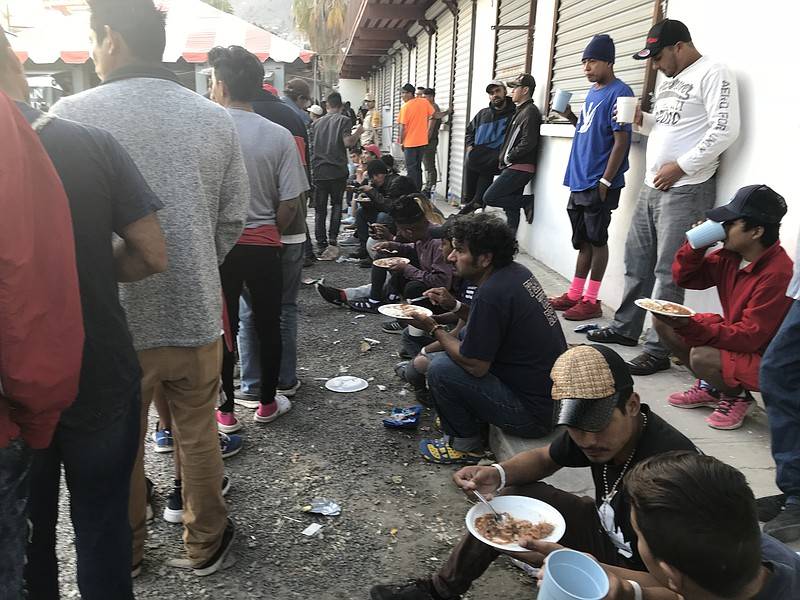
"caption": "Migrants eat at El Barretal, an abandoned concert hall in Tijuana, on Dec. 4, 2018.",
"description": "Migrants eat at El Barretal, an abandoned concert hall in Tijuana, on Dec. 4, 2018.",
"title": "IMG_1168_t800",
"credit": "Jean Guerrero/KPBS",
"status": "inherit",
"isLoading": false,
"fetchFailed": false
},
"news_11708623": {
"type": "attachments",
"id": "news_11708623",
"meta": {
"index": "attachments_1716263798",
"site": "news",
"id": "11708623",
"found": true
},
"parent": 11708594,
"imgSizes": {
"twentyfourteen-full-width": {
"file": "https://ww2.kqed.org/app/uploads/sites/10/2018/11/RS34141_chaparral-FINAL-10-qut-1038x576.jpg",
"width": 1038,
"mimeType": "image/jpeg",
"height": 576
},
"thumbnail": {
"file": "https://ww2.kqed.org/app/uploads/sites/10/2018/11/RS34141_chaparral-FINAL-10-qut-160x106.jpg",
"width": 160,
"mimeType": "image/jpeg",
"height": 106
},
"post-thumbnail": {
"file": "https://ww2.kqed.org/app/uploads/sites/10/2018/11/RS34141_chaparral-FINAL-10-qut-672x372.jpg",
"width": 672,
"mimeType": "image/jpeg",
"height": 372
},
"kqedFullSize": {
"file": "https://ww2.kqed.org/app/uploads/sites/10/2018/11/RS34141_chaparral-FINAL-10-qut.jpg",
"width": 1800,
"height": 1198
},
"large": {
"file": "https://ww2.kqed.org/app/uploads/sites/10/2018/11/RS34141_chaparral-FINAL-10-qut-1020x679.jpg",
"width": 1020,
"mimeType": "image/jpeg",
"height": 679
},
"complete_open_graph": {
"file": "https://ww2.kqed.org/app/uploads/sites/10/2018/11/RS34141_chaparral-FINAL-10-qut-1200x799.jpg",
"width": 1200,
"mimeType": "image/jpeg",
"height": 799
},
"guest-author-50": {
"file": "https://ww2.kqed.org/app/uploads/sites/10/2018/11/RS34141_chaparral-FINAL-10-qut-50x50.jpg",
"width": 50,
"mimeType": "image/jpeg",
"height": 50
},
"guest-author-96": {
"file": "https://ww2.kqed.org/app/uploads/sites/10/2018/11/RS34141_chaparral-FINAL-10-qut-96x96.jpg",
"width": 96,
"mimeType": "image/jpeg",
"height": 96
},
"medium": {
"file": "https://ww2.kqed.org/app/uploads/sites/10/2018/11/RS34141_chaparral-FINAL-10-qut-800x532.jpg",
"width": 800,
"mimeType": "image/jpeg",
"height": 532
},
"guest-author-64": {
"file": "https://ww2.kqed.org/app/uploads/sites/10/2018/11/RS34141_chaparral-FINAL-10-qut-64x64.jpg",
"width": 64,
"mimeType": "image/jpeg",
"height": 64
},
"guest-author-32": {
"file": "https://ww2.kqed.org/app/uploads/sites/10/2018/11/RS34141_chaparral-FINAL-10-qut-32x32.jpg",
"width": 32,
"mimeType": "image/jpeg",
"height": 32
},
"detail": {
"file": "https://ww2.kqed.org/app/uploads/sites/10/2018/11/RS34141_chaparral-FINAL-10-qut-150x150.jpg",
"width": 150,
"mimeType": "image/jpeg",
"height": 150
},
"guest-author-128": {
"file": "https://ww2.kqed.org/app/uploads/sites/10/2018/11/RS34141_chaparral-FINAL-10-qut-128x128.jpg",
"width": 128,
"mimeType": "image/jpeg",
"height": 128
}
},
"publishDate": 1543366050,
"modified": 1543699605,
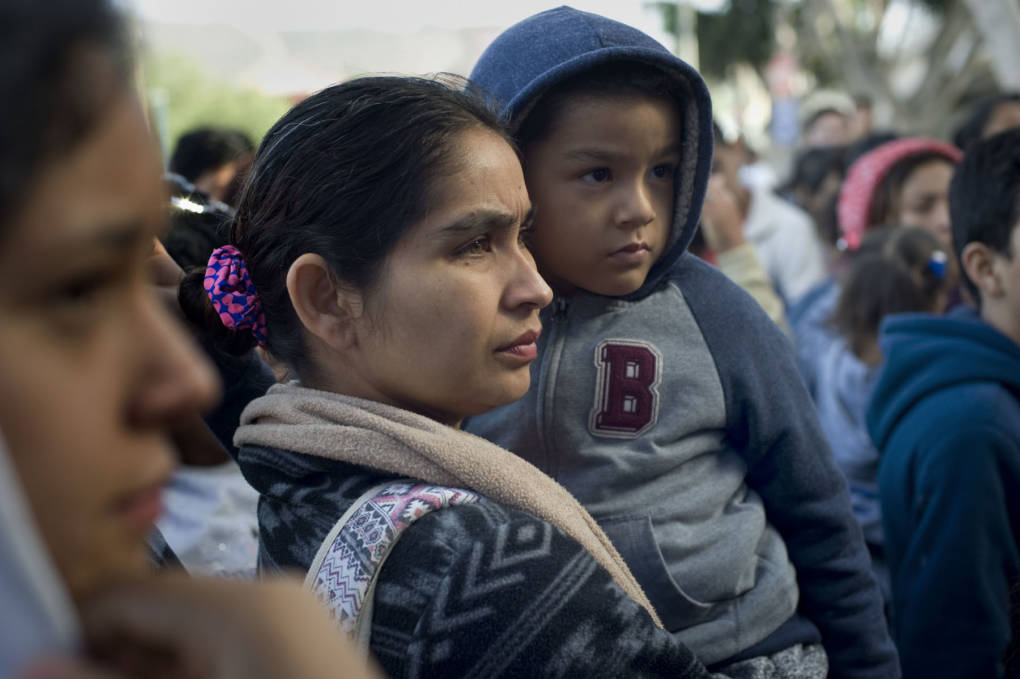
"caption": "A woman and child in Tijuana, Mexico, wait to hear their position on a list of people hoping to seek asylum in the U.S. on Nov. 21, 2018",
"description": null,
"title": "RS34141_chaparral FINAL 10-qut",
"credit": "David Maung/KQED",
"status": "inherit",
"isLoading": false,
"fetchFailed": false
},
"news_11709077": {
"type": "attachments",
"id": "news_11709077",
"meta": {
"index": "attachments_1716263798",
"site": "news",
"id": "11709077",
"found": true
},
"parent": 11709063,
"imgSizes": {
"twentyfourteen-full-width": {
"file": "https://ww2.kqed.org/app/uploads/sites/10/2018/11/GettyImages-1065219560-e1543528102562-1038x576.jpg",
"width": 1038,
"mimeType": "image/jpeg",
"height": 576
},
"thumbnail": {
"file": "https://ww2.kqed.org/app/uploads/sites/10/2018/11/GettyImages-1065219560-e1543528102562-160x106.jpg",
"width": 160,
"mimeType": "image/jpeg",
"height": 106
},
"post-thumbnail": {
"file": "https://ww2.kqed.org/app/uploads/sites/10/2018/11/GettyImages-1065219560-e1543528102562-672x372.jpg",
"width": 672,
"mimeType": "image/jpeg",
"height": 372
},
"kqedFullSize": {
"file": "https://ww2.kqed.org/app/uploads/sites/10/2018/11/GettyImages-1065219560-e1543528102562.jpg",
"width": 1920,
"height": 1266
},
"large": {
"file": "https://ww2.kqed.org/app/uploads/sites/10/2018/11/GettyImages-1065219560-e1543528102562-1020x673.jpg",
"width": 1020,
"mimeType": "image/jpeg",
"height": 673
},
"complete_open_graph": {
"file": "https://ww2.kqed.org/app/uploads/sites/10/2018/11/GettyImages-1065219560-e1543528102562-1200x791.jpg",
"width": 1200,
"mimeType": "image/jpeg",
"height": 791
},
"guest-author-50": {
"file": "https://ww2.kqed.org/app/uploads/sites/10/2018/11/GettyImages-1065219560-e1543528102562-50x50.jpg",
"width": 50,
"mimeType": "image/jpeg",
"height": 50
},
"guest-author-96": {
"file": "https://ww2.kqed.org/app/uploads/sites/10/2018/11/GettyImages-1065219560-e1543528102562-96x96.jpg",
"width": 96,
"mimeType": "image/jpeg",
"height": 96
},
"medium": {
"file": "https://ww2.kqed.org/app/uploads/sites/10/2018/11/GettyImages-1065219560-e1543528102562-800x528.jpg",
"width": 800,
"mimeType": "image/jpeg",
"height": 528
},
"guest-author-64": {
"file": "https://ww2.kqed.org/app/uploads/sites/10/2018/11/GettyImages-1065219560-e1543528102562-64x64.jpg",
"width": 64,
"mimeType": "image/jpeg",
"height": 64
},
"guest-author-32": {
"file": "https://ww2.kqed.org/app/uploads/sites/10/2018/11/GettyImages-1065219560-e1543528102562-32x32.jpg",
"width": 32,
"mimeType": "image/jpeg",
"height": 32
},
"full-width": {
"file": "https://ww2.kqed.org/app/uploads/sites/10/2018/11/GettyImages-1065219560-e1543528102562-1920x1266.jpg",
"width": 1920,
"mimeType": "image/jpeg",
"height": 1266
},
"detail": {
"file": "https://ww2.kqed.org/app/uploads/sites/10/2018/11/GettyImages-1065219560-e1543528102562-150x150.jpg",
"width": 150,
"mimeType": "image/jpeg",
"height": 150
},
"guest-author-128": {
"file": "https://ww2.kqed.org/app/uploads/sites/10/2018/11/GettyImages-1065219560-e1543528102562-128x128.jpg",
"width": 128,
"mimeType": "image/jpeg",
"height": 128
}
},
"publishDate": 1543527310,
"modified": 1543535675,
"caption": "Tear gas thrown by the U.S. Border Patrol to disperse Central American migrants after an alleged verbal dispute is seen near the El Chaparral border crossing in Tijuana, Mexico, on Nov. 25, 2018.",
"description": null,
"title": "MEXICO-HONDURAS-US-MIGRATION",
"credit": "Guillermo Arias/AFP/Getty Images",
"status": "inherit",
"isLoading": false,
"fetchFailed": false
},
"news_11708834": {
"type": "attachments",
"id": "news_11708834",
"meta": {
"index": "attachments_1716263798",
"site": "news",
"id": "11708834",
"found": true
},
"parent": 11708831,
"imgSizes": {
"small": {
"file": "https://ww2.kqed.org/app/uploads/sites/10/2018/11/RS34211_Zeta_02-qut-520x347.jpg",
"width": 520,
"mimeType": "image/jpeg",
"height": 347
},
"twentyfourteen-full-width": {
"file": "https://ww2.kqed.org/app/uploads/sites/10/2018/11/RS34211_Zeta_02-qut-1038x576.jpg",
"width": 1038,
"mimeType": "image/jpeg",
"height": 576
},
"thumbnail": {
"file": "https://ww2.kqed.org/app/uploads/sites/10/2018/11/RS34211_Zeta_02-qut-160x107.jpg",
"width": 160,
"mimeType": "image/jpeg",
"height": 107
},
"fd-sm": {
"file": "https://ww2.kqed.org/app/uploads/sites/10/2018/11/RS34211_Zeta_02-qut-960x640.jpg",
"width": 960,
"mimeType": "image/jpeg",
"height": 640
},
"post-thumbnail": {
"file": "https://ww2.kqed.org/app/uploads/sites/10/2018/11/RS34211_Zeta_02-qut-672x372.jpg",
"width": 672,
"mimeType": "image/jpeg",
"height": 372
},
"xsmall": {
"file": "https://ww2.kqed.org/app/uploads/sites/10/2018/11/RS34211_Zeta_02-qut-375x250.jpg",
"width": 375,
"mimeType": "image/jpeg",
"height": 250
},
"kqedFullSize": {
"file": "https://ww2.kqed.org/app/uploads/sites/10/2018/11/RS34211_Zeta_02-qut.jpg",
"width": 1920,
"height": 1280
},
"large": {
"file": "https://ww2.kqed.org/app/uploads/sites/10/2018/11/RS34211_Zeta_02-qut-1020x680.jpg",
"width": 1020,
"mimeType": "image/jpeg",
"height": 680
},
"xlarge": {
"file": "https://ww2.kqed.org/app/uploads/sites/10/2018/11/RS34211_Zeta_02-qut-1180x787.jpg",
"width": 1180,
"mimeType": "image/jpeg",
"height": 787
},
"complete_open_graph": {
"file": "https://ww2.kqed.org/app/uploads/sites/10/2018/11/RS34211_Zeta_02-qut-1200x800.jpg",
"width": 1200,
"mimeType": "image/jpeg",
"height": 800
},
"guest-author-50": {
"file": "https://ww2.kqed.org/app/uploads/sites/10/2018/11/RS34211_Zeta_02-qut-50x50.jpg",
"width": 50,
"mimeType": "image/jpeg",
"height": 50
},
"guest-author-96": {
"file": "https://ww2.kqed.org/app/uploads/sites/10/2018/11/RS34211_Zeta_02-qut-96x96.jpg",
"width": 96,
"mimeType": "image/jpeg",
"height": 96
},
"medium": {
"file": "https://ww2.kqed.org/app/uploads/sites/10/2018/11/RS34211_Zeta_02-qut-800x533.jpg",
"width": 800,
"mimeType": "image/jpeg",
"height": 533
},
"guest-author-64": {
"file": "https://ww2.kqed.org/app/uploads/sites/10/2018/11/RS34211_Zeta_02-qut-64x64.jpg",
"width": 64,
"mimeType": "image/jpeg",
"height": 64
},
"guest-author-32": {
"file": "https://ww2.kqed.org/app/uploads/sites/10/2018/11/RS34211_Zeta_02-qut-32x32.jpg",
"width": 32,
"mimeType": "image/jpeg",
"height": 32
},
"fd-lrg": {
"file": "https://ww2.kqed.org/app/uploads/sites/10/2018/11/RS34211_Zeta_02-qut-1920x1280.jpg",
"width": 1920,
"mimeType": "image/jpeg",
"height": 1280
},
"fd-med": {
"file": "https://ww2.kqed.org/app/uploads/sites/10/2018/11/RS34211_Zeta_02-qut-1180x787.jpg",
"width": 1180,
"mimeType": "image/jpeg",
"height": 787
},
"full-width": {
"file": "https://ww2.kqed.org/app/uploads/sites/10/2018/11/RS34211_Zeta_02-qut-1920x1280.jpg",
"width": 1920,
"mimeType": "image/jpeg",
"height": 1280
},
"detail": {
"file": "https://ww2.kqed.org/app/uploads/sites/10/2018/11/RS34211_Zeta_02-qut-150x150.jpg",
"width": 150,
"mimeType": "image/jpeg",
"height": 150
},
"guest-author-128": {
"file": "https://ww2.kqed.org/app/uploads/sites/10/2018/11/RS34211_Zeta_02-qut-128x128.jpg",
"width": 128,
"mimeType": "image/jpeg",
"height": 128
},
"xxsmall": {
"file": "https://ww2.kqed.org/app/uploads/sites/10/2018/11/RS34211_Zeta_02-qut-240x160.jpg",
"width": 240,
"mimeType": "image/jpeg",
"height": 160
}
},
"publishDate": 1543443258,
"modified": 1543533683,
"caption": "Award-winning journalist and editor Rosario Mosso checks emails in the Zeta offices on Nov. 20, 2018.",
"description": null,
"title": "RS34211_Zeta_02-qut",
"credit": "Erin Siegal McIntyre/KQED",
"status": "inherit",
"isLoading": false,
"fetchFailed": false
},
"news_11708886": {
"type": "attachments",
"id": "news_11708886",
"meta": {
"index": "attachments_1716263798",
"site": "news",
"id": "11708886",
"found": true
},
"parent": 11708868,
"imgSizes": {
"small": {
"file": "https://ww2.kqed.org/app/uploads/sites/10/2018/11/rock_112818_final-520x343.jpg",
"width": 520,
"mimeType": "image/jpeg",
"height": 343
},
"twentyfourteen-full-width": {
"file": "https://ww2.kqed.org/app/uploads/sites/10/2018/11/rock_112818_final-1038x576.jpg",
"width": 1038,
"mimeType": "image/jpeg",
"height": 576
},
"thumbnail": {
"file": "https://ww2.kqed.org/app/uploads/sites/10/2018/11/rock_112818_final-160x105.jpg",
"width": 160,
"mimeType": "image/jpeg",
"height": 105
},
"fd-sm": {
"file": "https://ww2.kqed.org/app/uploads/sites/10/2018/11/rock_112818_final-960x633.jpg",
"width": 960,
"mimeType": "image/jpeg",
"height": 633
},
"post-thumbnail": {
"file": "https://ww2.kqed.org/app/uploads/sites/10/2018/11/rock_112818_final-672x372.jpg",
"width": 672,
"mimeType": "image/jpeg",
"height": 372
},
"xsmall": {
"file": "https://ww2.kqed.org/app/uploads/sites/10/2018/11/rock_112818_final-375x247.jpg",
"width": 375,
"mimeType": "image/jpeg",
"height": 247
},
"kqedFullSize": {
"file": "https://ww2.kqed.org/app/uploads/sites/10/2018/11/rock_112818_final.jpg",
"width": 1920,
"height": 1265
},
"large": {
"file": "https://ww2.kqed.org/app/uploads/sites/10/2018/11/rock_112818_final-1020x672.jpg",
"width": 1020,
"mimeType": "image/jpeg",
"height": 672
},
"xlarge": {
"file": "https://ww2.kqed.org/app/uploads/sites/10/2018/11/rock_112818_final-1180x777.jpg",
"width": 1180,
"mimeType": "image/jpeg",
"height": 777
},
"complete_open_graph": {
"file": "https://ww2.kqed.org/app/uploads/sites/10/2018/11/rock_112818_final-1200x791.jpg",
"width": 1200,
"mimeType": "image/jpeg",
"height": 791
},
"guest-author-50": {
"file": "https://ww2.kqed.org/app/uploads/sites/10/2018/11/rock_112818_final-50x50.jpg",
"width": 50,
"mimeType": "image/jpeg",
"height": 50
},
"guest-author-96": {
"file": "https://ww2.kqed.org/app/uploads/sites/10/2018/11/rock_112818_final-96x96.jpg",
"width": 96,
"mimeType": "image/jpeg",
"height": 96
},
"medium": {
"file": "https://ww2.kqed.org/app/uploads/sites/10/2018/11/rock_112818_final-800x527.jpg",
"width": 800,
"mimeType": "image/jpeg",
"height": 527
},
"guest-author-64": {
"file": "https://ww2.kqed.org/app/uploads/sites/10/2018/11/rock_112818_final-64x64.jpg",
"width": 64,
"mimeType": "image/jpeg",
"height": 64
},
"guest-author-32": {
"file": "https://ww2.kqed.org/app/uploads/sites/10/2018/11/rock_112818_final-32x32.jpg",
"width": 32,
"mimeType": "image/jpeg",
"height": 32
},
"fd-lrg": {
"file": "https://ww2.kqed.org/app/uploads/sites/10/2018/11/rock_112818_final-1920x1265.jpg",
"width": 1920,
"mimeType": "image/jpeg",
"height": 1265
},
"fd-med": {
"file": "https://ww2.kqed.org/app/uploads/sites/10/2018/11/rock_112818_final-1180x777.jpg",
"width": 1180,
"mimeType": "image/jpeg",
"height": 777
},
"full-width": {
"file": "https://ww2.kqed.org/app/uploads/sites/10/2018/11/rock_112818_final-1920x1265.jpg",
"width": 1920,
"mimeType": "image/jpeg",
"height": 1265
},
"detail": {
"file": "https://ww2.kqed.org/app/uploads/sites/10/2018/11/rock_112818_final-150x150.jpg",
"width": 150,
"mimeType": "image/jpeg",
"height": 150
},
"guest-author-128": {
"file": "https://ww2.kqed.org/app/uploads/sites/10/2018/11/rock_112818_final-128x128.jpg",
"width": 128,
"mimeType": "image/jpeg",
"height": 128
},
"xxsmall": {
"file": "https://ww2.kqed.org/app/uploads/sites/10/2018/11/rock_112818_final-240x158.jpg",
"width": 240,
"mimeType": "image/jpeg",
"height": 158
}
},
"publishDate": 1543449585,
"modified": 1543449611,
"caption": null,
"description": null,
"title": "rock_112818_final",
"credit": null,
"status": "inherit",
"isLoading": false,
"fetchFailed": false
},
"news_11708487": {
"type": "attachments",
"id": "news_11708487",
"meta": {
"index": "attachments_1716263798",
"site": "news",
"id": "11708487",
"found": true
},
"parent": 11708447,
"imgSizes": {
"twentyfourteen-full-width": {
"file": "https://ww2.kqed.org/app/uploads/sites/10/2018/11/GettyImages-1065219482-e1543355344803-1038x576.jpg",
"width": 1038,
"mimeType": "image/jpeg",
"height": 576
},
"thumbnail": {
"file": "https://ww2.kqed.org/app/uploads/sites/10/2018/11/GettyImages-1065219482-e1543355344803-160x107.jpg",
"width": 160,
"mimeType": "image/jpeg",
"height": 107
},
"post-thumbnail": {
"file": "https://ww2.kqed.org/app/uploads/sites/10/2018/11/GettyImages-1065219482-e1543355344803-672x372.jpg",
"width": 672,
"mimeType": "image/jpeg",
"height": 372
},
"kqedFullSize": {
"file": "https://ww2.kqed.org/app/uploads/sites/10/2018/11/GettyImages-1065219482-e1543355344803.jpg",
"width": 1920,
"height": 1280
},
"large": {
"file": "https://ww2.kqed.org/app/uploads/sites/10/2018/11/GettyImages-1065219482-e1543355344803-1020x680.jpg",
"width": 1020,
"mimeType": "image/jpeg",
"height": 680
},
"complete_open_graph": {
"file": "https://ww2.kqed.org/app/uploads/sites/10/2018/11/GettyImages-1065219482-e1543355344803-1200x800.jpg",
"width": 1200,
"mimeType": "image/jpeg",
"height": 800
},
"guest-author-50": {
"file": "https://ww2.kqed.org/app/uploads/sites/10/2018/11/GettyImages-1065219482-e1543355344803-50x50.jpg",
"width": 50,
"mimeType": "image/jpeg",
"height": 50
},
"guest-author-96": {
"file": "https://ww2.kqed.org/app/uploads/sites/10/2018/11/GettyImages-1065219482-e1543355344803-96x96.jpg",
"width": 96,
"mimeType": "image/jpeg",
"height": 96
},
"medium": {
"file": "https://ww2.kqed.org/app/uploads/sites/10/2018/11/GettyImages-1065219482-e1543355344803-800x533.jpg",
"width": 800,
"mimeType": "image/jpeg",
"height": 533
},
"guest-author-64": {
"file": "https://ww2.kqed.org/app/uploads/sites/10/2018/11/GettyImages-1065219482-e1543355344803-64x64.jpg",
"width": 64,
"mimeType": "image/jpeg",
"height": 64
},
"guest-author-32": {
"file": "https://ww2.kqed.org/app/uploads/sites/10/2018/11/GettyImages-1065219482-e1543355344803-32x32.jpg",
"width": 32,
"mimeType": "image/jpeg",
"height": 32
},
"full-width": {
"file": "https://ww2.kqed.org/app/uploads/sites/10/2018/11/GettyImages-1065219482-e1543355344803-1920x1280.jpg",
"width": 1920,
"mimeType": "image/jpeg",
"height": 1280
},
"detail": {
"file": "https://ww2.kqed.org/app/uploads/sites/10/2018/11/GettyImages-1065219482-e1543355344803-150x150.jpg",
"width": 150,
"mimeType": "image/jpeg",
"height": 150
},
"guest-author-128": {
"file": "https://ww2.kqed.org/app/uploads/sites/10/2018/11/GettyImages-1065219482-e1543355344803-128x128.jpg",
"width": 128,
"mimeType": "image/jpeg",
"height": 128
}
},
"publishDate": 1543355206,
"modified": 1543367843,
"caption": "Central American migrants, mostly Hondurans, run along the Tijuana River near the El Chaparral border crossing after U.S. border agents threw tear gas from a distance to disperse them after an alleged verbal dispute on Nov. 25, 2018.",
"description": null,
"title": "MEXICO-HONDURAS-US-MIGRATION",
"credit": "Guillermo Arias/AFP/Getty Images",
"status": "inherit",
"isLoading": false,
"fetchFailed": false
},
"news_11708345": {
"type": "attachments",
"id": "news_11708345",
"meta": {
"index": "attachments_1716263798",
"site": "news",
"id": "11708345",
"found": true
},
"parent": 11708306,
"imgSizes": {
"twentyfourteen-full-width": {
"file": "https://ww2.kqed.org/app/uploads/sites/10/2018/11/TearGas1920-1038x576.jpg",
"width": 1038,
"mimeType": "image/jpeg",
"height": 576
},
"thumbnail": {
"file": "https://ww2.kqed.org/app/uploads/sites/10/2018/11/TearGas1920-160x107.jpg",
"width": 160,
"mimeType": "image/jpeg",
"height": 107
},
"post-thumbnail": {
"file": "https://ww2.kqed.org/app/uploads/sites/10/2018/11/TearGas1920-672x372.jpg",
"width": 672,
"mimeType": "image/jpeg",
"height": 372
},
"kqedFullSize": {
"file": "https://ww2.kqed.org/app/uploads/sites/10/2018/11/TearGas1920.jpg",
"width": 1920,
"height": 1280
},
"large": {
"file": "https://ww2.kqed.org/app/uploads/sites/10/2018/11/TearGas1920-1020x680.jpg",
"width": 1020,
"mimeType": "image/jpeg",
"height": 680
},
"complete_open_graph": {
"file": "https://ww2.kqed.org/app/uploads/sites/10/2018/11/TearGas1920-1200x800.jpg",
"width": 1200,
"mimeType": "image/jpeg",
"height": 800
},
"guest-author-50": {
"file": "https://ww2.kqed.org/app/uploads/sites/10/2018/11/TearGas1920-50x50.jpg",
"width": 50,
"mimeType": "image/jpeg",
"height": 50
},
"guest-author-96": {
"file": "https://ww2.kqed.org/app/uploads/sites/10/2018/11/TearGas1920-96x96.jpg",
"width": 96,
"mimeType": "image/jpeg",
"height": 96
},
"medium": {
"file": "https://ww2.kqed.org/app/uploads/sites/10/2018/11/TearGas1920-800x533.jpg",
"width": 800,
"mimeType": "image/jpeg",
"height": 533
},
"guest-author-64": {
"file": "https://ww2.kqed.org/app/uploads/sites/10/2018/11/TearGas1920-64x64.jpg",
"width": 64,
"mimeType": "image/jpeg",
"height": 64
},
"guest-author-32": {
"file": "https://ww2.kqed.org/app/uploads/sites/10/2018/11/TearGas1920-32x32.jpg",
"width": 32,
"mimeType": "image/jpeg",
"height": 32
},
"full-width": {
"file": "https://ww2.kqed.org/app/uploads/sites/10/2018/11/TearGas1920-1920x1280.jpg",
"width": 1920,
"mimeType": "image/jpeg",
"height": 1280
},
"detail": {
"file": "https://ww2.kqed.org/app/uploads/sites/10/2018/11/TearGas1920-150x150.jpg",
"width": 150,
"mimeType": "image/jpeg",
"height": 150
},
"guest-author-128": {
"file": "https://ww2.kqed.org/app/uploads/sites/10/2018/11/TearGas1920-128x128.jpg",
"width": 128,
"mimeType": "image/jpeg",
"height": 128
}
},
"publishDate": 1543282449,
"modified": 1543283840,
"caption": "Central American migrants run along the Tijuana River near the El Chaparral border crossing in Tijuana, Mexico, after U.S. border agents launched tear gas to disperse them on Nov. 25, 2018.",
"description": "Central American migrants run along the Tijuana River near the El Chaparral border crossing in Tijuana, Mexico, after the U.S. border patrol launched tear gas to disperse them on Nov. 25, 2018.",
"title": "TearGas1920",
"credit": "GUILLERMO ARIAS/AFP/Getty Images",
"status": "inherit",
"isLoading": false,
"fetchFailed": false
},
"news_11708229": {
"type": "attachments",
"id": "news_11708229",
"meta": {
"index": "attachments_1716263798",
"site": "news",
"id": "11708229",
"found": true
},
"parent": 11708219,
"imgSizes": {
"twentyfourteen-full-width": {
"file": "https://ww2.kqed.org/app/uploads/sites/10/2018/11/running_112618_final-1038x576.jpg",
"width": 1038,
"mimeType": "image/jpeg",
"height": 576
},
"thumbnail": {
"file": "https://ww2.kqed.org/app/uploads/sites/10/2018/11/running_112618_final-160x103.jpg",
"width": 160,
"mimeType": "image/jpeg",
"height": 103
},
"post-thumbnail": {
"file": "https://ww2.kqed.org/app/uploads/sites/10/2018/11/running_112618_final-672x372.jpg",
"width": 672,
"mimeType": "image/jpeg",
"height": 372
},
"kqedFullSize": {
"file": "https://ww2.kqed.org/app/uploads/sites/10/2018/11/running_112618_final.jpg",
"width": 1920,
"height": 1234
},
"large": {
"file": "https://ww2.kqed.org/app/uploads/sites/10/2018/11/running_112618_final-1020x656.jpg",
"width": 1020,
"mimeType": "image/jpeg",
"height": 656
},
"complete_open_graph": {
"file": "https://ww2.kqed.org/app/uploads/sites/10/2018/11/running_112618_final-1200x771.jpg",
"width": 1200,
"mimeType": "image/jpeg",
"height": 771
},
"guest-author-50": {
"file": "https://ww2.kqed.org/app/uploads/sites/10/2018/11/running_112618_final-50x50.jpg",
"width": 50,
"mimeType": "image/jpeg",
"height": 50
},
"guest-author-96": {
"file": "https://ww2.kqed.org/app/uploads/sites/10/2018/11/running_112618_final-96x96.jpg",
"width": 96,
"mimeType": "image/jpeg",
"height": 96
},
"medium": {
"file": "https://ww2.kqed.org/app/uploads/sites/10/2018/11/running_112618_final-800x514.jpg",
"width": 800,
"mimeType": "image/jpeg",
"height": 514
},
"guest-author-64": {
"file": "https://ww2.kqed.org/app/uploads/sites/10/2018/11/running_112618_final-64x64.jpg",
"width": 64,
"mimeType": "image/jpeg",
"height": 64
},
"guest-author-32": {
"file": "https://ww2.kqed.org/app/uploads/sites/10/2018/11/running_112618_final-32x32.jpg",
"width": 32,
"mimeType": "image/jpeg",
"height": 32
},
"full-width": {
"file": "https://ww2.kqed.org/app/uploads/sites/10/2018/11/running_112618_final-1920x1234.jpg",
"width": 1920,
"mimeType": "image/jpeg",
"height": 1234
},
"detail": {
"file": "https://ww2.kqed.org/app/uploads/sites/10/2018/11/running_112618_final-150x150.jpg",
"width": 150,
"mimeType": "image/jpeg",
"height": 150
},
"guest-author-128": {
"file": "https://ww2.kqed.org/app/uploads/sites/10/2018/11/running_112618_final-128x128.jpg",
"width": 128,
"mimeType": "image/jpeg",
"height": 128
}
},
"publishDate": 1543267886,
"modified": 1543267918,
"caption": null,
"description": null,
"title": "running_112618_final",
"credit": null,
"status": "inherit",
"isLoading": false,
"fetchFailed": false
},
"news_11707963": {
"type": "attachments",
"id": "news_11707963",
"meta": {
"index": "attachments_1716263798",
"site": "news",
"id": "11707963",
"found": true
},
"parent": 11707927,
"imgSizes": {
"twentyfourteen-full-width": {
"file": "https://ww2.kqed.org/app/uploads/sites/10/2018/11/RS34068_chaparral-FINAL-01-qut-1038x576.jpg",
"width": 1038,
"mimeType": "image/jpeg",
"height": 576
},
"thumbnail": {
"file": "https://ww2.kqed.org/app/uploads/sites/10/2018/11/RS34068_chaparral-FINAL-01-qut-160x106.jpg",
"width": 160,
"mimeType": "image/jpeg",
"height": 106
},
"post-thumbnail": {
"file": "https://ww2.kqed.org/app/uploads/sites/10/2018/11/RS34068_chaparral-FINAL-01-qut-672x372.jpg",
"width": 672,
"mimeType": "image/jpeg",
"height": 372
},
"kqedFullSize": {
"file": "https://ww2.kqed.org/app/uploads/sites/10/2018/11/RS34068_chaparral-FINAL-01-qut.jpg",
"width": 1800,
"height": 1198
},
"large": {
"file": "https://ww2.kqed.org/app/uploads/sites/10/2018/11/RS34068_chaparral-FINAL-01-qut-1020x679.jpg",
"width": 1020,
"mimeType": "image/jpeg",
"height": 679
},
"complete_open_graph": {
"file": "https://ww2.kqed.org/app/uploads/sites/10/2018/11/RS34068_chaparral-FINAL-01-qut-1200x799.jpg",
"width": 1200,
"mimeType": "image/jpeg",
"height": 799
},
"guest-author-50": {
"file": "https://ww2.kqed.org/app/uploads/sites/10/2018/11/RS34068_chaparral-FINAL-01-qut-50x50.jpg",
"width": 50,
"mimeType": "image/jpeg",
"height": 50
},
"guest-author-96": {
"file": "https://ww2.kqed.org/app/uploads/sites/10/2018/11/RS34068_chaparral-FINAL-01-qut-96x96.jpg",
"width": 96,
"mimeType": "image/jpeg",
"height": 96
},
"medium": {
"file": "https://ww2.kqed.org/app/uploads/sites/10/2018/11/RS34068_chaparral-FINAL-01-qut-800x532.jpg",
"width": 800,
"mimeType": "image/jpeg",
"height": 532
},
"guest-author-64": {
"file": "https://ww2.kqed.org/app/uploads/sites/10/2018/11/RS34068_chaparral-FINAL-01-qut-64x64.jpg",
"width": 64,
"mimeType": "image/jpeg",
"height": 64
},
"guest-author-32": {
"file": "https://ww2.kqed.org/app/uploads/sites/10/2018/11/RS34068_chaparral-FINAL-01-qut-32x32.jpg",
"width": 32,
"mimeType": "image/jpeg",
"height": 32
},
"detail": {
"file": "https://ww2.kqed.org/app/uploads/sites/10/2018/11/RS34068_chaparral-FINAL-01-qut-150x150.jpg",
"width": 150,
"mimeType": "image/jpeg",
"height": 150
},
"guest-author-128": {
"file": "https://ww2.kqed.org/app/uploads/sites/10/2018/11/RS34068_chaparral-FINAL-01-qut-128x128.jpg",
"width": 128,
"mimeType": "image/jpeg",
"height": 128
}
},
"publishDate": 1542856800,
"modified": 1543283046,
"caption": "People listen as a volunteer calls out the names on a waiting list for asylum-seekers waiting to see U.S. authorities on Nov. 21, 2018. The list is being kept by asylum-seekers themselves to maintain order for those waiting and for those who have just arrived at the port of entry.",
"description": null,
"title": "RS34068_chaparral FINAL 01-qut",
"credit": "David Maung",
"status": "inherit",
"isLoading": false,
"fetchFailed": false
},
"news_11708083": {
"type": "attachments",
"id": "news_11708083",
"meta": {
"index": "attachments_1716263798",
"site": "news",
"id": "11708083",
"found": true
},
"parent": 11708082,
"imgSizes": {
"twentyfourteen-full-width": {
"file": "https://ww2.kqed.org/app/uploads/sites/10/2018/11/gettyimages-1065203746-7c62907732777cf8552a3199bf8798216074730b-e1543251131290-1038x576.jpg",
"width": 1038,
"mimeType": "image/jpeg",
"height": 576
},
"thumbnail": {
"file": "https://ww2.kqed.org/app/uploads/sites/10/2018/11/gettyimages-1065203746-7c62907732777cf8552a3199bf8798216074730b-e1543251131290-160x120.jpg",
"width": 160,
"mimeType": "image/jpeg",
"height": 120
},
"post-thumbnail": {
"file": "https://ww2.kqed.org/app/uploads/sites/10/2018/11/gettyimages-1065203746-7c62907732777cf8552a3199bf8798216074730b-e1543251131290-672x372.jpg",
"width": 672,
"mimeType": "image/jpeg",
"height": 372
},
"kqedFullSize": {
"file": "https://ww2.kqed.org/app/uploads/sites/10/2018/11/gettyimages-1065203746-7c62907732777cf8552a3199bf8798216074730b-e1543251131290.jpg",
"width": 1920,
"height": 1440
},
"large": {
"file": "https://ww2.kqed.org/app/uploads/sites/10/2018/11/gettyimages-1065203746-7c62907732777cf8552a3199bf8798216074730b-e1543251131290-1020x765.jpg",
"width": 1020,
"mimeType": "image/jpeg",
"height": 765
},
"complete_open_graph": {
"file": "https://ww2.kqed.org/app/uploads/sites/10/2018/11/gettyimages-1065203746-7c62907732777cf8552a3199bf8798216074730b-e1543251131290-1200x900.jpg",
"width": 1200,
"mimeType": "image/jpeg",
"height": 900
},
"guest-author-50": {
"file": "https://ww2.kqed.org/app/uploads/sites/10/2018/11/gettyimages-1065203746-7c62907732777cf8552a3199bf8798216074730b-e1543251131290-50x50.jpg",
"width": 50,
"mimeType": "image/jpeg",
"height": 50
},
"guest-author-96": {
"file": "https://ww2.kqed.org/app/uploads/sites/10/2018/11/gettyimages-1065203746-7c62907732777cf8552a3199bf8798216074730b-e1543251131290-96x96.jpg",
"width": 96,
"mimeType": "image/jpeg",
"height": 96
},
"medium": {
"file": "https://ww2.kqed.org/app/uploads/sites/10/2018/11/gettyimages-1065203746-7c62907732777cf8552a3199bf8798216074730b-e1543251131290-800x600.jpg",
"width": 800,
"mimeType": "image/jpeg",
"height": 600
},
"guest-author-64": {
"file": "https://ww2.kqed.org/app/uploads/sites/10/2018/11/gettyimages-1065203746-7c62907732777cf8552a3199bf8798216074730b-e1543251131290-64x64.jpg",
"width": 64,
"mimeType": "image/jpeg",
"height": 64
},
"guest-author-32": {
"file": "https://ww2.kqed.org/app/uploads/sites/10/2018/11/gettyimages-1065203746-7c62907732777cf8552a3199bf8798216074730b-e1543251131290-32x32.jpg",
"width": 32,
"mimeType": "image/jpeg",
"height": 32
},
"full-width": {
"file": "https://ww2.kqed.org/app/uploads/sites/10/2018/11/gettyimages-1065203746-7c62907732777cf8552a3199bf8798216074730b-e1543251131290-1920x1440.jpg",
"width": 1920,
"mimeType": "image/jpeg",
"height": 1440
},
"detail": {
"file": "https://ww2.kqed.org/app/uploads/sites/10/2018/11/gettyimages-1065203746-7c62907732777cf8552a3199bf8798216074730b-e1543251131290-150x150.jpg",
"width": 150,
"mimeType": "image/jpeg",
"height": 150
},
"guest-author-128": {
"file": "https://ww2.kqed.org/app/uploads/sites/10/2018/11/gettyimages-1065203746-7c62907732777cf8552a3199bf8798216074730b-e1543251131290-128x128.jpg",
"width": 128,
"mimeType": "image/jpeg",
"height": 128
}
},
"publishDate": 1543250547,
"modified": 1543250547,
"caption": null,
"description": "U.S. military and border agents secure the United States-Mexico border at the San Ysidro border crossing south of San Diego, Calif. on Nov. 25.",
"title": "U.S. military and border agents secure the United States-Mexico border at the San Ysidro border crossing south of San Diego, Calif. on Nov. 25.",
"credit": null,
"status": "inherit",
"isLoading": false,
"fetchFailed": false
},
"news_11706891": {
"type": "attachments",
"id": "news_11706891",
"meta": {
"index": "attachments_1716263798",
"site": "news",
"id": "11706891",
"found": true
},
"parent": 0,
"imgSizes": {
"twentyfourteen-full-width": {
"file": "https://ww2.kqed.org/app/uploads/sites/10/2018/11/Peluqueria_004-e1542403246973-1038x576.jpg",
"width": 1038,
"mimeType": "image/jpeg",
"height": 576
},
"thumbnail": {
"file": "https://ww2.kqed.org/app/uploads/sites/10/2018/11/Peluqueria_004-e1542403246973-160x107.jpg",
"width": 160,
"mimeType": "image/jpeg",
"height": 107
},
"post-thumbnail": {
"file": "https://ww2.kqed.org/app/uploads/sites/10/2018/11/Peluqueria_004-e1542403246973-672x372.jpg",
"width": 672,
"mimeType": "image/jpeg",
"height": 372
},
"kqedFullSize": {
"file": "https://ww2.kqed.org/app/uploads/sites/10/2018/11/Peluqueria_004-e1542403246973.jpg",
"width": 1590,
"height": 1060
},
"large": {
"file": "https://ww2.kqed.org/app/uploads/sites/10/2018/11/Peluqueria_004-e1542403246973-1020x680.jpg",
"width": 1020,
"mimeType": "image/jpeg",
"height": 680
},
"complete_open_graph": {
"file": "https://ww2.kqed.org/app/uploads/sites/10/2018/11/Peluqueria_004-e1542403246973-1200x800.jpg",
"width": 1200,
"mimeType": "image/jpeg",
"height": 800
},
"guest-author-50": {
"file": "https://ww2.kqed.org/app/uploads/sites/10/2018/11/Peluqueria_004-e1542403246973-50x50.jpg",
"width": 50,
"mimeType": "image/jpeg",
"height": 50
},
"guest-author-96": {
"file": "https://ww2.kqed.org/app/uploads/sites/10/2018/11/Peluqueria_004-e1542403246973-96x96.jpg",
"width": 96,
"mimeType": "image/jpeg",
"height": 96
},
"medium": {
"file": "https://ww2.kqed.org/app/uploads/sites/10/2018/11/Peluqueria_004-e1542403246973-800x533.jpg",
"width": 800,
"mimeType": "image/jpeg",
"height": 533
},
"guest-author-64": {
"file": "https://ww2.kqed.org/app/uploads/sites/10/2018/11/Peluqueria_004-e1542403246973-64x64.jpg",
"width": 64,
"mimeType": "image/jpeg",
"height": 64
},
"guest-author-32": {
"file": "https://ww2.kqed.org/app/uploads/sites/10/2018/11/Peluqueria_004-e1542403246973-32x32.jpg",
"width": 32,
"mimeType": "image/jpeg",
"height": 32
},
"detail": {
"file": "https://ww2.kqed.org/app/uploads/sites/10/2018/11/Peluqueria_004-e1542403246973-150x150.jpg",
"width": 150,
"mimeType": "image/jpeg",
"height": 150
},
"guest-author-128": {
"file": "https://ww2.kqed.org/app/uploads/sites/10/2018/11/Peluqueria_004-e1542403246973-128x128.jpg",
"width": 128,
"mimeType": "image/jpeg",
"height": 128
}
},
"publishDate": 1542402954,
"modified": 1542416440,
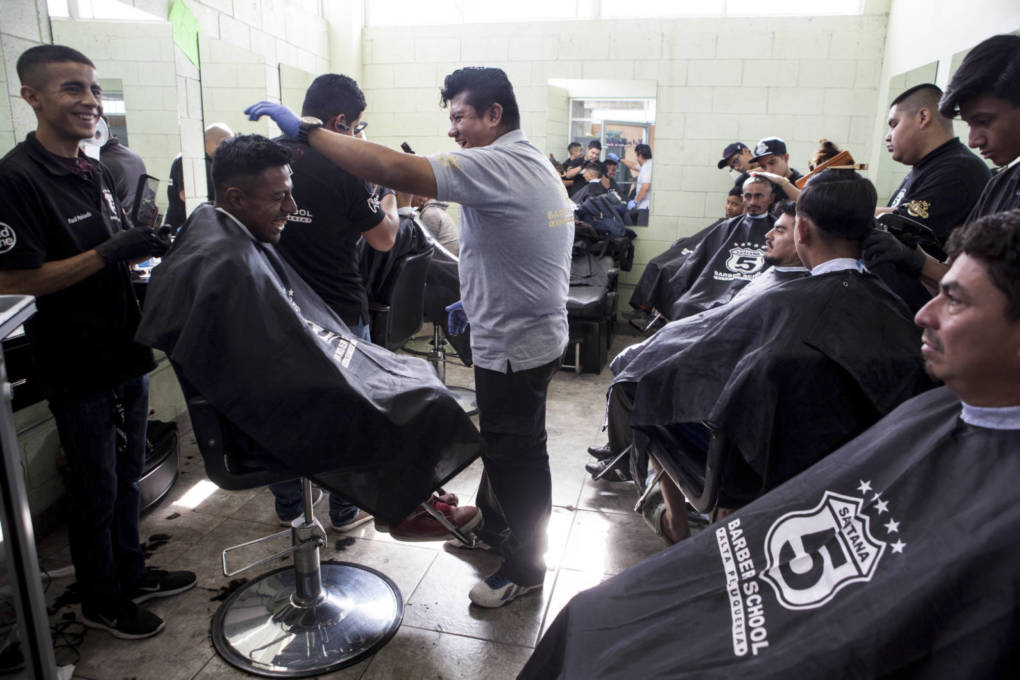
"caption": "Thousands of Central American migrants traveling together through Mexico to reach the U.S. border arrived in Tijuana Thursday, Nov. 15, 2018. At a Catholic center called Padre Chava, migrants received breakfast and free haircuts from students of Santana 5 Barber School. The school has provided free haircuts at the shelter for years. ",
"description": "(Left to right): Stylist Paul and client Julio's, professor Ricardo Reyes (center) stylist Miguel cuts Osby's hair, Jonathan cuts Angel's hair, Ricardo cuts William Antonio's hair, Azael cuts Christian's hair, Daniel Marquez cuts Victor's hair, and Berenice Bajo cuts Carlos' hair.",
"title": "Peluqueria_004",
"credit": "Erin Siegal McIntyre/KQED",
"status": "inherit",
"isLoading": false,
"fetchFailed": false
}
},
"audioPlayerReducer": {
"postId": "stream_live",
"isPaused": true,
"isPlaying": false,
"pfsActive": false,
"pledgeModalIsOpen": true,
"playerDrawerIsOpen": false,
"liveAudioPlayStartedAt": 0,
"liveAudioPlayContext": ""
},
"authorsReducer": {
"byline_news_11710491": {
"type": "authors",
"id": "byline_news_11710491",
"meta": {
"override": true
},
"slug": "byline_news_11710491",
"name": "Colleen Long\u003cbr>Associated Press",
"isLoading": false
},
"byline_news_11710164": {
"type": "authors",
"id": "byline_news_11710164",
"meta": {
"override": true
},
"slug": "byline_news_11710164",
"name": "\u003cstrong>\u003ca href=\"https://www.kpbs.org/staff/jean-guerrero/\">Jean Guerrero\u003c/a>\u003c/strong>",
"isLoading": false
},
"byline_news_11709063": {
"type": "authors",
"id": "byline_news_11709063",
"meta": {
"override": true
},
"slug": "byline_news_11709063",
"name": "\u003cstrong>Elliot Spagat\u003cbr />Associated Press\u003c/strong>",
"isLoading": false
},
"byline_news_11708447": {
"type": "authors",
"id": "byline_news_11708447",
"meta": {
"override": true
},
"slug": "byline_news_11708447",
"name": "\u003cstrong>\u003ca href=\"https://www.npr.org/people/2100569/richard-gonzales\">Richard Gonzales\u003c/a>\u003c/strong>",
"isLoading": false
},
"byline_news_11708082": {
"type": "authors",
"id": "byline_news_11708082",
"meta": {
"override": true
},
"slug": "byline_news_11708082",
"name": "\u003cstrong>Clare Lombardo\u003cbr>NPR\u003c/strong>",
"isLoading": false
},
"kqed": {
"type": "authors",
"id": "236",
"meta": {
"index": "authors_1716337520",
"id": "236",
"found": true
},
"name": "KQED News Staff",
"firstName": "KQED News Staff",
"lastName": null,
"slug": "kqed",
"email": "faq@kqed.org",
"display_author_email": false,
"staff_mastheads": [],
"title": null,
"bio": null,
"avatar": "https://secure.gravatar.com/avatar/ef0e801a68c4c54afa9180db14084167?s=600&d=blank&r=g",
"twitter": null,
"facebook": null,
"instagram": null,
"linkedin": null,
"sites": [
{
"site": "arts",
"roles": [
"contributor"
]
},
{
"site": "news",
"roles": [
"editor"
]
},
{
"site": "futureofyou",
"roles": [
"author"
]
}
],
"headData": {
"title": "KQED News Staff | KQED",
"description": null,
"ogImgSrc": "https://secure.gravatar.com/avatar/ef0e801a68c4c54afa9180db14084167?s=600&d=blank&r=g",
"twImgSrc": "https://secure.gravatar.com/avatar/ef0e801a68c4c54afa9180db14084167?s=600&d=blank&r=g"
},
"isLoading": false,
"link": "/author/kqed"
},
"sasha-khokha": {
"type": "authors",
"id": "254",
"meta": {
"index": "authors_1716337520",
"id": "254",
"found": true
},
"name": "Sasha Khokha",
"firstName": "Sasha",
"lastName": "Khokha",
"slug": "sasha-khokha",
"email": "skhokha@kqed.org",
"display_author_email": true,
"staff_mastheads": [
"news"
],
"title": "Host, The California Report Magazine",
"bio": "Sasha Khokha is the host of \u003cem>The California Report's \u003c/em> weekly magazine program, which takes listeners on sound-rich excursions to meet the people that make the Golden State unique -- through audio documentaries and long-form stories. As \u003cem>The California Report's\u003c/em> Central Valley Bureau Chief based in Fresno for nearly a dozen years, Sasha brought the lives and concerns of rural Californians to listeners around the state. Her reporting helped expose the hidden price immigrant women janitors and farmworkers may pay to keep their jobs: sexual assault at work. It inspired two new California laws to protect them from sexual harassment. She was a key member of the reporting team for the Frontline film \u003cem>Rape on the Night Shift, \u003c/em>which was nominated for two national Emmys. Sasha has also won a national Edward R. Murrow and a national PRNDI award for investigative reporting, as well as multiple prizes from the Society for Professional Journalists. Sasha is a proud alum of the UC Berkeley Graduate School of Journalism and Brown University and a member of the South Asian Journalists Association.",
"avatar": "https://secure.gravatar.com/avatar/e4b5e1541aaeea2aa356aa1fb2a68950?s=600&d=blank&r=g",
"twitter": "KQEDSashaKhokha",
"facebook": null,
"instagram": null,
"linkedin": null,
"sites": [
{
"site": "news",
"roles": [
"editor"
]
},
{
"site": "stateofhealth",
"roles": [
"author"
]
},
{
"site": "science",
"roles": [
"author"
]
},
{
"site": "quest",
"roles": [
"subscriber"
]
}
],
"headData": {
"title": "Sasha Khokha | KQED",
"description": "Host, The California Report Magazine",
"ogImgSrc": "https://secure.gravatar.com/avatar/e4b5e1541aaeea2aa356aa1fb2a68950?s=600&d=blank&r=g",
"twImgSrc": "https://secure.gravatar.com/avatar/e4b5e1541aaeea2aa356aa1fb2a68950?s=600&d=blank&r=g"
},
"isLoading": false,
"link": "/author/sasha-khokha"
},
"tychehendricks": {
"type": "authors",
"id": "259",
"meta": {
"index": "authors_1716337520",
"id": "259",
"found": true
},
"name": "Tyche Hendricks",
"firstName": "Tyche",
"lastName": "Hendricks",
"slug": "tychehendricks",
"email": "thendricks@kqed.org",
"display_author_email": true,
"staff_mastheads": [
"news"
],
"title": "KQED Senior Editor, Immigration",
"bio": "\u003cspan style=\"font-weight: 400;\">Tyche Hendricks is KQED’s senior editor for immigration, leading coverage of the policy and politics that affect California’s immigrant communities. Her work for KQED’s radio and online audiences is also carried on NPR and other national outlets. She has been recognized with awards from the Radio and Television News Directors Association, the Society for Professional Journalists; the Education Writers Association; the Best of the West and the National Federation of Community Broadcasters. Before joining KQED in 2010, Tyche spent more than a dozen years as a newspaper reporter, notably at the \u003c/span>\u003ci>\u003cspan style=\"font-weight: 400;\">San Francisco Chronicle\u003c/span>\u003c/i>\u003cspan style=\"font-weight: 400;\">. At different times she has covered criminal justice, government and politics and urban planning. Tyche has taught in the MFA Creative Writing program at the University of San Francisco and at UC Berkeley’s Graduate School of Journalism, where she was co-director of a national immigration symposium for professional journalists. She is the author of \u003c/span>\u003ci>\u003cspan style=\"font-weight: 400;\">The Wind Doesn't Need a Passport: Stories from the U.S.-Mexico Borderlands\u003c/span>\u003c/i>\u003cspan style=\"font-weight: 400;\"> (University of California Press). \u003c/span>",
"avatar": "https://secure.gravatar.com/avatar/b8ee458e2731c2d43df86882ce17267e?s=600&d=blank&r=g",
"twitter": "tychehendricks",
"facebook": null,
"instagram": null,
"linkedin": null,
"sites": [
{
"site": "news",
"roles": [
"editor"
]
},
{
"site": "stateofhealth",
"roles": [
"editor"
]
}
],
"headData": {
"title": "Tyche Hendricks | KQED",
"description": "KQED Senior Editor, Immigration",
"ogImgSrc": "https://secure.gravatar.com/avatar/b8ee458e2731c2d43df86882ce17267e?s=600&d=blank&r=g",
"twImgSrc": "https://secure.gravatar.com/avatar/b8ee458e2731c2d43df86882ce17267e?s=600&d=blank&r=g"
},
"isLoading": false,
"link": "/author/tychehendricks"
},
"markfiore": {
"type": "authors",
"id": "3236",
"meta": {
"index": "authors_1716337520",
"id": "3236",
"found": true
},
"name": "Mark Fiore",
"firstName": "Mark",
"lastName": "Fiore",
"slug": "markfiore",
"email": "mark@markfiore.com",
"display_author_email": false,
"staff_mastheads": [
"news"
],
"title": "KQED News Cartoonist",
"bio": "\u003ca href=\"http://www.MarkFiore.com\">MarkFiore.com\u003c/a> | \u003ca href=\"https://twitter.com/markfiore\">Follow on Twitter\u003c/a> | \u003ca href=\"https://www.facebook.com/pages/Mark-Fiore-Animated-Political-Cartoons/94451707396?ref=bookmarks\">Facebook\u003c/a> | \u003ca href=\"mailto:mark@markfiore.com\">email\u003c/a>\r\n\r\nPulitzer Prize-winner, Mark Fiore, who the Wall Street Journal has called “the undisputed guru of the form,” creates animated political cartoons in San Francisco, where his work has been featured regularly on the San Francisco Chronicle’s web site, SFGate.com. His work has appeared on Newsweek.com, Slate.com, CBSNews.com, MotherJones.com, DailyKos.com and NPR’s web site. Fiore’s political animation has appeared on CNN, Frontline, Bill Moyers Journal, Salon.com and cable and broadcast outlets across the globe.\r\n\r\nBeginning his professional life by drawing traditional political cartoons for newspapers, Fiore’s work appeared in publications ranging from the Washington Post to the Los Angeles Times. In the late 1990s, he began to experiment with animating political cartoons and, after a short stint at the San Jose Mercury News as their staff cartoonist, Fiore devoted all his energies to animation.\r\nGrowing up in California, Fiore also spent a good portion of his life in the backwoods of Idaho. It was this combination that shaped him politically. Mark majored in political science at Colorado College, where, in a perfect send-off for a cartoonist, he received his diploma in 1991 as commencement speaker Dick Cheney smiled approvingly.\r\nMark Fiore was awarded the Pulitzer Prize for political cartooning in 2010, a Robert F. Kennedy Journalism Award in 2004 and has twice received an Online Journalism Award for commentary from the Online News Association (2002, 2008). Fiore has received two awards for his work in new media from the National Cartoonists Society (2001, 2002), and in 2006 received The James Madison Freedom of Information Award from The Society of Professional Journalists.",
"avatar": "https://secure.gravatar.com/avatar/fc4e2a612b15b67bad0c6f0e1db4ca9b?s=600&d=blank&r=g",
"twitter": "MarkFiore",
"facebook": null,
"instagram": "https://www.instagram.com/markfiore/?hl=en",
"linkedin": null,
"sites": [
{
"site": "arts",
"roles": [
"contributor"
]
},
{
"site": "news",
"roles": [
"editor"
]
},
{
"site": "futureofyou",
"roles": [
"editor"
]
},
{
"site": "science",
"roles": [
"editor"
]
}
],
"headData": {
"title": "Mark Fiore | KQED",
"description": "KQED News Cartoonist",
"ogImgSrc": "https://secure.gravatar.com/avatar/fc4e2a612b15b67bad0c6f0e1db4ca9b?s=600&d=blank&r=g",
"twImgSrc": "https://secure.gravatar.com/avatar/fc4e2a612b15b67bad0c6f0e1db4ca9b?s=600&d=blank&r=g"
},
"isLoading": false,
"link": "/author/markfiore"
},
"fjhabvala": {
"type": "authors",
"id": "8659",
"meta": {
"index": "authors_1716337520",
"id": "8659",
"found": true
},
"name": "Farida Jhabvala Romero",
"firstName": "Farida",
"lastName": "Jhabvala Romero",
"slug": "fjhabvala",
"email": "fjhabvala@kqed.org",
"display_author_email": true,
"staff_mastheads": [
"news"
],
"title": "KQED Contributor",
"bio": "\u003cspan style=\"font-weight: 400;\">Farida Jhabvala Romero is a Labor Correspondent for KQED. She previously covered immigration. Farida was \u003ca href=\"https://www.ccnma.org/2022-most-influential-latina-journalists\">named\u003c/a> one of the 10 Most Influential Latina Journalists in California in 2022 by the California Chicano News Media Association. Her work has won awards from the Society of Professional Journalists (Northern California), as well as a national and regional Edward M. Murrow Award for the collaborative reporting projects “Dangerous Air” and “Graying California.” \u003c/span>\u003cspan style=\"font-weight: 400;\">Before joining KQED, Farida worked as a producer at Radio Bilingüe, a national public radio network. Farida earned her master’s degree in journalism from Stanford University.\u003c/span>",
"avatar": "https://secure.gravatar.com/avatar/c3ab27c5554b67b478f80971e515aa02?s=600&d=blank&r=g",
"twitter": "FaridaJhabvala",
"facebook": null,
"instagram": null,
"linkedin": "https://www.linkedin.com/in/faridajhabvala/",
"sites": [
{
"site": "news",
"roles": [
"editor"
]
},
{
"site": "stateofhealth",
"roles": [
"author"
]
}
],
"headData": {
"title": "Farida Jhabvala Romero | KQED",
"description": "KQED Contributor",
"ogImgSrc": "https://secure.gravatar.com/avatar/c3ab27c5554b67b478f80971e515aa02?s=600&d=blank&r=g",
"twImgSrc": "https://secure.gravatar.com/avatar/c3ab27c5554b67b478f80971e515aa02?s=600&d=blank&r=g"
},
"isLoading": false,
"link": "/author/fjhabvala"
},
"agarces": {
"type": "authors",
"id": "11367",
"meta": {
"index": "authors_1716337520",
"id": "11367",
"found": true
},
"name": "Audrey Garces",
"firstName": "Audrey",
"lastName": "Garces",
"slug": "agarces",
"email": "agarces@kqed.org",
"display_author_email": false,
"staff_mastheads": [
"news"
],
"title": "Digital Producer",
"bio": "Audrey is a former digital producer at KQED News. Previously, she was a KQED Raul Ramirez Diversity Fund intern where she developed stories that focused on highlighting diverse voices in journalism. Prior to her work at KQED, she worked as a news intern at the San Francisco Examiner. Audrey graduated from San Francisco State University with a B.A. in journalism and a minor in political science.",
"avatar": "https://secure.gravatar.com/avatar/5211bc2e6a809b9956da169e35ce63d5?s=600&d=blank&r=g",
"twitter": "audgar",
"facebook": null,
"instagram": null,
"linkedin": null,
"sites": [
{
"site": "arts",
"roles": []
},
{
"site": "news",
"roles": [
"subscriber"
]
},
{
"site": "science",
"roles": [
"editor"
]
},
{
"site": "forum",
"roles": [
"editor"
]
},
{
"site": "perspectives",
"roles": [
"administrator"
]
}
],
"headData": {
"title": "Audrey Garces | KQED",
"description": "Digital Producer",
"ogImgSrc": "https://secure.gravatar.com/avatar/5211bc2e6a809b9956da169e35ce63d5?s=600&d=blank&r=g",
"twImgSrc": "https://secure.gravatar.com/avatar/5211bc2e6a809b9956da169e35ce63d5?s=600&d=blank&r=g"
},
"isLoading": false,
"link": "/author/agarces"
}
},
"pagesReducer": {
"news_tag_migrant-caravan": {
"type": "terms",
"id": "news_23138",
"meta": {
"index": "terms_1716263798",
"site": "news",
"id": "23138",
"score": 10.401017
},
"featImg": null,
"name": "migrant caravan",
"description": null,
"taxonomy": "tag",
"headData": {
"twImgId": null,
"twTitle": null,
"ogTitle": null,
"ogImgId": null,
"twDescription": null,
"description": null,
"title": "migrant caravan Archives | KQED News",
"ogDescription": null
},
"ttid": 23155,
"slug": "migrant-caravan",
"isLoading": false,
"title": "migrant caravan",
"pageMeta": {
"site": "news",
"WpPageTemplate": "page-topic-editorial",
"currentPage": 6
},
"blocks": [
{
"blockName": "kqed/post-list",
"attrs": {
"layout": "cardArticle2",
"query": "posts/news?tag=migrant-caravan",
"seeMore": false,
"paginated": true,
"page": 6
}
},
{
"blockName": "kqed/ad"
}
]
}
},
"pfsSessionReducer": {},
"postsReducer": {
"stream_live": {
"type": "live",
"id": "stream_live",
"audioUrl": "https://streams.kqed.org/kqedradio",
"title": "Live Stream",
"excerpt": "Live Stream information currently unavailable.",
"link": "/radio",
"featImg": "",
"label": {
"name": "KQED Live",
"link": "/"
}
},
"stream_kqedNewscast": {
"type": "posts",
"id": "stream_kqedNewscast",
"audioUrl": "https://www.kqed.org/.stream/anon/radio/RDnews/newscast.mp3?_=1",
"title": "KQED Newscast",
"featImg": "",
"label": {
"name": "88.5 FM",
"link": "/"
}
},
"news_11710491": {
"type": "posts",
"id": "news_11710491",
"meta": {
"index": "posts_1716263798",
"site": "news",
"id": "11710491",
"score": null,
"sort": [
1544136042000
]
},
"parent": 0,
"labelTerm": {
"site": "news",
"term": 72
},
"blocks": [],
"publishDate": 1544136042,
"format": "image",
"disqusTitle": "Migrant Family Separations Didn't End Despite Executive Order",
"title": "Migrant Family Separations Didn't End Despite Executive Order",
"headTitle": "The California Report | KQED News",
"content": "\u003cp>The Trump administration separated 81 migrant children from their families at the U.S.-Mexico border since the \u003ca href=\"https://www.kqed.org/news/11675975/speaker-ryan-plans-immigration-votes-amid-doubts-that-bills-can-pass\">June executive order\u003c/a> that stopped the general practice amid a crackdown on illegal crossings, according to government data obtained by The Associated Press.\u003c/p>\n\u003cp>Despite the order and a \u003ca href=\"https://www.kqed.org/news/11686294/judge-pleased-with-progress-but-hundreds-of-migrant-children-still-separated-from-parents\">federal judge's later ruling\u003c/a>, immigration officials are allowed to separate a child from a parent in certain cases, such as serious criminal charges against a parent, concerns over the health and welfare of a child or medical concerns. Those caveats were in place before the \u003ca href=\"https://www.kqed.org/news/11684978/the-california-report-talks-zero-tolerance-with-the-chief-patrol-agent-in-san-diego\">zero tolerance policy\u003c/a> that prompted the earlier separations at the border.\u003c/p>\n\u003caside class=\"alignright\">\n\u003ch3>\u003ca href=\"https://www.kqed.org/news/11708703/judge-orders-reunification-of-mother-and-son-from-el-salvador\">Judge Orders Reunification of Mother and Son From El Salvador\u003c/a>\u003c/h3>\n\u003cfigure>\u003ca href=\"https://www.kqed.org/news/11708703/judge-orders-reunification-of-mother-and-son-from-el-salvador\">\u003cimg src=\"https://ww2.kqed.org/news/wp-content/uploads/sites/10/2018/11/GettyImages-988419450-1180x787.jpg\" alt=\"\">\u003c/a>\u003c/figure>\n\u003c/aside>\n\u003cp>The government decides whether a child fits into the areas of concern, worrying advocates of the families and immigrant rights groups that are afraid parents are being falsely labeled as criminals.\u003c/p>\n\u003cp>The data showed that from June 21, the day after President Trump's order, through Tuesday, 76 adults were separated from their children. Of those, 51 were criminally prosecuted — 31 with criminal histories and 20 for other, unspecified reasons. Nine were hospitalized, 10 had gang affiliations, four had extraditable warrants and two were separated because of prior immigration violations and orders of removal, according to the data.\u003c/p>\n\u003cp>\"The welfare of children in our custody is paramount,\" said Katie Waldman, a spokeswoman for the Department of Homeland Security, which oversees U.S. immigration enforcement.\u003c/p>\n\u003cp>[ad fullwidth]\u003c/p>\n\u003cp>\"As we have already said — and the numbers show: Separations are rare. While there was a brief increase during zero tolerance as more adults were prosecuted, the numbers have returned to their prior levels.\"\u003c/p>\n\u003cp>At its height over the summer, more than 2,400 children were separated. The practice sparked global outrage from politicians, humanitarians and religious groups that called it cruel and callous. Images of weeping children and anguished, confused parents were splashed across newspapers and television.\u003c/p>\n\u003cfigure id=\"attachment_11710504\" class=\"wp-caption aligncenter\" style=\"max-width: 1920px\">\u003ca href=\"https://ww2.kqed.org/news/wp-content/uploads/sites/10/2018/12/GettyImages-982169900.jpg\">\u003cimg class=\"wp-image-11710504 size-full\" src=\"https://ww2.kqed.org/news/wp-content/uploads/sites/10/2018/12/GettyImages-982169900-e1544131078252.jpg\" alt=\"\" width=\"1920\" height=\"1603\" srcset=\"https://ww2.kqed.org/app/uploads/sites/10/2018/12/GettyImages-982169900-e1544131078252.jpg 1920w, https://ww2.kqed.org/app/uploads/sites/10/2018/12/GettyImages-982169900-e1544131078252-160x134.jpg 160w, https://ww2.kqed.org/app/uploads/sites/10/2018/12/GettyImages-982169900-e1544131078252-800x668.jpg 800w, https://ww2.kqed.org/app/uploads/sites/10/2018/12/GettyImages-982169900-e1544131078252-1020x852.jpg 1020w, https://ww2.kqed.org/app/uploads/sites/10/2018/12/GettyImages-982169900-e1544131078252-1200x1002.jpg 1200w\" sizes=\"(max-width: 1920px) 100vw, 1920px\">\u003c/a>\u003cfigcaption class=\"wp-caption-text\">A migrant child looks out the window of a bus as protesters try to block a bus carrying migrant children out of a U.S. Customs and Border Protection Detention Center on June 23, 2018, in McAllen, Texas. \u003ccite>(Spencer Platt/Getty Images)\u003c/cite>\u003c/figcaption>\u003c/figure>\n\u003cp>A lawsuit brought by a mother who had been separated from her child resulted in a federal judge barring further separations and ordering the government to reunite the families.\u003c/p>\n\u003cp>But the judge, Dana Sabraw, left the caveats in place and gave the option to challenge further separations on an individual basis. American Civil Liberties Union attorney Lee Gelernt, who sued on behalf of the mother, said he hoped the judge would order the government to alert them of any new separations, because right now the attorneys don't know about them and therefore can't challenge them.\u003c/p>\n\u003cp>\"We are very concerned the government may be separating families based on vague allegations of criminal history,\" Gelernt said.\u003c/p>\n\u003caside class=\"alignright\">\n\u003ch3>\u003ca href=\"https://www.kqed.org/news/11683618/judge-orders-reunification-plan-for-deported-parents-aclu-presents-evidence-of-ice-coercion\">Judge Orders Reunification Plan for Deported Parents, ACLU Presents Evidence of ICE Coercion\u003c/a>\u003c/h3>\n\u003cfigure>\u003ca href=\"https://www.kqed.org/news/11683618/judge-orders-reunification-plan-for-deported-parents-aclu-presents-evidence-of-ice-coercion\">\u003cimg src=\"https://ww2.kqed.org/news/wp-content/uploads/sites/10/2018/07/GettyImages-1005223924-1180x787.jpg\" alt=\"\">\u003c/a>\u003c/figure>\n\u003c/aside>\n\u003cp>According to the government data, from April 19 through Sept. 30, 170 family units were separated because they were found to not be related — that included 197 adults and 139 minors. This could also include grandparents or other relatives if there was no proof of relationship. Many people fleeing poverty or violence leave their homes in a rush and don't have birth certificates or formal documents with them.\u003c/p>\n\u003cp>Other separations were because the children were not minors, the data showed.\u003c/p>\n\u003cp>From October 2016 through September 2017, 1,065 family units were separated— 46 due to fraud and 1,019 due to medical or security concerns, according to data. In most cases, this means a child and a parent faced separation.\u003c/p>\n\u003cp>Waldman said the data showed \"unequivocally that smugglers, human traffickers, and nefarious actors are attempting to use hundreds of children to exploit our immigration laws in hopes of gaining entry to the United States.\"\u003c/p>\n\u003cp>\u003ca href=\"https://www.kqed.org/news/11708447/fact-check-whats-happening-on-the-u-s-mexico-border\">Thousands of migrants\u003c/a> have come up from Central America in recent weeks as part of a large caravan. Trump used his national security powers to put in place regulations that denied asylum to anyone caught crossing illegally, but a \u003ca href=\"https://www.kqed.org/news/11698629/parents-deported-without-their-kids-face-untenable-choice\">judge has halted that change\u003c/a> as a lawsuit progresses.\u003c/p>\n\u003cfigure id=\"attachment_11710531\" class=\"wp-caption aligncenter\" style=\"max-width: 1920px\">\u003ca href=\"https://ww2.kqed.org/news/wp-content/uploads/sites/10/2018/12/GettyImages-980555774-e1544131063773.jpg\">\u003cimg class=\"wp-image-11710531 size-full\" src=\"https://ww2.kqed.org/news/wp-content/uploads/sites/10/2018/12/GettyImages-980555774-e1544131063773.jpg\" alt=\"\" width=\"1920\" height=\"1278\" srcset=\"https://ww2.kqed.org/app/uploads/sites/10/2018/12/GettyImages-980555774-e1544131063773.jpg 1920w, https://ww2.kqed.org/app/uploads/sites/10/2018/12/GettyImages-980555774-e1544131063773-160x107.jpg 160w, https://ww2.kqed.org/app/uploads/sites/10/2018/12/GettyImages-980555774-e1544131063773-800x533.jpg 800w, https://ww2.kqed.org/app/uploads/sites/10/2018/12/GettyImages-980555774-e1544131063773-1020x679.jpg 1020w, https://ww2.kqed.org/app/uploads/sites/10/2018/12/GettyImages-980555774-e1544131063773-1200x799.jpg 1200w\" sizes=\"(max-width: 1920px) 100vw, 1920px\">\u003c/a>\u003cfigcaption class=\"wp-caption-text\">Children take part in a protest against U.S. immigration policies outside the U.S. Embassy in Mexico City on June 21, 2018. \u003ccite>(Pedro Pardo/AFP/Getty Images)\u003c/cite>\u003c/figcaption>\u003c/figure>\n\u003cp>The zero tolerance policy over the summer was meant in part to deter families from illegally crossing the border. Trump administration officials say the large increase in the number of Central American families coming between ports of entry has vastly strained the system.\u003c/p>\n\u003cp>But the policy — and what it would mean for parents — caught some federal agencies off-guard. There was no system in place to track parents along with their children, in part because after 72 hours children are turned over to a different agency, the Department of Health and Human Services, which has been tasked with caring for them.\u003c/p>\n\u003cp>An October report by Homeland Security's watchdog found immigration officials were not prepared to manage the consequences of the policy. The resulting confusion along the border led to misinformation among separated parents who did not know why they had been taken from their children or how to reach them. Longer detention for children at border facilities meant short-term stays and difficulty in \u003ca href=\"https://www.kqed.org/news/11698560/families-remain-separated\">identifying and reuniting families\u003c/a>.\u003c/p>\n\u003cp>\u003c/p>\n\u003cp>The report also found backlogs at ports of entry may have pushed some into illegally crossing the U.S-Mexico border.\u003c/p>\n\n",
"disqusIdentifier": "11710491 https://ww2.kqed.org/news/?p=11710491",
"disqusUrl": "https://ww2.kqed.org/news/2018/12/06/migrant-family-separations-didnt-end-despite-executive-order/",
"stats": {
"hasVideo": false,
"hasChartOrMap": false,
"hasAudio": false,
"hasPolis": false,
"wordCount": 916,
"hasGoogleForm": false,
"hasGallery": false,
"hasHearkenModule": false,
"iframeSrcs": [],
"paragraphCount": 21
},
"modified": 1544142206,
"excerpt": "The Trump administration separated 81 migrant children from their families at the U.S.-Mexico border since a June executive order that stopped the general practice, according to data obtained by The Associated Press.",
"headData": {
"twImgId": "",
"twTitle": "",
"ogTitle": "",
"ogImgId": "",
"twDescription": "",
"description": "The Trump administration separated 81 migrant children from their families at the U.S.-Mexico border since a June executive order that stopped the general practice, according to data obtained by The Associated Press.",
"title": "Migrant Family Separations Didn't End Despite Executive Order | KQED",
"ogDescription": "",
"schema": {
"@context": "https://schema.org",
"@type": "NewsArticle",
"headline": "Migrant Family Separations Didn't End Despite Executive Order",
"datePublished": "2018-12-06T14:40:42-08:00",
"dateModified": "2018-12-06T16:23:26-08:00",
"image": "https://cdn.kqed.org/wp-content/uploads/2020/02/KQED-OG-Image@1x.png",
"isAccessibleForFree": "True",
"publisher": {
"@type": "NewsMediaOrganization",
"@id": "https://www.kqed.org/#organization",
"name": "KQED",
"logo": "https://cdn.kqed.org/wp-content/uploads/2020/02/KQED-OG-Image@1x.png",
"url": "https://www.kqed.org",
"sameAs": [
"https://www.facebook.com/KQED",
"https://twitter.com/KQED",
"https://www.instagram.com/kqed/",
"https://www.tiktok.com/@kqedofficial",
"https://www.linkedin.com/company/kqed",
"https://www.youtube.com/channel/UCeC0IOo7i1P_61zVUWbJ4nw"
]
}
}
},
"guestAuthors": [],
"slug": "migrant-family-separations-didnt-end-despite-executive-order",
"status": "publish",
"nprByline": "Colleen Long\u003cbr>Associated Press",
"path": "/news/11710491/migrant-family-separations-didnt-end-despite-executive-order",
"audioTrackLength": null,
"parsedContent": [
{
"type": "contentString",
"content": "\u003cdiv class=\"post-body\">\u003cp>\u003cp>The Trump administration separated 81 migrant children from their families at the U.S.-Mexico border since the \u003ca href=\"https://www.kqed.org/news/11675975/speaker-ryan-plans-immigration-votes-amid-doubts-that-bills-can-pass\">June executive order\u003c/a> that stopped the general practice amid a crackdown on illegal crossings, according to government data obtained by The Associated Press.\u003c/p>\n\u003cp>Despite the order and a \u003ca href=\"https://www.kqed.org/news/11686294/judge-pleased-with-progress-but-hundreds-of-migrant-children-still-separated-from-parents\">federal judge's later ruling\u003c/a>, immigration officials are allowed to separate a child from a parent in certain cases, such as serious criminal charges against a parent, concerns over the health and welfare of a child or medical concerns. Those caveats were in place before the \u003ca href=\"https://www.kqed.org/news/11684978/the-california-report-talks-zero-tolerance-with-the-chief-patrol-agent-in-san-diego\">zero tolerance policy\u003c/a> that prompted the earlier separations at the border.\u003c/p>\n\u003caside class=\"alignright\">\n\u003ch3>\u003ca href=\"https://www.kqed.org/news/11708703/judge-orders-reunification-of-mother-and-son-from-el-salvador\">Judge Orders Reunification of Mother and Son From El Salvador\u003c/a>\u003c/h3>\n\u003cfigure>\u003ca href=\"https://www.kqed.org/news/11708703/judge-orders-reunification-of-mother-and-son-from-el-salvador\">\u003cimg src=\"https://ww2.kqed.org/news/wp-content/uploads/sites/10/2018/11/GettyImages-988419450-1180x787.jpg\" alt=\"\">\u003c/a>\u003c/figure>\n\u003c/aside>\n\u003cp>The government decides whether a child fits into the areas of concern, worrying advocates of the families and immigrant rights groups that are afraid parents are being falsely labeled as criminals.\u003c/p>\n\u003cp>The data showed that from June 21, the day after President Trump's order, through Tuesday, 76 adults were separated from their children. Of those, 51 were criminally prosecuted — 31 with criminal histories and 20 for other, unspecified reasons. Nine were hospitalized, 10 had gang affiliations, four had extraditable warrants and two were separated because of prior immigration violations and orders of removal, according to the data.\u003c/p>\n\u003cp>\"The welfare of children in our custody is paramount,\" said Katie Waldman, a spokeswoman for the Department of Homeland Security, which oversees U.S. immigration enforcement.\u003c/p>\n\u003cp>\u003c/p>\u003c/div>",
"attributes": {
"named": {},
"numeric": []
}
},
{
"type": "component",
"content": "",
"name": "ad",
"attributes": {
"named": {
"label": "fullwidth"
},
"numeric": [
"fullwidth"
]
}
},
{
"type": "contentString",
"content": "\u003cdiv class=\"post-body\">\u003cp>\u003c/p>\n\u003cp>\"As we have already said — and the numbers show: Separations are rare. While there was a brief increase during zero tolerance as more adults were prosecuted, the numbers have returned to their prior levels.\"\u003c/p>\n\u003cp>At its height over the summer, more than 2,400 children were separated. The practice sparked global outrage from politicians, humanitarians and religious groups that called it cruel and callous. Images of weeping children and anguished, confused parents were splashed across newspapers and television.\u003c/p>\n\u003cfigure id=\"attachment_11710504\" class=\"wp-caption aligncenter\" style=\"max-width: 1920px\">\u003ca href=\"https://ww2.kqed.org/news/wp-content/uploads/sites/10/2018/12/GettyImages-982169900.jpg\">\u003cimg class=\"wp-image-11710504 size-full\" src=\"https://ww2.kqed.org/news/wp-content/uploads/sites/10/2018/12/GettyImages-982169900-e1544131078252.jpg\" alt=\"\" width=\"1920\" height=\"1603\" srcset=\"https://ww2.kqed.org/app/uploads/sites/10/2018/12/GettyImages-982169900-e1544131078252.jpg 1920w, https://ww2.kqed.org/app/uploads/sites/10/2018/12/GettyImages-982169900-e1544131078252-160x134.jpg 160w, https://ww2.kqed.org/app/uploads/sites/10/2018/12/GettyImages-982169900-e1544131078252-800x668.jpg 800w, https://ww2.kqed.org/app/uploads/sites/10/2018/12/GettyImages-982169900-e1544131078252-1020x852.jpg 1020w, https://ww2.kqed.org/app/uploads/sites/10/2018/12/GettyImages-982169900-e1544131078252-1200x1002.jpg 1200w\" sizes=\"(max-width: 1920px) 100vw, 1920px\">\u003c/a>\u003cfigcaption class=\"wp-caption-text\">A migrant child looks out the window of a bus as protesters try to block a bus carrying migrant children out of a U.S. Customs and Border Protection Detention Center on June 23, 2018, in McAllen, Texas. \u003ccite>(Spencer Platt/Getty Images)\u003c/cite>\u003c/figcaption>\u003c/figure>\n\u003cp>A lawsuit brought by a mother who had been separated from her child resulted in a federal judge barring further separations and ordering the government to reunite the families.\u003c/p>\n\u003cp>But the judge, Dana Sabraw, left the caveats in place and gave the option to challenge further separations on an individual basis. American Civil Liberties Union attorney Lee Gelernt, who sued on behalf of the mother, said he hoped the judge would order the government to alert them of any new separations, because right now the attorneys don't know about them and therefore can't challenge them.\u003c/p>\n\u003cp>\"We are very concerned the government may be separating families based on vague allegations of criminal history,\" Gelernt said.\u003c/p>\n\u003caside class=\"alignright\">\n\u003ch3>\u003ca href=\"https://www.kqed.org/news/11683618/judge-orders-reunification-plan-for-deported-parents-aclu-presents-evidence-of-ice-coercion\">Judge Orders Reunification Plan for Deported Parents, ACLU Presents Evidence of ICE Coercion\u003c/a>\u003c/h3>\n\u003cfigure>\u003ca href=\"https://www.kqed.org/news/11683618/judge-orders-reunification-plan-for-deported-parents-aclu-presents-evidence-of-ice-coercion\">\u003cimg src=\"https://ww2.kqed.org/news/wp-content/uploads/sites/10/2018/07/GettyImages-1005223924-1180x787.jpg\" alt=\"\">\u003c/a>\u003c/figure>\n\u003c/aside>\n\u003cp>According to the government data, from April 19 through Sept. 30, 170 family units were separated because they were found to not be related — that included 197 adults and 139 minors. This could also include grandparents or other relatives if there was no proof of relationship. Many people fleeing poverty or violence leave their homes in a rush and don't have birth certificates or formal documents with them.\u003c/p>\n\u003cp>Other separations were because the children were not minors, the data showed.\u003c/p>\n\u003cp>From October 2016 through September 2017, 1,065 family units were separated— 46 due to fraud and 1,019 due to medical or security concerns, according to data. In most cases, this means a child and a parent faced separation.\u003c/p>\n\u003cp>Waldman said the data showed \"unequivocally that smugglers, human traffickers, and nefarious actors are attempting to use hundreds of children to exploit our immigration laws in hopes of gaining entry to the United States.\"\u003c/p>\n\u003cp>\u003ca href=\"https://www.kqed.org/news/11708447/fact-check-whats-happening-on-the-u-s-mexico-border\">Thousands of migrants\u003c/a> have come up from Central America in recent weeks as part of a large caravan. Trump used his national security powers to put in place regulations that denied asylum to anyone caught crossing illegally, but a \u003ca href=\"https://www.kqed.org/news/11698629/parents-deported-without-their-kids-face-untenable-choice\">judge has halted that change\u003c/a> as a lawsuit progresses.\u003c/p>\n\u003cfigure id=\"attachment_11710531\" class=\"wp-caption aligncenter\" style=\"max-width: 1920px\">\u003ca href=\"https://ww2.kqed.org/news/wp-content/uploads/sites/10/2018/12/GettyImages-980555774-e1544131063773.jpg\">\u003cimg class=\"wp-image-11710531 size-full\" src=\"https://ww2.kqed.org/news/wp-content/uploads/sites/10/2018/12/GettyImages-980555774-e1544131063773.jpg\" alt=\"\" width=\"1920\" height=\"1278\" srcset=\"https://ww2.kqed.org/app/uploads/sites/10/2018/12/GettyImages-980555774-e1544131063773.jpg 1920w, https://ww2.kqed.org/app/uploads/sites/10/2018/12/GettyImages-980555774-e1544131063773-160x107.jpg 160w, https://ww2.kqed.org/app/uploads/sites/10/2018/12/GettyImages-980555774-e1544131063773-800x533.jpg 800w, https://ww2.kqed.org/app/uploads/sites/10/2018/12/GettyImages-980555774-e1544131063773-1020x679.jpg 1020w, https://ww2.kqed.org/app/uploads/sites/10/2018/12/GettyImages-980555774-e1544131063773-1200x799.jpg 1200w\" sizes=\"(max-width: 1920px) 100vw, 1920px\">\u003c/a>\u003cfigcaption class=\"wp-caption-text\">Children take part in a protest against U.S. immigration policies outside the U.S. Embassy in Mexico City on June 21, 2018. \u003ccite>(Pedro Pardo/AFP/Getty Images)\u003c/cite>\u003c/figcaption>\u003c/figure>\n\u003cp>The zero tolerance policy over the summer was meant in part to deter families from illegally crossing the border. Trump administration officials say the large increase in the number of Central American families coming between ports of entry has vastly strained the system.\u003c/p>\n\u003cp>But the policy — and what it would mean for parents — caught some federal agencies off-guard. There was no system in place to track parents along with their children, in part because after 72 hours children are turned over to a different agency, the Department of Health and Human Services, which has been tasked with caring for them.\u003c/p>\n\u003cp>An October report by Homeland Security's watchdog found immigration officials were not prepared to manage the consequences of the policy. The resulting confusion along the border led to misinformation among separated parents who did not know why they had been taken from their children or how to reach them. Longer detention for children at border facilities meant short-term stays and difficulty in \u003ca href=\"https://www.kqed.org/news/11698560/families-remain-separated\">identifying and reuniting families\u003c/a>.\u003c/p>\n\u003cp>\u003c/p>\n\u003cp>The report also found backlogs at ports of entry may have pushed some into illegally crossing the U.S-Mexico border.\u003c/p>\n\n\u003c/div>\u003c/p>",
"attributes": {
"named": {},
"numeric": []
}
}
],
"link": "/news/11710491/migrant-family-separations-didnt-end-despite-executive-order",
"authors": [
"byline_news_11710491"
],
"programs": [
"news_72"
],
"categories": [
"news_1169",
"news_6188",
"news_8",
"news_13"
],
"tags": [
"news_23087",
"news_3716",
"news_18143",
"news_23456",
"news_23138",
"news_21038"
],
"featImg": "news_11710525",
"label": "news_72"
},
"news_11710164": {
"type": "posts",
"id": "news_11710164",
"meta": {
"index": "posts_1716263798",
"site": "news",
"id": "11710164",
"score": null,
"sort": [
1544045162000
]
},
"parent": 0,
"labelTerm": {},
"blocks": [],
"publishDate": 1544045162,
"format": "audio",
"disqusTitle": "Caravan Migrants Settle Into New Shelter in Tijuana, Far From Port of Entry",
"title": "Caravan Migrants Settle Into New Shelter in Tijuana, Far From Port of Entry",
"headTitle": "The California Report | KQED News",
"content": "\u003cp>Mexican officials are moving some Central American migrants arriving in Tijuana as part of the caravan to a new government-run shelter, after rains flooded the sports facility where many had been staying.\u003c/p>\n\u003cp>The new site, an abandoned concert hall in eastern Tijuana called Barretal, has a capacity for 7,500 people. It’s not yet half full.\u003c/p>\n\u003caside class=\"alignright\">\n\u003ch3>\u003ca href=\"https://www.kqed.org/news/11707927/long-waits-in-tijuana-for-migrants-seeking-u-s-refuge\">Caravan Members Face Long Waits in Tijuana, Alongside Other Migrants Seeking U.S. Refuge\u003c/a>\u003c/h3>\n\u003cfigure>\u003ca href=\"https://www.kqed.org/news/11707927/long-waits-in-tijuana-for-migrants-seeking-u-s-refuge\">\u003cimg src=\"https://ww2.kqed.org/news/wp-content/uploads/sites/10/2018/11/RS34068_chaparral-FINAL-01-qut-1180x785.jpg\" alt=\"\">\u003c/a>\u003c/figure>\n\u003c/aside>\n\u003cp>Migrants say it’s better than the previous overcrowded municipal sports facility. It's spacious, with a parking lot where people can bring donated clothing and food, and closed areas that provide shelter from the rain.\u003c/p>\n\u003cp>But there’s a downside: The facility is a 30-minute drive from the San Ysidro Port of Entry, where people who want to request asylum in the United States must \u003ca href=\"https://www.kqed.org/news/11707927/long-waits-in-tijuana-for-migrants-seeking-u-s-refuge\">put their names on a waitlist\u003c/a>, and check in periodically to see if it’s their turn.\u003c/p>\n\u003cp>Most people have no idea how to get to the port from Barretal.\u003c/p>\n\u003cp>Manuel Antonio Lopez, a 54-year-old Honduran who says he received death threats at home, put his name on the asylum waitlist while staying at the old shelter, a short walk from the port. He was given a number on a scrap of notebook paper: 1,479.\u003c/p>\n\u003cp>\"I haven’t gone back since I got here, I don’t know the status of the list, if it’s my turn yet, I don’t know,\" he says.\u003c/p>\n\u003cfigure id=\"attachment_11710169\" class=\"wp-caption aligncenter\" style=\"max-width: 600px\">\u003ca href=\"https://ww2.kqed.org/news/wp-content/uploads/sites/10/2018/12/IMG_1126_t600.jpg\">\u003cimg class=\"size-full wp-image-11710169\" src=\"https://ww2.kqed.org/news/wp-content/uploads/sites/10/2018/12/IMG_1126_t600.jpg\" alt=\"\" width=\"600\" height=\"450\" srcset=\"https://ww2.kqed.org/app/uploads/sites/10/2018/12/IMG_1126_t600.jpg 600w, https://ww2.kqed.org/app/uploads/sites/10/2018/12/IMG_1126_t600-160x120.jpg 160w\" sizes=\"(max-width: 600px) 100vw, 600px\">\u003c/a>\u003cfigcaption class=\"wp-caption-text\">Migrants arrange cots on a floor at El Barretal on Dec. 4, 2018. \u003ccite>(Jean Guerrero/KPBS)\u003c/cite>\u003c/figcaption>\u003c/figure>\n\u003cp>[ad fullwidth]\u003c/p>\n\u003cp>Lopez says he has no money to pay for bus tickets to get to the port, the only way he knows of to get there. Shelter coordinators say they’ll eventually create a method for letting people know when it’s their turn to speak to U.S. officials, and transferring them there.\u003c/p>\n\u003cp>In the meantime, migrants are confused. A Honduran woman who spoke anonymously because she fears for her life says she fled her country with her two daughters after her husband, an electrician, was killed for refusing to pay money to gangs.\u003c/p>\n\u003cp>She says she has been checking WhatsApp, an application on her phone, for news from a stranger who told her he’d put her name on the asylum waitlist for her.\u003c/p>\n\u003caside class=\"alignright\">\n\u003ch3>\u003ca href=\"https://www.kqed.org/news/11708594/photo-essay-migrants-with-a-california-dream\">Photo Essay: Migrants With a California Dream\u003c/a>\u003c/h3>\n\u003cfigure>\u003ca href=\"https://www.kqed.org/news/11708594/photo-essay-migrants-with-a-california-dream\">\u003cimg src=\"https://ww2.kqed.org/news/wp-content/uploads/sites/10/2018/11/RS34141_chaparral-FINAL-10-qut.jpg\" alt=\"\">\u003c/a>\u003c/figure>\n\u003c/aside>\n\u003cp>“Someone wrote me down for asylum, but they didn’t give me a number yet,\" she says. \"They said they’d sent it to me through my phone.\"\u003c/p>\n\u003cp>She teared up in indignation when talking about the lack of privacy at the shelter. Journalists are allowed to come in unsupervised. She says cameras are everywhere when she tries to shower with her daughters.\u003c/p>\n\u003cp>“There isn’t privacy. The cameras are always focusing on us, taking photos all the time. We aren’t actors,\" she says. \"Why are the cameras following us?\"\u003c/p>\n\u003cp>Hundreds of migrants have refused to leave the old shelter near the port and set up camp outside on sidewalks.\u003c/p>\n\u003cp>Hundreds of others have signed up to go back home with the help of the International Organization for Migration and Mexico’s immigration agency.\u003c/p>\n\u003cp>Many were disillusioned with how hard it is to enter the U.S. A U.S. Customs and Border Protection spokesperson says it will take five to eight weeks to even start processing people from the caravan, because of a pre-existing asylum backlog.\u003c/p>\n\u003cp>https://www.youtube.com/watch?v=1NM8xfjSVoE\u003c/p>\n\u003cp>\u003c/p>\n",
"disqusIdentifier": "11710164 https://ww2.kqed.org/news/?p=11710164",
"disqusUrl": "https://ww2.kqed.org/news/2018/12/05/caravan-migrants-settle-into-new-shelter-in-tijuana/",
"stats": {
"hasVideo": true,
"hasChartOrMap": false,
"hasAudio": false,
"hasPolis": false,
"wordCount": 601,
"hasGoogleForm": false,
"hasGallery": false,
"hasHearkenModule": false,
"iframeSrcs": [],
"paragraphCount": 18
},
"modified": 1544049669,
"excerpt": "It’s out of the rain — but it's also a 30-minute drive from the San Ysidro Port of Entry, where those who want to request asylum in the U.S. must sign a waitlist, and check in periodically to see if it’s their turn.",
"headData": {
"twImgId": "",
"twTitle": "",
"ogTitle": "",
"ogImgId": "",
"twDescription": "",
"description": "It’s out of the rain — but it's also a 30-minute drive from the San Ysidro Port of Entry, where those who want to request asylum in the U.S. must sign a waitlist, and check in periodically to see if it’s their turn.",
"title": "Caravan Migrants Settle Into New Shelter in Tijuana, Far From Port of Entry | KQED",
"ogDescription": "",
"schema": {
"@context": "https://schema.org",
"@type": "NewsArticle",
"headline": "Caravan Migrants Settle Into New Shelter in Tijuana, Far From Port of Entry",
"datePublished": "2018-12-05T13:26:02-08:00",
"dateModified": "2018-12-05T14:41:09-08:00",
"image": "https://cdn.kqed.org/wp-content/uploads/2020/02/KQED-OG-Image@1x.png",
"isAccessibleForFree": "True",
"publisher": {
"@type": "NewsMediaOrganization",
"@id": "https://www.kqed.org/#organization",
"name": "KQED",
"logo": "https://cdn.kqed.org/wp-content/uploads/2020/02/KQED-OG-Image@1x.png",
"url": "https://www.kqed.org",
"sameAs": [
"https://www.facebook.com/KQED",
"https://twitter.com/KQED",
"https://www.instagram.com/kqed/",
"https://www.tiktok.com/@kqedofficial",
"https://www.linkedin.com/company/kqed",
"https://www.youtube.com/channel/UCeC0IOo7i1P_61zVUWbJ4nw"
]
}
}
},
"guestAuthors": [],
"slug": "caravan-migrants-settle-into-new-shelter-in-tijuana",
"status": "publish",
"sourceUrl": "https://www.kpbs.org",
"audioUrl": "https://www.kqed.org/.stream/anon/radio/tcr/2018/12/TCRAM20181205GuerreroMigrantShelter.mp3",
"nprByline": "\u003cstrong>\u003ca href=\"https://www.kpbs.org/staff/jean-guerrero/\">Jean Guerrero\u003c/a>\u003c/strong>",
"audioTrackLength": 122,
"source": "KPBS",
"path": "/news/11710164/caravan-migrants-settle-into-new-shelter-in-tijuana",
"audioDuration": 124000,
"parsedContent": [
{
"type": "contentString",
"content": "\u003cdiv class=\"post-body\">\u003cp>\u003cp>Mexican officials are moving some Central American migrants arriving in Tijuana as part of the caravan to a new government-run shelter, after rains flooded the sports facility where many had been staying.\u003c/p>\n\u003cp>The new site, an abandoned concert hall in eastern Tijuana called Barretal, has a capacity for 7,500 people. It’s not yet half full.\u003c/p>\n\u003caside class=\"alignright\">\n\u003ch3>\u003ca href=\"https://www.kqed.org/news/11707927/long-waits-in-tijuana-for-migrants-seeking-u-s-refuge\">Caravan Members Face Long Waits in Tijuana, Alongside Other Migrants Seeking U.S. Refuge\u003c/a>\u003c/h3>\n\u003cfigure>\u003ca href=\"https://www.kqed.org/news/11707927/long-waits-in-tijuana-for-migrants-seeking-u-s-refuge\">\u003cimg src=\"https://ww2.kqed.org/news/wp-content/uploads/sites/10/2018/11/RS34068_chaparral-FINAL-01-qut-1180x785.jpg\" alt=\"\">\u003c/a>\u003c/figure>\n\u003c/aside>\n\u003cp>Migrants say it’s better than the previous overcrowded municipal sports facility. It's spacious, with a parking lot where people can bring donated clothing and food, and closed areas that provide shelter from the rain.\u003c/p>\n\u003cp>But there’s a downside: The facility is a 30-minute drive from the San Ysidro Port of Entry, where people who want to request asylum in the United States must \u003ca href=\"https://www.kqed.org/news/11707927/long-waits-in-tijuana-for-migrants-seeking-u-s-refuge\">put their names on a waitlist\u003c/a>, and check in periodically to see if it’s their turn.\u003c/p>\n\u003cp>Most people have no idea how to get to the port from Barretal.\u003c/p>\n\u003cp>Manuel Antonio Lopez, a 54-year-old Honduran who says he received death threats at home, put his name on the asylum waitlist while staying at the old shelter, a short walk from the port. He was given a number on a scrap of notebook paper: 1,479.\u003c/p>\n\u003cp>\"I haven’t gone back since I got here, I don’t know the status of the list, if it’s my turn yet, I don’t know,\" he says.\u003c/p>\n\u003cfigure id=\"attachment_11710169\" class=\"wp-caption aligncenter\" style=\"max-width: 600px\">\u003ca href=\"https://ww2.kqed.org/news/wp-content/uploads/sites/10/2018/12/IMG_1126_t600.jpg\">\u003cimg class=\"size-full wp-image-11710169\" src=\"https://ww2.kqed.org/news/wp-content/uploads/sites/10/2018/12/IMG_1126_t600.jpg\" alt=\"\" width=\"600\" height=\"450\" srcset=\"https://ww2.kqed.org/app/uploads/sites/10/2018/12/IMG_1126_t600.jpg 600w, https://ww2.kqed.org/app/uploads/sites/10/2018/12/IMG_1126_t600-160x120.jpg 160w\" sizes=\"(max-width: 600px) 100vw, 600px\">\u003c/a>\u003cfigcaption class=\"wp-caption-text\">Migrants arrange cots on a floor at El Barretal on Dec. 4, 2018. \u003ccite>(Jean Guerrero/KPBS)\u003c/cite>\u003c/figcaption>\u003c/figure>\n\u003cp>\u003c/p>\u003c/div>",
"attributes": {
"named": {},
"numeric": []
}
},
{
"type": "component",
"content": "",
"name": "ad",
"attributes": {
"named": {
"label": "fullwidth"
},
"numeric": [
"fullwidth"
]
}
},
{
"type": "contentString",
"content": "\u003cdiv class=\"post-body\">\u003cp>\u003c/p>\n\u003cp>Lopez says he has no money to pay for bus tickets to get to the port, the only way he knows of to get there. Shelter coordinators say they’ll eventually create a method for letting people know when it’s their turn to speak to U.S. officials, and transferring them there.\u003c/p>\n\u003cp>In the meantime, migrants are confused. A Honduran woman who spoke anonymously because she fears for her life says she fled her country with her two daughters after her husband, an electrician, was killed for refusing to pay money to gangs.\u003c/p>\n\u003cp>She says she has been checking WhatsApp, an application on her phone, for news from a stranger who told her he’d put her name on the asylum waitlist for her.\u003c/p>\n\u003caside class=\"alignright\">\n\u003ch3>\u003ca href=\"https://www.kqed.org/news/11708594/photo-essay-migrants-with-a-california-dream\">Photo Essay: Migrants With a California Dream\u003c/a>\u003c/h3>\n\u003cfigure>\u003ca href=\"https://www.kqed.org/news/11708594/photo-essay-migrants-with-a-california-dream\">\u003cimg src=\"https://ww2.kqed.org/news/wp-content/uploads/sites/10/2018/11/RS34141_chaparral-FINAL-10-qut.jpg\" alt=\"\">\u003c/a>\u003c/figure>\n\u003c/aside>\n\u003cp>“Someone wrote me down for asylum, but they didn’t give me a number yet,\" she says. \"They said they’d sent it to me through my phone.\"\u003c/p>\n\u003cp>She teared up in indignation when talking about the lack of privacy at the shelter. Journalists are allowed to come in unsupervised. She says cameras are everywhere when she tries to shower with her daughters.\u003c/p>\n\u003cp>“There isn’t privacy. The cameras are always focusing on us, taking photos all the time. We aren’t actors,\" she says. \"Why are the cameras following us?\"\u003c/p>\n\u003cp>Hundreds of migrants have refused to leave the old shelter near the port and set up camp outside on sidewalks.\u003c/p>\n\u003cp>Hundreds of others have signed up to go back home with the help of the International Organization for Migration and Mexico’s immigration agency.\u003c/p>\n\u003cp>Many were disillusioned with how hard it is to enter the U.S. A U.S. Customs and Border Protection spokesperson says it will take five to eight weeks to even start processing people from the caravan, because of a pre-existing asylum backlog.\u003c/p>\u003c/p>\u003cp>\u003cspan class='utils-parseShortcode-shortcodes-__youtubeShortcode__embedYoutube'>\n \u003cspan class='utils-parseShortcode-shortcodes-__youtubeShortcode__embedYoutubeInside'>\n \u003ciframe\n loading='lazy'\n class='utils-parseShortcode-shortcodes-__youtubeShortcode__youtubePlayer'\n type='text/html'\n src='//www.youtube.com/embed/1NM8xfjSVoE'\n title='//www.youtube.com/embed/1NM8xfjSVoE'\n allowfullscreen='true'\n style='border:0;'>\u003c/iframe>\n \u003c/span>\n \u003c/span>\u003c/p>\u003cp>\u003cp>\u003c/p>\n\u003c/div>\u003c/p>",
"attributes": {
"named": {},
"numeric": []
}
}
],
"link": "/news/11710164/caravan-migrants-settle-into-new-shelter-in-tijuana",
"authors": [
"byline_news_11710164"
],
"programs": [
"news_72"
],
"categories": [
"news_1169",
"news_6188",
"news_8",
"news_13"
],
"tags": [
"news_23087",
"news_20575",
"news_22527",
"news_2403",
"news_23138",
"news_18121",
"news_21038"
],
"affiliates": [
"news_7054"
],
"featImg": "news_11710170",
"label": "source_news_11710164"
},
"news_11708594": {
"type": "posts",
"id": "news_11708594",
"meta": {
"index": "posts_1716263798",
"site": "news",
"id": "11708594",
"score": null,
"sort": [
1543707053000
]
},
"parent": 0,
"labelTerm": {
"site": "news"
},
"blocks": [],
"publishDate": 1543707053,
"format": "image",
"disqusTitle": "Photo Essay: Migrants With a California Dream",
"title": "Photo Essay: Migrants With a California Dream",
"headTitle": "KQED News",
"content": "\u003cp>California has \u003ca href=\"https://www.migrationpolicy.org/article/central-american-immigrants-united-states\" target=\"_blank\" rel=\"noopener\">long been a beacon\u003c/a> for immigrants from Central America. In the 1980s, hundreds of thousands found refuge here from the civil wars in El Salvador, Guatemala and elsewhere. Others gained Temporary Protected Status in the United States after earthquakes and hurricanes ravaged their countries. Now, many of the migrants in the large caravan that recently reached Tijuana are hoping to reunite with family members in Los Angeles or the San Francisco Bay Area.\u003c/p>\n\u003cp>When the first busloads arrived in Tijuana, some of the road-weary travelers found their way to the Pacific Ocean. Children and adults alike played in the surf. California was visible through the steel bars of the border fence — the sand and salt water identical on both sides.\u003c/p>\n\u003cp>\"If God's willing, I'll get to California,\" Carlos Celaya, a 17-year-old from Honduras, said. \"It's beautiful there.\"\u003c/p>\n\u003cfigure id=\"attachment_11708595\" class=\"wp-caption alignnone\" style=\"max-width: 1920px\">\u003ca style=\"font-weight: bold;background-color: transparent\" href=\"https://ww2.kqed.org/news/wp-content/uploads/sites/10/2018/11/RS34232__MG_8459-qut.jpg\">\u003cimg class=\"wp-image-11708595 size-full\" src=\"https://ww2.kqed.org/news/wp-content/uploads/sites/10/2018/11/RS34232__MG_8459-qut.jpg\" alt=\"\" width=\"1920\" height=\"1280\" srcset=\"https://ww2.kqed.org/app/uploads/sites/10/2018/11/RS34232__MG_8459-qut.jpg 1920w, https://ww2.kqed.org/app/uploads/sites/10/2018/11/RS34232__MG_8459-qut-160x107.jpg 160w, https://ww2.kqed.org/app/uploads/sites/10/2018/11/RS34232__MG_8459-qut-800x533.jpg 800w, https://ww2.kqed.org/app/uploads/sites/10/2018/11/RS34232__MG_8459-qut-1020x680.jpg 1020w, https://ww2.kqed.org/app/uploads/sites/10/2018/11/RS34232__MG_8459-qut-1200x800.jpg 1200w\" sizes=\"(max-width: 1920px) 100vw, 1920px\">\u003c/a>\u003cfigcaption class=\"wp-caption-text\">Migrant children splashed on the beach at Playas de Tijuana, Mexico, right beside the border fence on Nov. 14, 2018. \u003ccite>(Erin Siegal McIntyre/KQED)\u003c/cite>\u003c/figcaption>\u003c/figure>\n\u003cfigure id=\"attachment_11708599\" class=\"wp-caption alignnone\" style=\"max-width: 1920px\">\u003ca href=\"https://ww2.kqed.org/news/wp-content/uploads/sites/10/2018/11/RS34216_beylin-1-qut.jpg\">\u003cimg class=\"size-full wp-image-11708599\" src=\"https://ww2.kqed.org/news/wp-content/uploads/sites/10/2018/11/RS34216_beylin-1-qut.jpg\" alt=\"\" width=\"1920\" height=\"2880\" srcset=\"https://ww2.kqed.org/app/uploads/sites/10/2018/11/RS34216_beylin-1-qut.jpg 1920w, https://ww2.kqed.org/app/uploads/sites/10/2018/11/RS34216_beylin-1-qut-160x240.jpg 160w, https://ww2.kqed.org/app/uploads/sites/10/2018/11/RS34216_beylin-1-qut-800x1200.jpg 800w, https://ww2.kqed.org/app/uploads/sites/10/2018/11/RS34216_beylin-1-qut-1020x1530.jpg 1020w\" sizes=\"(max-width: 1920px) 100vw, 1920px\">\u003c/a>\u003cfigcaption class=\"wp-caption-text\">Beylin Rios and Rolando Arce spend time at the beach at Playas De Tijuana, Mexico, on Nov. 14, 2018. \u003ccite>(Erin Siegal McIntyre/KQED)\u003c/cite>\u003c/figcaption>\u003c/figure>\n\u003cp>Beylin Rios and her husband, Rolando Arce, from San Pedro Sula, Honduras, jumped in the ocean with their clothes on. One of the few things Rios carried on her journey was a necklace with an image of the Virgin of Guadalupe, to protect her. Rios said if she can get to California, she'll take any kind of job, including washing dishes in a restaurant. \"It's honest work,\" she said.\u003c/p>\n\u003cfigure id=\"attachment_11708600\" class=\"wp-caption alignnone\" style=\"max-width: 1920px\">\u003ca href=\"https://ww2.kqed.org/news/wp-content/uploads/sites/10/2018/11/RS34224_playasa-qut.jpg\">\u003cimg class=\"size-full wp-image-11708600\" src=\"https://ww2.kqed.org/news/wp-content/uploads/sites/10/2018/11/RS34224_playasa-qut.jpg\" alt=\"\" width=\"1920\" height=\"1280\" srcset=\"https://ww2.kqed.org/app/uploads/sites/10/2018/11/RS34224_playasa-qut.jpg 1920w, https://ww2.kqed.org/app/uploads/sites/10/2018/11/RS34224_playasa-qut-160x107.jpg 160w, https://ww2.kqed.org/app/uploads/sites/10/2018/11/RS34224_playasa-qut-800x533.jpg 800w, https://ww2.kqed.org/app/uploads/sites/10/2018/11/RS34224_playasa-qut-1020x680.jpg 1020w, https://ww2.kqed.org/app/uploads/sites/10/2018/11/RS34224_playasa-qut-1200x800.jpg 1200w\" sizes=\"(max-width: 1920px) 100vw, 1920px\">\u003c/a>\u003cfigcaption class=\"wp-caption-text\">Children play at the beach at Playas De Tijuana, Mexico on Nov. 14, 2018. \u003ccite>(Erin Siegal McIntyre/KQED)\u003c/cite>\u003c/figcaption>\u003c/figure>\n\u003cfigure id=\"attachment_11708601\" class=\"wp-caption alignnone\" style=\"max-width: 1920px\">\u003ca href=\"https://ww2.kqed.org/news/wp-content/uploads/sites/10/2018/11/RS34221_natalia-qut.jpg\">\u003cimg class=\"wp-image-11708601 size-full\" src=\"https://ww2.kqed.org/news/wp-content/uploads/sites/10/2018/11/RS34221_natalia-qut.jpg\" alt=\"\" width=\"1920\" height=\"1280\" srcset=\"https://ww2.kqed.org/app/uploads/sites/10/2018/11/RS34221_natalia-qut.jpg 1920w, https://ww2.kqed.org/app/uploads/sites/10/2018/11/RS34221_natalia-qut-160x107.jpg 160w, https://ww2.kqed.org/app/uploads/sites/10/2018/11/RS34221_natalia-qut-800x533.jpg 800w, https://ww2.kqed.org/app/uploads/sites/10/2018/11/RS34221_natalia-qut-1020x680.jpg 1020w, https://ww2.kqed.org/app/uploads/sites/10/2018/11/RS34221_natalia-qut-1200x800.jpg 1200w\" sizes=\"(max-width: 1920px) 100vw, 1920px\">\u003c/a>\u003cfigcaption class=\"wp-caption-text\">Natalie Osorio arrives in Tijuana after making the journey from rural Honduras on Nov. 14, 2018. \u003ccite>(Erin Siegal McIntyre/KQED)\u003c/cite>\u003c/figcaption>\u003c/figure>\n\u003cp>At a Catholic service center for migrants, a number of men from the caravan received haircuts from beauty school students who volunteered their time. Several of the men said they wanted to appear respectable to people in Tijuana and to the officials at the San Diego border crossing, where they must make their case for asylum.\u003c/p>\n\u003cfigure id=\"attachment_11708602\" class=\"wp-caption alignnone\" style=\"max-width: 1920px\">\u003ca style=\"font-weight: bold;background-color: transparent\" href=\"https://ww2.kqed.org/news/wp-content/uploads/sites/10/2018/11/RS34184_Peluqueria_001-qut.jpg\">\u003cimg class=\"wp-image-11708602 size-full\" src=\"https://ww2.kqed.org/news/wp-content/uploads/sites/10/2018/11/RS34184_Peluqueria_001-qut.jpg\" alt=\"\" width=\"1920\" height=\"2880\" srcset=\"https://ww2.kqed.org/app/uploads/sites/10/2018/11/RS34184_Peluqueria_001-qut.jpg 1920w, https://ww2.kqed.org/app/uploads/sites/10/2018/11/RS34184_Peluqueria_001-qut-160x240.jpg 160w, https://ww2.kqed.org/app/uploads/sites/10/2018/11/RS34184_Peluqueria_001-qut-800x1200.jpg 800w, https://ww2.kqed.org/app/uploads/sites/10/2018/11/RS34184_Peluqueria_001-qut-1020x1530.jpg 1020w\" sizes=\"(max-width: 1920px) 100vw, 1920px\">\u003c/a>\u003cfigcaption class=\"wp-caption-text\">A migrant man receives a free haircut from a student of the Santana 5 barber school in Tijuana, Mexico, on Nov. 20, 2018. \u003ccite>(Erin Siegal McIntyre/KQED)\u003c/cite>\u003c/figcaption>\u003c/figure>\n\u003cfigure id=\"attachment_11708612\" class=\"wp-caption alignnone\" style=\"max-width: 1920px\">\u003ca style=\"font-weight: bold;background-color: transparent\" href=\"https://ww2.kqed.org/news/wp-content/uploads/sites/10/2018/11/RS34186_Peluqueria_003-qut.jpg\">\u003cimg class=\"wp-image-11708612 size-full\" src=\"https://ww2.kqed.org/news/wp-content/uploads/sites/10/2018/11/RS34186_Peluqueria_003-qut.jpg\" alt=\"\" width=\"1920\" height=\"1280\" srcset=\"https://ww2.kqed.org/app/uploads/sites/10/2018/11/RS34186_Peluqueria_003-qut.jpg 1920w, https://ww2.kqed.org/app/uploads/sites/10/2018/11/RS34186_Peluqueria_003-qut-160x107.jpg 160w, https://ww2.kqed.org/app/uploads/sites/10/2018/11/RS34186_Peluqueria_003-qut-800x533.jpg 800w, https://ww2.kqed.org/app/uploads/sites/10/2018/11/RS34186_Peluqueria_003-qut-1020x680.jpg 1020w, https://ww2.kqed.org/app/uploads/sites/10/2018/11/RS34186_Peluqueria_003-qut-1200x800.jpg 1200w\" sizes=\"(max-width: 1920px) 100vw, 1920px\">\u003c/a>\u003cfigcaption class=\"wp-caption-text\">A migrant man gets his beard trimmed by a barber school volunteer in Tijuana, Mexico, on Nov. 20, 2018. \u003ccite>(Erin Siegal McIntyre/KQED)\u003c/cite>\u003c/figcaption>\u003c/figure>\n\u003cp>Many of the migrants were mothers and fathers traveling with their children. The legacy of civil wars, weak economies and ineffective judicial institutions has fueled an \u003ca href=\"https://www.theatlantic.com/international/archive/2018/06/central-america-border-immigration/563744/\" target=\"_blank\" rel=\"noopener\">exploding gang problem\u003c/a> in El Salvador, Honduras and Guatemala. Parents say they're desperate to get their children and teenagers away from the violence.\u003c/p>\n\u003cp>[ad fullwidth]\u003c/p>\n\u003cp>One woman had traveled 2,700 miles from El Salvador with her 15-year-old grandson. Having gotten him safely to the border, she was headed home to her other grandchildren, but she hoped the boy would make it to his mother near Richmond, California.\u003c/p>\n\u003cfigure id=\"attachment_11708614\" class=\"wp-caption aligncenter\" style=\"max-width: 800px\">\u003cimg class=\"size-medium wp-image-11708614\" src=\"https://ww2.kqed.org/news/wp-content/uploads/sites/10/2018/11/RS34148_migrant-caravan-shelter-FINAL-03-qut-1-800x532.jpg\" alt=\"Migrant families who arrived in Tijuana with the caravan wait in line to enter a city sports complex converted into a shelter, on Nov. 20, 2018.\" width=\"800\" height=\"532\" srcset=\"https://ww2.kqed.org/app/uploads/sites/10/2018/11/RS34148_migrant-caravan-shelter-FINAL-03-qut-1-800x532.jpg 800w, https://ww2.kqed.org/app/uploads/sites/10/2018/11/RS34148_migrant-caravan-shelter-FINAL-03-qut-1-160x106.jpg 160w, https://ww2.kqed.org/app/uploads/sites/10/2018/11/RS34148_migrant-caravan-shelter-FINAL-03-qut-1-1020x679.jpg 1020w, https://ww2.kqed.org/app/uploads/sites/10/2018/11/RS34148_migrant-caravan-shelter-FINAL-03-qut-1-1200x799.jpg 1200w, https://ww2.kqed.org/app/uploads/sites/10/2018/11/RS34148_migrant-caravan-shelter-FINAL-03-qut-1.jpg 1800w\" sizes=\"(max-width: 800px) 100vw, 800px\">\u003cfigcaption class=\"wp-caption-text\">Migrant families who arrived in Tijuana with the caravan wait in line to enter a city sports complex converted into a shelter, on Nov. 20, 2018. \u003ccite>(Erin Siegal McIntyre/KQED)\u003c/cite>\u003c/figcaption>\u003c/figure>\n\u003cdiv class=\"mceTemp\">\u003c/div>\n\u003cfigure id=\"attachment_11708625\" class=\"wp-caption alignnone\" style=\"max-width: 1200px\">\u003ca href=\"https://ww2.kqed.org/news/wp-content/uploads/sites/10/2018/11/RS34165__MG_8880-qut.jpg\">\u003cimg class=\"wp-image-11708625 size-full\" src=\"https://ww2.kqed.org/news/wp-content/uploads/sites/10/2018/11/RS34165__MG_8880-qut.jpg\" alt=\"\" width=\"1200\" height=\"800\" srcset=\"https://ww2.kqed.org/app/uploads/sites/10/2018/11/RS34165__MG_8880-qut.jpg 1200w, https://ww2.kqed.org/app/uploads/sites/10/2018/11/RS34165__MG_8880-qut-160x107.jpg 160w, https://ww2.kqed.org/app/uploads/sites/10/2018/11/RS34165__MG_8880-qut-800x533.jpg 800w, https://ww2.kqed.org/app/uploads/sites/10/2018/11/RS34165__MG_8880-qut-1020x680.jpg 1020w\" sizes=\"(max-width: 1200px) 100vw, 1200px\">\u003c/a>\u003cfigcaption class=\"wp-caption-text\">Three girls take a break by the jungle gym in the government shelter for migrants at a Tijuana sports complex on Nov. 15, 2018. \u003ccite>(Erin Siegal McIntyre/KQED)\u003c/cite>\u003c/figcaption>\u003c/figure>\n\u003cp>The first step for the migrants is to see a Customs and Border Protection officer at the San Ysidro port of entry, and hopefully get an interview with an asylum officer. But before the caravan arrived there were already several thousand migrants waiting their turn in Tijuana and U.S. border officials usually screen fewer than 100 asylum seekers a day.\u003c/p>\n\u003cp>Some migrants have organized a system. Each day new arrivals can add their names to a hand-written waiting list in a notebook, which is managed by several migrant and stored at night by Mexican immigration officials in their office. Migrants wait on a plaza until their number is called by the notebook keepers, then Mexican officials escort them to the U.S. port of entry. A man from Cameroon said he had been \u003ca href=\"https://www.kqed.org/news/11707927/long-waits-in-tijuana-for-migrants-seeking-u-s-refuge\" target=\"_blank\" rel=\"noopener\">waiting\u003c/a> for six weeks.\u003c/p>\n\u003cfigure id=\"attachment_11708615\" class=\"wp-caption alignnone\" style=\"max-width: 1800px\">\u003ca style=\"font-weight: bold;background-color: transparent\" href=\"https://ww2.kqed.org/news/wp-content/uploads/sites/10/2018/11/RS34143_chaparral-FINAL-12-qut.jpg\">\u003cimg class=\"wp-image-11708615 size-full\" src=\"https://ww2.kqed.org/news/wp-content/uploads/sites/10/2018/11/RS34143_chaparral-FINAL-12-qut.jpg\" alt=\"\" width=\"1800\" height=\"1198\" srcset=\"https://ww2.kqed.org/app/uploads/sites/10/2018/11/RS34143_chaparral-FINAL-12-qut.jpg 1800w, https://ww2.kqed.org/app/uploads/sites/10/2018/11/RS34143_chaparral-FINAL-12-qut-160x106.jpg 160w, https://ww2.kqed.org/app/uploads/sites/10/2018/11/RS34143_chaparral-FINAL-12-qut-800x532.jpg 800w, https://ww2.kqed.org/app/uploads/sites/10/2018/11/RS34143_chaparral-FINAL-12-qut-1020x679.jpg 1020w, https://ww2.kqed.org/app/uploads/sites/10/2018/11/RS34143_chaparral-FINAL-12-qut-1200x799.jpg 1200w\" sizes=\"(max-width: 1800px) 100vw, 1800px\">\u003c/a>\u003cfigcaption class=\"wp-caption-text\">A woman in Tijuana, Mexico, holds a list of migrants who wish to seek asylum in the U.S., on Nov. 21, 2018. \u003ccite>(David Maung/KQED)\u003c/cite>\u003c/figcaption>\u003c/figure>\n\u003cfigure id=\"attachment_11708617\" class=\"wp-caption alignnone\" style=\"max-width: 1800px\">\u003ca href=\"https://ww2.kqed.org/news/wp-content/uploads/sites/10/2018/11/RS34145_chaparral-FINAL-14-qut.jpg\">\u003cimg class=\"wp-image-11708617 size-full\" src=\"https://ww2.kqed.org/news/wp-content/uploads/sites/10/2018/11/RS34145_chaparral-FINAL-14-qut.jpg\" alt=\"\" width=\"1800\" height=\"1198\" srcset=\"https://ww2.kqed.org/app/uploads/sites/10/2018/11/RS34145_chaparral-FINAL-14-qut.jpg 1800w, https://ww2.kqed.org/app/uploads/sites/10/2018/11/RS34145_chaparral-FINAL-14-qut-160x106.jpg 160w, https://ww2.kqed.org/app/uploads/sites/10/2018/11/RS34145_chaparral-FINAL-14-qut-800x532.jpg 800w, https://ww2.kqed.org/app/uploads/sites/10/2018/11/RS34145_chaparral-FINAL-14-qut-1020x679.jpg 1020w, https://ww2.kqed.org/app/uploads/sites/10/2018/11/RS34145_chaparral-FINAL-14-qut-1200x799.jpg 1200w\" sizes=\"(max-width: 1800px) 100vw, 1800px\">\u003c/a>\u003cfigcaption class=\"wp-caption-text\">A woman adds newcomers to a list of people who are waiting at the U.S.-Mexico border to seek asylum in the U.S. on Nov. 21, 2018. \u003ccite>(David Maung/KQED)\u003c/cite>\u003c/figcaption>\u003c/figure>\n\u003cfigure id=\"attachment_11708618\" class=\"wp-caption alignnone\" style=\"max-width: 1800px\">\u003ca style=\"font-weight: bold;background-color: transparent\" href=\"https://ww2.kqed.org/news/wp-content/uploads/sites/10/2018/11/RS34142_chaparral-FINAL-11-qut.jpg\">\u003cimg class=\"wp-image-11708618 size-full\" src=\"https://ww2.kqed.org/news/wp-content/uploads/sites/10/2018/11/RS34142_chaparral-FINAL-11-qut.jpg\" alt=\"\" width=\"1800\" height=\"1198\" srcset=\"https://ww2.kqed.org/app/uploads/sites/10/2018/11/RS34142_chaparral-FINAL-11-qut.jpg 1800w, https://ww2.kqed.org/app/uploads/sites/10/2018/11/RS34142_chaparral-FINAL-11-qut-160x106.jpg 160w, https://ww2.kqed.org/app/uploads/sites/10/2018/11/RS34142_chaparral-FINAL-11-qut-800x532.jpg 800w, https://ww2.kqed.org/app/uploads/sites/10/2018/11/RS34142_chaparral-FINAL-11-qut-1020x679.jpg 1020w, https://ww2.kqed.org/app/uploads/sites/10/2018/11/RS34142_chaparral-FINAL-11-qut-1200x799.jpg 1200w\" sizes=\"(max-width: 1800px) 100vw, 1800px\">\u003c/a>\u003cfigcaption class=\"wp-caption-text\">A woman with a baby bottle waits to hear her position on a list of asylum seekers in Tijuana, Mexico, on Nov. 21, 2018. \u003ccite>(David Maung/KQED)\u003c/cite>\u003c/figcaption>\u003c/figure>\n\u003cfigure id=\"attachment_11708619\" class=\"wp-caption alignnone\" style=\"max-width: 1800px\">\u003ca href=\"https://ww2.kqed.org/news/wp-content/uploads/sites/10/2018/11/RS34137_chaparral-FINAL-06-qut.jpg\">\u003cimg class=\"size-full wp-image-11708619\" src=\"https://ww2.kqed.org/news/wp-content/uploads/sites/10/2018/11/RS34137_chaparral-FINAL-06-qut.jpg\" alt=\"\" width=\"1800\" height=\"1198\" srcset=\"https://ww2.kqed.org/app/uploads/sites/10/2018/11/RS34137_chaparral-FINAL-06-qut.jpg 1800w, https://ww2.kqed.org/app/uploads/sites/10/2018/11/RS34137_chaparral-FINAL-06-qut-160x106.jpg 160w, https://ww2.kqed.org/app/uploads/sites/10/2018/11/RS34137_chaparral-FINAL-06-qut-800x532.jpg 800w, https://ww2.kqed.org/app/uploads/sites/10/2018/11/RS34137_chaparral-FINAL-06-qut-1020x679.jpg 1020w, https://ww2.kqed.org/app/uploads/sites/10/2018/11/RS34137_chaparral-FINAL-06-qut-1200x799.jpg 1200w\" sizes=\"(max-width: 1800px) 100vw, 1800px\">\u003c/a>\u003cfigcaption class=\"wp-caption-text\">Henry Josue Rodriguez Palacio, 8, and his mother, Zenia Palacio, wait with other asylum seekers on a plaza in Tijuana on Nov. 21, 2018. \u003ccite>(David Maung/KQED)\u003c/cite>\u003c/figcaption>\u003c/figure>\n\u003cp>Henry Josue Rodriguez Palacio, 8, leaned against his mother, Zenia Palacio, as they waited to hear their position on the list. The mother and son had come from Honduras and hoped to be called to cross to the U.S. that day.\u003c/p>\n\u003cfigure id=\"attachment_11708620\" class=\"wp-caption alignnone\" style=\"max-width: 1800px\">\u003ca href=\"https://ww2.kqed.org/news/wp-content/uploads/sites/10/2018/11/RS34135_chaparral-FINAL-04-qut.jpg\">\u003cimg class=\"wp-image-11708620 size-full\" src=\"https://ww2.kqed.org/news/wp-content/uploads/sites/10/2018/11/RS34135_chaparral-FINAL-04-qut.jpg\" alt=\"\" width=\"1800\" height=\"1198\" srcset=\"https://ww2.kqed.org/app/uploads/sites/10/2018/11/RS34135_chaparral-FINAL-04-qut.jpg 1800w, https://ww2.kqed.org/app/uploads/sites/10/2018/11/RS34135_chaparral-FINAL-04-qut-160x106.jpg 160w, https://ww2.kqed.org/app/uploads/sites/10/2018/11/RS34135_chaparral-FINAL-04-qut-800x532.jpg 800w, https://ww2.kqed.org/app/uploads/sites/10/2018/11/RS34135_chaparral-FINAL-04-qut-1020x679.jpg 1020w, https://ww2.kqed.org/app/uploads/sites/10/2018/11/RS34135_chaparral-FINAL-04-qut-1200x799.jpg 1200w, https://ww2.kqed.org/app/uploads/sites/10/2018/11/RS34135_chaparral-FINAL-04-qut-1180x785.jpg 1180w, https://ww2.kqed.org/app/uploads/sites/10/2018/11/RS34135_chaparral-FINAL-04-qut-960x639.jpg 960w, https://ww2.kqed.org/app/uploads/sites/10/2018/11/RS34135_chaparral-FINAL-04-qut-240x160.jpg 240w, https://ww2.kqed.org/app/uploads/sites/10/2018/11/RS34135_chaparral-FINAL-04-qut-375x250.jpg 375w, https://ww2.kqed.org/app/uploads/sites/10/2018/11/RS34135_chaparral-FINAL-04-qut-520x346.jpg 520w\" sizes=\"(max-width: 1800px) 100vw, 1800px\">\u003c/a>\u003cfigcaption class=\"wp-caption-text\">Jorge Alberto Campos, left, sits with his son, George Alberto Campos, 4, waiting to hear their position on the list of asylum seekers, in Tijuana, Mexico, on Nov. 21, 2018. \u003ccite>(David Maung/KQED)\u003c/cite>\u003c/figcaption>\u003c/figure>\n\u003cp>\u003c/p>\n\u003cp>Jorge Alberto Campos left El Salvador six months earlier with his son, George Alberto Campos, 4. He said he wanted to get back to Bakersfield, where he had grown up and his sister still lived.\u003c/p>\n\u003cfigure id=\"attachment_11708624\" class=\"wp-caption alignnone\" style=\"max-width: 1800px\">\u003ca href=\"https://ww2.kqed.org/news/wp-content/uploads/sites/10/2018/11/RS34133_chaparral-FINAL-02-qut.jpg\">\u003cimg class=\"wp-image-11708624 size-full\" src=\"https://ww2.kqed.org/news/wp-content/uploads/sites/10/2018/11/RS34133_chaparral-FINAL-02-qut.jpg\" alt=\"\" width=\"1800\" height=\"1196\" srcset=\"https://ww2.kqed.org/app/uploads/sites/10/2018/11/RS34133_chaparral-FINAL-02-qut.jpg 1800w, https://ww2.kqed.org/app/uploads/sites/10/2018/11/RS34133_chaparral-FINAL-02-qut-160x106.jpg 160w, https://ww2.kqed.org/app/uploads/sites/10/2018/11/RS34133_chaparral-FINAL-02-qut-800x532.jpg 800w, https://ww2.kqed.org/app/uploads/sites/10/2018/11/RS34133_chaparral-FINAL-02-qut-1020x678.jpg 1020w, https://ww2.kqed.org/app/uploads/sites/10/2018/11/RS34133_chaparral-FINAL-02-qut-1200x797.jpg 1200w, https://ww2.kqed.org/app/uploads/sites/10/2018/11/RS34133_chaparral-FINAL-02-qut-1180x784.jpg 1180w, https://ww2.kqed.org/app/uploads/sites/10/2018/11/RS34133_chaparral-FINAL-02-qut-960x638.jpg 960w, https://ww2.kqed.org/app/uploads/sites/10/2018/11/RS34133_chaparral-FINAL-02-qut-240x159.jpg 240w, https://ww2.kqed.org/app/uploads/sites/10/2018/11/RS34133_chaparral-FINAL-02-qut-375x249.jpg 375w, https://ww2.kqed.org/app/uploads/sites/10/2018/11/RS34133_chaparral-FINAL-02-qut-520x346.jpg 520w\" sizes=\"(max-width: 1800px) 100vw, 1800px\">\u003c/a>\u003cfigcaption class=\"wp-caption-text\">Three young men stand in line on a plaza in Tijuana to add their names to a waiting list for people seeking asylum on Nov. 21, 2018. \u003ccite>(David Maung/KQED)\u003c/cite>\u003c/figcaption>\u003c/figure>\n\n",
"disqusIdentifier": "11708594 https://ww2.kqed.org/news/?p=11708594",
"disqusUrl": "https://ww2.kqed.org/news/2018/12/01/photo-essay-migrants-with-a-california-dream/",
"stats": {
"hasVideo": false,
"hasChartOrMap": false,
"hasAudio": false,
"hasPolis": false,
"wordCount": 957,
"hasGoogleForm": false,
"hasGallery": false,
"hasHearkenModule": false,
"iframeSrcs": [],
"paragraphCount": 13
},
"modified": 1543703106,
"excerpt": "\"If God's willing, I'll get to California,\" said Carlos Celaya, a 17-year-old from Honduras. \"It's beautiful there.\"",
"headData": {
"twImgId": "",
"twTitle": "",
"ogTitle": "",
"ogImgId": "",
"twDescription": "",
"description": ""If God's willing, I'll get to California," said Carlos Celaya, a 17-year-old from Honduras. "It's beautiful there."",
"title": "Photo Essay: Migrants With a California Dream | KQED",
"ogDescription": "",
"schema": {
"@context": "https://schema.org",
"@type": "NewsArticle",
"headline": "Photo Essay: Migrants With a California Dream",
"datePublished": "2018-12-01T15:30:53-08:00",
"dateModified": "2018-12-01T14:25:06-08:00",
"image": "https://cdn.kqed.org/wp-content/uploads/2020/02/KQED-OG-Image@1x.png",
"isAccessibleForFree": "True",
"publisher": {
"@type": "NewsMediaOrganization",
"@id": "https://www.kqed.org/#organization",
"name": "KQED",
"logo": "https://cdn.kqed.org/wp-content/uploads/2020/02/KQED-OG-Image@1x.png",
"url": "https://www.kqed.org",
"sameAs": [
"https://www.facebook.com/KQED",
"https://twitter.com/KQED",
"https://www.instagram.com/kqed/",
"https://www.tiktok.com/@kqedofficial",
"https://www.linkedin.com/company/kqed",
"https://www.youtube.com/channel/UCeC0IOo7i1P_61zVUWbJ4nw"
]
}
}
},
"guestAuthors": [],
"slug": "photo-essay-migrants-with-a-california-dream",
"status": "publish",
"path": "/news/11708594/photo-essay-migrants-with-a-california-dream",
"audioTrackLength": null,
"parsedContent": [
{
"type": "contentString",
"content": "\u003cdiv class=\"post-body\">\u003cp>\u003cp>California has \u003ca href=\"https://www.migrationpolicy.org/article/central-american-immigrants-united-states\" target=\"_blank\" rel=\"noopener\">long been a beacon\u003c/a> for immigrants from Central America. In the 1980s, hundreds of thousands found refuge here from the civil wars in El Salvador, Guatemala and elsewhere. Others gained Temporary Protected Status in the United States after earthquakes and hurricanes ravaged their countries. Now, many of the migrants in the large caravan that recently reached Tijuana are hoping to reunite with family members in Los Angeles or the San Francisco Bay Area.\u003c/p>\n\u003cp>When the first busloads arrived in Tijuana, some of the road-weary travelers found their way to the Pacific Ocean. Children and adults alike played in the surf. California was visible through the steel bars of the border fence — the sand and salt water identical on both sides.\u003c/p>\n\u003cp>\"If God's willing, I'll get to California,\" Carlos Celaya, a 17-year-old from Honduras, said. \"It's beautiful there.\"\u003c/p>\n\u003cfigure id=\"attachment_11708595\" class=\"wp-caption alignnone\" style=\"max-width: 1920px\">\u003ca style=\"font-weight: bold;background-color: transparent\" href=\"https://ww2.kqed.org/news/wp-content/uploads/sites/10/2018/11/RS34232__MG_8459-qut.jpg\">\u003cimg class=\"wp-image-11708595 size-full\" src=\"https://ww2.kqed.org/news/wp-content/uploads/sites/10/2018/11/RS34232__MG_8459-qut.jpg\" alt=\"\" width=\"1920\" height=\"1280\" srcset=\"https://ww2.kqed.org/app/uploads/sites/10/2018/11/RS34232__MG_8459-qut.jpg 1920w, https://ww2.kqed.org/app/uploads/sites/10/2018/11/RS34232__MG_8459-qut-160x107.jpg 160w, https://ww2.kqed.org/app/uploads/sites/10/2018/11/RS34232__MG_8459-qut-800x533.jpg 800w, https://ww2.kqed.org/app/uploads/sites/10/2018/11/RS34232__MG_8459-qut-1020x680.jpg 1020w, https://ww2.kqed.org/app/uploads/sites/10/2018/11/RS34232__MG_8459-qut-1200x800.jpg 1200w\" sizes=\"(max-width: 1920px) 100vw, 1920px\">\u003c/a>\u003cfigcaption class=\"wp-caption-text\">Migrant children splashed on the beach at Playas de Tijuana, Mexico, right beside the border fence on Nov. 14, 2018. \u003ccite>(Erin Siegal McIntyre/KQED)\u003c/cite>\u003c/figcaption>\u003c/figure>\n\u003cfigure id=\"attachment_11708599\" class=\"wp-caption alignnone\" style=\"max-width: 1920px\">\u003ca href=\"https://ww2.kqed.org/news/wp-content/uploads/sites/10/2018/11/RS34216_beylin-1-qut.jpg\">\u003cimg class=\"size-full wp-image-11708599\" src=\"https://ww2.kqed.org/news/wp-content/uploads/sites/10/2018/11/RS34216_beylin-1-qut.jpg\" alt=\"\" width=\"1920\" height=\"2880\" srcset=\"https://ww2.kqed.org/app/uploads/sites/10/2018/11/RS34216_beylin-1-qut.jpg 1920w, https://ww2.kqed.org/app/uploads/sites/10/2018/11/RS34216_beylin-1-qut-160x240.jpg 160w, https://ww2.kqed.org/app/uploads/sites/10/2018/11/RS34216_beylin-1-qut-800x1200.jpg 800w, https://ww2.kqed.org/app/uploads/sites/10/2018/11/RS34216_beylin-1-qut-1020x1530.jpg 1020w\" sizes=\"(max-width: 1920px) 100vw, 1920px\">\u003c/a>\u003cfigcaption class=\"wp-caption-text\">Beylin Rios and Rolando Arce spend time at the beach at Playas De Tijuana, Mexico, on Nov. 14, 2018. \u003ccite>(Erin Siegal McIntyre/KQED)\u003c/cite>\u003c/figcaption>\u003c/figure>\n\u003cp>Beylin Rios and her husband, Rolando Arce, from San Pedro Sula, Honduras, jumped in the ocean with their clothes on. One of the few things Rios carried on her journey was a necklace with an image of the Virgin of Guadalupe, to protect her. Rios said if she can get to California, she'll take any kind of job, including washing dishes in a restaurant. \"It's honest work,\" she said.\u003c/p>\n\u003cfigure id=\"attachment_11708600\" class=\"wp-caption alignnone\" style=\"max-width: 1920px\">\u003ca href=\"https://ww2.kqed.org/news/wp-content/uploads/sites/10/2018/11/RS34224_playasa-qut.jpg\">\u003cimg class=\"size-full wp-image-11708600\" src=\"https://ww2.kqed.org/news/wp-content/uploads/sites/10/2018/11/RS34224_playasa-qut.jpg\" alt=\"\" width=\"1920\" height=\"1280\" srcset=\"https://ww2.kqed.org/app/uploads/sites/10/2018/11/RS34224_playasa-qut.jpg 1920w, https://ww2.kqed.org/app/uploads/sites/10/2018/11/RS34224_playasa-qut-160x107.jpg 160w, https://ww2.kqed.org/app/uploads/sites/10/2018/11/RS34224_playasa-qut-800x533.jpg 800w, https://ww2.kqed.org/app/uploads/sites/10/2018/11/RS34224_playasa-qut-1020x680.jpg 1020w, https://ww2.kqed.org/app/uploads/sites/10/2018/11/RS34224_playasa-qut-1200x800.jpg 1200w\" sizes=\"(max-width: 1920px) 100vw, 1920px\">\u003c/a>\u003cfigcaption class=\"wp-caption-text\">Children play at the beach at Playas De Tijuana, Mexico on Nov. 14, 2018. \u003ccite>(Erin Siegal McIntyre/KQED)\u003c/cite>\u003c/figcaption>\u003c/figure>\n\u003cfigure id=\"attachment_11708601\" class=\"wp-caption alignnone\" style=\"max-width: 1920px\">\u003ca href=\"https://ww2.kqed.org/news/wp-content/uploads/sites/10/2018/11/RS34221_natalia-qut.jpg\">\u003cimg class=\"wp-image-11708601 size-full\" src=\"https://ww2.kqed.org/news/wp-content/uploads/sites/10/2018/11/RS34221_natalia-qut.jpg\" alt=\"\" width=\"1920\" height=\"1280\" srcset=\"https://ww2.kqed.org/app/uploads/sites/10/2018/11/RS34221_natalia-qut.jpg 1920w, https://ww2.kqed.org/app/uploads/sites/10/2018/11/RS34221_natalia-qut-160x107.jpg 160w, https://ww2.kqed.org/app/uploads/sites/10/2018/11/RS34221_natalia-qut-800x533.jpg 800w, https://ww2.kqed.org/app/uploads/sites/10/2018/11/RS34221_natalia-qut-1020x680.jpg 1020w, https://ww2.kqed.org/app/uploads/sites/10/2018/11/RS34221_natalia-qut-1200x800.jpg 1200w\" sizes=\"(max-width: 1920px) 100vw, 1920px\">\u003c/a>\u003cfigcaption class=\"wp-caption-text\">Natalie Osorio arrives in Tijuana after making the journey from rural Honduras on Nov. 14, 2018. \u003ccite>(Erin Siegal McIntyre/KQED)\u003c/cite>\u003c/figcaption>\u003c/figure>\n\u003cp>At a Catholic service center for migrants, a number of men from the caravan received haircuts from beauty school students who volunteered their time. Several of the men said they wanted to appear respectable to people in Tijuana and to the officials at the San Diego border crossing, where they must make their case for asylum.\u003c/p>\n\u003cfigure id=\"attachment_11708602\" class=\"wp-caption alignnone\" style=\"max-width: 1920px\">\u003ca style=\"font-weight: bold;background-color: transparent\" href=\"https://ww2.kqed.org/news/wp-content/uploads/sites/10/2018/11/RS34184_Peluqueria_001-qut.jpg\">\u003cimg class=\"wp-image-11708602 size-full\" src=\"https://ww2.kqed.org/news/wp-content/uploads/sites/10/2018/11/RS34184_Peluqueria_001-qut.jpg\" alt=\"\" width=\"1920\" height=\"2880\" srcset=\"https://ww2.kqed.org/app/uploads/sites/10/2018/11/RS34184_Peluqueria_001-qut.jpg 1920w, https://ww2.kqed.org/app/uploads/sites/10/2018/11/RS34184_Peluqueria_001-qut-160x240.jpg 160w, https://ww2.kqed.org/app/uploads/sites/10/2018/11/RS34184_Peluqueria_001-qut-800x1200.jpg 800w, https://ww2.kqed.org/app/uploads/sites/10/2018/11/RS34184_Peluqueria_001-qut-1020x1530.jpg 1020w\" sizes=\"(max-width: 1920px) 100vw, 1920px\">\u003c/a>\u003cfigcaption class=\"wp-caption-text\">A migrant man receives a free haircut from a student of the Santana 5 barber school in Tijuana, Mexico, on Nov. 20, 2018. \u003ccite>(Erin Siegal McIntyre/KQED)\u003c/cite>\u003c/figcaption>\u003c/figure>\n\u003cfigure id=\"attachment_11708612\" class=\"wp-caption alignnone\" style=\"max-width: 1920px\">\u003ca style=\"font-weight: bold;background-color: transparent\" href=\"https://ww2.kqed.org/news/wp-content/uploads/sites/10/2018/11/RS34186_Peluqueria_003-qut.jpg\">\u003cimg class=\"wp-image-11708612 size-full\" src=\"https://ww2.kqed.org/news/wp-content/uploads/sites/10/2018/11/RS34186_Peluqueria_003-qut.jpg\" alt=\"\" width=\"1920\" height=\"1280\" srcset=\"https://ww2.kqed.org/app/uploads/sites/10/2018/11/RS34186_Peluqueria_003-qut.jpg 1920w, https://ww2.kqed.org/app/uploads/sites/10/2018/11/RS34186_Peluqueria_003-qut-160x107.jpg 160w, https://ww2.kqed.org/app/uploads/sites/10/2018/11/RS34186_Peluqueria_003-qut-800x533.jpg 800w, https://ww2.kqed.org/app/uploads/sites/10/2018/11/RS34186_Peluqueria_003-qut-1020x680.jpg 1020w, https://ww2.kqed.org/app/uploads/sites/10/2018/11/RS34186_Peluqueria_003-qut-1200x800.jpg 1200w\" sizes=\"(max-width: 1920px) 100vw, 1920px\">\u003c/a>\u003cfigcaption class=\"wp-caption-text\">A migrant man gets his beard trimmed by a barber school volunteer in Tijuana, Mexico, on Nov. 20, 2018. \u003ccite>(Erin Siegal McIntyre/KQED)\u003c/cite>\u003c/figcaption>\u003c/figure>\n\u003cp>Many of the migrants were mothers and fathers traveling with their children. The legacy of civil wars, weak economies and ineffective judicial institutions has fueled an \u003ca href=\"https://www.theatlantic.com/international/archive/2018/06/central-america-border-immigration/563744/\" target=\"_blank\" rel=\"noopener\">exploding gang problem\u003c/a> in El Salvador, Honduras and Guatemala. Parents say they're desperate to get their children and teenagers away from the violence.\u003c/p>\n\u003cp>\u003c/p>\u003c/div>",
"attributes": {
"named": {},
"numeric": []
}
},
{
"type": "component",
"content": "",
"name": "ad",
"attributes": {
"named": {
"label": "fullwidth"
},
"numeric": [
"fullwidth"
]
}
},
{
"type": "contentString",
"content": "\u003cdiv class=\"post-body\">\u003cp>\u003c/p>\n\u003cp>One woman had traveled 2,700 miles from El Salvador with her 15-year-old grandson. Having gotten him safely to the border, she was headed home to her other grandchildren, but she hoped the boy would make it to his mother near Richmond, California.\u003c/p>\n\u003cfigure id=\"attachment_11708614\" class=\"wp-caption aligncenter\" style=\"max-width: 800px\">\u003cimg class=\"size-medium wp-image-11708614\" src=\"https://ww2.kqed.org/news/wp-content/uploads/sites/10/2018/11/RS34148_migrant-caravan-shelter-FINAL-03-qut-1-800x532.jpg\" alt=\"Migrant families who arrived in Tijuana with the caravan wait in line to enter a city sports complex converted into a shelter, on Nov. 20, 2018.\" width=\"800\" height=\"532\" srcset=\"https://ww2.kqed.org/app/uploads/sites/10/2018/11/RS34148_migrant-caravan-shelter-FINAL-03-qut-1-800x532.jpg 800w, https://ww2.kqed.org/app/uploads/sites/10/2018/11/RS34148_migrant-caravan-shelter-FINAL-03-qut-1-160x106.jpg 160w, https://ww2.kqed.org/app/uploads/sites/10/2018/11/RS34148_migrant-caravan-shelter-FINAL-03-qut-1-1020x679.jpg 1020w, https://ww2.kqed.org/app/uploads/sites/10/2018/11/RS34148_migrant-caravan-shelter-FINAL-03-qut-1-1200x799.jpg 1200w, https://ww2.kqed.org/app/uploads/sites/10/2018/11/RS34148_migrant-caravan-shelter-FINAL-03-qut-1.jpg 1800w\" sizes=\"(max-width: 800px) 100vw, 800px\">\u003cfigcaption class=\"wp-caption-text\">Migrant families who arrived in Tijuana with the caravan wait in line to enter a city sports complex converted into a shelter, on Nov. 20, 2018. \u003ccite>(Erin Siegal McIntyre/KQED)\u003c/cite>\u003c/figcaption>\u003c/figure>\n\u003cdiv class=\"mceTemp\">\u003c/div>\n\u003cfigure id=\"attachment_11708625\" class=\"wp-caption alignnone\" style=\"max-width: 1200px\">\u003ca href=\"https://ww2.kqed.org/news/wp-content/uploads/sites/10/2018/11/RS34165__MG_8880-qut.jpg\">\u003cimg class=\"wp-image-11708625 size-full\" src=\"https://ww2.kqed.org/news/wp-content/uploads/sites/10/2018/11/RS34165__MG_8880-qut.jpg\" alt=\"\" width=\"1200\" height=\"800\" srcset=\"https://ww2.kqed.org/app/uploads/sites/10/2018/11/RS34165__MG_8880-qut.jpg 1200w, https://ww2.kqed.org/app/uploads/sites/10/2018/11/RS34165__MG_8880-qut-160x107.jpg 160w, https://ww2.kqed.org/app/uploads/sites/10/2018/11/RS34165__MG_8880-qut-800x533.jpg 800w, https://ww2.kqed.org/app/uploads/sites/10/2018/11/RS34165__MG_8880-qut-1020x680.jpg 1020w\" sizes=\"(max-width: 1200px) 100vw, 1200px\">\u003c/a>\u003cfigcaption class=\"wp-caption-text\">Three girls take a break by the jungle gym in the government shelter for migrants at a Tijuana sports complex on Nov. 15, 2018. \u003ccite>(Erin Siegal McIntyre/KQED)\u003c/cite>\u003c/figcaption>\u003c/figure>\n\u003cp>The first step for the migrants is to see a Customs and Border Protection officer at the San Ysidro port of entry, and hopefully get an interview with an asylum officer. But before the caravan arrived there were already several thousand migrants waiting their turn in Tijuana and U.S. border officials usually screen fewer than 100 asylum seekers a day.\u003c/p>\n\u003cp>Some migrants have organized a system. Each day new arrivals can add their names to a hand-written waiting list in a notebook, which is managed by several migrant and stored at night by Mexican immigration officials in their office. Migrants wait on a plaza until their number is called by the notebook keepers, then Mexican officials escort them to the U.S. port of entry. A man from Cameroon said he had been \u003ca href=\"https://www.kqed.org/news/11707927/long-waits-in-tijuana-for-migrants-seeking-u-s-refuge\" target=\"_blank\" rel=\"noopener\">waiting\u003c/a> for six weeks.\u003c/p>\n\u003cfigure id=\"attachment_11708615\" class=\"wp-caption alignnone\" style=\"max-width: 1800px\">\u003ca style=\"font-weight: bold;background-color: transparent\" href=\"https://ww2.kqed.org/news/wp-content/uploads/sites/10/2018/11/RS34143_chaparral-FINAL-12-qut.jpg\">\u003cimg class=\"wp-image-11708615 size-full\" src=\"https://ww2.kqed.org/news/wp-content/uploads/sites/10/2018/11/RS34143_chaparral-FINAL-12-qut.jpg\" alt=\"\" width=\"1800\" height=\"1198\" srcset=\"https://ww2.kqed.org/app/uploads/sites/10/2018/11/RS34143_chaparral-FINAL-12-qut.jpg 1800w, https://ww2.kqed.org/app/uploads/sites/10/2018/11/RS34143_chaparral-FINAL-12-qut-160x106.jpg 160w, https://ww2.kqed.org/app/uploads/sites/10/2018/11/RS34143_chaparral-FINAL-12-qut-800x532.jpg 800w, https://ww2.kqed.org/app/uploads/sites/10/2018/11/RS34143_chaparral-FINAL-12-qut-1020x679.jpg 1020w, https://ww2.kqed.org/app/uploads/sites/10/2018/11/RS34143_chaparral-FINAL-12-qut-1200x799.jpg 1200w\" sizes=\"(max-width: 1800px) 100vw, 1800px\">\u003c/a>\u003cfigcaption class=\"wp-caption-text\">A woman in Tijuana, Mexico, holds a list of migrants who wish to seek asylum in the U.S., on Nov. 21, 2018. \u003ccite>(David Maung/KQED)\u003c/cite>\u003c/figcaption>\u003c/figure>\n\u003cfigure id=\"attachment_11708617\" class=\"wp-caption alignnone\" style=\"max-width: 1800px\">\u003ca href=\"https://ww2.kqed.org/news/wp-content/uploads/sites/10/2018/11/RS34145_chaparral-FINAL-14-qut.jpg\">\u003cimg class=\"wp-image-11708617 size-full\" src=\"https://ww2.kqed.org/news/wp-content/uploads/sites/10/2018/11/RS34145_chaparral-FINAL-14-qut.jpg\" alt=\"\" width=\"1800\" height=\"1198\" srcset=\"https://ww2.kqed.org/app/uploads/sites/10/2018/11/RS34145_chaparral-FINAL-14-qut.jpg 1800w, https://ww2.kqed.org/app/uploads/sites/10/2018/11/RS34145_chaparral-FINAL-14-qut-160x106.jpg 160w, https://ww2.kqed.org/app/uploads/sites/10/2018/11/RS34145_chaparral-FINAL-14-qut-800x532.jpg 800w, https://ww2.kqed.org/app/uploads/sites/10/2018/11/RS34145_chaparral-FINAL-14-qut-1020x679.jpg 1020w, https://ww2.kqed.org/app/uploads/sites/10/2018/11/RS34145_chaparral-FINAL-14-qut-1200x799.jpg 1200w\" sizes=\"(max-width: 1800px) 100vw, 1800px\">\u003c/a>\u003cfigcaption class=\"wp-caption-text\">A woman adds newcomers to a list of people who are waiting at the U.S.-Mexico border to seek asylum in the U.S. on Nov. 21, 2018. \u003ccite>(David Maung/KQED)\u003c/cite>\u003c/figcaption>\u003c/figure>\n\u003cfigure id=\"attachment_11708618\" class=\"wp-caption alignnone\" style=\"max-width: 1800px\">\u003ca style=\"font-weight: bold;background-color: transparent\" href=\"https://ww2.kqed.org/news/wp-content/uploads/sites/10/2018/11/RS34142_chaparral-FINAL-11-qut.jpg\">\u003cimg class=\"wp-image-11708618 size-full\" src=\"https://ww2.kqed.org/news/wp-content/uploads/sites/10/2018/11/RS34142_chaparral-FINAL-11-qut.jpg\" alt=\"\" width=\"1800\" height=\"1198\" srcset=\"https://ww2.kqed.org/app/uploads/sites/10/2018/11/RS34142_chaparral-FINAL-11-qut.jpg 1800w, https://ww2.kqed.org/app/uploads/sites/10/2018/11/RS34142_chaparral-FINAL-11-qut-160x106.jpg 160w, https://ww2.kqed.org/app/uploads/sites/10/2018/11/RS34142_chaparral-FINAL-11-qut-800x532.jpg 800w, https://ww2.kqed.org/app/uploads/sites/10/2018/11/RS34142_chaparral-FINAL-11-qut-1020x679.jpg 1020w, https://ww2.kqed.org/app/uploads/sites/10/2018/11/RS34142_chaparral-FINAL-11-qut-1200x799.jpg 1200w\" sizes=\"(max-width: 1800px) 100vw, 1800px\">\u003c/a>\u003cfigcaption class=\"wp-caption-text\">A woman with a baby bottle waits to hear her position on a list of asylum seekers in Tijuana, Mexico, on Nov. 21, 2018. \u003ccite>(David Maung/KQED)\u003c/cite>\u003c/figcaption>\u003c/figure>\n\u003cfigure id=\"attachment_11708619\" class=\"wp-caption alignnone\" style=\"max-width: 1800px\">\u003ca href=\"https://ww2.kqed.org/news/wp-content/uploads/sites/10/2018/11/RS34137_chaparral-FINAL-06-qut.jpg\">\u003cimg class=\"size-full wp-image-11708619\" src=\"https://ww2.kqed.org/news/wp-content/uploads/sites/10/2018/11/RS34137_chaparral-FINAL-06-qut.jpg\" alt=\"\" width=\"1800\" height=\"1198\" srcset=\"https://ww2.kqed.org/app/uploads/sites/10/2018/11/RS34137_chaparral-FINAL-06-qut.jpg 1800w, https://ww2.kqed.org/app/uploads/sites/10/2018/11/RS34137_chaparral-FINAL-06-qut-160x106.jpg 160w, https://ww2.kqed.org/app/uploads/sites/10/2018/11/RS34137_chaparral-FINAL-06-qut-800x532.jpg 800w, https://ww2.kqed.org/app/uploads/sites/10/2018/11/RS34137_chaparral-FINAL-06-qut-1020x679.jpg 1020w, https://ww2.kqed.org/app/uploads/sites/10/2018/11/RS34137_chaparral-FINAL-06-qut-1200x799.jpg 1200w\" sizes=\"(max-width: 1800px) 100vw, 1800px\">\u003c/a>\u003cfigcaption class=\"wp-caption-text\">Henry Josue Rodriguez Palacio, 8, and his mother, Zenia Palacio, wait with other asylum seekers on a plaza in Tijuana on Nov. 21, 2018. \u003ccite>(David Maung/KQED)\u003c/cite>\u003c/figcaption>\u003c/figure>\n\u003cp>Henry Josue Rodriguez Palacio, 8, leaned against his mother, Zenia Palacio, as they waited to hear their position on the list. The mother and son had come from Honduras and hoped to be called to cross to the U.S. that day.\u003c/p>\n\u003cfigure id=\"attachment_11708620\" class=\"wp-caption alignnone\" style=\"max-width: 1800px\">\u003ca href=\"https://ww2.kqed.org/news/wp-content/uploads/sites/10/2018/11/RS34135_chaparral-FINAL-04-qut.jpg\">\u003cimg class=\"wp-image-11708620 size-full\" src=\"https://ww2.kqed.org/news/wp-content/uploads/sites/10/2018/11/RS34135_chaparral-FINAL-04-qut.jpg\" alt=\"\" width=\"1800\" height=\"1198\" srcset=\"https://ww2.kqed.org/app/uploads/sites/10/2018/11/RS34135_chaparral-FINAL-04-qut.jpg 1800w, https://ww2.kqed.org/app/uploads/sites/10/2018/11/RS34135_chaparral-FINAL-04-qut-160x106.jpg 160w, https://ww2.kqed.org/app/uploads/sites/10/2018/11/RS34135_chaparral-FINAL-04-qut-800x532.jpg 800w, https://ww2.kqed.org/app/uploads/sites/10/2018/11/RS34135_chaparral-FINAL-04-qut-1020x679.jpg 1020w, https://ww2.kqed.org/app/uploads/sites/10/2018/11/RS34135_chaparral-FINAL-04-qut-1200x799.jpg 1200w, https://ww2.kqed.org/app/uploads/sites/10/2018/11/RS34135_chaparral-FINAL-04-qut-1180x785.jpg 1180w, https://ww2.kqed.org/app/uploads/sites/10/2018/11/RS34135_chaparral-FINAL-04-qut-960x639.jpg 960w, https://ww2.kqed.org/app/uploads/sites/10/2018/11/RS34135_chaparral-FINAL-04-qut-240x160.jpg 240w, https://ww2.kqed.org/app/uploads/sites/10/2018/11/RS34135_chaparral-FINAL-04-qut-375x250.jpg 375w, https://ww2.kqed.org/app/uploads/sites/10/2018/11/RS34135_chaparral-FINAL-04-qut-520x346.jpg 520w\" sizes=\"(max-width: 1800px) 100vw, 1800px\">\u003c/a>\u003cfigcaption class=\"wp-caption-text\">Jorge Alberto Campos, left, sits with his son, George Alberto Campos, 4, waiting to hear their position on the list of asylum seekers, in Tijuana, Mexico, on Nov. 21, 2018. \u003ccite>(David Maung/KQED)\u003c/cite>\u003c/figcaption>\u003c/figure>\n\u003cp>\u003c/p>\n\u003cp>Jorge Alberto Campos left El Salvador six months earlier with his son, George Alberto Campos, 4. He said he wanted to get back to Bakersfield, where he had grown up and his sister still lived.\u003c/p>\n\u003cfigure id=\"attachment_11708624\" class=\"wp-caption alignnone\" style=\"max-width: 1800px\">\u003ca href=\"https://ww2.kqed.org/news/wp-content/uploads/sites/10/2018/11/RS34133_chaparral-FINAL-02-qut.jpg\">\u003cimg class=\"wp-image-11708624 size-full\" src=\"https://ww2.kqed.org/news/wp-content/uploads/sites/10/2018/11/RS34133_chaparral-FINAL-02-qut.jpg\" alt=\"\" width=\"1800\" height=\"1196\" srcset=\"https://ww2.kqed.org/app/uploads/sites/10/2018/11/RS34133_chaparral-FINAL-02-qut.jpg 1800w, https://ww2.kqed.org/app/uploads/sites/10/2018/11/RS34133_chaparral-FINAL-02-qut-160x106.jpg 160w, https://ww2.kqed.org/app/uploads/sites/10/2018/11/RS34133_chaparral-FINAL-02-qut-800x532.jpg 800w, https://ww2.kqed.org/app/uploads/sites/10/2018/11/RS34133_chaparral-FINAL-02-qut-1020x678.jpg 1020w, https://ww2.kqed.org/app/uploads/sites/10/2018/11/RS34133_chaparral-FINAL-02-qut-1200x797.jpg 1200w, https://ww2.kqed.org/app/uploads/sites/10/2018/11/RS34133_chaparral-FINAL-02-qut-1180x784.jpg 1180w, https://ww2.kqed.org/app/uploads/sites/10/2018/11/RS34133_chaparral-FINAL-02-qut-960x638.jpg 960w, https://ww2.kqed.org/app/uploads/sites/10/2018/11/RS34133_chaparral-FINAL-02-qut-240x159.jpg 240w, https://ww2.kqed.org/app/uploads/sites/10/2018/11/RS34133_chaparral-FINAL-02-qut-375x249.jpg 375w, https://ww2.kqed.org/app/uploads/sites/10/2018/11/RS34133_chaparral-FINAL-02-qut-520x346.jpg 520w\" sizes=\"(max-width: 1800px) 100vw, 1800px\">\u003c/a>\u003cfigcaption class=\"wp-caption-text\">Three young men stand in line on a plaza in Tijuana to add their names to a waiting list for people seeking asylum on Nov. 21, 2018. \u003ccite>(David Maung/KQED)\u003c/cite>\u003c/figcaption>\u003c/figure>\n\n\u003c/div>\u003c/p>",
"attributes": {
"named": {},
"numeric": []
}
}
],
"link": "/news/11708594/photo-essay-migrants-with-a-california-dream",
"authors": [
"11367",
"259"
],
"categories": [
"news_1169",
"news_8"
],
"tags": [
"news_23138",
"news_18121",
"news_21038"
],
"featImg": "news_11708623",
"label": "news"
},
"news_11709063": {
"type": "posts",
"id": "news_11709063",
"meta": {
"index": "posts_1716263798",
"site": "news",
"id": "11709063",
"score": null,
"sort": [
1543529475000
]
},
"parent": 0,
"labelTerm": {
"site": "news",
"term": 72
},
"blocks": [],
"publishDate": 1543529475,
"format": "standard",
"disqusTitle": "No One Arrested in Border Clash Is Prosecuted",
"title": "No One Arrested in Border Clash Is Prosecuted",
"headTitle": "The California Report | KQED News",
"content": "\u003cp>No criminal charges will be filed against any of the 42 people associated with a caravan of Central American migrants who were arrested in a clash that ended with U.S. authorities firing tear gas into Mexico, The Associated Press has learned.\u003c/p>\n\u003cp>The decision not to prosecute comes despite President Trump's vow that the U.S. will not tolerate lawlessness and extensive preparations for the caravan, which \u003ca href=\"https://www.kqed.org/news/11705958/u-s-hardens-border-at-tijuana-to-prepare-for-migrant-caravan\">included deployment of thousands of active-duty troops to the border\u003c/a>.\u003c/p>\n\u003cp>Rodney Scott, chief of the Border Patrol's San Diego sector, has said those arrested for illegal entry included 27 men, with the rest being women and children.\u003c/p>\n\u003caside class=\"alignright\">\n\u003ch3>\u003ca href=\"https://www.kqed.org/news/11708306/bay-area-lawmakers-criticize-border-patrols-use-of-tear-gas-on-migrants\">Bay Area Lawmakers Criticize Border Agents' Use of Tear Gas on Migrants\u003c/a>\u003c/h3>\n\u003cfigure>\u003ca href=\"https://www.kqed.org/news/11708306/bay-area-lawmakers-criticize-border-patrols-use-of-tear-gas-on-migrants\">\u003cimg src=\"https://ww2.kqed.org/news/wp-content/uploads/sites/10/2018/11/TearGas1920.jpg\" alt=\"\">\u003c/a>\u003c/figure>\n\u003c/aside>\n\u003cp>The incident occurred Sunday at the border in Tijuana, where thousands of caravan members have been \u003ca href=\"https://www.kqed.org/news/11708447/fact-check-whats-happening-on-the-u-s-mexico-border\">arriving in recent weeks\u003c/a> after fleeing poverty and violence in Central America. Most of them plan to seek asylum in the U.S. but may have to \u003ca href=\"https://www.kqed.org/news/11707927/long-waits-in-tijuana-for-migrants-seeking-u-s-refuge\">wait months\u003c/a> because the U.S. government processes only about 100 of those cases a day.\u003c/p>\n\u003cp>As frustrations began to mount over the long wait, migrants marched to the border Sunday to appeal for the U.S. to speed things up. It turned unruly when four agents were struck with rocks or projectiles, and authorities responded by \u003ca href=\"https://www.kqed.org/news/11708082/u-s-agents-spray-tear-gas-at-migrants-briefly-close-tijuana-border-entry\">launching tear gas and pepper spray balls\u003c/a> to quell the unrest.\u003c/p>\n\u003cp>[ad fullwidth]\u003c/p>\n\u003cp>But in the end, none of the 42 people had charges brought against them for illegally entering the country or any other counts.\u003c/p>\n\u003cp>Customs and Border Protection, the Border Patrol's parent agency, referred only two cases to the Justice Department for prosecution, and charges were not filed because the accused had medical problems that prevented them from being held in San Diego's detention center, according to a U.S. official familiar with the cases who was not authorized to discuss the matter publicly and spoke on condition of anonymity.\u003c/p>\n\u003cp>Many others were not referred to the Justice Department because they were children or parents accompanying children, the official said. In June, \u003ca href=\"https://www.kqed.org/news/11677312/customs-and-border-agency-halts-many-zero-tolerance-detentions-citing-workload\">Trump retreated\u003c/a> on the administration's \u003ca href=\"https://www.kqed.org/news/11684978/the-california-report-talks-zero-tolerance-with-the-chief-patrol-agent-in-san-diego\">zero-tolerance policy\u003c/a> on prosecuting illegal entries by generally exempting people who enter the county in families.\u003c/p>\n\u003cfigure id=\"attachment_11709075\" class=\"wp-caption alignright\" style=\"max-width: 1920px\">\u003ca href=\"https://ww2.kqed.org/news/wp-content/uploads/sites/10/2018/11/GettyImages-1065219920-e1543528135200.jpg\">\u003cimg class=\"wp-image-11709075 size-full\" src=\"https://ww2.kqed.org/news/wp-content/uploads/sites/10/2018/11/GettyImages-1065219920-e1543528135200.jpg\" alt=\"\" width=\"1920\" height=\"1280\">\u003c/a>\u003cfigcaption class=\"wp-caption-text\">Central American migrants, mostly Hondurans, cover their faces next to the bordering Tijuana River near the El Chaparral border crossing in Tijuana, Mexico, after the U.S. Border Patrol threw tear gas to disperse them after an alleged verbal dispute on Nov. 25, 2018. \u003ccite>(Guillermo Arias/AFP/Getty Images)\u003c/cite>\u003c/figcaption>\u003c/figure>\n\u003cp>The other adults were not prosecuted because Customs and Border Protection didn't have enough information to pursue charges, including the name of the arresting officers, according to the official, who said it was an extremely chaotic scene.\u003c/p>\n\u003cp>U.S. authorities are working on a new system to better record evidence if similar circumstances arise in the future, the official said.\u003c/p>\n\u003cp>The fate of the 42 immigrants remains unclear. Customs and Border Protection declined to discuss why charges weren't filed, but said they still may be subject to deportation.\u003c/p>\n\u003cp>\"Depending on their country of citizenship and their case's final disposition, the Border Patrol may turn those people over to Immigration and Customs Enforcement,\" said spokesman Ralph DeSio.\u003c/p>\n\u003cp>\u003c/p>\n\u003cp>Lauren Mack, a spokeswoman for Immigration and Customs Enforcement, said the agency could not provide information about the immigration status of the 42 arrested without names because it doesn't track people affiliated with the caravan.\u003c/p>\n\n",
"disqusIdentifier": "11709063 https://ww2.kqed.org/news/?p=11709063",
"disqusUrl": "https://ww2.kqed.org/news/2018/11/29/no-one-arrested-in-border-clash-is-prosecuted/",
"stats": {
"hasVideo": false,
"hasChartOrMap": false,
"hasAudio": false,
"hasPolis": false,
"wordCount": 572,
"hasGoogleForm": false,
"hasGallery": false,
"hasHearkenModule": false,
"iframeSrcs": [],
"paragraphCount": 15
},
"modified": 1543536161,
"excerpt": "No criminal charges will be filed against the 42 people arrested, but their fate remains unclear.",
"headData": {
"twImgId": "",
"twTitle": "",
"ogTitle": "",
"ogImgId": "",
"twDescription": "",
"description": "No criminal charges will be filed against the 42 people arrested, but their fate remains unclear.",
"title": "No One Arrested in Border Clash Is Prosecuted | KQED",
"ogDescription": "",
"schema": {
"@context": "https://schema.org",
"@type": "NewsArticle",
"headline": "No One Arrested in Border Clash Is Prosecuted",
"datePublished": "2018-11-29T14:11:15-08:00",
"dateModified": "2018-11-29T16:02:41-08:00",
"image": "https://cdn.kqed.org/wp-content/uploads/2020/02/KQED-OG-Image@1x.png",
"isAccessibleForFree": "True",
"publisher": {
"@type": "NewsMediaOrganization",
"@id": "https://www.kqed.org/#organization",
"name": "KQED",
"logo": "https://cdn.kqed.org/wp-content/uploads/2020/02/KQED-OG-Image@1x.png",
"url": "https://www.kqed.org",
"sameAs": [
"https://www.facebook.com/KQED",
"https://twitter.com/KQED",
"https://www.instagram.com/kqed/",
"https://www.tiktok.com/@kqedofficial",
"https://www.linkedin.com/company/kqed",
"https://www.youtube.com/channel/UCeC0IOo7i1P_61zVUWbJ4nw"
]
}
}
},
"guestAuthors": [],
"slug": "no-one-arrested-in-border-clash-is-prosecuted",
"status": "publish",
"nprByline": "\u003cstrong>Elliot Spagat\u003cbr />Associated Press\u003c/strong>",
"path": "/news/11709063/no-one-arrested-in-border-clash-is-prosecuted",
"audioTrackLength": null,
"parsedContent": [
{
"type": "contentString",
"content": "\u003cdiv class=\"post-body\">\u003cp>\u003cp>No criminal charges will be filed against any of the 42 people associated with a caravan of Central American migrants who were arrested in a clash that ended with U.S. authorities firing tear gas into Mexico, The Associated Press has learned.\u003c/p>\n\u003cp>The decision not to prosecute comes despite President Trump's vow that the U.S. will not tolerate lawlessness and extensive preparations for the caravan, which \u003ca href=\"https://www.kqed.org/news/11705958/u-s-hardens-border-at-tijuana-to-prepare-for-migrant-caravan\">included deployment of thousands of active-duty troops to the border\u003c/a>.\u003c/p>\n\u003cp>Rodney Scott, chief of the Border Patrol's San Diego sector, has said those arrested for illegal entry included 27 men, with the rest being women and children.\u003c/p>\n\u003caside class=\"alignright\">\n\u003ch3>\u003ca href=\"https://www.kqed.org/news/11708306/bay-area-lawmakers-criticize-border-patrols-use-of-tear-gas-on-migrants\">Bay Area Lawmakers Criticize Border Agents' Use of Tear Gas on Migrants\u003c/a>\u003c/h3>\n\u003cfigure>\u003ca href=\"https://www.kqed.org/news/11708306/bay-area-lawmakers-criticize-border-patrols-use-of-tear-gas-on-migrants\">\u003cimg src=\"https://ww2.kqed.org/news/wp-content/uploads/sites/10/2018/11/TearGas1920.jpg\" alt=\"\">\u003c/a>\u003c/figure>\n\u003c/aside>\n\u003cp>The incident occurred Sunday at the border in Tijuana, where thousands of caravan members have been \u003ca href=\"https://www.kqed.org/news/11708447/fact-check-whats-happening-on-the-u-s-mexico-border\">arriving in recent weeks\u003c/a> after fleeing poverty and violence in Central America. Most of them plan to seek asylum in the U.S. but may have to \u003ca href=\"https://www.kqed.org/news/11707927/long-waits-in-tijuana-for-migrants-seeking-u-s-refuge\">wait months\u003c/a> because the U.S. government processes only about 100 of those cases a day.\u003c/p>\n\u003cp>As frustrations began to mount over the long wait, migrants marched to the border Sunday to appeal for the U.S. to speed things up. It turned unruly when four agents were struck with rocks or projectiles, and authorities responded by \u003ca href=\"https://www.kqed.org/news/11708082/u-s-agents-spray-tear-gas-at-migrants-briefly-close-tijuana-border-entry\">launching tear gas and pepper spray balls\u003c/a> to quell the unrest.\u003c/p>\n\u003cp>\u003c/p>\u003c/div>",
"attributes": {
"named": {},
"numeric": []
}
},
{
"type": "component",
"content": "",
"name": "ad",
"attributes": {
"named": {
"label": "fullwidth"
},
"numeric": [
"fullwidth"
]
}
},
{
"type": "contentString",
"content": "\u003cdiv class=\"post-body\">\u003cp>\u003c/p>\n\u003cp>But in the end, none of the 42 people had charges brought against them for illegally entering the country or any other counts.\u003c/p>\n\u003cp>Customs and Border Protection, the Border Patrol's parent agency, referred only two cases to the Justice Department for prosecution, and charges were not filed because the accused had medical problems that prevented them from being held in San Diego's detention center, according to a U.S. official familiar with the cases who was not authorized to discuss the matter publicly and spoke on condition of anonymity.\u003c/p>\n\u003cp>Many others were not referred to the Justice Department because they were children or parents accompanying children, the official said. In June, \u003ca href=\"https://www.kqed.org/news/11677312/customs-and-border-agency-halts-many-zero-tolerance-detentions-citing-workload\">Trump retreated\u003c/a> on the administration's \u003ca href=\"https://www.kqed.org/news/11684978/the-california-report-talks-zero-tolerance-with-the-chief-patrol-agent-in-san-diego\">zero-tolerance policy\u003c/a> on prosecuting illegal entries by generally exempting people who enter the county in families.\u003c/p>\n\u003cfigure id=\"attachment_11709075\" class=\"wp-caption alignright\" style=\"max-width: 1920px\">\u003ca href=\"https://ww2.kqed.org/news/wp-content/uploads/sites/10/2018/11/GettyImages-1065219920-e1543528135200.jpg\">\u003cimg class=\"wp-image-11709075 size-full\" src=\"https://ww2.kqed.org/news/wp-content/uploads/sites/10/2018/11/GettyImages-1065219920-e1543528135200.jpg\" alt=\"\" width=\"1920\" height=\"1280\">\u003c/a>\u003cfigcaption class=\"wp-caption-text\">Central American migrants, mostly Hondurans, cover their faces next to the bordering Tijuana River near the El Chaparral border crossing in Tijuana, Mexico, after the U.S. Border Patrol threw tear gas to disperse them after an alleged verbal dispute on Nov. 25, 2018. \u003ccite>(Guillermo Arias/AFP/Getty Images)\u003c/cite>\u003c/figcaption>\u003c/figure>\n\u003cp>The other adults were not prosecuted because Customs and Border Protection didn't have enough information to pursue charges, including the name of the arresting officers, according to the official, who said it was an extremely chaotic scene.\u003c/p>\n\u003cp>U.S. authorities are working on a new system to better record evidence if similar circumstances arise in the future, the official said.\u003c/p>\n\u003cp>The fate of the 42 immigrants remains unclear. Customs and Border Protection declined to discuss why charges weren't filed, but said they still may be subject to deportation.\u003c/p>\n\u003cp>\"Depending on their country of citizenship and their case's final disposition, the Border Patrol may turn those people over to Immigration and Customs Enforcement,\" said spokesman Ralph DeSio.\u003c/p>\n\u003cp>\u003c/p>\n\u003cp>Lauren Mack, a spokeswoman for Immigration and Customs Enforcement, said the agency could not provide information about the immigration status of the 42 arrested without names because it doesn't track people affiliated with the caravan.\u003c/p>\n\n\u003c/div>\u003c/p>",
"attributes": {
"named": {},
"numeric": []
}
}
],
"link": "/news/11709063/no-one-arrested-in-border-clash-is-prosecuted",
"authors": [
"byline_news_11709063"
],
"programs": [
"news_72"
],
"categories": [
"news_1169",
"news_6188",
"news_8"
],
"tags": [
"news_23087",
"news_23138",
"news_18121",
"news_21038"
],
"featImg": "news_11709077",
"label": "news_72"
},
"news_11708831": {
"type": "posts",
"id": "news_11708831",
"meta": {
"index": "posts_1716263798",
"site": "news",
"id": "11708831",
"score": null,
"sort": [
1543454714000
]
},
"parent": 0,
"labelTerm": {
"site": "news",
"term": 72
},
"blocks": [],
"publishDate": 1543454714,
"format": "audio",
"disqusTitle": "Veteran Tijuana Journalist: City’s Record Homicides Not Affecting Migrants, Yet",
"title": "Veteran Tijuana Journalist: City’s Record Homicides Not Affecting Migrants, Yet",
"headTitle": "The California Report | KQED News",
"content": "\u003cp>The newsroom Rosario Mosso helps to lead, in a placid Tijuana residential neighborhood, is internationally known for its relentless investigative stories exposing organized crime and corruption in a region plagued by drug trafficking and cartel wars.\u003c/p>\n\u003cp>Cartel members have threatened to kill Mosso because of her work at the weekly newspaper Zeta. And three colleagues at Zeta have been shot dead since 1988. So for months at a time, Mosso has lived and worked under the protection of army and police bodyguards.\u003c/p>\n\u003cp>“What we do is keep working,” said Mosso, 50, who won the Courage in Journalism award from the International Women’s Media Foundation in Washington, D.C., this month. “We don’t let them scare us, and that’s the most important thing.”\u003c/p>\n\u003cp>A central mission of the newspaper is to independently track murders in Tijuana, and analyze the changing criminal dynamics that lead to the killings. The paper also endeavors to publish the names of everyone killed, people whose bodies are often left at restaurants, on street corners and hanging from overpasses, she said.\u003c/p>\n\u003cp>But Mosso is now sending reporters to cover a new concern for Tijuanans: the arrival of more than \u003ca href=\"https://www.kqed.org/news/11708447/fact-check-whats-happening-on-the-u-s-mexico-border\">6,000 Central American migrants\u003c/a>, most of whom are cramped in a makeshift shelter at a public sports complex, just a stone’s throw from the U.S. border.\u003c/p>\n\u003cfigure id=\"attachment_11708838\" class=\"wp-caption alignnone\" style=\"max-width: 1800px\">\u003ca href=\"https://ww2.kqed.org/news/wp-content/uploads/sites/10/2018/11/RS34086_migrant-caravan-shelter-FINAL-03-qut.jpg\">\u003cimg class=\"size-full wp-image-11708838\" src=\"https://ww2.kqed.org/news/wp-content/uploads/sites/10/2018/11/RS34086_migrant-caravan-shelter-FINAL-03-qut.jpg\" alt=\"\" width=\"1800\" height=\"1198\" srcset=\"https://ww2.kqed.org/app/uploads/sites/10/2018/11/RS34086_migrant-caravan-shelter-FINAL-03-qut.jpg 1800w, https://ww2.kqed.org/app/uploads/sites/10/2018/11/RS34086_migrant-caravan-shelter-FINAL-03-qut-160x106.jpg 160w, https://ww2.kqed.org/app/uploads/sites/10/2018/11/RS34086_migrant-caravan-shelter-FINAL-03-qut-800x532.jpg 800w, https://ww2.kqed.org/app/uploads/sites/10/2018/11/RS34086_migrant-caravan-shelter-FINAL-03-qut-1020x679.jpg 1020w, https://ww2.kqed.org/app/uploads/sites/10/2018/11/RS34086_migrant-caravan-shelter-FINAL-03-qut-1200x799.jpg 1200w, https://ww2.kqed.org/app/uploads/sites/10/2018/11/RS34086_migrant-caravan-shelter-FINAL-03-qut-1180x785.jpg 1180w, https://ww2.kqed.org/app/uploads/sites/10/2018/11/RS34086_migrant-caravan-shelter-FINAL-03-qut-960x639.jpg 960w, https://ww2.kqed.org/app/uploads/sites/10/2018/11/RS34086_migrant-caravan-shelter-FINAL-03-qut-240x160.jpg 240w, https://ww2.kqed.org/app/uploads/sites/10/2018/11/RS34086_migrant-caravan-shelter-FINAL-03-qut-375x250.jpg 375w, https://ww2.kqed.org/app/uploads/sites/10/2018/11/RS34086_migrant-caravan-shelter-FINAL-03-qut-520x346.jpg 520w\" sizes=\"(max-width: 1800px) 100vw, 1800px\">\u003c/a>\u003cfigcaption class=\"wp-caption-text\">People wait in line to enter a city sports facility that has been converted into a temporary shelter for a migrant caravan in Tijuana on Nov. 20, 2018. \u003ccite>(David Maung/KQED)\u003c/cite>\u003c/figcaption>\u003c/figure>\n\u003cp>[ad fullwidth]\u003cbr>\nMany of the migrants with the caravan say they are fleeing death threats and violence in Central America. But they have landed in Mexico’s most violent city. Tijuana had 1,618 homicide cases in 2017, \u003ca href=\"https://justiceinmexico.org/wp-content/uploads/2018/04/180411_DrugViolenceinMexico-12mb.pdf\" target=\"_blank\" rel=\"noopener\">according to\u003c/a> official statistics.\u003c/p>\n\u003cp>Migrants seeking asylum in the U.S. must now wait in Tijuana—potentially for several months—as U.S. border authorities slowly process claims. U.S. Customs and Border Protection officials have recently been accepting roughly 20 to 100 asylum applications per day. Meanwhile, the Trump administration is reportedly trying to negotiate an agreement with incoming officials of Mexico’s President-elect Andrés Manuel López Obrador, to require Central American asylum applicants to remain in Mexico while their applications are adjudicated in U.S. immigration courts.\u003c/p>\n\u003caside class=\"alignright\">\n\u003ch3>\u003ca href=\"https://www.kqed.org/news/11707927/long-waits-in-tijuana-for-migrants-seeking-u-s-refuge\">Caravan Members Face Long Waits in Tijuana, Alongside Other Migrants Seeking U.S. Refuge\u003c/a>\u003c/h3>\n\u003cfigure>\u003ca href=\"https://www.kqed.org/news/11707927/long-waits-in-tijuana-for-migrants-seeking-u-s-refuge\">\u003cimg src=\"https://ww2.kqed.org/news/wp-content/uploads/sites/10/2018/11/RS34068_chaparral-FINAL-01-qut-1180x785.jpg\" alt=\"\">\u003c/a>\u003c/figure>\n\u003cp> \u003c/p>\n\u003c/aside>\n\u003cp>And as the migrants find themselves in limbo in Tijuana, the city’s murder rate continues to rise. More homicides were recorded in the first nine months of 2018 than in all of 2017, said David Shirk, who directs the \u003ca href=\"https://justiceinmexico.org\">Justice in Mexico Project \u003c/a>at the University of San Diego. He said that’s because violence has become decentralized, as large cartels give way to smaller drug dealers who are also fighting for turf.\u003c/p>\n\u003cp>“Organized crime groups that had established control over the city have begun to experience clashes again, particularly since the capture of 'El Chapo' Guzman,” said Shirk, referring to Joaquin Guzman, the drug lord who was extradited to the U.S. in 2017 and is now on trial in federal court in Manhattan.\u003c/p>\n\u003cp>“But the conflicts now seem to be going on at a much lower level, neighborhood to neighborhood, street corner to street corner,” said Shirk.\u003c/p>\n\u003cp>Mosso, the Zeta editor, said she doesn’t believe Central American migrants are getting drawn into the drug trade in any significant way. But migrants are often victims of robberies, kidnappings, extortions and other crimes, especially those who travel on their own in Mexico.\u003c/p>\n\u003cp>The reason so many Central Americans have decided to join the caravan is that it offers safety in numbers, said Mosso. Still, \u003ca href=\"https://www.kqed.org/news/11706843/tijuana-struggles-to-shelter-migrants-combat-hostility-of-some-local-residents\">Tijuana is not prepared\u003c/a> to handle the basic and long-term needs of so many newcomers at once, she said.\u003c/p>\n\u003caside class=\"pullquote alignright\">'This problem is going to be here for a long time, and we have to figure out how to address it.' \u003ccite>Rosario Mosso, award-winning journalist and editor at Zeta\u003c/cite>\u003c/aside>\n\u003cp>“Tijuana has a culture of support toward migrants,” said Mosso, a Tijuana native. “But migrants are still coming, and it’s a tense situation, a situation we are not prepared for.”\u003c/p>\n\u003cp>So far, Mosso has not seen organized crime groups significantly targeting caravan members. But that could change with time, she said, the longer migrants linger in Tijuana.\u003c/p>\n\u003cp>Customs and Border Protection officials have said that their capacity to handle asylum cases is restricted by factors such as limited detention space at the San Ysidro port of entry, and the translation and medical needs of migrants.\u003c/p>\n\u003cp>“Depending upon port circumstances at the time of arrival, individuals presenting without documents may need to wait in Mexico as CBP officers work to process those already within our facilities,” said a CBP spokesperson in a statement released earlier this month.\u003c/p>\n\u003cfigure id=\"attachment_11708836\" class=\"wp-caption alignnone\" style=\"max-width: 1920px\">\u003ca href=\"https://ww2.kqed.org/news/wp-content/uploads/sites/10/2018/11/RS34206_Zeta_06-qut.jpg\">\u003cimg class=\"size-full wp-image-11708836\" src=\"https://ww2.kqed.org/news/wp-content/uploads/sites/10/2018/11/RS34206_Zeta_06-qut.jpg\" alt=\"\" width=\"1920\" height=\"1280\" srcset=\"https://ww2.kqed.org/app/uploads/sites/10/2018/11/RS34206_Zeta_06-qut.jpg 1920w, https://ww2.kqed.org/app/uploads/sites/10/2018/11/RS34206_Zeta_06-qut-160x107.jpg 160w, https://ww2.kqed.org/app/uploads/sites/10/2018/11/RS34206_Zeta_06-qut-800x533.jpg 800w, https://ww2.kqed.org/app/uploads/sites/10/2018/11/RS34206_Zeta_06-qut-1020x680.jpg 1020w, https://ww2.kqed.org/app/uploads/sites/10/2018/11/RS34206_Zeta_06-qut-1200x800.jpg 1200w\" sizes=\"(max-width: 1920px) 100vw, 1920px\">\u003c/a>\u003cfigcaption class=\"wp-caption-text\">Rosario Mosso stands next to awards earned by the newspaper she leads on Nov. 20, 2018. \u003ccite>(Erin Siegal McIntyre/KQED)\u003c/cite>\u003c/figcaption>\u003c/figure>\n\u003cp>As of last week, the waiting list to see a U.S. official at the pedestrian border crossing in Tijuana already had the names of more than 4,000 people, with new arrivals being told they would probably wait about two months in Tijuana. Wait times are expected to multiply as more caravan members arrive in the city, unless U.S. officials process people faster.\u003c/p>\n\u003cp>“And so we are making people wait,” said Shirk, the professor at USD. “Those people are therefore being exposed to greater danger for a longer period of time than is necessary. And it’s also creating resentments in Tijuana, as people who have no contacts, have no resources, are flooding the streets.”\u003c/p>\n\u003cp>Mosso said some Tijuanans fear migrants with the caravan could contribute to the insecurity in their city, with organized crime potentially recruiting caravan members to sell drugs. Mosso said her job at Zeta is to fact-check such fears and provide readers with information and context, so that tensions in the city don’t escalate even more.\u003c/p>\n\u003cp>“This problem is going to be here for a long time, and we have to figure out how to address it,” said Mosso.\u003c/p>\n\u003cp>\u003c/p>\n",
"disqusIdentifier": "11708831 https://ww2.kqed.org/news/?p=11708831",
"disqusUrl": "https://ww2.kqed.org/news/2018/11/28/veteran-tijuana-journalist-citys-record-homicides-not-affecting-migrants-yet/",
"stats": {
"hasVideo": false,
"hasChartOrMap": false,
"hasAudio": false,
"hasPolis": false,
"wordCount": 1060,
"hasGoogleForm": false,
"hasGallery": false,
"hasHearkenModule": false,
"iframeSrcs": [],
"paragraphCount": 21
},
"modified": 1543533688,
"excerpt": "Central Americans fleeing violence have landed in Mexico’s most violent city. \r\n",
"headData": {
"twImgId": "",
"twTitle": "",
"ogTitle": "",
"ogImgId": "",
"twDescription": "",
"description": "Central Americans fleeing violence have landed in Mexico’s most violent city. \r\n",
"title": "Veteran Tijuana Journalist: City’s Record Homicides Not Affecting Migrants, Yet | KQED",
"ogDescription": "",
"schema": {
"@context": "https://schema.org",
"@type": "NewsArticle",
"headline": "Veteran Tijuana Journalist: City’s Record Homicides Not Affecting Migrants, Yet",
"datePublished": "2018-11-28T17:25:14-08:00",
"dateModified": "2018-11-29T15:21:28-08:00",
"image": "https://cdn.kqed.org/wp-content/uploads/2020/02/KQED-OG-Image@1x.png",
"isAccessibleForFree": "True",
"publisher": {
"@type": "NewsMediaOrganization",
"@id": "https://www.kqed.org/#organization",
"name": "KQED",
"logo": "https://cdn.kqed.org/wp-content/uploads/2020/02/KQED-OG-Image@1x.png",
"url": "https://www.kqed.org",
"sameAs": [
"https://www.facebook.com/KQED",
"https://twitter.com/KQED",
"https://www.instagram.com/kqed/",
"https://www.tiktok.com/@kqedofficial",
"https://www.linkedin.com/company/kqed",
"https://www.youtube.com/channel/UCeC0IOo7i1P_61zVUWbJ4nw"
]
}
}
},
"guestAuthors": [],
"slug": "veteran-tijuana-journalist-citys-record-homicides-not-affecting-migrants-yet",
"status": "publish",
"audioUrl": "https://www.kqed.org/.stream/anon/radio/tcr/2018/11/TCRAM20181128JhabvalaRomeroTijuanaViolence.mp3",
"audioTrackLength": 146,
"path": "/news/11708831/veteran-tijuana-journalist-citys-record-homicides-not-affecting-migrants-yet",
"parsedContent": [
{
"type": "contentString",
"content": "\u003cdiv class=\"post-body\">\u003cp>\u003cp>The newsroom Rosario Mosso helps to lead, in a placid Tijuana residential neighborhood, is internationally known for its relentless investigative stories exposing organized crime and corruption in a region plagued by drug trafficking and cartel wars.\u003c/p>\n\u003cp>Cartel members have threatened to kill Mosso because of her work at the weekly newspaper Zeta. And three colleagues at Zeta have been shot dead since 1988. So for months at a time, Mosso has lived and worked under the protection of army and police bodyguards.\u003c/p>\n\u003cp>“What we do is keep working,” said Mosso, 50, who won the Courage in Journalism award from the International Women’s Media Foundation in Washington, D.C., this month. “We don’t let them scare us, and that’s the most important thing.”\u003c/p>\n\u003cp>A central mission of the newspaper is to independently track murders in Tijuana, and analyze the changing criminal dynamics that lead to the killings. The paper also endeavors to publish the names of everyone killed, people whose bodies are often left at restaurants, on street corners and hanging from overpasses, she said.\u003c/p>\n\u003cp>But Mosso is now sending reporters to cover a new concern for Tijuanans: the arrival of more than \u003ca href=\"https://www.kqed.org/news/11708447/fact-check-whats-happening-on-the-u-s-mexico-border\">6,000 Central American migrants\u003c/a>, most of whom are cramped in a makeshift shelter at a public sports complex, just a stone’s throw from the U.S. border.\u003c/p>\n\u003cfigure id=\"attachment_11708838\" class=\"wp-caption alignnone\" style=\"max-width: 1800px\">\u003ca href=\"https://ww2.kqed.org/news/wp-content/uploads/sites/10/2018/11/RS34086_migrant-caravan-shelter-FINAL-03-qut.jpg\">\u003cimg class=\"size-full wp-image-11708838\" src=\"https://ww2.kqed.org/news/wp-content/uploads/sites/10/2018/11/RS34086_migrant-caravan-shelter-FINAL-03-qut.jpg\" alt=\"\" width=\"1800\" height=\"1198\" srcset=\"https://ww2.kqed.org/app/uploads/sites/10/2018/11/RS34086_migrant-caravan-shelter-FINAL-03-qut.jpg 1800w, https://ww2.kqed.org/app/uploads/sites/10/2018/11/RS34086_migrant-caravan-shelter-FINAL-03-qut-160x106.jpg 160w, https://ww2.kqed.org/app/uploads/sites/10/2018/11/RS34086_migrant-caravan-shelter-FINAL-03-qut-800x532.jpg 800w, https://ww2.kqed.org/app/uploads/sites/10/2018/11/RS34086_migrant-caravan-shelter-FINAL-03-qut-1020x679.jpg 1020w, https://ww2.kqed.org/app/uploads/sites/10/2018/11/RS34086_migrant-caravan-shelter-FINAL-03-qut-1200x799.jpg 1200w, https://ww2.kqed.org/app/uploads/sites/10/2018/11/RS34086_migrant-caravan-shelter-FINAL-03-qut-1180x785.jpg 1180w, https://ww2.kqed.org/app/uploads/sites/10/2018/11/RS34086_migrant-caravan-shelter-FINAL-03-qut-960x639.jpg 960w, https://ww2.kqed.org/app/uploads/sites/10/2018/11/RS34086_migrant-caravan-shelter-FINAL-03-qut-240x160.jpg 240w, https://ww2.kqed.org/app/uploads/sites/10/2018/11/RS34086_migrant-caravan-shelter-FINAL-03-qut-375x250.jpg 375w, https://ww2.kqed.org/app/uploads/sites/10/2018/11/RS34086_migrant-caravan-shelter-FINAL-03-qut-520x346.jpg 520w\" sizes=\"(max-width: 1800px) 100vw, 1800px\">\u003c/a>\u003cfigcaption class=\"wp-caption-text\">People wait in line to enter a city sports facility that has been converted into a temporary shelter for a migrant caravan in Tijuana on Nov. 20, 2018. \u003ccite>(David Maung/KQED)\u003c/cite>\u003c/figcaption>\u003c/figure>\n\u003cp>\u003c/p>\u003c/div>",
"attributes": {
"named": {},
"numeric": []
}
},
{
"type": "component",
"content": "",
"name": "ad",
"attributes": {
"named": {
"label": "fullwidth"
},
"numeric": [
"fullwidth"
]
}
},
{
"type": "contentString",
"content": "\u003cdiv class=\"post-body\">\u003cp>\u003cbr>\nMany of the migrants with the caravan say they are fleeing death threats and violence in Central America. But they have landed in Mexico’s most violent city. Tijuana had 1,618 homicide cases in 2017, \u003ca href=\"https://justiceinmexico.org/wp-content/uploads/2018/04/180411_DrugViolenceinMexico-12mb.pdf\" target=\"_blank\" rel=\"noopener\">according to\u003c/a> official statistics.\u003c/p>\n\u003cp>Migrants seeking asylum in the U.S. must now wait in Tijuana—potentially for several months—as U.S. border authorities slowly process claims. U.S. Customs and Border Protection officials have recently been accepting roughly 20 to 100 asylum applications per day. Meanwhile, the Trump administration is reportedly trying to negotiate an agreement with incoming officials of Mexico’s President-elect Andrés Manuel López Obrador, to require Central American asylum applicants to remain in Mexico while their applications are adjudicated in U.S. immigration courts.\u003c/p>\n\u003caside class=\"alignright\">\n\u003ch3>\u003ca href=\"https://www.kqed.org/news/11707927/long-waits-in-tijuana-for-migrants-seeking-u-s-refuge\">Caravan Members Face Long Waits in Tijuana, Alongside Other Migrants Seeking U.S. Refuge\u003c/a>\u003c/h3>\n\u003cfigure>\u003ca href=\"https://www.kqed.org/news/11707927/long-waits-in-tijuana-for-migrants-seeking-u-s-refuge\">\u003cimg src=\"https://ww2.kqed.org/news/wp-content/uploads/sites/10/2018/11/RS34068_chaparral-FINAL-01-qut-1180x785.jpg\" alt=\"\">\u003c/a>\u003c/figure>\n\u003cp> \u003c/p>\n\u003c/aside>\n\u003cp>And as the migrants find themselves in limbo in Tijuana, the city’s murder rate continues to rise. More homicides were recorded in the first nine months of 2018 than in all of 2017, said David Shirk, who directs the \u003ca href=\"https://justiceinmexico.org\">Justice in Mexico Project \u003c/a>at the University of San Diego. He said that’s because violence has become decentralized, as large cartels give way to smaller drug dealers who are also fighting for turf.\u003c/p>\n\u003cp>“Organized crime groups that had established control over the city have begun to experience clashes again, particularly since the capture of 'El Chapo' Guzman,” said Shirk, referring to Joaquin Guzman, the drug lord who was extradited to the U.S. in 2017 and is now on trial in federal court in Manhattan.\u003c/p>\n\u003cp>“But the conflicts now seem to be going on at a much lower level, neighborhood to neighborhood, street corner to street corner,” said Shirk.\u003c/p>\n\u003cp>Mosso, the Zeta editor, said she doesn’t believe Central American migrants are getting drawn into the drug trade in any significant way. But migrants are often victims of robberies, kidnappings, extortions and other crimes, especially those who travel on their own in Mexico.\u003c/p>\n\u003cp>The reason so many Central Americans have decided to join the caravan is that it offers safety in numbers, said Mosso. Still, \u003ca href=\"https://www.kqed.org/news/11706843/tijuana-struggles-to-shelter-migrants-combat-hostility-of-some-local-residents\">Tijuana is not prepared\u003c/a> to handle the basic and long-term needs of so many newcomers at once, she said.\u003c/p>\n\u003caside class=\"pullquote alignright\">'This problem is going to be here for a long time, and we have to figure out how to address it.' \u003ccite>Rosario Mosso, award-winning journalist and editor at Zeta\u003c/cite>\u003c/aside>\n\u003cp>“Tijuana has a culture of support toward migrants,” said Mosso, a Tijuana native. “But migrants are still coming, and it’s a tense situation, a situation we are not prepared for.”\u003c/p>\n\u003cp>So far, Mosso has not seen organized crime groups significantly targeting caravan members. But that could change with time, she said, the longer migrants linger in Tijuana.\u003c/p>\n\u003cp>Customs and Border Protection officials have said that their capacity to handle asylum cases is restricted by factors such as limited detention space at the San Ysidro port of entry, and the translation and medical needs of migrants.\u003c/p>\n\u003cp>“Depending upon port circumstances at the time of arrival, individuals presenting without documents may need to wait in Mexico as CBP officers work to process those already within our facilities,” said a CBP spokesperson in a statement released earlier this month.\u003c/p>\n\u003cfigure id=\"attachment_11708836\" class=\"wp-caption alignnone\" style=\"max-width: 1920px\">\u003ca href=\"https://ww2.kqed.org/news/wp-content/uploads/sites/10/2018/11/RS34206_Zeta_06-qut.jpg\">\u003cimg class=\"size-full wp-image-11708836\" src=\"https://ww2.kqed.org/news/wp-content/uploads/sites/10/2018/11/RS34206_Zeta_06-qut.jpg\" alt=\"\" width=\"1920\" height=\"1280\" srcset=\"https://ww2.kqed.org/app/uploads/sites/10/2018/11/RS34206_Zeta_06-qut.jpg 1920w, https://ww2.kqed.org/app/uploads/sites/10/2018/11/RS34206_Zeta_06-qut-160x107.jpg 160w, https://ww2.kqed.org/app/uploads/sites/10/2018/11/RS34206_Zeta_06-qut-800x533.jpg 800w, https://ww2.kqed.org/app/uploads/sites/10/2018/11/RS34206_Zeta_06-qut-1020x680.jpg 1020w, https://ww2.kqed.org/app/uploads/sites/10/2018/11/RS34206_Zeta_06-qut-1200x800.jpg 1200w\" sizes=\"(max-width: 1920px) 100vw, 1920px\">\u003c/a>\u003cfigcaption class=\"wp-caption-text\">Rosario Mosso stands next to awards earned by the newspaper she leads on Nov. 20, 2018. \u003ccite>(Erin Siegal McIntyre/KQED)\u003c/cite>\u003c/figcaption>\u003c/figure>\n\u003cp>As of last week, the waiting list to see a U.S. official at the pedestrian border crossing in Tijuana already had the names of more than 4,000 people, with new arrivals being told they would probably wait about two months in Tijuana. Wait times are expected to multiply as more caravan members arrive in the city, unless U.S. officials process people faster.\u003c/p>\n\u003cp>“And so we are making people wait,” said Shirk, the professor at USD. “Those people are therefore being exposed to greater danger for a longer period of time than is necessary. And it’s also creating resentments in Tijuana, as people who have no contacts, have no resources, are flooding the streets.”\u003c/p>\n\u003cp>Mosso said some Tijuanans fear migrants with the caravan could contribute to the insecurity in their city, with organized crime potentially recruiting caravan members to sell drugs. Mosso said her job at Zeta is to fact-check such fears and provide readers with information and context, so that tensions in the city don’t escalate even more.\u003c/p>\n\u003cp>“This problem is going to be here for a long time, and we have to figure out how to address it,” said Mosso.\u003c/p>\n\u003cp>\u003c/p>\n\u003c/div>\u003c/p>",
"attributes": {
"named": {},
"numeric": []
}
}
],
"link": "/news/11708831/veteran-tijuana-journalist-citys-record-homicides-not-affecting-migrants-yet",
"authors": [
"8659"
],
"programs": [
"news_72"
],
"categories": [
"news_1169",
"news_6188",
"news_8"
],
"tags": [
"news_23087",
"news_23138",
"news_18121",
"news_21038"
],
"featImg": "news_11708834",
"label": "news_72"
},
"news_11708868": {
"type": "posts",
"id": "news_11708868",
"meta": {
"index": "posts_1716263798",
"site": "news",
"id": "11708868",
"score": null,
"sort": [
1543450608000
]
},
"parent": 0,
"labelTerm": {
"site": "news",
"term": 18515
},
"blocks": [],
"publishDate": 1543450608,
"format": "standard",
"disqusTitle": "From Tear Gas to Tents",
"title": "From Tear Gas to Tents",
"headTitle": "Mark Fiore: Drawn to the Bay | KQED News",
"content": "\u003cp>A few days after U.S. Customs and Border Protection \u003ca href=\"https://www.kqed.org/news/11708306/bay-area-lawmakers-criticize-border-patrols-use-of-tear-gas-on-migrants\" target=\"_blank\" rel=\"noopener\">fired tear gas\u003c/a> into Mexico, Central American migrants are \u003ca href=\"http://bit.ly/fioresqualid\" target=\"_blank\" rel=\"noopener\">living in squalid conditions\u003c/a> as they await asylum hearings.\u003c/p>\n\u003cp>Men, women and children are packed into a neighborhood sports complex in Tijuana where conditions appear ripe for health problems.\u003c/p>\n\u003cp>https://www.youtube.com/watch?time_continue=3&v=siZ8FECuz8I\u003c/p>\n\u003cp>The migrants who fled violence in Central America may find that \u003ca href=\"https://www.kqed.org/news/11708831/veteran-tijuana-journalist-citys-record-homicides-not-affecting-migrants-yet\" target=\"_blank\" rel=\"noopener\">Tijuana has its own share of despair\u003c/a>, too.\u003c/p>\n\u003cp>[ad fullwidth]\u003c/p>\u003cp>\u003c/p>\n",
"disqusIdentifier": "11708868 https://ww2.kqed.org/news/?p=11708868",
"disqusUrl": "https://ww2.kqed.org/news/2018/11/28/from-tear-gas-to-tents/",
"stats": {
"hasVideo": true,
"hasChartOrMap": false,
"hasAudio": false,
"hasPolis": false,
"wordCount": 79,
"hasGoogleForm": false,
"hasGallery": false,
"hasHearkenModule": false,
"iframeSrcs": [],
"paragraphCount": 5
},
"modified": 1543606283,
"excerpt": "A few days after U.S. Customs and Border Protection fired tear gas into Mexico, Central American migrants are living in squalid conditions as they await asylum hearings.",
"headData": {
"twImgId": "",
"twTitle": "",
"ogTitle": "",
"ogImgId": "",
"twDescription": "",
"description": "A few days after U.S. Customs and Border Protection fired tear gas into Mexico, Central American migrants are living in squalid conditions as they await asylum hearings.",
"title": "From Tear Gas to Tents | KQED",
"ogDescription": "",
"schema": {
"@context": "https://schema.org",
"@type": "NewsArticle",
"headline": "From Tear Gas to Tents",
"datePublished": "2018-11-28T16:16:48-08:00",
"dateModified": "2018-11-30T11:31:23-08:00",
"image": "https://cdn.kqed.org/wp-content/uploads/2020/02/KQED-OG-Image@1x.png",
"isAccessibleForFree": "True",
"publisher": {
"@type": "NewsMediaOrganization",
"@id": "https://www.kqed.org/#organization",
"name": "KQED",
"logo": "https://cdn.kqed.org/wp-content/uploads/2020/02/KQED-OG-Image@1x.png",
"url": "https://www.kqed.org",
"sameAs": [
"https://www.facebook.com/KQED",
"https://twitter.com/KQED",
"https://www.instagram.com/kqed/",
"https://www.tiktok.com/@kqedofficial",
"https://www.linkedin.com/company/kqed",
"https://www.youtube.com/channel/UCeC0IOo7i1P_61zVUWbJ4nw"
]
}
}
},
"guestAuthors": [],
"slug": "from-tear-gas-to-tents",
"status": "publish",
"path": "/news/11708868/from-tear-gas-to-tents",
"audioTrackLength": null,
"parsedContent": [
{
"type": "contentString",
"content": "\u003cdiv class=\"post-body\">\u003cp>\u003cp>A few days after U.S. Customs and Border Protection \u003ca href=\"https://www.kqed.org/news/11708306/bay-area-lawmakers-criticize-border-patrols-use-of-tear-gas-on-migrants\" target=\"_blank\" rel=\"noopener\">fired tear gas\u003c/a> into Mexico, Central American migrants are \u003ca href=\"http://bit.ly/fioresqualid\" target=\"_blank\" rel=\"noopener\">living in squalid conditions\u003c/a> as they await asylum hearings.\u003c/p>\n\u003cp>Men, women and children are packed into a neighborhood sports complex in Tijuana where conditions appear ripe for health problems.\u003c/p>\u003c/p>\u003cp>\u003cspan class='utils-parseShortcode-shortcodes-__youtubeShortcode__embedYoutube'>\n \u003cspan class='utils-parseShortcode-shortcodes-__youtubeShortcode__embedYoutubeInside'>\n \u003ciframe\n loading='lazy'\n class='utils-parseShortcode-shortcodes-__youtubeShortcode__youtubePlayer'\n type='text/html'\n src='//www.youtube.com/embed/siZ8FECuz8I'\n title='//www.youtube.com/embed/siZ8FECuz8I'\n allowfullscreen='true'\n style='border:0;'>\u003c/iframe>\n \u003c/span>\n \u003c/span>\u003c/p>\u003cp>\u003cp>The migrants who fled violence in Central America may find that \u003ca href=\"https://www.kqed.org/news/11708831/veteran-tijuana-journalist-citys-record-homicides-not-affecting-migrants-yet\" target=\"_blank\" rel=\"noopener\">Tijuana has its own share of despair\u003c/a>, too.\u003c/p>\n\u003cp>\u003c/p>\u003c/div>",
"attributes": {
"named": {},
"numeric": []
}
},
{
"type": "component",
"content": "",
"name": "ad",
"attributes": {
"named": {
"label": "fullwidth"
},
"numeric": [
"fullwidth"
]
}
},
{
"type": "contentString",
"content": "\u003cdiv class=\"post-body\">\u003cp>\u003c/p>\u003cp>\u003c/p>\n\u003c/div>\u003c/p>",
"attributes": {
"named": {},
"numeric": []
}
}
],
"link": "/news/11708868/from-tear-gas-to-tents",
"authors": [
"3236"
],
"series": [
"news_18515"
],
"categories": [
"news_1169",
"news_6188",
"news_8",
"news_13"
],
"tags": [
"news_20949",
"news_23138",
"news_23978",
"news_18121",
"news_23796",
"news_23744"
],
"featImg": "news_11708886",
"label": "news_18515"
},
"news_11708447": {
"type": "posts",
"id": "news_11708447",
"meta": {
"index": "posts_1716263798",
"site": "news",
"id": "11708447",
"score": null,
"sort": [
1543359448000
]
},
"parent": 0,
"labelTerm": {},
"blocks": [],
"publishDate": 1543359448,
"format": "image",
"disqusTitle": "FACT CHECK: What's Happening on the U.S.-Mexico Border?",
"title": "FACT CHECK: What's Happening on the U.S.-Mexico Border?",
"headTitle": "The California Report | KQED News",
"content": "\u003cp>\u003cstrong>\u003cem>Have a question about the migrant caravan for KQED? Ask it \u003ca href=\"https://modules.wearehearken.com/kqed/embed/2414/share\">here\u003c/a> -- and we may look into it. \u003c/em>\u003c/strong>\u003c/p>\n\u003cp>The situation at the San Ysidro Land Port of Entry has been chaotic and confusing in recent days. And reactions from the American public suggest that photos and footage from the scene serve as a sort of Rorschach test.\u003c/p>\n\u003cp>On Sunday, for instance, U.S. agents closed a major border crossing and \u003ca href=\"https://www.kqed.org/news/11708082/u-s-agents-spray-tear-gas-at-migrants-briefly-close-tijuana-border-entry\">fired tear gas at migrants\u003c/a> attempting to cross into the U.S. from Tijuana, Mexico. The migrants, many of whom had been part of a caravan of Central American asylum-seekers, were protesting the slow pace with which the U.S. has been processing asylum claims.\u003c/p>\n\u003caside class=\"alignright\">\n\u003ch3>\u003ca href=\"https://www.kqed.org/news/11708219/tear-gassing-asylum-seekers\">Tear-Gassing Asylum-Seekers\u003c/a>\u003c/h3>\n\u003cfigure>\u003ca href=\"https://www.kqed.org/news/11708219/tear-gassing-asylum-seekers\">\u003cimg src=\"https://ww2.kqed.org/news/wp-content/uploads/sites/10/2018/11/running_112618_final-1180x758.jpg\" alt=\"\">\u003c/a>\u003c/figure>\n\u003c/aside>\n\u003cp>For supporters of President Trump who advocate a crackdown on immigration, the events of Sunday showed migrants storming a protected border, confirming fears of an \"invasion\" of migrants defying U.S. laws.\u003c/p>\n\u003cp>For Trump's critics and pro-immigration activists, the scene showed American patrol agents firing tear gas at an unarmed crowd, including children, reinforcing horror over the way the U.S. is treating immigrants.\u003c/p>\n\u003cp>[ad fullwidth]\u003c/p>\n\u003cp>Here's what we know about what's happening on the border.\u003c/p>\n\u003cp>\u003cstrong>Is the U.S.-Mexico border currently closed? \u003c/strong>\u003c/p>\n\u003cp>No. The border has not been shut down. One port of entry was closed for a few hours on Sunday but has since reopened.\u003c/p>\n\u003cp>The port of entry in question — San Ysidro — is a big one. It's the busiest land border crossing in the Western Hemisphere. An average of 90,000 people pass north through the crossing each day, 70,000 in cars and 20,000 by foot.\u003c/p>\n\u003cfigure id=\"attachment_11708501\" class=\"wp-caption alignnone\" style=\"max-width: 1800px\">\u003ca href=\"https://ww2.kqed.org/news/wp-content/uploads/sites/10/2018/11/RS34148_migrant-caravan-shelter-FINAL-03-qut.jpg\">\u003cimg class=\"wp-image-11708501 size-full\" src=\"https://ww2.kqed.org/news/wp-content/uploads/sites/10/2018/11/RS34148_migrant-caravan-shelter-FINAL-03-qut.jpg\" alt=\"\" width=\"1800\" height=\"1198\" srcset=\"https://ww2.kqed.org/app/uploads/sites/10/2018/11/RS34148_migrant-caravan-shelter-FINAL-03-qut.jpg 1800w, https://ww2.kqed.org/app/uploads/sites/10/2018/11/RS34148_migrant-caravan-shelter-FINAL-03-qut-160x106.jpg 160w, https://ww2.kqed.org/app/uploads/sites/10/2018/11/RS34148_migrant-caravan-shelter-FINAL-03-qut-800x532.jpg 800w, https://ww2.kqed.org/app/uploads/sites/10/2018/11/RS34148_migrant-caravan-shelter-FINAL-03-qut-1020x679.jpg 1020w, https://ww2.kqed.org/app/uploads/sites/10/2018/11/RS34148_migrant-caravan-shelter-FINAL-03-qut-1200x799.jpg 1200w\" sizes=\"(max-width: 1800px) 100vw, 1800px\">\u003c/a>\u003cfigcaption class=\"wp-caption-text\">People wait in line to enter a city sports facility that has been converted into a temporary shelter for people from a migrant caravan of mostly Hondurans who are arriving in Tijuana on Nov. 20, 2018. \u003ccite>(David Maung/KQED)\u003c/cite>\u003c/figcaption>\u003c/figure>\n\u003cp>\u003cstrong>Could President Trump seal the border if he wished? \u003c/strong>\u003c/p>\n\u003cp>Yes. It is difficult to completely secure a border more than 1,900 miles long, but ports of entry could be shut down, \u003ca href=\"https://www.usatoday.com/story/news/politics/2018/10/18/trump-threatens-seal-southern-border-over-migrant-caravan-can-he/1684534002/\">as USA Today explains. \u003c/a>There is some precedent for such an action, although it's extreme.\u003c/p>\n\u003cp>And as \u003ca href=\"https://qz.com/1428513/what-happens-if-trump-closes-the-us-mexico-border/\">Quartz notes\u003c/a>, that would only delay — not eliminate — the United States' legal responsibility to hear asylum claims.\u003c/p>\n\u003cp>\u003cstrong>How many people are waiting in Mexico, hoping to cross into the U.S.? \u003c/strong>\u003c/p>\n\u003caside class=\"alignright\">\n\u003ch3>\u003ca href=\"https://www.kqed.org/news/11707927/long-waits-in-tijuana-for-migrants-seeking-u-s-refuge\">Caravan Members Face Long Waits in Tijuana, Alongside Other Migrants Seeking U.S. Refuge\u003c/a>\u003c/h3>\n\u003cfigure>\u003ca href=\"https://www.kqed.org/news/11707927/long-waits-in-tijuana-for-migrants-seeking-u-s-refuge\">\u003cimg src=\"https://ww2.kqed.org/news/wp-content/uploads/sites/10/2018/11/RS34068_chaparral-FINAL-01-qut-1180x785.jpg\" alt=\"\">\u003c/a>\u003c/figure>\n\u003c/aside>\n\u003cp>More than 5,000 migrants from Central America have reached the border town of Tijuana, as part of the caravan that traveled some 3,000 miles. Most are from Honduras, where gang violence is widespread and \u003ca href=\"https://www.npr.org/2012/02/12/146758628/who-rules-in-honduras-a-coups-lasting-impact\">a 2009 coup\u003c/a> triggered an ongoing political crisis. The U.S. has long played a key role in Honduran politics.\u003c/p>\n\u003cp>All told, more than 7,000 migrants with the caravan have reached the state of Baja California, where Tijuana is located, according to the Mexican government.\u003c/p>\n\u003cp>And there were other migrants waiting in Tijuana even before the caravan members began to arrive, reporter James Fredrick notes.\u003c/p>\n\u003cp>Several hundred migrants were involved in the confrontation on Sunday.\u003c/p>\n\u003cp>\u003cstrong>Why were the migrants protesting over the weekend?\u003c/strong>\u003c/p>\n\u003cp>Many of the migrants say they want to seek asylum in the U.S., which is not illegal — in fact, the right to seek asylum is protected by both U.S. and international law.\u003c/p>\n\u003cp>However, authorities at legal border crossings have been limiting the number of people who can request asylum. Only 40 to 100 people are allowed each day, Fredrick says.\u003c/p>\n\u003cp>\"People in the caravan who want to request asylum, they're looking at months to even be heard first by U.S. authorities, and then for that claim to be processed can take months or even years,\" Fredrick tells NPR.\u003c/p>\n\u003caside class=\"alignright\">\n\u003ch3>\u003ca href=\"https://www.kqed.org/news/11705361/trumps-move-to-limit-asylum-is-challenged-in-court\">Trump's Move to Limit Asylum is Challenged in Court\u003c/a>\u003c/h3>\n\u003cfigure>\u003ca href=\"https://www.kqed.org/news/11705361/trumps-move-to-limit-asylum-is-challenged-in-court\">\u003cimg src=\"https://ww2.kqed.org/news/wp-content/uploads/sites/10/2018/11/RS32045_IMG_1721-qut-1180x787.jpg\" alt=\"\">\u003c/a>\u003c/figure>\n\u003c/aside>\n\u003cp>Migrants were protesting that delay.\u003c/p>\n\u003cp>A spokesman for CBP told NPR's Joel Rose that San Ysidro is limited by its facilities, which can hold up to 300 people, and that the port of entry can process about 100 people per day under ideal conditions.\u003c/p>\n\u003cp>The federal government is aware that asylum-seekers face a backlog. A report from the Department of Homeland Security's Office of Inspector General \u003ca href=\"https://www.oig.dhs.gov/sites/default/files/assets/2018-10/OIG-18-84-Sep18.pdf\">published in September\u003c/a> described the issue.\u003c/p>\n\u003cp>The U.S. government has encouraged all asylum-seekers to go to ports of entry, rather than along the rest of the border. At the same time, authorities are limiting the volume of asylum-seekers allowed at ports of entry. The \"competing directives\" have created a backlog, OIG found, likely causing more migrants to enter the country illegally.\u003c/p>\n\u003cp>Earlier this month the Trump administration \u003ca href=\"https://www.npr.org/2018/11/09/666038481/trump-administration-aims-to-deny-asylum-to-migrants-who-enter-u-s-illegally\">announced new measures\u003c/a> aimed at denying asylum to migrants who enter the country illegally. A federal court later \u003ca href=\"https://www.npr.org/2018/11/20/669471110/federal-court-blocks-trump-administrations-asylum-ban\">blocked\u003c/a> that effort.\u003c/p>\n\u003cp>\u003cstrong>What happened on Sunday? \u003c/strong>\u003c/p>\n\u003cp>It was a peaceful protest at first, says Fredrick, who witnessed the events in Tijuana. Mexican federal police attempted to contain the crowd, but some migrants were able to pass the Mexican police.\u003c/p>\n\u003cp>\"They went down into this kind of riverbank, where there is not that giant steel fence that divides the U.S. and Mexico,\" he says. \"It's a chain-link fence and barbed wire. A group of them started pushing up against that fence.\"\u003c/p>\n\u003cp>At that point, U.S. agents began firing tear gas into the crowd for the first time. Tear gas was used again several times.\u003c/p>\n\u003caside class=\"alignright\">\n\u003ch3>\u003ca href=\"https://www.kqed.org/news/11708306/bay-area-lawmakers-criticize-border-patrols-use-of-tear-gas-on-migrants\">Bay Area Lawmakers Criticize Border Agents' Use of Tear Gas on Migrants\u003c/a>\u003c/h3>\n\u003cfigure>\u003ca href=\"https://www.kqed.org/news/11708306/bay-area-lawmakers-criticize-border-patrols-use-of-tear-gas-on-migrants\">\u003cimg src=\"https://ww2.kqed.org/news/wp-content/uploads/sites/10/2018/11/TearGas1920.jpg\" alt=\"\">\u003c/a>\u003c/figure>\n\u003c/aside>\n\u003cp>It was a windy day, and the tear gas drifted at least half a mile, Fredrick \u003ca href=\"https://www.npr.org/2018/11/25/670695100/u-s-closes-major-san-diego-port-of-entry-as-migrants-converge-at-border\">reported Sunday\u003c/a>. Families with children, including some far from the altercation at the fence, felt its effects.\u003c/p>\n\u003cp>Ninety-eight migrants were arrested by Mexican authorities south of the border.\u003c/p>\n\u003cp>Rodney Scott, chief patrol agent of the San Diego Sector Border Patrol, \u003ca href=\"https://twitter.com/NewDay/status/1067046163881189382\">told CNN on Monday\u003c/a> that about 42 people were arrested on the U.S. side of the border, including eight women and \"a few children.\"\u003c/p>\n\u003cp>Some of the migrants threw rocks, and Border Patrol agents \"deployed tear gas to protect themselves and to protect the border,\" Scott said.\u003c/p>\n\u003cp>He said several agents were struck by rocks but were not injured because they were wearing tactical gear, including helmets and bulletproof vests.\u003c/p>\n\u003cfigure id=\"attachment_11708519\" class=\"wp-caption alignnone\" style=\"max-width: 1920px\">\u003ca href=\"https://ww2.kqed.org/news/wp-content/uploads/sites/10/2018/11/GettyImages-1072797630-e1543359019799.jpg\">\u003cimg class=\"wp-image-11708519 size-full\" src=\"https://ww2.kqed.org/news/wp-content/uploads/sites/10/2018/11/GettyImages-1072797630-e1543359019799.jpg\" alt=\"\" width=\"1920\" height=\"1310\" srcset=\"https://ww2.kqed.org/app/uploads/sites/10/2018/11/GettyImages-1072797630-e1543359019799.jpg 1920w, https://ww2.kqed.org/app/uploads/sites/10/2018/11/GettyImages-1072797630-e1543359019799-160x109.jpg 160w, https://ww2.kqed.org/app/uploads/sites/10/2018/11/GettyImages-1072797630-e1543359019799-800x546.jpg 800w, https://ww2.kqed.org/app/uploads/sites/10/2018/11/GettyImages-1072797630-e1543359019799-1020x696.jpg 1020w, https://ww2.kqed.org/app/uploads/sites/10/2018/11/GettyImages-1072797630-e1543359019799-1200x819.jpg 1200w\" sizes=\"(max-width: 1920px) 100vw, 1920px\">\u003c/a>\u003cfigcaption class=\"wp-caption-text\">U.S. Border Patrol agents stand watch on the U.S. side of the U.S.-Mexico border fence at dusk on Nov. 26, 2018, in Tijuana, Mexico. \u003ccite>(Mario Tama/Getty Images)\u003c/cite>\u003c/figcaption>\u003c/figure>\n\u003cp>\u003cstrong>What's the role of the military along the border? \u003c/strong>\u003c/p>\n\u003cp>President Trump has sent nearly 6,000 U.S. troops, including military engineers and military police, to the U.S.-Mexico border to support Customs and Border Protection. The military police are not supposed to carry out law enforcement duties, but they can protect CBP officials.\u003c/p>\n\u003cp>While local police and CBP agents have firepower, military leaders and spokesmen have repeatedly said that the military police at the border are unarmed. Secretary of Defense James Mattis said Wednesday that military police would carry shields and batons, not firearms.\u003c/p>\n\u003caside class=\"alignright\">\n\u003ch3>\u003ca href=\"https://www.kqed.org/news/11705958/u-s-hardens-border-at-tijuana-to-prepare-for-migrant-caravan\">U.S. Hardens Border at Tijuana to Prepare for Migrant Caravan\u003c/a>\u003c/h3>\n\u003cfigure>\u003ca href=\"https://www.kqed.org/news/11705958/u-s-hardens-border-at-tijuana-to-prepare-for-migrant-caravan\">\u003cimg src=\"https://ww2.kqed.org/news/wp-content/uploads/sites/10/2018/11/GettyImages-1061160044-1180x787.jpg\" alt=\"\">\u003c/a>\u003c/figure>\n\u003c/aside>\n\u003cp>Armed Border Patrol tactical units are deployed at the border to protect Border Patrol agents. Backing up these tactical units are unarmed military police with protective shields and batons. The military police are not supposed to engage migrants but are there in a support role to back up the Border Patrol.\u003c/p>\n\u003cp>A total of 1,800 troops are in California as of Monday, an increase compared with recent weeks. Some of the military police — it's not clear how many — participated in the border action over the weekend.\u003c/p>\n\u003cp>U.S. Northern Command said the military provided nonlethal assistance, did not have contact with migrants and were not involved in deploying tear gas.\u003c/p>\n\u003cp>It's not yet clear what their role was.\u003c/p>\n\u003cp>\u003cstrong>Does the military have authorization to use lethal force?\u003c/strong>\u003c/p>\n\u003cp>President Trump has said that he's \"given the OK\" for U.S. forces to \"use lethal force\" against the migrant caravan.\u003c/p>\n\u003cp>But according to a White House memo from last week, which was acquired by multiple media outlets, the decision to use lethal force is limited to protecting federal agents — and at the discretion of the secretary of Defense.\u003c/p>\n\u003cp>And Mattis, in a briefing last week, said that the Department of Homeland Security has issued no call for lethal force. On Monday, CBP \u003ca href=\"https://www.cbp.gov/newsroom/spotlights/moving-people-and-materials-cbp-and-dod-unite-tackle-logistics-operation-secure\">described\u003c/a> the military's role as helping put up barriers along the border — with no mention of force.\u003c/p>\n\u003cp>The memo expanding the military's powers was signed by White House Chief of Staff John Kelly, which is unusual. It was \u003ca href=\"https://www.politico.com/story/2018/11/22/kelly-nielsen-debate-border-troops-1012547\">reportedly\u003c/a> opposed by both Mattis and Secretary of Homeland Security Kirstjen Nielsen.\u003c/p>\n\u003cp>U.S. troops have always had the right to act in their own self-defense.\u003c/p>\n\u003cfigure id=\"attachment_11708492\" class=\"wp-caption alignnone\" style=\"max-width: 1920px\">\u003ca href=\"https://ww2.kqed.org/news/wp-content/uploads/sites/10/2018/11/RS34171_Caravana_11152018_006-qut.jpg\">\u003cimg class=\"size-full wp-image-11708492\" src=\"https://ww2.kqed.org/news/wp-content/uploads/sites/10/2018/11/RS34171_Caravana_11152018_006-qut.jpg\" alt=\"\" width=\"1920\" height=\"1280\" srcset=\"https://ww2.kqed.org/app/uploads/sites/10/2018/11/RS34171_Caravana_11152018_006-qut.jpg 1920w, https://ww2.kqed.org/app/uploads/sites/10/2018/11/RS34171_Caravana_11152018_006-qut-160x107.jpg 160w, https://ww2.kqed.org/app/uploads/sites/10/2018/11/RS34171_Caravana_11152018_006-qut-800x533.jpg 800w, https://ww2.kqed.org/app/uploads/sites/10/2018/11/RS34171_Caravana_11152018_006-qut-1020x680.jpg 1020w, https://ww2.kqed.org/app/uploads/sites/10/2018/11/RS34171_Caravana_11152018_006-qut-1200x800.jpg 1200w\" sizes=\"(max-width: 1920px) 100vw, 1920px\">\u003c/a>\u003cfigcaption class=\"wp-caption-text\">In the Mexican border city of Tijuana, thousands of Central American migrants traveling together in an exodus known as the \"Caravan\" continued arriving in the city Nov. 15, 2018. Here, migrants rest in the temporary shelter operated by the Mexican government at the Unidad Deportiva Benito Juárez sports center. \u003ccite>(Erin Siegal McIntyre/KQED)\u003c/cite>\u003c/figcaption>\u003c/figure>\n\u003cp>\u003cstrong>Are the number of border crossings increasing or at a historic high? \u003c/strong>\u003c/p>\n\u003cp>No. As \u003ca href=\"https://www.npr.org/2018/11/02/663532238/fact-check-migrants-are-not-overwhelming-the-southwest-border\">Joel Rose reported this month,\u003c/a> the total number of migrants apprehended at the border last year is actually down slightly, to about 521,000, and remains far below the numbers that were routine in the 1990s and 2000s.\u003c/p>\n\u003cp>The difference, according to the Trump administration, is the kind of migrants turning up at the border. In the past, migrants were largely single adults who could be deported quickly. Today's migrants are more likely from Central America and part of family units. That means they have greater protections under U.S. law, and it may take months or years to deport them. In the meantime, hundreds of thousands have been released into this country, awaiting their day in court.\u003c/p>\n\u003cp>\u003cstrong>Has the U.S. made a deal with Mexico that would keep asylum-seekers south of the border as their claims are processed? \u003c/strong>\u003c/p>\n\u003cp>It appears that the initial reports of a deal between the U.S. and Mexico to keep asylum-seekers in Mexico were premature, but not inaccurate.\u003c/p>\n\u003cp>\u003cem>The Washington Post\u003c/em> first \u003ca href=\"https://www.washingtonpost.com/world/national-security/deal-with-mexico-paves-way-for-asylum-overhaul-at-us-border/2018/11/24/87b9570a-ef74-11e8-9236-bb94154151d2_story.html?utm_term=.013e07e46a26\">reported\u003c/a> on Saturday that a tentative deal with Mexico had been reached, adding that \"no formal agreement has been signed.\"\u003c/p>\n\u003cp>\u003cem>The Post\u003c/em> offered these details:\u003c/p>\n\u003cblockquote>\u003cp>\"According to outlines of the plan, known as Remain in Mexico, asylum applicants at the border will have to stay in Mexico while their cases are processed, potentially ending the system, which Trump decries as 'catch and release,'\" that has generally allowed those seeking refuge to wait on safer U.S. soil.\u003c/p>\n\u003cp>\"For now, we have agreed to this policy of Remain in Mexico,\" said Olga Sánchez Cordero, Mexico's incoming interior minister, the top domestic policy official for López Obrador, who takes office Dec. 1. In an interview with The Washington Post, she called it a 'short-term solution.'\"\u003c/p>\n\u003cp>\"The medium- and long-term solution is that people don't migrate,\" Sánchez Cordero said. 'Mexico has open arms and everything, but imagine one caravan after another after another. That would also be a problem for us.'\"\u003c/p>\u003c/blockquote>\n\u003cp>Within hours, the incoming Mexican government appeared to pull back from the deal. In a \u003ca href=\"https://lopezobrador.org.mx/2018/11/24/respuesta-de-olga-sanchez-cordero-a-the-washington-post/\">statement\u003c/a>, Sánchez Cordero declared that \"there is no agreement of any kind\" between the U.S. and Mexican governments, \"since the next president, Andrés Manuel López Obrador, will take office on December 1.\"\u003c/p>\n\u003cp>However, the statement doesn't really deny that there have been some negotiations between the two countries on how to handle the migrant caravan. It also implies that López Obrador's incoming government cannot yet announce any deal, if there is one, because he has not taken authority.\u003c/p>\n\u003caside class=\"alignright\">\n\u003ch3>\u003ca href=\"https://www.kqed.org/news/11706843/tijuana-struggles-to-shelter-migrants-combat-hostility-of-some-local-residents\">Tijuana Struggles to Shelter Migrants, Combat Hostility of Some Local Residents\u003c/a>\u003c/h3>\n\u003cfigure>\u003ca href=\"https://www.kqed.org/news/11706843/tijuana-struggles-to-shelter-migrants-combat-hostility-of-some-local-residents\">\u003cimg src=\"https://ww2.kqed.org/news/wp-content/uploads/sites/10/2018/11/Peluqueria_005-e1542403507849.jpg\" alt=\"\">\u003c/a>\u003c/figure>\n\u003c/aside>\n\u003cp>The statement does say that Mexico won't become a \"safe third country\" for the asylum-seekers. That refers to a specific arrangement sought by American officials under which the Central American migrants would be required to seek asylum in Mexico rather than in the U.S. As \u003cem>The Post\u003c/em> \u003ca href=\"https://www.washingtonpost.com/world/the_americas/us-and-mexico-discussing-a-deal-that-could-slash-migration-at-the-border/2018/07/10/34e68f72-7ef2-11e8-a63f-7b5d2aba7ac5_story.html?utm_term=.97ef1ac4a905\">reported\u003c/a> in July, the Mexican government never warmed up to that idea.\u003c/p>\n\u003cp>Under the \"Remain in Mexico\" policy, \u003cem>The Post \u003c/em>\u003ca href=\"https://www.washingtonpost.com/world/national-security/trump-plan-would-force-asylum-seekers-to-wait-in-mexico-as-cases-are-processed-a-major-break-with-current-policy/2018/11/21/5ad47e82-ede8-11e8-9236-bb94154151d2_story.html?utm_term=.93fbff154c3a\">reports\u003c/a> asylum-seekers would be screened in interviews allowing them to claim a \"credible fear\" of persecution in their homeland if they return there. They also would have to establish a \"reasonable fear\" of persecution in Mexico if they remain there. Only those determined to have a \"reasonable fear\" of staying in Mexico would be allowed into the U.S. to await an asylum hearing. All others would have to wait in Mexico to apply for asylum.\u003c/p>\n\u003cp>Immigrant advocates say they are monitoring the reports of negotiations between the two governments.\u003c/p>\n\u003cp>\"We are going to wait to see precisely what the president proposes,\" said Lee Gelernt, an attorney with the American Civil Liberties Union (ACLU) in an interview with NPR.\u003c/p>\n\u003cp>[ad floatright]\u003c/p>\n\u003cp>\"But one thing we know right off the bat is that it cannot be legal unless they can assure all the asylum-seekers who will be stranded in Mexico ... will be safe — not only from persecution by state actors in Mexico, but by criminal gangs. And from what we know about what's going on, we see no likelihood that that is going to be true. And so because that's part of the legal analysis, whether the asylum-seekers will be safe in Mexico, we can't imagine any proposal will be legal.\"\u003c/p>\n\u003cdiv class=\"fullattribution\">Copyright 2018 NPR. To see more, visit \u003ca href=\"https://www.npr.org\">https://www.npr.org\u003c/a>.\u003cimg src=\"https://www.google-analytics.com/__utm.gif?utmac=UA-5828686-4&utmdt=FACT+CHECK%3A+What%27s+Happening+On+The+U.S.-Mexico+Border%3F&utme=8(APIKey)9(MDAxOTAwOTE4MDEyMTkxMDAzNjczZDljZA004)\">\u003c/div>\n\n",
"disqusIdentifier": "11708447 https://ww2.kqed.org/news/?p=11708447",
"disqusUrl": "https://ww2.kqed.org/news/2018/11/27/fact-check-whats-happening-on-the-u-s-mexico-border/",
"stats": {
"hasVideo": false,
"hasChartOrMap": false,
"hasAudio": false,
"hasPolis": false,
"wordCount": 2301,
"hasGoogleForm": false,
"hasGallery": false,
"hasHearkenModule": false,
"iframeSrcs": [],
"paragraphCount": 67
},
"modified": 1543433957,
"excerpt": "On Sunday, U.S. agents fired tear gas at migrants trying to cross into San Diego from Tijuana, Mexico. The migrants were protesting the slow pace with which the U.S. has been processing asylum claims.",
"headData": {
"twImgId": "",
"twTitle": "",
"ogTitle": "",
"ogImgId": "",
"twDescription": "",
"description": "On Sunday, U.S. agents fired tear gas at migrants trying to cross into San Diego from Tijuana, Mexico. The migrants were protesting the slow pace with which the U.S. has been processing asylum claims.",
"title": "FACT CHECK: What's Happening on the U.S.-Mexico Border? | KQED",
"ogDescription": "",
"schema": {
"@context": "https://schema.org",
"@type": "NewsArticle",
"headline": "FACT CHECK: What's Happening on the U.S.-Mexico Border?",
"datePublished": "2018-11-27T14:57:28-08:00",
"dateModified": "2018-11-28T11:39:17-08:00",
"image": "https://cdn.kqed.org/wp-content/uploads/2020/02/KQED-OG-Image@1x.png",
"isAccessibleForFree": "True",
"publisher": {
"@type": "NewsMediaOrganization",
"@id": "https://www.kqed.org/#organization",
"name": "KQED",
"logo": "https://cdn.kqed.org/wp-content/uploads/2020/02/KQED-OG-Image@1x.png",
"url": "https://www.kqed.org",
"sameAs": [
"https://www.facebook.com/KQED",
"https://twitter.com/KQED",
"https://www.instagram.com/kqed/",
"https://www.tiktok.com/@kqedofficial",
"https://www.linkedin.com/company/kqed",
"https://www.youtube.com/channel/UCeC0IOo7i1P_61zVUWbJ4nw"
]
}
}
},
"guestAuthors": [],
"slug": "fact-check-whats-happening-on-the-u-s-mexico-border",
"status": "publish",
"sourceUrl": "https://www.npr.org",
"nprApiLink": "http://api.npr.org/query?id=670807343&apiKey=MDAxOTAwOTE4MDEyMTkxMDAzNjczZDljZA004",
"nprByline": "\u003cstrong>\u003ca href=\"https://www.npr.org/people/2100569/richard-gonzales\">Richard Gonzales\u003c/a>\u003c/strong>",
"nprStoryDate": "Tue, 27 Nov 2018 05:24:00 -0500",
"nprLastModifiedDate": "Tue, 27 Nov 2018 14:15:07 -0500",
"nprHtmlLink": "https://www.npr.org/2018/11/27/670807343/fact-check-whats-happening-on-the-u-s-mexico-border?ft=nprml&f=670807343",
"nprImageAgency": "AFP/Getty Images",
"nprImageCredit": "Guillermo Arias",
"source": "NPR",
"nprStoryId": "670807343",
"nprRetrievedStory": "1",
"nprPubDate": "Tue, 27 Nov 2018 14:15:00 -0500",
"path": "/news/11708447/fact-check-whats-happening-on-the-u-s-mexico-border",
"audioTrackLength": null,
"parsedContent": [
{
"type": "contentString",
"content": "\u003cdiv class=\"post-body\">\u003cp>\u003cp>\u003cstrong>\u003cem>Have a question about the migrant caravan for KQED? Ask it \u003ca href=\"https://modules.wearehearken.com/kqed/embed/2414/share\">here\u003c/a> -- and we may look into it. \u003c/em>\u003c/strong>\u003c/p>\n\u003cp>The situation at the San Ysidro Land Port of Entry has been chaotic and confusing in recent days. And reactions from the American public suggest that photos and footage from the scene serve as a sort of Rorschach test.\u003c/p>\n\u003cp>On Sunday, for instance, U.S. agents closed a major border crossing and \u003ca href=\"https://www.kqed.org/news/11708082/u-s-agents-spray-tear-gas-at-migrants-briefly-close-tijuana-border-entry\">fired tear gas at migrants\u003c/a> attempting to cross into the U.S. from Tijuana, Mexico. The migrants, many of whom had been part of a caravan of Central American asylum-seekers, were protesting the slow pace with which the U.S. has been processing asylum claims.\u003c/p>\n\u003caside class=\"alignright\">\n\u003ch3>\u003ca href=\"https://www.kqed.org/news/11708219/tear-gassing-asylum-seekers\">Tear-Gassing Asylum-Seekers\u003c/a>\u003c/h3>\n\u003cfigure>\u003ca href=\"https://www.kqed.org/news/11708219/tear-gassing-asylum-seekers\">\u003cimg src=\"https://ww2.kqed.org/news/wp-content/uploads/sites/10/2018/11/running_112618_final-1180x758.jpg\" alt=\"\">\u003c/a>\u003c/figure>\n\u003c/aside>\n\u003cp>For supporters of President Trump who advocate a crackdown on immigration, the events of Sunday showed migrants storming a protected border, confirming fears of an \"invasion\" of migrants defying U.S. laws.\u003c/p>\n\u003cp>For Trump's critics and pro-immigration activists, the scene showed American patrol agents firing tear gas at an unarmed crowd, including children, reinforcing horror over the way the U.S. is treating immigrants.\u003c/p>\n\u003cp>\u003c/p>\u003c/div>",
"attributes": {
"named": {},
"numeric": []
}
},
{
"type": "component",
"content": "",
"name": "ad",
"attributes": {
"named": {
"label": "fullwidth"
},
"numeric": [
"fullwidth"
]
}
},
{
"type": "contentString",
"content": "\u003cdiv class=\"post-body\">\u003cp>\u003c/p>\n\u003cp>Here's what we know about what's happening on the border.\u003c/p>\n\u003cp>\u003cstrong>Is the U.S.-Mexico border currently closed? \u003c/strong>\u003c/p>\n\u003cp>No. The border has not been shut down. One port of entry was closed for a few hours on Sunday but has since reopened.\u003c/p>\n\u003cp>The port of entry in question — San Ysidro — is a big one. It's the busiest land border crossing in the Western Hemisphere. An average of 90,000 people pass north through the crossing each day, 70,000 in cars and 20,000 by foot.\u003c/p>\n\u003cfigure id=\"attachment_11708501\" class=\"wp-caption alignnone\" style=\"max-width: 1800px\">\u003ca href=\"https://ww2.kqed.org/news/wp-content/uploads/sites/10/2018/11/RS34148_migrant-caravan-shelter-FINAL-03-qut.jpg\">\u003cimg class=\"wp-image-11708501 size-full\" src=\"https://ww2.kqed.org/news/wp-content/uploads/sites/10/2018/11/RS34148_migrant-caravan-shelter-FINAL-03-qut.jpg\" alt=\"\" width=\"1800\" height=\"1198\" srcset=\"https://ww2.kqed.org/app/uploads/sites/10/2018/11/RS34148_migrant-caravan-shelter-FINAL-03-qut.jpg 1800w, https://ww2.kqed.org/app/uploads/sites/10/2018/11/RS34148_migrant-caravan-shelter-FINAL-03-qut-160x106.jpg 160w, https://ww2.kqed.org/app/uploads/sites/10/2018/11/RS34148_migrant-caravan-shelter-FINAL-03-qut-800x532.jpg 800w, https://ww2.kqed.org/app/uploads/sites/10/2018/11/RS34148_migrant-caravan-shelter-FINAL-03-qut-1020x679.jpg 1020w, https://ww2.kqed.org/app/uploads/sites/10/2018/11/RS34148_migrant-caravan-shelter-FINAL-03-qut-1200x799.jpg 1200w\" sizes=\"(max-width: 1800px) 100vw, 1800px\">\u003c/a>\u003cfigcaption class=\"wp-caption-text\">People wait in line to enter a city sports facility that has been converted into a temporary shelter for people from a migrant caravan of mostly Hondurans who are arriving in Tijuana on Nov. 20, 2018. \u003ccite>(David Maung/KQED)\u003c/cite>\u003c/figcaption>\u003c/figure>\n\u003cp>\u003cstrong>Could President Trump seal the border if he wished? \u003c/strong>\u003c/p>\n\u003cp>Yes. It is difficult to completely secure a border more than 1,900 miles long, but ports of entry could be shut down, \u003ca href=\"https://www.usatoday.com/story/news/politics/2018/10/18/trump-threatens-seal-southern-border-over-migrant-caravan-can-he/1684534002/\">as USA Today explains. \u003c/a>There is some precedent for such an action, although it's extreme.\u003c/p>\n\u003cp>And as \u003ca href=\"https://qz.com/1428513/what-happens-if-trump-closes-the-us-mexico-border/\">Quartz notes\u003c/a>, that would only delay — not eliminate — the United States' legal responsibility to hear asylum claims.\u003c/p>\n\u003cp>\u003cstrong>How many people are waiting in Mexico, hoping to cross into the U.S.? \u003c/strong>\u003c/p>\n\u003caside class=\"alignright\">\n\u003ch3>\u003ca href=\"https://www.kqed.org/news/11707927/long-waits-in-tijuana-for-migrants-seeking-u-s-refuge\">Caravan Members Face Long Waits in Tijuana, Alongside Other Migrants Seeking U.S. Refuge\u003c/a>\u003c/h3>\n\u003cfigure>\u003ca href=\"https://www.kqed.org/news/11707927/long-waits-in-tijuana-for-migrants-seeking-u-s-refuge\">\u003cimg src=\"https://ww2.kqed.org/news/wp-content/uploads/sites/10/2018/11/RS34068_chaparral-FINAL-01-qut-1180x785.jpg\" alt=\"\">\u003c/a>\u003c/figure>\n\u003c/aside>\n\u003cp>More than 5,000 migrants from Central America have reached the border town of Tijuana, as part of the caravan that traveled some 3,000 miles. Most are from Honduras, where gang violence is widespread and \u003ca href=\"https://www.npr.org/2012/02/12/146758628/who-rules-in-honduras-a-coups-lasting-impact\">a 2009 coup\u003c/a> triggered an ongoing political crisis. The U.S. has long played a key role in Honduran politics.\u003c/p>\n\u003cp>All told, more than 7,000 migrants with the caravan have reached the state of Baja California, where Tijuana is located, according to the Mexican government.\u003c/p>\n\u003cp>And there were other migrants waiting in Tijuana even before the caravan members began to arrive, reporter James Fredrick notes.\u003c/p>\n\u003cp>Several hundred migrants were involved in the confrontation on Sunday.\u003c/p>\n\u003cp>\u003cstrong>Why were the migrants protesting over the weekend?\u003c/strong>\u003c/p>\n\u003cp>Many of the migrants say they want to seek asylum in the U.S., which is not illegal — in fact, the right to seek asylum is protected by both U.S. and international law.\u003c/p>\n\u003cp>However, authorities at legal border crossings have been limiting the number of people who can request asylum. Only 40 to 100 people are allowed each day, Fredrick says.\u003c/p>\n\u003cp>\"People in the caravan who want to request asylum, they're looking at months to even be heard first by U.S. authorities, and then for that claim to be processed can take months or even years,\" Fredrick tells NPR.\u003c/p>\n\u003caside class=\"alignright\">\n\u003ch3>\u003ca href=\"https://www.kqed.org/news/11705361/trumps-move-to-limit-asylum-is-challenged-in-court\">Trump's Move to Limit Asylum is Challenged in Court\u003c/a>\u003c/h3>\n\u003cfigure>\u003ca href=\"https://www.kqed.org/news/11705361/trumps-move-to-limit-asylum-is-challenged-in-court\">\u003cimg src=\"https://ww2.kqed.org/news/wp-content/uploads/sites/10/2018/11/RS32045_IMG_1721-qut-1180x787.jpg\" alt=\"\">\u003c/a>\u003c/figure>\n\u003c/aside>\n\u003cp>Migrants were protesting that delay.\u003c/p>\n\u003cp>A spokesman for CBP told NPR's Joel Rose that San Ysidro is limited by its facilities, which can hold up to 300 people, and that the port of entry can process about 100 people per day under ideal conditions.\u003c/p>\n\u003cp>The federal government is aware that asylum-seekers face a backlog. A report from the Department of Homeland Security's Office of Inspector General \u003ca href=\"https://www.oig.dhs.gov/sites/default/files/assets/2018-10/OIG-18-84-Sep18.pdf\">published in September\u003c/a> described the issue.\u003c/p>\n\u003cp>The U.S. government has encouraged all asylum-seekers to go to ports of entry, rather than along the rest of the border. At the same time, authorities are limiting the volume of asylum-seekers allowed at ports of entry. The \"competing directives\" have created a backlog, OIG found, likely causing more migrants to enter the country illegally.\u003c/p>\n\u003cp>Earlier this month the Trump administration \u003ca href=\"https://www.npr.org/2018/11/09/666038481/trump-administration-aims-to-deny-asylum-to-migrants-who-enter-u-s-illegally\">announced new measures\u003c/a> aimed at denying asylum to migrants who enter the country illegally. A federal court later \u003ca href=\"https://www.npr.org/2018/11/20/669471110/federal-court-blocks-trump-administrations-asylum-ban\">blocked\u003c/a> that effort.\u003c/p>\n\u003cp>\u003cstrong>What happened on Sunday? \u003c/strong>\u003c/p>\n\u003cp>It was a peaceful protest at first, says Fredrick, who witnessed the events in Tijuana. Mexican federal police attempted to contain the crowd, but some migrants were able to pass the Mexican police.\u003c/p>\n\u003cp>\"They went down into this kind of riverbank, where there is not that giant steel fence that divides the U.S. and Mexico,\" he says. \"It's a chain-link fence and barbed wire. A group of them started pushing up against that fence.\"\u003c/p>\n\u003cp>At that point, U.S. agents began firing tear gas into the crowd for the first time. Tear gas was used again several times.\u003c/p>\n\u003caside class=\"alignright\">\n\u003ch3>\u003ca href=\"https://www.kqed.org/news/11708306/bay-area-lawmakers-criticize-border-patrols-use-of-tear-gas-on-migrants\">Bay Area Lawmakers Criticize Border Agents' Use of Tear Gas on Migrants\u003c/a>\u003c/h3>\n\u003cfigure>\u003ca href=\"https://www.kqed.org/news/11708306/bay-area-lawmakers-criticize-border-patrols-use-of-tear-gas-on-migrants\">\u003cimg src=\"https://ww2.kqed.org/news/wp-content/uploads/sites/10/2018/11/TearGas1920.jpg\" alt=\"\">\u003c/a>\u003c/figure>\n\u003c/aside>\n\u003cp>It was a windy day, and the tear gas drifted at least half a mile, Fredrick \u003ca href=\"https://www.npr.org/2018/11/25/670695100/u-s-closes-major-san-diego-port-of-entry-as-migrants-converge-at-border\">reported Sunday\u003c/a>. Families with children, including some far from the altercation at the fence, felt its effects.\u003c/p>\n\u003cp>Ninety-eight migrants were arrested by Mexican authorities south of the border.\u003c/p>\n\u003cp>Rodney Scott, chief patrol agent of the San Diego Sector Border Patrol, \u003ca href=\"https://twitter.com/NewDay/status/1067046163881189382\">told CNN on Monday\u003c/a> that about 42 people were arrested on the U.S. side of the border, including eight women and \"a few children.\"\u003c/p>\n\u003cp>Some of the migrants threw rocks, and Border Patrol agents \"deployed tear gas to protect themselves and to protect the border,\" Scott said.\u003c/p>\n\u003cp>He said several agents were struck by rocks but were not injured because they were wearing tactical gear, including helmets and bulletproof vests.\u003c/p>\n\u003cfigure id=\"attachment_11708519\" class=\"wp-caption alignnone\" style=\"max-width: 1920px\">\u003ca href=\"https://ww2.kqed.org/news/wp-content/uploads/sites/10/2018/11/GettyImages-1072797630-e1543359019799.jpg\">\u003cimg class=\"wp-image-11708519 size-full\" src=\"https://ww2.kqed.org/news/wp-content/uploads/sites/10/2018/11/GettyImages-1072797630-e1543359019799.jpg\" alt=\"\" width=\"1920\" height=\"1310\" srcset=\"https://ww2.kqed.org/app/uploads/sites/10/2018/11/GettyImages-1072797630-e1543359019799.jpg 1920w, https://ww2.kqed.org/app/uploads/sites/10/2018/11/GettyImages-1072797630-e1543359019799-160x109.jpg 160w, https://ww2.kqed.org/app/uploads/sites/10/2018/11/GettyImages-1072797630-e1543359019799-800x546.jpg 800w, https://ww2.kqed.org/app/uploads/sites/10/2018/11/GettyImages-1072797630-e1543359019799-1020x696.jpg 1020w, https://ww2.kqed.org/app/uploads/sites/10/2018/11/GettyImages-1072797630-e1543359019799-1200x819.jpg 1200w\" sizes=\"(max-width: 1920px) 100vw, 1920px\">\u003c/a>\u003cfigcaption class=\"wp-caption-text\">U.S. Border Patrol agents stand watch on the U.S. side of the U.S.-Mexico border fence at dusk on Nov. 26, 2018, in Tijuana, Mexico. \u003ccite>(Mario Tama/Getty Images)\u003c/cite>\u003c/figcaption>\u003c/figure>\n\u003cp>\u003cstrong>What's the role of the military along the border? \u003c/strong>\u003c/p>\n\u003cp>President Trump has sent nearly 6,000 U.S. troops, including military engineers and military police, to the U.S.-Mexico border to support Customs and Border Protection. The military police are not supposed to carry out law enforcement duties, but they can protect CBP officials.\u003c/p>\n\u003cp>While local police and CBP agents have firepower, military leaders and spokesmen have repeatedly said that the military police at the border are unarmed. Secretary of Defense James Mattis said Wednesday that military police would carry shields and batons, not firearms.\u003c/p>\n\u003caside class=\"alignright\">\n\u003ch3>\u003ca href=\"https://www.kqed.org/news/11705958/u-s-hardens-border-at-tijuana-to-prepare-for-migrant-caravan\">U.S. Hardens Border at Tijuana to Prepare for Migrant Caravan\u003c/a>\u003c/h3>\n\u003cfigure>\u003ca href=\"https://www.kqed.org/news/11705958/u-s-hardens-border-at-tijuana-to-prepare-for-migrant-caravan\">\u003cimg src=\"https://ww2.kqed.org/news/wp-content/uploads/sites/10/2018/11/GettyImages-1061160044-1180x787.jpg\" alt=\"\">\u003c/a>\u003c/figure>\n\u003c/aside>\n\u003cp>Armed Border Patrol tactical units are deployed at the border to protect Border Patrol agents. Backing up these tactical units are unarmed military police with protective shields and batons. The military police are not supposed to engage migrants but are there in a support role to back up the Border Patrol.\u003c/p>\n\u003cp>A total of 1,800 troops are in California as of Monday, an increase compared with recent weeks. Some of the military police — it's not clear how many — participated in the border action over the weekend.\u003c/p>\n\u003cp>U.S. Northern Command said the military provided nonlethal assistance, did not have contact with migrants and were not involved in deploying tear gas.\u003c/p>\n\u003cp>It's not yet clear what their role was.\u003c/p>\n\u003cp>\u003cstrong>Does the military have authorization to use lethal force?\u003c/strong>\u003c/p>\n\u003cp>President Trump has said that he's \"given the OK\" for U.S. forces to \"use lethal force\" against the migrant caravan.\u003c/p>\n\u003cp>But according to a White House memo from last week, which was acquired by multiple media outlets, the decision to use lethal force is limited to protecting federal agents — and at the discretion of the secretary of Defense.\u003c/p>\n\u003cp>And Mattis, in a briefing last week, said that the Department of Homeland Security has issued no call for lethal force. On Monday, CBP \u003ca href=\"https://www.cbp.gov/newsroom/spotlights/moving-people-and-materials-cbp-and-dod-unite-tackle-logistics-operation-secure\">described\u003c/a> the military's role as helping put up barriers along the border — with no mention of force.\u003c/p>\n\u003cp>The memo expanding the military's powers was signed by White House Chief of Staff John Kelly, which is unusual. It was \u003ca href=\"https://www.politico.com/story/2018/11/22/kelly-nielsen-debate-border-troops-1012547\">reportedly\u003c/a> opposed by both Mattis and Secretary of Homeland Security Kirstjen Nielsen.\u003c/p>\n\u003cp>U.S. troops have always had the right to act in their own self-defense.\u003c/p>\n\u003cfigure id=\"attachment_11708492\" class=\"wp-caption alignnone\" style=\"max-width: 1920px\">\u003ca href=\"https://ww2.kqed.org/news/wp-content/uploads/sites/10/2018/11/RS34171_Caravana_11152018_006-qut.jpg\">\u003cimg class=\"size-full wp-image-11708492\" src=\"https://ww2.kqed.org/news/wp-content/uploads/sites/10/2018/11/RS34171_Caravana_11152018_006-qut.jpg\" alt=\"\" width=\"1920\" height=\"1280\" srcset=\"https://ww2.kqed.org/app/uploads/sites/10/2018/11/RS34171_Caravana_11152018_006-qut.jpg 1920w, https://ww2.kqed.org/app/uploads/sites/10/2018/11/RS34171_Caravana_11152018_006-qut-160x107.jpg 160w, https://ww2.kqed.org/app/uploads/sites/10/2018/11/RS34171_Caravana_11152018_006-qut-800x533.jpg 800w, https://ww2.kqed.org/app/uploads/sites/10/2018/11/RS34171_Caravana_11152018_006-qut-1020x680.jpg 1020w, https://ww2.kqed.org/app/uploads/sites/10/2018/11/RS34171_Caravana_11152018_006-qut-1200x800.jpg 1200w\" sizes=\"(max-width: 1920px) 100vw, 1920px\">\u003c/a>\u003cfigcaption class=\"wp-caption-text\">In the Mexican border city of Tijuana, thousands of Central American migrants traveling together in an exodus known as the \"Caravan\" continued arriving in the city Nov. 15, 2018. Here, migrants rest in the temporary shelter operated by the Mexican government at the Unidad Deportiva Benito Juárez sports center. \u003ccite>(Erin Siegal McIntyre/KQED)\u003c/cite>\u003c/figcaption>\u003c/figure>\n\u003cp>\u003cstrong>Are the number of border crossings increasing or at a historic high? \u003c/strong>\u003c/p>\n\u003cp>No. As \u003ca href=\"https://www.npr.org/2018/11/02/663532238/fact-check-migrants-are-not-overwhelming-the-southwest-border\">Joel Rose reported this month,\u003c/a> the total number of migrants apprehended at the border last year is actually down slightly, to about 521,000, and remains far below the numbers that were routine in the 1990s and 2000s.\u003c/p>\n\u003cp>The difference, according to the Trump administration, is the kind of migrants turning up at the border. In the past, migrants were largely single adults who could be deported quickly. Today's migrants are more likely from Central America and part of family units. That means they have greater protections under U.S. law, and it may take months or years to deport them. In the meantime, hundreds of thousands have been released into this country, awaiting their day in court.\u003c/p>\n\u003cp>\u003cstrong>Has the U.S. made a deal with Mexico that would keep asylum-seekers south of the border as their claims are processed? \u003c/strong>\u003c/p>\n\u003cp>It appears that the initial reports of a deal between the U.S. and Mexico to keep asylum-seekers in Mexico were premature, but not inaccurate.\u003c/p>\n\u003cp>\u003cem>The Washington Post\u003c/em> first \u003ca href=\"https://www.washingtonpost.com/world/national-security/deal-with-mexico-paves-way-for-asylum-overhaul-at-us-border/2018/11/24/87b9570a-ef74-11e8-9236-bb94154151d2_story.html?utm_term=.013e07e46a26\">reported\u003c/a> on Saturday that a tentative deal with Mexico had been reached, adding that \"no formal agreement has been signed.\"\u003c/p>\n\u003cp>\u003cem>The Post\u003c/em> offered these details:\u003c/p>\n\u003cblockquote>\u003cp>\"According to outlines of the plan, known as Remain in Mexico, asylum applicants at the border will have to stay in Mexico while their cases are processed, potentially ending the system, which Trump decries as 'catch and release,'\" that has generally allowed those seeking refuge to wait on safer U.S. soil.\u003c/p>\n\u003cp>\"For now, we have agreed to this policy of Remain in Mexico,\" said Olga Sánchez Cordero, Mexico's incoming interior minister, the top domestic policy official for López Obrador, who takes office Dec. 1. In an interview with The Washington Post, she called it a 'short-term solution.'\"\u003c/p>\n\u003cp>\"The medium- and long-term solution is that people don't migrate,\" Sánchez Cordero said. 'Mexico has open arms and everything, but imagine one caravan after another after another. That would also be a problem for us.'\"\u003c/p>\u003c/blockquote>\n\u003cp>Within hours, the incoming Mexican government appeared to pull back from the deal. In a \u003ca href=\"https://lopezobrador.org.mx/2018/11/24/respuesta-de-olga-sanchez-cordero-a-the-washington-post/\">statement\u003c/a>, Sánchez Cordero declared that \"there is no agreement of any kind\" between the U.S. and Mexican governments, \"since the next president, Andrés Manuel López Obrador, will take office on December 1.\"\u003c/p>\n\u003cp>However, the statement doesn't really deny that there have been some negotiations between the two countries on how to handle the migrant caravan. It also implies that López Obrador's incoming government cannot yet announce any deal, if there is one, because he has not taken authority.\u003c/p>\n\u003caside class=\"alignright\">\n\u003ch3>\u003ca href=\"https://www.kqed.org/news/11706843/tijuana-struggles-to-shelter-migrants-combat-hostility-of-some-local-residents\">Tijuana Struggles to Shelter Migrants, Combat Hostility of Some Local Residents\u003c/a>\u003c/h3>\n\u003cfigure>\u003ca href=\"https://www.kqed.org/news/11706843/tijuana-struggles-to-shelter-migrants-combat-hostility-of-some-local-residents\">\u003cimg src=\"https://ww2.kqed.org/news/wp-content/uploads/sites/10/2018/11/Peluqueria_005-e1542403507849.jpg\" alt=\"\">\u003c/a>\u003c/figure>\n\u003c/aside>\n\u003cp>The statement does say that Mexico won't become a \"safe third country\" for the asylum-seekers. That refers to a specific arrangement sought by American officials under which the Central American migrants would be required to seek asylum in Mexico rather than in the U.S. As \u003cem>The Post\u003c/em> \u003ca href=\"https://www.washingtonpost.com/world/the_americas/us-and-mexico-discussing-a-deal-that-could-slash-migration-at-the-border/2018/07/10/34e68f72-7ef2-11e8-a63f-7b5d2aba7ac5_story.html?utm_term=.97ef1ac4a905\">reported\u003c/a> in July, the Mexican government never warmed up to that idea.\u003c/p>\n\u003cp>Under the \"Remain in Mexico\" policy, \u003cem>The Post \u003c/em>\u003ca href=\"https://www.washingtonpost.com/world/national-security/trump-plan-would-force-asylum-seekers-to-wait-in-mexico-as-cases-are-processed-a-major-break-with-current-policy/2018/11/21/5ad47e82-ede8-11e8-9236-bb94154151d2_story.html?utm_term=.93fbff154c3a\">reports\u003c/a> asylum-seekers would be screened in interviews allowing them to claim a \"credible fear\" of persecution in their homeland if they return there. They also would have to establish a \"reasonable fear\" of persecution in Mexico if they remain there. Only those determined to have a \"reasonable fear\" of staying in Mexico would be allowed into the U.S. to await an asylum hearing. All others would have to wait in Mexico to apply for asylum.\u003c/p>\n\u003cp>Immigrant advocates say they are monitoring the reports of negotiations between the two governments.\u003c/p>\n\u003cp>\"We are going to wait to see precisely what the president proposes,\" said Lee Gelernt, an attorney with the American Civil Liberties Union (ACLU) in an interview with NPR.\u003c/p>\n\u003cp>\u003c/p>\u003c/div>",
"attributes": {
"named": {},
"numeric": []
}
},
{
"type": "component",
"content": "",
"name": "ad",
"attributes": {
"named": {
"label": "floatright"
},
"numeric": [
"floatright"
]
}
},
{
"type": "contentString",
"content": "\u003cdiv class=\"post-body\">\u003cp>\u003c/p>\n\u003cp>\"But one thing we know right off the bat is that it cannot be legal unless they can assure all the asylum-seekers who will be stranded in Mexico ... will be safe — not only from persecution by state actors in Mexico, but by criminal gangs. And from what we know about what's going on, we see no likelihood that that is going to be true. And so because that's part of the legal analysis, whether the asylum-seekers will be safe in Mexico, we can't imagine any proposal will be legal.\"\u003c/p>\n\u003cdiv class=\"fullattribution\">Copyright 2018 NPR. To see more, visit \u003ca href=\"https://www.npr.org\">https://www.npr.org\u003c/a>.\u003cimg src=\"https://www.google-analytics.com/__utm.gif?utmac=UA-5828686-4&utmdt=FACT+CHECK%3A+What%27s+Happening+On+The+U.S.-Mexico+Border%3F&utme=8(APIKey)9(MDAxOTAwOTE4MDEyMTkxMDAzNjczZDljZA004)\">\u003c/div>\n\n\u003c/div>\u003c/p>",
"attributes": {
"named": {},
"numeric": []
}
}
],
"link": "/news/11708447/fact-check-whats-happening-on-the-u-s-mexico-border",
"authors": [
"byline_news_11708447"
],
"programs": [
"news_72"
],
"categories": [
"news_1169",
"news_6188",
"news_8",
"news_13"
],
"tags": [
"news_23138",
"news_17041",
"news_18121",
"news_21038"
],
"affiliates": [
"news_253"
],
"featImg": "news_11708487",
"label": "source_news_11708447"
},
"news_11708306": {
"type": "posts",
"id": "news_11708306",
"meta": {
"index": "posts_1716263798",
"site": "news",
"id": "11708306",
"score": null,
"sort": [
1543282938000
]
},
"parent": 0,
"labelTerm": {
"site": "news"
},
"blocks": [],
"publishDate": 1543282938,
"format": "image",
"disqusTitle": "Bay Area Lawmakers Criticize Border Agents' Use of Tear Gas on Migrants",
"title": "Bay Area Lawmakers Criticize Border Agents' Use of Tear Gas on Migrants",
"headTitle": "KQED News",
"content": "\u003cp>Bay Area members of Congress responded on Monday to the U.S. Customs and Border Protection's \u003ca href=\"https://www.kqed.org/news/11708082/u-s-agents-spray-tear-gas-at-migrants-briefly-close-tijuana-border-entry\">use of tear gas on migrants\u003c/a> at the U.S.-Mexico border over the weekend.\u003c/p>\n\u003cp>Agents reportedly used tear gas at the San Ysidro Land Port of Entry, which was shut down for some time Sunday. \u003ca href=\"https://www.kqed.org/news/11707927/long-waits-in-tijuana-for-migrants-seeking-u-s-refuge\">Tensions flared\u003c/a> after scores of migrants broke off from a protest march in Tijuana and tried to get over the border and into the United States. The migrants who continued to the border were met by U.S. border agents who sprayed tear gas.\u003c/p>\n\u003cp>Peninsula congresswoman Jackie Speier called for an investigation into whether Sunday’s use of tear gas constitutes undue force.\u003c/p>\n\u003cp>\"Seeing moms with children in diapers being repelled by it doesn’t seem appropriate,\" she said.\u003c/p>\n\u003cp>Meanwhile, East Bay Rep. Eric Swalwell said the incident raises serious questions.\u003c/p>\n\u003cp>[ad fullwidth]\u003c/p>\n\u003cp>\"Tear gas is a form of chemical weapon and I’m interested in learning more about whether any treaties were violated,\" he said.\u003c/p>\n\u003cp>Swalwell added that Democrats will take a look at the situation at the border after they take control of the U.S. House of Representatives in January.\u003c/p>\n\u003cp>\"In a new Congress, we will make sure that we do all we can to use our leverage to make sure that families at the border are not separated, that we are not funding the use of tear gas or any other type of weapon and that we are conducting oversight to make sure that we are not violating any international laws by using our military either to engage with another country at the border or to have our military perform law enforcement duties without being properly being designated to do so,\" he said.\u003c/p>\n\u003cp>In a tweet, East Bay congresswoman Barbara Lee repeated her call for United Nations inspectors on the border.\u003c/p>\n\u003cp>https://twitter.com/RepBarbaraLee/status/1067154930866229264\u003c/p>\n\u003cp>In recent months, thousands of migrants from Central America have arrived in Tijuana, many hoping to seek asylum in the U.S. But that process is extremely slow.\u003c/p>\n\u003cp>KQED reported on Nov. 21 that there were \u003ca href=\"https://www.kqed.org/news/11707927/long-waits-in-tijuana-for-migrants-seeking-u-s-refuge\">already more than 4,000 names on a list of people waiting to be processed for asylum\u003c/a>.\u003c/p>\n\u003cp>\u003c/p>\n\u003cp>Mexican officials are calling for the U.S. to improve the process. But the Trump administration has focused on \"hardening\" the border and preventing illegal entries.\u003c/p>\n\n",
"disqusIdentifier": "11708306 https://ww2.kqed.org/news/?p=11708306",
"disqusUrl": "https://ww2.kqed.org/news/2018/11/26/bay-area-lawmakers-criticize-border-patrols-use-of-tear-gas-on-migrants/",
"stats": {
"hasVideo": false,
"hasChartOrMap": false,
"hasAudio": false,
"hasPolis": false,
"wordCount": 396,
"hasGoogleForm": false,
"hasGallery": false,
"hasHearkenModule": false,
"iframeSrcs": [],
"paragraphCount": 14
},
"modified": 1543337012,
"excerpt": "Bay Area members of Congress are responding to the U.S. Customs and Border Protection's use of tear gas on migrants in Tijuana over the weekend.\r\n",
"headData": {
"twImgId": "",
"twTitle": "",
"ogTitle": "",
"ogImgId": "",
"twDescription": "",
"description": "Bay Area members of Congress are responding to the U.S. Customs and Border Protection's use of tear gas on migrants in Tijuana over the weekend.\r\n",
"title": "Bay Area Lawmakers Criticize Border Agents' Use of Tear Gas on Migrants | KQED",
"ogDescription": "",
"schema": {
"@context": "https://schema.org",
"@type": "NewsArticle",
"headline": "Bay Area Lawmakers Criticize Border Agents' Use of Tear Gas on Migrants",
"datePublished": "2018-11-26T17:42:18-08:00",
"dateModified": "2018-11-27T08:43:32-08:00",
"image": "https://cdn.kqed.org/wp-content/uploads/2020/02/KQED-OG-Image@1x.png",
"isAccessibleForFree": "True",
"publisher": {
"@type": "NewsMediaOrganization",
"@id": "https://www.kqed.org/#organization",
"name": "KQED",
"logo": "https://cdn.kqed.org/wp-content/uploads/2020/02/KQED-OG-Image@1x.png",
"url": "https://www.kqed.org",
"sameAs": [
"https://www.facebook.com/KQED",
"https://twitter.com/KQED",
"https://www.instagram.com/kqed/",
"https://www.tiktok.com/@kqedofficial",
"https://www.linkedin.com/company/kqed",
"https://www.youtube.com/channel/UCeC0IOo7i1P_61zVUWbJ4nw"
]
}
}
},
"guestAuthors": [],
"slug": "bay-area-lawmakers-criticize-border-patrols-use-of-tear-gas-on-migrants",
"status": "publish",
"path": "/news/11708306/bay-area-lawmakers-criticize-border-patrols-use-of-tear-gas-on-migrants",
"audioTrackLength": null,
"parsedContent": [
{
"type": "contentString",
"content": "\u003cdiv class=\"post-body\">\u003cp>\u003cp>Bay Area members of Congress responded on Monday to the U.S. Customs and Border Protection's \u003ca href=\"https://www.kqed.org/news/11708082/u-s-agents-spray-tear-gas-at-migrants-briefly-close-tijuana-border-entry\">use of tear gas on migrants\u003c/a> at the U.S.-Mexico border over the weekend.\u003c/p>\n\u003cp>Agents reportedly used tear gas at the San Ysidro Land Port of Entry, which was shut down for some time Sunday. \u003ca href=\"https://www.kqed.org/news/11707927/long-waits-in-tijuana-for-migrants-seeking-u-s-refuge\">Tensions flared\u003c/a> after scores of migrants broke off from a protest march in Tijuana and tried to get over the border and into the United States. The migrants who continued to the border were met by U.S. border agents who sprayed tear gas.\u003c/p>\n\u003cp>Peninsula congresswoman Jackie Speier called for an investigation into whether Sunday’s use of tear gas constitutes undue force.\u003c/p>\n\u003cp>\"Seeing moms with children in diapers being repelled by it doesn’t seem appropriate,\" she said.\u003c/p>\n\u003cp>Meanwhile, East Bay Rep. Eric Swalwell said the incident raises serious questions.\u003c/p>\n\u003cp>\u003c/p>\u003c/div>",
"attributes": {
"named": {},
"numeric": []
}
},
{
"type": "component",
"content": "",
"name": "ad",
"attributes": {
"named": {
"label": "fullwidth"
},
"numeric": [
"fullwidth"
]
}
},
{
"type": "contentString",
"content": "\u003cdiv class=\"post-body\">\u003cp>\u003c/p>\n\u003cp>\"Tear gas is a form of chemical weapon and I’m interested in learning more about whether any treaties were violated,\" he said.\u003c/p>\n\u003cp>Swalwell added that Democrats will take a look at the situation at the border after they take control of the U.S. House of Representatives in January.\u003c/p>\n\u003cp>\"In a new Congress, we will make sure that we do all we can to use our leverage to make sure that families at the border are not separated, that we are not funding the use of tear gas or any other type of weapon and that we are conducting oversight to make sure that we are not violating any international laws by using our military either to engage with another country at the border or to have our military perform law enforcement duties without being properly being designated to do so,\" he said.\u003c/p>\n\u003cp>In a tweet, East Bay congresswoman Barbara Lee repeated her call for United Nations inspectors on the border.\u003c/p>\u003c/p>\u003c/div>",
"attributes": {
"named": {},
"numeric": []
}
},
{
"type": "component",
"content": "",
"name": "singleTwitterStatus",
"attributes": {
"named": {
"id": "1067154930866229264"
},
"numeric": []
}
},
{
"type": "contentString",
"content": "\u003cdiv class=\"post-body\">\u003cp>\n\u003cp>In recent months, thousands of migrants from Central America have arrived in Tijuana, many hoping to seek asylum in the U.S. But that process is extremely slow.\u003c/p>\n\u003cp>KQED reported on Nov. 21 that there were \u003ca href=\"https://www.kqed.org/news/11707927/long-waits-in-tijuana-for-migrants-seeking-u-s-refuge\">already more than 4,000 names on a list of people waiting to be processed for asylum\u003c/a>.\u003c/p>\n\u003cp>\u003c/p>\n\u003cp>Mexican officials are calling for the U.S. to improve the process. But the Trump administration has focused on \"hardening\" the border and preventing illegal entries.\u003c/p>\n\n\u003c/div>\u003c/p>",
"attributes": {
"named": {},
"numeric": []
}
}
],
"link": "/news/11708306/bay-area-lawmakers-criticize-border-patrols-use-of-tear-gas-on-migrants",
"authors": [
"236"
],
"categories": [
"news_1169",
"news_6188",
"news_8",
"news_13"
],
"tags": [
"news_23087",
"news_23653",
"news_22185",
"news_20458",
"news_20910",
"news_602",
"news_23138",
"news_23796",
"news_21038"
],
"featImg": "news_11708345",
"label": "news"
},
"news_11708219": {
"type": "posts",
"id": "news_11708219",
"meta": {
"index": "posts_1716263798",
"site": "news",
"id": "11708219",
"score": null,
"sort": [
1543275645000
]
},
"guestAuthors": [],
"slug": "tear-gassing-asylum-seekers",
"title": "Tear-Gassing Asylum Seekers",
"publishDate": 1543275645,
"format": "standard",
"headTitle": "Tear-Gassing Asylum Seekers | KQED",
"labelTerm": {
"term": 72,
"site": "news"
},
"content": "\u003cp>U.S. agents \u003ca href=\"https://www.kqed.org/news/11708082/u-s-agents-spray-tear-gas-at-migrants-briefly-close-tijuana-border-entry\" target=\"_blank\" rel=\"noopener\">fired tear gas\u003c/a> at a group of migrants on Sunday.\u003c/p>\n\u003cp>Fewer than 100 asylum applications are being processed each day as \u003ca href=\"http://bit.ly/fioreasylumwait\" target=\"_blank\" rel=\"noopener\">over 4,000 asylum seekers wait in Tijuana\u003c/a>.\u003c/p>\n\u003cp>Guillén López, the incoming director of Mexico’s immigration agency said, “it looks like we are at the border between North and South Korea,” while a U.S. Customs and Border Protection spokesman said the agency processes undocumented migrants as “expeditiously as possible.”\u003c/p>\n\u003cp>[ad fullwidth]\u003c/p>\u003cp>\u003c/p>\n",
"blocks": [],
"excerpt": "U.S. agents fired tear gas at a group of migrants on Sunday. Fewer than 100 asylum applications are being processed each day as over 4,000 asylum seekers wait in Tijuana.",
"status": "publish",
"parent": 0,
"modified": 1738715393,
"stats": {
"hasAudio": false,
"hasVideo": false,
"hasChartOrMap": false,
"iframeSrcs": [],
"hasGoogleForm": false,
"hasGallery": false,
"hasHearkenModule": false,
"hasPolis": false,
"paragraphCount": 5,
"wordCount": 90
},
"headData": {
"title": "Tear-Gassing Asylum Seekers | KQED",
"description": "U.S. agents fired tear gas at a group of migrants on Sunday. Fewer than 100 asylum applications are being processed each day as over 4,000 asylum seekers wait in Tijuana.",
"ogTitle": "",
"ogDescription": "",
"ogImgId": "",
"twTitle": "",
"twDescription": "",
"twImgId": "",
"schema": {
"@context": "https://schema.org",
"@type": "NewsArticle",
"headline": "Tear-Gassing Asylum Seekers",
"datePublished": "2018-11-26T15:40:45-08:00",
"dateModified": "2025-02-04T16:29:53-08:00",
"image": "https://cdn.kqed.org/wp-content/uploads/2020/02/KQED-OG-Image@1x.png",
"isAccessibleForFree": "True",
"publisher": {
"@type": "NewsMediaOrganization",
"@id": "https://www.kqed.org/#organization",
"name": "KQED",
"logo": "https://cdn.kqed.org/wp-content/uploads/2020/02/KQED-OG-Image@1x.png",
"url": "https://www.kqed.org",
"sameAs": [
"https://www.facebook.com/KQED",
"https://twitter.com/KQED",
"https://www.instagram.com/kqed/",
"https://www.tiktok.com/@kqedofficial",
"https://www.linkedin.com/company/kqed",
"https://www.youtube.com/channel/UCeC0IOo7i1P_61zVUWbJ4nw"
]
}
}
},
"sticky": false,
"path": "/news/11708219/tear-gassing-asylum-seekers",
"audioTrackLength": null,
"parsedContent": [
{
"type": "contentString",
"content": "\u003cdiv class=\"post-body\">\u003cp>\u003cp>U.S. agents \u003ca href=\"https://www.kqed.org/news/11708082/u-s-agents-spray-tear-gas-at-migrants-briefly-close-tijuana-border-entry\" target=\"_blank\" rel=\"noopener\">fired tear gas\u003c/a> at a group of migrants on Sunday.\u003c/p>\n\u003cp>Fewer than 100 asylum applications are being processed each day as \u003ca href=\"http://bit.ly/fioreasylumwait\" target=\"_blank\" rel=\"noopener\">over 4,000 asylum seekers wait in Tijuana\u003c/a>.\u003c/p>\n\u003cp>Guillén López, the incoming director of Mexico’s immigration agency said, “it looks like we are at the border between North and South Korea,” while a U.S. Customs and Border Protection spokesman said the agency processes undocumented migrants as “expeditiously as possible.”\u003c/p>\n\u003cp>\u003c/p>\u003c/div>",
"attributes": {
"named": {},
"numeric": []
}
},
{
"type": "component",
"content": "",
"name": "ad",
"attributes": {
"named": {
"label": "fullwidth"
},
"numeric": [
"fullwidth"
]
}
},
{
"type": "contentString",
"content": "\u003cdiv class=\"post-body\">\u003cp>\u003c/p>\u003cp>\u003c/p>\n\u003c/div>\u003c/p>",
"attributes": {
"named": {},
"numeric": []
}
}
],
"link": "/news/11708219/tear-gassing-asylum-seekers",
"authors": [
"3236"
],
"programs": [
"news_72"
],
"series": [
"news_18515"
],
"categories": [
"news_1169",
"news_6188",
"news_8",
"news_33520",
"news_13"
],
"tags": [
"news_23087",
"news_23653",
"news_1323",
"news_686",
"news_6904",
"news_20579",
"news_20202",
"news_20949",
"news_23138",
"news_23792",
"news_23744",
"news_244"
],
"featImg": "news_11708229",
"label": "news_72"
},
"news_11707927": {
"type": "posts",
"id": "news_11707927",
"meta": {
"index": "posts_1716263798",
"site": "news",
"id": "11707927",
"score": null,
"sort": [
1543254654000
]
},
"parent": 0,
"labelTerm": {
"site": "news",
"term": 72
},
"blocks": [],
"publishDate": 1543254654,
"format": "audio",
"disqusTitle": "Caravan Members Face Long Waits in Tijuana, Alongside Other Migrants Seeking U.S. Refuge",
"title": "Caravan Members Face Long Waits in Tijuana, Alongside Other Migrants Seeking U.S. Refuge",
"headTitle": "The California Report | KQED News",
"content": "\u003cp>\u003cem>Updated Monday, Nov. 26, at 1:15 p.m. \u003c/em>\u003c/p>\n\u003cp>Tensions flared at the Tijuana-San Diego border on Sunday, after scores of impatient Central American migrants broke off from a protest march in Tijuana that numbered in the hundreds, and tried to get over the border and into the United States.\u003c/p>\n\u003cp>In anticipation, U.S. Customs and Border Protection agents had closed the San Ysidro port of entry to all vehicle and pedestrian traffic earlier in the day . As some migrants threw rocks and attempted to breach the border fence, CBP agents fired tear gas into Mexico and arrested 42 people who entered the U.S. There were also reports that Mexican police had arrested additional protesters in Tijuana.\u003c/p>\n\u003cp>Some Central American migrants told news outlets that they were marching to the border to attract attention to their plight and express frustration with the long wait to present their asylum claims to U.S. immigration authorities. But the thousands who recently arrived in a migrant caravan are not the only ones waiting.\u003c/p>\n\u003cp>For the past six weeks, Styves Sama has been coming every morning to the El Chaparral border crossing in Tijuana, and waiting anxiously for his number -- 1,119 -- to be called. Sama, 36, said he feels dismayed by the daily trickle of asylum-seekers allowed to see U.S. authorities at the port of entry.\u003c/p>\n\u003cp>[ad fullwidth]\u003c/p>\n\u003cp>“It’s a little bit disturbing, because spending all this money from Africa to be here ... I have nothing left with me,\" said Sama, a former crane operator from Cameroon.\u003c/p>\n\u003cp>Sama traveled to the border to ask the U.S. for asylum. He said his government arrested and tortured him.\u003c/p>\n\u003cp>“I’m not going to America for pleasure, I’m not going for job. I’m going to America because my life is in danger,” he said, wearing a red New York Yankees baseball hat.\u003c/p>\n\u003cfigure id=\"attachment_11707964\" class=\"wp-caption aligncenter\" style=\"max-width: 1800px\">\u003cimg class=\"size-full wp-image-11707964\" src=\"https://ww2.kqed.org/news/wp-content/uploads/sites/10/2018/11/RS34067_chaparral-FINAL-03-qut.jpg\" alt=\"\" width=\"1800\" height=\"1198\" srcset=\"https://ww2.kqed.org/app/uploads/sites/10/2018/11/RS34067_chaparral-FINAL-03-qut.jpg 1800w, https://ww2.kqed.org/app/uploads/sites/10/2018/11/RS34067_chaparral-FINAL-03-qut-160x106.jpg 160w, https://ww2.kqed.org/app/uploads/sites/10/2018/11/RS34067_chaparral-FINAL-03-qut-800x532.jpg 800w, https://ww2.kqed.org/app/uploads/sites/10/2018/11/RS34067_chaparral-FINAL-03-qut-1020x679.jpg 1020w, https://ww2.kqed.org/app/uploads/sites/10/2018/11/RS34067_chaparral-FINAL-03-qut-1200x799.jpg 1200w\" sizes=\"(max-width: 1800px) 100vw, 1800px\">\u003cfigcaption class=\"wp-caption-text\">Styves Sama, from Cameroon, waits near the U.S.-Mexico border pedestrian crossing on Nov. 21, 2018, to check on his position on a waiting list for people seeking asylum in the U.S. \u003ccite>(David Maung)\u003c/cite>\u003c/figcaption>\u003c/figure>\n\u003cp>As hundreds of Central American migrants with the caravan continue to arrive in Tijuana, others seeking refuge in the U.S. worry wait times will worsen.\u003c/p>\n\u003cp>The Trump administration has focused significant resources on “hardening” the border and preventing illegal entries. But just days before Mexico’s president-elect, Andres Manuel Lopez Obrador, takes office Dec. 1, officials with his incoming administration want the U.S. to do more to help ease a potential migrant crisis along a border both countries share.\u003c/p>\n\u003cp>Tonatiuh Guillén López, who will soon head Mexico’s national immigration agency, said he intends to push the U.S. to process migrants more quickly and reduce the bottleneck at ports of entry.\u003c/p>\n\u003cp>“I hope we can agree that the processing flow needs to be greater,” said Guillén López, a former academic in Tijuana who led Mexico’s immigration policy at the Instituto Nacional de Migración.\u003c/p>\n\u003cp>“We are going to start a much-needed dialogue on this issue” with U.S. authorities, he said.\u003c/p>\n\u003cfigure id=\"attachment_11707965\" class=\"wp-caption aligncenter\" style=\"max-width: 1800px\">\u003cimg class=\"wp-image-11707965 size-full\" src=\"https://ww2.kqed.org/news/wp-content/uploads/sites/10/2018/11/RS34066_press-conference-FINAL-07-qut.jpg\" alt=\"\" width=\"1800\" height=\"1198\" srcset=\"https://ww2.kqed.org/app/uploads/sites/10/2018/11/RS34066_press-conference-FINAL-07-qut.jpg 1800w, https://ww2.kqed.org/app/uploads/sites/10/2018/11/RS34066_press-conference-FINAL-07-qut-160x106.jpg 160w, https://ww2.kqed.org/app/uploads/sites/10/2018/11/RS34066_press-conference-FINAL-07-qut-800x532.jpg 800w, https://ww2.kqed.org/app/uploads/sites/10/2018/11/RS34066_press-conference-FINAL-07-qut-1020x679.jpg 1020w, https://ww2.kqed.org/app/uploads/sites/10/2018/11/RS34066_press-conference-FINAL-07-qut-1200x799.jpg 1200w\" sizes=\"(max-width: 1800px) 100vw, 1800px\">\u003cfigcaption class=\"wp-caption-text\">Tonatiuh Guillén López, incoming director of Mexico's immigration agency (Instituto Nacional de Migracion), speaks to reporters after a presentation in Tijuana on Nov. 20, 2018. \u003ccite>(David Maung)\u003c/cite>\u003c/figcaption>\u003c/figure>\n\u003cp>On Nov. 21 at the El Chaparral border crossing, volunteers yelled out 40 names of people whose turn had come to ask U.S. officials for refuge. The asylum-seekers had come here from Russia, Central America and other countries.\u003c/p>\n\u003cp>The list of migrants waiting there already has 4,200 names.\u003c/p>\n\u003cp>U.S. Customs and Border Protection processes undocumented migrants as “expeditiously as possible,” said a spokesman for the agency. The number of individuals CBP can process depends on factors such as the complexity of their cases, translation requirements and detention space, he said.\u003c/p>\n\u003cp>“Port of Entry facilities were not designed to hold hundreds of people at a time who may be seeking asylum. And we are also charged with keeping the flow of legitimate trade and travel,” said the CBP spokesman in a statement. “Balancing these demands, keeping illicit goods and people out of the country, and managing the influx of Central Americans seeking asylum … requires a careful balance of our resources and space.”\u003c/p>\n\u003cp>Guillén López said the barbed wire, barriers and soldiers don’t belong at the busy international crossing with San Diego, a region with a long history of cooperation.\u003c/p>\n\u003cp>“It looks like we are at the border between North and South Korea,” he said. “Those images don’t belong in this region.”\u003c/p>\n\u003cp>The commercial exchange between San Diego and Tijuana is worth $2.1 million per day, according to the San Diego Regional Chamber of Commerce.\u003c/p>\n\u003cp>For now, as many as 5,000 Central American migrants with the caravan milled around a sports complex turned into a migrant shelter in Tijuana, while dozens more arrived with weary faces and dusty bags.\u003c/p>\n\u003cp>“The situation is not easy,” said Maria Oriana, as her 4-year-old grandson clutched her leg. “My heart aches to know the boy has to sleep on the ground.”\u003c/p>\n\u003cp>The monthlong journey from Honduras was especially tough for her grandson, she said, adding that her family had fled violence and gang threats. Now Oriana realizes it could be months before they can ask for refuge in the U.S.\u003c/p>\n\u003cp>Other migrants at the shelter said they felt sick, and as temperatures get colder at night, some looked for blankets and hoodies among donations being distributed by volunteers.\u003c/p>\n\u003cp>Tijuanans say the city is struggling to accommodate thousands of Central American migrants for a stretch of months or longer. That pressure was compounded Sunday when U.S. authorities closed the San Ysidro port of entry entirely. That came after officials shut down 10 out of 26 northbound vehicle lanes at the border crossing last week.\u003c/p>\n\u003cp>CBP officials said the goal was to prevent migrants from illegally rushing in, and to install concertina wires and jersey barriers.\u003c/p>\n\u003cp>But Marco Antonio Sotomayor Amezcua, Tijuana’s head of public safety, said the ports of entry should remain open, because they are critical to the city.\u003c/p>\n\u003cp>[ad floatright]\u003c/p>\n\u003cp>The San Ysidro border crossing is among the busiest in the world. More than 100,000 people traverse north every day, said Pete Flores, director of field operations for the CBP San Diego office at a recent press conference.\u003c/p>\n\n",
"disqusIdentifier": "11707927 https://ww2.kqed.org/news/?p=11707927",
"disqusUrl": "https://ww2.kqed.org/news/2018/11/26/long-waits-in-tijuana-for-migrants-seeking-u-s-refuge/",
"stats": {
"hasVideo": false,
"hasChartOrMap": false,
"hasAudio": false,
"hasPolis": false,
"wordCount": 1117,
"hasGoogleForm": false,
"hasGallery": false,
"hasHearkenModule": false,
"iframeSrcs": [],
"paragraphCount": 30
},
"modified": 1543348491,
"excerpt": "With thousands of Central American migrants in Tijuana, others seeking refuge in the U.S. worry wait times will worsen. The Trump administration has focused significant resources on “hardening” the border and preventing illegal entries. ",
"headData": {
"twImgId": "",
"twTitle": "",
"ogTitle": "",
"ogImgId": "",
"twDescription": "",
"description": "With thousands of Central American migrants in Tijuana, others seeking refuge in the U.S. worry wait times will worsen. The Trump administration has focused significant resources on “hardening” the border and preventing illegal entries. ",
"title": "Caravan Members Face Long Waits in Tijuana, Alongside Other Migrants Seeking U.S. Refuge | KQED",
"ogDescription": "",
"schema": {
"@context": "https://schema.org",
"@type": "NewsArticle",
"headline": "Caravan Members Face Long Waits in Tijuana, Alongside Other Migrants Seeking U.S. Refuge",
"datePublished": "2018-11-26T09:50:54-08:00",
"dateModified": "2018-11-27T11:54:51-08:00",
"image": "https://cdn.kqed.org/wp-content/uploads/2020/02/KQED-OG-Image@1x.png",
"isAccessibleForFree": "True",
"publisher": {
"@type": "NewsMediaOrganization",
"@id": "https://www.kqed.org/#organization",
"name": "KQED",
"logo": "https://cdn.kqed.org/wp-content/uploads/2020/02/KQED-OG-Image@1x.png",
"url": "https://www.kqed.org",
"sameAs": [
"https://www.facebook.com/KQED",
"https://twitter.com/KQED",
"https://www.instagram.com/kqed/",
"https://www.tiktok.com/@kqedofficial",
"https://www.linkedin.com/company/kqed",
"https://www.youtube.com/channel/UCeC0IOo7i1P_61zVUWbJ4nw"
]
}
}
},
"guestAuthors": [],
"slug": "long-waits-in-tijuana-for-migrants-seeking-u-s-refuge",
"status": "publish",
"audioUrl": "https://www.kqed.org/.stream/anon/radio/tcr/2018/11/RomeroAsylumWaitList.mp3",
"audioTrackLength": 137,
"path": "/news/11707927/long-waits-in-tijuana-for-migrants-seeking-u-s-refuge",
"audioDuration": 136000,
"parsedContent": [
{
"type": "contentString",
"content": "\u003cdiv class=\"post-body\">\u003cp>\u003cp>\u003cem>Updated Monday, Nov. 26, at 1:15 p.m. \u003c/em>\u003c/p>\n\u003cp>Tensions flared at the Tijuana-San Diego border on Sunday, after scores of impatient Central American migrants broke off from a protest march in Tijuana that numbered in the hundreds, and tried to get over the border and into the United States.\u003c/p>\n\u003cp>In anticipation, U.S. Customs and Border Protection agents had closed the San Ysidro port of entry to all vehicle and pedestrian traffic earlier in the day . As some migrants threw rocks and attempted to breach the border fence, CBP agents fired tear gas into Mexico and arrested 42 people who entered the U.S. There were also reports that Mexican police had arrested additional protesters in Tijuana.\u003c/p>\n\u003cp>Some Central American migrants told news outlets that they were marching to the border to attract attention to their plight and express frustration with the long wait to present their asylum claims to U.S. immigration authorities. But the thousands who recently arrived in a migrant caravan are not the only ones waiting.\u003c/p>\n\u003cp>For the past six weeks, Styves Sama has been coming every morning to the El Chaparral border crossing in Tijuana, and waiting anxiously for his number -- 1,119 -- to be called. Sama, 36, said he feels dismayed by the daily trickle of asylum-seekers allowed to see U.S. authorities at the port of entry.\u003c/p>\n\u003cp>\u003c/p>\u003c/div>",
"attributes": {
"named": {},
"numeric": []
}
},
{
"type": "component",
"content": "",
"name": "ad",
"attributes": {
"named": {
"label": "fullwidth"
},
"numeric": [
"fullwidth"
]
}
},
{
"type": "contentString",
"content": "\u003cdiv class=\"post-body\">\u003cp>\u003c/p>\n\u003cp>“It’s a little bit disturbing, because spending all this money from Africa to be here ... I have nothing left with me,\" said Sama, a former crane operator from Cameroon.\u003c/p>\n\u003cp>Sama traveled to the border to ask the U.S. for asylum. He said his government arrested and tortured him.\u003c/p>\n\u003cp>“I’m not going to America for pleasure, I’m not going for job. I’m going to America because my life is in danger,” he said, wearing a red New York Yankees baseball hat.\u003c/p>\n\u003cfigure id=\"attachment_11707964\" class=\"wp-caption aligncenter\" style=\"max-width: 1800px\">\u003cimg class=\"size-full wp-image-11707964\" src=\"https://ww2.kqed.org/news/wp-content/uploads/sites/10/2018/11/RS34067_chaparral-FINAL-03-qut.jpg\" alt=\"\" width=\"1800\" height=\"1198\" srcset=\"https://ww2.kqed.org/app/uploads/sites/10/2018/11/RS34067_chaparral-FINAL-03-qut.jpg 1800w, https://ww2.kqed.org/app/uploads/sites/10/2018/11/RS34067_chaparral-FINAL-03-qut-160x106.jpg 160w, https://ww2.kqed.org/app/uploads/sites/10/2018/11/RS34067_chaparral-FINAL-03-qut-800x532.jpg 800w, https://ww2.kqed.org/app/uploads/sites/10/2018/11/RS34067_chaparral-FINAL-03-qut-1020x679.jpg 1020w, https://ww2.kqed.org/app/uploads/sites/10/2018/11/RS34067_chaparral-FINAL-03-qut-1200x799.jpg 1200w\" sizes=\"(max-width: 1800px) 100vw, 1800px\">\u003cfigcaption class=\"wp-caption-text\">Styves Sama, from Cameroon, waits near the U.S.-Mexico border pedestrian crossing on Nov. 21, 2018, to check on his position on a waiting list for people seeking asylum in the U.S. \u003ccite>(David Maung)\u003c/cite>\u003c/figcaption>\u003c/figure>\n\u003cp>As hundreds of Central American migrants with the caravan continue to arrive in Tijuana, others seeking refuge in the U.S. worry wait times will worsen.\u003c/p>\n\u003cp>The Trump administration has focused significant resources on “hardening” the border and preventing illegal entries. But just days before Mexico’s president-elect, Andres Manuel Lopez Obrador, takes office Dec. 1, officials with his incoming administration want the U.S. to do more to help ease a potential migrant crisis along a border both countries share.\u003c/p>\n\u003cp>Tonatiuh Guillén López, who will soon head Mexico’s national immigration agency, said he intends to push the U.S. to process migrants more quickly and reduce the bottleneck at ports of entry.\u003c/p>\n\u003cp>“I hope we can agree that the processing flow needs to be greater,” said Guillén López, a former academic in Tijuana who led Mexico’s immigration policy at the Instituto Nacional de Migración.\u003c/p>\n\u003cp>“We are going to start a much-needed dialogue on this issue” with U.S. authorities, he said.\u003c/p>\n\u003cfigure id=\"attachment_11707965\" class=\"wp-caption aligncenter\" style=\"max-width: 1800px\">\u003cimg class=\"wp-image-11707965 size-full\" src=\"https://ww2.kqed.org/news/wp-content/uploads/sites/10/2018/11/RS34066_press-conference-FINAL-07-qut.jpg\" alt=\"\" width=\"1800\" height=\"1198\" srcset=\"https://ww2.kqed.org/app/uploads/sites/10/2018/11/RS34066_press-conference-FINAL-07-qut.jpg 1800w, https://ww2.kqed.org/app/uploads/sites/10/2018/11/RS34066_press-conference-FINAL-07-qut-160x106.jpg 160w, https://ww2.kqed.org/app/uploads/sites/10/2018/11/RS34066_press-conference-FINAL-07-qut-800x532.jpg 800w, https://ww2.kqed.org/app/uploads/sites/10/2018/11/RS34066_press-conference-FINAL-07-qut-1020x679.jpg 1020w, https://ww2.kqed.org/app/uploads/sites/10/2018/11/RS34066_press-conference-FINAL-07-qut-1200x799.jpg 1200w\" sizes=\"(max-width: 1800px) 100vw, 1800px\">\u003cfigcaption class=\"wp-caption-text\">Tonatiuh Guillén López, incoming director of Mexico's immigration agency (Instituto Nacional de Migracion), speaks to reporters after a presentation in Tijuana on Nov. 20, 2018. \u003ccite>(David Maung)\u003c/cite>\u003c/figcaption>\u003c/figure>\n\u003cp>On Nov. 21 at the El Chaparral border crossing, volunteers yelled out 40 names of people whose turn had come to ask U.S. officials for refuge. The asylum-seekers had come here from Russia, Central America and other countries.\u003c/p>\n\u003cp>The list of migrants waiting there already has 4,200 names.\u003c/p>\n\u003cp>U.S. Customs and Border Protection processes undocumented migrants as “expeditiously as possible,” said a spokesman for the agency. The number of individuals CBP can process depends on factors such as the complexity of their cases, translation requirements and detention space, he said.\u003c/p>\n\u003cp>“Port of Entry facilities were not designed to hold hundreds of people at a time who may be seeking asylum. And we are also charged with keeping the flow of legitimate trade and travel,” said the CBP spokesman in a statement. “Balancing these demands, keeping illicit goods and people out of the country, and managing the influx of Central Americans seeking asylum … requires a careful balance of our resources and space.”\u003c/p>\n\u003cp>Guillén López said the barbed wire, barriers and soldiers don’t belong at the busy international crossing with San Diego, a region with a long history of cooperation.\u003c/p>\n\u003cp>“It looks like we are at the border between North and South Korea,” he said. “Those images don’t belong in this region.”\u003c/p>\n\u003cp>The commercial exchange between San Diego and Tijuana is worth $2.1 million per day, according to the San Diego Regional Chamber of Commerce.\u003c/p>\n\u003cp>For now, as many as 5,000 Central American migrants with the caravan milled around a sports complex turned into a migrant shelter in Tijuana, while dozens more arrived with weary faces and dusty bags.\u003c/p>\n\u003cp>“The situation is not easy,” said Maria Oriana, as her 4-year-old grandson clutched her leg. “My heart aches to know the boy has to sleep on the ground.”\u003c/p>\n\u003cp>The monthlong journey from Honduras was especially tough for her grandson, she said, adding that her family had fled violence and gang threats. Now Oriana realizes it could be months before they can ask for refuge in the U.S.\u003c/p>\n\u003cp>Other migrants at the shelter said they felt sick, and as temperatures get colder at night, some looked for blankets and hoodies among donations being distributed by volunteers.\u003c/p>\n\u003cp>Tijuanans say the city is struggling to accommodate thousands of Central American migrants for a stretch of months or longer. That pressure was compounded Sunday when U.S. authorities closed the San Ysidro port of entry entirely. That came after officials shut down 10 out of 26 northbound vehicle lanes at the border crossing last week.\u003c/p>\n\u003cp>CBP officials said the goal was to prevent migrants from illegally rushing in, and to install concertina wires and jersey barriers.\u003c/p>\n\u003cp>But Marco Antonio Sotomayor Amezcua, Tijuana’s head of public safety, said the ports of entry should remain open, because they are critical to the city.\u003c/p>\n\u003cp>\u003c/p>\u003c/div>",
"attributes": {
"named": {},
"numeric": []
}
},
{
"type": "component",
"content": "",
"name": "ad",
"attributes": {
"named": {
"label": "floatright"
},
"numeric": [
"floatright"
]
}
},
{
"type": "contentString",
"content": "\u003cdiv class=\"post-body\">\u003cp>\u003c/p>\n\u003cp>The San Ysidro border crossing is among the busiest in the world. More than 100,000 people traverse north every day, said Pete Flores, director of field operations for the CBP San Diego office at a recent press conference.\u003c/p>\n\n\u003c/div>\u003c/p>",
"attributes": {
"named": {},
"numeric": []
}
}
],
"link": "/news/11707927/long-waits-in-tijuana-for-migrants-seeking-u-s-refuge",
"authors": [
"8659"
],
"programs": [
"news_72"
],
"categories": [
"news_1169",
"news_6188",
"news_8",
"news_13"
],
"tags": [
"news_23087",
"news_20458",
"news_23138",
"news_18121",
"news_21628"
],
"featImg": "news_11707963",
"label": "news_72"
},
"news_11708082": {
"type": "posts",
"id": "news_11708082",
"meta": {
"index": "posts_1716263798",
"site": "news",
"id": "11708082",
"score": null,
"sort": [
1543251025000
]
},
"parent": 0,
"labelTerm": {},
"blocks": [],
"publishDate": 1543251025,
"format": "standard",
"disqusTitle": "U.S. Agents Spray Tear Gas at Migrants, Briefly Close Tijuana Border Entry",
"title": "U.S. Agents Spray Tear Gas at Migrants, Briefly Close Tijuana Border Entry",
"headTitle": "The California Report | KQED News",
"content": "\u003cp>\u003cstrong>\u003ci>Have a question about the migrant caravan for KQED? \u003ca href=\"https://modules.wearehearken.com/kqed/embed/2414/share\">Ask it here\u003c/a> -- and we may look into it.\u003c/i>\u003c/strong>\u003c/p>\n\u003cp>U.S. agents fired tear gas at a group of migrants on Sunday as they tried to cross into the United States from Tijuana, Mexico.\u003c/p>\n\u003cp>The incident took place at the San Ysidro Land Port of Entry between Tijuana and San Diego, where \u003ca href=\"https://www.gsa.gov/about-us/regions/welcome-to-the-pacific-rim-region-9/land-ports-of-entry/san-ysidro-land-port-of-entry/san-ysidro-lpoe-project-facts\">tens of thousands\u003c/a> of people cross between the U.S. and Mexico each day.\u003c/p>\n\u003cp>In recent days, more than 5,000 migrants have been camped in Tijuana after arriving in Mexico from Central America. Many of the migrants are seeking to apply for asylum in the U.S., but as James Fredrick reported for NPR, fewer than 100 asylum petitions per day are being processed at the San Ysidro entry point.\u003c/p>\n\u003cp>On Sunday, hundreds of migrants made their way through Tijuana towards the border.\u003c/p>\n\u003cp>[ad fullwidth]\u003c/p>\n\u003cp>As they marched, Customs and Border Protection\u003ca href=\"https://twitter.com/CBPSanDiego?ref_src=twsrc%5Etfw%7Ctwcamp%5Etweetembed%7Ctwterm%5E1066773294383157248&ref_url=https%3A%2F%2Fwww.npr.org%2Fbuckets%2F_seamus%2F2018%2F11%2Fcpb-tweet-1-201811329.html\"> closed the San Ysidro Land Port of Entry\u003c/a> between Tijuana and San Diego. The crossing was \u003ca href=\"https://twitter.com/CBPSanDiego/status/1066840235823120384\">reopened\u003c/a> later on Sunday.\u003c/p>\n\u003cp>The group of migrants continued toward the border. Mexican police officers in riot gear stopped many, but those who continued toward the fence met U.S. border agents, who sprayed some with tear gas. Following the incident, the Mexican Interior Ministry\u003ca href=\"https://www.gob.mx/segob/prensa/autoridades-mexicanas-retoman-control-del-cruce-fronterizo-el-chaparral-en-baja-california\"> said it will deport\u003c/a> hundreds of migrants who attempted to \"violently\" cross the border.\u003c/p>\n\u003cp>Fredrick described the scene \u003ca href=\"https://www.npr.org/2018/11/25/670695100/u-s-closes-major-san-diego-port-of-entry-as-migrants-converge-at-border\">in an interview\u003c/a> with NPR's \u003cem>Weekend All Things Considered \u003c/em>on Sunday evening:\u003c/p>\n\u003cblockquote>\u003cp>\"Every once in a while, a new group gathers there, at the U.S.-Mexico border fence — and then pretty quickly after that, they are dispersed using tear gas. It's pretty windy here today. I was probably half a mile from where the tear gas was shot, and I could feel it ... You saw lots of families, lots of kids who, although they weren't close there, have been feeling the effects of tear gas.\"\u003c/p>\u003c/blockquote>\n\u003cp>The event occurred amid conflicting reports about the future of U.S. border policy.\u003c/p>\n\u003cp>President Trump \u003ca href=\"https://twitter.com/realDonaldTrump/status/1066478927143677952\">tweeted on Saturday\u003c/a> that migrants wouldn't be allowed into the U.S. \"until their claims are individually approved in court.\" A \u003ca href=\"https://www.washingtonpost.com/world/national-security/deal-with-mexico-paves-way-for-asylum-overhaul-at-us-border/2018/11/24/87b9570a-ef74-11e8-9236-bb94154151d2_story.html?utm_term=.665bc8e652e1\">\u003cem>Washington Post\u003c/em> report\u003c/a> Saturday indicated that the U.S. and Mexico had come to a deal around such an arrangement, but in a \u003ca href=\"https://www.washingtonpost.com/world/the_americas/incoming-mexico-govt-no-deal-to-host-us-asylum-seekers/2018/11/24/43146a50-f04a-11e8-8b47-bd0975fd6199_story.html?utm_term=.234aa34d1c3b\">separate report that followed\u003c/a>, Mexican officials denied a deal had been made.\u003c/p>\n\u003cp>\u003c/p>\n\u003cp>President Trump then \u003ca href=\"https://twitter.com/realDonaldTrump/status/1066685057648214018\">tweeted \u003c/a>on Sunday morning, \"Would be very SMART if Mexico would stop the Caravans long before they get to our Southern Border, or if originating countries would not let them form...\"\u003c/p>\n\n",
"disqusIdentifier": "11708082 https://ww2.kqed.org/news/?p=11708082",
"disqusUrl": "https://ww2.kqed.org/news/2018/11/26/u-s-agents-spray-tear-gas-at-migrants-briefly-close-tijuana-border-entry/",
"stats": {
"hasVideo": false,
"hasChartOrMap": false,
"hasAudio": false,
"hasPolis": false,
"wordCount": 430,
"hasGoogleForm": false,
"hasGallery": false,
"hasHearkenModule": false,
"iframeSrcs": [],
"paragraphCount": 14
},
"modified": 1543257579,
"excerpt": "Many migrants have come to seek asylum in the U.S. — but the process for approval is slow, and resources in a makeshift shelter in Tijuana are running low. ",
"headData": {
"twImgId": "",
"twTitle": "",
"ogTitle": "",
"ogImgId": "",
"twDescription": "",
"description": "Many migrants have come to seek asylum in the U.S. — but the process for approval is slow, and resources in a makeshift shelter in Tijuana are running low. ",
"title": "U.S. Agents Spray Tear Gas at Migrants, Briefly Close Tijuana Border Entry | KQED",
"ogDescription": "",
"schema": {
"@context": "https://schema.org",
"@type": "NewsArticle",
"headline": "U.S. Agents Spray Tear Gas at Migrants, Briefly Close Tijuana Border Entry",
"datePublished": "2018-11-26T08:50:25-08:00",
"dateModified": "2018-11-26T10:39:39-08:00",
"image": "https://cdn.kqed.org/wp-content/uploads/2020/02/KQED-OG-Image@1x.png",
"isAccessibleForFree": "True",
"publisher": {
"@type": "NewsMediaOrganization",
"@id": "https://www.kqed.org/#organization",
"name": "KQED",
"logo": "https://cdn.kqed.org/wp-content/uploads/2020/02/KQED-OG-Image@1x.png",
"url": "https://www.kqed.org",
"sameAs": [
"https://www.facebook.com/KQED",
"https://twitter.com/KQED",
"https://www.instagram.com/kqed/",
"https://www.tiktok.com/@kqedofficial",
"https://www.linkedin.com/company/kqed",
"https://www.youtube.com/channel/UCeC0IOo7i1P_61zVUWbJ4nw"
]
}
}
},
"guestAuthors": [],
"slug": "u-s-agents-spray-tear-gas-at-migrants-briefly-close-tijuana-border-entry",
"status": "publish",
"sourceUrl": "https://www.npr.org/2018/11/25/670687806/u-s-agents-spray-tear-gas-at-migrants-briefly-close-tijuana-border-entry",
"nprApiLink": "http://api.npr.org/query?id=670687806&apiKey=MDAxOTAwOTE4MDEyMTkxMDAzNjczZDljZA004",
"nprByline": "\u003cstrong>Clare Lombardo\u003cbr>NPR\u003c/strong>",
"nprStoryDate": "Sun, 25 Nov 2018 19:14:59 -0500",
"nprLastModifiedDate": "Mon, 26 Nov 2018 09:35:36 -0500",
"nprHtmlLink": "https://www.npr.org/2018/11/25/670687806/u-s-agents-spray-tear-gas-at-migrants-briefly-close-tijuana-border-entry?ft=nprml&f=670687806",
"nprImageAgency": "AFP/Getty Images",
"nprImageCredit": "Sandy Huffaker",
"source": "NPR",
"nprStoryId": "670687806",
"nprRetrievedStory": "1",
"nprPubDate": "Mon, 26 Nov 2018 09:35:00 -0500",
"path": "/news/11708082/u-s-agents-spray-tear-gas-at-migrants-briefly-close-tijuana-border-entry",
"audioTrackLength": null,
"parsedContent": [
{
"type": "contentString",
"content": "\u003cdiv class=\"post-body\">\u003cp>\u003cp>\u003cstrong>\u003ci>Have a question about the migrant caravan for KQED? \u003ca href=\"https://modules.wearehearken.com/kqed/embed/2414/share\">Ask it here\u003c/a> -- and we may look into it.\u003c/i>\u003c/strong>\u003c/p>\n\u003cp>U.S. agents fired tear gas at a group of migrants on Sunday as they tried to cross into the United States from Tijuana, Mexico.\u003c/p>\n\u003cp>The incident took place at the San Ysidro Land Port of Entry between Tijuana and San Diego, where \u003ca href=\"https://www.gsa.gov/about-us/regions/welcome-to-the-pacific-rim-region-9/land-ports-of-entry/san-ysidro-land-port-of-entry/san-ysidro-lpoe-project-facts\">tens of thousands\u003c/a> of people cross between the U.S. and Mexico each day.\u003c/p>\n\u003cp>In recent days, more than 5,000 migrants have been camped in Tijuana after arriving in Mexico from Central America. Many of the migrants are seeking to apply for asylum in the U.S., but as James Fredrick reported for NPR, fewer than 100 asylum petitions per day are being processed at the San Ysidro entry point.\u003c/p>\n\u003cp>On Sunday, hundreds of migrants made their way through Tijuana towards the border.\u003c/p>\n\u003cp>\u003c/p>\u003c/div>",
"attributes": {
"named": {},
"numeric": []
}
},
{
"type": "component",
"content": "",
"name": "ad",
"attributes": {
"named": {
"label": "fullwidth"
},
"numeric": [
"fullwidth"
]
}
},
{
"type": "contentString",
"content": "\u003cdiv class=\"post-body\">\u003cp>\u003c/p>\n\u003cp>As they marched, Customs and Border Protection\u003ca href=\"https://twitter.com/CBPSanDiego?ref_src=twsrc%5Etfw%7Ctwcamp%5Etweetembed%7Ctwterm%5E1066773294383157248&ref_url=https%3A%2F%2Fwww.npr.org%2Fbuckets%2F_seamus%2F2018%2F11%2Fcpb-tweet-1-201811329.html\"> closed the San Ysidro Land Port of Entry\u003c/a> between Tijuana and San Diego. The crossing was \u003ca href=\"https://twitter.com/CBPSanDiego/status/1066840235823120384\">reopened\u003c/a> later on Sunday.\u003c/p>\n\u003cp>The group of migrants continued toward the border. Mexican police officers in riot gear stopped many, but those who continued toward the fence met U.S. border agents, who sprayed some with tear gas. Following the incident, the Mexican Interior Ministry\u003ca href=\"https://www.gob.mx/segob/prensa/autoridades-mexicanas-retoman-control-del-cruce-fronterizo-el-chaparral-en-baja-california\"> said it will deport\u003c/a> hundreds of migrants who attempted to \"violently\" cross the border.\u003c/p>\n\u003cp>Fredrick described the scene \u003ca href=\"https://www.npr.org/2018/11/25/670695100/u-s-closes-major-san-diego-port-of-entry-as-migrants-converge-at-border\">in an interview\u003c/a> with NPR's \u003cem>Weekend All Things Considered \u003c/em>on Sunday evening:\u003c/p>\n\u003cblockquote>\u003cp>\"Every once in a while, a new group gathers there, at the U.S.-Mexico border fence — and then pretty quickly after that, they are dispersed using tear gas. It's pretty windy here today. I was probably half a mile from where the tear gas was shot, and I could feel it ... You saw lots of families, lots of kids who, although they weren't close there, have been feeling the effects of tear gas.\"\u003c/p>\u003c/blockquote>\n\u003cp>The event occurred amid conflicting reports about the future of U.S. border policy.\u003c/p>\n\u003cp>President Trump \u003ca href=\"https://twitter.com/realDonaldTrump/status/1066478927143677952\">tweeted on Saturday\u003c/a> that migrants wouldn't be allowed into the U.S. \"until their claims are individually approved in court.\" A \u003ca href=\"https://www.washingtonpost.com/world/national-security/deal-with-mexico-paves-way-for-asylum-overhaul-at-us-border/2018/11/24/87b9570a-ef74-11e8-9236-bb94154151d2_story.html?utm_term=.665bc8e652e1\">\u003cem>Washington Post\u003c/em> report\u003c/a> Saturday indicated that the U.S. and Mexico had come to a deal around such an arrangement, but in a \u003ca href=\"https://www.washingtonpost.com/world/the_americas/incoming-mexico-govt-no-deal-to-host-us-asylum-seekers/2018/11/24/43146a50-f04a-11e8-8b47-bd0975fd6199_story.html?utm_term=.234aa34d1c3b\">separate report that followed\u003c/a>, Mexican officials denied a deal had been made.\u003c/p>\n\u003cp>\u003c/p>\n\u003cp>President Trump then \u003ca href=\"https://twitter.com/realDonaldTrump/status/1066685057648214018\">tweeted \u003c/a>on Sunday morning, \"Would be very SMART if Mexico would stop the Caravans long before they get to our Southern Border, or if originating countries would not let them form...\"\u003c/p>\n\n\u003c/div>\u003c/p>",
"attributes": {
"named": {},
"numeric": []
}
}
],
"link": "/news/11708082/u-s-agents-spray-tear-gas-at-migrants-briefly-close-tijuana-border-entry",
"authors": [
"byline_news_11708082"
],
"programs": [
"news_72"
],
"categories": [
"news_1169",
"news_6188",
"news_8",
"news_13"
],
"tags": [
"news_23087",
"news_23653",
"news_20458",
"news_23138",
"news_17041"
],
"featImg": "news_11708083",
"label": "source_news_11708082"
},
"news_11706843": {
"type": "posts",
"id": "news_11706843",
"meta": {
"index": "posts_1716263798",
"site": "news",
"id": "11706843",
"score": null,
"sort": [
1542408304000
]
},
"guestAuthors": [],
"slug": "tijuana-struggles-to-shelter-migrants-combat-hostility-of-some-local-residents",
"title": "Tijuana Struggles to Shelter Migrants, Combat Hostility of Some Local Residents",
"publishDate": 1542408304,
"format": "image",
"headTitle": "Tijuana Struggles to Shelter Migrants, Combat Hostility of Some Local Residents | KQED",
"labelTerm": {
"term": 72,
"site": "news"
},
"content": "\u003cp>Juan Velasquez had just arrived in Tijuana on the migrant caravan, and was sitting in the barber’s chair at Padre Chava. It’s a Catholic center that serves breakfast, and offers migrants the use of a phone and free haircuts.\u003c/p>\n\u003cp>“I want to look more elegant, more cleaned up, so people here see us as good citizens,” said Velasquez.\u003c/p>\n\u003cp>He was talking about the friction that has ramped up in Tijuana, as some local residents have \u003ca href=\"https://www.kqed.org/news/11706554/central-american-migrants-arriving-in-tijuana-find-rest-relief-at-a-beach-then-hostility\">scuffled with migrants on the beach near the border\u003c/a>, shouting at them to “go home.”\u003c/p>\n\u003cfigure id=\"attachment_11706893\" class=\"wp-caption aligncenter\" style=\"max-width: 1590px\">\u003cimg loading=\"lazy\" decoding=\"async\" class=\"wp-image-11706893 size-full\" src=\"https://ww2.kqed.org/news/wp-content/uploads/sites/10/2018/11/Peluqueria_005-e1542403507849.jpg\" alt=\"\" width=\"1590\" height=\"1060\" srcset=\"https://cdn.kqed.org/wp-content/uploads/sites/10/2018/11/Peluqueria_005-e1542403507849.jpg 1590w, https://cdn.kqed.org/wp-content/uploads/sites/10/2018/11/Peluqueria_005-e1542403507849-160x107.jpg 160w, https://cdn.kqed.org/wp-content/uploads/sites/10/2018/11/Peluqueria_005-e1542403507849-800x533.jpg 800w, https://cdn.kqed.org/wp-content/uploads/sites/10/2018/11/Peluqueria_005-e1542403507849-1020x680.jpg 1020w, https://cdn.kqed.org/wp-content/uploads/sites/10/2018/11/Peluqueria_005-e1542403507849-1200x800.jpg 1200w\" sizes=\"(max-width: 1590px) 100vw, 1590px\">\u003cfigcaption class=\"wp-caption-text\">Barber school student Berenice Bajo cuts the hair of Juan Velasquez, a migrant from El Salvador, on Thursday, Nov. 15, 2018. Velasquez is one of the thousands of Central American migrants traveling together to the U.S-Mexico border. He was part of a group that arrived this week in Tijuana. At the Catholic center Padre Chava, migrants received breakfast and free haircuts provided by students at the Santana 5 Barber School. \u003ccite>(Erin Siegal McIntyre/KQED)\u003c/cite>\u003c/figcaption>\u003c/figure>\n\u003cp>Velasquez wants people in Tijuana to see him and other migrants as “people who are dignified, respectful, clean-cut. We’re not robbing people, causing trouble. We’re just human beings.”\u003c/p>\n\u003cp>Tears welled up in his eyes, as a volunteer beauty school student buzzed his hair with clippers. He said his father and siblings were killed in gang violence in El Salvador. He said he’s the only one left, and he’s gotten death threats, too.\u003c/p>\n\u003cp>“I can’t go back to my country. If the U.S. deports me back to El Salvador, it would be like sending me into a death trap,” he said in Spanish.\u003c/p>\n\u003cfigure id=\"attachment_11706884\" class=\"wp-caption alignright\" style=\"max-width: 1920px\">\u003cimg loading=\"lazy\" decoding=\"async\" class=\"size-full wp-image-11706884\" src=\"https://ww2.kqed.org/news/wp-content/uploads/sites/10/2018/11/Caravana_11152018_001-e1542402023840.jpg\" alt=\"\" width=\"1920\" height=\"1280\" srcset=\"https://cdn.kqed.org/wp-content/uploads/sites/10/2018/11/Caravana_11152018_001-e1542402023840.jpg 1920w, https://cdn.kqed.org/wp-content/uploads/sites/10/2018/11/Caravana_11152018_001-e1542402023840-160x107.jpg 160w, https://cdn.kqed.org/wp-content/uploads/sites/10/2018/11/Caravana_11152018_001-e1542402023840-800x533.jpg 800w, https://cdn.kqed.org/wp-content/uploads/sites/10/2018/11/Caravana_11152018_001-e1542402023840-1020x680.jpg 1020w, https://cdn.kqed.org/wp-content/uploads/sites/10/2018/11/Caravana_11152018_001-e1542402023840-1200x800.jpg 1200w\" sizes=\"(max-width: 1920px) 100vw, 1920px\">\u003cfigcaption class=\"wp-caption-text\">Migrants eat breakfast at the shelter Desayunador Padre Chava in Tijuana Thursday, Nov. 15, 2018. Thousands of Central American migrants traveling together in an exodus known as the “Caravan” continued arriving to the border city. \u003ccite>(Erin Siegal McIntyre/KQED)\u003c/cite>\u003c/figcaption>\u003c/figure>\n\u003cp>Busloads of migrants like Velasquez were dropped off at the Padre Chava center Thursday. But as of Friday, it’s closed for several days of long-planned building renovations.\u003c/p>\n\u003cp>That’s just part of the scramble to figure out where to feed and house migrants.\u003c/p>\n\u003cp>Instead of a triage effort, it could have been planned in advance, said Soraya Vasquez, with the \u003ca href=\"https://www.facebook.com/groups/702704259881756/%5D\">Comite Estrategico de Ayuda Humanitaria Tijuana\u003c/a>, a network of civic groups and activists that help migrants. She’s a lawyer who started the group when Haitian migrants began to arrive in Tijuana two years ago.\u003c/p>\n\u003cp>“The Haitians came so suddenly,” said Vasquez. “There was no planning. Here they’ve had a month. How is it that it’s a quarter to midnight and the government is just trying to figure out where to put people?”\u003c/p>\n\u003cfigure id=\"attachment_11706880\" class=\"wp-caption alignleft\" style=\"max-width: 800px\">\u003cimg loading=\"lazy\" decoding=\"async\" class=\"size-medium wp-image-11706880\" src=\"https://ww2.kqed.org/news/wp-content/uploads/sites/10/2018/11/Caravana_11152018_006-800x533.jpg\" alt=\"\" width=\"800\" height=\"533\">\u003cfigcaption class=\"wp-caption-text\">In the Mexican border city of Tijuana, thousands of Central American migrants traveling together in an exodus known as the “Caravan” continued arriving in the city Thursday, Nov. 15, 2018. Migrants rest in the temporary shelter operated by the Mexican government at the Unidad Deportiva Benito Juárez sports center. \u003ccite>(Erin Siegal McIntyre/KQED)\u003c/cite>\u003c/figcaption>\u003c/figure>\n\u003cp>Vasquez thinks large spaces, rather than a patchwork of smaller shelters, are going to be more effective. The caravan is made up of several large delegations, who don’t seem to want to be separated. There’s also been some resistance from migrants who don’t like the rules at traditional shelters, requiring residents to come and go at certain times.\u003c/p>\n\u003cp>As of Wednesday night, the government did open up a sports complex for people to sleep in. On Thursday afternoon, a few hundred camping mats were laid out in a large gymnasium-like room, and many other people were setting out their bedrolls under stadium bleachers outdoors.\u003c/p>\n\u003cp>Some migrants put down their backpacks and started up a game of soccer. Kids gravitated to the small playground inside the sports complex, shrieking with delight as they zipped down the slide.\u003c/p>\n\u003cp>Government officials say the stadium can hold up to 3,000 people, but they are still trying to figure out bathrooms and sanitation.\u003c/p>\n\u003cp>“The plan is to first make sure we take care of their health,” said Francisco Rueda Gomez, secretary general for the state of Baja California.\u003c/p>\n\u003cfigure id=\"attachment_11706882\" class=\"wp-caption alignright\" style=\"max-width: 800px\">\u003cimg loading=\"lazy\" decoding=\"async\" class=\"wp-image-11706882 size-medium\" src=\"https://ww2.kqed.org/news/wp-content/uploads/sites/10/2018/11/Caravana_11152018_008-800x533.jpg\" alt=\"\" width=\"800\" height=\"533\">\u003cfigcaption class=\"wp-caption-text\">In the Mexican border city of Tijuana, thousands of Central American migrants traveling together in an exodus known as the “Caravan” continued arriving in the city Thursday, Nov. 15, 2018. Migrant kids play in the temporary shelter operated by the Mexican government at the Unidad Deportiva Benito Juárez sports center. \u003ccite>(Erin Siegal McIntyre/KQED)\u003c/cite>\u003c/figcaption>\u003c/figure>\n\u003cp>The state is asking the Mexican federal government for 80 million pesos in aid (about $4 million) to cover medicine, food and shelter. Rueda Gomez said local resources can only stretch for a week or 10 days. The migrants are likely to be in Tijuana for months, as they wait their turn to seek asylum in the U.S.\u003c/p>\n\u003cp>At the same time, the government and some community advocates are trying to counter the xenophobia and classism that’s ramping up, as some Tijuana residents blame the newly arrived Central Americans for leaving trash, acting rowdy, drinking or smoking marijuana. A few migrants have also provoked anger by jumping up on the border fence.\u003c/p>\n\u003cp>“It’s natural that some people are afraid, because it’s a huge number of people coming into the city,” said Vasquez, the migrant advocate. “The government didn’t do a good job of advising people when the caravans would get here and what it would look like. But that doesn’t justify calls for hate, exclusion and discrimination.”\u003c/p>\n\u003cfigure id=\"attachment_11706964\" class=\"wp-caption aligncenter\" style=\"max-width: 1590px\">\u003cimg loading=\"lazy\" decoding=\"async\" class=\"wp-image-11706964 size-full\" src=\"https://ww2.kqed.org/news/wp-content/uploads/sites/10/2018/11/Caravana_11152018_010-e1542410017470.jpg\" alt=\"\" width=\"1590\" height=\"1060\" srcset=\"https://cdn.kqed.org/wp-content/uploads/sites/10/2018/11/Caravana_11152018_010-e1542410017470.jpg 1590w, https://cdn.kqed.org/wp-content/uploads/sites/10/2018/11/Caravana_11152018_010-e1542410017470-160x107.jpg 160w, https://cdn.kqed.org/wp-content/uploads/sites/10/2018/11/Caravana_11152018_010-e1542410017470-800x533.jpg 800w, https://cdn.kqed.org/wp-content/uploads/sites/10/2018/11/Caravana_11152018_010-e1542410017470-1020x680.jpg 1020w, https://cdn.kqed.org/wp-content/uploads/sites/10/2018/11/Caravana_11152018_010-e1542410017470-1200x800.jpg 1200w\" sizes=\"(max-width: 1590px) 100vw, 1590px\">\u003cfigcaption class=\"wp-caption-text\">Migrants line up to enter the temporary shelter operated by the Mexican government at the Unidad Deportiva Benito Juárez sports center in Tijuana on Thursday, Nov. 15, 2018. \u003ccite>(Erin Siegal McIntyre/KQED)\u003c/cite>\u003c/figcaption>\u003c/figure>\n\u003cfigure id=\"attachment_11706963\" class=\"wp-caption aligncenter\" style=\"max-width: 1200px\">\u003cimg loading=\"lazy\" decoding=\"async\" class=\"size-full wp-image-11706963\" src=\"https://ww2.kqed.org/news/wp-content/uploads/sites/10/2018/11/MG_8872.jpg\" alt=\"\" width=\"1200\" height=\"800\" srcset=\"https://cdn.kqed.org/wp-content/uploads/sites/10/2018/11/MG_8872.jpg 1200w, https://cdn.kqed.org/wp-content/uploads/sites/10/2018/11/MG_8872-160x107.jpg 160w, https://cdn.kqed.org/wp-content/uploads/sites/10/2018/11/MG_8872-800x533.jpg 800w, https://cdn.kqed.org/wp-content/uploads/sites/10/2018/11/MG_8872-1020x680.jpg 1020w\" sizes=\"(max-width: 1200px) 100vw, 1200px\">\u003cfigcaption class=\"wp-caption-text\">Two migrant girls arrive at a makeshift government shelter in Tijuana, Thursday Nov. 15, 2018. \u003ccite>(Erin Siegal McIntyre/KQED)\u003c/cite>\u003c/figcaption>\u003c/figure>\n\u003cfigure id=\"attachment_11706886\" class=\"wp-caption aligncenter\" style=\"max-width: 5616px\">\u003cimg loading=\"lazy\" decoding=\"async\" class=\"wp-image-11706886 size-full\" src=\"https://ww2.kqed.org/news/wp-content/uploads/sites/10/2018/11/Caravana_11152018_005.jpg\" alt=\"\" width=\"5616\" height=\"3744\" srcset=\"https://cdn.kqed.org/wp-content/uploads/sites/10/2018/11/Caravana_11152018_005.jpg 5616w, https://cdn.kqed.org/wp-content/uploads/sites/10/2018/11/Caravana_11152018_005-160x107.jpg 160w, https://cdn.kqed.org/wp-content/uploads/sites/10/2018/11/Caravana_11152018_005-800x533.jpg 800w, https://cdn.kqed.org/wp-content/uploads/sites/10/2018/11/Caravana_11152018_005-1020x680.jpg 1020w, https://cdn.kqed.org/wp-content/uploads/sites/10/2018/11/Caravana_11152018_005-1200x800.jpg 1200w, https://cdn.kqed.org/wp-content/uploads/sites/10/2018/11/Caravana_11152018_005-1920x1280.jpg 1920w\" sizes=\"(max-width: 5616px) 100vw, 5616px\">\u003cfigcaption class=\"wp-caption-text\">Migrants enter the temporary shelter operated by the Mexican government at the Unidad Deportiva Benito Juárez sports center in Tijuana on Thursday, Nov. 15, 2018. Large groups of Central American migrants, who have been traveling in a caravan through Mexico, started arriving in Tijuana this week. \u003ccite>(Erin Siegal McIntyre/KQED)\u003c/cite>\u003c/figcaption>\u003c/figure>\n\u003cp>Vasquez said many in Tijuana are ready to donate blankets, and step in to assist the Central American migrants. In the case of the Haitians, churches and community groups all pitched in, and ultimately helped more than 3,000 Haitians settle in Tijuana and find jobs.\u003c/p>\n\u003cp>“Tijuana is a city of migrants,” said Rueda Gomez. “Everyone here is from somewhere else.”\u003c/p>\n\u003cp>“The migrants are welcome here in Mexico,” he said. “There’s plenty of work here in Baja California. We’re one of the states with the lowest unemployment rate in the country. If people want to stay here to work, there’s work. People here will be OK with that. People in Baja California are generous and will receive them well, as they as long as they respect our laws.”\u003c/p>\n\u003cp>https://twitter.com/KQEDSashaKhokha/status/1063212935525400576\u003c/p>\n\u003cp>[ad fullwidth]\u003c/p>\n\u003cp>[ad floatright]\u003c/p>\n",
"blocks": [],
"excerpt": "As some in Tijuana lash out against a migrant caravan, one new arrival is hoping a haircut can help. ",
"status": "publish",
"parent": 0,
"modified": 1721153067,
"stats": {
"hasAudio": false,
"hasVideo": false,
"hasChartOrMap": false,
"iframeSrcs": [],
"hasGoogleForm": false,
"hasGallery": false,
"hasHearkenModule": false,
"hasPolis": false,
"paragraphCount": 23,
"wordCount": 1226
},
"headData": {
"title": "Tijuana Struggles to Shelter Migrants, Combat Hostility of Some Local Residents | KQED",
"description": "As some in Tijuana lash out against a migrant caravan, one new arrival is hoping a haircut can help. ",
"ogTitle": "",
"ogDescription": "",
"ogImgId": "",
"twTitle": "",
"twDescription": "",
"twImgId": "",
"schema": {
"@context": "https://schema.org",
"@type": "NewsArticle",
"headline": "Tijuana Struggles to Shelter Migrants, Combat Hostility of Some Local Residents",
"datePublished": "2018-11-16T14:45:04-08:00",
"dateModified": "2024-07-16T11:04:27-07:00",
"image": "https://cdn.kqed.org/wp-content/uploads/2020/02/KQED-OG-Image@1x.png",
"isAccessibleForFree": "True",
"publisher": {
"@type": "NewsMediaOrganization",
"@id": "https://www.kqed.org/#organization",
"name": "KQED",
"logo": "https://cdn.kqed.org/wp-content/uploads/2020/02/KQED-OG-Image@1x.png",
"url": "https://www.kqed.org",
"sameAs": [
"https://www.facebook.com/KQED",
"https://twitter.com/KQED",
"https://www.instagram.com/kqed/",
"https://www.tiktok.com/@kqedofficial",
"https://www.linkedin.com/company/kqed",
"https://www.youtube.com/channel/UCeC0IOo7i1P_61zVUWbJ4nw"
]
}
}
},
"audioUrl": "https://www.kqed.org/.stream/anon/radio/tcr/2018/11/KhokhaTijuana.mp3",
"sticky": false,
"WpOldSlug": "tijuana-struggles-to-shelter-migrants-combat-hostility-of-some-local-residents__trashed",
"audioTrackLength": 189,
"path": "/news/11706843/tijuana-struggles-to-shelter-migrants-combat-hostility-of-some-local-residents",
"audioDuration": 191000,
"parsedContent": [
{
"type": "contentString",
"content": "\u003cdiv class=\"post-body\">\u003cp>\u003cp>Juan Velasquez had just arrived in Tijuana on the migrant caravan, and was sitting in the barber’s chair at Padre Chava. It’s a Catholic center that serves breakfast, and offers migrants the use of a phone and free haircuts.\u003c/p>\n\u003cp>“I want to look more elegant, more cleaned up, so people here see us as good citizens,” said Velasquez.\u003c/p>\n\u003cp>He was talking about the friction that has ramped up in Tijuana, as some local residents have \u003ca href=\"https://www.kqed.org/news/11706554/central-american-migrants-arriving-in-tijuana-find-rest-relief-at-a-beach-then-hostility\">scuffled with migrants on the beach near the border\u003c/a>, shouting at them to “go home.”\u003c/p>\n\u003cfigure id=\"attachment_11706893\" class=\"wp-caption aligncenter\" style=\"max-width: 1590px\">\u003cimg loading=\"lazy\" decoding=\"async\" class=\"wp-image-11706893 size-full\" src=\"https://ww2.kqed.org/news/wp-content/uploads/sites/10/2018/11/Peluqueria_005-e1542403507849.jpg\" alt=\"\" width=\"1590\" height=\"1060\" srcset=\"https://cdn.kqed.org/wp-content/uploads/sites/10/2018/11/Peluqueria_005-e1542403507849.jpg 1590w, https://cdn.kqed.org/wp-content/uploads/sites/10/2018/11/Peluqueria_005-e1542403507849-160x107.jpg 160w, https://cdn.kqed.org/wp-content/uploads/sites/10/2018/11/Peluqueria_005-e1542403507849-800x533.jpg 800w, https://cdn.kqed.org/wp-content/uploads/sites/10/2018/11/Peluqueria_005-e1542403507849-1020x680.jpg 1020w, https://cdn.kqed.org/wp-content/uploads/sites/10/2018/11/Peluqueria_005-e1542403507849-1200x800.jpg 1200w\" sizes=\"(max-width: 1590px) 100vw, 1590px\">\u003cfigcaption class=\"wp-caption-text\">Barber school student Berenice Bajo cuts the hair of Juan Velasquez, a migrant from El Salvador, on Thursday, Nov. 15, 2018. Velasquez is one of the thousands of Central American migrants traveling together to the U.S-Mexico border. He was part of a group that arrived this week in Tijuana. At the Catholic center Padre Chava, migrants received breakfast and free haircuts provided by students at the Santana 5 Barber School. \u003ccite>(Erin Siegal McIntyre/KQED)\u003c/cite>\u003c/figcaption>\u003c/figure>\n\u003cp>Velasquez wants people in Tijuana to see him and other migrants as “people who are dignified, respectful, clean-cut. We’re not robbing people, causing trouble. We’re just human beings.”\u003c/p>\n\u003cp>Tears welled up in his eyes, as a volunteer beauty school student buzzed his hair with clippers. He said his father and siblings were killed in gang violence in El Salvador. He said he’s the only one left, and he’s gotten death threats, too.\u003c/p>\n\u003cp>“I can’t go back to my country. If the U.S. deports me back to El Salvador, it would be like sending me into a death trap,” he said in Spanish.\u003c/p>\n\u003cfigure id=\"attachment_11706884\" class=\"wp-caption alignright\" style=\"max-width: 1920px\">\u003cimg loading=\"lazy\" decoding=\"async\" class=\"size-full wp-image-11706884\" src=\"https://ww2.kqed.org/news/wp-content/uploads/sites/10/2018/11/Caravana_11152018_001-e1542402023840.jpg\" alt=\"\" width=\"1920\" height=\"1280\" srcset=\"https://cdn.kqed.org/wp-content/uploads/sites/10/2018/11/Caravana_11152018_001-e1542402023840.jpg 1920w, https://cdn.kqed.org/wp-content/uploads/sites/10/2018/11/Caravana_11152018_001-e1542402023840-160x107.jpg 160w, https://cdn.kqed.org/wp-content/uploads/sites/10/2018/11/Caravana_11152018_001-e1542402023840-800x533.jpg 800w, https://cdn.kqed.org/wp-content/uploads/sites/10/2018/11/Caravana_11152018_001-e1542402023840-1020x680.jpg 1020w, https://cdn.kqed.org/wp-content/uploads/sites/10/2018/11/Caravana_11152018_001-e1542402023840-1200x800.jpg 1200w\" sizes=\"(max-width: 1920px) 100vw, 1920px\">\u003cfigcaption class=\"wp-caption-text\">Migrants eat breakfast at the shelter Desayunador Padre Chava in Tijuana Thursday, Nov. 15, 2018. Thousands of Central American migrants traveling together in an exodus known as the “Caravan” continued arriving to the border city. \u003ccite>(Erin Siegal McIntyre/KQED)\u003c/cite>\u003c/figcaption>\u003c/figure>\n\u003cp>Busloads of migrants like Velasquez were dropped off at the Padre Chava center Thursday. But as of Friday, it’s closed for several days of long-planned building renovations.\u003c/p>\n\u003cp>That’s just part of the scramble to figure out where to feed and house migrants.\u003c/p>\n\u003cp>Instead of a triage effort, it could have been planned in advance, said Soraya Vasquez, with the \u003ca href=\"https://www.facebook.com/groups/702704259881756/%5D\">Comite Estrategico de Ayuda Humanitaria Tijuana\u003c/a>, a network of civic groups and activists that help migrants. She’s a lawyer who started the group when Haitian migrants began to arrive in Tijuana two years ago.\u003c/p>\n\u003cp>“The Haitians came so suddenly,” said Vasquez. “There was no planning. Here they’ve had a month. How is it that it’s a quarter to midnight and the government is just trying to figure out where to put people?”\u003c/p>\n\u003cfigure id=\"attachment_11706880\" class=\"wp-caption alignleft\" style=\"max-width: 800px\">\u003cimg loading=\"lazy\" decoding=\"async\" class=\"size-medium wp-image-11706880\" src=\"https://ww2.kqed.org/news/wp-content/uploads/sites/10/2018/11/Caravana_11152018_006-800x533.jpg\" alt=\"\" width=\"800\" height=\"533\">\u003cfigcaption class=\"wp-caption-text\">In the Mexican border city of Tijuana, thousands of Central American migrants traveling together in an exodus known as the “Caravan” continued arriving in the city Thursday, Nov. 15, 2018. Migrants rest in the temporary shelter operated by the Mexican government at the Unidad Deportiva Benito Juárez sports center. \u003ccite>(Erin Siegal McIntyre/KQED)\u003c/cite>\u003c/figcaption>\u003c/figure>\n\u003cp>Vasquez thinks large spaces, rather than a patchwork of smaller shelters, are going to be more effective. The caravan is made up of several large delegations, who don’t seem to want to be separated. There’s also been some resistance from migrants who don’t like the rules at traditional shelters, requiring residents to come and go at certain times.\u003c/p>\n\u003cp>As of Wednesday night, the government did open up a sports complex for people to sleep in. On Thursday afternoon, a few hundred camping mats were laid out in a large gymnasium-like room, and many other people were setting out their bedrolls under stadium bleachers outdoors.\u003c/p>\n\u003cp>Some migrants put down their backpacks and started up a game of soccer. Kids gravitated to the small playground inside the sports complex, shrieking with delight as they zipped down the slide.\u003c/p>\n\u003cp>Government officials say the stadium can hold up to 3,000 people, but they are still trying to figure out bathrooms and sanitation.\u003c/p>\n\u003cp>“The plan is to first make sure we take care of their health,” said Francisco Rueda Gomez, secretary general for the state of Baja California.\u003c/p>\n\u003cfigure id=\"attachment_11706882\" class=\"wp-caption alignright\" style=\"max-width: 800px\">\u003cimg loading=\"lazy\" decoding=\"async\" class=\"wp-image-11706882 size-medium\" src=\"https://ww2.kqed.org/news/wp-content/uploads/sites/10/2018/11/Caravana_11152018_008-800x533.jpg\" alt=\"\" width=\"800\" height=\"533\">\u003cfigcaption class=\"wp-caption-text\">In the Mexican border city of Tijuana, thousands of Central American migrants traveling together in an exodus known as the “Caravan” continued arriving in the city Thursday, Nov. 15, 2018. Migrant kids play in the temporary shelter operated by the Mexican government at the Unidad Deportiva Benito Juárez sports center. \u003ccite>(Erin Siegal McIntyre/KQED)\u003c/cite>\u003c/figcaption>\u003c/figure>\n\u003cp>The state is asking the Mexican federal government for 80 million pesos in aid (about $4 million) to cover medicine, food and shelter. Rueda Gomez said local resources can only stretch for a week or 10 days. The migrants are likely to be in Tijuana for months, as they wait their turn to seek asylum in the U.S.\u003c/p>\n\u003cp>At the same time, the government and some community advocates are trying to counter the xenophobia and classism that’s ramping up, as some Tijuana residents blame the newly arrived Central Americans for leaving trash, acting rowdy, drinking or smoking marijuana. A few migrants have also provoked anger by jumping up on the border fence.\u003c/p>\n\u003cp>“It’s natural that some people are afraid, because it’s a huge number of people coming into the city,” said Vasquez, the migrant advocate. “The government didn’t do a good job of advising people when the caravans would get here and what it would look like. But that doesn’t justify calls for hate, exclusion and discrimination.”\u003c/p>\n\u003cfigure id=\"attachment_11706964\" class=\"wp-caption aligncenter\" style=\"max-width: 1590px\">\u003cimg loading=\"lazy\" decoding=\"async\" class=\"wp-image-11706964 size-full\" src=\"https://ww2.kqed.org/news/wp-content/uploads/sites/10/2018/11/Caravana_11152018_010-e1542410017470.jpg\" alt=\"\" width=\"1590\" height=\"1060\" srcset=\"https://cdn.kqed.org/wp-content/uploads/sites/10/2018/11/Caravana_11152018_010-e1542410017470.jpg 1590w, https://cdn.kqed.org/wp-content/uploads/sites/10/2018/11/Caravana_11152018_010-e1542410017470-160x107.jpg 160w, https://cdn.kqed.org/wp-content/uploads/sites/10/2018/11/Caravana_11152018_010-e1542410017470-800x533.jpg 800w, https://cdn.kqed.org/wp-content/uploads/sites/10/2018/11/Caravana_11152018_010-e1542410017470-1020x680.jpg 1020w, https://cdn.kqed.org/wp-content/uploads/sites/10/2018/11/Caravana_11152018_010-e1542410017470-1200x800.jpg 1200w\" sizes=\"(max-width: 1590px) 100vw, 1590px\">\u003cfigcaption class=\"wp-caption-text\">Migrants line up to enter the temporary shelter operated by the Mexican government at the Unidad Deportiva Benito Juárez sports center in Tijuana on Thursday, Nov. 15, 2018. \u003ccite>(Erin Siegal McIntyre/KQED)\u003c/cite>\u003c/figcaption>\u003c/figure>\n\u003cfigure id=\"attachment_11706963\" class=\"wp-caption aligncenter\" style=\"max-width: 1200px\">\u003cimg loading=\"lazy\" decoding=\"async\" class=\"size-full wp-image-11706963\" src=\"https://ww2.kqed.org/news/wp-content/uploads/sites/10/2018/11/MG_8872.jpg\" alt=\"\" width=\"1200\" height=\"800\" srcset=\"https://cdn.kqed.org/wp-content/uploads/sites/10/2018/11/MG_8872.jpg 1200w, https://cdn.kqed.org/wp-content/uploads/sites/10/2018/11/MG_8872-160x107.jpg 160w, https://cdn.kqed.org/wp-content/uploads/sites/10/2018/11/MG_8872-800x533.jpg 800w, https://cdn.kqed.org/wp-content/uploads/sites/10/2018/11/MG_8872-1020x680.jpg 1020w\" sizes=\"(max-width: 1200px) 100vw, 1200px\">\u003cfigcaption class=\"wp-caption-text\">Two migrant girls arrive at a makeshift government shelter in Tijuana, Thursday Nov. 15, 2018. \u003ccite>(Erin Siegal McIntyre/KQED)\u003c/cite>\u003c/figcaption>\u003c/figure>\n\u003cfigure id=\"attachment_11706886\" class=\"wp-caption aligncenter\" style=\"max-width: 5616px\">\u003cimg loading=\"lazy\" decoding=\"async\" class=\"wp-image-11706886 size-full\" src=\"https://ww2.kqed.org/news/wp-content/uploads/sites/10/2018/11/Caravana_11152018_005.jpg\" alt=\"\" width=\"5616\" height=\"3744\" srcset=\"https://cdn.kqed.org/wp-content/uploads/sites/10/2018/11/Caravana_11152018_005.jpg 5616w, https://cdn.kqed.org/wp-content/uploads/sites/10/2018/11/Caravana_11152018_005-160x107.jpg 160w, https://cdn.kqed.org/wp-content/uploads/sites/10/2018/11/Caravana_11152018_005-800x533.jpg 800w, https://cdn.kqed.org/wp-content/uploads/sites/10/2018/11/Caravana_11152018_005-1020x680.jpg 1020w, https://cdn.kqed.org/wp-content/uploads/sites/10/2018/11/Caravana_11152018_005-1200x800.jpg 1200w, https://cdn.kqed.org/wp-content/uploads/sites/10/2018/11/Caravana_11152018_005-1920x1280.jpg 1920w\" sizes=\"(max-width: 5616px) 100vw, 5616px\">\u003cfigcaption class=\"wp-caption-text\">Migrants enter the temporary shelter operated by the Mexican government at the Unidad Deportiva Benito Juárez sports center in Tijuana on Thursday, Nov. 15, 2018. Large groups of Central American migrants, who have been traveling in a caravan through Mexico, started arriving in Tijuana this week. \u003ccite>(Erin Siegal McIntyre/KQED)\u003c/cite>\u003c/figcaption>\u003c/figure>\n\u003cp>Vasquez said many in Tijuana are ready to donate blankets, and step in to assist the Central American migrants. In the case of the Haitians, churches and community groups all pitched in, and ultimately helped more than 3,000 Haitians settle in Tijuana and find jobs.\u003c/p>\n\u003cp>“Tijuana is a city of migrants,” said Rueda Gomez. “Everyone here is from somewhere else.”\u003c/p>\n\u003cp>“The migrants are welcome here in Mexico,” he said. “There’s plenty of work here in Baja California. We’re one of the states with the lowest unemployment rate in the country. If people want to stay here to work, there’s work. People here will be OK with that. People in Baja California are generous and will receive them well, as they as long as they respect our laws.”\u003c/p>\u003c/p>\u003c/div>",
"attributes": {
"named": {},
"numeric": []
}
},
{
"type": "component",
"content": "",
"name": "singleTwitterStatus",
"attributes": {
"named": {
"id": "1063212935525400576"
},
"numeric": []
}
},
{
"type": "contentString",
"content": "\u003cdiv class=\"post-body\">\u003cp>\n\u003cp>\u003c/p>\u003c/div>",
"attributes": {
"named": {},
"numeric": []
}
},
{
"type": "component",
"content": "",
"name": "ad",
"attributes": {
"named": {
"label": "fullwidth"
},
"numeric": [
"fullwidth"
]
}
},
{
"type": "contentString",
"content": "\u003cdiv class=\"post-body\">\u003cp>\u003c/p>\n\u003cp>\u003c/p>\u003c/div>",
"attributes": {
"named": {},
"numeric": []
}
},
{
"type": "component",
"content": "",
"name": "ad",
"attributes": {
"named": {
"label": "floatright"
},
"numeric": [
"floatright"
]
}
},
{
"type": "contentString",
"content": "\u003cdiv class=\"post-body\">\u003cp>\u003c/p>\n\u003c/div>\u003c/p>",
"attributes": {
"named": {},
"numeric": []
}
}
],
"link": "/news/11706843/tijuana-struggles-to-shelter-migrants-combat-hostility-of-some-local-residents",
"authors": [
"254"
],
"programs": [
"news_72"
],
"categories": [
"news_1169",
"news_6188",
"news_8"
],
"tags": [
"news_20458",
"news_22334",
"news_22527",
"news_23138",
"news_17041",
"news_18121",
"news_24517"
],
"featImg": "news_11706891",
"label": "news_72"
}
},
"podcastsReducer": {
"isFetching": false,
"fetchFailed": false,
"hasFetched": false,
"podcasts": {}
},
"radioProgramsReducer": {
"isFetching": false,
"fetchFailed": false,
"hasFetched": false,
"radioPrograms": {}
},
"programsReducer": {
"all-things-considered": {
"id": "all-things-considered",
"title": "All Things Considered",
"info": "Every weekday, \u003cem>All Things Considered\u003c/em> hosts Robert Siegel, Audie Cornish, Ari Shapiro, and Kelly McEvers present the program's trademark mix of news, interviews, commentaries, reviews, and offbeat features. Michel Martin hosts on the weekends.",
"airtime": "MON-FRI 1pm-2pm, 4:30pm-6:30pm\u003cbr />SAT-SUN 5pm-6pm",
"imageSrc": "https://cdn.kqed.org/wp-content/uploads/2024/04/All-Things-Considered-Podcast-Tile-360x360-1.jpg",
"officialWebsiteLink": "https://www.npr.org/programs/all-things-considered/",
"meta": {
"site": "news",
"source": "npr"
},
"link": "/radio/program/all-things-considered"
},
"american-suburb-podcast": {
"id": "american-suburb-podcast",
"title": "American Suburb: The Podcast",
"tagline": "The flip side of gentrification, told through one town",
"info": "Gentrification is changing cities across America, forcing people from neighborhoods they have long called home. Call them the displaced. Now those priced out of the Bay Area are looking for a better life in an unlikely place. American Suburb follows this migration to one California town along the Delta, 45 miles from San Francisco. But is this once sleepy suburb ready for them?",
"imageSrc": "https://cdn.kqed.org/wp-content/uploads/2024/04/American-Suburb-Podcast-Tile-703x703-1.jpg",
"officialWebsiteLink": "/news/series/american-suburb-podcast",
"meta": {
"site": "news",
"source": "kqed",
"order": 19
},
"link": "/news/series/american-suburb-podcast/",
"subscribe": {
"npr": "https://rpb3r.app.goo.gl/RBrW",
"apple": "https://itunes.apple.com/WebObjects/MZStore.woa/wa/viewPodcast?mt=2&id=1287748328",
"tuneIn": "https://tunein.com/radio/American-Suburb-p1086805/",
"rss": "https://ww2.kqed.org/news/series/american-suburb-podcast/feed/podcast",
"google": "https://podcasts.google.com/feed/aHR0cHM6Ly9mZWVkcy5tZWdhcGhvbmUuZm0vS1FJTkMzMDExODgxNjA5"
}
},
"baycurious": {
"id": "baycurious",
"title": "Bay Curious",
"tagline": "Exploring the Bay Area, one question at a time",
"info": "KQED’s new podcast, Bay Curious, gets to the bottom of the mysteries — both profound and peculiar — that give the Bay Area its unique identity. And we’ll do it with your help! You ask the questions. You decide what Bay Curious investigates. And you join us on the journey to find the answers.",
"imageSrc": "https://cdn.kqed.org/wp-content/uploads/2024/04/Bay-Curious-Podcast-Tile-703x703-1.jpg",
"imageAlt": "KQED Bay Curious",
"officialWebsiteLink": "/news/series/baycurious",
"meta": {
"site": "news",
"source": "kqed",
"order": 3
},
"link": "/podcasts/baycurious",
"subscribe": {
"apple": "https://podcasts.apple.com/us/podcast/bay-curious/id1172473406",
"npr": "https://www.npr.org/podcasts/500557090/bay-curious",
"rss": "https://ww2.kqed.org/news/category/bay-curious-podcast/feed/podcast",
"amazon": "https://music.amazon.com/podcasts/9a90d476-aa04-455d-9a4c-0871ed6216d4/bay-curious",
"stitcher": "https://www.stitcher.com/podcast/kqed/bay-curious",
"spotify": "https://open.spotify.com/show/6O76IdmhixfijmhTZLIJ8k"
}
},
"bbc-world-service": {
"id": "bbc-world-service",
"title": "BBC World Service",
"info": "The day's top stories from BBC News compiled twice daily in the week, once at weekends.",
"airtime": "MON-FRI 9pm-10pm, TUE-FRI 1am-2am",
"imageSrc": "https://cdn.kqed.org/wp-content/uploads/2024/04/BBC-World-Service-Podcast-Tile-360x360-1.jpg",
"officialWebsiteLink": "https://www.bbc.co.uk/sounds/play/live:bbc_world_service",
"meta": {
"site": "news",
"source": "BBC World Service"
},
"link": "/radio/program/bbc-world-service",
"subscribe": {
"apple": "https://itunes.apple.com/us/podcast/global-news-podcast/id135067274?mt=2",
"tuneIn": "https://tunein.com/radio/BBC-World-Service-p455581/",
"rss": "https://podcasts.files.bbci.co.uk/p02nq0gn.rss"
}
},
"californiareport": {
"id": "californiareport",
"title": "The California Report",
"tagline": "California, day by day",
"info": "KQED’s statewide radio news program providing daily coverage of issues, trends and public policy decisions.",
"imageSrc": "https://cdn.kqed.org/wp-content/uploads/2024/04/The-California-Report-Podcast-Tile-703x703-1.jpg",
"imageAlt": "KQED The California Report",
"officialWebsiteLink": "/californiareport",
"meta": {
"site": "news",
"source": "kqed",
"order": 8
},
"link": "/californiareport",
"subscribe": {
"apple": "https://podcasts.apple.com/us/podcast/kqeds-the-california-report/id79681292",
"amazon": "https://music.amazon.com/podcasts/26099305-72af-4542-9dde-ac1807fe36d5/kqed-s-the-california-report",
"npr": "https://www.npr.org/podcasts/432285393/the-california-report",
"stitcher": "https://www.stitcher.com/podcast/kqedfm-kqeds-the-california-report-podcast-8838",
"rss": "https://ww2.kqed.org/news/tag/tcram/feed/podcast"
}
},
"californiareportmagazine": {
"id": "californiareportmagazine",
"title": "The California Report Magazine",
"tagline": "Your state, your stories",
"info": "Every week, The California Report Magazine takes you on a road trip for the ears: to visit the places and meet the people who make California unique. The in-depth storytelling podcast from the California Report.",
"airtime": "FRI 4:30pm-5pm, 6:30pm-7pm, 11pm-11:30pm",
"imageSrc": "https://cdn.kqed.org/wp-content/uploads/2024/04/The-California-Report-Magazine-Podcast-Tile-703x703-1.jpg",
"imageAlt": "KQED The California Report Magazine",
"officialWebsiteLink": "/californiareportmagazine",
"meta": {
"site": "news",
"source": "kqed",
"order": 10
},
"link": "/californiareportmagazine",
"subscribe": {
"apple": "https://podcasts.apple.com/us/podcast/the-california-report-magazine/id1314750545",
"google": "https://podcasts.google.com/feed/aHR0cHM6Ly9mZWVkcy5tZWdhcGhvbmUuZm0vS1FJTkM3NjkwNjk1OTAz",
"npr": "https://www.npr.org/podcasts/564733126/the-california-report-magazine",
"stitcher": "https://www.stitcher.com/podcast/kqed/the-california-report-magazine",
"rss": "https://ww2.kqed.org/news/tag/tcrmag/feed/podcast"
}
},
"city-arts": {
"id": "city-arts",
"title": "City Arts & Lectures",
"info": "A one-hour radio program to hear celebrated writers, artists and thinkers address contemporary ideas and values, often discussing the creative process. Please note: tapes or transcripts are not available",
"imageSrc": "https://ww2.kqed.org/radio/wp-content/uploads/sites/50/2018/05/cityartsandlecture-300x300.jpg",
"officialWebsiteLink": "https://www.cityarts.net/",
"airtime": "SUN 1pm-2pm, TUE 10pm, WED 1am",
"meta": {
"site": "news",
"source": "City Arts & Lectures"
},
"link": "https://www.cityarts.net",
"subscribe": {
"tuneIn": "https://tunein.com/radio/City-Arts-and-Lectures-p692/",
"rss": "https://www.cityarts.net/feed/"
}
},
"closealltabs": {
"id": "closealltabs",
"title": "Close All Tabs",
"tagline": "Your irreverent guide to the trends redefining our world",
"info": "Close All Tabs breaks down how digital culture shapes our world through thoughtful insights and irreverent humor.",
"imageSrc": "https://cdn.kqed.org/wp-content/uploads/2025/02/CAT_2_Tile-scaled.jpg",
"imageAlt": "KQED Close All Tabs",
"officialWebsiteLink": "/podcasts/closealltabs",
"meta": {
"site": "news",
"source": "kqed",
"order": 1
},
"link": "/podcasts/closealltabs",
"subscribe": {
"apple": "https://podcasts.apple.com/us/podcast/close-all-tabs/id214663465",
"rss": "https://feeds.megaphone.fm/KQINC6993880386",
"amazon": "https://music.amazon.com/podcasts/92d9d4ac-67a3-4eed-b10a-fb45d45b1ef2/close-all-tabs",
"spotify": "https://open.spotify.com/show/6LAJFHnGK1pYXYzv6SIol6?si=deb0cae19813417c"
}
},
"code-switch-life-kit": {
"id": "code-switch-life-kit",
"title": "Code Switch / Life Kit",
"info": "\u003cem>Code Switch\u003c/em>, which listeners will hear in the first part of the hour, has fearless and much-needed conversations about race. Hosted by journalists of color, the show tackles the subject of race head-on, exploring how it impacts every part of society — from politics and pop culture to history, sports and more.\u003cbr />\u003cbr />\u003cem>Life Kit\u003c/em>, which will be in the second part of the hour, guides you through spaces and feelings no one prepares you for — from finances to mental health, from workplace microaggressions to imposter syndrome, from relationships to parenting. The show features experts with real world experience and shares their knowledge. Because everyone needs a little help being human.\u003cbr />\u003cbr />\u003ca href=\"https://www.npr.org/podcasts/510312/codeswitch\">\u003cem>Code Switch\u003c/em> offical site and podcast\u003c/a>\u003cbr />\u003ca href=\"https://www.npr.org/lifekit\">\u003cem>Life Kit\u003c/em> offical site and podcast\u003c/a>\u003cbr />",
"airtime": "SUN 9pm-10pm",
"imageSrc": "https://cdn.kqed.org/wp-content/uploads/2024/04/Code-Switch-Life-Kit-Podcast-Tile-360x360-1.jpg",
"meta": {
"site": "radio",
"source": "npr"
},
"link": "/radio/program/code-switch-life-kit",
"subscribe": {
"apple": "https://podcasts.apple.com/podcast/1112190608?mt=2&at=11l79Y&ct=nprdirectory",
"google": "https://podcasts.google.com/feed/aHR0cHM6Ly93d3cubnByLm9yZy9yc3MvcG9kY2FzdC5waHA_aWQ9NTEwMzEy",
"spotify": "https://open.spotify.com/show/3bExJ9JQpkwNhoHvaIIuyV",
"rss": "https://feeds.npr.org/510312/podcast.xml"
}
},
"commonwealth-club": {
"id": "commonwealth-club",
"title": "Commonwealth Club of California Podcast",
"info": "The Commonwealth Club of California is the nation's oldest and largest public affairs forum. As a non-partisan forum, The Club brings to the public airwaves diverse viewpoints on important topics. The Club's weekly radio broadcast - the oldest in the U.S., dating back to 1924 - is carried across the nation on public radio stations and is now podcasting. Our website archive features audio of our recent programs, as well as selected speeches from our long and distinguished history. This podcast feed is usually updated twice a week and is always un-edited.",
"airtime": "THU 10pm, FRI 1am",
"imageSrc": "https://cdn.kqed.org/wp-content/uploads/2024/04/Commonwealth-Club-Podcast-Tile-360x360-1.jpg",
"officialWebsiteLink": "https://www.commonwealthclub.org/podcasts",
"meta": {
"site": "news",
"source": "Commonwealth Club of California"
},
"link": "/radio/program/commonwealth-club",
"subscribe": {
"apple": "https://itunes.apple.com/us/podcast/commonwealth-club-of-california-podcast/id976334034?mt=2",
"google": "https://podcasts.google.com/feed/aHR0cDovL3d3dy5jb21tb253ZWFsdGhjbHViLm9yZy9hdWRpby9wb2RjYXN0L3dlZWtseS54bWw",
"tuneIn": "https://tunein.com/radio/Commonwealth-Club-of-California-p1060/"
}
},
"forum": {
"id": "forum",
"title": "Forum",
"tagline": "The conversation starts here",
"info": "KQED’s live call-in program discussing local, state, national and international issues, as well as in-depth interviews.",
"airtime": "MON-FRI 9am-11am, 10pm-11pm",
"imageSrc": "https://cdn.kqed.org/wp-content/uploads/2024/04/Forum-Podcast-Tile-703x703-1.jpg",
"imageAlt": "KQED Forum with Mina Kim and Alexis Madrigal",
"officialWebsiteLink": "/forum",
"meta": {
"site": "news",
"source": "kqed",
"order": 9
},
"link": "/forum",
"subscribe": {
"apple": "https://podcasts.apple.com/us/podcast/kqeds-forum/id73329719",
"google": "https://podcasts.google.com/feed/aHR0cHM6Ly9mZWVkcy5tZWdhcGhvbmUuZm0vS1FJTkM5NTU3MzgxNjMz",
"npr": "https://www.npr.org/podcasts/432307980/forum",
"stitcher": "https://www.stitcher.com/podcast/kqedfm-kqeds-forum-podcast",
"rss": "https://feeds.megaphone.fm/KQINC9557381633"
}
},
"freakonomics-radio": {
"id": "freakonomics-radio",
"title": "Freakonomics Radio",
"info": "Freakonomics Radio is a one-hour award-winning podcast and public-radio project hosted by Stephen Dubner, with co-author Steve Levitt as a regular guest. It is produced in partnership with WNYC.",
"imageSrc": "https://ww2.kqed.org/news/wp-content/uploads/sites/10/2018/05/freakonomicsRadio.png",
"officialWebsiteLink": "http://freakonomics.com/",
"airtime": "SUN 1am-2am, SAT 3pm-4pm",
"meta": {
"site": "radio",
"source": "WNYC"
},
"link": "/radio/program/freakonomics-radio",
"subscribe": {
"npr": "https://rpb3r.app.goo.gl/4s8b",
"apple": "https://itunes.apple.com/us/podcast/freakonomics-radio/id354668519",
"tuneIn": "https://tunein.com/podcasts/WNYC-Podcasts/Freakonomics-Radio-p272293/",
"rss": "https://feeds.feedburner.com/freakonomicsradio"
}
},
"fresh-air": {
"id": "fresh-air",
"title": "Fresh Air",
"info": "Hosted by Terry Gross, \u003cem>Fresh Air from WHYY\u003c/em> is the Peabody Award-winning weekday magazine of contemporary arts and issues. One of public radio's most popular programs, Fresh Air features intimate conversations with today's biggest luminaries.",
"airtime": "MON-FRI 7pm-8pm",
"imageSrc": "https://cdn.kqed.org/wp-content/uploads/2024/04/Fresh-Air-Podcast-Tile-360x360-1.jpg",
"officialWebsiteLink": "https://www.npr.org/programs/fresh-air/",
"meta": {
"site": "radio",
"source": "npr"
},
"link": "/radio/program/fresh-air",
"subscribe": {
"npr": "https://rpb3r.app.goo.gl/4s8b",
"apple": "https://itunes.apple.com/WebObjects/MZStore.woa/wa/viewPodcast?s=143441&mt=2&id=214089682&at=11l79Y&ct=nprdirectory",
"tuneIn": "https://tunein.com/radio/Fresh-Air-p17/",
"rss": "https://feeds.npr.org/381444908/podcast.xml"
}
},
"here-and-now": {
"id": "here-and-now",
"title": "Here & Now",
"info": "A live production of NPR and WBUR Boston, in collaboration with stations across the country, Here & Now reflects the fluid world of news as it's happening in the middle of the day, with timely, in-depth news, interviews and conversation. Hosted by Robin Young, Jeremy Hobson and Tonya Mosley.",
"airtime": "MON-THU 11am-12pm",
"imageSrc": "https://cdn.kqed.org/wp-content/uploads/2024/04/Here-And-Now-Podcast-Tile-360x360-1.jpg",
"officialWebsiteLink": "http://www.wbur.org/hereandnow",
"meta": {
"site": "news",
"source": "npr"
},
"link": "/radio/program/here-and-now",
"subsdcribe": {
"apple": "https://itunes.apple.com/WebObjects/MZStore.woa/wa/viewPodcast?mt=2&id=426698661",
"tuneIn": "https://tunein.com/radio/Here--Now-p211/",
"rss": "https://feeds.npr.org/510051/podcast.xml"
}
},
"hidden-brain": {
"id": "hidden-brain",
"title": "Hidden Brain",
"info": "Shankar Vedantam uses science and storytelling to reveal the unconscious patterns that drive human behavior, shape our choices and direct our relationships.",
"imageSrc": "https://ww2.kqed.org/radio/wp-content/uploads/sites/50/2018/05/hiddenbrain.jpg",
"officialWebsiteLink": "https://www.npr.org/series/423302056/hidden-brain",
"airtime": "SUN 7pm-8pm",
"meta": {
"site": "news",
"source": "NPR"
},
"link": "/radio/program/hidden-brain",
"subscribe": {
"apple": "https://itunes.apple.com/us/podcast/hidden-brain/id1028908750?mt=2",
"tuneIn": "https://tunein.com/podcasts/Science-Podcasts/Hidden-Brain-p787503/",
"rss": "https://feeds.npr.org/510308/podcast.xml"
}
},
"how-i-built-this": {
"id": "how-i-built-this",
"title": "How I Built This with Guy Raz",
"info": "Guy Raz dives into the stories behind some of the world's best known companies. How I Built This weaves a narrative journey about innovators, entrepreneurs and idealists—and the movements they built.",
"imageSrc": "https://ww2.kqed.org/news/wp-content/uploads/sites/10/2018/05/howIBuiltThis.png",
"officialWebsiteLink": "https://www.npr.org/podcasts/510313/how-i-built-this",
"airtime": "SUN 7:30pm-8pm",
"meta": {
"site": "news",
"source": "npr"
},
"link": "/radio/program/how-i-built-this",
"subscribe": {
"npr": "https://rpb3r.app.goo.gl/3zxy",
"apple": "https://itunes.apple.com/us/podcast/how-i-built-this-with-guy-raz/id1150510297?mt=2",
"tuneIn": "https://tunein.com/podcasts/Arts--Culture-Podcasts/How-I-Built-This-p910896/",
"rss": "https://feeds.npr.org/510313/podcast.xml"
}
},
"hyphenacion": {
"id": "hyphenacion",
"title": "Hyphenación",
"tagline": "Where conversation and cultura meet",
"info": "What kind of no sabo word is Hyphenación? For us, it’s about living within a hyphenation. Like being a third-gen Mexican-American from the Texas border now living that Bay Area Chicano life. Like Xorje! Each week we bring together a couple of hyphenated Latinos to talk all about personal life choices: family, careers, relationships, belonging … everything is on the table. ",
"imageSrc": "https://cdn.kqed.org/wp-content/uploads/2025/03/Hyphenacion_FinalAssets_PodcastTile.png",
"imageAlt": "KQED Hyphenación",
"officialWebsiteLink": "/podcasts/hyphenacion",
"meta": {
"site": "news",
"source": "kqed",
"order": 15
},
"link": "/podcasts/hyphenacion",
"subscribe": {
"apple": "https://podcasts.apple.com/us/podcast/hyphenaci%C3%B3n/id1191591838",
"spotify": "https://open.spotify.com/show/2p3Fifq96nw9BPcmFdIq0o?si=39209f7b25774f38",
"youtube": "https://www.youtube.com/c/kqedarts",
"amazon": "https://music.amazon.com/podcasts/6c3dd23c-93fb-4aab-97ba-1725fa6315f1/hyphenaci%C3%B3n",
"rss": "https://feeds.megaphone.fm/KQINC2275451163"
}
},
"jerrybrown": {
"id": "jerrybrown",
"title": "The Political Mind of Jerry Brown",
"tagline": "Lessons from a lifetime in politics",
"info": "The Political Mind of Jerry Brown brings listeners the wisdom of the former Governor, Mayor, and presidential candidate. Scott Shafer interviewed Brown for more than 40 hours, covering the former governor's life and half-century in the political game – and Brown has some lessons he'd like to share. ",
"imageSrc": "https://cdn.kqed.org/wp-content/uploads/2024/04/The-Political-Mind-of-Jerry-Brown-Podcast-Tile-703x703-1.jpg",
"imageAlt": "KQED The Political Mind of Jerry Brown",
"officialWebsiteLink": "/podcasts/jerrybrown",
"meta": {
"site": "news",
"source": "kqed",
"order": 18
},
"link": "/podcasts/jerrybrown",
"subscribe": {
"npr": "https://www.npr.org/podcasts/790253322/the-political-mind-of-jerry-brown",
"apple": "https://itunes.apple.com/us/podcast/id1492194549",
"rss": "https://ww2.kqed.org/news/series/jerrybrown/feed/podcast/",
"tuneIn": "http://tun.in/pjGcK",
"stitcher": "https://www.stitcher.com/podcast/kqed/the-political-mind-of-jerry-brown",
"spotify": "https://open.spotify.com/show/54C1dmuyFyKMFttY6X2j6r?si=K8SgRCoISNK6ZbjpXrX5-w",
"amazon": "https://music.amazon.com/podcasts/44420f75-3b0e-4301-ab3b-16da6b09e543/the-political-mind-of-jerry-brown"
}
},
"latino-usa": {
"id": "latino-usa",
"title": "Latino USA",
"airtime": "MON 1am-2am, SUN 6pm-7pm",
"info": "Latino USA, the radio journal of news and culture, is the only national, English-language radio program produced from a Latino perspective.",
"imageSrc": "https://ww2.kqed.org/radio/wp-content/uploads/sites/50/2018/04/latinoUsa.jpg",
"officialWebsiteLink": "http://latinousa.org/",
"meta": {
"site": "news",
"source": "npr"
},
"link": "/radio/program/latino-usa",
"subscribe": {
"npr": "https://rpb3r.app.goo.gl/xtTd",
"apple": "https://itunes.apple.com/WebObjects/MZStore.woa/wa/viewPodcast?s=143441&mt=2&id=79681317&at=11l79Y&ct=nprdirectory",
"tuneIn": "https://tunein.com/radio/Latino-USA-p621/",
"rss": "https://feeds.npr.org/510016/podcast.xml"
}
},
"marketplace": {
"id": "marketplace",
"title": "Marketplace",
"info": "Our flagship program, helmed by Kai Ryssdal, examines what the day in money delivered, through stories, conversations, newsworthy numbers and more. Updated Monday through Friday at about 3:30 p.m. PT.",
"airtime": "MON-FRI 4pm-4:30pm, MON-WED 6:30pm-7pm",
"imageSrc": "https://cdn.kqed.org/wp-content/uploads/2024/04/Marketplace-Podcast-Tile-360x360-1.jpg",
"officialWebsiteLink": "https://www.marketplace.org/",
"meta": {
"site": "news",
"source": "American Public Media"
},
"link": "/radio/program/marketplace",
"subscribe": {
"apple": "https://itunes.apple.com/WebObjects/MZStore.woa/wa/viewPodcast?s=143441&mt=2&id=201853034&at=11l79Y&ct=nprdirectory",
"tuneIn": "https://tunein.com/radio/APM-Marketplace-p88/",
"rss": "https://feeds.publicradio.org/public_feeds/marketplace-pm/rss/rss"
}
},
"masters-of-scale": {
"id": "masters-of-scale",
"title": "Masters of Scale",
"info": "Masters of Scale is an original podcast in which LinkedIn co-founder and Greylock Partner Reid Hoffman sets out to describe and prove theories that explain how great entrepreneurs take their companies from zero to a gazillion in ingenious fashion.",
"airtime": "Every other Wednesday June 12 through October 16 at 8pm (repeats Thursdays at 2am)",
"imageSrc": "https://cdn.kqed.org/wp-content/uploads/2024/04/Masters-of-Scale-Podcast-Tile-360x360-1.jpg",
"officialWebsiteLink": "https://mastersofscale.com/",
"meta": {
"site": "radio",
"source": "WaitWhat"
},
"link": "/radio/program/masters-of-scale",
"subscribe": {
"apple": "http://mastersofscale.app.link/",
"rss": "https://rss.art19.com/masters-of-scale"
}
},
"mindshift": {
"id": "mindshift",
"title": "MindShift",
"tagline": "A podcast about the future of learning and how we raise our kids",
"info": "The MindShift podcast explores the innovations in education that are shaping how kids learn. Hosts Ki Sung and Katrina Schwartz introduce listeners to educators, researchers, parents and students who are developing effective ways to improve how kids learn. We cover topics like how fed-up administrators are developing surprising tactics to deal with classroom disruptions; how listening to podcasts are helping kids develop reading skills; the consequences of overparenting; and why interdisciplinary learning can engage students on all ends of the traditional achievement spectrum. This podcast is part of the MindShift education site, a division of KQED News. KQED is an NPR/PBS member station based in San Francisco. You can also visit the MindShift website for episodes and supplemental blog posts or tweet us \u003ca href=\"https://twitter.com/MindShiftKQED\">@MindShiftKQED\u003c/a> or visit us at \u003ca href=\"/mindshift\">MindShift.KQED.org\u003c/a>",
"imageSrc": "https://cdn.kqed.org/wp-content/uploads/2024/04/Mindshift-Podcast-Tile-703x703-1.jpg",
"imageAlt": "KQED MindShift: How We Will Learn",
"officialWebsiteLink": "/mindshift/",
"meta": {
"site": "news",
"source": "kqed",
"order": 12
},
"link": "/podcasts/mindshift",
"subscribe": {
"apple": "https://podcasts.apple.com/us/podcast/mindshift-podcast/id1078765985",
"google": "https://podcasts.google.com/feed/aHR0cHM6Ly9mZWVkcy5tZWdhcGhvbmUuZm0vS1FJTkM1NzY0NjAwNDI5",
"npr": "https://www.npr.org/podcasts/464615685/mind-shift-podcast",
"stitcher": "https://www.stitcher.com/podcast/kqed/stories-teachers-share",
"spotify": "https://open.spotify.com/show/0MxSpNYZKNprFLCl7eEtyx"
}
},
"morning-edition": {
"id": "morning-edition",
"title": "Morning Edition",
"info": "\u003cem>Morning Edition\u003c/em> takes listeners around the country and the world with multi-faceted stories and commentaries every weekday. Hosts Steve Inskeep, David Greene and Rachel Martin bring you the latest breaking news and features to prepare you for the day.",
"airtime": "MON-FRI 3am-9am",
"imageSrc": "https://cdn.kqed.org/wp-content/uploads/2024/04/Morning-Edition-Podcast-Tile-360x360-1.jpg",
"officialWebsiteLink": "https://www.npr.org/programs/morning-edition/",
"meta": {
"site": "news",
"source": "npr"
},
"link": "/radio/program/morning-edition"
},
"onourwatch": {
"id": "onourwatch",
"title": "On Our Watch",
"tagline": "Deeply-reported investigative journalism",
"info": "For decades, the process for how police police themselves has been inconsistent – if not opaque. In some states, like California, these proceedings were completely hidden. After a new police transparency law unsealed scores of internal affairs files, our reporters set out to examine these cases and the shadow world of police discipline. On Our Watch brings listeners into the rooms where officers are questioned and witnesses are interrogated to find out who this system is really protecting. Is it the officers, or the public they've sworn to serve?",
"imageSrc": "https://cdn.kqed.org/wp-content/uploads/2024/04/On-Our-Watch-Podcast-Tile-703x703-1.jpg",
"imageAlt": "On Our Watch from NPR and KQED",
"officialWebsiteLink": "/podcasts/onourwatch",
"meta": {
"site": "news",
"source": "kqed",
"order": 11
},
"link": "/podcasts/onourwatch",
"subscribe": {
"apple": "https://podcasts.apple.com/podcast/id1567098962",
"google": "https://podcasts.google.com/feed/aHR0cHM6Ly9mZWVkcy5ucHIub3JnLzUxMDM2MC9wb2RjYXN0LnhtbD9zYz1nb29nbGVwb2RjYXN0cw",
"npr": "https://rpb3r.app.goo.gl/onourwatch",
"spotify": "https://open.spotify.com/show/0OLWoyizopu6tY1XiuX70x",
"tuneIn": "https://tunein.com/radio/On-Our-Watch-p1436229/",
"stitcher": "https://www.stitcher.com/show/on-our-watch",
"rss": "https://feeds.npr.org/510360/podcast.xml"
}
},
"on-the-media": {
"id": "on-the-media",
"title": "On The Media",
"info": "Our weekly podcast explores how the media 'sausage' is made, casts an incisive eye on fluctuations in the marketplace of ideas, and examines threats to the freedom of information and expression in America and abroad. For one hour a week, the show tries to lift the veil from the process of \"making media,\" especially news media, because it's through that lens that we see the world and the world sees us",
"airtime": "SUN 2pm-3pm, MON 12am-1am",
"imageSrc": "https://ww2.kqed.org/radio/wp-content/uploads/sites/50/2018/04/onTheMedia.png",
"officialWebsiteLink": "https://www.wnycstudios.org/shows/otm",
"meta": {
"site": "news",
"source": "wnyc"
},
"link": "/radio/program/on-the-media",
"subscribe": {
"apple": "https://itunes.apple.com/us/podcast/on-the-media/id73330715?mt=2",
"tuneIn": "https://tunein.com/radio/On-the-Media-p69/",
"rss": "http://feeds.wnyc.org/onthemedia"
}
},
"pbs-newshour": {
"id": "pbs-newshour",
"title": "PBS NewsHour",
"info": "Analysis, background reports and updates from the PBS NewsHour putting today's news in context.",
"airtime": "MON-FRI 3pm-4pm",
"imageSrc": "https://cdn.kqed.org/wp-content/uploads/2024/04/PBS-News-Hour-Podcast-Tile-360x360-1.jpg",
"officialWebsiteLink": "https://www.pbs.org/newshour/",
"meta": {
"site": "news",
"source": "pbs"
},
"link": "/radio/program/pbs-newshour",
"subscribe": {
"apple": "https://itunes.apple.com/us/podcast/pbs-newshour-full-show/id394432287?mt=2",
"tuneIn": "https://tunein.com/radio/PBS-NewsHour---Full-Show-p425698/",
"rss": "https://www.pbs.org/newshour/feeds/rss/podcasts/show"
}
},
"perspectives": {
"id": "perspectives",
"title": "Perspectives",
"tagline": "KQED's series of daily listener commentaries since 1991",
"info": "KQED's series of daily listener commentaries since 1991.",
"imageSrc": "https://cdn.kqed.org/wp-content/uploads/2025/01/Perspectives_Tile_Final.jpg",
"imageAlt": "KQED Perspectives",
"officialWebsiteLink": "/perspectives/",
"meta": {
"site": "radio",
"source": "kqed",
"order": 14
},
"link": "/perspectives",
"subscribe": {
"apple": "https://podcasts.apple.com/us/podcast/id73801135",
"npr": "https://www.npr.org/podcasts/432309616/perspectives",
"rss": "https://ww2.kqed.org/perspectives/category/perspectives/feed/",
"google": "https://podcasts.google.com/feed/aHR0cHM6Ly93dzIua3FlZC5vcmcvcGVyc3BlY3RpdmVzL2NhdGVnb3J5L3BlcnNwZWN0aXZlcy9mZWVkLw"
}
},
"planet-money": {
"id": "planet-money",
"title": "Planet Money",
"info": "The economy explained. Imagine you could call up a friend and say, Meet me at the bar and tell me what's going on with the economy. Now imagine that's actually a fun evening.",
"airtime": "SUN 3pm-4pm",
"imageSrc": "https://ww2.kqed.org/radio/wp-content/uploads/sites/50/2018/04/planetmoney.jpg",
"officialWebsiteLink": "https://www.npr.org/sections/money/",
"meta": {
"site": "news",
"source": "npr"
},
"link": "/radio/program/planet-money",
"subscribe": {
"npr": "https://rpb3r.app.goo.gl/M4f5",
"apple": "https://itunes.apple.com/us/podcast/planet-money/id290783428?mt=2",
"tuneIn": "https://tunein.com/podcasts/Business--Economics-Podcasts/Planet-Money-p164680/",
"rss": "https://feeds.npr.org/510289/podcast.xml"
}
},
"politicalbreakdown": {
"id": "politicalbreakdown",
"title": "Political Breakdown",
"tagline": "Politics from a personal perspective",
"info": "Political Breakdown is a new series that explores the political intersection of California and the nation. Each week hosts Scott Shafer and Marisa Lagos are joined with a new special guest to unpack politics -- with personality — and offer an insider’s glimpse at how politics happens.",
"airtime": "THU 6:30pm-7pm",
"imageSrc": "https://cdn.kqed.org/wp-content/uploads/2024/04/Political-Breakdown-2024-Podcast-Tile-703x703-1.jpg",
"imageAlt": "KQED Political Breakdown",
"officialWebsiteLink": "/podcasts/politicalbreakdown",
"meta": {
"site": "radio",
"source": "kqed",
"order": 5
},
"link": "/podcasts/politicalbreakdown",
"subscribe": {
"apple": "https://podcasts.apple.com/us/podcast/political-breakdown/id1327641087",
"amazon": "https://music.amazon.com/podcasts/e0c2d153-ad36-4c8d-901d-f1da6a724824/political-breakdown",
"npr": "https://www.npr.org/podcasts/572155894/political-breakdown",
"stitcher": "https://www.stitcher.com/podcast/kqed/political-breakdown",
"spotify": "https://open.spotify.com/show/07RVyIjIdk2WDuVehvBMoN",
"rss": "https://ww2.kqed.org/news/tag/political-breakdown/feed/podcast"
}
},
"possible": {
"id": "possible",
"title": "Possible",
"info": "Possible is hosted by entrepreneur Reid Hoffman and writer Aria Finger. Together in Possible, Hoffman and Finger lead enlightening discussions about building a brighter collective future. The show features interviews with visionary guests like Trevor Noah, Sam Altman and Janette Sadik-Khan. Possible paints an optimistic portrait of the world we can create through science, policy, business, art and our shared humanity. It asks: What if everything goes right for once? How can we get there? Each episode also includes a short fiction story generated by advanced AI GPT-4, serving as a thought-provoking springboard to speculate how humanity could leverage technology for good.",
"airtime": "SUN 2pm",
"imageSrc": "https://cdn.kqed.org/wp-content/uploads/2024/04/Possible-Podcast-Tile-360x360-1.jpg",
"officialWebsiteLink": "https://www.possible.fm/",
"meta": {
"site": "news",
"source": "Possible"
},
"link": "/radio/program/possible",
"subscribe": {
"apple": "https://podcasts.apple.com/us/podcast/possible/id1677184070",
"spotify": "https://open.spotify.com/show/730YpdUSNlMyPQwNnyjp4k"
}
},
"pri-the-world": {
"id": "pri-the-world",
"title": "PRI's The World: Latest Edition",
"info": "Each weekday, host Marco Werman and his team of producers bring you the world's most interesting stories in an hour of radio that reminds us just how small our planet really is.",
"airtime": "MON-FRI 2pm-3pm",
"imageSrc": "https://cdn.kqed.org/wp-content/uploads/2024/04/The-World-Podcast-Tile-360x360-1.jpg",
"officialWebsiteLink": "https://www.pri.org/programs/the-world",
"meta": {
"site": "news",
"source": "PRI"
},
"link": "/radio/program/pri-the-world",
"subscribe": {
"apple": "https://itunes.apple.com/us/podcast/pris-the-world-latest-edition/id278196007?mt=2",
"tuneIn": "https://tunein.com/podcasts/News--Politics-Podcasts/PRIs-The-World-p24/",
"rss": "http://feeds.feedburner.com/pri/theworld"
}
},
"radiolab": {
"id": "radiolab",
"title": "Radiolab",
"info": "A two-time Peabody Award-winner, Radiolab is an investigation told through sounds and stories, and centered around one big idea. In the Radiolab world, information sounds like music and science and culture collide. Hosted by Jad Abumrad and Robert Krulwich, the show is designed for listeners who demand skepticism, but appreciate wonder. WNYC Studios is the producer of other leading podcasts including Freakonomics Radio, Death, Sex & Money, On the Media and many more.",
"airtime": "SUN 12am-1am, SAT 2pm-3pm",
"imageSrc": "https://ww2.kqed.org/radio/wp-content/uploads/sites/50/2018/04/radiolab1400.png",
"officialWebsiteLink": "https://www.wnycstudios.org/shows/radiolab/",
"meta": {
"site": "science",
"source": "WNYC"
},
"link": "/radio/program/radiolab",
"subscribe": {
"apple": "https://itunes.apple.com/us/podcast/radiolab/id152249110?mt=2",
"tuneIn": "https://tunein.com/radio/RadioLab-p68032/",
"rss": "https://feeds.wnyc.org/radiolab"
}
},
"reveal": {
"id": "reveal",
"title": "Reveal",
"info": "Created by The Center for Investigative Reporting and PRX, Reveal is public radios first one-hour weekly radio show and podcast dedicated to investigative reporting. Credible, fact based and without a partisan agenda, Reveal combines the power and artistry of driveway moment storytelling with data-rich reporting on critically important issues. The result is stories that inform and inspire, arming our listeners with information to right injustices, hold the powerful accountable and improve lives.Reveal is hosted by Al Letson and showcases the award-winning work of CIR and newsrooms large and small across the nation. In a radio and podcast market crowded with choices, Reveal focuses on important and often surprising stories that illuminate the world for our listeners.",
"airtime": "SAT 4pm-5pm",
"imageSrc": "https://ww2.kqed.org/radio/wp-content/uploads/sites/50/2018/04/reveal300px.png",
"officialWebsiteLink": "https://www.revealnews.org/episodes/",
"meta": {
"site": "news",
"source": "npr"
},
"link": "/radio/program/reveal",
"subscribe": {
"apple": "https://itunes.apple.com/us/podcast/reveal/id886009669",
"tuneIn": "https://tunein.com/radio/Reveal-p679597/",
"rss": "http://feeds.revealradio.org/revealpodcast"
}
},
"rightnowish": {
"id": "rightnowish",
"title": "Rightnowish",
"tagline": "Art is where you find it",
"info": "Rightnowish digs into life in the Bay Area right now… ish. Journalist Pendarvis Harshaw takes us to galleries painted on the sides of liquor stores in West Oakland. We'll dance in warehouses in the Bayview, make smoothies with kids in South Berkeley, and listen to classical music in a 1984 Cutlass Supreme in Richmond. Every week, Pen talks to movers and shakers about how the Bay Area shapes what they create, and how they shape the place we call home.",
"imageSrc": "https://cdn.kqed.org/wp-content/uploads/2024/04/Rightnowish-Podcast-Tile-500x500-1.jpg",
"imageAlt": "KQED Rightnowish with Pendarvis Harshaw",
"officialWebsiteLink": "/podcasts/rightnowish",
"meta": {
"site": "arts",
"source": "kqed",
"order": 16
},
"link": "/podcasts/rightnowish",
"subscribe": {
"npr": "https://www.npr.org/podcasts/721590300/rightnowish",
"rss": "https://ww2.kqed.org/arts/programs/rightnowish/feed/podcast",
"apple": "https://podcasts.apple.com/us/podcast/rightnowish/id1482187648",
"stitcher": "https://www.stitcher.com/podcast/kqed/rightnowish",
"google": "https://podcasts.google.com/feed/aHR0cHM6Ly9mZWVkcy5tZWdhcGhvbmUuZm0vS1FJTkMxMjU5MTY3NDc4",
"spotify": "https://open.spotify.com/show/7kEJuafTzTVan7B78ttz1I"
}
},
"science-friday": {
"id": "science-friday",
"title": "Science Friday",
"info": "Science Friday is a weekly science talk show, broadcast live over public radio stations nationwide. Each week, the show focuses on science topics that are in the news and tries to bring an educated, balanced discussion to bear on the scientific issues at hand. Panels of expert guests join host Ira Flatow, a veteran science journalist, to discuss science and to take questions from listeners during the call-in portion of the program.",
"airtime": "FRI 11am-1pm",
"imageSrc": "https://cdn.kqed.org/wp-content/uploads/2024/04/Science-Friday-Podcast-Tile-360x360-1.jpg",
"officialWebsiteLink": "https://www.wnycstudios.org/shows/science-friday",
"meta": {
"site": "news",
"source": "npr"
},
"link": "/radio/program/science-friday",
"subscribe": {
"apple": "https://itunes.apple.com/WebObjects/MZStore.woa/wa/viewPodcast?s=143441&mt=2&id=73329284&at=11l79Y&ct=nprdirectory",
"tuneIn": "https://tunein.com/radio/Science-Friday-p394/",
"rss": "http://feeds.wnyc.org/science-friday"
}
},
"snap-judgment": {
"id": "snap-judgment",
"title": "Snap Judgment",
"tagline": "Real stories with killer beats",
"info": "The Snap Judgment radio show and podcast mixes real stories with killer beats to produce cinematic, dramatic radio. Snap's musical brand of storytelling dares listeners to see the world through the eyes of another. This is storytelling... with a BEAT!! Snap first aired on public radio stations nationwide in July 2010. Today, Snap Judgment airs on over 450 public radio stations and is brought to the airwaves by KQED & PRX.",
"airtime": "SAT 1pm-2pm, 9pm-10pm",
"imageSrc": "https://cdn.kqed.org/wp-content/uploads/2024/05/Snap-Judgment-Podcast-Tile-703x703-1.jpg",
"imageAlt": "KQED Snap Judgment",
"officialWebsiteLink": "https://snapjudgment.org",
"meta": {
"site": "arts",
"source": "kqed",
"order": 4
},
"link": "https://snapjudgment.org",
"subscribe": {
"apple": "https://podcasts.apple.com/us/podcast/snap-judgment/id283657561",
"npr": "https://www.npr.org/podcasts/449018144/snap-judgment",
"stitcher": "https://www.pandora.com/podcast/snap-judgment/PC:241?source=stitcher-sunset",
"spotify": "https://open.spotify.com/show/3Cct7ZWmxHNAtLgBTqjC5v",
"rss": "https://snap.feed.snapjudgment.org/"
}
},
"soldout": {
"id": "soldout",
"title": "SOLD OUT: Rethinking Housing in America",
"tagline": "A new future for housing",
"info": "Sold Out: Rethinking Housing in America",
"imageSrc": "https://cdn.kqed.org/wp-content/uploads/2024/04/Sold-Out-Podcast-Tile-703x703-1.jpg",
"imageAlt": "KQED Sold Out: Rethinking Housing in America",
"officialWebsiteLink": "/podcasts/soldout",
"meta": {
"site": "news",
"source": "kqed",
"order": 13
},
"link": "/podcasts/soldout",
"subscribe": {
"npr": "https://www.npr.org/podcasts/911586047/s-o-l-d-o-u-t-a-new-future-for-housing",
"apple": "https://podcasts.apple.com/us/podcast/introducing-sold-out-rethinking-housing-in-america/id1531354937",
"rss": "https://feeds.megaphone.fm/soldout",
"spotify": "https://open.spotify.com/show/38dTBSk2ISFoPiyYNoKn1X",
"stitcher": "https://www.stitcher.com/podcast/kqed/sold-out-rethinking-housing-in-america",
"tunein": "https://tunein.com/radio/SOLD-OUT-Rethinking-Housing-in-America-p1365871/"
}
},
"spooked": {
"id": "spooked",
"title": "Spooked",
"tagline": "True-life supernatural stories",
"info": "",
"imageSrc": "https://cdn.kqed.org/wp-content/uploads/2024/10/Spooked-Podcast-Tile-703x703-1.jpg",
"imageAlt": "KQED Spooked",
"officialWebsiteLink": "https://spookedpodcast.org/",
"meta": {
"site": "news",
"source": "kqed",
"order": 7
},
"link": "https://spookedpodcast.org/",
"subscribe": {
"apple": "https://podcasts.apple.com/us/podcast/spooked/id1279361017",
"npr": "https://www.npr.org/podcasts/549547848/snap-judgment-presents-spooked",
"spotify": "https://open.spotify.com/show/76571Rfl3m7PLJQZKQIGCT",
"rss": "https://feeds.simplecast.com/TBotaapn"
}
},
"tech-nation": {
"id": "tech-nation",
"title": "Tech Nation Radio Podcast",
"info": "Tech Nation is a weekly public radio program, hosted by Dr. Moira Gunn. Founded in 1993, it has grown from a simple interview show to a multi-faceted production, featuring conversations with noted technology and science leaders, and a weekly science and technology-related commentary.",
"airtime": "FRI 10pm",
"imageSrc": "https://cdn.kqed.org/wp-content/uploads/2024/04/Tech-Nation-Radio-Podcast-Tile-360x360-1.jpg",
"officialWebsiteLink": "http://technation.podomatic.com/",
"meta": {
"site": "science",
"source": "Tech Nation Media"
},
"link": "/radio/program/tech-nation",
"subscribe": {
"rss": "https://technation.podomatic.com/rss2.xml"
}
},
"ted-radio-hour": {
"id": "ted-radio-hour",
"title": "TED Radio Hour",
"info": "The TED Radio Hour is a journey through fascinating ideas, astonishing inventions, fresh approaches to old problems, and new ways to think and create.",
"airtime": "SUN 3pm-4pm, SAT 10pm-11pm",
"imageSrc": "https://ww2.kqed.org/radio/wp-content/uploads/sites/50/2018/04/tedRadioHour.jpg",
"officialWebsiteLink": "https://www.npr.org/programs/ted-radio-hour/?showDate=2018-06-22",
"meta": {
"site": "news",
"source": "npr"
},
"link": "/radio/program/ted-radio-hour",
"subscribe": {
"npr": "https://rpb3r.app.goo.gl/8vsS",
"apple": "https://itunes.apple.com/WebObjects/MZStore.woa/wa/viewPodcast?s=143441&mt=2&id=523121474&at=11l79Y&ct=nprdirectory",
"tuneIn": "https://tunein.com/radio/TED-Radio-Hour-p418021/",
"rss": "https://feeds.npr.org/510298/podcast.xml"
}
},
"thebay": {
"id": "thebay",
"title": "The Bay",
"tagline": "Local news to keep you rooted",
"info": "Host Devin Katayama walks you through the biggest story of the day with reporters and newsmakers.",
"imageSrc": "https://cdn.kqed.org/wp-content/uploads/2024/04/The-Bay-Podcast-Tile-703x703-1.jpg",
"imageAlt": "KQED The Bay",
"officialWebsiteLink": "/podcasts/thebay",
"meta": {
"site": "radio",
"source": "kqed",
"order": 2
},
"link": "/podcasts/thebay",
"subscribe": {
"apple": "https://podcasts.apple.com/us/podcast/the-bay/id1350043452",
"amazon": "https://music.amazon.com/podcasts/d800ea4c-7a2c-42f2-b861-edaf78a5db0b/the-bay",
"npr": "https://www.npr.org/podcasts/586725995/the-bay",
"stitcher": "https://www.stitcher.com/podcast/kqed/the-bay",
"spotify": "https://open.spotify.com/show/4BIKBKIujizLHlIlBNaAqQ",
"rss": "https://feeds.megaphone.fm/KQINC8259786327"
}
},
"thelatest": {
"id": "thelatest",
"title": "The Latest",
"tagline": "Trusted local news in real time",
"info": "",
"imageSrc": "https://cdn.kqed.org/wp-content/uploads/2025/05/The-Latest-2025-Podcast-Tile-703x703-1.jpg",
"imageAlt": "KQED The Latest",
"officialWebsiteLink": "/thelatest",
"meta": {
"site": "news",
"source": "kqed",
"order": 6
},
"link": "/thelatest",
"subscribe": {
"apple": "https://podcasts.apple.com/us/podcast/the-latest-from-kqed/id1197721799",
"npr": "https://www.npr.org/podcasts/1257949365/the-latest-from-k-q-e-d",
"spotify": "https://open.spotify.com/show/5KIIXMgM9GTi5AepwOYvIZ?si=bd3053fec7244dba",
"rss": "https://feeds.megaphone.fm/KQINC9137121918"
}
},
"theleap": {
"id": "theleap",
"title": "The Leap",
"tagline": "What if you closed your eyes, and jumped?",
"info": "Stories about people making dramatic, risky changes, told by award-winning public radio reporter Judy Campbell.",
"imageSrc": "https://cdn.kqed.org/wp-content/uploads/2024/04/The-Leap-Podcast-Tile-703x703-1.jpg",
"imageAlt": "KQED The Leap",
"officialWebsiteLink": "/podcasts/theleap",
"meta": {
"site": "news",
"source": "kqed",
"order": 17
},
"link": "/podcasts/theleap",
"subscribe": {
"apple": "https://podcasts.apple.com/us/podcast/the-leap/id1046668171",
"npr": "https://www.npr.org/podcasts/447248267/the-leap",
"stitcher": "https://www.stitcher.com/podcast/kqed/the-leap",
"spotify": "https://open.spotify.com/show/3sSlVHHzU0ytLwuGs1SD1U",
"rss": "https://ww2.kqed.org/news/programs/the-leap/feed/podcast"
}
},
"the-moth-radio-hour": {
"id": "the-moth-radio-hour",
"title": "The Moth Radio Hour",
"info": "Since its launch in 1997, The Moth has presented thousands of true stories, told live and without notes, to standing-room-only crowds worldwide. Moth storytellers stand alone, under a spotlight, with only a microphone and a roomful of strangers. The storyteller and the audience embark on a high-wire act of shared experience which is both terrifying and exhilarating. Since 2008, The Moth podcast has featured many of our favorite stories told live on Moth stages around the country. For information on all of our programs and live events, visit themoth.org.",
"airtime": "SAT 8pm-9pm and SUN 11am-12pm",
"imageSrc": "https://ww2.kqed.org/radio/wp-content/uploads/sites/50/2018/04/theMoth.jpg",
"officialWebsiteLink": "https://themoth.org/",
"meta": {
"site": "arts",
"source": "prx"
},
"link": "/radio/program/the-moth-radio-hour",
"subscribe": {
"apple": "https://itunes.apple.com/us/podcast/the-moth-podcast/id275699983?mt=2",
"tuneIn": "https://tunein.com/radio/The-Moth-p273888/",
"rss": "http://feeds.themoth.org/themothpodcast"
}
},
"the-new-yorker-radio-hour": {
"id": "the-new-yorker-radio-hour",
"title": "The New Yorker Radio Hour",
"info": "The New Yorker Radio Hour is a weekly program presented by the magazine's editor, David Remnick, and produced by WNYC Studios and The New Yorker. Each episode features a diverse mix of interviews, profiles, storytelling, and an occasional burst of humor inspired by the magazine, and shaped by its writers, artists, and editors. This isn't a radio version of a magazine, but something all its own, reflecting the rich possibilities of audio storytelling and conversation. Theme music for the show was composed and performed by Merrill Garbus of tUnE-YArDs.",
"airtime": "SAT 10am-11am",
"imageSrc": "https://cdn.kqed.org/wp-content/uploads/2024/04/The-New-Yorker-Podcast-Tile-360x360-1.jpg",
"officialWebsiteLink": "https://www.wnycstudios.org/shows/tnyradiohour",
"meta": {
"site": "arts",
"source": "WNYC"
},
"link": "/radio/program/the-new-yorker-radio-hour",
"subscribe": {
"apple": "https://itunes.apple.com/us/podcast/id1050430296",
"tuneIn": "https://tunein.com/podcasts/WNYC-Podcasts/New-Yorker-Radio-Hour-p803804/",
"rss": "https://feeds.feedburner.com/newyorkerradiohour"
}
},
"the-sam-sanders-show": {
"id": "the-sam-sanders-show",
"title": "The Sam Sanders Show",
"info": "One of public radio's most dynamic voices, Sam Sanders helped launch The NPR Politics Podcast and hosted NPR's hit show It's Been A Minute. Now, the award-winning host returns with something brand new, The Sam Sanders Show. Every week, Sam Sanders and friends dig into the culture that shapes our lives: what's driving the biggest trends, how artists really think, and even the memes you can't stop scrolling past. Sam is beloved for his way of unpacking the world and bringing you up close to fresh currents and engaging conversations. The Sam Sanders Show is smart, funny and always a good time.",
"airtime": "FRI 12-1pm AND SAT 11am-12pm",
"imageSrc": "https://cdn.kqed.org/wp-content/uploads/2025/11/The-Sam-Sanders-Show-Podcast-Tile-400x400-1.jpg",
"officialWebsiteLink": "https://www.kcrw.com/shows/the-sam-sanders-show/latest",
"meta": {
"site": "arts",
"source": "KCRW"
},
"link": "https://www.kcrw.com/shows/the-sam-sanders-show/latest",
"subscribe": {
"rss": "https://feed.cdnstream1.com/zjb/feed/download/ac/28/59/ac28594c-e1d0-4231-8728-61865cdc80e8.xml"
}
},
"the-splendid-table": {
"id": "the-splendid-table",
"title": "The Splendid Table",
"info": "\u003cem>The Splendid Table\u003c/em> hosts our nation's conversations about cooking, sustainability and food culture.",
"imageSrc": "https://cdn.kqed.org/wp-content/uploads/2024/04/The-Splendid-Table-Podcast-Tile-360x360-1.jpg",
"officialWebsiteLink": "https://www.splendidtable.org/",
"airtime": "SUN 10-11 pm",
"meta": {
"site": "radio",
"source": "npr"
},
"link": "/radio/program/the-splendid-table"
},
"this-american-life": {
"id": "this-american-life",
"title": "This American Life",
"info": "This American Life is a weekly public radio show, heard by 2.2 million people on more than 500 stations. Another 2.5 million people download the weekly podcast. It is hosted by Ira Glass, produced in collaboration with Chicago Public Media, delivered to stations by PRX The Public Radio Exchange, and has won all of the major broadcasting awards.",
"airtime": "SAT 12pm-1pm, 7pm-8pm",
"imageSrc": "https://ww2.kqed.org/radio/wp-content/uploads/sites/50/2018/04/thisAmericanLife.png",
"officialWebsiteLink": "https://www.thisamericanlife.org/",
"meta": {
"site": "news",
"source": "wbez"
},
"link": "/radio/program/this-american-life",
"subscribe": {
"apple": "https://itunes.apple.com/WebObjects/MZStore.woa/wa/viewPodcast?s=143441&mt=2&id=201671138&at=11l79Y&ct=nprdirectory",
"rss": "https://www.thisamericanlife.org/podcast/rss.xml"
}
},
"tinydeskradio": {
"id": "tinydeskradio",
"title": "Tiny Desk Radio",
"info": "We're bringing the best of Tiny Desk to the airwaves, only on public radio.",
"airtime": "SUN 8pm and SAT 9pm",
"imageSrc": "https://cdn.kqed.org/wp-content/uploads/2025/04/300x300-For-Member-Station-Logo-Tiny-Desk-Radio-@2x.png",
"officialWebsiteLink": "https://www.npr.org/series/g-s1-52030/tiny-desk-radio",
"meta": {
"site": "news",
"source": "npr"
},
"link": "/radio/program/tinydeskradio",
"subscribe": {
"rss": "https://feeds.npr.org/g-s1-52030/rss.xml"
}
},
"wait-wait-dont-tell-me": {
"id": "wait-wait-dont-tell-me",
"title": "Wait Wait... Don't Tell Me!",
"info": "Peter Sagal and Bill Kurtis host the weekly NPR News quiz show alongside some of the best and brightest news and entertainment personalities.",
"airtime": "SUN 10am-11am, SAT 11am-12pm, SAT 6pm-7pm",
"imageSrc": "https://cdn.kqed.org/wp-content/uploads/2024/04/Wait-Wait-Podcast-Tile-300x300-1.jpg",
"officialWebsiteLink": "https://www.npr.org/programs/wait-wait-dont-tell-me/",
"meta": {
"site": "news",
"source": "npr"
},
"link": "/radio/program/wait-wait-dont-tell-me",
"subscribe": {
"npr": "https://rpb3r.app.goo.gl/Xogv",
"apple": "https://itunes.apple.com/WebObjects/MZStore.woa/wa/viewPodcast?s=143441&mt=2&id=121493804&at=11l79Y&ct=nprdirectory",
"tuneIn": "https://tunein.com/radio/Wait-Wait-Dont-Tell-Me-p46/",
"rss": "https://feeds.npr.org/344098539/podcast.xml"
}
},
"weekend-edition-saturday": {
"id": "weekend-edition-saturday",
"title": "Weekend Edition Saturday",
"info": "Weekend Edition Saturday wraps up the week's news and offers a mix of analysis and features on a wide range of topics, including arts, sports, entertainment, and human interest stories. The two-hour program is hosted by NPR's Peabody Award-winning Scott Simon.",
"airtime": "SAT 5am-10am",
"imageSrc": "https://cdn.kqed.org/wp-content/uploads/2024/04/Weekend-Edition-Podcast-Tile-360x360-1.jpg",
"officialWebsiteLink": "https://www.npr.org/programs/weekend-edition-saturday/",
"meta": {
"site": "news",
"source": "npr"
},
"link": "/radio/program/weekend-edition-saturday"
},
"weekend-edition-sunday": {
"id": "weekend-edition-sunday",
"title": "Weekend Edition Sunday",
"info": "Weekend Edition Sunday features interviews with newsmakers, artists, scientists, politicians, musicians, writers, theologians and historians. The program has covered news events from Nelson Mandela's 1990 release from a South African prison to the capture of Saddam Hussein.",
"airtime": "SUN 5am-10am",
"imageSrc": "https://cdn.kqed.org/wp-content/uploads/2024/04/Weekend-Edition-Podcast-Tile-360x360-1.jpg",
"officialWebsiteLink": "https://www.npr.org/programs/weekend-edition-sunday/",
"meta": {
"site": "news",
"source": "npr"
},
"link": "/radio/program/weekend-edition-sunday"
}
},
"racesReducer": {},
"racesGenElectionReducer": {},
"racesGenElection2026Reducer": {},
"radioSchedulesReducer": {},
"listsReducer": {
"posts/news?tag=migrant-caravan": {
"isFetching": false,
"latestQuery": {
"from": 60,
"size": 12
},
"vitalsOnly": false,
"totalRequested": 12,
"isLoading": false,
"isLoadingMore": true,
"total": {
"value": 92,
"relation": "eq"
},
"items": [
"news_11710491",
"news_11710164",
"news_11708594",
"news_11709063",
"news_11708831",
"news_11708868",
"news_11708447",
"news_11708306",
"news_11708219",
"news_11707927",
"news_11708082",
"news_11706843"
],
"complete": true
}
},
"recallGuideReducer": {
"intros": {},
"policy": {},
"candidates": {}
},
"savedArticleReducer": {
"articles": [],
"status": {}
},
"newslettersReducer": {
"isFetching": false,
"fetchFailed": false,
"hasFetched": false,
"newsletters": {},
"isSubscribing": false,
"isUnsubscribing": false,
"subscribedNewsletters": {}
},
"termsReducer": {
"about": {
"name": "About",
"type": "terms",
"id": "about",
"slug": "about",
"link": "/about",
"taxonomy": "site"
},
"arts": {
"name": "Arts & Culture",
"grouping": [
"arts",
"pop",
"trulyca"
],
"description": "KQED Arts provides daily in-depth coverage of the Bay Area's music, art, film, performing arts, literature and arts news, as well as cultural commentary and criticism.",
"type": "terms",
"id": "arts",
"slug": "arts",
"link": "/arts",
"taxonomy": "site"
},
"artschool": {
"name": "Art School",
"parent": "arts",
"type": "terms",
"id": "artschool",
"slug": "artschool",
"link": "/artschool",
"taxonomy": "site"
},
"bayareabites": {
"name": "KQED food",
"grouping": [
"food",
"bayareabites",
"checkplease"
],
"parent": "food",
"type": "terms",
"id": "bayareabites",
"slug": "bayareabites",
"link": "/food",
"taxonomy": "site"
},
"bayareahiphop": {
"name": "Bay Area Hiphop",
"type": "terms",
"id": "bayareahiphop",
"slug": "bayareahiphop",
"link": "/bayareahiphop",
"taxonomy": "site"
},
"campaign21": {
"name": "Campaign 21",
"type": "terms",
"id": "campaign21",
"slug": "campaign21",
"link": "/campaign21",
"taxonomy": "site"
},
"careers": {
"name": "Careers",
"type": "terms",
"id": "careers",
"slug": "careers",
"link": "/careers",
"taxonomy": "site"
},
"checkplease": {
"name": "KQED food",
"grouping": [
"food",
"bayareabites",
"checkplease"
],
"parent": "food",
"type": "terms",
"id": "checkplease",
"slug": "checkplease",
"link": "/food",
"taxonomy": "site"
},
"education": {
"name": "Education",
"grouping": [
"education"
],
"type": "terms",
"id": "education",
"slug": "education",
"link": "/education",
"taxonomy": "site"
},
"elections": {
"name": "Elections",
"type": "terms",
"id": "elections",
"slug": "elections",
"link": "/elections",
"taxonomy": "site"
},
"events": {
"name": "Events",
"type": "terms",
"id": "events",
"slug": "events",
"link": "/events",
"taxonomy": "site"
},
"event": {
"name": "Event",
"alias": "events",
"type": "terms",
"id": "event",
"slug": "event",
"link": "/event",
"taxonomy": "site"
},
"filmschoolshorts": {
"name": "Film School Shorts",
"type": "terms",
"id": "filmschoolshorts",
"slug": "filmschoolshorts",
"link": "/filmschoolshorts",
"taxonomy": "site"
},
"food": {
"name": "KQED food",
"grouping": [
"food",
"bayareabites",
"checkplease"
],
"type": "terms",
"id": "food",
"slug": "food",
"link": "/food",
"taxonomy": "site"
},
"forum": {
"name": "Forum",
"relatedContentQuery": "posts/forum?",
"parent": "news",
"type": "terms",
"id": "forum",
"slug": "forum",
"link": "/forum",
"taxonomy": "site"
},
"futureofyou": {
"name": "Future of You",
"grouping": [
"science",
"futureofyou"
],
"parent": "science",
"type": "terms",
"id": "futureofyou",
"slug": "futureofyou",
"link": "/futureofyou",
"taxonomy": "site"
},
"jpepinheart": {
"name": "KQED food",
"relatedContentQuery": "posts/food,bayareabites,checkplease",
"parent": "food",
"type": "terms",
"id": "jpepinheart",
"slug": "jpepinheart",
"link": "/food",
"taxonomy": "site"
},
"liveblog": {
"name": "Live Blog",
"type": "terms",
"id": "liveblog",
"slug": "liveblog",
"link": "/liveblog",
"taxonomy": "site"
},
"livetv": {
"name": "Live TV",
"parent": "tv",
"type": "terms",
"id": "livetv",
"slug": "livetv",
"link": "/livetv",
"taxonomy": "site"
},
"lowdown": {
"name": "The Lowdown",
"relatedContentQuery": "posts/lowdown?",
"parent": "news",
"type": "terms",
"id": "lowdown",
"slug": "lowdown",
"link": "/lowdown",
"taxonomy": "site"
},
"mindshift": {
"name": "Mindshift",
"parent": "news",
"description": "MindShift explores the future of education by highlighting the innovative – and sometimes counterintuitive – ways educators and parents are helping all children succeed.",
"type": "terms",
"id": "mindshift",
"slug": "mindshift",
"link": "/mindshift",
"taxonomy": "site"
},
"news": {
"name": "News",
"grouping": [
"news",
"forum"
],
"type": "terms",
"id": "news",
"slug": "news",
"link": "/news",
"taxonomy": "site"
},
"newsletters": {
"name": "newsletters",
"type": "terms",
"id": "newsletters",
"slug": "newsletters",
"link": "/newsletters",
"taxonomy": "site"
},
"perspectives": {
"name": "Perspectives",
"parent": "radio",
"type": "terms",
"id": "perspectives",
"slug": "perspectives",
"link": "/perspectives",
"taxonomy": "site"
},
"podcasts": {
"name": "Podcasts",
"type": "terms",
"id": "podcasts",
"slug": "podcasts",
"link": "/podcasts",
"taxonomy": "site"
},
"pop": {
"name": "Pop",
"parent": "arts",
"type": "terms",
"id": "pop",
"slug": "pop",
"link": "/pop",
"taxonomy": "site"
},
"pressroom": {
"name": "Pressroom",
"type": "terms",
"id": "pressroom",
"slug": "pressroom",
"link": "/pressroom",
"taxonomy": "site"
},
"quest": {
"name": "Quest",
"parent": "science",
"type": "terms",
"id": "quest",
"slug": "quest",
"link": "/quest",
"taxonomy": "site"
},
"radio": {
"name": "Radio",
"grouping": [
"forum",
"perspectives"
],
"description": "Listen to KQED Public Radio – home of Forum and The California Report – on 88.5 FM in San Francisco, 89.3 FM in Sacramento, 88.3 FM in Santa Rosa and 88.1 FM in Martinez.",
"type": "terms",
"id": "radio",
"slug": "radio",
"link": "/radio",
"taxonomy": "site"
},
"root": {
"name": "KQED",
"image": "https://ww2.kqed.org/app/uploads/2020/02/KQED-OG-Image@1x.png",
"imageWidth": 1200,
"imageHeight": 630,
"headData": {
"title": "KQED | News, Radio, Podcasts, TV | Public Media for Northern California",
"description": "KQED provides public radio, television, and independent reporting on issues that matter to the Bay Area. We’re the NPR and PBS member station for Northern California."
},
"type": "terms",
"id": "root",
"slug": "root",
"link": "/root",
"taxonomy": "site"
},
"science": {
"name": "Science",
"grouping": [
"science",
"futureofyou"
],
"description": "KQED Science brings you award-winning science and environment coverage from the Bay Area and beyond.",
"type": "terms",
"id": "science",
"slug": "science",
"link": "/science",
"taxonomy": "site"
},
"stateofhealth": {
"name": "State of Health",
"parent": "science",
"type": "terms",
"id": "stateofhealth",
"slug": "stateofhealth",
"link": "/stateofhealth",
"taxonomy": "site"
},
"support": {
"name": "Support",
"type": "terms",
"id": "support",
"slug": "support",
"link": "/support",
"taxonomy": "site"
},
"thedolist": {
"name": "The Do List",
"parent": "arts",
"type": "terms",
"id": "thedolist",
"slug": "thedolist",
"link": "/thedolist",
"taxonomy": "site"
},
"trulyca": {
"name": "Truly CA",
"grouping": [
"arts",
"pop",
"trulyca"
],
"parent": "arts",
"type": "terms",
"id": "trulyca",
"slug": "trulyca",
"link": "/trulyca",
"taxonomy": "site"
},
"tv": {
"name": "TV",
"type": "terms",
"id": "tv",
"slug": "tv",
"link": "/tv",
"taxonomy": "site"
},
"voterguide": {
"name": "Voter Guide",
"parent": "elections",
"alias": "elections",
"type": "terms",
"id": "voterguide",
"slug": "voterguide",
"link": "/voterguide",
"taxonomy": "site"
},
"guiaelectoral": {
"name": "Guia Electoral",
"parent": "elections",
"alias": "elections",
"type": "terms",
"id": "guiaelectoral",
"slug": "guiaelectoral",
"link": "/guiaelectoral",
"taxonomy": "site"
},
"news_tag_migrant-caravan": {
"isLoading": true
},
"news_23138": {
"type": "terms",
"id": "news_23138",
"meta": {
"index": "terms_1716263798",
"site": "news",
"id": "23138",
"found": true
},
"relationships": {},
"featImg": null,
"name": "migrant caravan",
"description": null,
"taxonomy": "tag",
"headData": {
"twImgId": null,
"twTitle": null,
"ogTitle": null,
"ogImgId": null,
"twDescription": null,
"description": null,
"title": "migrant caravan Archives | KQED News",
"ogDescription": null
},
"ttid": 23155,
"slug": "migrant-caravan",
"isLoading": false,
"link": "/news/tag/migrant-caravan"
},
"source_news_11710164": {
"type": "terms",
"id": "source_news_11710164",
"meta": {
"override": true
},
"name": "KPBS",
"link": "https://www.kpbs.org",
"isLoading": false
},
"source_news_11708447": {
"type": "terms",
"id": "source_news_11708447",
"meta": {
"override": true
},
"name": "NPR",
"link": "https://www.npr.org",
"isLoading": false
},
"source_news_11708082": {
"type": "terms",
"id": "source_news_11708082",
"meta": {
"override": true
},
"name": "NPR",
"link": "https://www.npr.org/2018/11/25/670687806/u-s-agents-spray-tear-gas-at-migrants-briefly-close-tijuana-border-entry",
"isLoading": false
},
"news_72": {
"type": "terms",
"id": "news_72",
"meta": {
"index": "terms_1716263798",
"site": "news",
"id": "72",
"found": true
},
"relationships": {},
"featImg": "https://ww2.kqed.org/app/uploads/sites/10/2014/10/TCR-2-Logo-Web-Banners-03.png",
"name": "The California Report",
"description": null,
"taxonomy": "program",
"headData": {
"twImgId": null,
"twTitle": null,
"ogTitle": null,
"ogImgId": null,
"twDescription": null,
"description": null,
"title": "The California Report Archives | KQED News",
"ogDescription": null
},
"ttid": 6969,
"slug": "the-california-report",
"isLoading": false,
"link": "/news/program/the-california-report"
},
"news_1169": {
"type": "terms",
"id": "news_1169",
"meta": {
"index": "terms_1716263798",
"site": "news",
"id": "1169",
"found": true
},
"relationships": {},
"featImg": null,
"name": "Immigration",
"description": null,
"taxonomy": "category",
"headData": {
"twImgId": null,
"twTitle": null,
"ogTitle": null,
"ogImgId": null,
"twDescription": null,
"description": null,
"title": "Immigration Archives | KQED News",
"ogDescription": null
},
"ttid": 1180,
"slug": "immigration",
"isLoading": false,
"link": "/news/category/immigration"
},
"news_6188": {
"type": "terms",
"id": "news_6188",
"meta": {
"index": "terms_1716263798",
"site": "news",
"id": "6188",
"found": true
},
"relationships": {},
"featImg": null,
"name": "Law and Justice",
"description": null,
"taxonomy": "category",
"headData": {
"twImgId": null,
"twTitle": null,
"ogTitle": null,
"ogImgId": null,
"twDescription": null,
"description": null,
"title": "Law and Justice Archives | KQED News",
"ogDescription": null
},
"ttid": 6212,
"slug": "law-and-justice",
"isLoading": false,
"link": "/news/category/law-and-justice"
},
"news_8": {
"type": "terms",
"id": "news_8",
"meta": {
"index": "terms_1716263798",
"site": "news",
"id": "8",
"found": true
},
"relationships": {},
"featImg": null,
"name": "News",
"description": null,
"taxonomy": "category",
"headData": {
"twImgId": null,
"twTitle": null,
"ogTitle": null,
"ogImgId": null,
"twDescription": null,
"description": null,
"title": "News Archives | KQED News",
"ogDescription": null
},
"ttid": 8,
"slug": "news",
"isLoading": false,
"link": "/news/category/news"
},
"news_13": {
"type": "terms",
"id": "news_13",
"meta": {
"index": "terms_1716263798",
"site": "news",
"id": "13",
"found": true
},
"relationships": {},
"name": "Politics",
"slug": "politics",
"taxonomy": "category",
"description": null,
"featImg": null,
"headData": {
"title": "Politics | KQED News",
"description": null,
"ogTitle": null,
"ogDescription": null,
"ogImgId": null,
"twTitle": null,
"twDescription": null,
"twImgId": null
},
"ttid": 13,
"isLoading": false,
"link": "/news/category/politics"
},
"news_23087": {
"type": "terms",
"id": "news_23087",
"meta": {
"index": "terms_1716263798",
"site": "news",
"id": "23087",
"found": true
},
"relationships": {},
"featImg": null,
"name": "Asylum",
"description": null,
"taxonomy": "tag",
"headData": {
"twImgId": null,
"twTitle": null,
"ogTitle": null,
"ogImgId": null,
"twDescription": null,
"description": null,
"title": "Asylum Archives | KQED News",
"ogDescription": null
},
"ttid": 23104,
"slug": "asylum",
"isLoading": false,
"link": "/news/tag/asylum"
},
"news_3716": {
"type": "terms",
"id": "news_3716",
"meta": {
"index": "terms_1716263798",
"site": "news",
"id": "3716",
"found": true
},
"relationships": {},
"featImg": null,
"name": "Department of Homeland Security",
"description": null,
"taxonomy": "tag",
"headData": {
"twImgId": null,
"twTitle": null,
"ogTitle": null,
"ogImgId": null,
"twDescription": null,
"description": null,
"title": "Department of Homeland Security Archives | KQED News",
"ogDescription": null
},
"ttid": 3734,
"slug": "department-of-homeland-security",
"isLoading": false,
"link": "/news/tag/department-of-homeland-security"
},
"news_18143": {
"type": "terms",
"id": "news_18143",
"meta": {
"index": "terms_1716263798",
"site": "news",
"id": "18143",
"found": true
},
"relationships": {},
"featImg": null,
"name": "family",
"description": null,
"taxonomy": "tag",
"headData": {
"twImgId": null,
"twTitle": null,
"ogTitle": null,
"ogImgId": null,
"twDescription": null,
"description": null,
"title": "family Archives | KQED News",
"ogDescription": null
},
"ttid": 18177,
"slug": "family",
"isLoading": false,
"link": "/news/tag/family"
},
"news_23456": {
"type": "terms",
"id": "news_23456",
"meta": {
"index": "terms_1716263798",
"site": "news",
"id": "23456",
"found": true
},
"relationships": {},
"featImg": null,
"name": "family separation",
"description": null,
"taxonomy": "tag",
"headData": {
"twImgId": null,
"twTitle": null,
"ogTitle": null,
"ogImgId": null,
"twDescription": null,
"description": null,
"title": "family separation Archives | KQED News",
"ogDescription": null
},
"ttid": 23473,
"slug": "family-separation",
"isLoading": false,
"link": "/news/tag/family-separation"
},
"news_21038": {
"type": "terms",
"id": "news_21038",
"meta": {
"index": "terms_1716263798",
"site": "news",
"id": "21038",
"found": true
},
"relationships": {},
"featImg": null,
"name": "U.S. Mexico border",
"description": null,
"taxonomy": "tag",
"headData": {
"twImgId": null,
"twTitle": null,
"ogTitle": null,
"ogImgId": null,
"twDescription": null,
"description": null,
"title": "U.S. Mexico border Archives | KQED News",
"ogDescription": null
},
"ttid": 21055,
"slug": "u-s-mexico-border",
"isLoading": false,
"link": "/news/tag/u-s-mexico-border"
},
"news_20575": {
"type": "terms",
"id": "news_20575",
"meta": {
"index": "terms_1716263798",
"site": "news",
"id": "20575",
"found": true
},
"relationships": {},
"featImg": null,
"name": "Central America",
"description": null,
"taxonomy": "tag",
"headData": {
"twImgId": null,
"twTitle": null,
"ogTitle": null,
"ogImgId": null,
"twDescription": null,
"description": null,
"title": "Central America Archives | KQED News",
"ogDescription": null
},
"ttid": 20592,
"slug": "central-america",
"isLoading": false,
"link": "/news/tag/central-america"
},
"news_22527": {
"type": "terms",
"id": "news_22527",
"meta": {
"index": "terms_1716263798",
"site": "news",
"id": "22527",
"found": true
},
"relationships": {},
"featImg": null,
"name": "Honduras",
"description": null,
"taxonomy": "tag",
"headData": {
"twImgId": null,
"twTitle": null,
"ogTitle": null,
"ogImgId": null,
"twDescription": null,
"description": null,
"title": "Honduras Archives | KQED News",
"ogDescription": null
},
"ttid": 22544,
"slug": "honduras",
"isLoading": false,
"link": "/news/tag/honduras"
},
"news_2403": {
"type": "terms",
"id": "news_2403",
"meta": {
"index": "terms_1716263798",
"site": "news",
"id": "2403",
"found": true
},
"relationships": {},
"featImg": null,
"name": "Mexico",
"description": null,
"taxonomy": "tag",
"headData": {
"twImgId": null,
"twTitle": null,
"ogTitle": null,
"ogImgId": null,
"twDescription": null,
"description": null,
"title": "Mexico Archives | KQED News",
"ogDescription": null
},
"ttid": 2418,
"slug": "mexico",
"isLoading": false,
"link": "/news/tag/mexico"
},
"news_18121": {
"type": "terms",
"id": "news_18121",
"meta": {
"index": "terms_1716263798",
"site": "news",
"id": "18121",
"found": true
},
"relationships": {},
"featImg": null,
"name": "Tijuana",
"description": null,
"taxonomy": "tag",
"headData": {
"twImgId": null,
"twTitle": null,
"ogTitle": null,
"ogImgId": null,
"twDescription": null,
"description": null,
"title": "Tijuana Archives | KQED News",
"ogDescription": null
},
"ttid": 18155,
"slug": "tijuana",
"isLoading": false,
"link": "/news/tag/tijuana"
},
"news_7054": {
"type": "terms",
"id": "news_7054",
"meta": {
"index": "terms_1716263798",
"site": "news",
"id": "7054",
"found": true
},
"relationships": {},
"featImg": null,
"name": "KPBS",
"description": null,
"taxonomy": "affiliate",
"headData": {
"twImgId": null,
"twTitle": null,
"ogTitle": null,
"ogImgId": null,
"twDescription": null,
"description": null,
"title": "KPBS Archives | KQED Arts",
"ogDescription": null
},
"ttid": 7081,
"slug": "kpbs",
"isLoading": false,
"link": "/news/affiliate/kpbs"
},
"news_18515": {
"type": "terms",
"id": "news_18515",
"meta": {
"index": "terms_1716263798",
"site": "news",
"id": "18515",
"found": true
},
"relationships": {},
"featImg": "https://ww2.kqed.org/app/uploads/sites/10/2015/09/DrawnBayHeader.jpg",
"name": "Mark Fiore: Drawn to the Bay",
"description": "\"Mark Fiore: Drawn to the Bay\" is a look at the Bay Area through the eyes of a longtime local cartoonist. Sometimes current, sometimes quirky, always interesting and engaging, you can find Drawn to the Bay here and on KQED’s Facebook, Twitter and Instagram feeds Monday through Friday. Mark Fiore is a Pulitzer Prize-winning political animator and cartoonist who hatched in California before the Intertubes were even invented.\r\n",
"taxonomy": "series",
"headData": {
"twImgId": null,
"twTitle": null,
"ogTitle": null,
"ogImgId": null,
"twDescription": null,
"description": "\"Mark Fiore: Drawn to the Bay\" is a look at the Bay Area through the eyes of a longtime local cartoonist. Sometimes current, sometimes quirky, always interesting and engaging, you can find Drawn to the Bay here and on KQED’s Facebook, Twitter and Instagram feeds Monday through Friday. Mark Fiore is a Pulitzer Prize-winning political animator and cartoonist who hatched in California before the Intertubes were even invented.",
"title": "Mark Fiore: Drawn to the Bay Archives | KQED News",
"ogDescription": null
},
"ttid": 18549,
"slug": "mark-fiore-drawn-to-the-bay",
"isLoading": false,
"link": "/news/series/mark-fiore-drawn-to-the-bay"
},
"news_20949": {
"type": "terms",
"id": "news_20949",
"meta": {
"index": "terms_1716263798",
"site": "news",
"id": "20949",
"found": true
},
"relationships": {},
"featImg": null,
"name": "mark-fiore-drawn-to-the-bay-featured",
"description": null,
"taxonomy": "tag",
"headData": {
"twImgId": null,
"twTitle": null,
"ogTitle": null,
"ogImgId": null,
"twDescription": null,
"description": null,
"title": "mark-fiore-drawn-to-the-bay-featured Archives | KQED News",
"ogDescription": null
},
"ttid": 20966,
"slug": "mark-fiore-drawn-to-the-bay-featured",
"isLoading": false,
"link": "/news/tag/mark-fiore-drawn-to-the-bay-featured"
},
"news_23978": {
"type": "terms",
"id": "news_23978",
"meta": {
"index": "terms_1716263798",
"site": "news",
"id": "23978",
"found": true
},
"relationships": {},
"featImg": null,
"name": "migrants",
"description": null,
"taxonomy": "tag",
"headData": {
"twImgId": null,
"twTitle": null,
"ogTitle": null,
"ogImgId": null,
"twDescription": null,
"description": null,
"title": "migrants Archives | KQED News",
"ogDescription": null
},
"ttid": 23995,
"slug": "migrants",
"isLoading": false,
"link": "/news/tag/migrants"
},
"news_23796": {
"type": "terms",
"id": "news_23796",
"meta": {
"index": "terms_1716263798",
"site": "news",
"id": "23796",
"found": true
},
"relationships": {},
"featImg": null,
"name": "U.S. Border Patrol",
"description": null,
"taxonomy": "tag",
"headData": {
"twImgId": null,
"twTitle": null,
"ogTitle": null,
"ogImgId": null,
"twDescription": null,
"description": null,
"title": "U.S. Border Patrol Archives | KQED News",
"ogDescription": null
},
"ttid": 23813,
"slug": "u-s-border-patrol",
"isLoading": false,
"link": "/news/tag/u-s-border-patrol"
},
"news_23744": {
"type": "terms",
"id": "news_23744",
"meta": {
"index": "terms_1716263798",
"site": "news",
"id": "23744",
"found": true
},
"relationships": {},
"featImg": null,
"name": "U.S. Customs and Border Enforcement",
"description": null,
"taxonomy": "tag",
"headData": {
"twImgId": null,
"twTitle": null,
"ogTitle": null,
"ogImgId": null,
"twDescription": null,
"description": null,
"title": "U.S. Customs and Border Enforcement Archives | KQED News",
"ogDescription": null
},
"ttid": 23761,
"slug": "u-s-customs-and-border-enforcement",
"isLoading": false,
"link": "/news/tag/u-s-customs-and-border-enforcement"
},
"news_17041": {
"type": "terms",
"id": "news_17041",
"meta": {
"index": "terms_1716263798",
"site": "news",
"id": "17041",
"found": true
},
"relationships": {},
"featImg": null,
"name": "the-california-report-featured",
"description": null,
"taxonomy": "tag",
"headData": {
"twImgId": null,
"twTitle": null,
"ogTitle": null,
"ogImgId": null,
"twDescription": null,
"description": null,
"title": "the-california-report-featured Archives | KQED News",
"ogDescription": null
},
"ttid": 17067,
"slug": "the-california-report-featured",
"isLoading": false,
"link": "/news/tag/the-california-report-featured"
},
"news_253": {
"type": "terms",
"id": "news_253",
"meta": {
"index": "terms_1716263798",
"site": "news",
"id": "253",
"found": true
},
"relationships": {},
"featImg": null,
"name": "NPR",
"description": null,
"taxonomy": "affiliate",
"headData": {
"twImgId": null,
"twTitle": null,
"ogTitle": null,
"ogImgId": null,
"twDescription": null,
"description": "KQED is the NPR station for the Bay Area, providing award-winning news, programming, and community engagement.",
"title": "NPR Archives - Get the Latest News and Reports from California | KQED",
"ogDescription": null
},
"ttid": 7083,
"slug": "npr",
"isLoading": false,
"link": "/news/affiliate/npr"
},
"news_23653": {
"type": "terms",
"id": "news_23653",
"meta": {
"index": "terms_1716263798",
"site": "news",
"id": "23653",
"found": true
},
"relationships": {},
"featImg": null,
"name": "Asylum-seekers",
"description": null,
"taxonomy": "tag",
"headData": {
"twImgId": null,
"twTitle": null,
"ogTitle": null,
"ogImgId": null,
"twDescription": null,
"description": null,
"title": "Asylum-seekers Archives | KQED News",
"ogDescription": null
},
"ttid": 23670,
"slug": "asylum-seekers",
"isLoading": false,
"link": "/news/tag/asylum-seekers"
},
"news_22185": {
"type": "terms",
"id": "news_22185",
"meta": {
"index": "terms_1716263798",
"site": "news",
"id": "22185",
"found": true
},
"relationships": {},
"featImg": null,
"name": "Barbara Lee",
"description": null,
"taxonomy": "tag",
"headData": {
"twImgId": null,
"twTitle": null,
"ogTitle": null,
"ogImgId": null,
"twDescription": null,
"description": null,
"title": "Barbara Lee Archives | KQED News",
"ogDescription": null
},
"ttid": 22202,
"slug": "barbara-lee",
"isLoading": false,
"link": "/news/tag/barbara-lee"
},
"news_20458": {
"type": "terms",
"id": "news_20458",
"meta": {
"index": "terms_1716263798",
"site": "news",
"id": "20458",
"found": true
},
"relationships": {},
"featImg": null,
"name": "border",
"description": null,
"taxonomy": "tag",
"headData": {
"twImgId": null,
"twTitle": null,
"ogTitle": null,
"ogImgId": null,
"twDescription": null,
"description": null,
"title": "border Archives | KQED News",
"ogDescription": null
},
"ttid": 20475,
"slug": "border",
"isLoading": false,
"link": "/news/tag/border"
},
"news_20910": {
"type": "terms",
"id": "news_20910",
"meta": {
"index": "terms_1716263798",
"site": "news",
"id": "20910",
"found": true
},
"relationships": {},
"featImg": null,
"name": "Eric Swalwell",
"description": null,
"taxonomy": "tag",
"headData": {
"twImgId": null,
"twTitle": null,
"ogTitle": null,
"ogImgId": null,
"twDescription": null,
"description": null,
"title": "Eric Swalwell Archives | KQED News",
"ogDescription": null
},
"ttid": 20927,
"slug": "eric-swalwell",
"isLoading": false,
"link": "/news/tag/eric-swalwell"
},
"news_602": {
"type": "terms",
"id": "news_602",
"meta": {
"index": "terms_1716263798",
"site": "news",
"id": "602",
"found": true
},
"relationships": {},
"featImg": null,
"name": "Jackie Speier",
"description": null,
"taxonomy": "tag",
"headData": {
"twImgId": null,
"twTitle": null,
"ogTitle": null,
"ogImgId": null,
"twDescription": null,
"description": null,
"title": "Jackie Speier Archives | KQED News",
"ogDescription": null
},
"ttid": 611,
"slug": "jackie-speier",
"isLoading": false,
"link": "/news/tag/jackie-speier"
},
"news_33520": {
"type": "terms",
"id": "news_33520",
"meta": {
"index": "terms_1716263798",
"site": "news",
"id": "33520",
"found": true
},
"relationships": {},
"featImg": null,
"name": "Podcast",
"description": null,
"taxonomy": "category",
"headData": {
"twImgId": null,
"twTitle": null,
"ogTitle": null,
"ogImgId": null,
"twDescription": null,
"description": null,
"title": "Podcast Archives | KQED News",
"ogDescription": null
},
"ttid": 33537,
"slug": "podcast",
"isLoading": false,
"link": "/news/category/podcast"
},
"news_1323": {
"type": "terms",
"id": "news_1323",
"meta": {
"index": "terms_1716263798",
"site": "news",
"id": "1323",
"found": true
},
"relationships": {},
"featImg": null,
"name": "Donald Trump",
"description": null,
"taxonomy": "tag",
"headData": {
"twImgId": null,
"twTitle": null,
"ogTitle": null,
"ogImgId": null,
"twDescription": null,
"description": null,
"title": "Donald Trump Archives | KQED News",
"ogDescription": null
},
"ttid": 1335,
"slug": "donald-trump",
"isLoading": false,
"link": "/news/tag/donald-trump"
},
"news_686": {
"type": "terms",
"id": "news_686",
"meta": {
"index": "terms_1716263798",
"site": "news",
"id": "686",
"found": true
},
"relationships": {},
"featImg": null,
"name": "Human Rights",
"description": null,
"taxonomy": "tag",
"headData": {
"twImgId": null,
"twTitle": null,
"ogTitle": null,
"ogImgId": null,
"twDescription": null,
"description": null,
"title": "Human Rights Archives | KQED News",
"ogDescription": null
},
"ttid": 695,
"slug": "human-rights",
"isLoading": false,
"link": "/news/tag/human-rights"
},
"news_6904": {
"type": "terms",
"id": "news_6904",
"meta": {
"index": "terms_1716263798",
"site": "news",
"id": "6904",
"found": true
},
"relationships": {},
"featImg": null,
"name": "immigrant children",
"description": null,
"taxonomy": "tag",
"headData": {
"twImgId": null,
"twTitle": null,
"ogTitle": null,
"ogImgId": null,
"twDescription": null,
"description": null,
"title": "immigrant children Archives | KQED News",
"ogDescription": null
},
"ttid": 6928,
"slug": "immigrant-children",
"isLoading": false,
"link": "/news/tag/immigrant-children"
},
"news_20579": {
"type": "terms",
"id": "news_20579",
"meta": {
"index": "terms_1716263798",
"site": "news",
"id": "20579",
"found": true
},
"relationships": {},
"featImg": null,
"name": "immigrant rights",
"description": null,
"taxonomy": "tag",
"headData": {
"twImgId": null,
"twTitle": null,
"ogTitle": null,
"ogImgId": null,
"twDescription": null,
"description": null,
"title": "immigrant rights Archives | KQED News",
"ogDescription": null
},
"ttid": 20596,
"slug": "immigrant-rights",
"isLoading": false,
"link": "/news/tag/immigrant-rights"
},
"news_20202": {
"type": "terms",
"id": "news_20202",
"meta": {
"index": "terms_1716263798",
"site": "news",
"id": "20202",
"found": true
},
"relationships": {},
"featImg": null,
"name": "immigration",
"description": null,
"taxonomy": "tag",
"headData": {
"twImgId": null,
"twTitle": null,
"ogTitle": null,
"ogImgId": null,
"twDescription": null,
"description": null,
"title": "immigration Archives | KQED News",
"ogDescription": null
},
"ttid": 20219,
"slug": "immigration",
"isLoading": false,
"link": "/news/tag/immigration"
},
"news_23792": {
"type": "terms",
"id": "news_23792",
"meta": {
"index": "terms_1716263798",
"site": "news",
"id": "23792",
"found": true
},
"relationships": {},
"featImg": null,
"name": "migrant families",
"description": null,
"taxonomy": "tag",
"headData": {
"twImgId": null,
"twTitle": null,
"ogTitle": null,
"ogImgId": null,
"twDescription": null,
"description": null,
"title": "migrant families Archives | KQED News",
"ogDescription": null
},
"ttid": 23809,
"slug": "migrant-families",
"isLoading": false,
"link": "/news/tag/migrant-families"
},
"news_244": {
"type": "terms",
"id": "news_244",
"meta": {
"index": "terms_1716263798",
"site": "news",
"id": "244",
"found": true
},
"relationships": {},
"featImg": null,
"name": "undocumented immigrants",
"description": null,
"taxonomy": "tag",
"headData": {
"twImgId": null,
"twTitle": null,
"ogTitle": null,
"ogImgId": null,
"twDescription": null,
"description": null,
"title": "undocumented immigrants Archives | KQED News",
"ogDescription": null
},
"ttid": 252,
"slug": "undocumented-immigrants",
"isLoading": false,
"link": "/news/tag/undocumented-immigrants"
},
"news_21628": {
"type": "terms",
"id": "news_21628",
"meta": {
"index": "terms_1716263798",
"site": "news",
"id": "21628",
"found": true
},
"relationships": {},
"featImg": null,
"name": "US Mexico border",
"description": null,
"taxonomy": "tag",
"headData": {
"twImgId": null,
"twTitle": null,
"ogTitle": null,
"ogImgId": null,
"twDescription": null,
"description": null,
"title": "US Mexico border Archives | KQED News",
"ogDescription": null
},
"ttid": 21645,
"slug": "us-mexico-border",
"isLoading": false,
"link": "/news/tag/us-mexico-border"
},
"news_22334": {
"type": "terms",
"id": "news_22334",
"meta": {
"index": "terms_1716263798",
"site": "news",
"id": "22334",
"found": true
},
"relationships": {},
"featImg": null,
"name": "El Salvador",
"description": null,
"taxonomy": "tag",
"headData": {
"twImgId": null,
"twTitle": null,
"ogTitle": null,
"ogImgId": null,
"twDescription": null,
"description": null,
"title": "El Salvador Archives | KQED News",
"ogDescription": null
},
"ttid": 22351,
"slug": "el-salvador",
"isLoading": false,
"link": "/news/tag/el-salvador"
},
"news_24517": {
"type": "terms",
"id": "news_24517",
"meta": {
"index": "terms_1716263798",
"site": "news",
"id": "24517",
"found": true
},
"relationships": {},
"featImg": null,
"name": "xenophobia",
"description": null,
"taxonomy": "tag",
"headData": {
"twImgId": null,
"twTitle": null,
"ogTitle": null,
"ogImgId": null,
"twDescription": null,
"description": null,
"title": "xenophobia Archives | KQED News",
"ogDescription": null
},
"ttid": 24534,
"slug": "xenophobia",
"isLoading": false,
"link": "/news/tag/xenophobia"
}
},
"userPermissionsReducer": {
"wpLoggedIn": false
},
"eventsReducer": {},
"fssReducer": {},
"tvDailyScheduleReducer": {},
"tvWeeklyScheduleReducer": {},
"tvPrimetimeScheduleReducer": {},
"tvMonthlyScheduleReducer": {},
"userAccountReducer": {
"user": {
"email": null,
"emailStatus": "EMAIL_UNVALIDATED",
"loggedStatus": "LOGGED_OUT",
"loggingChecked": false,
"articles": [],
"firstName": null,
"lastName": null,
"phoneNumber": null,
"fetchingMembership": false,
"membershipError": false,
"memberships": [
{
"id": null,
"startDate": null,
"firstName": null,
"lastName": null,
"familyNumber": null,
"memberNumber": null,
"memberSince": null,
"expirationDate": null,
"pfsEligible": false,
"isSustaining": false,
"membershipLevel": "Prospect",
"membershipStatus": "Non Member",
"lastGiftDate": null,
"renewalDate": null,
"lastDonationAmount": null
}
]
},
"authModal": {
"isOpen": false,
"view": "LANDING_VIEW"
},
"error": null
},
"youthMediaReducer": {},
"checkPleaseReducer": {
"filterData": {
"region": {
"key": "Restaurant Region",
"filters": [
"Any Region"
]
},
"cuisine": {
"key": "Restaurant Cuisine",
"filters": [
"Any Cuisine"
]
}
},
"restaurantDataById": {},
"restaurantIdsSorted": [],
"error": null
},
"userAgentReducer": {
"userAgent": "Mozilla/5.0 AppleWebKit/537.36 (KHTML, like Gecko; compatible; ClaudeBot/1.0; +claudebot@anthropic.com)",
"isBot": true
}
}