window.__IS_SSR__=true
window.__INITIAL_STATE__={
"attachmentsReducer": {
"audio_0": {
"type": "attachments",
"id": "audio_0",
"imgSizes": {
"kqedFullSize": {
"file": "https://ww2.kqed.org/news/wp-content/themes/KQED-unified/img/audio_bgs/background0.jpg"
}
}
},
"audio_1": {
"type": "attachments",
"id": "audio_1",
"imgSizes": {
"kqedFullSize": {
"file": "https://ww2.kqed.org/news/wp-content/themes/KQED-unified/img/audio_bgs/background1.jpg"
}
}
},
"audio_2": {
"type": "attachments",
"id": "audio_2",
"imgSizes": {
"kqedFullSize": {
"file": "https://ww2.kqed.org/news/wp-content/themes/KQED-unified/img/audio_bgs/background2.jpg"
}
}
},
"audio_3": {
"type": "attachments",
"id": "audio_3",
"imgSizes": {
"kqedFullSize": {
"file": "https://ww2.kqed.org/news/wp-content/themes/KQED-unified/img/audio_bgs/background3.jpg"
}
}
},
"audio_4": {
"type": "attachments",
"id": "audio_4",
"imgSizes": {
"kqedFullSize": {
"file": "https://ww2.kqed.org/news/wp-content/themes/KQED-unified/img/audio_bgs/background4.jpg"
}
}
},
"placeholder": {
"type": "attachments",
"id": "placeholder",
"imgSizes": {
"thumbnail": {
"file": "https://cdn.kqed.org/wp-content/uploads/2024/12/KQED-Default-Image-816638274-2000x1333-1-160x107.jpg",
"width": 160,
"height": 107,
"mimeType": "image/jpeg"
},
"medium": {
"file": "https://cdn.kqed.org/wp-content/uploads/2024/12/KQED-Default-Image-816638274-2000x1333-1-800x533.jpg",
"width": 800,
"height": 533,
"mimeType": "image/jpeg"
},
"medium_large": {
"file": "https://cdn.kqed.org/wp-content/uploads/2024/12/KQED-Default-Image-816638274-2000x1333-1-768x512.jpg",
"width": 768,
"height": 512,
"mimeType": "image/jpeg"
},
"large": {
"file": "https://cdn.kqed.org/wp-content/uploads/2024/12/KQED-Default-Image-816638274-2000x1333-1-1020x680.jpg",
"width": 1020,
"height": 680,
"mimeType": "image/jpeg"
},
"1536x1536": {
"file": "https://cdn.kqed.org/wp-content/uploads/2024/12/KQED-Default-Image-816638274-2000x1333-1-1536x1024.jpg",
"width": 1536,
"height": 1024,
"mimeType": "image/jpeg"
},
"fd-lrg": {
"file": "https://cdn.kqed.org/wp-content/uploads/2024/12/KQED-Default-Image-816638274-2000x1333-1-1536x1024.jpg",
"width": 1536,
"height": 1024,
"mimeType": "image/jpeg"
},
"fd-med": {
"file": "https://cdn.kqed.org/wp-content/uploads/2024/12/KQED-Default-Image-816638274-2000x1333-1-1020x680.jpg",
"width": 1020,
"height": 680,
"mimeType": "image/jpeg"
},
"fd-sm": {
"file": "https://cdn.kqed.org/wp-content/uploads/2024/12/KQED-Default-Image-816638274-2000x1333-1-800x533.jpg",
"width": 800,
"height": 533,
"mimeType": "image/jpeg"
},
"post-thumbnail": {
"file": "https://cdn.kqed.org/wp-content/uploads/2024/12/KQED-Default-Image-816638274-2000x1333-1-672x372.jpg",
"width": 672,
"height": 372,
"mimeType": "image/jpeg"
},
"twentyfourteen-full-width": {
"file": "https://cdn.kqed.org/wp-content/uploads/2024/12/KQED-Default-Image-816638274-2000x1333-1-1038x576.jpg",
"width": 1038,
"height": 576,
"mimeType": "image/jpeg"
},
"xxsmall": {
"file": "https://cdn.kqed.org/wp-content/uploads/2024/12/KQED-Default-Image-816638274-2000x1333-1-160x107.jpg",
"width": 160,
"height": 107,
"mimeType": "image/jpeg"
},
"xsmall": {
"file": "https://cdn.kqed.org/wp-content/uploads/2024/12/KQED-Default-Image-816638274-2000x1333-1-672x372.jpg",
"width": 672,
"height": 372,
"mimeType": "image/jpeg"
},
"small": {
"file": "https://cdn.kqed.org/wp-content/uploads/2024/12/KQED-Default-Image-816638274-2000x1333-1-672x372.jpg",
"width": 672,
"height": 372,
"mimeType": "image/jpeg"
},
"xlarge": {
"file": "https://cdn.kqed.org/wp-content/uploads/2024/12/KQED-Default-Image-816638274-2000x1333-1-1020x680.jpg",
"width": 1020,
"height": 680,
"mimeType": "image/jpeg"
},
"full-width": {
"file": "https://cdn.kqed.org/wp-content/uploads/2024/12/KQED-Default-Image-816638274-2000x1333-1-1920x1280.jpg",
"width": 1920,
"height": 1280,
"mimeType": "image/jpeg"
},
"guest-author-32": {
"file": "https://cdn.kqed.org/wp-content/uploads/2025/01/KQED-Default-Image-816638274-1333x1333-1-160x160.jpg",
"width": 32,
"height": 32,
"mimeType": "image/jpeg"
},
"guest-author-50": {
"file": "https://cdn.kqed.org/wp-content/uploads/2025/01/KQED-Default-Image-816638274-1333x1333-1-160x160.jpg",
"width": 50,
"height": 50,
"mimeType": "image/jpeg"
},
"guest-author-64": {
"file": "https://cdn.kqed.org/wp-content/uploads/2025/01/KQED-Default-Image-816638274-1333x1333-1-160x160.jpg",
"width": 64,
"height": 64,
"mimeType": "image/jpeg"
},
"guest-author-96": {
"file": "https://cdn.kqed.org/wp-content/uploads/2025/01/KQED-Default-Image-816638274-1333x1333-1-160x160.jpg",
"width": 96,
"height": 96,
"mimeType": "image/jpeg"
},
"guest-author-128": {
"file": "https://cdn.kqed.org/wp-content/uploads/2025/01/KQED-Default-Image-816638274-1333x1333-1-160x160.jpg",
"width": 128,
"height": 128,
"mimeType": "image/jpeg"
},
"detail": {
"file": "https://cdn.kqed.org/wp-content/uploads/2025/01/KQED-Default-Image-816638274-1333x1333-1-160x160.jpg",
"width": 160,
"height": 160,
"mimeType": "image/jpeg"
},
"kqedFullSize": {
"file": "https://cdn.kqed.org/wp-content/uploads/2024/12/KQED-Default-Image-816638274-2000x1333-1.jpg",
"width": 2000,
"height": 1333
}
}
},
"news_12032696": {
"type": "attachments",
"id": "news_12032696",
"meta": {
"index": "attachments_1716263798",
"site": "news",
"id": "12032696",
"found": true
},
"title": "250323-DEM TOWN HALLS-MD-14-KQED-1",
"publishDate": 1742819407,
"status": "inherit",
"parent": 12032718,
"modified": 1742833083,
"caption": "Attendees applaud and cheer at a town hall meeting with Rep. Ro Khanna at the MLK Community Center in Bakersfield on March 23, 2025. A KQED analysis found the Congressional Districts that shifted most toward President Donald Trump also rely disproportionately on Medi-Cal.",
"credit": "Martin do Nascimento/KQED",
"altTag": null,
"description": null,
"imgSizes": {
"medium": {
"file": "https://cdn.kqed.org/wp-content/uploads/sites/10/2025/03/250323-DEM-TOWN-HALLS-MD-14-KQED-1-800x533.jpg",
"width": 800,
"height": 533,
"mimeType": "image/jpeg"
},
"large": {
"file": "https://cdn.kqed.org/wp-content/uploads/sites/10/2025/03/250323-DEM-TOWN-HALLS-MD-14-KQED-1-1020x680.jpg",
"width": 1020,
"height": 680,
"mimeType": "image/jpeg"
},
"thumbnail": {
"file": "https://cdn.kqed.org/wp-content/uploads/sites/10/2025/03/250323-DEM-TOWN-HALLS-MD-14-KQED-1-160x107.jpg",
"width": 160,
"height": 107,
"mimeType": "image/jpeg"
},
"1536x1536": {
"file": "https://cdn.kqed.org/wp-content/uploads/sites/10/2025/03/250323-DEM-TOWN-HALLS-MD-14-KQED-1-1536x1024.jpg",
"width": 1536,
"height": 1024,
"mimeType": "image/jpeg"
},
"post-thumbnail": {
"file": "https://cdn.kqed.org/wp-content/uploads/sites/10/2025/03/250323-DEM-TOWN-HALLS-MD-14-KQED-1-672x372.jpg",
"width": 672,
"height": 372,
"mimeType": "image/jpeg"
},
"twentyfourteen-full-width": {
"file": "https://cdn.kqed.org/wp-content/uploads/sites/10/2025/03/250323-DEM-TOWN-HALLS-MD-14-KQED-1-1038x576.jpg",
"width": 1038,
"height": 576,
"mimeType": "image/jpeg"
},
"full-width": {
"file": "https://cdn.kqed.org/wp-content/uploads/sites/10/2025/03/250323-DEM-TOWN-HALLS-MD-14-KQED-1-1920x1280.jpg",
"width": 1920,
"height": 1280,
"mimeType": "image/jpeg"
},
"kqedFullSize": {
"file": "https://cdn.kqed.org/wp-content/uploads/sites/10/2025/03/250323-DEM-TOWN-HALLS-MD-14-KQED-1.jpg",
"width": 2000,
"height": 1333
}
},
"isLoading": false,
"fetchFailed": false
},
"news_11885479": {
"type": "attachments",
"id": "news_11885479",
"meta": {
"index": "attachments_1716263798",
"site": "news",
"id": "11885479",
"found": true
},
"title": "pexels-matheus-cenali-2733918",
"publishDate": 1629241224,
"status": "inherit",
"parent": 11885417,
"modified": 1742942690,
"caption": "The U.S. Department of Agriculture on Monday released a reevaluation of the Thrifty Food Plan, which is used to calculate SNAP benefits.",
"credit": "Matheus Cenali/Pexels",
"altTag": "Photo of vegetables in a grocery store.",
"description": null,
"imgSizes": {
"medium": {
"file": "https://cdn.kqed.org/wp-content/uploads/sites/10/2021/08/pexels-matheus-cenali-2733918-800x533.jpeg",
"width": 800,
"height": 533,
"mimeType": "image/jpeg"
},
"large": {
"file": "https://cdn.kqed.org/wp-content/uploads/sites/10/2021/08/pexels-matheus-cenali-2733918-1020x680.jpeg",
"width": 1020,
"height": 680,
"mimeType": "image/jpeg"
},
"thumbnail": {
"file": "https://cdn.kqed.org/wp-content/uploads/sites/10/2021/08/pexels-matheus-cenali-2733918-160x107.jpeg",
"width": 160,
"height": 107,
"mimeType": "image/jpeg"
},
"1536x1536": {
"file": "https://cdn.kqed.org/wp-content/uploads/sites/10/2021/08/pexels-matheus-cenali-2733918-1536x1024.jpeg",
"width": 1536,
"height": 1024,
"mimeType": "image/jpeg"
},
"2048x2048": {
"file": "https://cdn.kqed.org/wp-content/uploads/sites/10/2021/08/pexels-matheus-cenali-2733918-2048x1365.jpeg",
"width": 2048,
"height": 1365,
"mimeType": "image/jpeg"
},
"post-thumbnail": {
"file": "https://cdn.kqed.org/wp-content/uploads/sites/10/2021/08/pexels-matheus-cenali-2733918-672x372.jpeg",
"width": 672,
"height": 372,
"mimeType": "image/jpeg"
},
"twentyfourteen-full-width": {
"file": "https://cdn.kqed.org/wp-content/uploads/sites/10/2021/08/pexels-matheus-cenali-2733918-1038x576.jpeg",
"width": 1038,
"height": 576,
"mimeType": "image/jpeg"
},
"full-width": {
"file": "https://cdn.kqed.org/wp-content/uploads/sites/10/2021/08/pexels-matheus-cenali-2733918-1920x1280.jpeg",
"width": 1920,
"height": 1280,
"mimeType": "image/jpeg"
},
"kqedFullSize": {
"file": "https://cdn.kqed.org/wp-content/uploads/sites/10/2021/08/pexels-matheus-cenali-2733918-scaled-e1742921578510.jpeg",
"width": 2000,
"height": 1334
}
},
"isLoading": false,
"fetchFailed": false
},
"news_12033027": {
"type": "attachments",
"id": "news_12033027",
"meta": {
"index": "attachments_1716263798",
"site": "news",
"id": "12033027",
"found": true
},
"title": "250323-DEM-TOWN-HALLS-MD-21-KQED-5",
"publishDate": 1742942254,
"status": "inherit",
"parent": 0,
"modified": 1742942310,
"caption": "Rep. Ro Khanna holds a town hall meeting at the MLK Community Center in Bakersfield on March 23, 2025, the first of three town hall events Khanna was set to hold in Republican-held congressional districts across the state.",
"credit": "Martin do Nascimento/KQED",
"altTag": null,
"description": null,
"imgSizes": {
"medium": {
"file": "https://cdn.kqed.org/wp-content/uploads/sites/10/2025/03/250323-DEM-TOWN-HALLS-MD-21-KQED-5-800x533.jpg",
"width": 800,
"height": 533,
"mimeType": "image/jpeg"
},
"large": {
"file": "https://cdn.kqed.org/wp-content/uploads/sites/10/2025/03/250323-DEM-TOWN-HALLS-MD-21-KQED-5-1020x680.jpg",
"width": 1020,
"height": 680,
"mimeType": "image/jpeg"
},
"thumbnail": {
"file": "https://cdn.kqed.org/wp-content/uploads/sites/10/2025/03/250323-DEM-TOWN-HALLS-MD-21-KQED-5-160x107.jpg",
"width": 160,
"height": 107,
"mimeType": "image/jpeg"
},
"1536x1536": {
"file": "https://cdn.kqed.org/wp-content/uploads/sites/10/2025/03/250323-DEM-TOWN-HALLS-MD-21-KQED-5-1536x1024.jpg",
"width": 1536,
"height": 1024,
"mimeType": "image/jpeg"
},
"post-thumbnail": {
"file": "https://cdn.kqed.org/wp-content/uploads/sites/10/2025/03/250323-DEM-TOWN-HALLS-MD-21-KQED-5-672x372.jpg",
"width": 672,
"height": 372,
"mimeType": "image/jpeg"
},
"twentyfourteen-full-width": {
"file": "https://cdn.kqed.org/wp-content/uploads/sites/10/2025/03/250323-DEM-TOWN-HALLS-MD-21-KQED-5-1038x576.jpg",
"width": 1038,
"height": 576,
"mimeType": "image/jpeg"
},
"full-width": {
"file": "https://cdn.kqed.org/wp-content/uploads/sites/10/2025/03/250323-DEM-TOWN-HALLS-MD-21-KQED-5-1920x1280.jpg",
"width": 1920,
"height": 1280,
"mimeType": "image/jpeg"
},
"kqedFullSize": {
"file": "https://cdn.kqed.org/wp-content/uploads/sites/10/2025/03/250323-DEM-TOWN-HALLS-MD-21-KQED-5.jpg",
"width": 2000,
"height": 1333
}
},
"isLoading": false,
"fetchFailed": false
},
"news_12031986": {
"type": "attachments",
"id": "news_12031986",
"meta": {
"index": "attachments_1716263798",
"site": "news",
"id": "12031986",
"found": true
},
"title": "082420_healthcareworkers_AW_sized_04 copy",
"publishDate": 1742345497,
"status": "inherit",
"parent": 12031985,
"modified": 1752270848,
"caption": "A hospital employee enters Alta Bates Summit Medical Center in Oakland on Aug. 24, 2020.",
"credit": "Anne Wernikoff for CalMatters",
"altTag": null,
"description": null,
"imgSizes": {
"medium": {
"file": "https://cdn.kqed.org/wp-content/uploads/sites/10/2025/03/082420_healthcareworkers_AW_sized_04-copy-800x533.jpg",
"width": 800,
"height": 533,
"mimeType": "image/jpeg"
},
"large": {
"file": "https://cdn.kqed.org/wp-content/uploads/sites/10/2025/03/082420_healthcareworkers_AW_sized_04-copy-1020x680.jpg",
"width": 1020,
"height": 680,
"mimeType": "image/jpeg"
},
"thumbnail": {
"file": "https://cdn.kqed.org/wp-content/uploads/sites/10/2025/03/082420_healthcareworkers_AW_sized_04-copy-160x107.jpg",
"width": 160,
"height": 107,
"mimeType": "image/jpeg"
},
"1536x1536": {
"file": "https://cdn.kqed.org/wp-content/uploads/sites/10/2025/03/082420_healthcareworkers_AW_sized_04-copy-1536x1024.jpg",
"width": 1536,
"height": 1024,
"mimeType": "image/jpeg"
},
"post-thumbnail": {
"file": "https://cdn.kqed.org/wp-content/uploads/sites/10/2025/03/082420_healthcareworkers_AW_sized_04-copy-672x372.jpg",
"width": 672,
"height": 372,
"mimeType": "image/jpeg"
},
"twentyfourteen-full-width": {
"file": "https://cdn.kqed.org/wp-content/uploads/sites/10/2025/03/082420_healthcareworkers_AW_sized_04-copy-1038x576.jpg",
"width": 1038,
"height": 576,
"mimeType": "image/jpeg"
},
"full-width": {
"file": "https://cdn.kqed.org/wp-content/uploads/sites/10/2025/03/082420_healthcareworkers_AW_sized_04-copy-1920x1280.jpg",
"width": 1920,
"height": 1280,
"mimeType": "image/jpeg"
},
"kqedFullSize": {
"file": "https://cdn.kqed.org/wp-content/uploads/sites/10/2025/03/082420_healthcareworkers_AW_sized_04-copy.jpg",
"width": 2000,
"height": 1333
}
},
"isLoading": false,
"fetchFailed": false
},
"news_12031545": {
"type": "attachments",
"id": "news_12031545",
"meta": {
"index": "attachments_1716263798",
"site": "news",
"id": "12031545",
"found": true
},
"title": "033023_Hollister-Hospital_LV_CM_21 copy",
"publishDate": 1742067371,
"status": "inherit",
"parent": 12031544,
"modified": 1761002221,
"caption": "Medical personnel work in the emergency room unit at the Hazel Hawkins Memorial Hospital in Hollister, California, on March 30, 2023. ",
"credit": "Larry Valenzuela/CalMatters/CatchLight Local",
"altTag": null,
"description": null,
"imgSizes": {
"medium": {
"file": "https://cdn.kqed.org/wp-content/uploads/sites/10/2025/03/033023_Hollister-Hospital_LV_CM_21-copy-800x533.jpg",
"width": 800,
"height": 533,
"mimeType": "image/jpeg"
},
"large": {
"file": "https://cdn.kqed.org/wp-content/uploads/sites/10/2025/03/033023_Hollister-Hospital_LV_CM_21-copy-1020x680.jpg",
"width": 1020,
"height": 680,
"mimeType": "image/jpeg"
},
"thumbnail": {
"file": "https://cdn.kqed.org/wp-content/uploads/sites/10/2025/03/033023_Hollister-Hospital_LV_CM_21-copy-160x107.jpg",
"width": 160,
"height": 107,
"mimeType": "image/jpeg"
},
"1536x1536": {
"file": "https://cdn.kqed.org/wp-content/uploads/sites/10/2025/03/033023_Hollister-Hospital_LV_CM_21-copy-1536x1024.jpg",
"width": 1536,
"height": 1024,
"mimeType": "image/jpeg"
},
"post-thumbnail": {
"file": "https://cdn.kqed.org/wp-content/uploads/sites/10/2025/03/033023_Hollister-Hospital_LV_CM_21-copy-672x372.jpg",
"width": 672,
"height": 372,
"mimeType": "image/jpeg"
},
"twentyfourteen-full-width": {
"file": "https://cdn.kqed.org/wp-content/uploads/sites/10/2025/03/033023_Hollister-Hospital_LV_CM_21-copy-1038x576.jpg",
"width": 1038,
"height": 576,
"mimeType": "image/jpeg"
},
"full-width": {
"file": "https://cdn.kqed.org/wp-content/uploads/sites/10/2025/03/033023_Hollister-Hospital_LV_CM_21-copy-1920x1280.jpg",
"width": 1920,
"height": 1280,
"mimeType": "image/jpeg"
},
"kqedFullSize": {
"file": "https://cdn.kqed.org/wp-content/uploads/sites/10/2025/03/033023_Hollister-Hospital_LV_CM_21-copy.jpg",
"width": 2000,
"height": 1333
}
},
"isLoading": false,
"fetchFailed": false
},
"news_12031053": {
"type": "attachments",
"id": "news_12031053",
"meta": {
"index": "attachments_1716263798",
"site": "news",
"id": "12031053",
"found": true
},
"title": "031125_Medicaid-Bakersfield_LV_CM_05 copy",
"publishDate": 1741817334,
"status": "inherit",
"parent": 12031052,
"modified": 1741817368,
"caption": "Pharmacy tech Natalie Padilla in front of the SEIU-UHW Union office in Bakersfield on March 11, 2025. Padilla’s family relies on Medicaid, motivating her to travel to Washington, DC, to speak with Rep. David Valadao's staff about the health insurance program.",
"credit": "Larry Valenzuela/CalMatters/CatchLight Local",
"altTag": null,
"description": null,
"imgSizes": {
"medium": {
"file": "https://cdn.kqed.org/wp-content/uploads/sites/10/2025/03/031125_Medicaid-Bakersfield_LV_CM_05-copy-800x533.jpg",
"width": 800,
"height": 533,
"mimeType": "image/jpeg"
},
"large": {
"file": "https://cdn.kqed.org/wp-content/uploads/sites/10/2025/03/031125_Medicaid-Bakersfield_LV_CM_05-copy-1020x680.jpg",
"width": 1020,
"height": 680,
"mimeType": "image/jpeg"
},
"thumbnail": {
"file": "https://cdn.kqed.org/wp-content/uploads/sites/10/2025/03/031125_Medicaid-Bakersfield_LV_CM_05-copy-160x107.jpg",
"width": 160,
"height": 107,
"mimeType": "image/jpeg"
},
"1536x1536": {
"file": "https://cdn.kqed.org/wp-content/uploads/sites/10/2025/03/031125_Medicaid-Bakersfield_LV_CM_05-copy-1536x1024.jpg",
"width": 1536,
"height": 1024,
"mimeType": "image/jpeg"
},
"post-thumbnail": {
"file": "https://cdn.kqed.org/wp-content/uploads/sites/10/2025/03/031125_Medicaid-Bakersfield_LV_CM_05-copy-672x372.jpg",
"width": 672,
"height": 372,
"mimeType": "image/jpeg"
},
"twentyfourteen-full-width": {
"file": "https://cdn.kqed.org/wp-content/uploads/sites/10/2025/03/031125_Medicaid-Bakersfield_LV_CM_05-copy-1038x576.jpg",
"width": 1038,
"height": 576,
"mimeType": "image/jpeg"
},
"full-width": {
"file": "https://cdn.kqed.org/wp-content/uploads/sites/10/2025/03/031125_Medicaid-Bakersfield_LV_CM_05-copy-1920x1280.jpg",
"width": 1920,
"height": 1280,
"mimeType": "image/jpeg"
},
"kqedFullSize": {
"file": "https://cdn.kqed.org/wp-content/uploads/sites/10/2025/03/031125_Medicaid-Bakersfield_LV_CM_05-copy.jpg",
"width": 2000,
"height": 1333
}
},
"isLoading": false,
"fetchFailed": false
},
"news_12029302": {
"type": "attachments",
"id": "news_12029302",
"meta": {
"index": "attachments_1716263798",
"site": "news",
"id": "12029302",
"found": true
},
"title": "072820-Doctor-Pediatrician-Kid-GETTY-CM-01 copy",
"publishDate": 1740777322,
"status": "inherit",
"parent": 12029294,
"modified": 1752270887,
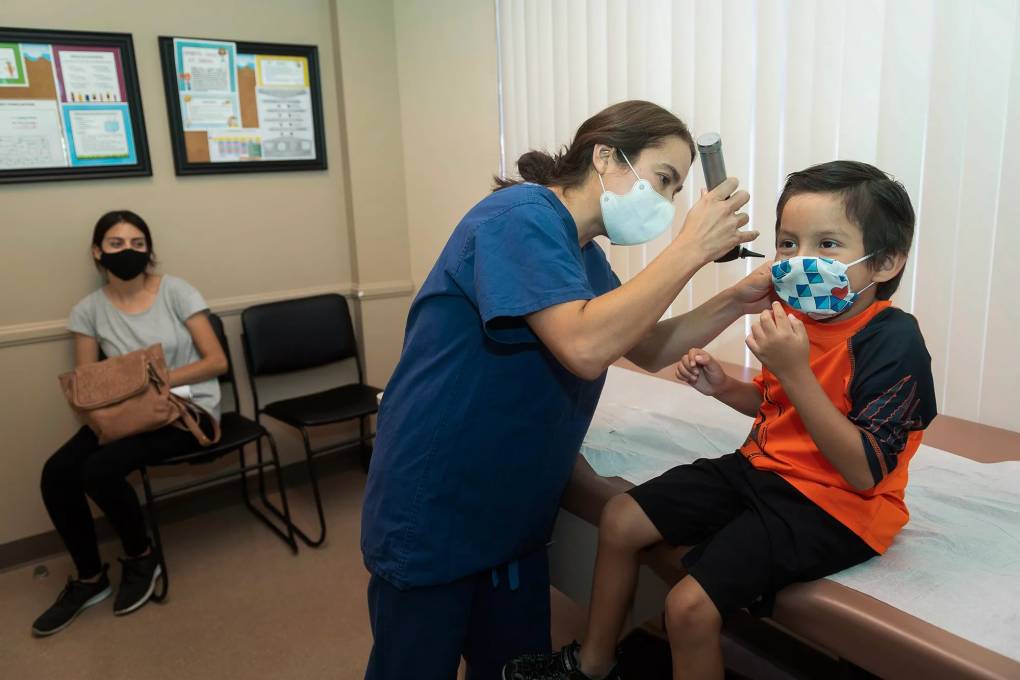
"caption": "A doctor examines a child at Southern Orange County Pediatric Associates in Ladera Ranch on July 28, 2020.",
"credit": "Paul Bersebach/Orange County Register via Getty Images",
"altTag": null,
"description": null,
"imgSizes": {
"medium": {
"file": "https://cdn.kqed.org/wp-content/uploads/sites/10/2025/03/072820-Doctor-Pediatrician-Kid-GETTY-CM-01-copy-800x533.jpg",
"width": 800,
"height": 533,
"mimeType": "image/jpeg"
},
"large": {
"file": "https://cdn.kqed.org/wp-content/uploads/sites/10/2025/03/072820-Doctor-Pediatrician-Kid-GETTY-CM-01-copy-1020x680.jpg",
"width": 1020,
"height": 680,
"mimeType": "image/jpeg"
},
"thumbnail": {
"file": "https://cdn.kqed.org/wp-content/uploads/sites/10/2025/03/072820-Doctor-Pediatrician-Kid-GETTY-CM-01-copy-160x107.jpg",
"width": 160,
"height": 107,
"mimeType": "image/jpeg"
},
"1536x1536": {
"file": "https://cdn.kqed.org/wp-content/uploads/sites/10/2025/03/072820-Doctor-Pediatrician-Kid-GETTY-CM-01-copy-1536x1024.jpg",
"width": 1536,
"height": 1024,
"mimeType": "image/jpeg"
},
"post-thumbnail": {
"file": "https://cdn.kqed.org/wp-content/uploads/sites/10/2025/03/072820-Doctor-Pediatrician-Kid-GETTY-CM-01-copy-672x372.jpg",
"width": 672,
"height": 372,
"mimeType": "image/jpeg"
},
"twentyfourteen-full-width": {
"file": "https://cdn.kqed.org/wp-content/uploads/sites/10/2025/03/072820-Doctor-Pediatrician-Kid-GETTY-CM-01-copy-1038x576.jpg",
"width": 1038,
"height": 576,
"mimeType": "image/jpeg"
},
"full-width": {
"file": "https://cdn.kqed.org/wp-content/uploads/sites/10/2025/03/072820-Doctor-Pediatrician-Kid-GETTY-CM-01-copy-1920x1280.jpg",
"width": 1920,
"height": 1280,
"mimeType": "image/jpeg"
},
"kqedFullSize": {
"file": "https://cdn.kqed.org/wp-content/uploads/sites/10/2025/03/072820-Doctor-Pediatrician-Kid-GETTY-CM-01-copy.jpg",
"width": 2000,
"height": 1333
}
},
"isLoading": false,
"fetchFailed": false
},
"news_12028460": {
"type": "attachments",
"id": "news_12028460",
"meta": {
"index": "attachments_1716263798",
"site": "news",
"id": "12028460",
"found": true
},
"title": "U.S. Department of Health and Human Services",
"publishDate": 1740512021,
"status": "inherit",
"parent": 12028454,
"modified": 1740512356,
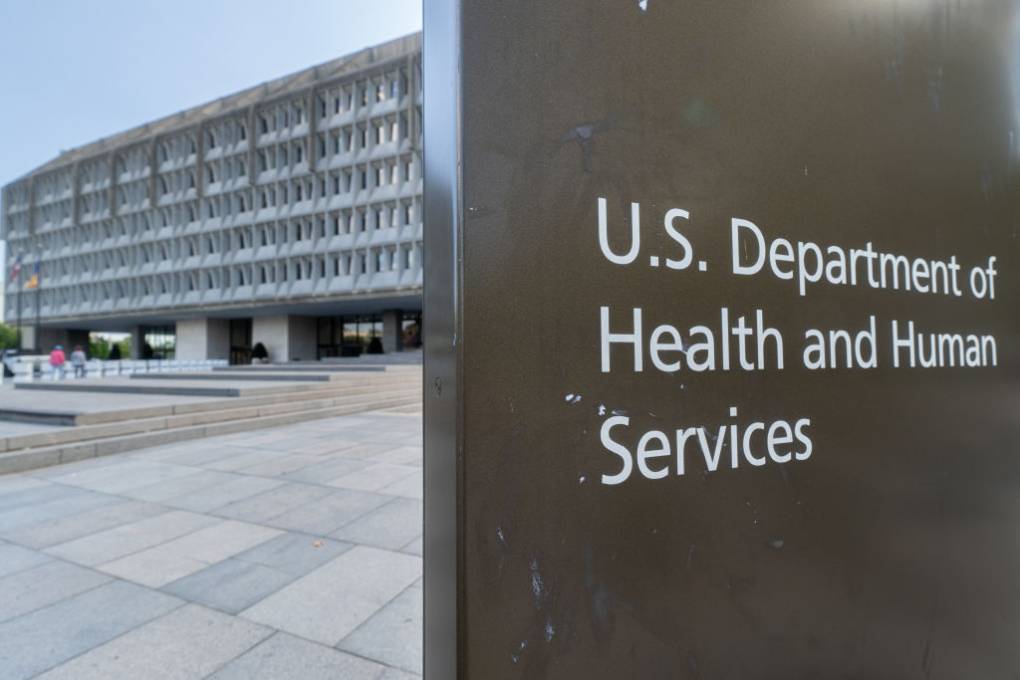
"caption": "The headquarters of U.S. Department of Health and Human Services (HHS), which oversees Medicaid and Medicare.",
"credit": "J. David Ake/Getty Images",
"altTag": "A sign in front of a large building that says 'U.S. Department of Health and Human Services.'",
"description": null,
"imgSizes": {
"medium": {
"file": "https://cdn.kqed.org/wp-content/uploads/sites/10/2025/02/GettyImages-2177324845-800x534.jpg",
"width": 800,
"height": 534,
"mimeType": "image/jpeg"
},
"large": {
"file": "https://cdn.kqed.org/wp-content/uploads/sites/10/2025/02/GettyImages-2177324845-1020x680.jpg",
"width": 1020,
"height": 680,
"mimeType": "image/jpeg"
},
"thumbnail": {
"file": "https://cdn.kqed.org/wp-content/uploads/sites/10/2025/02/GettyImages-2177324845-160x107.jpg",
"width": 160,
"height": 107,
"mimeType": "image/jpeg"
},
"post-thumbnail": {
"file": "https://cdn.kqed.org/wp-content/uploads/sites/10/2025/02/GettyImages-2177324845-672x372.jpg",
"width": 672,
"height": 372,
"mimeType": "image/jpeg"
},
"twentyfourteen-full-width": {
"file": "https://cdn.kqed.org/wp-content/uploads/sites/10/2025/02/GettyImages-2177324845-1024x576.jpg",
"width": 1024,
"height": 576,
"mimeType": "image/jpeg"
},
"kqedFullSize": {
"file": "https://cdn.kqed.org/wp-content/uploads/sites/10/2025/02/GettyImages-2177324845.jpg",
"width": 1024,
"height": 683
}
},
"isLoading": false,
"fetchFailed": false
},
"news_12012082": {
"type": "attachments",
"id": "news_12012082",
"meta": {
"index": "attachments_1716263798",
"site": "news",
"id": "12012082",
"found": true
},
"title": "Concept of national healthcare system - California",
"publishDate": 1730477144,
"status": "inherit",
"parent": 12012076,
"modified": 1730477190,
"caption": "Concept of national healthcare system - California via Getty Images.",
"credit": null,
"altTag": null,
"description": null,
"imgSizes": {
"medium": {
"file": "https://cdn.kqed.org/wp-content/uploads/sites/10/2024/11/GettyImages-536950177-800x533.jpg",
"width": 800,
"height": 533,
"mimeType": "image/jpeg"
},
"large": {
"file": "https://cdn.kqed.org/wp-content/uploads/sites/10/2024/11/GettyImages-536950177-1020x680.jpg",
"width": 1020,
"height": 680,
"mimeType": "image/jpeg"
},
"thumbnail": {
"file": "https://cdn.kqed.org/wp-content/uploads/sites/10/2024/11/GettyImages-536950177-160x107.jpg",
"width": 160,
"height": 107,
"mimeType": "image/jpeg"
},
"1536x1536": {
"file": "https://cdn.kqed.org/wp-content/uploads/sites/10/2024/11/GettyImages-536950177-1536x1024.jpg",
"width": 1536,
"height": 1024,
"mimeType": "image/jpeg"
},
"2048x2048": {
"file": "https://cdn.kqed.org/wp-content/uploads/sites/10/2024/11/GettyImages-536950177-2048x1365.jpg",
"width": 2048,
"height": 1365,
"mimeType": "image/jpeg"
},
"post-thumbnail": {
"file": "https://cdn.kqed.org/wp-content/uploads/sites/10/2024/11/GettyImages-536950177-672x372.jpg",
"width": 672,
"height": 372,
"mimeType": "image/jpeg"
},
"twentyfourteen-full-width": {
"file": "https://cdn.kqed.org/wp-content/uploads/sites/10/2024/11/GettyImages-536950177-1038x576.jpg",
"width": 1038,
"height": 576,
"mimeType": "image/jpeg"
},
"full-width": {
"file": "https://cdn.kqed.org/wp-content/uploads/sites/10/2024/11/GettyImages-536950177-1920x1280.jpg",
"width": 1920,
"height": 1280,
"mimeType": "image/jpeg"
},
"kqedFullSize": {
"file": "https://cdn.kqed.org/wp-content/uploads/sites/10/2024/11/GettyImages-536950177-scaled.jpg",
"width": 2560,
"height": 1707
}
},
"isLoading": false,
"fetchFailed": false
},
"news_12016091": {
"type": "attachments",
"id": "news_12016091",
"meta": {
"index": "attachments_1716263798",
"site": "news",
"id": "12016091",
"found": true
},
"title": "Young female patient with a gynecologist making an appointment to consult Female medical specialist consulting stomachache patient Abdominal discomfort due to menstrual pain pancreatitis gastritis",
"publishDate": 1732730062,
"status": "inherit",
"parent": 12016046,
"modified": 1733082476,
"caption": null,
"credit": "Arlawka Aung Tun/iStock/Getty Images Plus",
"altTag": null,
"description": null,
"imgSizes": {
"medium": {
"file": "https://cdn.kqed.org/wp-content/uploads/sites/10/2024/11/GettyImages-1441687304-800x533.jpg",
"width": 800,
"height": 533,
"mimeType": "image/jpeg"
},
"large": {
"file": "https://cdn.kqed.org/wp-content/uploads/sites/10/2024/11/GettyImages-1441687304-1020x680.jpg",
"width": 1020,
"height": 680,
"mimeType": "image/jpeg"
},
"thumbnail": {
"file": "https://cdn.kqed.org/wp-content/uploads/sites/10/2024/11/GettyImages-1441687304-160x107.jpg",
"width": 160,
"height": 107,
"mimeType": "image/jpeg"
},
"1536x1536": {
"file": "https://cdn.kqed.org/wp-content/uploads/sites/10/2024/11/GettyImages-1441687304-1536x1024.jpg",
"width": 1536,
"height": 1024,
"mimeType": "image/jpeg"
},
"2048x2048": {
"file": "https://cdn.kqed.org/wp-content/uploads/sites/10/2024/11/GettyImages-1441687304-2048x1365.jpg",
"width": 2048,
"height": 1365,
"mimeType": "image/jpeg"
},
"post-thumbnail": {
"file": "https://cdn.kqed.org/wp-content/uploads/sites/10/2024/11/GettyImages-1441687304-672x372.jpg",
"width": 672,
"height": 372,
"mimeType": "image/jpeg"
},
"twentyfourteen-full-width": {
"file": "https://cdn.kqed.org/wp-content/uploads/sites/10/2024/11/GettyImages-1441687304-1038x576.jpg",
"width": 1038,
"height": 576,
"mimeType": "image/jpeg"
},
"full-width": {
"file": "https://cdn.kqed.org/wp-content/uploads/sites/10/2024/11/GettyImages-1441687304-1920x1280.jpg",
"width": 1920,
"height": 1280,
"mimeType": "image/jpeg"
},
"kqedFullSize": {
"file": "https://cdn.kqed.org/wp-content/uploads/sites/10/2024/11/GettyImages-1441687304.jpg",
"width": 2121,
"height": 1414
}
},
"isLoading": false,
"fetchFailed": false
},
"news_12007439": {
"type": "attachments",
"id": "news_12007439",
"meta": {
"index": "attachments_1716263798",
"site": "news",
"id": "12007439",
"found": true
},
"title": "53989799287_49aa2b7353_3k",
"publishDate": 1727887916,
"status": "inherit",
"parent": 12007435,
"modified": 1727888457,
"caption": "Judith Peralta, a promotora de salud with Monument Impact, pitches Medi-Cal, California’s Medicaid plan, to shoppers leaving La Superior Mercados in Pittsburg on Thursday, Sept. 5, 2024. ",
"credit": "Hiram Alejandro Durán for El Tímpano/CatchLight Local/Report for America corps member",
"altTag": "A woman in a blue shirt with a shopping cart stands near a woman holding a clipboard and a young boy. There is another woman in green holding a cellphone to her ear.",
"description": null,
"imgSizes": {
"medium": {
"file": "https://cdn.kqed.org/wp-content/uploads/sites/10/2024/10/53989799287_49aa2b7353_3k-800x532.jpg",
"width": 800,
"height": 532,
"mimeType": "image/jpeg"
},
"large": {
"file": "https://cdn.kqed.org/wp-content/uploads/sites/10/2024/10/53989799287_49aa2b7353_3k-1020x679.jpg",
"width": 1020,
"height": 679,
"mimeType": "image/jpeg"
},
"thumbnail": {
"file": "https://cdn.kqed.org/wp-content/uploads/sites/10/2024/10/53989799287_49aa2b7353_3k-160x106.jpg",
"width": 160,
"height": 106,
"mimeType": "image/jpeg"
},
"1536x1536": {
"file": "https://cdn.kqed.org/wp-content/uploads/sites/10/2024/10/53989799287_49aa2b7353_3k-1536x1022.jpg",
"width": 1536,
"height": 1022,
"mimeType": "image/jpeg"
},
"2048x2048": {
"file": "https://cdn.kqed.org/wp-content/uploads/sites/10/2024/10/53989799287_49aa2b7353_3k-2048x1363.jpg",
"width": 2048,
"height": 1363,
"mimeType": "image/jpeg"
},
"post-thumbnail": {
"file": "https://cdn.kqed.org/wp-content/uploads/sites/10/2024/10/53989799287_49aa2b7353_3k-672x372.jpg",
"width": 672,
"height": 372,
"mimeType": "image/jpeg"
},
"twentyfourteen-full-width": {
"file": "https://cdn.kqed.org/wp-content/uploads/sites/10/2024/10/53989799287_49aa2b7353_3k-1038x576.jpg",
"width": 1038,
"height": 576,
"mimeType": "image/jpeg"
},
"full-width": {
"file": "https://cdn.kqed.org/wp-content/uploads/sites/10/2024/10/53989799287_49aa2b7353_3k-1920x1277.jpg",
"width": 1920,
"height": 1277,
"mimeType": "image/jpeg"
},
"kqedFullSize": {
"file": "https://cdn.kqed.org/wp-content/uploads/sites/10/2024/10/53989799287_49aa2b7353_3k-scaled.jpg",
"width": 2560,
"height": 1703
}
},
"isLoading": false,
"fetchFailed": false
},
"news_11986076": {
"type": "attachments",
"id": "news_11986076",
"meta": {
"index": "attachments_1716263798",
"site": "news",
"id": "11986076",
"found": true
},
"parent": 11986075,
"imgSizes": {
"twentyfourteen-full-width": {
"file": "https://cdn.kqed.org/wp-content/uploads/sites/10/2024/05/mercado-ef41c18e8d3958b566a25a880a9c89fd6f58237c-1038x576.jpg",
"width": 1038,
"mimeType": "image/jpeg",
"height": 576
},
"thumbnail": {
"file": "https://cdn.kqed.org/wp-content/uploads/sites/10/2024/05/mercado-ef41c18e8d3958b566a25a880a9c89fd6f58237c-160x120.jpg",
"width": 160,
"mimeType": "image/jpeg",
"height": 120
},
"post-thumbnail": {
"file": "https://cdn.kqed.org/wp-content/uploads/sites/10/2024/05/mercado-ef41c18e8d3958b566a25a880a9c89fd6f58237c-672x372.jpg",
"width": 672,
"mimeType": "image/jpeg",
"height": 372
},
"kqedFullSize": {
"file": "https://cdn.kqed.org/wp-content/uploads/sites/10/2024/05/mercado-ef41c18e8d3958b566a25a880a9c89fd6f58237c-scaled.jpg",
"width": 2560,
"height": 1920
},
"2048x2048": {
"file": "https://cdn.kqed.org/wp-content/uploads/sites/10/2024/05/mercado-ef41c18e8d3958b566a25a880a9c89fd6f58237c-2048x1536.jpg",
"width": 2048,
"mimeType": "image/jpeg",
"height": 1536
},
"large": {
"file": "https://cdn.kqed.org/wp-content/uploads/sites/10/2024/05/mercado-ef41c18e8d3958b566a25a880a9c89fd6f58237c-1020x765.jpg",
"width": 1020,
"mimeType": "image/jpeg",
"height": 765
},
"1536x1536": {
"file": "https://cdn.kqed.org/wp-content/uploads/sites/10/2024/05/mercado-ef41c18e8d3958b566a25a880a9c89fd6f58237c-1536x1152.jpg",
"width": 1536,
"mimeType": "image/jpeg",
"height": 1152
},
"full-width": {
"file": "https://cdn.kqed.org/wp-content/uploads/sites/10/2024/05/mercado-ef41c18e8d3958b566a25a880a9c89fd6f58237c-1920x1440.jpg",
"width": 1920,
"mimeType": "image/jpeg",
"height": 1440
},
"medium": {
"file": "https://cdn.kqed.org/wp-content/uploads/sites/10/2024/05/mercado-ef41c18e8d3958b566a25a880a9c89fd6f58237c-800x600.jpg",
"width": 800,
"mimeType": "image/jpeg",
"height": 600
}
},
"publishDate": 1715705845,
"modified": 1715713165,
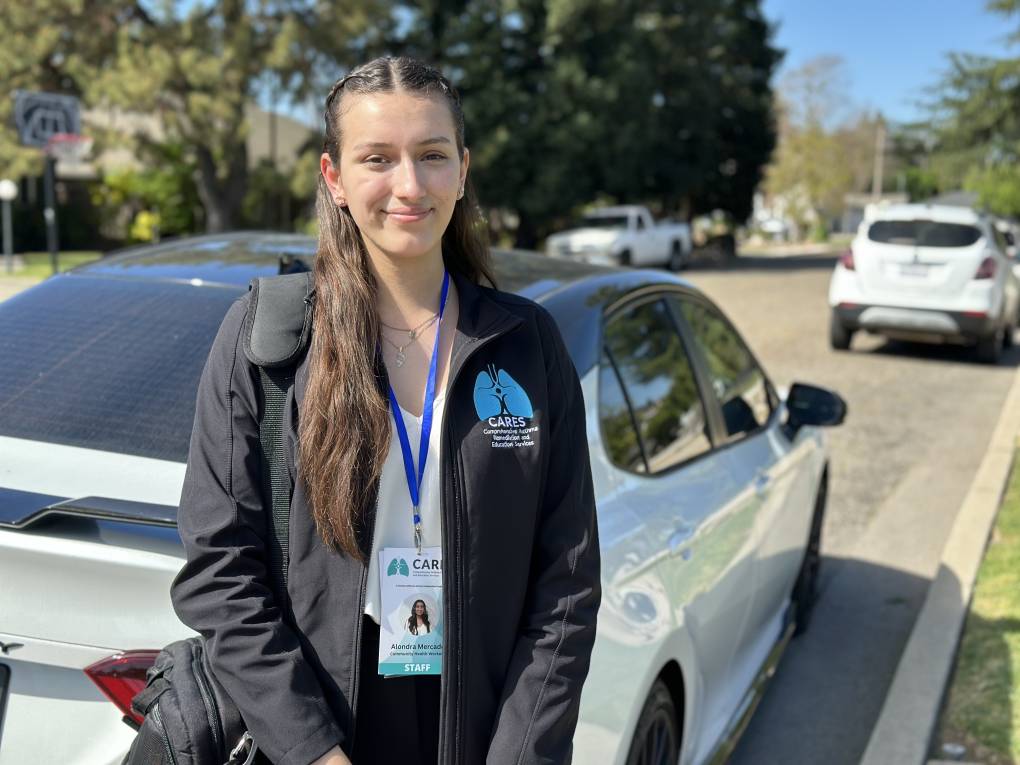
"caption": "Alondra Mercado, a community health worker with the Central California Asthma Collaborative, helps provide services through an ambitious California Medicaid initiative. On a recent morning in March, she visited a family in Turlock to teach a mother how to control in-home asthma triggers that cause flare-ups in her young son.",
"description": "Alondra Mercado, a community health worker with the Central California Asthma Collaborative, helps provide services through an ambitious California Medicaid initiative. On a recent morning in March, she visited a family in Turlock to teach a mother how to control in-home asthma triggers that cause flare-ups in her young son. (Angela Hart/KFF Health News)",
"title": "Alondra Mercado, a community health worker with the Central California Asthma Collaborative, helps provide services through an ambitious California Medicaid initiative. On a recent morning in March, she visited a family in Turlock to teach a mother how to control in-home asthma triggers that cause flare-ups in her young son.",
"credit": "Angela Hart/KFF Health News",
"status": "inherit",
"altTag": "A woman wearing a black jacket, white shirt and lanyard stands behind a vehicle parked on the street.",
"isLoading": false,
"fetchFailed": false
}
},
"audioPlayerReducer": {
"postId": "stream_live",
"isPaused": true,
"isPlaying": false,
"pfsActive": false,
"pledgeModalIsOpen": true,
"playerDrawerIsOpen": false,
"liveAudioPlayStartedAt": 0,
"liveAudioPlayContext": ""
},
"authorsReducer": {
"byline_news_12031985": {
"type": "authors",
"id": "byline_news_12031985",
"meta": {
"override": true
},
"slug": "byline_news_12031985",
"name": "\u003ca href=\"https://calmatters.org/author/anaibarra/\">Ana B. Ibarra\u003c/a>, CalMatters",
"isLoading": false
},
"byline_news_12031544": {
"type": "authors",
"id": "byline_news_12031544",
"meta": {
"override": true
},
"slug": "byline_news_12031544",
"name": "\u003ca href=\"https://calmatters.org/author/anaibarra/\">Ana B. Ibarra\u003c/a> and \u003ca href=\"https://calmatters.org/author/kristen-hwang/\">Kristen Hwang\u003c/a>, CalMatters",
"isLoading": false
},
"byline_news_12031052": {
"type": "authors",
"id": "byline_news_12031052",
"meta": {
"override": true
},
"slug": "byline_news_12031052",
"name": "\u003ca href=\"https://calmatters.org/author/kristen-hwang/\">Kristen Hwang\u003c/a>, CalMatters",
"isLoading": false
},
"byline_news_12029294": {
"type": "authors",
"id": "byline_news_12029294",
"meta": {
"override": true
},
"slug": "byline_news_12029294",
"name": "\u003ca href=\"https://calmatters.org/author/anaibarra/\">Ana B. Ibarra\u003c/a>, CalMatters",
"isLoading": false
},
"byline_news_12007435": {
"type": "authors",
"id": "byline_news_12007435",
"meta": {
"override": true
},
"slug": "byline_news_12007435",
"name": "\u003ca href=\"https://www.eltimpano.org/author/jasmine-aguilera/\">Jasmine Aguilera, \u003c/a>El Tímpano ",
"isLoading": false
},
"byline_news_11986075": {
"type": "authors",
"id": "byline_news_11986075",
"meta": {
"override": true
},
"slug": "byline_news_11986075",
"name": "Angela Hart, KFF Health News",
"isLoading": false
},
"gmarzorati": {
"type": "authors",
"id": "227",
"meta": {
"index": "authors_1716337520",
"id": "227",
"found": true
},
"name": "Guy Marzorati",
"firstName": "Guy",
"lastName": "Marzorati",
"slug": "gmarzorati",
"email": "gmarzorati@KQED.org",
"display_author_email": true,
"staff_mastheads": [
"news"
],
"title": "Correspondent",
"bio": "Guy Marzorati is a correspondent on KQED's California Politics and Government Desk, based in San Jose. A graduate of Santa Clara University, Guy joined KQED in 2013. He reports on state and local politics and produces KQED's digital voter guide.",
"avatar": "https://secure.gravatar.com/avatar/e7038b8dbfd55b104369b76b1cd0b9de?s=600&d=blank&r=g",
"twitter": "guymarzorati",
"facebook": null,
"instagram": null,
"linkedin": null,
"sites": [
{
"site": "",
"roles": [
"editor"
]
},
{
"site": "news",
"roles": [
"editor"
]
},
{
"site": "science",
"roles": [
"editor"
]
},
{
"site": "forum",
"roles": [
"editor"
]
},
{
"site": "elections",
"roles": [
"editor"
]
},
{
"site": "liveblog",
"roles": [
"editor"
]
}
],
"headData": {
"title": "Guy Marzorati | KQED",
"description": "Correspondent",
"ogImgSrc": "https://secure.gravatar.com/avatar/e7038b8dbfd55b104369b76b1cd0b9de?s=600&d=blank&r=g",
"twImgSrc": "https://secure.gravatar.com/avatar/e7038b8dbfd55b104369b76b1cd0b9de?s=600&d=blank&r=g"
},
"isLoading": false,
"link": "/author/gmarzorati"
},
"matthewgreen": {
"type": "authors",
"id": "1263",
"meta": {
"index": "authors_1716337520",
"id": "1263",
"found": true
},
"name": "Matthew Green",
"firstName": "Matthew",
"lastName": "Green",
"slug": "matthewgreen",
"email": "mgreen@kqed.org",
"display_author_email": false,
"staff_mastheads": [],
"title": "KQED Editor/Reporter",
"bio": "Matthew Green is a digital media producer for KQED News. He previously produced \u003ca href=\"http://www.kqed.org/lowdown\">The Lowdown\u003c/a>, KQED’s multimedia news education blog. Matthew's written for numerous Bay Area publications, including the Oakland Tribune and San Francisco Chronicle. He also taught journalism classes at Fremont High School in East Oakland.\r\n\r\nEmail: mgreen@kqed.org; Twitter: @MGreenKQED",
"avatar": "https://secure.gravatar.com/avatar/3bf498d1267ca02c8494f33d8cfc575e?s=600&d=blank&r=g",
"twitter": "MGreenKQED",
"facebook": null,
"instagram": null,
"linkedin": null,
"sites": [
{
"site": "news",
"roles": []
},
{
"site": "lowdown",
"roles": []
},
{
"site": "science",
"roles": []
},
{
"site": "education",
"roles": []
},
{
"site": "quest",
"roles": []
},
{
"site": "liveblog",
"roles": []
}
],
"headData": {
"title": "Matthew Green | KQED",
"description": "KQED Editor/Reporter",
"ogImgSrc": "https://secure.gravatar.com/avatar/3bf498d1267ca02c8494f33d8cfc575e?s=600&d=blank&r=g",
"twImgSrc": "https://secure.gravatar.com/avatar/3bf498d1267ca02c8494f33d8cfc575e?s=600&d=blank&r=g"
},
"isLoading": false,
"link": "/author/matthewgreen"
},
"carlysevern": {
"type": "authors",
"id": "3243",
"meta": {
"index": "authors_1716337520",
"id": "3243",
"found": true
},
"name": "Carly Severn",
"firstName": "Carly",
"lastName": "Severn",
"slug": "carlysevern",
"email": "csevern@kqed.org",
"display_author_email": false,
"staff_mastheads": [
"news"
],
"title": "Senior Editor, Audience News ",
"bio": "Carly is KQED's Senior Editor of Audience News on the Digital News team, and has reported for the California Report Magazine, Bay Curious and KQED Arts. She's formerly the host of \u003ca href=\"http://ww2.kqed.org/pop/category/the-cooler/\" rel=\"noopener noreferrer\">The Cooler\u003c/a> podcast.",
"avatar": "https://secure.gravatar.com/avatar/54037bf5c128fe678f0ef26cec97a93f2e7f220a22d7285703328f12c42c1b1d?s=600&d=blank&r=g",
"twitter": "teacupinthebay",
"bluesky": null,
"facebook": null,
"instagram": null,
"linkedin": null,
"sites": [
{
"site": "",
"roles": [
"editor"
]
},
{
"site": "arts",
"roles": [
"editor"
]
},
{
"site": "news",
"roles": [
"administrator"
]
},
{
"site": "pop",
"roles": [
"editor"
]
},
{
"site": "futureofyou",
"roles": [
"editor"
]
},
{
"site": "about",
"roles": [
"administrator"
]
},
{
"site": "mindshift",
"roles": [
"editor"
]
},
{
"site": "bayareabites",
"roles": [
"editor"
]
},
{
"site": "stateofhealth",
"roles": [
"editor"
]
},
{
"site": "science",
"roles": [
"editor"
]
},
{
"site": "food",
"roles": [
"contributor"
]
},
{
"site": "forum",
"roles": [
"editor"
]
},
{
"site": "perspectives",
"roles": [
"administrator"
]
},
{
"site": "liveblog",
"roles": [
"editor"
]
}
],
"headData": {
"title": "Carly Severn | KQED",
"description": "Senior Editor, Audience News ",
"ogImgSrc": "https://secure.gravatar.com/avatar/54037bf5c128fe678f0ef26cec97a93f2e7f220a22d7285703328f12c42c1b1d?s=600&d=blank&r=g",
"twImgSrc": "https://secure.gravatar.com/avatar/54037bf5c128fe678f0ef26cec97a93f2e7f220a22d7285703328f12c42c1b1d?s=600&d=blank&r=g"
},
"isLoading": false,
"link": "/author/carlysevern"
},
"lesleymcclurg": {
"type": "authors",
"id": "11229",
"meta": {
"index": "authors_1716337520",
"id": "11229",
"found": true
},
"name": "Lesley McClurg",
"firstName": "Lesley",
"lastName": "McClurg",
"slug": "lesleymcclurg",
"email": "lmcclurg@KQED.org",
"display_author_email": false,
"staff_mastheads": [
"news",
"science"
],
"title": "KQED Health Correspondent",
"bio": "Lesley McClurg is a health correspondent and fill-in host whose work is regularly rebroadcast on NPR and PBS programs. She’s earned multiple regional Emmy awards, a national and a regional Edward R. Murrow award, and was named Best Beat Reporter by the Association of Health Care Journalists. The Society of Professional Journalists has recognized her work several times, and the Society of Environmental Journalists spotlighted her coverage of California’s historic drought.\r\n\r\nBefore joining KQED in 2016, Lesley covered food and sustainability for Capital Public Radio, environmental issues for Colorado Public Radio, and reported for KUOW and KCTS 9 in Seattle. Away from the newsroom, she loves skiing with her daughter, mountain biking with her partner, and playing with Ollie, the family’s goldendoodle. On deadline, she runs almost entirely on chocolate chips.\r\n\r\n ",
"avatar": "https://secure.gravatar.com/avatar/bab49e972ea10c774fe0f5e29dba1722b158f7c0d58a360923d1389d380b2978?s=600&d=blank&r=g",
"twitter": "lesleywmcclurg",
"bluesky": null,
"facebook": null,
"instagram": null,
"linkedin": null,
"sites": [
{
"site": "arts",
"roles": [
"author"
]
},
{
"site": "news",
"roles": [
"editor"
]
},
{
"site": "futureofyou",
"roles": [
"editor"
]
},
{
"site": "stateofhealth",
"roles": [
"author"
]
},
{
"site": "science",
"roles": [
"editor"
]
},
{
"site": "quest",
"roles": [
"subscriber"
]
},
{
"site": "forum",
"roles": [
"administrator"
]
},
{
"site": "liveblog",
"roles": [
"author"
]
}
],
"headData": {
"title": "Lesley McClurg | KQED",
"description": "KQED Health Correspondent",
"ogImgSrc": "https://secure.gravatar.com/avatar/bab49e972ea10c774fe0f5e29dba1722b158f7c0d58a360923d1389d380b2978?s=600&d=blank&r=g",
"twImgSrc": "https://secure.gravatar.com/avatar/bab49e972ea10c774fe0f5e29dba1722b158f7c0d58a360923d1389d380b2978?s=600&d=blank&r=g"
},
"isLoading": false,
"link": "/author/lesleymcclurg"
},
"amadrigal": {
"type": "authors",
"id": "11757",
"meta": {
"index": "authors_1716337520",
"id": "11757",
"found": true
},
"name": "Alexis Madrigal",
"firstName": "Alexis",
"lastName": "Madrigal",
"slug": "amadrigal",
"email": "amadrigal@kqed.org",
"display_author_email": true,
"staff_mastheads": [],
"title": "Co-Host Forum",
"bio": "Alexis Madrigal is the co-host of Forum. He is also a contributing writer at \u003cem>The Atlantic \u003c/em>and the co-founder of the COVID Tracking Project. He's the creator of the podcast, \u003cem>Containers\u003c/em>, and has been a staff writer at \u003cem>Wired. \u003c/em>He was a visiting scholar at UC Berkeley's Information School, and is working on a book about Oakland and the Bay Area's revolutionary ideas.",
"avatar": "https://secure.gravatar.com/avatar/ffeee1fe99a3e31957381f377ca63502bdcc0c3dbccaaa701e579a10aa0c5e1f?s=600&d=blank&r=g",
"twitter": "alexismadrigal",
"bluesky": null,
"facebook": null,
"instagram": null,
"linkedin": null,
"sites": [
{
"site": "arts",
"roles": [
"editor"
]
},
{
"site": "news",
"roles": [
"editor"
]
},
{
"site": "forum",
"roles": [
"editor"
]
}
],
"headData": {
"title": "Alexis Madrigal | KQED",
"description": "Co-Host Forum",
"ogImgSrc": "https://secure.gravatar.com/avatar/ffeee1fe99a3e31957381f377ca63502bdcc0c3dbccaaa701e579a10aa0c5e1f?s=600&d=blank&r=g",
"twImgSrc": "https://secure.gravatar.com/avatar/ffeee1fe99a3e31957381f377ca63502bdcc0c3dbccaaa701e579a10aa0c5e1f?s=600&d=blank&r=g"
},
"isLoading": false,
"link": "/author/amadrigal"
},
"nkhan": {
"type": "authors",
"id": "11867",
"meta": {
"index": "authors_1716337520",
"id": "11867",
"found": true
},
"name": "Nisa Khan",
"firstName": "Nisa",
"lastName": "Khan",
"slug": "nkhan",
"email": "nkhan@kqed.org",
"display_author_email": false,
"staff_mastheads": [],
"title": "KQED Contributor",
"bio": "Nisa Khan is a reporter for KQED's Audience News Desk. She was formerly a data reporter at Michigan Radio. She earned a Bachelor of Science in Information from the University of Michigan and a Master of Arts in Communication from Stanford University.",
"avatar": "https://secure.gravatar.com/avatar/8720459eef081ff64582b3506b124d58523e80e120704a0cbd9892533c914991?s=600&d=blank&r=g",
"twitter": "mnisakhan",
"bluesky": null,
"facebook": null,
"instagram": null,
"linkedin": null,
"sites": [
{
"site": "arts",
"roles": [
"editor"
]
},
{
"site": "news",
"roles": [
"editor"
]
},
{
"site": "science",
"roles": [
"editor",
"author"
]
},
{
"site": "forum",
"roles": [
"editor"
]
},
{
"site": "liveblog",
"roles": [
"contributor"
]
}
],
"headData": {
"title": "Nisa Khan | KQED",
"description": "KQED Contributor",
"ogImgSrc": "https://secure.gravatar.com/avatar/8720459eef081ff64582b3506b124d58523e80e120704a0cbd9892533c914991?s=600&d=blank&r=g",
"twImgSrc": "https://secure.gravatar.com/avatar/8720459eef081ff64582b3506b124d58523e80e120704a0cbd9892533c914991?s=600&d=blank&r=g"
},
"isLoading": false,
"link": "/author/nkhan"
}
},
"pagesReducer": {
"news_tag_medicaid": {
"type": "terms",
"id": "news_20666",
"meta": {
"index": "terms_1716263798",
"site": "news",
"id": "20666",
"score": 9.304576
},
"featImg": null,
"name": "Medicaid",
"description": null,
"taxonomy": "tag",
"headData": {
"twImgId": null,
"twTitle": null,
"ogTitle": null,
"ogImgId": null,
"twDescription": null,
"description": null,
"title": "Medicaid Archives | KQED News",
"ogDescription": null
},
"ttid": 20683,
"slug": "medicaid",
"isLoading": false,
"title": "Medicaid",
"pageMeta": {
"site": "news",
"WpPageTemplate": "page-topic-editorial",
"currentPage": 4
},
"blocks": [
{
"blockName": "kqed/post-list",
"attrs": {
"layout": "cardArticle2",
"query": "posts/news?tag=medicaid",
"seeMore": false,
"paginated": true,
"page": 4
}
},
{
"blockName": "kqed/ad"
}
]
}
},
"pfsSessionReducer": {},
"postsReducer": {
"stream_live": {
"type": "live",
"id": "stream_live",
"audioUrl": "https://streams.kqed.org/kqedradio",
"title": "Live Stream",
"excerpt": "Live Stream information currently unavailable.",
"link": "/radio",
"featImg": "",
"label": {
"name": "KQED Live",
"link": "/"
}
},
"stream_kqedNewscast": {
"type": "posts",
"id": "stream_kqedNewscast",
"audioUrl": "https://www.kqed.org/.stream/anon/radio/RDnews/newscast.mp3?_=1",
"title": "KQED Newscast",
"featImg": "",
"label": {
"name": "88.5 FM",
"link": "/"
}
},
"news_12033802": {
"type": "posts",
"id": "news_12033802",
"meta": {
"index": "posts_1716263798",
"site": "news",
"id": "12033802",
"score": null,
"sort": [
1743516008000
]
},
"guestAuthors": [],
"slug": "how-cuts-medicaid-republican-gains-california",
"title": "Here’s How Cuts to Medicaid Could Blunt Republican Gains in California",
"publishDate": 1743516008,
"format": "standard",
"headTitle": "Here’s How Cuts to Medicaid Could Blunt Republican Gains in California | KQED",
"labelTerm": {
"site": "news"
},
"content": "\u003cp>BAKERSFIELD — In 2021, \u003ca href=\"https://www.kqed.org/news/tag/bakersfield\">Bakersfield\u003c/a> resident Elizabeth Ramirez’s mother broke three bones in a fall, leaving Ramirez with a new set of responsibilities: cooking and cleaning for her mom, bathing her and driving her to appointments.\u003c/p>\n\u003cp>“So I was caregiving for her on top of my kids,” Ramirez said. “It was just a lot.”\u003c/p>\n\u003cp>After a few years of juggling, Ramirez became a registered care provider for her mother through the state’s In-Home Supportive Services, a program provided \u003ca href=\"https://www.kqed.org/news/12032878/gop-cuts-to-medicaid-snap-would-shrink-californias-economy-by-17-billion-and-kill-nearly-140000-jobs-new-study-finds\" target=\"_blank\" rel=\"noopener\">through Medi-Cal\u003c/a>.\u003c/p>\n\u003cp>[ad fullwidth]\u003c/p>\n\u003cp>“So the work I put into making sure she’s safe and healthy, I get paid for it now,” Ramirez said. “It’s such a good support system that keeps people from drowning.”\u003c/p>\n\u003cp>No congressional seat in California relies more on Medi-Cal than the 22nd District, which follows Interstate 5 and Highway 99 as they stretch southeast from Avenal and Delano, through almond and pistachio orchards, to Bakersfield.\u003c/p>\n\u003cp>Two-thirds of residents are enrolled in Medi-Cal, the state’s Medicaid program, which provides health care to low-income residents, people with disabilities and those living in nursing homes or need of a personal caregiver.\u003c/p>\n\u003cfigure id=\"attachment_11933948\" class=\"wp-caption aligncenter\" style=\"max-width: 1024px\">\u003cimg loading=\"lazy\" decoding=\"async\" class=\"wp-image-11933948 size-full\" src=\"https://cdn.kqed.org/wp-content/uploads/sites/10/2022/12/GettyImages-1245162773.jpg\" alt=\"oil pumps in a field\" width=\"1024\" height=\"683\" srcset=\"https://cdn.kqed.org/wp-content/uploads/sites/10/2022/12/GettyImages-1245162773.jpg 1024w, https://cdn.kqed.org/wp-content/uploads/sites/10/2022/12/GettyImages-1245162773-800x534.jpg 800w, https://cdn.kqed.org/wp-content/uploads/sites/10/2022/12/GettyImages-1245162773-1020x680.jpg 1020w, https://cdn.kqed.org/wp-content/uploads/sites/10/2022/12/GettyImages-1245162773-160x107.jpg 160w\" sizes=\"auto, (max-width: 1024px) 100vw, 1024px\">\u003cfigcaption class=\"wp-caption-text\">Oil wells are seen at an oil facility by Interstate 5 near Bakersfield. \u003ccite>(Tayfun Coskun/Anadolu Agency via Getty Images)\u003c/cite>\u003c/figcaption>\u003c/figure>\n\u003cp>The 22nd District is also experiencing an intense political shift.\u003c/p>\n\u003cp>Back in 2020, voters here supported Joe Biden over Donald Trump in the presidential election by a 55%-42% margin. In November, Trump won the 22nd District, 52%-46% over Kamala Harris. The 19-point shift between 2020 and 2024 was the largest in California, securing incumbent Rep. David Valadao a comfortable victory that helped the GOP maintain control of the House of Representatives.\u003c/p>\n\u003cp>Connie Conway, the chair of the Republican Party of Tulare County, said Trump drew support from new voters — enough to start a young Republicans chapter in the county — and disaffected Democrats.\u003c/p>\n\u003cp>“I say this to people all the time, and I know because I’m a lifelong Central Valley girl, ‘We’re pretty conservative no matter what your party registration is,” Conway said.\u003c/p>\n\u003cp>Across California, Trump made his largest gains in districts like the 22nd — inland, working class, majority-Latino and, according to a KQED analysis, heavily reliant on Medi-Cal.\u003c/p>\n\u003cp>“We’re not known for our excess wealth, at least in our part of the Central Valley. We’re just hard-working people that share a lot of the same values: family, faith,” Conway said. “I think in this past election, that really resonated with a lot of folks.”\u003c/p>\n\u003cp>\u003c!-- iframe plugin v.4.3 wordpress.org/plugins/iframe/ -->\u003cbr>\n\u003ciframe loading=\"lazy\" title=\"GOP Gains and Medi-Cal Enrollment\" aria-label=\"Scatter Plot\" id=\"datawrapper-chart-svLzI\" src=\"https://datawrapper.dwcdn.net/svLzI/6/\" scrolling=\"no\" frameborder=\"0\" style=\"width: 0; min-width: 100% !important; border: none;\" height=\"576\" data-external=\"1\" width=\"100%\" class=\"iframe-class\">\u003c/iframe>\u003c/p>\n\u003cp>Now, Republicans in Congress are moving ahead with plans to slash the health care program.\u003c/p>\n\u003cp>House Republicans passed a budget resolution in February that set a goal of $2 trillion in spending cuts. It was the first step toward passing a budget that party leaders hope will include over $4.5 trillion in new spending and tax cuts.\u003c/p>\n\u003cp>Top Republicans ruled out reductions to Social Security, Medicare and defense, leaving Medicaid as the most expensive program on the chopping block.\u003c/p>\n\u003cp>The path to achieving the centerpiece of Trump’s legislative agenda could go straight through the pocketbooks of the voters who powered GOP progress in 2024. Cuts to Medicaid, which has enjoyed bipartisan support, could imperil representatives like Valadao and give \u003ca href=\"https://www.kqed.org/news/12032994/democrats-focus-their-message-on-gop-cuts-to-medicaid\">new life to Democrats\u003c/a> looking for ways to reverse their decline in California’s working class communities.\u003c/p>\n\u003cp>[aside postID=news_12033446 hero='https://cdn.kqed.org/wp-content/uploads/sites/10/2025/03/DonaldTrump100DaysGetty-1020x680.jpg']\u003c/p>\n\u003cp>“I don’t want to say that there is an opportunity, since nothing good will come out of this budget, but the opportunity to clarify and define what we as a party are doing in this term of Trump is going to be critical,” said Orrin Evans, a Democratic strategist who has worked on multiple House campaigns in the state. “We have to be united in standing against this.”\u003c/p>\n\u003cp>KQED cross-referenced district-by-district Medicaid enrollment numbers from the UC Berkeley Labor Center with presidential vote totals from the 2020 and 2024 elections in each of the state’s 52 congressional districts, compiled by the California Target Book.\u003c/p>\n\u003cp>Of the 13 seats with the largest shift toward Trump in 2024 — the top quartile of districts — eight were among the top quartile in Medi-Cal reliance. Twelve of the 13 had Medi-Cal populations above the state average.\u003c/p>\n\u003cp>While Valadao voted for the budget resolution, he has expressed concerns for his constituents who benefit from Medi-Cal and said he would not vote for a final budget bill “that risks leaving them behind.” It’s unclear how the party would offset the costs of tax cuts without targeting Medicaid.\u003c/p>\n\u003cp>Doing so could bring political risk for California Republicans beyond just vulnerable incumbents like Valadao. The GOP made \u003ca href=\"https://www.kqed.org/news/12025617/confronting-trump-gotten-harder-california-legislature\">significant inroads\u003c/a> in communities still represented by Democrats in Congress — in the Central Valley, Inland Empire and along the state’s southern border — which fueled Republican gains further down the ballot in 2024.\u003c/p>\n\u003cp>The shifts reflect the acceleration of a yearslong \u003ca href=\"https://www.kqed.org/news/12011642/how-the-diploma-divide-is-reshaping-politics-in-a-key-california-house-race\">political realignment\u003c/a> along \u003ca href=\"https://www.kqed.org/forum/2010101908312/how-the-diploma-divide-polarizes-the-u-s-electorate\">educational lines\u003c/a>. During the Trump era, Democrats have gained ground in highly-educated suburban areas, such as coastal Orange and San Diego counties, and lost support in more working-class counties further inland.\u003c/p>\n\u003cfigure id=\"attachment_12010091\" class=\"wp-caption aligncenter\" style=\"max-width: 2000px\">\u003cimg loading=\"lazy\" decoding=\"async\" class=\"wp-image-12010091 size-full\" src=\"https://cdn.kqed.org/wp-content/uploads/sites/10/2024/10/GettyImages-1255046550-1-scaled-e1743452454384.jpg\" alt=\"\" width=\"2000\" height=\"1334\">\u003cfigcaption class=\"wp-caption-text\">Republican Rep. David Valadao of California’s 22nd Congressional District, pictured in 2022. \u003ccite>(Irfan Khan/Los Angeles Times via Getty Images)\u003c/cite>\u003c/figcaption>\u003c/figure>\n\u003cp>In November, Republicans scored \u003ca href=\"https://www.kqed.org/news/12016328/special-session-to-trump-proof-california-opens-in-sacramento\">two shocking victories\u003c/a> in state Assembly districts long held by Democrats in Imperial and Riverside counties.\u003c/p>\n\u003cp>Valadao’s Bakersfield seat fits the profile of these areas in political transition. According to estimates from the U.S. Census’ American Community Survey, nearly 60% of the citizen voting-age population is Latino, the most of any district in California. Meanwhile, fewer than one in 10 residents over age 24 hold a college degree, the lowest share of any district in the state.\u003c/p>\n\u003cp>“That particular district, President Trump did far better than other Republican candidates had done at the top of the ticket,” said Tal Eslick, Valadao’s former chief of staff, on KQED’s \u003ca href=\"https://www.kqed.org/news/12030830/could-gop-spending-cuts-cost-republicans-the-house\">\u003cem>Political Breakdown\u003c/em>\u003c/a>. “So I think this is an example of a district that’s changing, especially among, I would say, Hispanic males.”\u003c/p>\n\u003cp>Eslick and Conway attributed the GOP’s 2024 turnaround in the area to a mix of economic concerns, such as the cost of living, and social issues, including the debate over transgender rights.\u003c/p>\n\u003cp>“If you can imagine a 70-year-old Hispanic female from Corcoran, I don’t think the trans issues or other issues like that resonated with her,” Eslick said. “I think [Democrats] lost many of those folks, and those folks went towards President Trump.”\u003c/p>\n\u003cp>But it’s exactly in these areas of the state that the health care coverage provided by Medi-Cal is a lifeline for residents, said Scott Graves, budget director at the California Budget & Policy Center.\u003c/p>\n\u003cp>“In the more rural areas of the state, in farming communities, they’re doing some pretty backbreaking jobs,” Graves said. “They’re not getting very well compensated for it, and they’re very unlikely to be offered a health coverage plan.”\u003c/p>\n\u003cp>The federal government covers roughly half of most Medicaid costs in California, splitting the expense with the state government. Under the Affordable Care Act, Medicaid expanded to cover Californians making up to 138% of the federal poverty level ($21,597 for a single adult in 2025), with the federal government covering 90% of the new costs.\u003c/p>\n\u003cfigure id=\"attachment_12032710\" class=\"wp-caption aligncenter\" style=\"max-width: 2000px\">\u003cimg loading=\"lazy\" decoding=\"async\" class=\"wp-image-12032710 size-full\" src=\"https://cdn.kqed.org/wp-content/uploads/sites/10/2025/03/250323-DEM-TOWN-HALLS-MD-16-KQED-3.jpg\" alt=\"\" width=\"2000\" height=\"1333\" srcset=\"https://cdn.kqed.org/wp-content/uploads/sites/10/2025/03/250323-DEM-TOWN-HALLS-MD-16-KQED-3.jpg 2000w, https://cdn.kqed.org/wp-content/uploads/sites/10/2025/03/250323-DEM-TOWN-HALLS-MD-16-KQED-3-800x533.jpg 800w, https://cdn.kqed.org/wp-content/uploads/sites/10/2025/03/250323-DEM-TOWN-HALLS-MD-16-KQED-3-1020x680.jpg 1020w, https://cdn.kqed.org/wp-content/uploads/sites/10/2025/03/250323-DEM-TOWN-HALLS-MD-16-KQED-3-160x107.jpg 160w, https://cdn.kqed.org/wp-content/uploads/sites/10/2025/03/250323-DEM-TOWN-HALLS-MD-16-KQED-3-1536x1024.jpg 1536w, https://cdn.kqed.org/wp-content/uploads/sites/10/2025/03/250323-DEM-TOWN-HALLS-MD-16-KQED-3-1920x1280.jpg 1920w\" sizes=\"auto, (max-width: 2000px) 100vw, 2000px\">\u003cfigcaption class=\"wp-caption-text\">Elizabeth Ramirez outside the MLK Community Center in Bakersfield, where Rep. Ro Khanna held a town hall meeting on March 23, 2025, the first of three town hall events Khanna was set to hold in Republican-held congressional districts across the state. \u003ccite>(Martin do Nascimento/KQED)\u003c/cite>\u003c/figcaption>\u003c/figure>\n\u003cp>Medi-Cal dollars are inextricably woven into the local economy in this part of the state. Kaweah Health Medical Center in Visalia is the largest hospital in Tulare County. It’s also the county’s largest employer.\u003c/p>\n\u003cp>The hospital receives more than 30% of its revenue through Medi-Cal, according to Gary Herbst, Kaweah’s CEO, compared to less than 20% from private insurance. When Herbst first arrived at Kaweah in 1992, that ratio was reversed.\u003c/p>\n\u003cp>Herbst has begun planning for various scenarios of cuts to Medicaid. If the federal government were to lower its cost-sharing to 45% for both traditional and expansion Medi-Cal enrollees, the loss for Kaweah would be around $60 million a year.\u003c/p>\n\u003cp>“If we were to lose 50, 60 million dollars a year in Medi-Cal funding, then where would I cut? How many hundreds of people would I have to lay off? How many services would I have to close?” he said. “We’ve never faced losses of this magnitude.”[aside postID=news_12022068 hero='https://cdn.kqed.org/wp-content/uploads/sites/10/2024/11/GettyImages-536950177-1020x680.jpg']Doctors and nurses at Kaweah would still be required to provide emergency services to anyone who shows up at the hospital, regardless of their ability to pay. So the cuts could potentially come to services such as colonoscopy screenings, surgeries for hip and knee replacements or primary care visits.\u003c/p>\n\u003cp>“It’s not possible to cover a $50- to $60-million reduction in funding and say, ‘Oh, we’re just going to stop providing services to Medi-Cal patients,’” Herbst said. “We would literally be forced to close an entire service, probably multiple services, so it would affect all patients that are receiving those services.”\u003c/p>\n\u003cp>The consequences appeared to be on Valadao’s mind when he spoke on the House floor before voting to advance the GOP budget framework.\u003c/p>\n\u003cp>“I’ve heard from countless constituents who tell me the only way they can afford health care is through programs like Medicaid, and I will not support a final reconciliation bill that risks leaving them behind,” he said.\u003c/p>\n\u003cp>Valadao said Congress is faced with “a historic opportunity to advance the key priorities of this administration.” By cutting spending, Congress would be able to extend crucial provisions of the 2017 Tax Cuts and Jobs Act, such as the doubling of the standard deduction and the child tax credit.\u003c/p>\n\u003cp>After Valadao spoke, Rep. Steve Scalise, the House Majority Leader, said California’s 22nd District “is going to have a very loud voice as this process moves forward.” He said Medicaid could be strengthened by weeding out “waste, fraud and abuse,” without providing details on where that exists in the program.\u003c/p>\n\u003cfigure id=\"attachment_11930872\" class=\"wp-caption aligncenter\" style=\"max-width: 1024px\">\u003cimg loading=\"lazy\" decoding=\"async\" class=\"wp-image-11930872 size-full\" src=\"https://cdn.kqed.org/wp-content/uploads/sites/10/2022/11/GettyImages-1231769719.jpg\" alt=\"A white man in a blue suit.\" width=\"1024\" height=\"683\" srcset=\"https://cdn.kqed.org/wp-content/uploads/sites/10/2022/11/GettyImages-1231769719.jpg 1024w, https://cdn.kqed.org/wp-content/uploads/sites/10/2022/11/GettyImages-1231769719-800x534.jpg 800w, https://cdn.kqed.org/wp-content/uploads/sites/10/2022/11/GettyImages-1231769719-1020x680.jpg 1020w, https://cdn.kqed.org/wp-content/uploads/sites/10/2022/11/GettyImages-1231769719-160x107.jpg 160w\" sizes=\"auto, (max-width: 1024px) 100vw, 1024px\">\u003cfigcaption class=\"wp-caption-text\">Rep. David Valadao (R-Calif.) speaks during a news conference with other House Republican members on immigration in Washington in 2021. \u003ccite>(Caroline Brehman/CQ-Roll Call, Inc via Getty Images)\u003c/cite>\u003c/figcaption>\u003c/figure>\n\u003cp>Valadao declined an interview for this story. Longtime allies such as Eslick and Conway were skeptical that Republicans in Congress would actually carry out large cuts to Medicaid.\u003c/p>\n\u003cp>“I don’t see a scenario in which Republicans, or for that matter any politician, go after an entitlement program that is pretty popular and obviously a key issue for a large swath of people,” Eslick said.\u003c/p>\n\u003cp>It seems impossible for Republicans to achieve their ambitious goals for cutting spending without touching Medicaid. The budget plan passed by the House called for $880 billion in cuts over the next 10 years from programs overseen by the Committee on Energy and Commerce. Just $581 billion of spending \u003ca href=\"https://www.cbo.gov/system/files/2025-03/61235-Boyle-Pallone.pdf\">under the committee’s\u003c/a> jurisdiction is for programs other than Medicaid, according to the Congressional Budget Office.[aside postID=news_12032718 hero='https://cdn.kqed.org/wp-content/uploads/sites/10/2025/03/250323-DEM-TOWN-HALLS-MD-21-KQED-5-1020x680.jpg']Valadao is a political survivor, one of just two Republicans left in the House who voted to impeach Trump in 2021, but he’s not immune to the high-stakes politics of health care. In 2017, he voted to repeal the Affordable Care Act. A year later, he lost his campaign for re-election.\u003c/p>\n\u003cp>“David Valadao has a very clear choice: he can vote on behalf of his district or he can take another step towards a successful lobbying career which he will assume as soon as he is defeated,” said Evans, the Democratic strategist. “Voting for this draconian budget, there is no argument in how it would advance or help constituents in his district.”\u003c/p>\n\u003cp>Another clue about Medicaid’s political potency lies in a little-noticed ballot measure passed in November by California voters. Proposition 35 extended a state tax on providers of health care plans and restricted the revenue to fund Medi-Cal.\u003c/p>\n\u003cp>The initiative passed overwhelmingly with 68% of the vote — outpacing other ballot measures with similar levels of bipartisan support — and it tallied 70% approval in those 13 seats that saw the largest shift toward Trump.\u003c/p>\n\u003cp>Dustin Corcoran, CEO of the California Medical Association, which represents physicians in the state, said Medicaid is often a blind spot for policymakers and elected officials, who typically receive health coverage on the private market.\u003c/p>\n\u003cp>Corcoran saw a different reality as he traveled the state as co-chair of the Proposition 35 campaign. One stop took him to the campus of the UC Merced, in the heart of the 13th Congressional District, which has the third-highest Medi-Cal population and fourth-largest shift toward Trump.\u003c/p>\n\u003cp>He asked this icebreaker: Who knows what Medicaid is?\u003c/p>\n\u003cp>“Every hand went up,” Corcoran said. “Every single hand in the room.”\u003c/p>\n\u003cp>[ad floatright]\u003c/p>\n",
"blocks": [],
"excerpt": "A KQED analysis found the Congressional Districts that shifted most toward President Donald Trump also rely disproportionately on Medi-Cal.",
"status": "publish",
"parent": 0,
"modified": 1743459714,
"stats": {
"hasAudio": false,
"hasVideo": false,
"hasChartOrMap": true,
"iframeSrcs": [
"https://datawrapper.dwcdn.net/svLzI/6/"
],
"hasGoogleForm": false,
"hasGallery": false,
"hasHearkenModule": false,
"hasPolis": false,
"paragraphCount": 53,
"wordCount": 2338
},
"headData": {
"title": "Here’s How Cuts to Medicaid Could Blunt Republican Gains in California | KQED",
"description": "A KQED analysis found the Congressional Districts that shifted most toward President Donald Trump also rely disproportionately on Medi-Cal.",
"ogTitle": "",
"ogDescription": "",
"ogImgId": "",
"twTitle": "",
"twDescription": "",
"twImgId": "",
"schema": {
"@context": "https://schema.org",
"@type": "NewsArticle",
"headline": "Here’s How Cuts to Medicaid Could Blunt Republican Gains in California",
"datePublished": "2025-04-01T07:00:08-07:00",
"dateModified": "2025-03-31T15:21:54-07:00",
"image": "https://cdn.kqed.org/wp-content/uploads/2020/02/KQED-OG-Image@1x.png",
"isAccessibleForFree": "True",
"publisher": {
"@type": "NewsMediaOrganization",
"@id": "https://www.kqed.org/#organization",
"name": "KQED",
"logo": "https://cdn.kqed.org/wp-content/uploads/2020/02/KQED-OG-Image@1x.png",
"url": "https://www.kqed.org",
"sameAs": [
"https://www.facebook.com/KQED",
"https://twitter.com/KQED",
"https://www.instagram.com/kqed/",
"https://www.tiktok.com/@kqedofficial",
"https://www.linkedin.com/company/kqed",
"https://www.youtube.com/channel/UCeC0IOo7i1P_61zVUWbJ4nw"
]
}
}
},
"sticky": false,
"templateType": "standard",
"featuredImageType": "standard",
"excludeFromSiteSearch": "Include",
"articleAge": "0",
"path": "/news/12033802/how-cuts-medicaid-republican-gains-california",
"audioTrackLength": null,
"parsedContent": [
{
"type": "contentString",
"content": "\u003cdiv class=\"post-body\">\u003cp>\u003cp>BAKERSFIELD — In 2021, \u003ca href=\"https://www.kqed.org/news/tag/bakersfield\">Bakersfield\u003c/a> resident Elizabeth Ramirez’s mother broke three bones in a fall, leaving Ramirez with a new set of responsibilities: cooking and cleaning for her mom, bathing her and driving her to appointments.\u003c/p>\n\u003cp>“So I was caregiving for her on top of my kids,” Ramirez said. “It was just a lot.”\u003c/p>\n\u003cp>After a few years of juggling, Ramirez became a registered care provider for her mother through the state’s In-Home Supportive Services, a program provided \u003ca href=\"https://www.kqed.org/news/12032878/gop-cuts-to-medicaid-snap-would-shrink-californias-economy-by-17-billion-and-kill-nearly-140000-jobs-new-study-finds\" target=\"_blank\" rel=\"noopener\">through Medi-Cal\u003c/a>.\u003c/p>\n\u003cp>\u003c/p>\u003c/div>",
"attributes": {
"named": {},
"numeric": []
}
},
{
"type": "component",
"content": "",
"name": "ad",
"attributes": {
"named": {
"label": "fullwidth"
},
"numeric": [
"fullwidth"
]
}
},
{
"type": "contentString",
"content": "\u003cdiv class=\"post-body\">\u003cp>\u003c/p>\n\u003cp>“So the work I put into making sure she’s safe and healthy, I get paid for it now,” Ramirez said. “It’s such a good support system that keeps people from drowning.”\u003c/p>\n\u003cp>No congressional seat in California relies more on Medi-Cal than the 22nd District, which follows Interstate 5 and Highway 99 as they stretch southeast from Avenal and Delano, through almond and pistachio orchards, to Bakersfield.\u003c/p>\n\u003cp>Two-thirds of residents are enrolled in Medi-Cal, the state’s Medicaid program, which provides health care to low-income residents, people with disabilities and those living in nursing homes or need of a personal caregiver.\u003c/p>\n\u003cfigure id=\"attachment_11933948\" class=\"wp-caption aligncenter\" style=\"max-width: 1024px\">\u003cimg loading=\"lazy\" decoding=\"async\" class=\"wp-image-11933948 size-full\" src=\"https://cdn.kqed.org/wp-content/uploads/sites/10/2022/12/GettyImages-1245162773.jpg\" alt=\"oil pumps in a field\" width=\"1024\" height=\"683\" srcset=\"https://cdn.kqed.org/wp-content/uploads/sites/10/2022/12/GettyImages-1245162773.jpg 1024w, https://cdn.kqed.org/wp-content/uploads/sites/10/2022/12/GettyImages-1245162773-800x534.jpg 800w, https://cdn.kqed.org/wp-content/uploads/sites/10/2022/12/GettyImages-1245162773-1020x680.jpg 1020w, https://cdn.kqed.org/wp-content/uploads/sites/10/2022/12/GettyImages-1245162773-160x107.jpg 160w\" sizes=\"auto, (max-width: 1024px) 100vw, 1024px\">\u003cfigcaption class=\"wp-caption-text\">Oil wells are seen at an oil facility by Interstate 5 near Bakersfield. \u003ccite>(Tayfun Coskun/Anadolu Agency via Getty Images)\u003c/cite>\u003c/figcaption>\u003c/figure>\n\u003cp>The 22nd District is also experiencing an intense political shift.\u003c/p>\n\u003cp>Back in 2020, voters here supported Joe Biden over Donald Trump in the presidential election by a 55%-42% margin. In November, Trump won the 22nd District, 52%-46% over Kamala Harris. The 19-point shift between 2020 and 2024 was the largest in California, securing incumbent Rep. David Valadao a comfortable victory that helped the GOP maintain control of the House of Representatives.\u003c/p>\n\u003cp>Connie Conway, the chair of the Republican Party of Tulare County, said Trump drew support from new voters — enough to start a young Republicans chapter in the county — and disaffected Democrats.\u003c/p>\n\u003cp>“I say this to people all the time, and I know because I’m a lifelong Central Valley girl, ‘We’re pretty conservative no matter what your party registration is,” Conway said.\u003c/p>\n\u003cp>Across California, Trump made his largest gains in districts like the 22nd — inland, working class, majority-Latino and, according to a KQED analysis, heavily reliant on Medi-Cal.\u003c/p>\n\u003cp>“We’re not known for our excess wealth, at least in our part of the Central Valley. We’re just hard-working people that share a lot of the same values: family, faith,” Conway said. “I think in this past election, that really resonated with a lot of folks.”\u003c/p>\n\u003cp>\u003c!-- iframe plugin v.4.3 wordpress.org/plugins/iframe/ -->\u003cbr>\n\u003ciframe loading=\"lazy\" title=\"GOP Gains and Medi-Cal Enrollment\" aria-label=\"Scatter Plot\" id=\"datawrapper-chart-svLzI\" src=\"https://datawrapper.dwcdn.net/svLzI/6/\" scrolling=\"no\" frameborder=\"0\" style=\"width: 0; min-width: 100% !important; border: none;\" height=\"576\" data-external=\"1\" width=\"100%\" class=\"iframe-class\">\u003c/iframe>\u003c/p>\n\u003cp>Now, Republicans in Congress are moving ahead with plans to slash the health care program.\u003c/p>\n\u003cp>House Republicans passed a budget resolution in February that set a goal of $2 trillion in spending cuts. It was the first step toward passing a budget that party leaders hope will include over $4.5 trillion in new spending and tax cuts.\u003c/p>\n\u003cp>Top Republicans ruled out reductions to Social Security, Medicare and defense, leaving Medicaid as the most expensive program on the chopping block.\u003c/p>\n\u003cp>The path to achieving the centerpiece of Trump’s legislative agenda could go straight through the pocketbooks of the voters who powered GOP progress in 2024. Cuts to Medicaid, which has enjoyed bipartisan support, could imperil representatives like Valadao and give \u003ca href=\"https://www.kqed.org/news/12032994/democrats-focus-their-message-on-gop-cuts-to-medicaid\">new life to Democrats\u003c/a> looking for ways to reverse their decline in California’s working class communities.\u003c/p>\n\u003cp>\u003c/p>\u003c/div>",
"attributes": {
"named": {},
"numeric": []
}
},
{
"type": "component",
"content": "",
"name": "aside",
"attributes": {
"named": {
"postid": "news_12033446",
"hero": "https://cdn.kqed.org/wp-content/uploads/sites/10/2025/03/DonaldTrump100DaysGetty-1020x680.jpg",
"label": ""
},
"numeric": []
}
},
{
"type": "contentString",
"content": "\u003cdiv class=\"post-body\">\u003cp>\u003c/p>\n\u003cp>“I don’t want to say that there is an opportunity, since nothing good will come out of this budget, but the opportunity to clarify and define what we as a party are doing in this term of Trump is going to be critical,” said Orrin Evans, a Democratic strategist who has worked on multiple House campaigns in the state. “We have to be united in standing against this.”\u003c/p>\n\u003cp>KQED cross-referenced district-by-district Medicaid enrollment numbers from the UC Berkeley Labor Center with presidential vote totals from the 2020 and 2024 elections in each of the state’s 52 congressional districts, compiled by the California Target Book.\u003c/p>\n\u003cp>Of the 13 seats with the largest shift toward Trump in 2024 — the top quartile of districts — eight were among the top quartile in Medi-Cal reliance. Twelve of the 13 had Medi-Cal populations above the state average.\u003c/p>\n\u003cp>While Valadao voted for the budget resolution, he has expressed concerns for his constituents who benefit from Medi-Cal and said he would not vote for a final budget bill “that risks leaving them behind.” It’s unclear how the party would offset the costs of tax cuts without targeting Medicaid.\u003c/p>\n\u003cp>Doing so could bring political risk for California Republicans beyond just vulnerable incumbents like Valadao. The GOP made \u003ca href=\"https://www.kqed.org/news/12025617/confronting-trump-gotten-harder-california-legislature\">significant inroads\u003c/a> in communities still represented by Democrats in Congress — in the Central Valley, Inland Empire and along the state’s southern border — which fueled Republican gains further down the ballot in 2024.\u003c/p>\n\u003cp>The shifts reflect the acceleration of a yearslong \u003ca href=\"https://www.kqed.org/news/12011642/how-the-diploma-divide-is-reshaping-politics-in-a-key-california-house-race\">political realignment\u003c/a> along \u003ca href=\"https://www.kqed.org/forum/2010101908312/how-the-diploma-divide-polarizes-the-u-s-electorate\">educational lines\u003c/a>. During the Trump era, Democrats have gained ground in highly-educated suburban areas, such as coastal Orange and San Diego counties, and lost support in more working-class counties further inland.\u003c/p>\n\u003cfigure id=\"attachment_12010091\" class=\"wp-caption aligncenter\" style=\"max-width: 2000px\">\u003cimg loading=\"lazy\" decoding=\"async\" class=\"wp-image-12010091 size-full\" src=\"https://cdn.kqed.org/wp-content/uploads/sites/10/2024/10/GettyImages-1255046550-1-scaled-e1743452454384.jpg\" alt=\"\" width=\"2000\" height=\"1334\">\u003cfigcaption class=\"wp-caption-text\">Republican Rep. David Valadao of California’s 22nd Congressional District, pictured in 2022. \u003ccite>(Irfan Khan/Los Angeles Times via Getty Images)\u003c/cite>\u003c/figcaption>\u003c/figure>\n\u003cp>In November, Republicans scored \u003ca href=\"https://www.kqed.org/news/12016328/special-session-to-trump-proof-california-opens-in-sacramento\">two shocking victories\u003c/a> in state Assembly districts long held by Democrats in Imperial and Riverside counties.\u003c/p>\n\u003cp>Valadao’s Bakersfield seat fits the profile of these areas in political transition. According to estimates from the U.S. Census’ American Community Survey, nearly 60% of the citizen voting-age population is Latino, the most of any district in California. Meanwhile, fewer than one in 10 residents over age 24 hold a college degree, the lowest share of any district in the state.\u003c/p>\n\u003cp>“That particular district, President Trump did far better than other Republican candidates had done at the top of the ticket,” said Tal Eslick, Valadao’s former chief of staff, on KQED’s \u003ca href=\"https://www.kqed.org/news/12030830/could-gop-spending-cuts-cost-republicans-the-house\">\u003cem>Political Breakdown\u003c/em>\u003c/a>. “So I think this is an example of a district that’s changing, especially among, I would say, Hispanic males.”\u003c/p>\n\u003cp>Eslick and Conway attributed the GOP’s 2024 turnaround in the area to a mix of economic concerns, such as the cost of living, and social issues, including the debate over transgender rights.\u003c/p>\n\u003cp>“If you can imagine a 70-year-old Hispanic female from Corcoran, I don’t think the trans issues or other issues like that resonated with her,” Eslick said. “I think [Democrats] lost many of those folks, and those folks went towards President Trump.”\u003c/p>\n\u003cp>But it’s exactly in these areas of the state that the health care coverage provided by Medi-Cal is a lifeline for residents, said Scott Graves, budget director at the California Budget & Policy Center.\u003c/p>\n\u003cp>“In the more rural areas of the state, in farming communities, they’re doing some pretty backbreaking jobs,” Graves said. “They’re not getting very well compensated for it, and they’re very unlikely to be offered a health coverage plan.”\u003c/p>\n\u003cp>The federal government covers roughly half of most Medicaid costs in California, splitting the expense with the state government. Under the Affordable Care Act, Medicaid expanded to cover Californians making up to 138% of the federal poverty level ($21,597 for a single adult in 2025), with the federal government covering 90% of the new costs.\u003c/p>\n\u003cfigure id=\"attachment_12032710\" class=\"wp-caption aligncenter\" style=\"max-width: 2000px\">\u003cimg loading=\"lazy\" decoding=\"async\" class=\"wp-image-12032710 size-full\" src=\"https://cdn.kqed.org/wp-content/uploads/sites/10/2025/03/250323-DEM-TOWN-HALLS-MD-16-KQED-3.jpg\" alt=\"\" width=\"2000\" height=\"1333\" srcset=\"https://cdn.kqed.org/wp-content/uploads/sites/10/2025/03/250323-DEM-TOWN-HALLS-MD-16-KQED-3.jpg 2000w, https://cdn.kqed.org/wp-content/uploads/sites/10/2025/03/250323-DEM-TOWN-HALLS-MD-16-KQED-3-800x533.jpg 800w, https://cdn.kqed.org/wp-content/uploads/sites/10/2025/03/250323-DEM-TOWN-HALLS-MD-16-KQED-3-1020x680.jpg 1020w, https://cdn.kqed.org/wp-content/uploads/sites/10/2025/03/250323-DEM-TOWN-HALLS-MD-16-KQED-3-160x107.jpg 160w, https://cdn.kqed.org/wp-content/uploads/sites/10/2025/03/250323-DEM-TOWN-HALLS-MD-16-KQED-3-1536x1024.jpg 1536w, https://cdn.kqed.org/wp-content/uploads/sites/10/2025/03/250323-DEM-TOWN-HALLS-MD-16-KQED-3-1920x1280.jpg 1920w\" sizes=\"auto, (max-width: 2000px) 100vw, 2000px\">\u003cfigcaption class=\"wp-caption-text\">Elizabeth Ramirez outside the MLK Community Center in Bakersfield, where Rep. Ro Khanna held a town hall meeting on March 23, 2025, the first of three town hall events Khanna was set to hold in Republican-held congressional districts across the state. \u003ccite>(Martin do Nascimento/KQED)\u003c/cite>\u003c/figcaption>\u003c/figure>\n\u003cp>Medi-Cal dollars are inextricably woven into the local economy in this part of the state. Kaweah Health Medical Center in Visalia is the largest hospital in Tulare County. It’s also the county’s largest employer.\u003c/p>\n\u003cp>The hospital receives more than 30% of its revenue through Medi-Cal, according to Gary Herbst, Kaweah’s CEO, compared to less than 20% from private insurance. When Herbst first arrived at Kaweah in 1992, that ratio was reversed.\u003c/p>\n\u003cp>Herbst has begun planning for various scenarios of cuts to Medicaid. If the federal government were to lower its cost-sharing to 45% for both traditional and expansion Medi-Cal enrollees, the loss for Kaweah would be around $60 million a year.\u003c/p>\n\u003cp>“If we were to lose 50, 60 million dollars a year in Medi-Cal funding, then where would I cut? How many hundreds of people would I have to lay off? How many services would I have to close?” he said. “We’ve never faced losses of this magnitude.”\u003c/p>\u003c/div>",
"attributes": {
"named": {},
"numeric": []
}
},
{
"type": "component",
"content": "",
"name": "aside",
"attributes": {
"named": {
"postid": "news_12022068",
"hero": "https://cdn.kqed.org/wp-content/uploads/sites/10/2024/11/GettyImages-536950177-1020x680.jpg",
"label": ""
},
"numeric": []
}
},
{
"type": "contentString",
"content": "\u003cdiv class=\"post-body\">\u003cp>Doctors and nurses at Kaweah would still be required to provide emergency services to anyone who shows up at the hospital, regardless of their ability to pay. So the cuts could potentially come to services such as colonoscopy screenings, surgeries for hip and knee replacements or primary care visits.\u003c/p>\n\u003cp>“It’s not possible to cover a $50- to $60-million reduction in funding and say, ‘Oh, we’re just going to stop providing services to Medi-Cal patients,’” Herbst said. “We would literally be forced to close an entire service, probably multiple services, so it would affect all patients that are receiving those services.”\u003c/p>\n\u003cp>The consequences appeared to be on Valadao’s mind when he spoke on the House floor before voting to advance the GOP budget framework.\u003c/p>\n\u003cp>“I’ve heard from countless constituents who tell me the only way they can afford health care is through programs like Medicaid, and I will not support a final reconciliation bill that risks leaving them behind,” he said.\u003c/p>\n\u003cp>Valadao said Congress is faced with “a historic opportunity to advance the key priorities of this administration.” By cutting spending, Congress would be able to extend crucial provisions of the 2017 Tax Cuts and Jobs Act, such as the doubling of the standard deduction and the child tax credit.\u003c/p>\n\u003cp>After Valadao spoke, Rep. Steve Scalise, the House Majority Leader, said California’s 22nd District “is going to have a very loud voice as this process moves forward.” He said Medicaid could be strengthened by weeding out “waste, fraud and abuse,” without providing details on where that exists in the program.\u003c/p>\n\u003cfigure id=\"attachment_11930872\" class=\"wp-caption aligncenter\" style=\"max-width: 1024px\">\u003cimg loading=\"lazy\" decoding=\"async\" class=\"wp-image-11930872 size-full\" src=\"https://cdn.kqed.org/wp-content/uploads/sites/10/2022/11/GettyImages-1231769719.jpg\" alt=\"A white man in a blue suit.\" width=\"1024\" height=\"683\" srcset=\"https://cdn.kqed.org/wp-content/uploads/sites/10/2022/11/GettyImages-1231769719.jpg 1024w, https://cdn.kqed.org/wp-content/uploads/sites/10/2022/11/GettyImages-1231769719-800x534.jpg 800w, https://cdn.kqed.org/wp-content/uploads/sites/10/2022/11/GettyImages-1231769719-1020x680.jpg 1020w, https://cdn.kqed.org/wp-content/uploads/sites/10/2022/11/GettyImages-1231769719-160x107.jpg 160w\" sizes=\"auto, (max-width: 1024px) 100vw, 1024px\">\u003cfigcaption class=\"wp-caption-text\">Rep. David Valadao (R-Calif.) speaks during a news conference with other House Republican members on immigration in Washington in 2021. \u003ccite>(Caroline Brehman/CQ-Roll Call, Inc via Getty Images)\u003c/cite>\u003c/figcaption>\u003c/figure>\n\u003cp>Valadao declined an interview for this story. Longtime allies such as Eslick and Conway were skeptical that Republicans in Congress would actually carry out large cuts to Medicaid.\u003c/p>\n\u003cp>“I don’t see a scenario in which Republicans, or for that matter any politician, go after an entitlement program that is pretty popular and obviously a key issue for a large swath of people,” Eslick said.\u003c/p>\n\u003cp>It seems impossible for Republicans to achieve their ambitious goals for cutting spending without touching Medicaid. The budget plan passed by the House called for $880 billion in cuts over the next 10 years from programs overseen by the Committee on Energy and Commerce. Just $581 billion of spending \u003ca href=\"https://www.cbo.gov/system/files/2025-03/61235-Boyle-Pallone.pdf\">under the committee’s\u003c/a> jurisdiction is for programs other than Medicaid, according to the Congressional Budget Office.\u003c/p>\u003c/div>",
"attributes": {
"named": {},
"numeric": []
}
},
{
"type": "component",
"content": "",
"name": "aside",
"attributes": {
"named": {
"postid": "news_12032718",
"hero": "https://cdn.kqed.org/wp-content/uploads/sites/10/2025/03/250323-DEM-TOWN-HALLS-MD-21-KQED-5-1020x680.jpg",
"label": ""
},
"numeric": []
}
},
{
"type": "contentString",
"content": "\u003cdiv class=\"post-body\">\u003cp>Valadao is a political survivor, one of just two Republicans left in the House who voted to impeach Trump in 2021, but he’s not immune to the high-stakes politics of health care. In 2017, he voted to repeal the Affordable Care Act. A year later, he lost his campaign for re-election.\u003c/p>\n\u003cp>“David Valadao has a very clear choice: he can vote on behalf of his district or he can take another step towards a successful lobbying career which he will assume as soon as he is defeated,” said Evans, the Democratic strategist. “Voting for this draconian budget, there is no argument in how it would advance or help constituents in his district.”\u003c/p>\n\u003cp>Another clue about Medicaid’s political potency lies in a little-noticed ballot measure passed in November by California voters. Proposition 35 extended a state tax on providers of health care plans and restricted the revenue to fund Medi-Cal.\u003c/p>\n\u003cp>The initiative passed overwhelmingly with 68% of the vote — outpacing other ballot measures with similar levels of bipartisan support — and it tallied 70% approval in those 13 seats that saw the largest shift toward Trump.\u003c/p>\n\u003cp>Dustin Corcoran, CEO of the California Medical Association, which represents physicians in the state, said Medicaid is often a blind spot for policymakers and elected officials, who typically receive health coverage on the private market.\u003c/p>\n\u003cp>Corcoran saw a different reality as he traveled the state as co-chair of the Proposition 35 campaign. One stop took him to the campus of the UC Merced, in the heart of the 13th Congressional District, which has the third-highest Medi-Cal population and fourth-largest shift toward Trump.\u003c/p>\n\u003cp>He asked this icebreaker: Who knows what Medicaid is?\u003c/p>\n\u003cp>“Every hand went up,” Corcoran said. “Every single hand in the room.”\u003c/p>\n\u003cp>\u003c/p>\u003c/div>",
"attributes": {
"named": {},
"numeric": []
}
},
{
"type": "component",
"content": "",
"name": "ad",
"attributes": {
"named": {
"label": "floatright"
},
"numeric": [
"floatright"
]
}
},
{
"type": "contentString",
"content": "\u003cdiv class=\"post-body\">\u003cp>\u003c/p>\n\u003c/div>\u003c/p>",
"attributes": {
"named": {},
"numeric": []
}
}
],
"link": "/news/12033802/how-cuts-medicaid-republican-gains-california",
"authors": [
"227"
],
"categories": [
"news_457",
"news_8",
"news_13"
],
"tags": [
"news_5563",
"news_22578",
"news_18538",
"news_311",
"news_20717",
"news_1323",
"news_20466",
"news_27626",
"news_34377",
"news_23122",
"news_20337",
"news_21602",
"news_19994",
"news_35118",
"news_2605",
"news_30761",
"news_20666",
"news_17968",
"news_19960",
"news_22992"
],
"featImg": "news_12032696",
"label": "news"
},
"news_12032878": {
"type": "posts",
"id": "news_12032878",
"meta": {
"index": "posts_1716263798",
"site": "news",
"id": "12032878",
"score": null,
"sort": [
1742941816000
]
},
"guestAuthors": [],
"slug": "gop-cuts-to-medicaid-snap-would-shrink-californias-economy-by-17-billion-and-kill-nearly-140000-jobs-new-study-finds",
"title": "California Faces $17 Billion Economic Hit, 140,000 Job Losses Under GOP Budget Cuts",
"publishDate": 1742941816,
"format": "standard",
"headTitle": "California Faces $17 Billion Economic Hit, 140,000 Job Losses Under GOP Budget Cuts | KQED",
"labelTerm": {
"site": "news"
},
"content": "\u003cp>\u003ca href=\"https://www.kqed.org/news/tag/california\">California\u003c/a> could lose nearly 140,000 jobs and see its economy shrink by close to $17 billion next year, far more than any other state, if congressional Republicans push through massive cuts to Medicaid and SNAP programs.\u003c/p>\n\u003cp>That’s according to \u003ca href=\"https://www.commonwealthfund.org/publications/issue-briefs/2025/mar/how-cuts-medicaid-snap-could-trigger-job-loss-state-revenue\">a new study\u003c/a> by the Commonwealth Fund, a left-leaning health policy group, and George Washington University, that estimates the potential economic hit to each state under the current Republican proposal to slash more than $1 trillion from Medicaid and SNAP — the Supplemental Nutrition Assistance Program — over the next decade.\u003c/p>\n\u003cp>While recent analyses have largely focused on the tremendous consequences such sweeping cuts would have on program recipients, far less attention has been given to how such cuts would “necessarily weaken states’ economies and result in substantial job losses through a ‘multiplier effect,’” the study’s authors note.\u003c/p>\n\u003cp>[ad fullwidth]\u003c/p>\n\u003cp>“Part of the point we’re trying to make is these are not harmless cuts,” said Leighton Ku, the study’s lead author, who is a professor of health policy and management at George Washington University. “We were trying to say there are broader effects for state economies. There are the sorts of things that also lead to unemployment rates going up, to state tax revenues going down as opposed to just the effect for the low-income people.”\u003c/p>\n\u003cp>Although huge numbers of lower-income Americans benefit from the programs, Ku said, the direct recipients of Medicaid payments and SNAP benefits are actually health care providers and grocery stores.\u003c/p>\n\u003cp>“What happens is if they lose money because of the SNAP or Medicaid cutbacks, then these businesses need to reduce how much spending they have,” said Ku, whose analysis is based on each state’s most recent federal medical assistance expenditures, as well as U.S. Department of Agriculture SNAP benefit spending.\u003c/p>\n\u003cp>[aside postID=news_12028454 hero='https://cdn.kqed.org/wp-content/uploads/sites/10/2025/02/GettyImages-2177324845-1020x680.jpg']\u003c/p>\n\u003cp>“So they need to lay off staff. They need to buy fewer stuff from other places,” he said. “Ultimately speaking, this leads to broader reductions in the economy.”\u003c/p>\n\u003cp>The cutbacks will also lower the amount of taxes that state and local governments can collect, with state and local tax revenues falling by about $1.4 billion in California alone, Ku added.\u003c/p>\n\u003cp>“This would be in addition to the budget problems the state is already facing,” he said.\u003c/p>\n\u003cp>Medicaid provides health insurance to more than 72 million Americans with limited incomes and funds long-term care for some seniors. In California, \u003ca href=\"https://www.dhcs.ca.gov/dataandstats/dashboards/Pages/Medi-Cal-Enrollment-and-Renewals-Dashboard-January2025.aspx\">nearly 15 million people\u003c/a> — more than a third of residents — are enrolled in Medi-Cal, the state’s version of the program. About two-thirds of funding for state Medicaid programs is federal.\u003c/p>\n\u003cp>Meanwhile, nearly 42 million Americans — including \u003ca href=\"https://www.cbpp.org/sites/default/files/atoms/files/snap_factsheet_california.pdf\">more than 5 million in California\u003c/a> — are enrolled in SNAP, which offers food benefits to lower-income families and is funded entirely by the federal government.\u003c/p>\n\u003cp>Taken together, the Republican proposal to cut upward of $880 billion in funding for Medicaid and $230 billion for SNAP over the next 10 years would collectively reduce state GDPs by $113 billion in 2026, resulting in the loss of more than 1 million jobs, Ku estimates.\u003c/p>\n\u003cp>“I would say the point that we’re trying to make is [Republicans] should be aware that the deep cuts they’re talking about are going to increase unemployment. They’re not going to help strengthen the economy of states,” Ku said. “They’re going to make it harder for states to balance their budgets.”\u003c/p>\n\u003cp>The U.S. House of Representatives’ current budget resolution \u003ca href=\"https://www.nytimes.com/2025/03/10/briefing/republicans-medicaid.html\">offers a blueprint\u003c/a> for the so-called reconciliation bill that Republicans hope to pass in the coming months. The legislation would extend the 2017 tax cuts that lawmakers passed during President Donald Trump’s first term, offsetting the cost by slashing funding to safety net programs, which Republicans have long attacked as being rife with fraud and waste.\u003c/p>\n\u003cp>And while the House resolution doesn’t explicitly call for cutting Medicaid or food assistance, it directs two House committees with jurisdiction over the programs to identify the $1 trillion in cuts, something that would be virtually impossible without slashing Medicaid and SNAP.\u003c/p>\n\u003cp>“There’s a fairness problem here,” Ku said. “These will be cuts that will harm people, will harm state economies, will increase unemployment.”\u003c/p>\n\u003cp>\u003cem>KQED’s \u003c/em>\u003ca href=\"https://www.kqed.org/author/lesleymcclurg\">\u003cem>Lesley McClurg\u003c/em>\u003c/a>\u003cem> contributed to this story\u003c/em>.\u003c/p>\n\u003cp>\u003c/p>\n",
"blocks": [],
"excerpt": "Taken together, the Republican proposal to cut upward of $880 billion in funding for Medicaid and $230 billion for SNAP over the next 10 years would collectively reduce state GDPs by $113 billion in 2026, resulting in the loss of more than 1 million jobs, the report estimates.",
"status": "publish",
"parent": 0,
"modified": 1742946805,
"stats": {
"hasAudio": false,
"hasVideo": false,
"hasChartOrMap": false,
"iframeSrcs": [],
"hasGoogleForm": false,
"hasGallery": false,
"hasHearkenModule": false,
"hasPolis": false,
"paragraphCount": 20,
"wordCount": 775
},
"headData": {
"title": "California Faces $17 Billion Economic Hit, 140,000 Job Losses Under GOP Budget Cuts | KQED",
"description": "Taken together, the Republican proposal to cut upward of $880 billion in funding for Medicaid and $230 billion for SNAP over the next 10 years would collectively reduce state GDPs by $113 billion in 2026, resulting in the loss of more than 1 million jobs, the report estimates.",
"ogTitle": "",
"ogDescription": "",
"ogImgId": "",
"twTitle": "",
"twDescription": "",
"twImgId": "",
"schema": {
"@context": "https://schema.org",
"@type": "NewsArticle",
"headline": "California Faces $17 Billion Economic Hit, 140,000 Job Losses Under GOP Budget Cuts",
"datePublished": "2025-03-25T15:30:16-07:00",
"dateModified": "2025-03-25T16:53:25-07:00",
"image": "https://cdn.kqed.org/wp-content/uploads/2020/02/KQED-OG-Image@1x.png",
"isAccessibleForFree": "True",
"publisher": {
"@type": "NewsMediaOrganization",
"@id": "https://www.kqed.org/#organization",
"name": "KQED",
"logo": "https://cdn.kqed.org/wp-content/uploads/2020/02/KQED-OG-Image@1x.png",
"url": "https://www.kqed.org",
"sameAs": [
"https://www.facebook.com/KQED",
"https://twitter.com/KQED",
"https://www.instagram.com/kqed/",
"https://www.tiktok.com/@kqedofficial",
"https://www.linkedin.com/company/kqed",
"https://www.youtube.com/channel/UCeC0IOo7i1P_61zVUWbJ4nw"
]
}
}
},
"sticky": false,
"nprStoryId": "kqed-12032878",
"templateType": "standard",
"featuredImageType": "standard",
"excludeFromSiteSearch": "Include",
"articleAge": "0",
"path": "/news/12032878/gop-cuts-to-medicaid-snap-would-shrink-californias-economy-by-17-billion-and-kill-nearly-140000-jobs-new-study-finds",
"audioTrackLength": null,
"parsedContent": [
{
"type": "contentString",
"content": "\u003cdiv class=\"post-body\">\u003cp>\u003cp>\u003ca href=\"https://www.kqed.org/news/tag/california\">California\u003c/a> could lose nearly 140,000 jobs and see its economy shrink by close to $17 billion next year, far more than any other state, if congressional Republicans push through massive cuts to Medicaid and SNAP programs.\u003c/p>\n\u003cp>That’s according to \u003ca href=\"https://www.commonwealthfund.org/publications/issue-briefs/2025/mar/how-cuts-medicaid-snap-could-trigger-job-loss-state-revenue\">a new study\u003c/a> by the Commonwealth Fund, a left-leaning health policy group, and George Washington University, that estimates the potential economic hit to each state under the current Republican proposal to slash more than $1 trillion from Medicaid and SNAP — the Supplemental Nutrition Assistance Program — over the next decade.\u003c/p>\n\u003cp>While recent analyses have largely focused on the tremendous consequences such sweeping cuts would have on program recipients, far less attention has been given to how such cuts would “necessarily weaken states’ economies and result in substantial job losses through a ‘multiplier effect,’” the study’s authors note.\u003c/p>\n\u003cp>\u003c/p>\u003c/div>",
"attributes": {
"named": {},
"numeric": []
}
},
{
"type": "component",
"content": "",
"name": "ad",
"attributes": {
"named": {
"label": "fullwidth"
},
"numeric": [
"fullwidth"
]
}
},
{
"type": "contentString",
"content": "\u003cdiv class=\"post-body\">\u003cp>\u003c/p>\n\u003cp>“Part of the point we’re trying to make is these are not harmless cuts,” said Leighton Ku, the study’s lead author, who is a professor of health policy and management at George Washington University. “We were trying to say there are broader effects for state economies. There are the sorts of things that also lead to unemployment rates going up, to state tax revenues going down as opposed to just the effect for the low-income people.”\u003c/p>\n\u003cp>Although huge numbers of lower-income Americans benefit from the programs, Ku said, the direct recipients of Medicaid payments and SNAP benefits are actually health care providers and grocery stores.\u003c/p>\n\u003cp>“What happens is if they lose money because of the SNAP or Medicaid cutbacks, then these businesses need to reduce how much spending they have,” said Ku, whose analysis is based on each state’s most recent federal medical assistance expenditures, as well as U.S. Department of Agriculture SNAP benefit spending.\u003c/p>\n\u003cp>\u003c/p>\u003c/div>",
"attributes": {
"named": {},
"numeric": []
}
},
{
"type": "component",
"content": "",
"name": "aside",
"attributes": {
"named": {
"postid": "news_12028454",
"hero": "https://cdn.kqed.org/wp-content/uploads/sites/10/2025/02/GettyImages-2177324845-1020x680.jpg",
"label": ""
},
"numeric": []
}
},
{
"type": "contentString",
"content": "\u003cdiv class=\"post-body\">\u003cp>\u003c/p>\n\u003cp>“So they need to lay off staff. They need to buy fewer stuff from other places,” he said. “Ultimately speaking, this leads to broader reductions in the economy.”\u003c/p>\n\u003cp>The cutbacks will also lower the amount of taxes that state and local governments can collect, with state and local tax revenues falling by about $1.4 billion in California alone, Ku added.\u003c/p>\n\u003cp>“This would be in addition to the budget problems the state is already facing,” he said.\u003c/p>\n\u003cp>Medicaid provides health insurance to more than 72 million Americans with limited incomes and funds long-term care for some seniors. In California, \u003ca href=\"https://www.dhcs.ca.gov/dataandstats/dashboards/Pages/Medi-Cal-Enrollment-and-Renewals-Dashboard-January2025.aspx\">nearly 15 million people\u003c/a> — more than a third of residents — are enrolled in Medi-Cal, the state’s version of the program. About two-thirds of funding for state Medicaid programs is federal.\u003c/p>\n\u003cp>Meanwhile, nearly 42 million Americans — including \u003ca href=\"https://www.cbpp.org/sites/default/files/atoms/files/snap_factsheet_california.pdf\">more than 5 million in California\u003c/a> — are enrolled in SNAP, which offers food benefits to lower-income families and is funded entirely by the federal government.\u003c/p>\n\u003cp>Taken together, the Republican proposal to cut upward of $880 billion in funding for Medicaid and $230 billion for SNAP over the next 10 years would collectively reduce state GDPs by $113 billion in 2026, resulting in the loss of more than 1 million jobs, Ku estimates.\u003c/p>\n\u003cp>“I would say the point that we’re trying to make is [Republicans] should be aware that the deep cuts they’re talking about are going to increase unemployment. They’re not going to help strengthen the economy of states,” Ku said. “They’re going to make it harder for states to balance their budgets.”\u003c/p>\n\u003cp>The U.S. House of Representatives’ current budget resolution \u003ca href=\"https://www.nytimes.com/2025/03/10/briefing/republicans-medicaid.html\">offers a blueprint\u003c/a> for the so-called reconciliation bill that Republicans hope to pass in the coming months. The legislation would extend the 2017 tax cuts that lawmakers passed during President Donald Trump’s first term, offsetting the cost by slashing funding to safety net programs, which Republicans have long attacked as being rife with fraud and waste.\u003c/p>\n\u003cp>And while the House resolution doesn’t explicitly call for cutting Medicaid or food assistance, it directs two House committees with jurisdiction over the programs to identify the $1 trillion in cuts, something that would be virtually impossible without slashing Medicaid and SNAP.\u003c/p>\n\u003cp>“There’s a fairness problem here,” Ku said. “These will be cuts that will harm people, will harm state economies, will increase unemployment.”\u003c/p>\n\u003cp>\u003cem>KQED’s \u003c/em>\u003ca href=\"https://www.kqed.org/author/lesleymcclurg\">\u003cem>Lesley McClurg\u003c/em>\u003c/a>\u003cem> contributed to this story\u003c/em>.\u003c/p>\n\u003cp>\u003c/p>\n\u003c/div>\u003c/p>",
"attributes": {
"named": {},
"numeric": []
}
}
],
"link": "/news/12032878/gop-cuts-to-medicaid-snap-would-shrink-californias-economy-by-17-billion-and-kill-nearly-140000-jobs-new-study-finds",
"authors": [
"1263"
],
"categories": [
"news_457",
"news_8",
"news_13"
],
"tags": [
"news_18538",
"news_1323",
"news_20466",
"news_34377",
"news_23122",
"news_20337",
"news_21602",
"news_19994",
"news_18543",
"news_35118",
"news_20666",
"news_17968",
"news_22992"
],
"featImg": "news_11885479",
"label": "news"
},
"news_12032718": {
"type": "posts",
"id": "news_12032718",
"meta": {
"index": "posts_1716263798",
"site": "news",
"id": "12032718",
"score": null,
"sort": [
1742833334000
]
},
"guestAuthors": [],
"slug": "frustrated-democrats-push-wartime-leaders-bakersfield-town-hall",
"title": "Frustrated Democrats Push for ‘Wartime Leaders’ at Bakersfield Town Hall",
"publishDate": 1742833334,
"format": "standard",
"headTitle": "Frustrated Democrats Push for ‘Wartime Leaders’ at Bakersfield Town Hall | KQED",
"labelTerm": {
"site": "news"
},
"content": "\u003cp>BAKERSFIELD — Erlinda Carrillo is already exhausted by the first two months of \u003ca href=\"https://www.kqed.org/news/tag/donald-trump\">President Donald Trump’s\u003c/a> second term.\u003c/p>\n\u003cp>Her daughter lost her job at a scientific research institute after the Trump administration canceled its government contract. She’s worried layoffs at the Department of Veterans Affairs will \u003ca href=\"https://www.kqed.org/news/12031166/federal-judge-in-sf-orders-trump-administration-to-reverse-mass-firings-at-6-agencies\">affect care for her brother\u003c/a>, a Vietnam War veteran. And she’s concerned about her Social Security benefits \u003ca href=\"https://www.npr.org/2025/03/22/nx-s1-5320263/social-security-administration-changes-identity-office\">amid cost-cutting\u003c/a> at the Social Security Administration.\u003c/p>\n\u003cp>“I’m tired of all of the backlash that we’re actually getting due to Donald Trump,” she said.\u003c/p>\n\u003cp>[ad fullwidth]\u003c/p>\n\u003cp>Carillo and her husband, Mitch, went looking for inspiration in the gym of a Bakersfield community center, \u003ca href=\"https://www.kqed.org/news/12032453/rep-ro-khanna-on-how-democrats-should-fight-back\">where Rep. Ro Khanna\u003c/a> held a town hall meeting on Sunday — hundreds of miles from his Silicon Valley district.\u003c/p>\n\u003cp>It was part of a day-long barnstorming tour of meetings in three districts represented by California Republicans for Khanna, a Democrat. Khanna mocked Republicans for not holding in-person town halls and denounced the GOP budget framework that could set the table for cuts to Medicaid.\u003c/p>\n\u003cfigure id=\"attachment_12032694\" class=\"wp-caption aligncenter\" style=\"max-width: 2000px\">\u003cimg loading=\"lazy\" decoding=\"async\" class=\"wp-image-12032694 size-full\" src=\"https://cdn.kqed.org/wp-content/uploads/sites/10/2025/03/250323-DEM-TOWN-HALLS-MD-12-KQED-1.jpg\" alt=\"\" width=\"2000\" height=\"1333\" srcset=\"https://cdn.kqed.org/wp-content/uploads/sites/10/2025/03/250323-DEM-TOWN-HALLS-MD-12-KQED-1.jpg 2000w, https://cdn.kqed.org/wp-content/uploads/sites/10/2025/03/250323-DEM-TOWN-HALLS-MD-12-KQED-1-800x533.jpg 800w, https://cdn.kqed.org/wp-content/uploads/sites/10/2025/03/250323-DEM-TOWN-HALLS-MD-12-KQED-1-1020x680.jpg 1020w, https://cdn.kqed.org/wp-content/uploads/sites/10/2025/03/250323-DEM-TOWN-HALLS-MD-12-KQED-1-160x107.jpg 160w, https://cdn.kqed.org/wp-content/uploads/sites/10/2025/03/250323-DEM-TOWN-HALLS-MD-12-KQED-1-1536x1024.jpg 1536w, https://cdn.kqed.org/wp-content/uploads/sites/10/2025/03/250323-DEM-TOWN-HALLS-MD-12-KQED-1-1920x1280.jpg 1920w\" sizes=\"auto, (max-width: 2000px) 100vw, 2000px\">\u003cfigcaption class=\"wp-caption-text\">Audrey Chavez (center) listens at a town hall meeting with Rep. Ro Khanna at the MLK Community Center in Bakersfield on March 23, 2025. \u003ccite>(Martin do Nascimento/KQED)\u003c/cite>\u003c/figcaption>\u003c/figure>\n\u003cp>He also got a taste of the rising frustration among Democratic voters who have criticized party leaders for lacking vitality and vision in their response to Trump.\u003c/p>\n\u003cp>Dispirited Democrats made up much of the crowd in Bakersfield. They \u003ca href=\"https://www.npr.org/2025/03/13/nx-s1-5327600/house-democrats-outrage-spending\">reserved particular criticism\u003c/a> for Senate Minority Leader Chuck Schumer, who led nine Democrats in voting for a Republican-authored budget resolution to avoid a government shutdown earlier this month.\u003c/p>\n\u003cp>“When is the Democratic Party going to set aside its peacetime leaders and bring up some wartime leaders?” Darren Bly asked Khanna. “Because that’s what we need.”[aside postID=news_12032453 hero='https://cdn.kqed.org/wp-content/uploads/sites/10/2024/01/GettyImages-1394023104-1020x680.jpg']Khanna reiterated his stance that the party’s “old guard needs to step aside,” and said, “If the party is letting us down, it’s time to rebuild the party.”\u003c/p>\n\u003cp>“If you are not fighting and marching and organizing, then you don’t understand the moment,” he continued. “We need Democratic leaders who are going to be with the people in the fight.”\u003c/p>\n\u003cp>A \u003ca href=\"https://www.documentcloud.org/documents/25597409-nbc-march-2025-poll/?q=stick&mode=document#document/p16\">recent NBC poll\u003c/a> found that 20% of Democratic voters have negative views of the party. Unlike in 2017, when most Democratic voters hoped their party would pursue compromise and consensus in Congress, the survey found 65% of Democratic voters want House Democrats to stick to their positions, even if it leads to gridlock in Washington.\u003c/p>\n\u003cp>“That’s what we want to see,” said Mitch Carillo, pointing to Khanna as he paced the makeshift stage answering questions. “They were mentioning the old guard in the Democratic Party, and they’ve done some really great things, but it’s time to step aside and let’s let this younger generation come in and see what they can do.”\u003c/p>\n\u003cp>“Because the Republicans aren’t playing fair, they’re not playing by the rule book, I mean, whatever it takes to win, they’ll do,” Carillo added. “The Democrats don’t have an answer for that. I think people like Ro Khanna do have an answer.”\u003c/p>\n\u003cfigure id=\"attachment_12032696\" class=\"wp-caption aligncenter\" style=\"max-width: 2000px\">\u003cimg loading=\"lazy\" decoding=\"async\" class=\"size-full wp-image-12032696\" src=\"https://cdn.kqed.org/wp-content/uploads/sites/10/2025/03/250323-DEM-TOWN-HALLS-MD-14-KQED-1.jpg\" alt=\"\" width=\"2000\" height=\"1333\" srcset=\"https://cdn.kqed.org/wp-content/uploads/sites/10/2025/03/250323-DEM-TOWN-HALLS-MD-14-KQED-1.jpg 2000w, https://cdn.kqed.org/wp-content/uploads/sites/10/2025/03/250323-DEM-TOWN-HALLS-MD-14-KQED-1-800x533.jpg 800w, https://cdn.kqed.org/wp-content/uploads/sites/10/2025/03/250323-DEM-TOWN-HALLS-MD-14-KQED-1-1020x680.jpg 1020w, https://cdn.kqed.org/wp-content/uploads/sites/10/2025/03/250323-DEM-TOWN-HALLS-MD-14-KQED-1-160x107.jpg 160w, https://cdn.kqed.org/wp-content/uploads/sites/10/2025/03/250323-DEM-TOWN-HALLS-MD-14-KQED-1-1536x1024.jpg 1536w, https://cdn.kqed.org/wp-content/uploads/sites/10/2025/03/250323-DEM-TOWN-HALLS-MD-14-KQED-1-1920x1280.jpg 1920w\" sizes=\"auto, (max-width: 2000px) 100vw, 2000px\">\u003cfigcaption class=\"wp-caption-text\">(From center right) Connie Wright, Sally MacGuire and Ali Ramirez applaud and cheer at a town hall meeting with Rep. Ro Khanna at the MLK Community Center in Bakersfield on March 23, 2025. \u003ccite>(Martin do Nascimento/KQED)\u003c/cite>\u003c/figcaption>\u003c/figure>\n\u003cp>In the short-term, Khanna is hoping strategic organizing efforts can strong-arm the Republican votes needed to block potential cuts to Medicaid, which covers health care for Americans with low incomes, disabilities or who live in nursing homes. His choice of the 22nd District was no accident: Two-thirds of residents receive health coverage through Medicaid, according to the California Budget & Policy Center.\u003c/p>\n\u003cp>“We need three Republicans — three Republicans — to prevent the cuts to Medicaid,” Khanna told the crowd on Sunday.\u003c/p>\n\u003cp>The district’s representative, David Valadao, said in a speech on the House floor last month that he has heard from many constituents “who tell me the only way they can afford health care is through programs like Medicaid.”\u003c/p>\n\u003cp>“I will not support a final reconciliation bill that risks leaving them behind,” he said.\u003c/p>\n\u003cfigure id=\"attachment_12032695\" class=\"wp-caption aligncenter\" style=\"max-width: 2000px\">\u003cimg loading=\"lazy\" decoding=\"async\" class=\"wp-image-12032695 size-full\" src=\"https://cdn.kqed.org/wp-content/uploads/sites/10/2025/03/250323-DEM-TOWN-HALLS-MD-13-KQED-1.jpg\" alt=\"\" width=\"2000\" height=\"1333\" srcset=\"https://cdn.kqed.org/wp-content/uploads/sites/10/2025/03/250323-DEM-TOWN-HALLS-MD-13-KQED-1.jpg 2000w, https://cdn.kqed.org/wp-content/uploads/sites/10/2025/03/250323-DEM-TOWN-HALLS-MD-13-KQED-1-800x533.jpg 800w, https://cdn.kqed.org/wp-content/uploads/sites/10/2025/03/250323-DEM-TOWN-HALLS-MD-13-KQED-1-1020x680.jpg 1020w, https://cdn.kqed.org/wp-content/uploads/sites/10/2025/03/250323-DEM-TOWN-HALLS-MD-13-KQED-1-160x107.jpg 160w, https://cdn.kqed.org/wp-content/uploads/sites/10/2025/03/250323-DEM-TOWN-HALLS-MD-13-KQED-1-1536x1024.jpg 1536w, https://cdn.kqed.org/wp-content/uploads/sites/10/2025/03/250323-DEM-TOWN-HALLS-MD-13-KQED-1-1920x1280.jpg 1920w\" sizes=\"auto, (max-width: 2000px) 100vw, 2000px\">\u003cfigcaption class=\"wp-caption-text\">Dawna Sodders-Simpson holds a sign at a town hall meeting with Rep. Ro Khanna at the MLK Community Center in Bakersfield on March 23, 2025. \u003ccite>(Martin do Nascimento/KQED)\u003c/cite>\u003c/figcaption>\u003c/figure>\n\u003cp>As part of a budget roadmap that will allow the party to renew their 2017 tax cut law, Republicans set a target of $880 billion in cuts to programs under the House Committee on Energy and Commerce. An \u003ca href=\"https://www.cbo.gov/system/files/2025-03/61235-Boyle-Pallone.pdf\">analysis released\u003c/a> by the nonpartisan Congressional Budget Office found that it would be impossible for Republicans to achieve that benchmark without cutting Medicaid, which accounts for $8.2 trillion of the $8.8 trillion in spending under that committee’s jurisdiction.\u003c/p>\n\u003cp>Russell Paul, a doctor in Bakersfield, said it would be heartbreaking if cuts led to patients being unable to afford care.\u003c/p>\n\u003cp>Paul, who was invited to the town hall by a coworker, heaped his own share of criticism on the Democratic Party.\u003c/p>\n\u003cp>“When we get young people like [Alexandria Ocasio-Cortez] or very progressive people like Bernie Sanders speaking truth to power, we try to marginalize them so we seem more mainstream,” he said. “This is sort of my start in becoming more active and trying to push back against what’s going on in our country.”\u003c/p>\n\u003cp>\u003c/p>\n",
"blocks": [],
"excerpt": "Khanna barnstormed through three districts represented by California Republicans on Sunday, getting a taste of the rising frustration among Democratic voters. ",
"status": "publish",
"parent": 0,
"modified": 1744822710,
"stats": {
"hasAudio": false,
"hasVideo": false,
"hasChartOrMap": false,
"iframeSrcs": [],
"hasGoogleForm": false,
"hasGallery": false,
"hasHearkenModule": false,
"hasPolis": false,
"paragraphCount": 22,
"wordCount": 981
},
"headData": {
"title": "Frustrated Democrats Push for ‘Wartime Leaders’ at Bakersfield Town Hall | KQED",
"description": "Khanna barnstormed through three districts represented by California Republicans on Sunday, getting a taste of the rising frustration among Democratic voters. ",
"ogTitle": "",
"ogDescription": "",
"ogImgId": "",
"twTitle": "",
"twDescription": "",
"twImgId": "",
"schema": {
"@context": "https://schema.org",
"@type": "NewsArticle",
"headline": "Frustrated Democrats Push for ‘Wartime Leaders’ at Bakersfield Town Hall",
"datePublished": "2025-03-24T09:22:14-07:00",
"dateModified": "2025-04-16T09:58:30-07:00",
"image": "https://cdn.kqed.org/wp-content/uploads/2020/02/KQED-OG-Image@1x.png",
"isAccessibleForFree": "True",
"publisher": {
"@type": "NewsMediaOrganization",
"@id": "https://www.kqed.org/#organization",
"name": "KQED",
"logo": "https://cdn.kqed.org/wp-content/uploads/2020/02/KQED-OG-Image@1x.png",
"url": "https://www.kqed.org",
"sameAs": [
"https://www.facebook.com/KQED",
"https://twitter.com/KQED",
"https://www.instagram.com/kqed/",
"https://www.tiktok.com/@kqedofficial",
"https://www.linkedin.com/company/kqed",
"https://www.youtube.com/channel/UCeC0IOo7i1P_61zVUWbJ4nw"
]
}
}
},
"audioUrl": "https://traffic.omny.fm/d/clips/0af137ef-751e-4b19-a055-aaef00d2d578/ffca7e9f-6831-41c5-bcaf-aaef00f5a073/705b898b-3a42-4bdd-b39e-b2aa010aff7a/audio.mp3",
"sticky": false,
"nprStoryId": "kqed-12032718",
"templateType": "standard",
"featuredImageType": "standard",
"excludeFromSiteSearch": "Include",
"articleAge": "0",
"path": "/news/12032718/frustrated-democrats-push-wartime-leaders-bakersfield-town-hall",
"audioTrackLength": null,
"parsedContent": [
{
"type": "contentString",
"content": "\u003cdiv class=\"post-body\">\u003cp>\u003cp>BAKERSFIELD — Erlinda Carrillo is already exhausted by the first two months of \u003ca href=\"https://www.kqed.org/news/tag/donald-trump\">President Donald Trump’s\u003c/a> second term.\u003c/p>\n\u003cp>Her daughter lost her job at a scientific research institute after the Trump administration canceled its government contract. She’s worried layoffs at the Department of Veterans Affairs will \u003ca href=\"https://www.kqed.org/news/12031166/federal-judge-in-sf-orders-trump-administration-to-reverse-mass-firings-at-6-agencies\">affect care for her brother\u003c/a>, a Vietnam War veteran. And she’s concerned about her Social Security benefits \u003ca href=\"https://www.npr.org/2025/03/22/nx-s1-5320263/social-security-administration-changes-identity-office\">amid cost-cutting\u003c/a> at the Social Security Administration.\u003c/p>\n\u003cp>“I’m tired of all of the backlash that we’re actually getting due to Donald Trump,” she said.\u003c/p>\n\u003cp>\u003c/p>\u003c/div>",
"attributes": {
"named": {},
"numeric": []
}
},
{
"type": "component",
"content": "",
"name": "ad",
"attributes": {
"named": {
"label": "fullwidth"
},
"numeric": [
"fullwidth"
]
}
},
{
"type": "contentString",
"content": "\u003cdiv class=\"post-body\">\u003cp>\u003c/p>\n\u003cp>Carillo and her husband, Mitch, went looking for inspiration in the gym of a Bakersfield community center, \u003ca href=\"https://www.kqed.org/news/12032453/rep-ro-khanna-on-how-democrats-should-fight-back\">where Rep. Ro Khanna\u003c/a> held a town hall meeting on Sunday — hundreds of miles from his Silicon Valley district.\u003c/p>\n\u003cp>It was part of a day-long barnstorming tour of meetings in three districts represented by California Republicans for Khanna, a Democrat. Khanna mocked Republicans for not holding in-person town halls and denounced the GOP budget framework that could set the table for cuts to Medicaid.\u003c/p>\n\u003cfigure id=\"attachment_12032694\" class=\"wp-caption aligncenter\" style=\"max-width: 2000px\">\u003cimg loading=\"lazy\" decoding=\"async\" class=\"wp-image-12032694 size-full\" src=\"https://cdn.kqed.org/wp-content/uploads/sites/10/2025/03/250323-DEM-TOWN-HALLS-MD-12-KQED-1.jpg\" alt=\"\" width=\"2000\" height=\"1333\" srcset=\"https://cdn.kqed.org/wp-content/uploads/sites/10/2025/03/250323-DEM-TOWN-HALLS-MD-12-KQED-1.jpg 2000w, https://cdn.kqed.org/wp-content/uploads/sites/10/2025/03/250323-DEM-TOWN-HALLS-MD-12-KQED-1-800x533.jpg 800w, https://cdn.kqed.org/wp-content/uploads/sites/10/2025/03/250323-DEM-TOWN-HALLS-MD-12-KQED-1-1020x680.jpg 1020w, https://cdn.kqed.org/wp-content/uploads/sites/10/2025/03/250323-DEM-TOWN-HALLS-MD-12-KQED-1-160x107.jpg 160w, https://cdn.kqed.org/wp-content/uploads/sites/10/2025/03/250323-DEM-TOWN-HALLS-MD-12-KQED-1-1536x1024.jpg 1536w, https://cdn.kqed.org/wp-content/uploads/sites/10/2025/03/250323-DEM-TOWN-HALLS-MD-12-KQED-1-1920x1280.jpg 1920w\" sizes=\"auto, (max-width: 2000px) 100vw, 2000px\">\u003cfigcaption class=\"wp-caption-text\">Audrey Chavez (center) listens at a town hall meeting with Rep. Ro Khanna at the MLK Community Center in Bakersfield on March 23, 2025. \u003ccite>(Martin do Nascimento/KQED)\u003c/cite>\u003c/figcaption>\u003c/figure>\n\u003cp>He also got a taste of the rising frustration among Democratic voters who have criticized party leaders for lacking vitality and vision in their response to Trump.\u003c/p>\n\u003cp>Dispirited Democrats made up much of the crowd in Bakersfield. They \u003ca href=\"https://www.npr.org/2025/03/13/nx-s1-5327600/house-democrats-outrage-spending\">reserved particular criticism\u003c/a> for Senate Minority Leader Chuck Schumer, who led nine Democrats in voting for a Republican-authored budget resolution to avoid a government shutdown earlier this month.\u003c/p>\n\u003cp>“When is the Democratic Party going to set aside its peacetime leaders and bring up some wartime leaders?” Darren Bly asked Khanna. “Because that’s what we need.”\u003c/p>\u003c/div>",
"attributes": {
"named": {},
"numeric": []
}
},
{
"type": "component",
"content": "",
"name": "aside",
"attributes": {
"named": {
"postid": "news_12032453",
"hero": "https://cdn.kqed.org/wp-content/uploads/sites/10/2024/01/GettyImages-1394023104-1020x680.jpg",
"label": ""
},
"numeric": []
}
},
{
"type": "contentString",
"content": "\u003cdiv class=\"post-body\">\u003cp>Khanna reiterated his stance that the party’s “old guard needs to step aside,” and said, “If the party is letting us down, it’s time to rebuild the party.”\u003c/p>\n\u003cp>“If you are not fighting and marching and organizing, then you don’t understand the moment,” he continued. “We need Democratic leaders who are going to be with the people in the fight.”\u003c/p>\n\u003cp>A \u003ca href=\"https://www.documentcloud.org/documents/25597409-nbc-march-2025-poll/?q=stick&mode=document#document/p16\">recent NBC poll\u003c/a> found that 20% of Democratic voters have negative views of the party. Unlike in 2017, when most Democratic voters hoped their party would pursue compromise and consensus in Congress, the survey found 65% of Democratic voters want House Democrats to stick to their positions, even if it leads to gridlock in Washington.\u003c/p>\n\u003cp>“That’s what we want to see,” said Mitch Carillo, pointing to Khanna as he paced the makeshift stage answering questions. “They were mentioning the old guard in the Democratic Party, and they’ve done some really great things, but it’s time to step aside and let’s let this younger generation come in and see what they can do.”\u003c/p>\n\u003cp>“Because the Republicans aren’t playing fair, they’re not playing by the rule book, I mean, whatever it takes to win, they’ll do,” Carillo added. “The Democrats don’t have an answer for that. I think people like Ro Khanna do have an answer.”\u003c/p>\n\u003cfigure id=\"attachment_12032696\" class=\"wp-caption aligncenter\" style=\"max-width: 2000px\">\u003cimg loading=\"lazy\" decoding=\"async\" class=\"size-full wp-image-12032696\" src=\"https://cdn.kqed.org/wp-content/uploads/sites/10/2025/03/250323-DEM-TOWN-HALLS-MD-14-KQED-1.jpg\" alt=\"\" width=\"2000\" height=\"1333\" srcset=\"https://cdn.kqed.org/wp-content/uploads/sites/10/2025/03/250323-DEM-TOWN-HALLS-MD-14-KQED-1.jpg 2000w, https://cdn.kqed.org/wp-content/uploads/sites/10/2025/03/250323-DEM-TOWN-HALLS-MD-14-KQED-1-800x533.jpg 800w, https://cdn.kqed.org/wp-content/uploads/sites/10/2025/03/250323-DEM-TOWN-HALLS-MD-14-KQED-1-1020x680.jpg 1020w, https://cdn.kqed.org/wp-content/uploads/sites/10/2025/03/250323-DEM-TOWN-HALLS-MD-14-KQED-1-160x107.jpg 160w, https://cdn.kqed.org/wp-content/uploads/sites/10/2025/03/250323-DEM-TOWN-HALLS-MD-14-KQED-1-1536x1024.jpg 1536w, https://cdn.kqed.org/wp-content/uploads/sites/10/2025/03/250323-DEM-TOWN-HALLS-MD-14-KQED-1-1920x1280.jpg 1920w\" sizes=\"auto, (max-width: 2000px) 100vw, 2000px\">\u003cfigcaption class=\"wp-caption-text\">(From center right) Connie Wright, Sally MacGuire and Ali Ramirez applaud and cheer at a town hall meeting with Rep. Ro Khanna at the MLK Community Center in Bakersfield on March 23, 2025. \u003ccite>(Martin do Nascimento/KQED)\u003c/cite>\u003c/figcaption>\u003c/figure>\n\u003cp>In the short-term, Khanna is hoping strategic organizing efforts can strong-arm the Republican votes needed to block potential cuts to Medicaid, which covers health care for Americans with low incomes, disabilities or who live in nursing homes. His choice of the 22nd District was no accident: Two-thirds of residents receive health coverage through Medicaid, according to the California Budget & Policy Center.\u003c/p>\n\u003cp>“We need three Republicans — three Republicans — to prevent the cuts to Medicaid,” Khanna told the crowd on Sunday.\u003c/p>\n\u003cp>The district’s representative, David Valadao, said in a speech on the House floor last month that he has heard from many constituents “who tell me the only way they can afford health care is through programs like Medicaid.”\u003c/p>\n\u003cp>“I will not support a final reconciliation bill that risks leaving them behind,” he said.\u003c/p>\n\u003cfigure id=\"attachment_12032695\" class=\"wp-caption aligncenter\" style=\"max-width: 2000px\">\u003cimg loading=\"lazy\" decoding=\"async\" class=\"wp-image-12032695 size-full\" src=\"https://cdn.kqed.org/wp-content/uploads/sites/10/2025/03/250323-DEM-TOWN-HALLS-MD-13-KQED-1.jpg\" alt=\"\" width=\"2000\" height=\"1333\" srcset=\"https://cdn.kqed.org/wp-content/uploads/sites/10/2025/03/250323-DEM-TOWN-HALLS-MD-13-KQED-1.jpg 2000w, https://cdn.kqed.org/wp-content/uploads/sites/10/2025/03/250323-DEM-TOWN-HALLS-MD-13-KQED-1-800x533.jpg 800w, https://cdn.kqed.org/wp-content/uploads/sites/10/2025/03/250323-DEM-TOWN-HALLS-MD-13-KQED-1-1020x680.jpg 1020w, https://cdn.kqed.org/wp-content/uploads/sites/10/2025/03/250323-DEM-TOWN-HALLS-MD-13-KQED-1-160x107.jpg 160w, https://cdn.kqed.org/wp-content/uploads/sites/10/2025/03/250323-DEM-TOWN-HALLS-MD-13-KQED-1-1536x1024.jpg 1536w, https://cdn.kqed.org/wp-content/uploads/sites/10/2025/03/250323-DEM-TOWN-HALLS-MD-13-KQED-1-1920x1280.jpg 1920w\" sizes=\"auto, (max-width: 2000px) 100vw, 2000px\">\u003cfigcaption class=\"wp-caption-text\">Dawna Sodders-Simpson holds a sign at a town hall meeting with Rep. Ro Khanna at the MLK Community Center in Bakersfield on March 23, 2025. \u003ccite>(Martin do Nascimento/KQED)\u003c/cite>\u003c/figcaption>\u003c/figure>\n\u003cp>As part of a budget roadmap that will allow the party to renew their 2017 tax cut law, Republicans set a target of $880 billion in cuts to programs under the House Committee on Energy and Commerce. An \u003ca href=\"https://www.cbo.gov/system/files/2025-03/61235-Boyle-Pallone.pdf\">analysis released\u003c/a> by the nonpartisan Congressional Budget Office found that it would be impossible for Republicans to achieve that benchmark without cutting Medicaid, which accounts for $8.2 trillion of the $8.8 trillion in spending under that committee’s jurisdiction.\u003c/p>\n\u003cp>Russell Paul, a doctor in Bakersfield, said it would be heartbreaking if cuts led to patients being unable to afford care.\u003c/p>\n\u003cp>Paul, who was invited to the town hall by a coworker, heaped his own share of criticism on the Democratic Party.\u003c/p>\n\u003cp>“When we get young people like [Alexandria Ocasio-Cortez] or very progressive people like Bernie Sanders speaking truth to power, we try to marginalize them so we seem more mainstream,” he said. “This is sort of my start in becoming more active and trying to push back against what’s going on in our country.”\u003c/p>\n\u003cp>\u003c/p>\n\u003c/div>\u003c/p>",
"attributes": {
"named": {},
"numeric": []
}
}
],
"link": "/news/12032718/frustrated-democrats-push-wartime-leaders-bakersfield-town-hall",
"authors": [
"227"
],
"categories": [
"news_31795",
"news_8",
"news_13"
],
"tags": [
"news_5563",
"news_18538",
"news_20251",
"news_176",
"news_1323",
"news_34377",
"news_18543",
"news_35118",
"news_20666",
"news_2672",
"news_17968",
"news_6238"
],
"featImg": "news_12033027",
"label": "news"
},
"news_12031985": {
"type": "posts",
"id": "news_12031985",
"meta": {
"index": "posts_1716263798",
"site": "news",
"id": "12031985",
"score": null,
"sort": [
1742414456000
]
},
"guestAuthors": [],
"slug": "californias-medi-cal-shortfall-hits-6-2-billion-with-unprecedented-cost-increases",
"title": "California’s Medi-Cal Shortfall Hits $6.2 billion With ‘Unprecedented’ Cost Increases",
"publishDate": 1742414456,
"format": "standard",
"headTitle": "California’s Medi-Cal Shortfall Hits $6.2 billion With ‘Unprecedented’ Cost Increases | KQED",
"labelTerm": {
"term": 18481,
"site": "news"
},
"content": "\u003cp>The hole in California’s \u003ca href=\"https://calmatters.org/tag/medi-cal/\">Medi-Cal\u003c/a> budget seems to be bigger than what state officials reported just last week.\u003c/p>\n\u003cp>California health care officials told the Legislature on Monday that the state will need another $2.8 billion to be able to pay Medi-Cal providers through the end of the fiscal year.\u003c/p>\n\u003cp>That’s on top of a $3.4 billion loan that the administration told lawmakers last week it needed to make \u003ca href=\"https://calmatters.org/health/2025/03/medi-cal-budget-shortfall/\">“critical” payments for Medi-Cal\u003c/a>, the state-federal health insurance program for people with low income.\u003c/p>\n\u003cp>Combined, that’s $6.2 billion in spending above what was projected in the budget Gov. Gavin Newsom signed last summer. Almost 15 million Californians have health care coverage through Medi-Cal, also known as Medicaid.\u003c/p>\n\u003cp>[ad fullwidth]\u003c/p>\n\u003cp>“With the loan and these additional funds, the administration anticipates being able to manage expenditures for the remainder of the current year,” said Michelle Bass, director of the Department of Health Care Services, which oversees Medi-Cal.\u003c/p>\n\u003cp>Bass told legislators in a budget hearing that several factors are contributing to the higher-than-anticipated spending, including an increase in pharmacy costs, but also more growth in enrollment than the state projected. For one, the state underestimated the \u003ca href=\"https://calmatters.org/health/2023/12/undocumented-health-insurance-new-california-laws-2024/\">number of immigrants without legal status\u003c/a> who would sign up to the program in the last year.\u003c/p>\n\u003cp>Bass said the department had about one month of data regarding new policies before it had to make projections for the budget Newsom signed.\u003c/p>\n\u003cp>“These changes were unprecedented, and all happened at once,” Bass said.\u003c/p>\n\u003cp>The developments include:\u003c/p>\n\u003cul class=\"wp-block-list\">\n\u003cli>More immigrants without legal status enrolled in the program than expected. Over the last 10 years, California has \u003ca href=\"https://calmatters.org/explainers/california-health-care-coverage/\">expanded Medi-Cal coverage\u003c/a> to undocumented people in different age groups. The final group, adults ages 26 to 49, were allowed to apply for Medi-Cal starting Jan. 1, 2024. In January, Bass’ department estimated California would be spending \u003ca href=\"https://www.dhcs.ca.gov/Documents/Budget-Highlights/DHCS-FY-2025-26-Governors-Budget-Highlights.pdf\">$2.7 billion beyond what it budgeted (PDF)\u003c/a> due to the cost of covering care and prescriptions for newly enrolled immigrants. According to updated estimates from the administration, it costs the state about $8.5 billion from the general fund to cover immigrants who are in the country without legal authorization.\u003c/li>\n\u003cli>Also starting on Jan. 1, 2024, more seniors were able to sign up for Medi-Cal after the state stopped counting certain assets, such as cars, homes and savings when considering someone’s eligibility. Now, like everyone else, seniors’ eligibility is based on their income.\u003c/li>\n\u003cli>The program has seen higher overall enrollment due to pandemic-related flexibilities. California’s overall Medi-Cal population ballooned during the COVID-19 pandemic when the federal government temporarily suspended income eligibility checks to keep people insured during the national emergency. The number of people who dropped off the program after the pandemic was smaller than the department assumed.\u003c/li>\n\u003c/ul>\n\u003cp>Bass said other states are also going over budget, noting health care spending in general is increasing across the U.S.\u003c/p>\n\u003cp>Going over budget has vexed some state Republicans who say the governor and Democrats over-promised when they decided to expand Medi-Cal services to all immigrants with low income. Democrats have come out in defense of the expansion and the state’s efforts to keep people covered during the pandemic.[aside postID=news_12022068 hero='https://cdn.kqed.org/wp-content/uploads/sites/10/2024/11/GettyImages-536950177-1020x680.jpg']“The things that you’re talking about means that we have been successful,” Assemblymember Pilar Schiavo, a Santa Clarita Democrat, told Bass during Monday’s hearing. “We have been successful about keeping people covered, about making sure that they have access to health care.”\u003c/p>\n\u003cp>Schiavo added that California’s current shortfall is solvable, but less so are the potential cuts to Medicaid that Congress is currently weighing.\u003c/p>\n\u003cp>House Republicans recently voted to advance a proposal that could result in cuts of\u003ca href=\"https://calmatters.org/health/2025/02/medicaid-medi-cal-trump-cuts/\"> $880 billion to a group of programs\u003c/a>, largely Medicaid, over the next 10 years. According to some estimates, that could translate into annual losses of \u003ca href=\"https://calbudgetcenter.org/resources/california-at-risk-proposed-federal-funding-cuts-jeopardize-key-services/\">$10 billion to $20 billion a year\u003c/a> for California, an amount that state officials have said the state would not be able to backfill.\u003c/p>\n\u003cp>\u003cem>Supported by the California Health Care Foundation (CHCF), which works to ensure that people have access to the care they need, when they need it, at a price they can afford. Visit www.chcf.org to learn more.\u003c/em>\u003c/p>\n\u003cp>\u003c/p>\n",
"blocks": [],
"excerpt": "California is spending billions more than planned for Medi-Cal. Some of the cost drivers include higher enrollment among immigrants without legal status as well as pharmacy costs.",
"status": "publish",
"parent": 0,
"modified": 1742414950,
"stats": {
"hasAudio": false,
"hasVideo": false,
"hasChartOrMap": false,
"iframeSrcs": [],
"hasGoogleForm": false,
"hasGallery": false,
"hasHearkenModule": false,
"hasPolis": false,
"paragraphCount": 16,
"wordCount": 764
},
"headData": {
"title": "California’s Medi-Cal Shortfall Hits $6.2 billion With ‘Unprecedented’ Cost Increases | KQED",
"description": "California is spending billions more than planned for Medi-Cal. Some of the cost drivers include higher enrollment among immigrants without legal status as well as pharmacy costs.",
"ogTitle": "",
"ogDescription": "",
"ogImgId": "",
"twTitle": "",
"twDescription": "",
"twImgId": "",
"schema": {
"@context": "https://schema.org",
"@type": "NewsArticle",
"headline": "California’s Medi-Cal Shortfall Hits $6.2 billion With ‘Unprecedented’ Cost Increases",
"datePublished": "2025-03-19T13:00:56-07:00",
"dateModified": "2025-03-19T13:09:10-07:00",
"image": "https://cdn.kqed.org/wp-content/uploads/2020/02/KQED-OG-Image@1x.png",
"isAccessibleForFree": "True",
"publisher": {
"@type": "NewsMediaOrganization",
"@id": "https://www.kqed.org/#organization",
"name": "KQED",
"logo": "https://cdn.kqed.org/wp-content/uploads/2020/02/KQED-OG-Image@1x.png",
"url": "https://www.kqed.org",
"sameAs": [
"https://www.facebook.com/KQED",
"https://twitter.com/KQED",
"https://www.instagram.com/kqed/",
"https://www.tiktok.com/@kqedofficial",
"https://www.linkedin.com/company/kqed",
"https://www.youtube.com/channel/UCeC0IOo7i1P_61zVUWbJ4nw"
]
}
}
},
"sticky": false,
"nprByline": "\u003ca href=\"https://calmatters.org/author/anaibarra/\">Ana B. Ibarra\u003c/a>, CalMatters",
"nprStoryId": "kqed-12031985",
"templateType": "standard",
"featuredImageType": "standard",
"excludeFromSiteSearch": "Include",
"showOnAuthorArchivePages": "No",
"articleAge": "0",
"path": "/news/12031985/californias-medi-cal-shortfall-hits-6-2-billion-with-unprecedented-cost-increases",
"audioTrackLength": null,
"parsedContent": [
{
"type": "contentString",
"content": "\u003cdiv class=\"post-body\">\u003cp>\u003cp>The hole in California’s \u003ca href=\"https://calmatters.org/tag/medi-cal/\">Medi-Cal\u003c/a> budget seems to be bigger than what state officials reported just last week.\u003c/p>\n\u003cp>California health care officials told the Legislature on Monday that the state will need another $2.8 billion to be able to pay Medi-Cal providers through the end of the fiscal year.\u003c/p>\n\u003cp>That’s on top of a $3.4 billion loan that the administration told lawmakers last week it needed to make \u003ca href=\"https://calmatters.org/health/2025/03/medi-cal-budget-shortfall/\">“critical” payments for Medi-Cal\u003c/a>, the state-federal health insurance program for people with low income.\u003c/p>\n\u003cp>Combined, that’s $6.2 billion in spending above what was projected in the budget Gov. Gavin Newsom signed last summer. Almost 15 million Californians have health care coverage through Medi-Cal, also known as Medicaid.\u003c/p>\n\u003cp>\u003c/p>\u003c/div>",
"attributes": {
"named": {},
"numeric": []
}
},
{
"type": "component",
"content": "",
"name": "ad",
"attributes": {
"named": {
"label": "fullwidth"
},
"numeric": [
"fullwidth"
]
}
},
{
"type": "contentString",
"content": "\u003cdiv class=\"post-body\">\u003cp>\u003c/p>\n\u003cp>“With the loan and these additional funds, the administration anticipates being able to manage expenditures for the remainder of the current year,” said Michelle Bass, director of the Department of Health Care Services, which oversees Medi-Cal.\u003c/p>\n\u003cp>Bass told legislators in a budget hearing that several factors are contributing to the higher-than-anticipated spending, including an increase in pharmacy costs, but also more growth in enrollment than the state projected. For one, the state underestimated the \u003ca href=\"https://calmatters.org/health/2023/12/undocumented-health-insurance-new-california-laws-2024/\">number of immigrants without legal status\u003c/a> who would sign up to the program in the last year.\u003c/p>\n\u003cp>Bass said the department had about one month of data regarding new policies before it had to make projections for the budget Newsom signed.\u003c/p>\n\u003cp>“These changes were unprecedented, and all happened at once,” Bass said.\u003c/p>\n\u003cp>The developments include:\u003c/p>\n\u003cul class=\"wp-block-list\">\n\u003cli>More immigrants without legal status enrolled in the program than expected. Over the last 10 years, California has \u003ca href=\"https://calmatters.org/explainers/california-health-care-coverage/\">expanded Medi-Cal coverage\u003c/a> to undocumented people in different age groups. The final group, adults ages 26 to 49, were allowed to apply for Medi-Cal starting Jan. 1, 2024. In January, Bass’ department estimated California would be spending \u003ca href=\"https://www.dhcs.ca.gov/Documents/Budget-Highlights/DHCS-FY-2025-26-Governors-Budget-Highlights.pdf\">$2.7 billion beyond what it budgeted (PDF)\u003c/a> due to the cost of covering care and prescriptions for newly enrolled immigrants. According to updated estimates from the administration, it costs the state about $8.5 billion from the general fund to cover immigrants who are in the country without legal authorization.\u003c/li>\n\u003cli>Also starting on Jan. 1, 2024, more seniors were able to sign up for Medi-Cal after the state stopped counting certain assets, such as cars, homes and savings when considering someone’s eligibility. Now, like everyone else, seniors’ eligibility is based on their income.\u003c/li>\n\u003cli>The program has seen higher overall enrollment due to pandemic-related flexibilities. California’s overall Medi-Cal population ballooned during the COVID-19 pandemic when the federal government temporarily suspended income eligibility checks to keep people insured during the national emergency. The number of people who dropped off the program after the pandemic was smaller than the department assumed.\u003c/li>\n\u003c/ul>\n\u003cp>Bass said other states are also going over budget, noting health care spending in general is increasing across the U.S.\u003c/p>\n\u003cp>Going over budget has vexed some state Republicans who say the governor and Democrats over-promised when they decided to expand Medi-Cal services to all immigrants with low income. Democrats have come out in defense of the expansion and the state’s efforts to keep people covered during the pandemic.\u003c/p>\u003c/div>",
"attributes": {
"named": {},
"numeric": []
}
},
{
"type": "component",
"content": "",
"name": "aside",
"attributes": {
"named": {
"postid": "news_12022068",
"hero": "https://cdn.kqed.org/wp-content/uploads/sites/10/2024/11/GettyImages-536950177-1020x680.jpg",
"label": ""
},
"numeric": []
}
},
{
"type": "contentString",
"content": "\u003cdiv class=\"post-body\">\u003cp>“The things that you’re talking about means that we have been successful,” Assemblymember Pilar Schiavo, a Santa Clarita Democrat, told Bass during Monday’s hearing. “We have been successful about keeping people covered, about making sure that they have access to health care.”\u003c/p>\n\u003cp>Schiavo added that California’s current shortfall is solvable, but less so are the potential cuts to Medicaid that Congress is currently weighing.\u003c/p>\n\u003cp>House Republicans recently voted to advance a proposal that could result in cuts of\u003ca href=\"https://calmatters.org/health/2025/02/medicaid-medi-cal-trump-cuts/\"> $880 billion to a group of programs\u003c/a>, largely Medicaid, over the next 10 years. According to some estimates, that could translate into annual losses of \u003ca href=\"https://calbudgetcenter.org/resources/california-at-risk-proposed-federal-funding-cuts-jeopardize-key-services/\">$10 billion to $20 billion a year\u003c/a> for California, an amount that state officials have said the state would not be able to backfill.\u003c/p>\n\u003cp>\u003cem>Supported by the California Health Care Foundation (CHCF), which works to ensure that people have access to the care they need, when they need it, at a price they can afford. Visit www.chcf.org to learn more.\u003c/em>\u003c/p>\n\u003cp>\u003c/p>\n\u003c/div>\u003c/p>",
"attributes": {
"named": {},
"numeric": []
}
}
],
"link": "/news/12031985/californias-medi-cal-shortfall-hits-6-2-billion-with-unprecedented-cost-increases",
"authors": [
"byline_news_12031985"
],
"categories": [
"news_31795",
"news_457",
"news_8"
],
"tags": [
"news_18538",
"news_402",
"news_16",
"news_35118",
"news_2605",
"news_20666"
],
"affiliates": [
"news_18481"
],
"featImg": "news_12031986",
"label": "news_18481"
},
"news_12031544": {
"type": "posts",
"id": "news_12031544",
"meta": {
"index": "posts_1716263798",
"site": "news",
"id": "12031544",
"score": null,
"sort": [
1742068828000
]
},
"guestAuthors": [],
"slug": "providing-health-care-for-immigrants-is-costing-california-more-than-expected-is-coverage-at-risk",
"title": "Providing Health Care for Immigrants Is Costing California More Than Expected. Is Coverage at Risk?",
"publishDate": 1742068828,
"format": "standard",
"headTitle": "Providing Health Care for Immigrants Is Costing California More Than Expected. Is Coverage at Risk? | KQED",
"labelTerm": {
"term": 18481,
"site": "news"
},
"content": "\u003cp>The California health care program that covers almost 15 million people is costing more money than Gov. Gavin Newsom projected, creating a \u003ca href=\"https://calmatters.org/tag/california-budget/\">new budget problem\u003c/a> in a lean year.\u003c/p>\n\u003cp>Now his administration is borrowing $3.4 billion from the state’s general fund to cover the unexpected cost increase. It’s unclear when the administration plans to restore the money.\u003c/p>\n\u003cp>The administration acknowledged that more people are enrolled in the program than the state anticipated, and that the state is spending $2.7 billion more than it planned on coverage expansions for immigrants without legal status.\u003c/p>\n\u003cp>[ad fullwidth]\u003c/p>\n\u003cp>Roughly 1.6 million immigrants without legal status are enrolled in \u003ca href=\"https://calmatters.org/tag/medi-cal/\">Medi-Cal\u003c/a>, according to state data. The program is a lifeline to people who traditionally have not had access to health insurance, and California is one of six states that \u003ca href=\"https://www.kff.org/racial-equity-and-health-policy/press-release/more-states-are-providing-fully-state-funded-health-coverage-to-some-individuals-regardless-of-immigration-status/\">offer coverage to immigrant adults \u003c/a>regardless of whether they are in the country legally.\u003c/p>\n\u003cp>Senate Minority Leader Brian Jones said Newsom has overpromised and under-delivered on health care at a time when all Californians are struggling to afford the cost of living in the state.\u003c/p>\n\u003cp>“Democrats and the governor are picking priorities, and they’re prioritizing people that have come into our country illegally over people who immigrated here legally, people that are citizens,” Jones said.\u003c/p>\n\u003cp>The state’s Medi-Cal expansion for undocumented immigrants costs about $8.5 billion from the state general fund annually, according to \u003ca href=\"https://calmatters.digitaldemocracy.org/hearings/258448\">a recent budget hearing\u003c/a>.\u003c/p>\n\u003cp>“If we weren’t spending eight-and-a-half billion dollars on illegal immigrants, we wouldn’t need to borrow $3.4 billion to cover the difference,” Jones said.\u003c/p>\n\u003cp>H.D. Palmer, a spokesperson for the state’s finance department, acknowledged that the rise in spending is partially attributable to higher-than-projected costs associated with larger enrollment numbers for California’s undocumented population. In January,\u003cstrong> \u003c/strong>the \u003ca href=\"https://www.dhcs.ca.gov/Documents/Budget-Highlights/DHCS-FY-2025-26-Governors-Budget-Highlights.pdf\">Department of Health Care Services (PDF)\u003c/a>, which oversees Medi-Cal, estimated California is spending $2.7 billion beyond what it budgeted due to the cost of covering care and prescriptions for newly enrolled immigrants.\u003c/p>\n\u003cp>But immigrants aren’t the only population that is using Medi-Cal more than the state expected.\u003c/p>\n\u003cp>California’s Medi-Cal population in general ballooned during the COVID-19 pandemic when the federal government temporarily suspended income eligibility checks to keep people insured during the national emergency. Before the pandemic about 13 million people used Medi-Cal. That number peaked at 15.6 million in 2023 when \u003ca href=\"https://www.chcf.org/collection/medi-cal-end-public-health-emergency/#:~:text=The%20requirement%20ended%20on%20March,Californians%20may%20leave%20the%20program.\">eligibility checks resumed\u003c/a>. Today 14.9 million people are enrolled, according to \u003ca href=\"https://lao.ca.gov/Publications/Report/5010\">state data\u003c/a>.[aside postID=news_12022068 hero='https://cdn.kqed.org/wp-content/uploads/sites/10/2024/11/GettyImages-536950177-1020x680.jpg']The Legislative Analyst’s Office has also noted \u003ca href=\"https://lao.ca.gov/reports/2025/5010/Understanding-Recent-Increases-Medi-Cal-Senior-Caseload-030525.pdf\">a 40% growth over the last four years (PDF)\u003c/a> in the number of seniors enrolled in Medi-Cal. While seniors make up only about 10% of the program’s enrollees, they account for a large part of the program’s spending because benefits such as long-term care are among the most expensive.\u003c/p>\n\u003cp>Medi-Cal spends about $15,000 a year per senior. That compares to the $8,000 a year the program spends on average on other enrollees.\u003c/p>\n\u003cp>Newsom’s office said these issues are neither new nor unique to California. Medi-Cal is California’s version of Medicaid, the federal-state program that provides health coverage nationwide to low-income households.\u003c/p>\n\u003cp>“Rising Medicaid costs are a national challenge, affecting both red and blue states alike,” Elana Ross, a spokesperson for the governor’s office, said in an email.\u003c/p>\n\u003ch2>Democrats pledge to protect immigrant health care\u003c/h2>\n\u003cp>Sen. Roger Niello, a long-time critic of the state’s closed-door budgeting process, which is typically hashed out between Democratic leaders and the governor, acknowledged that other factors like senior enrollment and high drug costs could be contributing to the high expenses. He said Republicans are worried about increasing spending on immigrant health care.\u003c/p>\n\u003cp>The Republican from Roseville criticized the lack of transparency from Newsom’s finance department.\u003c/p>\n\u003cp>“The completely opaque nature of the request, which says nothing about any of that, is entirely inappropriate,” Niello said.\u003c/p>\n\u003cfigure id=\"attachment_12031546\" class=\"wp-caption aligncenter\" style=\"max-width: 1568px\">\u003cimg loading=\"lazy\" decoding=\"async\" class=\"size-full wp-image-12031546\" src=\"https://cdn.kqed.org/wp-content/uploads/sites/10/2025/03/031327_Niello-MediCal_FG_CM_05-copy.jpg\" alt=\"\" width=\"1568\" height=\"1045\" srcset=\"https://cdn.kqed.org/wp-content/uploads/sites/10/2025/03/031327_Niello-MediCal_FG_CM_05-copy.jpg 1568w, https://cdn.kqed.org/wp-content/uploads/sites/10/2025/03/031327_Niello-MediCal_FG_CM_05-copy-800x533.jpg 800w, https://cdn.kqed.org/wp-content/uploads/sites/10/2025/03/031327_Niello-MediCal_FG_CM_05-copy-1020x680.jpg 1020w, https://cdn.kqed.org/wp-content/uploads/sites/10/2025/03/031327_Niello-MediCal_FG_CM_05-copy-160x107.jpg 160w, https://cdn.kqed.org/wp-content/uploads/sites/10/2025/03/031327_Niello-MediCal_FG_CM_05-copy-1536x1024.jpg 1536w\" sizes=\"auto, (max-width: 1568px) 100vw, 1568px\">\u003cfigcaption class=\"wp-caption-text\">State Sen. Roger Niello holds a news conference in the rotunda of the state Capitol in Sacramento on March 13, 2025. Niello requested more transparency from Gov. Newsom as to why the state needs $3.5 billion to keep Medi-Cal solvent. \u003ccite>(Fred Greaves for CalMatters)\u003c/cite>\u003c/figcaption>\u003c/figure>\n\u003cp>Democratic lawmakers said they need more information about what exactly is behind the unexpected spending increases, but pushed back on the idea that the state would need to roll back coverage for its undocumented population.\u003c/p>\n\u003cp>“Immigrant workers and families, who pay billions in taxes, deserve access to care, and I am proud to protect California’s progress expanding Medi-Cal,” Assembly Speaker Robert Rivas said in a statement. “There are tough choices ahead, and Assembly Democrats will closely examine any proposal from the governor. But let’s be clear: We will not roll over and leave our immigrants behind.”[aside postID=news_12029294 hero='https://cdn.kqed.org/wp-content/uploads/sites/10/2025/03/072820-Doctor-Pediatrician-Kid-GETTY-CM-01-copy-1020x680.jpg']Immigrants lacking permanent status contribute approximately \u003ca href=\"https://calbudgetcenter.org/news/new-study-undocumented-immigrants-contribute-8-5-billion-in-california-taxes-a-year/\">$8.5 billion in state and local taxes a year\u003c/a>, according to an analysis by the California Budget and Policy Center, a nonprofit research group. That’s about the same amount it’s costing the state to give them Medi-Cal.\u003c/p>\n\u003cp>State lawmakers first allowed undocumented children to enroll in Medi-Cal in 2016 under Gov. Jerry Brown. Since then Newsom has approved adding young adults up to age 25 in 2020 and older adults and seniors in 2022. Adults ages 26–49 were the final group added in 2024. Throughout those years, even \u003ca href=\"https://calmatters.org/health/2024/01/undocumented-health-care-politics/\">some Republican lawmakers supported covering this population.\u003c/a>\u003c/p>\n\u003cp>“The Republicans need to take a better and keen-eyed look at the timeline associated with those expansions,” said Assemblymember Mia Bonta, an Oakland Democrat who leads the Health Committee. “For them to just try to play the blame game and put it all at the feet of California values to ensure that we have universal health coverage for all with this particular age group being included is just specious.”\u003c/p>\n\u003ch2>Billions more in potential Medicaid cuts\u003c/h2>\n\u003cp>Assemblymember Dawn Addis, who chairs a budget subcommittee on health, said she will be questioning Newsom officials closely about the spending increase in an upcoming hearing.\u003c/p>\n\u003cp>“We really need to understand the details of what the Department of Finance is saying, what the executive is seeing, and how they’re calculating this information,” Addis, a Democrat from San Luis Obispo, said.\u003c/p>\n\u003cp>Addis emphasized that the biggest threat to Medi-Cal right now is coming from the federal government.\u003c/p>\n\u003cp>House Republicans recently voted to advance a proposal that could result in cuts of \u003ca href=\"https://calmatters.org/health/2025/02/medicaid-medi-cal-trump-cuts/\">$880 billion to a group of programs\u003c/a>, largely Medicaid, over the next 10 years. The California Budget and Policy Center has estimated that the proposals currently at play in Congress could translate into annual losses of $10 billion to $20 billion a year for the state.\u003c/p>\n\u003cp>“The reason why it’s so important for us to fight back against cuts at the federal level to Medicaid is because there is no easy or painless solution to fill that budget hole,” said Amanda McAllister-Wallner, interim executive director of Health Access California.\u003c/p>\n\u003cp>Health Access California along with the California Immigrant Policy Center spearheaded the campaign nearly a decade ago to insure all immigrants in the state.\u003c/p>\n\u003cp>McAllister-Wallner said it was unfair and unreasonable to pin the state budget shortfall on the immigrant expansions. Over the same time period, the state has added benefits, such as \u003ca href=\"https://www.chcf.org/wp-content/uploads/2023/08/MediCalExplainedNewServicesGlance20202023.pdf\">doula services and family therapy (PDF)\u003c/a>, and invested heavily in reforming the system through a multibillion-dollar initiative called CalAIM.\u003c/p>\n\u003cp>“Those changes that we’ve made in Medi-Cal made the program stronger (and) have made the state healthier,” McAllister-Wallner said.\u003c/p>\n\u003cp>\u003cem>CalMatters reporter Alexei Koseff contributed to this story.\u003c/em>\u003c/p>\n\u003cp>[ad floatright]\u003c/p>\n",
"blocks": [],
"excerpt": "California is spending more than it expected on Medi-Cal and Republican lawmakers are pointing to coverage expansions that benefited immigrant households.",
"status": "publish",
"parent": 0,
"modified": 1742068512,
"stats": {
"hasAudio": false,
"hasVideo": false,
"hasChartOrMap": false,
"iframeSrcs": [],
"hasGoogleForm": false,
"hasGallery": false,
"hasHearkenModule": false,
"hasPolis": false,
"paragraphCount": 32,
"wordCount": 1392
},
"headData": {
"title": "Providing Health Care for Immigrants Is Costing California More Than Expected. Is Coverage at Risk? | KQED",
"description": "California is spending more than it expected on Medi-Cal and Republican lawmakers are pointing to coverage expansions that benefited immigrant households.",
"ogTitle": "",
"ogDescription": "",
"ogImgId": "",
"twTitle": "",
"twDescription": "",
"twImgId": "",
"schema": {
"@context": "https://schema.org",
"@type": "NewsArticle",
"headline": "Providing Health Care for Immigrants Is Costing California More Than Expected. Is Coverage at Risk?",
"datePublished": "2025-03-15T13:00:28-07:00",
"dateModified": "2025-03-15T12:55:12-07:00",
"image": "https://cdn.kqed.org/wp-content/uploads/2020/02/KQED-OG-Image@1x.png",
"isAccessibleForFree": "True",
"publisher": {
"@type": "NewsMediaOrganization",
"@id": "https://www.kqed.org/#organization",
"name": "KQED",
"logo": "https://cdn.kqed.org/wp-content/uploads/2020/02/KQED-OG-Image@1x.png",
"url": "https://www.kqed.org",
"sameAs": [
"https://www.facebook.com/KQED",
"https://twitter.com/KQED",
"https://www.instagram.com/kqed/",
"https://www.tiktok.com/@kqedofficial",
"https://www.linkedin.com/company/kqed",
"https://www.youtube.com/channel/UCeC0IOo7i1P_61zVUWbJ4nw"
]
}
}
},
"sticky": false,
"nprByline": "\u003ca href=\"https://calmatters.org/author/anaibarra/\">Ana B. Ibarra\u003c/a> and \u003ca href=\"https://calmatters.org/author/kristen-hwang/\">Kristen Hwang\u003c/a>, CalMatters",
"templateType": "standard",
"featuredImageType": "standard",
"excludeFromSiteSearch": "Include",
"showOnAuthorArchivePages": "No",
"articleAge": "0",
"path": "/news/12031544/providing-health-care-for-immigrants-is-costing-california-more-than-expected-is-coverage-at-risk",
"audioTrackLength": null,
"parsedContent": [
{
"type": "contentString",
"content": "\u003cdiv class=\"post-body\">\u003cp>\u003cp>The California health care program that covers almost 15 million people is costing more money than Gov. Gavin Newsom projected, creating a \u003ca href=\"https://calmatters.org/tag/california-budget/\">new budget problem\u003c/a> in a lean year.\u003c/p>\n\u003cp>Now his administration is borrowing $3.4 billion from the state’s general fund to cover the unexpected cost increase. It’s unclear when the administration plans to restore the money.\u003c/p>\n\u003cp>The administration acknowledged that more people are enrolled in the program than the state anticipated, and that the state is spending $2.7 billion more than it planned on coverage expansions for immigrants without legal status.\u003c/p>\n\u003cp>\u003c/p>\u003c/div>",
"attributes": {
"named": {},
"numeric": []
}
},
{
"type": "component",
"content": "",
"name": "ad",
"attributes": {
"named": {
"label": "fullwidth"
},
"numeric": [
"fullwidth"
]
}
},
{
"type": "contentString",
"content": "\u003cdiv class=\"post-body\">\u003cp>\u003c/p>\n\u003cp>Roughly 1.6 million immigrants without legal status are enrolled in \u003ca href=\"https://calmatters.org/tag/medi-cal/\">Medi-Cal\u003c/a>, according to state data. The program is a lifeline to people who traditionally have not had access to health insurance, and California is one of six states that \u003ca href=\"https://www.kff.org/racial-equity-and-health-policy/press-release/more-states-are-providing-fully-state-funded-health-coverage-to-some-individuals-regardless-of-immigration-status/\">offer coverage to immigrant adults \u003c/a>regardless of whether they are in the country legally.\u003c/p>\n\u003cp>Senate Minority Leader Brian Jones said Newsom has overpromised and under-delivered on health care at a time when all Californians are struggling to afford the cost of living in the state.\u003c/p>\n\u003cp>“Democrats and the governor are picking priorities, and they’re prioritizing people that have come into our country illegally over people who immigrated here legally, people that are citizens,” Jones said.\u003c/p>\n\u003cp>The state’s Medi-Cal expansion for undocumented immigrants costs about $8.5 billion from the state general fund annually, according to \u003ca href=\"https://calmatters.digitaldemocracy.org/hearings/258448\">a recent budget hearing\u003c/a>.\u003c/p>\n\u003cp>“If we weren’t spending eight-and-a-half billion dollars on illegal immigrants, we wouldn’t need to borrow $3.4 billion to cover the difference,” Jones said.\u003c/p>\n\u003cp>H.D. Palmer, a spokesperson for the state’s finance department, acknowledged that the rise in spending is partially attributable to higher-than-projected costs associated with larger enrollment numbers for California’s undocumented population. In January,\u003cstrong> \u003c/strong>the \u003ca href=\"https://www.dhcs.ca.gov/Documents/Budget-Highlights/DHCS-FY-2025-26-Governors-Budget-Highlights.pdf\">Department of Health Care Services (PDF)\u003c/a>, which oversees Medi-Cal, estimated California is spending $2.7 billion beyond what it budgeted due to the cost of covering care and prescriptions for newly enrolled immigrants.\u003c/p>\n\u003cp>But immigrants aren’t the only population that is using Medi-Cal more than the state expected.\u003c/p>\n\u003cp>California’s Medi-Cal population in general ballooned during the COVID-19 pandemic when the federal government temporarily suspended income eligibility checks to keep people insured during the national emergency. Before the pandemic about 13 million people used Medi-Cal. That number peaked at 15.6 million in 2023 when \u003ca href=\"https://www.chcf.org/collection/medi-cal-end-public-health-emergency/#:~:text=The%20requirement%20ended%20on%20March,Californians%20may%20leave%20the%20program.\">eligibility checks resumed\u003c/a>. Today 14.9 million people are enrolled, according to \u003ca href=\"https://lao.ca.gov/Publications/Report/5010\">state data\u003c/a>.\u003c/p>\u003c/div>",
"attributes": {
"named": {},
"numeric": []
}
},
{
"type": "component",
"content": "",
"name": "aside",
"attributes": {
"named": {
"postid": "news_12022068",
"hero": "https://cdn.kqed.org/wp-content/uploads/sites/10/2024/11/GettyImages-536950177-1020x680.jpg",
"label": ""
},
"numeric": []
}
},
{
"type": "contentString",
"content": "\u003cdiv class=\"post-body\">\u003cp>The Legislative Analyst’s Office has also noted \u003ca href=\"https://lao.ca.gov/reports/2025/5010/Understanding-Recent-Increases-Medi-Cal-Senior-Caseload-030525.pdf\">a 40% growth over the last four years (PDF)\u003c/a> in the number of seniors enrolled in Medi-Cal. While seniors make up only about 10% of the program’s enrollees, they account for a large part of the program’s spending because benefits such as long-term care are among the most expensive.\u003c/p>\n\u003cp>Medi-Cal spends about $15,000 a year per senior. That compares to the $8,000 a year the program spends on average on other enrollees.\u003c/p>\n\u003cp>Newsom’s office said these issues are neither new nor unique to California. Medi-Cal is California’s version of Medicaid, the federal-state program that provides health coverage nationwide to low-income households.\u003c/p>\n\u003cp>“Rising Medicaid costs are a national challenge, affecting both red and blue states alike,” Elana Ross, a spokesperson for the governor’s office, said in an email.\u003c/p>\n\u003ch2>Democrats pledge to protect immigrant health care\u003c/h2>\n\u003cp>Sen. Roger Niello, a long-time critic of the state’s closed-door budgeting process, which is typically hashed out between Democratic leaders and the governor, acknowledged that other factors like senior enrollment and high drug costs could be contributing to the high expenses. He said Republicans are worried about increasing spending on immigrant health care.\u003c/p>\n\u003cp>The Republican from Roseville criticized the lack of transparency from Newsom’s finance department.\u003c/p>\n\u003cp>“The completely opaque nature of the request, which says nothing about any of that, is entirely inappropriate,” Niello said.\u003c/p>\n\u003cfigure id=\"attachment_12031546\" class=\"wp-caption aligncenter\" style=\"max-width: 1568px\">\u003cimg loading=\"lazy\" decoding=\"async\" class=\"size-full wp-image-12031546\" src=\"https://cdn.kqed.org/wp-content/uploads/sites/10/2025/03/031327_Niello-MediCal_FG_CM_05-copy.jpg\" alt=\"\" width=\"1568\" height=\"1045\" srcset=\"https://cdn.kqed.org/wp-content/uploads/sites/10/2025/03/031327_Niello-MediCal_FG_CM_05-copy.jpg 1568w, https://cdn.kqed.org/wp-content/uploads/sites/10/2025/03/031327_Niello-MediCal_FG_CM_05-copy-800x533.jpg 800w, https://cdn.kqed.org/wp-content/uploads/sites/10/2025/03/031327_Niello-MediCal_FG_CM_05-copy-1020x680.jpg 1020w, https://cdn.kqed.org/wp-content/uploads/sites/10/2025/03/031327_Niello-MediCal_FG_CM_05-copy-160x107.jpg 160w, https://cdn.kqed.org/wp-content/uploads/sites/10/2025/03/031327_Niello-MediCal_FG_CM_05-copy-1536x1024.jpg 1536w\" sizes=\"auto, (max-width: 1568px) 100vw, 1568px\">\u003cfigcaption class=\"wp-caption-text\">State Sen. Roger Niello holds a news conference in the rotunda of the state Capitol in Sacramento on March 13, 2025. Niello requested more transparency from Gov. Newsom as to why the state needs $3.5 billion to keep Medi-Cal solvent. \u003ccite>(Fred Greaves for CalMatters)\u003c/cite>\u003c/figcaption>\u003c/figure>\n\u003cp>Democratic lawmakers said they need more information about what exactly is behind the unexpected spending increases, but pushed back on the idea that the state would need to roll back coverage for its undocumented population.\u003c/p>\n\u003cp>“Immigrant workers and families, who pay billions in taxes, deserve access to care, and I am proud to protect California’s progress expanding Medi-Cal,” Assembly Speaker Robert Rivas said in a statement. “There are tough choices ahead, and Assembly Democrats will closely examine any proposal from the governor. But let’s be clear: We will not roll over and leave our immigrants behind.”\u003c/p>\u003c/div>",
"attributes": {
"named": {},
"numeric": []
}
},
{
"type": "component",
"content": "",
"name": "aside",
"attributes": {
"named": {
"postid": "news_12029294",
"hero": "https://cdn.kqed.org/wp-content/uploads/sites/10/2025/03/072820-Doctor-Pediatrician-Kid-GETTY-CM-01-copy-1020x680.jpg",
"label": ""
},
"numeric": []
}
},
{
"type": "contentString",
"content": "\u003cdiv class=\"post-body\">\u003cp>Immigrants lacking permanent status contribute approximately \u003ca href=\"https://calbudgetcenter.org/news/new-study-undocumented-immigrants-contribute-8-5-billion-in-california-taxes-a-year/\">$8.5 billion in state and local taxes a year\u003c/a>, according to an analysis by the California Budget and Policy Center, a nonprofit research group. That’s about the same amount it’s costing the state to give them Medi-Cal.\u003c/p>\n\u003cp>State lawmakers first allowed undocumented children to enroll in Medi-Cal in 2016 under Gov. Jerry Brown. Since then Newsom has approved adding young adults up to age 25 in 2020 and older adults and seniors in 2022. Adults ages 26–49 were the final group added in 2024. Throughout those years, even \u003ca href=\"https://calmatters.org/health/2024/01/undocumented-health-care-politics/\">some Republican lawmakers supported covering this population.\u003c/a>\u003c/p>\n\u003cp>“The Republicans need to take a better and keen-eyed look at the timeline associated with those expansions,” said Assemblymember Mia Bonta, an Oakland Democrat who leads the Health Committee. “For them to just try to play the blame game and put it all at the feet of California values to ensure that we have universal health coverage for all with this particular age group being included is just specious.”\u003c/p>\n\u003ch2>Billions more in potential Medicaid cuts\u003c/h2>\n\u003cp>Assemblymember Dawn Addis, who chairs a budget subcommittee on health, said she will be questioning Newsom officials closely about the spending increase in an upcoming hearing.\u003c/p>\n\u003cp>“We really need to understand the details of what the Department of Finance is saying, what the executive is seeing, and how they’re calculating this information,” Addis, a Democrat from San Luis Obispo, said.\u003c/p>\n\u003cp>Addis emphasized that the biggest threat to Medi-Cal right now is coming from the federal government.\u003c/p>\n\u003cp>House Republicans recently voted to advance a proposal that could result in cuts of \u003ca href=\"https://calmatters.org/health/2025/02/medicaid-medi-cal-trump-cuts/\">$880 billion to a group of programs\u003c/a>, largely Medicaid, over the next 10 years. The California Budget and Policy Center has estimated that the proposals currently at play in Congress could translate into annual losses of $10 billion to $20 billion a year for the state.\u003c/p>\n\u003cp>“The reason why it’s so important for us to fight back against cuts at the federal level to Medicaid is because there is no easy or painless solution to fill that budget hole,” said Amanda McAllister-Wallner, interim executive director of Health Access California.\u003c/p>\n\u003cp>Health Access California along with the California Immigrant Policy Center spearheaded the campaign nearly a decade ago to insure all immigrants in the state.\u003c/p>\n\u003cp>McAllister-Wallner said it was unfair and unreasonable to pin the state budget shortfall on the immigrant expansions. Over the same time period, the state has added benefits, such as \u003ca href=\"https://www.chcf.org/wp-content/uploads/2023/08/MediCalExplainedNewServicesGlance20202023.pdf\">doula services and family therapy (PDF)\u003c/a>, and invested heavily in reforming the system through a multibillion-dollar initiative called CalAIM.\u003c/p>\n\u003cp>“Those changes that we’ve made in Medi-Cal made the program stronger (and) have made the state healthier,” McAllister-Wallner said.\u003c/p>\n\u003cp>\u003cem>CalMatters reporter Alexei Koseff contributed to this story.\u003c/em>\u003c/p>\n\u003cp>\u003c/p>\u003c/div>",
"attributes": {
"named": {},
"numeric": []
}
},
{
"type": "component",
"content": "",
"name": "ad",
"attributes": {
"named": {
"label": "floatright"
},
"numeric": [
"floatright"
]
}
},
{
"type": "contentString",
"content": "\u003cdiv class=\"post-body\">\u003cp>\u003c/p>\n\u003c/div>\u003c/p>",
"attributes": {
"named": {},
"numeric": []
}
}
],
"link": "/news/12031544/providing-health-care-for-immigrants-is-costing-california-more-than-expected-is-coverage-at-risk",
"authors": [
"byline_news_12031544"
],
"categories": [
"news_31795",
"news_457",
"news_1169",
"news_8"
],
"tags": [
"news_402",
"news_16",
"news_18543",
"news_1054",
"news_20202",
"news_2605",
"news_30761",
"news_20666",
"news_26763"
],
"affiliates": [
"news_18481"
],
"featImg": "news_12031545",
"label": "news_18481"
},
"news_12031052": {
"type": "posts",
"id": "news_12031052",
"meta": {
"index": "posts_1716263798",
"site": "news",
"id": "12031052",
"score": null,
"sort": [
1741885251000
]
},
"guestAuthors": [],
"slug": "californians-in-republican-districts-feel-betrayed-by-looming-health-care-cuts",
"title": "Californians in Republican Districts Feel Betrayed by Looming Health Care Cuts",
"publishDate": 1741885251,
"format": "standard",
"headTitle": "Californians in Republican Districts Feel Betrayed by Looming Health Care Cuts | KQED",
"labelTerm": {
"term": 18481,
"site": "news"
},
"content": "\u003cp>Natalie Padilla signed up for Medicaid 17 years ago. She had just given birth and needed insurance to bring her son to the doctor. The Bakersfield resident was still in school, and her husband’s work didn’t offer insurance. She was on the program for six months.\u003c/p>\n\u003cp>About an hour north of Bakersfield, Rodolfo Morales-Ayon, a 21-year-old community college student, relies on Medicaid today. He’s studying political science and wants to go to law school. Morales-Ayon grew up in Pixley, a small Central Valley town where air quality is poor and asthma and respiratory infections are common.\u003c/p>\n\u003cp>Farther south in Orange County, Josephine Rios’ 7-year-old grandson has cerebral palsy and needs Medicaid to pay for his medication and specialized wheelchair, which cost $22,000. Elijah is a lively boy, Rios said, but his disability means he’ll likely need Medicaid for his entire life.\u003c/p>\n\u003cp>[ad fullwidth]\u003c/p>\n\u003cp>All three live in areas of California where their Republican representatives recently voted on a federal budget bill that would all but guarantee cuts to the Medicaid insurance program, which is known in California as \u003ca href=\"https://calmatters.org/tag/medi-cal/\">Medi-Cal\u003c/a>.\u003c/p>\n\u003cp>Although the details will take months to iron out, the nonpartisan \u003ca href=\"https://www.cbo.gov/system/files/2025-03/61235-Boyle-Pallone.pdf\">Congressional Budget Office released a report (PDF)\u003c/a> last week indicating that it was impossible for House Republicans to meet their \u003ca href=\"https://www.washingtonpost.com/business/2025/03/05/gop-budget-medicaid-cuts/\">goal of eliminating $880 billion in spending\u003c/a> over the next 10 years from the committee that oversees Medicaid and Medicare without cutting from either of the social safety net programs. Medicaid provides health insurance for people with disabilities and low income. Medicare insures seniors over 65.\u003c/p>\n\u003cp>The Senate voted on a narrower budget bill that is less likely to hit Medicaid, but the chamber will have to come to an agreement with the House later in the year. President Donald Trump has praised both budget bills, while at the same time indicating he doesn’t want to cut safety net programs for the poor. Congress is also rushing to \u003ca href=\"https://www.usnews.com/news/national-news/articles/2025-03-10/are-we-headed-for-a-government-shutdown-3-things-to-watch\">avert a government shutdown Friday with a separate budget bill\u003c/a>.\u003c/p>\n\u003cp>“Medicare, Medicaid — none of that stuff is going to be touched,” Trump said in a February \u003ca href=\"https://fox59.com/hill-politics/trumps-vow-to-preserve-medicaid-collides-with-house-gop-plan-for-tax-cuts/\">interview with Sean Hannity on Fox News\u003c/a>.\u003c/p>\n\u003cp>But Republican lawmakers want a deal that would offset the cost of extending Trump’s first-term tax cuts that are set to expire at the end of this year, and \u003ca href=\"https://rollcall.com/2025/02/13/medicaid-overhaul-proves-to-be-politically-perilous-proposition/\">Medicaid represents the largest share of federal funding\u003c/a> to states.\u003c/p>\n\u003cp>California’s behemoth Medicaid program insures 14.9 million people, more than one-third of the state’s population. Republicans hold nine House seats in California and represent 2.5 million Medicaid enrollees. All nine voted to approve the House GOP budget bill at the end of February.[aside postID=news_12028454 hero='https://cdn.kqed.org/wp-content/uploads/sites/10/2025/02/GettyImages-2177324845-1020x680.jpg']Some of the state’s most conservative areas benefit disproportionately from Medicaid, including Rep. Jay Obernolte’s district in San Bernardino County’s high desert and Rep. Doug LaMalfa’s district in the far northern counties, where 48% and 43% of the population have Medicaid respectively.\u003c/p>\n\u003cp>Other Republicans represent swing districts where \u003ca href=\"https://apnews.com/article/medicaid-cuts-budget-republicans-health-care-4a13fc3528d7bf20ea52db4a5551c8bf\">voting against Medicaid \u003c/a>could be risky politically. Rep. \u003ca href=\"https://www.politico.com/newsletters/california-playbook-pm/2024/11/13/valadao-house-win-00189478\">David Valadao\u003c/a> in the San Joaquin Valley represents the greatest share of Medicaid enrollees in the state at 67%. He voted to advance the House bill. Six years ago, his \u003ca href=\"https://www.politico.com/news/2025/02/20/david-valadao-medicaid-cuts-congress-00205072\">vote to eliminate the Affordable Care Act\u003c/a> likely cost his reelection for a term.\u003c/p>\n\u003cp>In contrast, California’s Democratic state lawmakers have taken every opportunity to \u003ca href=\"https://calmatters.org/explainers/california-health-care-coverage/\">expand the Medicaid program\u003c/a>, which grants full-scope health coverage to people with low income (for instance: an individual making less than $20,783 or a family of four making less than $43,056 annually).\u003c/p>\n\u003cp>The number of people with Medicaid in California has increased 31% since 2014 when the Affordable Care Act allowed states to enroll people who made slightly more than the federal poverty threshold. California has also expanded in other categories, using about $8 billion annually of state \u003ca href=\"https://calmatters.org/health/2023/12/undocumented-health-insurance-new-california-laws-2024/\">money to insure undocumented immigrants\u003c/a>.\u003c/p>\n\u003cp>Today, the state spends \u003ca href=\"https://ebudget.ca.gov/2024-25/pdf/Enacted/BudgetSummary/HealthandHumanServices.pdf\">$161 billion on Medicaid (PDF)\u003c/a>, the \u003ca href=\"https://calbudgetcenter.org/resources/federal-funds-drive-one-third-of-californias-state-budget/\">majority of which comes from the federal government\u003c/a>.\u003c/p>\n\u003cp>Republicans have focused talks on \u003ca href=\"https://www.statnews.com/2025/03/03/medicaid-cuts-republicans-paragon-say-to-focus-on-waste-fraud-and-abuse/\">rooting out “waste” and “fraud”\u003c/a> in federal programs, but \u003ca href=\"https://www.nytimes.com/interactive/2025/01/23/us/politics/republican-tax-spending-cuts-options.html\">early proposals\u003c/a> appear to aim at the fundamental payment structure of Medicaid. Experts say those types of cuts may require states to pay more for the programs, putting the political and financial onus on state lawmakers.\u003c/p>\n\u003cp>“Many of these proposals are about having states be left holding the bag,” said Edwin Park, a public policy research professor at Georgetown University. “If states have less funding available, then it’s impossible for them to sustain their current levels of spending.”\u003c/p>\n\u003cp>‘Some people will die without it’In a \u003ca href=\"https://www.youtube.com/watch?v=sKZxE-aaRoU\">statement on the House floor\u003c/a> following the initial budget vote, Valadao said extending Trump’s 2017 tax cuts would make a real difference for “working families, farmers, and small business owners” but acknowledged that many of his constituents need Medicaid.\u003cbr>\n“I’ve heard from countless constituents who tell me the only way they can afford health care is through programs like Medicaid,” Valadao said that day, indicating he could vote differently later in the year on a final proposal. “And I will not support a final reconciliation bill that risks leaving them behind.”\u003c/p>\n\u003cp>But some California voters still feel like their representatives have failed them by advancing a bill that will likely lead to Medicaid cuts.\u003c/p>\n\u003cfigure id=\"attachment_12031054\" class=\"wp-caption aligncenter\" style=\"max-width: 1568px\">\u003cimg loading=\"lazy\" decoding=\"async\" class=\"size-full wp-image-12031054\" src=\"https://cdn.kqed.org/wp-content/uploads/sites/10/2025/03/030425_Medicaid-Pixley_LV_CM_06-copy.jpg\" alt=\"\" width=\"1568\" height=\"1045\" srcset=\"https://cdn.kqed.org/wp-content/uploads/sites/10/2025/03/030425_Medicaid-Pixley_LV_CM_06-copy.jpg 1568w, https://cdn.kqed.org/wp-content/uploads/sites/10/2025/03/030425_Medicaid-Pixley_LV_CM_06-copy-800x533.jpg 800w, https://cdn.kqed.org/wp-content/uploads/sites/10/2025/03/030425_Medicaid-Pixley_LV_CM_06-copy-1020x680.jpg 1020w, https://cdn.kqed.org/wp-content/uploads/sites/10/2025/03/030425_Medicaid-Pixley_LV_CM_06-copy-160x107.jpg 160w, https://cdn.kqed.org/wp-content/uploads/sites/10/2025/03/030425_Medicaid-Pixley_LV_CM_06-copy-1536x1024.jpg 1536w\" sizes=\"auto, (max-width: 1568px) 100vw, 1568px\">\u003cfigcaption class=\"wp-caption-text\">Rudolpho Morales-Ayon, a community college student, in Pixley Park in Pixley on March 4, 2025. Morales enrolled in Medicaid as a child and continues the health insurance program. \u003ccite>(Larry Valenzuela/CalMatters/CatchLight Local)\u003c/cite>\u003c/figcaption>\u003c/figure>\n\u003cp>“For our representative David Valadao, this is a betrayal. It’s nothing less than that,” Morales-Ayon, a district voter, said. Morales-Ayon voted for Valadao’s Democratic opponent last fall.\u003c/p>\n\u003cp>Morales-Ayon had Medicaid as a child because his parents’ jobs didn’t provide insurance. Per capita earnings in Valadao’s district are about half as much as statewide earnings, according to census data.\u003c/p>\n\u003cp>“People need these resources to manage their day-to-day lives,” Morales-Ayon said.\u003c/p>\n\u003cp>Padilla, who also lives in Valadao’s district, now works as a pharmacy technician at Mercy Hospital Southwest in Bakersfield. She traveled with her union to Washington, D.C. several weeks ago to try and make an appeal to Valadao not to vote for any Medicaid cuts. Staff told the group that he was too busy to see them, Padilla said.\u003c/p>\n\u003cp>Padilla grew up in the district and said multiple family members, including cousins and her 84-year-old grandmother, have Medicaid. Her family who rely on Medicaid have low-paying or part time jobs that don’t offer health insurance. Any reductions in coverage would be “devastating,” she said.\u003c/p>\n\u003cp>“This is the raw, honest truth of hardworking people,” Padilla said.\u003c/p>\n\u003cp>In Orange County, Rios, a certified nursing assistant for Kaiser Permanente, voted and rallied for Republican Rep. Young Kim, but these days she’s consumed by the thought of what will happen if Medicaid is cut. She’s worried that she’ll lose her job and that patients will lose access to health care.\u003c/p>\n\u003cp>Most importantly to her, Rios said, her grandson Elijah with cerebral palsy might lose insurance. Elijah’s cerebral palsy medication costs $5,000 each month, she said.\u003c/p>\n\u003cp>“It’s not a Republican thing. It’s not a Democratic thing. Forget the political BS, this is a human thing,” Rios said. “Some people will die without it. Some people’s lives like my grandson’s are at risk without it.”\u003c/p>\n\u003cfigure id=\"attachment_12031061\" class=\"wp-caption aligncenter\" style=\"max-width: 1333px\">\u003cimg loading=\"lazy\" decoding=\"async\" class=\"size-full wp-image-12031061\" src=\"https://cdn.kqed.org/wp-content/uploads/sites/10/2025/03/Elijah_CM_01-copy-e1741817598485.jpg\" alt=\"\" width=\"1333\" height=\"1020\" srcset=\"https://cdn.kqed.org/wp-content/uploads/sites/10/2025/03/Elijah_CM_01-copy-e1741817598485.jpg 1333w, https://cdn.kqed.org/wp-content/uploads/sites/10/2025/03/Elijah_CM_01-copy-e1741817598485-800x612.jpg 800w, https://cdn.kqed.org/wp-content/uploads/sites/10/2025/03/Elijah_CM_01-copy-e1741817598485-1020x780.jpg 1020w, https://cdn.kqed.org/wp-content/uploads/sites/10/2025/03/Elijah_CM_01-copy-e1741817598485-160x122.jpg 160w\" sizes=\"auto, (max-width: 1333px) 100vw, 1333px\">\u003cfigcaption class=\"wp-caption-text\">Josephine Rios’ 7-year-old grandson, Elijah, needs Medicaid to manage his cerebral palsy, the certified nursing assistant from Orange County said. \u003ccite>(Photo courtesy of Josephine Rios)\u003c/cite>\u003c/figcaption>\u003c/figure>\n\u003cp>Rios, who has worked in health care for more than two decades, said she voted for Kim because Kim spoke compassionately about her constituents during her election campaign and also supported health care workers. But the budget vote was a “slap in the face.”\u003c/p>\n\u003cp>“I’m very disappointed and very frustrated that she voted and she didn’t fight harder to keep Medi-Cal uncapped not only for her constituents like myself but for the young children who need it,” Rios said. “She needs to remember why we elected her into office.”\u003c/p>\n\u003cp>In a \u003ca href=\"https://youngkim.house.gov/2025/02/26/rep-young-kim-statement-on-h-con-res-14/\">statement\u003c/a> on her website, Kim joined other Congressional Republicans in emphasizing that the bill passed was procedural and \u003ca href=\"https://calvert.house.gov/media/press-releases/rep-calvert-votes-advance-budget-resolution-protect-taxpayers-massive-tax\">didn’t make cuts to any specific programs\u003c/a>. The vote simply allowed the GOP to “move the ball forward,” Kim said in the statement.\u003c/p>\n\u003cp>“As this process moves forward, I will continue to make clear that a budget that does not protect vital Medicaid services for the most vulnerable, provide tax relief for small businesses, and address the cap on state and local tax (SALT) deductions will not receive my vote,” Kim said in the statement.\u003c/p>\n\u003cp>In her district, which covers portions of Orange County and the Inland Empire, 21% of people use Medicaid.\u003c/p>\n\u003ch2>An ‘existential threat’ to health clinics\u003c/h2>\n\u003cp>But some health care providers say even the procedural vote was “too risky” for their liking.\u003c/p>\n\u003cp>“It is an existential threat from our perspective,” said Francisco Silva, chief executive of the California Primary Care Association, which represents more than 1,200 community health centers in California.\u003c/p>\n\u003cp>Community health centers, also known as federally qualified health centers, predominantly serve communities with low income. In some areas of the state, Medicaid is the only reason why health centers and hospitals can piece together enough revenue to stay open, Silva said.\u003c/p>\n\u003cp>Marisol De La Vega Cardoso said any Medicaid cuts risk destabilizing community health centers at a time when poverty is increasing. De La Vega Cardoso is a senior vice president at Family HealthCare Network, the second-largest community health center network in the country.\u003c/p>\n\u003cp>“Unfortunately we might be forced to cut back on services that are so needed,” De La Vega Cardoso said.\u003c/p>\n\u003cp>Dr. Richard Thorp, a longtime internal medicine specialist in Paradise, is very concerned about how Medicaid cuts may destabilize the workforce in an area that already struggles to recruit doctors. Republican LaMalfa has represented the district that includes Paradise since 2013.\u003c/p>\n\u003cp>The once idyllic town in the Sierra Nevada foothills outside of Chico was the site of California’s deadliest wildfire in 2018, which also destroyed the local hospital. More than 80% of the population never returned to live in Paradise, and Thorp’s medical group dropped from 15 primary care doctors to one full-time doctor supported by four advanced practice staff.\u003c/p>\n\u003cp>“We have significant manpower and pipeline issues,” Thorp said. “As you make these cuts it makes it less and less feasible to practice in Butte county.”\u003c/p>\n\u003cp>LaMalfa said in a statement online that the House budget bill was a first step in “reining in Washington’s out-of-control spending” and that a “typical family in NorCal” would see taxes go up without the federal government cutting spending. The statement made no mention of Medicaid.\u003c/p>\n\u003cp>“It’s time to prioritize policies that grow the economy, cut waste, and ensure a stronger financial future for the American people.”\u003c/p>\n\u003cp>\u003cem>Supported by the California Health Care Foundation (CHCF).\u003c/em>\u003c/p>\n\u003cp>[ad floatright]\u003c/p>\n",
"blocks": [],
"excerpt": "Several California Republicans represent communities that rely on Medicaid for health care coverage. Their recent budget-cutting votes angered some constituents.",
"status": "publish",
"parent": 0,
"modified": 1741995283,
"stats": {
"hasAudio": false,
"hasVideo": false,
"hasChartOrMap": false,
"iframeSrcs": [],
"hasGoogleForm": false,
"hasGallery": false,
"hasHearkenModule": false,
"hasPolis": false,
"paragraphCount": 44,
"wordCount": 1991
},
"headData": {
"title": "Californians in Republican Districts Feel Betrayed by Looming Health Care Cuts | KQED",
"description": "Several California Republicans represent communities that rely on Medicaid for health care coverage. Their recent budget-cutting votes angered some constituents.",
"ogTitle": "",
"ogDescription": "",
"ogImgId": "",
"twTitle": "",
"twDescription": "",
"twImgId": "",
"schema": {
"@context": "https://schema.org",
"@type": "NewsArticle",
"headline": "Californians in Republican Districts Feel Betrayed by Looming Health Care Cuts",
"datePublished": "2025-03-13T10:00:51-07:00",
"dateModified": "2025-03-14T16:34:43-07:00",
"image": "https://cdn.kqed.org/wp-content/uploads/2020/02/KQED-OG-Image@1x.png",
"isAccessibleForFree": "True",
"publisher": {
"@type": "NewsMediaOrganization",
"@id": "https://www.kqed.org/#organization",
"name": "KQED",
"logo": "https://cdn.kqed.org/wp-content/uploads/2020/02/KQED-OG-Image@1x.png",
"url": "https://www.kqed.org",
"sameAs": [
"https://www.facebook.com/KQED",
"https://twitter.com/KQED",
"https://www.instagram.com/kqed/",
"https://www.tiktok.com/@kqedofficial",
"https://www.linkedin.com/company/kqed",
"https://www.youtube.com/channel/UCeC0IOo7i1P_61zVUWbJ4nw"
]
}
}
},
"sticky": false,
"nprByline": "\u003ca href=\"https://calmatters.org/author/kristen-hwang/\">Kristen Hwang\u003c/a>, CalMatters",
"nprStoryId": "kqed-12031052",
"templateType": "standard",
"featuredImageType": "standard",
"excludeFromSiteSearch": "Include",
"showOnAuthorArchivePages": "No",
"articleAge": "0",
"path": "/news/12031052/californians-in-republican-districts-feel-betrayed-by-looming-health-care-cuts",
"audioTrackLength": null,
"parsedContent": [
{
"type": "contentString",
"content": "\u003cdiv class=\"post-body\">\u003cp>\u003cp>Natalie Padilla signed up for Medicaid 17 years ago. She had just given birth and needed insurance to bring her son to the doctor. The Bakersfield resident was still in school, and her husband’s work didn’t offer insurance. She was on the program for six months.\u003c/p>\n\u003cp>About an hour north of Bakersfield, Rodolfo Morales-Ayon, a 21-year-old community college student, relies on Medicaid today. He’s studying political science and wants to go to law school. Morales-Ayon grew up in Pixley, a small Central Valley town where air quality is poor and asthma and respiratory infections are common.\u003c/p>\n\u003cp>Farther south in Orange County, Josephine Rios’ 7-year-old grandson has cerebral palsy and needs Medicaid to pay for his medication and specialized wheelchair, which cost $22,000. Elijah is a lively boy, Rios said, but his disability means he’ll likely need Medicaid for his entire life.\u003c/p>\n\u003cp>\u003c/p>\u003c/div>",
"attributes": {
"named": {},
"numeric": []
}
},
{
"type": "component",
"content": "",
"name": "ad",
"attributes": {
"named": {
"label": "fullwidth"
},
"numeric": [
"fullwidth"
]
}
},
{
"type": "contentString",
"content": "\u003cdiv class=\"post-body\">\u003cp>\u003c/p>\n\u003cp>All three live in areas of California where their Republican representatives recently voted on a federal budget bill that would all but guarantee cuts to the Medicaid insurance program, which is known in California as \u003ca href=\"https://calmatters.org/tag/medi-cal/\">Medi-Cal\u003c/a>.\u003c/p>\n\u003cp>Although the details will take months to iron out, the nonpartisan \u003ca href=\"https://www.cbo.gov/system/files/2025-03/61235-Boyle-Pallone.pdf\">Congressional Budget Office released a report (PDF)\u003c/a> last week indicating that it was impossible for House Republicans to meet their \u003ca href=\"https://www.washingtonpost.com/business/2025/03/05/gop-budget-medicaid-cuts/\">goal of eliminating $880 billion in spending\u003c/a> over the next 10 years from the committee that oversees Medicaid and Medicare without cutting from either of the social safety net programs. Medicaid provides health insurance for people with disabilities and low income. Medicare insures seniors over 65.\u003c/p>\n\u003cp>The Senate voted on a narrower budget bill that is less likely to hit Medicaid, but the chamber will have to come to an agreement with the House later in the year. President Donald Trump has praised both budget bills, while at the same time indicating he doesn’t want to cut safety net programs for the poor. Congress is also rushing to \u003ca href=\"https://www.usnews.com/news/national-news/articles/2025-03-10/are-we-headed-for-a-government-shutdown-3-things-to-watch\">avert a government shutdown Friday with a separate budget bill\u003c/a>.\u003c/p>\n\u003cp>“Medicare, Medicaid — none of that stuff is going to be touched,” Trump said in a February \u003ca href=\"https://fox59.com/hill-politics/trumps-vow-to-preserve-medicaid-collides-with-house-gop-plan-for-tax-cuts/\">interview with Sean Hannity on Fox News\u003c/a>.\u003c/p>\n\u003cp>But Republican lawmakers want a deal that would offset the cost of extending Trump’s first-term tax cuts that are set to expire at the end of this year, and \u003ca href=\"https://rollcall.com/2025/02/13/medicaid-overhaul-proves-to-be-politically-perilous-proposition/\">Medicaid represents the largest share of federal funding\u003c/a> to states.\u003c/p>\n\u003cp>California’s behemoth Medicaid program insures 14.9 million people, more than one-third of the state’s population. Republicans hold nine House seats in California and represent 2.5 million Medicaid enrollees. All nine voted to approve the House GOP budget bill at the end of February.\u003c/p>\u003c/div>",
"attributes": {
"named": {},
"numeric": []
}
},
{
"type": "component",
"content": "",
"name": "aside",
"attributes": {
"named": {
"postid": "news_12028454",
"hero": "https://cdn.kqed.org/wp-content/uploads/sites/10/2025/02/GettyImages-2177324845-1020x680.jpg",
"label": ""
},
"numeric": []
}
},
{
"type": "contentString",
"content": "\u003cdiv class=\"post-body\">\u003cp>Some of the state’s most conservative areas benefit disproportionately from Medicaid, including Rep. Jay Obernolte’s district in San Bernardino County’s high desert and Rep. Doug LaMalfa’s district in the far northern counties, where 48% and 43% of the population have Medicaid respectively.\u003c/p>\n\u003cp>Other Republicans represent swing districts where \u003ca href=\"https://apnews.com/article/medicaid-cuts-budget-republicans-health-care-4a13fc3528d7bf20ea52db4a5551c8bf\">voting against Medicaid \u003c/a>could be risky politically. Rep. \u003ca href=\"https://www.politico.com/newsletters/california-playbook-pm/2024/11/13/valadao-house-win-00189478\">David Valadao\u003c/a> in the San Joaquin Valley represents the greatest share of Medicaid enrollees in the state at 67%. He voted to advance the House bill. Six years ago, his \u003ca href=\"https://www.politico.com/news/2025/02/20/david-valadao-medicaid-cuts-congress-00205072\">vote to eliminate the Affordable Care Act\u003c/a> likely cost his reelection for a term.\u003c/p>\n\u003cp>In contrast, California’s Democratic state lawmakers have taken every opportunity to \u003ca href=\"https://calmatters.org/explainers/california-health-care-coverage/\">expand the Medicaid program\u003c/a>, which grants full-scope health coverage to people with low income (for instance: an individual making less than $20,783 or a family of four making less than $43,056 annually).\u003c/p>\n\u003cp>The number of people with Medicaid in California has increased 31% since 2014 when the Affordable Care Act allowed states to enroll people who made slightly more than the federal poverty threshold. California has also expanded in other categories, using about $8 billion annually of state \u003ca href=\"https://calmatters.org/health/2023/12/undocumented-health-insurance-new-california-laws-2024/\">money to insure undocumented immigrants\u003c/a>.\u003c/p>\n\u003cp>Today, the state spends \u003ca href=\"https://ebudget.ca.gov/2024-25/pdf/Enacted/BudgetSummary/HealthandHumanServices.pdf\">$161 billion on Medicaid (PDF)\u003c/a>, the \u003ca href=\"https://calbudgetcenter.org/resources/federal-funds-drive-one-third-of-californias-state-budget/\">majority of which comes from the federal government\u003c/a>.\u003c/p>\n\u003cp>Republicans have focused talks on \u003ca href=\"https://www.statnews.com/2025/03/03/medicaid-cuts-republicans-paragon-say-to-focus-on-waste-fraud-and-abuse/\">rooting out “waste” and “fraud”\u003c/a> in federal programs, but \u003ca href=\"https://www.nytimes.com/interactive/2025/01/23/us/politics/republican-tax-spending-cuts-options.html\">early proposals\u003c/a> appear to aim at the fundamental payment structure of Medicaid. Experts say those types of cuts may require states to pay more for the programs, putting the political and financial onus on state lawmakers.\u003c/p>\n\u003cp>“Many of these proposals are about having states be left holding the bag,” said Edwin Park, a public policy research professor at Georgetown University. “If states have less funding available, then it’s impossible for them to sustain their current levels of spending.”\u003c/p>\n\u003cp>‘Some people will die without it’In a \u003ca href=\"https://www.youtube.com/watch?v=sKZxE-aaRoU\">statement on the House floor\u003c/a> following the initial budget vote, Valadao said extending Trump’s 2017 tax cuts would make a real difference for “working families, farmers, and small business owners” but acknowledged that many of his constituents need Medicaid.\u003cbr>\n“I’ve heard from countless constituents who tell me the only way they can afford health care is through programs like Medicaid,” Valadao said that day, indicating he could vote differently later in the year on a final proposal. “And I will not support a final reconciliation bill that risks leaving them behind.”\u003c/p>\n\u003cp>But some California voters still feel like their representatives have failed them by advancing a bill that will likely lead to Medicaid cuts.\u003c/p>\n\u003cfigure id=\"attachment_12031054\" class=\"wp-caption aligncenter\" style=\"max-width: 1568px\">\u003cimg loading=\"lazy\" decoding=\"async\" class=\"size-full wp-image-12031054\" src=\"https://cdn.kqed.org/wp-content/uploads/sites/10/2025/03/030425_Medicaid-Pixley_LV_CM_06-copy.jpg\" alt=\"\" width=\"1568\" height=\"1045\" srcset=\"https://cdn.kqed.org/wp-content/uploads/sites/10/2025/03/030425_Medicaid-Pixley_LV_CM_06-copy.jpg 1568w, https://cdn.kqed.org/wp-content/uploads/sites/10/2025/03/030425_Medicaid-Pixley_LV_CM_06-copy-800x533.jpg 800w, https://cdn.kqed.org/wp-content/uploads/sites/10/2025/03/030425_Medicaid-Pixley_LV_CM_06-copy-1020x680.jpg 1020w, https://cdn.kqed.org/wp-content/uploads/sites/10/2025/03/030425_Medicaid-Pixley_LV_CM_06-copy-160x107.jpg 160w, https://cdn.kqed.org/wp-content/uploads/sites/10/2025/03/030425_Medicaid-Pixley_LV_CM_06-copy-1536x1024.jpg 1536w\" sizes=\"auto, (max-width: 1568px) 100vw, 1568px\">\u003cfigcaption class=\"wp-caption-text\">Rudolpho Morales-Ayon, a community college student, in Pixley Park in Pixley on March 4, 2025. Morales enrolled in Medicaid as a child and continues the health insurance program. \u003ccite>(Larry Valenzuela/CalMatters/CatchLight Local)\u003c/cite>\u003c/figcaption>\u003c/figure>\n\u003cp>“For our representative David Valadao, this is a betrayal. It’s nothing less than that,” Morales-Ayon, a district voter, said. Morales-Ayon voted for Valadao’s Democratic opponent last fall.\u003c/p>\n\u003cp>Morales-Ayon had Medicaid as a child because his parents’ jobs didn’t provide insurance. Per capita earnings in Valadao’s district are about half as much as statewide earnings, according to census data.\u003c/p>\n\u003cp>“People need these resources to manage their day-to-day lives,” Morales-Ayon said.\u003c/p>\n\u003cp>Padilla, who also lives in Valadao’s district, now works as a pharmacy technician at Mercy Hospital Southwest in Bakersfield. She traveled with her union to Washington, D.C. several weeks ago to try and make an appeal to Valadao not to vote for any Medicaid cuts. Staff told the group that he was too busy to see them, Padilla said.\u003c/p>\n\u003cp>Padilla grew up in the district and said multiple family members, including cousins and her 84-year-old grandmother, have Medicaid. Her family who rely on Medicaid have low-paying or part time jobs that don’t offer health insurance. Any reductions in coverage would be “devastating,” she said.\u003c/p>\n\u003cp>“This is the raw, honest truth of hardworking people,” Padilla said.\u003c/p>\n\u003cp>In Orange County, Rios, a certified nursing assistant for Kaiser Permanente, voted and rallied for Republican Rep. Young Kim, but these days she’s consumed by the thought of what will happen if Medicaid is cut. She’s worried that she’ll lose her job and that patients will lose access to health care.\u003c/p>\n\u003cp>Most importantly to her, Rios said, her grandson Elijah with cerebral palsy might lose insurance. Elijah’s cerebral palsy medication costs $5,000 each month, she said.\u003c/p>\n\u003cp>“It’s not a Republican thing. It’s not a Democratic thing. Forget the political BS, this is a human thing,” Rios said. “Some people will die without it. Some people’s lives like my grandson’s are at risk without it.”\u003c/p>\n\u003cfigure id=\"attachment_12031061\" class=\"wp-caption aligncenter\" style=\"max-width: 1333px\">\u003cimg loading=\"lazy\" decoding=\"async\" class=\"size-full wp-image-12031061\" src=\"https://cdn.kqed.org/wp-content/uploads/sites/10/2025/03/Elijah_CM_01-copy-e1741817598485.jpg\" alt=\"\" width=\"1333\" height=\"1020\" srcset=\"https://cdn.kqed.org/wp-content/uploads/sites/10/2025/03/Elijah_CM_01-copy-e1741817598485.jpg 1333w, https://cdn.kqed.org/wp-content/uploads/sites/10/2025/03/Elijah_CM_01-copy-e1741817598485-800x612.jpg 800w, https://cdn.kqed.org/wp-content/uploads/sites/10/2025/03/Elijah_CM_01-copy-e1741817598485-1020x780.jpg 1020w, https://cdn.kqed.org/wp-content/uploads/sites/10/2025/03/Elijah_CM_01-copy-e1741817598485-160x122.jpg 160w\" sizes=\"auto, (max-width: 1333px) 100vw, 1333px\">\u003cfigcaption class=\"wp-caption-text\">Josephine Rios’ 7-year-old grandson, Elijah, needs Medicaid to manage his cerebral palsy, the certified nursing assistant from Orange County said. \u003ccite>(Photo courtesy of Josephine Rios)\u003c/cite>\u003c/figcaption>\u003c/figure>\n\u003cp>Rios, who has worked in health care for more than two decades, said she voted for Kim because Kim spoke compassionately about her constituents during her election campaign and also supported health care workers. But the budget vote was a “slap in the face.”\u003c/p>\n\u003cp>“I’m very disappointed and very frustrated that she voted and she didn’t fight harder to keep Medi-Cal uncapped not only for her constituents like myself but for the young children who need it,” Rios said. “She needs to remember why we elected her into office.”\u003c/p>\n\u003cp>In a \u003ca href=\"https://youngkim.house.gov/2025/02/26/rep-young-kim-statement-on-h-con-res-14/\">statement\u003c/a> on her website, Kim joined other Congressional Republicans in emphasizing that the bill passed was procedural and \u003ca href=\"https://calvert.house.gov/media/press-releases/rep-calvert-votes-advance-budget-resolution-protect-taxpayers-massive-tax\">didn’t make cuts to any specific programs\u003c/a>. The vote simply allowed the GOP to “move the ball forward,” Kim said in the statement.\u003c/p>\n\u003cp>“As this process moves forward, I will continue to make clear that a budget that does not protect vital Medicaid services for the most vulnerable, provide tax relief for small businesses, and address the cap on state and local tax (SALT) deductions will not receive my vote,” Kim said in the statement.\u003c/p>\n\u003cp>In her district, which covers portions of Orange County and the Inland Empire, 21% of people use Medicaid.\u003c/p>\n\u003ch2>An ‘existential threat’ to health clinics\u003c/h2>\n\u003cp>But some health care providers say even the procedural vote was “too risky” for their liking.\u003c/p>\n\u003cp>“It is an existential threat from our perspective,” said Francisco Silva, chief executive of the California Primary Care Association, which represents more than 1,200 community health centers in California.\u003c/p>\n\u003cp>Community health centers, also known as federally qualified health centers, predominantly serve communities with low income. In some areas of the state, Medicaid is the only reason why health centers and hospitals can piece together enough revenue to stay open, Silva said.\u003c/p>\n\u003cp>Marisol De La Vega Cardoso said any Medicaid cuts risk destabilizing community health centers at a time when poverty is increasing. De La Vega Cardoso is a senior vice president at Family HealthCare Network, the second-largest community health center network in the country.\u003c/p>\n\u003cp>“Unfortunately we might be forced to cut back on services that are so needed,” De La Vega Cardoso said.\u003c/p>\n\u003cp>Dr. Richard Thorp, a longtime internal medicine specialist in Paradise, is very concerned about how Medicaid cuts may destabilize the workforce in an area that already struggles to recruit doctors. Republican LaMalfa has represented the district that includes Paradise since 2013.\u003c/p>\n\u003cp>The once idyllic town in the Sierra Nevada foothills outside of Chico was the site of California’s deadliest wildfire in 2018, which also destroyed the local hospital. More than 80% of the population never returned to live in Paradise, and Thorp’s medical group dropped from 15 primary care doctors to one full-time doctor supported by four advanced practice staff.\u003c/p>\n\u003cp>“We have significant manpower and pipeline issues,” Thorp said. “As you make these cuts it makes it less and less feasible to practice in Butte county.”\u003c/p>\n\u003cp>LaMalfa said in a statement online that the House budget bill was a first step in “reining in Washington’s out-of-control spending” and that a “typical family in NorCal” would see taxes go up without the federal government cutting spending. The statement made no mention of Medicaid.\u003c/p>\n\u003cp>“It’s time to prioritize policies that grow the economy, cut waste, and ensure a stronger financial future for the American people.”\u003c/p>\n\u003cp>\u003cem>Supported by the California Health Care Foundation (CHCF).\u003c/em>\u003c/p>\n\u003cp>\u003c/p>\u003c/div>",
"attributes": {
"named": {},
"numeric": []
}
},
{
"type": "component",
"content": "",
"name": "ad",
"attributes": {
"named": {
"label": "floatright"
},
"numeric": [
"floatright"
]
}
},
{
"type": "contentString",
"content": "\u003cdiv class=\"post-body\">\u003cp>\u003c/p>\n\u003c/div>\u003c/p>",
"attributes": {
"named": {},
"numeric": []
}
}
],
"link": "/news/12031052/californians-in-republican-districts-feel-betrayed-by-looming-health-care-cuts",
"authors": [
"byline_news_12031052"
],
"categories": [
"news_457",
"news_8",
"news_13"
],
"tags": [
"news_3976",
"news_2605",
"news_20666",
"news_26763",
"news_22685"
],
"affiliates": [
"news_18481"
],
"featImg": "news_12031053",
"label": "news_18481"
},
"news_12029294": {
"type": "posts",
"id": "news_12029294",
"meta": {
"index": "posts_1716263798",
"site": "news",
"id": "12029294",
"score": null,
"sort": [
1740929406000
]
},
"guestAuthors": [],
"slug": "california-has-a-lot-to-lose-if-trump-slashes-medicaid-seniors-kids-could-face-coverage-cuts",
"title": "California Has a Lot to Lose if Trump Slashes Medicaid. Seniors, Kids Could Face Coverage Cuts",
"publishDate": 1740929406,
"format": "standard",
"headTitle": "California Has a Lot to Lose if Trump Slashes Medicaid. Seniors, Kids Could Face Coverage Cuts | KQED",
"labelTerm": {
"term": 18481,
"site": "news"
},
"content": "\u003cp>Perhaps no state has more to lose than California in the federal budget proposal House Republicans passed this week.\u003c/p>\n\u003cp>That spending plan sets up significant cuts to Medicaid, the health insurance program for people with low income. California has taken just about every route and opportunity to expand the Medicaid program. Today, 14.9 million Californians are enrolled in it, and federal funding cuts would almost certainly roll back services and coverage for some of them.\u003c/p>\n\u003cp>Looking for a way to offset the cost of extending President Donald Trump’s 2017 tax cuts, the House advanced a bill Tuesday that directs the Energy and Commerce Committee to find $880 billion in spending cuts over the next 10 years. Those cuts, budget and health policy experts say, would largely have to come from Medicaid, also known as \u003ca href=\"https://calmatters.org/tag/medi-cal/\">Medi-Cal in California\u003c/a>.\u003c/p>\n\u003cp>The Senate voted for its own, narrower budget bill last week. Next, both chambers have to work out their differences and agree on one budget.\u003c/p>\n\u003cp>[ad fullwidth]\u003c/p>\n\u003cp>At this point, it’s not clear which Medicaid services would be cut or how many people exactly would lose coverage because lawmakers can hit the spending reductions in a number of ways.\u003c/p>\n\u003cp>Still, enrollees, health advocates and providers in California and across the country are now grappling with what the cuts would mean for them and the people they care for. In press conferences and online meetings, they’ve called the proposed cuts a “five-alarm fire” and Republicans’ vote “the ultimate betrayal” of their constituents.\u003c/p>\n\u003cp>Their outcries echo the first Trump administration, when in 2017 House Republicans voted to repeal the Affordable Care Act. The law ultimately survived, but that health care vote \u003ca href=\"https://calmatters.org/politics/2018/11/hidden-dem-shifts-beneath-blue-wave-california/\">helped stir up the “blue wave”\u003c/a> that flipped Republican House seats in the 2018 election.\u003c/p>\n\u003cp>“These cuts would rip care away from children, seniors, disabled Californians, and more while raising costs for everyone, all to give tax breaks to the ultra-wealthy,” Amanda McAllister-Wallner, interim executive director of Health Access California, a health consumer advocacy group, said in a statement following the House vote. “This is just the beginning — we will be pushing our California congress members at every turn to put the health of their constituents first.”\u003c/p>\n\u003cp>Medicaid is the backbone of California’s social safety net. It covers half of all children and 40% of all births. It \u003ca href=\"https://www.medicare.gov/coverage/long-term-care\">also covers long-term care\u003c/a> services for seniors and disabled people.\u003c/p>\n\u003cp>Since 2014, the state \u003ca href=\"https://calmatters.org/explainers/california-health-care-coverage/\">has expanded the program big time\u003c/a> — first to more adults allowed in the Medicaid expansion under the Affordable Care Act, and gradually to low-income immigrants, regardless of their legal status. Cuts to the scale that Republicans in Congress are proposing, advocates and providers say, would be harmful across the board.\u003c/p>\n\u003cp>Hospitals, doctors and \u003ca href=\"https://news.santaclaracounty.gov/statement-county-executive-james-r-williams-impact-proposed-federal-funding-cuts-santa-clara-county\">county officials\u003c/a> are also speaking out against the proposed cuts because Medicaid is a key payer, especially for those located in rural areas or communities with high poverty rates. If these facilities can’t keep their doors open, entire communities, not just people enrolled in Medicaid, could lose access.\u003c/p>\n\u003cp>House Speaker Mike Johnson, a Louisiana Republican, has said savings could be accomplished through eliminating Medicaid fraud and waste — although that would only get Republicans so far. \u003ca href=\"https://www.washingtonpost.com/politics/2025/02/26/republicans-could-be-touching-third-rail-medicaid/\">Johnson has cited about $50 billion in alleged fraud\u003c/a>, a small slice of the GOP’s goal total, the Washington Post reports.\u003c/p>\n\u003ch2>Cuts would leave big budget hole for state\u003c/h2>\n\u003cp>Medicaid accounts for a significant portion of states’ budgets. The program is jointly funded by the federal government and states, meaning federal cuts would leave major budget gaps that would force reductions in services and enrollment, and also could trigger cuts to other state programs. California’s budget includes \u003ca href=\"https://ebudget.ca.gov/2024-25/pdf/Enacted/BudgetSummary/HealthandHumanServices.pdf\">$161 billion for Medi-Cal (PDF)\u003c/a>, of which more than half is paid for with federal funds.\u003c/p>\n\u003cp>Based on proposals that Republicans in Congress are considering, \u003ca href=\"https://calbudgetcenter.org/resources/california-at-risk-proposed-federal-funding-cuts-jeopardize-key-services/\">California could lose $10 billion to $20 billion a year\u003c/a>, the California Budget Policy Center estimates.\u003c/p>\n\u003cfigure id=\"attachment_12029304\" class=\"wp-caption aligncenter\" style=\"max-width: 1568px\">\u003cimg loading=\"lazy\" decoding=\"async\" class=\"size-full wp-image-12029304\" src=\"https://cdn.kqed.org/wp-content/uploads/sites/10/2025/03/022625-Mike-Johnson-REUTERS-CM-01-copy.jpg\" alt=\"\" width=\"1568\" height=\"1045\" srcset=\"https://cdn.kqed.org/wp-content/uploads/sites/10/2025/03/022625-Mike-Johnson-REUTERS-CM-01-copy.jpg 1568w, https://cdn.kqed.org/wp-content/uploads/sites/10/2025/03/022625-Mike-Johnson-REUTERS-CM-01-copy-800x533.jpg 800w, https://cdn.kqed.org/wp-content/uploads/sites/10/2025/03/022625-Mike-Johnson-REUTERS-CM-01-copy-1020x680.jpg 1020w, https://cdn.kqed.org/wp-content/uploads/sites/10/2025/03/022625-Mike-Johnson-REUTERS-CM-01-copy-160x107.jpg 160w, https://cdn.kqed.org/wp-content/uploads/sites/10/2025/03/022625-Mike-Johnson-REUTERS-CM-01-copy-1536x1024.jpg 1536w\" sizes=\"auto, (max-width: 1568px) 100vw, 1568px\">\u003cfigcaption class=\"wp-caption-text\">Speaker of the House Mike Johnson speaks at the Conservative Political Action Conference (CPAC) at the Gaylord National Resort and Convention Center in National Harbor, Maryland on Feb. 20, 2025. \u003ccite>(Jack Gruber/USA TODAY via Reuters)\u003c/cite>\u003c/figcaption>\u003c/figure>\n\u003cp>A big question mark is how exactly Congress will meet its savings goal — Republican lawmakers have floated a number of proposals, but it’s unclear yet what could stick.\u003c/p>\n\u003cp>They’ve proposed imposing work requirements, for example. The idea behind that is enrollment would drop as people who don’t meet the requirements get kicked off the program. But the spending reductions from such a policy would not get Republicans all the way to their target, said Edwin Park, a research professor at the Georgetown University McCourt School of Public Policy.\u003c/p>\n\u003cp>A second proposal would require restructuring the program so that instead of the federal government paying states a fixed percentage of Medicaid costs, it could set a spending cap per enrollee.\u003c/p>\n\u003cp>Under the Affordable Care Act, California opened up its Medi-Cal roll to low-income adults who had previously not been covered. The federal government pays California 90% of the cost for this expansion group — \u003ca href=\"https://www.kff.org/medicaid/state-indicator/federal-matching-rate-and-multiplier/?currentTimeframe=2&sortModel=%7B%22colId%22:%22Location%22,%22sort%22:%22asc%22%7D\">that’s up from the state’s 50% regular match rate\u003c/a>. Republicans may also choose to eliminate the increased match rate for adults covered under this expansion.\u003c/p>\n\u003cp>“One reason that these types of cuts are popular among federal policy makers is because…it really allows the blame to be placed on governors and state legislatures,” Park said. “The federal government is cutting federal funding, making it harder for states to finance their share of the cost of Medicaid, but it’s not actually saying ‘You have to cut eligibility in this way or cut provider rates in this way.’”\u003c/p>\n\u003cp>“It’s really, ‘States, you figure it out, you have to balance your budget,’” Park added. “And you know, there’s only three choices: higher taxes, cutting the rest of the budget, which is primarily education in California, and then, most likely, really dramatically cutting Medi-Cal in the state.”\u003c/p>\n\u003ch2>Coverage for seniors and people with disabilities\u003c/h2>\n\u003cp>President Trump and Republicans have promised to not touch seniors’ Medicare, but millions of seniors also rely on Medicaid. In California, about 2.2 million seniors and people with disabilities are enrolled in Medi-Cal, according to data from the state’s Department of Health Care Services.\u003c/p>\n\u003cp>Traditional Medicare does not cover services including dental, vision and hearing benefits. Seniors typically have to buy into a Medicare Advantage plan to get that covered. Low-income seniors in California can access those services with no or at a low-cost through Medi-Cal.[aside label=\"Related Stories\" postID=\"news_12022068,forum_2010101908967,news_12028454\"]\u003cbr>\nNursing home stays and in-home care are also largely covered by Medicaid. Nationally, \u003ca href=\"https://www.kff.org/medicaid/issue-brief/a-look-at-nursing-facility-characteristics/\">about 6 in 10 nursing home residents\u003c/a> are covered by Medicaid, according to an analysis by KFF, a health polling and research organization.\u003c/p>\n\u003cp>“Medicare has huge gaps in coverage and Medicare is really expensive,” said Amber Christ, managing director of health advocacy at Justice in Aging, which advocates on behalf of older adults. “It is Medicaid, not Medicare, that is the primary payer of long-term care in this country.”\u003c/p>\n\u003cp>Because of their high needs, seniors and people with disabilities are the most costly population. In California, they make up about \u003ca href=\"https://www.dhcs.ca.gov/provgovpart/Documents/SPD-Final-Evaluation-Report.pdf\">15% of the people enrolled in Medi-Cal (PDF)\u003c/a>, but account for roughly half of all the program’s spending.\u003c/p>\n\u003cp>“So if the state wants to go where the money is, that’s seniors and people with disabilities. That’s long-term care, nursing home care, community-based services,” said Park. To protect the coverage of this population, he said, the state would have to consider potentially making larger cuts for other groups of people.\u003c/p>\n\u003ch2>A safety net for California kids\u003c/h2>\n\u003cp>More than 5 million kids in California are insured through Medi-Cal and the accompanying \u003ca href=\"https://www.medicaid.gov/chip/index.html\">Children’s Health Insurance Program\u003c/a>. It pays for their preventive care, such as immunizations and screenings, but it also covers support services, such as counseling and therapy. For about 160,000 children in the foster care system and who have been adopted, it also pays for an array of social services.\u003c/p>\n\u003cp>Getting kids insured has long been a priority for California. When the state began expanding Medi-Cal to undocumented people in 2016, children were first in line.\u003c/p>\n\u003cp>Perhaps less known is that Medi-Cal is also a big player in services provided at schools. It helps fund services and equipment for students with disabilities, such as hearing aids and specialty transportation. It reimburses school districts for certain providers, including psychologists and social workers, for example. Across the state, some districts also provide physical and mental health care to children and their families through school-based health centers that also draw down on Medi-Cal funding.\u003c/p>\n\u003cp>“The rates of depression and anxiety among youth are rising at alarming rates, and for many, Medi-Cal services are their only option for care,” said Michele Cantwell-Copher, the Fresno County Superintendent of Schools, on a media call with advocates and parents on Thursday. “Ensuring that children have access to the mental health support they need is critical to their well-being and their success in schools.”\u003c/p>\n\u003cp>Medi-Cal is a keystone program for many kids but also for their birthing parent — it pays for about 40% of the state’s births. California offers coverage for pregnant people at slightly higher income levels than the regular cut-off, allowing more to qualify. It provides coverage during their pregnancy and 12 months postpartum, paying for standard obstetric visits, prescriptions, laboratory services, doula services and hospital care.\u003c/p>\n\u003cp>“If we want kids to have a healthy start, that means making sure that their birthing parent has access to health care,” said Mike Odeh, health policy director at Children Now. “Those early years really are important for both babies and parents. There are a lot of services in that time period that really are critical, and any reduction in those services could have very bad effects.”\u003c/p>\n\u003cp>\u003cem>Supported by the California Health Care Foundation (CHCF), which works to ensure that people have access to the care they need, when they need it, at a price they can afford. Visit www.chcf.org to learn more.\u003c/em>\u003c/p>\n\u003cp>[ad floatright]\u003c/p>\n",
"blocks": [],
"excerpt": "Almost 15 million Californians have health care coverage through Medi-Cal, a program that stands to lose billions of dollars if Republicans follow through on proposed cuts.",
"status": "publish",
"parent": 0,
"modified": 1740934390,
"stats": {
"hasAudio": false,
"hasVideo": false,
"hasChartOrMap": false,
"iframeSrcs": [],
"hasGoogleForm": false,
"hasGallery": false,
"hasHearkenModule": false,
"hasPolis": false,
"paragraphCount": 34,
"wordCount": 1792
},
"headData": {
"title": "California Has a Lot to Lose if Trump Slashes Medicaid. Seniors, Kids Could Face Coverage Cuts | KQED",
"description": "Almost 15 million Californians have health care coverage through Medi-Cal, a program that stands to lose billions of dollars if Republicans follow through on proposed cuts.",
"ogTitle": "",
"ogDescription": "",
"ogImgId": "",
"twTitle": "",
"twDescription": "",
"twImgId": "",
"schema": {
"@context": "https://schema.org",
"@type": "NewsArticle",
"headline": "California Has a Lot to Lose if Trump Slashes Medicaid. Seniors, Kids Could Face Coverage Cuts",
"datePublished": "2025-03-02T07:30:06-08:00",
"dateModified": "2025-03-02T08:53:10-08:00",
"image": "https://cdn.kqed.org/wp-content/uploads/2020/02/KQED-OG-Image@1x.png",
"isAccessibleForFree": "True",
"publisher": {
"@type": "NewsMediaOrganization",
"@id": "https://www.kqed.org/#organization",
"name": "KQED",
"logo": "https://cdn.kqed.org/wp-content/uploads/2020/02/KQED-OG-Image@1x.png",
"url": "https://www.kqed.org",
"sameAs": [
"https://www.facebook.com/KQED",
"https://twitter.com/KQED",
"https://www.instagram.com/kqed/",
"https://www.tiktok.com/@kqedofficial",
"https://www.linkedin.com/company/kqed",
"https://www.youtube.com/channel/UCeC0IOo7i1P_61zVUWbJ4nw"
]
}
}
},
"sticky": false,
"nprByline": "\u003ca href=\"https://calmatters.org/author/anaibarra/\">Ana B. Ibarra\u003c/a>, CalMatters",
"nprStoryId": "kqed-12029294",
"templateType": "standard",
"featuredImageType": "standard",
"excludeFromSiteSearch": "Include",
"showOnAuthorArchivePages": "No",
"articleAge": "0",
"path": "/news/12029294/california-has-a-lot-to-lose-if-trump-slashes-medicaid-seniors-kids-could-face-coverage-cuts",
"audioTrackLength": null,
"parsedContent": [
{
"type": "contentString",
"content": "\u003cdiv class=\"post-body\">\u003cp>\u003cp>Perhaps no state has more to lose than California in the federal budget proposal House Republicans passed this week.\u003c/p>\n\u003cp>That spending plan sets up significant cuts to Medicaid, the health insurance program for people with low income. California has taken just about every route and opportunity to expand the Medicaid program. Today, 14.9 million Californians are enrolled in it, and federal funding cuts would almost certainly roll back services and coverage for some of them.\u003c/p>\n\u003cp>Looking for a way to offset the cost of extending President Donald Trump’s 2017 tax cuts, the House advanced a bill Tuesday that directs the Energy and Commerce Committee to find $880 billion in spending cuts over the next 10 years. Those cuts, budget and health policy experts say, would largely have to come from Medicaid, also known as \u003ca href=\"https://calmatters.org/tag/medi-cal/\">Medi-Cal in California\u003c/a>.\u003c/p>\n\u003cp>The Senate voted for its own, narrower budget bill last week. Next, both chambers have to work out their differences and agree on one budget.\u003c/p>\n\u003cp>\u003c/p>\u003c/div>",
"attributes": {
"named": {},
"numeric": []
}
},
{
"type": "component",
"content": "",
"name": "ad",
"attributes": {
"named": {
"label": "fullwidth"
},
"numeric": [
"fullwidth"
]
}
},
{
"type": "contentString",
"content": "\u003cdiv class=\"post-body\">\u003cp>\u003c/p>\n\u003cp>At this point, it’s not clear which Medicaid services would be cut or how many people exactly would lose coverage because lawmakers can hit the spending reductions in a number of ways.\u003c/p>\n\u003cp>Still, enrollees, health advocates and providers in California and across the country are now grappling with what the cuts would mean for them and the people they care for. In press conferences and online meetings, they’ve called the proposed cuts a “five-alarm fire” and Republicans’ vote “the ultimate betrayal” of their constituents.\u003c/p>\n\u003cp>Their outcries echo the first Trump administration, when in 2017 House Republicans voted to repeal the Affordable Care Act. The law ultimately survived, but that health care vote \u003ca href=\"https://calmatters.org/politics/2018/11/hidden-dem-shifts-beneath-blue-wave-california/\">helped stir up the “blue wave”\u003c/a> that flipped Republican House seats in the 2018 election.\u003c/p>\n\u003cp>“These cuts would rip care away from children, seniors, disabled Californians, and more while raising costs for everyone, all to give tax breaks to the ultra-wealthy,” Amanda McAllister-Wallner, interim executive director of Health Access California, a health consumer advocacy group, said in a statement following the House vote. “This is just the beginning — we will be pushing our California congress members at every turn to put the health of their constituents first.”\u003c/p>\n\u003cp>Medicaid is the backbone of California’s social safety net. It covers half of all children and 40% of all births. It \u003ca href=\"https://www.medicare.gov/coverage/long-term-care\">also covers long-term care\u003c/a> services for seniors and disabled people.\u003c/p>\n\u003cp>Since 2014, the state \u003ca href=\"https://calmatters.org/explainers/california-health-care-coverage/\">has expanded the program big time\u003c/a> — first to more adults allowed in the Medicaid expansion under the Affordable Care Act, and gradually to low-income immigrants, regardless of their legal status. Cuts to the scale that Republicans in Congress are proposing, advocates and providers say, would be harmful across the board.\u003c/p>\n\u003cp>Hospitals, doctors and \u003ca href=\"https://news.santaclaracounty.gov/statement-county-executive-james-r-williams-impact-proposed-federal-funding-cuts-santa-clara-county\">county officials\u003c/a> are also speaking out against the proposed cuts because Medicaid is a key payer, especially for those located in rural areas or communities with high poverty rates. If these facilities can’t keep their doors open, entire communities, not just people enrolled in Medicaid, could lose access.\u003c/p>\n\u003cp>House Speaker Mike Johnson, a Louisiana Republican, has said savings could be accomplished through eliminating Medicaid fraud and waste — although that would only get Republicans so far. \u003ca href=\"https://www.washingtonpost.com/politics/2025/02/26/republicans-could-be-touching-third-rail-medicaid/\">Johnson has cited about $50 billion in alleged fraud\u003c/a>, a small slice of the GOP’s goal total, the Washington Post reports.\u003c/p>\n\u003ch2>Cuts would leave big budget hole for state\u003c/h2>\n\u003cp>Medicaid accounts for a significant portion of states’ budgets. The program is jointly funded by the federal government and states, meaning federal cuts would leave major budget gaps that would force reductions in services and enrollment, and also could trigger cuts to other state programs. California’s budget includes \u003ca href=\"https://ebudget.ca.gov/2024-25/pdf/Enacted/BudgetSummary/HealthandHumanServices.pdf\">$161 billion for Medi-Cal (PDF)\u003c/a>, of which more than half is paid for with federal funds.\u003c/p>\n\u003cp>Based on proposals that Republicans in Congress are considering, \u003ca href=\"https://calbudgetcenter.org/resources/california-at-risk-proposed-federal-funding-cuts-jeopardize-key-services/\">California could lose $10 billion to $20 billion a year\u003c/a>, the California Budget Policy Center estimates.\u003c/p>\n\u003cfigure id=\"attachment_12029304\" class=\"wp-caption aligncenter\" style=\"max-width: 1568px\">\u003cimg loading=\"lazy\" decoding=\"async\" class=\"size-full wp-image-12029304\" src=\"https://cdn.kqed.org/wp-content/uploads/sites/10/2025/03/022625-Mike-Johnson-REUTERS-CM-01-copy.jpg\" alt=\"\" width=\"1568\" height=\"1045\" srcset=\"https://cdn.kqed.org/wp-content/uploads/sites/10/2025/03/022625-Mike-Johnson-REUTERS-CM-01-copy.jpg 1568w, https://cdn.kqed.org/wp-content/uploads/sites/10/2025/03/022625-Mike-Johnson-REUTERS-CM-01-copy-800x533.jpg 800w, https://cdn.kqed.org/wp-content/uploads/sites/10/2025/03/022625-Mike-Johnson-REUTERS-CM-01-copy-1020x680.jpg 1020w, https://cdn.kqed.org/wp-content/uploads/sites/10/2025/03/022625-Mike-Johnson-REUTERS-CM-01-copy-160x107.jpg 160w, https://cdn.kqed.org/wp-content/uploads/sites/10/2025/03/022625-Mike-Johnson-REUTERS-CM-01-copy-1536x1024.jpg 1536w\" sizes=\"auto, (max-width: 1568px) 100vw, 1568px\">\u003cfigcaption class=\"wp-caption-text\">Speaker of the House Mike Johnson speaks at the Conservative Political Action Conference (CPAC) at the Gaylord National Resort and Convention Center in National Harbor, Maryland on Feb. 20, 2025. \u003ccite>(Jack Gruber/USA TODAY via Reuters)\u003c/cite>\u003c/figcaption>\u003c/figure>\n\u003cp>A big question mark is how exactly Congress will meet its savings goal — Republican lawmakers have floated a number of proposals, but it’s unclear yet what could stick.\u003c/p>\n\u003cp>They’ve proposed imposing work requirements, for example. The idea behind that is enrollment would drop as people who don’t meet the requirements get kicked off the program. But the spending reductions from such a policy would not get Republicans all the way to their target, said Edwin Park, a research professor at the Georgetown University McCourt School of Public Policy.\u003c/p>\n\u003cp>A second proposal would require restructuring the program so that instead of the federal government paying states a fixed percentage of Medicaid costs, it could set a spending cap per enrollee.\u003c/p>\n\u003cp>Under the Affordable Care Act, California opened up its Medi-Cal roll to low-income adults who had previously not been covered. The federal government pays California 90% of the cost for this expansion group — \u003ca href=\"https://www.kff.org/medicaid/state-indicator/federal-matching-rate-and-multiplier/?currentTimeframe=2&sortModel=%7B%22colId%22:%22Location%22,%22sort%22:%22asc%22%7D\">that’s up from the state’s 50% regular match rate\u003c/a>. Republicans may also choose to eliminate the increased match rate for adults covered under this expansion.\u003c/p>\n\u003cp>“One reason that these types of cuts are popular among federal policy makers is because…it really allows the blame to be placed on governors and state legislatures,” Park said. “The federal government is cutting federal funding, making it harder for states to finance their share of the cost of Medicaid, but it’s not actually saying ‘You have to cut eligibility in this way or cut provider rates in this way.’”\u003c/p>\n\u003cp>“It’s really, ‘States, you figure it out, you have to balance your budget,’” Park added. “And you know, there’s only three choices: higher taxes, cutting the rest of the budget, which is primarily education in California, and then, most likely, really dramatically cutting Medi-Cal in the state.”\u003c/p>\n\u003ch2>Coverage for seniors and people with disabilities\u003c/h2>\n\u003cp>President Trump and Republicans have promised to not touch seniors’ Medicare, but millions of seniors also rely on Medicaid. In California, about 2.2 million seniors and people with disabilities are enrolled in Medi-Cal, according to data from the state’s Department of Health Care Services.\u003c/p>\n\u003cp>Traditional Medicare does not cover services including dental, vision and hearing benefits. Seniors typically have to buy into a Medicare Advantage plan to get that covered. Low-income seniors in California can access those services with no or at a low-cost through Medi-Cal.\u003c/p>\u003c/div>",
"attributes": {
"named": {},
"numeric": []
}
},
{
"type": "component",
"content": "",
"name": "aside",
"attributes": {
"named": {
"label": "Related Stories ",
"postid": "news_12022068,forum_2010101908967,news_12028454"
},
"numeric": []
}
},
{
"type": "contentString",
"content": "\u003cdiv class=\"post-body\">\u003cp>\u003cbr>\nNursing home stays and in-home care are also largely covered by Medicaid. Nationally, \u003ca href=\"https://www.kff.org/medicaid/issue-brief/a-look-at-nursing-facility-characteristics/\">about 6 in 10 nursing home residents\u003c/a> are covered by Medicaid, according to an analysis by KFF, a health polling and research organization.\u003c/p>\n\u003cp>“Medicare has huge gaps in coverage and Medicare is really expensive,” said Amber Christ, managing director of health advocacy at Justice in Aging, which advocates on behalf of older adults. “It is Medicaid, not Medicare, that is the primary payer of long-term care in this country.”\u003c/p>\n\u003cp>Because of their high needs, seniors and people with disabilities are the most costly population. In California, they make up about \u003ca href=\"https://www.dhcs.ca.gov/provgovpart/Documents/SPD-Final-Evaluation-Report.pdf\">15% of the people enrolled in Medi-Cal (PDF)\u003c/a>, but account for roughly half of all the program’s spending.\u003c/p>\n\u003cp>“So if the state wants to go where the money is, that’s seniors and people with disabilities. That’s long-term care, nursing home care, community-based services,” said Park. To protect the coverage of this population, he said, the state would have to consider potentially making larger cuts for other groups of people.\u003c/p>\n\u003ch2>A safety net for California kids\u003c/h2>\n\u003cp>More than 5 million kids in California are insured through Medi-Cal and the accompanying \u003ca href=\"https://www.medicaid.gov/chip/index.html\">Children’s Health Insurance Program\u003c/a>. It pays for their preventive care, such as immunizations and screenings, but it also covers support services, such as counseling and therapy. For about 160,000 children in the foster care system and who have been adopted, it also pays for an array of social services.\u003c/p>\n\u003cp>Getting kids insured has long been a priority for California. When the state began expanding Medi-Cal to undocumented people in 2016, children were first in line.\u003c/p>\n\u003cp>Perhaps less known is that Medi-Cal is also a big player in services provided at schools. It helps fund services and equipment for students with disabilities, such as hearing aids and specialty transportation. It reimburses school districts for certain providers, including psychologists and social workers, for example. Across the state, some districts also provide physical and mental health care to children and their families through school-based health centers that also draw down on Medi-Cal funding.\u003c/p>\n\u003cp>“The rates of depression and anxiety among youth are rising at alarming rates, and for many, Medi-Cal services are their only option for care,” said Michele Cantwell-Copher, the Fresno County Superintendent of Schools, on a media call with advocates and parents on Thursday. “Ensuring that children have access to the mental health support they need is critical to their well-being and their success in schools.”\u003c/p>\n\u003cp>Medi-Cal is a keystone program for many kids but also for their birthing parent — it pays for about 40% of the state’s births. California offers coverage for pregnant people at slightly higher income levels than the regular cut-off, allowing more to qualify. It provides coverage during their pregnancy and 12 months postpartum, paying for standard obstetric visits, prescriptions, laboratory services, doula services and hospital care.\u003c/p>\n\u003cp>“If we want kids to have a healthy start, that means making sure that their birthing parent has access to health care,” said Mike Odeh, health policy director at Children Now. “Those early years really are important for both babies and parents. There are a lot of services in that time period that really are critical, and any reduction in those services could have very bad effects.”\u003c/p>\n\u003cp>\u003cem>Supported by the California Health Care Foundation (CHCF), which works to ensure that people have access to the care they need, when they need it, at a price they can afford. Visit www.chcf.org to learn more.\u003c/em>\u003c/p>\n\u003cp>\u003c/p>\u003c/div>",
"attributes": {
"named": {},
"numeric": []
}
},
{
"type": "component",
"content": "",
"name": "ad",
"attributes": {
"named": {
"label": "floatright"
},
"numeric": [
"floatright"
]
}
},
{
"type": "contentString",
"content": "\u003cdiv class=\"post-body\">\u003cp>\u003c/p>\n\u003c/div>\u003c/p>",
"attributes": {
"named": {},
"numeric": []
}
}
],
"link": "/news/12029294/california-has-a-lot-to-lose-if-trump-slashes-medicaid-seniors-kids-could-face-coverage-cuts",
"authors": [
"byline_news_12029294"
],
"categories": [
"news_8"
],
"tags": [
"news_2409",
"news_1323",
"news_27626",
"news_3037",
"news_18543",
"news_35118",
"news_2605",
"news_20666",
"news_386"
],
"affiliates": [
"news_18481"
],
"featImg": "news_12029302",
"label": "news_18481"
},
"news_12028454": {
"type": "posts",
"id": "news_12028454",
"meta": {
"index": "posts_1716263798",
"site": "news",
"id": "12028454",
"score": null,
"sort": [
1740513645000
]
},
"guestAuthors": [],
"slug": "potential-medicaid-cuts-who-would-be-affected-and-what-are-republicans-proposing",
"title": "Who’s at Risk from Medicaid Cuts? GOP Proposals Under the Microscope",
"publishDate": 1740513645,
"format": "standard",
"headTitle": "Who’s at Risk from Medicaid Cuts? GOP Proposals Under the Microscope | KQED",
"labelTerm": {
"site": "news"
},
"content": "\u003cp>\u003cstrong>Update, 8:45 a.m. Wednesday:\u003c/strong> House Republicans on Tuesday evening \u003ca href=\"https://apnews.com/article/johnson-trump-republicans-budget-vote-tax-cuts-4cb74ca15f6a74a7344355e4507ab9fe\">narrowly passed a budget proposal\u003c/a> that could usher in deep cuts to Medicaid.\u003c/p>\n\u003cp>Medicaid is \u003ca href=\"https://www.kqed.org/forum/2010101908967/understanding-republicans-proposed-cuts-to-medicaid\">a federal program that provides health care to roughly 72 million Americans\u003c/a>, including some \u003ca href=\"https://www.dhcs.ca.gov/Pages/AboutUs.aspx#:~:text=As%20of%20June%202024%2C%20Medi,system%20of%20our%20Golden%20State.\">14.8 million Californians\u003c/a>. Among other kinds of care, Medicaid — which turns 60 years old this year — includes coverage for lower-income and disabled people. Among other things, it covers substance abuse programs, nursing home care, and nearly half of all births nationwide.\u003c/p>\n\u003cul>\n\u003cli>\u003cstrong>Jump straight to: \u003ca href=\"#medicaid-cuts\">What would potential cuts to Medicaid look like?\u003c/a>\u003c/strong>\u003c/li>\n\u003c/ul>\n\u003cp>Now, Republicans in Congress are proposing huge cuts — at least $880 billion — to this government health insurance program as part of \u003ca href=\"https://www.npr.org/sections/shots-health-news/2025/02/20/nx-s1-5303475/republicans-medicaid-cuts-trump-hospitals\">a budget package that would extend and expand tax cuts for the wealthy\u003c/a>, as well as finance President Donald Trump’s border security agenda.\u003c/p>\n\u003cp>Republicans have claimed that Medicaid doesn’t improve health outcomes, states inappropriately juice their federal Medicaid dollars and that\u003ca href=\"https://tradeoffs.org/2025/01/23/gop-medicaid-cuts-trump/\"> shrinking Medicaid funding would improve it.\u003c/a> But what would such deep cuts to Medicaid actually look like, and how likely are they to happen?\u003c/p>\n\u003cp>\u003ca href=\"https://www.kqed.org/forum/2010101908967/understanding-republicans-proposed-cuts-to-medicaid\">KQED Forum spoke to the following experts \u003c/a>about what to know about Medicaid right now — what it does, who it serves and who would be most affected by the proposed cuts:\u003c/p>\n\u003cul>\n\u003cli>\u003cstrong>Larry Levitt, \u003c/strong>executive vice president, Kaiser Family Foundation\u003c/li>\n\u003cli>\u003cstrong>Joanne Kenen,\u003c/strong> journalist in-residence, Johns Hopkins School of Public Health\u003c/li>\n\u003cli>\u003cstrong>Kristof Stremikis, \u003c/strong>director of market analysis and insight, California Health Care Foundation, independent nonprofit focused on improving healthcare for Californians\u003c/li>\n\u003cli>\u003cstrong>Chiquita Brooks-LaSure, \u003c/strong>former administrator, Center for Medicare and Medicaid Services; served as administrator during the Biden administration from 2021–25\u003c/li>\n\u003c/ul>\n\u003cp>\u003cem>This conversation has been edited for brevity and clarity.\u003c/em>\u003c/p>\n\u003ch2>How is Medicaid different from Medicare?\u003c/h2>\n\u003cp>\u003cstrong>Larry Levitt: \u003c/strong>Medicare is the program that covers seniors and people with disabilities. Medicaid was actually created at the same time as Medicare [in 1965.] Originally, it was connected to welfare — so it covered low-income children, single parents.\u003c/p>\n\u003cp>[ad fullwidth]\u003c/p>\n\u003cp>It’s been expanded dramatically over time to cover seniors because seniors on Medicare actually have a lot of costs. Big deductibles, things Medicare doesn’t cover, like nursing homes. Medicaid fills in those gaps.\u003c/p>\n\u003cp>Medicaid was expanded to cover [people with] disabilities and, most recently, under the Affordable Care Act, was expanded to cover all low-income people — at least in those states that choose to do that.\u003c/p>\n\u003cp>[aside label=\"more health coverage\" tag=\"health\"]We think of Medicare and Social Security as kind of third rails in American politics: That if you touch them, you get burned. \u003cem>Medicaid \u003c/em>has generally not been thought of in that same category, but it actually covers more people now than Medicare or Social Security.\u003c/p>\n\u003cp>The liberals view Medicaid as a stepping stone, as a part of our complex system, to get as close to universal coverage as we can. Conservatives view it as welfare, only for the deserving poor.\u003c/p>\n\u003ch2>What — and who — does Medicaid cover?\u003c/h2>\n\u003cp>\u003cstrong>Levitt:\u003c/strong> Medicaid offers very comprehensive services, [including] home care: Assistance in the home for someone who has a disability, or a senior. It covers nursing home care — institutional care for people who need that. These are people who would otherwise not be covered [by] private insurance — would not have the benefits they need to stay healthy, stay in their home [with] private insurance.\u003c/p>\n\u003cp>We think of it as covering these low-income people: low-income kids, low-income parents, low-income adults. In fact, over half the spending in Medicaid — [called] Medi-Cal in California — goes [to] people with disabilities and seniors.\u003c/p>\n\u003cp>\u003cstrong>Chiquita Brooks-LaSure:\u003c/strong> If you have a child with high needs, who’s born needing an organ transplant, most of the people who are covered in children’s hospitals in this country depend on Medicaid for their surgeries, for their drugs.\u003c/p>\n\u003cp>I think it’s really important that as we talk about making changes to the Medicaid program, which has long been a target and has been in the past really described as a welfare program, it is now a [lifeblood] of our health care as a country.\u003c/p>\n\u003cp>\u003cstrong>Kristof Stremikis:\u003c/strong> This really is a program that supports many, many people here, and people in different circumstances. And by the way, those life circumstances, as they do for everyone, they change. This isn’t one static group of people. It really is there for all sorts of Californians. It’s really important to a lot of different people.\u003c/p>\n\u003cp>\u003cstrong>Levitt:\u003c/strong> Certainly, if you have a job, a good job that provides health benefits, that’s how you’re going to get your health insurance. But people lose their jobs, people get their hours cut and lose their health benefits. People have an illness and can’t work anymore. And that’s what this safety net is there for.\u003c/p>\n\u003ch2>What does Medicaid look like in California?\u003c/h2>\n\u003cp>\u003cstrong>Levitt: \u003c/strong>Medicaid is implemented differently in every state. In some states, it’s called different things: in California, it’s called Medi-Cal. And the financing is shared between the federal government and states. So if the federal government pays — for example, in California — about half the cost, the state pays the other half of the cost. So it’s not the same thing everywhere [in the way that] Medicare is.\u003c/p>\n\u003cp>And that’s kind of a point of contention around Medicaid: That if a state is willing to increase its spending, then the federal government will have to increase its match. … So there’s no cap. It’s not required to be appropriated every year in the federal budget. It’s essentially automatic spending.\u003c/p>\n\u003ch2>\u003ca id=\"medicaid-cuts\">\u003c/a>What would deep cuts to Medicaid look like?\u003c/h2>\n\u003cp>\u003cstrong>Joanne Kenen\u003c/strong>: [Cutting $880 billion from Medicaid] would require a fundamental restructuring. It would not look like Medicaid looks today. It would not be an entitlement anymore: It would be what they call a ‘per capita cap.’ [\u003ca href=\"https://www.npr.org/sections/shots-health-news/2025/02/20/nx-s1-5303475/republicans-medicaid-cuts-trump-hospitals\">Read more about this proposal for the federal government to pay states based on their number of Medicaid enrollees instead of matching a certain percentage of yearly state spending with no cap.\u003c/a>]\u003c/p>\n\u003cp>\u003cstrong>Stremikis:\u003c/strong> Reductions of the sort that [we] are talking about can only really lead to three sorts of outcomes and probably some combination of all three of these.\u003c/p>\n\u003cp>[aside postID='news_12028351,news_12026245,news_12024332' label='More Explainers']Number one is: Fewer people will be covered by Medicaid programs, including Medi-Cal here in California.\u003c/p>\n\u003cp>The benefits that states are offering that are included in Medicaid health insurance, including Medi-Cal here in California, will [also] be reduced. And so, fewer things will be covered.\u003c/p>\n\u003cp>And then … the payments that are going into the system to providers, to hospitals, to skilled nursing facilities, to nursing homes will be reduced.\u003c/p>\n\u003cp>\u003cstrong>Brooks-LaSure: \u003c/strong>I think it’s really important for us to all understand how much Medicaid supports the underlying health care system: hospitals, community health centers. Medicaid is the primary payer for mental health services. … And educational services are often supplemented when you need help with your child with autism, who [has] special needs.\u003c/p>\n\u003cp>It also certainly would affect the states that are trying to do the right thing. So states like California, which have had a strong commitment to the Medicaid program. If there are changes made in [federal] payments, that will either put burdens on states to use their funds — state-only dollars to try to supplement coverage — or have to cut services.\u003c/p>\n\u003ch2>How did we go from \u003ca href=\"https://www.politico.com/live-updates/2025/01/31/congress/trump-love-and-cherish-medicaid-00201893\">President Trump vowing to ‘love and cherish’ Medicaid\u003c/a> to backing these cuts — and what are the chances they’ll actually happen?\u003c/h2>\n\u003cp>\u003cstrong>Kenen\u003c/strong>: There’s been a realignment in the Republican Party, and more working-class, lower-middle-class people who are on Medicare [and] Medicaid are Trump voters. So you’ve changed the political dynamic here. Who relies on Medicaid is different than historically, as Medicaid has gotten bigger.\u003c/p>\n\u003cp>The Republicans have gone deep, deep, deep toward cuts. We don’t know [if] they can achieve them. We’re at the very, very, very beginning of what is a very long budget process. \u003ca href=\"https://www.npr.org/sections/shots-health-news/2025/02/20/nx-s1-5303475/republicans-medicaid-cuts-trump-hospitals\">They passed it [in] committee.\u003c/a> They’re having trouble getting it through the floor. It’s a very tight majority in the House. Then Trump, who’s all ‘loving and cherishing’ his Medicaid, just flipped and said he’s backing the House bill. It’s dizzy[ing].\u003c/p>\n\u003cp>On the other hand, they’ve been trying to [make cuts to Medicaid] since the Reagan years. Literally, this has been a priority in certain circles on the right for 45 years now, and they haven’t gotten it. And I think there’s a lot of reasons, including who is the base of the Republican Party.\u003c/p>\n\u003cp>It’s not going to be easy to do this. I think the odds are against [Republicans]. I mean, you can’t rule out anything anymore because things that you thought could never possibly happen are happening by the dozen, right? But it’s really, really an uphill struggle.\u003c/p>\n\u003cp>And you’re going to hear from the providers. If they’re going to lose $880 billion of revenue or anything close to that, they’re going to lobby, they’re going to be out there, and it’ll be their voices you hear a lot on the Hill.\u003c/p>\n\u003ch2>What else could Republicans do to Medicaid even if this full proposal doesn’t succeed?\u003c/h2>\n\u003cp>\u003cstrong>Kenen\u003c/strong>: There are lots and lots of other things that [Republicans] could [also] do that are less dramatic and less deep that would still mean fewer people are covered or [would] affect the expansion part of the [Affordable Care Act]. There’s lots of little things: Work requirements, even just making the enrollment process more cumbersome. You end up covering fewer people.\u003c/p>\n\u003cp>\u003cstrong>Stremikis:\u003c/strong> We don’t precisely know what is being considered. What we do know, though, is the federal government right now pays for between 60% and 70% of the $150 billion that’s flowing into [California’s] health care system from the Medi-Cal program. I think even under some of these small changes, we are talking about billions and billions of reduced federal dollars. … I don’t really think there’s a lot of scenarios in which California can step in and replace billions upon billions in lost federal revenue.\u003c/p>\n\u003cp>And so I think the question really is now for folks to decide, is this something we want, that we support? And take action.\u003c/p>\n\u003cp>[ad floatright]\u003c/p>\n\u003cp>\u003cem>This story contains reporting by KQED’s Grace Won, and has been updated to reflect that Medicaid turns 60 years old in 2025.\u003c/em>\u003c/p>\n\n",
"blocks": [],
"excerpt": "Republicans in Congress are proposing huge cuts — at least $880 billion — to Medicaid. KQED Forum spoke to the experts about the government health program and who would be most affected by the proposed cuts.",
"status": "publish",
"parent": 0,
"modified": 1749134932,
"stats": {
"hasAudio": false,
"hasVideo": false,
"hasChartOrMap": false,
"iframeSrcs": [],
"hasGoogleForm": false,
"hasGallery": false,
"hasHearkenModule": false,
"hasPolis": false,
"paragraphCount": 37,
"wordCount": 1837
},
"headData": {
"title": "Medicaid Cuts: Who’s at Risk & GOP Plans | KQED",
"description": "A look at proposed Medicaid cuts, who may be affected, and the key elements of Republican proposals shaping the future of healthcare funding.",
"ogTitle": "",
"ogDescription": "",
"ogImgId": "",
"twTitle": "",
"twDescription": "",
"twImgId": "",
"socialTitle": "Medicaid Cuts: Who’s at Risk & GOP Plans | KQED",
"socialDescription": "A look at proposed Medicaid cuts, who may be affected, and the key elements of Republican proposals shaping the future of healthcare funding.",
"schema": {
"@context": "https://schema.org",
"@type": "NewsArticle",
"headline": "Who’s at Risk from Medicaid Cuts? GOP Proposals Under the Microscope",
"datePublished": "2025-02-25T12:00:45-08:00",
"dateModified": "2025-06-05T07:48:52-07:00",
"image": "https://cdn.kqed.org/wp-content/uploads/2020/02/KQED-OG-Image@1x.png",
"isAccessibleForFree": "True",
"publisher": {
"@type": "NewsMediaOrganization",
"@id": "https://www.kqed.org/#organization",
"name": "KQED",
"logo": "https://cdn.kqed.org/wp-content/uploads/2020/02/KQED-OG-Image@1x.png",
"url": "https://www.kqed.org",
"sameAs": [
"https://www.facebook.com/KQED",
"https://twitter.com/KQED",
"https://www.instagram.com/kqed/",
"https://www.tiktok.com/@kqedofficial",
"https://www.linkedin.com/company/kqed",
"https://www.youtube.com/channel/UCeC0IOo7i1P_61zVUWbJ4nw"
]
}
}
},
"sticky": false,
"nprStoryId": "kqed-12028454",
"templateType": "standard",
"featuredImageType": "standard",
"excludeFromSiteSearch": "Include",
"articleAge": "0",
"path": "/news/12028454/potential-medicaid-cuts-who-would-be-affected-and-what-are-republicans-proposing",
"audioTrackLength": null,
"parsedContent": [
{
"type": "contentString",
"content": "\u003cdiv class=\"post-body\">\u003cp>\u003cp>\u003cstrong>Update, 8:45 a.m. Wednesday:\u003c/strong> House Republicans on Tuesday evening \u003ca href=\"https://apnews.com/article/johnson-trump-republicans-budget-vote-tax-cuts-4cb74ca15f6a74a7344355e4507ab9fe\">narrowly passed a budget proposal\u003c/a> that could usher in deep cuts to Medicaid.\u003c/p>\n\u003cp>Medicaid is \u003ca href=\"https://www.kqed.org/forum/2010101908967/understanding-republicans-proposed-cuts-to-medicaid\">a federal program that provides health care to roughly 72 million Americans\u003c/a>, including some \u003ca href=\"https://www.dhcs.ca.gov/Pages/AboutUs.aspx#:~:text=As%20of%20June%202024%2C%20Medi,system%20of%20our%20Golden%20State.\">14.8 million Californians\u003c/a>. Among other kinds of care, Medicaid — which turns 60 years old this year — includes coverage for lower-income and disabled people. Among other things, it covers substance abuse programs, nursing home care, and nearly half of all births nationwide.\u003c/p>\n\u003cul>\n\u003cli>\u003cstrong>Jump straight to: \u003ca href=\"#medicaid-cuts\">What would potential cuts to Medicaid look like?\u003c/a>\u003c/strong>\u003c/li>\n\u003c/ul>\n\u003cp>Now, Republicans in Congress are proposing huge cuts — at least $880 billion — to this government health insurance program as part of \u003ca href=\"https://www.npr.org/sections/shots-health-news/2025/02/20/nx-s1-5303475/republicans-medicaid-cuts-trump-hospitals\">a budget package that would extend and expand tax cuts for the wealthy\u003c/a>, as well as finance President Donald Trump’s border security agenda.\u003c/p>\n\u003cp>Republicans have claimed that Medicaid doesn’t improve health outcomes, states inappropriately juice their federal Medicaid dollars and that\u003ca href=\"https://tradeoffs.org/2025/01/23/gop-medicaid-cuts-trump/\"> shrinking Medicaid funding would improve it.\u003c/a> But what would such deep cuts to Medicaid actually look like, and how likely are they to happen?\u003c/p>\n\u003cp>\u003ca href=\"https://www.kqed.org/forum/2010101908967/understanding-republicans-proposed-cuts-to-medicaid\">KQED Forum spoke to the following experts \u003c/a>about what to know about Medicaid right now — what it does, who it serves and who would be most affected by the proposed cuts:\u003c/p>\n\u003cul>\n\u003cli>\u003cstrong>Larry Levitt, \u003c/strong>executive vice president, Kaiser Family Foundation\u003c/li>\n\u003cli>\u003cstrong>Joanne Kenen,\u003c/strong> journalist in-residence, Johns Hopkins School of Public Health\u003c/li>\n\u003cli>\u003cstrong>Kristof Stremikis, \u003c/strong>director of market analysis and insight, California Health Care Foundation, independent nonprofit focused on improving healthcare for Californians\u003c/li>\n\u003cli>\u003cstrong>Chiquita Brooks-LaSure, \u003c/strong>former administrator, Center for Medicare and Medicaid Services; served as administrator during the Biden administration from 2021–25\u003c/li>\n\u003c/ul>\n\u003cp>\u003cem>This conversation has been edited for brevity and clarity.\u003c/em>\u003c/p>\n\u003ch2>How is Medicaid different from Medicare?\u003c/h2>\n\u003cp>\u003cstrong>Larry Levitt: \u003c/strong>Medicare is the program that covers seniors and people with disabilities. Medicaid was actually created at the same time as Medicare [in 1965.] Originally, it was connected to welfare — so it covered low-income children, single parents.\u003c/p>\n\u003cp>\u003c/p>\u003c/div>",
"attributes": {
"named": {},
"numeric": []
}
},
{
"type": "component",
"content": "",
"name": "ad",
"attributes": {
"named": {
"label": "fullwidth"
},
"numeric": [
"fullwidth"
]
}
},
{
"type": "contentString",
"content": "\u003cdiv class=\"post-body\">\u003cp>\u003c/p>\n\u003cp>It’s been expanded dramatically over time to cover seniors because seniors on Medicare actually have a lot of costs. Big deductibles, things Medicare doesn’t cover, like nursing homes. Medicaid fills in those gaps.\u003c/p>\n\u003cp>Medicaid was expanded to cover [people with] disabilities and, most recently, under the Affordable Care Act, was expanded to cover all low-income people — at least in those states that choose to do that.\u003c/p>\n\u003cp>\u003c/p>\u003c/div>",
"attributes": {
"named": {},
"numeric": []
}
},
{
"type": "component",
"content": "",
"name": "aside",
"attributes": {
"named": {
"label": "more health coverage ",
"tag": "health"
},
"numeric": []
}
},
{
"type": "contentString",
"content": "\u003cdiv class=\"post-body\">\u003cp>We think of Medicare and Social Security as kind of third rails in American politics: That if you touch them, you get burned. \u003cem>Medicaid \u003c/em>has generally not been thought of in that same category, but it actually covers more people now than Medicare or Social Security.\u003c/p>\n\u003cp>The liberals view Medicaid as a stepping stone, as a part of our complex system, to get as close to universal coverage as we can. Conservatives view it as welfare, only for the deserving poor.\u003c/p>\n\u003ch2>What — and who — does Medicaid cover?\u003c/h2>\n\u003cp>\u003cstrong>Levitt:\u003c/strong> Medicaid offers very comprehensive services, [including] home care: Assistance in the home for someone who has a disability, or a senior. It covers nursing home care — institutional care for people who need that. These are people who would otherwise not be covered [by] private insurance — would not have the benefits they need to stay healthy, stay in their home [with] private insurance.\u003c/p>\n\u003cp>We think of it as covering these low-income people: low-income kids, low-income parents, low-income adults. In fact, over half the spending in Medicaid — [called] Medi-Cal in California — goes [to] people with disabilities and seniors.\u003c/p>\n\u003cp>\u003cstrong>Chiquita Brooks-LaSure:\u003c/strong> If you have a child with high needs, who’s born needing an organ transplant, most of the people who are covered in children’s hospitals in this country depend on Medicaid for their surgeries, for their drugs.\u003c/p>\n\u003cp>I think it’s really important that as we talk about making changes to the Medicaid program, which has long been a target and has been in the past really described as a welfare program, it is now a [lifeblood] of our health care as a country.\u003c/p>\n\u003cp>\u003cstrong>Kristof Stremikis:\u003c/strong> This really is a program that supports many, many people here, and people in different circumstances. And by the way, those life circumstances, as they do for everyone, they change. This isn’t one static group of people. It really is there for all sorts of Californians. It’s really important to a lot of different people.\u003c/p>\n\u003cp>\u003cstrong>Levitt:\u003c/strong> Certainly, if you have a job, a good job that provides health benefits, that’s how you’re going to get your health insurance. But people lose their jobs, people get their hours cut and lose their health benefits. People have an illness and can’t work anymore. And that’s what this safety net is there for.\u003c/p>\n\u003ch2>What does Medicaid look like in California?\u003c/h2>\n\u003cp>\u003cstrong>Levitt: \u003c/strong>Medicaid is implemented differently in every state. In some states, it’s called different things: in California, it’s called Medi-Cal. And the financing is shared between the federal government and states. So if the federal government pays — for example, in California — about half the cost, the state pays the other half of the cost. So it’s not the same thing everywhere [in the way that] Medicare is.\u003c/p>\n\u003cp>And that’s kind of a point of contention around Medicaid: That if a state is willing to increase its spending, then the federal government will have to increase its match. … So there’s no cap. It’s not required to be appropriated every year in the federal budget. It’s essentially automatic spending.\u003c/p>\n\u003ch2>\u003ca id=\"medicaid-cuts\">\u003c/a>What would deep cuts to Medicaid look like?\u003c/h2>\n\u003cp>\u003cstrong>Joanne Kenen\u003c/strong>: [Cutting $880 billion from Medicaid] would require a fundamental restructuring. It would not look like Medicaid looks today. It would not be an entitlement anymore: It would be what they call a ‘per capita cap.’ [\u003ca href=\"https://www.npr.org/sections/shots-health-news/2025/02/20/nx-s1-5303475/republicans-medicaid-cuts-trump-hospitals\">Read more about this proposal for the federal government to pay states based on their number of Medicaid enrollees instead of matching a certain percentage of yearly state spending with no cap.\u003c/a>]\u003c/p>\n\u003cp>\u003cstrong>Stremikis:\u003c/strong> Reductions of the sort that [we] are talking about can only really lead to three sorts of outcomes and probably some combination of all three of these.\u003c/p>\n\u003cp>\u003c/p>\u003c/div>",
"attributes": {
"named": {},
"numeric": []
}
},
{
"type": "component",
"content": "",
"name": "aside",
"attributes": {
"named": {
"postid": "news_12028351,news_12026245,news_12024332",
"label": "More Explainers "
},
"numeric": []
}
},
{
"type": "contentString",
"content": "\u003cdiv class=\"post-body\">\u003cp>Number one is: Fewer people will be covered by Medicaid programs, including Medi-Cal here in California.\u003c/p>\n\u003cp>The benefits that states are offering that are included in Medicaid health insurance, including Medi-Cal here in California, will [also] be reduced. And so, fewer things will be covered.\u003c/p>\n\u003cp>And then … the payments that are going into the system to providers, to hospitals, to skilled nursing facilities, to nursing homes will be reduced.\u003c/p>\n\u003cp>\u003cstrong>Brooks-LaSure: \u003c/strong>I think it’s really important for us to all understand how much Medicaid supports the underlying health care system: hospitals, community health centers. Medicaid is the primary payer for mental health services. … And educational services are often supplemented when you need help with your child with autism, who [has] special needs.\u003c/p>\n\u003cp>It also certainly would affect the states that are trying to do the right thing. So states like California, which have had a strong commitment to the Medicaid program. If there are changes made in [federal] payments, that will either put burdens on states to use their funds — state-only dollars to try to supplement coverage — or have to cut services.\u003c/p>\n\u003ch2>How did we go from \u003ca href=\"https://www.politico.com/live-updates/2025/01/31/congress/trump-love-and-cherish-medicaid-00201893\">President Trump vowing to ‘love and cherish’ Medicaid\u003c/a> to backing these cuts — and what are the chances they’ll actually happen?\u003c/h2>\n\u003cp>\u003cstrong>Kenen\u003c/strong>: There’s been a realignment in the Republican Party, and more working-class, lower-middle-class people who are on Medicare [and] Medicaid are Trump voters. So you’ve changed the political dynamic here. Who relies on Medicaid is different than historically, as Medicaid has gotten bigger.\u003c/p>\n\u003cp>The Republicans have gone deep, deep, deep toward cuts. We don’t know [if] they can achieve them. We’re at the very, very, very beginning of what is a very long budget process. \u003ca href=\"https://www.npr.org/sections/shots-health-news/2025/02/20/nx-s1-5303475/republicans-medicaid-cuts-trump-hospitals\">They passed it [in] committee.\u003c/a> They’re having trouble getting it through the floor. It’s a very tight majority in the House. Then Trump, who’s all ‘loving and cherishing’ his Medicaid, just flipped and said he’s backing the House bill. It’s dizzy[ing].\u003c/p>\n\u003cp>On the other hand, they’ve been trying to [make cuts to Medicaid] since the Reagan years. Literally, this has been a priority in certain circles on the right for 45 years now, and they haven’t gotten it. And I think there’s a lot of reasons, including who is the base of the Republican Party.\u003c/p>\n\u003cp>It’s not going to be easy to do this. I think the odds are against [Republicans]. I mean, you can’t rule out anything anymore because things that you thought could never possibly happen are happening by the dozen, right? But it’s really, really an uphill struggle.\u003c/p>\n\u003cp>And you’re going to hear from the providers. If they’re going to lose $880 billion of revenue or anything close to that, they’re going to lobby, they’re going to be out there, and it’ll be their voices you hear a lot on the Hill.\u003c/p>\n\u003ch2>What else could Republicans do to Medicaid even if this full proposal doesn’t succeed?\u003c/h2>\n\u003cp>\u003cstrong>Kenen\u003c/strong>: There are lots and lots of other things that [Republicans] could [also] do that are less dramatic and less deep that would still mean fewer people are covered or [would] affect the expansion part of the [Affordable Care Act]. There’s lots of little things: Work requirements, even just making the enrollment process more cumbersome. You end up covering fewer people.\u003c/p>\n\u003cp>\u003cstrong>Stremikis:\u003c/strong> We don’t precisely know what is being considered. What we do know, though, is the federal government right now pays for between 60% and 70% of the $150 billion that’s flowing into [California’s] health care system from the Medi-Cal program. I think even under some of these small changes, we are talking about billions and billions of reduced federal dollars. … I don’t really think there’s a lot of scenarios in which California can step in and replace billions upon billions in lost federal revenue.\u003c/p>\n\u003cp>And so I think the question really is now for folks to decide, is this something we want, that we support? And take action.\u003c/p>\n\u003cp>\u003c/p>\u003c/div>",
"attributes": {
"named": {},
"numeric": []
}
},
{
"type": "component",
"content": "",
"name": "ad",
"attributes": {
"named": {
"label": "floatright"
},
"numeric": [
"floatright"
]
}
},
{
"type": "contentString",
"content": "\u003cdiv class=\"post-body\">\u003cp>\u003c/p>\n\u003cp>\u003cem>This story contains reporting by KQED’s Grace Won, and has been updated to reflect that Medicaid turns 60 years old in 2025.\u003c/em>\u003c/p>\n\n\u003c/div>\u003c/p>",
"attributes": {
"named": {},
"numeric": []
}
}
],
"link": "/news/12028454/potential-medicaid-cuts-who-would-be-affected-and-what-are-republicans-proposing",
"authors": [
"3243",
"11757"
],
"categories": [
"news_457",
"news_8"
],
"tags": [
"news_21167",
"news_32707",
"news_18543",
"news_20666"
],
"featImg": "news_12028460",
"label": "news"
},
"news_12022068": {
"type": "posts",
"id": "news_12022068",
"meta": {
"index": "posts_1716263798",
"site": "news",
"id": "12022068",
"score": null,
"sort": [
1736908234000
]
},
"guestAuthors": [],
"slug": "how-cutting-medi-cal-could-leave-a-generation-of-californians-without-health-care",
"title": "How Cutting Medi-Cal Could Leave a Generation of Californians Without Health Care",
"publishDate": 1736908234,
"format": "audio",
"headTitle": "How Cutting Medi-Cal Could Leave a Generation of Californians Without Health Care | KQED",
"labelTerm": {},
"content": "\u003cp>What happens when Medi-Cal, a lifeline for 2 in 5 Californians, faces potential cuts?\u003c/p>\n\u003cp>\u003cspan style=\"font-weight: 400\">The state’s health insurance program is vital for children, low-income families, and seniors. But with Trump back in the White House and a Republican-controlled Congress, sweeping cuts are on the table. \u003c/span>\u003c/p>\n\u003cp>\u003cspan style=\"font-weight: 400\">We’ll explore the stakes for Californians… look at how the state might respond… and discuss how changes could ripple out into the larger community. \u003c/span>\u003c/p>\n\u003cp>\u003cspan style=\"font-weight: 400\">On Political Breakdown, KQED’s Lesley McClurg is joined by \u003c/span>Anthony Wright\u003cspan style=\"font-weight: 400\">, executive director Families USA, a consumer health advocacy organization. \u003c/span>\u003c/p>\n\u003cp>[ad fullwidth]\u003c/p>\u003cp>\u003c/p>\n",
"blocks": [],
"excerpt": null,
"status": "publish",
"parent": 0,
"modified": 1738186015,
"stats": {
"hasAudio": false,
"hasVideo": false,
"hasChartOrMap": false,
"iframeSrcs": [],
"hasGoogleForm": false,
"hasGallery": false,
"hasHearkenModule": false,
"hasPolis": false,
"paragraphCount": 6,
"wordCount": 106
},
"headData": {
"title": "How Cutting Medi-Cal Could Leave a Generation of Californians Without Health Care | KQED",
"description": "What happens when Medi-Cal, a lifeline for 2 in 5 Californians, faces potential cuts? The state’s health insurance program is vital for children, low-income families, and seniors. But with Trump back in the White House and a Republican-controlled Congress, sweeping cuts are on the table. We’ll explore the stakes for Californians… look at how the state might respond… and discuss how changes could ripple out into the larger community. On Political Breakdown, KQED's Lesley McClurg is joined by Anthony Wright, executive director Families USA, a consumer health advocacy organization. ",
"ogTitle": "",
"ogDescription": "",
"ogImgId": "",
"twTitle": "",
"twDescription": "",
"twImgId": "",
"schema": {
"@context": "https://schema.org",
"@type": "NewsArticle",
"headline": "How Cutting Medi-Cal Could Leave a Generation of Californians Without Health Care",
"datePublished": "2025-01-14T18:30:34-08:00",
"dateModified": "2025-01-29T13:26:55-08:00",
"image": "https://cdn.kqed.org/wp-content/uploads/2020/02/KQED-OG-Image@1x.png",
"isAccessibleForFree": "True",
"publisher": {
"@type": "NewsMediaOrganization",
"@id": "https://www.kqed.org/#organization",
"name": "KQED",
"logo": "https://cdn.kqed.org/wp-content/uploads/2020/02/KQED-OG-Image@1x.png",
"url": "https://www.kqed.org",
"sameAs": [
"https://www.facebook.com/KQED",
"https://twitter.com/KQED",
"https://www.instagram.com/kqed/",
"https://www.tiktok.com/@kqedofficial",
"https://www.linkedin.com/company/kqed",
"https://www.youtube.com/channel/UCeC0IOo7i1P_61zVUWbJ4nw"
]
}
}
},
"source": "Political Breakdown",
"audioUrl": "https://www.podtrac.com/pts/redirect.mp3/chrt.fm/track/G6C7C3/traffic.megaphone.fm/KQINC4676156932.mp3?updated=1736908366",
"sticky": false,
"nprStoryId": "kqed-12022068",
"excludeFromSiteSearch": "Include",
"articleAge": "0",
"path": "/news/12022068/how-cutting-medi-cal-could-leave-a-generation-of-californians-without-health-care",
"audioTrackLength": null,
"parsedContent": [
{
"type": "contentString",
"content": "\u003cdiv class=\"post-body\">\u003cp>\u003cp>What happens when Medi-Cal, a lifeline for 2 in 5 Californians, faces potential cuts?\u003c/p>\n\u003cp>\u003cspan style=\"font-weight: 400\">The state’s health insurance program is vital for children, low-income families, and seniors. But with Trump back in the White House and a Republican-controlled Congress, sweeping cuts are on the table. \u003c/span>\u003c/p>\n\u003cp>\u003cspan style=\"font-weight: 400\">We’ll explore the stakes for Californians… look at how the state might respond… and discuss how changes could ripple out into the larger community. \u003c/span>\u003c/p>\n\u003cp>\u003cspan style=\"font-weight: 400\">On Political Breakdown, KQED’s Lesley McClurg is joined by \u003c/span>Anthony Wright\u003cspan style=\"font-weight: 400\">, executive director Families USA, a consumer health advocacy organization. \u003c/span>\u003c/p>\n\u003cp>\u003c/p>\u003c/div>",
"attributes": {
"named": {},
"numeric": []
}
},
{
"type": "component",
"content": "",
"name": "ad",
"attributes": {
"named": {
"label": "fullwidth"
},
"numeric": [
"fullwidth"
]
}
},
{
"type": "contentString",
"content": "\u003cdiv class=\"post-body\">\u003cp>\u003c/p>\u003cp>\u003c/p>\n\u003c/div>\u003c/p>",
"attributes": {
"named": {},
"numeric": []
}
}
],
"link": "/news/12022068/how-cutting-medi-cal-could-leave-a-generation-of-californians-without-health-care",
"authors": [
"11229"
],
"programs": [
"news_33544"
],
"categories": [
"news_8",
"news_21291"
],
"tags": [
"news_1323",
"news_18543",
"news_2605",
"news_30761",
"news_20666",
"news_22235",
"news_17968",
"news_34624"
],
"featImg": "news_12012082",
"label": "source_news_12022068"
},
"news_12016046": {
"type": "posts",
"id": "news_12016046",
"meta": {
"index": "posts_1716263798",
"site": "news",
"id": "12016046",
"score": null,
"sort": [
1733227254000
]
},
"guestAuthors": [],
"slug": "where-to-find-financial-aid-for-abortion-in-california",
"title": "Where to Find Financial Aid for Abortion in California",
"publishDate": 1733227254,
"format": "standard",
"headTitle": "Where to Find Financial Aid for Abortion in California | KQED",
"labelTerm": {
"site": "news"
},
"content": "\u003cp>Experts and advocates are concerned that the return of President-elect Donald Trump to the White House in January 2025 will bring \u003ca href=\"https://www.kqed.org/news/12012326/californian-votes-really-matter-what-the-election-could-mean-for-reproductive-health\">a wave of policies that will further restrict reproductive care\u003c/a>.\u003c/p>\n\u003cp>Meanwhile, \u003ca href=\"https://www.kqed.org/news/11917111/even-without-roe-v-wade-abortion-is-still-legal-in-california-heres-what-you-need-to-know\">abortion is still legal in California\u003c/a> — and many of the state’s top officials have \u003ca href=\"https://www.kqed.org/news/12013395/newsom-calls-special-session-prepare-california-legal-fight-against-trump\">pledged to fight any federal attempts to restrict abortion care\u003c/a> ahead of a second Trump administration.\u003c/p>\n\u003cp>This doesn’t stop some people from encountering problems with accessing an abortion in California right now or struggling with the financial burden of traveling for the procedure — which has \u003ca href=\"https://www.kqed.org/news/11934819/for-rural-californians-abortion-is-legal-but-its-not-always-accessible\">long been an issue,\u003c/a> especially \u003ca href=\"https://www.kqed.org/news/11934819/for-rural-californians-abortion-is-legal-but-its-not-always-accessible\">in rural parts of the state\u003c/a> or for \u003ca href=\"https://www.kqed.org/news/11896908/for-many-rural-and-lower-income-californians-abortion-services-remain-hard-to-access\">people with low-income backgrounds\u003c/a>.\u003c/p>\n\u003cp>But what many people don’t know is that there are resources available for folks seeking abortion care in California that could provide them with some financial assistance — even for those who are coming from out of state.\u003c/p>\n\u003cp>Keep reading for how private insurance and Medi-Cal cover California abortions, where you can find financial aid for the costs associated with the procedure and even access free legal aid regardless of where you live.\u003c/p>\n\u003cp>[ad fullwidth]\u003c/p>\n\u003cp>\u003cstrong>Jump straight to:\u003c/strong>\u003c/p>\n\u003cul>\n\u003cli>\u003cstrong>\u003ca href=\"#A\">Where can I find help with the costs of traveling for an abortion?\u003c/a>\u003c/strong>\u003c/li>\n\u003cli>\u003cstrong>\u003ca href=\"#B\">How can I find my nearest abortion provider?\u003c/a>\u003c/strong>\u003c/li>\n\u003c/ul>\n\u003ch2>\u003cstrong>How much do abortions cost?\u003c/strong>\u003c/h2>\n\u003cp>Due to \u003ca href=\"https://healthlaw.org/news/the-abortion-accessibility-act-by-senator-lena-gonzalez-signed-into-law/\">the Abortion Accessibility Act\u003c/a> of 2023, all state-licensed health care service plans — including \u003ca href=\"https://www.aclusocal.org/en/know-your-rights/abortion-care-california#:~:text=No.%20California%20law%20is%20clear,cost%20barriers%20to%20abortion%20care.\">private insurers in California\u003c/a> — must cover abortion services without a co-payment, deductible or any type of cost-sharing.\u003c/p>\n\u003cp>All Covered California (aka Obamacare) plans \u003ca href=\"https://abortion.ca.gov/getting-an-abortion/how-to-pay-for-an-abortion/index.html\">also cover abortion\u003c/a>. If you have Medi-Cal, state funds are used to \u003ca href=\"https://mcweb.apps.prd.cammis.medi-cal.ca.gov/assets/26092CC9-AAAF-432E-A672-85D649215F8A/abort.pdf?access_token=6UyVkRRfByXTZEWIh8j8QaYylPyP5ULO\">completely cover the costs of an abortion\u003c/a>, making it free for the patient.\u003c/p>\n\u003cp>\u003cstrong>What if I don’t have insurance?\u003c/strong>\u003c/p>\n\u003cp>California’s \u003ca href=\"https://www.dhcs.ca.gov/services/medi-cal/eligibility/Pages/PE_Info_women.aspx\">Presumptive Eligibility for Pregnant Women (PE4PW) program\u003c/a> offers temporary Medi-Cal coverage for outpatient prenatal services for lower-income California residents who are pregnant. This could include pregnancy-related services that don’t need you to stay in the hospital overnight, including \u003ca href=\"https://www.dhcs.ca.gov/services/medi-cal/eligibility/Pages/PE_Info_women.aspx\">abortion\u003c/a>.\u003c/p>\n\u003cp>To access this program, you’ll need to visit a qualified provider or QP — a Medi-Cal provider who’s enrolled in PE4PW and who provides prenatal care. \u003ca href=\"https://www.dhcs.ca.gov/services/medi-cal/eligibility/Pages/Find-a-Qualified-Provider-to-Enroll.aspx\">Find a QP near you\u003c/a> and contact them to let them know you’d like to be enrolled in PE4PW. If you’re eligible for the program, a QP can enroll you online.\u003c/p>\n\u003cp>This \u003ca href=\"https://www.coveredca.com/health/medi-cal/pregnant-women/\">Covered California’s Medi-Cal for Pregnancy tool\u003c/a> can also determine if you are eligible for any Medi-Cal services.\u003c/p>\n\u003cfigure id=\"attachment_11961750\" class=\"wp-caption alignnone\" style=\"max-width: 800px\">\u003cimg loading=\"lazy\" decoding=\"async\" class=\"size-medium wp-image-11961750\" src=\"https://cdn.kqed.org/wp-content/uploads/sites/10/2023/09/080822-LA-Planned-Parenthood-RN-CM-05-800x533.jpg\" alt=\"the outside of a building that says 'Planned Parenthood'\" width=\"800\" height=\"533\" srcset=\"https://cdn.kqed.org/wp-content/uploads/sites/10/2023/09/080822-LA-Planned-Parenthood-RN-CM-05-800x533.jpg 800w, https://cdn.kqed.org/wp-content/uploads/sites/10/2023/09/080822-LA-Planned-Parenthood-RN-CM-05-1020x679.jpg 1020w, https://cdn.kqed.org/wp-content/uploads/sites/10/2023/09/080822-LA-Planned-Parenthood-RN-CM-05-160x107.jpg 160w, https://cdn.kqed.org/wp-content/uploads/sites/10/2023/09/080822-LA-Planned-Parenthood-RN-CM-05-1536x1023.jpg 1536w, https://cdn.kqed.org/wp-content/uploads/sites/10/2023/09/080822-LA-Planned-Parenthood-RN-CM-05.jpg 1568w\" sizes=\"(max-width: 800px) 100vw, 800px\">\u003cfigcaption class=\"wp-caption-text\">The Planned Parenthood-East Los Angeles Health Center in Los Angeles. \u003ccite>(Raquel Natalicchio for CalMatters)\u003c/cite>\u003c/figcaption>\u003c/figure>\n\u003cp>\u003cstrong>\u003ca id=\"A\">\u003c/a>What will my abortion cost if I don’t live in California?\u003c/strong>\u003c/p>\n\u003cp>In addition to California, 16 other states’ \u003ca href=\"https://abortionfunds.org/need-an-abortion/abortion-and-medicaid/\">Medicaid programs cover abortion\u003c/a>. This includes: Alaska, Connecticut, Hawaii, Illinois, Maine, Maryland, Massachusetts, Minnesota, Montana, New Jersey, New York, Oregon, Vermont and Washington.\u003c/p>\n\u003cp>Be warned that getting your state’s Medicaid to \u003ca href=\"https://www.healthinsurance.org/faqs/can-i-use-my-medicaid-coverage-in-any-state/\">cover out-of-state procedures can be rare.\u003c/a> However, there are exceptions, such as life-threatening emergencies. Some plans may apply to medical facilities and hospitals that are \u003ca href=\"https://www.healthinsurance.org/faqs/can-i-use-my-medicaid-coverage-in-any-state/\">along your state’s border\u003c/a>, since people may travel there regularly for health care.\u003c/p>\n\u003cp>Check with your state’s plan to see if they specifically cover \u003ca href=\"https://abortion.ca.gov/getting-an-abortion/how-to-pay-for-an-abortion/index.html#get-help-covering-abortion-costs\">abortions \u003cem>and\u003c/em> out-of-state procedures\u003c/a>.\u003c/p>\n\u003ch2>\u003cstrong>What financial aid is available for me to get the abortion I need?\u003c/strong>\u003c/h2>\n\u003cp>Even though the procedure itself is cost-free in California, people seeking an abortion can still encounter many financial barriers. For example, they may need to take time off work or travel a long way to their nearest available clinic.[aside label=\"Related Stories\" postID=\"news_12014890,news_12014103,news_11917111\"]There are several sources of financial aid available to people seeking an abortion, and a patient can apply for multiple sources of assistance at the same time. This assistance varies from \u003ca href=\"https://www.abortionfinder.org/abortion-guides-by-state/abortion-in-california/funds-support-organizations\">cash gifts\u003c/a> or \u003ca href=\"https://publicgoodnews.com/2022/06/22/how-to-access-abortion-funds/\">gas or grocery gift cards\u003c/a> provided by an organization to having a volunteer \u003ca href=\"https://abortionfunds.org/need-an-abortion/\">drive you to the clinic.\u003c/a> In some cases, your provider may work with local organizations to assist you or be able to recommend specific sources of financial assistance to best suit your situation.\u003c/p>\n\u003cp>The following resources can also provide information on finding funds for travel and lodging. (And remember: If you live in a state where abortion is restricted, it’s a \u003ca href=\"https://www.kqed.org/news/12014633/how-do-i-protect-my-privacy-if-im-seeking-an-abortion\">good idea to pay attention to your digital privacy\u003c/a>.)\u003c/p>\n\u003cul>\n\u003cli>\u003ca href=\"https://accessrj.org/\">ACCESS Reproductive Justice\u003c/a> can help you access resources for funding, lodging, meals, child care and travel.\n\u003cul>\n\u003cli>English helpline: 800-376-4636\u003c/li>\n\u003cli>Spanish helpline: 888-442-2237\u003c/li>\n\u003cli>Text helpline: 510-925-0335\u003c/li>\n\u003c/ul>\n\u003c/li>\n\u003cli>The \u003ca href=\"https://abortionfunds.org/need-abortion/\">National Network of Abortion Funds\u003c/a> has a map and list dedicated to funds across the country. The network suggests people make an appointment at a clinic first before trying to secure funding. Read \u003ca href=\"https://abortionfunds.org/common-questions/\">a comprehensive FAQ at abortionfunds.org\u003c/a>.\u003c/li>\n\u003cli>Abortion Finder also \u003ca href=\"https://www.abortionfinder.org/#find-assistance\">has a search tool for funding options\u003c/a>.\u003c/li>\n\u003cli>You can also call the \u003ca href=\"https://prochoice.org/patients/naf-hotline/\">National Abortion Federation’s\u003c/a> hotline toll-free at 1-800-772-9100.\u003c/li>\n\u003cli>The \u003ca href=\"https://wrrap.org/assistance-services/find-abortion-funds/\">Women’s Reproductive Rights Assistance Project\u003c/a> has \u003ca href=\"https://wrrap.org/assistance-services/find-abortion-funds/\">a search database\u003c/a>.\u003c/li>\n\u003cli>\u003ca href=\"https://www.heyjane.com/abortion-fund-partners\">Hey Jane’s list of funding sources\u003c/a>.\u003c/li>\n\u003cli>\u003ca href=\"https://www.ineedana.com/blog/how-to-get-a-free-abortion-in-california\">Ineedana’s list of funding resources\u003c/a>.\u003c/li>\n\u003c/ul>\n\u003ch2>\u003cstrong>\u003ca id=\"B\">\u003c/a>Where can I find my nearest abortion clinic?\u003c/strong>\u003c/h2>\n\u003cp>\u003ca href=\"https://abortion.ca.gov/\">The state has a dedicated abortion website\u003c/a> for people seeking the procedure in California. You can also find California clinics that perform abortions online at:\u003c/p>\n\u003cul>\n\u003cli>\u003ca href=\"https://www.abortionfinder.org/\">AbortionFinder.org\u003c/a>\u003c/li>\n\u003cli>\u003ca href=\"https://www.ineedana.com/\">Ineedana.com\u003c/a>\u003c/li>\n\u003cli>\u003ca href=\"https://www.plannedparenthood.org/get-care\">Planned Parenthood’s map\u003c/a>\u003c/li>\n\u003c/ul>\n\u003cp>Be sure the clinic you are visiting actually performs abortions and is not a “\u003ca href=\"https://www.kqed.org/news/11973441/in-california-anti-abortion-centers-outnumber-abortion-clinics\">crisis pregnancy center” (CPC). These places\u003c/a> are often religiously affiliated organizations that discourage people from seeking abortion and provide limited services. \u003ca href=\"https://crisispregnancycentermap.com/\">See a list of known CPCs.\u003c/a>\u003c/p>\n\u003ch2>\u003cstrong>Where can I find abortion pills?\u003c/strong>\u003c/h2>\n\u003cp>\u003ca href=\"https://www.forbes.com/sites/alisondurkee/2024/10/17/gop-states-are-still-trying-to-restrict-abortion-pill-mifepristone-in-court-heres-how/\">The legal battle over the abortion pill mifepristone rages on\u003c/a> despite the Supreme Court’s \u003ca href=\"https://www.forbes.com/sites/alisondurkee/2024/06/13/supreme-court-upholds-abortion-drug-mifepristone/\">rejection earlier this year\u003c/a> of a lawsuit seeking to roll back its federal approval. Even though abortion pills are currently accessible, health care providers worry that could change once Trump takes office.\u003c/p>\n\u003cp>The pills usually \u003ca href=\"https://www.kqed.org/news/12014890/birth-control-on-your-mind-since-the-election-here-are-your-options\">cost around\u003c/a> $25 to $150, depending on the provider and any discounts it may or may not offer. According to \u003ca href=\"https://osg.ca.gov/contraception/#:~:text=Can%20I%20get%20birth%20control,or%20ring%2C%20from%20a%20pharmacist.\">the state Surgeon General’s website\u003c/a>, insurance plans are not required to cover drugs that induce abortions.\u003c/p>\n\u003cp>You can currently find abortion pills in California using the following tools:\u003c/p>\n\u003cul>\n\u003cli>\u003ca href=\"https://www.plancpills.org/abortion-pill/california\">Plan C’s abortion pill search tool\u003c/a>\u003c/li>\n\u003cli>\u003ca href=\"https://www.abuzzhealth.com/\">Abuzz Health\u003c/a>\u003c/li>\n\u003cli>\u003ca href=\"https://asafechoicenetwork.com/\">A Safe Choice\u003c/a>\u003c/li>\n\u003cli>\u003ca href=\"https://www.cambridgereproductivehealthconsultants.org/map\">The MAP\u003c/a>\u003c/li>\n\u003cli>\u003ca href=\"https://www.wetakecareof.us/\">We Take Care of Us\u003c/a>\u003c/li>\n\u003cli>\u003ca href=\"https://www.womenonweb.org/en/\">Women on Web\u003c/a>\u003c/li>\n\u003c/ul>\n\u003ch2>\u003cstrong>Where can I find free legal help?\u003c/strong>\u003c/h2>\n\u003cp>Some people may want to consult with an expert about their specific situation. There are several places you can reach out to, including:\u003c/p>\n\u003cul>\n\u003cli>Free legal services are available through San Francisco’s \u003ca href=\"https://www.sfbar.org/larr/\">Legal Alliance for Reproductive Rights\u003c/a> — which also helps people out of the city and even out of the state. The contact is LARR@sfbar.org or 415-875-7076.\u003c/li>\n\u003cli>The \u003ca href=\"https://www.reprolegalhelpline.org/sma-contact-the-helpline/\">Repro Legal Helpline\u003c/a>. The number is 844-868-2812. There is also a \u003ca href=\"https://www.reprolegalhelpline.org/sma-contact-the-helpline/#secure-form\">secure form available at this website, but it requires an email address\u003c/a>.\u003c/li>\n\u003cli>\u003ca href=\"https://abortiondefensenetwork.org/\">The Abortion Defense Network\u003c/a>\u003c/li>\n\u003cli>\u003ca href=\"https://prochoice.org/patients/naf-hotline/\">National Abortion Federation\u003c/a>\u003c/li>\n\u003c/ul>\n\u003cp>[ad floatright]\u003c/p>\n",
"blocks": [],
"excerpt": "Despite fear of further restrictions on reproductive care under a second Trump presidency, abortion is legal in California, and there are resources available for abortion care, including financial assistance.",
"status": "publish",
"parent": 0,
"modified": 1733082505,
"stats": {
"hasAudio": false,
"hasVideo": false,
"hasChartOrMap": false,
"iframeSrcs": [],
"hasGoogleForm": false,
"hasGallery": false,
"hasHearkenModule": false,
"hasPolis": false,
"paragraphCount": 26,
"wordCount": 1193
},
"headData": {
"title": "Where to Find Financial Aid for Abortion in California | KQED",
"description": "Despite fear of further restrictions on reproductive care under a second Trump presidency, abortion is legal in California, and there are resources available for abortion care, including financial assistance.",
"ogTitle": "",
"ogDescription": "",
"ogImgId": "",
"twTitle": "",
"twDescription": "",
"twImgId": "",
"schema": {
"@context": "https://schema.org",
"@type": "NewsArticle",
"headline": "Where to Find Financial Aid for Abortion in California",
"datePublished": "2024-12-03T04:00:54-08:00",
"dateModified": "2024-12-01T11:48:25-08:00",
"image": "https://cdn.kqed.org/wp-content/uploads/2020/02/KQED-OG-Image@1x.png",
"isAccessibleForFree": "True",
"publisher": {
"@type": "NewsMediaOrganization",
"@id": "https://www.kqed.org/#organization",
"name": "KQED",
"logo": "https://cdn.kqed.org/wp-content/uploads/2020/02/KQED-OG-Image@1x.png",
"url": "https://www.kqed.org",
"sameAs": [
"https://www.facebook.com/KQED",
"https://twitter.com/KQED",
"https://www.instagram.com/kqed/",
"https://www.tiktok.com/@kqedofficial",
"https://www.linkedin.com/company/kqed",
"https://www.youtube.com/channel/UCeC0IOo7i1P_61zVUWbJ4nw"
]
}
}
},
"sticky": false,
"excludeFromSiteSearch": "Include",
"articleAge": "0",
"path": "/news/12016046/where-to-find-financial-aid-for-abortion-in-california",
"audioTrackLength": null,
"parsedContent": [
{
"type": "contentString",
"content": "\u003cdiv class=\"post-body\">\u003cp>\u003cp>Experts and advocates are concerned that the return of President-elect Donald Trump to the White House in January 2025 will bring \u003ca href=\"https://www.kqed.org/news/12012326/californian-votes-really-matter-what-the-election-could-mean-for-reproductive-health\">a wave of policies that will further restrict reproductive care\u003c/a>.\u003c/p>\n\u003cp>Meanwhile, \u003ca href=\"https://www.kqed.org/news/11917111/even-without-roe-v-wade-abortion-is-still-legal-in-california-heres-what-you-need-to-know\">abortion is still legal in California\u003c/a> — and many of the state’s top officials have \u003ca href=\"https://www.kqed.org/news/12013395/newsom-calls-special-session-prepare-california-legal-fight-against-trump\">pledged to fight any federal attempts to restrict abortion care\u003c/a> ahead of a second Trump administration.\u003c/p>\n\u003cp>This doesn’t stop some people from encountering problems with accessing an abortion in California right now or struggling with the financial burden of traveling for the procedure — which has \u003ca href=\"https://www.kqed.org/news/11934819/for-rural-californians-abortion-is-legal-but-its-not-always-accessible\">long been an issue,\u003c/a> especially \u003ca href=\"https://www.kqed.org/news/11934819/for-rural-californians-abortion-is-legal-but-its-not-always-accessible\">in rural parts of the state\u003c/a> or for \u003ca href=\"https://www.kqed.org/news/11896908/for-many-rural-and-lower-income-californians-abortion-services-remain-hard-to-access\">people with low-income backgrounds\u003c/a>.\u003c/p>\n\u003cp>But what many people don’t know is that there are resources available for folks seeking abortion care in California that could provide them with some financial assistance — even for those who are coming from out of state.\u003c/p>\n\u003cp>Keep reading for how private insurance and Medi-Cal cover California abortions, where you can find financial aid for the costs associated with the procedure and even access free legal aid regardless of where you live.\u003c/p>\n\u003cp>\u003c/p>\u003c/div>",
"attributes": {
"named": {},
"numeric": []
}
},
{
"type": "component",
"content": "",
"name": "ad",
"attributes": {
"named": {
"label": "fullwidth"
},
"numeric": [
"fullwidth"
]
}
},
{
"type": "contentString",
"content": "\u003cdiv class=\"post-body\">\u003cp>\u003c/p>\n\u003cp>\u003cstrong>Jump straight to:\u003c/strong>\u003c/p>\n\u003cul>\n\u003cli>\u003cstrong>\u003ca href=\"#A\">Where can I find help with the costs of traveling for an abortion?\u003c/a>\u003c/strong>\u003c/li>\n\u003cli>\u003cstrong>\u003ca href=\"#B\">How can I find my nearest abortion provider?\u003c/a>\u003c/strong>\u003c/li>\n\u003c/ul>\n\u003ch2>\u003cstrong>How much do abortions cost?\u003c/strong>\u003c/h2>\n\u003cp>Due to \u003ca href=\"https://healthlaw.org/news/the-abortion-accessibility-act-by-senator-lena-gonzalez-signed-into-law/\">the Abortion Accessibility Act\u003c/a> of 2023, all state-licensed health care service plans — including \u003ca href=\"https://www.aclusocal.org/en/know-your-rights/abortion-care-california#:~:text=No.%20California%20law%20is%20clear,cost%20barriers%20to%20abortion%20care.\">private insurers in California\u003c/a> — must cover abortion services without a co-payment, deductible or any type of cost-sharing.\u003c/p>\n\u003cp>All Covered California (aka Obamacare) plans \u003ca href=\"https://abortion.ca.gov/getting-an-abortion/how-to-pay-for-an-abortion/index.html\">also cover abortion\u003c/a>. If you have Medi-Cal, state funds are used to \u003ca href=\"https://mcweb.apps.prd.cammis.medi-cal.ca.gov/assets/26092CC9-AAAF-432E-A672-85D649215F8A/abort.pdf?access_token=6UyVkRRfByXTZEWIh8j8QaYylPyP5ULO\">completely cover the costs of an abortion\u003c/a>, making it free for the patient.\u003c/p>\n\u003cp>\u003cstrong>What if I don’t have insurance?\u003c/strong>\u003c/p>\n\u003cp>California’s \u003ca href=\"https://www.dhcs.ca.gov/services/medi-cal/eligibility/Pages/PE_Info_women.aspx\">Presumptive Eligibility for Pregnant Women (PE4PW) program\u003c/a> offers temporary Medi-Cal coverage for outpatient prenatal services for lower-income California residents who are pregnant. This could include pregnancy-related services that don’t need you to stay in the hospital overnight, including \u003ca href=\"https://www.dhcs.ca.gov/services/medi-cal/eligibility/Pages/PE_Info_women.aspx\">abortion\u003c/a>.\u003c/p>\n\u003cp>To access this program, you’ll need to visit a qualified provider or QP — a Medi-Cal provider who’s enrolled in PE4PW and who provides prenatal care. \u003ca href=\"https://www.dhcs.ca.gov/services/medi-cal/eligibility/Pages/Find-a-Qualified-Provider-to-Enroll.aspx\">Find a QP near you\u003c/a> and contact them to let them know you’d like to be enrolled in PE4PW. If you’re eligible for the program, a QP can enroll you online.\u003c/p>\n\u003cp>This \u003ca href=\"https://www.coveredca.com/health/medi-cal/pregnant-women/\">Covered California’s Medi-Cal for Pregnancy tool\u003c/a> can also determine if you are eligible for any Medi-Cal services.\u003c/p>\n\u003cfigure id=\"attachment_11961750\" class=\"wp-caption alignnone\" style=\"max-width: 800px\">\u003cimg loading=\"lazy\" decoding=\"async\" class=\"size-medium wp-image-11961750\" src=\"https://cdn.kqed.org/wp-content/uploads/sites/10/2023/09/080822-LA-Planned-Parenthood-RN-CM-05-800x533.jpg\" alt=\"the outside of a building that says 'Planned Parenthood'\" width=\"800\" height=\"533\" srcset=\"https://cdn.kqed.org/wp-content/uploads/sites/10/2023/09/080822-LA-Planned-Parenthood-RN-CM-05-800x533.jpg 800w, https://cdn.kqed.org/wp-content/uploads/sites/10/2023/09/080822-LA-Planned-Parenthood-RN-CM-05-1020x679.jpg 1020w, https://cdn.kqed.org/wp-content/uploads/sites/10/2023/09/080822-LA-Planned-Parenthood-RN-CM-05-160x107.jpg 160w, https://cdn.kqed.org/wp-content/uploads/sites/10/2023/09/080822-LA-Planned-Parenthood-RN-CM-05-1536x1023.jpg 1536w, https://cdn.kqed.org/wp-content/uploads/sites/10/2023/09/080822-LA-Planned-Parenthood-RN-CM-05.jpg 1568w\" sizes=\"(max-width: 800px) 100vw, 800px\">\u003cfigcaption class=\"wp-caption-text\">The Planned Parenthood-East Los Angeles Health Center in Los Angeles. \u003ccite>(Raquel Natalicchio for CalMatters)\u003c/cite>\u003c/figcaption>\u003c/figure>\n\u003cp>\u003cstrong>\u003ca id=\"A\">\u003c/a>What will my abortion cost if I don’t live in California?\u003c/strong>\u003c/p>\n\u003cp>In addition to California, 16 other states’ \u003ca href=\"https://abortionfunds.org/need-an-abortion/abortion-and-medicaid/\">Medicaid programs cover abortion\u003c/a>. This includes: Alaska, Connecticut, Hawaii, Illinois, Maine, Maryland, Massachusetts, Minnesota, Montana, New Jersey, New York, Oregon, Vermont and Washington.\u003c/p>\n\u003cp>Be warned that getting your state’s Medicaid to \u003ca href=\"https://www.healthinsurance.org/faqs/can-i-use-my-medicaid-coverage-in-any-state/\">cover out-of-state procedures can be rare.\u003c/a> However, there are exceptions, such as life-threatening emergencies. Some plans may apply to medical facilities and hospitals that are \u003ca href=\"https://www.healthinsurance.org/faqs/can-i-use-my-medicaid-coverage-in-any-state/\">along your state’s border\u003c/a>, since people may travel there regularly for health care.\u003c/p>\n\u003cp>Check with your state’s plan to see if they specifically cover \u003ca href=\"https://abortion.ca.gov/getting-an-abortion/how-to-pay-for-an-abortion/index.html#get-help-covering-abortion-costs\">abortions \u003cem>and\u003c/em> out-of-state procedures\u003c/a>.\u003c/p>\n\u003ch2>\u003cstrong>What financial aid is available for me to get the abortion I need?\u003c/strong>\u003c/h2>\n\u003cp>Even though the procedure itself is cost-free in California, people seeking an abortion can still encounter many financial barriers. For example, they may need to take time off work or travel a long way to their nearest available clinic.\u003c/p>\u003c/div>",
"attributes": {
"named": {},
"numeric": []
}
},
{
"type": "component",
"content": "",
"name": "aside",
"attributes": {
"named": {
"label": "Related Stories ",
"postid": "news_12014890,news_12014103,news_11917111"
},
"numeric": []
}
},
{
"type": "contentString",
"content": "\u003cdiv class=\"post-body\">\u003cp>There are several sources of financial aid available to people seeking an abortion, and a patient can apply for multiple sources of assistance at the same time. This assistance varies from \u003ca href=\"https://www.abortionfinder.org/abortion-guides-by-state/abortion-in-california/funds-support-organizations\">cash gifts\u003c/a> or \u003ca href=\"https://publicgoodnews.com/2022/06/22/how-to-access-abortion-funds/\">gas or grocery gift cards\u003c/a> provided by an organization to having a volunteer \u003ca href=\"https://abortionfunds.org/need-an-abortion/\">drive you to the clinic.\u003c/a> In some cases, your provider may work with local organizations to assist you or be able to recommend specific sources of financial assistance to best suit your situation.\u003c/p>\n\u003cp>The following resources can also provide information on finding funds for travel and lodging. (And remember: If you live in a state where abortion is restricted, it’s a \u003ca href=\"https://www.kqed.org/news/12014633/how-do-i-protect-my-privacy-if-im-seeking-an-abortion\">good idea to pay attention to your digital privacy\u003c/a>.)\u003c/p>\n\u003cul>\n\u003cli>\u003ca href=\"https://accessrj.org/\">ACCESS Reproductive Justice\u003c/a> can help you access resources for funding, lodging, meals, child care and travel.\n\u003cul>\n\u003cli>English helpline: 800-376-4636\u003c/li>\n\u003cli>Spanish helpline: 888-442-2237\u003c/li>\n\u003cli>Text helpline: 510-925-0335\u003c/li>\n\u003c/ul>\n\u003c/li>\n\u003cli>The \u003ca href=\"https://abortionfunds.org/need-abortion/\">National Network of Abortion Funds\u003c/a> has a map and list dedicated to funds across the country. The network suggests people make an appointment at a clinic first before trying to secure funding. Read \u003ca href=\"https://abortionfunds.org/common-questions/\">a comprehensive FAQ at abortionfunds.org\u003c/a>.\u003c/li>\n\u003cli>Abortion Finder also \u003ca href=\"https://www.abortionfinder.org/#find-assistance\">has a search tool for funding options\u003c/a>.\u003c/li>\n\u003cli>You can also call the \u003ca href=\"https://prochoice.org/patients/naf-hotline/\">National Abortion Federation’s\u003c/a> hotline toll-free at 1-800-772-9100.\u003c/li>\n\u003cli>The \u003ca href=\"https://wrrap.org/assistance-services/find-abortion-funds/\">Women’s Reproductive Rights Assistance Project\u003c/a> has \u003ca href=\"https://wrrap.org/assistance-services/find-abortion-funds/\">a search database\u003c/a>.\u003c/li>\n\u003cli>\u003ca href=\"https://www.heyjane.com/abortion-fund-partners\">Hey Jane’s list of funding sources\u003c/a>.\u003c/li>\n\u003cli>\u003ca href=\"https://www.ineedana.com/blog/how-to-get-a-free-abortion-in-california\">Ineedana’s list of funding resources\u003c/a>.\u003c/li>\n\u003c/ul>\n\u003ch2>\u003cstrong>\u003ca id=\"B\">\u003c/a>Where can I find my nearest abortion clinic?\u003c/strong>\u003c/h2>\n\u003cp>\u003ca href=\"https://abortion.ca.gov/\">The state has a dedicated abortion website\u003c/a> for people seeking the procedure in California. You can also find California clinics that perform abortions online at:\u003c/p>\n\u003cul>\n\u003cli>\u003ca href=\"https://www.abortionfinder.org/\">AbortionFinder.org\u003c/a>\u003c/li>\n\u003cli>\u003ca href=\"https://www.ineedana.com/\">Ineedana.com\u003c/a>\u003c/li>\n\u003cli>\u003ca href=\"https://www.plannedparenthood.org/get-care\">Planned Parenthood’s map\u003c/a>\u003c/li>\n\u003c/ul>\n\u003cp>Be sure the clinic you are visiting actually performs abortions and is not a “\u003ca href=\"https://www.kqed.org/news/11973441/in-california-anti-abortion-centers-outnumber-abortion-clinics\">crisis pregnancy center” (CPC). These places\u003c/a> are often religiously affiliated organizations that discourage people from seeking abortion and provide limited services. \u003ca href=\"https://crisispregnancycentermap.com/\">See a list of known CPCs.\u003c/a>\u003c/p>\n\u003ch2>\u003cstrong>Where can I find abortion pills?\u003c/strong>\u003c/h2>\n\u003cp>\u003ca href=\"https://www.forbes.com/sites/alisondurkee/2024/10/17/gop-states-are-still-trying-to-restrict-abortion-pill-mifepristone-in-court-heres-how/\">The legal battle over the abortion pill mifepristone rages on\u003c/a> despite the Supreme Court’s \u003ca href=\"https://www.forbes.com/sites/alisondurkee/2024/06/13/supreme-court-upholds-abortion-drug-mifepristone/\">rejection earlier this year\u003c/a> of a lawsuit seeking to roll back its federal approval. Even though abortion pills are currently accessible, health care providers worry that could change once Trump takes office.\u003c/p>\n\u003cp>The pills usually \u003ca href=\"https://www.kqed.org/news/12014890/birth-control-on-your-mind-since-the-election-here-are-your-options\">cost around\u003c/a> $25 to $150, depending on the provider and any discounts it may or may not offer. According to \u003ca href=\"https://osg.ca.gov/contraception/#:~:text=Can%20I%20get%20birth%20control,or%20ring%2C%20from%20a%20pharmacist.\">the state Surgeon General’s website\u003c/a>, insurance plans are not required to cover drugs that induce abortions.\u003c/p>\n\u003cp>You can currently find abortion pills in California using the following tools:\u003c/p>\n\u003cul>\n\u003cli>\u003ca href=\"https://www.plancpills.org/abortion-pill/california\">Plan C’s abortion pill search tool\u003c/a>\u003c/li>\n\u003cli>\u003ca href=\"https://www.abuzzhealth.com/\">Abuzz Health\u003c/a>\u003c/li>\n\u003cli>\u003ca href=\"https://asafechoicenetwork.com/\">A Safe Choice\u003c/a>\u003c/li>\n\u003cli>\u003ca href=\"https://www.cambridgereproductivehealthconsultants.org/map\">The MAP\u003c/a>\u003c/li>\n\u003cli>\u003ca href=\"https://www.wetakecareof.us/\">We Take Care of Us\u003c/a>\u003c/li>\n\u003cli>\u003ca href=\"https://www.womenonweb.org/en/\">Women on Web\u003c/a>\u003c/li>\n\u003c/ul>\n\u003ch2>\u003cstrong>Where can I find free legal help?\u003c/strong>\u003c/h2>\n\u003cp>Some people may want to consult with an expert about their specific situation. There are several places you can reach out to, including:\u003c/p>\n\u003cul>\n\u003cli>Free legal services are available through San Francisco’s \u003ca href=\"https://www.sfbar.org/larr/\">Legal Alliance for Reproductive Rights\u003c/a> — which also helps people out of the city and even out of the state. The contact is LARR@sfbar.org or 415-875-7076.\u003c/li>\n\u003cli>The \u003ca href=\"https://www.reprolegalhelpline.org/sma-contact-the-helpline/\">Repro Legal Helpline\u003c/a>. The number is 844-868-2812. There is also a \u003ca href=\"https://www.reprolegalhelpline.org/sma-contact-the-helpline/#secure-form\">secure form available at this website, but it requires an email address\u003c/a>.\u003c/li>\n\u003cli>\u003ca href=\"https://abortiondefensenetwork.org/\">The Abortion Defense Network\u003c/a>\u003c/li>\n\u003cli>\u003ca href=\"https://prochoice.org/patients/naf-hotline/\">National Abortion Federation\u003c/a>\u003c/li>\n\u003c/ul>\n\u003cp>\u003c/p>\u003c/div>",
"attributes": {
"named": {},
"numeric": []
}
},
{
"type": "component",
"content": "",
"name": "ad",
"attributes": {
"named": {
"label": "floatright"
},
"numeric": [
"floatright"
]
}
},
{
"type": "contentString",
"content": "\u003cdiv class=\"post-body\">\u003cp>\u003c/p>\n\u003c/div>\u003c/p>",
"attributes": {
"named": {},
"numeric": []
}
}
],
"link": "/news/12016046/where-to-find-financial-aid-for-abortion-in-california",
"authors": [
"11867"
],
"categories": [
"news_31795",
"news_457",
"news_8"
],
"tags": [
"news_866",
"news_30251",
"news_22880",
"news_32707",
"news_30275",
"news_4750",
"news_1323",
"news_32839",
"news_27626",
"news_20666",
"news_20296",
"news_23272"
],
"featImg": "news_12016091",
"label": "news"
},
"news_12007435": {
"type": "posts",
"id": "news_12007435",
"meta": {
"index": "posts_1716263798",
"site": "news",
"id": "12007435",
"score": null,
"sort": [
1727965829000
]
},
"guestAuthors": [],
"slug": "more-california-immigrants-are-eligible-for-medi-cal-but-some-are-hesitant-to-enroll",
"title": "More California Immigrants Are Eligible For Medi-Cal, but Some Are Hesitant to Enroll",
"publishDate": 1727965829,
"format": "standard",
"headTitle": "More California Immigrants Are Eligible For Medi-Cal, but Some Are Hesitant to Enroll | KQED",
"labelTerm": {},
"content": "\u003cp>\u003ci data-stringify-type=\"italic\">This story was produced by \u003ca href=\"https://www.eltimpano.org\">El Tímpano\u003c/a>\u003c/i>\u003ci data-stringify-type=\"italic\">, a bilingual nonprofit news outlet that amplifies the voices of Latino and Mayan immigrants in Oakland and the wider Bay Area. The original version of the story can be found \u003ca href=\"https://www.eltimpano.org/health/lingering-fears-over-past-immigration-policies-are-fueling-a-reluctance-to-enroll-in-medi-cal\">here\u003c/a>\u003c/i>\u003ci data-stringify-type=\"italic\">.\u003c/i>\u003c/p>\n\u003cp>[dropcap]O[/dropcap]n a bright and early morning in Pittsburg, two women position themselves tactically outside the La Superior Mercados between the extra-large charcoal grill for roasting chicken and the rows of yellow-trimmed grocery carts. The supermarket is frequented by the area’s Latino community and anyone trying to get in or out this morning must pass the women first and hear their sales pitch. Their product should be easy to sell: free to low-cost health insurance for people with low incomes. But often, a surprising answer to their question, “Can we sign you up for Medi-Cal?” is “no.”\u003c/p>\n\u003cp>The list of benefits a patient can receive with full-scope Medi-Cal for free or at low cost includes emergency services, maternity care, mental health and substance use disorder services, pediatric care, and more, the women explain to passers-by. Their enrollment services are offered for free through Monument Impact, a nonprofit organization in Contra Costa County that helps connect low-income immigrants to resources, they remind folks. Still, several of the shoppers, mostly Spanish-speaking Latinos, look at the women with skepticism as they make their pitch.\u003c/p>\n\u003cp>Medi-Cal expanded to include all qualifying adults regardless of immigration status in January 2024. This year’s expansion was the final phase of an eight-year effort to extend Medi-Cal to undocumented immigrants, first to children and pregnant women, then to children under 19, to young adults under 26, and to older adults over 50, as part of the state’s initiative to expand health care access to all Californians. The UC Berkeley Labor Center \u003ca href=\"https://laborcenter.berkeley.edu/californias-uninsured-in-2024/\">estimates\u003c/a> that close to one million undocumented Californians will have gained access to Medi-Cal through this expansion.\u003c/p>\n\u003cp>Judith Peralta and Mireya Robles said that at the start of the year, it was no problem engaging folks and encouraging them to sign up for the program. As \u003cem>promotoras de salud\u003c/em>, health promoters, Peralta and Robles serve as trusted messengers to connect their community to limited health insurance options available to low-income immigrants.\u003c/p>\n\u003cp>[ad fullwidth]\u003c/p>\n\u003cp>The first few months of the year, the women saw a rush to apply for Medi-Cal—hundreds of people in the community were ready to enroll. But in recent months, they’ve found convincing people to sign up more challenging. Many of the people they encounter either already have Medi-Cal, know they don’t meet the income requirements to qualify for the program, or, in many cases, brush them off with a kind but adamant “no.” They’re afraid of Medi-Cal, the women say.\u003c/p>\n\u003cp>“It’s often men who have more fear, they’ll tell us ‘no, no,’” Peralta said in Spanish. “Like they’ll say it has something to do with immigration or it has to do with the government. Like they don’t want to give their name.”\u003c/p>\n\u003cp>Distrust of government has long run deep in Latino immigrant communities but reached a low point in 2019. That’s when the Trump administration announced that using certain government benefits could prevent undocumented immigrants from ever qualifying for legal status. The Trump administration leaned on a category known as a “\u003ca href=\"https://www.uscis.gov/green-card/green-card-processes-and-procedures/public-charge/public-charge-resources\">public charge\u003c/a>” to institute these changes. A public charge is an unauthorized immigrant who is likely to become dependent on government benefits. A designation of public charge jeopardizes an immigrant’s chances of securing legal status in the U.S. Before 2019, only using cash assistance for income like Temporary Assistance for Needy Families or needing long-term institutionalized care paid for by the government meant risking a designation of public charge from an immigration official.\u003c/p>\n\u003cp>The Trump administration expanded public charge to include Medicaid, the Supplemental Nutrition Assistance Program, housing assistance, energy assistance, child-care subsidies, and other benefits, according to the Migration Policy Institute, a nonpartisan research organization. Overnight, what was once an obscure set of bureaucratic rules became a household concern.\u003c/p>\n\u003cfigure id=\"attachment_12007441\" class=\"wp-caption aligncenter\" style=\"max-width: 2560px\">\u003ca href=\"https://cdn.kqed.org/wp-content/uploads/sites/10/2024/10/53990928363_dcca480217_3k-scaled.jpg\">\u003cimg loading=\"lazy\" decoding=\"async\" class=\"size-full wp-image-12007441\" src=\"https://cdn.kqed.org/wp-content/uploads/sites/10/2024/10/53990928363_dcca480217_3k-scaled.jpg\" alt=\"Three women sit at a table together in a building with a man sitting in a chair across from them.\" width=\"2560\" height=\"1703\" srcset=\"https://cdn.kqed.org/wp-content/uploads/sites/10/2024/10/53990928363_dcca480217_3k-scaled.jpg 2560w, https://cdn.kqed.org/wp-content/uploads/sites/10/2024/10/53990928363_dcca480217_3k-800x532.jpg 800w, https://cdn.kqed.org/wp-content/uploads/sites/10/2024/10/53990928363_dcca480217_3k-1020x679.jpg 1020w, https://cdn.kqed.org/wp-content/uploads/sites/10/2024/10/53990928363_dcca480217_3k-160x106.jpg 160w, https://cdn.kqed.org/wp-content/uploads/sites/10/2024/10/53990928363_dcca480217_3k-1536x1022.jpg 1536w, https://cdn.kqed.org/wp-content/uploads/sites/10/2024/10/53990928363_dcca480217_3k-2048x1363.jpg 2048w, https://cdn.kqed.org/wp-content/uploads/sites/10/2024/10/53990928363_dcca480217_3k-1920x1277.jpg 1920w\" sizes=\"auto, (max-width: 2560px) 100vw, 2560px\">\u003c/a>\u003cfigcaption class=\"wp-caption-text\">Azucena Espinoza, a senior promotora at Monument Impact, registered walk-ins looking for help with their Medi-Cal application at Monument Impact’s offices in Antioch on Thursday, Sept. 5, 2024. \u003ccite>(Hiram Alejandro Durán for El Tímpano/CatchLight Local/Report for America corps member)\u003c/cite>\u003c/figcaption>\u003c/figure>\n\u003cp>Before 2019, “I actually had no clue of even the words ‘public charge,’” said Janet Anwar, registration services manager at Tiburcio Vasquez Health Center, a nonprofit East Bay health clinic. “It wasn’t a common word in our community, not until then. It brought a lot of concerns to our patients because there was a lot of miscommunication as to what was public charge, how it impacts immigration cases.”\u003c/p>\n\u003cp>Though the Trump public charge rules were only in effect for a short period and were reversed officially at the start of the Biden administration, researchers and immigrant advocates said the changes caused a long-lasting “chilling effect.” Experts say the Trump 2024 campaign has so far not mentioned public charge in its immigration agenda, but undocumented immigrants in California remain afraid, and that fear is preventing people from applying for the newly expanded Medi-Cal benefits.\u003c/p>\n\u003cp>This better-safe-than-sorry mindset means that undocumented immigrants may go years without seeing a medical professional or end up with high out-of-pocket expenses when they do seek medical care. Without insurance, immigrants will \u003ca href=\"https://www.kff.org/racial-equity-and-health-policy/fact-sheet/key-facts-on-health-coverage-of-immigrants/\">delay care\u003c/a> until their health condition is no longer tolerable or go without care entirely.\u003c/p>\n\u003cp>“We saw it all,” Anwar said, describing the years that followed Trump’s changes to public charge. “We saw patients not wanting to come in, not even for their appointments, thinking that just getting the services for their health care was going to affect them.”\u003c/p>\n\u003cp>People were also afraid to apply for benefits for their U.S.-born children, she added. “They even thought that that was going to affect them in some sort of way.”\u003c/p>\n\u003cp>In an election year, with former President Donald Trump again on the ballot, many undocumented immigrants are expressing concern about a return of the expanded public charge rules and how the government might use their information should they apply for Medi-Cal without legal status.\u003c/p>\n\u003cp>“They are afraid no matter what,” Azucena Espinoza, a senior \u003cem>promotora\u003c/em> with Monument Impact, explained in Spanish. “They say, ‘For what reason do they want all this information about us? So that tomorrow or the day after, they can use it [against us]?’ And they are right to feel that way because we know it could be Donald Trump. We don’t know what will happen, right?”\u003c/p>\n\u003cfigure id=\"attachment_12007440\" class=\"wp-caption aligncenter\" style=\"max-width: 1920px\">\u003ca href=\"https://cdn.kqed.org/wp-content/uploads/sites/10/2024/10/53990695216_ea9e0d141e_o-scaled.jpg\">\u003cimg loading=\"lazy\" decoding=\"async\" class=\"size-full wp-image-12007440\" src=\"https://cdn.kqed.org/wp-content/uploads/sites/10/2024/10/53990695216_ea9e0d141e_o-scaled.jpg\" alt=\"A headshot of a woman wearing earrings and a drew with flower designs.\" width=\"1920\" height=\"2560\" srcset=\"https://cdn.kqed.org/wp-content/uploads/sites/10/2024/10/53990695216_ea9e0d141e_o-scaled.jpg 1920w, https://cdn.kqed.org/wp-content/uploads/sites/10/2024/10/53990695216_ea9e0d141e_o-800x1067.jpg 800w, https://cdn.kqed.org/wp-content/uploads/sites/10/2024/10/53990695216_ea9e0d141e_o-1020x1360.jpg 1020w, https://cdn.kqed.org/wp-content/uploads/sites/10/2024/10/53990695216_ea9e0d141e_o-160x213.jpg 160w, https://cdn.kqed.org/wp-content/uploads/sites/10/2024/10/53990695216_ea9e0d141e_o-1152x1536.jpg 1152w, https://cdn.kqed.org/wp-content/uploads/sites/10/2024/10/53990695216_ea9e0d141e_o-1536x2048.jpg 1536w\" sizes=\"auto, (max-width: 1920px) 100vw, 1920px\">\u003c/a>\u003cfigcaption class=\"wp-caption-text\">Azucena Espinoza, a senior promotora at Monument Impact, registered walk-ins looking for help with their Medi-Cal application at Monument Impact’s offices in Antioch on Thursday, Sept. 5, 2024. \u003ccite>(Hiram Alejandro Durán for El Tímpano/CatchLight Local/Report for America corps member)\u003c/cite>\u003c/figcaption>\u003c/figure>\n\u003ch2>The ‘chilling effect’\u003c/h2>\n\u003cp>The concept of public charge has existed in U.S. immigration policy for \u003ca href=\"https://www.kff.org/racial-equity-and-health-policy/issue-brief/2022-changes-to-the-public-charge-inadmissibility-rule-and-the-implications-for-health-care/\">more than a century\u003c/a>. From 1999 to 2019, the share of undocumented immigrants who could be considered a public charge was 3%, according to the \u003ca href=\"https://latino.ucla.edu/research/lessons-2022-adult-medical-expansion/\">UCLA Latino Policy and Politics Institute\u003c/a> (LPPI), because the number of social programs an unauthorized immigrant would need to use in order to be deemed a public charge was limited. When the Trump administration expanded that list to include more social programs, the share of undocumented immigrants who could be considered a public charge rose to 47%.\u003c/p>\n\u003cp>Applications for Medicaid immediately declined following the Trump administration’s changes to public charge, according to the UCLA researchers. They found that 17% of undocumented immigrants avoided any public benefits enrollment in 2019. Mixed-status households also avoided applying for public benefits for fear of jeopardizing their undocumented loved ones, or immigrant parents of U.S.-born children avoided signing their children up for health benefits for fear it would negatively impact the family’s position in the country.\u003c/p>\n\u003cp>Though the Trump administration’s changes were challenged in court and ultimately were reversed in 2021, UCLA researchers have found evidence that the “chilling effect” lingers years later. When, in 2023, the UCLA researchers began studying California’s expansion of Medi-Cal to undocumented immigrants, fear of public charge came up again.\u003c/p>\n\u003cp>“Immigration status continues to be a barrier for folks to enroll in Medi-Cal,” said Lucía Félix Beltrán, senior research fellow at LPPI. “There is still a fair amount of work to be done around public charge. That’s where partnering with community organizations comes in. But even then it’s like, these decisions are made at the household level. It doesn’t matter how many organizations get involved or how many flyers you give out or how many briefs you publish. These decisions are made within households and that’s where it gets kind of tricky.”\u003c/p>\n\u003cp>In a statement to El Tímpano, a California Department of Health Care Services spokesperson said the agency is “unable to speculate about the potential impact of future public charge rule changes.” They added, however, that “California law strictly protects personal information, including immigration status, ensuring confidentiality for all applicants. If an individual does not have satisfactory immigration status and applies for Medi-Cal, California does not share their immigration status with the federal government, and the federal government does not have access to state-owned data.”\u003c/p>\n\u003ch2>Changing minds\u003c/h2>\n\u003cp>Changing minds when the perceived risk is so high is a challenge for the nonprofits tasked with informing community members about Medi-Cal and public charge.\u003c/p>\n\u003cp>The DHCS website includes \u003ca href=\"https://www.dhcs.ca.gov/services/medi-cal/eligibility/Documents/SPAN-Medi-Cal-Expansion-FAQ.pdf\">information in Spanish\u003c/a> that reminds interested Medi-Cal applicants that their information will not be shared with federal immigration enforcement agencies. All dollars spent on the expansion of Medi-Cal to undocumented people come from state funding. Regardless, other than long-term institutionalized care paid for by the government—nursing home or mental health institution care are examples, according to \u003ca href=\"https://www.uscis.gov/green-card/green-card-processes-and-procedures/public-charge/public-charge-resources\">U.S. Citizenship and Immigration Services\u003c/a>—Medi-Cal is exempt from the public charge rule. (According to DHCS, short-term institutional care like rehabilitation, respite care or treatment for behavioral or substance use disorder issues are not considered subject to public charge review).\u003c/p>\n\u003cp>However, for advice on navigating public charge and Medi-Cal, DHCS said to speak to certified nonprofit organizations—the agency cannot directly answer questions on this topic. Among those certified nonprofits is the Multicultural Institute, which provides immigrant families with health, immigration and labor resources at their three locations across the Bay Area.\u003c/p>\n\u003cp>The blocks surrounding the Multicultural Institute in Berkeley are lined with day laborers, immigrant men looking for whatever work they can find in construction or other household jobs. Outreach workers from the organization spend mornings canvassing the blocks to talk to the men and see what they might need, whether it’s food from their pantry or Medi-Cal coverage.\u003c/p>\n\u003cp>“We don’t have any lawyers here, but we do our best” to address public charge questions, said Daniela Gonzalez-Perez, Health and Engagement Manager at the Multicultural Institute, who added that they do still often hear concerns, the aftermath of what life was like during the Trump administration.\u003c/p>\n\u003cfigure id=\"attachment_12007438\" class=\"wp-caption aligncenter\" style=\"max-width: 2560px\">\u003ca href=\"https://cdn.kqed.org/wp-content/uploads/sites/10/2024/10/53955177560_6ab629b4a7_3k-scaled.jpg\">\u003cimg loading=\"lazy\" decoding=\"async\" class=\"size-full wp-image-12007438\" src=\"https://cdn.kqed.org/wp-content/uploads/sites/10/2024/10/53955177560_6ab629b4a7_3k-scaled.jpg\" alt=\"A woman with glasses and a white flowery shirt stands outside near plants.\" width=\"2560\" height=\"1703\" srcset=\"https://cdn.kqed.org/wp-content/uploads/sites/10/2024/10/53955177560_6ab629b4a7_3k-scaled.jpg 2560w, https://cdn.kqed.org/wp-content/uploads/sites/10/2024/10/53955177560_6ab629b4a7_3k-800x532.jpg 800w, https://cdn.kqed.org/wp-content/uploads/sites/10/2024/10/53955177560_6ab629b4a7_3k-1020x679.jpg 1020w, https://cdn.kqed.org/wp-content/uploads/sites/10/2024/10/53955177560_6ab629b4a7_3k-160x106.jpg 160w, https://cdn.kqed.org/wp-content/uploads/sites/10/2024/10/53955177560_6ab629b4a7_3k-1536x1022.jpg 1536w, https://cdn.kqed.org/wp-content/uploads/sites/10/2024/10/53955177560_6ab629b4a7_3k-2048x1363.jpg 2048w, https://cdn.kqed.org/wp-content/uploads/sites/10/2024/10/53955177560_6ab629b4a7_3k-1920x1277.jpg 1920w\" sizes=\"auto, (max-width: 2560px) 100vw, 2560px\">\u003c/a>\u003cfigcaption class=\"wp-caption-text\">Daniela Gonzalez-Perez, Health and Engagement Manager at the Multicultural Institute says the community of immigrant families and individuals they serve worry about another Trump Administration, photographed on Thursday, Aug. 15, 2024. \u003ccite>(Hiram Alejandro Durán for El Tímpano/CatchLight Local/Report for America corps member)\u003c/cite>\u003c/figcaption>\u003c/figure>\n\u003cp>There was “a lot of fear of deportation, you know, just a fear of the reality that we were living in under Trump’s America and his hate or disdain for the immigrant community,” she said. “There’s a lot of uncertainty still of what would actually happen if they apply for benefits…If they are super, super concerned then we would refer them out to a partner organization that handles immigration cases.”\u003c/p>\n\u003cp>What many health and immigrant advocates hear frequently, according to interviews with El Tímpano, is that undocumented immigrants will avoid public benefits and delay seeing a doctor or medical professional for years, until their needs are dire and have to go to an emergency room.[aside postID=\"news_11998034,news_11991442\" label=\"Related Stories\"]\u003c/p>\n\u003cp>“There are people out there who said…that immigrants use way too much public benefits and it’s just not true based on the numbers,” said Valerie Lacarte, a senior policy analyst with the Migration Policy Institute who studied immigrant participation in government programs like Medicaid. When comparing low-income U.S. citizens with low-income non-citizens, usage of public benefits dips. In the vast majority of the U.S., most undocumented immigrants do not qualify for Medicaid—California is an exception. However, when comparing the U.S.-born low-income population and immigrants who are federally eligible for Medicaid, participation in the program was at 76% for citizens and 66% for non-citizens, \u003ca href=\"https://www.migrationpolicy.org/sites/default/files/publications/mpi-hsi_medicaid-brief_final.pdf\">according to MPI\u003c/a>. Fears of participating in government programs may depress participation, the researchers found.\u003c/p>\n\u003cp>Helping undocumented immigrants in California overcome that fear can be an uphill battle for the \u003cem>promotoras\u003c/em> tasked with connecting their community with Medi-Cal.\u003c/p>\n\u003cp>“There was a man who we were trying to get to sign up for Medi-Cal, and he said no because Trump will just take it away,” Robles said in Spanish, laughing about it with Peralta in front of the La Superior grocery store in Pittsburgh.\u003c/p>\n\u003cp>“Little by little, people start trusting us since they’ll see us so often,” she added. “At first it was like no one wanted to [enroll], like they didn’t trust us much. But now, since we’re out here so often…people will recognize us, and they’ll say, ‘Oh, you are the women from Medi-Cal’—they’ll recognize us and start sharing their problems.”\u003c/p>\n\u003cfigure id=\"attachment_12007442\" class=\"wp-caption aligncenter\" style=\"max-width: 2560px\">\u003ca href=\"https://cdn.kqed.org/wp-content/uploads/sites/10/2024/10/53991008254_4b67325eb8_o-scaled.jpg\">\u003cimg loading=\"lazy\" decoding=\"async\" class=\"size-full wp-image-12007442\" src=\"https://cdn.kqed.org/wp-content/uploads/sites/10/2024/10/53991008254_4b67325eb8_o-scaled.jpg\" alt=\"Two women wearing black t-shirts and hats talk to two men outside a building as another man walks past pushing a shopping cart.\" width=\"2560\" height=\"1703\" srcset=\"https://cdn.kqed.org/wp-content/uploads/sites/10/2024/10/53991008254_4b67325eb8_o-scaled.jpg 2560w, https://cdn.kqed.org/wp-content/uploads/sites/10/2024/10/53991008254_4b67325eb8_o-800x532.jpg 800w, https://cdn.kqed.org/wp-content/uploads/sites/10/2024/10/53991008254_4b67325eb8_o-1020x679.jpg 1020w, https://cdn.kqed.org/wp-content/uploads/sites/10/2024/10/53991008254_4b67325eb8_o-160x106.jpg 160w, https://cdn.kqed.org/wp-content/uploads/sites/10/2024/10/53991008254_4b67325eb8_o-1536x1022.jpg 1536w, https://cdn.kqed.org/wp-content/uploads/sites/10/2024/10/53991008254_4b67325eb8_o-2048x1363.jpg 2048w, https://cdn.kqed.org/wp-content/uploads/sites/10/2024/10/53991008254_4b67325eb8_o-1920x1277.jpg 1920w\" sizes=\"auto, (max-width: 2560px) 100vw, 2560px\">\u003c/a>\u003cfigcaption class=\"wp-caption-text\">Mireya Robles and her colleague Judith Peralta distribute information to Spanish-speaking Latinos outside of La Superior Mercados in Pittsburg on Thursday, Sept. 5, 2024. Robles and her colleague listened to stories of personal health concerns, employment and income to help people determine what the best possible route to attaining health care coverage looks like in their individual situation. \u003ccite>(Hiram Alejandro Durán for El Tímpano/CatchLight Local/Report for America corps member)\u003c/cite>\u003c/figcaption>\u003c/figure>\n\u003cp>Robles, herself undocumented, recently obtained Medi-Cal this year through the latest expansion of the program. She’ll often share her own experience with people who express fear over public charge.\u003c/p>\n\u003cp>“We’re here to convince them,” she said. “Look, this is very important for you, for your health…This doesn’t hurt, on the contrary, it helps.”\u003c/p>\n\u003cp>In many cases, their efforts are successful. A few miles away at the Monument Impact office in Antioch, Espinoza, the senior \u003cem>promotora\u003c/em> for the organization, helps to organize the day’s appointments for immigrants to sit with a member of the team and work on their Medi-Cal application together. Some of the people in the waiting room are walk-ins.\u003c/p>\n\u003cp>“There are some people who cannot be convinced,” Espinoza said, “but others can be.”\u003c/p>\n\u003cp>By the end of the day, 13 new people were enrolled in Medi-Cal.\u003c/p>\n\u003cp>[ad floatright]\u003c/p>\n\u003cp>\u003cem>Jasmine Aguilera is participating in the Journalism & Women Symposium’s Health Journalism Fellowship, supported by The Commonwealth Fund.\u003c/em>\u003c/p>\n\n",
"blocks": [],
"excerpt": "Though the restrictive Trump-era public charge rule is no longer in place, it’s left people wary of signing up for newly expanded health benefits.",
"status": "publish",
"parent": 0,
"modified": 1740778242,
"stats": {
"hasAudio": false,
"hasVideo": false,
"hasChartOrMap": false,
"iframeSrcs": [],
"hasGoogleForm": false,
"hasGallery": false,
"hasHearkenModule": false,
"hasPolis": false,
"paragraphCount": 40,
"wordCount": 2701
},
"headData": {
"title": "More California Immigrants Are Eligible For Medi-Cal, but Some Are Hesitant to Enroll | KQED",
"description": "Though the restrictive Trump-era public charge rule is no longer in place, it’s left people wary of signing up for newly expanded health benefits.",
"ogTitle": "",
"ogDescription": "",
"ogImgId": "",
"twTitle": "",
"twDescription": "",
"twImgId": "",
"schema": {
"@context": "https://schema.org",
"@type": "NewsArticle",
"headline": "More California Immigrants Are Eligible For Medi-Cal, but Some Are Hesitant to Enroll",
"datePublished": "2024-10-03T07:30:29-07:00",
"dateModified": "2025-02-28T13:30:42-08:00",
"image": "https://cdn.kqed.org/wp-content/uploads/2020/02/KQED-OG-Image@1x.png",
"isAccessibleForFree": "True",
"publisher": {
"@type": "NewsMediaOrganization",
"@id": "https://www.kqed.org/#organization",
"name": "KQED",
"logo": "https://cdn.kqed.org/wp-content/uploads/2020/02/KQED-OG-Image@1x.png",
"url": "https://www.kqed.org",
"sameAs": [
"https://www.facebook.com/KQED",
"https://twitter.com/KQED",
"https://www.instagram.com/kqed/",
"https://www.tiktok.com/@kqedofficial",
"https://www.linkedin.com/company/kqed",
"https://www.youtube.com/channel/UCeC0IOo7i1P_61zVUWbJ4nw"
]
}
}
},
"source": "El Tímpano",
"sourceUrl": "https://www.eltimpano.org",
"sticky": false,
"nprByline": "\u003ca href=\"https://www.eltimpano.org/author/jasmine-aguilera/\">Jasmine Aguilera, \u003c/a>El Tímpano ",
"nprStoryId": "kqed-12007435",
"templateType": "standard",
"featuredImageType": "standard",
"excludeFromSiteSearch": "Include",
"showOnAuthorArchivePages": "No",
"articleAge": "0",
"path": "/news/12007435/more-california-immigrants-are-eligible-for-medi-cal-but-some-are-hesitant-to-enroll",
"audioTrackLength": null,
"parsedContent": [
{
"type": "contentString",
"content": "\u003cdiv class=\"post-body\">\u003cp>\u003cp>\u003ci data-stringify-type=\"italic\">This story was produced by \u003ca href=\"https://www.eltimpano.org\">El Tímpano\u003c/a>\u003c/i>\u003ci data-stringify-type=\"italic\">, a bilingual nonprofit news outlet that amplifies the voices of Latino and Mayan immigrants in Oakland and the wider Bay Area. The original version of the story can be found \u003ca href=\"https://www.eltimpano.org/health/lingering-fears-over-past-immigration-policies-are-fueling-a-reluctance-to-enroll-in-medi-cal\">here\u003c/a>\u003c/i>\u003ci data-stringify-type=\"italic\">.\u003c/i>\u003c/p>\n\u003cp>\u003c/p>\u003cp>\u003cspan class=\"utils-parseShortcode-shortcodes-__dropcapShortcode__dropcap\">O\u003c/span>\u003c/p>\u003cp>n a bright and early morning in Pittsburg, two women position themselves tactically outside the La Superior Mercados between the extra-large charcoal grill for roasting chicken and the rows of yellow-trimmed grocery carts. The supermarket is frequented by the area’s Latino community and anyone trying to get in or out this morning must pass the women first and hear their sales pitch. Their product should be easy to sell: free to low-cost health insurance for people with low incomes. But often, a surprising answer to their question, “Can we sign you up for Medi-Cal?” is “no.”\u003c/p>\n\u003cp>The list of benefits a patient can receive with full-scope Medi-Cal for free or at low cost includes emergency services, maternity care, mental health and substance use disorder services, pediatric care, and more, the women explain to passers-by. Their enrollment services are offered for free through Monument Impact, a nonprofit organization in Contra Costa County that helps connect low-income immigrants to resources, they remind folks. Still, several of the shoppers, mostly Spanish-speaking Latinos, look at the women with skepticism as they make their pitch.\u003c/p>\n\u003cp>Medi-Cal expanded to include all qualifying adults regardless of immigration status in January 2024. This year’s expansion was the final phase of an eight-year effort to extend Medi-Cal to undocumented immigrants, first to children and pregnant women, then to children under 19, to young adults under 26, and to older adults over 50, as part of the state’s initiative to expand health care access to all Californians. The UC Berkeley Labor Center \u003ca href=\"https://laborcenter.berkeley.edu/californias-uninsured-in-2024/\">estimates\u003c/a> that close to one million undocumented Californians will have gained access to Medi-Cal through this expansion.\u003c/p>\n\u003cp>Judith Peralta and Mireya Robles said that at the start of the year, it was no problem engaging folks and encouraging them to sign up for the program. As \u003cem>promotoras de salud\u003c/em>, health promoters, Peralta and Robles serve as trusted messengers to connect their community to limited health insurance options available to low-income immigrants.\u003c/p>\n\u003cp>\u003c/p>\u003c/div>",
"attributes": {
"named": {},
"numeric": []
}
},
{
"type": "component",
"content": "",
"name": "ad",
"attributes": {
"named": {
"label": "fullwidth"
},
"numeric": [
"fullwidth"
]
}
},
{
"type": "contentString",
"content": "\u003cdiv class=\"post-body\">\u003cp>\u003c/p>\n\u003cp>The first few months of the year, the women saw a rush to apply for Medi-Cal—hundreds of people in the community were ready to enroll. But in recent months, they’ve found convincing people to sign up more challenging. Many of the people they encounter either already have Medi-Cal, know they don’t meet the income requirements to qualify for the program, or, in many cases, brush them off with a kind but adamant “no.” They’re afraid of Medi-Cal, the women say.\u003c/p>\n\u003cp>“It’s often men who have more fear, they’ll tell us ‘no, no,’” Peralta said in Spanish. “Like they’ll say it has something to do with immigration or it has to do with the government. Like they don’t want to give their name.”\u003c/p>\n\u003cp>Distrust of government has long run deep in Latino immigrant communities but reached a low point in 2019. That’s when the Trump administration announced that using certain government benefits could prevent undocumented immigrants from ever qualifying for legal status. The Trump administration leaned on a category known as a “\u003ca href=\"https://www.uscis.gov/green-card/green-card-processes-and-procedures/public-charge/public-charge-resources\">public charge\u003c/a>” to institute these changes. A public charge is an unauthorized immigrant who is likely to become dependent on government benefits. A designation of public charge jeopardizes an immigrant’s chances of securing legal status in the U.S. Before 2019, only using cash assistance for income like Temporary Assistance for Needy Families or needing long-term institutionalized care paid for by the government meant risking a designation of public charge from an immigration official.\u003c/p>\n\u003cp>The Trump administration expanded public charge to include Medicaid, the Supplemental Nutrition Assistance Program, housing assistance, energy assistance, child-care subsidies, and other benefits, according to the Migration Policy Institute, a nonpartisan research organization. Overnight, what was once an obscure set of bureaucratic rules became a household concern.\u003c/p>\n\u003cfigure id=\"attachment_12007441\" class=\"wp-caption aligncenter\" style=\"max-width: 2560px\">\u003ca href=\"https://cdn.kqed.org/wp-content/uploads/sites/10/2024/10/53990928363_dcca480217_3k-scaled.jpg\">\u003cimg loading=\"lazy\" decoding=\"async\" class=\"size-full wp-image-12007441\" src=\"https://cdn.kqed.org/wp-content/uploads/sites/10/2024/10/53990928363_dcca480217_3k-scaled.jpg\" alt=\"Three women sit at a table together in a building with a man sitting in a chair across from them.\" width=\"2560\" height=\"1703\" srcset=\"https://cdn.kqed.org/wp-content/uploads/sites/10/2024/10/53990928363_dcca480217_3k-scaled.jpg 2560w, https://cdn.kqed.org/wp-content/uploads/sites/10/2024/10/53990928363_dcca480217_3k-800x532.jpg 800w, https://cdn.kqed.org/wp-content/uploads/sites/10/2024/10/53990928363_dcca480217_3k-1020x679.jpg 1020w, https://cdn.kqed.org/wp-content/uploads/sites/10/2024/10/53990928363_dcca480217_3k-160x106.jpg 160w, https://cdn.kqed.org/wp-content/uploads/sites/10/2024/10/53990928363_dcca480217_3k-1536x1022.jpg 1536w, https://cdn.kqed.org/wp-content/uploads/sites/10/2024/10/53990928363_dcca480217_3k-2048x1363.jpg 2048w, https://cdn.kqed.org/wp-content/uploads/sites/10/2024/10/53990928363_dcca480217_3k-1920x1277.jpg 1920w\" sizes=\"auto, (max-width: 2560px) 100vw, 2560px\">\u003c/a>\u003cfigcaption class=\"wp-caption-text\">Azucena Espinoza, a senior promotora at Monument Impact, registered walk-ins looking for help with their Medi-Cal application at Monument Impact’s offices in Antioch on Thursday, Sept. 5, 2024. \u003ccite>(Hiram Alejandro Durán for El Tímpano/CatchLight Local/Report for America corps member)\u003c/cite>\u003c/figcaption>\u003c/figure>\n\u003cp>Before 2019, “I actually had no clue of even the words ‘public charge,’” said Janet Anwar, registration services manager at Tiburcio Vasquez Health Center, a nonprofit East Bay health clinic. “It wasn’t a common word in our community, not until then. It brought a lot of concerns to our patients because there was a lot of miscommunication as to what was public charge, how it impacts immigration cases.”\u003c/p>\n\u003cp>Though the Trump public charge rules were only in effect for a short period and were reversed officially at the start of the Biden administration, researchers and immigrant advocates said the changes caused a long-lasting “chilling effect.” Experts say the Trump 2024 campaign has so far not mentioned public charge in its immigration agenda, but undocumented immigrants in California remain afraid, and that fear is preventing people from applying for the newly expanded Medi-Cal benefits.\u003c/p>\n\u003cp>This better-safe-than-sorry mindset means that undocumented immigrants may go years without seeing a medical professional or end up with high out-of-pocket expenses when they do seek medical care. Without insurance, immigrants will \u003ca href=\"https://www.kff.org/racial-equity-and-health-policy/fact-sheet/key-facts-on-health-coverage-of-immigrants/\">delay care\u003c/a> until their health condition is no longer tolerable or go without care entirely.\u003c/p>\n\u003cp>“We saw it all,” Anwar said, describing the years that followed Trump’s changes to public charge. “We saw patients not wanting to come in, not even for their appointments, thinking that just getting the services for their health care was going to affect them.”\u003c/p>\n\u003cp>People were also afraid to apply for benefits for their U.S.-born children, she added. “They even thought that that was going to affect them in some sort of way.”\u003c/p>\n\u003cp>In an election year, with former President Donald Trump again on the ballot, many undocumented immigrants are expressing concern about a return of the expanded public charge rules and how the government might use their information should they apply for Medi-Cal without legal status.\u003c/p>\n\u003cp>“They are afraid no matter what,” Azucena Espinoza, a senior \u003cem>promotora\u003c/em> with Monument Impact, explained in Spanish. “They say, ‘For what reason do they want all this information about us? So that tomorrow or the day after, they can use it [against us]?’ And they are right to feel that way because we know it could be Donald Trump. We don’t know what will happen, right?”\u003c/p>\n\u003cfigure id=\"attachment_12007440\" class=\"wp-caption aligncenter\" style=\"max-width: 1920px\">\u003ca href=\"https://cdn.kqed.org/wp-content/uploads/sites/10/2024/10/53990695216_ea9e0d141e_o-scaled.jpg\">\u003cimg loading=\"lazy\" decoding=\"async\" class=\"size-full wp-image-12007440\" src=\"https://cdn.kqed.org/wp-content/uploads/sites/10/2024/10/53990695216_ea9e0d141e_o-scaled.jpg\" alt=\"A headshot of a woman wearing earrings and a drew with flower designs.\" width=\"1920\" height=\"2560\" srcset=\"https://cdn.kqed.org/wp-content/uploads/sites/10/2024/10/53990695216_ea9e0d141e_o-scaled.jpg 1920w, https://cdn.kqed.org/wp-content/uploads/sites/10/2024/10/53990695216_ea9e0d141e_o-800x1067.jpg 800w, https://cdn.kqed.org/wp-content/uploads/sites/10/2024/10/53990695216_ea9e0d141e_o-1020x1360.jpg 1020w, https://cdn.kqed.org/wp-content/uploads/sites/10/2024/10/53990695216_ea9e0d141e_o-160x213.jpg 160w, https://cdn.kqed.org/wp-content/uploads/sites/10/2024/10/53990695216_ea9e0d141e_o-1152x1536.jpg 1152w, https://cdn.kqed.org/wp-content/uploads/sites/10/2024/10/53990695216_ea9e0d141e_o-1536x2048.jpg 1536w\" sizes=\"auto, (max-width: 1920px) 100vw, 1920px\">\u003c/a>\u003cfigcaption class=\"wp-caption-text\">Azucena Espinoza, a senior promotora at Monument Impact, registered walk-ins looking for help with their Medi-Cal application at Monument Impact’s offices in Antioch on Thursday, Sept. 5, 2024. \u003ccite>(Hiram Alejandro Durán for El Tímpano/CatchLight Local/Report for America corps member)\u003c/cite>\u003c/figcaption>\u003c/figure>\n\u003ch2>The ‘chilling effect’\u003c/h2>\n\u003cp>The concept of public charge has existed in U.S. immigration policy for \u003ca href=\"https://www.kff.org/racial-equity-and-health-policy/issue-brief/2022-changes-to-the-public-charge-inadmissibility-rule-and-the-implications-for-health-care/\">more than a century\u003c/a>. From 1999 to 2019, the share of undocumented immigrants who could be considered a public charge was 3%, according to the \u003ca href=\"https://latino.ucla.edu/research/lessons-2022-adult-medical-expansion/\">UCLA Latino Policy and Politics Institute\u003c/a> (LPPI), because the number of social programs an unauthorized immigrant would need to use in order to be deemed a public charge was limited. When the Trump administration expanded that list to include more social programs, the share of undocumented immigrants who could be considered a public charge rose to 47%.\u003c/p>\n\u003cp>Applications for Medicaid immediately declined following the Trump administration’s changes to public charge, according to the UCLA researchers. They found that 17% of undocumented immigrants avoided any public benefits enrollment in 2019. Mixed-status households also avoided applying for public benefits for fear of jeopardizing their undocumented loved ones, or immigrant parents of U.S.-born children avoided signing their children up for health benefits for fear it would negatively impact the family’s position in the country.\u003c/p>\n\u003cp>Though the Trump administration’s changes were challenged in court and ultimately were reversed in 2021, UCLA researchers have found evidence that the “chilling effect” lingers years later. When, in 2023, the UCLA researchers began studying California’s expansion of Medi-Cal to undocumented immigrants, fear of public charge came up again.\u003c/p>\n\u003cp>“Immigration status continues to be a barrier for folks to enroll in Medi-Cal,” said Lucía Félix Beltrán, senior research fellow at LPPI. “There is still a fair amount of work to be done around public charge. That’s where partnering with community organizations comes in. But even then it’s like, these decisions are made at the household level. It doesn’t matter how many organizations get involved or how many flyers you give out or how many briefs you publish. These decisions are made within households and that’s where it gets kind of tricky.”\u003c/p>\n\u003cp>In a statement to El Tímpano, a California Department of Health Care Services spokesperson said the agency is “unable to speculate about the potential impact of future public charge rule changes.” They added, however, that “California law strictly protects personal information, including immigration status, ensuring confidentiality for all applicants. If an individual does not have satisfactory immigration status and applies for Medi-Cal, California does not share their immigration status with the federal government, and the federal government does not have access to state-owned data.”\u003c/p>\n\u003ch2>Changing minds\u003c/h2>\n\u003cp>Changing minds when the perceived risk is so high is a challenge for the nonprofits tasked with informing community members about Medi-Cal and public charge.\u003c/p>\n\u003cp>The DHCS website includes \u003ca href=\"https://www.dhcs.ca.gov/services/medi-cal/eligibility/Documents/SPAN-Medi-Cal-Expansion-FAQ.pdf\">information in Spanish\u003c/a> that reminds interested Medi-Cal applicants that their information will not be shared with federal immigration enforcement agencies. All dollars spent on the expansion of Medi-Cal to undocumented people come from state funding. Regardless, other than long-term institutionalized care paid for by the government—nursing home or mental health institution care are examples, according to \u003ca href=\"https://www.uscis.gov/green-card/green-card-processes-and-procedures/public-charge/public-charge-resources\">U.S. Citizenship and Immigration Services\u003c/a>—Medi-Cal is exempt from the public charge rule. (According to DHCS, short-term institutional care like rehabilitation, respite care or treatment for behavioral or substance use disorder issues are not considered subject to public charge review).\u003c/p>\n\u003cp>However, for advice on navigating public charge and Medi-Cal, DHCS said to speak to certified nonprofit organizations—the agency cannot directly answer questions on this topic. Among those certified nonprofits is the Multicultural Institute, which provides immigrant families with health, immigration and labor resources at their three locations across the Bay Area.\u003c/p>\n\u003cp>The blocks surrounding the Multicultural Institute in Berkeley are lined with day laborers, immigrant men looking for whatever work they can find in construction or other household jobs. Outreach workers from the organization spend mornings canvassing the blocks to talk to the men and see what they might need, whether it’s food from their pantry or Medi-Cal coverage.\u003c/p>\n\u003cp>“We don’t have any lawyers here, but we do our best” to address public charge questions, said Daniela Gonzalez-Perez, Health and Engagement Manager at the Multicultural Institute, who added that they do still often hear concerns, the aftermath of what life was like during the Trump administration.\u003c/p>\n\u003cfigure id=\"attachment_12007438\" class=\"wp-caption aligncenter\" style=\"max-width: 2560px\">\u003ca href=\"https://cdn.kqed.org/wp-content/uploads/sites/10/2024/10/53955177560_6ab629b4a7_3k-scaled.jpg\">\u003cimg loading=\"lazy\" decoding=\"async\" class=\"size-full wp-image-12007438\" src=\"https://cdn.kqed.org/wp-content/uploads/sites/10/2024/10/53955177560_6ab629b4a7_3k-scaled.jpg\" alt=\"A woman with glasses and a white flowery shirt stands outside near plants.\" width=\"2560\" height=\"1703\" srcset=\"https://cdn.kqed.org/wp-content/uploads/sites/10/2024/10/53955177560_6ab629b4a7_3k-scaled.jpg 2560w, https://cdn.kqed.org/wp-content/uploads/sites/10/2024/10/53955177560_6ab629b4a7_3k-800x532.jpg 800w, https://cdn.kqed.org/wp-content/uploads/sites/10/2024/10/53955177560_6ab629b4a7_3k-1020x679.jpg 1020w, https://cdn.kqed.org/wp-content/uploads/sites/10/2024/10/53955177560_6ab629b4a7_3k-160x106.jpg 160w, https://cdn.kqed.org/wp-content/uploads/sites/10/2024/10/53955177560_6ab629b4a7_3k-1536x1022.jpg 1536w, https://cdn.kqed.org/wp-content/uploads/sites/10/2024/10/53955177560_6ab629b4a7_3k-2048x1363.jpg 2048w, https://cdn.kqed.org/wp-content/uploads/sites/10/2024/10/53955177560_6ab629b4a7_3k-1920x1277.jpg 1920w\" sizes=\"auto, (max-width: 2560px) 100vw, 2560px\">\u003c/a>\u003cfigcaption class=\"wp-caption-text\">Daniela Gonzalez-Perez, Health and Engagement Manager at the Multicultural Institute says the community of immigrant families and individuals they serve worry about another Trump Administration, photographed on Thursday, Aug. 15, 2024. \u003ccite>(Hiram Alejandro Durán for El Tímpano/CatchLight Local/Report for America corps member)\u003c/cite>\u003c/figcaption>\u003c/figure>\n\u003cp>There was “a lot of fear of deportation, you know, just a fear of the reality that we were living in under Trump’s America and his hate or disdain for the immigrant community,” she said. “There’s a lot of uncertainty still of what would actually happen if they apply for benefits…If they are super, super concerned then we would refer them out to a partner organization that handles immigration cases.”\u003c/p>\n\u003cp>What many health and immigrant advocates hear frequently, according to interviews with El Tímpano, is that undocumented immigrants will avoid public benefits and delay seeing a doctor or medical professional for years, until their needs are dire and have to go to an emergency room.\u003c/p>\u003c/div>",
"attributes": {
"named": {},
"numeric": []
}
},
{
"type": "component",
"content": "",
"name": "aside",
"attributes": {
"named": {
"postid": "news_11998034,news_11991442",
"label": "Related Stories "
},
"numeric": []
}
},
{
"type": "contentString",
"content": "\u003cdiv class=\"post-body\">\u003cp>\u003c/p>\n\u003cp>“There are people out there who said…that immigrants use way too much public benefits and it’s just not true based on the numbers,” said Valerie Lacarte, a senior policy analyst with the Migration Policy Institute who studied immigrant participation in government programs like Medicaid. When comparing low-income U.S. citizens with low-income non-citizens, usage of public benefits dips. In the vast majority of the U.S., most undocumented immigrants do not qualify for Medicaid—California is an exception. However, when comparing the U.S.-born low-income population and immigrants who are federally eligible for Medicaid, participation in the program was at 76% for citizens and 66% for non-citizens, \u003ca href=\"https://www.migrationpolicy.org/sites/default/files/publications/mpi-hsi_medicaid-brief_final.pdf\">according to MPI\u003c/a>. Fears of participating in government programs may depress participation, the researchers found.\u003c/p>\n\u003cp>Helping undocumented immigrants in California overcome that fear can be an uphill battle for the \u003cem>promotoras\u003c/em> tasked with connecting their community with Medi-Cal.\u003c/p>\n\u003cp>“There was a man who we were trying to get to sign up for Medi-Cal, and he said no because Trump will just take it away,” Robles said in Spanish, laughing about it with Peralta in front of the La Superior grocery store in Pittsburgh.\u003c/p>\n\u003cp>“Little by little, people start trusting us since they’ll see us so often,” she added. “At first it was like no one wanted to [enroll], like they didn’t trust us much. But now, since we’re out here so often…people will recognize us, and they’ll say, ‘Oh, you are the women from Medi-Cal’—they’ll recognize us and start sharing their problems.”\u003c/p>\n\u003cfigure id=\"attachment_12007442\" class=\"wp-caption aligncenter\" style=\"max-width: 2560px\">\u003ca href=\"https://cdn.kqed.org/wp-content/uploads/sites/10/2024/10/53991008254_4b67325eb8_o-scaled.jpg\">\u003cimg loading=\"lazy\" decoding=\"async\" class=\"size-full wp-image-12007442\" src=\"https://cdn.kqed.org/wp-content/uploads/sites/10/2024/10/53991008254_4b67325eb8_o-scaled.jpg\" alt=\"Two women wearing black t-shirts and hats talk to two men outside a building as another man walks past pushing a shopping cart.\" width=\"2560\" height=\"1703\" srcset=\"https://cdn.kqed.org/wp-content/uploads/sites/10/2024/10/53991008254_4b67325eb8_o-scaled.jpg 2560w, https://cdn.kqed.org/wp-content/uploads/sites/10/2024/10/53991008254_4b67325eb8_o-800x532.jpg 800w, https://cdn.kqed.org/wp-content/uploads/sites/10/2024/10/53991008254_4b67325eb8_o-1020x679.jpg 1020w, https://cdn.kqed.org/wp-content/uploads/sites/10/2024/10/53991008254_4b67325eb8_o-160x106.jpg 160w, https://cdn.kqed.org/wp-content/uploads/sites/10/2024/10/53991008254_4b67325eb8_o-1536x1022.jpg 1536w, https://cdn.kqed.org/wp-content/uploads/sites/10/2024/10/53991008254_4b67325eb8_o-2048x1363.jpg 2048w, https://cdn.kqed.org/wp-content/uploads/sites/10/2024/10/53991008254_4b67325eb8_o-1920x1277.jpg 1920w\" sizes=\"auto, (max-width: 2560px) 100vw, 2560px\">\u003c/a>\u003cfigcaption class=\"wp-caption-text\">Mireya Robles and her colleague Judith Peralta distribute information to Spanish-speaking Latinos outside of La Superior Mercados in Pittsburg on Thursday, Sept. 5, 2024. Robles and her colleague listened to stories of personal health concerns, employment and income to help people determine what the best possible route to attaining health care coverage looks like in their individual situation. \u003ccite>(Hiram Alejandro Durán for El Tímpano/CatchLight Local/Report for America corps member)\u003c/cite>\u003c/figcaption>\u003c/figure>\n\u003cp>Robles, herself undocumented, recently obtained Medi-Cal this year through the latest expansion of the program. She’ll often share her own experience with people who express fear over public charge.\u003c/p>\n\u003cp>“We’re here to convince them,” she said. “Look, this is very important for you, for your health…This doesn’t hurt, on the contrary, it helps.”\u003c/p>\n\u003cp>In many cases, their efforts are successful. A few miles away at the Monument Impact office in Antioch, Espinoza, the senior \u003cem>promotora\u003c/em> for the organization, helps to organize the day’s appointments for immigrants to sit with a member of the team and work on their Medi-Cal application together. Some of the people in the waiting room are walk-ins.\u003c/p>\n\u003cp>“There are some people who cannot be convinced,” Espinoza said, “but others can be.”\u003c/p>\n\u003cp>By the end of the day, 13 new people were enrolled in Medi-Cal.\u003c/p>\n\u003cp>\u003c/p>\u003c/div>",
"attributes": {
"named": {},
"numeric": []
}
},
{
"type": "component",
"content": "",
"name": "ad",
"attributes": {
"named": {
"label": "floatright"
},
"numeric": [
"floatright"
]
}
},
{
"type": "contentString",
"content": "\u003cdiv class=\"post-body\">\u003cp>\u003c/p>\n\u003cp>\u003cem>Jasmine Aguilera is participating in the Journalism & Women Symposium’s Health Journalism Fellowship, supported by The Commonwealth Fund.\u003c/em>\u003c/p>\n\n\u003c/div>\u003c/p>",
"attributes": {
"named": {},
"numeric": []
}
}
],
"link": "/news/12007435/more-california-immigrants-are-eligible-for-medi-cal-but-some-are-hesitant-to-enroll",
"authors": [
"byline_news_12007435"
],
"categories": [
"news_457",
"news_1169",
"news_8"
],
"tags": [
"news_18543",
"news_17708",
"news_18159",
"news_2605",
"news_20666"
],
"featImg": "news_12007439",
"label": "source_news_12007435"
},
"news_11986075": {
"type": "posts",
"id": "news_11986075",
"meta": {
"index": "posts_1716263798",
"site": "news",
"id": "11986075",
"score": null,
"sort": [
1715713234000
]
},
"guestAuthors": [],
"slug": "californias-12-billion-medicaid-experiment-pushes-boundaries-of-health-care",
"title": "California's $12 Billion Medicaid Experiment Pushes Boundaries of Health Care",
"publishDate": 1715713234,
"format": "standard",
"headTitle": "California’s $12 Billion Medicaid Experiment Pushes Boundaries of Health Care | KQED",
"labelTerm": {
"term": 253,
"site": "news"
},
"content": "\u003cp>For much of his young life, Jorge Sanchez regularly gasped for air, at times coughing so violently that he’d almost throw up. His mother whisked him to the emergency room late at night and slept with him to make sure he didn’t stop breathing.\u003c/p>\n\u003cp>“He’s had these problems since he was born, and I couldn’t figure out what was triggering his asthma,” Fabiola Sandoval said of her son, Jorge, now 4. “It’s so hard when your child is hurting. I was willing to try anything.”\u003c/p>\n\u003cp>In January, community health workers visited Sandoval’s home in Turlock, a city in California’s Central Valley where dust from fruit and nut orchards billows through the air. They scoured Sandoval’s home for hazards and explained that harsh cleaning products, air fresheners, and airborne dust and pesticides can trigger an asthma attack.\u003c/p>\n\u003cp>The team also provided Sandoval with air purifiers, a special vacuum cleaner that can suck dust out of the air, hypoallergenic mattress covers, and a humidity sensor — goods that retail for hundreds of dollars. Within a few months, Jorge was breathing easier and was able to run and play outside.\u003c/p>\n\u003cp>The in-home consultation and supplies were paid for by Medi-Cal, California’s Medicaid health insurance program for low-income residents.\u003c/p>\n\u003cp>[ad fullwidth]\u003c/p>\n\u003cp>[aside postID=\"news_11958159,news_11984163\" label=\"Related Stories\"]Gov. Gavin Newsom is spearheading an ambitious \u003ca href=\"https://www.dhcs.ca.gov/CalAIM/Pages/CalAIM.aspx\">$12 billion experiment\u003c/a> to transform Medi-Cal into both a health insurer and a social services provider, one that relies not only on doctors and nurses but also on community health workers and nonprofit groups that offer dozens of services, including delivering healthy meals and helping \u003ca href=\"https://www.npr.org/sections/health-shots/2023/11/15/1212913732/should-medicaid-pay-to-help-someone-find-a-home-california-is-trying-it\">homeless people pay for housing\u003c/a>.\u003c/p>\n\u003cp>These groups are redefining health care in California as they compete with businesses for a share of the money and become a new arm of the sprawling Medi-Cal bureaucracy that serves \u003ca href=\"https://www.dhcs.ca.gov/dataandstats/dashboards/Pages/Continuous-Coverage-Eligibility-Unwinding-Dashboard-January2024.aspx\">nearly 15 million\u003c/a> low-income residents on \u003ca href=\"https://lao.ca.gov/Publications/Report/4838#:~:text=The%20Governor's%20budget%20includes%20%2435.9,from%20the%20previous%E2%80%91year%20level.\">an annual budget of $158 billion\u003c/a>.\u003c/p>\n\u003cp>But worker shortages, negotiations with health insurance companies, and complex billing and technology systems have hamstrung the community groups’ ability to deliver the new services: Now into the third year of the ambitious five-year experiment, only a small fraction of eligible patients have received benefits.\u003c/p>\n\u003cp>“This is still so new, and everyone is just overwhelmed at this point, so it’s slow-going,” said Kevin Hamilton, a senior director at the Central California Asthma Collaborative.\u003c/p>\n\u003cfigure id=\"attachment_11986104\" class=\"wp-caption alignright\" style=\"max-width: 568px\">\u003ca href=\"https://cdn.kqed.org/wp-content/uploads/sites/10/2024/05/Screenshot-2024-05-14-at-10.42.18%E2%80%AFAM.png\">\u003cimg loading=\"lazy\" decoding=\"async\" class=\"size-full wp-image-11986104\" src=\"https://cdn.kqed.org/wp-content/uploads/sites/10/2024/05/Screenshot-2024-05-14-at-10.42.18%E2%80%AFAM.png\" alt=\"A young boy wearing a blue polo shirt rests his arm against a woman who is out of the frame.\" width=\"568\" height=\"598\" srcset=\"https://cdn.kqed.org/wp-content/uploads/sites/10/2024/05/Screenshot-2024-05-14-at-10.42.18 AM.png 568w, https://cdn.kqed.org/wp-content/uploads/sites/10/2024/05/Screenshot-2024-05-14-at-10.42.18 AM-160x168.png 160w\" sizes=\"(max-width: 568px) 100vw, 568px\">\u003c/a>\u003cfigcaption class=\"wp-caption-text\">Fabiola Sandoval’s son, Jorge Sanchez, got relief from his asthma thanks to Medi-Cal’s new funding for social services. \u003ccite>(Angela Hart/KFF Health News)\u003c/cite>\u003c/figcaption>\u003c/figure>\n\u003cp>The collaborative has served about 3,650 patients, including Sandoval’s son Jorge, in eight counties since early 2022, he said. It has years of experience with Medi-Cal patients in the Central Valley and has received about $1.5 million of the new initiative’s money.\u003c/p>\n\u003cp>By contrast, CalOptima Health, Orange County’s primary Medi-Cal insurer, is new to offering asthma benefits and has signed up 58 patients so far.\u003c/p>\n\u003cp>“Asthma services are so difficult to get going” because the nonprofit infrastructure for these services is virtually nonexistent, said Kelly Bruno-Nelson, CalOptima’s executive director for Medi-Cal. “We need more community-based organizations on board because they’re the ones who can serve a population that nobody wants to deal with.”\u003c/p>\n\u003ch2>Meet basic needs, reduce health care costs down the line\u003c/h2>\n\u003cp>Newsom, a Democrat in his second term, said his signature health care initiative, \u003ca href=\"https://calaim.dhcs.ca.gov/\">known as CalAIM\u003c/a>, seeks to reduce the cost of caring for the state’s sickest and most vulnerable patients, including homeless Californians, foster children, former inmates, and people battling addiction disorders.\u003c/p>\n\u003cp>In addition to in-home asthma remediation, CalAIM offers \u003ca href=\"https://www.dhcs.ca.gov/CalAIM/Documents/DHCS-Medi-Cal-Community-Supports-Supplemental-Fact-Sheet.pdf\">13 broad categories\u003c/a> of social services, plus a benefit connecting eligible patients with one-on-one care managers to help them obtain anything they need to get healthier, from grocery shopping to finding a job.\u003c/p>\n\u003cp>Newsom said the goal is to keep people healthier and avoid costly care such as emergency room visits, ultimately saving taxpayer money.\u003c/p>\n\u003cp>The 25 managed-care insurance companies participating in Medi-Cal can choose which services they offer and contract with community groups to provide them. Insurers have hammered out about 4,300 large and small contracts with nonprofits and businesses.\u003c/p>\n\u003cp>So far, about 103,000 Medi-Cal patients have received CalAIM services, and roughly 160,000 have been assigned personal care managers, \u003ca href=\"https://storymaps.arcgis.com/collections/a07f998dfefa497fbd7613981e4f6117?item=1\">according to state data\u003c/a>, a sliver of the hundreds of thousands of patients who likely qualify.\u003c/p>\n\u003cp>“We’re all new to health care,” and learning to navigate the bureaucracy “is such a foreign concept,” said Helena Lopez, executive director of \u003ca href=\"https://aghope.org/\">A Greater Hope\u003c/a>, a nonprofit organization providing social services in Riverside and San Bernardino counties, such as handing out baseball cleats to children to help them be active.\u003c/p>\n\u003cfigure id=\"attachment_11986103\" class=\"wp-caption aligncenter\" style=\"max-width: 1288px\">\u003ca href=\"https://cdn.kqed.org/wp-content/uploads/sites/10/2024/05/Screenshot-2024-05-14-at-10.42.10%E2%80%AFAM.png\">\u003cimg loading=\"lazy\" decoding=\"async\" class=\"size-full wp-image-11986103\" src=\"https://cdn.kqed.org/wp-content/uploads/sites/10/2024/05/Screenshot-2024-05-14-at-10.42.10%E2%80%AFAM.png\" alt=\"A woman wearing a black dress holds up a vacuum while a woman to her right wearing a mask sits down at the table.\" width=\"1288\" height=\"960\" srcset=\"https://cdn.kqed.org/wp-content/uploads/sites/10/2024/05/Screenshot-2024-05-14-at-10.42.10 AM.png 1288w, https://cdn.kqed.org/wp-content/uploads/sites/10/2024/05/Screenshot-2024-05-14-at-10.42.10 AM-800x596.png 800w, https://cdn.kqed.org/wp-content/uploads/sites/10/2024/05/Screenshot-2024-05-14-at-10.42.10 AM-1020x760.png 1020w, https://cdn.kqed.org/wp-content/uploads/sites/10/2024/05/Screenshot-2024-05-14-at-10.42.10 AM-160x119.png 160w\" sizes=\"(max-width: 1288px) 100vw, 1288px\">\u003c/a>\u003cfigcaption class=\"wp-caption-text\">Fabiola Sandoval (left) has struggled to help her son, Jorge Sanchez, control his asthma since he was an infant. Alondra Mercado (right), a community health worker, secured several items for her, including air filters, cleaning products, pillow and mattress covers, and a specialized vacuum that can suck dust out of the air. California’s Medicaid covered these items. \u003ccite>(Angela Hart/KFF Health News)\u003c/cite>\u003c/figcaption>\u003c/figure>\n\u003ch2>Small nonprofits, big start-up costs to get paid by Medicaid\u003c/h2>\n\u003cp>Tiffany Sickler runs \u003ca href=\"https://www.kfh.org/\">Koinonia Family Services\u003c/a>, which offers California foster children mental health and other types of care, and even helped a patient pay off parking tickets. But the program is struggling on a shoestring budget.\u003c/p>\n\u003cp>“If you want to do this, you have to learn all these new systems” for getting paid through CalAIM, she said. “It’s been a huge learning curve and very time-consuming and frustrating, especially without adequate funding.”\u003c/p>\n\u003cp>Brandon Richards, a Newsom spokesperson, defended CalAIM, saying it was “on the cutting edge of health care” and that the state was working to increase “awareness of these new services and support.”\u003c/p>\n\u003cp>For nonprofits and businesses, CalAIM is a money-making opportunity — one that top state health officials hope to make permanent. Health insurers, which receive hefty payments from the state to serve more people and offer new services, share a portion with service providers.\u003c/p>\n\u003cp>In some places, community groups compete with national corporations for new funding, such as Mom’s Meals, an Iowa-based company that delivers prepared meals across the United States.\u003c/p>\n\u003cp>Mom’s Meals has an advantage over neighborhood nonprofit groups because it has long served seniors on Medicare and was able to immediately start offering the CalAIM benefit of home-delivered meals for patients with chronic diseases. But even Mom’s Meals isn’t reaching everyone who qualifies because doctors and patients don’t always know it’s an option, said Catherine Macpherson, the company’s chief nutrition officer.\u003c/p>\n\u003cp>“Utilization is not as high as it should be yet,” she said. “But we were well positioned because we already had departments to do billing and contracting with health care.”\u003c/p>\n\u003cp>Middleman companies also have their eye on the billions of CalAIM dollars and are popping up to assist small organizations going up against established ones like Mom’s Meals. For instance, the New York-based \u003ca href=\"https://nff.org/\">Nonprofit Finance Fund\u003c/a> advises homeless service providers on how to get more contracts and expand benefits.\u003c/p>\n\u003cp>\u003ca href=\"https://www.fullcirclehn.org/\">Full Circle Health Network\u003c/a>, with 70 member organizations, is helping smaller nonprofit groups develop and deliver services primarily for families and foster children. Full Circle has signed a deal with Kaiser Permanente, allowing the health care giant to access its network of community groups.\u003c/p>\n\u003cp>“We’re allowing organizations to launch these benefits much faster than they’ve been able to do and to reach more vulnerable people,” said Camille Schraeder, chief executive of Full Circle. “Many of these are grassroots organizations that have the trust and expertise on the ground, but they’re new to health care.”\u003c/p>\n\u003cp>One of the biggest challenges community groups face is hiring workers, who are key to finding eligible patients and persuading them to participate.\u003c/p>\n\u003cp>Kathryn Phillips, a workforce expert at the California Health Care Foundation, said there isn’t enough seed money for community groups to hire workers and pay for new technology platforms. “They bring the trust that is needed, the cultural competency, the diversity of languages,” she said. “But there needs to be more funding and reimbursement to build this workforce.”\u003c/p>\n\u003cp>Health insurers said they are trying to increase the workforce. For instance, L.A. Care Health Plan, the largest Medi-Cal insurer in California, has given $66 million to community organizations for hiring and other CalAIM needs, said Sameer Amin, the group’s chief medical officer.\u003c/p>\n\u003cp>“They don’t have the staffing to do all this stuff, so we’re helping with that all while teaching them how to build up their health care infrastructure,” he said. “Everyone wants a win, but this isn’t going to be successful overnight.”\u003c/p>\n\u003cp>In the Central Valley, Jorge Sanchez is one of the lucky early beneficiaries of CalAIM.\u003c/p>\n\u003cp>His mother credits the trust she established with community health workers, who spent many hours over multiple visits to teach her how to control her son’s asthma.\u003c/p>\n\u003cp>“I used to love cleaning with bleach” but learned it can trigger breathing problems, Sandoval said.\u003c/p>\n\u003cp>Since she implemented the health workers’ recommendations, Sandoval has been able to let Jorge sleep alone at night for the first time in four years.\u003c/p>\n\u003cp>“Having this program and all the things available is amazing,” Sandoval said, as she pointed to the dirty dust cup in her new vacuum cleaner. “Now my son doesn’t have as many asthma attacks, and he can run around and be a normal kid.”\u003c/p>\n\u003cp>[ad floatright]\u003c/p>\n\u003cp>\u003cem>This article was produced by \u003c/em>\u003ca href=\"https://kffhealthnews.org/about-us/\">\u003cem>KFF Health News,\u003c/em>\u003c/a>\u003cem> a national newsroom that produces in-depth journalism about health issues and is one of the core operating programs at \u003c/em>\u003ca href=\"https://www.kff.org/about-us/\">\u003cem>KFF\u003c/em>\u003c/a>\u003cem>. KFF Health News is the publisher of \u003c/em>\u003ca href=\"http://californiahealthline.org/\">\u003cem>California Healthline\u003c/em>\u003c/a>\u003cem>, an editorially independent service of the \u003c/em>\u003ca href=\"https://www.chcf.org/\">\u003cem>California Health Care Foundation\u003c/em>\u003c/a>\u003cem>.\u003c/em>\u003c/p>\n\n",
"blocks": [],
"excerpt": "California covers basic services for vulnerable residents, including things like air purifiers for kids with asthma. However, the nonprofits the state contracts with to offer those services are often stymied by the constraints of the larger health care system.",
"status": "publish",
"parent": 0,
"modified": 1721123302,
"stats": {
"hasAudio": false,
"hasVideo": false,
"hasChartOrMap": false,
"iframeSrcs": [],
"hasGoogleForm": false,
"hasGallery": false,
"hasHearkenModule": false,
"hasPolis": false,
"paragraphCount": 40,
"wordCount": 1741
},
"headData": {
"title": "California's $12 Billion Medicaid Experiment Pushes Boundaries of Health Care | KQED",
"description": "California covers basic services for vulnerable residents, including things like air purifiers for kids with asthma. However, the nonprofits the state contracts with to offer those services are often stymied by the constraints of the larger health care system.",
"ogTitle": "",
"ogDescription": "",
"ogImgId": "",
"twTitle": "",
"twDescription": "",
"twImgId": "",
"schema": {
"@context": "https://schema.org",
"@type": "NewsArticle",
"headline": "California's $12 Billion Medicaid Experiment Pushes Boundaries of Health Care",
"datePublished": "2024-05-14T12:00:34-07:00",
"dateModified": "2024-07-16T02:48:22-07:00",
"image": "https://cdn.kqed.org/wp-content/uploads/2020/02/KQED-OG-Image@1x.png",
"isAccessibleForFree": "True",
"publisher": {
"@type": "NewsMediaOrganization",
"@id": "https://www.kqed.org/#organization",
"name": "KQED",
"logo": "https://cdn.kqed.org/wp-content/uploads/2020/02/KQED-OG-Image@1x.png",
"url": "https://www.kqed.org",
"sameAs": [
"https://www.facebook.com/KQED",
"https://twitter.com/KQED",
"https://www.instagram.com/kqed/",
"https://www.tiktok.com/@kqedofficial",
"https://www.linkedin.com/company/kqed",
"https://www.youtube.com/channel/UCeC0IOo7i1P_61zVUWbJ4nw"
]
}
}
},
"sticky": false,
"nprByline": "Angela Hart, KFF Health News",
"nprStoryId": "1251004146",
"nprHtmlLink": "https://www.npr.org/sections/health-shots/2024/05/14/1251004146/california-medicaid-experiment-calaim-medi-cal-nonprofits",
"nprRetrievedStory": "1",
"nprPubDate": "2024-05-14T10:01:04-04:00",
"nprStoryDate": "2024-05-14T10:01:04-04:00",
"nprLastModifiedDate": "2024-05-14T10:01:04-04:00",
"excludeFromSiteSearch": "Include",
"showOnAuthorArchivePages": "No",
"articleAge": "0",
"path": "/news/11986075/californias-12-billion-medicaid-experiment-pushes-boundaries-of-health-care",
"audioTrackLength": null,
"parsedContent": [
{
"type": "contentString",
"content": "\u003cdiv class=\"post-body\">\u003cp>\u003cp>For much of his young life, Jorge Sanchez regularly gasped for air, at times coughing so violently that he’d almost throw up. His mother whisked him to the emergency room late at night and slept with him to make sure he didn’t stop breathing.\u003c/p>\n\u003cp>“He’s had these problems since he was born, and I couldn’t figure out what was triggering his asthma,” Fabiola Sandoval said of her son, Jorge, now 4. “It’s so hard when your child is hurting. I was willing to try anything.”\u003c/p>\n\u003cp>In January, community health workers visited Sandoval’s home in Turlock, a city in California’s Central Valley where dust from fruit and nut orchards billows through the air. They scoured Sandoval’s home for hazards and explained that harsh cleaning products, air fresheners, and airborne dust and pesticides can trigger an asthma attack.\u003c/p>\n\u003cp>The team also provided Sandoval with air purifiers, a special vacuum cleaner that can suck dust out of the air, hypoallergenic mattress covers, and a humidity sensor — goods that retail for hundreds of dollars. Within a few months, Jorge was breathing easier and was able to run and play outside.\u003c/p>\n\u003cp>The in-home consultation and supplies were paid for by Medi-Cal, California’s Medicaid health insurance program for low-income residents.\u003c/p>\n\u003cp>\u003c/p>\u003c/div>",
"attributes": {
"named": {},
"numeric": []
}
},
{
"type": "component",
"content": "",
"name": "ad",
"attributes": {
"named": {
"label": "fullwidth"
},
"numeric": [
"fullwidth"
]
}
},
{
"type": "contentString",
"content": "\u003cdiv class=\"post-body\">\u003cp>\u003c/p>\n\u003cp>\u003c/p>\u003c/div>",
"attributes": {
"named": {},
"numeric": []
}
},
{
"type": "component",
"content": "",
"name": "aside",
"attributes": {
"named": {
"postid": "news_11958159,news_11984163",
"label": "Related Stories "
},
"numeric": []
}
},
{
"type": "contentString",
"content": "\u003cdiv class=\"post-body\">\u003cp>Gov. Gavin Newsom is spearheading an ambitious \u003ca href=\"https://www.dhcs.ca.gov/CalAIM/Pages/CalAIM.aspx\">$12 billion experiment\u003c/a> to transform Medi-Cal into both a health insurer and a social services provider, one that relies not only on doctors and nurses but also on community health workers and nonprofit groups that offer dozens of services, including delivering healthy meals and helping \u003ca href=\"https://www.npr.org/sections/health-shots/2023/11/15/1212913732/should-medicaid-pay-to-help-someone-find-a-home-california-is-trying-it\">homeless people pay for housing\u003c/a>.\u003c/p>\n\u003cp>These groups are redefining health care in California as they compete with businesses for a share of the money and become a new arm of the sprawling Medi-Cal bureaucracy that serves \u003ca href=\"https://www.dhcs.ca.gov/dataandstats/dashboards/Pages/Continuous-Coverage-Eligibility-Unwinding-Dashboard-January2024.aspx\">nearly 15 million\u003c/a> low-income residents on \u003ca href=\"https://lao.ca.gov/Publications/Report/4838#:~:text=The%20Governor's%20budget%20includes%20%2435.9,from%20the%20previous%E2%80%91year%20level.\">an annual budget of $158 billion\u003c/a>.\u003c/p>\n\u003cp>But worker shortages, negotiations with health insurance companies, and complex billing and technology systems have hamstrung the community groups’ ability to deliver the new services: Now into the third year of the ambitious five-year experiment, only a small fraction of eligible patients have received benefits.\u003c/p>\n\u003cp>“This is still so new, and everyone is just overwhelmed at this point, so it’s slow-going,” said Kevin Hamilton, a senior director at the Central California Asthma Collaborative.\u003c/p>\n\u003cfigure id=\"attachment_11986104\" class=\"wp-caption alignright\" style=\"max-width: 568px\">\u003ca href=\"https://cdn.kqed.org/wp-content/uploads/sites/10/2024/05/Screenshot-2024-05-14-at-10.42.18%E2%80%AFAM.png\">\u003cimg loading=\"lazy\" decoding=\"async\" class=\"size-full wp-image-11986104\" src=\"https://cdn.kqed.org/wp-content/uploads/sites/10/2024/05/Screenshot-2024-05-14-at-10.42.18%E2%80%AFAM.png\" alt=\"A young boy wearing a blue polo shirt rests his arm against a woman who is out of the frame.\" width=\"568\" height=\"598\" srcset=\"https://cdn.kqed.org/wp-content/uploads/sites/10/2024/05/Screenshot-2024-05-14-at-10.42.18 AM.png 568w, https://cdn.kqed.org/wp-content/uploads/sites/10/2024/05/Screenshot-2024-05-14-at-10.42.18 AM-160x168.png 160w\" sizes=\"(max-width: 568px) 100vw, 568px\">\u003c/a>\u003cfigcaption class=\"wp-caption-text\">Fabiola Sandoval’s son, Jorge Sanchez, got relief from his asthma thanks to Medi-Cal’s new funding for social services. \u003ccite>(Angela Hart/KFF Health News)\u003c/cite>\u003c/figcaption>\u003c/figure>\n\u003cp>The collaborative has served about 3,650 patients, including Sandoval’s son Jorge, in eight counties since early 2022, he said. It has years of experience with Medi-Cal patients in the Central Valley and has received about $1.5 million of the new initiative’s money.\u003c/p>\n\u003cp>By contrast, CalOptima Health, Orange County’s primary Medi-Cal insurer, is new to offering asthma benefits and has signed up 58 patients so far.\u003c/p>\n\u003cp>“Asthma services are so difficult to get going” because the nonprofit infrastructure for these services is virtually nonexistent, said Kelly Bruno-Nelson, CalOptima’s executive director for Medi-Cal. “We need more community-based organizations on board because they’re the ones who can serve a population that nobody wants to deal with.”\u003c/p>\n\u003ch2>Meet basic needs, reduce health care costs down the line\u003c/h2>\n\u003cp>Newsom, a Democrat in his second term, said his signature health care initiative, \u003ca href=\"https://calaim.dhcs.ca.gov/\">known as CalAIM\u003c/a>, seeks to reduce the cost of caring for the state’s sickest and most vulnerable patients, including homeless Californians, foster children, former inmates, and people battling addiction disorders.\u003c/p>\n\u003cp>In addition to in-home asthma remediation, CalAIM offers \u003ca href=\"https://www.dhcs.ca.gov/CalAIM/Documents/DHCS-Medi-Cal-Community-Supports-Supplemental-Fact-Sheet.pdf\">13 broad categories\u003c/a> of social services, plus a benefit connecting eligible patients with one-on-one care managers to help them obtain anything they need to get healthier, from grocery shopping to finding a job.\u003c/p>\n\u003cp>Newsom said the goal is to keep people healthier and avoid costly care such as emergency room visits, ultimately saving taxpayer money.\u003c/p>\n\u003cp>The 25 managed-care insurance companies participating in Medi-Cal can choose which services they offer and contract with community groups to provide them. Insurers have hammered out about 4,300 large and small contracts with nonprofits and businesses.\u003c/p>\n\u003cp>So far, about 103,000 Medi-Cal patients have received CalAIM services, and roughly 160,000 have been assigned personal care managers, \u003ca href=\"https://storymaps.arcgis.com/collections/a07f998dfefa497fbd7613981e4f6117?item=1\">according to state data\u003c/a>, a sliver of the hundreds of thousands of patients who likely qualify.\u003c/p>\n\u003cp>“We’re all new to health care,” and learning to navigate the bureaucracy “is such a foreign concept,” said Helena Lopez, executive director of \u003ca href=\"https://aghope.org/\">A Greater Hope\u003c/a>, a nonprofit organization providing social services in Riverside and San Bernardino counties, such as handing out baseball cleats to children to help them be active.\u003c/p>\n\u003cfigure id=\"attachment_11986103\" class=\"wp-caption aligncenter\" style=\"max-width: 1288px\">\u003ca href=\"https://cdn.kqed.org/wp-content/uploads/sites/10/2024/05/Screenshot-2024-05-14-at-10.42.10%E2%80%AFAM.png\">\u003cimg loading=\"lazy\" decoding=\"async\" class=\"size-full wp-image-11986103\" src=\"https://cdn.kqed.org/wp-content/uploads/sites/10/2024/05/Screenshot-2024-05-14-at-10.42.10%E2%80%AFAM.png\" alt=\"A woman wearing a black dress holds up a vacuum while a woman to her right wearing a mask sits down at the table.\" width=\"1288\" height=\"960\" srcset=\"https://cdn.kqed.org/wp-content/uploads/sites/10/2024/05/Screenshot-2024-05-14-at-10.42.10 AM.png 1288w, https://cdn.kqed.org/wp-content/uploads/sites/10/2024/05/Screenshot-2024-05-14-at-10.42.10 AM-800x596.png 800w, https://cdn.kqed.org/wp-content/uploads/sites/10/2024/05/Screenshot-2024-05-14-at-10.42.10 AM-1020x760.png 1020w, https://cdn.kqed.org/wp-content/uploads/sites/10/2024/05/Screenshot-2024-05-14-at-10.42.10 AM-160x119.png 160w\" sizes=\"(max-width: 1288px) 100vw, 1288px\">\u003c/a>\u003cfigcaption class=\"wp-caption-text\">Fabiola Sandoval (left) has struggled to help her son, Jorge Sanchez, control his asthma since he was an infant. Alondra Mercado (right), a community health worker, secured several items for her, including air filters, cleaning products, pillow and mattress covers, and a specialized vacuum that can suck dust out of the air. California’s Medicaid covered these items. \u003ccite>(Angela Hart/KFF Health News)\u003c/cite>\u003c/figcaption>\u003c/figure>\n\u003ch2>Small nonprofits, big start-up costs to get paid by Medicaid\u003c/h2>\n\u003cp>Tiffany Sickler runs \u003ca href=\"https://www.kfh.org/\">Koinonia Family Services\u003c/a>, which offers California foster children mental health and other types of care, and even helped a patient pay off parking tickets. But the program is struggling on a shoestring budget.\u003c/p>\n\u003cp>“If you want to do this, you have to learn all these new systems” for getting paid through CalAIM, she said. “It’s been a huge learning curve and very time-consuming and frustrating, especially without adequate funding.”\u003c/p>\n\u003cp>Brandon Richards, a Newsom spokesperson, defended CalAIM, saying it was “on the cutting edge of health care” and that the state was working to increase “awareness of these new services and support.”\u003c/p>\n\u003cp>For nonprofits and businesses, CalAIM is a money-making opportunity — one that top state health officials hope to make permanent. Health insurers, which receive hefty payments from the state to serve more people and offer new services, share a portion with service providers.\u003c/p>\n\u003cp>In some places, community groups compete with national corporations for new funding, such as Mom’s Meals, an Iowa-based company that delivers prepared meals across the United States.\u003c/p>\n\u003cp>Mom’s Meals has an advantage over neighborhood nonprofit groups because it has long served seniors on Medicare and was able to immediately start offering the CalAIM benefit of home-delivered meals for patients with chronic diseases. But even Mom’s Meals isn’t reaching everyone who qualifies because doctors and patients don’t always know it’s an option, said Catherine Macpherson, the company’s chief nutrition officer.\u003c/p>\n\u003cp>“Utilization is not as high as it should be yet,” she said. “But we were well positioned because we already had departments to do billing and contracting with health care.”\u003c/p>\n\u003cp>Middleman companies also have their eye on the billions of CalAIM dollars and are popping up to assist small organizations going up against established ones like Mom’s Meals. For instance, the New York-based \u003ca href=\"https://nff.org/\">Nonprofit Finance Fund\u003c/a> advises homeless service providers on how to get more contracts and expand benefits.\u003c/p>\n\u003cp>\u003ca href=\"https://www.fullcirclehn.org/\">Full Circle Health Network\u003c/a>, with 70 member organizations, is helping smaller nonprofit groups develop and deliver services primarily for families and foster children. Full Circle has signed a deal with Kaiser Permanente, allowing the health care giant to access its network of community groups.\u003c/p>\n\u003cp>“We’re allowing organizations to launch these benefits much faster than they’ve been able to do and to reach more vulnerable people,” said Camille Schraeder, chief executive of Full Circle. “Many of these are grassroots organizations that have the trust and expertise on the ground, but they’re new to health care.”\u003c/p>\n\u003cp>One of the biggest challenges community groups face is hiring workers, who are key to finding eligible patients and persuading them to participate.\u003c/p>\n\u003cp>Kathryn Phillips, a workforce expert at the California Health Care Foundation, said there isn’t enough seed money for community groups to hire workers and pay for new technology platforms. “They bring the trust that is needed, the cultural competency, the diversity of languages,” she said. “But there needs to be more funding and reimbursement to build this workforce.”\u003c/p>\n\u003cp>Health insurers said they are trying to increase the workforce. For instance, L.A. Care Health Plan, the largest Medi-Cal insurer in California, has given $66 million to community organizations for hiring and other CalAIM needs, said Sameer Amin, the group’s chief medical officer.\u003c/p>\n\u003cp>“They don’t have the staffing to do all this stuff, so we’re helping with that all while teaching them how to build up their health care infrastructure,” he said. “Everyone wants a win, but this isn’t going to be successful overnight.”\u003c/p>\n\u003cp>In the Central Valley, Jorge Sanchez is one of the lucky early beneficiaries of CalAIM.\u003c/p>\n\u003cp>His mother credits the trust she established with community health workers, who spent many hours over multiple visits to teach her how to control her son’s asthma.\u003c/p>\n\u003cp>“I used to love cleaning with bleach” but learned it can trigger breathing problems, Sandoval said.\u003c/p>\n\u003cp>Since she implemented the health workers’ recommendations, Sandoval has been able to let Jorge sleep alone at night for the first time in four years.\u003c/p>\n\u003cp>“Having this program and all the things available is amazing,” Sandoval said, as she pointed to the dirty dust cup in her new vacuum cleaner. “Now my son doesn’t have as many asthma attacks, and he can run around and be a normal kid.”\u003c/p>\n\u003cp>\u003c/p>\u003c/div>",
"attributes": {
"named": {},
"numeric": []
}
},
{
"type": "component",
"content": "",
"name": "ad",
"attributes": {
"named": {
"label": "floatright"
},
"numeric": [
"floatright"
]
}
},
{
"type": "contentString",
"content": "\u003cdiv class=\"post-body\">\u003cp>\u003c/p>\n\u003cp>\u003cem>This article was produced by \u003c/em>\u003ca href=\"https://kffhealthnews.org/about-us/\">\u003cem>KFF Health News,\u003c/em>\u003c/a>\u003cem> a national newsroom that produces in-depth journalism about health issues and is one of the core operating programs at \u003c/em>\u003ca href=\"https://www.kff.org/about-us/\">\u003cem>KFF\u003c/em>\u003c/a>\u003cem>. KFF Health News is the publisher of \u003c/em>\u003ca href=\"http://californiahealthline.org/\">\u003cem>California Healthline\u003c/em>\u003c/a>\u003cem>, an editorially independent service of the \u003c/em>\u003ca href=\"https://www.chcf.org/\">\u003cem>California Health Care Foundation\u003c/em>\u003c/a>\u003cem>.\u003c/em>\u003c/p>\n\n\u003c/div>\u003c/p>",
"attributes": {
"named": {},
"numeric": []
}
}
],
"link": "/news/11986075/californias-12-billion-medicaid-experiment-pushes-boundaries-of-health-care",
"authors": [
"byline_news_11986075"
],
"categories": [
"news_457",
"news_8"
],
"tags": [
"news_18538",
"news_2605",
"news_20666",
"news_34045",
"news_34046"
],
"affiliates": [
"news_253"
],
"featImg": "news_11986076",
"label": "news_253"
}
},
"podcastsReducer": {
"isFetching": false,
"fetchFailed": false,
"hasFetched": false,
"podcasts": {}
},
"radioProgramsReducer": {
"isFetching": false,
"fetchFailed": false,
"hasFetched": false,
"radioPrograms": {}
},
"radioSearchSegmentsReducer": {},
"programsReducer": {
"all-things-considered": {
"id": "all-things-considered",
"title": "All Things Considered",
"info": "Every weekday, \u003cem>All Things Considered\u003c/em> hosts Robert Siegel, Audie Cornish, Ari Shapiro, and Kelly McEvers present the program's trademark mix of news, interviews, commentaries, reviews, and offbeat features. Michel Martin hosts on the weekends.",
"airtime": "MON-FRI 1pm-2pm, 4:30pm-6:30pm\u003cbr />SAT-SUN 5pm-6pm",
"imageSrc": "https://cdn.kqed.org/wp-content/uploads/2024/04/All-Things-Considered-Podcast-Tile-360x360-1.jpg",
"officialWebsiteLink": "https://www.npr.org/programs/all-things-considered/",
"meta": {
"site": "news",
"source": "npr"
},
"link": "/radio/program/all-things-considered"
},
"american-suburb-podcast": {
"id": "american-suburb-podcast",
"title": "American Suburb: The Podcast",
"tagline": "The flip side of gentrification, told through one town",
"info": "Gentrification is changing cities across America, forcing people from neighborhoods they have long called home. Call them the displaced. Now those priced out of the Bay Area are looking for a better life in an unlikely place. American Suburb follows this migration to one California town along the Delta, 45 miles from San Francisco. But is this once sleepy suburb ready for them?",
"imageSrc": "https://cdn.kqed.org/wp-content/uploads/2024/04/American-Suburb-Podcast-Tile-703x703-1.jpg",
"officialWebsiteLink": "/news/series/american-suburb-podcast",
"meta": {
"site": "news",
"source": "kqed",
"order": 19
},
"link": "/news/series/american-suburb-podcast/",
"subscribe": {
"npr": "https://rpb3r.app.goo.gl/RBrW",
"apple": "https://itunes.apple.com/WebObjects/MZStore.woa/wa/viewPodcast?mt=2&id=1287748328",
"tuneIn": "https://tunein.com/radio/American-Suburb-p1086805/",
"rss": "https://ww2.kqed.org/news/series/american-suburb-podcast/feed/podcast",
"google": "https://podcasts.google.com/feed/aHR0cHM6Ly9mZWVkcy5tZWdhcGhvbmUuZm0vS1FJTkMzMDExODgxNjA5"
}
},
"baycurious": {
"id": "baycurious",
"title": "Bay Curious",
"tagline": "Exploring the Bay Area, one question at a time",
"info": "KQED’s new podcast, Bay Curious, gets to the bottom of the mysteries — both profound and peculiar — that give the Bay Area its unique identity. And we’ll do it with your help! You ask the questions. You decide what Bay Curious investigates. And you join us on the journey to find the answers.",
"imageSrc": "https://cdn.kqed.org/wp-content/uploads/2024/04/Bay-Curious-Podcast-Tile-703x703-1.jpg",
"imageAlt": "KQED Bay Curious",
"officialWebsiteLink": "/news/series/baycurious",
"meta": {
"site": "news",
"source": "kqed",
"order": 3
},
"link": "/podcasts/baycurious",
"subscribe": {
"apple": "https://podcasts.apple.com/us/podcast/bay-curious/id1172473406",
"npr": "https://www.npr.org/podcasts/500557090/bay-curious",
"rss": "https://ww2.kqed.org/news/category/bay-curious-podcast/feed/podcast",
"amazon": "https://music.amazon.com/podcasts/9a90d476-aa04-455d-9a4c-0871ed6216d4/bay-curious",
"stitcher": "https://www.stitcher.com/podcast/kqed/bay-curious",
"spotify": "https://open.spotify.com/show/6O76IdmhixfijmhTZLIJ8k"
}
},
"bbc-world-service": {
"id": "bbc-world-service",
"title": "BBC World Service",
"info": "The day's top stories from BBC News compiled twice daily in the week, once at weekends.",
"airtime": "MON-FRI 9pm-10pm, TUE-FRI 1am-2am",
"imageSrc": "https://cdn.kqed.org/wp-content/uploads/2024/04/BBC-World-Service-Podcast-Tile-360x360-1.jpg",
"officialWebsiteLink": "https://www.bbc.co.uk/sounds/play/live:bbc_world_service",
"meta": {
"site": "news",
"source": "BBC World Service"
},
"link": "/radio/program/bbc-world-service",
"subscribe": {
"apple": "https://itunes.apple.com/us/podcast/global-news-podcast/id135067274?mt=2",
"tuneIn": "https://tunein.com/radio/BBC-World-Service-p455581/",
"rss": "https://podcasts.files.bbci.co.uk/p02nq0gn.rss"
}
},
"californiareport": {
"id": "californiareport",
"title": "The California Report",
"tagline": "California, day by day",
"info": "KQED’s statewide radio news program providing daily coverage of issues, trends and public policy decisions.",
"imageSrc": "https://cdn.kqed.org/wp-content/uploads/2024/04/The-California-Report-Podcast-Tile-703x703-1.jpg",
"imageAlt": "KQED The California Report",
"officialWebsiteLink": "/californiareport",
"meta": {
"site": "news",
"source": "kqed",
"order": 8
},
"link": "/californiareport",
"subscribe": {
"apple": "https://podcasts.apple.com/us/podcast/kqeds-the-california-report/id79681292",
"amazon": "https://music.amazon.com/podcasts/26099305-72af-4542-9dde-ac1807fe36d5/kqed-s-the-california-report",
"npr": "https://www.npr.org/podcasts/432285393/the-california-report",
"stitcher": "https://www.stitcher.com/podcast/kqedfm-kqeds-the-california-report-podcast-8838",
"rss": "https://ww2.kqed.org/news/tag/tcram/feed/podcast"
}
},
"californiareportmagazine": {
"id": "californiareportmagazine",
"title": "The California Report Magazine",
"tagline": "Your state, your stories",
"info": "Every week, The California Report Magazine takes you on a road trip for the ears: to visit the places and meet the people who make California unique. The in-depth storytelling podcast from the California Report.",
"airtime": "FRI 4:30pm-5pm, 6:30pm-7pm, 11pm-11:30pm",
"imageSrc": "https://cdn.kqed.org/wp-content/uploads/2024/04/The-California-Report-Magazine-Podcast-Tile-703x703-1.jpg",
"imageAlt": "KQED The California Report Magazine",
"officialWebsiteLink": "/californiareportmagazine",
"meta": {
"site": "news",
"source": "kqed",
"order": 10
},
"link": "/californiareportmagazine",
"subscribe": {
"apple": "https://podcasts.apple.com/us/podcast/the-california-report-magazine/id1314750545",
"google": "https://podcasts.google.com/feed/aHR0cHM6Ly9mZWVkcy5tZWdhcGhvbmUuZm0vS1FJTkM3NjkwNjk1OTAz",
"npr": "https://www.npr.org/podcasts/564733126/the-california-report-magazine",
"stitcher": "https://www.stitcher.com/podcast/kqed/the-california-report-magazine",
"rss": "https://ww2.kqed.org/news/tag/tcrmag/feed/podcast"
}
},
"city-arts": {
"id": "city-arts",
"title": "City Arts & Lectures",
"info": "A one-hour radio program to hear celebrated writers, artists and thinkers address contemporary ideas and values, often discussing the creative process. Please note: tapes or transcripts are not available",
"imageSrc": "https://ww2.kqed.org/radio/wp-content/uploads/sites/50/2018/05/cityartsandlecture-300x300.jpg",
"officialWebsiteLink": "https://www.cityarts.net/",
"airtime": "SUN 1pm-2pm, TUE 10pm, WED 1am",
"meta": {
"site": "news",
"source": "City Arts & Lectures"
},
"link": "https://www.cityarts.net",
"subscribe": {
"tuneIn": "https://tunein.com/radio/City-Arts-and-Lectures-p692/",
"rss": "https://www.cityarts.net/feed/"
}
},
"closealltabs": {
"id": "closealltabs",
"title": "Close All Tabs",
"tagline": "Your irreverent guide to the trends redefining our world",
"info": "Close All Tabs breaks down how digital culture shapes our world through thoughtful insights and irreverent humor.",
"imageSrc": "https://cdn.kqed.org/wp-content/uploads/2025/02/CAT_2_Tile-scaled.jpg",
"imageAlt": "KQED Close All Tabs",
"officialWebsiteLink": "/podcasts/closealltabs",
"meta": {
"site": "news",
"source": "kqed",
"order": 1
},
"link": "/podcasts/closealltabs",
"subscribe": {
"apple": "https://podcasts.apple.com/us/podcast/close-all-tabs/id214663465",
"rss": "https://feeds.megaphone.fm/KQINC6993880386",
"amazon": "https://music.amazon.com/podcasts/92d9d4ac-67a3-4eed-b10a-fb45d45b1ef2/close-all-tabs",
"spotify": "https://open.spotify.com/show/6LAJFHnGK1pYXYzv6SIol6?si=deb0cae19813417c"
}
},
"code-switch-life-kit": {
"id": "code-switch-life-kit",
"title": "Code Switch / Life Kit",
"info": "\u003cem>Code Switch\u003c/em>, which listeners will hear in the first part of the hour, has fearless and much-needed conversations about race. Hosted by journalists of color, the show tackles the subject of race head-on, exploring how it impacts every part of society — from politics and pop culture to history, sports and more.\u003cbr />\u003cbr />\u003cem>Life Kit\u003c/em>, which will be in the second part of the hour, guides you through spaces and feelings no one prepares you for — from finances to mental health, from workplace microaggressions to imposter syndrome, from relationships to parenting. The show features experts with real world experience and shares their knowledge. Because everyone needs a little help being human.\u003cbr />\u003cbr />\u003ca href=\"https://www.npr.org/podcasts/510312/codeswitch\">\u003cem>Code Switch\u003c/em> offical site and podcast\u003c/a>\u003cbr />\u003ca href=\"https://www.npr.org/lifekit\">\u003cem>Life Kit\u003c/em> offical site and podcast\u003c/a>\u003cbr />",
"airtime": "SUN 9pm-10pm",
"imageSrc": "https://cdn.kqed.org/wp-content/uploads/2024/04/Code-Switch-Life-Kit-Podcast-Tile-360x360-1.jpg",
"meta": {
"site": "radio",
"source": "npr"
},
"link": "/radio/program/code-switch-life-kit",
"subscribe": {
"apple": "https://podcasts.apple.com/podcast/1112190608?mt=2&at=11l79Y&ct=nprdirectory",
"google": "https://podcasts.google.com/feed/aHR0cHM6Ly93d3cubnByLm9yZy9yc3MvcG9kY2FzdC5waHA_aWQ9NTEwMzEy",
"spotify": "https://open.spotify.com/show/3bExJ9JQpkwNhoHvaIIuyV",
"rss": "https://feeds.npr.org/510312/podcast.xml"
}
},
"commonwealth-club": {
"id": "commonwealth-club",
"title": "Commonwealth Club of California Podcast",
"info": "The Commonwealth Club of California is the nation's oldest and largest public affairs forum. As a non-partisan forum, The Club brings to the public airwaves diverse viewpoints on important topics. The Club's weekly radio broadcast - the oldest in the U.S., dating back to 1924 - is carried across the nation on public radio stations and is now podcasting. Our website archive features audio of our recent programs, as well as selected speeches from our long and distinguished history. This podcast feed is usually updated twice a week and is always un-edited.",
"airtime": "THU 10pm, FRI 1am",
"imageSrc": "https://cdn.kqed.org/wp-content/uploads/2024/04/Commonwealth-Club-Podcast-Tile-360x360-1.jpg",
"officialWebsiteLink": "https://www.commonwealthclub.org/podcasts",
"meta": {
"site": "news",
"source": "Commonwealth Club of California"
},
"link": "/radio/program/commonwealth-club",
"subscribe": {
"apple": "https://itunes.apple.com/us/podcast/commonwealth-club-of-california-podcast/id976334034?mt=2",
"google": "https://podcasts.google.com/feed/aHR0cDovL3d3dy5jb21tb253ZWFsdGhjbHViLm9yZy9hdWRpby9wb2RjYXN0L3dlZWtseS54bWw",
"tuneIn": "https://tunein.com/radio/Commonwealth-Club-of-California-p1060/"
}
},
"forum": {
"id": "forum",
"title": "Forum",
"tagline": "The conversation starts here",
"info": "KQED’s live call-in program discussing local, state, national and international issues, as well as in-depth interviews.",
"airtime": "MON-FRI 9am-11am, 10pm-11pm",
"imageSrc": "https://cdn.kqed.org/wp-content/uploads/2024/04/Forum-Podcast-Tile-703x703-1.jpg",
"imageAlt": "KQED Forum with Mina Kim and Alexis Madrigal",
"officialWebsiteLink": "/forum",
"meta": {
"site": "news",
"source": "kqed",
"order": 9
},
"link": "/forum",
"subscribe": {
"apple": "https://podcasts.apple.com/us/podcast/kqeds-forum/id73329719",
"google": "https://podcasts.google.com/feed/aHR0cHM6Ly9mZWVkcy5tZWdhcGhvbmUuZm0vS1FJTkM5NTU3MzgxNjMz",
"npr": "https://www.npr.org/podcasts/432307980/forum",
"stitcher": "https://www.stitcher.com/podcast/kqedfm-kqeds-forum-podcast",
"rss": "https://feeds.megaphone.fm/KQINC9557381633"
}
},
"freakonomics-radio": {
"id": "freakonomics-radio",
"title": "Freakonomics Radio",
"info": "Freakonomics Radio is a one-hour award-winning podcast and public-radio project hosted by Stephen Dubner, with co-author Steve Levitt as a regular guest. It is produced in partnership with WNYC.",
"imageSrc": "https://ww2.kqed.org/news/wp-content/uploads/sites/10/2018/05/freakonomicsRadio.png",
"officialWebsiteLink": "http://freakonomics.com/",
"airtime": "SUN 1am-2am, SAT 3pm-4pm",
"meta": {
"site": "radio",
"source": "WNYC"
},
"link": "/radio/program/freakonomics-radio",
"subscribe": {
"npr": "https://rpb3r.app.goo.gl/4s8b",
"apple": "https://itunes.apple.com/us/podcast/freakonomics-radio/id354668519",
"tuneIn": "https://tunein.com/podcasts/WNYC-Podcasts/Freakonomics-Radio-p272293/",
"rss": "https://feeds.feedburner.com/freakonomicsradio"
}
},
"fresh-air": {
"id": "fresh-air",
"title": "Fresh Air",
"info": "Hosted by Terry Gross, \u003cem>Fresh Air from WHYY\u003c/em> is the Peabody Award-winning weekday magazine of contemporary arts and issues. One of public radio's most popular programs, Fresh Air features intimate conversations with today's biggest luminaries.",
"airtime": "MON-FRI 7pm-8pm",
"imageSrc": "https://cdn.kqed.org/wp-content/uploads/2024/04/Fresh-Air-Podcast-Tile-360x360-1.jpg",
"officialWebsiteLink": "https://www.npr.org/programs/fresh-air/",
"meta": {
"site": "radio",
"source": "npr"
},
"link": "/radio/program/fresh-air",
"subscribe": {
"npr": "https://rpb3r.app.goo.gl/4s8b",
"apple": "https://itunes.apple.com/WebObjects/MZStore.woa/wa/viewPodcast?s=143441&mt=2&id=214089682&at=11l79Y&ct=nprdirectory",
"tuneIn": "https://tunein.com/radio/Fresh-Air-p17/",
"rss": "https://feeds.npr.org/381444908/podcast.xml"
}
},
"here-and-now": {
"id": "here-and-now",
"title": "Here & Now",
"info": "A live production of NPR and WBUR Boston, in collaboration with stations across the country, Here & Now reflects the fluid world of news as it's happening in the middle of the day, with timely, in-depth news, interviews and conversation. Hosted by Robin Young, Jeremy Hobson and Tonya Mosley.",
"airtime": "MON-THU 11am-12pm",
"imageSrc": "https://cdn.kqed.org/wp-content/uploads/2024/04/Here-And-Now-Podcast-Tile-360x360-1.jpg",
"officialWebsiteLink": "http://www.wbur.org/hereandnow",
"meta": {
"site": "news",
"source": "npr"
},
"link": "/radio/program/here-and-now",
"subsdcribe": {
"apple": "https://itunes.apple.com/WebObjects/MZStore.woa/wa/viewPodcast?mt=2&id=426698661",
"tuneIn": "https://tunein.com/radio/Here--Now-p211/",
"rss": "https://feeds.npr.org/510051/podcast.xml"
}
},
"hidden-brain": {
"id": "hidden-brain",
"title": "Hidden Brain",
"info": "Shankar Vedantam uses science and storytelling to reveal the unconscious patterns that drive human behavior, shape our choices and direct our relationships.",
"imageSrc": "https://ww2.kqed.org/radio/wp-content/uploads/sites/50/2018/05/hiddenbrain.jpg",
"officialWebsiteLink": "https://www.npr.org/series/423302056/hidden-brain",
"airtime": "SUN 7pm-8pm",
"meta": {
"site": "news",
"source": "NPR"
},
"link": "/radio/program/hidden-brain",
"subscribe": {
"apple": "https://itunes.apple.com/us/podcast/hidden-brain/id1028908750?mt=2",
"tuneIn": "https://tunein.com/podcasts/Science-Podcasts/Hidden-Brain-p787503/",
"rss": "https://feeds.npr.org/510308/podcast.xml"
}
},
"how-i-built-this": {
"id": "how-i-built-this",
"title": "How I Built This with Guy Raz",
"info": "Guy Raz dives into the stories behind some of the world's best known companies. How I Built This weaves a narrative journey about innovators, entrepreneurs and idealists—and the movements they built.",
"imageSrc": "https://ww2.kqed.org/news/wp-content/uploads/sites/10/2018/05/howIBuiltThis.png",
"officialWebsiteLink": "https://www.npr.org/podcasts/510313/how-i-built-this",
"airtime": "SUN 7:30pm-8pm",
"meta": {
"site": "news",
"source": "npr"
},
"link": "/radio/program/how-i-built-this",
"subscribe": {
"npr": "https://rpb3r.app.goo.gl/3zxy",
"apple": "https://itunes.apple.com/us/podcast/how-i-built-this-with-guy-raz/id1150510297?mt=2",
"tuneIn": "https://tunein.com/podcasts/Arts--Culture-Podcasts/How-I-Built-This-p910896/",
"rss": "https://feeds.npr.org/510313/podcast.xml"
}
},
"hyphenacion": {
"id": "hyphenacion",
"title": "Hyphenación",
"tagline": "Where conversation and cultura meet",
"info": "What kind of no sabo word is Hyphenación? For us, it’s about living within a hyphenation. Like being a third-gen Mexican-American from the Texas border now living that Bay Area Chicano life. Like Xorje! Each week we bring together a couple of hyphenated Latinos to talk all about personal life choices: family, careers, relationships, belonging … everything is on the table. ",
"imageSrc": "https://cdn.kqed.org/wp-content/uploads/2025/03/Hyphenacion_FinalAssets_PodcastTile.png",
"imageAlt": "KQED Hyphenación",
"officialWebsiteLink": "/podcasts/hyphenacion",
"meta": {
"site": "news",
"source": "kqed",
"order": 15
},
"link": "/podcasts/hyphenacion",
"subscribe": {
"apple": "https://podcasts.apple.com/us/podcast/hyphenaci%C3%B3n/id1191591838",
"spotify": "https://open.spotify.com/show/2p3Fifq96nw9BPcmFdIq0o?si=39209f7b25774f38",
"youtube": "https://www.youtube.com/c/kqedarts",
"amazon": "https://music.amazon.com/podcasts/6c3dd23c-93fb-4aab-97ba-1725fa6315f1/hyphenaci%C3%B3n",
"rss": "https://feeds.megaphone.fm/KQINC2275451163"
}
},
"jerrybrown": {
"id": "jerrybrown",
"title": "The Political Mind of Jerry Brown",
"tagline": "Lessons from a lifetime in politics",
"info": "The Political Mind of Jerry Brown brings listeners the wisdom of the former Governor, Mayor, and presidential candidate. Scott Shafer interviewed Brown for more than 40 hours, covering the former governor's life and half-century in the political game – and Brown has some lessons he'd like to share. ",
"imageSrc": "https://cdn.kqed.org/wp-content/uploads/2024/04/The-Political-Mind-of-Jerry-Brown-Podcast-Tile-703x703-1.jpg",
"imageAlt": "KQED The Political Mind of Jerry Brown",
"officialWebsiteLink": "/podcasts/jerrybrown",
"meta": {
"site": "news",
"source": "kqed",
"order": 18
},
"link": "/podcasts/jerrybrown",
"subscribe": {
"npr": "https://www.npr.org/podcasts/790253322/the-political-mind-of-jerry-brown",
"apple": "https://itunes.apple.com/us/podcast/id1492194549",
"rss": "https://ww2.kqed.org/news/series/jerrybrown/feed/podcast/",
"tuneIn": "http://tun.in/pjGcK",
"stitcher": "https://www.stitcher.com/podcast/kqed/the-political-mind-of-jerry-brown",
"spotify": "https://open.spotify.com/show/54C1dmuyFyKMFttY6X2j6r?si=K8SgRCoISNK6ZbjpXrX5-w",
"amazon": "https://music.amazon.com/podcasts/44420f75-3b0e-4301-ab3b-16da6b09e543/the-political-mind-of-jerry-brown"
}
},
"latino-usa": {
"id": "latino-usa",
"title": "Latino USA",
"airtime": "MON 1am-2am, SUN 6pm-7pm",
"info": "Latino USA, the radio journal of news and culture, is the only national, English-language radio program produced from a Latino perspective.",
"imageSrc": "https://ww2.kqed.org/radio/wp-content/uploads/sites/50/2018/04/latinoUsa.jpg",
"officialWebsiteLink": "http://latinousa.org/",
"meta": {
"site": "news",
"source": "npr"
},
"link": "/radio/program/latino-usa",
"subscribe": {
"npr": "https://rpb3r.app.goo.gl/xtTd",
"apple": "https://itunes.apple.com/WebObjects/MZStore.woa/wa/viewPodcast?s=143441&mt=2&id=79681317&at=11l79Y&ct=nprdirectory",
"tuneIn": "https://tunein.com/radio/Latino-USA-p621/",
"rss": "https://feeds.npr.org/510016/podcast.xml"
}
},
"marketplace": {
"id": "marketplace",
"title": "Marketplace",
"info": "Our flagship program, helmed by Kai Ryssdal, examines what the day in money delivered, through stories, conversations, newsworthy numbers and more. Updated Monday through Friday at about 3:30 p.m. PT.",
"airtime": "MON-FRI 4pm-4:30pm, MON-WED 6:30pm-7pm",
"imageSrc": "https://cdn.kqed.org/wp-content/uploads/2024/04/Marketplace-Podcast-Tile-360x360-1.jpg",
"officialWebsiteLink": "https://www.marketplace.org/",
"meta": {
"site": "news",
"source": "American Public Media"
},
"link": "/radio/program/marketplace",
"subscribe": {
"apple": "https://itunes.apple.com/WebObjects/MZStore.woa/wa/viewPodcast?s=143441&mt=2&id=201853034&at=11l79Y&ct=nprdirectory",
"tuneIn": "https://tunein.com/radio/APM-Marketplace-p88/",
"rss": "https://feeds.publicradio.org/public_feeds/marketplace-pm/rss/rss"
}
},
"masters-of-scale": {
"id": "masters-of-scale",
"title": "Masters of Scale",
"info": "Masters of Scale is an original podcast in which LinkedIn co-founder and Greylock Partner Reid Hoffman sets out to describe and prove theories that explain how great entrepreneurs take their companies from zero to a gazillion in ingenious fashion.",
"airtime": "Every other Wednesday June 12 through October 16 at 8pm (repeats Thursdays at 2am)",
"imageSrc": "https://cdn.kqed.org/wp-content/uploads/2024/04/Masters-of-Scale-Podcast-Tile-360x360-1.jpg",
"officialWebsiteLink": "https://mastersofscale.com/",
"meta": {
"site": "radio",
"source": "WaitWhat"
},
"link": "/radio/program/masters-of-scale",
"subscribe": {
"apple": "http://mastersofscale.app.link/",
"rss": "https://rss.art19.com/masters-of-scale"
}
},
"mindshift": {
"id": "mindshift",
"title": "MindShift",
"tagline": "A podcast about the future of learning and how we raise our kids",
"info": "The MindShift podcast explores the innovations in education that are shaping how kids learn. Hosts Ki Sung and Katrina Schwartz introduce listeners to educators, researchers, parents and students who are developing effective ways to improve how kids learn. We cover topics like how fed-up administrators are developing surprising tactics to deal with classroom disruptions; how listening to podcasts are helping kids develop reading skills; the consequences of overparenting; and why interdisciplinary learning can engage students on all ends of the traditional achievement spectrum. This podcast is part of the MindShift education site, a division of KQED News. KQED is an NPR/PBS member station based in San Francisco. You can also visit the MindShift website for episodes and supplemental blog posts or tweet us \u003ca href=\"https://twitter.com/MindShiftKQED\">@MindShiftKQED\u003c/a> or visit us at \u003ca href=\"/mindshift\">MindShift.KQED.org\u003c/a>",
"imageSrc": "https://cdn.kqed.org/wp-content/uploads/2024/04/Mindshift-Podcast-Tile-703x703-1.jpg",
"imageAlt": "KQED MindShift: How We Will Learn",
"officialWebsiteLink": "/mindshift/",
"meta": {
"site": "news",
"source": "kqed",
"order": 12
},
"link": "/podcasts/mindshift",
"subscribe": {
"apple": "https://podcasts.apple.com/us/podcast/mindshift-podcast/id1078765985",
"google": "https://podcasts.google.com/feed/aHR0cHM6Ly9mZWVkcy5tZWdhcGhvbmUuZm0vS1FJTkM1NzY0NjAwNDI5",
"npr": "https://www.npr.org/podcasts/464615685/mind-shift-podcast",
"stitcher": "https://www.stitcher.com/podcast/kqed/stories-teachers-share",
"spotify": "https://open.spotify.com/show/0MxSpNYZKNprFLCl7eEtyx"
}
},
"morning-edition": {
"id": "morning-edition",
"title": "Morning Edition",
"info": "\u003cem>Morning Edition\u003c/em> takes listeners around the country and the world with multi-faceted stories and commentaries every weekday. Hosts Steve Inskeep, David Greene and Rachel Martin bring you the latest breaking news and features to prepare you for the day.",
"airtime": "MON-FRI 3am-9am",
"imageSrc": "https://cdn.kqed.org/wp-content/uploads/2024/04/Morning-Edition-Podcast-Tile-360x360-1.jpg",
"officialWebsiteLink": "https://www.npr.org/programs/morning-edition/",
"meta": {
"site": "news",
"source": "npr"
},
"link": "/radio/program/morning-edition"
},
"onourwatch": {
"id": "onourwatch",
"title": "On Our Watch",
"tagline": "Deeply-reported investigative journalism",
"info": "For decades, the process for how police police themselves has been inconsistent – if not opaque. In some states, like California, these proceedings were completely hidden. After a new police transparency law unsealed scores of internal affairs files, our reporters set out to examine these cases and the shadow world of police discipline. On Our Watch brings listeners into the rooms where officers are questioned and witnesses are interrogated to find out who this system is really protecting. Is it the officers, or the public they've sworn to serve?",
"imageSrc": "https://cdn.kqed.org/wp-content/uploads/2024/04/On-Our-Watch-Podcast-Tile-703x703-1.jpg",
"imageAlt": "On Our Watch from NPR and KQED",
"officialWebsiteLink": "/podcasts/onourwatch",
"meta": {
"site": "news",
"source": "kqed",
"order": 11
},
"link": "/podcasts/onourwatch",
"subscribe": {
"apple": "https://podcasts.apple.com/podcast/id1567098962",
"google": "https://podcasts.google.com/feed/aHR0cHM6Ly9mZWVkcy5ucHIub3JnLzUxMDM2MC9wb2RjYXN0LnhtbD9zYz1nb29nbGVwb2RjYXN0cw",
"npr": "https://rpb3r.app.goo.gl/onourwatch",
"spotify": "https://open.spotify.com/show/0OLWoyizopu6tY1XiuX70x",
"tuneIn": "https://tunein.com/radio/On-Our-Watch-p1436229/",
"stitcher": "https://www.stitcher.com/show/on-our-watch",
"rss": "https://feeds.npr.org/510360/podcast.xml"
}
},
"on-the-media": {
"id": "on-the-media",
"title": "On The Media",
"info": "Our weekly podcast explores how the media 'sausage' is made, casts an incisive eye on fluctuations in the marketplace of ideas, and examines threats to the freedom of information and expression in America and abroad. For one hour a week, the show tries to lift the veil from the process of \"making media,\" especially news media, because it's through that lens that we see the world and the world sees us",
"airtime": "SUN 2pm-3pm, MON 12am-1am",
"imageSrc": "https://ww2.kqed.org/radio/wp-content/uploads/sites/50/2018/04/onTheMedia.png",
"officialWebsiteLink": "https://www.wnycstudios.org/shows/otm",
"meta": {
"site": "news",
"source": "wnyc"
},
"link": "/radio/program/on-the-media",
"subscribe": {
"apple": "https://itunes.apple.com/us/podcast/on-the-media/id73330715?mt=2",
"tuneIn": "https://tunein.com/radio/On-the-Media-p69/",
"rss": "http://feeds.wnyc.org/onthemedia"
}
},
"pbs-newshour": {
"id": "pbs-newshour",
"title": "PBS NewsHour",
"info": "Analysis, background reports and updates from the PBS NewsHour putting today's news in context.",
"airtime": "MON-FRI 3pm-4pm",
"imageSrc": "https://cdn.kqed.org/wp-content/uploads/2024/04/PBS-News-Hour-Podcast-Tile-360x360-1.jpg",
"officialWebsiteLink": "https://www.pbs.org/newshour/",
"meta": {
"site": "news",
"source": "pbs"
},
"link": "/radio/program/pbs-newshour",
"subscribe": {
"apple": "https://itunes.apple.com/us/podcast/pbs-newshour-full-show/id394432287?mt=2",
"tuneIn": "https://tunein.com/radio/PBS-NewsHour---Full-Show-p425698/",
"rss": "https://www.pbs.org/newshour/feeds/rss/podcasts/show"
}
},
"perspectives": {
"id": "perspectives",
"title": "Perspectives",
"tagline": "KQED's series of daily listener commentaries since 1991",
"info": "KQED's series of daily listener commentaries since 1991.",
"imageSrc": "https://cdn.kqed.org/wp-content/uploads/2025/01/Perspectives_Tile_Final.jpg",
"imageAlt": "KQED Perspectives",
"officialWebsiteLink": "/perspectives/",
"meta": {
"site": "radio",
"source": "kqed",
"order": 14
},
"link": "/perspectives",
"subscribe": {
"apple": "https://podcasts.apple.com/us/podcast/id73801135",
"npr": "https://www.npr.org/podcasts/432309616/perspectives",
"rss": "https://ww2.kqed.org/perspectives/category/perspectives/feed/",
"google": "https://podcasts.google.com/feed/aHR0cHM6Ly93dzIua3FlZC5vcmcvcGVyc3BlY3RpdmVzL2NhdGVnb3J5L3BlcnNwZWN0aXZlcy9mZWVkLw"
}
},
"planet-money": {
"id": "planet-money",
"title": "Planet Money",
"info": "The economy explained. Imagine you could call up a friend and say, Meet me at the bar and tell me what's going on with the economy. Now imagine that's actually a fun evening.",
"airtime": "SUN 3pm-4pm",
"imageSrc": "https://ww2.kqed.org/radio/wp-content/uploads/sites/50/2018/04/planetmoney.jpg",
"officialWebsiteLink": "https://www.npr.org/sections/money/",
"meta": {
"site": "news",
"source": "npr"
},
"link": "/radio/program/planet-money",
"subscribe": {
"npr": "https://rpb3r.app.goo.gl/M4f5",
"apple": "https://itunes.apple.com/us/podcast/planet-money/id290783428?mt=2",
"tuneIn": "https://tunein.com/podcasts/Business--Economics-Podcasts/Planet-Money-p164680/",
"rss": "https://feeds.npr.org/510289/podcast.xml"
}
},
"politicalbreakdown": {
"id": "politicalbreakdown",
"title": "Political Breakdown",
"tagline": "Politics from a personal perspective",
"info": "Political Breakdown is a new series that explores the political intersection of California and the nation. Each week hosts Scott Shafer and Marisa Lagos are joined with a new special guest to unpack politics -- with personality — and offer an insider’s glimpse at how politics happens.",
"airtime": "THU 6:30pm-7pm",
"imageSrc": "https://cdn.kqed.org/wp-content/uploads/2024/04/Political-Breakdown-2024-Podcast-Tile-703x703-1.jpg",
"imageAlt": "KQED Political Breakdown",
"officialWebsiteLink": "/podcasts/politicalbreakdown",
"meta": {
"site": "radio",
"source": "kqed",
"order": 5
},
"link": "/podcasts/politicalbreakdown",
"subscribe": {
"apple": "https://podcasts.apple.com/us/podcast/political-breakdown/id1327641087",
"amazon": "https://music.amazon.com/podcasts/e0c2d153-ad36-4c8d-901d-f1da6a724824/political-breakdown",
"npr": "https://www.npr.org/podcasts/572155894/political-breakdown",
"stitcher": "https://www.stitcher.com/podcast/kqed/political-breakdown",
"spotify": "https://open.spotify.com/show/07RVyIjIdk2WDuVehvBMoN",
"rss": "https://ww2.kqed.org/news/tag/political-breakdown/feed/podcast"
}
},
"possible": {
"id": "possible",
"title": "Possible",
"info": "Possible is hosted by entrepreneur Reid Hoffman and writer Aria Finger. Together in Possible, Hoffman and Finger lead enlightening discussions about building a brighter collective future. The show features interviews with visionary guests like Trevor Noah, Sam Altman and Janette Sadik-Khan. Possible paints an optimistic portrait of the world we can create through science, policy, business, art and our shared humanity. It asks: What if everything goes right for once? How can we get there? Each episode also includes a short fiction story generated by advanced AI GPT-4, serving as a thought-provoking springboard to speculate how humanity could leverage technology for good.",
"airtime": "SUN 2pm",
"imageSrc": "https://cdn.kqed.org/wp-content/uploads/2024/04/Possible-Podcast-Tile-360x360-1.jpg",
"officialWebsiteLink": "https://www.possible.fm/",
"meta": {
"site": "news",
"source": "Possible"
},
"link": "/radio/program/possible",
"subscribe": {
"apple": "https://podcasts.apple.com/us/podcast/possible/id1677184070",
"spotify": "https://open.spotify.com/show/730YpdUSNlMyPQwNnyjp4k"
}
},
"pri-the-world": {
"id": "pri-the-world",
"title": "PRI's The World: Latest Edition",
"info": "Each weekday, host Marco Werman and his team of producers bring you the world's most interesting stories in an hour of radio that reminds us just how small our planet really is.",
"airtime": "MON-FRI 2pm-3pm",
"imageSrc": "https://cdn.kqed.org/wp-content/uploads/2024/04/The-World-Podcast-Tile-360x360-1.jpg",
"officialWebsiteLink": "https://www.pri.org/programs/the-world",
"meta": {
"site": "news",
"source": "PRI"
},
"link": "/radio/program/pri-the-world",
"subscribe": {
"apple": "https://itunes.apple.com/us/podcast/pris-the-world-latest-edition/id278196007?mt=2",
"tuneIn": "https://tunein.com/podcasts/News--Politics-Podcasts/PRIs-The-World-p24/",
"rss": "http://feeds.feedburner.com/pri/theworld"
}
},
"radiolab": {
"id": "radiolab",
"title": "Radiolab",
"info": "A two-time Peabody Award-winner, Radiolab is an investigation told through sounds and stories, and centered around one big idea. In the Radiolab world, information sounds like music and science and culture collide. Hosted by Jad Abumrad and Robert Krulwich, the show is designed for listeners who demand skepticism, but appreciate wonder. WNYC Studios is the producer of other leading podcasts including Freakonomics Radio, Death, Sex & Money, On the Media and many more.",
"airtime": "SUN 12am-1am, SAT 2pm-3pm",
"imageSrc": "https://ww2.kqed.org/radio/wp-content/uploads/sites/50/2018/04/radiolab1400.png",
"officialWebsiteLink": "https://www.wnycstudios.org/shows/radiolab/",
"meta": {
"site": "science",
"source": "WNYC"
},
"link": "/radio/program/radiolab",
"subscribe": {
"apple": "https://itunes.apple.com/us/podcast/radiolab/id152249110?mt=2",
"tuneIn": "https://tunein.com/radio/RadioLab-p68032/",
"rss": "https://feeds.wnyc.org/radiolab"
}
},
"reveal": {
"id": "reveal",
"title": "Reveal",
"info": "Created by The Center for Investigative Reporting and PRX, Reveal is public radios first one-hour weekly radio show and podcast dedicated to investigative reporting. Credible, fact based and without a partisan agenda, Reveal combines the power and artistry of driveway moment storytelling with data-rich reporting on critically important issues. The result is stories that inform and inspire, arming our listeners with information to right injustices, hold the powerful accountable and improve lives.Reveal is hosted by Al Letson and showcases the award-winning work of CIR and newsrooms large and small across the nation. In a radio and podcast market crowded with choices, Reveal focuses on important and often surprising stories that illuminate the world for our listeners.",
"airtime": "SAT 4pm-5pm",
"imageSrc": "https://ww2.kqed.org/radio/wp-content/uploads/sites/50/2018/04/reveal300px.png",
"officialWebsiteLink": "https://www.revealnews.org/episodes/",
"meta": {
"site": "news",
"source": "npr"
},
"link": "/radio/program/reveal",
"subscribe": {
"apple": "https://itunes.apple.com/us/podcast/reveal/id886009669",
"tuneIn": "https://tunein.com/radio/Reveal-p679597/",
"rss": "http://feeds.revealradio.org/revealpodcast"
}
},
"rightnowish": {
"id": "rightnowish",
"title": "Rightnowish",
"tagline": "Art is where you find it",
"info": "Rightnowish digs into life in the Bay Area right now… ish. Journalist Pendarvis Harshaw takes us to galleries painted on the sides of liquor stores in West Oakland. We'll dance in warehouses in the Bayview, make smoothies with kids in South Berkeley, and listen to classical music in a 1984 Cutlass Supreme in Richmond. Every week, Pen talks to movers and shakers about how the Bay Area shapes what they create, and how they shape the place we call home.",
"imageSrc": "https://cdn.kqed.org/wp-content/uploads/2024/04/Rightnowish-Podcast-Tile-500x500-1.jpg",
"imageAlt": "KQED Rightnowish with Pendarvis Harshaw",
"officialWebsiteLink": "/podcasts/rightnowish",
"meta": {
"site": "arts",
"source": "kqed",
"order": 16
},
"link": "/podcasts/rightnowish",
"subscribe": {
"npr": "https://www.npr.org/podcasts/721590300/rightnowish",
"rss": "https://ww2.kqed.org/arts/programs/rightnowish/feed/podcast",
"apple": "https://podcasts.apple.com/us/podcast/rightnowish/id1482187648",
"stitcher": "https://www.stitcher.com/podcast/kqed/rightnowish",
"google": "https://podcasts.google.com/feed/aHR0cHM6Ly9mZWVkcy5tZWdhcGhvbmUuZm0vS1FJTkMxMjU5MTY3NDc4",
"spotify": "https://open.spotify.com/show/7kEJuafTzTVan7B78ttz1I"
}
},
"science-friday": {
"id": "science-friday",
"title": "Science Friday",
"info": "Science Friday is a weekly science talk show, broadcast live over public radio stations nationwide. Each week, the show focuses on science topics that are in the news and tries to bring an educated, balanced discussion to bear on the scientific issues at hand. Panels of expert guests join host Ira Flatow, a veteran science journalist, to discuss science and to take questions from listeners during the call-in portion of the program.",
"airtime": "FRI 11am-1pm",
"imageSrc": "https://cdn.kqed.org/wp-content/uploads/2024/04/Science-Friday-Podcast-Tile-360x360-1.jpg",
"officialWebsiteLink": "https://www.wnycstudios.org/shows/science-friday",
"meta": {
"site": "news",
"source": "npr"
},
"link": "/radio/program/science-friday",
"subscribe": {
"apple": "https://itunes.apple.com/WebObjects/MZStore.woa/wa/viewPodcast?s=143441&mt=2&id=73329284&at=11l79Y&ct=nprdirectory",
"tuneIn": "https://tunein.com/radio/Science-Friday-p394/",
"rss": "http://feeds.wnyc.org/science-friday"
}
},
"snap-judgment": {
"id": "snap-judgment",
"title": "Snap Judgment",
"tagline": "Real stories with killer beats",
"info": "The Snap Judgment radio show and podcast mixes real stories with killer beats to produce cinematic, dramatic radio. Snap's musical brand of storytelling dares listeners to see the world through the eyes of another. This is storytelling... with a BEAT!! Snap first aired on public radio stations nationwide in July 2010. Today, Snap Judgment airs on over 450 public radio stations and is brought to the airwaves by KQED & PRX.",
"airtime": "SAT 1pm-2pm, 9pm-10pm",
"imageSrc": "https://cdn.kqed.org/wp-content/uploads/2024/05/Snap-Judgment-Podcast-Tile-703x703-1.jpg",
"imageAlt": "KQED Snap Judgment",
"officialWebsiteLink": "https://snapjudgment.org",
"meta": {
"site": "arts",
"source": "kqed",
"order": 4
},
"link": "https://snapjudgment.org",
"subscribe": {
"apple": "https://podcasts.apple.com/us/podcast/snap-judgment/id283657561",
"npr": "https://www.npr.org/podcasts/449018144/snap-judgment",
"stitcher": "https://www.pandora.com/podcast/snap-judgment/PC:241?source=stitcher-sunset",
"spotify": "https://open.spotify.com/show/3Cct7ZWmxHNAtLgBTqjC5v",
"rss": "https://snap.feed.snapjudgment.org/"
}
},
"soldout": {
"id": "soldout",
"title": "SOLD OUT: Rethinking Housing in America",
"tagline": "A new future for housing",
"info": "Sold Out: Rethinking Housing in America",
"imageSrc": "https://cdn.kqed.org/wp-content/uploads/2024/04/Sold-Out-Podcast-Tile-703x703-1.jpg",
"imageAlt": "KQED Sold Out: Rethinking Housing in America",
"officialWebsiteLink": "/podcasts/soldout",
"meta": {
"site": "news",
"source": "kqed",
"order": 13
},
"link": "/podcasts/soldout",
"subscribe": {
"npr": "https://www.npr.org/podcasts/911586047/s-o-l-d-o-u-t-a-new-future-for-housing",
"apple": "https://podcasts.apple.com/us/podcast/introducing-sold-out-rethinking-housing-in-america/id1531354937",
"rss": "https://feeds.megaphone.fm/soldout",
"spotify": "https://open.spotify.com/show/38dTBSk2ISFoPiyYNoKn1X",
"stitcher": "https://www.stitcher.com/podcast/kqed/sold-out-rethinking-housing-in-america",
"tunein": "https://tunein.com/radio/SOLD-OUT-Rethinking-Housing-in-America-p1365871/"
}
},
"spooked": {
"id": "spooked",
"title": "Spooked",
"tagline": "True-life supernatural stories",
"info": "",
"imageSrc": "https://cdn.kqed.org/wp-content/uploads/2024/10/Spooked-Podcast-Tile-703x703-1.jpg",
"imageAlt": "KQED Spooked",
"officialWebsiteLink": "https://spookedpodcast.org/",
"meta": {
"site": "news",
"source": "kqed",
"order": 7
},
"link": "https://spookedpodcast.org/",
"subscribe": {
"apple": "https://podcasts.apple.com/us/podcast/spooked/id1279361017",
"npr": "https://www.npr.org/podcasts/549547848/snap-judgment-presents-spooked",
"spotify": "https://open.spotify.com/show/76571Rfl3m7PLJQZKQIGCT",
"rss": "https://feeds.simplecast.com/TBotaapn"
}
},
"tech-nation": {
"id": "tech-nation",
"title": "Tech Nation Radio Podcast",
"info": "Tech Nation is a weekly public radio program, hosted by Dr. Moira Gunn. Founded in 1993, it has grown from a simple interview show to a multi-faceted production, featuring conversations with noted technology and science leaders, and a weekly science and technology-related commentary.",
"airtime": "FRI 10pm",
"imageSrc": "https://cdn.kqed.org/wp-content/uploads/2024/04/Tech-Nation-Radio-Podcast-Tile-360x360-1.jpg",
"officialWebsiteLink": "http://technation.podomatic.com/",
"meta": {
"site": "science",
"source": "Tech Nation Media"
},
"link": "/radio/program/tech-nation",
"subscribe": {
"rss": "https://technation.podomatic.com/rss2.xml"
}
},
"ted-radio-hour": {
"id": "ted-radio-hour",
"title": "TED Radio Hour",
"info": "The TED Radio Hour is a journey through fascinating ideas, astonishing inventions, fresh approaches to old problems, and new ways to think and create.",
"airtime": "SUN 3pm-4pm, SAT 10pm-11pm",
"imageSrc": "https://ww2.kqed.org/radio/wp-content/uploads/sites/50/2018/04/tedRadioHour.jpg",
"officialWebsiteLink": "https://www.npr.org/programs/ted-radio-hour/?showDate=2018-06-22",
"meta": {
"site": "news",
"source": "npr"
},
"link": "/radio/program/ted-radio-hour",
"subscribe": {
"npr": "https://rpb3r.app.goo.gl/8vsS",
"apple": "https://itunes.apple.com/WebObjects/MZStore.woa/wa/viewPodcast?s=143441&mt=2&id=523121474&at=11l79Y&ct=nprdirectory",
"tuneIn": "https://tunein.com/radio/TED-Radio-Hour-p418021/",
"rss": "https://feeds.npr.org/510298/podcast.xml"
}
},
"thebay": {
"id": "thebay",
"title": "The Bay",
"tagline": "Local news to keep you rooted",
"info": "Host Devin Katayama walks you through the biggest story of the day with reporters and newsmakers.",
"imageSrc": "https://cdn.kqed.org/wp-content/uploads/2024/04/The-Bay-Podcast-Tile-703x703-1.jpg",
"imageAlt": "KQED The Bay",
"officialWebsiteLink": "/podcasts/thebay",
"meta": {
"site": "radio",
"source": "kqed",
"order": 2
},
"link": "/podcasts/thebay",
"subscribe": {
"apple": "https://podcasts.apple.com/us/podcast/the-bay/id1350043452",
"amazon": "https://music.amazon.com/podcasts/d800ea4c-7a2c-42f2-b861-edaf78a5db0b/the-bay",
"npr": "https://www.npr.org/podcasts/586725995/the-bay",
"stitcher": "https://www.stitcher.com/podcast/kqed/the-bay",
"spotify": "https://open.spotify.com/show/4BIKBKIujizLHlIlBNaAqQ",
"rss": "https://feeds.megaphone.fm/KQINC8259786327"
}
},
"thelatest": {
"id": "thelatest",
"title": "The Latest",
"tagline": "Trusted local news in real time",
"info": "",
"imageSrc": "https://cdn.kqed.org/wp-content/uploads/2025/05/The-Latest-2025-Podcast-Tile-703x703-1.jpg",
"imageAlt": "KQED The Latest",
"officialWebsiteLink": "/thelatest",
"meta": {
"site": "news",
"source": "kqed",
"order": 6
},
"link": "/thelatest",
"subscribe": {
"apple": "https://podcasts.apple.com/us/podcast/the-latest-from-kqed/id1197721799",
"npr": "https://www.npr.org/podcasts/1257949365/the-latest-from-k-q-e-d",
"spotify": "https://open.spotify.com/show/5KIIXMgM9GTi5AepwOYvIZ?si=bd3053fec7244dba",
"rss": "https://feeds.megaphone.fm/KQINC9137121918"
}
},
"theleap": {
"id": "theleap",
"title": "The Leap",
"tagline": "What if you closed your eyes, and jumped?",
"info": "Stories about people making dramatic, risky changes, told by award-winning public radio reporter Judy Campbell.",
"imageSrc": "https://cdn.kqed.org/wp-content/uploads/2024/04/The-Leap-Podcast-Tile-703x703-1.jpg",
"imageAlt": "KQED The Leap",
"officialWebsiteLink": "/podcasts/theleap",
"meta": {
"site": "news",
"source": "kqed",
"order": 17
},
"link": "/podcasts/theleap",
"subscribe": {
"apple": "https://podcasts.apple.com/us/podcast/the-leap/id1046668171",
"npr": "https://www.npr.org/podcasts/447248267/the-leap",
"stitcher": "https://www.stitcher.com/podcast/kqed/the-leap",
"spotify": "https://open.spotify.com/show/3sSlVHHzU0ytLwuGs1SD1U",
"rss": "https://ww2.kqed.org/news/programs/the-leap/feed/podcast"
}
},
"the-moth-radio-hour": {
"id": "the-moth-radio-hour",
"title": "The Moth Radio Hour",
"info": "Since its launch in 1997, The Moth has presented thousands of true stories, told live and without notes, to standing-room-only crowds worldwide. Moth storytellers stand alone, under a spotlight, with only a microphone and a roomful of strangers. The storyteller and the audience embark on a high-wire act of shared experience which is both terrifying and exhilarating. Since 2008, The Moth podcast has featured many of our favorite stories told live on Moth stages around the country. For information on all of our programs and live events, visit themoth.org.",
"airtime": "SAT 8pm-9pm and SUN 11am-12pm",
"imageSrc": "https://ww2.kqed.org/radio/wp-content/uploads/sites/50/2018/04/theMoth.jpg",
"officialWebsiteLink": "https://themoth.org/",
"meta": {
"site": "arts",
"source": "prx"
},
"link": "/radio/program/the-moth-radio-hour",
"subscribe": {
"apple": "https://itunes.apple.com/us/podcast/the-moth-podcast/id275699983?mt=2",
"tuneIn": "https://tunein.com/radio/The-Moth-p273888/",
"rss": "http://feeds.themoth.org/themothpodcast"
}
},
"the-new-yorker-radio-hour": {
"id": "the-new-yorker-radio-hour",
"title": "The New Yorker Radio Hour",
"info": "The New Yorker Radio Hour is a weekly program presented by the magazine's editor, David Remnick, and produced by WNYC Studios and The New Yorker. Each episode features a diverse mix of interviews, profiles, storytelling, and an occasional burst of humor inspired by the magazine, and shaped by its writers, artists, and editors. This isn't a radio version of a magazine, but something all its own, reflecting the rich possibilities of audio storytelling and conversation. Theme music for the show was composed and performed by Merrill Garbus of tUnE-YArDs.",
"airtime": "SAT 10am-11am",
"imageSrc": "https://cdn.kqed.org/wp-content/uploads/2024/04/The-New-Yorker-Podcast-Tile-360x360-1.jpg",
"officialWebsiteLink": "https://www.wnycstudios.org/shows/tnyradiohour",
"meta": {
"site": "arts",
"source": "WNYC"
},
"link": "/radio/program/the-new-yorker-radio-hour",
"subscribe": {
"apple": "https://itunes.apple.com/us/podcast/id1050430296",
"tuneIn": "https://tunein.com/podcasts/WNYC-Podcasts/New-Yorker-Radio-Hour-p803804/",
"rss": "https://feeds.feedburner.com/newyorkerradiohour"
}
},
"the-sam-sanders-show": {
"id": "the-sam-sanders-show",
"title": "The Sam Sanders Show",
"info": "One of public radio's most dynamic voices, Sam Sanders helped launch The NPR Politics Podcast and hosted NPR's hit show It's Been A Minute. Now, the award-winning host returns with something brand new, The Sam Sanders Show. Every week, Sam Sanders and friends dig into the culture that shapes our lives: what's driving the biggest trends, how artists really think, and even the memes you can't stop scrolling past. Sam is beloved for his way of unpacking the world and bringing you up close to fresh currents and engaging conversations. The Sam Sanders Show is smart, funny and always a good time.",
"airtime": "FRI 12-1pm AND SAT 11am-12pm",
"imageSrc": "https://cdn.kqed.org/wp-content/uploads/2025/11/The-Sam-Sanders-Show-Podcast-Tile-400x400-1.jpg",
"officialWebsiteLink": "https://www.kcrw.com/shows/the-sam-sanders-show/latest",
"meta": {
"site": "arts",
"source": "KCRW"
},
"link": "https://www.kcrw.com/shows/the-sam-sanders-show/latest",
"subscribe": {
"rss": "https://feed.cdnstream1.com/zjb/feed/download/ac/28/59/ac28594c-e1d0-4231-8728-61865cdc80e8.xml"
}
},
"the-splendid-table": {
"id": "the-splendid-table",
"title": "The Splendid Table",
"info": "\u003cem>The Splendid Table\u003c/em> hosts our nation's conversations about cooking, sustainability and food culture.",
"imageSrc": "https://cdn.kqed.org/wp-content/uploads/2024/04/The-Splendid-Table-Podcast-Tile-360x360-1.jpg",
"officialWebsiteLink": "https://www.splendidtable.org/",
"airtime": "SUN 10-11 pm",
"meta": {
"site": "radio",
"source": "npr"
},
"link": "/radio/program/the-splendid-table"
},
"this-american-life": {
"id": "this-american-life",
"title": "This American Life",
"info": "This American Life is a weekly public radio show, heard by 2.2 million people on more than 500 stations. Another 2.5 million people download the weekly podcast. It is hosted by Ira Glass, produced in collaboration with Chicago Public Media, delivered to stations by PRX The Public Radio Exchange, and has won all of the major broadcasting awards.",
"airtime": "SAT 12pm-1pm, 7pm-8pm",
"imageSrc": "https://ww2.kqed.org/radio/wp-content/uploads/sites/50/2018/04/thisAmericanLife.png",
"officialWebsiteLink": "https://www.thisamericanlife.org/",
"meta": {
"site": "news",
"source": "wbez"
},
"link": "/radio/program/this-american-life",
"subscribe": {
"apple": "https://itunes.apple.com/WebObjects/MZStore.woa/wa/viewPodcast?s=143441&mt=2&id=201671138&at=11l79Y&ct=nprdirectory",
"rss": "https://www.thisamericanlife.org/podcast/rss.xml"
}
},
"tinydeskradio": {
"id": "tinydeskradio",
"title": "Tiny Desk Radio",
"info": "We're bringing the best of Tiny Desk to the airwaves, only on public radio.",
"airtime": "SUN 8pm and SAT 9pm",
"imageSrc": "https://cdn.kqed.org/wp-content/uploads/2025/04/300x300-For-Member-Station-Logo-Tiny-Desk-Radio-@2x.png",
"officialWebsiteLink": "https://www.npr.org/series/g-s1-52030/tiny-desk-radio",
"meta": {
"site": "news",
"source": "npr"
},
"link": "/radio/program/tinydeskradio",
"subscribe": {
"rss": "https://feeds.npr.org/g-s1-52030/rss.xml"
}
},
"wait-wait-dont-tell-me": {
"id": "wait-wait-dont-tell-me",
"title": "Wait Wait... Don't Tell Me!",
"info": "Peter Sagal and Bill Kurtis host the weekly NPR News quiz show alongside some of the best and brightest news and entertainment personalities.",
"airtime": "SUN 10am-11am, SAT 11am-12pm, SAT 6pm-7pm",
"imageSrc": "https://cdn.kqed.org/wp-content/uploads/2024/04/Wait-Wait-Podcast-Tile-300x300-1.jpg",
"officialWebsiteLink": "https://www.npr.org/programs/wait-wait-dont-tell-me/",
"meta": {
"site": "news",
"source": "npr"
},
"link": "/radio/program/wait-wait-dont-tell-me",
"subscribe": {
"npr": "https://rpb3r.app.goo.gl/Xogv",
"apple": "https://itunes.apple.com/WebObjects/MZStore.woa/wa/viewPodcast?s=143441&mt=2&id=121493804&at=11l79Y&ct=nprdirectory",
"tuneIn": "https://tunein.com/radio/Wait-Wait-Dont-Tell-Me-p46/",
"rss": "https://feeds.npr.org/344098539/podcast.xml"
}
},
"weekend-edition-saturday": {
"id": "weekend-edition-saturday",
"title": "Weekend Edition Saturday",
"info": "Weekend Edition Saturday wraps up the week's news and offers a mix of analysis and features on a wide range of topics, including arts, sports, entertainment, and human interest stories. The two-hour program is hosted by NPR's Peabody Award-winning Scott Simon.",
"airtime": "SAT 5am-10am",
"imageSrc": "https://cdn.kqed.org/wp-content/uploads/2024/04/Weekend-Edition-Podcast-Tile-360x360-1.jpg",
"officialWebsiteLink": "https://www.npr.org/programs/weekend-edition-saturday/",
"meta": {
"site": "news",
"source": "npr"
},
"link": "/radio/program/weekend-edition-saturday"
},
"weekend-edition-sunday": {
"id": "weekend-edition-sunday",
"title": "Weekend Edition Sunday",
"info": "Weekend Edition Sunday features interviews with newsmakers, artists, scientists, politicians, musicians, writers, theologians and historians. The program has covered news events from Nelson Mandela's 1990 release from a South African prison to the capture of Saddam Hussein.",
"airtime": "SUN 5am-10am",
"imageSrc": "https://cdn.kqed.org/wp-content/uploads/2024/04/Weekend-Edition-Podcast-Tile-360x360-1.jpg",
"officialWebsiteLink": "https://www.npr.org/programs/weekend-edition-sunday/",
"meta": {
"site": "news",
"source": "npr"
},
"link": "/radio/program/weekend-edition-sunday"
}
},
"racesReducer": {},
"racesGenElectionReducer": {},
"racesGenElection2026Reducer": {},
"radioSchedulesReducer": {},
"listsReducer": {
"posts/news?tag=medicaid": {
"isFetching": false,
"latestQuery": {
"from": 36,
"size": 12
},
"vitalsOnly": false,
"totalRequested": 12,
"isLoading": false,
"isLoadingMore": true,
"total": {
"value": 70,
"relation": "eq"
},
"items": [
"news_12033802",
"news_12032878",
"news_12032718",
"news_12031985",
"news_12031544",
"news_12031052",
"news_12029294",
"news_12028454",
"news_12022068",
"news_12016046",
"news_12007435",
"news_11986075"
],
"complete": true
}
},
"recallGuideReducer": {
"intros": {},
"policy": {},
"candidates": {}
},
"savedArticleReducer": {
"articles": [],
"status": {}
},
"newslettersReducer": {
"isFetching": false,
"fetchFailed": false,
"hasFetched": false,
"newsletters": {},
"isSubscribing": false,
"isUnsubscribing": false,
"subscribedNewsletters": {}
},
"termsReducer": {
"about": {
"name": "About",
"type": "terms",
"id": "about",
"slug": "about",
"link": "/about",
"taxonomy": "site"
},
"arts": {
"name": "Arts & Culture",
"grouping": [
"arts",
"pop",
"trulyca"
],
"description": "KQED Arts provides daily in-depth coverage of the Bay Area's music, art, film, performing arts, literature and arts news, as well as cultural commentary and criticism.",
"type": "terms",
"id": "arts",
"slug": "arts",
"link": "/arts",
"taxonomy": "site"
},
"artschool": {
"name": "Art School",
"parent": "arts",
"type": "terms",
"id": "artschool",
"slug": "artschool",
"link": "/artschool",
"taxonomy": "site"
},
"bayareabites": {
"name": "KQED food",
"grouping": [
"food",
"bayareabites",
"checkplease"
],
"parent": "food",
"type": "terms",
"id": "bayareabites",
"slug": "bayareabites",
"link": "/food",
"taxonomy": "site"
},
"bayareahiphop": {
"name": "Bay Area Hiphop",
"type": "terms",
"id": "bayareahiphop",
"slug": "bayareahiphop",
"link": "/bayareahiphop",
"taxonomy": "site"
},
"campaign21": {
"name": "Campaign 21",
"type": "terms",
"id": "campaign21",
"slug": "campaign21",
"link": "/campaign21",
"taxonomy": "site"
},
"careers": {
"name": "Careers",
"type": "terms",
"id": "careers",
"slug": "careers",
"link": "/careers",
"taxonomy": "site"
},
"checkplease": {
"name": "KQED food",
"grouping": [
"food",
"bayareabites",
"checkplease"
],
"parent": "food",
"type": "terms",
"id": "checkplease",
"slug": "checkplease",
"link": "/food",
"taxonomy": "site"
},
"education": {
"name": "Education",
"grouping": [
"education"
],
"type": "terms",
"id": "education",
"slug": "education",
"link": "/education",
"taxonomy": "site"
},
"elections": {
"name": "Elections",
"type": "terms",
"id": "elections",
"slug": "elections",
"link": "/elections",
"taxonomy": "site"
},
"events": {
"name": "Events",
"type": "terms",
"id": "events",
"slug": "events",
"link": "/events",
"taxonomy": "site"
},
"event": {
"name": "Event",
"alias": "events",
"type": "terms",
"id": "event",
"slug": "event",
"link": "/event",
"taxonomy": "site"
},
"filmschoolshorts": {
"name": "Film School Shorts",
"type": "terms",
"id": "filmschoolshorts",
"slug": "filmschoolshorts",
"link": "/filmschoolshorts",
"taxonomy": "site"
},
"food": {
"name": "KQED food",
"grouping": [
"food",
"bayareabites",
"checkplease"
],
"type": "terms",
"id": "food",
"slug": "food",
"link": "/food",
"taxonomy": "site"
},
"forum": {
"name": "Forum",
"relatedContentQuery": "posts/forum?",
"parent": "news",
"type": "terms",
"id": "forum",
"slug": "forum",
"link": "/forum",
"taxonomy": "site"
},
"futureofyou": {
"name": "Future of You",
"grouping": [
"science",
"futureofyou"
],
"parent": "science",
"type": "terms",
"id": "futureofyou",
"slug": "futureofyou",
"link": "/futureofyou",
"taxonomy": "site"
},
"jpepinheart": {
"name": "KQED food",
"relatedContentQuery": "posts/food,bayareabites,checkplease",
"parent": "food",
"type": "terms",
"id": "jpepinheart",
"slug": "jpepinheart",
"link": "/food",
"taxonomy": "site"
},
"liveblog": {
"name": "Live Blog",
"type": "terms",
"id": "liveblog",
"slug": "liveblog",
"link": "/liveblog",
"taxonomy": "site"
},
"livetv": {
"name": "Live TV",
"parent": "tv",
"type": "terms",
"id": "livetv",
"slug": "livetv",
"link": "/livetv",
"taxonomy": "site"
},
"lowdown": {
"name": "The Lowdown",
"relatedContentQuery": "posts/lowdown?",
"parent": "news",
"type": "terms",
"id": "lowdown",
"slug": "lowdown",
"link": "/lowdown",
"taxonomy": "site"
},
"mindshift": {
"name": "Mindshift",
"parent": "news",
"description": "MindShift explores the future of education by highlighting the innovative – and sometimes counterintuitive – ways educators and parents are helping all children succeed.",
"type": "terms",
"id": "mindshift",
"slug": "mindshift",
"link": "/mindshift",
"taxonomy": "site"
},
"news": {
"name": "News",
"grouping": [
"news",
"forum"
],
"type": "terms",
"id": "news",
"slug": "news",
"link": "/news",
"taxonomy": "site"
},
"newsletters": {
"name": "newsletters",
"type": "terms",
"id": "newsletters",
"slug": "newsletters",
"link": "/newsletters",
"taxonomy": "site"
},
"perspectives": {
"name": "Perspectives",
"parent": "radio",
"type": "terms",
"id": "perspectives",
"slug": "perspectives",
"link": "/perspectives",
"taxonomy": "site"
},
"podcasts": {
"name": "Podcasts",
"type": "terms",
"id": "podcasts",
"slug": "podcasts",
"link": "/podcasts",
"taxonomy": "site"
},
"pop": {
"name": "Pop",
"parent": "arts",
"type": "terms",
"id": "pop",
"slug": "pop",
"link": "/pop",
"taxonomy": "site"
},
"pressroom": {
"name": "Pressroom",
"type": "terms",
"id": "pressroom",
"slug": "pressroom",
"link": "/pressroom",
"taxonomy": "site"
},
"quest": {
"name": "Quest",
"parent": "science",
"type": "terms",
"id": "quest",
"slug": "quest",
"link": "/quest",
"taxonomy": "site"
},
"radio": {
"name": "Radio",
"grouping": [
"forum",
"perspectives"
],
"description": "Listen to KQED Public Radio – home of Forum and The California Report – on 88.5 FM in San Francisco, 89.3 FM in Sacramento, 88.3 FM in Santa Rosa and 88.1 FM in Martinez.",
"type": "terms",
"id": "radio",
"slug": "radio",
"link": "/radio",
"taxonomy": "site"
},
"root": {
"name": "KQED",
"image": "https://ww2.kqed.org/app/uploads/2020/02/KQED-OG-Image@1x.png",
"imageWidth": 1200,
"imageHeight": 630,
"headData": {
"title": "KQED | News, Radio, Podcasts, TV | Public Media for Northern California",
"description": "KQED provides public radio, television, and independent reporting on issues that matter to the Bay Area. We’re the NPR and PBS member station for Northern California."
},
"type": "terms",
"id": "root",
"slug": "root",
"link": "/root",
"taxonomy": "site"
},
"science": {
"name": "Science",
"grouping": [
"science",
"futureofyou"
],
"description": "KQED Science brings you award-winning science and environment coverage from the Bay Area and beyond.",
"type": "terms",
"id": "science",
"slug": "science",
"link": "/science",
"taxonomy": "site"
},
"stateofhealth": {
"name": "State of Health",
"parent": "science",
"type": "terms",
"id": "stateofhealth",
"slug": "stateofhealth",
"link": "/stateofhealth",
"taxonomy": "site"
},
"support": {
"name": "Support",
"type": "terms",
"id": "support",
"slug": "support",
"link": "/support",
"taxonomy": "site"
},
"thedolist": {
"name": "The Do List",
"parent": "arts",
"type": "terms",
"id": "thedolist",
"slug": "thedolist",
"link": "/thedolist",
"taxonomy": "site"
},
"trulyca": {
"name": "Truly CA",
"grouping": [
"arts",
"pop",
"trulyca"
],
"parent": "arts",
"type": "terms",
"id": "trulyca",
"slug": "trulyca",
"link": "/trulyca",
"taxonomy": "site"
},
"tv": {
"name": "TV",
"type": "terms",
"id": "tv",
"slug": "tv",
"link": "/tv",
"taxonomy": "site"
},
"voterguide": {
"name": "Voter Guide",
"parent": "elections",
"alias": "elections",
"type": "terms",
"id": "voterguide",
"slug": "voterguide",
"link": "/voterguide",
"taxonomy": "site"
},
"guiaelectoral": {
"name": "Guia Electoral",
"parent": "elections",
"alias": "elections",
"type": "terms",
"id": "guiaelectoral",
"slug": "guiaelectoral",
"link": "/guiaelectoral",
"taxonomy": "site"
},
"news_tag_medicaid": {
"isLoading": true
},
"news_20666": {
"type": "terms",
"id": "news_20666",
"meta": {
"index": "terms_1716263798",
"site": "news",
"id": "20666",
"found": true
},
"relationships": {},
"featImg": null,
"name": "Medicaid",
"description": null,
"taxonomy": "tag",
"headData": {
"twImgId": null,
"twTitle": null,
"ogTitle": null,
"ogImgId": null,
"twDescription": null,
"description": null,
"title": "Medicaid Archives | KQED News",
"ogDescription": null
},
"ttid": 20683,
"slug": "medicaid",
"isLoading": false,
"link": "/news/tag/medicaid"
},
"source_news_12022068": {
"type": "terms",
"id": "source_news_12022068",
"meta": {
"override": true
},
"name": "Political Breakdown",
"isLoading": false
},
"source_news_12007435": {
"type": "terms",
"id": "source_news_12007435",
"meta": {
"override": true
},
"name": "El Tímpano",
"link": "https://www.eltimpano.org",
"isLoading": false
},
"news_457": {
"type": "terms",
"id": "news_457",
"meta": {
"index": "terms_1716263798",
"site": "news",
"id": "457",
"found": true
},
"relationships": {},
"featImg": null,
"name": "Health",
"description": null,
"taxonomy": "category",
"headData": {
"twImgId": null,
"twTitle": null,
"ogTitle": null,
"ogImgId": null,
"twDescription": null,
"description": null,
"title": "Health Archives | KQED News",
"ogDescription": null
},
"ttid": 16998,
"slug": "health",
"isLoading": false,
"link": "/news/category/health"
},
"news_8": {
"type": "terms",
"id": "news_8",
"meta": {
"index": "terms_1716263798",
"site": "news",
"id": "8",
"found": true
},
"relationships": {},
"featImg": null,
"name": "News",
"description": null,
"taxonomy": "category",
"headData": {
"twImgId": null,
"twTitle": null,
"ogTitle": null,
"ogImgId": null,
"twDescription": null,
"description": null,
"title": "News Archives | KQED News",
"ogDescription": null
},
"ttid": 8,
"slug": "news",
"isLoading": false,
"link": "/news/category/news"
},
"news_13": {
"type": "terms",
"id": "news_13",
"meta": {
"index": "terms_1716263798",
"site": "news",
"id": "13",
"found": true
},
"relationships": {},
"name": "Politics",
"slug": "politics",
"taxonomy": "category",
"description": null,
"featImg": null,
"headData": {
"title": "Politics | KQED News",
"description": null,
"ogTitle": null,
"ogDescription": null,
"ogImgId": null,
"twTitle": null,
"twDescription": null,
"twImgId": null
},
"ttid": 13,
"isLoading": false,
"link": "/news/category/politics"
},
"news_5563": {
"type": "terms",
"id": "news_5563",
"meta": {
"index": "terms_1716263798",
"site": "news",
"id": "5563",
"found": true
},
"relationships": {},
"featImg": null,
"name": "Bakersfield",
"description": null,
"taxonomy": "tag",
"headData": {
"twImgId": null,
"twTitle": null,
"ogTitle": null,
"ogImgId": null,
"twDescription": null,
"description": null,
"title": "Bakersfield Archives | KQED News",
"ogDescription": null
},
"ttid": 5587,
"slug": "bakersfield",
"isLoading": false,
"link": "/news/tag/bakersfield"
},
"news_22578": {
"type": "terms",
"id": "news_22578",
"meta": {
"index": "terms_1716263798",
"site": "news",
"id": "22578",
"found": true
},
"relationships": {},
"featImg": null,
"name": "CalFresh",
"description": null,
"taxonomy": "tag",
"headData": {
"twImgId": null,
"twTitle": null,
"ogTitle": null,
"ogImgId": null,
"twDescription": null,
"description": null,
"title": "CalFresh Archives | KQED News",
"ogDescription": null
},
"ttid": 22595,
"slug": "calfresh",
"isLoading": false,
"link": "/news/tag/calfresh"
},
"news_18538": {
"type": "terms",
"id": "news_18538",
"meta": {
"index": "terms_1716263798",
"site": "news",
"id": "18538",
"found": true
},
"relationships": {},
"featImg": null,
"name": "California",
"description": null,
"taxonomy": "tag",
"headData": {
"twImgId": null,
"twTitle": null,
"ogTitle": null,
"ogImgId": null,
"twDescription": null,
"description": null,
"title": "California Archives | KQED News",
"ogDescription": null
},
"ttid": 31,
"slug": "california",
"isLoading": false,
"link": "/news/tag/california"
},
"news_311": {
"type": "terms",
"id": "news_311",
"meta": {
"index": "terms_1716263798",
"site": "news",
"id": "311",
"found": true
},
"relationships": {},
"featImg": null,
"name": "Central Valley",
"description": null,
"taxonomy": "tag",
"headData": {
"twImgId": null,
"twTitle": null,
"ogTitle": null,
"ogImgId": null,
"twDescription": null,
"description": null,
"title": "Central Valley Archives | KQED News",
"ogDescription": null
},
"ttid": 319,
"slug": "central-valley",
"isLoading": false,
"link": "/news/tag/central-valley"
},
"news_20717": {
"type": "terms",
"id": "news_20717",
"meta": {
"index": "terms_1716263798",
"site": "news",
"id": "20717",
"found": true
},
"relationships": {},
"featImg": null,
"name": "David Valadao",
"description": null,
"taxonomy": "tag",
"headData": {
"twImgId": null,
"twTitle": null,
"ogTitle": null,
"ogImgId": null,
"twDescription": null,
"description": null,
"title": "David Valadao Archives | KQED News",
"ogDescription": null
},
"ttid": 20734,
"slug": "david-valadao",
"isLoading": false,
"link": "/news/tag/david-valadao"
},
"news_1323": {
"type": "terms",
"id": "news_1323",
"meta": {
"index": "terms_1716263798",
"site": "news",
"id": "1323",
"found": true
},
"relationships": {},
"featImg": null,
"name": "Donald Trump",
"description": null,
"taxonomy": "tag",
"headData": {
"twImgId": null,
"twTitle": null,
"ogTitle": null,
"ogImgId": null,
"twDescription": null,
"description": null,
"title": "Donald Trump Archives | KQED News",
"ogDescription": null
},
"ttid": 1335,
"slug": "donald-trump",
"isLoading": false,
"link": "/news/tag/donald-trump"
},
"news_20466": {
"type": "terms",
"id": "news_20466",
"meta": {
"index": "terms_1716263798",
"site": "news",
"id": "20466",
"found": true
},
"relationships": {},
"featImg": null,
"name": "Executive Order",
"description": null,
"taxonomy": "tag",
"headData": {
"twImgId": null,
"twTitle": null,
"ogTitle": null,
"ogImgId": null,
"twDescription": null,
"description": null,
"title": "Executive Order Archives | KQED News",
"ogDescription": null
},
"ttid": 20483,
"slug": "executive-order",
"isLoading": false,
"link": "/news/tag/executive-order"
},
"news_27626": {
"type": "terms",
"id": "news_27626",
"meta": {
"index": "terms_1716263798",
"site": "news",
"id": "27626",
"found": true
},
"relationships": {},
"featImg": null,
"name": "featured-news",
"description": null,
"taxonomy": "tag",
"headData": {
"twImgId": null,
"twTitle": null,
"ogTitle": null,
"ogImgId": null,
"twDescription": null,
"description": null,
"title": "featured-news Archives | KQED News",
"ogDescription": null
},
"ttid": 27643,
"slug": "featured-news",
"isLoading": false,
"link": "/news/tag/featured-news"
},
"news_34377": {
"type": "terms",
"id": "news_34377",
"meta": {
"index": "terms_1716263798",
"site": "news",
"id": "34377",
"found": true
},
"relationships": {},
"name": "featured-politics",
"slug": "featured-politics",
"taxonomy": "tag",
"description": null,
"featImg": null,
"headData": {
"title": "featured-politics Archives | KQED News",
"description": null,
"ogTitle": null,
"ogDescription": null,
"ogImgId": null,
"twTitle": null,
"twDescription": null,
"twImgId": null
},
"ttid": 34394,
"isLoading": false,
"link": "/news/tag/featured-politics"
},
"news_23122": {
"type": "terms",
"id": "news_23122",
"meta": {
"index": "terms_1716263798",
"site": "news",
"id": "23122",
"found": true
},
"relationships": {},
"featImg": null,
"name": "food assistance",
"description": null,
"taxonomy": "tag",
"headData": {
"twImgId": null,
"twTitle": null,
"ogTitle": null,
"ogImgId": null,
"twDescription": null,
"description": null,
"title": "food assistance Archives | KQED News",
"ogDescription": null
},
"ttid": 23139,
"slug": "food-assistance",
"isLoading": false,
"link": "/news/tag/food-assistance"
},
"news_20337": {
"type": "terms",
"id": "news_20337",
"meta": {
"index": "terms_1716263798",
"site": "news",
"id": "20337",
"found": true
},
"relationships": {},
"featImg": null,
"name": "food banks",
"description": null,
"taxonomy": "tag",
"headData": {
"twImgId": null,
"twTitle": null,
"ogTitle": null,
"ogImgId": null,
"twDescription": null,
"description": null,
"title": "food banks Archives | KQED News",
"ogDescription": null
},
"ttid": 20354,
"slug": "food-banks",
"isLoading": false,
"link": "/news/tag/food-banks"
},
"news_21602": {
"type": "terms",
"id": "news_21602",
"meta": {
"index": "terms_1716263798",
"site": "news",
"id": "21602",
"found": true
},
"relationships": {},
"featImg": null,
"name": "food insecurity",
"description": null,
"taxonomy": "tag",
"headData": {
"twImgId": null,
"twTitle": null,
"ogTitle": null,
"ogImgId": null,
"twDescription": null,
"description": null,
"title": "food insecurity Archives | KQED News",
"ogDescription": null
},
"ttid": 21619,
"slug": "food-insecurity",
"isLoading": false,
"link": "/news/tag/food-insecurity"
},
"news_19994": {
"type": "terms",
"id": "news_19994",
"meta": {
"index": "terms_1716263798",
"site": "news",
"id": "19994",
"found": true
},
"relationships": {},
"featImg": null,
"name": "food stamps",
"description": null,
"taxonomy": "tag",
"headData": {
"twImgId": null,
"twTitle": null,
"ogTitle": null,
"ogImgId": null,
"twDescription": null,
"description": null,
"title": "food stamps Archives | KQED News",
"ogDescription": null
},
"ttid": 20011,
"slug": "food-stamps",
"isLoading": false,
"link": "/news/tag/food-stamps"
},
"news_35118": {
"type": "terms",
"id": "news_35118",
"meta": {
"index": "terms_1716263798",
"site": "news",
"id": "35118",
"found": true
},
"relationships": {},
"name": "health care",
"slug": "health-care",
"taxonomy": "tag",
"description": null,
"featImg": null,
"headData": {
"title": "health care | KQED News",
"description": null,
"ogTitle": null,
"ogDescription": null,
"ogImgId": null,
"twTitle": null,
"twDescription": null,
"twImgId": null
},
"ttid": 35135,
"isLoading": false,
"link": "/news/tag/health-care"
},
"news_2605": {
"type": "terms",
"id": "news_2605",
"meta": {
"index": "terms_1716263798",
"site": "news",
"id": "2605",
"found": true
},
"relationships": {},
"featImg": null,
"name": "Medi-Cal",
"description": null,
"taxonomy": "tag",
"headData": {
"twImgId": null,
"twTitle": null,
"ogTitle": null,
"ogImgId": null,
"twDescription": null,
"description": null,
"title": "Medi-Cal Archives | KQED News",
"ogDescription": null
},
"ttid": 2621,
"slug": "medi-cal",
"isLoading": false,
"link": "/news/tag/medi-cal"
},
"news_30761": {
"type": "terms",
"id": "news_30761",
"meta": {
"index": "terms_1716263798",
"site": "news",
"id": "30761",
"found": true
},
"relationships": {},
"featImg": null,
"name": "Medi-Cal coverage",
"description": null,
"taxonomy": "tag",
"headData": {
"twImgId": null,
"twTitle": null,
"ogTitle": null,
"ogImgId": null,
"twDescription": null,
"description": null,
"title": "Medi-Cal coverage Archives | KQED News",
"ogDescription": null
},
"ttid": 30778,
"slug": "medi-cal-coverage",
"isLoading": false,
"link": "/news/tag/medi-cal-coverage"
},
"news_17968": {
"type": "terms",
"id": "news_17968",
"meta": {
"index": "terms_1716263798",
"site": "news",
"id": "17968",
"found": true
},
"relationships": {},
"name": "Politics",
"slug": "politics",
"taxonomy": "tag",
"description": null,
"featImg": null,
"headData": {
"title": "Politics | KQED News",
"description": null,
"ogTitle": null,
"ogDescription": null,
"ogImgId": null,
"twTitle": null,
"twDescription": null,
"twImgId": null
},
"ttid": 18002,
"isLoading": false,
"link": "/news/tag/politics"
},
"news_19960": {
"type": "terms",
"id": "news_19960",
"meta": {
"index": "terms_1716263798",
"site": "news",
"id": "19960",
"found": true
},
"relationships": {},
"featImg": null,
"name": "public health",
"description": null,
"taxonomy": "tag",
"headData": {
"twImgId": null,
"twTitle": null,
"ogTitle": null,
"ogImgId": null,
"twDescription": null,
"description": null,
"title": "public health Archives | KQED News",
"ogDescription": null
},
"ttid": 19977,
"slug": "public-health",
"isLoading": false,
"link": "/news/tag/public-health"
},
"news_22992": {
"type": "terms",
"id": "news_22992",
"meta": {
"index": "terms_1716263798",
"site": "news",
"id": "22992",
"found": true
},
"relationships": {},
"featImg": null,
"name": "snap",
"description": null,
"taxonomy": "tag",
"headData": {
"twImgId": null,
"twTitle": null,
"ogTitle": null,
"ogImgId": null,
"twDescription": null,
"description": null,
"title": "snap Archives | KQED News",
"ogDescription": null
},
"ttid": 23009,
"slug": "snap",
"isLoading": false,
"link": "/news/tag/snap"
},
"news_33747": {
"type": "terms",
"id": "news_33747",
"meta": {
"index": "terms_1716263798",
"site": "news",
"id": "33747",
"found": true
},
"relationships": {},
"featImg": null,
"name": "Health",
"description": null,
"taxonomy": "interest",
"headData": {
"twImgId": null,
"twTitle": null,
"ogTitle": null,
"ogImgId": null,
"twDescription": null,
"description": null,
"title": "Health Archives | KQED News",
"ogDescription": null
},
"ttid": 33764,
"slug": "health",
"isLoading": false,
"link": "/news/interest/health"
},
"news_33734": {
"type": "terms",
"id": "news_33734",
"meta": {
"index": "terms_1716263798",
"site": "news",
"id": "33734",
"found": true
},
"relationships": {},
"featImg": null,
"name": "Local Politics",
"description": null,
"taxonomy": "interest",
"headData": {
"twImgId": null,
"twTitle": null,
"ogTitle": null,
"ogImgId": null,
"twDescription": null,
"description": null,
"title": "Local Politics Archives | KQED News",
"ogDescription": null
},
"ttid": 33751,
"slug": "local-politics",
"isLoading": false,
"link": "/news/interest/local-politics"
},
"news_33733": {
"type": "terms",
"id": "news_33733",
"meta": {
"index": "terms_1716263798",
"site": "news",
"id": "33733",
"found": true
},
"relationships": {},
"featImg": null,
"name": "News",
"description": null,
"taxonomy": "interest",
"headData": {
"twImgId": null,
"twTitle": null,
"ogTitle": null,
"ogImgId": null,
"twDescription": null,
"description": null,
"title": "News Archives | KQED News",
"ogDescription": null
},
"ttid": 33750,
"slug": "news",
"isLoading": false,
"link": "/news/interest/news"
},
"news_18543": {
"type": "terms",
"id": "news_18543",
"meta": {
"index": "terms_1716263798",
"site": "news",
"id": "18543",
"found": true
},
"relationships": {},
"featImg": null,
"name": "Health",
"description": null,
"taxonomy": "tag",
"headData": {
"twImgId": null,
"twTitle": null,
"ogTitle": null,
"ogImgId": null,
"twDescription": null,
"description": null,
"title": "Health Archives | KQED News",
"ogDescription": null
},
"ttid": 466,
"slug": "health",
"isLoading": false,
"link": "/news/tag/health"
},
"news_31795": {
"type": "terms",
"id": "news_31795",
"meta": {
"index": "terms_1716263798",
"site": "news",
"id": "31795",
"found": true
},
"relationships": {},
"featImg": null,
"name": "California",
"description": null,
"taxonomy": "category",
"headData": {
"twImgId": null,
"twTitle": null,
"ogTitle": null,
"ogImgId": null,
"twDescription": null,
"description": null,
"title": "California Archives | KQED News",
"ogDescription": null
},
"ttid": 31812,
"slug": "california",
"isLoading": false,
"link": "/news/category/california"
},
"news_20251": {
"type": "terms",
"id": "news_20251",
"meta": {
"index": "terms_1716263798",
"site": "news",
"id": "20251",
"found": true
},
"relationships": {},
"featImg": null,
"name": "California Democrats",
"description": null,
"taxonomy": "tag",
"headData": {
"twImgId": null,
"twTitle": null,
"ogTitle": null,
"ogImgId": null,
"twDescription": null,
"description": null,
"title": "California Democrats Archives | KQED News",
"ogDescription": null
},
"ttid": 20268,
"slug": "california-democrats",
"isLoading": false,
"link": "/news/tag/california-democrats"
},
"news_176": {
"type": "terms",
"id": "news_176",
"meta": {
"index": "terms_1716263798",
"site": "news",
"id": "176",
"found": true
},
"relationships": {},
"featImg": null,
"name": "Democrats",
"description": null,
"taxonomy": "tag",
"headData": {
"twImgId": null,
"twTitle": null,
"ogTitle": null,
"ogImgId": null,
"twDescription": null,
"description": null,
"title": "Democrats Archives | KQED News",
"ogDescription": null
},
"ttid": 183,
"slug": "democrats",
"isLoading": false,
"link": "/news/tag/democrats"
},
"news_2672": {
"type": "terms",
"id": "news_2672",
"meta": {
"index": "terms_1716263798",
"site": "news",
"id": "2672",
"found": true
},
"relationships": {},
"featImg": null,
"name": "Photography",
"description": "Witness the Bay Area through captivating images and compelling narratives. Explore the latest visually-driven storytelling by KQED and immerse yourself in the heart of our community.",
"taxonomy": "tag",
"headData": {
"twImgId": null,
"twTitle": null,
"ogTitle": null,
"ogImgId": null,
"twDescription": null,
"description": "Witness the Bay Area through captivating images and compelling narratives. Explore the latest visually-driven storytelling by KQED and immerse yourself in the heart of our community.",
"title": "Photography Archives | KQED News",
"ogDescription": null
},
"ttid": 2689,
"slug": "photography",
"isLoading": false,
"link": "/news/tag/photography"
},
"news_6238": {
"type": "terms",
"id": "news_6238",
"meta": {
"index": "terms_1716263798",
"site": "news",
"id": "6238",
"found": true
},
"relationships": {},
"featImg": null,
"name": "Ro Khanna",
"description": null,
"taxonomy": "tag",
"headData": {
"twImgId": null,
"twTitle": null,
"ogTitle": null,
"ogImgId": null,
"twDescription": null,
"description": null,
"title": "Ro Khanna Archives | KQED News",
"ogDescription": null
},
"ttid": 6262,
"slug": "ro-khanna",
"isLoading": false,
"link": "/news/tag/ro-khanna"
},
"news_33738": {
"type": "terms",
"id": "news_33738",
"meta": {
"index": "terms_1716263798",
"site": "news",
"id": "33738",
"found": true
},
"relationships": {},
"featImg": null,
"name": "California",
"description": null,
"taxonomy": "interest",
"headData": {
"twImgId": null,
"twTitle": null,
"ogTitle": null,
"ogImgId": null,
"twDescription": null,
"description": null,
"title": "California Archives | KQED News",
"ogDescription": null
},
"ttid": 33755,
"slug": "california",
"isLoading": false,
"link": "/news/interest/california"
},
"news_402": {
"type": "terms",
"id": "news_402",
"meta": {
"index": "terms_1716263798",
"site": "news",
"id": "402",
"found": true
},
"relationships": {},
"featImg": null,
"name": "California budget",
"description": null,
"taxonomy": "tag",
"headData": {
"twImgId": null,
"twTitle": null,
"ogTitle": null,
"ogImgId": null,
"twDescription": null,
"description": null,
"title": "California budget Archives | KQED News",
"ogDescription": null
},
"ttid": 410,
"slug": "california-budget",
"isLoading": false,
"link": "/news/tag/california-budget"
},
"news_16": {
"type": "terms",
"id": "news_16",
"meta": {
"index": "terms_1716263798",
"site": "news",
"id": "16",
"found": true
},
"relationships": {},
"featImg": null,
"name": "Gavin Newsom",
"description": null,
"taxonomy": "tag",
"headData": {
"twImgId": null,
"twTitle": null,
"ogTitle": null,
"ogImgId": null,
"twDescription": null,
"description": null,
"title": "Gavin Newsom Archives | KQED News",
"ogDescription": null
},
"ttid": 16,
"slug": "gavin-newsom",
"isLoading": false,
"link": "/news/tag/gavin-newsom"
},
"news_18481": {
"type": "terms",
"id": "news_18481",
"meta": {
"index": "terms_1716263798",
"site": "news",
"id": "18481",
"found": true
},
"relationships": {},
"featImg": null,
"name": "CALmatters",
"description": null,
"taxonomy": "affiliate",
"headData": {
"twImgId": null,
"twTitle": null,
"ogTitle": null,
"ogImgId": null,
"twDescription": null,
"description": null,
"title": "CALmatters Archives | KQED Arts",
"ogDescription": null
},
"ttid": 18515,
"slug": "calmatters",
"isLoading": false,
"link": "/news/affiliate/calmatters"
},
"news_1169": {
"type": "terms",
"id": "news_1169",
"meta": {
"index": "terms_1716263798",
"site": "news",
"id": "1169",
"found": true
},
"relationships": {},
"featImg": null,
"name": "Immigration",
"description": null,
"taxonomy": "category",
"headData": {
"twImgId": null,
"twTitle": null,
"ogTitle": null,
"ogImgId": null,
"twDescription": null,
"description": null,
"title": "Immigration Archives | KQED News",
"ogDescription": null
},
"ttid": 1180,
"slug": "immigration",
"isLoading": false,
"link": "/news/category/immigration"
},
"news_1054": {
"type": "terms",
"id": "news_1054",
"meta": {
"index": "terms_1716263798",
"site": "news",
"id": "1054",
"found": true
},
"relationships": {},
"featImg": null,
"name": "health insurance",
"description": null,
"taxonomy": "tag",
"headData": {
"twImgId": null,
"twTitle": null,
"ogTitle": null,
"ogImgId": null,
"twDescription": null,
"description": null,
"title": "health insurance Archives | KQED News",
"ogDescription": null
},
"ttid": 1065,
"slug": "health-insurance",
"isLoading": false,
"link": "/news/tag/health-insurance"
},
"news_20202": {
"type": "terms",
"id": "news_20202",
"meta": {
"index": "terms_1716263798",
"site": "news",
"id": "20202",
"found": true
},
"relationships": {},
"featImg": null,
"name": "immigration",
"description": null,
"taxonomy": "tag",
"headData": {
"twImgId": null,
"twTitle": null,
"ogTitle": null,
"ogImgId": null,
"twDescription": null,
"description": null,
"title": "immigration Archives | KQED News",
"ogDescription": null
},
"ttid": 20219,
"slug": "immigration",
"isLoading": false,
"link": "/news/tag/immigration"
},
"news_26763": {
"type": "terms",
"id": "news_26763",
"meta": {
"index": "terms_1716263798",
"site": "news",
"id": "26763",
"found": true
},
"relationships": {},
"featImg": null,
"name": "Medicare",
"description": null,
"taxonomy": "tag",
"headData": {
"twImgId": null,
"twTitle": null,
"ogTitle": null,
"ogImgId": null,
"twDescription": null,
"description": null,
"title": "Medicare Archives | KQED News",
"ogDescription": null
},
"ttid": 26780,
"slug": "medicare",
"isLoading": false,
"link": "/news/tag/medicare"
},
"news_33748": {
"type": "terms",
"id": "news_33748",
"meta": {
"index": "terms_1716263798",
"site": "news",
"id": "33748",
"found": true
},
"relationships": {},
"featImg": null,
"name": "Immigration",
"description": null,
"taxonomy": "interest",
"headData": {
"twImgId": null,
"twTitle": null,
"ogTitle": null,
"ogImgId": null,
"twDescription": null,
"description": null,
"title": "Immigration Archives | KQED News",
"ogDescription": null
},
"ttid": 33765,
"slug": "immigration",
"isLoading": false,
"link": "/news/interest/immigration"
},
"news_3976": {
"type": "terms",
"id": "news_3976",
"meta": {
"index": "terms_1716263798",
"site": "news",
"id": "3976",
"found": true
},
"relationships": {},
"featImg": null,
"name": "California Republicans",
"description": null,
"taxonomy": "tag",
"headData": {
"twImgId": null,
"twTitle": null,
"ogTitle": null,
"ogImgId": null,
"twDescription": null,
"description": null,
"title": "California Republicans Archives | KQED News",
"ogDescription": null
},
"ttid": 3995,
"slug": "california-republicans",
"isLoading": false,
"link": "/news/tag/california-republicans"
},
"news_22685": {
"type": "terms",
"id": "news_22685",
"meta": {
"index": "terms_1716263798",
"site": "news",
"id": "22685",
"found": true
},
"relationships": {},
"featImg": null,
"name": "Social Security",
"description": null,
"taxonomy": "tag",
"headData": {
"twImgId": null,
"twTitle": null,
"ogTitle": null,
"ogImgId": null,
"twDescription": null,
"description": null,
"title": "Social Security Archives | KQED News",
"ogDescription": null
},
"ttid": 22702,
"slug": "social-security",
"isLoading": false,
"link": "/news/tag/social-security"
},
"news_2409": {
"type": "terms",
"id": "news_2409",
"meta": {
"index": "terms_1716263798",
"site": "news",
"id": "2409",
"found": true
},
"relationships": {},
"featImg": null,
"name": "Affordable Care Act",
"description": null,
"taxonomy": "tag",
"headData": {
"twImgId": null,
"twTitle": null,
"ogTitle": null,
"ogImgId": null,
"twDescription": null,
"description": null,
"title": "Affordable Care Act Archives | KQED News",
"ogDescription": null
},
"ttid": 2424,
"slug": "affordable-care-act",
"isLoading": false,
"link": "/news/tag/affordable-care-act"
},
"news_3037": {
"type": "terms",
"id": "news_3037",
"meta": {
"index": "terms_1716263798",
"site": "news",
"id": "3037",
"found": true
},
"relationships": {},
"featImg": null,
"name": "GOP",
"description": null,
"taxonomy": "tag",
"headData": {
"twImgId": null,
"twTitle": null,
"ogTitle": null,
"ogImgId": null,
"twDescription": null,
"description": null,
"title": "GOP Archives | KQED News",
"ogDescription": null
},
"ttid": 3055,
"slug": "gop",
"isLoading": false,
"link": "/news/tag/gop"
},
"news_386": {
"type": "terms",
"id": "news_386",
"meta": {
"index": "terms_1716263798",
"site": "news",
"id": "386",
"found": true
},
"relationships": {},
"featImg": null,
"name": "Republicans",
"description": null,
"taxonomy": "tag",
"headData": {
"twImgId": null,
"twTitle": null,
"ogTitle": null,
"ogImgId": null,
"twDescription": null,
"description": null,
"title": "Republicans Archives | KQED News",
"ogDescription": null
},
"ttid": 394,
"slug": "republicans",
"isLoading": false,
"link": "/news/tag/republicans"
},
"news_21167": {
"type": "terms",
"id": "news_21167",
"meta": {
"index": "terms_1716263798",
"site": "news",
"id": "21167",
"found": true
},
"relationships": {},
"name": "Affordable Health Care Act",
"slug": "affordable-health-care-act",
"taxonomy": "tag",
"description": null,
"featImg": null,
"headData": {
"title": "Affordable Health Care Act | KQED News",
"description": null,
"ogTitle": null,
"ogDescription": null,
"ogImgId": null,
"twTitle": null,
"twDescription": null,
"twImgId": null,
"metaRobotsNoIndex": "noindex"
},
"ttid": 21184,
"isLoading": false,
"link": "/news/tag/affordable-health-care-act"
},
"news_32707": {
"type": "terms",
"id": "news_32707",
"meta": {
"index": "terms_1716263798",
"site": "news",
"id": "32707",
"found": true
},
"relationships": {},
"featImg": null,
"name": "audience-news",
"description": null,
"taxonomy": "tag",
"headData": {
"twImgId": null,
"twTitle": null,
"ogTitle": null,
"ogImgId": null,
"twDescription": null,
"description": null,
"title": "audience-news Archives | KQED News",
"ogDescription": null
},
"ttid": 32724,
"slug": "audience-news",
"isLoading": false,
"link": "/news/tag/audience-news"
},
"news_33544": {
"type": "terms",
"id": "news_33544",
"meta": {
"index": "terms_1716263798",
"site": "news",
"id": "33544",
"found": true
},
"relationships": {},
"featImg": null,
"name": "Political Breakdown",
"description": null,
"taxonomy": "program",
"headData": {
"twImgId": null,
"twTitle": null,
"ogTitle": null,
"ogImgId": null,
"twDescription": null,
"description": null,
"title": "Political Breakdown Archives | KQED News",
"ogDescription": null
},
"ttid": 33561,
"slug": "political-breakdown",
"isLoading": false,
"link": "/news/program/political-breakdown"
},
"news_21291": {
"type": "terms",
"id": "news_21291",
"meta": {
"index": "terms_1716263798",
"site": "news",
"id": "21291",
"found": true
},
"relationships": {},
"featImg": null,
"name": "Uncategorized",
"description": null,
"taxonomy": "category",
"headData": {
"twImgId": null,
"twTitle": null,
"ogTitle": null,
"ogImgId": null,
"twDescription": null,
"description": null,
"title": "Uncategorized Archives | KQED News",
"ogDescription": null
},
"ttid": 21308,
"slug": "uncategorized",
"isLoading": false,
"link": "/news/category/uncategorized"
},
"news_22235": {
"type": "terms",
"id": "news_22235",
"meta": {
"index": "terms_1716263798",
"site": "news",
"id": "22235",
"found": true
},
"relationships": {},
"featImg": null,
"name": "Political Breakdown",
"description": "\u003cimg class=\"alignnone size-medium wp-image-11638190\" src=\"https://ww2.kqed.org/news/wp-content/uploads/sites/10/2018/01/PB-for-FB-links.png\" alt=\"\" />\r\n\r\nJoin hosts\u003cstrong> Scott Shafer\u003c/strong> and \u003cstrong>Marisa Lagos\u003c/strong> as they unpack the week in politics with a California perspective. Featuring interviews with reporters and other insiders involved in the craft of politics—including elected officials, candidates, pollsters, campaign managers, fundraisers, and other political players—\u003ci>Political Breakdown \u003c/i>pulls back the curtain to offer an insider’s glimpse at how politics works today.\r\n\r\n\u003ca href=\"https://itunes.apple.com/us/podcast/political-breakdown/id1327641087?mt=2\">\u003cimg src=\"https://ww2.kqed.org/news/wp-content/uploads/sites/10/2018/01/Listen_on_Apple_Podcasts_sRGB_US-e1515635079510.png\" />\u003c/a>",
"taxonomy": "tag",
"headData": {
"twImgId": null,
"twTitle": null,
"ogTitle": null,
"ogImgId": null,
"twDescription": null,
"description": "Join hosts Scott Shafer and Marisa Lagos as they unpack the week in politics with a California perspective. Featuring interviews with reporters and other insiders involved in the craft of politics—including elected officials, candidates, pollsters, campaign managers, fundraisers, and other political players—Political Breakdown pulls back the curtain to offer an insider’s glimpse at how politics works today.",
"title": "Political Breakdown Archives | KQED News",
"ogDescription": null
},
"ttid": 22252,
"slug": "political-breakdown",
"isLoading": false,
"link": "/news/tag/political-breakdown"
},
"news_34624": {
"type": "terms",
"id": "news_34624",
"meta": {
"index": "terms_1716263798",
"site": "news",
"id": "34624",
"found": true
},
"relationships": {},
"name": "politics featured",
"slug": "politics-featured",
"taxonomy": "tag",
"description": null,
"featImg": null,
"headData": {
"title": "politics featured | KQED News",
"description": null,
"ogTitle": null,
"ogDescription": null,
"ogImgId": null,
"twTitle": null,
"twDescription": null,
"twImgId": null
},
"ttid": 34641,
"isLoading": false,
"link": "/news/tag/politics-featured"
},
"news_866": {
"type": "terms",
"id": "news_866",
"meta": {
"index": "terms_1716263798",
"site": "news",
"id": "866",
"found": true
},
"relationships": {},
"featImg": null,
"name": "abortion",
"description": null,
"taxonomy": "tag",
"headData": {
"twImgId": null,
"twTitle": null,
"ogTitle": null,
"ogImgId": null,
"twDescription": null,
"description": null,
"title": "abortion Archives | KQED News",
"ogDescription": null
},
"ttid": 876,
"slug": "abortion",
"isLoading": false,
"link": "/news/tag/abortion"
},
"news_30251": {
"type": "terms",
"id": "news_30251",
"meta": {
"index": "terms_1716263798",
"site": "news",
"id": "30251",
"found": true
},
"relationships": {},
"featImg": null,
"name": "abortion access",
"description": null,
"taxonomy": "tag",
"headData": {
"twImgId": null,
"twTitle": null,
"ogTitle": null,
"ogImgId": null,
"twDescription": null,
"description": null,
"title": "abortion access Archives | KQED News",
"ogDescription": null
},
"ttid": 30268,
"slug": "abortion-access",
"isLoading": false,
"link": "/news/tag/abortion-access"
},
"news_22880": {
"type": "terms",
"id": "news_22880",
"meta": {
"index": "terms_1716263798",
"site": "news",
"id": "22880",
"found": true
},
"relationships": {},
"featImg": null,
"name": "abortion rights",
"description": null,
"taxonomy": "tag",
"headData": {
"twImgId": null,
"twTitle": null,
"ogTitle": null,
"ogImgId": null,
"twDescription": null,
"description": null,
"title": "abortion rights Archives | KQED News",
"ogDescription": null
},
"ttid": 22897,
"slug": "abortion-rights",
"isLoading": false,
"link": "/news/tag/abortion-rights"
},
"news_30275": {
"type": "terms",
"id": "news_30275",
"meta": {
"index": "terms_1716263798",
"site": "news",
"id": "30275",
"found": true
},
"relationships": {},
"featImg": null,
"name": "California abortion laws",
"description": null,
"taxonomy": "tag",
"headData": {
"twImgId": null,
"twTitle": null,
"ogTitle": null,
"ogImgId": null,
"twDescription": null,
"description": null,
"title": "California abortion laws Archives | KQED News",
"ogDescription": null
},
"ttid": 30292,
"slug": "california-abortion-laws",
"isLoading": false,
"link": "/news/tag/california-abortion-laws"
},
"news_4750": {
"type": "terms",
"id": "news_4750",
"meta": {
"index": "terms_1716263798",
"site": "news",
"id": "4750",
"found": true
},
"relationships": {},
"featImg": null,
"name": "civil rights",
"description": null,
"taxonomy": "tag",
"headData": {
"twImgId": null,
"twTitle": null,
"ogTitle": null,
"ogImgId": null,
"twDescription": null,
"description": null,
"title": "civil rights Archives | KQED News",
"ogDescription": null
},
"ttid": 4769,
"slug": "civil-rights",
"isLoading": false,
"link": "/news/tag/civil-rights"
},
"news_32839": {
"type": "terms",
"id": "news_32839",
"meta": {
"index": "terms_1716263798",
"site": "news",
"id": "32839",
"found": true
},
"relationships": {},
"featImg": null,
"name": "Election 2024",
"description": null,
"taxonomy": "tag",
"headData": {
"twImgId": null,
"twTitle": null,
"ogTitle": null,
"ogImgId": null,
"twDescription": null,
"description": null,
"title": "Election 2024 Archives | KQED News",
"ogDescription": null
},
"ttid": 32856,
"slug": "election-2024",
"isLoading": false,
"link": "/news/tag/election-2024"
},
"news_20296": {
"type": "terms",
"id": "news_20296",
"meta": {
"index": "terms_1716263798",
"site": "news",
"id": "20296",
"found": true
},
"relationships": {},
"featImg": null,
"name": "planned parenthood",
"description": null,
"taxonomy": "tag",
"headData": {
"twImgId": null,
"twTitle": null,
"ogTitle": null,
"ogImgId": null,
"twDescription": null,
"description": null,
"title": "planned parenthood Archives | KQED News",
"ogDescription": null
},
"ttid": 20313,
"slug": "planned-parenthood",
"isLoading": false,
"link": "/news/tag/planned-parenthood"
},
"news_23272": {
"type": "terms",
"id": "news_23272",
"meta": {
"index": "terms_1716263798",
"site": "news",
"id": "23272",
"found": true
},
"relationships": {},
"featImg": null,
"name": "Sanctuary State",
"description": null,
"taxonomy": "tag",
"headData": {
"twImgId": null,
"twTitle": null,
"ogTitle": null,
"ogImgId": null,
"twDescription": null,
"description": null,
"title": "Sanctuary State Archives | KQED News",
"ogDescription": null
},
"ttid": 23289,
"slug": "sanctuary-state",
"isLoading": false,
"link": "/news/tag/sanctuary-state"
},
"news_17708": {
"type": "terms",
"id": "news_17708",
"meta": {
"index": "terms_1716263798",
"site": "news",
"id": "17708",
"found": true
},
"relationships": {},
"featImg": null,
"name": "immigrants",
"description": null,
"taxonomy": "tag",
"headData": {
"twImgId": null,
"twTitle": null,
"ogTitle": null,
"ogImgId": null,
"twDescription": null,
"description": null,
"title": "immigrants Archives | KQED News",
"ogDescription": null
},
"ttid": 17742,
"slug": "immigrants",
"isLoading": false,
"link": "/news/tag/immigrants"
},
"news_18159": {
"type": "terms",
"id": "news_18159",
"meta": {
"index": "terms_1716263798",
"site": "news",
"id": "18159",
"found": true
},
"relationships": {},
"featImg": null,
"name": "insurance",
"description": null,
"taxonomy": "tag",
"headData": {
"twImgId": null,
"twTitle": null,
"ogTitle": null,
"ogImgId": null,
"twDescription": null,
"description": null,
"title": "insurance Archives | KQED News",
"ogDescription": null
},
"ttid": 18193,
"slug": "insurance",
"isLoading": false,
"link": "/news/tag/insurance"
},
"news_34045": {
"type": "terms",
"id": "news_34045",
"meta": {
"index": "terms_1716263798",
"site": "news",
"id": "34045",
"found": true
},
"relationships": {},
"name": "Policy-ish",
"slug": "policy-ish",
"taxonomy": "tag",
"description": null,
"featImg": null,
"headData": {
"title": "Policy-ish | KQED News",
"description": null,
"ogTitle": null,
"ogDescription": null,
"ogImgId": null,
"twTitle": null,
"twDescription": null,
"twImgId": null,
"metaRobotsNoIndex": "noindex"
},
"ttid": 34062,
"isLoading": false,
"link": "/news/tag/policy-ish"
},
"news_34046": {
"type": "terms",
"id": "news_34046",
"meta": {
"index": "terms_1716263798",
"site": "news",
"id": "34046",
"found": true
},
"relationships": {},
"name": "social determinants of health",
"slug": "social-determinants-of-health",
"taxonomy": "tag",
"description": null,
"featImg": null,
"headData": {
"title": "social determinants of health | KQED News",
"description": null,
"ogTitle": null,
"ogDescription": null,
"ogImgId": null,
"twTitle": null,
"twDescription": null,
"twImgId": null,
"metaRobotsNoIndex": "noindex"
},
"ttid": 34063,
"isLoading": false,
"link": "/news/tag/social-determinants-of-health"
},
"news_253": {
"type": "terms",
"id": "news_253",
"meta": {
"index": "terms_1716263798",
"site": "news",
"id": "253",
"found": true
},
"relationships": {},
"featImg": null,
"name": "NPR",
"description": null,
"taxonomy": "affiliate",
"headData": {
"twImgId": null,
"twTitle": null,
"ogTitle": null,
"ogImgId": null,
"twDescription": null,
"description": "KQED is the NPR station for the Bay Area, providing award-winning news, programming, and community engagement.",
"title": "NPR Archives - Get the Latest News and Reports from California | KQED",
"ogDescription": null
},
"ttid": 7083,
"slug": "npr",
"isLoading": false,
"link": "/news/affiliate/npr"
}
},
"userPermissionsReducer": {
"wpLoggedIn": false
},
"eventsReducer": {},
"fssReducer": {},
"tvDailyScheduleReducer": {},
"tvWeeklyScheduleReducer": {},
"tvPrimetimeScheduleReducer": {},
"tvMonthlyScheduleReducer": {},
"userAccountReducer": {
"user": {
"email": null,
"emailStatus": "EMAIL_UNVALIDATED",
"loggedStatus": "LOGGED_OUT",
"loggingChecked": false,
"articles": [],
"firstName": null,
"lastName": null,
"phoneNumber": null,
"fetchingMembership": false,
"membershipError": false,
"memberships": [
{
"id": null,
"startDate": null,
"firstName": null,
"lastName": null,
"familyNumber": null,
"memberNumber": null,
"memberSince": null,
"expirationDate": null,
"pfsEligible": false,
"isSustaining": false,
"membershipLevel": "Prospect",
"membershipStatus": "Non Member",
"lastGiftDate": null,
"renewalDate": null,
"lastDonationAmount": null
}
]
},
"authModal": {
"isOpen": false,
"view": "LANDING_VIEW"
},
"error": null
},
"youthMediaReducer": {},
"checkPleaseReducer": {
"filterData": {
"region": {
"key": "Restaurant Region",
"filters": [
"Any Region"
]
},
"cuisine": {
"key": "Restaurant Cuisine",
"filters": [
"Any Cuisine"
]
}
},
"restaurantDataById": {},
"restaurantIdsSorted": [],
"error": null
},
"userAgentReducer": {
"userAgent": "Mozilla/5.0 AppleWebKit/537.36 (KHTML, like Gecko; compatible; ClaudeBot/1.0; +claudebot@anthropic.com)",
"isBot": true
},
"requestOutcomesReducer": {
"notFound": []
}
}