window.__IS_SSR__=true
window.__INITIAL_STATE__={
"attachmentsReducer": {
"audio_0": {
"type": "attachments",
"id": "audio_0",
"imgSizes": {
"kqedFullSize": {
"file": "https://ww2.kqed.org/news/wp-content/themes/KQED-unified/img/audio_bgs/background0.jpg"
}
}
},
"audio_1": {
"type": "attachments",
"id": "audio_1",
"imgSizes": {
"kqedFullSize": {
"file": "https://ww2.kqed.org/news/wp-content/themes/KQED-unified/img/audio_bgs/background1.jpg"
}
}
},
"audio_2": {
"type": "attachments",
"id": "audio_2",
"imgSizes": {
"kqedFullSize": {
"file": "https://ww2.kqed.org/news/wp-content/themes/KQED-unified/img/audio_bgs/background2.jpg"
}
}
},
"audio_3": {
"type": "attachments",
"id": "audio_3",
"imgSizes": {
"kqedFullSize": {
"file": "https://ww2.kqed.org/news/wp-content/themes/KQED-unified/img/audio_bgs/background3.jpg"
}
}
},
"audio_4": {
"type": "attachments",
"id": "audio_4",
"imgSizes": {
"kqedFullSize": {
"file": "https://ww2.kqed.org/news/wp-content/themes/KQED-unified/img/audio_bgs/background4.jpg"
}
}
},
"placeholder": {
"type": "attachments",
"id": "placeholder",
"imgSizes": {
"thumbnail": {
"file": "https://cdn.kqed.org/wp-content/uploads/2024/12/KQED-Default-Image-816638274-2000x1333-1-160x107.jpg",
"width": 160,
"height": 107,
"mimeType": "image/jpeg"
},
"medium": {
"file": "https://cdn.kqed.org/wp-content/uploads/2024/12/KQED-Default-Image-816638274-2000x1333-1-800x533.jpg",
"width": 800,
"height": 533,
"mimeType": "image/jpeg"
},
"medium_large": {
"file": "https://cdn.kqed.org/wp-content/uploads/2024/12/KQED-Default-Image-816638274-2000x1333-1-768x512.jpg",
"width": 768,
"height": 512,
"mimeType": "image/jpeg"
},
"large": {
"file": "https://cdn.kqed.org/wp-content/uploads/2024/12/KQED-Default-Image-816638274-2000x1333-1-1020x680.jpg",
"width": 1020,
"height": 680,
"mimeType": "image/jpeg"
},
"1536x1536": {
"file": "https://cdn.kqed.org/wp-content/uploads/2024/12/KQED-Default-Image-816638274-2000x1333-1-1536x1024.jpg",
"width": 1536,
"height": 1024,
"mimeType": "image/jpeg"
},
"fd-lrg": {
"file": "https://cdn.kqed.org/wp-content/uploads/2024/12/KQED-Default-Image-816638274-2000x1333-1-1536x1024.jpg",
"width": 1536,
"height": 1024,
"mimeType": "image/jpeg"
},
"fd-med": {
"file": "https://cdn.kqed.org/wp-content/uploads/2024/12/KQED-Default-Image-816638274-2000x1333-1-1020x680.jpg",
"width": 1020,
"height": 680,
"mimeType": "image/jpeg"
},
"fd-sm": {
"file": "https://cdn.kqed.org/wp-content/uploads/2024/12/KQED-Default-Image-816638274-2000x1333-1-800x533.jpg",
"width": 800,
"height": 533,
"mimeType": "image/jpeg"
},
"post-thumbnail": {
"file": "https://cdn.kqed.org/wp-content/uploads/2024/12/KQED-Default-Image-816638274-2000x1333-1-672x372.jpg",
"width": 672,
"height": 372,
"mimeType": "image/jpeg"
},
"twentyfourteen-full-width": {
"file": "https://cdn.kqed.org/wp-content/uploads/2024/12/KQED-Default-Image-816638274-2000x1333-1-1038x576.jpg",
"width": 1038,
"height": 576,
"mimeType": "image/jpeg"
},
"xxsmall": {
"file": "https://cdn.kqed.org/wp-content/uploads/2024/12/KQED-Default-Image-816638274-2000x1333-1-160x107.jpg",
"width": 160,
"height": 107,
"mimeType": "image/jpeg"
},
"xsmall": {
"file": "https://cdn.kqed.org/wp-content/uploads/2024/12/KQED-Default-Image-816638274-2000x1333-1-672x372.jpg",
"width": 672,
"height": 372,
"mimeType": "image/jpeg"
},
"small": {
"file": "https://cdn.kqed.org/wp-content/uploads/2024/12/KQED-Default-Image-816638274-2000x1333-1-672x372.jpg",
"width": 672,
"height": 372,
"mimeType": "image/jpeg"
},
"xlarge": {
"file": "https://cdn.kqed.org/wp-content/uploads/2024/12/KQED-Default-Image-816638274-2000x1333-1-1020x680.jpg",
"width": 1020,
"height": 680,
"mimeType": "image/jpeg"
},
"full-width": {
"file": "https://cdn.kqed.org/wp-content/uploads/2024/12/KQED-Default-Image-816638274-2000x1333-1-1920x1280.jpg",
"width": 1920,
"height": 1280,
"mimeType": "image/jpeg"
},
"guest-author-32": {
"file": "https://cdn.kqed.org/wp-content/uploads/2025/01/KQED-Default-Image-816638274-1333x1333-1-160x160.jpg",
"width": 32,
"height": 32,
"mimeType": "image/jpeg"
},
"guest-author-50": {
"file": "https://cdn.kqed.org/wp-content/uploads/2025/01/KQED-Default-Image-816638274-1333x1333-1-160x160.jpg",
"width": 50,
"height": 50,
"mimeType": "image/jpeg"
},
"guest-author-64": {
"file": "https://cdn.kqed.org/wp-content/uploads/2025/01/KQED-Default-Image-816638274-1333x1333-1-160x160.jpg",
"width": 64,
"height": 64,
"mimeType": "image/jpeg"
},
"guest-author-96": {
"file": "https://cdn.kqed.org/wp-content/uploads/2025/01/KQED-Default-Image-816638274-1333x1333-1-160x160.jpg",
"width": 96,
"height": 96,
"mimeType": "image/jpeg"
},
"guest-author-128": {
"file": "https://cdn.kqed.org/wp-content/uploads/2025/01/KQED-Default-Image-816638274-1333x1333-1-160x160.jpg",
"width": 128,
"height": 128,
"mimeType": "image/jpeg"
},
"detail": {
"file": "https://cdn.kqed.org/wp-content/uploads/2025/01/KQED-Default-Image-816638274-1333x1333-1-160x160.jpg",
"width": 160,
"height": 160,
"mimeType": "image/jpeg"
},
"kqedFullSize": {
"file": "https://cdn.kqed.org/wp-content/uploads/2024/12/KQED-Default-Image-816638274-2000x1333-1.jpg",
"width": 2000,
"height": 1333
}
}
},
"news_132506": {
"type": "attachments",
"id": "news_132506",
"meta": {
"index": "attachments_1716263798",
"site": "news",
"id": "132506",
"found": true
},
"parent": 132480,
"imgSizes": {
"kqedFullSize": {
"file": "https://ww2.kqed.org/app/uploads/sites/10/2014/04/Screenshot-2014-04-13-16.25.12.png",
"width": 746,
"height": 474
}
},
"publishDate": 1397431542,
"modified": 1397431542,
"caption": "Rita Abrams as she appeared in the 1970 video of her hit song \"Mill Valley.\" ",
"description": "Rita Abrams as she appeared in the 1970 video of her hit song \"Mill Valley.\"",
"title": "Rita Abrams-Mill Valley ",
"credit": null,
"status": "inherit",
"isLoading": false,
"fetchFailed": false
},
"news_131613": {
"type": "attachments",
"id": "news_131613",
"meta": {
"index": "attachments_1716263798",
"site": "news",
"id": "131613",
"found": true
},
"parent": 131590,
"imgSizes": {
"kqedFullSize": {
"file": "https://ww2.kqed.org/app/uploads/sites/10/2014/04/13567278745_520540aaf9_b.jpg",
"width": 1024,
"height": 683
}
},
"publishDate": 1396573998,
"modified": 1396573998,
"caption": null,
"description": null,
"title": "13567278745_520540aaf9_b",
"credit": null,
"status": "inherit",
"isLoading": false,
"fetchFailed": false
},
"news_130995": {
"type": "attachments",
"id": "news_130995",
"meta": {
"index": "attachments_1716263798",
"site": "news",
"id": "130995",
"found": true
},
"parent": 130950,
"imgSizes": {
"kqedFullSize": {
"file": "https://ww2.kqed.org/app/uploads/sites/10/2014/03/IMG_3788.jpg",
"width": 1280,
"height": 960
}
},
"publishDate": 1396295109,
"modified": 1396295109,
"caption": "The Kabul office of Roots for Peace was devastated by an early-morning attack on March 28. (Photo courtesy of Heidi Kuhn)",
"description": null,
"title": "IMG_3788",
"credit": null,
"status": "inherit",
"isLoading": false,
"fetchFailed": false
},
"news_129427": {
"type": "attachments",
"id": "news_129427",
"meta": {
"index": "attachments_1716263798",
"site": "news",
"id": "129427",
"found": true
},
"parent": 129418,
"imgSizes": {
"kqedFullSize": {
"file": "https://ww2.kqed.org/app/uploads/sites/10/2014/03/missionbayfire.jpg",
"width": 1280,
"height": 900
}
},
"publishDate": 1394819353,
"modified": 1423872702,
"caption": "San Francisco firefighters respond to the March 11, 2014, fire at Fourth and China Basin streets.",
"description": "San Francisco firefighters respond to the March 11, 2014, fire at Fourth and China Basin streets. (KQED)",
"title": "Mission Bay Fire",
"credit": "Mark Andrew Boyer/KQED",
"status": "inherit",
"isLoading": false,
"fetchFailed": false
},
"news_128555": {
"type": "attachments",
"id": "news_128555",
"meta": {
"index": "attachments_1716263798",
"site": "news",
"id": "128555",
"found": true
},
"parent": 128548,
"imgSizes": {
"kqedFullSize": {
"file": "https://ww2.kqed.org/app/uploads/sites/10/2014/03/kent-lake-1.gif",
"width": 640,
"height": 360
}
},
"publishDate": 1394083060,
"modified": 1394083060,
"caption": "A steady cascade of water is released below Peters Dam (Mark Andrew Boyer / KQED)",
"description": null,
"title": "Kent Lake 1",
"credit": null,
"status": "inherit",
"isLoading": false,
"fetchFailed": false
},
"news_126120": {
"type": "attachments",
"id": "news_126120",
"meta": {
"index": "attachments_1716263798",
"site": "news",
"id": "126120",
"found": true
},
"parent": 125951,
"imgSizes": {
"kqedFullSize": {
"file": "https://ww2.kqed.org/app/uploads/sites/10/2014/02/goldengate060113.jpg",
"width": 1344,
"height": 1170
}
},
"publishDate": 1392238117,
"modified": 1464367799,
"caption": "The Golden Gate Bridge from Battery Godfrey in San Francisco's Presidio. ",
"description": "The Golden Gate Bridge from Battery Godfrey in San Francisco's Presidio. (Dan Brekke/KQED)",
"title": "Golden Gate Bridge-San Francisco",
"credit": "(Dan Brekke/KQED)",
"status": "inherit",
"isLoading": false,
"fetchFailed": false
},
"news_125857": {
"type": "attachments",
"id": "news_125857",
"meta": {
"index": "attachments_1716263798",
"site": "news",
"id": "125857",
"found": true
},
"parent": 125840,
"imgSizes": {
"kqedFullSize": {
"file": "https://ww2.kqed.org/app/uploads/sites/10/2014/02/467299859-e1576371957304.jpg",
"width": 1440,
"height": 944
}
},
"publishDate": 1392084645,
"modified": 1576371929,
"caption": "Pedestrian in the rain along San Francisco's Embarcadero.",
"description": "Pedestrian in the rain along San Francisco's Embarcadero during Bay Area's first major storm of 2014. (Justin Sullivan/Getty Images)",
"title": "San Francisco-Rain",
"credit": "(Justin Sullivan/Getty Images",
"status": "inherit",
"isLoading": false,
"fetchFailed": false
},
"news_81968": {
"type": "attachments",
"id": "news_81968",
"meta": {
"index": "attachments_1716263798",
"site": "news",
"id": "81968",
"found": true
},
"parent": 81953,
"imgSizes": {
"kqedFullSize": {
"file": "https://ww2.kqed.org/app/uploads/sites/10/2012/12/drakesoysterfarm20121129.jpg",
"width": 3000,
"height": 1938
}
},
"publishDate": 1354651011,
"modified": 1354651011,
"caption": "Strings of mother shells that will contain baby oysters at Drakes Bay Oyster Co., in 2007 photo. (Justin Sullivan/Getty Images)",
"description": "Strings of mother shells that will contain baby oysters at Drakes Bay Oyster Co., in 2007 photo. (Justin Sullivan/Getty Images)",
"title": "Oyster Fisherman Battles National Park Service Over Harvest Rights",
"credit": null,
"status": "inherit",
"isLoading": false,
"fetchFailed": false
},
"news_122004": {
"type": "attachments",
"id": "news_122004",
"meta": {
"index": "attachments_1716263798",
"site": "news",
"id": "122004",
"found": true
},
"parent": 121769,
"imgSizes": {
"kqedFullSize": {
"file": "https://ww2.kqed.org/app/uploads/sites/10/2013/12/krasny.jpg",
"width": 640,
"height": 360
}
},
"publishDate": 1388098638,
"modified": 1388098638,
"caption": "Michael Krasny and Forum staff look back on the best shows of the year. (Kevin Berne/KQED)",
"description": "Michael Krasny and Forum staff look back on the best shows of the year. (Kevin Berne/KQED)",
"title": "krasny",
"credit": null,
"status": "inherit",
"isLoading": false,
"fetchFailed": false
},
"news_120779": {
"type": "attachments",
"id": "news_120779",
"meta": {
"index": "attachments_1716263798",
"site": "news",
"id": "120779",
"found": true
},
"parent": 120755,
"imgSizes": {
"kqedFullSize": {
"file": "https://ww2.kqed.org/app/uploads/sites/10/2013/12/3753260892_c18ca6a28c_z.jpg",
"width": 640,
"height": 428
}
},
"publishDate": 1386979372,
"modified": 1386979372,
"caption": "Crowds at one of the many events that take place in the Bay Area (Steve Rhodes / Flickr)",
"description": "Crowds at one of the many events that take place in the Bay Area (Steve Rhodes / Flickr)",
"title": "3753260892_c18ca6a28c_z",
"credit": null,
"status": "inherit",
"isLoading": false,
"fetchFailed": false
},
"news_104070": {
"type": "attachments",
"id": "news_104070",
"meta": {
"index": "attachments_1716263798",
"site": "news",
"id": "104070",
"found": true
},
"parent": 104008,
"imgSizes": {
"kqedFullSize": {
"file": "https://ww2.kqed.org/app/uploads/sites/10/2013/07/EastPalo-housing.jpg",
"width": 640,
"height": 360
}
},
"publishDate": 1374187908,
"modified": 1374187908,
"caption": null,
"description": null,
"title": "EastPalo-housing",
"credit": null,
"status": "inherit",
"isLoading": false,
"fetchFailed": false
},
"news_117195": {
"type": "attachments",
"id": "news_117195",
"meta": {
"index": "attachments_1716263798",
"site": "news",
"id": "117195",
"found": true
},
"parent": 117105,
"imgSizes": {
"kqedFullSize": {
"file": "https://ww2.kqed.org/app/uploads/sites/10/2013/11/3527_transform.jpg",
"width": 640,
"height": 360
}
},
"publishDate": 1383617207,
"modified": 1383617207,
"caption": "File photo. (David McNew/Getty Images)",
"description": "LOS ANGELES, CA - FEBRUARY 05: A sign reading, \"Se habla Espanol\", identifies a bilingual election official as voters go to the polls for Super Tuesday primaries in the predominantly Latino neighborhood of Boyle Heights on February 5, 2008 in Los Angeles, California. Latinos are an increasingly important factor in California where they are expected to account for 14 percent of the vote and tend to favor presidential hopeful Sen. Hillary Clinton (D-NY) over rival Sen. Barack Obama (D-IL). At 44 million, Latinos make up15 percent of the US population, the nation's largest minority group according to the latest Census Bureau estimates. (Photo by David McNew/Getty Images)",
"title": "California Voters Participate In The State's Pivotal Primary",
"credit": null,
"status": "inherit",
"isLoading": false,
"fetchFailed": false
}
},
"audioPlayerReducer": {
"postId": "stream_live",
"isPaused": true,
"isPlaying": false,
"pfsActive": false,
"pledgeModalIsOpen": true,
"playerDrawerIsOpen": false,
"liveAudioPlayStartedAt": 0,
"liveAudioPlayContext": ""
},
"authorsReducer": {
"astupi": {
"type": "authors",
"id": "70",
"meta": {
"index": "authors_1716337520",
"id": "70",
"found": true
},
"name": "Amanda Stupi",
"firstName": "Amanda",
"lastName": "Stupi",
"slug": "astupi",
"email": "astupi@kqed.org",
"display_author_email": false,
"staff_mastheads": [],
"title": "Senior Engagement Producer",
"bio": "Amanda joined KQED Science’s engagement team as a Senior Audience Engagement Strategist in the spring of 2019. She has helped craft messaging around wildfires, the coronavirus pandemic, climate change and many other stories. She has also brought KQED Science to new platforms such as Reddit’s Ask Me Anything series. Prior to joining KQED Science, Amanda spent seven years as an engagement producer with Forum, KQED’s daily live call-in show. She got her start in radio at KALW's weekly call in show, City Visions, before going on to an internship and stint at NPR's Talk of the Nation.\r\n\r\nPrior to journalism, Amanda taught English at Lowell High School. She's a native of Petaluma and currently lives under the \"South San Francisco the Industrial City\" sign in South City. She believes that engagement is vital to news’s future and that good journalism listens as much as it asks questions.",
"avatar": "https://secure.gravatar.com/avatar/e981c503e5c162da701dcaccfbf87e35?s=600&d=blank&r=g",
"twitter": null,
"facebook": null,
"instagram": null,
"linkedin": null,
"sites": [
{
"site": "arts",
"roles": [
"Contributor"
]
},
{
"site": "news",
"roles": [
"editor"
]
},
{
"site": "pop",
"roles": [
"contributor"
]
},
{
"site": "stateofhealth",
"roles": [
"editor"
]
},
{
"site": "science",
"roles": []
},
{
"site": "perspectives",
"roles": [
"editor"
]
}
],
"headData": {
"title": "Amanda Stupi | KQED",
"description": "Senior Engagement Producer",
"ogImgSrc": "https://secure.gravatar.com/avatar/e981c503e5c162da701dcaccfbf87e35?s=600&d=blank&r=g",
"twImgSrc": "https://secure.gravatar.com/avatar/e981c503e5c162da701dcaccfbf87e35?s=600&d=blank&r=g"
},
"isLoading": false,
"link": "/author/astupi"
},
"ohubertallen": {
"type": "authors",
"id": "102",
"meta": {
"index": "authors_1716337520",
"id": "102",
"found": true
},
"name": "Olivia Allen-Price",
"firstName": "Olivia",
"lastName": "Allen-Price",
"slug": "ohubertallen",
"email": "oallenprice@kqed.org",
"display_author_email": false,
"staff_mastheads": [
"news"
],
"title": "Senior Editor",
"bio": "Olivia Allen-Price is senior editor and host of the award-winning Bay Curious podcast. Prior to joining KQED in 2013, Olivia worked at The Baltimore Sun and The Virginian-Pilot in Norfolk, Va. She holds degrees in journalism and political science from Elon University. Her work has earned awards from the Society of Professional Journalists, the Hearst Foundation and Hearken. She loves to talk about running and curly hair.\r\n\r\nFollow: \u003ca href=\"https://twitter.com/oallenprice\">@oallenprice\u003c/a>\r\nEmail: \u003ca href=\"mailto:oallenprice@kqed.org\">oallenprice@kqed.org\u003c/a>",
"avatar": "https://secure.gravatar.com/avatar/07f7803c1f6be56f3be58ef276dfa64dce898502e0554408ef4858451a8294f7?s=600&d=blank&r=g",
"twitter": "oallenprice",
"bluesky": null,
"facebook": null,
"instagram": null,
"linkedin": null,
"sites": [
{
"site": "",
"roles": [
"editor"
]
},
{
"site": "arts",
"roles": [
"subscriber"
]
},
{
"site": "news",
"roles": [
"administrator"
]
},
{
"site": "pop",
"roles": [
"administrator"
]
},
{
"site": "bayareabites",
"roles": [
"contributor"
]
},
{
"site": "stateofhealth",
"roles": [
"administrator"
]
},
{
"site": "science",
"roles": [
"editor"
]
}
],
"headData": {
"title": "Olivia Allen-Price | KQED",
"description": "Senior Editor",
"ogImgSrc": "https://secure.gravatar.com/avatar/07f7803c1f6be56f3be58ef276dfa64dce898502e0554408ef4858451a8294f7?s=600&d=blank&r=g",
"twImgSrc": "https://secure.gravatar.com/avatar/07f7803c1f6be56f3be58ef276dfa64dce898502e0554408ef4858451a8294f7?s=600&d=blank&r=g"
},
"isLoading": false,
"link": "/author/ohubertallen"
},
"danbrekke": {
"type": "authors",
"id": "222",
"meta": {
"index": "authors_1716337520",
"id": "222",
"found": true
},
"name": "Dan Brekke",
"firstName": "Dan",
"lastName": "Brekke",
"slug": "danbrekke",
"email": "dbrekke@kqed.org",
"display_author_email": true,
"staff_mastheads": [
"news",
"science"
],
"title": "KQED Editor and Reporter",
"bio": "Dan Brekke is a reporter and editor for KQED News, responsible for coverage of topics ranging from California water issues to the Bay Area's transportation challenges. In a newsroom career that began in Chicago in 1972, Dan has worked for \u003cem>The San Francisco Examiner,\u003c/em> Wired and TechTV and has been published in The New York Times, The New York Times Magazine, Business 2.0, Salon and elsewhere.\r\n\r\nSince joining KQED in 2007, Dan has reported, edited and produced both radio and online features and breaking news pieces. He has shared as both editor and reporter in four Society of Professional Journalists Norcal Excellence in Journalism awards and one Edward R. Murrow regional award. He was chosen for a spring 2017 residency at the Mesa Refuge to advance his research on California salmon.\r\n\r\nEmail Dan at: \u003ca href=\"mailto:dbrekke@kqed.org\">dbrekke@kqed.org\u003c/a>\r\n\r\n\u003cstrong>Twitter:\u003c/strong> \u003ca href=\"https://twitter.com/danbrekke\" rel=\"noopener noreferrer\">twitter.com/danbrekke\u003c/a>\r\n\u003cstrong>Facebook:\u003c/strong> \u003ca href=\"https://www.facebook.com/danbrekke\" rel=\"noopener noreferrer\">www.facebook.com/danbrekke\u003c/a>\r\n\u003cstrong>LinkedIn:\u003c/strong> \u003ca href=\"https://www.linkedin.com/in/danbrekke\" rel=\"noopener noreferrer\">www.linkedin.com/in/danbrekke\u003c/a>",
"avatar": "https://secure.gravatar.com/avatar/c8126230345efca3f7aa89b1a402be45?s=600&d=mm&r=g",
"twitter": "danbrekke",
"facebook": null,
"instagram": "https://www.instagram.com/dan.brekke/",
"linkedin": "https://www.linkedin.com/in/danbrekke/",
"sites": [
{
"site": "news",
"roles": [
"administrator",
"create_posts"
]
},
{
"site": "stateofhealth",
"roles": [
"editor"
]
},
{
"site": "science",
"roles": [
"editor"
]
},
{
"site": "quest",
"roles": [
"contributor"
]
},
{
"site": "food",
"roles": [
"contributor"
]
},
{
"site": "forum",
"roles": [
"contributor"
]
},
{
"site": "liveblog",
"roles": [
"editor"
]
}
],
"headData": {
"title": "Dan Brekke | KQED",
"description": "KQED Editor and Reporter",
"ogImgSrc": "https://secure.gravatar.com/avatar/c8126230345efca3f7aa89b1a402be45?s=600&d=mm&r=g",
"twImgSrc": "https://secure.gravatar.com/avatar/c8126230345efca3f7aa89b1a402be45?s=600&d=mm&r=g"
},
"isLoading": false,
"link": "/author/danbrekke"
},
"katrinaschwartz": {
"type": "authors",
"id": "234",
"meta": {
"index": "authors_1716337520",
"id": "234",
"found": true
},
"name": "Katrina Schwartz",
"firstName": "Katrina",
"lastName": "Schwartz",
"slug": "katrinaschwartz",
"email": "kschwartz@kqed.org",
"display_author_email": false,
"staff_mastheads": [
"news"
],
"title": "Producer",
"bio": "Katrina Schwartz is a journalist based in San Francisco. She's worked at KPCC public radio in LA and has reported on air and online for KQED since 2010. She covered how teaching and learning is changing for MindShift between 2012 and 2020. She is the co-host of the MindShift podcast and now produces KQED's Bay Curious podcast.",
"avatar": "https://secure.gravatar.com/avatar/edb4ee79070447a018538c9aae6eeecf28786515b8a0c30e43b6b7dce5aa44c8?s=600&d=blank&r=g",
"twitter": "kschwart",
"bluesky": null,
"facebook": null,
"instagram": null,
"linkedin": null,
"sites": [
{
"site": "",
"roles": [
"editor"
]
},
{
"site": "news",
"roles": [
"editor"
]
},
{
"site": "mindshift",
"roles": [
"administrator"
]
},
{
"site": "stateofhealth",
"roles": [
"author"
]
},
{
"site": "science",
"roles": [
"editor"
]
}
],
"headData": {
"title": "Katrina Schwartz | KQED",
"description": "Producer",
"ogImgSrc": "https://secure.gravatar.com/avatar/edb4ee79070447a018538c9aae6eeecf28786515b8a0c30e43b6b7dce5aa44c8?s=600&d=blank&r=g",
"twImgSrc": "https://secure.gravatar.com/avatar/edb4ee79070447a018538c9aae6eeecf28786515b8a0c30e43b6b7dce5aa44c8?s=600&d=blank&r=g"
},
"isLoading": false,
"link": "/author/katrinaschwartz"
},
"kqed": {
"type": "authors",
"id": "236",
"meta": {
"index": "authors_1716337520",
"id": "236",
"found": true
},
"name": "KQED News Staff",
"firstName": "KQED News Staff",
"lastName": null,
"slug": "kqed",
"email": "faq@kqed.org",
"display_author_email": false,
"staff_mastheads": [],
"title": null,
"bio": null,
"avatar": "https://secure.gravatar.com/avatar/ef0e801a68c4c54afa9180db14084167?s=600&d=blank&r=g",
"twitter": null,
"facebook": null,
"instagram": null,
"linkedin": null,
"sites": [
{
"site": "arts",
"roles": [
"contributor"
]
},
{
"site": "news",
"roles": [
"editor"
]
},
{
"site": "futureofyou",
"roles": [
"author"
]
}
],
"headData": {
"title": "KQED News Staff | KQED",
"description": null,
"ogImgSrc": "https://secure.gravatar.com/avatar/ef0e801a68c4c54afa9180db14084167?s=600&d=blank&r=g",
"twImgSrc": "https://secure.gravatar.com/avatar/ef0e801a68c4c54afa9180db14084167?s=600&d=blank&r=g"
},
"isLoading": false,
"link": "/author/kqed"
},
"kqednewsstaffandwires": {
"type": "authors",
"id": "237",
"meta": {
"index": "authors_1716337520",
"id": "237",
"found": true
},
"name": "KQED News Staff and Wires",
"firstName": "KQED News Staff and Wires",
"lastName": null,
"slug": "kqednewsstaffandwires",
"email": "onlinenewsstaff@kqed.org",
"display_author_email": false,
"staff_mastheads": [],
"title": null,
"bio": null,
"avatar": "https://secure.gravatar.com/avatar/72295af8ebbfbd19a4948f5271285664?s=600&d=blank&r=g",
"twitter": null,
"facebook": null,
"instagram": null,
"linkedin": null,
"sites": [
{
"site": "arts",
"roles": [
"contributor"
]
},
{
"site": "news",
"roles": [
"contributor"
]
},
{
"site": "lowdown",
"roles": [
"author"
]
},
{
"site": "stateofhealth",
"roles": [
"contributor"
]
},
{
"site": "food",
"roles": [
"author"
]
}
],
"headData": {
"title": "KQED News Staff and Wires | KQED",
"description": null,
"ogImgSrc": "https://secure.gravatar.com/avatar/72295af8ebbfbd19a4948f5271285664?s=600&d=blank&r=g",
"twImgSrc": "https://secure.gravatar.com/avatar/72295af8ebbfbd19a4948f5271285664?s=600&d=blank&r=g"
},
"isLoading": false,
"link": "/author/kqednewsstaffandwires"
},
"mboyer": {
"type": "authors",
"id": "242",
"meta": {
"index": "authors_1716337520",
"id": "242",
"found": true
},
"name": "Mark Andrew Boyer",
"firstName": "Mark Andrew",
"lastName": "Boyer",
"slug": "mboyer",
"email": "mboyer@kqed.org",
"display_author_email": false,
"staff_mastheads": [],
"title": null,
"bio": null,
"avatar": "https://secure.gravatar.com/avatar/97f25e563059e57d6a08f9c09b43851a?s=600&d=blank&r=g",
"twitter": null,
"facebook": null,
"instagram": null,
"linkedin": null,
"sites": [
{
"site": "news",
"roles": [
"contributor"
]
}
],
"headData": {
"title": "Mark Andrew Boyer | KQED",
"description": null,
"ogImgSrc": "https://secure.gravatar.com/avatar/97f25e563059e57d6a08f9c09b43851a?s=600&d=blank&r=g",
"twImgSrc": "https://secure.gravatar.com/avatar/97f25e563059e57d6a08f9c09b43851a?s=600&d=blank&r=g"
},
"isLoading": false,
"link": "/author/mboyer"
},
"ninathorsen": {
"type": "authors",
"id": "246",
"meta": {
"index": "authors_1716337520",
"id": "246",
"found": true
},
"name": "Nina Thorsen",
"firstName": "Nina",
"lastName": "Thorsen",
"slug": "ninathorsen",
"email": "nthorsen@kqed.org",
"display_author_email": false,
"staff_mastheads": [
"news"
],
"title": "Producer, Radio",
"bio": "\u003cspan style=\"color: #000000;\">Nina Thorsen is a KQED radio producer, and frequently reports on sports and culture. \u003c/span>\u003cspan style=\"color: #000000;\">She co-created and produced KQED's \u003cem>Pacific Time, \u003c/em> a weekly radio program on Asian and Asian American issues that aired from 2000 to 2007. Before coming to KQED, Thorsen was the deputy foreign editor for \u003cem>Marketplace, \u003c/em>and in her home state of Minnesota, worked for \u003cem>A Prairie Home Companion\u003c/em> and for Public Radio International. \u003c/span>",
"avatar": "https://secure.gravatar.com/avatar/e13dc7282cec33c15d973ebb56d57ead?s=600&d=blank&r=g",
"twitter": "NinaKQED",
"facebook": null,
"instagram": null,
"linkedin": null,
"sites": [
{
"site": "news",
"roles": [
"editor"
]
},
{
"site": "podcasts",
"roles": [
"editor"
]
}
],
"headData": {
"title": "Nina Thorsen | KQED",
"description": "Producer, Radio",
"ogImgSrc": "https://secure.gravatar.com/avatar/e13dc7282cec33c15d973ebb56d57ead?s=600&d=blank&r=g",
"twImgSrc": "https://secure.gravatar.com/avatar/e13dc7282cec33c15d973ebb56d57ead?s=600&d=blank&r=g"
},
"isLoading": false,
"link": "/author/ninathorsen"
},
"patyollin": {
"type": "authors",
"id": "247",
"meta": {
"index": "authors_1716337520",
"id": "247",
"found": true
},
"name": "Patricia Yollin",
"firstName": "Patricia",
"lastName": "Yollin",
"slug": "patyollin",
"email": "pyollin@kqed.org",
"display_author_email": false,
"staff_mastheads": [],
"title": "KQED Contributor",
"bio": "Pat Yollin has written about lots of stuff, including organ transplants, wayward penguins at the San Francisco Zoo, the comeback of the cream puff, New York on the fifth anniversary of 9/11, a Slow Food gathering in Italy, and the microcredit movement in Northern California. Among her favorite stories: an interview with George Lucas at Skywalker Ranch that broke the story about his plan to build a cultural museum, and a pirate Trader Joe's operation in Vancouver that prompted the grocery chain to sue -- and lose. She joined KQED in 2013 and was previously a reporter and editor at the San Francisco Chronicle, the Hearst-owned San Francisco Examiner and the Hayward Daily Review.",
"avatar": "https://secure.gravatar.com/avatar/0a18ac41a263665c04b25b2c7d6b817c?s=600&d=blank&r=g",
"twitter": null,
"facebook": null,
"instagram": null,
"linkedin": null,
"sites": [
{
"site": "arts",
"roles": [
"subscriber"
]
},
{
"site": "news",
"roles": [
"subscriber"
]
},
{
"site": "futureofyou",
"roles": [
"editor"
]
},
{
"site": "lowdown",
"roles": [
"editor"
]
},
{
"site": "stateofhealth",
"roles": [
"editor"
]
}
],
"headData": {
"title": "Patricia Yollin | KQED",
"description": "KQED Contributor",
"ogImgSrc": "https://secure.gravatar.com/avatar/0a18ac41a263665c04b25b2c7d6b817c?s=600&d=blank&r=g",
"twImgSrc": "https://secure.gravatar.com/avatar/0a18ac41a263665c04b25b2c7d6b817c?s=600&d=blank&r=g"
},
"isLoading": false,
"link": "/author/patyollin"
}
},
"pagesReducer": {
"news_tag_marin-county": {
"type": "terms",
"id": "news_3729",
"meta": {
"index": "terms_1716263798",
"site": "news",
"id": "3729",
"score": 8.794098
},
"featImg": null,
"name": "Marin County",
"description": null,
"taxonomy": "tag",
"headData": {
"twImgId": null,
"twTitle": null,
"ogTitle": null,
"ogImgId": null,
"twDescription": null,
"description": null,
"title": "Marin County Archives | KQED News",
"ogDescription": null
},
"ttid": 3747,
"slug": "marin-county",
"isLoading": false,
"title": "Marin County",
"pageMeta": {
"site": "news",
"WpPageTemplate": "page-topic-editorial",
"currentPage": 8
},
"blocks": [
{
"blockName": "kqed/post-list",
"attrs": {
"layout": "cardArticle2",
"query": "posts/news?tag=marin-county",
"seeMore": false,
"paginated": true,
"page": 8
}
},
{
"blockName": "kqed/ad"
}
]
}
},
"pfsSessionReducer": {},
"postsReducer": {
"stream_live": {
"type": "live",
"id": "stream_live",
"audioUrl": "https://streams.kqed.org/kqedradio",
"title": "Live Stream",
"excerpt": "Live Stream information currently unavailable.",
"link": "/radio",
"featImg": "",
"label": {
"name": "KQED Live",
"link": "/"
}
},
"stream_kqedNewscast": {
"type": "posts",
"id": "stream_kqedNewscast",
"audioUrl": "https://www.kqed.org/.stream/anon/radio/RDnews/newscast.mp3?_=1",
"title": "KQED Newscast",
"featImg": "",
"label": {
"name": "88.5 FM",
"link": "/"
}
},
"news_132480": {
"type": "posts",
"id": "news_132480",
"meta": {
"index": "posts_1716263798",
"site": "news",
"id": "132480",
"score": null,
"sort": [
1397484006000
]
},
"parent": 0,
"labelTerm": {
"site": "news",
"term": 6944
},
"blocks": [],
"publishDate": 1397484006,
"format": "aside",
"disqusTitle": "'Mill Valley' Songwriter Rita Abrams Looking for New Home ",
"title": "'Mill Valley' Songwriter Rita Abrams Looking for New Home ",
"headTitle": "Priced Out | News Fix | KQED News",
"content": "\u003cdiv class=\"single-video\">\u003ciframe src=\"//www.youtube.com/embed/w-YaWE0zu-c\" frameborder=\"0\" width=\"640\" height=\"480\">\u003c/iframe>\u003c/div>\n\u003cp>On Christmas Day in 1969, Rita Abrams sat on a bench outside the Mill Valley bus depot and wrote a cheerful little song about the town she'd come to call home a few months before. \"Mill Valley\" celebrates the Marin County town, its creeks, sunshine and trees, and its sense of community and home.\u003c/p>\n\u003cp>The song might have stayed within the confines of Strawberry Point School, where Abrams was a teacher. But a chance encounter with a record producer sent her and a chorus of third-graders on \u003ca href=\"http://www.sfgate.com/news/article/40-year-reunion-of-Mill-Valley-third-graders-3178913.php\" target=\"_blank\">an unlikely journey to the Billboard Hot 100 list in 1970\u003c/a> and more than 15 minutes of fame. Francis Ford Coppola, pre-\"Godfather,\" directed the music video (above).\u003c/p>\n\u003caside class=\"pullquote alignleft\">'The last line of the song is, 'How could I leave Mill Valley?’ And here I am, leaving Mill Valley and not wanting to.'\u003ccite>— Rita Abrams\u003c/cite>\u003c/aside>\n\u003cp>After the song's success, Abrams was able to buy a modest house. She left teaching to live the creative life full time, writing everything from musicals to greeting cards. She doesn't regret that decision, but now economic realities may be forcing her out of the town where, in the words of the song, “life feels very fine and free\".\u003c/p>\n\u003cp>\"The last line of the song is, ‘How could I leave Mill Valley?’ And here I am, leaving Mill Valley and not wanting to,\" Abrams told KQED's Cy Musiker. \"But it's really necessary.\"\u003c/p>\n\u003cp>Abrams, who eventually sold her house, can no longer afford the condo she bought 26 years ago. So, she's putting it on the market. \"I have to have at least one cry in every room I’m cleaning out, and then I’m fine,\" she said.\u003c/p>\n\u003cp>[ad fullwidth]\u003c/p>\n\u003cp>Once her condo is sold, Abrams isn't sure where she'll go next. A few weeks ago she posted on a neighborhood website that she was interested in an inexpensive rental or house-sit. (Which is how we found out about her story, thanks to listener and Mill Valley resident Joe Lisella.) Abrams said the response has been overwhelming.\u003c/p>\n\u003cp>\"I have had such an outpouring of warmth and love and support from people -- strangers -- when they find out 'Miss Abrams' has to leave Mill Valley. I have nothing but good feelings about Mill Valley as a community, especially after this experience.\"\u003c/p>\n\u003cp>But Rita Abrams is realistic about her future in what's become one of the priciest towns in the Bay Area.\u003c/p>\n\u003cp>\u003c/p>\n\u003cp>\"Sentiment can't run your life,\" she said. \"You have to be real about what's necessary. There are an awful lot of people who would love to live in Mill Valley who can't afford to, and I'm probably one of them now.\"\u003c/p>\n\n",
"disqusIdentifier": "132480 http://ww2.kqed.org/news/?p=132480",
"disqusUrl": "https://ww2.kqed.org/news/2014/04/14/mill-valley-songwriter-hopes-the-time-hasnt-come-for-her-to-leave/",
"stats": {
"hasVideo": true,
"hasChartOrMap": false,
"hasAudio": false,
"hasPolis": false,
"wordCount": 468,
"hasGoogleForm": false,
"hasGallery": false,
"hasHearkenModule": false,
"iframeSrcs": [],
"paragraphCount": 11
},
"modified": 1397517483,
"excerpt": "Artist says she can't afford to live in iconic Marin town that was subject of her bouncy 1970 hit song. ",
"headData": {
"twImgId": "",
"twTitle": "",
"ogTitle": "",
"ogImgId": "",
"twDescription": "",
"description": "Artist says she can't afford to live in iconic Marin town that was subject of her bouncy 1970 hit song. ",
"title": "'Mill Valley' Songwriter Rita Abrams Looking for New Home | KQED",
"ogDescription": "",
"schema": {
"@context": "https://schema.org",
"@type": "NewsArticle",
"headline": "'Mill Valley' Songwriter Rita Abrams Looking for New Home ",
"datePublished": "2014-04-14T07:00:06-07:00",
"dateModified": "2014-04-14T16:18:03-07:00",
"image": "https://cdn.kqed.org/wp-content/uploads/2020/02/KQED-OG-Image@1x.png",
"isAccessibleForFree": "True",
"publisher": {
"@type": "NewsMediaOrganization",
"@id": "https://www.kqed.org/#organization",
"name": "KQED",
"logo": "https://cdn.kqed.org/wp-content/uploads/2020/02/KQED-OG-Image@1x.png",
"url": "https://www.kqed.org",
"sameAs": [
"https://www.facebook.com/KQED",
"https://twitter.com/KQED",
"https://www.instagram.com/kqed/",
"https://www.tiktok.com/@kqedofficial",
"https://www.linkedin.com/company/kqed",
"https://www.youtube.com/channel/UCeC0IOo7i1P_61zVUWbJ4nw"
]
}
}
},
"guestAuthors": [],
"slug": "mill-valley-songwriter-hopes-the-time-hasnt-come-for-her-to-leave",
"status": "publish",
"customPermalink": "2014/04/11/mill-valley-songwriter-rita-abrams-cannot-afford-marin-county-anymore/",
"path": "/news/132480/mill-valley-songwriter-hopes-the-time-hasnt-come-for-her-to-leave",
"audioTrackLength": null,
"parsedContent": [
{
"type": "contentString",
"content": "\u003cdiv class=\"post-body\">\u003cp>\u003cdiv class=\"single-video\">\u003ciframe src=\"//www.youtube.com/embed/w-YaWE0zu-c\" frameborder=\"0\" width=\"640\" height=\"480\">\u003c/iframe>\u003c/div>\n\u003cp>On Christmas Day in 1969, Rita Abrams sat on a bench outside the Mill Valley bus depot and wrote a cheerful little song about the town she'd come to call home a few months before. \"Mill Valley\" celebrates the Marin County town, its creeks, sunshine and trees, and its sense of community and home.\u003c/p>\n\u003cp>The song might have stayed within the confines of Strawberry Point School, where Abrams was a teacher. But a chance encounter with a record producer sent her and a chorus of third-graders on \u003ca href=\"http://www.sfgate.com/news/article/40-year-reunion-of-Mill-Valley-third-graders-3178913.php\" target=\"_blank\">an unlikely journey to the Billboard Hot 100 list in 1970\u003c/a> and more than 15 minutes of fame. Francis Ford Coppola, pre-\"Godfather,\" directed the music video (above).\u003c/p>\n\u003caside class=\"pullquote alignleft\">'The last line of the song is, 'How could I leave Mill Valley?’ And here I am, leaving Mill Valley and not wanting to.'\u003ccite>— Rita Abrams\u003c/cite>\u003c/aside>\n\u003cp>After the song's success, Abrams was able to buy a modest house. She left teaching to live the creative life full time, writing everything from musicals to greeting cards. She doesn't regret that decision, but now economic realities may be forcing her out of the town where, in the words of the song, “life feels very fine and free\".\u003c/p>\n\u003cp>\"The last line of the song is, ‘How could I leave Mill Valley?’ And here I am, leaving Mill Valley and not wanting to,\" Abrams told KQED's Cy Musiker. \"But it's really necessary.\"\u003c/p>\n\u003cp>Abrams, who eventually sold her house, can no longer afford the condo she bought 26 years ago. So, she's putting it on the market. \"I have to have at least one cry in every room I’m cleaning out, and then I’m fine,\" she said.\u003c/p>\n\u003cp>\u003c/p>\u003c/div>",
"attributes": {
"named": {},
"numeric": []
}
},
{
"type": "component",
"content": "",
"name": "ad",
"attributes": {
"named": {
"label": "fullwidth"
},
"numeric": [
"fullwidth"
]
}
},
{
"type": "contentString",
"content": "\u003cdiv class=\"post-body\">\u003cp>\u003c/p>\n\u003cp>Once her condo is sold, Abrams isn't sure where she'll go next. A few weeks ago she posted on a neighborhood website that she was interested in an inexpensive rental or house-sit. (Which is how we found out about her story, thanks to listener and Mill Valley resident Joe Lisella.) Abrams said the response has been overwhelming.\u003c/p>\n\u003cp>\"I have had such an outpouring of warmth and love and support from people -- strangers -- when they find out 'Miss Abrams' has to leave Mill Valley. I have nothing but good feelings about Mill Valley as a community, especially after this experience.\"\u003c/p>\n\u003cp>But Rita Abrams is realistic about her future in what's become one of the priciest towns in the Bay Area.\u003c/p>\n\u003cp>\u003c/p>\n\u003cp>\"Sentiment can't run your life,\" she said. \"You have to be real about what's necessary. There are an awful lot of people who would love to live in Mill Valley who can't afford to, and I'm probably one of them now.\"\u003c/p>\n\n\u003c/div>\u003c/p>",
"attributes": {
"named": {},
"numeric": []
}
}
],
"link": "/news/132480/mill-valley-songwriter-hopes-the-time-hasnt-come-for-her-to-leave",
"authors": [
"246"
],
"programs": [
"news_6944"
],
"series": [
"news_18549"
],
"categories": [
"news_223"
],
"tags": [
"news_3729",
"news_657",
"news_6130"
],
"featImg": "news_132506",
"label": "news_6944"
},
"news_131590": {
"type": "posts",
"id": "news_131590",
"meta": {
"index": "posts_1716263798",
"site": "news",
"id": "131590",
"score": null,
"sort": [
1396645349000
]
},
"parent": 0,
"labelTerm": {
"site": "news",
"term": 6944
},
"blocks": [],
"publishDate": 1396645349,
"format": "aside",
"disqusTitle": "News Pix: Lightning Strikes Berkeley, Gay Cowboys, and the Aftermath of the Rim Fire",
"title": "News Pix: Lightning Strikes Berkeley, Gay Cowboys, and the Aftermath of the Rim Fire",
"headTitle": "News Fix | KQED News",
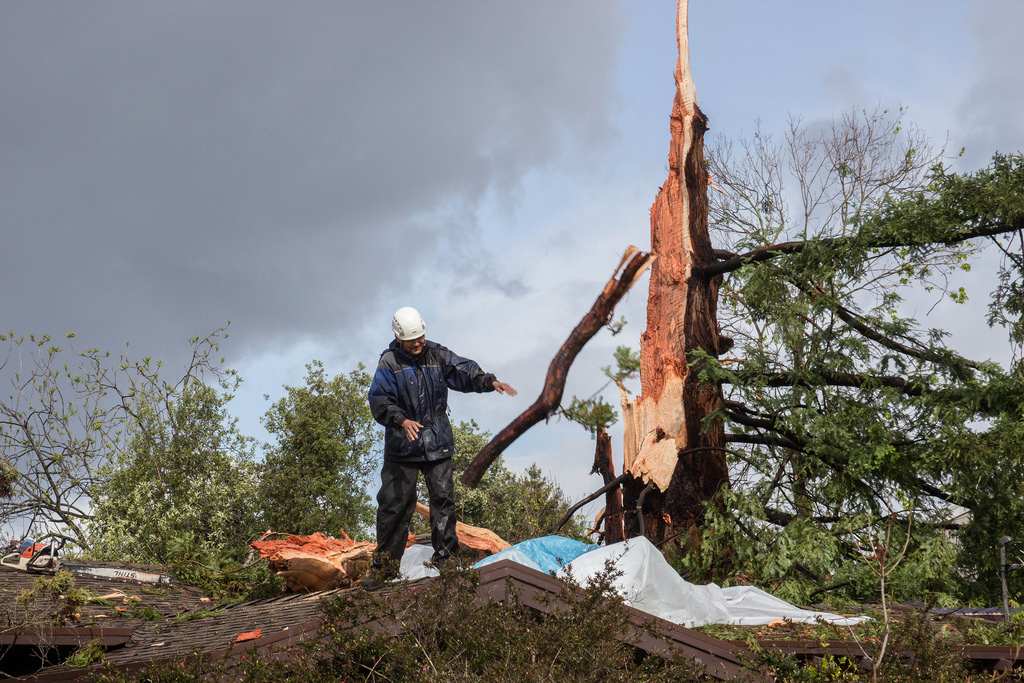
"content": "\u003cp>\u003ca href=\"http://ww2.kqed.org/news/wp-content/uploads/sites/10/2014/04/13567278745_520540aaf9_b.jpg\">\u003cimg class=\"aligncenter size-medium wp-image-131613\" src=\"http://ww2.kqed.org/news/wp-content/uploads/sites/10/2014/04/13567278745_520540aaf9_b-640x426.jpg\" alt=\"13567278745_520540aaf9_b\" width=\"640\" height=\"426\">\u003c/a>\u003cbr>\nOn Monday, \u003ca href=\"http://ww2.kqed.org/news/2014/04/01/lightning_bay_area\" target=\"_blank\">lightning struck\u003c/a> a redwood tree in Berkeley. Another bolt hit an Alaska Airlines flight operated by Horizon at Oakland International Airport. And in Sausalito, lightning hit another redwood tree, shattering windows at two homes. (Dan Brekke/KQED)\u003c/p>\n\u003cp>\u003ca href=\"http://ww2.kqed.org/news/wp-content/uploads/sites/10/2014/04/2014-03-29-13.29.07.jpg\">\u003cimg class=\"aligncenter size-medium wp-image-131609\" src=\"http://ww2.kqed.org/news/wp-content/uploads/sites/10/2014/04/2014-03-29-13.29.07-640x480.jpg\" alt=\"2014-03-29 13.29.07\" width=\"640\" height=\"480\">\u003c/a>\u003cbr>\nA fire ravaged the historic lodge at Wilbur Hot Springs on Saturday. No one was injured, but the fire did significant damage to the popular retreat in Colusa County. The fire appeared to have started in the kitchen and spread to the second floor of the wooden 1863 structure. Owners Richard and Jolee Wilbur said in \u003ca href=\"http://www.wilburhotsprings.com/index.htm\" target=\"_blank\">a note online\u003c/a> that they are hoping to reopen for day-use visits and camping soon. (Zan Rubin/KQED)\u003c/p>\n\u003cp>\u003ca href=\"http://ww2.kqed.org/news/wp-content/uploads/sites/10/2014/04/rodeo.jpg\">\u003cimg class=\"aligncenter size-medium wp-image-131591\" src=\"http://ww2.kqed.org/news/wp-content/uploads/sites/10/2014/04/rodeo-640x426.jpg\" alt=\"rodeo\" width=\"640\" height=\"426\">\u003c/a>\u003cbr>\nDeanna Trujillo-James is one of hundreds of competitors in \u003ca href=\"http://peninsulapress.com/2014/03/25/gay-competitors-rodeo/\" target=\"_blank\">gay rodeos \u003c/a>across the country. In the small towns in the Bay Area where they sometimes compete — like the mountain town of La Honda in San Mateo County — cowboys like Trujillo-James get a lot of attention. \"When we show up, people shout, 'Gay cowboys are here!' We bring in a lot of business to these small communities,\" she said. (Photo courtesy of Deanna Trujillo-James/\u003ca href=\"http://peninsulapress.com/\" target=\"_blank\">Peninsula Press\u003c/a>)\u003c/p>\n\u003cp>\u003ca href=\"http://ww2.kqed.org/news/wp-content/uploads/sites/10/2014/04/google2-e1396383999838.jpg\">\u003cimg class=\"aligncenter size-medium wp-image-131220\" src=\"http://ww2.kqed.org/news/wp-content/uploads/sites/10/2014/04/google2-640x480.jpg\" alt=\"google2\" width=\"640\" height=\"480\">\u003c/a>\u003cbr>\nOpponents of San Francisco’s tech shuttles \u003ca href=\"http://ww2.kqed.org/news/2014/04/01/google-bus-San-Francisco-Supervisors/\" target=\"_blank\">lost an environmental appeal\u003c/a> at the Board of Supervisors on Tuesday. Earlier that day, protesters delayed a Google bus in the Mission. (Zach Mack/KQED)\u003c/p>\n\u003cp>\u003ciframe src=\"http://projects1.kqed.org/rimfire/rimfiresliders.html\" frameborder=\"0\" width=\"640\" height=\"720\">\u003c/iframe>\u003cbr>\nThe \u003ca href=\"http://blogs.kqed.org/science/2014/04/02/yosemite-opens-areas-closed-after-last-summers-huge-rim-fire/\" target=\"_blank\">Rim Fire burned\u003c/a> more than a quarter-million acres last summer, including about 77,000 acres inside Yosemite National Park, leaving a stark and denuded landscape of dead trees.\u003c/p>\n\u003cp>[ad fullwidth]\u003c/p>\n\u003cp>\u003c/p>\n\u003cp>Park closures during and after the fire crippled businesses that cater to visitors from around the world. The photo above shows the same location in the Stanislaus National Forest before the fire, and about two weeks after it. Fire scientist Scott Stephens of the University of California, Berkeley, was measuring plots and taking a timber inventory with graduate students when the fire forced them to evacuate. Stephens said when he returned to the area in late September, he had to locate it using GPS, as it had changed so much he couldn’t recognize it.\u003c/p>\n\n",
"disqusIdentifier": "131590 http://ww2.kqed.org/news/?p=131590",
"disqusUrl": "https://ww2.kqed.org/news/2014/04/04/news-pix-lightning-strikes-berkeley-gay-cowboys-and-the-aftermath-of-the-rim-fire/",
"stats": {
"hasVideo": false,
"hasChartOrMap": false,
"hasAudio": false,
"hasPolis": false,
"wordCount": 355,
"hasGoogleForm": false,
"hasGallery": false,
"hasHearkenModule": false,
"iframeSrcs": [],
"paragraphCount": 8
},
"modified": 1398475531,
"excerpt": "Fires and lightning caused havoc statewide, and hundreds of cowboys turned out for a gay rodeo.",
"headData": {
"twImgId": "",
"twTitle": "",
"ogTitle": "",
"ogImgId": "",
"twDescription": "",
"description": "Fires and lightning caused havoc statewide, and hundreds of cowboys turned out for a gay rodeo.",
"title": "News Pix: Lightning Strikes Berkeley, Gay Cowboys, and the Aftermath of the Rim Fire | KQED",
"ogDescription": "",
"schema": {
"@context": "https://schema.org",
"@type": "NewsArticle",
"headline": "News Pix: Lightning Strikes Berkeley, Gay Cowboys, and the Aftermath of the Rim Fire",
"datePublished": "2014-04-04T14:02:29-07:00",
"dateModified": "2014-04-25T18:25:31-07:00",
"image": "https://cdn.kqed.org/wp-content/uploads/2020/02/KQED-OG-Image@1x.png",
"isAccessibleForFree": "True",
"publisher": {
"@type": "NewsMediaOrganization",
"@id": "https://www.kqed.org/#organization",
"name": "KQED",
"logo": "https://cdn.kqed.org/wp-content/uploads/2020/02/KQED-OG-Image@1x.png",
"url": "https://www.kqed.org",
"sameAs": [
"https://www.facebook.com/KQED",
"https://twitter.com/KQED",
"https://www.instagram.com/kqed/",
"https://www.tiktok.com/@kqedofficial",
"https://www.linkedin.com/company/kqed",
"https://www.youtube.com/channel/UCeC0IOo7i1P_61zVUWbJ4nw"
]
}
}
},
"guestAuthors": [],
"slug": "news-pix-lightning-strikes-berkeley-gay-cowboys-and-the-aftermath-of-the-rim-fire",
"status": "publish",
"customPermalink": "2014/04/03/news-pix-lightning-strikes-berkeley/",
"path": "/news/131590/news-pix-lightning-strikes-berkeley-gay-cowboys-and-the-aftermath-of-the-rim-fire",
"audioTrackLength": null,
"parsedContent": [
{
"type": "contentString",
"content": "\u003cdiv class=\"post-body\">\u003cp>\u003cp>\u003ca href=\"http://ww2.kqed.org/news/wp-content/uploads/sites/10/2014/04/13567278745_520540aaf9_b.jpg\">\u003cimg class=\"aligncenter size-medium wp-image-131613\" src=\"http://ww2.kqed.org/news/wp-content/uploads/sites/10/2014/04/13567278745_520540aaf9_b-640x426.jpg\" alt=\"13567278745_520540aaf9_b\" width=\"640\" height=\"426\">\u003c/a>\u003cbr>\nOn Monday, \u003ca href=\"http://ww2.kqed.org/news/2014/04/01/lightning_bay_area\" target=\"_blank\">lightning struck\u003c/a> a redwood tree in Berkeley. Another bolt hit an Alaska Airlines flight operated by Horizon at Oakland International Airport. And in Sausalito, lightning hit another redwood tree, shattering windows at two homes. (Dan Brekke/KQED)\u003c/p>\n\u003cp>\u003ca href=\"http://ww2.kqed.org/news/wp-content/uploads/sites/10/2014/04/2014-03-29-13.29.07.jpg\">\u003cimg class=\"aligncenter size-medium wp-image-131609\" src=\"http://ww2.kqed.org/news/wp-content/uploads/sites/10/2014/04/2014-03-29-13.29.07-640x480.jpg\" alt=\"2014-03-29 13.29.07\" width=\"640\" height=\"480\">\u003c/a>\u003cbr>\nA fire ravaged the historic lodge at Wilbur Hot Springs on Saturday. No one was injured, but the fire did significant damage to the popular retreat in Colusa County. The fire appeared to have started in the kitchen and spread to the second floor of the wooden 1863 structure. Owners Richard and Jolee Wilbur said in \u003ca href=\"http://www.wilburhotsprings.com/index.htm\" target=\"_blank\">a note online\u003c/a> that they are hoping to reopen for day-use visits and camping soon. (Zan Rubin/KQED)\u003c/p>\n\u003cp>\u003ca href=\"http://ww2.kqed.org/news/wp-content/uploads/sites/10/2014/04/rodeo.jpg\">\u003cimg class=\"aligncenter size-medium wp-image-131591\" src=\"http://ww2.kqed.org/news/wp-content/uploads/sites/10/2014/04/rodeo-640x426.jpg\" alt=\"rodeo\" width=\"640\" height=\"426\">\u003c/a>\u003cbr>\nDeanna Trujillo-James is one of hundreds of competitors in \u003ca href=\"http://peninsulapress.com/2014/03/25/gay-competitors-rodeo/\" target=\"_blank\">gay rodeos \u003c/a>across the country. In the small towns in the Bay Area where they sometimes compete — like the mountain town of La Honda in San Mateo County — cowboys like Trujillo-James get a lot of attention. \"When we show up, people shout, 'Gay cowboys are here!' We bring in a lot of business to these small communities,\" she said. (Photo courtesy of Deanna Trujillo-James/\u003ca href=\"http://peninsulapress.com/\" target=\"_blank\">Peninsula Press\u003c/a>)\u003c/p>\n\u003cp>\u003ca href=\"http://ww2.kqed.org/news/wp-content/uploads/sites/10/2014/04/google2-e1396383999838.jpg\">\u003cimg class=\"aligncenter size-medium wp-image-131220\" src=\"http://ww2.kqed.org/news/wp-content/uploads/sites/10/2014/04/google2-640x480.jpg\" alt=\"google2\" width=\"640\" height=\"480\">\u003c/a>\u003cbr>\nOpponents of San Francisco’s tech shuttles \u003ca href=\"http://ww2.kqed.org/news/2014/04/01/google-bus-San-Francisco-Supervisors/\" target=\"_blank\">lost an environmental appeal\u003c/a> at the Board of Supervisors on Tuesday. Earlier that day, protesters delayed a Google bus in the Mission. (Zach Mack/KQED)\u003c/p>\n\u003cp>\u003ciframe src=\"http://projects1.kqed.org/rimfire/rimfiresliders.html\" frameborder=\"0\" width=\"640\" height=\"720\">\u003c/iframe>\u003cbr>\nThe \u003ca href=\"http://blogs.kqed.org/science/2014/04/02/yosemite-opens-areas-closed-after-last-summers-huge-rim-fire/\" target=\"_blank\">Rim Fire burned\u003c/a> more than a quarter-million acres last summer, including about 77,000 acres inside Yosemite National Park, leaving a stark and denuded landscape of dead trees.\u003c/p>\n\u003cp>\u003c/p>\u003c/div>",
"attributes": {
"named": {},
"numeric": []
}
},
{
"type": "component",
"content": "",
"name": "ad",
"attributes": {
"named": {
"label": "fullwidth"
},
"numeric": [
"fullwidth"
]
}
},
{
"type": "contentString",
"content": "\u003cdiv class=\"post-body\">\u003cp>\u003c/p>\n\u003cp>\u003c/p>\n\u003cp>Park closures during and after the fire crippled businesses that cater to visitors from around the world. The photo above shows the same location in the Stanislaus National Forest before the fire, and about two weeks after it. Fire scientist Scott Stephens of the University of California, Berkeley, was measuring plots and taking a timber inventory with graduate students when the fire forced them to evacuate. Stephens said when he returned to the area in late September, he had to locate it using GPS, as it had changed so much he couldn’t recognize it.\u003c/p>\n\n\u003c/div>\u003c/p>",
"attributes": {
"named": {},
"numeric": []
}
}
],
"link": "/news/131590/news-pix-lightning-strikes-berkeley-gay-cowboys-and-the-aftermath-of-the-rim-fire",
"authors": [
"236"
],
"programs": [
"news_6944"
],
"categories": [
"news_19906",
"news_248",
"news_1397"
],
"tags": [
"news_212",
"news_787",
"news_6033",
"news_82",
"news_3729",
"news_881",
"news_3094",
"news_4745",
"news_38"
],
"featImg": "news_131613",
"label": "news_6944"
},
"news_130950": {
"type": "posts",
"id": "news_130950",
"meta": {
"index": "posts_1716263798",
"site": "news",
"id": "130950",
"score": null,
"sort": [
1396300648000
]
},
"guestAuthors": [],
"slug": "san-rafaels-roots-of-peace-lauds-afghan-security-guards-after-attack-on-kabul-office",
"title": "San Rafael's Roots of Peace Lauds Afghan Security Guards After Attack on Kabul Office",
"publishDate": 1396300648,
"format": "aside",
"headTitle": "San Rafael’s Roots of Peace Lauds Afghan Security Guards After Attack on Kabul Office | KQED",
"labelTerm": {
"term": 6944,
"site": "news"
},
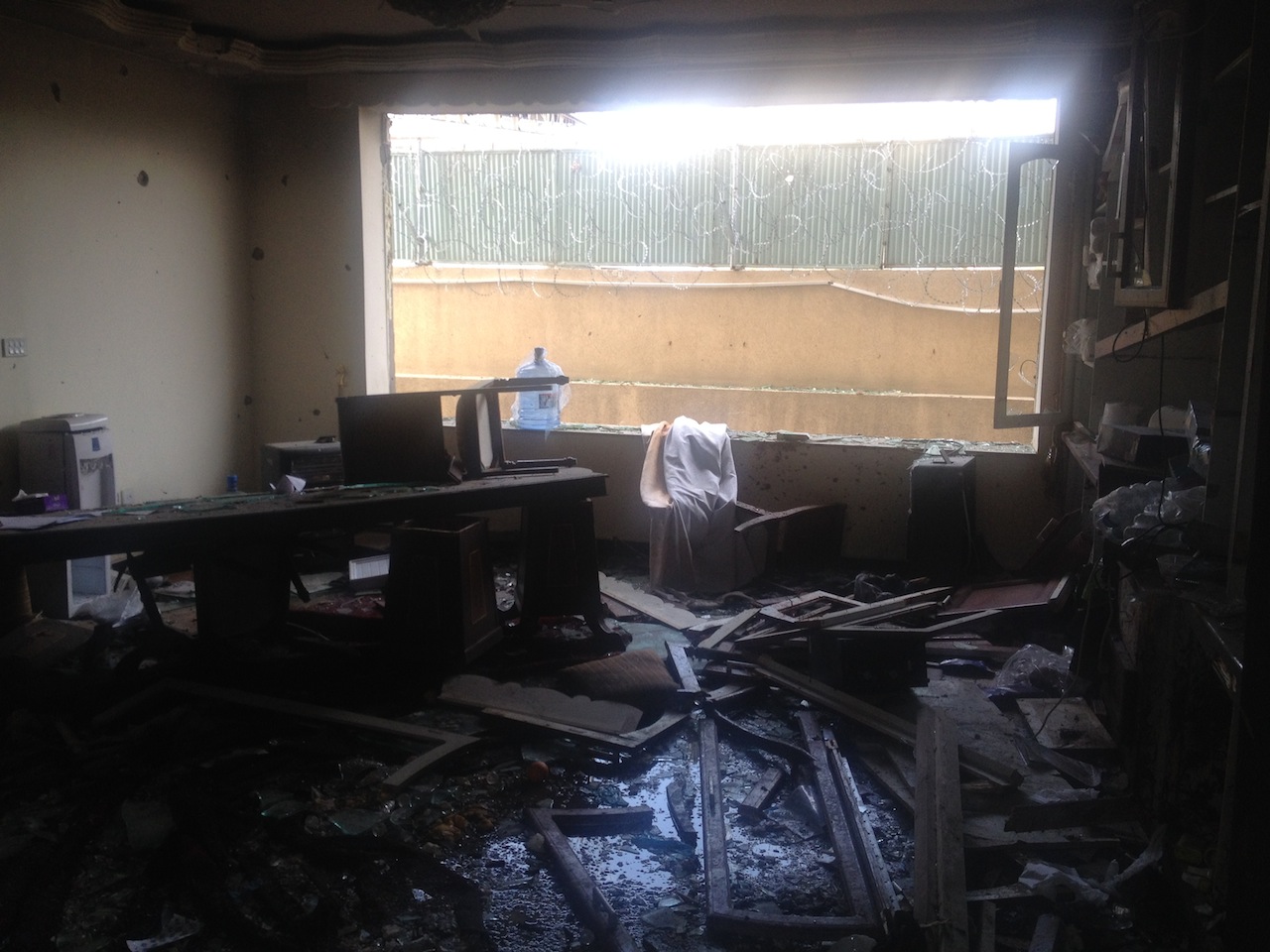
"content": "\u003cfigure id=\"attachment_130995\" class=\"wp-caption aligncenter\" style=\"max-width: 640px\">\u003ca href=\"http://ww2.kqed.org/news/wp-content/uploads/sites/10/2014/03/IMG_3788.jpg\">\u003cimg loading=\"lazy\" decoding=\"async\" class=\"size-medium wp-image-130995\" src=\"http://ww2.kqed.org/news/wp-content/uploads/sites/10/2014/03/IMG_3788-640x480.jpg\" alt=\"The Kabul office of Roots for Peace was devastated by an early-morning attack on March 28. (Photo courtesy of Heidi Kuhn)\" width=\"640\" height=\"480\">\u003c/a>\u003cfigcaption class=\"wp-caption-text\">The Kabul office of Roots for Peace was devastated by an early-morning attack on March 28. (Photo courtesy of Heidi Kuhn)\u003c/figcaption>\u003c/figure>\n\u003cp>The founder and CEO of \u003ca href=\"http://rootsofpeace.org\">Roots of Peace,\u003c/a> a San Rafael-based humanitarian nonprofit, credited its Afghan security guards and military forces with protecting the organization’s employees after its office in Kabul was inadvertently attacked by the Taliban early on the morning of March 28.\u003c/p>\n\u003cp>Heidi Kuhn said the intended target was a Christian day-care center in an adjoining building. Five Taliban insurgents died, but the Roots of Peace staff survived. The staff consists of five expatriates — two Americans, an Australian, a Malaysian and a South African.\u003c/p>\n\u003cp>Kuhn told Isabel Angell of KQED that a suicide bomber blew up the gate of the building the group shared with the child-care center. “We were hearing these shots and these screams on the other side of the world,” she said, “as we monitored this from the living room of our family home at 6 o’clock in the morning when we woke up to the cries, ‘Roots of Peace is under attack, the Taliban is here.’ ”\u003c/p>\n\u003cp>Roots of Peace is working to find a new home, Kuhn said.\u003c/p>\n\u003cp>In a statement, she said: “Afghan security guards and highly trained Afghan military forces trained by the United States and NATO forces saved the day without any casualties to our employees.\u003c/p>\n\u003cp>[ad fullwidth]\u003c/p>\n\u003cp>“During the siege, our Afghan drivers and staff actually ran \u003cem>towards\u003c/em> the building in an effort to assist the military assault against the Taliban,” Kuhn wrote. “When asked by police as to ‘why’ they were running in the wrong direction, they replied, ‘Roots of Peace has been our family for the past 10 years, we are defending our own.’ ”\u003c/p>\n\u003cp>Roots of Peace has worked in Afghanistan since 2003 and currently employs 350 Afghans working in all 34 provinces. In her statement, Kuhn estimated that the nonprofit has removed about 10 million land mines and replaced them with agricultural crops such as grapes and raisins, creating an export market.\u003c/p>\n\u003cp>Kuhn praised Sharif Osmani, the nonprofit’s country director in Afghanistan, for coordinating the security response team and operating “with professionalism amid the chaos.”\u003c/p>\n\u003cp>“We trusted the Afghans, and they clearly demonstrated their leadership,” Kuhn said.\u003c/p>\n\u003cp>A New York Times story reported that while the gun battle was taking place at Roots of Peace, police rescued two dozen foreigners, including at least five young Western children, an extremely unusual sight in Kabul these days. A 16-year-old Afghan girl, not connected to Roots of Peace, was killed in the assault.\u003c/p>\n\u003cp>“The shootout was the latest in a series of deadly attacks on foreign journalists, aid workers and visitors since January, in the midst of heavy security for the Afghan presidential election campaign,” the Times said.\u003c/p>\n\u003cp>Kuhn told KQED that, despite the attack, Roots of Peace is still committed to its mission in Afghanistan.\u003c/p>\n\u003cp>\u003c/p>\n\u003cp>The Afghan election will be held this Saturday, April 5.\u003c/p>\n\n",
"blocks": [],
"excerpt": "Five Taliban insurgents killed in assault that was aimed at Christian day-care center next door.",
"status": "publish",
"parent": 0,
"modified": 1721149963,
"stats": {
"hasAudio": false,
"hasVideo": false,
"hasChartOrMap": false,
"iframeSrcs": [],
"hasGoogleForm": false,
"hasGallery": false,
"hasHearkenModule": false,
"hasPolis": false,
"paragraphCount": 15,
"wordCount": 522
},
"headData": {
"title": "San Rafael's Roots of Peace Lauds Afghan Security Guards After Attack on Kabul Office | KQED",
"description": "Five Taliban insurgents killed in assault that was aimed at Christian day-care center next door.",
"ogTitle": "",
"ogDescription": "",
"ogImgId": "",
"twTitle": "",
"twDescription": "",
"twImgId": "",
"schema": {
"@context": "https://schema.org",
"@type": "NewsArticle",
"headline": "San Rafael's Roots of Peace Lauds Afghan Security Guards After Attack on Kabul Office",
"datePublished": "2014-03-31T14:17:28-07:00",
"dateModified": "2024-07-16T10:12:43-07:00",
"image": "https://cdn.kqed.org/wp-content/uploads/2020/02/KQED-OG-Image@1x.png",
"isAccessibleForFree": "True",
"publisher": {
"@type": "NewsMediaOrganization",
"@id": "https://www.kqed.org/#organization",
"name": "KQED",
"logo": "https://cdn.kqed.org/wp-content/uploads/2020/02/KQED-OG-Image@1x.png",
"url": "https://www.kqed.org",
"sameAs": [
"https://www.facebook.com/KQED",
"https://twitter.com/KQED",
"https://www.instagram.com/kqed/",
"https://www.tiktok.com/@kqedofficial",
"https://www.linkedin.com/company/kqed",
"https://www.youtube.com/channel/UCeC0IOo7i1P_61zVUWbJ4nw"
]
}
}
},
"sticky": false,
"customPermalink": "2014/03/31/roots-of-peace/",
"path": "/news/130950/san-rafaels-roots-of-peace-lauds-afghan-security-guards-after-attack-on-kabul-office",
"audioTrackLength": null,
"parsedContent": [
{
"type": "contentString",
"content": "\u003cdiv class=\"post-body\">\u003cp>\u003cfigure id=\"attachment_130995\" class=\"wp-caption aligncenter\" style=\"max-width: 640px\">\u003ca href=\"http://ww2.kqed.org/news/wp-content/uploads/sites/10/2014/03/IMG_3788.jpg\">\u003cimg loading=\"lazy\" decoding=\"async\" class=\"size-medium wp-image-130995\" src=\"http://ww2.kqed.org/news/wp-content/uploads/sites/10/2014/03/IMG_3788-640x480.jpg\" alt=\"The Kabul office of Roots for Peace was devastated by an early-morning attack on March 28. (Photo courtesy of Heidi Kuhn)\" width=\"640\" height=\"480\">\u003c/a>\u003cfigcaption class=\"wp-caption-text\">The Kabul office of Roots for Peace was devastated by an early-morning attack on March 28. (Photo courtesy of Heidi Kuhn)\u003c/figcaption>\u003c/figure>\n\u003cp>The founder and CEO of \u003ca href=\"http://rootsofpeace.org\">Roots of Peace,\u003c/a> a San Rafael-based humanitarian nonprofit, credited its Afghan security guards and military forces with protecting the organization’s employees after its office in Kabul was inadvertently attacked by the Taliban early on the morning of March 28.\u003c/p>\n\u003cp>Heidi Kuhn said the intended target was a Christian day-care center in an adjoining building. Five Taliban insurgents died, but the Roots of Peace staff survived. The staff consists of five expatriates — two Americans, an Australian, a Malaysian and a South African.\u003c/p>\n\u003cp>Kuhn told Isabel Angell of KQED that a suicide bomber blew up the gate of the building the group shared with the child-care center. “We were hearing these shots and these screams on the other side of the world,” she said, “as we monitored this from the living room of our family home at 6 o’clock in the morning when we woke up to the cries, ‘Roots of Peace is under attack, the Taliban is here.’ ”\u003c/p>\n\u003cp>Roots of Peace is working to find a new home, Kuhn said.\u003c/p>\n\u003cp>In a statement, she said: “Afghan security guards and highly trained Afghan military forces trained by the United States and NATO forces saved the day without any casualties to our employees.\u003c/p>\n\u003cp>\u003c/p>\u003c/div>",
"attributes": {
"named": {},
"numeric": []
}
},
{
"type": "component",
"content": "",
"name": "ad",
"attributes": {
"named": {
"label": "fullwidth"
},
"numeric": [
"fullwidth"
]
}
},
{
"type": "contentString",
"content": "\u003cdiv class=\"post-body\">\u003cp>\u003c/p>\n\u003cp>“During the siege, our Afghan drivers and staff actually ran \u003cem>towards\u003c/em> the building in an effort to assist the military assault against the Taliban,” Kuhn wrote. “When asked by police as to ‘why’ they were running in the wrong direction, they replied, ‘Roots of Peace has been our family for the past 10 years, we are defending our own.’ ”\u003c/p>\n\u003cp>Roots of Peace has worked in Afghanistan since 2003 and currently employs 350 Afghans working in all 34 provinces. In her statement, Kuhn estimated that the nonprofit has removed about 10 million land mines and replaced them with agricultural crops such as grapes and raisins, creating an export market.\u003c/p>\n\u003cp>Kuhn praised Sharif Osmani, the nonprofit’s country director in Afghanistan, for coordinating the security response team and operating “with professionalism amid the chaos.”\u003c/p>\n\u003cp>“We trusted the Afghans, and they clearly demonstrated their leadership,” Kuhn said.\u003c/p>\n\u003cp>A New York Times story reported that while the gun battle was taking place at Roots of Peace, police rescued two dozen foreigners, including at least five young Western children, an extremely unusual sight in Kabul these days. A 16-year-old Afghan girl, not connected to Roots of Peace, was killed in the assault.\u003c/p>\n\u003cp>“The shootout was the latest in a series of deadly attacks on foreign journalists, aid workers and visitors since January, in the midst of heavy security for the Afghan presidential election campaign,” the Times said.\u003c/p>\n\u003cp>Kuhn told KQED that, despite the attack, Roots of Peace is still committed to its mission in Afghanistan.\u003c/p>\n\u003cp>\u003c/p>\n\u003cp>The Afghan election will be held this Saturday, April 5.\u003c/p>\n\n\u003c/div>\u003c/p>",
"attributes": {
"named": {},
"numeric": []
}
}
],
"link": "/news/130950/san-rafaels-roots-of-peace-lauds-afghan-security-guards-after-attack-on-kabul-office",
"authors": [
"247"
],
"programs": [
"news_6944"
],
"categories": [
"news_8"
],
"tags": [
"news_686",
"news_740",
"news_3729",
"news_6061",
"news_6063"
],
"featImg": "news_130995",
"label": "news_6944"
},
"news_129418": {
"type": "posts",
"id": "news_129418",
"meta": {
"index": "posts_1716263798",
"site": "news",
"id": "129418",
"score": null,
"sort": [
1394825528000
]
},
"parent": 0,
"labelTerm": {
"site": "news",
"term": 6944
},
"blocks": [],
"publishDate": 1394825528,
"format": "aside",
"disqusTitle": "News Pix: Mission Bay Fire, Fighting For Rare Redwood and Cat Cafe Debut",
"title": "News Pix: Mission Bay Fire, Fighting For Rare Redwood and Cat Cafe Debut",
"headTitle": "News Fix | KQED News",
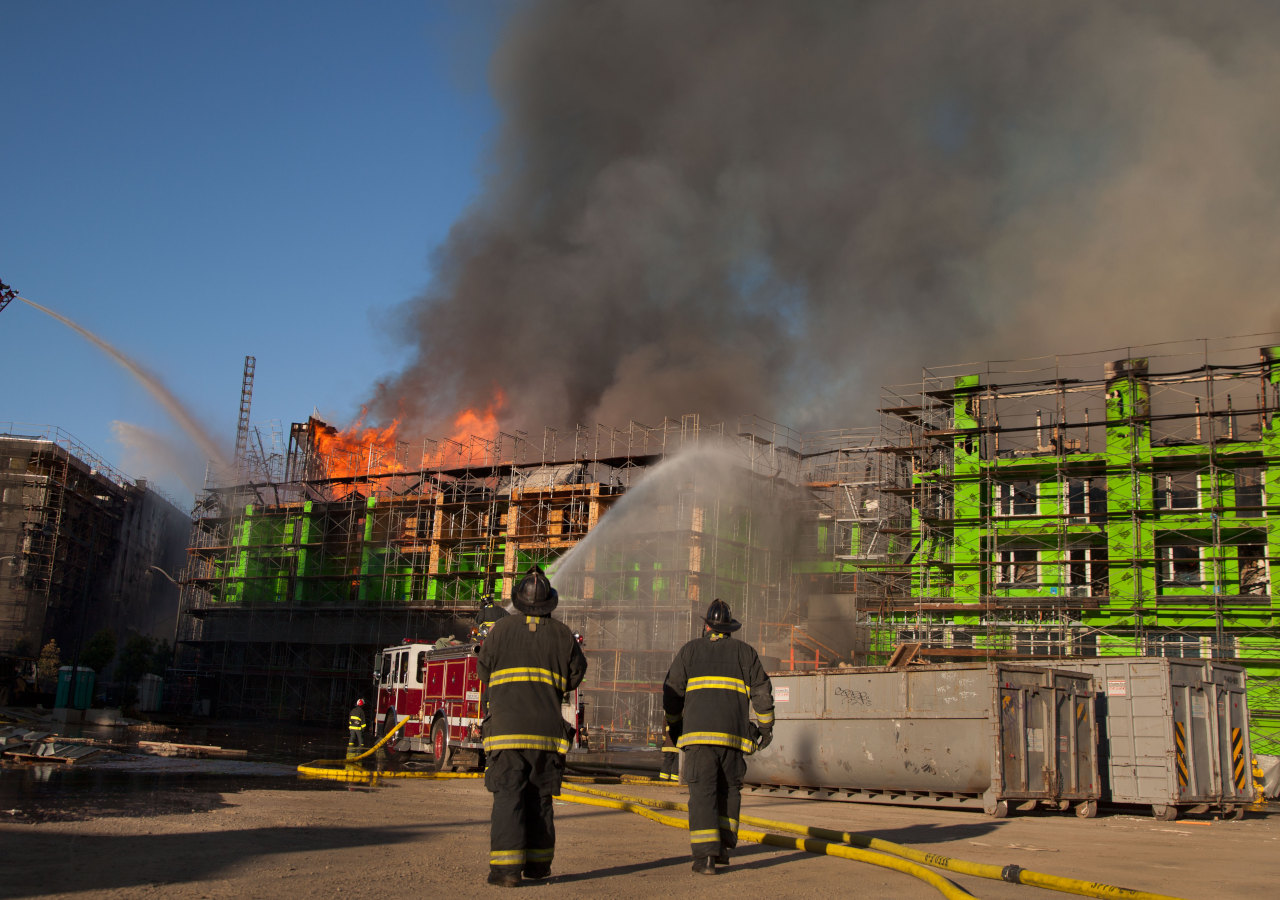
"content": "\u003cp>\u003ca href=\"http://ww2.kqed.org/news/wp-content/uploads/sites/10/2014/03/missionbayfire.jpg\">\u003cimg class=\"aligncenter size-medium wp-image-129427\" src=\"http://ww2.kqed.org/news/wp-content/uploads/sites/10/2014/03/missionbayfire-640x450.jpg\" alt=\"missionbayfire\" width=\"640\" height=\"450\">\u003c/a>\u003cbr>\nA \u003ca href=\"http://ww2.kqed.org/news/2014/03/11/4-alarm-fire-san-francisco/\" target=\"_blank\">five-alarm fire at Mission Bay\u003c/a> destroyed a 172-unit apartment building under construction on Tuesday, March 11. Arson investigators are still searching for the cause of the fire. The burnt building is located on the west side of Fourth Street between Mission Rock and China Basin streets. At the height of the fire Tuesday evening, half of the roughly 320 firefighters on duty in the city were fighting the blaze. (Mark Andrew Boyer/KQED)\u003c/p>\n\u003cp>\u003ca href=\"http://ww2.kqed.org/news/wp-content/uploads/sites/10/2014/03/missionbayfire2.jpg\">\u003cimg class=\"aligncenter size-medium wp-image-129434\" src=\"http://ww2.kqed.org/news/wp-content/uploads/sites/10/2014/03/missionbayfire2-449x640.jpg\" alt=\"missionbayfire2\" width=\"449\" height=\"640\">\u003c/a>\u003cbr>\nThe Fire Department reports \u003ca href=\"http://ww2.kqed.org/news/2014/03/11/4-alarm-fire-san-francisco/\" target=\"_blank\">two injuries in the blaze\u003c/a>: a firefighter, one of the first on the scene, who suffered first- and second-degree burns to the face and hands, and a battalion chief who sprained an ankle. A 190-unit apartment building directly across Fourth Street from the fire remained evacuated Wednesday morning. Searing heat from the fire blew out windows in 30 units facing the blaze, triggering sprinklers. (Charla Bear/KQED)\u003c/p>\n\u003cp>\u003ca href=\"http://ww2.kqed.org/news/wp-content/uploads/sites/10/2014/03/CCSFskirmish2.jpg\">\u003cimg class=\"aligncenter size-medium wp-image-129428\" src=\"http://ww2.kqed.org/news/wp-content/uploads/sites/10/2014/03/CCSFskirmish2-640x450.jpg\" alt=\"CCSFskirmish2\" width=\"640\" height=\"450\">\u003c/a>\u003cbr>\nAbout 200 students and teachers with the Save CCSF Coalition rallied Thursday, March 13, at the Community College of San Francisco main campus \u003ca href=\"http://ww2.kqed.org/news/2014/03/13/ccsf-protest-violent\" target=\"_blank\">demanding the resignation of Special Trustee Robert Agrella\u003c/a>, the reinstatement of City College’s elected board of trustees, and an end to a new payment policy requiring class fees to be paid upfront, at the beginning of the semester. The protest turned violent when students tried to enter the building, resulting in two arrests. (Alex Emslie/KQED)\u003c/p>\n\u003cp>\u003ca href=\"http://ww2.kqed.org/news/wp-content/uploads/sites/10/2014/03/CCSFskirmish.jpg\">\u003cimg class=\"aligncenter size-medium wp-image-129429\" src=\"http://ww2.kqed.org/news/wp-content/uploads/sites/10/2014/03/CCSFskirmish-640x450.jpg\" alt=\"CCSFskirmish\" width=\"640\" height=\"450\">\u003c/a>\u003cbr>\nCity College student Otto Pippenger was detained by San Francisco Police Department officers outside an administration building. \u003ca href=\"http://ww2.kqed.org/news/2014/03/13/ccsf-protest-violent\" target=\"_blank\">Students and teachers protesting\u003c/a> decisions by Special Trustee Robert Agrella were stopped by campus and San Francisco police from entering the college's administration building on Thursday, March 13. (Alex Emslie/KQED)\u003c/p>\n\u003cp>\u003ca href=\"http://ww2.kqed.org/news/wp-content/uploads/sites/10/2014/03/CotatiRedwood.jpg\">\u003cimg class=\"aligncenter size-medium wp-image-129430\" src=\"http://ww2.kqed.org/news/wp-content/uploads/sites/10/2014/03/CotatiRedwood-640x450.jpg\" alt=\"CotatiRedwood\" width=\"640\" height=\"450\">\u003c/a>\u003cbr>\nSonoma-Marin Area Rail Transit announced Thursday, March 13 that it's delaying its planned removal of a \u003ca href=\"http://ww2.kqed.org/news/2014/03/14/rare-redwood-threatened-with-removal-in-cotati/\" target=\"_blank\">super-rare chimera albino coast redwood in Cotati\u003c/a>, pending additional expert analysis of the tree and study of alternatives to destroying it. The tree is located within the railroad right-of-way at East Cotati Avenue. The redwood in question is extraordinarily unusual on two accounts: It’s both albino and a chimera. The albino part of that description means, among other things, that its needles lack chlorophyll to give them their typical green appearance. Local historians and arborists have been raising awareness of the local treasure. (Mark Andrew Boyer/KQED)\u003c/p>\n\u003cp>[ad fullwidth]\u003c/p>\n\u003cp>\u003ca href=\"http://ww2.kqed.org/news/wp-content/uploads/sites/10/2014/03/wind2.jpg\">\u003cimg class=\"aligncenter size-medium wp-image-129432\" src=\"http://ww2.kqed.org/news/wp-content/uploads/sites/10/2014/03/wind2-640x450.jpg\" alt=\"wind2\" width=\"640\" height=\"450\">\u003c/a>\u003cbr>\n\u003ca href=\"http://www.berkeleyside.com/2014/03/11/high-winds-in-berkeley-loose-limbs-wires/\" target=\"_blank\">High winds in Berkeley\u003c/a> created hazardous situations into the night Tuesday, March 11. Power lines in various locations were reported to be blowing around, with at least one down altogether. (Pete Rosos/\u003ca href=\"http://www.berkeleyside.com/\" target=\"_blank\">Berkeleyside\u003c/a>)\u003c/p>\n\u003cp>\u003ca href=\"http://ww2.kqed.org/news/wp-content/uploads/sites/10/2014/03/catecafe2.jpg\">\u003cimg class=\"aligncenter size-medium wp-image-129431\" src=\"http://ww2.kqed.org/news/wp-content/uploads/sites/10/2014/03/catecafe2-640x450.jpg\" alt=\"catecafe2\" width=\"640\" height=\"450\">\u003c/a>\u003cbr>\nAfter more than a decade of success in Asian countries, particularly Japan, the adorable phenomenon of \u003ca href=\"http://ww2.kqed.org/news/2014/03/11/cat-cafes-san-francisco-oakland/\" target=\"_blank\">cat cafes\u003c/a>, where patrons can enjoy coffee and a snack while watching frolicking kittens, is finally coming to the United States. The Bay Area's first cat cafe is likely to be either Oakland’s Cat Town Cafe or San Francisco’s KitTea — both of which are closing in on locations and should open by the end of the year, according to their organizers. Both are affiliated with rescue organizations, and both have used crowd funding to cover a substantial part of their startup costs. (Courtesy of: Adam Myatt)\u003c/p>\n\u003cp>\u003c/p>\n\u003cp>\u003ca href=\"http://ww2.kqed.org/news/wp-content/uploads/sites/10/2014/03/goats.jpg\">\u003cimg class=\"aligncenter size-medium wp-image-129448\" src=\"http://ww2.kqed.org/news/wp-content/uploads/sites/10/2014/03/goats-640x449.jpg\" alt=\"goats\" width=\"640\" height=\"449\">\u003c/a>\u003cbr>\nSan Francisco company City Grazing has goats for hire that will come and clear unwanted brush and plant life from backyards and public spaces. The herd recently grew with the birth of 49 kids. The company now keeps about 100 goats at a rail yard in Bayview. This Sunday, City Grazing is welcoming the public to visit the baby goats from 12-4 p.m. at 100 Cargo Way. (Olivia Allen-Price/KQED)\u003c/p>\n\n",
"disqusIdentifier": "129418 http://ww2.kqed.org/news/?p=129418",
"disqusUrl": "https://ww2.kqed.org/news/2014/03/14/news-pix-mission-bay-fire-fighting-for-rare-redwood-and-cat-cafe-debut/",
"stats": {
"hasVideo": false,
"hasChartOrMap": false,
"hasAudio": false,
"hasPolis": false,
"wordCount": 605,
"hasGoogleForm": false,
"hasGallery": false,
"hasHearkenModule": false,
"iframeSrcs": [],
"paragraphCount": 10
},
"modified": 1399488728,
"excerpt": "The week's news in photos from around the Bay.",
"headData": {
"twImgId": "",
"twTitle": "",
"ogTitle": "",
"ogImgId": "",
"twDescription": "",
"description": "The week's news in photos from around the Bay.",
"title": "News Pix: Mission Bay Fire, Fighting For Rare Redwood and Cat Cafe Debut | KQED",
"ogDescription": "",
"schema": {
"@context": "https://schema.org",
"@type": "NewsArticle",
"headline": "News Pix: Mission Bay Fire, Fighting For Rare Redwood and Cat Cafe Debut",
"datePublished": "2014-03-14T12:32:08-07:00",
"dateModified": "2014-05-07T11:52:08-07:00",
"image": "https://cdn.kqed.org/wp-content/uploads/2020/02/KQED-OG-Image@1x.png",
"isAccessibleForFree": "True",
"publisher": {
"@type": "NewsMediaOrganization",
"@id": "https://www.kqed.org/#organization",
"name": "KQED",
"logo": "https://cdn.kqed.org/wp-content/uploads/2020/02/KQED-OG-Image@1x.png",
"url": "https://www.kqed.org",
"sameAs": [
"https://www.facebook.com/KQED",
"https://twitter.com/KQED",
"https://www.instagram.com/kqed/",
"https://www.tiktok.com/@kqedofficial",
"https://www.linkedin.com/company/kqed",
"https://www.youtube.com/channel/UCeC0IOo7i1P_61zVUWbJ4nw"
]
}
}
},
"guestAuthors": [],
"slug": "news-pix-mission-bay-fire-fighting-for-rare-redwood-and-cat-cafe-debut",
"status": "publish",
"customPermalink": "2014/03/14/news-pix-huge-mission-bay-fire-activists-fight-for-rare-redwood-and-cat-cafes-come-to-bay-area/",
"path": "/news/129418/news-pix-mission-bay-fire-fighting-for-rare-redwood-and-cat-cafe-debut",
"audioTrackLength": null,
"parsedContent": [
{
"type": "contentString",
"content": "\u003cdiv class=\"post-body\">\u003cp>\u003cp>\u003ca href=\"http://ww2.kqed.org/news/wp-content/uploads/sites/10/2014/03/missionbayfire.jpg\">\u003cimg class=\"aligncenter size-medium wp-image-129427\" src=\"http://ww2.kqed.org/news/wp-content/uploads/sites/10/2014/03/missionbayfire-640x450.jpg\" alt=\"missionbayfire\" width=\"640\" height=\"450\">\u003c/a>\u003cbr>\nA \u003ca href=\"http://ww2.kqed.org/news/2014/03/11/4-alarm-fire-san-francisco/\" target=\"_blank\">five-alarm fire at Mission Bay\u003c/a> destroyed a 172-unit apartment building under construction on Tuesday, March 11. Arson investigators are still searching for the cause of the fire. The burnt building is located on the west side of Fourth Street between Mission Rock and China Basin streets. At the height of the fire Tuesday evening, half of the roughly 320 firefighters on duty in the city were fighting the blaze. (Mark Andrew Boyer/KQED)\u003c/p>\n\u003cp>\u003ca href=\"http://ww2.kqed.org/news/wp-content/uploads/sites/10/2014/03/missionbayfire2.jpg\">\u003cimg class=\"aligncenter size-medium wp-image-129434\" src=\"http://ww2.kqed.org/news/wp-content/uploads/sites/10/2014/03/missionbayfire2-449x640.jpg\" alt=\"missionbayfire2\" width=\"449\" height=\"640\">\u003c/a>\u003cbr>\nThe Fire Department reports \u003ca href=\"http://ww2.kqed.org/news/2014/03/11/4-alarm-fire-san-francisco/\" target=\"_blank\">two injuries in the blaze\u003c/a>: a firefighter, one of the first on the scene, who suffered first- and second-degree burns to the face and hands, and a battalion chief who sprained an ankle. A 190-unit apartment building directly across Fourth Street from the fire remained evacuated Wednesday morning. Searing heat from the fire blew out windows in 30 units facing the blaze, triggering sprinklers. (Charla Bear/KQED)\u003c/p>\n\u003cp>\u003ca href=\"http://ww2.kqed.org/news/wp-content/uploads/sites/10/2014/03/CCSFskirmish2.jpg\">\u003cimg class=\"aligncenter size-medium wp-image-129428\" src=\"http://ww2.kqed.org/news/wp-content/uploads/sites/10/2014/03/CCSFskirmish2-640x450.jpg\" alt=\"CCSFskirmish2\" width=\"640\" height=\"450\">\u003c/a>\u003cbr>\nAbout 200 students and teachers with the Save CCSF Coalition rallied Thursday, March 13, at the Community College of San Francisco main campus \u003ca href=\"http://ww2.kqed.org/news/2014/03/13/ccsf-protest-violent\" target=\"_blank\">demanding the resignation of Special Trustee Robert Agrella\u003c/a>, the reinstatement of City College’s elected board of trustees, and an end to a new payment policy requiring class fees to be paid upfront, at the beginning of the semester. The protest turned violent when students tried to enter the building, resulting in two arrests. (Alex Emslie/KQED)\u003c/p>\n\u003cp>\u003ca href=\"http://ww2.kqed.org/news/wp-content/uploads/sites/10/2014/03/CCSFskirmish.jpg\">\u003cimg class=\"aligncenter size-medium wp-image-129429\" src=\"http://ww2.kqed.org/news/wp-content/uploads/sites/10/2014/03/CCSFskirmish-640x450.jpg\" alt=\"CCSFskirmish\" width=\"640\" height=\"450\">\u003c/a>\u003cbr>\nCity College student Otto Pippenger was detained by San Francisco Police Department officers outside an administration building. \u003ca href=\"http://ww2.kqed.org/news/2014/03/13/ccsf-protest-violent\" target=\"_blank\">Students and teachers protesting\u003c/a> decisions by Special Trustee Robert Agrella were stopped by campus and San Francisco police from entering the college's administration building on Thursday, March 13. (Alex Emslie/KQED)\u003c/p>\n\u003cp>\u003ca href=\"http://ww2.kqed.org/news/wp-content/uploads/sites/10/2014/03/CotatiRedwood.jpg\">\u003cimg class=\"aligncenter size-medium wp-image-129430\" src=\"http://ww2.kqed.org/news/wp-content/uploads/sites/10/2014/03/CotatiRedwood-640x450.jpg\" alt=\"CotatiRedwood\" width=\"640\" height=\"450\">\u003c/a>\u003cbr>\nSonoma-Marin Area Rail Transit announced Thursday, March 13 that it's delaying its planned removal of a \u003ca href=\"http://ww2.kqed.org/news/2014/03/14/rare-redwood-threatened-with-removal-in-cotati/\" target=\"_blank\">super-rare chimera albino coast redwood in Cotati\u003c/a>, pending additional expert analysis of the tree and study of alternatives to destroying it. The tree is located within the railroad right-of-way at East Cotati Avenue. The redwood in question is extraordinarily unusual on two accounts: It’s both albino and a chimera. The albino part of that description means, among other things, that its needles lack chlorophyll to give them their typical green appearance. Local historians and arborists have been raising awareness of the local treasure. (Mark Andrew Boyer/KQED)\u003c/p>\n\u003cp>\u003c/p>\u003c/div>",
"attributes": {
"named": {},
"numeric": []
}
},
{
"type": "component",
"content": "",
"name": "ad",
"attributes": {
"named": {
"label": "fullwidth"
},
"numeric": [
"fullwidth"
]
}
},
{
"type": "contentString",
"content": "\u003cdiv class=\"post-body\">\u003cp>\u003c/p>\n\u003cp>\u003ca href=\"http://ww2.kqed.org/news/wp-content/uploads/sites/10/2014/03/wind2.jpg\">\u003cimg class=\"aligncenter size-medium wp-image-129432\" src=\"http://ww2.kqed.org/news/wp-content/uploads/sites/10/2014/03/wind2-640x450.jpg\" alt=\"wind2\" width=\"640\" height=\"450\">\u003c/a>\u003cbr>\n\u003ca href=\"http://www.berkeleyside.com/2014/03/11/high-winds-in-berkeley-loose-limbs-wires/\" target=\"_blank\">High winds in Berkeley\u003c/a> created hazardous situations into the night Tuesday, March 11. Power lines in various locations were reported to be blowing around, with at least one down altogether. (Pete Rosos/\u003ca href=\"http://www.berkeleyside.com/\" target=\"_blank\">Berkeleyside\u003c/a>)\u003c/p>\n\u003cp>\u003ca href=\"http://ww2.kqed.org/news/wp-content/uploads/sites/10/2014/03/catecafe2.jpg\">\u003cimg class=\"aligncenter size-medium wp-image-129431\" src=\"http://ww2.kqed.org/news/wp-content/uploads/sites/10/2014/03/catecafe2-640x450.jpg\" alt=\"catecafe2\" width=\"640\" height=\"450\">\u003c/a>\u003cbr>\nAfter more than a decade of success in Asian countries, particularly Japan, the adorable phenomenon of \u003ca href=\"http://ww2.kqed.org/news/2014/03/11/cat-cafes-san-francisco-oakland/\" target=\"_blank\">cat cafes\u003c/a>, where patrons can enjoy coffee and a snack while watching frolicking kittens, is finally coming to the United States. The Bay Area's first cat cafe is likely to be either Oakland’s Cat Town Cafe or San Francisco’s KitTea — both of which are closing in on locations and should open by the end of the year, according to their organizers. Both are affiliated with rescue organizations, and both have used crowd funding to cover a substantial part of their startup costs. (Courtesy of: Adam Myatt)\u003c/p>\n\u003cp>\u003c/p>\n\u003cp>\u003ca href=\"http://ww2.kqed.org/news/wp-content/uploads/sites/10/2014/03/goats.jpg\">\u003cimg class=\"aligncenter size-medium wp-image-129448\" src=\"http://ww2.kqed.org/news/wp-content/uploads/sites/10/2014/03/goats-640x449.jpg\" alt=\"goats\" width=\"640\" height=\"449\">\u003c/a>\u003cbr>\nSan Francisco company City Grazing has goats for hire that will come and clear unwanted brush and plant life from backyards and public spaces. The herd recently grew with the birth of 49 kids. The company now keeps about 100 goats at a rail yard in Bayview. This Sunday, City Grazing is welcoming the public to visit the baby goats from 12-4 p.m. at 100 Cargo Way. (Olivia Allen-Price/KQED)\u003c/p>\n\n\u003c/div>\u003c/p>",
"attributes": {
"named": {},
"numeric": []
}
}
],
"link": "/news/129418/news-pix-mission-bay-fire-fighting-for-rare-redwood-and-cat-cafe-debut",
"authors": [
"234"
],
"programs": [
"news_6944"
],
"categories": [
"news_1758",
"news_19906"
],
"tags": [
"news_212",
"news_787",
"news_3729",
"news_3094",
"news_38"
],
"featImg": "news_129427",
"label": "news_6944"
},
"news_128548": {
"type": "posts",
"id": "news_128548",
"meta": {
"index": "posts_1716263798",
"site": "news",
"id": "128548",
"score": null,
"sort": [
1394294407000
]
},
"parent": 0,
"labelTerm": {
"site": "news",
"term": 6944
},
"blocks": [],
"publishDate": 1394294407,
"format": "aside",
"disqusTitle": "Marin County Reservoirs in the Drought of 2014 -- A Video Essay",
"title": "Marin County Reservoirs in the Drought of 2014 -- A Video Essay",
"headTitle": "News Fix | KQED News",
"content": "\u003cfigure id=\"attachment_128560\" class=\"wp-caption alignnone\" style=\"max-width: 640px\">\u003ca href=\"http://ww2.kqed.org/news/wp-content/uploads/sites/10/2014/03/kent-lake-3.gif\">\u003cimg class=\"size-full wp-image-128560\" src=\"http://ww2.kqed.org/news/wp-content/uploads/sites/10/2014/03/kent-lake-3.gif\" alt=\"A small trickle of water flows from a pipe into the mostly dry spillway below Kent Lake (Mark Andrew Boyer / KQED)\" width=\"640\" height=\"360\">\u003c/a>\u003cfigcaption class=\"wp-caption-text\">A small trickle of water flows from a pipe into the mostly dry spillway below Kent Lake. (Mark Andrew Boyer/KQED)\u003c/figcaption>\u003c/figure>\n\u003cp>\u003cspan style=\"font-size: 4.6875em;float: left;line-height: 0.733em;padding: 0.05em 0.1em 0 0;font-family: times, serif, georgia\">A\u003c/span>s we said \u003ca href=\"http://ww2.kqed.org/news/2014/03/04/now-its-time-for-the-other-kind-of-california-drought/\" target=\"_blank\">earlier this week\u003c/a>, California's drought has entered the \"what drought?\" phase. After a few weeks of rain, much of the Bay Area looks like it might during any other winter, never mind that we just came through the driest 13 months since people began keeping precipitation records in this part of the world. The crisis everyone says we're in — to some extent it just doesn't look or feel real.\u003c/p>\n\u003cp>Take the Marin Municipal Water District as an example. At the beginning of February, its seven reservoirs were, collectively, just half-full. In the last five weeks, about two feet of rain has fallen at the district's Lake Lagunitas. Reservoir levels have risen to 74 percent of capacity. The district \u003ca href=\"http://www.marinwater.org/318/Drought-Information\" target=\"_blank\">now says\u003c/a> it believes it can make it through to next winter without mandatory rationing. And with reservoirs still well below average and the end of the rainy season approaching, the district cautions customers they're not out of the drought \"danger zone\" yet.\u003c/p>\n\u003cp>KQED News photographer Mark Andrew Boyer visited two of the district's biggest reservoirs, Kent Lake and Nicasio Reservoir, this week and brought back these brief video portraits of conditions there. \u003c/p>\n\u003cfigure id=\"attachment_128561\" class=\"wp-caption alignnone\" style=\"max-width: 640px\">\u003ca href=\"http://ww2.kqed.org/news/wp-content/uploads/sites/10/2014/03/kent-lake-4.gif\">\u003cimg class=\"size-full wp-image-128561\" src=\"http://ww2.kqed.org/news/wp-content/uploads/sites/10/2014/03/kent-lake-4.gif\" alt=\"Plants blow in the wind above Kent Lake (Mark Andrew Boyer / KQED)\" width=\"640\" height=\"360\">\u003c/a>\u003cfigcaption class=\"wp-caption-text\">Plants blow in the wind above Kent Lake. (Mark Andrew Boyer/KQED)\u003c/figcaption>\u003c/figure>\n\u003cfigure id=\"attachment_128558\" class=\"wp-caption alignnone\" style=\"max-width: 640px\">\u003ca href=\"http://ww2.kqed.org/news/wp-content/uploads/sites/10/2014/03/kent-lake-2.gif\">\u003cimg class=\"size-full wp-image-128558\" src=\"http://ww2.kqed.org/news/wp-content/uploads/sites/10/2014/03/kent-lake-2.gif\" alt=\"Water trickles from a pipe leading to Kent Lake (Mark Andrew Boyer / KQED)\" width=\"640\" height=\"360\">\u003c/a>\u003cfigcaption class=\"wp-caption-text\">Water trickles from a pipe leading to Kent Lake. (Mark Andrew Boyer/KQED)\u003c/figcaption>\u003c/figure>\n\u003cfigure id=\"attachment_128555\" class=\"wp-caption alignnone\" style=\"max-width: 640px\">\u003ca href=\"http://ww2.kqed.org/news/wp-content/uploads/sites/10/2014/03/kent-lake-1.gif\">\u003cimg class=\"size-full wp-image-128555\" src=\"http://ww2.kqed.org/news/wp-content/uploads/sites/10/2014/03/kent-lake-1.gif\" alt=\"A steady cascade of water is released below Peters Dam (Mark Andrew Boyer / KQED)\" width=\"640\" height=\"360\">\u003c/a>\u003cfigcaption class=\"wp-caption-text\">A steady cascade of water is released below Peters Dam. (Mark Andrew Boyer/KQED)\u003c/figcaption>\u003c/figure>\n\u003cfigure id=\"attachment_128562\" class=\"wp-caption alignnone\" style=\"max-width: 640px\">\u003ca href=\"http://ww2.kqed.org/news/wp-content/uploads/sites/10/2014/03/Nicasio-lake-1.gif\">\u003cimg class=\"size-full wp-image-128562\" src=\"http://ww2.kqed.org/news/wp-content/uploads/sites/10/2014/03/Nicasio-lake-1.gif\" alt=\"Rain clouds collect over Nicasio Reservoir (Mark Andrew Boyer / KQED)\" width=\"640\" height=\"360\">\u003c/a>\u003cfigcaption class=\"wp-caption-text\">Rain clouds collect over Nicasio Reservoir. (Mark Andrew Boyer/KQED)\u003c/figcaption>\u003c/figure>\n\u003cfigure id=\"attachment_128566\" class=\"wp-caption alignnone\" style=\"max-width: 640px\">\u003ca href=\"http://ww2.kqed.org/news/wp-content/uploads/sites/10/2014/03/nicasio-lake4.gif\">\u003cimg class=\"size-full wp-image-128566\" src=\"http://ww2.kqed.org/news/wp-content/uploads/sites/10/2014/03/nicasio-lake4.gif\" alt=\"Water laps on the northwest shore of Nicasio Reservoir (Mark Andrew Boyer / KQED)\" width=\"640\" height=\"360\">\u003c/a>\u003cfigcaption class=\"wp-caption-text\">Water laps on the northwest shore of Nicasio Reservoir. (Mark Andrew Boyer/KQED)\u003c/figcaption>\u003c/figure>\n\u003cp>[ad fullwidth]\u003c/p>\u003cp>\u003c/p>\n",
"disqusIdentifier": "128548 http://ww2.kqed.org/news/?p=128548",
"disqusUrl": "https://ww2.kqed.org/news/2014/03/08/marin-county-reservoirs-in-the-drought-of-2014-a-video-essay/",
"stats": {
"hasVideo": false,
"hasChartOrMap": false,
"hasAudio": false,
"hasPolis": false,
"wordCount": 287,
"hasGoogleForm": false,
"hasGallery": false,
"hasHearkenModule": false,
"iframeSrcs": [],
"paragraphCount": 5
},
"modified": 1394242330,
"excerpt": "After weeks of rain, Marin County reservoirs have a magical feel to them even as the drought continues. ",
"headData": {
"twImgId": "",
"twTitle": "",
"ogTitle": "",
"ogImgId": "",
"twDescription": "",
"description": "After weeks of rain, Marin County reservoirs have a magical feel to them even as the drought continues. ",
"title": "Marin County Reservoirs in the Drought of 2014 -- A Video Essay | KQED",
"ogDescription": "",
"schema": {
"@context": "https://schema.org",
"@type": "NewsArticle",
"headline": "Marin County Reservoirs in the Drought of 2014 -- A Video Essay",
"datePublished": "2014-03-08T08:00:07-08:00",
"dateModified": "2014-03-07T17:32:10-08:00",
"image": "https://cdn.kqed.org/wp-content/uploads/2020/02/KQED-OG-Image@1x.png",
"isAccessibleForFree": "True",
"publisher": {
"@type": "NewsMediaOrganization",
"@id": "https://www.kqed.org/#organization",
"name": "KQED",
"logo": "https://cdn.kqed.org/wp-content/uploads/2020/02/KQED-OG-Image@1x.png",
"url": "https://www.kqed.org",
"sameAs": [
"https://www.facebook.com/KQED",
"https://twitter.com/KQED",
"https://www.instagram.com/kqed/",
"https://www.tiktok.com/@kqedofficial",
"https://www.linkedin.com/company/kqed",
"https://www.youtube.com/channel/UCeC0IOo7i1P_61zVUWbJ4nw"
]
}
}
},
"guestAuthors": [],
"slug": "marin-county-reservoirs-in-the-drought-of-2014-a-video-essay",
"status": "publish",
"customPermalink": "2014/03/08/marin-county-reservoirs-drought-watch-2014/",
"path": "/news/128548/marin-county-reservoirs-in-the-drought-of-2014-a-video-essay",
"audioTrackLength": null,
"parsedContent": [
{
"type": "contentString",
"content": "\u003cdiv class=\"post-body\">\u003cp>\u003cfigure id=\"attachment_128560\" class=\"wp-caption alignnone\" style=\"max-width: 640px\">\u003ca href=\"http://ww2.kqed.org/news/wp-content/uploads/sites/10/2014/03/kent-lake-3.gif\">\u003cimg class=\"size-full wp-image-128560\" src=\"http://ww2.kqed.org/news/wp-content/uploads/sites/10/2014/03/kent-lake-3.gif\" alt=\"A small trickle of water flows from a pipe into the mostly dry spillway below Kent Lake (Mark Andrew Boyer / KQED)\" width=\"640\" height=\"360\">\u003c/a>\u003cfigcaption class=\"wp-caption-text\">A small trickle of water flows from a pipe into the mostly dry spillway below Kent Lake. (Mark Andrew Boyer/KQED)\u003c/figcaption>\u003c/figure>\n\u003cp>\u003cspan style=\"font-size: 4.6875em;float: left;line-height: 0.733em;padding: 0.05em 0.1em 0 0;font-family: times, serif, georgia\">A\u003c/span>s we said \u003ca href=\"http://ww2.kqed.org/news/2014/03/04/now-its-time-for-the-other-kind-of-california-drought/\" target=\"_blank\">earlier this week\u003c/a>, California's drought has entered the \"what drought?\" phase. After a few weeks of rain, much of the Bay Area looks like it might during any other winter, never mind that we just came through the driest 13 months since people began keeping precipitation records in this part of the world. The crisis everyone says we're in — to some extent it just doesn't look or feel real.\u003c/p>\n\u003cp>Take the Marin Municipal Water District as an example. At the beginning of February, its seven reservoirs were, collectively, just half-full. In the last five weeks, about two feet of rain has fallen at the district's Lake Lagunitas. Reservoir levels have risen to 74 percent of capacity. The district \u003ca href=\"http://www.marinwater.org/318/Drought-Information\" target=\"_blank\">now says\u003c/a> it believes it can make it through to next winter without mandatory rationing. And with reservoirs still well below average and the end of the rainy season approaching, the district cautions customers they're not out of the drought \"danger zone\" yet.\u003c/p>\n\u003cp>KQED News photographer Mark Andrew Boyer visited two of the district's biggest reservoirs, Kent Lake and Nicasio Reservoir, this week and brought back these brief video portraits of conditions there. \u003c/p>\n\u003cfigure id=\"attachment_128561\" class=\"wp-caption alignnone\" style=\"max-width: 640px\">\u003ca href=\"http://ww2.kqed.org/news/wp-content/uploads/sites/10/2014/03/kent-lake-4.gif\">\u003cimg class=\"size-full wp-image-128561\" src=\"http://ww2.kqed.org/news/wp-content/uploads/sites/10/2014/03/kent-lake-4.gif\" alt=\"Plants blow in the wind above Kent Lake (Mark Andrew Boyer / KQED)\" width=\"640\" height=\"360\">\u003c/a>\u003cfigcaption class=\"wp-caption-text\">Plants blow in the wind above Kent Lake. (Mark Andrew Boyer/KQED)\u003c/figcaption>\u003c/figure>\n\u003cfigure id=\"attachment_128558\" class=\"wp-caption alignnone\" style=\"max-width: 640px\">\u003ca href=\"http://ww2.kqed.org/news/wp-content/uploads/sites/10/2014/03/kent-lake-2.gif\">\u003cimg class=\"size-full wp-image-128558\" src=\"http://ww2.kqed.org/news/wp-content/uploads/sites/10/2014/03/kent-lake-2.gif\" alt=\"Water trickles from a pipe leading to Kent Lake (Mark Andrew Boyer / KQED)\" width=\"640\" height=\"360\">\u003c/a>\u003cfigcaption class=\"wp-caption-text\">Water trickles from a pipe leading to Kent Lake. (Mark Andrew Boyer/KQED)\u003c/figcaption>\u003c/figure>\n\u003cfigure id=\"attachment_128555\" class=\"wp-caption alignnone\" style=\"max-width: 640px\">\u003ca href=\"http://ww2.kqed.org/news/wp-content/uploads/sites/10/2014/03/kent-lake-1.gif\">\u003cimg class=\"size-full wp-image-128555\" src=\"http://ww2.kqed.org/news/wp-content/uploads/sites/10/2014/03/kent-lake-1.gif\" alt=\"A steady cascade of water is released below Peters Dam (Mark Andrew Boyer / KQED)\" width=\"640\" height=\"360\">\u003c/a>\u003cfigcaption class=\"wp-caption-text\">A steady cascade of water is released below Peters Dam. (Mark Andrew Boyer/KQED)\u003c/figcaption>\u003c/figure>\n\u003cfigure id=\"attachment_128562\" class=\"wp-caption alignnone\" style=\"max-width: 640px\">\u003ca href=\"http://ww2.kqed.org/news/wp-content/uploads/sites/10/2014/03/Nicasio-lake-1.gif\">\u003cimg class=\"size-full wp-image-128562\" src=\"http://ww2.kqed.org/news/wp-content/uploads/sites/10/2014/03/Nicasio-lake-1.gif\" alt=\"Rain clouds collect over Nicasio Reservoir (Mark Andrew Boyer / KQED)\" width=\"640\" height=\"360\">\u003c/a>\u003cfigcaption class=\"wp-caption-text\">Rain clouds collect over Nicasio Reservoir. (Mark Andrew Boyer/KQED)\u003c/figcaption>\u003c/figure>\n\u003cfigure id=\"attachment_128566\" class=\"wp-caption alignnone\" style=\"max-width: 640px\">\u003ca href=\"http://ww2.kqed.org/news/wp-content/uploads/sites/10/2014/03/nicasio-lake4.gif\">\u003cimg class=\"size-full wp-image-128566\" src=\"http://ww2.kqed.org/news/wp-content/uploads/sites/10/2014/03/nicasio-lake4.gif\" alt=\"Water laps on the northwest shore of Nicasio Reservoir (Mark Andrew Boyer / KQED)\" width=\"640\" height=\"360\">\u003c/a>\u003cfigcaption class=\"wp-caption-text\">Water laps on the northwest shore of Nicasio Reservoir. (Mark Andrew Boyer/KQED)\u003c/figcaption>\u003c/figure>\n\u003cp>\u003c/p>\u003c/div>",
"attributes": {
"named": {},
"numeric": []
}
},
{
"type": "component",
"content": "",
"name": "ad",
"attributes": {
"named": {
"label": "fullwidth"
},
"numeric": [
"fullwidth"
]
}
},
{
"type": "contentString",
"content": "\u003cdiv class=\"post-body\">\u003cp>\u003c/p>\u003cp>\u003c/p>\n\u003c/div>\u003c/p>",
"attributes": {
"named": {},
"numeric": []
}
}
],
"link": "/news/128548/marin-county-reservoirs-in-the-drought-of-2014-a-video-essay",
"authors": [
"242"
],
"programs": [
"news_6944"
],
"categories": [
"news_19906",
"news_8"
],
"tags": [
"news_17601",
"news_3729",
"news_5912",
"news_483"
],
"featImg": "news_128555",
"label": "news_6944"
},
"news_125951": {
"type": "posts",
"id": "news_125951",
"meta": {
"index": "posts_1716263798",
"site": "news",
"id": "125951",
"score": null,
"sort": [
1392238860000
]
},
"guestAuthors": [],
"slug": "8-things-to-know-about-proposed-golden-gate-bridge-toll-hike",
"title": "8 Things to Know About Proposed Golden Gate Bridge Toll Hike",
"publishDate": 1392238860,
"format": "aside",
"headTitle": "8 Things to Know About Proposed Golden Gate Bridge Toll Hike | KQED",
"labelTerm": {
"term": 6944,
"site": "news"
},
"content": "\u003cfigure id=\"attachment_126120\" class=\"wp-caption aligncenter\" style=\"max-width: 640px\">\u003ca href=\"http://ww2.kqed.org/news/wp-content/uploads/sites/10/2014/02/goldengate060113.jpg\">\u003cimg loading=\"lazy\" decoding=\"async\" class=\"size-medium wp-image-126120\" src=\"http://ww2.kqed.org/news/wp-content/uploads/sites/10/2014/02/goldengate060113-640x557.jpg\" alt=\"The Golden Gate Bridge from Battery Godfrey in San Francisco's Presidio. (Dan Brekke/KQED)\" width=\"640\" height=\"557\">\u003c/a>\u003cfigcaption class=\"wp-caption-text\">The Golden Gate Bridge from Battery Godfrey in San Francisco’s Presidio. (Dan Brekke/KQED) \u003ccite>((Dan Brekke/KQED))\u003c/cite>\u003c/figcaption>\u003c/figure>\n\u003cp>For those of us who remember when crossing the Golden Gate Bridge cost a dollar, the possibility of raising the non-FasTrak toll to $8 might have triggered a knee-jerk “What?! An $8 toll?!” response, followed by a few expletives, and finally, some questions like, “Why do they need so much more money if the bridge is already built?” or “When will the increase take effect?” For those of you have reached the questioning phase of your reaction, here a few things to keep in mind when considering the ultimate $8 price tag:\u003c/p>\n\u003cp>\u003cstrong>1) Wednesday is the Final Day of the Public Comment Period\u003c/strong>\u003c/p>\n\u003cp>Speak now or forever hold your peace. Interested parties and persons have until \u003cstrong>8 p.m. tonight\u003c/strong> to \u003ca href=\"http://goldengate.org/news/TollIncreaseProposal2014.php#comment\" target=\"_blank\" rel=\"noopener\">submit a comment\u003c/a> on what fare increase they prefer. The formal public comment meeting is also tonight at 7 p.m. in San Rafael. And by “tonight,” yes, we mean Feb. 12, 2014.\u003c/p>\n\u003cp>Those seeking alternatives to a Golden Gate Bridge toll increase of two bucks over the next five years seem to be pretty much out of luck. The options listed on the \u003ca href=\"http://goldengate.org/news/TollIncreaseProposal2014.php\" target=\"_blank\" rel=\"noopener\">Golden Gate Bridge Highway and Transportation District website\u003c/a> suggest that the options are pretty much six of one, half a dozen of the other. The four options the district wants feedback on all add up to a $2 increase. It’s simply a matter of how quickly that increase is implemented — all at once or bit by bit.\u003c/p>\n\u003cp>\u003cstrong>2) The Golden Gate Bridge District Manages Much More Than a Bridge\u003c/strong>\u003c/p>\n\u003cp>[ad fullwidth]\u003c/p>\n\u003cp>The Golden Gate Bridge, Highway and Transportation District, the agency that manages the bridge, is “basically a transit agency,” according to its general manager and CEO Denis Mulligan. “We spend over half of our tolls on subsidizing bus and ferry service,” Mulligan said on \u003ca href=\"http://www.kqed.org/a/forum/R201402100930\" target=\"_blank\" rel=\"noopener\">KQED’s “Forum\u003c/a>“. “We carry 25 percent of all trips from the North Bay into the city on our buses and ferries during commute periods.”\u003c/p>\n\u003cp>\u003cstrong>3) Currently No Sidewalk Toll Is on the Table\u003c/strong>\u003c/p>\n\u003cp>\u003ca href=\"http://www.kqed.org/a/forum/R201402100930\" target=\"_blank\" rel=\"noopener\">During “Forum’s” discussion\u003c/a>, several listeners inquired about charging pedestrians and cyclists who use the bridge. Mulligan made it clear that a sidewalk fee will not defer the proposed auto toll.\u003c/p>\n\u003cp>“When (the board) put forward the proposals they did not include a sidewalk toll, so at this juncture they could not approve a sidewalk as part of the toll increase.” said Mulligan. “That having been said – they have the discretion to impose a sidewalk toll. There were turnstiles up until 1971 where people dropped a dime in to get on the bridge.”\u003c/p>\n\u003cp>Mulligan said that the bridge sees about 10,000 pedestrians a day during the summer and about 6,000 cyclists daily.\u003c/p>\n\u003cp>\u003cstrong>4) The Bridge District Receives No Local Tax Support\u003c/strong>\u003c/p>\n\u003cp>Supporters and opponents of the toll increase repeatedly pointed out the bridge’s lack of tax support during “\u003ca href=\"http://www.kqed.org/a/forum/R201402100930\" target=\"_blank\" rel=\"noopener\">Forum’s” discussion\u003c/a>. Mulligan used the fact to support the higher toll: “We do not receive sales tax measure money or property tax measure money from San Francisco or Marin counties, so tolls are the source of our principal subsidy for bus and ferry service.”\u003c/p>\n\u003cp>\u003ca href=\"http://goldengate.org/news/TollIncreaseProposal2014.php\" target=\"_blank\" rel=\"noopener\">The district’s website\u003c/a> lists “transit fares, grants, and advertising/concessions” as other sources of revenue.\u003c/p>\n\u003cp>Susan Deluxe, a Marin-based activist and opponent of the toll hike, views the lack of tax support as one reason to reform how the bridge is managed.\u003c/p>\n\u003cp>“Marin has to man-up and find a different way to fund public transit,” said Deluxe. “It’s totally unsustainable. It’s not the Golden Fleece Bridge, it’s not the Cash Cow Bridge, and Marin County and San Francisco — the largest percentage of riders across the bridge are from those two counties – they’re not ATM machines.”\u003c/p>\n\u003cp>She drew comparisons to the \u003ca href=\"http://www.actransit.org/\" target=\"_blank\" rel=\"noopener\">Alameda-Contra Costa Transit District\u003c/a>. According to Deluxe, “Property tax is their biggest source of funding, 29 percent of their budget comes from property tax, county sales tax contributes 8 percent, the fare box another 17 percent. So it’s not rocket science — this is how other counties do it and we need to do it, too.”\u003c/p>\n\u003cp>\u003cstrong>5) The Bridge District Has Been Criticized for Overpaying Its Leaders\u003c/strong>\u003c/p>\n\u003cp>One of Deluxe’s other complaints against the bridge district is that it is top-heavy with too many managers, who earn too much money. And a user who identified himself by the name “JonMW72” left this comment on “Forum’s” website:\u003c/p>\n\u003cp>“The salaries of management are a bit outrageous if you look at the publicly available database. What is the deputy GM of the bridge doing making $176,000 a year? Deputy GM of the bus division makes $323,000 a year. A ‘paint superintendent’ makes $118,000 …”\u003c/p>\n\u003cp>Mulligan responded to the criticism by citing measures to control staff costs:\u003c/p>\n\u003cp>“We’ve taken a variety of steps to reduce the cost of staff, both those staff that are still here, through changes in medical coverage, contributions from employees, employees paying part of their pension, but also (by) reducing the number of employees. We have 25 percent fewer employees than we had a decade ago.”\u003c/p>\n\u003cp>\u003cstrong>6) Bridge Traffic Numbers Are Stalled\u003c/strong>\u003c/p>\n\u003cp>The district says that its costs are rising while bridge traffic and thus, toll revenue, is staying the same.\u003c/p>\n\u003cp>Again, \u003ca href=\"http://goldengate.org/news/TollIncreaseProposal2014.php\" target=\"_blank\" rel=\"noopener\">citing the district’s website\u003c/a>:\u003c/p>\n\u003cp>“Fuel for the buses and ferries and steel and paint for the bridge are more expensive today than in 2008 when tolls were last increased. At the same time, toll revenues have remained flat as traffic volumes have not grown.”\u003c/p>\n\u003cp>Mulligan mentioned on “Forum” that “ferry ridership is up 7 percent compared to a year earlier, and our regional bus service is up 3 percent.” He did not elaborate on how those increases are helping, if at all, to recover rising operating costs.\u003c/p>\n\u003cp>\u003cstrong>7) Improvements and Maintenance Projects Are Planned\u003c/strong>\u003c/p>\n\u003cp>A “Forum” listener asked Mulligan to explain what the public will get in return for the increased tolls. His response:\u003c/p>\n\u003cblockquote>\u003cp>“We have growing capital needs on the bridge. The bridge is 76 years old, and we also have growing capital needs on our 40-year-old bus and ferry facilities. So we have an array of projects coming up, and one of the most visible ones is later this year we’ll install a movable median barrier on the Golden Gate Bridge. Those things cost money.”\u003c/p>\u003c/blockquote>\n\u003cp>Mulligan also mentioned the district’s $75 million commitment to the Doyle Drive retrofit, as well as improving ramps and gangways on ferry terminals.\u003c/p>\n\u003cp>“We go to Washington, D.C., and we go to Sacramento to get other people’s money, but we need some toll dollars to match those. Over the next 10 years, our capital costs are anticipated to be $1.4 billion. And we anticipate we’ll need about $370 million of tolls to maximize the amount of federal and state grants we can get.”\u003c/p>\n\u003cp>\u003cstrong>8) Some People Want to Do Away with the Bridge District Altogether\u003c/strong>\u003c/p>\n\u003cp>“We really need to shift the conversation of the debate to restructuring, sunsetting, reorganizing — whatever word you want to use — the Golden Gate Bridge District,” said Deluxe. “It’s just not relevant anymore and it’s become an obstacle.”\u003c/p>\n\u003cp>“I would like to see the (\u003ca href=\"http://www.mtc.ca.gov/\">Metropolitan Transportation Commission\u003c/a>) really study this issue,” said Deluxe. “That’s where it needs to land — is have them do a serious study to see what it would take to restructure the bridge district — whether Caltrans runs the bridge — I mean the bridge makes money — or whether it remains a stand-alone special district if that still makes sense.”\u003c/p>\n\u003cp>“Marin has been trying to reform and get rid of the Golden Gate Bridge District since 1988, when we passed an advisory ordinance calling for a toll-increase moratorium until the 19-member board was at least appointed.”said Deluxe. “That passed by 72 percent.”\u003c/p>\n\u003cp>[ad floatright]\u003c/p>\n\u003cp>If you fall into the camp of those you want to absolve the bridge district, your comments might be directed to your state representatives rather than the bridge district’s current comment process.\u003c/p>\n\n",
"blocks": [],
"excerpt": "Speak now or forever hold your peace: Deadline for comment on toll hike is tonight. ",
"status": "publish",
"parent": 0,
"modified": 1721148234,
"stats": {
"hasAudio": false,
"hasVideo": false,
"hasChartOrMap": false,
"iframeSrcs": [],
"hasGoogleForm": false,
"hasGallery": false,
"hasHearkenModule": false,
"hasPolis": false,
"paragraphCount": 38,
"wordCount": 1474
},
"headData": {
"title": "8 Things to Know About Proposed Golden Gate Bridge Toll Hike | KQED",
"description": "Speak now or forever hold your peace: Deadline for comment on toll hike is tonight. ",
"ogTitle": "",
"ogDescription": "",
"ogImgId": "",
"twTitle": "",
"twDescription": "",
"twImgId": "",
"schema": {
"@context": "https://schema.org",
"@type": "NewsArticle",
"headline": "8 Things to Know About Proposed Golden Gate Bridge Toll Hike",
"datePublished": "2014-02-12T13:01:00-08:00",
"dateModified": "2024-07-16T09:43:54-07:00",
"image": "https://cdn.kqed.org/wp-content/uploads/2020/02/KQED-OG-Image@1x.png",
"isAccessibleForFree": "True",
"publisher": {
"@type": "NewsMediaOrganization",
"@id": "https://www.kqed.org/#organization",
"name": "KQED",
"logo": "https://cdn.kqed.org/wp-content/uploads/2020/02/KQED-OG-Image@1x.png",
"url": "https://www.kqed.org",
"sameAs": [
"https://www.facebook.com/KQED",
"https://twitter.com/KQED",
"https://www.instagram.com/kqed/",
"https://www.tiktok.com/@kqedofficial",
"https://www.linkedin.com/company/kqed",
"https://www.youtube.com/channel/UCeC0IOo7i1P_61zVUWbJ4nw"
]
}
}
},
"sticky": false,
"customPermalink": "2014/02/11/a-tale-of-two-toll-hikes-all-at-once-or-bit-by-bit/",
"path": "/news/125951/8-things-to-know-about-proposed-golden-gate-bridge-toll-hike",
"audioTrackLength": null,
"parsedContent": [
{
"type": "contentString",
"content": "\u003cdiv class=\"post-body\">\u003cp>\u003cfigure id=\"attachment_126120\" class=\"wp-caption aligncenter\" style=\"max-width: 640px\">\u003ca href=\"http://ww2.kqed.org/news/wp-content/uploads/sites/10/2014/02/goldengate060113.jpg\">\u003cimg loading=\"lazy\" decoding=\"async\" class=\"size-medium wp-image-126120\" src=\"http://ww2.kqed.org/news/wp-content/uploads/sites/10/2014/02/goldengate060113-640x557.jpg\" alt=\"The Golden Gate Bridge from Battery Godfrey in San Francisco's Presidio. (Dan Brekke/KQED)\" width=\"640\" height=\"557\">\u003c/a>\u003cfigcaption class=\"wp-caption-text\">The Golden Gate Bridge from Battery Godfrey in San Francisco’s Presidio. (Dan Brekke/KQED) \u003ccite>((Dan Brekke/KQED))\u003c/cite>\u003c/figcaption>\u003c/figure>\n\u003cp>For those of us who remember when crossing the Golden Gate Bridge cost a dollar, the possibility of raising the non-FasTrak toll to $8 might have triggered a knee-jerk “What?! An $8 toll?!” response, followed by a few expletives, and finally, some questions like, “Why do they need so much more money if the bridge is already built?” or “When will the increase take effect?” For those of you have reached the questioning phase of your reaction, here a few things to keep in mind when considering the ultimate $8 price tag:\u003c/p>\n\u003cp>\u003cstrong>1) Wednesday is the Final Day of the Public Comment Period\u003c/strong>\u003c/p>\n\u003cp>Speak now or forever hold your peace. Interested parties and persons have until \u003cstrong>8 p.m. tonight\u003c/strong> to \u003ca href=\"http://goldengate.org/news/TollIncreaseProposal2014.php#comment\" target=\"_blank\" rel=\"noopener\">submit a comment\u003c/a> on what fare increase they prefer. The formal public comment meeting is also tonight at 7 p.m. in San Rafael. And by “tonight,” yes, we mean Feb. 12, 2014.\u003c/p>\n\u003cp>Those seeking alternatives to a Golden Gate Bridge toll increase of two bucks over the next five years seem to be pretty much out of luck. The options listed on the \u003ca href=\"http://goldengate.org/news/TollIncreaseProposal2014.php\" target=\"_blank\" rel=\"noopener\">Golden Gate Bridge Highway and Transportation District website\u003c/a> suggest that the options are pretty much six of one, half a dozen of the other. The four options the district wants feedback on all add up to a $2 increase. It’s simply a matter of how quickly that increase is implemented — all at once or bit by bit.\u003c/p>\n\u003cp>\u003cstrong>2) The Golden Gate Bridge District Manages Much More Than a Bridge\u003c/strong>\u003c/p>\n\u003cp>\u003c/p>\u003c/div>",
"attributes": {
"named": {},
"numeric": []
}
},
{
"type": "component",
"content": "",
"name": "ad",
"attributes": {
"named": {
"label": "fullwidth"
},
"numeric": [
"fullwidth"
]
}
},
{
"type": "contentString",
"content": "\u003cdiv class=\"post-body\">\u003cp>\u003c/p>\n\u003cp>The Golden Gate Bridge, Highway and Transportation District, the agency that manages the bridge, is “basically a transit agency,” according to its general manager and CEO Denis Mulligan. “We spend over half of our tolls on subsidizing bus and ferry service,” Mulligan said on \u003ca href=\"http://www.kqed.org/a/forum/R201402100930\" target=\"_blank\" rel=\"noopener\">KQED’s “Forum\u003c/a>“. “We carry 25 percent of all trips from the North Bay into the city on our buses and ferries during commute periods.”\u003c/p>\n\u003cp>\u003cstrong>3) Currently No Sidewalk Toll Is on the Table\u003c/strong>\u003c/p>\n\u003cp>\u003ca href=\"http://www.kqed.org/a/forum/R201402100930\" target=\"_blank\" rel=\"noopener\">During “Forum’s” discussion\u003c/a>, several listeners inquired about charging pedestrians and cyclists who use the bridge. Mulligan made it clear that a sidewalk fee will not defer the proposed auto toll.\u003c/p>\n\u003cp>“When (the board) put forward the proposals they did not include a sidewalk toll, so at this juncture they could not approve a sidewalk as part of the toll increase.” said Mulligan. “That having been said – they have the discretion to impose a sidewalk toll. There were turnstiles up until 1971 where people dropped a dime in to get on the bridge.”\u003c/p>\n\u003cp>Mulligan said that the bridge sees about 10,000 pedestrians a day during the summer and about 6,000 cyclists daily.\u003c/p>\n\u003cp>\u003cstrong>4) The Bridge District Receives No Local Tax Support\u003c/strong>\u003c/p>\n\u003cp>Supporters and opponents of the toll increase repeatedly pointed out the bridge’s lack of tax support during “\u003ca href=\"http://www.kqed.org/a/forum/R201402100930\" target=\"_blank\" rel=\"noopener\">Forum’s” discussion\u003c/a>. Mulligan used the fact to support the higher toll: “We do not receive sales tax measure money or property tax measure money from San Francisco or Marin counties, so tolls are the source of our principal subsidy for bus and ferry service.”\u003c/p>\n\u003cp>\u003ca href=\"http://goldengate.org/news/TollIncreaseProposal2014.php\" target=\"_blank\" rel=\"noopener\">The district’s website\u003c/a> lists “transit fares, grants, and advertising/concessions” as other sources of revenue.\u003c/p>\n\u003cp>Susan Deluxe, a Marin-based activist and opponent of the toll hike, views the lack of tax support as one reason to reform how the bridge is managed.\u003c/p>\n\u003cp>“Marin has to man-up and find a different way to fund public transit,” said Deluxe. “It’s totally unsustainable. It’s not the Golden Fleece Bridge, it’s not the Cash Cow Bridge, and Marin County and San Francisco — the largest percentage of riders across the bridge are from those two counties – they’re not ATM machines.”\u003c/p>\n\u003cp>She drew comparisons to the \u003ca href=\"http://www.actransit.org/\" target=\"_blank\" rel=\"noopener\">Alameda-Contra Costa Transit District\u003c/a>. According to Deluxe, “Property tax is their biggest source of funding, 29 percent of their budget comes from property tax, county sales tax contributes 8 percent, the fare box another 17 percent. So it’s not rocket science — this is how other counties do it and we need to do it, too.”\u003c/p>\n\u003cp>\u003cstrong>5) The Bridge District Has Been Criticized for Overpaying Its Leaders\u003c/strong>\u003c/p>\n\u003cp>One of Deluxe’s other complaints against the bridge district is that it is top-heavy with too many managers, who earn too much money. And a user who identified himself by the name “JonMW72” left this comment on “Forum’s” website:\u003c/p>\n\u003cp>“The salaries of management are a bit outrageous if you look at the publicly available database. What is the deputy GM of the bridge doing making $176,000 a year? Deputy GM of the bus division makes $323,000 a year. A ‘paint superintendent’ makes $118,000 …”\u003c/p>\n\u003cp>Mulligan responded to the criticism by citing measures to control staff costs:\u003c/p>\n\u003cp>“We’ve taken a variety of steps to reduce the cost of staff, both those staff that are still here, through changes in medical coverage, contributions from employees, employees paying part of their pension, but also (by) reducing the number of employees. We have 25 percent fewer employees than we had a decade ago.”\u003c/p>\n\u003cp>\u003cstrong>6) Bridge Traffic Numbers Are Stalled\u003c/strong>\u003c/p>\n\u003cp>The district says that its costs are rising while bridge traffic and thus, toll revenue, is staying the same.\u003c/p>\n\u003cp>Again, \u003ca href=\"http://goldengate.org/news/TollIncreaseProposal2014.php\" target=\"_blank\" rel=\"noopener\">citing the district’s website\u003c/a>:\u003c/p>\n\u003cp>“Fuel for the buses and ferries and steel and paint for the bridge are more expensive today than in 2008 when tolls were last increased. At the same time, toll revenues have remained flat as traffic volumes have not grown.”\u003c/p>\n\u003cp>Mulligan mentioned on “Forum” that “ferry ridership is up 7 percent compared to a year earlier, and our regional bus service is up 3 percent.” He did not elaborate on how those increases are helping, if at all, to recover rising operating costs.\u003c/p>\n\u003cp>\u003cstrong>7) Improvements and Maintenance Projects Are Planned\u003c/strong>\u003c/p>\n\u003cp>A “Forum” listener asked Mulligan to explain what the public will get in return for the increased tolls. His response:\u003c/p>\n\u003cblockquote>\u003cp>“We have growing capital needs on the bridge. The bridge is 76 years old, and we also have growing capital needs on our 40-year-old bus and ferry facilities. So we have an array of projects coming up, and one of the most visible ones is later this year we’ll install a movable median barrier on the Golden Gate Bridge. Those things cost money.”\u003c/p>\u003c/blockquote>\n\u003cp>Mulligan also mentioned the district’s $75 million commitment to the Doyle Drive retrofit, as well as improving ramps and gangways on ferry terminals.\u003c/p>\n\u003cp>“We go to Washington, D.C., and we go to Sacramento to get other people’s money, but we need some toll dollars to match those. Over the next 10 years, our capital costs are anticipated to be $1.4 billion. And we anticipate we’ll need about $370 million of tolls to maximize the amount of federal and state grants we can get.”\u003c/p>\n\u003cp>\u003cstrong>8) Some People Want to Do Away with the Bridge District Altogether\u003c/strong>\u003c/p>\n\u003cp>“We really need to shift the conversation of the debate to restructuring, sunsetting, reorganizing — whatever word you want to use — the Golden Gate Bridge District,” said Deluxe. “It’s just not relevant anymore and it’s become an obstacle.”\u003c/p>\n\u003cp>“I would like to see the (\u003ca href=\"http://www.mtc.ca.gov/\">Metropolitan Transportation Commission\u003c/a>) really study this issue,” said Deluxe. “That’s where it needs to land — is have them do a serious study to see what it would take to restructure the bridge district — whether Caltrans runs the bridge — I mean the bridge makes money — or whether it remains a stand-alone special district if that still makes sense.”\u003c/p>\n\u003cp>“Marin has been trying to reform and get rid of the Golden Gate Bridge District since 1988, when we passed an advisory ordinance calling for a toll-increase moratorium until the 19-member board was at least appointed.”said Deluxe. “That passed by 72 percent.”\u003c/p>\n\u003cp>\u003c/p>\u003c/div>",
"attributes": {
"named": {},
"numeric": []
}
},
{
"type": "component",
"content": "",
"name": "ad",
"attributes": {
"named": {
"label": "floatright"
},
"numeric": [
"floatright"
]
}
},
{
"type": "contentString",
"content": "\u003cdiv class=\"post-body\">\u003cp>\u003c/p>\n\u003cp>If you fall into the camp of those you want to absolve the bridge district, your comments might be directed to your state representatives rather than the bridge district’s current comment process.\u003c/p>\n\n\u003c/div>\u003c/p>",
"attributes": {
"named": {},
"numeric": []
}
}
],
"link": "/news/125951/8-things-to-know-about-proposed-golden-gate-bridge-toll-hike",
"authors": [
"70"
],
"programs": [
"news_6944"
],
"categories": [
"news_8",
"news_1397"
],
"tags": [
"news_1276",
"news_3729",
"news_38",
"news_2684"
],
"featImg": "news_126120",
"label": "news_6944"
},
"news_125840": {
"type": "posts",
"id": "news_125840",
"meta": {
"index": "posts_1716263798",
"site": "news",
"id": "125840",
"score": null,
"sort": [
1392085131000
]
},
"parent": 0,
"labelTerm": {
"site": "news",
"term": 6944
},
"blocks": [],
"publishDate": 1392085131,
"format": "aside",
"disqusTitle": "After the Rain: How Much of a Dent Did the Storm Put in the Drought?",
"title": "After the Rain: How Much of a Dent Did the Storm Put in the Drought?",
"headTitle": "News Fix | KQED News",
"content": "\u003cfigure id=\"attachment_125857\" class=\"wp-caption aligncenter\" style=\"max-width: 640px\">\u003ca href=\"http://ww2.kqed.org/news/wp-content/uploads/sites/10/2014/02/467299859.jpg\">\u003cimg class=\"size-medium wp-image-125857\" src=\"http://ww2.kqed.org/news/wp-content/uploads/sites/10/2014/02/467299859-640x419.jpg\" alt=\"Pedestrian on San Francisco's Embarcadero during Bay Area's first major storm of 2014. (Justin Sullivan/Getty Images)\" width=\"640\" height=\"419\">\u003c/a>\u003cfigcaption class=\"wp-caption-text\">Pedestrian on San Francisco's Embarcadero during Bay Area's first major storm of 2014. (Justin Sullivan/Getty Images) \u003ccite>((Justin Sullivan/Getty Images)\u003c/cite>\u003c/figcaption>\u003c/figure>\n\u003cp>Anyone who dares discuss our weather, climate or California's drought seems to take it as a moral duty to remind everyone that, despite anything you might have seen or heard during the storm of the past few days, we've still got a major water problem on our hands.\u003c/p>\n\u003cp>Craig Miller, an editor in our KQED Science unit, talked about the storm's impact with Jeff Mount, co-founder of the Center for Watershed Studies at UC Davis. The question, as Craig put it, was: \"So, was this a 'February Miracle?' \"\u003c/p>\n\u003cp>And the answer, according to Mount, is, \"Not even close.\" He pointed to the fact that the rich plume of tropical moisture that brought heavy rain to Northern California (also known as an \u003ca href=\"http://www.esrl.noaa.gov/psd/atmrivers/\" target=\"_blank\">atmospheric river\u003c/a> or \u003ca href=\"http://www.wunderground.com/blog/JeffMasters/pineapple-express-bringing-significant-rains-to-droughtstricken-calif\" target=\"_blank\">Pineapple Express\u003c/a>) had a relatively narrow impact.\u003c/p>\n\u003caside class=\"pullquote alignleft\">'We would like to have the next series of storms directed our way, if you can manage that.'\u003ccite>Marty Grimes,\u003cbr>\nSanta Clara Valley Water District\u003c/cite> \u003c/aside>\n\u003cp>\"This atmospheric river kind of sat in one spot and hosed one part of the state,\" Mount said. \"We're in a statewide drought, and so this did basically nothing to relieve anything basically south of Sacramento.\"\u003c/p>\n\u003cp>The moisture was focused on the North Bay, across the lower part of the Sacramento Valley and into the American River watershed. The storm dumped heavy rain and snow on the Sierra, and that triggered massive flows in the American and its tributaries and has led to a rapid rise in \u003ca href=\"http://cdec.water.ca.gov/cgi-progs/queryDaily?s=FOL\" target=\"_blank\">Folsom Lake\u003c/a>. As of Monday evening, the lake has risen nearly 20 feet since last Wednesday, while storage has increased by 50 percent, from 162,000 to 243,000 acre-feet. Still, Folsom is at just 25 percent of capacity and less than half its average level for early February.\u003c/p>\n\u003cp>[ad fullwidth]\u003c/p>\n\u003cp>Lake Oroville, the main storage facility for the State Water Project and the state's second-biggest reservoir, has seen an increase of 70,000 acre-feet in the last few days. It's still far below normal levels. The state's other major reservoirs saw less impressive gains.\u003c/p>\n\u003cp>\u003cstrong>Guarded optimism and outright dejection\u003c/strong>\u003c/p>\n\u003cp>So, how you see the last few days depends largely on where you happen to be. Reactions from water agency officials Monday ranged from guarded optimism north of San Francisco Bay, where some areas got a deluge, to outright dejection in the South Bay — an area that was merely brushed by the storm.\u003c/p>\n\u003cp>The most attention-getting single statistic from the weekend's rain: the 23.51 inches that fell on Mount Tamalpais in Marin County from Wednesday afternoon through Sunday night. That's a mind-boggling total, and more so when you compare it to the amount of precipitation that falls in nearby locations like San Francisco, where the average \u003cem>annual\u003c/em> rainfall is just under 21 inches.\u003c/p>\n\u003cp>That big rain total hints at how Mount Tam is different from the surrounding lowlands. With the right set of conditions, the half-mile-high mountain acts like a sail, catching rain-bearing storm winds coming in from the Pacific. And when those winds are loaded with water, as they were this weekend, lots and lots of rain can fall. That combination of factors makes Mount Tam the key to Marin County's year-round water supply. The Marin Municipal Water District's seven reservoirs all depend on streams that originate on the mountain's slopes.\u003c/p>\n\u003cp>Before last week, Mount Tam was about as dry as everywhere else in the Bay Area. In January, the mountain's Middle Peak weather station recorded .06 of an inch of precipitation — the same amount of non-rain that fell on downtown San Francisco for the month. The prolonged dry spell, dating back to the beginning of January 2013, meant the Marin district's reservoirs have been dwindling at precisely the time of year they should be rising to brim-full. The district reported last week reservoir levels were down to 53 percent of capacity and 66 percent of normal for this time of year.\u003c/p>\n\u003cp>And after the storm?\u003c/p>\n\u003cp>Libby Pischel, public information officer for the MMWD, said 14.76 inches of rain fell at Lake Lagunitas on Mount Tam's north flank. As a result, reservoirs had climbed to \u003ca href=\"http://www.marinwater.org/documents/waterwatch140209.pdf\" target=\"_blank\">64 percent of capacity\u003c/a> on Monday, with runoff still flowing into the district's lakes. That's 76 percent of the normal level for this time of year.\u003c/p>\n\u003cp>The district has requested a 25 percent voluntary cut in water use from customers, and Pischel says the storm doesn't change that.\u003c/p>\n\u003cp>\"Even though this was a very significant storm and gave us a very significant amount of rain, we do need to be cautious,\" Pischel said.\u003c/p>\n\u003cp>She added that MMWD customers who haven't already shut off their landscape irrigation systems ought to do so now. \"With this rain, you don't need to irrigate,\" Pischel said. \"Since that's the No. 1 use of water, that will save a lot.\"\u003c/p>\n\u003cp>\u003cstrong>A little relief for Willits\u003c/strong>\u003c/p>\n\u003cp>The storm also dumped heavy rain on Willits, a Mendocino County town of 5,000 that's one of 17 communities in the state with critically low water supplies. The city has imposed 35 percent mandatory consumption cuts on all water customers.\u003c/p>\n\u003cp>Adrienne Moore, the Willits city manager, said the town got 6.61 inches of rain since last Wednesday. That increased the city's water supply, she said, but the town's reservoirs are still at just 25 to 30 percent of capacity.\u003c/p>\n\u003cp>\"It definitely was helpful, but it has not at all pulled us out of a drought yet,\" Moore said. \"We would need to have several similar storms like that to consider the drought a non-issue.\" She compared the 250 acre feet in water that flowed into Willits' reservoirs to \"pouring a cup of coffee into a 5-gallon bucket.\"\u003c/p>\n\u003cp>As cautious as water managers sound north of the Golden Gate, at least they saw some meaningful improvement in water supplies over the weekend. That's not the case for the South Bay's biggest water agency, the Santa Clara Valley Water District.\u003c/p>\n\u003cp>\u003cstrong>Waiting for the rain gauges to move\u003c/strong>\u003c/p>\n\u003cp>Most of the rain stayed well to the north of the valley and its reservoirs, and district spokesman Marty Grimes summarized the impact this way: \"Last Thursday, our local reservoir storage was 31.6 percent, and today it's 31.7 percent.\"\u003c/p>\n\u003cp>Grimes came across as so disappointed by those numbers that I asked, \"Are you as bummed out as you sound?\"\u003c/p>\n\u003cp>He laughed. \"I was looking at the rain gauges and reservoir gauges all weekend long, and I was waiting to see them respond,\" he said. \"And I was looking at that Doppler radar map with those nice red and orange waves (signifying heavy rain) going across the North Bay, and it just made me more and more dejected to see we weren't getting any in the South Bay, or very little.\"\u003c/p>\n\u003cp>The Santa Clara Valley district has asked users for a 10 percent voluntary cutback in water consumption. With the district heavily dependent on water supplies from the Sacramento-San Joaquin Delta that will be severely curtailed this year, he urged customers to consider steps like planting drought-tolerant plants. He also had a request.\u003c/p>\n\u003cp>\"We would like to have the next series of storms directed our way, if you can manage that,\" he said.\u003c/p>\n\u003cp>[ad floatright]\u003c/p>\n\u003cp>At this point, it will be a wait for that next storm. The National Weather Service expects rain to stay well to the north of the central Bay Area for the rest of the week, with a slight chance of rain as far south as San Jose over the weekend.\u003c/p>\n\n",
"disqusIdentifier": "125840 http://ww2.kqed.org/news/?p=125840",
"disqusUrl": "https://ww2.kqed.org/news/2014/02/10/after-the-storm-how-do-the-reservoirs-look/",
"stats": {
"hasVideo": false,
"hasChartOrMap": false,
"hasAudio": false,
"hasPolis": false,
"wordCount": 1313,
"hasGoogleForm": false,
"hasGallery": false,
"hasHearkenModule": false,
"iframeSrcs": [],
"paragraphCount": 30
},
"modified": 1392168917,
"excerpt": "One home truth for all of Northern California after weekend storm: The drought's a long way from over. ",
"headData": {
"twImgId": "",
"twTitle": "",
"ogTitle": "",
"ogImgId": "",
"twDescription": "",
"description": "One home truth for all of Northern California after weekend storm: The drought's a long way from over. ",
"title": "After the Rain: How Much of a Dent Did the Storm Put in the Drought? | KQED",
"ogDescription": "",
"schema": {
"@context": "https://schema.org",
"@type": "NewsArticle",
"headline": "After the Rain: How Much of a Dent Did the Storm Put in the Drought?",
"datePublished": "2014-02-10T18:18:51-08:00",
"dateModified": "2014-02-11T17:35:17-08:00",
"image": "https://cdn.kqed.org/wp-content/uploads/2020/02/KQED-OG-Image@1x.png",
"isAccessibleForFree": "True",
"publisher": {
"@type": "NewsMediaOrganization",
"@id": "https://www.kqed.org/#organization",
"name": "KQED",
"logo": "https://cdn.kqed.org/wp-content/uploads/2020/02/KQED-OG-Image@1x.png",
"url": "https://www.kqed.org",
"sameAs": [
"https://www.facebook.com/KQED",
"https://twitter.com/KQED",
"https://www.instagram.com/kqed/",
"https://www.tiktok.com/@kqedofficial",
"https://www.linkedin.com/company/kqed",
"https://www.youtube.com/channel/UCeC0IOo7i1P_61zVUWbJ4nw"
]
}
}
},
"guestAuthors": [],
"slug": "after-the-storm-how-do-the-reservoirs-look",
"status": "publish",
"path": "/news/125840/after-the-storm-how-do-the-reservoirs-look",
"audioTrackLength": null,
"parsedContent": [
{
"type": "contentString",
"content": "\u003cdiv class=\"post-body\">\u003cp>\u003cfigure id=\"attachment_125857\" class=\"wp-caption aligncenter\" style=\"max-width: 640px\">\u003ca href=\"http://ww2.kqed.org/news/wp-content/uploads/sites/10/2014/02/467299859.jpg\">\u003cimg class=\"size-medium wp-image-125857\" src=\"http://ww2.kqed.org/news/wp-content/uploads/sites/10/2014/02/467299859-640x419.jpg\" alt=\"Pedestrian on San Francisco's Embarcadero during Bay Area's first major storm of 2014. (Justin Sullivan/Getty Images)\" width=\"640\" height=\"419\">\u003c/a>\u003cfigcaption class=\"wp-caption-text\">Pedestrian on San Francisco's Embarcadero during Bay Area's first major storm of 2014. (Justin Sullivan/Getty Images) \u003ccite>((Justin Sullivan/Getty Images)\u003c/cite>\u003c/figcaption>\u003c/figure>\n\u003cp>Anyone who dares discuss our weather, climate or California's drought seems to take it as a moral duty to remind everyone that, despite anything you might have seen or heard during the storm of the past few days, we've still got a major water problem on our hands.\u003c/p>\n\u003cp>Craig Miller, an editor in our KQED Science unit, talked about the storm's impact with Jeff Mount, co-founder of the Center for Watershed Studies at UC Davis. The question, as Craig put it, was: \"So, was this a 'February Miracle?' \"\u003c/p>\n\u003cp>And the answer, according to Mount, is, \"Not even close.\" He pointed to the fact that the rich plume of tropical moisture that brought heavy rain to Northern California (also known as an \u003ca href=\"http://www.esrl.noaa.gov/psd/atmrivers/\" target=\"_blank\">atmospheric river\u003c/a> or \u003ca href=\"http://www.wunderground.com/blog/JeffMasters/pineapple-express-bringing-significant-rains-to-droughtstricken-calif\" target=\"_blank\">Pineapple Express\u003c/a>) had a relatively narrow impact.\u003c/p>\n\u003caside class=\"pullquote alignleft\">'We would like to have the next series of storms directed our way, if you can manage that.'\u003ccite>Marty Grimes,\u003cbr>\nSanta Clara Valley Water District\u003c/cite> \u003c/aside>\n\u003cp>\"This atmospheric river kind of sat in one spot and hosed one part of the state,\" Mount said. \"We're in a statewide drought, and so this did basically nothing to relieve anything basically south of Sacramento.\"\u003c/p>\n\u003cp>The moisture was focused on the North Bay, across the lower part of the Sacramento Valley and into the American River watershed. The storm dumped heavy rain and snow on the Sierra, and that triggered massive flows in the American and its tributaries and has led to a rapid rise in \u003ca href=\"http://cdec.water.ca.gov/cgi-progs/queryDaily?s=FOL\" target=\"_blank\">Folsom Lake\u003c/a>. As of Monday evening, the lake has risen nearly 20 feet since last Wednesday, while storage has increased by 50 percent, from 162,000 to 243,000 acre-feet. Still, Folsom is at just 25 percent of capacity and less than half its average level for early February.\u003c/p>\n\u003cp>\u003c/p>\u003c/div>",
"attributes": {
"named": {},
"numeric": []
}
},
{
"type": "component",
"content": "",
"name": "ad",
"attributes": {
"named": {
"label": "fullwidth"
},
"numeric": [
"fullwidth"
]
}
},
{
"type": "contentString",
"content": "\u003cdiv class=\"post-body\">\u003cp>\u003c/p>\n\u003cp>Lake Oroville, the main storage facility for the State Water Project and the state's second-biggest reservoir, has seen an increase of 70,000 acre-feet in the last few days. It's still far below normal levels. The state's other major reservoirs saw less impressive gains.\u003c/p>\n\u003cp>\u003cstrong>Guarded optimism and outright dejection\u003c/strong>\u003c/p>\n\u003cp>So, how you see the last few days depends largely on where you happen to be. Reactions from water agency officials Monday ranged from guarded optimism north of San Francisco Bay, where some areas got a deluge, to outright dejection in the South Bay — an area that was merely brushed by the storm.\u003c/p>\n\u003cp>The most attention-getting single statistic from the weekend's rain: the 23.51 inches that fell on Mount Tamalpais in Marin County from Wednesday afternoon through Sunday night. That's a mind-boggling total, and more so when you compare it to the amount of precipitation that falls in nearby locations like San Francisco, where the average \u003cem>annual\u003c/em> rainfall is just under 21 inches.\u003c/p>\n\u003cp>That big rain total hints at how Mount Tam is different from the surrounding lowlands. With the right set of conditions, the half-mile-high mountain acts like a sail, catching rain-bearing storm winds coming in from the Pacific. And when those winds are loaded with water, as they were this weekend, lots and lots of rain can fall. That combination of factors makes Mount Tam the key to Marin County's year-round water supply. The Marin Municipal Water District's seven reservoirs all depend on streams that originate on the mountain's slopes.\u003c/p>\n\u003cp>Before last week, Mount Tam was about as dry as everywhere else in the Bay Area. In January, the mountain's Middle Peak weather station recorded .06 of an inch of precipitation — the same amount of non-rain that fell on downtown San Francisco for the month. The prolonged dry spell, dating back to the beginning of January 2013, meant the Marin district's reservoirs have been dwindling at precisely the time of year they should be rising to brim-full. The district reported last week reservoir levels were down to 53 percent of capacity and 66 percent of normal for this time of year.\u003c/p>\n\u003cp>And after the storm?\u003c/p>\n\u003cp>Libby Pischel, public information officer for the MMWD, said 14.76 inches of rain fell at Lake Lagunitas on Mount Tam's north flank. As a result, reservoirs had climbed to \u003ca href=\"http://www.marinwater.org/documents/waterwatch140209.pdf\" target=\"_blank\">64 percent of capacity\u003c/a> on Monday, with runoff still flowing into the district's lakes. That's 76 percent of the normal level for this time of year.\u003c/p>\n\u003cp>The district has requested a 25 percent voluntary cut in water use from customers, and Pischel says the storm doesn't change that.\u003c/p>\n\u003cp>\"Even though this was a very significant storm and gave us a very significant amount of rain, we do need to be cautious,\" Pischel said.\u003c/p>\n\u003cp>She added that MMWD customers who haven't already shut off their landscape irrigation systems ought to do so now. \"With this rain, you don't need to irrigate,\" Pischel said. \"Since that's the No. 1 use of water, that will save a lot.\"\u003c/p>\n\u003cp>\u003cstrong>A little relief for Willits\u003c/strong>\u003c/p>\n\u003cp>The storm also dumped heavy rain on Willits, a Mendocino County town of 5,000 that's one of 17 communities in the state with critically low water supplies. The city has imposed 35 percent mandatory consumption cuts on all water customers.\u003c/p>\n\u003cp>Adrienne Moore, the Willits city manager, said the town got 6.61 inches of rain since last Wednesday. That increased the city's water supply, she said, but the town's reservoirs are still at just 25 to 30 percent of capacity.\u003c/p>\n\u003cp>\"It definitely was helpful, but it has not at all pulled us out of a drought yet,\" Moore said. \"We would need to have several similar storms like that to consider the drought a non-issue.\" She compared the 250 acre feet in water that flowed into Willits' reservoirs to \"pouring a cup of coffee into a 5-gallon bucket.\"\u003c/p>\n\u003cp>As cautious as water managers sound north of the Golden Gate, at least they saw some meaningful improvement in water supplies over the weekend. That's not the case for the South Bay's biggest water agency, the Santa Clara Valley Water District.\u003c/p>\n\u003cp>\u003cstrong>Waiting for the rain gauges to move\u003c/strong>\u003c/p>\n\u003cp>Most of the rain stayed well to the north of the valley and its reservoirs, and district spokesman Marty Grimes summarized the impact this way: \"Last Thursday, our local reservoir storage was 31.6 percent, and today it's 31.7 percent.\"\u003c/p>\n\u003cp>Grimes came across as so disappointed by those numbers that I asked, \"Are you as bummed out as you sound?\"\u003c/p>\n\u003cp>He laughed. \"I was looking at the rain gauges and reservoir gauges all weekend long, and I was waiting to see them respond,\" he said. \"And I was looking at that Doppler radar map with those nice red and orange waves (signifying heavy rain) going across the North Bay, and it just made me more and more dejected to see we weren't getting any in the South Bay, or very little.\"\u003c/p>\n\u003cp>The Santa Clara Valley district has asked users for a 10 percent voluntary cutback in water consumption. With the district heavily dependent on water supplies from the Sacramento-San Joaquin Delta that will be severely curtailed this year, he urged customers to consider steps like planting drought-tolerant plants. He also had a request.\u003c/p>\n\u003cp>\"We would like to have the next series of storms directed our way, if you can manage that,\" he said.\u003c/p>\n\u003cp>\u003c/p>\u003c/div>",
"attributes": {
"named": {},
"numeric": []
}
},
{
"type": "component",
"content": "",
"name": "ad",
"attributes": {
"named": {
"label": "floatright"
},
"numeric": [
"floatright"
]
}
},
{
"type": "contentString",
"content": "\u003cdiv class=\"post-body\">\u003cp>\u003c/p>\n\u003cp>At this point, it will be a wait for that next storm. The National Weather Service expects rain to stay well to the north of the central Bay Area for the rest of the week, with a slight chance of rain as far south as San Jose over the weekend.\u003c/p>\n\n\u003c/div>\u003c/p>",
"attributes": {
"named": {},
"numeric": []
}
}
],
"link": "/news/125840/after-the-storm-how-do-the-reservoirs-look",
"authors": [
"222"
],
"programs": [
"news_6944"
],
"categories": [
"news_19906",
"news_356"
],
"tags": [
"news_17601",
"news_3729",
"news_5718",
"news_465",
"news_5719",
"news_3965"
],
"featImg": "news_125857",
"label": "news_6944"
},
"news_123365": {
"type": "posts",
"id": "news_123365",
"meta": {
"index": "posts_1716263798",
"site": "news",
"id": "123365",
"score": null,
"sort": [
1389809732000
]
},
"parent": 0,
"labelTerm": {
"site": "news",
"term": 6944
},
"blocks": [],
"publishDate": 1389809732,
"format": "aside",
"disqusTitle": "Drakes Bay Oyster Co. Owner Says He'll Take Case to High Court",
"title": "Drakes Bay Oyster Co. Owner Says He'll Take Case to High Court",
"headTitle": "News Fix | KQED News",
"content": "\u003cfigure id=\"attachment_81968\" class=\"wp-caption aligncenter\" style=\"max-width: 640px\">\u003cimg class=\"size-medium wp-image-81968\" src=\"http://ww2.kqed.org/news/wp-content/uploads/sites/10/2012/12/drakesoysterfarm20121129-640x413.jpg\" alt=\"Strings of mother shells for growing oysters at Drakes Bay Oyster Co., in 2007 photo. (Justin Sullivan/Getty Images)\" width=\"640\" height=\"413\">\u003cfigcaption class=\"wp-caption-text\">Strings of mother shells for growing oysters at Drakes Bay Oyster Co., in 2007 photo. (Justin Sullivan/Getty Images)\u003c/figcaption>\u003c/figure>\n\u003cp>\u003cstrong>Update Wednesday 10:15 a.m.:\u003c/strong> The owner of the Drakes Bay Oyster Co. says he'll appeal his imminent eviction from Point Reyes National Seashore to the U.S. Supreme Court. A three-judge panel of the 9th U.S. Circuit Court of Appeals in San Francisco on Tuesday rejected Kevin Lunny's request for a rehearing of his case. Lunny has been seeking to overturn a 2012 decision by former Interior Secretary Ken Salazar to end the oyster operation's lease at the seashore and allow the National Park Service to proceed with plans to convert the property to wilderness uses. But Lunny says he isn't finished yet.\u003c/p>\n\u003cp>As \u003ca href=\"http://www.marinij.com/ci_24909002/court-denies-drakes-bay-oyster-co-petition-have\" target=\"_blank\">the Marin Independent Journal reports\u003c/a>:\u003c/p>\n\u003cblockquote>\u003cp>Lunny said in a statement late Tuesday he will take his fight to the Supreme Court.\u003c/p>\n\u003cp>\"We believe the court's decision not to rehear our case is incorrect, and that the dissenting opinion from Judge Watford will prevail,\" Lunny said. \"Because of that, we are requesting our case be heard by the U.S. Supreme Court. We are grateful for our thousands of supporters, partners, customers and patrons that have supported our small, family-owned farm for four generations. We remain committed to succeeding in our fight to remain open and serve our community.\"\u003c/p>\n\u003cp>In a September ruling 9th Circuit Judge Paul J. Watford wrote in a dissenting opinion Lunny's request for an injunction should have been granted. That provided the oyster company's supporters hope the court might re-consider that 2-1 ruling.\"\u003c/p>\u003c/blockquote>\n\u003cp>\u003cstrong>Original post (Tuesday): \u003c/strong>The 9th U.S. Circuit Court of Appeals has closed another legal door on the Drakes Bay Oyster Co.'s bid to reverse a federal decision that will force it to shut down.\u003c/p>\n\u003cp>The court today announced that a three-judge panel \u003ca href=\"http://cdn.ca9.uscourts.gov/datastore/general/2014/01/14/13-15227_order_amended_opinion.pdf\" target=\"_blank\">voted 2-1 against Drakes Bay's request\u003c/a> for an en banc hearing of its case, which challenges former Interior Secretary Kenneth Salazar's refusal to grant an extension of the oyster operation's lease at Point Reyes National Seashore. By the same vote, the same panel last September rejected an appeal from Drakes Bay owner Kevin Lunny for a preliminary injunction to head off the eviction.\u003c/p>\n\u003cp>At issue in the case is the conflict between Lunny's decade-old campaign to win an extension to the oyster company's lease and National Park Service plans to designate Drakes Estero, the operation's site, as wilderness. \u003ca href=\"http://www.marinmagazine.com/Marin-Magazine/November-2008/The-Oyster-War/\" target=\"_blank\">Lunny has long maintained \u003c/a>that the park service not only could but should extend the 40-year \"reservation of use and occupancy\" first granted in 1972 when the government bought the property from the operation's previous owner. The National Park Service, operating under provisions of the \u003ca href=\"http://www.nps.gov/pore/parkmgmt/upload/lawsandpolicies_publiclaw94_544.pdf\" target=\"_blank\">1976 Point Reyes Wilderness Act\u003c/a>, informed Lunny in 2005 of its intention not to extend the lease beyond its expiration date in 2012.\u003c/p>\n\u003cp>[ad fullwidth]\u003c/p>\n\u003cp>One of Lunny's chief allies, Sen. Dianne Feinstein, lobbied for an extension of the lease and in 2009 managed to win approval of legislation authorizing the secretary of the Interior to grant a 10-year extension to the Drakes Bay Oyster Co. After a long review process marked by charges that the National Park Service had manipulated data to show the oyster farm was harmful to the environment, \u003ca href=\"http://www.doi.gov/news/pressreleases/loader.cfm?csModule=security/getfile&pageid=332286\" target=\"_blank\">Salazar declined to extend the lease\u003c/a>.\u003c/p>\n\u003cp>Among other reasons, Salazar cited the government's original agreement to purchase the oyster farm's property, Park Service policy limiting commercial operations in national parks and wilderness areas, and the requirements of the 1976 Point Reyes law. He also acknowledged the scientific uncertainty over the oyster operation's environmental and recreational impacts, but said in his view that studies backed the view that letting the lease expire \"would result in long-term beneficial impacts to the estero’s natural environment.\"\u003c/p>\n\u003cp>Salazar's decision required Drakes Bay Oyster Co. to vacate its premises within 120 days, a departure delayed when \u003ca href=\"http://causeofaction.org/assets/uploads/2012/12/115478606-DBOC-Complaint.pdf\" target=\"_blank\">Lunny filed suit in December 2012\u003c/a> to block the Interior secretary's action. The lawsuit alleged that Salazar had violated the National Environmental Policy Act, which requires an assessment of agency impacts on the human environment, and the federal Administrative Policy Act, which guides government decision-making policies. Ultimately, a federal judge in San Francisco rejected Lunny's request for a preliminary injunction to halt the Department of Interior's action, leading to the 9th Circuit appeal and today's decision denying a rehearing.\u003c/p>\n\u003cp>The case has caused a split between environmental groups that support wilderness restoration at Point Reyes and leaders of the sustainable food movement, who praise Drakes Bay as a model operation. Both sides submitted \"friend of the court\" briefs during the Drakes Bay appeal. A group of local restaurateurs were among those who \u003ca href=\"http://cdn.ca9.uscourts.gov/datastore/general/2013/04/03/13-15227_Drakes_Bay_amicus_brief.pdf\" target=\"_blank\">filed a brief\u003c/a> arguing that closing the operation \"would have a broad, negative and immediate impact, on the local economy and the sustainable agriculture and food industry in the San Francisco Bay Area, on the school children of the workers who live in the housing units onsite, and, in the longer term, on food security and the U.S. balance of trade.\"\u003c/p>\n\u003cp>Today's decision to deny the en banc review, in which a larger panel of 9th Circuit judges would have considered Lunny's request, leaves just one option for a further appeal: The U.S. Supreme Court.\u003c/p>\n\u003cp>Peter Prows, one of several lawyers who has represented Lunny in fighting the Interior Department's decision, said in December that he was prepared to take the case to the nation's highest court if the en banc hearing was denied. \"I don't see any reason why we wouldn't take it to the Supreme Court,\" he \u003ca href=\"http://www.marinij.com/ci_24648124/appeals-court-urged-reject-drakes-bay-oyster-case\" target=\"_blank\">told the Santa Rosa Press Democrat\u003c/a>. \"It's a bigger issue than just the oyster farm.\"\u003c/p>\n\u003cp>\u003ca href=\"http://www.sfgate.com/bayarea/article/Drake-s-Bay-Oyster-Co-s-options-are-running-out-5142560.php\" target=\"_blank\">The San Francisco Chronicle reports\u003c/a> the company is considering further legal action:\u003c/p>\n\u003cblockquote>\u003cp>Spokeswoman Tina Walker said the company is \"strongly considering\" a Supreme Court appeal, and disagrees with the Ninth Circuit's decision to \"eject our historic, family-owned oyster farm.\"\u003c/p>\u003c/blockquote>\n\u003cp>Drakes Bay Oyster Co. has been allowed to continue operating while its case has been litigated. It would need to seek another court order to remain open while appealing to the Supreme Court.\u003c/p>\n\u003cp>Here's the ruling released today by the 9th Circuit:\u003c/p>\n\u003cp>\u003ciframe id=\"doc_73963\" src=\"//www.scribd.com/embeds/199698950/content?start_page=1&view_mode=scroll&show_recommendations=true\" frameborder=\"0\" scrolling=\"no\" width=\"100%\" height=\"600\">\u003c/iframe>\u003c/p>\n\u003cp>[ad floatright]\u003c/p>\n\u003cp>\u003cem>Reporting on California land policy, planning and conservation is supported by a grant from the S.D. Bechtel Jr. Foundation.\u003c/em>\u003c/p>\n\n",
"disqusIdentifier": "123365 http://ww2.kqed.org/news/?p=123365",
"disqusUrl": "https://ww2.kqed.org/news/2014/01/15/appeals-court-rejects-drakes-bay-oyster-co-bid-for-new-hearing/",
"stats": {
"hasVideo": false,
"hasChartOrMap": false,
"hasAudio": false,
"hasPolis": false,
"wordCount": 1088,
"hasGoogleForm": false,
"hasGallery": false,
"hasHearkenModule": false,
"iframeSrcs": [],
"paragraphCount": 22
},
"modified": 1397424755,
"excerpt": "Appeal to Supreme Court last legal option for Point Reyes oyster farm after losing lower-court bid. ",
"headData": {
"twImgId": "",
"twTitle": "",
"ogTitle": "",
"ogImgId": "",
"twDescription": "",
"description": "Appeal to Supreme Court last legal option for Point Reyes oyster farm after losing lower-court bid. ",
"title": "Drakes Bay Oyster Co. Owner Says He'll Take Case to High Court | KQED",
"ogDescription": "",
"schema": {
"@context": "https://schema.org",
"@type": "NewsArticle",
"headline": "Drakes Bay Oyster Co. Owner Says He'll Take Case to High Court",
"datePublished": "2014-01-15T10:15:32-08:00",
"dateModified": "2014-04-13T14:32:35-07:00",
"image": "https://cdn.kqed.org/wp-content/uploads/2020/02/KQED-OG-Image@1x.png",
"isAccessibleForFree": "True",
"publisher": {
"@type": "NewsMediaOrganization",
"@id": "https://www.kqed.org/#organization",
"name": "KQED",
"logo": "https://cdn.kqed.org/wp-content/uploads/2020/02/KQED-OG-Image@1x.png",
"url": "https://www.kqed.org",
"sameAs": [
"https://www.facebook.com/KQED",
"https://twitter.com/KQED",
"https://www.instagram.com/kqed/",
"https://www.tiktok.com/@kqedofficial",
"https://www.linkedin.com/company/kqed",
"https://www.youtube.com/channel/UCeC0IOo7i1P_61zVUWbJ4nw"
]
}
}
},
"guestAuthors": [],
"slug": "appeals-court-rejects-drakes-bay-oyster-co-bid-for-new-hearing",
"status": "publish",
"customPermalink": "2014/01/14/court-rejects-drakes-bay-oyster-company-request-for-new-hearing/",
"path": "/news/123365/appeals-court-rejects-drakes-bay-oyster-co-bid-for-new-hearing",
"audioTrackLength": null,
"parsedContent": [
{
"type": "contentString",
"content": "\u003cdiv class=\"post-body\">\u003cp>\u003cfigure id=\"attachment_81968\" class=\"wp-caption aligncenter\" style=\"max-width: 640px\">\u003cimg class=\"size-medium wp-image-81968\" src=\"http://ww2.kqed.org/news/wp-content/uploads/sites/10/2012/12/drakesoysterfarm20121129-640x413.jpg\" alt=\"Strings of mother shells for growing oysters at Drakes Bay Oyster Co., in 2007 photo. (Justin Sullivan/Getty Images)\" width=\"640\" height=\"413\">\u003cfigcaption class=\"wp-caption-text\">Strings of mother shells for growing oysters at Drakes Bay Oyster Co., in 2007 photo. (Justin Sullivan/Getty Images)\u003c/figcaption>\u003c/figure>\n\u003cp>\u003cstrong>Update Wednesday 10:15 a.m.:\u003c/strong> The owner of the Drakes Bay Oyster Co. says he'll appeal his imminent eviction from Point Reyes National Seashore to the U.S. Supreme Court. A three-judge panel of the 9th U.S. Circuit Court of Appeals in San Francisco on Tuesday rejected Kevin Lunny's request for a rehearing of his case. Lunny has been seeking to overturn a 2012 decision by former Interior Secretary Ken Salazar to end the oyster operation's lease at the seashore and allow the National Park Service to proceed with plans to convert the property to wilderness uses. But Lunny says he isn't finished yet.\u003c/p>\n\u003cp>As \u003ca href=\"http://www.marinij.com/ci_24909002/court-denies-drakes-bay-oyster-co-petition-have\" target=\"_blank\">the Marin Independent Journal reports\u003c/a>:\u003c/p>\n\u003cblockquote>\u003cp>Lunny said in a statement late Tuesday he will take his fight to the Supreme Court.\u003c/p>\n\u003cp>\"We believe the court's decision not to rehear our case is incorrect, and that the dissenting opinion from Judge Watford will prevail,\" Lunny said. \"Because of that, we are requesting our case be heard by the U.S. Supreme Court. We are grateful for our thousands of supporters, partners, customers and patrons that have supported our small, family-owned farm for four generations. We remain committed to succeeding in our fight to remain open and serve our community.\"\u003c/p>\n\u003cp>In a September ruling 9th Circuit Judge Paul J. Watford wrote in a dissenting opinion Lunny's request for an injunction should have been granted. That provided the oyster company's supporters hope the court might re-consider that 2-1 ruling.\"\u003c/p>\u003c/blockquote>\n\u003cp>\u003cstrong>Original post (Tuesday): \u003c/strong>The 9th U.S. Circuit Court of Appeals has closed another legal door on the Drakes Bay Oyster Co.'s bid to reverse a federal decision that will force it to shut down.\u003c/p>\n\u003cp>The court today announced that a three-judge panel \u003ca href=\"http://cdn.ca9.uscourts.gov/datastore/general/2014/01/14/13-15227_order_amended_opinion.pdf\" target=\"_blank\">voted 2-1 against Drakes Bay's request\u003c/a> for an en banc hearing of its case, which challenges former Interior Secretary Kenneth Salazar's refusal to grant an extension of the oyster operation's lease at Point Reyes National Seashore. By the same vote, the same panel last September rejected an appeal from Drakes Bay owner Kevin Lunny for a preliminary injunction to head off the eviction.\u003c/p>\n\u003cp>At issue in the case is the conflict between Lunny's decade-old campaign to win an extension to the oyster company's lease and National Park Service plans to designate Drakes Estero, the operation's site, as wilderness. \u003ca href=\"http://www.marinmagazine.com/Marin-Magazine/November-2008/The-Oyster-War/\" target=\"_blank\">Lunny has long maintained \u003c/a>that the park service not only could but should extend the 40-year \"reservation of use and occupancy\" first granted in 1972 when the government bought the property from the operation's previous owner. The National Park Service, operating under provisions of the \u003ca href=\"http://www.nps.gov/pore/parkmgmt/upload/lawsandpolicies_publiclaw94_544.pdf\" target=\"_blank\">1976 Point Reyes Wilderness Act\u003c/a>, informed Lunny in 2005 of its intention not to extend the lease beyond its expiration date in 2012.\u003c/p>\n\u003cp>\u003c/p>\u003c/div>",
"attributes": {
"named": {},
"numeric": []
}
},
{
"type": "component",
"content": "",
"name": "ad",
"attributes": {
"named": {
"label": "fullwidth"
},
"numeric": [
"fullwidth"
]
}
},
{
"type": "contentString",
"content": "\u003cdiv class=\"post-body\">\u003cp>\u003c/p>\n\u003cp>One of Lunny's chief allies, Sen. Dianne Feinstein, lobbied for an extension of the lease and in 2009 managed to win approval of legislation authorizing the secretary of the Interior to grant a 10-year extension to the Drakes Bay Oyster Co. After a long review process marked by charges that the National Park Service had manipulated data to show the oyster farm was harmful to the environment, \u003ca href=\"http://www.doi.gov/news/pressreleases/loader.cfm?csModule=security/getfile&pageid=332286\" target=\"_blank\">Salazar declined to extend the lease\u003c/a>.\u003c/p>\n\u003cp>Among other reasons, Salazar cited the government's original agreement to purchase the oyster farm's property, Park Service policy limiting commercial operations in national parks and wilderness areas, and the requirements of the 1976 Point Reyes law. He also acknowledged the scientific uncertainty over the oyster operation's environmental and recreational impacts, but said in his view that studies backed the view that letting the lease expire \"would result in long-term beneficial impacts to the estero’s natural environment.\"\u003c/p>\n\u003cp>Salazar's decision required Drakes Bay Oyster Co. to vacate its premises within 120 days, a departure delayed when \u003ca href=\"http://causeofaction.org/assets/uploads/2012/12/115478606-DBOC-Complaint.pdf\" target=\"_blank\">Lunny filed suit in December 2012\u003c/a> to block the Interior secretary's action. The lawsuit alleged that Salazar had violated the National Environmental Policy Act, which requires an assessment of agency impacts on the human environment, and the federal Administrative Policy Act, which guides government decision-making policies. Ultimately, a federal judge in San Francisco rejected Lunny's request for a preliminary injunction to halt the Department of Interior's action, leading to the 9th Circuit appeal and today's decision denying a rehearing.\u003c/p>\n\u003cp>The case has caused a split between environmental groups that support wilderness restoration at Point Reyes and leaders of the sustainable food movement, who praise Drakes Bay as a model operation. Both sides submitted \"friend of the court\" briefs during the Drakes Bay appeal. A group of local restaurateurs were among those who \u003ca href=\"http://cdn.ca9.uscourts.gov/datastore/general/2013/04/03/13-15227_Drakes_Bay_amicus_brief.pdf\" target=\"_blank\">filed a brief\u003c/a> arguing that closing the operation \"would have a broad, negative and immediate impact, on the local economy and the sustainable agriculture and food industry in the San Francisco Bay Area, on the school children of the workers who live in the housing units onsite, and, in the longer term, on food security and the U.S. balance of trade.\"\u003c/p>\n\u003cp>Today's decision to deny the en banc review, in which a larger panel of 9th Circuit judges would have considered Lunny's request, leaves just one option for a further appeal: The U.S. Supreme Court.\u003c/p>\n\u003cp>Peter Prows, one of several lawyers who has represented Lunny in fighting the Interior Department's decision, said in December that he was prepared to take the case to the nation's highest court if the en banc hearing was denied. \"I don't see any reason why we wouldn't take it to the Supreme Court,\" he \u003ca href=\"http://www.marinij.com/ci_24648124/appeals-court-urged-reject-drakes-bay-oyster-case\" target=\"_blank\">told the Santa Rosa Press Democrat\u003c/a>. \"It's a bigger issue than just the oyster farm.\"\u003c/p>\n\u003cp>\u003ca href=\"http://www.sfgate.com/bayarea/article/Drake-s-Bay-Oyster-Co-s-options-are-running-out-5142560.php\" target=\"_blank\">The San Francisco Chronicle reports\u003c/a> the company is considering further legal action:\u003c/p>\n\u003cblockquote>\u003cp>Spokeswoman Tina Walker said the company is \"strongly considering\" a Supreme Court appeal, and disagrees with the Ninth Circuit's decision to \"eject our historic, family-owned oyster farm.\"\u003c/p>\u003c/blockquote>\n\u003cp>Drakes Bay Oyster Co. has been allowed to continue operating while its case has been litigated. It would need to seek another court order to remain open while appealing to the Supreme Court.\u003c/p>\n\u003cp>Here's the ruling released today by the 9th Circuit:\u003c/p>\n\u003cp>\u003ciframe id=\"doc_73963\" src=\"//www.scribd.com/embeds/199698950/content?start_page=1&view_mode=scroll&show_recommendations=true\" frameborder=\"0\" scrolling=\"no\" width=\"100%\" height=\"600\">\u003c/iframe>\u003c/p>\n\u003cp>\u003c/p>\u003c/div>",
"attributes": {
"named": {},
"numeric": []
}
},
{
"type": "component",
"content": "",
"name": "ad",
"attributes": {
"named": {
"label": "floatright"
},
"numeric": [
"floatright"
]
}
},
{
"type": "contentString",
"content": "\u003cdiv class=\"post-body\">\u003cp>\u003c/p>\n\u003cp>\u003cem>Reporting on California land policy, planning and conservation is supported by a grant from the S.D. Bechtel Jr. Foundation.\u003c/em>\u003c/p>\n\n\u003c/div>\u003c/p>",
"attributes": {
"named": {},
"numeric": []
}
}
],
"link": "/news/123365/appeals-court-rejects-drakes-bay-oyster-co-bid-for-new-hearing",
"authors": [
"222"
],
"programs": [
"news_6944"
],
"categories": [
"news_19906",
"news_13",
"news_356"
],
"tags": [
"news_3548",
"news_3931",
"news_5507",
"news_3729",
"news_3287"
],
"featImg": "news_81968",
"label": "news_6944"
},
"news_121769": {
"type": "posts",
"id": "news_121769",
"meta": {
"index": "posts_1716263798",
"site": "news",
"id": "121769",
"score": null,
"sort": [
1388422801000
]
},
"parent": 0,
"labelTerm": {
"site": "news",
"term": 6944
},
"blocks": [],
"publishDate": 1388422801,
"format": "aside",
"title": "Michael Krasny and Forum's Producers' Favorite Shows of 2013",
"headTitle": "Michael Krasny and Forum’s Producers’ Favorite Shows of 2013 | KQED",
"content": "\u003cfigure id=\"attachment_122004\" class=\"wp-caption aligncenter\" style=\"max-width: 640px\">\u003ca href=\"http://ww2.kqed.org/news/wp-content/uploads/sites/10/2013/12/krasny.jpg\">\u003cimg decoding=\"async\" loading=\"lazy\" class=\"size-full wp-image-122004\" src=\"http://ww2.kqed.org/news/wp-content/uploads/sites/10/2013/12/krasny.jpg\" alt=\"Michael Krasny and Forum staff look back on the best shows of the year. (Kevin Berne/KQED)\" width=\"640\" height=\"360\">\u003c/a>\u003cfigcaption class=\"wp-caption-text\">Michael Krasny and Forum staff look back on the best shows of the year. (Kevin Berne/KQED)\u003c/figcaption>\u003c/figure>\n\u003cp>When you work in radio, you listen to a lot of it. This is simultaneously a perk of the job and an occupational hazard — one’s memory merges shows and guests, and too often we become blasé about interviews that give listeners \u003ca href=\"http://www.npr.org/series/700000/driveway-moments\">driveway moments\u003c/a>.\u003c/p>\n\u003cp>Additionally, when you produce a show, you tend to be overly critical of it and engage in a lot of Monday-morning quarterbacking. You get mad at yourself because a guest was too tepid, a topic wasn’t discussed enough, or you let an off-topic call on air.\u003c/p>\n\u003cp>All that is to say, if those of us who work in radio recommend a show, chances are it warrants listening. So as the Forum staff gets ready to change the calendar over to 2014, here are shows that have stayed with us, and bubble as highlights of 2013.\u003c/p>\n\u003cp>\u003cstrong> Host Michael Krasny:\u003c/strong>\u003cbr>\nI am still fascinated by the range and intensity of responses we received for the hour we did on the Bay Area’s attitude toward dogs.\u003c/p>\n\u003cp>The 20th anniversary show I did with Dave Iverson was especially memorable. I thought Dave Iverson was especially good at getting some nugget narratives out of me and I was surprised in a good way at the cuts Senior Producer Dan Zoll put together for the hour.\u003c/p>\n\u003cp>[ad fullwidth]\u003c/p>\n\u003cp>The most memorable interviews of the year were Justice Sonia Sotomayor and boxer Mike Tyson. Justice Sotomayor was terrific – lively, humane, totally engaging and she had an inspiring personal story.\u003c/p>\n\u003cp>Tyson was a surprise – smart, amicable, a good storyteller. From the get-go he called me “The Kras.”\u003c/p>\n\u003cp>\u003cstrong>Friday Host Dave Iverson:\u003c/strong>\u003cbr>\nTwo shows that were memorable for me: our program on kindness, which in turn prompted a show on apologies. What was striking to me was how each of those programs seemed to strike a real chord with listeners. It reminded me that as important as it is for Forum to cover policy issues, people’s lives, deep down, aren’t really about issues. What sticks inside us is often more basic. And getting a chance to hear stories about everyday moments that were turning points in someone’s life, in this case an act of kindness or an an apology, can be as important as our more usual fare. It’s the same reason we’re drawn to NPR’s \u003ca href=\"http://storycorps.org/\" target=\"_blank\" rel=\"noopener\">StoryCorps\u003c/a>. We all have a hunger to hear a good story, one that resonates within us.\u003c/p>\n\u003cp>\u003cstrong>Senior Producer Dan Zoll:\u003c/strong>\u003cbr>\nThe Forum team is still talking about Michael Krasny’s fascinating interview with \u003ca href=\"http://www.kqed.org/a/forum/R201302280930\" target=\"_blank\" rel=\"noopener\">boxer Mike Tyson\u003c/a>, who was refreshingly open and willing to address tough questions and uncomfortable subjects, including the time he discovered his ex-wife Robin Givens with Brad Pitt. Tyson may be the only guest to have called Michael “\u003ca href=\"https://soundcloud.com/kqed/mike-tyson-calls-michael\" target=\"_blank\" rel=\"noopener\">The Kraz-ster\u003c/a>.” The former heavyweight champ also talked passionately about his love of pigeons, the dangers of economic inequality, and military history.\u003c/p>\n\u003cp>Another program that stands out was our show on Propositions B and C on San Francisco’s November ballot. At Forum we take great pride in our election coverage. This year, there were not many high-profile issues on local ballots, but one exception was these two measures, which involved a proposal for the construction of a high-rise on the Embarcadero waterfront. Host Dave Iverson did a stellar job of breaking down a complex and contentious topic. Our panel was knowledgeable, passionate and well-matched, and featured one politician and one activist on each side. I think it was one of those shows that was both a service to voters and engaging radio.\u003c/p>\n\u003cp>\u003cstrong>Producer Judy Campbell: \u003c/strong>\u003cbr>\nWe did a really fun show on the “Magic and Mystery of the Bay Area’s Fog.” It was great to hear so many people chime in with their love, and their hate, for the fog, including a bar pilot who guided ships through the bay, who said that navigating a boat in the fog is like driving down a highway with the hood up.\u003c/p>\n\u003cp>Another favorite was our show marking the 10th anniversary of the invasion of Iraq. Michael talked with four Californians whose lives were profoundly affected by the war — a woman who lost her son, a veteran of the war, an Iraqi translator who now lives in San Jose and a woman with small children whose husband was deployed. It was a very personal and illuminating look back at the war.\u003c/p>\n\u003cp>\u003cstrong>Producer Irene Noguchi\u003c/strong>\u003cbr>\nMy choice is “\u003ca href=\"http://www.kqed.org/a/forum/R201308161000\" target=\"_blank\" rel=\"noopener\">The Case for Kindness\u003c/a>.”\u003c/p>\n\u003cp>The idea for this show stemmed from a commencement speech that short story writer George Saunders gave at Syracuse University. Instead of doling out witty career advice, he asked graduates to do one thing: be kinder. We asked our listeners for their stories of kindness, or times when they wished they’d been kinder. I was fortunate to answer the phones that day, and some of the stories nearly brought me to tears. (Some of the best stories: A concentration camp survivor who remembered a starving child sharing food with him, a woman whose childhood bullies called her years later to apologize, and an alcoholic who tracked down his long-lost daughter — also an addict — and took her to Alcoholics Anonymous with him.)\u003c/p>\n\u003cp>My second pick is our show on efforts to save African elephants. Researching this show was both informative and heartbreaking. We get to do a lot of in-depth research on the topics we cover, and for this show, I was talking to world experts who described both the caring nature and gentleness of the elephants they studied, and the horror of elephants being slaughtered for their tusks over the decades. At this rate, I wonder if my future grandchildren will ever see a wild African elephant; it’s still hard for me to imagine any species we’ve grown up with no longer existing. We have to cover many difficult topics in our field, but this one reminded me of fragility of our ecosystem and how easily a species can disappear completely.\u003c/p>\n\u003cp>\u003cstrong>Online Producer Amanda Stupi:\u003c/strong>\u003cbr>\nI was really pleased with the show we did in the wake of the shooting of Santa Rosa teenager Andy Lopez. For me, this incident crystallized the intersection of many issues: police and community relations, the reach of the gun lobby, the racial and class division in the North Bay. The latter is of particular importance to me, as I grew up in the North Bay, and am always amazed at how it is overlooked by the media. All too often our region is grouped together and dismissed as “the liberal Bay Area,” but in truth, the communities in the Bay Area differ widely, each with its own strengths, personality, and problems. For me this show and the Andy Lopez incident shone a light on the divisions of a community that often go underreported.\u003c/p>\n\u003cp>[ad floatright]\u003c/p>\n\u003cp>Just about every show in our \u003ca href=\"http://ww2.kqed.org/news/series/priced-out/\" target=\"_blank\" rel=\"noopener\">Priced Out\u003c/a> series has left me pondering a big-picture question, such as, “Is rent control really good for the rental market?” “Does anyone have a ‘right’ to live in a certain city?” and “What is gentrification?” But the biggest question surrounding the Bay Area’s lack of affordable housing is “What’s the solution?” Our show on the topic is one that has stayed with me months later.\u003c/p>\n\n",
"stats": {
"hasVideo": false,
"hasChartOrMap": false,
"hasAudio": false,
"hasPolis": false,
"wordCount": 1280,
"hasGoogleForm": false,
"hasGallery": false,
"hasHearkenModule": false,
"iframeSrcs": [],
"paragraphCount": 19
},
"modified": 1685486971,
"excerpt": "The ones that stuck with us, from a show on kindness to a Mike Tyson interview to dogs to housing.",
"headData": {
"twImgId": "",
"twTitle": "",
"ogTitle": "",
"ogImgId": "",
"twDescription": "",
"description": "The ones that stuck with us, from a show on kindness to a Mike Tyson interview to dogs to housing.",
"title": "Michael Krasny and Forum's Producers' Favorite Shows of 2013 | KQED",
"ogDescription": "",
"schema": {
"@context": "https://schema.org",
"@type": "NewsArticle",
"headline": "Michael Krasny and Forum's Producers' Favorite Shows of 2013",
"datePublished": "2013-12-30T09:00:01-08:00",
"dateModified": "2023-05-30T15:49:31-07:00",
"image": "https://cdn.kqed.org/wp-content/uploads/2020/02/KQED-OG-Image@1x.png",
"isAccessibleForFree": "True",
"publisher": {
"@type": "NewsMediaOrganization",
"@id": "https://www.kqed.org/#organization",
"name": "KQED",
"logo": "https://cdn.kqed.org/wp-content/uploads/2020/02/KQED-OG-Image@1x.png",
"url": "https://www.kqed.org",
"sameAs": [
"https://www.facebook.com/KQED",
"https://twitter.com/KQED",
"https://www.instagram.com/kqed/",
"https://www.tiktok.com/@kqedofficial",
"https://www.linkedin.com/company/kqed",
"https://www.youtube.com/channel/UCeC0IOo7i1P_61zVUWbJ4nw"
]
}
}
},
"guestAuthors": [],
"slug": "michael-krasny-and-forums-producers-favorite-shows-of-2013",
"status": "publish",
"customPermalink": "2013/12/23/forums-producers-pick-their-favorite-shows-of-2013/",
"templateType": "standard",
"excludeFromSiteSearch": "Include",
"featuredImageType": "standard",
"articleAge": "0",
"path": "/news/121769/michael-krasny-and-forums-producers-favorite-shows-of-2013",
"audioTrackLength": null,
"parsedContent": [
{
"type": "contentString",
"content": "\u003cdiv class=\"post-body\">\u003cp>\u003cfigure id=\"attachment_122004\" class=\"wp-caption aligncenter\" style=\"max-width: 640px\">\u003ca href=\"http://ww2.kqed.org/news/wp-content/uploads/sites/10/2013/12/krasny.jpg\">\u003cimg decoding=\"async\" loading=\"lazy\" class=\"size-full wp-image-122004\" src=\"http://ww2.kqed.org/news/wp-content/uploads/sites/10/2013/12/krasny.jpg\" alt=\"Michael Krasny and Forum staff look back on the best shows of the year. (Kevin Berne/KQED)\" width=\"640\" height=\"360\">\u003c/a>\u003cfigcaption class=\"wp-caption-text\">Michael Krasny and Forum staff look back on the best shows of the year. (Kevin Berne/KQED)\u003c/figcaption>\u003c/figure>\n\u003cp>When you work in radio, you listen to a lot of it. This is simultaneously a perk of the job and an occupational hazard — one’s memory merges shows and guests, and too often we become blasé about interviews that give listeners \u003ca href=\"http://www.npr.org/series/700000/driveway-moments\">driveway moments\u003c/a>.\u003c/p>\n\u003cp>Additionally, when you produce a show, you tend to be overly critical of it and engage in a lot of Monday-morning quarterbacking. You get mad at yourself because a guest was too tepid, a topic wasn’t discussed enough, or you let an off-topic call on air.\u003c/p>\n\u003cp>All that is to say, if those of us who work in radio recommend a show, chances are it warrants listening. So as the Forum staff gets ready to change the calendar over to 2014, here are shows that have stayed with us, and bubble as highlights of 2013.\u003c/p>\n\u003cp>\u003cstrong> Host Michael Krasny:\u003c/strong>\u003cbr>\nI am still fascinated by the range and intensity of responses we received for the hour we did on the Bay Area’s attitude toward dogs.\u003c/p>\n\u003cp>The 20th anniversary show I did with Dave Iverson was especially memorable. I thought Dave Iverson was especially good at getting some nugget narratives out of me and I was surprised in a good way at the cuts Senior Producer Dan Zoll put together for the hour.\u003c/p>\n\u003cp>\u003c/p>\u003c/div>",
"attributes": {
"named": {},
"numeric": []
}
},
{
"type": "component",
"content": "",
"name": "ad",
"attributes": {
"named": {
"label": "fullwidth"
},
"numeric": [
"fullwidth"
]
}
},
{
"type": "contentString",
"content": "\u003cdiv class=\"post-body\">\u003cp>\u003c/p>\n\u003cp>The most memorable interviews of the year were Justice Sonia Sotomayor and boxer Mike Tyson. Justice Sotomayor was terrific – lively, humane, totally engaging and she had an inspiring personal story.\u003c/p>\n\u003cp>Tyson was a surprise – smart, amicable, a good storyteller. From the get-go he called me “The Kras.”\u003c/p>\n\u003cp>\u003cstrong>Friday Host Dave Iverson:\u003c/strong>\u003cbr>\nTwo shows that were memorable for me: our program on kindness, which in turn prompted a show on apologies. What was striking to me was how each of those programs seemed to strike a real chord with listeners. It reminded me that as important as it is for Forum to cover policy issues, people’s lives, deep down, aren’t really about issues. What sticks inside us is often more basic. And getting a chance to hear stories about everyday moments that were turning points in someone’s life, in this case an act of kindness or an an apology, can be as important as our more usual fare. It’s the same reason we’re drawn to NPR’s \u003ca href=\"http://storycorps.org/\" target=\"_blank\" rel=\"noopener\">StoryCorps\u003c/a>. We all have a hunger to hear a good story, one that resonates within us.\u003c/p>\n\u003cp>\u003cstrong>Senior Producer Dan Zoll:\u003c/strong>\u003cbr>\nThe Forum team is still talking about Michael Krasny’s fascinating interview with \u003ca href=\"http://www.kqed.org/a/forum/R201302280930\" target=\"_blank\" rel=\"noopener\">boxer Mike Tyson\u003c/a>, who was refreshingly open and willing to address tough questions and uncomfortable subjects, including the time he discovered his ex-wife Robin Givens with Brad Pitt. Tyson may be the only guest to have called Michael “\u003ca href=\"https://soundcloud.com/kqed/mike-tyson-calls-michael\" target=\"_blank\" rel=\"noopener\">The Kraz-ster\u003c/a>.” The former heavyweight champ also talked passionately about his love of pigeons, the dangers of economic inequality, and military history.\u003c/p>\n\u003cp>Another program that stands out was our show on Propositions B and C on San Francisco’s November ballot. At Forum we take great pride in our election coverage. This year, there were not many high-profile issues on local ballots, but one exception was these two measures, which involved a proposal for the construction of a high-rise on the Embarcadero waterfront. Host Dave Iverson did a stellar job of breaking down a complex and contentious topic. Our panel was knowledgeable, passionate and well-matched, and featured one politician and one activist on each side. I think it was one of those shows that was both a service to voters and engaging radio.\u003c/p>\n\u003cp>\u003cstrong>Producer Judy Campbell: \u003c/strong>\u003cbr>\nWe did a really fun show on the “Magic and Mystery of the Bay Area’s Fog.” It was great to hear so many people chime in with their love, and their hate, for the fog, including a bar pilot who guided ships through the bay, who said that navigating a boat in the fog is like driving down a highway with the hood up.\u003c/p>\n\u003cp>Another favorite was our show marking the 10th anniversary of the invasion of Iraq. Michael talked with four Californians whose lives were profoundly affected by the war — a woman who lost her son, a veteran of the war, an Iraqi translator who now lives in San Jose and a woman with small children whose husband was deployed. It was a very personal and illuminating look back at the war.\u003c/p>\n\u003cp>\u003cstrong>Producer Irene Noguchi\u003c/strong>\u003cbr>\nMy choice is “\u003ca href=\"http://www.kqed.org/a/forum/R201308161000\" target=\"_blank\" rel=\"noopener\">The Case for Kindness\u003c/a>.”\u003c/p>\n\u003cp>The idea for this show stemmed from a commencement speech that short story writer George Saunders gave at Syracuse University. Instead of doling out witty career advice, he asked graduates to do one thing: be kinder. We asked our listeners for their stories of kindness, or times when they wished they’d been kinder. I was fortunate to answer the phones that day, and some of the stories nearly brought me to tears. (Some of the best stories: A concentration camp survivor who remembered a starving child sharing food with him, a woman whose childhood bullies called her years later to apologize, and an alcoholic who tracked down his long-lost daughter — also an addict — and took her to Alcoholics Anonymous with him.)\u003c/p>\n\u003cp>My second pick is our show on efforts to save African elephants. Researching this show was both informative and heartbreaking. We get to do a lot of in-depth research on the topics we cover, and for this show, I was talking to world experts who described both the caring nature and gentleness of the elephants they studied, and the horror of elephants being slaughtered for their tusks over the decades. At this rate, I wonder if my future grandchildren will ever see a wild African elephant; it’s still hard for me to imagine any species we’ve grown up with no longer existing. We have to cover many difficult topics in our field, but this one reminded me of fragility of our ecosystem and how easily a species can disappear completely.\u003c/p>\n\u003cp>\u003cstrong>Online Producer Amanda Stupi:\u003c/strong>\u003cbr>\nI was really pleased with the show we did in the wake of the shooting of Santa Rosa teenager Andy Lopez. For me, this incident crystallized the intersection of many issues: police and community relations, the reach of the gun lobby, the racial and class division in the North Bay. The latter is of particular importance to me, as I grew up in the North Bay, and am always amazed at how it is overlooked by the media. All too often our region is grouped together and dismissed as “the liberal Bay Area,” but in truth, the communities in the Bay Area differ widely, each with its own strengths, personality, and problems. For me this show and the Andy Lopez incident shone a light on the divisions of a community that often go underreported.\u003c/p>\n\u003cp>\u003c/p>\u003c/div>",
"attributes": {
"named": {},
"numeric": []
}
},
{
"type": "component",
"content": "",
"name": "ad",
"attributes": {
"named": {
"label": "floatright"
},
"numeric": [
"floatright"
]
}
},
{
"type": "contentString",
"content": "\u003cdiv class=\"post-body\">\u003cp>\u003c/p>\n\u003cp>Just about every show in our \u003ca href=\"http://ww2.kqed.org/news/series/priced-out/\" target=\"_blank\" rel=\"noopener\">Priced Out\u003c/a> series has left me pondering a big-picture question, such as, “Is rent control really good for the rental market?” “Does anyone have a ‘right’ to live in a certain city?” and “What is gentrification?” But the biggest question surrounding the Bay Area’s lack of affordable housing is “What’s the solution?” Our show on the topic is one that has stayed with me months later.\u003c/p>\n\n\u003c/div>\u003c/p>",
"attributes": {
"named": {},
"numeric": []
}
}
],
"link": "/news/121769/michael-krasny-and-forums-producers-favorite-shows-of-2013",
"authors": [
"70"
],
"programs": [
"news_6944"
],
"categories": [
"news_1758",
"news_6188",
"news_8",
"news_13"
],
"tags": [
"news_15",
"news_2582",
"news_2865",
"news_3729",
"news_3627",
"news_2162",
"news_38"
],
"featImg": "news_122004",
"label": "news_6944"
},
"news_120755": {
"type": "posts",
"id": "news_120755",
"meta": {
"index": "posts_1716263798",
"site": "news",
"id": "120755",
"score": null,
"sort": [
1386980308000
]
},
"parent": 0,
"labelTerm": {
"site": "news",
"term": 6944
},
"blocks": [],
"publishDate": 1386980308,
"format": "aside",
"disqusTitle": "Tech, Recovering Jobs Market Fuel Bay Area's Population Growth",
"title": "Tech, Recovering Jobs Market Fuel Bay Area's Population Growth",
"headTitle": "News Fix | KQED News",
"content": "\u003cfigure id=\"attachment_120779\" class=\"wp-caption alignnone\" style=\"max-width: 640px\">\u003ca href=\"http://ww2.kqed.org/news/%3Fp%3D120755-California-population-immigration/3753260892_c18ca6a28c_z/\" rel=\"attachment wp-att-120779\">\u003cimg class=\"size-full wp-image-120779\" src=\"http://ww2.kqed.org/news/wp-content/uploads/sites/10/2013/12/3753260892_c18ca6a28c_z.jpg\" alt=\"Crowds at one of the many events that take place in the Bay Area (Steve Rhodes / Flickr)\" width=\"640\" height=\"428\">\u003c/a>\u003cfigcaption class=\"wp-caption-text\">Crowds at one of the many events that take place in the Bay Area (Steve Rhodes / Flickr)\u003c/figcaption>\u003c/figure>\n\u003cp>The Golden State's population grew nearly 1 percent during the past year — the highest annual rate in nearly a decade.\u003c/p>\n\u003cp>According to a new \u003ca href=\"http://www.dof.ca.gov/research/demographic/\">report\u003c/a> from the state Department of Finance, we now number 38.2 million people, an increase of 332,000 from July 2012 to July 2013. This is the biggest gain for California since 2003-2004, before the recession. While most of the gain is due to a \"natural increase\" of more births than deaths, demographic experts say the state also saw increased migration to the recovering labor market.\u003c/p>\n\u003cp>This is particularly true of the Bay Area. As the \u003ca href=\"http://www.mercurynews.com/census/ci_24713035/california-report-bay-area-population-gains-are-strongest\">Mercury News\u003c/a> noted:\u003c/p>\n\u003cblockquote>\u003cp>The Bay Area is the only region in California where more people are moving in from elsewhere in the United States than moving out, another sign of the tech industry's rebound and the creation of more jobs here. ...\u003c/p>\n\u003cp>Alameda and Contra Costa counties led the region in \"domestic migration,\" the report says, adding some 5,142 and 3,671 people, respectively.\u003c/p>\u003c/blockquote>\n\u003caside class=\"pullquote alignleft\">'They're just leaving San Francisco and Santa Clara counties because of the cost of living. They're probably just moving over to Alameda and Contra Costa where they can afford to live.' \u003ccite>—John Malson, demographer\u003c/cite>\u003c/aside>\n\u003cp>Alameda County, in fact, had the highest growth rate in the state. The county grew by nearly 26,000 people to a total of roughly 1.6 million residents — a growth rate of 1.7 percent compared to a statewide rate of 0.9 percent.\u003c/p>\n\u003cp>Statewide, 103,000 more people left California than came here during the July 2012-July 2013 period — a decline that has continued since 2001. But in the Bay Area, 4,800 more people moved in than left, with Alameda, Contra Costa, Marin, Napa and Santa Cruz counties picking up the biggest gains. Santa Clara and San Francisco counties, where most of the area jobs are, saw 3,522 and 1,824, respectively, move away. Just over 1,900 people left San Mateo County.\u003c/p>\n\u003cp>[ad fullwidth]\u003c/p>\n\u003cp>This doesn't necessarily mean people are leaving the Bay Area.\u003c/p>\n\u003cp>\"They're not leaving the region,\" said John Malson, a demographer who helped produce the Department of Finance report, to the Mercury News. \"They're just leaving San Francisco and Santa Clara counties because of the cost of living. They're probably just moving over to Alameda and Contra Costa where they can afford to live, but work in San Francisco.\"\u003c/p>\n\u003cp>Foreign immigration helped boost Bay Area numbers during the 12-month period, and because of that San Francisco, Santa Clara and San Mateo counties all saw net migration gains. Alameda County showed the largest increase, with more than 15,000 people coming in due to both foreign and domestic migration. Santa Clara County was close behind with a net migration of 11,537.\u003c/p>\n\u003cp>An excerpt from \u003ca href=\"http://www.sfgate.com/news/article/A-snapshot-of-California-s-increasing-population-5059810.php\">The Associated Press\u003c/a> story based on the report:\u003c/p>\n\u003cp>Q: What is immigration's impact on growth?\u003c/p>\n\u003cp>A: Without foreign immigration, more people would be leaving California for other states than moving here. The state drew 169,000 new foreign immigrants over the past year, while nearly 103,000 people moved to other states.\u003c/p>\n\u003cp>Q: Who are these foreign immigrants:\u003c/p>\n\u003cp>A: Many are young, well-educated people from Asian countries who are pursuing job opportunities in Silicon Valley.\u003c/p>\n\u003cp>Q: Where is the state growing fastest?\u003c/p>\n\u003cp>A: Alameda County, near Silicon Valley, grew fastest during the year, increasing its population to nearly 1.6 million people, a gain of almost 1.7 percent.\u003c/p>\n\u003cp>Q: Where is most of the state's population located?\u003c/p>\n\u003cp>A: More than half of all California residents live in just five counties: Los Angeles, San Diego, Orange, Riverside and San Bernardino.\u003c/p>\n\u003cp>Q: How does the state's growth compare to a decade ago?\u003c/p>\n\u003cp>A: Growth has slowed since a decade ago, when the population increased 1.29 percent to nearly 35.4 million.\u003c/p>\n\u003cp>\u003c/p>\n\u003cp> \u003c/p>\n\n",
"disqusIdentifier": "120755 http://ww2.kqed.org/news/?p=120755",
"disqusUrl": "https://ww2.kqed.org/news/2013/12/13/tech-recovering-jobs-market-fuel-bay-areas-population-growth/",
"stats": {
"hasVideo": false,
"hasChartOrMap": false,
"hasAudio": false,
"hasPolis": false,
"wordCount": 674,
"hasGoogleForm": false,
"hasGallery": false,
"hasHearkenModule": false,
"iframeSrcs": [],
"paragraphCount": 23
},
"modified": 1399490428,
"excerpt": "Foreign immigration boosts region's numbers, along with domestic migration from other areas.",
"headData": {
"twImgId": "",
"twTitle": "",
"ogTitle": "",
"ogImgId": "",
"twDescription": "",
"description": "Foreign immigration boosts region's numbers, along with domestic migration from other areas.",
"title": "Tech, Recovering Jobs Market Fuel Bay Area's Population Growth | KQED",
"ogDescription": "",
"schema": {
"@context": "https://schema.org",
"@type": "NewsArticle",
"headline": "Tech, Recovering Jobs Market Fuel Bay Area's Population Growth",
"datePublished": "2013-12-13T16:18:28-08:00",
"dateModified": "2014-05-07T12:20:28-07:00",
"image": "https://cdn.kqed.org/wp-content/uploads/2020/02/KQED-OG-Image@1x.png",
"isAccessibleForFree": "True",
"publisher": {
"@type": "NewsMediaOrganization",
"@id": "https://www.kqed.org/#organization",
"name": "KQED",
"logo": "https://cdn.kqed.org/wp-content/uploads/2020/02/KQED-OG-Image@1x.png",
"url": "https://www.kqed.org",
"sameAs": [
"https://www.facebook.com/KQED",
"https://twitter.com/KQED",
"https://www.instagram.com/kqed/",
"https://www.tiktok.com/@kqedofficial",
"https://www.linkedin.com/company/kqed",
"https://www.youtube.com/channel/UCeC0IOo7i1P_61zVUWbJ4nw"
]
}
}
},
"guestAuthors": [],
"slug": "tech-recovering-jobs-market-fuel-bay-areas-population-growth",
"status": "publish",
"customPermalink": "California-population-immigration/",
"path": "/news/120755/tech-recovering-jobs-market-fuel-bay-areas-population-growth",
"audioTrackLength": null,
"parsedContent": [
{
"type": "contentString",
"content": "\u003cdiv class=\"post-body\">\u003cp>\u003cfigure id=\"attachment_120779\" class=\"wp-caption alignnone\" style=\"max-width: 640px\">\u003ca href=\"http://ww2.kqed.org/news/%3Fp%3D120755-California-population-immigration/3753260892_c18ca6a28c_z/\" rel=\"attachment wp-att-120779\">\u003cimg class=\"size-full wp-image-120779\" src=\"http://ww2.kqed.org/news/wp-content/uploads/sites/10/2013/12/3753260892_c18ca6a28c_z.jpg\" alt=\"Crowds at one of the many events that take place in the Bay Area (Steve Rhodes / Flickr)\" width=\"640\" height=\"428\">\u003c/a>\u003cfigcaption class=\"wp-caption-text\">Crowds at one of the many events that take place in the Bay Area (Steve Rhodes / Flickr)\u003c/figcaption>\u003c/figure>\n\u003cp>The Golden State's population grew nearly 1 percent during the past year — the highest annual rate in nearly a decade.\u003c/p>\n\u003cp>According to a new \u003ca href=\"http://www.dof.ca.gov/research/demographic/\">report\u003c/a> from the state Department of Finance, we now number 38.2 million people, an increase of 332,000 from July 2012 to July 2013. This is the biggest gain for California since 2003-2004, before the recession. While most of the gain is due to a \"natural increase\" of more births than deaths, demographic experts say the state also saw increased migration to the recovering labor market.\u003c/p>\n\u003cp>This is particularly true of the Bay Area. As the \u003ca href=\"http://www.mercurynews.com/census/ci_24713035/california-report-bay-area-population-gains-are-strongest\">Mercury News\u003c/a> noted:\u003c/p>\n\u003cblockquote>\u003cp>The Bay Area is the only region in California where more people are moving in from elsewhere in the United States than moving out, another sign of the tech industry's rebound and the creation of more jobs here. ...\u003c/p>\n\u003cp>Alameda and Contra Costa counties led the region in \"domestic migration,\" the report says, adding some 5,142 and 3,671 people, respectively.\u003c/p>\u003c/blockquote>\n\u003caside class=\"pullquote alignleft\">'They're just leaving San Francisco and Santa Clara counties because of the cost of living. They're probably just moving over to Alameda and Contra Costa where they can afford to live.' \u003ccite>—John Malson, demographer\u003c/cite>\u003c/aside>\n\u003cp>Alameda County, in fact, had the highest growth rate in the state. The county grew by nearly 26,000 people to a total of roughly 1.6 million residents — a growth rate of 1.7 percent compared to a statewide rate of 0.9 percent.\u003c/p>\n\u003cp>Statewide, 103,000 more people left California than came here during the July 2012-July 2013 period — a decline that has continued since 2001. But in the Bay Area, 4,800 more people moved in than left, with Alameda, Contra Costa, Marin, Napa and Santa Cruz counties picking up the biggest gains. Santa Clara and San Francisco counties, where most of the area jobs are, saw 3,522 and 1,824, respectively, move away. Just over 1,900 people left San Mateo County.\u003c/p>\n\u003cp>\u003c/p>\u003c/div>",
"attributes": {
"named": {},
"numeric": []
}
},
{
"type": "component",
"content": "",
"name": "ad",
"attributes": {
"named": {
"label": "fullwidth"
},
"numeric": [
"fullwidth"
]
}
},
{
"type": "contentString",
"content": "\u003cdiv class=\"post-body\">\u003cp>\u003c/p>\n\u003cp>This doesn't necessarily mean people are leaving the Bay Area.\u003c/p>\n\u003cp>\"They're not leaving the region,\" said John Malson, a demographer who helped produce the Department of Finance report, to the Mercury News. \"They're just leaving San Francisco and Santa Clara counties because of the cost of living. They're probably just moving over to Alameda and Contra Costa where they can afford to live, but work in San Francisco.\"\u003c/p>\n\u003cp>Foreign immigration helped boost Bay Area numbers during the 12-month period, and because of that San Francisco, Santa Clara and San Mateo counties all saw net migration gains. Alameda County showed the largest increase, with more than 15,000 people coming in due to both foreign and domestic migration. Santa Clara County was close behind with a net migration of 11,537.\u003c/p>\n\u003cp>An excerpt from \u003ca href=\"http://www.sfgate.com/news/article/A-snapshot-of-California-s-increasing-population-5059810.php\">The Associated Press\u003c/a> story based on the report:\u003c/p>\n\u003cp>Q: What is immigration's impact on growth?\u003c/p>\n\u003cp>A: Without foreign immigration, more people would be leaving California for other states than moving here. The state drew 169,000 new foreign immigrants over the past year, while nearly 103,000 people moved to other states.\u003c/p>\n\u003cp>Q: Who are these foreign immigrants:\u003c/p>\n\u003cp>A: Many are young, well-educated people from Asian countries who are pursuing job opportunities in Silicon Valley.\u003c/p>\n\u003cp>Q: Where is the state growing fastest?\u003c/p>\n\u003cp>A: Alameda County, near Silicon Valley, grew fastest during the year, increasing its population to nearly 1.6 million people, a gain of almost 1.7 percent.\u003c/p>\n\u003cp>Q: Where is most of the state's population located?\u003c/p>\n\u003cp>A: More than half of all California residents live in just five counties: Los Angeles, San Diego, Orange, Riverside and San Bernardino.\u003c/p>\n\u003cp>Q: How does the state's growth compare to a decade ago?\u003c/p>\n\u003cp>A: Growth has slowed since a decade ago, when the population increased 1.29 percent to nearly 35.4 million.\u003c/p>\n\u003cp>\u003c/p>\n\u003cp> \u003c/p>\n\n\u003c/div>\u003c/p>",
"attributes": {
"named": {},
"numeric": []
}
}
],
"link": "/news/120755/tech-recovering-jobs-market-fuel-bay-areas-population-growth",
"authors": [
"237"
],
"programs": [
"news_6944"
],
"categories": [
"news_1169",
"news_8"
],
"tags": [
"news_3729",
"news_2520",
"news_18",
"news_38",
"news_18541",
"news_4981"
],
"featImg": "news_120779",
"label": "news_6944"
},
"news_119368": {
"type": "posts",
"id": "news_119368",
"meta": {
"index": "posts_1716263798",
"site": "news",
"id": "119368",
"score": null,
"sort": [
1385760701000
]
},
"guestAuthors": [],
"slug": "six-ways-the-bay-area-can-help-its-housing-affordability-problem",
"title": "Six Ways the Bay Area Can Help Its Housing Affordability Problem",
"publishDate": 1385760701,
"format": "aside",
"headTitle": "Six Ways the Bay Area Can Help Its Housing Affordability Problem | KQED",
"labelTerm": {
"term": 6944,
"site": "news"
},
"content": "\u003cfigure id=\"attachment_118632\" class=\"wp-caption alignright\" style=\"max-width: 442px\">\u003ca href=\"http://ww2.kqed.org/news/2013/11/15/listeners-weigh-in-gentricication-is-_____________/attachment/93075709/\" rel=\"attachment wp-att-118632\">\u003cimg loading=\"lazy\" decoding=\"async\" class=\"size-full wp-image-118632 \" src=\"http://ww2.kqed.org/news/wp-content/uploads/sites/10/2013/11/93075709.jpg\" alt=\"Thinkstock Image\" width=\"442\" height=\"386\">\u003c/a>\u003cfigcaption class=\"wp-caption-text\">Thinkstock Image\u003c/figcaption>\u003c/figure>\n\u003cp>In nearly every \u003ca href=\"http://www.kqed.org/radio/programs/forum/\" target=\"_blank\" rel=\"noopener\">Forum\u003c/a> show on \u003ca href=\"http://ww2.kqed.org/news/series/priced-out/\" target=\"_blank\" rel=\"noopener\">Priced Out\u003c/a>, KQED’s series on affordable housing in the Bay Area, many listeners and commenters opine, to paraphrase, “Build Baby Build.” That is to say, San Francisco simply needs to accept its popularity and booming economy and build more housing.\u003c/p>\n\u003cp>So Forum decided to take up the question, “\u003ca href=\"http://www.kqed.org/a/forum/R201311251000\" target=\"_blank\" rel=\"noopener\">Can the Bay Area build its way out of a lack of affordable housing?\u003c/a>” The answer, to paraphrase again, is “It’s complicated.”\u003c/p>\n\u003cp>While Forum guests agreed that building needs to be part of the solution, they also agreed that creating housing is a complex problem, requiring a multi-pronged, nuanced approach.\u003c/p>\n\u003cp>If you’re a person who enjoys listening, the full Forum show is online \u003ca href=\"http://www.kqed.org/a/forum/R201311251000\" target=\"_blank\" rel=\"noopener\">here\u003c/a>. But if you’re short on time and just want the highlights, this post’s for you:\u003c/p>\n\u003cp>\u003cstrong>1.Work backwards\u003cbr>\n\u003c/strong>\u003c/p>\n\u003cp>[ad fullwidth]\u003c/p>\n\u003cp>There are so many places for a new housing development to start — a plot of land, a vacant building, heck, just the need for housing itself is a starting point. But according to Peter Cohen, co-director of the \u003ca href=\"http://www.sfccho.org/\">Council of Community Housing Organization\u003c/a>, the best way to ensure affordable housing is to first consider who will live in a given building, and then take the steps necessary to achieve housing for that population. \u003cspan style=\"color: #000000\">If Bay Area officials are serious about providing housing for the middle class, they need to start with that in mind.\u003c/span>\u003c/p>\n\u003cp>“Affordable housing is typically built for a very specific income-level of household and also for a particular population. Maybe it’s built for seniors, maybe it’s for families, and maybe it’s for transitional-age youth. So the calculation at the front – of how much those rents or those ownership prices will be — is already known, and then that works backwards into operating costs and construction costs, and the subsidy is calculated from there. But it’s very intentional about who we are building for.”\u003c/p>\n\u003cp>\u003cstrong>2. Prioritize regional solutions \u003c/strong>\u003c/p>\n\u003cp>Too often San Francisco gets all the attention. But unfortunately a lack of middle-class-friendly housing is not unique to San Francisco, and the solution won’t be found within its 49 square miles.\u003c/p>\n\u003cp>“The rest of the region has not done its share,” said Gabriel Metcalf, executive director of \u003ca href=\"http://www.spur.org/\">SPUR\u003c/a>, a San Francisco-based urban planning organization. “It has not either permitted enough affordable housing or simply has not created walkable places. So the pressure on San Francisco is all the greater. We need help from the rest of the region to solve this.”\u003c/p>\n\u003caside class=\"pullquote alignleft\">‘That’s the problem – the places where it’s good to build a lot of new housing for the regional growth is also where you have the greatest degree of gentrification.’\u003c/aside>\n\u003cp>Cohen points out that some regional planning does take place, specifically at the hands of the \u003ca href=\"http://www.abag.ca.gov/planning/housingneeds/\" target=\"_blank\" rel=\"noopener\">Association of Bay Area Governments\u003c/a>.\u003c/p>\n\u003cp>“The state on a regular basis, every 5 to 7 years, comes up with some calculations of projected housing needs based on the growing workforce in every part of the state of California,” said Cohen. “The Bay Area gets what is called a ‘\u003ca href=\"http://www.abag.ca.gov/planning/housingneeds/index.html\" target=\"_blank\" rel=\"noopener\">Regional Housing Needs Allocation\u003c/a>.’ Those, in turn, are distributed to each county and city as their share of the housing production that they need to produce over the next 5 to 7 years. And that’s broken down by affordability level. San Francisco has its share, Burlingame has its share, Concord has its share. The crisis we’re in on a regional level is not a whole lot different from San Francisco, except the factors are different. We are dramatically underproducing low-income housing and middle-income housing across the region, and from a numbers standpoint, overproducing market-rate housing. So there is a structural problem with the market relative to need.”\u003c/p>\n\u003cp>But often, despite a region’s good intentions, \u003ca href=\"http://www.contracostatimes.com/contracostatimes/ci_24562439/lafayette-mayor-homeowners-debate-growth-at-state-city\" target=\"_blank\" rel=\"noopener\">local officials have a hard time getting their communities on board\u003c/a> with such plans. And that brings us to our next point.\u003c/p>\n\u003cp>\u003cstrong>3. Drop the NIMBY-ism\u003c/strong>\u003c/p>\n\u003cp>“[NIMBY-ism] is probably the biggest problem we face,” said Karen Chapple, associate director of the \u003ca href=\"http://iurd.berkeley.edu/\">Institute for Urban and Regional Development\u003c/a> at UC Berkeley. “We don’t have an easy solution. I think it’s changing over time as people see that their own kids can’t live in their cities. Eventually they come to their senses, but they’re still going to fight the apartment building on their block.”\u003c/p>\n\u003cp>\u003cstrong>4. Consider public transportation when planning and pricing\u003c/strong>\u003c/p>\n\u003cp>In an October \u003ca href=\"http://www.kqed.org/a/forum/R201310311000\" target=\"_blank\" rel=\"noopener\">discussion on the state of the Bay Area real estate market\u003c/a>, Carolyn Said, who covers economics and real estate for the San Francisco Chronicle, made the point that Solano County is a great place to live if you can work an off-schedule or work from home. In other words, if you don’t have to commute. Some of the least affordable (or should we say “less expensive”) areas in the Bay Area remain that way because a lack of transit infrastructure makes them less appealing.\u003c/p>\n\u003cp>According to Chapple, public transit needs to be part of the affordable housing discussion.\u003c/p>\n\u003cp>“Our cost of housing is not just how much we pay for rent and utilities, or mortgage and utilities,” said Chapple. “It’s also location, and how much that is costing us. How efficient is the location?\u003c/p>\n\u003cp>“We need to think of transportation costs as part of this overall affordability question, which is where the regional issue becomes so salient… \u003cspan style=\"color: #000000\">We think we’re adding affordability out in Antioch, but in reality, we’re actually adding more transportation costs.\u003c/span>\u003c/p>\n\u003cp>“We need to be very strategic in thinking about where we’re going to put this housing,” Chapple continued. “So let’s look at our corridors, because that’s where there isn’t that much community objection. Let’s look at El Camino Real, let’s look at San Pablo Avenue, let’s look at Telegraph Avenue, and let’s incentivize building on these corridors.”\u003c/p>\n\u003cp>But Peter Cohen warns that vulnerable populations often live along those transportation corridors and he cites concerns with \u003ca href=\"http://onebayarea.org/regional-initiatives/plan-bay-area.html\" target=\"_blank\" rel=\"noopener\">Plan Bay Area\u003c/a>, a regional transportation and housing plan aimed at accommodating growth while reducing greenhouse gas emissions.\u003c/p>\n\u003cp>“\u003ca href=\"http://www.kqed.org/a/forum/R201307220900\" target=\"_blank\" rel=\"noopener\">Plan Bay Area\u003c/a> is essentially a growth vision for all the population of the region over the next 20 years or so, and 75 percent of it goes into those El Camino Real corridors or those urbanized neighborhoods,” said Cohen. “Which, from a land use standpoint and an urbanism standpoint, is good. … [But] if you overlay that with where there are communities that are actually vulnerable for displacement – gentrification displacement – it’s a very close match. That’s the problem – the places where it’s good to build a lot of new housing for the regional growth is also where you have the greatest degree of gentrification.”\u003c/p>\n\u003cp>\u003cstrong>5. Show affordable housing the money\u003cbr>\n\u003c/strong>\u003c/p>\n\u003cp>Cohen also goes on to criticize Plan Bay Area for its lack of monetary teeth:\u003c/p>\n\u003cp>“There’s no funding source for the affordable housing that’s necessary to make that kind of vision work,” he said. “It’s just basically a numerical game plan and then the market builds. But the market only builds for a segment of that need and without the money, what you have is a recipe for displacement.”\u003c/p>\n\u003cp>Just how much does it cost to build affordable or subsidized housing? A lot.\u003c/p>\n\u003cp>“It probably costs, depending on who you’re building for, a few hundred thousand dollars in subsidies per unit,” said Gabriel Metcalf. “And maybe a third of that [comes from local sources]. So call it a $100,000 in subsidy, locally, per unit. You can kind of multiply that by how many people you want to help, and you can help thousands of people, but there will still be hundreds of thousands of people who are not going to get one of those units.”\u003c/p>\n\u003cp>\u003cstrong>6. Think beyond the single-family unit\u003cbr>\n\u003c/strong>\u003c/p>\n\u003cp>“We did a study on the East Bay of the potential for building in-law units, and compared it to the potential for building multi-family buildings, and we found that about half of our in-field developments should be coming from in-law units,” said Karen Chapple. “In many of our larger lots it’s very hard to assemble, it’s very expensive. It can cost one quarter the amount to build an in-law unit in the back of a single-family home. That said, it does need to be price controlled.”\u003c/p>\n\u003cp>San Francisco city officials are starting to recognize the role that secondary units can play in easing the housing crunch. San Francisco Supervisor Scott Wiener has \u003ca href=\"http://www.ebar.com/news/article.php?sec=news&article=69198\" target=\"_blank\" rel=\"noopener\">proposed allowing in-law units to be built in his district\u003c/a> and Board of Supervisor President David Chiu introduced legislation that would \u003ca href=\"http://www.sfgate.com/bayarea/article/S-F-in-law-proposal-would-make-units-legal-5011267.php\" target=\"_blank\" rel=\"noopener\">legalize existing secondary units\u003c/a> that were built illegally.\u003c/p>\n\u003cp>[ad floatright]\u003c/p>\n\u003cp>What do you think Bay Area officials should do to increase the amount of affordable housing in the region? We welcome your suggestions in the comments below.\u003c/p>\n\n",
"blocks": [],
"excerpt": "Creating affordable housing requires a multi-pronged, nuanced approach. Experts suggest some solutions.",
"status": "publish",
"parent": 0,
"modified": 1725923360,
"stats": {
"hasAudio": false,
"hasVideo": false,
"hasChartOrMap": false,
"iframeSrcs": [],
"hasGoogleForm": false,
"hasGallery": false,
"hasHearkenModule": false,
"hasPolis": false,
"paragraphCount": 34,
"wordCount": 1612
},
"headData": {
"title": "Six Ways the Bay Area Can Help Its Housing Affordability Problem | KQED",
"description": "Creating affordable housing requires a multi-pronged, nuanced approach. Experts suggest some solutions.",
"ogTitle": "",
"ogDescription": "",
"ogImgId": "",
"twTitle": "",
"twDescription": "",
"twImgId": "",
"schema": {
"@context": "https://schema.org",
"@type": "NewsArticle",
"headline": "Six Ways the Bay Area Can Help Its Housing Affordability Problem",
"datePublished": "2013-11-29T13:31:41-08:00",
"dateModified": "2024-09-09T16:09:20-07:00",
"image": "https://cdn.kqed.org/wp-content/uploads/2020/02/KQED-OG-Image@1x.png",
"isAccessibleForFree": "True",
"publisher": {
"@type": "NewsMediaOrganization",
"@id": "https://www.kqed.org/#organization",
"name": "KQED",
"logo": "https://cdn.kqed.org/wp-content/uploads/2020/02/KQED-OG-Image@1x.png",
"url": "https://www.kqed.org",
"sameAs": [
"https://www.facebook.com/KQED",
"https://twitter.com/KQED",
"https://www.instagram.com/kqed/",
"https://www.tiktok.com/@kqedofficial",
"https://www.linkedin.com/company/kqed",
"https://www.youtube.com/channel/UCeC0IOo7i1P_61zVUWbJ4nw"
]
}
}
},
"sticky": false,
"customPermalink": "2013/11/26/can-the-bay-area-build-its-way-to-affordable-housing-its-complicated/",
"path": "/news/119368/six-ways-the-bay-area-can-help-its-housing-affordability-problem",
"audioTrackLength": null,
"parsedContent": [
{
"type": "contentString",
"content": "\u003cdiv class=\"post-body\">\u003cp>\u003cfigure id=\"attachment_118632\" class=\"wp-caption alignright\" style=\"max-width: 442px\">\u003ca href=\"http://ww2.kqed.org/news/2013/11/15/listeners-weigh-in-gentricication-is-_____________/attachment/93075709/\" rel=\"attachment wp-att-118632\">\u003cimg loading=\"lazy\" decoding=\"async\" class=\"size-full wp-image-118632 \" src=\"http://ww2.kqed.org/news/wp-content/uploads/sites/10/2013/11/93075709.jpg\" alt=\"Thinkstock Image\" width=\"442\" height=\"386\">\u003c/a>\u003cfigcaption class=\"wp-caption-text\">Thinkstock Image\u003c/figcaption>\u003c/figure>\n\u003cp>In nearly every \u003ca href=\"http://www.kqed.org/radio/programs/forum/\" target=\"_blank\" rel=\"noopener\">Forum\u003c/a> show on \u003ca href=\"http://ww2.kqed.org/news/series/priced-out/\" target=\"_blank\" rel=\"noopener\">Priced Out\u003c/a>, KQED’s series on affordable housing in the Bay Area, many listeners and commenters opine, to paraphrase, “Build Baby Build.” That is to say, San Francisco simply needs to accept its popularity and booming economy and build more housing.\u003c/p>\n\u003cp>So Forum decided to take up the question, “\u003ca href=\"http://www.kqed.org/a/forum/R201311251000\" target=\"_blank\" rel=\"noopener\">Can the Bay Area build its way out of a lack of affordable housing?\u003c/a>” The answer, to paraphrase again, is “It’s complicated.”\u003c/p>\n\u003cp>While Forum guests agreed that building needs to be part of the solution, they also agreed that creating housing is a complex problem, requiring a multi-pronged, nuanced approach.\u003c/p>\n\u003cp>If you’re a person who enjoys listening, the full Forum show is online \u003ca href=\"http://www.kqed.org/a/forum/R201311251000\" target=\"_blank\" rel=\"noopener\">here\u003c/a>. But if you’re short on time and just want the highlights, this post’s for you:\u003c/p>\n\u003cp>\u003cstrong>1.Work backwards\u003cbr>\n\u003c/strong>\u003c/p>\n\u003cp>\u003c/p>\u003c/div>",
"attributes": {
"named": {},
"numeric": []
}
},
{
"type": "component",
"content": "",
"name": "ad",
"attributes": {
"named": {
"label": "fullwidth"
},
"numeric": [
"fullwidth"
]
}
},
{
"type": "contentString",
"content": "\u003cdiv class=\"post-body\">\u003cp>\u003c/p>\n\u003cp>There are so many places for a new housing development to start — a plot of land, a vacant building, heck, just the need for housing itself is a starting point. But according to Peter Cohen, co-director of the \u003ca href=\"http://www.sfccho.org/\">Council of Community Housing Organization\u003c/a>, the best way to ensure affordable housing is to first consider who will live in a given building, and then take the steps necessary to achieve housing for that population. \u003cspan style=\"color: #000000\">If Bay Area officials are serious about providing housing for the middle class, they need to start with that in mind.\u003c/span>\u003c/p>\n\u003cp>“Affordable housing is typically built for a very specific income-level of household and also for a particular population. Maybe it’s built for seniors, maybe it’s for families, and maybe it’s for transitional-age youth. So the calculation at the front – of how much those rents or those ownership prices will be — is already known, and then that works backwards into operating costs and construction costs, and the subsidy is calculated from there. But it’s very intentional about who we are building for.”\u003c/p>\n\u003cp>\u003cstrong>2. Prioritize regional solutions \u003c/strong>\u003c/p>\n\u003cp>Too often San Francisco gets all the attention. But unfortunately a lack of middle-class-friendly housing is not unique to San Francisco, and the solution won’t be found within its 49 square miles.\u003c/p>\n\u003cp>“The rest of the region has not done its share,” said Gabriel Metcalf, executive director of \u003ca href=\"http://www.spur.org/\">SPUR\u003c/a>, a San Francisco-based urban planning organization. “It has not either permitted enough affordable housing or simply has not created walkable places. So the pressure on San Francisco is all the greater. We need help from the rest of the region to solve this.”\u003c/p>\n\u003caside class=\"pullquote alignleft\">‘That’s the problem – the places where it’s good to build a lot of new housing for the regional growth is also where you have the greatest degree of gentrification.’\u003c/aside>\n\u003cp>Cohen points out that some regional planning does take place, specifically at the hands of the \u003ca href=\"http://www.abag.ca.gov/planning/housingneeds/\" target=\"_blank\" rel=\"noopener\">Association of Bay Area Governments\u003c/a>.\u003c/p>\n\u003cp>“The state on a regular basis, every 5 to 7 years, comes up with some calculations of projected housing needs based on the growing workforce in every part of the state of California,” said Cohen. “The Bay Area gets what is called a ‘\u003ca href=\"http://www.abag.ca.gov/planning/housingneeds/index.html\" target=\"_blank\" rel=\"noopener\">Regional Housing Needs Allocation\u003c/a>.’ Those, in turn, are distributed to each county and city as their share of the housing production that they need to produce over the next 5 to 7 years. And that’s broken down by affordability level. San Francisco has its share, Burlingame has its share, Concord has its share. The crisis we’re in on a regional level is not a whole lot different from San Francisco, except the factors are different. We are dramatically underproducing low-income housing and middle-income housing across the region, and from a numbers standpoint, overproducing market-rate housing. So there is a structural problem with the market relative to need.”\u003c/p>\n\u003cp>But often, despite a region’s good intentions, \u003ca href=\"http://www.contracostatimes.com/contracostatimes/ci_24562439/lafayette-mayor-homeowners-debate-growth-at-state-city\" target=\"_blank\" rel=\"noopener\">local officials have a hard time getting their communities on board\u003c/a> with such plans. And that brings us to our next point.\u003c/p>\n\u003cp>\u003cstrong>3. Drop the NIMBY-ism\u003c/strong>\u003c/p>\n\u003cp>“[NIMBY-ism] is probably the biggest problem we face,” said Karen Chapple, associate director of the \u003ca href=\"http://iurd.berkeley.edu/\">Institute for Urban and Regional Development\u003c/a> at UC Berkeley. “We don’t have an easy solution. I think it’s changing over time as people see that their own kids can’t live in their cities. Eventually they come to their senses, but they’re still going to fight the apartment building on their block.”\u003c/p>\n\u003cp>\u003cstrong>4. Consider public transportation when planning and pricing\u003c/strong>\u003c/p>\n\u003cp>In an October \u003ca href=\"http://www.kqed.org/a/forum/R201310311000\" target=\"_blank\" rel=\"noopener\">discussion on the state of the Bay Area real estate market\u003c/a>, Carolyn Said, who covers economics and real estate for the San Francisco Chronicle, made the point that Solano County is a great place to live if you can work an off-schedule or work from home. In other words, if you don’t have to commute. Some of the least affordable (or should we say “less expensive”) areas in the Bay Area remain that way because a lack of transit infrastructure makes them less appealing.\u003c/p>\n\u003cp>According to Chapple, public transit needs to be part of the affordable housing discussion.\u003c/p>\n\u003cp>“Our cost of housing is not just how much we pay for rent and utilities, or mortgage and utilities,” said Chapple. “It’s also location, and how much that is costing us. How efficient is the location?\u003c/p>\n\u003cp>“We need to think of transportation costs as part of this overall affordability question, which is where the regional issue becomes so salient… \u003cspan style=\"color: #000000\">We think we’re adding affordability out in Antioch, but in reality, we’re actually adding more transportation costs.\u003c/span>\u003c/p>\n\u003cp>“We need to be very strategic in thinking about where we’re going to put this housing,” Chapple continued. “So let’s look at our corridors, because that’s where there isn’t that much community objection. Let’s look at El Camino Real, let’s look at San Pablo Avenue, let’s look at Telegraph Avenue, and let’s incentivize building on these corridors.”\u003c/p>\n\u003cp>But Peter Cohen warns that vulnerable populations often live along those transportation corridors and he cites concerns with \u003ca href=\"http://onebayarea.org/regional-initiatives/plan-bay-area.html\" target=\"_blank\" rel=\"noopener\">Plan Bay Area\u003c/a>, a regional transportation and housing plan aimed at accommodating growth while reducing greenhouse gas emissions.\u003c/p>\n\u003cp>“\u003ca href=\"http://www.kqed.org/a/forum/R201307220900\" target=\"_blank\" rel=\"noopener\">Plan Bay Area\u003c/a> is essentially a growth vision for all the population of the region over the next 20 years or so, and 75 percent of it goes into those El Camino Real corridors or those urbanized neighborhoods,” said Cohen. “Which, from a land use standpoint and an urbanism standpoint, is good. … [But] if you overlay that with where there are communities that are actually vulnerable for displacement – gentrification displacement – it’s a very close match. That’s the problem – the places where it’s good to build a lot of new housing for the regional growth is also where you have the greatest degree of gentrification.”\u003c/p>\n\u003cp>\u003cstrong>5. Show affordable housing the money\u003cbr>\n\u003c/strong>\u003c/p>\n\u003cp>Cohen also goes on to criticize Plan Bay Area for its lack of monetary teeth:\u003c/p>\n\u003cp>“There’s no funding source for the affordable housing that’s necessary to make that kind of vision work,” he said. “It’s just basically a numerical game plan and then the market builds. But the market only builds for a segment of that need and without the money, what you have is a recipe for displacement.”\u003c/p>\n\u003cp>Just how much does it cost to build affordable or subsidized housing? A lot.\u003c/p>\n\u003cp>“It probably costs, depending on who you’re building for, a few hundred thousand dollars in subsidies per unit,” said Gabriel Metcalf. “And maybe a third of that [comes from local sources]. So call it a $100,000 in subsidy, locally, per unit. You can kind of multiply that by how many people you want to help, and you can help thousands of people, but there will still be hundreds of thousands of people who are not going to get one of those units.”\u003c/p>\n\u003cp>\u003cstrong>6. Think beyond the single-family unit\u003cbr>\n\u003c/strong>\u003c/p>\n\u003cp>“We did a study on the East Bay of the potential for building in-law units, and compared it to the potential for building multi-family buildings, and we found that about half of our in-field developments should be coming from in-law units,” said Karen Chapple. “In many of our larger lots it’s very hard to assemble, it’s very expensive. It can cost one quarter the amount to build an in-law unit in the back of a single-family home. That said, it does need to be price controlled.”\u003c/p>\n\u003cp>San Francisco city officials are starting to recognize the role that secondary units can play in easing the housing crunch. San Francisco Supervisor Scott Wiener has \u003ca href=\"http://www.ebar.com/news/article.php?sec=news&article=69198\" target=\"_blank\" rel=\"noopener\">proposed allowing in-law units to be built in his district\u003c/a> and Board of Supervisor President David Chiu introduced legislation that would \u003ca href=\"http://www.sfgate.com/bayarea/article/S-F-in-law-proposal-would-make-units-legal-5011267.php\" target=\"_blank\" rel=\"noopener\">legalize existing secondary units\u003c/a> that were built illegally.\u003c/p>\n\u003cp>\u003c/p>\u003c/div>",
"attributes": {
"named": {},
"numeric": []
}
},
{
"type": "component",
"content": "",
"name": "ad",
"attributes": {
"named": {
"label": "floatright"
},
"numeric": [
"floatright"
]
}
},
{
"type": "contentString",
"content": "\u003cdiv class=\"post-body\">\u003cp>\u003c/p>\n\u003cp>What do you think Bay Area officials should do to increase the amount of affordable housing in the region? We welcome your suggestions in the comments below.\u003c/p>\n\n\u003c/div>\u003c/p>",
"attributes": {
"named": {},
"numeric": []
}
}
],
"link": "/news/119368/six-ways-the-bay-area-can-help-its-housing-affordability-problem",
"authors": [
"70"
],
"programs": [
"news_6944"
],
"series": [
"news_18549"
],
"categories": [
"news_1758",
"news_6266",
"news_248",
"news_1397"
],
"tags": [
"news_3921",
"news_20013",
"news_1775",
"news_19904",
"news_3729",
"news_2520",
"news_854",
"news_579",
"news_18541",
"news_2081",
"news_4981"
],
"featImg": "news_104070",
"label": "news_6944"
},
"news_117360": {
"type": "posts",
"id": "news_117360",
"meta": {
"index": "posts_1716263798",
"site": "news",
"id": "117360",
"score": null,
"sort": [
1383760400000
]
},
"parent": 0,
"labelTerm": {
"site": "news",
"term": 6944
},
"blocks": [],
"publishDate": 1383760400,
"format": "aside",
"disqusTitle": "Voters Say Yes to Gun Control, Sales Taxes and Some School Bonds",
"title": "Voters Say Yes to Gun Control, Sales Taxes and Some School Bonds",
"headTitle": "News Fix | KQED News",
"content": "\u003cp>In an election year marked with low voter turnout, voters passed a controversial measure on gun control in Sunnyvale, struck down waterfront development plans in San Francisco and largely said yes to school bonds across the Bay Area.\u003c/p>\n\u003cp>\u003ciframe src=\"https://w.soundcloud.com/player/?url=https%3A//api.soundcloud.com/tracks/118853084\" frameborder=\"no\" scrolling=\"no\" width=\"100%\" height=\"166\">\u003c/iframe>\u003c/p>\n\u003cp>A quick overview of Bay Area election results:\u003c/p>\n\u003cp>\u003cstrong>San Francisco\u003c/strong>\u003c/p>\n\u003cul>\n\u003cli>Prop. A - Passed - This ensures city retiree health care funds are not used for other budget items.\u003c/li>\n\u003cli>Prop. B - Rejected - Voters said no to a new luxury housing, retail and recreational development along the waterfront. (\u003ca href=\"http://ww2.kqed.org/news/2013/11/06/election-2013-sf-waterfront-development-measures-lose\">More on the defeat of Props. B and C\u003c/a>.)\u003c/li>\n\u003cli>Prop. C - Rejected - Voters said no to the Board of Supervisors' decision to allow the 8 Washington development to exceed height limits.\u003c/li>\n\u003cli>Prop. D - Passed - This non-binding measure urges city lawmakers to work toward reducing prescription drug costs.\u003c/li>\n\u003c/ul>\n\u003cp>\u003c!--more-->\u003c/p>\n\u003cp>[ad fullwidth]\u003c/p>\n\u003cp>\u003cstrong>Sunnyvale\u003c/strong>\u003c/p>\n\u003cul>\n\u003cli>Measure A - Passed - This puts and end to odd-year elections in Sunnyvale, syncing their local elections with the county and state election cycles. Several current elected officials will gain an additional year in office.\u003c/li>\n\u003cli>Measure B - Passed - Sunnyvale's hotel tax will be increased by 1 percent.\u003c/li>\n\u003cli>Measure C - Passed - Sunnyvale gun owners must lock up their firearms when not in their possession and report a missing or stolen firearm within 48 hours. In the city, you can’t possess magazines with more than 10 rounds and ammunition sales will be tracked.\u003c/li>\n\u003c/ul>\n\u003cp>\u003cstrong>San Mateo\u003cbr>\n\u003c/strong>\u003c/p>\n\u003cp>\u003cem>School Measures\u003c/em>\u003c/p>\n\u003cul>\n\u003cli>Prop. P - Rejected - Voters said no to a $130 million bond measure that would reopen and renovate several schools.\u003c/li>\n\u003cli>Prop. R - Passed - Renews existing parcel taxes for Belmont-Redwood Shores Elementary School District for 10years.\u003c/li>\n\u003cli>Prop. S - Passed - Gives Las Lomitas (K-3) in Atherton and La Entrada (4-8) in Menlo Park a $60 million bond for facility improvements.\u003c/li>\n\u003cli>Prop. W - Passed - Voters approved a $23 million bond to rebuild O'Connor Elementary School in Menlo Park.\u003c/li>\n\u003c/ul>\n\u003cp>\u003cem>City measures\u003c/em>\u003c/p>\n\u003cul>\n\u003cli>Prop. Q - Passed - Reduces the utility tax from 5.5 percent to 4.5 percent for four years.\u003c/li>\n\u003cli>Prop. T - Passed - Increases the business license tax to $115.28 per 1,000 cubic feet of liquid storage capacity. This is expected to put $400,000 in the city's coffers.\u003c/li>\n\u003cli>Prop. U - Passed - Increases the business license tax over a period of years.\u003c/li>\n\u003cli>Prop. V - Rejected - Voters rejected a measure that would have placed a tax on telecommunications in Pacifica.\u003c/li>\n\u003cli>Prop. X - Passed - Continues a special parcel tax for four years.\u003c/li>\n\u003c/ul>\n\u003cp>\u003cstrong>Marin County\u003c/strong>\u003c/p>\n\u003cul>\n\u003cli>Measure A - Passed - Voters approved a $5 million bond measure for upgrades, modernization and repairs for Lagunitas School District campuses.\u003c/li>\n\u003cli>Measure B - Passed - Adds a half-percent to the sales tax for six years in Corte Madera.\u003c/li>\n\u003cli>Measure C - Passed - Adds a half-percent to sales tax for five years in Larkspur.\u003c/li>\n\u003cli>Measure D - Passed - Adds a half-percent to sales tax for 10 years in San Anselmo.\u003c/li>\n\u003cli>Measure E - Passed - Extends and increases the San Rafael sales tax, setting it at three-quarters of a percent for 20 years.\u003c/li>\n\u003cli>Measure F - Passed - Voters approved a $394 million bond measure for seismic-safety upgrades for Marin General Hospital and to enhance and modernize emergency and medical facilities.\u003c/li>\n\u003cli>Measure G - Passed - Increases the annual fire tax for the Kentfield Fire Department to 10 cents for every square foot of building space.\u003c/li>\n\u003cli>Measure H - Passed - Extends the Marinwood Community Services District's special tax for parks maintenance through the 2016-17 fiscal year.\u003c/li>\n\u003cli>Measure I - Passed - Authorizes a $49 parcel tax for Mesa Park.\u003c/li>\n\u003cli>Measure J - Rejected - Denies a $7 million bond measure to upgrade Strawberry Recreation District.\u003c/li>\n\u003c/ul>\n\u003cp>\u003cstrong>Other Elections\u003cbr>\n\u003c/strong>Don't see what you're looking for? More results can be found on local government websites.\u003c/p>\n\u003cul>\n\u003cli>\u003ca href=\"http://results.enr.clarityelections.com/CA/Contra_Costa/49566/122611/Web01/en/summary.html\" target=\"_blank\">Contra Costa County\u003c/a>\u003c/li>\n\u003cli>\u003ca href=\"http://www.marincounty.org/DEPTS/RV/ELECTION-INFO/ELECTION-RESULTS\" target=\"_blank\">Marin County\u003cbr>\n\u003c/a>\u003c/li>\n\u003cli>\u003ca href=\"http://vote.sonoma-county.org/CONTENT.ASPX?SID=1009&ID=2456\" target=\"_blank\">Sonoma County\u003c/a>\u003c/li>\n\u003cli>\u003ca href=\"http://www.sfgov2.org/INDEX.ASPX?PAGE=3979\" target=\"_blank\">San Francisco\u003c/a>\u003c/li>\n\u003cli>\u003ca href=\"http://racetracker.shapethefuture.org/SUMMARY_RESULTS.ASPX?ELECTION_ID=1\" target=\"_blank\">San Mateo County\u003c/a>\u003c/li>\n\u003cli>\u003ca href=\"http://results.enr.clarityelections.com/CA/SANTA_CLARA/49877/121005/WEB01/EN/SUMMARY.HTML\" target=\"_blank\">Santa Clara County\u003c/a>\u003c/li>\n\u003cli>\u003ca href=\"http://%20http//WWW.VOTESCOUNT.COM/NOV13/RESULTS.HTM\" target=\"_blank\">Santa Cruz County\u003c/a>\u003c/li>\n\u003c/ul>\n\u003cp>\u003c/p>\n\u003cp> \u003c/p>\n\n",
"disqusIdentifier": "117360 http://ww2.kqed.org/news/?p=117360",
"disqusUrl": "https://ww2.kqed.org/news/2013/11/06/voters-say-yes-to-gun-control-sales-taxes-and-some-school-bonds/",
"stats": {
"hasVideo": false,
"hasChartOrMap": false,
"hasAudio": true,
"hasPolis": false,
"wordCount": 660,
"hasGoogleForm": false,
"hasGallery": false,
"hasHearkenModule": false,
"iframeSrcs": [],
"paragraphCount": 13
},
"modified": 1383782919,
"excerpt": "Controversial measure on gun control passes in Sunnyvale, school bonds across the Bay Area prevail.",
"headData": {
"twImgId": "",
"twTitle": "",
"ogTitle": "",
"ogImgId": "",
"twDescription": "",
"description": "Controversial measure on gun control passes in Sunnyvale, school bonds across the Bay Area prevail.",
"title": "Voters Say Yes to Gun Control, Sales Taxes and Some School Bonds | KQED",
"ogDescription": "",
"schema": {
"@context": "https://schema.org",
"@type": "NewsArticle",
"headline": "Voters Say Yes to Gun Control, Sales Taxes and Some School Bonds",
"datePublished": "2013-11-06T09:53:20-08:00",
"dateModified": "2013-11-06T16:08:39-08:00",
"image": "https://cdn.kqed.org/wp-content/uploads/2020/02/KQED-OG-Image@1x.png",
"isAccessibleForFree": "True",
"publisher": {
"@type": "NewsMediaOrganization",
"@id": "https://www.kqed.org/#organization",
"name": "KQED",
"logo": "https://cdn.kqed.org/wp-content/uploads/2020/02/KQED-OG-Image@1x.png",
"url": "https://www.kqed.org",
"sameAs": [
"https://www.facebook.com/KQED",
"https://twitter.com/KQED",
"https://www.instagram.com/kqed/",
"https://www.tiktok.com/@kqedofficial",
"https://www.linkedin.com/company/kqed",
"https://www.youtube.com/channel/UCeC0IOo7i1P_61zVUWbJ4nw"
]
}
}
},
"guestAuthors": [],
"slug": "voters-say-yes-to-gun-control-sales-taxes-and-some-school-bonds",
"status": "publish",
"customPermalink": "2013/11/06/bay-area-election-results-2013/",
"path": "/news/117360/voters-say-yes-to-gun-control-sales-taxes-and-some-school-bonds",
"audioTrackLength": null,
"parsedContent": [
{
"type": "contentString",
"content": "\u003cdiv class=\"post-body\">\u003cp>\u003cp>In an election year marked with low voter turnout, voters passed a controversial measure on gun control in Sunnyvale, struck down waterfront development plans in San Francisco and largely said yes to school bonds across the Bay Area.\u003c/p>\n\u003cp>\u003ciframe src=\"https://w.soundcloud.com/player/?url=https%3A//api.soundcloud.com/tracks/118853084\" frameborder=\"no\" scrolling=\"no\" width=\"100%\" height=\"166\">\u003c/iframe>\u003c/p>\n\u003cp>A quick overview of Bay Area election results:\u003c/p>\n\u003cp>\u003cstrong>San Francisco\u003c/strong>\u003c/p>\n\u003cul>\n\u003cli>Prop. A - Passed - This ensures city retiree health care funds are not used for other budget items.\u003c/li>\n\u003cli>Prop. B - Rejected - Voters said no to a new luxury housing, retail and recreational development along the waterfront. (\u003ca href=\"http://ww2.kqed.org/news/2013/11/06/election-2013-sf-waterfront-development-measures-lose\">More on the defeat of Props. B and C\u003c/a>.)\u003c/li>\n\u003cli>Prop. C - Rejected - Voters said no to the Board of Supervisors' decision to allow the 8 Washington development to exceed height limits.\u003c/li>\n\u003cli>Prop. D - Passed - This non-binding measure urges city lawmakers to work toward reducing prescription drug costs.\u003c/li>\n\u003c/ul>\n\u003cp>\u003c!--more-->\u003c/p>\n\u003cp>\u003c/p>\u003c/div>",
"attributes": {
"named": {},
"numeric": []
}
},
{
"type": "component",
"content": "",
"name": "ad",
"attributes": {
"named": {
"label": "fullwidth"
},
"numeric": [
"fullwidth"
]
}
},
{
"type": "contentString",
"content": "\u003cdiv class=\"post-body\">\u003cp>\u003c/p>\n\u003cp>\u003cstrong>Sunnyvale\u003c/strong>\u003c/p>\n\u003cul>\n\u003cli>Measure A - Passed - This puts and end to odd-year elections in Sunnyvale, syncing their local elections with the county and state election cycles. Several current elected officials will gain an additional year in office.\u003c/li>\n\u003cli>Measure B - Passed - Sunnyvale's hotel tax will be increased by 1 percent.\u003c/li>\n\u003cli>Measure C - Passed - Sunnyvale gun owners must lock up their firearms when not in their possession and report a missing or stolen firearm within 48 hours. In the city, you can’t possess magazines with more than 10 rounds and ammunition sales will be tracked.\u003c/li>\n\u003c/ul>\n\u003cp>\u003cstrong>San Mateo\u003cbr>\n\u003c/strong>\u003c/p>\n\u003cp>\u003cem>School Measures\u003c/em>\u003c/p>\n\u003cul>\n\u003cli>Prop. P - Rejected - Voters said no to a $130 million bond measure that would reopen and renovate several schools.\u003c/li>\n\u003cli>Prop. R - Passed - Renews existing parcel taxes for Belmont-Redwood Shores Elementary School District for 10years.\u003c/li>\n\u003cli>Prop. S - Passed - Gives Las Lomitas (K-3) in Atherton and La Entrada (4-8) in Menlo Park a $60 million bond for facility improvements.\u003c/li>\n\u003cli>Prop. W - Passed - Voters approved a $23 million bond to rebuild O'Connor Elementary School in Menlo Park.\u003c/li>\n\u003c/ul>\n\u003cp>\u003cem>City measures\u003c/em>\u003c/p>\n\u003cul>\n\u003cli>Prop. Q - Passed - Reduces the utility tax from 5.5 percent to 4.5 percent for four years.\u003c/li>\n\u003cli>Prop. T - Passed - Increases the business license tax to $115.28 per 1,000 cubic feet of liquid storage capacity. This is expected to put $400,000 in the city's coffers.\u003c/li>\n\u003cli>Prop. U - Passed - Increases the business license tax over a period of years.\u003c/li>\n\u003cli>Prop. V - Rejected - Voters rejected a measure that would have placed a tax on telecommunications in Pacifica.\u003c/li>\n\u003cli>Prop. X - Passed - Continues a special parcel tax for four years.\u003c/li>\n\u003c/ul>\n\u003cp>\u003cstrong>Marin County\u003c/strong>\u003c/p>\n\u003cul>\n\u003cli>Measure A - Passed - Voters approved a $5 million bond measure for upgrades, modernization and repairs for Lagunitas School District campuses.\u003c/li>\n\u003cli>Measure B - Passed - Adds a half-percent to the sales tax for six years in Corte Madera.\u003c/li>\n\u003cli>Measure C - Passed - Adds a half-percent to sales tax for five years in Larkspur.\u003c/li>\n\u003cli>Measure D - Passed - Adds a half-percent to sales tax for 10 years in San Anselmo.\u003c/li>\n\u003cli>Measure E - Passed - Extends and increases the San Rafael sales tax, setting it at three-quarters of a percent for 20 years.\u003c/li>\n\u003cli>Measure F - Passed - Voters approved a $394 million bond measure for seismic-safety upgrades for Marin General Hospital and to enhance and modernize emergency and medical facilities.\u003c/li>\n\u003cli>Measure G - Passed - Increases the annual fire tax for the Kentfield Fire Department to 10 cents for every square foot of building space.\u003c/li>\n\u003cli>Measure H - Passed - Extends the Marinwood Community Services District's special tax for parks maintenance through the 2016-17 fiscal year.\u003c/li>\n\u003cli>Measure I - Passed - Authorizes a $49 parcel tax for Mesa Park.\u003c/li>\n\u003cli>Measure J - Rejected - Denies a $7 million bond measure to upgrade Strawberry Recreation District.\u003c/li>\n\u003c/ul>\n\u003cp>\u003cstrong>Other Elections\u003cbr>\n\u003c/strong>Don't see what you're looking for? More results can be found on local government websites.\u003c/p>\n\u003cul>\n\u003cli>\u003ca href=\"http://results.enr.clarityelections.com/CA/Contra_Costa/49566/122611/Web01/en/summary.html\" target=\"_blank\">Contra Costa County\u003c/a>\u003c/li>\n\u003cli>\u003ca href=\"http://www.marincounty.org/DEPTS/RV/ELECTION-INFO/ELECTION-RESULTS\" target=\"_blank\">Marin County\u003cbr>\n\u003c/a>\u003c/li>\n\u003cli>\u003ca href=\"http://vote.sonoma-county.org/CONTENT.ASPX?SID=1009&ID=2456\" target=\"_blank\">Sonoma County\u003c/a>\u003c/li>\n\u003cli>\u003ca href=\"http://www.sfgov2.org/INDEX.ASPX?PAGE=3979\" target=\"_blank\">San Francisco\u003c/a>\u003c/li>\n\u003cli>\u003ca href=\"http://racetracker.shapethefuture.org/SUMMARY_RESULTS.ASPX?ELECTION_ID=1\" target=\"_blank\">San Mateo County\u003c/a>\u003c/li>\n\u003cli>\u003ca href=\"http://results.enr.clarityelections.com/CA/SANTA_CLARA/49877/121005/WEB01/EN/SUMMARY.HTML\" target=\"_blank\">Santa Clara County\u003c/a>\u003c/li>\n\u003cli>\u003ca href=\"http://%20http//WWW.VOTESCOUNT.COM/NOV13/RESULTS.HTM\" target=\"_blank\">Santa Cruz County\u003c/a>\u003c/li>\n\u003c/ul>\n\u003cp>\u003c/p>\n\u003cp> \u003c/p>\n\n\u003c/div>\u003c/p>",
"attributes": {
"named": {},
"numeric": []
}
}
],
"link": "/news/117360/voters-say-yes-to-gun-control-sales-taxes-and-some-school-bonds",
"authors": [
"102"
],
"programs": [
"news_6944"
],
"categories": [
"news_8",
"news_13"
],
"tags": [
"news_152",
"news_2865",
"news_3729",
"news_38"
],
"featImg": "news_117195",
"label": "news_6944"
}
},
"podcastsReducer": {
"isFetching": false,
"fetchFailed": false,
"hasFetched": false,
"podcasts": {}
},
"radioProgramsReducer": {
"isFetching": false,
"fetchFailed": false,
"hasFetched": false,
"radioPrograms": {}
},
"radioSearchSegmentsReducer": {},
"programsReducer": {
"all-things-considered": {
"id": "all-things-considered",
"title": "All Things Considered",
"info": "Every weekday, \u003cem>All Things Considered\u003c/em> hosts Robert Siegel, Audie Cornish, Ari Shapiro, and Kelly McEvers present the program's trademark mix of news, interviews, commentaries, reviews, and offbeat features. Michel Martin hosts on the weekends.",
"airtime": "MON-FRI 1pm-2pm, 4:30pm-6:30pm\u003cbr />SAT-SUN 5pm-6pm",
"imageSrc": "https://cdn.kqed.org/wp-content/uploads/2024/04/All-Things-Considered-Podcast-Tile-360x360-1.jpg",
"officialWebsiteLink": "https://www.npr.org/programs/all-things-considered/",
"meta": {
"site": "news",
"source": "npr"
},
"link": "/radio/program/all-things-considered"
},
"american-suburb-podcast": {
"id": "american-suburb-podcast",
"title": "American Suburb: The Podcast",
"tagline": "The flip side of gentrification, told through one town",
"info": "Gentrification is changing cities across America, forcing people from neighborhoods they have long called home. Call them the displaced. Now those priced out of the Bay Area are looking for a better life in an unlikely place. American Suburb follows this migration to one California town along the Delta, 45 miles from San Francisco. But is this once sleepy suburb ready for them?",
"imageSrc": "https://cdn.kqed.org/wp-content/uploads/2024/04/American-Suburb-Podcast-Tile-703x703-1.jpg",
"officialWebsiteLink": "/news/series/american-suburb-podcast",
"meta": {
"site": "news",
"source": "kqed",
"order": 19
},
"link": "/news/series/american-suburb-podcast/",
"subscribe": {
"npr": "https://rpb3r.app.goo.gl/RBrW",
"apple": "https://itunes.apple.com/WebObjects/MZStore.woa/wa/viewPodcast?mt=2&id=1287748328",
"tuneIn": "https://tunein.com/radio/American-Suburb-p1086805/",
"rss": "https://ww2.kqed.org/news/series/american-suburb-podcast/feed/podcast",
"google": "https://podcasts.google.com/feed/aHR0cHM6Ly9mZWVkcy5tZWdhcGhvbmUuZm0vS1FJTkMzMDExODgxNjA5"
}
},
"baycurious": {
"id": "baycurious",
"title": "Bay Curious",
"tagline": "Exploring the Bay Area, one question at a time",
"info": "KQED’s new podcast, Bay Curious, gets to the bottom of the mysteries — both profound and peculiar — that give the Bay Area its unique identity. And we’ll do it with your help! You ask the questions. You decide what Bay Curious investigates. And you join us on the journey to find the answers.",
"imageSrc": "https://cdn.kqed.org/wp-content/uploads/2024/04/Bay-Curious-Podcast-Tile-703x703-1.jpg",
"imageAlt": "KQED Bay Curious",
"officialWebsiteLink": "/news/series/baycurious",
"meta": {
"site": "news",
"source": "kqed",
"order": 3
},
"link": "/podcasts/baycurious",
"subscribe": {
"apple": "https://podcasts.apple.com/us/podcast/bay-curious/id1172473406",
"npr": "https://www.npr.org/podcasts/500557090/bay-curious",
"rss": "https://ww2.kqed.org/news/category/bay-curious-podcast/feed/podcast",
"amazon": "https://music.amazon.com/podcasts/9a90d476-aa04-455d-9a4c-0871ed6216d4/bay-curious",
"stitcher": "https://www.stitcher.com/podcast/kqed/bay-curious",
"spotify": "https://open.spotify.com/show/6O76IdmhixfijmhTZLIJ8k"
}
},
"bbc-world-service": {
"id": "bbc-world-service",
"title": "BBC World Service",
"info": "The day's top stories from BBC News compiled twice daily in the week, once at weekends.",
"airtime": "MON-FRI 9pm-10pm, TUE-FRI 1am-2am",
"imageSrc": "https://cdn.kqed.org/wp-content/uploads/2024/04/BBC-World-Service-Podcast-Tile-360x360-1.jpg",
"officialWebsiteLink": "https://www.bbc.co.uk/sounds/play/live:bbc_world_service",
"meta": {
"site": "news",
"source": "BBC World Service"
},
"link": "/radio/program/bbc-world-service",
"subscribe": {
"apple": "https://itunes.apple.com/us/podcast/global-news-podcast/id135067274?mt=2",
"tuneIn": "https://tunein.com/radio/BBC-World-Service-p455581/",
"rss": "https://podcasts.files.bbci.co.uk/p02nq0gn.rss"
}
},
"californiareport": {
"id": "californiareport",
"title": "The California Report",
"tagline": "California, day by day",
"info": "KQED’s statewide radio news program providing daily coverage of issues, trends and public policy decisions.",
"imageSrc": "https://cdn.kqed.org/wp-content/uploads/2024/04/The-California-Report-Podcast-Tile-703x703-1.jpg",
"imageAlt": "KQED The California Report",
"officialWebsiteLink": "/californiareport",
"meta": {
"site": "news",
"source": "kqed",
"order": 8
},
"link": "/californiareport",
"subscribe": {
"apple": "https://podcasts.apple.com/us/podcast/kqeds-the-california-report/id79681292",
"amazon": "https://music.amazon.com/podcasts/26099305-72af-4542-9dde-ac1807fe36d5/kqed-s-the-california-report",
"npr": "https://www.npr.org/podcasts/432285393/the-california-report",
"stitcher": "https://www.stitcher.com/podcast/kqedfm-kqeds-the-california-report-podcast-8838",
"rss": "https://ww2.kqed.org/news/tag/tcram/feed/podcast"
}
},
"californiareportmagazine": {
"id": "californiareportmagazine",
"title": "The California Report Magazine",
"tagline": "Your state, your stories",
"info": "Every week, The California Report Magazine takes you on a road trip for the ears: to visit the places and meet the people who make California unique. The in-depth storytelling podcast from the California Report.",
"airtime": "FRI 4:30pm-5pm, 6:30pm-7pm, 11pm-11:30pm",
"imageSrc": "https://cdn.kqed.org/wp-content/uploads/2024/04/The-California-Report-Magazine-Podcast-Tile-703x703-1.jpg",
"imageAlt": "KQED The California Report Magazine",
"officialWebsiteLink": "/californiareportmagazine",
"meta": {
"site": "news",
"source": "kqed",
"order": 10
},
"link": "/californiareportmagazine",
"subscribe": {
"apple": "https://podcasts.apple.com/us/podcast/the-california-report-magazine/id1314750545",
"google": "https://podcasts.google.com/feed/aHR0cHM6Ly9mZWVkcy5tZWdhcGhvbmUuZm0vS1FJTkM3NjkwNjk1OTAz",
"npr": "https://www.npr.org/podcasts/564733126/the-california-report-magazine",
"stitcher": "https://www.stitcher.com/podcast/kqed/the-california-report-magazine",
"rss": "https://ww2.kqed.org/news/tag/tcrmag/feed/podcast"
}
},
"city-arts": {
"id": "city-arts",
"title": "City Arts & Lectures",
"info": "A one-hour radio program to hear celebrated writers, artists and thinkers address contemporary ideas and values, often discussing the creative process. Please note: tapes or transcripts are not available",
"imageSrc": "https://ww2.kqed.org/radio/wp-content/uploads/sites/50/2018/05/cityartsandlecture-300x300.jpg",
"officialWebsiteLink": "https://www.cityarts.net/",
"airtime": "SUN 1pm-2pm, TUE 10pm, WED 1am",
"meta": {
"site": "news",
"source": "City Arts & Lectures"
},
"link": "https://www.cityarts.net",
"subscribe": {
"tuneIn": "https://tunein.com/radio/City-Arts-and-Lectures-p692/",
"rss": "https://www.cityarts.net/feed/"
}
},
"closealltabs": {
"id": "closealltabs",
"title": "Close All Tabs",
"tagline": "Your irreverent guide to the trends redefining our world",
"info": "Close All Tabs breaks down how digital culture shapes our world through thoughtful insights and irreverent humor.",
"imageSrc": "https://cdn.kqed.org/wp-content/uploads/2025/02/CAT_2_Tile-scaled.jpg",
"imageAlt": "KQED Close All Tabs",
"officialWebsiteLink": "/podcasts/closealltabs",
"meta": {
"site": "news",
"source": "kqed",
"order": 1
},
"link": "/podcasts/closealltabs",
"subscribe": {
"apple": "https://podcasts.apple.com/us/podcast/close-all-tabs/id214663465",
"rss": "https://feeds.megaphone.fm/KQINC6993880386",
"amazon": "https://music.amazon.com/podcasts/92d9d4ac-67a3-4eed-b10a-fb45d45b1ef2/close-all-tabs",
"spotify": "https://open.spotify.com/show/6LAJFHnGK1pYXYzv6SIol6?si=deb0cae19813417c"
}
},
"code-switch-life-kit": {
"id": "code-switch-life-kit",
"title": "Code Switch / Life Kit",
"info": "\u003cem>Code Switch\u003c/em>, which listeners will hear in the first part of the hour, has fearless and much-needed conversations about race. Hosted by journalists of color, the show tackles the subject of race head-on, exploring how it impacts every part of society — from politics and pop culture to history, sports and more.\u003cbr />\u003cbr />\u003cem>Life Kit\u003c/em>, which will be in the second part of the hour, guides you through spaces and feelings no one prepares you for — from finances to mental health, from workplace microaggressions to imposter syndrome, from relationships to parenting. The show features experts with real world experience and shares their knowledge. Because everyone needs a little help being human.\u003cbr />\u003cbr />\u003ca href=\"https://www.npr.org/podcasts/510312/codeswitch\">\u003cem>Code Switch\u003c/em> offical site and podcast\u003c/a>\u003cbr />\u003ca href=\"https://www.npr.org/lifekit\">\u003cem>Life Kit\u003c/em> offical site and podcast\u003c/a>\u003cbr />",
"airtime": "SUN 9pm-10pm",
"imageSrc": "https://cdn.kqed.org/wp-content/uploads/2024/04/Code-Switch-Life-Kit-Podcast-Tile-360x360-1.jpg",
"meta": {
"site": "radio",
"source": "npr"
},
"link": "/radio/program/code-switch-life-kit",
"subscribe": {
"apple": "https://podcasts.apple.com/podcast/1112190608?mt=2&at=11l79Y&ct=nprdirectory",
"google": "https://podcasts.google.com/feed/aHR0cHM6Ly93d3cubnByLm9yZy9yc3MvcG9kY2FzdC5waHA_aWQ9NTEwMzEy",
"spotify": "https://open.spotify.com/show/3bExJ9JQpkwNhoHvaIIuyV",
"rss": "https://feeds.npr.org/510312/podcast.xml"
}
},
"commonwealth-club": {
"id": "commonwealth-club",
"title": "Commonwealth Club of California Podcast",
"info": "The Commonwealth Club of California is the nation's oldest and largest public affairs forum. As a non-partisan forum, The Club brings to the public airwaves diverse viewpoints on important topics. The Club's weekly radio broadcast - the oldest in the U.S., dating back to 1924 - is carried across the nation on public radio stations and is now podcasting. Our website archive features audio of our recent programs, as well as selected speeches from our long and distinguished history. This podcast feed is usually updated twice a week and is always un-edited.",
"airtime": "THU 10pm, FRI 1am",
"imageSrc": "https://cdn.kqed.org/wp-content/uploads/2024/04/Commonwealth-Club-Podcast-Tile-360x360-1.jpg",
"officialWebsiteLink": "https://www.commonwealthclub.org/podcasts",
"meta": {
"site": "news",
"source": "Commonwealth Club of California"
},
"link": "/radio/program/commonwealth-club",
"subscribe": {
"apple": "https://itunes.apple.com/us/podcast/commonwealth-club-of-california-podcast/id976334034?mt=2",
"google": "https://podcasts.google.com/feed/aHR0cDovL3d3dy5jb21tb253ZWFsdGhjbHViLm9yZy9hdWRpby9wb2RjYXN0L3dlZWtseS54bWw",
"tuneIn": "https://tunein.com/radio/Commonwealth-Club-of-California-p1060/"
}
},
"forum": {
"id": "forum",
"title": "Forum",
"tagline": "The conversation starts here",
"info": "KQED’s live call-in program discussing local, state, national and international issues, as well as in-depth interviews.",
"airtime": "MON-FRI 9am-11am, 10pm-11pm",
"imageSrc": "https://cdn.kqed.org/wp-content/uploads/2024/04/Forum-Podcast-Tile-703x703-1.jpg",
"imageAlt": "KQED Forum with Mina Kim and Alexis Madrigal",
"officialWebsiteLink": "/forum",
"meta": {
"site": "news",
"source": "kqed",
"order": 9
},
"link": "/forum",
"subscribe": {
"apple": "https://podcasts.apple.com/us/podcast/kqeds-forum/id73329719",
"google": "https://podcasts.google.com/feed/aHR0cHM6Ly9mZWVkcy5tZWdhcGhvbmUuZm0vS1FJTkM5NTU3MzgxNjMz",
"npr": "https://www.npr.org/podcasts/432307980/forum",
"stitcher": "https://www.stitcher.com/podcast/kqedfm-kqeds-forum-podcast",
"rss": "https://feeds.megaphone.fm/KQINC9557381633"
}
},
"freakonomics-radio": {
"id": "freakonomics-radio",
"title": "Freakonomics Radio",
"info": "Freakonomics Radio is a one-hour award-winning podcast and public-radio project hosted by Stephen Dubner, with co-author Steve Levitt as a regular guest. It is produced in partnership with WNYC.",
"imageSrc": "https://ww2.kqed.org/news/wp-content/uploads/sites/10/2018/05/freakonomicsRadio.png",
"officialWebsiteLink": "http://freakonomics.com/",
"airtime": "SUN 1am-2am, SAT 3pm-4pm",
"meta": {
"site": "radio",
"source": "WNYC"
},
"link": "/radio/program/freakonomics-radio",
"subscribe": {
"npr": "https://rpb3r.app.goo.gl/4s8b",
"apple": "https://itunes.apple.com/us/podcast/freakonomics-radio/id354668519",
"tuneIn": "https://tunein.com/podcasts/WNYC-Podcasts/Freakonomics-Radio-p272293/",
"rss": "https://feeds.feedburner.com/freakonomicsradio"
}
},
"fresh-air": {
"id": "fresh-air",
"title": "Fresh Air",
"info": "Hosted by Terry Gross, \u003cem>Fresh Air from WHYY\u003c/em> is the Peabody Award-winning weekday magazine of contemporary arts and issues. One of public radio's most popular programs, Fresh Air features intimate conversations with today's biggest luminaries.",
"airtime": "MON-FRI 7pm-8pm",
"imageSrc": "https://cdn.kqed.org/wp-content/uploads/2024/04/Fresh-Air-Podcast-Tile-360x360-1.jpg",
"officialWebsiteLink": "https://www.npr.org/programs/fresh-air/",
"meta": {
"site": "radio",
"source": "npr"
},
"link": "/radio/program/fresh-air",
"subscribe": {
"npr": "https://rpb3r.app.goo.gl/4s8b",
"apple": "https://itunes.apple.com/WebObjects/MZStore.woa/wa/viewPodcast?s=143441&mt=2&id=214089682&at=11l79Y&ct=nprdirectory",
"tuneIn": "https://tunein.com/radio/Fresh-Air-p17/",
"rss": "https://feeds.npr.org/381444908/podcast.xml"
}
},
"here-and-now": {
"id": "here-and-now",
"title": "Here & Now",
"info": "A live production of NPR and WBUR Boston, in collaboration with stations across the country, Here & Now reflects the fluid world of news as it's happening in the middle of the day, with timely, in-depth news, interviews and conversation. Hosted by Robin Young, Jeremy Hobson and Tonya Mosley.",
"airtime": "MON-THU 11am-12pm",
"imageSrc": "https://cdn.kqed.org/wp-content/uploads/2024/04/Here-And-Now-Podcast-Tile-360x360-1.jpg",
"officialWebsiteLink": "http://www.wbur.org/hereandnow",
"meta": {
"site": "news",
"source": "npr"
},
"link": "/radio/program/here-and-now",
"subsdcribe": {
"apple": "https://itunes.apple.com/WebObjects/MZStore.woa/wa/viewPodcast?mt=2&id=426698661",
"tuneIn": "https://tunein.com/radio/Here--Now-p211/",
"rss": "https://feeds.npr.org/510051/podcast.xml"
}
},
"hidden-brain": {
"id": "hidden-brain",
"title": "Hidden Brain",
"info": "Shankar Vedantam uses science and storytelling to reveal the unconscious patterns that drive human behavior, shape our choices and direct our relationships.",
"imageSrc": "https://ww2.kqed.org/radio/wp-content/uploads/sites/50/2018/05/hiddenbrain.jpg",
"officialWebsiteLink": "https://www.npr.org/series/423302056/hidden-brain",
"airtime": "SUN 7pm-8pm",
"meta": {
"site": "news",
"source": "NPR"
},
"link": "/radio/program/hidden-brain",
"subscribe": {
"apple": "https://itunes.apple.com/us/podcast/hidden-brain/id1028908750?mt=2",
"tuneIn": "https://tunein.com/podcasts/Science-Podcasts/Hidden-Brain-p787503/",
"rss": "https://feeds.npr.org/510308/podcast.xml"
}
},
"how-i-built-this": {
"id": "how-i-built-this",
"title": "How I Built This with Guy Raz",
"info": "Guy Raz dives into the stories behind some of the world's best known companies. How I Built This weaves a narrative journey about innovators, entrepreneurs and idealists—and the movements they built.",
"imageSrc": "https://ww2.kqed.org/news/wp-content/uploads/sites/10/2018/05/howIBuiltThis.png",
"officialWebsiteLink": "https://www.npr.org/podcasts/510313/how-i-built-this",
"airtime": "SUN 7:30pm-8pm",
"meta": {
"site": "news",
"source": "npr"
},
"link": "/radio/program/how-i-built-this",
"subscribe": {
"npr": "https://rpb3r.app.goo.gl/3zxy",
"apple": "https://itunes.apple.com/us/podcast/how-i-built-this-with-guy-raz/id1150510297?mt=2",
"tuneIn": "https://tunein.com/podcasts/Arts--Culture-Podcasts/How-I-Built-This-p910896/",
"rss": "https://feeds.npr.org/510313/podcast.xml"
}
},
"hyphenacion": {
"id": "hyphenacion",
"title": "Hyphenación",
"tagline": "Where conversation and cultura meet",
"info": "What kind of no sabo word is Hyphenación? For us, it’s about living within a hyphenation. Like being a third-gen Mexican-American from the Texas border now living that Bay Area Chicano life. Like Xorje! Each week we bring together a couple of hyphenated Latinos to talk all about personal life choices: family, careers, relationships, belonging … everything is on the table. ",
"imageSrc": "https://cdn.kqed.org/wp-content/uploads/2025/03/Hyphenacion_FinalAssets_PodcastTile.png",
"imageAlt": "KQED Hyphenación",
"officialWebsiteLink": "/podcasts/hyphenacion",
"meta": {
"site": "news",
"source": "kqed",
"order": 15
},
"link": "/podcasts/hyphenacion",
"subscribe": {
"apple": "https://podcasts.apple.com/us/podcast/hyphenaci%C3%B3n/id1191591838",
"spotify": "https://open.spotify.com/show/2p3Fifq96nw9BPcmFdIq0o?si=39209f7b25774f38",
"youtube": "https://www.youtube.com/c/kqedarts",
"amazon": "https://music.amazon.com/podcasts/6c3dd23c-93fb-4aab-97ba-1725fa6315f1/hyphenaci%C3%B3n",
"rss": "https://feeds.megaphone.fm/KQINC2275451163"
}
},
"jerrybrown": {
"id": "jerrybrown",
"title": "The Political Mind of Jerry Brown",
"tagline": "Lessons from a lifetime in politics",
"info": "The Political Mind of Jerry Brown brings listeners the wisdom of the former Governor, Mayor, and presidential candidate. Scott Shafer interviewed Brown for more than 40 hours, covering the former governor's life and half-century in the political game – and Brown has some lessons he'd like to share. ",
"imageSrc": "https://cdn.kqed.org/wp-content/uploads/2024/04/The-Political-Mind-of-Jerry-Brown-Podcast-Tile-703x703-1.jpg",
"imageAlt": "KQED The Political Mind of Jerry Brown",
"officialWebsiteLink": "/podcasts/jerrybrown",
"meta": {
"site": "news",
"source": "kqed",
"order": 18
},
"link": "/podcasts/jerrybrown",
"subscribe": {
"npr": "https://www.npr.org/podcasts/790253322/the-political-mind-of-jerry-brown",
"apple": "https://itunes.apple.com/us/podcast/id1492194549",
"rss": "https://ww2.kqed.org/news/series/jerrybrown/feed/podcast/",
"tuneIn": "http://tun.in/pjGcK",
"stitcher": "https://www.stitcher.com/podcast/kqed/the-political-mind-of-jerry-brown",
"spotify": "https://open.spotify.com/show/54C1dmuyFyKMFttY6X2j6r?si=K8SgRCoISNK6ZbjpXrX5-w",
"amazon": "https://music.amazon.com/podcasts/44420f75-3b0e-4301-ab3b-16da6b09e543/the-political-mind-of-jerry-brown"
}
},
"latino-usa": {
"id": "latino-usa",
"title": "Latino USA",
"airtime": "MON 1am-2am, SUN 6pm-7pm",
"info": "Latino USA, the radio journal of news and culture, is the only national, English-language radio program produced from a Latino perspective.",
"imageSrc": "https://ww2.kqed.org/radio/wp-content/uploads/sites/50/2018/04/latinoUsa.jpg",
"officialWebsiteLink": "http://latinousa.org/",
"meta": {
"site": "news",
"source": "npr"
},
"link": "/radio/program/latino-usa",
"subscribe": {
"npr": "https://rpb3r.app.goo.gl/xtTd",
"apple": "https://itunes.apple.com/WebObjects/MZStore.woa/wa/viewPodcast?s=143441&mt=2&id=79681317&at=11l79Y&ct=nprdirectory",
"tuneIn": "https://tunein.com/radio/Latino-USA-p621/",
"rss": "https://feeds.npr.org/510016/podcast.xml"
}
},
"marketplace": {
"id": "marketplace",
"title": "Marketplace",
"info": "Our flagship program, helmed by Kai Ryssdal, examines what the day in money delivered, through stories, conversations, newsworthy numbers and more. Updated Monday through Friday at about 3:30 p.m. PT.",
"airtime": "MON-FRI 4pm-4:30pm, MON-WED 6:30pm-7pm",
"imageSrc": "https://cdn.kqed.org/wp-content/uploads/2024/04/Marketplace-Podcast-Tile-360x360-1.jpg",
"officialWebsiteLink": "https://www.marketplace.org/",
"meta": {
"site": "news",
"source": "American Public Media"
},
"link": "/radio/program/marketplace",
"subscribe": {
"apple": "https://itunes.apple.com/WebObjects/MZStore.woa/wa/viewPodcast?s=143441&mt=2&id=201853034&at=11l79Y&ct=nprdirectory",
"tuneIn": "https://tunein.com/radio/APM-Marketplace-p88/",
"rss": "https://feeds.publicradio.org/public_feeds/marketplace-pm/rss/rss"
}
},
"masters-of-scale": {
"id": "masters-of-scale",
"title": "Masters of Scale",
"info": "Masters of Scale is an original podcast in which LinkedIn co-founder and Greylock Partner Reid Hoffman sets out to describe and prove theories that explain how great entrepreneurs take their companies from zero to a gazillion in ingenious fashion.",
"airtime": "Every other Wednesday June 12 through October 16 at 8pm (repeats Thursdays at 2am)",
"imageSrc": "https://cdn.kqed.org/wp-content/uploads/2024/04/Masters-of-Scale-Podcast-Tile-360x360-1.jpg",
"officialWebsiteLink": "https://mastersofscale.com/",
"meta": {
"site": "radio",
"source": "WaitWhat"
},
"link": "/radio/program/masters-of-scale",
"subscribe": {
"apple": "http://mastersofscale.app.link/",
"rss": "https://rss.art19.com/masters-of-scale"
}
},
"mindshift": {
"id": "mindshift",
"title": "MindShift",
"tagline": "A podcast about the future of learning and how we raise our kids",
"info": "The MindShift podcast explores the innovations in education that are shaping how kids learn. Hosts Ki Sung and Katrina Schwartz introduce listeners to educators, researchers, parents and students who are developing effective ways to improve how kids learn. We cover topics like how fed-up administrators are developing surprising tactics to deal with classroom disruptions; how listening to podcasts are helping kids develop reading skills; the consequences of overparenting; and why interdisciplinary learning can engage students on all ends of the traditional achievement spectrum. This podcast is part of the MindShift education site, a division of KQED News. KQED is an NPR/PBS member station based in San Francisco. You can also visit the MindShift website for episodes and supplemental blog posts or tweet us \u003ca href=\"https://twitter.com/MindShiftKQED\">@MindShiftKQED\u003c/a> or visit us at \u003ca href=\"/mindshift\">MindShift.KQED.org\u003c/a>",
"imageSrc": "https://cdn.kqed.org/wp-content/uploads/2024/04/Mindshift-Podcast-Tile-703x703-1.jpg",
"imageAlt": "KQED MindShift: How We Will Learn",
"officialWebsiteLink": "/mindshift/",
"meta": {
"site": "news",
"source": "kqed",
"order": 12
},
"link": "/podcasts/mindshift",
"subscribe": {
"apple": "https://podcasts.apple.com/us/podcast/mindshift-podcast/id1078765985",
"google": "https://podcasts.google.com/feed/aHR0cHM6Ly9mZWVkcy5tZWdhcGhvbmUuZm0vS1FJTkM1NzY0NjAwNDI5",
"npr": "https://www.npr.org/podcasts/464615685/mind-shift-podcast",
"stitcher": "https://www.stitcher.com/podcast/kqed/stories-teachers-share",
"spotify": "https://open.spotify.com/show/0MxSpNYZKNprFLCl7eEtyx"
}
},
"morning-edition": {
"id": "morning-edition",
"title": "Morning Edition",
"info": "\u003cem>Morning Edition\u003c/em> takes listeners around the country and the world with multi-faceted stories and commentaries every weekday. Hosts Steve Inskeep, David Greene and Rachel Martin bring you the latest breaking news and features to prepare you for the day.",
"airtime": "MON-FRI 3am-9am",
"imageSrc": "https://cdn.kqed.org/wp-content/uploads/2024/04/Morning-Edition-Podcast-Tile-360x360-1.jpg",
"officialWebsiteLink": "https://www.npr.org/programs/morning-edition/",
"meta": {
"site": "news",
"source": "npr"
},
"link": "/radio/program/morning-edition"
},
"onourwatch": {
"id": "onourwatch",
"title": "On Our Watch",
"tagline": "Deeply-reported investigative journalism",
"info": "For decades, the process for how police police themselves has been inconsistent – if not opaque. In some states, like California, these proceedings were completely hidden. After a new police transparency law unsealed scores of internal affairs files, our reporters set out to examine these cases and the shadow world of police discipline. On Our Watch brings listeners into the rooms where officers are questioned and witnesses are interrogated to find out who this system is really protecting. Is it the officers, or the public they've sworn to serve?",
"imageSrc": "https://cdn.kqed.org/wp-content/uploads/2024/04/On-Our-Watch-Podcast-Tile-703x703-1.jpg",
"imageAlt": "On Our Watch from NPR and KQED",
"officialWebsiteLink": "/podcasts/onourwatch",
"meta": {
"site": "news",
"source": "kqed",
"order": 11
},
"link": "/podcasts/onourwatch",
"subscribe": {
"apple": "https://podcasts.apple.com/podcast/id1567098962",
"google": "https://podcasts.google.com/feed/aHR0cHM6Ly9mZWVkcy5ucHIub3JnLzUxMDM2MC9wb2RjYXN0LnhtbD9zYz1nb29nbGVwb2RjYXN0cw",
"npr": "https://rpb3r.app.goo.gl/onourwatch",
"spotify": "https://open.spotify.com/show/0OLWoyizopu6tY1XiuX70x",
"tuneIn": "https://tunein.com/radio/On-Our-Watch-p1436229/",
"stitcher": "https://www.stitcher.com/show/on-our-watch",
"rss": "https://feeds.npr.org/510360/podcast.xml"
}
},
"on-the-media": {
"id": "on-the-media",
"title": "On The Media",
"info": "Our weekly podcast explores how the media 'sausage' is made, casts an incisive eye on fluctuations in the marketplace of ideas, and examines threats to the freedom of information and expression in America and abroad. For one hour a week, the show tries to lift the veil from the process of \"making media,\" especially news media, because it's through that lens that we see the world and the world sees us",
"airtime": "SUN 2pm-3pm, MON 12am-1am",
"imageSrc": "https://ww2.kqed.org/radio/wp-content/uploads/sites/50/2018/04/onTheMedia.png",
"officialWebsiteLink": "https://www.wnycstudios.org/shows/otm",
"meta": {
"site": "news",
"source": "wnyc"
},
"link": "/radio/program/on-the-media",
"subscribe": {
"apple": "https://itunes.apple.com/us/podcast/on-the-media/id73330715?mt=2",
"tuneIn": "https://tunein.com/radio/On-the-Media-p69/",
"rss": "http://feeds.wnyc.org/onthemedia"
}
},
"pbs-newshour": {
"id": "pbs-newshour",
"title": "PBS NewsHour",
"info": "Analysis, background reports and updates from the PBS NewsHour putting today's news in context.",
"airtime": "MON-FRI 3pm-4pm",
"imageSrc": "https://cdn.kqed.org/wp-content/uploads/2024/04/PBS-News-Hour-Podcast-Tile-360x360-1.jpg",
"officialWebsiteLink": "https://www.pbs.org/newshour/",
"meta": {
"site": "news",
"source": "pbs"
},
"link": "/radio/program/pbs-newshour",
"subscribe": {
"apple": "https://itunes.apple.com/us/podcast/pbs-newshour-full-show/id394432287?mt=2",
"tuneIn": "https://tunein.com/radio/PBS-NewsHour---Full-Show-p425698/",
"rss": "https://www.pbs.org/newshour/feeds/rss/podcasts/show"
}
},
"perspectives": {
"id": "perspectives",
"title": "Perspectives",
"tagline": "KQED's series of daily listener commentaries since 1991",
"info": "KQED's series of daily listener commentaries since 1991.",
"imageSrc": "https://cdn.kqed.org/wp-content/uploads/2025/01/Perspectives_Tile_Final.jpg",
"imageAlt": "KQED Perspectives",
"officialWebsiteLink": "/perspectives/",
"meta": {
"site": "radio",
"source": "kqed",
"order": 14
},
"link": "/perspectives",
"subscribe": {
"apple": "https://podcasts.apple.com/us/podcast/id73801135",
"npr": "https://www.npr.org/podcasts/432309616/perspectives",
"rss": "https://ww2.kqed.org/perspectives/category/perspectives/feed/",
"google": "https://podcasts.google.com/feed/aHR0cHM6Ly93dzIua3FlZC5vcmcvcGVyc3BlY3RpdmVzL2NhdGVnb3J5L3BlcnNwZWN0aXZlcy9mZWVkLw"
}
},
"planet-money": {
"id": "planet-money",
"title": "Planet Money",
"info": "The economy explained. Imagine you could call up a friend and say, Meet me at the bar and tell me what's going on with the economy. Now imagine that's actually a fun evening.",
"airtime": "SUN 3pm-4pm",
"imageSrc": "https://ww2.kqed.org/radio/wp-content/uploads/sites/50/2018/04/planetmoney.jpg",
"officialWebsiteLink": "https://www.npr.org/sections/money/",
"meta": {
"site": "news",
"source": "npr"
},
"link": "/radio/program/planet-money",
"subscribe": {
"npr": "https://rpb3r.app.goo.gl/M4f5",
"apple": "https://itunes.apple.com/us/podcast/planet-money/id290783428?mt=2",
"tuneIn": "https://tunein.com/podcasts/Business--Economics-Podcasts/Planet-Money-p164680/",
"rss": "https://feeds.npr.org/510289/podcast.xml"
}
},
"politicalbreakdown": {
"id": "politicalbreakdown",
"title": "Political Breakdown",
"tagline": "Politics from a personal perspective",
"info": "Political Breakdown is a new series that explores the political intersection of California and the nation. Each week hosts Scott Shafer and Marisa Lagos are joined with a new special guest to unpack politics -- with personality — and offer an insider’s glimpse at how politics happens.",
"airtime": "THU 6:30pm-7pm",
"imageSrc": "https://cdn.kqed.org/wp-content/uploads/2024/04/Political-Breakdown-2024-Podcast-Tile-703x703-1.jpg",
"imageAlt": "KQED Political Breakdown",
"officialWebsiteLink": "/podcasts/politicalbreakdown",
"meta": {
"site": "radio",
"source": "kqed",
"order": 5
},
"link": "/podcasts/politicalbreakdown",
"subscribe": {
"apple": "https://podcasts.apple.com/us/podcast/political-breakdown/id1327641087",
"amazon": "https://music.amazon.com/podcasts/e0c2d153-ad36-4c8d-901d-f1da6a724824/political-breakdown",
"npr": "https://www.npr.org/podcasts/572155894/political-breakdown",
"stitcher": "https://www.stitcher.com/podcast/kqed/political-breakdown",
"spotify": "https://open.spotify.com/show/07RVyIjIdk2WDuVehvBMoN",
"rss": "https://ww2.kqed.org/news/tag/political-breakdown/feed/podcast"
}
},
"possible": {
"id": "possible",
"title": "Possible",
"info": "Possible is hosted by entrepreneur Reid Hoffman and writer Aria Finger. Together in Possible, Hoffman and Finger lead enlightening discussions about building a brighter collective future. The show features interviews with visionary guests like Trevor Noah, Sam Altman and Janette Sadik-Khan. Possible paints an optimistic portrait of the world we can create through science, policy, business, art and our shared humanity. It asks: What if everything goes right for once? How can we get there? Each episode also includes a short fiction story generated by advanced AI GPT-4, serving as a thought-provoking springboard to speculate how humanity could leverage technology for good.",
"airtime": "SUN 2pm",
"imageSrc": "https://cdn.kqed.org/wp-content/uploads/2024/04/Possible-Podcast-Tile-360x360-1.jpg",
"officialWebsiteLink": "https://www.possible.fm/",
"meta": {
"site": "news",
"source": "Possible"
},
"link": "/radio/program/possible",
"subscribe": {
"apple": "https://podcasts.apple.com/us/podcast/possible/id1677184070",
"spotify": "https://open.spotify.com/show/730YpdUSNlMyPQwNnyjp4k"
}
},
"pri-the-world": {
"id": "pri-the-world",
"title": "PRI's The World: Latest Edition",
"info": "Each weekday, host Marco Werman and his team of producers bring you the world's most interesting stories in an hour of radio that reminds us just how small our planet really is.",
"airtime": "MON-FRI 2pm-3pm",
"imageSrc": "https://cdn.kqed.org/wp-content/uploads/2024/04/The-World-Podcast-Tile-360x360-1.jpg",
"officialWebsiteLink": "https://www.pri.org/programs/the-world",
"meta": {
"site": "news",
"source": "PRI"
},
"link": "/radio/program/pri-the-world",
"subscribe": {
"apple": "https://itunes.apple.com/us/podcast/pris-the-world-latest-edition/id278196007?mt=2",
"tuneIn": "https://tunein.com/podcasts/News--Politics-Podcasts/PRIs-The-World-p24/",
"rss": "http://feeds.feedburner.com/pri/theworld"
}
},
"radiolab": {
"id": "radiolab",
"title": "Radiolab",
"info": "A two-time Peabody Award-winner, Radiolab is an investigation told through sounds and stories, and centered around one big idea. In the Radiolab world, information sounds like music and science and culture collide. Hosted by Jad Abumrad and Robert Krulwich, the show is designed for listeners who demand skepticism, but appreciate wonder. WNYC Studios is the producer of other leading podcasts including Freakonomics Radio, Death, Sex & Money, On the Media and many more.",
"airtime": "SUN 12am-1am, SAT 2pm-3pm",
"imageSrc": "https://ww2.kqed.org/radio/wp-content/uploads/sites/50/2018/04/radiolab1400.png",
"officialWebsiteLink": "https://www.wnycstudios.org/shows/radiolab/",
"meta": {
"site": "science",
"source": "WNYC"
},
"link": "/radio/program/radiolab",
"subscribe": {
"apple": "https://itunes.apple.com/us/podcast/radiolab/id152249110?mt=2",
"tuneIn": "https://tunein.com/radio/RadioLab-p68032/",
"rss": "https://feeds.wnyc.org/radiolab"
}
},
"reveal": {
"id": "reveal",
"title": "Reveal",
"info": "Created by The Center for Investigative Reporting and PRX, Reveal is public radios first one-hour weekly radio show and podcast dedicated to investigative reporting. Credible, fact based and without a partisan agenda, Reveal combines the power and artistry of driveway moment storytelling with data-rich reporting on critically important issues. The result is stories that inform and inspire, arming our listeners with information to right injustices, hold the powerful accountable and improve lives.Reveal is hosted by Al Letson and showcases the award-winning work of CIR and newsrooms large and small across the nation. In a radio and podcast market crowded with choices, Reveal focuses on important and often surprising stories that illuminate the world for our listeners.",
"airtime": "SAT 4pm-5pm",
"imageSrc": "https://ww2.kqed.org/radio/wp-content/uploads/sites/50/2018/04/reveal300px.png",
"officialWebsiteLink": "https://www.revealnews.org/episodes/",
"meta": {
"site": "news",
"source": "npr"
},
"link": "/radio/program/reveal",
"subscribe": {
"apple": "https://itunes.apple.com/us/podcast/reveal/id886009669",
"tuneIn": "https://tunein.com/radio/Reveal-p679597/",
"rss": "http://feeds.revealradio.org/revealpodcast"
}
},
"rightnowish": {
"id": "rightnowish",
"title": "Rightnowish",
"tagline": "Art is where you find it",
"info": "Rightnowish digs into life in the Bay Area right now… ish. Journalist Pendarvis Harshaw takes us to galleries painted on the sides of liquor stores in West Oakland. We'll dance in warehouses in the Bayview, make smoothies with kids in South Berkeley, and listen to classical music in a 1984 Cutlass Supreme in Richmond. Every week, Pen talks to movers and shakers about how the Bay Area shapes what they create, and how they shape the place we call home.",
"imageSrc": "https://cdn.kqed.org/wp-content/uploads/2024/04/Rightnowish-Podcast-Tile-500x500-1.jpg",
"imageAlt": "KQED Rightnowish with Pendarvis Harshaw",
"officialWebsiteLink": "/podcasts/rightnowish",
"meta": {
"site": "arts",
"source": "kqed",
"order": 16
},
"link": "/podcasts/rightnowish",
"subscribe": {
"npr": "https://www.npr.org/podcasts/721590300/rightnowish",
"rss": "https://ww2.kqed.org/arts/programs/rightnowish/feed/podcast",
"apple": "https://podcasts.apple.com/us/podcast/rightnowish/id1482187648",
"stitcher": "https://www.stitcher.com/podcast/kqed/rightnowish",
"google": "https://podcasts.google.com/feed/aHR0cHM6Ly9mZWVkcy5tZWdhcGhvbmUuZm0vS1FJTkMxMjU5MTY3NDc4",
"spotify": "https://open.spotify.com/show/7kEJuafTzTVan7B78ttz1I"
}
},
"science-friday": {
"id": "science-friday",
"title": "Science Friday",
"info": "Science Friday is a weekly science talk show, broadcast live over public radio stations nationwide. Each week, the show focuses on science topics that are in the news and tries to bring an educated, balanced discussion to bear on the scientific issues at hand. Panels of expert guests join host Ira Flatow, a veteran science journalist, to discuss science and to take questions from listeners during the call-in portion of the program.",
"airtime": "FRI 11am-1pm",
"imageSrc": "https://cdn.kqed.org/wp-content/uploads/2024/04/Science-Friday-Podcast-Tile-360x360-1.jpg",
"officialWebsiteLink": "https://www.wnycstudios.org/shows/science-friday",
"meta": {
"site": "news",
"source": "npr"
},
"link": "/radio/program/science-friday",
"subscribe": {
"apple": "https://itunes.apple.com/WebObjects/MZStore.woa/wa/viewPodcast?s=143441&mt=2&id=73329284&at=11l79Y&ct=nprdirectory",
"tuneIn": "https://tunein.com/radio/Science-Friday-p394/",
"rss": "http://feeds.wnyc.org/science-friday"
}
},
"snap-judgment": {
"id": "snap-judgment",
"title": "Snap Judgment",
"tagline": "Real stories with killer beats",
"info": "The Snap Judgment radio show and podcast mixes real stories with killer beats to produce cinematic, dramatic radio. Snap's musical brand of storytelling dares listeners to see the world through the eyes of another. This is storytelling... with a BEAT!! Snap first aired on public radio stations nationwide in July 2010. Today, Snap Judgment airs on over 450 public radio stations and is brought to the airwaves by KQED & PRX.",
"airtime": "SAT 1pm-2pm, 9pm-10pm",
"imageSrc": "https://cdn.kqed.org/wp-content/uploads/2024/05/Snap-Judgment-Podcast-Tile-703x703-1.jpg",
"imageAlt": "KQED Snap Judgment",
"officialWebsiteLink": "https://snapjudgment.org",
"meta": {
"site": "arts",
"source": "kqed",
"order": 4
},
"link": "https://snapjudgment.org",
"subscribe": {
"apple": "https://podcasts.apple.com/us/podcast/snap-judgment/id283657561",
"npr": "https://www.npr.org/podcasts/449018144/snap-judgment",
"stitcher": "https://www.pandora.com/podcast/snap-judgment/PC:241?source=stitcher-sunset",
"spotify": "https://open.spotify.com/show/3Cct7ZWmxHNAtLgBTqjC5v",
"rss": "https://snap.feed.snapjudgment.org/"
}
},
"soldout": {
"id": "soldout",
"title": "SOLD OUT: Rethinking Housing in America",
"tagline": "A new future for housing",
"info": "Sold Out: Rethinking Housing in America",
"imageSrc": "https://cdn.kqed.org/wp-content/uploads/2024/04/Sold-Out-Podcast-Tile-703x703-1.jpg",
"imageAlt": "KQED Sold Out: Rethinking Housing in America",
"officialWebsiteLink": "/podcasts/soldout",
"meta": {
"site": "news",
"source": "kqed",
"order": 13
},
"link": "/podcasts/soldout",
"subscribe": {
"npr": "https://www.npr.org/podcasts/911586047/s-o-l-d-o-u-t-a-new-future-for-housing",
"apple": "https://podcasts.apple.com/us/podcast/introducing-sold-out-rethinking-housing-in-america/id1531354937",
"rss": "https://feeds.megaphone.fm/soldout",
"spotify": "https://open.spotify.com/show/38dTBSk2ISFoPiyYNoKn1X",
"stitcher": "https://www.stitcher.com/podcast/kqed/sold-out-rethinking-housing-in-america",
"tunein": "https://tunein.com/radio/SOLD-OUT-Rethinking-Housing-in-America-p1365871/"
}
},
"spooked": {
"id": "spooked",
"title": "Spooked",
"tagline": "True-life supernatural stories",
"info": "",
"imageSrc": "https://cdn.kqed.org/wp-content/uploads/2024/10/Spooked-Podcast-Tile-703x703-1.jpg",
"imageAlt": "KQED Spooked",
"officialWebsiteLink": "https://spookedpodcast.org/",
"meta": {
"site": "news",
"source": "kqed",
"order": 7
},
"link": "https://spookedpodcast.org/",
"subscribe": {
"apple": "https://podcasts.apple.com/us/podcast/spooked/id1279361017",
"npr": "https://www.npr.org/podcasts/549547848/snap-judgment-presents-spooked",
"spotify": "https://open.spotify.com/show/76571Rfl3m7PLJQZKQIGCT",
"rss": "https://feeds.simplecast.com/TBotaapn"
}
},
"tech-nation": {
"id": "tech-nation",
"title": "Tech Nation Radio Podcast",
"info": "Tech Nation is a weekly public radio program, hosted by Dr. Moira Gunn. Founded in 1993, it has grown from a simple interview show to a multi-faceted production, featuring conversations with noted technology and science leaders, and a weekly science and technology-related commentary.",
"airtime": "FRI 10pm",
"imageSrc": "https://cdn.kqed.org/wp-content/uploads/2024/04/Tech-Nation-Radio-Podcast-Tile-360x360-1.jpg",
"officialWebsiteLink": "http://technation.podomatic.com/",
"meta": {
"site": "science",
"source": "Tech Nation Media"
},
"link": "/radio/program/tech-nation",
"subscribe": {
"rss": "https://technation.podomatic.com/rss2.xml"
}
},
"ted-radio-hour": {
"id": "ted-radio-hour",
"title": "TED Radio Hour",
"info": "The TED Radio Hour is a journey through fascinating ideas, astonishing inventions, fresh approaches to old problems, and new ways to think and create.",
"airtime": "SUN 3pm-4pm, SAT 10pm-11pm",
"imageSrc": "https://ww2.kqed.org/radio/wp-content/uploads/sites/50/2018/04/tedRadioHour.jpg",
"officialWebsiteLink": "https://www.npr.org/programs/ted-radio-hour/?showDate=2018-06-22",
"meta": {
"site": "news",
"source": "npr"
},
"link": "/radio/program/ted-radio-hour",
"subscribe": {
"npr": "https://rpb3r.app.goo.gl/8vsS",
"apple": "https://itunes.apple.com/WebObjects/MZStore.woa/wa/viewPodcast?s=143441&mt=2&id=523121474&at=11l79Y&ct=nprdirectory",
"tuneIn": "https://tunein.com/radio/TED-Radio-Hour-p418021/",
"rss": "https://feeds.npr.org/510298/podcast.xml"
}
},
"thebay": {
"id": "thebay",
"title": "The Bay",
"tagline": "Local news to keep you rooted",
"info": "Host Devin Katayama walks you through the biggest story of the day with reporters and newsmakers.",
"imageSrc": "https://cdn.kqed.org/wp-content/uploads/2024/04/The-Bay-Podcast-Tile-703x703-1.jpg",
"imageAlt": "KQED The Bay",
"officialWebsiteLink": "/podcasts/thebay",
"meta": {
"site": "radio",
"source": "kqed",
"order": 2
},
"link": "/podcasts/thebay",
"subscribe": {
"apple": "https://podcasts.apple.com/us/podcast/the-bay/id1350043452",
"amazon": "https://music.amazon.com/podcasts/d800ea4c-7a2c-42f2-b861-edaf78a5db0b/the-bay",
"npr": "https://www.npr.org/podcasts/586725995/the-bay",
"stitcher": "https://www.stitcher.com/podcast/kqed/the-bay",
"spotify": "https://open.spotify.com/show/4BIKBKIujizLHlIlBNaAqQ",
"rss": "https://feeds.megaphone.fm/KQINC8259786327"
}
},
"thelatest": {
"id": "thelatest",
"title": "The Latest",
"tagline": "Trusted local news in real time",
"info": "",
"imageSrc": "https://cdn.kqed.org/wp-content/uploads/2025/05/The-Latest-2025-Podcast-Tile-703x703-1.jpg",
"imageAlt": "KQED The Latest",
"officialWebsiteLink": "/thelatest",
"meta": {
"site": "news",
"source": "kqed",
"order": 6
},
"link": "/thelatest",
"subscribe": {
"apple": "https://podcasts.apple.com/us/podcast/the-latest-from-kqed/id1197721799",
"npr": "https://www.npr.org/podcasts/1257949365/the-latest-from-k-q-e-d",
"spotify": "https://open.spotify.com/show/5KIIXMgM9GTi5AepwOYvIZ?si=bd3053fec7244dba",
"rss": "https://feeds.megaphone.fm/KQINC9137121918"
}
},
"theleap": {
"id": "theleap",
"title": "The Leap",
"tagline": "What if you closed your eyes, and jumped?",
"info": "Stories about people making dramatic, risky changes, told by award-winning public radio reporter Judy Campbell.",
"imageSrc": "https://cdn.kqed.org/wp-content/uploads/2024/04/The-Leap-Podcast-Tile-703x703-1.jpg",
"imageAlt": "KQED The Leap",
"officialWebsiteLink": "/podcasts/theleap",
"meta": {
"site": "news",
"source": "kqed",
"order": 17
},
"link": "/podcasts/theleap",
"subscribe": {
"apple": "https://podcasts.apple.com/us/podcast/the-leap/id1046668171",
"npr": "https://www.npr.org/podcasts/447248267/the-leap",
"stitcher": "https://www.stitcher.com/podcast/kqed/the-leap",
"spotify": "https://open.spotify.com/show/3sSlVHHzU0ytLwuGs1SD1U",
"rss": "https://ww2.kqed.org/news/programs/the-leap/feed/podcast"
}
},
"the-moth-radio-hour": {
"id": "the-moth-radio-hour",
"title": "The Moth Radio Hour",
"info": "Since its launch in 1997, The Moth has presented thousands of true stories, told live and without notes, to standing-room-only crowds worldwide. Moth storytellers stand alone, under a spotlight, with only a microphone and a roomful of strangers. The storyteller and the audience embark on a high-wire act of shared experience which is both terrifying and exhilarating. Since 2008, The Moth podcast has featured many of our favorite stories told live on Moth stages around the country. For information on all of our programs and live events, visit themoth.org.",
"airtime": "SAT 8pm-9pm and SUN 11am-12pm",
"imageSrc": "https://ww2.kqed.org/radio/wp-content/uploads/sites/50/2018/04/theMoth.jpg",
"officialWebsiteLink": "https://themoth.org/",
"meta": {
"site": "arts",
"source": "prx"
},
"link": "/radio/program/the-moth-radio-hour",
"subscribe": {
"apple": "https://itunes.apple.com/us/podcast/the-moth-podcast/id275699983?mt=2",
"tuneIn": "https://tunein.com/radio/The-Moth-p273888/",
"rss": "http://feeds.themoth.org/themothpodcast"
}
},
"the-new-yorker-radio-hour": {
"id": "the-new-yorker-radio-hour",
"title": "The New Yorker Radio Hour",
"info": "The New Yorker Radio Hour is a weekly program presented by the magazine's editor, David Remnick, and produced by WNYC Studios and The New Yorker. Each episode features a diverse mix of interviews, profiles, storytelling, and an occasional burst of humor inspired by the magazine, and shaped by its writers, artists, and editors. This isn't a radio version of a magazine, but something all its own, reflecting the rich possibilities of audio storytelling and conversation. Theme music for the show was composed and performed by Merrill Garbus of tUnE-YArDs.",
"airtime": "SAT 10am-11am",
"imageSrc": "https://cdn.kqed.org/wp-content/uploads/2024/04/The-New-Yorker-Podcast-Tile-360x360-1.jpg",
"officialWebsiteLink": "https://www.wnycstudios.org/shows/tnyradiohour",
"meta": {
"site": "arts",
"source": "WNYC"
},
"link": "/radio/program/the-new-yorker-radio-hour",
"subscribe": {
"apple": "https://itunes.apple.com/us/podcast/id1050430296",
"tuneIn": "https://tunein.com/podcasts/WNYC-Podcasts/New-Yorker-Radio-Hour-p803804/",
"rss": "https://feeds.feedburner.com/newyorkerradiohour"
}
},
"the-sam-sanders-show": {
"id": "the-sam-sanders-show",
"title": "The Sam Sanders Show",
"info": "One of public radio's most dynamic voices, Sam Sanders helped launch The NPR Politics Podcast and hosted NPR's hit show It's Been A Minute. Now, the award-winning host returns with something brand new, The Sam Sanders Show. Every week, Sam Sanders and friends dig into the culture that shapes our lives: what's driving the biggest trends, how artists really think, and even the memes you can't stop scrolling past. Sam is beloved for his way of unpacking the world and bringing you up close to fresh currents and engaging conversations. The Sam Sanders Show is smart, funny and always a good time.",
"airtime": "FRI 12-1pm AND SAT 11am-12pm",
"imageSrc": "https://cdn.kqed.org/wp-content/uploads/2025/11/The-Sam-Sanders-Show-Podcast-Tile-400x400-1.jpg",
"officialWebsiteLink": "https://www.kcrw.com/shows/the-sam-sanders-show/latest",
"meta": {
"site": "arts",
"source": "KCRW"
},
"link": "https://www.kcrw.com/shows/the-sam-sanders-show/latest",
"subscribe": {
"rss": "https://feed.cdnstream1.com/zjb/feed/download/ac/28/59/ac28594c-e1d0-4231-8728-61865cdc80e8.xml"
}
},
"the-splendid-table": {
"id": "the-splendid-table",
"title": "The Splendid Table",
"info": "\u003cem>The Splendid Table\u003c/em> hosts our nation's conversations about cooking, sustainability and food culture.",
"imageSrc": "https://cdn.kqed.org/wp-content/uploads/2024/04/The-Splendid-Table-Podcast-Tile-360x360-1.jpg",
"officialWebsiteLink": "https://www.splendidtable.org/",
"airtime": "SUN 10-11 pm",
"meta": {
"site": "radio",
"source": "npr"
},
"link": "/radio/program/the-splendid-table"
},
"this-american-life": {
"id": "this-american-life",
"title": "This American Life",
"info": "This American Life is a weekly public radio show, heard by 2.2 million people on more than 500 stations. Another 2.5 million people download the weekly podcast. It is hosted by Ira Glass, produced in collaboration with Chicago Public Media, delivered to stations by PRX The Public Radio Exchange, and has won all of the major broadcasting awards.",
"airtime": "SAT 12pm-1pm, 7pm-8pm",
"imageSrc": "https://ww2.kqed.org/radio/wp-content/uploads/sites/50/2018/04/thisAmericanLife.png",
"officialWebsiteLink": "https://www.thisamericanlife.org/",
"meta": {
"site": "news",
"source": "wbez"
},
"link": "/radio/program/this-american-life",
"subscribe": {
"apple": "https://itunes.apple.com/WebObjects/MZStore.woa/wa/viewPodcast?s=143441&mt=2&id=201671138&at=11l79Y&ct=nprdirectory",
"rss": "https://www.thisamericanlife.org/podcast/rss.xml"
}
},
"tinydeskradio": {
"id": "tinydeskradio",
"title": "Tiny Desk Radio",
"info": "We're bringing the best of Tiny Desk to the airwaves, only on public radio.",
"airtime": "SUN 8pm and SAT 9pm",
"imageSrc": "https://cdn.kqed.org/wp-content/uploads/2025/04/300x300-For-Member-Station-Logo-Tiny-Desk-Radio-@2x.png",
"officialWebsiteLink": "https://www.npr.org/series/g-s1-52030/tiny-desk-radio",
"meta": {
"site": "news",
"source": "npr"
},
"link": "/radio/program/tinydeskradio",
"subscribe": {
"rss": "https://feeds.npr.org/g-s1-52030/rss.xml"
}
},
"wait-wait-dont-tell-me": {
"id": "wait-wait-dont-tell-me",
"title": "Wait Wait... Don't Tell Me!",
"info": "Peter Sagal and Bill Kurtis host the weekly NPR News quiz show alongside some of the best and brightest news and entertainment personalities.",
"airtime": "SUN 10am-11am, SAT 11am-12pm, SAT 6pm-7pm",
"imageSrc": "https://cdn.kqed.org/wp-content/uploads/2024/04/Wait-Wait-Podcast-Tile-300x300-1.jpg",
"officialWebsiteLink": "https://www.npr.org/programs/wait-wait-dont-tell-me/",
"meta": {
"site": "news",
"source": "npr"
},
"link": "/radio/program/wait-wait-dont-tell-me",
"subscribe": {
"npr": "https://rpb3r.app.goo.gl/Xogv",
"apple": "https://itunes.apple.com/WebObjects/MZStore.woa/wa/viewPodcast?s=143441&mt=2&id=121493804&at=11l79Y&ct=nprdirectory",
"tuneIn": "https://tunein.com/radio/Wait-Wait-Dont-Tell-Me-p46/",
"rss": "https://feeds.npr.org/344098539/podcast.xml"
}
},
"weekend-edition-saturday": {
"id": "weekend-edition-saturday",
"title": "Weekend Edition Saturday",
"info": "Weekend Edition Saturday wraps up the week's news and offers a mix of analysis and features on a wide range of topics, including arts, sports, entertainment, and human interest stories. The two-hour program is hosted by NPR's Peabody Award-winning Scott Simon.",
"airtime": "SAT 5am-10am",
"imageSrc": "https://cdn.kqed.org/wp-content/uploads/2024/04/Weekend-Edition-Podcast-Tile-360x360-1.jpg",
"officialWebsiteLink": "https://www.npr.org/programs/weekend-edition-saturday/",
"meta": {
"site": "news",
"source": "npr"
},
"link": "/radio/program/weekend-edition-saturday"
},
"weekend-edition-sunday": {
"id": "weekend-edition-sunday",
"title": "Weekend Edition Sunday",
"info": "Weekend Edition Sunday features interviews with newsmakers, artists, scientists, politicians, musicians, writers, theologians and historians. The program has covered news events from Nelson Mandela's 1990 release from a South African prison to the capture of Saddam Hussein.",
"airtime": "SUN 5am-10am",
"imageSrc": "https://cdn.kqed.org/wp-content/uploads/2024/04/Weekend-Edition-Podcast-Tile-360x360-1.jpg",
"officialWebsiteLink": "https://www.npr.org/programs/weekend-edition-sunday/",
"meta": {
"site": "news",
"source": "npr"
},
"link": "/radio/program/weekend-edition-sunday"
}
},
"racesReducer": {},
"racesGenElectionReducer": {},
"racesGenElection2026Reducer": {},
"radioSchedulesReducer": {},
"listsReducer": {
"posts/news?tag=marin-county": {
"isFetching": false,
"latestQuery": {
"from": 84,
"size": 12
},
"vitalsOnly": false,
"totalRequested": 12,
"isLoading": false,
"isLoadingMore": true,
"total": {
"value": 165,
"relation": "eq"
},
"items": [
"news_132480",
"news_131590",
"news_130950",
"news_129418",
"news_128548",
"news_125951",
"news_125840",
"news_123365",
"news_121769",
"news_120755",
"news_119368",
"news_117360"
],
"complete": true
}
},
"recallGuideReducer": {
"intros": {},
"policy": {},
"candidates": {}
},
"savedArticleReducer": {
"articles": [],
"status": {}
},
"newslettersReducer": {
"isFetching": false,
"fetchFailed": false,
"hasFetched": false,
"newsletters": {},
"isSubscribing": false,
"isUnsubscribing": false,
"subscribedNewsletters": {}
},
"termsReducer": {
"about": {
"name": "About",
"type": "terms",
"id": "about",
"slug": "about",
"link": "/about",
"taxonomy": "site"
},
"arts": {
"name": "Arts & Culture",
"grouping": [
"arts",
"pop",
"trulyca"
],
"description": "KQED Arts provides daily in-depth coverage of the Bay Area's music, art, film, performing arts, literature and arts news, as well as cultural commentary and criticism.",
"type": "terms",
"id": "arts",
"slug": "arts",
"link": "/arts",
"taxonomy": "site"
},
"artschool": {
"name": "Art School",
"parent": "arts",
"type": "terms",
"id": "artschool",
"slug": "artschool",
"link": "/artschool",
"taxonomy": "site"
},
"bayareabites": {
"name": "KQED food",
"grouping": [
"food",
"bayareabites",
"checkplease"
],
"parent": "food",
"type": "terms",
"id": "bayareabites",
"slug": "bayareabites",
"link": "/food",
"taxonomy": "site"
},
"bayareahiphop": {
"name": "Bay Area Hiphop",
"type": "terms",
"id": "bayareahiphop",
"slug": "bayareahiphop",
"link": "/bayareahiphop",
"taxonomy": "site"
},
"campaign21": {
"name": "Campaign 21",
"type": "terms",
"id": "campaign21",
"slug": "campaign21",
"link": "/campaign21",
"taxonomy": "site"
},
"careers": {
"name": "Careers",
"type": "terms",
"id": "careers",
"slug": "careers",
"link": "/careers",
"taxonomy": "site"
},
"checkplease": {
"name": "KQED food",
"grouping": [
"food",
"bayareabites",
"checkplease"
],
"parent": "food",
"type": "terms",
"id": "checkplease",
"slug": "checkplease",
"link": "/food",
"taxonomy": "site"
},
"education": {
"name": "Education",
"grouping": [
"education"
],
"type": "terms",
"id": "education",
"slug": "education",
"link": "/education",
"taxonomy": "site"
},
"elections": {
"name": "Elections",
"type": "terms",
"id": "elections",
"slug": "elections",
"link": "/elections",
"taxonomy": "site"
},
"events": {
"name": "Events",
"type": "terms",
"id": "events",
"slug": "events",
"link": "/events",
"taxonomy": "site"
},
"event": {
"name": "Event",
"alias": "events",
"type": "terms",
"id": "event",
"slug": "event",
"link": "/event",
"taxonomy": "site"
},
"filmschoolshorts": {
"name": "Film School Shorts",
"type": "terms",
"id": "filmschoolshorts",
"slug": "filmschoolshorts",
"link": "/filmschoolshorts",
"taxonomy": "site"
},
"food": {
"name": "KQED food",
"grouping": [
"food",
"bayareabites",
"checkplease"
],
"type": "terms",
"id": "food",
"slug": "food",
"link": "/food",
"taxonomy": "site"
},
"forum": {
"name": "Forum",
"relatedContentQuery": "posts/forum?",
"parent": "news",
"type": "terms",
"id": "forum",
"slug": "forum",
"link": "/forum",
"taxonomy": "site"
},
"futureofyou": {
"name": "Future of You",
"grouping": [
"science",
"futureofyou"
],
"parent": "science",
"type": "terms",
"id": "futureofyou",
"slug": "futureofyou",
"link": "/futureofyou",
"taxonomy": "site"
},
"jpepinheart": {
"name": "KQED food",
"relatedContentQuery": "posts/food,bayareabites,checkplease",
"parent": "food",
"type": "terms",
"id": "jpepinheart",
"slug": "jpepinheart",
"link": "/food",
"taxonomy": "site"
},
"liveblog": {
"name": "Live Blog",
"type": "terms",
"id": "liveblog",
"slug": "liveblog",
"link": "/liveblog",
"taxonomy": "site"
},
"livetv": {
"name": "Live TV",
"parent": "tv",
"type": "terms",
"id": "livetv",
"slug": "livetv",
"link": "/livetv",
"taxonomy": "site"
},
"lowdown": {
"name": "The Lowdown",
"relatedContentQuery": "posts/lowdown?",
"parent": "news",
"type": "terms",
"id": "lowdown",
"slug": "lowdown",
"link": "/lowdown",
"taxonomy": "site"
},
"mindshift": {
"name": "Mindshift",
"parent": "news",
"description": "MindShift explores the future of education by highlighting the innovative – and sometimes counterintuitive – ways educators and parents are helping all children succeed.",
"type": "terms",
"id": "mindshift",
"slug": "mindshift",
"link": "/mindshift",
"taxonomy": "site"
},
"news": {
"name": "News",
"grouping": [
"news",
"forum"
],
"type": "terms",
"id": "news",
"slug": "news",
"link": "/news",
"taxonomy": "site"
},
"newsletters": {
"name": "newsletters",
"type": "terms",
"id": "newsletters",
"slug": "newsletters",
"link": "/newsletters",
"taxonomy": "site"
},
"perspectives": {
"name": "Perspectives",
"parent": "radio",
"type": "terms",
"id": "perspectives",
"slug": "perspectives",
"link": "/perspectives",
"taxonomy": "site"
},
"podcasts": {
"name": "Podcasts",
"type": "terms",
"id": "podcasts",
"slug": "podcasts",
"link": "/podcasts",
"taxonomy": "site"
},
"pop": {
"name": "Pop",
"parent": "arts",
"type": "terms",
"id": "pop",
"slug": "pop",
"link": "/pop",
"taxonomy": "site"
},
"pressroom": {
"name": "Pressroom",
"type": "terms",
"id": "pressroom",
"slug": "pressroom",
"link": "/pressroom",
"taxonomy": "site"
},
"quest": {
"name": "Quest",
"parent": "science",
"type": "terms",
"id": "quest",
"slug": "quest",
"link": "/quest",
"taxonomy": "site"
},
"radio": {
"name": "Radio",
"grouping": [
"forum",
"perspectives"
],
"description": "Listen to KQED Public Radio – home of Forum and The California Report – on 88.5 FM in San Francisco, 89.3 FM in Sacramento, 88.3 FM in Santa Rosa and 88.1 FM in Martinez.",
"type": "terms",
"id": "radio",
"slug": "radio",
"link": "/radio",
"taxonomy": "site"
},
"root": {
"name": "KQED",
"image": "https://ww2.kqed.org/app/uploads/2020/02/KQED-OG-Image@1x.png",
"imageWidth": 1200,
"imageHeight": 630,
"headData": {
"title": "KQED | News, Radio, Podcasts, TV | Public Media for Northern California",
"description": "KQED provides public radio, television, and independent reporting on issues that matter to the Bay Area. We’re the NPR and PBS member station for Northern California."
},
"type": "terms",
"id": "root",
"slug": "root",
"link": "/root",
"taxonomy": "site"
},
"science": {
"name": "Science",
"grouping": [
"science",
"futureofyou"
],
"description": "KQED Science brings you award-winning science and environment coverage from the Bay Area and beyond.",
"type": "terms",
"id": "science",
"slug": "science",
"link": "/science",
"taxonomy": "site"
},
"stateofhealth": {
"name": "State of Health",
"parent": "science",
"type": "terms",
"id": "stateofhealth",
"slug": "stateofhealth",
"link": "/stateofhealth",
"taxonomy": "site"
},
"support": {
"name": "Support",
"type": "terms",
"id": "support",
"slug": "support",
"link": "/support",
"taxonomy": "site"
},
"thedolist": {
"name": "The Do List",
"parent": "arts",
"type": "terms",
"id": "thedolist",
"slug": "thedolist",
"link": "/thedolist",
"taxonomy": "site"
},
"trulyca": {
"name": "Truly CA",
"grouping": [
"arts",
"pop",
"trulyca"
],
"parent": "arts",
"type": "terms",
"id": "trulyca",
"slug": "trulyca",
"link": "/trulyca",
"taxonomy": "site"
},
"tv": {
"name": "TV",
"type": "terms",
"id": "tv",
"slug": "tv",
"link": "/tv",
"taxonomy": "site"
},
"voterguide": {
"name": "Voter Guide",
"parent": "elections",
"alias": "elections",
"type": "terms",
"id": "voterguide",
"slug": "voterguide",
"link": "/voterguide",
"taxonomy": "site"
},
"guiaelectoral": {
"name": "Guia Electoral",
"parent": "elections",
"alias": "elections",
"type": "terms",
"id": "guiaelectoral",
"slug": "guiaelectoral",
"link": "/guiaelectoral",
"taxonomy": "site"
},
"news_tag_marin-county": {
"isLoading": true
},
"news_3729": {
"type": "terms",
"id": "news_3729",
"meta": {
"index": "terms_1716263798",
"site": "news",
"id": "3729",
"found": true
},
"relationships": {},
"featImg": null,
"name": "Marin County",
"description": null,
"taxonomy": "tag",
"headData": {
"twImgId": null,
"twTitle": null,
"ogTitle": null,
"ogImgId": null,
"twDescription": null,
"description": null,
"title": "Marin County Archives | KQED News",
"ogDescription": null
},
"ttid": 3747,
"slug": "marin-county",
"isLoading": false,
"link": "/news/tag/marin-county"
},
"news_6944": {
"type": "terms",
"id": "news_6944",
"meta": {
"index": "terms_1716263798",
"site": "news",
"id": "6944",
"found": true
},
"relationships": {},
"featImg": "https://ww2.kqed.org/app/uploads/sites/10/2014/10/News-Fix-Logo-Web-Banners-04.png",
"name": "News Fix",
"description": null,
"taxonomy": "program",
"headData": {
"twImgId": null,
"twTitle": null,
"ogTitle": null,
"ogImgId": null,
"twDescription": null,
"description": "The News Fix is a daily news podcast from KQED that breaks down the latest headlines and provides in-depth analysis of the stories that matter to the Bay Area.",
"title": "News Fix - Daily Dose of Bay Area News | KQED",
"ogDescription": null
},
"ttid": 6968,
"slug": "news-fix",
"isLoading": false,
"link": "/news/program/news-fix"
},
"news_18549": {
"type": "terms",
"id": "news_18549",
"meta": {
"index": "terms_1716263798",
"site": "news",
"id": "18549",
"found": true
},
"relationships": {},
"featImg": null,
"name": "Priced Out",
"description": "It seems that almost everyone in the Bay Area has a housing horror story to tell. Anecdotes abound of renters spending months looking for a new place, and the pound of flesh extracted when they do find one. Equally scary are the stories from aspiring, seemingly qualified homeowners who are turned away by banks. \r\n \r\nThroughout 2014, KQED brought out the facts and stories behind the Bay Area housing crisis as part of our series called ‘Priced Out.’ We told the stories of people struggling and surviving amidst the increasing cost of living. We examined the changing neighborhoods and cities in the Bay Area, looked at who is getting evicted and why, as well as the potential solutions that have emerged.",
"taxonomy": "series",
"headData": {
"twImgId": null,
"twTitle": null,
"ogTitle": null,
"ogImgId": null,
"twDescription": null,
"description": "It seems that almost everyone in the Bay Area has a housing horror story to tell. Anecdotes abound of renters spending months looking for a new place, and the pound of flesh extracted when they do find one. Equally scary are the stories from aspiring, seemingly qualified homeowners who are turned away by banks. Throughout 2014, KQED brought out the facts and stories behind the Bay Area housing crisis as part of our series called ‘Priced Out.’ We told the stories of people struggling and surviving amidst the increasing cost of living. We examined the changing neighborhoods and cities in the Bay Area, looked at who is getting evicted and why, as well as the potential solutions that have emerged.",
"title": "Priced Out Archives | KQED News",
"ogDescription": null
},
"ttid": 5066,
"slug": "priced-out",
"isLoading": false,
"link": "/news/series/priced-out"
},
"news_223": {
"type": "terms",
"id": "news_223",
"meta": {
"index": "terms_1716263798",
"site": "news",
"id": "223",
"found": true
},
"relationships": {},
"featImg": null,
"name": "Arts and Culture",
"description": null,
"taxonomy": "category",
"headData": {
"twImgId": null,
"twTitle": null,
"ogTitle": null,
"ogImgId": null,
"twDescription": null,
"description": null,
"title": "Arts and Culture Archives | KQED News",
"ogDescription": null
},
"ttid": 231,
"slug": "arts-and-culture",
"isLoading": false,
"link": "/news/category/arts-and-culture"
},
"news_657": {
"type": "terms",
"id": "news_657",
"meta": {
"index": "terms_1716263798",
"site": "news",
"id": "657",
"found": true
},
"relationships": {},
"featImg": null,
"name": "Mill Valley",
"description": null,
"taxonomy": "tag",
"headData": {
"twImgId": null,
"twTitle": null,
"ogTitle": null,
"ogImgId": null,
"twDescription": null,
"description": null,
"title": "Mill Valley Archives | KQED News",
"ogDescription": null
},
"ttid": 666,
"slug": "mill-valley",
"isLoading": false,
"link": "/news/tag/mill-valley"
},
"news_6130": {
"type": "terms",
"id": "news_6130",
"meta": {
"index": "terms_1716263798",
"site": "news",
"id": "6130",
"found": true
},
"relationships": {},
"featImg": null,
"name": "Rita Abrams",
"description": null,
"taxonomy": "tag",
"headData": {
"twImgId": null,
"twTitle": null,
"ogTitle": null,
"ogImgId": null,
"twDescription": null,
"description": null,
"title": "Rita Abrams Archives | KQED News",
"ogDescription": null
},
"ttid": 6154,
"slug": "rita-abrams",
"isLoading": false,
"link": "/news/tag/rita-abrams"
},
"news_19906": {
"type": "terms",
"id": "news_19906",
"meta": {
"index": "terms_1716263798",
"site": "news",
"id": "19906",
"found": true
},
"relationships": {},
"featImg": null,
"name": "Environment",
"description": null,
"taxonomy": "category",
"headData": {
"twImgId": null,
"twTitle": null,
"ogTitle": null,
"ogImgId": null,
"twDescription": null,
"description": null,
"title": "Environment Archives | KQED News",
"ogDescription": null
},
"ttid": 19923,
"slug": "environment",
"isLoading": false,
"link": "/news/category/environment"
},
"news_248": {
"type": "terms",
"id": "news_248",
"meta": {
"index": "terms_1716263798",
"site": "news",
"id": "248",
"found": true
},
"relationships": {},
"featImg": null,
"name": "Technology",
"description": null,
"taxonomy": "category",
"headData": {
"twImgId": null,
"twTitle": null,
"ogTitle": null,
"ogImgId": null,
"twDescription": null,
"description": null,
"title": "Technology Archives | KQED News",
"ogDescription": null
},
"ttid": 256,
"slug": "technology",
"isLoading": false,
"link": "/news/category/technology"
},
"news_1397": {
"type": "terms",
"id": "news_1397",
"meta": {
"index": "terms_1716263798",
"site": "news",
"id": "1397",
"found": true
},
"relationships": {},
"featImg": null,
"name": "Transportation",
"description": null,
"taxonomy": "category",
"headData": {
"twImgId": null,
"twTitle": null,
"ogTitle": null,
"ogImgId": null,
"twDescription": null,
"description": null,
"title": "Transportation Archives | KQED News",
"ogDescription": null
},
"ttid": 1409,
"slug": "transportation",
"isLoading": false,
"link": "/news/category/transportation"
},
"news_212": {
"type": "terms",
"id": "news_212",
"meta": {
"index": "terms_1716263798",
"site": "news",
"id": "212",
"found": true
},
"relationships": {},
"featImg": null,
"name": "Fire",
"description": null,
"taxonomy": "tag",
"headData": {
"twImgId": null,
"twTitle": null,
"ogTitle": null,
"ogImgId": null,
"twDescription": null,
"description": null,
"title": "Fire Archives | KQED News",
"ogDescription": null
},
"ttid": 220,
"slug": "fire",
"isLoading": false,
"link": "/news/tag/fire"
},
"news_787": {
"type": "terms",
"id": "news_787",
"meta": {
"index": "terms_1716263798",
"site": "news",
"id": "787",
"found": true
},
"relationships": {},
"featImg": null,
"name": "fire",
"description": null,
"taxonomy": "tag",
"headData": {
"twImgId": null,
"twTitle": null,
"ogTitle": null,
"ogImgId": null,
"twDescription": null,
"description": null,
"title": "fire Archives | KQED News",
"ogDescription": null
},
"ttid": 797,
"slug": "fire-2",
"isLoading": false,
"link": "/news/tag/fire-2"
},
"news_6033": {
"type": "terms",
"id": "news_6033",
"meta": {
"index": "terms_1716263798",
"site": "news",
"id": "6033",
"found": true
},
"relationships": {},
"name": "gay rodeo",
"slug": "gay-rodeo",
"taxonomy": "tag",
"description": null,
"featImg": null,
"headData": {
"title": "gay rodeo | KQED News",
"description": null,
"ogTitle": null,
"ogDescription": null,
"ogImgId": null,
"twTitle": null,
"twDescription": null,
"twImgId": null,
"metaRobotsNoIndex": "noindex"
},
"ttid": 6057,
"isLoading": false,
"link": "/news/tag/gay-rodeo"
},
"news_82": {
"type": "terms",
"id": "news_82",
"meta": {
"index": "terms_1716263798",
"site": "news",
"id": "82",
"found": true
},
"relationships": {},
"featImg": null,
"name": "LGBT",
"description": null,
"taxonomy": "tag",
"headData": {
"twImgId": null,
"twTitle": null,
"ogTitle": null,
"ogImgId": null,
"twDescription": null,
"description": null,
"title": "LGBT Archives | KQED News",
"ogDescription": null
},
"ttid": 83,
"slug": "lgbt",
"isLoading": false,
"link": "/news/tag/lgbt"
},
"news_881": {
"type": "terms",
"id": "news_881",
"meta": {
"index": "terms_1716263798",
"site": "news",
"id": "881",
"found": true
},
"relationships": {},
"featImg": null,
"name": "Natural Disasters",
"description": null,
"taxonomy": "tag",
"headData": {
"twImgId": null,
"twTitle": null,
"ogTitle": null,
"ogImgId": null,
"twDescription": null,
"description": null,
"title": "Natural Disasters Archives | KQED News",
"ogDescription": null
},
"ttid": 891,
"slug": "natural-disasters",
"isLoading": false,
"link": "/news/tag/natural-disasters"
},
"news_3094": {
"type": "terms",
"id": "news_3094",
"meta": {
"index": "terms_1716263798",
"site": "news",
"id": "3094",
"found": true
},
"relationships": {},
"featImg": null,
"name": "News Pix",
"description": null,
"taxonomy": "tag",
"headData": {
"twImgId": null,
"twTitle": null,
"ogTitle": null,
"ogImgId": null,
"twDescription": null,
"description": null,
"title": "News Pix Archives | KQED News",
"ogDescription": null
},
"ttid": 3112,
"slug": "news-pix",
"isLoading": false,
"link": "/news/tag/news-pix"
},
"news_4745": {
"type": "terms",
"id": "news_4745",
"meta": {
"index": "terms_1716263798",
"site": "news",
"id": "4745",
"found": true
},
"relationships": {},
"featImg": null,
"name": "Rim Fire",
"description": null,
"taxonomy": "tag",
"headData": {
"twImgId": null,
"twTitle": null,
"ogTitle": null,
"ogImgId": null,
"twDescription": null,
"description": null,
"title": "Rim Fire Archives | KQED News",
"ogDescription": null
},
"ttid": 4764,
"slug": "rim-fire",
"isLoading": false,
"link": "/news/tag/rim-fire"
},
"news_38": {
"type": "terms",
"id": "news_38",
"meta": {
"index": "terms_1716263798",
"site": "news",
"id": "38",
"found": true
},
"relationships": {},
"featImg": null,
"name": "San Francisco",
"description": null,
"taxonomy": "tag",
"headData": {
"twImgId": null,
"twTitle": null,
"ogTitle": null,
"ogImgId": null,
"twDescription": null,
"description": null,
"title": "San Francisco Archives | KQED News",
"ogDescription": null
},
"ttid": 58,
"slug": "san-francisco",
"isLoading": false,
"link": "/news/tag/san-francisco"
},
"news_8": {
"type": "terms",
"id": "news_8",
"meta": {
"index": "terms_1716263798",
"site": "news",
"id": "8",
"found": true
},
"relationships": {},
"featImg": null,
"name": "News",
"description": null,
"taxonomy": "category",
"headData": {
"twImgId": null,
"twTitle": null,
"ogTitle": null,
"ogImgId": null,
"twDescription": null,
"description": null,
"title": "News Archives | KQED News",
"ogDescription": null
},
"ttid": 8,
"slug": "news",
"isLoading": false,
"link": "/news/category/news"
},
"news_686": {
"type": "terms",
"id": "news_686",
"meta": {
"index": "terms_1716263798",
"site": "news",
"id": "686",
"found": true
},
"relationships": {},
"featImg": null,
"name": "Human Rights",
"description": null,
"taxonomy": "tag",
"headData": {
"twImgId": null,
"twTitle": null,
"ogTitle": null,
"ogImgId": null,
"twDescription": null,
"description": null,
"title": "Human Rights Archives | KQED News",
"ogDescription": null
},
"ttid": 695,
"slug": "human-rights",
"isLoading": false,
"link": "/news/tag/human-rights"
},
"news_740": {
"type": "terms",
"id": "news_740",
"meta": {
"index": "terms_1716263798",
"site": "news",
"id": "740",
"found": true
},
"relationships": {},
"featImg": null,
"name": "International",
"description": null,
"taxonomy": "tag",
"headData": {
"twImgId": null,
"twTitle": null,
"ogTitle": null,
"ogImgId": null,
"twDescription": null,
"description": null,
"title": "International Archives | KQED News",
"ogDescription": null
},
"ttid": 749,
"slug": "international",
"isLoading": false,
"link": "/news/tag/international"
},
"news_6061": {
"type": "terms",
"id": "news_6061",
"meta": {
"index": "terms_1716263798",
"site": "news",
"id": "6061",
"found": true
},
"relationships": {},
"name": "Roots of Peace",
"slug": "roots-of-peace",
"taxonomy": "tag",
"description": null,
"featImg": null,
"headData": {
"title": "Roots of Peace | KQED News",
"description": null,
"ogTitle": null,
"ogDescription": null,
"ogImgId": null,
"twTitle": null,
"twDescription": null,
"twImgId": null,
"metaRobotsNoIndex": "noindex"
},
"ttid": 6085,
"isLoading": false,
"link": "/news/tag/roots-of-peace"
},
"news_6063": {
"type": "terms",
"id": "news_6063",
"meta": {
"index": "terms_1716263798",
"site": "news",
"id": "6063",
"found": true
},
"relationships": {},
"name": "San Rafael aid organization",
"slug": "san-rafael-aid-organization",
"taxonomy": "tag",
"description": null,
"featImg": null,
"headData": {
"title": "San Rafael aid organization | KQED News",
"description": null,
"ogTitle": null,
"ogDescription": null,
"ogImgId": null,
"twTitle": null,
"twDescription": null,
"twImgId": null,
"metaRobotsNoIndex": "noindex"
},
"ttid": 6087,
"isLoading": false,
"link": "/news/tag/san-rafael-aid-organization"
},
"news_1758": {
"type": "terms",
"id": "news_1758",
"meta": {
"index": "terms_1716263798",
"site": "news",
"id": "1758",
"found": true
},
"relationships": {},
"featImg": null,
"name": "Economy",
"description": null,
"taxonomy": "category",
"headData": {
"twImgId": null,
"twTitle": null,
"ogTitle": null,
"ogImgId": null,
"twDescription": null,
"description": "Full coverage of the economy",
"title": "Economy Archives | KQED News",
"ogDescription": null
},
"ttid": 2648,
"slug": "economy",
"isLoading": false,
"link": "/news/category/economy"
},
"news_17601": {
"type": "terms",
"id": "news_17601",
"meta": {
"index": "terms_1716263798",
"site": "news",
"id": "17601",
"found": true
},
"relationships": {},
"featImg": null,
"name": "Drought",
"description": null,
"taxonomy": "tag",
"headData": {
"twImgId": null,
"twTitle": null,
"ogTitle": null,
"ogImgId": null,
"twDescription": null,
"description": null,
"title": "Drought Archives | KQED News",
"ogDescription": null
},
"ttid": 17635,
"slug": "drought",
"isLoading": false,
"link": "/news/tag/drought"
},
"news_5912": {
"type": "terms",
"id": "news_5912",
"meta": {
"index": "terms_1716263798",
"site": "news",
"id": "5912",
"found": true
},
"relationships": {},
"featImg": null,
"name": "reservoirs. photo essay",
"description": null,
"taxonomy": "tag",
"headData": {
"twImgId": null,
"twTitle": null,
"ogTitle": null,
"ogImgId": null,
"twDescription": null,
"description": null,
"title": "reservoirs. photo essay Archives | KQED News",
"ogDescription": null
},
"ttid": 5936,
"slug": "reservoirs-photo-essay",
"isLoading": false,
"link": "/news/tag/reservoirs-photo-essay"
},
"news_483": {
"type": "terms",
"id": "news_483",
"meta": {
"index": "terms_1716263798",
"site": "news",
"id": "483",
"found": true
},
"relationships": {},
"featImg": null,
"name": "water",
"description": null,
"taxonomy": "tag",
"headData": {
"twImgId": null,
"twTitle": null,
"ogTitle": null,
"ogImgId": null,
"twDescription": null,
"description": null,
"title": "water Archives | KQED News",
"ogDescription": null
},
"ttid": 492,
"slug": "water-2",
"isLoading": false,
"link": "/news/tag/water-2"
},
"news_1276": {
"type": "terms",
"id": "news_1276",
"meta": {
"index": "terms_1716263798",
"site": "news",
"id": "1276",
"found": true
},
"relationships": {},
"featImg": null,
"name": "Golden Gate Bridge",
"description": null,
"taxonomy": "tag",
"headData": {
"twImgId": null,
"twTitle": null,
"ogTitle": null,
"ogImgId": null,
"twDescription": null,
"description": null,
"title": "Golden Gate Bridge Archives | KQED News",
"ogDescription": null
},
"ttid": 1288,
"slug": "golden-gate-bridge",
"isLoading": false,
"link": "/news/tag/golden-gate-bridge"
},
"news_2684": {
"type": "terms",
"id": "news_2684",
"meta": {
"index": "terms_1716263798",
"site": "news",
"id": "2684",
"found": true
},
"relationships": {},
"featImg": null,
"name": "transit",
"description": null,
"taxonomy": "tag",
"headData": {
"twImgId": null,
"twTitle": null,
"ogTitle": null,
"ogImgId": null,
"twDescription": null,
"description": null,
"title": "transit Archives | KQED News",
"ogDescription": null
},
"ttid": 2701,
"slug": "transit",
"isLoading": false,
"link": "/news/tag/transit"
},
"news_356": {
"type": "terms",
"id": "news_356",
"meta": {
"index": "terms_1716263798",
"site": "news",
"id": "356",
"found": true
},
"relationships": {},
"featImg": null,
"name": "Science",
"description": null,
"taxonomy": "category",
"headData": {
"twImgId": null,
"twTitle": null,
"ogTitle": null,
"ogImgId": null,
"twDescription": null,
"description": null,
"title": "Science Archives | KQED News",
"ogDescription": null
},
"ttid": 364,
"slug": "science",
"isLoading": false,
"link": "/news/category/science"
},
"news_5718": {
"type": "terms",
"id": "news_5718",
"meta": {
"index": "terms_1716263798",
"site": "news",
"id": "5718",
"found": true
},
"relationships": {},
"featImg": null,
"name": "Mount Tamalpais",
"description": null,
"taxonomy": "tag",
"headData": {
"twImgId": null,
"twTitle": null,
"ogTitle": null,
"ogImgId": null,
"twDescription": null,
"description": null,
"title": "Mount Tamalpais Archives | KQED News",
"ogDescription": null
},
"ttid": 5742,
"slug": "mount-tamalpais",
"isLoading": false,
"link": "/news/tag/mount-tamalpais"
},
"news_465": {
"type": "terms",
"id": "news_465",
"meta": {
"index": "terms_1716263798",
"site": "news",
"id": "465",
"found": true
},
"relationships": {},
"featImg": null,
"name": "rain",
"description": null,
"taxonomy": "tag",
"headData": {
"twImgId": null,
"twTitle": null,
"ogTitle": null,
"ogImgId": null,
"twDescription": null,
"description": null,
"title": "rain Archives | KQED News",
"ogDescription": null
},
"ttid": 474,
"slug": "rain",
"isLoading": false,
"link": "/news/tag/rain"
},
"news_5719": {
"type": "terms",
"id": "news_5719",
"meta": {
"index": "terms_1716263798",
"site": "news",
"id": "5719",
"found": true
},
"relationships": {},
"name": "Santa Clara Valley",
"slug": "santa-clara-valley",
"taxonomy": "tag",
"description": null,
"featImg": null,
"headData": {
"title": "Santa Clara Valley | KQED News",
"description": null,
"ogTitle": null,
"ogDescription": null,
"ogImgId": null,
"twTitle": null,
"twDescription": null,
"twImgId": null,
"metaRobotsNoIndex": "noindex"
},
"ttid": 5743,
"isLoading": false,
"link": "/news/tag/santa-clara-valley"
},
"news_3965": {
"type": "terms",
"id": "news_3965",
"meta": {
"index": "terms_1716263798",
"site": "news",
"id": "3965",
"found": true
},
"relationships": {},
"featImg": null,
"name": "willits",
"description": null,
"taxonomy": "tag",
"headData": {
"twImgId": null,
"twTitle": null,
"ogTitle": null,
"ogImgId": null,
"twDescription": null,
"description": null,
"title": "willits Archives | KQED News",
"ogDescription": null
},
"ttid": 3984,
"slug": "willits",
"isLoading": false,
"link": "/news/tag/willits"
},
"news_13": {
"type": "terms",
"id": "news_13",
"meta": {
"index": "terms_1716263798",
"site": "news",
"id": "13",
"found": true
},
"relationships": {},
"name": "Politics",
"slug": "politics",
"taxonomy": "category",
"description": null,
"featImg": null,
"headData": {
"title": "Politics | KQED News",
"description": null,
"ogTitle": null,
"ogDescription": null,
"ogImgId": null,
"twTitle": null,
"twDescription": null,
"twImgId": null
},
"ttid": 13,
"isLoading": false,
"link": "/news/category/politics"
},
"news_3548": {
"type": "terms",
"id": "news_3548",
"meta": {
"index": "terms_1716263798",
"site": "news",
"id": "3548",
"found": true
},
"relationships": {},
"featImg": null,
"name": "Drakes Bay Oyster Company",
"description": null,
"taxonomy": "tag",
"headData": {
"twImgId": null,
"twTitle": null,
"ogTitle": null,
"ogImgId": null,
"twDescription": null,
"description": null,
"title": "Drakes Bay Oyster Company Archives | KQED News",
"ogDescription": null
},
"ttid": 3566,
"slug": "drakes-bay-oyster-company",
"isLoading": false,
"link": "/news/tag/drakes-bay-oyster-company"
},
"news_3931": {
"type": "terms",
"id": "news_3931",
"meta": {
"index": "terms_1716263798",
"site": "news",
"id": "3931",
"found": true
},
"relationships": {},
"featImg": null,
"name": "Kevin Lunny",
"description": null,
"taxonomy": "tag",
"headData": {
"twImgId": null,
"twTitle": null,
"ogTitle": null,
"ogImgId": null,
"twDescription": null,
"description": null,
"title": "Kevin Lunny Archives | KQED News",
"ogDescription": null
},
"ttid": 3950,
"slug": "kevin-lunny",
"isLoading": false,
"link": "/news/tag/kevin-lunny"
},
"news_5507": {
"type": "terms",
"id": "news_5507",
"meta": {
"index": "terms_1716263798",
"site": "news",
"id": "5507",
"found": true
},
"relationships": {},
"featImg": null,
"name": "Lunny v. Salazar",
"description": null,
"taxonomy": "tag",
"headData": {
"twImgId": null,
"twTitle": null,
"ogTitle": null,
"ogImgId": null,
"twDescription": null,
"description": null,
"title": "Lunny v. Salazar Archives | KQED News",
"ogDescription": null
},
"ttid": 5530,
"slug": "lunny-v-salazar",
"isLoading": false,
"link": "/news/tag/lunny-v-salazar"
},
"news_3287": {
"type": "terms",
"id": "news_3287",
"meta": {
"index": "terms_1716263798",
"site": "news",
"id": "3287",
"found": true
},
"relationships": {},
"featImg": null,
"name": "Point Reyes National Seashore",
"description": null,
"taxonomy": "tag",
"headData": {
"twImgId": null,
"twTitle": null,
"ogTitle": null,
"ogImgId": null,
"twDescription": null,
"description": null,
"title": "Point Reyes National Seashore Archives | KQED News",
"ogDescription": null
},
"ttid": 3305,
"slug": "point-reyes-national-seashore",
"isLoading": false,
"link": "/news/tag/point-reyes-national-seashore"
},
"news_6188": {
"type": "terms",
"id": "news_6188",
"meta": {
"index": "terms_1716263798",
"site": "news",
"id": "6188",
"found": true
},
"relationships": {},
"featImg": null,
"name": "Law and Justice",
"description": null,
"taxonomy": "category",
"headData": {
"twImgId": null,
"twTitle": null,
"ogTitle": null,
"ogImgId": null,
"twDescription": null,
"description": null,
"title": "Law and Justice Archives | KQED News",
"ogDescription": null
},
"ttid": 6212,
"slug": "law-and-justice",
"isLoading": false,
"link": "/news/category/law-and-justice"
},
"news_15": {
"type": "terms",
"id": "news_15",
"meta": {
"index": "terms_1716263798",
"site": "news",
"id": "15",
"found": true
},
"relationships": {},
"featImg": null,
"name": "Forum",
"description": null,
"taxonomy": "tag",
"headData": {
"twImgId": null,
"twTitle": null,
"ogTitle": null,
"ogImgId": null,
"twDescription": null,
"description": null,
"title": "Forum Archives | KQED News",
"ogDescription": null
},
"ttid": 15,
"slug": "forum",
"isLoading": false,
"link": "/news/tag/forum"
},
"news_2582": {
"type": "terms",
"id": "news_2582",
"meta": {
"index": "terms_1716263798",
"site": "news",
"id": "2582",
"found": true
},
"relationships": {},
"featImg": null,
"name": "government",
"description": null,
"taxonomy": "tag",
"headData": {
"twImgId": null,
"twTitle": null,
"ogTitle": null,
"ogImgId": null,
"twDescription": null,
"description": null,
"title": "government Archives | KQED News",
"ogDescription": null
},
"ttid": 2598,
"slug": "government-2",
"isLoading": false,
"link": "/news/tag/government-2"
},
"news_2865": {
"type": "terms",
"id": "news_2865",
"meta": {
"index": "terms_1716263798",
"site": "news",
"id": "2865",
"found": true
},
"relationships": {},
"featImg": null,
"name": "Gun Issues",
"description": null,
"taxonomy": "tag",
"headData": {
"twImgId": null,
"twTitle": null,
"ogTitle": null,
"ogImgId": null,
"twDescription": null,
"description": null,
"title": "Gun Issues Archives | KQED News",
"ogDescription": null
},
"ttid": 2883,
"slug": "gun-issues",
"isLoading": false,
"link": "/news/tag/gun-issues"
},
"news_3627": {
"type": "terms",
"id": "news_3627",
"meta": {
"index": "terms_1716263798",
"site": "news",
"id": "3627",
"found": true
},
"relationships": {},
"featImg": null,
"name": "Michael Krasny",
"description": null,
"taxonomy": "tag",
"headData": {
"twImgId": null,
"twTitle": null,
"ogTitle": null,
"ogImgId": null,
"twDescription": null,
"description": null,
"title": "Michael Krasny Archives | KQED News",
"ogDescription": null
},
"ttid": 3645,
"slug": "michael-krasny",
"isLoading": false,
"link": "/news/tag/michael-krasny"
},
"news_2162": {
"type": "terms",
"id": "news_2162",
"meta": {
"index": "terms_1716263798",
"site": "news",
"id": "2162",
"found": true
},
"relationships": {},
"featImg": null,
"name": "Racial Issues",
"description": null,
"taxonomy": "tag",
"headData": {
"twImgId": null,
"twTitle": null,
"ogTitle": null,
"ogImgId": null,
"twDescription": null,
"description": null,
"title": "Racial Issues Archives | KQED News",
"ogDescription": null
},
"ttid": 2177,
"slug": "racial-issues",
"isLoading": false,
"link": "/news/tag/racial-issues"
},
"news_1169": {
"type": "terms",
"id": "news_1169",
"meta": {
"index": "terms_1716263798",
"site": "news",
"id": "1169",
"found": true
},
"relationships": {},
"featImg": null,
"name": "Immigration",
"description": null,
"taxonomy": "category",
"headData": {
"twImgId": null,
"twTitle": null,
"ogTitle": null,
"ogImgId": null,
"twDescription": null,
"description": null,
"title": "Immigration Archives | KQED News",
"ogDescription": null
},
"ttid": 1180,
"slug": "immigration",
"isLoading": false,
"link": "/news/category/immigration"
},
"news_2520": {
"type": "terms",
"id": "news_2520",
"meta": {
"index": "terms_1716263798",
"site": "news",
"id": "2520",
"found": true
},
"relationships": {},
"featImg": null,
"name": "Napa",
"description": null,
"taxonomy": "tag",
"headData": {
"twImgId": null,
"twTitle": null,
"ogTitle": null,
"ogImgId": null,
"twDescription": null,
"description": null,
"title": "Napa Archives | KQED News",
"ogDescription": null
},
"ttid": 2535,
"slug": "napa",
"isLoading": false,
"link": "/news/tag/napa"
},
"news_18541": {
"type": "terms",
"id": "news_18541",
"meta": {
"index": "terms_1716263798",
"site": "news",
"id": "18541",
"found": true
},
"relationships": {},
"featImg": null,
"name": "San Jose",
"description": null,
"taxonomy": "tag",
"headData": {
"twImgId": null,
"twTitle": null,
"ogTitle": null,
"ogImgId": null,
"twDescription": null,
"description": null,
"title": "San Jose Archives | KQED News",
"ogDescription": null
},
"ttid": 91,
"slug": "san-jose",
"isLoading": false,
"link": "/news/tag/san-jose"
},
"news_4981": {
"type": "terms",
"id": "news_4981",
"meta": {
"index": "terms_1716263798",
"site": "news",
"id": "4981",
"found": true
},
"relationships": {},
"featImg": null,
"name": "Sonoma County",
"description": null,
"taxonomy": "tag",
"headData": {
"twImgId": null,
"twTitle": null,
"ogTitle": null,
"ogImgId": null,
"twDescription": null,
"description": null,
"title": "Sonoma County Archives | KQED News",
"ogDescription": null
},
"ttid": 5000,
"slug": "sonoma-county",
"isLoading": false,
"link": "/news/tag/sonoma-county"
},
"news_6266": {
"type": "terms",
"id": "news_6266",
"meta": {
"index": "terms_1716263798",
"site": "news",
"id": "6266",
"found": true
},
"relationships": {},
"featImg": null,
"name": "Housing",
"description": null,
"taxonomy": "category",
"headData": {
"twImgId": null,
"twTitle": null,
"ogTitle": null,
"ogImgId": null,
"twDescription": null,
"description": null,
"title": "Housing Archives | KQED News",
"ogDescription": null
},
"ttid": 6290,
"slug": "housing",
"isLoading": false,
"link": "/news/category/housing"
},
"news_3921": {
"type": "terms",
"id": "news_3921",
"meta": {
"index": "terms_1716263798",
"site": "news",
"id": "3921",
"found": true
},
"relationships": {},
"featImg": null,
"name": "affordable housing",
"description": null,
"taxonomy": "tag",
"headData": {
"twImgId": null,
"twTitle": null,
"ogTitle": null,
"ogImgId": null,
"twDescription": null,
"description": null,
"title": "affordable housing Archives | KQED News",
"ogDescription": null
},
"ttid": 3940,
"slug": "affordable-housing",
"isLoading": false,
"link": "/news/tag/affordable-housing"
},
"news_20013": {
"type": "terms",
"id": "news_20013",
"meta": {
"index": "terms_1716263798",
"site": "news",
"id": "20013",
"found": true
},
"relationships": {},
"featImg": null,
"name": "education",
"description": null,
"taxonomy": "tag",
"headData": {
"twImgId": null,
"twTitle": null,
"ogTitle": null,
"ogImgId": null,
"twDescription": null,
"description": null,
"title": "education Archives | KQED News",
"ogDescription": null
},
"ttid": 20030,
"slug": "education",
"isLoading": false,
"link": "/news/tag/education"
},
"news_1775": {
"type": "terms",
"id": "news_1775",
"meta": {
"index": "terms_1716263798",
"site": "news",
"id": "1775",
"found": true
},
"relationships": {},
"featImg": null,
"name": "housing",
"description": null,
"taxonomy": "tag",
"headData": {
"twImgId": null,
"twTitle": null,
"ogTitle": null,
"ogImgId": null,
"twDescription": null,
"description": null,
"title": "housing Archives | KQED News",
"ogDescription": null
},
"ttid": 1790,
"slug": "housing",
"isLoading": false,
"link": "/news/tag/housing"
},
"news_19904": {
"type": "terms",
"id": "news_19904",
"meta": {
"index": "terms_1716263798",
"site": "news",
"id": "19904",
"found": true
},
"relationships": {},
"name": "Labor",
"slug": "labor",
"taxonomy": "tag",
"description": null,
"featImg": null,
"headData": {
"title": "Labor | KQED News",
"description": null,
"ogTitle": null,
"ogDescription": null,
"ogImgId": null,
"twTitle": null,
"twDescription": null,
"twImgId": null
},
"ttid": 19921,
"isLoading": false,
"link": "/news/tag/labor"
},
"news_854": {
"type": "terms",
"id": "news_854",
"meta": {
"index": "terms_1716263798",
"site": "news",
"id": "854",
"found": true
},
"relationships": {},
"featImg": null,
"name": "Poverty Issues",
"description": null,
"taxonomy": "tag",
"headData": {
"twImgId": null,
"twTitle": null,
"ogTitle": null,
"ogImgId": null,
"twDescription": null,
"description": null,
"title": "Poverty Issues Archives | KQED News",
"ogDescription": null
},
"ttid": 864,
"slug": "poverty-issues",
"isLoading": false,
"link": "/news/tag/poverty-issues"
},
"news_579": {
"type": "terms",
"id": "news_579",
"meta": {
"index": "terms_1716263798",
"site": "news",
"id": "579",
"found": true
},
"relationships": {},
"featImg": null,
"name": "Richmond",
"description": null,
"taxonomy": "tag",
"headData": {
"twImgId": null,
"twTitle": null,
"ogTitle": null,
"ogImgId": null,
"twDescription": null,
"description": null,
"title": "Richmond Archives | KQED News",
"ogDescription": null
},
"ttid": 2717,
"slug": "richmond",
"isLoading": false,
"link": "/news/tag/richmond"
},
"news_2081": {
"type": "terms",
"id": "news_2081",
"meta": {
"index": "terms_1716263798",
"site": "news",
"id": "2081",
"found": true
},
"relationships": {},
"featImg": null,
"name": "Seniors",
"description": null,
"taxonomy": "tag",
"headData": {
"twImgId": null,
"twTitle": null,
"ogTitle": null,
"ogImgId": null,
"twDescription": null,
"description": null,
"title": "Seniors Archives | KQED News",
"ogDescription": null
},
"ttid": 2096,
"slug": "seniors",
"isLoading": false,
"link": "/news/tag/seniors"
},
"news_152": {
"type": "terms",
"id": "news_152",
"meta": {
"index": "terms_1716263798",
"site": "news",
"id": "152",
"found": true
},
"relationships": {},
"featImg": null,
"name": "Government",
"description": null,
"taxonomy": "tag",
"headData": {
"twImgId": null,
"twTitle": null,
"ogTitle": null,
"ogImgId": null,
"twDescription": null,
"description": null,
"title": "Government Archives | KQED News",
"ogDescription": null
},
"ttid": 159,
"slug": "government",
"isLoading": false,
"link": "/news/tag/government"
}
},
"userPermissionsReducer": {
"wpLoggedIn": false
},
"eventsReducer": {},
"fssReducer": {},
"tvDailyScheduleReducer": {},
"tvWeeklyScheduleReducer": {},
"tvPrimetimeScheduleReducer": {},
"tvMonthlyScheduleReducer": {},
"userAccountReducer": {
"user": {
"email": null,
"emailStatus": "EMAIL_UNVALIDATED",
"loggedStatus": "LOGGED_OUT",
"loggingChecked": false,
"articles": [],
"firstName": null,
"lastName": null,
"phoneNumber": null,
"fetchingMembership": false,
"membershipError": false,
"memberships": [
{
"id": null,
"startDate": null,
"firstName": null,
"lastName": null,
"familyNumber": null,
"memberNumber": null,
"memberSince": null,
"expirationDate": null,
"pfsEligible": false,
"isSustaining": false,
"membershipLevel": "Prospect",
"membershipStatus": "Non Member",
"lastGiftDate": null,
"renewalDate": null,
"lastDonationAmount": null
}
]
},
"authModal": {
"isOpen": false,
"view": "LANDING_VIEW"
},
"error": null
},
"youthMediaReducer": {},
"checkPleaseReducer": {
"filterData": {
"region": {
"key": "Restaurant Region",
"filters": [
"Any Region"
]
},
"cuisine": {
"key": "Restaurant Cuisine",
"filters": [
"Any Cuisine"
]
}
},
"restaurantDataById": {},
"restaurantIdsSorted": [],
"error": null
},
"userAgentReducer": {
"userAgent": "Mozilla/5.0 AppleWebKit/537.36 (KHTML, like Gecko; compatible; ClaudeBot/1.0; +claudebot@anthropic.com)",
"isBot": true
},
"requestOutcomesReducer": {
"notFound": []
}
}