window.__IS_SSR__=true
window.__INITIAL_STATE__={
"attachmentsReducer": {
"audio_0": {
"type": "attachments",
"id": "audio_0",
"imgSizes": {
"kqedFullSize": {
"file": "https://ww2.kqed.org/news/wp-content/themes/KQED-unified/img/audio_bgs/background0.jpg"
}
}
},
"audio_1": {
"type": "attachments",
"id": "audio_1",
"imgSizes": {
"kqedFullSize": {
"file": "https://ww2.kqed.org/news/wp-content/themes/KQED-unified/img/audio_bgs/background1.jpg"
}
}
},
"audio_2": {
"type": "attachments",
"id": "audio_2",
"imgSizes": {
"kqedFullSize": {
"file": "https://ww2.kqed.org/news/wp-content/themes/KQED-unified/img/audio_bgs/background2.jpg"
}
}
},
"audio_3": {
"type": "attachments",
"id": "audio_3",
"imgSizes": {
"kqedFullSize": {
"file": "https://ww2.kqed.org/news/wp-content/themes/KQED-unified/img/audio_bgs/background3.jpg"
}
}
},
"audio_4": {
"type": "attachments",
"id": "audio_4",
"imgSizes": {
"kqedFullSize": {
"file": "https://ww2.kqed.org/news/wp-content/themes/KQED-unified/img/audio_bgs/background4.jpg"
}
}
},
"placeholder": {
"type": "attachments",
"id": "placeholder",
"imgSizes": {
"thumbnail": {
"file": "https://cdn.kqed.org/wp-content/uploads/2024/12/KQED-Default-Image-816638274-2000x1333-1-160x107.jpg",
"width": 160,
"height": 107,
"mimeType": "image/jpeg"
},
"medium": {
"file": "https://cdn.kqed.org/wp-content/uploads/2024/12/KQED-Default-Image-816638274-2000x1333-1-800x533.jpg",
"width": 800,
"height": 533,
"mimeType": "image/jpeg"
},
"medium_large": {
"file": "https://cdn.kqed.org/wp-content/uploads/2024/12/KQED-Default-Image-816638274-2000x1333-1-768x512.jpg",
"width": 768,
"height": 512,
"mimeType": "image/jpeg"
},
"large": {
"file": "https://cdn.kqed.org/wp-content/uploads/2024/12/KQED-Default-Image-816638274-2000x1333-1-1020x680.jpg",
"width": 1020,
"height": 680,
"mimeType": "image/jpeg"
},
"1536x1536": {
"file": "https://cdn.kqed.org/wp-content/uploads/2024/12/KQED-Default-Image-816638274-2000x1333-1-1536x1024.jpg",
"width": 1536,
"height": 1024,
"mimeType": "image/jpeg"
},
"fd-lrg": {
"file": "https://cdn.kqed.org/wp-content/uploads/2024/12/KQED-Default-Image-816638274-2000x1333-1-1536x1024.jpg",
"width": 1536,
"height": 1024,
"mimeType": "image/jpeg"
},
"fd-med": {
"file": "https://cdn.kqed.org/wp-content/uploads/2024/12/KQED-Default-Image-816638274-2000x1333-1-1020x680.jpg",
"width": 1020,
"height": 680,
"mimeType": "image/jpeg"
},
"fd-sm": {
"file": "https://cdn.kqed.org/wp-content/uploads/2024/12/KQED-Default-Image-816638274-2000x1333-1-800x533.jpg",
"width": 800,
"height": 533,
"mimeType": "image/jpeg"
},
"post-thumbnail": {
"file": "https://cdn.kqed.org/wp-content/uploads/2024/12/KQED-Default-Image-816638274-2000x1333-1-672x372.jpg",
"width": 672,
"height": 372,
"mimeType": "image/jpeg"
},
"twentyfourteen-full-width": {
"file": "https://cdn.kqed.org/wp-content/uploads/2024/12/KQED-Default-Image-816638274-2000x1333-1-1038x576.jpg",
"width": 1038,
"height": 576,
"mimeType": "image/jpeg"
},
"xxsmall": {
"file": "https://cdn.kqed.org/wp-content/uploads/2024/12/KQED-Default-Image-816638274-2000x1333-1-160x107.jpg",
"width": 160,
"height": 107,
"mimeType": "image/jpeg"
},
"xsmall": {
"file": "https://cdn.kqed.org/wp-content/uploads/2024/12/KQED-Default-Image-816638274-2000x1333-1-672x372.jpg",
"width": 672,
"height": 372,
"mimeType": "image/jpeg"
},
"small": {
"file": "https://cdn.kqed.org/wp-content/uploads/2024/12/KQED-Default-Image-816638274-2000x1333-1-672x372.jpg",
"width": 672,
"height": 372,
"mimeType": "image/jpeg"
},
"xlarge": {
"file": "https://cdn.kqed.org/wp-content/uploads/2024/12/KQED-Default-Image-816638274-2000x1333-1-1020x680.jpg",
"width": 1020,
"height": 680,
"mimeType": "image/jpeg"
},
"full-width": {
"file": "https://cdn.kqed.org/wp-content/uploads/2024/12/KQED-Default-Image-816638274-2000x1333-1-1920x1280.jpg",
"width": 1920,
"height": 1280,
"mimeType": "image/jpeg"
},
"guest-author-32": {
"file": "https://cdn.kqed.org/wp-content/uploads/2025/01/KQED-Default-Image-816638274-1333x1333-1-160x160.jpg",
"width": 32,
"height": 32,
"mimeType": "image/jpeg"
},
"guest-author-50": {
"file": "https://cdn.kqed.org/wp-content/uploads/2025/01/KQED-Default-Image-816638274-1333x1333-1-160x160.jpg",
"width": 50,
"height": 50,
"mimeType": "image/jpeg"
},
"guest-author-64": {
"file": "https://cdn.kqed.org/wp-content/uploads/2025/01/KQED-Default-Image-816638274-1333x1333-1-160x160.jpg",
"width": 64,
"height": 64,
"mimeType": "image/jpeg"
},
"guest-author-96": {
"file": "https://cdn.kqed.org/wp-content/uploads/2025/01/KQED-Default-Image-816638274-1333x1333-1-160x160.jpg",
"width": 96,
"height": 96,
"mimeType": "image/jpeg"
},
"guest-author-128": {
"file": "https://cdn.kqed.org/wp-content/uploads/2025/01/KQED-Default-Image-816638274-1333x1333-1-160x160.jpg",
"width": 128,
"height": 128,
"mimeType": "image/jpeg"
},
"detail": {
"file": "https://cdn.kqed.org/wp-content/uploads/2025/01/KQED-Default-Image-816638274-1333x1333-1-160x160.jpg",
"width": 160,
"height": 160,
"mimeType": "image/jpeg"
},
"kqedFullSize": {
"file": "https://cdn.kqed.org/wp-content/uploads/2024/12/KQED-Default-Image-816638274-2000x1333-1.jpg",
"width": 2000,
"height": 1333
}
}
},
"news_12024190": {
"type": "attachments",
"id": "news_12024190",
"meta": {
"index": "attachments_1716263798",
"site": "news",
"id": "12024190",
"found": true
},
"title": "download",
"publishDate": 1738001365,
"status": "inherit",
"parent": 12024186,
"modified": 1738001436,
"caption": "Workers secure a net to prevent mudslides over the burned side of a mansion in the Pacific Palisades neighborhood of Los Angeles on Jan. 24, 2025.",
"credit": "Damian Dovarganes/AP",
"altTag": "A worker secures netting on a hillside.",
"description": null,
"imgSizes": {
"medium": {
"file": "https://cdn.kqed.org/wp-content/uploads/sites/10/2025/01/download-800x533.jpeg",
"width": 800,
"height": 533,
"mimeType": "image/jpeg"
},
"large": {
"file": "https://cdn.kqed.org/wp-content/uploads/sites/10/2025/01/download-1020x680.jpeg",
"width": 1020,
"height": 680,
"mimeType": "image/jpeg"
},
"thumbnail": {
"file": "https://cdn.kqed.org/wp-content/uploads/sites/10/2025/01/download-160x107.jpeg",
"width": 160,
"height": 107,
"mimeType": "image/jpeg"
},
"post-thumbnail": {
"file": "https://cdn.kqed.org/wp-content/uploads/sites/10/2025/01/download-672x372.jpeg",
"width": 672,
"height": 372,
"mimeType": "image/jpeg"
},
"twentyfourteen-full-width": {
"file": "https://cdn.kqed.org/wp-content/uploads/sites/10/2025/01/download-1038x576.jpeg",
"width": 1038,
"height": 576,
"mimeType": "image/jpeg"
},
"kqedFullSize": {
"file": "https://cdn.kqed.org/wp-content/uploads/sites/10/2025/01/download.jpeg",
"width": 1440,
"height": 960
}
},
"isLoading": false,
"fetchFailed": false
},
"news_12023992": {
"type": "attachments",
"id": "news_12023992",
"meta": {
"index": "attachments_1716263798",
"site": "news",
"id": "12023992",
"found": true
},
"title": "010925-Pacific-Palisades-GM-GettyImages-01 copy",
"publishDate": 1737743254,
"status": "inherit",
"parent": 12023989,
"modified": 1737743286,
"caption": "A play area smolders at the Palisades Elementary Charter School in Pacific Palisades on Jan. 8, 2025.\n",
"credit": "Genaro Molina/Los Angeles Times via Getty Images",
"altTag": null,
"description": null,
"imgSizes": {
"medium": {
"file": "https://cdn.kqed.org/wp-content/uploads/sites/10/2025/01/010925-Pacific-Palisades-GM-GettyImages-01-copy-800x533.jpg",
"width": 800,
"height": 533,
"mimeType": "image/jpeg"
},
"large": {
"file": "https://cdn.kqed.org/wp-content/uploads/sites/10/2025/01/010925-Pacific-Palisades-GM-GettyImages-01-copy-1020x680.jpg",
"width": 1020,
"height": 680,
"mimeType": "image/jpeg"
},
"thumbnail": {
"file": "https://cdn.kqed.org/wp-content/uploads/sites/10/2025/01/010925-Pacific-Palisades-GM-GettyImages-01-copy-160x107.jpg",
"width": 160,
"height": 107,
"mimeType": "image/jpeg"
},
"1536x1536": {
"file": "https://cdn.kqed.org/wp-content/uploads/sites/10/2025/01/010925-Pacific-Palisades-GM-GettyImages-01-copy-1536x1024.jpg",
"width": 1536,
"height": 1024,
"mimeType": "image/jpeg"
},
"post-thumbnail": {
"file": "https://cdn.kqed.org/wp-content/uploads/sites/10/2025/01/010925-Pacific-Palisades-GM-GettyImages-01-copy-672x372.jpg",
"width": 672,
"height": 372,
"mimeType": "image/jpeg"
},
"twentyfourteen-full-width": {
"file": "https://cdn.kqed.org/wp-content/uploads/sites/10/2025/01/010925-Pacific-Palisades-GM-GettyImages-01-copy-1038x576.jpg",
"width": 1038,
"height": 576,
"mimeType": "image/jpeg"
},
"full-width": {
"file": "https://cdn.kqed.org/wp-content/uploads/sites/10/2025/01/010925-Pacific-Palisades-GM-GettyImages-01-copy-1920x1280.jpg",
"width": 1920,
"height": 1280,
"mimeType": "image/jpeg"
},
"kqedFullSize": {
"file": "https://cdn.kqed.org/wp-content/uploads/sites/10/2025/01/010925-Pacific-Palisades-GM-GettyImages-01-copy.jpg",
"width": 2000,
"height": 1333
}
},
"isLoading": false,
"fetchFailed": false
},
"news_12024165": {
"type": "attachments",
"id": "news_12024165",
"meta": {
"index": "attachments_1716263798",
"site": "news",
"id": "12024165",
"found": true
},
"title": "US-WEATHER-FIRE-HUGHES",
"publishDate": 1737853340,
"status": "inherit",
"parent": 12024163,
"modified": 1737853388,
"caption": "A firefighting helicopter drops water over the Hughes Fire in Castaic, a northwestern neighborhood of Los Angeles County, on Jan. 23, 2025. ",
"credit": "Apu Gomes/AFP via Getty Images",
"altTag": null,
"description": null,
"imgSizes": {
"medium": {
"file": "https://cdn.kqed.org/wp-content/uploads/sites/10/2025/01/GettyImages-2194939588-800x534.jpg",
"width": 800,
"height": 534,
"mimeType": "image/jpeg"
},
"large": {
"file": "https://cdn.kqed.org/wp-content/uploads/sites/10/2025/01/GettyImages-2194939588-1020x680.jpg",
"width": 1020,
"height": 680,
"mimeType": "image/jpeg"
},
"thumbnail": {
"file": "https://cdn.kqed.org/wp-content/uploads/sites/10/2025/01/GettyImages-2194939588-160x107.jpg",
"width": 160,
"height": 107,
"mimeType": "image/jpeg"
},
"post-thumbnail": {
"file": "https://cdn.kqed.org/wp-content/uploads/sites/10/2025/01/GettyImages-2194939588-672x372.jpg",
"width": 672,
"height": 372,
"mimeType": "image/jpeg"
},
"twentyfourteen-full-width": {
"file": "https://cdn.kqed.org/wp-content/uploads/sites/10/2025/01/GettyImages-2194939588-1024x576.jpg",
"width": 1024,
"height": 576,
"mimeType": "image/jpeg"
},
"kqedFullSize": {
"file": "https://cdn.kqed.org/wp-content/uploads/sites/10/2025/01/GettyImages-2194939588.jpg",
"width": 1024,
"height": 683
}
},
"isLoading": false,
"fetchFailed": false
},
"news_12024152": {
"type": "attachments",
"id": "news_12024152",
"meta": {
"index": "attachments_1716263798",
"site": "news",
"id": "12024152",
"found": true
},
"title": "102425-Newsom-Trump-LA-Fires-AP-CM-03 copy",
"publishDate": 1737836365,
"status": "inherit",
"parent": 12024151,
"modified": 1739130531,
"caption": "President Donald Trump talks with Gov. Gavin Newsom after arriving on Air Force One at Los Angeles International Airport in Los Angeles, on Jan. 24, 2025. \n",
"credit": "Mark Schiefelbein/AP Photo",
"altTag": "Two men wearing jackets and the man on the right wearing a black hat stand near each other talking.",
"description": null,
"imgSizes": {
"medium": {
"file": "https://cdn.kqed.org/wp-content/uploads/sites/10/2025/01/102425-Newsom-Trump-LA-Fires-AP-CM-03-copy-800x534.jpg",
"width": 800,
"height": 534,
"mimeType": "image/jpeg"
},
"large": {
"file": "https://cdn.kqed.org/wp-content/uploads/sites/10/2025/01/102425-Newsom-Trump-LA-Fires-AP-CM-03-copy-1020x681.jpg",
"width": 1020,
"height": 681,
"mimeType": "image/jpeg"
},
"thumbnail": {
"file": "https://cdn.kqed.org/wp-content/uploads/sites/10/2025/01/102425-Newsom-Trump-LA-Fires-AP-CM-03-copy-160x107.jpg",
"width": 160,
"height": 107,
"mimeType": "image/jpeg"
},
"1536x1536": {
"file": "https://cdn.kqed.org/wp-content/uploads/sites/10/2025/01/102425-Newsom-Trump-LA-Fires-AP-CM-03-copy-1536x1026.jpg",
"width": 1536,
"height": 1026,
"mimeType": "image/jpeg"
},
"post-thumbnail": {
"file": "https://cdn.kqed.org/wp-content/uploads/sites/10/2025/01/102425-Newsom-Trump-LA-Fires-AP-CM-03-copy-672x372.jpg",
"width": 672,
"height": 372,
"mimeType": "image/jpeg"
},
"twentyfourteen-full-width": {
"file": "https://cdn.kqed.org/wp-content/uploads/sites/10/2025/01/102425-Newsom-Trump-LA-Fires-AP-CM-03-copy-1038x576.jpg",
"width": 1038,
"height": 576,
"mimeType": "image/jpeg"
},
"full-width": {
"file": "https://cdn.kqed.org/wp-content/uploads/sites/10/2025/01/102425-Newsom-Trump-LA-Fires-AP-CM-03-copy-1920x1283.jpg",
"width": 1920,
"height": 1283,
"mimeType": "image/jpeg"
},
"kqedFullSize": {
"file": "https://cdn.kqed.org/wp-content/uploads/sites/10/2025/01/102425-Newsom-Trump-LA-Fires-AP-CM-03-copy.jpg",
"width": 2000,
"height": 1336
}
},
"isLoading": false,
"fetchFailed": false
},
"news_12023747": {
"type": "attachments",
"id": "news_12023747",
"meta": {
"index": "attachments_1716263798",
"site": "news",
"id": "12023747",
"found": true
},
"title": "US-POLITICS-TRUMP-INAUGURATION",
"publishDate": 1737658482,
"status": "inherit",
"parent": 12023740,
"modified": 1737660022,
"caption": "U.S. President Donald Trump signs an executive order in the Oval Office of the White House in Washington, D.C., on Jan. 20, 2025.",
"credit": "Jim Watson/Pool/AFP via Getty Images",
"altTag": null,
"description": null,
"imgSizes": {
"medium": {
"file": "https://cdn.kqed.org/wp-content/uploads/sites/10/2025/01/DonaldTrumpEOGetty-800x521.jpg",
"width": 800,
"height": 521,
"mimeType": "image/jpeg"
},
"large": {
"file": "https://cdn.kqed.org/wp-content/uploads/sites/10/2025/01/DonaldTrumpEOGetty-1020x664.jpg",
"width": 1020,
"height": 664,
"mimeType": "image/jpeg"
},
"thumbnail": {
"file": "https://cdn.kqed.org/wp-content/uploads/sites/10/2025/01/DonaldTrumpEOGetty-160x104.jpg",
"width": 160,
"height": 104,
"mimeType": "image/jpeg"
},
"1536x1536": {
"file": "https://cdn.kqed.org/wp-content/uploads/sites/10/2025/01/DonaldTrumpEOGetty-1536x1000.jpg",
"width": 1536,
"height": 1000,
"mimeType": "image/jpeg"
},
"post-thumbnail": {
"file": "https://cdn.kqed.org/wp-content/uploads/sites/10/2025/01/DonaldTrumpEOGetty-672x372.jpg",
"width": 672,
"height": 372,
"mimeType": "image/jpeg"
},
"twentyfourteen-full-width": {
"file": "https://cdn.kqed.org/wp-content/uploads/sites/10/2025/01/DonaldTrumpEOGetty-1038x576.jpg",
"width": 1038,
"height": 576,
"mimeType": "image/jpeg"
},
"full-width": {
"file": "https://cdn.kqed.org/wp-content/uploads/sites/10/2025/01/DonaldTrumpEOGetty-1920x1250.jpg",
"width": 1920,
"height": 1250,
"mimeType": "image/jpeg"
},
"kqedFullSize": {
"file": "https://cdn.kqed.org/wp-content/uploads/sites/10/2025/01/DonaldTrumpEOGetty.jpg",
"width": 2000,
"height": 1302
}
},
"isLoading": false,
"fetchFailed": false
},
"news_12023794": {
"type": "attachments",
"id": "news_12023794",
"meta": {
"index": "attachments_1716263798",
"site": "news",
"id": "12023794",
"found": true
},
"title": "npr.brightspotcdn copy",
"publishDate": 1737662072,
"status": "inherit",
"parent": 12023793,
"modified": 1737669011,
"caption": "Real estate sign left standing amidst smoldering ruins of the Oct. 20, 1991 Oakland hills fire.",
"credit": "San Francisco Chronicle/Hearst Newspapers/Getty Images",
"altTag": null,
"description": null,
"imgSizes": {
"medium": {
"file": "https://cdn.kqed.org/wp-content/uploads/sites/10/2025/01/npr.brightspotcdn-copy-52-800x572.jpg",
"width": 800,
"height": 572,
"mimeType": "image/jpeg"
},
"large": {
"file": "https://cdn.kqed.org/wp-content/uploads/sites/10/2025/01/npr.brightspotcdn-copy-52-1020x729.jpg",
"width": 1020,
"height": 729,
"mimeType": "image/jpeg"
},
"thumbnail": {
"file": "https://cdn.kqed.org/wp-content/uploads/sites/10/2025/01/npr.brightspotcdn-copy-52-160x114.jpg",
"width": 160,
"height": 114,
"mimeType": "image/jpeg"
},
"post-thumbnail": {
"file": "https://cdn.kqed.org/wp-content/uploads/sites/10/2025/01/npr.brightspotcdn-copy-52-672x372.jpg",
"width": 672,
"height": 372,
"mimeType": "image/jpeg"
},
"twentyfourteen-full-width": {
"file": "https://cdn.kqed.org/wp-content/uploads/sites/10/2025/01/npr.brightspotcdn-copy-52-1038x576.jpg",
"width": 1038,
"height": 576,
"mimeType": "image/jpeg"
},
"kqedFullSize": {
"file": "https://cdn.kqed.org/wp-content/uploads/sites/10/2025/01/npr.brightspotcdn-copy-52.jpg",
"width": 1100,
"height": 786
}
},
"isLoading": false,
"fetchFailed": false
},
"news_12023664": {
"type": "attachments",
"id": "news_12023664",
"meta": {
"index": "attachments_1716263798",
"site": "news",
"id": "12023664",
"found": true
},
"title": "US-WEATHER-FIRE",
"publishDate": 1737595552,
"status": "inherit",
"parent": 12023550,
"modified": 1737595633,
"caption": "Flames from the Hughes Fire burn a hillside in Castaic, a northwestern part of Los Angeles County, on Jan. 22, 2025. ",
"credit": "Robyn Beck/AFP via Getty Images",
"altTag": null,
"description": null,
"imgSizes": {
"medium": {
"file": "https://cdn.kqed.org/wp-content/uploads/sites/10/2025/01/GettyImages-2194744726-800x530.jpg",
"width": 800,
"height": 530,
"mimeType": "image/jpeg"
},
"large": {
"file": "https://cdn.kqed.org/wp-content/uploads/sites/10/2025/01/GettyImages-2194744726-1020x676.jpg",
"width": 1020,
"height": 676,
"mimeType": "image/jpeg"
},
"thumbnail": {
"file": "https://cdn.kqed.org/wp-content/uploads/sites/10/2025/01/GettyImages-2194744726-160x106.jpg",
"width": 160,
"height": 106,
"mimeType": "image/jpeg"
},
"post-thumbnail": {
"file": "https://cdn.kqed.org/wp-content/uploads/sites/10/2025/01/GettyImages-2194744726-672x372.jpg",
"width": 672,
"height": 372,
"mimeType": "image/jpeg"
},
"twentyfourteen-full-width": {
"file": "https://cdn.kqed.org/wp-content/uploads/sites/10/2025/01/GettyImages-2194744726-1024x576.jpg",
"width": 1024,
"height": 576,
"mimeType": "image/jpeg"
},
"kqedFullSize": {
"file": "https://cdn.kqed.org/wp-content/uploads/sites/10/2025/01/GettyImages-2194744726.jpg",
"width": 1024,
"height": 679
}
},
"isLoading": false,
"fetchFailed": false
},
"news_12023730": {
"type": "attachments",
"id": "news_12023730",
"meta": {
"index": "attachments_1716263798",
"site": "news",
"id": "12023730",
"found": true
},
"title": "US-WEATHER-FIRE",
"publishDate": 1737657154,
"status": "inherit",
"parent": 12023695,
"modified": 1737659770,
"caption": "Flames from the Hughes Fire race up a hillside in Castaic, a northwestern neighborhood of Los Angeles, on Jan. 22, 2025. The blaze exploded on Wednesday morning and had already charred 10,000 acres by the end of the day, forcing thousands to evacuate.",
"credit": "Frederic J. Brown/AFP via Getty Images",
"altTag": "A hillside on fire, with fire trucks on the road.",
"description": null,
"imgSizes": {
"medium": {
"file": "https://cdn.kqed.org/wp-content/uploads/sites/10/2025/01/GettyImages-2194732613-800x520.jpg",
"width": 800,
"height": 520,
"mimeType": "image/jpeg"
},
"large": {
"file": "https://cdn.kqed.org/wp-content/uploads/sites/10/2025/01/GettyImages-2194732613-1020x662.jpg",
"width": 1020,
"height": 662,
"mimeType": "image/jpeg"
},
"thumbnail": {
"file": "https://cdn.kqed.org/wp-content/uploads/sites/10/2025/01/GettyImages-2194732613-160x104.jpg",
"width": 160,
"height": 104,
"mimeType": "image/jpeg"
},
"post-thumbnail": {
"file": "https://cdn.kqed.org/wp-content/uploads/sites/10/2025/01/GettyImages-2194732613-672x372.jpg",
"width": 672,
"height": 372,
"mimeType": "image/jpeg"
},
"twentyfourteen-full-width": {
"file": "https://cdn.kqed.org/wp-content/uploads/sites/10/2025/01/GettyImages-2194732613-1024x576.jpg",
"width": 1024,
"height": 576,
"mimeType": "image/jpeg"
},
"kqedFullSize": {
"file": "https://cdn.kqed.org/wp-content/uploads/sites/10/2025/01/GettyImages-2194732613.jpg",
"width": 1024,
"height": 665
}
},
"isLoading": false,
"fetchFailed": false
},
"news_12022769": {
"type": "attachments",
"id": "news_12022769",
"meta": {
"index": "attachments_1716263798",
"site": "news",
"id": "12022769",
"found": true
},
"title": "US-WEATHER-FIRE",
"publishDate": 1737141557,
"status": "inherit",
"parent": 12022760,
"modified": 1737141636,
"caption": "Volunteers carry water for evacuees from the Eaton Fire dwell at a donation center in Santa Anita Park, Arcadia, Los Angeles, on Jan. 13, 2025. ",
"credit": "Etienne Laurent/AFP via Getty Images",
"altTag": null,
"description": null,
"imgSizes": {
"medium": {
"file": "https://cdn.kqed.org/wp-content/uploads/sites/10/2025/01/GettyImages-2193205551-800x534.jpg",
"width": 800,
"height": 534,
"mimeType": "image/jpeg"
},
"large": {
"file": "https://cdn.kqed.org/wp-content/uploads/sites/10/2025/01/GettyImages-2193205551-1020x680.jpg",
"width": 1020,
"height": 680,
"mimeType": "image/jpeg"
},
"thumbnail": {
"file": "https://cdn.kqed.org/wp-content/uploads/sites/10/2025/01/GettyImages-2193205551-160x107.jpg",
"width": 160,
"height": 107,
"mimeType": "image/jpeg"
},
"post-thumbnail": {
"file": "https://cdn.kqed.org/wp-content/uploads/sites/10/2025/01/GettyImages-2193205551-672x372.jpg",
"width": 672,
"height": 372,
"mimeType": "image/jpeg"
},
"twentyfourteen-full-width": {
"file": "https://cdn.kqed.org/wp-content/uploads/sites/10/2025/01/GettyImages-2193205551-1024x576.jpg",
"width": 1024,
"height": 576,
"mimeType": "image/jpeg"
},
"kqedFullSize": {
"file": "https://cdn.kqed.org/wp-content/uploads/sites/10/2025/01/GettyImages-2193205551.jpg",
"width": 1024,
"height": 683
}
},
"isLoading": false,
"fetchFailed": false
},
"news_12023494": {
"type": "attachments",
"id": "news_12023494",
"meta": {
"index": "attachments_1716263798",
"site": "news",
"id": "12023494",
"found": true
},
"title": "npr.brightspotcdn copy",
"publishDate": 1737575419,
"status": "inherit",
"parent": 12023489,
"modified": 1737575448,
"caption": "Jose Villanueva carries siding while building a home, Wednesday, Oct. 25, 2023, in Paradise, Butte County. Most of the town burned in late 2018.",
"credit": "Noah Berger/AP",
"altTag": null,
"description": null,
"imgSizes": {
"medium": {
"file": "https://cdn.kqed.org/wp-content/uploads/sites/10/2025/01/npr.brightspotcdn-copy-51-800x532.jpg",
"width": 800,
"height": 532,
"mimeType": "image/jpeg"
},
"large": {
"file": "https://cdn.kqed.org/wp-content/uploads/sites/10/2025/01/npr.brightspotcdn-copy-51-1020x679.jpg",
"width": 1020,
"height": 679,
"mimeType": "image/jpeg"
},
"thumbnail": {
"file": "https://cdn.kqed.org/wp-content/uploads/sites/10/2025/01/npr.brightspotcdn-copy-51-160x106.jpg",
"width": 160,
"height": 106,
"mimeType": "image/jpeg"
},
"post-thumbnail": {
"file": "https://cdn.kqed.org/wp-content/uploads/sites/10/2025/01/npr.brightspotcdn-copy-51-672x372.jpg",
"width": 672,
"height": 372,
"mimeType": "image/jpeg"
},
"twentyfourteen-full-width": {
"file": "https://cdn.kqed.org/wp-content/uploads/sites/10/2025/01/npr.brightspotcdn-copy-51-1038x576.jpg",
"width": 1038,
"height": 576,
"mimeType": "image/jpeg"
},
"kqedFullSize": {
"file": "https://cdn.kqed.org/wp-content/uploads/sites/10/2025/01/npr.brightspotcdn-copy-51.jpg",
"width": 1100,
"height": 732
}
},
"isLoading": false,
"fetchFailed": false
},
"news_12023219": {
"type": "attachments",
"id": "news_12023219",
"meta": {
"index": "attachments_1716263798",
"site": "news",
"id": "12023219",
"found": true
},
"title": "California-fires-Pasadena-04-3840 copy",
"publishDate": 1737483240,
"status": "inherit",
"parent": 12023214,
"modified": 1737483265,
"caption": "Donny McCullough, a music producer, says it was difficult to put on a brave face for his wife and daughters while fleeing their Pasadena home the morning of Jan. 8. ",
"credit": "Molly Castle Work/KFF Health News",
"altTag": null,
"description": null,
"imgSizes": {
"medium": {
"file": "https://cdn.kqed.org/wp-content/uploads/sites/10/2025/01/California-fires-Pasadena-04-3840-copy-800x533.jpg",
"width": 800,
"height": 533,
"mimeType": "image/jpeg"
},
"large": {
"file": "https://cdn.kqed.org/wp-content/uploads/sites/10/2025/01/California-fires-Pasadena-04-3840-copy-1020x680.jpg",
"width": 1020,
"height": 680,
"mimeType": "image/jpeg"
},
"thumbnail": {
"file": "https://cdn.kqed.org/wp-content/uploads/sites/10/2025/01/California-fires-Pasadena-04-3840-copy-160x107.jpg",
"width": 160,
"height": 107,
"mimeType": "image/jpeg"
},
"1536x1536": {
"file": "https://cdn.kqed.org/wp-content/uploads/sites/10/2025/01/California-fires-Pasadena-04-3840-copy-1536x1024.jpg",
"width": 1536,
"height": 1024,
"mimeType": "image/jpeg"
},
"post-thumbnail": {
"file": "https://cdn.kqed.org/wp-content/uploads/sites/10/2025/01/California-fires-Pasadena-04-3840-copy-672x372.jpg",
"width": 672,
"height": 372,
"mimeType": "image/jpeg"
},
"twentyfourteen-full-width": {
"file": "https://cdn.kqed.org/wp-content/uploads/sites/10/2025/01/California-fires-Pasadena-04-3840-copy-1038x576.jpg",
"width": 1038,
"height": 576,
"mimeType": "image/jpeg"
},
"full-width": {
"file": "https://cdn.kqed.org/wp-content/uploads/sites/10/2025/01/California-fires-Pasadena-04-3840-copy-1920x1280.jpg",
"width": 1920,
"height": 1280,
"mimeType": "image/jpeg"
},
"kqedFullSize": {
"file": "https://cdn.kqed.org/wp-content/uploads/sites/10/2025/01/California-fires-Pasadena-04-3840-copy.jpg",
"width": 2048,
"height": 1365
}
},
"isLoading": false,
"fetchFailed": false
}
},
"audioPlayerReducer": {
"postId": "stream_live",
"isPaused": true,
"isPlaying": false,
"pfsActive": false,
"pledgeModalIsOpen": true,
"playerDrawerIsOpen": false,
"liveAudioPlayStartedAt": 0,
"liveAudioPlayContext": ""
},
"authorsReducer": {
"byline_news_12024186": {
"type": "authors",
"id": "byline_news_12024186",
"meta": {
"override": true
},
"slug": "byline_news_12024186",
"name": "Associated Press",
"isLoading": false
},
"byline_news_12023989": {
"type": "authors",
"id": "byline_news_12023989",
"meta": {
"override": true
},
"slug": "byline_news_12023989",
"name": "\u003ca href=\"https://calmatters.org/author/carolyn-jones/\">Carolyn Jones\u003c/a>, CalMatters",
"isLoading": false
},
"byline_news_12024163": {
"type": "authors",
"id": "byline_news_12024163",
"meta": {
"override": true
},
"slug": "byline_news_12024163",
"name": "The Associated Press",
"isLoading": false
},
"byline_news_12024151": {
"type": "authors",
"id": "byline_news_12024151",
"meta": {
"override": true
},
"slug": "byline_news_12024151",
"name": "\u003ca>Alexei Koseff\u003c/a>, CalMatters",
"isLoading": false
},
"byline_news_12023793": {
"type": "authors",
"id": "byline_news_12023793",
"meta": {
"override": true
},
"slug": "byline_news_12023793",
"name": "\u003ca href=\"https://www.npr.org/people/726239784/greg-rosalsky\">Greg Rosalsky\u003c/a>, NPR",
"isLoading": false
},
"byline_news_12023695": {
"type": "authors",
"id": "byline_news_12023695",
"meta": {
"override": true
},
"slug": "byline_news_12023695",
"name": "Christopher Weber and Marcio Jose Sanchez, Associated Press",
"isLoading": false
},
"byline_news_12023550": {
"type": "authors",
"id": "byline_news_12023550",
"meta": {
"override": true
},
"slug": "byline_news_12023550",
"name": "Christopher Weber and Marcio Jose Sanchez, Associated Press",
"isLoading": false
},
"byline_news_12023489": {
"type": "authors",
"id": "byline_news_12023489",
"meta": {
"override": true
},
"slug": "byline_news_12023489",
"name": "\u003ca href=\"https://www.npr.org/people/853773803/taylor-haney\">Taylor Haney\u003c/a>, NPR",
"isLoading": false
},
"byline_news_12023214": {
"type": "authors",
"id": "byline_news_12023214",
"meta": {
"override": true
},
"slug": "byline_news_12023214",
"name": "\u003ca href=\"https://kffhealthnews.org/news/author/molly-castle-work/\">Molly Castle Work\u003c/a>, KFF Health News",
"isLoading": false
},
"gmarzorati": {
"type": "authors",
"id": "227",
"meta": {
"index": "authors_1716337520",
"id": "227",
"found": true
},
"name": "Guy Marzorati",
"firstName": "Guy",
"lastName": "Marzorati",
"slug": "gmarzorati",
"email": "gmarzorati@KQED.org",
"display_author_email": true,
"staff_mastheads": [
"news"
],
"title": "Correspondent",
"bio": "Guy Marzorati is a correspondent on KQED's California Politics and Government Desk, based in San Jose. A graduate of Santa Clara University, Guy joined KQED in 2013. He reports on state and local politics and produces KQED's digital voter guide.",
"avatar": "https://secure.gravatar.com/avatar/e7038b8dbfd55b104369b76b1cd0b9de?s=600&d=blank&r=g",
"twitter": "guymarzorati",
"facebook": null,
"instagram": null,
"linkedin": null,
"sites": [
{
"site": "",
"roles": [
"editor"
]
},
{
"site": "news",
"roles": [
"editor"
]
},
{
"site": "science",
"roles": [
"editor"
]
},
{
"site": "forum",
"roles": [
"editor"
]
},
{
"site": "elections",
"roles": [
"editor"
]
},
{
"site": "liveblog",
"roles": [
"editor"
]
}
],
"headData": {
"title": "Guy Marzorati | KQED",
"description": "Correspondent",
"ogImgSrc": "https://secure.gravatar.com/avatar/e7038b8dbfd55b104369b76b1cd0b9de?s=600&d=blank&r=g",
"twImgSrc": "https://secure.gravatar.com/avatar/e7038b8dbfd55b104369b76b1cd0b9de?s=600&d=blank&r=g"
},
"isLoading": false,
"link": "/author/gmarzorati"
},
"scottshafer": {
"type": "authors",
"id": "255",
"meta": {
"index": "authors_1716337520",
"id": "255",
"found": true
},
"name": "Scott Shafer",
"firstName": "Scott",
"lastName": "Shafer",
"slug": "scottshafer",
"email": "sshafer@kqed.org",
"display_author_email": false,
"staff_mastheads": [
"news"
],
"title": "KQED Contributor",
"bio": "Scott Shafer is a senior editor with the KQED Politics and Government desk. He is co-host of Political Breakdown, the award-winning radio show and podcast with a personal take on the world of politics. Scott came to KQED in 1998 to host the statewide\u003cem> California Report\u003c/em>. Prior to that he had extended stints in politics and government\u003cem>.\u003c/em> He uses that inside experience at KQED in his, reporting, hosting and analysis for the politics desk. Scott collaborated \u003cem>Political Breakdown a\u003c/em>nd on \u003cem>The Political Mind of Jerry Brown, \u003c/em>an eight-part series about the life and extraordinary political career of the former governor. For fun, he plays water polo with the San Francisco Tsunami.",
"avatar": "https://secure.gravatar.com/avatar/a62ebae45b79d7aed1a39a0e3bf68104?s=600&d=blank&r=g",
"twitter": "scottshafer",
"bluesky": null,
"facebook": null,
"instagram": null,
"linkedin": null,
"sites": [
{
"site": "news",
"roles": [
"editor"
]
},
{
"site": "stateofhealth",
"roles": [
"author"
]
},
{
"site": "science",
"roles": [
"author"
]
},
{
"site": "forum",
"roles": [
"subscriber"
]
},
{
"site": "liveblog",
"roles": [
"author"
]
}
],
"headData": {
"title": "Scott Shafer | KQED",
"description": "KQED Contributor",
"ogImgSrc": "https://secure.gravatar.com/avatar/a62ebae45b79d7aed1a39a0e3bf68104?s=600&d=blank&r=g",
"twImgSrc": "https://secure.gravatar.com/avatar/a62ebae45b79d7aed1a39a0e3bf68104?s=600&d=blank&r=g"
},
"isLoading": false,
"link": "/author/scottshafer"
},
"mlagos": {
"type": "authors",
"id": "3239",
"meta": {
"index": "authors_1716337520",
"id": "3239",
"found": true
},
"name": "Marisa Lagos",
"firstName": "Marisa",
"lastName": "Lagos",
"slug": "mlagos",
"email": "mlagos@kqed.org",
"display_author_email": false,
"staff_mastheads": [
"news"
],
"title": "KQED Contributor",
"bio": "Marisa Lagos is a correspondent for KQED’s California Politics and Government Desk and co-hosts the award-winning show and podcast, Political Breakdown. At KQED, Lagos also conducts reporting, analysis and investigations into state, local and national politics for radio, TV, online and onstage. In 2022, she and co-host, Scott Shafer, moderated the only gubernatorial debate in California. In 2020, the \u003ci>Washington Post\u003c/i> named her one of the top political journalists in California; she was nominated for a Peabody and won several other awards for her work investigating the 2017 California wildfires. She has worked at the \u003ci>San Francisco Chronicle\u003c/i>, \u003ci>San Francisco Examiner\u003c/i> and \u003ci>Los Angeles Times\u003c/i>. A UC Santa Barbara graduate, she lives in San Francisco with her two sons and husband.",
"avatar": "https://secure.gravatar.com/avatar/a261a0d3696fc066871ef96b85b5e7d2?s=600&d=blank&r=g",
"twitter": "@mlagos",
"facebook": null,
"instagram": null,
"linkedin": null,
"sites": [
{
"site": "arts",
"roles": [
"author"
]
},
{
"site": "news",
"roles": [
"editor"
]
},
{
"site": "science",
"roles": [
"editor"
]
},
{
"site": "forum",
"roles": [
"author"
]
},
{
"site": "liveblog",
"roles": [
"author"
]
}
],
"headData": {
"title": "Marisa Lagos | KQED",
"description": "KQED Contributor",
"ogImgSrc": "https://secure.gravatar.com/avatar/a261a0d3696fc066871ef96b85b5e7d2?s=600&d=blank&r=g",
"twImgSrc": "https://secure.gravatar.com/avatar/a261a0d3696fc066871ef96b85b5e7d2?s=600&d=blank&r=g"
},
"isLoading": false,
"link": "/author/mlagos"
}
},
"pagesReducer": {
"news_tag_los-angeles-fires": {
"type": "terms",
"id": "news_34868",
"meta": {
"index": "terms_1716263798",
"site": "news",
"id": "34868",
"score": 10.404487
},
"name": "los angeles fires",
"slug": "los-angeles-fires",
"taxonomy": "tag",
"description": null,
"featImg": null,
"headData": {
"title": "los angeles fires | KQED News",
"description": null,
"ogTitle": null,
"ogDescription": null,
"ogImgId": null,
"twTitle": null,
"twDescription": null,
"twImgId": null
},
"ttid": 34885,
"isLoading": false,
"title": "los angeles fires",
"pageMeta": {
"site": "news",
"WpPageTemplate": "page-topic-editorial",
"currentPage": 2
},
"blocks": [
{
"blockName": "kqed/post-list",
"attrs": {
"layout": "cardArticle2",
"query": "posts/news?tag=los-angeles-fires",
"seeMore": false,
"paginated": true,
"page": 2
}
},
{
"blockName": "kqed/ad"
}
]
}
},
"pfsSessionReducer": {},
"postsReducer": {
"stream_live": {
"type": "live",
"id": "stream_live",
"audioUrl": "https://streams.kqed.org/kqedradio",
"title": "Live Stream",
"excerpt": "Live Stream information currently unavailable.",
"link": "/radio",
"featImg": "",
"label": {
"name": "KQED Live",
"link": "/"
}
},
"stream_kqedNewscast": {
"type": "posts",
"id": "stream_kqedNewscast",
"audioUrl": "https://www.kqed.org/.stream/anon/radio/RDnews/newscast.mp3?_=1",
"title": "KQED Newscast",
"featImg": "",
"label": {
"name": "88.5 FM",
"link": "/"
}
},
"news_12024186": {
"type": "posts",
"id": "news_12024186",
"meta": {
"index": "posts_1716263798",
"site": "news",
"id": "12024186",
"score": null,
"sort": [
1738001675000
]
},
"guestAuthors": [],
"slug": "rain-helps-southern-california-firefighters-but-sends-ash-and-mud-flowing-down-hillsides",
"title": "Rain Helps Southern California Firefighters But Sends Ash and Mud Flowing Down Hillsides",
"publishDate": 1738001675,
"format": "standard",
"headTitle": "Rain Helps Southern California Firefighters But Sends Ash and Mud Flowing Down Hillsides | KQED",
"labelTerm": {
"site": "news"
},
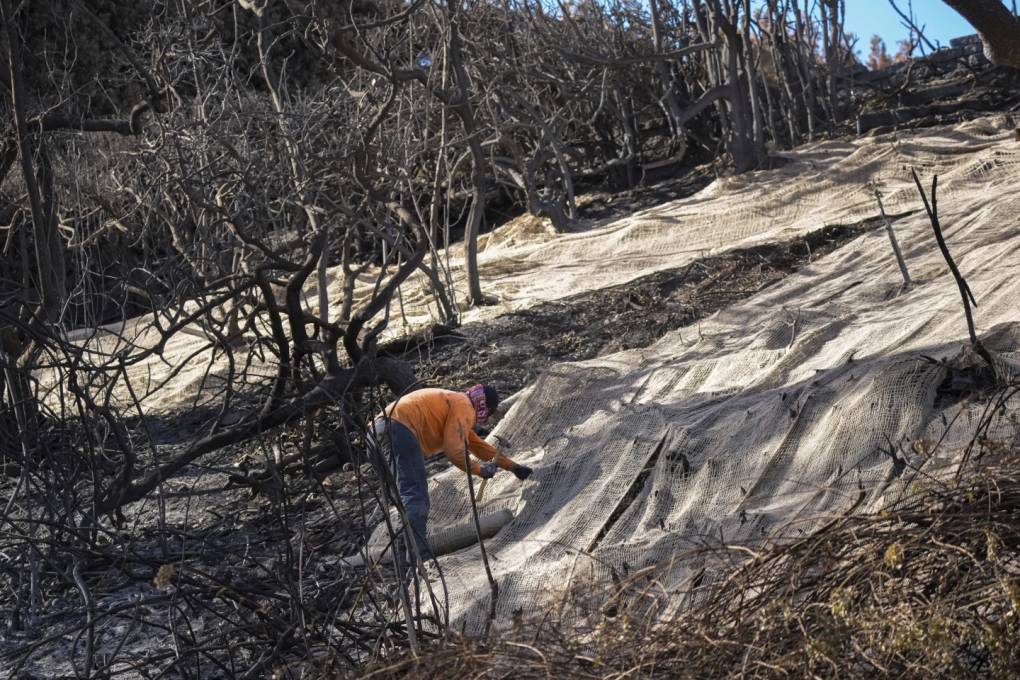
"content": "\u003cp>Rain eased on Monday after Southern California’s first significant storm of the season brought weekend downpours that aided firefighters but caused ash, mud and debris to flow across streets in wildfire-burned areas.\u003c/p>\n\u003cp>Less than an inch of rain fell in most areas, but it was enough to loosen Los Angeles hillsides burned bare by the recent blaze \u003ca href=\"https://apnews.com/article/california-wildfires-evacuation-alerts-69f10d320df14c6394fc2c646d1ff0ce\">near the Pacific Palisades\u003c/a>, where crews working before dawn cleared inundated roadways, including the famed Pacific Coast Highway.\u003c/p>\n\u003cp>In neighboring Malibu, four schools were closed Monday “due to dangerous road conditions and challenges with access,” the Santa Monica-Malibu Unified School District said in a statement.\u003c/p>\n\u003cp>North of Los Angeles, snowy conditions late Sunday shut down the mountainous Tejon Pass section of Interstate 5, a key north-south artery. The California Department of Transportation said there was no estimated reopening time.\u003c/p>\n\u003cp>A winter storm warning remained in place until 4 p.m. Monday for mountains across San Bernardino and Riverside counties, where more than a foot of snow was predicted.\u003c/p>\n\u003cp>[ad fullwidth]\u003c/p>\n\u003cp>Flood watches also \u003ca href=\"https://apnews.com/article/california-wildfires-los-angeles-palisades-eaton-rain-93b6a9d46d021ba6200030a55ce1d6c8\">were in effect for\u003c/a> the Palisades, Altadena and Castaic Lake, said Joe Sirard, a meteorologist for the National Weather Service’s office for Los Angeles.\u003c/p>\n\u003cp>“All these fresh burns are very susceptible to rapid runoff,” Sirard said Sunday.\u003c/p>\n\u003cp>[aside label=\"more on the la fires\" tag=\"los-angeles-fires\"]Los Angeles International Airport reported just under an inch of rain in 24 hours ending at 3 a.m. Monday, the National Oceanic and Atmospheric Administration reported. Surrounding areas experienced lesser amounts.\u003c/p>\n\u003cp>The rain came Saturday after months of dry and often gusty weather that created dangerous fire conditions. The downpours were a boon for firefighters but created the risk of toxic ash runoff.\u003c/p>\n\u003cp>Los Angeles County crews spent much of last week removing vegetation, shoring up slopes and reinforcing roads in areas devastated by the \u003ca href=\"https://apnews.com/article/california-fires-los-angeles-winds-evacuations-ad521b22d8567d3ac8b865a715fee505\">Palisades and Eaton fires\u003c/a>, which reduced entire neighborhoods to rubble and ash after breaking out during powerful winds on Jan. 7.\u003c/p>\n\u003cp>The Palisades Fire, the largest of the blazes that destroyed thousands of homes and killed at least 11 people, reached 94% containment on Monday. The Eaton Fire, which broke out near Altadena and has killed at least 16 people, was 98% contained.\u003c/p>\n\u003cp>The \u003ca href=\"https://apnews.com/article/california-fires-los-angeles-winds-300bac5d21394adf9d44493c4ccd337b\">Hughes Fire,\u003c/a> which ignited north of Los Angeles last week and caused evacuation orders or warnings for more than 50,000 people, was 95% contained as of Monday morning.\u003c/p>\n\u003cp>In San Diego County, firefighters made progress to contain the smaller Border 2 Fire as it burned through a remote area of the Otay Mountain Wilderness near the U.S.-Mexico border.\u003c/p>\n\u003cp>Most of the region was forecast to get about an inch of precipitation over several days and the weather service warned of localized cloudbursts causing mud and debris to flow down hills.\u003c/p>\n\u003cp>“So the problem would be if one of those showers happens to park itself over a burn area,” weather service meteorologist Carol Smith said on social media. “That could be enough to create debris flows.”\u003c/p>\n\u003cp>City and county officials last week \u003ca href=\"https://apnews.com/article/california-fires-los-angeles-winds-red-flag-warnings-5e599783ebd34a446e5b6690e0ecc777\">expedited cleanup efforts\u003c/a> and other measures aimed at mitigating the environmental impacts of fire-related pollutants.\u003c/p>\n\u003cp>Officials cautioned that ash in recent burn zones was \u003ca href=\"https://apnews.com/article/california-fires-children-schools-toxic-ash-3295ce74c5b4d41d7db6a08428ddd2e8\">a toxic mix\u003c/a> of incinerated cars, electronics, batteries, building materials, paints, furniture and other household items. It contains pesticides, asbestos, plastics and lead. Residents were urged to wear protective gear while cleaning up.\u003c/p>\n\u003cp>Concerns about post-fire debris flows have been especially high since 2018, when the town of Montecito, up the coast from Los Angeles, was \u003ca href=\"https://apnews.com/article/ec4b52c64e954c5c91ad5d9dcb29ca98\">ravaged by mudslides\u003c/a> after a downpour hit mountain slopes charred by a huge wildfire. Hundreds of homes were damaged and 23 people died.\u003c/p>\n\u003cp>\u003c/p>\n\u003cp>The rain ended a near-record streak of dry weather for Southern California. Most of Southern California is currently in “extreme drought” or “severe drought,” according to the \u003ca href=\"https://droughtmonitor.unl.edu/CurrentMap/StateDroughtMonitor.aspx?West\">U.S. Drought Monitor\u003c/a>.\u003c/p>\n\n",
"blocks": [],
"excerpt": "Less than an inch of rain fell in most areas, but it was enough to loosen Los Angeles hillsides burned bare by the recent blaze near the Pacific Palisades, where crews working before dawn cleared inundated roadways.\r\n\r\n",
"status": "publish",
"parent": 0,
"modified": 1738008015,
"stats": {
"hasAudio": false,
"hasVideo": false,
"hasChartOrMap": false,
"iframeSrcs": [],
"hasGoogleForm": false,
"hasGallery": false,
"hasHearkenModule": false,
"hasPolis": false,
"paragraphCount": 21,
"wordCount": 671
},
"headData": {
"title": "Rain Helps Southern California Firefighters But Sends Ash and Mud Flowing Down Hillsides | KQED",
"description": "Less than an inch of rain fell in most areas, but it was enough to loosen Los Angeles hillsides burned bare by the recent blaze near the Pacific Palisades, where crews working before dawn cleared inundated roadways.\r\n\r\n",
"ogTitle": "",
"ogDescription": "",
"ogImgId": "",
"twTitle": "",
"twDescription": "",
"twImgId": "",
"schema": {
"@context": "https://schema.org",
"@type": "NewsArticle",
"headline": "Rain Helps Southern California Firefighters But Sends Ash and Mud Flowing Down Hillsides",
"datePublished": "2025-01-27T10:14:35-08:00",
"dateModified": "2025-01-27T12:00:15-08:00",
"image": "https://cdn.kqed.org/wp-content/uploads/2020/02/KQED-OG-Image@1x.png",
"isAccessibleForFree": "True",
"publisher": {
"@type": "NewsMediaOrganization",
"@id": "https://www.kqed.org/#organization",
"name": "KQED",
"logo": "https://cdn.kqed.org/wp-content/uploads/2020/02/KQED-OG-Image@1x.png",
"url": "https://www.kqed.org",
"sameAs": [
"https://www.facebook.com/KQED",
"https://twitter.com/KQED",
"https://www.instagram.com/kqed/",
"https://www.tiktok.com/@kqedofficial",
"https://www.linkedin.com/company/kqed",
"https://www.youtube.com/channel/UCeC0IOo7i1P_61zVUWbJ4nw"
]
}
}
},
"sticky": false,
"nprByline": "Associated Press",
"nprStoryId": "kqed-12024186",
"excludeFromSiteSearch": "Include",
"showOnAuthorArchivePages": "No",
"articleAge": "0",
"path": "/news/12024186/rain-helps-southern-california-firefighters-but-sends-ash-and-mud-flowing-down-hillsides",
"audioTrackLength": null,
"parsedContent": [
{
"type": "contentString",
"content": "\u003cdiv class=\"post-body\">\u003cp>\u003cp>Rain eased on Monday after Southern California’s first significant storm of the season brought weekend downpours that aided firefighters but caused ash, mud and debris to flow across streets in wildfire-burned areas.\u003c/p>\n\u003cp>Less than an inch of rain fell in most areas, but it was enough to loosen Los Angeles hillsides burned bare by the recent blaze \u003ca href=\"https://apnews.com/article/california-wildfires-evacuation-alerts-69f10d320df14c6394fc2c646d1ff0ce\">near the Pacific Palisades\u003c/a>, where crews working before dawn cleared inundated roadways, including the famed Pacific Coast Highway.\u003c/p>\n\u003cp>In neighboring Malibu, four schools were closed Monday “due to dangerous road conditions and challenges with access,” the Santa Monica-Malibu Unified School District said in a statement.\u003c/p>\n\u003cp>North of Los Angeles, snowy conditions late Sunday shut down the mountainous Tejon Pass section of Interstate 5, a key north-south artery. The California Department of Transportation said there was no estimated reopening time.\u003c/p>\n\u003cp>A winter storm warning remained in place until 4 p.m. Monday for mountains across San Bernardino and Riverside counties, where more than a foot of snow was predicted.\u003c/p>\n\u003cp>\u003c/p>\u003c/div>",
"attributes": {
"named": {},
"numeric": []
}
},
{
"type": "component",
"content": "",
"name": "ad",
"attributes": {
"named": {
"label": "fullwidth"
},
"numeric": [
"fullwidth"
]
}
},
{
"type": "contentString",
"content": "\u003cdiv class=\"post-body\">\u003cp>\u003c/p>\n\u003cp>Flood watches also \u003ca href=\"https://apnews.com/article/california-wildfires-los-angeles-palisades-eaton-rain-93b6a9d46d021ba6200030a55ce1d6c8\">were in effect for\u003c/a> the Palisades, Altadena and Castaic Lake, said Joe Sirard, a meteorologist for the National Weather Service’s office for Los Angeles.\u003c/p>\n\u003cp>“All these fresh burns are very susceptible to rapid runoff,” Sirard said Sunday.\u003c/p>\n\u003cp>\u003c/p>\u003c/div>",
"attributes": {
"named": {},
"numeric": []
}
},
{
"type": "component",
"content": "",
"name": "aside",
"attributes": {
"named": {
"label": "more on the la fires ",
"tag": "los-angeles-fires"
},
"numeric": []
}
},
{
"type": "contentString",
"content": "\u003cdiv class=\"post-body\">\u003cp>Los Angeles International Airport reported just under an inch of rain in 24 hours ending at 3 a.m. Monday, the National Oceanic and Atmospheric Administration reported. Surrounding areas experienced lesser amounts.\u003c/p>\n\u003cp>The rain came Saturday after months of dry and often gusty weather that created dangerous fire conditions. The downpours were a boon for firefighters but created the risk of toxic ash runoff.\u003c/p>\n\u003cp>Los Angeles County crews spent much of last week removing vegetation, shoring up slopes and reinforcing roads in areas devastated by the \u003ca href=\"https://apnews.com/article/california-fires-los-angeles-winds-evacuations-ad521b22d8567d3ac8b865a715fee505\">Palisades and Eaton fires\u003c/a>, which reduced entire neighborhoods to rubble and ash after breaking out during powerful winds on Jan. 7.\u003c/p>\n\u003cp>The Palisades Fire, the largest of the blazes that destroyed thousands of homes and killed at least 11 people, reached 94% containment on Monday. The Eaton Fire, which broke out near Altadena and has killed at least 16 people, was 98% contained.\u003c/p>\n\u003cp>The \u003ca href=\"https://apnews.com/article/california-fires-los-angeles-winds-300bac5d21394adf9d44493c4ccd337b\">Hughes Fire,\u003c/a> which ignited north of Los Angeles last week and caused evacuation orders or warnings for more than 50,000 people, was 95% contained as of Monday morning.\u003c/p>\n\u003cp>In San Diego County, firefighters made progress to contain the smaller Border 2 Fire as it burned through a remote area of the Otay Mountain Wilderness near the U.S.-Mexico border.\u003c/p>\n\u003cp>Most of the region was forecast to get about an inch of precipitation over several days and the weather service warned of localized cloudbursts causing mud and debris to flow down hills.\u003c/p>\n\u003cp>“So the problem would be if one of those showers happens to park itself over a burn area,” weather service meteorologist Carol Smith said on social media. “That could be enough to create debris flows.”\u003c/p>\n\u003cp>City and county officials last week \u003ca href=\"https://apnews.com/article/california-fires-los-angeles-winds-red-flag-warnings-5e599783ebd34a446e5b6690e0ecc777\">expedited cleanup efforts\u003c/a> and other measures aimed at mitigating the environmental impacts of fire-related pollutants.\u003c/p>\n\u003cp>Officials cautioned that ash in recent burn zones was \u003ca href=\"https://apnews.com/article/california-fires-children-schools-toxic-ash-3295ce74c5b4d41d7db6a08428ddd2e8\">a toxic mix\u003c/a> of incinerated cars, electronics, batteries, building materials, paints, furniture and other household items. It contains pesticides, asbestos, plastics and lead. Residents were urged to wear protective gear while cleaning up.\u003c/p>\n\u003cp>Concerns about post-fire debris flows have been especially high since 2018, when the town of Montecito, up the coast from Los Angeles, was \u003ca href=\"https://apnews.com/article/ec4b52c64e954c5c91ad5d9dcb29ca98\">ravaged by mudslides\u003c/a> after a downpour hit mountain slopes charred by a huge wildfire. Hundreds of homes were damaged and 23 people died.\u003c/p>\n\u003cp>\u003c/p>\n\u003cp>The rain ended a near-record streak of dry weather for Southern California. Most of Southern California is currently in “extreme drought” or “severe drought,” according to the \u003ca href=\"https://droughtmonitor.unl.edu/CurrentMap/StateDroughtMonitor.aspx?West\">U.S. Drought Monitor\u003c/a>.\u003c/p>\n\n\u003c/div>\u003c/p>",
"attributes": {
"named": {},
"numeric": []
}
}
],
"link": "/news/12024186/rain-helps-southern-california-firefighters-but-sends-ash-and-mud-flowing-down-hillsides",
"authors": [
"byline_news_12024186"
],
"categories": [
"news_8"
],
"tags": [
"news_34868",
"news_1143",
"news_881",
"news_4463"
],
"featImg": "news_12024190",
"label": "news"
},
"news_12023989": {
"type": "posts",
"id": "news_12023989",
"meta": {
"index": "posts_1716263798",
"site": "news",
"id": "12023989",
"score": null,
"sort": [
1737905414000
]
},
"guestAuthors": [],
"slug": "will-new-bond-funds-be-enough-to-rebuild-la-schools-and-all-of-californias-other-crumbling-schools",
"title": "Will New Bond Funds Be Enough to Rebuild LA Schools — and All of California’s Other Crumbling Schools?",
"publishDate": 1737905414,
"format": "standard",
"headTitle": "Will New Bond Funds Be Enough to Rebuild LA Schools — and All of California’s Other Crumbling Schools? | KQED",
"labelTerm": {
"term": 18481,
"site": "news"
},
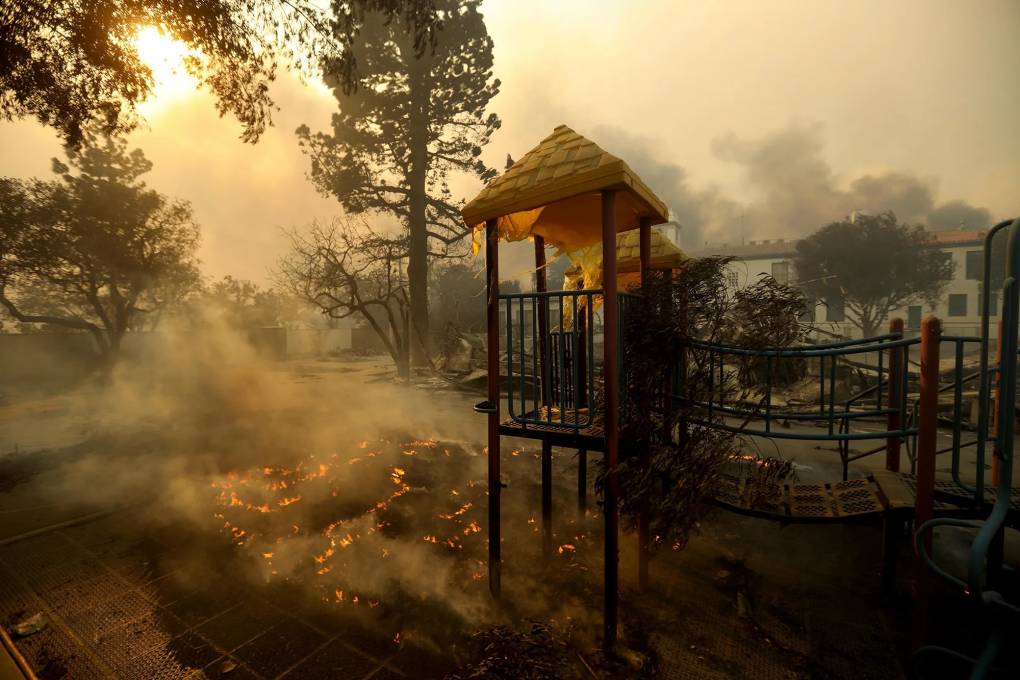
"content": "\u003cp>It’ll be a while before Los Angeles can fully assess the damage to its schools from this recent spate of fires, but a few things already seem certain: rebuilding will take a long time, it will be expensive, and it may sap the statewide fund for school repairs.\u003c/p>\n\u003cp>At least a dozen schools in the Los Angeles area have been damaged in the fires, including at least five that were destroyed completely. Thousands of students and school staff have lost their homes, and countless families are grappling with major disruptions to their day-to-day lives.\u003c/p>\n\u003cp>“The pain of being evacuated, losing your home, or having family and friends who have been impacted. … it’s just so devastating,” said Debra Duardo, Los Angeles County Superintendent of Schools. “At so many districts in our county, the superintendent themselves has been evacuated, or 50% of the staff has been evacuated. And meanwhile they’re all trying to help their students.”\u003c/p>\n\u003cp>[ad fullwidth]\u003c/p>\n\u003cp>In Pacific Palisades, fires destroyed two elementary schools and extensively damaged Palisades Charter High School. Fires in Pasadena and Altadena destroyed three elementary schools. Several others in greater Los Angeles remain closed because they’re in evacuation zones or have been damaged.\u003c/p>\n\u003cp>Students at those schools have been reassigned to other campuses, are learning online or are waiting for conditions to improve so they can return to class.\u003c/p>\n\u003cp>For many students, it will be a long wait. Even with loosened regulations, rebuilding a school could take years as officials piece together a hodgepodge of funding sources: insurance money, private grants and donations, local bonds, lawsuit settlement money and state and federal funds. Some districts will have plenty of funding options, while others will struggle to find enough revenue.\u003c/p>\n\u003cp>In the meantime, some will have immediate expenses such as procuring portable classrooms and hiring mental health counselors to help students, staff and families cope with trauma. Large districts such as Los Angeles Unified can reallocate resources quickly, but smaller districts and charter and private schools face more obstacles.\u003c/p>\n\u003ch2>Big demand for Proposition 2 \u003cstrong>funds\u003c/strong>\u003c/h2>\n\u003cp>Proposition 2, the $10 billion school construction bond approved by voters in November, will be a big help for schools that need to rebuild or make costly repairs, or even buy portables.\u003c/p>\n\u003cp>The state allocates the money to schools with the highest need, and then on a first-come, first-served basis. There’s already a big backlog of schools that have applied for money, and it’s likely that schools gutted by fire will get priority over those with less urgent needs, said Rebekah Kalleen, a legislative advocate for the Coalition for Adequate School Housing.\u003c/p>\n\u003cp>That means some schools will miss out. Because California’s fund for school repairs had been empty for a while, there’s a long list of schools with critical repair needs. Throughout the state, students are attending schools with leaky roofs, lead pipes, unsafe electrical systems and broken air conditioning. Schools in lower-income and rural areas are most affected, because they have less ability to raise money through local bonds.\u003c/p>\n\u003cp>Helio Brasil, superintendent of Keyes Union School District south of Modesto, said he has empathy for those dealing with buildings destroyed or damaged by the fires in Los Angeles, but he worries about \u003ca href=\"https://calmatters.org/education/2023/11/school-construction-2/\">his own district’s needs\u003c/a>. The 1,000-student district, which primarily serves lower-income students whose parents work in the nearby agricultural fields, desperately needs money to replace the 40-year-old roof, upgrade the electric wiring and make other safety improvements.\u003c/p>\n\u003cp>“There is a growing concern that Prop. 2 funds will be quickly depleted, leaving smaller districts like Keyes struggling to address our own long-term facility needs,” Brasil wrote in an email. “We understand the moral imperative to support the devastated districts first, but the reality is that districts like ours cannot be left behind in the process.”\u003c/p>\n\u003cp>Brasil and other superintendents are asking for the state to balance the needs of schools affected by fires with those that aren’t, and provide extra money if possible. Gov. Gavin Newsom last week promised to chip in an extra $1 million from the state’s general fund for schools damaged by fire.\u003c/p>\n\u003ch2>‘Like a bomb had gone off’\u003c/h2>\n\u003cp>The post-fire experience in Sonoma and Butte counties provides a preview of what lies ahead in Los Angeles. Thousands of homes and numerous schools were destroyed in a spate of fires from 2017–20, leaving residents to resurrect entire communities.\u003c/p>\n\u003cp>“Those first few weeks were surreal, almost primordial. It was like a bomb had gone off,” said Andrew Bailey, head of Anova Center for Education, a private school in Sonoma County that serves special education students enrolled in public schools. Anova was destroyed in the 2017 Tubbs Fire, leaving its 125 students without a campus.\u003c/p>\n\u003cp>There was no school at all for three weeks while staff hunted for classroom space at other locations. Eventually they brought in portables and launched an ambitious fundraising campaign to pay for a new school. Last week, the new school finally opened — more than seven years after the fire.\u003c/p>\n\u003cp>“It was miraculous that we were able to do this,” Bailey said. “It was incredibly hard work, but now the headwinds have dissipated and our kids now have a great new school.”\u003c/p>\n\u003ch2>Attending school at a hardware store\u003c/h2>\n\u003cp>In Paradise, a Butte County town which was nearly entirely destroyed in the 2018 Camp Fire, the school district is still recovering. Four school sites were destroyed and nine were extensively damaged. A big obstacle in rebuilding, school officials said, was not knowing how many students to expect. More than 80% of the town burned down, and it was unclear how many residents planned to move back. Enrollment in Paradise Unified dropped from 3,500 before the fire to 1,500 in 2019. It’s now up to 1,700.\u003c/p>\n\u003cp>Although the state was helpful, the paperwork and funding process took time, Superintendent Tom Taylor said. Meanwhile, students attended school any place officials could find space: other school districts, some 20 miles away; warehouses; even a hardware store. (The store was cleared of merchandise. Students ate lunch at the check-out counter.)\u003c/p>\n\u003cp>The district has so far spent $155 million to rebuild campuses, but needs $150 million more to fix everything that needs fixing, Taylor said. The district is hoping to break ground on Paradise Elementary School, one of the schools that was completely destroyed.\u003c/p>\n\u003cp>“There were a few years where all staff worked harder than we ever have. Long days, seven days a week, no time off,” Taylor said. “We’re still not done. … But our staff understands that schools are the center of a community, and we want our schools to help lead the return of the town.”\u003c/p>\n\u003ch2>Prioritizing mental health\u003c/h2>\n\u003cp>In some ways, Los Angeles schools will have it a bit easier than those in Sonoma and Butte. The state now has well-established disaster relief protocols, and there are plenty of experts who can advise. Because of COVID-19, most schools already have distance learning systems in place and robust social-emotional support for students.[aside label=\"Related Stories\" postID=\"news_12023695,news_12022439,news_12021941\"]Support for mental health — for staff as well as students — is a crucial piece of recovery, school officials in Sonoma and Butte said.\u003c/p>\n\u003cp>In Sonoma County, schools learned early on how to screen students for anxiety. They also created partnerships with local nonprofits and health clinics, and the County Office of Education trained teachers to lead class discussions and otherwise support students who felt traumatized by the fires.\u003c/p>\n\u003cp>“In situations like this, you’re never going to have enough money for one-to-one counseling for everyone who needs it,” said Mary Champion, a school psychologist with the Sonoma County Office of Education. “That’s why it’s so important to train educators, to take some of the pressure off clinicians.”\u003c/p>\n\u003cp>Tyson Dickinson, director of the office’s Department of Behavioral Health and Well-Being, said districts in Los Angeles should expect the recovery process — beyond the replacement of buildings — to take a long time. Sonoma County’s last major fire was in 2020, and it’s still never far from residents’ minds.\u003c/p>\n\u003cp>“Any time it’s windy, warm and dry, any time there’s smoke, you can see the stress building,” Dickinson said. “From August through January everyone is on edge. It’s just a different world now.”\u003c/p>\n\u003cp>[ad floatright]\u003c/p>\n",
"blocks": [],
"excerpt": "Some schools destroyed years ago in the Sonoma and Butte fires are just now reopening. The long, costly process of rebuilding in LA may eat up much of the money California voters approved in November for school repairs.",
"status": "publish",
"parent": 0,
"modified": 1737759044,
"stats": {
"hasAudio": false,
"hasVideo": false,
"hasChartOrMap": false,
"iframeSrcs": [],
"hasGoogleForm": false,
"hasGallery": false,
"hasHearkenModule": false,
"hasPolis": false,
"paragraphCount": 28,
"wordCount": 1465
},
"headData": {
"title": "Will New Bond Funds Be Enough to Rebuild LA Schools — and All of California’s Other Crumbling Schools? | KQED",
"description": "Some schools destroyed years ago in the Sonoma and Butte fires are just now reopening. The long, costly process of rebuilding in LA may eat up much of the money California voters approved in November for school repairs.",
"ogTitle": "",
"ogDescription": "",
"ogImgId": "",
"twTitle": "",
"twDescription": "",
"twImgId": "",
"schema": {
"@context": "https://schema.org",
"@type": "NewsArticle",
"headline": "Will New Bond Funds Be Enough to Rebuild LA Schools — and All of California’s Other Crumbling Schools?",
"datePublished": "2025-01-26T07:30:14-08:00",
"dateModified": "2025-01-24T14:50:44-08:00",
"image": "https://cdn.kqed.org/wp-content/uploads/2020/02/KQED-OG-Image@1x.png",
"isAccessibleForFree": "True",
"publisher": {
"@type": "NewsMediaOrganization",
"@id": "https://www.kqed.org/#organization",
"name": "KQED",
"logo": "https://cdn.kqed.org/wp-content/uploads/2020/02/KQED-OG-Image@1x.png",
"url": "https://www.kqed.org",
"sameAs": [
"https://www.facebook.com/KQED",
"https://twitter.com/KQED",
"https://www.instagram.com/kqed/",
"https://www.tiktok.com/@kqedofficial",
"https://www.linkedin.com/company/kqed",
"https://www.youtube.com/channel/UCeC0IOo7i1P_61zVUWbJ4nw"
]
}
}
},
"sticky": false,
"nprByline": "\u003ca href=\"https://calmatters.org/author/carolyn-jones/\">Carolyn Jones\u003c/a>, CalMatters",
"excludeFromSiteSearch": "Include",
"showOnAuthorArchivePages": "No",
"articleAge": "0",
"path": "/news/12023989/will-new-bond-funds-be-enough-to-rebuild-la-schools-and-all-of-californias-other-crumbling-schools",
"audioTrackLength": null,
"parsedContent": [
{
"type": "contentString",
"content": "\u003cdiv class=\"post-body\">\u003cp>\u003cp>It’ll be a while before Los Angeles can fully assess the damage to its schools from this recent spate of fires, but a few things already seem certain: rebuilding will take a long time, it will be expensive, and it may sap the statewide fund for school repairs.\u003c/p>\n\u003cp>At least a dozen schools in the Los Angeles area have been damaged in the fires, including at least five that were destroyed completely. Thousands of students and school staff have lost their homes, and countless families are grappling with major disruptions to their day-to-day lives.\u003c/p>\n\u003cp>“The pain of being evacuated, losing your home, or having family and friends who have been impacted. … it’s just so devastating,” said Debra Duardo, Los Angeles County Superintendent of Schools. “At so many districts in our county, the superintendent themselves has been evacuated, or 50% of the staff has been evacuated. And meanwhile they’re all trying to help their students.”\u003c/p>\n\u003cp>\u003c/p>\u003c/div>",
"attributes": {
"named": {},
"numeric": []
}
},
{
"type": "component",
"content": "",
"name": "ad",
"attributes": {
"named": {
"label": "fullwidth"
},
"numeric": [
"fullwidth"
]
}
},
{
"type": "contentString",
"content": "\u003cdiv class=\"post-body\">\u003cp>\u003c/p>\n\u003cp>In Pacific Palisades, fires destroyed two elementary schools and extensively damaged Palisades Charter High School. Fires in Pasadena and Altadena destroyed three elementary schools. Several others in greater Los Angeles remain closed because they’re in evacuation zones or have been damaged.\u003c/p>\n\u003cp>Students at those schools have been reassigned to other campuses, are learning online or are waiting for conditions to improve so they can return to class.\u003c/p>\n\u003cp>For many students, it will be a long wait. Even with loosened regulations, rebuilding a school could take years as officials piece together a hodgepodge of funding sources: insurance money, private grants and donations, local bonds, lawsuit settlement money and state and federal funds. Some districts will have plenty of funding options, while others will struggle to find enough revenue.\u003c/p>\n\u003cp>In the meantime, some will have immediate expenses such as procuring portable classrooms and hiring mental health counselors to help students, staff and families cope with trauma. Large districts such as Los Angeles Unified can reallocate resources quickly, but smaller districts and charter and private schools face more obstacles.\u003c/p>\n\u003ch2>Big demand for Proposition 2 \u003cstrong>funds\u003c/strong>\u003c/h2>\n\u003cp>Proposition 2, the $10 billion school construction bond approved by voters in November, will be a big help for schools that need to rebuild or make costly repairs, or even buy portables.\u003c/p>\n\u003cp>The state allocates the money to schools with the highest need, and then on a first-come, first-served basis. There’s already a big backlog of schools that have applied for money, and it’s likely that schools gutted by fire will get priority over those with less urgent needs, said Rebekah Kalleen, a legislative advocate for the Coalition for Adequate School Housing.\u003c/p>\n\u003cp>That means some schools will miss out. Because California’s fund for school repairs had been empty for a while, there’s a long list of schools with critical repair needs. Throughout the state, students are attending schools with leaky roofs, lead pipes, unsafe electrical systems and broken air conditioning. Schools in lower-income and rural areas are most affected, because they have less ability to raise money through local bonds.\u003c/p>\n\u003cp>Helio Brasil, superintendent of Keyes Union School District south of Modesto, said he has empathy for those dealing with buildings destroyed or damaged by the fires in Los Angeles, but he worries about \u003ca href=\"https://calmatters.org/education/2023/11/school-construction-2/\">his own district’s needs\u003c/a>. The 1,000-student district, which primarily serves lower-income students whose parents work in the nearby agricultural fields, desperately needs money to replace the 40-year-old roof, upgrade the electric wiring and make other safety improvements.\u003c/p>\n\u003cp>“There is a growing concern that Prop. 2 funds will be quickly depleted, leaving smaller districts like Keyes struggling to address our own long-term facility needs,” Brasil wrote in an email. “We understand the moral imperative to support the devastated districts first, but the reality is that districts like ours cannot be left behind in the process.”\u003c/p>\n\u003cp>Brasil and other superintendents are asking for the state to balance the needs of schools affected by fires with those that aren’t, and provide extra money if possible. Gov. Gavin Newsom last week promised to chip in an extra $1 million from the state’s general fund for schools damaged by fire.\u003c/p>\n\u003ch2>‘Like a bomb had gone off’\u003c/h2>\n\u003cp>The post-fire experience in Sonoma and Butte counties provides a preview of what lies ahead in Los Angeles. Thousands of homes and numerous schools were destroyed in a spate of fires from 2017–20, leaving residents to resurrect entire communities.\u003c/p>\n\u003cp>“Those first few weeks were surreal, almost primordial. It was like a bomb had gone off,” said Andrew Bailey, head of Anova Center for Education, a private school in Sonoma County that serves special education students enrolled in public schools. Anova was destroyed in the 2017 Tubbs Fire, leaving its 125 students without a campus.\u003c/p>\n\u003cp>There was no school at all for three weeks while staff hunted for classroom space at other locations. Eventually they brought in portables and launched an ambitious fundraising campaign to pay for a new school. Last week, the new school finally opened — more than seven years after the fire.\u003c/p>\n\u003cp>“It was miraculous that we were able to do this,” Bailey said. “It was incredibly hard work, but now the headwinds have dissipated and our kids now have a great new school.”\u003c/p>\n\u003ch2>Attending school at a hardware store\u003c/h2>\n\u003cp>In Paradise, a Butte County town which was nearly entirely destroyed in the 2018 Camp Fire, the school district is still recovering. Four school sites were destroyed and nine were extensively damaged. A big obstacle in rebuilding, school officials said, was not knowing how many students to expect. More than 80% of the town burned down, and it was unclear how many residents planned to move back. Enrollment in Paradise Unified dropped from 3,500 before the fire to 1,500 in 2019. It’s now up to 1,700.\u003c/p>\n\u003cp>Although the state was helpful, the paperwork and funding process took time, Superintendent Tom Taylor said. Meanwhile, students attended school any place officials could find space: other school districts, some 20 miles away; warehouses; even a hardware store. (The store was cleared of merchandise. Students ate lunch at the check-out counter.)\u003c/p>\n\u003cp>The district has so far spent $155 million to rebuild campuses, but needs $150 million more to fix everything that needs fixing, Taylor said. The district is hoping to break ground on Paradise Elementary School, one of the schools that was completely destroyed.\u003c/p>\n\u003cp>“There were a few years where all staff worked harder than we ever have. Long days, seven days a week, no time off,” Taylor said. “We’re still not done. … But our staff understands that schools are the center of a community, and we want our schools to help lead the return of the town.”\u003c/p>\n\u003ch2>Prioritizing mental health\u003c/h2>\n\u003cp>In some ways, Los Angeles schools will have it a bit easier than those in Sonoma and Butte. The state now has well-established disaster relief protocols, and there are plenty of experts who can advise. Because of COVID-19, most schools already have distance learning systems in place and robust social-emotional support for students.\u003c/p>\u003c/div>",
"attributes": {
"named": {},
"numeric": []
}
},
{
"type": "component",
"content": "",
"name": "aside",
"attributes": {
"named": {
"label": "Related Stories ",
"postid": "news_12023695,news_12022439,news_12021941"
},
"numeric": []
}
},
{
"type": "contentString",
"content": "\u003cdiv class=\"post-body\">\u003cp>Support for mental health — for staff as well as students — is a crucial piece of recovery, school officials in Sonoma and Butte said.\u003c/p>\n\u003cp>In Sonoma County, schools learned early on how to screen students for anxiety. They also created partnerships with local nonprofits and health clinics, and the County Office of Education trained teachers to lead class discussions and otherwise support students who felt traumatized by the fires.\u003c/p>\n\u003cp>“In situations like this, you’re never going to have enough money for one-to-one counseling for everyone who needs it,” said Mary Champion, a school psychologist with the Sonoma County Office of Education. “That’s why it’s so important to train educators, to take some of the pressure off clinicians.”\u003c/p>\n\u003cp>Tyson Dickinson, director of the office’s Department of Behavioral Health and Well-Being, said districts in Los Angeles should expect the recovery process — beyond the replacement of buildings — to take a long time. Sonoma County’s last major fire was in 2020, and it’s still never far from residents’ minds.\u003c/p>\n\u003cp>“Any time it’s windy, warm and dry, any time there’s smoke, you can see the stress building,” Dickinson said. “From August through January everyone is on edge. It’s just a different world now.”\u003c/p>\n\u003cp>\u003c/p>\u003c/div>",
"attributes": {
"named": {},
"numeric": []
}
},
{
"type": "component",
"content": "",
"name": "ad",
"attributes": {
"named": {
"label": "floatright"
},
"numeric": [
"floatright"
]
}
},
{
"type": "contentString",
"content": "\u003cdiv class=\"post-body\">\u003cp>\u003c/p>\n\u003c/div>\u003c/p>",
"attributes": {
"named": {},
"numeric": []
}
}
],
"link": "/news/12023989/will-new-bond-funds-be-enough-to-rebuild-la-schools-and-all-of-californias-other-crumbling-schools",
"authors": [
"byline_news_12023989"
],
"categories": [
"news_31795",
"news_34165",
"news_18540",
"news_8"
],
"tags": [
"news_18590",
"news_25135",
"news_30911",
"news_24483",
"news_34868",
"news_3457",
"news_21760",
"news_4463"
],
"affiliates": [
"news_18481"
],
"featImg": "news_12023992",
"label": "news_18481"
},
"news_12024163": {
"type": "posts",
"id": "news_12024163",
"meta": {
"index": "posts_1716263798",
"site": "news",
"id": "12024163",
"score": null,
"sort": [
1737853682000
]
},
"guestAuthors": [],
"slug": "rain-in-southern-california-will-aid-firefighters-but-create-a-risk-of-toxic-ash-runoff",
"title": "Rain in Southern California Will Aid Firefighters but Create a Risk of Toxic Ash Runoff",
"publishDate": 1737853682,
"format": "standard",
"headTitle": "Rain in Southern California Will Aid Firefighters but Create a Risk of Toxic Ash Runoff | KQED",
"labelTerm": {
"site": "news"
},
"content": "\u003cp>Rain on the way to parched Southern California on Saturday will aid firefighters mopping up multiple wildfires. But heavy downpours on charred hillsides could bring the threat of new troubles like \u003ca href=\"https://apnews.com/article/california-wildfires-toxic-ash-health-fa845b7573ba463bf2e61ea3042c66a2\">toxic ash runoff\u003c/a>.\u003c/p>\n\u003cp>Los Angeles County crews spent much of the week removing vegetation, shoring up slopes and reinforcing roads in devastated areas of the Palisades and Eaton fires, which reduced entire neighborhoods to rubble and ash after breaking out during powerful winds Jan. 7.\u003c/p>\n\u003cp>Most of the region will likely get around an inch of precipitation over several days, but “the threat is high enough to prepare for the worst-case scenario” of localized cloudbursts causing mud and debris to flow down hills, the National Weather Service said on social media.\u003c/p>\n\u003cp>[ad fullwidth]\u003c/p>\n\u003cp>“So the problem would be if one of those showers happens to park itself over a burn area,” weather service meteorologist Carol Smith said Saturday. “That could be enough to create debris flows.”\u003c/p>\n\u003cp>Rain was expected to begin late Saturday, increase throughout the weekend and possibly last into early Tuesday, Smith said. Flood watches were issued for some burn areas. Snow was likely in the mountains.\u003c/p>\n\u003cp>Los Angeles Mayor Karen Bass \u003ca href=\"https://apnews.com/article/california-fires-los-angeles-winds-red-flag-warnings-5e599783ebd34a446e5b6690e0ecc777\">issued an executive order this week\u003c/a> to expedite cleanup efforts and mitigate the environmental impacts of fire-related pollutants. L.A. County supervisors also approved an emergency motion to install flood-control infrastructure and expedite and remove sediment in fire-impacted areas.\u003c/p>\n\u003cp>Fire crews filled sandbags for communities while county workers installed barriers and cleared drainage pipes and basins.\u003c/p>\n\u003cp>Officials cautioned that ash in recent burn zones was \u003ca href=\"https://apnews.com/article/california-fires-children-schools-toxic-ash-3295ce74c5b4d41d7db6a08428ddd2e8\">a toxic mix\u003c/a> of incinerated cars, electronics, batteries, building materials, paints, furniture and other household items. It contains pesticides, asbestos, plastics and lead. Residents were urged to wear protective gear while cleaning up.\u003c/p>\n\u003cp>Concerns about post-fire debris flows have been especially high since 2018, when the town of Montecito up the coast from L.A. was \u003ca href=\"https://apnews.com/article/ec4b52c64e954c5c91ad5d9dcb29ca98\">ravaged by mudslides\u003c/a> after a downpour hit mountain slopes burned bare by a huge blaze. Twenty-three people died, and hundreds of homes were damaged.[aside label=\"Related Stories\" postID=\"news_12023695,news_12021661,news_12024151\"]While the impending wet weather ended weeks of dangerous gusts and reduced humidity, several wildfires were still burning Saturday across Southern California. Those included the Palisades and Eaton fires, which \u003ca href=\"https://apnews.com/article/california-wildfires-victim-zhao-altadena-a59f2cf70d1b0f6736b4819031b3727c\">killed at least 28 people\u003c/a> and destroyed more than 14,000 structures. Containment of the Palisades Fire reached 81%, and the Eaton Fire was at 95% containment.\u003c/p>\n\u003cp>In northern Los Angeles County, firefighters made significant progress against the Hughes Fire, which prompted evacuations for tens of thousands of people when it erupted Wednesday in mountains near Lake Castaic.\u003c/p>\n\u003cp>And in San Diego County, there was still little containment of the Border 2 Fire churning through a remote area of the Otay Mountain Wilderness near the U.S.-Mexico border.\u003c/p>\n\u003cp>The rain was expected to snap a near-record streak of dry weather for Southern California. Much of the region has received less than 5% of the average rainfall for this point in the water year, which began Oct. 1, the \u003cem>Los Angeles Times\u003c/em> reported Saturday.\u003c/p>\n\u003cp>Most of Southern California is now either in “extreme drought” or “severe drought,” according to the \u003ca href=\"https://droughtmonitor.unl.edu/CurrentMap/StateDroughtMonitor.aspx?West\">U.S. Drought Monitor\u003c/a>.\u003c/p>\n\u003cp>\u003c/p>\n",
"blocks": [],
"excerpt": "Heavy downpours on charred hillsides could bring the threat of new troubles like toxic ash runoff with the possibility of mud and debris flowing down hills.",
"status": "publish",
"parent": 0,
"modified": 1737853682,
"stats": {
"hasAudio": false,
"hasVideo": false,
"hasChartOrMap": false,
"iframeSrcs": [],
"hasGoogleForm": false,
"hasGallery": false,
"hasHearkenModule": false,
"hasPolis": false,
"paragraphCount": 15,
"wordCount": 557
},
"headData": {
"title": "Rain in Southern California Will Aid Firefighters but Create a Risk of Toxic Ash Runoff | KQED",
"description": "Heavy downpours on charred hillsides could bring the threat of new troubles like toxic ash runoff with the possibility of mud and debris flowing down hills.",
"ogTitle": "",
"ogDescription": "",
"ogImgId": "",
"twTitle": "",
"twDescription": "",
"twImgId": "",
"schema": {
"@context": "https://schema.org",
"@type": "NewsArticle",
"headline": "Rain in Southern California Will Aid Firefighters but Create a Risk of Toxic Ash Runoff",
"datePublished": "2025-01-25T17:08:02-08:00",
"dateModified": "2025-01-25T17:08:02-08:00",
"image": "https://cdn.kqed.org/wp-content/uploads/2020/02/KQED-OG-Image@1x.png",
"isAccessibleForFree": "True",
"publisher": {
"@type": "NewsMediaOrganization",
"@id": "https://www.kqed.org/#organization",
"name": "KQED",
"logo": "https://cdn.kqed.org/wp-content/uploads/2020/02/KQED-OG-Image@1x.png",
"url": "https://www.kqed.org",
"sameAs": [
"https://www.facebook.com/KQED",
"https://twitter.com/KQED",
"https://www.instagram.com/kqed/",
"https://www.tiktok.com/@kqedofficial",
"https://www.linkedin.com/company/kqed",
"https://www.youtube.com/channel/UCeC0IOo7i1P_61zVUWbJ4nw"
]
}
}
},
"sticky": false,
"nprByline": "The Associated Press",
"nprStoryId": "kqed-12024163",
"excludeFromSiteSearch": "Include",
"showOnAuthorArchivePages": "No",
"articleAge": "0",
"path": "/news/12024163/rain-in-southern-california-will-aid-firefighters-but-create-a-risk-of-toxic-ash-runoff",
"audioTrackLength": null,
"parsedContent": [
{
"type": "contentString",
"content": "\u003cdiv class=\"post-body\">\u003cp>\u003cp>Rain on the way to parched Southern California on Saturday will aid firefighters mopping up multiple wildfires. But heavy downpours on charred hillsides could bring the threat of new troubles like \u003ca href=\"https://apnews.com/article/california-wildfires-toxic-ash-health-fa845b7573ba463bf2e61ea3042c66a2\">toxic ash runoff\u003c/a>.\u003c/p>\n\u003cp>Los Angeles County crews spent much of the week removing vegetation, shoring up slopes and reinforcing roads in devastated areas of the Palisades and Eaton fires, which reduced entire neighborhoods to rubble and ash after breaking out during powerful winds Jan. 7.\u003c/p>\n\u003cp>Most of the region will likely get around an inch of precipitation over several days, but “the threat is high enough to prepare for the worst-case scenario” of localized cloudbursts causing mud and debris to flow down hills, the National Weather Service said on social media.\u003c/p>\n\u003cp>\u003c/p>\u003c/div>",
"attributes": {
"named": {},
"numeric": []
}
},
{
"type": "component",
"content": "",
"name": "ad",
"attributes": {
"named": {
"label": "fullwidth"
},
"numeric": [
"fullwidth"
]
}
},
{
"type": "contentString",
"content": "\u003cdiv class=\"post-body\">\u003cp>\u003c/p>\n\u003cp>“So the problem would be if one of those showers happens to park itself over a burn area,” weather service meteorologist Carol Smith said Saturday. “That could be enough to create debris flows.”\u003c/p>\n\u003cp>Rain was expected to begin late Saturday, increase throughout the weekend and possibly last into early Tuesday, Smith said. Flood watches were issued for some burn areas. Snow was likely in the mountains.\u003c/p>\n\u003cp>Los Angeles Mayor Karen Bass \u003ca href=\"https://apnews.com/article/california-fires-los-angeles-winds-red-flag-warnings-5e599783ebd34a446e5b6690e0ecc777\">issued an executive order this week\u003c/a> to expedite cleanup efforts and mitigate the environmental impacts of fire-related pollutants. L.A. County supervisors also approved an emergency motion to install flood-control infrastructure and expedite and remove sediment in fire-impacted areas.\u003c/p>\n\u003cp>Fire crews filled sandbags for communities while county workers installed barriers and cleared drainage pipes and basins.\u003c/p>\n\u003cp>Officials cautioned that ash in recent burn zones was \u003ca href=\"https://apnews.com/article/california-fires-children-schools-toxic-ash-3295ce74c5b4d41d7db6a08428ddd2e8\">a toxic mix\u003c/a> of incinerated cars, electronics, batteries, building materials, paints, furniture and other household items. It contains pesticides, asbestos, plastics and lead. Residents were urged to wear protective gear while cleaning up.\u003c/p>\n\u003cp>Concerns about post-fire debris flows have been especially high since 2018, when the town of Montecito up the coast from L.A. was \u003ca href=\"https://apnews.com/article/ec4b52c64e954c5c91ad5d9dcb29ca98\">ravaged by mudslides\u003c/a> after a downpour hit mountain slopes burned bare by a huge blaze. Twenty-three people died, and hundreds of homes were damaged.\u003c/p>\u003c/div>",
"attributes": {
"named": {},
"numeric": []
}
},
{
"type": "component",
"content": "",
"name": "aside",
"attributes": {
"named": {
"label": "Related Stories ",
"postid": "news_12023695,news_12021661,news_12024151"
},
"numeric": []
}
},
{
"type": "contentString",
"content": "\u003cdiv class=\"post-body\">\u003cp>While the impending wet weather ended weeks of dangerous gusts and reduced humidity, several wildfires were still burning Saturday across Southern California. Those included the Palisades and Eaton fires, which \u003ca href=\"https://apnews.com/article/california-wildfires-victim-zhao-altadena-a59f2cf70d1b0f6736b4819031b3727c\">killed at least 28 people\u003c/a> and destroyed more than 14,000 structures. Containment of the Palisades Fire reached 81%, and the Eaton Fire was at 95% containment.\u003c/p>\n\u003cp>In northern Los Angeles County, firefighters made significant progress against the Hughes Fire, which prompted evacuations for tens of thousands of people when it erupted Wednesday in mountains near Lake Castaic.\u003c/p>\n\u003cp>And in San Diego County, there was still little containment of the Border 2 Fire churning through a remote area of the Otay Mountain Wilderness near the U.S.-Mexico border.\u003c/p>\n\u003cp>The rain was expected to snap a near-record streak of dry weather for Southern California. Much of the region has received less than 5% of the average rainfall for this point in the water year, which began Oct. 1, the \u003cem>Los Angeles Times\u003c/em> reported Saturday.\u003c/p>\n\u003cp>Most of Southern California is now either in “extreme drought” or “severe drought,” according to the \u003ca href=\"https://droughtmonitor.unl.edu/CurrentMap/StateDroughtMonitor.aspx?West\">U.S. Drought Monitor\u003c/a>.\u003c/p>\n\u003cp>\u003c/p>\n\u003c/div>\u003c/p>",
"attributes": {
"named": {},
"numeric": []
}
}
],
"link": "/news/12024163/rain-in-southern-california-will-aid-firefighters-but-create-a-risk-of-toxic-ash-runoff",
"authors": [
"byline_news_12024163"
],
"categories": [
"news_31795",
"news_34165",
"news_19906",
"news_457",
"news_8",
"news_356"
],
"tags": [
"news_25135",
"news_4",
"news_34868",
"news_4463"
],
"featImg": "news_12024165",
"label": "news"
},
"news_12024151": {
"type": "posts",
"id": "news_12024151",
"meta": {
"index": "posts_1716263798",
"site": "news",
"id": "12024151",
"score": null,
"sort": [
1737837525000
]
},
"guestAuthors": [],
"slug": "trump-and-newsom-embrace-in-fire-ravaged-la-but-the-president-wants-to-tie-federal-aid-to-voter-id",
"title": "Trump and Newsom Embrace in Fire-Ravaged LA, but the President Wants to Tie Federal Aid to Voter ID",
"publishDate": 1737837525,
"format": "standard",
"headTitle": "Trump and Newsom Embrace in Fire-Ravaged LA, but the President Wants to Tie Federal Aid to Voter ID | KQED",
"labelTerm": {
"site": "news"
},
"content": "\u003cp>President Donald Trump has repeatedly railed against California’s governor as “Newscum,” spread misinformation about the causes of the Los Angeles fires and suggested that California \u003ca href=\"https://calmatters.org/environment/wildfires/2025/01/california-fires-donald-trump-money/\">will not receive the typical federal aid\u003c/a> for recovery unless it changes its water policy. Or its \u003ca href=\"https://nypost.com/2025/01/22/us-news/trump-rips-gov-gavin-newsom-for-not-managing-california-forests-before-devastating-la-wildfires-like-a-nuclear-weapon-went-off/\">forestry policy\u003c/a>. Or its \u003ca href=\"https://www.whitehouse.gov/presidential-actions/2025/01/protecting-the-american-people-against-invasion/\">immigration sanctuary policy\u003c/a>.\u003c/p>\n\u003cp>This morning, as he prepared to fly to the fire zone, he added a new one: voter ID.\u003c/p>\n\u003cp>“I just want voter ID as a start, and I want the water to be released,” Trump \u003ca href=\"https://x.com/jwheelertv/status/1882825851827609647?s=46&t=k2NuVvIZrKUCtjcbukymHQ\">told reporters\u003c/a> on the tarmac during a stop in North Carolina. “After that, I will be the greatest president that California has ever seen.”\u003c/p>\n\u003cp>The demand further politicized a fragile situation that has left Gov. Gavin Newsom scrambling to respond to the whims of the president — or even to speak with him at all — to secure billions of dollars from the federal government to help Los Angeles fight an ongoing firestorm and rebuild. For days after Trump announced his intent to travel to Los Angeles to survey fire damage, it was unclear whether the president would invite Newsom to join him.\u003c/p>\n\u003cp>[ad fullwidth]\u003c/p>\n\u003cp>Yet by the time he arrived in California, Trump seemed to have found his West Coast chill. Newsom was indeed waiting for the president on the tarmac at LAX this afternoon and Trump greeted him warmly, shaking his hand, embracing him and repeatedly patting him on the arm as he promised to “take care of things.”\u003c/p>\n\u003cp>“We’re going to get it fixed — though we’ll get it permanently fixed so it can’t happen again,” Trump told reporters. He expressed awe at the scale of the damage, which he compared to the destruction of World War II: “It’s like you got hit by a bomb.”\u003c/p>\n\u003cp>“We’re going to need a lot of federal help,” Newsom said, before brushing off a question about Trump’s voter ID demand. “I have all the confidence in the world we’ll work that out.”\u003c/p>\n\u003cp>The whiplash reflects the complicated balancing act for Newsom as he tries to advocate for his state while simultaneously appeasing a president for whom California has served as a \u003ca href=\"https://calmatters.org/politics/elections/2024/09/trump-harris-california-fact-check/\">frequent political foil\u003c/a>. While the White House did ultimately confirm, a few hours before Trump’s arrival, that Newsom could greet him at the airport, the governor was not included in a tour of Pacific Palisades where Trump met first responders and residents who lost their homes.\u003c/p>\n\u003cp>And when Trump later hosted a televised roundtable discussion with local officials such as Los Angeles Mayor Karen Bass and selected members of California’s congressional delegation, he kept Newsom — \u003ca href=\"https://calmatters.org/politics/2023/11/newsom-desantis-debate/\">a vigorous would-be debater\u003c/a> — out of the room and off TV. That left the president free to attack the state’s environmental policies largely unchallenged, vowing “to override the Coastal Commission. I’m not going to let them get away with their antics.”\u003c/p>\n\u003cp>Tension between the newly reinstalled Republican president and California’s Democratic governor — longtime political nemeses who nevertheless \u003ca href=\"https://calmatters.org/politics/2020/09/newsom-trump-california-meeting/\">routinely worked together on disaster recovery\u003c/a> during Trump’s first term — exploded alongside the fires that have burned through Pacific Palisades, Altadena and other swaths of the Los Angeles region over the past two weeks.\u003c/p>\n\u003cp>The governor had quickly \u003ca href=\"https://calmatters.org/environment/wildfires/2025/01/trump-los-angeles-fire-aid-newsom/\">extended an invitation to Trump\u003c/a> to visit Los Angeles, an effort to lower the temperature as partisan demands soared to punish California for supposedly mismanaging the disaster. But Newsom acknowledged late Thursday afternoon that he had still not heard back from the president, less than a day before his expected touchdown in California.\u003c/p>\n\u003cp>The governor remained outwardly optimistic about the strength of their relationship as he spoke with reporters Thursday, after \u003ca href=\"https://calmatters.org/digital-democracy/2025/01/la-fires-relief-legislature/\">approving $2.5 billion in fire recovery funds\u003c/a> that he hopes will eventually be reimbursed by the federal government.\u003c/p>\n\u003cp>“I’m glad he’s coming out here. I’m grateful that the president’s taking the time,” Newsom said. “And I hope he comes with a spirit of cooperation and collaboration. That’s the spirit to which we welcome him.”\u003c/p>\n\u003ch2>‘More delicate under this president’\u003c/h2>\n\u003cp>It’s common for presidents and governors of opposing political parties to do battle on policy differences and then come together when natural disasters strike, said state Sen. Ben Allen, a Santa Monica Democrat whose district has been badly damaged by the Palisades fire.\u003c/p>\n\u003cp>“It would be a delicate balance under any president and certainly, it’s more delicate under this president,” he told CalMatters. “It may appear a little messy, and perhaps it is, but it’s also an integral part of our federal system.”\u003c/p>\n\u003cp>Trump reportedly invited California’s two Democratic U.S. senators — Alex Padilla and Adam Schiff, whom he dubbed “Shifty Schiff” for investigating him during his first term — to join him in the fire zone, but they stayed in Washington, D.C., for floor votes.[aside label=\"Related Stories\" postID=\"news_12021740,news_12023677,news_12024085\"]“While his continued comments threatening conditions on federal aid and to eliminate FEMA are deeply concerning, we remain hopeful this visit moves the President and Congress closer to focus on relief over partisanship,” they said in a joint statement. “Americans should be able to count on our support to recover and rebuild in the wake of these tragedies, no matter what state they call home.”\u003c/p>\n\u003cp>As for Newsom, he’s at a precarious moment in his relationship with the president. While he initially positioned California at the forefront of a renewed resistance after Trump won a second term in November, even calling a special session to \u003ca href=\"https://calmatters.org/politics/capitol/2024/11/gavin-newsom-special-session-trump-resistance/\">fund litigation against the incoming administration\u003c/a>, Newsom now finds himself dependent on the goodwill of a federal government almost fully under the sway of Trump.\u003c/p>\n\u003cp>It’s unclear how forthcoming federal assistance will be. Since the outbreak of the Los Angeles fires more than two weeks ago, Trump has continued to inaccurately claim \u003ca href=\"https://calmatters.org/environment/wildfires/2025/01/la-fires-donald-trump-fact-check/\">that Los Angeles lacked water\u003c/a> to fight these fires because the state does not send enough water south from Northern California. He has depicted them as Newsom’s fault and even demanded that he resign, although fire and climate experts have repeatedly attributed the blazes to off-the-charts \u003ca href=\"https://calmatters.org/environment/wildfires/2025/01/dry-danger-zone-california-fires-climate-change/\">dry conditions in the face of ferocious Santa Ana winds\u003c/a>.\u003c/p>\n\u003cp>Nonetheless, with the support of many congressional Republicans, the president has threatened to withhold or condition disaster aid.\u003c/p>\n\u003cp>Trump’s interest in voter ID goes back to at least 2016, when he began insisting, without any evidence, that he failed to win the deep blue state of California because \u003ca href=\"https://www.washingtonpost.com/politics/2019/07/23/yet-again-trump-falsely-blames-illegal-voting-getting-walloped-california/\">people who aren’t citizens participated in the presidential election\u003c/a>. A new California law that took effect this year \u003ca href=\"https://calmatters.digitaldemocracy.org/bills/ca_202320240sb1174\">prohibits local governments from requiring voters to present identification\u003c/a> to cast their ballots in an election.\u003c/p>\n\u003cp>In a \u003ca href=\"https://x.com/GovPressOffice/status/1882851719710978552\">post on social media\u003c/a>, Newsom’s press office pointed out that California requires people to present identification when they register to vote and wrote, “Conditioning aid for American citizens is wrong.”\u003c/p>\n\u003cp>Newsom has substantially, though not entirely, pulled his punches against Trump in recent weeks. He largely kept a low profile leading up to the president’s visit, working on fire response from Los Angeles. After the president erroneously complained in Monday’s inauguration speech that the fires were burning “without even a token of defense,” Newsom issued a gentle statement that emphasized “finding common ground and striving toward shared goals” with the Trump administration.\u003c/p>\n\u003cp>“In the face of one of the worst natural disasters in America’s history, this moment underscores the critical need for partnership, a shared commitment to facts, and mutual respect,” Newsom said.\u003c/p>\n\u003cp>Yet he also, on social media, slammed several of Trump’s early executive orders on immigration and climate change, then sent an email to supporters deriding the passage from Trump’s inaugural speech as “nonsense” and “insulting” to firefighters.\u003c/p>\n\u003cp>Meanwhile, the governor’s special session to “safeguard California values” from the Trump administration continues on, with Democrats in the state Senate voting Thursday to advance $25 million for legal fees. Republican lawmakers have lambasted the session as a distraction from wildfire response and an unnecessary poke at the president.\u003c/p>\n\u003cp>Allen, the senator from Santa Monica, said he understood that Trump is fulfilling his campaign promises to the Americans who supported him, but that California politicians would be derelict if they didn’t push back, because voters had elected them with a different vision for how to run the country.\u003c/p>\n\u003cp>“We want, and our constituents want us, to cooperate with the federal government to help on the areas of mutual agreement and need,” he said. “The flip side is, we are also part of the loyal opposition.”\u003c/p>\n\u003cp>Newsom told reporters Thursday that it was important for the state to prepare to fight Trump at the same time that he is courting the president’s help, noting that Trump “already assaulted the Fourteenth Amendment” with his day one executive order challenging birthright citizenship, which \u003ca href=\"https://calmatters.org/newsletter/california-trump-lawsuit-birthright-citizenship/\">California immediately sued to stop\u003c/a>.\u003c/p>\n\u003cp>The governor evoked the “great relationship” he had with Trump during the COVID pandemic, when they spoke nearly every week, and said he did not expect the special session to affect that because it was “nothing personal,” but rather based on “fundamental policy disagreements.”\u003c/p>\n\u003cp>“This is situational. Don’t color it in any more than it needs to be,” Newsom said. “I’m here for the long haul, to support the president where we can, to defend our values where we must.”\u003c/p>\n\u003cp>[ad floatright]\u003c/p>\n",
"blocks": [],
"excerpt": "The president excluded Gov. Newsom from plans for his visit to fire-ravaged Los Angeles today, but the governor showed up on the tarmac anyway, and the two said they would cooperate.",
"status": "publish",
"parent": 0,
"modified": 1737837525,
"stats": {
"hasAudio": false,
"hasVideo": false,
"hasChartOrMap": false,
"iframeSrcs": [],
"hasGoogleForm": false,
"hasGallery": false,
"hasHearkenModule": false,
"hasPolis": false,
"paragraphCount": 32,
"wordCount": 1701
},
"headData": {
"title": "Trump and Newsom Embrace in Fire-Ravaged LA, but the President Wants to Tie Federal Aid to Voter ID | KQED",
"description": "The president excluded Gov. Newsom from plans for his visit to fire-ravaged Los Angeles today, but the governor showed up on the tarmac anyway, and the two said they would cooperate.",
"ogTitle": "",
"ogDescription": "",
"ogImgId": "",
"twTitle": "",
"twDescription": "",
"twImgId": "",
"schema": {
"@context": "https://schema.org",
"@type": "NewsArticle",
"headline": "Trump and Newsom Embrace in Fire-Ravaged LA, but the President Wants to Tie Federal Aid to Voter ID",
"datePublished": "2025-01-25T12:38:45-08:00",
"dateModified": "2025-01-25T12:38:45-08:00",
"image": "https://cdn.kqed.org/wp-content/uploads/2020/02/KQED-OG-Image@1x.png",
"isAccessibleForFree": "True",
"publisher": {
"@type": "NewsMediaOrganization",
"@id": "https://www.kqed.org/#organization",
"name": "KQED",
"logo": "https://cdn.kqed.org/wp-content/uploads/2020/02/KQED-OG-Image@1x.png",
"url": "https://www.kqed.org",
"sameAs": [
"https://www.facebook.com/KQED",
"https://twitter.com/KQED",
"https://www.instagram.com/kqed/",
"https://www.tiktok.com/@kqedofficial",
"https://www.linkedin.com/company/kqed",
"https://www.youtube.com/channel/UCeC0IOo7i1P_61zVUWbJ4nw"
]
}
}
},
"sticky": false,
"nprByline": "\u003ca>Alexei Koseff\u003c/a>, CalMatters",
"nprStoryId": "kqed-12024151",
"excludeFromSiteSearch": "Include",
"showOnAuthorArchivePages": "No",
"articleAge": "0",
"path": "/news/12024151/trump-and-newsom-embrace-in-fire-ravaged-la-but-the-president-wants-to-tie-federal-aid-to-voter-id",
"audioTrackLength": null,
"parsedContent": [
{
"type": "contentString",
"content": "\u003cdiv class=\"post-body\">\u003cp>\u003cp>President Donald Trump has repeatedly railed against California’s governor as “Newscum,” spread misinformation about the causes of the Los Angeles fires and suggested that California \u003ca href=\"https://calmatters.org/environment/wildfires/2025/01/california-fires-donald-trump-money/\">will not receive the typical federal aid\u003c/a> for recovery unless it changes its water policy. Or its \u003ca href=\"https://nypost.com/2025/01/22/us-news/trump-rips-gov-gavin-newsom-for-not-managing-california-forests-before-devastating-la-wildfires-like-a-nuclear-weapon-went-off/\">forestry policy\u003c/a>. Or its \u003ca href=\"https://www.whitehouse.gov/presidential-actions/2025/01/protecting-the-american-people-against-invasion/\">immigration sanctuary policy\u003c/a>.\u003c/p>\n\u003cp>This morning, as he prepared to fly to the fire zone, he added a new one: voter ID.\u003c/p>\n\u003cp>“I just want voter ID as a start, and I want the water to be released,” Trump \u003ca href=\"https://x.com/jwheelertv/status/1882825851827609647?s=46&t=k2NuVvIZrKUCtjcbukymHQ\">told reporters\u003c/a> on the tarmac during a stop in North Carolina. “After that, I will be the greatest president that California has ever seen.”\u003c/p>\n\u003cp>The demand further politicized a fragile situation that has left Gov. Gavin Newsom scrambling to respond to the whims of the president — or even to speak with him at all — to secure billions of dollars from the federal government to help Los Angeles fight an ongoing firestorm and rebuild. For days after Trump announced his intent to travel to Los Angeles to survey fire damage, it was unclear whether the president would invite Newsom to join him.\u003c/p>\n\u003cp>\u003c/p>\u003c/div>",
"attributes": {
"named": {},
"numeric": []
}
},
{
"type": "component",
"content": "",
"name": "ad",
"attributes": {
"named": {
"label": "fullwidth"
},
"numeric": [
"fullwidth"
]
}
},
{
"type": "contentString",
"content": "\u003cdiv class=\"post-body\">\u003cp>\u003c/p>\n\u003cp>Yet by the time he arrived in California, Trump seemed to have found his West Coast chill. Newsom was indeed waiting for the president on the tarmac at LAX this afternoon and Trump greeted him warmly, shaking his hand, embracing him and repeatedly patting him on the arm as he promised to “take care of things.”\u003c/p>\n\u003cp>“We’re going to get it fixed — though we’ll get it permanently fixed so it can’t happen again,” Trump told reporters. He expressed awe at the scale of the damage, which he compared to the destruction of World War II: “It’s like you got hit by a bomb.”\u003c/p>\n\u003cp>“We’re going to need a lot of federal help,” Newsom said, before brushing off a question about Trump’s voter ID demand. “I have all the confidence in the world we’ll work that out.”\u003c/p>\n\u003cp>The whiplash reflects the complicated balancing act for Newsom as he tries to advocate for his state while simultaneously appeasing a president for whom California has served as a \u003ca href=\"https://calmatters.org/politics/elections/2024/09/trump-harris-california-fact-check/\">frequent political foil\u003c/a>. While the White House did ultimately confirm, a few hours before Trump’s arrival, that Newsom could greet him at the airport, the governor was not included in a tour of Pacific Palisades where Trump met first responders and residents who lost their homes.\u003c/p>\n\u003cp>And when Trump later hosted a televised roundtable discussion with local officials such as Los Angeles Mayor Karen Bass and selected members of California’s congressional delegation, he kept Newsom — \u003ca href=\"https://calmatters.org/politics/2023/11/newsom-desantis-debate/\">a vigorous would-be debater\u003c/a> — out of the room and off TV. That left the president free to attack the state’s environmental policies largely unchallenged, vowing “to override the Coastal Commission. I’m not going to let them get away with their antics.”\u003c/p>\n\u003cp>Tension between the newly reinstalled Republican president and California’s Democratic governor — longtime political nemeses who nevertheless \u003ca href=\"https://calmatters.org/politics/2020/09/newsom-trump-california-meeting/\">routinely worked together on disaster recovery\u003c/a> during Trump’s first term — exploded alongside the fires that have burned through Pacific Palisades, Altadena and other swaths of the Los Angeles region over the past two weeks.\u003c/p>\n\u003cp>The governor had quickly \u003ca href=\"https://calmatters.org/environment/wildfires/2025/01/trump-los-angeles-fire-aid-newsom/\">extended an invitation to Trump\u003c/a> to visit Los Angeles, an effort to lower the temperature as partisan demands soared to punish California for supposedly mismanaging the disaster. But Newsom acknowledged late Thursday afternoon that he had still not heard back from the president, less than a day before his expected touchdown in California.\u003c/p>\n\u003cp>The governor remained outwardly optimistic about the strength of their relationship as he spoke with reporters Thursday, after \u003ca href=\"https://calmatters.org/digital-democracy/2025/01/la-fires-relief-legislature/\">approving $2.5 billion in fire recovery funds\u003c/a> that he hopes will eventually be reimbursed by the federal government.\u003c/p>\n\u003cp>“I’m glad he’s coming out here. I’m grateful that the president’s taking the time,” Newsom said. “And I hope he comes with a spirit of cooperation and collaboration. That’s the spirit to which we welcome him.”\u003c/p>\n\u003ch2>‘More delicate under this president’\u003c/h2>\n\u003cp>It’s common for presidents and governors of opposing political parties to do battle on policy differences and then come together when natural disasters strike, said state Sen. Ben Allen, a Santa Monica Democrat whose district has been badly damaged by the Palisades fire.\u003c/p>\n\u003cp>“It would be a delicate balance under any president and certainly, it’s more delicate under this president,” he told CalMatters. “It may appear a little messy, and perhaps it is, but it’s also an integral part of our federal system.”\u003c/p>\n\u003cp>Trump reportedly invited California’s two Democratic U.S. senators — Alex Padilla and Adam Schiff, whom he dubbed “Shifty Schiff” for investigating him during his first term — to join him in the fire zone, but they stayed in Washington, D.C., for floor votes.\u003c/p>\u003c/div>",
"attributes": {
"named": {},
"numeric": []
}
},
{
"type": "component",
"content": "",
"name": "aside",
"attributes": {
"named": {
"label": "Related Stories ",
"postid": "news_12021740,news_12023677,news_12024085"
},
"numeric": []
}
},
{
"type": "contentString",
"content": "\u003cdiv class=\"post-body\">\u003cp>“While his continued comments threatening conditions on federal aid and to eliminate FEMA are deeply concerning, we remain hopeful this visit moves the President and Congress closer to focus on relief over partisanship,” they said in a joint statement. “Americans should be able to count on our support to recover and rebuild in the wake of these tragedies, no matter what state they call home.”\u003c/p>\n\u003cp>As for Newsom, he’s at a precarious moment in his relationship with the president. While he initially positioned California at the forefront of a renewed resistance after Trump won a second term in November, even calling a special session to \u003ca href=\"https://calmatters.org/politics/capitol/2024/11/gavin-newsom-special-session-trump-resistance/\">fund litigation against the incoming administration\u003c/a>, Newsom now finds himself dependent on the goodwill of a federal government almost fully under the sway of Trump.\u003c/p>\n\u003cp>It’s unclear how forthcoming federal assistance will be. Since the outbreak of the Los Angeles fires more than two weeks ago, Trump has continued to inaccurately claim \u003ca href=\"https://calmatters.org/environment/wildfires/2025/01/la-fires-donald-trump-fact-check/\">that Los Angeles lacked water\u003c/a> to fight these fires because the state does not send enough water south from Northern California. He has depicted them as Newsom’s fault and even demanded that he resign, although fire and climate experts have repeatedly attributed the blazes to off-the-charts \u003ca href=\"https://calmatters.org/environment/wildfires/2025/01/dry-danger-zone-california-fires-climate-change/\">dry conditions in the face of ferocious Santa Ana winds\u003c/a>.\u003c/p>\n\u003cp>Nonetheless, with the support of many congressional Republicans, the president has threatened to withhold or condition disaster aid.\u003c/p>\n\u003cp>Trump’s interest in voter ID goes back to at least 2016, when he began insisting, without any evidence, that he failed to win the deep blue state of California because \u003ca href=\"https://www.washingtonpost.com/politics/2019/07/23/yet-again-trump-falsely-blames-illegal-voting-getting-walloped-california/\">people who aren’t citizens participated in the presidential election\u003c/a>. A new California law that took effect this year \u003ca href=\"https://calmatters.digitaldemocracy.org/bills/ca_202320240sb1174\">prohibits local governments from requiring voters to present identification\u003c/a> to cast their ballots in an election.\u003c/p>\n\u003cp>In a \u003ca href=\"https://x.com/GovPressOffice/status/1882851719710978552\">post on social media\u003c/a>, Newsom’s press office pointed out that California requires people to present identification when they register to vote and wrote, “Conditioning aid for American citizens is wrong.”\u003c/p>\n\u003cp>Newsom has substantially, though not entirely, pulled his punches against Trump in recent weeks. He largely kept a low profile leading up to the president’s visit, working on fire response from Los Angeles. After the president erroneously complained in Monday’s inauguration speech that the fires were burning “without even a token of defense,” Newsom issued a gentle statement that emphasized “finding common ground and striving toward shared goals” with the Trump administration.\u003c/p>\n\u003cp>“In the face of one of the worst natural disasters in America’s history, this moment underscores the critical need for partnership, a shared commitment to facts, and mutual respect,” Newsom said.\u003c/p>\n\u003cp>Yet he also, on social media, slammed several of Trump’s early executive orders on immigration and climate change, then sent an email to supporters deriding the passage from Trump’s inaugural speech as “nonsense” and “insulting” to firefighters.\u003c/p>\n\u003cp>Meanwhile, the governor’s special session to “safeguard California values” from the Trump administration continues on, with Democrats in the state Senate voting Thursday to advance $25 million for legal fees. Republican lawmakers have lambasted the session as a distraction from wildfire response and an unnecessary poke at the president.\u003c/p>\n\u003cp>Allen, the senator from Santa Monica, said he understood that Trump is fulfilling his campaign promises to the Americans who supported him, but that California politicians would be derelict if they didn’t push back, because voters had elected them with a different vision for how to run the country.\u003c/p>\n\u003cp>“We want, and our constituents want us, to cooperate with the federal government to help on the areas of mutual agreement and need,” he said. “The flip side is, we are also part of the loyal opposition.”\u003c/p>\n\u003cp>Newsom told reporters Thursday that it was important for the state to prepare to fight Trump at the same time that he is courting the president’s help, noting that Trump “already assaulted the Fourteenth Amendment” with his day one executive order challenging birthright citizenship, which \u003ca href=\"https://calmatters.org/newsletter/california-trump-lawsuit-birthright-citizenship/\">California immediately sued to stop\u003c/a>.\u003c/p>\n\u003cp>The governor evoked the “great relationship” he had with Trump during the COVID pandemic, when they spoke nearly every week, and said he did not expect the special session to affect that because it was “nothing personal,” but rather based on “fundamental policy disagreements.”\u003c/p>\n\u003cp>“This is situational. Don’t color it in any more than it needs to be,” Newsom said. “I’m here for the long haul, to support the president where we can, to defend our values where we must.”\u003c/p>\n\u003cp>\u003c/p>\u003c/div>",
"attributes": {
"named": {},
"numeric": []
}
},
{
"type": "component",
"content": "",
"name": "ad",
"attributes": {
"named": {
"label": "floatright"
},
"numeric": [
"floatright"
]
}
},
{
"type": "contentString",
"content": "\u003cdiv class=\"post-body\">\u003cp>\u003c/p>\n\u003c/div>\u003c/p>",
"attributes": {
"named": {},
"numeric": []
}
}
],
"link": "/news/12024151/trump-and-newsom-embrace-in-fire-ravaged-la-but-the-president-wants-to-tie-federal-aid-to-voter-id",
"authors": [
"byline_news_12024151"
],
"categories": [
"news_31795",
"news_34165",
"news_19906",
"news_8",
"news_13"
],
"tags": [
"news_1323",
"news_21917",
"news_16",
"news_4",
"news_34868"
],
"featImg": "news_12024152",
"label": "news"
},
"news_12024085": {
"type": "posts",
"id": "news_12024085",
"meta": {
"index": "posts_1716263798",
"site": "news",
"id": "12024085",
"score": null,
"sort": [
1737760443000
]
},
"guestAuthors": [],
"slug": "friday-roundtable-the-politics-of-wildfires-and-immigration",
"title": "The Politics of Wildfires and Immigration",
"publishDate": 1737760443,
"format": "audio",
"headTitle": "The Politics of Wildfires and Immigration | KQED",
"labelTerm": {},
"content": "\u003cp>President Donald Trump visits Los Angeles today to view the devastation of the recent wildfires, leaving Governor Gavin Newsom hanging as Trump ties federal disaster funding to water policy changes and voter IDs. Scott, Marisa and Guy discuss whether this is just talk or if aid to California will really be held hostage to politics.\u003c/p>\n\u003cp>Then, they’re joined by San Francisco Chronicle senior political reporter Joe Garofoli, who’s in Washington D.C. covering Trump’s first week back in office and his slew of executive actions.\u003c/p>\n\u003cp>[ad fullwidth]\u003c/p>\u003cp>\u003c/p>\n",
"blocks": [],
"excerpt": null,
"status": "publish",
"parent": 0,
"modified": 1737761025,
"stats": {
"hasAudio": false,
"hasVideo": false,
"hasChartOrMap": false,
"iframeSrcs": [],
"hasGoogleForm": false,
"hasGallery": false,
"hasHearkenModule": false,
"hasPolis": false,
"paragraphCount": 4,
"wordCount": 93
},
"headData": {
"title": "The Politics of Wildfires and Immigration | KQED",
"description": "President Donald Trump visits Los Angeles today to view the devastation of the recent wildfires, leaving Governor Gavin Newsom hanging as Trump ties federal disaster funding to water policy changes and voter IDs. Scott, Marisa and Guy discuss whether this is just talk or if aid to California will really be held hostage to politics. Then, they're joined by San Francisco Chronicle senior political reporter Joe Garofoli, who's in Washington D.C. covering Trump's first week back in office and his slew of executive actions.",
"ogTitle": "",
"ogDescription": "",
"ogImgId": "",
"twTitle": "",
"twDescription": "",
"twImgId": "",
"schema": {
"@context": "https://schema.org",
"@type": "NewsArticle",
"headline": "The Politics of Wildfires and Immigration",
"datePublished": "2025-01-24T15:14:03-08:00",
"dateModified": "2025-01-24T15:23:45-08:00",
"image": "https://cdn.kqed.org/wp-content/uploads/2020/02/KQED-OG-Image@1x.png",
"isAccessibleForFree": "True",
"publisher": {
"@type": "NewsMediaOrganization",
"@id": "https://www.kqed.org/#organization",
"name": "KQED",
"logo": "https://cdn.kqed.org/wp-content/uploads/2020/02/KQED-OG-Image@1x.png",
"url": "https://www.kqed.org",
"sameAs": [
"https://www.facebook.com/KQED",
"https://twitter.com/KQED",
"https://www.instagram.com/kqed/",
"https://www.tiktok.com/@kqedofficial",
"https://www.linkedin.com/company/kqed",
"https://www.youtube.com/channel/UCeC0IOo7i1P_61zVUWbJ4nw"
]
}
}
},
"source": "Political Breakdown",
"audioUrl": "https://www.podtrac.com/pts/redirect.mp3/chrt.fm/track/G6C7C3/traffic.megaphone.fm/KQINC6766930582.mp3?updated=1737760442",
"sticky": false,
"nprStoryId": "kqed-12024085",
"excludeFromSiteSearch": "Include",
"articleAge": "0",
"path": "/news/12024085/friday-roundtable-the-politics-of-wildfires-and-immigration",
"audioTrackLength": null,
"parsedContent": [
{
"type": "contentString",
"content": "\u003cdiv class=\"post-body\">\u003cp>\u003cp>President Donald Trump visits Los Angeles today to view the devastation of the recent wildfires, leaving Governor Gavin Newsom hanging as Trump ties federal disaster funding to water policy changes and voter IDs. Scott, Marisa and Guy discuss whether this is just talk or if aid to California will really be held hostage to politics.\u003c/p>\n\u003cp>Then, they’re joined by San Francisco Chronicle senior political reporter Joe Garofoli, who’s in Washington D.C. covering Trump’s first week back in office and his slew of executive actions.\u003c/p>\n\u003cp>\u003c/p>\u003c/div>",
"attributes": {
"named": {},
"numeric": []
}
},
{
"type": "component",
"content": "",
"name": "ad",
"attributes": {
"named": {
"label": "fullwidth"
},
"numeric": [
"fullwidth"
]
}
},
{
"type": "contentString",
"content": "\u003cdiv class=\"post-body\">\u003cp>\u003c/p>\u003cp>\u003c/p>\n\u003c/div>\u003c/p>",
"attributes": {
"named": {},
"numeric": []
}
}
],
"link": "/news/12024085/friday-roundtable-the-politics-of-wildfires-and-immigration",
"authors": [
"255",
"3239",
"227"
],
"programs": [
"news_33544"
],
"categories": [
"news_21291"
],
"tags": [
"news_20202",
"news_34868",
"news_22235",
"news_17968",
"news_34624",
"news_4463"
],
"featImg": "news_12023747",
"label": "source_news_12024085"
},
"news_12023793": {
"type": "posts",
"id": "news_12023793",
"meta": {
"index": "posts_1716263798",
"site": "news",
"id": "12023793",
"score": null,
"sort": [
1737732603000
]
},
"guestAuthors": [],
"slug": "an-economist-who-survived-a-wildfire-is-now-taking-on-californias-insurance-crisis",
"title": "An Economist Who Survived a Wildfire Is Now Taking on California's Insurance Crisis",
"publishDate": 1737732603,
"format": "standard",
"headTitle": "An Economist Who Survived a Wildfire Is Now Taking on California’s Insurance Crisis | KQED",
"labelTerm": {
"term": 253,
"site": "news"
},
"content": "\u003cp>Three decades ago, Nancy Wallace narrowly escaped death in what was then California’s most destructive wildfire. Since then, the problem of wildfires has gotten much worse, so bad in fact that the state now faces a crisis in its market for home insurance. Solving the insurance crisis is something that’s very much in Wallace’s wheelhouse, and she’s been developing some important ideas and tools to try to fix it.\u003c/p>\n\u003cp>Wallace is a professor of finance and real estate at UC Berkeley’s Haas School of Business, and she’s a former adviser to \u003ca href=\"https://click.nl.npr.org/?qs=f4ba191b448cef7518929ced10a9f7f06a8c0ea57e929cddb1c954abd77cee9267cd15ad5db2539db1ff2d2b7789f6c0addedd6066e75004\">the U.S. Treasury Department\u003c/a> and \u003ca href=\"https://click.nl.npr.org/?qs=f4ba191b448cef75b0c04f222950d350d1e6d7870773b9a3bf30fbf2fd253aa66deda96eb6bbfc8448e9f0e97e5ffa877514308f0c876b1c\">Federal Reserve\u003c/a>. She specializes in identifying and mitigating financial risks in housing markets, and she’s conducted some eye-opening studies on the rising risk of wildfires. She’s working with climate scientists to create forecast models that can help rescue failing insurance markets. And she’s advocating for new insurance schemes and financial products that would help California homeowners retrofit their homes and lower the danger that they’re destroyed by future fires.\u003c/p>\n\u003cp>But Wallace’s expertise in this area is more than just academic. It’s informed by her horrifying experience.\u003c/p>\n\u003cp>[ad fullwidth]\u003c/p>\n\u003ch2>A story that begins with fire\u003c/h2>\n\u003cp>On Oct. 20, 1991, Wallace smelled smoke wafting in the air outside of her home, high in the hills above Oakland, Calif. The day before, a fire had broken out down her street. Firefighters had put it out, but she was now on high alert. The air felt dry. The wind was picking up. And the smell of smoke scared her.\u003c/p>\n\u003cp>Wallace grew up in Michigan, never experiencing the danger of wildfires. She and her husband had moved to Oakland a few years earlier when she got a job at nearby UC Berkeley. They scraped together every penny they could and bought a fixer-upper in the Oakland Hills, near the ridgeline of the mountains above the city, surrounded by Monterey pine and eucalyptus trees. They had finished remodeling their home just one month before this fateful day.\u003c/p>\n\u003cp>After smelling smoke, Wallace and her husband grabbed family heirlooms and antiques, important documents, some paintings and clothes, and their cat. They jumped in their car. And that’s when they saw a hurricane of fire engulfing the neighborhood below them.\u003c/p>\n\u003cfigure id=\"attachment_12023795\" class=\"wp-caption aligncenter\" style=\"max-width: 1600px\">\u003cimg loading=\"lazy\" decoding=\"async\" class=\"size-full wp-image-12023795\" src=\"https://cdn.kqed.org/wp-content/uploads/sites/10/2025/01/npr.brightspotcdn-copy-53.jpg\" alt=\"\" width=\"1600\" height=\"1063\" srcset=\"https://cdn.kqed.org/wp-content/uploads/sites/10/2025/01/npr.brightspotcdn-copy-53.jpg 1600w, https://cdn.kqed.org/wp-content/uploads/sites/10/2025/01/npr.brightspotcdn-copy-53-800x532.jpg 800w, https://cdn.kqed.org/wp-content/uploads/sites/10/2025/01/npr.brightspotcdn-copy-53-1020x678.jpg 1020w, https://cdn.kqed.org/wp-content/uploads/sites/10/2025/01/npr.brightspotcdn-copy-53-160x106.jpg 160w, https://cdn.kqed.org/wp-content/uploads/sites/10/2025/01/npr.brightspotcdn-copy-53-1536x1020.jpg 1536w\" sizes=\"auto, (max-width: 1600px) 100vw, 1600px\">\u003cfigcaption class=\"wp-caption-text\">The Oakland Hills fire burned thousands of homes and created a dust cloud that could be seen for miles. Picture taken on Oct. 20, 1991. \u003ccite>(San Francisco Chronicle/Hearst Newspapers/Getty Images)\u003c/cite>\u003c/figcaption>\u003c/figure>\n\u003cp>They turned frantic. When they hit a fork in the road, they hesitated whether to turn right or left. Both directions were being enveloped by flames. Wallace insisted they go right.\u003c/p>\n\u003cp>“Seconds after going right, a car came out of the flames,” Wallace says. “And they said, “If you go up this road, you will die.” They said that power lines had fallen on a truck. A firefighter (who turned out to be Oakland Fire Battalion Chief James M. Riley Jr.) and a passenger he was trying to rescue were both dead, and the truck and power lines were blocking the road. Wallace and her husband were forced to turn around.\u003c/p>\n\u003cp>“At that point our cat shed her fur — literally shed her fur,” Wallace says. “Because the fire was just beating on our car. I thought for sure the car would burst into flames.”\u003c/p>\n\u003cp>They drove the other direction, down a winding, one-lane road through the heart of the inferno. Embers were flying everywhere. Houses and trees were bursting into flames. They saw a motorcyclist on fire. They saw frantic drivers crashing into trees. They saw a heroic policeman — officer John William Grubensky, \u003ca href=\"https://click.nl.npr.org/?qs=f4ba191b448cef75bce67e527b223b6b74454469a6ee4b5c4d28d4b80c1c74ca9c048c5577e51dda01054a7fea5db647bea7c09420b6d60a\">who would soon die attempting to rescue a family from a burning home\u003c/a> — on a loudspeaker, trying to keep people calm and get them out safely.\u003c/p>\n\u003cp>Wallace and her husband got lucky. Their 6-year-old son was miles away, safe and sound during the whole ordeal. He had spent the night at a friend’s house. They were also lucky, of course, to escape with their lives. On the very same narrow street they had escaped on, vehicles after them got stuck behind a car that crashed, blocking their exit route. “Just on that one street, I think there were five people who died, along with officer Grubensky,” Wallace says.\u003c/p>\n\u003cfigure id=\"attachment_12023797\" class=\"wp-caption aligncenter\" style=\"max-width: 1600px\">\u003cimg loading=\"lazy\" decoding=\"async\" class=\"size-full wp-image-12023797\" src=\"https://cdn.kqed.org/wp-content/uploads/sites/10/2025/01/npr.brightspotcdn-copy-54.jpg\" alt=\"\" width=\"1600\" height=\"1218\" srcset=\"https://cdn.kqed.org/wp-content/uploads/sites/10/2025/01/npr.brightspotcdn-copy-54.jpg 1600w, https://cdn.kqed.org/wp-content/uploads/sites/10/2025/01/npr.brightspotcdn-copy-54-800x609.jpg 800w, https://cdn.kqed.org/wp-content/uploads/sites/10/2025/01/npr.brightspotcdn-copy-54-1020x776.jpg 1020w, https://cdn.kqed.org/wp-content/uploads/sites/10/2025/01/npr.brightspotcdn-copy-54-160x122.jpg 160w, https://cdn.kqed.org/wp-content/uploads/sites/10/2025/01/npr.brightspotcdn-copy-54-1536x1169.jpg 1536w\" sizes=\"auto, (max-width: 1600px) 100vw, 1600px\">\u003cfigcaption class=\"wp-caption-text\">The Claremont Hotel in October 1991. \u003ccite>(MediaNews Group/Oakland Tribune/Getty Images)\u003c/cite>\u003c/figcaption>\u003c/figure>\n\u003cp>About two weeks later, Nancy and her family returned to see what happened to their home. It had turned to ash. “In the middle of this ash was a porcelain bowl,” Nancy says. Porcelain apparently doesn’t burn. “It was just sitting on top of the ash by itself. It was surreal. Everything else was gone.”\u003c/p>\n\u003cp>The Oakland Hills fire in 1991 ended up \u003ca href=\"https://click.nl.npr.org/?qs=f4ba191b448cef75485da7a340229be9c97f0e6420bf14a101443bb7f24e1e272415cbf09f6cfd05138067d7b96668b5ed57ec92aea7a128\">killing 25 people\u003c/a>, injuring 150 others, and destroying \u003ca href=\"https://click.nl.npr.org/?qs=f4ba191b448cef75ddd648a58c07d66aa9ddc9ec1529a704070de632598dd8b995cc7f99ca0cc8fa046ac848b82a3c3bd9ad1540bef156c9\">around 3,000 homes\u003c/a>. For a long time, it was \u003ca href=\"https://click.nl.npr.org/?qs=f4ba191b448cef75cf0200df54bf0a3d6ffb6d4f929c601dfc5564db5e40f55c222340b07cef5c051e7e292a3241c323ebbd7261014e0795\">the most destructive fire\u003c/a> in \u003ca href=\"https://click.nl.npr.org/?qs=f4ba191b448cef750b1d7065c27ee79c4534ff1929155f236c2f543cf6e8581b18e39ef69b3bc9665b6e08c77eca56ac00c49a9311d8c1ba\">California history\u003c/a>. That is, until the last decade, when California has seen a mind-boggling uptick in even more destructive fires, including \u003ca href=\"https://click.nl.npr.org/?qs=f4ba191b448cef753f8019c3c068c3eda0100d6cde825c212e8ef4b717d8666b3f4693739937c96492c750fdef03a0565e5a814432f85d38\">two in LA in recent weeks\u003c/a>.\u003c/p>\n\u003ch2>Why California properties got more valuable after fires\u003c/h2>\n\u003cp>Around five years ago, Wallace recounted her incredible story in the Oakland Hills fire to her former PhD student Carles Vergara-Alert, who was back in Berkeley on a sabbatical as a visiting professor, and two other Berkeley economists, Richard Stanton and Paulo Issler. And it inspired them to study how the rising risk of wildfires was affecting housing markets.\u003c/p>\n\u003cp>A pretty weird thing seemed to be happening to properties destroyed by fires. Nancy noticed it in her own community. After the fire, people got insurance money and rebuilt their homes. Their homes seemed to get bigger and nicer. And, like elsewhere in the Bay Area, their home values went on a rocket ship to the moon in the decades after the fire. It was like everyone had forgotten that it was still a risky area.\u003c/p>\n\u003cp>Of course, this was just a casual observation about one place. Wallace, Vergara-Alert, Issler, and Stanton decided they wanted to build a comprehensive dataset to see what happened, more systematically, to California housing markets after they were scorched by wildfires.\u003c/p>\n\u003cp>The dataset they assembled is pretty amazing. After each fire in California, the state’s fire agency, Cal Fire, sends a team of technicians to investigate. They create detailed maps of the burn areas and document, house by house, damages. The economists used this rich data on burn areas between 2001 and 2015, focusing on the houses that burned and the nearby houses that did not. They combined this data with their own comprehensive data on virtually every home in California.\u003c/p>\n\u003cp>You might think that property prices of the houses that burned would plummet. I mean, the house is destroyed, nearby parks, trees, hiking trails, and everything else is scorched, and the home’s views become burn zones, at least in the near-to-medium term, before nature and man-made structures come back from the ashes. Even more, you might think that the risks of living in the area would be top of mind for years to come, suppressing demand to live there. But no. Houses continue to be valuable investments in these fire-prone communities. Not only that. The economists find that, between 2001 and 2015, the properties that burned down and got rebuilt were actually significantly more valuable within five years of the catastrophe. Fire actually boosted their property values![aside label=\"Related Stories\" postID=\"science_1994867,science_1993316,news_12022996,news_12019991\"]One sort of obvious reason for this is these rebuilt houses were newer. And they were built to follow a more modern, state-mandated building code, making them more resistant to fire and earthquakes and generally safer. And, just as Wallace had observed in her own neighborhood, these rebuilt houses tended to be bigger.\u003c/p>\n\u003cp>And, in big wildfires, the houses in whole neighborhoods got built back bigger and better. Because the value of your house is influenced by the value of houses in your neighborhood, that was another boost to property values. Meanwhile, nature recovers — and, Wallace says, it recovers rather quickly in areas with Mediterranean climates — and the amazing beauty of these Californian communities returns.\u003c/p>\n\u003cp>Now, fires are obviously devastating in terms of lives lost, people hurt, disruptions to business, and so on. And for people who don’t have insurance, they cause huge financial losses. But — at least in the period the economists study, when, for the most part, there were functioning private insurance markets that offered full coverage and generous payouts — it seems like fires were actually a financial win for the average insured homeowner who lost their home. They were also a win for developers and construction companies, which rebuilt the homes. And they were at least partially a win for municipalities because rebuilt, more valuable homes meant higher property taxes, offsetting the tremendous taxpayer costs of fighting the fire and cleaning up afterwards.\u003c/p>\n\u003cp>Of course, there was at least one huge financial loser in all of this: insurance companies. They had to foot the massive bill for home reconstructions.\u003c/p>\n\u003cp>In normal insurance markets, that’s fine. People pay premiums, and those premiums are estimated based on the probability of losses. When those losses materialize, the insurance company pays. It’s the whole game.\u003c/p>\n\u003cp>But, Wallace says, something funky began happening in California’s insurance markets, and the state’s insurance system ended up breaking down.\u003c/p>\n\u003ch2>How California’s insurance market failed\u003c/h2>\n\u003cp>First, the state has had restrictive regulations on what insurance companies can charge. Wallace says that a big force behind that was \u003ca href=\"https://click.nl.npr.org/?qs=f4ba191b448cef75935a55e5b4f983979ff21aed4f5612ec244a8152bf65baa21a39f957595996452ef222251e6f34859177d743878725d9\">Proposition 103\u003c/a>, which was championed by Ralph Nader. Back in the 1980s, Nader and other consumer activists argued that insurance companies should be strictly regulated when setting their premium rates. This ballot initiative, which was \u003ca href=\"https://click.nl.npr.org/?qs=f4ba191b448cef754836c5dd42e63930ebfddf0673a0a63f0485dd58d5d3a6a2a18676baafd08074c8a161053c7dda64fb585a2d85138ad3\">narrowly approved\u003c/a> by California voters in 1988, required insurance companies to get rate hikes approved by the California Department of Insurance, and it introduced a bunch of measures that made rate hikes much harder to impose.\u003c/p>\n\u003cp>In this post-Prop 103 regulatory scheme, for example, the state prevented insurance companies from using forward-looking estimates of risk — so-called “catastrophe models” — when setting their rates. Consumer advocates saw these kinds of models, which use computers to forecast an uncertain future, as a Trojan horse for price-gouging. The state forced insurers to only use backward-looking estimates of risk. They figured it was more transparent and fair to use hard, verifiable data from the past. The state required insurers to base their premium rates on a 20-year average of historical losses. It also prevented insurers from pricing into their premiums the cost of “reinsurance,” or insurance for insurers — something that insurers sometimes need after extreme weather events require massive payouts.\u003c/p>\n\u003cp>With these and other measures, the California Department of Insurance effectively kept home insurance premiums artificially low. And, Nancy says, that had some big side effects, like incentivizing more people to live in fire-prone areas.\u003c/p>\n\u003cp>“Prices are important, especially for things like where people locate, where houses are built,” Wallace says. Artificially low insurance prices, for example, may have encouraged cities and developers to build neighborhoods closer to the flammable wilderness. In fact, in recent decades, fire-prone areas have seen some of \u003ca href=\"https://click.nl.npr.org/?qs=f4ba191b448cef752c85f755d7f54f2bc043d7d1d34258eba8e1c7c1ebf06fc3d30eef1874e17199f85a6715f4d26bab2a33138ba2c2c34d\">the fastest population growth\u003c/a> rates in the state.\u003c/p>\n\u003cp>And greater density in fire country may have contributed, Wallace says, to problems like narrow roads prone to traffic jams, making escapes from wildfires — like the one she personally made — much harder. And this increased number of people living in fire-prone areas meant that taxpayers had to invest much more in firefighting and other public services to keep people safe.\u003c/p>\n\u003cp>For a time, California’s insurance system was maybe workable. Big, destructive fires used to be rarer, so the insurance system didn’t experience as much stress. But, Wallace says, around a decade ago, there was a tipping point where big wildfires started becoming more frequent and more destructive. California has seen hotter temperatures. Droughts have increased. Wind speeds have picked up. And big, destructive fires have become more commonplace.\u003c/p>\n\u003cp>With climate change, it has started to become clear that the future will not look like the past, and California’s regulations requiring insurers to make pricing decisions based on backward-looking models of risk have started to look pretty dumb.\u003c/p>\n\u003cp>In a free market for insurance, a higher risk for catastrophe would result in higher insurance premiums. But since California regulations prevented that, insurance premiums stayed artificially low. As big fires began demanding big payouts and the specter of more mass destruction loomed larger, insurance companies struggled to make the math work. And so they began fleeing the state.\u003c/p>\n\u003cp>“The California Department of Insurance is seriously at fault,” Wallace says. “They destroyed the markets.”\u003c/p>\n\u003cp>With no ability to get standard private insurance, many Californians, especially in high-risk areas, were forced onto the state-created insurance plan of last resort, the California FAIR Plan (which is funded by private insurance companies and their policyholders in exchange for these insurers being able to sell property insurance in the state). This plan was not meant to be a permanent solution. It’s a high-risk pool. It’s expensive and it caps insurance payouts, so people with valuable properties, for example, can’t get the full value of their homes insured. (For more on the Fair Plan, listen to \u003cem>The Indicator’s\u003c/em> \u003ca href=\"https://click.nl.npr.org/?qs=f4ba191b448cef752def554e017046c68d64e56d9e122b948668defee7f3d98a8ca83c3b48f68959bbd53a4be40108278e4b49a01efa1366\">recent podcast\u003c/a> episode, “\u003ca href=\"https://click.nl.npr.org/?qs=f4ba191b448cef75ad3ea8e1c631a94cbfd2f84a8bb2e0bdc5c41cb89b0aa89806246574584a2b7a19e0b2d5d203e970a6f94db4ef3aa9cb\">Who’s on the hook for California’s uninsurable homes?”\u003c/a>)\u003c/p>\n\u003cp>Last year, seeing insurers fleeing their state — and perhaps seeing the studies by Wallace and others — California regulators came to the conclusion that the state’s insurance regulations were unworkable. \u003ca href=\"https://click.nl.npr.org/?qs=f4ba191b448cef75a5ff1040268ead24f714da3ba14e4b61045ac73f797c9a64f33b8504aa92ce3015cef0a1f782e8d75cca1ae80db21f3b\">California’s insurance commissioner\u003c/a>, \u003ca href=\"https://click.nl.npr.org/?qs=f4ba191b448cef75afd08e6ec55b098466c8fb29f8a8aa0de37ff268054db7acdfbb72a833abc449d17eeefb0223deb668d431aec9134f60\">supported by Governor Gavin Newsom\u003c/a>, ended the ban on using forward-looking catastrophe models for setting premiums, giving the green light to the insurance industry to start actually trying to price in the rising risk and cost of wildfires. As part of this deal, insurers have agreed to underwrite more policies in fire-prone areas. Those changes took effect mere weeks ago, just before the outbreak of fires around Los Angeles.\u003c/p>\n\u003cp>Governor Newsom \u003ca href=\"https://click.nl.npr.org/?qs=f4ba191b448cef758d671df0f55cb759f76d79ae6a39676c82aaeb68eff8baa39485a93815c0798ffec35d920f986d03e7419e4b2504f677\">recently touted\u003c/a> the fact that, after these changes took effect, \u003ca href=\"https://click.nl.npr.org/?qs=f4ba191b448cef75adaa7ecc510b1f002229dc3a5e52b0f0ba21fc0937c8de1d1ff4406e80c380209a180d0e4c2077bb2cae1b115367d0ca\">a private insurer\u003c/a> agreed to insure homes in the town of Paradise, which notoriously burned entirely to the ground in 2018 (listen to \u003ca href=\"https://click.nl.npr.org/?qs=f4ba191b448cef75923982ac856c35604a589df10ac0713768007a557a138dc8bb106d3a3746a95179e17bd5973a1bde5c377a0be2a53730\">this 2021 \u003cem>Planet Money\u003c/em> episode\u003c/a> about efforts to rebuild the town).\u003c/p>\n\u003cp>“ I thought that was an absolutely crucial step,” Wallace says of California’s recent reforms to how it regulates insurance markets. “Now we have to get to work and figure out what the true pricing should be.”\u003c/p>\n\u003ch2>What is the right price for living in fire country?\u003c/h2>\n\u003cp>Finding the right price for insurance premiums entails building and refining statistical models that can nail down the risks of wildfires for houses and businesses around the state. The current models, Wallace says, are not good enough. Insurance companies and the government, she says, “literally do not know” what the real risks are. There is quite a bit of uncertainty about, for example, how far fires can spread, which exact homes are the most at risk, and whether big fires in certain places are like 50- or 20- or 10-year events. Inaccurate estimates of fire risks, Wallace says, could result in premiums that are too low, as has been the case for a while in much of California, but also too high in some cases.\u003c/p>\n\u003cp>And that’s why she and her colleagues at UC Berkeley, and, more specifically, \u003ca href=\"https://click.nl.npr.org/?qs=f4ba191b448cef754cff7aad12d66d30529af53e60e7510c3c8be12e3638bfe87ffabe5e31efbdeb49c9b5550a39224ede20bbbf4618d619\">Wallace’s lab\u003c/a> at the Fisher Center for Real Estate and Urban Economics, have been building bridges across disciplines, marshaling the data and intellect of climate scientists, computer scientists, engineers, economists, and more to create high-tech models that can better estimate the risk of wildfires.\u003c/p>\n\u003cp>And that’s important. As we’ve seen, the costs of fire destruction are enormous. And someone has to pay for it. If homeowners want to continue living in fire-prone areas, Wallace says, they need to bear more of the risk and, in effect, pay higher insurance premiums.\u003c/p>\n\u003cp>“This risk cannot be borne exclusively by insurance companies,” Wallace says. “It’s also got to be borne by homeowners.” Bearing more of that risk would, she says, incentivize homeowners to take more actions to protect their properties (and fight what economists call “moral hazard,” or people’s tendency to not take steps to mitigate risk when they’re insured).\u003c/p>\n\u003cp>Beyond just accurately pricing wildfire risks, Wallace says, the government and insurance companies should work to incentivize and help homeowners to retrofit older, more flammable homes. Wallace points to \u003ca href=\"https://click.nl.npr.org/?qs=f4ba191b448cef7580942e3312338e3342964bed36821bc9734f89f945bfee110ad76ed39d07fe3c7b1d2fd55489311bdd5196c2579778fd\">a study\u003c/a> by economists Patrick Baylis and Judson Boomhower. The economists find that California houses built after the mid-1990s — and, even more, those built after 2008 — are far more likely to survive wildfires. That’s because the state strengthened its building codes during those years, requiring that homes be built with, for example, more fire-retardant siding and roofs.\u003c/p>\n\u003cp>“In Paradise, in Sonoma, in Napa, the Woolsey fire, the houses that survive are those with the post-2008 building code requirements,” Wallace says. “The major problem in California is that our [older] housing stock is not built to withstand the embers and the radiant heat of fires.”\u003c/p>\n\u003cp>But updating California’s older housing stock is super expensive. Which is why Wallace wants policymakers and businesspeople to create new home loan programs, which would make it feasible for California homeowners to invest in making their homes more resistant to fire. She believes this could even be a money-making product for financial firms. “If you’re a bank, wouldn’t you like to invest in home loans that make the mortgages that you’re also planning to make safer?”\u003c/p>\n\u003cp>Wallace also hopes that, going forward, insurers could offer discounts on home insurance for taking anti-fire measures that lower risks, further incentivizing homeowners to protect their homes and reduce costs. This could be facilitated by technological innovations. For example, Wallace points to a former grad student of hers who actually created an app, \u003ca href=\"https://click.nl.npr.org/?qs=f4ba191b448cef753a638d8caa455b595774d9f5ced2a81e82649b882d660f362509fd0d031d668c994a9f0acd398e197f15bb4e72a30e37\">Firebreak\u003c/a>, which helps homeowners identify fire risks around their properties.\u003c/p>\n\u003ch2>What happens after the fires in the LA hills?\u003c/h2>\n\u003cp>As Wallace and her colleagues found in their study, for a long time, California homes that were destroyed by fires ended up getting bigger, better, and more valuable. Will the same thing happen again in the LA hills after the latest shocking fires?\u003c/p>\n\u003cp>Wallace suggests that it’s possible this time is different. For one, “We don’t have that insurance market anymore,” Wallace says. “It’s been broken by not allowing firms to price the risk.”\u003c/p>\n\u003cp>Many homes in the LA hills were forced off of private insurance policies that gave them full coverage, and they had to turn to the California FAIR Plan, which caps residential coverage at $3 million. There are a significant number of destroyed homes in the LA hills that were worth more than that. Wallace also points to less affluent neighborhoods, like Altadena, where many homeowners did not have insurance (only people with mortgages are required to have fire casualty insurance). Absent some sort of government help, many fire victims will likely be unable to afford reconstruction. In the wake of natural disasters, construction costs tend to surge because tons of people need to build all at once and there are shortages of everything.\u003c/p>\n\u003cp>Another big cost will be building back better. If the city and state are being sensible, Wallace says, they will make investments in better infrastructure, like a less fire-prone electricity grid and better water systems to fight fires, making it less likely for future fires to break out and spread. Even more, she says, the state should continue mandating that builders of new houses follow the building code that’s proven to be more resilient to fires. “It’s absolutely nonsensical to build back in the same risky way,” Wallace says. (Gov. Gavin Newsom recently issued \u003ca href=\"https://click.nl.npr.org/?qs=f4ba191b448cef7510e032185965f148774b9357ac305ff7e327c20e50c1642e00232677078a240787be1e9855470a8a23ef7d9d75f34500\">a vague executive order\u003c/a> on this issue, directing state agencies to waive building regulations to speed up construction, but only those regulations “that can safely be suspended.”)\u003c/p>\n\u003cp>Because of high costs and more limited insurance coverage and other factors, Wallace says, there may be fewer homes built in the L.A. neighborhoods devastated by fires. And, with higher insurance premiums reflecting the risk for buildings there, these neighborhoods will likely become even more exclusive dens for the rich.\u003c/p>\n\u003cp>Despite the current tragic circumstances, however, these burned-down neighborhoods still have a lot going for them. Their views of the ocean and the city are often incredible. Their charred parks and hiking trails will recover. And they’re still close to a legendary metropolis, with a vibrant culture, an incredible economy, and a housing shortage. The land in the L.A. hills is still very valuable.\u003c/p>\n\u003cp>“L.A. is a major, metropolitan, gateway city of the world,” Wallace says. “And it is not going away.”\u003c/p>\n\u003cp>And whether it’s floods or tornados or earthquakes or wildfires, human beings have a remarkable knack for comfortably living in areas with lots of risk.\u003c/p>\n\u003cp>Wallace expects that, if the state pursues the right path to make these neighborhoods more resilient to future fires and follows through with fixing the state’s broken insurance system, destroyed properties in the LA hills will be rebuilt, insurable in the private market, and they’ll eventually “return to trajectory,” increasing in value like they were in the years preceding the devastation.\u003c/p>\n\u003cp>As for the victims who lost everything in the fires, Wallace, reflecting on her own experience losing her home, advises people to begin creating inventories of the things they lost and working with builders to get real estimates of the costs to rebuild, keeping in mind that construction costs will likely climb as everyone else seeks to rebuild. Such information can be critical for getting adequate payouts. Insurers may provide a vital service, she suggests, but they’re not really your friends.\u003c/p>\n\u003cp>\u003cem>This first appeared in the Planet Money newsletter. NPR’s \u003c/em>\u003ca href=\"https://click.nl.npr.org/?qs=f4ba191b448cef753cb9c306d51ac1990911bcebbb0b528f00f65bbeab48dcc02179139055944fdf71b0ce45e6af81dc02169f3fd4392388\">\u003cem>most recent Planet Money episode\u003c/em>\u003c/a>\u003cem> has more on the fires in California. \u003c/em>\u003c/p>\n\u003cp>[ad floatright]\u003c/p>\n",
"blocks": [],
"excerpt": "An economist — and Oakland fire survivor — studied the causes of California's home insurance crisis and considers policies that could benefit both homeowners, banks and insurers moving forward.",
"status": "publish",
"parent": 0,
"modified": 1737757505,
"stats": {
"hasAudio": false,
"hasVideo": false,
"hasChartOrMap": false,
"iframeSrcs": [],
"hasGoogleForm": false,
"hasGallery": false,
"hasHearkenModule": false,
"hasPolis": false,
"paragraphCount": 57,
"wordCount": 3866
},
"headData": {
"title": "An Economist Who Survived a Wildfire Is Now Taking on California's Insurance Crisis | KQED",
"description": "An economist — and Oakland fire survivor — studied the causes of California's home insurance crisis and considers policies that could benefit both homeowners, banks and insurers moving forward.",
"ogTitle": "",
"ogDescription": "",
"ogImgId": "",
"twTitle": "",
"twDescription": "",
"twImgId": "",
"schema": {
"@context": "https://schema.org",
"@type": "NewsArticle",
"headline": "An Economist Who Survived a Wildfire Is Now Taking on California's Insurance Crisis",
"datePublished": "2025-01-24T07:30:03-08:00",
"dateModified": "2025-01-24T14:25:05-08:00",
"image": "https://cdn.kqed.org/wp-content/uploads/2020/02/KQED-OG-Image@1x.png",
"isAccessibleForFree": "True",
"publisher": {
"@type": "NewsMediaOrganization",
"@id": "https://www.kqed.org/#organization",
"name": "KQED",
"logo": "https://cdn.kqed.org/wp-content/uploads/2020/02/KQED-OG-Image@1x.png",
"url": "https://www.kqed.org",
"sameAs": [
"https://www.facebook.com/KQED",
"https://twitter.com/KQED",
"https://www.instagram.com/kqed/",
"https://www.tiktok.com/@kqedofficial",
"https://www.linkedin.com/company/kqed",
"https://www.youtube.com/channel/UCeC0IOo7i1P_61zVUWbJ4nw"
]
}
}
},
"audioUrl": "https://traffic.omny.fm/d/clips/0af137ef-751e-4b19-a055-aaef00d2d578/ffca7e9f-6831-41c5-bcaf-aaef00f5a073/cfe1ea3b-985f-443f-9dbd-b26e011a3060/audio.mp3",
"sticky": false,
"nprByline": "\u003ca href=\"https://www.npr.org/people/726239784/greg-rosalsky\">Greg Rosalsky\u003c/a>, NPR",
"nprStoryId": "kqed-12023793",
"excludeFromSiteSearch": "Include",
"showOnAuthorArchivePages": "No",
"articleAge": "0",
"path": "/news/12023793/an-economist-who-survived-a-wildfire-is-now-taking-on-californias-insurance-crisis",
"audioTrackLength": null,
"parsedContent": [
{
"type": "contentString",
"content": "\u003cdiv class=\"post-body\">\u003cp>\u003cp>Three decades ago, Nancy Wallace narrowly escaped death in what was then California’s most destructive wildfire. Since then, the problem of wildfires has gotten much worse, so bad in fact that the state now faces a crisis in its market for home insurance. Solving the insurance crisis is something that’s very much in Wallace’s wheelhouse, and she’s been developing some important ideas and tools to try to fix it.\u003c/p>\n\u003cp>Wallace is a professor of finance and real estate at UC Berkeley’s Haas School of Business, and she’s a former adviser to \u003ca href=\"https://click.nl.npr.org/?qs=f4ba191b448cef7518929ced10a9f7f06a8c0ea57e929cddb1c954abd77cee9267cd15ad5db2539db1ff2d2b7789f6c0addedd6066e75004\">the U.S. Treasury Department\u003c/a> and \u003ca href=\"https://click.nl.npr.org/?qs=f4ba191b448cef75b0c04f222950d350d1e6d7870773b9a3bf30fbf2fd253aa66deda96eb6bbfc8448e9f0e97e5ffa877514308f0c876b1c\">Federal Reserve\u003c/a>. She specializes in identifying and mitigating financial risks in housing markets, and she’s conducted some eye-opening studies on the rising risk of wildfires. She’s working with climate scientists to create forecast models that can help rescue failing insurance markets. And she’s advocating for new insurance schemes and financial products that would help California homeowners retrofit their homes and lower the danger that they’re destroyed by future fires.\u003c/p>\n\u003cp>But Wallace’s expertise in this area is more than just academic. It’s informed by her horrifying experience.\u003c/p>\n\u003cp>\u003c/p>\u003c/div>",
"attributes": {
"named": {},
"numeric": []
}
},
{
"type": "component",
"content": "",
"name": "ad",
"attributes": {
"named": {
"label": "fullwidth"
},
"numeric": [
"fullwidth"
]
}
},
{
"type": "contentString",
"content": "\u003cdiv class=\"post-body\">\u003cp>\u003c/p>\n\u003ch2>A story that begins with fire\u003c/h2>\n\u003cp>On Oct. 20, 1991, Wallace smelled smoke wafting in the air outside of her home, high in the hills above Oakland, Calif. The day before, a fire had broken out down her street. Firefighters had put it out, but she was now on high alert. The air felt dry. The wind was picking up. And the smell of smoke scared her.\u003c/p>\n\u003cp>Wallace grew up in Michigan, never experiencing the danger of wildfires. She and her husband had moved to Oakland a few years earlier when she got a job at nearby UC Berkeley. They scraped together every penny they could and bought a fixer-upper in the Oakland Hills, near the ridgeline of the mountains above the city, surrounded by Monterey pine and eucalyptus trees. They had finished remodeling their home just one month before this fateful day.\u003c/p>\n\u003cp>After smelling smoke, Wallace and her husband grabbed family heirlooms and antiques, important documents, some paintings and clothes, and their cat. They jumped in their car. And that’s when they saw a hurricane of fire engulfing the neighborhood below them.\u003c/p>\n\u003cfigure id=\"attachment_12023795\" class=\"wp-caption aligncenter\" style=\"max-width: 1600px\">\u003cimg loading=\"lazy\" decoding=\"async\" class=\"size-full wp-image-12023795\" src=\"https://cdn.kqed.org/wp-content/uploads/sites/10/2025/01/npr.brightspotcdn-copy-53.jpg\" alt=\"\" width=\"1600\" height=\"1063\" srcset=\"https://cdn.kqed.org/wp-content/uploads/sites/10/2025/01/npr.brightspotcdn-copy-53.jpg 1600w, https://cdn.kqed.org/wp-content/uploads/sites/10/2025/01/npr.brightspotcdn-copy-53-800x532.jpg 800w, https://cdn.kqed.org/wp-content/uploads/sites/10/2025/01/npr.brightspotcdn-copy-53-1020x678.jpg 1020w, https://cdn.kqed.org/wp-content/uploads/sites/10/2025/01/npr.brightspotcdn-copy-53-160x106.jpg 160w, https://cdn.kqed.org/wp-content/uploads/sites/10/2025/01/npr.brightspotcdn-copy-53-1536x1020.jpg 1536w\" sizes=\"auto, (max-width: 1600px) 100vw, 1600px\">\u003cfigcaption class=\"wp-caption-text\">The Oakland Hills fire burned thousands of homes and created a dust cloud that could be seen for miles. Picture taken on Oct. 20, 1991. \u003ccite>(San Francisco Chronicle/Hearst Newspapers/Getty Images)\u003c/cite>\u003c/figcaption>\u003c/figure>\n\u003cp>They turned frantic. When they hit a fork in the road, they hesitated whether to turn right or left. Both directions were being enveloped by flames. Wallace insisted they go right.\u003c/p>\n\u003cp>“Seconds after going right, a car came out of the flames,” Wallace says. “And they said, “If you go up this road, you will die.” They said that power lines had fallen on a truck. A firefighter (who turned out to be Oakland Fire Battalion Chief James M. Riley Jr.) and a passenger he was trying to rescue were both dead, and the truck and power lines were blocking the road. Wallace and her husband were forced to turn around.\u003c/p>\n\u003cp>“At that point our cat shed her fur — literally shed her fur,” Wallace says. “Because the fire was just beating on our car. I thought for sure the car would burst into flames.”\u003c/p>\n\u003cp>They drove the other direction, down a winding, one-lane road through the heart of the inferno. Embers were flying everywhere. Houses and trees were bursting into flames. They saw a motorcyclist on fire. They saw frantic drivers crashing into trees. They saw a heroic policeman — officer John William Grubensky, \u003ca href=\"https://click.nl.npr.org/?qs=f4ba191b448cef75bce67e527b223b6b74454469a6ee4b5c4d28d4b80c1c74ca9c048c5577e51dda01054a7fea5db647bea7c09420b6d60a\">who would soon die attempting to rescue a family from a burning home\u003c/a> — on a loudspeaker, trying to keep people calm and get them out safely.\u003c/p>\n\u003cp>Wallace and her husband got lucky. Their 6-year-old son was miles away, safe and sound during the whole ordeal. He had spent the night at a friend’s house. They were also lucky, of course, to escape with their lives. On the very same narrow street they had escaped on, vehicles after them got stuck behind a car that crashed, blocking their exit route. “Just on that one street, I think there were five people who died, along with officer Grubensky,” Wallace says.\u003c/p>\n\u003cfigure id=\"attachment_12023797\" class=\"wp-caption aligncenter\" style=\"max-width: 1600px\">\u003cimg loading=\"lazy\" decoding=\"async\" class=\"size-full wp-image-12023797\" src=\"https://cdn.kqed.org/wp-content/uploads/sites/10/2025/01/npr.brightspotcdn-copy-54.jpg\" alt=\"\" width=\"1600\" height=\"1218\" srcset=\"https://cdn.kqed.org/wp-content/uploads/sites/10/2025/01/npr.brightspotcdn-copy-54.jpg 1600w, https://cdn.kqed.org/wp-content/uploads/sites/10/2025/01/npr.brightspotcdn-copy-54-800x609.jpg 800w, https://cdn.kqed.org/wp-content/uploads/sites/10/2025/01/npr.brightspotcdn-copy-54-1020x776.jpg 1020w, https://cdn.kqed.org/wp-content/uploads/sites/10/2025/01/npr.brightspotcdn-copy-54-160x122.jpg 160w, https://cdn.kqed.org/wp-content/uploads/sites/10/2025/01/npr.brightspotcdn-copy-54-1536x1169.jpg 1536w\" sizes=\"auto, (max-width: 1600px) 100vw, 1600px\">\u003cfigcaption class=\"wp-caption-text\">The Claremont Hotel in October 1991. \u003ccite>(MediaNews Group/Oakland Tribune/Getty Images)\u003c/cite>\u003c/figcaption>\u003c/figure>\n\u003cp>About two weeks later, Nancy and her family returned to see what happened to their home. It had turned to ash. “In the middle of this ash was a porcelain bowl,” Nancy says. Porcelain apparently doesn’t burn. “It was just sitting on top of the ash by itself. It was surreal. Everything else was gone.”\u003c/p>\n\u003cp>The Oakland Hills fire in 1991 ended up \u003ca href=\"https://click.nl.npr.org/?qs=f4ba191b448cef75485da7a340229be9c97f0e6420bf14a101443bb7f24e1e272415cbf09f6cfd05138067d7b96668b5ed57ec92aea7a128\">killing 25 people\u003c/a>, injuring 150 others, and destroying \u003ca href=\"https://click.nl.npr.org/?qs=f4ba191b448cef75ddd648a58c07d66aa9ddc9ec1529a704070de632598dd8b995cc7f99ca0cc8fa046ac848b82a3c3bd9ad1540bef156c9\">around 3,000 homes\u003c/a>. For a long time, it was \u003ca href=\"https://click.nl.npr.org/?qs=f4ba191b448cef75cf0200df54bf0a3d6ffb6d4f929c601dfc5564db5e40f55c222340b07cef5c051e7e292a3241c323ebbd7261014e0795\">the most destructive fire\u003c/a> in \u003ca href=\"https://click.nl.npr.org/?qs=f4ba191b448cef750b1d7065c27ee79c4534ff1929155f236c2f543cf6e8581b18e39ef69b3bc9665b6e08c77eca56ac00c49a9311d8c1ba\">California history\u003c/a>. That is, until the last decade, when California has seen a mind-boggling uptick in even more destructive fires, including \u003ca href=\"https://click.nl.npr.org/?qs=f4ba191b448cef753f8019c3c068c3eda0100d6cde825c212e8ef4b717d8666b3f4693739937c96492c750fdef03a0565e5a814432f85d38\">two in LA in recent weeks\u003c/a>.\u003c/p>\n\u003ch2>Why California properties got more valuable after fires\u003c/h2>\n\u003cp>Around five years ago, Wallace recounted her incredible story in the Oakland Hills fire to her former PhD student Carles Vergara-Alert, who was back in Berkeley on a sabbatical as a visiting professor, and two other Berkeley economists, Richard Stanton and Paulo Issler. And it inspired them to study how the rising risk of wildfires was affecting housing markets.\u003c/p>\n\u003cp>A pretty weird thing seemed to be happening to properties destroyed by fires. Nancy noticed it in her own community. After the fire, people got insurance money and rebuilt their homes. Their homes seemed to get bigger and nicer. And, like elsewhere in the Bay Area, their home values went on a rocket ship to the moon in the decades after the fire. It was like everyone had forgotten that it was still a risky area.\u003c/p>\n\u003cp>Of course, this was just a casual observation about one place. Wallace, Vergara-Alert, Issler, and Stanton decided they wanted to build a comprehensive dataset to see what happened, more systematically, to California housing markets after they were scorched by wildfires.\u003c/p>\n\u003cp>The dataset they assembled is pretty amazing. After each fire in California, the state’s fire agency, Cal Fire, sends a team of technicians to investigate. They create detailed maps of the burn areas and document, house by house, damages. The economists used this rich data on burn areas between 2001 and 2015, focusing on the houses that burned and the nearby houses that did not. They combined this data with their own comprehensive data on virtually every home in California.\u003c/p>\n\u003cp>You might think that property prices of the houses that burned would plummet. I mean, the house is destroyed, nearby parks, trees, hiking trails, and everything else is scorched, and the home’s views become burn zones, at least in the near-to-medium term, before nature and man-made structures come back from the ashes. Even more, you might think that the risks of living in the area would be top of mind for years to come, suppressing demand to live there. But no. Houses continue to be valuable investments in these fire-prone communities. Not only that. The economists find that, between 2001 and 2015, the properties that burned down and got rebuilt were actually significantly more valuable within five years of the catastrophe. Fire actually boosted their property values!\u003c/p>\u003c/div>",
"attributes": {
"named": {},
"numeric": []
}
},
{
"type": "component",
"content": "",
"name": "aside",
"attributes": {
"named": {
"label": "Related Stories ",
"postid": "science_1994867,science_1993316,news_12022996,news_12019991"
},
"numeric": []
}
},
{
"type": "contentString",
"content": "\u003cdiv class=\"post-body\">\u003cp>One sort of obvious reason for this is these rebuilt houses were newer. And they were built to follow a more modern, state-mandated building code, making them more resistant to fire and earthquakes and generally safer. And, just as Wallace had observed in her own neighborhood, these rebuilt houses tended to be bigger.\u003c/p>\n\u003cp>And, in big wildfires, the houses in whole neighborhoods got built back bigger and better. Because the value of your house is influenced by the value of houses in your neighborhood, that was another boost to property values. Meanwhile, nature recovers — and, Wallace says, it recovers rather quickly in areas with Mediterranean climates — and the amazing beauty of these Californian communities returns.\u003c/p>\n\u003cp>Now, fires are obviously devastating in terms of lives lost, people hurt, disruptions to business, and so on. And for people who don’t have insurance, they cause huge financial losses. But — at least in the period the economists study, when, for the most part, there were functioning private insurance markets that offered full coverage and generous payouts — it seems like fires were actually a financial win for the average insured homeowner who lost their home. They were also a win for developers and construction companies, which rebuilt the homes. And they were at least partially a win for municipalities because rebuilt, more valuable homes meant higher property taxes, offsetting the tremendous taxpayer costs of fighting the fire and cleaning up afterwards.\u003c/p>\n\u003cp>Of course, there was at least one huge financial loser in all of this: insurance companies. They had to foot the massive bill for home reconstructions.\u003c/p>\n\u003cp>In normal insurance markets, that’s fine. People pay premiums, and those premiums are estimated based on the probability of losses. When those losses materialize, the insurance company pays. It’s the whole game.\u003c/p>\n\u003cp>But, Wallace says, something funky began happening in California’s insurance markets, and the state’s insurance system ended up breaking down.\u003c/p>\n\u003ch2>How California’s insurance market failed\u003c/h2>\n\u003cp>First, the state has had restrictive regulations on what insurance companies can charge. Wallace says that a big force behind that was \u003ca href=\"https://click.nl.npr.org/?qs=f4ba191b448cef75935a55e5b4f983979ff21aed4f5612ec244a8152bf65baa21a39f957595996452ef222251e6f34859177d743878725d9\">Proposition 103\u003c/a>, which was championed by Ralph Nader. Back in the 1980s, Nader and other consumer activists argued that insurance companies should be strictly regulated when setting their premium rates. This ballot initiative, which was \u003ca href=\"https://click.nl.npr.org/?qs=f4ba191b448cef754836c5dd42e63930ebfddf0673a0a63f0485dd58d5d3a6a2a18676baafd08074c8a161053c7dda64fb585a2d85138ad3\">narrowly approved\u003c/a> by California voters in 1988, required insurance companies to get rate hikes approved by the California Department of Insurance, and it introduced a bunch of measures that made rate hikes much harder to impose.\u003c/p>\n\u003cp>In this post-Prop 103 regulatory scheme, for example, the state prevented insurance companies from using forward-looking estimates of risk — so-called “catastrophe models” — when setting their rates. Consumer advocates saw these kinds of models, which use computers to forecast an uncertain future, as a Trojan horse for price-gouging. The state forced insurers to only use backward-looking estimates of risk. They figured it was more transparent and fair to use hard, verifiable data from the past. The state required insurers to base their premium rates on a 20-year average of historical losses. It also prevented insurers from pricing into their premiums the cost of “reinsurance,” or insurance for insurers — something that insurers sometimes need after extreme weather events require massive payouts.\u003c/p>\n\u003cp>With these and other measures, the California Department of Insurance effectively kept home insurance premiums artificially low. And, Nancy says, that had some big side effects, like incentivizing more people to live in fire-prone areas.\u003c/p>\n\u003cp>“Prices are important, especially for things like where people locate, where houses are built,” Wallace says. Artificially low insurance prices, for example, may have encouraged cities and developers to build neighborhoods closer to the flammable wilderness. In fact, in recent decades, fire-prone areas have seen some of \u003ca href=\"https://click.nl.npr.org/?qs=f4ba191b448cef752c85f755d7f54f2bc043d7d1d34258eba8e1c7c1ebf06fc3d30eef1874e17199f85a6715f4d26bab2a33138ba2c2c34d\">the fastest population growth\u003c/a> rates in the state.\u003c/p>\n\u003cp>And greater density in fire country may have contributed, Wallace says, to problems like narrow roads prone to traffic jams, making escapes from wildfires — like the one she personally made — much harder. And this increased number of people living in fire-prone areas meant that taxpayers had to invest much more in firefighting and other public services to keep people safe.\u003c/p>\n\u003cp>For a time, California’s insurance system was maybe workable. Big, destructive fires used to be rarer, so the insurance system didn’t experience as much stress. But, Wallace says, around a decade ago, there was a tipping point where big wildfires started becoming more frequent and more destructive. California has seen hotter temperatures. Droughts have increased. Wind speeds have picked up. And big, destructive fires have become more commonplace.\u003c/p>\n\u003cp>With climate change, it has started to become clear that the future will not look like the past, and California’s regulations requiring insurers to make pricing decisions based on backward-looking models of risk have started to look pretty dumb.\u003c/p>\n\u003cp>In a free market for insurance, a higher risk for catastrophe would result in higher insurance premiums. But since California regulations prevented that, insurance premiums stayed artificially low. As big fires began demanding big payouts and the specter of more mass destruction loomed larger, insurance companies struggled to make the math work. And so they began fleeing the state.\u003c/p>\n\u003cp>“The California Department of Insurance is seriously at fault,” Wallace says. “They destroyed the markets.”\u003c/p>\n\u003cp>With no ability to get standard private insurance, many Californians, especially in high-risk areas, were forced onto the state-created insurance plan of last resort, the California FAIR Plan (which is funded by private insurance companies and their policyholders in exchange for these insurers being able to sell property insurance in the state). This plan was not meant to be a permanent solution. It’s a high-risk pool. It’s expensive and it caps insurance payouts, so people with valuable properties, for example, can’t get the full value of their homes insured. (For more on the Fair Plan, listen to \u003cem>The Indicator’s\u003c/em> \u003ca href=\"https://click.nl.npr.org/?qs=f4ba191b448cef752def554e017046c68d64e56d9e122b948668defee7f3d98a8ca83c3b48f68959bbd53a4be40108278e4b49a01efa1366\">recent podcast\u003c/a> episode, “\u003ca href=\"https://click.nl.npr.org/?qs=f4ba191b448cef75ad3ea8e1c631a94cbfd2f84a8bb2e0bdc5c41cb89b0aa89806246574584a2b7a19e0b2d5d203e970a6f94db4ef3aa9cb\">Who’s on the hook for California’s uninsurable homes?”\u003c/a>)\u003c/p>\n\u003cp>Last year, seeing insurers fleeing their state — and perhaps seeing the studies by Wallace and others — California regulators came to the conclusion that the state’s insurance regulations were unworkable. \u003ca href=\"https://click.nl.npr.org/?qs=f4ba191b448cef75a5ff1040268ead24f714da3ba14e4b61045ac73f797c9a64f33b8504aa92ce3015cef0a1f782e8d75cca1ae80db21f3b\">California’s insurance commissioner\u003c/a>, \u003ca href=\"https://click.nl.npr.org/?qs=f4ba191b448cef75afd08e6ec55b098466c8fb29f8a8aa0de37ff268054db7acdfbb72a833abc449d17eeefb0223deb668d431aec9134f60\">supported by Governor Gavin Newsom\u003c/a>, ended the ban on using forward-looking catastrophe models for setting premiums, giving the green light to the insurance industry to start actually trying to price in the rising risk and cost of wildfires. As part of this deal, insurers have agreed to underwrite more policies in fire-prone areas. Those changes took effect mere weeks ago, just before the outbreak of fires around Los Angeles.\u003c/p>\n\u003cp>Governor Newsom \u003ca href=\"https://click.nl.npr.org/?qs=f4ba191b448cef758d671df0f55cb759f76d79ae6a39676c82aaeb68eff8baa39485a93815c0798ffec35d920f986d03e7419e4b2504f677\">recently touted\u003c/a> the fact that, after these changes took effect, \u003ca href=\"https://click.nl.npr.org/?qs=f4ba191b448cef75adaa7ecc510b1f002229dc3a5e52b0f0ba21fc0937c8de1d1ff4406e80c380209a180d0e4c2077bb2cae1b115367d0ca\">a private insurer\u003c/a> agreed to insure homes in the town of Paradise, which notoriously burned entirely to the ground in 2018 (listen to \u003ca href=\"https://click.nl.npr.org/?qs=f4ba191b448cef75923982ac856c35604a589df10ac0713768007a557a138dc8bb106d3a3746a95179e17bd5973a1bde5c377a0be2a53730\">this 2021 \u003cem>Planet Money\u003c/em> episode\u003c/a> about efforts to rebuild the town).\u003c/p>\n\u003cp>“ I thought that was an absolutely crucial step,” Wallace says of California’s recent reforms to how it regulates insurance markets. “Now we have to get to work and figure out what the true pricing should be.”\u003c/p>\n\u003ch2>What is the right price for living in fire country?\u003c/h2>\n\u003cp>Finding the right price for insurance premiums entails building and refining statistical models that can nail down the risks of wildfires for houses and businesses around the state. The current models, Wallace says, are not good enough. Insurance companies and the government, she says, “literally do not know” what the real risks are. There is quite a bit of uncertainty about, for example, how far fires can spread, which exact homes are the most at risk, and whether big fires in certain places are like 50- or 20- or 10-year events. Inaccurate estimates of fire risks, Wallace says, could result in premiums that are too low, as has been the case for a while in much of California, but also too high in some cases.\u003c/p>\n\u003cp>And that’s why she and her colleagues at UC Berkeley, and, more specifically, \u003ca href=\"https://click.nl.npr.org/?qs=f4ba191b448cef754cff7aad12d66d30529af53e60e7510c3c8be12e3638bfe87ffabe5e31efbdeb49c9b5550a39224ede20bbbf4618d619\">Wallace’s lab\u003c/a> at the Fisher Center for Real Estate and Urban Economics, have been building bridges across disciplines, marshaling the data and intellect of climate scientists, computer scientists, engineers, economists, and more to create high-tech models that can better estimate the risk of wildfires.\u003c/p>\n\u003cp>And that’s important. As we’ve seen, the costs of fire destruction are enormous. And someone has to pay for it. If homeowners want to continue living in fire-prone areas, Wallace says, they need to bear more of the risk and, in effect, pay higher insurance premiums.\u003c/p>\n\u003cp>“This risk cannot be borne exclusively by insurance companies,” Wallace says. “It’s also got to be borne by homeowners.” Bearing more of that risk would, she says, incentivize homeowners to take more actions to protect their properties (and fight what economists call “moral hazard,” or people’s tendency to not take steps to mitigate risk when they’re insured).\u003c/p>\n\u003cp>Beyond just accurately pricing wildfire risks, Wallace says, the government and insurance companies should work to incentivize and help homeowners to retrofit older, more flammable homes. Wallace points to \u003ca href=\"https://click.nl.npr.org/?qs=f4ba191b448cef7580942e3312338e3342964bed36821bc9734f89f945bfee110ad76ed39d07fe3c7b1d2fd55489311bdd5196c2579778fd\">a study\u003c/a> by economists Patrick Baylis and Judson Boomhower. The economists find that California houses built after the mid-1990s — and, even more, those built after 2008 — are far more likely to survive wildfires. That’s because the state strengthened its building codes during those years, requiring that homes be built with, for example, more fire-retardant siding and roofs.\u003c/p>\n\u003cp>“In Paradise, in Sonoma, in Napa, the Woolsey fire, the houses that survive are those with the post-2008 building code requirements,” Wallace says. “The major problem in California is that our [older] housing stock is not built to withstand the embers and the radiant heat of fires.”\u003c/p>\n\u003cp>But updating California’s older housing stock is super expensive. Which is why Wallace wants policymakers and businesspeople to create new home loan programs, which would make it feasible for California homeowners to invest in making their homes more resistant to fire. She believes this could even be a money-making product for financial firms. “If you’re a bank, wouldn’t you like to invest in home loans that make the mortgages that you’re also planning to make safer?”\u003c/p>\n\u003cp>Wallace also hopes that, going forward, insurers could offer discounts on home insurance for taking anti-fire measures that lower risks, further incentivizing homeowners to protect their homes and reduce costs. This could be facilitated by technological innovations. For example, Wallace points to a former grad student of hers who actually created an app, \u003ca href=\"https://click.nl.npr.org/?qs=f4ba191b448cef753a638d8caa455b595774d9f5ced2a81e82649b882d660f362509fd0d031d668c994a9f0acd398e197f15bb4e72a30e37\">Firebreak\u003c/a>, which helps homeowners identify fire risks around their properties.\u003c/p>\n\u003ch2>What happens after the fires in the LA hills?\u003c/h2>\n\u003cp>As Wallace and her colleagues found in their study, for a long time, California homes that were destroyed by fires ended up getting bigger, better, and more valuable. Will the same thing happen again in the LA hills after the latest shocking fires?\u003c/p>\n\u003cp>Wallace suggests that it’s possible this time is different. For one, “We don’t have that insurance market anymore,” Wallace says. “It’s been broken by not allowing firms to price the risk.”\u003c/p>\n\u003cp>Many homes in the LA hills were forced off of private insurance policies that gave them full coverage, and they had to turn to the California FAIR Plan, which caps residential coverage at $3 million. There are a significant number of destroyed homes in the LA hills that were worth more than that. Wallace also points to less affluent neighborhoods, like Altadena, where many homeowners did not have insurance (only people with mortgages are required to have fire casualty insurance). Absent some sort of government help, many fire victims will likely be unable to afford reconstruction. In the wake of natural disasters, construction costs tend to surge because tons of people need to build all at once and there are shortages of everything.\u003c/p>\n\u003cp>Another big cost will be building back better. If the city and state are being sensible, Wallace says, they will make investments in better infrastructure, like a less fire-prone electricity grid and better water systems to fight fires, making it less likely for future fires to break out and spread. Even more, she says, the state should continue mandating that builders of new houses follow the building code that’s proven to be more resilient to fires. “It’s absolutely nonsensical to build back in the same risky way,” Wallace says. (Gov. Gavin Newsom recently issued \u003ca href=\"https://click.nl.npr.org/?qs=f4ba191b448cef7510e032185965f148774b9357ac305ff7e327c20e50c1642e00232677078a240787be1e9855470a8a23ef7d9d75f34500\">a vague executive order\u003c/a> on this issue, directing state agencies to waive building regulations to speed up construction, but only those regulations “that can safely be suspended.”)\u003c/p>\n\u003cp>Because of high costs and more limited insurance coverage and other factors, Wallace says, there may be fewer homes built in the L.A. neighborhoods devastated by fires. And, with higher insurance premiums reflecting the risk for buildings there, these neighborhoods will likely become even more exclusive dens for the rich.\u003c/p>\n\u003cp>Despite the current tragic circumstances, however, these burned-down neighborhoods still have a lot going for them. Their views of the ocean and the city are often incredible. Their charred parks and hiking trails will recover. And they’re still close to a legendary metropolis, with a vibrant culture, an incredible economy, and a housing shortage. The land in the L.A. hills is still very valuable.\u003c/p>\n\u003cp>“L.A. is a major, metropolitan, gateway city of the world,” Wallace says. “And it is not going away.”\u003c/p>\n\u003cp>And whether it’s floods or tornados or earthquakes or wildfires, human beings have a remarkable knack for comfortably living in areas with lots of risk.\u003c/p>\n\u003cp>Wallace expects that, if the state pursues the right path to make these neighborhoods more resilient to future fires and follows through with fixing the state’s broken insurance system, destroyed properties in the LA hills will be rebuilt, insurable in the private market, and they’ll eventually “return to trajectory,” increasing in value like they were in the years preceding the devastation.\u003c/p>\n\u003cp>As for the victims who lost everything in the fires, Wallace, reflecting on her own experience losing her home, advises people to begin creating inventories of the things they lost and working with builders to get real estimates of the costs to rebuild, keeping in mind that construction costs will likely climb as everyone else seeks to rebuild. Such information can be critical for getting adequate payouts. Insurers may provide a vital service, she suggests, but they’re not really your friends.\u003c/p>\n\u003cp>\u003cem>This first appeared in the Planet Money newsletter. NPR’s \u003c/em>\u003ca href=\"https://click.nl.npr.org/?qs=f4ba191b448cef753cb9c306d51ac1990911bcebbb0b528f00f65bbeab48dcc02179139055944fdf71b0ce45e6af81dc02169f3fd4392388\">\u003cem>most recent Planet Money episode\u003c/em>\u003c/a>\u003cem> has more on the fires in California. \u003c/em>\u003c/p>\n\u003cp>\u003c/p>\u003c/div>",
"attributes": {
"named": {},
"numeric": []
}
},
{
"type": "component",
"content": "",
"name": "ad",
"attributes": {
"named": {
"label": "floatright"
},
"numeric": [
"floatright"
]
}
},
{
"type": "contentString",
"content": "\u003cdiv class=\"post-body\">\u003cp>\u003c/p>\n\u003c/div>\u003c/p>",
"attributes": {
"named": {},
"numeric": []
}
}
],
"link": "/news/12023793/an-economist-who-survived-a-wildfire-is-now-taking-on-californias-insurance-crisis",
"authors": [
"byline_news_12023793"
],
"categories": [
"news_34165",
"news_19906",
"news_6266",
"news_8",
"news_356"
],
"tags": [
"news_6383",
"news_25135",
"news_34178",
"news_18159",
"news_34868",
"news_1986",
"news_4463"
],
"affiliates": [
"news_253"
],
"featImg": "news_12023794",
"label": "news_253"
},
"news_12023852": {
"type": "posts",
"id": "news_12023852",
"meta": {
"index": "posts_1716263798",
"site": "news",
"id": "12023852",
"score": null,
"sort": [
1737680731000
]
},
"guestAuthors": [],
"slug": "congressman-whitesides-on-the-latest-wildfires-in-his-district",
"title": "Congressman Whitesides On The Latest Wildfires In His District",
"publishDate": 1737680731,
"format": "audio",
"headTitle": "Congressman Whitesides On The Latest Wildfires In His District | KQED",
"labelTerm": {},
"content": "\u003cp>Congressman George Whitesides has been warning about catastrophic wildfires in California even before he was elected to one of the most competitive House districts in the country in November. Now, the freshman lawmaker and former aerospace executive represents an area of northern Los Angeles grappling with a new wildfire that ignited on Wednesday. Whitesides joins Marisa and Scott to talk about the Hughes Fire, policies to prevent “megafires” and President Trump’s executive actions on immigration.\u003c/p>\n\u003cp>[ad fullwidth]\u003c/p>\u003cp>\u003c/p>\n",
"blocks": [],
"excerpt": null,
"status": "publish",
"parent": 0,
"modified": 1737678813,
"stats": {
"hasAudio": false,
"hasVideo": false,
"hasChartOrMap": false,
"iframeSrcs": [],
"hasGoogleForm": false,
"hasGallery": false,
"hasHearkenModule": false,
"hasPolis": false,
"paragraphCount": 3,
"wordCount": 81
},
"headData": {
"title": "Congressman Whitesides On The Latest Wildfires In His District | KQED",
"description": "Congressman George Whitesides has been warning about catastrophic wildfires in California even before he was elected to one of the most competitive House districts in the country in November. Now, the freshman lawmaker and former aerospace executive represents an area of northern Los Angeles grappling with a new wildfire that ignited on Wednesday. Whitesides joins",
"ogTitle": "",
"ogDescription": "",
"ogImgId": "",
"twTitle": "",
"twDescription": "",
"twImgId": "",
"schema": {
"@context": "https://schema.org",
"@type": "NewsArticle",
"headline": "Congressman Whitesides On The Latest Wildfires In His District",
"datePublished": "2025-01-23T17:05:31-08:00",
"dateModified": "2025-01-23T16:33:33-08:00",
"image": "https://cdn.kqed.org/wp-content/uploads/2020/02/KQED-OG-Image@1x.png",
"isAccessibleForFree": "True",
"publisher": {
"@type": "NewsMediaOrganization",
"@id": "https://www.kqed.org/#organization",
"name": "KQED",
"logo": "https://cdn.kqed.org/wp-content/uploads/2020/02/KQED-OG-Image@1x.png",
"url": "https://www.kqed.org",
"sameAs": [
"https://www.facebook.com/KQED",
"https://twitter.com/KQED",
"https://www.instagram.com/kqed/",
"https://www.tiktok.com/@kqedofficial",
"https://www.linkedin.com/company/kqed",
"https://www.youtube.com/channel/UCeC0IOo7i1P_61zVUWbJ4nw"
]
}
}
},
"source": "Political Breakdown",
"audioUrl": "https://www.podtrac.com/pts/redirect.mp3/chrt.fm/track/G6C7C3/traffic.megaphone.fm/KQINC4421855902.mp3?updated=1737678621",
"sticky": false,
"excludeFromSiteSearch": "Include",
"articleAge": "0",
"path": "/news/12023852/congressman-whitesides-on-the-latest-wildfires-in-his-district",
"audioTrackLength": null,
"parsedContent": [
{
"type": "contentString",
"content": "\u003cdiv class=\"post-body\">\u003cp>\u003cp>Congressman George Whitesides has been warning about catastrophic wildfires in California even before he was elected to one of the most competitive House districts in the country in November. Now, the freshman lawmaker and former aerospace executive represents an area of northern Los Angeles grappling with a new wildfire that ignited on Wednesday. Whitesides joins Marisa and Scott to talk about the Hughes Fire, policies to prevent “megafires” and President Trump’s executive actions on immigration.\u003c/p>\n\u003cp>\u003c/p>\u003c/div>",
"attributes": {
"named": {},
"numeric": []
}
},
{
"type": "component",
"content": "",
"name": "ad",
"attributes": {
"named": {
"label": "fullwidth"
},
"numeric": [
"fullwidth"
]
}
},
{
"type": "contentString",
"content": "\u003cdiv class=\"post-body\">\u003cp>\u003c/p>\u003cp>\u003c/p>\n\u003c/div>\u003c/p>",
"attributes": {
"named": {},
"numeric": []
}
}
],
"link": "/news/12023852/congressman-whitesides-on-the-latest-wildfires-in-his-district",
"authors": [
"3239",
"255"
],
"categories": [
"news_8"
],
"tags": [
"news_1323",
"news_34909",
"news_34908",
"news_20202",
"news_34868",
"news_22235",
"news_17968",
"news_34624"
],
"featImg": "news_12023664",
"label": "source_news_12023852"
},
"news_12023695": {
"type": "posts",
"id": "news_12023695",
"meta": {
"index": "posts_1716263798",
"site": "news",
"id": "12023695",
"score": null,
"sort": [
1737655078000
]
},
"guestAuthors": [],
"slug": "fire-crews-battle-to-contain-huge-new-blaze-north-of-los-angeles",
"title": "Aerial Attack Helps Firefighters Stop Spread of Huge Blaze North of Los Angeles",
"publishDate": 1737655078,
"format": "standard",
"headTitle": "Aerial Attack Helps Firefighters Stop Spread of Huge Blaze North of Los Angeles | KQED",
"labelTerm": {
"site": "news"
},
"content": "\u003cp>\u003cem>Updated 4 p.m. Thursday\u003c/em>\u003c/p>\n\u003cp>Evacuation orders were lifted Thursday for tens of thousands of people as firefighters with air support slowed the spread of a huge wildfire churning through rugged mountains north of Los Angeles where dangerous winds gained strength again.\u003c/p>\n\u003cp>The Hughes Fire \u003ca href=\"https://apnews.com/article/california-fires-los-angeles-winds-300bac5d21394adf9d44493c4ccd337b\">broke out late Wednesday morning\u003c/a> and, in less than a day, had charred nearly 10,000 acres of trees and brush near Castaic Lake, a popular recreation area about 40 miles from the devastating \u003ca href=\"https://apnews.com/article/los-angeles-wildfires-volunteer-victims-3cc6e6453fe65813a162692b7b59d088\">Eaton and Palisades fires\u003c/a> that have been burning for more than two weeks.\u003c/p>\n\u003cp>There was no growth overnight, and crews were jumping on flareups to keep the flames within containment lines, fire spokesperson Jeremy Ruiz said Thursday morning.\u003c/p>\n\u003cp>“We had helicopters dropping water until around 3 a.m. That kept it in check,” he said.\u003c/p>\n\u003cp>\u003c!-- iframe plugin v.4.3 wordpress.org/plugins/iframe/ -->\u003cbr>\n\u003ciframe loading=\"lazy\" src=\"https://kqedsf.maps.arcgis.com/apps/instant/basic/index.html?appid=13f73646f68948f09b608050136e96bd\" width=\"1000\" height=\"500\" scrolling=\"yes\" class=\"iframe-class\" frameborder=\"0\">\u003c/iframe>\u003c/p>\n\u003cp>\u003ca href=\"https://www.fire.ca.gov/incidents/2025/1/22/hughes-fire/\">Containment of the fire reached 24%\u003c/a> as of Thursday afternoon. Nearly 54,000 residents in the Castaic area were still under evacuation warnings, the Los Angeles County Sheriff’s Department said Thursday. There were no reports of homes or other structures burned.\u003c/p>\n\u003cp>Meanwhile, \u003ca href=\"https://www.fire.ca.gov/incidents/\">two new fires\u003c/a> were reported Thursday in the San Diego area. Evacuations were ordered after the Gilman Fire erupted in brush near densely populated neighborhoods north of downtown in La Jolla, not far from the UC San Diego School of Medicine campus. Southeast of downtown, the Border Fire was quickly spreading through a mountainous area of the Otay Mountain Wilderness.\u003c/p>\n\u003cp>And in Ventura County, a new fire briefly prompted the evacuation of California State University Channel Islands in Camarillo. Water-dropping helicopters made quick progress against the Laguna Fire that erupted in hills above the campus, where about 7,000 students are enrolled. The evacuation order was later downgraded to a warning.\u003c/p>\n\u003cp>Though the region was under a red flag warning for critical fire risk, winds were not as strong as they had been when the Palisades and Eaton fires broke out, allowing for firefighting aircraft to dump tens of thousands of gallons of \u003ca href=\"https://apnews.com/article/los-angeles-california-wildfires-fire-suppressant-retardant-ce138f475de856a72eb61ce03af23060\">fire retardant\u003c/a> on the Hughes Fire.\u003c/p>\n\u003cp>Red flag warnings were extended through Friday morning in L.A. and Ventura counties.\u003c/p>\n\u003cp>[ad fullwidth]\u003c/p>\n\u003cp>Parts of Interstate 5 near the Hughes Fire that had been closed reopened Wednesday evening.\u003c/p>\n\u003cp>Kayla Amara drove to Castaic’s Stonegate neighborhood to collect items from the home of a friend who had rushed to pick up her daughter at preschool. As Amara was packing the car, she learned the fire had exploded in size and decided to hose down the property.\u003c/p>\n\u003cp>\u003c!-- iframe plugin v.4.3 wordpress.org/plugins/iframe/ -->\u003cbr>\n\u003ciframe loading=\"lazy\" src=\"https://kqedsf.maps.arcgis.com/apps/instant/basic/index.html?appid=57a6f1241aaa49b4b0e3dac2a91b981d\" width=\"1000\" height=\"600\" scrolling=\"yes\" class=\"iframe-class\" frameborder=\"0\">\u003c/iframe>\u003c/p>\n\u003cp>“Other people are hosing down their houses, too. I hope there’s a house here to return to,” Amara said as police cars raced through the streets and flames engulfed trees on a hillside in the distance.\u003c/p>\n\u003cp>Amara, a nurse who lives in nearby Valencia, said she’s been on edge for weeks as major blazes devastated Southern California.\u003c/p>\n\u003cp>“It’s been stressful with those other fires, but now that this one is close to home, it’s just super stressful,” she said.\u003c/p>\n\u003cp>Closer to Los Angeles, residents in Sherman Oaks received an evacuation warning on Wednesday night after a brush fire broke out on the Sepulveda Pass near the I-405 Freeway. The blaze was first reported just after 11 p.m., but the Los Angeles Fire Department said Thursday that forward progress had been stopped at about 40 acres (16 hectares), and the evacuation warning was lifted. No structures were damaged and no injuries were reported, fire officials said, but firefighters remained at the scene.\u003c/p>\n\u003cp>https://twitter.com/KTLA/status/1882257766699655297\u003cbr>\nThe low humidity, bone-dry vegetation and strong winds came as firefighters continued battling the \u003ca href=\"https://apnews.com/article/los-angeles-california-wildfires-3a20ed3149cfeebd91dd462fb64ebb51\">Palisades and Eaton fires\u003c/a>. Officials remained concerned that those fires could break their \u003ca href=\"https://apnews.com/article/wildfire-terms-contained-acc21dd0f6824df715caff1e46918eda\">containment\u003c/a> lines as firefighters continued watching for hot spots. Containment of the Palisades Fire reached 72%, and the Eaton Fire was at 95%.\u003c/p>\n\u003cp>The Palisades and Eaton fires have \u003ca href=\"https://apnews.com/article/california-wildfires-victim-zhao-altadena-a59f2cf70d1b0f6736b4819031b3727c\">killed at least 28 people\u003c/a> and destroyed more than 14,000 structures since they broke out on Jan. 7.\u003c/p>\n\u003cp>[aside label=\"more on the la fires\" tag=\"los-angeles-fires\"]L.A. County Sheriff Robert Luna said Wednesday his department was still investigating 22 active missing person reports in both fire zones. All reported missing are adults, he said.\u003c/p>\n\u003cp>Ahead of the weekend, Los Angeles officials were \u003ca href=\"https://apnews.com/article/california-fires-los-angeles-winds-red-flag-warnings-5e599783ebd34a446e5b6690e0ecc777\">preparing for potential rain\u003c/a> even as some residents were allowed to return to the charred \u003ca href=\"https://apnews.com/article/los-angeles-wildfires-volunteer-victims-3cc6e6453fe65813a162692b7b59d088\">Pacific Palisades and Altadena areas\u003c/a>. Gusty weather was expected to last through Thursday, and precipitation was possible starting Saturday, according to the weather service.\u003c/p>\n\u003cp>The California fires have overall caused at least $28 billion in insured damage and probably a little more in uninsured damage, according to Karen Clark and Company, a disaster modeling firm known for accurate post-catastrophe damage assessments.\u003c/p>\n\u003cp>On the heels of that assessment, California Republicans are \u003ca href=\"https://apnews.com/article/california-wildfires-conditional-aid-washington-trump-johnson-12c779b96e04d564802d4d06348aa0fc\">pushing back\u003c/a> against suggestions by President Donald Trump, House Speaker Mike Johnson and others that federal disaster aid for victims of wildfires should come with strings attached.\u003c/p>\n\u003cp>The state Legislature on Thursday approved a more than \u003ca href=\"https://apnews.com/article/california-fire-relief-newsom-la-special-session-ab1e62d70198b5a7086e77932da93be9\">$2.5 billion fire relief package\u003c/a>, in part to help the Los Angeles area recover from the fires.\u003c/p>\n\u003cp>Trump plans to travel to the state to see the damage firsthand Friday, but it wasn’t clear whether he and \u003ca href=\"https://apnews.com/article/gavin-newsom-democrat-fire-president-politics-ec1c7c6ecb558583aa548f190822940d\">Democratic Gov. Gavin Newsom\u003c/a> will meet during the visit.\u003c/p>\n\u003cp>\u003ci>Maps by Matthew Green/KQED\u003c/i>\u003c/p>\n\u003cp>\u003c/p>\n",
"blocks": [],
"excerpt": "The Hughes Fire broke out late Wednesday morning and, in less than a day, had charred nearly 10,000 acres of trees and brush near Castaic Lake, about 40 miles from the devastating Eaton and Palisades fires that have been burning for more than two weeks. ",
"status": "publish",
"parent": 0,
"modified": 1737701686,
"stats": {
"hasAudio": false,
"hasVideo": false,
"hasChartOrMap": true,
"iframeSrcs": [
"https://kqedsf.maps.arcgis.com/apps/instant/basic/index.html"
],
"hasGoogleForm": false,
"hasGallery": false,
"hasHearkenModule": false,
"hasPolis": false,
"paragraphCount": 28,
"wordCount": 914
},
"headData": {
"title": "Aerial Attack Helps Firefighters Stop Spread of Huge Blaze North of Los Angeles | KQED",
"description": "The Hughes Fire broke out late Wednesday morning and, in less than a day, had charred nearly 10,000 acres of trees and brush near Castaic Lake, about 40 miles from the devastating Eaton and Palisades fires that have been burning for more than two weeks. ",
"ogTitle": "",
"ogDescription": "",
"ogImgId": "",
"twTitle": "",
"twDescription": "",
"twImgId": "",
"schema": {
"@context": "https://schema.org",
"@type": "NewsArticle",
"headline": "Aerial Attack Helps Firefighters Stop Spread of Huge Blaze North of Los Angeles",
"datePublished": "2025-01-23T09:57:58-08:00",
"dateModified": "2025-01-23T22:54:46-08:00",
"image": "https://cdn.kqed.org/wp-content/uploads/2020/02/KQED-OG-Image@1x.png",
"isAccessibleForFree": "True",
"publisher": {
"@type": "NewsMediaOrganization",
"@id": "https://www.kqed.org/#organization",
"name": "KQED",
"logo": "https://cdn.kqed.org/wp-content/uploads/2020/02/KQED-OG-Image@1x.png",
"url": "https://www.kqed.org",
"sameAs": [
"https://www.facebook.com/KQED",
"https://twitter.com/KQED",
"https://www.instagram.com/kqed/",
"https://www.tiktok.com/@kqedofficial",
"https://www.linkedin.com/company/kqed",
"https://www.youtube.com/channel/UCeC0IOo7i1P_61zVUWbJ4nw"
]
}
}
},
"sticky": false,
"nprByline": "Christopher Weber and Marcio Jose Sanchez, Associated Press",
"nprStoryId": "kqed-12023695",
"excludeFromSiteSearch": "Include",
"showOnAuthorArchivePages": "No",
"articleAge": "0",
"path": "/news/12023695/fire-crews-battle-to-contain-huge-new-blaze-north-of-los-angeles",
"audioTrackLength": null,
"parsedContent": [
{
"type": "contentString",
"content": "\u003cdiv class=\"post-body\">\u003cp>\u003cp>\u003cem>Updated 4 p.m. Thursday\u003c/em>\u003c/p>\n\u003cp>Evacuation orders were lifted Thursday for tens of thousands of people as firefighters with air support slowed the spread of a huge wildfire churning through rugged mountains north of Los Angeles where dangerous winds gained strength again.\u003c/p>\n\u003cp>The Hughes Fire \u003ca href=\"https://apnews.com/article/california-fires-los-angeles-winds-300bac5d21394adf9d44493c4ccd337b\">broke out late Wednesday morning\u003c/a> and, in less than a day, had charred nearly 10,000 acres of trees and brush near Castaic Lake, a popular recreation area about 40 miles from the devastating \u003ca href=\"https://apnews.com/article/los-angeles-wildfires-volunteer-victims-3cc6e6453fe65813a162692b7b59d088\">Eaton and Palisades fires\u003c/a> that have been burning for more than two weeks.\u003c/p>\n\u003cp>There was no growth overnight, and crews were jumping on flareups to keep the flames within containment lines, fire spokesperson Jeremy Ruiz said Thursday morning.\u003c/p>\n\u003cp>“We had helicopters dropping water until around 3 a.m. That kept it in check,” he said.\u003c/p>\n\u003cp>\u003c!-- iframe plugin v.4.3 wordpress.org/plugins/iframe/ -->\u003cbr>\n\u003ciframe loading=\"lazy\" src=\"https://kqedsf.maps.arcgis.com/apps/instant/basic/index.html?appid=13f73646f68948f09b608050136e96bd\" width=\"1000\" height=\"500\" scrolling=\"yes\" class=\"iframe-class\" frameborder=\"0\">\u003c/iframe>\u003c/p>\n\u003cp>\u003ca href=\"https://www.fire.ca.gov/incidents/2025/1/22/hughes-fire/\">Containment of the fire reached 24%\u003c/a> as of Thursday afternoon. Nearly 54,000 residents in the Castaic area were still under evacuation warnings, the Los Angeles County Sheriff’s Department said Thursday. There were no reports of homes or other structures burned.\u003c/p>\n\u003cp>Meanwhile, \u003ca href=\"https://www.fire.ca.gov/incidents/\">two new fires\u003c/a> were reported Thursday in the San Diego area. Evacuations were ordered after the Gilman Fire erupted in brush near densely populated neighborhoods north of downtown in La Jolla, not far from the UC San Diego School of Medicine campus. Southeast of downtown, the Border Fire was quickly spreading through a mountainous area of the Otay Mountain Wilderness.\u003c/p>\n\u003cp>And in Ventura County, a new fire briefly prompted the evacuation of California State University Channel Islands in Camarillo. Water-dropping helicopters made quick progress against the Laguna Fire that erupted in hills above the campus, where about 7,000 students are enrolled. The evacuation order was later downgraded to a warning.\u003c/p>\n\u003cp>Though the region was under a red flag warning for critical fire risk, winds were not as strong as they had been when the Palisades and Eaton fires broke out, allowing for firefighting aircraft to dump tens of thousands of gallons of \u003ca href=\"https://apnews.com/article/los-angeles-california-wildfires-fire-suppressant-retardant-ce138f475de856a72eb61ce03af23060\">fire retardant\u003c/a> on the Hughes Fire.\u003c/p>\n\u003cp>Red flag warnings were extended through Friday morning in L.A. and Ventura counties.\u003c/p>\n\u003cp>\u003c/p>\u003c/div>",
"attributes": {
"named": {},
"numeric": []
}
},
{
"type": "component",
"content": "",
"name": "ad",
"attributes": {
"named": {
"label": "fullwidth"
},
"numeric": [
"fullwidth"
]
}
},
{
"type": "contentString",
"content": "\u003cdiv class=\"post-body\">\u003cp>\u003c/p>\n\u003cp>Parts of Interstate 5 near the Hughes Fire that had been closed reopened Wednesday evening.\u003c/p>\n\u003cp>Kayla Amara drove to Castaic’s Stonegate neighborhood to collect items from the home of a friend who had rushed to pick up her daughter at preschool. As Amara was packing the car, she learned the fire had exploded in size and decided to hose down the property.\u003c/p>\n\u003cp>\u003c!-- iframe plugin v.4.3 wordpress.org/plugins/iframe/ -->\u003cbr>\n\u003ciframe loading=\"lazy\" src=\"https://kqedsf.maps.arcgis.com/apps/instant/basic/index.html?appid=57a6f1241aaa49b4b0e3dac2a91b981d\" width=\"1000\" height=\"600\" scrolling=\"yes\" class=\"iframe-class\" frameborder=\"0\">\u003c/iframe>\u003c/p>\n\u003cp>“Other people are hosing down their houses, too. I hope there’s a house here to return to,” Amara said as police cars raced through the streets and flames engulfed trees on a hillside in the distance.\u003c/p>\n\u003cp>Amara, a nurse who lives in nearby Valencia, said she’s been on edge for weeks as major blazes devastated Southern California.\u003c/p>\n\u003cp>“It’s been stressful with those other fires, but now that this one is close to home, it’s just super stressful,” she said.\u003c/p>\n\u003cp>Closer to Los Angeles, residents in Sherman Oaks received an evacuation warning on Wednesday night after a brush fire broke out on the Sepulveda Pass near the I-405 Freeway. The blaze was first reported just after 11 p.m., but the Los Angeles Fire Department said Thursday that forward progress had been stopped at about 40 acres (16 hectares), and the evacuation warning was lifted. No structures were damaged and no injuries were reported, fire officials said, but firefighters remained at the scene.\u003c/p>\u003c/p>\u003c/div>",
"attributes": {
"named": {},
"numeric": []
}
},
{
"type": "component",
"content": "",
"name": "singleTwitterStatus",
"attributes": {
"named": {
"id": "1882257766699655297"
},
"numeric": []
}
},
{
"type": "contentString",
"content": "\u003cdiv class=\"post-body\">\u003cp>\u003cbr>\nThe low humidity, bone-dry vegetation and strong winds came as firefighters continued battling the \u003ca href=\"https://apnews.com/article/los-angeles-california-wildfires-3a20ed3149cfeebd91dd462fb64ebb51\">Palisades and Eaton fires\u003c/a>. Officials remained concerned that those fires could break their \u003ca href=\"https://apnews.com/article/wildfire-terms-contained-acc21dd0f6824df715caff1e46918eda\">containment\u003c/a> lines as firefighters continued watching for hot spots. Containment of the Palisades Fire reached 72%, and the Eaton Fire was at 95%.\u003c/p>\n\u003cp>The Palisades and Eaton fires have \u003ca href=\"https://apnews.com/article/california-wildfires-victim-zhao-altadena-a59f2cf70d1b0f6736b4819031b3727c\">killed at least 28 people\u003c/a> and destroyed more than 14,000 structures since they broke out on Jan. 7.\u003c/p>\n\u003cp>\u003c/p>\u003c/div>",
"attributes": {
"named": {},
"numeric": []
}
},
{
"type": "component",
"content": "",
"name": "aside",
"attributes": {
"named": {
"label": "more on the la fires ",
"tag": "los-angeles-fires"
},
"numeric": []
}
},
{
"type": "contentString",
"content": "\u003cdiv class=\"post-body\">\u003cp>L.A. County Sheriff Robert Luna said Wednesday his department was still investigating 22 active missing person reports in both fire zones. All reported missing are adults, he said.\u003c/p>\n\u003cp>Ahead of the weekend, Los Angeles officials were \u003ca href=\"https://apnews.com/article/california-fires-los-angeles-winds-red-flag-warnings-5e599783ebd34a446e5b6690e0ecc777\">preparing for potential rain\u003c/a> even as some residents were allowed to return to the charred \u003ca href=\"https://apnews.com/article/los-angeles-wildfires-volunteer-victims-3cc6e6453fe65813a162692b7b59d088\">Pacific Palisades and Altadena areas\u003c/a>. Gusty weather was expected to last through Thursday, and precipitation was possible starting Saturday, according to the weather service.\u003c/p>\n\u003cp>The California fires have overall caused at least $28 billion in insured damage and probably a little more in uninsured damage, according to Karen Clark and Company, a disaster modeling firm known for accurate post-catastrophe damage assessments.\u003c/p>\n\u003cp>On the heels of that assessment, California Republicans are \u003ca href=\"https://apnews.com/article/california-wildfires-conditional-aid-washington-trump-johnson-12c779b96e04d564802d4d06348aa0fc\">pushing back\u003c/a> against suggestions by President Donald Trump, House Speaker Mike Johnson and others that federal disaster aid for victims of wildfires should come with strings attached.\u003c/p>\n\u003cp>The state Legislature on Thursday approved a more than \u003ca href=\"https://apnews.com/article/california-fire-relief-newsom-la-special-session-ab1e62d70198b5a7086e77932da93be9\">$2.5 billion fire relief package\u003c/a>, in part to help the Los Angeles area recover from the fires.\u003c/p>\n\u003cp>Trump plans to travel to the state to see the damage firsthand Friday, but it wasn’t clear whether he and \u003ca href=\"https://apnews.com/article/gavin-newsom-democrat-fire-president-politics-ec1c7c6ecb558583aa548f190822940d\">Democratic Gov. Gavin Newsom\u003c/a> will meet during the visit.\u003c/p>\n\u003cp>\u003ci>Maps by Matthew Green/KQED\u003c/i>\u003c/p>\n\u003cp>\u003c/p>\n\u003c/div>\u003c/p>",
"attributes": {
"named": {},
"numeric": []
}
}
],
"link": "/news/12023695/fire-crews-battle-to-contain-huge-new-blaze-north-of-los-angeles",
"authors": [
"byline_news_12023695"
],
"categories": [
"news_31795",
"news_8"
],
"tags": [
"news_6383",
"news_25135",
"news_4",
"news_34868",
"news_4463"
],
"featImg": "news_12023730",
"label": "news"
},
"news_12023550": {
"type": "posts",
"id": "news_12023550",
"meta": {
"index": "posts_1716263798",
"site": "news",
"id": "12023550",
"score": null,
"sort": [
1737594630000
]
},
"guestAuthors": [],
"slug": "evacuations-ordered-as-new-fast-moving-wildfire-threatens-mountain-homes-north-of-los-angeles",
"title": "Over 50,000 Under Evacuation Orders or Warnings as Wildfire Imperils Homes North of Los Angeles",
"publishDate": 1737594630,
"format": "standard",
"headTitle": "Over 50,000 Under Evacuation Orders or Warnings as Wildfire Imperils Homes North of Los Angeles | KQED",
"labelTerm": {
"site": "news"
},
"content": "\u003cp>\u003cem>Updated 5:30 p.m. Wednesday\u003c/em>\u003c/p>\n\u003cp>More than 50,000 people were under evacuation orders or warnings Wednesday as a huge and fast-moving wildfire swept through rugged mountains north of Los Angeles, as parched Southern California endured another round of dangerous winds and two major previous blazes continued to smolder.\u003c/p>\n\u003cp>The Hughes Fire broke out in the late morning and within hours charred more than 15 square miles of trees and brush, sending up plumes of dark smoke near Lake Castaic, a popular recreation area about 40 miles from the devastating \u003ca href=\"https://apnews.com/article/los-angeles-wildfires-volunteer-victims-3cc6e6453fe65813a162692b7b59d088\">Eaton and Palisades fires\u003c/a> that are burning for a third week.\u003c/p>\n\u003cp>More than 31,000 people have been ordered to evacuate, and another 23,000 are under evacuation warnings, L.A. County Sheriff Robert Luna said.\u003c/p>\n\u003cp>[ad fullwidth]\u003c/p>\n\u003cp>L.A. County Fire Chief Anthony Marrone said the fire remains difficult to contain but firefighters are getting the upper hand.\u003c/p>\n\u003cp>Parts of Interstate 5 that had been closed will shortly be reopened, Luna said.\u003c/p>\n\u003cp>A 30-mile stretch of Interstate 5, a major north-south artery, was closed as flames raced along hilltops and down into wooded canyons. Crews on the ground and in water-dropping aircraft tried to prevent the wind-driven fire from moving across the interstate and toward Castaic.\u003c/p>\n\u003cp>Winds in the area were gusting at 42 mph in the afternoon but were expected to increase to 60 mph by later in the evening and Thursday, the National Weather Service said on the social platform X.\u003c/p>\n\u003cp>Kayla Amara drove to Castaic’s Stonegate neighborhood to collect items from the home of a friend who had rushed to pick up her daughter at preschool. As Amara was packing the car, she learned the fire had exploded in size and decided to hose down the property.\u003c/p>\n\u003cp>“Other people are hosing down their houses, too. I hope there’s a house here to return to,” Amara said as police cars raced through the streets and flames engulfed trees on a hillside in the distance.\u003c/p>\n\u003cfigure id=\"attachment_12023665\" class=\"wp-caption aligncenter\" style=\"max-width: 1024px\">\u003cimg loading=\"lazy\" decoding=\"async\" class=\"size-full wp-image-12023665\" src=\"https://cdn.kqed.org/wp-content/uploads/sites/10/2025/01/GettyImages-2195374303.jpg\" alt=\"\" width=\"1024\" height=\"683\" srcset=\"https://cdn.kqed.org/wp-content/uploads/sites/10/2025/01/GettyImages-2195374303.jpg 1024w, https://cdn.kqed.org/wp-content/uploads/sites/10/2025/01/GettyImages-2195374303-800x534.jpg 800w, https://cdn.kqed.org/wp-content/uploads/sites/10/2025/01/GettyImages-2195374303-1020x680.jpg 1020w, https://cdn.kqed.org/wp-content/uploads/sites/10/2025/01/GettyImages-2195374303-160x107.jpg 160w\" sizes=\"auto, (max-width: 1024px) 100vw, 1024px\">\u003cfigcaption class=\"wp-caption-text\">Firefighters works to contain the Hughes Fire as it draws nearer to a neighborhood on Jan. 22, 2025 in Castaic, Los Angeles County. \u003ccite>(Brandon Bell/Getty Images)\u003c/cite>\u003c/figcaption>\u003c/figure>\n\u003cp>Amara, a nurse who lives in nearby Valencia, said she’s been on edge for weeks as major blazes devastated Southern California.\u003c/p>\n\u003cp>“It’s been stressful with those other fires, but now that this one is close to home it’s just super stressful,” she said.\u003c/p>\n\u003cp>To the south, Los Angeles officials began to \u003ca href=\"https://apnews.com/article/california-fires-los-angeles-winds-red-flag-warnings-5e599783ebd34a446e5b6690e0ecc777\">prepare for potential rain\u003c/a> even as some residents were allowed to return to the charred \u003ca href=\"https://apnews.com/article/los-angeles-wildfires-volunteer-victims-3cc6e6453fe65813a162692b7b59d088\">Pacific Palisades and Altadena areas\u003c/a>. Gusty weather was expected to last through Thursday and precipitation was possible starting Saturday, according to the National Weather Service.\u003c/p>\n\u003cp>“Rains are in the forecast and the threat of mud and debris flow in our fire-impacted communities is real,” Supervisor Kathryn Barger said during a Wednesday morning news conference.\u003c/p>\n\u003cp>Fire crews were filling sandbags for communities while county workers installed barriers and cleared drainage pipes and basins.[aside label=\"Related Stories\" postID=\"forum_2010101908436,news_12022708,news_12021661\"]Red flag warnings for critical fire risk were extended through 10 a.m. Friday in L.A. and Ventura counties. Officials remained concerned that the \u003ca href=\"https://apnews.com/article/los-angeles-california-wildfires-3a20ed3149cfeebd91dd462fb64ebb51\">Palisades and Eaton fires\u003c/a> could break their \u003ca href=\"https://apnews.com/article/wildfire-terms-contained-acc21dd0f6824df715caff1e46918eda\">containment\u003c/a> lines as firefighters continue watching for hot spots.\u003c/p>\n\u003cp>Los Angeles Mayor Karen Bass warned that winds could carry ash and advised Angelenos to visit \u003ca href=\"https://lacity.gov/\">the city’s website\u003c/a> to learn how to \u003ca href=\"https://apnews.com/article/los-angeles-health-california-wildfire-air-quality-smoke-a77db04196ebfadd483527cc1cf2be71\">protect themselves from toxic air\u003c/a> during the latest Santa Ana wind event. L.A. County public health director Barbara Ferrer cautioned that the ash could contain heavy metals, arsenic and other harmful materials.\u003c/p>\n\u003cp>“Even a brief exposure can potentially cause skin irritation and lead to more serious problems,” Ferrer said Wednesday, asking people to wear protective gear while cleaning up.\u003c/p>\n\u003cp>The low humidity, bone-dry vegetation and strong winds came as firefighters continued battling the Palisades and Eaton fires, which have \u003ca href=\"https://apnews.com/article/california-wildfires-victim-zhao-altadena-a59f2cf70d1b0f6736b4819031b3727c\">killed at least 28 people\u003c/a> and destroyed more than 14,000 structures since they broke out Jan. 7. Containment of the Palisades Fire reached 68%, and the Eaton Fire was at 91%.\u003c/p>\n\u003cp>Luna said Wednesday that his department was still investigating 22 active missing person reports in both fire zones. All of those reported missing are adults, he said.\u003c/p>\n\u003cp>The federal Bureau of Alcohol, Tobacco and Firearms is investigating the causes of the fires but has not released any findings.\u003c/p>\n\u003cfigure id=\"attachment_12023553\" class=\"wp-caption aligncenter\" style=\"max-width: 1024px\">\u003cimg loading=\"lazy\" decoding=\"async\" class=\"size-full wp-image-12023553\" src=\"https://cdn.kqed.org/wp-content/uploads/sites/10/2025/01/GettyImages-2194717143.jpg\" alt=\"\" width=\"1024\" height=\"644\" srcset=\"https://cdn.kqed.org/wp-content/uploads/sites/10/2025/01/GettyImages-2194717143.jpg 1024w, https://cdn.kqed.org/wp-content/uploads/sites/10/2025/01/GettyImages-2194717143-800x503.jpg 800w, https://cdn.kqed.org/wp-content/uploads/sites/10/2025/01/GettyImages-2194717143-1020x641.jpg 1020w, https://cdn.kqed.org/wp-content/uploads/sites/10/2025/01/GettyImages-2194717143-160x101.jpg 160w\" sizes=\"auto, (max-width: 1024px) 100vw, 1024px\">\u003cfigcaption class=\"wp-caption-text\">A plume of smoke from the new Hughes fire is seen above the hills from the Magic Mountain exit of Interstate 5 freeway in Valencia on Jan. 22, 2025. \u003ccite>(Frederic J. Brown/AFP via Getty Images)\u003c/cite>\u003c/figcaption>\u003c/figure>\n\u003cp>\u003ca href=\"https://apnews.com/article/eaton-fire-cause-lawsuit-altadena-b247b3cfce1e1ea90ef9d66abda1bf28\">Several lawsuits have been filed\u003c/a> by people who lost their homes in the Eaton Fire, alleging Southern California Edison’s equipment sparked the blaze. On Tuesday, a judge overseeing one of the lawsuits ordered the utility to produce data from circuits in the area where the fire started.\u003c/p>\n\u003cp>\u003cem>Weber reported from Los Angeles. Associated Press journalists Ethan Swope in Castaic, Jaimie Ding in Los Angeles and Julie Walker in New York contributed to this report.\u003c/em>\u003c/p>\n\u003cp>\u003c/p>\n",
"blocks": [],
"excerpt": "The Hughes Fire broke out late Wednesday morning. It quickly burned through more than 15 square miles of trees and brush.",
"status": "publish",
"parent": 0,
"modified": 1737595891,
"stats": {
"hasAudio": false,
"hasVideo": false,
"hasChartOrMap": false,
"iframeSrcs": [],
"hasGoogleForm": false,
"hasGallery": false,
"hasHearkenModule": false,
"hasPolis": false,
"paragraphCount": 24,
"wordCount": 875
},
"headData": {
"title": "Over 50,000 Under Evacuation Orders or Warnings as Wildfire Imperils Homes North of Los Angeles | KQED",
"description": "The Hughes Fire broke out late Wednesday morning. It quickly burned through more than 15 square miles of trees and brush.",
"ogTitle": "",
"ogDescription": "",
"ogImgId": "",
"twTitle": "",
"twDescription": "",
"twImgId": "",
"schema": {
"@context": "https://schema.org",
"@type": "NewsArticle",
"headline": "Over 50,000 Under Evacuation Orders or Warnings as Wildfire Imperils Homes North of Los Angeles",
"datePublished": "2025-01-22T17:10:30-08:00",
"dateModified": "2025-01-22T17:31:31-08:00",
"image": "https://cdn.kqed.org/wp-content/uploads/2020/02/KQED-OG-Image@1x.png",
"isAccessibleForFree": "True",
"publisher": {
"@type": "NewsMediaOrganization",
"@id": "https://www.kqed.org/#organization",
"name": "KQED",
"logo": "https://cdn.kqed.org/wp-content/uploads/2020/02/KQED-OG-Image@1x.png",
"url": "https://www.kqed.org",
"sameAs": [
"https://www.facebook.com/KQED",
"https://twitter.com/KQED",
"https://www.instagram.com/kqed/",
"https://www.tiktok.com/@kqedofficial",
"https://www.linkedin.com/company/kqed",
"https://www.youtube.com/channel/UCeC0IOo7i1P_61zVUWbJ4nw"
]
}
}
},
"sticky": false,
"nprByline": "Christopher Weber and Marcio Jose Sanchez, Associated Press",
"nprStoryId": "kqed-12023550",
"excludeFromSiteSearch": "Include",
"showOnAuthorArchivePages": "No",
"articleAge": "0",
"path": "/news/12023550/evacuations-ordered-as-new-fast-moving-wildfire-threatens-mountain-homes-north-of-los-angeles",
"audioTrackLength": null,
"parsedContent": [
{
"type": "contentString",
"content": "\u003cdiv class=\"post-body\">\u003cp>\u003cp>\u003cem>Updated 5:30 p.m. Wednesday\u003c/em>\u003c/p>\n\u003cp>More than 50,000 people were under evacuation orders or warnings Wednesday as a huge and fast-moving wildfire swept through rugged mountains north of Los Angeles, as parched Southern California endured another round of dangerous winds and two major previous blazes continued to smolder.\u003c/p>\n\u003cp>The Hughes Fire broke out in the late morning and within hours charred more than 15 square miles of trees and brush, sending up plumes of dark smoke near Lake Castaic, a popular recreation area about 40 miles from the devastating \u003ca href=\"https://apnews.com/article/los-angeles-wildfires-volunteer-victims-3cc6e6453fe65813a162692b7b59d088\">Eaton and Palisades fires\u003c/a> that are burning for a third week.\u003c/p>\n\u003cp>More than 31,000 people have been ordered to evacuate, and another 23,000 are under evacuation warnings, L.A. County Sheriff Robert Luna said.\u003c/p>\n\u003cp>\u003c/p>\u003c/div>",
"attributes": {
"named": {},
"numeric": []
}
},
{
"type": "component",
"content": "",
"name": "ad",
"attributes": {
"named": {
"label": "fullwidth"
},
"numeric": [
"fullwidth"
]
}
},
{
"type": "contentString",
"content": "\u003cdiv class=\"post-body\">\u003cp>\u003c/p>\n\u003cp>L.A. County Fire Chief Anthony Marrone said the fire remains difficult to contain but firefighters are getting the upper hand.\u003c/p>\n\u003cp>Parts of Interstate 5 that had been closed will shortly be reopened, Luna said.\u003c/p>\n\u003cp>A 30-mile stretch of Interstate 5, a major north-south artery, was closed as flames raced along hilltops and down into wooded canyons. Crews on the ground and in water-dropping aircraft tried to prevent the wind-driven fire from moving across the interstate and toward Castaic.\u003c/p>\n\u003cp>Winds in the area were gusting at 42 mph in the afternoon but were expected to increase to 60 mph by later in the evening and Thursday, the National Weather Service said on the social platform X.\u003c/p>\n\u003cp>Kayla Amara drove to Castaic’s Stonegate neighborhood to collect items from the home of a friend who had rushed to pick up her daughter at preschool. As Amara was packing the car, she learned the fire had exploded in size and decided to hose down the property.\u003c/p>\n\u003cp>“Other people are hosing down their houses, too. I hope there’s a house here to return to,” Amara said as police cars raced through the streets and flames engulfed trees on a hillside in the distance.\u003c/p>\n\u003cfigure id=\"attachment_12023665\" class=\"wp-caption aligncenter\" style=\"max-width: 1024px\">\u003cimg loading=\"lazy\" decoding=\"async\" class=\"size-full wp-image-12023665\" src=\"https://cdn.kqed.org/wp-content/uploads/sites/10/2025/01/GettyImages-2195374303.jpg\" alt=\"\" width=\"1024\" height=\"683\" srcset=\"https://cdn.kqed.org/wp-content/uploads/sites/10/2025/01/GettyImages-2195374303.jpg 1024w, https://cdn.kqed.org/wp-content/uploads/sites/10/2025/01/GettyImages-2195374303-800x534.jpg 800w, https://cdn.kqed.org/wp-content/uploads/sites/10/2025/01/GettyImages-2195374303-1020x680.jpg 1020w, https://cdn.kqed.org/wp-content/uploads/sites/10/2025/01/GettyImages-2195374303-160x107.jpg 160w\" sizes=\"auto, (max-width: 1024px) 100vw, 1024px\">\u003cfigcaption class=\"wp-caption-text\">Firefighters works to contain the Hughes Fire as it draws nearer to a neighborhood on Jan. 22, 2025 in Castaic, Los Angeles County. \u003ccite>(Brandon Bell/Getty Images)\u003c/cite>\u003c/figcaption>\u003c/figure>\n\u003cp>Amara, a nurse who lives in nearby Valencia, said she’s been on edge for weeks as major blazes devastated Southern California.\u003c/p>\n\u003cp>“It’s been stressful with those other fires, but now that this one is close to home it’s just super stressful,” she said.\u003c/p>\n\u003cp>To the south, Los Angeles officials began to \u003ca href=\"https://apnews.com/article/california-fires-los-angeles-winds-red-flag-warnings-5e599783ebd34a446e5b6690e0ecc777\">prepare for potential rain\u003c/a> even as some residents were allowed to return to the charred \u003ca href=\"https://apnews.com/article/los-angeles-wildfires-volunteer-victims-3cc6e6453fe65813a162692b7b59d088\">Pacific Palisades and Altadena areas\u003c/a>. Gusty weather was expected to last through Thursday and precipitation was possible starting Saturday, according to the National Weather Service.\u003c/p>\n\u003cp>“Rains are in the forecast and the threat of mud and debris flow in our fire-impacted communities is real,” Supervisor Kathryn Barger said during a Wednesday morning news conference.\u003c/p>\n\u003cp>Fire crews were filling sandbags for communities while county workers installed barriers and cleared drainage pipes and basins.\u003c/p>\u003c/div>",
"attributes": {
"named": {},
"numeric": []
}
},
{
"type": "component",
"content": "",
"name": "aside",
"attributes": {
"named": {
"label": "Related Stories ",
"postid": "forum_2010101908436,news_12022708,news_12021661"
},
"numeric": []
}
},
{
"type": "contentString",
"content": "\u003cdiv class=\"post-body\">\u003cp>Red flag warnings for critical fire risk were extended through 10 a.m. Friday in L.A. and Ventura counties. Officials remained concerned that the \u003ca href=\"https://apnews.com/article/los-angeles-california-wildfires-3a20ed3149cfeebd91dd462fb64ebb51\">Palisades and Eaton fires\u003c/a> could break their \u003ca href=\"https://apnews.com/article/wildfire-terms-contained-acc21dd0f6824df715caff1e46918eda\">containment\u003c/a> lines as firefighters continue watching for hot spots.\u003c/p>\n\u003cp>Los Angeles Mayor Karen Bass warned that winds could carry ash and advised Angelenos to visit \u003ca href=\"https://lacity.gov/\">the city’s website\u003c/a> to learn how to \u003ca href=\"https://apnews.com/article/los-angeles-health-california-wildfire-air-quality-smoke-a77db04196ebfadd483527cc1cf2be71\">protect themselves from toxic air\u003c/a> during the latest Santa Ana wind event. L.A. County public health director Barbara Ferrer cautioned that the ash could contain heavy metals, arsenic and other harmful materials.\u003c/p>\n\u003cp>“Even a brief exposure can potentially cause skin irritation and lead to more serious problems,” Ferrer said Wednesday, asking people to wear protective gear while cleaning up.\u003c/p>\n\u003cp>The low humidity, bone-dry vegetation and strong winds came as firefighters continued battling the Palisades and Eaton fires, which have \u003ca href=\"https://apnews.com/article/california-wildfires-victim-zhao-altadena-a59f2cf70d1b0f6736b4819031b3727c\">killed at least 28 people\u003c/a> and destroyed more than 14,000 structures since they broke out Jan. 7. Containment of the Palisades Fire reached 68%, and the Eaton Fire was at 91%.\u003c/p>\n\u003cp>Luna said Wednesday that his department was still investigating 22 active missing person reports in both fire zones. All of those reported missing are adults, he said.\u003c/p>\n\u003cp>The federal Bureau of Alcohol, Tobacco and Firearms is investigating the causes of the fires but has not released any findings.\u003c/p>\n\u003cfigure id=\"attachment_12023553\" class=\"wp-caption aligncenter\" style=\"max-width: 1024px\">\u003cimg loading=\"lazy\" decoding=\"async\" class=\"size-full wp-image-12023553\" src=\"https://cdn.kqed.org/wp-content/uploads/sites/10/2025/01/GettyImages-2194717143.jpg\" alt=\"\" width=\"1024\" height=\"644\" srcset=\"https://cdn.kqed.org/wp-content/uploads/sites/10/2025/01/GettyImages-2194717143.jpg 1024w, https://cdn.kqed.org/wp-content/uploads/sites/10/2025/01/GettyImages-2194717143-800x503.jpg 800w, https://cdn.kqed.org/wp-content/uploads/sites/10/2025/01/GettyImages-2194717143-1020x641.jpg 1020w, https://cdn.kqed.org/wp-content/uploads/sites/10/2025/01/GettyImages-2194717143-160x101.jpg 160w\" sizes=\"auto, (max-width: 1024px) 100vw, 1024px\">\u003cfigcaption class=\"wp-caption-text\">A plume of smoke from the new Hughes fire is seen above the hills from the Magic Mountain exit of Interstate 5 freeway in Valencia on Jan. 22, 2025. \u003ccite>(Frederic J. Brown/AFP via Getty Images)\u003c/cite>\u003c/figcaption>\u003c/figure>\n\u003cp>\u003ca href=\"https://apnews.com/article/eaton-fire-cause-lawsuit-altadena-b247b3cfce1e1ea90ef9d66abda1bf28\">Several lawsuits have been filed\u003c/a> by people who lost their homes in the Eaton Fire, alleging Southern California Edison’s equipment sparked the blaze. On Tuesday, a judge overseeing one of the lawsuits ordered the utility to produce data from circuits in the area where the fire started.\u003c/p>\n\u003cp>\u003cem>Weber reported from Los Angeles. Associated Press journalists Ethan Swope in Castaic, Jaimie Ding in Los Angeles and Julie Walker in New York contributed to this report.\u003c/em>\u003c/p>\n\u003cp>\u003c/p>\n\u003c/div>\u003c/p>",
"attributes": {
"named": {},
"numeric": []
}
}
],
"link": "/news/12023550/evacuations-ordered-as-new-fast-moving-wildfire-threatens-mountain-homes-north-of-los-angeles",
"authors": [
"byline_news_12023550"
],
"categories": [
"news_34165",
"news_19906",
"news_8"
],
"tags": [
"news_6383",
"news_34868",
"news_4463"
],
"featImg": "news_12023664",
"label": "news"
},
"news_12023403": {
"type": "posts",
"id": "news_12023403",
"meta": {
"index": "posts_1716263798",
"site": "news",
"id": "12023403",
"score": null,
"sort": [
1737594333000
]
},
"guestAuthors": [],
"slug": "the-l-a-wildfire-relief-efforts",
"title": "The LA Wildfire Relief Efforts",
"publishDate": 1737594333,
"format": "audio",
"headTitle": "The LA Wildfire Relief Efforts | KQED",
"labelTerm": {},
"content": "\u003cp>The devastating wildfires in Los Angeles County have spurred an outpour of volunteers and donations. Many of those relief efforts are coordinated by California Volunteers, the agency overseeing service corps in the state. Marisa and Scott are joined by Josh Fryday, California’s Chief Service Officer and head of California Volunteers.\u003c/p>\n\u003cp>[ad fullwidth]\u003c/p>\u003cp>\u003c/p>\n",
"blocks": [],
"excerpt": null,
"status": "publish",
"parent": 0,
"modified": 1737594874,
"stats": {
"hasAudio": false,
"hasVideo": false,
"hasChartOrMap": false,
"iframeSrcs": [],
"hasGoogleForm": false,
"hasGallery": false,
"hasHearkenModule": false,
"hasPolis": false,
"paragraphCount": 3,
"wordCount": 54
},
"headData": {
"title": "The LA Wildfire Relief Efforts | KQED",
"description": "The devastating wildfires in Los Angeles County have spurred an outpour of volunteers and donations. Many of those relief efforts are coordinated by California Volunteers, the agency overseeing service corps in the state. Marisa and Scott are joined by Josh Fryday, California’s Chief Service Officer and head of California Volunteers.",
"ogTitle": "",
"ogDescription": "",
"ogImgId": "",
"twTitle": "",
"twDescription": "",
"twImgId": "",
"schema": {
"@context": "https://schema.org",
"@type": "NewsArticle",
"headline": "The LA Wildfire Relief Efforts",
"datePublished": "2025-01-22T17:05:33-08:00",
"dateModified": "2025-01-22T17:14:34-08:00",
"image": "https://cdn.kqed.org/wp-content/uploads/2020/02/KQED-OG-Image@1x.png",
"isAccessibleForFree": "True",
"publisher": {
"@type": "NewsMediaOrganization",
"@id": "https://www.kqed.org/#organization",
"name": "KQED",
"logo": "https://cdn.kqed.org/wp-content/uploads/2020/02/KQED-OG-Image@1x.png",
"url": "https://www.kqed.org",
"sameAs": [
"https://www.facebook.com/KQED",
"https://twitter.com/KQED",
"https://www.instagram.com/kqed/",
"https://www.tiktok.com/@kqedofficial",
"https://www.linkedin.com/company/kqed",
"https://www.youtube.com/channel/UCeC0IOo7i1P_61zVUWbJ4nw"
]
}
}
},
"source": "Political Breakdown",
"audioUrl": "https://www.podtrac.com/pts/redirect.mp3/chrt.fm/track/G6C7C3/traffic.megaphone.fm/KQINC6587806351.mp3?updated=1737586003",
"sticky": false,
"nprStoryId": "kqed-12023403",
"excludeFromSiteSearch": "Include",
"articleAge": "0",
"path": "/news/12023403/the-l-a-wildfire-relief-efforts",
"audioTrackLength": null,
"parsedContent": [
{
"type": "contentString",
"content": "\u003cdiv class=\"post-body\">\u003cp>\u003cp>The devastating wildfires in Los Angeles County have spurred an outpour of volunteers and donations. Many of those relief efforts are coordinated by California Volunteers, the agency overseeing service corps in the state. Marisa and Scott are joined by Josh Fryday, California’s Chief Service Officer and head of California Volunteers.\u003c/p>\n\u003cp>\u003c/p>\u003c/div>",
"attributes": {
"named": {},
"numeric": []
}
},
{
"type": "component",
"content": "",
"name": "ad",
"attributes": {
"named": {
"label": "fullwidth"
},
"numeric": [
"fullwidth"
]
}
},
{
"type": "contentString",
"content": "\u003cdiv class=\"post-body\">\u003cp>\u003c/p>\u003cp>\u003c/p>\n\u003c/div>\u003c/p>",
"attributes": {
"named": {},
"numeric": []
}
}
],
"link": "/news/12023403/the-l-a-wildfire-relief-efforts",
"authors": [
"3239",
"255"
],
"programs": [
"news_33544"
],
"categories": [
"news_8"
],
"tags": [
"news_34901",
"news_34868",
"news_22235",
"news_17968",
"news_34624",
"news_4463"
],
"featImg": "news_12022769",
"label": "source_news_12023403"
},
"news_12023489": {
"type": "posts",
"id": "news_12023489",
"meta": {
"index": "posts_1716263798",
"site": "news",
"id": "12023489",
"score": null,
"sort": [
1737586812000
]
},
"guestAuthors": [],
"slug": "paradise-burned-in-2018-rebuilding-it-offers-a-look-at-whats-ahead-for-la",
"title": "Paradise’s Recovery From the Camp Fire Holds Lessons for LA",
"publishDate": 1737586812,
"format": "standard",
"headTitle": "Paradise’s Recovery From the Camp Fire Holds Lessons for LA | KQED",
"labelTerm": {
"term": 253,
"site": "news"
},
"content": "\u003cp>You get a glimpse of the road ahead for Los Angeles after its wildfires by looking at a town that has already traveled it.\u003c/p>\n\u003cp>In late 2018, the Camp Fire destroyed about 11,000 homes in Paradise, Calif. and killed 85 people. The mountain town in the Sierra Nevada foothills is still recovering.\u003c/p>\n\u003cp>One person working on Paradise’s revival is Jenn Goodlin. She grew up there, and six years ago, she was living out of state, as almost her entire hometown burned to the ground.\u003c/p>\n\u003cp>[ad fullwidth]\u003c/p>\n\u003cp>“I felt so helpless in Colorado. Like, how many Target gift cards can I send, right?” Goodlin said, speaking to NPR’s \u003cem>Morning Edition\u003c/em>.\u003c/p>\n\u003cp>A visit to Paradise later on made it clear to Goodlin that the best way to help Paradise was to move back and build a home.\u003c/p>\n\u003cfigure id=\"attachment_12023495\" class=\"wp-caption alignright\" style=\"max-width: 160px\">\u003cimg loading=\"lazy\" decoding=\"async\" class=\"size-thumbnail wp-image-12023495\" src=\"https://cdn.kqed.org/wp-content/uploads/sites/10/2025/01/npr.brightspotcdn-1-copy-8-160x213.jpg\" alt=\"\" width=\"160\" height=\"213\" srcset=\"https://cdn.kqed.org/wp-content/uploads/sites/10/2025/01/npr.brightspotcdn-1-copy-8-160x213.jpg 160w, https://cdn.kqed.org/wp-content/uploads/sites/10/2025/01/npr.brightspotcdn-1-copy-8.jpg 600w\" sizes=\"auto, (max-width: 160px) 100vw, 160px\">\u003cfigcaption class=\"wp-caption-text\">Jen Goodlin, executive director of the Rebuild Paradise Foundation, poses with a mural depicting a sunset from handprints of local children, at Paradise Community Park in November 2024. \u003ccite>(Courtesy of Jen Goodlin)\u003c/cite>\u003c/figcaption>\u003c/figure>\n\u003cp>“Dragged my family along, my four children and my husband and said, ‘how about we leave our great life and move to a burnt-down town and live in a trailer for two and a half years?'” she said.\u003c/p>\n\u003cp>She volunteered, helping people get food or sheds to store their tools. Then she took a job as executive director of the Rebuild Paradise Foundation, which finds money to help with rebuilding.\u003c/p>\n\u003cp>While most people never have to build a custom home in their lives, suddenly a town of thousands \u003ca href=\"https://www.npr.org/2023/11/08/1209471739/a-california-town-wiped-off-the-map-by-wildfire-is-still-recovering-five-years-o\">needed funding and knowledge of the basic, bureaucratic hurdles of construction\u003c/a>. The foundation would write people checks to pay for surveys, architecture and engineering fees and permit fees.\u003c/p>\n\u003cp>“Septic was hit heavily, very expensive,” Goodlin said. \u003ca href=\"https://krcrtv.com/news/local/sewer-project-on-hold-for-town-of-paradise\">Without a sewer system\u003c/a>, Paradise relies on septic tanks. “We wanted to ease that burden.”\u003c/p>\n\u003cp>Goodlin said the foundation has a library of floor plans pre-approved by the town and county to help residents break ground more quickly. She said almost 200 new homes have relied on those floor plans.\u003c/p>\n\u003cp>Many residents run into roadblocks with insurance companies that hesitate to cover homes in the so-called “wildland-urban interface” that is prone to fires. To make homes more resilient and more insurable, the foundation gave residents vouchers for gravel to lay down in the 5 feet surrounding their homes.[aside label=\"Related Stories\" postID=\"forum_2010101908557,news_12015150,news_12021661\"]The nitty gritty of building and hardening homes has translated to growth. The \u003ca href=\"https://dof.ca.gov/forecasting/demographics/estimates/e-4-population-estimates-for-cities-counties-and-the-state-2021-2024-with-2020-census-benchmark/\">California Department of Finance\u003c/a>, which estimates populations in the state, said Paradise grew from fewer than 5,000 people in 2020 to nearly 11,000 in 2024. That’s still far from \u003ca href=\"https://dof.ca.gov/forecasting/demographics/estimates/e-4-population-estimates-for-cities-counties-and-the-state-2011-2020-with-2010-census-benchmark-new/\">a pre-Camp Fire population\u003c/a> of more than 26,000 in 2018.\u003c/p>\n\u003cp>From the ground in Paradise, Goodlin has seen more\u003cstrong> \u003c/strong>young families and children in town, noting that the Paradise Unified School District \u003ca href=\"https://krcrtv.com/news/local/cedarwood-elementary-in-magalia-unveils-upgraded-27-million-campus-ahead-of-school-year\">opened a new elementary school\u003c/a> last year.\u003c/p>\n\u003cp>Goodlin’s advice for people in Los Angeles who talk of rebuilding homes is to take it one step at a time. She hopes Paradise’s story can be a survival guide for Altadena and Pacific Palisades.\u003c/p>\n\u003cp>“We are here. Like, we have gone through it — similar but different,” she said. “How can we help you now? People came to our side as well. But that’s now our job.”\u003c/p>\n\u003cp>\u003cem>This article was edited by Obed Manuel.\u003c/em>\u003c/p>\n\u003cp>\u003c/p>\n",
"blocks": [],
"excerpt": "What Los Angeles can learn from the experience of Paradise, a community that has spent more than six years recovering from the Camp Fire that killed 85 people and destroyed 11,000 homes.",
"status": "publish",
"parent": 0,
"modified": 1737580103,
"stats": {
"hasAudio": false,
"hasVideo": false,
"hasChartOrMap": false,
"iframeSrcs": [],
"hasGoogleForm": false,
"hasGallery": false,
"hasHearkenModule": false,
"hasPolis": false,
"paragraphCount": 17,
"wordCount": 597
},
"headData": {
"title": "Paradise’s Recovery From the Camp Fire Holds Lessons for LA | KQED",
"description": "What Los Angeles can learn from the experience of Paradise, a community that has spent more than six years recovering from the Camp Fire that killed 85 people and destroyed 11,000 homes.",
"ogTitle": "",
"ogDescription": "",
"ogImgId": "",
"twTitle": "",
"twDescription": "",
"twImgId": "",
"schema": {
"@context": "https://schema.org",
"@type": "NewsArticle",
"headline": "Paradise’s Recovery From the Camp Fire Holds Lessons for LA",
"datePublished": "2025-01-22T15:00:12-08:00",
"dateModified": "2025-01-22T13:08:23-08:00",
"image": "https://cdn.kqed.org/wp-content/uploads/2020/02/KQED-OG-Image@1x.png",
"isAccessibleForFree": "True",
"publisher": {
"@type": "NewsMediaOrganization",
"@id": "https://www.kqed.org/#organization",
"name": "KQED",
"logo": "https://cdn.kqed.org/wp-content/uploads/2020/02/KQED-OG-Image@1x.png",
"url": "https://www.kqed.org",
"sameAs": [
"https://www.facebook.com/KQED",
"https://twitter.com/KQED",
"https://www.instagram.com/kqed/",
"https://www.tiktok.com/@kqedofficial",
"https://www.linkedin.com/company/kqed",
"https://www.youtube.com/channel/UCeC0IOo7i1P_61zVUWbJ4nw"
]
}
}
},
"sticky": false,
"nprByline": "\u003ca href=\"https://www.npr.org/people/853773803/taylor-haney\">Taylor Haney\u003c/a>, NPR",
"excludeFromSiteSearch": "Include",
"showOnAuthorArchivePages": "No",
"articleAge": "0",
"path": "/news/12023489/paradise-burned-in-2018-rebuilding-it-offers-a-look-at-whats-ahead-for-la",
"audioTrackLength": null,
"parsedContent": [
{
"type": "contentString",
"content": "\u003cdiv class=\"post-body\">\u003cp>\u003cp>You get a glimpse of the road ahead for Los Angeles after its wildfires by looking at a town that has already traveled it.\u003c/p>\n\u003cp>In late 2018, the Camp Fire destroyed about 11,000 homes in Paradise, Calif. and killed 85 people. The mountain town in the Sierra Nevada foothills is still recovering.\u003c/p>\n\u003cp>One person working on Paradise’s revival is Jenn Goodlin. She grew up there, and six years ago, she was living out of state, as almost her entire hometown burned to the ground.\u003c/p>\n\u003cp>\u003c/p>\u003c/div>",
"attributes": {
"named": {},
"numeric": []
}
},
{
"type": "component",
"content": "",
"name": "ad",
"attributes": {
"named": {
"label": "fullwidth"
},
"numeric": [
"fullwidth"
]
}
},
{
"type": "contentString",
"content": "\u003cdiv class=\"post-body\">\u003cp>\u003c/p>\n\u003cp>“I felt so helpless in Colorado. Like, how many Target gift cards can I send, right?” Goodlin said, speaking to NPR’s \u003cem>Morning Edition\u003c/em>.\u003c/p>\n\u003cp>A visit to Paradise later on made it clear to Goodlin that the best way to help Paradise was to move back and build a home.\u003c/p>\n\u003cfigure id=\"attachment_12023495\" class=\"wp-caption alignright\" style=\"max-width: 160px\">\u003cimg loading=\"lazy\" decoding=\"async\" class=\"size-thumbnail wp-image-12023495\" src=\"https://cdn.kqed.org/wp-content/uploads/sites/10/2025/01/npr.brightspotcdn-1-copy-8-160x213.jpg\" alt=\"\" width=\"160\" height=\"213\" srcset=\"https://cdn.kqed.org/wp-content/uploads/sites/10/2025/01/npr.brightspotcdn-1-copy-8-160x213.jpg 160w, https://cdn.kqed.org/wp-content/uploads/sites/10/2025/01/npr.brightspotcdn-1-copy-8.jpg 600w\" sizes=\"auto, (max-width: 160px) 100vw, 160px\">\u003cfigcaption class=\"wp-caption-text\">Jen Goodlin, executive director of the Rebuild Paradise Foundation, poses with a mural depicting a sunset from handprints of local children, at Paradise Community Park in November 2024. \u003ccite>(Courtesy of Jen Goodlin)\u003c/cite>\u003c/figcaption>\u003c/figure>\n\u003cp>“Dragged my family along, my four children and my husband and said, ‘how about we leave our great life and move to a burnt-down town and live in a trailer for two and a half years?'” she said.\u003c/p>\n\u003cp>She volunteered, helping people get food or sheds to store their tools. Then she took a job as executive director of the Rebuild Paradise Foundation, which finds money to help with rebuilding.\u003c/p>\n\u003cp>While most people never have to build a custom home in their lives, suddenly a town of thousands \u003ca href=\"https://www.npr.org/2023/11/08/1209471739/a-california-town-wiped-off-the-map-by-wildfire-is-still-recovering-five-years-o\">needed funding and knowledge of the basic, bureaucratic hurdles of construction\u003c/a>. The foundation would write people checks to pay for surveys, architecture and engineering fees and permit fees.\u003c/p>\n\u003cp>“Septic was hit heavily, very expensive,” Goodlin said. \u003ca href=\"https://krcrtv.com/news/local/sewer-project-on-hold-for-town-of-paradise\">Without a sewer system\u003c/a>, Paradise relies on septic tanks. “We wanted to ease that burden.”\u003c/p>\n\u003cp>Goodlin said the foundation has a library of floor plans pre-approved by the town and county to help residents break ground more quickly. She said almost 200 new homes have relied on those floor plans.\u003c/p>\n\u003cp>Many residents run into roadblocks with insurance companies that hesitate to cover homes in the so-called “wildland-urban interface” that is prone to fires. To make homes more resilient and more insurable, the foundation gave residents vouchers for gravel to lay down in the 5 feet surrounding their homes.\u003c/p>\u003c/div>",
"attributes": {
"named": {},
"numeric": []
}
},
{
"type": "component",
"content": "",
"name": "aside",
"attributes": {
"named": {
"label": "Related Stories ",
"postid": "forum_2010101908557,news_12015150,news_12021661"
},
"numeric": []
}
},
{
"type": "contentString",
"content": "\u003cdiv class=\"post-body\">\u003cp>The nitty gritty of building and hardening homes has translated to growth. The \u003ca href=\"https://dof.ca.gov/forecasting/demographics/estimates/e-4-population-estimates-for-cities-counties-and-the-state-2021-2024-with-2020-census-benchmark/\">California Department of Finance\u003c/a>, which estimates populations in the state, said Paradise grew from fewer than 5,000 people in 2020 to nearly 11,000 in 2024. That’s still far from \u003ca href=\"https://dof.ca.gov/forecasting/demographics/estimates/e-4-population-estimates-for-cities-counties-and-the-state-2011-2020-with-2010-census-benchmark-new/\">a pre-Camp Fire population\u003c/a> of more than 26,000 in 2018.\u003c/p>\n\u003cp>From the ground in Paradise, Goodlin has seen more\u003cstrong> \u003c/strong>young families and children in town, noting that the Paradise Unified School District \u003ca href=\"https://krcrtv.com/news/local/cedarwood-elementary-in-magalia-unveils-upgraded-27-million-campus-ahead-of-school-year\">opened a new elementary school\u003c/a> last year.\u003c/p>\n\u003cp>Goodlin’s advice for people in Los Angeles who talk of rebuilding homes is to take it one step at a time. She hopes Paradise’s story can be a survival guide for Altadena and Pacific Palisades.\u003c/p>\n\u003cp>“We are here. Like, we have gone through it — similar but different,” she said. “How can we help you now? People came to our side as well. But that’s now our job.”\u003c/p>\n\u003cp>\u003cem>This article was edited by Obed Manuel.\u003c/em>\u003c/p>\n\u003cp>\u003c/p>\n\u003c/div>\u003c/p>",
"attributes": {
"named": {},
"numeric": []
}
}
],
"link": "/news/12023489/paradise-burned-in-2018-rebuilding-it-offers-a-look-at-whats-ahead-for-la",
"authors": [
"byline_news_12023489"
],
"categories": [
"news_31795",
"news_34165",
"news_19906",
"news_6266",
"news_8"
],
"tags": [
"news_25135",
"news_34868",
"news_22753",
"news_4463"
],
"affiliates": [
"news_253"
],
"featImg": "news_12023494",
"label": "news_253"
},
"news_12023214": {
"type": "posts",
"id": "news_12023214",
"meta": {
"index": "posts_1716263798",
"site": "news",
"id": "12023214",
"score": null,
"sort": [
1737496823000
]
},
"guestAuthors": [],
"slug": "amid-wildfire-trauma-la-county-dispatches-mental-health-workers-to-evacuees",
"title": "Amid Wildfire Trauma, LA County Dispatches Mental Health Workers to Evacuees",
"publishDate": 1737496823,
"format": "standard",
"headTitle": "Amid Wildfire Trauma, LA County Dispatches Mental Health Workers to Evacuees | KQED",
"labelTerm": {
"site": "news"
},
"content": "\u003cp>Pasadena, Los Angeles County — As Fernando Ramirez drove to work the day after the Eaton Fire erupted, smoke darkened the sky, ash and embers rained onto his windshield, and the air smelled of melting rubber and plastic.\u003c/p>\n\u003cp>He pulled to the side of the road and cried at the sight of residents trying to save their homes.\u003c/p>\n\u003cp>“I could see people standing on the roof, watering it, trying to protect it from the fire, and they just looked so hopeless,” said Ramirez, a community outreach worker with the Pasadena Public Health Department.\u003c/p>\n\u003cp>[ad fullwidth]\u003c/p>\n\u003cp>That evening, the 49-year-old volunteered for a 14-hour shift at the city’s evacuation center, as did colleagues who had also been activated for emergency medical duty. Running on adrenaline and little sleep after finding shelter for homeless people all day, Ramirez spent the night circulating among more than a thousand evacuees, offering wellness checks, companionship, and hope to those who looked distressed.\u003c/p>\n\u003cp>Local health departments, such as Ramirez’s, have become a key part of governments’ response to wildfires, floods, and other extreme weather events, which scientists say are becoming \u003ca href=\"https://www.ipcc.ch/report/ar6/wg2/downloads/report/IPCC_AR6_WGII_Chapter14.pdf#page=20\">more intense and frequent\u003c/a> due to climate change. The emotional toll of fleeing and possibly losing a home can help cause or exacerbate mental health conditions such as anxiety, depression, post-traumatic stress disorder, suicidal ideation, and substance use, according to health and climate experts.\u003c/p>\n\u003cfigure id=\"attachment_12023220\" class=\"wp-caption aligncenter\" style=\"max-width: 2048px\">\u003cimg loading=\"lazy\" decoding=\"async\" class=\"size-full wp-image-12023220\" src=\"https://cdn.kqed.org/wp-content/uploads/sites/10/2025/01/California-fires-Pasadena-03-3840-copy.jpg\" alt=\"\" width=\"2048\" height=\"1365\" srcset=\"https://cdn.kqed.org/wp-content/uploads/sites/10/2025/01/California-fires-Pasadena-03-3840-copy.jpg 2048w, https://cdn.kqed.org/wp-content/uploads/sites/10/2025/01/California-fires-Pasadena-03-3840-copy-800x533.jpg 800w, https://cdn.kqed.org/wp-content/uploads/sites/10/2025/01/California-fires-Pasadena-03-3840-copy-1020x680.jpg 1020w, https://cdn.kqed.org/wp-content/uploads/sites/10/2025/01/California-fires-Pasadena-03-3840-copy-160x107.jpg 160w, https://cdn.kqed.org/wp-content/uploads/sites/10/2025/01/California-fires-Pasadena-03-3840-copy-1536x1024.jpg 1536w, https://cdn.kqed.org/wp-content/uploads/sites/10/2025/01/California-fires-Pasadena-03-3840-copy-1920x1280.jpg 1920w\" sizes=\"auto, (max-width: 2048px) 100vw, 2048px\">\u003cfigcaption class=\"wp-caption-text\">Fernando Ramirez, an outreach worker with the Pasadena Public Health Department, circulated around the city’s evacuation site on Jan. 8, offering mental health support. He said one of the hardest parts of his shift was helping people look for missing loved ones. \u003ccite>(Molly Castle Work/KFF Health News)\u003c/cite>\u003c/figcaption>\u003c/figure>\n\u003cp>Wildfires have become a recurring experience for many Angelenos, making it difficult for people to feel safe in their home or able to go about daily living, said Lisa Wong, director of the Los Angeles County Department of Mental Health. However, with each extreme weather event, the county has improved its support for evacuees, she said.\u003c/p>\n\u003cp>For instance, Wong said the county deployed a team of mental health workers trained to comfort evacuees without retraumatizing them, including by avoiding asking questions likely to bring up painful memories. The department has also learned to better track people’s health needs and redirect those who may find massive evacuation settings uncomfortable to other shelters or interim housing, Wong said. In those first days, the biggest goal is often to reduce people’s anxiety by providing them with information.\u003c/p>\n\u003cp>“We’ve learned that right when a crisis happens, people don’t necessarily want to talk about mental health,” said Wong, who staffed the evacuation site Jan. 8 with nine colleagues.\u003c/p>\n\u003cp>Instead, she and her team deliver a message of support: “This is really bad right now, but you’re not going to do this alone. We have a whole system set up for recovery, too. Once you get past the initial shock of what happened — initial housing needs, medication needs, all those things — then there’s this whole pathway to recovery that we set up.”\u003c/p>\n\u003cp>The convention center in downtown Pasadena, which normally hosts home shows, comic cons, and trade shows, was transformed into an evacuation site with hundreds of cots. It was one of at least 13 shelters opened to serve \u003ca href=\"https://www.cbsnews.com/news/california-fire-maps-palisades-eaton-hurst-2025/\">more than 200,000 residents\u003c/a> under evacuation orders.\u003c/p>\n\u003cfigure id=\"attachment_12023224\" class=\"wp-caption aligncenter\" style=\"max-width: 2048px\">\u003cimg loading=\"lazy\" decoding=\"async\" class=\"size-full wp-image-12023224\" src=\"https://cdn.kqed.org/wp-content/uploads/sites/10/2025/01/California-fires-Pasadena-01-3840-copy.jpg\" alt=\"\" width=\"2048\" height=\"1365\" srcset=\"https://cdn.kqed.org/wp-content/uploads/sites/10/2025/01/California-fires-Pasadena-01-3840-copy.jpg 2048w, https://cdn.kqed.org/wp-content/uploads/sites/10/2025/01/California-fires-Pasadena-01-3840-copy-800x533.jpg 800w, https://cdn.kqed.org/wp-content/uploads/sites/10/2025/01/California-fires-Pasadena-01-3840-copy-1020x680.jpg 1020w, https://cdn.kqed.org/wp-content/uploads/sites/10/2025/01/California-fires-Pasadena-01-3840-copy-160x107.jpg 160w, https://cdn.kqed.org/wp-content/uploads/sites/10/2025/01/California-fires-Pasadena-01-3840-copy-1536x1024.jpg 1536w, https://cdn.kqed.org/wp-content/uploads/sites/10/2025/01/California-fires-Pasadena-01-3840-copy-1920x1280.jpg 1920w\" sizes=\"auto, (max-width: 2048px) 100vw, 2048px\">\u003cfigcaption class=\"wp-caption-text\">The Pasadena Convention Center normally hosts home shows, comic cons, and trade shows, but it was transformed into an evacuation site with hundreds of cots — one of at least 13 shelters opened to serve more than 200,000 residents under evacuation orders from the Los Angeles fires. \u003ccite>(Molly Castle Work/KFF Health News)\u003c/cite>\u003c/figcaption>\u003c/figure>\n\u003cp>The January wildfires have burned an estimated 64 square miles — an area larger than the city of Paris — and destroyed at least 12,300 buildings since they started on Jan. 7. AccuWeather estimates the region will likely face more than \u003ca href=\"https://www.accuweather.com/en/weather-news/accuweather-estimates-more-than-250-billion-in-damages-and-economic-loss-from-la-wildfires/1733821\">$250 billion in economic losses\u003c/a> from the blazes, surpassing the estimates from the state’s record-breaking 2020 wildfire season.\u003c/p>\n\u003cp>Lisa Patel, executive director of the \u003ca href=\"https://medsocietiesforclimatehealth.org/\">Medical Society Consortium on Climate and Health\u003c/a>, said she’s most concerned about low-income residents, who are less likely to access mental health support.\u003c/p>\n\u003cp>“There was a mental health crisis even before the pandemic,” said Patel, who is also a clinical associate professor of pediatrics at Stanford School of Medicine, referring to the COVID-19 pandemic. “The pandemic made it worse. Now you lace in all of this climate change and these disasters into a health care system that isn’t set up to care for the people that already have mental health illness.”\u003c/p>\n\u003cp>Early research suggests exposure to large amounts of wildfire smoke can damage the brain and increase the risk of developing anxiety, she added.\u003c/p>\n\u003cp>At the Pasadena Convention Center, Elaine Santiago sat on a cot in a hallway as volunteers pulled wagons loaded with soup, sandwiches, bottled water, and other necessities.\u003c/p>\n\u003cp>Santiago said she drew comfort from being at the Pasadena evacuation center, knowing that she wasn’t alone in the tragedy.\u003c/p>\n\u003cp>“It sort of gives me a sense of peace at times,” Santiago said. “Maybe that’s weird. We’re all experiencing this together.”\u003c/p>\n\u003cp>She had been celebrating her 78th birthday with family when she fled her home in the small city of Sierra Madre, east of Pasadena. As she watched flames whip around her neighborhood, she, along with children and grandkids, scrambled to secure their dogs in crates and grabbed important documents before they left.\u003c/p>\n\u003cp>The widower had leaned on her husband in past emergencies, and now she felt lost.\u003c/p>\n\u003cp>“I did feel helpless,” Santiago said. “I figured I’m the head of the household; I should know what to do. But I didn’t know.”\u003c/p>\n\u003cfigure id=\"attachment_12023226\" class=\"wp-caption aligncenter\" style=\"max-width: 2048px\">\u003cimg loading=\"lazy\" decoding=\"async\" class=\"size-full wp-image-12023226\" src=\"https://cdn.kqed.org/wp-content/uploads/sites/10/2025/01/California-fires-Pasadena-02-3840-copy.jpg\" alt=\"\" width=\"2048\" height=\"1365\" srcset=\"https://cdn.kqed.org/wp-content/uploads/sites/10/2025/01/California-fires-Pasadena-02-3840-copy.jpg 2048w, https://cdn.kqed.org/wp-content/uploads/sites/10/2025/01/California-fires-Pasadena-02-3840-copy-800x533.jpg 800w, https://cdn.kqed.org/wp-content/uploads/sites/10/2025/01/California-fires-Pasadena-02-3840-copy-1020x680.jpg 1020w, https://cdn.kqed.org/wp-content/uploads/sites/10/2025/01/California-fires-Pasadena-02-3840-copy-160x107.jpg 160w, https://cdn.kqed.org/wp-content/uploads/sites/10/2025/01/California-fires-Pasadena-02-3840-copy-1536x1024.jpg 1536w, https://cdn.kqed.org/wp-content/uploads/sites/10/2025/01/California-fires-Pasadena-02-3840-copy-1920x1280.jpg 1920w\" sizes=\"auto, (max-width: 2048px) 100vw, 2048px\">\u003cfigcaption class=\"wp-caption-text\">Elaine Santiago had been celebrating her 78th birthday with family when she fled her home in the small city of Sierra Madre, east of Pasadena, on the night of Jan. 7. She drew comfort from being at the evacuation site. ‘It sort of gives me a sense of peace at times,” she says. “Maybe that’s weird. We’re all experiencing this together.’ \u003ccite>(Molly Castle Work/KFF Health News)\u003c/cite>\u003c/figcaption>\u003c/figure>\n\u003cp>Donny McCullough, who sat on a neighboring green cot draped in a Red Cross blanket, had fled his Pasadena home with his family early on the morning of Jan. 8. Without power at home, the 68-year-old stayed up listening for updates on a battery-powered radio. His eyes remained red from smoke irritation hours later.[aside label=\"Related Stories\" postID=\"news_12021661,news_12022057,news_12021150\"]“I had my wife and two daughters, and I was trying not to show fear, so I quietly, inside, was like, ‘Oh my God,’” said McCullough, a music producer and writer. “I’m driving away, looking at the house, wondering if it’s going to be the last time I’m going to see it.”\u003c/p>\n\u003cp>He saved his master recording from a seven-year music project, but he left behind his studio with all his other work from a four-decade career in music.\u003c/p>\n\u003cp>Not all evacuees arrived with family. Some came searching for loved ones. That’s one of the hardest parts of his shift, Ramirez said. The community outreach worker helped walk people around the building, cot by cot.\u003c/p>\n\u003cp>A week in, at least two dozen people had been killed in the wildfires.\u003c/p>\n\u003cp>The work takes a toll on disaster relief workers, too. Ramirez said many feared losing their homes in the fires and some already had. He attends therapy weekly, which he said helps him manage his emotions.\u003c/p>\n\u003cp>At the evacuation center, Ramirez described being on autopilot.\u003c/p>\n\u003cp>“Some of us react differently. I tend to go into fight mode,” Ramirez said. “I react. I run towards the fire. I run towards personal service. Then, once that passes, that’s when my trauma catches up with me.”\u003c/p>\n\u003cp>\u003cstrong>\u003cem>Need help?\u003c/em>\u003c/strong> \u003cem>Los Angeles County residents in need of support can call the county’s mental health helpline at 1-800-854-7771. The national Suicide & Crisis Lifeline, 988, is also available for those who’d like to speak with someone confidentially, free of charge.\u003c/em>\u003c/p>\n\u003cp>\u003cem>This article was produced by \u003c/em>\u003ca href=\"https://kffhealthnews.org/about-us\" target=\"_blank\" rel=\"noreferrer noopener\">\u003cem>KFF Health News\u003c/em>\u003c/a>\u003cem>, which publishes \u003c/em>\u003ca href=\"http://www.californiahealthline.org/\" target=\"_blank\" rel=\"noreferrer noopener\">\u003cem>California Healthline\u003c/em>\u003c/a>\u003cem>, an editorially independent service of the \u003c/em>\u003ca href=\"http://www.chcf.org/\" target=\"_blank\" rel=\"noreferrer noopener\">\u003cem>California Health Care Foundation\u003c/em>\u003c/a>\u003cem>.\u003c/em>\u003c/p>\n\u003cp>[ad floatright]\u003c/p>\n",
"blocks": [],
"excerpt": "Mental health work is crucial as the emotional toll of fleeing or losing a home can cause or exacerbate conditions such as anxiety, depression, suicidal ideation and substance use, according to experts. ",
"status": "publish",
"parent": 0,
"modified": 1737498527,
"stats": {
"hasAudio": false,
"hasVideo": false,
"hasChartOrMap": false,
"iframeSrcs": [],
"hasGoogleForm": false,
"hasGallery": false,
"hasHearkenModule": false,
"hasPolis": false,
"paragraphCount": 31,
"wordCount": 1458
},
"headData": {
"title": "Amid Wildfire Trauma, LA County Dispatches Mental Health Workers to Evacuees | KQED",
"description": "Mental health work is crucial as the emotional toll of fleeing or losing a home can cause or exacerbate conditions such as anxiety, depression, suicidal ideation and substance use, according to experts. ",
"ogTitle": "",
"ogDescription": "",
"ogImgId": "",
"twTitle": "",
"twDescription": "",
"twImgId": "",
"schema": {
"@context": "https://schema.org",
"@type": "NewsArticle",
"headline": "Amid Wildfire Trauma, LA County Dispatches Mental Health Workers to Evacuees",
"datePublished": "2025-01-21T14:00:23-08:00",
"dateModified": "2025-01-21T14:28:47-08:00",
"image": "https://cdn.kqed.org/wp-content/uploads/2020/02/KQED-OG-Image@1x.png",
"isAccessibleForFree": "True",
"publisher": {
"@type": "NewsMediaOrganization",
"@id": "https://www.kqed.org/#organization",
"name": "KQED",
"logo": "https://cdn.kqed.org/wp-content/uploads/2020/02/KQED-OG-Image@1x.png",
"url": "https://www.kqed.org",
"sameAs": [
"https://www.facebook.com/KQED",
"https://twitter.com/KQED",
"https://www.instagram.com/kqed/",
"https://www.tiktok.com/@kqedofficial",
"https://www.linkedin.com/company/kqed",
"https://www.youtube.com/channel/UCeC0IOo7i1P_61zVUWbJ4nw"
]
}
}
},
"sticky": false,
"nprByline": "\u003ca href=\"https://kffhealthnews.org/news/author/molly-castle-work/\">Molly Castle Work\u003c/a>, KFF Health News",
"nprStoryId": "kqed-12023214",
"excludeFromSiteSearch": "Include",
"showOnAuthorArchivePages": "No",
"articleAge": "0",
"path": "/news/12023214/amid-wildfire-trauma-la-county-dispatches-mental-health-workers-to-evacuees",
"audioTrackLength": null,
"parsedContent": [
{
"type": "contentString",
"content": "\u003cdiv class=\"post-body\">\u003cp>\u003cp>Pasadena, Los Angeles County — As Fernando Ramirez drove to work the day after the Eaton Fire erupted, smoke darkened the sky, ash and embers rained onto his windshield, and the air smelled of melting rubber and plastic.\u003c/p>\n\u003cp>He pulled to the side of the road and cried at the sight of residents trying to save their homes.\u003c/p>\n\u003cp>“I could see people standing on the roof, watering it, trying to protect it from the fire, and they just looked so hopeless,” said Ramirez, a community outreach worker with the Pasadena Public Health Department.\u003c/p>\n\u003cp>\u003c/p>\u003c/div>",
"attributes": {
"named": {},
"numeric": []
}
},
{
"type": "component",
"content": "",
"name": "ad",
"attributes": {
"named": {
"label": "fullwidth"
},
"numeric": [
"fullwidth"
]
}
},
{
"type": "contentString",
"content": "\u003cdiv class=\"post-body\">\u003cp>\u003c/p>\n\u003cp>That evening, the 49-year-old volunteered for a 14-hour shift at the city’s evacuation center, as did colleagues who had also been activated for emergency medical duty. Running on adrenaline and little sleep after finding shelter for homeless people all day, Ramirez spent the night circulating among more than a thousand evacuees, offering wellness checks, companionship, and hope to those who looked distressed.\u003c/p>\n\u003cp>Local health departments, such as Ramirez’s, have become a key part of governments’ response to wildfires, floods, and other extreme weather events, which scientists say are becoming \u003ca href=\"https://www.ipcc.ch/report/ar6/wg2/downloads/report/IPCC_AR6_WGII_Chapter14.pdf#page=20\">more intense and frequent\u003c/a> due to climate change. The emotional toll of fleeing and possibly losing a home can help cause or exacerbate mental health conditions such as anxiety, depression, post-traumatic stress disorder, suicidal ideation, and substance use, according to health and climate experts.\u003c/p>\n\u003cfigure id=\"attachment_12023220\" class=\"wp-caption aligncenter\" style=\"max-width: 2048px\">\u003cimg loading=\"lazy\" decoding=\"async\" class=\"size-full wp-image-12023220\" src=\"https://cdn.kqed.org/wp-content/uploads/sites/10/2025/01/California-fires-Pasadena-03-3840-copy.jpg\" alt=\"\" width=\"2048\" height=\"1365\" srcset=\"https://cdn.kqed.org/wp-content/uploads/sites/10/2025/01/California-fires-Pasadena-03-3840-copy.jpg 2048w, https://cdn.kqed.org/wp-content/uploads/sites/10/2025/01/California-fires-Pasadena-03-3840-copy-800x533.jpg 800w, https://cdn.kqed.org/wp-content/uploads/sites/10/2025/01/California-fires-Pasadena-03-3840-copy-1020x680.jpg 1020w, https://cdn.kqed.org/wp-content/uploads/sites/10/2025/01/California-fires-Pasadena-03-3840-copy-160x107.jpg 160w, https://cdn.kqed.org/wp-content/uploads/sites/10/2025/01/California-fires-Pasadena-03-3840-copy-1536x1024.jpg 1536w, https://cdn.kqed.org/wp-content/uploads/sites/10/2025/01/California-fires-Pasadena-03-3840-copy-1920x1280.jpg 1920w\" sizes=\"auto, (max-width: 2048px) 100vw, 2048px\">\u003cfigcaption class=\"wp-caption-text\">Fernando Ramirez, an outreach worker with the Pasadena Public Health Department, circulated around the city’s evacuation site on Jan. 8, offering mental health support. He said one of the hardest parts of his shift was helping people look for missing loved ones. \u003ccite>(Molly Castle Work/KFF Health News)\u003c/cite>\u003c/figcaption>\u003c/figure>\n\u003cp>Wildfires have become a recurring experience for many Angelenos, making it difficult for people to feel safe in their home or able to go about daily living, said Lisa Wong, director of the Los Angeles County Department of Mental Health. However, with each extreme weather event, the county has improved its support for evacuees, she said.\u003c/p>\n\u003cp>For instance, Wong said the county deployed a team of mental health workers trained to comfort evacuees without retraumatizing them, including by avoiding asking questions likely to bring up painful memories. The department has also learned to better track people’s health needs and redirect those who may find massive evacuation settings uncomfortable to other shelters or interim housing, Wong said. In those first days, the biggest goal is often to reduce people’s anxiety by providing them with information.\u003c/p>\n\u003cp>“We’ve learned that right when a crisis happens, people don’t necessarily want to talk about mental health,” said Wong, who staffed the evacuation site Jan. 8 with nine colleagues.\u003c/p>\n\u003cp>Instead, she and her team deliver a message of support: “This is really bad right now, but you’re not going to do this alone. We have a whole system set up for recovery, too. Once you get past the initial shock of what happened — initial housing needs, medication needs, all those things — then there’s this whole pathway to recovery that we set up.”\u003c/p>\n\u003cp>The convention center in downtown Pasadena, which normally hosts home shows, comic cons, and trade shows, was transformed into an evacuation site with hundreds of cots. It was one of at least 13 shelters opened to serve \u003ca href=\"https://www.cbsnews.com/news/california-fire-maps-palisades-eaton-hurst-2025/\">more than 200,000 residents\u003c/a> under evacuation orders.\u003c/p>\n\u003cfigure id=\"attachment_12023224\" class=\"wp-caption aligncenter\" style=\"max-width: 2048px\">\u003cimg loading=\"lazy\" decoding=\"async\" class=\"size-full wp-image-12023224\" src=\"https://cdn.kqed.org/wp-content/uploads/sites/10/2025/01/California-fires-Pasadena-01-3840-copy.jpg\" alt=\"\" width=\"2048\" height=\"1365\" srcset=\"https://cdn.kqed.org/wp-content/uploads/sites/10/2025/01/California-fires-Pasadena-01-3840-copy.jpg 2048w, https://cdn.kqed.org/wp-content/uploads/sites/10/2025/01/California-fires-Pasadena-01-3840-copy-800x533.jpg 800w, https://cdn.kqed.org/wp-content/uploads/sites/10/2025/01/California-fires-Pasadena-01-3840-copy-1020x680.jpg 1020w, https://cdn.kqed.org/wp-content/uploads/sites/10/2025/01/California-fires-Pasadena-01-3840-copy-160x107.jpg 160w, https://cdn.kqed.org/wp-content/uploads/sites/10/2025/01/California-fires-Pasadena-01-3840-copy-1536x1024.jpg 1536w, https://cdn.kqed.org/wp-content/uploads/sites/10/2025/01/California-fires-Pasadena-01-3840-copy-1920x1280.jpg 1920w\" sizes=\"auto, (max-width: 2048px) 100vw, 2048px\">\u003cfigcaption class=\"wp-caption-text\">The Pasadena Convention Center normally hosts home shows, comic cons, and trade shows, but it was transformed into an evacuation site with hundreds of cots — one of at least 13 shelters opened to serve more than 200,000 residents under evacuation orders from the Los Angeles fires. \u003ccite>(Molly Castle Work/KFF Health News)\u003c/cite>\u003c/figcaption>\u003c/figure>\n\u003cp>The January wildfires have burned an estimated 64 square miles — an area larger than the city of Paris — and destroyed at least 12,300 buildings since they started on Jan. 7. AccuWeather estimates the region will likely face more than \u003ca href=\"https://www.accuweather.com/en/weather-news/accuweather-estimates-more-than-250-billion-in-damages-and-economic-loss-from-la-wildfires/1733821\">$250 billion in economic losses\u003c/a> from the blazes, surpassing the estimates from the state’s record-breaking 2020 wildfire season.\u003c/p>\n\u003cp>Lisa Patel, executive director of the \u003ca href=\"https://medsocietiesforclimatehealth.org/\">Medical Society Consortium on Climate and Health\u003c/a>, said she’s most concerned about low-income residents, who are less likely to access mental health support.\u003c/p>\n\u003cp>“There was a mental health crisis even before the pandemic,” said Patel, who is also a clinical associate professor of pediatrics at Stanford School of Medicine, referring to the COVID-19 pandemic. “The pandemic made it worse. Now you lace in all of this climate change and these disasters into a health care system that isn’t set up to care for the people that already have mental health illness.”\u003c/p>\n\u003cp>Early research suggests exposure to large amounts of wildfire smoke can damage the brain and increase the risk of developing anxiety, she added.\u003c/p>\n\u003cp>At the Pasadena Convention Center, Elaine Santiago sat on a cot in a hallway as volunteers pulled wagons loaded with soup, sandwiches, bottled water, and other necessities.\u003c/p>\n\u003cp>Santiago said she drew comfort from being at the Pasadena evacuation center, knowing that she wasn’t alone in the tragedy.\u003c/p>\n\u003cp>“It sort of gives me a sense of peace at times,” Santiago said. “Maybe that’s weird. We’re all experiencing this together.”\u003c/p>\n\u003cp>She had been celebrating her 78th birthday with family when she fled her home in the small city of Sierra Madre, east of Pasadena. As she watched flames whip around her neighborhood, she, along with children and grandkids, scrambled to secure their dogs in crates and grabbed important documents before they left.\u003c/p>\n\u003cp>The widower had leaned on her husband in past emergencies, and now she felt lost.\u003c/p>\n\u003cp>“I did feel helpless,” Santiago said. “I figured I’m the head of the household; I should know what to do. But I didn’t know.”\u003c/p>\n\u003cfigure id=\"attachment_12023226\" class=\"wp-caption aligncenter\" style=\"max-width: 2048px\">\u003cimg loading=\"lazy\" decoding=\"async\" class=\"size-full wp-image-12023226\" src=\"https://cdn.kqed.org/wp-content/uploads/sites/10/2025/01/California-fires-Pasadena-02-3840-copy.jpg\" alt=\"\" width=\"2048\" height=\"1365\" srcset=\"https://cdn.kqed.org/wp-content/uploads/sites/10/2025/01/California-fires-Pasadena-02-3840-copy.jpg 2048w, https://cdn.kqed.org/wp-content/uploads/sites/10/2025/01/California-fires-Pasadena-02-3840-copy-800x533.jpg 800w, https://cdn.kqed.org/wp-content/uploads/sites/10/2025/01/California-fires-Pasadena-02-3840-copy-1020x680.jpg 1020w, https://cdn.kqed.org/wp-content/uploads/sites/10/2025/01/California-fires-Pasadena-02-3840-copy-160x107.jpg 160w, https://cdn.kqed.org/wp-content/uploads/sites/10/2025/01/California-fires-Pasadena-02-3840-copy-1536x1024.jpg 1536w, https://cdn.kqed.org/wp-content/uploads/sites/10/2025/01/California-fires-Pasadena-02-3840-copy-1920x1280.jpg 1920w\" sizes=\"auto, (max-width: 2048px) 100vw, 2048px\">\u003cfigcaption class=\"wp-caption-text\">Elaine Santiago had been celebrating her 78th birthday with family when she fled her home in the small city of Sierra Madre, east of Pasadena, on the night of Jan. 7. She drew comfort from being at the evacuation site. ‘It sort of gives me a sense of peace at times,” she says. “Maybe that’s weird. We’re all experiencing this together.’ \u003ccite>(Molly Castle Work/KFF Health News)\u003c/cite>\u003c/figcaption>\u003c/figure>\n\u003cp>Donny McCullough, who sat on a neighboring green cot draped in a Red Cross blanket, had fled his Pasadena home with his family early on the morning of Jan. 8. Without power at home, the 68-year-old stayed up listening for updates on a battery-powered radio. His eyes remained red from smoke irritation hours later.\u003c/p>\u003c/div>",
"attributes": {
"named": {},
"numeric": []
}
},
{
"type": "component",
"content": "",
"name": "aside",
"attributes": {
"named": {
"label": "Related Stories ",
"postid": "news_12021661,news_12022057,news_12021150"
},
"numeric": []
}
},
{
"type": "contentString",
"content": "\u003cdiv class=\"post-body\">\u003cp>“I had my wife and two daughters, and I was trying not to show fear, so I quietly, inside, was like, ‘Oh my God,’” said McCullough, a music producer and writer. “I’m driving away, looking at the house, wondering if it’s going to be the last time I’m going to see it.”\u003c/p>\n\u003cp>He saved his master recording from a seven-year music project, but he left behind his studio with all his other work from a four-decade career in music.\u003c/p>\n\u003cp>Not all evacuees arrived with family. Some came searching for loved ones. That’s one of the hardest parts of his shift, Ramirez said. The community outreach worker helped walk people around the building, cot by cot.\u003c/p>\n\u003cp>A week in, at least two dozen people had been killed in the wildfires.\u003c/p>\n\u003cp>The work takes a toll on disaster relief workers, too. Ramirez said many feared losing their homes in the fires and some already had. He attends therapy weekly, which he said helps him manage his emotions.\u003c/p>\n\u003cp>At the evacuation center, Ramirez described being on autopilot.\u003c/p>\n\u003cp>“Some of us react differently. I tend to go into fight mode,” Ramirez said. “I react. I run towards the fire. I run towards personal service. Then, once that passes, that’s when my trauma catches up with me.”\u003c/p>\n\u003cp>\u003cstrong>\u003cem>Need help?\u003c/em>\u003c/strong> \u003cem>Los Angeles County residents in need of support can call the county’s mental health helpline at 1-800-854-7771. The national Suicide & Crisis Lifeline, 988, is also available for those who’d like to speak with someone confidentially, free of charge.\u003c/em>\u003c/p>\n\u003cp>\u003cem>This article was produced by \u003c/em>\u003ca href=\"https://kffhealthnews.org/about-us\" target=\"_blank\" rel=\"noreferrer noopener\">\u003cem>KFF Health News\u003c/em>\u003c/a>\u003cem>, which publishes \u003c/em>\u003ca href=\"http://www.californiahealthline.org/\" target=\"_blank\" rel=\"noreferrer noopener\">\u003cem>California Healthline\u003c/em>\u003c/a>\u003cem>, an editorially independent service of the \u003c/em>\u003ca href=\"http://www.chcf.org/\" target=\"_blank\" rel=\"noreferrer noopener\">\u003cem>California Health Care Foundation\u003c/em>\u003c/a>\u003cem>.\u003c/em>\u003c/p>\n\u003cp>\u003c/p>\u003c/div>",
"attributes": {
"named": {},
"numeric": []
}
},
{
"type": "component",
"content": "",
"name": "ad",
"attributes": {
"named": {
"label": "floatright"
},
"numeric": [
"floatright"
]
}
},
{
"type": "contentString",
"content": "\u003cdiv class=\"post-body\">\u003cp>\u003c/p>\n\u003c/div>\u003c/p>",
"attributes": {
"named": {},
"numeric": []
}
}
],
"link": "/news/12023214/amid-wildfire-trauma-la-county-dispatches-mental-health-workers-to-evacuees",
"authors": [
"byline_news_12023214"
],
"categories": [
"news_34165",
"news_457",
"news_8"
],
"tags": [
"news_34868",
"news_2109",
"news_2139",
"news_2138",
"news_4463"
],
"featImg": "news_12023219",
"label": "news"
}
},
"podcastsReducer": {
"isFetching": false,
"fetchFailed": false,
"hasFetched": false,
"podcasts": {}
},
"radioProgramsReducer": {
"isFetching": false,
"fetchFailed": false,
"hasFetched": false,
"radioPrograms": {}
},
"radioSearchSegmentsReducer": {},
"programsReducer": {
"all-things-considered": {
"id": "all-things-considered",
"title": "All Things Considered",
"info": "Every weekday, \u003cem>All Things Considered\u003c/em> hosts Robert Siegel, Audie Cornish, Ari Shapiro, and Kelly McEvers present the program's trademark mix of news, interviews, commentaries, reviews, and offbeat features. Michel Martin hosts on the weekends.",
"airtime": "MON-FRI 1pm-2pm, 4:30pm-6:30pm\u003cbr />SAT-SUN 5pm-6pm",
"imageSrc": "https://cdn.kqed.org/wp-content/uploads/2024/04/All-Things-Considered-Podcast-Tile-360x360-1.jpg",
"officialWebsiteLink": "https://www.npr.org/programs/all-things-considered/",
"meta": {
"site": "news",
"source": "npr"
},
"link": "/radio/program/all-things-considered"
},
"american-suburb-podcast": {
"id": "american-suburb-podcast",
"title": "American Suburb: The Podcast",
"tagline": "The flip side of gentrification, told through one town",
"info": "Gentrification is changing cities across America, forcing people from neighborhoods they have long called home. Call them the displaced. Now those priced out of the Bay Area are looking for a better life in an unlikely place. American Suburb follows this migration to one California town along the Delta, 45 miles from San Francisco. But is this once sleepy suburb ready for them?",
"imageSrc": "https://cdn.kqed.org/wp-content/uploads/2024/04/American-Suburb-Podcast-Tile-703x703-1.jpg",
"officialWebsiteLink": "/news/series/american-suburb-podcast",
"meta": {
"site": "news",
"source": "kqed",
"order": 19
},
"link": "/news/series/american-suburb-podcast/",
"subscribe": {
"npr": "https://rpb3r.app.goo.gl/RBrW",
"apple": "https://itunes.apple.com/WebObjects/MZStore.woa/wa/viewPodcast?mt=2&id=1287748328",
"tuneIn": "https://tunein.com/radio/American-Suburb-p1086805/",
"rss": "https://ww2.kqed.org/news/series/american-suburb-podcast/feed/podcast",
"google": "https://podcasts.google.com/feed/aHR0cHM6Ly9mZWVkcy5tZWdhcGhvbmUuZm0vS1FJTkMzMDExODgxNjA5"
}
},
"baycurious": {
"id": "baycurious",
"title": "Bay Curious",
"tagline": "Exploring the Bay Area, one question at a time",
"info": "KQED’s new podcast, Bay Curious, gets to the bottom of the mysteries — both profound and peculiar — that give the Bay Area its unique identity. And we’ll do it with your help! You ask the questions. You decide what Bay Curious investigates. And you join us on the journey to find the answers.",
"imageSrc": "https://cdn.kqed.org/wp-content/uploads/2024/04/Bay-Curious-Podcast-Tile-703x703-1.jpg",
"imageAlt": "KQED Bay Curious",
"officialWebsiteLink": "/news/series/baycurious",
"meta": {
"site": "news",
"source": "kqed",
"order": 3
},
"link": "/podcasts/baycurious",
"subscribe": {
"apple": "https://podcasts.apple.com/us/podcast/bay-curious/id1172473406",
"npr": "https://www.npr.org/podcasts/500557090/bay-curious",
"rss": "https://ww2.kqed.org/news/category/bay-curious-podcast/feed/podcast",
"amazon": "https://music.amazon.com/podcasts/9a90d476-aa04-455d-9a4c-0871ed6216d4/bay-curious",
"stitcher": "https://www.stitcher.com/podcast/kqed/bay-curious",
"spotify": "https://open.spotify.com/show/6O76IdmhixfijmhTZLIJ8k"
}
},
"bbc-world-service": {
"id": "bbc-world-service",
"title": "BBC World Service",
"info": "The day's top stories from BBC News compiled twice daily in the week, once at weekends.",
"airtime": "MON-FRI 9pm-10pm, TUE-FRI 1am-2am",
"imageSrc": "https://cdn.kqed.org/wp-content/uploads/2024/04/BBC-World-Service-Podcast-Tile-360x360-1.jpg",
"officialWebsiteLink": "https://www.bbc.co.uk/sounds/play/live:bbc_world_service",
"meta": {
"site": "news",
"source": "BBC World Service"
},
"link": "/radio/program/bbc-world-service",
"subscribe": {
"apple": "https://itunes.apple.com/us/podcast/global-news-podcast/id135067274?mt=2",
"tuneIn": "https://tunein.com/radio/BBC-World-Service-p455581/",
"rss": "https://podcasts.files.bbci.co.uk/p02nq0gn.rss"
}
},
"californiareport": {
"id": "californiareport",
"title": "The California Report",
"tagline": "California, day by day",
"info": "KQED’s statewide radio news program providing daily coverage of issues, trends and public policy decisions.",
"imageSrc": "https://cdn.kqed.org/wp-content/uploads/2024/04/The-California-Report-Podcast-Tile-703x703-1.jpg",
"imageAlt": "KQED The California Report",
"officialWebsiteLink": "/californiareport",
"meta": {
"site": "news",
"source": "kqed",
"order": 8
},
"link": "/californiareport",
"subscribe": {
"apple": "https://podcasts.apple.com/us/podcast/kqeds-the-california-report/id79681292",
"amazon": "https://music.amazon.com/podcasts/26099305-72af-4542-9dde-ac1807fe36d5/kqed-s-the-california-report",
"npr": "https://www.npr.org/podcasts/432285393/the-california-report",
"stitcher": "https://www.stitcher.com/podcast/kqedfm-kqeds-the-california-report-podcast-8838",
"rss": "https://ww2.kqed.org/news/tag/tcram/feed/podcast"
}
},
"californiareportmagazine": {
"id": "californiareportmagazine",
"title": "The California Report Magazine",
"tagline": "Your state, your stories",
"info": "Every week, The California Report Magazine takes you on a road trip for the ears: to visit the places and meet the people who make California unique. The in-depth storytelling podcast from the California Report.",
"airtime": "FRI 4:30pm-5pm, 6:30pm-7pm, 11pm-11:30pm",
"imageSrc": "https://cdn.kqed.org/wp-content/uploads/2024/04/The-California-Report-Magazine-Podcast-Tile-703x703-1.jpg",
"imageAlt": "KQED The California Report Magazine",
"officialWebsiteLink": "/californiareportmagazine",
"meta": {
"site": "news",
"source": "kqed",
"order": 10
},
"link": "/californiareportmagazine",
"subscribe": {
"apple": "https://podcasts.apple.com/us/podcast/the-california-report-magazine/id1314750545",
"google": "https://podcasts.google.com/feed/aHR0cHM6Ly9mZWVkcy5tZWdhcGhvbmUuZm0vS1FJTkM3NjkwNjk1OTAz",
"npr": "https://www.npr.org/podcasts/564733126/the-california-report-magazine",
"stitcher": "https://www.stitcher.com/podcast/kqed/the-california-report-magazine",
"rss": "https://ww2.kqed.org/news/tag/tcrmag/feed/podcast"
}
},
"city-arts": {
"id": "city-arts",
"title": "City Arts & Lectures",
"info": "A one-hour radio program to hear celebrated writers, artists and thinkers address contemporary ideas and values, often discussing the creative process. Please note: tapes or transcripts are not available",
"imageSrc": "https://ww2.kqed.org/radio/wp-content/uploads/sites/50/2018/05/cityartsandlecture-300x300.jpg",
"officialWebsiteLink": "https://www.cityarts.net/",
"airtime": "SUN 1pm-2pm, TUE 10pm, WED 1am",
"meta": {
"site": "news",
"source": "City Arts & Lectures"
},
"link": "https://www.cityarts.net",
"subscribe": {
"tuneIn": "https://tunein.com/radio/City-Arts-and-Lectures-p692/",
"rss": "https://www.cityarts.net/feed/"
}
},
"closealltabs": {
"id": "closealltabs",
"title": "Close All Tabs",
"tagline": "Your irreverent guide to the trends redefining our world",
"info": "Close All Tabs breaks down how digital culture shapes our world through thoughtful insights and irreverent humor.",
"imageSrc": "https://cdn.kqed.org/wp-content/uploads/2025/02/CAT_2_Tile-scaled.jpg",
"imageAlt": "KQED Close All Tabs",
"officialWebsiteLink": "/podcasts/closealltabs",
"meta": {
"site": "news",
"source": "kqed",
"order": 1
},
"link": "/podcasts/closealltabs",
"subscribe": {
"apple": "https://podcasts.apple.com/us/podcast/close-all-tabs/id214663465",
"rss": "https://feeds.megaphone.fm/KQINC6993880386",
"amazon": "https://music.amazon.com/podcasts/92d9d4ac-67a3-4eed-b10a-fb45d45b1ef2/close-all-tabs",
"spotify": "https://open.spotify.com/show/6LAJFHnGK1pYXYzv6SIol6?si=deb0cae19813417c"
}
},
"code-switch-life-kit": {
"id": "code-switch-life-kit",
"title": "Code Switch / Life Kit",
"info": "\u003cem>Code Switch\u003c/em>, which listeners will hear in the first part of the hour, has fearless and much-needed conversations about race. Hosted by journalists of color, the show tackles the subject of race head-on, exploring how it impacts every part of society — from politics and pop culture to history, sports and more.\u003cbr />\u003cbr />\u003cem>Life Kit\u003c/em>, which will be in the second part of the hour, guides you through spaces and feelings no one prepares you for — from finances to mental health, from workplace microaggressions to imposter syndrome, from relationships to parenting. The show features experts with real world experience and shares their knowledge. Because everyone needs a little help being human.\u003cbr />\u003cbr />\u003ca href=\"https://www.npr.org/podcasts/510312/codeswitch\">\u003cem>Code Switch\u003c/em> offical site and podcast\u003c/a>\u003cbr />\u003ca href=\"https://www.npr.org/lifekit\">\u003cem>Life Kit\u003c/em> offical site and podcast\u003c/a>\u003cbr />",
"airtime": "SUN 9pm-10pm",
"imageSrc": "https://cdn.kqed.org/wp-content/uploads/2024/04/Code-Switch-Life-Kit-Podcast-Tile-360x360-1.jpg",
"meta": {
"site": "radio",
"source": "npr"
},
"link": "/radio/program/code-switch-life-kit",
"subscribe": {
"apple": "https://podcasts.apple.com/podcast/1112190608?mt=2&at=11l79Y&ct=nprdirectory",
"google": "https://podcasts.google.com/feed/aHR0cHM6Ly93d3cubnByLm9yZy9yc3MvcG9kY2FzdC5waHA_aWQ9NTEwMzEy",
"spotify": "https://open.spotify.com/show/3bExJ9JQpkwNhoHvaIIuyV",
"rss": "https://feeds.npr.org/510312/podcast.xml"
}
},
"commonwealth-club": {
"id": "commonwealth-club",
"title": "Commonwealth Club of California Podcast",
"info": "The Commonwealth Club of California is the nation's oldest and largest public affairs forum. As a non-partisan forum, The Club brings to the public airwaves diverse viewpoints on important topics. The Club's weekly radio broadcast - the oldest in the U.S., dating back to 1924 - is carried across the nation on public radio stations and is now podcasting. Our website archive features audio of our recent programs, as well as selected speeches from our long and distinguished history. This podcast feed is usually updated twice a week and is always un-edited.",
"airtime": "THU 10pm, FRI 1am",
"imageSrc": "https://cdn.kqed.org/wp-content/uploads/2024/04/Commonwealth-Club-Podcast-Tile-360x360-1.jpg",
"officialWebsiteLink": "https://www.commonwealthclub.org/podcasts",
"meta": {
"site": "news",
"source": "Commonwealth Club of California"
},
"link": "/radio/program/commonwealth-club",
"subscribe": {
"apple": "https://itunes.apple.com/us/podcast/commonwealth-club-of-california-podcast/id976334034?mt=2",
"google": "https://podcasts.google.com/feed/aHR0cDovL3d3dy5jb21tb253ZWFsdGhjbHViLm9yZy9hdWRpby9wb2RjYXN0L3dlZWtseS54bWw",
"tuneIn": "https://tunein.com/radio/Commonwealth-Club-of-California-p1060/"
}
},
"forum": {
"id": "forum",
"title": "Forum",
"tagline": "The conversation starts here",
"info": "KQED’s live call-in program discussing local, state, national and international issues, as well as in-depth interviews.",
"airtime": "MON-FRI 9am-11am, 10pm-11pm",
"imageSrc": "https://cdn.kqed.org/wp-content/uploads/2024/04/Forum-Podcast-Tile-703x703-1.jpg",
"imageAlt": "KQED Forum with Mina Kim and Alexis Madrigal",
"officialWebsiteLink": "/forum",
"meta": {
"site": "news",
"source": "kqed",
"order": 9
},
"link": "/forum",
"subscribe": {
"apple": "https://podcasts.apple.com/us/podcast/kqeds-forum/id73329719",
"google": "https://podcasts.google.com/feed/aHR0cHM6Ly9mZWVkcy5tZWdhcGhvbmUuZm0vS1FJTkM5NTU3MzgxNjMz",
"npr": "https://www.npr.org/podcasts/432307980/forum",
"stitcher": "https://www.stitcher.com/podcast/kqedfm-kqeds-forum-podcast",
"rss": "https://feeds.megaphone.fm/KQINC9557381633"
}
},
"freakonomics-radio": {
"id": "freakonomics-radio",
"title": "Freakonomics Radio",
"info": "Freakonomics Radio is a one-hour award-winning podcast and public-radio project hosted by Stephen Dubner, with co-author Steve Levitt as a regular guest. It is produced in partnership with WNYC.",
"imageSrc": "https://ww2.kqed.org/news/wp-content/uploads/sites/10/2018/05/freakonomicsRadio.png",
"officialWebsiteLink": "http://freakonomics.com/",
"airtime": "SUN 1am-2am, SAT 3pm-4pm",
"meta": {
"site": "radio",
"source": "WNYC"
},
"link": "/radio/program/freakonomics-radio",
"subscribe": {
"npr": "https://rpb3r.app.goo.gl/4s8b",
"apple": "https://itunes.apple.com/us/podcast/freakonomics-radio/id354668519",
"tuneIn": "https://tunein.com/podcasts/WNYC-Podcasts/Freakonomics-Radio-p272293/",
"rss": "https://feeds.feedburner.com/freakonomicsradio"
}
},
"fresh-air": {
"id": "fresh-air",
"title": "Fresh Air",
"info": "Hosted by Terry Gross, \u003cem>Fresh Air from WHYY\u003c/em> is the Peabody Award-winning weekday magazine of contemporary arts and issues. One of public radio's most popular programs, Fresh Air features intimate conversations with today's biggest luminaries.",
"airtime": "MON-FRI 7pm-8pm",
"imageSrc": "https://cdn.kqed.org/wp-content/uploads/2024/04/Fresh-Air-Podcast-Tile-360x360-1.jpg",
"officialWebsiteLink": "https://www.npr.org/programs/fresh-air/",
"meta": {
"site": "radio",
"source": "npr"
},
"link": "/radio/program/fresh-air",
"subscribe": {
"npr": "https://rpb3r.app.goo.gl/4s8b",
"apple": "https://itunes.apple.com/WebObjects/MZStore.woa/wa/viewPodcast?s=143441&mt=2&id=214089682&at=11l79Y&ct=nprdirectory",
"tuneIn": "https://tunein.com/radio/Fresh-Air-p17/",
"rss": "https://feeds.npr.org/381444908/podcast.xml"
}
},
"here-and-now": {
"id": "here-and-now",
"title": "Here & Now",
"info": "A live production of NPR and WBUR Boston, in collaboration with stations across the country, Here & Now reflects the fluid world of news as it's happening in the middle of the day, with timely, in-depth news, interviews and conversation. Hosted by Robin Young, Jeremy Hobson and Tonya Mosley.",
"airtime": "MON-THU 11am-12pm",
"imageSrc": "https://cdn.kqed.org/wp-content/uploads/2024/04/Here-And-Now-Podcast-Tile-360x360-1.jpg",
"officialWebsiteLink": "http://www.wbur.org/hereandnow",
"meta": {
"site": "news",
"source": "npr"
},
"link": "/radio/program/here-and-now",
"subsdcribe": {
"apple": "https://itunes.apple.com/WebObjects/MZStore.woa/wa/viewPodcast?mt=2&id=426698661",
"tuneIn": "https://tunein.com/radio/Here--Now-p211/",
"rss": "https://feeds.npr.org/510051/podcast.xml"
}
},
"hidden-brain": {
"id": "hidden-brain",
"title": "Hidden Brain",
"info": "Shankar Vedantam uses science and storytelling to reveal the unconscious patterns that drive human behavior, shape our choices and direct our relationships.",
"imageSrc": "https://ww2.kqed.org/radio/wp-content/uploads/sites/50/2018/05/hiddenbrain.jpg",
"officialWebsiteLink": "https://www.npr.org/series/423302056/hidden-brain",
"airtime": "SUN 7pm-8pm",
"meta": {
"site": "news",
"source": "NPR"
},
"link": "/radio/program/hidden-brain",
"subscribe": {
"apple": "https://itunes.apple.com/us/podcast/hidden-brain/id1028908750?mt=2",
"tuneIn": "https://tunein.com/podcasts/Science-Podcasts/Hidden-Brain-p787503/",
"rss": "https://feeds.npr.org/510308/podcast.xml"
}
},
"how-i-built-this": {
"id": "how-i-built-this",
"title": "How I Built This with Guy Raz",
"info": "Guy Raz dives into the stories behind some of the world's best known companies. How I Built This weaves a narrative journey about innovators, entrepreneurs and idealists—and the movements they built.",
"imageSrc": "https://ww2.kqed.org/news/wp-content/uploads/sites/10/2018/05/howIBuiltThis.png",
"officialWebsiteLink": "https://www.npr.org/podcasts/510313/how-i-built-this",
"airtime": "SUN 7:30pm-8pm",
"meta": {
"site": "news",
"source": "npr"
},
"link": "/radio/program/how-i-built-this",
"subscribe": {
"npr": "https://rpb3r.app.goo.gl/3zxy",
"apple": "https://itunes.apple.com/us/podcast/how-i-built-this-with-guy-raz/id1150510297?mt=2",
"tuneIn": "https://tunein.com/podcasts/Arts--Culture-Podcasts/How-I-Built-This-p910896/",
"rss": "https://feeds.npr.org/510313/podcast.xml"
}
},
"hyphenacion": {
"id": "hyphenacion",
"title": "Hyphenación",
"tagline": "Where conversation and cultura meet",
"info": "What kind of no sabo word is Hyphenación? For us, it’s about living within a hyphenation. Like being a third-gen Mexican-American from the Texas border now living that Bay Area Chicano life. Like Xorje! Each week we bring together a couple of hyphenated Latinos to talk all about personal life choices: family, careers, relationships, belonging … everything is on the table. ",
"imageSrc": "https://cdn.kqed.org/wp-content/uploads/2025/03/Hyphenacion_FinalAssets_PodcastTile.png",
"imageAlt": "KQED Hyphenación",
"officialWebsiteLink": "/podcasts/hyphenacion",
"meta": {
"site": "news",
"source": "kqed",
"order": 15
},
"link": "/podcasts/hyphenacion",
"subscribe": {
"apple": "https://podcasts.apple.com/us/podcast/hyphenaci%C3%B3n/id1191591838",
"spotify": "https://open.spotify.com/show/2p3Fifq96nw9BPcmFdIq0o?si=39209f7b25774f38",
"youtube": "https://www.youtube.com/c/kqedarts",
"amazon": "https://music.amazon.com/podcasts/6c3dd23c-93fb-4aab-97ba-1725fa6315f1/hyphenaci%C3%B3n",
"rss": "https://feeds.megaphone.fm/KQINC2275451163"
}
},
"jerrybrown": {
"id": "jerrybrown",
"title": "The Political Mind of Jerry Brown",
"tagline": "Lessons from a lifetime in politics",
"info": "The Political Mind of Jerry Brown brings listeners the wisdom of the former Governor, Mayor, and presidential candidate. Scott Shafer interviewed Brown for more than 40 hours, covering the former governor's life and half-century in the political game – and Brown has some lessons he'd like to share. ",
"imageSrc": "https://cdn.kqed.org/wp-content/uploads/2024/04/The-Political-Mind-of-Jerry-Brown-Podcast-Tile-703x703-1.jpg",
"imageAlt": "KQED The Political Mind of Jerry Brown",
"officialWebsiteLink": "/podcasts/jerrybrown",
"meta": {
"site": "news",
"source": "kqed",
"order": 18
},
"link": "/podcasts/jerrybrown",
"subscribe": {
"npr": "https://www.npr.org/podcasts/790253322/the-political-mind-of-jerry-brown",
"apple": "https://itunes.apple.com/us/podcast/id1492194549",
"rss": "https://ww2.kqed.org/news/series/jerrybrown/feed/podcast/",
"tuneIn": "http://tun.in/pjGcK",
"stitcher": "https://www.stitcher.com/podcast/kqed/the-political-mind-of-jerry-brown",
"spotify": "https://open.spotify.com/show/54C1dmuyFyKMFttY6X2j6r?si=K8SgRCoISNK6ZbjpXrX5-w",
"amazon": "https://music.amazon.com/podcasts/44420f75-3b0e-4301-ab3b-16da6b09e543/the-political-mind-of-jerry-brown"
}
},
"latino-usa": {
"id": "latino-usa",
"title": "Latino USA",
"airtime": "MON 1am-2am, SUN 6pm-7pm",
"info": "Latino USA, the radio journal of news and culture, is the only national, English-language radio program produced from a Latino perspective.",
"imageSrc": "https://ww2.kqed.org/radio/wp-content/uploads/sites/50/2018/04/latinoUsa.jpg",
"officialWebsiteLink": "http://latinousa.org/",
"meta": {
"site": "news",
"source": "npr"
},
"link": "/radio/program/latino-usa",
"subscribe": {
"npr": "https://rpb3r.app.goo.gl/xtTd",
"apple": "https://itunes.apple.com/WebObjects/MZStore.woa/wa/viewPodcast?s=143441&mt=2&id=79681317&at=11l79Y&ct=nprdirectory",
"tuneIn": "https://tunein.com/radio/Latino-USA-p621/",
"rss": "https://feeds.npr.org/510016/podcast.xml"
}
},
"marketplace": {
"id": "marketplace",
"title": "Marketplace",
"info": "Our flagship program, helmed by Kai Ryssdal, examines what the day in money delivered, through stories, conversations, newsworthy numbers and more. Updated Monday through Friday at about 3:30 p.m. PT.",
"airtime": "MON-FRI 4pm-4:30pm, MON-WED 6:30pm-7pm",
"imageSrc": "https://cdn.kqed.org/wp-content/uploads/2024/04/Marketplace-Podcast-Tile-360x360-1.jpg",
"officialWebsiteLink": "https://www.marketplace.org/",
"meta": {
"site": "news",
"source": "American Public Media"
},
"link": "/radio/program/marketplace",
"subscribe": {
"apple": "https://itunes.apple.com/WebObjects/MZStore.woa/wa/viewPodcast?s=143441&mt=2&id=201853034&at=11l79Y&ct=nprdirectory",
"tuneIn": "https://tunein.com/radio/APM-Marketplace-p88/",
"rss": "https://feeds.publicradio.org/public_feeds/marketplace-pm/rss/rss"
}
},
"masters-of-scale": {
"id": "masters-of-scale",
"title": "Masters of Scale",
"info": "Masters of Scale is an original podcast in which LinkedIn co-founder and Greylock Partner Reid Hoffman sets out to describe and prove theories that explain how great entrepreneurs take their companies from zero to a gazillion in ingenious fashion.",
"airtime": "Every other Wednesday June 12 through October 16 at 8pm (repeats Thursdays at 2am)",
"imageSrc": "https://cdn.kqed.org/wp-content/uploads/2024/04/Masters-of-Scale-Podcast-Tile-360x360-1.jpg",
"officialWebsiteLink": "https://mastersofscale.com/",
"meta": {
"site": "radio",
"source": "WaitWhat"
},
"link": "/radio/program/masters-of-scale",
"subscribe": {
"apple": "http://mastersofscale.app.link/",
"rss": "https://rss.art19.com/masters-of-scale"
}
},
"mindshift": {
"id": "mindshift",
"title": "MindShift",
"tagline": "A podcast about the future of learning and how we raise our kids",
"info": "The MindShift podcast explores the innovations in education that are shaping how kids learn. Hosts Ki Sung and Katrina Schwartz introduce listeners to educators, researchers, parents and students who are developing effective ways to improve how kids learn. We cover topics like how fed-up administrators are developing surprising tactics to deal with classroom disruptions; how listening to podcasts are helping kids develop reading skills; the consequences of overparenting; and why interdisciplinary learning can engage students on all ends of the traditional achievement spectrum. This podcast is part of the MindShift education site, a division of KQED News. KQED is an NPR/PBS member station based in San Francisco. You can also visit the MindShift website for episodes and supplemental blog posts or tweet us \u003ca href=\"https://twitter.com/MindShiftKQED\">@MindShiftKQED\u003c/a> or visit us at \u003ca href=\"/mindshift\">MindShift.KQED.org\u003c/a>",
"imageSrc": "https://cdn.kqed.org/wp-content/uploads/2024/04/Mindshift-Podcast-Tile-703x703-1.jpg",
"imageAlt": "KQED MindShift: How We Will Learn",
"officialWebsiteLink": "/mindshift/",
"meta": {
"site": "news",
"source": "kqed",
"order": 12
},
"link": "/podcasts/mindshift",
"subscribe": {
"apple": "https://podcasts.apple.com/us/podcast/mindshift-podcast/id1078765985",
"google": "https://podcasts.google.com/feed/aHR0cHM6Ly9mZWVkcy5tZWdhcGhvbmUuZm0vS1FJTkM1NzY0NjAwNDI5",
"npr": "https://www.npr.org/podcasts/464615685/mind-shift-podcast",
"stitcher": "https://www.stitcher.com/podcast/kqed/stories-teachers-share",
"spotify": "https://open.spotify.com/show/0MxSpNYZKNprFLCl7eEtyx"
}
},
"morning-edition": {
"id": "morning-edition",
"title": "Morning Edition",
"info": "\u003cem>Morning Edition\u003c/em> takes listeners around the country and the world with multi-faceted stories and commentaries every weekday. Hosts Steve Inskeep, David Greene and Rachel Martin bring you the latest breaking news and features to prepare you for the day.",
"airtime": "MON-FRI 3am-9am",
"imageSrc": "https://cdn.kqed.org/wp-content/uploads/2024/04/Morning-Edition-Podcast-Tile-360x360-1.jpg",
"officialWebsiteLink": "https://www.npr.org/programs/morning-edition/",
"meta": {
"site": "news",
"source": "npr"
},
"link": "/radio/program/morning-edition"
},
"onourwatch": {
"id": "onourwatch",
"title": "On Our Watch",
"tagline": "Deeply-reported investigative journalism",
"info": "For decades, the process for how police police themselves has been inconsistent – if not opaque. In some states, like California, these proceedings were completely hidden. After a new police transparency law unsealed scores of internal affairs files, our reporters set out to examine these cases and the shadow world of police discipline. On Our Watch brings listeners into the rooms where officers are questioned and witnesses are interrogated to find out who this system is really protecting. Is it the officers, or the public they've sworn to serve?",
"imageSrc": "https://cdn.kqed.org/wp-content/uploads/2024/04/On-Our-Watch-Podcast-Tile-703x703-1.jpg",
"imageAlt": "On Our Watch from NPR and KQED",
"officialWebsiteLink": "/podcasts/onourwatch",
"meta": {
"site": "news",
"source": "kqed",
"order": 11
},
"link": "/podcasts/onourwatch",
"subscribe": {
"apple": "https://podcasts.apple.com/podcast/id1567098962",
"google": "https://podcasts.google.com/feed/aHR0cHM6Ly9mZWVkcy5ucHIub3JnLzUxMDM2MC9wb2RjYXN0LnhtbD9zYz1nb29nbGVwb2RjYXN0cw",
"npr": "https://rpb3r.app.goo.gl/onourwatch",
"spotify": "https://open.spotify.com/show/0OLWoyizopu6tY1XiuX70x",
"tuneIn": "https://tunein.com/radio/On-Our-Watch-p1436229/",
"stitcher": "https://www.stitcher.com/show/on-our-watch",
"rss": "https://feeds.npr.org/510360/podcast.xml"
}
},
"on-the-media": {
"id": "on-the-media",
"title": "On The Media",
"info": "Our weekly podcast explores how the media 'sausage' is made, casts an incisive eye on fluctuations in the marketplace of ideas, and examines threats to the freedom of information and expression in America and abroad. For one hour a week, the show tries to lift the veil from the process of \"making media,\" especially news media, because it's through that lens that we see the world and the world sees us",
"airtime": "SUN 2pm-3pm, MON 12am-1am",
"imageSrc": "https://ww2.kqed.org/radio/wp-content/uploads/sites/50/2018/04/onTheMedia.png",
"officialWebsiteLink": "https://www.wnycstudios.org/shows/otm",
"meta": {
"site": "news",
"source": "wnyc"
},
"link": "/radio/program/on-the-media",
"subscribe": {
"apple": "https://itunes.apple.com/us/podcast/on-the-media/id73330715?mt=2",
"tuneIn": "https://tunein.com/radio/On-the-Media-p69/",
"rss": "http://feeds.wnyc.org/onthemedia"
}
},
"pbs-newshour": {
"id": "pbs-newshour",
"title": "PBS NewsHour",
"info": "Analysis, background reports and updates from the PBS NewsHour putting today's news in context.",
"airtime": "MON-FRI 3pm-4pm",
"imageSrc": "https://cdn.kqed.org/wp-content/uploads/2024/04/PBS-News-Hour-Podcast-Tile-360x360-1.jpg",
"officialWebsiteLink": "https://www.pbs.org/newshour/",
"meta": {
"site": "news",
"source": "pbs"
},
"link": "/radio/program/pbs-newshour",
"subscribe": {
"apple": "https://itunes.apple.com/us/podcast/pbs-newshour-full-show/id394432287?mt=2",
"tuneIn": "https://tunein.com/radio/PBS-NewsHour---Full-Show-p425698/",
"rss": "https://www.pbs.org/newshour/feeds/rss/podcasts/show"
}
},
"perspectives": {
"id": "perspectives",
"title": "Perspectives",
"tagline": "KQED's series of daily listener commentaries since 1991",
"info": "KQED's series of daily listener commentaries since 1991.",
"imageSrc": "https://cdn.kqed.org/wp-content/uploads/2025/01/Perspectives_Tile_Final.jpg",
"imageAlt": "KQED Perspectives",
"officialWebsiteLink": "/perspectives/",
"meta": {
"site": "radio",
"source": "kqed",
"order": 14
},
"link": "/perspectives",
"subscribe": {
"apple": "https://podcasts.apple.com/us/podcast/id73801135",
"npr": "https://www.npr.org/podcasts/432309616/perspectives",
"rss": "https://ww2.kqed.org/perspectives/category/perspectives/feed/",
"google": "https://podcasts.google.com/feed/aHR0cHM6Ly93dzIua3FlZC5vcmcvcGVyc3BlY3RpdmVzL2NhdGVnb3J5L3BlcnNwZWN0aXZlcy9mZWVkLw"
}
},
"planet-money": {
"id": "planet-money",
"title": "Planet Money",
"info": "The economy explained. Imagine you could call up a friend and say, Meet me at the bar and tell me what's going on with the economy. Now imagine that's actually a fun evening.",
"airtime": "SUN 3pm-4pm",
"imageSrc": "https://ww2.kqed.org/radio/wp-content/uploads/sites/50/2018/04/planetmoney.jpg",
"officialWebsiteLink": "https://www.npr.org/sections/money/",
"meta": {
"site": "news",
"source": "npr"
},
"link": "/radio/program/planet-money",
"subscribe": {
"npr": "https://rpb3r.app.goo.gl/M4f5",
"apple": "https://itunes.apple.com/us/podcast/planet-money/id290783428?mt=2",
"tuneIn": "https://tunein.com/podcasts/Business--Economics-Podcasts/Planet-Money-p164680/",
"rss": "https://feeds.npr.org/510289/podcast.xml"
}
},
"politicalbreakdown": {
"id": "politicalbreakdown",
"title": "Political Breakdown",
"tagline": "Politics from a personal perspective",
"info": "Political Breakdown is a new series that explores the political intersection of California and the nation. Each week hosts Scott Shafer and Marisa Lagos are joined with a new special guest to unpack politics -- with personality — and offer an insider’s glimpse at how politics happens.",
"airtime": "THU 6:30pm-7pm",
"imageSrc": "https://cdn.kqed.org/wp-content/uploads/2024/04/Political-Breakdown-2024-Podcast-Tile-703x703-1.jpg",
"imageAlt": "KQED Political Breakdown",
"officialWebsiteLink": "/podcasts/politicalbreakdown",
"meta": {
"site": "radio",
"source": "kqed",
"order": 5
},
"link": "/podcasts/politicalbreakdown",
"subscribe": {
"apple": "https://podcasts.apple.com/us/podcast/political-breakdown/id1327641087",
"amazon": "https://music.amazon.com/podcasts/e0c2d153-ad36-4c8d-901d-f1da6a724824/political-breakdown",
"npr": "https://www.npr.org/podcasts/572155894/political-breakdown",
"stitcher": "https://www.stitcher.com/podcast/kqed/political-breakdown",
"spotify": "https://open.spotify.com/show/07RVyIjIdk2WDuVehvBMoN",
"rss": "https://ww2.kqed.org/news/tag/political-breakdown/feed/podcast"
}
},
"possible": {
"id": "possible",
"title": "Possible",
"info": "Possible is hosted by entrepreneur Reid Hoffman and writer Aria Finger. Together in Possible, Hoffman and Finger lead enlightening discussions about building a brighter collective future. The show features interviews with visionary guests like Trevor Noah, Sam Altman and Janette Sadik-Khan. Possible paints an optimistic portrait of the world we can create through science, policy, business, art and our shared humanity. It asks: What if everything goes right for once? How can we get there? Each episode also includes a short fiction story generated by advanced AI GPT-4, serving as a thought-provoking springboard to speculate how humanity could leverage technology for good.",
"airtime": "SUN 2pm",
"imageSrc": "https://cdn.kqed.org/wp-content/uploads/2024/04/Possible-Podcast-Tile-360x360-1.jpg",
"officialWebsiteLink": "https://www.possible.fm/",
"meta": {
"site": "news",
"source": "Possible"
},
"link": "/radio/program/possible",
"subscribe": {
"apple": "https://podcasts.apple.com/us/podcast/possible/id1677184070",
"spotify": "https://open.spotify.com/show/730YpdUSNlMyPQwNnyjp4k"
}
},
"pri-the-world": {
"id": "pri-the-world",
"title": "PRI's The World: Latest Edition",
"info": "Each weekday, host Marco Werman and his team of producers bring you the world's most interesting stories in an hour of radio that reminds us just how small our planet really is.",
"airtime": "MON-FRI 2pm-3pm",
"imageSrc": "https://cdn.kqed.org/wp-content/uploads/2024/04/The-World-Podcast-Tile-360x360-1.jpg",
"officialWebsiteLink": "https://www.pri.org/programs/the-world",
"meta": {
"site": "news",
"source": "PRI"
},
"link": "/radio/program/pri-the-world",
"subscribe": {
"apple": "https://itunes.apple.com/us/podcast/pris-the-world-latest-edition/id278196007?mt=2",
"tuneIn": "https://tunein.com/podcasts/News--Politics-Podcasts/PRIs-The-World-p24/",
"rss": "http://feeds.feedburner.com/pri/theworld"
}
},
"radiolab": {
"id": "radiolab",
"title": "Radiolab",
"info": "A two-time Peabody Award-winner, Radiolab is an investigation told through sounds and stories, and centered around one big idea. In the Radiolab world, information sounds like music and science and culture collide. Hosted by Jad Abumrad and Robert Krulwich, the show is designed for listeners who demand skepticism, but appreciate wonder. WNYC Studios is the producer of other leading podcasts including Freakonomics Radio, Death, Sex & Money, On the Media and many more.",
"airtime": "SUN 12am-1am, SAT 2pm-3pm",
"imageSrc": "https://ww2.kqed.org/radio/wp-content/uploads/sites/50/2018/04/radiolab1400.png",
"officialWebsiteLink": "https://www.wnycstudios.org/shows/radiolab/",
"meta": {
"site": "science",
"source": "WNYC"
},
"link": "/radio/program/radiolab",
"subscribe": {
"apple": "https://itunes.apple.com/us/podcast/radiolab/id152249110?mt=2",
"tuneIn": "https://tunein.com/radio/RadioLab-p68032/",
"rss": "https://feeds.wnyc.org/radiolab"
}
},
"reveal": {
"id": "reveal",
"title": "Reveal",
"info": "Created by The Center for Investigative Reporting and PRX, Reveal is public radios first one-hour weekly radio show and podcast dedicated to investigative reporting. Credible, fact based and without a partisan agenda, Reveal combines the power and artistry of driveway moment storytelling with data-rich reporting on critically important issues. The result is stories that inform and inspire, arming our listeners with information to right injustices, hold the powerful accountable and improve lives.Reveal is hosted by Al Letson and showcases the award-winning work of CIR and newsrooms large and small across the nation. In a radio and podcast market crowded with choices, Reveal focuses on important and often surprising stories that illuminate the world for our listeners.",
"airtime": "SAT 4pm-5pm",
"imageSrc": "https://ww2.kqed.org/radio/wp-content/uploads/sites/50/2018/04/reveal300px.png",
"officialWebsiteLink": "https://www.revealnews.org/episodes/",
"meta": {
"site": "news",
"source": "npr"
},
"link": "/radio/program/reveal",
"subscribe": {
"apple": "https://itunes.apple.com/us/podcast/reveal/id886009669",
"tuneIn": "https://tunein.com/radio/Reveal-p679597/",
"rss": "http://feeds.revealradio.org/revealpodcast"
}
},
"rightnowish": {
"id": "rightnowish",
"title": "Rightnowish",
"tagline": "Art is where you find it",
"info": "Rightnowish digs into life in the Bay Area right now… ish. Journalist Pendarvis Harshaw takes us to galleries painted on the sides of liquor stores in West Oakland. We'll dance in warehouses in the Bayview, make smoothies with kids in South Berkeley, and listen to classical music in a 1984 Cutlass Supreme in Richmond. Every week, Pen talks to movers and shakers about how the Bay Area shapes what they create, and how they shape the place we call home.",
"imageSrc": "https://cdn.kqed.org/wp-content/uploads/2024/04/Rightnowish-Podcast-Tile-500x500-1.jpg",
"imageAlt": "KQED Rightnowish with Pendarvis Harshaw",
"officialWebsiteLink": "/podcasts/rightnowish",
"meta": {
"site": "arts",
"source": "kqed",
"order": 16
},
"link": "/podcasts/rightnowish",
"subscribe": {
"npr": "https://www.npr.org/podcasts/721590300/rightnowish",
"rss": "https://ww2.kqed.org/arts/programs/rightnowish/feed/podcast",
"apple": "https://podcasts.apple.com/us/podcast/rightnowish/id1482187648",
"stitcher": "https://www.stitcher.com/podcast/kqed/rightnowish",
"google": "https://podcasts.google.com/feed/aHR0cHM6Ly9mZWVkcy5tZWdhcGhvbmUuZm0vS1FJTkMxMjU5MTY3NDc4",
"spotify": "https://open.spotify.com/show/7kEJuafTzTVan7B78ttz1I"
}
},
"science-friday": {
"id": "science-friday",
"title": "Science Friday",
"info": "Science Friday is a weekly science talk show, broadcast live over public radio stations nationwide. Each week, the show focuses on science topics that are in the news and tries to bring an educated, balanced discussion to bear on the scientific issues at hand. Panels of expert guests join host Ira Flatow, a veteran science journalist, to discuss science and to take questions from listeners during the call-in portion of the program.",
"airtime": "FRI 11am-1pm",
"imageSrc": "https://cdn.kqed.org/wp-content/uploads/2024/04/Science-Friday-Podcast-Tile-360x360-1.jpg",
"officialWebsiteLink": "https://www.wnycstudios.org/shows/science-friday",
"meta": {
"site": "news",
"source": "npr"
},
"link": "/radio/program/science-friday",
"subscribe": {
"apple": "https://itunes.apple.com/WebObjects/MZStore.woa/wa/viewPodcast?s=143441&mt=2&id=73329284&at=11l79Y&ct=nprdirectory",
"tuneIn": "https://tunein.com/radio/Science-Friday-p394/",
"rss": "http://feeds.wnyc.org/science-friday"
}
},
"snap-judgment": {
"id": "snap-judgment",
"title": "Snap Judgment",
"tagline": "Real stories with killer beats",
"info": "The Snap Judgment radio show and podcast mixes real stories with killer beats to produce cinematic, dramatic radio. Snap's musical brand of storytelling dares listeners to see the world through the eyes of another. This is storytelling... with a BEAT!! Snap first aired on public radio stations nationwide in July 2010. Today, Snap Judgment airs on over 450 public radio stations and is brought to the airwaves by KQED & PRX.",
"airtime": "SAT 1pm-2pm, 9pm-10pm",
"imageSrc": "https://cdn.kqed.org/wp-content/uploads/2024/05/Snap-Judgment-Podcast-Tile-703x703-1.jpg",
"imageAlt": "KQED Snap Judgment",
"officialWebsiteLink": "https://snapjudgment.org",
"meta": {
"site": "arts",
"source": "kqed",
"order": 4
},
"link": "https://snapjudgment.org",
"subscribe": {
"apple": "https://podcasts.apple.com/us/podcast/snap-judgment/id283657561",
"npr": "https://www.npr.org/podcasts/449018144/snap-judgment",
"stitcher": "https://www.pandora.com/podcast/snap-judgment/PC:241?source=stitcher-sunset",
"spotify": "https://open.spotify.com/show/3Cct7ZWmxHNAtLgBTqjC5v",
"rss": "https://snap.feed.snapjudgment.org/"
}
},
"soldout": {
"id": "soldout",
"title": "SOLD OUT: Rethinking Housing in America",
"tagline": "A new future for housing",
"info": "Sold Out: Rethinking Housing in America",
"imageSrc": "https://cdn.kqed.org/wp-content/uploads/2024/04/Sold-Out-Podcast-Tile-703x703-1.jpg",
"imageAlt": "KQED Sold Out: Rethinking Housing in America",
"officialWebsiteLink": "/podcasts/soldout",
"meta": {
"site": "news",
"source": "kqed",
"order": 13
},
"link": "/podcasts/soldout",
"subscribe": {
"npr": "https://www.npr.org/podcasts/911586047/s-o-l-d-o-u-t-a-new-future-for-housing",
"apple": "https://podcasts.apple.com/us/podcast/introducing-sold-out-rethinking-housing-in-america/id1531354937",
"rss": "https://feeds.megaphone.fm/soldout",
"spotify": "https://open.spotify.com/show/38dTBSk2ISFoPiyYNoKn1X",
"stitcher": "https://www.stitcher.com/podcast/kqed/sold-out-rethinking-housing-in-america",
"tunein": "https://tunein.com/radio/SOLD-OUT-Rethinking-Housing-in-America-p1365871/"
}
},
"spooked": {
"id": "spooked",
"title": "Spooked",
"tagline": "True-life supernatural stories",
"info": "",
"imageSrc": "https://cdn.kqed.org/wp-content/uploads/2024/10/Spooked-Podcast-Tile-703x703-1.jpg",
"imageAlt": "KQED Spooked",
"officialWebsiteLink": "https://spookedpodcast.org/",
"meta": {
"site": "news",
"source": "kqed",
"order": 7
},
"link": "https://spookedpodcast.org/",
"subscribe": {
"apple": "https://podcasts.apple.com/us/podcast/spooked/id1279361017",
"npr": "https://www.npr.org/podcasts/549547848/snap-judgment-presents-spooked",
"spotify": "https://open.spotify.com/show/76571Rfl3m7PLJQZKQIGCT",
"rss": "https://feeds.simplecast.com/TBotaapn"
}
},
"tech-nation": {
"id": "tech-nation",
"title": "Tech Nation Radio Podcast",
"info": "Tech Nation is a weekly public radio program, hosted by Dr. Moira Gunn. Founded in 1993, it has grown from a simple interview show to a multi-faceted production, featuring conversations with noted technology and science leaders, and a weekly science and technology-related commentary.",
"airtime": "FRI 10pm",
"imageSrc": "https://cdn.kqed.org/wp-content/uploads/2024/04/Tech-Nation-Radio-Podcast-Tile-360x360-1.jpg",
"officialWebsiteLink": "http://technation.podomatic.com/",
"meta": {
"site": "science",
"source": "Tech Nation Media"
},
"link": "/radio/program/tech-nation",
"subscribe": {
"rss": "https://technation.podomatic.com/rss2.xml"
}
},
"ted-radio-hour": {
"id": "ted-radio-hour",
"title": "TED Radio Hour",
"info": "The TED Radio Hour is a journey through fascinating ideas, astonishing inventions, fresh approaches to old problems, and new ways to think and create.",
"airtime": "SUN 3pm-4pm, SAT 10pm-11pm",
"imageSrc": "https://ww2.kqed.org/radio/wp-content/uploads/sites/50/2018/04/tedRadioHour.jpg",
"officialWebsiteLink": "https://www.npr.org/programs/ted-radio-hour/?showDate=2018-06-22",
"meta": {
"site": "news",
"source": "npr"
},
"link": "/radio/program/ted-radio-hour",
"subscribe": {
"npr": "https://rpb3r.app.goo.gl/8vsS",
"apple": "https://itunes.apple.com/WebObjects/MZStore.woa/wa/viewPodcast?s=143441&mt=2&id=523121474&at=11l79Y&ct=nprdirectory",
"tuneIn": "https://tunein.com/radio/TED-Radio-Hour-p418021/",
"rss": "https://feeds.npr.org/510298/podcast.xml"
}
},
"thebay": {
"id": "thebay",
"title": "The Bay",
"tagline": "Local news to keep you rooted",
"info": "Host Devin Katayama walks you through the biggest story of the day with reporters and newsmakers.",
"imageSrc": "https://cdn.kqed.org/wp-content/uploads/2024/04/The-Bay-Podcast-Tile-703x703-1.jpg",
"imageAlt": "KQED The Bay",
"officialWebsiteLink": "/podcasts/thebay",
"meta": {
"site": "radio",
"source": "kqed",
"order": 2
},
"link": "/podcasts/thebay",
"subscribe": {
"apple": "https://podcasts.apple.com/us/podcast/the-bay/id1350043452",
"amazon": "https://music.amazon.com/podcasts/d800ea4c-7a2c-42f2-b861-edaf78a5db0b/the-bay",
"npr": "https://www.npr.org/podcasts/586725995/the-bay",
"stitcher": "https://www.stitcher.com/podcast/kqed/the-bay",
"spotify": "https://open.spotify.com/show/4BIKBKIujizLHlIlBNaAqQ",
"rss": "https://feeds.megaphone.fm/KQINC8259786327"
}
},
"thelatest": {
"id": "thelatest",
"title": "The Latest",
"tagline": "Trusted local news in real time",
"info": "",
"imageSrc": "https://cdn.kqed.org/wp-content/uploads/2025/05/The-Latest-2025-Podcast-Tile-703x703-1.jpg",
"imageAlt": "KQED The Latest",
"officialWebsiteLink": "/thelatest",
"meta": {
"site": "news",
"source": "kqed",
"order": 6
},
"link": "/thelatest",
"subscribe": {
"apple": "https://podcasts.apple.com/us/podcast/the-latest-from-kqed/id1197721799",
"npr": "https://www.npr.org/podcasts/1257949365/the-latest-from-k-q-e-d",
"spotify": "https://open.spotify.com/show/5KIIXMgM9GTi5AepwOYvIZ?si=bd3053fec7244dba",
"rss": "https://feeds.megaphone.fm/KQINC9137121918"
}
},
"theleap": {
"id": "theleap",
"title": "The Leap",
"tagline": "What if you closed your eyes, and jumped?",
"info": "Stories about people making dramatic, risky changes, told by award-winning public radio reporter Judy Campbell.",
"imageSrc": "https://cdn.kqed.org/wp-content/uploads/2024/04/The-Leap-Podcast-Tile-703x703-1.jpg",
"imageAlt": "KQED The Leap",
"officialWebsiteLink": "/podcasts/theleap",
"meta": {
"site": "news",
"source": "kqed",
"order": 17
},
"link": "/podcasts/theleap",
"subscribe": {
"apple": "https://podcasts.apple.com/us/podcast/the-leap/id1046668171",
"npr": "https://www.npr.org/podcasts/447248267/the-leap",
"stitcher": "https://www.stitcher.com/podcast/kqed/the-leap",
"spotify": "https://open.spotify.com/show/3sSlVHHzU0ytLwuGs1SD1U",
"rss": "https://ww2.kqed.org/news/programs/the-leap/feed/podcast"
}
},
"the-moth-radio-hour": {
"id": "the-moth-radio-hour",
"title": "The Moth Radio Hour",
"info": "Since its launch in 1997, The Moth has presented thousands of true stories, told live and without notes, to standing-room-only crowds worldwide. Moth storytellers stand alone, under a spotlight, with only a microphone and a roomful of strangers. The storyteller and the audience embark on a high-wire act of shared experience which is both terrifying and exhilarating. Since 2008, The Moth podcast has featured many of our favorite stories told live on Moth stages around the country. For information on all of our programs and live events, visit themoth.org.",
"airtime": "SAT 8pm-9pm and SUN 11am-12pm",
"imageSrc": "https://ww2.kqed.org/radio/wp-content/uploads/sites/50/2018/04/theMoth.jpg",
"officialWebsiteLink": "https://themoth.org/",
"meta": {
"site": "arts",
"source": "prx"
},
"link": "/radio/program/the-moth-radio-hour",
"subscribe": {
"apple": "https://itunes.apple.com/us/podcast/the-moth-podcast/id275699983?mt=2",
"tuneIn": "https://tunein.com/radio/The-Moth-p273888/",
"rss": "http://feeds.themoth.org/themothpodcast"
}
},
"the-new-yorker-radio-hour": {
"id": "the-new-yorker-radio-hour",
"title": "The New Yorker Radio Hour",
"info": "The New Yorker Radio Hour is a weekly program presented by the magazine's editor, David Remnick, and produced by WNYC Studios and The New Yorker. Each episode features a diverse mix of interviews, profiles, storytelling, and an occasional burst of humor inspired by the magazine, and shaped by its writers, artists, and editors. This isn't a radio version of a magazine, but something all its own, reflecting the rich possibilities of audio storytelling and conversation. Theme music for the show was composed and performed by Merrill Garbus of tUnE-YArDs.",
"airtime": "SAT 10am-11am",
"imageSrc": "https://cdn.kqed.org/wp-content/uploads/2024/04/The-New-Yorker-Podcast-Tile-360x360-1.jpg",
"officialWebsiteLink": "https://www.wnycstudios.org/shows/tnyradiohour",
"meta": {
"site": "arts",
"source": "WNYC"
},
"link": "/radio/program/the-new-yorker-radio-hour",
"subscribe": {
"apple": "https://itunes.apple.com/us/podcast/id1050430296",
"tuneIn": "https://tunein.com/podcasts/WNYC-Podcasts/New-Yorker-Radio-Hour-p803804/",
"rss": "https://feeds.feedburner.com/newyorkerradiohour"
}
},
"the-sam-sanders-show": {
"id": "the-sam-sanders-show",
"title": "The Sam Sanders Show",
"info": "One of public radio's most dynamic voices, Sam Sanders helped launch The NPR Politics Podcast and hosted NPR's hit show It's Been A Minute. Now, the award-winning host returns with something brand new, The Sam Sanders Show. Every week, Sam Sanders and friends dig into the culture that shapes our lives: what's driving the biggest trends, how artists really think, and even the memes you can't stop scrolling past. Sam is beloved for his way of unpacking the world and bringing you up close to fresh currents and engaging conversations. The Sam Sanders Show is smart, funny and always a good time.",
"airtime": "FRI 12-1pm AND SAT 11am-12pm",
"imageSrc": "https://cdn.kqed.org/wp-content/uploads/2025/11/The-Sam-Sanders-Show-Podcast-Tile-400x400-1.jpg",
"officialWebsiteLink": "https://www.kcrw.com/shows/the-sam-sanders-show/latest",
"meta": {
"site": "arts",
"source": "KCRW"
},
"link": "https://www.kcrw.com/shows/the-sam-sanders-show/latest",
"subscribe": {
"rss": "https://feed.cdnstream1.com/zjb/feed/download/ac/28/59/ac28594c-e1d0-4231-8728-61865cdc80e8.xml"
}
},
"the-splendid-table": {
"id": "the-splendid-table",
"title": "The Splendid Table",
"info": "\u003cem>The Splendid Table\u003c/em> hosts our nation's conversations about cooking, sustainability and food culture.",
"imageSrc": "https://cdn.kqed.org/wp-content/uploads/2024/04/The-Splendid-Table-Podcast-Tile-360x360-1.jpg",
"officialWebsiteLink": "https://www.splendidtable.org/",
"airtime": "SUN 10-11 pm",
"meta": {
"site": "radio",
"source": "npr"
},
"link": "/radio/program/the-splendid-table"
},
"this-american-life": {
"id": "this-american-life",
"title": "This American Life",
"info": "This American Life is a weekly public radio show, heard by 2.2 million people on more than 500 stations. Another 2.5 million people download the weekly podcast. It is hosted by Ira Glass, produced in collaboration with Chicago Public Media, delivered to stations by PRX The Public Radio Exchange, and has won all of the major broadcasting awards.",
"airtime": "SAT 12pm-1pm, 7pm-8pm",
"imageSrc": "https://ww2.kqed.org/radio/wp-content/uploads/sites/50/2018/04/thisAmericanLife.png",
"officialWebsiteLink": "https://www.thisamericanlife.org/",
"meta": {
"site": "news",
"source": "wbez"
},
"link": "/radio/program/this-american-life",
"subscribe": {
"apple": "https://itunes.apple.com/WebObjects/MZStore.woa/wa/viewPodcast?s=143441&mt=2&id=201671138&at=11l79Y&ct=nprdirectory",
"rss": "https://www.thisamericanlife.org/podcast/rss.xml"
}
},
"tinydeskradio": {
"id": "tinydeskradio",
"title": "Tiny Desk Radio",
"info": "We're bringing the best of Tiny Desk to the airwaves, only on public radio.",
"airtime": "SUN 8pm and SAT 9pm",
"imageSrc": "https://cdn.kqed.org/wp-content/uploads/2025/04/300x300-For-Member-Station-Logo-Tiny-Desk-Radio-@2x.png",
"officialWebsiteLink": "https://www.npr.org/series/g-s1-52030/tiny-desk-radio",
"meta": {
"site": "news",
"source": "npr"
},
"link": "/radio/program/tinydeskradio",
"subscribe": {
"rss": "https://feeds.npr.org/g-s1-52030/rss.xml"
}
},
"wait-wait-dont-tell-me": {
"id": "wait-wait-dont-tell-me",
"title": "Wait Wait... Don't Tell Me!",
"info": "Peter Sagal and Bill Kurtis host the weekly NPR News quiz show alongside some of the best and brightest news and entertainment personalities.",
"airtime": "SUN 10am-11am, SAT 11am-12pm, SAT 6pm-7pm",
"imageSrc": "https://cdn.kqed.org/wp-content/uploads/2024/04/Wait-Wait-Podcast-Tile-300x300-1.jpg",
"officialWebsiteLink": "https://www.npr.org/programs/wait-wait-dont-tell-me/",
"meta": {
"site": "news",
"source": "npr"
},
"link": "/radio/program/wait-wait-dont-tell-me",
"subscribe": {
"npr": "https://rpb3r.app.goo.gl/Xogv",
"apple": "https://itunes.apple.com/WebObjects/MZStore.woa/wa/viewPodcast?s=143441&mt=2&id=121493804&at=11l79Y&ct=nprdirectory",
"tuneIn": "https://tunein.com/radio/Wait-Wait-Dont-Tell-Me-p46/",
"rss": "https://feeds.npr.org/344098539/podcast.xml"
}
},
"weekend-edition-saturday": {
"id": "weekend-edition-saturday",
"title": "Weekend Edition Saturday",
"info": "Weekend Edition Saturday wraps up the week's news and offers a mix of analysis and features on a wide range of topics, including arts, sports, entertainment, and human interest stories. The two-hour program is hosted by NPR's Peabody Award-winning Scott Simon.",
"airtime": "SAT 5am-10am",
"imageSrc": "https://cdn.kqed.org/wp-content/uploads/2024/04/Weekend-Edition-Podcast-Tile-360x360-1.jpg",
"officialWebsiteLink": "https://www.npr.org/programs/weekend-edition-saturday/",
"meta": {
"site": "news",
"source": "npr"
},
"link": "/radio/program/weekend-edition-saturday"
},
"weekend-edition-sunday": {
"id": "weekend-edition-sunday",
"title": "Weekend Edition Sunday",
"info": "Weekend Edition Sunday features interviews with newsmakers, artists, scientists, politicians, musicians, writers, theologians and historians. The program has covered news events from Nelson Mandela's 1990 release from a South African prison to the capture of Saddam Hussein.",
"airtime": "SUN 5am-10am",
"imageSrc": "https://cdn.kqed.org/wp-content/uploads/2024/04/Weekend-Edition-Podcast-Tile-360x360-1.jpg",
"officialWebsiteLink": "https://www.npr.org/programs/weekend-edition-sunday/",
"meta": {
"site": "news",
"source": "npr"
},
"link": "/radio/program/weekend-edition-sunday"
}
},
"racesReducer": {},
"racesGenElectionReducer": {},
"racesGenElection2026Reducer": {},
"racesGenElection2026PresidentialReducer": {},
"radioSchedulesReducer": {},
"listsReducer": {
"posts/news?tag=los-angeles-fires": {
"isFetching": false,
"latestQuery": {
"from": 12,
"size": 12
},
"vitalsOnly": false,
"totalRequested": 12,
"isLoading": false,
"isLoadingMore": true,
"total": {
"value": 30,
"relation": "eq"
},
"items": [
"news_12024186",
"news_12023989",
"news_12024163",
"news_12024151",
"news_12024085",
"news_12023793",
"news_12023852",
"news_12023695",
"news_12023550",
"news_12023403",
"news_12023489",
"news_12023214"
],
"complete": true
}
},
"recallGuideReducer": {
"intros": {},
"policy": {},
"candidates": {}
},
"savedArticleReducer": {
"articles": [],
"status": {}
},
"newslettersReducer": {
"isFetching": false,
"fetchFailed": false,
"hasFetched": false,
"newsletters": {},
"isSubscribing": false,
"isUnsubscribing": false,
"subscribedNewsletters": {}
},
"termsReducer": {
"about": {
"name": "About",
"type": "terms",
"id": "about",
"slug": "about",
"link": "/about",
"taxonomy": "site"
},
"arts": {
"name": "Arts & Culture",
"grouping": [
"arts",
"pop",
"trulyca"
],
"description": "KQED Arts provides daily in-depth coverage of the Bay Area's music, art, film, performing arts, literature and arts news, as well as cultural commentary and criticism.",
"type": "terms",
"id": "arts",
"slug": "arts",
"link": "/arts",
"taxonomy": "site"
},
"artschool": {
"name": "Art School",
"parent": "arts",
"type": "terms",
"id": "artschool",
"slug": "artschool",
"link": "/artschool",
"taxonomy": "site"
},
"bayareabites": {
"name": "KQED food",
"grouping": [
"food",
"bayareabites",
"checkplease"
],
"parent": "food",
"type": "terms",
"id": "bayareabites",
"slug": "bayareabites",
"link": "/food",
"taxonomy": "site"
},
"bayareahiphop": {
"name": "Bay Area Hiphop",
"type": "terms",
"id": "bayareahiphop",
"slug": "bayareahiphop",
"link": "/bayareahiphop",
"taxonomy": "site"
},
"campaign21": {
"name": "Campaign 21",
"type": "terms",
"id": "campaign21",
"slug": "campaign21",
"link": "/campaign21",
"taxonomy": "site"
},
"careers": {
"name": "Careers",
"type": "terms",
"id": "careers",
"slug": "careers",
"link": "/careers",
"taxonomy": "site"
},
"checkplease": {
"name": "KQED food",
"grouping": [
"food",
"bayareabites",
"checkplease"
],
"parent": "food",
"type": "terms",
"id": "checkplease",
"slug": "checkplease",
"link": "/food",
"taxonomy": "site"
},
"education": {
"name": "Education",
"grouping": [
"education"
],
"type": "terms",
"id": "education",
"slug": "education",
"link": "/education",
"taxonomy": "site"
},
"elections": {
"name": "Elections",
"type": "terms",
"id": "elections",
"slug": "elections",
"link": "/elections",
"taxonomy": "site"
},
"events": {
"name": "Events",
"type": "terms",
"id": "events",
"slug": "events",
"link": "/events",
"taxonomy": "site"
},
"event": {
"name": "Event",
"alias": "events",
"type": "terms",
"id": "event",
"slug": "event",
"link": "/event",
"taxonomy": "site"
},
"filmschoolshorts": {
"name": "Film School Shorts",
"type": "terms",
"id": "filmschoolshorts",
"slug": "filmschoolshorts",
"link": "/filmschoolshorts",
"taxonomy": "site"
},
"food": {
"name": "KQED food",
"grouping": [
"food",
"bayareabites",
"checkplease"
],
"type": "terms",
"id": "food",
"slug": "food",
"link": "/food",
"taxonomy": "site"
},
"forum": {
"name": "Forum",
"relatedContentQuery": "posts/forum?",
"parent": "news",
"type": "terms",
"id": "forum",
"slug": "forum",
"link": "/forum",
"taxonomy": "site"
},
"futureofyou": {
"name": "Future of You",
"grouping": [
"science",
"futureofyou"
],
"parent": "science",
"type": "terms",
"id": "futureofyou",
"slug": "futureofyou",
"link": "/futureofyou",
"taxonomy": "site"
},
"jpepinheart": {
"name": "KQED food",
"relatedContentQuery": "posts/food,bayareabites,checkplease",
"parent": "food",
"type": "terms",
"id": "jpepinheart",
"slug": "jpepinheart",
"link": "/food",
"taxonomy": "site"
},
"liveblog": {
"name": "Live Blog",
"type": "terms",
"id": "liveblog",
"slug": "liveblog",
"link": "/liveblog",
"taxonomy": "site"
},
"livetv": {
"name": "Live TV",
"parent": "tv",
"type": "terms",
"id": "livetv",
"slug": "livetv",
"link": "/livetv",
"taxonomy": "site"
},
"lowdown": {
"name": "The Lowdown",
"relatedContentQuery": "posts/lowdown?",
"parent": "news",
"type": "terms",
"id": "lowdown",
"slug": "lowdown",
"link": "/lowdown",
"taxonomy": "site"
},
"mindshift": {
"name": "Mindshift",
"parent": "news",
"description": "MindShift explores the future of education by highlighting the innovative – and sometimes counterintuitive – ways educators and parents are helping all children succeed.",
"type": "terms",
"id": "mindshift",
"slug": "mindshift",
"link": "/mindshift",
"taxonomy": "site"
},
"news": {
"name": "News",
"grouping": [
"news",
"forum"
],
"type": "terms",
"id": "news",
"slug": "news",
"link": "/news",
"taxonomy": "site"
},
"newsletters": {
"name": "newsletters",
"type": "terms",
"id": "newsletters",
"slug": "newsletters",
"link": "/newsletters",
"taxonomy": "site"
},
"perspectives": {
"name": "Perspectives",
"parent": "radio",
"type": "terms",
"id": "perspectives",
"slug": "perspectives",
"link": "/perspectives",
"taxonomy": "site"
},
"podcasts": {
"name": "Podcasts",
"type": "terms",
"id": "podcasts",
"slug": "podcasts",
"link": "/podcasts",
"taxonomy": "site"
},
"pop": {
"name": "Pop",
"parent": "arts",
"type": "terms",
"id": "pop",
"slug": "pop",
"link": "/pop",
"taxonomy": "site"
},
"pressroom": {
"name": "Pressroom",
"type": "terms",
"id": "pressroom",
"slug": "pressroom",
"link": "/pressroom",
"taxonomy": "site"
},
"quest": {
"name": "Quest",
"parent": "science",
"type": "terms",
"id": "quest",
"slug": "quest",
"link": "/quest",
"taxonomy": "site"
},
"radio": {
"name": "Radio",
"grouping": [
"forum",
"perspectives"
],
"description": "Listen to KQED Public Radio – home of Forum and The California Report – on 88.5 FM in San Francisco, 89.3 FM in Sacramento, 88.3 FM in Santa Rosa and 88.1 FM in Martinez.",
"type": "terms",
"id": "radio",
"slug": "radio",
"link": "/radio",
"taxonomy": "site"
},
"root": {
"name": "KQED",
"image": "https://ww2.kqed.org/app/uploads/2020/02/KQED-OG-Image@1x.png",
"imageWidth": 1200,
"imageHeight": 630,
"headData": {
"title": "KQED | News, Radio, Podcasts, TV | Public Media for Northern California",
"description": "KQED provides public radio, television, and independent reporting on issues that matter to the Bay Area. We’re the NPR and PBS member station for Northern California."
},
"type": "terms",
"id": "root",
"slug": "root",
"link": "/root",
"taxonomy": "site"
},
"science": {
"name": "Science",
"grouping": [
"science",
"futureofyou"
],
"description": "KQED Science brings you award-winning science and environment coverage from the Bay Area and beyond.",
"type": "terms",
"id": "science",
"slug": "science",
"link": "/science",
"taxonomy": "site"
},
"stateofhealth": {
"name": "State of Health",
"parent": "science",
"type": "terms",
"id": "stateofhealth",
"slug": "stateofhealth",
"link": "/stateofhealth",
"taxonomy": "site"
},
"support": {
"name": "Support",
"type": "terms",
"id": "support",
"slug": "support",
"link": "/support",
"taxonomy": "site"
},
"thedolist": {
"name": "The Do List",
"parent": "arts",
"type": "terms",
"id": "thedolist",
"slug": "thedolist",
"link": "/thedolist",
"taxonomy": "site"
},
"trulyca": {
"name": "Truly CA",
"grouping": [
"arts",
"pop",
"trulyca"
],
"parent": "arts",
"type": "terms",
"id": "trulyca",
"slug": "trulyca",
"link": "/trulyca",
"taxonomy": "site"
},
"tv": {
"name": "TV",
"type": "terms",
"id": "tv",
"slug": "tv",
"link": "/tv",
"taxonomy": "site"
},
"voterguide": {
"name": "Voter Guide",
"parent": "elections",
"alias": "elections",
"type": "terms",
"id": "voterguide",
"slug": "voterguide",
"link": "/voterguide",
"taxonomy": "site"
},
"guiaelectoral": {
"name": "Guia Electoral",
"parent": "elections",
"alias": "elections",
"type": "terms",
"id": "guiaelectoral",
"slug": "guiaelectoral",
"link": "/guiaelectoral",
"taxonomy": "site"
},
"news_tag_los-angeles-fires": {
"isLoading": true
},
"news_34868": {
"type": "terms",
"id": "news_34868",
"meta": {
"index": "terms_1716263798",
"site": "news",
"id": "34868",
"found": true
},
"relationships": {},
"name": "los angeles fires",
"slug": "los-angeles-fires",
"taxonomy": "tag",
"description": null,
"featImg": null,
"headData": {
"title": "los angeles fires | KQED News",
"description": null,
"ogTitle": null,
"ogDescription": null,
"ogImgId": null,
"twTitle": null,
"twDescription": null,
"twImgId": null
},
"ttid": 34885,
"isLoading": false,
"link": "/news/tag/los-angeles-fires"
},
"source_news_12024085": {
"type": "terms",
"id": "source_news_12024085",
"meta": {
"override": true
},
"name": "Political Breakdown",
"isLoading": false
},
"source_news_12023852": {
"type": "terms",
"id": "source_news_12023852",
"meta": {
"override": true
},
"name": "Political Breakdown",
"isLoading": false
},
"source_news_12023403": {
"type": "terms",
"id": "source_news_12023403",
"meta": {
"override": true
},
"name": "Political Breakdown",
"isLoading": false
},
"news_8": {
"type": "terms",
"id": "news_8",
"meta": {
"index": "terms_1716263798",
"site": "news",
"id": "8",
"found": true
},
"relationships": {},
"featImg": null,
"name": "News",
"description": null,
"taxonomy": "category",
"headData": {
"twImgId": null,
"twTitle": null,
"ogTitle": null,
"ogImgId": null,
"twDescription": null,
"description": null,
"title": "News Archives | KQED News",
"ogDescription": null
},
"ttid": 8,
"slug": "news",
"isLoading": false,
"link": "/news/category/news"
},
"news_1143": {
"type": "terms",
"id": "news_1143",
"meta": {
"index": "terms_1716263798",
"site": "news",
"id": "1143",
"found": true
},
"relationships": {},
"featImg": null,
"name": "mudslides",
"description": null,
"taxonomy": "tag",
"headData": {
"twImgId": null,
"twTitle": null,
"ogTitle": null,
"ogImgId": null,
"twDescription": null,
"description": null,
"title": "mudslides Archives | KQED News",
"ogDescription": null
},
"ttid": 1154,
"slug": "mudslides",
"isLoading": false,
"link": "/news/tag/mudslides"
},
"news_881": {
"type": "terms",
"id": "news_881",
"meta": {
"index": "terms_1716263798",
"site": "news",
"id": "881",
"found": true
},
"relationships": {},
"featImg": null,
"name": "Natural Disasters",
"description": null,
"taxonomy": "tag",
"headData": {
"twImgId": null,
"twTitle": null,
"ogTitle": null,
"ogImgId": null,
"twDescription": null,
"description": null,
"title": "Natural Disasters Archives | KQED News",
"ogDescription": null
},
"ttid": 891,
"slug": "natural-disasters",
"isLoading": false,
"link": "/news/tag/natural-disasters"
},
"news_4463": {
"type": "terms",
"id": "news_4463",
"meta": {
"index": "terms_1716263798",
"site": "news",
"id": "4463",
"found": true
},
"relationships": {},
"featImg": null,
"name": "wildfires",
"description": null,
"taxonomy": "tag",
"headData": {
"twImgId": null,
"twTitle": null,
"ogTitle": null,
"ogImgId": null,
"twDescription": null,
"description": null,
"title": "wildfires Archives | KQED News",
"ogDescription": null
},
"ttid": 4482,
"slug": "wildfires",
"isLoading": false,
"link": "/news/tag/wildfires"
},
"news_33738": {
"type": "terms",
"id": "news_33738",
"meta": {
"index": "terms_1716263798",
"site": "news",
"id": "33738",
"found": true
},
"relationships": {},
"featImg": null,
"name": "California",
"description": null,
"taxonomy": "interest",
"headData": {
"twImgId": null,
"twTitle": null,
"ogTitle": null,
"ogImgId": null,
"twDescription": null,
"description": null,
"title": "California Archives | KQED News",
"ogDescription": null
},
"ttid": 33755,
"slug": "california",
"isLoading": false,
"link": "/news/interest/california"
},
"news_33750": {
"type": "terms",
"id": "news_33750",
"meta": {
"index": "terms_1716263798",
"site": "news",
"id": "33750",
"found": true
},
"relationships": {},
"featImg": null,
"name": "Climate",
"description": null,
"taxonomy": "interest",
"headData": {
"twImgId": null,
"twTitle": null,
"ogTitle": null,
"ogImgId": null,
"twDescription": null,
"description": null,
"title": "Climate Archives | KQED News",
"ogDescription": null
},
"ttid": 33767,
"slug": "climate",
"isLoading": false,
"link": "/news/interest/climate"
},
"news_33733": {
"type": "terms",
"id": "news_33733",
"meta": {
"index": "terms_1716263798",
"site": "news",
"id": "33733",
"found": true
},
"relationships": {},
"featImg": null,
"name": "News",
"description": null,
"taxonomy": "interest",
"headData": {
"twImgId": null,
"twTitle": null,
"ogTitle": null,
"ogImgId": null,
"twDescription": null,
"description": null,
"title": "News Archives | KQED News",
"ogDescription": null
},
"ttid": 33750,
"slug": "news",
"isLoading": false,
"link": "/news/interest/news"
},
"news_31795": {
"type": "terms",
"id": "news_31795",
"meta": {
"index": "terms_1716263798",
"site": "news",
"id": "31795",
"found": true
},
"relationships": {},
"featImg": null,
"name": "California",
"description": null,
"taxonomy": "category",
"headData": {
"twImgId": null,
"twTitle": null,
"ogTitle": null,
"ogImgId": null,
"twDescription": null,
"description": null,
"title": "California Archives | KQED News",
"ogDescription": null
},
"ttid": 31812,
"slug": "california",
"isLoading": false,
"link": "/news/category/california"
},
"news_34165": {
"type": "terms",
"id": "news_34165",
"meta": {
"index": "terms_1716263798",
"site": "news",
"id": "34165",
"found": true
},
"relationships": {},
"name": "Climate",
"slug": "climate",
"taxonomy": "category",
"description": null,
"featImg": null,
"headData": {
"title": "Climate Archives | KQED News",
"description": null,
"ogTitle": null,
"ogDescription": null,
"ogImgId": null,
"twTitle": null,
"twDescription": null,
"twImgId": null
},
"ttid": 34182,
"isLoading": false,
"link": "/news/category/climate"
},
"news_18540": {
"type": "terms",
"id": "news_18540",
"meta": {
"index": "terms_1716263798",
"site": "news",
"id": "18540",
"found": true
},
"relationships": {},
"featImg": null,
"name": "Education",
"description": null,
"taxonomy": "category",
"headData": {
"twImgId": null,
"twTitle": null,
"ogTitle": null,
"ogImgId": null,
"twDescription": null,
"description": null,
"title": "Education Archives | KQED News",
"ogDescription": null
},
"ttid": 2595,
"slug": "education",
"isLoading": false,
"link": "/news/category/education"
},
"news_18590": {
"type": "terms",
"id": "news_18590",
"meta": {
"index": "terms_1716263798",
"site": "news",
"id": "18590",
"found": true
},
"relationships": {},
"featImg": null,
"name": "Butte Fire",
"description": null,
"taxonomy": "tag",
"headData": {
"twImgId": null,
"twTitle": null,
"ogTitle": null,
"ogImgId": null,
"twDescription": null,
"description": null,
"title": "Butte Fire Archives | KQED News",
"ogDescription": null
},
"ttid": 18607,
"slug": "butte-fire",
"isLoading": false,
"link": "/news/tag/butte-fire"
},
"news_25135": {
"type": "terms",
"id": "news_25135",
"meta": {
"index": "terms_1716263798",
"site": "news",
"id": "25135",
"found": true
},
"relationships": {},
"featImg": null,
"name": "California fires",
"description": null,
"taxonomy": "tag",
"headData": {
"twImgId": null,
"twTitle": null,
"ogTitle": null,
"ogImgId": null,
"twDescription": null,
"description": null,
"title": "California fires Archives | KQED News",
"ogDescription": null
},
"ttid": 25152,
"slug": "california-fires",
"isLoading": false,
"link": "/news/tag/california-fires"
},
"news_30911": {
"type": "terms",
"id": "news_30911",
"meta": {
"index": "terms_1716263798",
"site": "news",
"id": "30911",
"found": true
},
"relationships": {},
"featImg": null,
"name": "california schools",
"description": null,
"taxonomy": "tag",
"headData": {
"twImgId": null,
"twTitle": null,
"ogTitle": null,
"ogImgId": null,
"twDescription": null,
"description": null,
"title": "california schools Archives | KQED News",
"ogDescription": null
},
"ttid": 30928,
"slug": "california-schools",
"isLoading": false,
"link": "/news/tag/california-schools"
},
"news_24483": {
"type": "terms",
"id": "news_24483",
"meta": {
"index": "terms_1716263798",
"site": "news",
"id": "24483",
"found": true
},
"relationships": {},
"featImg": null,
"name": "Camp Fire",
"description": null,
"taxonomy": "tag",
"headData": {
"twImgId": null,
"twTitle": null,
"ogTitle": null,
"ogImgId": null,
"twDescription": null,
"description": null,
"title": "Camp Fire Archives | KQED News",
"ogDescription": null
},
"ttid": 24500,
"slug": "camp-fire",
"isLoading": false,
"link": "/news/tag/camp-fire"
},
"news_3457": {
"type": "terms",
"id": "news_3457",
"meta": {
"index": "terms_1716263798",
"site": "news",
"id": "3457",
"found": true
},
"relationships": {},
"name": "Students",
"slug": "students",
"taxonomy": "tag",
"description": null,
"featImg": null,
"headData": {
"title": "Students | KQED News",
"description": null,
"ogTitle": null,
"ogDescription": null,
"ogImgId": null,
"twTitle": null,
"twDescription": null,
"twImgId": null
},
"ttid": 3475,
"isLoading": false,
"link": "/news/tag/students"
},
"news_21760": {
"type": "terms",
"id": "news_21760",
"meta": {
"index": "terms_1716263798",
"site": "news",
"id": "21760",
"found": true
},
"relationships": {},
"featImg": null,
"name": "Tubbs Fire",
"description": null,
"taxonomy": "tag",
"headData": {
"twImgId": null,
"twTitle": null,
"ogTitle": null,
"ogImgId": null,
"twDescription": null,
"description": null,
"title": "Tubbs Fire Archives | KQED News",
"ogDescription": null
},
"ttid": 21777,
"slug": "tubbs-fire",
"isLoading": false,
"link": "/news/tag/tubbs-fire"
},
"news_18481": {
"type": "terms",
"id": "news_18481",
"meta": {
"index": "terms_1716263798",
"site": "news",
"id": "18481",
"found": true
},
"relationships": {},
"featImg": null,
"name": "CALmatters",
"description": null,
"taxonomy": "affiliate",
"headData": {
"twImgId": null,
"twTitle": null,
"ogTitle": null,
"ogImgId": null,
"twDescription": null,
"description": null,
"title": "CALmatters Archives | KQED Arts",
"ogDescription": null
},
"ttid": 18515,
"slug": "calmatters",
"isLoading": false,
"link": "/news/affiliate/calmatters"
},
"news_33746": {
"type": "terms",
"id": "news_33746",
"meta": {
"index": "terms_1716263798",
"site": "news",
"id": "33746",
"found": true
},
"relationships": {},
"featImg": null,
"name": "Education",
"description": null,
"taxonomy": "interest",
"headData": {
"twImgId": null,
"twTitle": null,
"ogTitle": null,
"ogImgId": null,
"twDescription": null,
"description": null,
"title": "Education Archives | KQED News",
"ogDescription": null
},
"ttid": 33763,
"slug": "education",
"isLoading": false,
"link": "/news/interest/education"
},
"news_19906": {
"type": "terms",
"id": "news_19906",
"meta": {
"index": "terms_1716263798",
"site": "news",
"id": "19906",
"found": true
},
"relationships": {},
"featImg": null,
"name": "Environment",
"description": null,
"taxonomy": "category",
"headData": {
"twImgId": null,
"twTitle": null,
"ogTitle": null,
"ogImgId": null,
"twDescription": null,
"description": null,
"title": "Environment Archives | KQED News",
"ogDescription": null
},
"ttid": 19923,
"slug": "environment",
"isLoading": false,
"link": "/news/category/environment"
},
"news_457": {
"type": "terms",
"id": "news_457",
"meta": {
"index": "terms_1716263798",
"site": "news",
"id": "457",
"found": true
},
"relationships": {},
"featImg": null,
"name": "Health",
"description": null,
"taxonomy": "category",
"headData": {
"twImgId": null,
"twTitle": null,
"ogTitle": null,
"ogImgId": null,
"twDescription": null,
"description": null,
"title": "Health Archives | KQED News",
"ogDescription": null
},
"ttid": 16998,
"slug": "health",
"isLoading": false,
"link": "/news/category/health"
},
"news_356": {
"type": "terms",
"id": "news_356",
"meta": {
"index": "terms_1716263798",
"site": "news",
"id": "356",
"found": true
},
"relationships": {},
"featImg": null,
"name": "Science",
"description": null,
"taxonomy": "category",
"headData": {
"twImgId": null,
"twTitle": null,
"ogTitle": null,
"ogImgId": null,
"twDescription": null,
"description": null,
"title": "Science Archives | KQED News",
"ogDescription": null
},
"ttid": 364,
"slug": "science",
"isLoading": false,
"link": "/news/category/science"
},
"news_4": {
"type": "terms",
"id": "news_4",
"meta": {
"index": "terms_1716263798",
"site": "news",
"id": "4",
"found": true
},
"relationships": {},
"featImg": null,
"name": "los angeles",
"description": null,
"taxonomy": "tag",
"headData": {
"twImgId": null,
"twTitle": null,
"ogTitle": null,
"ogImgId": null,
"twDescription": null,
"description": null,
"title": "los angeles Archives | KQED News",
"ogDescription": null
},
"ttid": 4,
"slug": "los-angeles",
"isLoading": false,
"link": "/news/tag/los-angeles"
},
"news_33747": {
"type": "terms",
"id": "news_33747",
"meta": {
"index": "terms_1716263798",
"site": "news",
"id": "33747",
"found": true
},
"relationships": {},
"featImg": null,
"name": "Health",
"description": null,
"taxonomy": "interest",
"headData": {
"twImgId": null,
"twTitle": null,
"ogTitle": null,
"ogImgId": null,
"twDescription": null,
"description": null,
"title": "Health Archives | KQED News",
"ogDescription": null
},
"ttid": 33764,
"slug": "health",
"isLoading": false,
"link": "/news/interest/health"
},
"news_33737": {
"type": "terms",
"id": "news_33737",
"meta": {
"index": "terms_1716263798",
"site": "news",
"id": "33737",
"found": true
},
"relationships": {},
"featImg": null,
"name": "Science",
"description": null,
"taxonomy": "interest",
"headData": {
"twImgId": null,
"twTitle": null,
"ogTitle": null,
"ogImgId": null,
"twDescription": null,
"description": null,
"title": "Science Archives | KQED News",
"ogDescription": null
},
"ttid": 33754,
"slug": "science",
"isLoading": false,
"link": "/news/interest/science"
},
"news_13": {
"type": "terms",
"id": "news_13",
"meta": {
"index": "terms_1716263798",
"site": "news",
"id": "13",
"found": true
},
"relationships": {},
"name": "Politics",
"slug": "politics",
"taxonomy": "category",
"description": null,
"featImg": null,
"headData": {
"title": "Politics | KQED News",
"description": null,
"ogTitle": null,
"ogDescription": null,
"ogImgId": null,
"twTitle": null,
"twDescription": null,
"twImgId": null
},
"ttid": 13,
"isLoading": false,
"link": "/news/category/politics"
},
"news_1323": {
"type": "terms",
"id": "news_1323",
"meta": {
"index": "terms_1716263798",
"site": "news",
"id": "1323",
"found": true
},
"relationships": {},
"featImg": null,
"name": "Donald Trump",
"description": null,
"taxonomy": "tag",
"headData": {
"twImgId": null,
"twTitle": null,
"ogTitle": null,
"ogImgId": null,
"twDescription": null,
"description": null,
"title": "Donald Trump Archives | KQED News",
"ogDescription": null
},
"ttid": 1335,
"slug": "donald-trump",
"isLoading": false,
"link": "/news/tag/donald-trump"
},
"news_21917": {
"type": "terms",
"id": "news_21917",
"meta": {
"index": "terms_1716263798",
"site": "news",
"id": "21917",
"found": true
},
"relationships": {},
"featImg": null,
"name": "FEMA",
"description": null,
"taxonomy": "tag",
"headData": {
"twImgId": null,
"twTitle": null,
"ogTitle": null,
"ogImgId": null,
"twDescription": null,
"description": null,
"title": "FEMA Archives | KQED News",
"ogDescription": null
},
"ttid": 21934,
"slug": "fema",
"isLoading": false,
"link": "/news/tag/fema"
},
"news_16": {
"type": "terms",
"id": "news_16",
"meta": {
"index": "terms_1716263798",
"site": "news",
"id": "16",
"found": true
},
"relationships": {},
"featImg": null,
"name": "Gavin Newsom",
"description": null,
"taxonomy": "tag",
"headData": {
"twImgId": null,
"twTitle": null,
"ogTitle": null,
"ogImgId": null,
"twDescription": null,
"description": null,
"title": "Gavin Newsom Archives | KQED News",
"ogDescription": null
},
"ttid": 16,
"slug": "gavin-newsom",
"isLoading": false,
"link": "/news/tag/gavin-newsom"
},
"news_33544": {
"type": "terms",
"id": "news_33544",
"meta": {
"index": "terms_1716263798",
"site": "news",
"id": "33544",
"found": true
},
"relationships": {},
"featImg": null,
"name": "Political Breakdown",
"description": null,
"taxonomy": "program",
"headData": {
"twImgId": null,
"twTitle": null,
"ogTitle": null,
"ogImgId": null,
"twDescription": null,
"description": null,
"title": "Political Breakdown Archives | KQED News",
"ogDescription": null
},
"ttid": 33561,
"slug": "political-breakdown",
"isLoading": false,
"link": "/news/program/political-breakdown"
},
"news_21291": {
"type": "terms",
"id": "news_21291",
"meta": {
"index": "terms_1716263798",
"site": "news",
"id": "21291",
"found": true
},
"relationships": {},
"featImg": null,
"name": "Uncategorized",
"description": null,
"taxonomy": "category",
"headData": {
"twImgId": null,
"twTitle": null,
"ogTitle": null,
"ogImgId": null,
"twDescription": null,
"description": null,
"title": "Uncategorized Archives | KQED News",
"ogDescription": null
},
"ttid": 21308,
"slug": "uncategorized",
"isLoading": false,
"link": "/news/category/uncategorized"
},
"news_20202": {
"type": "terms",
"id": "news_20202",
"meta": {
"index": "terms_1716263798",
"site": "news",
"id": "20202",
"found": true
},
"relationships": {},
"featImg": null,
"name": "immigration",
"description": null,
"taxonomy": "tag",
"headData": {
"twImgId": null,
"twTitle": null,
"ogTitle": null,
"ogImgId": null,
"twDescription": null,
"description": null,
"title": "immigration Archives | KQED News",
"ogDescription": null
},
"ttid": 20219,
"slug": "immigration",
"isLoading": false,
"link": "/news/tag/immigration"
},
"news_22235": {
"type": "terms",
"id": "news_22235",
"meta": {
"index": "terms_1716263798",
"site": "news",
"id": "22235",
"found": true
},
"relationships": {},
"featImg": null,
"name": "Political Breakdown",
"description": "\u003cimg class=\"alignnone size-medium wp-image-11638190\" src=\"https://ww2.kqed.org/news/wp-content/uploads/sites/10/2018/01/PB-for-FB-links.png\" alt=\"\" />\r\n\r\nJoin hosts\u003cstrong> Scott Shafer\u003c/strong> and \u003cstrong>Marisa Lagos\u003c/strong> as they unpack the week in politics with a California perspective. Featuring interviews with reporters and other insiders involved in the craft of politics—including elected officials, candidates, pollsters, campaign managers, fundraisers, and other political players—\u003ci>Political Breakdown \u003c/i>pulls back the curtain to offer an insider’s glimpse at how politics works today.\r\n\r\n\u003ca href=\"https://itunes.apple.com/us/podcast/political-breakdown/id1327641087?mt=2\">\u003cimg src=\"https://ww2.kqed.org/news/wp-content/uploads/sites/10/2018/01/Listen_on_Apple_Podcasts_sRGB_US-e1515635079510.png\" />\u003c/a>",
"taxonomy": "tag",
"headData": {
"twImgId": null,
"twTitle": null,
"ogTitle": null,
"ogImgId": null,
"twDescription": null,
"description": "Join hosts Scott Shafer and Marisa Lagos as they unpack the week in politics with a California perspective. Featuring interviews with reporters and other insiders involved in the craft of politics—including elected officials, candidates, pollsters, campaign managers, fundraisers, and other political players—Political Breakdown pulls back the curtain to offer an insider’s glimpse at how politics works today.",
"title": "Political Breakdown Archives | KQED News",
"ogDescription": null
},
"ttid": 22252,
"slug": "political-breakdown",
"isLoading": false,
"link": "/news/tag/political-breakdown"
},
"news_17968": {
"type": "terms",
"id": "news_17968",
"meta": {
"index": "terms_1716263798",
"site": "news",
"id": "17968",
"found": true
},
"relationships": {},
"name": "Politics",
"slug": "politics",
"taxonomy": "tag",
"description": null,
"featImg": null,
"headData": {
"title": "Politics | KQED News",
"description": null,
"ogTitle": null,
"ogDescription": null,
"ogImgId": null,
"twTitle": null,
"twDescription": null,
"twImgId": null
},
"ttid": 18002,
"isLoading": false,
"link": "/news/tag/politics"
},
"news_34624": {
"type": "terms",
"id": "news_34624",
"meta": {
"index": "terms_1716263798",
"site": "news",
"id": "34624",
"found": true
},
"relationships": {},
"name": "politics featured",
"slug": "politics-featured",
"taxonomy": "tag",
"description": null,
"featImg": null,
"headData": {
"title": "politics featured | KQED News",
"description": null,
"ogTitle": null,
"ogDescription": null,
"ogImgId": null,
"twTitle": null,
"twDescription": null,
"twImgId": null
},
"ttid": 34641,
"isLoading": false,
"link": "/news/tag/politics-featured"
},
"news_6266": {
"type": "terms",
"id": "news_6266",
"meta": {
"index": "terms_1716263798",
"site": "news",
"id": "6266",
"found": true
},
"relationships": {},
"featImg": null,
"name": "Housing",
"description": null,
"taxonomy": "category",
"headData": {
"twImgId": null,
"twTitle": null,
"ogTitle": null,
"ogImgId": null,
"twDescription": null,
"description": null,
"title": "Housing Archives | KQED News",
"ogDescription": null
},
"ttid": 6290,
"slug": "housing",
"isLoading": false,
"link": "/news/category/housing"
},
"news_6383": {
"type": "terms",
"id": "news_6383",
"meta": {
"index": "terms_1716263798",
"site": "news",
"id": "6383",
"found": true
},
"relationships": {},
"featImg": null,
"name": "Cal Fire",
"description": null,
"taxonomy": "tag",
"headData": {
"twImgId": null,
"twTitle": null,
"ogTitle": null,
"ogImgId": null,
"twDescription": null,
"description": null,
"title": "Cal Fire Archives | KQED News",
"ogDescription": null
},
"ttid": 6407,
"slug": "cal-fire",
"isLoading": false,
"link": "/news/tag/cal-fire"
},
"news_34178": {
"type": "terms",
"id": "news_34178",
"meta": {
"index": "terms_1716263798",
"site": "news",
"id": "34178",
"found": true
},
"relationships": {},
"name": "home insurance",
"slug": "home-insurance",
"taxonomy": "tag",
"description": null,
"featImg": null,
"headData": {
"title": "home insurance Archives | KQED News",
"description": null,
"ogTitle": null,
"ogDescription": null,
"ogImgId": null,
"twTitle": null,
"twDescription": null,
"twImgId": null
},
"ttid": 34195,
"isLoading": false,
"link": "/news/tag/home-insurance"
},
"news_18159": {
"type": "terms",
"id": "news_18159",
"meta": {
"index": "terms_1716263798",
"site": "news",
"id": "18159",
"found": true
},
"relationships": {},
"featImg": null,
"name": "insurance",
"description": null,
"taxonomy": "tag",
"headData": {
"twImgId": null,
"twTitle": null,
"ogTitle": null,
"ogImgId": null,
"twDescription": null,
"description": null,
"title": "insurance Archives | KQED News",
"ogDescription": null
},
"ttid": 18193,
"slug": "insurance",
"isLoading": false,
"link": "/news/tag/insurance"
},
"news_1986": {
"type": "terms",
"id": "news_1986",
"meta": {
"index": "terms_1716263798",
"site": "news",
"id": "1986",
"found": true
},
"relationships": {},
"featImg": null,
"name": "Oakland firestorm",
"description": null,
"taxonomy": "tag",
"headData": {
"twImgId": null,
"twTitle": null,
"ogTitle": null,
"ogImgId": null,
"twDescription": null,
"description": null,
"title": "Oakland firestorm Archives | KQED News",
"ogDescription": null
},
"ttid": 2001,
"slug": "oakland-firestorm",
"isLoading": false,
"link": "/news/tag/oakland-firestorm"
},
"news_253": {
"type": "terms",
"id": "news_253",
"meta": {
"index": "terms_1716263798",
"site": "news",
"id": "253",
"found": true
},
"relationships": {},
"featImg": null,
"name": "NPR",
"description": null,
"taxonomy": "affiliate",
"headData": {
"twImgId": null,
"twTitle": null,
"ogTitle": null,
"ogImgId": null,
"twDescription": null,
"description": "KQED is the NPR station for the Bay Area, providing award-winning news, programming, and community engagement.",
"title": "NPR Archives - Get the Latest News and Reports from California | KQED",
"ogDescription": null
},
"ttid": 7083,
"slug": "npr",
"isLoading": false,
"link": "/news/affiliate/npr"
},
"news_33741": {
"type": "terms",
"id": "news_33741",
"meta": {
"index": "terms_1716263798",
"site": "news",
"id": "33741",
"found": true
},
"relationships": {},
"featImg": null,
"name": "East Bay",
"description": null,
"taxonomy": "interest",
"headData": {
"twImgId": null,
"twTitle": null,
"ogTitle": null,
"ogImgId": null,
"twDescription": null,
"description": null,
"title": "East Bay Archives | KQED News",
"ogDescription": null
},
"ttid": 33758,
"slug": "east-bay",
"isLoading": false,
"link": "/news/interest/east-bay"
},
"news_33739": {
"type": "terms",
"id": "news_33739",
"meta": {
"index": "terms_1716263798",
"site": "news",
"id": "33739",
"found": true
},
"relationships": {},
"featImg": null,
"name": "Housing",
"description": null,
"taxonomy": "interest",
"headData": {
"twImgId": null,
"twTitle": null,
"ogTitle": null,
"ogImgId": null,
"twDescription": null,
"description": null,
"title": "Housing Archives | KQED News",
"ogDescription": null
},
"ttid": 33756,
"slug": "housing",
"isLoading": false,
"link": "/news/interest/housing"
},
"news_33730": {
"type": "terms",
"id": "news_33730",
"meta": {
"index": "terms_1716263798",
"site": "news",
"id": "33730",
"found": true
},
"relationships": {},
"featImg": null,
"name": "Oakland",
"description": null,
"taxonomy": "interest",
"headData": {
"twImgId": null,
"twTitle": null,
"ogTitle": null,
"ogImgId": null,
"twDescription": null,
"description": null,
"title": "Oakland Archives | KQED News",
"ogDescription": null
},
"ttid": 33747,
"slug": "oakland",
"isLoading": false,
"link": "/news/interest/oakland"
},
"news_34909": {
"type": "terms",
"id": "news_34909",
"meta": {
"index": "terms_1716263798",
"site": "news",
"id": "34909",
"found": true
},
"relationships": {},
"name": "George Whitesides",
"slug": "george-whitesides",
"taxonomy": "tag",
"description": null,
"featImg": null,
"headData": {
"title": "George Whitesides | KQED News",
"description": null,
"ogTitle": null,
"ogDescription": null,
"ogImgId": null,
"twTitle": null,
"twDescription": null,
"twImgId": null
},
"ttid": 34926,
"isLoading": false,
"link": "/news/tag/george-whitesides"
},
"news_34908": {
"type": "terms",
"id": "news_34908",
"meta": {
"index": "terms_1716263798",
"site": "news",
"id": "34908",
"found": true
},
"relationships": {},
"name": "Hughes Fire",
"slug": "hughes-fire",
"taxonomy": "tag",
"description": null,
"featImg": null,
"headData": {
"title": "Hughes Fire | KQED News",
"description": null,
"ogTitle": null,
"ogDescription": null,
"ogImgId": null,
"twTitle": null,
"twDescription": null,
"twImgId": null
},
"ttid": 34925,
"isLoading": false,
"link": "/news/tag/hughes-fire"
},
"news_34901": {
"type": "terms",
"id": "news_34901",
"meta": {
"index": "terms_1716263798",
"site": "news",
"id": "34901",
"found": true
},
"relationships": {},
"name": "california volunteers",
"slug": "california-volunteers",
"taxonomy": "tag",
"description": null,
"featImg": null,
"headData": {
"title": "california volunteers | KQED News",
"description": null,
"ogTitle": null,
"ogDescription": null,
"ogImgId": null,
"twTitle": null,
"twDescription": null,
"twImgId": null
},
"ttid": 34918,
"isLoading": false,
"link": "/news/tag/california-volunteers"
},
"news_22753": {
"type": "terms",
"id": "news_22753",
"meta": {
"index": "terms_1716263798",
"site": "news",
"id": "22753",
"found": true
},
"relationships": {},
"featImg": null,
"name": "Paradise",
"description": null,
"taxonomy": "tag",
"headData": {
"twImgId": null,
"twTitle": null,
"ogTitle": null,
"ogImgId": null,
"twDescription": null,
"description": null,
"title": "Paradise Archives | KQED News",
"ogDescription": null
},
"ttid": 22770,
"slug": "paradise",
"isLoading": false,
"link": "/news/tag/paradise"
},
"news_2109": {
"type": "terms",
"id": "news_2109",
"meta": {
"index": "terms_1716263798",
"site": "news",
"id": "2109",
"found": true
},
"relationships": {},
"featImg": null,
"name": "mental health",
"description": null,
"taxonomy": "tag",
"headData": {
"twImgId": null,
"twTitle": null,
"ogTitle": null,
"ogImgId": null,
"twDescription": null,
"description": null,
"title": "mental health Archives | KQED News",
"ogDescription": null
},
"ttid": 2124,
"slug": "mental-health",
"isLoading": false,
"link": "/news/tag/mental-health"
},
"news_2139": {
"type": "terms",
"id": "news_2139",
"meta": {
"index": "terms_1716263798",
"site": "news",
"id": "2139",
"found": true
},
"relationships": {},
"featImg": null,
"name": "ptsd",
"description": null,
"taxonomy": "tag",
"headData": {
"twImgId": null,
"twTitle": null,
"ogTitle": null,
"ogImgId": null,
"twDescription": null,
"description": null,
"title": "ptsd Archives | KQED News",
"ogDescription": null
},
"ttid": 2154,
"slug": "ptsd",
"isLoading": false,
"link": "/news/tag/ptsd"
},
"news_2138": {
"type": "terms",
"id": "news_2138",
"meta": {
"index": "terms_1716263798",
"site": "news",
"id": "2138",
"found": true
},
"relationships": {},
"featImg": null,
"name": "trauma",
"description": null,
"taxonomy": "tag",
"headData": {
"twImgId": null,
"twTitle": null,
"ogTitle": null,
"ogImgId": null,
"twDescription": null,
"description": null,
"title": "trauma Archives | KQED News",
"ogDescription": null
},
"ttid": 2153,
"slug": "trauma",
"isLoading": false,
"link": "/news/tag/trauma"
}
},
"userPermissionsReducer": {
"wpLoggedIn": false
},
"eventsReducer": {},
"fssReducer": {},
"tvDailyScheduleReducer": {},
"tvWeeklyScheduleReducer": {},
"tvPrimetimeScheduleReducer": {},
"tvMonthlyScheduleReducer": {},
"userAccountReducer": {
"user": {
"email": null,
"emailStatus": "EMAIL_UNVALIDATED",
"loggedStatus": "LOGGED_OUT",
"loggingChecked": false,
"articles": [],
"firstName": null,
"lastName": null,
"phoneNumber": null,
"fetchingMembership": false,
"membershipError": false,
"memberships": [
{
"id": null,
"startDate": null,
"firstName": null,
"lastName": null,
"familyNumber": null,
"memberNumber": null,
"memberSince": null,
"expirationDate": null,
"pfsEligible": false,
"isSustaining": false,
"membershipLevel": "Prospect",
"membershipStatus": "Non Member",
"lastGiftDate": null,
"renewalDate": null,
"lastDonationAmount": null
}
]
},
"authModal": {
"isOpen": false,
"view": "LANDING_VIEW"
},
"error": null
},
"youthMediaReducer": {},
"checkPleaseReducer": {
"filterData": {
"region": {
"key": "Restaurant Region",
"filters": [
"Any Region"
]
},
"cuisine": {
"key": "Restaurant Cuisine",
"filters": [
"Any Cuisine"
]
}
},
"restaurantDataById": {},
"restaurantIdsSorted": [],
"error": null
},
"userAgentReducer": {
"userAgent": "Mozilla/5.0 AppleWebKit/537.36 (KHTML, like Gecko; compatible; ClaudeBot/1.0; +claudebot@anthropic.com)",
"isBot": true
},
"requestOutcomesReducer": {
"notFound": []
}
}