window.__IS_SSR__=true
window.__INITIAL_STATE__={
"attachmentsReducer": {
"audio_0": {
"type": "attachments",
"id": "audio_0",
"imgSizes": {
"kqedFullSize": {
"file": "https://ww2.kqed.org/news/wp-content/themes/KQED-unified/img/audio_bgs/background0.jpg"
}
}
},
"audio_1": {
"type": "attachments",
"id": "audio_1",
"imgSizes": {
"kqedFullSize": {
"file": "https://ww2.kqed.org/news/wp-content/themes/KQED-unified/img/audio_bgs/background1.jpg"
}
}
},
"audio_2": {
"type": "attachments",
"id": "audio_2",
"imgSizes": {
"kqedFullSize": {
"file": "https://ww2.kqed.org/news/wp-content/themes/KQED-unified/img/audio_bgs/background2.jpg"
}
}
},
"audio_3": {
"type": "attachments",
"id": "audio_3",
"imgSizes": {
"kqedFullSize": {
"file": "https://ww2.kqed.org/news/wp-content/themes/KQED-unified/img/audio_bgs/background3.jpg"
}
}
},
"audio_4": {
"type": "attachments",
"id": "audio_4",
"imgSizes": {
"kqedFullSize": {
"file": "https://ww2.kqed.org/news/wp-content/themes/KQED-unified/img/audio_bgs/background4.jpg"
}
}
},
"placeholder": {
"type": "attachments",
"id": "placeholder",
"imgSizes": {
"thumbnail": {
"file": "https://cdn.kqed.org/wp-content/uploads/2024/12/KQED-Default-Image-816638274-2000x1333-1-160x107.jpg",
"width": 160,
"height": 107,
"mimeType": "image/jpeg"
},
"medium": {
"file": "https://cdn.kqed.org/wp-content/uploads/2024/12/KQED-Default-Image-816638274-2000x1333-1-800x533.jpg",
"width": 800,
"height": 533,
"mimeType": "image/jpeg"
},
"medium_large": {
"file": "https://cdn.kqed.org/wp-content/uploads/2024/12/KQED-Default-Image-816638274-2000x1333-1-768x512.jpg",
"width": 768,
"height": 512,
"mimeType": "image/jpeg"
},
"large": {
"file": "https://cdn.kqed.org/wp-content/uploads/2024/12/KQED-Default-Image-816638274-2000x1333-1-1020x680.jpg",
"width": 1020,
"height": 680,
"mimeType": "image/jpeg"
},
"1536x1536": {
"file": "https://cdn.kqed.org/wp-content/uploads/2024/12/KQED-Default-Image-816638274-2000x1333-1-1536x1024.jpg",
"width": 1536,
"height": 1024,
"mimeType": "image/jpeg"
},
"fd-lrg": {
"file": "https://cdn.kqed.org/wp-content/uploads/2024/12/KQED-Default-Image-816638274-2000x1333-1-1536x1024.jpg",
"width": 1536,
"height": 1024,
"mimeType": "image/jpeg"
},
"fd-med": {
"file": "https://cdn.kqed.org/wp-content/uploads/2024/12/KQED-Default-Image-816638274-2000x1333-1-1020x680.jpg",
"width": 1020,
"height": 680,
"mimeType": "image/jpeg"
},
"fd-sm": {
"file": "https://cdn.kqed.org/wp-content/uploads/2024/12/KQED-Default-Image-816638274-2000x1333-1-800x533.jpg",
"width": 800,
"height": 533,
"mimeType": "image/jpeg"
},
"post-thumbnail": {
"file": "https://cdn.kqed.org/wp-content/uploads/2024/12/KQED-Default-Image-816638274-2000x1333-1-672x372.jpg",
"width": 672,
"height": 372,
"mimeType": "image/jpeg"
},
"twentyfourteen-full-width": {
"file": "https://cdn.kqed.org/wp-content/uploads/2024/12/KQED-Default-Image-816638274-2000x1333-1-1038x576.jpg",
"width": 1038,
"height": 576,
"mimeType": "image/jpeg"
},
"xxsmall": {
"file": "https://cdn.kqed.org/wp-content/uploads/2024/12/KQED-Default-Image-816638274-2000x1333-1-160x107.jpg",
"width": 160,
"height": 107,
"mimeType": "image/jpeg"
},
"xsmall": {
"file": "https://cdn.kqed.org/wp-content/uploads/2024/12/KQED-Default-Image-816638274-2000x1333-1-672x372.jpg",
"width": 672,
"height": 372,
"mimeType": "image/jpeg"
},
"small": {
"file": "https://cdn.kqed.org/wp-content/uploads/2024/12/KQED-Default-Image-816638274-2000x1333-1-672x372.jpg",
"width": 672,
"height": 372,
"mimeType": "image/jpeg"
},
"xlarge": {
"file": "https://cdn.kqed.org/wp-content/uploads/2024/12/KQED-Default-Image-816638274-2000x1333-1-1020x680.jpg",
"width": 1020,
"height": 680,
"mimeType": "image/jpeg"
},
"full-width": {
"file": "https://cdn.kqed.org/wp-content/uploads/2024/12/KQED-Default-Image-816638274-2000x1333-1-1920x1280.jpg",
"width": 1920,
"height": 1280,
"mimeType": "image/jpeg"
},
"guest-author-32": {
"file": "https://cdn.kqed.org/wp-content/uploads/2025/01/KQED-Default-Image-816638274-1333x1333-1-160x160.jpg",
"width": 32,
"height": 32,
"mimeType": "image/jpeg"
},
"guest-author-50": {
"file": "https://cdn.kqed.org/wp-content/uploads/2025/01/KQED-Default-Image-816638274-1333x1333-1-160x160.jpg",
"width": 50,
"height": 50,
"mimeType": "image/jpeg"
},
"guest-author-64": {
"file": "https://cdn.kqed.org/wp-content/uploads/2025/01/KQED-Default-Image-816638274-1333x1333-1-160x160.jpg",
"width": 64,
"height": 64,
"mimeType": "image/jpeg"
},
"guest-author-96": {
"file": "https://cdn.kqed.org/wp-content/uploads/2025/01/KQED-Default-Image-816638274-1333x1333-1-160x160.jpg",
"width": 96,
"height": 96,
"mimeType": "image/jpeg"
},
"guest-author-128": {
"file": "https://cdn.kqed.org/wp-content/uploads/2025/01/KQED-Default-Image-816638274-1333x1333-1-160x160.jpg",
"width": 128,
"height": 128,
"mimeType": "image/jpeg"
},
"detail": {
"file": "https://cdn.kqed.org/wp-content/uploads/2025/01/KQED-Default-Image-816638274-1333x1333-1-160x160.jpg",
"width": 160,
"height": 160,
"mimeType": "image/jpeg"
},
"kqedFullSize": {
"file": "https://cdn.kqed.org/wp-content/uploads/2024/12/KQED-Default-Image-816638274-2000x1333-1.jpg",
"width": 2000,
"height": 1333
}
}
},
"news_10987792": {
"type": "attachments",
"id": "news_10987792",
"meta": {
"index": "attachments_1716263798",
"site": "news",
"id": "10987792",
"found": true
},
"parent": 10987791,
"imgSizes": {
"twentyfourteen-full-width": {
"file": "https://ww2.kqed.org/app/uploads/sites/10/2016/06/gettyimages-539730696_custom-5b5bd46ead67c65756a2ac12e27ac2c2e974bc4f-1038x576.jpg",
"width": 1038,
"mimeType": "image/jpeg",
"height": 576
},
"thumbnail": {
"file": "https://ww2.kqed.org/app/uploads/sites/10/2016/06/gettyimages-539730696_custom-5b5bd46ead67c65756a2ac12e27ac2c2e974bc4f-400x264.jpg",
"width": 400,
"mimeType": "image/jpeg",
"height": 264
},
"fd-sm": {
"file": "https://ww2.kqed.org/app/uploads/sites/10/2016/06/gettyimages-539730696_custom-5b5bd46ead67c65756a2ac12e27ac2c2e974bc4f-960x633.jpg",
"width": 960,
"mimeType": "image/jpeg",
"height": 633
},
"post-thumbnail": {
"file": "https://ww2.kqed.org/app/uploads/sites/10/2016/06/gettyimages-539730696_custom-5b5bd46ead67c65756a2ac12e27ac2c2e974bc4f-672x372.jpg",
"width": 672,
"mimeType": "image/jpeg",
"height": 372
},
"kqedFullSize": {
"file": "https://ww2.kqed.org/app/uploads/sites/10/2016/06/gettyimages-539730696_custom-5b5bd46ead67c65756a2ac12e27ac2c2e974bc4f.jpg",
"width": 3000,
"height": 1977
},
"large": {
"file": "https://ww2.kqed.org/app/uploads/sites/10/2016/06/gettyimages-539730696_custom-5b5bd46ead67c65756a2ac12e27ac2c2e974bc4f-1920x1265.jpg",
"width": 1920,
"mimeType": "image/jpeg",
"height": 1265
},
"guest-author-50": {
"file": "https://ww2.kqed.org/app/uploads/sites/10/2016/06/gettyimages-539730696_custom-5b5bd46ead67c65756a2ac12e27ac2c2e974bc4f-50x50.jpg",
"width": 50,
"mimeType": "image/jpeg",
"height": 50
},
"guest-author-96": {
"file": "https://ww2.kqed.org/app/uploads/sites/10/2016/06/gettyimages-539730696_custom-5b5bd46ead67c65756a2ac12e27ac2c2e974bc4f-96x96.jpg",
"width": 96,
"mimeType": "image/jpeg",
"height": 96
},
"medium": {
"file": "https://ww2.kqed.org/app/uploads/sites/10/2016/06/gettyimages-539730696_custom-5b5bd46ead67c65756a2ac12e27ac2c2e974bc4f-800x527.jpg",
"width": 800,
"mimeType": "image/jpeg",
"height": 527
},
"guest-author-64": {
"file": "https://ww2.kqed.org/app/uploads/sites/10/2016/06/gettyimages-539730696_custom-5b5bd46ead67c65756a2ac12e27ac2c2e974bc4f-64x64.jpg",
"width": 64,
"mimeType": "image/jpeg",
"height": 64
},
"guest-author-32": {
"file": "https://ww2.kqed.org/app/uploads/sites/10/2016/06/gettyimages-539730696_custom-5b5bd46ead67c65756a2ac12e27ac2c2e974bc4f-32x32.jpg",
"width": 32,
"mimeType": "image/jpeg",
"height": 32
},
"jmtc-small-thumb": {
"file": "https://ww2.kqed.org/app/uploads/sites/10/2016/06/gettyimages-539730696_custom-5b5bd46ead67c65756a2ac12e27ac2c2e974bc4f-280x150.jpg",
"width": 280,
"mimeType": "image/jpeg",
"height": 150
},
"fd-lrg": {
"file": "https://ww2.kqed.org/app/uploads/sites/10/2016/06/gettyimages-539730696_custom-5b5bd46ead67c65756a2ac12e27ac2c2e974bc4f-1920x1265.jpg",
"width": 1920,
"mimeType": "image/jpeg",
"height": 1265
},
"fd-med": {
"file": "https://ww2.kqed.org/app/uploads/sites/10/2016/06/gettyimages-539730696_custom-5b5bd46ead67c65756a2ac12e27ac2c2e974bc4f-1180x778.jpg",
"width": 1180,
"mimeType": "image/jpeg",
"height": 778
},
"detail": {
"file": "https://ww2.kqed.org/app/uploads/sites/10/2016/06/gettyimages-539730696_custom-5b5bd46ead67c65756a2ac12e27ac2c2e974bc4f-150x150.jpg",
"width": 150,
"mimeType": "image/jpeg",
"height": 150
},
"guest-author-128": {
"file": "https://ww2.kqed.org/app/uploads/sites/10/2016/06/gettyimages-539730696_custom-5b5bd46ead67c65756a2ac12e27ac2c2e974bc4f-128x128.jpg",
"width": 128,
"mimeType": "image/jpeg",
"height": 128
}
},
"publishDate": 1465838643,
"modified": 1465839102,
"caption": "On the afternoon after a deadly attack on the Pulse Orlando nightclub, a man who says he was wounded in the violence was among those attending a memorial service at the Joy MCC Church. Officials say 49 victims died in the attack by a lone gunman who was killed in a firefight with police.",
"description": "On the afternoon after a deadly attack on the Pulse Orlando nightclub, a man who says he was wounded in the violence was among those attending a memorial service at the Joy MCC Church. Officials say 49 victims died in the attack by a lone gunman who was killed in a firefight with police.",
"title": "On the afternoon after a deadly attack on the Pulse Orlando nightclub, a man who says he was wounded in the violence was among those attending a memorial service at the Joy MCC Church. Officials say 49 victims died in the attack by a lone gunman who was killed in a firefight with police.",
"credit": "Joe Raedle/Getty Images",
"status": "inherit",
"isLoading": false,
"fetchFailed": false
},
"news_10987105": {
"type": "attachments",
"id": "news_10987105",
"meta": {
"index": "attachments_1716263798",
"site": "news",
"id": "10987105",
"found": true
},
"parent": 10987103,
"imgSizes": {
"twentyfourteen-full-width": {
"file": "https://ww2.kqed.org/app/uploads/sites/10/2016/06/RS19807_GettyImages-539596322-qut-1038x576.jpg",
"width": 1038,
"mimeType": "image/jpeg",
"height": 576
},
"thumbnail": {
"file": "https://ww2.kqed.org/app/uploads/sites/10/2016/06/RS19807_GettyImages-539596322-qut-400x263.jpg",
"width": 400,
"mimeType": "image/jpeg",
"height": 263
},
"fd-sm": {
"file": "https://ww2.kqed.org/app/uploads/sites/10/2016/06/RS19807_GettyImages-539596322-qut-960x631.jpg",
"width": 960,
"mimeType": "image/jpeg",
"height": 631
},
"post-thumbnail": {
"file": "https://ww2.kqed.org/app/uploads/sites/10/2016/06/RS19807_GettyImages-539596322-qut-672x372.jpg",
"width": 672,
"mimeType": "image/jpeg",
"height": 372
},
"kqedFullSize": {
"file": "https://ww2.kqed.org/app/uploads/sites/10/2016/06/RS19807_GettyImages-539596322-qut.jpg",
"width": 1920,
"height": 1261
},
"large": {
"file": "https://ww2.kqed.org/app/uploads/sites/10/2016/06/RS19807_GettyImages-539596322-qut-1920x1261.jpg",
"width": 1920,
"mimeType": "image/jpeg",
"height": 1261
},
"guest-author-50": {
"file": "https://ww2.kqed.org/app/uploads/sites/10/2016/06/RS19807_GettyImages-539596322-qut-50x50.jpg",
"width": 50,
"mimeType": "image/jpeg",
"height": 50
},
"guest-author-96": {
"file": "https://ww2.kqed.org/app/uploads/sites/10/2016/06/RS19807_GettyImages-539596322-qut-96x96.jpg",
"width": 96,
"mimeType": "image/jpeg",
"height": 96
},
"medium": {
"file": "https://ww2.kqed.org/app/uploads/sites/10/2016/06/RS19807_GettyImages-539596322-qut-800x525.jpg",
"width": 800,
"mimeType": "image/jpeg",
"height": 525
},
"guest-author-64": {
"file": "https://ww2.kqed.org/app/uploads/sites/10/2016/06/RS19807_GettyImages-539596322-qut-64x64.jpg",
"width": 64,
"mimeType": "image/jpeg",
"height": 64
},
"guest-author-32": {
"file": "https://ww2.kqed.org/app/uploads/sites/10/2016/06/RS19807_GettyImages-539596322-qut-32x32.jpg",
"width": 32,
"mimeType": "image/jpeg",
"height": 32
},
"jmtc-small-thumb": {
"file": "https://ww2.kqed.org/app/uploads/sites/10/2016/06/RS19807_GettyImages-539596322-qut-280x150.jpg",
"width": 280,
"mimeType": "image/jpeg",
"height": 150
},
"fd-lrg": {
"file": "https://ww2.kqed.org/app/uploads/sites/10/2016/06/RS19807_GettyImages-539596322-qut-1920x1261.jpg",
"width": 1920,
"mimeType": "image/jpeg",
"height": 1261
},
"fd-med": {
"file": "https://ww2.kqed.org/app/uploads/sites/10/2016/06/RS19807_GettyImages-539596322-qut-1180x775.jpg",
"width": 1180,
"mimeType": "image/jpeg",
"height": 775
},
"detail": {
"file": "https://ww2.kqed.org/app/uploads/sites/10/2016/06/RS19807_GettyImages-539596322-qut-150x150.jpg",
"width": 150,
"mimeType": "image/jpeg",
"height": 150
},
"guest-author-128": {
"file": "https://ww2.kqed.org/app/uploads/sites/10/2016/06/RS19807_GettyImages-539596322-qut-128x128.jpg",
"width": 128,
"mimeType": "image/jpeg",
"height": 128
}
},
"publishDate": 1465772671,
"modified": 1465773032,
"caption": "Police investigate a white sedan in Santa Monica on June 12, 2016. In the car, they found three assault rifles, high-capacity magazines and ammunition and a chemicals that could be used to make an explosive device.",
"description": "Police investigate a white sedan in Santa Monica on June 12, 2016. In the car, they found three assault rifles, high-capacity magazines and ammunition and a chemicals that could be used to make an explosive device.",
"title": "RS19807_GettyImages-539596322-qut",
"credit": "JASON REDMOND/AFP/Getty Images",
"status": "inherit",
"isLoading": false,
"fetchFailed": false
},
"news_10896711": {
"type": "attachments",
"id": "news_10896711",
"meta": {
"index": "attachments_1716263798",
"site": "news",
"id": "10896711",
"found": true
},
"parent": 10892969,
"imgSizes": {
"twentyfourteen-full-width": {
"file": "https://ww2.kqed.org/app/uploads/sites/10/2016/03/TroyWalker-1038x576.jpg",
"width": 1038,
"mimeType": "image/jpeg",
"height": 576
},
"thumbnail": {
"file": "https://ww2.kqed.org/app/uploads/sites/10/2016/03/TroyWalker-400x253.jpg",
"width": 400,
"mimeType": "image/jpeg",
"height": 253
},
"fd-sm": {
"file": "https://ww2.kqed.org/app/uploads/sites/10/2016/03/TroyWalker-960x607.jpg",
"width": 960,
"mimeType": "image/jpeg",
"height": 607
},
"post-thumbnail": {
"file": "https://ww2.kqed.org/app/uploads/sites/10/2016/03/TroyWalker-672x372.jpg",
"width": 672,
"mimeType": "image/jpeg",
"height": 372
},
"kqedFullSize": {
"file": "https://ww2.kqed.org/app/uploads/sites/10/2016/03/TroyWalker.jpg",
"width": 1920,
"height": 1214
},
"large": {
"file": "https://ww2.kqed.org/app/uploads/sites/10/2016/03/TroyWalker-1920x1214.jpg",
"width": 1920,
"mimeType": "image/jpeg",
"height": 1214
},
"guest-author-96": {
"file": "https://ww2.kqed.org/app/uploads/sites/10/2016/03/TroyWalker-96x96.jpg",
"width": 96,
"mimeType": "image/jpeg",
"height": 96
},
"medium": {
"file": "https://ww2.kqed.org/app/uploads/sites/10/2016/03/TroyWalker-800x506.jpg",
"width": 800,
"mimeType": "image/jpeg",
"height": 506
},
"guest-author-64": {
"file": "https://ww2.kqed.org/app/uploads/sites/10/2016/03/TroyWalker-64x64.jpg",
"width": 64,
"mimeType": "image/jpeg",
"height": 64
},
"guest-author-32": {
"file": "https://ww2.kqed.org/app/uploads/sites/10/2016/03/TroyWalker-32x32.jpg",
"width": 32,
"mimeType": "image/jpeg",
"height": 32
},
"jmtc-small-thumb": {
"file": "https://ww2.kqed.org/app/uploads/sites/10/2016/03/TroyWalker-280x150.jpg",
"width": 280,
"mimeType": "image/jpeg",
"height": 150
},
"fd-lrg": {
"file": "https://ww2.kqed.org/app/uploads/sites/10/2016/03/TroyWalker-1920x1214.jpg",
"width": 1920,
"mimeType": "image/jpeg",
"height": 1214
},
"fd-med": {
"file": "https://ww2.kqed.org/app/uploads/sites/10/2016/03/TroyWalker-1180x746.jpg",
"width": 1180,
"mimeType": "image/jpeg",
"height": 746
},
"detail": {
"file": "https://ww2.kqed.org/app/uploads/sites/10/2016/03/TroyWalker-75x75.jpg",
"width": 75,
"mimeType": "image/jpeg",
"height": 75
},
"guest-author-128": {
"file": "https://ww2.kqed.org/app/uploads/sites/10/2016/03/TroyWalker-128x128.jpg",
"width": 128,
"mimeType": "image/jpeg",
"height": 128
}
},
"publishDate": 1458066447,
"modified": 1458071514,
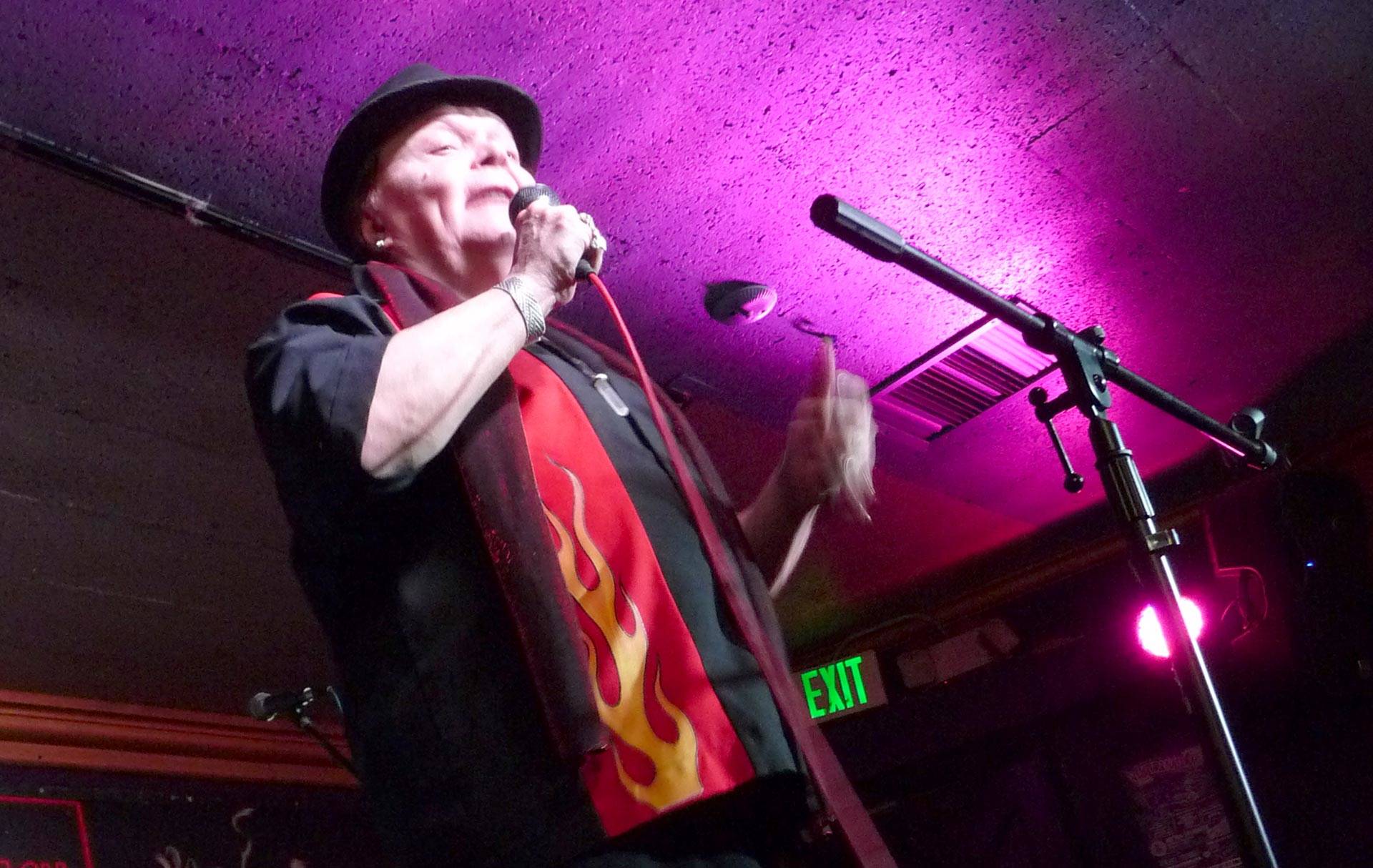
"caption": "Troy Walker sings at Cody Bryant’s Viva Cantina, a Mexican restaurant in Burbank that’s become the singer’s monthly gig.",
"description": "Troy Walker sings at Cody Bryant’s Viva Cantina, a Mexican restaurant in Burbank that’s become the singer’s monthly gig.",
"title": "TroyWalker",
"credit": "Peter Gilstrap/KQED",
"status": "inherit",
"isLoading": false,
"fetchFailed": false
},
"news_10886214": {
"type": "attachments",
"id": "news_10886214",
"meta": {
"index": "attachments_1716263798",
"site": "news",
"id": "10886214",
"found": true
},
"parent": 10885303,
"imgSizes": {
"twentyfourteen-full-width": {
"file": "https://ww2.kqed.org/app/uploads/sites/10/2016/03/NahasAndHertz-1038x576.jpg",
"width": 1038,
"mimeType": "image/jpeg",
"height": 576
},
"thumbnail": {
"file": "https://ww2.kqed.org/app/uploads/sites/10/2016/03/NahasAndHertz-400x233.jpg",
"width": 400,
"mimeType": "image/jpeg",
"height": 233
},
"fd-sm": {
"file": "https://ww2.kqed.org/app/uploads/sites/10/2016/03/NahasAndHertz-960x560.jpg",
"width": 960,
"mimeType": "image/jpeg",
"height": 560
},
"post-thumbnail": {
"file": "https://ww2.kqed.org/app/uploads/sites/10/2016/03/NahasAndHertz-672x372.jpg",
"width": 672,
"mimeType": "image/jpeg",
"height": 372
},
"kqedFullSize": {
"file": "https://ww2.kqed.org/app/uploads/sites/10/2016/03/NahasAndHertz.jpg",
"width": 1920,
"height": 1119
},
"large": {
"file": "https://ww2.kqed.org/app/uploads/sites/10/2016/03/NahasAndHertz-1920x1119.jpg",
"width": 1920,
"mimeType": "image/jpeg",
"height": 1119
},
"guest-author-96": {
"file": "https://ww2.kqed.org/app/uploads/sites/10/2016/03/NahasAndHertz-96x96.jpg",
"width": 96,
"mimeType": "image/jpeg",
"height": 96
},
"medium": {
"file": "https://ww2.kqed.org/app/uploads/sites/10/2016/03/NahasAndHertz-800x466.jpg",
"width": 800,
"mimeType": "image/jpeg",
"height": 466
},
"guest-author-64": {
"file": "https://ww2.kqed.org/app/uploads/sites/10/2016/03/NahasAndHertz-64x64.jpg",
"width": 64,
"mimeType": "image/jpeg",
"height": 64
},
"guest-author-32": {
"file": "https://ww2.kqed.org/app/uploads/sites/10/2016/03/NahasAndHertz-32x32.jpg",
"width": 32,
"mimeType": "image/jpeg",
"height": 32
},
"jmtc-small-thumb": {
"file": "https://ww2.kqed.org/app/uploads/sites/10/2016/03/NahasAndHertz-280x150.jpg",
"width": 280,
"mimeType": "image/jpeg",
"height": 150
},
"fd-lrg": {
"file": "https://ww2.kqed.org/app/uploads/sites/10/2016/03/NahasAndHertz-1920x1119.jpg",
"width": 1920,
"mimeType": "image/jpeg",
"height": 1119
},
"fd-med": {
"file": "https://ww2.kqed.org/app/uploads/sites/10/2016/03/NahasAndHertz-1180x688.jpg",
"width": 1180,
"mimeType": "image/jpeg",
"height": 688
},
"detail": {
"file": "https://ww2.kqed.org/app/uploads/sites/10/2016/03/NahasAndHertz-75x75.jpg",
"width": 75,
"mimeType": "image/jpeg",
"height": 75
},
"guest-author-128": {
"file": "https://ww2.kqed.org/app/uploads/sites/10/2016/03/NahasAndHertz-128x128.jpg",
"width": 128,
"mimeType": "image/jpeg",
"height": 128
}
},
"publishDate": 1457128991,
"modified": 1457129025,
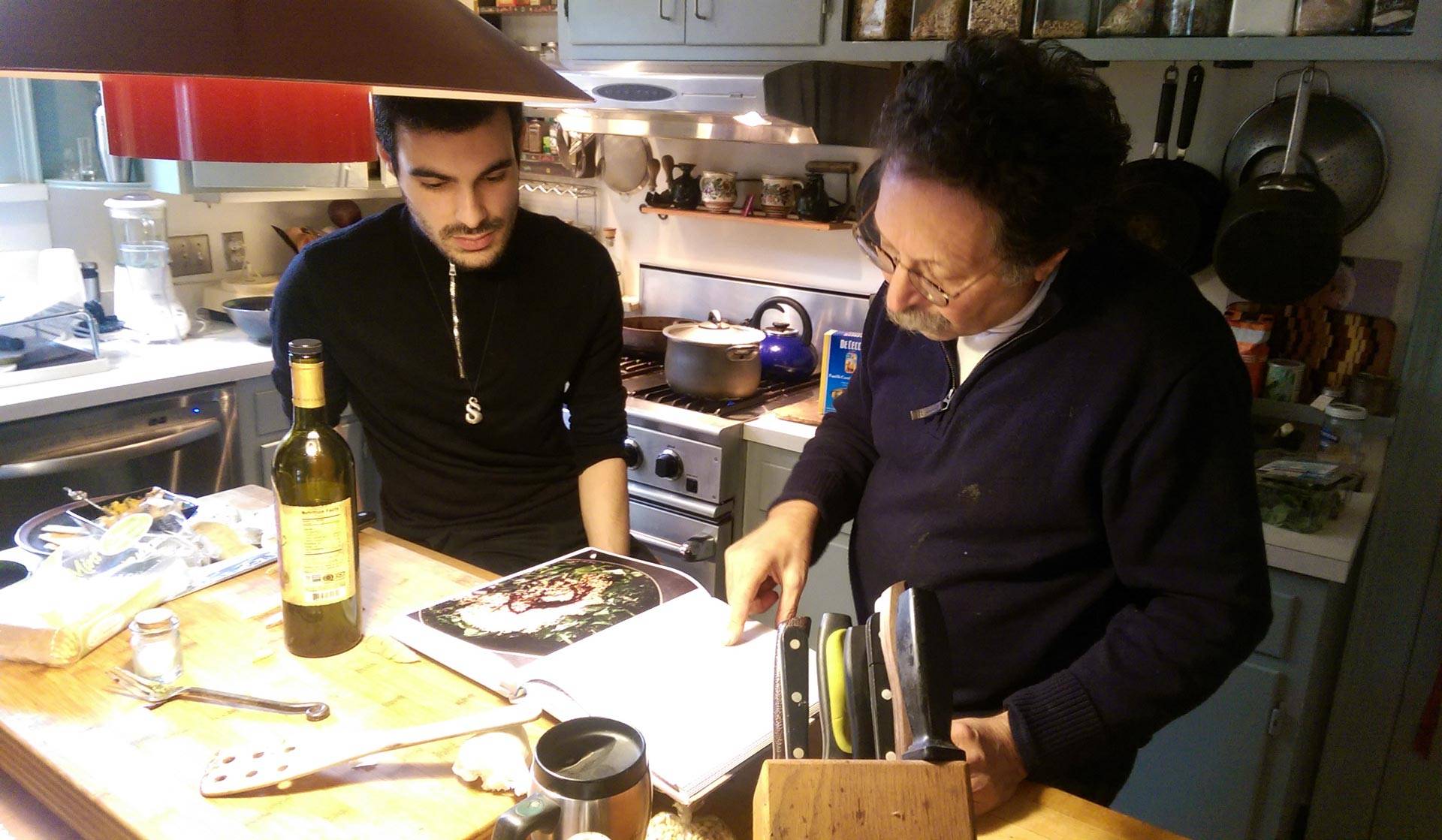
"caption": "Subhi Nahas (L) with Fred Hertz, who hosted him for his first two months in California.",
"description": "Subhi Nahas (L) with Fred Hertz, who hosted him for his first two months in California.",
"title": "NahasAndHertz",
"credit": "Eli Wirtschafter/KQED",
"status": "inherit",
"isLoading": false,
"fetchFailed": false
},
"news_10868490": {
"type": "attachments",
"id": "news_10868490",
"meta": {
"index": "attachments_1716263798",
"site": "news",
"id": "10868490",
"found": true
},
"parent": 10868291,
"imgSizes": {
"twentyfourteen-full-width": {
"file": "https://ww2.kqed.org/app/uploads/sites/10/2016/02/TaylorVictorWideAngle-1038x576.jpg",
"width": 1038,
"mimeType": "image/jpeg",
"height": 576
},
"thumbnail": {
"file": "https://ww2.kqed.org/app/uploads/sites/10/2016/02/TaylorVictorWideAngle-400x189.jpg",
"width": 400,
"mimeType": "image/jpeg",
"height": 189
},
"fd-sm": {
"file": "https://ww2.kqed.org/app/uploads/sites/10/2016/02/TaylorVictorWideAngle-960x454.jpg",
"width": 960,
"mimeType": "image/jpeg",
"height": 454
},
"post-thumbnail": {
"file": "https://ww2.kqed.org/app/uploads/sites/10/2016/02/TaylorVictorWideAngle-672x372.jpg",
"width": 672,
"mimeType": "image/jpeg",
"height": 372
},
"kqedFullSize": {
"file": "https://ww2.kqed.org/app/uploads/sites/10/2016/02/TaylorVictorWideAngle.jpg",
"width": 1920,
"height": 907
},
"large": {
"file": "https://ww2.kqed.org/app/uploads/sites/10/2016/02/TaylorVictorWideAngle-1440x680.jpg",
"width": 1440,
"mimeType": "image/jpeg",
"height": 680
},
"guest-author-96": {
"file": "https://ww2.kqed.org/app/uploads/sites/10/2016/02/TaylorVictorWideAngle-96x96.jpg",
"width": 96,
"mimeType": "image/jpeg",
"height": 96
},
"medium": {
"file": "https://ww2.kqed.org/app/uploads/sites/10/2016/02/TaylorVictorWideAngle-800x378.jpg",
"width": 800,
"mimeType": "image/jpeg",
"height": 378
},
"guest-author-64": {
"file": "https://ww2.kqed.org/app/uploads/sites/10/2016/02/TaylorVictorWideAngle-64x64.jpg",
"width": 64,
"mimeType": "image/jpeg",
"height": 64
},
"guest-author-32": {
"file": "https://ww2.kqed.org/app/uploads/sites/10/2016/02/TaylorVictorWideAngle-32x32.jpg",
"width": 32,
"mimeType": "image/jpeg",
"height": 32
},
"jmtc-small-thumb": {
"file": "https://ww2.kqed.org/app/uploads/sites/10/2016/02/TaylorVictorWideAngle-280x150.jpg",
"width": 280,
"mimeType": "image/jpeg",
"height": 150
},
"fd-lrg": {
"file": "https://ww2.kqed.org/app/uploads/sites/10/2016/02/TaylorVictorWideAngle-1920x907.jpg",
"width": 1920,
"mimeType": "image/jpeg",
"height": 907
},
"fd-med": {
"file": "https://ww2.kqed.org/app/uploads/sites/10/2016/02/TaylorVictorWideAngle-1180x557.jpg",
"width": 1180,
"mimeType": "image/jpeg",
"height": 557
},
"detail": {
"file": "https://ww2.kqed.org/app/uploads/sites/10/2016/02/TaylorVictorWideAngle-75x75.jpg",
"width": 75,
"mimeType": "image/jpeg",
"height": 75
},
"medium_large": {
"file": "https://ww2.kqed.org/app/uploads/sites/10/2016/02/TaylorVictorWideAngle-768x363.jpg",
"width": 768,
"mimeType": "image/jpeg",
"height": 363
},
"guest-author-128": {
"file": "https://ww2.kqed.org/app/uploads/sites/10/2016/02/TaylorVictorWideAngle-128x128.jpg",
"width": 128,
"mimeType": "image/jpeg",
"height": 128
}
},
"publishDate": 1455747801,
"modified": 1455747825,
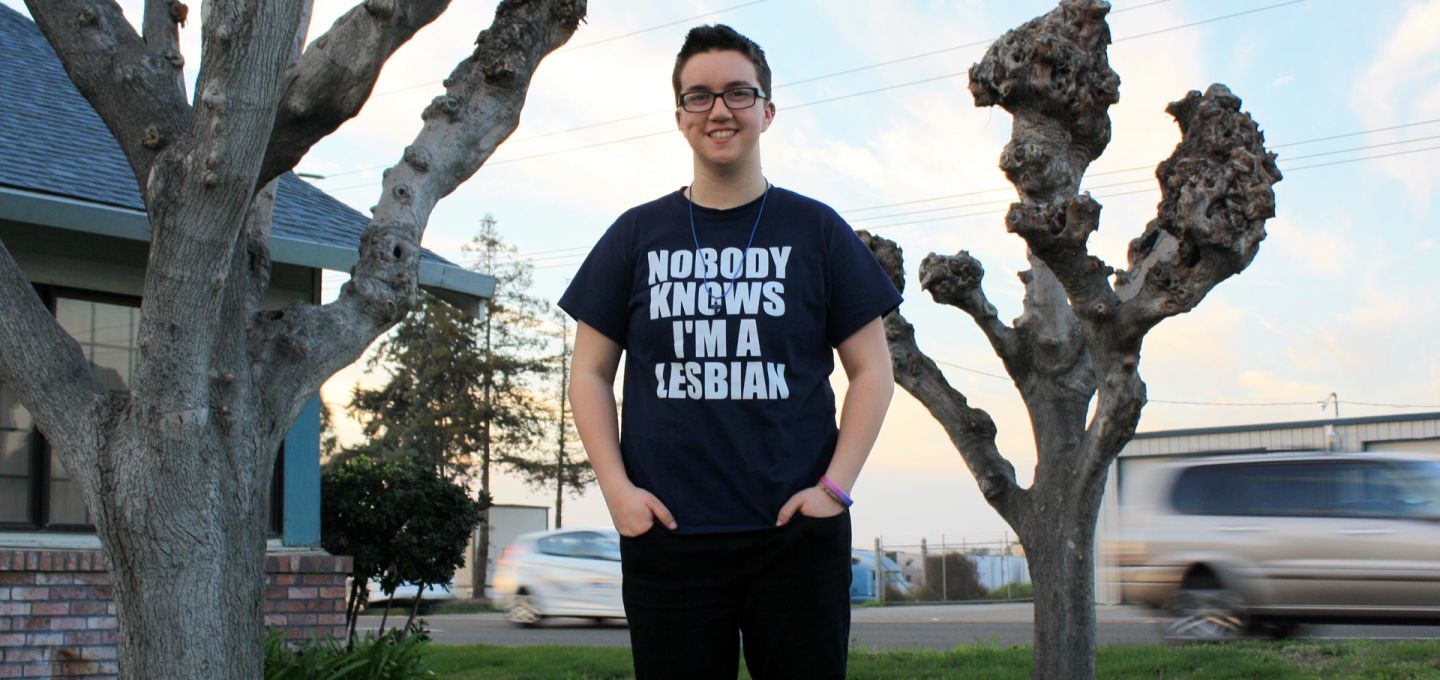
"caption": "Student Taylor Victor, wearing the shirt that got her sent home from school. ",
"description": "Student Taylor Victor, wearing the shirt that got her sent home from school. ",
"title": "TaylorVictorWideAngle",
"credit": "Bethany Woolman/ACLU",
"status": "inherit",
"isLoading": false,
"fetchFailed": false
},
"news_11310960": {
"type": "attachments",
"id": "news_11310960",
"meta": {
"index": "attachments_1716263798",
"site": "news",
"id": "11310960",
"found": true
},
"parent": 10795925,
"imgSizes": {
"small": {
"file": "https://ww2.kqed.org/app/uploads/sites/10/2015/12/The-Leap-Portraits-5-of-23-crop-520x293.jpg",
"width": 520,
"mimeType": "image/jpeg",
"height": 293
},
"twentyfourteen-full-width": {
"file": "https://ww2.kqed.org/app/uploads/sites/10/2015/12/The-Leap-Portraits-5-of-23-crop-1038x576.jpg",
"width": 1038,
"mimeType": "image/jpeg",
"height": 576
},
"thumbnail": {
"file": "https://ww2.kqed.org/app/uploads/sites/10/2015/12/The-Leap-Portraits-5-of-23-crop-160x90.jpg",
"width": 160,
"mimeType": "image/jpeg",
"height": 90
},
"fd-sm": {
"file": "https://ww2.kqed.org/app/uploads/sites/10/2015/12/The-Leap-Portraits-5-of-23-crop-960x540.jpg",
"width": 960,
"mimeType": "image/jpeg",
"height": 540
},
"post-thumbnail": {
"file": "https://ww2.kqed.org/app/uploads/sites/10/2015/12/The-Leap-Portraits-5-of-23-crop-672x372.jpg",
"width": 672,
"mimeType": "image/jpeg",
"height": 372
},
"xsmall": {
"file": "https://ww2.kqed.org/app/uploads/sites/10/2015/12/The-Leap-Portraits-5-of-23-crop-375x211.jpg",
"width": 375,
"mimeType": "image/jpeg",
"height": 211
},
"kqedFullSize": {
"file": "https://ww2.kqed.org/app/uploads/sites/10/2015/12/The-Leap-Portraits-5-of-23-crop.jpg",
"width": 1776,
"height": 999
},
"large": {
"file": "https://ww2.kqed.org/app/uploads/sites/10/2015/12/The-Leap-Portraits-5-of-23-crop-1020x574.jpg",
"width": 1020,
"mimeType": "image/jpeg",
"height": 574
},
"xlarge": {
"file": "https://ww2.kqed.org/app/uploads/sites/10/2015/12/The-Leap-Portraits-5-of-23-crop-1180x664.jpg",
"width": 1180,
"mimeType": "image/jpeg",
"height": 664
},
"guest-author-50": {
"file": "https://ww2.kqed.org/app/uploads/sites/10/2015/12/The-Leap-Portraits-5-of-23-crop-50x50.jpg",
"width": 50,
"mimeType": "image/jpeg",
"height": 50
},
"guest-author-96": {
"file": "https://ww2.kqed.org/app/uploads/sites/10/2015/12/The-Leap-Portraits-5-of-23-crop-96x96.jpg",
"width": 96,
"mimeType": "image/jpeg",
"height": 96
},
"medium": {
"file": "https://ww2.kqed.org/app/uploads/sites/10/2015/12/The-Leap-Portraits-5-of-23-crop-800x450.jpg",
"width": 800,
"mimeType": "image/jpeg",
"height": 450
},
"guest-author-64": {
"file": "https://ww2.kqed.org/app/uploads/sites/10/2015/12/The-Leap-Portraits-5-of-23-crop-64x64.jpg",
"width": 64,
"mimeType": "image/jpeg",
"height": 64
},
"guest-author-32": {
"file": "https://ww2.kqed.org/app/uploads/sites/10/2015/12/The-Leap-Portraits-5-of-23-crop-32x32.jpg",
"width": 32,
"mimeType": "image/jpeg",
"height": 32
},
"fd-med": {
"file": "https://ww2.kqed.org/app/uploads/sites/10/2015/12/The-Leap-Portraits-5-of-23-crop-1180x664.jpg",
"width": 1180,
"mimeType": "image/jpeg",
"height": 664
},
"detail": {
"file": "https://ww2.kqed.org/app/uploads/sites/10/2015/12/The-Leap-Portraits-5-of-23-crop-150x150.jpg",
"width": 150,
"mimeType": "image/jpeg",
"height": 150
},
"guest-author-128": {
"file": "https://ww2.kqed.org/app/uploads/sites/10/2015/12/The-Leap-Portraits-5-of-23-crop-128x128.jpg",
"width": 128,
"mimeType": "image/jpeg",
"height": 128
},
"xxsmall": {
"file": "https://ww2.kqed.org/app/uploads/sites/10/2015/12/The-Leap-Portraits-5-of-23-crop-240x135.jpg",
"width": 240,
"mimeType": "image/jpeg",
"height": 135
}
},
"publishDate": 1486774470,
"modified": 1486774470,
"caption": null,
"description": null,
"title": "The-Leap-Portraits-5-of-23-crop",
"credit": null,
"status": "inherit",
"isLoading": false,
"fetchFailed": false
},
"news_10673754": {
"type": "attachments",
"id": "news_10673754",
"meta": {
"index": "attachments_1716263798",
"site": "news",
"id": "10673754",
"found": true
},
"parent": 10673637,
"imgSizes": {
"twentyfourteen-full-width": {
"file": "https://ww2.kqed.org/app/uploads/sites/10/2015/09/KimDavis-1038x576.jpg",
"width": 1038,
"mimeType": "image/jpeg",
"height": 576
},
"thumbnail": {
"file": "https://ww2.kqed.org/app/uploads/sites/10/2015/09/KimDavis-400x284.jpg",
"width": 400,
"mimeType": "image/jpeg",
"height": 284
},
"fd-sm": {
"file": "https://ww2.kqed.org/app/uploads/sites/10/2015/09/KimDavis-960x681.jpg",
"width": 960,
"mimeType": "image/jpeg",
"height": 681
},
"post-thumbnail": {
"file": "https://ww2.kqed.org/app/uploads/sites/10/2015/09/KimDavis-672x372.jpg",
"width": 672,
"mimeType": "image/jpeg",
"height": 372
},
"kqedFullSize": {
"file": "https://ww2.kqed.org/app/uploads/sites/10/2015/09/KimDavis.jpg",
"width": 1920,
"height": 1361
},
"large": {
"file": "https://ww2.kqed.org/app/uploads/sites/10/2015/09/KimDavis-1440x1021.jpg",
"width": 1440,
"mimeType": "image/jpeg",
"height": 1021
},
"guest-author-96": {
"file": "https://ww2.kqed.org/app/uploads/sites/10/2015/09/KimDavis-96x96.jpg",
"width": 96,
"mimeType": "image/jpeg",
"height": 96
},
"medium": {
"file": "https://ww2.kqed.org/app/uploads/sites/10/2015/09/KimDavis-800x567.jpg",
"width": 800,
"mimeType": "image/jpeg",
"height": 567
},
"guest-author-64": {
"file": "https://ww2.kqed.org/app/uploads/sites/10/2015/09/KimDavis-64x64.jpg",
"width": 64,
"mimeType": "image/jpeg",
"height": 64
},
"guest-author-32": {
"file": "https://ww2.kqed.org/app/uploads/sites/10/2015/09/KimDavis-32x32.jpg",
"width": 32,
"mimeType": "image/jpeg",
"height": 32
},
"jmtc-small-thumb": {
"file": "https://ww2.kqed.org/app/uploads/sites/10/2015/09/KimDavis-280x150.jpg",
"width": 280,
"mimeType": "image/jpeg",
"height": 150
},
"fd-lrg": {
"file": "https://ww2.kqed.org/app/uploads/sites/10/2015/09/KimDavis-1920x1361.jpg",
"width": 1920,
"mimeType": "image/jpeg",
"height": 1361
},
"fd-med": {
"file": "https://ww2.kqed.org/app/uploads/sites/10/2015/09/KimDavis-1180x836.jpg",
"width": 1180,
"mimeType": "image/jpeg",
"height": 836
},
"detail": {
"file": "https://ww2.kqed.org/app/uploads/sites/10/2015/09/KimDavis-75x75.jpg",
"width": 75,
"mimeType": "image/jpeg",
"height": 75
},
"guest-author-128": {
"file": "https://ww2.kqed.org/app/uploads/sites/10/2015/09/KimDavis-128x128.jpg",
"width": 128,
"mimeType": "image/jpeg",
"height": 128
}
},
"publishDate": 1441758388,
"modified": 1441758980,
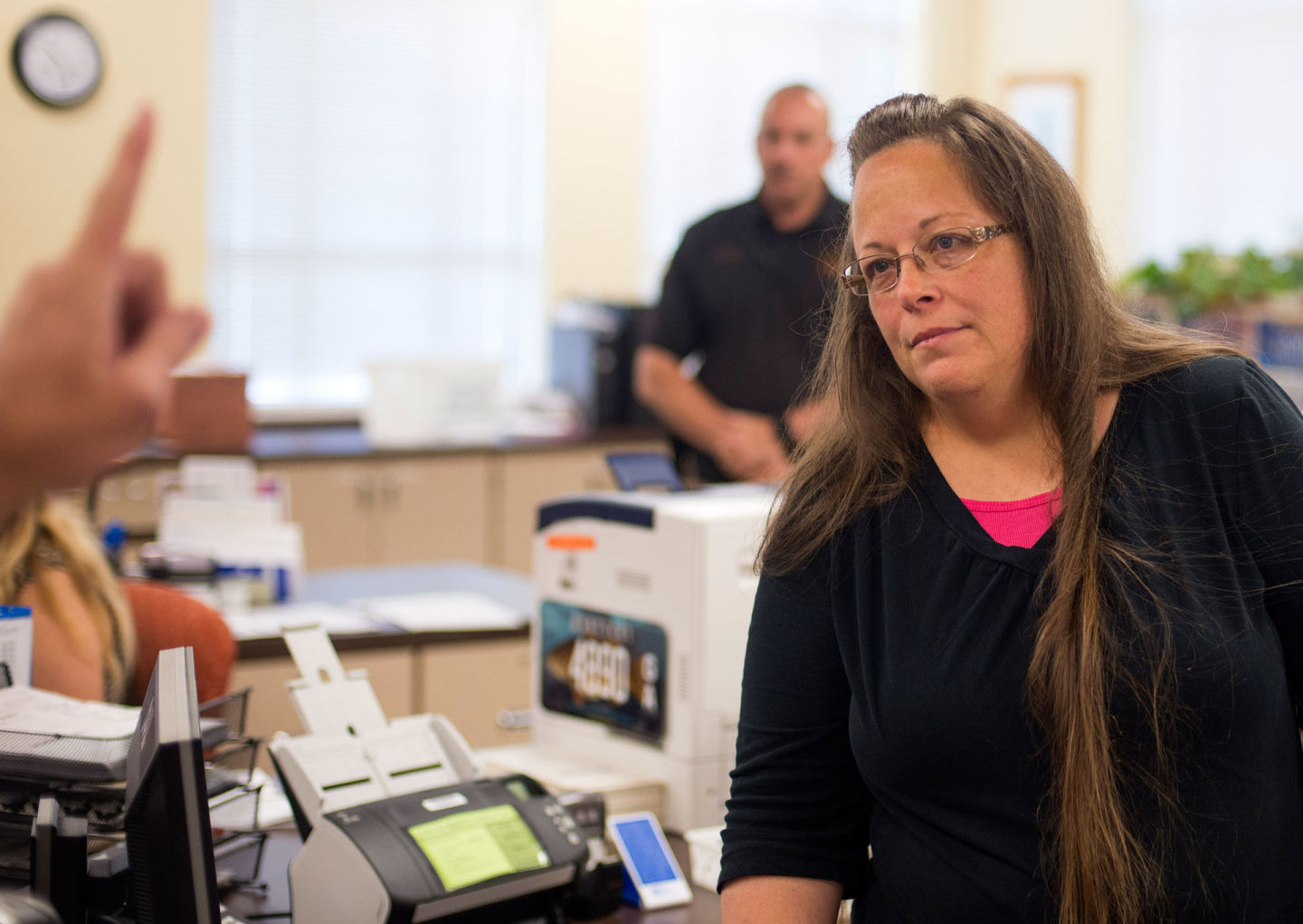
"caption": "Kim Davis, the Rowan County clerk of courts, listens to Robbie Blankenship and Jesse Cruz as they speak with her about getting a marriage license on Sept. 2, 2015, in Morehead, Kentucky. ",
"description": "Kim Davis, the Rowan County Clerk of Courts, listens to Robbie Blankenship and Jesse Cruz as they speak with her about getting a marriage license on September 2, 2015 in Morehead, Kentucky. ",
"title": "KimDavis",
"credit": "Ty Wright/Getty Images",
"status": "inherit",
"isLoading": false,
"fetchFailed": false
},
"arts_10788226": {
"type": "attachments",
"id": "arts_10788226",
"meta": {
"index": "attachments_1716263798",
"site": "arts",
"id": "10788226",
"found": true
},
"parent": 10788224,
"imgSizes": {
"twentyfourteen-full-width": {
"file": "https://ww2.kqed.org/app/uploads/sites/2/2015/06/Galeria-de-la-Raza-mural-defaced-again-e1434959964598-1038x576.jpg",
"width": 1038,
"mimeType": "image/jpeg",
"height": 576
},
"thumbnail": {
"file": "https://ww2.kqed.org/app/uploads/sites/2/2015/06/Galeria-de-la-Raza-mural-defaced-again-e1434959964598-400x225.jpg",
"width": 400,
"mimeType": "image/jpeg",
"height": 225
},
"fd-sm": {
"file": "https://ww2.kqed.org/app/uploads/sites/2/2015/06/Galeria-de-la-Raza-mural-defaced-again-e1434959964598-960x540.jpg",
"width": 960,
"mimeType": "image/jpeg",
"height": 540
},
"post-thumbnail": {
"file": "https://ww2.kqed.org/app/uploads/sites/2/2015/06/Galeria-de-la-Raza-mural-defaced-again-e1434959964598-672x372.jpg",
"width": 672,
"mimeType": "image/jpeg",
"height": 372
},
"kqedFullSize": {
"file": "https://ww2.kqed.org/app/uploads/sites/2/2015/06/Galeria-de-la-Raza-mural-defaced-again-e1434959964598.jpg",
"width": 2048,
"height": 1152
},
"large": {
"file": "https://ww2.kqed.org/app/uploads/sites/2/2015/06/Galeria-de-la-Raza-mural-defaced-again-e1434959964598-1180x664.jpg",
"width": 1180,
"mimeType": "image/jpeg",
"height": 664
},
"guest-author-96": {
"file": "https://ww2.kqed.org/app/uploads/sites/2/2015/06/Galeria-de-la-Raza-mural-defaced-again-e1434959964598-96x96.jpg",
"width": 96,
"mimeType": "image/jpeg",
"height": 96
},
"medium": {
"file": "https://ww2.kqed.org/app/uploads/sites/2/2015/06/Galeria-de-la-Raza-mural-defaced-again-e1434959964598-800x450.jpg",
"width": 800,
"mimeType": "image/jpeg",
"height": 450
},
"guest-author-64": {
"file": "https://ww2.kqed.org/app/uploads/sites/2/2015/06/Galeria-de-la-Raza-mural-defaced-again-e1434959964598-64x64.jpg",
"width": 64,
"mimeType": "image/jpeg",
"height": 64
},
"guest-author-32": {
"file": "https://ww2.kqed.org/app/uploads/sites/2/2015/06/Galeria-de-la-Raza-mural-defaced-again-e1434959964598-32x32.jpg",
"width": 32,
"mimeType": "image/jpeg",
"height": 32
},
"fd-med": {
"file": "https://ww2.kqed.org/app/uploads/sites/2/2015/06/Galeria-de-la-Raza-mural-defaced-again-e1434959964598-1180x664.jpg",
"width": 1180,
"mimeType": "image/jpeg",
"height": 664
},
"detail": {
"file": "https://ww2.kqed.org/app/uploads/sites/2/2015/06/Galeria-de-la-Raza-mural-defaced-again-e1434959964598-75x75.jpg",
"width": 75,
"mimeType": "image/jpeg",
"height": 75
},
"guest-author-128": {
"file": "https://ww2.kqed.org/app/uploads/sites/2/2015/06/Galeria-de-la-Raza-mural-defaced-again-e1434959964598-128x128.jpg",
"width": 128,
"mimeType": "image/jpeg",
"height": 128
}
},
"publishDate": 1434959218,
"modified": 1434960202,
"caption": "The second printing of Manuel Paul's mural \"Por Vida\" after it was defaced. The first version had been vandalized and was replaced last Thursday. (Photo courtesy of Galeria de la Raza.)",
"description": "The second printing of Manuel Paul's mural \"Por Vida\" after it was defaced. The first version had been vandalized and was replaced last Thursday. (Photo courtesy of Galeria de la Raza.)",
"title": "Galeria de la Raza mural defaced again",
"credit": null,
"status": "inherit",
"isLoading": false,
"fetchFailed": false
},
"news_10501594": {
"type": "attachments",
"id": "news_10501594",
"meta": {
"index": "attachments_1716263798",
"site": "news",
"id": "10501594",
"found": true
},
"parent": 10501545,
"imgSizes": {
"twentyfourteen-full-width": {
"file": "https://ww2.kqed.org/app/uploads/sites/10/2015/04/The_Lexington_Club-1038x576.jpg",
"width": 1038,
"mimeType": "image/jpeg",
"height": 576
},
"thumbnail": {
"file": "https://ww2.kqed.org/app/uploads/sites/10/2015/04/The_Lexington_Club-400x436.jpg",
"width": 400,
"mimeType": "image/jpeg",
"height": 436
},
"fd-sm": {
"file": "https://ww2.kqed.org/app/uploads/sites/10/2015/04/The_Lexington_Club-960x1047.jpg",
"width": 960,
"mimeType": "image/jpeg",
"height": 1047
},
"post-thumbnail": {
"file": "https://ww2.kqed.org/app/uploads/sites/10/2015/04/The_Lexington_Club-672x372.jpg",
"width": 672,
"mimeType": "image/jpeg",
"height": 372
},
"kqedFullSize": {
"file": "https://ww2.kqed.org/app/uploads/sites/10/2015/04/The_Lexington_Club.jpg",
"width": 1790,
"height": 1953
},
"large": {
"file": "https://ww2.kqed.org/app/uploads/sites/10/2015/04/The_Lexington_Club-1440x1571.jpg",
"width": 1440,
"mimeType": "image/jpeg",
"height": 1571
},
"guest-author-96": {
"file": "https://ww2.kqed.org/app/uploads/sites/10/2015/04/The_Lexington_Club-96x96.jpg",
"width": 96,
"mimeType": "image/jpeg",
"height": 96
},
"medium": {
"file": "https://ww2.kqed.org/app/uploads/sites/10/2015/04/The_Lexington_Club-800x873.jpg",
"width": 800,
"mimeType": "image/jpeg",
"height": 873
},
"guest-author-64": {
"file": "https://ww2.kqed.org/app/uploads/sites/10/2015/04/The_Lexington_Club-64x64.jpg",
"width": 64,
"mimeType": "image/jpeg",
"height": 64
},
"guest-author-32": {
"file": "https://ww2.kqed.org/app/uploads/sites/10/2015/04/The_Lexington_Club-32x32.jpg",
"width": 32,
"mimeType": "image/jpeg",
"height": 32
},
"fd-med": {
"file": "https://ww2.kqed.org/app/uploads/sites/10/2015/04/The_Lexington_Club-1180x1287.jpg",
"width": 1180,
"mimeType": "image/jpeg",
"height": 1287
},
"detail": {
"file": "https://ww2.kqed.org/app/uploads/sites/10/2015/04/The_Lexington_Club-75x75.jpg",
"width": 75,
"mimeType": "image/jpeg",
"height": 75
},
"guest-author-128": {
"file": "https://ww2.kqed.org/app/uploads/sites/10/2015/04/The_Lexington_Club-128x128.jpg",
"width": 128,
"mimeType": "image/jpeg",
"height": 128
}
},
"publishDate": 1429926970,
"modified": 1429927015,
"caption": "The Lexington Club.",
"description": "The Lexington Club.",
"title": "The_Lexington_Club",
"credit": "Wikimedia Commons",
"status": "inherit",
"isLoading": false,
"fetchFailed": false
},
"news_10466133": {
"type": "attachments",
"id": "news_10466133",
"meta": {
"index": "attachments_1716263798",
"site": "news",
"id": "10466133",
"found": true
},
"parent": 10466055,
"imgSizes": {
"twentyfourteen-full-width": {
"file": "https://ww2.kqed.org/app/uploads/sites/10/2015/03/RS12785_kamalaharris20141028-qut-1038x576.jpg",
"width": 1038,
"mimeType": "image/jpeg",
"height": 576
},
"thumbnail": {
"file": "https://ww2.kqed.org/app/uploads/sites/10/2015/03/RS12785_kamalaharris20141028-qut-400x324.jpg",
"width": 400,
"mimeType": "image/jpeg",
"height": 324
},
"fd-sm": {
"file": "https://ww2.kqed.org/app/uploads/sites/10/2015/03/RS12785_kamalaharris20141028-qut-320x260.jpg",
"width": 320,
"mimeType": "image/jpeg",
"height": 260
},
"post-thumbnail": {
"file": "https://ww2.kqed.org/app/uploads/sites/10/2015/03/RS12785_kamalaharris20141028-qut-672x372.jpg",
"width": 672,
"mimeType": "image/jpeg",
"height": 372
},
"kqedFullSize": {
"file": "https://ww2.kqed.org/app/uploads/sites/10/2015/03/RS12785_kamalaharris20141028-qut.jpg",
"width": 1440,
"height": 1168
},
"large": {
"file": "https://ww2.kqed.org/app/uploads/sites/10/2015/03/RS12785_kamalaharris20141028-qut-1440x1168.jpg",
"width": 1440,
"mimeType": "image/jpeg",
"height": 1168
},
"guest-author-96": {
"file": "https://ww2.kqed.org/app/uploads/sites/10/2015/03/RS12785_kamalaharris20141028-qut-96x96.jpg",
"width": 96,
"mimeType": "image/jpeg",
"height": 96
},
"medium": {
"file": "https://ww2.kqed.org/app/uploads/sites/10/2015/03/RS12785_kamalaharris20141028-qut-800x649.jpg",
"width": 800,
"mimeType": "image/jpeg",
"height": 649
},
"guest-author-64": {
"file": "https://ww2.kqed.org/app/uploads/sites/10/2015/03/RS12785_kamalaharris20141028-qut-64x64.jpg",
"width": 64,
"mimeType": "image/jpeg",
"height": 64
},
"guest-author-32": {
"file": "https://ww2.kqed.org/app/uploads/sites/10/2015/03/RS12785_kamalaharris20141028-qut-32x32.jpg",
"width": 32,
"mimeType": "image/jpeg",
"height": 32
},
"fd-lrg": {
"file": "https://ww2.kqed.org/app/uploads/sites/10/2015/03/RS12785_kamalaharris20141028-qut-1180x957.jpg",
"width": 1180,
"mimeType": "image/jpeg",
"height": 957
},
"fd-med": {
"file": "https://ww2.kqed.org/app/uploads/sites/10/2015/03/RS12785_kamalaharris20141028-qut-768x623.jpg",
"width": 768,
"mimeType": "image/jpeg",
"height": 623
},
"detail": {
"file": "https://ww2.kqed.org/app/uploads/sites/10/2015/03/RS12785_kamalaharris20141028-qut-75x75.jpg",
"width": 75,
"mimeType": "image/jpeg",
"height": 75
},
"guest-author-128": {
"file": "https://ww2.kqed.org/app/uploads/sites/10/2015/03/RS12785_kamalaharris20141028-qut-128x128.jpg",
"width": 128,
"mimeType": "image/jpeg",
"height": 128
}
},
"publishDate": 1427330617,
"modified": 1427330684,
"caption": "State Attorney General Kamala Harris speaks in Los Angeles in October 2014.",
"description": "State Attorney General Kamala Harris speaks in Los Angeles in October 2014.",
"title": "RS12785_kamalaharris20141028-qut",
"credit": "Jason Merritt/Getty Images for Variety",
"status": "inherit",
"isLoading": false,
"fetchFailed": false
},
"news_10384243": {
"type": "attachments",
"id": "news_10384243",
"meta": {
"index": "attachments_1716263798",
"site": "news",
"id": "10384243",
"found": true
},
"parent": 10384183,
"imgSizes": {
"twentyfourteen-full-width": {
"file": "https://ww2.kqed.org/app/uploads/sites/10/2014/12/10417_transform-1038x576.jpg",
"width": 1038,
"mimeType": "image/jpeg",
"height": 576
},
"thumbnail": {
"file": "https://ww2.kqed.org/app/uploads/sites/10/2014/12/10417_transform-400x277.jpg",
"width": 400,
"mimeType": "image/jpeg",
"height": 277
},
"post-thumbnail": {
"file": "https://ww2.kqed.org/app/uploads/sites/10/2014/12/10417_transform-672x372.jpg",
"width": 672,
"mimeType": "image/jpeg",
"height": 372
},
"kqedFullSize": {
"file": "https://ww2.kqed.org/app/uploads/sites/10/2014/12/10417_transform.jpg",
"width": 1440,
"height": 999
},
"guest-author-96": {
"file": "https://ww2.kqed.org/app/uploads/sites/10/2014/12/10417_transform-96x96.jpg",
"width": 96,
"mimeType": "image/jpeg",
"height": 96
},
"medium": {
"file": "https://ww2.kqed.org/app/uploads/sites/10/2014/12/10417_transform-800x555.jpg",
"width": 800,
"mimeType": "image/jpeg",
"height": 555
},
"guest-author-64": {
"file": "https://ww2.kqed.org/app/uploads/sites/10/2014/12/10417_transform-64x64.jpg",
"width": 64,
"mimeType": "image/jpeg",
"height": 64
},
"detail": {
"file": "https://ww2.kqed.org/app/uploads/sites/10/2014/12/10417_transform-75x75.jpg",
"width": 75,
"mimeType": "image/jpeg",
"height": 75
},
"guest-author-32": {
"file": "https://ww2.kqed.org/app/uploads/sites/10/2014/12/10417_transform-32x32.jpg",
"width": 32,
"mimeType": "image/jpeg",
"height": 32
},
"guest-author-128": {
"file": "https://ww2.kqed.org/app/uploads/sites/10/2014/12/10417_transform-128x128.jpg",
"width": 128,
"mimeType": "image/jpeg",
"height": 128
}
},
"publishDate": 1419030219,
"modified": 1419030271,
"caption": "Attorney General Eric Holder sent a memo reversing the Justice Department's policy on transgender workers on Thursday. File photo. ",
"description": "WASHINGTON, DC - MAY 19: U.S. Attorney General Eric Holder speaks as he announces indictments against Chinese military hackers on cyber-espionage May 19, 2014 at the Department of Justice in Washington, DC. A grand jury in the Western District of Pennsylvania have indicted five Chinese military hackers for computer hacking, economic espionage and other offense directed at six American victim in the U.S. nuclear power, metals and solar products industries. (Photo by Alex Wong/Getty Images)",
"title": "AG Holder Announces Economic Cyber-Espionage Charges Against China",
"credit": "Alex Wong/Getty Images",
"status": "inherit",
"isLoading": false,
"fetchFailed": false
},
"news_10340844": {
"type": "attachments",
"id": "news_10340844",
"meta": {
"index": "attachments_1716263798",
"site": "news",
"id": "10340844",
"found": true
},
"parent": 10140842,
"imgSizes": {
"thumbnail": {
"file": "https://ww2.kqed.org/app/uploads/sites/10/2014/09/takeicrop-400x225.jpg",
"width": 400,
"mimeType": "image/jpeg",
"height": 225
},
"kqedFullSize": {
"file": "https://ww2.kqed.org/app/uploads/sites/10/2014/09/takeicrop.jpg",
"width": 640,
"height": 360
},
"guest-author-96": {
"file": "https://ww2.kqed.org/app/uploads/sites/10/2014/09/takeicrop-96x96.jpg",
"width": 96,
"mimeType": "image/jpeg",
"height": 96
},
"guest-author-64": {
"file": "https://ww2.kqed.org/app/uploads/sites/10/2014/09/takeicrop-64x64.jpg",
"width": 64,
"mimeType": "image/jpeg",
"height": 64
},
"detail": {
"file": "https://ww2.kqed.org/app/uploads/sites/10/2014/09/takeicrop-75x75.jpg",
"width": 75,
"mimeType": "image/jpeg",
"height": 75
},
"guest-author-32": {
"file": "https://ww2.kqed.org/app/uploads/sites/10/2014/09/takeicrop-32x32.jpg",
"width": 32,
"mimeType": "image/jpeg",
"height": 32
},
"guest-author-128": {
"file": "https://ww2.kqed.org/app/uploads/sites/10/2014/09/takeicrop-128x128.jpg",
"width": 128,
"mimeType": "image/jpeg",
"height": 128
}
},
"publishDate": 1410381804,
"modified": 1410381804,
"caption": "George Takei (Frederick M. Brown/Getty Images)",
"description": null,
"title": "takeicrop",
"credit": null,
"status": "inherit",
"isLoading": false,
"fetchFailed": false
}
},
"audioPlayerReducer": {
"postId": "stream_live",
"isPaused": true,
"isPlaying": false,
"pfsActive": false,
"pledgeModalIsOpen": true,
"playerDrawerIsOpen": false,
"liveAudioPlayStartedAt": 0,
"liveAudioPlayContext": ""
},
"authorsReducer": {
"byline_news_10987791": {
"type": "authors",
"id": "byline_news_10987791",
"meta": {
"override": true
},
"slug": "byline_news_10987791",
"name": "\u003cstrong>\u003ca href=\"http://www.npr.org/people/14562108/bill-chappell\">Bill Chappell\u003c/a>\u003cbr>\u003ca href=\"http://www.npr.org/\">NPR\u003c/a>\u003c/strong>",
"isLoading": false
},
"byline_news_10987103": {
"type": "authors",
"id": "byline_news_10987103",
"meta": {
"override": true
},
"slug": "byline_news_10987103",
"name": "\u003cstrong>Christopher Weber\u003c/strong> and \u003cstrong>Andrew Dalton\u003cbr>Associated Press\u003c/strong>",
"isLoading": false
},
"byline_news_10892969": {
"type": "authors",
"id": "byline_news_10892969",
"meta": {
"override": true
},
"slug": "byline_news_10892969",
"name": "Peter Gilstrap",
"isLoading": false
},
"byline_news_10885303": {
"type": "authors",
"id": "byline_news_10885303",
"meta": {
"override": true
},
"slug": "byline_news_10885303",
"name": "Eli Wirtschafter",
"isLoading": false
},
"byline_news_10868291": {
"type": "authors",
"id": "byline_news_10868291",
"meta": {
"override": true
},
"slug": "byline_news_10868291",
"name": "\u003cstrong>Lisa Leff\u003cbr>Associated Press\u003c/strong>",
"isLoading": false
},
"byline_news_10501545": {
"type": "authors",
"id": "byline_news_10501545",
"meta": {
"override": true
},
"slug": "byline_news_10501545",
"name": "\u003cstrong>Jessica Placzek\u003c/strong>",
"isLoading": false
},
"kjones": {
"type": "authors",
"id": "93",
"meta": {
"index": "authors_1716337520",
"id": "93",
"found": true
},
"name": "Kevin L. Jones",
"firstName": "Kevin",
"lastName": "Jones",
"slug": "kjones",
"email": "kjones@kqed.org",
"display_author_email": false,
"staff_mastheads": [],
"title": null,
"bio": null,
"avatar": "https://secure.gravatar.com/avatar/12c65b5633ed39d0a59bb7f497eff645?s=600&d=blank&r=g",
"twitter": null,
"facebook": null,
"instagram": null,
"linkedin": null,
"sites": [
{
"site": "arts",
"roles": [
"subscriber"
]
},
{
"site": "styleguide",
"roles": [
"contributor"
]
},
{
"site": "artschool",
"roles": [
"subscriber"
]
},
{
"site": "news",
"roles": [
"subscriber"
]
},
{
"site": "pop",
"roles": [
"subscriber"
]
}
],
"headData": {
"title": "Kevin L. Jones | KQED",
"description": null,
"ogImgSrc": "https://secure.gravatar.com/avatar/12c65b5633ed39d0a59bb7f497eff645?s=600&d=blank&r=g",
"twImgSrc": "https://secure.gravatar.com/avatar/12c65b5633ed39d0a59bb7f497eff645?s=600&d=blank&r=g"
},
"isLoading": false,
"link": "/author/kjones"
},
"lisapickoffwhite-2": {
"type": "authors",
"id": "199",
"meta": {
"index": "authors_1716337520",
"id": "199",
"found": true
},
"name": "Lisa Pickoff-White",
"firstName": "Lisa",
"lastName": "Pickoff-White",
"slug": "lisapickoffwhite-2",
"email": "lpickoffwhite@kqed.org",
"display_author_email": false,
"staff_mastheads": [
"news"
],
"title": "Data Journalist, Senior Producer",
"bio": "Lisa Pickoff-White is KQED's data reporter. Lisa specializes in simplifying complex topics and bringing them to life through compelling visuals, including photography and data visualizations. She previously has worked at the Center for Investigative Reporting and other national outlets. Her work has been honored with awards from the Online News Association, Investigative Reporters and Editors, the Society of Professional Journalists and SXSW Interactive. \u003cstrong> \u003c/strong>",
"avatar": "https://secure.gravatar.com/avatar/5513c5f3967df792aa65bee2501e84d6?s=600&d=blank&r=g",
"twitter": "pickoffwhite",
"facebook": null,
"instagram": null,
"linkedin": null,
"sites": [
{
"site": "",
"roles": [
"editor"
]
},
{
"site": "arts",
"roles": []
},
{
"site": "news",
"roles": [
"administrator"
]
},
{
"site": "about",
"roles": [
"editor"
]
},
{
"site": "stateofhealth",
"roles": [
"administrator"
]
},
{
"site": "science",
"roles": [
"editor"
]
},
{
"site": "quest",
"roles": [
"editor"
]
},
{
"site": "forum",
"roles": [
"editor"
]
}
],
"headData": {
"title": "Lisa Pickoff-White | KQED",
"description": "Data Journalist, Senior Producer",
"ogImgSrc": "https://secure.gravatar.com/avatar/5513c5f3967df792aa65bee2501e84d6?s=600&d=blank&r=g",
"twImgSrc": "https://secure.gravatar.com/avatar/5513c5f3967df792aa65bee2501e84d6?s=600&d=blank&r=g"
},
"isLoading": false,
"link": "/author/lisapickoffwhite-2"
},
"amystanden": {
"type": "authors",
"id": "210",
"meta": {
"index": "authors_1716337520",
"id": "210",
"found": true
},
"name": "Amy Standen",
"firstName": "Amy",
"lastName": "Standen",
"slug": "amystanden",
"email": "astanden@kqed.org",
"display_author_email": false,
"staff_mastheads": [],
"title": "KQED Contributor",
"bio": "Amy Standen (@amystanden) is co-host of #\u003ca href=\"https://ww2.kqed.org/news/programs/the-leap\">TheLeapPodcast\u003c/a> (subscribe on iTunes or Stitcher!) and host of KQED and PBSDigital Studios' science video series, \u003ca href=\"https://www.youtube.com/user/KQEDDeepLook\">Deep Look\u003c/a>. Her science radio stories appear on KQED and NPR.\r\n\r\nEmail her at astanden@kqed.org",
"avatar": "https://secure.gravatar.com/avatar/3d021b72de685a788b0487b059d0a6a1?s=600&d=blank&r=g",
"twitter": null,
"facebook": null,
"instagram": null,
"linkedin": null,
"sites": [
{
"site": "news",
"roles": [
"subscriber"
]
},
{
"site": "futureofyou",
"roles": [
"subscriber"
]
},
{
"site": "stateofhealth",
"roles": [
"subscriber"
]
},
{
"site": "science",
"roles": []
},
{
"site": "quest",
"roles": [
"subscriber"
]
}
],
"headData": {
"title": "Amy Standen | KQED",
"description": "KQED Contributor",
"ogImgSrc": "https://secure.gravatar.com/avatar/3d021b72de685a788b0487b059d0a6a1?s=600&d=blank&r=g",
"twImgSrc": "https://secure.gravatar.com/avatar/3d021b72de685a788b0487b059d0a6a1?s=600&d=blank&r=g"
},
"isLoading": false,
"link": "/author/amystanden"
},
"rachael-myrow": {
"type": "authors",
"id": "251",
"meta": {
"index": "authors_1716337520",
"id": "251",
"found": true
},
"name": "Rachael Myrow",
"firstName": "Rachael",
"lastName": "Myrow",
"slug": "rachael-myrow",
"email": "rmyrow@kqed.org",
"display_author_email": true,
"staff_mastheads": [
"news"
],
"title": "Senior Editor of KQED's Silicon Valley News Desk",
"bio": "• I write and edit stories about how Silicon Valley power and policies shape everyday life in California. I’m also passionate about making Bay Area history and culture more accessible to a broad public. • I’ve been a journalist for most of my life, starting in high school with The Franklin Press in Los Angeles, where I grew up. While earning my first degree in English at UC Berkeley, I got my start in public radio at KALX-FM. After completing a second degree in journalism at Cal, I landed my first professional job at Marketplace, then moved on to KPCC (now LAist), and then KQED, where I hosted The California Report for more than seven years. • My reporting has appeared on NPR, The World, WBUR’s \u003ci>Here & Now\u003c/i>, and the BBC. I also guest host for KQED’s \u003ci>Forum\u003c/i>, as well as the Commonwealth Club in San Francisco. • I speak periodically on media, democracy and technology issues, and do voiceover work for documentaries and educational video projects. • Outside of the studio, you'll find me hiking Bay Area trails and whipping up Insta-ready meals in my kitchen. • I do not accept gifts, money, or favors from anyone connected to my reporting, I don't pay people for information, and I do not support or donate to political causes. • I strive to treat the people I report on with fairness, honesty, and respect. I also recognize there are often multiple sides to a story and work to verify information through multiple sources and documentation. If I get something wrong, I correct it.",
"avatar": "https://secure.gravatar.com/avatar/3ed8a3c5f26025e4a805ba634cda8cd764906b97438a6d9ce216b044e340da4e?s=600&d=blank&r=g",
"twitter": "rachaelmyrow",
"bluesky": null,
"facebook": null,
"instagram": null,
"linkedin": "https://www.linkedin.com/in/rachaelmyrow/",
"sites": [
{
"site": "arts",
"roles": [
"administrator"
]
},
{
"site": "news",
"roles": [
"edit_others_posts",
"editor"
]
},
{
"site": "futureofyou",
"roles": [
"editor"
]
},
{
"site": "bayareabites",
"roles": [
"editor"
]
},
{
"site": "stateofhealth",
"roles": [
"editor"
]
},
{
"site": "science",
"roles": [
"editor"
]
},
{
"site": "food",
"roles": [
"editor"
]
},
{
"site": "forum",
"roles": [
"editor"
]
},
{
"site": "liveblog",
"roles": [
"author"
]
}
],
"headData": {
"title": "Rachael Myrow | KQED",
"description": "Senior Editor of KQED's Silicon Valley News Desk",
"ogImgSrc": "https://secure.gravatar.com/avatar/3ed8a3c5f26025e4a805ba634cda8cd764906b97438a6d9ce216b044e340da4e?s=600&d=blank&r=g",
"twImgSrc": "https://secure.gravatar.com/avatar/3ed8a3c5f26025e4a805ba634cda8cd764906b97438a6d9ce216b044e340da4e?s=600&d=blank&r=g"
},
"isLoading": false,
"link": "/author/rachael-myrow"
},
"scottshafer": {
"type": "authors",
"id": "255",
"meta": {
"index": "authors_1716337520",
"id": "255",
"found": true
},
"name": "Scott Shafer",
"firstName": "Scott",
"lastName": "Shafer",
"slug": "scottshafer",
"email": "sshafer@kqed.org",
"display_author_email": false,
"staff_mastheads": [
"news"
],
"title": "KQED Contributor",
"bio": "Scott Shafer is a senior editor with the KQED Politics and Government desk. He is co-host of Political Breakdown, the award-winning radio show and podcast with a personal take on the world of politics. Scott came to KQED in 1998 to host the statewide\u003cem> California Report\u003c/em>. Prior to that he had extended stints in politics and government\u003cem>.\u003c/em> He uses that inside experience at KQED in his, reporting, hosting and analysis for the politics desk. Scott collaborated \u003cem>Political Breakdown a\u003c/em>nd on \u003cem>The Political Mind of Jerry Brown, \u003c/em>an eight-part series about the life and extraordinary political career of the former governor. For fun, he plays water polo with the San Francisco Tsunami.",
"avatar": "https://secure.gravatar.com/avatar/a62ebae45b79d7aed1a39a0e3bf68104?s=600&d=blank&r=g",
"twitter": "scottshafer",
"bluesky": null,
"facebook": null,
"instagram": null,
"linkedin": null,
"sites": [
{
"site": "news",
"roles": [
"editor"
]
},
{
"site": "stateofhealth",
"roles": [
"author"
]
},
{
"site": "science",
"roles": [
"author"
]
},
{
"site": "forum",
"roles": [
"subscriber"
]
},
{
"site": "liveblog",
"roles": [
"author"
]
}
],
"headData": {
"title": "Scott Shafer | KQED",
"description": "KQED Contributor",
"ogImgSrc": "https://secure.gravatar.com/avatar/a62ebae45b79d7aed1a39a0e3bf68104?s=600&d=blank&r=g",
"twImgSrc": "https://secure.gravatar.com/avatar/a62ebae45b79d7aed1a39a0e3bf68104?s=600&d=blank&r=g"
},
"isLoading": false,
"link": "/author/scottshafer"
},
"tarasiler": {
"type": "authors",
"id": "257",
"meta": {
"index": "authors_1716337520",
"id": "257",
"found": true
},
"name": "Tara Siler",
"firstName": "Tara",
"lastName": "Siler",
"slug": "tarasiler",
"email": "tsiler@kqed.org",
"display_author_email": false,
"staff_mastheads": [
"news"
],
"title": "KQED Contributor",
"bio": "Tara reports and anchors for KQED news. She covers a range of issues from community-police relations to local politics. Tara started out in community radio in the Bay Area, where she was raised. She eventually moved to Washington DC where she covered Congress for eight years for Pacifica and Monitor Radio. Her stories have also been heard on NPR's All Things Considered, Morning Edition and The World.\r\n\r\nTara lives with her husband in Oakland-- where they raised their two sons. She enjoys spending time with her family, gardening and hiking in the Oakland hills... and keeping up with the news.",
"avatar": "https://secure.gravatar.com/avatar/99802f9746fb80b65fd8ec6c57954450?s=600&d=blank&r=g",
"twitter": null,
"facebook": null,
"instagram": null,
"linkedin": null,
"sites": [
{
"site": "news",
"roles": [
"contributor",
"edit_others_posts"
]
},
{
"site": "stateofhealth",
"roles": [
"author"
]
}
],
"headData": {
"title": "Tara Siler | KQED",
"description": "KQED Contributor",
"ogImgSrc": "https://secure.gravatar.com/avatar/99802f9746fb80b65fd8ec6c57954450?s=600&d=blank&r=g",
"twImgSrc": "https://secure.gravatar.com/avatar/99802f9746fb80b65fd8ec6c57954450?s=600&d=blank&r=g"
},
"isLoading": false,
"link": "/author/tarasiler"
},
"jcampbell": {
"type": "authors",
"id": "11094",
"meta": {
"index": "authors_1716337520",
"id": "11094",
"found": true
},
"name": "Judy Campbell",
"firstName": "Judy",
"lastName": "Campbell",
"slug": "jcampbell",
"email": "jcampbell@kqed.org",
"display_author_email": true,
"staff_mastheads": [
"news"
],
"title": "lead producer, Forum with Alexis Madrigal",
"bio": "Judy Campbell is the lead producer for \u003cem>Forum\u003c/em> with Alexis Madrigal. She hosted and produced the KQED podcast \u003cem>The Leap\u003c/em>, about people making dramatic, risky changes\u003cem>. \u003c/em>Previously, Judy was a KQED reporter, focusing on criminal justice and prison issues.\r\n\r\n ",
"avatar": "https://secure.gravatar.com/avatar/6104f6c32a87cf84a5f6c9dec82a79920c1ab746498a62f06b6e3f92e86d194e?s=600&d=blank&r=g",
"twitter": null,
"bluesky": null,
"facebook": null,
"instagram": null,
"linkedin": null,
"sites": [
{
"site": "news",
"roles": [
"editor"
]
},
{
"site": "forum",
"roles": [
"administrator"
]
}
],
"headData": {
"title": "Judy Campbell | KQED",
"description": "lead producer, Forum with Alexis Madrigal",
"ogImgSrc": "https://secure.gravatar.com/avatar/6104f6c32a87cf84a5f6c9dec82a79920c1ab746498a62f06b6e3f92e86d194e?s=600&d=blank&r=g",
"twImgSrc": "https://secure.gravatar.com/avatar/6104f6c32a87cf84a5f6c9dec82a79920c1ab746498a62f06b6e3f92e86d194e?s=600&d=blank&r=g"
},
"isLoading": false,
"link": "/author/jcampbell"
}
},
"pagesReducer": {
"news_tag_lgbt": {
"type": "terms",
"id": "news_82",
"meta": {
"index": "terms_1716263798",
"site": "news",
"id": "82",
"score": 8.366285
},
"featImg": null,
"name": "LGBT",
"description": null,
"taxonomy": "tag",
"headData": {
"twImgId": null,
"twTitle": null,
"ogTitle": null,
"ogImgId": null,
"twDescription": null,
"description": null,
"title": "LGBT Archives | KQED News",
"ogDescription": null
},
"ttid": 83,
"slug": "lgbt",
"isLoading": false,
"title": "LGBT",
"pageMeta": {
"site": "news",
"WpPageTemplate": "page-topic-editorial",
"currentPage": 5
},
"blocks": [
{
"blockName": "kqed/post-list",
"attrs": {
"layout": "cardArticle2",
"query": "posts/news?tag=lgbt",
"seeMore": false,
"paginated": true,
"page": 5
}
},
{
"blockName": "kqed/ad"
}
]
}
},
"pfsSessionReducer": {},
"postsReducer": {
"stream_live": {
"type": "live",
"id": "stream_live",
"audioUrl": "https://streams.kqed.org/kqedradio",
"title": "Live Stream",
"excerpt": "Live Stream information currently unavailable.",
"link": "/radio",
"featImg": "",
"label": {
"name": "KQED Live",
"link": "/"
}
},
"stream_kqedNewscast": {
"type": "posts",
"id": "stream_kqedNewscast",
"audioUrl": "https://www.kqed.org/.stream/anon/radio/RDnews/newscast.mp3?_=1",
"title": "KQED Newscast",
"featImg": "",
"label": {
"name": "88.5 FM",
"link": "/"
}
},
"news_10987791": {
"type": "posts",
"id": "news_10987791",
"meta": {
"index": "posts_1716263798",
"site": "news",
"id": "10987791",
"score": null,
"sort": [
1465839465000
]
},
"parent": 0,
"labelTerm": {
"site": "news",
"term": 72
},
"blocks": [],
"publishDate": 1465839465,
"format": "standard",
"disqusTitle": "Orlando Sees Worst Mass Shooting on U.S. Soil: What We Know Monday",
"title": "Orlando Sees Worst Mass Shooting on U.S. Soil: What We Know Monday",
"headTitle": "The California Report | KQED News",
"content": "\u003cp>One day after \u003ca href=\"http://www.npr.org/sections/thetwo-way/2016/06/12/481744095/police-say-multiple-victims-after-shooting-at-orlando-nightclub\">a depraved attack on an Orlando, Florida, nightclub\u003c/a> left 49 victims dead and 53 more wounded, investigators are working to learn more about the man they say was the lone shooter: Omar Mateen, who was killed at the scene. The case is being treated as a terrorist investigation.\u003c/p>\n\u003cp>After being briefed on the case Monday, President Obama said, \"It appears that the shooter was inspired by various extremist information\" online; he added that \"all those materials\" are now being scrutinized and \"exploited.\" The president discussed the Orlando case in the Oval Office, in which he spoke for nearly 15 minutes Monday.\u003c/p>\n\u003cp>The president added that investigators aren't seeing signs that Mateen was directed by ISIS, noting that the gunman pledged allegiance to the group at a late juncture. Comparing the attack to one that \u003ca href=\"http://www.npr.org/sections/thetwo-way/2015/12/03/458277103/san-bernardino-shootings-what-we-know-one-day-after\">hit San Bernardino\u003c/a> last December, Obama called it \"homegrown extremism.\"\u003c/p>\n\u003cp>[contextly_sidebar id=\"8a8K1WgkD678jObob1UYocKospazhhk7\"]\u003c/p>\n\u003cp>Families and friends of people who were in the Pulse nightclub have spent the past 24 hours trying to learn whether their loved ones survived, gathering in the street near the scene of the shooting. As of Monday morning, investigators said that 48 of the 49 victims had been identified, and that 24 families had been notified so far.\u003c/p>\n\u003cp>[ad fullwidth]\u003c/p>\n\u003cp>\"All victims have now been removed from the scene, and the process of reconstructing the events with forensics techniques is now beginning,\" Paul Wysopal, special agent-in-charge of the FBI's Tampa division, said at a morning news conference in Orlando.\u003c/p>\n\u003cp>Police said Mateen, who had come under FBI scrutiny at least twice over potential links to terrorism, carried out the deadliest mass shooting in modern U.S. history with guns he had legally purchased in recent days. Mateen also pledged his allegiance to ISIS in a 911 call during the attack, but officials said they haven't seen a direct link between the gunman and the terrorist group.\u003c/p>\n\u003cp>The attack targeted Pulse Orlando, a gay nightclub that had been throwing a Latin Night dance party. \u003ca href=\"http://www.npr.org/sections/thetwo-way/2016/06/12/481811964/-that-could-have-been-me-a-change-of-plans-spared-these-orlando-residents?live=1\">In a report for NPR\u003c/a>, Eileen Holliday depicted the club as \"a longtime staple in the gay community\" that drew a wide-ranging audience.\u003c/p>\n\u003cp>\u003cstrong>Timeline of the Attack\u003c/strong>\u003c/p>\n\u003cp>The violence began in the early hours of Sunday, June 12. Drawing from the police summary given Monday morning:\u003c/p>\n\u003cp>Just after 2 a.m. ET, an Orlando police officer who was in uniform and working at Pulse responded to shots fired. The officer exchanged fire with the attacker near the entrance. More officers arrived; a second gun battle ensued and the gunman retreated into a bathroom, according to Orlando Police Chief John Mina.\u003c/p>\n\u003cp>\"Everyone get out of pulse and keep running,\" read a message posted to \u003ca href=\"https://www.facebook.com/pulseorlando\">the club's Facebook account\u003c/a> at 2:09 a.m. But not everyone got out, and the attack became a hostage situation.\u003c/p>\n\u003cp>Circumstances then became relatively stable, Mina said, adding that negotiators spoke to the gunman and that no gunfire was heard. Mateen was \"cool and calm when he was making those phone calls to us,\" Mina said. But the police chief added that the police were concerned the attacker might have had an explosive vest or another bomb.\u003c/p>\n\u003cp>At 5 a.m., police opted to force entry into the club by using an explosive to breach the exterior cinder-block wall of a bathroom full of people near a bathroom where Mateen had holed up. The decision was made out of concern that a \"further loss of life was imminent,\" Mina said.\u003c/p>\n\u003cfigure id=\"attachment_10987793\" class=\"wp-caption aligncenter\" style=\"max-width: 800px\">\u003cimg src=\"http://ww2.kqed.org/news/wp-content/uploads/sites/10/2016/06/gettyimages-539749234_wide-9216c31501940b94358a05472144169cb3bc91af-800x450.jpg\" alt=\"FBI agents inspect the rear wall of the Pulse Orlando nightclub in Orlando, Fla., where authorities say 49 victims died Sunday. The gunman, identified as Omar Mateen, was killed by police.\" width=\"800\" height=\"450\" class=\"size-medium wp-image-10987793\">\u003cfigcaption class=\"wp-caption-text\">FBI agents inspect the rear wall of the Pulse Orlando nightclub in Orlando, Fla., where authorities say 49 victims died Sunday. The gunman, identified as Omar Mateen, was killed by police. \u003ccite>(Joe Raedle/Getty Images)\u003c/cite>\u003c/figcaption>\u003c/figure>\n\u003cp>At the time, Mateen was in a bathroom with 4-5 hostages, Mina said. He added that another 12-15 people are believed to have been in the adjacent bathroom. But the explosive breach didn't penetrate the wall completely, so an armored vehicle was also used to put a hole in the wall, and hostages began to emerge.\u003c/p>\n\u003cp>\"The suspect came out of that hole himself,\" Mina said, and began firing at police. He was then killed.\u003c/p>\n\u003cp>Orlando police say 11 officers were involved in that part of the operation, which they say rescued some 30 hostages.\u003c/p>\n\u003cp>\u003cstrong>The Investigation, and the Weapons\u003c/strong>\u003c/p>\n\u003cp>Police identified the gunman as Omar Mir Seddique Mateen, 29, of Fort Pierce, Florida. A U.S. citizen, Mateen used an AR-15-style rifle and a handgun to carry out the attack, officials said.\u003c/p>\n\u003cp>An agent with the field office of the Bureau of Alcohol, Tobacco, Firearms and Explosives said Mateen legally purchased the firearms, acquiring them in the past week.\u003c/p>\n\u003cp>The FBI's Wysopal said Monday that some 100 leads have been generated.\u003c/p>\n\u003cp>The ongoing criminal investigation is in the early stages, said U.S. Attorney Lee Bentley. He added that other potential charges are possible, but officials don't currently believe there's an ongoing threat.\u003c/p>\n\u003cp>Regina Lombardo of the ATF said her agency traced the weapons and confirmed that their last purchaser was Mateen. She added that a third weapon, which was found in Mateen's vehicle, was still being traced.\u003c/p>\n\u003cp>\u003cstrong>The Suspect\u003c/strong>\u003c/p>\n\u003cp>Mateen was born in New York and worked as a security guard. He was married and had a 3-year-old son, according to his father, who spoke to the media Sunday.\u003c/p>\n\u003cp>According to Tampa FBI Assistant Special Agent-in-Charge Ronald Hopper, the FBI had investigated Mateen twice: In 2013, after he \"made inflammatory comments to coworkers alleging possible terrorist ties\" and in 2014 when the agency evaluated his possible ties to U.S. suicide bomber Moner Mohammad Abusalha.\u003c/p>\n\u003cp>As NPR reported yesterday, FBI agents \"determined the contact was 'minimal' and did not constitute a threat.\"\u003c/p>\n\u003cp>Federal officials who've been briefed on the attack have told NPR's Carrie Johnson that Mateen pledged his allegiance to ISIS in a 911 call before the attack.\u003c/p>\n\u003cp>Mateen's father has spoken publicly about the attack.\u003c/p>\n\u003cp>\"We are saying we are apologizing for the whole incident,\" Seddique Mir Mateen told \u003ca href=\"http://www.nbcnews.com/storyline/orlando-nightclub-massacre/terror-hate-what-motivated-orlando-nightclub-shooter-n590496\">NBC News\u003c/a> Sunday. \"We weren't aware of any action he is taking. We are in shock like the whole country.\"\u003c/p>\n\u003cp>\"This had nothing to do with religion,\" The elder Mateen added. But he also described recent incidents in which his son had been angered by seeing men kissing each other in Miami.\u003c/p>\n\u003cp>Mateen's ex-wife, Sitora Yusufiy, addressed the media in Boulder, Colorado, saying her former husband was mentally unstable and \"would get mad out of nowhere.\" She said she left him with the help of her family, after he became physically abusive and controlling. Yusufiy also said Mateen had a history with steroids.\u003c/p>\n\u003cp>https://www.youtube.com/watch?v=8cW1smw4lkc\u003c/p>\n\u003cp>\u003cstrong>The Victims\u003c/strong>\u003c/p>\n\u003cp>The city of Orlando is \u003ca href=\"http://www.cityoforlando.net/victims\">updating its public list\u003c/a> of those killed in the attack, pending notification of next of kin. As of Monday morning, more than half of the 49 clubgoers who lost their lives had been named; of those who have, their ages run from 20-50 years old.\u003c/p>\n\u003cp>Orlando is operating a hotline for anyone seeking information about friends or loved ones -- the number is 407-246-4357.\u003c/p>\n\u003cp>NPR is working to provide information about those who lost their lives, on a \u003ca href=\"http://www.npr.org/sections/thetwo-way/2016/06/12/481785763/heres-what-we-know-about-the-orlando-shooting-victims\">page devoted to the victims\u003c/a>.\u003c/p>\n\u003cp>\u003cstrong>Reactions\u003c/strong>\u003c/p>\n\u003cp>Orlando residents and others lined up to donate blood Sunday. Dozens of vigils were planned for Sunday in Florida and beyond. LGBT pride events in Washington, D.C., included a remembrance. And in New York, people gathered at the legendary Stonewall Inn last night.\u003c/p>\n\u003cp>The shocking loss of life in Orlando was also mentioned several times during \u003ca href=\"http://www.npr.org/sections/thetwo-way/2016/06/13/481801620/tony-awards-honors-florida-victims-hamilton-wins-11-categories\">last night's Tony Awards ceremony\u003c/a>, including one instance in which Lin-Manuel Miranda, the man behind the record-setting musical \u003cem>Hamilton\u003c/em>, \u003ca href=\"https://twitter.com/thr/status/742157187892420608\">recited a sonnet\u003c/a> in response to the attack.\u003c/p>\n\u003cp>https://twitter.com/THR/status/742157187892420608\u003c/p>\n\u003cp>Internationally, people in Belgium and Paris -- two places that recently saw brutal attacks on civilians -- paid their respects and showed their solidarity with Orlando. The Eiffel Tower will be lighted in rainbow colors tonight.\u003c/p>\n\u003cp>Online, the \u003ca href=\"http://www.weareorlando.org/\">WeAreOrlando site\u003c/a> was set up to provide information about other events, as well as to promote a GoFundMe donation page that was set up by Equality Florida to help the victims and their families.\u003c/p>\n\u003cp>Both Florida Gov. Rick Scott and Orlando Mayor Buddy Dyer have declared states of emergency over the attack.\u003c/p>\n\u003cp>On Sunday, \u003ca href=\"http://www.npr.org/sections/thetwo-way/2016/06/12/481776539/obama-an-attack-on-any-american-is-an-attack-on-all-americans\">President Obama said\u003c/a> that \"although it's still early in the investigation, we know enough to say this was an act of terror and an act of hate. As Americans, we are united in grief, in outrage, and in resolve to defend our people.\" \u003c/p>\n\u003cp>[ad floatright]\u003c/p>\n\u003cp>Copyright 2016 NPR. To see more, visit http://www.npr.org/\u003c/p>\n\n",
"disqusIdentifier": "10987791 http://ww2.kqed.org/news/?p=10987791",
"disqusUrl": "https://ww2.kqed.org/news/2016/06/13/orlando-sees-worst-mass-shooting-on-u-s-soil-what-we-know-monday/",
"stats": {
"hasVideo": true,
"hasChartOrMap": false,
"hasAudio": false,
"hasPolis": false,
"wordCount": 1466,
"hasGoogleForm": false,
"hasGallery": false,
"hasHearkenModule": false,
"iframeSrcs": [],
"paragraphCount": 46
},
"modified": 1465854554,
"excerpt": "Comparing the attack that killed 49 victims in Florida to one that hit San Bernardino, President Obama calls it \"homegrown extremism.\"",
"headData": {
"twImgId": "",
"twTitle": "",
"ogTitle": "",
"ogImgId": "",
"twDescription": "",
"description": "Comparing the attack that killed 49 victims in Florida to one that hit San Bernardino, President Obama calls it "homegrown extremism."",
"title": "Orlando Sees Worst Mass Shooting on U.S. Soil: What We Know Monday | KQED",
"ogDescription": "",
"schema": {
"@context": "https://schema.org",
"@type": "NewsArticle",
"headline": "Orlando Sees Worst Mass Shooting on U.S. Soil: What We Know Monday",
"datePublished": "2016-06-13T10:37:45-07:00",
"dateModified": "2016-06-13T14:49:14-07:00",
"image": "https://cdn.kqed.org/wp-content/uploads/2020/02/KQED-OG-Image@1x.png",
"isAccessibleForFree": "True",
"publisher": {
"@type": "NewsMediaOrganization",
"@id": "https://www.kqed.org/#organization",
"name": "KQED",
"logo": "https://cdn.kqed.org/wp-content/uploads/2020/02/KQED-OG-Image@1x.png",
"url": "https://www.kqed.org",
"sameAs": [
"https://www.facebook.com/KQED",
"https://twitter.com/KQED",
"https://www.instagram.com/kqed/",
"https://www.tiktok.com/@kqedofficial",
"https://www.linkedin.com/company/kqed",
"https://www.youtube.com/channel/UCeC0IOo7i1P_61zVUWbJ4nw"
]
}
}
},
"guestAuthors": [],
"slug": "orlando-sees-worst-mass-shooting-on-u-s-soil-what-we-know-monday",
"status": "publish",
"nprApiLink": "http://api.npr.org/query?id=481835963&apiKey=MDAxOTAwOTE4MDEyMTkxMDAzNjczZDljZA004",
"nprByline": "\u003cstrong>\u003ca href=\"http://www.npr.org/people/14562108/bill-chappell\">Bill Chappell\u003c/a>\u003cbr>\u003ca href=\"http://www.npr.org/\">NPR\u003c/a>\u003c/strong>",
"nprStoryDate": "Mon, 13 Jun 2016 07:29:00 -0400",
"nprLastModifiedDate": "Mon, 13 Jun 2016 12:07:02 -0400",
"nprHtmlLink": "http://www.npr.org/sections/thetwo-way/2016/06/13/481835963/worst-mass-shooting-on-u-s-soil-what-we-know-monday?ft=nprml&f=481835963",
"nprImageAgency": "Getty Images",
"nprImageCredit": "Joe Raedle",
"nprStoryId": "481835963",
"nprRetrievedStory": "1",
"nprPubDate": "Mon, 13 Jun 2016 12:07:00 -0400",
"path": "/news/10987791/orlando-sees-worst-mass-shooting-on-u-s-soil-what-we-know-monday",
"audioTrackLength": null,
"parsedContent": [
{
"type": "contentString",
"content": "\u003cdiv class=\"post-body\">\u003cp>\u003cp>One day after \u003ca href=\"http://www.npr.org/sections/thetwo-way/2016/06/12/481744095/police-say-multiple-victims-after-shooting-at-orlando-nightclub\">a depraved attack on an Orlando, Florida, nightclub\u003c/a> left 49 victims dead and 53 more wounded, investigators are working to learn more about the man they say was the lone shooter: Omar Mateen, who was killed at the scene. The case is being treated as a terrorist investigation.\u003c/p>\n\u003cp>After being briefed on the case Monday, President Obama said, \"It appears that the shooter was inspired by various extremist information\" online; he added that \"all those materials\" are now being scrutinized and \"exploited.\" The president discussed the Orlando case in the Oval Office, in which he spoke for nearly 15 minutes Monday.\u003c/p>\n\u003cp>The president added that investigators aren't seeing signs that Mateen was directed by ISIS, noting that the gunman pledged allegiance to the group at a late juncture. Comparing the attack to one that \u003ca href=\"http://www.npr.org/sections/thetwo-way/2015/12/03/458277103/san-bernardino-shootings-what-we-know-one-day-after\">hit San Bernardino\u003c/a> last December, Obama called it \"homegrown extremism.\"\u003c/p>\n\u003cp>\u003c/p>\u003cp>\u003c/p>\u003cp>\u003c/p>\n\u003cp>Families and friends of people who were in the Pulse nightclub have spent the past 24 hours trying to learn whether their loved ones survived, gathering in the street near the scene of the shooting. As of Monday morning, investigators said that 48 of the 49 victims had been identified, and that 24 families had been notified so far.\u003c/p>\n\u003cp>\u003c/p>\u003c/div>",
"attributes": {
"named": {},
"numeric": []
}
},
{
"type": "component",
"content": "",
"name": "ad",
"attributes": {
"named": {
"label": "fullwidth"
},
"numeric": [
"fullwidth"
]
}
},
{
"type": "contentString",
"content": "\u003cdiv class=\"post-body\">\u003cp>\u003c/p>\n\u003cp>\"All victims have now been removed from the scene, and the process of reconstructing the events with forensics techniques is now beginning,\" Paul Wysopal, special agent-in-charge of the FBI's Tampa division, said at a morning news conference in Orlando.\u003c/p>\n\u003cp>Police said Mateen, who had come under FBI scrutiny at least twice over potential links to terrorism, carried out the deadliest mass shooting in modern U.S. history with guns he had legally purchased in recent days. Mateen also pledged his allegiance to ISIS in a 911 call during the attack, but officials said they haven't seen a direct link between the gunman and the terrorist group.\u003c/p>\n\u003cp>The attack targeted Pulse Orlando, a gay nightclub that had been throwing a Latin Night dance party. \u003ca href=\"http://www.npr.org/sections/thetwo-way/2016/06/12/481811964/-that-could-have-been-me-a-change-of-plans-spared-these-orlando-residents?live=1\">In a report for NPR\u003c/a>, Eileen Holliday depicted the club as \"a longtime staple in the gay community\" that drew a wide-ranging audience.\u003c/p>\n\u003cp>\u003cstrong>Timeline of the Attack\u003c/strong>\u003c/p>\n\u003cp>The violence began in the early hours of Sunday, June 12. Drawing from the police summary given Monday morning:\u003c/p>\n\u003cp>Just after 2 a.m. ET, an Orlando police officer who was in uniform and working at Pulse responded to shots fired. The officer exchanged fire with the attacker near the entrance. More officers arrived; a second gun battle ensued and the gunman retreated into a bathroom, according to Orlando Police Chief John Mina.\u003c/p>\n\u003cp>\"Everyone get out of pulse and keep running,\" read a message posted to \u003ca href=\"https://www.facebook.com/pulseorlando\">the club's Facebook account\u003c/a> at 2:09 a.m. But not everyone got out, and the attack became a hostage situation.\u003c/p>\n\u003cp>Circumstances then became relatively stable, Mina said, adding that negotiators spoke to the gunman and that no gunfire was heard. Mateen was \"cool and calm when he was making those phone calls to us,\" Mina said. But the police chief added that the police were concerned the attacker might have had an explosive vest or another bomb.\u003c/p>\n\u003cp>At 5 a.m., police opted to force entry into the club by using an explosive to breach the exterior cinder-block wall of a bathroom full of people near a bathroom where Mateen had holed up. The decision was made out of concern that a \"further loss of life was imminent,\" Mina said.\u003c/p>\n\u003cfigure id=\"attachment_10987793\" class=\"wp-caption aligncenter\" style=\"max-width: 800px\">\u003cimg src=\"http://ww2.kqed.org/news/wp-content/uploads/sites/10/2016/06/gettyimages-539749234_wide-9216c31501940b94358a05472144169cb3bc91af-800x450.jpg\" alt=\"FBI agents inspect the rear wall of the Pulse Orlando nightclub in Orlando, Fla., where authorities say 49 victims died Sunday. The gunman, identified as Omar Mateen, was killed by police.\" width=\"800\" height=\"450\" class=\"size-medium wp-image-10987793\">\u003cfigcaption class=\"wp-caption-text\">FBI agents inspect the rear wall of the Pulse Orlando nightclub in Orlando, Fla., where authorities say 49 victims died Sunday. The gunman, identified as Omar Mateen, was killed by police. \u003ccite>(Joe Raedle/Getty Images)\u003c/cite>\u003c/figcaption>\u003c/figure>\n\u003cp>At the time, Mateen was in a bathroom with 4-5 hostages, Mina said. He added that another 12-15 people are believed to have been in the adjacent bathroom. But the explosive breach didn't penetrate the wall completely, so an armored vehicle was also used to put a hole in the wall, and hostages began to emerge.\u003c/p>\n\u003cp>\"The suspect came out of that hole himself,\" Mina said, and began firing at police. He was then killed.\u003c/p>\n\u003cp>Orlando police say 11 officers were involved in that part of the operation, which they say rescued some 30 hostages.\u003c/p>\n\u003cp>\u003cstrong>The Investigation, and the Weapons\u003c/strong>\u003c/p>\n\u003cp>Police identified the gunman as Omar Mir Seddique Mateen, 29, of Fort Pierce, Florida. A U.S. citizen, Mateen used an AR-15-style rifle and a handgun to carry out the attack, officials said.\u003c/p>\n\u003cp>An agent with the field office of the Bureau of Alcohol, Tobacco, Firearms and Explosives said Mateen legally purchased the firearms, acquiring them in the past week.\u003c/p>\n\u003cp>The FBI's Wysopal said Monday that some 100 leads have been generated.\u003c/p>\n\u003cp>The ongoing criminal investigation is in the early stages, said U.S. Attorney Lee Bentley. He added that other potential charges are possible, but officials don't currently believe there's an ongoing threat.\u003c/p>\n\u003cp>Regina Lombardo of the ATF said her agency traced the weapons and confirmed that their last purchaser was Mateen. She added that a third weapon, which was found in Mateen's vehicle, was still being traced.\u003c/p>\n\u003cp>\u003cstrong>The Suspect\u003c/strong>\u003c/p>\n\u003cp>Mateen was born in New York and worked as a security guard. He was married and had a 3-year-old son, according to his father, who spoke to the media Sunday.\u003c/p>\n\u003cp>According to Tampa FBI Assistant Special Agent-in-Charge Ronald Hopper, the FBI had investigated Mateen twice: In 2013, after he \"made inflammatory comments to coworkers alleging possible terrorist ties\" and in 2014 when the agency evaluated his possible ties to U.S. suicide bomber Moner Mohammad Abusalha.\u003c/p>\n\u003cp>As NPR reported yesterday, FBI agents \"determined the contact was 'minimal' and did not constitute a threat.\"\u003c/p>\n\u003cp>Federal officials who've been briefed on the attack have told NPR's Carrie Johnson that Mateen pledged his allegiance to ISIS in a 911 call before the attack.\u003c/p>\n\u003cp>Mateen's father has spoken publicly about the attack.\u003c/p>\n\u003cp>\"We are saying we are apologizing for the whole incident,\" Seddique Mir Mateen told \u003ca href=\"http://www.nbcnews.com/storyline/orlando-nightclub-massacre/terror-hate-what-motivated-orlando-nightclub-shooter-n590496\">NBC News\u003c/a> Sunday. \"We weren't aware of any action he is taking. We are in shock like the whole country.\"\u003c/p>\n\u003cp>\"This had nothing to do with religion,\" The elder Mateen added. But he also described recent incidents in which his son had been angered by seeing men kissing each other in Miami.\u003c/p>\n\u003cp>Mateen's ex-wife, Sitora Yusufiy, addressed the media in Boulder, Colorado, saying her former husband was mentally unstable and \"would get mad out of nowhere.\" She said she left him with the help of her family, after he became physically abusive and controlling. Yusufiy also said Mateen had a history with steroids.\u003c/p>\u003c/p>\u003cp>\u003cspan class='utils-parseShortcode-shortcodes-__youtubeShortcode__embedYoutube'>\n \u003cspan class='utils-parseShortcode-shortcodes-__youtubeShortcode__embedYoutubeInside'>\n \u003ciframe\n loading='lazy'\n class='utils-parseShortcode-shortcodes-__youtubeShortcode__youtubePlayer'\n type='text/html'\n src='//www.youtube.com/embed/8cW1smw4lkc'\n title='//www.youtube.com/embed/8cW1smw4lkc'\n allowfullscreen='true'\n style='border:0;'>\u003c/iframe>\n \u003c/span>\n \u003c/span>\u003c/p>\u003cp>\u003cp>\u003cstrong>The Victims\u003c/strong>\u003c/p>\n\u003cp>The city of Orlando is \u003ca href=\"http://www.cityoforlando.net/victims\">updating its public list\u003c/a> of those killed in the attack, pending notification of next of kin. As of Monday morning, more than half of the 49 clubgoers who lost their lives had been named; of those who have, their ages run from 20-50 years old.\u003c/p>\n\u003cp>Orlando is operating a hotline for anyone seeking information about friends or loved ones -- the number is 407-246-4357.\u003c/p>\n\u003cp>NPR is working to provide information about those who lost their lives, on a \u003ca href=\"http://www.npr.org/sections/thetwo-way/2016/06/12/481785763/heres-what-we-know-about-the-orlando-shooting-victims\">page devoted to the victims\u003c/a>.\u003c/p>\n\u003cp>\u003cstrong>Reactions\u003c/strong>\u003c/p>\n\u003cp>Orlando residents and others lined up to donate blood Sunday. Dozens of vigils were planned for Sunday in Florida and beyond. LGBT pride events in Washington, D.C., included a remembrance. And in New York, people gathered at the legendary Stonewall Inn last night.\u003c/p>\n\u003cp>The shocking loss of life in Orlando was also mentioned several times during \u003ca href=\"http://www.npr.org/sections/thetwo-way/2016/06/13/481801620/tony-awards-honors-florida-victims-hamilton-wins-11-categories\">last night's Tony Awards ceremony\u003c/a>, including one instance in which Lin-Manuel Miranda, the man behind the record-setting musical \u003cem>Hamilton\u003c/em>, \u003ca href=\"https://twitter.com/thr/status/742157187892420608\">recited a sonnet\u003c/a> in response to the attack.\u003c/p>\u003c/p>\u003c/div>",
"attributes": {
"named": {},
"numeric": []
}
},
{
"type": "component",
"content": "",
"name": "singleTwitterStatus",
"attributes": {
"named": {
"id": "742157187892420608"
},
"numeric": []
}
},
{
"type": "contentString",
"content": "\u003cdiv class=\"post-body\">\u003cp>\n\u003cp>Internationally, people in Belgium and Paris -- two places that recently saw brutal attacks on civilians -- paid their respects and showed their solidarity with Orlando. The Eiffel Tower will be lighted in rainbow colors tonight.\u003c/p>\n\u003cp>Online, the \u003ca href=\"http://www.weareorlando.org/\">WeAreOrlando site\u003c/a> was set up to provide information about other events, as well as to promote a GoFundMe donation page that was set up by Equality Florida to help the victims and their families.\u003c/p>\n\u003cp>Both Florida Gov. Rick Scott and Orlando Mayor Buddy Dyer have declared states of emergency over the attack.\u003c/p>\n\u003cp>On Sunday, \u003ca href=\"http://www.npr.org/sections/thetwo-way/2016/06/12/481776539/obama-an-attack-on-any-american-is-an-attack-on-all-americans\">President Obama said\u003c/a> that \"although it's still early in the investigation, we know enough to say this was an act of terror and an act of hate. As Americans, we are united in grief, in outrage, and in resolve to defend our people.\" \u003c/p>\n\u003cp>\u003c/p>\u003c/div>",
"attributes": {
"named": {},
"numeric": []
}
},
{
"type": "component",
"content": "",
"name": "ad",
"attributes": {
"named": {
"label": "floatright"
},
"numeric": [
"floatright"
]
}
},
{
"type": "contentString",
"content": "\u003cdiv class=\"post-body\">\u003cp>\u003c/p>\n\u003cp>Copyright 2016 NPR. To see more, visit http://www.npr.org/\u003c/p>\n\n\u003c/div>\u003c/p>",
"attributes": {
"named": {},
"numeric": []
}
}
],
"link": "/news/10987791/orlando-sees-worst-mass-shooting-on-u-s-soil-what-we-know-monday",
"authors": [
"byline_news_10987791"
],
"programs": [
"news_72"
],
"categories": [
"news_6188",
"news_8"
],
"tags": [
"news_82",
"news_18939",
"news_19565",
"news_17286",
"news_17041"
],
"featImg": "news_10987792",
"label": "news_72"
},
"news_10987103": {
"type": "posts",
"id": "news_10987103",
"meta": {
"index": "posts_1716263798",
"site": "news",
"id": "10987103",
"score": null,
"sort": [
1465773287000
]
},
"parent": 0,
"labelTerm": {
"site": "news",
"term": 72
},
"blocks": [],
"publishDate": 1465773287,
"format": "standard",
"disqusTitle": "Police Arrest Armed Man Headed for L.A. Pride Parade, Say Intentions Unclear",
"title": "Police Arrest Armed Man Headed for L.A. Pride Parade, Say Intentions Unclear",
"headTitle": "The California Report | KQED News",
"content": "\u003cp>\u003cem>Updated 7:10 p.m. \u003c/em>\u003c/p>\n\u003cp>Note: An earlier version of this story cited a Santa Monica police statements that the arrested suspect intended harm at the Los Angeles Pride parade. Police now say that was \"a misstatement.\"\u003c/p>\n\u003cp>SANTA MONICA -- An Indiana man armed with three assault rifles and chemicals used to make explosives was arrested in Southern California on Sunday and told police he was headed to a gay pride parade -- an event that annually draws hundreds of thousands of people, authorities said.\u003c/p>\n\u003cp>The early morning arrest in Santa Monica of James Wesley Howell, 20, came just a few hours after at least 50 people were shot and killed in a gay nightclub in Orlando Florida, though authorities said they had found no evidence of a connection between the suspects.\u003c/p>\n\u003cp>Residents called police to report suspicious behavior from Howell, who was parked facing the wrong way in a white sedan, police said.\u003c/p>\n\u003cp>[ad fullwidth]\u003c/p>\n\u003cp>When officers arrived they saw an assault rifle sitting in Howell's passenger seat, Santa Monica police Lt. Saul Rodriguez said.\u003c/p>\n\u003cfigure id=\"attachment_10987113\" class=\"wp-caption alignright\" style=\"max-width: 400px\">\u003ca href=\"http://ww2.kqed.org/news/wp-content/uploads/sites/10/2016/06/howell.jpg\">\u003cimg src=\"http://ww2.kqed.org/news/wp-content/uploads/sites/10/2016/06/howell-400x533.jpg\" alt=\"Santa Monica police say James Howell, 20, was heavily armed when he was arrested Sunday morning and expressed an intention to 'harm' Los Angeles Pride parade.\" width=\"400\" height=\"533\" class=\"size-thumbnail wp-image-10987113\" srcset=\"https://ww2.kqed.org/app/uploads/sites/10/2016/06/howell-400x533.jpg 400w, https://ww2.kqed.org/app/uploads/sites/10/2016/06/howell-800x1067.jpg 800w, https://ww2.kqed.org/app/uploads/sites/10/2016/06/howell.jpg 900w\" sizes=\"(max-width: 400px) 100vw, 400px\">\u003c/a>\u003cfigcaption class=\"wp-caption-text\">Santa Monica police say James Howell, 20, was heavily armed when he was arrested Sunday morning and expressed an intention to 'harm' Los Angeles Pride parade. \u003ccite>(Santa Monica Police Department via Twitter)\u003c/cite>\u003c/figcaption>\u003c/figure>\n\u003cp>That prompted them to search the whole car. They found two more assault rifles, high-capacity magazines and ammunition and a five-gallon bucket with chemicals that could be used to make an explosive device, police said.\u003c/p>\n\u003cp>Santa Monica police Chief Jacqueline Seabrooks had initially tweeted that Howell told officers he wanted to do harm at the gay pride event, but she later said that tweet was inaccurate, and that Howell only said he was going to the event.\u003c/p>\n\u003cp>[As reported \u003ca href=\"http://www.latimes.com/local/lanow/la-me-ln-gay-pride-la-weapons-20160612-snap-story.html\" target=\"_blank\">in the Los Angeles Times\u003c/a>: \u003c/p>\n\u003cblockquote>\u003cp>Lt. Saul Rodriguez said later the tweet was a misstatement. He said the suspect told investigators that he was going to the Pride festival but said he did not make additional statements about his intentions. \"It was a misstatement,\" Rodriguez said. \"Unfortunately, she was given incorrect information initially, which indicated that that statement was made; however, that statement never was made. He did indicate that he was planning on going to the Pride festival but beyond anything as far as motives or his intentions that statement was never made nor did any officer receive that statement.\"]\u003c/p>\u003c/blockquote>\n\u003cp>The huge parade and festival known as LA Pride took place later in the day about seven miles away in West Hollywood.\u003c/p>\n\u003cp>[contextly_sidebar id=\"N7XY17hL4iE5mcL3VMimUmwt4P9cYjry\"]\u003c/p>\n\u003cp>Authorities would answer no further questions on Howell or his motives. The FBI has taken over the lead of the investigation from the local police. Indiana State Police Capt. Dave Bursten referred all questions about the investigation to authorities in California.\u003c/p>\n\u003cp>A Facebook page that is apparently Howell's is full of pictures of a white Acura like the one he was arrested in, and pictures that appear to match the photo police released of him.\u003c/p>\n\u003cp>The page's most recent public post, from June 3, shows a photo comparing Adolf Hitler to Hillary Clinton. An anti-Clinton, pro-Bernie Sanders photo was posted in February.\u003c/p>\n\u003cp>But it shows no enmity for gays or membership in any movement.\u003c/p>\n\u003cp>The page says he lives in Jeffersonville, Indiana, and he went to high school in nearby Louisville, Kentucky. It says he recently left a job as a security guard, and he now works as an auditor at a company that makes air filtration products.\u003c/p>\n\u003cp>At the scene in Santa Monica, police spent the day searching the white four-door Acura sedan still parked facing the wrong direction on a busy thoroughfare in a mostly residential area of the seaside city west of Los Angeles. There was a red plastic gas can near the car and items laid out on a white sheet next to it.\u003c/p>\n\u003cp>Heriberto Gomez, a lifelong resident who says he watches over the neighborhood, stepped outside at 3 a.m. Sunday and saw the car in the street.\u003c/p>\n\u003cp>Gomez said the man then ran across the street and hid in bushes and overhanging trees. It appeared the man was looking back at him.\u003c/p>\n\u003cp>\"I was looking at him for a minute, for a long minute,\" Gomez said. \"He didn't want to come my way because he seen me standing right here.\"\u003c/p>\n\u003cp>The organizers of LA Pride said in a statement before the parade that \"we are heartbroken that so many of our brothers, sisters and allies were lost in this tragic attack.\" Organizers said the tragedy made them all the more determined to continue with plans with heightened security from the Los Angeles County Sheriff's Department.\u003c/p>\n\u003cp>\"Our brave founders made this happen to show the world who we are,\" the statement said. \"We will be loud. We will be proud, and we will celebrate in honor of all those lost.\"\u003c/p>\n\u003cp>Carl Oliver of Los Angeles attends the parade every year. He said he cried after hearing about Orlando but never considered not coming.\u003c/p>\n\u003cp>\u003c/p>\n\u003cp>\"This is about love,\" he said. \"We have to show our love and unity.\"\u003c/p>\n\n",
"disqusIdentifier": "10987103 http://ww2.kqed.org/news/?p=10987103",
"disqusUrl": "https://ww2.kqed.org/news/2016/06/12/man-arrested-with-weapons-and-explosives-materials-wanted-to-harm-l-a-pride-parade/",
"stats": {
"hasVideo": false,
"hasChartOrMap": false,
"hasAudio": false,
"hasPolis": false,
"wordCount": 844,
"hasGoogleForm": false,
"hasGallery": false,
"hasHearkenModule": false,
"iframeSrcs": [],
"paragraphCount": 27
},
"modified": 1465863300,
"excerpt": "Suspect was discovered pulled over on Santa Monico street with three assault rifles and high-capacity magazines in car. ",
"headData": {
"twImgId": "",
"twTitle": "",
"ogTitle": "",
"ogImgId": "",
"twDescription": "",
"description": "Suspect was discovered pulled over on Santa Monico street with three assault rifles and high-capacity magazines in car. ",
"title": "Police Arrest Armed Man Headed for L.A. Pride Parade, Say Intentions Unclear | KQED",
"ogDescription": "",
"schema": {
"@context": "https://schema.org",
"@type": "NewsArticle",
"headline": "Police Arrest Armed Man Headed for L.A. Pride Parade, Say Intentions Unclear",
"datePublished": "2016-06-12T16:14:47-07:00",
"dateModified": "2016-06-13T17:15:00-07:00",
"image": "https://cdn.kqed.org/wp-content/uploads/2020/02/KQED-OG-Image@1x.png",
"isAccessibleForFree": "True",
"publisher": {
"@type": "NewsMediaOrganization",
"@id": "https://www.kqed.org/#organization",
"name": "KQED",
"logo": "https://cdn.kqed.org/wp-content/uploads/2020/02/KQED-OG-Image@1x.png",
"url": "https://www.kqed.org",
"sameAs": [
"https://www.facebook.com/KQED",
"https://twitter.com/KQED",
"https://www.instagram.com/kqed/",
"https://www.tiktok.com/@kqedofficial",
"https://www.linkedin.com/company/kqed",
"https://www.youtube.com/channel/UCeC0IOo7i1P_61zVUWbJ4nw"
]
}
}
},
"guestAuthors": [],
"slug": "man-arrested-with-weapons-and-explosives-materials-wanted-to-harm-l-a-pride-parade",
"status": "publish",
"nprByline": "\u003cstrong>Christopher Weber\u003c/strong> and \u003cstrong>Andrew Dalton\u003cbr>Associated Press\u003c/strong>",
"path": "/news/10987103/man-arrested-with-weapons-and-explosives-materials-wanted-to-harm-l-a-pride-parade",
"audioTrackLength": null,
"parsedContent": [
{
"type": "contentString",
"content": "\u003cdiv class=\"post-body\">\u003cp>\u003cp>\u003cem>Updated 7:10 p.m. \u003c/em>\u003c/p>\n\u003cp>Note: An earlier version of this story cited a Santa Monica police statements that the arrested suspect intended harm at the Los Angeles Pride parade. Police now say that was \"a misstatement.\"\u003c/p>\n\u003cp>SANTA MONICA -- An Indiana man armed with three assault rifles and chemicals used to make explosives was arrested in Southern California on Sunday and told police he was headed to a gay pride parade -- an event that annually draws hundreds of thousands of people, authorities said.\u003c/p>\n\u003cp>The early morning arrest in Santa Monica of James Wesley Howell, 20, came just a few hours after at least 50 people were shot and killed in a gay nightclub in Orlando Florida, though authorities said they had found no evidence of a connection between the suspects.\u003c/p>\n\u003cp>Residents called police to report suspicious behavior from Howell, who was parked facing the wrong way in a white sedan, police said.\u003c/p>\n\u003cp>\u003c/p>\u003c/div>",
"attributes": {
"named": {},
"numeric": []
}
},
{
"type": "component",
"content": "",
"name": "ad",
"attributes": {
"named": {
"label": "fullwidth"
},
"numeric": [
"fullwidth"
]
}
},
{
"type": "contentString",
"content": "\u003cdiv class=\"post-body\">\u003cp>\u003c/p>\n\u003cp>When officers arrived they saw an assault rifle sitting in Howell's passenger seat, Santa Monica police Lt. Saul Rodriguez said.\u003c/p>\n\u003cfigure id=\"attachment_10987113\" class=\"wp-caption alignright\" style=\"max-width: 400px\">\u003ca href=\"http://ww2.kqed.org/news/wp-content/uploads/sites/10/2016/06/howell.jpg\">\u003cimg src=\"http://ww2.kqed.org/news/wp-content/uploads/sites/10/2016/06/howell-400x533.jpg\" alt=\"Santa Monica police say James Howell, 20, was heavily armed when he was arrested Sunday morning and expressed an intention to 'harm' Los Angeles Pride parade.\" width=\"400\" height=\"533\" class=\"size-thumbnail wp-image-10987113\" srcset=\"https://ww2.kqed.org/app/uploads/sites/10/2016/06/howell-400x533.jpg 400w, https://ww2.kqed.org/app/uploads/sites/10/2016/06/howell-800x1067.jpg 800w, https://ww2.kqed.org/app/uploads/sites/10/2016/06/howell.jpg 900w\" sizes=\"(max-width: 400px) 100vw, 400px\">\u003c/a>\u003cfigcaption class=\"wp-caption-text\">Santa Monica police say James Howell, 20, was heavily armed when he was arrested Sunday morning and expressed an intention to 'harm' Los Angeles Pride parade. \u003ccite>(Santa Monica Police Department via Twitter)\u003c/cite>\u003c/figcaption>\u003c/figure>\n\u003cp>That prompted them to search the whole car. They found two more assault rifles, high-capacity magazines and ammunition and a five-gallon bucket with chemicals that could be used to make an explosive device, police said.\u003c/p>\n\u003cp>Santa Monica police Chief Jacqueline Seabrooks had initially tweeted that Howell told officers he wanted to do harm at the gay pride event, but she later said that tweet was inaccurate, and that Howell only said he was going to the event.\u003c/p>\n\u003cp>[As reported \u003ca href=\"http://www.latimes.com/local/lanow/la-me-ln-gay-pride-la-weapons-20160612-snap-story.html\" target=\"_blank\">in the Los Angeles Times\u003c/a>: \u003c/p>\n\u003cblockquote>\u003cp>Lt. Saul Rodriguez said later the tweet was a misstatement. He said the suspect told investigators that he was going to the Pride festival but said he did not make additional statements about his intentions. \"It was a misstatement,\" Rodriguez said. \"Unfortunately, she was given incorrect information initially, which indicated that that statement was made; however, that statement never was made. He did indicate that he was planning on going to the Pride festival but beyond anything as far as motives or his intentions that statement was never made nor did any officer receive that statement.\"]\u003c/p>\u003c/blockquote>\n\u003cp>The huge parade and festival known as LA Pride took place later in the day about seven miles away in West Hollywood.\u003c/p>\n\u003cp>\u003c/p>\u003cp>\u003c/p>\u003cp>\u003c/p>\n\u003cp>Authorities would answer no further questions on Howell or his motives. The FBI has taken over the lead of the investigation from the local police. Indiana State Police Capt. Dave Bursten referred all questions about the investigation to authorities in California.\u003c/p>\n\u003cp>A Facebook page that is apparently Howell's is full of pictures of a white Acura like the one he was arrested in, and pictures that appear to match the photo police released of him.\u003c/p>\n\u003cp>The page's most recent public post, from June 3, shows a photo comparing Adolf Hitler to Hillary Clinton. An anti-Clinton, pro-Bernie Sanders photo was posted in February.\u003c/p>\n\u003cp>But it shows no enmity for gays or membership in any movement.\u003c/p>\n\u003cp>The page says he lives in Jeffersonville, Indiana, and he went to high school in nearby Louisville, Kentucky. It says he recently left a job as a security guard, and he now works as an auditor at a company that makes air filtration products.\u003c/p>\n\u003cp>At the scene in Santa Monica, police spent the day searching the white four-door Acura sedan still parked facing the wrong direction on a busy thoroughfare in a mostly residential area of the seaside city west of Los Angeles. There was a red plastic gas can near the car and items laid out on a white sheet next to it.\u003c/p>\n\u003cp>Heriberto Gomez, a lifelong resident who says he watches over the neighborhood, stepped outside at 3 a.m. Sunday and saw the car in the street.\u003c/p>\n\u003cp>Gomez said the man then ran across the street and hid in bushes and overhanging trees. It appeared the man was looking back at him.\u003c/p>\n\u003cp>\"I was looking at him for a minute, for a long minute,\" Gomez said. \"He didn't want to come my way because he seen me standing right here.\"\u003c/p>\n\u003cp>The organizers of LA Pride said in a statement before the parade that \"we are heartbroken that so many of our brothers, sisters and allies were lost in this tragic attack.\" Organizers said the tragedy made them all the more determined to continue with plans with heightened security from the Los Angeles County Sheriff's Department.\u003c/p>\n\u003cp>\"Our brave founders made this happen to show the world who we are,\" the statement said. \"We will be loud. We will be proud, and we will celebrate in honor of all those lost.\"\u003c/p>\n\u003cp>Carl Oliver of Los Angeles attends the parade every year. He said he cried after hearing about Orlando but never considered not coming.\u003c/p>\n\u003cp>\u003c/p>\n\u003cp>\"This is about love,\" he said. \"We have to show our love and unity.\"\u003c/p>\n\n\u003c/div>\u003c/p>",
"attributes": {
"named": {},
"numeric": []
}
}
],
"link": "/news/10987103/man-arrested-with-weapons-and-explosives-materials-wanted-to-harm-l-a-pride-parade",
"authors": [
"byline_news_10987103"
],
"programs": [
"news_6944",
"news_72"
],
"categories": [
"news_6188",
"news_8"
],
"tags": [
"news_82",
"news_18939",
"news_18226",
"news_17286",
"news_17041"
],
"featImg": "news_10987105",
"label": "news_72"
},
"news_10892969": {
"type": "posts",
"id": "news_10892969",
"meta": {
"index": "posts_1716263798",
"site": "news",
"id": "10892969",
"score": null,
"sort": [
1458057941000
]
},
"parent": 0,
"labelTerm": {
"site": "news",
"term": 72
},
"blocks": [],
"publishDate": 1458057941,
"format": "standard",
"disqusTitle": "After 50 Years in L.A. Clubs, Singer Troy Walker Still Going Strong",
"title": "After 50 Years in L.A. Clubs, Singer Troy Walker Still Going Strong",
"headTitle": "The California Report | KQED News",
"content": "\u003cp>It's the early '60s. It’s a Saturday night on the pre-hippie Sunset Strip. It’s a swinging scene, men in sharp suits, women in cocktail dresses. Everybody smokes. In a lounge called The Interlude, they’re squeezing in to see Troy Walker.\u003c/p>\n\u003cp>\"I’d never imagined myself even having that much talent,” admits Walker. “I was just a singer and I liked showing off.”\u003c/p>\n\u003cp>That inclination paid off for Walker, who was raised in Arizona. As a young boy, he first realized his divine gift of song during a Christmas worship service in his hometown of Phoenix.\u003c/p>\n\u003caside class=\"pullquote alignright\">'Mommy wanted a girl, Daddy wanted a boy, now they’re both happy. I played with it rather than let it bring me down. And it worked fine because I was never out of work, never have been.'\u003ccite>Troy Walker\u003c/cite>\u003c/aside>\n\u003cp>“I remember on a Christmas cantata in church, our choir director Mr. Beasley had me sing ‘O Holy Night,’” Walker says. “I had a very high soprano voice. I sang it and I looked at my mother and she was crying and Mr. Beasley stood up and said, ‘God has sent us an angel.'\"\u003c/p>\n\u003cp>He moved to Hollywood in 1958, “just to come out to Hollywood. I understood I could be a little freer, especially in my personal life, so I came out to Hollywood to see if that could happen.\"\u003c/p>\n\u003cp>[ad fullwidth]\u003c/p>\n\u003cp>\"I walked into a bar on Hollywood Boulevard, and the young man behind the piano asked me if I could sing. I’d sing in school, so I said, ‘Yep,’ and he gave me the microphone and I sang a song. I was only 19. And the owner came over and asked me if I could come in every night and sing a couple songs and he’d give me 10 bucks.\"\u003c/p>\n\u003cp>[soundcloud url=\"https://api.soundcloud.com/tracks/251447759\" params=\"color=ff5500&auto_play=false&hide_related=false&show_comments=true&show_user=true&show_reposts=false\" width=\"100%\" height=\"166\" iframe=\"true\" /]\u003c/p>\n\u003cp>“At the time I was downright broke, and I asked if I could get an advance because my rent was due. At that time it was nine bucks a week. He said, ‘Don’t try and con me, kid.’ I told him I’d be back the next night. That’s how it started, and it’s been that way ever since.”\u003c/p>\n\u003cp>Walker was, to put it mildly, a very pretty boy, something that he learned to use to his advantage onstage. “My first line was, ‘My name’s Troy Walker and whatever you’re thinking, you’re right.’ It just worked for me,” he says. “‘Mommy wanted a girl, Daddy wanted a boy, now they’re both happy.’ I played with it rather than let it bring me down. And it worked fine because I was never out of work, never have been.”\u003c/p>\n\u003cp>Flamboyant young Walker developed a set of current hits and standards recorded by artists he admired like Judy Garland, Johnny Ray and Johnny Mathis. His chops were formidable; his ability to sell a song and give his all to the crowd was immense. He released his first album in 1962. His second -- and last -- record came out two years later, and while neither took off, his reputation as a must-see live act flourished.\u003c/p>\n\u003cfigure id=\"attachment_10896794\" class=\"wp-caption alignright\" style=\"max-width: 800px\">\u003cimg class=\"wp-image-10896794 size-medium\" src=\"http://ww2.kqed.org/news/wp-content/uploads/sites/10/2016/03/TroyWalker2-800x942.jpg\" alt=\"Troy Walker was a very pretty boy, something he learned early on to use to his advantage onstage. “My first line was, ‘My name’s Troy Walker and whatever you’re thinking, you’re right,'" he says.\" width=\"800\" height=\"942\" srcset=\"https://ww2.kqed.org/app/uploads/sites/10/2016/03/TroyWalker2-800x942.jpg 800w, https://ww2.kqed.org/app/uploads/sites/10/2016/03/TroyWalker2-400x471.jpg 400w, https://ww2.kqed.org/app/uploads/sites/10/2016/03/TroyWalker2.jpg 1920w, https://ww2.kqed.org/app/uploads/sites/10/2016/03/TroyWalker2-1180x1390.jpg 1180w, https://ww2.kqed.org/app/uploads/sites/10/2016/03/TroyWalker2-960x1131.jpg 960w\" sizes=\"(max-width: 800px) 100vw, 800px\">\u003cfigcaption class=\"wp-caption-text\">Troy Walker was a very pretty boy, something he learned early on to use to his advantage onstage. “My first line was, ‘My name’s Troy Walker and whatever you’re thinking, you’re right,'\" he says. \u003ccite>(Peter Gilstrap/KQED)\u003c/cite>\u003c/figcaption>\u003c/figure>\n\u003cp>He was on fire, packing rooms and drawing names like Ricky Nelson, Natalie Wood, Ronald Reagan and Elvis himself. He shared the stage with everyone from Ella Fitzgerald to Pat Collins the Hip Hypnotist. He joked, he trash talked, he worked risque but never mean.\u003c/p>\n\u003cp>He was a dazzling, flamboyant attraction, meaning he was as openly gay as an act could be in those closeted times. But it wasn’t really camp, it was just who he was. And that was something that may have hindered his professional growth.\u003c/p>\n\u003cp>“I often wondered why the big [career] push wasn’t made and I just kind of decided, well, nobody wanted at that time to affiliate themselves with a somewhat effete, somewhat maybe feminine man. It was that age.”\u003c/p>\n\u003cp>Walker survived, playing all manner of nightspots. For years he was an attraction at the legendary Palomino Club in North Hollywood. “I became the headliner at the Palomino,” he states. “[Owner] Tommy Thomas called me and asked me to come and I said, ‘They’ll stone me,’ 'cause it was very country. But I wound up there for 17 years every Tuesday night.”\u003c/p>\n\u003cp>And so it was that five years ago he began singing at Cody Bryant’s Viva Cantina, a Mexican restaurant in Burbank that’s become the singer’s monthly gig, backed by guitarist Bryant’s house band for the last five years.\u003c/p>\n\u003cp>“So who does he draw?” asks Bryant. “For some people it’s a freak show, [there’s] some intelligentsia, some hipsters. He cuts a funny path across a lot of personality types. But he’s infinitely human, and that’s what translates to everybody.”\u003c/p>\n\u003cp>That includes people like Jan Damiano, who go way back with Walker.\u003c/p>\n\u003cp>“He taught me to do the twist on Sunset Strip at the Interlude,” she says after a recent Walker set at the Cantina. “My husband and I went there and we learned the twist, and we were twisting everywhere, Miami and everywhere, but I learned from him. It’s a long time ago! He loves his audience. And that’s why people come back.”\u003c/p>\n\u003cfigure id=\"attachment_10896853\" class=\"wp-caption alignright\" style=\"max-width: 800px\">\u003ca href=\"http://ww2.kqed.org/news/wp-content/uploads/sites/10/2016/03/TroyWalkerad.jpg\">\u003cimg class=\"wp-image-10896853 size-medium\" src=\"http://ww2.kqed.org/news/wp-content/uploads/sites/10/2016/03/TroyWalkerad-800x477.jpg\" alt=\"An advertisement for a 1981 Troy Walker performance well encapsulates the singer's approach to gender normativity.\" width=\"800\" height=\"477\" srcset=\"https://ww2.kqed.org/app/uploads/sites/10/2016/03/TroyWalkerad.jpg 800w, https://ww2.kqed.org/app/uploads/sites/10/2016/03/TroyWalkerad-400x239.jpg 400w\" sizes=\"(max-width: 800px) 100vw, 800px\">\u003c/a>\u003cfigcaption class=\"wp-caption-text\">An advertisement for a 1981 Troy Walker performance well encapsulates the singer's approach to gender normativity.\u003c/figcaption>\u003c/figure>\n\u003cp>“I let them know I was there for them,” says Walker of his audience. “A lot of performers don’t project that. They don’t have that thing about letting them know you really are grateful they’re there, and that’s a feeling you have to have to be a good performer.”\u003c/p>\n\u003cp>Tom Kenny, the actor/comedian and voice of SpongeBob SquarePants, has been a Walker follower for years, catching him whenever he can. Like snowflakes and fingerprints, Walker’s sets are never the same.\u003c/p>\n\u003cp>“You really never know what you’re going to get with Troy,” offers Kenny. “A lot of it seems to depend on what mood he’s in and what he’s going through and what songs are resonating with him on a given night, so the shows are kind of like a really long medley mash-up of the American songbook, with dirty jokes peppered in between. What’s not to like?”\u003c/p>\n\u003cp>Walker uses no set list, but moves from song to song seemingly on a whim, rarely finishing anything. You might hear a chorus, a couple verses, and then it’s on to something else.\u003c/p>\n\u003cp>“The music follows him,” says Damiano. “He goes where he wants, he segues on a word. He sails. He floats.”\u003c/p>\n\u003cp>“You have to kind of guess,” offers Bryant. “You have to listen, you have to make your ears go out 3 feet on the side of your head to figure out where in the hell he’s going to go. And to make him look good. You want him to look good.”\u003c/p>\n\u003cfigure id=\"attachment_10896846\" class=\"wp-caption alignleft\" style=\"max-width: 800px\">\u003cimg class=\"wp-image-10896846 size-medium\" src=\"http://ww2.kqed.org/news/wp-content/uploads/sites/10/2016/03/TomKenny-800x567.jpg\" alt='Actor Tom Kenny, voice of SpongeBob SquarePants, has been a Troy Walker fan for years calling his shows \"kind of like a really long medley mash-up of the American songbook, with dirty jokes peppered in between.\"' width=\"800\" height=\"567\" srcset=\"https://ww2.kqed.org/app/uploads/sites/10/2016/03/TomKenny-800x567.jpg 800w, https://ww2.kqed.org/app/uploads/sites/10/2016/03/TomKenny-400x284.jpg 400w, https://ww2.kqed.org/app/uploads/sites/10/2016/03/TomKenny.jpg 1920w, https://ww2.kqed.org/app/uploads/sites/10/2016/03/TomKenny-1180x836.jpg 1180w, https://ww2.kqed.org/app/uploads/sites/10/2016/03/TomKenny-960x681.jpg 960w\" sizes=\"(max-width: 800px) 100vw, 800px\">\u003cfigcaption class=\"wp-caption-text\">Actor Tom Kenny, voice of SpongeBob SquarePants, has been a Troy Walker fan for years, calling his shows \"kind of like a really long medley mash-up of the American songbook, with dirty jokes peppered in between.\" \u003ccite>(Brad Barket/Getty Images)\u003c/cite>\u003c/figcaption>\u003c/figure>\n\u003cp>And really, that’s the thing. Everybody’s rooting for Troy. He’s lovable. He’s impish. He’s a pussycat who’s had a lot of lives but no grand strategy for success. His 50-year career vision has never extended beyond the last set of the night.\u003c/p>\n\u003cp>“I can’t say that I had a real plan,” Walker admits. “I just came to Hollywood and people asked me what I did and I said, ‘I’m a singer.’”\u003c/p>\n\u003cp>And he does it all for the nice people out there in the dark who have been filling the seats—or most of them—for this unique act that never ends.\u003c/p>\n\u003cp>“They give a meaning to my life,” Walker says of his loyal followers. “They want me, even if nobody else does, and I guess that’s the way I qualify what I do. People have no idea, they lay things out like ego and selfishness, but it’s not that at all. If every night you get 20 or 30 minutes of this [he claps] and standing ovations periodically, and you say, “Wow. I’m worth something.' ”\u003c/p>\n\u003cp>[ad floatright]\u003c/p>\n\u003cp>On this Wednesday night in Burbank, for a handful of hipsters, drinkers and gray-haired women he’s turned briefly back into 25-year-olds, he’s worth a lot.\u003c/p>\n\n",
"disqusIdentifier": "10892969 http://ww2.kqed.org/news/?p=10892969",
"disqusUrl": "https://ww2.kqed.org/news/2016/03/15/after-50-years-in-l-a-clubs-singer-troy-walker-still-going-strong/",
"stats": {
"hasVideo": false,
"hasChartOrMap": false,
"hasAudio": false,
"hasPolis": false,
"wordCount": 1615,
"hasGoogleForm": false,
"hasGallery": false,
"hasHearkenModule": false,
"iframeSrcs": [],
"paragraphCount": 31
},
"modified": 1458087418,
"excerpt": "The gender-bending artist moved to Hollywood in 1958, packed rooms and drew names like Natalie Wood, Ronald Reagan and Elvis himself -- and he's still at it.",
"headData": {
"twImgId": "",
"twTitle": "",
"ogTitle": "",
"ogImgId": "",
"twDescription": "",
"description": "The gender-bending artist moved to Hollywood in 1958, packed rooms and drew names like Natalie Wood, Ronald Reagan and Elvis himself -- and he's still at it.",
"title": "After 50 Years in L.A. Clubs, Singer Troy Walker Still Going Strong | KQED",
"ogDescription": "",
"schema": {
"@context": "https://schema.org",
"@type": "NewsArticle",
"headline": "After 50 Years in L.A. Clubs, Singer Troy Walker Still Going Strong",
"datePublished": "2016-03-15T09:05:41-07:00",
"dateModified": "2016-03-15T17:16:58-07:00",
"image": "https://cdn.kqed.org/wp-content/uploads/2020/02/KQED-OG-Image@1x.png",
"isAccessibleForFree": "True",
"publisher": {
"@type": "NewsMediaOrganization",
"@id": "https://www.kqed.org/#organization",
"name": "KQED",
"logo": "https://cdn.kqed.org/wp-content/uploads/2020/02/KQED-OG-Image@1x.png",
"url": "https://www.kqed.org",
"sameAs": [
"https://www.facebook.com/KQED",
"https://twitter.com/KQED",
"https://www.instagram.com/kqed/",
"https://www.tiktok.com/@kqedofficial",
"https://www.linkedin.com/company/kqed",
"https://www.youtube.com/channel/UCeC0IOo7i1P_61zVUWbJ4nw"
]
}
}
},
"guestAuthors": [],
"slug": "after-50-years-in-l-a-clubs-singer-troy-walker-still-going-strong",
"status": "publish",
"nprByline": "Peter Gilstrap",
"path": "/news/10892969/after-50-years-in-l-a-clubs-singer-troy-walker-still-going-strong",
"audioTrackLength": null,
"parsedContent": [
{
"type": "contentString",
"content": "\u003cdiv class=\"post-body\">\u003cp>\u003cp>It's the early '60s. It’s a Saturday night on the pre-hippie Sunset Strip. It’s a swinging scene, men in sharp suits, women in cocktail dresses. Everybody smokes. In a lounge called The Interlude, they’re squeezing in to see Troy Walker.\u003c/p>\n\u003cp>\"I’d never imagined myself even having that much talent,” admits Walker. “I was just a singer and I liked showing off.”\u003c/p>\n\u003cp>That inclination paid off for Walker, who was raised in Arizona. As a young boy, he first realized his divine gift of song during a Christmas worship service in his hometown of Phoenix.\u003c/p>\n\u003caside class=\"pullquote alignright\">'Mommy wanted a girl, Daddy wanted a boy, now they’re both happy. I played with it rather than let it bring me down. And it worked fine because I was never out of work, never have been.'\u003ccite>Troy Walker\u003c/cite>\u003c/aside>\n\u003cp>“I remember on a Christmas cantata in church, our choir director Mr. Beasley had me sing ‘O Holy Night,’” Walker says. “I had a very high soprano voice. I sang it and I looked at my mother and she was crying and Mr. Beasley stood up and said, ‘God has sent us an angel.'\"\u003c/p>\n\u003cp>He moved to Hollywood in 1958, “just to come out to Hollywood. I understood I could be a little freer, especially in my personal life, so I came out to Hollywood to see if that could happen.\"\u003c/p>\n\u003cp>\u003c/p>\u003c/div>",
"attributes": {
"named": {},
"numeric": []
}
},
{
"type": "component",
"content": "",
"name": "ad",
"attributes": {
"named": {
"label": "fullwidth"
},
"numeric": [
"fullwidth"
]
}
},
{
"type": "contentString",
"content": "\u003cdiv class=\"post-body\">\u003cp>\u003c/p>\n\u003cp>\"I walked into a bar on Hollywood Boulevard, and the young man behind the piano asked me if I could sing. I’d sing in school, so I said, ‘Yep,’ and he gave me the microphone and I sang a song. I was only 19. And the owner came over and asked me if I could come in every night and sing a couple songs and he’d give me 10 bucks.\"\u003c/p>\n\u003cp>\u003c/p>\u003cp>\u003cdiv class='utils-parseShortcode-shortcodes-__shortcodes__shortcodeWrapper'>\n \u003ciframe width='100%' height='166'\n scrolling='no' frameborder='no'\n src='https://w.soundcloud.com/player/?url=https://api.soundcloud.com/tracks/251447759&visual=true&color=ff5500&auto_play=false&hide_related=false&show_comments=true&show_user=true&show_reposts=false'\n title='https://api.soundcloud.com/tracks/251447759'>\n \u003c/iframe>\n \u003c/div>\u003c/p>\u003cp>\u003c/p>\n\u003cp>“At the time I was downright broke, and I asked if I could get an advance because my rent was due. At that time it was nine bucks a week. He said, ‘Don’t try and con me, kid.’ I told him I’d be back the next night. That’s how it started, and it’s been that way ever since.”\u003c/p>\n\u003cp>Walker was, to put it mildly, a very pretty boy, something that he learned to use to his advantage onstage. “My first line was, ‘My name’s Troy Walker and whatever you’re thinking, you’re right.’ It just worked for me,” he says. “‘Mommy wanted a girl, Daddy wanted a boy, now they’re both happy.’ I played with it rather than let it bring me down. And it worked fine because I was never out of work, never have been.”\u003c/p>\n\u003cp>Flamboyant young Walker developed a set of current hits and standards recorded by artists he admired like Judy Garland, Johnny Ray and Johnny Mathis. His chops were formidable; his ability to sell a song and give his all to the crowd was immense. He released his first album in 1962. His second -- and last -- record came out two years later, and while neither took off, his reputation as a must-see live act flourished.\u003c/p>\n\u003cfigure id=\"attachment_10896794\" class=\"wp-caption alignright\" style=\"max-width: 800px\">\u003cimg class=\"wp-image-10896794 size-medium\" src=\"http://ww2.kqed.org/news/wp-content/uploads/sites/10/2016/03/TroyWalker2-800x942.jpg\" alt=\"Troy Walker was a very pretty boy, something he learned early on to use to his advantage onstage. “My first line was, ‘My name’s Troy Walker and whatever you’re thinking, you’re right,'" he says.\" width=\"800\" height=\"942\" srcset=\"https://ww2.kqed.org/app/uploads/sites/10/2016/03/TroyWalker2-800x942.jpg 800w, https://ww2.kqed.org/app/uploads/sites/10/2016/03/TroyWalker2-400x471.jpg 400w, https://ww2.kqed.org/app/uploads/sites/10/2016/03/TroyWalker2.jpg 1920w, https://ww2.kqed.org/app/uploads/sites/10/2016/03/TroyWalker2-1180x1390.jpg 1180w, https://ww2.kqed.org/app/uploads/sites/10/2016/03/TroyWalker2-960x1131.jpg 960w\" sizes=\"(max-width: 800px) 100vw, 800px\">\u003cfigcaption class=\"wp-caption-text\">Troy Walker was a very pretty boy, something he learned early on to use to his advantage onstage. “My first line was, ‘My name’s Troy Walker and whatever you’re thinking, you’re right,'\" he says. \u003ccite>(Peter Gilstrap/KQED)\u003c/cite>\u003c/figcaption>\u003c/figure>\n\u003cp>He was on fire, packing rooms and drawing names like Ricky Nelson, Natalie Wood, Ronald Reagan and Elvis himself. He shared the stage with everyone from Ella Fitzgerald to Pat Collins the Hip Hypnotist. He joked, he trash talked, he worked risque but never mean.\u003c/p>\n\u003cp>He was a dazzling, flamboyant attraction, meaning he was as openly gay as an act could be in those closeted times. But it wasn’t really camp, it was just who he was. And that was something that may have hindered his professional growth.\u003c/p>\n\u003cp>“I often wondered why the big [career] push wasn’t made and I just kind of decided, well, nobody wanted at that time to affiliate themselves with a somewhat effete, somewhat maybe feminine man. It was that age.”\u003c/p>\n\u003cp>Walker survived, playing all manner of nightspots. For years he was an attraction at the legendary Palomino Club in North Hollywood. “I became the headliner at the Palomino,” he states. “[Owner] Tommy Thomas called me and asked me to come and I said, ‘They’ll stone me,’ 'cause it was very country. But I wound up there for 17 years every Tuesday night.”\u003c/p>\n\u003cp>And so it was that five years ago he began singing at Cody Bryant’s Viva Cantina, a Mexican restaurant in Burbank that’s become the singer’s monthly gig, backed by guitarist Bryant’s house band for the last five years.\u003c/p>\n\u003cp>“So who does he draw?” asks Bryant. “For some people it’s a freak show, [there’s] some intelligentsia, some hipsters. He cuts a funny path across a lot of personality types. But he’s infinitely human, and that’s what translates to everybody.”\u003c/p>\n\u003cp>That includes people like Jan Damiano, who go way back with Walker.\u003c/p>\n\u003cp>“He taught me to do the twist on Sunset Strip at the Interlude,” she says after a recent Walker set at the Cantina. “My husband and I went there and we learned the twist, and we were twisting everywhere, Miami and everywhere, but I learned from him. It’s a long time ago! He loves his audience. And that’s why people come back.”\u003c/p>\n\u003cfigure id=\"attachment_10896853\" class=\"wp-caption alignright\" style=\"max-width: 800px\">\u003ca href=\"http://ww2.kqed.org/news/wp-content/uploads/sites/10/2016/03/TroyWalkerad.jpg\">\u003cimg class=\"wp-image-10896853 size-medium\" src=\"http://ww2.kqed.org/news/wp-content/uploads/sites/10/2016/03/TroyWalkerad-800x477.jpg\" alt=\"An advertisement for a 1981 Troy Walker performance well encapsulates the singer's approach to gender normativity.\" width=\"800\" height=\"477\" srcset=\"https://ww2.kqed.org/app/uploads/sites/10/2016/03/TroyWalkerad.jpg 800w, https://ww2.kqed.org/app/uploads/sites/10/2016/03/TroyWalkerad-400x239.jpg 400w\" sizes=\"(max-width: 800px) 100vw, 800px\">\u003c/a>\u003cfigcaption class=\"wp-caption-text\">An advertisement for a 1981 Troy Walker performance well encapsulates the singer's approach to gender normativity.\u003c/figcaption>\u003c/figure>\n\u003cp>“I let them know I was there for them,” says Walker of his audience. “A lot of performers don’t project that. They don’t have that thing about letting them know you really are grateful they’re there, and that’s a feeling you have to have to be a good performer.”\u003c/p>\n\u003cp>Tom Kenny, the actor/comedian and voice of SpongeBob SquarePants, has been a Walker follower for years, catching him whenever he can. Like snowflakes and fingerprints, Walker’s sets are never the same.\u003c/p>\n\u003cp>“You really never know what you’re going to get with Troy,” offers Kenny. “A lot of it seems to depend on what mood he’s in and what he’s going through and what songs are resonating with him on a given night, so the shows are kind of like a really long medley mash-up of the American songbook, with dirty jokes peppered in between. What’s not to like?”\u003c/p>\n\u003cp>Walker uses no set list, but moves from song to song seemingly on a whim, rarely finishing anything. You might hear a chorus, a couple verses, and then it’s on to something else.\u003c/p>\n\u003cp>“The music follows him,” says Damiano. “He goes where he wants, he segues on a word. He sails. He floats.”\u003c/p>\n\u003cp>“You have to kind of guess,” offers Bryant. “You have to listen, you have to make your ears go out 3 feet on the side of your head to figure out where in the hell he’s going to go. And to make him look good. You want him to look good.”\u003c/p>\n\u003cfigure id=\"attachment_10896846\" class=\"wp-caption alignleft\" style=\"max-width: 800px\">\u003cimg class=\"wp-image-10896846 size-medium\" src=\"http://ww2.kqed.org/news/wp-content/uploads/sites/10/2016/03/TomKenny-800x567.jpg\" alt='Actor Tom Kenny, voice of SpongeBob SquarePants, has been a Troy Walker fan for years calling his shows \"kind of like a really long medley mash-up of the American songbook, with dirty jokes peppered in between.\"' width=\"800\" height=\"567\" srcset=\"https://ww2.kqed.org/app/uploads/sites/10/2016/03/TomKenny-800x567.jpg 800w, https://ww2.kqed.org/app/uploads/sites/10/2016/03/TomKenny-400x284.jpg 400w, https://ww2.kqed.org/app/uploads/sites/10/2016/03/TomKenny.jpg 1920w, https://ww2.kqed.org/app/uploads/sites/10/2016/03/TomKenny-1180x836.jpg 1180w, https://ww2.kqed.org/app/uploads/sites/10/2016/03/TomKenny-960x681.jpg 960w\" sizes=\"(max-width: 800px) 100vw, 800px\">\u003cfigcaption class=\"wp-caption-text\">Actor Tom Kenny, voice of SpongeBob SquarePants, has been a Troy Walker fan for years, calling his shows \"kind of like a really long medley mash-up of the American songbook, with dirty jokes peppered in between.\" \u003ccite>(Brad Barket/Getty Images)\u003c/cite>\u003c/figcaption>\u003c/figure>\n\u003cp>And really, that’s the thing. Everybody’s rooting for Troy. He’s lovable. He’s impish. He’s a pussycat who’s had a lot of lives but no grand strategy for success. His 50-year career vision has never extended beyond the last set of the night.\u003c/p>\n\u003cp>“I can’t say that I had a real plan,” Walker admits. “I just came to Hollywood and people asked me what I did and I said, ‘I’m a singer.’”\u003c/p>\n\u003cp>And he does it all for the nice people out there in the dark who have been filling the seats—or most of them—for this unique act that never ends.\u003c/p>\n\u003cp>“They give a meaning to my life,” Walker says of his loyal followers. “They want me, even if nobody else does, and I guess that’s the way I qualify what I do. People have no idea, they lay things out like ego and selfishness, but it’s not that at all. If every night you get 20 or 30 minutes of this [he claps] and standing ovations periodically, and you say, “Wow. I’m worth something.' ”\u003c/p>\n\u003cp>\u003c/p>\u003c/div>",
"attributes": {
"named": {},
"numeric": []
}
},
{
"type": "component",
"content": "",
"name": "ad",
"attributes": {
"named": {
"label": "floatright"
},
"numeric": [
"floatright"
]
}
},
{
"type": "contentString",
"content": "\u003cdiv class=\"post-body\">\u003cp>\u003c/p>\n\u003cp>On this Wednesday night in Burbank, for a handful of hipsters, drinkers and gray-haired women he’s turned briefly back into 25-year-olds, he’s worth a lot.\u003c/p>\n\n\u003c/div>\u003c/p>",
"attributes": {
"named": {},
"numeric": []
}
}
],
"link": "/news/10892969/after-50-years-in-l-a-clubs-singer-troy-walker-still-going-strong",
"authors": [
"byline_news_10892969"
],
"programs": [
"news_72"
],
"categories": [
"news_223"
],
"tags": [
"news_160",
"news_82",
"news_4",
"news_1425",
"news_4142",
"news_17286"
],
"featImg": "news_10896711",
"label": "news_72"
},
"news_10885303": {
"type": "posts",
"id": "news_10885303",
"meta": {
"index": "posts_1716263798",
"site": "news",
"id": "10885303",
"score": null,
"sort": [
1457251553000
]
},
"guestAuthors": [],
"slug": "gay-and-syrian-one-refugees-journey-to-the-bay-area",
"title": "A Gay Syrian Refugee Rebuilds His Life in the Bay Area",
"publishDate": 1457251553,
"format": "standard",
"headTitle": "A Gay Syrian Refugee Rebuilds His Life in the Bay Area | KQED",
"labelTerm": {
"term": 72,
"site": "news"
},
"content": "\u003cp>Subhi Nahas remembers the exact day when he knew he’d have to leave Syria. It was in the spring of 2012. He was 24, on a bus, going to his university to take a final exam. It was the last exam he needed to graduate.\u003c/p>\n\u003cp>He says they came up to a checkpoint, and a group of soldiers stopped the bus. They checked the IDs of all the young men, and then they singled out Nahas.\u003c/p>\n\u003cp>He describes what happened next. “They take you to a room, and put you in a chair, where you’re all alone,” he recalls. “The chairs, and the table, and the ground, they’re full of blood.”\u003c/p>\n\u003cp>[soundcloud url=”https://api.soundcloud.com/tracks/250266753″ params=”color=ff5500&auto_play=false&hide_related=false&show_comments=true&show_user=true&show_reposts=false” width=”100%” height=”166″ iframe=”true” /]\u003c/p>\n\u003cp>These were Syrian government soldiers. They were cracking down on rebels who opposed the president, Bashar al-Assad.\u003c/p>\n\u003cp>[ad fullwidth]\u003c/p>\n\u003cp>And although Nahas had nothing to do with the civil war, these soldiers decided to pick on him anyway. They’d noticed that he looked different. He acted effeminate.\u003c/p>\n\u003cp>He says for 30 minutes they harassed him and called him homophobic names. He was scared for his life.\u003c/p>\n\u003cp>“And that moment I was like, feeling that — yeah, that’s the end of it,” Nahas says.\u003c/p>\n\u003cp>It wasn’t. They let him go without hurting him. But after that, Nahas was too afraid to go back to school.\u003c/p>\n\u003cp>“When I came back home I was saying to myself, ‘What’s the point of staying in Syria, while you cannot complete your studies?’ Without this you cannot do anything.’”\u003c/p>\n\u003cp>\u003cstrong>Dangers at Home\u003c/strong>\u003c/p>\n\u003cp>The soldiers who messed with Nahas were from the Assad regime. But a few months later, rebels opposing Assad took root in Nahas’ city, Maarat al-Numan. They belonged to al-Nusra Front, which is the Syrian branch of al-Qaida. For Nahas, they were even worse than the regime. He remembers them announcing that they would “cleanse the city of sodomites.”\u003c/p>\n\u003cfigure id=\"attachment_10886257\" class=\"wp-caption aligncenter\" style=\"max-width: 800px\">\u003cimg loading=\"lazy\" decoding=\"async\" class=\"size-medium wp-image-10886257\" src=\"http://ww2.kqed.org/news/wp-content/uploads/sites/10/2016/03/AlNusraFighters-800x564.jpg\" alt=\"Fighters with the al-Nusra Front drive in the Syrian city of Aleppo, flying Islamist flags in 2015. For gay refugees like Nahas, they were even worse than the Assad regime.\" width=\"800\" height=\"564\" srcset=\"https://cdn.kqed.org/wp-content/uploads/sites/10/2016/03/AlNusraFighters-800x564.jpg 800w, https://cdn.kqed.org/wp-content/uploads/sites/10/2016/03/AlNusraFighters-400x282.jpg 400w, https://cdn.kqed.org/wp-content/uploads/sites/10/2016/03/AlNusraFighters.jpg 1920w, https://cdn.kqed.org/wp-content/uploads/sites/10/2016/03/AlNusraFighters-1180x832.jpg 1180w, https://cdn.kqed.org/wp-content/uploads/sites/10/2016/03/AlNusraFighters-960x677.jpg 960w\" sizes=\"(max-width: 800px) 100vw, 800px\">\u003cfigcaption class=\"wp-caption-text\">Fighters with the al-Nusra Front drive in the Syrian city of Aleppo, flying Islamist flags in 2015. For gay refugees like Nahas, they were even worse than the Assad regime. \u003ccite>(Fadi al-Halabi/AFP/Getty Images)\u003c/cite>\u003c/figcaption>\u003c/figure>\n\u003cp>“So I cannot go to university, I cannot go out,” Nahas remembers. “So I have to stay home all the time. But, then, staying at home was not safe, too.”\u003c/p>\n\u003cp>Like many LGBT people who become refugees, Nahas felt threatened by his own family. His parents never accepted the idea of a gay son. Nahas lived at home with them, but his father didn’t speak to him.\u003c/p>\n\u003cp>“Sometimes we did not even say good morning to each other,” says Nahas. “Even when we speak, he never expressed his emotions or feelings … except when he’s really angry and he wanted to express how angry he is.”\u003c/p>\n\u003cp>One day, they were in the kitchen. They had a fight, and his father lost his temper.\u003c/p>\n\u003cp>“He grabbed my head from the back and he just smashed it into the kitchen counter.”\u003c/p>\n\u003cp>Nahas still has a scar on his chin.\u003c/p>\n\u003cp>“If you’re not safe outside and you’re not safe inside, and your family will not protect you from your father because your father has anger management issues, you better run,” Nahas says. “Nobody’s going to save you.”\u003c/p>\n\u003cp>He immediately made plans to cross the border into Lebanon, where he had a friend he could stay with. This journey was legal, but he had heard horrible stories about gay people who were raped as they tried to get across. So he bribed a taxi driver to deal with all the checkpoints. Nahas sat in the back of the cab and pretended he couldn’t talk.\u003c/p>\n\u003cp>\u003cstrong>In Refugee Limbo\u003c/strong>\u003c/p>\n\u003cp>He stayed in Lebanon for six months. And then he moved to Turkey, where it was a little easier to be gay.\u003c/p>\n\u003cp>“It was a different, completely different experience,” says Nahas, “especially exploring myself, exploring my sexuality, trying to understand my body more.”\u003c/p>\n\u003cp>He even went to his first gay pride parade in Istanbul. It was there that he met a lawyer from a group called \u003ca href=\"http://www.oraminternational.org\">ORAM\u003c/a>, the Organization for Refuge and Migration. They’re based in San Francisco and they advocate for LGBT refugees around the world. He kept the lawyer’s card.\u003c/p>\n\u003cp>“I never knew that my life would be threatened the next week after meeting them,” Nahas says.\u003c/p>\n\u003cp>Nahas started to get threatening phone calls.\u003c/p>\n\u003cp>“Because of what you’re doing, promoting this perversion,” Nahas remembers the caller saying, “either you stop, or you deserve to die.”\u003c/p>\n\u003cp>[contextly_sidebar id=”VFWhWLxAbUZbF0wRZRDw0g0HaFRo6MXy”]\u003c/p>\n\u003cp>He discovered that the caller was a friend of a friend who had joined ISIS. Nahas remembers at one point getting 40 calls in a single hour.\u003c/p>\n\u003cp>He contacted ORAM, and asked how to get out of the country. They told him about the U.N.’s Refugee Resettlement Program.\u003c/p>\n\u003cp>Syrian migrants in Turkey have two basic options if they want to settle in another country. They can travel to a country like Germany, hoping they receive asylum, or they can petition the U.N. for resettlement.\u003c/p>\n\u003cp>The U.N. resettles only people who are part of a persecuted group. One of those groups is LGBT people. But there are \u003ca href=\"http://data.unhcr.org/syrianrefugees/regional.php\">4.5 million\u003c/a> Syrian refugees. And less than \u003ca href=\"http://www.unhcr.org/559ce97f9.html\">1 percent\u003c/a> of them are resettled by the U.N.\u003c/p>\n\u003cp>“I never knew that my case would be, like, really accepted,” says Nahas.\u003c/p>\n\u003cp>The process took almost a year. He did interview after interview, screening after screening, until one day the Department of Homeland Security sent him a letter saying, effectively, “Your case has been deferred for further investigation, thank you.”\u003c/p>\n\u003cp>Nahas says this was the hardest part — not knowing if they’d ever get back to him. His friends at ORAM tried to keep his hopes up.\u003c/p>\n\u003cp>“They were like, calming me, helping me to, you know, digest the whole thing,” Nahas says.\u003c/p>\n\u003cp>And then suddenly, with no more explanation than before, he found out that he was cleared.\u003c/p>\n\u003cp>Nahas flew to California on June 4, 2015. He even knew who he was going to live with — an older gay couple in Oakland had agreed to be his sponsors, to host him in their home.\u003c/p>\n\u003cp>\u003cstrong>Home in the Bay Area\u003c/strong>\u003c/p>\n\u003cp>Fred Hertz and his partner gave Nahas a room in their house in North Oakland. He lived there for two months before finding other housing. (Hertz’s partner requested not to be identified for this story).\u003c/p>\n\u003cfigure id=\"attachment_10886217\" class=\"wp-caption aligncenter\" style=\"max-width: 800px\">\u003cimg loading=\"lazy\" decoding=\"async\" class=\"size-medium wp-image-10886217\" src=\"http://ww2.kqed.org/news/wp-content/uploads/sites/10/2016/03/HertzNahas-800x588.jpg\" alt=\"Fred Hertz with Subhi Nahas, at Fred’s home.\" width=\"800\" height=\"588\" srcset=\"https://cdn.kqed.org/wp-content/uploads/sites/10/2016/03/HertzNahas-800x588.jpg 800w, https://cdn.kqed.org/wp-content/uploads/sites/10/2016/03/HertzNahas-400x294.jpg 400w, https://cdn.kqed.org/wp-content/uploads/sites/10/2016/03/HertzNahas.jpg 1920w, https://cdn.kqed.org/wp-content/uploads/sites/10/2016/03/HertzNahas-1180x867.jpg 1180w, https://cdn.kqed.org/wp-content/uploads/sites/10/2016/03/HertzNahas-960x706.jpg 960w\" sizes=\"(max-width: 800px) 100vw, 800px\">\u003cfigcaption class=\"wp-caption-text\">Fred Hertz with Subhi Nahas, at Fred’s home. \u003ccite>(Eli Wirtschafter/KQED)\u003c/cite>\u003c/figcaption>\u003c/figure>\n\u003cp>Hertz got involved with LGBT refugee rights five years ago. “Here I am this successful gay lawyer living a liberated life,” says Hertz. “When someone comes forward saying there are gay people in trouble in other countries, how could I say no?”\u003c/p>\n\u003cp>He had donated time and money to ORAM, but hosting a refugee in his home was a much more personal commitment.\u003c/p>\n\u003cp>Hertz says his biggest concerns were “things like, ‘Oh my God, what if he gets here and has a nervous breakdown and locks himself in his room and doesn’t come out for six months? What am I going to \u003cem>do\u003c/em>?’ ”\u003c/p>\n\u003cp>But they got along like family. They especially enjoyed cooking Mediterranean food together.\u003c/p>\n\u003cp>Recently, Nahas went back to Hertz’s house to prepare an elaborate lunch.\u003c/p>\n\u003cfigure id=\"attachment_10886220\" class=\"wp-caption alignright\" style=\"max-width: 800px\">\u003cimg loading=\"lazy\" decoding=\"async\" class=\"size-medium wp-image-10886220\" src=\"http://ww2.kqed.org/news/wp-content/uploads/sites/10/2016/03/WatermelonSalad-800x508.jpg\" alt=\"A watermelon and feta salad Subhi and Fred made together. \" width=\"800\" height=\"508\" srcset=\"https://cdn.kqed.org/wp-content/uploads/sites/10/2016/03/WatermelonSalad-800x508.jpg 800w, https://cdn.kqed.org/wp-content/uploads/sites/10/2016/03/WatermelonSalad-400x254.jpg 400w, https://cdn.kqed.org/wp-content/uploads/sites/10/2016/03/WatermelonSalad.jpg 1920w, https://cdn.kqed.org/wp-content/uploads/sites/10/2016/03/WatermelonSalad-1180x750.jpg 1180w, https://cdn.kqed.org/wp-content/uploads/sites/10/2016/03/WatermelonSalad-960x610.jpg 960w\" sizes=\"(max-width: 800px) 100vw, 800px\">\u003cfigcaption class=\"wp-caption-text\">A watermelon and feta salad Subhi and Fred made together. \u003ccite>(Eli Wirtschafter/KQED)\u003c/cite>\u003c/figcaption>\u003c/figure>\n\u003cp>Nahas shows Hertz the way he learned how to cut a pomegranate without getting juice everywhere. The pomegranate goes on a roasted eggplant dish, which Nahas calls \u003cem>mlatash\u003c/em>.\u003c/p>\n\u003cp>One of Hertz’s commitments as a sponsor was to help Nahas with his paperwork. \u003ca href=\"http://jfcs-eastbay.org/lgbt-refugee-services/\">JFCS East Bay\u003c/a>, Nahas’s official resettlement agency, gave Hertz a list of all the appointments Nahas needed to get to.\u003c/p>\n\u003cp>When Hertz wasn’t available, he got his friends to help. Nahas explained why — especially for LGBT refugees — creating that kind of community is essential.\u003c/p>\n\u003cp>Whereas most refugees might be resettled into a community from their home country, “if you’re an LGBT most of the time you’re escaping from your own community, or you’re escaping from your family, or you have nobody,” says Nahas. “So you need somebody to be with you, and you need somebody to help you in the first steps.”\u003c/p>\n\u003cp>Now Nahas is working at ORAM — the same organization he reached out to when he was in Turkey.\u003c/p>\n\u003cp>Nahas shows me a poster that he designed with ORAM. It says “You Are Safe Here” in a dozen languages, in rainbow colors. They’re sending it to refugee offices around the world.\u003c/p>\n\u003cp>Nahas has had a remarkably smooth transition into the United States. Some help came from the government. When they first arrive, refugees get a small stipend, food stamps and health care. And like almost everybody in the refugee program, Nahas is on track to eventually get a green card and U.S. citizenship. But what sets his case apart is the bond he made with Hertz and the local gay community.\u003c/p>\n\u003cp>“It’s a good feeling when you really know that somebody cares and loves you this much,” says Nahas. “It’s life-changing.”\u003c/p>\n\u003cp>[ad floatright]\u003c/p>\n\u003cp>\u003cem>This article first appeared at \u003c/em>\u003ca href=\"http://kalw.org/post/gay-and-syrian-one-refugee-s-journey-san-francisco\">\u003cem>KALW.org\u003c/em>\u003c/a>\u003c/p>\n\n",
"blocks": [],
"excerpt": "'If you're not safe outside and you're not safe inside ... nobody's going to save you.'",
"status": "publish",
"parent": 0,
"modified": 1721150949,
"stats": {
"hasAudio": false,
"hasVideo": false,
"hasChartOrMap": false,
"iframeSrcs": [],
"hasGoogleForm": false,
"hasGallery": false,
"hasHearkenModule": false,
"hasPolis": false,
"paragraphCount": 56,
"wordCount": 1672
},
"headData": {
"title": "A Gay Syrian Refugee Rebuilds His Life in the Bay Area | KQED",
"description": "'If you're not safe outside and you're not safe inside ... nobody's going to save you.'",
"ogTitle": "",
"ogDescription": "",
"ogImgId": "",
"twTitle": "",
"twDescription": "",
"twImgId": "",
"schema": {
"@context": "https://schema.org",
"@type": "NewsArticle",
"headline": "A Gay Syrian Refugee Rebuilds His Life in the Bay Area",
"datePublished": "2016-03-06T00:05:53-08:00",
"dateModified": "2024-07-16T10:29:09-07:00",
"image": "https://cdn.kqed.org/wp-content/uploads/2020/02/KQED-OG-Image@1x.png",
"isAccessibleForFree": "True",
"publisher": {
"@type": "NewsMediaOrganization",
"@id": "https://www.kqed.org/#organization",
"name": "KQED",
"logo": "https://cdn.kqed.org/wp-content/uploads/2020/02/KQED-OG-Image@1x.png",
"url": "https://www.kqed.org",
"sameAs": [
"https://www.facebook.com/KQED",
"https://twitter.com/KQED",
"https://www.instagram.com/kqed/",
"https://www.tiktok.com/@kqedofficial",
"https://www.linkedin.com/company/kqed",
"https://www.youtube.com/channel/UCeC0IOo7i1P_61zVUWbJ4nw"
]
}
}
},
"sticky": false,
"nprByline": "Eli Wirtschafter",
"path": "/news/10885303/gay-and-syrian-one-refugees-journey-to-the-bay-area",
"audioTrackLength": null,
"parsedContent": [
{
"type": "contentString",
"content": "\u003cdiv class=\"post-body\">\u003cp>\u003cp>Subhi Nahas remembers the exact day when he knew he’d have to leave Syria. It was in the spring of 2012. He was 24, on a bus, going to his university to take a final exam. It was the last exam he needed to graduate.\u003c/p>\n\u003cp>He says they came up to a checkpoint, and a group of soldiers stopped the bus. They checked the IDs of all the young men, and then they singled out Nahas.\u003c/p>\n\u003cp>He describes what happened next. “They take you to a room, and put you in a chair, where you’re all alone,” he recalls. “The chairs, and the table, and the ground, they’re full of blood.”\u003c/p>\n\u003cp>\u003c/p>\u003cp>\u003cdiv class='utils-parseShortcode-shortcodes-__shortcodes__shortcodeWrapper'>\n \u003ciframe width='”100%”' height='”166″'\n scrolling='no' frameborder='no'\n src='https://w.soundcloud.com/player/?url=”https://api.soundcloud.com/tracks/250266753″&visual=true&”color=ff5500&auto_play=false&hide_related=false&show_comments=true&show_user=true&show_reposts=false”'\n title='”https://api.soundcloud.com/tracks/250266753″'>\n \u003c/iframe>\n \u003c/div>\u003c/p>\u003cp>\u003c/p>\n\u003cp>These were Syrian government soldiers. They were cracking down on rebels who opposed the president, Bashar al-Assad.\u003c/p>\n\u003cp>\u003c/p>\u003c/div>",
"attributes": {
"named": {},
"numeric": []
}
},
{
"type": "component",
"content": "",
"name": "ad",
"attributes": {
"named": {
"label": "fullwidth"
},
"numeric": [
"fullwidth"
]
}
},
{
"type": "contentString",
"content": "\u003cdiv class=\"post-body\">\u003cp>\u003c/p>\n\u003cp>And although Nahas had nothing to do with the civil war, these soldiers decided to pick on him anyway. They’d noticed that he looked different. He acted effeminate.\u003c/p>\n\u003cp>He says for 30 minutes they harassed him and called him homophobic names. He was scared for his life.\u003c/p>\n\u003cp>“And that moment I was like, feeling that — yeah, that’s the end of it,” Nahas says.\u003c/p>\n\u003cp>It wasn’t. They let him go without hurting him. But after that, Nahas was too afraid to go back to school.\u003c/p>\n\u003cp>“When I came back home I was saying to myself, ‘What’s the point of staying in Syria, while you cannot complete your studies?’ Without this you cannot do anything.’”\u003c/p>\n\u003cp>\u003cstrong>Dangers at Home\u003c/strong>\u003c/p>\n\u003cp>The soldiers who messed with Nahas were from the Assad regime. But a few months later, rebels opposing Assad took root in Nahas’ city, Maarat al-Numan. They belonged to al-Nusra Front, which is the Syrian branch of al-Qaida. For Nahas, they were even worse than the regime. He remembers them announcing that they would “cleanse the city of sodomites.”\u003c/p>\n\u003cfigure id=\"attachment_10886257\" class=\"wp-caption aligncenter\" style=\"max-width: 800px\">\u003cimg loading=\"lazy\" decoding=\"async\" class=\"size-medium wp-image-10886257\" src=\"http://ww2.kqed.org/news/wp-content/uploads/sites/10/2016/03/AlNusraFighters-800x564.jpg\" alt=\"Fighters with the al-Nusra Front drive in the Syrian city of Aleppo, flying Islamist flags in 2015. For gay refugees like Nahas, they were even worse than the Assad regime.\" width=\"800\" height=\"564\" srcset=\"https://cdn.kqed.org/wp-content/uploads/sites/10/2016/03/AlNusraFighters-800x564.jpg 800w, https://cdn.kqed.org/wp-content/uploads/sites/10/2016/03/AlNusraFighters-400x282.jpg 400w, https://cdn.kqed.org/wp-content/uploads/sites/10/2016/03/AlNusraFighters.jpg 1920w, https://cdn.kqed.org/wp-content/uploads/sites/10/2016/03/AlNusraFighters-1180x832.jpg 1180w, https://cdn.kqed.org/wp-content/uploads/sites/10/2016/03/AlNusraFighters-960x677.jpg 960w\" sizes=\"(max-width: 800px) 100vw, 800px\">\u003cfigcaption class=\"wp-caption-text\">Fighters with the al-Nusra Front drive in the Syrian city of Aleppo, flying Islamist flags in 2015. For gay refugees like Nahas, they were even worse than the Assad regime. \u003ccite>(Fadi al-Halabi/AFP/Getty Images)\u003c/cite>\u003c/figcaption>\u003c/figure>\n\u003cp>“So I cannot go to university, I cannot go out,” Nahas remembers. “So I have to stay home all the time. But, then, staying at home was not safe, too.”\u003c/p>\n\u003cp>Like many LGBT people who become refugees, Nahas felt threatened by his own family. His parents never accepted the idea of a gay son. Nahas lived at home with them, but his father didn’t speak to him.\u003c/p>\n\u003cp>“Sometimes we did not even say good morning to each other,” says Nahas. “Even when we speak, he never expressed his emotions or feelings … except when he’s really angry and he wanted to express how angry he is.”\u003c/p>\n\u003cp>One day, they were in the kitchen. They had a fight, and his father lost his temper.\u003c/p>\n\u003cp>“He grabbed my head from the back and he just smashed it into the kitchen counter.”\u003c/p>\n\u003cp>Nahas still has a scar on his chin.\u003c/p>\n\u003cp>“If you’re not safe outside and you’re not safe inside, and your family will not protect you from your father because your father has anger management issues, you better run,” Nahas says. “Nobody’s going to save you.”\u003c/p>\n\u003cp>He immediately made plans to cross the border into Lebanon, where he had a friend he could stay with. This journey was legal, but he had heard horrible stories about gay people who were raped as they tried to get across. So he bribed a taxi driver to deal with all the checkpoints. Nahas sat in the back of the cab and pretended he couldn’t talk.\u003c/p>\n\u003cp>\u003cstrong>In Refugee Limbo\u003c/strong>\u003c/p>\n\u003cp>He stayed in Lebanon for six months. And then he moved to Turkey, where it was a little easier to be gay.\u003c/p>\n\u003cp>“It was a different, completely different experience,” says Nahas, “especially exploring myself, exploring my sexuality, trying to understand my body more.”\u003c/p>\n\u003cp>He even went to his first gay pride parade in Istanbul. It was there that he met a lawyer from a group called \u003ca href=\"http://www.oraminternational.org\">ORAM\u003c/a>, the Organization for Refuge and Migration. They’re based in San Francisco and they advocate for LGBT refugees around the world. He kept the lawyer’s card.\u003c/p>\n\u003cp>“I never knew that my life would be threatened the next week after meeting them,” Nahas says.\u003c/p>\n\u003cp>Nahas started to get threatening phone calls.\u003c/p>\n\u003cp>“Because of what you’re doing, promoting this perversion,” Nahas remembers the caller saying, “either you stop, or you deserve to die.”\u003c/p>\n\u003cp>\u003c/p>\u003cp>\u003c/p>\u003cp>\u003c/p>\n\u003cp>He discovered that the caller was a friend of a friend who had joined ISIS. Nahas remembers at one point getting 40 calls in a single hour.\u003c/p>\n\u003cp>He contacted ORAM, and asked how to get out of the country. They told him about the U.N.’s Refugee Resettlement Program.\u003c/p>\n\u003cp>Syrian migrants in Turkey have two basic options if they want to settle in another country. They can travel to a country like Germany, hoping they receive asylum, or they can petition the U.N. for resettlement.\u003c/p>\n\u003cp>The U.N. resettles only people who are part of a persecuted group. One of those groups is LGBT people. But there are \u003ca href=\"http://data.unhcr.org/syrianrefugees/regional.php\">4.5 million\u003c/a> Syrian refugees. And less than \u003ca href=\"http://www.unhcr.org/559ce97f9.html\">1 percent\u003c/a> of them are resettled by the U.N.\u003c/p>\n\u003cp>“I never knew that my case would be, like, really accepted,” says Nahas.\u003c/p>\n\u003cp>The process took almost a year. He did interview after interview, screening after screening, until one day the Department of Homeland Security sent him a letter saying, effectively, “Your case has been deferred for further investigation, thank you.”\u003c/p>\n\u003cp>Nahas says this was the hardest part — not knowing if they’d ever get back to him. His friends at ORAM tried to keep his hopes up.\u003c/p>\n\u003cp>“They were like, calming me, helping me to, you know, digest the whole thing,” Nahas says.\u003c/p>\n\u003cp>And then suddenly, with no more explanation than before, he found out that he was cleared.\u003c/p>\n\u003cp>Nahas flew to California on June 4, 2015. He even knew who he was going to live with — an older gay couple in Oakland had agreed to be his sponsors, to host him in their home.\u003c/p>\n\u003cp>\u003cstrong>Home in the Bay Area\u003c/strong>\u003c/p>\n\u003cp>Fred Hertz and his partner gave Nahas a room in their house in North Oakland. He lived there for two months before finding other housing. (Hertz’s partner requested not to be identified for this story).\u003c/p>\n\u003cfigure id=\"attachment_10886217\" class=\"wp-caption aligncenter\" style=\"max-width: 800px\">\u003cimg loading=\"lazy\" decoding=\"async\" class=\"size-medium wp-image-10886217\" src=\"http://ww2.kqed.org/news/wp-content/uploads/sites/10/2016/03/HertzNahas-800x588.jpg\" alt=\"Fred Hertz with Subhi Nahas, at Fred’s home.\" width=\"800\" height=\"588\" srcset=\"https://cdn.kqed.org/wp-content/uploads/sites/10/2016/03/HertzNahas-800x588.jpg 800w, https://cdn.kqed.org/wp-content/uploads/sites/10/2016/03/HertzNahas-400x294.jpg 400w, https://cdn.kqed.org/wp-content/uploads/sites/10/2016/03/HertzNahas.jpg 1920w, https://cdn.kqed.org/wp-content/uploads/sites/10/2016/03/HertzNahas-1180x867.jpg 1180w, https://cdn.kqed.org/wp-content/uploads/sites/10/2016/03/HertzNahas-960x706.jpg 960w\" sizes=\"(max-width: 800px) 100vw, 800px\">\u003cfigcaption class=\"wp-caption-text\">Fred Hertz with Subhi Nahas, at Fred’s home. \u003ccite>(Eli Wirtschafter/KQED)\u003c/cite>\u003c/figcaption>\u003c/figure>\n\u003cp>Hertz got involved with LGBT refugee rights five years ago. “Here I am this successful gay lawyer living a liberated life,” says Hertz. “When someone comes forward saying there are gay people in trouble in other countries, how could I say no?”\u003c/p>\n\u003cp>He had donated time and money to ORAM, but hosting a refugee in his home was a much more personal commitment.\u003c/p>\n\u003cp>Hertz says his biggest concerns were “things like, ‘Oh my God, what if he gets here and has a nervous breakdown and locks himself in his room and doesn’t come out for six months? What am I going to \u003cem>do\u003c/em>?’ ”\u003c/p>\n\u003cp>But they got along like family. They especially enjoyed cooking Mediterranean food together.\u003c/p>\n\u003cp>Recently, Nahas went back to Hertz’s house to prepare an elaborate lunch.\u003c/p>\n\u003cfigure id=\"attachment_10886220\" class=\"wp-caption alignright\" style=\"max-width: 800px\">\u003cimg loading=\"lazy\" decoding=\"async\" class=\"size-medium wp-image-10886220\" src=\"http://ww2.kqed.org/news/wp-content/uploads/sites/10/2016/03/WatermelonSalad-800x508.jpg\" alt=\"A watermelon and feta salad Subhi and Fred made together. \" width=\"800\" height=\"508\" srcset=\"https://cdn.kqed.org/wp-content/uploads/sites/10/2016/03/WatermelonSalad-800x508.jpg 800w, https://cdn.kqed.org/wp-content/uploads/sites/10/2016/03/WatermelonSalad-400x254.jpg 400w, https://cdn.kqed.org/wp-content/uploads/sites/10/2016/03/WatermelonSalad.jpg 1920w, https://cdn.kqed.org/wp-content/uploads/sites/10/2016/03/WatermelonSalad-1180x750.jpg 1180w, https://cdn.kqed.org/wp-content/uploads/sites/10/2016/03/WatermelonSalad-960x610.jpg 960w\" sizes=\"(max-width: 800px) 100vw, 800px\">\u003cfigcaption class=\"wp-caption-text\">A watermelon and feta salad Subhi and Fred made together. \u003ccite>(Eli Wirtschafter/KQED)\u003c/cite>\u003c/figcaption>\u003c/figure>\n\u003cp>Nahas shows Hertz the way he learned how to cut a pomegranate without getting juice everywhere. The pomegranate goes on a roasted eggplant dish, which Nahas calls \u003cem>mlatash\u003c/em>.\u003c/p>\n\u003cp>One of Hertz’s commitments as a sponsor was to help Nahas with his paperwork. \u003ca href=\"http://jfcs-eastbay.org/lgbt-refugee-services/\">JFCS East Bay\u003c/a>, Nahas’s official resettlement agency, gave Hertz a list of all the appointments Nahas needed to get to.\u003c/p>\n\u003cp>When Hertz wasn’t available, he got his friends to help. Nahas explained why — especially for LGBT refugees — creating that kind of community is essential.\u003c/p>\n\u003cp>Whereas most refugees might be resettled into a community from their home country, “if you’re an LGBT most of the time you’re escaping from your own community, or you’re escaping from your family, or you have nobody,” says Nahas. “So you need somebody to be with you, and you need somebody to help you in the first steps.”\u003c/p>\n\u003cp>Now Nahas is working at ORAM — the same organization he reached out to when he was in Turkey.\u003c/p>\n\u003cp>Nahas shows me a poster that he designed with ORAM. It says “You Are Safe Here” in a dozen languages, in rainbow colors. They’re sending it to refugee offices around the world.\u003c/p>\n\u003cp>Nahas has had a remarkably smooth transition into the United States. Some help came from the government. When they first arrive, refugees get a small stipend, food stamps and health care. And like almost everybody in the refugee program, Nahas is on track to eventually get a green card and U.S. citizenship. But what sets his case apart is the bond he made with Hertz and the local gay community.\u003c/p>\n\u003cp>“It’s a good feeling when you really know that somebody cares and loves you this much,” says Nahas. “It’s life-changing.”\u003c/p>\n\u003cp>\u003c/p>\u003c/div>",
"attributes": {
"named": {},
"numeric": []
}
},
{
"type": "component",
"content": "",
"name": "ad",
"attributes": {
"named": {
"label": "floatright"
},
"numeric": [
"floatright"
]
}
},
{
"type": "contentString",
"content": "\u003cdiv class=\"post-body\">\u003cp>\u003c/p>\n\u003cp>\u003cem>This article first appeared at \u003c/em>\u003ca href=\"http://kalw.org/post/gay-and-syrian-one-refugee-s-journey-san-francisco\">\u003cem>KALW.org\u003c/em>\u003c/a>\u003c/p>\n\n\u003c/div>\u003c/p>",
"attributes": {
"named": {},
"numeric": []
}
}
],
"link": "/news/10885303/gay-and-syrian-one-refugees-journey-to-the-bay-area",
"authors": [
"byline_news_10885303"
],
"programs": [
"news_72"
],
"categories": [
"news_457",
"news_1169",
"news_8"
],
"tags": [
"news_82",
"news_19006",
"news_17286",
"news_17041"
],
"featImg": "news_10886214",
"label": "news_72"
},
"news_10868291": {
"type": "posts",
"id": "news_10868291",
"meta": {
"index": "posts_1716263798",
"site": "news",
"id": "10868291",
"score": null,
"sort": [
1455748233000
]
},
"parent": 0,
"labelTerm": {
"site": "news",
"term": 72
},
"blocks": [],
"publishDate": 1455748233,
"format": "image",
"disqusTitle": "School to Change Policy After Banning Student's Gay-Themed T-shirt",
"title": "School to Change Policy After Banning Student's Gay-Themed T-shirt",
"headTitle": "The California Report | KQED News",
"content": "\u003cp>A Central California school district settled a free speech lawsuit brought by a high school junior who was sent home for refusing to change out of a T-shirt that said, \"Nobody Knows I'm a Lesbian.\"\u003c/p>\n\u003cp>The deal approved Tuesday night requires the Manteca Unified School District, which serves the cities of Stockton, Lathrop and Manteca, to adopt a policy clarifying that students may wear clothing with statements celebrating their or their classmates' cultural identities, according to the American Civil Liberties Union.\u003c/p>\n\u003cp>The case is the latest in a long line of legal disputes over the clothing messages that school and college officials may prohibit for the stated purpose of maintaining discipline.\u003c/p>\n\u003cp>Taylor Victor, 16, and her mother sued two Sierra High School administrators who told the girl in August that her shirt was an improper display of sexuality that violated the school's dress code and might be disruptive. A teacher had her called to the office when she showed up in the shirt, according to court documents.\u003c/p>\n\u003caside class=\"pullquote alignleft\">'I knew that rule did not exist, and I knew that was my free speech right to wear that shirt to school.'\u003ccite>Taylor Victor\u003c/cite>\u003c/aside>\n\u003cp>\"The law on this is very clear: Public schools can't censor the personal beliefs of students,\" ACLU attorney Linnea Nelson said. \"The message of Taylor's T-shirt expresses the most fundamental type of speech already protected by the First Amendment, the California Constitution and the California education code.\"\u003c/p>\n\u003cp>[ad fullwidth]\u003c/p>\n\u003cp>Under the terms of the settlement, school administrators deny violating Victor's free speech rights and they and the district deny any wrongdoing. The school board approved the required dress code updates Tuesday night, spokeswoman Victoria Brunn said.\u003c/p>\n\u003cp>\"Students continue to be supported in their right for self-expression in all of our high schools,\" Brunn said in a statement. \"Our No.1 priority continues to be the ability to keep our kids safe physically and emotionally.\"\u003c/p>\n\u003cp>Victor, who was open at school about identifying as a lesbian, said she had reviewed the district's dress code before deciding to wear the shirt. Not finding any rules prohibiting pro-gay messages, she says she chose to go home instead of change.\u003c/p>\n\u003cp>[contextly_sidebar id=\"1da1K7aKgoatRwxVSJL8Rq0ML9vn4ssX\"]\u003c/p>\n\u003cp>\"I knew that rule did not exist, and I knew that was my free speech right to wear that shirt to school,\" Victor said in an interview.\u003c/p>\n\u003cp>Victor \u003ca href=\"https://medium.com/@ACLU_NorCal/i-sued-my-high-school-for-censorship-and-won-521b400b59b8#.2710nmfb6\" target=\"_blank\">has published a blog post for the ACLU of Northern California\u003c/a> titled, \"I Sued My High School for Censorship and Won.\"\u003c/p>\n\u003cp>A high school senior in South Carolina was suspended in September for also refusing to change out of a T-shirt with the same phrase as Victor's. The school district ended up overturning the punishment, saying the shirt bothered some adults but wasn't a problem for other students.\u003c/p>\n\u003cp>In other recent cases, Ohio University last year agreed to revise its student conduct code and pay $32,000 to a student who sued after a campus group was told not to wear T-shirts bearing a sexually suggestive double entendre.\u003c/p>\n\u003cp>In 2013, a Connecticut school district agreed to let a high school student wear a T-shirt with a slash mark through a gay pride rainbow after facing the threat of legal action from the ACLU.\u003c/p>\n\u003cp>But federal courts have allowed some limits on student speech.\u003c/p>\n\u003cp>The U.S. Supreme Court ruled in 2007 that an Alaska school acted within its discretion to discourage illegal drug use when it suspended a student who displayed a banner saying \"Bong Hits 4 Jesus\" at an Olympic torch relay.\u003c/p>\n\u003cp>And the 9th U.S. Circuit Court of Appeals said in 2014 that administrators at a Northern California high school plagued by racial strife lawfully banned T-shirts bearing the American flag while the campus commemorated \"Mexican Heritage Day.\"\u003c/p>\n\u003cp>With the Central California settlement in the works last week, Victor was given the go-ahead to wear the disputed T-shirt.\u003c/p>\n\u003cp>\u003c/p>\n\u003cp>\"I wore the shirt on the first day I was allowed to,\" she said. \"My mom bought me the same shirt in a different color, and she bought me a sweat shirt that says 'Dare to be Different' in rainbow colors.\"\u003c/p>\n\n",
"disqusIdentifier": "10868291 http://ww2.kqed.org/news/?p=10868291",
"disqusUrl": "https://ww2.kqed.org/news/2016/02/17/school-to-change-policy-after-banning-students-gay-t-shirt/",
"stats": {
"hasVideo": false,
"hasChartOrMap": false,
"hasAudio": false,
"hasPolis": false,
"wordCount": 698,
"hasGoogleForm": false,
"hasGallery": false,
"hasHearkenModule": false,
"iframeSrcs": [],
"paragraphCount": 21
},
"modified": 1455749139,
"excerpt": "Manteca Unified School District settled a free speech lawsuit from a student who was sent home for wearing a 'Nobody Knows I'm a Lesbian' T-shirt.",
"headData": {
"twImgId": "",
"twTitle": "",
"ogTitle": "",
"ogImgId": "",
"twDescription": "",
"description": "Manteca Unified School District settled a free speech lawsuit from a student who was sent home for wearing a 'Nobody Knows I'm a Lesbian' T-shirt.",
"title": "School to Change Policy After Banning Student's Gay-Themed T-shirt | KQED",
"ogDescription": "",
"schema": {
"@context": "https://schema.org",
"@type": "NewsArticle",
"headline": "School to Change Policy After Banning Student's Gay-Themed T-shirt",
"datePublished": "2016-02-17T14:30:33-08:00",
"dateModified": "2016-02-17T14:45:39-08:00",
"image": "https://cdn.kqed.org/wp-content/uploads/2020/02/KQED-OG-Image@1x.png",
"isAccessibleForFree": "True",
"publisher": {
"@type": "NewsMediaOrganization",
"@id": "https://www.kqed.org/#organization",
"name": "KQED",
"logo": "https://cdn.kqed.org/wp-content/uploads/2020/02/KQED-OG-Image@1x.png",
"url": "https://www.kqed.org",
"sameAs": [
"https://www.facebook.com/KQED",
"https://twitter.com/KQED",
"https://www.instagram.com/kqed/",
"https://www.tiktok.com/@kqedofficial",
"https://www.linkedin.com/company/kqed",
"https://www.youtube.com/channel/UCeC0IOo7i1P_61zVUWbJ4nw"
]
}
}
},
"guestAuthors": [],
"slug": "school-to-change-policy-after-banning-students-gay-t-shirt",
"status": "publish",
"nprByline": "\u003cstrong>Lisa Leff\u003cbr>Associated Press\u003c/strong>",
"path": "/news/10868291/school-to-change-policy-after-banning-students-gay-t-shirt",
"audioTrackLength": null,
"parsedContent": [
{
"type": "contentString",
"content": "\u003cdiv class=\"post-body\">\u003cp>\u003cp>A Central California school district settled a free speech lawsuit brought by a high school junior who was sent home for refusing to change out of a T-shirt that said, \"Nobody Knows I'm a Lesbian.\"\u003c/p>\n\u003cp>The deal approved Tuesday night requires the Manteca Unified School District, which serves the cities of Stockton, Lathrop and Manteca, to adopt a policy clarifying that students may wear clothing with statements celebrating their or their classmates' cultural identities, according to the American Civil Liberties Union.\u003c/p>\n\u003cp>The case is the latest in a long line of legal disputes over the clothing messages that school and college officials may prohibit for the stated purpose of maintaining discipline.\u003c/p>\n\u003cp>Taylor Victor, 16, and her mother sued two Sierra High School administrators who told the girl in August that her shirt was an improper display of sexuality that violated the school's dress code and might be disruptive. A teacher had her called to the office when she showed up in the shirt, according to court documents.\u003c/p>\n\u003caside class=\"pullquote alignleft\">'I knew that rule did not exist, and I knew that was my free speech right to wear that shirt to school.'\u003ccite>Taylor Victor\u003c/cite>\u003c/aside>\n\u003cp>\"The law on this is very clear: Public schools can't censor the personal beliefs of students,\" ACLU attorney Linnea Nelson said. \"The message of Taylor's T-shirt expresses the most fundamental type of speech already protected by the First Amendment, the California Constitution and the California education code.\"\u003c/p>\n\u003cp>\u003c/p>\u003c/div>",
"attributes": {
"named": {},
"numeric": []
}
},
{
"type": "component",
"content": "",
"name": "ad",
"attributes": {
"named": {
"label": "fullwidth"
},
"numeric": [
"fullwidth"
]
}
},
{
"type": "contentString",
"content": "\u003cdiv class=\"post-body\">\u003cp>\u003c/p>\n\u003cp>Under the terms of the settlement, school administrators deny violating Victor's free speech rights and they and the district deny any wrongdoing. The school board approved the required dress code updates Tuesday night, spokeswoman Victoria Brunn said.\u003c/p>\n\u003cp>\"Students continue to be supported in their right for self-expression in all of our high schools,\" Brunn said in a statement. \"Our No.1 priority continues to be the ability to keep our kids safe physically and emotionally.\"\u003c/p>\n\u003cp>Victor, who was open at school about identifying as a lesbian, said she had reviewed the district's dress code before deciding to wear the shirt. Not finding any rules prohibiting pro-gay messages, she says she chose to go home instead of change.\u003c/p>\n\u003cp>\u003c/p>\u003cp>\u003c/p>\u003cp>\u003c/p>\n\u003cp>\"I knew that rule did not exist, and I knew that was my free speech right to wear that shirt to school,\" Victor said in an interview.\u003c/p>\n\u003cp>Victor \u003ca href=\"https://medium.com/@ACLU_NorCal/i-sued-my-high-school-for-censorship-and-won-521b400b59b8#.2710nmfb6\" target=\"_blank\">has published a blog post for the ACLU of Northern California\u003c/a> titled, \"I Sued My High School for Censorship and Won.\"\u003c/p>\n\u003cp>A high school senior in South Carolina was suspended in September for also refusing to change out of a T-shirt with the same phrase as Victor's. The school district ended up overturning the punishment, saying the shirt bothered some adults but wasn't a problem for other students.\u003c/p>\n\u003cp>In other recent cases, Ohio University last year agreed to revise its student conduct code and pay $32,000 to a student who sued after a campus group was told not to wear T-shirts bearing a sexually suggestive double entendre.\u003c/p>\n\u003cp>In 2013, a Connecticut school district agreed to let a high school student wear a T-shirt with a slash mark through a gay pride rainbow after facing the threat of legal action from the ACLU.\u003c/p>\n\u003cp>But federal courts have allowed some limits on student speech.\u003c/p>\n\u003cp>The U.S. Supreme Court ruled in 2007 that an Alaska school acted within its discretion to discourage illegal drug use when it suspended a student who displayed a banner saying \"Bong Hits 4 Jesus\" at an Olympic torch relay.\u003c/p>\n\u003cp>And the 9th U.S. Circuit Court of Appeals said in 2014 that administrators at a Northern California high school plagued by racial strife lawfully banned T-shirts bearing the American flag while the campus commemorated \"Mexican Heritage Day.\"\u003c/p>\n\u003cp>With the Central California settlement in the works last week, Victor was given the go-ahead to wear the disputed T-shirt.\u003c/p>\n\u003cp>\u003c/p>\n\u003cp>\"I wore the shirt on the first day I was allowed to,\" she said. \"My mom bought me the same shirt in a different color, and she bought me a sweat shirt that says 'Dare to be Different' in rainbow colors.\"\u003c/p>\n\n\u003c/div>\u003c/p>",
"attributes": {
"named": {},
"numeric": []
}
}
],
"link": "/news/10868291/school-to-change-policy-after-banning-students-gay-t-shirt",
"authors": [
"byline_news_10868291"
],
"programs": [
"news_72"
],
"categories": [
"news_18540",
"news_6188",
"news_8"
],
"tags": [
"news_18797",
"news_4922",
"news_82",
"news_17286"
],
"featImg": "news_10868490",
"label": "news_72"
},
"news_10795925": {
"type": "posts",
"id": "news_10795925",
"meta": {
"index": "posts_1716263798",
"site": "news",
"id": "10795925",
"score": null,
"sort": [
1450289904000
]
},
"guestAuthors": [],
"slug": "episode-6-my-name-is-shawn-and-i-prefer-he",
"title": "My Name Is Shawn and I Prefer He",
"publishDate": 1450289904,
"format": "audio",
"headTitle": "My Name Is Shawn and I Prefer He | KQED",
"labelTerm": {
"term": 18606,
"site": "news"
},
"content": "\u003cdiv class=\"callout alignright\">\n\u003cp>\u003cimg decoding=\"async\" class=\"alignright\" src=\"http://ww2.kqed.org/pop/wp-content/uploads/sites/12/2015/10/TheLEAP-iTune-1400x1400-01-e1444097330587.png\" alt=\"\">\u003c/p>\n\u003ch3>\u003ca href=\"https://itunes.apple.com/us/podcast/the-leap/id1046668171\">Subscribe in iTunes\u003c/a>\u003c/h3>\n\u003cp>Don’t miss an episode of \u003cem>The Leap\u003c/em>.\u003c/p>\n\u003cp>Also available via \u003ca href=\"https://ww2.kqed.org/news/programs/the-leap/feed\">RSS\u003c/a>.\u003c/p>\n\u003c/div>\n\u003cp class=\"p1\">Shawn Demmons is a 50-year-old man now, but when he was growing up, he was Shawna Demmons. Lately we’ve heard a lot of stories about people who, after years in the closet, found the courage to come out as transgender. But for Shawn, courage was never the problem. His leap was a four decade journey to realize he was a man. And then he had to decide just what kind of man he wanted to be.\u003c/p>\n\u003chr>\n\u003cp>Support for The Leap is provided by\u003c/p>\n\u003cp>\u003ca href=\"http://www.act-sf.org\">\u003cimg decoding=\"async\" src=\"http://u.s.kqed.net/2015/09/21/actlogo250.jpg\" alt=\"\" width=\"200\">\u003c/a>\u003c/p>\n\u003cp>\u003ca href=\"http://www.operasj.org/\">\u003cimg decoding=\"async\" src=\"http://u.s.kqed.net/2015/09/21/operasjlogo250.jpg\" alt=\"\" width=\"200\">\u003c/a>\u003c/p>\n\u003cp>[ad fullwidth]\u003c/p>\u003cp>\u003c/p>\n",
"blocks": [],
"excerpt": "Lately we’ve heard a lot of stories about people who, after years in the closet, found the courage to come out as transgender. But for Shawn, courage was never the problem. ",
"status": "publish",
"parent": 0,
"modified": 1727132694,
"stats": {
"hasAudio": false,
"hasVideo": false,
"hasChartOrMap": false,
"iframeSrcs": [],
"hasGoogleForm": false,
"hasGallery": false,
"hasHearkenModule": false,
"hasPolis": false,
"paragraphCount": 8,
"wordCount": 105
},
"headData": {
"title": "My Name Is Shawn and I Prefer He | KQED",
"description": "Lately we’ve heard a lot of stories about people who, after years in the closet, found the courage to come out as transgender. But for Shawn, courage was never the problem. ",
"ogTitle": "",
"ogDescription": "",
"ogImgId": "",
"twTitle": "",
"twDescription": "",
"twImgId": "",
"schema": {
"@context": "https://schema.org",
"@type": "NewsArticle",
"headline": "My Name Is Shawn and I Prefer He",
"datePublished": "2015-12-16T10:18:24-08:00",
"dateModified": "2024-09-23T16:04:54-07:00",
"image": "https://cdn.kqed.org/wp-content/uploads/2020/02/KQED-OG-Image@1x.png",
"isAccessibleForFree": "True",
"publisher": {
"@type": "NewsMediaOrganization",
"@id": "https://www.kqed.org/#organization",
"name": "KQED",
"logo": "https://cdn.kqed.org/wp-content/uploads/2020/02/KQED-OG-Image@1x.png",
"url": "https://www.kqed.org",
"sameAs": [
"https://www.facebook.com/KQED",
"https://twitter.com/KQED",
"https://www.instagram.com/kqed/",
"https://www.tiktok.com/@kqedofficial",
"https://www.linkedin.com/company/kqed",
"https://www.youtube.com/channel/UCeC0IOo7i1P_61zVUWbJ4nw"
]
}
}
},
"audioUrl": "https://www.kqed.org/.stream/mp3splice/radio/theleap/2015/12/LeapEpisode6.mp3",
"sticky": false,
"excludeFromSiteSearch": "Include",
"path": "/news/10795925/episode-6-my-name-is-shawn-and-i-prefer-he",
"audioDuration": 1296000,
"audioTrackLength": null,
"parsedContent": [
{
"type": "contentString",
"content": "\u003cdiv class=\"post-body\">\u003cp>\u003cdiv class=\"callout alignright\">\n\u003cp>\u003cimg decoding=\"async\" class=\"alignright\" src=\"http://ww2.kqed.org/pop/wp-content/uploads/sites/12/2015/10/TheLEAP-iTune-1400x1400-01-e1444097330587.png\" alt=\"\">\u003c/p>\n\u003ch3>\u003ca href=\"https://itunes.apple.com/us/podcast/the-leap/id1046668171\">Subscribe in iTunes\u003c/a>\u003c/h3>\n\u003cp>Don’t miss an episode of \u003cem>The Leap\u003c/em>.\u003c/p>\n\u003cp>Also available via \u003ca href=\"https://ww2.kqed.org/news/programs/the-leap/feed\">RSS\u003c/a>.\u003c/p>\n\u003c/div>\n\u003cp class=\"p1\">Shawn Demmons is a 50-year-old man now, but when he was growing up, he was Shawna Demmons. Lately we’ve heard a lot of stories about people who, after years in the closet, found the courage to come out as transgender. But for Shawn, courage was never the problem. His leap was a four decade journey to realize he was a man. And then he had to decide just what kind of man he wanted to be.\u003c/p>\n\u003chr>\n\u003cp>Support for The Leap is provided by\u003c/p>\n\u003cp>\u003ca href=\"http://www.act-sf.org\">\u003cimg decoding=\"async\" src=\"http://u.s.kqed.net/2015/09/21/actlogo250.jpg\" alt=\"\" width=\"200\">\u003c/a>\u003c/p>\n\u003cp>\u003ca href=\"http://www.operasj.org/\">\u003cimg decoding=\"async\" src=\"http://u.s.kqed.net/2015/09/21/operasjlogo250.jpg\" alt=\"\" width=\"200\">\u003c/a>\u003c/p>\n\u003cp>\u003c/p>\u003c/div>",
"attributes": {
"named": {},
"numeric": []
}
},
{
"type": "component",
"content": "",
"name": "ad",
"attributes": {
"named": {
"label": "fullwidth"
},
"numeric": [
"fullwidth"
]
}
},
{
"type": "contentString",
"content": "\u003cdiv class=\"post-body\">\u003cp>\u003c/p>\u003cp>\u003c/p>\n\u003c/div>\u003c/p>",
"attributes": {
"named": {},
"numeric": []
}
}
],
"link": "/news/10795925/episode-6-my-name-is-shawn-and-i-prefer-he",
"authors": [
"11094",
"210"
],
"programs": [
"news_18606"
],
"categories": [
"news_223",
"news_33520"
],
"tags": [
"news_82",
"news_23257",
"news_2486"
],
"featImg": "news_11310960",
"label": "news_18606"
},
"news_10673637": {
"type": "posts",
"id": "news_10673637",
"meta": {
"index": "posts_1716263798",
"site": "news",
"id": "10673637",
"score": null,
"sort": [
1441766544000
]
},
"parent": 0,
"labelTerm": {
"site": "news",
"term": 72
},
"blocks": [],
"publishDate": 1441766544,
"format": "standard",
"disqusTitle": "Meet the Californian Behind the Hilarious @nexttokimdavis Twitter Account",
"title": "Meet the Californian Behind the Hilarious @nexttokimdavis Twitter Account",
"headTitle": "The California Report | KQED News",
"content": "\u003cp>The national hysteria over \u003ca href=\"http://www.nytimes.com/2015/09/09/us/kim-davis-same-sex-marriage.html?_r=0\" target=\"_blank\">Kim Davis\u003c/a>, the Kentucky clerk who was jailed for refusing to grant marriage licenses to same-sex couples, has been, well, a godsend to late-night comedians.\u003c/p>\n\u003cp>It has also been an opportunity for one California comedy writer, who created the Twitter account \u003ca href=\"https://twitter.com/search?q=sit%20next%20to%20kim%20davis&src=tyah\" target=\"_blank\">@sitnexttokimdavis\u003c/a>. It was inspired by the photo of a slightly stunned co-worker sitting next to Davis. And the tweets are in her voice.\u003c/p>\n\u003cp>I reached out to the writer with a Twitter message and he responded right away. Then we talked by phone. He's a comedy writer in Los Angeles who asked that we use only his first name, Dave.\u003c/p>\n\u003cp>Dave said he started the account as a joke on a friend's Facebook page. It now has more than 91,000 followers. \"Five minutes after I created it, (gay columnist) Dan Savage called it his new favorite Twitter account -- and I haven't left my computer since.\"\u003c/p>\n\u003cp>The tweets are all in the voice of Davis' co-worker, seen in a photo of the office.\u003c/p>\n\u003cp>[ad fullwidth]\u003c/p>\n\u003cp>\"LOL MY BOSS IS IN JAIL RIGHT NOW,\" said one tweet.\u003c/p>\n\u003cp>\"We're going to hide the shredder. That will drive #KimDavis crazy when she gets here,\" said another, after Davis was released from jail Tuesday.\u003c/p>\n\u003cp>Dave said he \"absolutely\" supports gay marriage and notes that while he was growing up in Montgomery, Alabama, his grandparents were active in the civil rights movement.\u003c/p>\n\u003cp>\"They were also friends with Rosa Parks and, you know, to equate the two things (Davis refusing to give out marriage licenses to gay couples and Parks refusing to give up her seat on a bus) is shocking to me, and little offensive,\" said Dave.\u003c/p>\n\u003cp>I asked Dave what surprised him most since the account went live.\u003c/p>\n\u003cp>\"The thing that surprises me the most is how much more reaction I get when I mention a piece of office equipment,\" he said in all seriousness. \"Any tweet that refers to a Xerox machine or a chair, people really, really seem to enjoy.\"\u003c/p>\n\u003cp>In the end, Dave hopes to de-escalate the whole issue by keeping it all in perspective.\u003c/p>\n\u003cp>\"This is just one person, not a huge movement, not a huge war,\" Dave said. \"Just one person being kind of a jerk to everybody at her work.\"\u003c/p>\n\u003cp>Dave came to L.A. five years ago from Chicago, where he worked for the legendary \u003ca href=\"http://www.secondcity.com/\" target=\"_blank\">Second City\u003c/a> comedy club that launched the likes of Dan Aykroyd and Jim Belushi. Now he teaches comedy and improv classes.\u003c/p>\n\u003cp>He realizes this Twitter thing going viral could be a career opportunity for him. Still, he's waiting for advice from his agent before he reveals his full identity.\u003c/p>\n\u003cp>\u003c/p>\n\u003cp>\"I'm not sure that's a good idea,\" he said. \"I don't want to put myself out on this in a way that's not safe for me.\"\u003c/p>\n\n",
"disqusIdentifier": "10673637 http://ww2.kqed.org/news/?p=10673637",
"disqusUrl": "https://ww2.kqed.org/news/2015/09/08/meet-the-californian-behind-the-hilarious-nexttokimdavis-twitter-account/",
"stats": {
"hasVideo": false,
"hasChartOrMap": false,
"hasAudio": false,
"hasPolis": false,
"wordCount": 501,
"hasGoogleForm": false,
"hasGallery": false,
"hasHearkenModule": false,
"iframeSrcs": [],
"paragraphCount": 18
},
"modified": 1441766544,
"excerpt": "It turns out the person behind the viral account is a comedy writer living in Los Angeles. ",
"headData": {
"twImgId": "",
"twTitle": "",
"ogTitle": "",
"ogImgId": "",
"twDescription": "",
"description": "It turns out the person behind the viral account is a comedy writer living in Los Angeles. ",
"title": "Meet the Californian Behind the Hilarious @nexttokimdavis Twitter Account | KQED",
"ogDescription": "",
"schema": {
"@context": "https://schema.org",
"@type": "NewsArticle",
"headline": "Meet the Californian Behind the Hilarious @nexttokimdavis Twitter Account",
"datePublished": "2015-09-08T19:42:24-07:00",
"dateModified": "2015-09-08T19:42:24-07:00",
"image": "https://cdn.kqed.org/wp-content/uploads/2020/02/KQED-OG-Image@1x.png",
"isAccessibleForFree": "True",
"publisher": {
"@type": "NewsMediaOrganization",
"@id": "https://www.kqed.org/#organization",
"name": "KQED",
"logo": "https://cdn.kqed.org/wp-content/uploads/2020/02/KQED-OG-Image@1x.png",
"url": "https://www.kqed.org",
"sameAs": [
"https://www.facebook.com/KQED",
"https://twitter.com/KQED",
"https://www.instagram.com/kqed/",
"https://www.tiktok.com/@kqedofficial",
"https://www.linkedin.com/company/kqed",
"https://www.youtube.com/channel/UCeC0IOo7i1P_61zVUWbJ4nw"
]
}
}
},
"guestAuthors": [],
"slug": "meet-the-californian-behind-the-hilarious-nexttokimdavis-twitter-account",
"status": "publish",
"path": "/news/10673637/meet-the-californian-behind-the-hilarious-nexttokimdavis-twitter-account",
"audioTrackLength": null,
"parsedContent": [
{
"type": "contentString",
"content": "\u003cdiv class=\"post-body\">\u003cp>\u003cp>The national hysteria over \u003ca href=\"http://www.nytimes.com/2015/09/09/us/kim-davis-same-sex-marriage.html?_r=0\" target=\"_blank\">Kim Davis\u003c/a>, the Kentucky clerk who was jailed for refusing to grant marriage licenses to same-sex couples, has been, well, a godsend to late-night comedians.\u003c/p>\n\u003cp>It has also been an opportunity for one California comedy writer, who created the Twitter account \u003ca href=\"https://twitter.com/search?q=sit%20next%20to%20kim%20davis&src=tyah\" target=\"_blank\">@sitnexttokimdavis\u003c/a>. It was inspired by the photo of a slightly stunned co-worker sitting next to Davis. And the tweets are in her voice.\u003c/p>\n\u003cp>I reached out to the writer with a Twitter message and he responded right away. Then we talked by phone. He's a comedy writer in Los Angeles who asked that we use only his first name, Dave.\u003c/p>\n\u003cp>Dave said he started the account as a joke on a friend's Facebook page. It now has more than 91,000 followers. \"Five minutes after I created it, (gay columnist) Dan Savage called it his new favorite Twitter account -- and I haven't left my computer since.\"\u003c/p>\n\u003cp>The tweets are all in the voice of Davis' co-worker, seen in a photo of the office.\u003c/p>\n\u003cp>\u003c/p>\u003c/div>",
"attributes": {
"named": {},
"numeric": []
}
},
{
"type": "component",
"content": "",
"name": "ad",
"attributes": {
"named": {
"label": "fullwidth"
},
"numeric": [
"fullwidth"
]
}
},
{
"type": "contentString",
"content": "\u003cdiv class=\"post-body\">\u003cp>\u003c/p>\n\u003cp>\"LOL MY BOSS IS IN JAIL RIGHT NOW,\" said one tweet.\u003c/p>\n\u003cp>\"We're going to hide the shredder. That will drive #KimDavis crazy when she gets here,\" said another, after Davis was released from jail Tuesday.\u003c/p>\n\u003cp>Dave said he \"absolutely\" supports gay marriage and notes that while he was growing up in Montgomery, Alabama, his grandparents were active in the civil rights movement.\u003c/p>\n\u003cp>\"They were also friends with Rosa Parks and, you know, to equate the two things (Davis refusing to give out marriage licenses to gay couples and Parks refusing to give up her seat on a bus) is shocking to me, and little offensive,\" said Dave.\u003c/p>\n\u003cp>I asked Dave what surprised him most since the account went live.\u003c/p>\n\u003cp>\"The thing that surprises me the most is how much more reaction I get when I mention a piece of office equipment,\" he said in all seriousness. \"Any tweet that refers to a Xerox machine or a chair, people really, really seem to enjoy.\"\u003c/p>\n\u003cp>In the end, Dave hopes to de-escalate the whole issue by keeping it all in perspective.\u003c/p>\n\u003cp>\"This is just one person, not a huge movement, not a huge war,\" Dave said. \"Just one person being kind of a jerk to everybody at her work.\"\u003c/p>\n\u003cp>Dave came to L.A. five years ago from Chicago, where he worked for the legendary \u003ca href=\"http://www.secondcity.com/\" target=\"_blank\">Second City\u003c/a> comedy club that launched the likes of Dan Aykroyd and Jim Belushi. Now he teaches comedy and improv classes.\u003c/p>\n\u003cp>He realizes this Twitter thing going viral could be a career opportunity for him. Still, he's waiting for advice from his agent before he reveals his full identity.\u003c/p>\n\u003cp>\u003c/p>\n\u003cp>\"I'm not sure that's a good idea,\" he said. \"I don't want to put myself out on this in a way that's not safe for me.\"\u003c/p>\n\n\u003c/div>\u003c/p>",
"attributes": {
"named": {},
"numeric": []
}
}
],
"link": "/news/10673637/meet-the-californian-behind-the-hilarious-nexttokimdavis-twitter-account",
"authors": [
"255"
],
"programs": [
"news_72"
],
"categories": [
"news_223",
"news_6188",
"news_13"
],
"tags": [
"news_82",
"news_322",
"news_17286"
],
"featImg": "news_10673754",
"label": "news_72"
},
"arts_10788224": {
"type": "posts",
"id": "arts_10788224",
"meta": {
"index": "posts_1716263798",
"site": "arts",
"id": "10788224",
"score": null,
"sort": [
1434964218000
]
},
"guestAuthors": [],
"slug": "mission-district-gallerys-queer-cholo-mural-defaced-again",
"title": "Mission District Gallery's Queer Cholo Mural Defaced Again",
"publishDate": 1434964218,
"format": "standard",
"headTitle": "Mission District Gallery’s Queer Cholo Mural Defaced Again | KQED",
"labelTerm": {
"site": "arts"
},
"content": "\u003cp> \u003c/p>\n\u003cp>For the third time in less than a week, a San Francisco art gallery’s mural that mixes Lowrider or “cholo” culture with LGBTQ themes has been vandalized.\u003c/p>\n\u003cp>The Mission District’s \u003ca href=\"http://www.galeriadelaraza.org/\" target=\"_blank\" rel=\"noopener\">Galeria de la Raza\u003c/a> announced on its \u003ca href=\"https://www.facebook.com/galeriadelaraza\" target=\"_blank\" rel=\"noopener\">Facebook page\u003c/a> Sunday that Manuel Paul’s giant digital mural \u003cem>Por Vida\u003c/em> had been defaced with black spray paint some time overnight. The mural, which is printed on heavy paper, had been replaced on Thursday after it was vandalized in a similar fashion, on two separate occasions, just a few days before.\u003c/p>\n\u003cfigure id=\"attachment_10789995\" class=\"wp-caption alignright\" style=\"max-width: 640px\">\u003cimg loading=\"lazy\" decoding=\"async\" class=\"size-large wp-image-10789995\" src=\"http://ww2.kqed.org/arts/wp-content/uploads/sites/2/2015/06/IMG_456688963-1180x885.jpg\" alt=\"The Manuel Paul mural at Galeria de La Raza honoring LGBTQ's place in Chicano culture was defaced again (Photo by Cy Musiker)\" width=\"640\" height=\"480\" srcset=\"https://cdn.kqed.org/wp-content/uploads/sites/2/2015/06/IMG_456688963-1180x885.jpg 1180w, https://cdn.kqed.org/wp-content/uploads/sites/2/2015/06/IMG_456688963-400x300.jpg 400w, https://cdn.kqed.org/wp-content/uploads/sites/2/2015/06/IMG_456688963-800x600.jpg 800w, https://cdn.kqed.org/wp-content/uploads/sites/2/2015/06/IMG_456688963-960x720.jpg 960w\" sizes=\"(max-width: 640px) 100vw, 640px\">\u003cfigcaption class=\"wp-caption-text\">The Manuel Paul mural at Galeria de La Raza honoring LGBTQ’s place in Chicano culture was defaced again (Photo by Cy Musiker) \u003ccite>(Cy Musiker)\u003c/cite>\u003c/figcaption>\u003c/figure>\n\u003cp>\u003cem>Por Vida\u003c/em> shows a gay couple, a lesbian couple and a transsexual man, all dressed like cholos, with the two couples embracing. The piece was a part of the gallery’s new exhibit \u003ci>The Q-Sides,\u003c/i> which is described on \u003ca href=\"http://www.galeriadelaraza.org/eng/events/index.php?op=view&id=5687\" target=\"_blank\" rel=\"noopener\">its website\u003c/a> as challenging “long-held assumptions regarding the traditional exclusivity of heterosexuality in lowrider culture.”\u003c/p>\n\u003cp>“The defacement and re-defacement of the current digital mural by Manuel Paul of Maricón Collective has only proven the credibility of its purpose,” a statement on Galeria de la Raza’s Facebook page said. “Galeria de la Raza believes in the importance of continued dialogue about LGBTQ visibility, awareness, and acceptance in the Mission District and within the greater Latino communities.”\u003c/p>\n\u003cp>[ad fullwidth]\u003c/p>\n\u003cp>Around the first time the mural was vandalized, Paul and other \u003cem>Q-Sides\u003c/em> artists had reportedly received homophobic comments and even threats of bodily harm through social media.\u003c/p>\n\u003cp>The gallery also set up surveillance cameras after the first defacement and they have video of the second act of vandalism, which is being turned over to the police, according to \u003ca href=\"http://missionlocal.org/2015/06/mural-honoring-gay-love-vandalized-again/\" target=\"_blank\" rel=\"noopener\">Mission Local\u003c/a>.\u003c/p>\n\u003cp>Funds to repair the damaged mural are being raised with the help of \u003ca href=\"https://donatenow.networkforgood.org/1392515\" target=\"_blank\" rel=\"noopener\">Network For Good\u003c/a>. As of Sunday evening, it was unclear whether or not the mural would have to be replaced again.\u003c/p>\n\u003cp>The gallery, established in 1970, has had murals defaced before these incidents. A 2012 digital mural by artist Spencer Keeton Cunningham was vandalized and had to be \u003ca href=\"http://missionlocal.org/2012/05/galeria-de-la-raza-mural-defaced/\" target=\"_blank\" rel=\"noopener\">restored by the artist\u003c/a>. Back in 2000, \u003ca href=\"http://www.galeriadelaraza.org/eng/exhibits2/archive/artists.php?op=view&id=114&name=l&media=photo&mediaid=347\" target=\"_blank\" rel=\"noopener\">Alma Lopez’s “Heaven,”\u003c/a> which shows two women embracing, was also vandalized.\u003c/p>\n\u003cp>\u003cb>Update, 1 pm:\u003c/b>\u003c/p>\n\u003cp>Ani Rivera, Galeria de la Raza’s owner, emailed KQED Monday to confirm that there is video of two vandals defacing the mural around midnight on Sunday. The video will not be released to the media as it will first need to be reviewed by the San Francisco Police Department for their investigation.\u003c/p>\n\u003cp>Details on when the mural’s replacement will be released by the end of Monday, according to Rivera, though she is concerned that it will be vandalized again. The mural is scheduled to stay up until July 31 and Rivera is organizing a group to watch over it until it comes down.\u003c/p>\n\u003cp>\u003c/p>\n\u003cp> \u003c/p>\n\n",
"blocks": [],
"excerpt": "Galeria de la Raza was asking for financial support Sunday after its mural \"Por Vida\" was defaced over the weekend, just a few days after it was replaced.",
"status": "publish",
"parent": 0,
"modified": 1726700261,
"stats": {
"hasAudio": false,
"hasVideo": false,
"hasChartOrMap": false,
"iframeSrcs": [],
"hasGoogleForm": false,
"hasGallery": false,
"hasHearkenModule": false,
"hasPolis": false,
"paragraphCount": 13,
"wordCount": 509
},
"headData": {
"title": "Mission District Gallery's Queer Cholo Mural Defaced Again | KQED",
"description": "Galeria de la Raza was asking for financial support Sunday after its mural "Por Vida" was defaced over the weekend, just a few days after it was replaced.",
"ogTitle": "",
"ogDescription": "",
"ogImgId": "",
"twTitle": "",
"twDescription": "",
"twImgId": "",
"schema": {
"@context": "https://schema.org",
"@type": "Article",
"headline": "Mission District Gallery's Queer Cholo Mural Defaced Again",
"datePublished": "2015-06-22T02:10:18-07:00",
"dateModified": "2024-09-18T15:57:41-07:00",
"image": "https://cdn.kqed.org/wp-content/uploads/2020/02/KQED-OG-Image@1x.png"
}
},
"sticky": false,
"path": "/arts/10788224/mission-district-gallerys-queer-cholo-mural-defaced-again",
"audioTrackLength": null,
"parsedContent": [
{
"type": "contentString",
"content": "\u003cdiv class=\"post-body\">\u003cp>\u003cp> \u003c/p>\n\u003cp>For the third time in less than a week, a San Francisco art gallery’s mural that mixes Lowrider or “cholo” culture with LGBTQ themes has been vandalized.\u003c/p>\n\u003cp>The Mission District’s \u003ca href=\"http://www.galeriadelaraza.org/\" target=\"_blank\" rel=\"noopener\">Galeria de la Raza\u003c/a> announced on its \u003ca href=\"https://www.facebook.com/galeriadelaraza\" target=\"_blank\" rel=\"noopener\">Facebook page\u003c/a> Sunday that Manuel Paul’s giant digital mural \u003cem>Por Vida\u003c/em> had been defaced with black spray paint some time overnight. The mural, which is printed on heavy paper, had been replaced on Thursday after it was vandalized in a similar fashion, on two separate occasions, just a few days before.\u003c/p>\n\u003cfigure id=\"attachment_10789995\" class=\"wp-caption alignright\" style=\"max-width: 640px\">\u003cimg loading=\"lazy\" decoding=\"async\" class=\"size-large wp-image-10789995\" src=\"http://ww2.kqed.org/arts/wp-content/uploads/sites/2/2015/06/IMG_456688963-1180x885.jpg\" alt=\"The Manuel Paul mural at Galeria de La Raza honoring LGBTQ's place in Chicano culture was defaced again (Photo by Cy Musiker)\" width=\"640\" height=\"480\" srcset=\"https://cdn.kqed.org/wp-content/uploads/sites/2/2015/06/IMG_456688963-1180x885.jpg 1180w, https://cdn.kqed.org/wp-content/uploads/sites/2/2015/06/IMG_456688963-400x300.jpg 400w, https://cdn.kqed.org/wp-content/uploads/sites/2/2015/06/IMG_456688963-800x600.jpg 800w, https://cdn.kqed.org/wp-content/uploads/sites/2/2015/06/IMG_456688963-960x720.jpg 960w\" sizes=\"(max-width: 640px) 100vw, 640px\">\u003cfigcaption class=\"wp-caption-text\">The Manuel Paul mural at Galeria de La Raza honoring LGBTQ’s place in Chicano culture was defaced again (Photo by Cy Musiker) \u003ccite>(Cy Musiker)\u003c/cite>\u003c/figcaption>\u003c/figure>\n\u003cp>\u003cem>Por Vida\u003c/em> shows a gay couple, a lesbian couple and a transsexual man, all dressed like cholos, with the two couples embracing. The piece was a part of the gallery’s new exhibit \u003ci>The Q-Sides,\u003c/i> which is described on \u003ca href=\"http://www.galeriadelaraza.org/eng/events/index.php?op=view&id=5687\" target=\"_blank\" rel=\"noopener\">its website\u003c/a> as challenging “long-held assumptions regarding the traditional exclusivity of heterosexuality in lowrider culture.”\u003c/p>\n\u003cp>“The defacement and re-defacement of the current digital mural by Manuel Paul of Maricón Collective has only proven the credibility of its purpose,” a statement on Galeria de la Raza’s Facebook page said. “Galeria de la Raza believes in the importance of continued dialogue about LGBTQ visibility, awareness, and acceptance in the Mission District and within the greater Latino communities.”\u003c/p>\n\u003cp>\u003c/p>\u003c/div>",
"attributes": {
"named": {},
"numeric": []
}
},
{
"type": "component",
"content": "",
"name": "ad",
"attributes": {
"named": {
"label": "fullwidth"
},
"numeric": [
"fullwidth"
]
}
},
{
"type": "contentString",
"content": "\u003cdiv class=\"post-body\">\u003cp>\u003c/p>\n\u003cp>Around the first time the mural was vandalized, Paul and other \u003cem>Q-Sides\u003c/em> artists had reportedly received homophobic comments and even threats of bodily harm through social media.\u003c/p>\n\u003cp>The gallery also set up surveillance cameras after the first defacement and they have video of the second act of vandalism, which is being turned over to the police, according to \u003ca href=\"http://missionlocal.org/2015/06/mural-honoring-gay-love-vandalized-again/\" target=\"_blank\" rel=\"noopener\">Mission Local\u003c/a>.\u003c/p>\n\u003cp>Funds to repair the damaged mural are being raised with the help of \u003ca href=\"https://donatenow.networkforgood.org/1392515\" target=\"_blank\" rel=\"noopener\">Network For Good\u003c/a>. As of Sunday evening, it was unclear whether or not the mural would have to be replaced again.\u003c/p>\n\u003cp>The gallery, established in 1970, has had murals defaced before these incidents. A 2012 digital mural by artist Spencer Keeton Cunningham was vandalized and had to be \u003ca href=\"http://missionlocal.org/2012/05/galeria-de-la-raza-mural-defaced/\" target=\"_blank\" rel=\"noopener\">restored by the artist\u003c/a>. Back in 2000, \u003ca href=\"http://www.galeriadelaraza.org/eng/exhibits2/archive/artists.php?op=view&id=114&name=l&media=photo&mediaid=347\" target=\"_blank\" rel=\"noopener\">Alma Lopez’s “Heaven,”\u003c/a> which shows two women embracing, was also vandalized.\u003c/p>\n\u003cp>\u003cb>Update, 1 pm:\u003c/b>\u003c/p>\n\u003cp>Ani Rivera, Galeria de la Raza’s owner, emailed KQED Monday to confirm that there is video of two vandals defacing the mural around midnight on Sunday. The video will not be released to the media as it will first need to be reviewed by the San Francisco Police Department for their investigation.\u003c/p>\n\u003cp>Details on when the mural’s replacement will be released by the end of Monday, according to Rivera, though she is concerned that it will be vandalized again. The mural is scheduled to stay up until July 31 and Rivera is organizing a group to watch over it until it comes down.\u003c/p>\n\u003cp>\u003c/p>\n\u003cp> \u003c/p>\n\n\u003c/div>\u003c/p>",
"attributes": {
"named": {},
"numeric": []
}
}
],
"link": "/arts/10788224/mission-district-gallerys-queer-cholo-mural-defaced-again",
"authors": [
"93"
],
"categories": [
"arts_235",
"arts_70"
],
"tags": [
"arts_596"
],
"featImg": "arts_10788226",
"label": "arts"
},
"news_10501545": {
"type": "posts",
"id": "news_10501545",
"meta": {
"index": "posts_1716263798",
"site": "news",
"id": "10501545",
"score": null,
"sort": [
1429981213000
]
},
"parent": 0,
"labelTerm": {
"site": "news",
"term": 6944
},
"blocks": [],
"publishDate": 1429981213,
"format": "standard",
"disqusTitle": "Goodbye Lexington: Owner to Shut Doors to Beloved Lesbian Bar",
"title": "Goodbye Lexington: Owner to Shut Doors to Beloved Lesbian Bar",
"headTitle": "News Fix | KQED News",
"content": "\u003cp>The \u003ca href=\"http://lexingtonclub.com/\" target=\"_blank\">Lexington Club\u003c/a> has been serving San Francisco’s lesbian women since 1997. It’s one of the few places that community in the city can call their own, and now they must say goodbye.\u003c/p>\n\u003cp>To some people, \"The Lex\" is more than a bar -- it's a community space, billed as \"Your Friendly Neighborhood Dyke Bar.\"\u003c/p>\n\u003cp>It's been open every night, even on holidays, and never charged a cover. It hosts shows, parties, community meetings and political events. New DJs could try their hand at mixing and new bands were always welcome.\u003c/p>\n\u003caside class=\"pullquote alignright\">'It was pretty exciting but very doable back then [in the '90s]. My rent at the bar was cheaper than my rent on my apartment.'\u003ccite>Lila Thirkield,\u003cbr>\nThe Lexington Club's owner\u003c/cite>\u003c/aside>\n\u003cp>Owner Lila Thirkield says it’s been an important place for young women moving to the city.\u003c/p>\n\u003cp>“A lot of people are going to be losing home base,” Thirkield says, adding that the Lex has been a safe space for people to experiment and figure things out. “What somebody looks like when they roll into town and what they look like a year later is completely different.\"\u003c/p>\n\u003cp>[ad fullwidth]\u003c/p>\n\u003cp>Thirkield says she is closing because her clientele has been forced to leave the city due to rising costs. It's situated at the corner of 19th and Lexington streets, near Valencia, a part of the city that used to be a well-known LGBT-friendly community.\u003c/p>\n\u003cp>“We served what was a huge queer women neighborhood in the '90s,\" Thirkield says, \"and now I find it to be largely different from that. I think that’s why our sales have slowed down ... We are not just losing bars but the cultural edges with what’s changing here.”\u003c/p>\n\u003cp>Though the bar looks like it will close, the East Bay Express \u003ca href=\"http://www.eastbayexpress.com/oakland/sfs-last-lesbian-bar-is-not-going-gentle-into-that-good-night/Content?oid=4253564\" target=\"_blank\">reports\u003c/a> on an effort to preserve the place's memory: \u003ca href=\"http://lexingtonclubarchivalproject.org/\" target=\"_blank\">The Lexington Club Archival Project\u003c/a>.\u003c/p>\n\u003cp>Thirkield opened the Lexington Club when she was just 25 years old, when the city seemed much different, she says.\u003c/p>\n\u003cp>“It was pretty exciting but very doable back then. My rent at the bar was cheaper than my rent on my apartment,” says Thirkield. “There were people flooding through the doors as soon as we opened them. It was clearly something this city needed and wanted.”\u003c/p>\n\u003cp>The Lexington Club has been busier the last couple months as people have come to say their goodbyes. Bartenders have seen a lot of old faces come back -- some people have even flown in from out of town, Thirkield says. She was nervous to make the announcement last fall, but says she's seen a great outpouring of love from the community.\u003c/p>\n\u003cp>\u003c/p>\n\u003cp>The Lex is having its final party Saturday. Its last night of service will be April 30.\u003c/p>\n\n",
"disqusIdentifier": "10501545 http://ww2.kqed.org/news/?p=10501545",
"disqusUrl": "https://ww2.kqed.org/news/2015/04/25/goodbye-lexington-owner-to-shut-doors-to-beloved-lesbian-bar/",
"stats": {
"hasVideo": false,
"hasChartOrMap": false,
"hasAudio": false,
"hasPolis": false,
"wordCount": 478,
"hasGoogleForm": false,
"hasGallery": false,
"hasHearkenModule": false,
"iframeSrcs": [],
"paragraphCount": 14
},
"modified": 1429930034,
"excerpt": "An interview with the owner of a bar that's been home to a community for nearly two decades.",
"headData": {
"twImgId": "",
"twTitle": "",
"ogTitle": "",
"ogImgId": "",
"twDescription": "",
"description": "An interview with the owner of a bar that's been home to a community for nearly two decades.",
"title": "Goodbye Lexington: Owner to Shut Doors to Beloved Lesbian Bar | KQED",
"ogDescription": "",
"schema": {
"@context": "https://schema.org",
"@type": "NewsArticle",
"headline": "Goodbye Lexington: Owner to Shut Doors to Beloved Lesbian Bar",
"datePublished": "2015-04-25T10:00:13-07:00",
"dateModified": "2015-04-24T19:47:14-07:00",
"image": "https://cdn.kqed.org/wp-content/uploads/2020/02/KQED-OG-Image@1x.png",
"isAccessibleForFree": "True",
"publisher": {
"@type": "NewsMediaOrganization",
"@id": "https://www.kqed.org/#organization",
"name": "KQED",
"logo": "https://cdn.kqed.org/wp-content/uploads/2020/02/KQED-OG-Image@1x.png",
"url": "https://www.kqed.org",
"sameAs": [
"https://www.facebook.com/KQED",
"https://twitter.com/KQED",
"https://www.instagram.com/kqed/",
"https://www.tiktok.com/@kqedofficial",
"https://www.linkedin.com/company/kqed",
"https://www.youtube.com/channel/UCeC0IOo7i1P_61zVUWbJ4nw"
]
}
}
},
"guestAuthors": [],
"slug": "goodbye-lexington-owner-to-shut-doors-to-beloved-lesbian-bar",
"status": "publish",
"nprByline": "\u003cstrong>Jessica Placzek\u003c/strong>",
"path": "/news/10501545/goodbye-lexington-owner-to-shut-doors-to-beloved-lesbian-bar",
"audioTrackLength": null,
"parsedContent": [
{
"type": "contentString",
"content": "\u003cdiv class=\"post-body\">\u003cp>\u003cp>The \u003ca href=\"http://lexingtonclub.com/\" target=\"_blank\">Lexington Club\u003c/a> has been serving San Francisco’s lesbian women since 1997. It’s one of the few places that community in the city can call their own, and now they must say goodbye.\u003c/p>\n\u003cp>To some people, \"The Lex\" is more than a bar -- it's a community space, billed as \"Your Friendly Neighborhood Dyke Bar.\"\u003c/p>\n\u003cp>It's been open every night, even on holidays, and never charged a cover. It hosts shows, parties, community meetings and political events. New DJs could try their hand at mixing and new bands were always welcome.\u003c/p>\n\u003caside class=\"pullquote alignright\">'It was pretty exciting but very doable back then [in the '90s]. My rent at the bar was cheaper than my rent on my apartment.'\u003ccite>Lila Thirkield,\u003cbr>\nThe Lexington Club's owner\u003c/cite>\u003c/aside>\n\u003cp>Owner Lila Thirkield says it’s been an important place for young women moving to the city.\u003c/p>\n\u003cp>“A lot of people are going to be losing home base,” Thirkield says, adding that the Lex has been a safe space for people to experiment and figure things out. “What somebody looks like when they roll into town and what they look like a year later is completely different.\"\u003c/p>\n\u003cp>\u003c/p>\u003c/div>",
"attributes": {
"named": {},
"numeric": []
}
},
{
"type": "component",
"content": "",
"name": "ad",
"attributes": {
"named": {
"label": "fullwidth"
},
"numeric": [
"fullwidth"
]
}
},
{
"type": "contentString",
"content": "\u003cdiv class=\"post-body\">\u003cp>\u003c/p>\n\u003cp>Thirkield says she is closing because her clientele has been forced to leave the city due to rising costs. It's situated at the corner of 19th and Lexington streets, near Valencia, a part of the city that used to be a well-known LGBT-friendly community.\u003c/p>\n\u003cp>“We served what was a huge queer women neighborhood in the '90s,\" Thirkield says, \"and now I find it to be largely different from that. I think that’s why our sales have slowed down ... We are not just losing bars but the cultural edges with what’s changing here.”\u003c/p>\n\u003cp>Though the bar looks like it will close, the East Bay Express \u003ca href=\"http://www.eastbayexpress.com/oakland/sfs-last-lesbian-bar-is-not-going-gentle-into-that-good-night/Content?oid=4253564\" target=\"_blank\">reports\u003c/a> on an effort to preserve the place's memory: \u003ca href=\"http://lexingtonclubarchivalproject.org/\" target=\"_blank\">The Lexington Club Archival Project\u003c/a>.\u003c/p>\n\u003cp>Thirkield opened the Lexington Club when she was just 25 years old, when the city seemed much different, she says.\u003c/p>\n\u003cp>“It was pretty exciting but very doable back then. My rent at the bar was cheaper than my rent on my apartment,” says Thirkield. “There were people flooding through the doors as soon as we opened them. It was clearly something this city needed and wanted.”\u003c/p>\n\u003cp>The Lexington Club has been busier the last couple months as people have come to say their goodbyes. Bartenders have seen a lot of old faces come back -- some people have even flown in from out of town, Thirkield says. She was nervous to make the announcement last fall, but says she's seen a great outpouring of love from the community.\u003c/p>\n\u003cp>\u003c/p>\n\u003cp>The Lex is having its final party Saturday. Its last night of service will be April 30.\u003c/p>\n\n\u003c/div>\u003c/p>",
"attributes": {
"named": {},
"numeric": []
}
}
],
"link": "/news/10501545/goodbye-lexington-owner-to-shut-doors-to-beloved-lesbian-bar",
"authors": [
"byline_news_10501545"
],
"programs": [
"news_6944"
],
"categories": [
"news_8"
],
"tags": [
"news_82"
],
"featImg": "news_10501594",
"label": "news_6944"
},
"news_10466055": {
"type": "posts",
"id": "news_10466055",
"meta": {
"index": "posts_1716263798",
"site": "news",
"id": "10466055",
"score": null,
"sort": [
1427331384000
]
},
"parent": 0,
"labelTerm": {
"site": "news",
"term": 72
},
"blocks": [],
"publishDate": 1427331384,
"format": "standard",
"disqusTitle": "Attorney General's Effort to Block Anti-Gay Ballot Measure Could Work",
"title": "Attorney General's Effort to Block Anti-Gay Ballot Measure Could Work",
"headTitle": "The California Report | KQED News",
"content": "\u003cp>When state Attorney General Kamala Harris issued a \u003ca href=\"https://oag.ca.gov/news/press-releases/attorney-general-kamala-d-harris-issues-statement-proposed-ballot-initiative\" target=\"_blank\">statement\u003c/a> Wednesday indicating that she would ask a court to allow her to ignore a proposed anti-gay ballot measure, legal experts I talked to scoffed.\u003c/p>\n\u003cp>When asked about Harris' efforts to avoid writing the ballot title and summary for the \u003ca href=\"http://oag.ca.gov/system/files/initiatives/pdfs/15-0008%20%28Sodomy%29_0.pdf?\" target=\"_blank\">\"Sodomite Suppression Act\u003c/a>,\" some election law experts expressed doubt.\u003c/p>\n\u003cp>\"It's generally not seen as discretionary to write the title and summary,\" said Rick Hasen of UC Irvine Law School. \"You can't just deny it on grounds that it's unconstitutional,\" which the proposed ballot measure clearly is.\u003c/p>\n\u003cp>Among other things, the ballot measure would fine people $1 million each time they promoted \"sodomistic propaganda,\" for good measure adding that the offender should get \"imprisonment up to 10 years, and/or (be) expelled from the boundaries of the state of California for up to life.\"\u003c/p>\n\u003cp>Think that's crazy? There's also this: Anyone who \"willingly touches another person of the same gender for purposes of sexual gratification be put to death by bullets to the head or by any other convenient method.\"\u003c/p>\n\u003cp>[ad fullwidth]\u003c/p>\n\u003cp>\"It's better to write the ballot title and summary because a court orders you to than to do it voluntarily,\" said Hasen. In other words, it's good politics to be able to say you tried to keep it off the ballot.\u003c/p>\n\u003cp>But Bay Area election lawyer \u003ca href=\"http://web.nmgovlaw.com/professionals/james-r-parrinello/\" target=\"_blank\">Jim Parrinello \u003c/a>said: Not so fast. At first, he was skeptical of legal maneuvers to keep the anti-gay measure off the ballot. \"I suppose I could cobble together a legal reasoning,\" Parrinello said, while adding he could more easily imagine a decision denying Harris' request.\u003c/p>\n\u003cp>But upon further reflection, Parrinello thought Harris might have some legal ground to stand on. He cites two California cases where courts allowed local election officials to ignore local ballot measures submitted for title and summary.\u003c/p>\n\u003cp>One was a \u003ca href=\"http://caselaw.findlaw.com/ca-court-of-appeal/1010492.html\" target=\"_blank\"> 2006-08 case from Ojai, \u003c/a>where City Attorney Monte L. Widders did just what the California attorney general did this week -- ask for judicial permission relieving him of his duty to write the titles and summaries. In that instance, the proposals involved chain stores and affordable housing. The lower court denied Widders' request to ignore the measures, but an appellate court\u003cem> reversed\u003c/em> it in favor of the city attorney.\u003c/p>\n\u003cp>The \u003ca href=\"http://caselaw.findlaw.com/ca-court-of-appeal/1224446.html\" target=\"_blank\">other case \u003c/a>Parrinello cites is from 1996-99 in Shasta County. In that one, county counsel Karen Keating Jahr sought relief from writing the ballot title and summary of a measure allowing voters to adjust the salaries of Shasta County's Board of Supervisors. The trial court sided with Jahr's contention that she did not have to write a title and summary of a ballot measure that was clearly unconstitutional.\u003c/p>\n\u003cp>Harris' request is now before a Superior Court judge in Sacramento. No matter the outcome, it's unclear whether the Orange County attorney pushing the measure will be able to collect the necessary signatures to place it on the 2016 ballot. And even then, voters would not likely support it. And if they did, it would no doubt be declared unconstitutional.\u003c/p>\n\u003cp>\u003c/p>\n\u003cp>Isn't direct democracy grand?\u003c/p>\n\n",
"disqusIdentifier": "10466055 http://ww2.kqed.org/news/?p=10466055",
"disqusUrl": "https://ww2.kqed.org/news/2015/03/25/attorney-generals-effort-to-block-anti-gay-ballot-measure-could-work/",
"stats": {
"hasVideo": false,
"hasChartOrMap": false,
"hasAudio": false,
"hasPolis": false,
"wordCount": 541,
"hasGoogleForm": false,
"hasGallery": false,
"hasHearkenModule": false,
"iframeSrcs": [],
"paragraphCount": 14
},
"modified": 1427332034,
"excerpt": "One Bay Area lawyer believes that Kamala Harris has some legal ground to stand on.",
"headData": {
"twImgId": "",
"twTitle": "",
"ogTitle": "",
"ogImgId": "",
"twDescription": "",
"description": "One Bay Area lawyer believes that Kamala Harris has some legal ground to stand on.",
"title": "Attorney General's Effort to Block Anti-Gay Ballot Measure Could Work | KQED",
"ogDescription": "",
"schema": {
"@context": "https://schema.org",
"@type": "NewsArticle",
"headline": "Attorney General's Effort to Block Anti-Gay Ballot Measure Could Work",
"datePublished": "2015-03-25T17:56:24-07:00",
"dateModified": "2015-03-25T18:07:14-07:00",
"image": "https://cdn.kqed.org/wp-content/uploads/2020/02/KQED-OG-Image@1x.png",
"isAccessibleForFree": "True",
"publisher": {
"@type": "NewsMediaOrganization",
"@id": "https://www.kqed.org/#organization",
"name": "KQED",
"logo": "https://cdn.kqed.org/wp-content/uploads/2020/02/KQED-OG-Image@1x.png",
"url": "https://www.kqed.org",
"sameAs": [
"https://www.facebook.com/KQED",
"https://twitter.com/KQED",
"https://www.instagram.com/kqed/",
"https://www.tiktok.com/@kqedofficial",
"https://www.linkedin.com/company/kqed",
"https://www.youtube.com/channel/UCeC0IOo7i1P_61zVUWbJ4nw"
]
}
}
},
"guestAuthors": [],
"slug": "attorney-generals-effort-to-block-anti-gay-ballot-measure-could-work",
"status": "publish",
"customPermalink": "2015/03/25/attorney-general-effort-to-block-anti-gay-ballot-measure-could-work/",
"path": "/news/10466055/attorney-generals-effort-to-block-anti-gay-ballot-measure-could-work",
"audioTrackLength": null,
"parsedContent": [
{
"type": "contentString",
"content": "\u003cdiv class=\"post-body\">\u003cp>\u003cp>When state Attorney General Kamala Harris issued a \u003ca href=\"https://oag.ca.gov/news/press-releases/attorney-general-kamala-d-harris-issues-statement-proposed-ballot-initiative\" target=\"_blank\">statement\u003c/a> Wednesday indicating that she would ask a court to allow her to ignore a proposed anti-gay ballot measure, legal experts I talked to scoffed.\u003c/p>\n\u003cp>When asked about Harris' efforts to avoid writing the ballot title and summary for the \u003ca href=\"http://oag.ca.gov/system/files/initiatives/pdfs/15-0008%20%28Sodomy%29_0.pdf?\" target=\"_blank\">\"Sodomite Suppression Act\u003c/a>,\" some election law experts expressed doubt.\u003c/p>\n\u003cp>\"It's generally not seen as discretionary to write the title and summary,\" said Rick Hasen of UC Irvine Law School. \"You can't just deny it on grounds that it's unconstitutional,\" which the proposed ballot measure clearly is.\u003c/p>\n\u003cp>Among other things, the ballot measure would fine people $1 million each time they promoted \"sodomistic propaganda,\" for good measure adding that the offender should get \"imprisonment up to 10 years, and/or (be) expelled from the boundaries of the state of California for up to life.\"\u003c/p>\n\u003cp>Think that's crazy? There's also this: Anyone who \"willingly touches another person of the same gender for purposes of sexual gratification be put to death by bullets to the head or by any other convenient method.\"\u003c/p>\n\u003cp>\u003c/p>\u003c/div>",
"attributes": {
"named": {},
"numeric": []
}
},
{
"type": "component",
"content": "",
"name": "ad",
"attributes": {
"named": {
"label": "fullwidth"
},
"numeric": [
"fullwidth"
]
}
},
{
"type": "contentString",
"content": "\u003cdiv class=\"post-body\">\u003cp>\u003c/p>\n\u003cp>\"It's better to write the ballot title and summary because a court orders you to than to do it voluntarily,\" said Hasen. In other words, it's good politics to be able to say you tried to keep it off the ballot.\u003c/p>\n\u003cp>But Bay Area election lawyer \u003ca href=\"http://web.nmgovlaw.com/professionals/james-r-parrinello/\" target=\"_blank\">Jim Parrinello \u003c/a>said: Not so fast. At first, he was skeptical of legal maneuvers to keep the anti-gay measure off the ballot. \"I suppose I could cobble together a legal reasoning,\" Parrinello said, while adding he could more easily imagine a decision denying Harris' request.\u003c/p>\n\u003cp>But upon further reflection, Parrinello thought Harris might have some legal ground to stand on. He cites two California cases where courts allowed local election officials to ignore local ballot measures submitted for title and summary.\u003c/p>\n\u003cp>One was a \u003ca href=\"http://caselaw.findlaw.com/ca-court-of-appeal/1010492.html\" target=\"_blank\"> 2006-08 case from Ojai, \u003c/a>where City Attorney Monte L. Widders did just what the California attorney general did this week -- ask for judicial permission relieving him of his duty to write the titles and summaries. In that instance, the proposals involved chain stores and affordable housing. The lower court denied Widders' request to ignore the measures, but an appellate court\u003cem> reversed\u003c/em> it in favor of the city attorney.\u003c/p>\n\u003cp>The \u003ca href=\"http://caselaw.findlaw.com/ca-court-of-appeal/1224446.html\" target=\"_blank\">other case \u003c/a>Parrinello cites is from 1996-99 in Shasta County. In that one, county counsel Karen Keating Jahr sought relief from writing the ballot title and summary of a measure allowing voters to adjust the salaries of Shasta County's Board of Supervisors. The trial court sided with Jahr's contention that she did not have to write a title and summary of a ballot measure that was clearly unconstitutional.\u003c/p>\n\u003cp>Harris' request is now before a Superior Court judge in Sacramento. No matter the outcome, it's unclear whether the Orange County attorney pushing the measure will be able to collect the necessary signatures to place it on the 2016 ballot. And even then, voters would not likely support it. And if they did, it would no doubt be declared unconstitutional.\u003c/p>\n\u003cp>\u003c/p>\n\u003cp>Isn't direct democracy grand?\u003c/p>\n\n\u003c/div>\u003c/p>",
"attributes": {
"named": {},
"numeric": []
}
}
],
"link": "/news/10466055/attorney-generals-effort-to-block-anti-gay-ballot-measure-could-work",
"authors": [
"255"
],
"programs": [
"news_6944",
"news_72"
],
"categories": [
"news_6188",
"news_8",
"news_13"
],
"tags": [
"news_61",
"news_82",
"news_17286",
"news_19379"
],
"featImg": "news_10466133",
"label": "news_72"
},
"news_10384183": {
"type": "posts",
"id": "news_10384183",
"meta": {
"index": "posts_1716263798",
"site": "news",
"id": "10384183",
"score": null,
"sort": [
1419030417000
]
},
"parent": 0,
"labelTerm": {
"site": "news",
"term": 6944
},
"blocks": [],
"publishDate": 1419030417,
"format": "standard",
"disqusTitle": "Transgender Government Workers Now Explicitly Protected by U.S. Law",
"title": "Transgender Government Workers Now Explicitly Protected by U.S. Law",
"headTitle": "News Fix | KQED News",
"content": "\u003cp>The Justice Department is now interpreting federal law to categorically prohibit workplace discrimination against transgender people, according to \u003ca href=\"#memo\">a memo\u003c/a> released Thursday by Attorney General Eric Holder.\u003c/p>\n\u003cp>That means the Justice Department will be able to bring legal claims on behalf of people who say they've been discriminated against by state and local public employers, based on sex identity. In defending lawsuits, the federal government also will no longer take the position that Title VII of the federal Civil Rights Act, which bans sex discrimination, does not protect against workplace discrimination on the basis of gender status.\u003c/p>\n\u003cp>Local transgender rights advocates are praising the decision.\u003c/p>\n\u003cp>\"It's incredibly exciting that the Department of Justice has taken this step and committed that they will no longer make these outdated and offensive arguments in court cases suggesting that transgender workers are not entitled to the full protection of our nondiscrimination laws,\" said Ilona Turner, legal director at the Bay Area's \u003ca href=\"http://transgenderlawcenter.org/\" target=\"_blank\">Transgender Law Center\u003c/a>.\u003c/p>\n\u003cp>The memo covers all components of the Justice Department as well as all U.S. attorney offices. The Justice Department does not have authority to sue private employers, and the new memo does not affect that.\u003c/p>\n\u003caside class=\"pullquote alignright\">'The difficulty of legal change through executive order and through executive agencies is it can be temporary.'\u003ccite>Elizabeth Hillman, provost, academic dean and professor of law at UC Hastings College of Law\u003c/cite>\u003c/aside>\n\u003cp>About half of states already have some form of protection for transgender employees, including California, according to Elizabeth Hillman, provost, academic dean and professor of law at UC Hastings College of Law.\u003c/p>\n\u003cp>[ad fullwidth]\u003c/p>\n\u003cp>Gov. Jerry Brown signed \u003ca href=\"http://www.leginfo.ca.gov/pub/11-12/bill/asm/ab_0851-0900/ab_887_bill_20111009_chaptered.pdf\" target=\"_blank\">a law adding \"gender identity and expression\"\u003c/a> to other protected categories in California nondiscrimination laws. California added protections for \"gender identity and expression\" in 2011.\u003c/p>\n\u003cp>\"In a state like California, where we've had protections for some time against employment discrimination for transgender workers, the primary impact on this change is on those who are federal employees in the state of California because they have not been protected in the past by our state law,\" Hillman said.\u003c/p>\n\u003cp>[soundcloud url=\"https://api.soundcloud.com/tracks/182335544\" params=\"color=ff5500&auto_play=false&hide_related=false&show_comments=true&show_user=true&show_reposts=false\" width=\"100%\" height=\"166\" iframe=\"true\" /]\u003c/p>\n\u003cp>The memo released Thursday is part of a broader Obama administration effort to afford workplace protection for transgender employees. In July, President Barack Obama ordered employment protection for gay and transgender employees who work for the U.S. government or for companies holding federal contracts.\u003c/p>\n\u003cp>The new position is a reversal for the Justice Department, which in 2006 stated that Title VII did not cover discrimination based on transgender status.\u003c/p>\n\u003cp>\"The federal government's approach to this issue has also evolved over time,\" Holder wrote in the memo, saying his position was based on the \"most straightforward reading\" of the law.\u003c/p>\n\u003cp>Mara Keisling, executive director of the National Center for Transgender Equality, welcomed Holder's memo but said that rather than break new ground, it mainly affirms a position the Equal Employment Opportunity Commission has been taking since 2012. Keisling said it is also consistent with how the Education Department has applied Title IX, the federal law that prohibits sex discrimination in education, to discrimination complaints brought by transgender students.\u003c/p>\n\u003cp>Because many of the gains have been made through executive orders, on both the state and federal levels, a change in administration could impact the laws.\u003c/p>\n\u003cp>\"In at least one state … a new governor has allowed lapse a set of protections that had been previously passed. The difficulty of legal change through executive order and through executive agencies is it can be temporary,\" Hillman said. \"However, it's very tough to roll back protections on which individuals start to rely.\"\u003c/p>\n\u003cp>Ohio's former governor, Ted Strickland, had prohibited discrimination against workers based on sexual orientation or gender identity. But in 2011 his successor, John Kasich, allowed that executive order to expire.\u003c/p>\n\u003cp>\u003cstrong>\u003ca name=\"memo\">\u003c/a>Read the memo\u003c/strong>\u003c/p>\n\u003cp>\u003c!-- iframe plugin v.4.3 wordpress.org/plugins/iframe/ -->\u003cbr>\n\u003ciframe class=\"scribd_iframe_embed\" src=\"https://www.scribd.com/embeds/250591136/content?start_page=1&view_mode=scroll&access_key=key-o4u54L4jeeSc6dL5tyGY&show_recommendations=false\" data-auto-height=\"false\" data-aspect-ratio=\"0.7755803955288049\" scrolling=\"no\" id=\"doc_69414\" width=\"800\" height=\"1066\" frameborder=\"0\">\u003c/iframe>\u003c/p>\n\u003cp>\u003c/p>\n\u003cp>\u003cem>The Associated Press contributed to this report.\u003c/em>\u003c/p>\n\n",
"disqusIdentifier": "10384183 http://ww2.kqed.org/news/?p=10384183",
"disqusUrl": "https://ww2.kqed.org/news/2014/12/19/transgender-government-workers-now-explicitly-protected-by-us-law/",
"stats": {
"hasVideo": false,
"hasChartOrMap": false,
"hasAudio": false,
"hasPolis": false,
"wordCount": 672,
"hasGoogleForm": false,
"hasGallery": false,
"hasHearkenModule": false,
"iframeSrcs": [],
"paragraphCount": 21
},
"modified": 1419040352,
"excerpt": "The memo is part of a broader administration effort to give transgender employees workplace protections.",
"headData": {
"twImgId": "",
"twTitle": "",
"ogTitle": "",
"ogImgId": "",
"twDescription": "",
"description": "The memo is part of a broader administration effort to give transgender employees workplace protections.",
"title": "Transgender Government Workers Now Explicitly Protected by U.S. Law | KQED",
"ogDescription": "",
"schema": {
"@context": "https://schema.org",
"@type": "NewsArticle",
"headline": "Transgender Government Workers Now Explicitly Protected by U.S. Law",
"datePublished": "2014-12-19T15:06:57-08:00",
"dateModified": "2014-12-19T17:52:32-08:00",
"image": "https://cdn.kqed.org/wp-content/uploads/2020/02/KQED-OG-Image@1x.png",
"isAccessibleForFree": "True",
"publisher": {
"@type": "NewsMediaOrganization",
"@id": "https://www.kqed.org/#organization",
"name": "KQED",
"logo": "https://cdn.kqed.org/wp-content/uploads/2020/02/KQED-OG-Image@1x.png",
"url": "https://www.kqed.org",
"sameAs": [
"https://www.facebook.com/KQED",
"https://twitter.com/KQED",
"https://www.instagram.com/kqed/",
"https://www.tiktok.com/@kqedofficial",
"https://www.linkedin.com/company/kqed",
"https://www.youtube.com/channel/UCeC0IOo7i1P_61zVUWbJ4nw"
]
}
}
},
"guestAuthors": [],
"slug": "transgender-government-workers-now-explicitly-protected-by-us-law",
"status": "publish",
"path": "/news/10384183/transgender-government-workers-now-explicitly-protected-by-us-law",
"audioTrackLength": null,
"parsedContent": [
{
"type": "contentString",
"content": "\u003cdiv class=\"post-body\">\u003cp>\u003cp>The Justice Department is now interpreting federal law to categorically prohibit workplace discrimination against transgender people, according to \u003ca href=\"#memo\">a memo\u003c/a> released Thursday by Attorney General Eric Holder.\u003c/p>\n\u003cp>That means the Justice Department will be able to bring legal claims on behalf of people who say they've been discriminated against by state and local public employers, based on sex identity. In defending lawsuits, the federal government also will no longer take the position that Title VII of the federal Civil Rights Act, which bans sex discrimination, does not protect against workplace discrimination on the basis of gender status.\u003c/p>\n\u003cp>Local transgender rights advocates are praising the decision.\u003c/p>\n\u003cp>\"It's incredibly exciting that the Department of Justice has taken this step and committed that they will no longer make these outdated and offensive arguments in court cases suggesting that transgender workers are not entitled to the full protection of our nondiscrimination laws,\" said Ilona Turner, legal director at the Bay Area's \u003ca href=\"http://transgenderlawcenter.org/\" target=\"_blank\">Transgender Law Center\u003c/a>.\u003c/p>\n\u003cp>The memo covers all components of the Justice Department as well as all U.S. attorney offices. The Justice Department does not have authority to sue private employers, and the new memo does not affect that.\u003c/p>\n\u003caside class=\"pullquote alignright\">'The difficulty of legal change through executive order and through executive agencies is it can be temporary.'\u003ccite>Elizabeth Hillman, provost, academic dean and professor of law at UC Hastings College of Law\u003c/cite>\u003c/aside>\n\u003cp>About half of states already have some form of protection for transgender employees, including California, according to Elizabeth Hillman, provost, academic dean and professor of law at UC Hastings College of Law.\u003c/p>\n\u003cp>\u003c/p>\u003c/div>",
"attributes": {
"named": {},
"numeric": []
}
},
{
"type": "component",
"content": "",
"name": "ad",
"attributes": {
"named": {
"label": "fullwidth"
},
"numeric": [
"fullwidth"
]
}
},
{
"type": "contentString",
"content": "\u003cdiv class=\"post-body\">\u003cp>\u003c/p>\n\u003cp>Gov. Jerry Brown signed \u003ca href=\"http://www.leginfo.ca.gov/pub/11-12/bill/asm/ab_0851-0900/ab_887_bill_20111009_chaptered.pdf\" target=\"_blank\">a law adding \"gender identity and expression\"\u003c/a> to other protected categories in California nondiscrimination laws. California added protections for \"gender identity and expression\" in 2011.\u003c/p>\n\u003cp>\"In a state like California, where we've had protections for some time against employment discrimination for transgender workers, the primary impact on this change is on those who are federal employees in the state of California because they have not been protected in the past by our state law,\" Hillman said.\u003c/p>\n\u003cp>\u003c/p>\u003cp>\u003cdiv class='utils-parseShortcode-shortcodes-__shortcodes__shortcodeWrapper'>\n \u003ciframe width='100%' height='166'\n scrolling='no' frameborder='no'\n src='https://w.soundcloud.com/player/?url=https://api.soundcloud.com/tracks/182335544&visual=true&color=ff5500&auto_play=false&hide_related=false&show_comments=true&show_user=true&show_reposts=false'\n title='https://api.soundcloud.com/tracks/182335544'>\n \u003c/iframe>\n \u003c/div>\u003c/p>\u003cp>\u003c/p>\n\u003cp>The memo released Thursday is part of a broader Obama administration effort to afford workplace protection for transgender employees. In July, President Barack Obama ordered employment protection for gay and transgender employees who work for the U.S. government or for companies holding federal contracts.\u003c/p>\n\u003cp>The new position is a reversal for the Justice Department, which in 2006 stated that Title VII did not cover discrimination based on transgender status.\u003c/p>\n\u003cp>\"The federal government's approach to this issue has also evolved over time,\" Holder wrote in the memo, saying his position was based on the \"most straightforward reading\" of the law.\u003c/p>\n\u003cp>Mara Keisling, executive director of the National Center for Transgender Equality, welcomed Holder's memo but said that rather than break new ground, it mainly affirms a position the Equal Employment Opportunity Commission has been taking since 2012. Keisling said it is also consistent with how the Education Department has applied Title IX, the federal law that prohibits sex discrimination in education, to discrimination complaints brought by transgender students.\u003c/p>\n\u003cp>Because many of the gains have been made through executive orders, on both the state and federal levels, a change in administration could impact the laws.\u003c/p>\n\u003cp>\"In at least one state … a new governor has allowed lapse a set of protections that had been previously passed. The difficulty of legal change through executive order and through executive agencies is it can be temporary,\" Hillman said. \"However, it's very tough to roll back protections on which individuals start to rely.\"\u003c/p>\n\u003cp>Ohio's former governor, Ted Strickland, had prohibited discrimination against workers based on sexual orientation or gender identity. But in 2011 his successor, John Kasich, allowed that executive order to expire.\u003c/p>\n\u003cp>\u003cstrong>\u003ca name=\"memo\">\u003c/a>Read the memo\u003c/strong>\u003c/p>\n\u003cp>\u003c!-- iframe plugin v.4.3 wordpress.org/plugins/iframe/ -->\u003cbr>\n\u003ciframe class=\"scribd_iframe_embed\" src=\"https://www.scribd.com/embeds/250591136/content?start_page=1&view_mode=scroll&access_key=key-o4u54L4jeeSc6dL5tyGY&show_recommendations=false\" data-auto-height=\"false\" data-aspect-ratio=\"0.7755803955288049\" scrolling=\"no\" id=\"doc_69414\" width=\"800\" height=\"1066\" frameborder=\"0\">\u003c/iframe>\u003c/p>\n\u003cp>\u003c/p>\n\u003cp>\u003cem>The Associated Press contributed to this report.\u003c/em>\u003c/p>\n\n\u003c/div>\u003c/p>",
"attributes": {
"named": {},
"numeric": []
}
}
],
"link": "/news/10384183/transgender-government-workers-now-explicitly-protected-by-us-law",
"authors": [
"199",
"257"
],
"programs": [
"news_6944"
],
"categories": [
"news_6188",
"news_8",
"news_13"
],
"tags": [
"news_82",
"news_2486"
],
"featImg": "news_10384243",
"label": "news_6944"
},
"news_10340842": {
"type": "posts",
"id": "news_10340842",
"meta": {
"index": "posts_1716263798",
"site": "news",
"id": "10340842",
"score": null,
"sort": [
1408089658000
]
},
"parent": 0,
"labelTerm": {
"site": "news",
"term": 72
},
"blocks": [],
"publishDate": 1408089658,
"format": "standard",
"disqusTitle": "New Documentary Captures the Many Faces of George Takei",
"title": "New Documentary Captures the Many Faces of George Takei",
"headTitle": "The California Report | KQED News",
"content": "\u003cp>http://www.kqed.org/.stream/anon/radio/tcrmag/2014/08/2014-08-15e-tcrmag.mp3\u003c/p>\n\u003cp>\"To Be Takei,” a documentary profile of the actor and political activist George Takei, opens in theaters Aug. 22. We knew him first as Sulu on \"Star Trek,\" but Takei has proved a master of reinvention several times in his life. Rachael Myrow spoke with him and filmmaker Jennifer Kroot.\u003c/p>\n\u003cp>RM: George Takei is so much in the public eye. A lot of people probably feel like they already know him — already on a first-name basis with George — why did you want to make this film?\u003c/p>\n\u003cp>JK: Originally, I was a fan of the original \"Star Trek.\" And then when I heard George’s LGBT activism after he came out in 2005, I just thought that was a very interesting thing for him to do. I admired it very much and found out then that he’d been imprisoned in internment camps, and I really wanted to connect the dots between all of those tremendous obstacles and issues that he had faced. And he remained such a positive — relentlessly positive — public figure that I just felt compelled to try to put this together.\u003c/p>\n\u003cp>RM: Like many people, I know you as an LGBT activist, fighting against Proposition 8, fighting for gay marriage. What I was less familiar with was the fact that you’ve become a spokesman for the history of the internment camps during WWII. Like other Japanese-Americans, you survived a couple of those camps. I wanted to play a short clip of one of the many presentations you’ve given over the years:\u003c/p>\n\u003cp>[ad fullwidth]\u003c/p>\n\u003cp>[Film clip, from “To Be Takei”] George Takei: “With no charges, with no trial, the pillar of our justice system – due process – just disappeared.”\u003c/p>\n\u003cfigure id=\"attachment_10140845\" class=\"wp-caption alignright\" style=\"max-width: 377px\">\u003ca href=\"http://ww2.kqed.org/news/wp-content/uploads/sites/10/2014/09/TakeiCemetary.jpg\">\u003cimg src=\"http://ww2.kqed.org/news/wp-content/uploads/sites/10/2014/09/TakeiCemetary.jpg\" alt='George and Brad Takei on a pilgrimage at the cemetery at Rohwer Relocation Center in Arkansas, where the Takei family was imprisoned during World War II. (Cinematographer Chris Million/\"To Be Takei\")' width=\"377\" height=\"452\" class=\"size-full wp-image-10140845\">\u003c/a>\u003cfigcaption class=\"wp-caption-text\">George and Brad Takei on a pilgrimage at the cemetery at Rohwer Relocation Center in Arkansas, where the Takei family was imprisoned during World War II. (Cinematographer Chris Million/\"To Be Takei\")\u003c/figcaption>\u003c/figure>\n\u003cp>GT: Well, I’ve been active in the movement to raise America’s awareness of that dark chapter of American history way back in the late '60s and '70s, when we began a movement to get an apology and redress for that unconstitutional imprisonment.\u003c/p>\n\u003cp>RM: Do you feel that people you encounter know of the history, or are you sometimes the first person to tell them about it?\u003c/p>\n\u003cp>GT: I’m often the first person to tell them about it. And when I tell them about the imprisonment of innocent American citizens, simply because we happened to look like the people who bombed Pearl Harbor, they are aghast. They can’t believe that something like that happened in the United States. And so, that makes it that much more important. So we developed a musical on that subject, which is covered in the documentary. And we were hoping to end that documentary with our Broadway opening. Alas, the film was finished before we got to that point. We’re waiting for a theater. However, the film does cover what we call \"the West Coast premiere\" of “Allegiance.” The New Yorkers prefer to call it “the out-of-town tryout.” But we were a big success in San Diego at the Old Globe Theatre, broke all box office and attendance records. We are confident about our reception on Broadway when we finally find the appropriate size theater that’s vacant.\u003c/p>\n\u003cp>RM: You are so many things: an actor, a political activist and an Internet phenomenon. There aren’t that many people in the world with more than 7 million followers on Facebook, more than a million followers on Twitter. Lots of celebrities promote themselves online, but you really seem to take to it like a digital native.\u003c/p>\n\u003cfigure id=\"attachment_10140848\" class=\"wp-caption alignleft\" style=\"max-width: 400px\">\u003ca href=\"http://ww2.kqed.org/news/wp-content/uploads/sites/10/2014/09/TakeiBarber.jpg\">\u003cimg src=\"http://ww2.kqed.org/news/wp-content/uploads/sites/10/2014/09/TakeiBarber-400x434.jpg\" alt='George Takei gets a massage from his barber (and childhood friend) Jerry Cottone. (Patrick Siemer/\"To Be Takei\")' width=\"400\" height=\"434\" class=\"size-thumbnail wp-image-10140848\">\u003c/a>\u003cfigcaption class=\"wp-caption-text\">George Takei gets a massage from his barber (and childhood friend) Jerry Cottone. (Patrick Siemer/\"To Be Takei\")\u003c/figcaption>\u003c/figure>\n\u003cp>GT: Well, the phrase \"social media\" defines us, but celebrities seem to take the “me” in media to be the operative thing. I find that it’s not going to be the thing that connects you with people. It isn’t “me.” It’s the word “social” in front of it. Finding that common connection between people, rather than just showing people what I had for breakfast or what fancy restaurant I went to last night. It’s finding what we have in common, songs that we remember from a few decades back. Or what we found awfully exciting about a recent movie or a book we’ve read. It’s the connection that’s important, rather than showing off your beautiful new outfit. I do that, too! But, at the same time, it’s a sharing process.\u003c/p>\n\u003cp>RM: And it’s fair to say that one of the things you share terrifically well is your sense of humor. Anybody who’s following you on any or all of these mediums should be laughing out loud on a regular basis.\u003c/p>\n\u003cp>GT: That’s the honey. It’s the humor that brings people together. I mean, my base is disparate. It’s LGBT people, it’s political issues-oriented people, it’s people who admire science fiction and are geeks and nerds, it’s the Asian people. You know, it’s all of that coming together. And what brings us all together is humor. That’s the binder. That’s what serves as the glue for the many, many disparate sectors.\u003c/p>\n\u003cp>\u003c/p>\n\u003cp>RM: Jennifer Kroot, George Takei, thank you for joining us.\u003c/p>\n\n",
"disqusIdentifier": "10340842 http://ww2.kqed.org/news/?p=10140842",
"disqusUrl": "https://ww2.kqed.org/news/2014/08/15/new-documentary-captures-the-many-faces-of-george-takei/",
"stats": {
"hasVideo": false,
"hasChartOrMap": false,
"hasAudio": true,
"hasPolis": false,
"wordCount": 965,
"hasGoogleForm": false,
"hasGallery": false,
"hasHearkenModule": false,
"iframeSrcs": [],
"paragraphCount": 15
},
"modified": 1410382611,
"excerpt": "\"To Be Takei,\" a documentary profile of the actor and political activist George Takei, opens in theaters Aug. 22.",
"headData": {
"twImgId": "",
"twTitle": "",
"ogTitle": "",
"ogImgId": "",
"twDescription": "",
"description": ""To Be Takei," a documentary profile of the actor and political activist George Takei, opens in theaters Aug. 22.",
"title": "New Documentary Captures the Many Faces of George Takei | KQED",
"ogDescription": "",
"schema": {
"@context": "https://schema.org",
"@type": "NewsArticle",
"headline": "New Documentary Captures the Many Faces of George Takei",
"datePublished": "2014-08-15T01:00:58-07:00",
"dateModified": "2014-09-10T13:56:51-07:00",
"image": "https://cdn.kqed.org/wp-content/uploads/2020/02/KQED-OG-Image@1x.png",
"isAccessibleForFree": "True",
"publisher": {
"@type": "NewsMediaOrganization",
"@id": "https://www.kqed.org/#organization",
"name": "KQED",
"logo": "https://cdn.kqed.org/wp-content/uploads/2020/02/KQED-OG-Image@1x.png",
"url": "https://www.kqed.org",
"sameAs": [
"https://www.facebook.com/KQED",
"https://twitter.com/KQED",
"https://www.instagram.com/kqed/",
"https://www.tiktok.com/@kqedofficial",
"https://www.linkedin.com/company/kqed",
"https://www.youtube.com/channel/UCeC0IOo7i1P_61zVUWbJ4nw"
]
}
}
},
"guestAuthors": [],
"slug": "new-documentary-captures-the-many-faces-of-george-takei",
"status": "publish",
"path": "/news/10340842/new-documentary-captures-the-many-faces-of-george-takei",
"audioUrl": "http://www.kqed.org/.stream/anon/radio/tcrmag/2014/08/2014-08-15e-tcrmag.mp3",
"audioDuration": null,
"audioTrackLength": null,
"parsedContent": [
{
"type": "contentString",
"content": "\u003cdiv class=\"post-body\">\u003cp>\u003cp>http://www.kqed.org/.stream/anon/radio/tcrmag/2014/08/2014-08-15e-tcrmag.mp3\u003c/p>\n\u003cp>\"To Be Takei,” a documentary profile of the actor and political activist George Takei, opens in theaters Aug. 22. We knew him first as Sulu on \"Star Trek,\" but Takei has proved a master of reinvention several times in his life. Rachael Myrow spoke with him and filmmaker Jennifer Kroot.\u003c/p>\n\u003cp>RM: George Takei is so much in the public eye. A lot of people probably feel like they already know him — already on a first-name basis with George — why did you want to make this film?\u003c/p>\n\u003cp>JK: Originally, I was a fan of the original \"Star Trek.\" And then when I heard George’s LGBT activism after he came out in 2005, I just thought that was a very interesting thing for him to do. I admired it very much and found out then that he’d been imprisoned in internment camps, and I really wanted to connect the dots between all of those tremendous obstacles and issues that he had faced. And he remained such a positive — relentlessly positive — public figure that I just felt compelled to try to put this together.\u003c/p>\n\u003cp>RM: Like many people, I know you as an LGBT activist, fighting against Proposition 8, fighting for gay marriage. What I was less familiar with was the fact that you’ve become a spokesman for the history of the internment camps during WWII. Like other Japanese-Americans, you survived a couple of those camps. I wanted to play a short clip of one of the many presentations you’ve given over the years:\u003c/p>\n\u003cp>\u003c/p>\u003c/div>",
"attributes": {
"named": {},
"numeric": []
}
},
{
"type": "component",
"content": "",
"name": "ad",
"attributes": {
"named": {
"label": "fullwidth"
},
"numeric": [
"fullwidth"
]
}
},
{
"type": "contentString",
"content": "\u003cdiv class=\"post-body\">\u003cp>\u003c/p>\n\u003cp>[Film clip, from “To Be Takei”] George Takei: “With no charges, with no trial, the pillar of our justice system – due process – just disappeared.”\u003c/p>\n\u003cfigure id=\"attachment_10140845\" class=\"wp-caption alignright\" style=\"max-width: 377px\">\u003ca href=\"http://ww2.kqed.org/news/wp-content/uploads/sites/10/2014/09/TakeiCemetary.jpg\">\u003cimg src=\"http://ww2.kqed.org/news/wp-content/uploads/sites/10/2014/09/TakeiCemetary.jpg\" alt='George and Brad Takei on a pilgrimage at the cemetery at Rohwer Relocation Center in Arkansas, where the Takei family was imprisoned during World War II. (Cinematographer Chris Million/\"To Be Takei\")' width=\"377\" height=\"452\" class=\"size-full wp-image-10140845\">\u003c/a>\u003cfigcaption class=\"wp-caption-text\">George and Brad Takei on a pilgrimage at the cemetery at Rohwer Relocation Center in Arkansas, where the Takei family was imprisoned during World War II. (Cinematographer Chris Million/\"To Be Takei\")\u003c/figcaption>\u003c/figure>\n\u003cp>GT: Well, I’ve been active in the movement to raise America’s awareness of that dark chapter of American history way back in the late '60s and '70s, when we began a movement to get an apology and redress for that unconstitutional imprisonment.\u003c/p>\n\u003cp>RM: Do you feel that people you encounter know of the history, or are you sometimes the first person to tell them about it?\u003c/p>\n\u003cp>GT: I’m often the first person to tell them about it. And when I tell them about the imprisonment of innocent American citizens, simply because we happened to look like the people who bombed Pearl Harbor, they are aghast. They can’t believe that something like that happened in the United States. And so, that makes it that much more important. So we developed a musical on that subject, which is covered in the documentary. And we were hoping to end that documentary with our Broadway opening. Alas, the film was finished before we got to that point. We’re waiting for a theater. However, the film does cover what we call \"the West Coast premiere\" of “Allegiance.” The New Yorkers prefer to call it “the out-of-town tryout.” But we were a big success in San Diego at the Old Globe Theatre, broke all box office and attendance records. We are confident about our reception on Broadway when we finally find the appropriate size theater that’s vacant.\u003c/p>\n\u003cp>RM: You are so many things: an actor, a political activist and an Internet phenomenon. There aren’t that many people in the world with more than 7 million followers on Facebook, more than a million followers on Twitter. Lots of celebrities promote themselves online, but you really seem to take to it like a digital native.\u003c/p>\n\u003cfigure id=\"attachment_10140848\" class=\"wp-caption alignleft\" style=\"max-width: 400px\">\u003ca href=\"http://ww2.kqed.org/news/wp-content/uploads/sites/10/2014/09/TakeiBarber.jpg\">\u003cimg src=\"http://ww2.kqed.org/news/wp-content/uploads/sites/10/2014/09/TakeiBarber-400x434.jpg\" alt='George Takei gets a massage from his barber (and childhood friend) Jerry Cottone. (Patrick Siemer/\"To Be Takei\")' width=\"400\" height=\"434\" class=\"size-thumbnail wp-image-10140848\">\u003c/a>\u003cfigcaption class=\"wp-caption-text\">George Takei gets a massage from his barber (and childhood friend) Jerry Cottone. (Patrick Siemer/\"To Be Takei\")\u003c/figcaption>\u003c/figure>\n\u003cp>GT: Well, the phrase \"social media\" defines us, but celebrities seem to take the “me” in media to be the operative thing. I find that it’s not going to be the thing that connects you with people. It isn’t “me.” It’s the word “social” in front of it. Finding that common connection between people, rather than just showing people what I had for breakfast or what fancy restaurant I went to last night. It’s finding what we have in common, songs that we remember from a few decades back. Or what we found awfully exciting about a recent movie or a book we’ve read. It’s the connection that’s important, rather than showing off your beautiful new outfit. I do that, too! But, at the same time, it’s a sharing process.\u003c/p>\n\u003cp>RM: And it’s fair to say that one of the things you share terrifically well is your sense of humor. Anybody who’s following you on any or all of these mediums should be laughing out loud on a regular basis.\u003c/p>\n\u003cp>GT: That’s the honey. It’s the humor that brings people together. I mean, my base is disparate. It’s LGBT people, it’s political issues-oriented people, it’s people who admire science fiction and are geeks and nerds, it’s the Asian people. You know, it’s all of that coming together. And what brings us all together is humor. That’s the binder. That’s what serves as the glue for the many, many disparate sectors.\u003c/p>\n\u003cp>\u003c/p>\n\u003cp>RM: Jennifer Kroot, George Takei, thank you for joining us.\u003c/p>\n\n\u003c/div>\u003c/p>",
"attributes": {
"named": {},
"numeric": []
}
}
],
"link": "/news/10340842/new-documentary-captures-the-many-faces-of-george-takei",
"authors": [
"251"
],
"programs": [
"news_72"
],
"categories": [
"news_223"
],
"tags": [
"news_6948",
"news_2267",
"news_82"
],
"featImg": "news_10340844",
"label": "news_72"
}
},
"podcastsReducer": {
"isFetching": false,
"fetchFailed": false,
"hasFetched": false,
"podcasts": {}
},
"radioProgramsReducer": {
"isFetching": false,
"fetchFailed": false,
"hasFetched": false,
"radioPrograms": {}
},
"radioSearchSegmentsReducer": {},
"programsReducer": {
"all-things-considered": {
"id": "all-things-considered",
"title": "All Things Considered",
"info": "Every weekday, \u003cem>All Things Considered\u003c/em> hosts Robert Siegel, Audie Cornish, Ari Shapiro, and Kelly McEvers present the program's trademark mix of news, interviews, commentaries, reviews, and offbeat features. Michel Martin hosts on the weekends.",
"airtime": "MON-FRI 1pm-2pm, 4:30pm-6:30pm\u003cbr />SAT-SUN 5pm-6pm",
"imageSrc": "https://cdn.kqed.org/wp-content/uploads/2024/04/All-Things-Considered-Podcast-Tile-360x360-1.jpg",
"officialWebsiteLink": "https://www.npr.org/programs/all-things-considered/",
"meta": {
"site": "news",
"source": "npr"
},
"link": "/radio/program/all-things-considered"
},
"american-suburb-podcast": {
"id": "american-suburb-podcast",
"title": "American Suburb: The Podcast",
"tagline": "The flip side of gentrification, told through one town",
"info": "Gentrification is changing cities across America, forcing people from neighborhoods they have long called home. Call them the displaced. Now those priced out of the Bay Area are looking for a better life in an unlikely place. American Suburb follows this migration to one California town along the Delta, 45 miles from San Francisco. But is this once sleepy suburb ready for them?",
"imageSrc": "https://cdn.kqed.org/wp-content/uploads/2024/04/American-Suburb-Podcast-Tile-703x703-1.jpg",
"officialWebsiteLink": "/news/series/american-suburb-podcast",
"meta": {
"site": "news",
"source": "kqed",
"order": 19
},
"link": "/news/series/american-suburb-podcast/",
"subscribe": {
"npr": "https://rpb3r.app.goo.gl/RBrW",
"apple": "https://itunes.apple.com/WebObjects/MZStore.woa/wa/viewPodcast?mt=2&id=1287748328",
"tuneIn": "https://tunein.com/radio/American-Suburb-p1086805/",
"rss": "https://ww2.kqed.org/news/series/american-suburb-podcast/feed/podcast",
"google": "https://podcasts.google.com/feed/aHR0cHM6Ly9mZWVkcy5tZWdhcGhvbmUuZm0vS1FJTkMzMDExODgxNjA5"
}
},
"baycurious": {
"id": "baycurious",
"title": "Bay Curious",
"tagline": "Exploring the Bay Area, one question at a time",
"info": "KQED’s new podcast, Bay Curious, gets to the bottom of the mysteries — both profound and peculiar — that give the Bay Area its unique identity. And we’ll do it with your help! You ask the questions. You decide what Bay Curious investigates. And you join us on the journey to find the answers.",
"imageSrc": "https://cdn.kqed.org/wp-content/uploads/2024/04/Bay-Curious-Podcast-Tile-703x703-1.jpg",
"imageAlt": "KQED Bay Curious",
"officialWebsiteLink": "/news/series/baycurious",
"meta": {
"site": "news",
"source": "kqed",
"order": 3
},
"link": "/podcasts/baycurious",
"subscribe": {
"apple": "https://podcasts.apple.com/us/podcast/bay-curious/id1172473406",
"npr": "https://www.npr.org/podcasts/500557090/bay-curious",
"rss": "https://ww2.kqed.org/news/category/bay-curious-podcast/feed/podcast",
"amazon": "https://music.amazon.com/podcasts/9a90d476-aa04-455d-9a4c-0871ed6216d4/bay-curious",
"stitcher": "https://www.stitcher.com/podcast/kqed/bay-curious",
"spotify": "https://open.spotify.com/show/6O76IdmhixfijmhTZLIJ8k"
}
},
"bbc-world-service": {
"id": "bbc-world-service",
"title": "BBC World Service",
"info": "The day's top stories from BBC News compiled twice daily in the week, once at weekends.",
"airtime": "MON-FRI 9pm-10pm, TUE-FRI 1am-2am",
"imageSrc": "https://cdn.kqed.org/wp-content/uploads/2024/04/BBC-World-Service-Podcast-Tile-360x360-1.jpg",
"officialWebsiteLink": "https://www.bbc.co.uk/sounds/play/live:bbc_world_service",
"meta": {
"site": "news",
"source": "BBC World Service"
},
"link": "/radio/program/bbc-world-service",
"subscribe": {
"apple": "https://itunes.apple.com/us/podcast/global-news-podcast/id135067274?mt=2",
"tuneIn": "https://tunein.com/radio/BBC-World-Service-p455581/",
"rss": "https://podcasts.files.bbci.co.uk/p02nq0gn.rss"
}
},
"californiareport": {
"id": "californiareport",
"title": "The California Report",
"tagline": "California, day by day",
"info": "KQED’s statewide radio news program providing daily coverage of issues, trends and public policy decisions.",
"imageSrc": "https://cdn.kqed.org/wp-content/uploads/2024/04/The-California-Report-Podcast-Tile-703x703-1.jpg",
"imageAlt": "KQED The California Report",
"officialWebsiteLink": "/californiareport",
"meta": {
"site": "news",
"source": "kqed",
"order": 8
},
"link": "/californiareport",
"subscribe": {
"apple": "https://podcasts.apple.com/us/podcast/kqeds-the-california-report/id79681292",
"amazon": "https://music.amazon.com/podcasts/26099305-72af-4542-9dde-ac1807fe36d5/kqed-s-the-california-report",
"npr": "https://www.npr.org/podcasts/432285393/the-california-report",
"stitcher": "https://www.stitcher.com/podcast/kqedfm-kqeds-the-california-report-podcast-8838",
"rss": "https://ww2.kqed.org/news/tag/tcram/feed/podcast"
}
},
"californiareportmagazine": {
"id": "californiareportmagazine",
"title": "The California Report Magazine",
"tagline": "Your state, your stories",
"info": "Every week, The California Report Magazine takes you on a road trip for the ears: to visit the places and meet the people who make California unique. The in-depth storytelling podcast from the California Report.",
"airtime": "FRI 4:30pm-5pm, 6:30pm-7pm, 11pm-11:30pm",
"imageSrc": "https://cdn.kqed.org/wp-content/uploads/2024/04/The-California-Report-Magazine-Podcast-Tile-703x703-1.jpg",
"imageAlt": "KQED The California Report Magazine",
"officialWebsiteLink": "/californiareportmagazine",
"meta": {
"site": "news",
"source": "kqed",
"order": 10
},
"link": "/californiareportmagazine",
"subscribe": {
"apple": "https://podcasts.apple.com/us/podcast/the-california-report-magazine/id1314750545",
"google": "https://podcasts.google.com/feed/aHR0cHM6Ly9mZWVkcy5tZWdhcGhvbmUuZm0vS1FJTkM3NjkwNjk1OTAz",
"npr": "https://www.npr.org/podcasts/564733126/the-california-report-magazine",
"stitcher": "https://www.stitcher.com/podcast/kqed/the-california-report-magazine",
"rss": "https://ww2.kqed.org/news/tag/tcrmag/feed/podcast"
}
},
"city-arts": {
"id": "city-arts",
"title": "City Arts & Lectures",
"info": "A one-hour radio program to hear celebrated writers, artists and thinkers address contemporary ideas and values, often discussing the creative process. Please note: tapes or transcripts are not available",
"imageSrc": "https://ww2.kqed.org/radio/wp-content/uploads/sites/50/2018/05/cityartsandlecture-300x300.jpg",
"officialWebsiteLink": "https://www.cityarts.net/",
"airtime": "SUN 1pm-2pm, TUE 10pm, WED 1am",
"meta": {
"site": "news",
"source": "City Arts & Lectures"
},
"link": "https://www.cityarts.net",
"subscribe": {
"tuneIn": "https://tunein.com/radio/City-Arts-and-Lectures-p692/",
"rss": "https://www.cityarts.net/feed/"
}
},
"closealltabs": {
"id": "closealltabs",
"title": "Close All Tabs",
"tagline": "Your irreverent guide to the trends redefining our world",
"info": "Close All Tabs breaks down how digital culture shapes our world through thoughtful insights and irreverent humor.",
"imageSrc": "https://cdn.kqed.org/wp-content/uploads/2025/02/CAT_2_Tile-scaled.jpg",
"imageAlt": "KQED Close All Tabs",
"officialWebsiteLink": "/podcasts/closealltabs",
"meta": {
"site": "news",
"source": "kqed",
"order": 1
},
"link": "/podcasts/closealltabs",
"subscribe": {
"apple": "https://podcasts.apple.com/us/podcast/close-all-tabs/id214663465",
"rss": "https://feeds.megaphone.fm/KQINC6993880386",
"amazon": "https://music.amazon.com/podcasts/92d9d4ac-67a3-4eed-b10a-fb45d45b1ef2/close-all-tabs",
"spotify": "https://open.spotify.com/show/6LAJFHnGK1pYXYzv6SIol6?si=deb0cae19813417c"
}
},
"code-switch-life-kit": {
"id": "code-switch-life-kit",
"title": "Code Switch / Life Kit",
"info": "\u003cem>Code Switch\u003c/em>, which listeners will hear in the first part of the hour, has fearless and much-needed conversations about race. Hosted by journalists of color, the show tackles the subject of race head-on, exploring how it impacts every part of society — from politics and pop culture to history, sports and more.\u003cbr />\u003cbr />\u003cem>Life Kit\u003c/em>, which will be in the second part of the hour, guides you through spaces and feelings no one prepares you for — from finances to mental health, from workplace microaggressions to imposter syndrome, from relationships to parenting. The show features experts with real world experience and shares their knowledge. Because everyone needs a little help being human.\u003cbr />\u003cbr />\u003ca href=\"https://www.npr.org/podcasts/510312/codeswitch\">\u003cem>Code Switch\u003c/em> offical site and podcast\u003c/a>\u003cbr />\u003ca href=\"https://www.npr.org/lifekit\">\u003cem>Life Kit\u003c/em> offical site and podcast\u003c/a>\u003cbr />",
"airtime": "SUN 9pm-10pm",
"imageSrc": "https://cdn.kqed.org/wp-content/uploads/2024/04/Code-Switch-Life-Kit-Podcast-Tile-360x360-1.jpg",
"meta": {
"site": "radio",
"source": "npr"
},
"link": "/radio/program/code-switch-life-kit",
"subscribe": {
"apple": "https://podcasts.apple.com/podcast/1112190608?mt=2&at=11l79Y&ct=nprdirectory",
"google": "https://podcasts.google.com/feed/aHR0cHM6Ly93d3cubnByLm9yZy9yc3MvcG9kY2FzdC5waHA_aWQ9NTEwMzEy",
"spotify": "https://open.spotify.com/show/3bExJ9JQpkwNhoHvaIIuyV",
"rss": "https://feeds.npr.org/510312/podcast.xml"
}
},
"commonwealth-club": {
"id": "commonwealth-club",
"title": "Commonwealth Club of California Podcast",
"info": "The Commonwealth Club of California is the nation's oldest and largest public affairs forum. As a non-partisan forum, The Club brings to the public airwaves diverse viewpoints on important topics. The Club's weekly radio broadcast - the oldest in the U.S., dating back to 1924 - is carried across the nation on public radio stations and is now podcasting. Our website archive features audio of our recent programs, as well as selected speeches from our long and distinguished history. This podcast feed is usually updated twice a week and is always un-edited.",
"airtime": "THU 10pm, FRI 1am",
"imageSrc": "https://cdn.kqed.org/wp-content/uploads/2024/04/Commonwealth-Club-Podcast-Tile-360x360-1.jpg",
"officialWebsiteLink": "https://www.commonwealthclub.org/podcasts",
"meta": {
"site": "news",
"source": "Commonwealth Club of California"
},
"link": "/radio/program/commonwealth-club",
"subscribe": {
"apple": "https://itunes.apple.com/us/podcast/commonwealth-club-of-california-podcast/id976334034?mt=2",
"google": "https://podcasts.google.com/feed/aHR0cDovL3d3dy5jb21tb253ZWFsdGhjbHViLm9yZy9hdWRpby9wb2RjYXN0L3dlZWtseS54bWw",
"tuneIn": "https://tunein.com/radio/Commonwealth-Club-of-California-p1060/"
}
},
"forum": {
"id": "forum",
"title": "Forum",
"tagline": "The conversation starts here",
"info": "KQED’s live call-in program discussing local, state, national and international issues, as well as in-depth interviews.",
"airtime": "MON-FRI 9am-11am, 10pm-11pm",
"imageSrc": "https://cdn.kqed.org/wp-content/uploads/2024/04/Forum-Podcast-Tile-703x703-1.jpg",
"imageAlt": "KQED Forum with Mina Kim and Alexis Madrigal",
"officialWebsiteLink": "/forum",
"meta": {
"site": "news",
"source": "kqed",
"order": 9
},
"link": "/forum",
"subscribe": {
"apple": "https://podcasts.apple.com/us/podcast/kqeds-forum/id73329719",
"google": "https://podcasts.google.com/feed/aHR0cHM6Ly9mZWVkcy5tZWdhcGhvbmUuZm0vS1FJTkM5NTU3MzgxNjMz",
"npr": "https://www.npr.org/podcasts/432307980/forum",
"stitcher": "https://www.stitcher.com/podcast/kqedfm-kqeds-forum-podcast",
"rss": "https://feeds.megaphone.fm/KQINC9557381633"
}
},
"freakonomics-radio": {
"id": "freakonomics-radio",
"title": "Freakonomics Radio",
"info": "Freakonomics Radio is a one-hour award-winning podcast and public-radio project hosted by Stephen Dubner, with co-author Steve Levitt as a regular guest. It is produced in partnership with WNYC.",
"imageSrc": "https://ww2.kqed.org/news/wp-content/uploads/sites/10/2018/05/freakonomicsRadio.png",
"officialWebsiteLink": "http://freakonomics.com/",
"airtime": "SUN 1am-2am, SAT 3pm-4pm",
"meta": {
"site": "radio",
"source": "WNYC"
},
"link": "/radio/program/freakonomics-radio",
"subscribe": {
"npr": "https://rpb3r.app.goo.gl/4s8b",
"apple": "https://itunes.apple.com/us/podcast/freakonomics-radio/id354668519",
"tuneIn": "https://tunein.com/podcasts/WNYC-Podcasts/Freakonomics-Radio-p272293/",
"rss": "https://feeds.feedburner.com/freakonomicsradio"
}
},
"fresh-air": {
"id": "fresh-air",
"title": "Fresh Air",
"info": "Hosted by Terry Gross, \u003cem>Fresh Air from WHYY\u003c/em> is the Peabody Award-winning weekday magazine of contemporary arts and issues. One of public radio's most popular programs, Fresh Air features intimate conversations with today's biggest luminaries.",
"airtime": "MON-FRI 7pm-8pm",
"imageSrc": "https://cdn.kqed.org/wp-content/uploads/2024/04/Fresh-Air-Podcast-Tile-360x360-1.jpg",
"officialWebsiteLink": "https://www.npr.org/programs/fresh-air/",
"meta": {
"site": "radio",
"source": "npr"
},
"link": "/radio/program/fresh-air",
"subscribe": {
"npr": "https://rpb3r.app.goo.gl/4s8b",
"apple": "https://itunes.apple.com/WebObjects/MZStore.woa/wa/viewPodcast?s=143441&mt=2&id=214089682&at=11l79Y&ct=nprdirectory",
"tuneIn": "https://tunein.com/radio/Fresh-Air-p17/",
"rss": "https://feeds.npr.org/381444908/podcast.xml"
}
},
"here-and-now": {
"id": "here-and-now",
"title": "Here & Now",
"info": "A live production of NPR and WBUR Boston, in collaboration with stations across the country, Here & Now reflects the fluid world of news as it's happening in the middle of the day, with timely, in-depth news, interviews and conversation. Hosted by Robin Young, Jeremy Hobson and Tonya Mosley.",
"airtime": "MON-THU 11am-12pm",
"imageSrc": "https://cdn.kqed.org/wp-content/uploads/2024/04/Here-And-Now-Podcast-Tile-360x360-1.jpg",
"officialWebsiteLink": "http://www.wbur.org/hereandnow",
"meta": {
"site": "news",
"source": "npr"
},
"link": "/radio/program/here-and-now",
"subsdcribe": {
"apple": "https://itunes.apple.com/WebObjects/MZStore.woa/wa/viewPodcast?mt=2&id=426698661",
"tuneIn": "https://tunein.com/radio/Here--Now-p211/",
"rss": "https://feeds.npr.org/510051/podcast.xml"
}
},
"hidden-brain": {
"id": "hidden-brain",
"title": "Hidden Brain",
"info": "Shankar Vedantam uses science and storytelling to reveal the unconscious patterns that drive human behavior, shape our choices and direct our relationships.",
"imageSrc": "https://ww2.kqed.org/radio/wp-content/uploads/sites/50/2018/05/hiddenbrain.jpg",
"officialWebsiteLink": "https://www.npr.org/series/423302056/hidden-brain",
"airtime": "SUN 7pm-8pm",
"meta": {
"site": "news",
"source": "NPR"
},
"link": "/radio/program/hidden-brain",
"subscribe": {
"apple": "https://itunes.apple.com/us/podcast/hidden-brain/id1028908750?mt=2",
"tuneIn": "https://tunein.com/podcasts/Science-Podcasts/Hidden-Brain-p787503/",
"rss": "https://feeds.npr.org/510308/podcast.xml"
}
},
"how-i-built-this": {
"id": "how-i-built-this",
"title": "How I Built This with Guy Raz",
"info": "Guy Raz dives into the stories behind some of the world's best known companies. How I Built This weaves a narrative journey about innovators, entrepreneurs and idealists—and the movements they built.",
"imageSrc": "https://ww2.kqed.org/news/wp-content/uploads/sites/10/2018/05/howIBuiltThis.png",
"officialWebsiteLink": "https://www.npr.org/podcasts/510313/how-i-built-this",
"airtime": "SUN 7:30pm-8pm",
"meta": {
"site": "news",
"source": "npr"
},
"link": "/radio/program/how-i-built-this",
"subscribe": {
"npr": "https://rpb3r.app.goo.gl/3zxy",
"apple": "https://itunes.apple.com/us/podcast/how-i-built-this-with-guy-raz/id1150510297?mt=2",
"tuneIn": "https://tunein.com/podcasts/Arts--Culture-Podcasts/How-I-Built-This-p910896/",
"rss": "https://feeds.npr.org/510313/podcast.xml"
}
},
"hyphenacion": {
"id": "hyphenacion",
"title": "Hyphenación",
"tagline": "Where conversation and cultura meet",
"info": "What kind of no sabo word is Hyphenación? For us, it’s about living within a hyphenation. Like being a third-gen Mexican-American from the Texas border now living that Bay Area Chicano life. Like Xorje! Each week we bring together a couple of hyphenated Latinos to talk all about personal life choices: family, careers, relationships, belonging … everything is on the table. ",
"imageSrc": "https://cdn.kqed.org/wp-content/uploads/2025/03/Hyphenacion_FinalAssets_PodcastTile.png",
"imageAlt": "KQED Hyphenación",
"officialWebsiteLink": "/podcasts/hyphenacion",
"meta": {
"site": "news",
"source": "kqed",
"order": 15
},
"link": "/podcasts/hyphenacion",
"subscribe": {
"apple": "https://podcasts.apple.com/us/podcast/hyphenaci%C3%B3n/id1191591838",
"spotify": "https://open.spotify.com/show/2p3Fifq96nw9BPcmFdIq0o?si=39209f7b25774f38",
"youtube": "https://www.youtube.com/c/kqedarts",
"amazon": "https://music.amazon.com/podcasts/6c3dd23c-93fb-4aab-97ba-1725fa6315f1/hyphenaci%C3%B3n",
"rss": "https://feeds.megaphone.fm/KQINC2275451163"
}
},
"jerrybrown": {
"id": "jerrybrown",
"title": "The Political Mind of Jerry Brown",
"tagline": "Lessons from a lifetime in politics",
"info": "The Political Mind of Jerry Brown brings listeners the wisdom of the former Governor, Mayor, and presidential candidate. Scott Shafer interviewed Brown for more than 40 hours, covering the former governor's life and half-century in the political game – and Brown has some lessons he'd like to share. ",
"imageSrc": "https://cdn.kqed.org/wp-content/uploads/2024/04/The-Political-Mind-of-Jerry-Brown-Podcast-Tile-703x703-1.jpg",
"imageAlt": "KQED The Political Mind of Jerry Brown",
"officialWebsiteLink": "/podcasts/jerrybrown",
"meta": {
"site": "news",
"source": "kqed",
"order": 18
},
"link": "/podcasts/jerrybrown",
"subscribe": {
"npr": "https://www.npr.org/podcasts/790253322/the-political-mind-of-jerry-brown",
"apple": "https://itunes.apple.com/us/podcast/id1492194549",
"rss": "https://ww2.kqed.org/news/series/jerrybrown/feed/podcast/",
"tuneIn": "http://tun.in/pjGcK",
"stitcher": "https://www.stitcher.com/podcast/kqed/the-political-mind-of-jerry-brown",
"spotify": "https://open.spotify.com/show/54C1dmuyFyKMFttY6X2j6r?si=K8SgRCoISNK6ZbjpXrX5-w",
"amazon": "https://music.amazon.com/podcasts/44420f75-3b0e-4301-ab3b-16da6b09e543/the-political-mind-of-jerry-brown"
}
},
"latino-usa": {
"id": "latino-usa",
"title": "Latino USA",
"airtime": "MON 1am-2am, SUN 6pm-7pm",
"info": "Latino USA, the radio journal of news and culture, is the only national, English-language radio program produced from a Latino perspective.",
"imageSrc": "https://ww2.kqed.org/radio/wp-content/uploads/sites/50/2018/04/latinoUsa.jpg",
"officialWebsiteLink": "http://latinousa.org/",
"meta": {
"site": "news",
"source": "npr"
},
"link": "/radio/program/latino-usa",
"subscribe": {
"npr": "https://rpb3r.app.goo.gl/xtTd",
"apple": "https://itunes.apple.com/WebObjects/MZStore.woa/wa/viewPodcast?s=143441&mt=2&id=79681317&at=11l79Y&ct=nprdirectory",
"tuneIn": "https://tunein.com/radio/Latino-USA-p621/",
"rss": "https://feeds.npr.org/510016/podcast.xml"
}
},
"marketplace": {
"id": "marketplace",
"title": "Marketplace",
"info": "Our flagship program, helmed by Kai Ryssdal, examines what the day in money delivered, through stories, conversations, newsworthy numbers and more. Updated Monday through Friday at about 3:30 p.m. PT.",
"airtime": "MON-FRI 4pm-4:30pm, MON-WED 6:30pm-7pm",
"imageSrc": "https://cdn.kqed.org/wp-content/uploads/2024/04/Marketplace-Podcast-Tile-360x360-1.jpg",
"officialWebsiteLink": "https://www.marketplace.org/",
"meta": {
"site": "news",
"source": "American Public Media"
},
"link": "/radio/program/marketplace",
"subscribe": {
"apple": "https://itunes.apple.com/WebObjects/MZStore.woa/wa/viewPodcast?s=143441&mt=2&id=201853034&at=11l79Y&ct=nprdirectory",
"tuneIn": "https://tunein.com/radio/APM-Marketplace-p88/",
"rss": "https://feeds.publicradio.org/public_feeds/marketplace-pm/rss/rss"
}
},
"masters-of-scale": {
"id": "masters-of-scale",
"title": "Masters of Scale",
"info": "Masters of Scale is an original podcast in which LinkedIn co-founder and Greylock Partner Reid Hoffman sets out to describe and prove theories that explain how great entrepreneurs take their companies from zero to a gazillion in ingenious fashion.",
"airtime": "Every other Wednesday June 12 through October 16 at 8pm (repeats Thursdays at 2am)",
"imageSrc": "https://cdn.kqed.org/wp-content/uploads/2024/04/Masters-of-Scale-Podcast-Tile-360x360-1.jpg",
"officialWebsiteLink": "https://mastersofscale.com/",
"meta": {
"site": "radio",
"source": "WaitWhat"
},
"link": "/radio/program/masters-of-scale",
"subscribe": {
"apple": "http://mastersofscale.app.link/",
"rss": "https://rss.art19.com/masters-of-scale"
}
},
"mindshift": {
"id": "mindshift",
"title": "MindShift",
"tagline": "A podcast about the future of learning and how we raise our kids",
"info": "The MindShift podcast explores the innovations in education that are shaping how kids learn. Hosts Ki Sung and Katrina Schwartz introduce listeners to educators, researchers, parents and students who are developing effective ways to improve how kids learn. We cover topics like how fed-up administrators are developing surprising tactics to deal with classroom disruptions; how listening to podcasts are helping kids develop reading skills; the consequences of overparenting; and why interdisciplinary learning can engage students on all ends of the traditional achievement spectrum. This podcast is part of the MindShift education site, a division of KQED News. KQED is an NPR/PBS member station based in San Francisco. You can also visit the MindShift website for episodes and supplemental blog posts or tweet us \u003ca href=\"https://twitter.com/MindShiftKQED\">@MindShiftKQED\u003c/a> or visit us at \u003ca href=\"/mindshift\">MindShift.KQED.org\u003c/a>",
"imageSrc": "https://cdn.kqed.org/wp-content/uploads/2024/04/Mindshift-Podcast-Tile-703x703-1.jpg",
"imageAlt": "KQED MindShift: How We Will Learn",
"officialWebsiteLink": "/mindshift/",
"meta": {
"site": "news",
"source": "kqed",
"order": 12
},
"link": "/podcasts/mindshift",
"subscribe": {
"apple": "https://podcasts.apple.com/us/podcast/mindshift-podcast/id1078765985",
"google": "https://podcasts.google.com/feed/aHR0cHM6Ly9mZWVkcy5tZWdhcGhvbmUuZm0vS1FJTkM1NzY0NjAwNDI5",
"npr": "https://www.npr.org/podcasts/464615685/mind-shift-podcast",
"stitcher": "https://www.stitcher.com/podcast/kqed/stories-teachers-share",
"spotify": "https://open.spotify.com/show/0MxSpNYZKNprFLCl7eEtyx"
}
},
"morning-edition": {
"id": "morning-edition",
"title": "Morning Edition",
"info": "\u003cem>Morning Edition\u003c/em> takes listeners around the country and the world with multi-faceted stories and commentaries every weekday. Hosts Steve Inskeep, David Greene and Rachel Martin bring you the latest breaking news and features to prepare you for the day.",
"airtime": "MON-FRI 3am-9am",
"imageSrc": "https://cdn.kqed.org/wp-content/uploads/2024/04/Morning-Edition-Podcast-Tile-360x360-1.jpg",
"officialWebsiteLink": "https://www.npr.org/programs/morning-edition/",
"meta": {
"site": "news",
"source": "npr"
},
"link": "/radio/program/morning-edition"
},
"onourwatch": {
"id": "onourwatch",
"title": "On Our Watch",
"tagline": "Deeply-reported investigative journalism",
"info": "For decades, the process for how police police themselves has been inconsistent – if not opaque. In some states, like California, these proceedings were completely hidden. After a new police transparency law unsealed scores of internal affairs files, our reporters set out to examine these cases and the shadow world of police discipline. On Our Watch brings listeners into the rooms where officers are questioned and witnesses are interrogated to find out who this system is really protecting. Is it the officers, or the public they've sworn to serve?",
"imageSrc": "https://cdn.kqed.org/wp-content/uploads/2024/04/On-Our-Watch-Podcast-Tile-703x703-1.jpg",
"imageAlt": "On Our Watch from NPR and KQED",
"officialWebsiteLink": "/podcasts/onourwatch",
"meta": {
"site": "news",
"source": "kqed",
"order": 11
},
"link": "/podcasts/onourwatch",
"subscribe": {
"apple": "https://podcasts.apple.com/podcast/id1567098962",
"google": "https://podcasts.google.com/feed/aHR0cHM6Ly9mZWVkcy5ucHIub3JnLzUxMDM2MC9wb2RjYXN0LnhtbD9zYz1nb29nbGVwb2RjYXN0cw",
"npr": "https://rpb3r.app.goo.gl/onourwatch",
"spotify": "https://open.spotify.com/show/0OLWoyizopu6tY1XiuX70x",
"tuneIn": "https://tunein.com/radio/On-Our-Watch-p1436229/",
"stitcher": "https://www.stitcher.com/show/on-our-watch",
"rss": "https://feeds.npr.org/510360/podcast.xml"
}
},
"on-the-media": {
"id": "on-the-media",
"title": "On The Media",
"info": "Our weekly podcast explores how the media 'sausage' is made, casts an incisive eye on fluctuations in the marketplace of ideas, and examines threats to the freedom of information and expression in America and abroad. For one hour a week, the show tries to lift the veil from the process of \"making media,\" especially news media, because it's through that lens that we see the world and the world sees us",
"airtime": "SUN 2pm-3pm, MON 12am-1am",
"imageSrc": "https://ww2.kqed.org/radio/wp-content/uploads/sites/50/2018/04/onTheMedia.png",
"officialWebsiteLink": "https://www.wnycstudios.org/shows/otm",
"meta": {
"site": "news",
"source": "wnyc"
},
"link": "/radio/program/on-the-media",
"subscribe": {
"apple": "https://itunes.apple.com/us/podcast/on-the-media/id73330715?mt=2",
"tuneIn": "https://tunein.com/radio/On-the-Media-p69/",
"rss": "http://feeds.wnyc.org/onthemedia"
}
},
"pbs-newshour": {
"id": "pbs-newshour",
"title": "PBS NewsHour",
"info": "Analysis, background reports and updates from the PBS NewsHour putting today's news in context.",
"airtime": "MON-FRI 3pm-4pm",
"imageSrc": "https://cdn.kqed.org/wp-content/uploads/2024/04/PBS-News-Hour-Podcast-Tile-360x360-1.jpg",
"officialWebsiteLink": "https://www.pbs.org/newshour/",
"meta": {
"site": "news",
"source": "pbs"
},
"link": "/radio/program/pbs-newshour",
"subscribe": {
"apple": "https://itunes.apple.com/us/podcast/pbs-newshour-full-show/id394432287?mt=2",
"tuneIn": "https://tunein.com/radio/PBS-NewsHour---Full-Show-p425698/",
"rss": "https://www.pbs.org/newshour/feeds/rss/podcasts/show"
}
},
"perspectives": {
"id": "perspectives",
"title": "Perspectives",
"tagline": "KQED's series of daily listener commentaries since 1991",
"info": "KQED's series of daily listener commentaries since 1991.",
"imageSrc": "https://cdn.kqed.org/wp-content/uploads/2025/01/Perspectives_Tile_Final.jpg",
"imageAlt": "KQED Perspectives",
"officialWebsiteLink": "/perspectives/",
"meta": {
"site": "radio",
"source": "kqed",
"order": 14
},
"link": "/perspectives",
"subscribe": {
"apple": "https://podcasts.apple.com/us/podcast/id73801135",
"npr": "https://www.npr.org/podcasts/432309616/perspectives",
"rss": "https://ww2.kqed.org/perspectives/category/perspectives/feed/",
"google": "https://podcasts.google.com/feed/aHR0cHM6Ly93dzIua3FlZC5vcmcvcGVyc3BlY3RpdmVzL2NhdGVnb3J5L3BlcnNwZWN0aXZlcy9mZWVkLw"
}
},
"planet-money": {
"id": "planet-money",
"title": "Planet Money",
"info": "The economy explained. Imagine you could call up a friend and say, Meet me at the bar and tell me what's going on with the economy. Now imagine that's actually a fun evening.",
"airtime": "SUN 3pm-4pm",
"imageSrc": "https://ww2.kqed.org/radio/wp-content/uploads/sites/50/2018/04/planetmoney.jpg",
"officialWebsiteLink": "https://www.npr.org/sections/money/",
"meta": {
"site": "news",
"source": "npr"
},
"link": "/radio/program/planet-money",
"subscribe": {
"npr": "https://rpb3r.app.goo.gl/M4f5",
"apple": "https://itunes.apple.com/us/podcast/planet-money/id290783428?mt=2",
"tuneIn": "https://tunein.com/podcasts/Business--Economics-Podcasts/Planet-Money-p164680/",
"rss": "https://feeds.npr.org/510289/podcast.xml"
}
},
"politicalbreakdown": {
"id": "politicalbreakdown",
"title": "Political Breakdown",
"tagline": "Politics from a personal perspective",
"info": "Political Breakdown is a new series that explores the political intersection of California and the nation. Each week hosts Scott Shafer and Marisa Lagos are joined with a new special guest to unpack politics -- with personality — and offer an insider’s glimpse at how politics happens.",
"airtime": "THU 6:30pm-7pm",
"imageSrc": "https://cdn.kqed.org/wp-content/uploads/2024/04/Political-Breakdown-2024-Podcast-Tile-703x703-1.jpg",
"imageAlt": "KQED Political Breakdown",
"officialWebsiteLink": "/podcasts/politicalbreakdown",
"meta": {
"site": "radio",
"source": "kqed",
"order": 5
},
"link": "/podcasts/politicalbreakdown",
"subscribe": {
"apple": "https://podcasts.apple.com/us/podcast/political-breakdown/id1327641087",
"amazon": "https://music.amazon.com/podcasts/e0c2d153-ad36-4c8d-901d-f1da6a724824/political-breakdown",
"npr": "https://www.npr.org/podcasts/572155894/political-breakdown",
"stitcher": "https://www.stitcher.com/podcast/kqed/political-breakdown",
"spotify": "https://open.spotify.com/show/07RVyIjIdk2WDuVehvBMoN",
"rss": "https://ww2.kqed.org/news/tag/political-breakdown/feed/podcast"
}
},
"possible": {
"id": "possible",
"title": "Possible",
"info": "Possible is hosted by entrepreneur Reid Hoffman and writer Aria Finger. Together in Possible, Hoffman and Finger lead enlightening discussions about building a brighter collective future. The show features interviews with visionary guests like Trevor Noah, Sam Altman and Janette Sadik-Khan. Possible paints an optimistic portrait of the world we can create through science, policy, business, art and our shared humanity. It asks: What if everything goes right for once? How can we get there? Each episode also includes a short fiction story generated by advanced AI GPT-4, serving as a thought-provoking springboard to speculate how humanity could leverage technology for good.",
"airtime": "SUN 2pm",
"imageSrc": "https://cdn.kqed.org/wp-content/uploads/2024/04/Possible-Podcast-Tile-360x360-1.jpg",
"officialWebsiteLink": "https://www.possible.fm/",
"meta": {
"site": "news",
"source": "Possible"
},
"link": "/radio/program/possible",
"subscribe": {
"apple": "https://podcasts.apple.com/us/podcast/possible/id1677184070",
"spotify": "https://open.spotify.com/show/730YpdUSNlMyPQwNnyjp4k"
}
},
"pri-the-world": {
"id": "pri-the-world",
"title": "PRI's The World: Latest Edition",
"info": "Each weekday, host Marco Werman and his team of producers bring you the world's most interesting stories in an hour of radio that reminds us just how small our planet really is.",
"airtime": "MON-FRI 2pm-3pm",
"imageSrc": "https://cdn.kqed.org/wp-content/uploads/2024/04/The-World-Podcast-Tile-360x360-1.jpg",
"officialWebsiteLink": "https://www.pri.org/programs/the-world",
"meta": {
"site": "news",
"source": "PRI"
},
"link": "/radio/program/pri-the-world",
"subscribe": {
"apple": "https://itunes.apple.com/us/podcast/pris-the-world-latest-edition/id278196007?mt=2",
"tuneIn": "https://tunein.com/podcasts/News--Politics-Podcasts/PRIs-The-World-p24/",
"rss": "http://feeds.feedburner.com/pri/theworld"
}
},
"radiolab": {
"id": "radiolab",
"title": "Radiolab",
"info": "A two-time Peabody Award-winner, Radiolab is an investigation told through sounds and stories, and centered around one big idea. In the Radiolab world, information sounds like music and science and culture collide. Hosted by Jad Abumrad and Robert Krulwich, the show is designed for listeners who demand skepticism, but appreciate wonder. WNYC Studios is the producer of other leading podcasts including Freakonomics Radio, Death, Sex & Money, On the Media and many more.",
"airtime": "SUN 12am-1am, SAT 2pm-3pm",
"imageSrc": "https://ww2.kqed.org/radio/wp-content/uploads/sites/50/2018/04/radiolab1400.png",
"officialWebsiteLink": "https://www.wnycstudios.org/shows/radiolab/",
"meta": {
"site": "science",
"source": "WNYC"
},
"link": "/radio/program/radiolab",
"subscribe": {
"apple": "https://itunes.apple.com/us/podcast/radiolab/id152249110?mt=2",
"tuneIn": "https://tunein.com/radio/RadioLab-p68032/",
"rss": "https://feeds.wnyc.org/radiolab"
}
},
"reveal": {
"id": "reveal",
"title": "Reveal",
"info": "Created by The Center for Investigative Reporting and PRX, Reveal is public radios first one-hour weekly radio show and podcast dedicated to investigative reporting. Credible, fact based and without a partisan agenda, Reveal combines the power and artistry of driveway moment storytelling with data-rich reporting on critically important issues. The result is stories that inform and inspire, arming our listeners with information to right injustices, hold the powerful accountable and improve lives.Reveal is hosted by Al Letson and showcases the award-winning work of CIR and newsrooms large and small across the nation. In a radio and podcast market crowded with choices, Reveal focuses on important and often surprising stories that illuminate the world for our listeners.",
"airtime": "SAT 4pm-5pm",
"imageSrc": "https://ww2.kqed.org/radio/wp-content/uploads/sites/50/2018/04/reveal300px.png",
"officialWebsiteLink": "https://www.revealnews.org/episodes/",
"meta": {
"site": "news",
"source": "npr"
},
"link": "/radio/program/reveal",
"subscribe": {
"apple": "https://itunes.apple.com/us/podcast/reveal/id886009669",
"tuneIn": "https://tunein.com/radio/Reveal-p679597/",
"rss": "http://feeds.revealradio.org/revealpodcast"
}
},
"rightnowish": {
"id": "rightnowish",
"title": "Rightnowish",
"tagline": "Art is where you find it",
"info": "Rightnowish digs into life in the Bay Area right now… ish. Journalist Pendarvis Harshaw takes us to galleries painted on the sides of liquor stores in West Oakland. We'll dance in warehouses in the Bayview, make smoothies with kids in South Berkeley, and listen to classical music in a 1984 Cutlass Supreme in Richmond. Every week, Pen talks to movers and shakers about how the Bay Area shapes what they create, and how they shape the place we call home.",
"imageSrc": "https://cdn.kqed.org/wp-content/uploads/2024/04/Rightnowish-Podcast-Tile-500x500-1.jpg",
"imageAlt": "KQED Rightnowish with Pendarvis Harshaw",
"officialWebsiteLink": "/podcasts/rightnowish",
"meta": {
"site": "arts",
"source": "kqed",
"order": 16
},
"link": "/podcasts/rightnowish",
"subscribe": {
"npr": "https://www.npr.org/podcasts/721590300/rightnowish",
"rss": "https://ww2.kqed.org/arts/programs/rightnowish/feed/podcast",
"apple": "https://podcasts.apple.com/us/podcast/rightnowish/id1482187648",
"stitcher": "https://www.stitcher.com/podcast/kqed/rightnowish",
"google": "https://podcasts.google.com/feed/aHR0cHM6Ly9mZWVkcy5tZWdhcGhvbmUuZm0vS1FJTkMxMjU5MTY3NDc4",
"spotify": "https://open.spotify.com/show/7kEJuafTzTVan7B78ttz1I"
}
},
"science-friday": {
"id": "science-friday",
"title": "Science Friday",
"info": "Science Friday is a weekly science talk show, broadcast live over public radio stations nationwide. Each week, the show focuses on science topics that are in the news and tries to bring an educated, balanced discussion to bear on the scientific issues at hand. Panels of expert guests join host Ira Flatow, a veteran science journalist, to discuss science and to take questions from listeners during the call-in portion of the program.",
"airtime": "FRI 11am-1pm",
"imageSrc": "https://cdn.kqed.org/wp-content/uploads/2024/04/Science-Friday-Podcast-Tile-360x360-1.jpg",
"officialWebsiteLink": "https://www.wnycstudios.org/shows/science-friday",
"meta": {
"site": "news",
"source": "npr"
},
"link": "/radio/program/science-friday",
"subscribe": {
"apple": "https://itunes.apple.com/WebObjects/MZStore.woa/wa/viewPodcast?s=143441&mt=2&id=73329284&at=11l79Y&ct=nprdirectory",
"tuneIn": "https://tunein.com/radio/Science-Friday-p394/",
"rss": "http://feeds.wnyc.org/science-friday"
}
},
"snap-judgment": {
"id": "snap-judgment",
"title": "Snap Judgment",
"tagline": "Real stories with killer beats",
"info": "The Snap Judgment radio show and podcast mixes real stories with killer beats to produce cinematic, dramatic radio. Snap's musical brand of storytelling dares listeners to see the world through the eyes of another. This is storytelling... with a BEAT!! Snap first aired on public radio stations nationwide in July 2010. Today, Snap Judgment airs on over 450 public radio stations and is brought to the airwaves by KQED & PRX.",
"airtime": "SAT 1pm-2pm, 9pm-10pm",
"imageSrc": "https://cdn.kqed.org/wp-content/uploads/2024/05/Snap-Judgment-Podcast-Tile-703x703-1.jpg",
"imageAlt": "KQED Snap Judgment",
"officialWebsiteLink": "https://snapjudgment.org",
"meta": {
"site": "arts",
"source": "kqed",
"order": 4
},
"link": "https://snapjudgment.org",
"subscribe": {
"apple": "https://podcasts.apple.com/us/podcast/snap-judgment/id283657561",
"npr": "https://www.npr.org/podcasts/449018144/snap-judgment",
"stitcher": "https://www.pandora.com/podcast/snap-judgment/PC:241?source=stitcher-sunset",
"spotify": "https://open.spotify.com/show/3Cct7ZWmxHNAtLgBTqjC5v",
"rss": "https://snap.feed.snapjudgment.org/"
}
},
"soldout": {
"id": "soldout",
"title": "SOLD OUT: Rethinking Housing in America",
"tagline": "A new future for housing",
"info": "Sold Out: Rethinking Housing in America",
"imageSrc": "https://cdn.kqed.org/wp-content/uploads/2024/04/Sold-Out-Podcast-Tile-703x703-1.jpg",
"imageAlt": "KQED Sold Out: Rethinking Housing in America",
"officialWebsiteLink": "/podcasts/soldout",
"meta": {
"site": "news",
"source": "kqed",
"order": 13
},
"link": "/podcasts/soldout",
"subscribe": {
"npr": "https://www.npr.org/podcasts/911586047/s-o-l-d-o-u-t-a-new-future-for-housing",
"apple": "https://podcasts.apple.com/us/podcast/introducing-sold-out-rethinking-housing-in-america/id1531354937",
"rss": "https://feeds.megaphone.fm/soldout",
"spotify": "https://open.spotify.com/show/38dTBSk2ISFoPiyYNoKn1X",
"stitcher": "https://www.stitcher.com/podcast/kqed/sold-out-rethinking-housing-in-america",
"tunein": "https://tunein.com/radio/SOLD-OUT-Rethinking-Housing-in-America-p1365871/"
}
},
"spooked": {
"id": "spooked",
"title": "Spooked",
"tagline": "True-life supernatural stories",
"info": "",
"imageSrc": "https://cdn.kqed.org/wp-content/uploads/2024/10/Spooked-Podcast-Tile-703x703-1.jpg",
"imageAlt": "KQED Spooked",
"officialWebsiteLink": "https://spookedpodcast.org/",
"meta": {
"site": "news",
"source": "kqed",
"order": 7
},
"link": "https://spookedpodcast.org/",
"subscribe": {
"apple": "https://podcasts.apple.com/us/podcast/spooked/id1279361017",
"npr": "https://www.npr.org/podcasts/549547848/snap-judgment-presents-spooked",
"spotify": "https://open.spotify.com/show/76571Rfl3m7PLJQZKQIGCT",
"rss": "https://feeds.simplecast.com/TBotaapn"
}
},
"tech-nation": {
"id": "tech-nation",
"title": "Tech Nation Radio Podcast",
"info": "Tech Nation is a weekly public radio program, hosted by Dr. Moira Gunn. Founded in 1993, it has grown from a simple interview show to a multi-faceted production, featuring conversations with noted technology and science leaders, and a weekly science and technology-related commentary.",
"airtime": "FRI 10pm",
"imageSrc": "https://cdn.kqed.org/wp-content/uploads/2024/04/Tech-Nation-Radio-Podcast-Tile-360x360-1.jpg",
"officialWebsiteLink": "http://technation.podomatic.com/",
"meta": {
"site": "science",
"source": "Tech Nation Media"
},
"link": "/radio/program/tech-nation",
"subscribe": {
"rss": "https://technation.podomatic.com/rss2.xml"
}
},
"ted-radio-hour": {
"id": "ted-radio-hour",
"title": "TED Radio Hour",
"info": "The TED Radio Hour is a journey through fascinating ideas, astonishing inventions, fresh approaches to old problems, and new ways to think and create.",
"airtime": "SUN 3pm-4pm, SAT 10pm-11pm",
"imageSrc": "https://ww2.kqed.org/radio/wp-content/uploads/sites/50/2018/04/tedRadioHour.jpg",
"officialWebsiteLink": "https://www.npr.org/programs/ted-radio-hour/?showDate=2018-06-22",
"meta": {
"site": "news",
"source": "npr"
},
"link": "/radio/program/ted-radio-hour",
"subscribe": {
"npr": "https://rpb3r.app.goo.gl/8vsS",
"apple": "https://itunes.apple.com/WebObjects/MZStore.woa/wa/viewPodcast?s=143441&mt=2&id=523121474&at=11l79Y&ct=nprdirectory",
"tuneIn": "https://tunein.com/radio/TED-Radio-Hour-p418021/",
"rss": "https://feeds.npr.org/510298/podcast.xml"
}
},
"thebay": {
"id": "thebay",
"title": "The Bay",
"tagline": "Local news to keep you rooted",
"info": "Host Devin Katayama walks you through the biggest story of the day with reporters and newsmakers.",
"imageSrc": "https://cdn.kqed.org/wp-content/uploads/2024/04/The-Bay-Podcast-Tile-703x703-1.jpg",
"imageAlt": "KQED The Bay",
"officialWebsiteLink": "/podcasts/thebay",
"meta": {
"site": "radio",
"source": "kqed",
"order": 2
},
"link": "/podcasts/thebay",
"subscribe": {
"apple": "https://podcasts.apple.com/us/podcast/the-bay/id1350043452",
"amazon": "https://music.amazon.com/podcasts/d800ea4c-7a2c-42f2-b861-edaf78a5db0b/the-bay",
"npr": "https://www.npr.org/podcasts/586725995/the-bay",
"stitcher": "https://www.stitcher.com/podcast/kqed/the-bay",
"spotify": "https://open.spotify.com/show/4BIKBKIujizLHlIlBNaAqQ",
"rss": "https://feeds.megaphone.fm/KQINC8259786327"
}
},
"thelatest": {
"id": "thelatest",
"title": "The Latest",
"tagline": "Trusted local news in real time",
"info": "",
"imageSrc": "https://cdn.kqed.org/wp-content/uploads/2025/05/The-Latest-2025-Podcast-Tile-703x703-1.jpg",
"imageAlt": "KQED The Latest",
"officialWebsiteLink": "/thelatest",
"meta": {
"site": "news",
"source": "kqed",
"order": 6
},
"link": "/thelatest",
"subscribe": {
"apple": "https://podcasts.apple.com/us/podcast/the-latest-from-kqed/id1197721799",
"npr": "https://www.npr.org/podcasts/1257949365/the-latest-from-k-q-e-d",
"spotify": "https://open.spotify.com/show/5KIIXMgM9GTi5AepwOYvIZ?si=bd3053fec7244dba",
"rss": "https://feeds.megaphone.fm/KQINC9137121918"
}
},
"theleap": {
"id": "theleap",
"title": "The Leap",
"tagline": "What if you closed your eyes, and jumped?",
"info": "Stories about people making dramatic, risky changes, told by award-winning public radio reporter Judy Campbell.",
"imageSrc": "https://cdn.kqed.org/wp-content/uploads/2024/04/The-Leap-Podcast-Tile-703x703-1.jpg",
"imageAlt": "KQED The Leap",
"officialWebsiteLink": "/podcasts/theleap",
"meta": {
"site": "news",
"source": "kqed",
"order": 17
},
"link": "/podcasts/theleap",
"subscribe": {
"apple": "https://podcasts.apple.com/us/podcast/the-leap/id1046668171",
"npr": "https://www.npr.org/podcasts/447248267/the-leap",
"stitcher": "https://www.stitcher.com/podcast/kqed/the-leap",
"spotify": "https://open.spotify.com/show/3sSlVHHzU0ytLwuGs1SD1U",
"rss": "https://ww2.kqed.org/news/programs/the-leap/feed/podcast"
}
},
"the-moth-radio-hour": {
"id": "the-moth-radio-hour",
"title": "The Moth Radio Hour",
"info": "Since its launch in 1997, The Moth has presented thousands of true stories, told live and without notes, to standing-room-only crowds worldwide. Moth storytellers stand alone, under a spotlight, with only a microphone and a roomful of strangers. The storyteller and the audience embark on a high-wire act of shared experience which is both terrifying and exhilarating. Since 2008, The Moth podcast has featured many of our favorite stories told live on Moth stages around the country. For information on all of our programs and live events, visit themoth.org.",
"airtime": "SAT 8pm-9pm and SUN 11am-12pm",
"imageSrc": "https://ww2.kqed.org/radio/wp-content/uploads/sites/50/2018/04/theMoth.jpg",
"officialWebsiteLink": "https://themoth.org/",
"meta": {
"site": "arts",
"source": "prx"
},
"link": "/radio/program/the-moth-radio-hour",
"subscribe": {
"apple": "https://itunes.apple.com/us/podcast/the-moth-podcast/id275699983?mt=2",
"tuneIn": "https://tunein.com/radio/The-Moth-p273888/",
"rss": "http://feeds.themoth.org/themothpodcast"
}
},
"the-new-yorker-radio-hour": {
"id": "the-new-yorker-radio-hour",
"title": "The New Yorker Radio Hour",
"info": "The New Yorker Radio Hour is a weekly program presented by the magazine's editor, David Remnick, and produced by WNYC Studios and The New Yorker. Each episode features a diverse mix of interviews, profiles, storytelling, and an occasional burst of humor inspired by the magazine, and shaped by its writers, artists, and editors. This isn't a radio version of a magazine, but something all its own, reflecting the rich possibilities of audio storytelling and conversation. Theme music for the show was composed and performed by Merrill Garbus of tUnE-YArDs.",
"airtime": "SAT 10am-11am",
"imageSrc": "https://cdn.kqed.org/wp-content/uploads/2024/04/The-New-Yorker-Podcast-Tile-360x360-1.jpg",
"officialWebsiteLink": "https://www.wnycstudios.org/shows/tnyradiohour",
"meta": {
"site": "arts",
"source": "WNYC"
},
"link": "/radio/program/the-new-yorker-radio-hour",
"subscribe": {
"apple": "https://itunes.apple.com/us/podcast/id1050430296",
"tuneIn": "https://tunein.com/podcasts/WNYC-Podcasts/New-Yorker-Radio-Hour-p803804/",
"rss": "https://feeds.feedburner.com/newyorkerradiohour"
}
},
"the-sam-sanders-show": {
"id": "the-sam-sanders-show",
"title": "The Sam Sanders Show",
"info": "One of public radio's most dynamic voices, Sam Sanders helped launch The NPR Politics Podcast and hosted NPR's hit show It's Been A Minute. Now, the award-winning host returns with something brand new, The Sam Sanders Show. Every week, Sam Sanders and friends dig into the culture that shapes our lives: what's driving the biggest trends, how artists really think, and even the memes you can't stop scrolling past. Sam is beloved for his way of unpacking the world and bringing you up close to fresh currents and engaging conversations. The Sam Sanders Show is smart, funny and always a good time.",
"airtime": "FRI 12-1pm AND SAT 11am-12pm",
"imageSrc": "https://cdn.kqed.org/wp-content/uploads/2025/11/The-Sam-Sanders-Show-Podcast-Tile-400x400-1.jpg",
"officialWebsiteLink": "https://www.kcrw.com/shows/the-sam-sanders-show/latest",
"meta": {
"site": "arts",
"source": "KCRW"
},
"link": "https://www.kcrw.com/shows/the-sam-sanders-show/latest",
"subscribe": {
"rss": "https://feed.cdnstream1.com/zjb/feed/download/ac/28/59/ac28594c-e1d0-4231-8728-61865cdc80e8.xml"
}
},
"the-splendid-table": {
"id": "the-splendid-table",
"title": "The Splendid Table",
"info": "\u003cem>The Splendid Table\u003c/em> hosts our nation's conversations about cooking, sustainability and food culture.",
"imageSrc": "https://cdn.kqed.org/wp-content/uploads/2024/04/The-Splendid-Table-Podcast-Tile-360x360-1.jpg",
"officialWebsiteLink": "https://www.splendidtable.org/",
"airtime": "SUN 10-11 pm",
"meta": {
"site": "radio",
"source": "npr"
},
"link": "/radio/program/the-splendid-table"
},
"this-american-life": {
"id": "this-american-life",
"title": "This American Life",
"info": "This American Life is a weekly public radio show, heard by 2.2 million people on more than 500 stations. Another 2.5 million people download the weekly podcast. It is hosted by Ira Glass, produced in collaboration with Chicago Public Media, delivered to stations by PRX The Public Radio Exchange, and has won all of the major broadcasting awards.",
"airtime": "SAT 12pm-1pm, 7pm-8pm",
"imageSrc": "https://ww2.kqed.org/radio/wp-content/uploads/sites/50/2018/04/thisAmericanLife.png",
"officialWebsiteLink": "https://www.thisamericanlife.org/",
"meta": {
"site": "news",
"source": "wbez"
},
"link": "/radio/program/this-american-life",
"subscribe": {
"apple": "https://itunes.apple.com/WebObjects/MZStore.woa/wa/viewPodcast?s=143441&mt=2&id=201671138&at=11l79Y&ct=nprdirectory",
"rss": "https://www.thisamericanlife.org/podcast/rss.xml"
}
},
"tinydeskradio": {
"id": "tinydeskradio",
"title": "Tiny Desk Radio",
"info": "We're bringing the best of Tiny Desk to the airwaves, only on public radio.",
"airtime": "SUN 8pm and SAT 9pm",
"imageSrc": "https://cdn.kqed.org/wp-content/uploads/2025/04/300x300-For-Member-Station-Logo-Tiny-Desk-Radio-@2x.png",
"officialWebsiteLink": "https://www.npr.org/series/g-s1-52030/tiny-desk-radio",
"meta": {
"site": "news",
"source": "npr"
},
"link": "/radio/program/tinydeskradio",
"subscribe": {
"rss": "https://feeds.npr.org/g-s1-52030/rss.xml"
}
},
"wait-wait-dont-tell-me": {
"id": "wait-wait-dont-tell-me",
"title": "Wait Wait... Don't Tell Me!",
"info": "Peter Sagal and Bill Kurtis host the weekly NPR News quiz show alongside some of the best and brightest news and entertainment personalities.",
"airtime": "SUN 10am-11am, SAT 11am-12pm, SAT 6pm-7pm",
"imageSrc": "https://cdn.kqed.org/wp-content/uploads/2024/04/Wait-Wait-Podcast-Tile-300x300-1.jpg",
"officialWebsiteLink": "https://www.npr.org/programs/wait-wait-dont-tell-me/",
"meta": {
"site": "news",
"source": "npr"
},
"link": "/radio/program/wait-wait-dont-tell-me",
"subscribe": {
"npr": "https://rpb3r.app.goo.gl/Xogv",
"apple": "https://itunes.apple.com/WebObjects/MZStore.woa/wa/viewPodcast?s=143441&mt=2&id=121493804&at=11l79Y&ct=nprdirectory",
"tuneIn": "https://tunein.com/radio/Wait-Wait-Dont-Tell-Me-p46/",
"rss": "https://feeds.npr.org/344098539/podcast.xml"
}
},
"weekend-edition-saturday": {
"id": "weekend-edition-saturday",
"title": "Weekend Edition Saturday",
"info": "Weekend Edition Saturday wraps up the week's news and offers a mix of analysis and features on a wide range of topics, including arts, sports, entertainment, and human interest stories. The two-hour program is hosted by NPR's Peabody Award-winning Scott Simon.",
"airtime": "SAT 5am-10am",
"imageSrc": "https://cdn.kqed.org/wp-content/uploads/2024/04/Weekend-Edition-Podcast-Tile-360x360-1.jpg",
"officialWebsiteLink": "https://www.npr.org/programs/weekend-edition-saturday/",
"meta": {
"site": "news",
"source": "npr"
},
"link": "/radio/program/weekend-edition-saturday"
},
"weekend-edition-sunday": {
"id": "weekend-edition-sunday",
"title": "Weekend Edition Sunday",
"info": "Weekend Edition Sunday features interviews with newsmakers, artists, scientists, politicians, musicians, writers, theologians and historians. The program has covered news events from Nelson Mandela's 1990 release from a South African prison to the capture of Saddam Hussein.",
"airtime": "SUN 5am-10am",
"imageSrc": "https://cdn.kqed.org/wp-content/uploads/2024/04/Weekend-Edition-Podcast-Tile-360x360-1.jpg",
"officialWebsiteLink": "https://www.npr.org/programs/weekend-edition-sunday/",
"meta": {
"site": "news",
"source": "npr"
},
"link": "/radio/program/weekend-edition-sunday"
}
},
"racesReducer": {},
"racesGenElectionReducer": {},
"racesGenElection2026Reducer": {},
"radioSchedulesReducer": {},
"listsReducer": {
"posts/news?tag=lgbt": {
"isFetching": false,
"latestQuery": {
"from": 48,
"size": 12
},
"vitalsOnly": false,
"totalRequested": 12,
"isLoading": false,
"isLoadingMore": true,
"total": {
"value": 346,
"relation": "eq"
},
"items": [
"news_10987791",
"news_10987103",
"news_10892969",
"news_10885303",
"news_10868291",
"news_10795925",
"news_10673637",
"arts_10788224",
"news_10501545",
"news_10466055",
"news_10384183",
"news_10340842"
],
"complete": true
}
},
"recallGuideReducer": {
"intros": {},
"policy": {},
"candidates": {}
},
"savedArticleReducer": {
"articles": [],
"status": {}
},
"newslettersReducer": {
"isFetching": false,
"fetchFailed": false,
"hasFetched": false,
"newsletters": {},
"isSubscribing": false,
"isUnsubscribing": false,
"subscribedNewsletters": {}
},
"termsReducer": {
"about": {
"name": "About",
"type": "terms",
"id": "about",
"slug": "about",
"link": "/about",
"taxonomy": "site"
},
"arts": {
"name": "Arts & Culture",
"grouping": [
"arts",
"pop",
"trulyca"
],
"description": "KQED Arts provides daily in-depth coverage of the Bay Area's music, art, film, performing arts, literature and arts news, as well as cultural commentary and criticism.",
"type": "terms",
"id": "arts",
"slug": "arts",
"link": "/arts",
"taxonomy": "site"
},
"artschool": {
"name": "Art School",
"parent": "arts",
"type": "terms",
"id": "artschool",
"slug": "artschool",
"link": "/artschool",
"taxonomy": "site"
},
"bayareabites": {
"name": "KQED food",
"grouping": [
"food",
"bayareabites",
"checkplease"
],
"parent": "food",
"type": "terms",
"id": "bayareabites",
"slug": "bayareabites",
"link": "/food",
"taxonomy": "site"
},
"bayareahiphop": {
"name": "Bay Area Hiphop",
"type": "terms",
"id": "bayareahiphop",
"slug": "bayareahiphop",
"link": "/bayareahiphop",
"taxonomy": "site"
},
"campaign21": {
"name": "Campaign 21",
"type": "terms",
"id": "campaign21",
"slug": "campaign21",
"link": "/campaign21",
"taxonomy": "site"
},
"careers": {
"name": "Careers",
"type": "terms",
"id": "careers",
"slug": "careers",
"link": "/careers",
"taxonomy": "site"
},
"checkplease": {
"name": "KQED food",
"grouping": [
"food",
"bayareabites",
"checkplease"
],
"parent": "food",
"type": "terms",
"id": "checkplease",
"slug": "checkplease",
"link": "/food",
"taxonomy": "site"
},
"education": {
"name": "Education",
"grouping": [
"education"
],
"type": "terms",
"id": "education",
"slug": "education",
"link": "/education",
"taxonomy": "site"
},
"elections": {
"name": "Elections",
"type": "terms",
"id": "elections",
"slug": "elections",
"link": "/elections",
"taxonomy": "site"
},
"events": {
"name": "Events",
"type": "terms",
"id": "events",
"slug": "events",
"link": "/events",
"taxonomy": "site"
},
"event": {
"name": "Event",
"alias": "events",
"type": "terms",
"id": "event",
"slug": "event",
"link": "/event",
"taxonomy": "site"
},
"filmschoolshorts": {
"name": "Film School Shorts",
"type": "terms",
"id": "filmschoolshorts",
"slug": "filmschoolshorts",
"link": "/filmschoolshorts",
"taxonomy": "site"
},
"food": {
"name": "KQED food",
"grouping": [
"food",
"bayareabites",
"checkplease"
],
"type": "terms",
"id": "food",
"slug": "food",
"link": "/food",
"taxonomy": "site"
},
"forum": {
"name": "Forum",
"relatedContentQuery": "posts/forum?",
"parent": "news",
"type": "terms",
"id": "forum",
"slug": "forum",
"link": "/forum",
"taxonomy": "site"
},
"futureofyou": {
"name": "Future of You",
"grouping": [
"science",
"futureofyou"
],
"parent": "science",
"type": "terms",
"id": "futureofyou",
"slug": "futureofyou",
"link": "/futureofyou",
"taxonomy": "site"
},
"jpepinheart": {
"name": "KQED food",
"relatedContentQuery": "posts/food,bayareabites,checkplease",
"parent": "food",
"type": "terms",
"id": "jpepinheart",
"slug": "jpepinheart",
"link": "/food",
"taxonomy": "site"
},
"liveblog": {
"name": "Live Blog",
"type": "terms",
"id": "liveblog",
"slug": "liveblog",
"link": "/liveblog",
"taxonomy": "site"
},
"livetv": {
"name": "Live TV",
"parent": "tv",
"type": "terms",
"id": "livetv",
"slug": "livetv",
"link": "/livetv",
"taxonomy": "site"
},
"lowdown": {
"name": "The Lowdown",
"relatedContentQuery": "posts/lowdown?",
"parent": "news",
"type": "terms",
"id": "lowdown",
"slug": "lowdown",
"link": "/lowdown",
"taxonomy": "site"
},
"mindshift": {
"name": "Mindshift",
"parent": "news",
"description": "MindShift explores the future of education by highlighting the innovative – and sometimes counterintuitive – ways educators and parents are helping all children succeed.",
"type": "terms",
"id": "mindshift",
"slug": "mindshift",
"link": "/mindshift",
"taxonomy": "site"
},
"news": {
"name": "News",
"grouping": [
"news",
"forum"
],
"type": "terms",
"id": "news",
"slug": "news",
"link": "/news",
"taxonomy": "site"
},
"newsletters": {
"name": "newsletters",
"type": "terms",
"id": "newsletters",
"slug": "newsletters",
"link": "/newsletters",
"taxonomy": "site"
},
"perspectives": {
"name": "Perspectives",
"parent": "radio",
"type": "terms",
"id": "perspectives",
"slug": "perspectives",
"link": "/perspectives",
"taxonomy": "site"
},
"podcasts": {
"name": "Podcasts",
"type": "terms",
"id": "podcasts",
"slug": "podcasts",
"link": "/podcasts",
"taxonomy": "site"
},
"pop": {
"name": "Pop",
"parent": "arts",
"type": "terms",
"id": "pop",
"slug": "pop",
"link": "/pop",
"taxonomy": "site"
},
"pressroom": {
"name": "Pressroom",
"type": "terms",
"id": "pressroom",
"slug": "pressroom",
"link": "/pressroom",
"taxonomy": "site"
},
"quest": {
"name": "Quest",
"parent": "science",
"type": "terms",
"id": "quest",
"slug": "quest",
"link": "/quest",
"taxonomy": "site"
},
"radio": {
"name": "Radio",
"grouping": [
"forum",
"perspectives"
],
"description": "Listen to KQED Public Radio – home of Forum and The California Report – on 88.5 FM in San Francisco, 89.3 FM in Sacramento, 88.3 FM in Santa Rosa and 88.1 FM in Martinez.",
"type": "terms",
"id": "radio",
"slug": "radio",
"link": "/radio",
"taxonomy": "site"
},
"root": {
"name": "KQED",
"image": "https://ww2.kqed.org/app/uploads/2020/02/KQED-OG-Image@1x.png",
"imageWidth": 1200,
"imageHeight": 630,
"headData": {
"title": "KQED | News, Radio, Podcasts, TV | Public Media for Northern California",
"description": "KQED provides public radio, television, and independent reporting on issues that matter to the Bay Area. We’re the NPR and PBS member station for Northern California."
},
"type": "terms",
"id": "root",
"slug": "root",
"link": "/root",
"taxonomy": "site"
},
"science": {
"name": "Science",
"grouping": [
"science",
"futureofyou"
],
"description": "KQED Science brings you award-winning science and environment coverage from the Bay Area and beyond.",
"type": "terms",
"id": "science",
"slug": "science",
"link": "/science",
"taxonomy": "site"
},
"stateofhealth": {
"name": "State of Health",
"parent": "science",
"type": "terms",
"id": "stateofhealth",
"slug": "stateofhealth",
"link": "/stateofhealth",
"taxonomy": "site"
},
"support": {
"name": "Support",
"type": "terms",
"id": "support",
"slug": "support",
"link": "/support",
"taxonomy": "site"
},
"thedolist": {
"name": "The Do List",
"parent": "arts",
"type": "terms",
"id": "thedolist",
"slug": "thedolist",
"link": "/thedolist",
"taxonomy": "site"
},
"trulyca": {
"name": "Truly CA",
"grouping": [
"arts",
"pop",
"trulyca"
],
"parent": "arts",
"type": "terms",
"id": "trulyca",
"slug": "trulyca",
"link": "/trulyca",
"taxonomy": "site"
},
"tv": {
"name": "TV",
"type": "terms",
"id": "tv",
"slug": "tv",
"link": "/tv",
"taxonomy": "site"
},
"voterguide": {
"name": "Voter Guide",
"parent": "elections",
"alias": "elections",
"type": "terms",
"id": "voterguide",
"slug": "voterguide",
"link": "/voterguide",
"taxonomy": "site"
},
"guiaelectoral": {
"name": "Guia Electoral",
"parent": "elections",
"alias": "elections",
"type": "terms",
"id": "guiaelectoral",
"slug": "guiaelectoral",
"link": "/guiaelectoral",
"taxonomy": "site"
},
"news_tag_lgbt": {
"isLoading": true
},
"news_82": {
"type": "terms",
"id": "news_82",
"meta": {
"index": "terms_1716263798",
"site": "news",
"id": "82",
"found": true
},
"relationships": {},
"featImg": null,
"name": "LGBT",
"description": null,
"taxonomy": "tag",
"headData": {
"twImgId": null,
"twTitle": null,
"ogTitle": null,
"ogImgId": null,
"twDescription": null,
"description": null,
"title": "LGBT Archives | KQED News",
"ogDescription": null
},
"ttid": 83,
"slug": "lgbt",
"isLoading": false,
"link": "/news/tag/lgbt"
},
"news_72": {
"type": "terms",
"id": "news_72",
"meta": {
"index": "terms_1716263798",
"site": "news",
"id": "72",
"found": true
},
"relationships": {},
"featImg": "https://ww2.kqed.org/app/uploads/sites/10/2014/10/TCR-2-Logo-Web-Banners-03.png",
"name": "The California Report",
"description": null,
"taxonomy": "program",
"headData": {
"twImgId": null,
"twTitle": null,
"ogTitle": null,
"ogImgId": null,
"twDescription": null,
"description": null,
"title": "The California Report Archives | KQED News",
"ogDescription": null
},
"ttid": 6969,
"slug": "the-california-report",
"isLoading": false,
"link": "/news/program/the-california-report"
},
"news_6188": {
"type": "terms",
"id": "news_6188",
"meta": {
"index": "terms_1716263798",
"site": "news",
"id": "6188",
"found": true
},
"relationships": {},
"featImg": null,
"name": "Law and Justice",
"description": null,
"taxonomy": "category",
"headData": {
"twImgId": null,
"twTitle": null,
"ogTitle": null,
"ogImgId": null,
"twDescription": null,
"description": null,
"title": "Law and Justice Archives | KQED News",
"ogDescription": null
},
"ttid": 6212,
"slug": "law-and-justice",
"isLoading": false,
"link": "/news/category/law-and-justice"
},
"news_8": {
"type": "terms",
"id": "news_8",
"meta": {
"index": "terms_1716263798",
"site": "news",
"id": "8",
"found": true
},
"relationships": {},
"featImg": null,
"name": "News",
"description": null,
"taxonomy": "category",
"headData": {
"twImgId": null,
"twTitle": null,
"ogTitle": null,
"ogImgId": null,
"twDescription": null,
"description": null,
"title": "News Archives | KQED News",
"ogDescription": null
},
"ttid": 8,
"slug": "news",
"isLoading": false,
"link": "/news/category/news"
},
"news_18939": {
"type": "terms",
"id": "news_18939",
"meta": {
"index": "terms_1716263798",
"site": "news",
"id": "18939",
"found": true
},
"relationships": {},
"featImg": null,
"name": "mass shootings",
"description": null,
"taxonomy": "tag",
"headData": {
"twImgId": null,
"twTitle": null,
"ogTitle": null,
"ogImgId": null,
"twDescription": null,
"description": null,
"title": "mass shootings Archives | KQED News",
"ogDescription": null
},
"ttid": 18956,
"slug": "mass-shootings",
"isLoading": false,
"link": "/news/tag/mass-shootings"
},
"news_19565": {
"type": "terms",
"id": "news_19565",
"meta": {
"index": "terms_1716263798",
"site": "news",
"id": "19565",
"found": true
},
"relationships": {},
"featImg": null,
"name": "Orlando",
"description": null,
"taxonomy": "tag",
"headData": {
"twImgId": null,
"twTitle": null,
"ogTitle": null,
"ogImgId": null,
"twDescription": null,
"description": null,
"title": "Orlando Archives | KQED News",
"ogDescription": null
},
"ttid": 19582,
"slug": "orlando",
"isLoading": false,
"link": "/news/tag/orlando"
},
"news_17286": {
"type": "terms",
"id": "news_17286",
"meta": {
"index": "terms_1716263798",
"site": "news",
"id": "17286",
"found": true
},
"relationships": {},
"featImg": null,
"name": "tcr",
"description": null,
"taxonomy": "tag",
"headData": {
"twImgId": null,
"twTitle": null,
"ogTitle": null,
"ogImgId": null,
"twDescription": null,
"description": null,
"title": "tcr Archives | KQED News",
"ogDescription": null
},
"ttid": 17318,
"slug": "tcr",
"isLoading": false,
"link": "/news/tag/tcr"
},
"news_17041": {
"type": "terms",
"id": "news_17041",
"meta": {
"index": "terms_1716263798",
"site": "news",
"id": "17041",
"found": true
},
"relationships": {},
"featImg": null,
"name": "the-california-report-featured",
"description": null,
"taxonomy": "tag",
"headData": {
"twImgId": null,
"twTitle": null,
"ogTitle": null,
"ogImgId": null,
"twDescription": null,
"description": null,
"title": "the-california-report-featured Archives | KQED News",
"ogDescription": null
},
"ttid": 17067,
"slug": "the-california-report-featured",
"isLoading": false,
"link": "/news/tag/the-california-report-featured"
},
"news_6944": {
"type": "terms",
"id": "news_6944",
"meta": {
"index": "terms_1716263798",
"site": "news",
"id": "6944",
"found": true
},
"relationships": {},
"featImg": "https://ww2.kqed.org/app/uploads/sites/10/2014/10/News-Fix-Logo-Web-Banners-04.png",
"name": "News Fix",
"description": null,
"taxonomy": "program",
"headData": {
"twImgId": null,
"twTitle": null,
"ogTitle": null,
"ogImgId": null,
"twDescription": null,
"description": "The News Fix is a daily news podcast from KQED that breaks down the latest headlines and provides in-depth analysis of the stories that matter to the Bay Area.",
"title": "News Fix - Daily Dose of Bay Area News | KQED",
"ogDescription": null
},
"ttid": 6968,
"slug": "news-fix",
"isLoading": false,
"link": "/news/program/news-fix"
},
"news_18226": {
"type": "terms",
"id": "news_18226",
"meta": {
"index": "terms_1716263798",
"site": "news",
"id": "18226",
"found": true
},
"relationships": {},
"featImg": null,
"name": "Santa Monica",
"description": null,
"taxonomy": "tag",
"headData": {
"twImgId": null,
"twTitle": null,
"ogTitle": null,
"ogImgId": null,
"twDescription": null,
"description": null,
"title": "Santa Monica Archives | KQED News",
"ogDescription": null
},
"ttid": 18260,
"slug": "santa-monica",
"isLoading": false,
"link": "/news/tag/santa-monica"
},
"news_223": {
"type": "terms",
"id": "news_223",
"meta": {
"index": "terms_1716263798",
"site": "news",
"id": "223",
"found": true
},
"relationships": {},
"featImg": null,
"name": "Arts and Culture",
"description": null,
"taxonomy": "category",
"headData": {
"twImgId": null,
"twTitle": null,
"ogTitle": null,
"ogImgId": null,
"twDescription": null,
"description": null,
"title": "Arts and Culture Archives | KQED News",
"ogDescription": null
},
"ttid": 231,
"slug": "arts-and-culture",
"isLoading": false,
"link": "/news/category/arts-and-culture"
},
"news_160": {
"type": "terms",
"id": "news_160",
"meta": {
"index": "terms_1716263798",
"site": "news",
"id": "160",
"found": true
},
"relationships": {},
"featImg": null,
"name": "history",
"description": null,
"taxonomy": "tag",
"headData": {
"twImgId": null,
"twTitle": null,
"ogTitle": null,
"ogImgId": null,
"twDescription": null,
"description": null,
"title": "history Archives | KQED News",
"ogDescription": null
},
"ttid": 167,
"slug": "history",
"isLoading": false,
"link": "/news/tag/history"
},
"news_4": {
"type": "terms",
"id": "news_4",
"meta": {
"index": "terms_1716263798",
"site": "news",
"id": "4",
"found": true
},
"relationships": {},
"featImg": null,
"name": "los angeles",
"description": null,
"taxonomy": "tag",
"headData": {
"twImgId": null,
"twTitle": null,
"ogTitle": null,
"ogImgId": null,
"twDescription": null,
"description": null,
"title": "los angeles Archives | KQED News",
"ogDescription": null
},
"ttid": 4,
"slug": "los-angeles",
"isLoading": false,
"link": "/news/tag/los-angeles"
},
"news_1425": {
"type": "terms",
"id": "news_1425",
"meta": {
"index": "terms_1716263798",
"site": "news",
"id": "1425",
"found": true
},
"relationships": {},
"featImg": null,
"name": "music",
"description": null,
"taxonomy": "tag",
"headData": {
"twImgId": null,
"twTitle": null,
"ogTitle": null,
"ogImgId": null,
"twDescription": null,
"description": null,
"title": "music Archives | KQED News",
"ogDescription": null
},
"ttid": 1437,
"slug": "music",
"isLoading": false,
"link": "/news/tag/music"
},
"news_4142": {
"type": "terms",
"id": "news_4142",
"meta": {
"index": "terms_1716263798",
"site": "news",
"id": "4142",
"found": true
},
"relationships": {},
"featImg": null,
"name": "musicians",
"description": null,
"taxonomy": "tag",
"headData": {
"twImgId": null,
"twTitle": null,
"ogTitle": null,
"ogImgId": null,
"twDescription": null,
"description": null,
"title": "musicians Archives | KQED News",
"ogDescription": null
},
"ttid": 4161,
"slug": "musicians",
"isLoading": false,
"link": "/news/tag/musicians"
},
"news_457": {
"type": "terms",
"id": "news_457",
"meta": {
"index": "terms_1716263798",
"site": "news",
"id": "457",
"found": true
},
"relationships": {},
"featImg": null,
"name": "Health",
"description": null,
"taxonomy": "category",
"headData": {
"twImgId": null,
"twTitle": null,
"ogTitle": null,
"ogImgId": null,
"twDescription": null,
"description": null,
"title": "Health Archives | KQED News",
"ogDescription": null
},
"ttid": 16998,
"slug": "health",
"isLoading": false,
"link": "/news/category/health"
},
"news_1169": {
"type": "terms",
"id": "news_1169",
"meta": {
"index": "terms_1716263798",
"site": "news",
"id": "1169",
"found": true
},
"relationships": {},
"featImg": null,
"name": "Immigration",
"description": null,
"taxonomy": "category",
"headData": {
"twImgId": null,
"twTitle": null,
"ogTitle": null,
"ogImgId": null,
"twDescription": null,
"description": null,
"title": "Immigration Archives | KQED News",
"ogDescription": null
},
"ttid": 1180,
"slug": "immigration",
"isLoading": false,
"link": "/news/category/immigration"
},
"news_19006": {
"type": "terms",
"id": "news_19006",
"meta": {
"index": "terms_1716263798",
"site": "news",
"id": "19006",
"found": true
},
"relationships": {},
"featImg": null,
"name": "refugees",
"description": null,
"taxonomy": "tag",
"headData": {
"twImgId": null,
"twTitle": null,
"ogTitle": null,
"ogImgId": null,
"twDescription": null,
"description": null,
"title": "refugees Archives | KQED News",
"ogDescription": null
},
"ttid": 19023,
"slug": "refugees",
"isLoading": false,
"link": "/news/tag/refugees"
},
"news_18540": {
"type": "terms",
"id": "news_18540",
"meta": {
"index": "terms_1716263798",
"site": "news",
"id": "18540",
"found": true
},
"relationships": {},
"featImg": null,
"name": "Education",
"description": null,
"taxonomy": "category",
"headData": {
"twImgId": null,
"twTitle": null,
"ogTitle": null,
"ogImgId": null,
"twDescription": null,
"description": null,
"title": "Education Archives | KQED News",
"ogDescription": null
},
"ttid": 2595,
"slug": "education",
"isLoading": false,
"link": "/news/category/education"
},
"news_18797": {
"type": "terms",
"id": "news_18797",
"meta": {
"index": "terms_1716263798",
"site": "news",
"id": "18797",
"found": true
},
"relationships": {},
"featImg": null,
"name": "free speech",
"description": null,
"taxonomy": "tag",
"headData": {
"twImgId": null,
"twTitle": null,
"ogTitle": null,
"ogImgId": null,
"twDescription": null,
"description": null,
"title": "free speech Archives | KQED News",
"ogDescription": null
},
"ttid": 18814,
"slug": "free-speech",
"isLoading": false,
"link": "/news/tag/free-speech"
},
"news_4922": {
"type": "terms",
"id": "news_4922",
"meta": {
"index": "terms_1716263798",
"site": "news",
"id": "4922",
"found": true
},
"relationships": {},
"featImg": null,
"name": "high school",
"description": null,
"taxonomy": "tag",
"headData": {
"twImgId": null,
"twTitle": null,
"ogTitle": null,
"ogImgId": null,
"twDescription": null,
"description": null,
"title": "high school Archives | KQED News",
"ogDescription": null
},
"ttid": 4941,
"slug": "high-school",
"isLoading": false,
"link": "/news/tag/high-school"
},
"news_18606": {
"type": "terms",
"id": "news_18606",
"meta": {
"index": "terms_1716263798",
"site": "news",
"id": "18606",
"found": true
},
"relationships": {},
"featImg": "https://ww2.kqed.org/app/uploads/sites/10/2015/09/KQED_TheLEAP_final-Horizontal-01.png",
"name": "The Leap",
"description": "KQED's award-winning storytelling podcast about people making dramatic transformations and the risky choices that change everything.",
"taxonomy": "program",
"headData": {
"twImgId": null,
"twTitle": null,
"ogTitle": null,
"ogImgId": null,
"twDescription": null,
"description": "KQED's award-winning storytelling podcast about people making dramatic transformations and the risky choices that change everything.",
"title": "The Leap Archives | KQED News",
"ogDescription": null
},
"ttid": 18623,
"slug": "the-leap",
"isLoading": false,
"link": "/news/program/the-leap"
},
"news_33520": {
"type": "terms",
"id": "news_33520",
"meta": {
"index": "terms_1716263798",
"site": "news",
"id": "33520",
"found": true
},
"relationships": {},
"featImg": null,
"name": "Podcast",
"description": null,
"taxonomy": "category",
"headData": {
"twImgId": null,
"twTitle": null,
"ogTitle": null,
"ogImgId": null,
"twDescription": null,
"description": null,
"title": "Podcast Archives | KQED News",
"ogDescription": null
},
"ttid": 33537,
"slug": "podcast",
"isLoading": false,
"link": "/news/category/podcast"
},
"news_23257": {
"type": "terms",
"id": "news_23257",
"meta": {
"index": "terms_1716263798",
"site": "news",
"id": "23257",
"found": true
},
"relationships": {},
"featImg": null,
"name": "the-leap",
"description": null,
"taxonomy": "tag",
"headData": {
"twImgId": null,
"twTitle": null,
"ogTitle": null,
"ogImgId": null,
"twDescription": null,
"description": null,
"title": "the-leap Archives | KQED News",
"ogDescription": null
},
"ttid": 23274,
"slug": "the-leap",
"isLoading": false,
"link": "/news/tag/the-leap"
},
"news_2486": {
"type": "terms",
"id": "news_2486",
"meta": {
"index": "terms_1716263798",
"site": "news",
"id": "2486",
"found": true
},
"relationships": {},
"featImg": null,
"name": "transgender",
"description": null,
"taxonomy": "tag",
"headData": {
"twImgId": null,
"twTitle": null,
"ogTitle": null,
"ogImgId": null,
"twDescription": null,
"description": null,
"title": "transgender Archives | KQED News",
"ogDescription": null
},
"ttid": 2501,
"slug": "transgender",
"isLoading": false,
"link": "/news/tag/transgender"
},
"news_13": {
"type": "terms",
"id": "news_13",
"meta": {
"index": "terms_1716263798",
"site": "news",
"id": "13",
"found": true
},
"relationships": {},
"name": "Politics",
"slug": "politics",
"taxonomy": "category",
"description": null,
"featImg": null,
"headData": {
"title": "Politics | KQED News",
"description": null,
"ogTitle": null,
"ogDescription": null,
"ogImgId": null,
"twTitle": null,
"twDescription": null,
"twImgId": null
},
"ttid": 13,
"isLoading": false,
"link": "/news/category/politics"
},
"news_322": {
"type": "terms",
"id": "news_322",
"meta": {
"index": "terms_1716263798",
"site": "news",
"id": "322",
"found": true
},
"relationships": {},
"featImg": null,
"name": "same-sex marriage",
"description": null,
"taxonomy": "tag",
"headData": {
"twImgId": null,
"twTitle": null,
"ogTitle": null,
"ogImgId": null,
"twDescription": null,
"description": null,
"title": "same-sex marriage Archives | KQED News",
"ogDescription": null
},
"ttid": 330,
"slug": "same-sex-marriage",
"isLoading": false,
"link": "/news/tag/same-sex-marriage"
},
"arts_235": {
"type": "terms",
"id": "arts_235",
"meta": {
"index": "terms_1716263798",
"site": "arts",
"id": "235",
"found": true
},
"relationships": {},
"featImg": null,
"name": "News",
"description": null,
"taxonomy": "category",
"headData": {
"twImgId": null,
"twTitle": null,
"ogTitle": null,
"ogImgId": null,
"twDescription": null,
"description": null,
"title": "News Archives | KQED Arts",
"ogDescription": null
},
"ttid": 236,
"slug": "news",
"isLoading": false,
"link": "/arts/category/news"
},
"arts_70": {
"type": "terms",
"id": "arts_70",
"meta": {
"index": "terms_1716263798",
"site": "arts",
"id": "70",
"found": true
},
"relationships": {},
"featImg": null,
"name": "Visual Arts",
"description": null,
"taxonomy": "category",
"headData": {
"twImgId": null,
"twTitle": null,
"ogTitle": null,
"ogImgId": null,
"twDescription": null,
"description": null,
"title": "Visual Arts Archives | KQED Arts",
"ogDescription": null
},
"ttid": 71,
"slug": "visualarts",
"isLoading": false,
"link": "/arts/category/visualarts"
},
"arts_596": {
"type": "terms",
"id": "arts_596",
"meta": {
"index": "terms_1716263798",
"site": "arts",
"id": "596",
"found": true
},
"relationships": {},
"featImg": null,
"name": "ntv",
"description": null,
"taxonomy": "tag",
"headData": {
"twImgId": null,
"twTitle": null,
"ogTitle": null,
"ogImgId": null,
"twDescription": null,
"description": null,
"title": "ntv Archives | KQED Arts",
"ogDescription": null
},
"ttid": 602,
"slug": "ntv",
"isLoading": false,
"link": "/arts/tag/ntv"
},
"news_61": {
"type": "terms",
"id": "news_61",
"meta": {
"index": "terms_1716263798",
"site": "news",
"id": "61",
"found": true
},
"relationships": {},
"name": "Kamala Harris",
"slug": "kamala-harris",
"taxonomy": "tag",
"description": "Browse all our stories on Vice President Kamala Harris, including archive coverage of her accomplishments — and controversies — during her time in Bay Area and California politics before 2020.\r\n\r\nThe Oakland-born, Berkeley-raised Harris was San Francisco district attorney from 2004–10, California attorney general from 2011–17 and United States senator for California from 2017–21. In 2020, she became the first woman, the first Black woman and the first South Asian woman to be elected to vice president.",
"featImg": null,
"headData": {
"title": "Kamala Harris Archives | KQED News",
"description": "Browse all our stories on Vice President Kamala Harris, including archive coverage of her accomplishments — and controversies — during her time in Bay Area and California politics before 2020. The Oakland-born, Berkeley-raised Harris was San Francisco district attorney from 2004–10, California attorney general from 2011–17 and United States senator for California from 2017–21. In 2020, she became the first woman, the first Black woman and the first South Asian woman to be elected to vice president.",
"ogTitle": null,
"ogDescription": null,
"ogImgId": null,
"twTitle": null,
"twDescription": null,
"twImgId": null
},
"ttid": 62,
"isLoading": false,
"link": "/news/tag/kamala-harris"
},
"news_19379": {
"type": "terms",
"id": "news_19379",
"meta": {
"index": "terms_1716263798",
"site": "news",
"id": "19379",
"found": true
},
"relationships": {},
"featImg": null,
"name": "U.S. Senate race",
"description": null,
"taxonomy": "tag",
"headData": {
"twImgId": null,
"twTitle": null,
"ogTitle": null,
"ogImgId": null,
"twDescription": null,
"description": null,
"title": "U.S. Senate race Archives | KQED News",
"ogDescription": null
},
"ttid": 19396,
"slug": "u-s-senate-race",
"isLoading": false,
"link": "/news/tag/u-s-senate-race"
},
"news_6948": {
"type": "terms",
"id": "news_6948",
"meta": {
"index": "terms_1716263798",
"site": "news",
"id": "6948",
"found": true
},
"relationships": {},
"name": "George Takei",
"slug": "george-takei",
"taxonomy": "tag",
"description": null,
"featImg": null,
"headData": {
"title": "George Takei | KQED News",
"description": null,
"ogTitle": null,
"ogDescription": null,
"ogImgId": null,
"twTitle": null,
"twDescription": null,
"twImgId": null,
"metaRobotsNoIndex": "noindex"
},
"ttid": 6973,
"isLoading": false,
"link": "/news/tag/george-takei"
},
"news_2267": {
"type": "terms",
"id": "news_2267",
"meta": {
"index": "terms_1716263798",
"site": "news",
"id": "2267",
"found": true
},
"relationships": {},
"featImg": null,
"name": "Japanese internment",
"description": null,
"taxonomy": "tag",
"headData": {
"twImgId": null,
"twTitle": null,
"ogTitle": null,
"ogImgId": null,
"twDescription": null,
"description": null,
"title": "Japanese internment Archives | KQED News",
"ogDescription": null
},
"ttid": 2282,
"slug": "japanese-internment",
"isLoading": false,
"link": "/news/tag/japanese-internment"
}
},
"userPermissionsReducer": {
"wpLoggedIn": false
},
"eventsReducer": {},
"fssReducer": {},
"tvDailyScheduleReducer": {},
"tvWeeklyScheduleReducer": {},
"tvPrimetimeScheduleReducer": {},
"tvMonthlyScheduleReducer": {},
"userAccountReducer": {
"user": {
"email": null,
"emailStatus": "EMAIL_UNVALIDATED",
"loggedStatus": "LOGGED_OUT",
"loggingChecked": false,
"articles": [],
"firstName": null,
"lastName": null,
"phoneNumber": null,
"fetchingMembership": false,
"membershipError": false,
"memberships": [
{
"id": null,
"startDate": null,
"firstName": null,
"lastName": null,
"familyNumber": null,
"memberNumber": null,
"memberSince": null,
"expirationDate": null,
"pfsEligible": false,
"isSustaining": false,
"membershipLevel": "Prospect",
"membershipStatus": "Non Member",
"lastGiftDate": null,
"renewalDate": null,
"lastDonationAmount": null
}
]
},
"authModal": {
"isOpen": false,
"view": "LANDING_VIEW"
},
"error": null
},
"youthMediaReducer": {},
"checkPleaseReducer": {
"filterData": {
"region": {
"key": "Restaurant Region",
"filters": [
"Any Region"
]
},
"cuisine": {
"key": "Restaurant Cuisine",
"filters": [
"Any Cuisine"
]
}
},
"restaurantDataById": {},
"restaurantIdsSorted": [],
"error": null
},
"userAgentReducer": {
"userAgent": "Mozilla/5.0 AppleWebKit/537.36 (KHTML, like Gecko; compatible; ClaudeBot/1.0; +claudebot@anthropic.com)",
"isBot": true
},
"requestOutcomesReducer": {
"notFound": []
}
}