window.__IS_SSR__=true
window.__INITIAL_STATE__={
"attachmentsReducer": {
"audio_0": {
"type": "attachments",
"id": "audio_0",
"imgSizes": {
"kqedFullSize": {
"file": "https://ww2.kqed.org/news/wp-content/themes/KQED-unified/img/audio_bgs/background0.jpg"
}
}
},
"audio_1": {
"type": "attachments",
"id": "audio_1",
"imgSizes": {
"kqedFullSize": {
"file": "https://ww2.kqed.org/news/wp-content/themes/KQED-unified/img/audio_bgs/background1.jpg"
}
}
},
"audio_2": {
"type": "attachments",
"id": "audio_2",
"imgSizes": {
"kqedFullSize": {
"file": "https://ww2.kqed.org/news/wp-content/themes/KQED-unified/img/audio_bgs/background2.jpg"
}
}
},
"audio_3": {
"type": "attachments",
"id": "audio_3",
"imgSizes": {
"kqedFullSize": {
"file": "https://ww2.kqed.org/news/wp-content/themes/KQED-unified/img/audio_bgs/background3.jpg"
}
}
},
"audio_4": {
"type": "attachments",
"id": "audio_4",
"imgSizes": {
"kqedFullSize": {
"file": "https://ww2.kqed.org/news/wp-content/themes/KQED-unified/img/audio_bgs/background4.jpg"
}
}
},
"placeholder": {
"type": "attachments",
"id": "placeholder",
"imgSizes": {
"thumbnail": {
"file": "https://cdn.kqed.org/wp-content/uploads/2024/12/KQED-Default-Image-816638274-2000x1333-1-160x107.jpg",
"width": 160,
"height": 107,
"mimeType": "image/jpeg"
},
"medium": {
"file": "https://cdn.kqed.org/wp-content/uploads/2024/12/KQED-Default-Image-816638274-2000x1333-1-800x533.jpg",
"width": 800,
"height": 533,
"mimeType": "image/jpeg"
},
"medium_large": {
"file": "https://cdn.kqed.org/wp-content/uploads/2024/12/KQED-Default-Image-816638274-2000x1333-1-768x512.jpg",
"width": 768,
"height": 512,
"mimeType": "image/jpeg"
},
"large": {
"file": "https://cdn.kqed.org/wp-content/uploads/2024/12/KQED-Default-Image-816638274-2000x1333-1-1020x680.jpg",
"width": 1020,
"height": 680,
"mimeType": "image/jpeg"
},
"1536x1536": {
"file": "https://cdn.kqed.org/wp-content/uploads/2024/12/KQED-Default-Image-816638274-2000x1333-1-1536x1024.jpg",
"width": 1536,
"height": 1024,
"mimeType": "image/jpeg"
},
"fd-lrg": {
"file": "https://cdn.kqed.org/wp-content/uploads/2024/12/KQED-Default-Image-816638274-2000x1333-1-1536x1024.jpg",
"width": 1536,
"height": 1024,
"mimeType": "image/jpeg"
},
"fd-med": {
"file": "https://cdn.kqed.org/wp-content/uploads/2024/12/KQED-Default-Image-816638274-2000x1333-1-1020x680.jpg",
"width": 1020,
"height": 680,
"mimeType": "image/jpeg"
},
"fd-sm": {
"file": "https://cdn.kqed.org/wp-content/uploads/2024/12/KQED-Default-Image-816638274-2000x1333-1-800x533.jpg",
"width": 800,
"height": 533,
"mimeType": "image/jpeg"
},
"post-thumbnail": {
"file": "https://cdn.kqed.org/wp-content/uploads/2024/12/KQED-Default-Image-816638274-2000x1333-1-672x372.jpg",
"width": 672,
"height": 372,
"mimeType": "image/jpeg"
},
"twentyfourteen-full-width": {
"file": "https://cdn.kqed.org/wp-content/uploads/2024/12/KQED-Default-Image-816638274-2000x1333-1-1038x576.jpg",
"width": 1038,
"height": 576,
"mimeType": "image/jpeg"
},
"xxsmall": {
"file": "https://cdn.kqed.org/wp-content/uploads/2024/12/KQED-Default-Image-816638274-2000x1333-1-160x107.jpg",
"width": 160,
"height": 107,
"mimeType": "image/jpeg"
},
"xsmall": {
"file": "https://cdn.kqed.org/wp-content/uploads/2024/12/KQED-Default-Image-816638274-2000x1333-1-672x372.jpg",
"width": 672,
"height": 372,
"mimeType": "image/jpeg"
},
"small": {
"file": "https://cdn.kqed.org/wp-content/uploads/2024/12/KQED-Default-Image-816638274-2000x1333-1-672x372.jpg",
"width": 672,
"height": 372,
"mimeType": "image/jpeg"
},
"xlarge": {
"file": "https://cdn.kqed.org/wp-content/uploads/2024/12/KQED-Default-Image-816638274-2000x1333-1-1020x680.jpg",
"width": 1020,
"height": 680,
"mimeType": "image/jpeg"
},
"full-width": {
"file": "https://cdn.kqed.org/wp-content/uploads/2024/12/KQED-Default-Image-816638274-2000x1333-1-1920x1280.jpg",
"width": 1920,
"height": 1280,
"mimeType": "image/jpeg"
},
"guest-author-32": {
"file": "https://cdn.kqed.org/wp-content/uploads/2025/01/KQED-Default-Image-816638274-1333x1333-1-160x160.jpg",
"width": 32,
"height": 32,
"mimeType": "image/jpeg"
},
"guest-author-50": {
"file": "https://cdn.kqed.org/wp-content/uploads/2025/01/KQED-Default-Image-816638274-1333x1333-1-160x160.jpg",
"width": 50,
"height": 50,
"mimeType": "image/jpeg"
},
"guest-author-64": {
"file": "https://cdn.kqed.org/wp-content/uploads/2025/01/KQED-Default-Image-816638274-1333x1333-1-160x160.jpg",
"width": 64,
"height": 64,
"mimeType": "image/jpeg"
},
"guest-author-96": {
"file": "https://cdn.kqed.org/wp-content/uploads/2025/01/KQED-Default-Image-816638274-1333x1333-1-160x160.jpg",
"width": 96,
"height": 96,
"mimeType": "image/jpeg"
},
"guest-author-128": {
"file": "https://cdn.kqed.org/wp-content/uploads/2025/01/KQED-Default-Image-816638274-1333x1333-1-160x160.jpg",
"width": 128,
"height": 128,
"mimeType": "image/jpeg"
},
"detail": {
"file": "https://cdn.kqed.org/wp-content/uploads/2025/01/KQED-Default-Image-816638274-1333x1333-1-160x160.jpg",
"width": 160,
"height": 160,
"mimeType": "image/jpeg"
},
"kqedFullSize": {
"file": "https://cdn.kqed.org/wp-content/uploads/2024/12/KQED-Default-Image-816638274-2000x1333-1.jpg",
"width": 2000,
"height": 1333
}
}
},
"news_11628566": {
"type": "attachments",
"id": "news_11628566",
"meta": {
"index": "attachments_1716263798",
"site": "news",
"id": "11628566",
"found": true
},
"parent": 11628554,
"imgSizes": {
"small": {
"file": "https://ww2.kqed.org/app/uploads/sites/10/2017/11/addendum_110617_final-520x520.jpg",
"width": 520,
"mimeType": "image/jpeg",
"height": 520
},
"twentyfourteen-full-width": {
"file": "https://ww2.kqed.org/app/uploads/sites/10/2017/11/addendum_110617_final-1038x576.jpg",
"width": 1038,
"mimeType": "image/jpeg",
"height": 576
},
"thumbnail": {
"file": "https://ww2.kqed.org/app/uploads/sites/10/2017/11/addendum_110617_final-160x160.jpg",
"width": 160,
"mimeType": "image/jpeg",
"height": 160
},
"fd-sm": {
"file": "https://ww2.kqed.org/app/uploads/sites/10/2017/11/addendum_110617_final-960x960.jpg",
"width": 960,
"mimeType": "image/jpeg",
"height": 960
},
"post-thumbnail": {
"file": "https://ww2.kqed.org/app/uploads/sites/10/2017/11/addendum_110617_final-672x372.jpg",
"width": 672,
"mimeType": "image/jpeg",
"height": 372
},
"xsmall": {
"file": "https://ww2.kqed.org/app/uploads/sites/10/2017/11/addendum_110617_final-375x375.jpg",
"width": 375,
"mimeType": "image/jpeg",
"height": 375
},
"kqedFullSize": {
"file": "https://ww2.kqed.org/app/uploads/sites/10/2017/11/addendum_110617_final.jpg",
"width": 1920,
"height": 1920
},
"large": {
"file": "https://ww2.kqed.org/app/uploads/sites/10/2017/11/addendum_110617_final-1020x1020.jpg",
"width": 1020,
"mimeType": "image/jpeg",
"height": 1020
},
"xlarge": {
"file": "https://ww2.kqed.org/app/uploads/sites/10/2017/11/addendum_110617_final-1180x1180.jpg",
"width": 1180,
"mimeType": "image/jpeg",
"height": 1180
},
"guest-author-50": {
"file": "https://ww2.kqed.org/app/uploads/sites/10/2017/11/addendum_110617_final-50x50.jpg",
"width": 50,
"mimeType": "image/jpeg",
"height": 50
},
"guest-author-96": {
"file": "https://ww2.kqed.org/app/uploads/sites/10/2017/11/addendum_110617_final-96x96.jpg",
"width": 96,
"mimeType": "image/jpeg",
"height": 96
},
"medium": {
"file": "https://ww2.kqed.org/app/uploads/sites/10/2017/11/addendum_110617_final-800x800.jpg",
"width": 800,
"mimeType": "image/jpeg",
"height": 800
},
"guest-author-64": {
"file": "https://ww2.kqed.org/app/uploads/sites/10/2017/11/addendum_110617_final-64x64.jpg",
"width": 64,
"mimeType": "image/jpeg",
"height": 64
},
"guest-author-32": {
"file": "https://ww2.kqed.org/app/uploads/sites/10/2017/11/addendum_110617_final-32x32.jpg",
"width": 32,
"mimeType": "image/jpeg",
"height": 32
},
"fd-lrg": {
"file": "https://ww2.kqed.org/app/uploads/sites/10/2017/11/addendum_110617_final-1920x1920.jpg",
"width": 1920,
"mimeType": "image/jpeg",
"height": 1920
},
"fd-med": {
"file": "https://ww2.kqed.org/app/uploads/sites/10/2017/11/addendum_110617_final-1180x1180.jpg",
"width": 1180,
"mimeType": "image/jpeg",
"height": 1180
},
"full-width": {
"file": "https://ww2.kqed.org/app/uploads/sites/10/2017/11/addendum_110617_final-1920x1920.jpg",
"width": 1920,
"mimeType": "image/jpeg",
"height": 1920
},
"detail": {
"file": "https://ww2.kqed.org/app/uploads/sites/10/2017/11/addendum_110617_final-150x150.jpg",
"width": 150,
"mimeType": "image/jpeg",
"height": 150
},
"guest-author-128": {
"file": "https://ww2.kqed.org/app/uploads/sites/10/2017/11/addendum_110617_final-128x128.jpg",
"width": 128,
"mimeType": "image/jpeg",
"height": 128
},
"xxsmall": {
"file": "https://ww2.kqed.org/app/uploads/sites/10/2017/11/addendum_110617_final-240x240.jpg",
"width": 240,
"mimeType": "image/jpeg",
"height": 240
}
},
"publishDate": 1510004811,
"modified": 1510004852,
"caption": null,
"description": null,
"title": "addendum_110617_final",
"credit": null,
"status": "inherit",
"isLoading": false,
"fetchFailed": false
},
"news_11627833": {
"type": "attachments",
"id": "news_11627833",
"meta": {
"index": "attachments_1716263798",
"site": "news",
"id": "11627833",
"found": true
},
"parent": 11627755,
"imgSizes": {
"small": {
"file": "https://ww2.kqed.org/app/uploads/sites/10/2017/11/RS26097_20170722_144909-qut-520x390.jpg",
"width": 520,
"mimeType": "image/jpeg",
"height": 390
},
"twentyfourteen-full-width": {
"file": "https://ww2.kqed.org/app/uploads/sites/10/2017/11/RS26097_20170722_144909-qut-1038x576.jpg",
"width": 1038,
"mimeType": "image/jpeg",
"height": 576
},
"thumbnail": {
"file": "https://ww2.kqed.org/app/uploads/sites/10/2017/11/RS26097_20170722_144909-qut-160x120.jpg",
"width": 160,
"mimeType": "image/jpeg",
"height": 120
},
"fd-sm": {
"file": "https://ww2.kqed.org/app/uploads/sites/10/2017/11/RS26097_20170722_144909-qut-960x720.jpg",
"width": 960,
"mimeType": "image/jpeg",
"height": 720
},
"post-thumbnail": {
"file": "https://ww2.kqed.org/app/uploads/sites/10/2017/11/RS26097_20170722_144909-qut-672x372.jpg",
"width": 672,
"mimeType": "image/jpeg",
"height": 372
},
"xsmall": {
"file": "https://ww2.kqed.org/app/uploads/sites/10/2017/11/RS26097_20170722_144909-qut-375x281.jpg",
"width": 375,
"mimeType": "image/jpeg",
"height": 281
},
"kqedFullSize": {
"file": "https://ww2.kqed.org/app/uploads/sites/10/2017/11/RS26097_20170722_144909-qut.jpg",
"width": 1920,
"height": 1440
},
"large": {
"file": "https://ww2.kqed.org/app/uploads/sites/10/2017/11/RS26097_20170722_144909-qut-1020x765.jpg",
"width": 1020,
"mimeType": "image/jpeg",
"height": 765
},
"xlarge": {
"file": "https://ww2.kqed.org/app/uploads/sites/10/2017/11/RS26097_20170722_144909-qut-1180x885.jpg",
"width": 1180,
"mimeType": "image/jpeg",
"height": 885
},
"guest-author-50": {
"file": "https://ww2.kqed.org/app/uploads/sites/10/2017/11/RS26097_20170722_144909-qut-50x50.jpg",
"width": 50,
"mimeType": "image/jpeg",
"height": 50
},
"guest-author-96": {
"file": "https://ww2.kqed.org/app/uploads/sites/10/2017/11/RS26097_20170722_144909-qut-96x96.jpg",
"width": 96,
"mimeType": "image/jpeg",
"height": 96
},
"medium": {
"file": "https://ww2.kqed.org/app/uploads/sites/10/2017/11/RS26097_20170722_144909-qut-800x600.jpg",
"width": 800,
"mimeType": "image/jpeg",
"height": 600
},
"guest-author-64": {
"file": "https://ww2.kqed.org/app/uploads/sites/10/2017/11/RS26097_20170722_144909-qut-64x64.jpg",
"width": 64,
"mimeType": "image/jpeg",
"height": 64
},
"guest-author-32": {
"file": "https://ww2.kqed.org/app/uploads/sites/10/2017/11/RS26097_20170722_144909-qut-32x32.jpg",
"width": 32,
"mimeType": "image/jpeg",
"height": 32
},
"fd-lrg": {
"file": "https://ww2.kqed.org/app/uploads/sites/10/2017/11/RS26097_20170722_144909-qut-1920x1440.jpg",
"width": 1920,
"mimeType": "image/jpeg",
"height": 1440
},
"fd-med": {
"file": "https://ww2.kqed.org/app/uploads/sites/10/2017/11/RS26097_20170722_144909-qut-1180x885.jpg",
"width": 1180,
"mimeType": "image/jpeg",
"height": 885
},
"full-width": {
"file": "https://ww2.kqed.org/app/uploads/sites/10/2017/11/RS26097_20170722_144909-qut-1920x1440.jpg",
"width": 1920,
"mimeType": "image/jpeg",
"height": 1440
},
"detail": {
"file": "https://ww2.kqed.org/app/uploads/sites/10/2017/11/RS26097_20170722_144909-qut-150x150.jpg",
"width": 150,
"mimeType": "image/jpeg",
"height": 150
},
"guest-author-128": {
"file": "https://ww2.kqed.org/app/uploads/sites/10/2017/11/RS26097_20170722_144909-qut-128x128.jpg",
"width": 128,
"mimeType": "image/jpeg",
"height": 128
},
"xxsmall": {
"file": "https://ww2.kqed.org/app/uploads/sites/10/2017/11/RS26097_20170722_144909-qut-240x180.jpg",
"width": 240,
"mimeType": "image/jpeg",
"height": 180
}
},
"publishDate": 1509669511,
"modified": 1509669537,
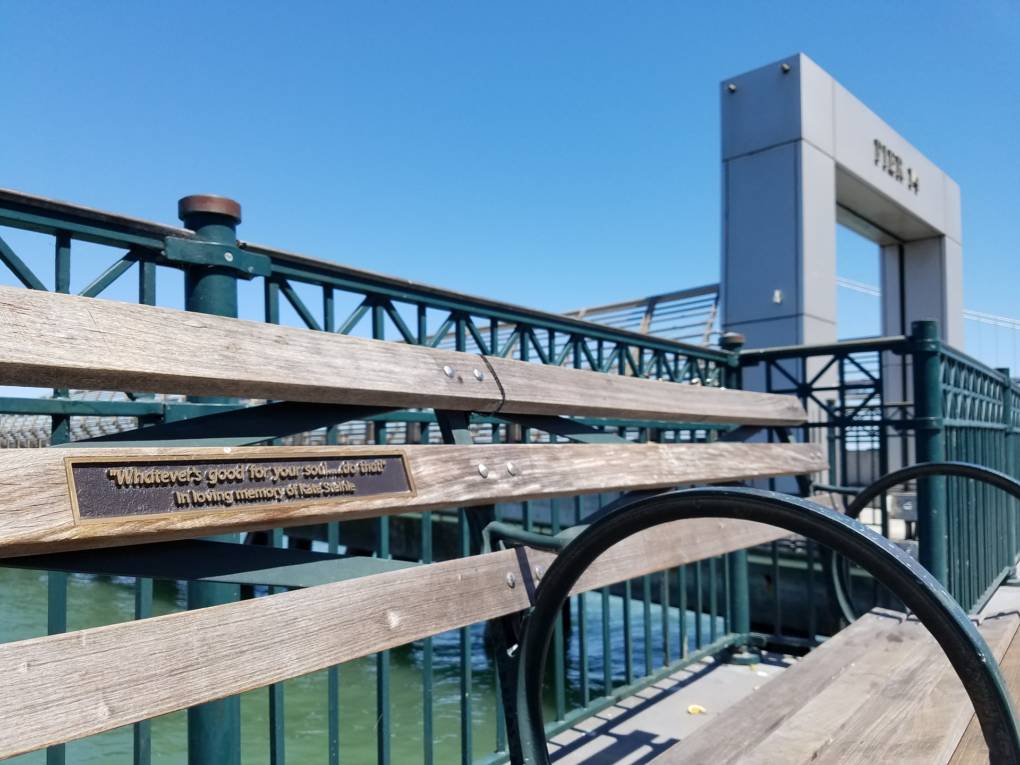
"caption": "A bench with a plaque commemorating Kathryn Steinle is seen near San Francisco's Pier 14 on July 22, 2017.\n",
"description": "A bench with a plaque commemorating Kathryn Steinle is seen near San Francisco's Pier 14 on July 22, 2017.\n",
"title": "RS26097_20170722_144909-qut",
"credit": "Alex Emslie/KQED",
"status": "inherit",
"isLoading": false,
"fetchFailed": false
},
"news_11627545": {
"type": "attachments",
"id": "news_11627545",
"meta": {
"index": "attachments_1716263798",
"site": "news",
"id": "11627545",
"found": true
},
"parent": 11627544,
"imgSizes": {
"small": {
"file": "https://ww2.kqed.org/app/uploads/sites/10/2017/11/RS27826_IMG_3413-qut-520x390.jpg",
"width": 520,
"mimeType": "image/jpeg",
"height": 390
},
"twentyfourteen-full-width": {
"file": "https://ww2.kqed.org/app/uploads/sites/10/2017/11/RS27826_IMG_3413-qut-1038x576.jpg",
"width": 1038,
"mimeType": "image/jpeg",
"height": 576
},
"thumbnail": {
"file": "https://ww2.kqed.org/app/uploads/sites/10/2017/11/RS27826_IMG_3413-qut-160x120.jpg",
"width": 160,
"mimeType": "image/jpeg",
"height": 120
},
"fd-sm": {
"file": "https://ww2.kqed.org/app/uploads/sites/10/2017/11/RS27826_IMG_3413-qut-960x720.jpg",
"width": 960,
"mimeType": "image/jpeg",
"height": 720
},
"post-thumbnail": {
"file": "https://ww2.kqed.org/app/uploads/sites/10/2017/11/RS27826_IMG_3413-qut-672x372.jpg",
"width": 672,
"mimeType": "image/jpeg",
"height": 372
},
"xsmall": {
"file": "https://ww2.kqed.org/app/uploads/sites/10/2017/11/RS27826_IMG_3413-qut-375x281.jpg",
"width": 375,
"mimeType": "image/jpeg",
"height": 281
},
"kqedFullSize": {
"file": "https://ww2.kqed.org/app/uploads/sites/10/2017/11/RS27826_IMG_3413-qut.jpg",
"width": 1920,
"height": 1440
},
"large": {
"file": "https://ww2.kqed.org/app/uploads/sites/10/2017/11/RS27826_IMG_3413-qut-1020x765.jpg",
"width": 1020,
"mimeType": "image/jpeg",
"height": 765
},
"xlarge": {
"file": "https://ww2.kqed.org/app/uploads/sites/10/2017/11/RS27826_IMG_3413-qut-1180x885.jpg",
"width": 1180,
"mimeType": "image/jpeg",
"height": 885
},
"guest-author-50": {
"file": "https://ww2.kqed.org/app/uploads/sites/10/2017/11/RS27826_IMG_3413-qut-50x50.jpg",
"width": 50,
"mimeType": "image/jpeg",
"height": 50
},
"guest-author-96": {
"file": "https://ww2.kqed.org/app/uploads/sites/10/2017/11/RS27826_IMG_3413-qut-96x96.jpg",
"width": 96,
"mimeType": "image/jpeg",
"height": 96
},
"medium": {
"file": "https://ww2.kqed.org/app/uploads/sites/10/2017/11/RS27826_IMG_3413-qut-800x600.jpg",
"width": 800,
"mimeType": "image/jpeg",
"height": 600
},
"guest-author-64": {
"file": "https://ww2.kqed.org/app/uploads/sites/10/2017/11/RS27826_IMG_3413-qut-64x64.jpg",
"width": 64,
"mimeType": "image/jpeg",
"height": 64
},
"guest-author-32": {
"file": "https://ww2.kqed.org/app/uploads/sites/10/2017/11/RS27826_IMG_3413-qut-32x32.jpg",
"width": 32,
"mimeType": "image/jpeg",
"height": 32
},
"fd-lrg": {
"file": "https://ww2.kqed.org/app/uploads/sites/10/2017/11/RS27826_IMG_3413-qut-1920x1440.jpg",
"width": 1920,
"mimeType": "image/jpeg",
"height": 1440
},
"fd-med": {
"file": "https://ww2.kqed.org/app/uploads/sites/10/2017/11/RS27826_IMG_3413-qut-1180x885.jpg",
"width": 1180,
"mimeType": "image/jpeg",
"height": 885
},
"full-width": {
"file": "https://ww2.kqed.org/app/uploads/sites/10/2017/11/RS27826_IMG_3413-qut-1920x1440.jpg",
"width": 1920,
"mimeType": "image/jpeg",
"height": 1440
},
"detail": {
"file": "https://ww2.kqed.org/app/uploads/sites/10/2017/11/RS27826_IMG_3413-qut-150x150.jpg",
"width": 150,
"mimeType": "image/jpeg",
"height": 150
},
"guest-author-128": {
"file": "https://ww2.kqed.org/app/uploads/sites/10/2017/11/RS27826_IMG_3413-qut-128x128.jpg",
"width": 128,
"mimeType": "image/jpeg",
"height": 128
},
"xxsmall": {
"file": "https://ww2.kqed.org/app/uploads/sites/10/2017/11/RS27826_IMG_3413-qut-240x180.jpg",
"width": 240,
"mimeType": "image/jpeg",
"height": 180
}
},
"publishDate": 1509582168,
"modified": 1509660327,
"caption": "A courtroom drawing depicting defendant Jose Ines Garcia Zarate during opening statements in the Kathryn Steinle murder trial at the San Francisco Hall of Justice on Oct. 23, 2017.",
"description": "A courtroom painting depicting defendant Jose Ines Garcia Zarate during opening statements in the Kathryn Steinle murder trial at the San Francisco Hall of Justice on October 23, 2017.",
"title": "RS27826_IMG_3413-qut",
"credit": "Vicki Ellen Behringer/Courtroom Artist",
"status": "inherit",
"isLoading": false,
"fetchFailed": false
},
"news_11627350": {
"type": "attachments",
"id": "news_11627350",
"meta": {
"index": "attachments_1716263798",
"site": "news",
"id": "11627350",
"found": true
},
"parent": 11627337,
"imgSizes": {
"small": {
"file": "https://ww2.kqed.org/app/uploads/sites/10/2017/10/RS27815_IMG_3420-qut-520x390.jpg",
"width": 520,
"mimeType": "image/jpeg",
"height": 390
},
"twentyfourteen-full-width": {
"file": "https://ww2.kqed.org/app/uploads/sites/10/2017/10/RS27815_IMG_3420-qut-1038x576.jpg",
"width": 1038,
"mimeType": "image/jpeg",
"height": 576
},
"thumbnail": {
"file": "https://ww2.kqed.org/app/uploads/sites/10/2017/10/RS27815_IMG_3420-qut-160x120.jpg",
"width": 160,
"mimeType": "image/jpeg",
"height": 120
},
"fd-sm": {
"file": "https://ww2.kqed.org/app/uploads/sites/10/2017/10/RS27815_IMG_3420-qut-960x720.jpg",
"width": 960,
"mimeType": "image/jpeg",
"height": 720
},
"post-thumbnail": {
"file": "https://ww2.kqed.org/app/uploads/sites/10/2017/10/RS27815_IMG_3420-qut-672x372.jpg",
"width": 672,
"mimeType": "image/jpeg",
"height": 372
},
"xsmall": {
"file": "https://ww2.kqed.org/app/uploads/sites/10/2017/10/RS27815_IMG_3420-qut-375x281.jpg",
"width": 375,
"mimeType": "image/jpeg",
"height": 281
},
"kqedFullSize": {
"file": "https://ww2.kqed.org/app/uploads/sites/10/2017/10/RS27815_IMG_3420-qut.jpg",
"width": 1920,
"height": 1440
},
"large": {
"file": "https://ww2.kqed.org/app/uploads/sites/10/2017/10/RS27815_IMG_3420-qut-1020x765.jpg",
"width": 1020,
"mimeType": "image/jpeg",
"height": 765
},
"xlarge": {
"file": "https://ww2.kqed.org/app/uploads/sites/10/2017/10/RS27815_IMG_3420-qut-1180x885.jpg",
"width": 1180,
"mimeType": "image/jpeg",
"height": 885
},
"guest-author-50": {
"file": "https://ww2.kqed.org/app/uploads/sites/10/2017/10/RS27815_IMG_3420-qut-50x50.jpg",
"width": 50,
"mimeType": "image/jpeg",
"height": 50
},
"guest-author-96": {
"file": "https://ww2.kqed.org/app/uploads/sites/10/2017/10/RS27815_IMG_3420-qut-96x96.jpg",
"width": 96,
"mimeType": "image/jpeg",
"height": 96
},
"medium": {
"file": "https://ww2.kqed.org/app/uploads/sites/10/2017/10/RS27815_IMG_3420-qut-800x600.jpg",
"width": 800,
"mimeType": "image/jpeg",
"height": 600
},
"guest-author-64": {
"file": "https://ww2.kqed.org/app/uploads/sites/10/2017/10/RS27815_IMG_3420-qut-64x64.jpg",
"width": 64,
"mimeType": "image/jpeg",
"height": 64
},
"guest-author-32": {
"file": "https://ww2.kqed.org/app/uploads/sites/10/2017/10/RS27815_IMG_3420-qut-32x32.jpg",
"width": 32,
"mimeType": "image/jpeg",
"height": 32
},
"fd-lrg": {
"file": "https://ww2.kqed.org/app/uploads/sites/10/2017/10/RS27815_IMG_3420-qut-1920x1440.jpg",
"width": 1920,
"mimeType": "image/jpeg",
"height": 1440
},
"fd-med": {
"file": "https://ww2.kqed.org/app/uploads/sites/10/2017/10/RS27815_IMG_3420-qut-1180x885.jpg",
"width": 1180,
"mimeType": "image/jpeg",
"height": 885
},
"full-width": {
"file": "https://ww2.kqed.org/app/uploads/sites/10/2017/10/RS27815_IMG_3420-qut-1920x1440.jpg",
"width": 1920,
"mimeType": "image/jpeg",
"height": 1440
},
"detail": {
"file": "https://ww2.kqed.org/app/uploads/sites/10/2017/10/RS27815_IMG_3420-qut-150x150.jpg",
"width": 150,
"mimeType": "image/jpeg",
"height": 150
},
"guest-author-128": {
"file": "https://ww2.kqed.org/app/uploads/sites/10/2017/10/RS27815_IMG_3420-qut-128x128.jpg",
"width": 128,
"mimeType": "image/jpeg",
"height": 128
},
"xxsmall": {
"file": "https://ww2.kqed.org/app/uploads/sites/10/2017/10/RS27815_IMG_3420-qut-240x180.jpg",
"width": 240,
"mimeType": "image/jpeg",
"height": 180
}
},
"publishDate": 1509505038,
"modified": 1509576387,
"caption": "A courtroom painting depicting defense attorney Matt Gonzalez's opening statement in the Kathryn Steinle murder trial at the San Francisco Hall of Justice on Oct. 23, 2017.",
"description": "A courtroom painting depicting defense attorney Matt Gonzalez's opening statement in the Kathryn Steinle murder trial at the San Francisco Hall of Justice on October 23, 2017.",
"title": "RS27815_IMG_3420-qut",
"credit": "Vicki Ellen Behringer/Courtroom Artist",
"status": "inherit",
"isLoading": false,
"fetchFailed": false
},
"news_11625587": {
"type": "attachments",
"id": "news_11625587",
"meta": {
"index": "attachments_1716263798",
"site": "news",
"id": "11625587",
"found": true
},
"parent": 11625572,
"imgSizes": {
"small": {
"file": "https://ww2.kqed.org/app/uploads/sites/10/2017/10/RS27696_alt_647-520x356.jpg",
"width": 520,
"mimeType": "image/jpeg",
"height": 356
},
"twentyfourteen-full-width": {
"file": "https://ww2.kqed.org/app/uploads/sites/10/2017/10/RS27696_alt_647-1038x576.jpg",
"width": 1038,
"mimeType": "image/jpeg",
"height": 576
},
"thumbnail": {
"file": "https://ww2.kqed.org/app/uploads/sites/10/2017/10/RS27696_alt_647-160x110.jpg",
"width": 160,
"mimeType": "image/jpeg",
"height": 110
},
"fd-sm": {
"file": "https://ww2.kqed.org/app/uploads/sites/10/2017/10/RS27696_alt_647-960x657.jpg",
"width": 960,
"mimeType": "image/jpeg",
"height": 657
},
"post-thumbnail": {
"file": "https://ww2.kqed.org/app/uploads/sites/10/2017/10/RS27696_alt_647-672x372.jpg",
"width": 672,
"mimeType": "image/jpeg",
"height": 372
},
"xsmall": {
"file": "https://ww2.kqed.org/app/uploads/sites/10/2017/10/RS27696_alt_647-375x257.jpg",
"width": 375,
"mimeType": "image/jpeg",
"height": 257
},
"kqedFullSize": {
"file": "https://ww2.kqed.org/app/uploads/sites/10/2017/10/RS27696_alt_647.jpg",
"width": 1920,
"height": 1314
},
"large": {
"file": "https://ww2.kqed.org/app/uploads/sites/10/2017/10/RS27696_alt_647-1020x698.jpg",
"width": 1020,
"mimeType": "image/jpeg",
"height": 698
},
"xlarge": {
"file": "https://ww2.kqed.org/app/uploads/sites/10/2017/10/RS27696_alt_647-1180x808.jpg",
"width": 1180,
"mimeType": "image/jpeg",
"height": 808
},
"guest-author-50": {
"file": "https://ww2.kqed.org/app/uploads/sites/10/2017/10/RS27696_alt_647-50x50.jpg",
"width": 50,
"mimeType": "image/jpeg",
"height": 50
},
"guest-author-96": {
"file": "https://ww2.kqed.org/app/uploads/sites/10/2017/10/RS27696_alt_647-96x96.jpg",
"width": 96,
"mimeType": "image/jpeg",
"height": 96
},
"medium": {
"file": "https://ww2.kqed.org/app/uploads/sites/10/2017/10/RS27696_alt_647-800x548.jpg",
"width": 800,
"mimeType": "image/jpeg",
"height": 548
},
"guest-author-64": {
"file": "https://ww2.kqed.org/app/uploads/sites/10/2017/10/RS27696_alt_647-64x64.jpg",
"width": 64,
"mimeType": "image/jpeg",
"height": 64
},
"guest-author-32": {
"file": "https://ww2.kqed.org/app/uploads/sites/10/2017/10/RS27696_alt_647-32x32.jpg",
"width": 32,
"mimeType": "image/jpeg",
"height": 32
},
"fd-lrg": {
"file": "https://ww2.kqed.org/app/uploads/sites/10/2017/10/RS27696_alt_647-1920x1314.jpg",
"width": 1920,
"mimeType": "image/jpeg",
"height": 1314
},
"fd-med": {
"file": "https://ww2.kqed.org/app/uploads/sites/10/2017/10/RS27696_alt_647-1180x808.jpg",
"width": 1180,
"mimeType": "image/jpeg",
"height": 808
},
"full-width": {
"file": "https://ww2.kqed.org/app/uploads/sites/10/2017/10/RS27696_alt_647-1920x1314.jpg",
"width": 1920,
"mimeType": "image/jpeg",
"height": 1314
},
"detail": {
"file": "https://ww2.kqed.org/app/uploads/sites/10/2017/10/RS27696_alt_647-150x150.jpg",
"width": 150,
"mimeType": "image/jpeg",
"height": 150
},
"guest-author-128": {
"file": "https://ww2.kqed.org/app/uploads/sites/10/2017/10/RS27696_alt_647-128x128.jpg",
"width": 128,
"mimeType": "image/jpeg",
"height": 128
},
"xxsmall": {
"file": "https://ww2.kqed.org/app/uploads/sites/10/2017/10/RS27696_alt_647-240x164.jpg",
"width": 240,
"mimeType": "image/jpeg",
"height": 164
}
},
"publishDate": 1508830070,
"modified": 1508858038,
"caption": "An artist's rendering of prosecutor Diana Garcia's opening statement in the Kathryn Steinle murder trial at the San Francisco Hall of Justice on Oct. 23, 2017.",
"description": "A courtroom painting of prosecutor Diana Garcia's opening statement in the Kathryn Steinle murder trial at the San Francisco Hall of Justice on Oct. 23, 2017.",
"title": "RS27696_alt_647",
"credit": "Vicki Ellen Behringer/Courtroom Artist",
"status": "inherit",
"isLoading": false,
"fetchFailed": false
},
"news_11624951": {
"type": "attachments",
"id": "news_11624951",
"meta": {
"index": "attachments_1716263798",
"site": "news",
"id": "11624951",
"found": true
},
"parent": 11624516,
"imgSizes": {
"small": {
"file": "https://ww2.kqed.org/app/uploads/sites/10/2017/10/Woychowski-520x378.jpg",
"width": 520,
"mimeType": "image/jpeg",
"height": 378
},
"thumbnail": {
"file": "https://ww2.kqed.org/app/uploads/sites/10/2017/10/Woychowski-160x116.jpg",
"width": 160,
"mimeType": "image/jpeg",
"height": 116
},
"post-thumbnail": {
"file": "https://ww2.kqed.org/app/uploads/sites/10/2017/10/Woychowski-640x372.jpg",
"width": 640,
"mimeType": "image/jpeg",
"height": 372
},
"xsmall": {
"file": "https://ww2.kqed.org/app/uploads/sites/10/2017/10/Woychowski-375x272.jpg",
"width": 375,
"mimeType": "image/jpeg",
"height": 272
},
"kqedFullSize": {
"file": "https://ww2.kqed.org/app/uploads/sites/10/2017/10/Woychowski.jpg",
"width": 640,
"height": 465
},
"guest-author-50": {
"file": "https://ww2.kqed.org/app/uploads/sites/10/2017/10/Woychowski-50x50.jpg",
"width": 50,
"mimeType": "image/jpeg",
"height": 50
},
"guest-author-96": {
"file": "https://ww2.kqed.org/app/uploads/sites/10/2017/10/Woychowski-96x96.jpg",
"width": 96,
"mimeType": "image/jpeg",
"height": 96
},
"guest-author-64": {
"file": "https://ww2.kqed.org/app/uploads/sites/10/2017/10/Woychowski-64x64.jpg",
"width": 64,
"mimeType": "image/jpeg",
"height": 64
},
"detail": {
"file": "https://ww2.kqed.org/app/uploads/sites/10/2017/10/Woychowski-150x150.jpg",
"width": 150,
"mimeType": "image/jpeg",
"height": 150
},
"guest-author-32": {
"file": "https://ww2.kqed.org/app/uploads/sites/10/2017/10/Woychowski-32x32.jpg",
"width": 32,
"mimeType": "image/jpeg",
"height": 32
},
"guest-author-128": {
"file": "https://ww2.kqed.org/app/uploads/sites/10/2017/10/Woychowski-128x128.jpg",
"width": 128,
"mimeType": "image/jpeg",
"height": 128
},
"xxsmall": {
"file": "https://ww2.kqed.org/app/uploads/sites/10/2017/10/Woychowski-240x174.jpg",
"width": 240,
"mimeType": "image/jpeg",
"height": 174
}
},
"publishDate": 1508523752,
"modified": 1508524517,
"caption": "Bureau of Land Management ranger John Woychowski (center) was named El Centro Field Office 'Ranger of the Year' in 2011. Salvador Nieblas (left) went on to become the chief BLM ranger for California. Margaret Gordo (right) was the chief BLM ranger for El Centro in 2011.",
"description": null,
"title": "Woychowski",
"credit": "Bureau of Land Management California via Internet Archive",
"status": "inherit",
"isLoading": false,
"fetchFailed": false
},
"news_11624655": {
"type": "attachments",
"id": "news_11624655",
"meta": {
"index": "attachments_1716263798",
"site": "news",
"id": "11624655",
"found": true
},
"parent": 11624650,
"imgSizes": {
"small": {
"file": "https://ww2.kqed.org/app/uploads/sites/10/2017/10/ricochet_101917_final-520x520.jpg",
"width": 520,
"mimeType": "image/jpeg",
"height": 520
},
"twentyfourteen-full-width": {
"file": "https://ww2.kqed.org/app/uploads/sites/10/2017/10/ricochet_101917_final-1038x576.jpg",
"width": 1038,
"mimeType": "image/jpeg",
"height": 576
},
"thumbnail": {
"file": "https://ww2.kqed.org/app/uploads/sites/10/2017/10/ricochet_101917_final-160x160.jpg",
"width": 160,
"mimeType": "image/jpeg",
"height": 160
},
"fd-sm": {
"file": "https://ww2.kqed.org/app/uploads/sites/10/2017/10/ricochet_101917_final-960x960.jpg",
"width": 960,
"mimeType": "image/jpeg",
"height": 960
},
"post-thumbnail": {
"file": "https://ww2.kqed.org/app/uploads/sites/10/2017/10/ricochet_101917_final-672x372.jpg",
"width": 672,
"mimeType": "image/jpeg",
"height": 372
},
"xsmall": {
"file": "https://ww2.kqed.org/app/uploads/sites/10/2017/10/ricochet_101917_final-375x375.jpg",
"width": 375,
"mimeType": "image/jpeg",
"height": 375
},
"kqedFullSize": {
"file": "https://ww2.kqed.org/app/uploads/sites/10/2017/10/ricochet_101917_final.jpg",
"width": 1920,
"height": 1920
},
"large": {
"file": "https://ww2.kqed.org/app/uploads/sites/10/2017/10/ricochet_101917_final-1020x1020.jpg",
"width": 1020,
"mimeType": "image/jpeg",
"height": 1020
},
"xlarge": {
"file": "https://ww2.kqed.org/app/uploads/sites/10/2017/10/ricochet_101917_final-1180x1180.jpg",
"width": 1180,
"mimeType": "image/jpeg",
"height": 1180
},
"guest-author-50": {
"file": "https://ww2.kqed.org/app/uploads/sites/10/2017/10/ricochet_101917_final-50x50.jpg",
"width": 50,
"mimeType": "image/jpeg",
"height": 50
},
"guest-author-96": {
"file": "https://ww2.kqed.org/app/uploads/sites/10/2017/10/ricochet_101917_final-96x96.jpg",
"width": 96,
"mimeType": "image/jpeg",
"height": 96
},
"medium": {
"file": "https://ww2.kqed.org/app/uploads/sites/10/2017/10/ricochet_101917_final-800x800.jpg",
"width": 800,
"mimeType": "image/jpeg",
"height": 800
},
"guest-author-64": {
"file": "https://ww2.kqed.org/app/uploads/sites/10/2017/10/ricochet_101917_final-64x64.jpg",
"width": 64,
"mimeType": "image/jpeg",
"height": 64
},
"guest-author-32": {
"file": "https://ww2.kqed.org/app/uploads/sites/10/2017/10/ricochet_101917_final-32x32.jpg",
"width": 32,
"mimeType": "image/jpeg",
"height": 32
},
"fd-lrg": {
"file": "https://ww2.kqed.org/app/uploads/sites/10/2017/10/ricochet_101917_final-1920x1920.jpg",
"width": 1920,
"mimeType": "image/jpeg",
"height": 1920
},
"fd-med": {
"file": "https://ww2.kqed.org/app/uploads/sites/10/2017/10/ricochet_101917_final-1180x1180.jpg",
"width": 1180,
"mimeType": "image/jpeg",
"height": 1180
},
"full-width": {
"file": "https://ww2.kqed.org/app/uploads/sites/10/2017/10/ricochet_101917_final-1920x1920.jpg",
"width": 1920,
"mimeType": "image/jpeg",
"height": 1920
},
"detail": {
"file": "https://ww2.kqed.org/app/uploads/sites/10/2017/10/ricochet_101917_final-150x150.jpg",
"width": 150,
"mimeType": "image/jpeg",
"height": 150
},
"guest-author-128": {
"file": "https://ww2.kqed.org/app/uploads/sites/10/2017/10/ricochet_101917_final-128x128.jpg",
"width": 128,
"mimeType": "image/jpeg",
"height": 128
},
"xxsmall": {
"file": "https://ww2.kqed.org/app/uploads/sites/10/2017/10/ricochet_101917_final-240x240.jpg",
"width": 240,
"mimeType": "image/jpeg",
"height": 240
}
},
"publishDate": 1508447033,
"modified": 1508447063,
"caption": null,
"description": null,
"title": "ricochet_101917_final",
"credit": null,
"status": "inherit",
"isLoading": false,
"fetchFailed": false
},
"news_11624499": {
"type": "attachments",
"id": "news_11624499",
"meta": {
"index": "attachments_1716263798",
"site": "news",
"id": "11624499",
"found": true
},
"parent": 11624387,
"imgSizes": {
"small": {
"file": "https://ww2.kqed.org/app/uploads/sites/10/2017/10/SteinleMain-520x358.jpg",
"width": 520,
"mimeType": "image/jpeg",
"height": 358
},
"twentyfourteen-full-width": {
"file": "https://ww2.kqed.org/app/uploads/sites/10/2017/10/SteinleMain-1038x576.jpg",
"width": 1038,
"mimeType": "image/jpeg",
"height": 576
},
"thumbnail": {
"file": "https://ww2.kqed.org/app/uploads/sites/10/2017/10/SteinleMain-160x110.jpg",
"width": 160,
"mimeType": "image/jpeg",
"height": 110
},
"fd-sm": {
"file": "https://ww2.kqed.org/app/uploads/sites/10/2017/10/SteinleMain-960x661.jpg",
"width": 960,
"mimeType": "image/jpeg",
"height": 661
},
"post-thumbnail": {
"file": "https://ww2.kqed.org/app/uploads/sites/10/2017/10/SteinleMain-672x372.jpg",
"width": 672,
"mimeType": "image/jpeg",
"height": 372
},
"xsmall": {
"file": "https://ww2.kqed.org/app/uploads/sites/10/2017/10/SteinleMain-375x258.jpg",
"width": 375,
"mimeType": "image/jpeg",
"height": 258
},
"kqedFullSize": {
"file": "https://ww2.kqed.org/app/uploads/sites/10/2017/10/SteinleMain.jpg",
"width": 1920,
"height": 1322
},
"large": {
"file": "https://ww2.kqed.org/app/uploads/sites/10/2017/10/SteinleMain-1020x702.jpg",
"width": 1020,
"mimeType": "image/jpeg",
"height": 702
},
"xlarge": {
"file": "https://ww2.kqed.org/app/uploads/sites/10/2017/10/SteinleMain-1180x812.jpg",
"width": 1180,
"mimeType": "image/jpeg",
"height": 812
},
"guest-author-50": {
"file": "https://ww2.kqed.org/app/uploads/sites/10/2017/10/SteinleMain-50x50.jpg",
"width": 50,
"mimeType": "image/jpeg",
"height": 50
},
"guest-author-96": {
"file": "https://ww2.kqed.org/app/uploads/sites/10/2017/10/SteinleMain-96x96.jpg",
"width": 96,
"mimeType": "image/jpeg",
"height": 96
},
"medium": {
"file": "https://ww2.kqed.org/app/uploads/sites/10/2017/10/SteinleMain-800x551.jpg",
"width": 800,
"mimeType": "image/jpeg",
"height": 551
},
"guest-author-64": {
"file": "https://ww2.kqed.org/app/uploads/sites/10/2017/10/SteinleMain-64x64.jpg",
"width": 64,
"mimeType": "image/jpeg",
"height": 64
},
"guest-author-32": {
"file": "https://ww2.kqed.org/app/uploads/sites/10/2017/10/SteinleMain-32x32.jpg",
"width": 32,
"mimeType": "image/jpeg",
"height": 32
},
"fd-lrg": {
"file": "https://ww2.kqed.org/app/uploads/sites/10/2017/10/SteinleMain-1920x1322.jpg",
"width": 1920,
"mimeType": "image/jpeg",
"height": 1322
},
"fd-med": {
"file": "https://ww2.kqed.org/app/uploads/sites/10/2017/10/SteinleMain-1180x812.jpg",
"width": 1180,
"mimeType": "image/jpeg",
"height": 812
},
"full-width": {
"file": "https://ww2.kqed.org/app/uploads/sites/10/2017/10/SteinleMain-1920x1322.jpg",
"width": 1920,
"mimeType": "image/jpeg",
"height": 1322
},
"detail": {
"file": "https://ww2.kqed.org/app/uploads/sites/10/2017/10/SteinleMain-150x150.jpg",
"width": 150,
"mimeType": "image/jpeg",
"height": 150
},
"guest-author-128": {
"file": "https://ww2.kqed.org/app/uploads/sites/10/2017/10/SteinleMain-128x128.jpg",
"width": 128,
"mimeType": "image/jpeg",
"height": 128
},
"xxsmall": {
"file": "https://ww2.kqed.org/app/uploads/sites/10/2017/10/SteinleMain-240x165.jpg",
"width": 240,
"mimeType": "image/jpeg",
"height": 165
}
},
"publishDate": 1508375551,
"modified": 1508375596,
"caption": "A large photo of Kathryn Steinle is shown while her dad, James Steinle, testifies during a Senate Judiciary Committee hearing on Capitol Hill, July 21, 2015, in Washington, D.C. The committee heard testimony from family members who have had loved ones killed by undocumented immigrants.",
"description": "A large photo of Kathryn Steinle is shown while her dad, James Steinle, testifies during a Senate Judiciary Committee hearing on Capitol Hill, July 21, 2015, in Washington, D.C. The committee heard testimony from family members who have had loved ones killed by undocumented immigrants.",
"title": "SteinleMain",
"credit": "Mark Wilson/Getty Images",
"status": "inherit",
"isLoading": false,
"fetchFailed": false
},
"news_11598690": {
"type": "attachments",
"id": "news_11598690",
"meta": {
"index": "attachments_1716263798",
"site": "news",
"id": "11598690",
"found": true
},
"parent": 11598653,
"imgSizes": {
"small": {
"file": "https://ww2.kqed.org/app/uploads/sites/10/2017/07/RS15994_arraignment2-qut-520x370.jpg",
"width": 520,
"mimeType": "image/jpeg",
"height": 370
},
"twentyfourteen-full-width": {
"file": "https://ww2.kqed.org/app/uploads/sites/10/2017/07/RS15994_arraignment2-qut-1038x576.jpg",
"width": 1038,
"mimeType": "image/jpeg",
"height": 576
},
"thumbnail": {
"file": "https://ww2.kqed.org/app/uploads/sites/10/2017/07/RS15994_arraignment2-qut-160x114.jpg",
"width": 160,
"mimeType": "image/jpeg",
"height": 114
},
"fd-sm": {
"file": "https://ww2.kqed.org/app/uploads/sites/10/2017/07/RS15994_arraignment2-qut-960x683.jpg",
"width": 960,
"mimeType": "image/jpeg",
"height": 683
},
"post-thumbnail": {
"file": "https://ww2.kqed.org/app/uploads/sites/10/2017/07/RS15994_arraignment2-qut-672x372.jpg",
"width": 672,
"mimeType": "image/jpeg",
"height": 372
},
"xsmall": {
"file": "https://ww2.kqed.org/app/uploads/sites/10/2017/07/RS15994_arraignment2-qut-375x267.jpg",
"width": 375,
"mimeType": "image/jpeg",
"height": 267
},
"kqedFullSize": {
"file": "https://ww2.kqed.org/app/uploads/sites/10/2017/07/RS15994_arraignment2-qut.jpg",
"width": 1920,
"height": 1365
},
"large": {
"file": "https://ww2.kqed.org/app/uploads/sites/10/2017/07/RS15994_arraignment2-qut-1020x725.jpg",
"width": 1020,
"mimeType": "image/jpeg",
"height": 725
},
"xlarge": {
"file": "https://ww2.kqed.org/app/uploads/sites/10/2017/07/RS15994_arraignment2-qut-1180x839.jpg",
"width": 1180,
"mimeType": "image/jpeg",
"height": 839
},
"guest-author-50": {
"file": "https://ww2.kqed.org/app/uploads/sites/10/2017/07/RS15994_arraignment2-qut-50x50.jpg",
"width": 50,
"mimeType": "image/jpeg",
"height": 50
},
"guest-author-96": {
"file": "https://ww2.kqed.org/app/uploads/sites/10/2017/07/RS15994_arraignment2-qut-96x96.jpg",
"width": 96,
"mimeType": "image/jpeg",
"height": 96
},
"medium": {
"file": "https://ww2.kqed.org/app/uploads/sites/10/2017/07/RS15994_arraignment2-qut-800x569.jpg",
"width": 800,
"mimeType": "image/jpeg",
"height": 569
},
"guest-author-64": {
"file": "https://ww2.kqed.org/app/uploads/sites/10/2017/07/RS15994_arraignment2-qut-64x64.jpg",
"width": 64,
"mimeType": "image/jpeg",
"height": 64
},
"guest-author-32": {
"file": "https://ww2.kqed.org/app/uploads/sites/10/2017/07/RS15994_arraignment2-qut-32x32.jpg",
"width": 32,
"mimeType": "image/jpeg",
"height": 32
},
"fd-lrg": {
"file": "https://ww2.kqed.org/app/uploads/sites/10/2017/07/RS15994_arraignment2-qut-1920x1365.jpg",
"width": 1920,
"mimeType": "image/jpeg",
"height": 1365
},
"fd-med": {
"file": "https://ww2.kqed.org/app/uploads/sites/10/2017/07/RS15994_arraignment2-qut-1180x839.jpg",
"width": 1180,
"mimeType": "image/jpeg",
"height": 839
},
"full-width": {
"file": "https://ww2.kqed.org/app/uploads/sites/10/2017/07/RS15994_arraignment2-qut-1920x1365.jpg",
"width": 1920,
"mimeType": "image/jpeg",
"height": 1365
},
"detail": {
"file": "https://ww2.kqed.org/app/uploads/sites/10/2017/07/RS15994_arraignment2-qut-150x150.jpg",
"width": 150,
"mimeType": "image/jpeg",
"height": 150
},
"guest-author-128": {
"file": "https://ww2.kqed.org/app/uploads/sites/10/2017/07/RS15994_arraignment2-qut-128x128.jpg",
"width": 128,
"mimeType": "image/jpeg",
"height": 128
},
"xxsmall": {
"file": "https://ww2.kqed.org/app/uploads/sites/10/2017/07/RS15994_arraignment2-qut-240x171.jpg",
"width": 240,
"mimeType": "image/jpeg",
"height": 171
}
},
"publishDate": 1501264666,
"modified": 1506461016,
"caption": "Jose Inez Garcia Zarate (right), who was then known as Juan Francisco Lopez Sanchez, with San Francisco Public Defender Jeff Adachi on July 7, 2015.",
"description": "Juan Francisco Lopez Sanchez (right) with San Francisco Public Defender Jeff Adachi on July 7, 2015.",
"title": "RS15994_arraignment(2)-qut",
"credit": "Michael Macor-Pool/Getty Images",
"status": "inherit",
"isLoading": false,
"fetchFailed": false
},
"news_11613181": {
"type": "attachments",
"id": "news_11613181",
"meta": {
"index": "attachments_1716263798",
"site": "news",
"id": "11613181",
"found": true
},
"parent": 11613179,
"imgSizes": {
"small": {
"file": "https://ww2.kqed.org/app/uploads/sites/10/2017/08/RS26097_20170722_144909-qut-1-520x390.jpg",
"width": 520,
"mimeType": "image/jpeg",
"height": 390
},
"twentyfourteen-full-width": {
"file": "https://ww2.kqed.org/app/uploads/sites/10/2017/08/RS26097_20170722_144909-qut-1-1038x576.jpg",
"width": 1038,
"mimeType": "image/jpeg",
"height": 576
},
"thumbnail": {
"file": "https://ww2.kqed.org/app/uploads/sites/10/2017/08/RS26097_20170722_144909-qut-1-160x120.jpg",
"width": 160,
"mimeType": "image/jpeg",
"height": 120
},
"fd-sm": {
"file": "https://ww2.kqed.org/app/uploads/sites/10/2017/08/RS26097_20170722_144909-qut-1-960x720.jpg",
"width": 960,
"mimeType": "image/jpeg",
"height": 720
},
"post-thumbnail": {
"file": "https://ww2.kqed.org/app/uploads/sites/10/2017/08/RS26097_20170722_144909-qut-1-672x372.jpg",
"width": 672,
"mimeType": "image/jpeg",
"height": 372
},
"xsmall": {
"file": "https://ww2.kqed.org/app/uploads/sites/10/2017/08/RS26097_20170722_144909-qut-1-375x281.jpg",
"width": 375,
"mimeType": "image/jpeg",
"height": 281
},
"kqedFullSize": {
"file": "https://ww2.kqed.org/app/uploads/sites/10/2017/08/RS26097_20170722_144909-qut-1.jpg",
"width": 1920,
"height": 1440
},
"large": {
"file": "https://ww2.kqed.org/app/uploads/sites/10/2017/08/RS26097_20170722_144909-qut-1-1020x765.jpg",
"width": 1020,
"mimeType": "image/jpeg",
"height": 765
},
"xlarge": {
"file": "https://ww2.kqed.org/app/uploads/sites/10/2017/08/RS26097_20170722_144909-qut-1-1180x885.jpg",
"width": 1180,
"mimeType": "image/jpeg",
"height": 885
},
"guest-author-50": {
"file": "https://ww2.kqed.org/app/uploads/sites/10/2017/08/RS26097_20170722_144909-qut-1-50x50.jpg",
"width": 50,
"mimeType": "image/jpeg",
"height": 50
},
"guest-author-96": {
"file": "https://ww2.kqed.org/app/uploads/sites/10/2017/08/RS26097_20170722_144909-qut-1-96x96.jpg",
"width": 96,
"mimeType": "image/jpeg",
"height": 96
},
"medium": {
"file": "https://ww2.kqed.org/app/uploads/sites/10/2017/08/RS26097_20170722_144909-qut-1-800x600.jpg",
"width": 800,
"mimeType": "image/jpeg",
"height": 600
},
"guest-author-64": {
"file": "https://ww2.kqed.org/app/uploads/sites/10/2017/08/RS26097_20170722_144909-qut-1-64x64.jpg",
"width": 64,
"mimeType": "image/jpeg",
"height": 64
},
"guest-author-32": {
"file": "https://ww2.kqed.org/app/uploads/sites/10/2017/08/RS26097_20170722_144909-qut-1-32x32.jpg",
"width": 32,
"mimeType": "image/jpeg",
"height": 32
},
"fd-lrg": {
"file": "https://ww2.kqed.org/app/uploads/sites/10/2017/08/RS26097_20170722_144909-qut-1-1920x1440.jpg",
"width": 1920,
"mimeType": "image/jpeg",
"height": 1440
},
"fd-med": {
"file": "https://ww2.kqed.org/app/uploads/sites/10/2017/08/RS26097_20170722_144909-qut-1-1180x885.jpg",
"width": 1180,
"mimeType": "image/jpeg",
"height": 885
},
"full-width": {
"file": "https://ww2.kqed.org/app/uploads/sites/10/2017/08/RS26097_20170722_144909-qut-1-1920x1440.jpg",
"width": 1920,
"mimeType": "image/jpeg",
"height": 1440
},
"detail": {
"file": "https://ww2.kqed.org/app/uploads/sites/10/2017/08/RS26097_20170722_144909-qut-1-150x150.jpg",
"width": 150,
"mimeType": "image/jpeg",
"height": 150
},
"guest-author-128": {
"file": "https://ww2.kqed.org/app/uploads/sites/10/2017/08/RS26097_20170722_144909-qut-1-128x128.jpg",
"width": 128,
"mimeType": "image/jpeg",
"height": 128
},
"xxsmall": {
"file": "https://ww2.kqed.org/app/uploads/sites/10/2017/08/RS26097_20170722_144909-qut-1-240x180.jpg",
"width": 240,
"mimeType": "image/jpeg",
"height": 180
}
},
"publishDate": 1503344088,
"modified": 1503344135,
"caption": "A bench with a plaque commemorating Kathryn Steinle is seen near San Francisco's Pier 14 on July 22, 2017.",
"description": "A bench with a plaque commemorating Kathryn Steinle is seen near San Francisco's Pier 14 on July 22, 2017.",
"title": "RS26097_20170722_144909-qut (1)",
"credit": "Alex Emslie/KQED",
"status": "inherit",
"isLoading": false,
"fetchFailed": false
}
},
"audioPlayerReducer": {
"postId": "stream_live",
"isPaused": true,
"isPlaying": false,
"pfsActive": false,
"pledgeModalIsOpen": true,
"playerDrawerIsOpen": false,
"liveAudioPlayStartedAt": 0,
"liveAudioPlayContext": ""
},
"authorsReducer": {
"aemslie": {
"type": "authors",
"id": "3206",
"meta": {
"index": "authors_1716337520",
"id": "3206",
"found": true
},
"name": "Alex Emslie",
"firstName": "Alex",
"lastName": "Emslie",
"slug": "aemslie",
"email": "aemslie@kqed.org",
"display_author_email": true,
"staff_mastheads": [
"news"
],
"title": "KQED Senior Editor",
"bio": "Alex Emslie is senior editor of talent and development at KQED, where he manages dozens of early career journalists and oversees news department internships.\r\n\r\nHe is a former carpenter and proud graduate of City College of San Francisco and San Francisco State University, where he studied journalism and criminal justice before joining KQED in 2013.\r\n\r\nAlex produced investigative journalism focused on \u003ca href=\"https://www.kqed.org/news/11667594/the-trials-of-marvin-mutch-video\">criminal justice\u003c/a> and policing for most of a decade. He has broken major stories about \u003ca href=\"https://www.kqed.org/news/135682/amid-a-series-of-vallejo-police-shootings-one-officers-name-stands-out\">police use of deadly force\u003c/a>, \u003ca href=\"https://www.kqed.org/news/10454955/racist-texts-prompt-sfpd-internal-investigation\">officer misconduct\u003c/a> and \u003ca href=\"https://www.kqed.org/news/11712239/terrorist-or-troll-judge-to-weigh-whether-oakland-man-really-intended-to-attack-bay-area\">other\u003c/a> \u003ca href=\"https://www.kqed.org/news/11221414/hayward-paid-159000-to-husband-of-retired-police-chief-documents-show\">high\u003c/a>-\u003ca href=\"https://www.kqed.org/news/10622762/the-forgotten-tracking-two-homicides-in-san-francisco-public-housing\">profile\u003c/a> \u003ca href=\"https://www.kqed.org/news/11624516/federal-agency-promoted-ranger-just-months-after-his-gun-was-stolen-and-used-in-steinle-killing\">cases\u003c/a>. He co-founded the \u003ca href=\"https://projects.scpr.org/california-reporting-project/\">California Reporting Project\u003c/a> in 2019 to obtain and report on previously confidential police internal investigations. The effort produced well over 100 original stories and changed the course of multiple criminal cases.\r\n\r\nHis work has been recognized with numerous journalism awards, including a national Edward R. Murrow award for several years of \u003ca href=\"https://www.kqed.org/news/11688481/sfpd-officers-in-mario-woods-case-recount-shooting-in-newly-filed-depositions\">reporting\u003c/a> on the San Francisco Police shooting of Mario Woods. His \u003ca href=\"https://www.kqed.org/news/147854/half-of-those-killed-by-san-francisco-police-are-mentally-ill\">reporting\u003c/a> on police killings of people in psychiatric crisis was cited in amicus briefs before the U.S. Supreme Court.\r\n\r\nAlex now enjoys mentoring the next generation of journalists at KQED.",
"avatar": "https://secure.gravatar.com/avatar/e691e65209f20e9da202bd730ead5663?s=600&d=blank&r=g",
"twitter": "SFNewsReporter",
"facebook": null,
"instagram": null,
"linkedin": null,
"sites": [
{
"site": "arts",
"roles": [
"editor"
]
},
{
"site": "news",
"roles": [
"editor"
]
},
{
"site": "mindshift",
"roles": [
"editor"
]
},
{
"site": "stateofhealth",
"roles": [
"editor"
]
},
{
"site": "science",
"roles": [
"administrator"
]
}
],
"headData": {
"title": "Alex Emslie | KQED",
"description": "KQED Senior Editor",
"ogImgSrc": "https://secure.gravatar.com/avatar/e691e65209f20e9da202bd730ead5663?s=600&d=blank&r=g",
"twImgSrc": "https://secure.gravatar.com/avatar/e691e65209f20e9da202bd730ead5663?s=600&d=blank&r=g"
},
"isLoading": false,
"link": "/author/aemslie"
},
"markfiore": {
"type": "authors",
"id": "3236",
"meta": {
"index": "authors_1716337520",
"id": "3236",
"found": true
},
"name": "Mark Fiore",
"firstName": "Mark",
"lastName": "Fiore",
"slug": "markfiore",
"email": "mark@markfiore.com",
"display_author_email": false,
"staff_mastheads": [
"news"
],
"title": "KQED News Cartoonist",
"bio": "\u003ca href=\"http://www.MarkFiore.com\">MarkFiore.com\u003c/a> | \u003ca href=\"https://twitter.com/markfiore\">Follow on Twitter\u003c/a> | \u003ca href=\"https://www.facebook.com/pages/Mark-Fiore-Animated-Political-Cartoons/94451707396?ref=bookmarks\">Facebook\u003c/a> | \u003ca href=\"mailto:mark@markfiore.com\">email\u003c/a>\r\n\r\nPulitzer Prize-winner, Mark Fiore, who the Wall Street Journal has called “the undisputed guru of the form,” creates animated political cartoons in San Francisco, where his work has been featured regularly on the San Francisco Chronicle’s web site, SFGate.com. His work has appeared on Newsweek.com, Slate.com, CBSNews.com, MotherJones.com, DailyKos.com and NPR’s web site. Fiore’s political animation has appeared on CNN, Frontline, Bill Moyers Journal, Salon.com and cable and broadcast outlets across the globe.\r\n\r\nBeginning his professional life by drawing traditional political cartoons for newspapers, Fiore’s work appeared in publications ranging from the Washington Post to the Los Angeles Times. In the late 1990s, he began to experiment with animating political cartoons and, after a short stint at the San Jose Mercury News as their staff cartoonist, Fiore devoted all his energies to animation.\r\nGrowing up in California, Fiore also spent a good portion of his life in the backwoods of Idaho. It was this combination that shaped him politically. Mark majored in political science at Colorado College, where, in a perfect send-off for a cartoonist, he received his diploma in 1991 as commencement speaker Dick Cheney smiled approvingly.\r\nMark Fiore was awarded the Pulitzer Prize for political cartooning in 2010, a Robert F. Kennedy Journalism Award in 2004 and has twice received an Online Journalism Award for commentary from the Online News Association (2002, 2008). Fiore has received two awards for his work in new media from the National Cartoonists Society (2001, 2002), and in 2006 received The James Madison Freedom of Information Award from The Society of Professional Journalists.",
"avatar": "https://secure.gravatar.com/avatar/fc4e2a612b15b67bad0c6f0e1db4ca9b?s=600&d=blank&r=g",
"twitter": "MarkFiore",
"facebook": null,
"instagram": "https://www.instagram.com/markfiore/?hl=en",
"linkedin": null,
"sites": [
{
"site": "arts",
"roles": [
"contributor"
]
},
{
"site": "news",
"roles": [
"editor"
]
},
{
"site": "futureofyou",
"roles": [
"editor"
]
},
{
"site": "science",
"roles": [
"editor"
]
}
],
"headData": {
"title": "Mark Fiore | KQED",
"description": "KQED News Cartoonist",
"ogImgSrc": "https://secure.gravatar.com/avatar/fc4e2a612b15b67bad0c6f0e1db4ca9b?s=600&d=blank&r=g",
"twImgSrc": "https://secure.gravatar.com/avatar/fc4e2a612b15b67bad0c6f0e1db4ca9b?s=600&d=blank&r=g"
},
"isLoading": false,
"link": "/author/markfiore"
},
"mlagos": {
"type": "authors",
"id": "3239",
"meta": {
"index": "authors_1716337520",
"id": "3239",
"found": true
},
"name": "Marisa Lagos",
"firstName": "Marisa",
"lastName": "Lagos",
"slug": "mlagos",
"email": "mlagos@kqed.org",
"display_author_email": false,
"staff_mastheads": [
"news"
],
"title": "KQED Contributor",
"bio": "Marisa Lagos is a correspondent for KQED’s California Politics and Government Desk and co-hosts the award-winning show and podcast, Political Breakdown. At KQED, Lagos also conducts reporting, analysis and investigations into state, local and national politics for radio, TV, online and onstage. In 2022, she and co-host, Scott Shafer, moderated the only gubernatorial debate in California. In 2020, the \u003ci>Washington Post\u003c/i> named her one of the top political journalists in California; she was nominated for a Peabody and won several other awards for her work investigating the 2017 California wildfires. She has worked at the \u003ci>San Francisco Chronicle\u003c/i>, \u003ci>San Francisco Examiner\u003c/i> and \u003ci>Los Angeles Times\u003c/i>. A UC Santa Barbara graduate, she lives in San Francisco with her two sons and husband.",
"avatar": "https://secure.gravatar.com/avatar/a261a0d3696fc066871ef96b85b5e7d2?s=600&d=blank&r=g",
"twitter": "@mlagos",
"facebook": null,
"instagram": null,
"linkedin": null,
"sites": [
{
"site": "arts",
"roles": [
"author"
]
},
{
"site": "news",
"roles": [
"editor"
]
},
{
"site": "science",
"roles": [
"editor"
]
},
{
"site": "forum",
"roles": [
"author"
]
},
{
"site": "liveblog",
"roles": [
"author"
]
}
],
"headData": {
"title": "Marisa Lagos | KQED",
"description": "KQED Contributor",
"ogImgSrc": "https://secure.gravatar.com/avatar/a261a0d3696fc066871ef96b85b5e7d2?s=600&d=blank&r=g",
"twImgSrc": "https://secure.gravatar.com/avatar/a261a0d3696fc066871ef96b85b5e7d2?s=600&d=blank&r=g"
},
"isLoading": false,
"link": "/author/mlagos"
}
},
"pagesReducer": {
"news_tag_kathryn-steinle": {
"type": "terms",
"id": "news_18308",
"meta": {
"index": "terms_1716263798",
"site": "news",
"id": "18308",
"score": 10.403188
},
"featImg": null,
"name": "Kathryn Steinle",
"description": null,
"taxonomy": "tag",
"headData": {
"twImgId": null,
"twTitle": null,
"ogTitle": null,
"ogImgId": null,
"twDescription": null,
"description": null,
"title": "Kathryn Steinle Archives | KQED News",
"ogDescription": null
},
"ttid": 18342,
"slug": "kathryn-steinle",
"isLoading": false,
"title": "Kathryn Steinle",
"pageMeta": {
"site": "news",
"WpPageTemplate": "page-topic-editorial",
"currentPage": 2
},
"blocks": [
{
"blockName": "kqed/post-list",
"attrs": {
"layout": "cardArticle2",
"query": "posts/news?tag=kathryn-steinle",
"seeMore": false,
"paginated": true,
"page": 2
}
},
{
"blockName": "kqed/ad"
}
]
}
},
"pfsSessionReducer": {},
"postsReducer": {
"stream_live": {
"type": "live",
"id": "stream_live",
"audioUrl": "https://streams.kqed.org/kqedradio",
"title": "Live Stream",
"excerpt": "Live Stream information currently unavailable.",
"link": "/radio",
"featImg": "",
"label": {
"name": "KQED Live",
"link": "/"
}
},
"stream_kqedNewscast": {
"type": "posts",
"id": "stream_kqedNewscast",
"audioUrl": "https://www.kqed.org/.stream/anon/radio/RDnews/newscast.mp3?_=1",
"title": "KQED Newscast",
"featImg": "",
"label": {
"name": "88.5 FM",
"link": "/"
}
},
"news_11628554": {
"type": "posts",
"id": "news_11628554",
"meta": {
"index": "posts_1716263798",
"site": "news",
"id": "11628554",
"score": null,
"sort": [
1510006609000
]
},
"guestAuthors": [],
"slug": "a-bay-area-second-amendment-addendum",
"title": "A Bay Area Second Amendment Addendum",
"publishDate": 1510006609,
"format": "standard",
"headTitle": "A Bay Area Second Amendment Addendum | KQED",
"labelTerm": {
"term": 18515,
"site": "news"
},
"content": "\u003cp>A shotgun, a rifle, 800 rounds of ammunition and a bullet-proof vest were \u003ca href=\"https://ww2.kqed.org/news/2017/11/06/guns-ammunition-stolen-from-sheriffs-sergeant-car/\">stolen from an unmarked San Mateo Sheriff’s vehicle \u003c/a>in the Tenderloin on Friday.\u003c/p>\n\u003cp>Firearms stolen from law enforcement agencies have been involved in \u003ca href=\"https://ww2.kqed.org/news/2017/08/03/family-sues-ice-over-stolen-gun-used-to-kill-mural-artist-in-oakland/\">multiple\u003c/a> \u003ca href=\"https://ww2.kqed.org/news/2017/10/20/federal-agency-promoted-ranger-just-months-after-his-gun-was-stolen-and-used-in-steinle-killing/\">high profile\u003c/a> Bay Area murders.\u003c/p>\n\u003cp>A Bay Area News Group investigation published last year determined that at least \u003ca href=\"http://extras.mercurynews.com/policeguns/\">944 police-issued weapons \u003c/a>have been stolen, lost or unaccounted for since 2010.\u003c/p>\n\u003cp>[ad fullwidth]\u003c/p>\u003cp>\u003c/p>\n",
"blocks": [],
"excerpt": "A shotgun, a rifle, 800 rounds of ammunition and a bullet-proof vest were stolen from an unmarked San Mateo Sheriff's vehicle in the Tenderloin on Friday.",
"status": "publish",
"parent": 0,
"modified": 1721112564,
"stats": {
"hasAudio": false,
"hasVideo": false,
"hasChartOrMap": false,
"iframeSrcs": [],
"hasGoogleForm": false,
"hasGallery": false,
"hasHearkenModule": false,
"hasPolis": false,
"paragraphCount": 5,
"wordCount": 73
},
"headData": {
"title": "A Bay Area Second Amendment Addendum | KQED",
"description": "A shotgun, a rifle, 800 rounds of ammunition and a bullet-proof vest were stolen from an unmarked San Mateo Sheriff's vehicle in the Tenderloin on Friday.",
"ogTitle": "",
"ogDescription": "",
"ogImgId": "",
"twTitle": "",
"twDescription": "",
"twImgId": "",
"schema": {
"@context": "https://schema.org",
"@type": "NewsArticle",
"headline": "A Bay Area Second Amendment Addendum",
"datePublished": "2017-11-06T14:16:49-08:00",
"dateModified": "2024-07-15T23:49:24-07:00",
"image": "https://cdn.kqed.org/wp-content/uploads/2020/02/KQED-OG-Image@1x.png",
"isAccessibleForFree": "True",
"publisher": {
"@type": "NewsMediaOrganization",
"@id": "https://www.kqed.org/#organization",
"name": "KQED",
"logo": "https://cdn.kqed.org/wp-content/uploads/2020/02/KQED-OG-Image@1x.png",
"url": "https://www.kqed.org",
"sameAs": [
"https://www.facebook.com/KQED",
"https://twitter.com/KQED",
"https://www.instagram.com/kqed/",
"https://www.tiktok.com/@kqedofficial",
"https://www.linkedin.com/company/kqed",
"https://www.youtube.com/channel/UCeC0IOo7i1P_61zVUWbJ4nw"
]
}
}
},
"sticky": false,
"path": "/news/11628554/a-bay-area-second-amendment-addendum",
"audioTrackLength": null,
"parsedContent": [
{
"type": "contentString",
"content": "\u003cdiv class=\"post-body\">\u003cp>\u003cp>A shotgun, a rifle, 800 rounds of ammunition and a bullet-proof vest were \u003ca href=\"https://ww2.kqed.org/news/2017/11/06/guns-ammunition-stolen-from-sheriffs-sergeant-car/\">stolen from an unmarked San Mateo Sheriff’s vehicle \u003c/a>in the Tenderloin on Friday.\u003c/p>\n\u003cp>Firearms stolen from law enforcement agencies have been involved in \u003ca href=\"https://ww2.kqed.org/news/2017/08/03/family-sues-ice-over-stolen-gun-used-to-kill-mural-artist-in-oakland/\">multiple\u003c/a> \u003ca href=\"https://ww2.kqed.org/news/2017/10/20/federal-agency-promoted-ranger-just-months-after-his-gun-was-stolen-and-used-in-steinle-killing/\">high profile\u003c/a> Bay Area murders.\u003c/p>\n\u003cp>A Bay Area News Group investigation published last year determined that at least \u003ca href=\"http://extras.mercurynews.com/policeguns/\">944 police-issued weapons \u003c/a>have been stolen, lost or unaccounted for since 2010.\u003c/p>\n\u003cp>\u003c/p>\u003c/div>",
"attributes": {
"named": {},
"numeric": []
}
},
{
"type": "component",
"content": "",
"name": "ad",
"attributes": {
"named": {
"label": "fullwidth"
},
"numeric": [
"fullwidth"
]
}
},
{
"type": "contentString",
"content": "\u003cdiv class=\"post-body\">\u003cp>\u003c/p>\u003cp>\u003c/p>\n\u003c/div>\u003c/p>",
"attributes": {
"named": {},
"numeric": []
}
}
],
"link": "/news/11628554/a-bay-area-second-amendment-addendum",
"authors": [
"3236"
],
"series": [
"news_18515"
],
"categories": [
"news_457",
"news_6188",
"news_8"
],
"tags": [
"news_18687",
"news_20150",
"news_19317",
"news_2795",
"news_1103",
"news_18308",
"news_19903",
"news_20949"
],
"featImg": "news_11628566",
"label": "news_18515"
},
"news_11627755": {
"type": "posts",
"id": "news_11627755",
"meta": {
"index": "posts_1716263798",
"site": "news",
"id": "11627755",
"score": null,
"sort": [
1509675818000
]
},
"parent": 0,
"labelTerm": {
"site": "news",
"term": 6944
},
"blocks": [],
"publishDate": 1509675818,
"format": "standard",
"disqusTitle": "Testimony: Steinle Homicide Inspector's Questions 'Limited' by Federal Land Ranger's Attorney",
"title": "Testimony: Steinle Homicide Inspector's Questions 'Limited' by Federal Land Ranger's Attorney",
"headTitle": "News Fix | KQED News",
"content": "\u003cp>The San Francisco police inspector in charge of investigating the death of Kathryn Steinle testified Thursday that his questions for a U.S. Bureau of Land Management ranger connected to the case were \"limited\" by an attorney representing the federal law enforcement officer.\u003c/p>\n\u003cp>The testimony from SFPD Lt. Anthony Ravano came during cross-examination from defense attorney Matt Gonzalez of the San Francisco Public Defender's Office, who represents Jose Ines Garcia Zarate, a Mexican citizen charged with murder.\u003c/p>\n\u003cp>The defense is arguing that Garcia Zarate found a gun wrapped in a T-shirt or some kind of cloth on San Francisco's Pier 14, and it accidentally fired before he knew what he was holding. The prosecution is arguing Garcia Zarate knew what he was doing and intended to fire the fatal shot.\u003c/p>\n\u003cp>The .40-caliber semi-automatic handgun was stolen from BLM ranger John Woychowski's car four days before Steinle's death on July 1, 2015. Ravano testified he spoke with Woychowski about a week and a half later, several days after police had recovered the gun from San Francisco Bay.\u003cbr>\n[contextly_sidebar id=\"HfFgazSypMMoceiIVozYItsgJLkw5iXP\"]\u003cbr>\nBut, he said, he didn't ask about the weapon.\u003c/p>\n\u003cp>\"I don't believe the gun was even discussed during that interview,\" Ravano testified. When Gonzalez asked him why, Ravano said, \"I was limited to certain questions. I could not ask about the firearm.\"\u003c/p>\n\u003cp>[ad fullwidth]\u003c/p>\n\u003cp>He said it was his understanding that the limitations came from an attorney representing Woychowski.\u003c/p>\n\u003cp>A spokesman for the San Francisco District Attorney's Office declined to elaborate on what, if any, negotiation with federal attorneys took place before Ravano interviewed Woychowski.\u003c/p>\n\u003cp>Attorneys with the U.S. Department of Justice and Department of the Interior \u003ca href=\"https://ww2.kqed.org/news/2017/07/14/feds-balk-at-subpoena-for-rangers-testimony-in-kathryn-steinle-murder-case/\" target=\"_blank\" rel=\"noopener\">initially opposed\u003c/a> Woychowski testifying in the trial and argued he did not have to comply with a state court subpoena. Superior Court Judge Samuel Feng \u003ca href=\"https://ww2.kqed.org/news/2017/07/28/blm-ranger-to-testify-in-steinle-murder-trial/\" target=\"_blank\" rel=\"noopener\">ordered\u003c/a> Woychowski to testify, however, and \u003ca href=\"https://ww2.kqed.org/news/2017/10/26/blm-ranger-tells-jury-how-his-gun-was-stolen-before-steinle-killing/\" target=\"_blank\" rel=\"noopener\">he did last week\u003c/a>.\u003cbr>\n[contextly_sidebar id=\"QfhLj7eZKqbCxwtlWrQWzaV5doTzOVcm\"]\u003cbr>\n\"The district attorney and certainly the Bureau of Land Management have been very protective of the ranger,\" Gonzalez said after Woychowski's testimony on Oct. 26. \"There seems to be a lot of protective concern where they don't want to just let the ranger answer questions about what transpired. I've never seen a witness this protected.\"\u003c/p>\n\u003cp>Assistant U.S. Attorney Robin Wall and Department of the Interior Attorney Kevin Mack have attended some of the Steinle murder trial, and were present when Woychowski testified.\u003c/p>\n\u003cp>\"It would be hard for the jury not to have a takeaway that there are a lot of lawyers for the Bureau of Land Management suddenly participating,\" Gonzalez said at the time.\u003cbr>\n[contextly_sidebar id=\"KLIkoXAlnRivWZww2NJlhSxbYnQCvVYT\"]\u003cbr>\nThe U.S. government is a defendant in a separate civil case brought by Steinle's family, alleging Woychowski was negligent when he failed to securely store his firearm.\u003c/p>\n\u003cp>A spokeswoman for the California state office of the Bureau of Land Management declined to comment when she was asked for clarification on what, if any, negotiation took place over questions Woychowski could or could not be asked by SFPD homicide investigators.\u003c/p>\n\u003cp>\"The Bureau of Land Management is not commenting further on this trial,\" she wrote, directing inquiries to the U.S. Department of Justice.\u003c/p>\n\u003cp>A spokesman for the Northern California District U.S. Attorney's Office declined to comment on the record at this time.\u003c/p>\n\u003cp>Defendant Jose Ines Garcia Zarate was not represented by an attorney when Ravano and two other SFPD officers interviewed him the night Steinle died. On a video of the \u003ca href=\"https://ww2.kqed.org/news/2017/11/01/defendant-in-steinle-murder-trial-told-police-he-fired-threw-gun-in-bay-to-stop-it-from-shooting/\" target=\"_blank\" rel=\"noopener\">interview played in court Wednesday\u003c/a>, he appeared to ask for an attorney about a half-hour into the questioning -- at about 3 a.m. on July 2, 2015 -- but it wasn't completely clear. The defense \u003ca href=\"https://ww2.kqed.org/news/2017/09/25/defendants-statements-to-police-admissible-in-steinle-murder-trial-judge-rules/\" target=\"_blank\" rel=\"noopener\">lost an earlier bid\u003c/a> to exclude the interview from the trial.\u003cbr>\n[contextly_sidebar id=\"rVTxb4wAvSilX6uMDthX1ZTlLqCwDSPF\"]\u003cbr>\nGonzalez probed some of the more confounding answers Garcia Zarate gave during cross-examination of Ravano on Thursday.\u003c/p>\n\u003cp>When the inspectors pressed Garcia Zarate, telling him they didn't believe he found the gun wrapped in cloth on the pier, he answered \"yes.\"\u003c/p>\n\u003cp>But when they then asked him where he found it, he said he found it where he was sitting, on the pier.\u003c/p>\n\u003cp>\"Weren't you concerned that you could get Mr. Garcia Zarate to say whatever you wanted him to say?\" Gonzalez asked Ravano.\u003c/p>\n\u003cp>\"Questions are presented and answers are given,\" Ravano said. \"As a homicide inspector, you're somewhat skeptical of a lot of answers you receive.\"\u003c/p>\n\u003cp>\u003c/p>\n\u003cp>The prosecution rested its case Thursday after brief testimony from San Francisco's chief medical examiner, who performed an autopsy on Steinle's body. The defense is expected to start presenting its case on Monday.\u003c/p>\n\n",
"disqusIdentifier": "11627755 https://ww2.kqed.org/news/?p=11627755",
"disqusUrl": "https://ww2.kqed.org/news/2017/11/02/testimony-steinle-homicide-inspectors-questions-limited-by-federal-land-rangers-attorney/",
"stats": {
"hasVideo": false,
"hasChartOrMap": false,
"hasAudio": false,
"hasPolis": false,
"wordCount": 787,
"hasGoogleForm": false,
"hasGallery": false,
"hasHearkenModule": false,
"iframeSrcs": [],
"paragraphCount": 21
},
"modified": 1509746747,
"excerpt": "'I was limited to certain questions,' San Francisco homicide inspector Anthony Ravano testified. 'I could not ask about the firearm.'",
"headData": {
"twImgId": "",
"twTitle": "",
"ogTitle": "",
"ogImgId": "",
"twDescription": "",
"description": "'I was limited to certain questions,' San Francisco homicide inspector Anthony Ravano testified. 'I could not ask about the firearm.'",
"title": "Testimony: Steinle Homicide Inspector's Questions 'Limited' by Federal Land Ranger's Attorney | KQED",
"ogDescription": "",
"schema": {
"@context": "https://schema.org",
"@type": "NewsArticle",
"headline": "Testimony: Steinle Homicide Inspector's Questions 'Limited' by Federal Land Ranger's Attorney",
"datePublished": "2017-11-02T19:23:38-07:00",
"dateModified": "2017-11-03T15:05:47-07:00",
"image": "https://cdn.kqed.org/wp-content/uploads/2020/02/KQED-OG-Image@1x.png",
"isAccessibleForFree": "True",
"publisher": {
"@type": "NewsMediaOrganization",
"@id": "https://www.kqed.org/#organization",
"name": "KQED",
"logo": "https://cdn.kqed.org/wp-content/uploads/2020/02/KQED-OG-Image@1x.png",
"url": "https://www.kqed.org",
"sameAs": [
"https://www.facebook.com/KQED",
"https://twitter.com/KQED",
"https://www.instagram.com/kqed/",
"https://www.tiktok.com/@kqedofficial",
"https://www.linkedin.com/company/kqed",
"https://www.youtube.com/channel/UCeC0IOo7i1P_61zVUWbJ4nw"
]
}
}
},
"guestAuthors": [],
"slug": "testimony-steinle-homicide-inspectors-questions-limited-by-federal-land-rangers-attorney",
"status": "publish",
"path": "/news/11627755/testimony-steinle-homicide-inspectors-questions-limited-by-federal-land-rangers-attorney",
"audioTrackLength": null,
"parsedContent": [
{
"type": "contentString",
"content": "\u003cdiv class=\"post-body\">\u003cp>\u003cp>The San Francisco police inspector in charge of investigating the death of Kathryn Steinle testified Thursday that his questions for a U.S. Bureau of Land Management ranger connected to the case were \"limited\" by an attorney representing the federal law enforcement officer.\u003c/p>\n\u003cp>The testimony from SFPD Lt. Anthony Ravano came during cross-examination from defense attorney Matt Gonzalez of the San Francisco Public Defender's Office, who represents Jose Ines Garcia Zarate, a Mexican citizen charged with murder.\u003c/p>\n\u003cp>The defense is arguing that Garcia Zarate found a gun wrapped in a T-shirt or some kind of cloth on San Francisco's Pier 14, and it accidentally fired before he knew what he was holding. The prosecution is arguing Garcia Zarate knew what he was doing and intended to fire the fatal shot.\u003c/p>\n\u003cp>The .40-caliber semi-automatic handgun was stolen from BLM ranger John Woychowski's car four days before Steinle's death on July 1, 2015. Ravano testified he spoke with Woychowski about a week and a half later, several days after police had recovered the gun from San Francisco Bay.\u003cbr>\n\u003c/p>\u003cp>\u003c/p>\u003cp>\u003cbr>\nBut, he said, he didn't ask about the weapon.\u003c/p>\n\u003cp>\"I don't believe the gun was even discussed during that interview,\" Ravano testified. When Gonzalez asked him why, Ravano said, \"I was limited to certain questions. I could not ask about the firearm.\"\u003c/p>\n\u003cp>\u003c/p>\u003c/div>",
"attributes": {
"named": {},
"numeric": []
}
},
{
"type": "component",
"content": "",
"name": "ad",
"attributes": {
"named": {
"label": "fullwidth"
},
"numeric": [
"fullwidth"
]
}
},
{
"type": "contentString",
"content": "\u003cdiv class=\"post-body\">\u003cp>\u003c/p>\n\u003cp>He said it was his understanding that the limitations came from an attorney representing Woychowski.\u003c/p>\n\u003cp>A spokesman for the San Francisco District Attorney's Office declined to elaborate on what, if any, negotiation with federal attorneys took place before Ravano interviewed Woychowski.\u003c/p>\n\u003cp>Attorneys with the U.S. Department of Justice and Department of the Interior \u003ca href=\"https://ww2.kqed.org/news/2017/07/14/feds-balk-at-subpoena-for-rangers-testimony-in-kathryn-steinle-murder-case/\" target=\"_blank\" rel=\"noopener\">initially opposed\u003c/a> Woychowski testifying in the trial and argued he did not have to comply with a state court subpoena. Superior Court Judge Samuel Feng \u003ca href=\"https://ww2.kqed.org/news/2017/07/28/blm-ranger-to-testify-in-steinle-murder-trial/\" target=\"_blank\" rel=\"noopener\">ordered\u003c/a> Woychowski to testify, however, and \u003ca href=\"https://ww2.kqed.org/news/2017/10/26/blm-ranger-tells-jury-how-his-gun-was-stolen-before-steinle-killing/\" target=\"_blank\" rel=\"noopener\">he did last week\u003c/a>.\u003cbr>\n\u003c/p>\u003cp>\u003c/p>\u003cp>\u003cbr>\n\"The district attorney and certainly the Bureau of Land Management have been very protective of the ranger,\" Gonzalez said after Woychowski's testimony on Oct. 26. \"There seems to be a lot of protective concern where they don't want to just let the ranger answer questions about what transpired. I've never seen a witness this protected.\"\u003c/p>\n\u003cp>Assistant U.S. Attorney Robin Wall and Department of the Interior Attorney Kevin Mack have attended some of the Steinle murder trial, and were present when Woychowski testified.\u003c/p>\n\u003cp>\"It would be hard for the jury not to have a takeaway that there are a lot of lawyers for the Bureau of Land Management suddenly participating,\" Gonzalez said at the time.\u003cbr>\n\u003c/p>\u003cp>\u003c/p>\u003cp>\u003cbr>\nThe U.S. government is a defendant in a separate civil case brought by Steinle's family, alleging Woychowski was negligent when he failed to securely store his firearm.\u003c/p>\n\u003cp>A spokeswoman for the California state office of the Bureau of Land Management declined to comment when she was asked for clarification on what, if any, negotiation took place over questions Woychowski could or could not be asked by SFPD homicide investigators.\u003c/p>\n\u003cp>\"The Bureau of Land Management is not commenting further on this trial,\" she wrote, directing inquiries to the U.S. Department of Justice.\u003c/p>\n\u003cp>A spokesman for the Northern California District U.S. Attorney's Office declined to comment on the record at this time.\u003c/p>\n\u003cp>Defendant Jose Ines Garcia Zarate was not represented by an attorney when Ravano and two other SFPD officers interviewed him the night Steinle died. On a video of the \u003ca href=\"https://ww2.kqed.org/news/2017/11/01/defendant-in-steinle-murder-trial-told-police-he-fired-threw-gun-in-bay-to-stop-it-from-shooting/\" target=\"_blank\" rel=\"noopener\">interview played in court Wednesday\u003c/a>, he appeared to ask for an attorney about a half-hour into the questioning -- at about 3 a.m. on July 2, 2015 -- but it wasn't completely clear. The defense \u003ca href=\"https://ww2.kqed.org/news/2017/09/25/defendants-statements-to-police-admissible-in-steinle-murder-trial-judge-rules/\" target=\"_blank\" rel=\"noopener\">lost an earlier bid\u003c/a> to exclude the interview from the trial.\u003cbr>\n\u003c/p>\u003cp>\u003c/p>\u003cp>\u003cbr>\nGonzalez probed some of the more confounding answers Garcia Zarate gave during cross-examination of Ravano on Thursday.\u003c/p>\n\u003cp>When the inspectors pressed Garcia Zarate, telling him they didn't believe he found the gun wrapped in cloth on the pier, he answered \"yes.\"\u003c/p>\n\u003cp>But when they then asked him where he found it, he said he found it where he was sitting, on the pier.\u003c/p>\n\u003cp>\"Weren't you concerned that you could get Mr. Garcia Zarate to say whatever you wanted him to say?\" Gonzalez asked Ravano.\u003c/p>\n\u003cp>\"Questions are presented and answers are given,\" Ravano said. \"As a homicide inspector, you're somewhat skeptical of a lot of answers you receive.\"\u003c/p>\n\u003cp>\u003c/p>\n\u003cp>The prosecution rested its case Thursday after brief testimony from San Francisco's chief medical examiner, who performed an autopsy on Steinle's body. The defense is expected to start presenting its case on Monday.\u003c/p>\n\n\u003c/div>\u003c/p>",
"attributes": {
"named": {},
"numeric": []
}
}
],
"link": "/news/11627755/testimony-steinle-homicide-inspectors-questions-limited-by-federal-land-rangers-attorney",
"authors": [
"3206"
],
"programs": [
"news_6944"
],
"categories": [
"news_6188"
],
"tags": [
"news_18308"
],
"featImg": "news_11627833",
"label": "news_6944"
},
"news_11627544": {
"type": "posts",
"id": "news_11627544",
"meta": {
"index": "posts_1716263798",
"site": "news",
"id": "11627544",
"score": null,
"sort": [
1509589280000
]
},
"parent": 0,
"labelTerm": {
"site": "news",
"term": 6944
},
"blocks": [],
"publishDate": 1509589280,
"format": "standard",
"disqusTitle": "Defendant in Steinle Murder Trial Told Police He Fired, Threw Gun in Bay to Stop It From Shooting",
"title": "Defendant in Steinle Murder Trial Told Police He Fired, Threw Gun in Bay to Stop It From Shooting",
"headTitle": "News Fix | KQED News",
"content": "\u003cp>Jurors in the high-profile San Francisco murder trial over the 2015 slaying of Kathryn Steinle heard the defendant's voice for the first time in court Wednesday, as the prosecution played extended excerpts from an overnight interview with homicide inspectors conducted several hours after the shooting.\u003c/p>\n\u003cp>The hour's worth of excerpts were taken from a 4½-hour videotaped interview stretching from about 1 a.m. to 5 a.m. on July 2, 2015.\u003c/p>\n\u003cp>Video of the interview was displayed during the testimony of San Francisco police Lt. Anthony Ravano, who was a sergeant and homicide inspector in 2015.\u003c/p>\n\u003cp>Ravano described how a series of photographs provided by bystanders helped him identify defendant Jose Ines Garcia Zarate as the person who likely shot Steinle at around 6:30 p.m. on July 1, 2015. Other officers arrested Garcia Zarate about an hour later, a mile south of the pedestrian pier on San Francisco's waterfront where Steinle was shot.\u003c/p>\n\u003cp>Before Assistant District Attorney Diana Garcia played the video, she asked Ravano what information he had before he interrogated Garcia Zarate.\u003c/p>\n\u003cp>[ad fullwidth]\u003c/p>\n\u003cp>Ravano said he suspected the gun used to kill Steinle was in San Francisco Bay, but police had yet to recover it. He didn't know the positions of Steinle or Garcia Zarate at the time of the shooting. He didn't know his suspect's name.\u003c/p>\n\u003cp>Prosecutor Garcia asked Ravano if he had lied to the suspect during the interview. Ravano said he had.\u003c/p>\n\u003cp>\"I told him we recovered a firearm,\" he said, even though police at that time had not recovered the gun. \"We matched DNA from the firearm.\"\u003c/p>\n\u003cp>He said he told Garcia Zarate that they had recovered gunshot residue from his hands and that five witnesses saw him shoot Steinle.\u003c/p>\n\u003cp>\"Was it true there were five witnesses who saw the shooting?\" Garcia asked.\u003c/p>\n\u003cp>\"No,\" Ravano said. \"No one saw him shoot.\"\u003c/p>\n\u003cp>On the video, three officers entered the interview room at San Francisco's Hall of Justice and roused Garcia Zarate, who appeared to be sleeping. A Spanish-speaking officer, Martin Covarrubias, read Garcia Zarate his Miranda rights from a card, in Spanish. Garcia Zarate indicated he understood each point by answering \"yes\" in Spanish. Ravano and Sgt. Chris Canning were asking the questions.\u003c/p>\n\u003cp>The defendant gave his name as Juan Francisco Lopez Sanchez, an alias by which he is known in the federal prison system.\u003c/p>\n\u003cp>Some of his initial answers don't appear to make sense. When the officers asked his birthdate, he repeatedly said \"1863\" in Spanish.\u003c/p>\n\u003cp>He also said on the video that he lives in Colombia, but had been sleeping on the street in San Francisco for the past week. In fact, Garcia Zarate had been on city streets for over two months, following his release from San Francisco County Jail after the dismissal of a 20-year-old marijuana charge. He is a Mexican citizen who spent 15 of the past 20 years in federal prison for illegally re-entering the U.S. after being deported.\u003c/p>\n\u003cp>Under questioning, he didn't initially admit to being on Pier 14 the previous evening.\u003c/p>\n\u003cp>Garcia Zarate repeatedly said on the video that he was eating cookies or crackers near the baseball field, which is over a mile from Pier 14 but near where he was arrested. He said he had spent the day collecting aluminum cans.\u003c/p>\n\u003cp>\"I was eating because it was dinnertime,\" Covarrubias translated one of Garcia Zarate's answers. \"That's what I was doing. I was eating crackers.\"\u003c/p>\n\u003cp>Ravano showed Garcia Zarate a photograph of himself sitting on Pier 14, taken by a bystander shortly before the shooting. Garcia Zarate insisted it was someone in a similar T-shirt, but who appeared to have more hair.\u003c/p>\n\u003cp>The videotape reveals the complexity of conducting an interrogation in two languages -- with two officers questioning the defendant and a third officer translating.\u003c/p>\n\u003cp>At about 3 a.m., Ravano asked Garcia Zarate (through Covarrubias' translation) if he knew why he was at the Hall of Justice.\u003c/p>\n\u003cp>Garcia Zarate said it was because he had been brought there. He then spoke very quickly, saying the Spanish word for \"lawyer\" several times.\u003c/p>\n\u003cp>His defense attorneys \u003ca href=\"https://ww2.kqed.org/news/2017/09/25/defendants-statements-to-police-admissible-in-steinle-murder-trial-judge-rules/\" target=\"_blank\" rel=\"noopener\">previously tried\u003c/a> unsuccessfully to have the rest of the interview excluded from the trial because, they argued, Garcia Zarate had invoked his Fifth Amendment right to legal counsel.\u003c/p>\n\u003cp>Covarrubias translated one of his statements as \"... speak to my lawyers and then I will tell you the truth.\"\u003c/p>\n\u003cp>The officers didn't appear to address his statement.\u003c/p>\n\u003cp>\"Listen to me. Look at me. This is you,\" Ravano said, pointing to a photograph on the table. \"We know this is you.\"\u003c/p>\n\u003cp>Garcia Zarate responded in Spanish: \"Do what you have to do. The proof is right there.\"\u003c/p>\n\u003cp>Ravano continued: \"Right here, something very bad happened and you had a pistol in your hand. And you threw it into the bay.\"\u003c/p>\n\u003cp>Garcia Zarate responded, according to Covarrubias' translation: \"I want my money and lawyer.\"\u003c/p>\n\u003cp>Ravano continued: \"At around 6:30, that girl was shot. She's hurt. And a lot of people were there to see what happened. Did you see what happened?\"\u003c/p>\n\u003cp>\"I did not see anything,\" Garcia Zarate said, according to Covarrubias' translation. \"It was dinnertime and I was eating.\"\u003c/p>\n\u003cp>Ravano and Canning left the room at about 3:37 a.m. and Covarrubias and Garcia Zarate continued to talk for over an hour, but that part of the video was not played in court.\u003c/p>\n\u003cp>The two homicide inspectors returned to the room just before 5 a.m.\u003c/p>\n\u003cp>\"I want to know why you shot the girl and threw the pistol in the water,\" one of them said.\u003c/p>\n\u003cp>\"I don't know,\" Garcia Zarate responded in Spanish.\u003c/p>\n\u003cp>\"Did you fire the shot?\" Ravano asked.\u003c/p>\n\u003cp>\"Yes,\" Garcia Zarate answered in Spanish.\u003c/p>\n\u003cp>\"Why?\" Ravano asked.\u003c/p>\n\u003cp>There was a long silence.\u003c/p>\n\u003cp>\"Were you mad? Were you sad?\" Ravano asked.\u003c/p>\n\u003cp>\"I don't know,\" Garcia Zarate said in English.\u003c/p>\n\u003cp>\"Why? Why?\" Ravano insisted.\u003c/p>\n\u003cp>After a long pause, \"I don't know,\" Garcia Zarate said in Spanish.\u003c/p>\n\u003cp>\"After she was shot, did you throw the gun into the water?\" Ravano asked.\u003c/p>\n\u003cp>Garcia responded in Spanish. He said, \"I think I threw it, yes,\" according to Covarrubias' translation.\u003c/p>\n\u003cp>Canning asked: \"What were you aiming at?\"\u003c/p>\n\u003cp>In Spanish, Garcia Zarate said, \"a sea lion,\" according to Covarrubias' translation.\u003c/p>\n\u003cp>\"There are no sea lions over there,\" Canning said. A few minutes later, Garcia Zarate said in Spanish that he was aiming at \"a black fish.\"\u003c/p>\n\u003cp>He said he remembered throwing the gun into the bay. He said he fired a single shot.\u003c/p>\n\u003cp>One of the inspectors asked him how he got the gun.\u003c/p>\n\u003cp>\"When I got there,\" Garcia Zarate said in Spanish, according to Covarrubias' translation, \"When I was walking along, there was a rag and I stepped on it and it fired and I grabbed it and tossed it.\"\u003c/p>\n\u003cp>The defense is arguing that Garcia Zarate picked up an object wrapped in cloth and didn't know what it was until it fired.\u003c/p>\n\u003cp>He continued: \"I was trying to prevent the gun from shooting by itself,\" according to the translation.\u003c/p>\n\u003cp>Canning knelt down next to Garcia Zarate and lowered his voice.\u003c/p>\n\u003cp>\"I understand you're scared,\" he said. \"The truth is very important. The truth is going to help everybody understand why you did what you did.\"\u003c/p>\n\u003cp>He continued: \"As difficult as the truth can be, the truth is always the best. So please, tell us the truth. No lies. You didn't step on the gun, did you?\"\u003c/p>\n\u003cp>\"Yes,\" Garcia Zarate said.\u003c/p>\n\u003cp>\"You pulled the trigger,\" Canning said. \"Just once?\"\u003c/p>\n\u003cp>\"Yes,\" Garcia Zarate answered in Spanish.\u003c/p>\n\u003cp>A few minutes later, Canning asked Garcia Zarate where he got the gun. The police would later learn it was stolen from a U.S. Bureau of Land Management ranger's car four days before Steinle was shot, but at the time they hadn't yet recovered it from the bay.\u003c/p>\n\u003cp>\"I don't believe you found it on the dock,\" Canning said. \"Where did you find it?\"\u003c/p>\n\u003cp>Garcia Zarate answered in Spanish: \"That's where I found it.\"\u003c/p>\n\u003cp>Ravano asked him about his intent when he found the gun, an issue central to the murder trial currently underway.\u003c/p>\n\u003cp>\"Did you mean to do it?\" Ravano asked.\u003c/p>\n\u003cp>\"No,\" Garcia Zarate said.\u003c/p>\n\u003cp>\"Was it an accident?\" Ravano asked.\u003c/p>\n\u003cp>\"Yes,\" Garcia Zarate said in Spanish.\u003c/p>\n\u003cp>\"But you made the decision to pull the trigger?\" Ravano asked.\u003c/p>\n\u003cp>\"Yes,\" Garcia Zarate said in Spanish.\u003c/p>\n\u003cp>Ravano asked Garcia Zarate again why he threw the gun in the water, and Officer Covarrubias translated.\u003c/p>\n\u003cp>\"He had no choice but to get rid of it because if he had not it would have continued to fire,\" Covarrubias said.\u003c/p>\n\u003cp>Ravano asked Garcia Zarate how he felt after learning that Steinle was killed.\u003c/p>\n\u003cp>Garcia Zarate said he didn't remember clearly what happened. Prodded further, he said in Spanish: \"I just want to sign the papers that say I did it.\"\u003c/p>\n\u003cp>\"Thank you for finally being honest,\" Canning said.\u003c/p>\n\u003cp>Defense attorney Matt Gonzalez, chief attorney of the San Francisco Public Defender's Office, said outside court that Garcia Zarate was outmatched by the homicide inspectors.\u003c/p>\n\u003cp>\"The fact that very skilled and experienced and educated interrogators can get a second-grade [educated] Mexican immigrant to adopt what they’re saying, like that Kate Steinle was 5 feet away when the gun discharged -- that doesn’t make it true,\" he said.\u003c/p>\n\u003cp>In fact, Garcia Zarate was about 90 feet from her.\u003c/p>\n\u003cp>[ad floatright]\u003c/p>\n\u003cp>Ravano's testimony is expected to continue Thursday with cross-examination by Gonzalez.\u003c/p>\n\n",
"disqusIdentifier": "11627544 https://ww2.kqed.org/news/?p=11627544",
"disqusUrl": "https://ww2.kqed.org/news/2017/11/01/defendant-in-steinle-murder-trial-told-police-he-fired-threw-gun-in-bay-to-stop-it-from-shooting/",
"stats": {
"hasVideo": false,
"hasChartOrMap": false,
"hasAudio": false,
"hasPolis": false,
"wordCount": 1610,
"hasGoogleForm": false,
"hasGallery": false,
"hasHearkenModule": false,
"iframeSrcs": [],
"paragraphCount": 80
},
"modified": 1509660764,
"excerpt": "Under police interrogation, Jose Ines Garcia Zarate said 'yes,' he fired the fatal shot, but said it was an accident.",
"headData": {
"twImgId": "",
"twTitle": "",
"ogTitle": "",
"ogImgId": "",
"twDescription": "",
"description": "Under police interrogation, Jose Ines Garcia Zarate said 'yes,' he fired the fatal shot, but said it was an accident.",
"title": "Defendant in Steinle Murder Trial Told Police He Fired, Threw Gun in Bay to Stop It From Shooting | KQED",
"ogDescription": "",
"schema": {
"@context": "https://schema.org",
"@type": "NewsArticle",
"headline": "Defendant in Steinle Murder Trial Told Police He Fired, Threw Gun in Bay to Stop It From Shooting",
"datePublished": "2017-11-01T19:21:20-07:00",
"dateModified": "2017-11-02T15:12:44-07:00",
"image": "https://cdn.kqed.org/wp-content/uploads/2020/02/KQED-OG-Image@1x.png",
"isAccessibleForFree": "True",
"publisher": {
"@type": "NewsMediaOrganization",
"@id": "https://www.kqed.org/#organization",
"name": "KQED",
"logo": "https://cdn.kqed.org/wp-content/uploads/2020/02/KQED-OG-Image@1x.png",
"url": "https://www.kqed.org",
"sameAs": [
"https://www.facebook.com/KQED",
"https://twitter.com/KQED",
"https://www.instagram.com/kqed/",
"https://www.tiktok.com/@kqedofficial",
"https://www.linkedin.com/company/kqed",
"https://www.youtube.com/channel/UCeC0IOo7i1P_61zVUWbJ4nw"
]
}
}
},
"guestAuthors": [],
"slug": "defendant-in-steinle-murder-trial-told-police-he-fired-threw-gun-in-bay-to-stop-it-from-shooting",
"status": "publish",
"path": "/news/11627544/defendant-in-steinle-murder-trial-told-police-he-fired-threw-gun-in-bay-to-stop-it-from-shooting",
"audioTrackLength": null,
"parsedContent": [
{
"type": "contentString",
"content": "\u003cdiv class=\"post-body\">\u003cp>\u003cp>Jurors in the high-profile San Francisco murder trial over the 2015 slaying of Kathryn Steinle heard the defendant's voice for the first time in court Wednesday, as the prosecution played extended excerpts from an overnight interview with homicide inspectors conducted several hours after the shooting.\u003c/p>\n\u003cp>The hour's worth of excerpts were taken from a 4½-hour videotaped interview stretching from about 1 a.m. to 5 a.m. on July 2, 2015.\u003c/p>\n\u003cp>Video of the interview was displayed during the testimony of San Francisco police Lt. Anthony Ravano, who was a sergeant and homicide inspector in 2015.\u003c/p>\n\u003cp>Ravano described how a series of photographs provided by bystanders helped him identify defendant Jose Ines Garcia Zarate as the person who likely shot Steinle at around 6:30 p.m. on July 1, 2015. Other officers arrested Garcia Zarate about an hour later, a mile south of the pedestrian pier on San Francisco's waterfront where Steinle was shot.\u003c/p>\n\u003cp>Before Assistant District Attorney Diana Garcia played the video, she asked Ravano what information he had before he interrogated Garcia Zarate.\u003c/p>\n\u003cp>\u003c/p>\u003c/div>",
"attributes": {
"named": {},
"numeric": []
}
},
{
"type": "component",
"content": "",
"name": "ad",
"attributes": {
"named": {
"label": "fullwidth"
},
"numeric": [
"fullwidth"
]
}
},
{
"type": "contentString",
"content": "\u003cdiv class=\"post-body\">\u003cp>\u003c/p>\n\u003cp>Ravano said he suspected the gun used to kill Steinle was in San Francisco Bay, but police had yet to recover it. He didn't know the positions of Steinle or Garcia Zarate at the time of the shooting. He didn't know his suspect's name.\u003c/p>\n\u003cp>Prosecutor Garcia asked Ravano if he had lied to the suspect during the interview. Ravano said he had.\u003c/p>\n\u003cp>\"I told him we recovered a firearm,\" he said, even though police at that time had not recovered the gun. \"We matched DNA from the firearm.\"\u003c/p>\n\u003cp>He said he told Garcia Zarate that they had recovered gunshot residue from his hands and that five witnesses saw him shoot Steinle.\u003c/p>\n\u003cp>\"Was it true there were five witnesses who saw the shooting?\" Garcia asked.\u003c/p>\n\u003cp>\"No,\" Ravano said. \"No one saw him shoot.\"\u003c/p>\n\u003cp>On the video, three officers entered the interview room at San Francisco's Hall of Justice and roused Garcia Zarate, who appeared to be sleeping. A Spanish-speaking officer, Martin Covarrubias, read Garcia Zarate his Miranda rights from a card, in Spanish. Garcia Zarate indicated he understood each point by answering \"yes\" in Spanish. Ravano and Sgt. Chris Canning were asking the questions.\u003c/p>\n\u003cp>The defendant gave his name as Juan Francisco Lopez Sanchez, an alias by which he is known in the federal prison system.\u003c/p>\n\u003cp>Some of his initial answers don't appear to make sense. When the officers asked his birthdate, he repeatedly said \"1863\" in Spanish.\u003c/p>\n\u003cp>He also said on the video that he lives in Colombia, but had been sleeping on the street in San Francisco for the past week. In fact, Garcia Zarate had been on city streets for over two months, following his release from San Francisco County Jail after the dismissal of a 20-year-old marijuana charge. He is a Mexican citizen who spent 15 of the past 20 years in federal prison for illegally re-entering the U.S. after being deported.\u003c/p>\n\u003cp>Under questioning, he didn't initially admit to being on Pier 14 the previous evening.\u003c/p>\n\u003cp>Garcia Zarate repeatedly said on the video that he was eating cookies or crackers near the baseball field, which is over a mile from Pier 14 but near where he was arrested. He said he had spent the day collecting aluminum cans.\u003c/p>\n\u003cp>\"I was eating because it was dinnertime,\" Covarrubias translated one of Garcia Zarate's answers. \"That's what I was doing. I was eating crackers.\"\u003c/p>\n\u003cp>Ravano showed Garcia Zarate a photograph of himself sitting on Pier 14, taken by a bystander shortly before the shooting. Garcia Zarate insisted it was someone in a similar T-shirt, but who appeared to have more hair.\u003c/p>\n\u003cp>The videotape reveals the complexity of conducting an interrogation in two languages -- with two officers questioning the defendant and a third officer translating.\u003c/p>\n\u003cp>At about 3 a.m., Ravano asked Garcia Zarate (through Covarrubias' translation) if he knew why he was at the Hall of Justice.\u003c/p>\n\u003cp>Garcia Zarate said it was because he had been brought there. He then spoke very quickly, saying the Spanish word for \"lawyer\" several times.\u003c/p>\n\u003cp>His defense attorneys \u003ca href=\"https://ww2.kqed.org/news/2017/09/25/defendants-statements-to-police-admissible-in-steinle-murder-trial-judge-rules/\" target=\"_blank\" rel=\"noopener\">previously tried\u003c/a> unsuccessfully to have the rest of the interview excluded from the trial because, they argued, Garcia Zarate had invoked his Fifth Amendment right to legal counsel.\u003c/p>\n\u003cp>Covarrubias translated one of his statements as \"... speak to my lawyers and then I will tell you the truth.\"\u003c/p>\n\u003cp>The officers didn't appear to address his statement.\u003c/p>\n\u003cp>\"Listen to me. Look at me. This is you,\" Ravano said, pointing to a photograph on the table. \"We know this is you.\"\u003c/p>\n\u003cp>Garcia Zarate responded in Spanish: \"Do what you have to do. The proof is right there.\"\u003c/p>\n\u003cp>Ravano continued: \"Right here, something very bad happened and you had a pistol in your hand. And you threw it into the bay.\"\u003c/p>\n\u003cp>Garcia Zarate responded, according to Covarrubias' translation: \"I want my money and lawyer.\"\u003c/p>\n\u003cp>Ravano continued: \"At around 6:30, that girl was shot. She's hurt. And a lot of people were there to see what happened. Did you see what happened?\"\u003c/p>\n\u003cp>\"I did not see anything,\" Garcia Zarate said, according to Covarrubias' translation. \"It was dinnertime and I was eating.\"\u003c/p>\n\u003cp>Ravano and Canning left the room at about 3:37 a.m. and Covarrubias and Garcia Zarate continued to talk for over an hour, but that part of the video was not played in court.\u003c/p>\n\u003cp>The two homicide inspectors returned to the room just before 5 a.m.\u003c/p>\n\u003cp>\"I want to know why you shot the girl and threw the pistol in the water,\" one of them said.\u003c/p>\n\u003cp>\"I don't know,\" Garcia Zarate responded in Spanish.\u003c/p>\n\u003cp>\"Did you fire the shot?\" Ravano asked.\u003c/p>\n\u003cp>\"Yes,\" Garcia Zarate answered in Spanish.\u003c/p>\n\u003cp>\"Why?\" Ravano asked.\u003c/p>\n\u003cp>There was a long silence.\u003c/p>\n\u003cp>\"Were you mad? Were you sad?\" Ravano asked.\u003c/p>\n\u003cp>\"I don't know,\" Garcia Zarate said in English.\u003c/p>\n\u003cp>\"Why? Why?\" Ravano insisted.\u003c/p>\n\u003cp>After a long pause, \"I don't know,\" Garcia Zarate said in Spanish.\u003c/p>\n\u003cp>\"After she was shot, did you throw the gun into the water?\" Ravano asked.\u003c/p>\n\u003cp>Garcia responded in Spanish. He said, \"I think I threw it, yes,\" according to Covarrubias' translation.\u003c/p>\n\u003cp>Canning asked: \"What were you aiming at?\"\u003c/p>\n\u003cp>In Spanish, Garcia Zarate said, \"a sea lion,\" according to Covarrubias' translation.\u003c/p>\n\u003cp>\"There are no sea lions over there,\" Canning said. A few minutes later, Garcia Zarate said in Spanish that he was aiming at \"a black fish.\"\u003c/p>\n\u003cp>He said he remembered throwing the gun into the bay. He said he fired a single shot.\u003c/p>\n\u003cp>One of the inspectors asked him how he got the gun.\u003c/p>\n\u003cp>\"When I got there,\" Garcia Zarate said in Spanish, according to Covarrubias' translation, \"When I was walking along, there was a rag and I stepped on it and it fired and I grabbed it and tossed it.\"\u003c/p>\n\u003cp>The defense is arguing that Garcia Zarate picked up an object wrapped in cloth and didn't know what it was until it fired.\u003c/p>\n\u003cp>He continued: \"I was trying to prevent the gun from shooting by itself,\" according to the translation.\u003c/p>\n\u003cp>Canning knelt down next to Garcia Zarate and lowered his voice.\u003c/p>\n\u003cp>\"I understand you're scared,\" he said. \"The truth is very important. The truth is going to help everybody understand why you did what you did.\"\u003c/p>\n\u003cp>He continued: \"As difficult as the truth can be, the truth is always the best. So please, tell us the truth. No lies. You didn't step on the gun, did you?\"\u003c/p>\n\u003cp>\"Yes,\" Garcia Zarate said.\u003c/p>\n\u003cp>\"You pulled the trigger,\" Canning said. \"Just once?\"\u003c/p>\n\u003cp>\"Yes,\" Garcia Zarate answered in Spanish.\u003c/p>\n\u003cp>A few minutes later, Canning asked Garcia Zarate where he got the gun. The police would later learn it was stolen from a U.S. Bureau of Land Management ranger's car four days before Steinle was shot, but at the time they hadn't yet recovered it from the bay.\u003c/p>\n\u003cp>\"I don't believe you found it on the dock,\" Canning said. \"Where did you find it?\"\u003c/p>\n\u003cp>Garcia Zarate answered in Spanish: \"That's where I found it.\"\u003c/p>\n\u003cp>Ravano asked him about his intent when he found the gun, an issue central to the murder trial currently underway.\u003c/p>\n\u003cp>\"Did you mean to do it?\" Ravano asked.\u003c/p>\n\u003cp>\"No,\" Garcia Zarate said.\u003c/p>\n\u003cp>\"Was it an accident?\" Ravano asked.\u003c/p>\n\u003cp>\"Yes,\" Garcia Zarate said in Spanish.\u003c/p>\n\u003cp>\"But you made the decision to pull the trigger?\" Ravano asked.\u003c/p>\n\u003cp>\"Yes,\" Garcia Zarate said in Spanish.\u003c/p>\n\u003cp>Ravano asked Garcia Zarate again why he threw the gun in the water, and Officer Covarrubias translated.\u003c/p>\n\u003cp>\"He had no choice but to get rid of it because if he had not it would have continued to fire,\" Covarrubias said.\u003c/p>\n\u003cp>Ravano asked Garcia Zarate how he felt after learning that Steinle was killed.\u003c/p>\n\u003cp>Garcia Zarate said he didn't remember clearly what happened. Prodded further, he said in Spanish: \"I just want to sign the papers that say I did it.\"\u003c/p>\n\u003cp>\"Thank you for finally being honest,\" Canning said.\u003c/p>\n\u003cp>Defense attorney Matt Gonzalez, chief attorney of the San Francisco Public Defender's Office, said outside court that Garcia Zarate was outmatched by the homicide inspectors.\u003c/p>\n\u003cp>\"The fact that very skilled and experienced and educated interrogators can get a second-grade [educated] Mexican immigrant to adopt what they’re saying, like that Kate Steinle was 5 feet away when the gun discharged -- that doesn’t make it true,\" he said.\u003c/p>\n\u003cp>In fact, Garcia Zarate was about 90 feet from her.\u003c/p>\n\u003cp>\u003c/p>\u003c/div>",
"attributes": {
"named": {},
"numeric": []
}
},
{
"type": "component",
"content": "",
"name": "ad",
"attributes": {
"named": {
"label": "floatright"
},
"numeric": [
"floatright"
]
}
},
{
"type": "contentString",
"content": "\u003cdiv class=\"post-body\">\u003cp>\u003c/p>\n\u003cp>Ravano's testimony is expected to continue Thursday with cross-examination by Gonzalez.\u003c/p>\n\n\u003c/div>\u003c/p>",
"attributes": {
"named": {},
"numeric": []
}
}
],
"link": "/news/11627544/defendant-in-steinle-murder-trial-told-police-he-fired-threw-gun-in-bay-to-stop-it-from-shooting",
"authors": [
"3206"
],
"programs": [
"news_6944"
],
"categories": [
"news_6188"
],
"tags": [
"news_18308"
],
"featImg": "news_11627545",
"label": "news_6944"
},
"news_11627337": {
"type": "posts",
"id": "news_11627337",
"meta": {
"index": "posts_1716263798",
"site": "news",
"id": "11627337",
"score": null,
"sort": [
1509506963000
]
},
"parent": 0,
"labelTerm": {
"site": "news",
"term": 6944
},
"blocks": [],
"publishDate": 1509506963,
"format": "standard",
"disqusTitle": "Defense in Steinle Murder Trial Wants Jury to 'Dry Fire' Gun to Test Trigger Pull",
"title": "Defense in Steinle Murder Trial Wants Jury to 'Dry Fire' Gun to Test Trigger Pull",
"headTitle": "News Fix | KQED News",
"content": "\u003cp>Defense attorneys representing the man accused of killing Kathryn Steinle want jurors in the San Francisco murder trial to try pulling the trigger on the gun used to kill her.\u003c/p>\n\u003cp>It's part of their argument that defendant Jose Inez Garcia Zarate found the gun wrapped in a T-shirt or cloth and it accidentally fired as he tried to unwrap it. A single bullet ricocheted 12 to 15 feet from Garcia Zarate and traveled another 78 feet to hit Steinle in the back.\u003cbr>\n[contextly_sidebar id=\"blXExy3YDIKrPVFM6cyWLcIhOGJeHsRG\"]\u003c/p>\n\u003cp>\"I have handled this very firearm -- the trigger pull is extremely light,\" defense attorney Matt Gonzalez said. \"That’s why I’m so confident that I would like the jury to be able to handle it. And anybody who believes this gun cannot fire accidentally -- I have no doubt that would settle it. There would be no issue.\"\u003c/p>\n\u003cp>The jury heard testimony Tuesday on the mechanics of the Sig Sauer P239 semi-automatic handgun from the San Francisco police criminalist who matched the gun retrieved from San Francisco Bay to the bullet removed from Steinle's body.\u003c/p>\n\u003cp>The gun is a smaller model in a series of .40-caliber semi-automatic pistols commonly used by law enforcement and the U.S. military. Criminalist Andy Smith testified that SFPD officers carry a larger framed version, the P226.\u003c/p>\n\u003cp>[ad fullwidth]\u003c/p>\n\u003cp>The pistol used to kill Steinle was \u003ca href=\"https://ww2.kqed.org/news/2017/10/26/blm-ranger-tells-jury-how-his-gun-was-stolen-before-steinle-killing/\" target=\"_blank\" rel=\"noopener\">stolen from a U.S. Bureau of Land Management ranger's car\u003c/a> four days before the killing, and there's no evidence tying Garcia Zarate to the burglary. The judge instructed the jury Tuesday to assume he didn't steal the gun.\u003cbr>\n[contextly_sidebar id=\"1TUq2ch4ESlcoUDFIXgYYVIsh2u5OqQy\"]\u003c/p>\n\u003cp>During direct questioning by prosecutor Diana Garcia, Smith testified about several safety features of the weapon, but said it did not have an external safety lever that would prevent it from firing.\u003c/p>\n\u003cp>Instead, the gun has what Smith called an \"internal passive safety,\" which prevents it from firing \u003cem>unless\u003c/em> the trigger is pulled.\u003c/p>\n\u003cp>The component, called a firing pin block, prevents the gun from accidentally discharging if it's dropped, Smith said during cross-examination, but it in no way prevents the gun from firing if the trigger is pulled.\u003c/p>\n\u003cp>Gonzalez asked Smith if he was aware of accidental discharges by city police officers involving their Sig Sauer handguns.\u003c/p>\n\u003cp>\"Are you aware that between 2005 and 2011, there were 29 accidental discharges by San Francisco police officers?\" Gonzalez asked. Smith said he didn't know.\u003cbr>\n[contextly_sidebar id=\"ewR9GyN3bzcsZpK344dAvLX7L4bO08cz\"]\u003cbr>\nIf the gun is cocked -- or in single-action mode -- it has a lighter trigger pull. Smith testified that he measured the pressure required to pull the trigger from single-action at 4.8 to 5.5 pounds. When the gun is not cocked -- called double-action mode -- it takes from 9 to 9.8 pounds to pull the trigger, he said.\u003c/p>\n\u003cp>But Gonzalez argued that 4 to 5 pounds is actually very little pressure. Outside court, he said that's why he wants the jury to try pulling the trigger.\u003c/p>\n\u003cp>\"We want the judge to allow the jury to test, to dry fire in single-action mode,\" he said. \"If you handle this firearm in single-action mode and you press the trigger, it’s very light.\"\u003c/p>\n\u003cp>\u003c/p>\n\u003cp>Gonzalez said he has asked Judge Samuel Feng to allow jurors to test-fire the unloaded weapon, but the judge did not yet make a decision.\u003c/p>\n\n",
"disqusIdentifier": "11627337 https://ww2.kqed.org/news/?p=11627337",
"disqusUrl": "https://ww2.kqed.org/news/2017/10/31/defense-in-steinle-murder-trial-wants-jury-to-dry-fire-gun-to-test-trigger-pull/",
"stats": {
"hasVideo": false,
"hasChartOrMap": false,
"hasAudio": false,
"hasPolis": false,
"wordCount": 572,
"hasGoogleForm": false,
"hasGallery": false,
"hasHearkenModule": false,
"iframeSrcs": [],
"paragraphCount": 16
},
"modified": 1509576427,
"excerpt": "Attorneys argue the shooting was an accident and the pressure it takes to pull the gun's trigger is important to their case.",
"headData": {
"twImgId": "",
"twTitle": "",
"ogTitle": "",
"ogImgId": "",
"twDescription": "",
"description": "Attorneys argue the shooting was an accident and the pressure it takes to pull the gun's trigger is important to their case.",
"title": "Defense in Steinle Murder Trial Wants Jury to 'Dry Fire' Gun to Test Trigger Pull | KQED",
"ogDescription": "",
"schema": {
"@context": "https://schema.org",
"@type": "NewsArticle",
"headline": "Defense in Steinle Murder Trial Wants Jury to 'Dry Fire' Gun to Test Trigger Pull",
"datePublished": "2017-10-31T20:29:23-07:00",
"dateModified": "2017-11-01T15:47:07-07:00",
"image": "https://cdn.kqed.org/wp-content/uploads/2020/02/KQED-OG-Image@1x.png",
"isAccessibleForFree": "True",
"publisher": {
"@type": "NewsMediaOrganization",
"@id": "https://www.kqed.org/#organization",
"name": "KQED",
"logo": "https://cdn.kqed.org/wp-content/uploads/2020/02/KQED-OG-Image@1x.png",
"url": "https://www.kqed.org",
"sameAs": [
"https://www.facebook.com/KQED",
"https://twitter.com/KQED",
"https://www.instagram.com/kqed/",
"https://www.tiktok.com/@kqedofficial",
"https://www.linkedin.com/company/kqed",
"https://www.youtube.com/channel/UCeC0IOo7i1P_61zVUWbJ4nw"
]
}
}
},
"guestAuthors": [],
"slug": "defense-in-steinle-murder-trial-wants-jury-to-dry-fire-gun-to-test-trigger-pull",
"status": "publish",
"path": "/news/11627337/defense-in-steinle-murder-trial-wants-jury-to-dry-fire-gun-to-test-trigger-pull",
"audioTrackLength": null,
"parsedContent": [
{
"type": "contentString",
"content": "\u003cdiv class=\"post-body\">\u003cp>\u003cp>Defense attorneys representing the man accused of killing Kathryn Steinle want jurors in the San Francisco murder trial to try pulling the trigger on the gun used to kill her.\u003c/p>\n\u003cp>It's part of their argument that defendant Jose Inez Garcia Zarate found the gun wrapped in a T-shirt or cloth and it accidentally fired as he tried to unwrap it. A single bullet ricocheted 12 to 15 feet from Garcia Zarate and traveled another 78 feet to hit Steinle in the back.\u003cbr>\n\u003c/p>\u003cp>\u003c/p>\u003cp>\u003c/p>\n\u003cp>\"I have handled this very firearm -- the trigger pull is extremely light,\" defense attorney Matt Gonzalez said. \"That’s why I’m so confident that I would like the jury to be able to handle it. And anybody who believes this gun cannot fire accidentally -- I have no doubt that would settle it. There would be no issue.\"\u003c/p>\n\u003cp>The jury heard testimony Tuesday on the mechanics of the Sig Sauer P239 semi-automatic handgun from the San Francisco police criminalist who matched the gun retrieved from San Francisco Bay to the bullet removed from Steinle's body.\u003c/p>\n\u003cp>The gun is a smaller model in a series of .40-caliber semi-automatic pistols commonly used by law enforcement and the U.S. military. Criminalist Andy Smith testified that SFPD officers carry a larger framed version, the P226.\u003c/p>\n\u003cp>\u003c/p>\u003c/div>",
"attributes": {
"named": {},
"numeric": []
}
},
{
"type": "component",
"content": "",
"name": "ad",
"attributes": {
"named": {
"label": "fullwidth"
},
"numeric": [
"fullwidth"
]
}
},
{
"type": "contentString",
"content": "\u003cdiv class=\"post-body\">\u003cp>\u003c/p>\n\u003cp>The pistol used to kill Steinle was \u003ca href=\"https://ww2.kqed.org/news/2017/10/26/blm-ranger-tells-jury-how-his-gun-was-stolen-before-steinle-killing/\" target=\"_blank\" rel=\"noopener\">stolen from a U.S. Bureau of Land Management ranger's car\u003c/a> four days before the killing, and there's no evidence tying Garcia Zarate to the burglary. The judge instructed the jury Tuesday to assume he didn't steal the gun.\u003cbr>\n\u003c/p>\u003cp>\u003c/p>\u003cp>\u003c/p>\n\u003cp>During direct questioning by prosecutor Diana Garcia, Smith testified about several safety features of the weapon, but said it did not have an external safety lever that would prevent it from firing.\u003c/p>\n\u003cp>Instead, the gun has what Smith called an \"internal passive safety,\" which prevents it from firing \u003cem>unless\u003c/em> the trigger is pulled.\u003c/p>\n\u003cp>The component, called a firing pin block, prevents the gun from accidentally discharging if it's dropped, Smith said during cross-examination, but it in no way prevents the gun from firing if the trigger is pulled.\u003c/p>\n\u003cp>Gonzalez asked Smith if he was aware of accidental discharges by city police officers involving their Sig Sauer handguns.\u003c/p>\n\u003cp>\"Are you aware that between 2005 and 2011, there were 29 accidental discharges by San Francisco police officers?\" Gonzalez asked. Smith said he didn't know.\u003cbr>\n\u003c/p>\u003cp>\u003c/p>\u003cp>\u003cbr>\nIf the gun is cocked -- or in single-action mode -- it has a lighter trigger pull. Smith testified that he measured the pressure required to pull the trigger from single-action at 4.8 to 5.5 pounds. When the gun is not cocked -- called double-action mode -- it takes from 9 to 9.8 pounds to pull the trigger, he said.\u003c/p>\n\u003cp>But Gonzalez argued that 4 to 5 pounds is actually very little pressure. Outside court, he said that's why he wants the jury to try pulling the trigger.\u003c/p>\n\u003cp>\"We want the judge to allow the jury to test, to dry fire in single-action mode,\" he said. \"If you handle this firearm in single-action mode and you press the trigger, it’s very light.\"\u003c/p>\n\u003cp>\u003c/p>\n\u003cp>Gonzalez said he has asked Judge Samuel Feng to allow jurors to test-fire the unloaded weapon, but the judge did not yet make a decision.\u003c/p>\n\n\u003c/div>\u003c/p>",
"attributes": {
"named": {},
"numeric": []
}
}
],
"link": "/news/11627337/defense-in-steinle-murder-trial-wants-jury-to-dry-fire-gun-to-test-trigger-pull",
"authors": [
"3206"
],
"programs": [
"news_6944"
],
"categories": [
"news_6188"
],
"tags": [
"news_18308"
],
"featImg": "news_11627350",
"label": "news_6944"
},
"news_11626987": {
"type": "posts",
"id": "news_11626987",
"meta": {
"index": "posts_1716263798",
"site": "news",
"id": "11626987",
"score": null,
"sort": [
1509416608000
]
},
"parent": 0,
"labelTerm": {
"site": "news",
"term": 6944
},
"blocks": [],
"publishDate": 1509416608,
"format": "standard",
"disqusTitle": "Bullet Trajectory and Ricochet Shot Central to Steinle Murder Trial",
"title": "Bullet Trajectory and Ricochet Shot Central to Steinle Murder Trial",
"headTitle": "News Fix | KQED News",
"content": "\u003cp>A retired San Francisco crime scene investigator testified Monday in the high-profile murder trial over the 2015 slaying of Kathryn Steinle that \"firearms do not fire by themselves.\"\u003c/p>\n\u003cp>It's a simple point that's at the heart of whether defendant Jose Ines Garcia Zarate will be found guilty of murdering 32-year-old Steinle, whom he had never met, as she walked with her father on San Francisco's waterfront.\u003c/p>\n\u003cp>To justify a murder conviction, the prosecution must prove Garcia Zarate intended to fire the gun at Steinle or a crowd of people gathered on Pier 14 about an hour before sunset on July 1, 2015. The defense is arguing Steinle's death was an accident: that Garcia Zarate picked up an unknown object wrapped in cloth from beneath a rotating metal chair on the pier. The gun was stolen from a U.S. Bureau of Land Management ranger four days before the the killing, and the defense argues it accidentally fired as Garcia Zarate unwrapped it.\u003c/p>\n\u003cp>Assistant District Attorney Diana Garcia called since-retired SFPD officer and crime scene investigator John Evans to testify on Monday. He said the initial investigation of the pier on July 1, 2015, turned up no evidence.\u003c/p>\n\u003cp>But after a bullet that had been flattened on one side was extracted from Steinle's body, Evans and his team of crime scene investigators returned to the pier, determined through an \"exhaustive search\" to find the place where the bullet struck before it hit Steinle in the back.\u003c/p>\n\u003cp>[ad fullwidth]\u003c/p>\n\u003cp>And on July 5, 2015, investigators found a chip in the concrete 12 to 15 feet from where Garcia Zarate was believed to be sitting and about 78 feet from where Steinle fell to the ground.\u003c/p>\n\u003cp>But that one point alone was not enough to reconstruct the trajectory of the bullet, Evans testified. He would need two \"known, fixed points\" that the bullet hit in order to determine the bullet's path.\u003c/p>\n\u003cp>Instead, Evans conducted what he called a \"vector analysis\" to see if it was at least possible for the shot to have originated from approximately where Garcia Zarate was sitting, ricochet off the concrete and hit Steinle.\u003c/p>\n\u003cp>They did it by pointing a laser from one of a pair of metal chairs. (It was unclear which one Garcia Zarate was in at the time of their investigation, Evans testified.) He found an unobstructed, straight line from the chair to the divot in the concrete, and another line from there to approximately where Steinle was standing.\u003c/p>\n\u003cp>Prosecutor Diana Garcia asked Evans whether he'd formed an overall opinion about the shooting, and he was allowed to answer over objections from Garcia Zarate's defense attorney.\u003c/p>\n\u003cp>\"A human being held a firearm, pointed it in the direction of Ms. Steinle, pulled the trigger and fired, killing her,” Evans testified. \"That is the only way this could have occurred, that is reasonable.\"\u003c/p>\n\u003cp>On the ricochet, Evans described an action he called \"jerking the trigger,\" in which a person -- generally an inexperienced shooter, pulls the trigger harder than necessary, causing the barrel to dip. He said that can result in what he called a \"skip shot.\"\u003c/p>\n\u003cp>\"It can be intentional or unintentional, but it's where the bullet that is fired strikes a hard surface in the direction of the target but short of the target,\" he said.\u003c/p>\n\u003cp>Defense attorney Matt Gonzalez tried to deconstruct Evans' conclusion during cross examination.\u003c/p>\n\u003cp>\"A trajectory analysis was not conducted because we don't have the basic elements of a trajectory analysis,\" Gonzalez said in court. \"I've been doing this for 25 years and I've never seen a witness talk about a subset of trajectory analysis called vector analysis. I'm surprised.\"\u003c/p>\n\u003cp>Gonzalez went through a long line of questioning about whether a ricochet would change the direction that a bullet was traveling. Evans said it did, vertically, but from the top, down or from the perspective of the shooter, it would still appear to be a straight line.\u003c/p>\n\u003cp>\u003c/p>\n\u003cp>\"I didn’t find it convincing,\" Gonzalez said outside of court. He said the defense plans to call expert witnesses on bullet trajectory. \"They’re going to tell you that bullet hit the concrete, and it’s not traveling straight anymore. It’s moving to the side, it’s moving vertically, and every time you do that, you’re going to have a different result. That’s the whole point.\"\u003c/p>\n\n",
"disqusIdentifier": "11626987 https://ww2.kqed.org/news/?p=11626987",
"disqusUrl": "https://ww2.kqed.org/news/2017/10/30/bullet-trajectory-and-ricochet-shot-central-to-steinle-murder-trial/",
"stats": {
"hasVideo": false,
"hasChartOrMap": false,
"hasAudio": false,
"hasPolis": false,
"wordCount": 749,
"hasGoogleForm": false,
"hasGallery": false,
"hasHearkenModule": false,
"iframeSrcs": [],
"paragraphCount": 19
},
"modified": 1509416608,
"excerpt": null,
"headData": {
"twImgId": "",
"twTitle": "",
"ogTitle": "",
"ogImgId": "",
"twDescription": "",
"description": "A retired San Francisco crime scene investigator testified Monday in the high-profile murder trial over the 2015 slaying of Kathryn Steinle that "firearms do not fire by themselves." It's a simple point that's at the heart of whether defendant Jose Ines Garcia Zarate will be found guilty of murdering 32-year-old Steinle, whom he had never",
"title": "Bullet Trajectory and Ricochet Shot Central to Steinle Murder Trial | KQED",
"ogDescription": "",
"schema": {
"@context": "https://schema.org",
"@type": "NewsArticle",
"headline": "Bullet Trajectory and Ricochet Shot Central to Steinle Murder Trial",
"datePublished": "2017-10-30T19:23:28-07:00",
"dateModified": "2017-10-30T19:23:28-07:00",
"image": "https://cdn.kqed.org/wp-content/uploads/2020/02/KQED-OG-Image@1x.png",
"isAccessibleForFree": "True",
"publisher": {
"@type": "NewsMediaOrganization",
"@id": "https://www.kqed.org/#organization",
"name": "KQED",
"logo": "https://cdn.kqed.org/wp-content/uploads/2020/02/KQED-OG-Image@1x.png",
"url": "https://www.kqed.org",
"sameAs": [
"https://www.facebook.com/KQED",
"https://twitter.com/KQED",
"https://www.instagram.com/kqed/",
"https://www.tiktok.com/@kqedofficial",
"https://www.linkedin.com/company/kqed",
"https://www.youtube.com/channel/UCeC0IOo7i1P_61zVUWbJ4nw"
]
}
}
},
"guestAuthors": [],
"slug": "bullet-trajectory-and-ricochet-shot-central-to-steinle-murder-trial",
"status": "publish",
"path": "/news/11626987/bullet-trajectory-and-ricochet-shot-central-to-steinle-murder-trial",
"audioTrackLength": null,
"parsedContent": [
{
"type": "contentString",
"content": "\u003cdiv class=\"post-body\">\u003cp>\u003cp>A retired San Francisco crime scene investigator testified Monday in the high-profile murder trial over the 2015 slaying of Kathryn Steinle that \"firearms do not fire by themselves.\"\u003c/p>\n\u003cp>It's a simple point that's at the heart of whether defendant Jose Ines Garcia Zarate will be found guilty of murdering 32-year-old Steinle, whom he had never met, as she walked with her father on San Francisco's waterfront.\u003c/p>\n\u003cp>To justify a murder conviction, the prosecution must prove Garcia Zarate intended to fire the gun at Steinle or a crowd of people gathered on Pier 14 about an hour before sunset on July 1, 2015. The defense is arguing Steinle's death was an accident: that Garcia Zarate picked up an unknown object wrapped in cloth from beneath a rotating metal chair on the pier. The gun was stolen from a U.S. Bureau of Land Management ranger four days before the the killing, and the defense argues it accidentally fired as Garcia Zarate unwrapped it.\u003c/p>\n\u003cp>Assistant District Attorney Diana Garcia called since-retired SFPD officer and crime scene investigator John Evans to testify on Monday. He said the initial investigation of the pier on July 1, 2015, turned up no evidence.\u003c/p>\n\u003cp>But after a bullet that had been flattened on one side was extracted from Steinle's body, Evans and his team of crime scene investigators returned to the pier, determined through an \"exhaustive search\" to find the place where the bullet struck before it hit Steinle in the back.\u003c/p>\n\u003cp>\u003c/p>\u003c/div>",
"attributes": {
"named": {},
"numeric": []
}
},
{
"type": "component",
"content": "",
"name": "ad",
"attributes": {
"named": {
"label": "fullwidth"
},
"numeric": [
"fullwidth"
]
}
},
{
"type": "contentString",
"content": "\u003cdiv class=\"post-body\">\u003cp>\u003c/p>\n\u003cp>And on July 5, 2015, investigators found a chip in the concrete 12 to 15 feet from where Garcia Zarate was believed to be sitting and about 78 feet from where Steinle fell to the ground.\u003c/p>\n\u003cp>But that one point alone was not enough to reconstruct the trajectory of the bullet, Evans testified. He would need two \"known, fixed points\" that the bullet hit in order to determine the bullet's path.\u003c/p>\n\u003cp>Instead, Evans conducted what he called a \"vector analysis\" to see if it was at least possible for the shot to have originated from approximately where Garcia Zarate was sitting, ricochet off the concrete and hit Steinle.\u003c/p>\n\u003cp>They did it by pointing a laser from one of a pair of metal chairs. (It was unclear which one Garcia Zarate was in at the time of their investigation, Evans testified.) He found an unobstructed, straight line from the chair to the divot in the concrete, and another line from there to approximately where Steinle was standing.\u003c/p>\n\u003cp>Prosecutor Diana Garcia asked Evans whether he'd formed an overall opinion about the shooting, and he was allowed to answer over objections from Garcia Zarate's defense attorney.\u003c/p>\n\u003cp>\"A human being held a firearm, pointed it in the direction of Ms. Steinle, pulled the trigger and fired, killing her,” Evans testified. \"That is the only way this could have occurred, that is reasonable.\"\u003c/p>\n\u003cp>On the ricochet, Evans described an action he called \"jerking the trigger,\" in which a person -- generally an inexperienced shooter, pulls the trigger harder than necessary, causing the barrel to dip. He said that can result in what he called a \"skip shot.\"\u003c/p>\n\u003cp>\"It can be intentional or unintentional, but it's where the bullet that is fired strikes a hard surface in the direction of the target but short of the target,\" he said.\u003c/p>\n\u003cp>Defense attorney Matt Gonzalez tried to deconstruct Evans' conclusion during cross examination.\u003c/p>\n\u003cp>\"A trajectory analysis was not conducted because we don't have the basic elements of a trajectory analysis,\" Gonzalez said in court. \"I've been doing this for 25 years and I've never seen a witness talk about a subset of trajectory analysis called vector analysis. I'm surprised.\"\u003c/p>\n\u003cp>Gonzalez went through a long line of questioning about whether a ricochet would change the direction that a bullet was traveling. Evans said it did, vertically, but from the top, down or from the perspective of the shooter, it would still appear to be a straight line.\u003c/p>\n\u003cp>\u003c/p>\n\u003cp>\"I didn’t find it convincing,\" Gonzalez said outside of court. He said the defense plans to call expert witnesses on bullet trajectory. \"They’re going to tell you that bullet hit the concrete, and it’s not traveling straight anymore. It’s moving to the side, it’s moving vertically, and every time you do that, you’re going to have a different result. That’s the whole point.\"\u003c/p>\n\n\u003c/div>\u003c/p>",
"attributes": {
"named": {},
"numeric": []
}
}
],
"link": "/news/11626987/bullet-trajectory-and-ricochet-shot-central-to-steinle-murder-trial",
"authors": [
"3206"
],
"programs": [
"news_6944"
],
"categories": [
"news_6188"
],
"tags": [
"news_18308"
],
"featImg": "news_11625587",
"label": "news_6944"
},
"news_11626265": {
"type": "posts",
"id": "news_11626265",
"meta": {
"index": "posts_1716263798",
"site": "news",
"id": "11626265",
"score": null,
"sort": [
1509052395000
]
},
"parent": 0,
"labelTerm": {
"site": "news",
"term": 72
},
"blocks": [],
"publishDate": 1509052395,
"format": "standard",
"disqusTitle": "BLM Ranger Tells Jury How His Gun Was Stolen Before Steinle Killing",
"title": "BLM Ranger Tells Jury How His Gun Was Stolen Before Steinle Killing",
"headTitle": "The California Report | KQED News",
"content": "\u003cp>\u003cem>Updated Thursday, 8:10 p.m.\u003c/em>\u003c/p>\n\u003cp>The federal ranger whose stolen gun was used to kill Kathryn Steinle on San Francisco's waterfront in 2015 testified Thursday that he was \"confident\" his gun was secure when he left it in a backpack in his locked car.\u003c/p>\n\u003cp>Appearing at the murder trial of Steinle's accused killer, Jose Ines Garcia Zarate, Bureau of Land Management Ranger John Woychowski confirmed details of a trip on June 27, 2015, that brought him over 600 miles north from his station at the BLM's El Centro office to a parking space several blocks from the site of Steinle's shooting four days later.\u003cbr>\n[contextly_sidebar id=\"Hbn3XxDlk3znibaLcqdKxsANvfQpSbWq\"]\u003cbr>\nWoychowski said he was driving his personal vehicle and traveling with his family -- his then-fiancee and three children, ages 5, 10 and 14. He said he was on his way to a two-week assignment in Helena, Montana, but started the trip on a day off and drove up the California coast on U.S. 101.\u003c/p>\n\u003cp>He said he decided to stop in San Francisco for dinner around 9:30 p.m. and parked on the west side of the Embarcadero across the street from Pier 5.\u003c/p>\n\u003cp>\"It was well-lit, metered parking with other pedestrians in the area,\" Woychowski testified. \"I thought it would be pretty safe.\"\u003c/p>\n\u003cp>[ad fullwidth]\u003c/p>\n\u003cp>He said he placed his Eddie Bauer backpack containing the gun and his law enforcement credentials behind the driver's seat of his SUV, which automatically reclines when the vehicle is parked. Then he locked the SUV and headed to dinner.\u003c/p>\n\u003cp>When the group returned just before 11 p.m., Woychowski's fiancee was the first to notice the break-in, he testified.\u003cbr>\n[contextly_sidebar id=\"rxb511BcCPZOnYNvmOLZuVk9iZTzWpgN\"]\u003c/p>\n\u003cp>\"My fiancee yells out, 'Oh my God, I can't believe this,' \" Woychowski testified. \"The back-seat passenger side window was smashed out.\"\u003c/p>\n\u003cp>He said he called 911 and also reported the theft to his own agency. A BLM investigation found the way he transported and stored the gun did not violate the agency's policy at the time, and he was not disciplined.\u003c/p>\n\u003cp>Woychowski \u003ca href=\"https://ww2.kqed.org/news/2017/10/20/federal-agency-promoted-ranger-just-months-after-his-gun-was-stolen-and-used-in-steinle-killing/\" target=\"_blank\" rel=\"noopener\">was promoted\u003c/a> to a supervisory position in December 2015, five months after Steinle's death. The agency updated its rules in 2016 to require two-level locking of firearms in personal vehicles, according to internal polices provided to KQED by the San Francisco Public Defender's Office.\u003c/p>\n\u003cp>The public defender's chief attorney, Matt Gonzalez, represents Garcia Zarate, a Mexican citizen. Gonzalez is arguing that Garcia Zarate unintentionally fired Woychowski's gun within seconds of finding it wrapped in cloth on Pier 14.\u003c/p>\n\u003cp>Gonzalez's cross-examination of Woychowski was interrupted by repeated objections from the prosecution on the relevance of the questions. Most of the objections were sustained, meaning Woychowski did not answer.\u003cbr>\n[contextly_sidebar id=\"rrX1HsMncGXUcnSzYg4PIpn5NywK69ij\"]\u003c/p>\n\u003cp>Gonzalez referenced a BLM internal investigation memo written by a bureau special agent probing the loss of Woychowski's gun. It appeared to find the ranger violated general rules for law enforcement rangers.\u003c/p>\n\u003cp>\"'A law enforcement officer is responsible for ensuring all authorized weapons are secure at all times,'\" Gonzalez quoted from the memo. \"Do you concede you should not have left this firearm in your vehicle in the way that you did?\"\u003c/p>\n\u003cp>The prosecution successfully objected to the question and Woychowski was prohibited from answering.\u003c/p>\n\u003cp>Woychowski was directed to answer whether he told the BLM investigator that he typically kept the gun in the backpack with him for his family's safety.\u003c/p>\n\u003cp>\"Yes, typically, yes,\" he said.\u003c/p>\n\u003cp>Gonzalez asked Woychowski about his familiarity with the safety manual issued with his semi-automatic Sig Sauer P239 handgun, and specifically its warning to keep the gun unloaded when transporting it.\u003cbr>\n[contextly_sidebar id=\"vYioWAEh0Q9lUhjavPzOy7MfObWxWaSP\"]\u003cbr>\nProsecutor Diana Garcia objected.\u003c/p>\n\u003cp>\"He's a law enforcement officer,\" she said. \"That doesn't apply to him.\"\u003c/p>\n\u003cp>Judge Samuel Feng overrulled the objection, and Woychowski said he didn't remember reading that warning.\u003c/p>\n\u003cp>\u003c/p>\n\u003cp>The ranger testified during Garcia's questioning that he was required to keep the gun fully loaded with a round in the chamber. Gonzalez argued that rule shouldn't apply when the ranger was off duty.\u003c/p>\n\n",
"disqusIdentifier": "11626265 https://ww2.kqed.org/news/?p=11626265",
"disqusUrl": "https://ww2.kqed.org/news/2017/10/26/blm-ranger-tells-jury-how-his-gun-was-stolen-before-steinle-killing/",
"stats": {
"hasVideo": false,
"hasChartOrMap": false,
"hasAudio": false,
"hasPolis": false,
"wordCount": 693,
"hasGoogleForm": false,
"hasGallery": false,
"hasHearkenModule": false,
"iframeSrcs": [],
"paragraphCount": 23
},
"modified": 1509074437,
"excerpt": "Bureau of Land Management Ranger John Woychowski says he often kept his handgun in backpack when traveling with his family.",
"headData": {
"twImgId": "",
"twTitle": "",
"ogTitle": "",
"ogImgId": "",
"twDescription": "",
"description": "Bureau of Land Management Ranger John Woychowski says he often kept his handgun in backpack when traveling with his family.",
"title": "BLM Ranger Tells Jury How His Gun Was Stolen Before Steinle Killing | KQED",
"ogDescription": "",
"schema": {
"@context": "https://schema.org",
"@type": "NewsArticle",
"headline": "BLM Ranger Tells Jury How His Gun Was Stolen Before Steinle Killing",
"datePublished": "2017-10-26T14:13:15-07:00",
"dateModified": "2017-10-26T20:20:37-07:00",
"image": "https://cdn.kqed.org/wp-content/uploads/2020/02/KQED-OG-Image@1x.png",
"isAccessibleForFree": "True",
"publisher": {
"@type": "NewsMediaOrganization",
"@id": "https://www.kqed.org/#organization",
"name": "KQED",
"logo": "https://cdn.kqed.org/wp-content/uploads/2020/02/KQED-OG-Image@1x.png",
"url": "https://www.kqed.org",
"sameAs": [
"https://www.facebook.com/KQED",
"https://twitter.com/KQED",
"https://www.instagram.com/kqed/",
"https://www.tiktok.com/@kqedofficial",
"https://www.linkedin.com/company/kqed",
"https://www.youtube.com/channel/UCeC0IOo7i1P_61zVUWbJ4nw"
]
}
}
},
"guestAuthors": [],
"slug": "blm-ranger-tells-jury-how-his-gun-was-stolen-before-steinle-killing",
"status": "publish",
"path": "/news/11626265/blm-ranger-tells-jury-how-his-gun-was-stolen-before-steinle-killing",
"audioTrackLength": null,
"parsedContent": [
{
"type": "contentString",
"content": "\u003cdiv class=\"post-body\">\u003cp>\u003cp>\u003cem>Updated Thursday, 8:10 p.m.\u003c/em>\u003c/p>\n\u003cp>The federal ranger whose stolen gun was used to kill Kathryn Steinle on San Francisco's waterfront in 2015 testified Thursday that he was \"confident\" his gun was secure when he left it in a backpack in his locked car.\u003c/p>\n\u003cp>Appearing at the murder trial of Steinle's accused killer, Jose Ines Garcia Zarate, Bureau of Land Management Ranger John Woychowski confirmed details of a trip on June 27, 2015, that brought him over 600 miles north from his station at the BLM's El Centro office to a parking space several blocks from the site of Steinle's shooting four days later.\u003cbr>\n\u003c/p>\u003cp>\u003c/p>\u003cp>\u003cbr>\nWoychowski said he was driving his personal vehicle and traveling with his family -- his then-fiancee and three children, ages 5, 10 and 14. He said he was on his way to a two-week assignment in Helena, Montana, but started the trip on a day off and drove up the California coast on U.S. 101.\u003c/p>\n\u003cp>He said he decided to stop in San Francisco for dinner around 9:30 p.m. and parked on the west side of the Embarcadero across the street from Pier 5.\u003c/p>\n\u003cp>\"It was well-lit, metered parking with other pedestrians in the area,\" Woychowski testified. \"I thought it would be pretty safe.\"\u003c/p>\n\u003cp>\u003c/p>\u003c/div>",
"attributes": {
"named": {},
"numeric": []
}
},
{
"type": "component",
"content": "",
"name": "ad",
"attributes": {
"named": {
"label": "fullwidth"
},
"numeric": [
"fullwidth"
]
}
},
{
"type": "contentString",
"content": "\u003cdiv class=\"post-body\">\u003cp>\u003c/p>\n\u003cp>He said he placed his Eddie Bauer backpack containing the gun and his law enforcement credentials behind the driver's seat of his SUV, which automatically reclines when the vehicle is parked. Then he locked the SUV and headed to dinner.\u003c/p>\n\u003cp>When the group returned just before 11 p.m., Woychowski's fiancee was the first to notice the break-in, he testified.\u003cbr>\n\u003c/p>\u003cp>\u003c/p>\u003cp>\u003c/p>\n\u003cp>\"My fiancee yells out, 'Oh my God, I can't believe this,' \" Woychowski testified. \"The back-seat passenger side window was smashed out.\"\u003c/p>\n\u003cp>He said he called 911 and also reported the theft to his own agency. A BLM investigation found the way he transported and stored the gun did not violate the agency's policy at the time, and he was not disciplined.\u003c/p>\n\u003cp>Woychowski \u003ca href=\"https://ww2.kqed.org/news/2017/10/20/federal-agency-promoted-ranger-just-months-after-his-gun-was-stolen-and-used-in-steinle-killing/\" target=\"_blank\" rel=\"noopener\">was promoted\u003c/a> to a supervisory position in December 2015, five months after Steinle's death. The agency updated its rules in 2016 to require two-level locking of firearms in personal vehicles, according to internal polices provided to KQED by the San Francisco Public Defender's Office.\u003c/p>\n\u003cp>The public defender's chief attorney, Matt Gonzalez, represents Garcia Zarate, a Mexican citizen. Gonzalez is arguing that Garcia Zarate unintentionally fired Woychowski's gun within seconds of finding it wrapped in cloth on Pier 14.\u003c/p>\n\u003cp>Gonzalez's cross-examination of Woychowski was interrupted by repeated objections from the prosecution on the relevance of the questions. Most of the objections were sustained, meaning Woychowski did not answer.\u003cbr>\n\u003c/p>\u003cp>\u003c/p>\u003cp>\u003c/p>\n\u003cp>Gonzalez referenced a BLM internal investigation memo written by a bureau special agent probing the loss of Woychowski's gun. It appeared to find the ranger violated general rules for law enforcement rangers.\u003c/p>\n\u003cp>\"'A law enforcement officer is responsible for ensuring all authorized weapons are secure at all times,'\" Gonzalez quoted from the memo. \"Do you concede you should not have left this firearm in your vehicle in the way that you did?\"\u003c/p>\n\u003cp>The prosecution successfully objected to the question and Woychowski was prohibited from answering.\u003c/p>\n\u003cp>Woychowski was directed to answer whether he told the BLM investigator that he typically kept the gun in the backpack with him for his family's safety.\u003c/p>\n\u003cp>\"Yes, typically, yes,\" he said.\u003c/p>\n\u003cp>Gonzalez asked Woychowski about his familiarity with the safety manual issued with his semi-automatic Sig Sauer P239 handgun, and specifically its warning to keep the gun unloaded when transporting it.\u003cbr>\n\u003c/p>\u003cp>\u003c/p>\u003cp>\u003cbr>\nProsecutor Diana Garcia objected.\u003c/p>\n\u003cp>\"He's a law enforcement officer,\" she said. \"That doesn't apply to him.\"\u003c/p>\n\u003cp>Judge Samuel Feng overrulled the objection, and Woychowski said he didn't remember reading that warning.\u003c/p>\n\u003cp>\u003c/p>\n\u003cp>The ranger testified during Garcia's questioning that he was required to keep the gun fully loaded with a round in the chamber. Gonzalez argued that rule shouldn't apply when the ranger was off duty.\u003c/p>\n\n\u003c/div>\u003c/p>",
"attributes": {
"named": {},
"numeric": []
}
}
],
"link": "/news/11626265/blm-ranger-tells-jury-how-his-gun-was-stolen-before-steinle-killing",
"authors": [
"3206"
],
"programs": [
"news_6944",
"news_72"
],
"categories": [
"news_6188",
"news_13"
],
"tags": [
"news_19542",
"news_18308"
],
"featImg": "news_11624951",
"label": "news_72"
},
"news_11625572": {
"type": "posts",
"id": "news_11625572",
"meta": {
"index": "posts_1716263798",
"site": "news",
"id": "11625572",
"score": null,
"sort": [
1508858802000
]
},
"parent": 0,
"labelTerm": {
"site": "news",
"term": 72
},
"blocks": [],
"publishDate": 1508858802,
"format": "standard",
"disqusTitle": "Steinle Trial Opens: Intent, the Gun and Grief Take Center Stage",
"title": "Steinle Trial Opens: Intent, the Gun and Grief Take Center Stage",
"headTitle": "The California Report | KQED News",
"content": "\u003cp>James Steinle recounted the last moments he spent with his daughter from the witness stand Monday, the opening day of the murder trial over the July 1, 2015, slaying of Kathryn Steinle.\u003c/p>\n\u003cp>He'd taken BART from Pleasanton with a family friend to meet his 32-year-old daughter, whom friends and family called Kate, for a meandering evening stroll along San Francisco's waterfront.\u003c/p>\n\u003cp>A few minutes after 6 p.m., the trio ended up walking toward the end of Pier 14, adjacent to the Ferry Building, to \"watch the birds and the boats,\" Steinle testified. His daughter took a few selfies.\u003c/p>\n\u003cp>[contextly_sidebar id=\"j0tb8K2vLBvPkYbPwN5WtpWhtIyyOG3J\"]\u003c/p>\n\u003cp>Then, Steinle testified, a loud noise startled him.\u003c/p>\n\u003cp>[ad fullwidth]\u003c/p>\n\u003cp>\"I instinctively looked at Kate,\" he said, his voice quivering. \"She put up her arms and said, 'Help me, Dad.' I grabbed her and held her, gave her mouth-to-mouth.\"\u003c/p>\n\u003cp>Time seemed to blur at that point, Steinle said.\u003c/p>\n\u003cp>\"Kate couldn't talk,\" he said. \"Her eyes were closed. She was having trouble breathing.\"\u003c/p>\n\u003cp>At some point, a stranger helped him roll his daughter over to discover a bullet hole in her back. She died later at the hospital.\u003c/p>\n\u003cp>Within about an hour, police arrested the man now accused of murder in Kathryn Steinle's death, a Mexican citizen named Jose Ines Garcia Zarate, also known as Juan Francisco Lopez Sanchez. The prosecution and defense agree the bullet that killed Steinle was fired from a semi-automatic handgun in Garcia Zarate's hands. But the case that \u003ca href=\"https://ww2.kqed.org/news/2017/10/19/how-a-san-francisco-killing-became-part-of-the-u-s-immigration-debate/\" target=\"_blank\" rel=\"noopener\">ignited a political firestorm\u003c/a> over immigration policy and so-called sanctuary cities is anything but simple.\u003c/p>\n\u003cp>\u003cstrong>The Prosecution\u003c/strong>\u003c/p>\n\u003cp>Assistant District Attorney Diana Garcia began her opening statement by pulling a black \u003ca href=\"https://www.sigsauer.com/products/firearms/pistols/p239/\" target=\"_blank\" rel=\"noopener\">Sig Sauer P239 handgun\u003c/a> from a manila envelope and holding it up in front of the jury.\u003c/p>\n\u003cp>\"This is the gun,\" she said. \"[Steinle] is dead because this man pointed this gun in her direction and pulled the trigger.\"\u003c/p>\n\u003cp>Her statement didn't address a motive for the seemingly random shooting, because it's unknown. But she emphasized that not only did Garcia Zarate fire the fatal gunshot, he also meant to do so.\u003c/p>\n\u003caside class=\"pullquote alignright\">'He knew he had a gun. He meant to conceal it. He meant to fire it on that pier. He meant to kill Kathryn Steinle.'\u003ccite>Diana Garcia,\u003cbr>\nSan Francisco assistant district attorney\u003c/cite>\u003c/aside>\n\u003cp>\"I will prove to you that this defendant intentionally fired this gun at people on that pier,\" prosecutor Garcia said.\u003c/p>\n\u003cp>While Garcia acknowledged there are no witnesses who actually saw the shooting, she touched on a handful of civilians likely to be called in the case: A woman who took a photo that captured Garcia Zarate sitting in a spinning metal chair along the south side of the pier sometime before the shooting, and two other women who say they saw Garcia Zarate hurriedly leaving just after Steinle collapsed.\u003c/p>\n\u003cp>Garcia also addressed some of the evidence in the case: Where the gun came from, how it got to the pier, and gunshot residue found on Garcia Zarate's right hand.\u003c/p>\n\u003cp>Most important to Garcia Zarate's guilt or innocence, Garcia argued his intentions as he handled the gun are clear.\u003c/p>\n\u003cp>\"He knew he had a gun,\" she told the jury. \"He meant to conceal it. He meant to fire it on that pier. He meant to kill Kathryn Steinle.\"\u003c/p>\n\u003cp>\u003cstrong>The Defense\u003c/strong>\u003c/p>\n\u003cp>Lead defense attorney Matt Gonzalez also started his opening statement with the murder weapon.\u003c/p>\n\u003cp>\"The gun was pointed at the ground,\" he said, referencing the ricochet in the bullet's path between Garcia Zarate and Steinle. \"It missed Kathryn Steinle by 78 feet initially.\"\u003c/p>\n\u003cp>\"There has never been a ricochet charged as a murder in the history of San Francisco,\" Gonzalez said.\u003c/p>\n\u003caside class=\"pullquote alignright\">'When he was arrested, he had some cracker crumbs in his pockets, some cigarette butts. ... He is exactly the type of person who might investigate an object on the ground that you or I might walk by.'\u003ccite>Matt Gonzalez,\u003cbr>\nSan Francisco Public Defender's chief attorney\u003c/cite>\u003c/aside>\n\u003cp>A projector displayed the crux of the defense's case on a screen across the courtroom: \"This was a tragedy and this was an accident,\" it said in large black letters.\u003c/p>\n\u003cp>Gonzalez argued that Garcia Zarate, starving and destitute after living on the streets of San Francisco for 2½ months, reached beneath the spinning metal chair to find a heavy bundle of cloth.\u003c/p>\n\u003cp>\"When he was arrested, he had some cracker crumbs in his pockets, some cigarette butts,\" Gonzalez said. \"He is exactly the type of person who might investigate an object on the ground that you or I might walk by.\"\u003c/p>\n\u003cp>The argument draws on a stipulation, or agreement, between the prosecution and the defense in the case: Police were unable to find any evidence tying Garcia Zarate to an auto burglary four days before Steinle was shot that put a federal land management ranger's .40-caliber handgun on San Francisco's streets. The jury must presume Garcia Zarate didn't steal it.\u003c/p>\n\u003cp>\"We don’t know where that gun was in that four-day period -- it was in a state of flux,\" Gonzalez said. \"He was never seen with the gun. He never showed the gun to anyone because he didn't have it.\"\u003c/p>\n\u003cp>Gonzalez displayed frames from grainy video of the pier that day taken from a great distance, video that the prosecution is also referencing in its case. He said a sequence of frames just before the shooting show Garcia Zarate appearing to bend down -- implying he'd just discovered the gun.\u003c/p>\n\u003cp>\"At that moment right before the shooting … you can see some degree of crouching over,\" Gonzalez said, though the frames projected on the screen from those moments of the video were not clear.\u003c/p>\n\u003cp>Frames showing silhouettes of several people gathering around the chair that Garcia Zarate sat in, about a half an hour before the defendant got there, were more distinct, however. Gonzalez said outside court that the portion of the video showed \"very peculiar behavior\" and a strange \"coincidence that it's at the exact location.\"\u003c/p>\n\u003cp>As for the gunshot residue, Gonzalez said it actually strengthens the defense's case. Two tests discovered just one particle on Garcia Zarate's hands, when you'd expect \"hundreds of thousands of particles\" on someone's hand who had recently fired a gun, Gonzalez said.\u003c/p>\n\u003cp>\"One of the reasons why he doesn't have a lot of gunshot residue on his hand is because the object was indeed wrapped in cloth,\" Gonzalez said.\u003c/p>\n\u003cp>\u003cstrong>The Ranger\u003c/strong>\u003c/p>\n\u003cp>Both prosecution and defense plan to call U.S. Bureau of Land Management Ranger John Woychowski as a witness, a recent development on the DA's part after the prosecution and federal government's \u003ca href=\"https://ww2.kqed.org/news/2017/07/14/feds-balk-at-subpoena-for-rangers-testimony-in-kathryn-steinle-murder-case/\" target=\"_blank\" rel=\"noopener\">attempt\u003c/a> to prevent him from testifying were unsuccessful.\u003c/p>\n\u003cp>Assistant DA Garcia described Woychowski's June 27, 2015, trip from the Imperial County town of El Centro to San Francisco late in the evening. He and his then-fiance, plus three children, stopped near the Embarcadero for dinner around 10 p.m. and returned to their car to find a window broken and a backpack containing Woychowski's Sig Sauer pistol missing.\u003c/p>\n\u003cp>[contextly_sidebar id=\"ICmAsTVOWKKaPP4qJUuNy0oKTA1D3BJy\"]\u003c/p>\n\u003cp>Those details were first disclosed by KQED on Friday in a \u003ca href=\"https://ww2.kqed.org/news/2017/10/20/federal-agency-promoted-ranger-just-months-after-his-gun-was-stolen-and-used-in-steinle-killing/\" target=\"_blank\" rel=\"noopener\">report about Woychowski's promotion\u003c/a> five months after Steinle was killed with his stolen weapon.\u003c/p>\n\u003cp>Garcia didn't criticize Woychowski in front of the jury, but defense attorney Gonzalez did.\u003c/p>\n\u003cp>\"The BLM ranger, he is not on trial,\" Gonzalez said in court. \"I'm sure he feels badly about what happened. But for his negligence, we would not be here.\"\u003c/p>\n\u003cp>In a pretrial victory for the defense, Judge Samuel Feng ruled BLM law enforcement policies could come into evidence. Woychowski's storage of his weapon without locking it would have violated the rules if he were on duty and in an official vehicle. But the rules appear not to have addressed his travel in a personal car, on his way to an assignment but not actively on duty.\u003c/p>\n\u003cp>[ad floatright]\u003c/p>\n\u003cp>He committed no misconduct, according to a review the federal government described in court filings. He was not disciplined and was promoted in December 2015 to a supervisory position.\u003c/p>\n\n",
"disqusIdentifier": "11625572 https://ww2.kqed.org/news/?p=11625572",
"disqusUrl": "https://ww2.kqed.org/news/2017/10/24/steinle-trial-opens-intent-the-gun-and-grief-take-center-stage/",
"stats": {
"hasVideo": false,
"hasChartOrMap": false,
"hasAudio": false,
"hasPolis": false,
"wordCount": 1371,
"hasGoogleForm": false,
"hasGallery": false,
"hasHearkenModule": false,
"iframeSrcs": [],
"paragraphCount": 44
},
"modified": 1508947820,
"excerpt": "Jury hears opening statements on defendant's intentions -- or lack thereof -- in fatal shooting that added new fuel to national debate on immigration.",
"headData": {
"twImgId": "",
"twTitle": "",
"ogTitle": "",
"ogImgId": "",
"twDescription": "",
"description": "Jury hears opening statements on defendant's intentions -- or lack thereof -- in fatal shooting that added new fuel to national debate on immigration.",
"title": "Steinle Trial Opens: Intent, the Gun and Grief Take Center Stage | KQED",
"ogDescription": "",
"schema": {
"@context": "https://schema.org",
"@type": "NewsArticle",
"headline": "Steinle Trial Opens: Intent, the Gun and Grief Take Center Stage",
"datePublished": "2017-10-24T08:26:42-07:00",
"dateModified": "2017-10-25T09:10:20-07:00",
"image": "https://cdn.kqed.org/wp-content/uploads/2020/02/KQED-OG-Image@1x.png",
"isAccessibleForFree": "True",
"publisher": {
"@type": "NewsMediaOrganization",
"@id": "https://www.kqed.org/#organization",
"name": "KQED",
"logo": "https://cdn.kqed.org/wp-content/uploads/2020/02/KQED-OG-Image@1x.png",
"url": "https://www.kqed.org",
"sameAs": [
"https://www.facebook.com/KQED",
"https://twitter.com/KQED",
"https://www.instagram.com/kqed/",
"https://www.tiktok.com/@kqedofficial",
"https://www.linkedin.com/company/kqed",
"https://www.youtube.com/channel/UCeC0IOo7i1P_61zVUWbJ4nw"
]
}
}
},
"guestAuthors": [],
"slug": "steinle-trial-opens-intent-the-gun-and-grief-take-center-stage",
"status": "publish",
"path": "/news/11625572/steinle-trial-opens-intent-the-gun-and-grief-take-center-stage",
"audioUrl": "https://www.kqed.org/.stream/anon/radio/RDnews/2017/10/SteinleTrialEmslieLagos.mp3",
"audioDuration": 427000,
"audioTrackLength": null,
"parsedContent": [
{
"type": "contentString",
"content": "\u003cdiv class=\"post-body\">\u003cp>\u003cp>James Steinle recounted the last moments he spent with his daughter from the witness stand Monday, the opening day of the murder trial over the July 1, 2015, slaying of Kathryn Steinle.\u003c/p>\n\u003cp>He'd taken BART from Pleasanton with a family friend to meet his 32-year-old daughter, whom friends and family called Kate, for a meandering evening stroll along San Francisco's waterfront.\u003c/p>\n\u003cp>A few minutes after 6 p.m., the trio ended up walking toward the end of Pier 14, adjacent to the Ferry Building, to \"watch the birds and the boats,\" Steinle testified. His daughter took a few selfies.\u003c/p>\n\u003cp>\u003c/p>\u003cp>\u003c/p>\u003cp>\u003c/p>\n\u003cp>Then, Steinle testified, a loud noise startled him.\u003c/p>\n\u003cp>\u003c/p>\u003c/div>",
"attributes": {
"named": {},
"numeric": []
}
},
{
"type": "component",
"content": "",
"name": "ad",
"attributes": {
"named": {
"label": "fullwidth"
},
"numeric": [
"fullwidth"
]
}
},
{
"type": "contentString",
"content": "\u003cdiv class=\"post-body\">\u003cp>\u003c/p>\n\u003cp>\"I instinctively looked at Kate,\" he said, his voice quivering. \"She put up her arms and said, 'Help me, Dad.' I grabbed her and held her, gave her mouth-to-mouth.\"\u003c/p>\n\u003cp>Time seemed to blur at that point, Steinle said.\u003c/p>\n\u003cp>\"Kate couldn't talk,\" he said. \"Her eyes were closed. She was having trouble breathing.\"\u003c/p>\n\u003cp>At some point, a stranger helped him roll his daughter over to discover a bullet hole in her back. She died later at the hospital.\u003c/p>\n\u003cp>Within about an hour, police arrested the man now accused of murder in Kathryn Steinle's death, a Mexican citizen named Jose Ines Garcia Zarate, also known as Juan Francisco Lopez Sanchez. The prosecution and defense agree the bullet that killed Steinle was fired from a semi-automatic handgun in Garcia Zarate's hands. But the case that \u003ca href=\"https://ww2.kqed.org/news/2017/10/19/how-a-san-francisco-killing-became-part-of-the-u-s-immigration-debate/\" target=\"_blank\" rel=\"noopener\">ignited a political firestorm\u003c/a> over immigration policy and so-called sanctuary cities is anything but simple.\u003c/p>\n\u003cp>\u003cstrong>The Prosecution\u003c/strong>\u003c/p>\n\u003cp>Assistant District Attorney Diana Garcia began her opening statement by pulling a black \u003ca href=\"https://www.sigsauer.com/products/firearms/pistols/p239/\" target=\"_blank\" rel=\"noopener\">Sig Sauer P239 handgun\u003c/a> from a manila envelope and holding it up in front of the jury.\u003c/p>\n\u003cp>\"This is the gun,\" she said. \"[Steinle] is dead because this man pointed this gun in her direction and pulled the trigger.\"\u003c/p>\n\u003cp>Her statement didn't address a motive for the seemingly random shooting, because it's unknown. But she emphasized that not only did Garcia Zarate fire the fatal gunshot, he also meant to do so.\u003c/p>\n\u003caside class=\"pullquote alignright\">'He knew he had a gun. He meant to conceal it. He meant to fire it on that pier. He meant to kill Kathryn Steinle.'\u003ccite>Diana Garcia,\u003cbr>\nSan Francisco assistant district attorney\u003c/cite>\u003c/aside>\n\u003cp>\"I will prove to you that this defendant intentionally fired this gun at people on that pier,\" prosecutor Garcia said.\u003c/p>\n\u003cp>While Garcia acknowledged there are no witnesses who actually saw the shooting, she touched on a handful of civilians likely to be called in the case: A woman who took a photo that captured Garcia Zarate sitting in a spinning metal chair along the south side of the pier sometime before the shooting, and two other women who say they saw Garcia Zarate hurriedly leaving just after Steinle collapsed.\u003c/p>\n\u003cp>Garcia also addressed some of the evidence in the case: Where the gun came from, how it got to the pier, and gunshot residue found on Garcia Zarate's right hand.\u003c/p>\n\u003cp>Most important to Garcia Zarate's guilt or innocence, Garcia argued his intentions as he handled the gun are clear.\u003c/p>\n\u003cp>\"He knew he had a gun,\" she told the jury. \"He meant to conceal it. He meant to fire it on that pier. He meant to kill Kathryn Steinle.\"\u003c/p>\n\u003cp>\u003cstrong>The Defense\u003c/strong>\u003c/p>\n\u003cp>Lead defense attorney Matt Gonzalez also started his opening statement with the murder weapon.\u003c/p>\n\u003cp>\"The gun was pointed at the ground,\" he said, referencing the ricochet in the bullet's path between Garcia Zarate and Steinle. \"It missed Kathryn Steinle by 78 feet initially.\"\u003c/p>\n\u003cp>\"There has never been a ricochet charged as a murder in the history of San Francisco,\" Gonzalez said.\u003c/p>\n\u003caside class=\"pullquote alignright\">'When he was arrested, he had some cracker crumbs in his pockets, some cigarette butts. ... He is exactly the type of person who might investigate an object on the ground that you or I might walk by.'\u003ccite>Matt Gonzalez,\u003cbr>\nSan Francisco Public Defender's chief attorney\u003c/cite>\u003c/aside>\n\u003cp>A projector displayed the crux of the defense's case on a screen across the courtroom: \"This was a tragedy and this was an accident,\" it said in large black letters.\u003c/p>\n\u003cp>Gonzalez argued that Garcia Zarate, starving and destitute after living on the streets of San Francisco for 2½ months, reached beneath the spinning metal chair to find a heavy bundle of cloth.\u003c/p>\n\u003cp>\"When he was arrested, he had some cracker crumbs in his pockets, some cigarette butts,\" Gonzalez said. \"He is exactly the type of person who might investigate an object on the ground that you or I might walk by.\"\u003c/p>\n\u003cp>The argument draws on a stipulation, or agreement, between the prosecution and the defense in the case: Police were unable to find any evidence tying Garcia Zarate to an auto burglary four days before Steinle was shot that put a federal land management ranger's .40-caliber handgun on San Francisco's streets. The jury must presume Garcia Zarate didn't steal it.\u003c/p>\n\u003cp>\"We don’t know where that gun was in that four-day period -- it was in a state of flux,\" Gonzalez said. \"He was never seen with the gun. He never showed the gun to anyone because he didn't have it.\"\u003c/p>\n\u003cp>Gonzalez displayed frames from grainy video of the pier that day taken from a great distance, video that the prosecution is also referencing in its case. He said a sequence of frames just before the shooting show Garcia Zarate appearing to bend down -- implying he'd just discovered the gun.\u003c/p>\n\u003cp>\"At that moment right before the shooting … you can see some degree of crouching over,\" Gonzalez said, though the frames projected on the screen from those moments of the video were not clear.\u003c/p>\n\u003cp>Frames showing silhouettes of several people gathering around the chair that Garcia Zarate sat in, about a half an hour before the defendant got there, were more distinct, however. Gonzalez said outside court that the portion of the video showed \"very peculiar behavior\" and a strange \"coincidence that it's at the exact location.\"\u003c/p>\n\u003cp>As for the gunshot residue, Gonzalez said it actually strengthens the defense's case. Two tests discovered just one particle on Garcia Zarate's hands, when you'd expect \"hundreds of thousands of particles\" on someone's hand who had recently fired a gun, Gonzalez said.\u003c/p>\n\u003cp>\"One of the reasons why he doesn't have a lot of gunshot residue on his hand is because the object was indeed wrapped in cloth,\" Gonzalez said.\u003c/p>\n\u003cp>\u003cstrong>The Ranger\u003c/strong>\u003c/p>\n\u003cp>Both prosecution and defense plan to call U.S. Bureau of Land Management Ranger John Woychowski as a witness, a recent development on the DA's part after the prosecution and federal government's \u003ca href=\"https://ww2.kqed.org/news/2017/07/14/feds-balk-at-subpoena-for-rangers-testimony-in-kathryn-steinle-murder-case/\" target=\"_blank\" rel=\"noopener\">attempt\u003c/a> to prevent him from testifying were unsuccessful.\u003c/p>\n\u003cp>Assistant DA Garcia described Woychowski's June 27, 2015, trip from the Imperial County town of El Centro to San Francisco late in the evening. He and his then-fiance, plus three children, stopped near the Embarcadero for dinner around 10 p.m. and returned to their car to find a window broken and a backpack containing Woychowski's Sig Sauer pistol missing.\u003c/p>\n\u003cp>\u003c/p>\u003cp>\u003c/p>\u003cp>\u003c/p>\n\u003cp>Those details were first disclosed by KQED on Friday in a \u003ca href=\"https://ww2.kqed.org/news/2017/10/20/federal-agency-promoted-ranger-just-months-after-his-gun-was-stolen-and-used-in-steinle-killing/\" target=\"_blank\" rel=\"noopener\">report about Woychowski's promotion\u003c/a> five months after Steinle was killed with his stolen weapon.\u003c/p>\n\u003cp>Garcia didn't criticize Woychowski in front of the jury, but defense attorney Gonzalez did.\u003c/p>\n\u003cp>\"The BLM ranger, he is not on trial,\" Gonzalez said in court. \"I'm sure he feels badly about what happened. But for his negligence, we would not be here.\"\u003c/p>\n\u003cp>In a pretrial victory for the defense, Judge Samuel Feng ruled BLM law enforcement policies could come into evidence. Woychowski's storage of his weapon without locking it would have violated the rules if he were on duty and in an official vehicle. But the rules appear not to have addressed his travel in a personal car, on his way to an assignment but not actively on duty.\u003c/p>\n\u003cp>\u003c/p>\u003c/div>",
"attributes": {
"named": {},
"numeric": []
}
},
{
"type": "component",
"content": "",
"name": "ad",
"attributes": {
"named": {
"label": "floatright"
},
"numeric": [
"floatright"
]
}
},
{
"type": "contentString",
"content": "\u003cdiv class=\"post-body\">\u003cp>\u003c/p>\n\u003cp>He committed no misconduct, according to a review the federal government described in court filings. He was not disciplined and was promoted in December 2015 to a supervisory position.\u003c/p>\n\n\u003c/div>\u003c/p>",
"attributes": {
"named": {},
"numeric": []
}
}
],
"link": "/news/11625572/steinle-trial-opens-intent-the-gun-and-grief-take-center-stage",
"authors": [
"3206"
],
"programs": [
"news_6944",
"news_72"
],
"categories": [
"news_6188",
"news_8",
"news_13"
],
"tags": [
"news_21256",
"news_19542",
"news_18325",
"news_18308",
"news_17041"
],
"featImg": "news_11625587",
"label": "news_72"
},
"news_11624516": {
"type": "posts",
"id": "news_11624516",
"meta": {
"index": "posts_1716263798",
"site": "news",
"id": "11624516",
"score": null,
"sort": [
1508525764000
]
},
"parent": 0,
"labelTerm": {
"site": "news",
"term": 72
},
"blocks": [],
"publishDate": 1508525764,
"format": "standard",
"disqusTitle": "Federal Agency Promoted Ranger Five Months After His Gun Was Stolen and Used in Steinle Killing",
"title": "Federal Agency Promoted Ranger Five Months After His Gun Was Stolen and Used in Steinle Killing",
"headTitle": "The California Report | KQED News",
"content": "\u003cp>Five months after Kathryn Steinle was slain on San Francisco's waterfront, the U.S. Bureau of Land Management promoted the law enforcement ranger whose unsecured stolen gun was used to kill her, according to an internal BLM email obtained by KQED.\u003c/p>\n\u003cp>Jose Ines Garcia Zarate, an undocumented Mexican national, is expected to go on trial in San Francisco next week on a charge of murder in Steinle's killing. Conservative lawmakers have seized on Garcia Zarate’s history of deportations and illegal re-entry into the U.S. -- plus San Francisco’s policy that ignored a detention request from immigration authorities -- \u003ca href=\"https://ww2.kqed.org/news/2017/10/19/how-a-san-francisco-killing-became-part-of-the-u-s-immigration-debate/\" target=\"_blank\" rel=\"noopener\">to fuel a political assault on so-called sanctuary cities\u003c/a>.\u003c/p>\n\u003cp>[contextly_sidebar id=\"NMedPwCwXhP4pMR2JFbs87mg70FMsjZi\"]\u003c/p>\n\u003cp>BLM ranger John Woychowski’s .40-caliber Sig Sauer handgun has received far less attention, and how it ended up in Garcia Zarate’s hands remains a mystery. \u003c/p>\n\u003cp>Garcia Zarate's defense attorneys plan to argue that he found the gun wrapped in a T-shirt, and that he didn’t know what he was holding when a round accidentally fired, bounced off the concrete pier and traveled some 78 feet before it hit Steinle in the back on July 1, 2015.\u003c/p>\n\u003cp>[ad fullwidth]\u003c/p>\n\u003cp>But no one disputes that it was a bullet from Woychowski’s gun that killed Steinle.\u003c/p>\n\u003cp>[audio src=\"https://www.kqed.org/.stream/anon/radio/RDnews/2017/10/Emslie2wayWoychowskiPromotion.mp3\" Image=\"https://ww2.kqed.org/news/wp-content/uploads/sites/10/2017/10/Woychowski.jpg\" Title=\"Federal Agency Promoted Ranger Five Months After His Gun Was Stolen and Used in Steinle Killing\" program=\"The California Report\"]\u003c/p>\n\u003ch2>Ranger Based in El Centro\u003c/h2>\n\u003cp>Woychowski's reason for being in San Francisco the evening of June 27, 2015, is somewhat unclear, although he will likely be questioned about it when he takes the stand.\u003c/p>\n\u003cp>According to attorneys familiar with his statements to police and to his own agency, Woychowski has said he left El Centro, California, near the Mexican border, on June 27. He was on his way to an official assignment in Helena, Montana, that was supposed to begin around July 4.\u003c/p>\n\u003cp>The trip wasn't strictly business, though.\u003c/p>\n\u003cfigure id=\"attachment_11624499\" class=\"wp-caption aligncenter\" style=\"max-width: 800px\">\u003cimg class=\"size-medium wp-image-11624499\" src=\"https://ww2.kqed.org/news/wp-content/uploads/sites/10/2017/10/SteinleMain-800x551.jpg\" alt=\"A large photo of Kathryn Steinle is shown while her dad, James Steinle, testifies during a Senate Judiciary Committee hearing on Capitol Hill, July 21, 2015, in Washington, D.C. The committee heard testimony from family members who have had loved ones killed by undocumented immigrants.\" width=\"800\" height=\"551\" srcset=\"https://ww2.kqed.org/app/uploads/sites/10/2017/10/SteinleMain-800x551.jpg 800w, https://ww2.kqed.org/app/uploads/sites/10/2017/10/SteinleMain-160x110.jpg 160w, https://ww2.kqed.org/app/uploads/sites/10/2017/10/SteinleMain-1020x702.jpg 1020w, https://ww2.kqed.org/app/uploads/sites/10/2017/10/SteinleMain.jpg 1920w, https://ww2.kqed.org/app/uploads/sites/10/2017/10/SteinleMain-1180x812.jpg 1180w, https://ww2.kqed.org/app/uploads/sites/10/2017/10/SteinleMain-960x661.jpg 960w, https://ww2.kqed.org/app/uploads/sites/10/2017/10/SteinleMain-240x165.jpg 240w, https://ww2.kqed.org/app/uploads/sites/10/2017/10/SteinleMain-375x258.jpg 375w, https://ww2.kqed.org/app/uploads/sites/10/2017/10/SteinleMain-520x358.jpg 520w\" sizes=\"(max-width: 800px) 100vw, 800px\">\u003cfigcaption class=\"wp-caption-text\">A large photo of Kathryn Steinle is shown while her dad, James Steinle, testifies during a Senate Judiciary Committee hearing on Capitol Hill July 21, 2015, in Washington, D.C. The committee heard testimony from family members who have had loved ones killed by undocumented immigrants. \u003ccite>(Mark Wilson/Getty Images)\u003c/cite>\u003c/figcaption>\u003c/figure>\n\u003cp>The attorneys say Woychowski was driving his personal vehicle, and he had passengers -- his then-girlfriend and three children, 5, 10 and 14 years old. According to attorneys familiar with the case, Woychowski told investigators he left on a day off and drove up the California coast -- over 600 miles -- before stopping near the Embarcadero in San Francisco for dinner at almost 10 p.m.\u003c/p>\n\u003cp>When Woychowski and the group returned to the vehicle, they found it burglarized, with the backpack containing Woychowski's duty weapon and ammunition missing. It had been stashed under the driver's seat.\u003c/p>\n\u003cp>The gun's path from there to Jose Ines Garcia Zarate's hands -- as he sat in a spinning metal chair on Pier 14 four days later -- is unknown.\u003c/p>\n\u003cp>Garcia Zarate's defense attorneys attempted to introduce evidence in August that Woychowski's vehicle was among several cars burglarized in the area along the Embarcadero south of the Ferry Building the night of June 27.\u003c/p>\n\u003cp>Woychowski made a report to San Francisco police at 11:14 p.m., according to the defense motion. Another auto burglary, in a parking garage near 300 Embarcadero, just down the street from Pier 14, was reported at 11:34 p.m. The backpack, a .40-caliber ammunition magazine and Woychowski's BLM-issued credit cards were found near the site of the second break-in.\u003c/p>\n\u003cp>But that information won't be presented to the jury. To resolve a dispute over its relevance, the prosecution agreed to stipulate that no evidence ties Garcia Zarate to the auto burglaries. It was a small victory for the defense's argument that Garcia Zarate found the gun on the pier just before the shooting, and he didn't know what he was holding until it accidentally fired.\u003c/p>\n\u003ch2>No Prosecution\u003c/h2>\n\u003cp>Woychowski faced neither discipline nor criminal charges for failing to secure his weapon -- a misdemeanor under California law.\u003c/p>\n\u003cp>At a hearing on Thursday about the scope of Woychowski's testimony, defense attorney Matt Gonzalez said the police department's treatment of the ranger during its homicide investigation would be probed in front of the jury.\u003c/p>\n\u003cp>\"The investigation in this case is going to be criticized,\" he said. \"[Police] adhered to an age-old custom of protecting their own. Part of that is the kid gloves they treated this ranger with.\"\u003c/p>\n\u003cp>Attorneys representing Kathryn Steinle's family in a civil lawsuit agreed.\u003c/p>\n\u003cfigure id=\"attachment_11624403\" class=\"wp-caption aligncenter\" style=\"max-width: 800px\">\u003cimg class=\"size-medium wp-image-11624403\" src=\"https://ww2.kqed.org/news/wp-content/uploads/sites/10/2017/10/GettyImages-479823652-800x1016.jpg\" alt=\"\" width=\"800\" height=\"1016\">\u003cfigcaption class=\"wp-caption-text\">Jose Ines Garcia Zarate will stand trial for Kathryn Steinle's killing. \u003ccite>(Michael Macor/Getty Images)\u003c/cite>\u003c/figcaption>\u003c/figure>\n\u003cp>\"If the San Francisco Police Department and the district attorney wanted to, they could have pressed charges,\" civil attorney Alison Cordova said in an interview. \"From what we know, John Woychowski did not have his gun in a locked compartment in the vehicle. It was in a backpack, unlocked in the vehicle. That is not a locked compartment. It was a violation of criminal law at the time that it happened.\"\u003c/p>\n\u003cp>Defense attorney Gonzalez says that wasn't the only crime. Woychowski had a second handgun in the spare tire wheel well in the trunk of his car that Gonzalez says was also unsecured. It wasn't stolen. Woychowski didn't mention it to police investigators, and they didn't ask, Gonzalez said.\u003c/p>\n\u003cp>\"He was worried that he was going to be prosecuted,\" Gonzalez said, referring to notes of an interview SFPD conducted with Woychowski. \"He wanted assurances that he wasn’t going to be, and they gave it to him.\"\u003c/p>\n\u003cp>The law that could have led to charges for Woychowski was since strengthened through legislation authored by state Sen. Jerry Hill that took effect this year. Guns are now required to be locked in a container \u003cem>attached\u003c/em> to the vehicle, so the container can't simply be swiped. Leaving a weapon unsecured in a vehicle also now carries a potential $1,000 penalty.\u003c/p>\n\u003ch2>No Discipline\u003c/h2>\n\u003cp>Even though he wasn't criminally charged, Woychowski should have faced administrative discipline -- such as a reprimand, suspension or firing, Gonzalez says, for violating BLM law enforcement policies in addition to state law.\u003c/p>\n\u003cp>He faced none, however.\u003c/p>\n\u003cp>The jury won't hear about that, though. Prosecuting attorney Diana Garcia successfully moved to exclude any testimony about a lack of consequences for the ranger.\u003c/p>\n\u003cp>\"The jury is going to be fixated on, 'Oh my God, he wasn’t disciplined,' \" she said in court. \"I don’t want them deliberating about that.\"\u003c/p>\n\u003cp>But the BLM policies around firearm safety and security will come into evidence, San Francisco Superior Court Judge Samuel Feng ruled. The bureau closely guards the rules that govern law enforcement officers, arguing they are exempt from public disclosure. Defense attorneys provided KQED with the BLM policies relevant to their case.\u003c/p>\n\u003cfigure id=\"attachment_11624510\" class=\"wp-caption aligncenter\" style=\"max-width: 800px\">\u003cimg class=\"size-medium wp-image-11624510\" src=\"https://ww2.kqed.org/news/wp-content/uploads/sites/10/2017/10/SteinleFlowers-800x558.jpg\" alt=\"A well-wisher drops off flowers at the site where 32-year-old Kathryn Steinle was killed on Pier 14 in San Francisco.\" width=\"800\" height=\"558\" srcset=\"https://ww2.kqed.org/app/uploads/sites/10/2017/10/SteinleFlowers-800x558.jpg 800w, https://ww2.kqed.org/app/uploads/sites/10/2017/10/SteinleFlowers-160x112.jpg 160w, https://ww2.kqed.org/app/uploads/sites/10/2017/10/SteinleFlowers-1020x711.jpg 1020w, https://ww2.kqed.org/app/uploads/sites/10/2017/10/SteinleFlowers.jpg 1920w, https://ww2.kqed.org/app/uploads/sites/10/2017/10/SteinleFlowers-1180x822.jpg 1180w, https://ww2.kqed.org/app/uploads/sites/10/2017/10/SteinleFlowers-960x669.jpg 960w, https://ww2.kqed.org/app/uploads/sites/10/2017/10/SteinleFlowers-240x167.jpg 240w, https://ww2.kqed.org/app/uploads/sites/10/2017/10/SteinleFlowers-375x261.jpg 375w, https://ww2.kqed.org/app/uploads/sites/10/2017/10/SteinleFlowers-520x362.jpg 520w\" sizes=\"(max-width: 800px) 100vw, 800px\">\u003cfigcaption class=\"wp-caption-text\">A well-wisher drops off flowers at the site where 32-year-old Kathryn Steinle was killed on Pier 14 in San Francisco. \u003ccite>(Justin Sullivan/Getty Images)\u003c/cite>\u003c/figcaption>\u003c/figure>\n\u003cp>The policies came into the case over the prosecution's objection.\u003c/p>\n\u003cp>\"The BLM policies are not on trial,\" prosecutor Garcia argued. \"None of the policies or rules ... are applicable to him. The BLM ranger did not violate any policies or procedures in place at the time.\"\u003c/p>\n\u003cp>While there was an apparent loophole in specific regulations on storage of weapons in personal vehicles, Woychowski still appears to have violated several more general BLM law enforcement rules in place in 2015.\u003c/p>\n\u003cp>\"An LEO (law enforcement officer) is responsible for ensuring that their authorized firearms are secure at all times,\" say general orders in place in 2011.\u003c/p>\n\u003cp>They were later strengthened in response to Office of the Inspector General findings about lax firearm security throughout the Department of the Interior, which includes the BLM.\u003c/p>\n\u003cp>\"Firearms not in an officer's immediate control must be appropriately secured to ensure they are kept out of reach of children or other unauthorized persons,\" according to a Department of the Interior manual issued in 2014.\u003c/p>\n\u003cp>The defense plans to argue that Woychowski's road trip with three children and his unlocked firearm that was eventually stolen violates that rule.\u003c/p>\n\u003cp>\"We can allege that he violated policy, they can argue that he didn’t,\" Gonzalez said after court. \"But in that skirmish I assure you that the takeaway will be he shouldn’t have left his gun in a car loaded like that in a backpack. I think that’s easy.\"\u003c/p>\n\u003cp>BLM again updated its firearms rules after Steinle's death. The bureau now requires two levels of locks on firearms stored in vehicles, and it closed the personal vehicle loophole.\u003c/p>\n\u003cp>An instruction memorandum issued in June last year appears to reference Woychowski's conduct:\u003c/p>\n\u003cblockquote>\u003cp>While GO [General Order] 15, 'Firearms' includes policy guidance focused on security, storage and handling requirements for firearms carried within officially assigned vehicles (e.g., government-owned vehicles such as Law Enforcement Rangers and Special Agents), it was determined additional guidance was necessary to address the securing of firearms within personally-owned vehicles, rental vehicles, etc.\u003c/p>\u003c/blockquote>\n\u003cp>The federal government's internal investigation into Woychowski's conduct is not public. But attorneys defending the federal government in a civil lawsuit filed by Kathryn Steinle's family included a description of the internal accountability for Woychowski in a footnote on a Sept. 12, 2016, motion to dismiss filed early in the case. The motion was eventually rejected.\u003c/p>\n\u003cp>\"[T]he BLM ranger’s conduct was reviewed, and he was not found to have violated BLM rules or policies in place at the time of the theft were violated (sic),\" the footnote says.\u003c/p>\n\u003ch2>'Calm Under Pressure'\u003c/h2>\n\u003cp>It's unclear how long it took the BLM to absolve Woychowski through its review. But the loss of his unsecured firearm didn't prevent him from being promoted to a supervisory position five months after Steinle's death, according to a former employee of the bureau and an internal BLM email thread that person provided to KQED.\u003c/p>\n\u003cp>\"It’s astonishing,\" civil attorney Cordova said of Woychowski's promotion when she was informed of it by KQED. \"It’s really inexcusable.\"\u003c/p>\n\u003caside class=\"alignright\">\n\u003ch3>U.S. Bureau of Land Management Policies Related to Firearm Safety and Security\u003c/h3>\n\u003cp>Follow the evolution of BLM firearm policies before and after Kathryn Steinle's death.\u003c/p>\n\u003cul>\n\u003cli>\u003ca href=\"https://www.documentcloud.org/documents/4113627-060809-BLM-Handbook-Non-LEO-Employee-Firearms.html\" target=\"_blank\" rel=\"noopener\">2006 BLM Handbook\u003c/a>\u003c/li>\n\u003cli>\u003ca href=\"https://www.documentcloud.org/documents/4113632-110204-BLM-Law-Enforcement-General-Order-15.html\" target=\"_blank\" rel=\"noopener\">2011 Law Enforcement General Orders 15: Firearms\u003c/a>\u003c/li>\n\u003cli>\u003ca href=\"https://www.documentcloud.org/documents/4113624-140702-Firearms-and-Defensive-Equipment-Standards.html\" target=\"_blank\" rel=\"noopener\">2014 Department of the Interior Manual: Firearms and Defensive Equipment Standards\u003c/a>\u003c/li>\n\u003cli>\u003ca href=\"https://www.documentcloud.org/documents/4113628-140804-BLM-Safety-and-Health-Management-Handbook.html\" target=\"_blank\" rel=\"noopener\">2014 BLM Safety and Health Management Handbook\u003c/a>\u003c/li>\n\u003cli>\u003ca href=\"https://www.documentcloud.org/documents/4113626-160115-Law-Enforcement-Handbook-CH-10-Firearms.html\" target=\"_blank\" rel=\"noopener\">2016 Law Enforcement Handbook: Firearms Standards\u003c/a>\u003c/li>\n\u003cli>\u003ca href=\"https://www.documentcloud.org/documents/4113631-160613-OLES-BLM-Security-and-Storage-of-Firearms.html\" target=\"_blank\" rel=\"noopener\">2016 BLM Memo on Security and Storage of Firearms\u003c/a>\u003c/li>\n\u003c/ul>\n\u003c/aside>\n\u003cp>Gonzalez brought up the promotion in court on Thursday, after he learned about it in an interview with KQED.\u003c/p>\n\u003cp>\"Your honor, he got promoted after this incident,\" Gonzalez said. \"It’s not just lack of discipline. They [BLM] have zero credibility as an agency.\"\u003c/p>\n\u003cp>The email thread announcing Woychowski's promotion starts with a message from Stephanie Clark, then the chief ranger of the BLM's El Centro field office, sent just before 1 p.m. on Dec. 9, 2015. Its recipients include the BLM's top law enforcement official in California, Special Agent in Charge Kynan Barrios, and the BLM's chief ranger in the state, Salvador Nieblas. Both are based in Sacramento but worked previously in El Centro.\u003c/p>\n\u003cp>\"I'm pleased to announce the selections of Ranger George Masner and Ranger John Woychowski as Supervisory Staff Law Enforcement Rangers (Field Supervisors) for the El Centro Field Office,\" the message begins. Clark mentions that both men had in the past served as acting supervisory rangers.\u003c/p>\n\u003cp>\"John is an accomplished Field Training Instructor and provides tremendous guidance to his trainees, El Centro Rangers, and peers throughout the nation; experience greatly needed as El Centro prepares the next generation of rangers.\"\u003c/p>\n\u003cp>Masner went on to become acting chief ranger for the El Centro field office, according to an \u003ca href=\"https://www.blm.gov/sites/blm.gov/files/get-involved-rac-near-you-california-california-desert-district-FieldOfficeReports-Feb2017.pdf\" target=\"_blank\" rel=\"noopener\">annual report\u003c/a> from February. The Bureau of Land Management confirmed that Woychowski was a BLM employee in July, when \u003ca href=\"https://ww2.kqed.org/news/2017/07/07/court-filing-ids-fed-whose-stolen-gun-was-used-in-kate-steinle-killing/\" target=\"_blank\" rel=\"noopener\">KQED reported\u003c/a> that he was identified by a defense subpoena in the Garcia Zarate trial. The agency refused repeated requests to verify Woychowski's employment history -- where he had worked and in what positions -- since joining the BLM. He is listed in publicly available federal purchase records, however, as being based in El Centro from late 2009 to 2017.\u003c/p>\n\u003cp>He was named ranger of the year in El Centro in 2011, according to a BLM newsletter announcement, since removed from the bureau's website (\u003ca href=\"https://web.archive.org/web/20120114224541/http://www.blm.gov/ca/st/en/info/newsbytes/2011/509xtra_ranger_year_ecfo.html\" target=\"_blank\" rel=\"noopener\">archived here\u003c/a>). The post includes a photograph of Woychowski with then-El Centro Chief Ranger Margaret Goodro and Woychowski's then-supervisor, Salvador Nieblas.\u003c/p>\n\u003cp>Nieblas had himself risen through the ranks of the BLM and in 2015, he was the chief BLM ranger for all of California, as he is today. Stephanie Clark's email announcing Woychowski's promotion in December 2015 was sent to state-level BLM officials and employees in the El Centro office. Nieblas forwarded the announcement, with a message of his own to larger email lists:\u003c/p>\n\u003cblockquote>\u003cp>All,\u003c/p>\n\u003cp>Please join me in congratulating George Masner and John Woychowski as the 2 new LE supervisors for the busy El Centro Field Office. Their law enforcement field experience along with their stints as acting LE supervisors, acting Chiefs, shift leads, ops chiefs, and Incident Commanders sets a strong foundation for leadership, especially as we endeavor to rebuild our ranks. Not only are they good at making arrests, they easily transition to community policing and involving our non-LE staff to meet our mission. Calm under pressure.\u003c/p>\n\u003cp>Congrats,\u003cbr>\nSal\u003c/p>\u003c/blockquote>\n\u003cp>The email thread and the promotions it celebrated were confirmed by current and former BLM employees who spoke on condition of anonymity because they are either not authorized to speak on the record or because they fear retaliation from the federal government, including the Bureau of Land Management and the U.S. departments of the Interior and Justice, which are all involved in the criminal and civil litigation arising from Steinle's death.\u003c/p>\n\u003cp>[contextly_sidebar id=\"AyjMapc3nbdLX15PVevZRRNjDVKFk9Wl\"]\u003c/p>\n\u003cp>Though he received no consequences, both criminal and civil attorneys allege Woychowski's carelessness played a key role in Steinle's killing.\u003c/p>\n\u003cp>\"None of this would have been possible but for Woychowski’s negligence,\" defense attorney Gonzalez said. \"He started the chain of events and there’s been no scrutiny of his actions.\"\u003c/p>\n\u003cp>He continued: \"You don't want to punish someone for an accident which he feels bad about. OK, we understand that. But to promote him is an affront to the role that he played in starting this chain of events.\"\u003c/p>\n\u003cp>The former employee who saved and eventually provided to KQED a copy of the email announcing Woychowski's promotion said the Steinle family has a right to know about it.\u003c/p>\n\u003cp>\"I feel horrible for the family,\" the source said. \"I feel somewhat accountable. I worked for the agency. I know the devil is in the details. I know the fact that he really shouldn't have been there. I know for a fact that he shouldn't have left his gun in the car. He did two major no-nos.\"\u003c/p>\n\u003cp>KQED sought comment from BLM leadership involved in announcing Woychowski's promotion. Stephanie Clark could not be reached for comment. John Woychowski, Salvador Nieblas and Kynan Barrios did not return phone messages seeking comment.\u003c/p>\n\u003cp>\"The BLM will not comment on employment history in cases where the request pertains to pending litigation,\" a spokeswoman for the bureau's California state office wrote in an emailed response.\u003c/p>\n\u003cp>[ad floatright]\u003c/p>\n\u003cp>\u003cem>Marisa Lagos, Dan Brekke and David Weir of KQED News contributed to this report.\u003c/em>\u003c/p>\n\n",
"disqusIdentifier": "11624516 https://ww2.kqed.org/news/?p=11624516",
"disqusUrl": "https://ww2.kqed.org/news/2017/10/20/federal-agency-promoted-ranger-just-months-after-his-gun-was-stolen-and-used-in-steinle-killing/",
"stats": {
"hasVideo": false,
"hasChartOrMap": false,
"hasAudio": true,
"hasPolis": false,
"wordCount": 2663,
"hasGoogleForm": false,
"hasGallery": false,
"hasHearkenModule": false,
"iframeSrcs": [],
"paragraphCount": 67
},
"modified": 1508549340,
"excerpt": "U.S. Bureau of Land Management ranger's unsecured weapon was taken from his car and later used in 2015 shooting that cast spotlight on San Francisco's sanctuary city policy.",
"headData": {
"twImgId": "",
"twTitle": "",
"ogTitle": "",
"ogImgId": "",
"twDescription": "",
"description": "U.S. Bureau of Land Management ranger's unsecured weapon was taken from his car and later used in 2015 shooting that cast spotlight on San Francisco's sanctuary city policy.",
"title": "Federal Agency Promoted Ranger Five Months After His Gun Was Stolen and Used in Steinle Killing | KQED",
"ogDescription": "",
"schema": {
"@context": "https://schema.org",
"@type": "NewsArticle",
"headline": "Federal Agency Promoted Ranger Five Months After His Gun Was Stolen and Used in Steinle Killing",
"datePublished": "2017-10-20T11:56:04-07:00",
"dateModified": "2017-10-20T18:29:00-07:00",
"image": "https://cdn.kqed.org/wp-content/uploads/2020/02/KQED-OG-Image@1x.png",
"isAccessibleForFree": "True",
"publisher": {
"@type": "NewsMediaOrganization",
"@id": "https://www.kqed.org/#organization",
"name": "KQED",
"logo": "https://cdn.kqed.org/wp-content/uploads/2020/02/KQED-OG-Image@1x.png",
"url": "https://www.kqed.org",
"sameAs": [
"https://www.facebook.com/KQED",
"https://twitter.com/KQED",
"https://www.instagram.com/kqed/",
"https://www.tiktok.com/@kqedofficial",
"https://www.linkedin.com/company/kqed",
"https://www.youtube.com/channel/UCeC0IOo7i1P_61zVUWbJ4nw"
]
}
}
},
"guestAuthors": [],
"slug": "federal-agency-promoted-ranger-just-months-after-his-gun-was-stolen-and-used-in-steinle-killing",
"status": "publish",
"path": "/news/11624516/federal-agency-promoted-ranger-just-months-after-his-gun-was-stolen-and-used-in-steinle-killing",
"audioUrl": "https://www.kqed.org/.stream/anon/radio/RDnews/2017/10/Emslie2wayWoychowskiPromotion.mp3",
"audioDuration": 231000,
"audioTrackLength": null,
"parsedContent": [
{
"type": "contentString",
"content": "\u003cdiv class=\"post-body\">\u003cp>\u003cp>Five months after Kathryn Steinle was slain on San Francisco's waterfront, the U.S. Bureau of Land Management promoted the law enforcement ranger whose unsecured stolen gun was used to kill her, according to an internal BLM email obtained by KQED.\u003c/p>\n\u003cp>Jose Ines Garcia Zarate, an undocumented Mexican national, is expected to go on trial in San Francisco next week on a charge of murder in Steinle's killing. Conservative lawmakers have seized on Garcia Zarate’s history of deportations and illegal re-entry into the U.S. -- plus San Francisco’s policy that ignored a detention request from immigration authorities -- \u003ca href=\"https://ww2.kqed.org/news/2017/10/19/how-a-san-francisco-killing-became-part-of-the-u-s-immigration-debate/\" target=\"_blank\" rel=\"noopener\">to fuel a political assault on so-called sanctuary cities\u003c/a>.\u003c/p>\n\u003cp>\u003c/p>\u003cp>\u003c/p>\u003cp>\u003c/p>\n\u003cp>BLM ranger John Woychowski’s .40-caliber Sig Sauer handgun has received far less attention, and how it ended up in Garcia Zarate’s hands remains a mystery. \u003c/p>\n\u003cp>Garcia Zarate's defense attorneys plan to argue that he found the gun wrapped in a T-shirt, and that he didn’t know what he was holding when a round accidentally fired, bounced off the concrete pier and traveled some 78 feet before it hit Steinle in the back on July 1, 2015.\u003c/p>\n\u003cp>\u003c/p>\u003c/div>",
"attributes": {
"named": {},
"numeric": []
}
},
{
"type": "component",
"content": "",
"name": "ad",
"attributes": {
"named": {
"label": "fullwidth"
},
"numeric": [
"fullwidth"
]
}
},
{
"type": "contentString",
"content": "\u003cdiv class=\"post-body\">\u003cp>\u003c/p>\n\u003cp>But no one disputes that it was a bullet from Woychowski’s gun that killed Steinle.\u003c/p>\n\u003cp>\u003c/p>\u003c/div>",
"attributes": {
"named": {},
"numeric": []
}
},
{
"type": "component",
"content": "",
"name": "audio",
"attributes": {
"named": {
"src": "https://www.kqed.org/.stream/anon/radio/RDnews/2017/10/Emslie2wayWoychowskiPromotion.mp3",
"image": "https://ww2.kqed.org/news/wp-content/uploads/sites/10/2017/10/Woychowski.jpg",
"title": "Federal Agency Promoted Ranger Five Months After His Gun Was Stolen and Used in Steinle Killing",
"program": "The California Report",
"label": ""
},
"numeric": []
}
},
{
"type": "contentString",
"content": "\u003cdiv class=\"post-body\">\u003cp>\u003c/p>\n\u003ch2>Ranger Based in El Centro\u003c/h2>\n\u003cp>Woychowski's reason for being in San Francisco the evening of June 27, 2015, is somewhat unclear, although he will likely be questioned about it when he takes the stand.\u003c/p>\n\u003cp>According to attorneys familiar with his statements to police and to his own agency, Woychowski has said he left El Centro, California, near the Mexican border, on June 27. He was on his way to an official assignment in Helena, Montana, that was supposed to begin around July 4.\u003c/p>\n\u003cp>The trip wasn't strictly business, though.\u003c/p>\n\u003cfigure id=\"attachment_11624499\" class=\"wp-caption aligncenter\" style=\"max-width: 800px\">\u003cimg class=\"size-medium wp-image-11624499\" src=\"https://ww2.kqed.org/news/wp-content/uploads/sites/10/2017/10/SteinleMain-800x551.jpg\" alt=\"A large photo of Kathryn Steinle is shown while her dad, James Steinle, testifies during a Senate Judiciary Committee hearing on Capitol Hill, July 21, 2015, in Washington, D.C. The committee heard testimony from family members who have had loved ones killed by undocumented immigrants.\" width=\"800\" height=\"551\" srcset=\"https://ww2.kqed.org/app/uploads/sites/10/2017/10/SteinleMain-800x551.jpg 800w, https://ww2.kqed.org/app/uploads/sites/10/2017/10/SteinleMain-160x110.jpg 160w, https://ww2.kqed.org/app/uploads/sites/10/2017/10/SteinleMain-1020x702.jpg 1020w, https://ww2.kqed.org/app/uploads/sites/10/2017/10/SteinleMain.jpg 1920w, https://ww2.kqed.org/app/uploads/sites/10/2017/10/SteinleMain-1180x812.jpg 1180w, https://ww2.kqed.org/app/uploads/sites/10/2017/10/SteinleMain-960x661.jpg 960w, https://ww2.kqed.org/app/uploads/sites/10/2017/10/SteinleMain-240x165.jpg 240w, https://ww2.kqed.org/app/uploads/sites/10/2017/10/SteinleMain-375x258.jpg 375w, https://ww2.kqed.org/app/uploads/sites/10/2017/10/SteinleMain-520x358.jpg 520w\" sizes=\"(max-width: 800px) 100vw, 800px\">\u003cfigcaption class=\"wp-caption-text\">A large photo of Kathryn Steinle is shown while her dad, James Steinle, testifies during a Senate Judiciary Committee hearing on Capitol Hill July 21, 2015, in Washington, D.C. The committee heard testimony from family members who have had loved ones killed by undocumented immigrants. \u003ccite>(Mark Wilson/Getty Images)\u003c/cite>\u003c/figcaption>\u003c/figure>\n\u003cp>The attorneys say Woychowski was driving his personal vehicle, and he had passengers -- his then-girlfriend and three children, 5, 10 and 14 years old. According to attorneys familiar with the case, Woychowski told investigators he left on a day off and drove up the California coast -- over 600 miles -- before stopping near the Embarcadero in San Francisco for dinner at almost 10 p.m.\u003c/p>\n\u003cp>When Woychowski and the group returned to the vehicle, they found it burglarized, with the backpack containing Woychowski's duty weapon and ammunition missing. It had been stashed under the driver's seat.\u003c/p>\n\u003cp>The gun's path from there to Jose Ines Garcia Zarate's hands -- as he sat in a spinning metal chair on Pier 14 four days later -- is unknown.\u003c/p>\n\u003cp>Garcia Zarate's defense attorneys attempted to introduce evidence in August that Woychowski's vehicle was among several cars burglarized in the area along the Embarcadero south of the Ferry Building the night of June 27.\u003c/p>\n\u003cp>Woychowski made a report to San Francisco police at 11:14 p.m., according to the defense motion. Another auto burglary, in a parking garage near 300 Embarcadero, just down the street from Pier 14, was reported at 11:34 p.m. The backpack, a .40-caliber ammunition magazine and Woychowski's BLM-issued credit cards were found near the site of the second break-in.\u003c/p>\n\u003cp>But that information won't be presented to the jury. To resolve a dispute over its relevance, the prosecution agreed to stipulate that no evidence ties Garcia Zarate to the auto burglaries. It was a small victory for the defense's argument that Garcia Zarate found the gun on the pier just before the shooting, and he didn't know what he was holding until it accidentally fired.\u003c/p>\n\u003ch2>No Prosecution\u003c/h2>\n\u003cp>Woychowski faced neither discipline nor criminal charges for failing to secure his weapon -- a misdemeanor under California law.\u003c/p>\n\u003cp>At a hearing on Thursday about the scope of Woychowski's testimony, defense attorney Matt Gonzalez said the police department's treatment of the ranger during its homicide investigation would be probed in front of the jury.\u003c/p>\n\u003cp>\"The investigation in this case is going to be criticized,\" he said. \"[Police] adhered to an age-old custom of protecting their own. Part of that is the kid gloves they treated this ranger with.\"\u003c/p>\n\u003cp>Attorneys representing Kathryn Steinle's family in a civil lawsuit agreed.\u003c/p>\n\u003cfigure id=\"attachment_11624403\" class=\"wp-caption aligncenter\" style=\"max-width: 800px\">\u003cimg class=\"size-medium wp-image-11624403\" src=\"https://ww2.kqed.org/news/wp-content/uploads/sites/10/2017/10/GettyImages-479823652-800x1016.jpg\" alt=\"\" width=\"800\" height=\"1016\">\u003cfigcaption class=\"wp-caption-text\">Jose Ines Garcia Zarate will stand trial for Kathryn Steinle's killing. \u003ccite>(Michael Macor/Getty Images)\u003c/cite>\u003c/figcaption>\u003c/figure>\n\u003cp>\"If the San Francisco Police Department and the district attorney wanted to, they could have pressed charges,\" civil attorney Alison Cordova said in an interview. \"From what we know, John Woychowski did not have his gun in a locked compartment in the vehicle. It was in a backpack, unlocked in the vehicle. That is not a locked compartment. It was a violation of criminal law at the time that it happened.\"\u003c/p>\n\u003cp>Defense attorney Gonzalez says that wasn't the only crime. Woychowski had a second handgun in the spare tire wheel well in the trunk of his car that Gonzalez says was also unsecured. It wasn't stolen. Woychowski didn't mention it to police investigators, and they didn't ask, Gonzalez said.\u003c/p>\n\u003cp>\"He was worried that he was going to be prosecuted,\" Gonzalez said, referring to notes of an interview SFPD conducted with Woychowski. \"He wanted assurances that he wasn’t going to be, and they gave it to him.\"\u003c/p>\n\u003cp>The law that could have led to charges for Woychowski was since strengthened through legislation authored by state Sen. Jerry Hill that took effect this year. Guns are now required to be locked in a container \u003cem>attached\u003c/em> to the vehicle, so the container can't simply be swiped. Leaving a weapon unsecured in a vehicle also now carries a potential $1,000 penalty.\u003c/p>\n\u003ch2>No Discipline\u003c/h2>\n\u003cp>Even though he wasn't criminally charged, Woychowski should have faced administrative discipline -- such as a reprimand, suspension or firing, Gonzalez says, for violating BLM law enforcement policies in addition to state law.\u003c/p>\n\u003cp>He faced none, however.\u003c/p>\n\u003cp>The jury won't hear about that, though. Prosecuting attorney Diana Garcia successfully moved to exclude any testimony about a lack of consequences for the ranger.\u003c/p>\n\u003cp>\"The jury is going to be fixated on, 'Oh my God, he wasn’t disciplined,' \" she said in court. \"I don’t want them deliberating about that.\"\u003c/p>\n\u003cp>But the BLM policies around firearm safety and security will come into evidence, San Francisco Superior Court Judge Samuel Feng ruled. The bureau closely guards the rules that govern law enforcement officers, arguing they are exempt from public disclosure. Defense attorneys provided KQED with the BLM policies relevant to their case.\u003c/p>\n\u003cfigure id=\"attachment_11624510\" class=\"wp-caption aligncenter\" style=\"max-width: 800px\">\u003cimg class=\"size-medium wp-image-11624510\" src=\"https://ww2.kqed.org/news/wp-content/uploads/sites/10/2017/10/SteinleFlowers-800x558.jpg\" alt=\"A well-wisher drops off flowers at the site where 32-year-old Kathryn Steinle was killed on Pier 14 in San Francisco.\" width=\"800\" height=\"558\" srcset=\"https://ww2.kqed.org/app/uploads/sites/10/2017/10/SteinleFlowers-800x558.jpg 800w, https://ww2.kqed.org/app/uploads/sites/10/2017/10/SteinleFlowers-160x112.jpg 160w, https://ww2.kqed.org/app/uploads/sites/10/2017/10/SteinleFlowers-1020x711.jpg 1020w, https://ww2.kqed.org/app/uploads/sites/10/2017/10/SteinleFlowers.jpg 1920w, https://ww2.kqed.org/app/uploads/sites/10/2017/10/SteinleFlowers-1180x822.jpg 1180w, https://ww2.kqed.org/app/uploads/sites/10/2017/10/SteinleFlowers-960x669.jpg 960w, https://ww2.kqed.org/app/uploads/sites/10/2017/10/SteinleFlowers-240x167.jpg 240w, https://ww2.kqed.org/app/uploads/sites/10/2017/10/SteinleFlowers-375x261.jpg 375w, https://ww2.kqed.org/app/uploads/sites/10/2017/10/SteinleFlowers-520x362.jpg 520w\" sizes=\"(max-width: 800px) 100vw, 800px\">\u003cfigcaption class=\"wp-caption-text\">A well-wisher drops off flowers at the site where 32-year-old Kathryn Steinle was killed on Pier 14 in San Francisco. \u003ccite>(Justin Sullivan/Getty Images)\u003c/cite>\u003c/figcaption>\u003c/figure>\n\u003cp>The policies came into the case over the prosecution's objection.\u003c/p>\n\u003cp>\"The BLM policies are not on trial,\" prosecutor Garcia argued. \"None of the policies or rules ... are applicable to him. The BLM ranger did not violate any policies or procedures in place at the time.\"\u003c/p>\n\u003cp>While there was an apparent loophole in specific regulations on storage of weapons in personal vehicles, Woychowski still appears to have violated several more general BLM law enforcement rules in place in 2015.\u003c/p>\n\u003cp>\"An LEO (law enforcement officer) is responsible for ensuring that their authorized firearms are secure at all times,\" say general orders in place in 2011.\u003c/p>\n\u003cp>They were later strengthened in response to Office of the Inspector General findings about lax firearm security throughout the Department of the Interior, which includes the BLM.\u003c/p>\n\u003cp>\"Firearms not in an officer's immediate control must be appropriately secured to ensure they are kept out of reach of children or other unauthorized persons,\" according to a Department of the Interior manual issued in 2014.\u003c/p>\n\u003cp>The defense plans to argue that Woychowski's road trip with three children and his unlocked firearm that was eventually stolen violates that rule.\u003c/p>\n\u003cp>\"We can allege that he violated policy, they can argue that he didn’t,\" Gonzalez said after court. \"But in that skirmish I assure you that the takeaway will be he shouldn’t have left his gun in a car loaded like that in a backpack. I think that’s easy.\"\u003c/p>\n\u003cp>BLM again updated its firearms rules after Steinle's death. The bureau now requires two levels of locks on firearms stored in vehicles, and it closed the personal vehicle loophole.\u003c/p>\n\u003cp>An instruction memorandum issued in June last year appears to reference Woychowski's conduct:\u003c/p>\n\u003cblockquote>\u003cp>While GO [General Order] 15, 'Firearms' includes policy guidance focused on security, storage and handling requirements for firearms carried within officially assigned vehicles (e.g., government-owned vehicles such as Law Enforcement Rangers and Special Agents), it was determined additional guidance was necessary to address the securing of firearms within personally-owned vehicles, rental vehicles, etc.\u003c/p>\u003c/blockquote>\n\u003cp>The federal government's internal investigation into Woychowski's conduct is not public. But attorneys defending the federal government in a civil lawsuit filed by Kathryn Steinle's family included a description of the internal accountability for Woychowski in a footnote on a Sept. 12, 2016, motion to dismiss filed early in the case. The motion was eventually rejected.\u003c/p>\n\u003cp>\"[T]he BLM ranger’s conduct was reviewed, and he was not found to have violated BLM rules or policies in place at the time of the theft were violated (sic),\" the footnote says.\u003c/p>\n\u003ch2>'Calm Under Pressure'\u003c/h2>\n\u003cp>It's unclear how long it took the BLM to absolve Woychowski through its review. But the loss of his unsecured firearm didn't prevent him from being promoted to a supervisory position five months after Steinle's death, according to a former employee of the bureau and an internal BLM email thread that person provided to KQED.\u003c/p>\n\u003cp>\"It’s astonishing,\" civil attorney Cordova said of Woychowski's promotion when she was informed of it by KQED. \"It’s really inexcusable.\"\u003c/p>\n\u003caside class=\"alignright\">\n\u003ch3>U.S. Bureau of Land Management Policies Related to Firearm Safety and Security\u003c/h3>\n\u003cp>Follow the evolution of BLM firearm policies before and after Kathryn Steinle's death.\u003c/p>\n\u003cul>\n\u003cli>\u003ca href=\"https://www.documentcloud.org/documents/4113627-060809-BLM-Handbook-Non-LEO-Employee-Firearms.html\" target=\"_blank\" rel=\"noopener\">2006 BLM Handbook\u003c/a>\u003c/li>\n\u003cli>\u003ca href=\"https://www.documentcloud.org/documents/4113632-110204-BLM-Law-Enforcement-General-Order-15.html\" target=\"_blank\" rel=\"noopener\">2011 Law Enforcement General Orders 15: Firearms\u003c/a>\u003c/li>\n\u003cli>\u003ca href=\"https://www.documentcloud.org/documents/4113624-140702-Firearms-and-Defensive-Equipment-Standards.html\" target=\"_blank\" rel=\"noopener\">2014 Department of the Interior Manual: Firearms and Defensive Equipment Standards\u003c/a>\u003c/li>\n\u003cli>\u003ca href=\"https://www.documentcloud.org/documents/4113628-140804-BLM-Safety-and-Health-Management-Handbook.html\" target=\"_blank\" rel=\"noopener\">2014 BLM Safety and Health Management Handbook\u003c/a>\u003c/li>\n\u003cli>\u003ca href=\"https://www.documentcloud.org/documents/4113626-160115-Law-Enforcement-Handbook-CH-10-Firearms.html\" target=\"_blank\" rel=\"noopener\">2016 Law Enforcement Handbook: Firearms Standards\u003c/a>\u003c/li>\n\u003cli>\u003ca href=\"https://www.documentcloud.org/documents/4113631-160613-OLES-BLM-Security-and-Storage-of-Firearms.html\" target=\"_blank\" rel=\"noopener\">2016 BLM Memo on Security and Storage of Firearms\u003c/a>\u003c/li>\n\u003c/ul>\n\u003c/aside>\n\u003cp>Gonzalez brought up the promotion in court on Thursday, after he learned about it in an interview with KQED.\u003c/p>\n\u003cp>\"Your honor, he got promoted after this incident,\" Gonzalez said. \"It’s not just lack of discipline. They [BLM] have zero credibility as an agency.\"\u003c/p>\n\u003cp>The email thread announcing Woychowski's promotion starts with a message from Stephanie Clark, then the chief ranger of the BLM's El Centro field office, sent just before 1 p.m. on Dec. 9, 2015. Its recipients include the BLM's top law enforcement official in California, Special Agent in Charge Kynan Barrios, and the BLM's chief ranger in the state, Salvador Nieblas. Both are based in Sacramento but worked previously in El Centro.\u003c/p>\n\u003cp>\"I'm pleased to announce the selections of Ranger George Masner and Ranger John Woychowski as Supervisory Staff Law Enforcement Rangers (Field Supervisors) for the El Centro Field Office,\" the message begins. Clark mentions that both men had in the past served as acting supervisory rangers.\u003c/p>\n\u003cp>\"John is an accomplished Field Training Instructor and provides tremendous guidance to his trainees, El Centro Rangers, and peers throughout the nation; experience greatly needed as El Centro prepares the next generation of rangers.\"\u003c/p>\n\u003cp>Masner went on to become acting chief ranger for the El Centro field office, according to an \u003ca href=\"https://www.blm.gov/sites/blm.gov/files/get-involved-rac-near-you-california-california-desert-district-FieldOfficeReports-Feb2017.pdf\" target=\"_blank\" rel=\"noopener\">annual report\u003c/a> from February. The Bureau of Land Management confirmed that Woychowski was a BLM employee in July, when \u003ca href=\"https://ww2.kqed.org/news/2017/07/07/court-filing-ids-fed-whose-stolen-gun-was-used-in-kate-steinle-killing/\" target=\"_blank\" rel=\"noopener\">KQED reported\u003c/a> that he was identified by a defense subpoena in the Garcia Zarate trial. The agency refused repeated requests to verify Woychowski's employment history -- where he had worked and in what positions -- since joining the BLM. He is listed in publicly available federal purchase records, however, as being based in El Centro from late 2009 to 2017.\u003c/p>\n\u003cp>He was named ranger of the year in El Centro in 2011, according to a BLM newsletter announcement, since removed from the bureau's website (\u003ca href=\"https://web.archive.org/web/20120114224541/http://www.blm.gov/ca/st/en/info/newsbytes/2011/509xtra_ranger_year_ecfo.html\" target=\"_blank\" rel=\"noopener\">archived here\u003c/a>). The post includes a photograph of Woychowski with then-El Centro Chief Ranger Margaret Goodro and Woychowski's then-supervisor, Salvador Nieblas.\u003c/p>\n\u003cp>Nieblas had himself risen through the ranks of the BLM and in 2015, he was the chief BLM ranger for all of California, as he is today. Stephanie Clark's email announcing Woychowski's promotion in December 2015 was sent to state-level BLM officials and employees in the El Centro office. Nieblas forwarded the announcement, with a message of his own to larger email lists:\u003c/p>\n\u003cblockquote>\u003cp>All,\u003c/p>\n\u003cp>Please join me in congratulating George Masner and John Woychowski as the 2 new LE supervisors for the busy El Centro Field Office. Their law enforcement field experience along with their stints as acting LE supervisors, acting Chiefs, shift leads, ops chiefs, and Incident Commanders sets a strong foundation for leadership, especially as we endeavor to rebuild our ranks. Not only are they good at making arrests, they easily transition to community policing and involving our non-LE staff to meet our mission. Calm under pressure.\u003c/p>\n\u003cp>Congrats,\u003cbr>\nSal\u003c/p>\u003c/blockquote>\n\u003cp>The email thread and the promotions it celebrated were confirmed by current and former BLM employees who spoke on condition of anonymity because they are either not authorized to speak on the record or because they fear retaliation from the federal government, including the Bureau of Land Management and the U.S. departments of the Interior and Justice, which are all involved in the criminal and civil litigation arising from Steinle's death.\u003c/p>\n\u003cp>\u003c/p>\u003cp>\u003c/p>\u003cp>\u003c/p>\n\u003cp>Though he received no consequences, both criminal and civil attorneys allege Woychowski's carelessness played a key role in Steinle's killing.\u003c/p>\n\u003cp>\"None of this would have been possible but for Woychowski’s negligence,\" defense attorney Gonzalez said. \"He started the chain of events and there’s been no scrutiny of his actions.\"\u003c/p>\n\u003cp>He continued: \"You don't want to punish someone for an accident which he feels bad about. OK, we understand that. But to promote him is an affront to the role that he played in starting this chain of events.\"\u003c/p>\n\u003cp>The former employee who saved and eventually provided to KQED a copy of the email announcing Woychowski's promotion said the Steinle family has a right to know about it.\u003c/p>\n\u003cp>\"I feel horrible for the family,\" the source said. \"I feel somewhat accountable. I worked for the agency. I know the devil is in the details. I know the fact that he really shouldn't have been there. I know for a fact that he shouldn't have left his gun in the car. He did two major no-nos.\"\u003c/p>\n\u003cp>KQED sought comment from BLM leadership involved in announcing Woychowski's promotion. Stephanie Clark could not be reached for comment. John Woychowski, Salvador Nieblas and Kynan Barrios did not return phone messages seeking comment.\u003c/p>\n\u003cp>\"The BLM will not comment on employment history in cases where the request pertains to pending litigation,\" a spokeswoman for the bureau's California state office wrote in an emailed response.\u003c/p>\n\u003cp>\u003c/p>\u003c/div>",
"attributes": {
"named": {},
"numeric": []
}
},
{
"type": "component",
"content": "",
"name": "ad",
"attributes": {
"named": {
"label": "floatright"
},
"numeric": [
"floatright"
]
}
},
{
"type": "contentString",
"content": "\u003cdiv class=\"post-body\">\u003cp>\u003c/p>\n\u003cp>\u003cem>Marisa Lagos, Dan Brekke and David Weir of KQED News contributed to this report.\u003c/em>\u003c/p>\n\n\u003c/div>\u003c/p>",
"attributes": {
"named": {},
"numeric": []
}
}
],
"link": "/news/11624516/federal-agency-promoted-ranger-just-months-after-his-gun-was-stolen-and-used-in-steinle-killing",
"authors": [
"3206"
],
"programs": [
"news_6944",
"news_72"
],
"categories": [
"news_6188",
"news_8",
"news_13"
],
"tags": [
"news_19542",
"news_18308",
"news_20445"
],
"featImg": "news_11624951",
"label": "news_72"
},
"news_11624650": {
"type": "posts",
"id": "news_11624650",
"meta": {
"index": "posts_1716263798",
"site": "news",
"id": "11624650",
"score": null,
"sort": [
1508451602000
]
},
"guestAuthors": [],
"slug": "a-local-murder-that-went-national",
"title": "A Local Murder That Went National",
"publishDate": 1508451602,
"format": "standard",
"headTitle": "A Local Murder That Went National | KQED",
"labelTerm": {
"term": 18515,
"site": "news"
},
"content": "\u003cp>Kathryn Steinle’s tragic death began as a local murder but \u003ca href=\"https://ww2.kqed.org/news/2017/10/19/how-a-san-francisco-killing-became-part-of-the-u-s-immigration-debate/\">quickly became a national controversy\u003c/a> repeatedly invoked on the campaign trail by President Trump.\u003c/p>\n\u003cp>This crime continues to shape the immigration and sanctuary city debate today.\u003c/p>\n\u003cp>Much of what has been said on the campaign trail, on the floor of Congress and on cable news shows about the circumstances that led to Steinle’s death isn’t true.\u003c/p>\n\u003cp>Next week, Jose Ines Garcia Zarate will be on trial for murder at the San Francisco Hall of Justice.\u003c/p>\n\u003cp>[ad fullwidth]\u003c/p>\u003cp>\u003c/p>\n",
"blocks": [],
"excerpt": "Kathryn Steinle’s tragic death began as a local murder but quickly became a national controversy repeatedly invoked on the campaign trail by President Trump. ",
"status": "publish",
"parent": 0,
"modified": 1721112568,
"stats": {
"hasAudio": false,
"hasVideo": false,
"hasChartOrMap": false,
"iframeSrcs": [],
"hasGoogleForm": false,
"hasGallery": false,
"hasHearkenModule": false,
"hasPolis": false,
"paragraphCount": 6,
"wordCount": 94
},
"headData": {
"title": "A Local Murder That Went National | KQED",
"description": "Kathryn Steinle’s tragic death began as a local murder but quickly became a national controversy repeatedly invoked on the campaign trail by President Trump. ",
"ogTitle": "",
"ogDescription": "",
"ogImgId": "",
"twTitle": "",
"twDescription": "",
"twImgId": "",
"schema": {
"@context": "https://schema.org",
"@type": "NewsArticle",
"headline": "A Local Murder That Went National",
"datePublished": "2017-10-19T15:20:02-07:00",
"dateModified": "2024-07-15T23:49:28-07:00",
"image": "https://cdn.kqed.org/wp-content/uploads/2020/02/KQED-OG-Image@1x.png",
"isAccessibleForFree": "True",
"publisher": {
"@type": "NewsMediaOrganization",
"@id": "https://www.kqed.org/#organization",
"name": "KQED",
"logo": "https://cdn.kqed.org/wp-content/uploads/2020/02/KQED-OG-Image@1x.png",
"url": "https://www.kqed.org",
"sameAs": [
"https://www.facebook.com/KQED",
"https://twitter.com/KQED",
"https://www.instagram.com/kqed/",
"https://www.tiktok.com/@kqedofficial",
"https://www.linkedin.com/company/kqed",
"https://www.youtube.com/channel/UCeC0IOo7i1P_61zVUWbJ4nw"
]
}
}
},
"sticky": false,
"path": "/news/11624650/a-local-murder-that-went-national",
"audioTrackLength": null,
"parsedContent": [
{
"type": "contentString",
"content": "\u003cdiv class=\"post-body\">\u003cp>\u003cp>Kathryn Steinle’s tragic death began as a local murder but \u003ca href=\"https://ww2.kqed.org/news/2017/10/19/how-a-san-francisco-killing-became-part-of-the-u-s-immigration-debate/\">quickly became a national controversy\u003c/a> repeatedly invoked on the campaign trail by President Trump.\u003c/p>\n\u003cp>This crime continues to shape the immigration and sanctuary city debate today.\u003c/p>\n\u003cp>Much of what has been said on the campaign trail, on the floor of Congress and on cable news shows about the circumstances that led to Steinle’s death isn’t true.\u003c/p>\n\u003cp>Next week, Jose Ines Garcia Zarate will be on trial for murder at the San Francisco Hall of Justice.\u003c/p>\n\u003cp>\u003c/p>\u003c/div>",
"attributes": {
"named": {},
"numeric": []
}
},
{
"type": "component",
"content": "",
"name": "ad",
"attributes": {
"named": {
"label": "fullwidth"
},
"numeric": [
"fullwidth"
]
}
},
{
"type": "contentString",
"content": "\u003cdiv class=\"post-body\">\u003cp>\u003c/p>\u003cp>\u003c/p>\n\u003c/div>\u003c/p>",
"attributes": {
"named": {},
"numeric": []
}
}
],
"link": "/news/11624650/a-local-murder-that-went-national",
"authors": [
"3236"
],
"series": [
"news_18515"
],
"categories": [
"news_1169",
"news_6188",
"news_8",
"news_13"
],
"tags": [
"news_17725",
"news_20150",
"news_1103",
"news_20202",
"news_18325",
"news_18308",
"news_20949"
],
"featImg": "news_11624655",
"label": "news_18515"
},
"news_11624387": {
"type": "posts",
"id": "news_11624387",
"meta": {
"index": "posts_1716263798",
"site": "news",
"id": "11624387",
"score": null,
"sort": [
1508418085000
]
},
"guestAuthors": [],
"slug": "how-a-san-francisco-killing-became-part-of-the-u-s-immigration-debate",
"title": "How S.F. Killing Became Part of the U.S. Immigration Debate",
"publishDate": 1508418085,
"format": "image",
"headTitle": "How S.F. Killing Became Part of the U.S. Immigration Debate | KQED",
"labelTerm": {
"term": 72,
"site": "news"
},
"content": "\u003cp>[dropcap]O[/dropcap]n July 1, 2015, a 32-year-old white woman was fatally shot while walking with her father along San Francisco’s waterfront.\u003c/p>\n\u003cp>Within hours, police arrested a Mexican national in connection with her slaying — and suddenly, Kathryn Steinle’s tragic death morphed from a local murder into a national controversy.\u003c/p>\n\u003cp>Next week, that man, Jose Ines Garcia Zarate, will stand trial in Courtroom 13 at the San Francisco Hall of Justice. For the judge, attorneys and jurors, it’s a straightforward murder case — but for the country at large, it’s become part of a larger debate about crime, immigration policies and sanctuary cities.\u003c/p>\n\u003cp>[audio src=\"https://www.kqed.org/.stream/anon/radio/RDnews/2017/10/SteinleTrialEmslieLagos.mp3\" Image=\"https://ww2.kqed.org/news/wp-content/uploads/sites/10/2017/10/SteinleMain-1920x1322.jpg\" Title=\"How a San Francisco Killing Became Part of the U.S. Immigration Debate\" program=\"The California Report\"]\u003c/p>\n\u003cp>Garcia Zarate wasn’t just any immigrant — he was an undocumented immigrant with a felony record who had repeatedly been caught sneaking into the U.S. And he was released from San Francisco Jail just two months before Steinle’s death.\u003c/p>\n\u003cp>[ad fullwidth]\u003c/p>\n\u003cp>Steinle’s murder exposed a long-simmering disagreement between leaders of liberal cities with sanctuary policies, such as San Francisco, and Republicans who favor a more hard-line approach to immigration.\u003c/p>\n\u003cp>President Trump helped stir national outrage as he campaigned for president last year, repeatedly invoking Steinle’s death.\u003c/p>\n\u003cp>“Countless innocent American lives have been stolen because our politicians have failed in their duty to secure our borders and enforce our laws like they have to be enforced,” he told a cheering crowd in Phoenix, Arizona, last August. “(One) victim is Kate Steinle. Gunned down in the sanctuary city of San Francisco, by an illegal immigrant, deported five previous times. And they knew he was no good.”\u003c/p>\n\u003cfigure id=\"attachment_11624403\" class=\"wp-caption aligncenter\" style=\"max-width: 800px\">\u003cimg loading=\"lazy\" decoding=\"async\" class=\"size-medium wp-image-11624403\" src=\"https://ww2.kqed.org/news/wp-content/uploads/sites/10/2017/10/GettyImages-479823652-800x1016.jpg\" alt=\"\" width=\"800\" height=\"1016\">\u003cfigcaption class=\"wp-caption-text\">Jose Ines Garcia Zarate will stand trial for Kathryn Steinle’s murder. \u003ccite>(Michael Macor/Getty Images)\u003c/cite>\u003c/figcaption>\u003c/figure>\n\u003cp>In the months after his arrest, Garcia Zarate — who was identified at that time as Juan Francisco Lopez Sanchez — was painted as a violent felon, a dangerous person who never should have been on the streets of the United States and who shot Kathryn Steinle point-blank. The speaker of the House of Representatives, Paul Ryan, \u003ca href=\"https://www.speaker.gov/general/law-kate\">accused him of stealing the gun used to kill Steinle\u003c/a>. Blame for her death was placed squarely on Democratic leaders in San Francisco, who refuse to cooperate with immigration enforcement.\u003c/p>\n\u003cp>But much of what’s been said, and repeated — about Garcia Zarate, and about the circumstances that led to Steinle’s death — isn’t true.\u003c/p>\n\u003cp>Here are the facts: He didn’t have a violent criminal past. The bullet ricocheted before hitting Steinle. There’s no evidence he stole the gun. And federal officials missed their own chance to deport Garcia Zarate before they sent him to San Francisco.\u003c/p>\n\u003caside class=\"pullquote alignright\">‘The only reason he ended up in San Francisco is that the federal government decided to send him to San Francisco.’\u003c/aside>\n\u003cp>David Bier, an immigration expert at the libertarian Cato Institute, said nothing proposed since the July 2015 shooting would have saved Kathryn Steinle — including a bill named for her, Kate’s Law, that supporters argue would close loopholes in border security and immigration law that led to her shooting.\u003c/p>\n\u003cp>“The entire narrative based on this case has been: ‘We need to crack down on illegal immigration, we need more border security’ … (but) he had not crossed the border illegally without being caught since the 1990s,” Bier said. “The other common refrain is, ‘This individual was a felon, he’d racked up multiple convictions for felonies in U.S.’ — and that is true, but none of them were violent crimes.”\u003c/p>\n\u003cp>Bier said after studying the case at length, his takeaway “is that insufficient border enforcement played no role in Kate Steinle’s death.”\u003c/p>\n\u003cp>Bier believes the actions of federal authorities did.\u003c/p>\n\u003cp>“The only reason he ended up in San Francisco is that the federal government decided to send him to San Francisco,” he said.\u003c/p>\n\u003cp>How that happened is part of a longer story that does get to the heart of a fight playing out between Democrats and Republicans over how to treat people in the country illegally. But in the courtroom, that’s not going to come up.\u003c/p>\n\u003ch2>The Murder Trial\u003c/h2>\n\u003cp>Lawyers on both sides of Garcia Zarate’s murder trial do not plan on making the case about any larger immigration debate.\u003c/p>\n\u003cp>San Francisco District Attorney’s Office spokesman Alex Bastian said prosecutors simply want justice for the Steinle family.\u003c/p>\n\u003cp>“A loved one is no longer here, and she’s murdered. So we’re going to do everything we can within the court process to bring the family justice,” he said. “When we look at a case, there really are only two things that we have to look at: the facts and the law … to see if we have sufficient evidence to prosecute a case. We’ve charged this case as murder.”\u003c/p>\n\u003cfigure id=\"attachment_11624510\" class=\"wp-caption aligncenter\" style=\"max-width: 800px\">\u003cimg loading=\"lazy\" decoding=\"async\" class=\"size-medium wp-image-11624510\" src=\"https://ww2.kqed.org/news/wp-content/uploads/sites/10/2017/10/SteinleFlowers-800x558.jpg\" alt=\"A well-wisher drops off flowers at the site where 32-year-old Kathryn Steinle was killed on Pier 14 in San Francisco.\" width=\"800\" height=\"558\" srcset=\"https://cdn.kqed.org/wp-content/uploads/sites/10/2017/10/SteinleFlowers-800x558.jpg 800w, https://cdn.kqed.org/wp-content/uploads/sites/10/2017/10/SteinleFlowers-160x112.jpg 160w, https://cdn.kqed.org/wp-content/uploads/sites/10/2017/10/SteinleFlowers-1020x711.jpg 1020w, https://cdn.kqed.org/wp-content/uploads/sites/10/2017/10/SteinleFlowers.jpg 1920w, https://cdn.kqed.org/wp-content/uploads/sites/10/2017/10/SteinleFlowers-1180x822.jpg 1180w, https://cdn.kqed.org/wp-content/uploads/sites/10/2017/10/SteinleFlowers-960x669.jpg 960w, https://cdn.kqed.org/wp-content/uploads/sites/10/2017/10/SteinleFlowers-240x167.jpg 240w, https://cdn.kqed.org/wp-content/uploads/sites/10/2017/10/SteinleFlowers-375x261.jpg 375w, https://cdn.kqed.org/wp-content/uploads/sites/10/2017/10/SteinleFlowers-520x362.jpg 520w\" sizes=\"(max-width: 800px) 100vw, 800px\">\u003cfigcaption class=\"wp-caption-text\">A well-wisher drops off flowers at the site where 32-year-old Kathryn Steinle was killed on Pier 14 in San Francisco. \u003ccite>(Justin Sullivan/Getty Images)\u003c/cite>\u003c/figcaption>\u003c/figure>\n\u003cp>The prosecution plans to argue that firing a gun in a crowded place is likely to cause someone’s death — even if Garcia Zarate wasn’t targeting Steinle specifically.\u003c/p>\n\u003cp>His public defenders, Matt Gonzalez and Francisco Ugarte, believe the shooting was an accident. They will tell the jury that Garcia Zarate found a gun wrapped in a T-shirt on Pier 14, and that it went off as he was unwrapping it. But Ugarte acknowledged that outside the Hall of Justice, the case has become “an immigration story.”\u003c/p>\n\u003cp>“That’s in the narrative, but I think the reason it is, is that Donald Trump put it there, and focused on Mr. Garcia Zarate’s immigration status, as somehow a reason, as a motivating factor, for Ms. Steinle’s death, and keeps repeating that narrative, over and over again,” he said. “But the problem with using this case is that it’s based on a false narrative.”\u003c/p>\n\u003cp>Gonzalez said there is one way the politicization of Steinle’s death has seeped into the murder case.\u003c/p>\n\u003cp>“If he was not a Mexican immigrant with prior felony convictions, he would not be charged with this crime,” Gonzalez said. “This is a guy with crackers in his pocket, and you don’t become a killer because you find a gun somewhere.”\u003c/p>\n\u003ch2>‘Sanctuary’ Controversy\u003c/h2>\n\u003cp>In the weeks following Steinle’s death, critics pounced on the fact that Garcia Zarate had been released from San Francisco Jail two months before the shooting. Republicans like South Carolina congressman Trey Gowdy fumed, blaming the city’s sanctuary law, which bars local officials from communicating in most cases with Immigration and Customs Enforcement, or ICE.\u003c/p>\n\u003cp>“With this horrific criminal history — they released him. So he would be free to walk around, and shoot someone’s daughter, which is exactly what he did,” Gowdy said on the floor of Congress weeks after Steinle’s death.\u003c/p>\n\u003cp>[contextly_sidebar id=”ni10b85PuIYtOKZrioKQdjn1fzq5LS2I”]\u003c/p>\n\u003cp>But Garcia Zarate’s path to that pier where Steinle was shot didn’t start in San Francisco Jail.\u003c/p>\n\u003cp>Not much is known about his life, but his lawyers describe him as a perpetual migrant, repeatedly coming to the U.S. in search of a way to feed himself, which he couldn’t find in Mexico.\u003c/p>\n\u003cp>Garcia Zarate never lasted long in the U.S. He kept getting caught. And deported. Then caught again. Garcia Zarate served three prison terms for illegal re-entry between 1998 and his release to San Francisco in 2015.\u003c/p>\n\u003cp>Defense lawyer Gonzalez said he asked Garcia Zarate why he kept coming back, even after serving prison time.\u003c/p>\n\u003cp>“And he said literally, that he was living — he was on a ranch, and there wasn’t enough food for everybody, and he was literally asked to leave because there wasn’t enough food to feed everybody,” Gonzalez said.\u003c/p>\n\u003cp>Before Garcia Zarate’s string of deportations, he also racked up a handful of felony drug charges — including one in San Francisco.\u003c/p>\n\u003cp>But it was the border crossings that landed him in prison.\u003c/p>\n\u003cfigure id=\"attachment_11624519\" class=\"wp-caption aligncenter\" style=\"max-width: 800px\">\u003cimg loading=\"lazy\" decoding=\"async\" class=\"size-medium wp-image-11624519\" src=\"https://ww2.kqed.org/news/wp-content/uploads/sites/10/2017/10/ICE1920-800x533.jpg\" alt=\"A U.S. Immigration and Customs Enforcement (ICE) agent.\" width=\"800\" height=\"533\" srcset=\"https://cdn.kqed.org/wp-content/uploads/sites/10/2017/10/ICE1920-800x533.jpg 800w, https://cdn.kqed.org/wp-content/uploads/sites/10/2017/10/ICE1920-160x107.jpg 160w, https://cdn.kqed.org/wp-content/uploads/sites/10/2017/10/ICE1920-1020x680.jpg 1020w, https://cdn.kqed.org/wp-content/uploads/sites/10/2017/10/ICE1920.jpg 1920w, https://cdn.kqed.org/wp-content/uploads/sites/10/2017/10/ICE1920-1180x787.jpg 1180w, https://cdn.kqed.org/wp-content/uploads/sites/10/2017/10/ICE1920-960x640.jpg 960w, https://cdn.kqed.org/wp-content/uploads/sites/10/2017/10/ICE1920-240x160.jpg 240w, https://cdn.kqed.org/wp-content/uploads/sites/10/2017/10/ICE1920-375x250.jpg 375w, https://cdn.kqed.org/wp-content/uploads/sites/10/2017/10/ICE1920-520x347.jpg 520w\" sizes=\"(max-width: 800px) 100vw, 800px\">\u003cfigcaption class=\"wp-caption-text\">A U.S. Immigration and Customs Enforcement (ICE) agent. \u003ccite>(John Moore/Getty Images)\u003c/cite>\u003c/figcaption>\u003c/figure>\n\u003cp>After two of those prison stints, federal prison officials handed him directly to immigration enforcement agents, who deported him.\u003c/p>\n\u003cp>But in 2015, they did something different: Instead of calling immigration officials, federal prison authorities called San Francisco about a 20-year-old marijuana charge against Garcia Zarate still on the books.\u003c/p>\n\u003cp>Bier of the Cato Institute said that has never made sense.\u003c/p>\n\u003cp>“It’s really mystifying, and there has not been a good answer, for why they chose this time to send him to San Francisco when in every other instance he was simply deported,” he said.\u003c/p>\n\u003cp>Bier noted that after Steinle’s death, federal officials \u003ca href=\"https://www.cnsnews.com/news/article/melanie-hunter/lynch-federal-prisons-must-now-hand-over-illegals-deportation-orders-ice\">changed their policy\u003c/a> so that ICE requests take priority over local county warrants. But at the time, the federal Bureau of Prisons sent Garcia Zarate to San Francisco.\u003c/p>\n\u003cp>The next day, his 20-year-old marijuana charge was dismissed — San Francisco authorities said the evidence was destroyed years ago.\u003c/p>\n\u003cp>So the deputies reporting to then-Sheriff Ross Mirkarimi were left to figure out what to do with him. For more than two weeks, Garcia Zarate stayed in San Francisco jail as deputies went back and forth with federal prison authorities, making sure he’d served his full federal sentence. He had — so San Francisco released him, even though immigration agents had asked San Francisco to hold Garcia Zarate for deportation.\u003c/p>\n\u003cp>It’s a routine request from ICE. But San Francisco doesn’t honor those detention requests, because of its sanctuary laws. Many other cities also ignore such detention requests, because they’re simply that: requests. And federal courts have found that if jails do hold people past their criminal release date, it’s a violation of the inmates’ Fourth Amendment rights — and the sheriff can be sued.\u003c/p>\n\u003cp>[contextly_sidebar id=”fS407KniM7kYisCxasJlixFL2r6ARqUU”]\u003c/p>\n\u003cp>Mirkarimi, who was unpopular in San Francisco, was criticized for Garcia Zarate’s release by both Republicans and Democrats — including San Francisco Mayor Ed Lee.\u003c/p>\n\u003cp>At the time, Mirkarimi said the critics who disagreed with his decision to release Garcia Zarate were asking him to ignore the law.\u003c/p>\n\u003cp>“Really, is that really how cavalier we’re supposed to operate?” Mirkarimi told reporters in 2015. “Just like on a whim or wink or nod, that we just call ICE and say, ‘Hey we’ve got this guy?’ No, we follow the law.”\u003c/p>\n\u003cp>But Eileen Hirst, a spokeswoman for the current sheriff, said if someone like Garcia Zarate were in jail today, he would still be released under San Francisco law. What’s different is that since the shooting, the city has changed its policies so that prosecutors, courts and the sheriff purge old warrants like Garcia Zarate’s from the system if they no longer plan to prosecute them.\u003c/p>\n\u003cp>Since Trump’s election, San Francisco officials have been unified in their support of the sanctuary law. But broader fault lines among Democrats that emerged because of Steinle’s death remain: For one, the case prompted some Democrats to jump on board when Republicans proposed a law named for Kathryn Steinle.\u003c/p>\n\u003cfigure id=\"attachment_11624522\" class=\"wp-caption aligncenter\" style=\"max-width: 800px\">\u003cimg loading=\"lazy\" decoding=\"async\" class=\"size-medium wp-image-11624522\" src=\"https://ww2.kqed.org/news/wp-content/uploads/sites/10/2017/10/SteinleMemorial-800x602.jpg\" alt=\"A memorial for Kate Steinle on San Francisco's Pier 14.\" width=\"800\" height=\"602\" srcset=\"https://cdn.kqed.org/wp-content/uploads/sites/10/2017/10/SteinleMemorial-800x602.jpg 800w, https://cdn.kqed.org/wp-content/uploads/sites/10/2017/10/SteinleMemorial-160x120.jpg 160w, https://cdn.kqed.org/wp-content/uploads/sites/10/2017/10/SteinleMemorial-1020x768.jpg 1020w, https://cdn.kqed.org/wp-content/uploads/sites/10/2017/10/SteinleMemorial.jpg 1920w, https://cdn.kqed.org/wp-content/uploads/sites/10/2017/10/SteinleMemorial-1180x888.jpg 1180w, https://cdn.kqed.org/wp-content/uploads/sites/10/2017/10/SteinleMemorial-960x723.jpg 960w, https://cdn.kqed.org/wp-content/uploads/sites/10/2017/10/SteinleMemorial-240x181.jpg 240w, https://cdn.kqed.org/wp-content/uploads/sites/10/2017/10/SteinleMemorial-375x282.jpg 375w, https://cdn.kqed.org/wp-content/uploads/sites/10/2017/10/SteinleMemorial-520x391.jpg 520w\" sizes=\"(max-width: 800px) 100vw, 800px\">\u003cfigcaption class=\"wp-caption-text\">A memorial for Kate Steinle on San Francisco’s Pier 14. \u003ccite>(Erika Kelly/KQED)\u003c/cite>\u003c/figcaption>\u003c/figure>\n\u003cp>Kate’s Law passed the House in June. It would increase prison sentences for people who repeatedly enter the U.S. illegally. Twenty-four Democrats voted for it, including Bay Area Rep. Jackie Speier, who in August told KQED’s \u003cem>Forum\u003c/em> that the bill “was all about making sure this didn’t happen to someone else.”\u003c/p>\n\u003cp>But Bier doesn’t think it would have made a difference, because Garcia Zarate kept getting caught at the border, and spent 15 years in prison for it.\u003c/p>\n\u003cp>“He was clearly not deterred after the first five-year term or the second, and ultimately it really played no role in him being sent to San Francisco anyway — so it’s not clear to me what (this bill) is trying to get at or how the authors believe this is going to prevent a future Kate Steinle situation from occurring,” he said.\u003c/p>\n\u003ch2>The Murder Weapon\u003c/h2>\n\u003cp>One thing might have prevented her death: If Garcia Zarate hadn’t had a gun.\u003c/p>\n\u003cp>How he got that firearm is a key part of the San Francisco murder trial, but it’s missing from the national debate.\u003c/p>\n\u003cp>The gun that killed Kathryn Steinle \u003ca href=\"https://ww2.kqed.org/news/2017/07/07/court-filing-ids-fed-whose-stolen-gun-was-used-in-kate-steinle-killing/\" target=\"_blank\" rel=\"noopener\">belonged to U.S. Bureau of Land Management ranger John Woychowski\u003c/a>. He stopped in San Francisco four days before Steinle was shot, and his duty weapon — a .40-caliber Sig Sauer handgun — was stolen out of his car.\u003cbr>\n[contextly_sidebar id=”wwao6WrvOCcfQAy4xEFumSGTr9XbtC2H”]\u003c/p>\n\u003cp>The fact that a law enforcement officer left his official gun unsecured in a car is part of a lawsuit filed by Kathryn Steinle’s family against San Francisco, ICE and the Bureau of Land Management.\u003c/p>\n\u003cp>“The secret that has probably haunted all of us is how could a gun that belonged to a federal official, a ranger, somehow get taken, stolen and used in this horrible, horrible killing,” Frank Pitre, who is representing the family, said as he announced the lawsuit in September 2015.\u003c/p>\n\u003cp>Woychowski was not disciplined for leaving his weapon unsecured in his car. In fact, \u003ca href=\"https://ww2.kqed.org/news/2017/10/20/federal-agency-promoted-ranger-just-months-after-his-gun-was-stolen-and-used-in-steinle-killing/\" rel=\"noopener\" target=\"_blank\">he was promoted\u003c/a> five months after Steinle was killed.\u003c/p>\n\u003cp>Police don’t know who stole it, or how Garcia Zarate ended up with it. Whoever broke into Woychowski’s car broke into several others nearby, and left some of what they stole behind, including ammunition from Woychowski’s bag, found in a second car.\u003c/p>\n\u003cp>Garcia Zarate’s defense attorney, Gonzalez, said he has no doubt that his client did not steal the gun.\u003c/p>\n\u003cp>“There’s no evidence he did, and this guy has no history of theft,” he said.\u003c/p>\n\u003cfigure id=\"attachment_11624405\" class=\"wp-caption aligncenter\" style=\"max-width: 800px\">\u003cimg loading=\"lazy\" decoding=\"async\" class=\"size-medium wp-image-11624405\" src=\"https://ww2.kqed.org/news/wp-content/uploads/sites/10/2017/10/RS27585_GettyImages-486170370-qut-800x533.jpg\" alt=\"\" width=\"800\" height=\"533\" srcset=\"https://cdn.kqed.org/wp-content/uploads/sites/10/2017/10/RS27585_GettyImages-486170370-qut-800x533.jpg 800w, https://cdn.kqed.org/wp-content/uploads/sites/10/2017/10/RS27585_GettyImages-486170370-qut-160x107.jpg 160w, https://cdn.kqed.org/wp-content/uploads/sites/10/2017/10/RS27585_GettyImages-486170370-qut-1020x680.jpg 1020w, https://cdn.kqed.org/wp-content/uploads/sites/10/2017/10/RS27585_GettyImages-486170370-qut.jpg 1920w, https://cdn.kqed.org/wp-content/uploads/sites/10/2017/10/RS27585_GettyImages-486170370-qut-1180x787.jpg 1180w, https://cdn.kqed.org/wp-content/uploads/sites/10/2017/10/RS27585_GettyImages-486170370-qut-960x640.jpg 960w, https://cdn.kqed.org/wp-content/uploads/sites/10/2017/10/RS27585_GettyImages-486170370-qut-240x160.jpg 240w, https://cdn.kqed.org/wp-content/uploads/sites/10/2017/10/RS27585_GettyImages-486170370-qut-375x250.jpg 375w, https://cdn.kqed.org/wp-content/uploads/sites/10/2017/10/RS27585_GettyImages-486170370-qut-520x347.jpg 520w\" sizes=\"(max-width: 800px) 100vw, 800px\">\u003cfigcaption class=\"wp-caption-text\">James Steinle was with his daughter when she was shot on Pier 14 in 2015. He has sued the government over her death. \u003ccite>(Justin Sullivan/Getty Images)\u003c/cite>\u003c/figcaption>\u003c/figure>\n\u003cp>That’s probably no solace for Steinle’s family.\u003c/p>\n\u003cp>Her father, James Steinle, was there that evening.\u003c/p>\n\u003cp>“I’m walking down the pier, arm in arm with my daughter,” he recounted at the \u003ca href=\"http://wwlp.com/2015/09/02/parents-of-women-killed-on-san-francisco-pier-file-claims/\" target=\"_blank\" rel=\"noopener\">2015 news conference\u003c/a> announcing the family’s civil suit.\u003c/p>\n\u003cp>The single shot ricocheted off the concrete pier about 12 feet from where Garcia Zarate was sitting. It traveled another 78 feet before hitting Kathryn Steinle in the back.\u003c/p>\n\u003cp>“She turns around, she’s shot. As she fell, she said, ‘Help me, Dad!’ That’s my bedtime story every night,” he said.\u003c/p>\n\u003cp>[ad floatright]\u003c/p>\n\u003cp>The jury won’t be considering all the political questions Steinle’s death has raised. It won’t be discussing immigration policy or sanctuary city laws. It will just decide if Garcia Zarate is guilty of murder.\u003c/p>\n\n",
"blocks": [],
"excerpt": "A murder trial set to begin in San Francisco next week is part of a larger controversy over immigration and sanctuary cities.",
"status": "publish",
"parent": 0,
"modified": 1721112553,
"stats": {
"hasAudio": true,
"hasVideo": false,
"hasChartOrMap": false,
"iframeSrcs": [],
"hasGoogleForm": false,
"hasGallery": false,
"hasHearkenModule": false,
"hasPolis": false,
"paragraphCount": 68,
"wordCount": 2653
},
"headData": {
"title": "How S.F. Killing Became Part of the U.S. Immigration Debate | KQED",
"description": "A murder trial set to begin in San Francisco next week is part of a larger controversy over immigration and sanctuary cities.",
"ogTitle": "",
"ogDescription": "",
"ogImgId": "",
"twTitle": "",
"twDescription": "",
"twImgId": "",
"schema": {
"@context": "https://schema.org",
"@type": "NewsArticle",
"headline": "How S.F. Killing Became Part of the U.S. Immigration Debate",
"datePublished": "2017-10-19T06:01:25-07:00",
"dateModified": "2024-07-15T23:49:13-07:00",
"image": "https://cdn.kqed.org/wp-content/uploads/2020/02/KQED-OG-Image@1x.png",
"isAccessibleForFree": "True",
"publisher": {
"@type": "NewsMediaOrganization",
"@id": "https://www.kqed.org/#organization",
"name": "KQED",
"logo": "https://cdn.kqed.org/wp-content/uploads/2020/02/KQED-OG-Image@1x.png",
"url": "https://www.kqed.org",
"sameAs": [
"https://www.facebook.com/KQED",
"https://twitter.com/KQED",
"https://www.instagram.com/kqed/",
"https://www.tiktok.com/@kqedofficial",
"https://www.linkedin.com/company/kqed",
"https://www.youtube.com/channel/UCeC0IOo7i1P_61zVUWbJ4nw"
]
}
}
},
"sticky": false,
"path": "/news/11624387/how-a-san-francisco-killing-became-part-of-the-u-s-immigration-debate",
"audioTrackLength": null,
"parsedContent": [
{
"type": "contentString",
"content": "\u003cdiv class=\"post-body\">\u003cp>\u003cp>\u003c/p>\u003cp>\u003cspan class=\"utils-parseShortcode-shortcodes-__dropcapShortcode__dropcap\">O\u003c/span>\u003c/p>\u003cp>n July 1, 2015, a 32-year-old white woman was fatally shot while walking with her father along San Francisco’s waterfront.\u003c/p>\n\u003cp>Within hours, police arrested a Mexican national in connection with her slaying — and suddenly, Kathryn Steinle’s tragic death morphed from a local murder into a national controversy.\u003c/p>\n\u003cp>Next week, that man, Jose Ines Garcia Zarate, will stand trial in Courtroom 13 at the San Francisco Hall of Justice. For the judge, attorneys and jurors, it’s a straightforward murder case — but for the country at large, it’s become part of a larger debate about crime, immigration policies and sanctuary cities.\u003c/p>\n\u003cp>\u003c/p>\u003c/div>",
"attributes": {
"named": {},
"numeric": []
}
},
{
"type": "component",
"content": "",
"name": "audio",
"attributes": {
"named": {
"src": "https://www.kqed.org/.stream/anon/radio/RDnews/2017/10/SteinleTrialEmslieLagos.mp3",
"image": "https://ww2.kqed.org/news/wp-content/uploads/sites/10/2017/10/SteinleMain-1920x1322.jpg",
"title": "How a San Francisco Killing Became Part of the U.S. Immigration Debate",
"program": "The California Report",
"label": ""
},
"numeric": []
}
},
{
"type": "contentString",
"content": "\u003cdiv class=\"post-body\">\u003cp>\u003c/p>\n\u003cp>Garcia Zarate wasn’t just any immigrant — he was an undocumented immigrant with a felony record who had repeatedly been caught sneaking into the U.S. And he was released from San Francisco Jail just two months before Steinle’s death.\u003c/p>\n\u003cp>\u003c/p>\u003c/div>",
"attributes": {
"named": {},
"numeric": []
}
},
{
"type": "component",
"content": "",
"name": "ad",
"attributes": {
"named": {
"label": "fullwidth"
},
"numeric": [
"fullwidth"
]
}
},
{
"type": "contentString",
"content": "\u003cdiv class=\"post-body\">\u003cp>\u003c/p>\n\u003cp>Steinle’s murder exposed a long-simmering disagreement between leaders of liberal cities with sanctuary policies, such as San Francisco, and Republicans who favor a more hard-line approach to immigration.\u003c/p>\n\u003cp>President Trump helped stir national outrage as he campaigned for president last year, repeatedly invoking Steinle’s death.\u003c/p>\n\u003cp>“Countless innocent American lives have been stolen because our politicians have failed in their duty to secure our borders and enforce our laws like they have to be enforced,” he told a cheering crowd in Phoenix, Arizona, last August. “(One) victim is Kate Steinle. Gunned down in the sanctuary city of San Francisco, by an illegal immigrant, deported five previous times. And they knew he was no good.”\u003c/p>\n\u003cfigure id=\"attachment_11624403\" class=\"wp-caption aligncenter\" style=\"max-width: 800px\">\u003cimg loading=\"lazy\" decoding=\"async\" class=\"size-medium wp-image-11624403\" src=\"https://ww2.kqed.org/news/wp-content/uploads/sites/10/2017/10/GettyImages-479823652-800x1016.jpg\" alt=\"\" width=\"800\" height=\"1016\">\u003cfigcaption class=\"wp-caption-text\">Jose Ines Garcia Zarate will stand trial for Kathryn Steinle’s murder. \u003ccite>(Michael Macor/Getty Images)\u003c/cite>\u003c/figcaption>\u003c/figure>\n\u003cp>In the months after his arrest, Garcia Zarate — who was identified at that time as Juan Francisco Lopez Sanchez — was painted as a violent felon, a dangerous person who never should have been on the streets of the United States and who shot Kathryn Steinle point-blank. The speaker of the House of Representatives, Paul Ryan, \u003ca href=\"https://www.speaker.gov/general/law-kate\">accused him of stealing the gun used to kill Steinle\u003c/a>. Blame for her death was placed squarely on Democratic leaders in San Francisco, who refuse to cooperate with immigration enforcement.\u003c/p>\n\u003cp>But much of what’s been said, and repeated — about Garcia Zarate, and about the circumstances that led to Steinle’s death — isn’t true.\u003c/p>\n\u003cp>Here are the facts: He didn’t have a violent criminal past. The bullet ricocheted before hitting Steinle. There’s no evidence he stole the gun. And federal officials missed their own chance to deport Garcia Zarate before they sent him to San Francisco.\u003c/p>\n\u003caside class=\"pullquote alignright\">‘The only reason he ended up in San Francisco is that the federal government decided to send him to San Francisco.’\u003c/aside>\n\u003cp>David Bier, an immigration expert at the libertarian Cato Institute, said nothing proposed since the July 2015 shooting would have saved Kathryn Steinle — including a bill named for her, Kate’s Law, that supporters argue would close loopholes in border security and immigration law that led to her shooting.\u003c/p>\n\u003cp>“The entire narrative based on this case has been: ‘We need to crack down on illegal immigration, we need more border security’ … (but) he had not crossed the border illegally without being caught since the 1990s,” Bier said. “The other common refrain is, ‘This individual was a felon, he’d racked up multiple convictions for felonies in U.S.’ — and that is true, but none of them were violent crimes.”\u003c/p>\n\u003cp>Bier said after studying the case at length, his takeaway “is that insufficient border enforcement played no role in Kate Steinle’s death.”\u003c/p>\n\u003cp>Bier believes the actions of federal authorities did.\u003c/p>\n\u003cp>“The only reason he ended up in San Francisco is that the federal government decided to send him to San Francisco,” he said.\u003c/p>\n\u003cp>How that happened is part of a longer story that does get to the heart of a fight playing out between Democrats and Republicans over how to treat people in the country illegally. But in the courtroom, that’s not going to come up.\u003c/p>\n\u003ch2>The Murder Trial\u003c/h2>\n\u003cp>Lawyers on both sides of Garcia Zarate’s murder trial do not plan on making the case about any larger immigration debate.\u003c/p>\n\u003cp>San Francisco District Attorney’s Office spokesman Alex Bastian said prosecutors simply want justice for the Steinle family.\u003c/p>\n\u003cp>“A loved one is no longer here, and she’s murdered. So we’re going to do everything we can within the court process to bring the family justice,” he said. “When we look at a case, there really are only two things that we have to look at: the facts and the law … to see if we have sufficient evidence to prosecute a case. We’ve charged this case as murder.”\u003c/p>\n\u003cfigure id=\"attachment_11624510\" class=\"wp-caption aligncenter\" style=\"max-width: 800px\">\u003cimg loading=\"lazy\" decoding=\"async\" class=\"size-medium wp-image-11624510\" src=\"https://ww2.kqed.org/news/wp-content/uploads/sites/10/2017/10/SteinleFlowers-800x558.jpg\" alt=\"A well-wisher drops off flowers at the site where 32-year-old Kathryn Steinle was killed on Pier 14 in San Francisco.\" width=\"800\" height=\"558\" srcset=\"https://cdn.kqed.org/wp-content/uploads/sites/10/2017/10/SteinleFlowers-800x558.jpg 800w, https://cdn.kqed.org/wp-content/uploads/sites/10/2017/10/SteinleFlowers-160x112.jpg 160w, https://cdn.kqed.org/wp-content/uploads/sites/10/2017/10/SteinleFlowers-1020x711.jpg 1020w, https://cdn.kqed.org/wp-content/uploads/sites/10/2017/10/SteinleFlowers.jpg 1920w, https://cdn.kqed.org/wp-content/uploads/sites/10/2017/10/SteinleFlowers-1180x822.jpg 1180w, https://cdn.kqed.org/wp-content/uploads/sites/10/2017/10/SteinleFlowers-960x669.jpg 960w, https://cdn.kqed.org/wp-content/uploads/sites/10/2017/10/SteinleFlowers-240x167.jpg 240w, https://cdn.kqed.org/wp-content/uploads/sites/10/2017/10/SteinleFlowers-375x261.jpg 375w, https://cdn.kqed.org/wp-content/uploads/sites/10/2017/10/SteinleFlowers-520x362.jpg 520w\" sizes=\"(max-width: 800px) 100vw, 800px\">\u003cfigcaption class=\"wp-caption-text\">A well-wisher drops off flowers at the site where 32-year-old Kathryn Steinle was killed on Pier 14 in San Francisco. \u003ccite>(Justin Sullivan/Getty Images)\u003c/cite>\u003c/figcaption>\u003c/figure>\n\u003cp>The prosecution plans to argue that firing a gun in a crowded place is likely to cause someone’s death — even if Garcia Zarate wasn’t targeting Steinle specifically.\u003c/p>\n\u003cp>His public defenders, Matt Gonzalez and Francisco Ugarte, believe the shooting was an accident. They will tell the jury that Garcia Zarate found a gun wrapped in a T-shirt on Pier 14, and that it went off as he was unwrapping it. But Ugarte acknowledged that outside the Hall of Justice, the case has become “an immigration story.”\u003c/p>\n\u003cp>“That’s in the narrative, but I think the reason it is, is that Donald Trump put it there, and focused on Mr. Garcia Zarate’s immigration status, as somehow a reason, as a motivating factor, for Ms. Steinle’s death, and keeps repeating that narrative, over and over again,” he said. “But the problem with using this case is that it’s based on a false narrative.”\u003c/p>\n\u003cp>Gonzalez said there is one way the politicization of Steinle’s death has seeped into the murder case.\u003c/p>\n\u003cp>“If he was not a Mexican immigrant with prior felony convictions, he would not be charged with this crime,” Gonzalez said. “This is a guy with crackers in his pocket, and you don’t become a killer because you find a gun somewhere.”\u003c/p>\n\u003ch2>‘Sanctuary’ Controversy\u003c/h2>\n\u003cp>In the weeks following Steinle’s death, critics pounced on the fact that Garcia Zarate had been released from San Francisco Jail two months before the shooting. Republicans like South Carolina congressman Trey Gowdy fumed, blaming the city’s sanctuary law, which bars local officials from communicating in most cases with Immigration and Customs Enforcement, or ICE.\u003c/p>\n\u003cp>“With this horrific criminal history — they released him. So he would be free to walk around, and shoot someone’s daughter, which is exactly what he did,” Gowdy said on the floor of Congress weeks after Steinle’s death.\u003c/p>\n\u003cp>\u003c/p>\u003cp>\u003c/p>\u003cp>\u003c/p>\n\u003cp>But Garcia Zarate’s path to that pier where Steinle was shot didn’t start in San Francisco Jail.\u003c/p>\n\u003cp>Not much is known about his life, but his lawyers describe him as a perpetual migrant, repeatedly coming to the U.S. in search of a way to feed himself, which he couldn’t find in Mexico.\u003c/p>\n\u003cp>Garcia Zarate never lasted long in the U.S. He kept getting caught. And deported. Then caught again. Garcia Zarate served three prison terms for illegal re-entry between 1998 and his release to San Francisco in 2015.\u003c/p>\n\u003cp>Defense lawyer Gonzalez said he asked Garcia Zarate why he kept coming back, even after serving prison time.\u003c/p>\n\u003cp>“And he said literally, that he was living — he was on a ranch, and there wasn’t enough food for everybody, and he was literally asked to leave because there wasn’t enough food to feed everybody,” Gonzalez said.\u003c/p>\n\u003cp>Before Garcia Zarate’s string of deportations, he also racked up a handful of felony drug charges — including one in San Francisco.\u003c/p>\n\u003cp>But it was the border crossings that landed him in prison.\u003c/p>\n\u003cfigure id=\"attachment_11624519\" class=\"wp-caption aligncenter\" style=\"max-width: 800px\">\u003cimg loading=\"lazy\" decoding=\"async\" class=\"size-medium wp-image-11624519\" src=\"https://ww2.kqed.org/news/wp-content/uploads/sites/10/2017/10/ICE1920-800x533.jpg\" alt=\"A U.S. Immigration and Customs Enforcement (ICE) agent.\" width=\"800\" height=\"533\" srcset=\"https://cdn.kqed.org/wp-content/uploads/sites/10/2017/10/ICE1920-800x533.jpg 800w, https://cdn.kqed.org/wp-content/uploads/sites/10/2017/10/ICE1920-160x107.jpg 160w, https://cdn.kqed.org/wp-content/uploads/sites/10/2017/10/ICE1920-1020x680.jpg 1020w, https://cdn.kqed.org/wp-content/uploads/sites/10/2017/10/ICE1920.jpg 1920w, https://cdn.kqed.org/wp-content/uploads/sites/10/2017/10/ICE1920-1180x787.jpg 1180w, https://cdn.kqed.org/wp-content/uploads/sites/10/2017/10/ICE1920-960x640.jpg 960w, https://cdn.kqed.org/wp-content/uploads/sites/10/2017/10/ICE1920-240x160.jpg 240w, https://cdn.kqed.org/wp-content/uploads/sites/10/2017/10/ICE1920-375x250.jpg 375w, https://cdn.kqed.org/wp-content/uploads/sites/10/2017/10/ICE1920-520x347.jpg 520w\" sizes=\"(max-width: 800px) 100vw, 800px\">\u003cfigcaption class=\"wp-caption-text\">A U.S. Immigration and Customs Enforcement (ICE) agent. \u003ccite>(John Moore/Getty Images)\u003c/cite>\u003c/figcaption>\u003c/figure>\n\u003cp>After two of those prison stints, federal prison officials handed him directly to immigration enforcement agents, who deported him.\u003c/p>\n\u003cp>But in 2015, they did something different: Instead of calling immigration officials, federal prison authorities called San Francisco about a 20-year-old marijuana charge against Garcia Zarate still on the books.\u003c/p>\n\u003cp>Bier of the Cato Institute said that has never made sense.\u003c/p>\n\u003cp>“It’s really mystifying, and there has not been a good answer, for why they chose this time to send him to San Francisco when in every other instance he was simply deported,” he said.\u003c/p>\n\u003cp>Bier noted that after Steinle’s death, federal officials \u003ca href=\"https://www.cnsnews.com/news/article/melanie-hunter/lynch-federal-prisons-must-now-hand-over-illegals-deportation-orders-ice\">changed their policy\u003c/a> so that ICE requests take priority over local county warrants. But at the time, the federal Bureau of Prisons sent Garcia Zarate to San Francisco.\u003c/p>\n\u003cp>The next day, his 20-year-old marijuana charge was dismissed — San Francisco authorities said the evidence was destroyed years ago.\u003c/p>\n\u003cp>So the deputies reporting to then-Sheriff Ross Mirkarimi were left to figure out what to do with him. For more than two weeks, Garcia Zarate stayed in San Francisco jail as deputies went back and forth with federal prison authorities, making sure he’d served his full federal sentence. He had — so San Francisco released him, even though immigration agents had asked San Francisco to hold Garcia Zarate for deportation.\u003c/p>\n\u003cp>It’s a routine request from ICE. But San Francisco doesn’t honor those detention requests, because of its sanctuary laws. Many other cities also ignore such detention requests, because they’re simply that: requests. And federal courts have found that if jails do hold people past their criminal release date, it’s a violation of the inmates’ Fourth Amendment rights — and the sheriff can be sued.\u003c/p>\n\u003cp>\u003c/p>\u003cp>\u003c/p>\u003cp>\u003c/p>\n\u003cp>Mirkarimi, who was unpopular in San Francisco, was criticized for Garcia Zarate’s release by both Republicans and Democrats — including San Francisco Mayor Ed Lee.\u003c/p>\n\u003cp>At the time, Mirkarimi said the critics who disagreed with his decision to release Garcia Zarate were asking him to ignore the law.\u003c/p>\n\u003cp>“Really, is that really how cavalier we’re supposed to operate?” Mirkarimi told reporters in 2015. “Just like on a whim or wink or nod, that we just call ICE and say, ‘Hey we’ve got this guy?’ No, we follow the law.”\u003c/p>\n\u003cp>But Eileen Hirst, a spokeswoman for the current sheriff, said if someone like Garcia Zarate were in jail today, he would still be released under San Francisco law. What’s different is that since the shooting, the city has changed its policies so that prosecutors, courts and the sheriff purge old warrants like Garcia Zarate’s from the system if they no longer plan to prosecute them.\u003c/p>\n\u003cp>Since Trump’s election, San Francisco officials have been unified in their support of the sanctuary law. But broader fault lines among Democrats that emerged because of Steinle’s death remain: For one, the case prompted some Democrats to jump on board when Republicans proposed a law named for Kathryn Steinle.\u003c/p>\n\u003cfigure id=\"attachment_11624522\" class=\"wp-caption aligncenter\" style=\"max-width: 800px\">\u003cimg loading=\"lazy\" decoding=\"async\" class=\"size-medium wp-image-11624522\" src=\"https://ww2.kqed.org/news/wp-content/uploads/sites/10/2017/10/SteinleMemorial-800x602.jpg\" alt=\"A memorial for Kate Steinle on San Francisco's Pier 14.\" width=\"800\" height=\"602\" srcset=\"https://cdn.kqed.org/wp-content/uploads/sites/10/2017/10/SteinleMemorial-800x602.jpg 800w, https://cdn.kqed.org/wp-content/uploads/sites/10/2017/10/SteinleMemorial-160x120.jpg 160w, https://cdn.kqed.org/wp-content/uploads/sites/10/2017/10/SteinleMemorial-1020x768.jpg 1020w, https://cdn.kqed.org/wp-content/uploads/sites/10/2017/10/SteinleMemorial.jpg 1920w, https://cdn.kqed.org/wp-content/uploads/sites/10/2017/10/SteinleMemorial-1180x888.jpg 1180w, https://cdn.kqed.org/wp-content/uploads/sites/10/2017/10/SteinleMemorial-960x723.jpg 960w, https://cdn.kqed.org/wp-content/uploads/sites/10/2017/10/SteinleMemorial-240x181.jpg 240w, https://cdn.kqed.org/wp-content/uploads/sites/10/2017/10/SteinleMemorial-375x282.jpg 375w, https://cdn.kqed.org/wp-content/uploads/sites/10/2017/10/SteinleMemorial-520x391.jpg 520w\" sizes=\"(max-width: 800px) 100vw, 800px\">\u003cfigcaption class=\"wp-caption-text\">A memorial for Kate Steinle on San Francisco’s Pier 14. \u003ccite>(Erika Kelly/KQED)\u003c/cite>\u003c/figcaption>\u003c/figure>\n\u003cp>Kate’s Law passed the House in June. It would increase prison sentences for people who repeatedly enter the U.S. illegally. Twenty-four Democrats voted for it, including Bay Area Rep. Jackie Speier, who in August told KQED’s \u003cem>Forum\u003c/em> that the bill “was all about making sure this didn’t happen to someone else.”\u003c/p>\n\u003cp>But Bier doesn’t think it would have made a difference, because Garcia Zarate kept getting caught at the border, and spent 15 years in prison for it.\u003c/p>\n\u003cp>“He was clearly not deterred after the first five-year term or the second, and ultimately it really played no role in him being sent to San Francisco anyway — so it’s not clear to me what (this bill) is trying to get at or how the authors believe this is going to prevent a future Kate Steinle situation from occurring,” he said.\u003c/p>\n\u003ch2>The Murder Weapon\u003c/h2>\n\u003cp>One thing might have prevented her death: If Garcia Zarate hadn’t had a gun.\u003c/p>\n\u003cp>How he got that firearm is a key part of the San Francisco murder trial, but it’s missing from the national debate.\u003c/p>\n\u003cp>The gun that killed Kathryn Steinle \u003ca href=\"https://ww2.kqed.org/news/2017/07/07/court-filing-ids-fed-whose-stolen-gun-was-used-in-kate-steinle-killing/\" target=\"_blank\" rel=\"noopener\">belonged to U.S. Bureau of Land Management ranger John Woychowski\u003c/a>. He stopped in San Francisco four days before Steinle was shot, and his duty weapon — a .40-caliber Sig Sauer handgun — was stolen out of his car.\u003cbr>\n\u003c/p>\u003cp>\u003c/p>\u003cp>\u003c/p>\n\u003cp>The fact that a law enforcement officer left his official gun unsecured in a car is part of a lawsuit filed by Kathryn Steinle’s family against San Francisco, ICE and the Bureau of Land Management.\u003c/p>\n\u003cp>“The secret that has probably haunted all of us is how could a gun that belonged to a federal official, a ranger, somehow get taken, stolen and used in this horrible, horrible killing,” Frank Pitre, who is representing the family, said as he announced the lawsuit in September 2015.\u003c/p>\n\u003cp>Woychowski was not disciplined for leaving his weapon unsecured in his car. In fact, \u003ca href=\"https://ww2.kqed.org/news/2017/10/20/federal-agency-promoted-ranger-just-months-after-his-gun-was-stolen-and-used-in-steinle-killing/\" rel=\"noopener\" target=\"_blank\">he was promoted\u003c/a> five months after Steinle was killed.\u003c/p>\n\u003cp>Police don’t know who stole it, or how Garcia Zarate ended up with it. Whoever broke into Woychowski’s car broke into several others nearby, and left some of what they stole behind, including ammunition from Woychowski’s bag, found in a second car.\u003c/p>\n\u003cp>Garcia Zarate’s defense attorney, Gonzalez, said he has no doubt that his client did not steal the gun.\u003c/p>\n\u003cp>“There’s no evidence he did, and this guy has no history of theft,” he said.\u003c/p>\n\u003cfigure id=\"attachment_11624405\" class=\"wp-caption aligncenter\" style=\"max-width: 800px\">\u003cimg loading=\"lazy\" decoding=\"async\" class=\"size-medium wp-image-11624405\" src=\"https://ww2.kqed.org/news/wp-content/uploads/sites/10/2017/10/RS27585_GettyImages-486170370-qut-800x533.jpg\" alt=\"\" width=\"800\" height=\"533\" srcset=\"https://cdn.kqed.org/wp-content/uploads/sites/10/2017/10/RS27585_GettyImages-486170370-qut-800x533.jpg 800w, https://cdn.kqed.org/wp-content/uploads/sites/10/2017/10/RS27585_GettyImages-486170370-qut-160x107.jpg 160w, https://cdn.kqed.org/wp-content/uploads/sites/10/2017/10/RS27585_GettyImages-486170370-qut-1020x680.jpg 1020w, https://cdn.kqed.org/wp-content/uploads/sites/10/2017/10/RS27585_GettyImages-486170370-qut.jpg 1920w, https://cdn.kqed.org/wp-content/uploads/sites/10/2017/10/RS27585_GettyImages-486170370-qut-1180x787.jpg 1180w, https://cdn.kqed.org/wp-content/uploads/sites/10/2017/10/RS27585_GettyImages-486170370-qut-960x640.jpg 960w, https://cdn.kqed.org/wp-content/uploads/sites/10/2017/10/RS27585_GettyImages-486170370-qut-240x160.jpg 240w, https://cdn.kqed.org/wp-content/uploads/sites/10/2017/10/RS27585_GettyImages-486170370-qut-375x250.jpg 375w, https://cdn.kqed.org/wp-content/uploads/sites/10/2017/10/RS27585_GettyImages-486170370-qut-520x347.jpg 520w\" sizes=\"(max-width: 800px) 100vw, 800px\">\u003cfigcaption class=\"wp-caption-text\">James Steinle was with his daughter when she was shot on Pier 14 in 2015. He has sued the government over her death. \u003ccite>(Justin Sullivan/Getty Images)\u003c/cite>\u003c/figcaption>\u003c/figure>\n\u003cp>That’s probably no solace for Steinle’s family.\u003c/p>\n\u003cp>Her father, James Steinle, was there that evening.\u003c/p>\n\u003cp>“I’m walking down the pier, arm in arm with my daughter,” he recounted at the \u003ca href=\"http://wwlp.com/2015/09/02/parents-of-women-killed-on-san-francisco-pier-file-claims/\" target=\"_blank\" rel=\"noopener\">2015 news conference\u003c/a> announcing the family’s civil suit.\u003c/p>\n\u003cp>The single shot ricocheted off the concrete pier about 12 feet from where Garcia Zarate was sitting. It traveled another 78 feet before hitting Kathryn Steinle in the back.\u003c/p>\n\u003cp>“She turns around, she’s shot. As she fell, she said, ‘Help me, Dad!’ That’s my bedtime story every night,” he said.\u003c/p>\n\u003cp>\u003c/p>\u003c/div>",
"attributes": {
"named": {},
"numeric": []
}
},
{
"type": "component",
"content": "",
"name": "ad",
"attributes": {
"named": {
"label": "floatright"
},
"numeric": [
"floatright"
]
}
},
{
"type": "contentString",
"content": "\u003cdiv class=\"post-body\">\u003cp>\u003c/p>\n\u003cp>The jury won’t be considering all the political questions Steinle’s death has raised. It won’t be discussing immigration policy or sanctuary city laws. It will just decide if Garcia Zarate is guilty of murder.\u003c/p>\n\n\u003c/div>\u003c/p>",
"attributes": {
"named": {},
"numeric": []
}
}
],
"link": "/news/11624387/how-a-san-francisco-killing-became-part-of-the-u-s-immigration-debate",
"authors": [
"3239",
"3206"
],
"programs": [
"news_6944",
"news_72"
],
"categories": [
"news_1169",
"news_6188",
"news_8",
"news_13"
],
"tags": [
"news_17725",
"news_19542",
"news_18310",
"news_18308",
"news_20445",
"news_17041"
],
"featImg": "news_11624499",
"label": "news_72"
},
"news_11619061": {
"type": "posts",
"id": "news_11619061",
"meta": {
"index": "posts_1716263798",
"site": "news",
"id": "11619061",
"score": null,
"sort": [
1506390299000
]
},
"parent": 0,
"labelTerm": {
"site": "news",
"term": 6944
},
"blocks": [],
"publishDate": 1506390299,
"format": "standard",
"disqusTitle": "Defendant's Statements to Police Admissible in Steinle Murder Trial, Judge Rules",
"title": "Defendant's Statements to Police Admissible in Steinle Murder Trial, Judge Rules",
"headTitle": "News Fix | KQED News",
"content": "\u003cp>The entire overnight interrogation of the man accused of killing Kathryn Steinle two years ago on a San Francisco pier can come into evidence in an upcoming murder trial, a Superior Court judge ruled Monday.\u003c/p>\n\u003cp>Defense attorneys for Jose Inez Garcia Zarate had sought to exclude their client's statements from the jury, arguing that an officer's misstatements of the Miranda warning, Garcia Zarate's repeated demands to end the interview and some aggressive questioning from an SFPD sergeant resulted in a coerced confession.\u003c/p>\n\u003cp>\"The police got him to tell a narrative that was false but that incriminated him,\" Deputy Public Defender Francisco Ugarte said after court on Monday.\u003c/p>\n\u003cp>For example, Ugarte said, Garcia Zarate told the police he shot Steinle from 5 feet away, when he was actually about 90 feet away from her, on July 1, 2015.\u003c/p>\n\u003cp>The defense plans to argue that Garcia Zarate shot Steinle by accident after he picked up an unknown object wrapped in a piece of cloth, which was a handgun stolen four days earlier from a U.S. Bureau of Land Management ranger's parked car.\u003c/p>\n\u003cp>[ad fullwidth]\u003c/p>\n\u003cp>\"He [Garcia Zarate] did try and explain what happened,\" Ugarte said. \"The police were not accepting of an accident scenario and eventually got him to say things that were factually untrue.\"\u003c/p>\n\u003cp>Prosecutor Allison Macbeth successfully argued that Garcia Zarate's statements that he didn't want to talk to the officers, that \"I'm not going to keep answering you with words,\" and that \"I'm not going to answer anymore\" were not unequivocal and clear assertions of the defendant's right to remain silent.\u003c/p>\n\u003cp>\"His confession was voluntary under the circumstances,\" Macbeth said in court.\u003c/p>\n\u003cp>She argued that Garcia Zarate switched between demanding to end the questioning and requesting to sign a confession. And each time Garcia Zarate said something indicating he wanted to stop answering questions, he then kept talking.\u003c/p>\n\u003cp>\"He engages with a willingness to keep answering questions and keep incriminating himself,\" Macbeth said.\u003c/p>\n\u003cp>In one moment during the interrogation, SFPD Sgt. Anthony Ravano slammed his hand on a table and demanded Garcia Zarate tell the officers what happened.\u003c/p>\n\u003cp>\"The fact that an officer uses these types of techniques does not make the statement involuntary,\" Macbeth argued, denying the officer was coercive or intimidating. \"There were no threats in this case.\"\u003c/p>\n\u003cp>A different officer who read Garcia Zarate his Miranda rights at the start of the questioning misstated the Spanish translation, the defense argued, advising Garcia Zarate that he had \"the right to wait for silence\" instead of a right to remain silent. The officer also reportedly misstated the word \"interrogation\" in the portion of the advisement about a defendant's right to have an attorney present during such questioning.\u003c/p>\n\u003cp>\"The translation need not be perfect so long as the defendant understands,\" Macbeth said. \"The defendant expressed no confusion.\"\u003c/p>\n\u003cp>In a related ruling, Judge Samuel Feng excluded from the trial a television interview Garcia Zarate gave from jail days after the Pier 14 shooting, portions of which the defense sought to show the jury.\u003c/p>\n\u003cp>Chief Deputy Public Defender Matt Gonzalez told the court the television interview was \"more trustworthy\" than the police interrogation.\u003c/p>\n\u003cp>\"He's had time to sleep,\" Gonzalez said. \"He's walking into a room where there isn't the same antagonism there was at 3 or 4 in the morning.\"\u003c/p>\n\u003cp>Feng did not explain his reasoning beyond listing the case law, motions and evidence he reviewed to reach his decision.\u003c/p>\n\u003cp>\u003c/p>\n\u003cp>\"The court had the opportunity to look at the demeanor of everyone,\" he said of the police interrogation. \"It's not just what they say. It's how they say it.\"\u003c/p>\n\n",
"disqusIdentifier": "11619061 https://ww2.kqed.org/news/?p=11619061",
"disqusUrl": "https://ww2.kqed.org/news/2017/09/25/defendants-statements-to-police-admissible-in-steinle-murder-trial-judge-rules/",
"stats": {
"hasVideo": false,
"hasChartOrMap": false,
"hasAudio": false,
"hasPolis": false,
"wordCount": 614,
"hasGoogleForm": false,
"hasGallery": false,
"hasHearkenModule": false,
"iframeSrcs": [],
"paragraphCount": 21
},
"modified": 1506461382,
"excerpt": "Defense attorneys argued that officer's misstatements of Miranda warning, defendant's repeated demands to end interview and some aggressive questioning from SFPD sergeant resulted in coerced confession.",
"headData": {
"twImgId": "",
"twTitle": "",
"ogTitle": "",
"ogImgId": "",
"twDescription": "",
"description": "Defense attorneys argued that officer's misstatements of Miranda warning, defendant's repeated demands to end interview and some aggressive questioning from SFPD sergeant resulted in coerced confession.",
"title": "Defendant's Statements to Police Admissible in Steinle Murder Trial, Judge Rules | KQED",
"ogDescription": "",
"schema": {
"@context": "https://schema.org",
"@type": "NewsArticle",
"headline": "Defendant's Statements to Police Admissible in Steinle Murder Trial, Judge Rules",
"datePublished": "2017-09-25T18:44:59-07:00",
"dateModified": "2017-09-26T14:29:42-07:00",
"image": "https://cdn.kqed.org/wp-content/uploads/2020/02/KQED-OG-Image@1x.png",
"isAccessibleForFree": "True",
"publisher": {
"@type": "NewsMediaOrganization",
"@id": "https://www.kqed.org/#organization",
"name": "KQED",
"logo": "https://cdn.kqed.org/wp-content/uploads/2020/02/KQED-OG-Image@1x.png",
"url": "https://www.kqed.org",
"sameAs": [
"https://www.facebook.com/KQED",
"https://twitter.com/KQED",
"https://www.instagram.com/kqed/",
"https://www.tiktok.com/@kqedofficial",
"https://www.linkedin.com/company/kqed",
"https://www.youtube.com/channel/UCeC0IOo7i1P_61zVUWbJ4nw"
]
}
}
},
"guestAuthors": [],
"slug": "defendants-statements-to-police-admissible-in-steinle-murder-trial-judge-rules",
"status": "publish",
"path": "/news/11619061/defendants-statements-to-police-admissible-in-steinle-murder-trial-judge-rules",
"audioTrackLength": null,
"parsedContent": [
{
"type": "contentString",
"content": "\u003cdiv class=\"post-body\">\u003cp>\u003cp>The entire overnight interrogation of the man accused of killing Kathryn Steinle two years ago on a San Francisco pier can come into evidence in an upcoming murder trial, a Superior Court judge ruled Monday.\u003c/p>\n\u003cp>Defense attorneys for Jose Inez Garcia Zarate had sought to exclude their client's statements from the jury, arguing that an officer's misstatements of the Miranda warning, Garcia Zarate's repeated demands to end the interview and some aggressive questioning from an SFPD sergeant resulted in a coerced confession.\u003c/p>\n\u003cp>\"The police got him to tell a narrative that was false but that incriminated him,\" Deputy Public Defender Francisco Ugarte said after court on Monday.\u003c/p>\n\u003cp>For example, Ugarte said, Garcia Zarate told the police he shot Steinle from 5 feet away, when he was actually about 90 feet away from her, on July 1, 2015.\u003c/p>\n\u003cp>The defense plans to argue that Garcia Zarate shot Steinle by accident after he picked up an unknown object wrapped in a piece of cloth, which was a handgun stolen four days earlier from a U.S. Bureau of Land Management ranger's parked car.\u003c/p>\n\u003cp>\u003c/p>\u003c/div>",
"attributes": {
"named": {},
"numeric": []
}
},
{
"type": "component",
"content": "",
"name": "ad",
"attributes": {
"named": {
"label": "fullwidth"
},
"numeric": [
"fullwidth"
]
}
},
{
"type": "contentString",
"content": "\u003cdiv class=\"post-body\">\u003cp>\u003c/p>\n\u003cp>\"He [Garcia Zarate] did try and explain what happened,\" Ugarte said. \"The police were not accepting of an accident scenario and eventually got him to say things that were factually untrue.\"\u003c/p>\n\u003cp>Prosecutor Allison Macbeth successfully argued that Garcia Zarate's statements that he didn't want to talk to the officers, that \"I'm not going to keep answering you with words,\" and that \"I'm not going to answer anymore\" were not unequivocal and clear assertions of the defendant's right to remain silent.\u003c/p>\n\u003cp>\"His confession was voluntary under the circumstances,\" Macbeth said in court.\u003c/p>\n\u003cp>She argued that Garcia Zarate switched between demanding to end the questioning and requesting to sign a confession. And each time Garcia Zarate said something indicating he wanted to stop answering questions, he then kept talking.\u003c/p>\n\u003cp>\"He engages with a willingness to keep answering questions and keep incriminating himself,\" Macbeth said.\u003c/p>\n\u003cp>In one moment during the interrogation, SFPD Sgt. Anthony Ravano slammed his hand on a table and demanded Garcia Zarate tell the officers what happened.\u003c/p>\n\u003cp>\"The fact that an officer uses these types of techniques does not make the statement involuntary,\" Macbeth argued, denying the officer was coercive or intimidating. \"There were no threats in this case.\"\u003c/p>\n\u003cp>A different officer who read Garcia Zarate his Miranda rights at the start of the questioning misstated the Spanish translation, the defense argued, advising Garcia Zarate that he had \"the right to wait for silence\" instead of a right to remain silent. The officer also reportedly misstated the word \"interrogation\" in the portion of the advisement about a defendant's right to have an attorney present during such questioning.\u003c/p>\n\u003cp>\"The translation need not be perfect so long as the defendant understands,\" Macbeth said. \"The defendant expressed no confusion.\"\u003c/p>\n\u003cp>In a related ruling, Judge Samuel Feng excluded from the trial a television interview Garcia Zarate gave from jail days after the Pier 14 shooting, portions of which the defense sought to show the jury.\u003c/p>\n\u003cp>Chief Deputy Public Defender Matt Gonzalez told the court the television interview was \"more trustworthy\" than the police interrogation.\u003c/p>\n\u003cp>\"He's had time to sleep,\" Gonzalez said. \"He's walking into a room where there isn't the same antagonism there was at 3 or 4 in the morning.\"\u003c/p>\n\u003cp>Feng did not explain his reasoning beyond listing the case law, motions and evidence he reviewed to reach his decision.\u003c/p>\n\u003cp>\u003c/p>\n\u003cp>\"The court had the opportunity to look at the demeanor of everyone,\" he said of the police interrogation. \"It's not just what they say. It's how they say it.\"\u003c/p>\n\n\u003c/div>\u003c/p>",
"attributes": {
"named": {},
"numeric": []
}
}
],
"link": "/news/11619061/defendants-statements-to-police-admissible-in-steinle-murder-trial-judge-rules",
"authors": [
"3206"
],
"programs": [
"news_6944"
],
"categories": [
"news_6188",
"news_8"
],
"tags": [
"news_18325",
"news_18308"
],
"featImg": "news_11598690",
"label": "news_6944"
},
"news_11613179": {
"type": "posts",
"id": "news_11613179",
"meta": {
"index": "posts_1716263798",
"site": "news",
"id": "11613179",
"score": null,
"sort": [
1503363825000
]
},
"parent": 0,
"labelTerm": {
"site": "news",
"term": 72
},
"blocks": [],
"publishDate": 1503363825,
"format": "standard",
"disqusTitle": "Second Auto Burglary at Play as Steinle Murder Trial Opens in S.F.",
"title": "Second Auto Burglary at Play as Steinle Murder Trial Opens in S.F.",
"headTitle": "The California Report | KQED News",
"content": "\u003cp>As the high-profile murder trial over the 2015 slaying of Kathryn Steinle opened in San Francisco Monday, defense attorneys argued to include testimony about a previously undisclosed auto burglary they say is related to the case.\u003c/p>\n\u003cp>Steinle's death fueled a hard-line stance on immigration enforcement championed by President Trump and Republican lawmakers. The case inspired \"Kate's Law,\" which \u003ca href=\"https://ww2.kqed.org/news/2017/06/29/congress-approves-law-to-punish-sanctuary-cities-california-attorney-general-pushes-back/\" target=\"_blank\" rel=\"noopener noreferrer\">passed the House in June\u003c/a> and would impose harsher criminal sentences for people who repeatedly enter the U.S. illegally, as defendant Jose Inez Garcia Zarate did.\u003c/p>\n\u003cp>Garcia Zarate, who was previously identified as Juan Francisco Lopez Sanchez, is facing a first-degree murder charge for allegedly firing the \u003ca href=\"http://www.sfgate.com/crime/article/Attorneys-for-Pier-14-suspect-Fatal-bullet-was-6467414.php\" target=\"_blank\" rel=\"noopener noreferrer\">shot that ricocheted\u003c/a> off San Francisco's Pier 14 and fatally struck Steinle in the back on July 1, 2015. But exactly how Garcia Zarate came to possess the Sig Sauer P239 handgun, apparently stolen from a federal Bureau of Land Management ranger's car four days before the shooting, is a cornerstone of his defense.\u003c/p>\n\u003cp>His attorneys plan to argue that Garcia Zarate found the gun wrapped in a T-shirt somewhere near the pier. They say this type of gun -- a favorite of law enforcement -- has a near-hair-trigger pull if it's cocked. They say the gun went off accidentally as Garcia Zarate handled it.\u003cbr>\n[contextly_sidebar id=\"mnaQD0YmRpIm5Uz4GQHI2aZnD14XJptI\"]\u003cbr>\nThe burglary of the BLM ranger's car was made public shortly after the shooting, and San Francisco Superior Court Judge Samuel Feng ruled Monday that Ranger John Woychowski's testimony is relevant to the trial, over the prosecution's objection.\u003c/p>\n\u003cp>Assistant District Attorney Diana Garcia argued that the auto burglary is irrelevant to the charges against Garcia Zarate.\u003c/p>\n\u003cp>[ad fullwidth]\u003c/p>\n\u003cp>\"It’s our theory that he had the gun -- he chose where he wanted to fire it,\" Garcia said in court. \"The people are not arguing that he stole the gun.\"\u003c/p>\n\u003cp>She added: \"I don't want the jury deliberating on how officers should store their gun in their car.\"\u003c/p>\n\u003cp>Feng disagreed, saying the ranger's testimony is appropriate.\u003cbr>\n[contextly_sidebar id=\"W8z6DYm7PfZlPxQeFtLN4mpP4NyVH2EC\"]\u003cbr>\n\"He is the only person that can testify as to this gun, no one else,\" Feng said from the bench. \"In addition, as to the gun’s condition, how many bullets in the cartridge, was it cocked? De-cocked? He’s the only one.\"\u003c/p>\n\u003cp>But in a new wrinkle, Garcia Zarate's defense attorneys are seeking more information on a second car break-in that apparently occurred near the burglary of the BLM ranger's car. Items stolen from Woychowski's car, including an extra magazine for his service weapon, were reportedly found inside the second car, according to defense attorneys.\u003c/p>\n\u003cp>\"There’s in effect another crime scene, neither of which can be tied to Garcia Zarate,\" Chief Deputy Public Defender Matt Gonzalez said after the hearing.\u003c/p>\n\u003cp>Gonzalez says the two auto burglaries are relevant to the murder trial because the path the gun traveled from Woychowski's car to Pier 14 establishes that Garcia Zarate didn't steal the gun but stumbled on it by accident.\u003cbr>\n[contextly_sidebar id=\"zfxo5pk3WV8JSoPh7l5wznjz5VOS3tfS\"]\u003cbr>\n\"The excising of this part of the narrative, to go straight to the pier, it would invite speculation on the part of the jury,\" Gonzalez told the judge, in arguing for evidence about the second car break-in to be included in the trial.\u003c/p>\n\u003cp>The public, however, won't be left to speculate on the arguments of attorneys over evidence and testimony in the trial, despite the defense's attempt to seal those records. Gonzalez said the extensive media attention on the case could bias potential jurors.\u003c/p>\n\u003cp>Feng said the defense's application to seal all pretrial motions in the case was \"improper and has minimal respect for the case law.\"\u003c/p>\n\u003cp>\"We are balancing free speech against fair trials,\" Feng said from the bench, noting that much of the evidence in the case is already in the public sphere.\u003cbr>\n[contextly_sidebar id=\"buYYALlKAwkbuve0cT3odbgZXx5ABQR7\"]\u003cbr>\nThe prosecution opposed sealing the motions, which would also have likely required closed hearings to debate them.\u003c/p>\n\u003cp>\"Sealing such an incredibly public case to begin with -- something that's been in the national dialogue -- was something we thought was problematic and a disservice to the public interest,\" district attorney's spokesman Max Szabo said after the hearing.\u003c/p>\n\u003cp>\"The people would advocate for a public and open forum in this case,\" prosecutor Diana Garcia said in court.\u003c/p>\n\u003cp>\u003c/p>\n\u003cp>Feng did not make a final determination on how much, if any, information about the second auto burglary will make it into the trial. The next hearing in the case is scheduled for Sept. 5.\u003c/p>\n\n",
"disqusIdentifier": "11613179 https://ww2.kqed.org/news/?p=11613179",
"disqusUrl": "https://ww2.kqed.org/news/2017/08/21/second-auto-burglary-at-play-as-steinle-murder-trial-opens-in-s-f/",
"stats": {
"hasVideo": false,
"hasChartOrMap": false,
"hasAudio": false,
"hasPolis": false,
"wordCount": 779,
"hasGoogleForm": false,
"hasGallery": false,
"hasHearkenModule": false,
"iframeSrcs": [],
"paragraphCount": 19
},
"modified": 1503419763,
"excerpt": "Items stolen from a Bureau of Land Management ranger's car -- including a magazine for the gun used to kill Kathryn Steinle -- were reportedly found in another nearby car that was also burglarized.",
"headData": {
"twImgId": "",
"twTitle": "",
"ogTitle": "",
"ogImgId": "",
"twDescription": "",
"description": "Items stolen from a Bureau of Land Management ranger's car -- including a magazine for the gun used to kill Kathryn Steinle -- were reportedly found in another nearby car that was also burglarized.",
"title": "Second Auto Burglary at Play as Steinle Murder Trial Opens in S.F. | KQED",
"ogDescription": "",
"schema": {
"@context": "https://schema.org",
"@type": "NewsArticle",
"headline": "Second Auto Burglary at Play as Steinle Murder Trial Opens in S.F.",
"datePublished": "2017-08-21T18:03:45-07:00",
"dateModified": "2017-08-22T09:36:03-07:00",
"image": "https://cdn.kqed.org/wp-content/uploads/2020/02/KQED-OG-Image@1x.png",
"isAccessibleForFree": "True",
"publisher": {
"@type": "NewsMediaOrganization",
"@id": "https://www.kqed.org/#organization",
"name": "KQED",
"logo": "https://cdn.kqed.org/wp-content/uploads/2020/02/KQED-OG-Image@1x.png",
"url": "https://www.kqed.org",
"sameAs": [
"https://www.facebook.com/KQED",
"https://twitter.com/KQED",
"https://www.instagram.com/kqed/",
"https://www.tiktok.com/@kqedofficial",
"https://www.linkedin.com/company/kqed",
"https://www.youtube.com/channel/UCeC0IOo7i1P_61zVUWbJ4nw"
]
}
}
},
"guestAuthors": [],
"slug": "second-auto-burglary-at-play-as-steinle-murder-trial-opens-in-s-f",
"status": "publish",
"path": "/news/11613179/second-auto-burglary-at-play-as-steinle-murder-trial-opens-in-s-f",
"audioTrackLength": null,
"parsedContent": [
{
"type": "contentString",
"content": "\u003cdiv class=\"post-body\">\u003cp>\u003cp>As the high-profile murder trial over the 2015 slaying of Kathryn Steinle opened in San Francisco Monday, defense attorneys argued to include testimony about a previously undisclosed auto burglary they say is related to the case.\u003c/p>\n\u003cp>Steinle's death fueled a hard-line stance on immigration enforcement championed by President Trump and Republican lawmakers. The case inspired \"Kate's Law,\" which \u003ca href=\"https://ww2.kqed.org/news/2017/06/29/congress-approves-law-to-punish-sanctuary-cities-california-attorney-general-pushes-back/\" target=\"_blank\" rel=\"noopener noreferrer\">passed the House in June\u003c/a> and would impose harsher criminal sentences for people who repeatedly enter the U.S. illegally, as defendant Jose Inez Garcia Zarate did.\u003c/p>\n\u003cp>Garcia Zarate, who was previously identified as Juan Francisco Lopez Sanchez, is facing a first-degree murder charge for allegedly firing the \u003ca href=\"http://www.sfgate.com/crime/article/Attorneys-for-Pier-14-suspect-Fatal-bullet-was-6467414.php\" target=\"_blank\" rel=\"noopener noreferrer\">shot that ricocheted\u003c/a> off San Francisco's Pier 14 and fatally struck Steinle in the back on July 1, 2015. But exactly how Garcia Zarate came to possess the Sig Sauer P239 handgun, apparently stolen from a federal Bureau of Land Management ranger's car four days before the shooting, is a cornerstone of his defense.\u003c/p>\n\u003cp>His attorneys plan to argue that Garcia Zarate found the gun wrapped in a T-shirt somewhere near the pier. They say this type of gun -- a favorite of law enforcement -- has a near-hair-trigger pull if it's cocked. They say the gun went off accidentally as Garcia Zarate handled it.\u003cbr>\n\u003c/p>\u003cp>\u003c/p>\u003cp>\u003cbr>\nThe burglary of the BLM ranger's car was made public shortly after the shooting, and San Francisco Superior Court Judge Samuel Feng ruled Monday that Ranger John Woychowski's testimony is relevant to the trial, over the prosecution's objection.\u003c/p>\n\u003cp>Assistant District Attorney Diana Garcia argued that the auto burglary is irrelevant to the charges against Garcia Zarate.\u003c/p>\n\u003cp>\u003c/p>\u003c/div>",
"attributes": {
"named": {},
"numeric": []
}
},
{
"type": "component",
"content": "",
"name": "ad",
"attributes": {
"named": {
"label": "fullwidth"
},
"numeric": [
"fullwidth"
]
}
},
{
"type": "contentString",
"content": "\u003cdiv class=\"post-body\">\u003cp>\u003c/p>\n\u003cp>\"It’s our theory that he had the gun -- he chose where he wanted to fire it,\" Garcia said in court. \"The people are not arguing that he stole the gun.\"\u003c/p>\n\u003cp>She added: \"I don't want the jury deliberating on how officers should store their gun in their car.\"\u003c/p>\n\u003cp>Feng disagreed, saying the ranger's testimony is appropriate.\u003cbr>\n\u003c/p>\u003cp>\u003c/p>\u003cp>\u003cbr>\n\"He is the only person that can testify as to this gun, no one else,\" Feng said from the bench. \"In addition, as to the gun’s condition, how many bullets in the cartridge, was it cocked? De-cocked? He’s the only one.\"\u003c/p>\n\u003cp>But in a new wrinkle, Garcia Zarate's defense attorneys are seeking more information on a second car break-in that apparently occurred near the burglary of the BLM ranger's car. Items stolen from Woychowski's car, including an extra magazine for his service weapon, were reportedly found inside the second car, according to defense attorneys.\u003c/p>\n\u003cp>\"There’s in effect another crime scene, neither of which can be tied to Garcia Zarate,\" Chief Deputy Public Defender Matt Gonzalez said after the hearing.\u003c/p>\n\u003cp>Gonzalez says the two auto burglaries are relevant to the murder trial because the path the gun traveled from Woychowski's car to Pier 14 establishes that Garcia Zarate didn't steal the gun but stumbled on it by accident.\u003cbr>\n\u003c/p>\u003cp>\u003c/p>\u003cp>\u003cbr>\n\"The excising of this part of the narrative, to go straight to the pier, it would invite speculation on the part of the jury,\" Gonzalez told the judge, in arguing for evidence about the second car break-in to be included in the trial.\u003c/p>\n\u003cp>The public, however, won't be left to speculate on the arguments of attorneys over evidence and testimony in the trial, despite the defense's attempt to seal those records. Gonzalez said the extensive media attention on the case could bias potential jurors.\u003c/p>\n\u003cp>Feng said the defense's application to seal all pretrial motions in the case was \"improper and has minimal respect for the case law.\"\u003c/p>\n\u003cp>\"We are balancing free speech against fair trials,\" Feng said from the bench, noting that much of the evidence in the case is already in the public sphere.\u003cbr>\n\u003c/p>\u003cp>\u003c/p>\u003cp>\u003cbr>\nThe prosecution opposed sealing the motions, which would also have likely required closed hearings to debate them.\u003c/p>\n\u003cp>\"Sealing such an incredibly public case to begin with -- something that's been in the national dialogue -- was something we thought was problematic and a disservice to the public interest,\" district attorney's spokesman Max Szabo said after the hearing.\u003c/p>\n\u003cp>\"The people would advocate for a public and open forum in this case,\" prosecutor Diana Garcia said in court.\u003c/p>\n\u003cp>\u003c/p>\n\u003cp>Feng did not make a final determination on how much, if any, information about the second auto burglary will make it into the trial. The next hearing in the case is scheduled for Sept. 5.\u003c/p>\n\n\u003c/div>\u003c/p>",
"attributes": {
"named": {},
"numeric": []
}
}
],
"link": "/news/11613179/second-auto-burglary-at-play-as-steinle-murder-trial-opens-in-s-f",
"authors": [
"3206"
],
"programs": [
"news_6944",
"news_72"
],
"categories": [
"news_1169",
"news_6188",
"news_8"
],
"tags": [
"news_19542",
"news_18310",
"news_18308"
],
"featImg": "news_11613181",
"label": "news_72"
}
},
"podcastsReducer": {
"isFetching": false,
"fetchFailed": false,
"hasFetched": false,
"podcasts": {}
},
"radioProgramsReducer": {
"isFetching": false,
"fetchFailed": false,
"hasFetched": false,
"radioPrograms": {}
},
"radioSearchSegmentsReducer": {},
"programsReducer": {
"all-things-considered": {
"id": "all-things-considered",
"title": "All Things Considered",
"info": "Every weekday, \u003cem>All Things Considered\u003c/em> hosts Robert Siegel, Audie Cornish, Ari Shapiro, and Kelly McEvers present the program's trademark mix of news, interviews, commentaries, reviews, and offbeat features. Michel Martin hosts on the weekends.",
"airtime": "MON-FRI 1pm-2pm, 4:30pm-6:30pm\u003cbr />SAT-SUN 5pm-6pm",
"imageSrc": "https://cdn.kqed.org/wp-content/uploads/2024/04/All-Things-Considered-Podcast-Tile-360x360-1.jpg",
"officialWebsiteLink": "https://www.npr.org/programs/all-things-considered/",
"meta": {
"site": "news",
"source": "npr"
},
"link": "/radio/program/all-things-considered"
},
"american-suburb-podcast": {
"id": "american-suburb-podcast",
"title": "American Suburb: The Podcast",
"tagline": "The flip side of gentrification, told through one town",
"info": "Gentrification is changing cities across America, forcing people from neighborhoods they have long called home. Call them the displaced. Now those priced out of the Bay Area are looking for a better life in an unlikely place. American Suburb follows this migration to one California town along the Delta, 45 miles from San Francisco. But is this once sleepy suburb ready for them?",
"imageSrc": "https://cdn.kqed.org/wp-content/uploads/2024/04/American-Suburb-Podcast-Tile-703x703-1.jpg",
"officialWebsiteLink": "/news/series/american-suburb-podcast",
"meta": {
"site": "news",
"source": "kqed",
"order": 19
},
"link": "/news/series/american-suburb-podcast/",
"subscribe": {
"npr": "https://rpb3r.app.goo.gl/RBrW",
"apple": "https://itunes.apple.com/WebObjects/MZStore.woa/wa/viewPodcast?mt=2&id=1287748328",
"tuneIn": "https://tunein.com/radio/American-Suburb-p1086805/",
"rss": "https://ww2.kqed.org/news/series/american-suburb-podcast/feed/podcast",
"google": "https://podcasts.google.com/feed/aHR0cHM6Ly9mZWVkcy5tZWdhcGhvbmUuZm0vS1FJTkMzMDExODgxNjA5"
}
},
"baycurious": {
"id": "baycurious",
"title": "Bay Curious",
"tagline": "Exploring the Bay Area, one question at a time",
"info": "KQED’s new podcast, Bay Curious, gets to the bottom of the mysteries — both profound and peculiar — that give the Bay Area its unique identity. And we’ll do it with your help! You ask the questions. You decide what Bay Curious investigates. And you join us on the journey to find the answers.",
"imageSrc": "https://cdn.kqed.org/wp-content/uploads/2024/04/Bay-Curious-Podcast-Tile-703x703-1.jpg",
"imageAlt": "KQED Bay Curious",
"officialWebsiteLink": "/news/series/baycurious",
"meta": {
"site": "news",
"source": "kqed",
"order": 3
},
"link": "/podcasts/baycurious",
"subscribe": {
"apple": "https://podcasts.apple.com/us/podcast/bay-curious/id1172473406",
"npr": "https://www.npr.org/podcasts/500557090/bay-curious",
"rss": "https://ww2.kqed.org/news/category/bay-curious-podcast/feed/podcast",
"amazon": "https://music.amazon.com/podcasts/9a90d476-aa04-455d-9a4c-0871ed6216d4/bay-curious",
"stitcher": "https://www.stitcher.com/podcast/kqed/bay-curious",
"spotify": "https://open.spotify.com/show/6O76IdmhixfijmhTZLIJ8k"
}
},
"bbc-world-service": {
"id": "bbc-world-service",
"title": "BBC World Service",
"info": "The day's top stories from BBC News compiled twice daily in the week, once at weekends.",
"airtime": "MON-FRI 9pm-10pm, TUE-FRI 1am-2am",
"imageSrc": "https://cdn.kqed.org/wp-content/uploads/2024/04/BBC-World-Service-Podcast-Tile-360x360-1.jpg",
"officialWebsiteLink": "https://www.bbc.co.uk/sounds/play/live:bbc_world_service",
"meta": {
"site": "news",
"source": "BBC World Service"
},
"link": "/radio/program/bbc-world-service",
"subscribe": {
"apple": "https://itunes.apple.com/us/podcast/global-news-podcast/id135067274?mt=2",
"tuneIn": "https://tunein.com/radio/BBC-World-Service-p455581/",
"rss": "https://podcasts.files.bbci.co.uk/p02nq0gn.rss"
}
},
"californiareport": {
"id": "californiareport",
"title": "The California Report",
"tagline": "California, day by day",
"info": "KQED’s statewide radio news program providing daily coverage of issues, trends and public policy decisions.",
"imageSrc": "https://cdn.kqed.org/wp-content/uploads/2024/04/The-California-Report-Podcast-Tile-703x703-1.jpg",
"imageAlt": "KQED The California Report",
"officialWebsiteLink": "/californiareport",
"meta": {
"site": "news",
"source": "kqed",
"order": 8
},
"link": "/californiareport",
"subscribe": {
"apple": "https://podcasts.apple.com/us/podcast/kqeds-the-california-report/id79681292",
"amazon": "https://music.amazon.com/podcasts/26099305-72af-4542-9dde-ac1807fe36d5/kqed-s-the-california-report",
"npr": "https://www.npr.org/podcasts/432285393/the-california-report",
"stitcher": "https://www.stitcher.com/podcast/kqedfm-kqeds-the-california-report-podcast-8838",
"rss": "https://ww2.kqed.org/news/tag/tcram/feed/podcast"
}
},
"californiareportmagazine": {
"id": "californiareportmagazine",
"title": "The California Report Magazine",
"tagline": "Your state, your stories",
"info": "Every week, The California Report Magazine takes you on a road trip for the ears: to visit the places and meet the people who make California unique. The in-depth storytelling podcast from the California Report.",
"airtime": "FRI 4:30pm-5pm, 6:30pm-7pm, 11pm-11:30pm",
"imageSrc": "https://cdn.kqed.org/wp-content/uploads/2024/04/The-California-Report-Magazine-Podcast-Tile-703x703-1.jpg",
"imageAlt": "KQED The California Report Magazine",
"officialWebsiteLink": "/californiareportmagazine",
"meta": {
"site": "news",
"source": "kqed",
"order": 10
},
"link": "/californiareportmagazine",
"subscribe": {
"apple": "https://podcasts.apple.com/us/podcast/the-california-report-magazine/id1314750545",
"google": "https://podcasts.google.com/feed/aHR0cHM6Ly9mZWVkcy5tZWdhcGhvbmUuZm0vS1FJTkM3NjkwNjk1OTAz",
"npr": "https://www.npr.org/podcasts/564733126/the-california-report-magazine",
"stitcher": "https://www.stitcher.com/podcast/kqed/the-california-report-magazine",
"rss": "https://ww2.kqed.org/news/tag/tcrmag/feed/podcast"
}
},
"city-arts": {
"id": "city-arts",
"title": "City Arts & Lectures",
"info": "A one-hour radio program to hear celebrated writers, artists and thinkers address contemporary ideas and values, often discussing the creative process. Please note: tapes or transcripts are not available",
"imageSrc": "https://ww2.kqed.org/radio/wp-content/uploads/sites/50/2018/05/cityartsandlecture-300x300.jpg",
"officialWebsiteLink": "https://www.cityarts.net/",
"airtime": "SUN 1pm-2pm, TUE 10pm, WED 1am",
"meta": {
"site": "news",
"source": "City Arts & Lectures"
},
"link": "https://www.cityarts.net",
"subscribe": {
"tuneIn": "https://tunein.com/radio/City-Arts-and-Lectures-p692/",
"rss": "https://www.cityarts.net/feed/"
}
},
"closealltabs": {
"id": "closealltabs",
"title": "Close All Tabs",
"tagline": "Your irreverent guide to the trends redefining our world",
"info": "Close All Tabs breaks down how digital culture shapes our world through thoughtful insights and irreverent humor.",
"imageSrc": "https://cdn.kqed.org/wp-content/uploads/2025/02/CAT_2_Tile-scaled.jpg",
"imageAlt": "KQED Close All Tabs",
"officialWebsiteLink": "/podcasts/closealltabs",
"meta": {
"site": "news",
"source": "kqed",
"order": 1
},
"link": "/podcasts/closealltabs",
"subscribe": {
"apple": "https://podcasts.apple.com/us/podcast/close-all-tabs/id214663465",
"rss": "https://feeds.megaphone.fm/KQINC6993880386",
"amazon": "https://music.amazon.com/podcasts/92d9d4ac-67a3-4eed-b10a-fb45d45b1ef2/close-all-tabs",
"spotify": "https://open.spotify.com/show/6LAJFHnGK1pYXYzv6SIol6?si=deb0cae19813417c"
}
},
"code-switch-life-kit": {
"id": "code-switch-life-kit",
"title": "Code Switch / Life Kit",
"info": "\u003cem>Code Switch\u003c/em>, which listeners will hear in the first part of the hour, has fearless and much-needed conversations about race. Hosted by journalists of color, the show tackles the subject of race head-on, exploring how it impacts every part of society — from politics and pop culture to history, sports and more.\u003cbr />\u003cbr />\u003cem>Life Kit\u003c/em>, which will be in the second part of the hour, guides you through spaces and feelings no one prepares you for — from finances to mental health, from workplace microaggressions to imposter syndrome, from relationships to parenting. The show features experts with real world experience and shares their knowledge. Because everyone needs a little help being human.\u003cbr />\u003cbr />\u003ca href=\"https://www.npr.org/podcasts/510312/codeswitch\">\u003cem>Code Switch\u003c/em> offical site and podcast\u003c/a>\u003cbr />\u003ca href=\"https://www.npr.org/lifekit\">\u003cem>Life Kit\u003c/em> offical site and podcast\u003c/a>\u003cbr />",
"airtime": "SUN 9pm-10pm",
"imageSrc": "https://cdn.kqed.org/wp-content/uploads/2024/04/Code-Switch-Life-Kit-Podcast-Tile-360x360-1.jpg",
"meta": {
"site": "radio",
"source": "npr"
},
"link": "/radio/program/code-switch-life-kit",
"subscribe": {
"apple": "https://podcasts.apple.com/podcast/1112190608?mt=2&at=11l79Y&ct=nprdirectory",
"google": "https://podcasts.google.com/feed/aHR0cHM6Ly93d3cubnByLm9yZy9yc3MvcG9kY2FzdC5waHA_aWQ9NTEwMzEy",
"spotify": "https://open.spotify.com/show/3bExJ9JQpkwNhoHvaIIuyV",
"rss": "https://feeds.npr.org/510312/podcast.xml"
}
},
"commonwealth-club": {
"id": "commonwealth-club",
"title": "Commonwealth Club of California Podcast",
"info": "The Commonwealth Club of California is the nation's oldest and largest public affairs forum. As a non-partisan forum, The Club brings to the public airwaves diverse viewpoints on important topics. The Club's weekly radio broadcast - the oldest in the U.S., dating back to 1924 - is carried across the nation on public radio stations and is now podcasting. Our website archive features audio of our recent programs, as well as selected speeches from our long and distinguished history. This podcast feed is usually updated twice a week and is always un-edited.",
"airtime": "THU 10pm, FRI 1am",
"imageSrc": "https://cdn.kqed.org/wp-content/uploads/2024/04/Commonwealth-Club-Podcast-Tile-360x360-1.jpg",
"officialWebsiteLink": "https://www.commonwealthclub.org/podcasts",
"meta": {
"site": "news",
"source": "Commonwealth Club of California"
},
"link": "/radio/program/commonwealth-club",
"subscribe": {
"apple": "https://itunes.apple.com/us/podcast/commonwealth-club-of-california-podcast/id976334034?mt=2",
"google": "https://podcasts.google.com/feed/aHR0cDovL3d3dy5jb21tb253ZWFsdGhjbHViLm9yZy9hdWRpby9wb2RjYXN0L3dlZWtseS54bWw",
"tuneIn": "https://tunein.com/radio/Commonwealth-Club-of-California-p1060/"
}
},
"forum": {
"id": "forum",
"title": "Forum",
"tagline": "The conversation starts here",
"info": "KQED’s live call-in program discussing local, state, national and international issues, as well as in-depth interviews.",
"airtime": "MON-FRI 9am-11am, 10pm-11pm",
"imageSrc": "https://cdn.kqed.org/wp-content/uploads/2024/04/Forum-Podcast-Tile-703x703-1.jpg",
"imageAlt": "KQED Forum with Mina Kim and Alexis Madrigal",
"officialWebsiteLink": "/forum",
"meta": {
"site": "news",
"source": "kqed",
"order": 9
},
"link": "/forum",
"subscribe": {
"apple": "https://podcasts.apple.com/us/podcast/kqeds-forum/id73329719",
"google": "https://podcasts.google.com/feed/aHR0cHM6Ly9mZWVkcy5tZWdhcGhvbmUuZm0vS1FJTkM5NTU3MzgxNjMz",
"npr": "https://www.npr.org/podcasts/432307980/forum",
"stitcher": "https://www.stitcher.com/podcast/kqedfm-kqeds-forum-podcast",
"rss": "https://feeds.megaphone.fm/KQINC9557381633"
}
},
"freakonomics-radio": {
"id": "freakonomics-radio",
"title": "Freakonomics Radio",
"info": "Freakonomics Radio is a one-hour award-winning podcast and public-radio project hosted by Stephen Dubner, with co-author Steve Levitt as a regular guest. It is produced in partnership with WNYC.",
"imageSrc": "https://ww2.kqed.org/news/wp-content/uploads/sites/10/2018/05/freakonomicsRadio.png",
"officialWebsiteLink": "http://freakonomics.com/",
"airtime": "SUN 1am-2am, SAT 3pm-4pm",
"meta": {
"site": "radio",
"source": "WNYC"
},
"link": "/radio/program/freakonomics-radio",
"subscribe": {
"npr": "https://rpb3r.app.goo.gl/4s8b",
"apple": "https://itunes.apple.com/us/podcast/freakonomics-radio/id354668519",
"tuneIn": "https://tunein.com/podcasts/WNYC-Podcasts/Freakonomics-Radio-p272293/",
"rss": "https://feeds.feedburner.com/freakonomicsradio"
}
},
"fresh-air": {
"id": "fresh-air",
"title": "Fresh Air",
"info": "Hosted by Terry Gross, \u003cem>Fresh Air from WHYY\u003c/em> is the Peabody Award-winning weekday magazine of contemporary arts and issues. One of public radio's most popular programs, Fresh Air features intimate conversations with today's biggest luminaries.",
"airtime": "MON-FRI 7pm-8pm",
"imageSrc": "https://cdn.kqed.org/wp-content/uploads/2024/04/Fresh-Air-Podcast-Tile-360x360-1.jpg",
"officialWebsiteLink": "https://www.npr.org/programs/fresh-air/",
"meta": {
"site": "radio",
"source": "npr"
},
"link": "/radio/program/fresh-air",
"subscribe": {
"npr": "https://rpb3r.app.goo.gl/4s8b",
"apple": "https://itunes.apple.com/WebObjects/MZStore.woa/wa/viewPodcast?s=143441&mt=2&id=214089682&at=11l79Y&ct=nprdirectory",
"tuneIn": "https://tunein.com/radio/Fresh-Air-p17/",
"rss": "https://feeds.npr.org/381444908/podcast.xml"
}
},
"here-and-now": {
"id": "here-and-now",
"title": "Here & Now",
"info": "A live production of NPR and WBUR Boston, in collaboration with stations across the country, Here & Now reflects the fluid world of news as it's happening in the middle of the day, with timely, in-depth news, interviews and conversation. Hosted by Robin Young, Jeremy Hobson and Tonya Mosley.",
"airtime": "MON-THU 11am-12pm",
"imageSrc": "https://cdn.kqed.org/wp-content/uploads/2024/04/Here-And-Now-Podcast-Tile-360x360-1.jpg",
"officialWebsiteLink": "http://www.wbur.org/hereandnow",
"meta": {
"site": "news",
"source": "npr"
},
"link": "/radio/program/here-and-now",
"subsdcribe": {
"apple": "https://itunes.apple.com/WebObjects/MZStore.woa/wa/viewPodcast?mt=2&id=426698661",
"tuneIn": "https://tunein.com/radio/Here--Now-p211/",
"rss": "https://feeds.npr.org/510051/podcast.xml"
}
},
"hidden-brain": {
"id": "hidden-brain",
"title": "Hidden Brain",
"info": "Shankar Vedantam uses science and storytelling to reveal the unconscious patterns that drive human behavior, shape our choices and direct our relationships.",
"imageSrc": "https://ww2.kqed.org/radio/wp-content/uploads/sites/50/2018/05/hiddenbrain.jpg",
"officialWebsiteLink": "https://www.npr.org/series/423302056/hidden-brain",
"airtime": "SUN 7pm-8pm",
"meta": {
"site": "news",
"source": "NPR"
},
"link": "/radio/program/hidden-brain",
"subscribe": {
"apple": "https://itunes.apple.com/us/podcast/hidden-brain/id1028908750?mt=2",
"tuneIn": "https://tunein.com/podcasts/Science-Podcasts/Hidden-Brain-p787503/",
"rss": "https://feeds.npr.org/510308/podcast.xml"
}
},
"how-i-built-this": {
"id": "how-i-built-this",
"title": "How I Built This with Guy Raz",
"info": "Guy Raz dives into the stories behind some of the world's best known companies. How I Built This weaves a narrative journey about innovators, entrepreneurs and idealists—and the movements they built.",
"imageSrc": "https://ww2.kqed.org/news/wp-content/uploads/sites/10/2018/05/howIBuiltThis.png",
"officialWebsiteLink": "https://www.npr.org/podcasts/510313/how-i-built-this",
"airtime": "SUN 7:30pm-8pm",
"meta": {
"site": "news",
"source": "npr"
},
"link": "/radio/program/how-i-built-this",
"subscribe": {
"npr": "https://rpb3r.app.goo.gl/3zxy",
"apple": "https://itunes.apple.com/us/podcast/how-i-built-this-with-guy-raz/id1150510297?mt=2",
"tuneIn": "https://tunein.com/podcasts/Arts--Culture-Podcasts/How-I-Built-This-p910896/",
"rss": "https://feeds.npr.org/510313/podcast.xml"
}
},
"hyphenacion": {
"id": "hyphenacion",
"title": "Hyphenación",
"tagline": "Where conversation and cultura meet",
"info": "What kind of no sabo word is Hyphenación? For us, it’s about living within a hyphenation. Like being a third-gen Mexican-American from the Texas border now living that Bay Area Chicano life. Like Xorje! Each week we bring together a couple of hyphenated Latinos to talk all about personal life choices: family, careers, relationships, belonging … everything is on the table. ",
"imageSrc": "https://cdn.kqed.org/wp-content/uploads/2025/03/Hyphenacion_FinalAssets_PodcastTile.png",
"imageAlt": "KQED Hyphenación",
"officialWebsiteLink": "/podcasts/hyphenacion",
"meta": {
"site": "news",
"source": "kqed",
"order": 15
},
"link": "/podcasts/hyphenacion",
"subscribe": {
"apple": "https://podcasts.apple.com/us/podcast/hyphenaci%C3%B3n/id1191591838",
"spotify": "https://open.spotify.com/show/2p3Fifq96nw9BPcmFdIq0o?si=39209f7b25774f38",
"youtube": "https://www.youtube.com/c/kqedarts",
"amazon": "https://music.amazon.com/podcasts/6c3dd23c-93fb-4aab-97ba-1725fa6315f1/hyphenaci%C3%B3n",
"rss": "https://feeds.megaphone.fm/KQINC2275451163"
}
},
"jerrybrown": {
"id": "jerrybrown",
"title": "The Political Mind of Jerry Brown",
"tagline": "Lessons from a lifetime in politics",
"info": "The Political Mind of Jerry Brown brings listeners the wisdom of the former Governor, Mayor, and presidential candidate. Scott Shafer interviewed Brown for more than 40 hours, covering the former governor's life and half-century in the political game – and Brown has some lessons he'd like to share. ",
"imageSrc": "https://cdn.kqed.org/wp-content/uploads/2024/04/The-Political-Mind-of-Jerry-Brown-Podcast-Tile-703x703-1.jpg",
"imageAlt": "KQED The Political Mind of Jerry Brown",
"officialWebsiteLink": "/podcasts/jerrybrown",
"meta": {
"site": "news",
"source": "kqed",
"order": 18
},
"link": "/podcasts/jerrybrown",
"subscribe": {
"npr": "https://www.npr.org/podcasts/790253322/the-political-mind-of-jerry-brown",
"apple": "https://itunes.apple.com/us/podcast/id1492194549",
"rss": "https://ww2.kqed.org/news/series/jerrybrown/feed/podcast/",
"tuneIn": "http://tun.in/pjGcK",
"stitcher": "https://www.stitcher.com/podcast/kqed/the-political-mind-of-jerry-brown",
"spotify": "https://open.spotify.com/show/54C1dmuyFyKMFttY6X2j6r?si=K8SgRCoISNK6ZbjpXrX5-w",
"amazon": "https://music.amazon.com/podcasts/44420f75-3b0e-4301-ab3b-16da6b09e543/the-political-mind-of-jerry-brown"
}
},
"latino-usa": {
"id": "latino-usa",
"title": "Latino USA",
"airtime": "MON 1am-2am, SUN 6pm-7pm",
"info": "Latino USA, the radio journal of news and culture, is the only national, English-language radio program produced from a Latino perspective.",
"imageSrc": "https://ww2.kqed.org/radio/wp-content/uploads/sites/50/2018/04/latinoUsa.jpg",
"officialWebsiteLink": "http://latinousa.org/",
"meta": {
"site": "news",
"source": "npr"
},
"link": "/radio/program/latino-usa",
"subscribe": {
"npr": "https://rpb3r.app.goo.gl/xtTd",
"apple": "https://itunes.apple.com/WebObjects/MZStore.woa/wa/viewPodcast?s=143441&mt=2&id=79681317&at=11l79Y&ct=nprdirectory",
"tuneIn": "https://tunein.com/radio/Latino-USA-p621/",
"rss": "https://feeds.npr.org/510016/podcast.xml"
}
},
"marketplace": {
"id": "marketplace",
"title": "Marketplace",
"info": "Our flagship program, helmed by Kai Ryssdal, examines what the day in money delivered, through stories, conversations, newsworthy numbers and more. Updated Monday through Friday at about 3:30 p.m. PT.",
"airtime": "MON-FRI 4pm-4:30pm, MON-WED 6:30pm-7pm",
"imageSrc": "https://cdn.kqed.org/wp-content/uploads/2024/04/Marketplace-Podcast-Tile-360x360-1.jpg",
"officialWebsiteLink": "https://www.marketplace.org/",
"meta": {
"site": "news",
"source": "American Public Media"
},
"link": "/radio/program/marketplace",
"subscribe": {
"apple": "https://itunes.apple.com/WebObjects/MZStore.woa/wa/viewPodcast?s=143441&mt=2&id=201853034&at=11l79Y&ct=nprdirectory",
"tuneIn": "https://tunein.com/radio/APM-Marketplace-p88/",
"rss": "https://feeds.publicradio.org/public_feeds/marketplace-pm/rss/rss"
}
},
"masters-of-scale": {
"id": "masters-of-scale",
"title": "Masters of Scale",
"info": "Masters of Scale is an original podcast in which LinkedIn co-founder and Greylock Partner Reid Hoffman sets out to describe and prove theories that explain how great entrepreneurs take their companies from zero to a gazillion in ingenious fashion.",
"airtime": "Every other Wednesday June 12 through October 16 at 8pm (repeats Thursdays at 2am)",
"imageSrc": "https://cdn.kqed.org/wp-content/uploads/2024/04/Masters-of-Scale-Podcast-Tile-360x360-1.jpg",
"officialWebsiteLink": "https://mastersofscale.com/",
"meta": {
"site": "radio",
"source": "WaitWhat"
},
"link": "/radio/program/masters-of-scale",
"subscribe": {
"apple": "http://mastersofscale.app.link/",
"rss": "https://rss.art19.com/masters-of-scale"
}
},
"mindshift": {
"id": "mindshift",
"title": "MindShift",
"tagline": "A podcast about the future of learning and how we raise our kids",
"info": "The MindShift podcast explores the innovations in education that are shaping how kids learn. Hosts Ki Sung and Katrina Schwartz introduce listeners to educators, researchers, parents and students who are developing effective ways to improve how kids learn. We cover topics like how fed-up administrators are developing surprising tactics to deal with classroom disruptions; how listening to podcasts are helping kids develop reading skills; the consequences of overparenting; and why interdisciplinary learning can engage students on all ends of the traditional achievement spectrum. This podcast is part of the MindShift education site, a division of KQED News. KQED is an NPR/PBS member station based in San Francisco. You can also visit the MindShift website for episodes and supplemental blog posts or tweet us \u003ca href=\"https://twitter.com/MindShiftKQED\">@MindShiftKQED\u003c/a> or visit us at \u003ca href=\"/mindshift\">MindShift.KQED.org\u003c/a>",
"imageSrc": "https://cdn.kqed.org/wp-content/uploads/2024/04/Mindshift-Podcast-Tile-703x703-1.jpg",
"imageAlt": "KQED MindShift: How We Will Learn",
"officialWebsiteLink": "/mindshift/",
"meta": {
"site": "news",
"source": "kqed",
"order": 12
},
"link": "/podcasts/mindshift",
"subscribe": {
"apple": "https://podcasts.apple.com/us/podcast/mindshift-podcast/id1078765985",
"google": "https://podcasts.google.com/feed/aHR0cHM6Ly9mZWVkcy5tZWdhcGhvbmUuZm0vS1FJTkM1NzY0NjAwNDI5",
"npr": "https://www.npr.org/podcasts/464615685/mind-shift-podcast",
"stitcher": "https://www.stitcher.com/podcast/kqed/stories-teachers-share",
"spotify": "https://open.spotify.com/show/0MxSpNYZKNprFLCl7eEtyx"
}
},
"morning-edition": {
"id": "morning-edition",
"title": "Morning Edition",
"info": "\u003cem>Morning Edition\u003c/em> takes listeners around the country and the world with multi-faceted stories and commentaries every weekday. Hosts Steve Inskeep, David Greene and Rachel Martin bring you the latest breaking news and features to prepare you for the day.",
"airtime": "MON-FRI 3am-9am",
"imageSrc": "https://cdn.kqed.org/wp-content/uploads/2024/04/Morning-Edition-Podcast-Tile-360x360-1.jpg",
"officialWebsiteLink": "https://www.npr.org/programs/morning-edition/",
"meta": {
"site": "news",
"source": "npr"
},
"link": "/radio/program/morning-edition"
},
"onourwatch": {
"id": "onourwatch",
"title": "On Our Watch",
"tagline": "Deeply-reported investigative journalism",
"info": "For decades, the process for how police police themselves has been inconsistent – if not opaque. In some states, like California, these proceedings were completely hidden. After a new police transparency law unsealed scores of internal affairs files, our reporters set out to examine these cases and the shadow world of police discipline. On Our Watch brings listeners into the rooms where officers are questioned and witnesses are interrogated to find out who this system is really protecting. Is it the officers, or the public they've sworn to serve?",
"imageSrc": "https://cdn.kqed.org/wp-content/uploads/2024/04/On-Our-Watch-Podcast-Tile-703x703-1.jpg",
"imageAlt": "On Our Watch from NPR and KQED",
"officialWebsiteLink": "/podcasts/onourwatch",
"meta": {
"site": "news",
"source": "kqed",
"order": 11
},
"link": "/podcasts/onourwatch",
"subscribe": {
"apple": "https://podcasts.apple.com/podcast/id1567098962",
"google": "https://podcasts.google.com/feed/aHR0cHM6Ly9mZWVkcy5ucHIub3JnLzUxMDM2MC9wb2RjYXN0LnhtbD9zYz1nb29nbGVwb2RjYXN0cw",
"npr": "https://rpb3r.app.goo.gl/onourwatch",
"spotify": "https://open.spotify.com/show/0OLWoyizopu6tY1XiuX70x",
"tuneIn": "https://tunein.com/radio/On-Our-Watch-p1436229/",
"stitcher": "https://www.stitcher.com/show/on-our-watch",
"rss": "https://feeds.npr.org/510360/podcast.xml"
}
},
"on-the-media": {
"id": "on-the-media",
"title": "On The Media",
"info": "Our weekly podcast explores how the media 'sausage' is made, casts an incisive eye on fluctuations in the marketplace of ideas, and examines threats to the freedom of information and expression in America and abroad. For one hour a week, the show tries to lift the veil from the process of \"making media,\" especially news media, because it's through that lens that we see the world and the world sees us",
"airtime": "SUN 2pm-3pm, MON 12am-1am",
"imageSrc": "https://ww2.kqed.org/radio/wp-content/uploads/sites/50/2018/04/onTheMedia.png",
"officialWebsiteLink": "https://www.wnycstudios.org/shows/otm",
"meta": {
"site": "news",
"source": "wnyc"
},
"link": "/radio/program/on-the-media",
"subscribe": {
"apple": "https://itunes.apple.com/us/podcast/on-the-media/id73330715?mt=2",
"tuneIn": "https://tunein.com/radio/On-the-Media-p69/",
"rss": "http://feeds.wnyc.org/onthemedia"
}
},
"pbs-newshour": {
"id": "pbs-newshour",
"title": "PBS NewsHour",
"info": "Analysis, background reports and updates from the PBS NewsHour putting today's news in context.",
"airtime": "MON-FRI 3pm-4pm",
"imageSrc": "https://cdn.kqed.org/wp-content/uploads/2024/04/PBS-News-Hour-Podcast-Tile-360x360-1.jpg",
"officialWebsiteLink": "https://www.pbs.org/newshour/",
"meta": {
"site": "news",
"source": "pbs"
},
"link": "/radio/program/pbs-newshour",
"subscribe": {
"apple": "https://itunes.apple.com/us/podcast/pbs-newshour-full-show/id394432287?mt=2",
"tuneIn": "https://tunein.com/radio/PBS-NewsHour---Full-Show-p425698/",
"rss": "https://www.pbs.org/newshour/feeds/rss/podcasts/show"
}
},
"perspectives": {
"id": "perspectives",
"title": "Perspectives",
"tagline": "KQED's series of daily listener commentaries since 1991",
"info": "KQED's series of daily listener commentaries since 1991.",
"imageSrc": "https://cdn.kqed.org/wp-content/uploads/2025/01/Perspectives_Tile_Final.jpg",
"imageAlt": "KQED Perspectives",
"officialWebsiteLink": "/perspectives/",
"meta": {
"site": "radio",
"source": "kqed",
"order": 14
},
"link": "/perspectives",
"subscribe": {
"apple": "https://podcasts.apple.com/us/podcast/id73801135",
"npr": "https://www.npr.org/podcasts/432309616/perspectives",
"rss": "https://ww2.kqed.org/perspectives/category/perspectives/feed/",
"google": "https://podcasts.google.com/feed/aHR0cHM6Ly93dzIua3FlZC5vcmcvcGVyc3BlY3RpdmVzL2NhdGVnb3J5L3BlcnNwZWN0aXZlcy9mZWVkLw"
}
},
"planet-money": {
"id": "planet-money",
"title": "Planet Money",
"info": "The economy explained. Imagine you could call up a friend and say, Meet me at the bar and tell me what's going on with the economy. Now imagine that's actually a fun evening.",
"airtime": "SUN 3pm-4pm",
"imageSrc": "https://ww2.kqed.org/radio/wp-content/uploads/sites/50/2018/04/planetmoney.jpg",
"officialWebsiteLink": "https://www.npr.org/sections/money/",
"meta": {
"site": "news",
"source": "npr"
},
"link": "/radio/program/planet-money",
"subscribe": {
"npr": "https://rpb3r.app.goo.gl/M4f5",
"apple": "https://itunes.apple.com/us/podcast/planet-money/id290783428?mt=2",
"tuneIn": "https://tunein.com/podcasts/Business--Economics-Podcasts/Planet-Money-p164680/",
"rss": "https://feeds.npr.org/510289/podcast.xml"
}
},
"politicalbreakdown": {
"id": "politicalbreakdown",
"title": "Political Breakdown",
"tagline": "Politics from a personal perspective",
"info": "Political Breakdown is a new series that explores the political intersection of California and the nation. Each week hosts Scott Shafer and Marisa Lagos are joined with a new special guest to unpack politics -- with personality — and offer an insider’s glimpse at how politics happens.",
"airtime": "THU 6:30pm-7pm",
"imageSrc": "https://cdn.kqed.org/wp-content/uploads/2024/04/Political-Breakdown-2024-Podcast-Tile-703x703-1.jpg",
"imageAlt": "KQED Political Breakdown",
"officialWebsiteLink": "/podcasts/politicalbreakdown",
"meta": {
"site": "radio",
"source": "kqed",
"order": 5
},
"link": "/podcasts/politicalbreakdown",
"subscribe": {
"apple": "https://podcasts.apple.com/us/podcast/political-breakdown/id1327641087",
"amazon": "https://music.amazon.com/podcasts/e0c2d153-ad36-4c8d-901d-f1da6a724824/political-breakdown",
"npr": "https://www.npr.org/podcasts/572155894/political-breakdown",
"stitcher": "https://www.stitcher.com/podcast/kqed/political-breakdown",
"spotify": "https://open.spotify.com/show/07RVyIjIdk2WDuVehvBMoN",
"rss": "https://ww2.kqed.org/news/tag/political-breakdown/feed/podcast"
}
},
"possible": {
"id": "possible",
"title": "Possible",
"info": "Possible is hosted by entrepreneur Reid Hoffman and writer Aria Finger. Together in Possible, Hoffman and Finger lead enlightening discussions about building a brighter collective future. The show features interviews with visionary guests like Trevor Noah, Sam Altman and Janette Sadik-Khan. Possible paints an optimistic portrait of the world we can create through science, policy, business, art and our shared humanity. It asks: What if everything goes right for once? How can we get there? Each episode also includes a short fiction story generated by advanced AI GPT-4, serving as a thought-provoking springboard to speculate how humanity could leverage technology for good.",
"airtime": "SUN 2pm",
"imageSrc": "https://cdn.kqed.org/wp-content/uploads/2024/04/Possible-Podcast-Tile-360x360-1.jpg",
"officialWebsiteLink": "https://www.possible.fm/",
"meta": {
"site": "news",
"source": "Possible"
},
"link": "/radio/program/possible",
"subscribe": {
"apple": "https://podcasts.apple.com/us/podcast/possible/id1677184070",
"spotify": "https://open.spotify.com/show/730YpdUSNlMyPQwNnyjp4k"
}
},
"pri-the-world": {
"id": "pri-the-world",
"title": "PRI's The World: Latest Edition",
"info": "Each weekday, host Marco Werman and his team of producers bring you the world's most interesting stories in an hour of radio that reminds us just how small our planet really is.",
"airtime": "MON-FRI 2pm-3pm",
"imageSrc": "https://cdn.kqed.org/wp-content/uploads/2024/04/The-World-Podcast-Tile-360x360-1.jpg",
"officialWebsiteLink": "https://www.pri.org/programs/the-world",
"meta": {
"site": "news",
"source": "PRI"
},
"link": "/radio/program/pri-the-world",
"subscribe": {
"apple": "https://itunes.apple.com/us/podcast/pris-the-world-latest-edition/id278196007?mt=2",
"tuneIn": "https://tunein.com/podcasts/News--Politics-Podcasts/PRIs-The-World-p24/",
"rss": "http://feeds.feedburner.com/pri/theworld"
}
},
"radiolab": {
"id": "radiolab",
"title": "Radiolab",
"info": "A two-time Peabody Award-winner, Radiolab is an investigation told through sounds and stories, and centered around one big idea. In the Radiolab world, information sounds like music and science and culture collide. Hosted by Jad Abumrad and Robert Krulwich, the show is designed for listeners who demand skepticism, but appreciate wonder. WNYC Studios is the producer of other leading podcasts including Freakonomics Radio, Death, Sex & Money, On the Media and many more.",
"airtime": "SUN 12am-1am, SAT 2pm-3pm",
"imageSrc": "https://ww2.kqed.org/radio/wp-content/uploads/sites/50/2018/04/radiolab1400.png",
"officialWebsiteLink": "https://www.wnycstudios.org/shows/radiolab/",
"meta": {
"site": "science",
"source": "WNYC"
},
"link": "/radio/program/radiolab",
"subscribe": {
"apple": "https://itunes.apple.com/us/podcast/radiolab/id152249110?mt=2",
"tuneIn": "https://tunein.com/radio/RadioLab-p68032/",
"rss": "https://feeds.wnyc.org/radiolab"
}
},
"reveal": {
"id": "reveal",
"title": "Reveal",
"info": "Created by The Center for Investigative Reporting and PRX, Reveal is public radios first one-hour weekly radio show and podcast dedicated to investigative reporting. Credible, fact based and without a partisan agenda, Reveal combines the power and artistry of driveway moment storytelling with data-rich reporting on critically important issues. The result is stories that inform and inspire, arming our listeners with information to right injustices, hold the powerful accountable and improve lives.Reveal is hosted by Al Letson and showcases the award-winning work of CIR and newsrooms large and small across the nation. In a radio and podcast market crowded with choices, Reveal focuses on important and often surprising stories that illuminate the world for our listeners.",
"airtime": "SAT 4pm-5pm",
"imageSrc": "https://ww2.kqed.org/radio/wp-content/uploads/sites/50/2018/04/reveal300px.png",
"officialWebsiteLink": "https://www.revealnews.org/episodes/",
"meta": {
"site": "news",
"source": "npr"
},
"link": "/radio/program/reveal",
"subscribe": {
"apple": "https://itunes.apple.com/us/podcast/reveal/id886009669",
"tuneIn": "https://tunein.com/radio/Reveal-p679597/",
"rss": "http://feeds.revealradio.org/revealpodcast"
}
},
"rightnowish": {
"id": "rightnowish",
"title": "Rightnowish",
"tagline": "Art is where you find it",
"info": "Rightnowish digs into life in the Bay Area right now… ish. Journalist Pendarvis Harshaw takes us to galleries painted on the sides of liquor stores in West Oakland. We'll dance in warehouses in the Bayview, make smoothies with kids in South Berkeley, and listen to classical music in a 1984 Cutlass Supreme in Richmond. Every week, Pen talks to movers and shakers about how the Bay Area shapes what they create, and how they shape the place we call home.",
"imageSrc": "https://cdn.kqed.org/wp-content/uploads/2024/04/Rightnowish-Podcast-Tile-500x500-1.jpg",
"imageAlt": "KQED Rightnowish with Pendarvis Harshaw",
"officialWebsiteLink": "/podcasts/rightnowish",
"meta": {
"site": "arts",
"source": "kqed",
"order": 16
},
"link": "/podcasts/rightnowish",
"subscribe": {
"npr": "https://www.npr.org/podcasts/721590300/rightnowish",
"rss": "https://ww2.kqed.org/arts/programs/rightnowish/feed/podcast",
"apple": "https://podcasts.apple.com/us/podcast/rightnowish/id1482187648",
"stitcher": "https://www.stitcher.com/podcast/kqed/rightnowish",
"google": "https://podcasts.google.com/feed/aHR0cHM6Ly9mZWVkcy5tZWdhcGhvbmUuZm0vS1FJTkMxMjU5MTY3NDc4",
"spotify": "https://open.spotify.com/show/7kEJuafTzTVan7B78ttz1I"
}
},
"science-friday": {
"id": "science-friday",
"title": "Science Friday",
"info": "Science Friday is a weekly science talk show, broadcast live over public radio stations nationwide. Each week, the show focuses on science topics that are in the news and tries to bring an educated, balanced discussion to bear on the scientific issues at hand. Panels of expert guests join host Ira Flatow, a veteran science journalist, to discuss science and to take questions from listeners during the call-in portion of the program.",
"airtime": "FRI 11am-1pm",
"imageSrc": "https://cdn.kqed.org/wp-content/uploads/2024/04/Science-Friday-Podcast-Tile-360x360-1.jpg",
"officialWebsiteLink": "https://www.wnycstudios.org/shows/science-friday",
"meta": {
"site": "news",
"source": "npr"
},
"link": "/radio/program/science-friday",
"subscribe": {
"apple": "https://itunes.apple.com/WebObjects/MZStore.woa/wa/viewPodcast?s=143441&mt=2&id=73329284&at=11l79Y&ct=nprdirectory",
"tuneIn": "https://tunein.com/radio/Science-Friday-p394/",
"rss": "http://feeds.wnyc.org/science-friday"
}
},
"snap-judgment": {
"id": "snap-judgment",
"title": "Snap Judgment",
"tagline": "Real stories with killer beats",
"info": "The Snap Judgment radio show and podcast mixes real stories with killer beats to produce cinematic, dramatic radio. Snap's musical brand of storytelling dares listeners to see the world through the eyes of another. This is storytelling... with a BEAT!! Snap first aired on public radio stations nationwide in July 2010. Today, Snap Judgment airs on over 450 public radio stations and is brought to the airwaves by KQED & PRX.",
"airtime": "SAT 1pm-2pm, 9pm-10pm",
"imageSrc": "https://cdn.kqed.org/wp-content/uploads/2024/05/Snap-Judgment-Podcast-Tile-703x703-1.jpg",
"imageAlt": "KQED Snap Judgment",
"officialWebsiteLink": "https://snapjudgment.org",
"meta": {
"site": "arts",
"source": "kqed",
"order": 4
},
"link": "https://snapjudgment.org",
"subscribe": {
"apple": "https://podcasts.apple.com/us/podcast/snap-judgment/id283657561",
"npr": "https://www.npr.org/podcasts/449018144/snap-judgment",
"stitcher": "https://www.pandora.com/podcast/snap-judgment/PC:241?source=stitcher-sunset",
"spotify": "https://open.spotify.com/show/3Cct7ZWmxHNAtLgBTqjC5v",
"rss": "https://snap.feed.snapjudgment.org/"
}
},
"soldout": {
"id": "soldout",
"title": "SOLD OUT: Rethinking Housing in America",
"tagline": "A new future for housing",
"info": "Sold Out: Rethinking Housing in America",
"imageSrc": "https://cdn.kqed.org/wp-content/uploads/2024/04/Sold-Out-Podcast-Tile-703x703-1.jpg",
"imageAlt": "KQED Sold Out: Rethinking Housing in America",
"officialWebsiteLink": "/podcasts/soldout",
"meta": {
"site": "news",
"source": "kqed",
"order": 13
},
"link": "/podcasts/soldout",
"subscribe": {
"npr": "https://www.npr.org/podcasts/911586047/s-o-l-d-o-u-t-a-new-future-for-housing",
"apple": "https://podcasts.apple.com/us/podcast/introducing-sold-out-rethinking-housing-in-america/id1531354937",
"rss": "https://feeds.megaphone.fm/soldout",
"spotify": "https://open.spotify.com/show/38dTBSk2ISFoPiyYNoKn1X",
"stitcher": "https://www.stitcher.com/podcast/kqed/sold-out-rethinking-housing-in-america",
"tunein": "https://tunein.com/radio/SOLD-OUT-Rethinking-Housing-in-America-p1365871/"
}
},
"spooked": {
"id": "spooked",
"title": "Spooked",
"tagline": "True-life supernatural stories",
"info": "",
"imageSrc": "https://cdn.kqed.org/wp-content/uploads/2024/10/Spooked-Podcast-Tile-703x703-1.jpg",
"imageAlt": "KQED Spooked",
"officialWebsiteLink": "https://spookedpodcast.org/",
"meta": {
"site": "news",
"source": "kqed",
"order": 7
},
"link": "https://spookedpodcast.org/",
"subscribe": {
"apple": "https://podcasts.apple.com/us/podcast/spooked/id1279361017",
"npr": "https://www.npr.org/podcasts/549547848/snap-judgment-presents-spooked",
"spotify": "https://open.spotify.com/show/76571Rfl3m7PLJQZKQIGCT",
"rss": "https://feeds.simplecast.com/TBotaapn"
}
},
"tech-nation": {
"id": "tech-nation",
"title": "Tech Nation Radio Podcast",
"info": "Tech Nation is a weekly public radio program, hosted by Dr. Moira Gunn. Founded in 1993, it has grown from a simple interview show to a multi-faceted production, featuring conversations with noted technology and science leaders, and a weekly science and technology-related commentary.",
"airtime": "FRI 10pm",
"imageSrc": "https://cdn.kqed.org/wp-content/uploads/2024/04/Tech-Nation-Radio-Podcast-Tile-360x360-1.jpg",
"officialWebsiteLink": "http://technation.podomatic.com/",
"meta": {
"site": "science",
"source": "Tech Nation Media"
},
"link": "/radio/program/tech-nation",
"subscribe": {
"rss": "https://technation.podomatic.com/rss2.xml"
}
},
"ted-radio-hour": {
"id": "ted-radio-hour",
"title": "TED Radio Hour",
"info": "The TED Radio Hour is a journey through fascinating ideas, astonishing inventions, fresh approaches to old problems, and new ways to think and create.",
"airtime": "SUN 3pm-4pm, SAT 10pm-11pm",
"imageSrc": "https://ww2.kqed.org/radio/wp-content/uploads/sites/50/2018/04/tedRadioHour.jpg",
"officialWebsiteLink": "https://www.npr.org/programs/ted-radio-hour/?showDate=2018-06-22",
"meta": {
"site": "news",
"source": "npr"
},
"link": "/radio/program/ted-radio-hour",
"subscribe": {
"npr": "https://rpb3r.app.goo.gl/8vsS",
"apple": "https://itunes.apple.com/WebObjects/MZStore.woa/wa/viewPodcast?s=143441&mt=2&id=523121474&at=11l79Y&ct=nprdirectory",
"tuneIn": "https://tunein.com/radio/TED-Radio-Hour-p418021/",
"rss": "https://feeds.npr.org/510298/podcast.xml"
}
},
"thebay": {
"id": "thebay",
"title": "The Bay",
"tagline": "Local news to keep you rooted",
"info": "Host Devin Katayama walks you through the biggest story of the day with reporters and newsmakers.",
"imageSrc": "https://cdn.kqed.org/wp-content/uploads/2024/04/The-Bay-Podcast-Tile-703x703-1.jpg",
"imageAlt": "KQED The Bay",
"officialWebsiteLink": "/podcasts/thebay",
"meta": {
"site": "radio",
"source": "kqed",
"order": 2
},
"link": "/podcasts/thebay",
"subscribe": {
"apple": "https://podcasts.apple.com/us/podcast/the-bay/id1350043452",
"amazon": "https://music.amazon.com/podcasts/d800ea4c-7a2c-42f2-b861-edaf78a5db0b/the-bay",
"npr": "https://www.npr.org/podcasts/586725995/the-bay",
"stitcher": "https://www.stitcher.com/podcast/kqed/the-bay",
"spotify": "https://open.spotify.com/show/4BIKBKIujizLHlIlBNaAqQ",
"rss": "https://feeds.megaphone.fm/KQINC8259786327"
}
},
"thelatest": {
"id": "thelatest",
"title": "The Latest",
"tagline": "Trusted local news in real time",
"info": "",
"imageSrc": "https://cdn.kqed.org/wp-content/uploads/2025/05/The-Latest-2025-Podcast-Tile-703x703-1.jpg",
"imageAlt": "KQED The Latest",
"officialWebsiteLink": "/thelatest",
"meta": {
"site": "news",
"source": "kqed",
"order": 6
},
"link": "/thelatest",
"subscribe": {
"apple": "https://podcasts.apple.com/us/podcast/the-latest-from-kqed/id1197721799",
"npr": "https://www.npr.org/podcasts/1257949365/the-latest-from-k-q-e-d",
"spotify": "https://open.spotify.com/show/5KIIXMgM9GTi5AepwOYvIZ?si=bd3053fec7244dba",
"rss": "https://feeds.megaphone.fm/KQINC9137121918"
}
},
"theleap": {
"id": "theleap",
"title": "The Leap",
"tagline": "What if you closed your eyes, and jumped?",
"info": "Stories about people making dramatic, risky changes, told by award-winning public radio reporter Judy Campbell.",
"imageSrc": "https://cdn.kqed.org/wp-content/uploads/2024/04/The-Leap-Podcast-Tile-703x703-1.jpg",
"imageAlt": "KQED The Leap",
"officialWebsiteLink": "/podcasts/theleap",
"meta": {
"site": "news",
"source": "kqed",
"order": 17
},
"link": "/podcasts/theleap",
"subscribe": {
"apple": "https://podcasts.apple.com/us/podcast/the-leap/id1046668171",
"npr": "https://www.npr.org/podcasts/447248267/the-leap",
"stitcher": "https://www.stitcher.com/podcast/kqed/the-leap",
"spotify": "https://open.spotify.com/show/3sSlVHHzU0ytLwuGs1SD1U",
"rss": "https://ww2.kqed.org/news/programs/the-leap/feed/podcast"
}
},
"the-moth-radio-hour": {
"id": "the-moth-radio-hour",
"title": "The Moth Radio Hour",
"info": "Since its launch in 1997, The Moth has presented thousands of true stories, told live and without notes, to standing-room-only crowds worldwide. Moth storytellers stand alone, under a spotlight, with only a microphone and a roomful of strangers. The storyteller and the audience embark on a high-wire act of shared experience which is both terrifying and exhilarating. Since 2008, The Moth podcast has featured many of our favorite stories told live on Moth stages around the country. For information on all of our programs and live events, visit themoth.org.",
"airtime": "SAT 8pm-9pm and SUN 11am-12pm",
"imageSrc": "https://ww2.kqed.org/radio/wp-content/uploads/sites/50/2018/04/theMoth.jpg",
"officialWebsiteLink": "https://themoth.org/",
"meta": {
"site": "arts",
"source": "prx"
},
"link": "/radio/program/the-moth-radio-hour",
"subscribe": {
"apple": "https://itunes.apple.com/us/podcast/the-moth-podcast/id275699983?mt=2",
"tuneIn": "https://tunein.com/radio/The-Moth-p273888/",
"rss": "http://feeds.themoth.org/themothpodcast"
}
},
"the-new-yorker-radio-hour": {
"id": "the-new-yorker-radio-hour",
"title": "The New Yorker Radio Hour",
"info": "The New Yorker Radio Hour is a weekly program presented by the magazine's editor, David Remnick, and produced by WNYC Studios and The New Yorker. Each episode features a diverse mix of interviews, profiles, storytelling, and an occasional burst of humor inspired by the magazine, and shaped by its writers, artists, and editors. This isn't a radio version of a magazine, but something all its own, reflecting the rich possibilities of audio storytelling and conversation. Theme music for the show was composed and performed by Merrill Garbus of tUnE-YArDs.",
"airtime": "SAT 10am-11am",
"imageSrc": "https://cdn.kqed.org/wp-content/uploads/2024/04/The-New-Yorker-Podcast-Tile-360x360-1.jpg",
"officialWebsiteLink": "https://www.wnycstudios.org/shows/tnyradiohour",
"meta": {
"site": "arts",
"source": "WNYC"
},
"link": "/radio/program/the-new-yorker-radio-hour",
"subscribe": {
"apple": "https://itunes.apple.com/us/podcast/id1050430296",
"tuneIn": "https://tunein.com/podcasts/WNYC-Podcasts/New-Yorker-Radio-Hour-p803804/",
"rss": "https://feeds.feedburner.com/newyorkerradiohour"
}
},
"the-sam-sanders-show": {
"id": "the-sam-sanders-show",
"title": "The Sam Sanders Show",
"info": "One of public radio's most dynamic voices, Sam Sanders helped launch The NPR Politics Podcast and hosted NPR's hit show It's Been A Minute. Now, the award-winning host returns with something brand new, The Sam Sanders Show. Every week, Sam Sanders and friends dig into the culture that shapes our lives: what's driving the biggest trends, how artists really think, and even the memes you can't stop scrolling past. Sam is beloved for his way of unpacking the world and bringing you up close to fresh currents and engaging conversations. The Sam Sanders Show is smart, funny and always a good time.",
"airtime": "FRI 12-1pm AND SAT 11am-12pm",
"imageSrc": "https://cdn.kqed.org/wp-content/uploads/2025/11/The-Sam-Sanders-Show-Podcast-Tile-400x400-1.jpg",
"officialWebsiteLink": "https://www.kcrw.com/shows/the-sam-sanders-show/latest",
"meta": {
"site": "arts",
"source": "KCRW"
},
"link": "https://www.kcrw.com/shows/the-sam-sanders-show/latest",
"subscribe": {
"rss": "https://feed.cdnstream1.com/zjb/feed/download/ac/28/59/ac28594c-e1d0-4231-8728-61865cdc80e8.xml"
}
},
"the-splendid-table": {
"id": "the-splendid-table",
"title": "The Splendid Table",
"info": "\u003cem>The Splendid Table\u003c/em> hosts our nation's conversations about cooking, sustainability and food culture.",
"imageSrc": "https://cdn.kqed.org/wp-content/uploads/2024/04/The-Splendid-Table-Podcast-Tile-360x360-1.jpg",
"officialWebsiteLink": "https://www.splendidtable.org/",
"airtime": "SUN 10-11 pm",
"meta": {
"site": "radio",
"source": "npr"
},
"link": "/radio/program/the-splendid-table"
},
"this-american-life": {
"id": "this-american-life",
"title": "This American Life",
"info": "This American Life is a weekly public radio show, heard by 2.2 million people on more than 500 stations. Another 2.5 million people download the weekly podcast. It is hosted by Ira Glass, produced in collaboration with Chicago Public Media, delivered to stations by PRX The Public Radio Exchange, and has won all of the major broadcasting awards.",
"airtime": "SAT 12pm-1pm, 7pm-8pm",
"imageSrc": "https://ww2.kqed.org/radio/wp-content/uploads/sites/50/2018/04/thisAmericanLife.png",
"officialWebsiteLink": "https://www.thisamericanlife.org/",
"meta": {
"site": "news",
"source": "wbez"
},
"link": "/radio/program/this-american-life",
"subscribe": {
"apple": "https://itunes.apple.com/WebObjects/MZStore.woa/wa/viewPodcast?s=143441&mt=2&id=201671138&at=11l79Y&ct=nprdirectory",
"rss": "https://www.thisamericanlife.org/podcast/rss.xml"
}
},
"tinydeskradio": {
"id": "tinydeskradio",
"title": "Tiny Desk Radio",
"info": "We're bringing the best of Tiny Desk to the airwaves, only on public radio.",
"airtime": "SUN 8pm and SAT 9pm",
"imageSrc": "https://cdn.kqed.org/wp-content/uploads/2025/04/300x300-For-Member-Station-Logo-Tiny-Desk-Radio-@2x.png",
"officialWebsiteLink": "https://www.npr.org/series/g-s1-52030/tiny-desk-radio",
"meta": {
"site": "news",
"source": "npr"
},
"link": "/radio/program/tinydeskradio",
"subscribe": {
"rss": "https://feeds.npr.org/g-s1-52030/rss.xml"
}
},
"wait-wait-dont-tell-me": {
"id": "wait-wait-dont-tell-me",
"title": "Wait Wait... Don't Tell Me!",
"info": "Peter Sagal and Bill Kurtis host the weekly NPR News quiz show alongside some of the best and brightest news and entertainment personalities.",
"airtime": "SUN 10am-11am, SAT 11am-12pm, SAT 6pm-7pm",
"imageSrc": "https://cdn.kqed.org/wp-content/uploads/2024/04/Wait-Wait-Podcast-Tile-300x300-1.jpg",
"officialWebsiteLink": "https://www.npr.org/programs/wait-wait-dont-tell-me/",
"meta": {
"site": "news",
"source": "npr"
},
"link": "/radio/program/wait-wait-dont-tell-me",
"subscribe": {
"npr": "https://rpb3r.app.goo.gl/Xogv",
"apple": "https://itunes.apple.com/WebObjects/MZStore.woa/wa/viewPodcast?s=143441&mt=2&id=121493804&at=11l79Y&ct=nprdirectory",
"tuneIn": "https://tunein.com/radio/Wait-Wait-Dont-Tell-Me-p46/",
"rss": "https://feeds.npr.org/344098539/podcast.xml"
}
},
"weekend-edition-saturday": {
"id": "weekend-edition-saturday",
"title": "Weekend Edition Saturday",
"info": "Weekend Edition Saturday wraps up the week's news and offers a mix of analysis and features on a wide range of topics, including arts, sports, entertainment, and human interest stories. The two-hour program is hosted by NPR's Peabody Award-winning Scott Simon.",
"airtime": "SAT 5am-10am",
"imageSrc": "https://cdn.kqed.org/wp-content/uploads/2024/04/Weekend-Edition-Podcast-Tile-360x360-1.jpg",
"officialWebsiteLink": "https://www.npr.org/programs/weekend-edition-saturday/",
"meta": {
"site": "news",
"source": "npr"
},
"link": "/radio/program/weekend-edition-saturday"
},
"weekend-edition-sunday": {
"id": "weekend-edition-sunday",
"title": "Weekend Edition Sunday",
"info": "Weekend Edition Sunday features interviews with newsmakers, artists, scientists, politicians, musicians, writers, theologians and historians. The program has covered news events from Nelson Mandela's 1990 release from a South African prison to the capture of Saddam Hussein.",
"airtime": "SUN 5am-10am",
"imageSrc": "https://cdn.kqed.org/wp-content/uploads/2024/04/Weekend-Edition-Podcast-Tile-360x360-1.jpg",
"officialWebsiteLink": "https://www.npr.org/programs/weekend-edition-sunday/",
"meta": {
"site": "news",
"source": "npr"
},
"link": "/radio/program/weekend-edition-sunday"
}
},
"racesReducer": {},
"racesGenElectionReducer": {},
"racesGenElection2026Reducer": {},
"radioSchedulesReducer": {},
"listsReducer": {
"posts/news?tag=kathryn-steinle": {
"isFetching": false,
"latestQuery": {
"from": 12,
"size": 12
},
"vitalsOnly": false,
"totalRequested": 12,
"isLoading": false,
"isLoadingMore": true,
"total": {
"value": 32,
"relation": "eq"
},
"items": [
"news_11628554",
"news_11627755",
"news_11627544",
"news_11627337",
"news_11626987",
"news_11626265",
"news_11625572",
"news_11624516",
"news_11624650",
"news_11624387",
"news_11619061",
"news_11613179"
],
"complete": true
}
},
"recallGuideReducer": {
"intros": {},
"policy": {},
"candidates": {}
},
"savedArticleReducer": {
"articles": [],
"status": {}
},
"newslettersReducer": {
"isFetching": false,
"fetchFailed": false,
"hasFetched": false,
"newsletters": {},
"isSubscribing": false,
"isUnsubscribing": false,
"subscribedNewsletters": {}
},
"termsReducer": {
"about": {
"name": "About",
"type": "terms",
"id": "about",
"slug": "about",
"link": "/about",
"taxonomy": "site"
},
"arts": {
"name": "Arts & Culture",
"grouping": [
"arts",
"pop",
"trulyca"
],
"description": "KQED Arts provides daily in-depth coverage of the Bay Area's music, art, film, performing arts, literature and arts news, as well as cultural commentary and criticism.",
"type": "terms",
"id": "arts",
"slug": "arts",
"link": "/arts",
"taxonomy": "site"
},
"artschool": {
"name": "Art School",
"parent": "arts",
"type": "terms",
"id": "artschool",
"slug": "artschool",
"link": "/artschool",
"taxonomy": "site"
},
"bayareabites": {
"name": "KQED food",
"grouping": [
"food",
"bayareabites",
"checkplease"
],
"parent": "food",
"type": "terms",
"id": "bayareabites",
"slug": "bayareabites",
"link": "/food",
"taxonomy": "site"
},
"bayareahiphop": {
"name": "Bay Area Hiphop",
"type": "terms",
"id": "bayareahiphop",
"slug": "bayareahiphop",
"link": "/bayareahiphop",
"taxonomy": "site"
},
"campaign21": {
"name": "Campaign 21",
"type": "terms",
"id": "campaign21",
"slug": "campaign21",
"link": "/campaign21",
"taxonomy": "site"
},
"careers": {
"name": "Careers",
"type": "terms",
"id": "careers",
"slug": "careers",
"link": "/careers",
"taxonomy": "site"
},
"checkplease": {
"name": "KQED food",
"grouping": [
"food",
"bayareabites",
"checkplease"
],
"parent": "food",
"type": "terms",
"id": "checkplease",
"slug": "checkplease",
"link": "/food",
"taxonomy": "site"
},
"education": {
"name": "Education",
"grouping": [
"education"
],
"type": "terms",
"id": "education",
"slug": "education",
"link": "/education",
"taxonomy": "site"
},
"elections": {
"name": "Elections",
"type": "terms",
"id": "elections",
"slug": "elections",
"link": "/elections",
"taxonomy": "site"
},
"events": {
"name": "Events",
"type": "terms",
"id": "events",
"slug": "events",
"link": "/events",
"taxonomy": "site"
},
"event": {
"name": "Event",
"alias": "events",
"type": "terms",
"id": "event",
"slug": "event",
"link": "/event",
"taxonomy": "site"
},
"filmschoolshorts": {
"name": "Film School Shorts",
"type": "terms",
"id": "filmschoolshorts",
"slug": "filmschoolshorts",
"link": "/filmschoolshorts",
"taxonomy": "site"
},
"food": {
"name": "KQED food",
"grouping": [
"food",
"bayareabites",
"checkplease"
],
"type": "terms",
"id": "food",
"slug": "food",
"link": "/food",
"taxonomy": "site"
},
"forum": {
"name": "Forum",
"relatedContentQuery": "posts/forum?",
"parent": "news",
"type": "terms",
"id": "forum",
"slug": "forum",
"link": "/forum",
"taxonomy": "site"
},
"futureofyou": {
"name": "Future of You",
"grouping": [
"science",
"futureofyou"
],
"parent": "science",
"type": "terms",
"id": "futureofyou",
"slug": "futureofyou",
"link": "/futureofyou",
"taxonomy": "site"
},
"jpepinheart": {
"name": "KQED food",
"relatedContentQuery": "posts/food,bayareabites,checkplease",
"parent": "food",
"type": "terms",
"id": "jpepinheart",
"slug": "jpepinheart",
"link": "/food",
"taxonomy": "site"
},
"liveblog": {
"name": "Live Blog",
"type": "terms",
"id": "liveblog",
"slug": "liveblog",
"link": "/liveblog",
"taxonomy": "site"
},
"livetv": {
"name": "Live TV",
"parent": "tv",
"type": "terms",
"id": "livetv",
"slug": "livetv",
"link": "/livetv",
"taxonomy": "site"
},
"lowdown": {
"name": "The Lowdown",
"relatedContentQuery": "posts/lowdown?",
"parent": "news",
"type": "terms",
"id": "lowdown",
"slug": "lowdown",
"link": "/lowdown",
"taxonomy": "site"
},
"mindshift": {
"name": "Mindshift",
"parent": "news",
"description": "MindShift explores the future of education by highlighting the innovative – and sometimes counterintuitive – ways educators and parents are helping all children succeed.",
"type": "terms",
"id": "mindshift",
"slug": "mindshift",
"link": "/mindshift",
"taxonomy": "site"
},
"news": {
"name": "News",
"grouping": [
"news",
"forum"
],
"type": "terms",
"id": "news",
"slug": "news",
"link": "/news",
"taxonomy": "site"
},
"newsletters": {
"name": "newsletters",
"type": "terms",
"id": "newsletters",
"slug": "newsletters",
"link": "/newsletters",
"taxonomy": "site"
},
"perspectives": {
"name": "Perspectives",
"parent": "radio",
"type": "terms",
"id": "perspectives",
"slug": "perspectives",
"link": "/perspectives",
"taxonomy": "site"
},
"podcasts": {
"name": "Podcasts",
"type": "terms",
"id": "podcasts",
"slug": "podcasts",
"link": "/podcasts",
"taxonomy": "site"
},
"pop": {
"name": "Pop",
"parent": "arts",
"type": "terms",
"id": "pop",
"slug": "pop",
"link": "/pop",
"taxonomy": "site"
},
"pressroom": {
"name": "Pressroom",
"type": "terms",
"id": "pressroom",
"slug": "pressroom",
"link": "/pressroom",
"taxonomy": "site"
},
"quest": {
"name": "Quest",
"parent": "science",
"type": "terms",
"id": "quest",
"slug": "quest",
"link": "/quest",
"taxonomy": "site"
},
"radio": {
"name": "Radio",
"grouping": [
"forum",
"perspectives"
],
"description": "Listen to KQED Public Radio – home of Forum and The California Report – on 88.5 FM in San Francisco, 89.3 FM in Sacramento, 88.3 FM in Santa Rosa and 88.1 FM in Martinez.",
"type": "terms",
"id": "radio",
"slug": "radio",
"link": "/radio",
"taxonomy": "site"
},
"root": {
"name": "KQED",
"image": "https://ww2.kqed.org/app/uploads/2020/02/KQED-OG-Image@1x.png",
"imageWidth": 1200,
"imageHeight": 630,
"headData": {
"title": "KQED | News, Radio, Podcasts, TV | Public Media for Northern California",
"description": "KQED provides public radio, television, and independent reporting on issues that matter to the Bay Area. We’re the NPR and PBS member station for Northern California."
},
"type": "terms",
"id": "root",
"slug": "root",
"link": "/root",
"taxonomy": "site"
},
"science": {
"name": "Science",
"grouping": [
"science",
"futureofyou"
],
"description": "KQED Science brings you award-winning science and environment coverage from the Bay Area and beyond.",
"type": "terms",
"id": "science",
"slug": "science",
"link": "/science",
"taxonomy": "site"
},
"stateofhealth": {
"name": "State of Health",
"parent": "science",
"type": "terms",
"id": "stateofhealth",
"slug": "stateofhealth",
"link": "/stateofhealth",
"taxonomy": "site"
},
"support": {
"name": "Support",
"type": "terms",
"id": "support",
"slug": "support",
"link": "/support",
"taxonomy": "site"
},
"thedolist": {
"name": "The Do List",
"parent": "arts",
"type": "terms",
"id": "thedolist",
"slug": "thedolist",
"link": "/thedolist",
"taxonomy": "site"
},
"trulyca": {
"name": "Truly CA",
"grouping": [
"arts",
"pop",
"trulyca"
],
"parent": "arts",
"type": "terms",
"id": "trulyca",
"slug": "trulyca",
"link": "/trulyca",
"taxonomy": "site"
},
"tv": {
"name": "TV",
"type": "terms",
"id": "tv",
"slug": "tv",
"link": "/tv",
"taxonomy": "site"
},
"voterguide": {
"name": "Voter Guide",
"parent": "elections",
"alias": "elections",
"type": "terms",
"id": "voterguide",
"slug": "voterguide",
"link": "/voterguide",
"taxonomy": "site"
},
"guiaelectoral": {
"name": "Guia Electoral",
"parent": "elections",
"alias": "elections",
"type": "terms",
"id": "guiaelectoral",
"slug": "guiaelectoral",
"link": "/guiaelectoral",
"taxonomy": "site"
},
"news_tag_kathryn-steinle": {
"isLoading": true
},
"news_18308": {
"type": "terms",
"id": "news_18308",
"meta": {
"index": "terms_1716263798",
"site": "news",
"id": "18308",
"found": true
},
"relationships": {},
"featImg": null,
"name": "Kathryn Steinle",
"description": null,
"taxonomy": "tag",
"headData": {
"twImgId": null,
"twTitle": null,
"ogTitle": null,
"ogImgId": null,
"twDescription": null,
"description": null,
"title": "Kathryn Steinle Archives | KQED News",
"ogDescription": null
},
"ttid": 18342,
"slug": "kathryn-steinle",
"isLoading": false,
"link": "/news/tag/kathryn-steinle"
},
"news_18515": {
"type": "terms",
"id": "news_18515",
"meta": {
"index": "terms_1716263798",
"site": "news",
"id": "18515",
"found": true
},
"relationships": {},
"featImg": "https://ww2.kqed.org/app/uploads/sites/10/2015/09/DrawnBayHeader.jpg",
"name": "Mark Fiore: Drawn to the Bay",
"description": "\"Mark Fiore: Drawn to the Bay\" is a look at the Bay Area through the eyes of a longtime local cartoonist. Sometimes current, sometimes quirky, always interesting and engaging, you can find Drawn to the Bay here and on KQED’s Facebook, Twitter and Instagram feeds Monday through Friday. Mark Fiore is a Pulitzer Prize-winning political animator and cartoonist who hatched in California before the Intertubes were even invented.\r\n",
"taxonomy": "series",
"headData": {
"twImgId": null,
"twTitle": null,
"ogTitle": null,
"ogImgId": null,
"twDescription": null,
"description": "\"Mark Fiore: Drawn to the Bay\" is a look at the Bay Area through the eyes of a longtime local cartoonist. Sometimes current, sometimes quirky, always interesting and engaging, you can find Drawn to the Bay here and on KQED’s Facebook, Twitter and Instagram feeds Monday through Friday. Mark Fiore is a Pulitzer Prize-winning political animator and cartoonist who hatched in California before the Intertubes were even invented.",
"title": "Mark Fiore: Drawn to the Bay Archives | KQED News",
"ogDescription": null
},
"ttid": 18549,
"slug": "mark-fiore-drawn-to-the-bay",
"isLoading": false,
"link": "/news/series/mark-fiore-drawn-to-the-bay"
},
"news_457": {
"type": "terms",
"id": "news_457",
"meta": {
"index": "terms_1716263798",
"site": "news",
"id": "457",
"found": true
},
"relationships": {},
"featImg": null,
"name": "Health",
"description": null,
"taxonomy": "category",
"headData": {
"twImgId": null,
"twTitle": null,
"ogTitle": null,
"ogImgId": null,
"twDescription": null,
"description": null,
"title": "Health Archives | KQED News",
"ogDescription": null
},
"ttid": 16998,
"slug": "health",
"isLoading": false,
"link": "/news/category/health"
},
"news_6188": {
"type": "terms",
"id": "news_6188",
"meta": {
"index": "terms_1716263798",
"site": "news",
"id": "6188",
"found": true
},
"relationships": {},
"featImg": null,
"name": "Law and Justice",
"description": null,
"taxonomy": "category",
"headData": {
"twImgId": null,
"twTitle": null,
"ogTitle": null,
"ogImgId": null,
"twDescription": null,
"description": null,
"title": "Law and Justice Archives | KQED News",
"ogDescription": null
},
"ttid": 6212,
"slug": "law-and-justice",
"isLoading": false,
"link": "/news/category/law-and-justice"
},
"news_8": {
"type": "terms",
"id": "news_8",
"meta": {
"index": "terms_1716263798",
"site": "news",
"id": "8",
"found": true
},
"relationships": {},
"featImg": null,
"name": "News",
"description": null,
"taxonomy": "category",
"headData": {
"twImgId": null,
"twTitle": null,
"ogTitle": null,
"ogImgId": null,
"twDescription": null,
"description": null,
"title": "News Archives | KQED News",
"ogDescription": null
},
"ttid": 8,
"slug": "news",
"isLoading": false,
"link": "/news/category/news"
},
"news_18687": {
"type": "terms",
"id": "news_18687",
"meta": {
"index": "terms_1716263798",
"site": "news",
"id": "18687",
"found": true
},
"relationships": {},
"featImg": null,
"name": "Antonio Ramos",
"description": null,
"taxonomy": "tag",
"headData": {
"twImgId": null,
"twTitle": null,
"ogTitle": null,
"ogImgId": null,
"twDescription": null,
"description": null,
"title": "Antonio Ramos Archives | KQED News",
"ogDescription": null
},
"ttid": 18704,
"slug": "antonio-ramos",
"isLoading": false,
"link": "/news/tag/antonio-ramos"
},
"news_20150": {
"type": "terms",
"id": "news_20150",
"meta": {
"index": "terms_1716263798",
"site": "news",
"id": "20150",
"found": true
},
"relationships": {},
"featImg": null,
"name": "exclude",
"description": null,
"taxonomy": "tag",
"headData": {
"twImgId": null,
"twTitle": null,
"ogTitle": null,
"ogImgId": null,
"twDescription": null,
"description": null,
"title": "exclude Archives | KQED News",
"ogDescription": null
},
"ttid": 20167,
"slug": "exclude",
"isLoading": false,
"link": "/news/tag/exclude"
},
"news_19317": {
"type": "terms",
"id": "news_19317",
"meta": {
"index": "terms_1716263798",
"site": "news",
"id": "19317",
"found": true
},
"relationships": {},
"featImg": null,
"name": "firearms",
"description": null,
"taxonomy": "tag",
"headData": {
"twImgId": null,
"twTitle": null,
"ogTitle": null,
"ogImgId": null,
"twDescription": null,
"description": null,
"title": "firearms Archives | KQED News",
"ogDescription": null
},
"ttid": 19334,
"slug": "firearms",
"isLoading": false,
"link": "/news/tag/firearms"
},
"news_2795": {
"type": "terms",
"id": "news_2795",
"meta": {
"index": "terms_1716263798",
"site": "news",
"id": "2795",
"found": true
},
"relationships": {},
"featImg": null,
"name": "gun control",
"description": null,
"taxonomy": "tag",
"headData": {
"twImgId": null,
"twTitle": null,
"ogTitle": null,
"ogImgId": null,
"twDescription": null,
"description": null,
"title": "gun control Archives | KQED News",
"ogDescription": null
},
"ttid": 2813,
"slug": "gun-control",
"isLoading": false,
"link": "/news/tag/gun-control"
},
"news_1103": {
"type": "terms",
"id": "news_1103",
"meta": {
"index": "terms_1716263798",
"site": "news",
"id": "1103",
"found": true
},
"relationships": {},
"featImg": null,
"name": "guns",
"description": null,
"taxonomy": "tag",
"headData": {
"twImgId": null,
"twTitle": null,
"ogTitle": null,
"ogImgId": null,
"twDescription": null,
"description": null,
"title": "guns Archives | KQED News",
"ogDescription": null
},
"ttid": 1114,
"slug": "guns",
"isLoading": false,
"link": "/news/tag/guns"
},
"news_19903": {
"type": "terms",
"id": "news_19903",
"meta": {
"index": "terms_1716263798",
"site": "news",
"id": "19903",
"found": true
},
"relationships": {},
"featImg": null,
"name": "law enforcement",
"description": null,
"taxonomy": "tag",
"headData": {
"twImgId": null,
"twTitle": null,
"ogTitle": null,
"ogImgId": null,
"twDescription": null,
"description": null,
"title": "law enforcement Archives | KQED News",
"ogDescription": null
},
"ttid": 19920,
"slug": "law-enforcement",
"isLoading": false,
"link": "/news/tag/law-enforcement"
},
"news_20949": {
"type": "terms",
"id": "news_20949",
"meta": {
"index": "terms_1716263798",
"site": "news",
"id": "20949",
"found": true
},
"relationships": {},
"featImg": null,
"name": "mark-fiore-drawn-to-the-bay-featured",
"description": null,
"taxonomy": "tag",
"headData": {
"twImgId": null,
"twTitle": null,
"ogTitle": null,
"ogImgId": null,
"twDescription": null,
"description": null,
"title": "mark-fiore-drawn-to-the-bay-featured Archives | KQED News",
"ogDescription": null
},
"ttid": 20966,
"slug": "mark-fiore-drawn-to-the-bay-featured",
"isLoading": false,
"link": "/news/tag/mark-fiore-drawn-to-the-bay-featured"
},
"news_6944": {
"type": "terms",
"id": "news_6944",
"meta": {
"index": "terms_1716263798",
"site": "news",
"id": "6944",
"found": true
},
"relationships": {},
"featImg": "https://ww2.kqed.org/app/uploads/sites/10/2014/10/News-Fix-Logo-Web-Banners-04.png",
"name": "News Fix",
"description": null,
"taxonomy": "program",
"headData": {
"twImgId": null,
"twTitle": null,
"ogTitle": null,
"ogImgId": null,
"twDescription": null,
"description": "The News Fix is a daily news podcast from KQED that breaks down the latest headlines and provides in-depth analysis of the stories that matter to the Bay Area.",
"title": "News Fix - Daily Dose of Bay Area News | KQED",
"ogDescription": null
},
"ttid": 6968,
"slug": "news-fix",
"isLoading": false,
"link": "/news/program/news-fix"
},
"news_72": {
"type": "terms",
"id": "news_72",
"meta": {
"index": "terms_1716263798",
"site": "news",
"id": "72",
"found": true
},
"relationships": {},
"featImg": "https://ww2.kqed.org/app/uploads/sites/10/2014/10/TCR-2-Logo-Web-Banners-03.png",
"name": "The California Report",
"description": null,
"taxonomy": "program",
"headData": {
"twImgId": null,
"twTitle": null,
"ogTitle": null,
"ogImgId": null,
"twDescription": null,
"description": null,
"title": "The California Report Archives | KQED News",
"ogDescription": null
},
"ttid": 6969,
"slug": "the-california-report",
"isLoading": false,
"link": "/news/program/the-california-report"
},
"news_13": {
"type": "terms",
"id": "news_13",
"meta": {
"index": "terms_1716263798",
"site": "news",
"id": "13",
"found": true
},
"relationships": {},
"name": "Politics",
"slug": "politics",
"taxonomy": "category",
"description": null,
"featImg": null,
"headData": {
"title": "Politics | KQED News",
"description": null,
"ogTitle": null,
"ogDescription": null,
"ogImgId": null,
"twTitle": null,
"twDescription": null,
"twImgId": null
},
"ttid": 13,
"isLoading": false,
"link": "/news/category/politics"
},
"news_19542": {
"type": "terms",
"id": "news_19542",
"meta": {
"index": "terms_1716263798",
"site": "news",
"id": "19542",
"found": true
},
"relationships": {},
"featImg": null,
"name": "featured",
"description": null,
"taxonomy": "tag",
"headData": {
"twImgId": null,
"twTitle": null,
"ogTitle": null,
"ogImgId": null,
"twDescription": null,
"description": null,
"title": "featured Archives | KQED News",
"ogDescription": null
},
"ttid": 19559,
"slug": "featured",
"isLoading": false,
"link": "/news/tag/featured"
},
"news_21256": {
"type": "terms",
"id": "news_21256",
"meta": {
"index": "terms_1716263798",
"site": "news",
"id": "21256",
"found": true
},
"relationships": {},
"featImg": null,
"name": "Bureau of Land Management",
"description": null,
"taxonomy": "tag",
"headData": {
"twImgId": null,
"twTitle": null,
"ogTitle": null,
"ogImgId": null,
"twDescription": null,
"description": null,
"title": "Bureau of Land Management Archives | KQED News",
"ogDescription": null
},
"ttid": 21273,
"slug": "bureau-of-land-management",
"isLoading": false,
"link": "/news/tag/bureau-of-land-management"
},
"news_18325": {
"type": "terms",
"id": "news_18325",
"meta": {
"index": "terms_1716263798",
"site": "news",
"id": "18325",
"found": true
},
"relationships": {},
"featImg": null,
"name": "Kate Steinle",
"description": null,
"taxonomy": "tag",
"headData": {
"twImgId": null,
"twTitle": null,
"ogTitle": null,
"ogImgId": null,
"twDescription": null,
"description": null,
"title": "Kate Steinle Archives | KQED News",
"ogDescription": null
},
"ttid": 18359,
"slug": "kate-steinle",
"isLoading": false,
"link": "/news/tag/kate-steinle"
},
"news_17041": {
"type": "terms",
"id": "news_17041",
"meta": {
"index": "terms_1716263798",
"site": "news",
"id": "17041",
"found": true
},
"relationships": {},
"featImg": null,
"name": "the-california-report-featured",
"description": null,
"taxonomy": "tag",
"headData": {
"twImgId": null,
"twTitle": null,
"ogTitle": null,
"ogImgId": null,
"twDescription": null,
"description": null,
"title": "the-california-report-featured Archives | KQED News",
"ogDescription": null
},
"ttid": 17067,
"slug": "the-california-report-featured",
"isLoading": false,
"link": "/news/tag/the-california-report-featured"
},
"news_20445": {
"type": "terms",
"id": "news_20445",
"meta": {
"index": "terms_1716263798",
"site": "news",
"id": "20445",
"found": true
},
"relationships": {},
"featImg": null,
"name": "Sanctuary Cities",
"description": null,
"taxonomy": "tag",
"headData": {
"twImgId": null,
"twTitle": null,
"ogTitle": null,
"ogImgId": null,
"twDescription": null,
"description": null,
"title": "Sanctuary Cities Archives | KQED News",
"ogDescription": null
},
"ttid": 20462,
"slug": "sanctuary-cities",
"isLoading": false,
"link": "/news/tag/sanctuary-cities"
},
"news_1169": {
"type": "terms",
"id": "news_1169",
"meta": {
"index": "terms_1716263798",
"site": "news",
"id": "1169",
"found": true
},
"relationships": {},
"featImg": null,
"name": "Immigration",
"description": null,
"taxonomy": "category",
"headData": {
"twImgId": null,
"twTitle": null,
"ogTitle": null,
"ogImgId": null,
"twDescription": null,
"description": null,
"title": "Immigration Archives | KQED News",
"ogDescription": null
},
"ttid": 1180,
"slug": "immigration",
"isLoading": false,
"link": "/news/category/immigration"
},
"news_17725": {
"type": "terms",
"id": "news_17725",
"meta": {
"index": "terms_1716263798",
"site": "news",
"id": "17725",
"found": true
},
"relationships": {},
"featImg": null,
"name": "criminal justice",
"description": null,
"taxonomy": "tag",
"headData": {
"twImgId": null,
"twTitle": null,
"ogTitle": null,
"ogImgId": null,
"twDescription": null,
"description": null,
"title": "criminal justice Archives | KQED News",
"ogDescription": null
},
"ttid": 17759,
"slug": "criminal-justice",
"isLoading": false,
"link": "/news/tag/criminal-justice"
},
"news_20202": {
"type": "terms",
"id": "news_20202",
"meta": {
"index": "terms_1716263798",
"site": "news",
"id": "20202",
"found": true
},
"relationships": {},
"featImg": null,
"name": "immigration",
"description": null,
"taxonomy": "tag",
"headData": {
"twImgId": null,
"twTitle": null,
"ogTitle": null,
"ogImgId": null,
"twDescription": null,
"description": null,
"title": "immigration Archives | KQED News",
"ogDescription": null
},
"ttid": 20219,
"slug": "immigration",
"isLoading": false,
"link": "/news/tag/immigration"
},
"news_18310": {
"type": "terms",
"id": "news_18310",
"meta": {
"index": "terms_1716263798",
"site": "news",
"id": "18310",
"found": true
},
"relationships": {},
"featImg": null,
"name": "Juan Francisco Lopez-Sanchez",
"description": null,
"taxonomy": "tag",
"headData": {
"twImgId": null,
"twTitle": null,
"ogTitle": null,
"ogImgId": null,
"twDescription": null,
"description": null,
"title": "Juan Francisco Lopez-Sanchez Archives | KQED News",
"ogDescription": null
},
"ttid": 18344,
"slug": "juan-francisco-lopez-sanchez",
"isLoading": false,
"link": "/news/tag/juan-francisco-lopez-sanchez"
}
},
"userPermissionsReducer": {
"wpLoggedIn": false
},
"eventsReducer": {},
"fssReducer": {},
"tvDailyScheduleReducer": {},
"tvWeeklyScheduleReducer": {},
"tvPrimetimeScheduleReducer": {},
"tvMonthlyScheduleReducer": {},
"userAccountReducer": {
"user": {
"email": null,
"emailStatus": "EMAIL_UNVALIDATED",
"loggedStatus": "LOGGED_OUT",
"loggingChecked": false,
"articles": [],
"firstName": null,
"lastName": null,
"phoneNumber": null,
"fetchingMembership": false,
"membershipError": false,
"memberships": [
{
"id": null,
"startDate": null,
"firstName": null,
"lastName": null,
"familyNumber": null,
"memberNumber": null,
"memberSince": null,
"expirationDate": null,
"pfsEligible": false,
"isSustaining": false,
"membershipLevel": "Prospect",
"membershipStatus": "Non Member",
"lastGiftDate": null,
"renewalDate": null,
"lastDonationAmount": null
}
]
},
"authModal": {
"isOpen": false,
"view": "LANDING_VIEW"
},
"error": null
},
"youthMediaReducer": {},
"checkPleaseReducer": {
"filterData": {
"region": {
"key": "Restaurant Region",
"filters": [
"Any Region"
]
},
"cuisine": {
"key": "Restaurant Cuisine",
"filters": [
"Any Cuisine"
]
}
},
"restaurantDataById": {},
"restaurantIdsSorted": [],
"error": null
},
"userAgentReducer": {
"userAgent": "Mozilla/5.0 AppleWebKit/537.36 (KHTML, like Gecko; compatible; ClaudeBot/1.0; +claudebot@anthropic.com)",
"isBot": true
},
"requestOutcomesReducer": {
"notFound": []
}
}