window.__IS_SSR__=true
window.__INITIAL_STATE__={
"attachmentsReducer": {
"audio_0": {
"type": "attachments",
"id": "audio_0",
"imgSizes": {
"kqedFullSize": {
"file": "https://ww2.kqed.org/news/wp-content/themes/KQED-unified/img/audio_bgs/background0.jpg"
}
}
},
"audio_1": {
"type": "attachments",
"id": "audio_1",
"imgSizes": {
"kqedFullSize": {
"file": "https://ww2.kqed.org/news/wp-content/themes/KQED-unified/img/audio_bgs/background1.jpg"
}
}
},
"audio_2": {
"type": "attachments",
"id": "audio_2",
"imgSizes": {
"kqedFullSize": {
"file": "https://ww2.kqed.org/news/wp-content/themes/KQED-unified/img/audio_bgs/background2.jpg"
}
}
},
"audio_3": {
"type": "attachments",
"id": "audio_3",
"imgSizes": {
"kqedFullSize": {
"file": "https://ww2.kqed.org/news/wp-content/themes/KQED-unified/img/audio_bgs/background3.jpg"
}
}
},
"audio_4": {
"type": "attachments",
"id": "audio_4",
"imgSizes": {
"kqedFullSize": {
"file": "https://ww2.kqed.org/news/wp-content/themes/KQED-unified/img/audio_bgs/background4.jpg"
}
}
},
"placeholder": {
"type": "attachments",
"id": "placeholder",
"imgSizes": {
"thumbnail": {
"file": "https://cdn.kqed.org/wp-content/uploads/2024/12/KQED-Default-Image-816638274-2000x1333-1-160x107.jpg",
"width": 160,
"height": 107,
"mimeType": "image/jpeg"
},
"medium": {
"file": "https://cdn.kqed.org/wp-content/uploads/2024/12/KQED-Default-Image-816638274-2000x1333-1-800x533.jpg",
"width": 800,
"height": 533,
"mimeType": "image/jpeg"
},
"medium_large": {
"file": "https://cdn.kqed.org/wp-content/uploads/2024/12/KQED-Default-Image-816638274-2000x1333-1-768x512.jpg",
"width": 768,
"height": 512,
"mimeType": "image/jpeg"
},
"large": {
"file": "https://cdn.kqed.org/wp-content/uploads/2024/12/KQED-Default-Image-816638274-2000x1333-1-1020x680.jpg",
"width": 1020,
"height": 680,
"mimeType": "image/jpeg"
},
"1536x1536": {
"file": "https://cdn.kqed.org/wp-content/uploads/2024/12/KQED-Default-Image-816638274-2000x1333-1-1536x1024.jpg",
"width": 1536,
"height": 1024,
"mimeType": "image/jpeg"
},
"fd-lrg": {
"file": "https://cdn.kqed.org/wp-content/uploads/2024/12/KQED-Default-Image-816638274-2000x1333-1-1536x1024.jpg",
"width": 1536,
"height": 1024,
"mimeType": "image/jpeg"
},
"fd-med": {
"file": "https://cdn.kqed.org/wp-content/uploads/2024/12/KQED-Default-Image-816638274-2000x1333-1-1020x680.jpg",
"width": 1020,
"height": 680,
"mimeType": "image/jpeg"
},
"fd-sm": {
"file": "https://cdn.kqed.org/wp-content/uploads/2024/12/KQED-Default-Image-816638274-2000x1333-1-800x533.jpg",
"width": 800,
"height": 533,
"mimeType": "image/jpeg"
},
"post-thumbnail": {
"file": "https://cdn.kqed.org/wp-content/uploads/2024/12/KQED-Default-Image-816638274-2000x1333-1-672x372.jpg",
"width": 672,
"height": 372,
"mimeType": "image/jpeg"
},
"twentyfourteen-full-width": {
"file": "https://cdn.kqed.org/wp-content/uploads/2024/12/KQED-Default-Image-816638274-2000x1333-1-1038x576.jpg",
"width": 1038,
"height": 576,
"mimeType": "image/jpeg"
},
"xxsmall": {
"file": "https://cdn.kqed.org/wp-content/uploads/2024/12/KQED-Default-Image-816638274-2000x1333-1-160x107.jpg",
"width": 160,
"height": 107,
"mimeType": "image/jpeg"
},
"xsmall": {
"file": "https://cdn.kqed.org/wp-content/uploads/2024/12/KQED-Default-Image-816638274-2000x1333-1-672x372.jpg",
"width": 672,
"height": 372,
"mimeType": "image/jpeg"
},
"small": {
"file": "https://cdn.kqed.org/wp-content/uploads/2024/12/KQED-Default-Image-816638274-2000x1333-1-672x372.jpg",
"width": 672,
"height": 372,
"mimeType": "image/jpeg"
},
"xlarge": {
"file": "https://cdn.kqed.org/wp-content/uploads/2024/12/KQED-Default-Image-816638274-2000x1333-1-1020x680.jpg",
"width": 1020,
"height": 680,
"mimeType": "image/jpeg"
},
"full-width": {
"file": "https://cdn.kqed.org/wp-content/uploads/2024/12/KQED-Default-Image-816638274-2000x1333-1-1920x1280.jpg",
"width": 1920,
"height": 1280,
"mimeType": "image/jpeg"
},
"guest-author-32": {
"file": "https://cdn.kqed.org/wp-content/uploads/2025/01/KQED-Default-Image-816638274-1333x1333-1-160x160.jpg",
"width": 32,
"height": 32,
"mimeType": "image/jpeg"
},
"guest-author-50": {
"file": "https://cdn.kqed.org/wp-content/uploads/2025/01/KQED-Default-Image-816638274-1333x1333-1-160x160.jpg",
"width": 50,
"height": 50,
"mimeType": "image/jpeg"
},
"guest-author-64": {
"file": "https://cdn.kqed.org/wp-content/uploads/2025/01/KQED-Default-Image-816638274-1333x1333-1-160x160.jpg",
"width": 64,
"height": 64,
"mimeType": "image/jpeg"
},
"guest-author-96": {
"file": "https://cdn.kqed.org/wp-content/uploads/2025/01/KQED-Default-Image-816638274-1333x1333-1-160x160.jpg",
"width": 96,
"height": 96,
"mimeType": "image/jpeg"
},
"guest-author-128": {
"file": "https://cdn.kqed.org/wp-content/uploads/2025/01/KQED-Default-Image-816638274-1333x1333-1-160x160.jpg",
"width": 128,
"height": 128,
"mimeType": "image/jpeg"
},
"detail": {
"file": "https://cdn.kqed.org/wp-content/uploads/2025/01/KQED-Default-Image-816638274-1333x1333-1-160x160.jpg",
"width": 160,
"height": 160,
"mimeType": "image/jpeg"
},
"kqedFullSize": {
"file": "https://cdn.kqed.org/wp-content/uploads/2024/12/KQED-Default-Image-816638274-2000x1333-1.jpg",
"width": 2000,
"height": 1333
}
}
},
"news_11986426": {
"type": "attachments",
"id": "news_11986426",
"meta": {
"index": "attachments_1716263798",
"site": "news",
"id": "11986426",
"found": true
},
"title": "Protesters Call For Ceasefire In Middle East On Capitol Hill",
"publishDate": 1715813274,
"status": "inherit",
"parent": 11986412,
"modified": 1733450802,
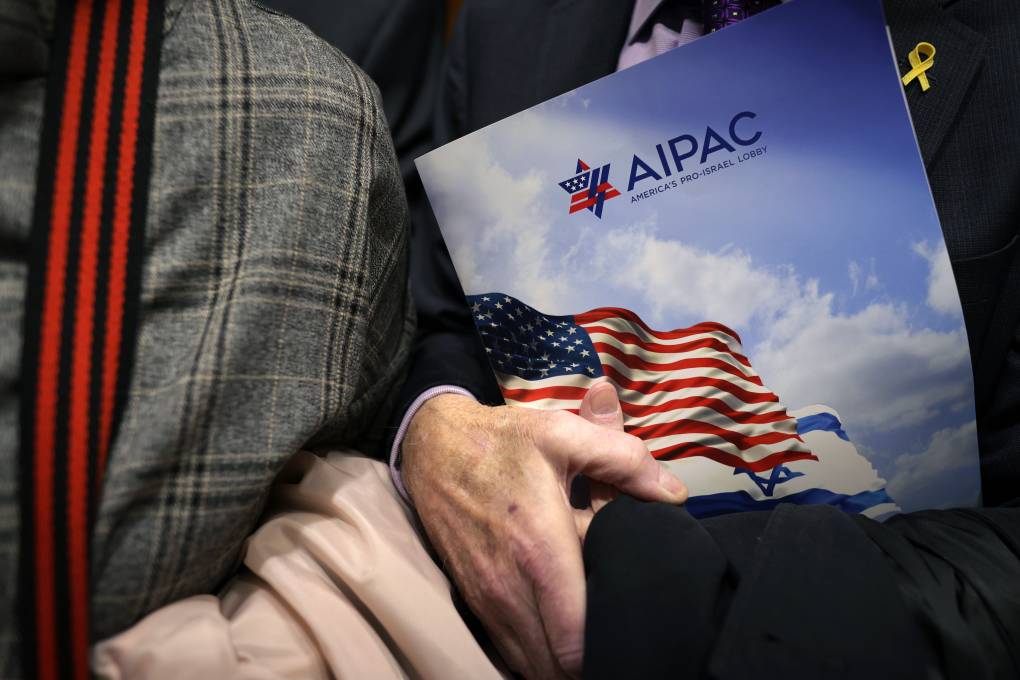
"caption": "A visitor holds an AIPAC folder in an elevator in Rayburn House Office Building on March 12, 2024 on Capitol Hill in Washington, DC.",
"credit": "Alex Wong/Getty Images",
"altTag": null,
"description": null,
"imgSizes": {
"medium": {
"file": "https://cdn.kqed.org/wp-content/uploads/sites/10/2024/05/GettyImages-2078448808-800x533.jpg",
"width": 800,
"height": 533,
"mimeType": "image/jpeg"
},
"large": {
"file": "https://cdn.kqed.org/wp-content/uploads/sites/10/2024/05/GettyImages-2078448808-1020x680.jpg",
"width": 1020,
"height": 680,
"mimeType": "image/jpeg"
},
"thumbnail": {
"file": "https://cdn.kqed.org/wp-content/uploads/sites/10/2024/05/GettyImages-2078448808-160x107.jpg",
"width": 160,
"height": 107,
"mimeType": "image/jpeg"
},
"1536x1536": {
"file": "https://cdn.kqed.org/wp-content/uploads/sites/10/2024/05/GettyImages-2078448808-1536x1024.jpg",
"width": 1536,
"height": 1024,
"mimeType": "image/jpeg"
},
"2048x2048": {
"file": "https://cdn.kqed.org/wp-content/uploads/sites/10/2024/05/GettyImages-2078448808-2048x1365.jpg",
"width": 2048,
"height": 1365,
"mimeType": "image/jpeg"
},
"post-thumbnail": {
"file": "https://cdn.kqed.org/wp-content/uploads/sites/10/2024/05/GettyImages-2078448808-672x372.jpg",
"width": 672,
"height": 372,
"mimeType": "image/jpeg"
},
"twentyfourteen-full-width": {
"file": "https://cdn.kqed.org/wp-content/uploads/sites/10/2024/05/GettyImages-2078448808-1038x576.jpg",
"width": 1038,
"height": 576,
"mimeType": "image/jpeg"
},
"full-width": {
"file": "https://cdn.kqed.org/wp-content/uploads/sites/10/2024/05/GettyImages-2078448808-1920x1280.jpg",
"width": 1920,
"height": 1280,
"mimeType": "image/jpeg"
},
"kqedFullSize": {
"file": "https://cdn.kqed.org/wp-content/uploads/sites/10/2024/05/GettyImages-2078448808-scaled.jpg",
"width": 2560,
"height": 1707
}
},
"isLoading": false,
"fetchFailed": false
},
"news_12009484": {
"type": "attachments",
"id": "news_12009484",
"meta": {
"index": "attachments_1716263798",
"site": "news",
"id": "12009484",
"found": true
},
"title": "241012-WEST BANK AID-MD-11-KQED",
"publishDate": 1729016627,
"status": "inherit",
"parent": 0,
"modified": 1729707770,
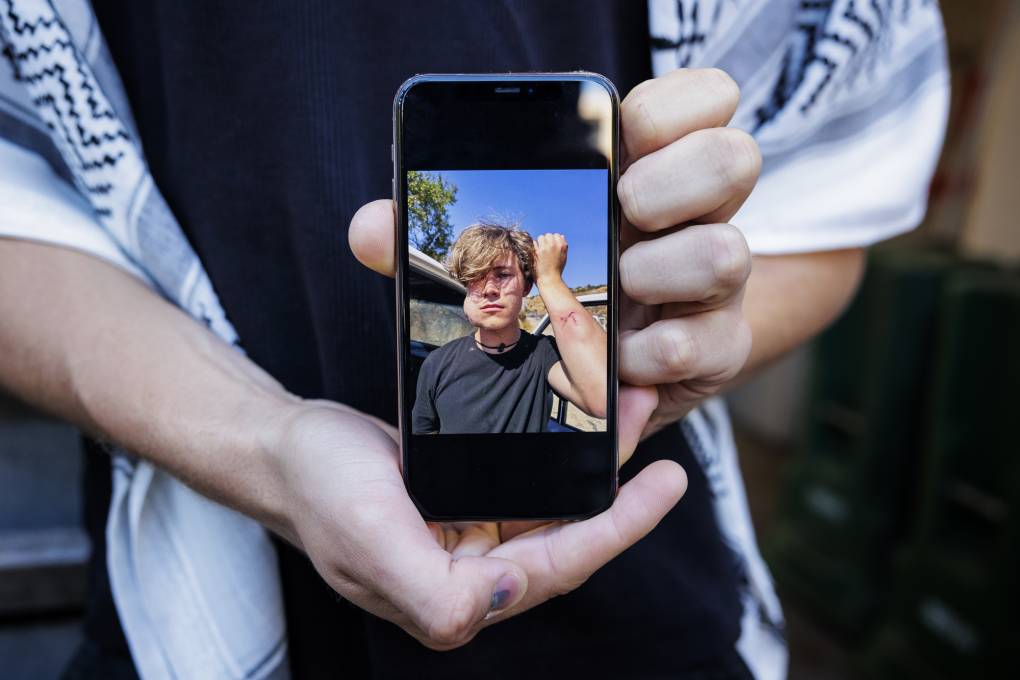
"caption": "David Hummel shows a photo of his injuries from his trip to the West Bank in July.",
"credit": "Martin do Nascimento/KQED",
"altTag": null,
"description": null,
"imgSizes": {
"medium": {
"file": "https://cdn.kqed.org/wp-content/uploads/sites/10/2024/10/241012-WEST-BANK-AID-MD-11-KQED-800x533.jpg",
"width": 800,
"height": 533,
"mimeType": "image/jpeg"
},
"large": {
"file": "https://cdn.kqed.org/wp-content/uploads/sites/10/2024/10/241012-WEST-BANK-AID-MD-11-KQED-1020x680.jpg",
"width": 1020,
"height": 680,
"mimeType": "image/jpeg"
},
"thumbnail": {
"file": "https://cdn.kqed.org/wp-content/uploads/sites/10/2024/10/241012-WEST-BANK-AID-MD-11-KQED-160x107.jpg",
"width": 160,
"height": 107,
"mimeType": "image/jpeg"
},
"1536x1536": {
"file": "https://cdn.kqed.org/wp-content/uploads/sites/10/2024/10/241012-WEST-BANK-AID-MD-11-KQED-1536x1024.jpg",
"width": 1536,
"height": 1024,
"mimeType": "image/jpeg"
},
"post-thumbnail": {
"file": "https://cdn.kqed.org/wp-content/uploads/sites/10/2024/10/241012-WEST-BANK-AID-MD-11-KQED-672x372.jpg",
"width": 672,
"height": 372,
"mimeType": "image/jpeg"
},
"twentyfourteen-full-width": {
"file": "https://cdn.kqed.org/wp-content/uploads/sites/10/2024/10/241012-WEST-BANK-AID-MD-11-KQED-1038x576.jpg",
"width": 1038,
"height": 576,
"mimeType": "image/jpeg"
},
"full-width": {
"file": "https://cdn.kqed.org/wp-content/uploads/sites/10/2024/10/241012-WEST-BANK-AID-MD-11-KQED-1920x1280.jpg",
"width": 1920,
"height": 1280,
"mimeType": "image/jpeg"
},
"kqedFullSize": {
"file": "https://cdn.kqed.org/wp-content/uploads/sites/10/2024/10/241012-WEST-BANK-AID-MD-11-KQED.jpg",
"width": 2000,
"height": 1333
}
},
"isLoading": false,
"fetchFailed": false
},
"news_12007748": {
"type": "attachments",
"id": "news_12007748",
"meta": {
"index": "attachments_1716263798",
"site": "news",
"id": "12007748",
"found": true
},
"title": "Gaza Vigil",
"publishDate": 1727981389,
"status": "inherit",
"parent": 0,
"modified": 1728071295,
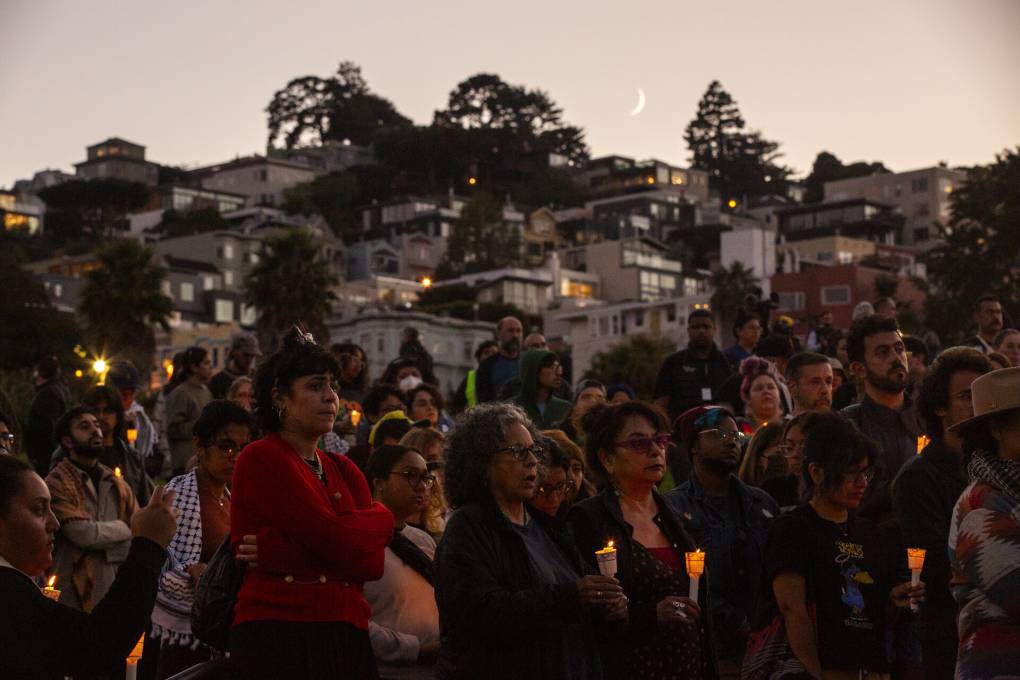
"caption": "The moon rises over a crowd of hundreds of members of the Palestinian community and pro-Palestinian supporters during a candlelight vigil to honor lives lost in Gaza in the past week at Dolores Park in San Francisco on Tuesday, Oct. 17, 2023.",
"credit": "Juliana Yamada/KQED",
"altTag": null,
"description": null,
"imgSizes": {
"medium": {
"file": "https://cdn.kqed.org/wp-content/uploads/sites/10/2024/10/20231017-Gaza-Vigil-014-JY-qut-800x533.jpg",
"width": 800,
"height": 533,
"mimeType": "image/jpeg"
},
"large": {
"file": "https://cdn.kqed.org/wp-content/uploads/sites/10/2024/10/20231017-Gaza-Vigil-014-JY-qut-1020x680.jpg",
"width": 1020,
"height": 680,
"mimeType": "image/jpeg"
},
"thumbnail": {
"file": "https://cdn.kqed.org/wp-content/uploads/sites/10/2024/10/20231017-Gaza-Vigil-014-JY-qut-160x107.jpg",
"width": 160,
"height": 107,
"mimeType": "image/jpeg"
},
"1536x1536": {
"file": "https://cdn.kqed.org/wp-content/uploads/sites/10/2024/10/20231017-Gaza-Vigil-014-JY-qut-1536x1024.jpg",
"width": 1536,
"height": 1024,
"mimeType": "image/jpeg"
},
"post-thumbnail": {
"file": "https://cdn.kqed.org/wp-content/uploads/sites/10/2024/10/20231017-Gaza-Vigil-014-JY-qut-672x372.jpg",
"width": 672,
"height": 372,
"mimeType": "image/jpeg"
},
"twentyfourteen-full-width": {
"file": "https://cdn.kqed.org/wp-content/uploads/sites/10/2024/10/20231017-Gaza-Vigil-014-JY-qut-1038x576.jpg",
"width": 1038,
"height": 576,
"mimeType": "image/jpeg"
},
"kqedFullSize": {
"file": "https://cdn.kqed.org/wp-content/uploads/sites/10/2024/10/20231017-Gaza-Vigil-014-JY-qut.jpg",
"width": 1920,
"height": 1280
}
},
"isLoading": false,
"fetchFailed": false
},
"news_12007732": {
"type": "attachments",
"id": "news_12007732",
"meta": {
"index": "attachments_1716263798",
"site": "news",
"id": "12007732",
"found": true
},
"title": "RS49114_037_SanFrancisco_PalestineRally_05182021-qut",
"publishDate": 1727977720,
"status": "inherit",
"parent": 0,
"modified": 1728072822,
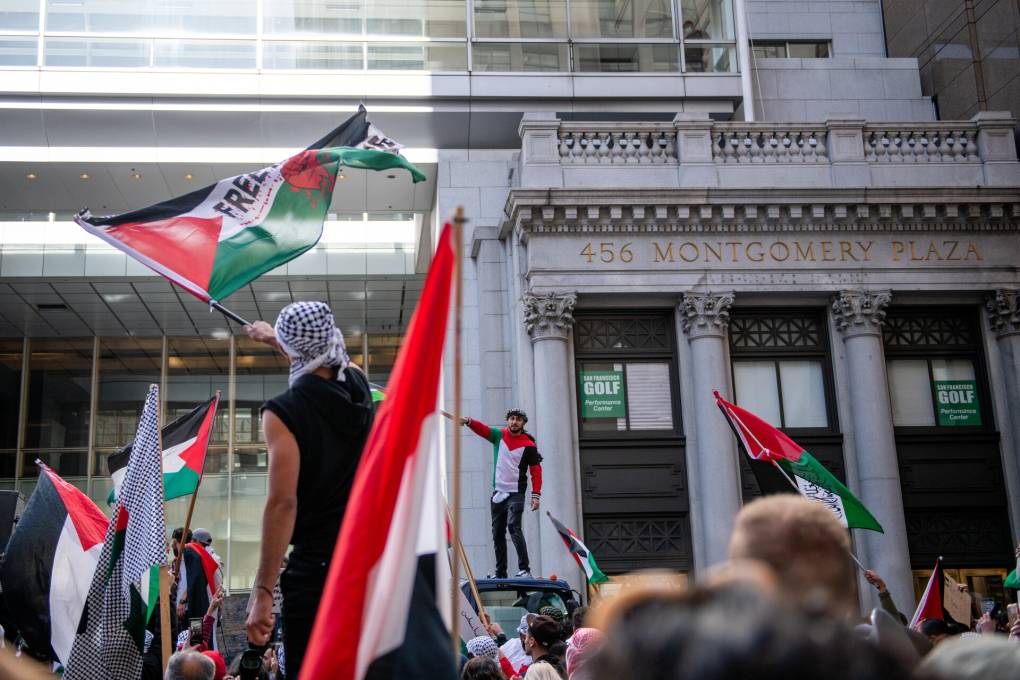
"caption": "A crowd of over 1000 people fills the 400 block of Montgomery Street outside of the Israeli Consulate in San Francisco on May 18, 2021, during a 'Free Palestine' rally in solidarity with the Palestinian General Strike.",
"credit": "Beth LaBerge/KQED",
"altTag": null,
"description": null,
"imgSizes": {
"medium": {
"file": "https://cdn.kqed.org/wp-content/uploads/sites/10/2024/10/RS49114_037_SanFrancisco_PalestineRally_05182021-qut-800x533.jpg",
"width": 800,
"height": 533,
"mimeType": "image/jpeg"
},
"large": {
"file": "https://cdn.kqed.org/wp-content/uploads/sites/10/2024/10/RS49114_037_SanFrancisco_PalestineRally_05182021-qut-1020x680.jpg",
"width": 1020,
"height": 680,
"mimeType": "image/jpeg"
},
"thumbnail": {
"file": "https://cdn.kqed.org/wp-content/uploads/sites/10/2024/10/RS49114_037_SanFrancisco_PalestineRally_05182021-qut-160x107.jpg",
"width": 160,
"height": 107,
"mimeType": "image/jpeg"
},
"1536x1536": {
"file": "https://cdn.kqed.org/wp-content/uploads/sites/10/2024/10/RS49114_037_SanFrancisco_PalestineRally_05182021-qut-1536x1024.jpg",
"width": 1536,
"height": 1024,
"mimeType": "image/jpeg"
},
"post-thumbnail": {
"file": "https://cdn.kqed.org/wp-content/uploads/sites/10/2024/10/RS49114_037_SanFrancisco_PalestineRally_05182021-qut-672x372.jpg",
"width": 672,
"height": 372,
"mimeType": "image/jpeg"
},
"twentyfourteen-full-width": {
"file": "https://cdn.kqed.org/wp-content/uploads/sites/10/2024/10/RS49114_037_SanFrancisco_PalestineRally_05182021-qut-1038x576.jpg",
"width": 1038,
"height": 576,
"mimeType": "image/jpeg"
},
"kqedFullSize": {
"file": "https://cdn.kqed.org/wp-content/uploads/sites/10/2024/10/RS49114_037_SanFrancisco_PalestineRally_05182021-qut.jpg",
"width": 1920,
"height": 1280
}
},
"isLoading": false,
"fetchFailed": false
},
"news_12006513": {
"type": "attachments",
"id": "news_12006513",
"meta": {
"index": "attachments_1716263798",
"site": "news",
"id": "12006513",
"found": true
},
"title": "240925-LEBANESE COMMUNITY REACTION-MD-03-KQED-1",
"publishDate": 1727310990,
"status": "inherit",
"parent": 0,
"modified": 1727318676,
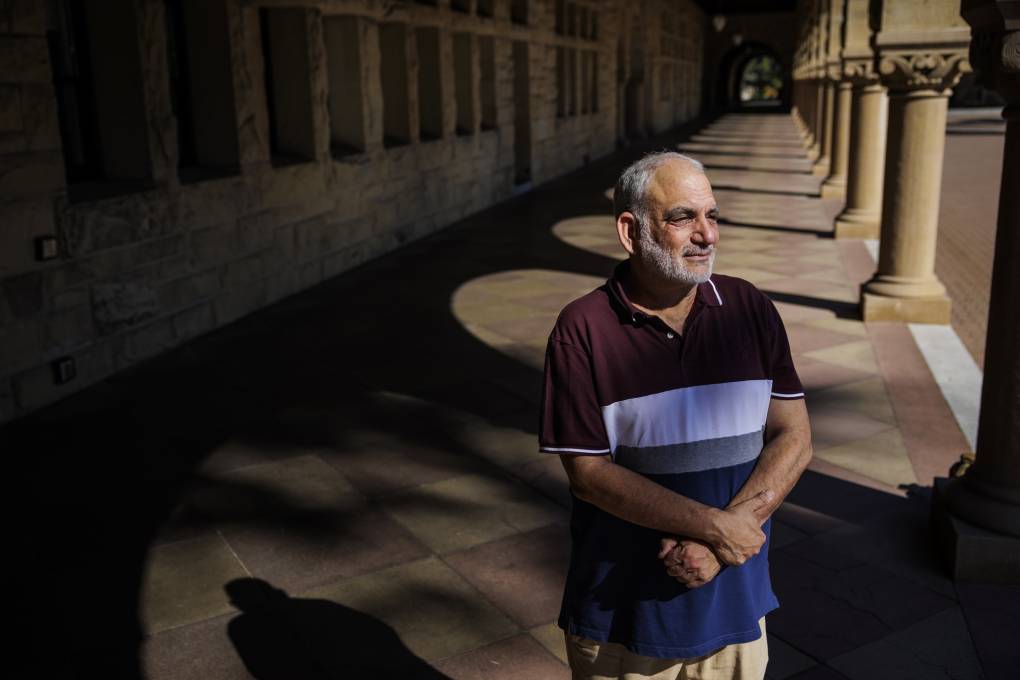
"caption": "Professor Ramzi Salti at Stanford University in Palo Alto on Sept. 25, 2024.",
"credit": "Martin do Nascimento/KQED",
"altTag": null,
"description": null,
"imgSizes": {
"medium": {
"file": "https://cdn.kqed.org/wp-content/uploads/sites/10/2024/09/240925-LEBANESE-COMMUNITY-REACTION-MD-03-KQED-1-800x533.jpg",
"width": 800,
"height": 533,
"mimeType": "image/jpeg"
},
"large": {
"file": "https://cdn.kqed.org/wp-content/uploads/sites/10/2024/09/240925-LEBANESE-COMMUNITY-REACTION-MD-03-KQED-1-1020x680.jpg",
"width": 1020,
"height": 680,
"mimeType": "image/jpeg"
},
"thumbnail": {
"file": "https://cdn.kqed.org/wp-content/uploads/sites/10/2024/09/240925-LEBANESE-COMMUNITY-REACTION-MD-03-KQED-1-160x107.jpg",
"width": 160,
"height": 107,
"mimeType": "image/jpeg"
},
"1536x1536": {
"file": "https://cdn.kqed.org/wp-content/uploads/sites/10/2024/09/240925-LEBANESE-COMMUNITY-REACTION-MD-03-KQED-1-1536x1024.jpg",
"width": 1536,
"height": 1024,
"mimeType": "image/jpeg"
},
"post-thumbnail": {
"file": "https://cdn.kqed.org/wp-content/uploads/sites/10/2024/09/240925-LEBANESE-COMMUNITY-REACTION-MD-03-KQED-1-672x372.jpg",
"width": 672,
"height": 372,
"mimeType": "image/jpeg"
},
"twentyfourteen-full-width": {
"file": "https://cdn.kqed.org/wp-content/uploads/sites/10/2024/09/240925-LEBANESE-COMMUNITY-REACTION-MD-03-KQED-1-1038x576.jpg",
"width": 1038,
"height": 576,
"mimeType": "image/jpeg"
},
"full-width": {
"file": "https://cdn.kqed.org/wp-content/uploads/sites/10/2024/09/240925-LEBANESE-COMMUNITY-REACTION-MD-03-KQED-1-1920x1280.jpg",
"width": 1920,
"height": 1280,
"mimeType": "image/jpeg"
},
"kqedFullSize": {
"file": "https://cdn.kqed.org/wp-content/uploads/sites/10/2024/09/240925-LEBANESE-COMMUNITY-REACTION-MD-03-KQED-1.jpg?ver=1727318666",
"width": 2000,
"height": 1333
}
},
"isLoading": false,
"fetchFailed": false
},
"news_12005126": {
"type": "attachments",
"id": "news_12005126",
"meta": {
"index": "attachments_1716263798",
"site": "news",
"id": "12005126",
"found": true
},
"title": "240917-Gaza Evacuations-DIPTYCH-1-KQED",
"publishDate": 1726616211,
"status": "inherit",
"parent": 0,
"modified": 1726616275,
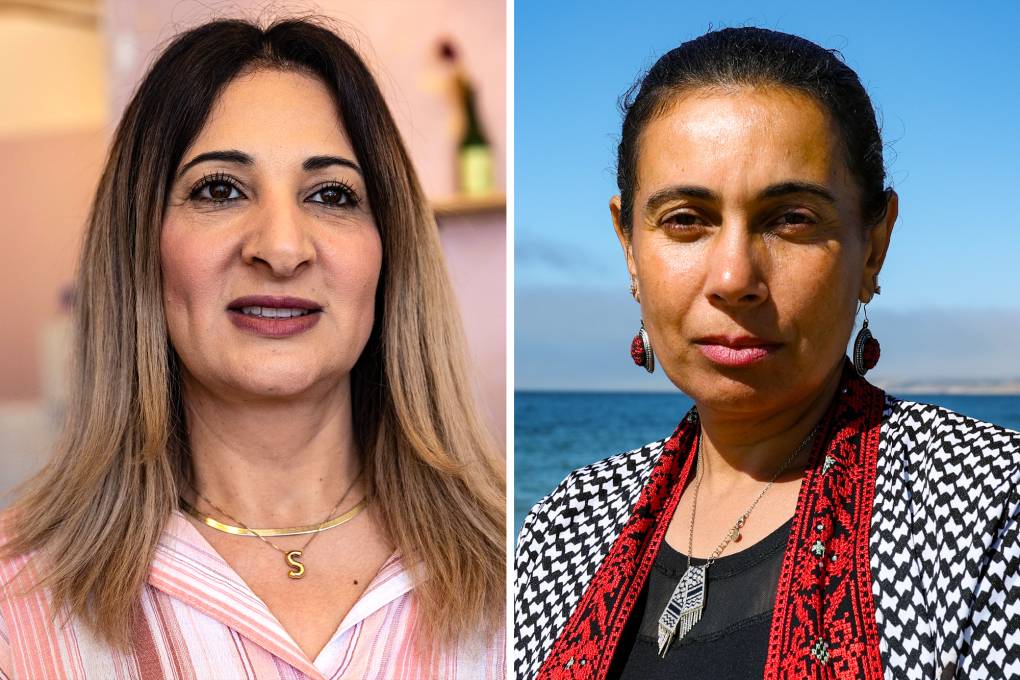
"caption": "Left: Lamea Abuelrous, owner of Temo’s cafe in the Mission District, on September 9, 2024. Right: Rolla Alaydi at Del Monte Beach in Monterey on June 23, 2024. ",
"credit": "Gina Castro/KQED",
"altTag": null,
"description": null,
"imgSizes": {
"medium": {
"file": "https://cdn.kqed.org/wp-content/uploads/sites/10/2024/09/240917-Gaza-Evacuations-DIPTYCH-1-KQED-800x533.jpg",
"width": 800,
"height": 533,
"mimeType": "image/jpeg"
},
"large": {
"file": "https://cdn.kqed.org/wp-content/uploads/sites/10/2024/09/240917-Gaza-Evacuations-DIPTYCH-1-KQED-1020x680.jpg",
"width": 1020,
"height": 680,
"mimeType": "image/jpeg"
},
"thumbnail": {
"file": "https://cdn.kqed.org/wp-content/uploads/sites/10/2024/09/240917-Gaza-Evacuations-DIPTYCH-1-KQED-160x107.jpg",
"width": 160,
"height": 107,
"mimeType": "image/jpeg"
},
"1536x1536": {
"file": "https://cdn.kqed.org/wp-content/uploads/sites/10/2024/09/240917-Gaza-Evacuations-DIPTYCH-1-KQED-1536x1024.jpg",
"width": 1536,
"height": 1024,
"mimeType": "image/jpeg"
},
"post-thumbnail": {
"file": "https://cdn.kqed.org/wp-content/uploads/sites/10/2024/09/240917-Gaza-Evacuations-DIPTYCH-1-KQED-672x372.jpg",
"width": 672,
"height": 372,
"mimeType": "image/jpeg"
},
"twentyfourteen-full-width": {
"file": "https://cdn.kqed.org/wp-content/uploads/sites/10/2024/09/240917-Gaza-Evacuations-DIPTYCH-1-KQED-1038x576.jpg",
"width": 1038,
"height": 576,
"mimeType": "image/jpeg"
},
"full-width": {
"file": "https://cdn.kqed.org/wp-content/uploads/sites/10/2024/09/240917-Gaza-Evacuations-DIPTYCH-1-KQED-1920x1280.jpg",
"width": 1920,
"height": 1280,
"mimeType": "image/jpeg"
},
"kqedFullSize": {
"file": "https://cdn.kqed.org/wp-content/uploads/sites/10/2024/09/240917-Gaza-Evacuations-DIPTYCH-1-KQED.jpg",
"width": 2000,
"height": 1333
}
},
"isLoading": false,
"fetchFailed": false
},
"news_11997150": {
"type": "attachments",
"id": "news_11997150",
"meta": {
"index": "attachments_1716263798",
"site": "news",
"id": "11997150",
"found": true
},
"title": "US Israel Netanyahu",
"publishDate": 1721846980,
"status": "inherit",
"parent": 11997141,
"modified": 1721847009,
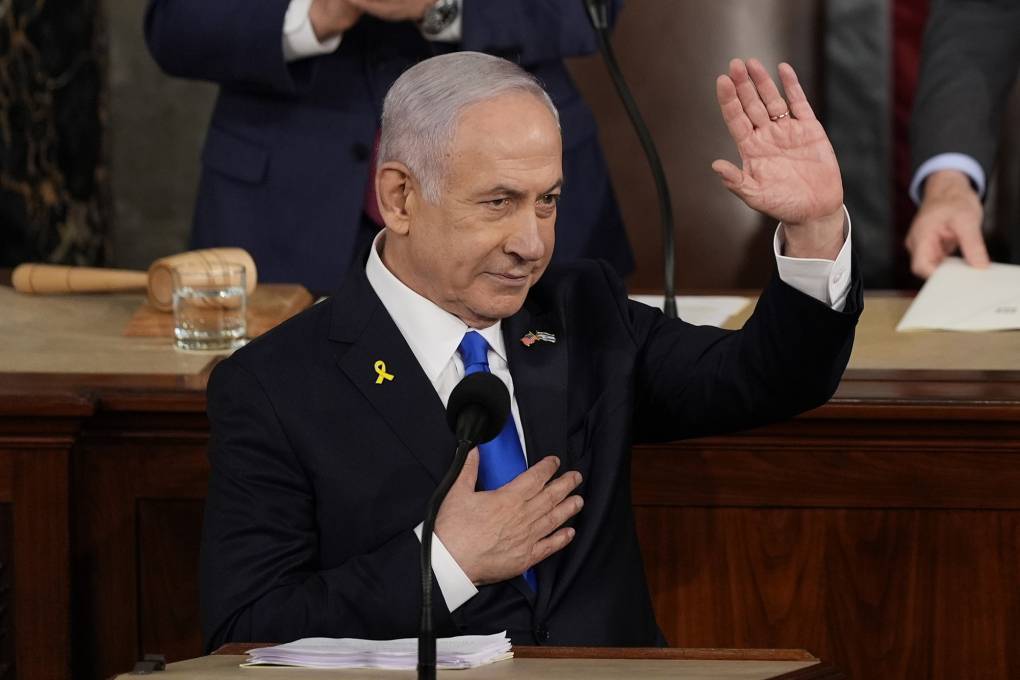
"caption": "Israeli Prime Minister Benjamin Netanyahu speaks to a joint meeting of Congress at the Capitol in Washington, Wednesday, July 24, 2024.",
"credit": "Julia Nikhinson/AP Photo",
"altTag": null,
"description": null,
"imgSizes": {
"medium": {
"file": "https://cdn.kqed.org/wp-content/uploads/sites/10/2024/07/BenjaminNetanyahuAP-800x533.jpg",
"width": 800,
"height": 533,
"mimeType": "image/jpeg"
},
"large": {
"file": "https://cdn.kqed.org/wp-content/uploads/sites/10/2024/07/BenjaminNetanyahuAP-1020x680.jpg",
"width": 1020,
"height": 680,
"mimeType": "image/jpeg"
},
"thumbnail": {
"file": "https://cdn.kqed.org/wp-content/uploads/sites/10/2024/07/BenjaminNetanyahuAP-160x107.jpg",
"width": 160,
"height": 107,
"mimeType": "image/jpeg"
},
"1536x1536": {
"file": "https://cdn.kqed.org/wp-content/uploads/sites/10/2024/07/BenjaminNetanyahuAP-1536x1024.jpg",
"width": 1536,
"height": 1024,
"mimeType": "image/jpeg"
},
"post-thumbnail": {
"file": "https://cdn.kqed.org/wp-content/uploads/sites/10/2024/07/BenjaminNetanyahuAP-672x372.jpg",
"width": 672,
"height": 372,
"mimeType": "image/jpeg"
},
"twentyfourteen-full-width": {
"file": "https://cdn.kqed.org/wp-content/uploads/sites/10/2024/07/BenjaminNetanyahuAP-1038x576.jpg",
"width": 1038,
"height": 576,
"mimeType": "image/jpeg"
},
"full-width": {
"file": "https://cdn.kqed.org/wp-content/uploads/sites/10/2024/07/BenjaminNetanyahuAP-1920x1280.jpg",
"width": 1920,
"height": 1280,
"mimeType": "image/jpeg"
},
"kqedFullSize": {
"file": "https://cdn.kqed.org/wp-content/uploads/sites/10/2024/07/BenjaminNetanyahuAP.jpg",
"width": 2000,
"height": 1333
}
},
"isLoading": false,
"fetchFailed": false
},
"news_11992642": {
"type": "attachments",
"id": "news_11992642",
"meta": {
"index": "attachments_1716263798",
"site": "news",
"id": "11992642",
"found": true
},
"title": "20240630_Pride_GC-26-KQED",
"publishDate": 1719794354,
"status": "inherit",
"parent": 0,
"modified": 1719856516,
"caption": "Participants celebrate during the Pride Parade in San Francisco on June 30, 2024.",
"credit": "Gina Castro/KQED",
"altTag": "A group of people wearing light turquoise shirts wave rainbow flags and fans while walking down the street.",
"description": null,
"imgSizes": {
"medium": {
"file": "https://cdn.kqed.org/wp-content/uploads/sites/10/2024/06/20240630_Pride_GC-26-KQED-800x533.jpg",
"width": 800,
"height": 533,
"mimeType": "image/jpeg"
},
"large": {
"file": "https://cdn.kqed.org/wp-content/uploads/sites/10/2024/06/20240630_Pride_GC-26-KQED-1020x680.jpg",
"width": 1020,
"height": 680,
"mimeType": "image/jpeg"
},
"thumbnail": {
"file": "https://cdn.kqed.org/wp-content/uploads/sites/10/2024/06/20240630_Pride_GC-26-KQED-160x107.jpg",
"width": 160,
"height": 107,
"mimeType": "image/jpeg"
},
"1536x1536": {
"file": "https://cdn.kqed.org/wp-content/uploads/sites/10/2024/06/20240630_Pride_GC-26-KQED-1536x1024.jpg",
"width": 1536,
"height": 1024,
"mimeType": "image/jpeg"
},
"post-thumbnail": {
"file": "https://cdn.kqed.org/wp-content/uploads/sites/10/2024/06/20240630_Pride_GC-26-KQED-672x372.jpg",
"width": 672,
"height": 372,
"mimeType": "image/jpeg"
},
"twentyfourteen-full-width": {
"file": "https://cdn.kqed.org/wp-content/uploads/sites/10/2024/06/20240630_Pride_GC-26-KQED-1038x576.jpg",
"width": 1038,
"height": 576,
"mimeType": "image/jpeg"
},
"full-width": {
"file": "https://cdn.kqed.org/wp-content/uploads/sites/10/2024/06/20240630_Pride_GC-26-KQED-1920x1280.jpg",
"width": 1920,
"height": 1280,
"mimeType": "image/jpeg"
},
"kqedFullSize": {
"file": "https://cdn.kqed.org/wp-content/uploads/sites/10/2024/06/20240630_Pride_GC-26-KQED.jpg?ver=1719794839",
"width": 2000,
"height": 1333
}
},
"isLoading": false,
"fetchFailed": false
},
"news_11986142": {
"type": "attachments",
"id": "news_11986142",
"meta": {
"index": "attachments_1716263798",
"site": "news",
"id": "11986142",
"found": true
},
"parent": 0,
"imgSizes": {
"twentyfourteen-full-width": {
"file": "https://cdn.kqed.org/wp-content/uploads/sites/10/2024/05/240514-Google-Protest-JG-01-1038x576.jpg",
"width": 1038,
"mimeType": "image/jpeg",
"height": 576
},
"thumbnail": {
"file": "https://cdn.kqed.org/wp-content/uploads/sites/10/2024/05/240514-Google-Protest-JG-01-160x107.jpg",
"width": 160,
"mimeType": "image/jpeg",
"height": 107
},
"post-thumbnail": {
"file": "https://cdn.kqed.org/wp-content/uploads/sites/10/2024/05/240514-Google-Protest-JG-01-672x372.jpg",
"width": 672,
"mimeType": "image/jpeg",
"height": 372
},
"kqedFullSize": {
"file": "https://cdn.kqed.org/wp-content/uploads/sites/10/2024/05/240514-Google-Protest-JG-01.jpg",
"width": 2000,
"height": 1333
},
"large": {
"file": "https://cdn.kqed.org/wp-content/uploads/sites/10/2024/05/240514-Google-Protest-JG-01-1020x680.jpg",
"width": 1020,
"mimeType": "image/jpeg",
"height": 680
},
"1536x1536": {
"file": "https://cdn.kqed.org/wp-content/uploads/sites/10/2024/05/240514-Google-Protest-JG-01-1536x1024.jpg",
"width": 1536,
"mimeType": "image/jpeg",
"height": 1024
},
"full-width": {
"file": "https://cdn.kqed.org/wp-content/uploads/sites/10/2024/05/240514-Google-Protest-JG-01-1920x1280.jpg",
"width": 1920,
"mimeType": "image/jpeg",
"height": 1280
},
"medium": {
"file": "https://cdn.kqed.org/wp-content/uploads/sites/10/2024/05/240514-Google-Protest-JG-01-800x533.jpg",
"width": 800,
"mimeType": "image/jpeg",
"height": 533
}
},
"publishDate": 1715716895,
"modified": 1715718181,
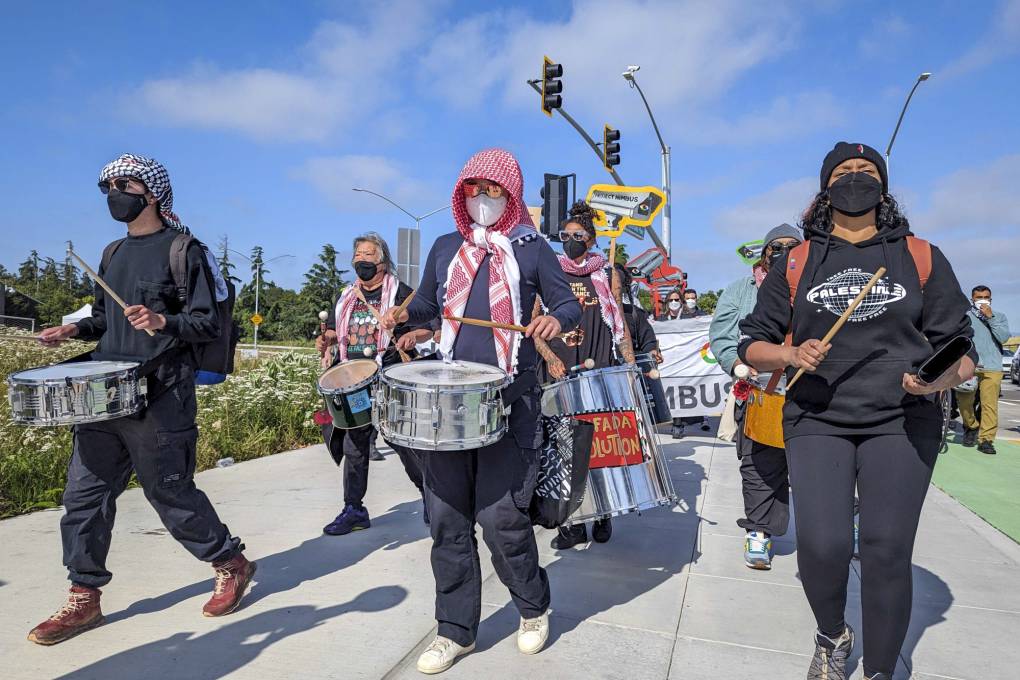
"caption": "People play drums and chant during a protest outside of Google's offices in Mountain View on May 14, 2024.",
"description": null,
"title": "240514-Google Protest-JG-01",
"credit": "Joseph Geha/KQED",
"status": "inherit",
"altTag": "A group of people wearing masks and holding drums walk down the street.",
"isLoading": false,
"fetchFailed": false
},
"news_11985633": {
"type": "attachments",
"id": "news_11985633",
"meta": {
"index": "attachments_1716263798",
"site": "news",
"id": "11985633",
"found": true
},
"parent": 0,
"imgSizes": {
"twentyfourteen-full-width": {
"file": "https://cdn.kqed.org/wp-content/uploads/sites/10/2024/05/231214-GazaGoogleProtest-10-BL_qut-1038x576.jpg",
"width": 1038,
"mimeType": "image/jpeg",
"height": 576
},
"thumbnail": {
"file": "https://cdn.kqed.org/wp-content/uploads/sites/10/2024/05/231214-GazaGoogleProtest-10-BL_qut-160x107.jpg",
"width": 160,
"mimeType": "image/jpeg",
"height": 107
},
"post-thumbnail": {
"file": "https://cdn.kqed.org/wp-content/uploads/sites/10/2024/05/231214-GazaGoogleProtest-10-BL_qut-672x372.jpg",
"width": 672,
"mimeType": "image/jpeg",
"height": 372
},
"kqedFullSize": {
"file": "https://cdn.kqed.org/wp-content/uploads/sites/10/2024/05/231214-GazaGoogleProtest-10-BL_qut.jpg",
"width": 1920,
"height": 1280
},
"large": {
"file": "https://cdn.kqed.org/wp-content/uploads/sites/10/2024/05/231214-GazaGoogleProtest-10-BL_qut-1020x680.jpg",
"width": 1020,
"mimeType": "image/jpeg",
"height": 680
},
"1536x1536": {
"file": "https://cdn.kqed.org/wp-content/uploads/sites/10/2024/05/231214-GazaGoogleProtest-10-BL_qut-1536x1024.jpg",
"width": 1536,
"mimeType": "image/jpeg",
"height": 1024
},
"medium": {
"file": "https://cdn.kqed.org/wp-content/uploads/sites/10/2024/05/231214-GazaGoogleProtest-10-BL_qut-800x533.jpg",
"width": 800,
"mimeType": "image/jpeg",
"height": 533
}
},
"publishDate": 1715297255,
"modified": 1715297291,
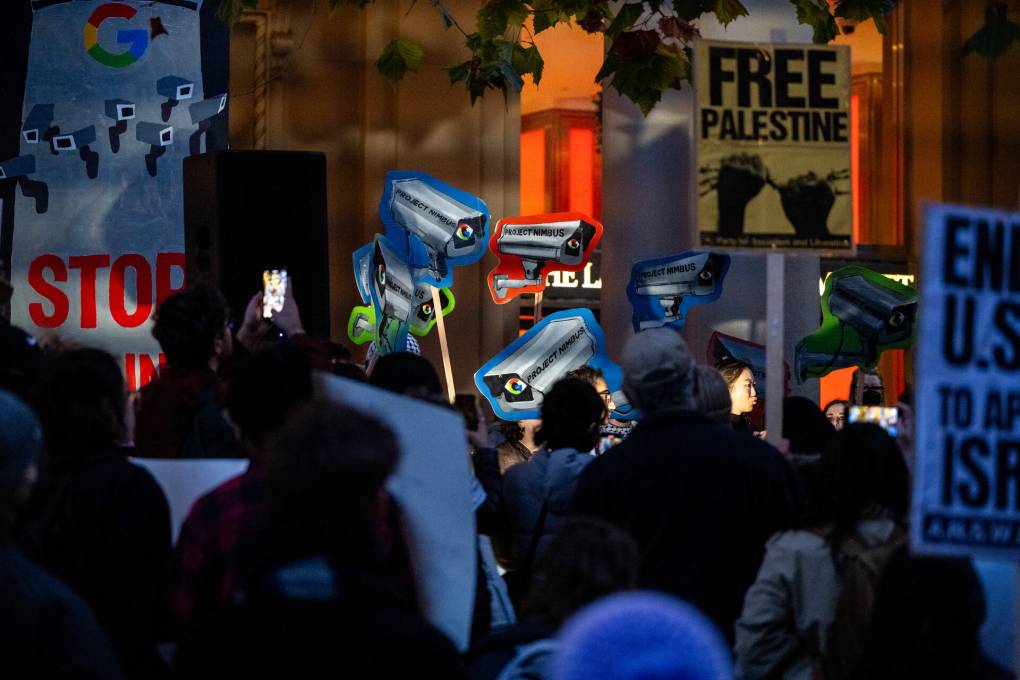
"caption": "Demonstrators gather outside Google offices in downtown San Francisco on Dec. 14, 2023, to call for an immediate end to 'Project Nimbus,' Google's billion-dollar cloud computing project with the Israeli government.",
"description": null,
"title": "231214-GazaGoogleProtest-10-BL_qut",
"credit": "Beth LaBerge/KQED",
"status": "inherit",
"altTag": null,
"isLoading": false,
"fetchFailed": false
},
"news_11985338": {
"type": "attachments",
"id": "news_11985338",
"meta": {
"index": "attachments_1716263798",
"site": "news",
"id": "11985338",
"found": true
},
"parent": 0,
"imgSizes": {
"twentyfourteen-full-width": {
"file": "https://cdn.kqed.org/wp-content/uploads/sites/10/2024/05/240508-BERKELEY-HIGH-FILE-MD-02-KQED-1038x576.jpg",
"width": 1038,
"mimeType": "image/jpeg",
"height": 576
},
"thumbnail": {
"file": "https://cdn.kqed.org/wp-content/uploads/sites/10/2024/05/240508-BERKELEY-HIGH-FILE-MD-02-KQED-160x107.jpg",
"width": 160,
"mimeType": "image/jpeg",
"height": 107
},
"post-thumbnail": {
"file": "https://cdn.kqed.org/wp-content/uploads/sites/10/2024/05/240508-BERKELEY-HIGH-FILE-MD-02-KQED-672x372.jpg",
"width": 672,
"mimeType": "image/jpeg",
"height": 372
},
"kqedFullSize": {
"file": "https://cdn.kqed.org/wp-content/uploads/sites/10/2024/05/240508-BERKELEY-HIGH-FILE-MD-02-KQED.jpg",
"width": 2000,
"height": 1333
},
"large": {
"file": "https://cdn.kqed.org/wp-content/uploads/sites/10/2024/05/240508-BERKELEY-HIGH-FILE-MD-02-KQED-1020x680.jpg",
"width": 1020,
"mimeType": "image/jpeg",
"height": 680
},
"1536x1536": {
"file": "https://cdn.kqed.org/wp-content/uploads/sites/10/2024/05/240508-BERKELEY-HIGH-FILE-MD-02-KQED-1536x1024.jpg",
"width": 1536,
"mimeType": "image/jpeg",
"height": 1024
},
"full-width": {
"file": "https://cdn.kqed.org/wp-content/uploads/sites/10/2024/05/240508-BERKELEY-HIGH-FILE-MD-02-KQED-1920x1280.jpg",
"width": 1920,
"mimeType": "image/jpeg",
"height": 1280
},
"medium": {
"file": "https://cdn.kqed.org/wp-content/uploads/sites/10/2024/05/240508-BERKELEY-HIGH-FILE-MD-02-KQED-800x533.jpg",
"width": 800,
"mimeType": "image/jpeg",
"height": 533
}
},
"publishDate": 1715189458,
"modified": 1715189493,
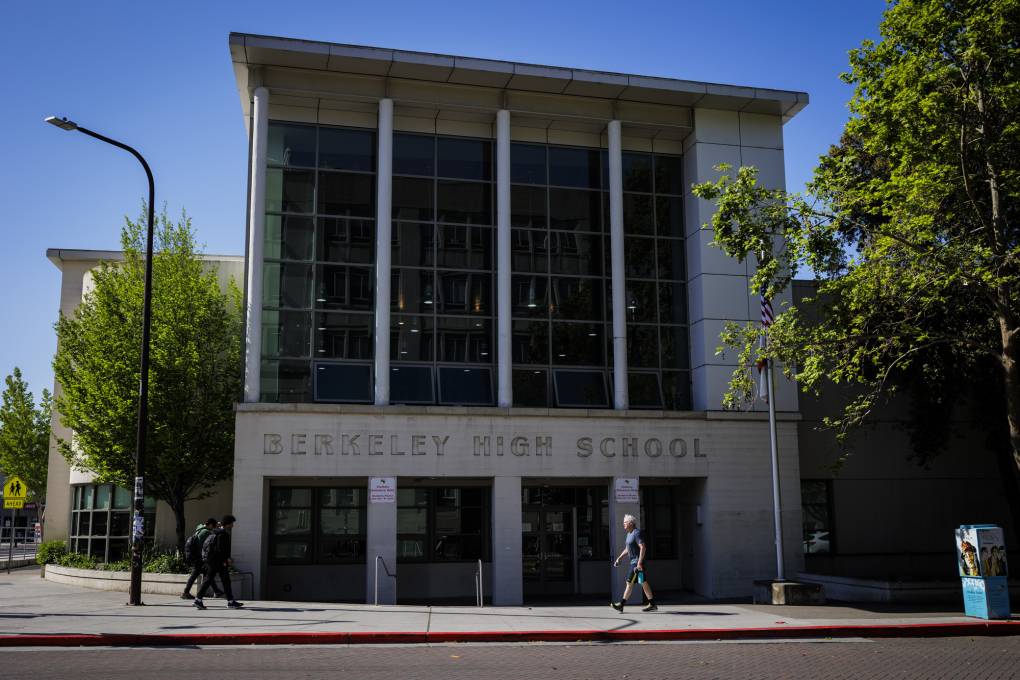
"caption": "Berkeley High School in Berkeley on May 8, 2024.",
"description": null,
"title": "Berkeley High School in Berkeley on May 8, 2024.",
"credit": "Martin do Nascimento/KQED",
"status": "inherit",
"altTag": null,
"isLoading": false,
"fetchFailed": false
},
"news_11984781": {
"type": "attachments",
"id": "news_11984781",
"meta": {
"index": "attachments_1716263798",
"site": "news",
"id": "11984781",
"found": true
},
"parent": 11984762,
"imgSizes": {
"twentyfourteen-full-width": {
"file": "https://cdn.kqed.org/wp-content/uploads/sites/10/2024/05/AP24123441309819-1038x576.jpg",
"width": 1038,
"mimeType": "image/jpeg",
"height": 576
},
"thumbnail": {
"file": "https://cdn.kqed.org/wp-content/uploads/sites/10/2024/05/AP24123441309819-160x107.jpg",
"width": 160,
"mimeType": "image/jpeg",
"height": 107
},
"post-thumbnail": {
"file": "https://cdn.kqed.org/wp-content/uploads/sites/10/2024/05/AP24123441309819-672x372.jpg",
"width": 672,
"mimeType": "image/jpeg",
"height": 372
},
"kqedFullSize": {
"file": "https://cdn.kqed.org/wp-content/uploads/sites/10/2024/05/AP24123441309819-scaled.jpg",
"width": 2560,
"height": 1707
},
"2048x2048": {
"file": "https://cdn.kqed.org/wp-content/uploads/sites/10/2024/05/AP24123441309819-2048x1365.jpg",
"width": 2048,
"mimeType": "image/jpeg",
"height": 1365
},
"large": {
"file": "https://cdn.kqed.org/wp-content/uploads/sites/10/2024/05/AP24123441309819-1020x680.jpg",
"width": 1020,
"mimeType": "image/jpeg",
"height": 680
},
"1536x1536": {
"file": "https://cdn.kqed.org/wp-content/uploads/sites/10/2024/05/AP24123441309819-1536x1024.jpg",
"width": 1536,
"mimeType": "image/jpeg",
"height": 1024
},
"full-width": {
"file": "https://cdn.kqed.org/wp-content/uploads/sites/10/2024/05/AP24123441309819-1920x1280.jpg",
"width": 1920,
"mimeType": "image/jpeg",
"height": 1280
},
"medium": {
"file": "https://cdn.kqed.org/wp-content/uploads/sites/10/2024/05/AP24123441309819-800x533.jpg",
"width": 800,
"mimeType": "image/jpeg",
"height": 533
}
},
"publishDate": 1714671020,
"modified": 1714675849,
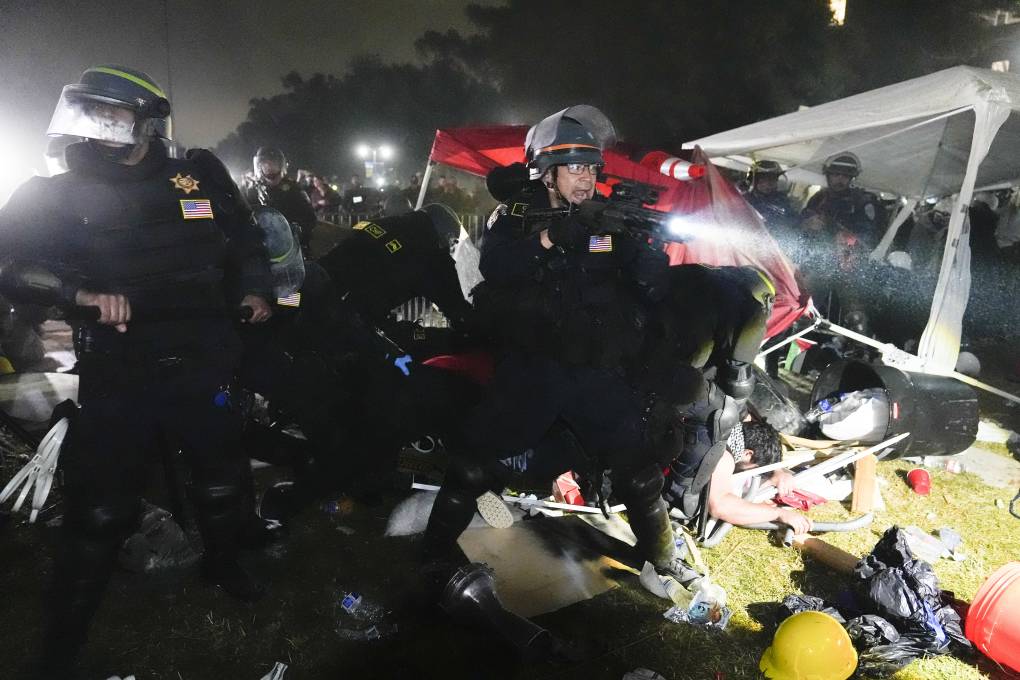
"caption": "Police advance on pro-Palestinian demonstrators in an encampment on the UCLA campus on Thursday, May 2, 2024, in Los Angeles. ",
"description": null,
"title": "APTOPIX Israel Palestinians Campus Protests",
"credit": "Jae C. Hong/The Associated Press",
"status": "inherit",
"altTag": "Multiple police knock over a barricade and point their weapons.",
"isLoading": false,
"fetchFailed": false
}
},
"audioPlayerReducer": {
"postId": "stream_live",
"isPaused": true,
"isPlaying": false,
"pfsActive": false,
"pledgeModalIsOpen": true,
"playerDrawerIsOpen": false,
"liveAudioPlayStartedAt": 0,
"liveAudioPlayContext": ""
},
"authorsReducer": {
"byline_news_11984762": {
"type": "authors",
"id": "byline_news_11984762",
"meta": {
"override": true
},
"slug": "byline_news_11984762",
"name": "Atmika Iyer, CalMatters",
"isLoading": false
},
"kqed": {
"type": "authors",
"id": "236",
"meta": {
"index": "authors_1716337520",
"id": "236",
"found": true
},
"name": "KQED News Staff",
"firstName": "KQED News Staff",
"lastName": null,
"slug": "kqed",
"email": "faq@kqed.org",
"display_author_email": false,
"staff_mastheads": [],
"title": null,
"bio": null,
"avatar": "https://secure.gravatar.com/avatar/ef0e801a68c4c54afa9180db14084167?s=600&d=blank&r=g",
"twitter": null,
"facebook": null,
"instagram": null,
"linkedin": null,
"sites": [
{
"site": "arts",
"roles": [
"contributor"
]
},
{
"site": "news",
"roles": [
"editor"
]
},
{
"site": "futureofyou",
"roles": [
"author"
]
}
],
"headData": {
"title": "KQED News Staff | KQED",
"description": null,
"ogImgSrc": "https://secure.gravatar.com/avatar/ef0e801a68c4c54afa9180db14084167?s=600&d=blank&r=g",
"twImgSrc": "https://secure.gravatar.com/avatar/ef0e801a68c4c54afa9180db14084167?s=600&d=blank&r=g"
},
"isLoading": false,
"link": "/author/kqed"
},
"rachael-myrow": {
"type": "authors",
"id": "251",
"meta": {
"index": "authors_1716337520",
"id": "251",
"found": true
},
"name": "Rachael Myrow",
"firstName": "Rachael",
"lastName": "Myrow",
"slug": "rachael-myrow",
"email": "rmyrow@kqed.org",
"display_author_email": true,
"staff_mastheads": [
"news"
],
"title": "Senior Editor of KQED's Silicon Valley News Desk",
"bio": "• I write and edit stories about how Silicon Valley power and policies shape everyday life in California. I’m also passionate about making Bay Area history and culture more accessible to a broad public. • I’ve been a journalist for most of my life, starting in high school with The Franklin Press in Los Angeles, where I grew up. While earning my first degree in English at UC Berkeley, I got my start in public radio at KALX-FM. After completing a second degree in journalism at Cal, I landed my first professional job at Marketplace, then moved on to KPCC (now LAist), and then KQED, where I hosted The California Report for more than seven years. • My reporting has appeared on NPR, The World, WBUR’s \u003ci>Here & Now\u003c/i>, and the BBC. I also guest host for KQED’s \u003ci>Forum\u003c/i>, as well as the Commonwealth Club in San Francisco. • I speak periodically on media, democracy and technology issues, and do voiceover work for documentaries and educational video projects. • Outside of the studio, you'll find me hiking Bay Area trails and whipping up Insta-ready meals in my kitchen. • I do not accept gifts, money, or favors from anyone connected to my reporting, I don't pay people for information, and I do not support or donate to political causes. • I strive to treat the people I report on with fairness, honesty, and respect. I also recognize there are often multiple sides to a story and work to verify information through multiple sources and documentation. If I get something wrong, I correct it.",
"avatar": "https://secure.gravatar.com/avatar/3ed8a3c5f26025e4a805ba634cda8cd764906b97438a6d9ce216b044e340da4e?s=600&d=blank&r=g",
"twitter": "rachaelmyrow",
"bluesky": null,
"facebook": null,
"instagram": null,
"linkedin": "https://www.linkedin.com/in/rachaelmyrow/",
"sites": [
{
"site": "arts",
"roles": [
"administrator"
]
},
{
"site": "news",
"roles": [
"edit_others_posts",
"editor"
]
},
{
"site": "futureofyou",
"roles": [
"editor"
]
},
{
"site": "bayareabites",
"roles": [
"editor"
]
},
{
"site": "stateofhealth",
"roles": [
"editor"
]
},
{
"site": "science",
"roles": [
"editor"
]
},
{
"site": "food",
"roles": [
"editor"
]
},
{
"site": "forum",
"roles": [
"editor"
]
},
{
"site": "liveblog",
"roles": [
"author"
]
}
],
"headData": {
"title": "Rachael Myrow | KQED",
"description": "Senior Editor of KQED's Silicon Valley News Desk",
"ogImgSrc": "https://secure.gravatar.com/avatar/3ed8a3c5f26025e4a805ba634cda8cd764906b97438a6d9ce216b044e340da4e?s=600&d=blank&r=g",
"twImgSrc": "https://secure.gravatar.com/avatar/3ed8a3c5f26025e4a805ba634cda8cd764906b97438a6d9ce216b044e340da4e?s=600&d=blank&r=g"
},
"isLoading": false,
"link": "/author/rachael-myrow"
},
"matthewgreen": {
"type": "authors",
"id": "1263",
"meta": {
"index": "authors_1716337520",
"id": "1263",
"found": true
},
"name": "Matthew Green",
"firstName": "Matthew",
"lastName": "Green",
"slug": "matthewgreen",
"email": "mgreen@kqed.org",
"display_author_email": false,
"staff_mastheads": [],
"title": "KQED Editor/Reporter",
"bio": "Matthew Green is a digital media producer for KQED News. He previously produced \u003ca href=\"http://www.kqed.org/lowdown\">The Lowdown\u003c/a>, KQED’s multimedia news education blog. Matthew's written for numerous Bay Area publications, including the Oakland Tribune and San Francisco Chronicle. He also taught journalism classes at Fremont High School in East Oakland.\r\n\r\nEmail: mgreen@kqed.org; Twitter: @MGreenKQED",
"avatar": "https://secure.gravatar.com/avatar/3bf498d1267ca02c8494f33d8cfc575e?s=600&d=blank&r=g",
"twitter": "MGreenKQED",
"facebook": null,
"instagram": null,
"linkedin": null,
"sites": [
{
"site": "news",
"roles": []
},
{
"site": "lowdown",
"roles": []
},
{
"site": "science",
"roles": []
},
{
"site": "education",
"roles": []
},
{
"site": "quest",
"roles": []
},
{
"site": "liveblog",
"roles": []
}
],
"headData": {
"title": "Matthew Green | KQED",
"description": "KQED Editor/Reporter",
"ogImgSrc": "https://secure.gravatar.com/avatar/3bf498d1267ca02c8494f33d8cfc575e?s=600&d=blank&r=g",
"twImgSrc": "https://secure.gravatar.com/avatar/3bf498d1267ca02c8494f33d8cfc575e?s=600&d=blank&r=g"
},
"isLoading": false,
"link": "/author/matthewgreen"
},
"shossaini": {
"type": "authors",
"id": "3214",
"meta": {
"index": "authors_1716337520",
"id": "3214",
"found": true
},
"name": "Sara Hossaini",
"firstName": "Sara",
"lastName": "Hossaini",
"slug": "shossaini",
"email": "shossaini@kqed.org",
"display_author_email": true,
"staff_mastheads": [
"news"
],
"title": "KQED Reporter",
"bio": "Sara Hossaini came to general assignment reporting at KQED in 2013 after two winters reporting at Wyoming Public Radio. She holds a bachelor's degree in broadcast journalism from the University of Nebraska-Lincoln. Her radio romance began after a bitter breakup with documentary film (Ok, maybe it's still complicated). Her first simultaneous jobs in San Francisco were as Associate Producer on a PBS film series through the Center for Asian American Media and as a butler. She likes to trot, plot and make things with her hands.",
"avatar": "https://secure.gravatar.com/avatar/060e9f56b9554e17942e89f413242774?s=600&d=blank&r=g",
"twitter": "mshossaini",
"facebook": null,
"instagram": null,
"linkedin": null,
"sites": [
{
"site": "news",
"roles": [
"author"
]
},
{
"site": "stateofhealth",
"roles": [
"author"
]
}
],
"headData": {
"title": "Sara Hossaini | KQED",
"description": "KQED Reporter",
"ogImgSrc": "https://secure.gravatar.com/avatar/060e9f56b9554e17942e89f413242774?s=600&d=blank&r=g",
"twImgSrc": "https://secure.gravatar.com/avatar/060e9f56b9554e17942e89f413242774?s=600&d=blank&r=g"
},
"isLoading": false,
"link": "/author/shossaini"
},
"ecruzguevarra": {
"type": "authors",
"id": "8654",
"meta": {
"index": "authors_1716337520",
"id": "8654",
"found": true
},
"name": "Ericka Cruz Guevarra",
"firstName": "Ericka",
"lastName": "Cruz Guevarra",
"slug": "ecruzguevarra",
"email": "ecruzguevarra@kqed.org",
"display_author_email": true,
"staff_mastheads": [
"news"
],
"title": "Producer, The Bay Podcast",
"bio": "Ericka Cruz Guevarra is host of \u003ca href=\"https://www.kqed.org/podcasts/thebay\">\u003cem>The Bay\u003c/em>\u003c/a> podcast at KQED. Before host, she was the show’s producer. Her work in that capacity includes a three-part reported series on policing in Vallejo, which won a 2020 excellence in journalism award from the Society of Professional Journalists. Ericka has worked as a breaking news reporter at Oregon Public Broadcasting, helped produce the Code Switch podcast, and was KQED’s inaugural Raul Ramirez Diversity Fund intern. She’s also an alumna of NPR’s Next Generation Radio program. Send her an email if you have strong feelings about whether Fairfield and Suisun City are the Bay. Ericka is represented by SAG-AFTRA.",
"avatar": "https://secure.gravatar.com/avatar/accefc1de4bafc7e234b69bcb9b6f6536c130fd84709bc3069ef11a78787e1bb?s=600&d=blank&r=g",
"twitter": "NotoriousECG",
"bluesky": null,
"facebook": null,
"instagram": null,
"linkedin": null,
"sites": [
{
"site": "arts",
"roles": [
"subscriber"
]
},
{
"site": "news",
"roles": [
"editor",
"manage_categories"
]
},
{
"site": "futureofyou",
"roles": [
"subscriber"
]
},
{
"site": "stateofhealth",
"roles": [
"subscriber"
]
},
{
"site": "science",
"roles": [
"editor"
]
},
{
"site": "forum",
"roles": [
"subscriber"
]
}
],
"headData": {
"title": "Ericka Cruz Guevarra | KQED",
"description": "Producer, The Bay Podcast",
"ogImgSrc": "https://secure.gravatar.com/avatar/accefc1de4bafc7e234b69bcb9b6f6536c130fd84709bc3069ef11a78787e1bb?s=600&d=blank&r=g",
"twImgSrc": "https://secure.gravatar.com/avatar/accefc1de4bafc7e234b69bcb9b6f6536c130fd84709bc3069ef11a78787e1bb?s=600&d=blank&r=g"
},
"isLoading": false,
"link": "/author/ecruzguevarra"
},
"lsarah": {
"type": "authors",
"id": "11626",
"meta": {
"index": "authors_1716337520",
"id": "11626",
"found": true
},
"name": "Lakshmi Sarah",
"firstName": "Lakshmi",
"lastName": "Sarah",
"slug": "lsarah",
"email": "lsarah@kqed.org",
"display_author_email": false,
"staff_mastheads": [],
"title": "Digital Producer",
"bio": "Lakshmi Sarah is an educator, author and journalist with a focus on innovative storytelling. She has worked with newspapers, radio and magazines from Ahmedabad, India to Los Angeles, California. She has written and produced for Die Zeit, Global Voices, AJ+, KQED, Fusion Media Group and the New York Times.",
"avatar": "https://secure.gravatar.com/avatar/652dcaecd8b28826fc17a8b2d6bb4e93?s=600&d=blank&r=g",
"twitter": "lakitalki",
"facebook": null,
"instagram": "https://www.instagram.com/laki.talki/",
"linkedin": "https://www.linkedin.com/in/lakisarah/",
"sites": [
{
"site": "arts",
"roles": []
},
{
"site": "news",
"roles": []
},
{
"site": "bayareabites",
"roles": []
},
{
"site": "science",
"roles": []
}
],
"headData": {
"title": "Lakshmi Sarah | KQED",
"description": "Digital Producer",
"ogImgSrc": "https://secure.gravatar.com/avatar/652dcaecd8b28826fc17a8b2d6bb4e93?s=600&d=blank&r=g",
"twImgSrc": "https://secure.gravatar.com/avatar/652dcaecd8b28826fc17a8b2d6bb4e93?s=600&d=blank&r=g"
},
"isLoading": false,
"link": "/author/lsarah"
},
"amontecillo": {
"type": "authors",
"id": "11649",
"meta": {
"index": "authors_1716337520",
"id": "11649",
"found": true
},
"name": "Alan Montecillo",
"firstName": "Alan",
"lastName": "Montecillo",
"slug": "amontecillo",
"email": "amontecillo@kqed.org",
"display_author_email": false,
"staff_mastheads": [
"news"
],
"title": "KQED Contributor",
"bio": "Alan Montecillo is the senior editor of \u003cem>\u003ca href=\"http://kqed.org/thebay\">The Bay\u003c/a>, \u003c/em> KQED's local news podcast. Before moving to the Bay Area, he worked as a senior talk show producer for WILL in Champaign-Urbana, Illinois and at Oregon Public Broadcasting in Portland, Oregon. He has won journalism awards from the Society of Professional Journalists Northern California, the Public Media Journalists Association, The Signal Awards, and has also received a regional Edward R. Murrow award. Alan is a Filipino American from Hong Kong and a graduate of Reed College.",
"avatar": "https://secure.gravatar.com/avatar/268f53a2066899ea9efdd8a5900218b17c822d9862cbc9326cccec53ef41d349?s=600&d=blank&r=g",
"twitter": "alanmontecillo",
"bluesky": null,
"facebook": null,
"instagram": null,
"linkedin": null,
"sites": [
{
"site": "",
"roles": [
"editor"
]
},
{
"site": "news",
"roles": [
"editor",
"manage_categories"
]
}
],
"headData": {
"title": "Alan Montecillo | KQED",
"description": "KQED Contributor",
"ogImgSrc": "https://secure.gravatar.com/avatar/268f53a2066899ea9efdd8a5900218b17c822d9862cbc9326cccec53ef41d349?s=600&d=blank&r=g",
"twImgSrc": "https://secure.gravatar.com/avatar/268f53a2066899ea9efdd8a5900218b17c822d9862cbc9326cccec53ef41d349?s=600&d=blank&r=g"
},
"isLoading": false,
"link": "/author/amontecillo"
},
"afinney": {
"type": "authors",
"id": "11772",
"meta": {
"index": "authors_1716337520",
"id": "11772",
"found": true
},
"name": "Annelise Finney",
"firstName": "Annelise",
"lastName": "Finney",
"slug": "afinney",
"email": "afinney@kqed.org",
"display_author_email": true,
"staff_mastheads": [
"news"
],
"title": "Reporter",
"bio": "Annelise reports on reparations in California and East Bay politics. She co-produced the Sunday Music Drop, a limited-term radio series featuring Bay Area musicians that aired between Sept 2022 and Oct 2024. She joined KQED in 2021 as a general assignment reporter and is an alumna of KALW's Audio Academy. She was born and raised in the East Bay. She is currently away from KQED completing a year-long reporting project in Berlin, Germany as a Alexander Von Humboldt German Chancellor Fellow.",
"avatar": "https://secure.gravatar.com/avatar/5fded66cae47704cdfc5021cde0f3aa4?s=600&d=blank&r=g",
"twitter": null,
"facebook": null,
"instagram": null,
"linkedin": null,
"sites": [
{
"site": "news",
"roles": [
"editor"
]
},
{
"site": "liveblog",
"roles": [
"author"
]
}
],
"headData": {
"title": "Annelise Finney | KQED",
"description": "Reporter",
"ogImgSrc": "https://secure.gravatar.com/avatar/5fded66cae47704cdfc5021cde0f3aa4?s=600&d=blank&r=g",
"twImgSrc": "https://secure.gravatar.com/avatar/5fded66cae47704cdfc5021cde0f3aa4?s=600&d=blank&r=g"
},
"isLoading": false,
"link": "/author/afinney"
},
"jessicakariisa": {
"type": "authors",
"id": "11831",
"meta": {
"index": "authors_1716337520",
"id": "11831",
"found": true
},
"name": "Jessica Kariisa",
"firstName": "Jessica",
"lastName": "Kariisa",
"slug": "jessicakariisa",
"email": "jkariisa@kqed.org",
"display_author_email": false,
"staff_mastheads": [],
"title": "Producer, The Bay",
"bio": "Jessica Kariisa is the producer of The Bay. She first joined KQED as an intern for The California Report Magazine, after which she became an on-call producer. She reported a Bay Curious episode on the use of rap lyrics in criminal trials which won a Society of Professional Journalists award in 2023 for Excellence in Features Journalism and the 2023 Signal Award for Best Conversation Starter. She’s worked on podcasts for Snap Judgment and American Public Media. Before embarking on her audio career, she was a music journalist.\r\n\r\nJessica Kariisa is represented by SAG-AFTRA.",
"avatar": "https://secure.gravatar.com/avatar/522e97b28ac0b3d411621c0fde8f3419c7b71ea2c5c262c57c4bb600963f328c?s=600&d=blank&r=g",
"twitter": null,
"bluesky": null,
"facebook": null,
"instagram": null,
"linkedin": null,
"sites": [
{
"site": "arts",
"roles": [
"author"
]
},
{
"site": "news",
"roles": [
"editor",
"manage_categories"
]
}
],
"headData": {
"title": "Jessica Kariisa | KQED",
"description": "Producer, The Bay",
"ogImgSrc": "https://secure.gravatar.com/avatar/522e97b28ac0b3d411621c0fde8f3419c7b71ea2c5c262c57c4bb600963f328c?s=600&d=blank&r=g",
"twImgSrc": "https://secure.gravatar.com/avatar/522e97b28ac0b3d411621c0fde8f3419c7b71ea2c5c262c57c4bb600963f328c?s=600&d=blank&r=g"
},
"isLoading": false,
"link": "/author/jessicakariisa"
},
"nkhan": {
"type": "authors",
"id": "11867",
"meta": {
"index": "authors_1716337520",
"id": "11867",
"found": true
},
"name": "Nisa Khan",
"firstName": "Nisa",
"lastName": "Khan",
"slug": "nkhan",
"email": "nkhan@kqed.org",
"display_author_email": false,
"staff_mastheads": [],
"title": "KQED Contributor",
"bio": "Nisa Khan is a reporter for KQED's Audience News Desk. She was formerly a data reporter at Michigan Radio. She earned a Bachelor of Science in Information from the University of Michigan and a Master of Arts in Communication from Stanford University.",
"avatar": "https://secure.gravatar.com/avatar/8720459eef081ff64582b3506b124d58523e80e120704a0cbd9892533c914991?s=600&d=blank&r=g",
"twitter": "mnisakhan",
"bluesky": null,
"facebook": null,
"instagram": null,
"linkedin": null,
"sites": [
{
"site": "arts",
"roles": [
"editor"
]
},
{
"site": "news",
"roles": [
"editor"
]
},
{
"site": "science",
"roles": [
"editor",
"author"
]
},
{
"site": "forum",
"roles": [
"editor"
]
},
{
"site": "liveblog",
"roles": [
"contributor"
]
}
],
"headData": {
"title": "Nisa Khan | KQED",
"description": "KQED Contributor",
"ogImgSrc": "https://secure.gravatar.com/avatar/8720459eef081ff64582b3506b124d58523e80e120704a0cbd9892533c914991?s=600&d=blank&r=g",
"twImgSrc": "https://secure.gravatar.com/avatar/8720459eef081ff64582b3506b124d58523e80e120704a0cbd9892533c914991?s=600&d=blank&r=g"
},
"isLoading": false,
"link": "/author/nkhan"
},
"jgeha": {
"type": "authors",
"id": "11906",
"meta": {
"index": "authors_1716337520",
"id": "11906",
"found": true
},
"name": "Joseph Geha",
"firstName": "Joseph",
"lastName": "Geha",
"slug": "jgeha",
"email": "jgeha@kqed.org",
"display_author_email": false,
"staff_mastheads": [
"news",
"science"
],
"title": "KQED Contributor",
"bio": null,
"avatar": "https://secure.gravatar.com/avatar/ea84d2b6dd93d6369d453edf19dd583f117cd1759d2d9c9c92f9de77017354fe?s=600&d=blank&r=g",
"twitter": null,
"bluesky": null,
"facebook": null,
"instagram": null,
"linkedin": null,
"sites": [
{
"site": "news",
"roles": [
"editor"
]
},
{
"site": "liveblog",
"roles": [
"author"
]
}
],
"headData": {
"title": "Joseph Geha | KQED",
"description": "KQED Contributor",
"ogImgSrc": "https://secure.gravatar.com/avatar/ea84d2b6dd93d6369d453edf19dd583f117cd1759d2d9c9c92f9de77017354fe?s=600&d=blank&r=g",
"twImgSrc": "https://secure.gravatar.com/avatar/ea84d2b6dd93d6369d453edf19dd583f117cd1759d2d9c9c92f9de77017354fe?s=600&d=blank&r=g"
},
"isLoading": false,
"link": "/author/jgeha"
},
"emanoukian": {
"type": "authors",
"id": "11925",
"meta": {
"index": "authors_1716337520",
"id": "11925",
"found": true
},
"name": "Elize Manoukian",
"firstName": "Elize",
"lastName": "Manoukian",
"slug": "emanoukian",
"email": "emanoukian@KQED.org",
"display_author_email": false,
"staff_mastheads": [
"news"
],
"title": "Digital News Editor",
"bio": "Elize Manoukian is an award-winning audio producer and Senior Editor on the Express Desk, KQED's digital news platform. Her work has appeared on KPFA, Interlochen Public Radio, Oregon Public Broadcast, the New York Daily News, LA Times and the San Diego Union-Tribune.",
"avatar": "https://secure.gravatar.com/avatar/4525f1a8e46ccb30933b32653d9772064cfefe3fa655eb45b3b3a80341f6bdad?s=600&d=blank&r=g",
"twitter": null,
"bluesky": null,
"facebook": null,
"instagram": null,
"linkedin": null,
"sites": [
{
"site": "arts",
"roles": [
"editor"
]
},
{
"site": "news",
"roles": [
"editor"
]
},
{
"site": "science",
"roles": [
"editor"
]
}
],
"headData": {
"title": "Elize Manoukian | KQED",
"description": "Digital News Editor",
"ogImgSrc": "https://secure.gravatar.com/avatar/4525f1a8e46ccb30933b32653d9772064cfefe3fa655eb45b3b3a80341f6bdad?s=600&d=blank&r=g",
"twImgSrc": "https://secure.gravatar.com/avatar/4525f1a8e46ccb30933b32653d9772064cfefe3fa655eb45b3b3a80341f6bdad?s=600&d=blank&r=g"
},
"isLoading": false,
"link": "/author/emanoukian"
}
},
"pagesReducer": {
"news_tag_israel": {
"type": "terms",
"id": "news_1741",
"meta": {
"index": "terms_1716263798",
"site": "news",
"id": "1741",
"score": 8.93685
},
"featImg": null,
"name": "Israel",
"description": null,
"taxonomy": "tag",
"headData": {
"twImgId": null,
"twTitle": null,
"ogTitle": null,
"ogImgId": null,
"twDescription": null,
"description": null,
"title": "Israel Archives | KQED News",
"ogDescription": null
},
"ttid": 1753,
"slug": "israel",
"isLoading": false,
"title": "Israel",
"pageMeta": {
"site": "news",
"WpPageTemplate": "page-topic-editorial",
"currentPage": 4
},
"blocks": [
{
"blockName": "kqed/post-list",
"attrs": {
"layout": "cardArticle2",
"query": "posts/news?tag=israel",
"seeMore": false,
"paginated": true,
"page": 4
}
},
{
"blockName": "kqed/ad"
}
]
}
},
"pfsSessionReducer": {},
"postsReducer": {
"stream_live": {
"type": "live",
"id": "stream_live",
"audioUrl": "https://streams.kqed.org/kqedradio",
"title": "Live Stream",
"excerpt": "Live Stream information currently unavailable.",
"link": "/radio",
"featImg": "",
"label": {
"name": "KQED Live",
"link": "/"
}
},
"stream_kqedNewscast": {
"type": "posts",
"id": "stream_kqedNewscast",
"audioUrl": "https://www.kqed.org/.stream/anon/radio/RDnews/newscast.mp3?_=1",
"title": "KQED Newscast",
"featImg": "",
"label": {
"name": "88.5 FM",
"link": "/"
}
},
"news_12016915": {
"type": "posts",
"id": "news_12016915",
"meta": {
"index": "posts_1716263798",
"site": "news",
"id": "12016915",
"score": null,
"sort": [
1733486441000
]
},
"guestAuthors": [],
"slug": "aipac-spent-big-in-the-2024-election-how-did-the-money-show-up-in-californias-congressional-races",
"title": "Where Did a Pro-Israel Super PAC Spend in California Congressional Races?",
"publishDate": 1733486441,
"format": "standard",
"headTitle": "Where Did a Pro-Israel Super PAC Spend in California Congressional Races? | KQED",
"labelTerm": {
"site": "news"
},
"content": "\u003cp>The pro-Israel lobby American Israel Public Affairs Committee (AIPAC) is \u003ca href=\"https://www.kqed.org/news/11986412/aipac-israels-political-enforcer-in-the-u-s\">one of the most influential advocacy groups in Washington, D.C.\u003c/a>, with a self-declared mission to “\u003ca href=\"https://www.aipac.org/about\">strengthen and expand the U.S.-Israel relationship\u003c/a>.”\u003c/p>\n\u003cp>And this election season, AIPAC — a group whose focus in previous years was primarily lobbying members of Congress — has drawn national scrutiny for the large sums of money it has spent through its super political action committee (PAC), the \u003ca href=\"https://www.uniteddemocracyproject.org/\">United Democracy Project\u003c/a>.\u003c/p>\n\u003cp>In the March primary, the United Democracy Project spent \u003ca href=\"https://www.opensecrets.org/outside-spending/detail/2024?cmte=C00799031&tab=targeted_candidates\">almost $10 million\u003c/a> supporting the opponent of New York’s Jamaal Bowman, a progressive incumbent critical of Israel who then lost his congressional seat. In August, another pro-Palestinian progressive, Missouri Rep. Cori Bush, was ousted from her seat after the United Democracy Project spent \u003ca href=\"https://www.opensecrets.org/outside-spending/detail/2024?cmte=C00799031&tab=targeted_candidates\">over $5 million\u003c/a> campaigning against her reelection.\u003c/p>\n\u003cp>AIPAC and United Democracy Project \u003ca href=\"https://cnsmaryland.org/2024/02/27/top-pro-israel-group-boosted-political-spending-after-oct-7-hamas-attacks/\">ramped up spending\u003c/a> after Oct. 7, when Hamas-led militants launched a cross-border attack into Southern Israel — killing more than 1,200 people and taking approximately 240 hostages, according to the Israeli government. According to \u003ca href=\"https://www.opensecrets.org/\">nonpartisan political finance tracker Open Secrets\u003c/a>, the United Democracy Project increased its spending this election cycle by over $11 million, for \u003ca href=\"https://www.opensecrets.org/outside-spending/detail/2024?cmte=C00799031&tab=targeted_candidates\">a total of $37 million\u003c/a> to target candidates in the 2024 election compared to the $26 million spent in \u003ca href=\"https://www.opensecrets.org/outside-spending/detail/2022?cmte=C00799031&tab=targeted_candidates\">2022\u003c/a>.\u003c/p>\n\u003cp>But this financial tracking also shows that AIPAC’s money has been flowing in California too — worrying pro-Palestinian advocates in the state who’ve spent over a year protesting \u003ca href=\"https://www.kqed.org/news/tag/gaza\">Israel’s ongoing siege of Gaza\u003c/a> that has killed \u003ca href=\"https://www.reuters.com/world/middle-east/gaza-mourns-children-killed-israeli-strike-death-toll-rises-2024-11-09/\">tens of thousands of Palestinians\u003c/a> and \u003ca href=\"https://www.hrw.org/report/2024/11/14/hopeless-starving-and-besieged/israels-forced-displacement-palestinians-gaza\">displaced almost the entire population\u003c/a> — actions that a United Nations report says are “\u003ca href=\"https://www.ohchr.org/en/press-releases/2024/11/un-special-committee-finds-israels-warfare-methods-gaza-consistent-genocide\">consistent with genocide\u003c/a>.”\u003c/p>\n\u003ch2>Where was AIPAC money spent in California this election?\u003c/h2>\n\u003cp>AIPAC, which was \u003ca href=\"https://www.cambridge.org/core/journals/modern-american-history/article/edge-of-the-abyss-the-origins-of-the-israel-lobby-19491954/E1690BDB5CA87C66B2B65D12CA1D716A\">first founded as a lobby group in the 1950s\u003c/a>, has only begun to \u003ca href=\"https://www.theguardian.com/us-news/2024/apr/20/pro-israel-groups-gaza-us-elections\">actively participate in congressional campaigns\u003c/a> relatively recently with \u003ca href=\"https://jewishcurrents.org/aipac-spent-big-to-defeat-progressives-this-election-cycle\">AIPAC’s PAC and the United Democracy Project super PAC\u003c/a> in 2021. In an interview with the \u003cem>Washington Post\u003c/em>, \u003ca href=\"https://www.washingtonpost.com/politics/2022/08/09/trailer-your-hour-by-hour-guide-what-watch-four-states-tonight/\">AIPAC’s Chief Executive Howard Kohr\u003c/a> said that the super PAC would counter “the rise of a very vocal minority on the far left of the Democratic Party that is anti-Israel.”\u003c/p>\n\u003cp>[ad fullwidth]\u003c/p>\n\u003cp>In a statement to KQED, an AIPAC spokesperson said the results of the 2024 election “reflect America’s pro-Israel sentiment.”\u003c/p>\n\u003cp>“Our 5 million grassroots members have been deeply engaged in the democratic process to support Democratic and Republican candidates who stand with Israel, as it battles aggression from Iran and its terrorist proxies,” the spokesperson said.\u003c/p>\n\u003cp>The United Democracy Project is one of the highest-spending super PACs in the U.S. — the biggest being Make America Great Again Inc., which spent \u003ca href=\"https://www.opensecrets.org/outside-spending/detail?cmte=C00825851&cycle=2024\">$376 million\u003c/a> during the 2024 election. Following the U.S. Supreme Court’s \u003ca href=\"https://www.brennancenter.org/our-work/research-reports/citizens-united-explained\">controversial \u003cem>Citizens United\u003c/em> ruling\u003c/a> in 2010, super PACS have no limit on how much money they can spend to influence elections through \u003ca href=\"https://www.propublica.org/article/how-to-understand-political-contributions-campaign-finance\">independently produced advertisements, messaging and events\u003c/a>. (Super PACs cannot, however, make \u003ca href=\"https://www.brennancenter.org/our-work/research-reports/citizens-united-explained\">donations directly\u003c/a> to candidates like PACs can.) For example, the United Democracy Project \u003ca href=\"https://www.opensecrets.org/outside-spending/detail/2024?cmte=C00832691&tab=donors\">contributed $5 million\u003c/a> to \u003ca href=\"https://www.standingstrongpac.com/\">Standing Strong\u003c/a>, a super PAC supporting Adam Schiff’s run for California senator. This support \u003ca href=\"https://ktla.com/news/local-news/protesters-calling-for-gaza-ceasefire-arrested-at-adam-schiffs-burbank-office/\">sparked criticism\u003c/a> from pro-Palestinian activists.\u003c/p>\n\u003cp>“Candidates do not control spending from outside organizations, and Senator-elect Schiff is one of the staunchest supporters of overturning \u003cem>Citizens United\u003c/em>, authoring the principle constitutional amendment to do so,” a Schiff campaign spokesperson said to KQED in an email. “Adam is grateful for the outpouring of grassroots support he received throughout his campaign and looks forward to representing all Californians.”\u003c/p>\n\u003cp>According to Open Secrets, AIPAC and its affiliated PACs contributed over $200,000 to California congressional candidates in the 2024 election cycle.\u003c/p>\n\u003cp>Additionally, Open Secrets tracks individuals associated with AIPAC — including employees, members, and their immediate family — and how they donated. These donations totaled over $2.7 million in California.\u003c/p>\n\u003cp>View the full amount of money given to California’s congressional candidates in the table below, with highlighting showing candidates from the nine Bay Area counties.\u003c/p>\n\u003cp>\u003ciframe id=\"datawrapper-chart-XAwsS\" style=\"width: 0; min-width: 100% !important; border: none;\" title=\"AIPAC-affiliated spending on congressional races\" src=\"https://datawrapper.dwcdn.net/XAwsS/10/\" height=\"550\" frameborder=\"0\" scrolling=\"no\" aria-label=\"Table\" data-external=\"1\">\u003c/iframe>\u003cscript type=\"text/javascript\">!function(){\"use strict\";window.addEventListener(\"message\",(function(a){if(void 0!==a.data[\"datawrapper-height\"]){var e=document.querySelectorAll(\"iframe\");for(var t in a.data[\"datawrapper-height\"])for(var r=0;r\u003ce.length;r++)if(e[r].contentWindow===a.source){var i=a.data[\"datawrapper-height\"][t]+\"px\";e[r].style.height=i}}}))}();\n\u003c/script>\u003c/p>\n\u003cp>Among the Bay Area’s recipients, incumbent Rep. Jimmy Panetta of the 19th District — which includes most of Santa Cruz county — received the most money from both AIPAC’s affiliate organizations and individuals associated with AIPAC. Panetta's constituents in Santa Cruz protested his ties to the pro-Israel lobby with \u003ca href=\"https://lookout.co/jimmy-panetta-israel-hamas-war-weeklong-sit-in-outside-congressional-office-marks-latest-pressure-on-panettas-israel-position/\">an August sit-in\u003c/a>.\u003c/p>\n\u003cp>Other Bay Area recipients of \u003ca href=\"https://www.aipacpac.org/winning-candidates-2024\">AIPAC PAC money\u003c/a> include Rep. Nancy Pelosi and Rep. Josh Harder, who also won their elections.\u003c/p>\n\u003ch2>In SoCal, two key races see AIPAC spending\u003c/h2>\n\u003cp>In Southern California, the United Democracy Project focused its largest spending on two congressional races. In Los Angeles County's 34th District, the super PAC \u003ca href=\"https://www.opensecrets.org/outside-spending/detail/2024?cmte=C00799031&tab=targeted_candidates\">spent over $1.7 million supporting incumbent Jimmy Gomez\u003c/a> and \u003ca href=\"https://www.opensecrets.org/outside-spending/detail/2024?cmte=C00799031&tab=targeted_candidates\">$576,454 against\u003c/a> progressive challenger David Kim, who had called for a permanent cease-fire in Gaza.\u003c/p>\n\u003cp>Kim gained \u003ca href=\"https://www.nbcnews.com/politics/2024-elections/california-us-house-district-34-results\">44% of the vote\u003c/a> — a decrease from 47% in 2020 and 49% in 2022. In an email to KQED, Kim said “outside AIPAC money contributed to” this loss, noting “the sheer amount of mailers and ads we saw flooding our mailboxes, computer screens and TV screens with AIPAC-UDP-paid ads boosting the incumbent, and attacking me.”\u003c/p>\n\u003cp>Representatives for the United Democracy Project did not respond to KQED's repeated requests for comment for this story. When Gomez won the race, AIPAC \u003ca href=\"https://x.com/AIPAC/status/1854528674810204195\">congratulated him on social media\u003c/a>, saying that they’d “proudly helped pro-Israel progressive leader Jimmy Gomez defeat a challenger who ran on an overtly anti-Israel platform.”\u003c/p>\n\u003cp>\u003ciframe id=\"datawrapper-chart-sT06p\" style=\"width: 0; min-width: 100% !important; border: none;\" title=\"AIPAC super PAC spending on California 2024 congressional races\" src=\"https://datawrapper.dwcdn.net/sT06p/7/\" height=\"331\" frameborder=\"0\" scrolling=\"no\" aria-label=\"Table\" data-external=\"1\">\u003c/iframe>\u003cscript type=\"text/javascript\">!function(){\"use strict\";window.addEventListener(\"message\",(function(a){if(void 0!==a.data[\"datawrapper-height\"]){var e=document.querySelectorAll(\"iframe\");for(var t in a.data[\"datawrapper-height\"])for(var r=0;r\u003ce.length;r++)if(e[r].contentWindow===a.source){var i=a.data[\"datawrapper-height\"][t]+\"px\";e[r].style.height=i}}}))}();\u003c/script>\u003c/p>\n\u003cp>But quite a different dynamic played out in the Southern California city of Irvine’s open-seat race for the 47th Congressional District, where Democrat Dave Min faced Republican Scott Baugh. According to \u003ca href=\"https://www.opensecrets.org/outside-spending/detail/2024?cmte=C00799031&tab=targeted_candidates\">Open Secrets\u003c/a>, the United Democracy Project spent over $4 million against Min, funding multiple \u003ca href=\"https://www.politico.com/news/2024/03/03/aipac-israel-spending-democratic-primaries-00144552\">television spots and mailers\u003c/a> attacking him.\u003c/p>\n\u003cp>Many of these ads did not touch on Israel or Palestinians at all, instead focusing on Min’s past drunk driving arrest.\u003c/p>\n\u003cp>AIPAC’s strategy \u003ca href=\"https://www.kqed.org/news/11986412/aipac-israels-political-enforcer-in-the-u-s\">surprised political analysts and pro-Palestinian activists\u003c/a>, since Min rarely commented on the siege of Gaza and was \u003ca href=\"https://www.facebook.com/DemMaj4Israel/photos/dmfi-pac-is-thrilled-to-endorse-dave-min-as-he-seeks-to-represent-ca47-he-is-a-d/822853166667720/\">endorsed\u003c/a> by another pro-Israel advocacy group, Democratic Majority for Israel. \u003ca href=\"https://www.politico.com/news/2024/02/05/pro-israel-super-pac-california-house-election-00139786\">Min’s campaign claimed\u003c/a> that the opposition was driven by his private conversations with AIPAC members in which he criticized Israeli Prime Minister Benjamin Netanyahu for security failures on Oct. 7 and said he opposed the annexation of the West Bank.\u003c/p>\n\u003cp>Despite the considerable spending against him, \u003ca href=\"https://www.nbcnews.com/news/asian-america/democrat-dave-min-defeats-scott-baugh-critical-california-house-race-rcna176912\">Min still won\u003c/a> the Orange County seat.\u003c/p>\n\u003ch2>‘Good policy and good politics!’\u003c/h2>\n\u003cp>The day after Election Day, AIPAC celebrated that most candidates they'd endorsed won their races, \u003ca href=\"https://x.com/AIPAC/status/1854901705361834451\">declaring on X\u003c/a> that “Being pro-Israel is good policy and good politics!”\u003c/p>\n\u003cp>However, \u003ca href=\"https://theintercept.com/2024/10/24/aipac-spending-congress-elections-israel/\">political analysts\u003c/a> note many candidates AIPAC has supported are \u003ca href=\"https://jewishcurrents.org/aipac-spent-big-to-defeat-progressives-this-election-cycle\">incumbents\u003c/a>, who historically are \u003ca href=\"https://theintercept.com/2024/10/24/aipac-spending-congress-elections-israel/\">more likely to win reelection\u003c/a>. And advertisements funded by AIPAC and its affiliates “actually don't really talk about the war in Gaza or U.S.-Israel relations,” according to \u003cem>The Guardian\u003c/em> reporter Joan Greve.\u003c/p>\n\u003cp>[aside tag='aipac' label='Political Breakdown']\u003c/p>\n\u003cp>Instead, “they choose to focus on other aspects” of a candidate they may be targeting — “particularly progressive candidates who they deem insufficiently supportive of Israel,” Greve \u003ca href=\"https://www.kqed.org/news/11986412/aipac-israels-political-enforcer-in-the-u-s\">told KQED’s Political Breakdown in May\u003c/a>.\u003c/p>\n\u003cp>The scale of AIPAC's financial influence has raised concerns for candidates critical of Israel’s government who fear being targeted by well-funded attack campaigns — with resources that pro-Palestinian advocacy groups don't have.\u003c/p>\n\u003cp>In contrast to the \u003ca href=\"https://jstreet.org/\">more liberal pro-Israel organization JStreet\u003c/a> whose PAC and affiliates also \u003ca href=\"https://www.opensecrets.org/orgs/j-street/recipients?id=D000052457&t2-search=D-CA\">give significant amounts of money\u003c/a> targeting candidates throughout the country, AIPAC has shown \u003ca href=\"https://archive.ph/Asp9f\">more support\u003c/a> for \u003ca href=\"https://www.cnn.com/world/live-news/israel-gaza-netanyahu-11-2024-intl/index.html\">Netanyahu’s government and military\u003c/a>. The group has also leaned \u003ca href=\"https://www.theguardian.com/us-news/2022/mar/23/aipac-pro-israel-group-backs-insurrectionist-republicans\">much more right politically\u003c/a>, such as backing Republicans who attempted to \u003ca href=\"https://www.theguardian.com/us-news/2022/mar/23/aipac-pro-israel-group-backs-insurrectionist-republicans\">block President Joe Biden’s victory\u003c/a> on false claims that the 2020 election was stolen, stating that there is “no moment for the pro-Israel movement to become selective about its friends.”\u003c/p>\n\u003cp>In a statement to KQED, however, a spokesperson for AIPAC emphasized its support for members of groups like the \u003ca href=\"https://theintercept.com/2023/09/21/aipac-cbc-progressive-black-democrats/\">Congressional Black Caucus\u003c/a>, the \u003ca href=\"https://www.facebook.com/AIPAC/photos/aipac-proudly-supported-362-pro-israel-members-of-congress-and-candidates-this-e/1029499432541197/?_rdr\">Hispanic Caucus and the Progressive Caucus\u003c/a>, saying “it is entirely consistent with progressive values to stand with the Jewish state — the region’s only genuine democracy.”\u003c/p>\n\u003cp>When it comes to super PACs like the United Democracy Project, “we now have a much more deregulated campaign finance system than we had before,” said Richard Hasen, professor of political science at UCLA and the director of the \u003ca href=\"https://law.ucla.edu/academics/centers/safeguarding-democracy-project\">Safeguarding Democracy Project\u003c/a>.\u003c/p>\n\u003cp>Super PACs allow the wealthy to have “undue influence” on campaigns of “people who are supposed to represent all of us,” said Los Angeles activist Estee Chandler of \u003ca href=\"https://www.jvpaction.org/\">Jewish Voice for Peace Action\u003c/a>, a group of Jewish activists that organizes for Palestinian human rights.\u003c/p>\n\u003cp>“This is the very, very problematic way that our election campaign financing has been set up,” she said. “We're something that resembles an oligarchy much more than an actual democracy.”\u003c/p>\n\u003cp>Open Secrets also \u003ca href=\"https://www.opensecrets.org/outside-spending/detail/2024?cmte=C00799031&tab=donors_all\">tracks\u003c/a> who is donating to the United Democracy Project, and — like \u003ca href=\"https://www.fec.gov/introduction-campaign-finance/how-to-research-public-records/individual-contributions/\">the FEC\u003c/a> — has a \u003ca href=\"https://www.opensecrets.org/donor-lookup\">search tool to look up donors\u003c/a>.\u003c/p>\n\u003cp>The largest donation to the super PAC came from WhatsApp founder Jan Koum, who is based in San Mateo County. Koum donated $4 million in Sept. 2023 and then $1 million in Oct. 2023, after the Oct. 7 attacks. Koum also \u003ca href=\"https://www.sfchronicle.com/politics/article/daniel-lurie-mayor-donors-19394260.php\">contributed $251,000\u003c/a> to Daniel Lurie, who went on to \u003ca href=\"https://www.kqed.org/news/12013741/daniel-lurie-is-sfs-next-mayor\">win the San Francisco mayor’s race\u003c/a>.\u003c/p>\n\u003cp>See the top ten highest donors to AIPAC’s super PAC below:\u003c/p>\n\u003cp>\u003ciframe id=\"datawrapper-chart-epmyV\" style=\"width: 0; min-width: 100% !important; border: none;\" title=\"10 largest Bay Area contributors to AIPAC's super PAC\" src=\"https://datawrapper.dwcdn.net/epmyV/3/\" height=\"545\" frameborder=\"0\" scrolling=\"no\" aria-label=\"Table\" data-external=\"1\">\u003c/iframe>\u003cscript type=\"text/javascript\">!function(){\"use strict\";window.addEventListener(\"message\",(function(a){if(void 0!==a.data[\"datawrapper-height\"]){var e=document.querySelectorAll(\"iframe\");for(var t in a.data[\"datawrapper-height\"])for(var r=0;r\u003ce.length;r++)if(e[r].contentWindow===a.source){var i=a.data[\"datawrapper-height\"][t]+\"px\";e[r].style.height=i}}}))}();\u003c/script>\u003c/p>\n\u003ch2>What are pro-Palestinian activists trying to do?\u003c/h2>\n\u003cp>As many Americans — \u003ca href=\"https://www.pewresearch.org/short-reads/2024/04/02/younger-americans-stand-out-in-their-views-of-the-israel-hamas-war/\">especially younger ones\u003c/a> — show more sympathy for Palestinians, and Democrats become more willing to express \u003ca href=\"https://www.axios.com/2024/07/24/half-house-senate-democrats-boycott-netanyahu\">more criticism of Netanyahu’s government\u003c/a> than ever before, advocates are forming their own coalitions and \u003ca href=\"https://ajpaction.org/\">lobby groups\u003c/a> in an attempt to contend with AIPAC’s influence, even if they can't compete with their financial power.\u003c/p>\n\u003cp>Prominent among these groups is \u003ca href=\"https://www.rejectaipac.org/\">Reject AIPAC\u003c/a>, which has support from progressive PACs like \u003ca href=\"https://justicedemocrats.com/\">Justice Democrats\u003c/a>, minor political parties like the \u003ca href=\"https://workingfamilies.org/\">Working Families Party\u003c/a>, and activist groups like Jewish Voice for Peace. Reject AIPAC \u003ca href=\"https://www.rejectaipac.org/rejecters\">publicly lists\u003c/a> members of Congress who vow to turn down AIPAC donations — although none are from California. In their \u003ca href=\"https://www.rejectaipac.org/pledge\">pledge\u003c/a>, the group says that “Domestically, AIPAC supports and amplifies far-right politicians and candidates, \u003ca href=\"https://www.theguardian.com/us-news/2022/mar/23/aipac-pro-israel-group-backs-insurrectionist-republicans\">including insurrectionists\u003c/a>, putting our very democracy at risk.”\u003c/p>\n\u003cp>New York Rep. Alexandria Ocasio-Cortez also recently called out AIPAC’s donations, calling it a “\u003ca href=\"https://x.com/AOC/status/1858275868336152645?ref_src=twsrc%5Etfw%7Ctwcamp%5Etweetembed%7Ctwterm%5E1858275868336152645%7Ctwgr%5E9cc6b5e241e830c30456b50ce40ad1b305758e0e%7Ctwcon%5Es1_&ref_url=https%3A%2F%2Fwww.jpost.com%2Famerican-politics%2Farticle-829741\">special interest group pushing a wildly unpopular agenda\u003c/a>,” in response to criticism of the Democrats’ 2024 political strategy.\u003cspan style=\"font-weight: 400;\">[aside tag='2024-election' label='More Election News']\u003c/span>Pro-Palestinian activism is “at a resource disadvantage against pro-militarism candidates,” said Samer Araabi, a member of San Francisco \u003ca href=\"https://arocaction.org/mission/\">pro-Palestinian advocacy group\u003c/a> Arab Resource & Organizing Center (AROC) Action. But “what we have on our side is broad popular support,” he said. \u003ca href=\"https://news.gallup.com/poll/646955/disapproval-israeli-action-gaza-eases-slightly.aspx\">Seventy-seven percent of Democrat voters\u003c/a> disapprove of Israel’s military action in Gaza, according to a Gallup poll this summer, and \u003ca href=\"https://www.kqed.org/news/12011429/these-gen-z-voters-are-choosing-kamala-harris-but-gaza-is-still-a-sticking-point\">some young voters\u003c/a> have cited \u003ca href=\"https://www.kqed.org/news/12014032/dispirited-and-humbled-the-conspicuous-absence-of-bay-area-protests-after-trumps-win\">U.S. support of Israel’s military\u003c/a> to explain their \u003ca href=\"https://theintercept.com/2024/11/06/dearborn-michigan-rashida-tlaib-kamala-harris-gaza/\">lack of enthusiasm\u003c/a> about this year’s election.\u003c/p>\n\u003cp>In the absence of AIPAC-level funding, AROC Action’s focus is on effecting change at the local level, said Araabi. The group endorsed \u003ca href=\"https://arocaction.org/endorsements/\">Lateefah Simon\u003c/a>, who has made several public statements on \u003ca href=\"https://www.kqed.org/elections/results/california/congress-12th-district\">decreasing a global military budget\u003c/a> and went on to win a congressional seat in District 12, which includes Oakland. According to Open Secrets, the United Democracy Project super PAC did not spend money against Simon.\u003c/p>\n\u003cp>“I am very clear that when I go into the halls of Congress, that we keep the value of peace central,” Simon told her supporters in her election night victory speech. “That we will never, ever support endless wars that kill children.”\u003c/p>\n\u003cp>But progressives like Simon will be serving under a second Trump administration — which may crack down \u003ca href=\"https://www.washingtonpost.com/politics/2024/05/27/trump-israel-gaza-policy-donors/\">on the pro-Palestinian movement\u003c/a> in the United States given \u003ca href=\"https://www.npr.org/2024/07/26/nx-s1-5050867/the-political-implications-of-netanyahus-meeting-with-trump\">Trump’s own connections with Netanyahu\u003c/a>. Many advocates are especially concerned about \u003ca href=\"https://theintercept.com/2024/11/15/nonprofits-trump-bill-gop-republicans/\">bills like HR 9495\u003c/a>, which would allow the federal government to designate \u003ca href=\"https://home.treasury.gov/system/files/136/2022-National-Terrorist-Financing-Risk-Assessment.pdf\">some nonprofit organizations\u003c/a> as “\u003ca href=\"https://www.congress.gov/bill/118th-congress/house-bill/9495\">terrorist supporting organizations\u003c/a>” and strip them of their tax-exempt status.\u003c/p>\n\u003cp>Meanwhile, Sen. Bernie Sanders’ Joint Resolutions of Disapproval, which would have \u003ca href=\"https://www.fcnl.org/updates/2024-11/understanding-joint-resolutions-disapproval-arms-sales-israel\">blocked the sales of weapons\u003c/a> to the Israeli military, failed to pass. AIPAC had also \u003ca href=\"https://punchbowl.news/article/senate/aipac-ad-sanders-block-israel-arms/\">worked to denounce that bid\u003c/a>.\u003c/p>\n\u003cp>Araabi calls the post-election landscape “a dark moment” for activists like him, and sees the financial might of AIPAC as “a smaller part of a larger phenomenon.”\u003c/p>\n\u003cp>“Anti-cease-fire or pro-militarism candidates have access to a lot of money and resources because they have the backing of powerful corporate interests and things that benefit from the ongoing wars,” he said.\u003c/p>\n\u003cp>But for Araabi, the question now is how pro-Palestinian advocates can mobilize that “broad popular support” that’s shown among many voters — and “inform the citizenry of what's going on here.”\u003c/p>\n\u003cp>\u003c/p>\n\u003cp>“When they know, I feel like they vote accordingly,” he said.\u003c/p>\n\n",
"blocks": [],
"excerpt": "The pro-Israel lobby AIPAC’s major spending this election season has drawn national attention — but the group has also been spending large amounts in California. Here’s what that looks like.",
"status": "publish",
"parent": 0,
"modified": 1733511053,
"stats": {
"hasAudio": false,
"hasVideo": false,
"hasChartOrMap": true,
"iframeSrcs": [
"https://datawrapper.dwcdn.net/XAwsS/10/",
"https://datawrapper.dwcdn.net/sT06p/7/",
"https://datawrapper.dwcdn.net/epmyV/3/"
],
"hasGoogleForm": false,
"hasGallery": false,
"hasHearkenModule": false,
"hasPolis": false,
"paragraphCount": 15,
"wordCount": 735
},
"headData": {
"title": "Where Did a Pro-Israel Super PAC Spend in California Congressional Races? | KQED",
"description": "The pro-Israel lobby AIPAC’s major spending this election season has drawn national attention — but the group has also been spending large amounts in California. Here’s what that looks like.",
"ogTitle": "",
"ogDescription": "",
"ogImgId": "",
"twTitle": "",
"twDescription": "",
"twImgId": "",
"schema": {
"@context": "https://schema.org",
"@type": "NewsArticle",
"headline": "Where Did a Pro-Israel Super PAC Spend in California Congressional Races?",
"datePublished": "2024-12-06T04:00:41-08:00",
"dateModified": "2024-12-06T10:50:53-08:00",
"image": "https://cdn.kqed.org/wp-content/uploads/2020/02/KQED-OG-Image@1x.png",
"isAccessibleForFree": "True",
"publisher": {
"@type": "NewsMediaOrganization",
"@id": "https://www.kqed.org/#organization",
"name": "KQED",
"logo": "https://cdn.kqed.org/wp-content/uploads/2020/02/KQED-OG-Image@1x.png",
"url": "https://www.kqed.org",
"sameAs": [
"https://www.facebook.com/KQED",
"https://twitter.com/KQED",
"https://www.instagram.com/kqed/",
"https://www.tiktok.com/@kqedofficial",
"https://www.linkedin.com/company/kqed",
"https://www.youtube.com/channel/UCeC0IOo7i1P_61zVUWbJ4nw"
]
}
}
},
"sticky": false,
"nprStoryId": "kqed-12016915",
"excludeFromSiteSearch": "Include",
"articleAge": "0",
"path": "/news/12016915/aipac-spent-big-in-the-2024-election-how-did-the-money-show-up-in-californias-congressional-races",
"audioTrackLength": null,
"parsedContent": [
{
"type": "contentString",
"content": "\u003cdiv class=\"post-body\">\u003cp>\u003cp>The pro-Israel lobby American Israel Public Affairs Committee (AIPAC) is \u003ca href=\"https://www.kqed.org/news/11986412/aipac-israels-political-enforcer-in-the-u-s\">one of the most influential advocacy groups in Washington, D.C.\u003c/a>, with a self-declared mission to “\u003ca href=\"https://www.aipac.org/about\">strengthen and expand the U.S.-Israel relationship\u003c/a>.”\u003c/p>\n\u003cp>And this election season, AIPAC — a group whose focus in previous years was primarily lobbying members of Congress — has drawn national scrutiny for the large sums of money it has spent through its super political action committee (PAC), the \u003ca href=\"https://www.uniteddemocracyproject.org/\">United Democracy Project\u003c/a>.\u003c/p>\n\u003cp>In the March primary, the United Democracy Project spent \u003ca href=\"https://www.opensecrets.org/outside-spending/detail/2024?cmte=C00799031&tab=targeted_candidates\">almost $10 million\u003c/a> supporting the opponent of New York’s Jamaal Bowman, a progressive incumbent critical of Israel who then lost his congressional seat. In August, another pro-Palestinian progressive, Missouri Rep. Cori Bush, was ousted from her seat after the United Democracy Project spent \u003ca href=\"https://www.opensecrets.org/outside-spending/detail/2024?cmte=C00799031&tab=targeted_candidates\">over $5 million\u003c/a> campaigning against her reelection.\u003c/p>\n\u003cp>AIPAC and United Democracy Project \u003ca href=\"https://cnsmaryland.org/2024/02/27/top-pro-israel-group-boosted-political-spending-after-oct-7-hamas-attacks/\">ramped up spending\u003c/a> after Oct. 7, when Hamas-led militants launched a cross-border attack into Southern Israel — killing more than 1,200 people and taking approximately 240 hostages, according to the Israeli government. According to \u003ca href=\"https://www.opensecrets.org/\">nonpartisan political finance tracker Open Secrets\u003c/a>, the United Democracy Project increased its spending this election cycle by over $11 million, for \u003ca href=\"https://www.opensecrets.org/outside-spending/detail/2024?cmte=C00799031&tab=targeted_candidates\">a total of $37 million\u003c/a> to target candidates in the 2024 election compared to the $26 million spent in \u003ca href=\"https://www.opensecrets.org/outside-spending/detail/2022?cmte=C00799031&tab=targeted_candidates\">2022\u003c/a>.\u003c/p>\n\u003cp>But this financial tracking also shows that AIPAC’s money has been flowing in California too — worrying pro-Palestinian advocates in the state who’ve spent over a year protesting \u003ca href=\"https://www.kqed.org/news/tag/gaza\">Israel’s ongoing siege of Gaza\u003c/a> that has killed \u003ca href=\"https://www.reuters.com/world/middle-east/gaza-mourns-children-killed-israeli-strike-death-toll-rises-2024-11-09/\">tens of thousands of Palestinians\u003c/a> and \u003ca href=\"https://www.hrw.org/report/2024/11/14/hopeless-starving-and-besieged/israels-forced-displacement-palestinians-gaza\">displaced almost the entire population\u003c/a> — actions that a United Nations report says are “\u003ca href=\"https://www.ohchr.org/en/press-releases/2024/11/un-special-committee-finds-israels-warfare-methods-gaza-consistent-genocide\">consistent with genocide\u003c/a>.”\u003c/p>\n\u003ch2>Where was AIPAC money spent in California this election?\u003c/h2>\n\u003cp>AIPAC, which was \u003ca href=\"https://www.cambridge.org/core/journals/modern-american-history/article/edge-of-the-abyss-the-origins-of-the-israel-lobby-19491954/E1690BDB5CA87C66B2B65D12CA1D716A\">first founded as a lobby group in the 1950s\u003c/a>, has only begun to \u003ca href=\"https://www.theguardian.com/us-news/2024/apr/20/pro-israel-groups-gaza-us-elections\">actively participate in congressional campaigns\u003c/a> relatively recently with \u003ca href=\"https://jewishcurrents.org/aipac-spent-big-to-defeat-progressives-this-election-cycle\">AIPAC’s PAC and the United Democracy Project super PAC\u003c/a> in 2021. In an interview with the \u003cem>Washington Post\u003c/em>, \u003ca href=\"https://www.washingtonpost.com/politics/2022/08/09/trailer-your-hour-by-hour-guide-what-watch-four-states-tonight/\">AIPAC’s Chief Executive Howard Kohr\u003c/a> said that the super PAC would counter “the rise of a very vocal minority on the far left of the Democratic Party that is anti-Israel.”\u003c/p>\n\u003cp>\u003c/p>\u003c/div>",
"attributes": {
"named": {},
"numeric": []
}
},
{
"type": "component",
"content": "",
"name": "ad",
"attributes": {
"named": {
"label": "fullwidth"
},
"numeric": [
"fullwidth"
]
}
},
{
"type": "contentString",
"content": "\u003cdiv class=\"post-body\">\u003cp>\u003c/p>\n\u003cp>In a statement to KQED, an AIPAC spokesperson said the results of the 2024 election “reflect America’s pro-Israel sentiment.”\u003c/p>\n\u003cp>“Our 5 million grassroots members have been deeply engaged in the democratic process to support Democratic and Republican candidates who stand with Israel, as it battles aggression from Iran and its terrorist proxies,” the spokesperson said.\u003c/p>\n\u003cp>The United Democracy Project is one of the highest-spending super PACs in the U.S. — the biggest being Make America Great Again Inc., which spent \u003ca href=\"https://www.opensecrets.org/outside-spending/detail?cmte=C00825851&cycle=2024\">$376 million\u003c/a> during the 2024 election. Following the U.S. Supreme Court’s \u003ca href=\"https://www.brennancenter.org/our-work/research-reports/citizens-united-explained\">controversial \u003cem>Citizens United\u003c/em> ruling\u003c/a> in 2010, super PACS have no limit on how much money they can spend to influence elections through \u003ca href=\"https://www.propublica.org/article/how-to-understand-political-contributions-campaign-finance\">independently produced advertisements, messaging and events\u003c/a>. (Super PACs cannot, however, make \u003ca href=\"https://www.brennancenter.org/our-work/research-reports/citizens-united-explained\">donations directly\u003c/a> to candidates like PACs can.) For example, the United Democracy Project \u003ca href=\"https://www.opensecrets.org/outside-spending/detail/2024?cmte=C00832691&tab=donors\">contributed $5 million\u003c/a> to \u003ca href=\"https://www.standingstrongpac.com/\">Standing Strong\u003c/a>, a super PAC supporting Adam Schiff’s run for California senator. This support \u003ca href=\"https://ktla.com/news/local-news/protesters-calling-for-gaza-ceasefire-arrested-at-adam-schiffs-burbank-office/\">sparked criticism\u003c/a> from pro-Palestinian activists.\u003c/p>\n\u003cp>“Candidates do not control spending from outside organizations, and Senator-elect Schiff is one of the staunchest supporters of overturning \u003cem>Citizens United\u003c/em>, authoring the principle constitutional amendment to do so,” a Schiff campaign spokesperson said to KQED in an email. “Adam is grateful for the outpouring of grassroots support he received throughout his campaign and looks forward to representing all Californians.”\u003c/p>\n\u003cp>According to Open Secrets, AIPAC and its affiliated PACs contributed over $200,000 to California congressional candidates in the 2024 election cycle.\u003c/p>\n\u003cp>Additionally, Open Secrets tracks individuals associated with AIPAC — including employees, members, and their immediate family — and how they donated. These donations totaled over $2.7 million in California.\u003c/p>\n\u003cp>View the full amount of money given to California’s congressional candidates in the table below, with highlighting showing candidates from the nine Bay Area counties.\u003c/p>\n\u003cp>\u003ciframe id=\"datawrapper-chart-XAwsS\" style=\"width: 0; min-width: 100% !important; border: none;\" title=\"AIPAC-affiliated spending on congressional races\" src=\"https://datawrapper.dwcdn.net/XAwsS/10/\" height=\"550\" frameborder=\"0\" scrolling=\"no\" aria-label=\"Table\" data-external=\"1\">\u003c/iframe>\u003cscript type=\"text/javascript\">!function(){\"use strict\";window.addEventListener(\"message\",(function(a){if(void 0!==a.data[\"datawrapper-height\"]){var e=document.querySelectorAll(\"iframe\");for(var t in a.data[\"datawrapper-height\"])for(var r=0;r\u003ce.length;r++)if(e[r].contentWindow===a.source){var i=a.data[\"datawrapper-height\"][t]+\"px\";e[r].style.height=i}}}))}();\n\u003c/script>\u003c/p>\n\u003cp>Among the Bay Area’s recipients, incumbent Rep. Jimmy Panetta of the 19th District — which includes most of Santa Cruz county — received the most money from both AIPAC’s affiliate organizations and individuals associated with AIPAC. Panetta's constituents in Santa Cruz protested his ties to the pro-Israel lobby with \u003ca href=\"https://lookout.co/jimmy-panetta-israel-hamas-war-weeklong-sit-in-outside-congressional-office-marks-latest-pressure-on-panettas-israel-position/\">an August sit-in\u003c/a>.\u003c/p>\n\u003cp>Other Bay Area recipients of \u003ca href=\"https://www.aipacpac.org/winning-candidates-2024\">AIPAC PAC money\u003c/a> include Rep. Nancy Pelosi and Rep. Josh Harder, who also won their elections.\u003c/p>\n\u003ch2>In SoCal, two key races see AIPAC spending\u003c/h2>\n\u003cp>In Southern California, the United Democracy Project focused its largest spending on two congressional races. In Los Angeles County's 34th District, the super PAC \u003ca href=\"https://www.opensecrets.org/outside-spending/detail/2024?cmte=C00799031&tab=targeted_candidates\">spent over $1.7 million supporting incumbent Jimmy Gomez\u003c/a> and \u003ca href=\"https://www.opensecrets.org/outside-spending/detail/2024?cmte=C00799031&tab=targeted_candidates\">$576,454 against\u003c/a> progressive challenger David Kim, who had called for a permanent cease-fire in Gaza.\u003c/p>\n\u003cp>Kim gained \u003ca href=\"https://www.nbcnews.com/politics/2024-elections/california-us-house-district-34-results\">44% of the vote\u003c/a> — a decrease from 47% in 2020 and 49% in 2022. In an email to KQED, Kim said “outside AIPAC money contributed to” this loss, noting “the sheer amount of mailers and ads we saw flooding our mailboxes, computer screens and TV screens with AIPAC-UDP-paid ads boosting the incumbent, and attacking me.”\u003c/p>\n\u003cp>Representatives for the United Democracy Project did not respond to KQED's repeated requests for comment for this story. When Gomez won the race, AIPAC \u003ca href=\"https://x.com/AIPAC/status/1854528674810204195\">congratulated him on social media\u003c/a>, saying that they’d “proudly helped pro-Israel progressive leader Jimmy Gomez defeat a challenger who ran on an overtly anti-Israel platform.”\u003c/p>\n\u003cp>\u003ciframe id=\"datawrapper-chart-sT06p\" style=\"width: 0; min-width: 100% !important; border: none;\" title=\"AIPAC super PAC spending on California 2024 congressional races\" src=\"https://datawrapper.dwcdn.net/sT06p/7/\" height=\"331\" frameborder=\"0\" scrolling=\"no\" aria-label=\"Table\" data-external=\"1\">\u003c/iframe>\u003cscript type=\"text/javascript\">!function(){\"use strict\";window.addEventListener(\"message\",(function(a){if(void 0!==a.data[\"datawrapper-height\"]){var e=document.querySelectorAll(\"iframe\");for(var t in a.data[\"datawrapper-height\"])for(var r=0;r\u003ce.length;r++)if(e[r].contentWindow===a.source){var i=a.data[\"datawrapper-height\"][t]+\"px\";e[r].style.height=i}}}))}();\u003c/script>\u003c/p>\n\u003cp>But quite a different dynamic played out in the Southern California city of Irvine’s open-seat race for the 47th Congressional District, where Democrat Dave Min faced Republican Scott Baugh. According to \u003ca href=\"https://www.opensecrets.org/outside-spending/detail/2024?cmte=C00799031&tab=targeted_candidates\">Open Secrets\u003c/a>, the United Democracy Project spent over $4 million against Min, funding multiple \u003ca href=\"https://www.politico.com/news/2024/03/03/aipac-israel-spending-democratic-primaries-00144552\">television spots and mailers\u003c/a> attacking him.\u003c/p>\n\u003cp>Many of these ads did not touch on Israel or Palestinians at all, instead focusing on Min’s past drunk driving arrest.\u003c/p>\n\u003cp>AIPAC’s strategy \u003ca href=\"https://www.kqed.org/news/11986412/aipac-israels-political-enforcer-in-the-u-s\">surprised political analysts and pro-Palestinian activists\u003c/a>, since Min rarely commented on the siege of Gaza and was \u003ca href=\"https://www.facebook.com/DemMaj4Israel/photos/dmfi-pac-is-thrilled-to-endorse-dave-min-as-he-seeks-to-represent-ca47-he-is-a-d/822853166667720/\">endorsed\u003c/a> by another pro-Israel advocacy group, Democratic Majority for Israel. \u003ca href=\"https://www.politico.com/news/2024/02/05/pro-israel-super-pac-california-house-election-00139786\">Min’s campaign claimed\u003c/a> that the opposition was driven by his private conversations with AIPAC members in which he criticized Israeli Prime Minister Benjamin Netanyahu for security failures on Oct. 7 and said he opposed the annexation of the West Bank.\u003c/p>\n\u003cp>Despite the considerable spending against him, \u003ca href=\"https://www.nbcnews.com/news/asian-america/democrat-dave-min-defeats-scott-baugh-critical-california-house-race-rcna176912\">Min still won\u003c/a> the Orange County seat.\u003c/p>\n\u003ch2>‘Good policy and good politics!’\u003c/h2>\n\u003cp>The day after Election Day, AIPAC celebrated that most candidates they'd endorsed won their races, \u003ca href=\"https://x.com/AIPAC/status/1854901705361834451\">declaring on X\u003c/a> that “Being pro-Israel is good policy and good politics!”\u003c/p>\n\u003cp>However, \u003ca href=\"https://theintercept.com/2024/10/24/aipac-spending-congress-elections-israel/\">political analysts\u003c/a> note many candidates AIPAC has supported are \u003ca href=\"https://jewishcurrents.org/aipac-spent-big-to-defeat-progressives-this-election-cycle\">incumbents\u003c/a>, who historically are \u003ca href=\"https://theintercept.com/2024/10/24/aipac-spending-congress-elections-israel/\">more likely to win reelection\u003c/a>. And advertisements funded by AIPAC and its affiliates “actually don't really talk about the war in Gaza or U.S.-Israel relations,” according to \u003cem>The Guardian\u003c/em> reporter Joan Greve.\u003c/p>\n\u003cp>\u003c/p>\u003c/div>",
"attributes": {
"named": {},
"numeric": []
}
},
{
"type": "component",
"content": "",
"name": "aside",
"attributes": {
"named": {
"tag": "aipac",
"label": "Political Breakdown "
},
"numeric": []
}
},
{
"type": "contentString",
"content": "\u003cdiv class=\"post-body\">\u003cp>\u003c/p>\n\u003cp>Instead, “they choose to focus on other aspects” of a candidate they may be targeting — “particularly progressive candidates who they deem insufficiently supportive of Israel,” Greve \u003ca href=\"https://www.kqed.org/news/11986412/aipac-israels-political-enforcer-in-the-u-s\">told KQED’s Political Breakdown in May\u003c/a>.\u003c/p>\n\u003cp>The scale of AIPAC's financial influence has raised concerns for candidates critical of Israel’s government who fear being targeted by well-funded attack campaigns — with resources that pro-Palestinian advocacy groups don't have.\u003c/p>\n\u003cp>In contrast to the \u003ca href=\"https://jstreet.org/\">more liberal pro-Israel organization JStreet\u003c/a> whose PAC and affiliates also \u003ca href=\"https://www.opensecrets.org/orgs/j-street/recipients?id=D000052457&t2-search=D-CA\">give significant amounts of money\u003c/a> targeting candidates throughout the country, AIPAC has shown \u003ca href=\"https://archive.ph/Asp9f\">more support\u003c/a> for \u003ca href=\"https://www.cnn.com/world/live-news/israel-gaza-netanyahu-11-2024-intl/index.html\">Netanyahu’s government and military\u003c/a>. The group has also leaned \u003ca href=\"https://www.theguardian.com/us-news/2022/mar/23/aipac-pro-israel-group-backs-insurrectionist-republicans\">much more right politically\u003c/a>, such as backing Republicans who attempted to \u003ca href=\"https://www.theguardian.com/us-news/2022/mar/23/aipac-pro-israel-group-backs-insurrectionist-republicans\">block President Joe Biden’s victory\u003c/a> on false claims that the 2020 election was stolen, stating that there is “no moment for the pro-Israel movement to become selective about its friends.”\u003c/p>\n\u003cp>In a statement to KQED, however, a spokesperson for AIPAC emphasized its support for members of groups like the \u003ca href=\"https://theintercept.com/2023/09/21/aipac-cbc-progressive-black-democrats/\">Congressional Black Caucus\u003c/a>, the \u003ca href=\"https://www.facebook.com/AIPAC/photos/aipac-proudly-supported-362-pro-israel-members-of-congress-and-candidates-this-e/1029499432541197/?_rdr\">Hispanic Caucus and the Progressive Caucus\u003c/a>, saying “it is entirely consistent with progressive values to stand with the Jewish state — the region’s only genuine democracy.”\u003c/p>\n\u003cp>When it comes to super PACs like the United Democracy Project, “we now have a much more deregulated campaign finance system than we had before,” said Richard Hasen, professor of political science at UCLA and the director of the \u003ca href=\"https://law.ucla.edu/academics/centers/safeguarding-democracy-project\">Safeguarding Democracy Project\u003c/a>.\u003c/p>\n\u003cp>Super PACs allow the wealthy to have “undue influence” on campaigns of “people who are supposed to represent all of us,” said Los Angeles activist Estee Chandler of \u003ca href=\"https://www.jvpaction.org/\">Jewish Voice for Peace Action\u003c/a>, a group of Jewish activists that organizes for Palestinian human rights.\u003c/p>\n\u003cp>“This is the very, very problematic way that our election campaign financing has been set up,” she said. “We're something that resembles an oligarchy much more than an actual democracy.”\u003c/p>\n\u003cp>Open Secrets also \u003ca href=\"https://www.opensecrets.org/outside-spending/detail/2024?cmte=C00799031&tab=donors_all\">tracks\u003c/a> who is donating to the United Democracy Project, and — like \u003ca href=\"https://www.fec.gov/introduction-campaign-finance/how-to-research-public-records/individual-contributions/\">the FEC\u003c/a> — has a \u003ca href=\"https://www.opensecrets.org/donor-lookup\">search tool to look up donors\u003c/a>.\u003c/p>\n\u003cp>The largest donation to the super PAC came from WhatsApp founder Jan Koum, who is based in San Mateo County. Koum donated $4 million in Sept. 2023 and then $1 million in Oct. 2023, after the Oct. 7 attacks. Koum also \u003ca href=\"https://www.sfchronicle.com/politics/article/daniel-lurie-mayor-donors-19394260.php\">contributed $251,000\u003c/a> to Daniel Lurie, who went on to \u003ca href=\"https://www.kqed.org/news/12013741/daniel-lurie-is-sfs-next-mayor\">win the San Francisco mayor’s race\u003c/a>.\u003c/p>\n\u003cp>See the top ten highest donors to AIPAC’s super PAC below:\u003c/p>\n\u003cp>\u003ciframe id=\"datawrapper-chart-epmyV\" style=\"width: 0; min-width: 100% !important; border: none;\" title=\"10 largest Bay Area contributors to AIPAC's super PAC\" src=\"https://datawrapper.dwcdn.net/epmyV/3/\" height=\"545\" frameborder=\"0\" scrolling=\"no\" aria-label=\"Table\" data-external=\"1\">\u003c/iframe>\u003cscript type=\"text/javascript\">!function(){\"use strict\";window.addEventListener(\"message\",(function(a){if(void 0!==a.data[\"datawrapper-height\"]){var e=document.querySelectorAll(\"iframe\");for(var t in a.data[\"datawrapper-height\"])for(var r=0;r\u003ce.length;r++)if(e[r].contentWindow===a.source){var i=a.data[\"datawrapper-height\"][t]+\"px\";e[r].style.height=i}}}))}();\u003c/script>\u003c/p>\n\u003ch2>What are pro-Palestinian activists trying to do?\u003c/h2>\n\u003cp>As many Americans — \u003ca href=\"https://www.pewresearch.org/short-reads/2024/04/02/younger-americans-stand-out-in-their-views-of-the-israel-hamas-war/\">especially younger ones\u003c/a> — show more sympathy for Palestinians, and Democrats become more willing to express \u003ca href=\"https://www.axios.com/2024/07/24/half-house-senate-democrats-boycott-netanyahu\">more criticism of Netanyahu’s government\u003c/a> than ever before, advocates are forming their own coalitions and \u003ca href=\"https://ajpaction.org/\">lobby groups\u003c/a> in an attempt to contend with AIPAC’s influence, even if they can't compete with their financial power.\u003c/p>\n\u003cp>Prominent among these groups is \u003ca href=\"https://www.rejectaipac.org/\">Reject AIPAC\u003c/a>, which has support from progressive PACs like \u003ca href=\"https://justicedemocrats.com/\">Justice Democrats\u003c/a>, minor political parties like the \u003ca href=\"https://workingfamilies.org/\">Working Families Party\u003c/a>, and activist groups like Jewish Voice for Peace. Reject AIPAC \u003ca href=\"https://www.rejectaipac.org/rejecters\">publicly lists\u003c/a> members of Congress who vow to turn down AIPAC donations — although none are from California. In their \u003ca href=\"https://www.rejectaipac.org/pledge\">pledge\u003c/a>, the group says that “Domestically, AIPAC supports and amplifies far-right politicians and candidates, \u003ca href=\"https://www.theguardian.com/us-news/2022/mar/23/aipac-pro-israel-group-backs-insurrectionist-republicans\">including insurrectionists\u003c/a>, putting our very democracy at risk.”\u003c/p>\n\u003cp>New York Rep. Alexandria Ocasio-Cortez also recently called out AIPAC’s donations, calling it a “\u003ca href=\"https://x.com/AOC/status/1858275868336152645?ref_src=twsrc%5Etfw%7Ctwcamp%5Etweetembed%7Ctwterm%5E1858275868336152645%7Ctwgr%5E9cc6b5e241e830c30456b50ce40ad1b305758e0e%7Ctwcon%5Es1_&ref_url=https%3A%2F%2Fwww.jpost.com%2Famerican-politics%2Farticle-829741\">special interest group pushing a wildly unpopular agenda\u003c/a>,” in response to criticism of the Democrats’ 2024 political strategy.\u003cspan style=\"font-weight: 400;\">\u003c/p>\u003c/div>",
"attributes": {
"named": {},
"numeric": []
}
},
{
"type": "component",
"content": "",
"name": "aside",
"attributes": {
"named": {
"tag": "2024-election",
"label": "More Election News "
},
"numeric": []
}
},
{
"type": "contentString",
"content": "\u003cdiv class=\"post-body\">\u003cp>\u003c/span>Pro-Palestinian activism is “at a resource disadvantage against pro-militarism candidates,” said Samer Araabi, a member of San Francisco \u003ca href=\"https://arocaction.org/mission/\">pro-Palestinian advocacy group\u003c/a> Arab Resource & Organizing Center (AROC) Action. But “what we have on our side is broad popular support,” he said. \u003ca href=\"https://news.gallup.com/poll/646955/disapproval-israeli-action-gaza-eases-slightly.aspx\">Seventy-seven percent of Democrat voters\u003c/a> disapprove of Israel’s military action in Gaza, according to a Gallup poll this summer, and \u003ca href=\"https://www.kqed.org/news/12011429/these-gen-z-voters-are-choosing-kamala-harris-but-gaza-is-still-a-sticking-point\">some young voters\u003c/a> have cited \u003ca href=\"https://www.kqed.org/news/12014032/dispirited-and-humbled-the-conspicuous-absence-of-bay-area-protests-after-trumps-win\">U.S. support of Israel’s military\u003c/a> to explain their \u003ca href=\"https://theintercept.com/2024/11/06/dearborn-michigan-rashida-tlaib-kamala-harris-gaza/\">lack of enthusiasm\u003c/a> about this year’s election.\u003c/p>\n\u003cp>In the absence of AIPAC-level funding, AROC Action’s focus is on effecting change at the local level, said Araabi. The group endorsed \u003ca href=\"https://arocaction.org/endorsements/\">Lateefah Simon\u003c/a>, who has made several public statements on \u003ca href=\"https://www.kqed.org/elections/results/california/congress-12th-district\">decreasing a global military budget\u003c/a> and went on to win a congressional seat in District 12, which includes Oakland. According to Open Secrets, the United Democracy Project super PAC did not spend money against Simon.\u003c/p>\n\u003cp>“I am very clear that when I go into the halls of Congress, that we keep the value of peace central,” Simon told her supporters in her election night victory speech. “That we will never, ever support endless wars that kill children.”\u003c/p>\n\u003cp>But progressives like Simon will be serving under a second Trump administration — which may crack down \u003ca href=\"https://www.washingtonpost.com/politics/2024/05/27/trump-israel-gaza-policy-donors/\">on the pro-Palestinian movement\u003c/a> in the United States given \u003ca href=\"https://www.npr.org/2024/07/26/nx-s1-5050867/the-political-implications-of-netanyahus-meeting-with-trump\">Trump’s own connections with Netanyahu\u003c/a>. Many advocates are especially concerned about \u003ca href=\"https://theintercept.com/2024/11/15/nonprofits-trump-bill-gop-republicans/\">bills like HR 9495\u003c/a>, which would allow the federal government to designate \u003ca href=\"https://home.treasury.gov/system/files/136/2022-National-Terrorist-Financing-Risk-Assessment.pdf\">some nonprofit organizations\u003c/a> as “\u003ca href=\"https://www.congress.gov/bill/118th-congress/house-bill/9495\">terrorist supporting organizations\u003c/a>” and strip them of their tax-exempt status.\u003c/p>\n\u003cp>Meanwhile, Sen. Bernie Sanders’ Joint Resolutions of Disapproval, which would have \u003ca href=\"https://www.fcnl.org/updates/2024-11/understanding-joint-resolutions-disapproval-arms-sales-israel\">blocked the sales of weapons\u003c/a> to the Israeli military, failed to pass. AIPAC had also \u003ca href=\"https://punchbowl.news/article/senate/aipac-ad-sanders-block-israel-arms/\">worked to denounce that bid\u003c/a>.\u003c/p>\n\u003cp>Araabi calls the post-election landscape “a dark moment” for activists like him, and sees the financial might of AIPAC as “a smaller part of a larger phenomenon.”\u003c/p>\n\u003cp>“Anti-cease-fire or pro-militarism candidates have access to a lot of money and resources because they have the backing of powerful corporate interests and things that benefit from the ongoing wars,” he said.\u003c/p>\n\u003cp>But for Araabi, the question now is how pro-Palestinian advocates can mobilize that “broad popular support” that’s shown among many voters — and “inform the citizenry of what's going on here.”\u003c/p>\n\u003cp>\u003c/p>\n\u003cp>“When they know, I feel like they vote accordingly,” he said.\u003c/p>\n\n\u003c/div>\u003c/p>",
"attributes": {
"named": {},
"numeric": []
}
}
],
"link": "/news/12016915/aipac-spent-big-in-the-2024-election-how-did-the-money-show-up-in-californias-congressional-races",
"authors": [
"11867"
],
"categories": [
"news_31795",
"news_8",
"news_13"
],
"tags": [
"news_34746",
"news_20716",
"news_34056",
"news_18538",
"news_20118",
"news_19905",
"news_27626",
"news_1741",
"news_33333",
"news_177"
],
"featImg": "news_11986426",
"label": "news"
},
"news_12010352": {
"type": "posts",
"id": "news_12010352",
"meta": {
"index": "posts_1716263798",
"site": "news",
"id": "12010352",
"score": null,
"sort": [
1729767616000
]
},
"guestAuthors": [],
"slug": "apocalyptic-horror-movie-what-bay-area-volunteers-witnessed-gaza-west-bank",
"title": "‘Apocalyptic Horror Movie’: What Bay Area Volunteers Witnessed in Gaza, the West Bank",
"publishDate": 1729767616,
"format": "standard",
"headTitle": "‘Apocalyptic Horror Movie’: What Bay Area Volunteers Witnessed in Gaza, the West Bank | KQED",
"labelTerm": {
"site": "news"
},
"content": "\u003cp>David Hummel, a Berkeley City College student, attended the \u003ca href=\"https://www.kqed.org/news/12007970/1-year-later-the-impact-of-oct-7-siege-of-gaza-on-life-in-the-bay-area#Campuslife\">pro-Palestinian demonstrations\u003c/a> that were part of a national protest movement on school campuses, and he was looking to do more.\u003c/p>\n\u003cp>“I think it’s just about being human, really,” Hummel, 20, said. “To be blind to the suffering of people just because they happen to be born in other places in the world. If you do know about it and decide to just do nothing, then I don’t think I could live with myself.”\u003c/p>\n\u003cp>Israel’s military assault on Gaza began after the Oct. 7, 2023, attack in southern Israel by Hamas-led militants, who killed roughly 1,200 people and took about 240 hostages, according to Israeli authorities. More than 100 hostages have been released or rescued.\u003c/p>\n\u003cp>[ad fullwidth]\u003c/p>\n\u003cp>Israel’s retaliation has killed more than \u003ca href=\"https://www.ochaopt.org/\">42,000 Palestinians\u003c/a>, according to Gaza health officials. \u003ca href=\"https://www.reuters.com/world/middle-east/gaza-death-toll-how-many-palestinians-has-israels-campaign-killed-2024-07-25/\">U.N. human rights officials say\u003c/a> the number is likely an undercount. The bombardment of Gaza sparked protests demanding a cease-fire. In the Bay Area, residents have organized and joined a flurry of spirited protests and marches critical of \u003ca href=\"https://watson.brown.edu/costsofwar/papers/2024/USspendingIsrael\">the United States’ support of Israel.\u003c/a>\u003c/p>\n\u003cp>The war has impacted Bay Area life, \u003ca href=\"https://www.kqed.org/news/12007970/1-year-later-the-impact-of-oct-7-siege-of-gaza-on-life-in-the-bay-area\">from politics to Silicon Valley to campus culture\u003c/a>.\u003c/p>\n\u003cp>Hummel is just one of the Bay Area residents who moved by the protests, traveled to the West Bank to volunteer. Through other activists, Hummel heard about the \u003ca href=\"https://www.defendpalestine.org/\">advocacy group Faz3a\u003c/a>, which trains people for organized trips to the West Bank to provide \u003ca href=\"https://www.defendpalestine.org/\">“a mass presence of internationals on the ground, providing direct protection for Palestinians, under local Palestinian guidance.”\u003c/a>\u003c/p>\n\u003cfigure id=\"attachment_12009485\" class=\"wp-caption aligncenter\" style=\"max-width: 843px\">\u003cimg loading=\"lazy\" decoding=\"async\" class=\"size-full wp-image-12009485\" src=\"https://cdn.kqed.org/wp-content/uploads/sites/10/2024/10/241013-WEST-BANK-AID-SL-01-KQED.jpg\" alt=\"\" width=\"843\" height=\"562\" srcset=\"https://cdn.kqed.org/wp-content/uploads/sites/10/2024/10/241013-WEST-BANK-AID-SL-01-KQED.jpg 843w, https://cdn.kqed.org/wp-content/uploads/sites/10/2024/10/241013-WEST-BANK-AID-SL-01-KQED-800x533.jpg 800w, https://cdn.kqed.org/wp-content/uploads/sites/10/2024/10/241013-WEST-BANK-AID-SL-01-KQED-160x107.jpg 160w\" sizes=\"auto, (max-width: 843px) 100vw, 843px\">\u003cfigcaption class=\"wp-caption-text\">A photo by Sydney Levy from a visit to the West Bank that he said shows four Israeli settlers harassing and threatening a Palestinian woman and her family in the village of Susya in the South Hebron Hills on Aug. 4, 2024. \u003ccite>(Courtesy of Sydney Levy)\u003c/cite>\u003c/figcaption>\u003c/figure>\n\u003cp>“Once I heard about the opportunity to go to the West Bank, I really couldn’t take my eyes and mind off of it, really,” he said.\u003c/p>\n\u003cp>He arrived in the Middle East in early July. He traveled with Faz3a to Qusra, a village north of Jerusalem, where he spent most of his time. On July 21, Hummel and eight other volunteers were walking with a Palestinian farmer to his olive groves in an area that was cut off to Palestinians. The farmer hadn’t seen the trees in eight months.\u003c/p>\n\u003cp>While they were in the olive groves, Hummel said a group of Israeli settlers drove near the fields. More joined them, roaming the groves on foot. Hummel described the settlers, who wielded metal sticks and wooden bats, as “relatively young looking.”\u003c/p>\n\u003cp>Hummel and the volunteers recorded the settlers while the Palestinian farmer slipped away. Then, Hummel said, one settler took charge.\u003c/p>\n\u003cp>“I was hit in the face by these wooden bats, and I had significant swelling, and as well on my arm,” he said. “The other volunteers were also badly beaten. One woman, she couldn’t walk for a few days after.”\u003c/p>\n\u003cfigure id=\"attachment_12009483\" class=\"wp-caption aligncenter\" style=\"max-width: 2000px\">\u003cimg loading=\"lazy\" decoding=\"async\" class=\"size-full wp-image-12009483\" src=\"https://cdn.kqed.org/wp-content/uploads/sites/10/2024/10/241012-WEST-BANK-AID-MD-10-KQED.jpg\" alt=\"\" width=\"2000\" height=\"1333\" srcset=\"https://cdn.kqed.org/wp-content/uploads/sites/10/2024/10/241012-WEST-BANK-AID-MD-10-KQED.jpg 2000w, https://cdn.kqed.org/wp-content/uploads/sites/10/2024/10/241012-WEST-BANK-AID-MD-10-KQED-800x533.jpg 800w, https://cdn.kqed.org/wp-content/uploads/sites/10/2024/10/241012-WEST-BANK-AID-MD-10-KQED-1020x680.jpg 1020w, https://cdn.kqed.org/wp-content/uploads/sites/10/2024/10/241012-WEST-BANK-AID-MD-10-KQED-160x107.jpg 160w, https://cdn.kqed.org/wp-content/uploads/sites/10/2024/10/241012-WEST-BANK-AID-MD-10-KQED-1536x1024.jpg 1536w, https://cdn.kqed.org/wp-content/uploads/sites/10/2024/10/241012-WEST-BANK-AID-MD-10-KQED-1920x1280.jpg 1920w\" sizes=\"auto, (max-width: 2000px) 100vw, 2000px\">\u003cfigcaption class=\"wp-caption-text\">David Hummel outside the student housing where he lives in Berkeley on Oct. 15, 2024. \u003ccite>(Martin do Nascimento/KQED)\u003c/cite>\u003c/figcaption>\u003c/figure>\n\u003cp>Hummel said the Israeli army arrived soon after but did not pursue the attackers, instead firing shots in the direction of the Palestinian man who was with the volunteers.\u003c/p>\n\u003cp>Faz3a confirmed the incident to KQED and other \u003ca href=\"https://www.france24.com/en/live-news/20240721-israeli-settlers-beat-foreign-volunteers-in-occupied-west-bank\">news outlets\u003c/a>. CNN \u003ca href=\"https://www.cnn.com/2024/07/22/middleeast/west-bank-attacks-qusra-intl/index.html\">reported that the Israeli military acknowledged\u003c/a> that “a number of masked Israeli civilians assaulted a group of foreign citizens while they were planting trees in the area.”\u003c/p>\n\u003cp>On July 24, Hummel filed a report, viewed by KQED, with Israeli law enforcement but said there was no response. During his weeks in the West Bank, Hummel heard story after story from Palestinians about life under Israeli surveillance. He said what he endured was “just a small fraction” of what Palestinians experienced.\u003c/p>\n\u003ch2>Volunteering in the Middle East\u003c/h2>\n\u003cp>Israel’s unrelenting assault on Gaza has injured more than \u003ca href=\"https://www.ochaopt.org/\">97,000 Palestinians\u003c/a> and displaced 1.9 million people, almost the entire population of Gaza. With \u003ca href=\"https://www.kqed.org/news/11981650/world-central-kitchen-has-fed-crisis-zones-for-years-including-in-california\">Israeli strikes killing aid workers\u003c/a> and destroying hospitals, \u003ca href=\"https://www.csis.org/analysis/famine-gaza\">a humanitarian crisis\u003c/a>, including sickness and starvation, has unfolded.\u003c/p>\n\u003cp>On Sept. 30, Israel launched a ground invasion into Southern Lebanon it described as targeting Iran-backed Hezbollah. According to the Lebanese health ministry’s \u003ca href=\"https://www.bbc.com/news/articles/c93p3g1v1z4o\">most recent figures\u003c/a>, around 2,400 people have been killed in Lebanon since October 2023, many in the past month.\u003c/p>\n\u003cfigure id=\"attachment_11981878\" class=\"wp-caption aligncenter\" style=\"max-width: 2000px\">\u003cimg loading=\"lazy\" decoding=\"async\" class=\"size-full wp-image-11981878\" src=\"https://cdn.kqed.org/wp-content/uploads/sites/10/2024/04/240403-DRSUBEH-005-BL-KQED.jpg\" alt=\"\" width=\"2000\" height=\"1333\" srcset=\"https://cdn.kqed.org/wp-content/uploads/sites/10/2024/04/240403-DRSUBEH-005-BL-KQED.jpg 2000w, https://cdn.kqed.org/wp-content/uploads/sites/10/2024/04/240403-DRSUBEH-005-BL-KQED-800x533.jpg 800w, https://cdn.kqed.org/wp-content/uploads/sites/10/2024/04/240403-DRSUBEH-005-BL-KQED-1020x680.jpg 1020w, https://cdn.kqed.org/wp-content/uploads/sites/10/2024/04/240403-DRSUBEH-005-BL-KQED-160x107.jpg 160w, https://cdn.kqed.org/wp-content/uploads/sites/10/2024/04/240403-DRSUBEH-005-BL-KQED-1536x1024.jpg 1536w, https://cdn.kqed.org/wp-content/uploads/sites/10/2024/04/240403-DRSUBEH-005-BL-KQED-1920x1280.jpg 1920w\" sizes=\"auto, (max-width: 2000px) 100vw, 2000px\">\u003cfigcaption class=\"wp-caption-text\">Dr. Mohammad Subeh poses for a portrait in San Francisco on April 3, 2024, after a medical mission in Gaza. \u003ccite>(Beth LaBerge/KQED)\u003c/cite>\u003c/figcaption>\u003c/figure>\n\u003cp>The strikes in Lebanon have also killed \u003ca href=\"https://www.theguardian.com/world/2024/oct/03/lebanese-healthcare-workers-fearful-as-growing-numbers-killed-in-strikes\">paramedics and health care workers\u003c/a> and closed \u003ca href=\"https://www.youtube.com/watch?v=G0J5HbBlPu4\">major hospitals\u003c/a>, driving South Bay resident Mohammad Subeh to get on a plane.\u003c/p>\n\u003cp>“Safety is not guaranteed,” Subeh, an emergency room physician, told reporters on Oct. 4 in front of San Francisco International Airport before he left for Lebanon. “I don’t let that kind of overwhelm me too much because, ultimately, we’re there to help the people on the ground. They have nothing, no other alternatives available to them.”\u003c/p>\n\u003cp>Subeh, who is Palestinian and has family in Gaza, said he would be leading a team of six doctors and surgeons assisting with treating the injuries — amputations, head wounds, burns and more — of survivors. He also was in Gaza earlier this year.\u003c/p>\n\u003cfigure id=\"attachment_11981877\" class=\"wp-caption aligncenter\" style=\"max-width: 2000px\">\u003cimg loading=\"lazy\" decoding=\"async\" class=\"size-full wp-image-11981877\" src=\"https://cdn.kqed.org/wp-content/uploads/sites/10/2024/04/240403-DRSUBEH-002-BL-KQED.jpg\" alt=\"\" width=\"2000\" height=\"1333\" srcset=\"https://cdn.kqed.org/wp-content/uploads/sites/10/2024/04/240403-DRSUBEH-002-BL-KQED.jpg 2000w, https://cdn.kqed.org/wp-content/uploads/sites/10/2024/04/240403-DRSUBEH-002-BL-KQED-800x533.jpg 800w, https://cdn.kqed.org/wp-content/uploads/sites/10/2024/04/240403-DRSUBEH-002-BL-KQED-1020x680.jpg 1020w, https://cdn.kqed.org/wp-content/uploads/sites/10/2024/04/240403-DRSUBEH-002-BL-KQED-160x107.jpg 160w, https://cdn.kqed.org/wp-content/uploads/sites/10/2024/04/240403-DRSUBEH-002-BL-KQED-1536x1024.jpg 1536w, https://cdn.kqed.org/wp-content/uploads/sites/10/2024/04/240403-DRSUBEH-002-BL-KQED-1920x1280.jpg 1920w\" sizes=\"auto, (max-width: 2000px) 100vw, 2000px\">\u003cfigcaption class=\"wp-caption-text\">Dr. Mohammad Subeh holds a photo of two children he met in Gaza during a medical mission in San Francisco on April 3, 2024. \u003ccite>(Beth LaBerge/KQED)\u003c/cite>\u003c/figcaption>\u003c/figure>\n\u003cp>“After going through the process of entering into my first drive through the encampments, you feel like you’ve entered this apocalyptic horror movie. It’s like, ‘Is this really 2024? Is this earth right now?’” he said on \u003ca href=\"https://www.kqed.org/news/11981941/hopeandlossingaza\">KQED’s \u003cem>The Bay\u003c/em> in April\u003c/a>. “You start hearing missile strike after missile strike, and it just shakes the whole vehicle.\u003c/p>\n\u003cp>“For me, it was very startling. It took me almost a week to actually kind of drown out the missile strikes.”\u003c/p>\n\u003cp>He recalled operating on a young girl named Reema, who had been shot. She was screaming in pain after the surgery because they didn’t have pain medicine.\u003c/p>\n\u003cp>“I never imagined seeing so many dead children in front of me,” Subeh said. “Mothers, family members screaming, crying. There was so much that I was seeing that I was not used to. I wasn’t prepared to see.”\u003c/p>\n\u003ch2>Protective presence in the West Bank\u003c/h2>\n\u003cp>Not all volunteers can enter Gaza. Some, like Hummel, joined groups that assist Palestinians in the West Bank through what is called protective presence work.\u003c/p>\n\u003cp>The Center for Jewish Nonviolence organized protective presence volunteers. The center has partnered with Palestinian families living in the West Bank for over a decade.\u003c/p>\n\u003cp>The West Bank is divided into three sections — \u003ca href=\"https://www.anera.org/what-are-area-a-area-b-and-area-c-in-the-west-bank/\">A, B and C\u003c/a> — and center volunteers tend to go to Area C since it is fully controlled by Israel. In July, the International Court of Justice, the world court in The Hague that was first established in \u003ca href=\"https://www.icj-cij.org/history\">San Francisco in 1945\u003c/a>, ruled that \u003ca href=\"https://www.theguardian.com/world/live/2024/jul/19/israel-gaza-war-live-idf-explosion-tel-aviv-benjamin-netanyahu-visit-rafah\">Israel’s settlement policies in the Palestinian territories\u003c/a> violated international law.\u003c/p>\n\u003cp>[aside postID=news_12007970 hero='https://cdn.kqed.org/wp-content/uploads/sites/10/2024/10/RS49114_037_SanFrancisco_PalestineRally_05182021-qut-1020x680.jpg']\u003c/p>\n\u003cp>“Protective presence work is when basically activists accompany Palestinians in the West Bank,” explained Chase Carter, a San Francisco resident who works with the center. “The reason this accompanying work is needed is because these communities are really vulnerable to attacks from Israeli settlers, as well as harassment, arrests and violence from soldiers that are also trying to prevent them from living their daily lives.”\u003c/p>\n\u003cp>According to the UN, since Oct. 7, \u003ca href=\"https://www.ochaopt.org/data/casualties\">more than 700 Palestinians and 40 Israelis have been killed\u003c/a> in the West Bank, with \u003ca href=\"https://www.npr.org/2024/10/12/g-s1-27704/west-bank-palestinians-violence-israel-settlers\">increased instances\u003c/a> of Israeli settler violence against Palestinians. A \u003ca href=\"https://news.gallup.com/poll/651098/palestinian-life-west-bank-east-jerusalem-oct.aspx\">recent Gallup poll\u003c/a> shows that Palestinians living in the West Bank say their lives are worse than ever before.\u003c/p>\n\u003cp>Volunteers from places like the United States, Canada and Europe are often asked to do presence work because of certain privileges they have as international citizens, Chase said. Author Ta-Nehisi Coates noted the restrictions in \u003ca href=\"https://www.youtube.com/watch?v=qgWt-QcPYMo\">his recent appearance on CBS\u003c/a>, where he described his time in the West Bank.\u003c/p>\n\u003cp>“The person that is guiding me is a Palestinian whose father — whose grandfather and grandmother — were born in this town, and I have more freedom to walk than he does,” Coates said. “He can’t ride on certain roads. He can’t get water in the same way that Israeli citizens who live less than a mile away from him can. Why is that OK?”\u003c/p>\n\u003cp>Carter said volunteers also aim to document any possible human rights abuses to submit to experts or lawyers “that can then lead, potentially, to repercussions for the individuals or the organizations that sponsor this kind of extremist violence.”\u003c/p>\n\u003cp>For example, on Oct. 1, the U.S. sanctioned \u003ca href=\"https://home.treasury.gov/news/press-releases/jy2622\">Hilltop Youth\u003c/a>, a \u003ca href=\"https://www.youtube.com/watch?app=desktop&v=GqSfrluRGAc\">far-right group\u003c/a> that, according to \u003ca href=\"https://home.treasury.gov/news/press-releases/jy2622\">the federal government\u003c/a>, “repeatedly attacked Palestinians and destroyed Palestinian homes and property in the West Bank.”\u003c/p>\n\u003cp>Like in Hummel’s case, there are immense risks.\u003c/p>\n\u003cp>In September, Israeli troops in the West Bank shot and killed \u003ca href=\"https://www.aljazeera.com/news/2024/9/13/whats-being-said-about-israel-killing-aysenur-turkish-american-activist\">26-year-old Aysenur Ezgi Eygi\u003c/a> of Seattle. Eygi was working with the \u003ca href=\"https://palsolidarity.org/2024/09/israeli-army-kills-turkish-american-citizen-during-demonstration-in-beita-nablus/https:/palsolidarity.org/2024/09/israeli-army-kills-turkish-american-citizen-during-demonstration-in-beita-nablus/\">International Solidarity Movement\u003c/a>, which also does protective presence work.\u003c/p>\n\u003cfigure id=\"attachment_12009481\" class=\"wp-caption aligncenter\" style=\"max-width: 2000px\">\u003cimg loading=\"lazy\" decoding=\"async\" class=\"size-full wp-image-12009481\" src=\"https://cdn.kqed.org/wp-content/uploads/sites/10/2024/10/241012-WEST-BANK-AID-MD-04-KQED.jpg\" alt=\"\" width=\"2000\" height=\"1333\" srcset=\"https://cdn.kqed.org/wp-content/uploads/sites/10/2024/10/241012-WEST-BANK-AID-MD-04-KQED.jpg 2000w, https://cdn.kqed.org/wp-content/uploads/sites/10/2024/10/241012-WEST-BANK-AID-MD-04-KQED-800x533.jpg 800w, https://cdn.kqed.org/wp-content/uploads/sites/10/2024/10/241012-WEST-BANK-AID-MD-04-KQED-1020x680.jpg 1020w, https://cdn.kqed.org/wp-content/uploads/sites/10/2024/10/241012-WEST-BANK-AID-MD-04-KQED-160x107.jpg 160w, https://cdn.kqed.org/wp-content/uploads/sites/10/2024/10/241012-WEST-BANK-AID-MD-04-KQED-1536x1024.jpg 1536w, https://cdn.kqed.org/wp-content/uploads/sites/10/2024/10/241012-WEST-BANK-AID-MD-04-KQED-1920x1280.jpg 1920w\" sizes=\"auto, (max-width: 2000px) 100vw, 2000px\">\u003cfigcaption class=\"wp-caption-text\">Sydney Levy outside his home in Oakland on Oct. 12, 2024. \u003ccite>(Martin do Nascimento/KQED)\u003c/cite>\u003c/figcaption>\u003c/figure>\n\u003cp>Sydney Levy was preparing to go to the West Bank when he heard about Hummel’s experience.\u003c/p>\n\u003cp>“I had to discuss it with my husband just before going, saying, ‘Hey, you know, what do you think? What should I do?’” Levy, an Oakland resident, recalled.\u003c/p>\n\u003cp>He has been involved with pro-Palestinian activism for more than two decades and has lived in Jerusalem. He ultimately decided to go through the Center for Jewish Nonviolence and was there for over a week in the summer.\u003c/p>\n\u003cp>[aside postID=news_11981941 hero='https://cdn.kqed.org/wp-content/uploads/sites/10/2024/04/240403-DRSUBEH-005-BL-KQED-1020x680.jpg']\u003c/p>\n\u003cp>Levy, who is Jewish American and speaks Hebrew, said he felt a sense of futility when communicating with Israeli police or the Israeli army. He saw homes demolished and a lack of action from the justice system.\u003c/p>\n\u003cp>“It was relentless,” he said. “It was almost every two to three hours, the same story repeated again and again. The police would never come. Or when they came, they would never side with the Palestinian villagers.”\u003c/p>\n\u003cp>Levy said he has been “speaking with all of my friends, saying we need to go again and again because we cannot let these tactics of intimidation stop us from standing in solidarity with Palestinians.”\u003c/p>\n\u003cp>Hummel was similarly emboldened, especially as he shared his experiences with his classmates this fall.\u003c/p>\n\u003cp>“I’ve gotten a lot of requests from people asking, ‘How do I get involved in this as well?’” he said. “And so, that’s been powerful to bring this type of work or this organization to more people.\u003c/p>\n\u003cp>“I’m looking to go back as soon as possible.”\u003c/p>\n\u003cp>\u003cem>KQED’s \u003c/em>\u003ca href=\"https://www.kqed.org/author/slim\">\u003cem>Samantha Lim\u003c/em>\u003c/a>\u003cem> contributed to this story.\u003c/em>\u003c/p>\n\u003cp>[ad floatright]\u003c/p>\n",
"blocks": [],
"excerpt": "As the Israel-Hamas war enters its second year, Bay Area activists continue to travel to the West Bank to support humanitarian efforts in Gaza. The work carries grave risks.",
"status": "publish",
"parent": 0,
"modified": 1753391479,
"stats": {
"hasAudio": false,
"hasVideo": false,
"hasChartOrMap": false,
"iframeSrcs": [],
"hasGoogleForm": false,
"hasGallery": false,
"hasHearkenModule": false,
"hasPolis": false,
"paragraphCount": 48,
"wordCount": 1943
},
"headData": {
"title": "‘Apocalyptic Horror Movie’: What Bay Area Volunteers Witnessed in Gaza, the West Bank | KQED",
"description": "As the Israel-Hamas war enters its second year, Bay Area activists continue to travel to the West Bank to support humanitarian efforts in Gaza. The work carries grave risks.",
"ogTitle": "",
"ogDescription": "",
"ogImgId": "",
"twTitle": "",
"twDescription": "",
"twImgId": "",
"schema": {
"@context": "https://schema.org",
"@type": "NewsArticle",
"headline": "‘Apocalyptic Horror Movie’: What Bay Area Volunteers Witnessed in Gaza, the West Bank",
"datePublished": "2024-10-24T04:00:16-07:00",
"dateModified": "2025-07-24T14:11:19-07:00",
"image": "https://cdn.kqed.org/wp-content/uploads/2020/02/KQED-OG-Image@1x.png",
"isAccessibleForFree": "True",
"publisher": {
"@type": "NewsMediaOrganization",
"@id": "https://www.kqed.org/#organization",
"name": "KQED",
"logo": "https://cdn.kqed.org/wp-content/uploads/2020/02/KQED-OG-Image@1x.png",
"url": "https://www.kqed.org",
"sameAs": [
"https://www.facebook.com/KQED",
"https://twitter.com/KQED",
"https://www.instagram.com/kqed/",
"https://www.tiktok.com/@kqedofficial",
"https://www.linkedin.com/company/kqed",
"https://www.youtube.com/channel/UCeC0IOo7i1P_61zVUWbJ4nw"
]
}
}
},
"primaryCategory": {
"termId": 8,
"slug": "news",
"name": "News"
},
"audioUrl": "https://traffic.omny.fm/d/clips/0af137ef-751e-4b19-a055-aaef00d2d578/ffca7e9f-6831-41c5-bcaf-aaef00f5a073/6efb1493-406b-4c49-a6ac-b20501080c43/audio.mp3?accessToken=eyJhbGciOiJIUzI1NiIsImtpZCI6IjlzYTZ6N20wdUVtT0VhcnZBUGdxVHciLCJ0eXAiOiJKV1QifQ.eyJjbGlwIjoiNmVmYjE0OTMtNDA2Yi00YzQ5LWE2YWMtYjIwNTAxMDgwYzQzIiwiYWRzIjowfQ.YTaC5zEo76ymFVFmnI_z5hQC1d_YfRl8V433TRLlhK4",
"sticky": false,
"nprStoryId": "kqed-12010352",
"templateType": "standard",
"featuredImageType": "standard",
"excludeFromSiteSearch": "Include",
"articleAge": "0",
"path": "/news/12010352/apocalyptic-horror-movie-what-bay-area-volunteers-witnessed-gaza-west-bank",
"audioTrackLength": null,
"parsedContent": [
{
"type": "contentString",
"content": "\u003cdiv class=\"post-body\">\u003cp>\u003cp>David Hummel, a Berkeley City College student, attended the \u003ca href=\"https://www.kqed.org/news/12007970/1-year-later-the-impact-of-oct-7-siege-of-gaza-on-life-in-the-bay-area#Campuslife\">pro-Palestinian demonstrations\u003c/a> that were part of a national protest movement on school campuses, and he was looking to do more.\u003c/p>\n\u003cp>“I think it’s just about being human, really,” Hummel, 20, said. “To be blind to the suffering of people just because they happen to be born in other places in the world. If you do know about it and decide to just do nothing, then I don’t think I could live with myself.”\u003c/p>\n\u003cp>Israel’s military assault on Gaza began after the Oct. 7, 2023, attack in southern Israel by Hamas-led militants, who killed roughly 1,200 people and took about 240 hostages, according to Israeli authorities. More than 100 hostages have been released or rescued.\u003c/p>\n\u003cp>\u003c/p>\u003c/div>",
"attributes": {
"named": {},
"numeric": []
}
},
{
"type": "component",
"content": "",
"name": "ad",
"attributes": {
"named": {
"label": "fullwidth"
},
"numeric": [
"fullwidth"
]
}
},
{
"type": "contentString",
"content": "\u003cdiv class=\"post-body\">\u003cp>\u003c/p>\n\u003cp>Israel’s retaliation has killed more than \u003ca href=\"https://www.ochaopt.org/\">42,000 Palestinians\u003c/a>, according to Gaza health officials. \u003ca href=\"https://www.reuters.com/world/middle-east/gaza-death-toll-how-many-palestinians-has-israels-campaign-killed-2024-07-25/\">U.N. human rights officials say\u003c/a> the number is likely an undercount. The bombardment of Gaza sparked protests demanding a cease-fire. In the Bay Area, residents have organized and joined a flurry of spirited protests and marches critical of \u003ca href=\"https://watson.brown.edu/costsofwar/papers/2024/USspendingIsrael\">the United States’ support of Israel.\u003c/a>\u003c/p>\n\u003cp>The war has impacted Bay Area life, \u003ca href=\"https://www.kqed.org/news/12007970/1-year-later-the-impact-of-oct-7-siege-of-gaza-on-life-in-the-bay-area\">from politics to Silicon Valley to campus culture\u003c/a>.\u003c/p>\n\u003cp>Hummel is just one of the Bay Area residents who moved by the protests, traveled to the West Bank to volunteer. Through other activists, Hummel heard about the \u003ca href=\"https://www.defendpalestine.org/\">advocacy group Faz3a\u003c/a>, which trains people for organized trips to the West Bank to provide \u003ca href=\"https://www.defendpalestine.org/\">“a mass presence of internationals on the ground, providing direct protection for Palestinians, under local Palestinian guidance.”\u003c/a>\u003c/p>\n\u003cfigure id=\"attachment_12009485\" class=\"wp-caption aligncenter\" style=\"max-width: 843px\">\u003cimg loading=\"lazy\" decoding=\"async\" class=\"size-full wp-image-12009485\" src=\"https://cdn.kqed.org/wp-content/uploads/sites/10/2024/10/241013-WEST-BANK-AID-SL-01-KQED.jpg\" alt=\"\" width=\"843\" height=\"562\" srcset=\"https://cdn.kqed.org/wp-content/uploads/sites/10/2024/10/241013-WEST-BANK-AID-SL-01-KQED.jpg 843w, https://cdn.kqed.org/wp-content/uploads/sites/10/2024/10/241013-WEST-BANK-AID-SL-01-KQED-800x533.jpg 800w, https://cdn.kqed.org/wp-content/uploads/sites/10/2024/10/241013-WEST-BANK-AID-SL-01-KQED-160x107.jpg 160w\" sizes=\"auto, (max-width: 843px) 100vw, 843px\">\u003cfigcaption class=\"wp-caption-text\">A photo by Sydney Levy from a visit to the West Bank that he said shows four Israeli settlers harassing and threatening a Palestinian woman and her family in the village of Susya in the South Hebron Hills on Aug. 4, 2024. \u003ccite>(Courtesy of Sydney Levy)\u003c/cite>\u003c/figcaption>\u003c/figure>\n\u003cp>“Once I heard about the opportunity to go to the West Bank, I really couldn’t take my eyes and mind off of it, really,” he said.\u003c/p>\n\u003cp>He arrived in the Middle East in early July. He traveled with Faz3a to Qusra, a village north of Jerusalem, where he spent most of his time. On July 21, Hummel and eight other volunteers were walking with a Palestinian farmer to his olive groves in an area that was cut off to Palestinians. The farmer hadn’t seen the trees in eight months.\u003c/p>\n\u003cp>While they were in the olive groves, Hummel said a group of Israeli settlers drove near the fields. More joined them, roaming the groves on foot. Hummel described the settlers, who wielded metal sticks and wooden bats, as “relatively young looking.”\u003c/p>\n\u003cp>Hummel and the volunteers recorded the settlers while the Palestinian farmer slipped away. Then, Hummel said, one settler took charge.\u003c/p>\n\u003cp>“I was hit in the face by these wooden bats, and I had significant swelling, and as well on my arm,” he said. “The other volunteers were also badly beaten. One woman, she couldn’t walk for a few days after.”\u003c/p>\n\u003cfigure id=\"attachment_12009483\" class=\"wp-caption aligncenter\" style=\"max-width: 2000px\">\u003cimg loading=\"lazy\" decoding=\"async\" class=\"size-full wp-image-12009483\" src=\"https://cdn.kqed.org/wp-content/uploads/sites/10/2024/10/241012-WEST-BANK-AID-MD-10-KQED.jpg\" alt=\"\" width=\"2000\" height=\"1333\" srcset=\"https://cdn.kqed.org/wp-content/uploads/sites/10/2024/10/241012-WEST-BANK-AID-MD-10-KQED.jpg 2000w, https://cdn.kqed.org/wp-content/uploads/sites/10/2024/10/241012-WEST-BANK-AID-MD-10-KQED-800x533.jpg 800w, https://cdn.kqed.org/wp-content/uploads/sites/10/2024/10/241012-WEST-BANK-AID-MD-10-KQED-1020x680.jpg 1020w, https://cdn.kqed.org/wp-content/uploads/sites/10/2024/10/241012-WEST-BANK-AID-MD-10-KQED-160x107.jpg 160w, https://cdn.kqed.org/wp-content/uploads/sites/10/2024/10/241012-WEST-BANK-AID-MD-10-KQED-1536x1024.jpg 1536w, https://cdn.kqed.org/wp-content/uploads/sites/10/2024/10/241012-WEST-BANK-AID-MD-10-KQED-1920x1280.jpg 1920w\" sizes=\"auto, (max-width: 2000px) 100vw, 2000px\">\u003cfigcaption class=\"wp-caption-text\">David Hummel outside the student housing where he lives in Berkeley on Oct. 15, 2024. \u003ccite>(Martin do Nascimento/KQED)\u003c/cite>\u003c/figcaption>\u003c/figure>\n\u003cp>Hummel said the Israeli army arrived soon after but did not pursue the attackers, instead firing shots in the direction of the Palestinian man who was with the volunteers.\u003c/p>\n\u003cp>Faz3a confirmed the incident to KQED and other \u003ca href=\"https://www.france24.com/en/live-news/20240721-israeli-settlers-beat-foreign-volunteers-in-occupied-west-bank\">news outlets\u003c/a>. CNN \u003ca href=\"https://www.cnn.com/2024/07/22/middleeast/west-bank-attacks-qusra-intl/index.html\">reported that the Israeli military acknowledged\u003c/a> that “a number of masked Israeli civilians assaulted a group of foreign citizens while they were planting trees in the area.”\u003c/p>\n\u003cp>On July 24, Hummel filed a report, viewed by KQED, with Israeli law enforcement but said there was no response. During his weeks in the West Bank, Hummel heard story after story from Palestinians about life under Israeli surveillance. He said what he endured was “just a small fraction” of what Palestinians experienced.\u003c/p>\n\u003ch2>Volunteering in the Middle East\u003c/h2>\n\u003cp>Israel’s unrelenting assault on Gaza has injured more than \u003ca href=\"https://www.ochaopt.org/\">97,000 Palestinians\u003c/a> and displaced 1.9 million people, almost the entire population of Gaza. With \u003ca href=\"https://www.kqed.org/news/11981650/world-central-kitchen-has-fed-crisis-zones-for-years-including-in-california\">Israeli strikes killing aid workers\u003c/a> and destroying hospitals, \u003ca href=\"https://www.csis.org/analysis/famine-gaza\">a humanitarian crisis\u003c/a>, including sickness and starvation, has unfolded.\u003c/p>\n\u003cp>On Sept. 30, Israel launched a ground invasion into Southern Lebanon it described as targeting Iran-backed Hezbollah. According to the Lebanese health ministry’s \u003ca href=\"https://www.bbc.com/news/articles/c93p3g1v1z4o\">most recent figures\u003c/a>, around 2,400 people have been killed in Lebanon since October 2023, many in the past month.\u003c/p>\n\u003cfigure id=\"attachment_11981878\" class=\"wp-caption aligncenter\" style=\"max-width: 2000px\">\u003cimg loading=\"lazy\" decoding=\"async\" class=\"size-full wp-image-11981878\" src=\"https://cdn.kqed.org/wp-content/uploads/sites/10/2024/04/240403-DRSUBEH-005-BL-KQED.jpg\" alt=\"\" width=\"2000\" height=\"1333\" srcset=\"https://cdn.kqed.org/wp-content/uploads/sites/10/2024/04/240403-DRSUBEH-005-BL-KQED.jpg 2000w, https://cdn.kqed.org/wp-content/uploads/sites/10/2024/04/240403-DRSUBEH-005-BL-KQED-800x533.jpg 800w, https://cdn.kqed.org/wp-content/uploads/sites/10/2024/04/240403-DRSUBEH-005-BL-KQED-1020x680.jpg 1020w, https://cdn.kqed.org/wp-content/uploads/sites/10/2024/04/240403-DRSUBEH-005-BL-KQED-160x107.jpg 160w, https://cdn.kqed.org/wp-content/uploads/sites/10/2024/04/240403-DRSUBEH-005-BL-KQED-1536x1024.jpg 1536w, https://cdn.kqed.org/wp-content/uploads/sites/10/2024/04/240403-DRSUBEH-005-BL-KQED-1920x1280.jpg 1920w\" sizes=\"auto, (max-width: 2000px) 100vw, 2000px\">\u003cfigcaption class=\"wp-caption-text\">Dr. Mohammad Subeh poses for a portrait in San Francisco on April 3, 2024, after a medical mission in Gaza. \u003ccite>(Beth LaBerge/KQED)\u003c/cite>\u003c/figcaption>\u003c/figure>\n\u003cp>The strikes in Lebanon have also killed \u003ca href=\"https://www.theguardian.com/world/2024/oct/03/lebanese-healthcare-workers-fearful-as-growing-numbers-killed-in-strikes\">paramedics and health care workers\u003c/a> and closed \u003ca href=\"https://www.youtube.com/watch?v=G0J5HbBlPu4\">major hospitals\u003c/a>, driving South Bay resident Mohammad Subeh to get on a plane.\u003c/p>\n\u003cp>“Safety is not guaranteed,” Subeh, an emergency room physician, told reporters on Oct. 4 in front of San Francisco International Airport before he left for Lebanon. “I don’t let that kind of overwhelm me too much because, ultimately, we’re there to help the people on the ground. They have nothing, no other alternatives available to them.”\u003c/p>\n\u003cp>Subeh, who is Palestinian and has family in Gaza, said he would be leading a team of six doctors and surgeons assisting with treating the injuries — amputations, head wounds, burns and more — of survivors. He also was in Gaza earlier this year.\u003c/p>\n\u003cfigure id=\"attachment_11981877\" class=\"wp-caption aligncenter\" style=\"max-width: 2000px\">\u003cimg loading=\"lazy\" decoding=\"async\" class=\"size-full wp-image-11981877\" src=\"https://cdn.kqed.org/wp-content/uploads/sites/10/2024/04/240403-DRSUBEH-002-BL-KQED.jpg\" alt=\"\" width=\"2000\" height=\"1333\" srcset=\"https://cdn.kqed.org/wp-content/uploads/sites/10/2024/04/240403-DRSUBEH-002-BL-KQED.jpg 2000w, https://cdn.kqed.org/wp-content/uploads/sites/10/2024/04/240403-DRSUBEH-002-BL-KQED-800x533.jpg 800w, https://cdn.kqed.org/wp-content/uploads/sites/10/2024/04/240403-DRSUBEH-002-BL-KQED-1020x680.jpg 1020w, https://cdn.kqed.org/wp-content/uploads/sites/10/2024/04/240403-DRSUBEH-002-BL-KQED-160x107.jpg 160w, https://cdn.kqed.org/wp-content/uploads/sites/10/2024/04/240403-DRSUBEH-002-BL-KQED-1536x1024.jpg 1536w, https://cdn.kqed.org/wp-content/uploads/sites/10/2024/04/240403-DRSUBEH-002-BL-KQED-1920x1280.jpg 1920w\" sizes=\"auto, (max-width: 2000px) 100vw, 2000px\">\u003cfigcaption class=\"wp-caption-text\">Dr. Mohammad Subeh holds a photo of two children he met in Gaza during a medical mission in San Francisco on April 3, 2024. \u003ccite>(Beth LaBerge/KQED)\u003c/cite>\u003c/figcaption>\u003c/figure>\n\u003cp>“After going through the process of entering into my first drive through the encampments, you feel like you’ve entered this apocalyptic horror movie. It’s like, ‘Is this really 2024? Is this earth right now?’” he said on \u003ca href=\"https://www.kqed.org/news/11981941/hopeandlossingaza\">KQED’s \u003cem>The Bay\u003c/em> in April\u003c/a>. “You start hearing missile strike after missile strike, and it just shakes the whole vehicle.\u003c/p>\n\u003cp>“For me, it was very startling. It took me almost a week to actually kind of drown out the missile strikes.”\u003c/p>\n\u003cp>He recalled operating on a young girl named Reema, who had been shot. She was screaming in pain after the surgery because they didn’t have pain medicine.\u003c/p>\n\u003cp>“I never imagined seeing so many dead children in front of me,” Subeh said. “Mothers, family members screaming, crying. There was so much that I was seeing that I was not used to. I wasn’t prepared to see.”\u003c/p>\n\u003ch2>Protective presence in the West Bank\u003c/h2>\n\u003cp>Not all volunteers can enter Gaza. Some, like Hummel, joined groups that assist Palestinians in the West Bank through what is called protective presence work.\u003c/p>\n\u003cp>The Center for Jewish Nonviolence organized protective presence volunteers. The center has partnered with Palestinian families living in the West Bank for over a decade.\u003c/p>\n\u003cp>The West Bank is divided into three sections — \u003ca href=\"https://www.anera.org/what-are-area-a-area-b-and-area-c-in-the-west-bank/\">A, B and C\u003c/a> — and center volunteers tend to go to Area C since it is fully controlled by Israel. In July, the International Court of Justice, the world court in The Hague that was first established in \u003ca href=\"https://www.icj-cij.org/history\">San Francisco in 1945\u003c/a>, ruled that \u003ca href=\"https://www.theguardian.com/world/live/2024/jul/19/israel-gaza-war-live-idf-explosion-tel-aviv-benjamin-netanyahu-visit-rafah\">Israel’s settlement policies in the Palestinian territories\u003c/a> violated international law.\u003c/p>\n\u003cp>\u003c/p>\u003c/div>",
"attributes": {
"named": {},
"numeric": []
}
},
{
"type": "component",
"content": "",
"name": "aside",
"attributes": {
"named": {
"postid": "news_12007970",
"hero": "https://cdn.kqed.org/wp-content/uploads/sites/10/2024/10/RS49114_037_SanFrancisco_PalestineRally_05182021-qut-1020x680.jpg",
"label": ""
},
"numeric": []
}
},
{
"type": "contentString",
"content": "\u003cdiv class=\"post-body\">\u003cp>\u003c/p>\n\u003cp>“Protective presence work is when basically activists accompany Palestinians in the West Bank,” explained Chase Carter, a San Francisco resident who works with the center. “The reason this accompanying work is needed is because these communities are really vulnerable to attacks from Israeli settlers, as well as harassment, arrests and violence from soldiers that are also trying to prevent them from living their daily lives.”\u003c/p>\n\u003cp>According to the UN, since Oct. 7, \u003ca href=\"https://www.ochaopt.org/data/casualties\">more than 700 Palestinians and 40 Israelis have been killed\u003c/a> in the West Bank, with \u003ca href=\"https://www.npr.org/2024/10/12/g-s1-27704/west-bank-palestinians-violence-israel-settlers\">increased instances\u003c/a> of Israeli settler violence against Palestinians. A \u003ca href=\"https://news.gallup.com/poll/651098/palestinian-life-west-bank-east-jerusalem-oct.aspx\">recent Gallup poll\u003c/a> shows that Palestinians living in the West Bank say their lives are worse than ever before.\u003c/p>\n\u003cp>Volunteers from places like the United States, Canada and Europe are often asked to do presence work because of certain privileges they have as international citizens, Chase said. Author Ta-Nehisi Coates noted the restrictions in \u003ca href=\"https://www.youtube.com/watch?v=qgWt-QcPYMo\">his recent appearance on CBS\u003c/a>, where he described his time in the West Bank.\u003c/p>\n\u003cp>“The person that is guiding me is a Palestinian whose father — whose grandfather and grandmother — were born in this town, and I have more freedom to walk than he does,” Coates said. “He can’t ride on certain roads. He can’t get water in the same way that Israeli citizens who live less than a mile away from him can. Why is that OK?”\u003c/p>\n\u003cp>Carter said volunteers also aim to document any possible human rights abuses to submit to experts or lawyers “that can then lead, potentially, to repercussions for the individuals or the organizations that sponsor this kind of extremist violence.”\u003c/p>\n\u003cp>For example, on Oct. 1, the U.S. sanctioned \u003ca href=\"https://home.treasury.gov/news/press-releases/jy2622\">Hilltop Youth\u003c/a>, a \u003ca href=\"https://www.youtube.com/watch?app=desktop&v=GqSfrluRGAc\">far-right group\u003c/a> that, according to \u003ca href=\"https://home.treasury.gov/news/press-releases/jy2622\">the federal government\u003c/a>, “repeatedly attacked Palestinians and destroyed Palestinian homes and property in the West Bank.”\u003c/p>\n\u003cp>Like in Hummel’s case, there are immense risks.\u003c/p>\n\u003cp>In September, Israeli troops in the West Bank shot and killed \u003ca href=\"https://www.aljazeera.com/news/2024/9/13/whats-being-said-about-israel-killing-aysenur-turkish-american-activist\">26-year-old Aysenur Ezgi Eygi\u003c/a> of Seattle. Eygi was working with the \u003ca href=\"https://palsolidarity.org/2024/09/israeli-army-kills-turkish-american-citizen-during-demonstration-in-beita-nablus/https:/palsolidarity.org/2024/09/israeli-army-kills-turkish-american-citizen-during-demonstration-in-beita-nablus/\">International Solidarity Movement\u003c/a>, which also does protective presence work.\u003c/p>\n\u003cfigure id=\"attachment_12009481\" class=\"wp-caption aligncenter\" style=\"max-width: 2000px\">\u003cimg loading=\"lazy\" decoding=\"async\" class=\"size-full wp-image-12009481\" src=\"https://cdn.kqed.org/wp-content/uploads/sites/10/2024/10/241012-WEST-BANK-AID-MD-04-KQED.jpg\" alt=\"\" width=\"2000\" height=\"1333\" srcset=\"https://cdn.kqed.org/wp-content/uploads/sites/10/2024/10/241012-WEST-BANK-AID-MD-04-KQED.jpg 2000w, https://cdn.kqed.org/wp-content/uploads/sites/10/2024/10/241012-WEST-BANK-AID-MD-04-KQED-800x533.jpg 800w, https://cdn.kqed.org/wp-content/uploads/sites/10/2024/10/241012-WEST-BANK-AID-MD-04-KQED-1020x680.jpg 1020w, https://cdn.kqed.org/wp-content/uploads/sites/10/2024/10/241012-WEST-BANK-AID-MD-04-KQED-160x107.jpg 160w, https://cdn.kqed.org/wp-content/uploads/sites/10/2024/10/241012-WEST-BANK-AID-MD-04-KQED-1536x1024.jpg 1536w, https://cdn.kqed.org/wp-content/uploads/sites/10/2024/10/241012-WEST-BANK-AID-MD-04-KQED-1920x1280.jpg 1920w\" sizes=\"auto, (max-width: 2000px) 100vw, 2000px\">\u003cfigcaption class=\"wp-caption-text\">Sydney Levy outside his home in Oakland on Oct. 12, 2024. \u003ccite>(Martin do Nascimento/KQED)\u003c/cite>\u003c/figcaption>\u003c/figure>\n\u003cp>Sydney Levy was preparing to go to the West Bank when he heard about Hummel’s experience.\u003c/p>\n\u003cp>“I had to discuss it with my husband just before going, saying, ‘Hey, you know, what do you think? What should I do?’” Levy, an Oakland resident, recalled.\u003c/p>\n\u003cp>He has been involved with pro-Palestinian activism for more than two decades and has lived in Jerusalem. He ultimately decided to go through the Center for Jewish Nonviolence and was there for over a week in the summer.\u003c/p>\n\u003cp>\u003c/p>\u003c/div>",
"attributes": {
"named": {},
"numeric": []
}
},
{
"type": "component",
"content": "",
"name": "aside",
"attributes": {
"named": {
"postid": "news_11981941",
"hero": "https://cdn.kqed.org/wp-content/uploads/sites/10/2024/04/240403-DRSUBEH-005-BL-KQED-1020x680.jpg",
"label": ""
},
"numeric": []
}
},
{
"type": "contentString",
"content": "\u003cdiv class=\"post-body\">\u003cp>\u003c/p>\n\u003cp>Levy, who is Jewish American and speaks Hebrew, said he felt a sense of futility when communicating with Israeli police or the Israeli army. He saw homes demolished and a lack of action from the justice system.\u003c/p>\n\u003cp>“It was relentless,” he said. “It was almost every two to three hours, the same story repeated again and again. The police would never come. Or when they came, they would never side with the Palestinian villagers.”\u003c/p>\n\u003cp>Levy said he has been “speaking with all of my friends, saying we need to go again and again because we cannot let these tactics of intimidation stop us from standing in solidarity with Palestinians.”\u003c/p>\n\u003cp>Hummel was similarly emboldened, especially as he shared his experiences with his classmates this fall.\u003c/p>\n\u003cp>“I’ve gotten a lot of requests from people asking, ‘How do I get involved in this as well?’” he said. “And so, that’s been powerful to bring this type of work or this organization to more people.\u003c/p>\n\u003cp>“I’m looking to go back as soon as possible.”\u003c/p>\n\u003cp>\u003cem>KQED’s \u003c/em>\u003ca href=\"https://www.kqed.org/author/slim\">\u003cem>Samantha Lim\u003c/em>\u003c/a>\u003cem> contributed to this story.\u003c/em>\u003c/p>\n\u003cp>\u003c/p>\u003c/div>",
"attributes": {
"named": {},
"numeric": []
}
},
{
"type": "component",
"content": "",
"name": "ad",
"attributes": {
"named": {
"label": "floatright"
},
"numeric": [
"floatright"
]
}
},
{
"type": "contentString",
"content": "\u003cdiv class=\"post-body\">\u003cp>\u003c/p>\n\u003c/div>\u003c/p>",
"attributes": {
"named": {},
"numeric": []
}
}
],
"link": "/news/12010352/apocalyptic-horror-movie-what-bay-area-volunteers-witnessed-gaza-west-bank",
"authors": [
"11867"
],
"categories": [
"news_31795",
"news_8",
"news_13"
],
"tags": [
"news_21077",
"news_129",
"news_18538",
"news_27626",
"news_34377",
"news_6631",
"news_1741",
"news_34054",
"news_33440",
"news_17968"
],
"featImg": "news_12009484",
"label": "news"
},
"news_12007959": {
"type": "posts",
"id": "news_12007959",
"meta": {
"index": "posts_1716263798",
"site": "news",
"id": "12007959",
"score": null,
"sort": [
1728295246000
]
},
"guestAuthors": [],
"slug": "its-been-a-year-this-must-end-californians-reflect-on-one-year-of-war-in-gaza",
"title": "'It’s Been a Year. This Must End': Californians Reflect on One Year of War in Gaza",
"publishDate": 1728295246,
"format": "audio",
"headTitle": "‘It’s Been a Year. This Must End’: Californians Reflect on One Year of War in Gaza | KQED",
"labelTerm": {},
"content": "\u003cp>\u003cspan style=\"font-weight: 400\">One year ago, Hamas killed more than 1,200 people in an attack on southern Israel and took at least 250 hostages. In response, Israel’s bombardment and invasion of Gaza has killed more than 41,500 Palestinians and displaced millions. \u003c/span>\u003c/p>\n\u003cp>\u003cspan style=\"font-weight: 400\">The conflict has sparked huge reactions all over the world, especially here in the Bay Area. Today, we hear from four local residents about how it has affected them over the past year.\u003c/span>\u003c/p>\n\u003cp>\u003c!-- iframe plugin v.4.3 wordpress.org/plugins/iframe/ -->\u003cbr>\n\u003ciframe loading=\"lazy\" frameborder=\"0\" height=\"200\" scrolling=\"no\" src=\"https://playlist.megaphone.fm?e=KQINC5193345130&light=true\" width=\"100%\" class=\"iframe-class\">\u003c/iframe>\u003c/p>\n\u003cp>\u003cem>This is a computer-generated transcript. While our team has reviewed it, there may be some errors.\u003c/em>\u003c/p>\n\u003cp style=\"font-weight: 400\">\u003cstrong>Rolla Alaydi \u003c/strong>[00:01:32] Even during the day, I’m going to my work, I’m not feeling myself. I feel like I aged 20 years in this last year. My name is Rolla Alaydi and I’m originally born in Gaza. Right now I’m in California, Pacific Grove. For the last year, I already lost more than 52 of my family members. As one person here suddenly, we have 21 family members to support. It’s just hard. So I have this table try to sell some items and ask people for some some donation, just for my family for now to survive. I’m doing this every Sunday, but I don’t if they’re even going to be surviving like the next hour or the next day. The siege in Gaza, it’s hard on me. Like I have a nightmare every night. I woke up in the middle of the night crying. Just the image of them being killed or bombed or being starved to death. It’s just haunting me every single day. It’s a tough year and I lost so many of my family. But I still believe in humanity and I get to the point…even if I lose all my family, I still have hope. And I’m going to have hope. I’m not going to give up. I’m going to keep speaking up and calling for the ceasefire and calling for the end of this genocide because this is not right. This must end. There is no way this is going to be forever like this. It’s been a year. It’s been a year.\u003c/p>\n\u003cp>[ad fullwidth]\u003c/p>\n\u003cp style=\"font-weight: 400\">\u003cstrong>Julie Bressler \u003c/strong>[00:03:25] I think a lot of what’s been challenged is where I sit as a Jewish person in the 21st century living in California. My name is Julie Bressler. I work as a rabbi at Temple Sinai in Oakland. War is horrible and complicated and people are dying and people have been kept hostage for 360 plus days and people’s lives have been ruined. I mean, all over that region, people of all different backgrounds and. And that’s all terrible. Part of it is how do we ever navigate these conflicts? And it makes me anxious about what can come next, because I think there is such a hope for this to move towards a more peaceful solution. It has been hard to sometimes feel that folks who are very clearly our allies struggled to accept the nuance of this right and accept some of the Israeli pain. I didn’t feel it necessarily from other allies, and that was hard. Two thirds of Israel was under siren attacks and bomb attacks. And thank God for Iron Dome shutting those down because it could have been a really different day. There was a terrorist attack in Yaffa right in a crowded place near Tel Aviv. And so. Right? Like…all of it needs to stop and it needs to stop so that everyone feels safe. Judaism is not the Israeli-Palestinian conflict. It is part of it. It is. We know we care deeply about Israel. We love Israel. And, you know, it’s a very special place, an idea to me that, of course, is always trying to get better as a place, always improving itself. And we are so much more.\u003c/p>\n\u003cp style=\"font-weight: 400\">\u003cstrong>Josh Healey \u003c/strong>[00:05:22] And if you had asked me last November if the bombing would still be going on, I wouldn’t have…we all knew it was going to be bad, but no one knew it was going to be this bad. My name is Josh Healey. I am the co-host of the Palestinian Jewish show Friday Night Semites, produced by Offsides Productions. And I live here in Oakland, California. I was arrested at the federal building here in Oakland. These are all Jewish-led protests. What was it last November? There were like 500, 600. There are deep splits within the American Jewish community, to say the least. Including here in the Bay Area. This week is not only October 7th anniversary, it’s the Jewish high holidays. And what is being said and who is being mourned and who is not being mourned, who is being grieved and who is not being grieved is almost as painful as the grief itself. That said, I do think you see in the Bay Area that the majority of people want an end to the bombing, want an end to the occupation that is underlying all of this. But our leaders don’t listen to us. And for Jewish people who know what a genocide looks like, the question is, does never again mean just for us or never again for everyone. It’s it’s heartbreaking. And, you know, I expect more of my people and I expect more of all of us, no matter who you are.\u003c/p>\n\u003cp>[ad floatright]\u003c/p>\n\u003cp style=\"font-weight: 400\">\u003cstrong>Sammy Obeid \u003c/strong>[00:07:12] I grew up in the Bay Area. My family has always been part of the Free Palestine movement and we would attend rallies, protests, vigils. My name is Sammy Obeid. I am a standup comedian and I am based out of Fremont, California. You know, I am I’m Lebanese, Palestinian. I’m involved in three ways. I have family in Palestine. I have family in Lebanon. And I’m an American, which means I am an American citizen, which means I’m an American taxpayer, which means this problem is uniquely mine. And I think that’s what a lot of people still don’t understand, is as we as Americans are the basically the driving force of what’s happening and also could be the ones who actively stop it if we work hard enough.\u003c/p>\n\n",
"blocks": [],
"excerpt": "We hear from four Californians about how the war in Gaza has affected them over the past year.",
"status": "publish",
"parent": 0,
"modified": 1728418203,
"stats": {
"hasAudio": true,
"hasVideo": false,
"hasChartOrMap": false,
"iframeSrcs": [],
"hasGoogleForm": false,
"hasGallery": false,
"hasHearkenModule": false,
"hasPolis": false,
"paragraphCount": 6,
"wordCount": 1107
},
"headData": {
"title": "'It’s Been a Year. This Must End': Californians Reflect on One Year of War in Gaza | KQED",
"description": "We hear from four Californians about how the war in Gaza has affected them over the past year.",
"ogTitle": "",
"ogDescription": "",
"ogImgId": "",
"twTitle": "",
"twDescription": "",
"twImgId": "",
"schema": {
"@context": "https://schema.org",
"@type": "NewsArticle",
"headline": "'It’s Been a Year. This Must End': Californians Reflect on One Year of War in Gaza",
"datePublished": "2024-10-07T03:00:46-07:00",
"dateModified": "2024-10-08T13:10:03-07:00",
"image": "https://cdn.kqed.org/wp-content/uploads/2020/02/KQED-OG-Image@1x.png",
"isAccessibleForFree": "True",
"publisher": {
"@type": "NewsMediaOrganization",
"@id": "https://www.kqed.org/#organization",
"name": "KQED",
"logo": "https://cdn.kqed.org/wp-content/uploads/2020/02/KQED-OG-Image@1x.png",
"url": "https://www.kqed.org",
"sameAs": [
"https://www.facebook.com/KQED",
"https://twitter.com/KQED",
"https://www.instagram.com/kqed/",
"https://www.tiktok.com/@kqedofficial",
"https://www.linkedin.com/company/kqed",
"https://www.youtube.com/channel/UCeC0IOo7i1P_61zVUWbJ4nw"
]
}
}
},
"source": "The Bay",
"sourceUrl": "https://www.kqed.org/podcasts/thebay",
"audioUrl": "https://www.podtrac.com/pts/redirect.mp3/chrt.fm/track/G6C7C3/traffic.megaphone.fm/KQINC5193345130.mp3?updated=1728064177",
"sticky": false,
"nprStoryId": "kqed-12007959",
"excludeFromSiteSearch": "Include",
"articleAge": "0",
"path": "/news/12007959/its-been-a-year-this-must-end-californians-reflect-on-one-year-of-war-in-gaza",
"audioTrackLength": null,
"parsedContent": [
{
"type": "contentString",
"content": "\u003cdiv class=\"post-body\">\u003cp>\u003cp>\u003cspan style=\"font-weight: 400\">One year ago, Hamas killed more than 1,200 people in an attack on southern Israel and took at least 250 hostages. In response, Israel’s bombardment and invasion of Gaza has killed more than 41,500 Palestinians and displaced millions. \u003c/span>\u003c/p>\n\u003cp>\u003cspan style=\"font-weight: 400\">The conflict has sparked huge reactions all over the world, especially here in the Bay Area. Today, we hear from four local residents about how it has affected them over the past year.\u003c/span>\u003c/p>\n\u003cp>\u003c!-- iframe plugin v.4.3 wordpress.org/plugins/iframe/ -->\u003cbr>\n\u003ciframe loading=\"lazy\" frameborder=\"0\" height=\"200\" scrolling=\"no\" src=\"https://playlist.megaphone.fm?e=KQINC5193345130&light=true\" width=\"100%\" class=\"iframe-class\">\u003c/iframe>\u003c/p>\n\u003cp>\u003cem>This is a computer-generated transcript. While our team has reviewed it, there may be some errors.\u003c/em>\u003c/p>\n\u003cp style=\"font-weight: 400\">\u003cstrong>Rolla Alaydi \u003c/strong>[00:01:32] Even during the day, I’m going to my work, I’m not feeling myself. I feel like I aged 20 years in this last year. My name is Rolla Alaydi and I’m originally born in Gaza. Right now I’m in California, Pacific Grove. For the last year, I already lost more than 52 of my family members. As one person here suddenly, we have 21 family members to support. It’s just hard. So I have this table try to sell some items and ask people for some some donation, just for my family for now to survive. I’m doing this every Sunday, but I don’t if they’re even going to be surviving like the next hour or the next day. The siege in Gaza, it’s hard on me. Like I have a nightmare every night. I woke up in the middle of the night crying. Just the image of them being killed or bombed or being starved to death. It’s just haunting me every single day. It’s a tough year and I lost so many of my family. But I still believe in humanity and I get to the point…even if I lose all my family, I still have hope. And I’m going to have hope. I’m not going to give up. I’m going to keep speaking up and calling for the ceasefire and calling for the end of this genocide because this is not right. This must end. There is no way this is going to be forever like this. It’s been a year. It’s been a year.\u003c/p>\n\u003cp>\u003c/p>\u003c/div>",
"attributes": {
"named": {},
"numeric": []
}
},
{
"type": "component",
"content": "",
"name": "ad",
"attributes": {
"named": {
"label": "fullwidth"
},
"numeric": [
"fullwidth"
]
}
},
{
"type": "contentString",
"content": "\u003cdiv class=\"post-body\">\u003cp>\u003c/p>\n\u003cp style=\"font-weight: 400\">\u003cstrong>Julie Bressler \u003c/strong>[00:03:25] I think a lot of what’s been challenged is where I sit as a Jewish person in the 21st century living in California. My name is Julie Bressler. I work as a rabbi at Temple Sinai in Oakland. War is horrible and complicated and people are dying and people have been kept hostage for 360 plus days and people’s lives have been ruined. I mean, all over that region, people of all different backgrounds and. And that’s all terrible. Part of it is how do we ever navigate these conflicts? And it makes me anxious about what can come next, because I think there is such a hope for this to move towards a more peaceful solution. It has been hard to sometimes feel that folks who are very clearly our allies struggled to accept the nuance of this right and accept some of the Israeli pain. I didn’t feel it necessarily from other allies, and that was hard. Two thirds of Israel was under siren attacks and bomb attacks. And thank God for Iron Dome shutting those down because it could have been a really different day. There was a terrorist attack in Yaffa right in a crowded place near Tel Aviv. And so. Right? Like…all of it needs to stop and it needs to stop so that everyone feels safe. Judaism is not the Israeli-Palestinian conflict. It is part of it. It is. We know we care deeply about Israel. We love Israel. And, you know, it’s a very special place, an idea to me that, of course, is always trying to get better as a place, always improving itself. And we are so much more.\u003c/p>\n\u003cp style=\"font-weight: 400\">\u003cstrong>Josh Healey \u003c/strong>[00:05:22] And if you had asked me last November if the bombing would still be going on, I wouldn’t have…we all knew it was going to be bad, but no one knew it was going to be this bad. My name is Josh Healey. I am the co-host of the Palestinian Jewish show Friday Night Semites, produced by Offsides Productions. And I live here in Oakland, California. I was arrested at the federal building here in Oakland. These are all Jewish-led protests. What was it last November? There were like 500, 600. There are deep splits within the American Jewish community, to say the least. Including here in the Bay Area. This week is not only October 7th anniversary, it’s the Jewish high holidays. And what is being said and who is being mourned and who is not being mourned, who is being grieved and who is not being grieved is almost as painful as the grief itself. That said, I do think you see in the Bay Area that the majority of people want an end to the bombing, want an end to the occupation that is underlying all of this. But our leaders don’t listen to us. And for Jewish people who know what a genocide looks like, the question is, does never again mean just for us or never again for everyone. It’s it’s heartbreaking. And, you know, I expect more of my people and I expect more of all of us, no matter who you are.\u003c/p>\n\u003cp>\u003c/p>\u003c/div>",
"attributes": {
"named": {},
"numeric": []
}
},
{
"type": "component",
"content": "",
"name": "ad",
"attributes": {
"named": {
"label": "floatright"
},
"numeric": [
"floatright"
]
}
},
{
"type": "contentString",
"content": "\u003cdiv class=\"post-body\">\u003cp>\u003c/p>\n\u003cp style=\"font-weight: 400\">\u003cstrong>Sammy Obeid \u003c/strong>[00:07:12] I grew up in the Bay Area. My family has always been part of the Free Palestine movement and we would attend rallies, protests, vigils. My name is Sammy Obeid. I am a standup comedian and I am based out of Fremont, California. You know, I am I’m Lebanese, Palestinian. I’m involved in three ways. I have family in Palestine. I have family in Lebanon. And I’m an American, which means I am an American citizen, which means I’m an American taxpayer, which means this problem is uniquely mine. And I think that’s what a lot of people still don’t understand, is as we as Americans are the basically the driving force of what’s happening and also could be the ones who actively stop it if we work hard enough.\u003c/p>\n\n\u003c/div>\u003c/p>",
"attributes": {
"named": {},
"numeric": []
}
}
],
"link": "/news/12007959/its-been-a-year-this-must-end-californians-reflect-on-one-year-of-war-in-gaza",
"authors": [
"8654",
"11867",
"11626",
"11772",
"11649",
"11831"
],
"categories": [
"news_8"
],
"tags": [
"news_6631",
"news_33812",
"news_1741",
"news_29475"
],
"featImg": "news_12007748",
"label": "source_news_12007959"
},
"news_12007970": {
"type": "posts",
"id": "news_12007970",
"meta": {
"index": "posts_1716263798",
"site": "news",
"id": "12007970",
"score": null,
"sort": [
1728225039000
]
},
"guestAuthors": [],
"slug": "1-year-later-the-impact-of-oct-7-siege-of-gaza-on-life-in-the-bay-area",
"title": "A Look Back at a Year of Protests and Unrest in the Bay Area Over the War in Gaza",
"publishDate": 1728225039,
"format": "audio",
"headTitle": "A Look Back at a Year of Protests and Unrest in the Bay Area Over the War in Gaza | KQED",
"labelTerm": {
"site": "news"
},
"content": "\u003cp>[dropcap]M[/dropcap]onday marks one year since Oct. 7, 2023, when Hamas-led militants launched a cross-border attack into Southern Israel — killing more than 1,200 people and taking approximately 240 hostages, according to the Israeli government.\u003c/p>\n\u003cp>Soon after, Israel began its continuing, unrelenting assault on Gaza, which has now killed more than \u003ca href=\"https://www.ochaopt.org/\">41,600 Palestinians\u003c/a>, according to Gaza health officials — a number that is \u003ca href=\"https://www.reuters.com/world/middle-east/gaza-death-toll-how-many-palestinians-has-israels-campaign-killed-2024-07-25/\">likely an undercount\u003c/a>, according to U.N. human rights officials.\u003c/p>\n\u003cp>More than 96,000 Palestinians have been injured and 1.9 million — almost the entire population of Gaza — have been completely displaced, with more than 70,000 housing units destroyed. With Israeli \u003ca href=\"https://www.kqed.org/news/11981650/world-central-kitchen-has-fed-crisis-zones-for-years-including-in-california\">attacks killing aid workers\u003c/a> and destroying hospitals, a \u003ca href=\"https://www.csis.org/analysis/famine-gaza\">humanitarian crisis\u003c/a> that includes sickness and starvation has unfolded in Gaza.\u003c/p>\n\u003cp>And ahead of the Oct. 7 mark, fears of a more widespread regional war have taken hold after Iran \u003ca href=\"https://www.npr.org/2024/10/02/nx-s1-5135646/iran-missile-strike-israel-appears-to-hit-some-targets\">launched a missile strike\u003c/a> on Oct. 1 into Israel in reprisal for Israeli attacks into Lebanon against Iran-backed Hezbollah. According to Lebanon’s health ministry, over \u003ca href=\"https://apnews.com/article/israel-iran-lebanon-hezbollah-gaza-news-10-02-2024-7d93f71b7894177b4f9c303671ee55de\">1,000 people have been killed by Israeli strikes\u003c/a> so far in the past two weeks — and this week, Israel started \u003ca href=\"https://www.npr.org/2024/10/01/g-s1-25657/israel-ground-offensive-lebanon\">a ground offensive\u003c/a> in Lebanon.\u003c/p>\n\u003cfigure id=\"attachment_12007747\" class=\"wp-caption aligncenter\" style=\"max-width: 1920px\">\u003ca href=\"https://cdn.kqed.org/wp-content/uploads/sites/10/2024/10/231112-APECProtest-57-BL.jpg\">\u003cimg loading=\"lazy\" decoding=\"async\" class=\"size-full wp-image-12007747\" src=\"https://cdn.kqed.org/wp-content/uploads/sites/10/2024/10/231112-APECProtest-57-BL.jpg\" alt=\"\" width=\"1920\" height=\"1280\" srcset=\"https://cdn.kqed.org/wp-content/uploads/sites/10/2024/10/231112-APECProtest-57-BL.jpg 1920w, https://cdn.kqed.org/wp-content/uploads/sites/10/2024/10/231112-APECProtest-57-BL-800x533.jpg 800w, https://cdn.kqed.org/wp-content/uploads/sites/10/2024/10/231112-APECProtest-57-BL-1020x680.jpg 1020w, https://cdn.kqed.org/wp-content/uploads/sites/10/2024/10/231112-APECProtest-57-BL-160x107.jpg 160w, https://cdn.kqed.org/wp-content/uploads/sites/10/2024/10/231112-APECProtest-57-BL-1536x1024.jpg 1536w\" sizes=\"(max-width: 1920px) 100vw, 1920px\">\u003c/a>\u003cfigcaption class=\"wp-caption-text\">Amaani Cassim marches in downtown San Francisco on Nov. 12, 2023, in opposition to the APEC international economic summit. \u003ccite>(Beth LaBerge/KQED)\u003c/cite>\u003c/figcaption>\u003c/figure>\n\u003cp>The death tolls of the last year have been staggering. But for people like \u003ca href=\"https://www.kqed.org/news/11997602/in-an-oceanside-town-a-woman-fights-for-her-familys-survival-in-gaza\">Rolla Alaydi of Pacific Grove\u003c/a>, they go far beyond numbers. Her family members have been killed in Gaza, including her cousin Mohammad and aunt Zainab.\u003c/p>\n\u003cp>Alaydi has spent every day this past year in complete terror, waiting to see what will happen to the rest of her family back home. She said she fears them being forgotten entirely.\u003c/p>\n\u003cp>“I have a nightmare every night,” she told KQED. “I woke up in the middle of the night crying. Just the image of them being killed or bombed or being starved to death — it’s just haunting me every single day.”\u003c/p>\n\u003cfigure id=\"attachment_12007727\" class=\"wp-caption aligncenter\" style=\"max-width: 2000px\">\u003ca href=\"https://cdn.kqed.org/wp-content/uploads/sites/10/2024/10/20240623_GAZAEVACUATION_GC-9-KQED.jpg\">\u003cimg loading=\"lazy\" decoding=\"async\" class=\"size-full wp-image-12007727\" src=\"https://cdn.kqed.org/wp-content/uploads/sites/10/2024/10/20240623_GAZAEVACUATION_GC-9-KQED.jpg\" alt=\"\" width=\"2000\" height=\"1360\" srcset=\"https://cdn.kqed.org/wp-content/uploads/sites/10/2024/10/20240623_GAZAEVACUATION_GC-9-KQED.jpg 2000w, https://cdn.kqed.org/wp-content/uploads/sites/10/2024/10/20240623_GAZAEVACUATION_GC-9-KQED-800x544.jpg 800w, https://cdn.kqed.org/wp-content/uploads/sites/10/2024/10/20240623_GAZAEVACUATION_GC-9-KQED-1020x694.jpg 1020w, https://cdn.kqed.org/wp-content/uploads/sites/10/2024/10/20240623_GAZAEVACUATION_GC-9-KQED-160x109.jpg 160w, https://cdn.kqed.org/wp-content/uploads/sites/10/2024/10/20240623_GAZAEVACUATION_GC-9-KQED-1536x1044.jpg 1536w, https://cdn.kqed.org/wp-content/uploads/sites/10/2024/10/20240623_GAZAEVACUATION_GC-9-KQED-1920x1306.jpg 1920w\" sizes=\"(max-width: 2000px) 100vw, 2000px\">\u003c/a>\u003cfigcaption class=\"wp-caption-text\">Rolla Alaydi holds a Palestinian flag at Window on the Bay Park in Monterey on June 23, 2024. Rolla traveled to Egypt in April to help her 21 family members escape Gaza but had to travel back to California without them when Israel’s attack on Rafah began and the border closed. \u003ccite>(Gina Castro/KQED)\u003c/cite>\u003c/figcaption>\u003c/figure>\n\u003cp>During the siege of Gaza, more than 100 hostages have been released or rescued. Six hostages have died, some killed by \u003ca href=\"https://www.pbs.org/newshour/world/israel-says-high-probability-its-own-airstrike-killed-3-hostages-in-gaza-last-november#:~:text=gaza%2Dlast%2Dnovember-,Israel%20says%20'high%20probability'%20its%20own%20airstrike%20killed%203,hostages%20in%20Gaza%20last%20November&text=JERUSALEM%20(AP)%20%E2%80%94%20On%20Sunday,killed%20in%20an%20Israeli%20airstrike.\">Israeli airstrikes\u003c/a>. One of the hostages killed was 23-year-old \u003ca href=\"https://www.kqed.org/news/12002709/israeli-demonstrators-demand-cease-fire-after-6-hostages-including-berkeley-native-die-in-gaza\">Berkeley native Hersh Goldberg-Polin\u003c/a>. Tens of thousands of people attended \u003ca href=\"https://apnews.com/article/hersh-goldberg-polin-israel-palestinians-gaza-hostages-0be443e7ce616cbce3f2cb984e7971ca\">his funeral in Jerusalem\u003c/a>.\u003c/p>\n\u003cp>In an interview with KQED, Oakland Rabbi Julie Bressler of Temple Sinai quoted the words of Goldberg-Polin’s mother at the Democratic National Convention: \u003ca href=\"https://www.npr.org/2024/08/21/g-s1-18604/hersh-goldberg-polin-oct-7-hostages-democratic-national-convention#:~:text=%22There%20is%20a%20surplus%20of,no%20winners%2C%22%20Polin%20said.\">“In a competition of pain, there are no winners.” \u003c/a>\u003c/p>\n\u003cp>“That’s true. No one’s winning,” Bressler said. “And so, how do we get that message out there?”\u003c/p>\n\u003cp>\u003cem>Here is an abridged compilation of KQED’s reporting and features from the past year and how the Oct. 7 attacks and the subsequent siege of Gaza have impacted Bay Area communities — from politics to the arts world to campus life.\u003c/em>\u003c/p>\n\u003cp>\u003cstrong>Jump to:\u003c/strong>\u003c/p>\n\u003cul>\n\u003cli style=\"list-style-type: none\">\n\u003cul>\n\u003cli>\u003cstrong>\u003ca href=\"#Politics\">Politics\u003c/a>\u003c/strong>\u003c/li>\n\u003cli>\u003cstrong>\u003ca href=\"#Community\">Community\u003c/a>\u003c/strong>\u003c/li>\n\u003cli>\u003cstrong>\u003ca href=\"#Campuslife\">Campus life\u003c/a>\u003c/strong>\u003c/li>\n\u003cli>\u003cstrong>\u003ca href=\"#SiliconValley\">Silicon Valley\u003c/a>\u003c/strong>\u003c/li>\n\u003cli>\u003cstrong>\u003ca href=\"#Arts\">Arts\u003c/a>\u003c/strong>\u003c/li>\n\u003c/ul>\n\u003c/li>\n\u003c/ul>\n\u003cfigure id=\"attachment_12007718\" class=\"wp-caption aligncenter\" style=\"max-width: 1920px\">\u003ca href=\"https://cdn.kqed.org/wp-content/uploads/sites/10/2024/10/240415-880GazaProtest-056-BL_qut.jpg\">\u003cimg loading=\"lazy\" decoding=\"async\" class=\"size-full wp-image-12007718\" src=\"https://cdn.kqed.org/wp-content/uploads/sites/10/2024/10/240415-880GazaProtest-056-BL_qut.jpg\" alt=\"\" width=\"1920\" height=\"1280\" srcset=\"https://cdn.kqed.org/wp-content/uploads/sites/10/2024/10/240415-880GazaProtest-056-BL_qut.jpg 1920w, https://cdn.kqed.org/wp-content/uploads/sites/10/2024/10/240415-880GazaProtest-056-BL_qut-800x533.jpg 800w, https://cdn.kqed.org/wp-content/uploads/sites/10/2024/10/240415-880GazaProtest-056-BL_qut-1020x680.jpg 1020w, https://cdn.kqed.org/wp-content/uploads/sites/10/2024/10/240415-880GazaProtest-056-BL_qut-160x107.jpg 160w, https://cdn.kqed.org/wp-content/uploads/sites/10/2024/10/240415-880GazaProtest-056-BL_qut-1536x1024.jpg 1536w\" sizes=\"(max-width: 1920px) 100vw, 1920px\">\u003c/a>\u003cfigcaption class=\"wp-caption-text\">California Highway Patrol officers ask for people to disperse after demonstrators shut down the southbound lanes of I-880 on the morning of April 15, 2024, in West Oakland. The protesters, engaging in a multicity ‘economic blockade in solidarity with Palestine,’ marched from the West Oakland BART station to the 7th Street on-ramp and onto the freeway. \u003ccite>(Beth LaBerge/KQED)\u003c/cite>\u003c/figcaption>\u003c/figure>\n\u003ch2>\u003cstrong>\u003ca id=\"Politics\">\u003c/a>On politics\u003c/strong>\u003c/h2>\n\u003cp>In this past year, Israel’s bombardment — and the resulting destruction that \u003ca href=\"https://news.un.org/en/story/2024/03/1147976\">human rights experts \u003c/a>said in March provides “reasonable grounds” to believe Israel is committing genocide in Gaza — has sparked protests demanding a cease-fire around the world, as \u003ca href=\"https://www.defense.gov/News/News-Stories/Article/article/3754718/supplemental-bill-becomes-law-provides-billions-in-aid-for-ukraine-israel-taiwan/\">the United States’\u003c/a> \u003ca href=\"https://www.reuters.com/world/middle-east/israel-says-it-has-secured-87-billion-us-aid-package-2024-09-26/\">substantial aid\u003c/a> \u003ca href=\"https://www.aljazeera.com/news/2024/8/10/us-to-send-3-5bn-more-in-military-aid-to-israel-amid-war-on-gaza\">to Israel\u003c/a> became part of the national discussion.\u003c/p>\n\u003cp>In the Bay Area, \u003ca href=\"https://www.kqed.org/news/11967536/protesters-calling-for-gaza-ceasefire-block-bay-bridges-westbound-lanes\">bridges\u003c/a> and \u003ca href=\"https://www.kqed.org/news/11976328/protesters-briefly-block-highway-101-in-sf-call-for-end-to-war-in-gaza\">highways\u003c/a> were blocked, \u003ca href=\"https://www.cbsnews.com/sanfrancisco/news/pro-palestinian-protesters-block-entrances-to-lockheed-martin-facility-in-sunnyvale/\">weapons manufacturers\u003c/a> and \u003ca href=\"https://www.kqed.org/news/11988170/pro-palestinian-protesters-block-chevron-headquarters-in-san-ramon\">oil companies\u003c/a> were protested, and presidential candidates were\u003ca href=\"https://www.kqed.org/news/11999777/vice-president-kamala-harris-makes-fundraising-stop-in-san-francisco-amid-protests\"> shunned\u003c/a>. \u003ca href=\"https://www.kqed.org/news/11999854/golden-gate-bridge-protesters-surrender-to-face-controversial-false-imprisonment-charges\">Some protesters were arrested and charged\u003c/a>, which has \u003ca href=\"https://www.kqed.org/news/11983413/could-protesters-who-shut-down-golden-gate-bridge-be-charged-with-false-imprisonment\">worried some First Amendment advocates and experts\u003c/a>.\u003c/p>\n\u003cul>\n\u003cli>Aug. 20: \u003ca href=\"https://www.kqed.org/news/12000881/attorneys-for-golden-gate-bridge-protesters-demand-das-recusal-alleging-pro-israel-bias\">Attorneys for Golden Gate Bridge Protesters Demand DA’s Recusal, Alleging Pro-Israel Bias\u003c/a>\u003c/li>\n\u003c/ul>\n\u003cfigure id=\"attachment_12007710\" class=\"wp-caption aligncenter\" style=\"max-width: 1920px\">\u003ca href=\"https://cdn.kqed.org/wp-content/uploads/sites/10/2024/10/231116-BayBridgeShutdown-003-BL-1.jpg\">\u003cimg loading=\"lazy\" decoding=\"async\" class=\"size-full wp-image-12007710\" src=\"https://cdn.kqed.org/wp-content/uploads/sites/10/2024/10/231116-BayBridgeShutdown-003-BL-1.jpg\" alt=\"\" width=\"1920\" height=\"1280\" srcset=\"https://cdn.kqed.org/wp-content/uploads/sites/10/2024/10/231116-BayBridgeShutdown-003-BL-1.jpg 1920w, https://cdn.kqed.org/wp-content/uploads/sites/10/2024/10/231116-BayBridgeShutdown-003-BL-1-800x533.jpg 800w, https://cdn.kqed.org/wp-content/uploads/sites/10/2024/10/231116-BayBridgeShutdown-003-BL-1-1020x680.jpg 1020w, https://cdn.kqed.org/wp-content/uploads/sites/10/2024/10/231116-BayBridgeShutdown-003-BL-1-160x107.jpg 160w, https://cdn.kqed.org/wp-content/uploads/sites/10/2024/10/231116-BayBridgeShutdown-003-BL-1-1536x1024.jpg 1536w\" sizes=\"(max-width: 1920px) 100vw, 1920px\">\u003c/a>\u003cfigcaption class=\"wp-caption-text\">Protesters demanding a cease-fire in the Israel-Hamas war in Gaza blocked all westbound lanes of the Bay Bridge on Thursday, Nov. 16, 2023. \u003ccite>(Beth LaBerge/KQED)\u003c/cite>\u003c/figcaption>\u003c/figure>\n\u003cp>For \u003ca href=\"https://www.kqed.org/news/11981941/hopeandlossingaza\">Mohammad Subeh, a physician and South Bay resident with Palestinian heritage\u003c/a> and many others, the conflict started “76 years ago in 1948” with the Nakba, in which \u003ca href=\"https://www.npr.org/2023/05/15/1176097958/un-nakba-day-explained-anniversary-palestine-israel\">Palestinians were displaced and expelled\u003c/a> from their homes during \u003ca href=\"https://www.npr.org/transcripts/1000247156\">the establishment of Israel\u003c/a>.\u003c/p>\n\u003cul>\n\u003cli>April 5: \u003ca href=\"https://www.kqed.org/news/11981941/hopeandlossingaza\">Hope and Loss in Gaza: A Bay Area Doctor Reflects on His Aid Mission\u003c/a>\u003c/li>\n\u003c/ul>\n\u003cp>In the past months, he said he has noticed that “people have come to question the role the United States plays in the region.”\u003c/p>\n\u003cp>“Because we oftentimes hear that [America is] there to establish justice and promote freedom and peace,” he said. “And unfortunately, the Bay Area community specifically — and the U.S. at large — has witnessed a complete polar opposite in terms of action in the past 12 months, as it relates to where we stand in funding a lot of the atrocities experienced by the Palestinian people.”\u003c/p>\n\u003cfigure id=\"attachment_12007717\" class=\"wp-caption aligncenter\" style=\"max-width: 2000px\">\u003ca href=\"https://cdn.kqed.org/wp-content/uploads/sites/10/2024/10/240403-DRSUBEH-005-BL-KQED.jpg\">\u003cimg loading=\"lazy\" decoding=\"async\" class=\"size-full wp-image-12007717\" src=\"https://cdn.kqed.org/wp-content/uploads/sites/10/2024/10/240403-DRSUBEH-005-BL-KQED.jpg\" alt=\"\" width=\"2000\" height=\"1333\" srcset=\"https://cdn.kqed.org/wp-content/uploads/sites/10/2024/10/240403-DRSUBEH-005-BL-KQED.jpg 2000w, https://cdn.kqed.org/wp-content/uploads/sites/10/2024/10/240403-DRSUBEH-005-BL-KQED-800x533.jpg 800w, https://cdn.kqed.org/wp-content/uploads/sites/10/2024/10/240403-DRSUBEH-005-BL-KQED-1020x680.jpg 1020w, https://cdn.kqed.org/wp-content/uploads/sites/10/2024/10/240403-DRSUBEH-005-BL-KQED-160x107.jpg 160w, https://cdn.kqed.org/wp-content/uploads/sites/10/2024/10/240403-DRSUBEH-005-BL-KQED-1536x1024.jpg 1536w, https://cdn.kqed.org/wp-content/uploads/sites/10/2024/10/240403-DRSUBEH-005-BL-KQED-1920x1280.jpg 1920w\" sizes=\"(max-width: 2000px) 100vw, 2000px\">\u003c/a>\u003cfigcaption class=\"wp-caption-text\">Dr. Mohammad Subeh poses for a portrait in San Francisco on April 3, 2024, after a medical mission in Gaza. \u003ccite>(Beth LaBerge/KQED)\u003c/cite>\u003c/figcaption>\u003c/figure>\n\u003cp>Joe Biden’s \u003ca href=\"https://www.newyorker.com/news/q-and-a/how-the-us-israel-relationship-actually-works\">support\u003c/a> of Israel \u003ca href=\"https://www.newyorker.com/magazine/2024/09/30/uncommitted-voters-gaza-election-michigan-harris-trump\">soured many Democrat voters\u003c/a> — particularly \u003ca href=\"https://www.kqed.org/arts/13959370/for-these-young-latino-voters-its-neither-biden-nor-trump\">young Bay Area voters\u003c/a>. A\u003ca href=\"https://www.kqed.org/liveblog/election-2024#vote-ceasefire-group-urges-california-voters-to-signal-gaza-support-through-ballot\"> coordinated effort to write-in “Ceasefire”\u003c/a> in primary elections spread in the country in early March (although its \u003ca href=\"https://www.kqed.org/news/11979450/how-many-californians-wrote-ceasefire-on-the-primary-ballot-its-complicated\">impact in California was hazy\u003c/a>.)\u003c/p>\n\u003cul>\n\u003cli>May 15: \u003ca href=\"https://www.kqed.org/news/11986412/aipac-israels-political-enforcer-in-the-u-s\">How Pro-Israel AIPAC Influences U.S. Politics\u003c/a>\u003c/li>\n\u003c/ul>\n\u003cp>After Biden exited the race, Democratic presidential candidate Kamala Harris \u003ca href=\"https://www.kqed.org/news/11997961/an-opportunity-how-do-pro-palestinian-advocates-feel-about-a-kamala-harris-candidacy\">seemed promising to some pro-Palestinian advocates\u003c/a> for her apparent sympathy for the plight of Palestinians. However, that took a turn at the Democratic National Convention, where \u003ca href=\"https://www.npr.org/2024/08/24/nx-s1-5086924/the-dnc-didnt-let-a-palestinian-american-speak-the-uncommitted-movement-took-note\">a Palestinian American delegate was barred from speaking\u003c/a>, and Harris expressed her commitment to having the \u003ca href=\"https://www.nytimes.com/2024/08/23/us/politics/kamala-harris-speech-transcript.html\">“strongest, most lethal fighting force in the world”\u003c/a> in her speech — a contrast to \u003ca href=\"https://www.kqed.org/forum/2010101905545/whats-next-for-pro-palestinian-campus-protests\">anti-war sentiment popular among young voters\u003c/a>.\u003c/p>\n\u003cfigure id=\"attachment_12007722\" class=\"wp-caption aligncenter\" style=\"max-width: 2000px\">\u003ca href=\"https://cdn.kqed.org/wp-content/uploads/sites/10/2024/10/240425-STANFORDGAZAPROTEST-011-BL-KQED.jpg\">\u003cimg loading=\"lazy\" decoding=\"async\" class=\"size-full wp-image-12007722\" src=\"https://cdn.kqed.org/wp-content/uploads/sites/10/2024/10/240425-STANFORDGAZAPROTEST-011-BL-KQED.jpg\" alt=\"\" width=\"2000\" height=\"1333\" srcset=\"https://cdn.kqed.org/wp-content/uploads/sites/10/2024/10/240425-STANFORDGAZAPROTEST-011-BL-KQED.jpg 2000w, https://cdn.kqed.org/wp-content/uploads/sites/10/2024/10/240425-STANFORDGAZAPROTEST-011-BL-KQED-800x533.jpg 800w, https://cdn.kqed.org/wp-content/uploads/sites/10/2024/10/240425-STANFORDGAZAPROTEST-011-BL-KQED-1020x680.jpg 1020w, https://cdn.kqed.org/wp-content/uploads/sites/10/2024/10/240425-STANFORDGAZAPROTEST-011-BL-KQED-160x107.jpg 160w, https://cdn.kqed.org/wp-content/uploads/sites/10/2024/10/240425-STANFORDGAZAPROTEST-011-BL-KQED-1536x1024.jpg 1536w, https://cdn.kqed.org/wp-content/uploads/sites/10/2024/10/240425-STANFORDGAZAPROTEST-011-BL-KQED-1920x1280.jpg 1920w\" sizes=\"(max-width: 2000px) 100vw, 2000px\">\u003c/a>\u003cfigcaption class=\"wp-caption-text\">Pro-Palestinian demonstrators march through the Stanford University campus in Stanford, Calif., on April 25, 2024, calling for the university to divest from Israel. The rally took place during Stanford’s Admit Weekend, a time for incoming students to tour the university. \u003ccite>(Beth LaBerge/KQED)\u003c/cite>\u003c/figcaption>\u003c/figure>\n\u003cp>In a Gallup poll this summer, \u003ca href=\"https://news.gallup.com/poll/646955/disapproval-israeli-action-gaza-eases-slightly.aspx\">77% of Democrat voters\u003c/a> said they disapproved of Israel’s military action in Gaza, and for some young activists in the Bay Area, U.S. support of Israel is a heavy factor in their choice to vote at all in local or national elections.\u003c/p>\n\u003cul>\n\u003cli>May 13: \u003ca href=\"https://www.kqed.org/science/1992686/climate-voters-grapple-with-ethical-dilemma-in-californias-district-13-race\">Climate Voters Grapple With Ethical Dilemma in California’s District 13 Race\u003c/a>\u003c/li>\n\u003cli>July 24: \u003ca href=\"https://www.kqed.org/news/11996920/young-voters-seek-more-from-harris-on-climate-action-and-a-cease-fire-in-israel\">Young Voters Seek More From Harris on Climate Action and a Cease-Fire in Israel\u003c/a>\u003c/li>\n\u003c/ul>\n\u003cp>Officials and residents of Bay Area communities disagreed over official expressions of support for Palestinians or Israelis, leading to passionate arguments breaking out during city council meetings. When San Francisco \u003ca href=\"https://www.kqed.org/news/11972402/san-francisco-becomes-largest-city-in-u-s-to-approve-cease-fire-resolution\">became the largest city to pass a resolution supporting a cease-fire\u003c/a>, Mayor London Breed \u003ca href=\"https://x.com/LondonBreed/status/1748518517442584655/photo/1\">condemned\u003c/a> the move — but did not veto it.\u003c/p>\n\u003cul>\n\u003cli>Nov. 6, 2023: \u003ca href=\"https://www.kqed.org/news/11966385/californias-only-palestinian-american-elected-official-speaks-out-on-the-war-in-gaza\">The Bay Area’s Only Palestinian-American Elected Official Speaks Out On the War in Gaza\u003c/a>\u003c/li>\n\u003cli>Nov. 27, 2023: \u003ca href=\"https://www.kqed.org/news/11968400/oakland-city-council-set-to-vote-on-gaza-cease-fire-resolution\">Oakland City Council Unanimously Adopts Resolution Demanding Gaza Cease-fire\u003c/a>\u003c/li>\n\u003cli>Jan. 12: \u003ca href=\"https://www.kqed.org/news/11972402/san-francisco-becomes-largest-city-in-u-s-to-approve-cease-fire-resolution\">San Francisco Becomes Largest City in US to Approve Gaza Cease-Fire Resolution\u003c/a>\u003c/li>\n\u003c/ul>\n\u003cfigure id=\"attachment_12007731\" class=\"wp-caption aligncenter\" style=\"max-width: 1920px\">\u003ca href=\"https://cdn.kqed.org/wp-content/uploads/sites/10/2024/10/IMG_7300.jpeg\">\u003cimg loading=\"lazy\" decoding=\"async\" class=\"size-full wp-image-12007731\" src=\"https://cdn.kqed.org/wp-content/uploads/sites/10/2024/10/IMG_7300.jpeg\" alt=\"\" width=\"1920\" height=\"1280\" srcset=\"https://cdn.kqed.org/wp-content/uploads/sites/10/2024/10/IMG_7300.jpeg 1920w, https://cdn.kqed.org/wp-content/uploads/sites/10/2024/10/IMG_7300-800x533.jpeg 800w, https://cdn.kqed.org/wp-content/uploads/sites/10/2024/10/IMG_7300-1020x680.jpeg 1020w, https://cdn.kqed.org/wp-content/uploads/sites/10/2024/10/IMG_7300-160x107.jpeg 160w, https://cdn.kqed.org/wp-content/uploads/sites/10/2024/10/IMG_7300-1536x1024.jpeg 1536w\" sizes=\"(max-width: 1920px) 100vw, 1920px\">\u003c/a>\u003cfigcaption class=\"wp-caption-text\">Supervisor Dean Preston speaks to supporters alongside Supervisor Hillary Ronen after a vote in favor of a resolution that urges the Biden administration and Congress to support a cease-fire in the Israel-Hamas War at City Hall in San Francisco on Jan. 9, 2024. \u003ccite>(Beth LaBerge/KQED)\u003c/cite>\u003c/figcaption>\u003c/figure>\n\u003cp>In early May, House Republicans held a series of hearings of how K–12 school districts were handling antisemitism in the midst of the ongoing war, calling in the superintendent of Berkeley schools to testify. (Democrats had \u003ca href=\"https://www.npr.org/2024/05/08/1249994099/schools-antisemitism-k-12\">questioned Republicans’ political motives\u003c/a> for the hearings, as former President Donald Trump has shown \u003ca href=\"https://www.npr.org/2024/05/08/1249994099/schools-antisemitism-k-12\">laxness around antisemitic speech\u003c/a> in the past.)\u003c/p>\n\u003cul>\n\u003cli>May 7: \u003ca href=\"https://www.kqed.org/news/11985234/berkeley-schools-chief-set-to-testify-at-congressional-hearing-on-antisemitism\">Berkeley Schools Chief Set to Testify at Congressional Hearing on Antisemitism\u003c/a>\u003c/li>\n\u003cli>May 8: \u003ca href=\"https://www.kqed.org/news/11985335/berkeley-schools-chief-rejects-allegations-of-pervasive-antisemitism-in-capitol-hill-testimony\">Berkeley Schools Chief Rejects Allegations of ‘Pervasive’ Antisemitism in Capitol Hill Testimony\u003c/a>\u003c/li>\n\u003cli>May 9: \u003ca href=\"https://www.kqed.org/forum/2010101905676/house-gop-targets-berkeley-schools-in-antisemitism-hearing\">House GOP Targets Berkeley Schools in Antisemitism Hearing\u003c/a>\u003c/li>\n\u003c/ul>\n\u003cfigure id=\"attachment_12007728\" class=\"wp-caption aligncenter\" style=\"max-width: 2000px\">\u003ca href=\"https://cdn.kqed.org/wp-content/uploads/sites/10/2024/10/20240623_GAZAEVACUATION_GC-20-KQED.jpg\">\u003cimg loading=\"lazy\" decoding=\"async\" class=\"size-full wp-image-12007728\" src=\"https://cdn.kqed.org/wp-content/uploads/sites/10/2024/10/20240623_GAZAEVACUATION_GC-20-KQED.jpg\" alt=\"\" width=\"2000\" height=\"1333\" srcset=\"https://cdn.kqed.org/wp-content/uploads/sites/10/2024/10/20240623_GAZAEVACUATION_GC-20-KQED.jpg 2000w, https://cdn.kqed.org/wp-content/uploads/sites/10/2024/10/20240623_GAZAEVACUATION_GC-20-KQED-800x533.jpg 800w, https://cdn.kqed.org/wp-content/uploads/sites/10/2024/10/20240623_GAZAEVACUATION_GC-20-KQED-1020x680.jpg 1020w, https://cdn.kqed.org/wp-content/uploads/sites/10/2024/10/20240623_GAZAEVACUATION_GC-20-KQED-160x107.jpg 160w, https://cdn.kqed.org/wp-content/uploads/sites/10/2024/10/20240623_GAZAEVACUATION_GC-20-KQED-1536x1024.jpg 1536w, https://cdn.kqed.org/wp-content/uploads/sites/10/2024/10/20240623_GAZAEVACUATION_GC-20-KQED-1920x1280.jpg 1920w\" sizes=\"(max-width: 2000px) 100vw, 2000px\">\u003c/a>\u003cfigcaption class=\"wp-caption-text\">Angelica Davila (right) faces off with a counterprotester at Window on the Bay Park in Monterey on June 23, 2024. Cease-fire demonstrators and Former President Trump supporters rallied at the same park. \u003ccite>(Gina Castro/KQED)\u003c/cite>\u003c/figcaption>\u003c/figure>\n\u003ch2>\u003cstrong>\u003ca id=\"Community\">\u003c/a>On community\u003c/strong>\u003c/h2>\n\u003cp>The ongoing violence and war have deeply struck Bay Area communities with ties to either Israel or Gaza — and how they can find ways to relate to each other.\u003c/p>\n\u003cp>Bressler, the Oakland rabbi, said Temple Sinai even held spaces for people to have difficult conversations around the news.\u003c/p>\n\u003cp>“We have places for folks with lots of different beliefs, including folks who want to be in a space with folks they agree with, and we honor that. Places to have those conversations,” she said in an interview with KQED. “A lot’s happening behind closed doors and in personal relationships.”\u003c/p>\n\u003cp>[ad fullwidth]\u003c/p>\n\u003cp>But she said while Israel is “a very special place and idea” to her, she wanted the non-Jewish world and “especially those who are really connected to this conflict” to know that “this is not what Judaism is. Not only this. And we are so much more.”\u003c/p>\n\u003cul>\n\u003cli>Nov. 1, 2023: \u003ca href=\"https://www.kqed.org/news/11967916/it-is-possible-to-love-people-and-disagree-for-these-two-friends-hard-conversations-are-key-right-now\">‘It is Possible to Love People and Disagree’: For These Two Friends, Hard Conversations Are Key Right Now\u003c/a>\u003c/li>\n\u003c/ul>\n\u003cp>Communities also formed to show support for Gaza — like Mama for a Free Palestine, a collective of Bay Area mothers, stating that a \u003ca href=\"https://www.instagram.com/mamas_4_afreepalestine/?hl=en\">“mother’s love transcends borders.”\u003c/a> According to mid-August figures from the Gazan health ministry, \u003ca href=\"https://www.aljazeera.com/news/2024/8/15/israel-kills-more-than-40000-palestinians-in-gaza-16456-of-them-children#:~:text=Israel's%20relentless%20war%20on%20Gaza,children%20and%20over%2011%2C000%20women.\">around 16,400 children\u003c/a> have been killed by Israeli attacks since Oct. 7.\u003c/p>\n\u003cfigure id=\"attachment_12007748\" class=\"wp-caption aligncenter\" style=\"max-width: 1920px\">\u003ca href=\"https://cdn.kqed.org/wp-content/uploads/sites/10/2024/10/20231017-Gaza-Vigil-014-JY-qut.jpg\">\u003cimg loading=\"lazy\" decoding=\"async\" class=\"size-full wp-image-12007748\" src=\"https://cdn.kqed.org/wp-content/uploads/sites/10/2024/10/20231017-Gaza-Vigil-014-JY-qut.jpg\" alt=\"\" width=\"1920\" height=\"1280\" srcset=\"https://cdn.kqed.org/wp-content/uploads/sites/10/2024/10/20231017-Gaza-Vigil-014-JY-qut.jpg 1920w, https://cdn.kqed.org/wp-content/uploads/sites/10/2024/10/20231017-Gaza-Vigil-014-JY-qut-800x533.jpg 800w, https://cdn.kqed.org/wp-content/uploads/sites/10/2024/10/20231017-Gaza-Vigil-014-JY-qut-1020x680.jpg 1020w, https://cdn.kqed.org/wp-content/uploads/sites/10/2024/10/20231017-Gaza-Vigil-014-JY-qut-160x107.jpg 160w, https://cdn.kqed.org/wp-content/uploads/sites/10/2024/10/20231017-Gaza-Vigil-014-JY-qut-1536x1024.jpg 1536w\" sizes=\"(max-width: 1920px) 100vw, 1920px\">\u003c/a>\u003cfigcaption class=\"wp-caption-text\">The moon rises over a crowd of hundreds of members of the Palestinian community and pro-Palestinian supporters during a candlelight vigil to honor lives lost in Gaza in the past week at Dolores Park in San Francisco on Tuesday, Oct. 17, 2023. \u003ccite>(Juliana Yamada/KQED)\u003c/cite>\u003c/figcaption>\u003c/figure>\n\u003cp>Groups also challenged each other: Pro-Palestinian queer artists called upon prominent San Francisco LGBTQ+ groups to speak about the siege of Gaza and \u003ca href=\"https://www.kqed.org/news/11969701/this-is-resistance-how-queer-palestinian-artists-and-activists-in-the-bay-area-are-making-themselves-heard\">pinkwashing\u003c/a>.\u003c/p>\n\u003cul>\n\u003cli>Dec. 13, 2023: \u003ca href=\"https://www.kqed.org/news/11969701/this-is-resistance-how-queer-palestinian-artists-and-activists-in-the-bay-area-are-making-themselves-heard\">‘This Is Resistance’: Queer Palestinian Artists and Activists in the Bay Area Are Speaking Out\u003c/a>\u003c/li>\n\u003cli>March 12: \u003ca href=\"https://www.kqed.org/news/11978744/were-all-hurting-for-bay-area-muslim-leaders-gaza-is-ever-present-during-ramadan-2024\">‘We’re All Hurting’: For Bay Area Muslim Leaders, Gaza Is Ever-Present During Ramadan 2024\u003c/a>\u003c/li>\n\u003cli>March 14: \u003ca href=\"https://www.kqed.org/arts/13954260/editing-mamas-for-a-free-palestine-safety-doesnt-come-from-bombs\">Mamas for a Free Palestine: Safety Doesn’t Come From Bombs\u003c/a>\u003c/li>\n\u003c/ul>\n\u003cfigure id=\"attachment_12007714\" class=\"wp-caption aligncenter\" style=\"max-width: 2000px\">\u003ca href=\"https://cdn.kqed.org/wp-content/uploads/sites/10/2024/10/240118-COIT-TOWER-CEASEFIRE-MD-17-KQED.jpg\">\u003cimg loading=\"lazy\" decoding=\"async\" class=\"size-full wp-image-12007714\" src=\"https://cdn.kqed.org/wp-content/uploads/sites/10/2024/10/240118-COIT-TOWER-CEASEFIRE-MD-17-KQED.jpg\" alt=\"\" width=\"2000\" height=\"1333\" srcset=\"https://cdn.kqed.org/wp-content/uploads/sites/10/2024/10/240118-COIT-TOWER-CEASEFIRE-MD-17-KQED.jpg 2000w, https://cdn.kqed.org/wp-content/uploads/sites/10/2024/10/240118-COIT-TOWER-CEASEFIRE-MD-17-KQED-800x533.jpg 800w, https://cdn.kqed.org/wp-content/uploads/sites/10/2024/10/240118-COIT-TOWER-CEASEFIRE-MD-17-KQED-1020x680.jpg 1020w, https://cdn.kqed.org/wp-content/uploads/sites/10/2024/10/240118-COIT-TOWER-CEASEFIRE-MD-17-KQED-160x107.jpg 160w, https://cdn.kqed.org/wp-content/uploads/sites/10/2024/10/240118-COIT-TOWER-CEASEFIRE-MD-17-KQED-1536x1024.jpg 1536w, https://cdn.kqed.org/wp-content/uploads/sites/10/2024/10/240118-COIT-TOWER-CEASEFIRE-MD-17-KQED-1920x1280.jpg 1920w\" sizes=\"(max-width: 2000px) 100vw, 2000px\">\u003c/a>\u003cfigcaption class=\"wp-caption-text\">Cynthia Papermaster demonstrates in front of Coit Tower to call for a cease-fire in Gaza in San Francisco on Jan. 18, 2024. \u003ccite>(Martin do Nascimento/KQED)\u003c/cite>\u003c/figcaption>\u003c/figure>\n\u003cp>The Bay Area’s Lebanese American community — of which \u003ca href=\"https://www.kqed.org/news/12006427/bay-area-lebanese-community-unites-amid-growing-sense-of-doom-as-israeli-strikes-mount\">there are 5,000 people\u003c/a> according to the West Coast’s Honorary Consulate of Lebanon — has been seized with anxiety and worry over the Israeli attacks this week. Stanford student MJ Azzi, who came to the United States six years ago, is in constant communication with her parents in Lebanon.\u003c/p>\n\u003cp>“They are very scared,” Azzi told KQED in late September. “They say that whatever it is that they have been dreading to happen for the past many months is happening right now.”\u003c/p>\n\u003cul>\n\u003cli>Sept. 26: \u003ca href=\"https://www.kqed.org/news/12006427/bay-area-lebanese-community-unites-amid-growing-sense-of-doom-as-israeli-strikes-mount\">Bay Area Lebanese Community Unites Amid Growing ‘Sense of Doom’ as Israeli Strikes Mount\u003c/a>\u003c/li>\n\u003c/ul>\n\u003cfigure id=\"attachment_12007749\" class=\"wp-caption aligncenter\" style=\"max-width: 2000px\">\u003ca href=\"https://cdn.kqed.org/wp-content/uploads/sites/10/2024/10/240118-COIT-TOWER-CEASEFIRE-MD-07-KQED.jpg\">\u003cimg loading=\"lazy\" decoding=\"async\" class=\"size-full wp-image-12007749\" src=\"https://cdn.kqed.org/wp-content/uploads/sites/10/2024/10/240118-COIT-TOWER-CEASEFIRE-MD-07-KQED.jpg\" alt=\"\" width=\"2000\" height=\"1333\" srcset=\"https://cdn.kqed.org/wp-content/uploads/sites/10/2024/10/240118-COIT-TOWER-CEASEFIRE-MD-07-KQED.jpg 2000w, https://cdn.kqed.org/wp-content/uploads/sites/10/2024/10/240118-COIT-TOWER-CEASEFIRE-MD-07-KQED-800x533.jpg 800w, https://cdn.kqed.org/wp-content/uploads/sites/10/2024/10/240118-COIT-TOWER-CEASEFIRE-MD-07-KQED-1020x680.jpg 1020w, https://cdn.kqed.org/wp-content/uploads/sites/10/2024/10/240118-COIT-TOWER-CEASEFIRE-MD-07-KQED-160x107.jpg 160w, https://cdn.kqed.org/wp-content/uploads/sites/10/2024/10/240118-COIT-TOWER-CEASEFIRE-MD-07-KQED-1536x1024.jpg 1536w, https://cdn.kqed.org/wp-content/uploads/sites/10/2024/10/240118-COIT-TOWER-CEASEFIRE-MD-07-KQED-1920x1280.jpg 1920w\" sizes=\"(max-width: 2000px) 100vw, 2000px\">\u003c/a>\u003cfigcaption class=\"wp-caption-text\">Demonstrators with If Not Now call for a cease-fire in Gaza and hang a 60-foot-long banner from Coit Tower in San Francisco on Jan. 18, 2024. \u003ccite>(Martin do Nascimento/KQED)\u003c/cite>\u003c/figcaption>\u003c/figure>\n\u003ch2>\u003cstrong>\u003ca id=\"Campuslife\">\u003c/a>On campus life\u003c/strong>\u003c/h2>\n\u003cp>One of the largest ripple effects of Israel’s war on Gaza on American life has been the dramatic response to \u003ca href=\"https://www.kqed.org/news/11984203/pro-palestinian-protests-sweep-california-college-campuses-amid-israel-hamas-war\">student protests on college campuses\u003c/a> across the country.\u003c/p>\n\u003cp>Weeks before graduation, Bay Area activists — composed of college students, alumni, faculty, and \u003ca href=\"https://www.kqed.org/news/11986910/uc-santa-cruz-academic-workers-strike-in-support-of-pro-palestinian-protesters\">staff\u003c/a> — joined a nationwide movement and set up encampments at numerous colleges and universities to \u003ca href=\"https://www.kqed.org/news/11984140/growing-protests-over-the-israel-hamas-war-puts-spotlight-on-college-endowments\">demand their schools\u003c/a> divest from \u003ca href=\"https://www.kqed.org/news/11984845/pro-palestinian-protests-on-california-college-campuses-what-are-students-demanding\">financial ties to Israel and its military\u003c/a>.\u003c/p>\n\u003cul>\n\u003cli>May 1: \u003ca href=\"https://www.kqed.org/news/11984645/photos-campus-protests-grow-across-bay-area\">Photos: Campus Protests Grow Across Bay Area\u003c/a>\u003c/li>\n\u003c/ul>\n\u003cp>https://twitter.com/SecondGentleman/status/1726997317356523998\u003c/p>\n\u003cp>Responses by colleges and universities across the state garnered more headlines. Many \u003ca href=\"https://www.kqed.org/news/12001778/students-suspended-over-pro-palestinian-protests-tread-a-fine-line-as-fall-semester-begins-at-bay-area-universities\">administrations threatened suspension\u003c/a>, \u003ca href=\"https://www.kqed.org/news/11984094/usc-cancels-main-graduation-ceremony-amid-ongoing-gaza-protests\">canceled graduation ceremonies\u003c/a>, and sent in \u003ca href=\"https://www.kqed.org/news/11984762/ucs-campus-safety-plan-under-fire-as-violence-breaks-out-at-ucla-protest\">officers to roughly break up rallies\u003c/a> — echoing \u003ca href=\"https://www.kqed.org/news/11984845/pro-palestinian-protests-on-california-college-campuses-what-are-students-demanding\">history and past responses to student anti-war activism\u003c/a>. Academics have reported also \u003ca href=\"https://www.kqed.org/news/12005478/university-of-california-is-accused-of-trying-to-silence-faculty-speech-about-war-in-gaza\">feeling the pressure of the administration\u003c/a> to curb their thoughts on Gaza — with many noting that \u003ca href=\"https://www.pbs.org/newshour/world/netanyahu-frequently-makes-claims-of-antisemitism-critics-say-hes-deflecting-blame\">criticisms of Israel are conflated with antisemitism\u003c/a>.\u003c/p>\n\u003cfigure id=\"attachment_12007720\" class=\"wp-caption aligncenter\" style=\"max-width: 2000px\">\u003ca href=\"https://cdn.kqed.org/wp-content/uploads/sites/10/2024/10/240423-BERKELEY-GAZA-ENCAMPMENT-MD-09-KQED.jpg\">\u003cimg loading=\"lazy\" decoding=\"async\" class=\"size-full wp-image-12007720\" src=\"https://cdn.kqed.org/wp-content/uploads/sites/10/2024/10/240423-BERKELEY-GAZA-ENCAMPMENT-MD-09-KQED.jpg\" alt=\"\" width=\"2000\" height=\"1333\" srcset=\"https://cdn.kqed.org/wp-content/uploads/sites/10/2024/10/240423-BERKELEY-GAZA-ENCAMPMENT-MD-09-KQED.jpg 2000w, https://cdn.kqed.org/wp-content/uploads/sites/10/2024/10/240423-BERKELEY-GAZA-ENCAMPMENT-MD-09-KQED-800x533.jpg 800w, https://cdn.kqed.org/wp-content/uploads/sites/10/2024/10/240423-BERKELEY-GAZA-ENCAMPMENT-MD-09-KQED-1020x680.jpg 1020w, https://cdn.kqed.org/wp-content/uploads/sites/10/2024/10/240423-BERKELEY-GAZA-ENCAMPMENT-MD-09-KQED-160x107.jpg 160w, https://cdn.kqed.org/wp-content/uploads/sites/10/2024/10/240423-BERKELEY-GAZA-ENCAMPMENT-MD-09-KQED-1536x1024.jpg 1536w, https://cdn.kqed.org/wp-content/uploads/sites/10/2024/10/240423-BERKELEY-GAZA-ENCAMPMENT-MD-09-KQED-1920x1280.jpg 1920w\" sizes=\"(max-width: 2000px) 100vw, 2000px\">\u003c/a>\u003cfigcaption class=\"wp-caption-text\">Malak Afaneh, a Berkeley Law 3rd year student and co-president of Berkeley Law Students for Justice in Palestine at the UC Berkeley Gaza Solidarity Encampment in front of Sproul Hall on April 23, 2024. \u003ccite>(Martin do Nascimento/KQED)\u003c/cite>\u003c/figcaption>\u003c/figure>\n\u003cul>\n\u003cli>April 11: \u003ca href=\"https://www.kqed.org/news/11982697/confrontation-at-uc-berkeley-law-school-deans-home-highlights-campus-tensions\">Confrontation at UC Berkeley Law School Dean’s Home Highlights Campus Tensions\u003c/a>\u003c/li>\n\u003cli>April 30: \u003ca href=\"https://www.kqed.org/forum/2010101905545/whats-next-for-pro-palestinian-campus-protests\">What’s Next for Pro-Palestinian Campus Protests\u003c/a>\u003c/li>\n\u003cli>May 7: \u003ca href=\"https://www.kqed.org/news/11985245/uc-berkeley-opens-civil-rights-investigation-into-confrontation-at-deans-home\">UC Berkeley Opens Civil Rights Investigation Into Confrontation at Dean’s Home\u003c/a>\u003c/li>\n\u003cli>May 3: \u003ca href=\"https://www.kqed.org/news/11984904/the-student-journalists-covering-pro-palestine-protests-on-college-campuses\">The Student Journalists Covering Pro-Palestine Protests on College Campuses\u003c/a>\u003c/li>\n\u003cli>June 7: \u003ca href=\"https://www.kqed.org/news/11989520/stanford-student-newspaper-editors-call-for-charges-against-reporter-to-be-dropped\">Stanford Student Newspaper Editors Call for Charges Against Reporter to Be Dropped\u003c/a>\u003c/li>\n\u003c/ul>\n\u003cp>“I think that we really are at a moment that feels historic in a way that student organizing hasn’t in quite a few years,” Angus Johnston, a historian and advocate of American student movements, said on \u003ca href=\"https://www.kqed.org/forum/2010101905545/whats-next-for-pro-palestinian-campus-protests\">KQED’s Forum in April\u003c/a>. “It really was not until Columbia’s crackdown that we saw this explosion of defiance on campuses, whose number is increasing every single day at this point.”\u003c/p>\n\u003cfigure id=\"attachment_12007721\" class=\"wp-caption aligncenter\" style=\"max-width: 1920px\">\u003ca href=\"https://cdn.kqed.org/wp-content/uploads/sites/10/2024/10/240425-StanfordGazaProtest-009-BL.jpg\">\u003cimg loading=\"lazy\" decoding=\"async\" class=\"size-full wp-image-12007721\" src=\"https://cdn.kqed.org/wp-content/uploads/sites/10/2024/10/240425-StanfordGazaProtest-009-BL.jpg\" alt=\"\" width=\"1920\" height=\"1280\" srcset=\"https://cdn.kqed.org/wp-content/uploads/sites/10/2024/10/240425-StanfordGazaProtest-009-BL.jpg 1920w, https://cdn.kqed.org/wp-content/uploads/sites/10/2024/10/240425-StanfordGazaProtest-009-BL-800x533.jpg 800w, https://cdn.kqed.org/wp-content/uploads/sites/10/2024/10/240425-StanfordGazaProtest-009-BL-1020x680.jpg 1020w, https://cdn.kqed.org/wp-content/uploads/sites/10/2024/10/240425-StanfordGazaProtest-009-BL-160x107.jpg 160w, https://cdn.kqed.org/wp-content/uploads/sites/10/2024/10/240425-StanfordGazaProtest-009-BL-1536x1024.jpg 1536w\" sizes=\"(max-width: 1920px) 100vw, 1920px\">\u003c/a>\u003cfigcaption class=\"wp-caption-text\">Pro-Palestinian demonstrators march through the Stanford University campus in Stanford on April 25, 2024, calling for the university to divest from Israel. The rally took place during Stanford’s Admit Weekend, a time for incoming students to tour the university. \u003ccite>(Beth LaBerge/KQED)\u003c/cite>\u003c/figcaption>\u003c/figure>\n\u003cp>“That is a pace of acceleration that we haven’t seen in a very, very long time,” said Johnston.\u003c/p>\n\u003cul>\n\u003cli>April 29: \u003ca href=\"https://www.kqed.org/news/11984403/sfsu-pro-palestinian-encampment-established-as-students-rally-for-divestment\">SFSU Pro-Palestinian Encampment Established as Students Rally for Divestment\u003c/a>\u003c/li>\n\u003cli>May 11: \u003ca href=\"https://www.kqed.org/news/11978998/uc-berkeley-jewish-community-members-march-on-campus-amid-rising-tensions\">UC Berkeley Jewish Community Members March on Campus Amid Rising Tensions\u003c/a>\u003c/li>\n\u003cli>May 16: \u003ca href=\"https://www.kqed.org/news/11986574/sonoma-state-universitys-deal-with-student-protesters-in-limbo-after-presidents-removal\">Sonoma State University’s Deal With Student Protesters in Limbo After President’s Removal\u003c/a>\u003c/li>\n\u003cli>May 23: \u003ca href=\"https://www.kqed.org/news/11987577/usf-suspends-15-pro-palestinian-student-protesters-after-encampment-is-disbanded\">USF Suspends 22 Pro-Palestinian Student Protesters After Encampment Is Disbanded\u003c/a>\u003c/li>\n\u003cli>July 11: \u003ca href=\"https://www.kqed.org/news/11993676/suspect-in-firebombing-of-uc-berkeley-police-vehicle-could-face-20-years-in-prison\">Suspect Used Molotov Cocktails to Torch UC Berkeley Police Car, Feds Say\u003c/a>\u003c/li>\n\u003cli>Aug. 19: \u003ca href=\"https://www.kqed.org/news/12000770/uc-president-orders-new-rules-on-encampments-masks-as-students-return-to-school\">UC President Orders New Rules on Encampments, Masks as Students Return to School\u003c/a>\u003c/li>\n\u003cli>Aug. 26: \u003ca href=\"https://www.kqed.org/news/12001778/students-suspended-over-pro-palestinian-protests-tread-a-fine-line-as-fall-semester-begins-at-bay-area-universities\">Student Organizers Are Shifting Tactics as Universities Impose New Restrictions on Protests\u003c/a>\u003c/li>\n\u003cli>Aug. 29: \u003ca href=\"https://www.kqed.org/news/12002307/san-francisco-state-divests-from-weapons-makers-after-working-with-student-activists\">San Francisco State Divests From Weapons Makers After Working With Student Activists\u003c/a>\u003c/li>\n\u003cli>Sept. 7: \u003ca href=\"https://www.kqed.org/news/12003439/a-ucsf-student-advocate-spoke-up-for-faculty-of-color-then-she-was-fired\">A UCSF Student Advocate Spoke Up for Faculty of Color. Then She Was Fired\u003c/a>\u003c/li>\n\u003cli>Sept. 10: \u003ca href=\"https://www.kqed.org/news/12003855/uc-santa-cruz-students-professor-sue-over-campus-bans-after-pro-palestinian-protest\">UC Santa Cruz Students, Professor Sue Over Campus Bans After Pro-Palestinian Protest\u003c/a>\u003c/li>\n\u003cli>Sept. 11: \u003ca href=\"https://www.kqed.org/news/12003861/uc-berkeley-launches-new-palestinian-studies-program-this-fall\">UC Berkeley Launches New Palestinian Studies Program This Fall\u003c/a>\u003c/li>\n\u003cli>Sept. 18: \u003ca href=\"https://www.kqed.org/news/12005030/sfpd-deployed-to-8-campus-protests-including-2-major-incidents-outside-the-bay-area\">SFPD Deployed to 8 Campus Protests, Including 2 Major Incidents Outside the Bay Area\u003c/a>\u003c/li>\n\u003cli>Sept. 18: \u003ca href=\"https://www.kqed.org/news/12005195/stanfords-new-protest-policies-ban-tents-overnight-require-students-to-remove-masks-when-asked\">Stanford’s New Protest Policies Ban Tents Overnight, Require Students to Remove Masks When Asked\u003c/a>\u003c/li>\n\u003cli>Sept. 27: \u003ca href=\"https://www.kqed.org/news/12006851/uc-santa-cruz-campus-bans-protesters-fundamentally-unfair\">UC Santa Cruz Campus Bans for Protesters Are ‘Fundamentally Unfair,’ Lawyers Say\u003c/a>\u003c/li>\n\u003c/ul>\n\u003cfigure id=\"attachment_12007730\" class=\"wp-caption aligncenter\" style=\"max-width: 1920px\">\u003ca href=\"https://cdn.kqed.org/wp-content/uploads/sites/10/2024/10/DSC8380_qut.jpg\">\u003cimg loading=\"lazy\" decoding=\"async\" class=\"size-full wp-image-12007730\" src=\"https://cdn.kqed.org/wp-content/uploads/sites/10/2024/10/DSC8380_qut.jpg\" alt=\"\" width=\"1920\" height=\"1280\" srcset=\"https://cdn.kqed.org/wp-content/uploads/sites/10/2024/10/DSC8380_qut.jpg 1920w, https://cdn.kqed.org/wp-content/uploads/sites/10/2024/10/DSC8380_qut-800x533.jpg 800w, https://cdn.kqed.org/wp-content/uploads/sites/10/2024/10/DSC8380_qut-1020x680.jpg 1020w, https://cdn.kqed.org/wp-content/uploads/sites/10/2024/10/DSC8380_qut-160x107.jpg 160w, https://cdn.kqed.org/wp-content/uploads/sites/10/2024/10/DSC8380_qut-1536x1024.jpg 1536w\" sizes=\"(max-width: 1920px) 100vw, 1920px\">\u003c/a>\u003cfigcaption class=\"wp-caption-text\">Students hold up homemade signs and shirts to protest against UC Berkeley during the 2024 commencement ceremony at the California Memorial Stadium in Berkeley on May 11, 2024. \u003ccite>(Aryk Copley for KQED)\u003c/cite>\u003c/figcaption>\u003c/figure>\n\u003ch2>\u003cstrong>\u003ca id=\"SiliconValley\">\u003c/a>On Silicon Valley\u003c/strong>\u003c/h2>\n\u003cp>Israel and its military have \u003ca href=\"https://www.kqed.org/news/11985580/divestment-from-israeli-tech-is-a-tall-order-for-silicon-valley-heres-why\">many connections to the tech world\u003c/a> in the Bay Area, which activists have rallied against for the past year. \u003ca href=\"https://www.kqed.org/news/11971467/protesting-project-nimbus-what-rights-do-silicon-valley-employees-have\">Tech workers in Silicon Valley\u003c/a> have also been part of this pressure and said they have been \u003ca href=\"https://medium.com/@notechforapartheid/googleopenletter-868f0c4477db\">retaliated against for showing support for Palestinians\u003c/a> and specifically for speaking out against Google’s Project Nimbus, a seven-year, $1.2 billion contract with Amazon and the Israeli government and military.\u003c/p>\n\u003cul>\n\u003cli>Dec. 14, 2023: \u003ca href=\"https://www.kqed.org/news/11969898/protesters-outside-google-in-san-francisco-call-for-immediate-end-to-project-nimbus\">Protesters Outside Google in San Francisco Call for Immediate End to ‘Project Nimbus’\u003c/a>\u003c/li>\n\u003cli>May 10, 2024: \u003ca href=\"https://www.kqed.org/news/11985580/divestment-from-israeli-tech-is-a-tall-order-for-silicon-valley-heres-why\">Divestment from Israeli Tech Is a Tall Order for Silicon Valley. Here’s Why\u003c/a>\u003c/li>\n\u003cli>May 14: \u003ca href=\"https://www.kqed.org/news/11986136/demonstrators-rally-outside-google-conference-call-for-end-to-israel-contracts\">Demonstrators Rally Outside Google Conference, Call for End to Israel Contracts\u003c/a>\u003c/li>\n\u003cli>May 20, 2024: \u003ca href=\"https://www.kqed.org/news/11986743/the-tech-employees-who-want-to-sever-silicon-valleys-deep-ties-with-israel\">The Tech Employees Who Want to Sever Silicon Valley’s Deep Ties With Israel\u003c/a>\u003c/li>\n\u003c/ul>\n\u003cfigure id=\"attachment_12007712\" class=\"wp-caption aligncenter\" style=\"max-width: 1920px\">\u003ca href=\"https://cdn.kqed.org/wp-content/uploads/sites/10/2024/10/231214-GazaGoogleProtest-30-BL.jpg\">\u003cimg loading=\"lazy\" decoding=\"async\" class=\"size-full wp-image-12007712\" src=\"https://cdn.kqed.org/wp-content/uploads/sites/10/2024/10/231214-GazaGoogleProtest-30-BL.jpg\" alt=\"\" width=\"1920\" height=\"1280\" srcset=\"https://cdn.kqed.org/wp-content/uploads/sites/10/2024/10/231214-GazaGoogleProtest-30-BL.jpg 1920w, https://cdn.kqed.org/wp-content/uploads/sites/10/2024/10/231214-GazaGoogleProtest-30-BL-800x533.jpg 800w, https://cdn.kqed.org/wp-content/uploads/sites/10/2024/10/231214-GazaGoogleProtest-30-BL-1020x680.jpg 1020w, https://cdn.kqed.org/wp-content/uploads/sites/10/2024/10/231214-GazaGoogleProtest-30-BL-160x107.jpg 160w, https://cdn.kqed.org/wp-content/uploads/sites/10/2024/10/231214-GazaGoogleProtest-30-BL-1536x1024.jpg 1536w\" sizes=\"(max-width: 1920px) 100vw, 1920px\">\u003c/a>\u003cfigcaption class=\"wp-caption-text\">Demonstrators gather outside Google offices in downtown San Francisco on Dec. 14, 2023, to call for an immediate end to ‘Project Nimbus,’ Google’s billion-dollar cloud computing project with the Israeli government. \u003ccite>(Beth LaBerge/KQED)\u003c/cite>\u003c/figcaption>\u003c/figure>\n\u003cp>In the online world, social media has been a double-edged sword in the past year. Immediately after Oct. 7 and amid the ongoing siege of Gaza, hate-speech watchers and \u003ca href=\"https://www.kqed.org/news/11965403/social-media-companies-get-big-fat-f-in-moderating-israel-hamas-war-content-say-hate-speech-watchers\">critics slammed social media\u003c/a> companies like X (formerly Twitter) and Facebook for not controlling the surge of misinformation seen on its platforms.\u003c/p>\n\u003cul>\n\u003cli>Oct. 23: \u003ca href=\"https://www.kqed.org/news/11965186/on-x-false-information-about-the-israel-hamas-war-is-spreading\">On X, Misinformation About the Israel-Hamas War Is Spreading\u003c/a>\u003c/li>\n\u003c/ul>\n\u003cp>At the same time, Americans have unprecedented access to \u003ca href=\"https://www.vox.com/culture/23997305/tiktok-palestine-israel-gaza-war\">the first-person view\u003c/a> from Gazans amid the siege. Through social media like TikTok and Instagram, even despite \u003ca href=\"https://www.hrw.org/report/2023/12/21/metas-broken-promises/systemic-censorship-palestine-content-instagram-and\">alleged censorship\u003c/a> and \u003ca href=\"https://www.404media.co/instagram-palestinian-arabic-bio-translation/\">biases\u003c/a>, people across the U.S. and the world have been tuned into the lives of Palestinians they follow, such as journalists \u003ca href=\"https://apnews.com/article/lebanon-gaza-israel-hamas-palestinians-journalism-fa34150f2930bd502b4baf5fd1af2322\">Plestia Alaqad\u003c/a>, \u003ca href=\"https://www.cnn.com/videos/world/2023/12/31/gaza-nine-year-old-journalist-contd-sn-cn-orig.cnn\">9-year-old Lama Jamous\u003c/a> and Bisan Owda, who \u003ca href=\"https://www.aljazeera.com/news/2024/9/26/palestinian-journalist-bisan-owda-and-aj-win-emmy-for-gaza-war-documentary\">recently won an Emmy\u003c/a>.\u003c/p>\n\u003cul>\n\u003cli>Jan. 5: \u003ca href=\"https://www.kqed.org/science/1985952/how-to-support-your-mental-health-amidst-vicarious-trauma-and-war\">How to Protect Your Mental Health When Viewing War on Social Media\u003c/a>\u003c/li>\n\u003c/ul>\n\u003ch2>\u003cstrong>\u003ca id=\"Arts\">\u003c/a>On the arts world\u003c/strong>\u003c/h2>\n\u003cp>Artists in the Bay Area displayed \u003ca href=\"https://www.kqed.org/arts/13940282/artists-against-genocide-counterpulse\">an overwhelming amount\u003c/a> of support for Palestinians, from \u003ca href=\"https://www.kqed.org/arts/13955463/indigenous-artists-oakland-to-palestine\">Indigenous artists selling their work\u003c/a> to raise emergency funds to a fundraiser that raised \u003ca href=\"https://www.kqed.org/arts/13937219/bay-area-artists-palestinian-childrens-relief-fund-continental-club\">thousands of dollars for Gazan children\u003c/a> to creating \u003ca href=\"https://www.kqed.org/arts/13962355/habibi-palestinian-ceramics-keffiyeh-reems-port-of-mokha-campbell\">keffiyeh-inspired decorations\u003c/a> for Bay Area restaurants and \u003ca href=\"https://www.kqed.org/news/11993183/ramzi-salti-champions-indie-arab-musicians-with-arabology-podcast\">reciting poems by Palestinian poets on radio\u003c/a>.\u003c/p>\n\u003cp>However, like students, many artists also mobilized to put pressure on Bay Area cultural institutions to express solidarity with Gaza. Last November, over 400 Bay Area artists — including San Francisco favorites like \u003ca href=\"https://www.kqed.org/arts/13963789/la-dona-los-altos-de-la-soledad\">singer La Doña\u003c/a> — \u003ca href=\"https://www.kqed.org/arts/13938450/400-bay-area-artists-palestine-bds-pacbi-letter\">signed a letter that stated an intent to turn down collaboration\u003c/a> with Israeli institutions. In June, several drag artists said \u003ca href=\"https://www.kqed.org/news/11990430/why-these-queer-pro-palestinian-advocates-are-calling-for-a-boycott-of-sf-pride\">they would not perform at San Francisco Pride\u003c/a> events due in part to some of the parade’s corporate sponsors’ ties to Israel.\u003c/p>\n\u003cfigure id=\"attachment_12007719\" class=\"wp-caption aligncenter\" style=\"max-width: 1920px\">\u003ca href=\"https://cdn.kqed.org/wp-content/uploads/sites/10/2024/10/240423-BERKELEY-GAZA-ENCAMPMENT-MD-05_qut.jpg\">\u003cimg loading=\"lazy\" decoding=\"async\" class=\"size-full wp-image-12007719\" src=\"https://cdn.kqed.org/wp-content/uploads/sites/10/2024/10/240423-BERKELEY-GAZA-ENCAMPMENT-MD-05_qut.jpg\" alt=\"\" width=\"1920\" height=\"1280\" srcset=\"https://cdn.kqed.org/wp-content/uploads/sites/10/2024/10/240423-BERKELEY-GAZA-ENCAMPMENT-MD-05_qut.jpg 1920w, https://cdn.kqed.org/wp-content/uploads/sites/10/2024/10/240423-BERKELEY-GAZA-ENCAMPMENT-MD-05_qut-800x533.jpg 800w, https://cdn.kqed.org/wp-content/uploads/sites/10/2024/10/240423-BERKELEY-GAZA-ENCAMPMENT-MD-05_qut-1020x680.jpg 1020w, https://cdn.kqed.org/wp-content/uploads/sites/10/2024/10/240423-BERKELEY-GAZA-ENCAMPMENT-MD-05_qut-160x107.jpg 160w, https://cdn.kqed.org/wp-content/uploads/sites/10/2024/10/240423-BERKELEY-GAZA-ENCAMPMENT-MD-05_qut-1536x1024.jpg 1536w\" sizes=\"(max-width: 1920px) 100vw, 1920px\">\u003c/a>\u003cfigcaption class=\"wp-caption-text\">UC Berkeley students at the UC Berkeley Gaza Solidarity Encampment in front of Sproul Hall on April 23, 2024. \u003ccite>(Martin do Nascimento/KQED)\u003c/cite>\u003c/figcaption>\u003c/figure>\n\u003cp>One of the largest impacts in the arts scene was at the Yerba Buena Center for the Arts in San Francisco’s SOMA neighborhood after artists altered their own work during an event with pro-Palestinian messages in early February.\u003c/p>\n\u003cul>\n\u003cli>Feb. 18: \u003ca href=\"https://www.kqed.org/arts/13952460/artists-deface-work-ybca-pro-palestine-protest\">Artists Alter Their Own Work at YBCA in Pro-Palestinian Protest\u003c/a>\u003c/li>\n\u003cli>Feb. 26: \u003ca href=\"https://www.kqed.org/arts/13953032/ybca-pro-palestinian-artist-protest-censorship-allegations-boycott\">YBCA Gallery Remains Closed; Pro-Palestinian Artists Claim Censorship\u003c/a>\u003c/li>\n\u003cli>March 7: \u003ca href=\"https://www.kqed.org/arts/13953653/ybca-ceo-resigns-after-pro-palestinian-protest-and-boycott\">YBCA CEO Resigns After Pro-Palestinian Protest and Boycott\u003c/a>\u003c/li>\n\u003cli>March 14: \u003ca href=\"https://www.kqed.org/arts/13954119/an-embattled-ybca-to-reopen-amid-censorship-accusations-ceos-resignation\">An Embattled YBCA to Reopen Amid Censorship Accusations, CEO’s Resignation\u003c/a>\u003c/li>\n\u003cli>April 8: \u003ca href=\"https://www.kqed.org/arts/13955613/pro-palestinian-jewish-artists-withdraw-from-contemporary-jewish-museum-exhibit\">Pro-Palestinian Jewish Artists Withdraw from Contemporary Jewish Museum Exhibit\u003c/a>\u003c/li>\n\u003cli>April 24: \u003ca href=\"https://www.kqed.org/arts/13956575/sfmoma-workers-open-letter-palestinians-gaza-pacbi\">SFMOMA Workers Urge the Museum to Support Palestinians in an Open Letter\u003c/a>\u003c/li>\n\u003c/ul>\n\u003cfigure id=\"attachment_12007726\" class=\"wp-caption aligncenter\" style=\"max-width: 2000px\">\u003ca href=\"https://cdn.kqed.org/wp-content/uploads/sites/10/2024/10/241001-10_7-SAMMY-OBEID-MD-02-KQED-1.jpg\">\u003cimg loading=\"lazy\" decoding=\"async\" class=\"size-full wp-image-12007726\" src=\"https://cdn.kqed.org/wp-content/uploads/sites/10/2024/10/241001-10_7-SAMMY-OBEID-MD-02-KQED-1.jpg\" alt=\"\" width=\"2000\" height=\"1333\" srcset=\"https://cdn.kqed.org/wp-content/uploads/sites/10/2024/10/241001-10_7-SAMMY-OBEID-MD-02-KQED-1.jpg 2000w, https://cdn.kqed.org/wp-content/uploads/sites/10/2024/10/241001-10_7-SAMMY-OBEID-MD-02-KQED-1-800x533.jpg 800w, https://cdn.kqed.org/wp-content/uploads/sites/10/2024/10/241001-10_7-SAMMY-OBEID-MD-02-KQED-1-1020x680.jpg 1020w, https://cdn.kqed.org/wp-content/uploads/sites/10/2024/10/241001-10_7-SAMMY-OBEID-MD-02-KQED-1-160x107.jpg 160w, https://cdn.kqed.org/wp-content/uploads/sites/10/2024/10/241001-10_7-SAMMY-OBEID-MD-02-KQED-1-1536x1024.jpg 1536w, https://cdn.kqed.org/wp-content/uploads/sites/10/2024/10/241001-10_7-SAMMY-OBEID-MD-02-KQED-1-1920x1280.jpg 1920w\" sizes=\"(max-width: 2000px) 100vw, 2000px\">\u003c/a>\u003cfigcaption class=\"wp-caption-text\">Sammy Obeid, co-host of the Friday Night Semites podcast, outside his home in Fremont on Oct. 1, 2024. \u003ccite>(Martin do Nascimento/KQED)\u003c/cite>\u003c/figcaption>\u003c/figure>\n\u003cp>Fremont resident Sammy Obeid is the co-host of the \u003ca href=\"https://www.instagram.com/fridaynightsemites/\">Friday Night Semites podcast\u003c/a>, which he runs with Oakland-based Jewish comedian Josh Healey. Obeid said that as an American, Palestinian and Lebanese comedian, he feels he has a lot to say. And his work as a comedian has been able to bring levity to pro-Palestinian activists “who are very, very emotionally involved in the issue and have seen the horrific images and videos over the years.”\u003c/p>\n\u003cp>“They feel solace in my stand-up because I am conscious of that and what I’m saying,” he said. “They also tell me that they find comfort in what I’m doing — giving hope and giving reassurance, which I do feel is motivating for people who are active.”\u003c/p>\n\u003cfigure id=\"attachment_12007725\" class=\"wp-caption aligncenter\" style=\"max-width: 2000px\">\u003ca href=\"https://cdn.kqed.org/wp-content/uploads/sites/10/2024/10/241001-10_7-JOSH-HEALEY-MD-04-KQED-1.jpg\">\u003cimg loading=\"lazy\" decoding=\"async\" class=\"size-full wp-image-12007725\" src=\"https://cdn.kqed.org/wp-content/uploads/sites/10/2024/10/241001-10_7-JOSH-HEALEY-MD-04-KQED-1.jpg\" alt=\"\" width=\"2000\" height=\"1333\" srcset=\"https://cdn.kqed.org/wp-content/uploads/sites/10/2024/10/241001-10_7-JOSH-HEALEY-MD-04-KQED-1.jpg 2000w, https://cdn.kqed.org/wp-content/uploads/sites/10/2024/10/241001-10_7-JOSH-HEALEY-MD-04-KQED-1-800x533.jpg 800w, https://cdn.kqed.org/wp-content/uploads/sites/10/2024/10/241001-10_7-JOSH-HEALEY-MD-04-KQED-1-1020x680.jpg 1020w, https://cdn.kqed.org/wp-content/uploads/sites/10/2024/10/241001-10_7-JOSH-HEALEY-MD-04-KQED-1-160x107.jpg 160w, https://cdn.kqed.org/wp-content/uploads/sites/10/2024/10/241001-10_7-JOSH-HEALEY-MD-04-KQED-1-1536x1024.jpg 1536w, https://cdn.kqed.org/wp-content/uploads/sites/10/2024/10/241001-10_7-JOSH-HEALEY-MD-04-KQED-1-1920x1280.jpg 1920w\" sizes=\"(max-width: 2000px) 100vw, 2000px\">\u003c/a>\u003cfigcaption class=\"wp-caption-text\">Josh Healey, co-host of the Friday Night Semites podcast, at his home in Oakland on Oct. 1, 2024. \u003ccite>(Martin do Nascimento/KQED)\u003c/cite>\u003c/figcaption>\u003c/figure>\n\u003ch2>\u003cstrong>The next year\u003c/strong>\u003c/h2>\n\u003cp>At this one-year mark, nobody knows what will happen in the next 24 hours, let alone “what next year will bring,” said South Bay physician Subeh.\u003c/p>\n\u003cp>It’s the type of terrifying uncertainty Pacific Grove’s Alaydi knows \u003ca href=\"https://www.kqed.org/news/11976509/california-palestinian-americans-seek-safety-for-loved-ones-in-gaza\">all too well\u003c/a>. For her, this news is not far away or hypothetical — she still has brothers, nieces, and nephews in Gaza, and, as the family’s only American citizen, they need her.\u003c/p>\n\u003cp>“Just to imagine that after this year, they would be even able to survive,” she said through tears. “Because every day, I’m giving myself hope.”\u003c/p>\n\u003cul>\n\u003cli>Sept.18: \u003ca href=\"https://www.kqed.org/news/12005005/its-just-killing-me-the-palestinian-americans-trying-to-get-family-out-of-gaza\">‘It’s Just Killing Me’: The Palestinian Americans Trying to Get Family Out of Gaza\u003c/a>\u003c/li>\n\u003c/ul>\n\u003cp>But despite it all, Alaydi said she found solace in her community and her neighbors of Monterey County, who have supported her this past year.\u003c/p>\n\u003cp>“It’s been a tough year, and I lost so many of my family,” she said. “But I still believe in humanity. I’m going to have hope. I’m not going to give up. I’m going to keep speaking up and calling for the cease-fire and calling for the end of this genocide because this is not right.”\u003c/p>\n\u003cp>\u003cem>KQED’s Juan Carlos Lara, Annelise Finney, Lakshmi Sarah, Rachael Vasquez, Nastia Voynovskaya, Rachael Myrow, Marisol Medina-Cadena, Elize Manoukian and Alexis Madrigal contributed to this report.\u003c/em>\u003c/p>\n\u003cp>\u003cem>The radio segment was reported by KQED’s Annelise Finney, Nisa Khan, Juan Carlos Lara and Lakshmi Sarah. It was edited by Rachael Vasquez, Annelise Finney and Ted Goldberg. Mixing by Christopher Beale and Jim Bennett. Scoring by Christopher Beale.\u003c/em>\u003c/p>\n\u003cp>[ad floatright]\u003c/p>\n",
"blocks": [],
"excerpt": "We bring you a roundup of KQED’s stories over the past year, detailing the impact of Oct. 7 and the siege of Gaza on Bay Area life.",
"status": "publish",
"parent": 0,
"modified": 1730152389,
"stats": {
"hasAudio": false,
"hasVideo": false,
"hasChartOrMap": false,
"iframeSrcs": [],
"hasGoogleForm": false,
"hasGallery": false,
"hasHearkenModule": false,
"hasPolis": false,
"paragraphCount": 52,
"wordCount": 3767
},
"headData": {
"title": "A Look Back at a Year of Protests and Unrest in the Bay Area Over the War in Gaza | KQED",
"description": "We bring you a roundup of KQED’s stories over the past year, detailing the impact of Oct. 7 and the siege of Gaza on Bay Area life.",
"ogTitle": "",
"ogDescription": "",
"ogImgId": "",
"twTitle": "",
"twDescription": "",
"twImgId": "",
"schema": {
"@context": "https://schema.org",
"@type": "NewsArticle",
"headline": "A Look Back at a Year of Protests and Unrest in the Bay Area Over the War in Gaza",
"datePublished": "2024-10-06T07:30:39-07:00",
"dateModified": "2024-10-28T14:53:09-07:00",
"image": "https://cdn.kqed.org/wp-content/uploads/2020/02/KQED-OG-Image@1x.png",
"isAccessibleForFree": "True",
"publisher": {
"@type": "NewsMediaOrganization",
"@id": "https://www.kqed.org/#organization",
"name": "KQED",
"logo": "https://cdn.kqed.org/wp-content/uploads/2020/02/KQED-OG-Image@1x.png",
"url": "https://www.kqed.org",
"sameAs": [
"https://www.facebook.com/KQED",
"https://twitter.com/KQED",
"https://www.instagram.com/kqed/",
"https://www.tiktok.com/@kqedofficial",
"https://www.linkedin.com/company/kqed",
"https://www.youtube.com/channel/UCeC0IOo7i1P_61zVUWbJ4nw"
]
}
}
},
"audioUrl": "https://cdn.kqed.org/wp-content/uploads/sites/10/2024/10/10-7AnniversarySpecial_FULL_SELFCONTAINED.mp3",
"sticky": false,
"nprStoryId": "kqed-12007970",
"excludeFromSiteSearch": "Include",
"articleAge": "0",
"path": "/news/12007970/1-year-later-the-impact-of-oct-7-siege-of-gaza-on-life-in-the-bay-area",
"audioTrackLength": null,
"parsedContent": [
{
"type": "contentString",
"content": "\u003cdiv class=\"post-body\">\u003cp>\u003cp>\u003c/p>\u003cp>\u003cspan class=\"utils-parseShortcode-shortcodes-__dropcapShortcode__dropcap\">M\u003c/span>\u003c/p>\u003cp>onday marks one year since Oct. 7, 2023, when Hamas-led militants launched a cross-border attack into Southern Israel — killing more than 1,200 people and taking approximately 240 hostages, according to the Israeli government.\u003c/p>\n\u003cp>Soon after, Israel began its continuing, unrelenting assault on Gaza, which has now killed more than \u003ca href=\"https://www.ochaopt.org/\">41,600 Palestinians\u003c/a>, according to Gaza health officials — a number that is \u003ca href=\"https://www.reuters.com/world/middle-east/gaza-death-toll-how-many-palestinians-has-israels-campaign-killed-2024-07-25/\">likely an undercount\u003c/a>, according to U.N. human rights officials.\u003c/p>\n\u003cp>More than 96,000 Palestinians have been injured and 1.9 million — almost the entire population of Gaza — have been completely displaced, with more than 70,000 housing units destroyed. With Israeli \u003ca href=\"https://www.kqed.org/news/11981650/world-central-kitchen-has-fed-crisis-zones-for-years-including-in-california\">attacks killing aid workers\u003c/a> and destroying hospitals, a \u003ca href=\"https://www.csis.org/analysis/famine-gaza\">humanitarian crisis\u003c/a> that includes sickness and starvation has unfolded in Gaza.\u003c/p>\n\u003cp>And ahead of the Oct. 7 mark, fears of a more widespread regional war have taken hold after Iran \u003ca href=\"https://www.npr.org/2024/10/02/nx-s1-5135646/iran-missile-strike-israel-appears-to-hit-some-targets\">launched a missile strike\u003c/a> on Oct. 1 into Israel in reprisal for Israeli attacks into Lebanon against Iran-backed Hezbollah. According to Lebanon’s health ministry, over \u003ca href=\"https://apnews.com/article/israel-iran-lebanon-hezbollah-gaza-news-10-02-2024-7d93f71b7894177b4f9c303671ee55de\">1,000 people have been killed by Israeli strikes\u003c/a> so far in the past two weeks — and this week, Israel started \u003ca href=\"https://www.npr.org/2024/10/01/g-s1-25657/israel-ground-offensive-lebanon\">a ground offensive\u003c/a> in Lebanon.\u003c/p>\n\u003cfigure id=\"attachment_12007747\" class=\"wp-caption aligncenter\" style=\"max-width: 1920px\">\u003ca href=\"https://cdn.kqed.org/wp-content/uploads/sites/10/2024/10/231112-APECProtest-57-BL.jpg\">\u003cimg loading=\"lazy\" decoding=\"async\" class=\"size-full wp-image-12007747\" src=\"https://cdn.kqed.org/wp-content/uploads/sites/10/2024/10/231112-APECProtest-57-BL.jpg\" alt=\"\" width=\"1920\" height=\"1280\" srcset=\"https://cdn.kqed.org/wp-content/uploads/sites/10/2024/10/231112-APECProtest-57-BL.jpg 1920w, https://cdn.kqed.org/wp-content/uploads/sites/10/2024/10/231112-APECProtest-57-BL-800x533.jpg 800w, https://cdn.kqed.org/wp-content/uploads/sites/10/2024/10/231112-APECProtest-57-BL-1020x680.jpg 1020w, https://cdn.kqed.org/wp-content/uploads/sites/10/2024/10/231112-APECProtest-57-BL-160x107.jpg 160w, https://cdn.kqed.org/wp-content/uploads/sites/10/2024/10/231112-APECProtest-57-BL-1536x1024.jpg 1536w\" sizes=\"(max-width: 1920px) 100vw, 1920px\">\u003c/a>\u003cfigcaption class=\"wp-caption-text\">Amaani Cassim marches in downtown San Francisco on Nov. 12, 2023, in opposition to the APEC international economic summit. \u003ccite>(Beth LaBerge/KQED)\u003c/cite>\u003c/figcaption>\u003c/figure>\n\u003cp>The death tolls of the last year have been staggering. But for people like \u003ca href=\"https://www.kqed.org/news/11997602/in-an-oceanside-town-a-woman-fights-for-her-familys-survival-in-gaza\">Rolla Alaydi of Pacific Grove\u003c/a>, they go far beyond numbers. Her family members have been killed in Gaza, including her cousin Mohammad and aunt Zainab.\u003c/p>\n\u003cp>Alaydi has spent every day this past year in complete terror, waiting to see what will happen to the rest of her family back home. She said she fears them being forgotten entirely.\u003c/p>\n\u003cp>“I have a nightmare every night,” she told KQED. “I woke up in the middle of the night crying. Just the image of them being killed or bombed or being starved to death — it’s just haunting me every single day.”\u003c/p>\n\u003cfigure id=\"attachment_12007727\" class=\"wp-caption aligncenter\" style=\"max-width: 2000px\">\u003ca href=\"https://cdn.kqed.org/wp-content/uploads/sites/10/2024/10/20240623_GAZAEVACUATION_GC-9-KQED.jpg\">\u003cimg loading=\"lazy\" decoding=\"async\" class=\"size-full wp-image-12007727\" src=\"https://cdn.kqed.org/wp-content/uploads/sites/10/2024/10/20240623_GAZAEVACUATION_GC-9-KQED.jpg\" alt=\"\" width=\"2000\" height=\"1360\" srcset=\"https://cdn.kqed.org/wp-content/uploads/sites/10/2024/10/20240623_GAZAEVACUATION_GC-9-KQED.jpg 2000w, https://cdn.kqed.org/wp-content/uploads/sites/10/2024/10/20240623_GAZAEVACUATION_GC-9-KQED-800x544.jpg 800w, https://cdn.kqed.org/wp-content/uploads/sites/10/2024/10/20240623_GAZAEVACUATION_GC-9-KQED-1020x694.jpg 1020w, https://cdn.kqed.org/wp-content/uploads/sites/10/2024/10/20240623_GAZAEVACUATION_GC-9-KQED-160x109.jpg 160w, https://cdn.kqed.org/wp-content/uploads/sites/10/2024/10/20240623_GAZAEVACUATION_GC-9-KQED-1536x1044.jpg 1536w, https://cdn.kqed.org/wp-content/uploads/sites/10/2024/10/20240623_GAZAEVACUATION_GC-9-KQED-1920x1306.jpg 1920w\" sizes=\"(max-width: 2000px) 100vw, 2000px\">\u003c/a>\u003cfigcaption class=\"wp-caption-text\">Rolla Alaydi holds a Palestinian flag at Window on the Bay Park in Monterey on June 23, 2024. Rolla traveled to Egypt in April to help her 21 family members escape Gaza but had to travel back to California without them when Israel’s attack on Rafah began and the border closed. \u003ccite>(Gina Castro/KQED)\u003c/cite>\u003c/figcaption>\u003c/figure>\n\u003cp>During the siege of Gaza, more than 100 hostages have been released or rescued. Six hostages have died, some killed by \u003ca href=\"https://www.pbs.org/newshour/world/israel-says-high-probability-its-own-airstrike-killed-3-hostages-in-gaza-last-november#:~:text=gaza%2Dlast%2Dnovember-,Israel%20says%20'high%20probability'%20its%20own%20airstrike%20killed%203,hostages%20in%20Gaza%20last%20November&text=JERUSALEM%20(AP)%20%E2%80%94%20On%20Sunday,killed%20in%20an%20Israeli%20airstrike.\">Israeli airstrikes\u003c/a>. One of the hostages killed was 23-year-old \u003ca href=\"https://www.kqed.org/news/12002709/israeli-demonstrators-demand-cease-fire-after-6-hostages-including-berkeley-native-die-in-gaza\">Berkeley native Hersh Goldberg-Polin\u003c/a>. Tens of thousands of people attended \u003ca href=\"https://apnews.com/article/hersh-goldberg-polin-israel-palestinians-gaza-hostages-0be443e7ce616cbce3f2cb984e7971ca\">his funeral in Jerusalem\u003c/a>.\u003c/p>\n\u003cp>In an interview with KQED, Oakland Rabbi Julie Bressler of Temple Sinai quoted the words of Goldberg-Polin’s mother at the Democratic National Convention: \u003ca href=\"https://www.npr.org/2024/08/21/g-s1-18604/hersh-goldberg-polin-oct-7-hostages-democratic-national-convention#:~:text=%22There%20is%20a%20surplus%20of,no%20winners%2C%22%20Polin%20said.\">“In a competition of pain, there are no winners.” \u003c/a>\u003c/p>\n\u003cp>“That’s true. No one’s winning,” Bressler said. “And so, how do we get that message out there?”\u003c/p>\n\u003cp>\u003cem>Here is an abridged compilation of KQED’s reporting and features from the past year and how the Oct. 7 attacks and the subsequent siege of Gaza have impacted Bay Area communities — from politics to the arts world to campus life.\u003c/em>\u003c/p>\n\u003cp>\u003cstrong>Jump to:\u003c/strong>\u003c/p>\n\u003cul>\n\u003cli style=\"list-style-type: none\">\n\u003cul>\n\u003cli>\u003cstrong>\u003ca href=\"#Politics\">Politics\u003c/a>\u003c/strong>\u003c/li>\n\u003cli>\u003cstrong>\u003ca href=\"#Community\">Community\u003c/a>\u003c/strong>\u003c/li>\n\u003cli>\u003cstrong>\u003ca href=\"#Campuslife\">Campus life\u003c/a>\u003c/strong>\u003c/li>\n\u003cli>\u003cstrong>\u003ca href=\"#SiliconValley\">Silicon Valley\u003c/a>\u003c/strong>\u003c/li>\n\u003cli>\u003cstrong>\u003ca href=\"#Arts\">Arts\u003c/a>\u003c/strong>\u003c/li>\n\u003c/ul>\n\u003c/li>\n\u003c/ul>\n\u003cfigure id=\"attachment_12007718\" class=\"wp-caption aligncenter\" style=\"max-width: 1920px\">\u003ca href=\"https://cdn.kqed.org/wp-content/uploads/sites/10/2024/10/240415-880GazaProtest-056-BL_qut.jpg\">\u003cimg loading=\"lazy\" decoding=\"async\" class=\"size-full wp-image-12007718\" src=\"https://cdn.kqed.org/wp-content/uploads/sites/10/2024/10/240415-880GazaProtest-056-BL_qut.jpg\" alt=\"\" width=\"1920\" height=\"1280\" srcset=\"https://cdn.kqed.org/wp-content/uploads/sites/10/2024/10/240415-880GazaProtest-056-BL_qut.jpg 1920w, https://cdn.kqed.org/wp-content/uploads/sites/10/2024/10/240415-880GazaProtest-056-BL_qut-800x533.jpg 800w, https://cdn.kqed.org/wp-content/uploads/sites/10/2024/10/240415-880GazaProtest-056-BL_qut-1020x680.jpg 1020w, https://cdn.kqed.org/wp-content/uploads/sites/10/2024/10/240415-880GazaProtest-056-BL_qut-160x107.jpg 160w, https://cdn.kqed.org/wp-content/uploads/sites/10/2024/10/240415-880GazaProtest-056-BL_qut-1536x1024.jpg 1536w\" sizes=\"(max-width: 1920px) 100vw, 1920px\">\u003c/a>\u003cfigcaption class=\"wp-caption-text\">California Highway Patrol officers ask for people to disperse after demonstrators shut down the southbound lanes of I-880 on the morning of April 15, 2024, in West Oakland. The protesters, engaging in a multicity ‘economic blockade in solidarity with Palestine,’ marched from the West Oakland BART station to the 7th Street on-ramp and onto the freeway. \u003ccite>(Beth LaBerge/KQED)\u003c/cite>\u003c/figcaption>\u003c/figure>\n\u003ch2>\u003cstrong>\u003ca id=\"Politics\">\u003c/a>On politics\u003c/strong>\u003c/h2>\n\u003cp>In this past year, Israel’s bombardment — and the resulting destruction that \u003ca href=\"https://news.un.org/en/story/2024/03/1147976\">human rights experts \u003c/a>said in March provides “reasonable grounds” to believe Israel is committing genocide in Gaza — has sparked protests demanding a cease-fire around the world, as \u003ca href=\"https://www.defense.gov/News/News-Stories/Article/article/3754718/supplemental-bill-becomes-law-provides-billions-in-aid-for-ukraine-israel-taiwan/\">the United States’\u003c/a> \u003ca href=\"https://www.reuters.com/world/middle-east/israel-says-it-has-secured-87-billion-us-aid-package-2024-09-26/\">substantial aid\u003c/a> \u003ca href=\"https://www.aljazeera.com/news/2024/8/10/us-to-send-3-5bn-more-in-military-aid-to-israel-amid-war-on-gaza\">to Israel\u003c/a> became part of the national discussion.\u003c/p>\n\u003cp>In the Bay Area, \u003ca href=\"https://www.kqed.org/news/11967536/protesters-calling-for-gaza-ceasefire-block-bay-bridges-westbound-lanes\">bridges\u003c/a> and \u003ca href=\"https://www.kqed.org/news/11976328/protesters-briefly-block-highway-101-in-sf-call-for-end-to-war-in-gaza\">highways\u003c/a> were blocked, \u003ca href=\"https://www.cbsnews.com/sanfrancisco/news/pro-palestinian-protesters-block-entrances-to-lockheed-martin-facility-in-sunnyvale/\">weapons manufacturers\u003c/a> and \u003ca href=\"https://www.kqed.org/news/11988170/pro-palestinian-protesters-block-chevron-headquarters-in-san-ramon\">oil companies\u003c/a> were protested, and presidential candidates were\u003ca href=\"https://www.kqed.org/news/11999777/vice-president-kamala-harris-makes-fundraising-stop-in-san-francisco-amid-protests\"> shunned\u003c/a>. \u003ca href=\"https://www.kqed.org/news/11999854/golden-gate-bridge-protesters-surrender-to-face-controversial-false-imprisonment-charges\">Some protesters were arrested and charged\u003c/a>, which has \u003ca href=\"https://www.kqed.org/news/11983413/could-protesters-who-shut-down-golden-gate-bridge-be-charged-with-false-imprisonment\">worried some First Amendment advocates and experts\u003c/a>.\u003c/p>\n\u003cul>\n\u003cli>Aug. 20: \u003ca href=\"https://www.kqed.org/news/12000881/attorneys-for-golden-gate-bridge-protesters-demand-das-recusal-alleging-pro-israel-bias\">Attorneys for Golden Gate Bridge Protesters Demand DA’s Recusal, Alleging Pro-Israel Bias\u003c/a>\u003c/li>\n\u003c/ul>\n\u003cfigure id=\"attachment_12007710\" class=\"wp-caption aligncenter\" style=\"max-width: 1920px\">\u003ca href=\"https://cdn.kqed.org/wp-content/uploads/sites/10/2024/10/231116-BayBridgeShutdown-003-BL-1.jpg\">\u003cimg loading=\"lazy\" decoding=\"async\" class=\"size-full wp-image-12007710\" src=\"https://cdn.kqed.org/wp-content/uploads/sites/10/2024/10/231116-BayBridgeShutdown-003-BL-1.jpg\" alt=\"\" width=\"1920\" height=\"1280\" srcset=\"https://cdn.kqed.org/wp-content/uploads/sites/10/2024/10/231116-BayBridgeShutdown-003-BL-1.jpg 1920w, https://cdn.kqed.org/wp-content/uploads/sites/10/2024/10/231116-BayBridgeShutdown-003-BL-1-800x533.jpg 800w, https://cdn.kqed.org/wp-content/uploads/sites/10/2024/10/231116-BayBridgeShutdown-003-BL-1-1020x680.jpg 1020w, https://cdn.kqed.org/wp-content/uploads/sites/10/2024/10/231116-BayBridgeShutdown-003-BL-1-160x107.jpg 160w, https://cdn.kqed.org/wp-content/uploads/sites/10/2024/10/231116-BayBridgeShutdown-003-BL-1-1536x1024.jpg 1536w\" sizes=\"(max-width: 1920px) 100vw, 1920px\">\u003c/a>\u003cfigcaption class=\"wp-caption-text\">Protesters demanding a cease-fire in the Israel-Hamas war in Gaza blocked all westbound lanes of the Bay Bridge on Thursday, Nov. 16, 2023. \u003ccite>(Beth LaBerge/KQED)\u003c/cite>\u003c/figcaption>\u003c/figure>\n\u003cp>For \u003ca href=\"https://www.kqed.org/news/11981941/hopeandlossingaza\">Mohammad Subeh, a physician and South Bay resident with Palestinian heritage\u003c/a> and many others, the conflict started “76 years ago in 1948” with the Nakba, in which \u003ca href=\"https://www.npr.org/2023/05/15/1176097958/un-nakba-day-explained-anniversary-palestine-israel\">Palestinians were displaced and expelled\u003c/a> from their homes during \u003ca href=\"https://www.npr.org/transcripts/1000247156\">the establishment of Israel\u003c/a>.\u003c/p>\n\u003cul>\n\u003cli>April 5: \u003ca href=\"https://www.kqed.org/news/11981941/hopeandlossingaza\">Hope and Loss in Gaza: A Bay Area Doctor Reflects on His Aid Mission\u003c/a>\u003c/li>\n\u003c/ul>\n\u003cp>In the past months, he said he has noticed that “people have come to question the role the United States plays in the region.”\u003c/p>\n\u003cp>“Because we oftentimes hear that [America is] there to establish justice and promote freedom and peace,” he said. “And unfortunately, the Bay Area community specifically — and the U.S. at large — has witnessed a complete polar opposite in terms of action in the past 12 months, as it relates to where we stand in funding a lot of the atrocities experienced by the Palestinian people.”\u003c/p>\n\u003cfigure id=\"attachment_12007717\" class=\"wp-caption aligncenter\" style=\"max-width: 2000px\">\u003ca href=\"https://cdn.kqed.org/wp-content/uploads/sites/10/2024/10/240403-DRSUBEH-005-BL-KQED.jpg\">\u003cimg loading=\"lazy\" decoding=\"async\" class=\"size-full wp-image-12007717\" src=\"https://cdn.kqed.org/wp-content/uploads/sites/10/2024/10/240403-DRSUBEH-005-BL-KQED.jpg\" alt=\"\" width=\"2000\" height=\"1333\" srcset=\"https://cdn.kqed.org/wp-content/uploads/sites/10/2024/10/240403-DRSUBEH-005-BL-KQED.jpg 2000w, https://cdn.kqed.org/wp-content/uploads/sites/10/2024/10/240403-DRSUBEH-005-BL-KQED-800x533.jpg 800w, https://cdn.kqed.org/wp-content/uploads/sites/10/2024/10/240403-DRSUBEH-005-BL-KQED-1020x680.jpg 1020w, https://cdn.kqed.org/wp-content/uploads/sites/10/2024/10/240403-DRSUBEH-005-BL-KQED-160x107.jpg 160w, https://cdn.kqed.org/wp-content/uploads/sites/10/2024/10/240403-DRSUBEH-005-BL-KQED-1536x1024.jpg 1536w, https://cdn.kqed.org/wp-content/uploads/sites/10/2024/10/240403-DRSUBEH-005-BL-KQED-1920x1280.jpg 1920w\" sizes=\"(max-width: 2000px) 100vw, 2000px\">\u003c/a>\u003cfigcaption class=\"wp-caption-text\">Dr. Mohammad Subeh poses for a portrait in San Francisco on April 3, 2024, after a medical mission in Gaza. \u003ccite>(Beth LaBerge/KQED)\u003c/cite>\u003c/figcaption>\u003c/figure>\n\u003cp>Joe Biden’s \u003ca href=\"https://www.newyorker.com/news/q-and-a/how-the-us-israel-relationship-actually-works\">support\u003c/a> of Israel \u003ca href=\"https://www.newyorker.com/magazine/2024/09/30/uncommitted-voters-gaza-election-michigan-harris-trump\">soured many Democrat voters\u003c/a> — particularly \u003ca href=\"https://www.kqed.org/arts/13959370/for-these-young-latino-voters-its-neither-biden-nor-trump\">young Bay Area voters\u003c/a>. A\u003ca href=\"https://www.kqed.org/liveblog/election-2024#vote-ceasefire-group-urges-california-voters-to-signal-gaza-support-through-ballot\"> coordinated effort to write-in “Ceasefire”\u003c/a> in primary elections spread in the country in early March (although its \u003ca href=\"https://www.kqed.org/news/11979450/how-many-californians-wrote-ceasefire-on-the-primary-ballot-its-complicated\">impact in California was hazy\u003c/a>.)\u003c/p>\n\u003cul>\n\u003cli>May 15: \u003ca href=\"https://www.kqed.org/news/11986412/aipac-israels-political-enforcer-in-the-u-s\">How Pro-Israel AIPAC Influences U.S. Politics\u003c/a>\u003c/li>\n\u003c/ul>\n\u003cp>After Biden exited the race, Democratic presidential candidate Kamala Harris \u003ca href=\"https://www.kqed.org/news/11997961/an-opportunity-how-do-pro-palestinian-advocates-feel-about-a-kamala-harris-candidacy\">seemed promising to some pro-Palestinian advocates\u003c/a> for her apparent sympathy for the plight of Palestinians. However, that took a turn at the Democratic National Convention, where \u003ca href=\"https://www.npr.org/2024/08/24/nx-s1-5086924/the-dnc-didnt-let-a-palestinian-american-speak-the-uncommitted-movement-took-note\">a Palestinian American delegate was barred from speaking\u003c/a>, and Harris expressed her commitment to having the \u003ca href=\"https://www.nytimes.com/2024/08/23/us/politics/kamala-harris-speech-transcript.html\">“strongest, most lethal fighting force in the world”\u003c/a> in her speech — a contrast to \u003ca href=\"https://www.kqed.org/forum/2010101905545/whats-next-for-pro-palestinian-campus-protests\">anti-war sentiment popular among young voters\u003c/a>.\u003c/p>\n\u003cfigure id=\"attachment_12007722\" class=\"wp-caption aligncenter\" style=\"max-width: 2000px\">\u003ca href=\"https://cdn.kqed.org/wp-content/uploads/sites/10/2024/10/240425-STANFORDGAZAPROTEST-011-BL-KQED.jpg\">\u003cimg loading=\"lazy\" decoding=\"async\" class=\"size-full wp-image-12007722\" src=\"https://cdn.kqed.org/wp-content/uploads/sites/10/2024/10/240425-STANFORDGAZAPROTEST-011-BL-KQED.jpg\" alt=\"\" width=\"2000\" height=\"1333\" srcset=\"https://cdn.kqed.org/wp-content/uploads/sites/10/2024/10/240425-STANFORDGAZAPROTEST-011-BL-KQED.jpg 2000w, https://cdn.kqed.org/wp-content/uploads/sites/10/2024/10/240425-STANFORDGAZAPROTEST-011-BL-KQED-800x533.jpg 800w, https://cdn.kqed.org/wp-content/uploads/sites/10/2024/10/240425-STANFORDGAZAPROTEST-011-BL-KQED-1020x680.jpg 1020w, https://cdn.kqed.org/wp-content/uploads/sites/10/2024/10/240425-STANFORDGAZAPROTEST-011-BL-KQED-160x107.jpg 160w, https://cdn.kqed.org/wp-content/uploads/sites/10/2024/10/240425-STANFORDGAZAPROTEST-011-BL-KQED-1536x1024.jpg 1536w, https://cdn.kqed.org/wp-content/uploads/sites/10/2024/10/240425-STANFORDGAZAPROTEST-011-BL-KQED-1920x1280.jpg 1920w\" sizes=\"(max-width: 2000px) 100vw, 2000px\">\u003c/a>\u003cfigcaption class=\"wp-caption-text\">Pro-Palestinian demonstrators march through the Stanford University campus in Stanford, Calif., on April 25, 2024, calling for the university to divest from Israel. The rally took place during Stanford’s Admit Weekend, a time for incoming students to tour the university. \u003ccite>(Beth LaBerge/KQED)\u003c/cite>\u003c/figcaption>\u003c/figure>\n\u003cp>In a Gallup poll this summer, \u003ca href=\"https://news.gallup.com/poll/646955/disapproval-israeli-action-gaza-eases-slightly.aspx\">77% of Democrat voters\u003c/a> said they disapproved of Israel’s military action in Gaza, and for some young activists in the Bay Area, U.S. support of Israel is a heavy factor in their choice to vote at all in local or national elections.\u003c/p>\n\u003cul>\n\u003cli>May 13: \u003ca href=\"https://www.kqed.org/science/1992686/climate-voters-grapple-with-ethical-dilemma-in-californias-district-13-race\">Climate Voters Grapple With Ethical Dilemma in California’s District 13 Race\u003c/a>\u003c/li>\n\u003cli>July 24: \u003ca href=\"https://www.kqed.org/news/11996920/young-voters-seek-more-from-harris-on-climate-action-and-a-cease-fire-in-israel\">Young Voters Seek More From Harris on Climate Action and a Cease-Fire in Israel\u003c/a>\u003c/li>\n\u003c/ul>\n\u003cp>Officials and residents of Bay Area communities disagreed over official expressions of support for Palestinians or Israelis, leading to passionate arguments breaking out during city council meetings. When San Francisco \u003ca href=\"https://www.kqed.org/news/11972402/san-francisco-becomes-largest-city-in-u-s-to-approve-cease-fire-resolution\">became the largest city to pass a resolution supporting a cease-fire\u003c/a>, Mayor London Breed \u003ca href=\"https://x.com/LondonBreed/status/1748518517442584655/photo/1\">condemned\u003c/a> the move — but did not veto it.\u003c/p>\n\u003cul>\n\u003cli>Nov. 6, 2023: \u003ca href=\"https://www.kqed.org/news/11966385/californias-only-palestinian-american-elected-official-speaks-out-on-the-war-in-gaza\">The Bay Area’s Only Palestinian-American Elected Official Speaks Out On the War in Gaza\u003c/a>\u003c/li>\n\u003cli>Nov. 27, 2023: \u003ca href=\"https://www.kqed.org/news/11968400/oakland-city-council-set-to-vote-on-gaza-cease-fire-resolution\">Oakland City Council Unanimously Adopts Resolution Demanding Gaza Cease-fire\u003c/a>\u003c/li>\n\u003cli>Jan. 12: \u003ca href=\"https://www.kqed.org/news/11972402/san-francisco-becomes-largest-city-in-u-s-to-approve-cease-fire-resolution\">San Francisco Becomes Largest City in US to Approve Gaza Cease-Fire Resolution\u003c/a>\u003c/li>\n\u003c/ul>\n\u003cfigure id=\"attachment_12007731\" class=\"wp-caption aligncenter\" style=\"max-width: 1920px\">\u003ca href=\"https://cdn.kqed.org/wp-content/uploads/sites/10/2024/10/IMG_7300.jpeg\">\u003cimg loading=\"lazy\" decoding=\"async\" class=\"size-full wp-image-12007731\" src=\"https://cdn.kqed.org/wp-content/uploads/sites/10/2024/10/IMG_7300.jpeg\" alt=\"\" width=\"1920\" height=\"1280\" srcset=\"https://cdn.kqed.org/wp-content/uploads/sites/10/2024/10/IMG_7300.jpeg 1920w, https://cdn.kqed.org/wp-content/uploads/sites/10/2024/10/IMG_7300-800x533.jpeg 800w, https://cdn.kqed.org/wp-content/uploads/sites/10/2024/10/IMG_7300-1020x680.jpeg 1020w, https://cdn.kqed.org/wp-content/uploads/sites/10/2024/10/IMG_7300-160x107.jpeg 160w, https://cdn.kqed.org/wp-content/uploads/sites/10/2024/10/IMG_7300-1536x1024.jpeg 1536w\" sizes=\"(max-width: 1920px) 100vw, 1920px\">\u003c/a>\u003cfigcaption class=\"wp-caption-text\">Supervisor Dean Preston speaks to supporters alongside Supervisor Hillary Ronen after a vote in favor of a resolution that urges the Biden administration and Congress to support a cease-fire in the Israel-Hamas War at City Hall in San Francisco on Jan. 9, 2024. \u003ccite>(Beth LaBerge/KQED)\u003c/cite>\u003c/figcaption>\u003c/figure>\n\u003cp>In early May, House Republicans held a series of hearings of how K–12 school districts were handling antisemitism in the midst of the ongoing war, calling in the superintendent of Berkeley schools to testify. (Democrats had \u003ca href=\"https://www.npr.org/2024/05/08/1249994099/schools-antisemitism-k-12\">questioned Republicans’ political motives\u003c/a> for the hearings, as former President Donald Trump has shown \u003ca href=\"https://www.npr.org/2024/05/08/1249994099/schools-antisemitism-k-12\">laxness around antisemitic speech\u003c/a> in the past.)\u003c/p>\n\u003cul>\n\u003cli>May 7: \u003ca href=\"https://www.kqed.org/news/11985234/berkeley-schools-chief-set-to-testify-at-congressional-hearing-on-antisemitism\">Berkeley Schools Chief Set to Testify at Congressional Hearing on Antisemitism\u003c/a>\u003c/li>\n\u003cli>May 8: \u003ca href=\"https://www.kqed.org/news/11985335/berkeley-schools-chief-rejects-allegations-of-pervasive-antisemitism-in-capitol-hill-testimony\">Berkeley Schools Chief Rejects Allegations of ‘Pervasive’ Antisemitism in Capitol Hill Testimony\u003c/a>\u003c/li>\n\u003cli>May 9: \u003ca href=\"https://www.kqed.org/forum/2010101905676/house-gop-targets-berkeley-schools-in-antisemitism-hearing\">House GOP Targets Berkeley Schools in Antisemitism Hearing\u003c/a>\u003c/li>\n\u003c/ul>\n\u003cfigure id=\"attachment_12007728\" class=\"wp-caption aligncenter\" style=\"max-width: 2000px\">\u003ca href=\"https://cdn.kqed.org/wp-content/uploads/sites/10/2024/10/20240623_GAZAEVACUATION_GC-20-KQED.jpg\">\u003cimg loading=\"lazy\" decoding=\"async\" class=\"size-full wp-image-12007728\" src=\"https://cdn.kqed.org/wp-content/uploads/sites/10/2024/10/20240623_GAZAEVACUATION_GC-20-KQED.jpg\" alt=\"\" width=\"2000\" height=\"1333\" srcset=\"https://cdn.kqed.org/wp-content/uploads/sites/10/2024/10/20240623_GAZAEVACUATION_GC-20-KQED.jpg 2000w, https://cdn.kqed.org/wp-content/uploads/sites/10/2024/10/20240623_GAZAEVACUATION_GC-20-KQED-800x533.jpg 800w, https://cdn.kqed.org/wp-content/uploads/sites/10/2024/10/20240623_GAZAEVACUATION_GC-20-KQED-1020x680.jpg 1020w, https://cdn.kqed.org/wp-content/uploads/sites/10/2024/10/20240623_GAZAEVACUATION_GC-20-KQED-160x107.jpg 160w, https://cdn.kqed.org/wp-content/uploads/sites/10/2024/10/20240623_GAZAEVACUATION_GC-20-KQED-1536x1024.jpg 1536w, https://cdn.kqed.org/wp-content/uploads/sites/10/2024/10/20240623_GAZAEVACUATION_GC-20-KQED-1920x1280.jpg 1920w\" sizes=\"(max-width: 2000px) 100vw, 2000px\">\u003c/a>\u003cfigcaption class=\"wp-caption-text\">Angelica Davila (right) faces off with a counterprotester at Window on the Bay Park in Monterey on June 23, 2024. Cease-fire demonstrators and Former President Trump supporters rallied at the same park. \u003ccite>(Gina Castro/KQED)\u003c/cite>\u003c/figcaption>\u003c/figure>\n\u003ch2>\u003cstrong>\u003ca id=\"Community\">\u003c/a>On community\u003c/strong>\u003c/h2>\n\u003cp>The ongoing violence and war have deeply struck Bay Area communities with ties to either Israel or Gaza — and how they can find ways to relate to each other.\u003c/p>\n\u003cp>Bressler, the Oakland rabbi, said Temple Sinai even held spaces for people to have difficult conversations around the news.\u003c/p>\n\u003cp>“We have places for folks with lots of different beliefs, including folks who want to be in a space with folks they agree with, and we honor that. Places to have those conversations,” she said in an interview with KQED. “A lot’s happening behind closed doors and in personal relationships.”\u003c/p>\n\u003cp>\u003c/p>\u003c/div>",
"attributes": {
"named": {},
"numeric": []
}
},
{
"type": "component",
"content": "",
"name": "ad",
"attributes": {
"named": {
"label": "fullwidth"
},
"numeric": [
"fullwidth"
]
}
},
{
"type": "contentString",
"content": "\u003cdiv class=\"post-body\">\u003cp>\u003c/p>\n\u003cp>But she said while Israel is “a very special place and idea” to her, she wanted the non-Jewish world and “especially those who are really connected to this conflict” to know that “this is not what Judaism is. Not only this. And we are so much more.”\u003c/p>\n\u003cul>\n\u003cli>Nov. 1, 2023: \u003ca href=\"https://www.kqed.org/news/11967916/it-is-possible-to-love-people-and-disagree-for-these-two-friends-hard-conversations-are-key-right-now\">‘It is Possible to Love People and Disagree’: For These Two Friends, Hard Conversations Are Key Right Now\u003c/a>\u003c/li>\n\u003c/ul>\n\u003cp>Communities also formed to show support for Gaza — like Mama for a Free Palestine, a collective of Bay Area mothers, stating that a \u003ca href=\"https://www.instagram.com/mamas_4_afreepalestine/?hl=en\">“mother’s love transcends borders.”\u003c/a> According to mid-August figures from the Gazan health ministry, \u003ca href=\"https://www.aljazeera.com/news/2024/8/15/israel-kills-more-than-40000-palestinians-in-gaza-16456-of-them-children#:~:text=Israel's%20relentless%20war%20on%20Gaza,children%20and%20over%2011%2C000%20women.\">around 16,400 children\u003c/a> have been killed by Israeli attacks since Oct. 7.\u003c/p>\n\u003cfigure id=\"attachment_12007748\" class=\"wp-caption aligncenter\" style=\"max-width: 1920px\">\u003ca href=\"https://cdn.kqed.org/wp-content/uploads/sites/10/2024/10/20231017-Gaza-Vigil-014-JY-qut.jpg\">\u003cimg loading=\"lazy\" decoding=\"async\" class=\"size-full wp-image-12007748\" src=\"https://cdn.kqed.org/wp-content/uploads/sites/10/2024/10/20231017-Gaza-Vigil-014-JY-qut.jpg\" alt=\"\" width=\"1920\" height=\"1280\" srcset=\"https://cdn.kqed.org/wp-content/uploads/sites/10/2024/10/20231017-Gaza-Vigil-014-JY-qut.jpg 1920w, https://cdn.kqed.org/wp-content/uploads/sites/10/2024/10/20231017-Gaza-Vigil-014-JY-qut-800x533.jpg 800w, https://cdn.kqed.org/wp-content/uploads/sites/10/2024/10/20231017-Gaza-Vigil-014-JY-qut-1020x680.jpg 1020w, https://cdn.kqed.org/wp-content/uploads/sites/10/2024/10/20231017-Gaza-Vigil-014-JY-qut-160x107.jpg 160w, https://cdn.kqed.org/wp-content/uploads/sites/10/2024/10/20231017-Gaza-Vigil-014-JY-qut-1536x1024.jpg 1536w\" sizes=\"(max-width: 1920px) 100vw, 1920px\">\u003c/a>\u003cfigcaption class=\"wp-caption-text\">The moon rises over a crowd of hundreds of members of the Palestinian community and pro-Palestinian supporters during a candlelight vigil to honor lives lost in Gaza in the past week at Dolores Park in San Francisco on Tuesday, Oct. 17, 2023. \u003ccite>(Juliana Yamada/KQED)\u003c/cite>\u003c/figcaption>\u003c/figure>\n\u003cp>Groups also challenged each other: Pro-Palestinian queer artists called upon prominent San Francisco LGBTQ+ groups to speak about the siege of Gaza and \u003ca href=\"https://www.kqed.org/news/11969701/this-is-resistance-how-queer-palestinian-artists-and-activists-in-the-bay-area-are-making-themselves-heard\">pinkwashing\u003c/a>.\u003c/p>\n\u003cul>\n\u003cli>Dec. 13, 2023: \u003ca href=\"https://www.kqed.org/news/11969701/this-is-resistance-how-queer-palestinian-artists-and-activists-in-the-bay-area-are-making-themselves-heard\">‘This Is Resistance’: Queer Palestinian Artists and Activists in the Bay Area Are Speaking Out\u003c/a>\u003c/li>\n\u003cli>March 12: \u003ca href=\"https://www.kqed.org/news/11978744/were-all-hurting-for-bay-area-muslim-leaders-gaza-is-ever-present-during-ramadan-2024\">‘We’re All Hurting’: For Bay Area Muslim Leaders, Gaza Is Ever-Present During Ramadan 2024\u003c/a>\u003c/li>\n\u003cli>March 14: \u003ca href=\"https://www.kqed.org/arts/13954260/editing-mamas-for-a-free-palestine-safety-doesnt-come-from-bombs\">Mamas for a Free Palestine: Safety Doesn’t Come From Bombs\u003c/a>\u003c/li>\n\u003c/ul>\n\u003cfigure id=\"attachment_12007714\" class=\"wp-caption aligncenter\" style=\"max-width: 2000px\">\u003ca href=\"https://cdn.kqed.org/wp-content/uploads/sites/10/2024/10/240118-COIT-TOWER-CEASEFIRE-MD-17-KQED.jpg\">\u003cimg loading=\"lazy\" decoding=\"async\" class=\"size-full wp-image-12007714\" src=\"https://cdn.kqed.org/wp-content/uploads/sites/10/2024/10/240118-COIT-TOWER-CEASEFIRE-MD-17-KQED.jpg\" alt=\"\" width=\"2000\" height=\"1333\" srcset=\"https://cdn.kqed.org/wp-content/uploads/sites/10/2024/10/240118-COIT-TOWER-CEASEFIRE-MD-17-KQED.jpg 2000w, https://cdn.kqed.org/wp-content/uploads/sites/10/2024/10/240118-COIT-TOWER-CEASEFIRE-MD-17-KQED-800x533.jpg 800w, https://cdn.kqed.org/wp-content/uploads/sites/10/2024/10/240118-COIT-TOWER-CEASEFIRE-MD-17-KQED-1020x680.jpg 1020w, https://cdn.kqed.org/wp-content/uploads/sites/10/2024/10/240118-COIT-TOWER-CEASEFIRE-MD-17-KQED-160x107.jpg 160w, https://cdn.kqed.org/wp-content/uploads/sites/10/2024/10/240118-COIT-TOWER-CEASEFIRE-MD-17-KQED-1536x1024.jpg 1536w, https://cdn.kqed.org/wp-content/uploads/sites/10/2024/10/240118-COIT-TOWER-CEASEFIRE-MD-17-KQED-1920x1280.jpg 1920w\" sizes=\"(max-width: 2000px) 100vw, 2000px\">\u003c/a>\u003cfigcaption class=\"wp-caption-text\">Cynthia Papermaster demonstrates in front of Coit Tower to call for a cease-fire in Gaza in San Francisco on Jan. 18, 2024. \u003ccite>(Martin do Nascimento/KQED)\u003c/cite>\u003c/figcaption>\u003c/figure>\n\u003cp>The Bay Area’s Lebanese American community — of which \u003ca href=\"https://www.kqed.org/news/12006427/bay-area-lebanese-community-unites-amid-growing-sense-of-doom-as-israeli-strikes-mount\">there are 5,000 people\u003c/a> according to the West Coast’s Honorary Consulate of Lebanon — has been seized with anxiety and worry over the Israeli attacks this week. Stanford student MJ Azzi, who came to the United States six years ago, is in constant communication with her parents in Lebanon.\u003c/p>\n\u003cp>“They are very scared,” Azzi told KQED in late September. “They say that whatever it is that they have been dreading to happen for the past many months is happening right now.”\u003c/p>\n\u003cul>\n\u003cli>Sept. 26: \u003ca href=\"https://www.kqed.org/news/12006427/bay-area-lebanese-community-unites-amid-growing-sense-of-doom-as-israeli-strikes-mount\">Bay Area Lebanese Community Unites Amid Growing ‘Sense of Doom’ as Israeli Strikes Mount\u003c/a>\u003c/li>\n\u003c/ul>\n\u003cfigure id=\"attachment_12007749\" class=\"wp-caption aligncenter\" style=\"max-width: 2000px\">\u003ca href=\"https://cdn.kqed.org/wp-content/uploads/sites/10/2024/10/240118-COIT-TOWER-CEASEFIRE-MD-07-KQED.jpg\">\u003cimg loading=\"lazy\" decoding=\"async\" class=\"size-full wp-image-12007749\" src=\"https://cdn.kqed.org/wp-content/uploads/sites/10/2024/10/240118-COIT-TOWER-CEASEFIRE-MD-07-KQED.jpg\" alt=\"\" width=\"2000\" height=\"1333\" srcset=\"https://cdn.kqed.org/wp-content/uploads/sites/10/2024/10/240118-COIT-TOWER-CEASEFIRE-MD-07-KQED.jpg 2000w, https://cdn.kqed.org/wp-content/uploads/sites/10/2024/10/240118-COIT-TOWER-CEASEFIRE-MD-07-KQED-800x533.jpg 800w, https://cdn.kqed.org/wp-content/uploads/sites/10/2024/10/240118-COIT-TOWER-CEASEFIRE-MD-07-KQED-1020x680.jpg 1020w, https://cdn.kqed.org/wp-content/uploads/sites/10/2024/10/240118-COIT-TOWER-CEASEFIRE-MD-07-KQED-160x107.jpg 160w, https://cdn.kqed.org/wp-content/uploads/sites/10/2024/10/240118-COIT-TOWER-CEASEFIRE-MD-07-KQED-1536x1024.jpg 1536w, https://cdn.kqed.org/wp-content/uploads/sites/10/2024/10/240118-COIT-TOWER-CEASEFIRE-MD-07-KQED-1920x1280.jpg 1920w\" sizes=\"(max-width: 2000px) 100vw, 2000px\">\u003c/a>\u003cfigcaption class=\"wp-caption-text\">Demonstrators with If Not Now call for a cease-fire in Gaza and hang a 60-foot-long banner from Coit Tower in San Francisco on Jan. 18, 2024. \u003ccite>(Martin do Nascimento/KQED)\u003c/cite>\u003c/figcaption>\u003c/figure>\n\u003ch2>\u003cstrong>\u003ca id=\"Campuslife\">\u003c/a>On campus life\u003c/strong>\u003c/h2>\n\u003cp>One of the largest ripple effects of Israel’s war on Gaza on American life has been the dramatic response to \u003ca href=\"https://www.kqed.org/news/11984203/pro-palestinian-protests-sweep-california-college-campuses-amid-israel-hamas-war\">student protests on college campuses\u003c/a> across the country.\u003c/p>\n\u003cp>Weeks before graduation, Bay Area activists — composed of college students, alumni, faculty, and \u003ca href=\"https://www.kqed.org/news/11986910/uc-santa-cruz-academic-workers-strike-in-support-of-pro-palestinian-protesters\">staff\u003c/a> — joined a nationwide movement and set up encampments at numerous colleges and universities to \u003ca href=\"https://www.kqed.org/news/11984140/growing-protests-over-the-israel-hamas-war-puts-spotlight-on-college-endowments\">demand their schools\u003c/a> divest from \u003ca href=\"https://www.kqed.org/news/11984845/pro-palestinian-protests-on-california-college-campuses-what-are-students-demanding\">financial ties to Israel and its military\u003c/a>.\u003c/p>\n\u003cul>\n\u003cli>May 1: \u003ca href=\"https://www.kqed.org/news/11984645/photos-campus-protests-grow-across-bay-area\">Photos: Campus Protests Grow Across Bay Area\u003c/a>\u003c/li>\n\u003c/ul>\u003c/p>\u003c/div>",
"attributes": {
"named": {},
"numeric": []
}
},
{
"type": "component",
"content": "",
"name": "singleTwitterStatus",
"attributes": {
"named": {
"id": "1726997317356523998"
},
"numeric": []
}
},
{
"type": "contentString",
"content": "\u003cdiv class=\"post-body\">\u003cp>\n\u003cp>Responses by colleges and universities across the state garnered more headlines. Many \u003ca href=\"https://www.kqed.org/news/12001778/students-suspended-over-pro-palestinian-protests-tread-a-fine-line-as-fall-semester-begins-at-bay-area-universities\">administrations threatened suspension\u003c/a>, \u003ca href=\"https://www.kqed.org/news/11984094/usc-cancels-main-graduation-ceremony-amid-ongoing-gaza-protests\">canceled graduation ceremonies\u003c/a>, and sent in \u003ca href=\"https://www.kqed.org/news/11984762/ucs-campus-safety-plan-under-fire-as-violence-breaks-out-at-ucla-protest\">officers to roughly break up rallies\u003c/a> — echoing \u003ca href=\"https://www.kqed.org/news/11984845/pro-palestinian-protests-on-california-college-campuses-what-are-students-demanding\">history and past responses to student anti-war activism\u003c/a>. Academics have reported also \u003ca href=\"https://www.kqed.org/news/12005478/university-of-california-is-accused-of-trying-to-silence-faculty-speech-about-war-in-gaza\">feeling the pressure of the administration\u003c/a> to curb their thoughts on Gaza — with many noting that \u003ca href=\"https://www.pbs.org/newshour/world/netanyahu-frequently-makes-claims-of-antisemitism-critics-say-hes-deflecting-blame\">criticisms of Israel are conflated with antisemitism\u003c/a>.\u003c/p>\n\u003cfigure id=\"attachment_12007720\" class=\"wp-caption aligncenter\" style=\"max-width: 2000px\">\u003ca href=\"https://cdn.kqed.org/wp-content/uploads/sites/10/2024/10/240423-BERKELEY-GAZA-ENCAMPMENT-MD-09-KQED.jpg\">\u003cimg loading=\"lazy\" decoding=\"async\" class=\"size-full wp-image-12007720\" src=\"https://cdn.kqed.org/wp-content/uploads/sites/10/2024/10/240423-BERKELEY-GAZA-ENCAMPMENT-MD-09-KQED.jpg\" alt=\"\" width=\"2000\" height=\"1333\" srcset=\"https://cdn.kqed.org/wp-content/uploads/sites/10/2024/10/240423-BERKELEY-GAZA-ENCAMPMENT-MD-09-KQED.jpg 2000w, https://cdn.kqed.org/wp-content/uploads/sites/10/2024/10/240423-BERKELEY-GAZA-ENCAMPMENT-MD-09-KQED-800x533.jpg 800w, https://cdn.kqed.org/wp-content/uploads/sites/10/2024/10/240423-BERKELEY-GAZA-ENCAMPMENT-MD-09-KQED-1020x680.jpg 1020w, https://cdn.kqed.org/wp-content/uploads/sites/10/2024/10/240423-BERKELEY-GAZA-ENCAMPMENT-MD-09-KQED-160x107.jpg 160w, https://cdn.kqed.org/wp-content/uploads/sites/10/2024/10/240423-BERKELEY-GAZA-ENCAMPMENT-MD-09-KQED-1536x1024.jpg 1536w, https://cdn.kqed.org/wp-content/uploads/sites/10/2024/10/240423-BERKELEY-GAZA-ENCAMPMENT-MD-09-KQED-1920x1280.jpg 1920w\" sizes=\"(max-width: 2000px) 100vw, 2000px\">\u003c/a>\u003cfigcaption class=\"wp-caption-text\">Malak Afaneh, a Berkeley Law 3rd year student and co-president of Berkeley Law Students for Justice in Palestine at the UC Berkeley Gaza Solidarity Encampment in front of Sproul Hall on April 23, 2024. \u003ccite>(Martin do Nascimento/KQED)\u003c/cite>\u003c/figcaption>\u003c/figure>\n\u003cul>\n\u003cli>April 11: \u003ca href=\"https://www.kqed.org/news/11982697/confrontation-at-uc-berkeley-law-school-deans-home-highlights-campus-tensions\">Confrontation at UC Berkeley Law School Dean’s Home Highlights Campus Tensions\u003c/a>\u003c/li>\n\u003cli>April 30: \u003ca href=\"https://www.kqed.org/forum/2010101905545/whats-next-for-pro-palestinian-campus-protests\">What’s Next for Pro-Palestinian Campus Protests\u003c/a>\u003c/li>\n\u003cli>May 7: \u003ca href=\"https://www.kqed.org/news/11985245/uc-berkeley-opens-civil-rights-investigation-into-confrontation-at-deans-home\">UC Berkeley Opens Civil Rights Investigation Into Confrontation at Dean’s Home\u003c/a>\u003c/li>\n\u003cli>May 3: \u003ca href=\"https://www.kqed.org/news/11984904/the-student-journalists-covering-pro-palestine-protests-on-college-campuses\">The Student Journalists Covering Pro-Palestine Protests on College Campuses\u003c/a>\u003c/li>\n\u003cli>June 7: \u003ca href=\"https://www.kqed.org/news/11989520/stanford-student-newspaper-editors-call-for-charges-against-reporter-to-be-dropped\">Stanford Student Newspaper Editors Call for Charges Against Reporter to Be Dropped\u003c/a>\u003c/li>\n\u003c/ul>\n\u003cp>“I think that we really are at a moment that feels historic in a way that student organizing hasn’t in quite a few years,” Angus Johnston, a historian and advocate of American student movements, said on \u003ca href=\"https://www.kqed.org/forum/2010101905545/whats-next-for-pro-palestinian-campus-protests\">KQED’s Forum in April\u003c/a>. “It really was not until Columbia’s crackdown that we saw this explosion of defiance on campuses, whose number is increasing every single day at this point.”\u003c/p>\n\u003cfigure id=\"attachment_12007721\" class=\"wp-caption aligncenter\" style=\"max-width: 1920px\">\u003ca href=\"https://cdn.kqed.org/wp-content/uploads/sites/10/2024/10/240425-StanfordGazaProtest-009-BL.jpg\">\u003cimg loading=\"lazy\" decoding=\"async\" class=\"size-full wp-image-12007721\" src=\"https://cdn.kqed.org/wp-content/uploads/sites/10/2024/10/240425-StanfordGazaProtest-009-BL.jpg\" alt=\"\" width=\"1920\" height=\"1280\" srcset=\"https://cdn.kqed.org/wp-content/uploads/sites/10/2024/10/240425-StanfordGazaProtest-009-BL.jpg 1920w, https://cdn.kqed.org/wp-content/uploads/sites/10/2024/10/240425-StanfordGazaProtest-009-BL-800x533.jpg 800w, https://cdn.kqed.org/wp-content/uploads/sites/10/2024/10/240425-StanfordGazaProtest-009-BL-1020x680.jpg 1020w, https://cdn.kqed.org/wp-content/uploads/sites/10/2024/10/240425-StanfordGazaProtest-009-BL-160x107.jpg 160w, https://cdn.kqed.org/wp-content/uploads/sites/10/2024/10/240425-StanfordGazaProtest-009-BL-1536x1024.jpg 1536w\" sizes=\"(max-width: 1920px) 100vw, 1920px\">\u003c/a>\u003cfigcaption class=\"wp-caption-text\">Pro-Palestinian demonstrators march through the Stanford University campus in Stanford on April 25, 2024, calling for the university to divest from Israel. The rally took place during Stanford’s Admit Weekend, a time for incoming students to tour the university. \u003ccite>(Beth LaBerge/KQED)\u003c/cite>\u003c/figcaption>\u003c/figure>\n\u003cp>“That is a pace of acceleration that we haven’t seen in a very, very long time,” said Johnston.\u003c/p>\n\u003cul>\n\u003cli>April 29: \u003ca href=\"https://www.kqed.org/news/11984403/sfsu-pro-palestinian-encampment-established-as-students-rally-for-divestment\">SFSU Pro-Palestinian Encampment Established as Students Rally for Divestment\u003c/a>\u003c/li>\n\u003cli>May 11: \u003ca href=\"https://www.kqed.org/news/11978998/uc-berkeley-jewish-community-members-march-on-campus-amid-rising-tensions\">UC Berkeley Jewish Community Members March on Campus Amid Rising Tensions\u003c/a>\u003c/li>\n\u003cli>May 16: \u003ca href=\"https://www.kqed.org/news/11986574/sonoma-state-universitys-deal-with-student-protesters-in-limbo-after-presidents-removal\">Sonoma State University’s Deal With Student Protesters in Limbo After President’s Removal\u003c/a>\u003c/li>\n\u003cli>May 23: \u003ca href=\"https://www.kqed.org/news/11987577/usf-suspends-15-pro-palestinian-student-protesters-after-encampment-is-disbanded\">USF Suspends 22 Pro-Palestinian Student Protesters After Encampment Is Disbanded\u003c/a>\u003c/li>\n\u003cli>July 11: \u003ca href=\"https://www.kqed.org/news/11993676/suspect-in-firebombing-of-uc-berkeley-police-vehicle-could-face-20-years-in-prison\">Suspect Used Molotov Cocktails to Torch UC Berkeley Police Car, Feds Say\u003c/a>\u003c/li>\n\u003cli>Aug. 19: \u003ca href=\"https://www.kqed.org/news/12000770/uc-president-orders-new-rules-on-encampments-masks-as-students-return-to-school\">UC President Orders New Rules on Encampments, Masks as Students Return to School\u003c/a>\u003c/li>\n\u003cli>Aug. 26: \u003ca href=\"https://www.kqed.org/news/12001778/students-suspended-over-pro-palestinian-protests-tread-a-fine-line-as-fall-semester-begins-at-bay-area-universities\">Student Organizers Are Shifting Tactics as Universities Impose New Restrictions on Protests\u003c/a>\u003c/li>\n\u003cli>Aug. 29: \u003ca href=\"https://www.kqed.org/news/12002307/san-francisco-state-divests-from-weapons-makers-after-working-with-student-activists\">San Francisco State Divests From Weapons Makers After Working With Student Activists\u003c/a>\u003c/li>\n\u003cli>Sept. 7: \u003ca href=\"https://www.kqed.org/news/12003439/a-ucsf-student-advocate-spoke-up-for-faculty-of-color-then-she-was-fired\">A UCSF Student Advocate Spoke Up for Faculty of Color. Then She Was Fired\u003c/a>\u003c/li>\n\u003cli>Sept. 10: \u003ca href=\"https://www.kqed.org/news/12003855/uc-santa-cruz-students-professor-sue-over-campus-bans-after-pro-palestinian-protest\">UC Santa Cruz Students, Professor Sue Over Campus Bans After Pro-Palestinian Protest\u003c/a>\u003c/li>\n\u003cli>Sept. 11: \u003ca href=\"https://www.kqed.org/news/12003861/uc-berkeley-launches-new-palestinian-studies-program-this-fall\">UC Berkeley Launches New Palestinian Studies Program This Fall\u003c/a>\u003c/li>\n\u003cli>Sept. 18: \u003ca href=\"https://www.kqed.org/news/12005030/sfpd-deployed-to-8-campus-protests-including-2-major-incidents-outside-the-bay-area\">SFPD Deployed to 8 Campus Protests, Including 2 Major Incidents Outside the Bay Area\u003c/a>\u003c/li>\n\u003cli>Sept. 18: \u003ca href=\"https://www.kqed.org/news/12005195/stanfords-new-protest-policies-ban-tents-overnight-require-students-to-remove-masks-when-asked\">Stanford’s New Protest Policies Ban Tents Overnight, Require Students to Remove Masks When Asked\u003c/a>\u003c/li>\n\u003cli>Sept. 27: \u003ca href=\"https://www.kqed.org/news/12006851/uc-santa-cruz-campus-bans-protesters-fundamentally-unfair\">UC Santa Cruz Campus Bans for Protesters Are ‘Fundamentally Unfair,’ Lawyers Say\u003c/a>\u003c/li>\n\u003c/ul>\n\u003cfigure id=\"attachment_12007730\" class=\"wp-caption aligncenter\" style=\"max-width: 1920px\">\u003ca href=\"https://cdn.kqed.org/wp-content/uploads/sites/10/2024/10/DSC8380_qut.jpg\">\u003cimg loading=\"lazy\" decoding=\"async\" class=\"size-full wp-image-12007730\" src=\"https://cdn.kqed.org/wp-content/uploads/sites/10/2024/10/DSC8380_qut.jpg\" alt=\"\" width=\"1920\" height=\"1280\" srcset=\"https://cdn.kqed.org/wp-content/uploads/sites/10/2024/10/DSC8380_qut.jpg 1920w, https://cdn.kqed.org/wp-content/uploads/sites/10/2024/10/DSC8380_qut-800x533.jpg 800w, https://cdn.kqed.org/wp-content/uploads/sites/10/2024/10/DSC8380_qut-1020x680.jpg 1020w, https://cdn.kqed.org/wp-content/uploads/sites/10/2024/10/DSC8380_qut-160x107.jpg 160w, https://cdn.kqed.org/wp-content/uploads/sites/10/2024/10/DSC8380_qut-1536x1024.jpg 1536w\" sizes=\"(max-width: 1920px) 100vw, 1920px\">\u003c/a>\u003cfigcaption class=\"wp-caption-text\">Students hold up homemade signs and shirts to protest against UC Berkeley during the 2024 commencement ceremony at the California Memorial Stadium in Berkeley on May 11, 2024. \u003ccite>(Aryk Copley for KQED)\u003c/cite>\u003c/figcaption>\u003c/figure>\n\u003ch2>\u003cstrong>\u003ca id=\"SiliconValley\">\u003c/a>On Silicon Valley\u003c/strong>\u003c/h2>\n\u003cp>Israel and its military have \u003ca href=\"https://www.kqed.org/news/11985580/divestment-from-israeli-tech-is-a-tall-order-for-silicon-valley-heres-why\">many connections to the tech world\u003c/a> in the Bay Area, which activists have rallied against for the past year. \u003ca href=\"https://www.kqed.org/news/11971467/protesting-project-nimbus-what-rights-do-silicon-valley-employees-have\">Tech workers in Silicon Valley\u003c/a> have also been part of this pressure and said they have been \u003ca href=\"https://medium.com/@notechforapartheid/googleopenletter-868f0c4477db\">retaliated against for showing support for Palestinians\u003c/a> and specifically for speaking out against Google’s Project Nimbus, a seven-year, $1.2 billion contract with Amazon and the Israeli government and military.\u003c/p>\n\u003cul>\n\u003cli>Dec. 14, 2023: \u003ca href=\"https://www.kqed.org/news/11969898/protesters-outside-google-in-san-francisco-call-for-immediate-end-to-project-nimbus\">Protesters Outside Google in San Francisco Call for Immediate End to ‘Project Nimbus’\u003c/a>\u003c/li>\n\u003cli>May 10, 2024: \u003ca href=\"https://www.kqed.org/news/11985580/divestment-from-israeli-tech-is-a-tall-order-for-silicon-valley-heres-why\">Divestment from Israeli Tech Is a Tall Order for Silicon Valley. Here’s Why\u003c/a>\u003c/li>\n\u003cli>May 14: \u003ca href=\"https://www.kqed.org/news/11986136/demonstrators-rally-outside-google-conference-call-for-end-to-israel-contracts\">Demonstrators Rally Outside Google Conference, Call for End to Israel Contracts\u003c/a>\u003c/li>\n\u003cli>May 20, 2024: \u003ca href=\"https://www.kqed.org/news/11986743/the-tech-employees-who-want-to-sever-silicon-valleys-deep-ties-with-israel\">The Tech Employees Who Want to Sever Silicon Valley’s Deep Ties With Israel\u003c/a>\u003c/li>\n\u003c/ul>\n\u003cfigure id=\"attachment_12007712\" class=\"wp-caption aligncenter\" style=\"max-width: 1920px\">\u003ca href=\"https://cdn.kqed.org/wp-content/uploads/sites/10/2024/10/231214-GazaGoogleProtest-30-BL.jpg\">\u003cimg loading=\"lazy\" decoding=\"async\" class=\"size-full wp-image-12007712\" src=\"https://cdn.kqed.org/wp-content/uploads/sites/10/2024/10/231214-GazaGoogleProtest-30-BL.jpg\" alt=\"\" width=\"1920\" height=\"1280\" srcset=\"https://cdn.kqed.org/wp-content/uploads/sites/10/2024/10/231214-GazaGoogleProtest-30-BL.jpg 1920w, https://cdn.kqed.org/wp-content/uploads/sites/10/2024/10/231214-GazaGoogleProtest-30-BL-800x533.jpg 800w, https://cdn.kqed.org/wp-content/uploads/sites/10/2024/10/231214-GazaGoogleProtest-30-BL-1020x680.jpg 1020w, https://cdn.kqed.org/wp-content/uploads/sites/10/2024/10/231214-GazaGoogleProtest-30-BL-160x107.jpg 160w, https://cdn.kqed.org/wp-content/uploads/sites/10/2024/10/231214-GazaGoogleProtest-30-BL-1536x1024.jpg 1536w\" sizes=\"(max-width: 1920px) 100vw, 1920px\">\u003c/a>\u003cfigcaption class=\"wp-caption-text\">Demonstrators gather outside Google offices in downtown San Francisco on Dec. 14, 2023, to call for an immediate end to ‘Project Nimbus,’ Google’s billion-dollar cloud computing project with the Israeli government. \u003ccite>(Beth LaBerge/KQED)\u003c/cite>\u003c/figcaption>\u003c/figure>\n\u003cp>In the online world, social media has been a double-edged sword in the past year. Immediately after Oct. 7 and amid the ongoing siege of Gaza, hate-speech watchers and \u003ca href=\"https://www.kqed.org/news/11965403/social-media-companies-get-big-fat-f-in-moderating-israel-hamas-war-content-say-hate-speech-watchers\">critics slammed social media\u003c/a> companies like X (formerly Twitter) and Facebook for not controlling the surge of misinformation seen on its platforms.\u003c/p>\n\u003cul>\n\u003cli>Oct. 23: \u003ca href=\"https://www.kqed.org/news/11965186/on-x-false-information-about-the-israel-hamas-war-is-spreading\">On X, Misinformation About the Israel-Hamas War Is Spreading\u003c/a>\u003c/li>\n\u003c/ul>\n\u003cp>At the same time, Americans have unprecedented access to \u003ca href=\"https://www.vox.com/culture/23997305/tiktok-palestine-israel-gaza-war\">the first-person view\u003c/a> from Gazans amid the siege. Through social media like TikTok and Instagram, even despite \u003ca href=\"https://www.hrw.org/report/2023/12/21/metas-broken-promises/systemic-censorship-palestine-content-instagram-and\">alleged censorship\u003c/a> and \u003ca href=\"https://www.404media.co/instagram-palestinian-arabic-bio-translation/\">biases\u003c/a>, people across the U.S. and the world have been tuned into the lives of Palestinians they follow, such as journalists \u003ca href=\"https://apnews.com/article/lebanon-gaza-israel-hamas-palestinians-journalism-fa34150f2930bd502b4baf5fd1af2322\">Plestia Alaqad\u003c/a>, \u003ca href=\"https://www.cnn.com/videos/world/2023/12/31/gaza-nine-year-old-journalist-contd-sn-cn-orig.cnn\">9-year-old Lama Jamous\u003c/a> and Bisan Owda, who \u003ca href=\"https://www.aljazeera.com/news/2024/9/26/palestinian-journalist-bisan-owda-and-aj-win-emmy-for-gaza-war-documentary\">recently won an Emmy\u003c/a>.\u003c/p>\n\u003cul>\n\u003cli>Jan. 5: \u003ca href=\"https://www.kqed.org/science/1985952/how-to-support-your-mental-health-amidst-vicarious-trauma-and-war\">How to Protect Your Mental Health When Viewing War on Social Media\u003c/a>\u003c/li>\n\u003c/ul>\n\u003ch2>\u003cstrong>\u003ca id=\"Arts\">\u003c/a>On the arts world\u003c/strong>\u003c/h2>\n\u003cp>Artists in the Bay Area displayed \u003ca href=\"https://www.kqed.org/arts/13940282/artists-against-genocide-counterpulse\">an overwhelming amount\u003c/a> of support for Palestinians, from \u003ca href=\"https://www.kqed.org/arts/13955463/indigenous-artists-oakland-to-palestine\">Indigenous artists selling their work\u003c/a> to raise emergency funds to a fundraiser that raised \u003ca href=\"https://www.kqed.org/arts/13937219/bay-area-artists-palestinian-childrens-relief-fund-continental-club\">thousands of dollars for Gazan children\u003c/a> to creating \u003ca href=\"https://www.kqed.org/arts/13962355/habibi-palestinian-ceramics-keffiyeh-reems-port-of-mokha-campbell\">keffiyeh-inspired decorations\u003c/a> for Bay Area restaurants and \u003ca href=\"https://www.kqed.org/news/11993183/ramzi-salti-champions-indie-arab-musicians-with-arabology-podcast\">reciting poems by Palestinian poets on radio\u003c/a>.\u003c/p>\n\u003cp>However, like students, many artists also mobilized to put pressure on Bay Area cultural institutions to express solidarity with Gaza. Last November, over 400 Bay Area artists — including San Francisco favorites like \u003ca href=\"https://www.kqed.org/arts/13963789/la-dona-los-altos-de-la-soledad\">singer La Doña\u003c/a> — \u003ca href=\"https://www.kqed.org/arts/13938450/400-bay-area-artists-palestine-bds-pacbi-letter\">signed a letter that stated an intent to turn down collaboration\u003c/a> with Israeli institutions. In June, several drag artists said \u003ca href=\"https://www.kqed.org/news/11990430/why-these-queer-pro-palestinian-advocates-are-calling-for-a-boycott-of-sf-pride\">they would not perform at San Francisco Pride\u003c/a> events due in part to some of the parade’s corporate sponsors’ ties to Israel.\u003c/p>\n\u003cfigure id=\"attachment_12007719\" class=\"wp-caption aligncenter\" style=\"max-width: 1920px\">\u003ca href=\"https://cdn.kqed.org/wp-content/uploads/sites/10/2024/10/240423-BERKELEY-GAZA-ENCAMPMENT-MD-05_qut.jpg\">\u003cimg loading=\"lazy\" decoding=\"async\" class=\"size-full wp-image-12007719\" src=\"https://cdn.kqed.org/wp-content/uploads/sites/10/2024/10/240423-BERKELEY-GAZA-ENCAMPMENT-MD-05_qut.jpg\" alt=\"\" width=\"1920\" height=\"1280\" srcset=\"https://cdn.kqed.org/wp-content/uploads/sites/10/2024/10/240423-BERKELEY-GAZA-ENCAMPMENT-MD-05_qut.jpg 1920w, https://cdn.kqed.org/wp-content/uploads/sites/10/2024/10/240423-BERKELEY-GAZA-ENCAMPMENT-MD-05_qut-800x533.jpg 800w, https://cdn.kqed.org/wp-content/uploads/sites/10/2024/10/240423-BERKELEY-GAZA-ENCAMPMENT-MD-05_qut-1020x680.jpg 1020w, https://cdn.kqed.org/wp-content/uploads/sites/10/2024/10/240423-BERKELEY-GAZA-ENCAMPMENT-MD-05_qut-160x107.jpg 160w, https://cdn.kqed.org/wp-content/uploads/sites/10/2024/10/240423-BERKELEY-GAZA-ENCAMPMENT-MD-05_qut-1536x1024.jpg 1536w\" sizes=\"(max-width: 1920px) 100vw, 1920px\">\u003c/a>\u003cfigcaption class=\"wp-caption-text\">UC Berkeley students at the UC Berkeley Gaza Solidarity Encampment in front of Sproul Hall on April 23, 2024. \u003ccite>(Martin do Nascimento/KQED)\u003c/cite>\u003c/figcaption>\u003c/figure>\n\u003cp>One of the largest impacts in the arts scene was at the Yerba Buena Center for the Arts in San Francisco’s SOMA neighborhood after artists altered their own work during an event with pro-Palestinian messages in early February.\u003c/p>\n\u003cul>\n\u003cli>Feb. 18: \u003ca href=\"https://www.kqed.org/arts/13952460/artists-deface-work-ybca-pro-palestine-protest\">Artists Alter Their Own Work at YBCA in Pro-Palestinian Protest\u003c/a>\u003c/li>\n\u003cli>Feb. 26: \u003ca href=\"https://www.kqed.org/arts/13953032/ybca-pro-palestinian-artist-protest-censorship-allegations-boycott\">YBCA Gallery Remains Closed; Pro-Palestinian Artists Claim Censorship\u003c/a>\u003c/li>\n\u003cli>March 7: \u003ca href=\"https://www.kqed.org/arts/13953653/ybca-ceo-resigns-after-pro-palestinian-protest-and-boycott\">YBCA CEO Resigns After Pro-Palestinian Protest and Boycott\u003c/a>\u003c/li>\n\u003cli>March 14: \u003ca href=\"https://www.kqed.org/arts/13954119/an-embattled-ybca-to-reopen-amid-censorship-accusations-ceos-resignation\">An Embattled YBCA to Reopen Amid Censorship Accusations, CEO’s Resignation\u003c/a>\u003c/li>\n\u003cli>April 8: \u003ca href=\"https://www.kqed.org/arts/13955613/pro-palestinian-jewish-artists-withdraw-from-contemporary-jewish-museum-exhibit\">Pro-Palestinian Jewish Artists Withdraw from Contemporary Jewish Museum Exhibit\u003c/a>\u003c/li>\n\u003cli>April 24: \u003ca href=\"https://www.kqed.org/arts/13956575/sfmoma-workers-open-letter-palestinians-gaza-pacbi\">SFMOMA Workers Urge the Museum to Support Palestinians in an Open Letter\u003c/a>\u003c/li>\n\u003c/ul>\n\u003cfigure id=\"attachment_12007726\" class=\"wp-caption aligncenter\" style=\"max-width: 2000px\">\u003ca href=\"https://cdn.kqed.org/wp-content/uploads/sites/10/2024/10/241001-10_7-SAMMY-OBEID-MD-02-KQED-1.jpg\">\u003cimg loading=\"lazy\" decoding=\"async\" class=\"size-full wp-image-12007726\" src=\"https://cdn.kqed.org/wp-content/uploads/sites/10/2024/10/241001-10_7-SAMMY-OBEID-MD-02-KQED-1.jpg\" alt=\"\" width=\"2000\" height=\"1333\" srcset=\"https://cdn.kqed.org/wp-content/uploads/sites/10/2024/10/241001-10_7-SAMMY-OBEID-MD-02-KQED-1.jpg 2000w, https://cdn.kqed.org/wp-content/uploads/sites/10/2024/10/241001-10_7-SAMMY-OBEID-MD-02-KQED-1-800x533.jpg 800w, https://cdn.kqed.org/wp-content/uploads/sites/10/2024/10/241001-10_7-SAMMY-OBEID-MD-02-KQED-1-1020x680.jpg 1020w, https://cdn.kqed.org/wp-content/uploads/sites/10/2024/10/241001-10_7-SAMMY-OBEID-MD-02-KQED-1-160x107.jpg 160w, https://cdn.kqed.org/wp-content/uploads/sites/10/2024/10/241001-10_7-SAMMY-OBEID-MD-02-KQED-1-1536x1024.jpg 1536w, https://cdn.kqed.org/wp-content/uploads/sites/10/2024/10/241001-10_7-SAMMY-OBEID-MD-02-KQED-1-1920x1280.jpg 1920w\" sizes=\"(max-width: 2000px) 100vw, 2000px\">\u003c/a>\u003cfigcaption class=\"wp-caption-text\">Sammy Obeid, co-host of the Friday Night Semites podcast, outside his home in Fremont on Oct. 1, 2024. \u003ccite>(Martin do Nascimento/KQED)\u003c/cite>\u003c/figcaption>\u003c/figure>\n\u003cp>Fremont resident Sammy Obeid is the co-host of the \u003ca href=\"https://www.instagram.com/fridaynightsemites/\">Friday Night Semites podcast\u003c/a>, which he runs with Oakland-based Jewish comedian Josh Healey. Obeid said that as an American, Palestinian and Lebanese comedian, he feels he has a lot to say. And his work as a comedian has been able to bring levity to pro-Palestinian activists “who are very, very emotionally involved in the issue and have seen the horrific images and videos over the years.”\u003c/p>\n\u003cp>“They feel solace in my stand-up because I am conscious of that and what I’m saying,” he said. “They also tell me that they find comfort in what I’m doing — giving hope and giving reassurance, which I do feel is motivating for people who are active.”\u003c/p>\n\u003cfigure id=\"attachment_12007725\" class=\"wp-caption aligncenter\" style=\"max-width: 2000px\">\u003ca href=\"https://cdn.kqed.org/wp-content/uploads/sites/10/2024/10/241001-10_7-JOSH-HEALEY-MD-04-KQED-1.jpg\">\u003cimg loading=\"lazy\" decoding=\"async\" class=\"size-full wp-image-12007725\" src=\"https://cdn.kqed.org/wp-content/uploads/sites/10/2024/10/241001-10_7-JOSH-HEALEY-MD-04-KQED-1.jpg\" alt=\"\" width=\"2000\" height=\"1333\" srcset=\"https://cdn.kqed.org/wp-content/uploads/sites/10/2024/10/241001-10_7-JOSH-HEALEY-MD-04-KQED-1.jpg 2000w, https://cdn.kqed.org/wp-content/uploads/sites/10/2024/10/241001-10_7-JOSH-HEALEY-MD-04-KQED-1-800x533.jpg 800w, https://cdn.kqed.org/wp-content/uploads/sites/10/2024/10/241001-10_7-JOSH-HEALEY-MD-04-KQED-1-1020x680.jpg 1020w, https://cdn.kqed.org/wp-content/uploads/sites/10/2024/10/241001-10_7-JOSH-HEALEY-MD-04-KQED-1-160x107.jpg 160w, https://cdn.kqed.org/wp-content/uploads/sites/10/2024/10/241001-10_7-JOSH-HEALEY-MD-04-KQED-1-1536x1024.jpg 1536w, https://cdn.kqed.org/wp-content/uploads/sites/10/2024/10/241001-10_7-JOSH-HEALEY-MD-04-KQED-1-1920x1280.jpg 1920w\" sizes=\"(max-width: 2000px) 100vw, 2000px\">\u003c/a>\u003cfigcaption class=\"wp-caption-text\">Josh Healey, co-host of the Friday Night Semites podcast, at his home in Oakland on Oct. 1, 2024. \u003ccite>(Martin do Nascimento/KQED)\u003c/cite>\u003c/figcaption>\u003c/figure>\n\u003ch2>\u003cstrong>The next year\u003c/strong>\u003c/h2>\n\u003cp>At this one-year mark, nobody knows what will happen in the next 24 hours, let alone “what next year will bring,” said South Bay physician Subeh.\u003c/p>\n\u003cp>It’s the type of terrifying uncertainty Pacific Grove’s Alaydi knows \u003ca href=\"https://www.kqed.org/news/11976509/california-palestinian-americans-seek-safety-for-loved-ones-in-gaza\">all too well\u003c/a>. For her, this news is not far away or hypothetical — she still has brothers, nieces, and nephews in Gaza, and, as the family’s only American citizen, they need her.\u003c/p>\n\u003cp>“Just to imagine that after this year, they would be even able to survive,” she said through tears. “Because every day, I’m giving myself hope.”\u003c/p>\n\u003cul>\n\u003cli>Sept.18: \u003ca href=\"https://www.kqed.org/news/12005005/its-just-killing-me-the-palestinian-americans-trying-to-get-family-out-of-gaza\">‘It’s Just Killing Me’: The Palestinian Americans Trying to Get Family Out of Gaza\u003c/a>\u003c/li>\n\u003c/ul>\n\u003cp>But despite it all, Alaydi said she found solace in her community and her neighbors of Monterey County, who have supported her this past year.\u003c/p>\n\u003cp>“It’s been a tough year, and I lost so many of my family,” she said. “But I still believe in humanity. I’m going to have hope. I’m not going to give up. I’m going to keep speaking up and calling for the cease-fire and calling for the end of this genocide because this is not right.”\u003c/p>\n\u003cp>\u003cem>KQED’s Juan Carlos Lara, Annelise Finney, Lakshmi Sarah, Rachael Vasquez, Nastia Voynovskaya, Rachael Myrow, Marisol Medina-Cadena, Elize Manoukian and Alexis Madrigal contributed to this report.\u003c/em>\u003c/p>\n\u003cp>\u003cem>The radio segment was reported by KQED’s Annelise Finney, Nisa Khan, Juan Carlos Lara and Lakshmi Sarah. It was edited by Rachael Vasquez, Annelise Finney and Ted Goldberg. Mixing by Christopher Beale and Jim Bennett. Scoring by Christopher Beale.\u003c/em>\u003c/p>\n\u003cp>\u003c/p>\u003c/div>",
"attributes": {
"named": {},
"numeric": []
}
},
{
"type": "component",
"content": "",
"name": "ad",
"attributes": {
"named": {
"label": "floatright"
},
"numeric": [
"floatright"
]
}
},
{
"type": "contentString",
"content": "\u003cdiv class=\"post-body\">\u003cp>\u003c/p>\n\u003c/div>\u003c/p>",
"attributes": {
"named": {},
"numeric": []
}
}
],
"link": "/news/12007970/1-year-later-the-impact-of-oct-7-siege-of-gaza-on-life-in-the-bay-area",
"authors": [
"11867"
],
"categories": [
"news_8"
],
"tags": [
"news_27626",
"news_6631",
"news_33331",
"news_1741",
"news_20310",
"news_33338",
"news_33439"
],
"featImg": "news_12007732",
"label": "news"
},
"news_12006427": {
"type": "posts",
"id": "news_12006427",
"meta": {
"index": "posts_1716263798",
"site": "news",
"id": "12006427",
"score": null,
"sort": [
1727380249000
]
},
"guestAuthors": [],
"slug": "bay-area-lebanese-community-unites-amid-growing-sense-of-doom-as-israeli-strikes-mount",
"title": "Bay Area Lebanese Community Unites Amid Growing ‘Sense of Doom’ as Israeli Strikes Mount",
"publishDate": 1727380249,
"format": "standard",
"headTitle": "Bay Area Lebanese Community Unites Amid Growing ‘Sense of Doom’ as Israeli Strikes Mount | KQED",
"labelTerm": {
"site": "news"
},
"content": "\u003cp>Dr. Ramzi Salti met with his new students at \u003ca href=\"https://www.kqed.org/news/tag/stanford-university\">Stanford University\u003c/a> earlier this week.\u003c/p>\n\u003cp>In the Arabic language course he has taught at the university for 25 years, students read the news and discuss current events. Salti, an advanced lecturer in the school’s Arabic program, told KQED he’s unsure how to incorporate the most recent conflict in Lebanon into his curriculum.\u003c/p>\n\u003cp>“We haven’t had time to process any of it,” said Salti, whose family left Lebanon and immigrated to the United States 45 years ago. “But you cannot have a course about current events in the Middle East and not go there.”\u003c/p>\n\u003cp>Concern and anxiety have gripped the Bay Area’s Lebanese diaspora, a community of more than 5,000 people, according to estimates from the West Coast’s \u003ca href=\"https://honoraryconsulateoflebanon-uswestcoast.org/\">Honorary Consulate of Lebanon\u003c/a>, since Israel began pummeling southern Lebanon with airstrikes on Monday. More than 500 people were reportedly \u003ca href=\"https://www.nytimes.com/2024/09/25/world/middleeast/lebanon-civilian-death-toll-israel.html\">killed\u003c/a>, including 50 children.\u003c/p>\n\u003cp>[ad fullwidth]\u003c/p>\n\u003cp>Thousands fled the region for Beirut, the country’s capital on the Mediterranean coast. The airstrikes follow a series of pager and other device explosions across the country facilitated by Israel. The coordinated attack on Hezbollah killed at least \u003ca href=\"https://foreignpolicy.com/2024/09/24/hezbollah-pager-explosions-lebanon-israel-middle-east-iran-us-policy/\">40 people\u003c/a> and injured 3,000 others. Israel and Hezbollah, an Iran-backed militia and political party in Lebanon, have been locked in almost daily cross-border skirmishes since the Hamas-led attack on Israel on Oct. 7.\u003c/p>\n\u003cp>The majority of Richard Kadi’s family lives near Saida, a city in southern Lebanon. The barrages fuel constant worries about his cousins and uncles. Kadi, who lives in Belmont, checks on them daily. It’s difficult, he said, for them to escape the region.\u003c/p>\n\u003cfigure id=\"attachment_12006424\" class=\"wp-caption aligncenter\" style=\"max-width: 2000px\">\u003cimg loading=\"lazy\" decoding=\"async\" class=\"size-full wp-image-12006424\" src=\"https://cdn.kqed.org/wp-content/uploads/sites/10/2024/09/240925-LEBANESE-COMMUNITY-REACTIONS-MD-01-KQED.jpg\" alt=\"\" width=\"2000\" height=\"1333\" srcset=\"https://cdn.kqed.org/wp-content/uploads/sites/10/2024/09/240925-LEBANESE-COMMUNITY-REACTIONS-MD-01-KQED.jpg 2000w, https://cdn.kqed.org/wp-content/uploads/sites/10/2024/09/240925-LEBANESE-COMMUNITY-REACTIONS-MD-01-KQED-800x533.jpg 800w, https://cdn.kqed.org/wp-content/uploads/sites/10/2024/09/240925-LEBANESE-COMMUNITY-REACTIONS-MD-01-KQED-1020x680.jpg 1020w, https://cdn.kqed.org/wp-content/uploads/sites/10/2024/09/240925-LEBANESE-COMMUNITY-REACTIONS-MD-01-KQED-160x107.jpg 160w, https://cdn.kqed.org/wp-content/uploads/sites/10/2024/09/240925-LEBANESE-COMMUNITY-REACTIONS-MD-01-KQED-1536x1024.jpg 1536w, https://cdn.kqed.org/wp-content/uploads/sites/10/2024/09/240925-LEBANESE-COMMUNITY-REACTIONS-MD-01-KQED-1920x1280.jpg 1920w\" sizes=\"(max-width: 2000px) 100vw, 2000px\">\u003cfigcaption class=\"wp-caption-text\">The Our Lady of Lebanon Maronite Catholic Church in Millbrae on Sept. 25, 2024. \u003ccite>(Martin do Nascimento/KQED)\u003c/cite>\u003c/figcaption>\u003c/figure>\n\u003cp>“The roads are congested,” Kadi said. “They are really afraid that there won’t be any gas for the cars, or there won’t be any food or bread. People are worried and scared, and they don’t know how far this is going to escalate.”\u003c/p>\n\u003cp>MJ Azzi, who came to the United States as a student six years ago, is in constant communication with her parents.\u003c/p>\n\u003cp>“They are very scared,” she said. “They say that whatever it is that they have been dreading to happen for the past many months is happening right now.”\u003c/p>\n\u003cp>Salti said that the situation has spiraled more dramatically than his friends and family in Lebanon expected. They’re now afraid the country could get dragged into the worst conflict in its history.\u003c/p>\n\u003cp>“I think that there is a sense of doom, unfortunately, that has overtaken people who maybe had too rosy of a picture before,” he said.\u003c/p>\n\u003cp>Salti remembers what he calls “a beautiful childhood” in the country. Lebanon was a cultural powerhouse for much of the 20th century. It has the most \u003ca href=\"https://www.bbc.com/news/world-middle-east-14647308\">liberal media\u003c/a> in any Arab country. Lebanese artists produced Arabic-language pop music, books and movies, and Beirut was known as the “Paris of the Middle East.” Many Lebanese people speak Arabic, English and French, and the country’s many religious and ethnic minorities are guaranteed representation in government.\u003c/p>\n\u003cp>[aside postID=news_12005195 hero='https://cdn.kqed.org/wp-content/uploads/sites/10/2024/09/240425-StanfordGazaProtest-018-BL_qed-1020x680.jpg']\u003c/p>\n\u003cp>Bordered by Syria to the north and east and Israel to the south, Lebanon was stable for three decades after gaining independence from France in the early 1940s. Salti recalled the outbreak of the Lebanese Civil War in 1975, which began as a clash between Lebanese Christians and the Palestine Liberation Organization. Then, the U.S., Syria, Israel and Iran got involved in the 15-year conflict that displaced nearly 1 million people.\u003c/p>\n\u003cp>Waves of Lebanese have left the country since. Many fled when Israel invaded and occupied southern Lebanon in 1982 and again in 2006 during the Israel-Hezbollah war. Hezbollah was founded after Israel’s invasion in 1982.\u003c/p>\n\u003cp>The history looms heavily over this week’s fighting.\u003c/p>\n\u003cp>“That’s been the story of Lebanon for the past 50 years,” said Kadi, who emigrated from Lebanon 24 years ago. “Every now and then, there’s been bombardment attacks or airplanes flying over our heads.\u003c/p>\n\u003cp>Younger Lebanese, like Azzi, have been traumatized by the periodic violence, as well as the port explosion that rocked Beirut in 2020.\u003c/p>\n\u003cp>“You can never plan for the future,” said Azzi, 27. “I grew up in a climate of instability, and it just feels like it’s been the same for as long as I’ve known.”\u003c/p>\n\u003cp>California is home to the second-largest Lebanese diaspora in the U.S. after Michigan. Thousands gather annually at the Bay Area Lebanese Festival held in August in downtown Redwood City. On weekends, Kadi and friends play soccer and cards together, and they meet on Sundays at Our Lady of Lebanon Maronite Catholic Church in Millbrae.\u003c/p>\n\u003cp>While Kadi isn’t part of a political organization, he and others in the community share their opinions about the inflamed tensions in the region.\u003c/p>\n\u003cp>“People see things differently, from different perspectives,” Kadi said. “Of course, people blame Hezbollah. But at the end of the day, it’s the bigger power who can actually serve justice.”\u003c/p>\n\u003cp>Several Bay Area politicians have called for an end to the violence. East Bay Congressman Mark DeSaulnier (D-Concord), who voted against providing offensive weapons to Israel earlier this year, is among the elected officials urging the Biden administration to pursue a ceasefire in the region.\u003c/p>\n\u003cp>“I’d like to see America assert that there has to be a regional and international pressure on both sides to stop and to get to a discussion about long-term peace, which means coexistence,” DeSaulnier said. “We’re tempting World War III. Not to be over reactionary, but smaller conflicts, as history has taught us, can escalate.”\u003c/p>\n\u003cp>In his final speech addressing the United Nations General Assembly on Tuesday, President Joe Biden said, “Nobody wants to see full-scale war.”\u003c/p>\n\u003cp>“A solution is still possible,” he added.\u003c/p>\n\u003cp>Both Salti and Kadi hoped for a stronger statement from Biden. As they wait for a ceasefire, they find hope in community and culture.\u003c/p>\n\u003cp>When he’s not teaching, Salti hosts a radio program and podcast called \u003ca href=\"https://www.kqed.org/news/11993183/ramzi-salti-champions-indie-arab-musicians-with-arabology-podcast\">Arabology\u003c/a>. Each \u003ca href=\"https://soundcloud.com/arabology/sets/podcasts\">two-hour episode\u003c/a> is filled with facts about Arabic music and artists, woven through an array of indie-Arabic tracks and remixes.\u003c/p>\n\u003cp>He’s planning an episode on Lebanese music featuring, Salti said, “everything that’s beautiful about Lebanon, not the war and destruction.” Included in the mix is “\u003ca href=\"https://www.youtube.com/watch?v=Hb7WKF3WLV0\">I Love You, Lebanon\u003c/a>,” a song released in 1970 by Fairuz, whom he called “the Diva of Lebanon.” The nostalgic lyrics summarize the love that a lot of Lebanese have for their country, Salti said.\u003c/p>\n\u003cp>“It’s a song about peace, about loving Lebanon through its best times and worst times,” he said. “It’s the best medication I could recommend right now in terms of Lebanese music that can be healing and empowering.”\u003c/p>\n\u003cp>\u003cem>KQED’s \u003ca href=\"https://www.kqed.org/author/carlysevern\">Carly Severn\u003c/a> contributed to this report\u003c/em>.\u003c/p>\n\u003cp>[ad floatright]\u003c/p>\n",
"blocks": [],
"excerpt": "Concern and anxiety have gripped the Bay Area’s Lebanese diaspora because of the escalation in violence between Israel and Hezbollah.",
"status": "publish",
"parent": 0,
"modified": 1727381718,
"stats": {
"hasAudio": false,
"hasVideo": false,
"hasChartOrMap": false,
"iframeSrcs": [],
"hasGoogleForm": false,
"hasGallery": false,
"hasHearkenModule": false,
"hasPolis": false,
"paragraphCount": 33,
"wordCount": 1253
},
"headData": {
"title": "Bay Area Lebanese Community Unites Amid Growing ‘Sense of Doom’ as Israeli Strikes Mount | KQED",
"description": "Concern and anxiety have gripped the Bay Area’s Lebanese diaspora because of the escalation in violence between Israel and Hezbollah.",
"ogTitle": "",
"ogDescription": "",
"ogImgId": "",
"twTitle": "",
"twDescription": "",
"twImgId": "",
"schema": {
"@context": "https://schema.org",
"@type": "NewsArticle",
"headline": "Bay Area Lebanese Community Unites Amid Growing ‘Sense of Doom’ as Israeli Strikes Mount",
"datePublished": "2024-09-26T12:50:49-07:00",
"dateModified": "2024-09-26T13:15:18-07:00",
"image": "https://cdn.kqed.org/wp-content/uploads/2020/02/KQED-OG-Image@1x.png",
"isAccessibleForFree": "True",
"publisher": {
"@type": "NewsMediaOrganization",
"@id": "https://www.kqed.org/#organization",
"name": "KQED",
"logo": "https://cdn.kqed.org/wp-content/uploads/2020/02/KQED-OG-Image@1x.png",
"url": "https://www.kqed.org",
"sameAs": [
"https://www.facebook.com/KQED",
"https://twitter.com/KQED",
"https://www.instagram.com/kqed/",
"https://www.tiktok.com/@kqedofficial",
"https://www.linkedin.com/company/kqed",
"https://www.youtube.com/channel/UCeC0IOo7i1P_61zVUWbJ4nw"
]
}
}
},
"sticky": false,
"nprStoryId": "kqed-12006427",
"excludeFromSiteSearch": "Include",
"articleAge": "0",
"path": "/news/12006427/bay-area-lebanese-community-unites-amid-growing-sense-of-doom-as-israeli-strikes-mount",
"audioTrackLength": null,
"parsedContent": [
{
"type": "contentString",
"content": "\u003cdiv class=\"post-body\">\u003cp>\u003cp>Dr. Ramzi Salti met with his new students at \u003ca href=\"https://www.kqed.org/news/tag/stanford-university\">Stanford University\u003c/a> earlier this week.\u003c/p>\n\u003cp>In the Arabic language course he has taught at the university for 25 years, students read the news and discuss current events. Salti, an advanced lecturer in the school’s Arabic program, told KQED he’s unsure how to incorporate the most recent conflict in Lebanon into his curriculum.\u003c/p>\n\u003cp>“We haven’t had time to process any of it,” said Salti, whose family left Lebanon and immigrated to the United States 45 years ago. “But you cannot have a course about current events in the Middle East and not go there.”\u003c/p>\n\u003cp>Concern and anxiety have gripped the Bay Area’s Lebanese diaspora, a community of more than 5,000 people, according to estimates from the West Coast’s \u003ca href=\"https://honoraryconsulateoflebanon-uswestcoast.org/\">Honorary Consulate of Lebanon\u003c/a>, since Israel began pummeling southern Lebanon with airstrikes on Monday. More than 500 people were reportedly \u003ca href=\"https://www.nytimes.com/2024/09/25/world/middleeast/lebanon-civilian-death-toll-israel.html\">killed\u003c/a>, including 50 children.\u003c/p>\n\u003cp>\u003c/p>\u003c/div>",
"attributes": {
"named": {},
"numeric": []
}
},
{
"type": "component",
"content": "",
"name": "ad",
"attributes": {
"named": {
"label": "fullwidth"
},
"numeric": [
"fullwidth"
]
}
},
{
"type": "contentString",
"content": "\u003cdiv class=\"post-body\">\u003cp>\u003c/p>\n\u003cp>Thousands fled the region for Beirut, the country’s capital on the Mediterranean coast. The airstrikes follow a series of pager and other device explosions across the country facilitated by Israel. The coordinated attack on Hezbollah killed at least \u003ca href=\"https://foreignpolicy.com/2024/09/24/hezbollah-pager-explosions-lebanon-israel-middle-east-iran-us-policy/\">40 people\u003c/a> and injured 3,000 others. Israel and Hezbollah, an Iran-backed militia and political party in Lebanon, have been locked in almost daily cross-border skirmishes since the Hamas-led attack on Israel on Oct. 7.\u003c/p>\n\u003cp>The majority of Richard Kadi’s family lives near Saida, a city in southern Lebanon. The barrages fuel constant worries about his cousins and uncles. Kadi, who lives in Belmont, checks on them daily. It’s difficult, he said, for them to escape the region.\u003c/p>\n\u003cfigure id=\"attachment_12006424\" class=\"wp-caption aligncenter\" style=\"max-width: 2000px\">\u003cimg loading=\"lazy\" decoding=\"async\" class=\"size-full wp-image-12006424\" src=\"https://cdn.kqed.org/wp-content/uploads/sites/10/2024/09/240925-LEBANESE-COMMUNITY-REACTIONS-MD-01-KQED.jpg\" alt=\"\" width=\"2000\" height=\"1333\" srcset=\"https://cdn.kqed.org/wp-content/uploads/sites/10/2024/09/240925-LEBANESE-COMMUNITY-REACTIONS-MD-01-KQED.jpg 2000w, https://cdn.kqed.org/wp-content/uploads/sites/10/2024/09/240925-LEBANESE-COMMUNITY-REACTIONS-MD-01-KQED-800x533.jpg 800w, https://cdn.kqed.org/wp-content/uploads/sites/10/2024/09/240925-LEBANESE-COMMUNITY-REACTIONS-MD-01-KQED-1020x680.jpg 1020w, https://cdn.kqed.org/wp-content/uploads/sites/10/2024/09/240925-LEBANESE-COMMUNITY-REACTIONS-MD-01-KQED-160x107.jpg 160w, https://cdn.kqed.org/wp-content/uploads/sites/10/2024/09/240925-LEBANESE-COMMUNITY-REACTIONS-MD-01-KQED-1536x1024.jpg 1536w, https://cdn.kqed.org/wp-content/uploads/sites/10/2024/09/240925-LEBANESE-COMMUNITY-REACTIONS-MD-01-KQED-1920x1280.jpg 1920w\" sizes=\"(max-width: 2000px) 100vw, 2000px\">\u003cfigcaption class=\"wp-caption-text\">The Our Lady of Lebanon Maronite Catholic Church in Millbrae on Sept. 25, 2024. \u003ccite>(Martin do Nascimento/KQED)\u003c/cite>\u003c/figcaption>\u003c/figure>\n\u003cp>“The roads are congested,” Kadi said. “They are really afraid that there won’t be any gas for the cars, or there won’t be any food or bread. People are worried and scared, and they don’t know how far this is going to escalate.”\u003c/p>\n\u003cp>MJ Azzi, who came to the United States as a student six years ago, is in constant communication with her parents.\u003c/p>\n\u003cp>“They are very scared,” she said. “They say that whatever it is that they have been dreading to happen for the past many months is happening right now.”\u003c/p>\n\u003cp>Salti said that the situation has spiraled more dramatically than his friends and family in Lebanon expected. They’re now afraid the country could get dragged into the worst conflict in its history.\u003c/p>\n\u003cp>“I think that there is a sense of doom, unfortunately, that has overtaken people who maybe had too rosy of a picture before,” he said.\u003c/p>\n\u003cp>Salti remembers what he calls “a beautiful childhood” in the country. Lebanon was a cultural powerhouse for much of the 20th century. It has the most \u003ca href=\"https://www.bbc.com/news/world-middle-east-14647308\">liberal media\u003c/a> in any Arab country. Lebanese artists produced Arabic-language pop music, books and movies, and Beirut was known as the “Paris of the Middle East.” Many Lebanese people speak Arabic, English and French, and the country’s many religious and ethnic minorities are guaranteed representation in government.\u003c/p>\n\u003cp>\u003c/p>\u003c/div>",
"attributes": {
"named": {},
"numeric": []
}
},
{
"type": "component",
"content": "",
"name": "aside",
"attributes": {
"named": {
"postid": "news_12005195",
"hero": "https://cdn.kqed.org/wp-content/uploads/sites/10/2024/09/240425-StanfordGazaProtest-018-BL_qed-1020x680.jpg",
"label": ""
},
"numeric": []
}
},
{
"type": "contentString",
"content": "\u003cdiv class=\"post-body\">\u003cp>\u003c/p>\n\u003cp>Bordered by Syria to the north and east and Israel to the south, Lebanon was stable for three decades after gaining independence from France in the early 1940s. Salti recalled the outbreak of the Lebanese Civil War in 1975, which began as a clash between Lebanese Christians and the Palestine Liberation Organization. Then, the U.S., Syria, Israel and Iran got involved in the 15-year conflict that displaced nearly 1 million people.\u003c/p>\n\u003cp>Waves of Lebanese have left the country since. Many fled when Israel invaded and occupied southern Lebanon in 1982 and again in 2006 during the Israel-Hezbollah war. Hezbollah was founded after Israel’s invasion in 1982.\u003c/p>\n\u003cp>The history looms heavily over this week’s fighting.\u003c/p>\n\u003cp>“That’s been the story of Lebanon for the past 50 years,” said Kadi, who emigrated from Lebanon 24 years ago. “Every now and then, there’s been bombardment attacks or airplanes flying over our heads.\u003c/p>\n\u003cp>Younger Lebanese, like Azzi, have been traumatized by the periodic violence, as well as the port explosion that rocked Beirut in 2020.\u003c/p>\n\u003cp>“You can never plan for the future,” said Azzi, 27. “I grew up in a climate of instability, and it just feels like it’s been the same for as long as I’ve known.”\u003c/p>\n\u003cp>California is home to the second-largest Lebanese diaspora in the U.S. after Michigan. Thousands gather annually at the Bay Area Lebanese Festival held in August in downtown Redwood City. On weekends, Kadi and friends play soccer and cards together, and they meet on Sundays at Our Lady of Lebanon Maronite Catholic Church in Millbrae.\u003c/p>\n\u003cp>While Kadi isn’t part of a political organization, he and others in the community share their opinions about the inflamed tensions in the region.\u003c/p>\n\u003cp>“People see things differently, from different perspectives,” Kadi said. “Of course, people blame Hezbollah. But at the end of the day, it’s the bigger power who can actually serve justice.”\u003c/p>\n\u003cp>Several Bay Area politicians have called for an end to the violence. East Bay Congressman Mark DeSaulnier (D-Concord), who voted against providing offensive weapons to Israel earlier this year, is among the elected officials urging the Biden administration to pursue a ceasefire in the region.\u003c/p>\n\u003cp>“I’d like to see America assert that there has to be a regional and international pressure on both sides to stop and to get to a discussion about long-term peace, which means coexistence,” DeSaulnier said. “We’re tempting World War III. Not to be over reactionary, but smaller conflicts, as history has taught us, can escalate.”\u003c/p>\n\u003cp>In his final speech addressing the United Nations General Assembly on Tuesday, President Joe Biden said, “Nobody wants to see full-scale war.”\u003c/p>\n\u003cp>“A solution is still possible,” he added.\u003c/p>\n\u003cp>Both Salti and Kadi hoped for a stronger statement from Biden. As they wait for a ceasefire, they find hope in community and culture.\u003c/p>\n\u003cp>When he’s not teaching, Salti hosts a radio program and podcast called \u003ca href=\"https://www.kqed.org/news/11993183/ramzi-salti-champions-indie-arab-musicians-with-arabology-podcast\">Arabology\u003c/a>. Each \u003ca href=\"https://soundcloud.com/arabology/sets/podcasts\">two-hour episode\u003c/a> is filled with facts about Arabic music and artists, woven through an array of indie-Arabic tracks and remixes.\u003c/p>\n\u003cp>He’s planning an episode on Lebanese music featuring, Salti said, “everything that’s beautiful about Lebanon, not the war and destruction.” Included in the mix is “\u003ca href=\"https://www.youtube.com/watch?v=Hb7WKF3WLV0\">I Love You, Lebanon\u003c/a>,” a song released in 1970 by Fairuz, whom he called “the Diva of Lebanon.” The nostalgic lyrics summarize the love that a lot of Lebanese have for their country, Salti said.\u003c/p>\n\u003cp>“It’s a song about peace, about loving Lebanon through its best times and worst times,” he said. “It’s the best medication I could recommend right now in terms of Lebanese music that can be healing and empowering.”\u003c/p>\n\u003cp>\u003cem>KQED’s \u003ca href=\"https://www.kqed.org/author/carlysevern\">Carly Severn\u003c/a> contributed to this report\u003c/em>.\u003c/p>\n\u003cp>\u003c/p>\u003c/div>",
"attributes": {
"named": {},
"numeric": []
}
},
{
"type": "component",
"content": "",
"name": "ad",
"attributes": {
"named": {
"label": "floatright"
},
"numeric": [
"floatright"
]
}
},
{
"type": "contentString",
"content": "\u003cdiv class=\"post-body\">\u003cp>\u003c/p>\n\u003c/div>\u003c/p>",
"attributes": {
"named": {},
"numeric": []
}
}
],
"link": "/news/12006427/bay-area-lebanese-community-unites-amid-growing-sense-of-doom-as-israeli-strikes-mount",
"authors": [
"11925"
],
"categories": [
"news_18540",
"news_8",
"news_13"
],
"tags": [
"news_20013",
"news_27626",
"news_6631",
"news_1741",
"news_33449",
"news_17968",
"news_178",
"news_1928"
],
"featImg": "news_12006513",
"label": "news"
},
"news_12005005": {
"type": "posts",
"id": "news_12005005",
"meta": {
"index": "posts_1716263798",
"site": "news",
"id": "12005005",
"score": null,
"sort": [
1726653651000
]
},
"guestAuthors": [],
"slug": "its-just-killing-me-the-palestinian-americans-trying-to-get-family-out-of-gaza",
"title": "‘It’s Just Killing Me’: The Palestinian Americans Trying to Get Family Out of Gaza",
"publishDate": 1726653651,
"format": "audio",
"headTitle": "‘It’s Just Killing Me’: The Palestinian Americans Trying to Get Family Out of Gaza | KQED",
"labelTerm": {},
"content": "\u003cp>\u003cspan style=\"font-weight: 400\">Many Palestinian Americans have been trying — for nearly a year — to evacuate family members out of Gaza. But evacuating loved ones is an opaque process with rapidly changing conditions at the borders. \u003c/span>\u003c/p>\n\u003cdiv class=\"card card--enclosed grey\">\n\u003cp id=\"embed-code\" class=\"inconsolata\">\n\u003c!-- iframe plugin v.4.3 wordpress.org/plugins/iframe/ -->\u003cbr>\n\u003ciframe loading=\"lazy\" frameborder=\"0\" height=\"200\" scrolling=\"no\" src=\"https://playlist.megaphone.fm/?e=KQINC3121522037&light=true\" width=\"100%\" class=\"iframe-class\">\u003c/iframe>\n\u003c/p>\n\u003cp>\u003cem>This is a computer-generated transcript. While our team has reviewed it, there may be errors.\u003c/em>\u003c/p>\n\u003cp style=\"font-weight: 400\">\u003cstrong>Ericka Cruz Guevarra \u003c/strong>[00:00:55] I’m Ericka Cruz Guevarra and welcome to the bay. Local news to keep you rooted. Palestinians around the world have been scrambling to get family out of Gaza since Israel began its siege there, including many Palestinian Americans here in California. But it’s an agonizing process, one that requires lots of money and a whole host of things to go right.\u003c/p>\n\u003cp style=\"font-weight: 400\">\u003cstrong>Rolla Alaydi \u003c/strong>[00:01:25] Death is chasing them. It’s not a game. It’s a life or death. I see my brother’s faces. I see my my nieces and nephews. I’m trying I’m seeking any type of help just to save their lives.\u003c/p>\n\u003cp style=\"font-weight: 400\">\u003cstrong>Ericka Cruz Guevarra \u003c/strong>[00:01:41] Today, the long, relentless process of getting family out of Gaza.\u003c/p>\n\u003cp style=\"font-weight: 400\">\u003cstrong>Nisa Khan \u003c/strong>[00:02:35] Since the siege of Gaza started, the Palestinian diaspora across the world has was scrambling to help their family members. They’ve been scrambling for options.\u003c/p>\n\u003cp style=\"font-weight: 400\">\u003cstrong>Ericka Cruz Guevarra \u003c/strong>[00:02:45] Nisa khan is an audience engagement reporter for KQED.\u003c/p>\n\u003cp style=\"font-weight: 400\">\u003cstrong>Nisa Khan \u003c/strong>[00:02:50] Rolla Alaydi is a Pacific Grove resident.\u003c/p>\n\u003cp style=\"font-weight: 400\">\u003cstrong>Rolla Alaydi \u003c/strong>[00:02:52] I am a mom. I am an educator. I was born in a refugee camp in central Gaza called Al-Maghazi Refugee camp.\u003c/p>\n\u003cp style=\"font-weight: 400\">\u003cstrong>Nisa Khan \u003c/strong>[00:03:02] Rolla came to the U.S. as a masters student in Texas and then later moved to California. So she’s been living in America for a long time, and she’s a U.S. citizen.\u003c/p>\n\u003cp style=\"font-weight: 400\">\u003cstrong>Rolla Alaydi \u003c/strong>[00:03:11] Having a shelter and having three meals a day. This is the blessing in the same terms as a curse for me that I am the blessed one here.\u003c/p>\n\u003cp style=\"font-weight: 400\">\u003cstrong>Nisa Khan \u003c/strong>[00:03:22] All of her family is still in Gaza. She’s the eldest daughter, so she’s very protective of her family, always talking to them on WhatsApp. So still very connected to her home in Gaza. In mid-October, she sort of woke up and then suddenly became responsible for all their lives.\u003c/p>\n\u003cp style=\"font-weight: 400\">\u003cstrong>Rolla Alaydi \u003c/strong>[00:03:41] My family, my brothers, my sister in laws, my nephews, my nieces, that they are very young, very vulnerable.\u003c/p>\n\u003cp style=\"font-weight: 400\">\u003cstrong>Nisa Khan \u003c/strong>[00:03:50] Some of the kids are really sick. One of her brothers needs insulin. And as we know, there’s just widespread destruction right now in Gaza. The Israeli armed forces killed over 41,000 Palestinians. Over 94,000 have been injured. And just almost the entire population of Gaza has been displaced. And that includes role Rolla’s family.\u003c/p>\n\u003cp style=\"font-weight: 400\">\u003cstrong>Ericka Cruz Guevarra \u003c/strong>[00:04:11] Rula is one of many Palestinian Americans who’ve been trying to evacuate family out of Gaza since October 7th. How hard is it, first of all? And he said to even do that.\u003c/p>\n\u003cp style=\"font-weight: 400\">\u003cstrong>Nisa Khan \u003c/strong>[00:04:24] So even before the siege of Gaza, it has always been hard for Palestinians to travel. That’s always been the case. One of the greatest barrier is that they need to be physically on a list, basically to leave Gaza and or Egypt. Even legal experts are not exactly sure who’s in charge of this list to get those Palestinian families name on it. The U.S. State Department will like they have to talk to Egypt, Egypt government say you have to talk to Israel. Israel’s like you have to talk about it to the U.S. A lot of lawyers say like we don’t really know who who who’s in charge of this.\u003c/p>\n\u003cp style=\"font-weight: 400\">\u003cstrong>Ericka Cruz Guevarra \u003c/strong>[00:05:00] Is there any sort of special visa involved?\u003c/p>\n\u003cp style=\"font-weight: 400\">\u003cstrong>Nisa Khan \u003c/strong>[00:05:04] So there’s a couple of things to keep in mind at this family. Immigration visas, that’s one avenue. But as we all know, like for many different people, the application process just has a long, long backlog. One of the other rules is humanitarian parole, which is when a person outside the United States request to be brought into the country on special humanitarian grounds, such as like a medical emergency. There’s also TPS, Temporary Protected Status. That’s like a designation from like the U.S. government, homeland Security for certain countries. There’s something that’s happening there that it’s dangerous for nationals to return safely to the country. We saw this for Ukraine. We saw this for Haiti during a national disaster and includes things like ongoing armed conflict during the invasion of Ukraine. The U.S. government really kind of jumped to create a program called Uniting for Ukraine. It is a temporary parole program that really helped kind of extend TPS like options to Ukrainians. But one thing is that lawyers who say it’s like we are seeing kind of a double standard because there was not kind of a jump to help Palestinians in the same situation.\u003c/p>\n\u003cp style=\"font-weight: 400\">\u003cstrong>Ericka Cruz Guevarra \u003c/strong>[00:06:11] One obvious probably element of this is the money it takes to get someone out of Gaza. Right. Can you talk a little bit about that and how much it I mean, how much does it cost to get someone out of Gaza?\u003c/p>\n\u003cp style=\"font-weight: 400\">\u003cstrong>Nisa Khan \u003c/strong>[00:06:24] So how I even got to know about Rolla is that I saw that she had a go fund me, though, circling around a lot of like San Francisco Bay Area Instagram pages. There’s a lot of money needed housing, food, medical care. The filing fees, there is travel. This permits. We’ve been hearing a lot of reports, even in NPR, that a lot of families are being asked for for bribes by a lot of Egyptian officials. It could be as high as $10,000 per adult and like $5,000 per child. It does take a lot of money and people have really large families.\u003c/p>\n\u003cp style=\"font-weight: 400\">\u003cstrong>Ericka Cruz Guevarra \u003c/strong>[00:06:59] I know Rolla is very familiar with this process and just how hard it is to get family out of Gaza. And I know that in April, her brothers were actually approved to leave Gaza. They got on this list that you’re talking about to cross the Egyptian border. What happened?\u003c/p>\n\u003cp style=\"font-weight: 400\">\u003cstrong>Nisa Khan \u003c/strong>[00:07:18] It was late April when Rolla found out that her brothers were on the list and they’re approved to leave Gaza on May 20th.\u003c/p>\n\u003cp style=\"font-weight: 400\">\u003cstrong>Rolla Alaydi \u003c/strong>[00:07:29] I went on April the 28th. I took with me vitamins. Medicine. Medicine for epilepsy. For my niece.\u003c/p>\n\u003cp style=\"font-weight: 400\">\u003cstrong>Nisa Khan \u003c/strong>[00:07:38] She’s going to be seeing some of her nieces and nephews for the first time. I actually could not wait to see them for the first time and hug them.\u003c/p>\n\u003cp style=\"font-weight: 400\">\u003cstrong>Rolla Alaydi \u003c/strong>[00:07:44] I was so excited. So I kept counting the days and the hours. The first thing I was thinking, okay, I’m going to buy them a lot of food. So took like six hours to work and learned that it’s my turn to sign them. And after I signed, it was me waiting for them. They were scheduled to leave on May 28th, and then the Rafah border was shut down.\u003c/p>\n\u003cp style=\"font-weight: 400\">\u003cstrong>Nisa Khan \u003c/strong>[00:08:10] Israel began its military offensive in Rafah in on May 6th, and the Egyptian border was closed. Then she had to go back to America because she just wasn’t able to get them.\u003c/p>\n\u003cp style=\"font-weight: 400\">\u003cstrong>Rolla Alaydi \u003c/strong>[00:08:22] I was so close to see them and like them and. And I was just kind of impossible even just to wish to see them. With all Gaza being besieged and the borders shut down. Nothing in, nothing out.\u003c/p>\n\u003cp style=\"font-weight: 400\">\u003cstrong>Ericka Cruz Guevarra \u003c/strong>[00:08:39] I mean, that’s awful Nisa. I mean, like, she’s already been through so much in the last couple of months. And then to sort of have that sense of hope and excitement and then just to have the door closed on your face, I mean, how do you deal with that?\u003c/p>\n\u003cp style=\"font-weight: 400\">\u003cstrong>Nisa Khan \u003c/strong>[00:08:54] I think it’s just a struggle every day. She says like she’s really trying to hold it together. She says she doesn’t want to break down crying in front of her son. She’s really trying to hold together. It is. It’s awful.\u003c/p>\n\u003cp style=\"font-weight: 400\">\u003cstrong>Rolla Alaydi \u003c/strong>[00:09:06] Twice I went to the hospital since October the seven, and I’m trying to tell myself, I don’t want to be weak. I want to be sick. I need to knock every single door, go through any process that I have to just to save them.\u003c/p>\n\u003cp style=\"font-weight: 400\">\u003cstrong>Nisa Khan \u003c/strong>[00:09:24] Her like form of like release this out every Sunday in Monterey County. She goes to near the beach and she sits at this table and she basically has like a tabling where she just talks about Palestinian culture.\u003c/p>\n\u003cp style=\"font-weight: 400\">\u003cstrong>Rolla Alaydi \u003c/strong>[00:09:37] We have like kind of an educational table. So I shared the Arabic coffee. I share one meal of Palestinian cuisine. I have my book there. I have some like Palestinian item, you know.\u003c/p>\n\u003cp style=\"font-weight: 400\">\u003cstrong>Nisa Khan \u003c/strong>[00:09:52] Slowly like people in the community in Monterey has just been sort of coming up to her and they started showing up every week. She has made friends for a lot of people, a lot of people who have faced similar things.\u003c/p>\n\u003cp style=\"font-weight: 400\">\u003cstrong>Rolla Alaydi \u003c/strong>[00:10:02] They talk to me, they hear my voice. I talk about my family. They see their pictures. I share with them the videos. So it’s a small community, but I feel the the support.\u003c/p>\n\u003cp style=\"font-weight: 400\">\u003cstrong>Nisa Khan \u003c/strong>[00:10:19] When I went in June, like this entire group called Veterans for Peace showed up. But the big reason why they showed up is that a group of like kind of counter-protesters started showing up supportive of the former President Trump. They were having these huge like Make America Great Again signs yelling at the pro-Palestinian protesters, getting into like debates about it. I think one thing about roles, as she spent a lot of time, kind of like refusing to get into debates.\u003c/p>\n\u003cp style=\"font-weight: 400\">\u003cstrong>Rolla Alaydi \u003c/strong>[00:10:47] Once in a while, I’d be like, you know, having someone who would disagree with me on such token politics is like, I’m not in a position to discuss with you a political issues or anything. I have a family that they need me the most and I’m trying to save them.\u003c/p>\n\u003cp style=\"font-weight: 400\">\u003cstrong>Nisa Khan \u003c/strong>[00:11:04] She tries to like, you know, defuse tensions between the Trump supporters and the pro-Palestinian push us just by just offering everyone watermelon coffee. Like, she’s just like, I’m not getting sucked into anything. Like I’m here to talk about my family. But I do think Sunday kind of like rejuvenates her in a way. She feels kind of like the love from like, the new friends that she has made, the new people that she’s able to talk to in the middle of the night and just talk to her about her feelings. She does say like it gives her a boost of energy. I think those Sundays are really important to her.\u003c/p>\n\u003cp style=\"font-weight: 400\">\u003cstrong>Ericka Cruz Guevarra \u003c/strong>[00:11:32] Yeah. And I mean, she’s again, one of many Palestinian Americans here who are trying to raise money and get support from their community to get their family out of Gaza. Do you get the sense that they feel supported by their neighbors and community members?\u003c/p>\n\u003cp style=\"font-weight: 400\">\u003cstrong>Nisa Khan \u003c/strong>[00:11:50] I’m sure they’re feeling support from people who are really showing up.\u003c/p>\n\u003cp style=\"font-weight: 400\">\u003cstrong>Lamea Abuelrous \u003c/strong>[00:11:54] I still feel hopes. I still feel like, you know, there is a people around this world. They have good heart.\u003c/p>\n\u003cp style=\"font-weight: 400\">\u003cstrong>Nisa Khan \u003c/strong>[00:12:01] Another person has a very similar story to Rolla is Lamea Abuelrous. She is a cafe owner at Temo’s Cafe here in San Francisco.\u003c/p>\n\u003cp style=\"font-weight: 400\">\u003cstrong>Lakshmi Sarah \u003c/strong>[00:12:09] Why did you end up in.\u003c/p>\n\u003cp style=\"font-weight: 400\">\u003cstrong>Lamea Abuelrous \u003c/strong>[00:12:11] The Bay Area? How did you. Marriage? Yes, my husband brought me here. Okay.\u003c/p>\n\u003cp style=\"font-weight: 400\">\u003cstrong>Nisa Khan \u003c/strong>[00:12:16] She was born in Gaza City and but came to the United States in 1992 and started running the cafe in the mission since 2014. It’s this really beautiful place. Rustic vibe, Pink walls. It is a really cute cafe. I like the chai there. And the big thing that capture the attention is like this pink wall. And on it is a quote from a Palestinian poet that says, Without hope, we are lost. She basically is the eldest daughter in her family, too, like Rula. And she has so many family members, including her father, who are stuck in Gaza.\u003c/p>\n\u003cp style=\"font-weight: 400\">\u003cstrong>Lamea Abuelrous \u003c/strong>[00:12:51] The minute I talk to my dad, I could feel his arm and hear his voice, how exhausted. And he said, you know, we don’t know how long we’re going to stay alive, how long we’re going to survive because situation every single day got worse and worse than before. It’s not a good feeling.\u003c/p>\n\u003cp style=\"font-weight: 400\">\u003cstrong>Nisa Khan \u003c/strong>[00:13:13] When she first started her go fund me to support her family in the first month, she only got like $350. It was not a lot of money. She was alone. She didn’t know what to do. And then people from the community started stepping up. There’s a local organization called The Ruby is for Women and the nonbinary people, kind of a creative working space. They held this event where like kind of like over 100 people showed up. They’re musicians. There is performance kind of ways to like, again, support her family and support her go fund me, basically. When you stop by her cafe, people are stopping by and they’re always asking, like, I heard about you on Mission Local local news. I heard you from Instagram and stuff like that.\u003c/p>\n\u003cp style=\"font-weight: 400\">\u003cstrong>Lamea Abuelrous \u003c/strong>[00:13:51] An old man, he walk into my shop and he said, Are you the owner of Temo’s cafe? I said, Yes. How can I help you? And he was like, and I read about, you know, you have family in Gaza. You know, I’m not that rich. But what I could offer for you now is just the $20 I have. I was like, my God, I feel I didn’t know what the feeling I have that moment. I just want to give him a hug. Said, I wish I could help more. And this is something. Show you the good heart and humanity.\u003c/p>\n\u003cp style=\"font-weight: 400\">\u003cstrong>Ericka Cruz Guevarra \u003c/strong>[00:14:28] Yeah, I mean, it sounds like there’s a lot of emotional support that is needed and that in some ways this material support, like folks showing up, folks donating to the Go fund me, is a form of emotional support because it shows that people care about what’s what’s going on.\u003c/p>\n\u003cp style=\"font-weight: 400\">\u003cstrong>Nisa Khan \u003c/strong>[00:14:48] Having a community support is so important, but having action from media or top officials is just something that’s really, really needed. She’s smiling and she’s talking. She’s running her business. She’s working like every single day. She’s like, my mind is still in Gaza.\u003c/p>\n\u003cp style=\"font-weight: 400\">\u003cstrong>Lamea Abuelrous \u003c/strong>[00:15:06] It’s so painful. The feeling I have all the time, it makes me feel like, you know, life is too short, even even for us here. Like, you know, hearing bad news about your loved one, it’s. My God.\u003c/p>\n\u003cp style=\"font-weight: 400\">\u003cstrong>Ericka Cruz Guevarra \u003c/strong>[00:15:26] Any updates on the status of Rolla’s family’s evacuation now, or Lamea’s?\u003c/p>\n\u003cp style=\"font-weight: 400\">\u003cstrong>Nisa Khan \u003c/strong>[00:15:34] Unfortunately not. Rolla is constantly posting on Instagram, showing pictures of her nieces and nephews, just trying to really, like show them that they have dreams, they have a life, and they just want people to know, remember who they are.\u003c/p>\n\u003cp style=\"font-weight: 400\">\u003cstrong>Rolla Alaydi \u003c/strong>[00:15:49] It’s hard when we sure wouldn’t be sure to share, like happy pictures and happy faces. And we said we want people to remember us as the beautiful faces. So don’t show like, you know, misery or suffering. The people remember us by name, so they don’t even want me to say like, my brother. They say, is this is Alma? This is Amina Salim going in school. They want people to remember them as a human with names and stories.\u003c/p>\n\u003cp style=\"font-weight: 400\">\u003cstrong>Ericka Cruz Guevarra \u003c/strong>[00:16:23] Well, Nisa, thank you so much for joining us on the show. I appreciate it.\u003c/p>\n\u003cp style=\"font-weight: 400\">\u003cstrong>Nisa Khan \u003c/strong>[00:16:27] Yeah, Thank you so much for having me.\u003c/p>\n\u003c/div>\n\u003cp>[ad fullwidth]\u003c/p>\u003cp>[ad floatright]\u003c/p>\n",
"blocks": [],
"excerpt": "Many Palestinian Americans have been trying — for nearly a year — to evacuate family members out of Gaza. But evacuating loved ones is an opaque process with rapidly changing conditions at the borders. ",
"status": "publish",
"parent": 0,
"modified": 1729131111,
"stats": {
"hasAudio": true,
"hasVideo": false,
"hasChartOrMap": false,
"iframeSrcs": [],
"hasGoogleForm": false,
"hasGallery": false,
"hasHearkenModule": false,
"hasPolis": false,
"paragraphCount": 4,
"wordCount": 2995
},
"headData": {
"title": "‘It’s Just Killing Me’: The Palestinian Americans Trying to Get Family Out of Gaza | KQED",
"description": "Many Palestinian Americans have been trying — for nearly a year — to evacuate family members out of Gaza. But evacuating loved ones is an opaque process with rapidly changing conditions at the borders. ",
"ogTitle": "",
"ogDescription": "",
"ogImgId": "",
"twTitle": "",
"twDescription": "",
"twImgId": "",
"schema": {
"@context": "https://schema.org",
"@type": "NewsArticle",
"headline": "‘It’s Just Killing Me’: The Palestinian Americans Trying to Get Family Out of Gaza",
"datePublished": "2024-09-18T03:00:51-07:00",
"dateModified": "2024-10-16T19:11:51-07:00",
"image": "https://cdn.kqed.org/wp-content/uploads/2020/02/KQED-OG-Image@1x.png",
"isAccessibleForFree": "True",
"publisher": {
"@type": "NewsMediaOrganization",
"@id": "https://www.kqed.org/#organization",
"name": "KQED",
"logo": "https://cdn.kqed.org/wp-content/uploads/2020/02/KQED-OG-Image@1x.png",
"url": "https://www.kqed.org",
"sameAs": [
"https://www.facebook.com/KQED",
"https://twitter.com/KQED",
"https://www.instagram.com/kqed/",
"https://www.tiktok.com/@kqedofficial",
"https://www.linkedin.com/company/kqed",
"https://www.youtube.com/channel/UCeC0IOo7i1P_61zVUWbJ4nw"
]
}
}
},
"source": "The Bay",
"sourceUrl": "https://www.kqed.org/podcasts/thebay",
"audioUrl": "https://www.podtrac.com/pts/redirect.mp3/chrt.fm/track/G6C7C3/traffic.megaphone.fm/KQINC3121522037.mp3?updated=1726597330",
"sticky": false,
"nprStoryId": "kqed-12005005",
"excludeFromSiteSearch": "Include",
"articleAge": "0",
"path": "/news/12005005/its-just-killing-me-the-palestinian-americans-trying-to-get-family-out-of-gaza",
"audioTrackLength": null,
"parsedContent": [
{
"type": "contentString",
"content": "\u003cdiv class=\"post-body\">\u003cp>\u003cp>\u003cspan style=\"font-weight: 400\">Many Palestinian Americans have been trying — for nearly a year — to evacuate family members out of Gaza. But evacuating loved ones is an opaque process with rapidly changing conditions at the borders. \u003c/span>\u003c/p>\n\u003cdiv class=\"card card--enclosed grey\">\n\u003cp id=\"embed-code\" class=\"inconsolata\">\n\u003c!-- iframe plugin v.4.3 wordpress.org/plugins/iframe/ -->\u003cbr>\n\u003ciframe loading=\"lazy\" frameborder=\"0\" height=\"200\" scrolling=\"no\" src=\"https://playlist.megaphone.fm/?e=KQINC3121522037&light=true\" width=\"100%\" class=\"iframe-class\">\u003c/iframe>\n\u003c/p>\n\u003cp>\u003cem>This is a computer-generated transcript. While our team has reviewed it, there may be errors.\u003c/em>\u003c/p>\n\u003cp style=\"font-weight: 400\">\u003cstrong>Ericka Cruz Guevarra \u003c/strong>[00:00:55] I’m Ericka Cruz Guevarra and welcome to the bay. Local news to keep you rooted. Palestinians around the world have been scrambling to get family out of Gaza since Israel began its siege there, including many Palestinian Americans here in California. But it’s an agonizing process, one that requires lots of money and a whole host of things to go right.\u003c/p>\n\u003cp style=\"font-weight: 400\">\u003cstrong>Rolla Alaydi \u003c/strong>[00:01:25] Death is chasing them. It’s not a game. It’s a life or death. I see my brother’s faces. I see my my nieces and nephews. I’m trying I’m seeking any type of help just to save their lives.\u003c/p>\n\u003cp style=\"font-weight: 400\">\u003cstrong>Ericka Cruz Guevarra \u003c/strong>[00:01:41] Today, the long, relentless process of getting family out of Gaza.\u003c/p>\n\u003cp style=\"font-weight: 400\">\u003cstrong>Nisa Khan \u003c/strong>[00:02:35] Since the siege of Gaza started, the Palestinian diaspora across the world has was scrambling to help their family members. They’ve been scrambling for options.\u003c/p>\n\u003cp style=\"font-weight: 400\">\u003cstrong>Ericka Cruz Guevarra \u003c/strong>[00:02:45] Nisa khan is an audience engagement reporter for KQED.\u003c/p>\n\u003cp style=\"font-weight: 400\">\u003cstrong>Nisa Khan \u003c/strong>[00:02:50] Rolla Alaydi is a Pacific Grove resident.\u003c/p>\n\u003cp style=\"font-weight: 400\">\u003cstrong>Rolla Alaydi \u003c/strong>[00:02:52] I am a mom. I am an educator. I was born in a refugee camp in central Gaza called Al-Maghazi Refugee camp.\u003c/p>\n\u003cp style=\"font-weight: 400\">\u003cstrong>Nisa Khan \u003c/strong>[00:03:02] Rolla came to the U.S. as a masters student in Texas and then later moved to California. So she’s been living in America for a long time, and she’s a U.S. citizen.\u003c/p>\n\u003cp style=\"font-weight: 400\">\u003cstrong>Rolla Alaydi \u003c/strong>[00:03:11] Having a shelter and having three meals a day. This is the blessing in the same terms as a curse for me that I am the blessed one here.\u003c/p>\n\u003cp style=\"font-weight: 400\">\u003cstrong>Nisa Khan \u003c/strong>[00:03:22] All of her family is still in Gaza. She’s the eldest daughter, so she’s very protective of her family, always talking to them on WhatsApp. So still very connected to her home in Gaza. In mid-October, she sort of woke up and then suddenly became responsible for all their lives.\u003c/p>\n\u003cp style=\"font-weight: 400\">\u003cstrong>Rolla Alaydi \u003c/strong>[00:03:41] My family, my brothers, my sister in laws, my nephews, my nieces, that they are very young, very vulnerable.\u003c/p>\n\u003cp style=\"font-weight: 400\">\u003cstrong>Nisa Khan \u003c/strong>[00:03:50] Some of the kids are really sick. One of her brothers needs insulin. And as we know, there’s just widespread destruction right now in Gaza. The Israeli armed forces killed over 41,000 Palestinians. Over 94,000 have been injured. And just almost the entire population of Gaza has been displaced. And that includes role Rolla’s family.\u003c/p>\n\u003cp style=\"font-weight: 400\">\u003cstrong>Ericka Cruz Guevarra \u003c/strong>[00:04:11] Rula is one of many Palestinian Americans who’ve been trying to evacuate family out of Gaza since October 7th. How hard is it, first of all? And he said to even do that.\u003c/p>\n\u003cp style=\"font-weight: 400\">\u003cstrong>Nisa Khan \u003c/strong>[00:04:24] So even before the siege of Gaza, it has always been hard for Palestinians to travel. That’s always been the case. One of the greatest barrier is that they need to be physically on a list, basically to leave Gaza and or Egypt. Even legal experts are not exactly sure who’s in charge of this list to get those Palestinian families name on it. The U.S. State Department will like they have to talk to Egypt, Egypt government say you have to talk to Israel. Israel’s like you have to talk about it to the U.S. A lot of lawyers say like we don’t really know who who who’s in charge of this.\u003c/p>\n\u003cp style=\"font-weight: 400\">\u003cstrong>Ericka Cruz Guevarra \u003c/strong>[00:05:00] Is there any sort of special visa involved?\u003c/p>\n\u003cp style=\"font-weight: 400\">\u003cstrong>Nisa Khan \u003c/strong>[00:05:04] So there’s a couple of things to keep in mind at this family. Immigration visas, that’s one avenue. But as we all know, like for many different people, the application process just has a long, long backlog. One of the other rules is humanitarian parole, which is when a person outside the United States request to be brought into the country on special humanitarian grounds, such as like a medical emergency. There’s also TPS, Temporary Protected Status. That’s like a designation from like the U.S. government, homeland Security for certain countries. There’s something that’s happening there that it’s dangerous for nationals to return safely to the country. We saw this for Ukraine. We saw this for Haiti during a national disaster and includes things like ongoing armed conflict during the invasion of Ukraine. The U.S. government really kind of jumped to create a program called Uniting for Ukraine. It is a temporary parole program that really helped kind of extend TPS like options to Ukrainians. But one thing is that lawyers who say it’s like we are seeing kind of a double standard because there was not kind of a jump to help Palestinians in the same situation.\u003c/p>\n\u003cp style=\"font-weight: 400\">\u003cstrong>Ericka Cruz Guevarra \u003c/strong>[00:06:11] One obvious probably element of this is the money it takes to get someone out of Gaza. Right. Can you talk a little bit about that and how much it I mean, how much does it cost to get someone out of Gaza?\u003c/p>\n\u003cp style=\"font-weight: 400\">\u003cstrong>Nisa Khan \u003c/strong>[00:06:24] So how I even got to know about Rolla is that I saw that she had a go fund me, though, circling around a lot of like San Francisco Bay Area Instagram pages. There’s a lot of money needed housing, food, medical care. The filing fees, there is travel. This permits. We’ve been hearing a lot of reports, even in NPR, that a lot of families are being asked for for bribes by a lot of Egyptian officials. It could be as high as $10,000 per adult and like $5,000 per child. It does take a lot of money and people have really large families.\u003c/p>\n\u003cp style=\"font-weight: 400\">\u003cstrong>Ericka Cruz Guevarra \u003c/strong>[00:06:59] I know Rolla is very familiar with this process and just how hard it is to get family out of Gaza. And I know that in April, her brothers were actually approved to leave Gaza. They got on this list that you’re talking about to cross the Egyptian border. What happened?\u003c/p>\n\u003cp style=\"font-weight: 400\">\u003cstrong>Nisa Khan \u003c/strong>[00:07:18] It was late April when Rolla found out that her brothers were on the list and they’re approved to leave Gaza on May 20th.\u003c/p>\n\u003cp style=\"font-weight: 400\">\u003cstrong>Rolla Alaydi \u003c/strong>[00:07:29] I went on April the 28th. I took with me vitamins. Medicine. Medicine for epilepsy. For my niece.\u003c/p>\n\u003cp style=\"font-weight: 400\">\u003cstrong>Nisa Khan \u003c/strong>[00:07:38] She’s going to be seeing some of her nieces and nephews for the first time. I actually could not wait to see them for the first time and hug them.\u003c/p>\n\u003cp style=\"font-weight: 400\">\u003cstrong>Rolla Alaydi \u003c/strong>[00:07:44] I was so excited. So I kept counting the days and the hours. The first thing I was thinking, okay, I’m going to buy them a lot of food. So took like six hours to work and learned that it’s my turn to sign them. And after I signed, it was me waiting for them. They were scheduled to leave on May 28th, and then the Rafah border was shut down.\u003c/p>\n\u003cp style=\"font-weight: 400\">\u003cstrong>Nisa Khan \u003c/strong>[00:08:10] Israel began its military offensive in Rafah in on May 6th, and the Egyptian border was closed. Then she had to go back to America because she just wasn’t able to get them.\u003c/p>\n\u003cp style=\"font-weight: 400\">\u003cstrong>Rolla Alaydi \u003c/strong>[00:08:22] I was so close to see them and like them and. And I was just kind of impossible even just to wish to see them. With all Gaza being besieged and the borders shut down. Nothing in, nothing out.\u003c/p>\n\u003cp style=\"font-weight: 400\">\u003cstrong>Ericka Cruz Guevarra \u003c/strong>[00:08:39] I mean, that’s awful Nisa. I mean, like, she’s already been through so much in the last couple of months. And then to sort of have that sense of hope and excitement and then just to have the door closed on your face, I mean, how do you deal with that?\u003c/p>\n\u003cp style=\"font-weight: 400\">\u003cstrong>Nisa Khan \u003c/strong>[00:08:54] I think it’s just a struggle every day. She says like she’s really trying to hold it together. She says she doesn’t want to break down crying in front of her son. She’s really trying to hold together. It is. It’s awful.\u003c/p>\n\u003cp style=\"font-weight: 400\">\u003cstrong>Rolla Alaydi \u003c/strong>[00:09:06] Twice I went to the hospital since October the seven, and I’m trying to tell myself, I don’t want to be weak. I want to be sick. I need to knock every single door, go through any process that I have to just to save them.\u003c/p>\n\u003cp style=\"font-weight: 400\">\u003cstrong>Nisa Khan \u003c/strong>[00:09:24] Her like form of like release this out every Sunday in Monterey County. She goes to near the beach and she sits at this table and she basically has like a tabling where she just talks about Palestinian culture.\u003c/p>\n\u003cp style=\"font-weight: 400\">\u003cstrong>Rolla Alaydi \u003c/strong>[00:09:37] We have like kind of an educational table. So I shared the Arabic coffee. I share one meal of Palestinian cuisine. I have my book there. I have some like Palestinian item, you know.\u003c/p>\n\u003cp style=\"font-weight: 400\">\u003cstrong>Nisa Khan \u003c/strong>[00:09:52] Slowly like people in the community in Monterey has just been sort of coming up to her and they started showing up every week. She has made friends for a lot of people, a lot of people who have faced similar things.\u003c/p>\n\u003cp style=\"font-weight: 400\">\u003cstrong>Rolla Alaydi \u003c/strong>[00:10:02] They talk to me, they hear my voice. I talk about my family. They see their pictures. I share with them the videos. So it’s a small community, but I feel the the support.\u003c/p>\n\u003cp style=\"font-weight: 400\">\u003cstrong>Nisa Khan \u003c/strong>[00:10:19] When I went in June, like this entire group called Veterans for Peace showed up. But the big reason why they showed up is that a group of like kind of counter-protesters started showing up supportive of the former President Trump. They were having these huge like Make America Great Again signs yelling at the pro-Palestinian protesters, getting into like debates about it. I think one thing about roles, as she spent a lot of time, kind of like refusing to get into debates.\u003c/p>\n\u003cp style=\"font-weight: 400\">\u003cstrong>Rolla Alaydi \u003c/strong>[00:10:47] Once in a while, I’d be like, you know, having someone who would disagree with me on such token politics is like, I’m not in a position to discuss with you a political issues or anything. I have a family that they need me the most and I’m trying to save them.\u003c/p>\n\u003cp style=\"font-weight: 400\">\u003cstrong>Nisa Khan \u003c/strong>[00:11:04] She tries to like, you know, defuse tensions between the Trump supporters and the pro-Palestinian push us just by just offering everyone watermelon coffee. Like, she’s just like, I’m not getting sucked into anything. Like I’m here to talk about my family. But I do think Sunday kind of like rejuvenates her in a way. She feels kind of like the love from like, the new friends that she has made, the new people that she’s able to talk to in the middle of the night and just talk to her about her feelings. She does say like it gives her a boost of energy. I think those Sundays are really important to her.\u003c/p>\n\u003cp style=\"font-weight: 400\">\u003cstrong>Ericka Cruz Guevarra \u003c/strong>[00:11:32] Yeah. And I mean, she’s again, one of many Palestinian Americans here who are trying to raise money and get support from their community to get their family out of Gaza. Do you get the sense that they feel supported by their neighbors and community members?\u003c/p>\n\u003cp style=\"font-weight: 400\">\u003cstrong>Nisa Khan \u003c/strong>[00:11:50] I’m sure they’re feeling support from people who are really showing up.\u003c/p>\n\u003cp style=\"font-weight: 400\">\u003cstrong>Lamea Abuelrous \u003c/strong>[00:11:54] I still feel hopes. I still feel like, you know, there is a people around this world. They have good heart.\u003c/p>\n\u003cp style=\"font-weight: 400\">\u003cstrong>Nisa Khan \u003c/strong>[00:12:01] Another person has a very similar story to Rolla is Lamea Abuelrous. She is a cafe owner at Temo’s Cafe here in San Francisco.\u003c/p>\n\u003cp style=\"font-weight: 400\">\u003cstrong>Lakshmi Sarah \u003c/strong>[00:12:09] Why did you end up in.\u003c/p>\n\u003cp style=\"font-weight: 400\">\u003cstrong>Lamea Abuelrous \u003c/strong>[00:12:11] The Bay Area? How did you. Marriage? Yes, my husband brought me here. Okay.\u003c/p>\n\u003cp style=\"font-weight: 400\">\u003cstrong>Nisa Khan \u003c/strong>[00:12:16] She was born in Gaza City and but came to the United States in 1992 and started running the cafe in the mission since 2014. It’s this really beautiful place. Rustic vibe, Pink walls. It is a really cute cafe. I like the chai there. And the big thing that capture the attention is like this pink wall. And on it is a quote from a Palestinian poet that says, Without hope, we are lost. She basically is the eldest daughter in her family, too, like Rula. And she has so many family members, including her father, who are stuck in Gaza.\u003c/p>\n\u003cp style=\"font-weight: 400\">\u003cstrong>Lamea Abuelrous \u003c/strong>[00:12:51] The minute I talk to my dad, I could feel his arm and hear his voice, how exhausted. And he said, you know, we don’t know how long we’re going to stay alive, how long we’re going to survive because situation every single day got worse and worse than before. It’s not a good feeling.\u003c/p>\n\u003cp style=\"font-weight: 400\">\u003cstrong>Nisa Khan \u003c/strong>[00:13:13] When she first started her go fund me to support her family in the first month, she only got like $350. It was not a lot of money. She was alone. She didn’t know what to do. And then people from the community started stepping up. There’s a local organization called The Ruby is for Women and the nonbinary people, kind of a creative working space. They held this event where like kind of like over 100 people showed up. They’re musicians. There is performance kind of ways to like, again, support her family and support her go fund me, basically. When you stop by her cafe, people are stopping by and they’re always asking, like, I heard about you on Mission Local local news. I heard you from Instagram and stuff like that.\u003c/p>\n\u003cp style=\"font-weight: 400\">\u003cstrong>Lamea Abuelrous \u003c/strong>[00:13:51] An old man, he walk into my shop and he said, Are you the owner of Temo’s cafe? I said, Yes. How can I help you? And he was like, and I read about, you know, you have family in Gaza. You know, I’m not that rich. But what I could offer for you now is just the $20 I have. I was like, my God, I feel I didn’t know what the feeling I have that moment. I just want to give him a hug. Said, I wish I could help more. And this is something. Show you the good heart and humanity.\u003c/p>\n\u003cp style=\"font-weight: 400\">\u003cstrong>Ericka Cruz Guevarra \u003c/strong>[00:14:28] Yeah, I mean, it sounds like there’s a lot of emotional support that is needed and that in some ways this material support, like folks showing up, folks donating to the Go fund me, is a form of emotional support because it shows that people care about what’s what’s going on.\u003c/p>\n\u003cp style=\"font-weight: 400\">\u003cstrong>Nisa Khan \u003c/strong>[00:14:48] Having a community support is so important, but having action from media or top officials is just something that’s really, really needed. She’s smiling and she’s talking. She’s running her business. She’s working like every single day. She’s like, my mind is still in Gaza.\u003c/p>\n\u003cp style=\"font-weight: 400\">\u003cstrong>Lamea Abuelrous \u003c/strong>[00:15:06] It’s so painful. The feeling I have all the time, it makes me feel like, you know, life is too short, even even for us here. Like, you know, hearing bad news about your loved one, it’s. My God.\u003c/p>\n\u003cp style=\"font-weight: 400\">\u003cstrong>Ericka Cruz Guevarra \u003c/strong>[00:15:26] Any updates on the status of Rolla’s family’s evacuation now, or Lamea’s?\u003c/p>\n\u003cp style=\"font-weight: 400\">\u003cstrong>Nisa Khan \u003c/strong>[00:15:34] Unfortunately not. Rolla is constantly posting on Instagram, showing pictures of her nieces and nephews, just trying to really, like show them that they have dreams, they have a life, and they just want people to know, remember who they are.\u003c/p>\n\u003cp style=\"font-weight: 400\">\u003cstrong>Rolla Alaydi \u003c/strong>[00:15:49] It’s hard when we sure wouldn’t be sure to share, like happy pictures and happy faces. And we said we want people to remember us as the beautiful faces. So don’t show like, you know, misery or suffering. The people remember us by name, so they don’t even want me to say like, my brother. They say, is this is Alma? This is Amina Salim going in school. They want people to remember them as a human with names and stories.\u003c/p>\n\u003cp style=\"font-weight: 400\">\u003cstrong>Ericka Cruz Guevarra \u003c/strong>[00:16:23] Well, Nisa, thank you so much for joining us on the show. I appreciate it.\u003c/p>\n\u003cp style=\"font-weight: 400\">\u003cstrong>Nisa Khan \u003c/strong>[00:16:27] Yeah, Thank you so much for having me.\u003c/p>\n\u003c/div>\n\u003cp>\u003c/p>\u003c/div>",
"attributes": {
"named": {},
"numeric": []
}
},
{
"type": "component",
"content": "",
"name": "ad",
"attributes": {
"named": {
"label": "fullwidth"
},
"numeric": [
"fullwidth"
]
}
},
{
"type": "contentString",
"content": "\u003cdiv class=\"post-body\">\u003cp>\u003c/p>\u003cp>\u003c/p>\u003c/div>",
"attributes": {
"named": {},
"numeric": []
}
},
{
"type": "component",
"content": "",
"name": "ad",
"attributes": {
"named": {
"label": "floatright"
},
"numeric": [
"floatright"
]
}
},
{
"type": "contentString",
"content": "\u003cdiv class=\"post-body\">\u003cp>\u003c/p>\n\u003c/div>\u003c/p>",
"attributes": {
"named": {},
"numeric": []
}
}
],
"link": "/news/12005005/its-just-killing-me-the-palestinian-americans-trying-to-get-family-out-of-gaza",
"authors": [
"8654",
"11867",
"11626",
"11831",
"11649"
],
"categories": [
"news_8",
"news_33520"
],
"tags": [
"news_6631",
"news_33812",
"news_1741",
"news_29475",
"news_22598"
],
"featImg": "news_12005126",
"label": "source_news_12005005"
},
"news_11997141": {
"type": "posts",
"id": "news_11997141",
"meta": {
"index": "posts_1716263798",
"site": "news",
"id": "11997141",
"score": null,
"sort": [
1721847298000
]
},
"guestAuthors": [],
"slug": "as-netanyahu-speaks-to-congress-several-bay-area-lawmakers-are-skipping-out",
"title": "As Netanyahu Addresses Congress, Pelosi and Other Bay Area Lawmakers Skip Out",
"publishDate": 1721847298,
"format": "standard",
"headTitle": "As Netanyahu Addresses Congress, Pelosi and Other Bay Area Lawmakers Skip Out | KQED",
"labelTerm": {
"site": "news"
},
"content": "\u003cp>Israeli Prime Minister Benjamin Netanyahu is speaking to a joint session of Congress on Thursday for the first time since Israel launched its war in the Gaza Strip as he seeks to shore up support from his country’s closest ally amid mounting political criticism at home and abroad.\u003c/p>\n\u003cp>But absent from the crowd are dozens of Congress members — including at least six from the Bay Area — many of whom blame him for obstructing the path to peace.\u003c/p>\n\u003cp>[ad fullwidth]\u003c/p>\n\u003ch2>What’s happening:\u003c/h2>\n\u003cp>Netanyahu’s joint session address will be his fourth, more than any other foreign leader (surpassing Winston Churchill). Absent from that address will be Bay Area Reps. Barbara Lee, Jared Huffman, Ro Khanna, Mark DeSaulnier and Mike Thompson, as well as former House Speaker Nancy Pelosi.\u003c/p>\n\u003cp>\u003ca href=\"https://www.kqed.org/news/11996920/young-voters-seek-more-from-harris-on-climate-action-and-a-cease-fire-in-israel\">Vice President Kamala Harris\u003c/a>, who serves as president of the Senate and traditionally would sit behind whatever dignitary is speaking, says a long-scheduled trip will keep her away Wednesday. And the next Democrat in line, Sen. Patty Murray of Washington, is declining to attend.\u003c/p>\n\u003ch2>What they’re saying:\u003c/h2>\n\u003cp>In a statement on Wednesday morning, Pelosi said she will instead meet with Israeli citizens whose families have suffered in the wake of the Oct. 7 Hamas terror attack.[aside postID=news_11996920 hero='https://cdn.kqed.org/wp-content/uploads/sites/10/2024/07/KamalaHarrisAP2-1020x680.jpg']Lee said in a statement that Netanyahu’s appearance was “a thinly veiled GOP political event disguised as a joint address.”\u003c/p>\n\u003cp>“The humanitarian catastrophe in Gaza has taken countless lives, including the lives of women and children, and destroyed Palestinian homes and communities,” Lee said. “Prime Minister Netanyahu’s deeply divisive policies put the peace and security of both Israelis and Palestinians at risk. I will not condone this by being present at the address.”\u003c/p>\n\u003cp>Thompson “did not attend Prime Minister Netanyahu’s last address to Congress in 2015, and he has no plans to attend the Prime Minister’s address today,” a spokesperson wrote.\u003c/p>\n\u003ch2>Why this matters:\u003c/h2>\n\u003cp>The stakes are high. Since the Hamas attack against Israel on Oct. 7 — which left some 1,200 people dead and 250 kidnapped — Israel’s campaign has killed nearly 40,000 people in Gaza and wounded nearly 90,000, according to local health officials. Malnutrition and disease among survivors have become rampant.\u003c/p>\n\u003cp>Netanyahu faces complaints in Israel that he is \u003ca href=\"https://apnews.com/video/israel-hamas-war-benjamin-netanyahu-protests-and-demonstrations-hostage-situations-israel-government-68215f0f241f42a7b51fbb9a74d30b5a\">avoiding closing a cease-fire and hostage-release deal\u003c/a> to stay in power, a charge repeated Monday by a relative of one hostage. His visit also comes during a week when deaths among Hamas captives were reported.\u003c/p>\n\u003cp>But for the White House, Netanyahu’s meetings with administration officials carry hopes for progress in U.S.-led efforts to mediate an end to the nine-month Israel-Hamas war. National security adviser Jake Sullivan said at a security conference in Colorado last week that Biden planned to focus on working out what it will take for the United States, Israel and others to get a hostage-release and cease-fire deal done in the coming weeks.\u003c/p>\n\u003cp>\u003cem>This post includes reporting from The Associated Press.\u003c/em>\u003c/p>\n\u003cp>\u003c/p>\n",
"blocks": [],
"excerpt": "Israeli Prime Minister Benjamin Netanyahu is speaking at a joint session in Congress. At least six Bay Area members have said they won’t attend.",
"status": "publish",
"parent": 0,
"modified": 1725490577,
"stats": {
"hasAudio": false,
"hasVideo": false,
"hasChartOrMap": false,
"iframeSrcs": [],
"hasGoogleForm": false,
"hasGallery": false,
"hasHearkenModule": false,
"hasPolis": false,
"paragraphCount": 13,
"wordCount": 538
},
"headData": {
"title": "As Netanyahu Addresses Congress, Pelosi and Other Bay Area Lawmakers Skip Out | KQED",
"description": "Israeli Prime Minister Benjamin Netanyahu is speaking at a joint session in Congress. At least six Bay Area members have said they won’t attend.",
"ogTitle": "",
"ogDescription": "",
"ogImgId": "",
"twTitle": "",
"twDescription": "",
"twImgId": "",
"schema": {
"@context": "https://schema.org",
"@type": "NewsArticle",
"headline": "As Netanyahu Addresses Congress, Pelosi and Other Bay Area Lawmakers Skip Out",
"datePublished": "2024-07-24T11:54:58-07:00",
"dateModified": "2024-09-04T15:56:17-07:00",
"image": "https://cdn.kqed.org/wp-content/uploads/2020/02/KQED-OG-Image@1x.png",
"isAccessibleForFree": "True",
"publisher": {
"@type": "NewsMediaOrganization",
"@id": "https://www.kqed.org/#organization",
"name": "KQED",
"logo": "https://cdn.kqed.org/wp-content/uploads/2020/02/KQED-OG-Image@1x.png",
"url": "https://www.kqed.org",
"sameAs": [
"https://www.facebook.com/KQED",
"https://twitter.com/KQED",
"https://www.instagram.com/kqed/",
"https://www.tiktok.com/@kqedofficial",
"https://www.linkedin.com/company/kqed",
"https://www.youtube.com/channel/UCeC0IOo7i1P_61zVUWbJ4nw"
]
}
}
},
"sticky": false,
"nprStoryId": "kqed-11997141",
"excludeFromSiteSearch": "Include",
"articleAge": "0",
"path": "/news/11997141/as-netanyahu-speaks-to-congress-several-bay-area-lawmakers-are-skipping-out",
"audioTrackLength": null,
"parsedContent": [
{
"type": "contentString",
"content": "\u003cdiv class=\"post-body\">\u003cp>\u003cp>Israeli Prime Minister Benjamin Netanyahu is speaking to a joint session of Congress on Thursday for the first time since Israel launched its war in the Gaza Strip as he seeks to shore up support from his country’s closest ally amid mounting political criticism at home and abroad.\u003c/p>\n\u003cp>But absent from the crowd are dozens of Congress members — including at least six from the Bay Area — many of whom blame him for obstructing the path to peace.\u003c/p>\n\u003cp>\u003c/p>\u003c/div>",
"attributes": {
"named": {},
"numeric": []
}
},
{
"type": "component",
"content": "",
"name": "ad",
"attributes": {
"named": {
"label": "fullwidth"
},
"numeric": [
"fullwidth"
]
}
},
{
"type": "contentString",
"content": "\u003cdiv class=\"post-body\">\u003cp>\u003c/p>\n\u003ch2>What’s happening:\u003c/h2>\n\u003cp>Netanyahu’s joint session address will be his fourth, more than any other foreign leader (surpassing Winston Churchill). Absent from that address will be Bay Area Reps. Barbara Lee, Jared Huffman, Ro Khanna, Mark DeSaulnier and Mike Thompson, as well as former House Speaker Nancy Pelosi.\u003c/p>\n\u003cp>\u003ca href=\"https://www.kqed.org/news/11996920/young-voters-seek-more-from-harris-on-climate-action-and-a-cease-fire-in-israel\">Vice President Kamala Harris\u003c/a>, who serves as president of the Senate and traditionally would sit behind whatever dignitary is speaking, says a long-scheduled trip will keep her away Wednesday. And the next Democrat in line, Sen. Patty Murray of Washington, is declining to attend.\u003c/p>\n\u003ch2>What they’re saying:\u003c/h2>\n\u003cp>In a statement on Wednesday morning, Pelosi said she will instead meet with Israeli citizens whose families have suffered in the wake of the Oct. 7 Hamas terror attack.\u003c/p>\u003c/div>",
"attributes": {
"named": {},
"numeric": []
}
},
{
"type": "component",
"content": "",
"name": "aside",
"attributes": {
"named": {
"postid": "news_11996920",
"hero": "https://cdn.kqed.org/wp-content/uploads/sites/10/2024/07/KamalaHarrisAP2-1020x680.jpg",
"label": ""
},
"numeric": []
}
},
{
"type": "contentString",
"content": "\u003cdiv class=\"post-body\">\u003cp>Lee said in a statement that Netanyahu’s appearance was “a thinly veiled GOP political event disguised as a joint address.”\u003c/p>\n\u003cp>“The humanitarian catastrophe in Gaza has taken countless lives, including the lives of women and children, and destroyed Palestinian homes and communities,” Lee said. “Prime Minister Netanyahu’s deeply divisive policies put the peace and security of both Israelis and Palestinians at risk. I will not condone this by being present at the address.”\u003c/p>\n\u003cp>Thompson “did not attend Prime Minister Netanyahu’s last address to Congress in 2015, and he has no plans to attend the Prime Minister’s address today,” a spokesperson wrote.\u003c/p>\n\u003ch2>Why this matters:\u003c/h2>\n\u003cp>The stakes are high. Since the Hamas attack against Israel on Oct. 7 — which left some 1,200 people dead and 250 kidnapped — Israel’s campaign has killed nearly 40,000 people in Gaza and wounded nearly 90,000, according to local health officials. Malnutrition and disease among survivors have become rampant.\u003c/p>\n\u003cp>Netanyahu faces complaints in Israel that he is \u003ca href=\"https://apnews.com/video/israel-hamas-war-benjamin-netanyahu-protests-and-demonstrations-hostage-situations-israel-government-68215f0f241f42a7b51fbb9a74d30b5a\">avoiding closing a cease-fire and hostage-release deal\u003c/a> to stay in power, a charge repeated Monday by a relative of one hostage. His visit also comes during a week when deaths among Hamas captives were reported.\u003c/p>\n\u003cp>But for the White House, Netanyahu’s meetings with administration officials carry hopes for progress in U.S.-led efforts to mediate an end to the nine-month Israel-Hamas war. National security adviser Jake Sullivan said at a security conference in Colorado last week that Biden planned to focus on working out what it will take for the United States, Israel and others to get a hostage-release and cease-fire deal done in the coming weeks.\u003c/p>\n\u003cp>\u003cem>This post includes reporting from The Associated Press.\u003c/em>\u003c/p>\n\u003cp>\u003c/p>\n\u003c/div>\u003c/p>",
"attributes": {
"named": {},
"numeric": []
}
}
],
"link": "/news/11997141/as-netanyahu-speaks-to-congress-several-bay-area-lawmakers-are-skipping-out",
"authors": [
"3214"
],
"categories": [
"news_8"
],
"tags": [
"news_22185",
"news_1386",
"news_20251",
"news_27626",
"news_6631",
"news_1741",
"news_33333",
"news_2563",
"news_21729",
"news_24484",
"news_177",
"news_17968",
"news_6238",
"news_38"
],
"featImg": "news_11997150",
"label": "news"
},
"news_11992567": {
"type": "posts",
"id": "news_11992567",
"meta": {
"index": "posts_1716263798",
"site": "news",
"id": "11992567",
"score": null,
"sort": [
1719799859000
]
},
"guestAuthors": [],
"slug": "san-francisco-beacon-of-love-pride-parade-shines-bright-other-march-calls-for-boycott",
"title": "San Francisco 'Beacon of Love' Pride Parade Shines Bright, Other March Calls for Boycott",
"publishDate": 1719799859,
"format": "standard",
"headTitle": "San Francisco ‘Beacon of Love’ Pride Parade Shines Bright, Other March Calls for Boycott | KQED",
"labelTerm": {
"site": "news"
},
"content": "\u003cp>San Francisco’s 54th annual pride parade on Sunday kicked off with music blaring from speakers and cheers as thousands of spectators, members of the LGBTQ+ community and allies celebrated one of the largest pride parades in the world. The event included over 200 parade groups and exhibitors, as well as community-run stages and venues.\u003c/p>\n\u003cfigure id=\"attachment_11992643\" class=\"wp-caption aligncenter\" style=\"max-width: 2000px\">\u003ca href=\"https://cdn.kqed.org/wp-content/uploads/sites/10/2024/06/20240630_Pride_GC-31-KQED.jpg\">\u003cimg loading=\"lazy\" decoding=\"async\" class=\"size-full wp-image-11992643\" src=\"https://cdn.kqed.org/wp-content/uploads/sites/10/2024/06/20240630_Pride_GC-31-KQED.jpg\" alt=\"A person pushes a stroller with a dog in it down the street.\" width=\"2000\" height=\"1333\" srcset=\"https://cdn.kqed.org/wp-content/uploads/sites/10/2024/06/20240630_Pride_GC-31-KQED.jpg 2000w, https://cdn.kqed.org/wp-content/uploads/sites/10/2024/06/20240630_Pride_GC-31-KQED-800x533.jpg 800w, https://cdn.kqed.org/wp-content/uploads/sites/10/2024/06/20240630_Pride_GC-31-KQED-1020x680.jpg 1020w, https://cdn.kqed.org/wp-content/uploads/sites/10/2024/06/20240630_Pride_GC-31-KQED-160x107.jpg 160w, https://cdn.kqed.org/wp-content/uploads/sites/10/2024/06/20240630_Pride_GC-31-KQED-1536x1024.jpg 1536w, https://cdn.kqed.org/wp-content/uploads/sites/10/2024/06/20240630_Pride_GC-31-KQED-1920x1280.jpg 1920w\" sizes=\"(max-width: 2000px) 100vw, 2000px\">\u003c/a>\u003cfigcaption class=\"wp-caption-text\">The Muttville Senior Dog Rescue contingent during the Pride Parade in San Francisco on June 30, 2024. \u003ccite>(Gina Castro/KQED)\u003c/cite>\u003c/figcaption>\u003c/figure>\n\u003cp>“It’s like a thousand psychic rainbows barfed all over San Francisco [and] it is the best thing you could ever want to do,” said Rachel Levine, who marched with Muttville Senior Dog Rescue in the parade. “Wherever you are in the world, you can come here, and you’ll have family when you get here.”\u003c/p>\n\u003cfigure id=\"attachment_11992634\" class=\"wp-caption aligncenter\" style=\"max-width: 2000px\">\u003ca href=\"https://cdn.kqed.org/wp-content/uploads/sites/10/2024/06/20240630_Pride_GC-6-KQED.jpg\">\u003cimg loading=\"lazy\" decoding=\"async\" class=\"size-full wp-image-11992634\" src=\"https://cdn.kqed.org/wp-content/uploads/sites/10/2024/06/20240630_Pride_GC-6-KQED.jpg\" alt=\"People dressed in colorful costumes dance down the street.\" width=\"2000\" height=\"1333\" srcset=\"https://cdn.kqed.org/wp-content/uploads/sites/10/2024/06/20240630_Pride_GC-6-KQED.jpg 2000w, https://cdn.kqed.org/wp-content/uploads/sites/10/2024/06/20240630_Pride_GC-6-KQED-800x533.jpg 800w, https://cdn.kqed.org/wp-content/uploads/sites/10/2024/06/20240630_Pride_GC-6-KQED-1020x680.jpg 1020w, https://cdn.kqed.org/wp-content/uploads/sites/10/2024/06/20240630_Pride_GC-6-KQED-160x107.jpg 160w, https://cdn.kqed.org/wp-content/uploads/sites/10/2024/06/20240630_Pride_GC-6-KQED-1536x1024.jpg 1536w, https://cdn.kqed.org/wp-content/uploads/sites/10/2024/06/20240630_Pride_GC-6-KQED-1920x1280.jpg 1920w\" sizes=\"(max-width: 2000px) 100vw, 2000px\">\u003c/a>\u003cfigcaption class=\"wp-caption-text\">Dancers make their way down the street during the Pride Parade in San Francisco on June 30, 2024. \u003ccite>(Gina Castro/KQED)\u003c/cite>\u003c/figcaption>\u003c/figure>\n\u003cp>The parade began Sunday at 10:30 a.m. at Market and Beale streets, traveling down Market until 8th Street and ending with a party in front of City Hall. Hundreds of colorful floats filled the street along with thousands of people marching, representing the wide variety of LGBTQ+ experiences.\u003c/p>\n\u003cfigure id=\"attachment_11992644\" class=\"wp-caption aligncenter\" style=\"max-width: 2000px\">\u003ca href=\"https://cdn.kqed.org/wp-content/uploads/sites/10/2024/06/20240630_Pride_GC-35-KQED.jpg\">\u003cimg loading=\"lazy\" decoding=\"async\" class=\"size-full wp-image-11992644\" src=\"https://cdn.kqed.org/wp-content/uploads/sites/10/2024/06/20240630_Pride_GC-35-KQED.jpg\" alt='A white person kisses another person on the cheek while holding a smartphone with other people holding signs that say \"Haney\" in rainbow lettering.' width=\"2000\" height=\"1333\" srcset=\"https://cdn.kqed.org/wp-content/uploads/sites/10/2024/06/20240630_Pride_GC-35-KQED.jpg 2000w, https://cdn.kqed.org/wp-content/uploads/sites/10/2024/06/20240630_Pride_GC-35-KQED-800x533.jpg 800w, https://cdn.kqed.org/wp-content/uploads/sites/10/2024/06/20240630_Pride_GC-35-KQED-1020x680.jpg 1020w, https://cdn.kqed.org/wp-content/uploads/sites/10/2024/06/20240630_Pride_GC-35-KQED-160x107.jpg 160w, https://cdn.kqed.org/wp-content/uploads/sites/10/2024/06/20240630_Pride_GC-35-KQED-1536x1024.jpg 1536w, https://cdn.kqed.org/wp-content/uploads/sites/10/2024/06/20240630_Pride_GC-35-KQED-1920x1280.jpg 1920w\" sizes=\"(max-width: 2000px) 100vw, 2000px\">\u003c/a>\u003cfigcaption class=\"wp-caption-text\">Two individuals rejoice during the Pride Parade in San Francisco on June 30, 2024. \u003ccite>(Gina Castro/KQED)\u003c/cite>\u003c/figcaption>\u003c/figure>\n\u003cp>Jesse Ryder Salveson, with the San Francisco Department of Public Health, drove a decorated vehicle in the parade and shared why the celebration was so important.\u003c/p>\n\u003cp>“[SF Pride] means the celebration of life and loving and being in love with yourself and the world and the people around you that you love to be with,” Salveson said. “I was born in this city, and it’s just such an honor to be able to drive my art car up Market Street in pride.”\u003c/p>\n\u003cfigure id=\"attachment_11992640\" class=\"wp-caption aligncenter\" style=\"max-width: 2000px\">\u003ca href=\"https://cdn.kqed.org/wp-content/uploads/sites/10/2024/06/20240630_Pride_GC-21-KQED.jpg\">\u003cimg loading=\"lazy\" decoding=\"async\" class=\"size-full wp-image-11992640\" src=\"https://cdn.kqed.org/wp-content/uploads/sites/10/2024/06/20240630_Pride_GC-21-KQED.jpg\" alt=\"A person dressed in an elaborate yellow costume walks and waves at people by a barricade.\" width=\"2000\" height=\"1333\" srcset=\"https://cdn.kqed.org/wp-content/uploads/sites/10/2024/06/20240630_Pride_GC-21-KQED.jpg 2000w, https://cdn.kqed.org/wp-content/uploads/sites/10/2024/06/20240630_Pride_GC-21-KQED-800x533.jpg 800w, https://cdn.kqed.org/wp-content/uploads/sites/10/2024/06/20240630_Pride_GC-21-KQED-1020x680.jpg 1020w, https://cdn.kqed.org/wp-content/uploads/sites/10/2024/06/20240630_Pride_GC-21-KQED-160x107.jpg 160w, https://cdn.kqed.org/wp-content/uploads/sites/10/2024/06/20240630_Pride_GC-21-KQED-1536x1024.jpg 1536w, https://cdn.kqed.org/wp-content/uploads/sites/10/2024/06/20240630_Pride_GC-21-KQED-1920x1280.jpg 1920w\" sizes=\"(max-width: 2000px) 100vw, 2000px\">\u003c/a>\u003cfigcaption class=\"wp-caption-text\">A participant engages with the crowd during the Pride Parade in San Francisco on June 30, 2024. \u003ccite>(Gina Castro/KQED)\u003c/cite>\u003c/figcaption>\u003c/figure>\n\u003cp>For Dr. Gina M. Fromer, president and CEO for the GLIDE Foundation, a charity organization that helps unhoused people in the city, this year’s parade was the first time she’d been able to attend in person and participate.\u003c/p>\n\u003cp>“I feel beyond happy right now,” Fromer said. “There’s color, flair, beauty, love, [and] transparency [with] just amazing camaraderie among people in San Francisco. I’m excited to ride for Pride.”\u003c/p>\n\u003cfigure id=\"attachment_11992637\" class=\"wp-caption aligncenter\" style=\"max-width: 2000px\">\u003ca href=\"https://cdn.kqed.org/wp-content/uploads/sites/10/2024/06/20240630_Pride_GC-13-KQED.jpg\">\u003cimg loading=\"lazy\" decoding=\"async\" class=\"size-full wp-image-11992637\" src=\"https://cdn.kqed.org/wp-content/uploads/sites/10/2024/06/20240630_Pride_GC-13-KQED.jpg\" alt=\"A Black person holding a rainbow fan and wearing a white shirt with a rainbow logo poses outside.\" width=\"2000\" height=\"1333\" srcset=\"https://cdn.kqed.org/wp-content/uploads/sites/10/2024/06/20240630_Pride_GC-13-KQED.jpg 2000w, https://cdn.kqed.org/wp-content/uploads/sites/10/2024/06/20240630_Pride_GC-13-KQED-800x533.jpg 800w, https://cdn.kqed.org/wp-content/uploads/sites/10/2024/06/20240630_Pride_GC-13-KQED-1020x680.jpg 1020w, https://cdn.kqed.org/wp-content/uploads/sites/10/2024/06/20240630_Pride_GC-13-KQED-160x107.jpg 160w, https://cdn.kqed.org/wp-content/uploads/sites/10/2024/06/20240630_Pride_GC-13-KQED-1536x1024.jpg 1536w, https://cdn.kqed.org/wp-content/uploads/sites/10/2024/06/20240630_Pride_GC-13-KQED-1920x1280.jpg 1920w\" sizes=\"(max-width: 2000px) 100vw, 2000px\">\u003c/a>\u003cfigcaption class=\"wp-caption-text\">A participant during the Pride Parade in San Francisco on June 30, 2024. \u003ccite>(Gina Castro/KQED)\u003c/cite>\u003c/figcaption>\u003c/figure>\n\u003cp>[aside postID=news_13960283,news_11991990]The parade came as Attorney General Rob Bonta released the 2023 statewide \u003ca href=\"https://oag.ca.gov/news/press-releases/attorney-general-bonta-releases-2023-hate-crime-report-highlights-continued#:~:text=Reports%20of%20hate%20incidents%20can,agent%20in%20over%2\">Hate Crime Report\u003c/a> on Friday. The report showed hate crimes in California based on sexual orientation rose by over 4% in 2023, marking three years of consecutive increases.\u003c/p>\n\u003cfigure id=\"attachment_11992641\" class=\"wp-caption aligncenter\" style=\"max-width: 2000px\">\u003ca href=\"https://cdn.kqed.org/wp-content/uploads/sites/10/2024/06/20240630_Pride_GC-24-KQED.jpg\">\u003cimg loading=\"lazy\" decoding=\"async\" class=\"size-full wp-image-11992641\" src=\"https://cdn.kqed.org/wp-content/uploads/sites/10/2024/06/20240630_Pride_GC-24-KQED.jpg\" alt=\"A child with rainbow-dyed hair in a large group of people.\" width=\"2000\" height=\"1333\" srcset=\"https://cdn.kqed.org/wp-content/uploads/sites/10/2024/06/20240630_Pride_GC-24-KQED.jpg 2000w, https://cdn.kqed.org/wp-content/uploads/sites/10/2024/06/20240630_Pride_GC-24-KQED-800x533.jpg 800w, https://cdn.kqed.org/wp-content/uploads/sites/10/2024/06/20240630_Pride_GC-24-KQED-1020x680.jpg 1020w, https://cdn.kqed.org/wp-content/uploads/sites/10/2024/06/20240630_Pride_GC-24-KQED-160x107.jpg 160w, https://cdn.kqed.org/wp-content/uploads/sites/10/2024/06/20240630_Pride_GC-24-KQED-1536x1024.jpg 1536w, https://cdn.kqed.org/wp-content/uploads/sites/10/2024/06/20240630_Pride_GC-24-KQED-1920x1280.jpg 1920w\" sizes=\"(max-width: 2000px) 100vw, 2000px\">\u003c/a>\u003cfigcaption class=\"wp-caption-text\">A child with rainbow-dyed hair during the Pride Parade in San Francisco on June 30, 2024. \u003ccite>(Gina Castro/KQED)\u003c/cite>\u003c/figcaption>\u003c/figure>\n\u003cfigure id=\"attachment_11992639\" class=\"wp-caption aligncenter\" style=\"max-width: 2000px\">\u003ca href=\"https://cdn.kqed.org/wp-content/uploads/sites/10/2024/06/20240630_Pride_GC-19-KQED.jpg\">\u003cimg loading=\"lazy\" decoding=\"async\" class=\"size-full wp-image-11992639\" src=\"https://cdn.kqed.org/wp-content/uploads/sites/10/2024/06/20240630_Pride_GC-19-KQED.jpg\" alt=\"A group of children and adults wave and wear rainbow headbands.\" width=\"2000\" height=\"1333\" srcset=\"https://cdn.kqed.org/wp-content/uploads/sites/10/2024/06/20240630_Pride_GC-19-KQED.jpg 2000w, https://cdn.kqed.org/wp-content/uploads/sites/10/2024/06/20240630_Pride_GC-19-KQED-800x533.jpg 800w, https://cdn.kqed.org/wp-content/uploads/sites/10/2024/06/20240630_Pride_GC-19-KQED-1020x680.jpg 1020w, https://cdn.kqed.org/wp-content/uploads/sites/10/2024/06/20240630_Pride_GC-19-KQED-160x107.jpg 160w, https://cdn.kqed.org/wp-content/uploads/sites/10/2024/06/20240630_Pride_GC-19-KQED-1536x1024.jpg 1536w, https://cdn.kqed.org/wp-content/uploads/sites/10/2024/06/20240630_Pride_GC-19-KQED-1920x1280.jpg 1920w\" sizes=\"(max-width: 2000px) 100vw, 2000px\">\u003c/a>\u003cfigcaption class=\"wp-caption-text\">Spectators celebrate the Pride Parade in San Francisco on June 30, 2024. \u003ccite>(Gina Castro/KQED)\u003c/cite>\u003c/figcaption>\u003c/figure>\n\u003cp>“While it is heartening to see an overall decrease in hate crimes in 2023, some of our communities, including our LGBTQ+, Jewish and Muslim communities, continue to be targeted and endangered by hate at alarming rates. An attack against one of us is an attack against all of us — there is no place for hate in California,” Attorney General Bonta said.\u003c/p>\n\u003cfigure id=\"attachment_11992633\" class=\"wp-caption aligncenter\" style=\"max-width: 2000px\">\u003ca href=\"https://cdn.kqed.org/wp-content/uploads/sites/10/2024/06/20240630_Pride_GC-1-KQED.jpg\">\u003cimg loading=\"lazy\" decoding=\"async\" class=\"size-full wp-image-11992633\" src=\"https://cdn.kqed.org/wp-content/uploads/sites/10/2024/06/20240630_Pride_GC-1-KQED.jpg\" alt=\"Dancers dressed in colorful and elaborate costumes walk down the street.\" width=\"2000\" height=\"1333\" srcset=\"https://cdn.kqed.org/wp-content/uploads/sites/10/2024/06/20240630_Pride_GC-1-KQED.jpg 2000w, https://cdn.kqed.org/wp-content/uploads/sites/10/2024/06/20240630_Pride_GC-1-KQED-800x533.jpg 800w, https://cdn.kqed.org/wp-content/uploads/sites/10/2024/06/20240630_Pride_GC-1-KQED-1020x680.jpg 1020w, https://cdn.kqed.org/wp-content/uploads/sites/10/2024/06/20240630_Pride_GC-1-KQED-160x107.jpg 160w, https://cdn.kqed.org/wp-content/uploads/sites/10/2024/06/20240630_Pride_GC-1-KQED-1536x1024.jpg 1536w, https://cdn.kqed.org/wp-content/uploads/sites/10/2024/06/20240630_Pride_GC-1-KQED-1920x1280.jpg 1920w\" sizes=\"(max-width: 2000px) 100vw, 2000px\">\u003c/a>\u003cfigcaption class=\"wp-caption-text\">Dancers during the Pride Parade in San Francisco on June 30, 2024. \u003ccite>(Gina Castro/KQED)\u003c/cite>\u003c/figcaption>\u003c/figure>\n\u003cp>The report also shows anti-trans hate crimes have risen by over 10% and incidents involving anti-LGBTQ bias have risen by more than 80% since last year.\u003c/p>\n\u003cp>“Unfortunately, bad people think that it’s okay to go and perform a crime against LGBTQ+ people and put their lives at risk,” said Jorge Reyes Salinas, communications director for Equality California, which claims to be the largest statewide LBBTQ+ civil rights organization. Reyes Salinas said hate crimes in California rose alongside anti-LGBTQ rhetoric across the country and encouraged people to report them.\u003c/p>\n\u003cfigure id=\"attachment_11992635\" class=\"wp-caption aligncenter\" style=\"max-width: 2000px\">\u003ca href=\"https://cdn.kqed.org/wp-content/uploads/sites/10/2024/06/20240630_Pride_GC-10-KQED.jpg\">\u003cimg loading=\"lazy\" decoding=\"async\" class=\"size-full wp-image-11992635\" src=\"https://cdn.kqed.org/wp-content/uploads/sites/10/2024/06/20240630_Pride_GC-10-KQED.jpg\" alt=\"A group of people celebrate behind a barricade on the street.\" width=\"2000\" height=\"1333\" srcset=\"https://cdn.kqed.org/wp-content/uploads/sites/10/2024/06/20240630_Pride_GC-10-KQED.jpg 2000w, https://cdn.kqed.org/wp-content/uploads/sites/10/2024/06/20240630_Pride_GC-10-KQED-800x533.jpg 800w, https://cdn.kqed.org/wp-content/uploads/sites/10/2024/06/20240630_Pride_GC-10-KQED-1020x680.jpg 1020w, https://cdn.kqed.org/wp-content/uploads/sites/10/2024/06/20240630_Pride_GC-10-KQED-160x107.jpg 160w, https://cdn.kqed.org/wp-content/uploads/sites/10/2024/06/20240630_Pride_GC-10-KQED-1536x1024.jpg 1536w, https://cdn.kqed.org/wp-content/uploads/sites/10/2024/06/20240630_Pride_GC-10-KQED-1920x1280.jpg 1920w\" sizes=\"(max-width: 2000px) 100vw, 2000px\">\u003c/a>\u003cfigcaption class=\"wp-caption-text\">Spectators celebrate the Pride Parade in San Francisco on June 30, 2024. \u003ccite>(Gina Castro/KQED)\u003c/cite>\u003c/figcaption>\u003c/figure>\n\u003cp>The city’s Pride Parade is the capstone of celebrations throughout the region taking place this weekend. This year, a number of changes were made to smaller, community-organized events that also mark LGBTQ+ celebrations in the area.\u003c/p>\n\u003cfigure id=\"attachment_11992638\" class=\"wp-caption aligncenter\" style=\"max-width: 2000px\">\u003ca href=\"https://cdn.kqed.org/wp-content/uploads/sites/10/2024/06/20240630_Pride_GC-16-KQED.jpg\">\u003cimg loading=\"lazy\" decoding=\"async\" class=\"size-full wp-image-11992638\" src=\"https://cdn.kqed.org/wp-content/uploads/sites/10/2024/06/20240630_Pride_GC-16-KQED.jpg\" alt=\"A group of people behind a barricade hold a rainbow flag.\" width=\"2000\" height=\"1333\" srcset=\"https://cdn.kqed.org/wp-content/uploads/sites/10/2024/06/20240630_Pride_GC-16-KQED.jpg 2000w, https://cdn.kqed.org/wp-content/uploads/sites/10/2024/06/20240630_Pride_GC-16-KQED-800x533.jpg 800w, https://cdn.kqed.org/wp-content/uploads/sites/10/2024/06/20240630_Pride_GC-16-KQED-1020x680.jpg 1020w, https://cdn.kqed.org/wp-content/uploads/sites/10/2024/06/20240630_Pride_GC-16-KQED-160x107.jpg 160w, https://cdn.kqed.org/wp-content/uploads/sites/10/2024/06/20240630_Pride_GC-16-KQED-1536x1024.jpg 1536w, https://cdn.kqed.org/wp-content/uploads/sites/10/2024/06/20240630_Pride_GC-16-KQED-1920x1280.jpg 1920w\" sizes=\"(max-width: 2000px) 100vw, 2000px\">\u003c/a>\u003cfigcaption class=\"wp-caption-text\">Spectators celebrate the Pride Parade in San Francisco on June 30, 2024. \u003ccite>(Gina Castro/KQED)\u003c/cite>\u003c/figcaption>\u003c/figure>\n\u003cp>\u003ca href=\"https://www.kqed.org/author/nnavarro\">\u003cspan style=\"font-weight: 400\">As KQED’s Natalia V Navarro reported earlier in the week\u003c/span>\u003c/a>\u003cspan style=\"font-weight: 400\">, there wasn’t an official Dyke March this Pride weekend.\u003c/span>\u003c/p>\n\u003cp>Organizers of the Dyke March said their organizing committee has dwindled due to a combination of factors, including inter-community conflicts around racism and trans-inclusion, the deaths of several leaders, and burnout. The remaining members of the group resigned earlier this month.\u003c/p>\n\u003cp>“Marginalized groups [and] communities don’t always have the time and resources available to get through difficult times, such as reviving after a global pandemic,” said M. Rocket, one of the committee members, in an emailed statement. “Many of us are working class, holding down multiple jobs to stay afloat in one of the most expensive cities in the country.”\u003c/p>\n\u003cfigure id=\"attachment_11992636\" class=\"wp-caption aligncenter\" style=\"max-width: 2000px\">\u003ca href=\"https://cdn.kqed.org/wp-content/uploads/sites/10/2024/06/20240630_Pride_GC-11-KQED.jpg\">\u003cimg loading=\"lazy\" decoding=\"async\" class=\"size-full wp-image-11992636\" src=\"https://cdn.kqed.org/wp-content/uploads/sites/10/2024/06/20240630_Pride_GC-11-KQED.jpg\" alt=\"A group of people celebrate behind a barricade on the street.\" width=\"2000\" height=\"1333\" srcset=\"https://cdn.kqed.org/wp-content/uploads/sites/10/2024/06/20240630_Pride_GC-11-KQED.jpg 2000w, https://cdn.kqed.org/wp-content/uploads/sites/10/2024/06/20240630_Pride_GC-11-KQED-800x533.jpg 800w, https://cdn.kqed.org/wp-content/uploads/sites/10/2024/06/20240630_Pride_GC-11-KQED-1020x680.jpg 1020w, https://cdn.kqed.org/wp-content/uploads/sites/10/2024/06/20240630_Pride_GC-11-KQED-160x107.jpg 160w, https://cdn.kqed.org/wp-content/uploads/sites/10/2024/06/20240630_Pride_GC-11-KQED-1536x1024.jpg 1536w, https://cdn.kqed.org/wp-content/uploads/sites/10/2024/06/20240630_Pride_GC-11-KQED-1920x1280.jpg 1920w\" sizes=\"(max-width: 2000px) 100vw, 2000px\">\u003c/a>\u003cfigcaption class=\"wp-caption-text\">Spectators celebrate the Pride Parade in San Francisco on June 30, 2024. \u003ccite>(Gina Castro/KQED)\u003c/cite>\u003c/figcaption>\u003c/figure>\n\u003cp>Organizers said they planned to use Saturday — the day the march would normally take place — to recruit community members and plan ahead for Pride 2025.\u003c/p>\n\u003cp>“It’s going to take a lot of community healing,” Rocket said. “There’s been so much unrest over the years and then so much disconnection during the pandemic.”\u003c/p>\n\u003cfigure id=\"attachment_11992649\" class=\"wp-caption aligncenter\" style=\"max-width: 2000px\">\u003ca href=\"https://cdn.kqed.org/wp-content/uploads/sites/10/2024/06/20240630_NoPrideinGenocide_GC-5-KQED.jpg\">\u003cimg loading=\"lazy\" decoding=\"async\" class=\"size-full wp-image-11992649\" src=\"https://cdn.kqed.org/wp-content/uploads/sites/10/2024/06/20240630_NoPrideinGenocide_GC-5-KQED.jpg\" alt='A large group of people wearing masks walk down the street with one person holding a pink triangle sign that said \"No Pride in Genocide.\" ' width=\"2000\" height=\"1333\" srcset=\"https://cdn.kqed.org/wp-content/uploads/sites/10/2024/06/20240630_NoPrideinGenocide_GC-5-KQED.jpg 2000w, https://cdn.kqed.org/wp-content/uploads/sites/10/2024/06/20240630_NoPrideinGenocide_GC-5-KQED-800x533.jpg 800w, https://cdn.kqed.org/wp-content/uploads/sites/10/2024/06/20240630_NoPrideinGenocide_GC-5-KQED-1020x680.jpg 1020w, https://cdn.kqed.org/wp-content/uploads/sites/10/2024/06/20240630_NoPrideinGenocide_GC-5-KQED-160x107.jpg 160w, https://cdn.kqed.org/wp-content/uploads/sites/10/2024/06/20240630_NoPrideinGenocide_GC-5-KQED-1536x1024.jpg 1536w, https://cdn.kqed.org/wp-content/uploads/sites/10/2024/06/20240630_NoPrideinGenocide_GC-5-KQED-1920x1280.jpg 1920w\" sizes=\"(max-width: 2000px) 100vw, 2000px\">\u003c/a>\u003cfigcaption class=\"wp-caption-text\">Pro-Palestinian demonstrators rallied on Church and Market streets during the ‘No Pride in Genocide’ protest in San Francisco on June 30, 2024. \u003ccite>(Gina Castro/KQED)\u003c/cite>\u003c/figcaption>\u003c/figure>\n\u003cp>This year’s celebrations also saw a separate Pride protest march. As KQED’s Nisa Khan \u003ca href=\"https://www.kqed.org/news/11990430/why-these-queer-pro-palestinian-advocates-are-calling-for-a-boycott-of-sf-pride\">\u003cspan style=\"font-weight: 400\">reported earlier this month\u003c/span>\u003c/a>\u003cspan style=\"font-weight: 400\">, amid the ongoing siege in Gaza, several pro-Palestinian queer activists and artists \u003ca href=\"https://www.instagram.com/reel/C7U1blVS6tX/?igsh=MWQ1ZGUxMzBkMA%3D%3D\">\u003cspan style=\"font-weight: 400\">are calling for a boycott of official San Francisco Pride events\u003c/span>\u003c/a>\u003cspan style=\"font-weight: 400\"> by both performers and attendees.\u003cbr>\n\u003c/span>\u003c/span>\u003c/p>\n\u003cfigure id=\"attachment_11992647\" class=\"wp-caption aligncenter\" style=\"max-width: 2000px\">\u003ca href=\"https://cdn.kqed.org/wp-content/uploads/sites/10/2024/06/20240630_NoPrideinGenocide_GC-15-KQED.jpg\">\u003cimg loading=\"lazy\" decoding=\"async\" class=\"size-full wp-image-11992647\" src=\"https://cdn.kqed.org/wp-content/uploads/sites/10/2024/06/20240630_NoPrideinGenocide_GC-15-KQED.jpg\" alt='Several people march down the street holding signs and banners. One red and black sign says \"Ceasefire Now.\"' width=\"2000\" height=\"1333\" srcset=\"https://cdn.kqed.org/wp-content/uploads/sites/10/2024/06/20240630_NoPrideinGenocide_GC-15-KQED.jpg 2000w, https://cdn.kqed.org/wp-content/uploads/sites/10/2024/06/20240630_NoPrideinGenocide_GC-15-KQED-800x533.jpg 800w, https://cdn.kqed.org/wp-content/uploads/sites/10/2024/06/20240630_NoPrideinGenocide_GC-15-KQED-1020x680.jpg 1020w, https://cdn.kqed.org/wp-content/uploads/sites/10/2024/06/20240630_NoPrideinGenocide_GC-15-KQED-160x107.jpg 160w, https://cdn.kqed.org/wp-content/uploads/sites/10/2024/06/20240630_NoPrideinGenocide_GC-15-KQED-1536x1024.jpg 1536w, https://cdn.kqed.org/wp-content/uploads/sites/10/2024/06/20240630_NoPrideinGenocide_GC-15-KQED-1920x1280.jpg 1920w\" sizes=\"(max-width: 2000px) 100vw, 2000px\">\u003c/a>\u003cfigcaption class=\"wp-caption-text\">Pro-Palestinian demonstrators march on 18th Street in San Francisco on June 30, 2024, during the ‘No Pride in Genocide’ protest. \u003ccite>(Gina Castro/KQED)\u003c/cite>\u003c/figcaption>\u003c/figure>\n\u003cp>In a now-removed \u003ca href=\"https://www.instagram.com/reel/C7U1blVS6tX/?igsh=MWQ1ZGUxMzBkMA%3D%3D\">\u003cspan style=\"font-weight: 400\">Instagram post\u003c/span>\u003c/a>\u003cspan style=\"font-weight: 400\">, African Palestinian drag artist Mama Ganuush called for a boycott of the parade on several grounds: corporate sponsors with ties to Israel, the potential for a pro-Israel presence at the parade, the \u003c/span>\u003ca href=\"https://www.kqed.org/news/11917710/sfpd-officers-to-march-in-pride-amid-complicated-feelings-uniform-compromise\">\u003cspan style=\"font-weight: 400\">long-controversial attendance of police at the Pride Parade\u003c/span>\u003c/a>\u003cspan style=\"font-weight: 400\">, and the appointment of an actor who made several public statements in support of Israel — as the 2024 Pride Parade’s grand marshal. The call for a boycott also pointed out criticism of some of \u003c/span>\u003ca href=\"https://sfpride.org/sponsors\">\u003cspan style=\"font-weight: 400\">SF Pride’s corporate sponsors.\u003c/span>\u003c/a>\u003c/p>\n\u003cp>Despite the joyous atmosphere of the city’s Pride Parade, down the street from the celebrations, the mood was more somber at the “No Pride in Genocide: Queer and Trans March for Palestinian Liberation” protest. Several hundred people waved both pride flags and Palestinian flags while others carried signs with watermelons and poppies on them that said “no pride in genocide.” The Brass Liberation Orchestra, the Balkan Contingent and other groups provided music.\u003c/p>\n\u003cfigure id=\"attachment_11992648\" class=\"wp-caption aligncenter\" style=\"max-width: 2000px\">\u003ca href=\"https://cdn.kqed.org/wp-content/uploads/sites/10/2024/06/20240630_NoPrideinGenocide_GC-53-KQED.jpg\">\u003cimg loading=\"lazy\" decoding=\"async\" class=\"size-full wp-image-11992648\" src=\"https://cdn.kqed.org/wp-content/uploads/sites/10/2024/06/20240630_NoPrideinGenocide_GC-53-KQED.jpg\" alt=\"Several people march down the street holding signs and banners.\" width=\"2000\" height=\"1333\" srcset=\"https://cdn.kqed.org/wp-content/uploads/sites/10/2024/06/20240630_NoPrideinGenocide_GC-53-KQED.jpg 2000w, https://cdn.kqed.org/wp-content/uploads/sites/10/2024/06/20240630_NoPrideinGenocide_GC-53-KQED-800x533.jpg 800w, https://cdn.kqed.org/wp-content/uploads/sites/10/2024/06/20240630_NoPrideinGenocide_GC-53-KQED-1020x680.jpg 1020w, https://cdn.kqed.org/wp-content/uploads/sites/10/2024/06/20240630_NoPrideinGenocide_GC-53-KQED-160x107.jpg 160w, https://cdn.kqed.org/wp-content/uploads/sites/10/2024/06/20240630_NoPrideinGenocide_GC-53-KQED-1536x1024.jpg 1536w, https://cdn.kqed.org/wp-content/uploads/sites/10/2024/06/20240630_NoPrideinGenocide_GC-53-KQED-1920x1280.jpg 1920w\" sizes=\"(max-width: 2000px) 100vw, 2000px\">\u003c/a>\u003cfigcaption class=\"wp-caption-text\">Pro-Palestinian demonstrators rallied on Church and Market streets during the ‘No Pride in Genocide’ protest in San Francisco on June 30, 2024. \u003ccite>(Gina Castro/KQED)\u003c/cite>\u003c/figcaption>\u003c/figure>\n\u003cp>Jesse Ehrensaft-Hawley, a volunteer with the communications team for the Jewish Voice for Peace Bay Area, attended the protest march and said they believe that the safety and freedom of LGBTQ Jewish people is directly related to the freedom of Palestinians, both locally as well as abroad.\u003c/p>\n\u003cp>“Our identities as queers and as Jews will not be weaponized to support a genocide that is being directly funded by this country and politicians, corporations and community organizations based in the Bay Area have a responsibility to say ‘no,'” they said.\u003c/p>\n\u003cp>Carla Schick, one of the organizers of the protest with Queers Undermining Israeli Terrorism (QUIT!), a Bay Area group that supports Palestinian liberation, said the true message behind Pride isn’t just about rights for the LGBTQ+ community but making systemic changes.\u003c/p>\n\u003cp>“The original queer liberation [movement] was not about assimilation, it was about changing the structures in the society,” they said. “Having rights is different than liberation, and we want to see all people be liberated. And the only way to do that is to challenge the very structures that created that oppression.”\u003c/p>\n\u003cfigure id=\"attachment_11992646\" class=\"wp-caption aligncenter\" style=\"max-width: 2000px\">\u003ca href=\"https://cdn.kqed.org/wp-content/uploads/sites/10/2024/06/20240630_NoPrideinGenocide_GC-12-KQED.jpg\">\u003cimg loading=\"lazy\" decoding=\"async\" class=\"size-full wp-image-11992646\" src=\"https://cdn.kqed.org/wp-content/uploads/sites/10/2024/06/20240630_NoPrideinGenocide_GC-12-KQED.jpg\" alt=\"Several people march down the street holding signs and banners.\" width=\"2000\" height=\"1333\" srcset=\"https://cdn.kqed.org/wp-content/uploads/sites/10/2024/06/20240630_NoPrideinGenocide_GC-12-KQED.jpg 2000w, https://cdn.kqed.org/wp-content/uploads/sites/10/2024/06/20240630_NoPrideinGenocide_GC-12-KQED-800x533.jpg 800w, https://cdn.kqed.org/wp-content/uploads/sites/10/2024/06/20240630_NoPrideinGenocide_GC-12-KQED-1020x680.jpg 1020w, https://cdn.kqed.org/wp-content/uploads/sites/10/2024/06/20240630_NoPrideinGenocide_GC-12-KQED-160x107.jpg 160w, https://cdn.kqed.org/wp-content/uploads/sites/10/2024/06/20240630_NoPrideinGenocide_GC-12-KQED-1536x1024.jpg 1536w, https://cdn.kqed.org/wp-content/uploads/sites/10/2024/06/20240630_NoPrideinGenocide_GC-12-KQED-1920x1280.jpg 1920w\" sizes=\"(max-width: 2000px) 100vw, 2000px\">\u003c/a>\u003cfigcaption class=\"wp-caption-text\">Pro-Palestinian demonstrators march on 15th Street in San Francisco on June 30, 2024, during the ‘No Pride in Genocide’ protest. \u003ccite>(Gina Castro/KQED)\u003c/cite>\u003c/figcaption>\u003c/figure>\n\u003cp>Schick said that they aren’t telling people not to celebrate Pride or acknowledge attacks on the LGBTQ+ community in the U.S. Rather, they want to make sure that those attacks are challenged alongside the country’s militarism and all the money that supports those efforts. They see a ceasefire as the ‘bare minimum’ and would like negotiations to take place for Palestine to be its own country.\u003c/p>\n\u003cp>[aside postID=news_11990430]In 2021, \u003ca href=\"https://sfpride.org/sponsors\">\u003cspan style=\"font-weight: 400\">Amazon\u003c/span>\u003c/a> signed \u003ca href=\"https://www.aljazeera.com/news/2024/4/23/what-is-project-nimbus-and-why-are-google-workers-protesting-israel-deal\">a billion-dollar contract\u003c/a> alongside Google Cloud to provide technology (including artificial intelligence) to the Israeli government and military. Current and former employees at both companies staged protests this year against \u003ca href=\"https://www.kqed.org/news/11986743/the-tech-employees-who-want-to-sever-silicon-valleys-deep-ties-with-israel\">\u003cspan style=\"font-weight: 400\">Silicon Valley’s deep ties to Israel.\u003c/span>\u003c/a>\u003c/p>\n\u003cp>[ad fullwidth]\u003c/p>\n\u003cp>For years, queer communities have grappled with the \u003ca href=\"https://www.vox.com/2018/6/25/17476850/pride-month-lgbtq-corporate-explained\">\u003cspan style=\"font-weight: 400\">increased corporatization of Pride\u003c/span>\u003c/a>\u003cspan style=\"font-weight: 400\"> as companies sponsor events and employees march in the parade.\u003cbr>\n\u003c/span>\u003c/p>\n\u003cfigure id=\"attachment_11992645\" class=\"wp-caption aligncenter\" style=\"max-width: 2000px\">\u003ca href=\"https://cdn.kqed.org/wp-content/uploads/sites/10/2024/06/20240630_NoPrideinGenocide_GC-6-KQED.jpg\">\u003cimg loading=\"lazy\" decoding=\"async\" class=\"size-full wp-image-11992645\" src=\"https://cdn.kqed.org/wp-content/uploads/sites/10/2024/06/20240630_NoPrideinGenocide_GC-6-KQED.jpg\" alt=\"A person poses with butterfly wings as several people march behind them in the street holding signs and banners.\" width=\"2000\" height=\"1333\" srcset=\"https://cdn.kqed.org/wp-content/uploads/sites/10/2024/06/20240630_NoPrideinGenocide_GC-6-KQED.jpg 2000w, https://cdn.kqed.org/wp-content/uploads/sites/10/2024/06/20240630_NoPrideinGenocide_GC-6-KQED-800x533.jpg 800w, https://cdn.kqed.org/wp-content/uploads/sites/10/2024/06/20240630_NoPrideinGenocide_GC-6-KQED-1020x680.jpg 1020w, https://cdn.kqed.org/wp-content/uploads/sites/10/2024/06/20240630_NoPrideinGenocide_GC-6-KQED-160x107.jpg 160w, https://cdn.kqed.org/wp-content/uploads/sites/10/2024/06/20240630_NoPrideinGenocide_GC-6-KQED-1536x1024.jpg 1536w, https://cdn.kqed.org/wp-content/uploads/sites/10/2024/06/20240630_NoPrideinGenocide_GC-6-KQED-1920x1280.jpg 1920w\" sizes=\"(max-width: 2000px) 100vw, 2000px\">\u003c/a>\u003cfigcaption class=\"wp-caption-text\">Pro-Palestinian demonstrators rallied on Church and Market streets during the ‘No Pride in Genocide’ protest in San Francisco on June 30, 2024. \u003ccite>(Gina Castro/KQED)\u003c/cite>\u003c/figcaption>\u003c/figure>\n\u003cp>In a June 4 statement, SF Pride said: “SF Pride’s sponsors, corporate and otherwise, have no influence over the content of our programming or the stance of the organization. The high cost of infrastructure and other safety measures at such a large-scale public and free event is currently possible only with financial commitments from corporate and government funders.”\u003c/p>\n\u003cp>[ad floatright]\u003c/p>\n",
"blocks": [],
"excerpt": "San Francisco’s 54th annual pride parade had thousands of LGBTQ+ community members and allies celebrating one of the largest pride parades in the world, while others held a pro-Palestinian march.",
"status": "publish",
"parent": 0,
"modified": 1719860177,
"stats": {
"hasAudio": false,
"hasVideo": false,
"hasChartOrMap": false,
"iframeSrcs": [],
"hasGoogleForm": false,
"hasGallery": false,
"hasHearkenModule": false,
"hasPolis": false,
"paragraphCount": 30,
"wordCount": 1718
},
"headData": {
"title": "San Francisco 'Beacon of Love' Pride Parade Shines Bright, Other March Calls for Boycott | KQED",
"description": "San Francisco’s 54th annual pride parade had thousands of LGBTQ+ community members and allies celebrating one of the largest pride parades in the world, while others held a pro-Palestinian march.",
"ogTitle": "",
"ogDescription": "",
"ogImgId": "",
"twTitle": "",
"twDescription": "",
"twImgId": "",
"schema": {
"@context": "https://schema.org",
"@type": "NewsArticle",
"headline": "San Francisco 'Beacon of Love' Pride Parade Shines Bright, Other March Calls for Boycott",
"datePublished": "2024-06-30T19:10:59-07:00",
"dateModified": "2024-07-01T11:56:17-07:00",
"image": "https://cdn.kqed.org/wp-content/uploads/2020/02/KQED-OG-Image@1x.png",
"isAccessibleForFree": "True",
"publisher": {
"@type": "NewsMediaOrganization",
"@id": "https://www.kqed.org/#organization",
"name": "KQED",
"logo": "https://cdn.kqed.org/wp-content/uploads/2020/02/KQED-OG-Image@1x.png",
"url": "https://www.kqed.org",
"sameAs": [
"https://www.facebook.com/KQED",
"https://twitter.com/KQED",
"https://www.instagram.com/kqed/",
"https://www.tiktok.com/@kqedofficial",
"https://www.linkedin.com/company/kqed",
"https://www.youtube.com/channel/UCeC0IOo7i1P_61zVUWbJ4nw"
]
}
}
},
"sticky": false,
"nprStoryId": "kqed-11992567",
"excludeFromSiteSearch": "Include",
"articleAge": "0",
"path": "/news/11992567/san-francisco-beacon-of-love-pride-parade-shines-bright-other-march-calls-for-boycott",
"audioTrackLength": null,
"parsedContent": [
{
"type": "contentString",
"content": "\u003cdiv class=\"post-body\">\u003cp>\u003cp>San Francisco’s 54th annual pride parade on Sunday kicked off with music blaring from speakers and cheers as thousands of spectators, members of the LGBTQ+ community and allies celebrated one of the largest pride parades in the world. The event included over 200 parade groups and exhibitors, as well as community-run stages and venues.\u003c/p>\n\u003cfigure id=\"attachment_11992643\" class=\"wp-caption aligncenter\" style=\"max-width: 2000px\">\u003ca href=\"https://cdn.kqed.org/wp-content/uploads/sites/10/2024/06/20240630_Pride_GC-31-KQED.jpg\">\u003cimg loading=\"lazy\" decoding=\"async\" class=\"size-full wp-image-11992643\" src=\"https://cdn.kqed.org/wp-content/uploads/sites/10/2024/06/20240630_Pride_GC-31-KQED.jpg\" alt=\"A person pushes a stroller with a dog in it down the street.\" width=\"2000\" height=\"1333\" srcset=\"https://cdn.kqed.org/wp-content/uploads/sites/10/2024/06/20240630_Pride_GC-31-KQED.jpg 2000w, https://cdn.kqed.org/wp-content/uploads/sites/10/2024/06/20240630_Pride_GC-31-KQED-800x533.jpg 800w, https://cdn.kqed.org/wp-content/uploads/sites/10/2024/06/20240630_Pride_GC-31-KQED-1020x680.jpg 1020w, https://cdn.kqed.org/wp-content/uploads/sites/10/2024/06/20240630_Pride_GC-31-KQED-160x107.jpg 160w, https://cdn.kqed.org/wp-content/uploads/sites/10/2024/06/20240630_Pride_GC-31-KQED-1536x1024.jpg 1536w, https://cdn.kqed.org/wp-content/uploads/sites/10/2024/06/20240630_Pride_GC-31-KQED-1920x1280.jpg 1920w\" sizes=\"(max-width: 2000px) 100vw, 2000px\">\u003c/a>\u003cfigcaption class=\"wp-caption-text\">The Muttville Senior Dog Rescue contingent during the Pride Parade in San Francisco on June 30, 2024. \u003ccite>(Gina Castro/KQED)\u003c/cite>\u003c/figcaption>\u003c/figure>\n\u003cp>“It’s like a thousand psychic rainbows barfed all over San Francisco [and] it is the best thing you could ever want to do,” said Rachel Levine, who marched with Muttville Senior Dog Rescue in the parade. “Wherever you are in the world, you can come here, and you’ll have family when you get here.”\u003c/p>\n\u003cfigure id=\"attachment_11992634\" class=\"wp-caption aligncenter\" style=\"max-width: 2000px\">\u003ca href=\"https://cdn.kqed.org/wp-content/uploads/sites/10/2024/06/20240630_Pride_GC-6-KQED.jpg\">\u003cimg loading=\"lazy\" decoding=\"async\" class=\"size-full wp-image-11992634\" src=\"https://cdn.kqed.org/wp-content/uploads/sites/10/2024/06/20240630_Pride_GC-6-KQED.jpg\" alt=\"People dressed in colorful costumes dance down the street.\" width=\"2000\" height=\"1333\" srcset=\"https://cdn.kqed.org/wp-content/uploads/sites/10/2024/06/20240630_Pride_GC-6-KQED.jpg 2000w, https://cdn.kqed.org/wp-content/uploads/sites/10/2024/06/20240630_Pride_GC-6-KQED-800x533.jpg 800w, https://cdn.kqed.org/wp-content/uploads/sites/10/2024/06/20240630_Pride_GC-6-KQED-1020x680.jpg 1020w, https://cdn.kqed.org/wp-content/uploads/sites/10/2024/06/20240630_Pride_GC-6-KQED-160x107.jpg 160w, https://cdn.kqed.org/wp-content/uploads/sites/10/2024/06/20240630_Pride_GC-6-KQED-1536x1024.jpg 1536w, https://cdn.kqed.org/wp-content/uploads/sites/10/2024/06/20240630_Pride_GC-6-KQED-1920x1280.jpg 1920w\" sizes=\"(max-width: 2000px) 100vw, 2000px\">\u003c/a>\u003cfigcaption class=\"wp-caption-text\">Dancers make their way down the street during the Pride Parade in San Francisco on June 30, 2024. \u003ccite>(Gina Castro/KQED)\u003c/cite>\u003c/figcaption>\u003c/figure>\n\u003cp>The parade began Sunday at 10:30 a.m. at Market and Beale streets, traveling down Market until 8th Street and ending with a party in front of City Hall. Hundreds of colorful floats filled the street along with thousands of people marching, representing the wide variety of LGBTQ+ experiences.\u003c/p>\n\u003cfigure id=\"attachment_11992644\" class=\"wp-caption aligncenter\" style=\"max-width: 2000px\">\u003ca href=\"https://cdn.kqed.org/wp-content/uploads/sites/10/2024/06/20240630_Pride_GC-35-KQED.jpg\">\u003cimg loading=\"lazy\" decoding=\"async\" class=\"size-full wp-image-11992644\" src=\"https://cdn.kqed.org/wp-content/uploads/sites/10/2024/06/20240630_Pride_GC-35-KQED.jpg\" alt='A white person kisses another person on the cheek while holding a smartphone with other people holding signs that say \"Haney\" in rainbow lettering.' width=\"2000\" height=\"1333\" srcset=\"https://cdn.kqed.org/wp-content/uploads/sites/10/2024/06/20240630_Pride_GC-35-KQED.jpg 2000w, https://cdn.kqed.org/wp-content/uploads/sites/10/2024/06/20240630_Pride_GC-35-KQED-800x533.jpg 800w, https://cdn.kqed.org/wp-content/uploads/sites/10/2024/06/20240630_Pride_GC-35-KQED-1020x680.jpg 1020w, https://cdn.kqed.org/wp-content/uploads/sites/10/2024/06/20240630_Pride_GC-35-KQED-160x107.jpg 160w, https://cdn.kqed.org/wp-content/uploads/sites/10/2024/06/20240630_Pride_GC-35-KQED-1536x1024.jpg 1536w, https://cdn.kqed.org/wp-content/uploads/sites/10/2024/06/20240630_Pride_GC-35-KQED-1920x1280.jpg 1920w\" sizes=\"(max-width: 2000px) 100vw, 2000px\">\u003c/a>\u003cfigcaption class=\"wp-caption-text\">Two individuals rejoice during the Pride Parade in San Francisco on June 30, 2024. \u003ccite>(Gina Castro/KQED)\u003c/cite>\u003c/figcaption>\u003c/figure>\n\u003cp>Jesse Ryder Salveson, with the San Francisco Department of Public Health, drove a decorated vehicle in the parade and shared why the celebration was so important.\u003c/p>\n\u003cp>“[SF Pride] means the celebration of life and loving and being in love with yourself and the world and the people around you that you love to be with,” Salveson said. “I was born in this city, and it’s just such an honor to be able to drive my art car up Market Street in pride.”\u003c/p>\n\u003cfigure id=\"attachment_11992640\" class=\"wp-caption aligncenter\" style=\"max-width: 2000px\">\u003ca href=\"https://cdn.kqed.org/wp-content/uploads/sites/10/2024/06/20240630_Pride_GC-21-KQED.jpg\">\u003cimg loading=\"lazy\" decoding=\"async\" class=\"size-full wp-image-11992640\" src=\"https://cdn.kqed.org/wp-content/uploads/sites/10/2024/06/20240630_Pride_GC-21-KQED.jpg\" alt=\"A person dressed in an elaborate yellow costume walks and waves at people by a barricade.\" width=\"2000\" height=\"1333\" srcset=\"https://cdn.kqed.org/wp-content/uploads/sites/10/2024/06/20240630_Pride_GC-21-KQED.jpg 2000w, https://cdn.kqed.org/wp-content/uploads/sites/10/2024/06/20240630_Pride_GC-21-KQED-800x533.jpg 800w, https://cdn.kqed.org/wp-content/uploads/sites/10/2024/06/20240630_Pride_GC-21-KQED-1020x680.jpg 1020w, https://cdn.kqed.org/wp-content/uploads/sites/10/2024/06/20240630_Pride_GC-21-KQED-160x107.jpg 160w, https://cdn.kqed.org/wp-content/uploads/sites/10/2024/06/20240630_Pride_GC-21-KQED-1536x1024.jpg 1536w, https://cdn.kqed.org/wp-content/uploads/sites/10/2024/06/20240630_Pride_GC-21-KQED-1920x1280.jpg 1920w\" sizes=\"(max-width: 2000px) 100vw, 2000px\">\u003c/a>\u003cfigcaption class=\"wp-caption-text\">A participant engages with the crowd during the Pride Parade in San Francisco on June 30, 2024. \u003ccite>(Gina Castro/KQED)\u003c/cite>\u003c/figcaption>\u003c/figure>\n\u003cp>For Dr. Gina M. Fromer, president and CEO for the GLIDE Foundation, a charity organization that helps unhoused people in the city, this year’s parade was the first time she’d been able to attend in person and participate.\u003c/p>\n\u003cp>“I feel beyond happy right now,” Fromer said. “There’s color, flair, beauty, love, [and] transparency [with] just amazing camaraderie among people in San Francisco. I’m excited to ride for Pride.”\u003c/p>\n\u003cfigure id=\"attachment_11992637\" class=\"wp-caption aligncenter\" style=\"max-width: 2000px\">\u003ca href=\"https://cdn.kqed.org/wp-content/uploads/sites/10/2024/06/20240630_Pride_GC-13-KQED.jpg\">\u003cimg loading=\"lazy\" decoding=\"async\" class=\"size-full wp-image-11992637\" src=\"https://cdn.kqed.org/wp-content/uploads/sites/10/2024/06/20240630_Pride_GC-13-KQED.jpg\" alt=\"A Black person holding a rainbow fan and wearing a white shirt with a rainbow logo poses outside.\" width=\"2000\" height=\"1333\" srcset=\"https://cdn.kqed.org/wp-content/uploads/sites/10/2024/06/20240630_Pride_GC-13-KQED.jpg 2000w, https://cdn.kqed.org/wp-content/uploads/sites/10/2024/06/20240630_Pride_GC-13-KQED-800x533.jpg 800w, https://cdn.kqed.org/wp-content/uploads/sites/10/2024/06/20240630_Pride_GC-13-KQED-1020x680.jpg 1020w, https://cdn.kqed.org/wp-content/uploads/sites/10/2024/06/20240630_Pride_GC-13-KQED-160x107.jpg 160w, https://cdn.kqed.org/wp-content/uploads/sites/10/2024/06/20240630_Pride_GC-13-KQED-1536x1024.jpg 1536w, https://cdn.kqed.org/wp-content/uploads/sites/10/2024/06/20240630_Pride_GC-13-KQED-1920x1280.jpg 1920w\" sizes=\"(max-width: 2000px) 100vw, 2000px\">\u003c/a>\u003cfigcaption class=\"wp-caption-text\">A participant during the Pride Parade in San Francisco on June 30, 2024. \u003ccite>(Gina Castro/KQED)\u003c/cite>\u003c/figcaption>\u003c/figure>\n\u003cp>\u003c/p>\u003c/div>",
"attributes": {
"named": {},
"numeric": []
}
},
{
"type": "component",
"content": "",
"name": "aside",
"attributes": {
"named": {
"postid": "news_13960283,news_11991990",
"label": ""
},
"numeric": []
}
},
{
"type": "contentString",
"content": "\u003cdiv class=\"post-body\">\u003cp>The parade came as Attorney General Rob Bonta released the 2023 statewide \u003ca href=\"https://oag.ca.gov/news/press-releases/attorney-general-bonta-releases-2023-hate-crime-report-highlights-continued#:~:text=Reports%20of%20hate%20incidents%20can,agent%20in%20over%2\">Hate Crime Report\u003c/a> on Friday. The report showed hate crimes in California based on sexual orientation rose by over 4% in 2023, marking three years of consecutive increases.\u003c/p>\n\u003cfigure id=\"attachment_11992641\" class=\"wp-caption aligncenter\" style=\"max-width: 2000px\">\u003ca href=\"https://cdn.kqed.org/wp-content/uploads/sites/10/2024/06/20240630_Pride_GC-24-KQED.jpg\">\u003cimg loading=\"lazy\" decoding=\"async\" class=\"size-full wp-image-11992641\" src=\"https://cdn.kqed.org/wp-content/uploads/sites/10/2024/06/20240630_Pride_GC-24-KQED.jpg\" alt=\"A child with rainbow-dyed hair in a large group of people.\" width=\"2000\" height=\"1333\" srcset=\"https://cdn.kqed.org/wp-content/uploads/sites/10/2024/06/20240630_Pride_GC-24-KQED.jpg 2000w, https://cdn.kqed.org/wp-content/uploads/sites/10/2024/06/20240630_Pride_GC-24-KQED-800x533.jpg 800w, https://cdn.kqed.org/wp-content/uploads/sites/10/2024/06/20240630_Pride_GC-24-KQED-1020x680.jpg 1020w, https://cdn.kqed.org/wp-content/uploads/sites/10/2024/06/20240630_Pride_GC-24-KQED-160x107.jpg 160w, https://cdn.kqed.org/wp-content/uploads/sites/10/2024/06/20240630_Pride_GC-24-KQED-1536x1024.jpg 1536w, https://cdn.kqed.org/wp-content/uploads/sites/10/2024/06/20240630_Pride_GC-24-KQED-1920x1280.jpg 1920w\" sizes=\"(max-width: 2000px) 100vw, 2000px\">\u003c/a>\u003cfigcaption class=\"wp-caption-text\">A child with rainbow-dyed hair during the Pride Parade in San Francisco on June 30, 2024. \u003ccite>(Gina Castro/KQED)\u003c/cite>\u003c/figcaption>\u003c/figure>\n\u003cfigure id=\"attachment_11992639\" class=\"wp-caption aligncenter\" style=\"max-width: 2000px\">\u003ca href=\"https://cdn.kqed.org/wp-content/uploads/sites/10/2024/06/20240630_Pride_GC-19-KQED.jpg\">\u003cimg loading=\"lazy\" decoding=\"async\" class=\"size-full wp-image-11992639\" src=\"https://cdn.kqed.org/wp-content/uploads/sites/10/2024/06/20240630_Pride_GC-19-KQED.jpg\" alt=\"A group of children and adults wave and wear rainbow headbands.\" width=\"2000\" height=\"1333\" srcset=\"https://cdn.kqed.org/wp-content/uploads/sites/10/2024/06/20240630_Pride_GC-19-KQED.jpg 2000w, https://cdn.kqed.org/wp-content/uploads/sites/10/2024/06/20240630_Pride_GC-19-KQED-800x533.jpg 800w, https://cdn.kqed.org/wp-content/uploads/sites/10/2024/06/20240630_Pride_GC-19-KQED-1020x680.jpg 1020w, https://cdn.kqed.org/wp-content/uploads/sites/10/2024/06/20240630_Pride_GC-19-KQED-160x107.jpg 160w, https://cdn.kqed.org/wp-content/uploads/sites/10/2024/06/20240630_Pride_GC-19-KQED-1536x1024.jpg 1536w, https://cdn.kqed.org/wp-content/uploads/sites/10/2024/06/20240630_Pride_GC-19-KQED-1920x1280.jpg 1920w\" sizes=\"(max-width: 2000px) 100vw, 2000px\">\u003c/a>\u003cfigcaption class=\"wp-caption-text\">Spectators celebrate the Pride Parade in San Francisco on June 30, 2024. \u003ccite>(Gina Castro/KQED)\u003c/cite>\u003c/figcaption>\u003c/figure>\n\u003cp>“While it is heartening to see an overall decrease in hate crimes in 2023, some of our communities, including our LGBTQ+, Jewish and Muslim communities, continue to be targeted and endangered by hate at alarming rates. An attack against one of us is an attack against all of us — there is no place for hate in California,” Attorney General Bonta said.\u003c/p>\n\u003cfigure id=\"attachment_11992633\" class=\"wp-caption aligncenter\" style=\"max-width: 2000px\">\u003ca href=\"https://cdn.kqed.org/wp-content/uploads/sites/10/2024/06/20240630_Pride_GC-1-KQED.jpg\">\u003cimg loading=\"lazy\" decoding=\"async\" class=\"size-full wp-image-11992633\" src=\"https://cdn.kqed.org/wp-content/uploads/sites/10/2024/06/20240630_Pride_GC-1-KQED.jpg\" alt=\"Dancers dressed in colorful and elaborate costumes walk down the street.\" width=\"2000\" height=\"1333\" srcset=\"https://cdn.kqed.org/wp-content/uploads/sites/10/2024/06/20240630_Pride_GC-1-KQED.jpg 2000w, https://cdn.kqed.org/wp-content/uploads/sites/10/2024/06/20240630_Pride_GC-1-KQED-800x533.jpg 800w, https://cdn.kqed.org/wp-content/uploads/sites/10/2024/06/20240630_Pride_GC-1-KQED-1020x680.jpg 1020w, https://cdn.kqed.org/wp-content/uploads/sites/10/2024/06/20240630_Pride_GC-1-KQED-160x107.jpg 160w, https://cdn.kqed.org/wp-content/uploads/sites/10/2024/06/20240630_Pride_GC-1-KQED-1536x1024.jpg 1536w, https://cdn.kqed.org/wp-content/uploads/sites/10/2024/06/20240630_Pride_GC-1-KQED-1920x1280.jpg 1920w\" sizes=\"(max-width: 2000px) 100vw, 2000px\">\u003c/a>\u003cfigcaption class=\"wp-caption-text\">Dancers during the Pride Parade in San Francisco on June 30, 2024. \u003ccite>(Gina Castro/KQED)\u003c/cite>\u003c/figcaption>\u003c/figure>\n\u003cp>The report also shows anti-trans hate crimes have risen by over 10% and incidents involving anti-LGBTQ bias have risen by more than 80% since last year.\u003c/p>\n\u003cp>“Unfortunately, bad people think that it’s okay to go and perform a crime against LGBTQ+ people and put their lives at risk,” said Jorge Reyes Salinas, communications director for Equality California, which claims to be the largest statewide LBBTQ+ civil rights organization. Reyes Salinas said hate crimes in California rose alongside anti-LGBTQ rhetoric across the country and encouraged people to report them.\u003c/p>\n\u003cfigure id=\"attachment_11992635\" class=\"wp-caption aligncenter\" style=\"max-width: 2000px\">\u003ca href=\"https://cdn.kqed.org/wp-content/uploads/sites/10/2024/06/20240630_Pride_GC-10-KQED.jpg\">\u003cimg loading=\"lazy\" decoding=\"async\" class=\"size-full wp-image-11992635\" src=\"https://cdn.kqed.org/wp-content/uploads/sites/10/2024/06/20240630_Pride_GC-10-KQED.jpg\" alt=\"A group of people celebrate behind a barricade on the street.\" width=\"2000\" height=\"1333\" srcset=\"https://cdn.kqed.org/wp-content/uploads/sites/10/2024/06/20240630_Pride_GC-10-KQED.jpg 2000w, https://cdn.kqed.org/wp-content/uploads/sites/10/2024/06/20240630_Pride_GC-10-KQED-800x533.jpg 800w, https://cdn.kqed.org/wp-content/uploads/sites/10/2024/06/20240630_Pride_GC-10-KQED-1020x680.jpg 1020w, https://cdn.kqed.org/wp-content/uploads/sites/10/2024/06/20240630_Pride_GC-10-KQED-160x107.jpg 160w, https://cdn.kqed.org/wp-content/uploads/sites/10/2024/06/20240630_Pride_GC-10-KQED-1536x1024.jpg 1536w, https://cdn.kqed.org/wp-content/uploads/sites/10/2024/06/20240630_Pride_GC-10-KQED-1920x1280.jpg 1920w\" sizes=\"(max-width: 2000px) 100vw, 2000px\">\u003c/a>\u003cfigcaption class=\"wp-caption-text\">Spectators celebrate the Pride Parade in San Francisco on June 30, 2024. \u003ccite>(Gina Castro/KQED)\u003c/cite>\u003c/figcaption>\u003c/figure>\n\u003cp>The city’s Pride Parade is the capstone of celebrations throughout the region taking place this weekend. This year, a number of changes were made to smaller, community-organized events that also mark LGBTQ+ celebrations in the area.\u003c/p>\n\u003cfigure id=\"attachment_11992638\" class=\"wp-caption aligncenter\" style=\"max-width: 2000px\">\u003ca href=\"https://cdn.kqed.org/wp-content/uploads/sites/10/2024/06/20240630_Pride_GC-16-KQED.jpg\">\u003cimg loading=\"lazy\" decoding=\"async\" class=\"size-full wp-image-11992638\" src=\"https://cdn.kqed.org/wp-content/uploads/sites/10/2024/06/20240630_Pride_GC-16-KQED.jpg\" alt=\"A group of people behind a barricade hold a rainbow flag.\" width=\"2000\" height=\"1333\" srcset=\"https://cdn.kqed.org/wp-content/uploads/sites/10/2024/06/20240630_Pride_GC-16-KQED.jpg 2000w, https://cdn.kqed.org/wp-content/uploads/sites/10/2024/06/20240630_Pride_GC-16-KQED-800x533.jpg 800w, https://cdn.kqed.org/wp-content/uploads/sites/10/2024/06/20240630_Pride_GC-16-KQED-1020x680.jpg 1020w, https://cdn.kqed.org/wp-content/uploads/sites/10/2024/06/20240630_Pride_GC-16-KQED-160x107.jpg 160w, https://cdn.kqed.org/wp-content/uploads/sites/10/2024/06/20240630_Pride_GC-16-KQED-1536x1024.jpg 1536w, https://cdn.kqed.org/wp-content/uploads/sites/10/2024/06/20240630_Pride_GC-16-KQED-1920x1280.jpg 1920w\" sizes=\"(max-width: 2000px) 100vw, 2000px\">\u003c/a>\u003cfigcaption class=\"wp-caption-text\">Spectators celebrate the Pride Parade in San Francisco on June 30, 2024. \u003ccite>(Gina Castro/KQED)\u003c/cite>\u003c/figcaption>\u003c/figure>\n\u003cp>\u003ca href=\"https://www.kqed.org/author/nnavarro\">\u003cspan style=\"font-weight: 400\">As KQED’s Natalia V Navarro reported earlier in the week\u003c/span>\u003c/a>\u003cspan style=\"font-weight: 400\">, there wasn’t an official Dyke March this Pride weekend.\u003c/span>\u003c/p>\n\u003cp>Organizers of the Dyke March said their organizing committee has dwindled due to a combination of factors, including inter-community conflicts around racism and trans-inclusion, the deaths of several leaders, and burnout. The remaining members of the group resigned earlier this month.\u003c/p>\n\u003cp>“Marginalized groups [and] communities don’t always have the time and resources available to get through difficult times, such as reviving after a global pandemic,” said M. Rocket, one of the committee members, in an emailed statement. “Many of us are working class, holding down multiple jobs to stay afloat in one of the most expensive cities in the country.”\u003c/p>\n\u003cfigure id=\"attachment_11992636\" class=\"wp-caption aligncenter\" style=\"max-width: 2000px\">\u003ca href=\"https://cdn.kqed.org/wp-content/uploads/sites/10/2024/06/20240630_Pride_GC-11-KQED.jpg\">\u003cimg loading=\"lazy\" decoding=\"async\" class=\"size-full wp-image-11992636\" src=\"https://cdn.kqed.org/wp-content/uploads/sites/10/2024/06/20240630_Pride_GC-11-KQED.jpg\" alt=\"A group of people celebrate behind a barricade on the street.\" width=\"2000\" height=\"1333\" srcset=\"https://cdn.kqed.org/wp-content/uploads/sites/10/2024/06/20240630_Pride_GC-11-KQED.jpg 2000w, https://cdn.kqed.org/wp-content/uploads/sites/10/2024/06/20240630_Pride_GC-11-KQED-800x533.jpg 800w, https://cdn.kqed.org/wp-content/uploads/sites/10/2024/06/20240630_Pride_GC-11-KQED-1020x680.jpg 1020w, https://cdn.kqed.org/wp-content/uploads/sites/10/2024/06/20240630_Pride_GC-11-KQED-160x107.jpg 160w, https://cdn.kqed.org/wp-content/uploads/sites/10/2024/06/20240630_Pride_GC-11-KQED-1536x1024.jpg 1536w, https://cdn.kqed.org/wp-content/uploads/sites/10/2024/06/20240630_Pride_GC-11-KQED-1920x1280.jpg 1920w\" sizes=\"(max-width: 2000px) 100vw, 2000px\">\u003c/a>\u003cfigcaption class=\"wp-caption-text\">Spectators celebrate the Pride Parade in San Francisco on June 30, 2024. \u003ccite>(Gina Castro/KQED)\u003c/cite>\u003c/figcaption>\u003c/figure>\n\u003cp>Organizers said they planned to use Saturday — the day the march would normally take place — to recruit community members and plan ahead for Pride 2025.\u003c/p>\n\u003cp>“It’s going to take a lot of community healing,” Rocket said. “There’s been so much unrest over the years and then so much disconnection during the pandemic.”\u003c/p>\n\u003cfigure id=\"attachment_11992649\" class=\"wp-caption aligncenter\" style=\"max-width: 2000px\">\u003ca href=\"https://cdn.kqed.org/wp-content/uploads/sites/10/2024/06/20240630_NoPrideinGenocide_GC-5-KQED.jpg\">\u003cimg loading=\"lazy\" decoding=\"async\" class=\"size-full wp-image-11992649\" src=\"https://cdn.kqed.org/wp-content/uploads/sites/10/2024/06/20240630_NoPrideinGenocide_GC-5-KQED.jpg\" alt='A large group of people wearing masks walk down the street with one person holding a pink triangle sign that said \"No Pride in Genocide.\" ' width=\"2000\" height=\"1333\" srcset=\"https://cdn.kqed.org/wp-content/uploads/sites/10/2024/06/20240630_NoPrideinGenocide_GC-5-KQED.jpg 2000w, https://cdn.kqed.org/wp-content/uploads/sites/10/2024/06/20240630_NoPrideinGenocide_GC-5-KQED-800x533.jpg 800w, https://cdn.kqed.org/wp-content/uploads/sites/10/2024/06/20240630_NoPrideinGenocide_GC-5-KQED-1020x680.jpg 1020w, https://cdn.kqed.org/wp-content/uploads/sites/10/2024/06/20240630_NoPrideinGenocide_GC-5-KQED-160x107.jpg 160w, https://cdn.kqed.org/wp-content/uploads/sites/10/2024/06/20240630_NoPrideinGenocide_GC-5-KQED-1536x1024.jpg 1536w, https://cdn.kqed.org/wp-content/uploads/sites/10/2024/06/20240630_NoPrideinGenocide_GC-5-KQED-1920x1280.jpg 1920w\" sizes=\"(max-width: 2000px) 100vw, 2000px\">\u003c/a>\u003cfigcaption class=\"wp-caption-text\">Pro-Palestinian demonstrators rallied on Church and Market streets during the ‘No Pride in Genocide’ protest in San Francisco on June 30, 2024. \u003ccite>(Gina Castro/KQED)\u003c/cite>\u003c/figcaption>\u003c/figure>\n\u003cp>This year’s celebrations also saw a separate Pride protest march. As KQED’s Nisa Khan \u003ca href=\"https://www.kqed.org/news/11990430/why-these-queer-pro-palestinian-advocates-are-calling-for-a-boycott-of-sf-pride\">\u003cspan style=\"font-weight: 400\">reported earlier this month\u003c/span>\u003c/a>\u003cspan style=\"font-weight: 400\">, amid the ongoing siege in Gaza, several pro-Palestinian queer activists and artists \u003ca href=\"https://www.instagram.com/reel/C7U1blVS6tX/?igsh=MWQ1ZGUxMzBkMA%3D%3D\">\u003cspan style=\"font-weight: 400\">are calling for a boycott of official San Francisco Pride events\u003c/span>\u003c/a>\u003cspan style=\"font-weight: 400\"> by both performers and attendees.\u003cbr>\n\u003c/span>\u003c/span>\u003c/p>\n\u003cfigure id=\"attachment_11992647\" class=\"wp-caption aligncenter\" style=\"max-width: 2000px\">\u003ca href=\"https://cdn.kqed.org/wp-content/uploads/sites/10/2024/06/20240630_NoPrideinGenocide_GC-15-KQED.jpg\">\u003cimg loading=\"lazy\" decoding=\"async\" class=\"size-full wp-image-11992647\" src=\"https://cdn.kqed.org/wp-content/uploads/sites/10/2024/06/20240630_NoPrideinGenocide_GC-15-KQED.jpg\" alt='Several people march down the street holding signs and banners. One red and black sign says \"Ceasefire Now.\"' width=\"2000\" height=\"1333\" srcset=\"https://cdn.kqed.org/wp-content/uploads/sites/10/2024/06/20240630_NoPrideinGenocide_GC-15-KQED.jpg 2000w, https://cdn.kqed.org/wp-content/uploads/sites/10/2024/06/20240630_NoPrideinGenocide_GC-15-KQED-800x533.jpg 800w, https://cdn.kqed.org/wp-content/uploads/sites/10/2024/06/20240630_NoPrideinGenocide_GC-15-KQED-1020x680.jpg 1020w, https://cdn.kqed.org/wp-content/uploads/sites/10/2024/06/20240630_NoPrideinGenocide_GC-15-KQED-160x107.jpg 160w, https://cdn.kqed.org/wp-content/uploads/sites/10/2024/06/20240630_NoPrideinGenocide_GC-15-KQED-1536x1024.jpg 1536w, https://cdn.kqed.org/wp-content/uploads/sites/10/2024/06/20240630_NoPrideinGenocide_GC-15-KQED-1920x1280.jpg 1920w\" sizes=\"(max-width: 2000px) 100vw, 2000px\">\u003c/a>\u003cfigcaption class=\"wp-caption-text\">Pro-Palestinian demonstrators march on 18th Street in San Francisco on June 30, 2024, during the ‘No Pride in Genocide’ protest. \u003ccite>(Gina Castro/KQED)\u003c/cite>\u003c/figcaption>\u003c/figure>\n\u003cp>In a now-removed \u003ca href=\"https://www.instagram.com/reel/C7U1blVS6tX/?igsh=MWQ1ZGUxMzBkMA%3D%3D\">\u003cspan style=\"font-weight: 400\">Instagram post\u003c/span>\u003c/a>\u003cspan style=\"font-weight: 400\">, African Palestinian drag artist Mama Ganuush called for a boycott of the parade on several grounds: corporate sponsors with ties to Israel, the potential for a pro-Israel presence at the parade, the \u003c/span>\u003ca href=\"https://www.kqed.org/news/11917710/sfpd-officers-to-march-in-pride-amid-complicated-feelings-uniform-compromise\">\u003cspan style=\"font-weight: 400\">long-controversial attendance of police at the Pride Parade\u003c/span>\u003c/a>\u003cspan style=\"font-weight: 400\">, and the appointment of an actor who made several public statements in support of Israel — as the 2024 Pride Parade’s grand marshal. The call for a boycott also pointed out criticism of some of \u003c/span>\u003ca href=\"https://sfpride.org/sponsors\">\u003cspan style=\"font-weight: 400\">SF Pride’s corporate sponsors.\u003c/span>\u003c/a>\u003c/p>\n\u003cp>Despite the joyous atmosphere of the city’s Pride Parade, down the street from the celebrations, the mood was more somber at the “No Pride in Genocide: Queer and Trans March for Palestinian Liberation” protest. Several hundred people waved both pride flags and Palestinian flags while others carried signs with watermelons and poppies on them that said “no pride in genocide.” The Brass Liberation Orchestra, the Balkan Contingent and other groups provided music.\u003c/p>\n\u003cfigure id=\"attachment_11992648\" class=\"wp-caption aligncenter\" style=\"max-width: 2000px\">\u003ca href=\"https://cdn.kqed.org/wp-content/uploads/sites/10/2024/06/20240630_NoPrideinGenocide_GC-53-KQED.jpg\">\u003cimg loading=\"lazy\" decoding=\"async\" class=\"size-full wp-image-11992648\" src=\"https://cdn.kqed.org/wp-content/uploads/sites/10/2024/06/20240630_NoPrideinGenocide_GC-53-KQED.jpg\" alt=\"Several people march down the street holding signs and banners.\" width=\"2000\" height=\"1333\" srcset=\"https://cdn.kqed.org/wp-content/uploads/sites/10/2024/06/20240630_NoPrideinGenocide_GC-53-KQED.jpg 2000w, https://cdn.kqed.org/wp-content/uploads/sites/10/2024/06/20240630_NoPrideinGenocide_GC-53-KQED-800x533.jpg 800w, https://cdn.kqed.org/wp-content/uploads/sites/10/2024/06/20240630_NoPrideinGenocide_GC-53-KQED-1020x680.jpg 1020w, https://cdn.kqed.org/wp-content/uploads/sites/10/2024/06/20240630_NoPrideinGenocide_GC-53-KQED-160x107.jpg 160w, https://cdn.kqed.org/wp-content/uploads/sites/10/2024/06/20240630_NoPrideinGenocide_GC-53-KQED-1536x1024.jpg 1536w, https://cdn.kqed.org/wp-content/uploads/sites/10/2024/06/20240630_NoPrideinGenocide_GC-53-KQED-1920x1280.jpg 1920w\" sizes=\"(max-width: 2000px) 100vw, 2000px\">\u003c/a>\u003cfigcaption class=\"wp-caption-text\">Pro-Palestinian demonstrators rallied on Church and Market streets during the ‘No Pride in Genocide’ protest in San Francisco on June 30, 2024. \u003ccite>(Gina Castro/KQED)\u003c/cite>\u003c/figcaption>\u003c/figure>\n\u003cp>Jesse Ehrensaft-Hawley, a volunteer with the communications team for the Jewish Voice for Peace Bay Area, attended the protest march and said they believe that the safety and freedom of LGBTQ Jewish people is directly related to the freedom of Palestinians, both locally as well as abroad.\u003c/p>\n\u003cp>“Our identities as queers and as Jews will not be weaponized to support a genocide that is being directly funded by this country and politicians, corporations and community organizations based in the Bay Area have a responsibility to say ‘no,'” they said.\u003c/p>\n\u003cp>Carla Schick, one of the organizers of the protest with Queers Undermining Israeli Terrorism (QUIT!), a Bay Area group that supports Palestinian liberation, said the true message behind Pride isn’t just about rights for the LGBTQ+ community but making systemic changes.\u003c/p>\n\u003cp>“The original queer liberation [movement] was not about assimilation, it was about changing the structures in the society,” they said. “Having rights is different than liberation, and we want to see all people be liberated. And the only way to do that is to challenge the very structures that created that oppression.”\u003c/p>\n\u003cfigure id=\"attachment_11992646\" class=\"wp-caption aligncenter\" style=\"max-width: 2000px\">\u003ca href=\"https://cdn.kqed.org/wp-content/uploads/sites/10/2024/06/20240630_NoPrideinGenocide_GC-12-KQED.jpg\">\u003cimg loading=\"lazy\" decoding=\"async\" class=\"size-full wp-image-11992646\" src=\"https://cdn.kqed.org/wp-content/uploads/sites/10/2024/06/20240630_NoPrideinGenocide_GC-12-KQED.jpg\" alt=\"Several people march down the street holding signs and banners.\" width=\"2000\" height=\"1333\" srcset=\"https://cdn.kqed.org/wp-content/uploads/sites/10/2024/06/20240630_NoPrideinGenocide_GC-12-KQED.jpg 2000w, https://cdn.kqed.org/wp-content/uploads/sites/10/2024/06/20240630_NoPrideinGenocide_GC-12-KQED-800x533.jpg 800w, https://cdn.kqed.org/wp-content/uploads/sites/10/2024/06/20240630_NoPrideinGenocide_GC-12-KQED-1020x680.jpg 1020w, https://cdn.kqed.org/wp-content/uploads/sites/10/2024/06/20240630_NoPrideinGenocide_GC-12-KQED-160x107.jpg 160w, https://cdn.kqed.org/wp-content/uploads/sites/10/2024/06/20240630_NoPrideinGenocide_GC-12-KQED-1536x1024.jpg 1536w, https://cdn.kqed.org/wp-content/uploads/sites/10/2024/06/20240630_NoPrideinGenocide_GC-12-KQED-1920x1280.jpg 1920w\" sizes=\"(max-width: 2000px) 100vw, 2000px\">\u003c/a>\u003cfigcaption class=\"wp-caption-text\">Pro-Palestinian demonstrators march on 15th Street in San Francisco on June 30, 2024, during the ‘No Pride in Genocide’ protest. \u003ccite>(Gina Castro/KQED)\u003c/cite>\u003c/figcaption>\u003c/figure>\n\u003cp>Schick said that they aren’t telling people not to celebrate Pride or acknowledge attacks on the LGBTQ+ community in the U.S. Rather, they want to make sure that those attacks are challenged alongside the country’s militarism and all the money that supports those efforts. They see a ceasefire as the ‘bare minimum’ and would like negotiations to take place for Palestine to be its own country.\u003c/p>\n\u003cp>\u003c/p>\u003c/div>",
"attributes": {
"named": {},
"numeric": []
}
},
{
"type": "component",
"content": "",
"name": "aside",
"attributes": {
"named": {
"postid": "news_11990430",
"label": ""
},
"numeric": []
}
},
{
"type": "contentString",
"content": "\u003cdiv class=\"post-body\">\u003cp>In 2021, \u003ca href=\"https://sfpride.org/sponsors\">\u003cspan style=\"font-weight: 400\">Amazon\u003c/span>\u003c/a> signed \u003ca href=\"https://www.aljazeera.com/news/2024/4/23/what-is-project-nimbus-and-why-are-google-workers-protesting-israel-deal\">a billion-dollar contract\u003c/a> alongside Google Cloud to provide technology (including artificial intelligence) to the Israeli government and military. Current and former employees at both companies staged protests this year against \u003ca href=\"https://www.kqed.org/news/11986743/the-tech-employees-who-want-to-sever-silicon-valleys-deep-ties-with-israel\">\u003cspan style=\"font-weight: 400\">Silicon Valley’s deep ties to Israel.\u003c/span>\u003c/a>\u003c/p>\n\u003cp>\u003c/p>\u003c/div>",
"attributes": {
"named": {},
"numeric": []
}
},
{
"type": "component",
"content": "",
"name": "ad",
"attributes": {
"named": {
"label": "fullwidth"
},
"numeric": [
"fullwidth"
]
}
},
{
"type": "contentString",
"content": "\u003cdiv class=\"post-body\">\u003cp>\u003c/p>\n\u003cp>For years, queer communities have grappled with the \u003ca href=\"https://www.vox.com/2018/6/25/17476850/pride-month-lgbtq-corporate-explained\">\u003cspan style=\"font-weight: 400\">increased corporatization of Pride\u003c/span>\u003c/a>\u003cspan style=\"font-weight: 400\"> as companies sponsor events and employees march in the parade.\u003cbr>\n\u003c/span>\u003c/p>\n\u003cfigure id=\"attachment_11992645\" class=\"wp-caption aligncenter\" style=\"max-width: 2000px\">\u003ca href=\"https://cdn.kqed.org/wp-content/uploads/sites/10/2024/06/20240630_NoPrideinGenocide_GC-6-KQED.jpg\">\u003cimg loading=\"lazy\" decoding=\"async\" class=\"size-full wp-image-11992645\" src=\"https://cdn.kqed.org/wp-content/uploads/sites/10/2024/06/20240630_NoPrideinGenocide_GC-6-KQED.jpg\" alt=\"A person poses with butterfly wings as several people march behind them in the street holding signs and banners.\" width=\"2000\" height=\"1333\" srcset=\"https://cdn.kqed.org/wp-content/uploads/sites/10/2024/06/20240630_NoPrideinGenocide_GC-6-KQED.jpg 2000w, https://cdn.kqed.org/wp-content/uploads/sites/10/2024/06/20240630_NoPrideinGenocide_GC-6-KQED-800x533.jpg 800w, https://cdn.kqed.org/wp-content/uploads/sites/10/2024/06/20240630_NoPrideinGenocide_GC-6-KQED-1020x680.jpg 1020w, https://cdn.kqed.org/wp-content/uploads/sites/10/2024/06/20240630_NoPrideinGenocide_GC-6-KQED-160x107.jpg 160w, https://cdn.kqed.org/wp-content/uploads/sites/10/2024/06/20240630_NoPrideinGenocide_GC-6-KQED-1536x1024.jpg 1536w, https://cdn.kqed.org/wp-content/uploads/sites/10/2024/06/20240630_NoPrideinGenocide_GC-6-KQED-1920x1280.jpg 1920w\" sizes=\"(max-width: 2000px) 100vw, 2000px\">\u003c/a>\u003cfigcaption class=\"wp-caption-text\">Pro-Palestinian demonstrators rallied on Church and Market streets during the ‘No Pride in Genocide’ protest in San Francisco on June 30, 2024. \u003ccite>(Gina Castro/KQED)\u003c/cite>\u003c/figcaption>\u003c/figure>\n\u003cp>In a June 4 statement, SF Pride said: “SF Pride’s sponsors, corporate and otherwise, have no influence over the content of our programming or the stance of the organization. The high cost of infrastructure and other safety measures at such a large-scale public and free event is currently possible only with financial commitments from corporate and government funders.”\u003c/p>\n\u003cp>\u003c/p>\u003c/div>",
"attributes": {
"named": {},
"numeric": []
}
},
{
"type": "component",
"content": "",
"name": "ad",
"attributes": {
"named": {
"label": "floatright"
},
"numeric": [
"floatright"
]
}
},
{
"type": "contentString",
"content": "\u003cdiv class=\"post-body\">\u003cp>\u003c/p>\n\u003c/div>\u003c/p>",
"attributes": {
"named": {},
"numeric": []
}
}
],
"link": "/news/11992567/san-francisco-beacon-of-love-pride-parade-shines-bright-other-march-calls-for-boycott",
"authors": [
"236"
],
"categories": [
"news_31795",
"news_28250",
"news_8"
],
"tags": [
"news_34240",
"news_27626",
"news_1741",
"news_20003",
"news_19345",
"news_2672",
"news_33647",
"news_1345"
],
"featImg": "news_11992642",
"label": "news"
},
"news_11986136": {
"type": "posts",
"id": "news_11986136",
"meta": {
"index": "posts_1716263798",
"site": "news",
"id": "11986136",
"score": null,
"sort": [
1715719548000
]
},
"guestAuthors": [],
"slug": "demonstrators-rally-outside-google-conference-call-for-end-to-israel-contracts",
"title": "Demonstrators Rally Outside Google Conference, Call for End to Israel Contracts",
"publishDate": 1715719548,
"format": "standard",
"headTitle": "Demonstrators Rally Outside Google Conference, Call for End to Israel Contracts | KQED",
"labelTerm": {
"site": "news"
},
"content": "\u003cp>Hundreds of protesters demonstrated Tuesday morning outside Google’s annual developer conference in Mountain View to demand the tech giant end its contracts with Israel in light of that nation’s deadly bombardment of Gaza.\u003c/p>\n\u003cp>Some of the protesters blockaded one of the main entrances to the conference, held at the Shoreline Amphitheater, with their bodies while holding a banner that read “Stop Fueling Genocide,” while others held signs that read “Google Cloud Rains Blood.”\u003c/p>\n\u003cp>[aside postID=\"news_11969898,news_11971467,news_11983466\" label=\"Related Stories\"]The groups represented several local organizations, including the No Tech for Genocide Coalition, International Jewish Anti-Zionist Network, Bay Area Palestine Solidarity and the Arab Resource Organizing Center. Protesters played drums and chanted phrases including “Free Palestine” and “We want justice, you say how. End the siege on Gaza now.” The attendees of the conference were redirected to another entrance down the street as the protest continued.\u003c/p>\n\u003cp>At the center of the protest is \u003ca href=\"https://www.kqed.org/news/11969898/protesters-outside-google-in-san-francisco-call-for-immediate-end-to-project-nimbus\">Project Nimbus\u003c/a>, a $1.2 billion cloud computing and artificial intelligence contract between Google, Amazon and Israel, which Google has previously claimed is not supporting Israel’s weapons or intelligence operations.\u003c/p>\n\u003cp>However, protesters point to recent \u003ca href=\"https://time.com/6966102/google-contract-israel-defense-ministry-gaza-war/\">media reports\u003c/a> indicating Israel’s military does make wide use of Google’s technologies and that the company has sought to extend its contracts with Israel.\u003c/p>\n\u003cp>[ad fullwidth]\u003c/p>\n\u003cp>Roni Zeiger of Mountain View is a doctor and tech worker who came out to protest against his former employer. Zeiger worked at Google from 2006 to 2012 on projects that aimed to use the company’s technology to improve public health, a goal he said he still supports.\u003c/p>\n\u003cp>“But what’s happening today is exactly the opposite of that. Google’s technologies, along with Amazon’s, as part of Project Nimbus, are being used to actively harm people in Palestine, and I don’t think that’s okay,” Zeiger said.\u003c/p>\n\u003cp>The demonstrations are the latest in a string of actions demanding Google and other tech companies \u003ca href=\"https://www.kqed.org/news/11985580/divestment-from-israeli-tech-is-a-tall-order-for-silicon-valley-heres-why\">end ties with Israel altogether\u003c/a>. In April, \u003ca href=\"https://www.theverge.com/2024/4/30/24145680/google-workers-fired-project-nimbus-protest-nlrb-complaint\">the company fired about 50 employees\u003c/a> who were said to be involved in sit-ins that violated its internal policies and disrupted operations at offices in New York and Sunnyvale.\u003c/p>\n\u003cp>Zeiger said he also felt motivated to demonstrate in recognition of Google employees fired after taking part in those protests.\u003c/p>\n\u003cfigure id=\"attachment_11986144\" class=\"wp-caption aligncenter\" style=\"max-width: 2000px\">\u003ca href=\"https://cdn.kqed.org/wp-content/uploads/sites/10/2024/05/240514-Google-Protest-JG-03.jpg\">\u003cimg loading=\"lazy\" decoding=\"async\" class=\"size-full wp-image-11986144\" src=\"https://cdn.kqed.org/wp-content/uploads/sites/10/2024/05/240514-Google-Protest-JG-03.jpg\" alt='Several people hold up a blue banner with a Google icon over an eye that reads \"No Tech for Apartheid.\" ' width=\"2000\" height=\"1333\" srcset=\"https://cdn.kqed.org/wp-content/uploads/sites/10/2024/05/240514-Google-Protest-JG-03.jpg 2000w, https://cdn.kqed.org/wp-content/uploads/sites/10/2024/05/240514-Google-Protest-JG-03-800x533.jpg 800w, https://cdn.kqed.org/wp-content/uploads/sites/10/2024/05/240514-Google-Protest-JG-03-1020x680.jpg 1020w, https://cdn.kqed.org/wp-content/uploads/sites/10/2024/05/240514-Google-Protest-JG-03-160x107.jpg 160w, https://cdn.kqed.org/wp-content/uploads/sites/10/2024/05/240514-Google-Protest-JG-03-1536x1024.jpg 1536w, https://cdn.kqed.org/wp-content/uploads/sites/10/2024/05/240514-Google-Protest-JG-03-1920x1280.jpg 1920w\" sizes=\"(max-width: 2000px) 100vw, 2000px\">\u003c/a>\u003cfigcaption class=\"wp-caption-text\">People hold up a banner that reads “No Tech for Apartheid” during a protest outside Google’s Gradient Canopy building in Mountain View on May 14, 2024. \u003ccite>(Joseph Geha/KQED)\u003c/cite>\u003c/figcaption>\u003c/figure>\n\u003cp>“We have a responsibility for each other and all the things that we’re inventing together to make sure that we are using them for good,” he said.\u003c/p>\n\u003cp>Google and Amazon did not immediately respond to a request for comment.\u003c/p>\n\u003cp>Ariel Koren, a former Google employee who worked in marketing, and who participated in Tuesday’s protest, said she was ousted after speaking out against Project Nimbus in 2022. She said the company told her the role she was being moved to Brazil and gave her less than a month to go or be terminated.\u003c/p>\n\u003cp>“When I was ousted from the company, they were trying to be subtle about it,” Koren said. “Now they are so desperate that they are not even trying to be sneaky. And the reason they’re doing that is because they are realizing that the chilling effect that they’re trying to create across the industry and across their workforce is not working.”\u003c/p>\n\u003cp>Wassim Hage, a spokesperson for the Arab Resource Organizing Center, said actions like Tuesday’s demonstrations fit into the larger context of organized labor, working people, and students around the country pushing back against militarization and what he called Israeli apartheid.\u003c/p>\n\u003cp>\u003c/p>\n\u003cp>“The mass popular support from people of all walks of life for all these folks taking action at their institutions, at their places of work, I think it has tremendous possibility to make big impacts over the course of years,” he said.\u003c/p>\n\n",
"blocks": [],
"excerpt": "Hundreds of protesters demonstrated outside Google’s annual developer conference to demand the tech giant end its contracts with Israel in light of the ongoing bombardment of Gaza and Palestinians.",
"status": "publish",
"parent": 0,
"modified": 1729027213,
"stats": {
"hasAudio": false,
"hasVideo": false,
"hasChartOrMap": false,
"iframeSrcs": [],
"hasGoogleForm": false,
"hasGallery": false,
"hasHearkenModule": false,
"hasPolis": false,
"paragraphCount": 17,
"wordCount": 693
},
"headData": {
"title": "Demonstrators Rally Outside Google Conference, Call for End to Israel Contracts | KQED",
"description": "Hundreds of protesters demonstrated outside Google’s annual developer conference to demand the tech giant end its contracts with Israel in light of the ongoing bombardment of Gaza and Palestinians.",
"ogTitle": "",
"ogDescription": "",
"ogImgId": "",
"twTitle": "",
"twDescription": "",
"twImgId": "",
"schema": {
"@context": "https://schema.org",
"@type": "NewsArticle",
"headline": "Demonstrators Rally Outside Google Conference, Call for End to Israel Contracts",
"datePublished": "2024-05-14T13:45:48-07:00",
"dateModified": "2024-10-15T14:20:13-07:00",
"image": "https://cdn.kqed.org/wp-content/uploads/2020/02/KQED-OG-Image@1x.png",
"isAccessibleForFree": "True",
"publisher": {
"@type": "NewsMediaOrganization",
"@id": "https://www.kqed.org/#organization",
"name": "KQED",
"logo": "https://cdn.kqed.org/wp-content/uploads/2020/02/KQED-OG-Image@1x.png",
"url": "https://www.kqed.org",
"sameAs": [
"https://www.facebook.com/KQED",
"https://twitter.com/KQED",
"https://www.instagram.com/kqed/",
"https://www.tiktok.com/@kqedofficial",
"https://www.linkedin.com/company/kqed",
"https://www.youtube.com/channel/UCeC0IOo7i1P_61zVUWbJ4nw"
]
}
}
},
"sticky": false,
"nprStoryId": "kqed-11986136",
"excludeFromSiteSearch": "Include",
"articleAge": "0",
"path": "/news/11986136/demonstrators-rally-outside-google-conference-call-for-end-to-israel-contracts",
"audioTrackLength": null,
"parsedContent": [
{
"type": "contentString",
"content": "\u003cdiv class=\"post-body\">\u003cp>\u003cp>Hundreds of protesters demonstrated Tuesday morning outside Google’s annual developer conference in Mountain View to demand the tech giant end its contracts with Israel in light of that nation’s deadly bombardment of Gaza.\u003c/p>\n\u003cp>Some of the protesters blockaded one of the main entrances to the conference, held at the Shoreline Amphitheater, with their bodies while holding a banner that read “Stop Fueling Genocide,” while others held signs that read “Google Cloud Rains Blood.”\u003c/p>\n\u003cp>\u003c/p>\u003c/div>",
"attributes": {
"named": {},
"numeric": []
}
},
{
"type": "component",
"content": "",
"name": "aside",
"attributes": {
"named": {
"postid": "news_11969898,news_11971467,news_11983466",
"label": "Related Stories "
},
"numeric": []
}
},
{
"type": "contentString",
"content": "\u003cdiv class=\"post-body\">\u003cp>The groups represented several local organizations, including the No Tech for Genocide Coalition, International Jewish Anti-Zionist Network, Bay Area Palestine Solidarity and the Arab Resource Organizing Center. Protesters played drums and chanted phrases including “Free Palestine” and “We want justice, you say how. End the siege on Gaza now.” The attendees of the conference were redirected to another entrance down the street as the protest continued.\u003c/p>\n\u003cp>At the center of the protest is \u003ca href=\"https://www.kqed.org/news/11969898/protesters-outside-google-in-san-francisco-call-for-immediate-end-to-project-nimbus\">Project Nimbus\u003c/a>, a $1.2 billion cloud computing and artificial intelligence contract between Google, Amazon and Israel, which Google has previously claimed is not supporting Israel’s weapons or intelligence operations.\u003c/p>\n\u003cp>However, protesters point to recent \u003ca href=\"https://time.com/6966102/google-contract-israel-defense-ministry-gaza-war/\">media reports\u003c/a> indicating Israel’s military does make wide use of Google’s technologies and that the company has sought to extend its contracts with Israel.\u003c/p>\n\u003cp>\u003c/p>\u003c/div>",
"attributes": {
"named": {},
"numeric": []
}
},
{
"type": "component",
"content": "",
"name": "ad",
"attributes": {
"named": {
"label": "fullwidth"
},
"numeric": [
"fullwidth"
]
}
},
{
"type": "contentString",
"content": "\u003cdiv class=\"post-body\">\u003cp>\u003c/p>\n\u003cp>Roni Zeiger of Mountain View is a doctor and tech worker who came out to protest against his former employer. Zeiger worked at Google from 2006 to 2012 on projects that aimed to use the company’s technology to improve public health, a goal he said he still supports.\u003c/p>\n\u003cp>“But what’s happening today is exactly the opposite of that. Google’s technologies, along with Amazon’s, as part of Project Nimbus, are being used to actively harm people in Palestine, and I don’t think that’s okay,” Zeiger said.\u003c/p>\n\u003cp>The demonstrations are the latest in a string of actions demanding Google and other tech companies \u003ca href=\"https://www.kqed.org/news/11985580/divestment-from-israeli-tech-is-a-tall-order-for-silicon-valley-heres-why\">end ties with Israel altogether\u003c/a>. In April, \u003ca href=\"https://www.theverge.com/2024/4/30/24145680/google-workers-fired-project-nimbus-protest-nlrb-complaint\">the company fired about 50 employees\u003c/a> who were said to be involved in sit-ins that violated its internal policies and disrupted operations at offices in New York and Sunnyvale.\u003c/p>\n\u003cp>Zeiger said he also felt motivated to demonstrate in recognition of Google employees fired after taking part in those protests.\u003c/p>\n\u003cfigure id=\"attachment_11986144\" class=\"wp-caption aligncenter\" style=\"max-width: 2000px\">\u003ca href=\"https://cdn.kqed.org/wp-content/uploads/sites/10/2024/05/240514-Google-Protest-JG-03.jpg\">\u003cimg loading=\"lazy\" decoding=\"async\" class=\"size-full wp-image-11986144\" src=\"https://cdn.kqed.org/wp-content/uploads/sites/10/2024/05/240514-Google-Protest-JG-03.jpg\" alt='Several people hold up a blue banner with a Google icon over an eye that reads \"No Tech for Apartheid.\" ' width=\"2000\" height=\"1333\" srcset=\"https://cdn.kqed.org/wp-content/uploads/sites/10/2024/05/240514-Google-Protest-JG-03.jpg 2000w, https://cdn.kqed.org/wp-content/uploads/sites/10/2024/05/240514-Google-Protest-JG-03-800x533.jpg 800w, https://cdn.kqed.org/wp-content/uploads/sites/10/2024/05/240514-Google-Protest-JG-03-1020x680.jpg 1020w, https://cdn.kqed.org/wp-content/uploads/sites/10/2024/05/240514-Google-Protest-JG-03-160x107.jpg 160w, https://cdn.kqed.org/wp-content/uploads/sites/10/2024/05/240514-Google-Protest-JG-03-1536x1024.jpg 1536w, https://cdn.kqed.org/wp-content/uploads/sites/10/2024/05/240514-Google-Protest-JG-03-1920x1280.jpg 1920w\" sizes=\"(max-width: 2000px) 100vw, 2000px\">\u003c/a>\u003cfigcaption class=\"wp-caption-text\">People hold up a banner that reads “No Tech for Apartheid” during a protest outside Google’s Gradient Canopy building in Mountain View on May 14, 2024. \u003ccite>(Joseph Geha/KQED)\u003c/cite>\u003c/figcaption>\u003c/figure>\n\u003cp>“We have a responsibility for each other and all the things that we’re inventing together to make sure that we are using them for good,” he said.\u003c/p>\n\u003cp>Google and Amazon did not immediately respond to a request for comment.\u003c/p>\n\u003cp>Ariel Koren, a former Google employee who worked in marketing, and who participated in Tuesday’s protest, said she was ousted after speaking out against Project Nimbus in 2022. She said the company told her the role she was being moved to Brazil and gave her less than a month to go or be terminated.\u003c/p>\n\u003cp>“When I was ousted from the company, they were trying to be subtle about it,” Koren said. “Now they are so desperate that they are not even trying to be sneaky. And the reason they’re doing that is because they are realizing that the chilling effect that they’re trying to create across the industry and across their workforce is not working.”\u003c/p>\n\u003cp>Wassim Hage, a spokesperson for the Arab Resource Organizing Center, said actions like Tuesday’s demonstrations fit into the larger context of organized labor, working people, and students around the country pushing back against militarization and what he called Israeli apartheid.\u003c/p>\n\u003cp>\u003c/p>\n\u003cp>“The mass popular support from people of all walks of life for all these folks taking action at their institutions, at their places of work, I think it has tremendous possibility to make big impacts over the course of years,” he said.\u003c/p>\n\n\u003c/div>\u003c/p>",
"attributes": {
"named": {},
"numeric": []
}
}
],
"link": "/news/11986136/demonstrators-rally-outside-google-conference-call-for-end-to-israel-contracts",
"authors": [
"11906"
],
"categories": [
"news_8",
"news_248"
],
"tags": [
"news_6631",
"news_93",
"news_1741",
"news_33646",
"news_745",
"news_21285",
"news_1631"
],
"featImg": "news_11986142",
"label": "news"
},
"news_11985580": {
"type": "posts",
"id": "news_11985580",
"meta": {
"index": "posts_1716263798",
"site": "news",
"id": "11985580",
"score": null,
"sort": [
1715346042000
]
},
"guestAuthors": [],
"slug": "divestment-from-israeli-tech-is-a-tall-order-for-silicon-valley-heres-why",
"title": "Divestment from Israeli Tech Is a Tall Order for Silicon Valley. Here’s Why",
"publishDate": 1715346042,
"format": "standard",
"headTitle": "Divestment from Israeli Tech Is a Tall Order for Silicon Valley. Here’s Why | KQED",
"labelTerm": {
"site": "news"
},
"content": "\u003cp>As the conflict between Israel and Hamas continues, many American protesters are accusing Silicon Valley companies, like Intel and Google, of complicity in the violence in Gaza and urging them to divest from Israel.\u003c/p>\n\u003cp>A few weeks ago, the group \u003ca href=\"https://notechforapartheid.com\">No Tech for Apartheid\u003c/a>, staged sit-ins at Google offices in Sunnyvale, Seattle and New York. At issue was Project Nimbus, Google and Amazon’s $1.2 billion cloud services contract with the Israeli government, including the Ministry of Defense.\u003c/p>\n\u003cp>“We are Google workers who have had enough of this, and we do not want our work going towards aiding a genocide,” said software engineer Hasan Ibraheem, one of roughly 50 Google employees fired over the protests. Ibraheem added that the goal of No Tech for Apartheid is to raise awareness as much as to get Google to cancel Project Nimbus.\u003c/p>\n\u003cp>[ad fullwidth]\u003c/p>\n\u003cp>“We don’t expect that any one of our actions is going to cause these companies to suddenly pull out of the deals that they have with Israel, but we hope with each action that we inspire more tech workers to speak out and take part in more actions,” he said. “We’re making people realize that there is a connection, that these companies do have involvement in this genocide, and that they need to be held accountable for that.”\u003c/p>\n\u003cp>Google employees have successfully lobbied the company to cancel military-related contracts in the past, like\u003ca href=\"https://www.nytimes.com/2018/06/01/technology/google-pentagon-project-maven.html\"> Project Maven\u003c/a> with the Pentagon. Before that, it was Project Dragonfly, a proposed version of Google Search that would allow the Chinese government to censor and monitor users within China.\u003c/p>\n\u003cp>Google continues to work with the U.S. government, the Israeli government and others worldwide — as many other Silicon Valley companies do — including \u003ca href=\"https://www.instagram.com/p/C47EqBEMaeb/?utm_source=ig_web_copy_link&igsh=MzRlODBiNWFlZA%3D%3D\">Meta\u003c/a> and \u003ca href=\"https://www.instagram.com/apples4ceasefire/\">Apple\u003c/a>.\u003c/p>\n\u003ch2>Is broader divestment from Israeli tech possible?\u003c/h2>\n\u003cp>For some protesters aligned with the pro-Palestinian Boycott, Divestment, and Sanctions movement, the goal is \u003ca href=\"https://www.newyorker.com/news/news-desk/the-e-u-vs-b-d-s-the-politics-of-israel-sanctions\">not just canceling military contracts\u003c/a> but \u003ca href=\"https://www.kqed.org/news/11984845/pro-palestinian-protests-on-california-college-campuses-what-are-students-demanding\">divestment from Israel altogether\u003c/a>.\u003c/p>\n\u003cp>According to many who are familiar with the tech sector, that’s a tall order. The relationship between Silicon Valley and Israeli tech spans various categories: ag tech, biotech, green tech, cybersecurity, semiconductors and so on. Economists say the economic love affair extends back to the 1970s but took off in the 1990s.\u003c/p>\n\u003cp>“If you are going to continue using everyday items like an Android or iPhone, a television screen, a computer chip, these are indispensable technologies created in Israel,” said Aaron Kaplowitz, president of the \u003ca href=\"https://www.usisrael.co\">United States — Israel Business Alliance\u003c/a>, and a Miami-based venture capitalist who invests in Israeli tech startups.\u003c/p>\n\u003cp>According to the business alliance, California now serves as the global or U.S. headquarters for 35 Israeli-founded “unicorns” — privately held companies valued at $1 billion or more. And those are just the big startups.\u003c/p>\n\u003cp>\u003c!-- iframe plugin v.4.3 wordpress.org/plugins/iframe/ -->\u003cbr>\n\u003ciframe loading=\"lazy\" src=\"https://flo.uri.sh/visualisation/7267524/embed?auto=1\" width=\"1000\" height=\"1400\" scrolling=\"yes\" class=\"iframe-class\" frameborder=\"0\">\u003c/iframe>\u003c/p>\n\u003cp>“Silicon Valley is not just a geography, right? It’s an idea. It’s even an \u003ca href=\"https://innovationisrael.org.il/en/report/how-many-israelis-really-work-in-high-tech/#:~:text=there%20were%20508%2C400%20salaried%20employees,a%20significant%20increase%20of%2032%25.\">ideal\u003c/a> for Israel, right?” said Guy Horowitz, an Israeli venture capitalist who has lived in Palo Alto for six years. “Combining talent with technology and money, I think it’s the very basis of the Israel ‘\u003ca href=\"https://www.kcrw.com/news/shows/kcrw-features/ca-israel\">startup nation\u003c/a>’ ethos.”\u003c/p>\n\u003ch2>Deals, deals, deals\u003c/h2>\n\u003cp>Silicon Valley giants have spent a lot of money buying Israeli startups in recent years, including:\u003c/p>\n\u003cul>\n\u003cli>The satellite navigation software company Waze, which Google bought for $1.3 billion in 2013.\u003c/li>\n\u003cli>The computer networking company Mellanox, which Santa Clara-based NVIDIA bought for roughly $7 billion in 2019. NVIDIA has recently announced plans to buy \u003ca href=\"https://en.globes.co.il/en/article-nvidias-israel-ai-spending-spree-has-downside-1001477627\">two more Israeli companies\u003c/a> focused on AI.\u003c/li>\n\u003cli>Intel bought autonomous driving company Mobileye for $15 billion in 2017.\u003c/li>\n\u003c/ul>\n\u003cfigure id=\"attachment_11985634\" class=\"wp-caption aligncenter\" style=\"max-width: 2000px\">\u003cimg loading=\"lazy\" decoding=\"async\" class=\"size-full wp-image-11985634\" src=\"https://cdn.kqed.org/wp-content/uploads/sites/10/2024/05/NO-TECH-FOR-APARTHEID-01-KQED.jpg\" alt=\"\" width=\"2000\" height=\"1333\" srcset=\"https://cdn.kqed.org/wp-content/uploads/sites/10/2024/05/NO-TECH-FOR-APARTHEID-01-KQED.jpg 2000w, https://cdn.kqed.org/wp-content/uploads/sites/10/2024/05/NO-TECH-FOR-APARTHEID-01-KQED-800x533.jpg 800w, https://cdn.kqed.org/wp-content/uploads/sites/10/2024/05/NO-TECH-FOR-APARTHEID-01-KQED-1020x680.jpg 1020w, https://cdn.kqed.org/wp-content/uploads/sites/10/2024/05/NO-TECH-FOR-APARTHEID-01-KQED-160x107.jpg 160w, https://cdn.kqed.org/wp-content/uploads/sites/10/2024/05/NO-TECH-FOR-APARTHEID-01-KQED-1536x1024.jpg 1536w, https://cdn.kqed.org/wp-content/uploads/sites/10/2024/05/NO-TECH-FOR-APARTHEID-01-KQED-1920x1280.jpg 1920w\" sizes=\"(max-width: 2000px) 100vw, 2000px\">\u003cfigcaption class=\"wp-caption-text\">No Tech for Apartheid protesters in Sunnyvale occupied an office used by Google Cloud CEO Thomas Kurian in April 2024. \u003ccite>(Courtesy of No Tech for Apartheid)\u003c/cite>\u003c/figcaption>\u003c/figure>\n\u003cp>Hundreds of U.S. companies run offices and manufacturing facilities in Israel, too. \u003ca href=\"https://www.jpost.com/business-and-innovation/tech-and-start-ups/article-790725\">Intel\u003c/a>, with 11,700 employees in Israel, is the country’s largest private employer.\u003c/p>\n\u003cp>“So Israel wouldn’t be ‘startup nation’ without Silicon Valley, but by the same token, it’s hard to imagine Silicon Valley without Israel, and that’s because of what’s going on in Israel, not despite what’s going on in Israel,” Horowitz said.\u003c/p>\n\u003cp>Multiple generations of Israeli tech workers have learned their trade and people skills in the military, which has been engaged in conflicts with Palestinians and others in the region since Israel was founded in 1948. That’s a foundational fact, Horowitz and others say, strengthening the relationship between Silicon Valley and Israel.\u003c/p>\n\u003ch2>Defense contracts: A foundational feature of tech, not a bug\u003c/h2>\n\u003cp>“I know for some people, it’s hard to hear this. But Israel has always been in survival mode, and survival mode has always generated value,” Horowitz said.\u003c/p>\n\u003cp>According to Gallup, 58% of Americans have a “very” or “mostly favorable” view of Israel, which is down from 68% last year.[aside label='Related Coverage' tag='silicon-valley']“This is the lowest favorable rating for Israel in over two decades,” the polling outfit \u003ca href=\"https://news.gallup.com/poll/611375/americans-views-israel-palestinian-authority-down.aspx\">wrote in March\u003c/a>, roughly five months after Hamas attacked Israel and nearly four months after Israel invaded Gaza. But Horowitz said divestment is likely to be a non-starter with Silicon Valley leaders because they’re primarily motivated by profit — not geopolitics.\u003c/p>\n\u003cp>That’s not a new phenomenon or one specific to Israel.\u003c/p>\n\u003cp>Russell Hancock, CEO of Joint Venture Silicon Valley, the San José-based research outfit, said Silicon Valley companies have a long history of cultivating military contracts, initially with the U.S. government.\u003c/p>\n\u003cp>“In the ’60s and ’70s, Silicon Valley was built by defense spending because we were locked in a Cold War, engaged in a space race, and waging a battle in East Asia and Vietnam,” Hancock said.\u003c/p>\n\u003cp>Since then, the industry has \u003ca href=\"https://www.tni.org/files/2023-04/Militarising%20%20Big%20Tech.pdf\">expanded to pursue military contracts\u003c/a> with governments all over the world.\u003c/p>\n\u003cp>“It gets to the age-old question: Is the technology good or bad? And the answer is: Yes. All of the above,” Hancock said. “The technologies can be used for lofty, soaring goals. But they can also be used to kill people.”\u003c/p>\n\u003cp>\u003c/p>\n",
"blocks": [],
"excerpt": "Although American public sentiment against Israel is running high because of its actions in Gaza, divestment may be a non-starter because Silicon Valley is heavily invested in Israeli companies. ",
"status": "publish",
"parent": 0,
"modified": 1729027223,
"stats": {
"hasAudio": false,
"hasVideo": false,
"hasChartOrMap": true,
"iframeSrcs": [
"https://flo.uri.sh/visualisation/7267524/embed"
],
"hasGoogleForm": false,
"hasGallery": false,
"hasHearkenModule": false,
"hasPolis": false,
"paragraphCount": 25,
"wordCount": 1069
},
"headData": {
"title": "Divestment from Israeli Tech Is a Tall Order for Silicon Valley. Here’s Why | KQED",
"description": "Although American public sentiment against Israel is running high because of its actions in Gaza, divestment may be a non-starter because Silicon Valley is heavily invested in Israeli companies. ",
"ogTitle": "",
"ogDescription": "",
"ogImgId": "",
"twTitle": "",
"twDescription": "",
"twImgId": "",
"schema": {
"@context": "https://schema.org",
"@type": "NewsArticle",
"headline": "Divestment from Israeli Tech Is a Tall Order for Silicon Valley. Here’s Why",
"datePublished": "2024-05-10T06:00:42-07:00",
"dateModified": "2024-10-15T14:20:23-07:00",
"image": "https://cdn.kqed.org/wp-content/uploads/2020/02/KQED-OG-Image@1x.png",
"isAccessibleForFree": "True",
"publisher": {
"@type": "NewsMediaOrganization",
"@id": "https://www.kqed.org/#organization",
"name": "KQED",
"logo": "https://cdn.kqed.org/wp-content/uploads/2020/02/KQED-OG-Image@1x.png",
"url": "https://www.kqed.org",
"sameAs": [
"https://www.facebook.com/KQED",
"https://twitter.com/KQED",
"https://www.instagram.com/kqed/",
"https://www.tiktok.com/@kqedofficial",
"https://www.linkedin.com/company/kqed",
"https://www.youtube.com/channel/UCeC0IOo7i1P_61zVUWbJ4nw"
]
}
}
},
"audioUrl": "https://traffic.omny.fm/d/clips/0af137ef-751e-4b19-a055-aaef00d2d578/ffca7e9f-6831-41c5-bcaf-aaef00f5a073/050b0012-b8ef-4f43-8d9c-b16b01035329/audio.mp3",
"sticky": false,
"nprStoryId": "kqed-11985580",
"excludeFromSiteSearch": "Include",
"articleAge": "0",
"path": "/news/11985580/divestment-from-israeli-tech-is-a-tall-order-for-silicon-valley-heres-why",
"audioTrackLength": null,
"parsedContent": [
{
"type": "contentString",
"content": "\u003cdiv class=\"post-body\">\u003cp>\u003cp>As the conflict between Israel and Hamas continues, many American protesters are accusing Silicon Valley companies, like Intel and Google, of complicity in the violence in Gaza and urging them to divest from Israel.\u003c/p>\n\u003cp>A few weeks ago, the group \u003ca href=\"https://notechforapartheid.com\">No Tech for Apartheid\u003c/a>, staged sit-ins at Google offices in Sunnyvale, Seattle and New York. At issue was Project Nimbus, Google and Amazon’s $1.2 billion cloud services contract with the Israeli government, including the Ministry of Defense.\u003c/p>\n\u003cp>“We are Google workers who have had enough of this, and we do not want our work going towards aiding a genocide,” said software engineer Hasan Ibraheem, one of roughly 50 Google employees fired over the protests. Ibraheem added that the goal of No Tech for Apartheid is to raise awareness as much as to get Google to cancel Project Nimbus.\u003c/p>\n\u003cp>\u003c/p>\u003c/div>",
"attributes": {
"named": {},
"numeric": []
}
},
{
"type": "component",
"content": "",
"name": "ad",
"attributes": {
"named": {
"label": "fullwidth"
},
"numeric": [
"fullwidth"
]
}
},
{
"type": "contentString",
"content": "\u003cdiv class=\"post-body\">\u003cp>\u003c/p>\n\u003cp>“We don’t expect that any one of our actions is going to cause these companies to suddenly pull out of the deals that they have with Israel, but we hope with each action that we inspire more tech workers to speak out and take part in more actions,” he said. “We’re making people realize that there is a connection, that these companies do have involvement in this genocide, and that they need to be held accountable for that.”\u003c/p>\n\u003cp>Google employees have successfully lobbied the company to cancel military-related contracts in the past, like\u003ca href=\"https://www.nytimes.com/2018/06/01/technology/google-pentagon-project-maven.html\"> Project Maven\u003c/a> with the Pentagon. Before that, it was Project Dragonfly, a proposed version of Google Search that would allow the Chinese government to censor and monitor users within China.\u003c/p>\n\u003cp>Google continues to work with the U.S. government, the Israeli government and others worldwide — as many other Silicon Valley companies do — including \u003ca href=\"https://www.instagram.com/p/C47EqBEMaeb/?utm_source=ig_web_copy_link&igsh=MzRlODBiNWFlZA%3D%3D\">Meta\u003c/a> and \u003ca href=\"https://www.instagram.com/apples4ceasefire/\">Apple\u003c/a>.\u003c/p>\n\u003ch2>Is broader divestment from Israeli tech possible?\u003c/h2>\n\u003cp>For some protesters aligned with the pro-Palestinian Boycott, Divestment, and Sanctions movement, the goal is \u003ca href=\"https://www.newyorker.com/news/news-desk/the-e-u-vs-b-d-s-the-politics-of-israel-sanctions\">not just canceling military contracts\u003c/a> but \u003ca href=\"https://www.kqed.org/news/11984845/pro-palestinian-protests-on-california-college-campuses-what-are-students-demanding\">divestment from Israel altogether\u003c/a>.\u003c/p>\n\u003cp>According to many who are familiar with the tech sector, that’s a tall order. The relationship between Silicon Valley and Israeli tech spans various categories: ag tech, biotech, green tech, cybersecurity, semiconductors and so on. Economists say the economic love affair extends back to the 1970s but took off in the 1990s.\u003c/p>\n\u003cp>“If you are going to continue using everyday items like an Android or iPhone, a television screen, a computer chip, these are indispensable technologies created in Israel,” said Aaron Kaplowitz, president of the \u003ca href=\"https://www.usisrael.co\">United States — Israel Business Alliance\u003c/a>, and a Miami-based venture capitalist who invests in Israeli tech startups.\u003c/p>\n\u003cp>According to the business alliance, California now serves as the global or U.S. headquarters for 35 Israeli-founded “unicorns” — privately held companies valued at $1 billion or more. And those are just the big startups.\u003c/p>\n\u003cp>\u003c!-- iframe plugin v.4.3 wordpress.org/plugins/iframe/ -->\u003cbr>\n\u003ciframe loading=\"lazy\" src=\"https://flo.uri.sh/visualisation/7267524/embed?auto=1\" width=\"1000\" height=\"1400\" scrolling=\"yes\" class=\"iframe-class\" frameborder=\"0\">\u003c/iframe>\u003c/p>\n\u003cp>“Silicon Valley is not just a geography, right? It’s an idea. It’s even an \u003ca href=\"https://innovationisrael.org.il/en/report/how-many-israelis-really-work-in-high-tech/#:~:text=there%20were%20508%2C400%20salaried%20employees,a%20significant%20increase%20of%2032%25.\">ideal\u003c/a> for Israel, right?” said Guy Horowitz, an Israeli venture capitalist who has lived in Palo Alto for six years. “Combining talent with technology and money, I think it’s the very basis of the Israel ‘\u003ca href=\"https://www.kcrw.com/news/shows/kcrw-features/ca-israel\">startup nation\u003c/a>’ ethos.”\u003c/p>\n\u003ch2>Deals, deals, deals\u003c/h2>\n\u003cp>Silicon Valley giants have spent a lot of money buying Israeli startups in recent years, including:\u003c/p>\n\u003cul>\n\u003cli>The satellite navigation software company Waze, which Google bought for $1.3 billion in 2013.\u003c/li>\n\u003cli>The computer networking company Mellanox, which Santa Clara-based NVIDIA bought for roughly $7 billion in 2019. NVIDIA has recently announced plans to buy \u003ca href=\"https://en.globes.co.il/en/article-nvidias-israel-ai-spending-spree-has-downside-1001477627\">two more Israeli companies\u003c/a> focused on AI.\u003c/li>\n\u003cli>Intel bought autonomous driving company Mobileye for $15 billion in 2017.\u003c/li>\n\u003c/ul>\n\u003cfigure id=\"attachment_11985634\" class=\"wp-caption aligncenter\" style=\"max-width: 2000px\">\u003cimg loading=\"lazy\" decoding=\"async\" class=\"size-full wp-image-11985634\" src=\"https://cdn.kqed.org/wp-content/uploads/sites/10/2024/05/NO-TECH-FOR-APARTHEID-01-KQED.jpg\" alt=\"\" width=\"2000\" height=\"1333\" srcset=\"https://cdn.kqed.org/wp-content/uploads/sites/10/2024/05/NO-TECH-FOR-APARTHEID-01-KQED.jpg 2000w, https://cdn.kqed.org/wp-content/uploads/sites/10/2024/05/NO-TECH-FOR-APARTHEID-01-KQED-800x533.jpg 800w, https://cdn.kqed.org/wp-content/uploads/sites/10/2024/05/NO-TECH-FOR-APARTHEID-01-KQED-1020x680.jpg 1020w, https://cdn.kqed.org/wp-content/uploads/sites/10/2024/05/NO-TECH-FOR-APARTHEID-01-KQED-160x107.jpg 160w, https://cdn.kqed.org/wp-content/uploads/sites/10/2024/05/NO-TECH-FOR-APARTHEID-01-KQED-1536x1024.jpg 1536w, https://cdn.kqed.org/wp-content/uploads/sites/10/2024/05/NO-TECH-FOR-APARTHEID-01-KQED-1920x1280.jpg 1920w\" sizes=\"(max-width: 2000px) 100vw, 2000px\">\u003cfigcaption class=\"wp-caption-text\">No Tech for Apartheid protesters in Sunnyvale occupied an office used by Google Cloud CEO Thomas Kurian in April 2024. \u003ccite>(Courtesy of No Tech for Apartheid)\u003c/cite>\u003c/figcaption>\u003c/figure>\n\u003cp>Hundreds of U.S. companies run offices and manufacturing facilities in Israel, too. \u003ca href=\"https://www.jpost.com/business-and-innovation/tech-and-start-ups/article-790725\">Intel\u003c/a>, with 11,700 employees in Israel, is the country’s largest private employer.\u003c/p>\n\u003cp>“So Israel wouldn’t be ‘startup nation’ without Silicon Valley, but by the same token, it’s hard to imagine Silicon Valley without Israel, and that’s because of what’s going on in Israel, not despite what’s going on in Israel,” Horowitz said.\u003c/p>\n\u003cp>Multiple generations of Israeli tech workers have learned their trade and people skills in the military, which has been engaged in conflicts with Palestinians and others in the region since Israel was founded in 1948. That’s a foundational fact, Horowitz and others say, strengthening the relationship between Silicon Valley and Israel.\u003c/p>\n\u003ch2>Defense contracts: A foundational feature of tech, not a bug\u003c/h2>\n\u003cp>“I know for some people, it’s hard to hear this. But Israel has always been in survival mode, and survival mode has always generated value,” Horowitz said.\u003c/p>\n\u003cp>According to Gallup, 58% of Americans have a “very” or “mostly favorable” view of Israel, which is down from 68% last year.\u003c/p>\u003c/div>",
"attributes": {
"named": {},
"numeric": []
}
},
{
"type": "component",
"content": "",
"name": "aside",
"attributes": {
"named": {
"label": "Related Coverage ",
"tag": "silicon-valley"
},
"numeric": []
}
},
{
"type": "contentString",
"content": "\u003cdiv class=\"post-body\">\u003cp>“This is the lowest favorable rating for Israel in over two decades,” the polling outfit \u003ca href=\"https://news.gallup.com/poll/611375/americans-views-israel-palestinian-authority-down.aspx\">wrote in March\u003c/a>, roughly five months after Hamas attacked Israel and nearly four months after Israel invaded Gaza. But Horowitz said divestment is likely to be a non-starter with Silicon Valley leaders because they’re primarily motivated by profit — not geopolitics.\u003c/p>\n\u003cp>That’s not a new phenomenon or one specific to Israel.\u003c/p>\n\u003cp>Russell Hancock, CEO of Joint Venture Silicon Valley, the San José-based research outfit, said Silicon Valley companies have a long history of cultivating military contracts, initially with the U.S. government.\u003c/p>\n\u003cp>“In the ’60s and ’70s, Silicon Valley was built by defense spending because we were locked in a Cold War, engaged in a space race, and waging a battle in East Asia and Vietnam,” Hancock said.\u003c/p>\n\u003cp>Since then, the industry has \u003ca href=\"https://www.tni.org/files/2023-04/Militarising%20%20Big%20Tech.pdf\">expanded to pursue military contracts\u003c/a> with governments all over the world.\u003c/p>\n\u003cp>“It gets to the age-old question: Is the technology good or bad? And the answer is: Yes. All of the above,” Hancock said. “The technologies can be used for lofty, soaring goals. But they can also be used to kill people.”\u003c/p>\n\u003cp>\u003c/p>\n\u003c/div>\u003c/p>",
"attributes": {
"named": {},
"numeric": []
}
}
],
"link": "/news/11985580/divestment-from-israeli-tech-is-a-tall-order-for-silicon-valley-heres-why",
"authors": [
"251"
],
"categories": [
"news_8",
"news_248"
],
"tags": [
"news_27626",
"news_6631",
"news_1741",
"news_33333",
"news_1631"
],
"featImg": "news_11985633",
"label": "news"
},
"news_11985234": {
"type": "posts",
"id": "news_11985234",
"meta": {
"index": "posts_1716263798",
"site": "news",
"id": "11985234",
"score": null,
"sort": [
1715119422000
]
},
"guestAuthors": [],
"slug": "berkeley-schools-chief-set-to-testify-at-congressional-hearing-on-antisemitism",
"title": "Berkeley Schools Chief Set to Testify at Congressional Hearing on Antisemitism",
"publishDate": 1715119422,
"format": "standard",
"headTitle": "Berkeley Schools Chief Set to Testify at Congressional Hearing on Antisemitism | KQED",
"labelTerm": {
"site": "news"
},
"content": "\u003cp>The head of the Berkeley Unified School District is scheduled to testify before a Republican-led congressional subcommittee on Wednesday morning in response to recent allegations of antisemitism in some of the district’s schools.\u003c/p>\n\u003cp>In a statement last month, the district confirmed that the House Education and Workforce Committee had summoned Superintendent Enikia Ford Morthel to field questions from lawmakers about how she has responded to claims that some Jewish students have felt unwelcome in their classrooms since the start of the Israel-Hamas war in October.\u003c/p>\n\u003cp>“Although [Ford Morthel] did not seek this invitation, she has accepted,” Berkeley Unified spokesperson Trish McDermott said in the statement.\u003c/p>\n\u003cfigure id=\"attachment_11985262\" class=\"wp-caption alignright\" style=\"max-width: 316px\">\u003ca href=\"https://cdn.kqed.org/wp-content/uploads/sites/10/2024/05/Enikia-Ford-Morthel.png\">\u003cimg loading=\"lazy\" decoding=\"async\" class=\"size-full wp-image-11985262\" src=\"https://cdn.kqed.org/wp-content/uploads/sites/10/2024/05/Enikia-Ford-Morthel.png\" alt=\"A Black woman wearing a beige dress with her hand on her hip.\" width=\"316\" height=\"370\" srcset=\"https://cdn.kqed.org/wp-content/uploads/sites/10/2024/05/Enikia-Ford-Morthel.png 316w, https://cdn.kqed.org/wp-content/uploads/sites/10/2024/05/Enikia-Ford-Morthel-160x187.png 160w\" sizes=\"(max-width: 316px) 100vw, 316px\">\u003c/a>\u003cfigcaption class=\"wp-caption-text\">Berkeley Unified Superintendent Enikia Ford Morthel. \u003ccite>(Courtesy of Berkeley Unified School District)\u003c/cite>\u003c/figcaption>\u003c/figure>\n\u003cp>The hearing, on “Confronting pervasive antisemitism in K–12 schools,” will be held at 10:15 a.m. EST by the Subcommittee on Early Childhood, Elementary and Secondary Education — chaired by Republican Florida Rep. Aaron Bean — and live-streamed \u003ca href=\"https://www.youtube.com/@EdWorkforceCmte/streams\">on the committee’s YouTube page\u003c/a>.\u003c/p>\n\u003cp>Ford Morthel’s appearance on Capitol Hill follows similar Republican-led congressional inquiries into antisemitism on college campuses, including a \u003ca href=\"https://www.washingtonpost.com/politics/2023/12/12/elise-stefanik-harvard-hearing/\">high-profile hearing in December\u003c/a> that contributed to the subsequent resignations of the presidents of \u003ca href=\"https://www.nytimes.com/2023/12/09/us/university-of-pennsylvania-president-resigns.html#:~:text=The%20president%20of%20the%20University,of%20Jews%20should%20be%20punished.\">the University of Pennsylvania\u003c/a> and \u003ca href=\"https://www.cnn.com/2024/01/02/business/claudine-gay-harvard-president-resigns/index.html\">Harvard\u003c/a>. And the hearing comes amid a \u003ca href=\"https://www.washingtonpost.com/nation/interactive/2024/university-antiwar-campus-protests-arrests-data/\">tidal wave of pro-Palestinian protests\u003c/a> on college campuses across the nation that have led to more than 2,000 arrests and prompted several schools to \u003ca href=\"https://www.npr.org/2024/05/07/1249550559/the-unrest-on-college-campuses-is-running-up-against-graduation-season\">cancel their main graduation ceremonies\u003c/a>.\u003c/p>\n\u003cp>On Wednesday, Ford Morthel will be joined by New York City Schools Chancellor David C. Banks and Karla Silvestre, board of education president of Montgomery County, Maryland, \u003ca href=\"https://edworkforce.house.gov/calendar/eventsingle.aspx?EventID=410511\">according to reporting \u003c/a>from the Committee on Education and the Workforce. All three administrators oversee districts that have seen heated activism over the war and reports of antisemitic and anti-Islamic incidents.\u003c/p>\n\u003cp>Berkeley’s progressive school district came to the attention of lawmakers in March when the Louis D. Brandeis Center for Human Rights Under Law and the Anti-Defamation League \u003ca href=\"https://url.us.m.mimecastprotect.com/s/IcqICVON1KCgYly7hQ-Uf_?domain=brandeiscenter.com\">filed a federal complaint\u003c/a> with the Department of Education’s Office for Civil Rights. In it, the groups alleged that Jewish students in Berkeley schools had been subject to “severe and persistent” harassment and discrimination and that school leaders “knowingly allowed” a “viciously hostile” anti-Jewish environment.\u003c/p>\n\u003cp>[ad fullwidth]\u003c/p>\n\u003cp>On Tuesday, a day before Ford Morthel’s scheduled testimony, the department’s Office for Civil Rights announced it had opened a formal investigation into the complaint.\u003c/p>\n\u003cp>Berkeley resident Ilana Pearlman said she started alerting other Jewish parents shortly after Hamas attacked Israel on Oct. 7, when her son, a ninth-grader at Berkeley High, showed her an illustration his art teacher had presented to the class as part of a lesson on “resistance art.”\u003c/p>\n\u003cp>“I could understand, you know, maybe resistance art if you have a ton of context behind it,” said Pearlstein, who is involved in Berkeley Jews in School, a faction of parents who believe antisemitism is on the rise in the district.\u003c/p>\n\u003cp>But, she said, “I looked at that and I said, ‘It’s a fist punching through a star of David. No, thank you!’”\u003c/p>\n\u003cp>As Israel launched its ensuing assault on Gaza, she said her son, who is Black and Jewish, told her that signs \u003ca href=\"https://www.latimes.com/california/story/2024-02-29/federal-complaint-alleges-berkeley-public-schools-allowed-discrimination-against-jewish-children\">began appearing on the walls\u003c/a> of the classroom, including one promoting a “walkout against genocide” and another listing the daily Palestinian death toll. Pearlman said the teacher also began speaking out against Israel in class and encouraging students to attend an upcoming student walkout.\u003c/p>\n\u003cp>“He can feel however he wants to feel, but that stops at a public school setting,” she said. “You don’t get to go on your whole anti-Israel rant. The law says ‘No.’”\u003c/p>\n\u003cp>Pearlman said her son then told her that during the walkout on Oct. 18, some students shouted, “Kill the Jews!”\u003c/p>\n\u003cp>Pearlman helped mobilize dozens of parents to report alleged incidents of antisemitism, bullying and “pro-Hamas” activism and to demand the school district proactively address the issue. She said the district’s failure to respond effectively prompted the federal complaint, which was filed in February.\u003c/p>\n\u003cp>“What I want to expose about Berkeley is this reality that Berkeley acts like it’s just so perfect. And we’re just so above racism and all of the ‘isms,’ and we’re not,” said Pearlman, who will be in Washington to attend the hearing. “We suck at it too.”\u003c/p>\n\u003cp>[aside postID=\"news_11972999,news_11984094\" label=\"Related Stories\"]In April, the district was \u003ca href=\"https://www.latimes.com/california/story/2024-04-15/berkeley-schools-antisemitism-congressional-hearing\">also hit with a lawsuit\u003c/a> from another Jewish parent alleging it had not adequately responded to his requests to share ninth-grade teaching materials about the Israeli-Palestinian conflict, the \u003ci>LA Times\u003c/i> also reported.\u003c/p>\n\u003cp>In its statement last month, the district said it celebrates its diversity and stands firmly against all forms of hate, including antisemitism and Islamophobia.\u003c/p>\n\u003cp>“We strive every day to ensure that our classrooms are respectful, humanizing, and joyful places for all our students, where they are welcomed, seen, valued, and heard,” Berkeley Unified’s McDermott said. “We will continue to center our students and take care of each other during this time.”\u003c/p>\n\u003cp>After the \u003ca href=\"https://www.latimes.com/california/story/2024-02-29/federal-complaint-alleges-berkeley-public-schools-allowed-discrimination-against-jewish-children\">\u003cem>LA Times\u003c/em> interviewed Pearlman\u003c/a> about the \u003ca href=\"https://brandeiscenter.com/wp-content/uploads/2024/02/Brandeis-Center-ADL-Complaint.pdf\">complaint\u003c/a> and in March published a story that named her son, she said he was viciously bullied online with hateful messages.\u003c/p>\n\u003cp>Those messages and other reported incidents also led the Brandeis Center and ADL on Monday to file an \u003ca href=\"https://brandeiscenter.com/wp-content/uploads/2024/05/BUSD-Supplement-to-Title-VI-Complaint-final-redacted.pdf\">expanded complaint\u003c/a> against Berkeley Unified, “sounding the alarm that the already-hostile environment for Jewish students is taking a frightening turn for the worse.”\u003c/p>\n\u003cp>The Brandeis Center, run by a former education department official under President Trump, has filed similar complaints against several universities. It also sued the University of California and UC Berkeley officials in November over \u003ca href=\"https://www.latimes.com/california/story/2023-12-01/lawsuit-accuses-uc-berkeley-of-fostering-anti-semitism-dean-calls-accusations-inaccurate\">allegations of antisemitism on campus\u003c/a>.\u003c/p>\n\u003cp>“Essentially, what we have asked for is a statement to start with by the district denouncing antisemitism in all of its forms,” said Marci Lerner Miller, senior education counsel for the Brandeis Center. She said that means the district would interpret comments that deny Jewish people their “right to self-determination” as antisemitic.\u003c/p>\n\u003cp>However, many pro-Palestinian parents in the district, a significant number of whom are Jewish – including a group called Berkeley Unified School District Jewish Parents for Collective Liberation – argue that the complaints against the district are unfairly conflating criticism of Israel with antisemitism.\u003c/p>\n\u003cp>During a school board meeting in March, Andrea Prichett, a teacher in the district, was among the majority in attendance who urged the district to uphold its progressive tradition around free speech, tolerance and human rights.\u003c/p>\n\u003cp>“The desire to understand Palestine, the desire to understand the roots of the conflict, and the desire to speak freely are not criminal actions,” she said.\u003c/p>\n\u003cp>During that same meeting, Ford Morthel referred to the federal complaint as “an opportunity and not an adversarial process.”\u003c/p>\n\u003cp>Ford Morthel, who took the helm of Berkeley Unified nearly two years ago, brought years of experience as a top administrator at San Francisco Unified. When she accepted the superintendent job, she described herself as a leader focused on equity and has since garnered strong support from many parents in the district.\u003c/p>\n\u003cp>“She leads with concern for folks that have been the most marginalized,” said Erika Weissinger, whose two kids are in Berkeley schools.\u003c/p>\n\u003cp>Students in the district, and at Berkeley High in particular, are known for their activism against injustice, protesting in recent years for causes like abortion rights and against racism and sexual harassment.\u003c/p>\n\u003cp>October Hertenstein, a sophomore at Berkeley High who successfully pushed for a gender-neutral bathroom on campus, said although students don’t always feel heard by the district, Ford Morthel has been willing to listen.\u003c/p>\n\u003cp>“[When] you’re in a room with her, she’s very excited, she’s very animated. She’s very, kind of, ready to talk,” Hertenstein said.\u003c/p>\n\u003cp>In previous interviews with KQED, Ford Morthel said the school district is committed to ensuring students and staff know their rights.\u003c/p>\n\u003cp>Berkeley Unified declined KQED’s request to interview Ford Morthel for this story.\u003c/p>\n\u003cp>\u003ci>KQED’s Holly McDede contributed reporting to this story.\u003c/i>\u003c/p>\n\u003cp>[ad floatright]\u003c/p>\n",
"blocks": [],
"excerpt": "BUSD Superintendent Enikia Ford Morthel’s scheduled appearance on Capitol Hill on Wednesday follows similar high-profile Republican-led congressional inquiries into antisemitism on college campuses. It comes as the district faces allegations that Jewish students have felt unwelcome in their schools since the start of the Israel-Hamas war.",
"status": "publish",
"parent": 0,
"modified": 1721146135,
"stats": {
"hasAudio": false,
"hasVideo": false,
"hasChartOrMap": false,
"iframeSrcs": [],
"hasGoogleForm": false,
"hasGallery": false,
"hasHearkenModule": false,
"hasPolis": false,
"paragraphCount": 37,
"wordCount": 1432
},
"headData": {
"title": "Berkeley Schools Chief Set to Testify at Congressional Hearing on Antisemitism | KQED",
"description": "BUSD Superintendent Enikia Ford Morthel’s scheduled appearance on Capitol Hill on Wednesday follows similar high-profile Republican-led congressional inquiries into antisemitism on college campuses. It comes as the district faces allegations that Jewish students have felt unwelcome in their schools since the start of the Israel-Hamas war.",
"ogTitle": "",
"ogDescription": "",
"ogImgId": "",
"twTitle": "",
"twDescription": "",
"twImgId": "",
"schema": {
"@context": "https://schema.org",
"@type": "NewsArticle",
"headline": "Berkeley Schools Chief Set to Testify at Congressional Hearing on Antisemitism",
"datePublished": "2024-05-07T15:03:42-07:00",
"dateModified": "2024-07-16T09:08:55-07:00",
"image": "https://cdn.kqed.org/wp-content/uploads/2020/02/KQED-OG-Image@1x.png",
"isAccessibleForFree": "True",
"publisher": {
"@type": "NewsMediaOrganization",
"@id": "https://www.kqed.org/#organization",
"name": "KQED",
"logo": "https://cdn.kqed.org/wp-content/uploads/2020/02/KQED-OG-Image@1x.png",
"url": "https://www.kqed.org",
"sameAs": [
"https://www.facebook.com/KQED",
"https://twitter.com/KQED",
"https://www.instagram.com/kqed/",
"https://www.tiktok.com/@kqedofficial",
"https://www.linkedin.com/company/kqed",
"https://www.youtube.com/channel/UCeC0IOo7i1P_61zVUWbJ4nw"
]
}
}
},
"audioUrl": "https://traffic.omny.fm/d/clips/0af137ef-751e-4b19-a055-aaef00d2d578/ffca7e9f-6831-41c5-bcaf-aaef00f5a073/6c0049d3-8a47-4100-8874-b1690122f8a9/audio.mp3",
"sticky": false,
"nprStoryId": "kqed-11985234",
"excludeFromSiteSearch": "Include",
"articleAge": "0",
"path": "/news/11985234/berkeley-schools-chief-set-to-testify-at-congressional-hearing-on-antisemitism",
"audioTrackLength": null,
"parsedContent": [
{
"type": "contentString",
"content": "\u003cdiv class=\"post-body\">\u003cp>\u003cp>The head of the Berkeley Unified School District is scheduled to testify before a Republican-led congressional subcommittee on Wednesday morning in response to recent allegations of antisemitism in some of the district’s schools.\u003c/p>\n\u003cp>In a statement last month, the district confirmed that the House Education and Workforce Committee had summoned Superintendent Enikia Ford Morthel to field questions from lawmakers about how she has responded to claims that some Jewish students have felt unwelcome in their classrooms since the start of the Israel-Hamas war in October.\u003c/p>\n\u003cp>“Although [Ford Morthel] did not seek this invitation, she has accepted,” Berkeley Unified spokesperson Trish McDermott said in the statement.\u003c/p>\n\u003cfigure id=\"attachment_11985262\" class=\"wp-caption alignright\" style=\"max-width: 316px\">\u003ca href=\"https://cdn.kqed.org/wp-content/uploads/sites/10/2024/05/Enikia-Ford-Morthel.png\">\u003cimg loading=\"lazy\" decoding=\"async\" class=\"size-full wp-image-11985262\" src=\"https://cdn.kqed.org/wp-content/uploads/sites/10/2024/05/Enikia-Ford-Morthel.png\" alt=\"A Black woman wearing a beige dress with her hand on her hip.\" width=\"316\" height=\"370\" srcset=\"https://cdn.kqed.org/wp-content/uploads/sites/10/2024/05/Enikia-Ford-Morthel.png 316w, https://cdn.kqed.org/wp-content/uploads/sites/10/2024/05/Enikia-Ford-Morthel-160x187.png 160w\" sizes=\"(max-width: 316px) 100vw, 316px\">\u003c/a>\u003cfigcaption class=\"wp-caption-text\">Berkeley Unified Superintendent Enikia Ford Morthel. \u003ccite>(Courtesy of Berkeley Unified School District)\u003c/cite>\u003c/figcaption>\u003c/figure>\n\u003cp>The hearing, on “Confronting pervasive antisemitism in K–12 schools,” will be held at 10:15 a.m. EST by the Subcommittee on Early Childhood, Elementary and Secondary Education — chaired by Republican Florida Rep. Aaron Bean — and live-streamed \u003ca href=\"https://www.youtube.com/@EdWorkforceCmte/streams\">on the committee’s YouTube page\u003c/a>.\u003c/p>\n\u003cp>Ford Morthel’s appearance on Capitol Hill follows similar Republican-led congressional inquiries into antisemitism on college campuses, including a \u003ca href=\"https://www.washingtonpost.com/politics/2023/12/12/elise-stefanik-harvard-hearing/\">high-profile hearing in December\u003c/a> that contributed to the subsequent resignations of the presidents of \u003ca href=\"https://www.nytimes.com/2023/12/09/us/university-of-pennsylvania-president-resigns.html#:~:text=The%20president%20of%20the%20University,of%20Jews%20should%20be%20punished.\">the University of Pennsylvania\u003c/a> and \u003ca href=\"https://www.cnn.com/2024/01/02/business/claudine-gay-harvard-president-resigns/index.html\">Harvard\u003c/a>. And the hearing comes amid a \u003ca href=\"https://www.washingtonpost.com/nation/interactive/2024/university-antiwar-campus-protests-arrests-data/\">tidal wave of pro-Palestinian protests\u003c/a> on college campuses across the nation that have led to more than 2,000 arrests and prompted several schools to \u003ca href=\"https://www.npr.org/2024/05/07/1249550559/the-unrest-on-college-campuses-is-running-up-against-graduation-season\">cancel their main graduation ceremonies\u003c/a>.\u003c/p>\n\u003cp>On Wednesday, Ford Morthel will be joined by New York City Schools Chancellor David C. Banks and Karla Silvestre, board of education president of Montgomery County, Maryland, \u003ca href=\"https://edworkforce.house.gov/calendar/eventsingle.aspx?EventID=410511\">according to reporting \u003c/a>from the Committee on Education and the Workforce. All three administrators oversee districts that have seen heated activism over the war and reports of antisemitic and anti-Islamic incidents.\u003c/p>\n\u003cp>Berkeley’s progressive school district came to the attention of lawmakers in March when the Louis D. Brandeis Center for Human Rights Under Law and the Anti-Defamation League \u003ca href=\"https://url.us.m.mimecastprotect.com/s/IcqICVON1KCgYly7hQ-Uf_?domain=brandeiscenter.com\">filed a federal complaint\u003c/a> with the Department of Education’s Office for Civil Rights. In it, the groups alleged that Jewish students in Berkeley schools had been subject to “severe and persistent” harassment and discrimination and that school leaders “knowingly allowed” a “viciously hostile” anti-Jewish environment.\u003c/p>\n\u003cp>\u003c/p>\u003c/div>",
"attributes": {
"named": {},
"numeric": []
}
},
{
"type": "component",
"content": "",
"name": "ad",
"attributes": {
"named": {
"label": "fullwidth"
},
"numeric": [
"fullwidth"
]
}
},
{
"type": "contentString",
"content": "\u003cdiv class=\"post-body\">\u003cp>\u003c/p>\n\u003cp>On Tuesday, a day before Ford Morthel’s scheduled testimony, the department’s Office for Civil Rights announced it had opened a formal investigation into the complaint.\u003c/p>\n\u003cp>Berkeley resident Ilana Pearlman said she started alerting other Jewish parents shortly after Hamas attacked Israel on Oct. 7, when her son, a ninth-grader at Berkeley High, showed her an illustration his art teacher had presented to the class as part of a lesson on “resistance art.”\u003c/p>\n\u003cp>“I could understand, you know, maybe resistance art if you have a ton of context behind it,” said Pearlstein, who is involved in Berkeley Jews in School, a faction of parents who believe antisemitism is on the rise in the district.\u003c/p>\n\u003cp>But, she said, “I looked at that and I said, ‘It’s a fist punching through a star of David. No, thank you!’”\u003c/p>\n\u003cp>As Israel launched its ensuing assault on Gaza, she said her son, who is Black and Jewish, told her that signs \u003ca href=\"https://www.latimes.com/california/story/2024-02-29/federal-complaint-alleges-berkeley-public-schools-allowed-discrimination-against-jewish-children\">began appearing on the walls\u003c/a> of the classroom, including one promoting a “walkout against genocide” and another listing the daily Palestinian death toll. Pearlman said the teacher also began speaking out against Israel in class and encouraging students to attend an upcoming student walkout.\u003c/p>\n\u003cp>“He can feel however he wants to feel, but that stops at a public school setting,” she said. “You don’t get to go on your whole anti-Israel rant. The law says ‘No.’”\u003c/p>\n\u003cp>Pearlman said her son then told her that during the walkout on Oct. 18, some students shouted, “Kill the Jews!”\u003c/p>\n\u003cp>Pearlman helped mobilize dozens of parents to report alleged incidents of antisemitism, bullying and “pro-Hamas” activism and to demand the school district proactively address the issue. She said the district’s failure to respond effectively prompted the federal complaint, which was filed in February.\u003c/p>\n\u003cp>“What I want to expose about Berkeley is this reality that Berkeley acts like it’s just so perfect. And we’re just so above racism and all of the ‘isms,’ and we’re not,” said Pearlman, who will be in Washington to attend the hearing. “We suck at it too.”\u003c/p>\n\u003cp>\u003c/p>\u003c/div>",
"attributes": {
"named": {},
"numeric": []
}
},
{
"type": "component",
"content": "",
"name": "aside",
"attributes": {
"named": {
"postid": "news_11972999,news_11984094",
"label": "Related Stories "
},
"numeric": []
}
},
{
"type": "contentString",
"content": "\u003cdiv class=\"post-body\">\u003cp>In April, the district was \u003ca href=\"https://www.latimes.com/california/story/2024-04-15/berkeley-schools-antisemitism-congressional-hearing\">also hit with a lawsuit\u003c/a> from another Jewish parent alleging it had not adequately responded to his requests to share ninth-grade teaching materials about the Israeli-Palestinian conflict, the \u003ci>LA Times\u003c/i> also reported.\u003c/p>\n\u003cp>In its statement last month, the district said it celebrates its diversity and stands firmly against all forms of hate, including antisemitism and Islamophobia.\u003c/p>\n\u003cp>“We strive every day to ensure that our classrooms are respectful, humanizing, and joyful places for all our students, where they are welcomed, seen, valued, and heard,” Berkeley Unified’s McDermott said. “We will continue to center our students and take care of each other during this time.”\u003c/p>\n\u003cp>After the \u003ca href=\"https://www.latimes.com/california/story/2024-02-29/federal-complaint-alleges-berkeley-public-schools-allowed-discrimination-against-jewish-children\">\u003cem>LA Times\u003c/em> interviewed Pearlman\u003c/a> about the \u003ca href=\"https://brandeiscenter.com/wp-content/uploads/2024/02/Brandeis-Center-ADL-Complaint.pdf\">complaint\u003c/a> and in March published a story that named her son, she said he was viciously bullied online with hateful messages.\u003c/p>\n\u003cp>Those messages and other reported incidents also led the Brandeis Center and ADL on Monday to file an \u003ca href=\"https://brandeiscenter.com/wp-content/uploads/2024/05/BUSD-Supplement-to-Title-VI-Complaint-final-redacted.pdf\">expanded complaint\u003c/a> against Berkeley Unified, “sounding the alarm that the already-hostile environment for Jewish students is taking a frightening turn for the worse.”\u003c/p>\n\u003cp>The Brandeis Center, run by a former education department official under President Trump, has filed similar complaints against several universities. It also sued the University of California and UC Berkeley officials in November over \u003ca href=\"https://www.latimes.com/california/story/2023-12-01/lawsuit-accuses-uc-berkeley-of-fostering-anti-semitism-dean-calls-accusations-inaccurate\">allegations of antisemitism on campus\u003c/a>.\u003c/p>\n\u003cp>“Essentially, what we have asked for is a statement to start with by the district denouncing antisemitism in all of its forms,” said Marci Lerner Miller, senior education counsel for the Brandeis Center. She said that means the district would interpret comments that deny Jewish people their “right to self-determination” as antisemitic.\u003c/p>\n\u003cp>However, many pro-Palestinian parents in the district, a significant number of whom are Jewish – including a group called Berkeley Unified School District Jewish Parents for Collective Liberation – argue that the complaints against the district are unfairly conflating criticism of Israel with antisemitism.\u003c/p>\n\u003cp>During a school board meeting in March, Andrea Prichett, a teacher in the district, was among the majority in attendance who urged the district to uphold its progressive tradition around free speech, tolerance and human rights.\u003c/p>\n\u003cp>“The desire to understand Palestine, the desire to understand the roots of the conflict, and the desire to speak freely are not criminal actions,” she said.\u003c/p>\n\u003cp>During that same meeting, Ford Morthel referred to the federal complaint as “an opportunity and not an adversarial process.”\u003c/p>\n\u003cp>Ford Morthel, who took the helm of Berkeley Unified nearly two years ago, brought years of experience as a top administrator at San Francisco Unified. When she accepted the superintendent job, she described herself as a leader focused on equity and has since garnered strong support from many parents in the district.\u003c/p>\n\u003cp>“She leads with concern for folks that have been the most marginalized,” said Erika Weissinger, whose two kids are in Berkeley schools.\u003c/p>\n\u003cp>Students in the district, and at Berkeley High in particular, are known for their activism against injustice, protesting in recent years for causes like abortion rights and against racism and sexual harassment.\u003c/p>\n\u003cp>October Hertenstein, a sophomore at Berkeley High who successfully pushed for a gender-neutral bathroom on campus, said although students don’t always feel heard by the district, Ford Morthel has been willing to listen.\u003c/p>\n\u003cp>“[When] you’re in a room with her, she’s very excited, she’s very animated. She’s very, kind of, ready to talk,” Hertenstein said.\u003c/p>\n\u003cp>In previous interviews with KQED, Ford Morthel said the school district is committed to ensuring students and staff know their rights.\u003c/p>\n\u003cp>Berkeley Unified declined KQED’s request to interview Ford Morthel for this story.\u003c/p>\n\u003cp>\u003ci>KQED’s Holly McDede contributed reporting to this story.\u003c/i>\u003c/p>\n\u003cp>\u003c/p>\u003c/div>",
"attributes": {
"named": {},
"numeric": []
}
},
{
"type": "component",
"content": "",
"name": "ad",
"attributes": {
"named": {
"label": "floatright"
},
"numeric": [
"floatright"
]
}
},
{
"type": "contentString",
"content": "\u003cdiv class=\"post-body\">\u003cp>\u003c/p>\n\u003c/div>\u003c/p>",
"attributes": {
"named": {},
"numeric": []
}
}
],
"link": "/news/11985234/berkeley-schools-chief-set-to-testify-at-congressional-hearing-on-antisemitism",
"authors": [
"1263",
"3214"
],
"categories": [
"news_8"
],
"tags": [
"news_26942",
"news_20149",
"news_29026",
"news_1741"
],
"featImg": "news_11985338",
"label": "news"
},
"news_11984762": {
"type": "posts",
"id": "news_11984762",
"meta": {
"index": "posts_1716263798",
"site": "news",
"id": "11984762",
"score": null,
"sort": [
1714676445000
]
},
"parent": 0,
"labelTerm": {
"site": "news",
"term": 18481
},
"blocks": [],
"publishDate": 1714676445,
"format": "standard",
"title": "UC’s President had a Plan to De-Escalate Protests. How did a Night of Violence Happen at UCLA?",
"headTitle": "UC’s President had a Plan to De-Escalate Protests. How did a Night of Violence Happen at UCLA? | KQED",
"content": "\u003cp>Before dawn on Wednesday, police demolished a pro-Palestinian encampment at UCLA — using flash bangs, firing projectiles at protesters and arresting those who refused to leave. It was in stark contrast to the scene overnight Tuesday when counterprotesters had torn at barricades, thrown fireworks, and beat and pepper sprayed the protesters — and no law enforcement officers intervened or made any arrests.\u003c/p>\n\u003cp>The reason for such a mixed response from law enforcement is haphazard adherence to UC President Michael Drake’s \u003ca href=\"https://www.ucop.edu/uc-operations/systemwide-community-safety/policies-and-guidance/community-safety-plan/uc-community-safety-plan.pdf\">2021 UC Campus Safety Plan\u003c/a>.\u003c/p>\n\u003cp>Encampments at a growing number of universities across the state and nation are sparking battles between students’ free speech and campus policies against trespassing and obstructing operations. For the University of California system, the encampments at five campuses have been a test of newly implemented campus policing reforms meant to address systemic racism post-2020.\u003c/p>\n\u003cp>Drake’s safety plan states: “The University will reinforce existing guidelines that minimize police presence at protests, follow de-escalation methods in the event of violence and seek non-urgent mutual aid first from UC campuses before calling outside law enforcement agencies.”\u003c/p>\n\u003cp>The plan was designed to deter potential violence — and reduce a police role in campus protests. But now, people are questioning why law enforcement did not break up any of the physical assaults or otherwise intervene as violence escalated at the Los Angeles campus on Tuesday. According to a statement Drake released on Tuesday, there were at least 15 injuries and one hospitalization.\u003c/p>\n\u003cp>[ad fullwidth]\u003c/p>\n\u003cp>And now some are questioning the university’s decision to forcibly dismantle the protesters’ encampment this morning when they had been peaceful.\u003c/p>\n\u003cp>The UC president has ordered a review of UCLA’s “mutual aid response,” and UCLA Chancellor Gene Block has promised to “dismantle (the encampment) at the appropriate time.”\u003c/p>\n\u003cp>[aside postID=\"news_11984645,news_11984403,news_11984094\" label=\"Related Stories\"]“My office has requested a detailed accounting from the campus about what transpired in the early morning hours today,” Drake said on Tuesday. “But some confusion remains. Therefore, we are also ordering an independent external review of both UCLA’s planning and actions, and the effectiveness of the mutual aid response.”\u003c/p>\n\u003cp>UC lecturers were quick to call for Block’s resignation on Wednesday, citing the mismanagement of police and security response to the overnight violence. He had already planned to step down on July 31.\u003c/p>\n\u003cp>“Chancellor Block has refused to meet with protesters to discuss their interests; instead, he has created an environment that has escalated tensions and failed to take meaningful action to prevent the violence that occurred last night,” the UC lecturers’ statement read.\u003c/p>\n\u003cp>Counterprotesters had set off fireworks around 10:30 p.m. Tuesday and later, armed with pepper and bear spray, physically attacked those residing in the pro-Palestinian encampment. During this time, university-hired, unarmed security guards and campus public safety aides watched the scene but did not stop the attacks. By about 1:30 a.m., Los Angeles Police and the California Highway Patrol arrived after the chancellor called them to assist security guards and UC police. The officers did not break up the violence. Instead, they advanced a line every few minutes to push the counterprotesters out of the area. Some of the counterprotesters who remained, however, continued their assaults.\u003c/p>\n\u003cp>At about 4 a.m. Wednesday, a small group of student journalists for the Daily Bruin, including Christopher Buchanan, a student fellow for the CalMatters College Journalism Network, were confronted by a group of counterprotesters who began berating them. They targeted the staff’s news editor, calling her names, and blocked the journalists’ route to the Daily Bruin office. One shined a strobe light into Buchanan’s face while others attacked him as he fell to the ground.\u003c/p>\n\u003cp>“After I was struck and debilitated, I was surrounded by four to seven counterprotesters who proceeded to punch and kick my head and torso for thirty seconds to a minute,” Buchanan said. “I didn’t sustain any internal injuries, but I was badly bruised on the body and face.”\u003c/p>\n\u003cp>Buchanan said this all happened within earshot of CHP officials, who did nothing to intervene.\u003c/p>\n\u003cp>Students and government officials decried UCLA’s response to the counterprotesters’ attack. UCLA refused to provide interviews or answer questions about their policing response.\u003c/p>\n\u003cp>California Assemblymember Rick Chavez Zbur, a Democrat whose district includes UCLA, issued a statement condemning the violence against pro-Palestinian protesters.\u003c/p>\n\u003cp>“The horrific acts of violence against UCLA students and demonstrators that occurred on campus last night are abhorrent and have no place in Los Angeles or in our democracy,” Zbur said Wednesday. “No matter how strongly one may disagree with or be offended by the anti-Israel demonstrators’ messages, tactics, or goals, violence is never acceptable and those responsible must be held accountable.”\u003c/p>\n\u003cp>In the past few days, UC Irvine and UCLA declared their campus encampment protests illegal and in violation of the state education code against non-UC use of university property. Many pro-Palestinian student advocates see this position as an attempt to disrupt their advocacy.\u003c/p>\n\u003cp>In responding to the encampments, the UC, unlike some universities, had avoided an aggressive law enforcement response. The UC Campus Safety plan, however, has not been uniformly followed at each campus.\u003c/p>\n\u003cp>UC Irvine appeared to ignore the campus safety plan. When an encampment was erected on April 29, the university immediately called in the UC police department, the Orange County Sheriff’s Department, and the police forces of Irvine, Costa Mesa and Newport. Officers in riot gear barricaded the encampment entrance.\u003c/p>\n\u003cp>UC Irvine spokesperson Tom Vasich described the decision to involve five law enforcement departments as “a standard response” for situations where the campus needs support while simultaneously describing the protest as a “very peaceful environment.” He attributed the police response to potential trespassing violations from people not affiliated with the university.\u003c/p>\n\u003cp>“This isn’t a free speech issue, this is a trespassing issue,” Vasich said.\u003c/p>\n\u003cp>Sara, a UC Irvine student studying psychological sciences who only gave her first name in fear of retaliation for participating in the protest, said that at around 9 a.m. on Monday, law enforcement prevented students from entering the encampment and giving protesters water.\u003c/p>\n\u003cp>Despite police pushback, she said students and bystanders later created barricades around their encampment, allowing students to enter the area and receive supplies. “The students here all know the risks,” Sara said. “But regardless, they stood their ground and will continue to stand their ground until our demands are met.”\u003c/p>\n\u003cp>UC Irvine Chancellor Howard Gillman said in a \u003ca href=\"https://chancellor.uci.edu/communications/campus/2024/240429-campus-activity-update.php\">Monday night statement,\u003c/a> “We support the right of our community to protest,” but they hope protesters “do not insist on staying in a space that violates the law.” Gillman promised to work with students to find a different location “that is appropriate and non-disruptive.”\u003c/p>\n\u003ch3 id=\"h-how-the-uc-plan-is-supposed-to-ensure-safety\" class=\"wp-block-heading\">How the UC plan is supposed to ensure safety\u003c/h3>\n\u003cp>The UC Campus Safety Plan is being put to the test amid heightened tensions between pro-Palestinian groups calling for a ceasefire in Gaza and for the UC to financially divest from companies with ties to Israel and pro-Israel groups counterprotesting and calling the actions of those in the encampments anti-semitic.\u003c/p>\n\u003cfigure id=\"attachment_11984780\" class=\"wp-caption aligncenter\" style=\"max-width: 2000px\">\u003ca href=\"https://cdn.kqed.org/wp-content/uploads/sites/10/2024/05/042324_Berkeley-Gaza_MO_CM_20.jpg\">\u003cimg loading=\"lazy\" decoding=\"async\" class=\"size-full wp-image-11984780\" src=\"https://cdn.kqed.org/wp-content/uploads/sites/10/2024/05/042324_Berkeley-Gaza_MO_CM_20.jpg\" alt='A red and white sign two people hold says \"Our Demands 1. END THE SILENCE 2. FINANCIAL DIVESTMENT 3. ACADEMIC BOYCOTT 4. STOP THE REPRESSION\"' width=\"2000\" height=\"1333\" srcset=\"https://cdn.kqed.org/wp-content/uploads/sites/10/2024/05/042324_Berkeley-Gaza_MO_CM_20.jpg 2000w, https://cdn.kqed.org/wp-content/uploads/sites/10/2024/05/042324_Berkeley-Gaza_MO_CM_20-800x533.jpg 800w, https://cdn.kqed.org/wp-content/uploads/sites/10/2024/05/042324_Berkeley-Gaza_MO_CM_20-1020x680.jpg 1020w, https://cdn.kqed.org/wp-content/uploads/sites/10/2024/05/042324_Berkeley-Gaza_MO_CM_20-160x107.jpg 160w, https://cdn.kqed.org/wp-content/uploads/sites/10/2024/05/042324_Berkeley-Gaza_MO_CM_20-1536x1024.jpg 1536w, https://cdn.kqed.org/wp-content/uploads/sites/10/2024/05/042324_Berkeley-Gaza_MO_CM_20-1920x1280.jpg 1920w\" sizes=\"(max-width: 2000px) 100vw, 2000px\">\u003c/a>\u003cfigcaption class=\"wp-caption-text\">A sign with students’ demands at the “Free Palestine Camp” outside of Sproul Hall at UC Berkeley on April 23, 2024. \u003ccite>(Manuel Orbegozo/CalMatters)\u003c/cite>\u003c/figcaption>\u003c/figure>\n\u003cp>The UC Office of the President released a statement on April 26 rejecting demands for divestment.\u003c/p>\n\u003cp>“The University of California has consistently opposed calls for boycotts against and divestment from Israel,” the statement said. “While the University affirms the right of our community members to express diverse viewpoints, a boycott of this sort impinges on the academic freedom of our students and faculty and the unfettered exchange of ideas on our campuses.”\u003c/p>\n\u003cp>President Drake’s office refused multiple requests from CalMatters to answer questions about UC’s response to campus encampment protests.\u003c/p>\n\u003cp>The UC’s policing reforms came after the system faced several high-profile instances of excessive force in response to student advocacy on campuses. In 2011, the Occupy Wall Street \u003ca href=\"https://www.theguardian.com/us-news/2016/apr/14/university-of-california-davis-paid-consultants-2011-protests\">protests\u003c/a> at UC Davis drew international attention when peaceful activists were pepper sprayed by the university’s police department. In the end, students won a $1 million settlement from UC Davis.\u003c/p>\n\u003cp>In 2020, racial justice organizations and Black student unions at the UC’s nine undergraduate campuses led protests over the police custody murder of George Floyd and cast a light on other Black Americans killed by law enforcement officers.\u003c/p>\n\u003cfigure id=\"attachment_11984779\" class=\"wp-caption aligncenter\" style=\"max-width: 2000px\">\u003ca href=\"https://cdn.kqed.org/wp-content/uploads/sites/10/2024/05/042324_Berkeley-Gaza_MO_CM_07.jpg\">\u003cimg loading=\"lazy\" decoding=\"async\" class=\"size-full wp-image-11984779\" src=\"https://cdn.kqed.org/wp-content/uploads/sites/10/2024/05/042324_Berkeley-Gaza_MO_CM_07.jpg\" alt=\"Two multicolored signs are hung outside an academic building on a campus with tents in front of the steps.\" width=\"2000\" height=\"1333\" srcset=\"https://cdn.kqed.org/wp-content/uploads/sites/10/2024/05/042324_Berkeley-Gaza_MO_CM_07.jpg 2000w, https://cdn.kqed.org/wp-content/uploads/sites/10/2024/05/042324_Berkeley-Gaza_MO_CM_07-800x533.jpg 800w, https://cdn.kqed.org/wp-content/uploads/sites/10/2024/05/042324_Berkeley-Gaza_MO_CM_07-1020x680.jpg 1020w, https://cdn.kqed.org/wp-content/uploads/sites/10/2024/05/042324_Berkeley-Gaza_MO_CM_07-160x107.jpg 160w, https://cdn.kqed.org/wp-content/uploads/sites/10/2024/05/042324_Berkeley-Gaza_MO_CM_07-1536x1024.jpg 1536w, https://cdn.kqed.org/wp-content/uploads/sites/10/2024/05/042324_Berkeley-Gaza_MO_CM_07-1920x1280.jpg 1920w\" sizes=\"(max-width: 2000px) 100vw, 2000px\">\u003c/a>\u003cfigcaption class=\"wp-caption-text\">Students participate in the “Free Palestine Camp” demonstration outside of Sproul Hall at UC Berkeley on April 23, 2024. \u003ccite>(Manuel Orbegozo/CalMatters)\u003c/cite>\u003c/figcaption>\u003c/figure>\n\u003cp>Their activism elevated negative experiences that some students of color reported with campus police. Students and employees demonstrated against racial profiling and a lack of police transparency. Some pushed for reforms; others called for abolishing police on university campuses.\u003c/p>\n\u003cp>The 2021 safety plan instituted data dashboards, police advisory boards, mental health responders and professional accreditation for individual police departments. According to the UC’s director of community safety, Jody Stiger, all 10 campuses are expected to put the plan into action — with the final, delayed step being professional accreditation for campus law enforcement agencies — by the end of this year.\u003c/p>\n\u003cp>The UC Cops Off Campus Coalition, composed of UC students and faculty, has criticized the safety plan for not acknowledging the structural biases of police forces and only increasing the scope of policing power.\u003c/p>\n\u003cp>UC Riverside Black Studies professor and faculty coalition member Dylan Rodríguez described the Campus Safety Plan as largely reactionary. He said it is the UC’s attempt to quell a push for police abolition in the wake of the UC’s own crises and Floyd’s murder.\u003c/p>\n\u003cp>“It’s a response to a period of time in which there are deep questions, fundamental and abolitionist questions, about whether campuses should have fully armed, militarized and, sometimes, riot-gear equipped and SWAT team-trained police officers on their campuses,” Rodríguez said.\u003c/p>\n\u003cp>The stated aim of UC’s tiered response is to use several non-sworn responders in calls for emergencies that don’t require police. Relying on alternatives to police allows campuses to respond to students in crisis who require mental health support or intervention. The plan also establishes public safety officers to patrol residence halls on foot, escort students across campus at night, provide security for events and diffuse unsafe behavior.\u003c/p>\n\u003cp>In an interview with CalMatters before this week’s violence, Stiger praised the increase of unarmed security guards and guidance against a police presence at protests. Police were not called to the scene during recent labor strikes nor for earlier protests on both sides of the Gaza war.\u003c/p>\n\u003cp>“In almost a majority of those on every campus, you don’t see any police. You might see maybe one or two that are just in the area, but you don’t see a major police presence,” Stiger said.\u003c/p>\n\u003cp>Late Tuesday, the university delivered a formal letter to UCLA’s Divest Coalition declaring the encampment an unlawful assembly in violation of campus policy. Chancellor Block put out a statement that said the university removed demonstrators’ barricades blocking entrances to specific buildings and warned that students could face suspension or expulsion.\u003c/p>\n\u003cp>Campus police chiefs at UC Berkeley, UCLA and UC Irvine refused several requests for comment from CalMatters.\u003c/p>\n\u003cp>The UC Student Association — systemwide student representatives — \u003ca href=\"https://www.instagram.com/p/C6XChA5SiDk/?utm_source=ig_web_copy_link\">published\u003c/a> a statement on April 29 in solidarity with students protesting for “Free Palestine” and condemning the law enforcement response.\u003c/p>\n\u003cp>“We demand that the UC, at a minimum, allow students to exercise their freedom of speech,” the statement read. “We denounce any use of police force to silence us.”\u003c/p>\n\u003cp>\u003cem>For the record: This article was updated to reflect that Chancellor Howard Gillman’s statement promised he would work with student protesters but did not make a promise against police intervention against the student protesters.\u003c/em>\u003c/p>\n\u003cp>[ad floatright]\u003c/p>\n\u003cp>\u003cem>Sergio Olmos contributed reporting from the scene. Christopher Buc\u003c/em>\u003cem>hanan, Li Khan and Hugo Rios also contributed to this story. All three are fellows with the \u003c/em>\u003ca href=\"https://calmatters.org/category/education/higher-education/college-beat/\">\u003cstrong>\u003cem>College Journalism Network\u003c/em>\u003c/strong>\u003c/a>\u003cstrong>\u003cem>, a collaboration between CalMatters and student journalists from across California. CalMatters higher education coverage is supported by a grant from the College Futures Foundation.\u003c/em>\u003c/strong>\u003c/p>\n\n",
"stats": {
"hasVideo": false,
"hasChartOrMap": false,
"hasAudio": false,
"hasPolis": false,
"wordCount": 2128,
"hasGoogleForm": false,
"hasGallery": false,
"hasHearkenModule": false,
"iframeSrcs": [],
"paragraphCount": 47
},
"modified": 1714688293,
"excerpt": "The University of California’s campus safety plan was designed to calm protests by limiting law enforcement. Yet, as tensions grew to violence against a UCLA student encampment erected in protest over the war in Gaza, many are criticizing law enforcement’s initial lack of intervention.",
"headData": {
"twImgId": "",
"twTitle": "",
"ogTitle": "",
"ogImgId": "",
"twDescription": "",
"description": "The University of California’s campus safety plan was designed to calm protests by limiting law enforcement. Yet, as tensions grew to violence against a UCLA student encampment erected in protest over the war in Gaza, many are criticizing law enforcement’s initial lack of intervention.",
"title": "UC’s President had a Plan to De-Escalate Protests. How did a Night of Violence Happen at UCLA? | KQED",
"ogDescription": "",
"schema": {
"@context": "https://schema.org",
"@type": "NewsArticle",
"headline": "UC’s President had a Plan to De-Escalate Protests. How did a Night of Violence Happen at UCLA?",
"datePublished": "2024-05-02T12:00:45-07:00",
"dateModified": "2024-05-02T15:18:13-07:00",
"image": "https://cdn.kqed.org/wp-content/uploads/2020/02/KQED-OG-Image@1x.png",
"isAccessibleForFree": "True",
"publisher": {
"@type": "NewsMediaOrganization",
"@id": "https://www.kqed.org/#organization",
"name": "KQED",
"logo": "https://cdn.kqed.org/wp-content/uploads/2020/02/KQED-OG-Image@1x.png",
"url": "https://www.kqed.org",
"sameAs": [
"https://www.facebook.com/KQED",
"https://twitter.com/KQED",
"https://www.instagram.com/kqed/",
"https://www.tiktok.com/@kqedofficial",
"https://www.linkedin.com/company/kqed",
"https://www.youtube.com/channel/UCeC0IOo7i1P_61zVUWbJ4nw"
]
}
}
},
"guestAuthors": [],
"slug": "ucs-campus-safety-plan-under-fire-as-violence-breaks-out-at-ucla-protest",
"status": "publish",
"nprByline": "Atmika Iyer, CalMatters",
"excludeFromSiteSearch": "Include",
"sticky": false,
"showOnAuthorArchivePages": "No",
"articleAge": "0",
"nprStoryId": "kqed-11984762",
"path": "/news/11984762/ucs-campus-safety-plan-under-fire-as-violence-breaks-out-at-ucla-protest",
"audioTrackLength": null,
"parsedContent": [
{
"type": "contentString",
"content": "\u003cdiv class=\"post-body\">\u003cp>\u003cp>Before dawn on Wednesday, police demolished a pro-Palestinian encampment at UCLA — using flash bangs, firing projectiles at protesters and arresting those who refused to leave. It was in stark contrast to the scene overnight Tuesday when counterprotesters had torn at barricades, thrown fireworks, and beat and pepper sprayed the protesters — and no law enforcement officers intervened or made any arrests.\u003c/p>\n\u003cp>The reason for such a mixed response from law enforcement is haphazard adherence to UC President Michael Drake’s \u003ca href=\"https://www.ucop.edu/uc-operations/systemwide-community-safety/policies-and-guidance/community-safety-plan/uc-community-safety-plan.pdf\">2021 UC Campus Safety Plan\u003c/a>.\u003c/p>\n\u003cp>Encampments at a growing number of universities across the state and nation are sparking battles between students’ free speech and campus policies against trespassing and obstructing operations. For the University of California system, the encampments at five campuses have been a test of newly implemented campus policing reforms meant to address systemic racism post-2020.\u003c/p>\n\u003cp>Drake’s safety plan states: “The University will reinforce existing guidelines that minimize police presence at protests, follow de-escalation methods in the event of violence and seek non-urgent mutual aid first from UC campuses before calling outside law enforcement agencies.”\u003c/p>\n\u003cp>The plan was designed to deter potential violence — and reduce a police role in campus protests. But now, people are questioning why law enforcement did not break up any of the physical assaults or otherwise intervene as violence escalated at the Los Angeles campus on Tuesday. According to a statement Drake released on Tuesday, there were at least 15 injuries and one hospitalization.\u003c/p>\n\u003cp>\u003c/p>\u003c/div>",
"attributes": {
"named": {},
"numeric": []
}
},
{
"type": "component",
"content": "",
"name": "ad",
"attributes": {
"named": {
"label": "fullwidth"
},
"numeric": [
"fullwidth"
]
}
},
{
"type": "contentString",
"content": "\u003cdiv class=\"post-body\">\u003cp>\u003c/p>\n\u003cp>And now some are questioning the university’s decision to forcibly dismantle the protesters’ encampment this morning when they had been peaceful.\u003c/p>\n\u003cp>The UC president has ordered a review of UCLA’s “mutual aid response,” and UCLA Chancellor Gene Block has promised to “dismantle (the encampment) at the appropriate time.”\u003c/p>\n\u003cp>\u003c/p>\u003c/div>",
"attributes": {
"named": {},
"numeric": []
}
},
{
"type": "component",
"content": "",
"name": "aside",
"attributes": {
"named": {
"postid": "news_11984645,news_11984403,news_11984094",
"label": "Related Stories "
},
"numeric": []
}
},
{
"type": "contentString",
"content": "\u003cdiv class=\"post-body\">\u003cp>“My office has requested a detailed accounting from the campus about what transpired in the early morning hours today,” Drake said on Tuesday. “But some confusion remains. Therefore, we are also ordering an independent external review of both UCLA’s planning and actions, and the effectiveness of the mutual aid response.”\u003c/p>\n\u003cp>UC lecturers were quick to call for Block’s resignation on Wednesday, citing the mismanagement of police and security response to the overnight violence. He had already planned to step down on July 31.\u003c/p>\n\u003cp>“Chancellor Block has refused to meet with protesters to discuss their interests; instead, he has created an environment that has escalated tensions and failed to take meaningful action to prevent the violence that occurred last night,” the UC lecturers’ statement read.\u003c/p>\n\u003cp>Counterprotesters had set off fireworks around 10:30 p.m. Tuesday and later, armed with pepper and bear spray, physically attacked those residing in the pro-Palestinian encampment. During this time, university-hired, unarmed security guards and campus public safety aides watched the scene but did not stop the attacks. By about 1:30 a.m., Los Angeles Police and the California Highway Patrol arrived after the chancellor called them to assist security guards and UC police. The officers did not break up the violence. Instead, they advanced a line every few minutes to push the counterprotesters out of the area. Some of the counterprotesters who remained, however, continued their assaults.\u003c/p>\n\u003cp>At about 4 a.m. Wednesday, a small group of student journalists for the Daily Bruin, including Christopher Buchanan, a student fellow for the CalMatters College Journalism Network, were confronted by a group of counterprotesters who began berating them. They targeted the staff’s news editor, calling her names, and blocked the journalists’ route to the Daily Bruin office. One shined a strobe light into Buchanan’s face while others attacked him as he fell to the ground.\u003c/p>\n\u003cp>“After I was struck and debilitated, I was surrounded by four to seven counterprotesters who proceeded to punch and kick my head and torso for thirty seconds to a minute,” Buchanan said. “I didn’t sustain any internal injuries, but I was badly bruised on the body and face.”\u003c/p>\n\u003cp>Buchanan said this all happened within earshot of CHP officials, who did nothing to intervene.\u003c/p>\n\u003cp>Students and government officials decried UCLA’s response to the counterprotesters’ attack. UCLA refused to provide interviews or answer questions about their policing response.\u003c/p>\n\u003cp>California Assemblymember Rick Chavez Zbur, a Democrat whose district includes UCLA, issued a statement condemning the violence against pro-Palestinian protesters.\u003c/p>\n\u003cp>“The horrific acts of violence against UCLA students and demonstrators that occurred on campus last night are abhorrent and have no place in Los Angeles or in our democracy,” Zbur said Wednesday. “No matter how strongly one may disagree with or be offended by the anti-Israel demonstrators’ messages, tactics, or goals, violence is never acceptable and those responsible must be held accountable.”\u003c/p>\n\u003cp>In the past few days, UC Irvine and UCLA declared their campus encampment protests illegal and in violation of the state education code against non-UC use of university property. Many pro-Palestinian student advocates see this position as an attempt to disrupt their advocacy.\u003c/p>\n\u003cp>In responding to the encampments, the UC, unlike some universities, had avoided an aggressive law enforcement response. The UC Campus Safety plan, however, has not been uniformly followed at each campus.\u003c/p>\n\u003cp>UC Irvine appeared to ignore the campus safety plan. When an encampment was erected on April 29, the university immediately called in the UC police department, the Orange County Sheriff’s Department, and the police forces of Irvine, Costa Mesa and Newport. Officers in riot gear barricaded the encampment entrance.\u003c/p>\n\u003cp>UC Irvine spokesperson Tom Vasich described the decision to involve five law enforcement departments as “a standard response” for situations where the campus needs support while simultaneously describing the protest as a “very peaceful environment.” He attributed the police response to potential trespassing violations from people not affiliated with the university.\u003c/p>\n\u003cp>“This isn’t a free speech issue, this is a trespassing issue,” Vasich said.\u003c/p>\n\u003cp>Sara, a UC Irvine student studying psychological sciences who only gave her first name in fear of retaliation for participating in the protest, said that at around 9 a.m. on Monday, law enforcement prevented students from entering the encampment and giving protesters water.\u003c/p>\n\u003cp>Despite police pushback, she said students and bystanders later created barricades around their encampment, allowing students to enter the area and receive supplies. “The students here all know the risks,” Sara said. “But regardless, they stood their ground and will continue to stand their ground until our demands are met.”\u003c/p>\n\u003cp>UC Irvine Chancellor Howard Gillman said in a \u003ca href=\"https://chancellor.uci.edu/communications/campus/2024/240429-campus-activity-update.php\">Monday night statement,\u003c/a> “We support the right of our community to protest,” but they hope protesters “do not insist on staying in a space that violates the law.” Gillman promised to work with students to find a different location “that is appropriate and non-disruptive.”\u003c/p>\n\u003ch3 id=\"h-how-the-uc-plan-is-supposed-to-ensure-safety\" class=\"wp-block-heading\">How the UC plan is supposed to ensure safety\u003c/h3>\n\u003cp>The UC Campus Safety Plan is being put to the test amid heightened tensions between pro-Palestinian groups calling for a ceasefire in Gaza and for the UC to financially divest from companies with ties to Israel and pro-Israel groups counterprotesting and calling the actions of those in the encampments anti-semitic.\u003c/p>\n\u003cfigure id=\"attachment_11984780\" class=\"wp-caption aligncenter\" style=\"max-width: 2000px\">\u003ca href=\"https://cdn.kqed.org/wp-content/uploads/sites/10/2024/05/042324_Berkeley-Gaza_MO_CM_20.jpg\">\u003cimg loading=\"lazy\" decoding=\"async\" class=\"size-full wp-image-11984780\" src=\"https://cdn.kqed.org/wp-content/uploads/sites/10/2024/05/042324_Berkeley-Gaza_MO_CM_20.jpg\" alt='A red and white sign two people hold says \"Our Demands 1. END THE SILENCE 2. FINANCIAL DIVESTMENT 3. ACADEMIC BOYCOTT 4. STOP THE REPRESSION\"' width=\"2000\" height=\"1333\" srcset=\"https://cdn.kqed.org/wp-content/uploads/sites/10/2024/05/042324_Berkeley-Gaza_MO_CM_20.jpg 2000w, https://cdn.kqed.org/wp-content/uploads/sites/10/2024/05/042324_Berkeley-Gaza_MO_CM_20-800x533.jpg 800w, https://cdn.kqed.org/wp-content/uploads/sites/10/2024/05/042324_Berkeley-Gaza_MO_CM_20-1020x680.jpg 1020w, https://cdn.kqed.org/wp-content/uploads/sites/10/2024/05/042324_Berkeley-Gaza_MO_CM_20-160x107.jpg 160w, https://cdn.kqed.org/wp-content/uploads/sites/10/2024/05/042324_Berkeley-Gaza_MO_CM_20-1536x1024.jpg 1536w, https://cdn.kqed.org/wp-content/uploads/sites/10/2024/05/042324_Berkeley-Gaza_MO_CM_20-1920x1280.jpg 1920w\" sizes=\"(max-width: 2000px) 100vw, 2000px\">\u003c/a>\u003cfigcaption class=\"wp-caption-text\">A sign with students’ demands at the “Free Palestine Camp” outside of Sproul Hall at UC Berkeley on April 23, 2024. \u003ccite>(Manuel Orbegozo/CalMatters)\u003c/cite>\u003c/figcaption>\u003c/figure>\n\u003cp>The UC Office of the President released a statement on April 26 rejecting demands for divestment.\u003c/p>\n\u003cp>“The University of California has consistently opposed calls for boycotts against and divestment from Israel,” the statement said. “While the University affirms the right of our community members to express diverse viewpoints, a boycott of this sort impinges on the academic freedom of our students and faculty and the unfettered exchange of ideas on our campuses.”\u003c/p>\n\u003cp>President Drake’s office refused multiple requests from CalMatters to answer questions about UC’s response to campus encampment protests.\u003c/p>\n\u003cp>The UC’s policing reforms came after the system faced several high-profile instances of excessive force in response to student advocacy on campuses. In 2011, the Occupy Wall Street \u003ca href=\"https://www.theguardian.com/us-news/2016/apr/14/university-of-california-davis-paid-consultants-2011-protests\">protests\u003c/a> at UC Davis drew international attention when peaceful activists were pepper sprayed by the university’s police department. In the end, students won a $1 million settlement from UC Davis.\u003c/p>\n\u003cp>In 2020, racial justice organizations and Black student unions at the UC’s nine undergraduate campuses led protests over the police custody murder of George Floyd and cast a light on other Black Americans killed by law enforcement officers.\u003c/p>\n\u003cfigure id=\"attachment_11984779\" class=\"wp-caption aligncenter\" style=\"max-width: 2000px\">\u003ca href=\"https://cdn.kqed.org/wp-content/uploads/sites/10/2024/05/042324_Berkeley-Gaza_MO_CM_07.jpg\">\u003cimg loading=\"lazy\" decoding=\"async\" class=\"size-full wp-image-11984779\" src=\"https://cdn.kqed.org/wp-content/uploads/sites/10/2024/05/042324_Berkeley-Gaza_MO_CM_07.jpg\" alt=\"Two multicolored signs are hung outside an academic building on a campus with tents in front of the steps.\" width=\"2000\" height=\"1333\" srcset=\"https://cdn.kqed.org/wp-content/uploads/sites/10/2024/05/042324_Berkeley-Gaza_MO_CM_07.jpg 2000w, https://cdn.kqed.org/wp-content/uploads/sites/10/2024/05/042324_Berkeley-Gaza_MO_CM_07-800x533.jpg 800w, https://cdn.kqed.org/wp-content/uploads/sites/10/2024/05/042324_Berkeley-Gaza_MO_CM_07-1020x680.jpg 1020w, https://cdn.kqed.org/wp-content/uploads/sites/10/2024/05/042324_Berkeley-Gaza_MO_CM_07-160x107.jpg 160w, https://cdn.kqed.org/wp-content/uploads/sites/10/2024/05/042324_Berkeley-Gaza_MO_CM_07-1536x1024.jpg 1536w, https://cdn.kqed.org/wp-content/uploads/sites/10/2024/05/042324_Berkeley-Gaza_MO_CM_07-1920x1280.jpg 1920w\" sizes=\"(max-width: 2000px) 100vw, 2000px\">\u003c/a>\u003cfigcaption class=\"wp-caption-text\">Students participate in the “Free Palestine Camp” demonstration outside of Sproul Hall at UC Berkeley on April 23, 2024. \u003ccite>(Manuel Orbegozo/CalMatters)\u003c/cite>\u003c/figcaption>\u003c/figure>\n\u003cp>Their activism elevated negative experiences that some students of color reported with campus police. Students and employees demonstrated against racial profiling and a lack of police transparency. Some pushed for reforms; others called for abolishing police on university campuses.\u003c/p>\n\u003cp>The 2021 safety plan instituted data dashboards, police advisory boards, mental health responders and professional accreditation for individual police departments. According to the UC’s director of community safety, Jody Stiger, all 10 campuses are expected to put the plan into action — with the final, delayed step being professional accreditation for campus law enforcement agencies — by the end of this year.\u003c/p>\n\u003cp>The UC Cops Off Campus Coalition, composed of UC students and faculty, has criticized the safety plan for not acknowledging the structural biases of police forces and only increasing the scope of policing power.\u003c/p>\n\u003cp>UC Riverside Black Studies professor and faculty coalition member Dylan Rodríguez described the Campus Safety Plan as largely reactionary. He said it is the UC’s attempt to quell a push for police abolition in the wake of the UC’s own crises and Floyd’s murder.\u003c/p>\n\u003cp>“It’s a response to a period of time in which there are deep questions, fundamental and abolitionist questions, about whether campuses should have fully armed, militarized and, sometimes, riot-gear equipped and SWAT team-trained police officers on their campuses,” Rodríguez said.\u003c/p>\n\u003cp>The stated aim of UC’s tiered response is to use several non-sworn responders in calls for emergencies that don’t require police. Relying on alternatives to police allows campuses to respond to students in crisis who require mental health support or intervention. The plan also establishes public safety officers to patrol residence halls on foot, escort students across campus at night, provide security for events and diffuse unsafe behavior.\u003c/p>\n\u003cp>In an interview with CalMatters before this week’s violence, Stiger praised the increase of unarmed security guards and guidance against a police presence at protests. Police were not called to the scene during recent labor strikes nor for earlier protests on both sides of the Gaza war.\u003c/p>\n\u003cp>“In almost a majority of those on every campus, you don’t see any police. You might see maybe one or two that are just in the area, but you don’t see a major police presence,” Stiger said.\u003c/p>\n\u003cp>Late Tuesday, the university delivered a formal letter to UCLA’s Divest Coalition declaring the encampment an unlawful assembly in violation of campus policy. Chancellor Block put out a statement that said the university removed demonstrators’ barricades blocking entrances to specific buildings and warned that students could face suspension or expulsion.\u003c/p>\n\u003cp>Campus police chiefs at UC Berkeley, UCLA and UC Irvine refused several requests for comment from CalMatters.\u003c/p>\n\u003cp>The UC Student Association — systemwide student representatives — \u003ca href=\"https://www.instagram.com/p/C6XChA5SiDk/?utm_source=ig_web_copy_link\">published\u003c/a> a statement on April 29 in solidarity with students protesting for “Free Palestine” and condemning the law enforcement response.\u003c/p>\n\u003cp>“We demand that the UC, at a minimum, allow students to exercise their freedom of speech,” the statement read. “We denounce any use of police force to silence us.”\u003c/p>\n\u003cp>\u003cem>For the record: This article was updated to reflect that Chancellor Howard Gillman’s statement promised he would work with student protesters but did not make a promise against police intervention against the student protesters.\u003c/em>\u003c/p>\n\u003cp>\u003c/p>\u003c/div>",
"attributes": {
"named": {},
"numeric": []
}
},
{
"type": "component",
"content": "",
"name": "ad",
"attributes": {
"named": {
"label": "floatright"
},
"numeric": [
"floatright"
]
}
},
{
"type": "contentString",
"content": "\u003cdiv class=\"post-body\">\u003cp>\u003c/p>\n\u003cp>\u003cem>Sergio Olmos contributed reporting from the scene. Christopher Buc\u003c/em>\u003cem>hanan, Li Khan and Hugo Rios also contributed to this story. All three are fellows with the \u003c/em>\u003ca href=\"https://calmatters.org/category/education/higher-education/college-beat/\">\u003cstrong>\u003cem>College Journalism Network\u003c/em>\u003c/strong>\u003c/a>\u003cstrong>\u003cem>, a collaboration between CalMatters and student journalists from across California. CalMatters higher education coverage is supported by a grant from the College Futures Foundation.\u003c/em>\u003c/strong>\u003c/p>\n\n\u003c/div>\u003c/p>",
"attributes": {
"named": {},
"numeric": []
}
}
],
"link": "/news/11984762/ucs-campus-safety-plan-under-fire-as-violence-breaks-out-at-ucla-protest",
"authors": [
"byline_news_11984762"
],
"categories": [
"news_8"
],
"tags": [
"news_33136",
"news_27626",
"news_6631",
"news_1741",
"news_745",
"news_3457",
"news_4606"
],
"affiliates": [
"news_18481"
],
"featImg": "news_11984781",
"label": "news_18481"
}
},
"podcastsReducer": {
"isFetching": false,
"fetchFailed": false,
"hasFetched": false,
"podcasts": {}
},
"radioProgramsReducer": {
"isFetching": false,
"fetchFailed": false,
"hasFetched": false,
"radioPrograms": {}
},
"radioSearchSegmentsReducer": {},
"programsReducer": {
"all-things-considered": {
"id": "all-things-considered",
"title": "All Things Considered",
"info": "Every weekday, \u003cem>All Things Considered\u003c/em> hosts Robert Siegel, Audie Cornish, Ari Shapiro, and Kelly McEvers present the program's trademark mix of news, interviews, commentaries, reviews, and offbeat features. Michel Martin hosts on the weekends.",
"airtime": "MON-FRI 1pm-2pm, 4:30pm-6:30pm\u003cbr />SAT-SUN 5pm-6pm",
"imageSrc": "https://cdn.kqed.org/wp-content/uploads/2024/04/All-Things-Considered-Podcast-Tile-360x360-1.jpg",
"officialWebsiteLink": "https://www.npr.org/programs/all-things-considered/",
"meta": {
"site": "news",
"source": "npr"
},
"link": "/radio/program/all-things-considered"
},
"american-suburb-podcast": {
"id": "american-suburb-podcast",
"title": "American Suburb: The Podcast",
"tagline": "The flip side of gentrification, told through one town",
"info": "Gentrification is changing cities across America, forcing people from neighborhoods they have long called home. Call them the displaced. Now those priced out of the Bay Area are looking for a better life in an unlikely place. American Suburb follows this migration to one California town along the Delta, 45 miles from San Francisco. But is this once sleepy suburb ready for them?",
"imageSrc": "https://cdn.kqed.org/wp-content/uploads/2024/04/American-Suburb-Podcast-Tile-703x703-1.jpg",
"officialWebsiteLink": "/news/series/american-suburb-podcast",
"meta": {
"site": "news",
"source": "kqed",
"order": 19
},
"link": "/news/series/american-suburb-podcast/",
"subscribe": {
"npr": "https://rpb3r.app.goo.gl/RBrW",
"apple": "https://itunes.apple.com/WebObjects/MZStore.woa/wa/viewPodcast?mt=2&id=1287748328",
"tuneIn": "https://tunein.com/radio/American-Suburb-p1086805/",
"rss": "https://ww2.kqed.org/news/series/american-suburb-podcast/feed/podcast",
"google": "https://podcasts.google.com/feed/aHR0cHM6Ly9mZWVkcy5tZWdhcGhvbmUuZm0vS1FJTkMzMDExODgxNjA5"
}
},
"baycurious": {
"id": "baycurious",
"title": "Bay Curious",
"tagline": "Exploring the Bay Area, one question at a time",
"info": "KQED’s new podcast, Bay Curious, gets to the bottom of the mysteries — both profound and peculiar — that give the Bay Area its unique identity. And we’ll do it with your help! You ask the questions. You decide what Bay Curious investigates. And you join us on the journey to find the answers.",
"imageSrc": "https://cdn.kqed.org/wp-content/uploads/2024/04/Bay-Curious-Podcast-Tile-703x703-1.jpg",
"imageAlt": "KQED Bay Curious",
"officialWebsiteLink": "/news/series/baycurious",
"meta": {
"site": "news",
"source": "kqed",
"order": 3
},
"link": "/podcasts/baycurious",
"subscribe": {
"apple": "https://podcasts.apple.com/us/podcast/bay-curious/id1172473406",
"npr": "https://www.npr.org/podcasts/500557090/bay-curious",
"rss": "https://ww2.kqed.org/news/category/bay-curious-podcast/feed/podcast",
"amazon": "https://music.amazon.com/podcasts/9a90d476-aa04-455d-9a4c-0871ed6216d4/bay-curious",
"stitcher": "https://www.stitcher.com/podcast/kqed/bay-curious",
"spotify": "https://open.spotify.com/show/6O76IdmhixfijmhTZLIJ8k"
}
},
"bbc-world-service": {
"id": "bbc-world-service",
"title": "BBC World Service",
"info": "The day's top stories from BBC News compiled twice daily in the week, once at weekends.",
"airtime": "MON-FRI 9pm-10pm, TUE-FRI 1am-2am",
"imageSrc": "https://cdn.kqed.org/wp-content/uploads/2024/04/BBC-World-Service-Podcast-Tile-360x360-1.jpg",
"officialWebsiteLink": "https://www.bbc.co.uk/sounds/play/live:bbc_world_service",
"meta": {
"site": "news",
"source": "BBC World Service"
},
"link": "/radio/program/bbc-world-service",
"subscribe": {
"apple": "https://itunes.apple.com/us/podcast/global-news-podcast/id135067274?mt=2",
"tuneIn": "https://tunein.com/radio/BBC-World-Service-p455581/",
"rss": "https://podcasts.files.bbci.co.uk/p02nq0gn.rss"
}
},
"californiareport": {
"id": "californiareport",
"title": "The California Report",
"tagline": "California, day by day",
"info": "KQED’s statewide radio news program providing daily coverage of issues, trends and public policy decisions.",
"imageSrc": "https://cdn.kqed.org/wp-content/uploads/2024/04/The-California-Report-Podcast-Tile-703x703-1.jpg",
"imageAlt": "KQED The California Report",
"officialWebsiteLink": "/californiareport",
"meta": {
"site": "news",
"source": "kqed",
"order": 8
},
"link": "/californiareport",
"subscribe": {
"apple": "https://podcasts.apple.com/us/podcast/kqeds-the-california-report/id79681292",
"amazon": "https://music.amazon.com/podcasts/26099305-72af-4542-9dde-ac1807fe36d5/kqed-s-the-california-report",
"npr": "https://www.npr.org/podcasts/432285393/the-california-report",
"stitcher": "https://www.stitcher.com/podcast/kqedfm-kqeds-the-california-report-podcast-8838",
"rss": "https://ww2.kqed.org/news/tag/tcram/feed/podcast"
}
},
"californiareportmagazine": {
"id": "californiareportmagazine",
"title": "The California Report Magazine",
"tagline": "Your state, your stories",
"info": "Every week, The California Report Magazine takes you on a road trip for the ears: to visit the places and meet the people who make California unique. The in-depth storytelling podcast from the California Report.",
"airtime": "FRI 4:30pm-5pm, 6:30pm-7pm, 11pm-11:30pm",
"imageSrc": "https://cdn.kqed.org/wp-content/uploads/2024/04/The-California-Report-Magazine-Podcast-Tile-703x703-1.jpg",
"imageAlt": "KQED The California Report Magazine",
"officialWebsiteLink": "/californiareportmagazine",
"meta": {
"site": "news",
"source": "kqed",
"order": 10
},
"link": "/californiareportmagazine",
"subscribe": {
"apple": "https://podcasts.apple.com/us/podcast/the-california-report-magazine/id1314750545",
"google": "https://podcasts.google.com/feed/aHR0cHM6Ly9mZWVkcy5tZWdhcGhvbmUuZm0vS1FJTkM3NjkwNjk1OTAz",
"npr": "https://www.npr.org/podcasts/564733126/the-california-report-magazine",
"stitcher": "https://www.stitcher.com/podcast/kqed/the-california-report-magazine",
"rss": "https://ww2.kqed.org/news/tag/tcrmag/feed/podcast"
}
},
"city-arts": {
"id": "city-arts",
"title": "City Arts & Lectures",
"info": "A one-hour radio program to hear celebrated writers, artists and thinkers address contemporary ideas and values, often discussing the creative process. Please note: tapes or transcripts are not available",
"imageSrc": "https://ww2.kqed.org/radio/wp-content/uploads/sites/50/2018/05/cityartsandlecture-300x300.jpg",
"officialWebsiteLink": "https://www.cityarts.net/",
"airtime": "SUN 1pm-2pm, TUE 10pm, WED 1am",
"meta": {
"site": "news",
"source": "City Arts & Lectures"
},
"link": "https://www.cityarts.net",
"subscribe": {
"tuneIn": "https://tunein.com/radio/City-Arts-and-Lectures-p692/",
"rss": "https://www.cityarts.net/feed/"
}
},
"closealltabs": {
"id": "closealltabs",
"title": "Close All Tabs",
"tagline": "Your irreverent guide to the trends redefining our world",
"info": "Close All Tabs breaks down how digital culture shapes our world through thoughtful insights and irreverent humor.",
"imageSrc": "https://cdn.kqed.org/wp-content/uploads/2025/02/CAT_2_Tile-scaled.jpg",
"imageAlt": "KQED Close All Tabs",
"officialWebsiteLink": "/podcasts/closealltabs",
"meta": {
"site": "news",
"source": "kqed",
"order": 1
},
"link": "/podcasts/closealltabs",
"subscribe": {
"apple": "https://podcasts.apple.com/us/podcast/close-all-tabs/id214663465",
"rss": "https://feeds.megaphone.fm/KQINC6993880386",
"amazon": "https://music.amazon.com/podcasts/92d9d4ac-67a3-4eed-b10a-fb45d45b1ef2/close-all-tabs",
"spotify": "https://open.spotify.com/show/6LAJFHnGK1pYXYzv6SIol6?si=deb0cae19813417c"
}
},
"code-switch-life-kit": {
"id": "code-switch-life-kit",
"title": "Code Switch / Life Kit",
"info": "\u003cem>Code Switch\u003c/em>, which listeners will hear in the first part of the hour, has fearless and much-needed conversations about race. Hosted by journalists of color, the show tackles the subject of race head-on, exploring how it impacts every part of society — from politics and pop culture to history, sports and more.\u003cbr />\u003cbr />\u003cem>Life Kit\u003c/em>, which will be in the second part of the hour, guides you through spaces and feelings no one prepares you for — from finances to mental health, from workplace microaggressions to imposter syndrome, from relationships to parenting. The show features experts with real world experience and shares their knowledge. Because everyone needs a little help being human.\u003cbr />\u003cbr />\u003ca href=\"https://www.npr.org/podcasts/510312/codeswitch\">\u003cem>Code Switch\u003c/em> offical site and podcast\u003c/a>\u003cbr />\u003ca href=\"https://www.npr.org/lifekit\">\u003cem>Life Kit\u003c/em> offical site and podcast\u003c/a>\u003cbr />",
"airtime": "SUN 9pm-10pm",
"imageSrc": "https://cdn.kqed.org/wp-content/uploads/2024/04/Code-Switch-Life-Kit-Podcast-Tile-360x360-1.jpg",
"meta": {
"site": "radio",
"source": "npr"
},
"link": "/radio/program/code-switch-life-kit",
"subscribe": {
"apple": "https://podcasts.apple.com/podcast/1112190608?mt=2&at=11l79Y&ct=nprdirectory",
"google": "https://podcasts.google.com/feed/aHR0cHM6Ly93d3cubnByLm9yZy9yc3MvcG9kY2FzdC5waHA_aWQ9NTEwMzEy",
"spotify": "https://open.spotify.com/show/3bExJ9JQpkwNhoHvaIIuyV",
"rss": "https://feeds.npr.org/510312/podcast.xml"
}
},
"commonwealth-club": {
"id": "commonwealth-club",
"title": "Commonwealth Club of California Podcast",
"info": "The Commonwealth Club of California is the nation's oldest and largest public affairs forum. As a non-partisan forum, The Club brings to the public airwaves diverse viewpoints on important topics. The Club's weekly radio broadcast - the oldest in the U.S., dating back to 1924 - is carried across the nation on public radio stations and is now podcasting. Our website archive features audio of our recent programs, as well as selected speeches from our long and distinguished history. This podcast feed is usually updated twice a week and is always un-edited.",
"airtime": "THU 10pm, FRI 1am",
"imageSrc": "https://cdn.kqed.org/wp-content/uploads/2024/04/Commonwealth-Club-Podcast-Tile-360x360-1.jpg",
"officialWebsiteLink": "https://www.commonwealthclub.org/podcasts",
"meta": {
"site": "news",
"source": "Commonwealth Club of California"
},
"link": "/radio/program/commonwealth-club",
"subscribe": {
"apple": "https://itunes.apple.com/us/podcast/commonwealth-club-of-california-podcast/id976334034?mt=2",
"google": "https://podcasts.google.com/feed/aHR0cDovL3d3dy5jb21tb253ZWFsdGhjbHViLm9yZy9hdWRpby9wb2RjYXN0L3dlZWtseS54bWw",
"tuneIn": "https://tunein.com/radio/Commonwealth-Club-of-California-p1060/"
}
},
"forum": {
"id": "forum",
"title": "Forum",
"tagline": "The conversation starts here",
"info": "KQED’s live call-in program discussing local, state, national and international issues, as well as in-depth interviews.",
"airtime": "MON-FRI 9am-11am, 10pm-11pm",
"imageSrc": "https://cdn.kqed.org/wp-content/uploads/2024/04/Forum-Podcast-Tile-703x703-1.jpg",
"imageAlt": "KQED Forum with Mina Kim and Alexis Madrigal",
"officialWebsiteLink": "/forum",
"meta": {
"site": "news",
"source": "kqed",
"order": 9
},
"link": "/forum",
"subscribe": {
"apple": "https://podcasts.apple.com/us/podcast/kqeds-forum/id73329719",
"google": "https://podcasts.google.com/feed/aHR0cHM6Ly9mZWVkcy5tZWdhcGhvbmUuZm0vS1FJTkM5NTU3MzgxNjMz",
"npr": "https://www.npr.org/podcasts/432307980/forum",
"stitcher": "https://www.stitcher.com/podcast/kqedfm-kqeds-forum-podcast",
"rss": "https://feeds.megaphone.fm/KQINC9557381633"
}
},
"freakonomics-radio": {
"id": "freakonomics-radio",
"title": "Freakonomics Radio",
"info": "Freakonomics Radio is a one-hour award-winning podcast and public-radio project hosted by Stephen Dubner, with co-author Steve Levitt as a regular guest. It is produced in partnership with WNYC.",
"imageSrc": "https://ww2.kqed.org/news/wp-content/uploads/sites/10/2018/05/freakonomicsRadio.png",
"officialWebsiteLink": "http://freakonomics.com/",
"airtime": "SUN 1am-2am, SAT 3pm-4pm",
"meta": {
"site": "radio",
"source": "WNYC"
},
"link": "/radio/program/freakonomics-radio",
"subscribe": {
"npr": "https://rpb3r.app.goo.gl/4s8b",
"apple": "https://itunes.apple.com/us/podcast/freakonomics-radio/id354668519",
"tuneIn": "https://tunein.com/podcasts/WNYC-Podcasts/Freakonomics-Radio-p272293/",
"rss": "https://feeds.feedburner.com/freakonomicsradio"
}
},
"fresh-air": {
"id": "fresh-air",
"title": "Fresh Air",
"info": "Hosted by Terry Gross, \u003cem>Fresh Air from WHYY\u003c/em> is the Peabody Award-winning weekday magazine of contemporary arts and issues. One of public radio's most popular programs, Fresh Air features intimate conversations with today's biggest luminaries.",
"airtime": "MON-FRI 7pm-8pm",
"imageSrc": "https://cdn.kqed.org/wp-content/uploads/2024/04/Fresh-Air-Podcast-Tile-360x360-1.jpg",
"officialWebsiteLink": "https://www.npr.org/programs/fresh-air/",
"meta": {
"site": "radio",
"source": "npr"
},
"link": "/radio/program/fresh-air",
"subscribe": {
"npr": "https://rpb3r.app.goo.gl/4s8b",
"apple": "https://itunes.apple.com/WebObjects/MZStore.woa/wa/viewPodcast?s=143441&mt=2&id=214089682&at=11l79Y&ct=nprdirectory",
"tuneIn": "https://tunein.com/radio/Fresh-Air-p17/",
"rss": "https://feeds.npr.org/381444908/podcast.xml"
}
},
"here-and-now": {
"id": "here-and-now",
"title": "Here & Now",
"info": "A live production of NPR and WBUR Boston, in collaboration with stations across the country, Here & Now reflects the fluid world of news as it's happening in the middle of the day, with timely, in-depth news, interviews and conversation. Hosted by Robin Young, Jeremy Hobson and Tonya Mosley.",
"airtime": "MON-THU 11am-12pm",
"imageSrc": "https://cdn.kqed.org/wp-content/uploads/2024/04/Here-And-Now-Podcast-Tile-360x360-1.jpg",
"officialWebsiteLink": "http://www.wbur.org/hereandnow",
"meta": {
"site": "news",
"source": "npr"
},
"link": "/radio/program/here-and-now",
"subsdcribe": {
"apple": "https://itunes.apple.com/WebObjects/MZStore.woa/wa/viewPodcast?mt=2&id=426698661",
"tuneIn": "https://tunein.com/radio/Here--Now-p211/",
"rss": "https://feeds.npr.org/510051/podcast.xml"
}
},
"hidden-brain": {
"id": "hidden-brain",
"title": "Hidden Brain",
"info": "Shankar Vedantam uses science and storytelling to reveal the unconscious patterns that drive human behavior, shape our choices and direct our relationships.",
"imageSrc": "https://ww2.kqed.org/radio/wp-content/uploads/sites/50/2018/05/hiddenbrain.jpg",
"officialWebsiteLink": "https://www.npr.org/series/423302056/hidden-brain",
"airtime": "SUN 7pm-8pm",
"meta": {
"site": "news",
"source": "NPR"
},
"link": "/radio/program/hidden-brain",
"subscribe": {
"apple": "https://itunes.apple.com/us/podcast/hidden-brain/id1028908750?mt=2",
"tuneIn": "https://tunein.com/podcasts/Science-Podcasts/Hidden-Brain-p787503/",
"rss": "https://feeds.npr.org/510308/podcast.xml"
}
},
"how-i-built-this": {
"id": "how-i-built-this",
"title": "How I Built This with Guy Raz",
"info": "Guy Raz dives into the stories behind some of the world's best known companies. How I Built This weaves a narrative journey about innovators, entrepreneurs and idealists—and the movements they built.",
"imageSrc": "https://ww2.kqed.org/news/wp-content/uploads/sites/10/2018/05/howIBuiltThis.png",
"officialWebsiteLink": "https://www.npr.org/podcasts/510313/how-i-built-this",
"airtime": "SUN 7:30pm-8pm",
"meta": {
"site": "news",
"source": "npr"
},
"link": "/radio/program/how-i-built-this",
"subscribe": {
"npr": "https://rpb3r.app.goo.gl/3zxy",
"apple": "https://itunes.apple.com/us/podcast/how-i-built-this-with-guy-raz/id1150510297?mt=2",
"tuneIn": "https://tunein.com/podcasts/Arts--Culture-Podcasts/How-I-Built-This-p910896/",
"rss": "https://feeds.npr.org/510313/podcast.xml"
}
},
"hyphenacion": {
"id": "hyphenacion",
"title": "Hyphenación",
"tagline": "Where conversation and cultura meet",
"info": "What kind of no sabo word is Hyphenación? For us, it’s about living within a hyphenation. Like being a third-gen Mexican-American from the Texas border now living that Bay Area Chicano life. Like Xorje! Each week we bring together a couple of hyphenated Latinos to talk all about personal life choices: family, careers, relationships, belonging … everything is on the table. ",
"imageSrc": "https://cdn.kqed.org/wp-content/uploads/2025/03/Hyphenacion_FinalAssets_PodcastTile.png",
"imageAlt": "KQED Hyphenación",
"officialWebsiteLink": "/podcasts/hyphenacion",
"meta": {
"site": "news",
"source": "kqed",
"order": 15
},
"link": "/podcasts/hyphenacion",
"subscribe": {
"apple": "https://podcasts.apple.com/us/podcast/hyphenaci%C3%B3n/id1191591838",
"spotify": "https://open.spotify.com/show/2p3Fifq96nw9BPcmFdIq0o?si=39209f7b25774f38",
"youtube": "https://www.youtube.com/c/kqedarts",
"amazon": "https://music.amazon.com/podcasts/6c3dd23c-93fb-4aab-97ba-1725fa6315f1/hyphenaci%C3%B3n",
"rss": "https://feeds.megaphone.fm/KQINC2275451163"
}
},
"jerrybrown": {
"id": "jerrybrown",
"title": "The Political Mind of Jerry Brown",
"tagline": "Lessons from a lifetime in politics",
"info": "The Political Mind of Jerry Brown brings listeners the wisdom of the former Governor, Mayor, and presidential candidate. Scott Shafer interviewed Brown for more than 40 hours, covering the former governor's life and half-century in the political game – and Brown has some lessons he'd like to share. ",
"imageSrc": "https://cdn.kqed.org/wp-content/uploads/2024/04/The-Political-Mind-of-Jerry-Brown-Podcast-Tile-703x703-1.jpg",
"imageAlt": "KQED The Political Mind of Jerry Brown",
"officialWebsiteLink": "/podcasts/jerrybrown",
"meta": {
"site": "news",
"source": "kqed",
"order": 18
},
"link": "/podcasts/jerrybrown",
"subscribe": {
"npr": "https://www.npr.org/podcasts/790253322/the-political-mind-of-jerry-brown",
"apple": "https://itunes.apple.com/us/podcast/id1492194549",
"rss": "https://ww2.kqed.org/news/series/jerrybrown/feed/podcast/",
"tuneIn": "http://tun.in/pjGcK",
"stitcher": "https://www.stitcher.com/podcast/kqed/the-political-mind-of-jerry-brown",
"spotify": "https://open.spotify.com/show/54C1dmuyFyKMFttY6X2j6r?si=K8SgRCoISNK6ZbjpXrX5-w",
"amazon": "https://music.amazon.com/podcasts/44420f75-3b0e-4301-ab3b-16da6b09e543/the-political-mind-of-jerry-brown"
}
},
"latino-usa": {
"id": "latino-usa",
"title": "Latino USA",
"airtime": "MON 1am-2am, SUN 6pm-7pm",
"info": "Latino USA, the radio journal of news and culture, is the only national, English-language radio program produced from a Latino perspective.",
"imageSrc": "https://ww2.kqed.org/radio/wp-content/uploads/sites/50/2018/04/latinoUsa.jpg",
"officialWebsiteLink": "http://latinousa.org/",
"meta": {
"site": "news",
"source": "npr"
},
"link": "/radio/program/latino-usa",
"subscribe": {
"npr": "https://rpb3r.app.goo.gl/xtTd",
"apple": "https://itunes.apple.com/WebObjects/MZStore.woa/wa/viewPodcast?s=143441&mt=2&id=79681317&at=11l79Y&ct=nprdirectory",
"tuneIn": "https://tunein.com/radio/Latino-USA-p621/",
"rss": "https://feeds.npr.org/510016/podcast.xml"
}
},
"marketplace": {
"id": "marketplace",
"title": "Marketplace",
"info": "Our flagship program, helmed by Kai Ryssdal, examines what the day in money delivered, through stories, conversations, newsworthy numbers and more. Updated Monday through Friday at about 3:30 p.m. PT.",
"airtime": "MON-FRI 4pm-4:30pm, MON-WED 6:30pm-7pm",
"imageSrc": "https://cdn.kqed.org/wp-content/uploads/2024/04/Marketplace-Podcast-Tile-360x360-1.jpg",
"officialWebsiteLink": "https://www.marketplace.org/",
"meta": {
"site": "news",
"source": "American Public Media"
},
"link": "/radio/program/marketplace",
"subscribe": {
"apple": "https://itunes.apple.com/WebObjects/MZStore.woa/wa/viewPodcast?s=143441&mt=2&id=201853034&at=11l79Y&ct=nprdirectory",
"tuneIn": "https://tunein.com/radio/APM-Marketplace-p88/",
"rss": "https://feeds.publicradio.org/public_feeds/marketplace-pm/rss/rss"
}
},
"masters-of-scale": {
"id": "masters-of-scale",
"title": "Masters of Scale",
"info": "Masters of Scale is an original podcast in which LinkedIn co-founder and Greylock Partner Reid Hoffman sets out to describe and prove theories that explain how great entrepreneurs take their companies from zero to a gazillion in ingenious fashion.",
"airtime": "Every other Wednesday June 12 through October 16 at 8pm (repeats Thursdays at 2am)",
"imageSrc": "https://cdn.kqed.org/wp-content/uploads/2024/04/Masters-of-Scale-Podcast-Tile-360x360-1.jpg",
"officialWebsiteLink": "https://mastersofscale.com/",
"meta": {
"site": "radio",
"source": "WaitWhat"
},
"link": "/radio/program/masters-of-scale",
"subscribe": {
"apple": "http://mastersofscale.app.link/",
"rss": "https://rss.art19.com/masters-of-scale"
}
},
"mindshift": {
"id": "mindshift",
"title": "MindShift",
"tagline": "A podcast about the future of learning and how we raise our kids",
"info": "The MindShift podcast explores the innovations in education that are shaping how kids learn. Hosts Ki Sung and Katrina Schwartz introduce listeners to educators, researchers, parents and students who are developing effective ways to improve how kids learn. We cover topics like how fed-up administrators are developing surprising tactics to deal with classroom disruptions; how listening to podcasts are helping kids develop reading skills; the consequences of overparenting; and why interdisciplinary learning can engage students on all ends of the traditional achievement spectrum. This podcast is part of the MindShift education site, a division of KQED News. KQED is an NPR/PBS member station based in San Francisco. You can also visit the MindShift website for episodes and supplemental blog posts or tweet us \u003ca href=\"https://twitter.com/MindShiftKQED\">@MindShiftKQED\u003c/a> or visit us at \u003ca href=\"/mindshift\">MindShift.KQED.org\u003c/a>",
"imageSrc": "https://cdn.kqed.org/wp-content/uploads/2024/04/Mindshift-Podcast-Tile-703x703-1.jpg",
"imageAlt": "KQED MindShift: How We Will Learn",
"officialWebsiteLink": "/mindshift/",
"meta": {
"site": "news",
"source": "kqed",
"order": 12
},
"link": "/podcasts/mindshift",
"subscribe": {
"apple": "https://podcasts.apple.com/us/podcast/mindshift-podcast/id1078765985",
"google": "https://podcasts.google.com/feed/aHR0cHM6Ly9mZWVkcy5tZWdhcGhvbmUuZm0vS1FJTkM1NzY0NjAwNDI5",
"npr": "https://www.npr.org/podcasts/464615685/mind-shift-podcast",
"stitcher": "https://www.stitcher.com/podcast/kqed/stories-teachers-share",
"spotify": "https://open.spotify.com/show/0MxSpNYZKNprFLCl7eEtyx"
}
},
"morning-edition": {
"id": "morning-edition",
"title": "Morning Edition",
"info": "\u003cem>Morning Edition\u003c/em> takes listeners around the country and the world with multi-faceted stories and commentaries every weekday. Hosts Steve Inskeep, David Greene and Rachel Martin bring you the latest breaking news and features to prepare you for the day.",
"airtime": "MON-FRI 3am-9am",
"imageSrc": "https://cdn.kqed.org/wp-content/uploads/2024/04/Morning-Edition-Podcast-Tile-360x360-1.jpg",
"officialWebsiteLink": "https://www.npr.org/programs/morning-edition/",
"meta": {
"site": "news",
"source": "npr"
},
"link": "/radio/program/morning-edition"
},
"onourwatch": {
"id": "onourwatch",
"title": "On Our Watch",
"tagline": "Deeply-reported investigative journalism",
"info": "For decades, the process for how police police themselves has been inconsistent – if not opaque. In some states, like California, these proceedings were completely hidden. After a new police transparency law unsealed scores of internal affairs files, our reporters set out to examine these cases and the shadow world of police discipline. On Our Watch brings listeners into the rooms where officers are questioned and witnesses are interrogated to find out who this system is really protecting. Is it the officers, or the public they've sworn to serve?",
"imageSrc": "https://cdn.kqed.org/wp-content/uploads/2024/04/On-Our-Watch-Podcast-Tile-703x703-1.jpg",
"imageAlt": "On Our Watch from NPR and KQED",
"officialWebsiteLink": "/podcasts/onourwatch",
"meta": {
"site": "news",
"source": "kqed",
"order": 11
},
"link": "/podcasts/onourwatch",
"subscribe": {
"apple": "https://podcasts.apple.com/podcast/id1567098962",
"google": "https://podcasts.google.com/feed/aHR0cHM6Ly9mZWVkcy5ucHIub3JnLzUxMDM2MC9wb2RjYXN0LnhtbD9zYz1nb29nbGVwb2RjYXN0cw",
"npr": "https://rpb3r.app.goo.gl/onourwatch",
"spotify": "https://open.spotify.com/show/0OLWoyizopu6tY1XiuX70x",
"tuneIn": "https://tunein.com/radio/On-Our-Watch-p1436229/",
"stitcher": "https://www.stitcher.com/show/on-our-watch",
"rss": "https://feeds.npr.org/510360/podcast.xml"
}
},
"on-the-media": {
"id": "on-the-media",
"title": "On The Media",
"info": "Our weekly podcast explores how the media 'sausage' is made, casts an incisive eye on fluctuations in the marketplace of ideas, and examines threats to the freedom of information and expression in America and abroad. For one hour a week, the show tries to lift the veil from the process of \"making media,\" especially news media, because it's through that lens that we see the world and the world sees us",
"airtime": "SUN 2pm-3pm, MON 12am-1am",
"imageSrc": "https://ww2.kqed.org/radio/wp-content/uploads/sites/50/2018/04/onTheMedia.png",
"officialWebsiteLink": "https://www.wnycstudios.org/shows/otm",
"meta": {
"site": "news",
"source": "wnyc"
},
"link": "/radio/program/on-the-media",
"subscribe": {
"apple": "https://itunes.apple.com/us/podcast/on-the-media/id73330715?mt=2",
"tuneIn": "https://tunein.com/radio/On-the-Media-p69/",
"rss": "http://feeds.wnyc.org/onthemedia"
}
},
"pbs-newshour": {
"id": "pbs-newshour",
"title": "PBS NewsHour",
"info": "Analysis, background reports and updates from the PBS NewsHour putting today's news in context.",
"airtime": "MON-FRI 3pm-4pm",
"imageSrc": "https://cdn.kqed.org/wp-content/uploads/2024/04/PBS-News-Hour-Podcast-Tile-360x360-1.jpg",
"officialWebsiteLink": "https://www.pbs.org/newshour/",
"meta": {
"site": "news",
"source": "pbs"
},
"link": "/radio/program/pbs-newshour",
"subscribe": {
"apple": "https://itunes.apple.com/us/podcast/pbs-newshour-full-show/id394432287?mt=2",
"tuneIn": "https://tunein.com/radio/PBS-NewsHour---Full-Show-p425698/",
"rss": "https://www.pbs.org/newshour/feeds/rss/podcasts/show"
}
},
"perspectives": {
"id": "perspectives",
"title": "Perspectives",
"tagline": "KQED's series of daily listener commentaries since 1991",
"info": "KQED's series of daily listener commentaries since 1991.",
"imageSrc": "https://cdn.kqed.org/wp-content/uploads/2025/01/Perspectives_Tile_Final.jpg",
"imageAlt": "KQED Perspectives",
"officialWebsiteLink": "/perspectives/",
"meta": {
"site": "radio",
"source": "kqed",
"order": 14
},
"link": "/perspectives",
"subscribe": {
"apple": "https://podcasts.apple.com/us/podcast/id73801135",
"npr": "https://www.npr.org/podcasts/432309616/perspectives",
"rss": "https://ww2.kqed.org/perspectives/category/perspectives/feed/",
"google": "https://podcasts.google.com/feed/aHR0cHM6Ly93dzIua3FlZC5vcmcvcGVyc3BlY3RpdmVzL2NhdGVnb3J5L3BlcnNwZWN0aXZlcy9mZWVkLw"
}
},
"planet-money": {
"id": "planet-money",
"title": "Planet Money",
"info": "The economy explained. Imagine you could call up a friend and say, Meet me at the bar and tell me what's going on with the economy. Now imagine that's actually a fun evening.",
"airtime": "SUN 3pm-4pm",
"imageSrc": "https://ww2.kqed.org/radio/wp-content/uploads/sites/50/2018/04/planetmoney.jpg",
"officialWebsiteLink": "https://www.npr.org/sections/money/",
"meta": {
"site": "news",
"source": "npr"
},
"link": "/radio/program/planet-money",
"subscribe": {
"npr": "https://rpb3r.app.goo.gl/M4f5",
"apple": "https://itunes.apple.com/us/podcast/planet-money/id290783428?mt=2",
"tuneIn": "https://tunein.com/podcasts/Business--Economics-Podcasts/Planet-Money-p164680/",
"rss": "https://feeds.npr.org/510289/podcast.xml"
}
},
"politicalbreakdown": {
"id": "politicalbreakdown",
"title": "Political Breakdown",
"tagline": "Politics from a personal perspective",
"info": "Political Breakdown is a new series that explores the political intersection of California and the nation. Each week hosts Scott Shafer and Marisa Lagos are joined with a new special guest to unpack politics -- with personality — and offer an insider’s glimpse at how politics happens.",
"airtime": "THU 6:30pm-7pm",
"imageSrc": "https://cdn.kqed.org/wp-content/uploads/2024/04/Political-Breakdown-2024-Podcast-Tile-703x703-1.jpg",
"imageAlt": "KQED Political Breakdown",
"officialWebsiteLink": "/podcasts/politicalbreakdown",
"meta": {
"site": "radio",
"source": "kqed",
"order": 5
},
"link": "/podcasts/politicalbreakdown",
"subscribe": {
"apple": "https://podcasts.apple.com/us/podcast/political-breakdown/id1327641087",
"amazon": "https://music.amazon.com/podcasts/e0c2d153-ad36-4c8d-901d-f1da6a724824/political-breakdown",
"npr": "https://www.npr.org/podcasts/572155894/political-breakdown",
"stitcher": "https://www.stitcher.com/podcast/kqed/political-breakdown",
"spotify": "https://open.spotify.com/show/07RVyIjIdk2WDuVehvBMoN",
"rss": "https://ww2.kqed.org/news/tag/political-breakdown/feed/podcast"
}
},
"possible": {
"id": "possible",
"title": "Possible",
"info": "Possible is hosted by entrepreneur Reid Hoffman and writer Aria Finger. Together in Possible, Hoffman and Finger lead enlightening discussions about building a brighter collective future. The show features interviews with visionary guests like Trevor Noah, Sam Altman and Janette Sadik-Khan. Possible paints an optimistic portrait of the world we can create through science, policy, business, art and our shared humanity. It asks: What if everything goes right for once? How can we get there? Each episode also includes a short fiction story generated by advanced AI GPT-4, serving as a thought-provoking springboard to speculate how humanity could leverage technology for good.",
"airtime": "SUN 2pm",
"imageSrc": "https://cdn.kqed.org/wp-content/uploads/2024/04/Possible-Podcast-Tile-360x360-1.jpg",
"officialWebsiteLink": "https://www.possible.fm/",
"meta": {
"site": "news",
"source": "Possible"
},
"link": "/radio/program/possible",
"subscribe": {
"apple": "https://podcasts.apple.com/us/podcast/possible/id1677184070",
"spotify": "https://open.spotify.com/show/730YpdUSNlMyPQwNnyjp4k"
}
},
"pri-the-world": {
"id": "pri-the-world",
"title": "PRI's The World: Latest Edition",
"info": "Each weekday, host Marco Werman and his team of producers bring you the world's most interesting stories in an hour of radio that reminds us just how small our planet really is.",
"airtime": "MON-FRI 2pm-3pm",
"imageSrc": "https://cdn.kqed.org/wp-content/uploads/2024/04/The-World-Podcast-Tile-360x360-1.jpg",
"officialWebsiteLink": "https://www.pri.org/programs/the-world",
"meta": {
"site": "news",
"source": "PRI"
},
"link": "/radio/program/pri-the-world",
"subscribe": {
"apple": "https://itunes.apple.com/us/podcast/pris-the-world-latest-edition/id278196007?mt=2",
"tuneIn": "https://tunein.com/podcasts/News--Politics-Podcasts/PRIs-The-World-p24/",
"rss": "http://feeds.feedburner.com/pri/theworld"
}
},
"radiolab": {
"id": "radiolab",
"title": "Radiolab",
"info": "A two-time Peabody Award-winner, Radiolab is an investigation told through sounds and stories, and centered around one big idea. In the Radiolab world, information sounds like music and science and culture collide. Hosted by Jad Abumrad and Robert Krulwich, the show is designed for listeners who demand skepticism, but appreciate wonder. WNYC Studios is the producer of other leading podcasts including Freakonomics Radio, Death, Sex & Money, On the Media and many more.",
"airtime": "SUN 12am-1am, SAT 2pm-3pm",
"imageSrc": "https://ww2.kqed.org/radio/wp-content/uploads/sites/50/2018/04/radiolab1400.png",
"officialWebsiteLink": "https://www.wnycstudios.org/shows/radiolab/",
"meta": {
"site": "science",
"source": "WNYC"
},
"link": "/radio/program/radiolab",
"subscribe": {
"apple": "https://itunes.apple.com/us/podcast/radiolab/id152249110?mt=2",
"tuneIn": "https://tunein.com/radio/RadioLab-p68032/",
"rss": "https://feeds.wnyc.org/radiolab"
}
},
"reveal": {
"id": "reveal",
"title": "Reveal",
"info": "Created by The Center for Investigative Reporting and PRX, Reveal is public radios first one-hour weekly radio show and podcast dedicated to investigative reporting. Credible, fact based and without a partisan agenda, Reveal combines the power and artistry of driveway moment storytelling with data-rich reporting on critically important issues. The result is stories that inform and inspire, arming our listeners with information to right injustices, hold the powerful accountable and improve lives.Reveal is hosted by Al Letson and showcases the award-winning work of CIR and newsrooms large and small across the nation. In a radio and podcast market crowded with choices, Reveal focuses on important and often surprising stories that illuminate the world for our listeners.",
"airtime": "SAT 4pm-5pm",
"imageSrc": "https://ww2.kqed.org/radio/wp-content/uploads/sites/50/2018/04/reveal300px.png",
"officialWebsiteLink": "https://www.revealnews.org/episodes/",
"meta": {
"site": "news",
"source": "npr"
},
"link": "/radio/program/reveal",
"subscribe": {
"apple": "https://itunes.apple.com/us/podcast/reveal/id886009669",
"tuneIn": "https://tunein.com/radio/Reveal-p679597/",
"rss": "http://feeds.revealradio.org/revealpodcast"
}
},
"rightnowish": {
"id": "rightnowish",
"title": "Rightnowish",
"tagline": "Art is where you find it",
"info": "Rightnowish digs into life in the Bay Area right now… ish. Journalist Pendarvis Harshaw takes us to galleries painted on the sides of liquor stores in West Oakland. We'll dance in warehouses in the Bayview, make smoothies with kids in South Berkeley, and listen to classical music in a 1984 Cutlass Supreme in Richmond. Every week, Pen talks to movers and shakers about how the Bay Area shapes what they create, and how they shape the place we call home.",
"imageSrc": "https://cdn.kqed.org/wp-content/uploads/2024/04/Rightnowish-Podcast-Tile-500x500-1.jpg",
"imageAlt": "KQED Rightnowish with Pendarvis Harshaw",
"officialWebsiteLink": "/podcasts/rightnowish",
"meta": {
"site": "arts",
"source": "kqed",
"order": 16
},
"link": "/podcasts/rightnowish",
"subscribe": {
"npr": "https://www.npr.org/podcasts/721590300/rightnowish",
"rss": "https://ww2.kqed.org/arts/programs/rightnowish/feed/podcast",
"apple": "https://podcasts.apple.com/us/podcast/rightnowish/id1482187648",
"stitcher": "https://www.stitcher.com/podcast/kqed/rightnowish",
"google": "https://podcasts.google.com/feed/aHR0cHM6Ly9mZWVkcy5tZWdhcGhvbmUuZm0vS1FJTkMxMjU5MTY3NDc4",
"spotify": "https://open.spotify.com/show/7kEJuafTzTVan7B78ttz1I"
}
},
"science-friday": {
"id": "science-friday",
"title": "Science Friday",
"info": "Science Friday is a weekly science talk show, broadcast live over public radio stations nationwide. Each week, the show focuses on science topics that are in the news and tries to bring an educated, balanced discussion to bear on the scientific issues at hand. Panels of expert guests join host Ira Flatow, a veteran science journalist, to discuss science and to take questions from listeners during the call-in portion of the program.",
"airtime": "FRI 11am-1pm",
"imageSrc": "https://cdn.kqed.org/wp-content/uploads/2024/04/Science-Friday-Podcast-Tile-360x360-1.jpg",
"officialWebsiteLink": "https://www.wnycstudios.org/shows/science-friday",
"meta": {
"site": "news",
"source": "npr"
},
"link": "/radio/program/science-friday",
"subscribe": {
"apple": "https://itunes.apple.com/WebObjects/MZStore.woa/wa/viewPodcast?s=143441&mt=2&id=73329284&at=11l79Y&ct=nprdirectory",
"tuneIn": "https://tunein.com/radio/Science-Friday-p394/",
"rss": "http://feeds.wnyc.org/science-friday"
}
},
"snap-judgment": {
"id": "snap-judgment",
"title": "Snap Judgment",
"tagline": "Real stories with killer beats",
"info": "The Snap Judgment radio show and podcast mixes real stories with killer beats to produce cinematic, dramatic radio. Snap's musical brand of storytelling dares listeners to see the world through the eyes of another. This is storytelling... with a BEAT!! Snap first aired on public radio stations nationwide in July 2010. Today, Snap Judgment airs on over 450 public radio stations and is brought to the airwaves by KQED & PRX.",
"airtime": "SAT 1pm-2pm, 9pm-10pm",
"imageSrc": "https://cdn.kqed.org/wp-content/uploads/2024/05/Snap-Judgment-Podcast-Tile-703x703-1.jpg",
"imageAlt": "KQED Snap Judgment",
"officialWebsiteLink": "https://snapjudgment.org",
"meta": {
"site": "arts",
"source": "kqed",
"order": 4
},
"link": "https://snapjudgment.org",
"subscribe": {
"apple": "https://podcasts.apple.com/us/podcast/snap-judgment/id283657561",
"npr": "https://www.npr.org/podcasts/449018144/snap-judgment",
"stitcher": "https://www.pandora.com/podcast/snap-judgment/PC:241?source=stitcher-sunset",
"spotify": "https://open.spotify.com/show/3Cct7ZWmxHNAtLgBTqjC5v",
"rss": "https://snap.feed.snapjudgment.org/"
}
},
"soldout": {
"id": "soldout",
"title": "SOLD OUT: Rethinking Housing in America",
"tagline": "A new future for housing",
"info": "Sold Out: Rethinking Housing in America",
"imageSrc": "https://cdn.kqed.org/wp-content/uploads/2024/04/Sold-Out-Podcast-Tile-703x703-1.jpg",
"imageAlt": "KQED Sold Out: Rethinking Housing in America",
"officialWebsiteLink": "/podcasts/soldout",
"meta": {
"site": "news",
"source": "kqed",
"order": 13
},
"link": "/podcasts/soldout",
"subscribe": {
"npr": "https://www.npr.org/podcasts/911586047/s-o-l-d-o-u-t-a-new-future-for-housing",
"apple": "https://podcasts.apple.com/us/podcast/introducing-sold-out-rethinking-housing-in-america/id1531354937",
"rss": "https://feeds.megaphone.fm/soldout",
"spotify": "https://open.spotify.com/show/38dTBSk2ISFoPiyYNoKn1X",
"stitcher": "https://www.stitcher.com/podcast/kqed/sold-out-rethinking-housing-in-america",
"tunein": "https://tunein.com/radio/SOLD-OUT-Rethinking-Housing-in-America-p1365871/"
}
},
"spooked": {
"id": "spooked",
"title": "Spooked",
"tagline": "True-life supernatural stories",
"info": "",
"imageSrc": "https://cdn.kqed.org/wp-content/uploads/2024/10/Spooked-Podcast-Tile-703x703-1.jpg",
"imageAlt": "KQED Spooked",
"officialWebsiteLink": "https://spookedpodcast.org/",
"meta": {
"site": "news",
"source": "kqed",
"order": 7
},
"link": "https://spookedpodcast.org/",
"subscribe": {
"apple": "https://podcasts.apple.com/us/podcast/spooked/id1279361017",
"npr": "https://www.npr.org/podcasts/549547848/snap-judgment-presents-spooked",
"spotify": "https://open.spotify.com/show/76571Rfl3m7PLJQZKQIGCT",
"rss": "https://feeds.simplecast.com/TBotaapn"
}
},
"tech-nation": {
"id": "tech-nation",
"title": "Tech Nation Radio Podcast",
"info": "Tech Nation is a weekly public radio program, hosted by Dr. Moira Gunn. Founded in 1993, it has grown from a simple interview show to a multi-faceted production, featuring conversations with noted technology and science leaders, and a weekly science and technology-related commentary.",
"airtime": "FRI 10pm",
"imageSrc": "https://cdn.kqed.org/wp-content/uploads/2024/04/Tech-Nation-Radio-Podcast-Tile-360x360-1.jpg",
"officialWebsiteLink": "http://technation.podomatic.com/",
"meta": {
"site": "science",
"source": "Tech Nation Media"
},
"link": "/radio/program/tech-nation",
"subscribe": {
"rss": "https://technation.podomatic.com/rss2.xml"
}
},
"ted-radio-hour": {
"id": "ted-radio-hour",
"title": "TED Radio Hour",
"info": "The TED Radio Hour is a journey through fascinating ideas, astonishing inventions, fresh approaches to old problems, and new ways to think and create.",
"airtime": "SUN 3pm-4pm, SAT 10pm-11pm",
"imageSrc": "https://ww2.kqed.org/radio/wp-content/uploads/sites/50/2018/04/tedRadioHour.jpg",
"officialWebsiteLink": "https://www.npr.org/programs/ted-radio-hour/?showDate=2018-06-22",
"meta": {
"site": "news",
"source": "npr"
},
"link": "/radio/program/ted-radio-hour",
"subscribe": {
"npr": "https://rpb3r.app.goo.gl/8vsS",
"apple": "https://itunes.apple.com/WebObjects/MZStore.woa/wa/viewPodcast?s=143441&mt=2&id=523121474&at=11l79Y&ct=nprdirectory",
"tuneIn": "https://tunein.com/radio/TED-Radio-Hour-p418021/",
"rss": "https://feeds.npr.org/510298/podcast.xml"
}
},
"thebay": {
"id": "thebay",
"title": "The Bay",
"tagline": "Local news to keep you rooted",
"info": "Host Devin Katayama walks you through the biggest story of the day with reporters and newsmakers.",
"imageSrc": "https://cdn.kqed.org/wp-content/uploads/2024/04/The-Bay-Podcast-Tile-703x703-1.jpg",
"imageAlt": "KQED The Bay",
"officialWebsiteLink": "/podcasts/thebay",
"meta": {
"site": "radio",
"source": "kqed",
"order": 2
},
"link": "/podcasts/thebay",
"subscribe": {
"apple": "https://podcasts.apple.com/us/podcast/the-bay/id1350043452",
"amazon": "https://music.amazon.com/podcasts/d800ea4c-7a2c-42f2-b861-edaf78a5db0b/the-bay",
"npr": "https://www.npr.org/podcasts/586725995/the-bay",
"stitcher": "https://www.stitcher.com/podcast/kqed/the-bay",
"spotify": "https://open.spotify.com/show/4BIKBKIujizLHlIlBNaAqQ",
"rss": "https://feeds.megaphone.fm/KQINC8259786327"
}
},
"thelatest": {
"id": "thelatest",
"title": "The Latest",
"tagline": "Trusted local news in real time",
"info": "",
"imageSrc": "https://cdn.kqed.org/wp-content/uploads/2025/05/The-Latest-2025-Podcast-Tile-703x703-1.jpg",
"imageAlt": "KQED The Latest",
"officialWebsiteLink": "/thelatest",
"meta": {
"site": "news",
"source": "kqed",
"order": 6
},
"link": "/thelatest",
"subscribe": {
"apple": "https://podcasts.apple.com/us/podcast/the-latest-from-kqed/id1197721799",
"npr": "https://www.npr.org/podcasts/1257949365/the-latest-from-k-q-e-d",
"spotify": "https://open.spotify.com/show/5KIIXMgM9GTi5AepwOYvIZ?si=bd3053fec7244dba",
"rss": "https://feeds.megaphone.fm/KQINC9137121918"
}
},
"theleap": {
"id": "theleap",
"title": "The Leap",
"tagline": "What if you closed your eyes, and jumped?",
"info": "Stories about people making dramatic, risky changes, told by award-winning public radio reporter Judy Campbell.",
"imageSrc": "https://cdn.kqed.org/wp-content/uploads/2024/04/The-Leap-Podcast-Tile-703x703-1.jpg",
"imageAlt": "KQED The Leap",
"officialWebsiteLink": "/podcasts/theleap",
"meta": {
"site": "news",
"source": "kqed",
"order": 17
},
"link": "/podcasts/theleap",
"subscribe": {
"apple": "https://podcasts.apple.com/us/podcast/the-leap/id1046668171",
"npr": "https://www.npr.org/podcasts/447248267/the-leap",
"stitcher": "https://www.stitcher.com/podcast/kqed/the-leap",
"spotify": "https://open.spotify.com/show/3sSlVHHzU0ytLwuGs1SD1U",
"rss": "https://ww2.kqed.org/news/programs/the-leap/feed/podcast"
}
},
"the-moth-radio-hour": {
"id": "the-moth-radio-hour",
"title": "The Moth Radio Hour",
"info": "Since its launch in 1997, The Moth has presented thousands of true stories, told live and without notes, to standing-room-only crowds worldwide. Moth storytellers stand alone, under a spotlight, with only a microphone and a roomful of strangers. The storyteller and the audience embark on a high-wire act of shared experience which is both terrifying and exhilarating. Since 2008, The Moth podcast has featured many of our favorite stories told live on Moth stages around the country. For information on all of our programs and live events, visit themoth.org.",
"airtime": "SAT 8pm-9pm and SUN 11am-12pm",
"imageSrc": "https://ww2.kqed.org/radio/wp-content/uploads/sites/50/2018/04/theMoth.jpg",
"officialWebsiteLink": "https://themoth.org/",
"meta": {
"site": "arts",
"source": "prx"
},
"link": "/radio/program/the-moth-radio-hour",
"subscribe": {
"apple": "https://itunes.apple.com/us/podcast/the-moth-podcast/id275699983?mt=2",
"tuneIn": "https://tunein.com/radio/The-Moth-p273888/",
"rss": "http://feeds.themoth.org/themothpodcast"
}
},
"the-new-yorker-radio-hour": {
"id": "the-new-yorker-radio-hour",
"title": "The New Yorker Radio Hour",
"info": "The New Yorker Radio Hour is a weekly program presented by the magazine's editor, David Remnick, and produced by WNYC Studios and The New Yorker. Each episode features a diverse mix of interviews, profiles, storytelling, and an occasional burst of humor inspired by the magazine, and shaped by its writers, artists, and editors. This isn't a radio version of a magazine, but something all its own, reflecting the rich possibilities of audio storytelling and conversation. Theme music for the show was composed and performed by Merrill Garbus of tUnE-YArDs.",
"airtime": "SAT 10am-11am",
"imageSrc": "https://cdn.kqed.org/wp-content/uploads/2024/04/The-New-Yorker-Podcast-Tile-360x360-1.jpg",
"officialWebsiteLink": "https://www.wnycstudios.org/shows/tnyradiohour",
"meta": {
"site": "arts",
"source": "WNYC"
},
"link": "/radio/program/the-new-yorker-radio-hour",
"subscribe": {
"apple": "https://itunes.apple.com/us/podcast/id1050430296",
"tuneIn": "https://tunein.com/podcasts/WNYC-Podcasts/New-Yorker-Radio-Hour-p803804/",
"rss": "https://feeds.feedburner.com/newyorkerradiohour"
}
},
"the-sam-sanders-show": {
"id": "the-sam-sanders-show",
"title": "The Sam Sanders Show",
"info": "One of public radio's most dynamic voices, Sam Sanders helped launch The NPR Politics Podcast and hosted NPR's hit show It's Been A Minute. Now, the award-winning host returns with something brand new, The Sam Sanders Show. Every week, Sam Sanders and friends dig into the culture that shapes our lives: what's driving the biggest trends, how artists really think, and even the memes you can't stop scrolling past. Sam is beloved for his way of unpacking the world and bringing you up close to fresh currents and engaging conversations. The Sam Sanders Show is smart, funny and always a good time.",
"airtime": "FRI 12-1pm AND SAT 11am-12pm",
"imageSrc": "https://cdn.kqed.org/wp-content/uploads/2025/11/The-Sam-Sanders-Show-Podcast-Tile-400x400-1.jpg",
"officialWebsiteLink": "https://www.kcrw.com/shows/the-sam-sanders-show/latest",
"meta": {
"site": "arts",
"source": "KCRW"
},
"link": "https://www.kcrw.com/shows/the-sam-sanders-show/latest",
"subscribe": {
"rss": "https://feed.cdnstream1.com/zjb/feed/download/ac/28/59/ac28594c-e1d0-4231-8728-61865cdc80e8.xml"
}
},
"the-splendid-table": {
"id": "the-splendid-table",
"title": "The Splendid Table",
"info": "\u003cem>The Splendid Table\u003c/em> hosts our nation's conversations about cooking, sustainability and food culture.",
"imageSrc": "https://cdn.kqed.org/wp-content/uploads/2024/04/The-Splendid-Table-Podcast-Tile-360x360-1.jpg",
"officialWebsiteLink": "https://www.splendidtable.org/",
"airtime": "SUN 10-11 pm",
"meta": {
"site": "radio",
"source": "npr"
},
"link": "/radio/program/the-splendid-table"
},
"this-american-life": {
"id": "this-american-life",
"title": "This American Life",
"info": "This American Life is a weekly public radio show, heard by 2.2 million people on more than 500 stations. Another 2.5 million people download the weekly podcast. It is hosted by Ira Glass, produced in collaboration with Chicago Public Media, delivered to stations by PRX The Public Radio Exchange, and has won all of the major broadcasting awards.",
"airtime": "SAT 12pm-1pm, 7pm-8pm",
"imageSrc": "https://ww2.kqed.org/radio/wp-content/uploads/sites/50/2018/04/thisAmericanLife.png",
"officialWebsiteLink": "https://www.thisamericanlife.org/",
"meta": {
"site": "news",
"source": "wbez"
},
"link": "/radio/program/this-american-life",
"subscribe": {
"apple": "https://itunes.apple.com/WebObjects/MZStore.woa/wa/viewPodcast?s=143441&mt=2&id=201671138&at=11l79Y&ct=nprdirectory",
"rss": "https://www.thisamericanlife.org/podcast/rss.xml"
}
},
"tinydeskradio": {
"id": "tinydeskradio",
"title": "Tiny Desk Radio",
"info": "We're bringing the best of Tiny Desk to the airwaves, only on public radio.",
"airtime": "SUN 8pm and SAT 9pm",
"imageSrc": "https://cdn.kqed.org/wp-content/uploads/2025/04/300x300-For-Member-Station-Logo-Tiny-Desk-Radio-@2x.png",
"officialWebsiteLink": "https://www.npr.org/series/g-s1-52030/tiny-desk-radio",
"meta": {
"site": "news",
"source": "npr"
},
"link": "/radio/program/tinydeskradio",
"subscribe": {
"rss": "https://feeds.npr.org/g-s1-52030/rss.xml"
}
},
"wait-wait-dont-tell-me": {
"id": "wait-wait-dont-tell-me",
"title": "Wait Wait... Don't Tell Me!",
"info": "Peter Sagal and Bill Kurtis host the weekly NPR News quiz show alongside some of the best and brightest news and entertainment personalities.",
"airtime": "SUN 10am-11am, SAT 11am-12pm, SAT 6pm-7pm",
"imageSrc": "https://cdn.kqed.org/wp-content/uploads/2024/04/Wait-Wait-Podcast-Tile-300x300-1.jpg",
"officialWebsiteLink": "https://www.npr.org/programs/wait-wait-dont-tell-me/",
"meta": {
"site": "news",
"source": "npr"
},
"link": "/radio/program/wait-wait-dont-tell-me",
"subscribe": {
"npr": "https://rpb3r.app.goo.gl/Xogv",
"apple": "https://itunes.apple.com/WebObjects/MZStore.woa/wa/viewPodcast?s=143441&mt=2&id=121493804&at=11l79Y&ct=nprdirectory",
"tuneIn": "https://tunein.com/radio/Wait-Wait-Dont-Tell-Me-p46/",
"rss": "https://feeds.npr.org/344098539/podcast.xml"
}
},
"weekend-edition-saturday": {
"id": "weekend-edition-saturday",
"title": "Weekend Edition Saturday",
"info": "Weekend Edition Saturday wraps up the week's news and offers a mix of analysis and features on a wide range of topics, including arts, sports, entertainment, and human interest stories. The two-hour program is hosted by NPR's Peabody Award-winning Scott Simon.",
"airtime": "SAT 5am-10am",
"imageSrc": "https://cdn.kqed.org/wp-content/uploads/2024/04/Weekend-Edition-Podcast-Tile-360x360-1.jpg",
"officialWebsiteLink": "https://www.npr.org/programs/weekend-edition-saturday/",
"meta": {
"site": "news",
"source": "npr"
},
"link": "/radio/program/weekend-edition-saturday"
},
"weekend-edition-sunday": {
"id": "weekend-edition-sunday",
"title": "Weekend Edition Sunday",
"info": "Weekend Edition Sunday features interviews with newsmakers, artists, scientists, politicians, musicians, writers, theologians and historians. The program has covered news events from Nelson Mandela's 1990 release from a South African prison to the capture of Saddam Hussein.",
"airtime": "SUN 5am-10am",
"imageSrc": "https://cdn.kqed.org/wp-content/uploads/2024/04/Weekend-Edition-Podcast-Tile-360x360-1.jpg",
"officialWebsiteLink": "https://www.npr.org/programs/weekend-edition-sunday/",
"meta": {
"site": "news",
"source": "npr"
},
"link": "/radio/program/weekend-edition-sunday"
}
},
"racesReducer": {},
"racesGenElectionReducer": {},
"racesGenElection2026Reducer": {},
"radioSchedulesReducer": {},
"listsReducer": {
"posts/news?tag=israel": {
"isFetching": false,
"latestQuery": {
"from": 36,
"size": 12
},
"vitalsOnly": false,
"totalRequested": 12,
"isLoading": false,
"isLoadingMore": true,
"total": {
"value": 66,
"relation": "eq"
},
"items": [
"news_12016915",
"news_12010352",
"news_12007959",
"news_12007970",
"news_12006427",
"news_12005005",
"news_11997141",
"news_11992567",
"news_11986136",
"news_11985580",
"news_11985234",
"news_11984762"
],
"complete": true
}
},
"recallGuideReducer": {
"intros": {},
"policy": {},
"candidates": {}
},
"savedArticleReducer": {
"articles": [],
"status": {}
},
"newslettersReducer": {
"isFetching": false,
"fetchFailed": false,
"hasFetched": false,
"newsletters": {},
"isSubscribing": false,
"isUnsubscribing": false,
"subscribedNewsletters": {}
},
"termsReducer": {
"about": {
"name": "About",
"type": "terms",
"id": "about",
"slug": "about",
"link": "/about",
"taxonomy": "site"
},
"arts": {
"name": "Arts & Culture",
"grouping": [
"arts",
"pop",
"trulyca"
],
"description": "KQED Arts provides daily in-depth coverage of the Bay Area's music, art, film, performing arts, literature and arts news, as well as cultural commentary and criticism.",
"type": "terms",
"id": "arts",
"slug": "arts",
"link": "/arts",
"taxonomy": "site"
},
"artschool": {
"name": "Art School",
"parent": "arts",
"type": "terms",
"id": "artschool",
"slug": "artschool",
"link": "/artschool",
"taxonomy": "site"
},
"bayareabites": {
"name": "KQED food",
"grouping": [
"food",
"bayareabites",
"checkplease"
],
"parent": "food",
"type": "terms",
"id": "bayareabites",
"slug": "bayareabites",
"link": "/food",
"taxonomy": "site"
},
"bayareahiphop": {
"name": "Bay Area Hiphop",
"type": "terms",
"id": "bayareahiphop",
"slug": "bayareahiphop",
"link": "/bayareahiphop",
"taxonomy": "site"
},
"campaign21": {
"name": "Campaign 21",
"type": "terms",
"id": "campaign21",
"slug": "campaign21",
"link": "/campaign21",
"taxonomy": "site"
},
"careers": {
"name": "Careers",
"type": "terms",
"id": "careers",
"slug": "careers",
"link": "/careers",
"taxonomy": "site"
},
"checkplease": {
"name": "KQED food",
"grouping": [
"food",
"bayareabites",
"checkplease"
],
"parent": "food",
"type": "terms",
"id": "checkplease",
"slug": "checkplease",
"link": "/food",
"taxonomy": "site"
},
"education": {
"name": "Education",
"grouping": [
"education"
],
"type": "terms",
"id": "education",
"slug": "education",
"link": "/education",
"taxonomy": "site"
},
"elections": {
"name": "Elections",
"type": "terms",
"id": "elections",
"slug": "elections",
"link": "/elections",
"taxonomy": "site"
},
"events": {
"name": "Events",
"type": "terms",
"id": "events",
"slug": "events",
"link": "/events",
"taxonomy": "site"
},
"event": {
"name": "Event",
"alias": "events",
"type": "terms",
"id": "event",
"slug": "event",
"link": "/event",
"taxonomy": "site"
},
"filmschoolshorts": {
"name": "Film School Shorts",
"type": "terms",
"id": "filmschoolshorts",
"slug": "filmschoolshorts",
"link": "/filmschoolshorts",
"taxonomy": "site"
},
"food": {
"name": "KQED food",
"grouping": [
"food",
"bayareabites",
"checkplease"
],
"type": "terms",
"id": "food",
"slug": "food",
"link": "/food",
"taxonomy": "site"
},
"forum": {
"name": "Forum",
"relatedContentQuery": "posts/forum?",
"parent": "news",
"type": "terms",
"id": "forum",
"slug": "forum",
"link": "/forum",
"taxonomy": "site"
},
"futureofyou": {
"name": "Future of You",
"grouping": [
"science",
"futureofyou"
],
"parent": "science",
"type": "terms",
"id": "futureofyou",
"slug": "futureofyou",
"link": "/futureofyou",
"taxonomy": "site"
},
"jpepinheart": {
"name": "KQED food",
"relatedContentQuery": "posts/food,bayareabites,checkplease",
"parent": "food",
"type": "terms",
"id": "jpepinheart",
"slug": "jpepinheart",
"link": "/food",
"taxonomy": "site"
},
"liveblog": {
"name": "Live Blog",
"type": "terms",
"id": "liveblog",
"slug": "liveblog",
"link": "/liveblog",
"taxonomy": "site"
},
"livetv": {
"name": "Live TV",
"parent": "tv",
"type": "terms",
"id": "livetv",
"slug": "livetv",
"link": "/livetv",
"taxonomy": "site"
},
"lowdown": {
"name": "The Lowdown",
"relatedContentQuery": "posts/lowdown?",
"parent": "news",
"type": "terms",
"id": "lowdown",
"slug": "lowdown",
"link": "/lowdown",
"taxonomy": "site"
},
"mindshift": {
"name": "Mindshift",
"parent": "news",
"description": "MindShift explores the future of education by highlighting the innovative – and sometimes counterintuitive – ways educators and parents are helping all children succeed.",
"type": "terms",
"id": "mindshift",
"slug": "mindshift",
"link": "/mindshift",
"taxonomy": "site"
},
"news": {
"name": "News",
"grouping": [
"news",
"forum"
],
"type": "terms",
"id": "news",
"slug": "news",
"link": "/news",
"taxonomy": "site"
},
"newsletters": {
"name": "newsletters",
"type": "terms",
"id": "newsletters",
"slug": "newsletters",
"link": "/newsletters",
"taxonomy": "site"
},
"perspectives": {
"name": "Perspectives",
"parent": "radio",
"type": "terms",
"id": "perspectives",
"slug": "perspectives",
"link": "/perspectives",
"taxonomy": "site"
},
"podcasts": {
"name": "Podcasts",
"type": "terms",
"id": "podcasts",
"slug": "podcasts",
"link": "/podcasts",
"taxonomy": "site"
},
"pop": {
"name": "Pop",
"parent": "arts",
"type": "terms",
"id": "pop",
"slug": "pop",
"link": "/pop",
"taxonomy": "site"
},
"pressroom": {
"name": "Pressroom",
"type": "terms",
"id": "pressroom",
"slug": "pressroom",
"link": "/pressroom",
"taxonomy": "site"
},
"quest": {
"name": "Quest",
"parent": "science",
"type": "terms",
"id": "quest",
"slug": "quest",
"link": "/quest",
"taxonomy": "site"
},
"radio": {
"name": "Radio",
"grouping": [
"forum",
"perspectives"
],
"description": "Listen to KQED Public Radio – home of Forum and The California Report – on 88.5 FM in San Francisco, 89.3 FM in Sacramento, 88.3 FM in Santa Rosa and 88.1 FM in Martinez.",
"type": "terms",
"id": "radio",
"slug": "radio",
"link": "/radio",
"taxonomy": "site"
},
"root": {
"name": "KQED",
"image": "https://ww2.kqed.org/app/uploads/2020/02/KQED-OG-Image@1x.png",
"imageWidth": 1200,
"imageHeight": 630,
"headData": {
"title": "KQED | News, Radio, Podcasts, TV | Public Media for Northern California",
"description": "KQED provides public radio, television, and independent reporting on issues that matter to the Bay Area. We’re the NPR and PBS member station for Northern California."
},
"type": "terms",
"id": "root",
"slug": "root",
"link": "/root",
"taxonomy": "site"
},
"science": {
"name": "Science",
"grouping": [
"science",
"futureofyou"
],
"description": "KQED Science brings you award-winning science and environment coverage from the Bay Area and beyond.",
"type": "terms",
"id": "science",
"slug": "science",
"link": "/science",
"taxonomy": "site"
},
"stateofhealth": {
"name": "State of Health",
"parent": "science",
"type": "terms",
"id": "stateofhealth",
"slug": "stateofhealth",
"link": "/stateofhealth",
"taxonomy": "site"
},
"support": {
"name": "Support",
"type": "terms",
"id": "support",
"slug": "support",
"link": "/support",
"taxonomy": "site"
},
"thedolist": {
"name": "The Do List",
"parent": "arts",
"type": "terms",
"id": "thedolist",
"slug": "thedolist",
"link": "/thedolist",
"taxonomy": "site"
},
"trulyca": {
"name": "Truly CA",
"grouping": [
"arts",
"pop",
"trulyca"
],
"parent": "arts",
"type": "terms",
"id": "trulyca",
"slug": "trulyca",
"link": "/trulyca",
"taxonomy": "site"
},
"tv": {
"name": "TV",
"type": "terms",
"id": "tv",
"slug": "tv",
"link": "/tv",
"taxonomy": "site"
},
"voterguide": {
"name": "Voter Guide",
"parent": "elections",
"alias": "elections",
"type": "terms",
"id": "voterguide",
"slug": "voterguide",
"link": "/voterguide",
"taxonomy": "site"
},
"guiaelectoral": {
"name": "Guia Electoral",
"parent": "elections",
"alias": "elections",
"type": "terms",
"id": "guiaelectoral",
"slug": "guiaelectoral",
"link": "/guiaelectoral",
"taxonomy": "site"
},
"news_tag_israel": {
"isLoading": true
},
"news_1741": {
"type": "terms",
"id": "news_1741",
"meta": {
"index": "terms_1716263798",
"site": "news",
"id": "1741",
"found": true
},
"relationships": {},
"featImg": null,
"name": "Israel",
"description": null,
"taxonomy": "tag",
"headData": {
"twImgId": null,
"twTitle": null,
"ogTitle": null,
"ogImgId": null,
"twDescription": null,
"description": null,
"title": "Israel Archives | KQED News",
"ogDescription": null
},
"ttid": 1753,
"slug": "israel",
"isLoading": false,
"link": "/news/tag/israel"
},
"source_news_12007959": {
"type": "terms",
"id": "source_news_12007959",
"meta": {
"override": true
},
"name": "The Bay",
"link": "https://www.kqed.org/podcasts/thebay",
"isLoading": false
},
"source_news_12005005": {
"type": "terms",
"id": "source_news_12005005",
"meta": {
"override": true
},
"name": "The Bay",
"link": "https://www.kqed.org/podcasts/thebay",
"isLoading": false
},
"news_31795": {
"type": "terms",
"id": "news_31795",
"meta": {
"index": "terms_1716263798",
"site": "news",
"id": "31795",
"found": true
},
"relationships": {},
"featImg": null,
"name": "California",
"description": null,
"taxonomy": "category",
"headData": {
"twImgId": null,
"twTitle": null,
"ogTitle": null,
"ogImgId": null,
"twDescription": null,
"description": null,
"title": "California Archives | KQED News",
"ogDescription": null
},
"ttid": 31812,
"slug": "california",
"isLoading": false,
"link": "/news/category/california"
},
"news_8": {
"type": "terms",
"id": "news_8",
"meta": {
"index": "terms_1716263798",
"site": "news",
"id": "8",
"found": true
},
"relationships": {},
"featImg": null,
"name": "News",
"description": null,
"taxonomy": "category",
"headData": {
"twImgId": null,
"twTitle": null,
"ogTitle": null,
"ogImgId": null,
"twDescription": null,
"description": null,
"title": "News Archives | KQED News",
"ogDescription": null
},
"ttid": 8,
"slug": "news",
"isLoading": false,
"link": "/news/category/news"
},
"news_13": {
"type": "terms",
"id": "news_13",
"meta": {
"index": "terms_1716263798",
"site": "news",
"id": "13",
"found": true
},
"relationships": {},
"name": "Politics",
"slug": "politics",
"taxonomy": "category",
"description": null,
"featImg": null,
"headData": {
"title": "Politics | KQED News",
"description": null,
"ogTitle": null,
"ogDescription": null,
"ogImgId": null,
"twTitle": null,
"twDescription": null,
"twImgId": null
},
"ttid": 13,
"isLoading": false,
"link": "/news/category/politics"
},
"news_34746": {
"type": "terms",
"id": "news_34746",
"meta": {
"index": "terms_1716263798",
"site": "news",
"id": "34746",
"found": true
},
"relationships": {},
"name": "2024 election",
"slug": "2024-election",
"taxonomy": "tag",
"description": null,
"featImg": null,
"headData": {
"title": "2024 election | KQED News",
"description": null,
"ogTitle": null,
"ogDescription": null,
"ogImgId": null,
"twTitle": null,
"twDescription": null,
"twImgId": null
},
"ttid": 34763,
"isLoading": false,
"link": "/news/tag/2024-election"
},
"news_20716": {
"type": "terms",
"id": "news_20716",
"meta": {
"index": "terms_1716263798",
"site": "news",
"id": "20716",
"found": true
},
"relationships": {},
"featImg": null,
"name": "Adam Schiff",
"description": null,
"taxonomy": "tag",
"headData": {
"twImgId": null,
"twTitle": null,
"ogTitle": null,
"ogImgId": null,
"twDescription": null,
"description": null,
"title": "Adam Schiff Archives | KQED News",
"ogDescription": null
},
"ttid": 20733,
"slug": "adam-schiff",
"isLoading": false,
"link": "/news/tag/adam-schiff"
},
"news_34056": {
"type": "terms",
"id": "news_34056",
"meta": {
"index": "terms_1716263798",
"site": "news",
"id": "34056",
"found": true
},
"relationships": {},
"name": "AIPAC",
"slug": "aipac",
"taxonomy": "tag",
"description": null,
"featImg": null,
"headData": {
"title": "AIPAC | KQED News",
"description": null,
"ogTitle": null,
"ogDescription": null,
"ogImgId": null,
"twTitle": null,
"twDescription": null,
"twImgId": null,
"metaRobotsNoIndex": "noindex"
},
"ttid": 34073,
"isLoading": false,
"link": "/news/tag/aipac"
},
"news_18538": {
"type": "terms",
"id": "news_18538",
"meta": {
"index": "terms_1716263798",
"site": "news",
"id": "18538",
"found": true
},
"relationships": {},
"featImg": null,
"name": "California",
"description": null,
"taxonomy": "tag",
"headData": {
"twImgId": null,
"twTitle": null,
"ogTitle": null,
"ogImgId": null,
"twDescription": null,
"description": null,
"title": "California Archives | KQED News",
"ogDescription": null
},
"ttid": 31,
"slug": "california",
"isLoading": false,
"link": "/news/tag/california"
},
"news_20118": {
"type": "terms",
"id": "news_20118",
"meta": {
"index": "terms_1716263798",
"site": "news",
"id": "20118",
"found": true
},
"relationships": {},
"featImg": null,
"name": "campaign contributions",
"description": null,
"taxonomy": "tag",
"headData": {
"twImgId": null,
"twTitle": null,
"ogTitle": null,
"ogImgId": null,
"twDescription": null,
"description": null,
"title": "campaign contributions Archives | KQED News",
"ogDescription": null
},
"ttid": 20135,
"slug": "campaign-contributions",
"isLoading": false,
"link": "/news/tag/campaign-contributions"
},
"news_19905": {
"type": "terms",
"id": "news_19905",
"meta": {
"index": "terms_1716263798",
"site": "news",
"id": "19905",
"found": true
},
"relationships": {},
"featImg": null,
"name": "campaign finance",
"description": null,
"taxonomy": "tag",
"headData": {
"twImgId": null,
"twTitle": null,
"ogTitle": null,
"ogImgId": null,
"twDescription": null,
"description": null,
"title": "campaign finance Archives | KQED News",
"ogDescription": null
},
"ttid": 19922,
"slug": "campaign-finance",
"isLoading": false,
"link": "/news/tag/campaign-finance"
},
"news_27626": {
"type": "terms",
"id": "news_27626",
"meta": {
"index": "terms_1716263798",
"site": "news",
"id": "27626",
"found": true
},
"relationships": {},
"featImg": null,
"name": "featured-news",
"description": null,
"taxonomy": "tag",
"headData": {
"twImgId": null,
"twTitle": null,
"ogTitle": null,
"ogImgId": null,
"twDescription": null,
"description": null,
"title": "featured-news Archives | KQED News",
"ogDescription": null
},
"ttid": 27643,
"slug": "featured-news",
"isLoading": false,
"link": "/news/tag/featured-news"
},
"news_33333": {
"type": "terms",
"id": "news_33333",
"meta": {
"index": "terms_1716263798",
"site": "news",
"id": "33333",
"found": true
},
"relationships": {},
"featImg": null,
"name": "Israel-Hamas War",
"description": null,
"taxonomy": "tag",
"headData": {
"twImgId": null,
"twTitle": null,
"ogTitle": null,
"ogImgId": null,
"twDescription": null,
"description": null,
"title": "Israel-Hamas War Archives | KQED News",
"ogDescription": null
},
"ttid": 33350,
"slug": "israel-hamas-war",
"isLoading": false,
"link": "/news/tag/israel-hamas-war"
},
"news_177": {
"type": "terms",
"id": "news_177",
"meta": {
"index": "terms_1716263798",
"site": "news",
"id": "177",
"found": true
},
"relationships": {},
"featImg": null,
"name": "Nancy Pelosi",
"description": null,
"taxonomy": "tag",
"headData": {
"twImgId": null,
"twTitle": null,
"ogTitle": null,
"ogImgId": null,
"twDescription": null,
"description": null,
"title": "Nancy Pelosi Archives | KQED News",
"ogDescription": null
},
"ttid": 184,
"slug": "nancy-pelosi",
"isLoading": false,
"link": "/news/tag/nancy-pelosi"
},
"news_33738": {
"type": "terms",
"id": "news_33738",
"meta": {
"index": "terms_1716263798",
"site": "news",
"id": "33738",
"found": true
},
"relationships": {},
"featImg": null,
"name": "California",
"description": null,
"taxonomy": "interest",
"headData": {
"twImgId": null,
"twTitle": null,
"ogTitle": null,
"ogImgId": null,
"twDescription": null,
"description": null,
"title": "California Archives | KQED News",
"ogDescription": null
},
"ttid": 33755,
"slug": "california",
"isLoading": false,
"link": "/news/interest/california"
},
"news_33734": {
"type": "terms",
"id": "news_33734",
"meta": {
"index": "terms_1716263798",
"site": "news",
"id": "33734",
"found": true
},
"relationships": {},
"featImg": null,
"name": "Local Politics",
"description": null,
"taxonomy": "interest",
"headData": {
"twImgId": null,
"twTitle": null,
"ogTitle": null,
"ogImgId": null,
"twDescription": null,
"description": null,
"title": "Local Politics Archives | KQED News",
"ogDescription": null
},
"ttid": 33751,
"slug": "local-politics",
"isLoading": false,
"link": "/news/interest/local-politics"
},
"news_33733": {
"type": "terms",
"id": "news_33733",
"meta": {
"index": "terms_1716263798",
"site": "news",
"id": "33733",
"found": true
},
"relationships": {},
"featImg": null,
"name": "News",
"description": null,
"taxonomy": "interest",
"headData": {
"twImgId": null,
"twTitle": null,
"ogTitle": null,
"ogImgId": null,
"twDescription": null,
"description": null,
"title": "News Archives | KQED News",
"ogDescription": null
},
"ttid": 33750,
"slug": "news",
"isLoading": false,
"link": "/news/interest/news"
},
"news_21077": {
"type": "terms",
"id": "news_21077",
"meta": {
"index": "terms_1716263798",
"site": "news",
"id": "21077",
"found": true
},
"relationships": {},
"featImg": null,
"name": "activism",
"description": null,
"taxonomy": "tag",
"headData": {
"twImgId": null,
"twTitle": null,
"ogTitle": null,
"ogImgId": null,
"twDescription": null,
"description": null,
"title": "activism Archives | KQED News",
"ogDescription": null
},
"ttid": 21094,
"slug": "activism",
"isLoading": false,
"link": "/news/tag/activism"
},
"news_129": {
"type": "terms",
"id": "news_129",
"meta": {
"index": "terms_1716263798",
"site": "news",
"id": "129",
"found": true
},
"relationships": {},
"featImg": null,
"name": "Berkeley",
"description": null,
"taxonomy": "tag",
"headData": {
"twImgId": null,
"twTitle": null,
"ogTitle": null,
"ogImgId": null,
"twDescription": null,
"description": null,
"title": "Berkeley Archives | KQED News",
"ogDescription": null
},
"ttid": 133,
"slug": "berkeley",
"isLoading": false,
"link": "/news/tag/berkeley"
},
"news_34377": {
"type": "terms",
"id": "news_34377",
"meta": {
"index": "terms_1716263798",
"site": "news",
"id": "34377",
"found": true
},
"relationships": {},
"name": "featured-politics",
"slug": "featured-politics",
"taxonomy": "tag",
"description": null,
"featImg": null,
"headData": {
"title": "featured-politics Archives | KQED News",
"description": null,
"ogTitle": null,
"ogDescription": null,
"ogImgId": null,
"twTitle": null,
"twDescription": null,
"twImgId": null
},
"ttid": 34394,
"isLoading": false,
"link": "/news/tag/featured-politics"
},
"news_6631": {
"type": "terms",
"id": "news_6631",
"meta": {
"index": "terms_1716263798",
"site": "news",
"id": "6631",
"found": true
},
"relationships": {},
"featImg": null,
"name": "Gaza",
"description": null,
"taxonomy": "tag",
"headData": {
"twImgId": null,
"twTitle": null,
"ogTitle": null,
"ogImgId": null,
"twDescription": null,
"description": null,
"title": "Gaza Archives | KQED News",
"ogDescription": null
},
"ttid": 6655,
"slug": "gaza",
"isLoading": false,
"link": "/news/tag/gaza"
},
"news_34054": {
"type": "terms",
"id": "news_34054",
"meta": {
"index": "terms_1716263798",
"site": "news",
"id": "34054",
"found": true
},
"relationships": {},
"featImg": null,
"name": "oakland",
"description": null,
"taxonomy": "tag",
"headData": {
"twImgId": null,
"twTitle": null,
"ogTitle": null,
"ogImgId": null,
"twDescription": null,
"description": null,
"title": "oakland Archives | KQED News",
"ogDescription": null
},
"ttid": 34071,
"slug": "oakland",
"isLoading": false,
"link": "/news/tag/oakland"
},
"news_33440": {
"type": "terms",
"id": "news_33440",
"meta": {
"index": "terms_1716263798",
"site": "news",
"id": "33440",
"found": true
},
"relationships": {},
"featImg": null,
"name": "Palestinians",
"description": null,
"taxonomy": "tag",
"headData": {
"twImgId": null,
"twTitle": null,
"ogTitle": null,
"ogImgId": null,
"twDescription": null,
"description": null,
"title": "Palestinians Archives | KQED News",
"ogDescription": null
},
"ttid": 33457,
"slug": "palestinians",
"isLoading": false,
"link": "/news/tag/palestinians"
},
"news_17968": {
"type": "terms",
"id": "news_17968",
"meta": {
"index": "terms_1716263798",
"site": "news",
"id": "17968",
"found": true
},
"relationships": {},
"name": "Politics",
"slug": "politics",
"taxonomy": "tag",
"description": null,
"featImg": null,
"headData": {
"title": "Politics | KQED News",
"description": null,
"ogTitle": null,
"ogDescription": null,
"ogImgId": null,
"twTitle": null,
"twDescription": null,
"twImgId": null
},
"ttid": 18002,
"isLoading": false,
"link": "/news/tag/politics"
},
"news_33812": {
"type": "terms",
"id": "news_33812",
"meta": {
"index": "terms_1716263798",
"site": "news",
"id": "33812",
"found": true
},
"relationships": {},
"featImg": null,
"name": "Interests",
"description": null,
"taxonomy": "tag",
"headData": {
"twImgId": null,
"twTitle": null,
"ogTitle": null,
"ogImgId": null,
"twDescription": null,
"description": null,
"title": "Interests Archives | KQED News",
"ogDescription": null
},
"ttid": 33829,
"slug": "interests",
"isLoading": false,
"link": "/news/tag/interests"
},
"news_29475": {
"type": "terms",
"id": "news_29475",
"meta": {
"index": "terms_1716263798",
"site": "news",
"id": "29475",
"found": true
},
"relationships": {},
"featImg": null,
"name": "palestine",
"description": null,
"taxonomy": "tag",
"headData": {
"twImgId": null,
"twTitle": null,
"ogTitle": null,
"ogImgId": null,
"twDescription": null,
"description": null,
"title": "palestine Archives | KQED News",
"ogDescription": null
},
"ttid": 29492,
"slug": "palestine",
"isLoading": false,
"link": "/news/tag/palestine"
},
"news_33331": {
"type": "terms",
"id": "news_33331",
"meta": {
"index": "terms_1716263798",
"site": "news",
"id": "33331",
"found": true
},
"relationships": {},
"featImg": null,
"name": "hamas",
"description": null,
"taxonomy": "tag",
"headData": {
"twImgId": null,
"twTitle": null,
"ogTitle": null,
"ogImgId": null,
"twDescription": null,
"description": null,
"title": "hamas Archives | KQED News",
"ogDescription": null
},
"ttid": 33348,
"slug": "hamas",
"isLoading": false,
"link": "/news/tag/hamas"
},
"news_20310": {
"type": "terms",
"id": "news_20310",
"meta": {
"index": "terms_1716263798",
"site": "news",
"id": "20310",
"found": true
},
"relationships": {},
"featImg": null,
"name": "Jewish",
"description": null,
"taxonomy": "tag",
"headData": {
"twImgId": null,
"twTitle": null,
"ogTitle": null,
"ogImgId": null,
"twDescription": null,
"description": null,
"title": "Jewish Archives | KQED News",
"ogDescription": null
},
"ttid": 20327,
"slug": "jewish",
"isLoading": false,
"link": "/news/tag/jewish"
},
"news_33338": {
"type": "terms",
"id": "news_33338",
"meta": {
"index": "terms_1716263798",
"site": "news",
"id": "33338",
"found": true
},
"relationships": {},
"featImg": null,
"name": "Palestinian",
"description": null,
"taxonomy": "tag",
"headData": {
"twImgId": null,
"twTitle": null,
"ogTitle": null,
"ogImgId": null,
"twDescription": null,
"description": null,
"title": "Palestinian Archives | KQED News",
"ogDescription": null
},
"ttid": 33355,
"slug": "palestinian",
"isLoading": false,
"link": "/news/tag/palestinian"
},
"news_33439": {
"type": "terms",
"id": "news_33439",
"meta": {
"index": "terms_1716263798",
"site": "news",
"id": "33439",
"found": true
},
"relationships": {},
"featImg": null,
"name": "Palestinian-Americans",
"description": null,
"taxonomy": "tag",
"headData": {
"twImgId": null,
"twTitle": null,
"ogTitle": null,
"ogImgId": null,
"twDescription": null,
"description": null,
"title": "Palestinian-Americans Archives | KQED News",
"ogDescription": null
},
"ttid": 33456,
"slug": "palestinian-americans",
"isLoading": false,
"link": "/news/tag/palestinian-americans"
},
"news_18540": {
"type": "terms",
"id": "news_18540",
"meta": {
"index": "terms_1716263798",
"site": "news",
"id": "18540",
"found": true
},
"relationships": {},
"featImg": null,
"name": "Education",
"description": null,
"taxonomy": "category",
"headData": {
"twImgId": null,
"twTitle": null,
"ogTitle": null,
"ogImgId": null,
"twDescription": null,
"description": null,
"title": "Education Archives | KQED News",
"ogDescription": null
},
"ttid": 2595,
"slug": "education",
"isLoading": false,
"link": "/news/category/education"
},
"news_20013": {
"type": "terms",
"id": "news_20013",
"meta": {
"index": "terms_1716263798",
"site": "news",
"id": "20013",
"found": true
},
"relationships": {},
"featImg": null,
"name": "education",
"description": null,
"taxonomy": "tag",
"headData": {
"twImgId": null,
"twTitle": null,
"ogTitle": null,
"ogImgId": null,
"twDescription": null,
"description": null,
"title": "education Archives | KQED News",
"ogDescription": null
},
"ttid": 20030,
"slug": "education",
"isLoading": false,
"link": "/news/tag/education"
},
"news_33449": {
"type": "terms",
"id": "news_33449",
"meta": {
"index": "terms_1716263798",
"site": "news",
"id": "33449",
"found": true
},
"relationships": {},
"featImg": null,
"name": "Middle East Conflict",
"description": null,
"taxonomy": "tag",
"headData": {
"twImgId": null,
"twTitle": null,
"ogTitle": null,
"ogImgId": null,
"twDescription": null,
"description": null,
"title": "Middle East Conflict Archives | KQED News",
"ogDescription": null
},
"ttid": 33466,
"slug": "middle-east-conflict",
"isLoading": false,
"link": "/news/tag/middle-east-conflict"
},
"news_178": {
"type": "terms",
"id": "news_178",
"meta": {
"index": "terms_1716263798",
"site": "news",
"id": "178",
"found": true
},
"relationships": {},
"featImg": null,
"name": "Stanford",
"description": null,
"taxonomy": "tag",
"headData": {
"twImgId": null,
"twTitle": null,
"ogTitle": null,
"ogImgId": null,
"twDescription": null,
"description": null,
"title": "Stanford Archives | KQED News",
"ogDescription": null
},
"ttid": 185,
"slug": "stanford",
"isLoading": false,
"link": "/news/tag/stanford"
},
"news_1928": {
"type": "terms",
"id": "news_1928",
"meta": {
"index": "terms_1716263798",
"site": "news",
"id": "1928",
"found": true
},
"relationships": {},
"featImg": null,
"name": "Stanford University",
"description": null,
"taxonomy": "tag",
"headData": {
"twImgId": null,
"twTitle": null,
"ogTitle": null,
"ogImgId": null,
"twDescription": null,
"description": null,
"title": "Stanford University Archives | KQED News",
"ogDescription": null
},
"ttid": 1943,
"slug": "stanford-university",
"isLoading": false,
"link": "/news/tag/stanford-university"
},
"news_33746": {
"type": "terms",
"id": "news_33746",
"meta": {
"index": "terms_1716263798",
"site": "news",
"id": "33746",
"found": true
},
"relationships": {},
"featImg": null,
"name": "Education",
"description": null,
"taxonomy": "interest",
"headData": {
"twImgId": null,
"twTitle": null,
"ogTitle": null,
"ogImgId": null,
"twDescription": null,
"description": null,
"title": "Education Archives | KQED News",
"ogDescription": null
},
"ttid": 33763,
"slug": "education",
"isLoading": false,
"link": "/news/interest/education"
},
"news_33520": {
"type": "terms",
"id": "news_33520",
"meta": {
"index": "terms_1716263798",
"site": "news",
"id": "33520",
"found": true
},
"relationships": {},
"featImg": null,
"name": "Podcast",
"description": null,
"taxonomy": "category",
"headData": {
"twImgId": null,
"twTitle": null,
"ogTitle": null,
"ogImgId": null,
"twDescription": null,
"description": null,
"title": "Podcast Archives | KQED News",
"ogDescription": null
},
"ttid": 33537,
"slug": "podcast",
"isLoading": false,
"link": "/news/category/podcast"
},
"news_22598": {
"type": "terms",
"id": "news_22598",
"meta": {
"index": "terms_1716263798",
"site": "news",
"id": "22598",
"found": true
},
"relationships": {},
"featImg": null,
"name": "The Bay",
"description": "\u003cimg class=\"alignnone size-medium wp-image-11638190\" src=\"https://ww2.kqed.org/news/wp-content/uploads/sites/10/2018/02/TheBay_1200x6301.png\" alt=\"\" />\r\n\u003cbr/>\r\n\r\nEvery good story starts local. So that’s where we start. \u003ci>The Bay\u003c/i> is storytelling for daily news. KQED host Devin Katayama talks with reporters to help us make sense of what’s happening in the Bay Area. One story. One conversation. One idea.\r\n\r\n\u003cstrong>Subscribe to The Bay:\u003c/strong>\r\n\r\n\u003ca href=\"https://itunes.apple.com/us/podcast/the-bay/id1350043452?mt=2\">\u003cimg src=\"https://ww2.kqed.org/news/wp-content/uploads/sites/10/2018/01/Listen_on_Apple_Podcasts_sRGB_US-e1515635079510.png\" />\u003c/a>",
"taxonomy": "tag",
"headData": {
"twImgId": null,
"twTitle": null,
"ogTitle": null,
"ogImgId": null,
"twDescription": null,
"description": "Every good story starts local. So that’s where we start. The Bay is storytelling for daily news. KQED host Devin Katayama talks with reporters to help us make sense of what’s happening in the Bay Area. One story. One conversation. One idea. Subscribe to The Bay:",
"title": "The Bay Archives | KQED News",
"ogDescription": null
},
"ttid": 22615,
"slug": "the-bay",
"isLoading": false,
"link": "/news/tag/the-bay"
},
"news_22185": {
"type": "terms",
"id": "news_22185",
"meta": {
"index": "terms_1716263798",
"site": "news",
"id": "22185",
"found": true
},
"relationships": {},
"featImg": null,
"name": "Barbara Lee",
"description": null,
"taxonomy": "tag",
"headData": {
"twImgId": null,
"twTitle": null,
"ogTitle": null,
"ogImgId": null,
"twDescription": null,
"description": null,
"title": "Barbara Lee Archives | KQED News",
"ogDescription": null
},
"ttid": 22202,
"slug": "barbara-lee",
"isLoading": false,
"link": "/news/tag/barbara-lee"
},
"news_1386": {
"type": "terms",
"id": "news_1386",
"meta": {
"index": "terms_1716263798",
"site": "news",
"id": "1386",
"found": true
},
"relationships": {},
"featImg": null,
"name": "Bay Area",
"description": null,
"taxonomy": "tag",
"headData": {
"twImgId": null,
"twTitle": null,
"ogTitle": null,
"ogImgId": null,
"twDescription": null,
"description": null,
"title": "Bay Area Archives | KQED News",
"ogDescription": null
},
"ttid": 1398,
"slug": "bay-area",
"isLoading": false,
"link": "/news/tag/bay-area"
},
"news_20251": {
"type": "terms",
"id": "news_20251",
"meta": {
"index": "terms_1716263798",
"site": "news",
"id": "20251",
"found": true
},
"relationships": {},
"featImg": null,
"name": "California Democrats",
"description": null,
"taxonomy": "tag",
"headData": {
"twImgId": null,
"twTitle": null,
"ogTitle": null,
"ogImgId": null,
"twDescription": null,
"description": null,
"title": "California Democrats Archives | KQED News",
"ogDescription": null
},
"ttid": 20268,
"slug": "california-democrats",
"isLoading": false,
"link": "/news/tag/california-democrats"
},
"news_2563": {
"type": "terms",
"id": "news_2563",
"meta": {
"index": "terms_1716263798",
"site": "news",
"id": "2563",
"found": true
},
"relationships": {},
"featImg": null,
"name": "Jared Huffman",
"description": null,
"taxonomy": "tag",
"headData": {
"twImgId": null,
"twTitle": null,
"ogTitle": null,
"ogImgId": null,
"twDescription": null,
"description": null,
"title": "Jared Huffman Archives | KQED News",
"ogDescription": null
},
"ttid": 2578,
"slug": "jared-huffman",
"isLoading": false,
"link": "/news/tag/jared-huffman"
},
"news_21729": {
"type": "terms",
"id": "news_21729",
"meta": {
"index": "terms_1716263798",
"site": "news",
"id": "21729",
"found": true
},
"relationships": {},
"featImg": null,
"name": "Mark DeSaulnier",
"description": null,
"taxonomy": "tag",
"headData": {
"twImgId": null,
"twTitle": null,
"ogTitle": null,
"ogImgId": null,
"twDescription": null,
"description": null,
"title": "Mark DeSaulnier Archives | KQED News",
"ogDescription": null
},
"ttid": 21746,
"slug": "mark-desaulnier",
"isLoading": false,
"link": "/news/tag/mark-desaulnier"
},
"news_24484": {
"type": "terms",
"id": "news_24484",
"meta": {
"index": "terms_1716263798",
"site": "news",
"id": "24484",
"found": true
},
"relationships": {},
"featImg": null,
"name": "mike thompson",
"description": null,
"taxonomy": "tag",
"headData": {
"twImgId": null,
"twTitle": null,
"ogTitle": null,
"ogImgId": null,
"twDescription": null,
"description": null,
"title": "mike thompson Archives | KQED News",
"ogDescription": null
},
"ttid": 24501,
"slug": "mike-thompson",
"isLoading": false,
"link": "/news/tag/mike-thompson"
},
"news_6238": {
"type": "terms",
"id": "news_6238",
"meta": {
"index": "terms_1716263798",
"site": "news",
"id": "6238",
"found": true
},
"relationships": {},
"featImg": null,
"name": "Ro Khanna",
"description": null,
"taxonomy": "tag",
"headData": {
"twImgId": null,
"twTitle": null,
"ogTitle": null,
"ogImgId": null,
"twDescription": null,
"description": null,
"title": "Ro Khanna Archives | KQED News",
"ogDescription": null
},
"ttid": 6262,
"slug": "ro-khanna",
"isLoading": false,
"link": "/news/tag/ro-khanna"
},
"news_38": {
"type": "terms",
"id": "news_38",
"meta": {
"index": "terms_1716263798",
"site": "news",
"id": "38",
"found": true
},
"relationships": {},
"featImg": null,
"name": "San Francisco",
"description": null,
"taxonomy": "tag",
"headData": {
"twImgId": null,
"twTitle": null,
"ogTitle": null,
"ogImgId": null,
"twDescription": null,
"description": null,
"title": "San Francisco Archives | KQED News",
"ogDescription": null
},
"ttid": 58,
"slug": "san-francisco",
"isLoading": false,
"link": "/news/tag/san-francisco"
},
"news_28250": {
"type": "terms",
"id": "news_28250",
"meta": {
"index": "terms_1716263798",
"site": "news",
"id": "28250",
"found": true
},
"relationships": {},
"featImg": null,
"name": "Local",
"description": null,
"taxonomy": "category",
"headData": {
"twImgId": null,
"twTitle": null,
"ogTitle": null,
"ogImgId": null,
"twDescription": null,
"description": null,
"title": "Local Archives | KQED News",
"ogDescription": null
},
"ttid": 28267,
"slug": "local",
"isLoading": false,
"link": "/news/category/local"
},
"news_34240": {
"type": "terms",
"id": "news_34240",
"meta": {
"index": "terms_1716263798",
"site": "news",
"id": "34240",
"found": true
},
"relationships": {},
"name": "boycott",
"slug": "boycott",
"taxonomy": "tag",
"description": null,
"featImg": null,
"headData": {
"title": "boycott | KQED News",
"description": null,
"ogTitle": null,
"ogDescription": null,
"ogImgId": null,
"twTitle": null,
"twDescription": null,
"twImgId": null,
"metaRobotsNoIndex": "noindex"
},
"ttid": 34257,
"isLoading": false,
"link": "/news/tag/boycott"
},
"news_20003": {
"type": "terms",
"id": "news_20003",
"meta": {
"index": "terms_1716263798",
"site": "news",
"id": "20003",
"found": true
},
"relationships": {},
"featImg": null,
"name": "LGBTQ community",
"description": null,
"taxonomy": "tag",
"headData": {
"twImgId": null,
"twTitle": null,
"ogTitle": null,
"ogImgId": null,
"twDescription": null,
"description": null,
"title": "LGBTQ community Archives | KQED News",
"ogDescription": null
},
"ttid": 20020,
"slug": "lgbtq-community",
"isLoading": false,
"link": "/news/tag/lgbtq-community"
},
"news_19345": {
"type": "terms",
"id": "news_19345",
"meta": {
"index": "terms_1716263798",
"site": "news",
"id": "19345",
"found": true
},
"relationships": {},
"featImg": null,
"name": "LGBTQ rights",
"description": null,
"taxonomy": "tag",
"headData": {
"twImgId": null,
"twTitle": null,
"ogTitle": null,
"ogImgId": null,
"twDescription": null,
"description": null,
"title": "LGBTQ rights Archives | KQED News",
"ogDescription": null
},
"ttid": 19362,
"slug": "lgbtq-rights",
"isLoading": false,
"link": "/news/tag/lgbtq-rights"
},
"news_2672": {
"type": "terms",
"id": "news_2672",
"meta": {
"index": "terms_1716263798",
"site": "news",
"id": "2672",
"found": true
},
"relationships": {},
"featImg": null,
"name": "Photography",
"description": "Witness the Bay Area through captivating images and compelling narratives. Explore the latest visually-driven storytelling by KQED and immerse yourself in the heart of our community.",
"taxonomy": "tag",
"headData": {
"twImgId": null,
"twTitle": null,
"ogTitle": null,
"ogImgId": null,
"twDescription": null,
"description": "Witness the Bay Area through captivating images and compelling narratives. Explore the latest visually-driven storytelling by KQED and immerse yourself in the heart of our community.",
"title": "Photography Archives | KQED News",
"ogDescription": null
},
"ttid": 2689,
"slug": "photography",
"isLoading": false,
"link": "/news/tag/photography"
},
"news_33647": {
"type": "terms",
"id": "news_33647",
"meta": {
"index": "terms_1716263798",
"site": "news",
"id": "33647",
"found": true
},
"relationships": {},
"featImg": null,
"name": "pro-palestinian protest",
"description": null,
"taxonomy": "tag",
"headData": {
"twImgId": null,
"twTitle": null,
"ogTitle": null,
"ogImgId": null,
"twDescription": null,
"description": null,
"title": "pro-palestinian protest Archives | KQED News",
"ogDescription": null
},
"ttid": 33664,
"slug": "pro-palestinian-protest",
"isLoading": false,
"link": "/news/tag/pro-palestinian-protest"
},
"news_1345": {
"type": "terms",
"id": "news_1345",
"meta": {
"index": "terms_1716263798",
"site": "news",
"id": "1345",
"found": true
},
"relationships": {},
"featImg": null,
"name": "SF Pride",
"description": null,
"taxonomy": "tag",
"headData": {
"twImgId": null,
"twTitle": null,
"ogTitle": null,
"ogImgId": null,
"twDescription": null,
"description": null,
"title": "SF Pride Archives | KQED News",
"ogDescription": null
},
"ttid": 1357,
"slug": "sf-pride",
"isLoading": false,
"link": "/news/tag/sf-pride"
},
"news_33740": {
"type": "terms",
"id": "news_33740",
"meta": {
"index": "terms_1716263798",
"site": "news",
"id": "33740",
"found": true
},
"relationships": {},
"featImg": null,
"name": "Events",
"description": null,
"taxonomy": "interest",
"headData": {
"twImgId": null,
"twTitle": null,
"ogTitle": null,
"ogImgId": null,
"twDescription": null,
"description": null,
"title": "Events Archives | KQED News",
"ogDescription": null
},
"ttid": 33757,
"slug": "events",
"isLoading": false,
"link": "/news/interest/events"
},
"news_248": {
"type": "terms",
"id": "news_248",
"meta": {
"index": "terms_1716263798",
"site": "news",
"id": "248",
"found": true
},
"relationships": {},
"featImg": null,
"name": "Technology",
"description": null,
"taxonomy": "category",
"headData": {
"twImgId": null,
"twTitle": null,
"ogTitle": null,
"ogImgId": null,
"twDescription": null,
"description": null,
"title": "Technology Archives | KQED News",
"ogDescription": null
},
"ttid": 256,
"slug": "technology",
"isLoading": false,
"link": "/news/category/technology"
},
"news_93": {
"type": "terms",
"id": "news_93",
"meta": {
"index": "terms_1716263798",
"site": "news",
"id": "93",
"found": true
},
"relationships": {},
"featImg": null,
"name": "Google",
"description": null,
"taxonomy": "tag",
"headData": {
"twImgId": null,
"twTitle": null,
"ogTitle": null,
"ogImgId": null,
"twDescription": null,
"description": null,
"title": "Google Archives | KQED News",
"ogDescription": null
},
"ttid": 96,
"slug": "google",
"isLoading": false,
"link": "/news/tag/google"
},
"news_33646": {
"type": "terms",
"id": "news_33646",
"meta": {
"index": "terms_1716263798",
"site": "news",
"id": "33646",
"found": true
},
"relationships": {},
"name": "Project Nimbus",
"slug": "project-nimbus",
"taxonomy": "tag",
"description": null,
"featImg": null,
"headData": {
"title": "Project Nimbus | KQED News",
"description": null,
"ogTitle": null,
"ogDescription": null,
"ogImgId": null,
"twTitle": null,
"twDescription": null,
"twImgId": null,
"metaRobotsNoIndex": "noindex"
},
"ttid": 33663,
"isLoading": false,
"link": "/news/tag/project-nimbus"
},
"news_745": {
"type": "terms",
"id": "news_745",
"meta": {
"index": "terms_1716263798",
"site": "news",
"id": "745",
"found": true
},
"relationships": {},
"featImg": null,
"name": "protests",
"description": null,
"taxonomy": "tag",
"headData": {
"twImgId": null,
"twTitle": null,
"ogTitle": null,
"ogImgId": null,
"twDescription": null,
"description": null,
"title": "protests Archives | KQED News",
"ogDescription": null
},
"ttid": 754,
"slug": "protests",
"isLoading": false,
"link": "/news/tag/protests"
},
"news_21285": {
"type": "terms",
"id": "news_21285",
"meta": {
"index": "terms_1716263798",
"site": "news",
"id": "21285",
"found": true
},
"relationships": {},
"featImg": null,
"name": "South Bay",
"description": null,
"taxonomy": "tag",
"headData": {
"twImgId": null,
"twTitle": null,
"ogTitle": null,
"ogImgId": null,
"twDescription": null,
"description": null,
"title": "South Bay Archives | KQED News",
"ogDescription": null
},
"ttid": 21302,
"slug": "south-bay",
"isLoading": false,
"link": "/news/tag/south-bay"
},
"news_1631": {
"type": "terms",
"id": "news_1631",
"meta": {
"index": "terms_1716263798",
"site": "news",
"id": "1631",
"found": true
},
"relationships": {},
"name": "Technology",
"slug": "technology",
"taxonomy": "tag",
"description": null,
"featImg": null,
"headData": {
"title": "Technology | KQED News",
"description": null,
"ogTitle": null,
"ogDescription": null,
"ogImgId": null,
"twTitle": null,
"twDescription": null,
"twImgId": null
},
"ttid": 1643,
"isLoading": false,
"link": "/news/tag/technology"
},
"news_33731": {
"type": "terms",
"id": "news_33731",
"meta": {
"index": "terms_1716263798",
"site": "news",
"id": "33731",
"found": true
},
"relationships": {},
"featImg": null,
"name": "South Bay",
"description": null,
"taxonomy": "interest",
"headData": {
"twImgId": null,
"twTitle": null,
"ogTitle": null,
"ogImgId": null,
"twDescription": null,
"description": null,
"title": "South Bay Archives | KQED News",
"ogDescription": null
},
"ttid": 33748,
"slug": "south-bay",
"isLoading": false,
"link": "/news/interest/south-bay"
},
"news_26942": {
"type": "terms",
"id": "news_26942",
"meta": {
"index": "terms_1716263798",
"site": "news",
"id": "26942",
"found": true
},
"relationships": {},
"featImg": null,
"name": "Berkeley Unified School District",
"description": null,
"taxonomy": "tag",
"headData": {
"twImgId": null,
"twTitle": null,
"ogTitle": null,
"ogImgId": null,
"twDescription": null,
"description": null,
"title": "Berkeley Unified School District Archives | KQED News",
"ogDescription": null
},
"ttid": 26959,
"slug": "berkeley-unified-school-district",
"isLoading": false,
"link": "/news/tag/berkeley-unified-school-district"
},
"news_20149": {
"type": "terms",
"id": "news_20149",
"meta": {
"index": "terms_1716263798",
"site": "news",
"id": "20149",
"found": true
},
"relationships": {},
"featImg": null,
"name": "Congress",
"description": null,
"taxonomy": "tag",
"headData": {
"twImgId": null,
"twTitle": null,
"ogTitle": null,
"ogImgId": null,
"twDescription": null,
"description": null,
"title": "Congress Archives | KQED News",
"ogDescription": null
},
"ttid": 20166,
"slug": "congress",
"isLoading": false,
"link": "/news/tag/congress"
},
"news_29026": {
"type": "terms",
"id": "news_29026",
"meta": {
"index": "terms_1716263798",
"site": "news",
"id": "29026",
"found": true
},
"relationships": {},
"featImg": null,
"name": "extremism",
"description": null,
"taxonomy": "tag",
"headData": {
"twImgId": null,
"twTitle": null,
"ogTitle": null,
"ogImgId": null,
"twDescription": null,
"description": null,
"title": "extremism Archives | KQED News",
"ogDescription": null
},
"ttid": 29043,
"slug": "extremism",
"isLoading": false,
"link": "/news/tag/extremism"
},
"news_33745": {
"type": "terms",
"id": "news_33745",
"meta": {
"index": "terms_1716263798",
"site": "news",
"id": "33745",
"found": true
},
"relationships": {},
"featImg": null,
"name": "Criminal Justice",
"description": null,
"taxonomy": "interest",
"headData": {
"twImgId": null,
"twTitle": null,
"ogTitle": null,
"ogImgId": null,
"twDescription": null,
"description": null,
"title": "Criminal Justice Archives | KQED News",
"ogDescription": null
},
"ttid": 33762,
"slug": "criminal-justice",
"isLoading": false,
"link": "/news/interest/criminal-justice"
},
"news_33136": {
"type": "terms",
"id": "news_33136",
"meta": {
"index": "terms_1716263798",
"site": "news",
"id": "33136",
"found": true
},
"relationships": {},
"featImg": null,
"name": "california police",
"description": null,
"taxonomy": "tag",
"headData": {
"twImgId": null,
"twTitle": null,
"ogTitle": null,
"ogImgId": null,
"twDescription": null,
"description": null,
"title": "california police Archives | KQED News",
"ogDescription": null
},
"ttid": 33153,
"slug": "california-police",
"isLoading": false,
"link": "/news/tag/california-police"
},
"news_3457": {
"type": "terms",
"id": "news_3457",
"meta": {
"index": "terms_1716263798",
"site": "news",
"id": "3457",
"found": true
},
"relationships": {},
"name": "Students",
"slug": "students",
"taxonomy": "tag",
"description": null,
"featImg": null,
"headData": {
"title": "Students | KQED News",
"description": null,
"ogTitle": null,
"ogDescription": null,
"ogImgId": null,
"twTitle": null,
"twDescription": null,
"twImgId": null
},
"ttid": 3475,
"isLoading": false,
"link": "/news/tag/students"
},
"news_4606": {
"type": "terms",
"id": "news_4606",
"meta": {
"index": "terms_1716263798",
"site": "news",
"id": "4606",
"found": true
},
"relationships": {},
"featImg": null,
"name": "UC system",
"description": null,
"taxonomy": "tag",
"headData": {
"twImgId": null,
"twTitle": null,
"ogTitle": null,
"ogImgId": null,
"twDescription": null,
"description": null,
"title": "UC system Archives | KQED News",
"ogDescription": null
},
"ttid": 4625,
"slug": "uc-system",
"isLoading": false,
"link": "/news/tag/uc-system"
},
"news_18481": {
"type": "terms",
"id": "news_18481",
"meta": {
"index": "terms_1716263798",
"site": "news",
"id": "18481",
"found": true
},
"relationships": {},
"featImg": null,
"name": "CALmatters",
"description": null,
"taxonomy": "affiliate",
"headData": {
"twImgId": null,
"twTitle": null,
"ogTitle": null,
"ogImgId": null,
"twDescription": null,
"description": null,
"title": "CALmatters Archives | KQED Arts",
"ogDescription": null
},
"ttid": 18515,
"slug": "calmatters",
"isLoading": false,
"link": "/news/affiliate/calmatters"
}
},
"userPermissionsReducer": {
"wpLoggedIn": false
},
"eventsReducer": {},
"fssReducer": {},
"tvDailyScheduleReducer": {},
"tvWeeklyScheduleReducer": {},
"tvPrimetimeScheduleReducer": {},
"tvMonthlyScheduleReducer": {},
"userAccountReducer": {
"user": {
"email": null,
"emailStatus": "EMAIL_UNVALIDATED",
"loggedStatus": "LOGGED_OUT",
"loggingChecked": false,
"articles": [],
"firstName": null,
"lastName": null,
"phoneNumber": null,
"fetchingMembership": false,
"membershipError": false,
"memberships": [
{
"id": null,
"startDate": null,
"firstName": null,
"lastName": null,
"familyNumber": null,
"memberNumber": null,
"memberSince": null,
"expirationDate": null,
"pfsEligible": false,
"isSustaining": false,
"membershipLevel": "Prospect",
"membershipStatus": "Non Member",
"lastGiftDate": null,
"renewalDate": null,
"lastDonationAmount": null
}
]
},
"authModal": {
"isOpen": false,
"view": "LANDING_VIEW"
},
"error": null
},
"youthMediaReducer": {},
"checkPleaseReducer": {
"filterData": {
"region": {
"key": "Restaurant Region",
"filters": [
"Any Region"
]
},
"cuisine": {
"key": "Restaurant Cuisine",
"filters": [
"Any Cuisine"
]
}
},
"restaurantDataById": {},
"restaurantIdsSorted": [],
"error": null
},
"userAgentReducer": {
"userAgent": "Mozilla/5.0 AppleWebKit/537.36 (KHTML, like Gecko; compatible; ClaudeBot/1.0; +claudebot@anthropic.com)",
"isBot": true
},
"requestOutcomesReducer": {
"notFound": []
}
}