window.__IS_SSR__=true
window.__INITIAL_STATE__={
"attachmentsReducer": {
"audio_0": {
"type": "attachments",
"id": "audio_0",
"imgSizes": {
"kqedFullSize": {
"file": "https://ww2.kqed.org/news/wp-content/themes/KQED-unified/img/audio_bgs/background0.jpg"
}
}
},
"audio_1": {
"type": "attachments",
"id": "audio_1",
"imgSizes": {
"kqedFullSize": {
"file": "https://ww2.kqed.org/news/wp-content/themes/KQED-unified/img/audio_bgs/background1.jpg"
}
}
},
"audio_2": {
"type": "attachments",
"id": "audio_2",
"imgSizes": {
"kqedFullSize": {
"file": "https://ww2.kqed.org/news/wp-content/themes/KQED-unified/img/audio_bgs/background2.jpg"
}
}
},
"audio_3": {
"type": "attachments",
"id": "audio_3",
"imgSizes": {
"kqedFullSize": {
"file": "https://ww2.kqed.org/news/wp-content/themes/KQED-unified/img/audio_bgs/background3.jpg"
}
}
},
"audio_4": {
"type": "attachments",
"id": "audio_4",
"imgSizes": {
"kqedFullSize": {
"file": "https://ww2.kqed.org/news/wp-content/themes/KQED-unified/img/audio_bgs/background4.jpg"
}
}
},
"placeholder": {
"type": "attachments",
"id": "placeholder",
"imgSizes": {
"thumbnail": {
"file": "https://cdn.kqed.org/wp-content/uploads/2024/12/KQED-Default-Image-816638274-2000x1333-1-160x107.jpg",
"width": 160,
"height": 107,
"mimeType": "image/jpeg"
},
"medium": {
"file": "https://cdn.kqed.org/wp-content/uploads/2024/12/KQED-Default-Image-816638274-2000x1333-1-800x533.jpg",
"width": 800,
"height": 533,
"mimeType": "image/jpeg"
},
"medium_large": {
"file": "https://cdn.kqed.org/wp-content/uploads/2024/12/KQED-Default-Image-816638274-2000x1333-1-768x512.jpg",
"width": 768,
"height": 512,
"mimeType": "image/jpeg"
},
"large": {
"file": "https://cdn.kqed.org/wp-content/uploads/2024/12/KQED-Default-Image-816638274-2000x1333-1-1020x680.jpg",
"width": 1020,
"height": 680,
"mimeType": "image/jpeg"
},
"1536x1536": {
"file": "https://cdn.kqed.org/wp-content/uploads/2024/12/KQED-Default-Image-816638274-2000x1333-1-1536x1024.jpg",
"width": 1536,
"height": 1024,
"mimeType": "image/jpeg"
},
"fd-lrg": {
"file": "https://cdn.kqed.org/wp-content/uploads/2024/12/KQED-Default-Image-816638274-2000x1333-1-1536x1024.jpg",
"width": 1536,
"height": 1024,
"mimeType": "image/jpeg"
},
"fd-med": {
"file": "https://cdn.kqed.org/wp-content/uploads/2024/12/KQED-Default-Image-816638274-2000x1333-1-1020x680.jpg",
"width": 1020,
"height": 680,
"mimeType": "image/jpeg"
},
"fd-sm": {
"file": "https://cdn.kqed.org/wp-content/uploads/2024/12/KQED-Default-Image-816638274-2000x1333-1-800x533.jpg",
"width": 800,
"height": 533,
"mimeType": "image/jpeg"
},
"post-thumbnail": {
"file": "https://cdn.kqed.org/wp-content/uploads/2024/12/KQED-Default-Image-816638274-2000x1333-1-672x372.jpg",
"width": 672,
"height": 372,
"mimeType": "image/jpeg"
},
"twentyfourteen-full-width": {
"file": "https://cdn.kqed.org/wp-content/uploads/2024/12/KQED-Default-Image-816638274-2000x1333-1-1038x576.jpg",
"width": 1038,
"height": 576,
"mimeType": "image/jpeg"
},
"xxsmall": {
"file": "https://cdn.kqed.org/wp-content/uploads/2024/12/KQED-Default-Image-816638274-2000x1333-1-160x107.jpg",
"width": 160,
"height": 107,
"mimeType": "image/jpeg"
},
"xsmall": {
"file": "https://cdn.kqed.org/wp-content/uploads/2024/12/KQED-Default-Image-816638274-2000x1333-1-672x372.jpg",
"width": 672,
"height": 372,
"mimeType": "image/jpeg"
},
"small": {
"file": "https://cdn.kqed.org/wp-content/uploads/2024/12/KQED-Default-Image-816638274-2000x1333-1-672x372.jpg",
"width": 672,
"height": 372,
"mimeType": "image/jpeg"
},
"xlarge": {
"file": "https://cdn.kqed.org/wp-content/uploads/2024/12/KQED-Default-Image-816638274-2000x1333-1-1020x680.jpg",
"width": 1020,
"height": 680,
"mimeType": "image/jpeg"
},
"full-width": {
"file": "https://cdn.kqed.org/wp-content/uploads/2024/12/KQED-Default-Image-816638274-2000x1333-1-1920x1280.jpg",
"width": 1920,
"height": 1280,
"mimeType": "image/jpeg"
},
"guest-author-32": {
"file": "https://cdn.kqed.org/wp-content/uploads/2025/01/KQED-Default-Image-816638274-1333x1333-1-160x160.jpg",
"width": 32,
"height": 32,
"mimeType": "image/jpeg"
},
"guest-author-50": {
"file": "https://cdn.kqed.org/wp-content/uploads/2025/01/KQED-Default-Image-816638274-1333x1333-1-160x160.jpg",
"width": 50,
"height": 50,
"mimeType": "image/jpeg"
},
"guest-author-64": {
"file": "https://cdn.kqed.org/wp-content/uploads/2025/01/KQED-Default-Image-816638274-1333x1333-1-160x160.jpg",
"width": 64,
"height": 64,
"mimeType": "image/jpeg"
},
"guest-author-96": {
"file": "https://cdn.kqed.org/wp-content/uploads/2025/01/KQED-Default-Image-816638274-1333x1333-1-160x160.jpg",
"width": 96,
"height": 96,
"mimeType": "image/jpeg"
},
"guest-author-128": {
"file": "https://cdn.kqed.org/wp-content/uploads/2025/01/KQED-Default-Image-816638274-1333x1333-1-160x160.jpg",
"width": 128,
"height": 128,
"mimeType": "image/jpeg"
},
"detail": {
"file": "https://cdn.kqed.org/wp-content/uploads/2025/01/KQED-Default-Image-816638274-1333x1333-1-160x160.jpg",
"width": 160,
"height": 160,
"mimeType": "image/jpeg"
},
"kqedFullSize": {
"file": "https://cdn.kqed.org/wp-content/uploads/2024/12/KQED-Default-Image-816638274-2000x1333-1.jpg",
"width": 2000,
"height": 1333
}
}
},
"news_12006196": {
"type": "attachments",
"id": "news_12006196",
"meta": {
"index": "attachments_1716263798",
"site": "news",
"id": "12006196",
"found": true
},
"title": "231031-UCSFGazaPresser-22-BL_qed",
"publishDate": 1727206412,
"status": "inherit",
"parent": 12006193,
"modified": 1727284740,
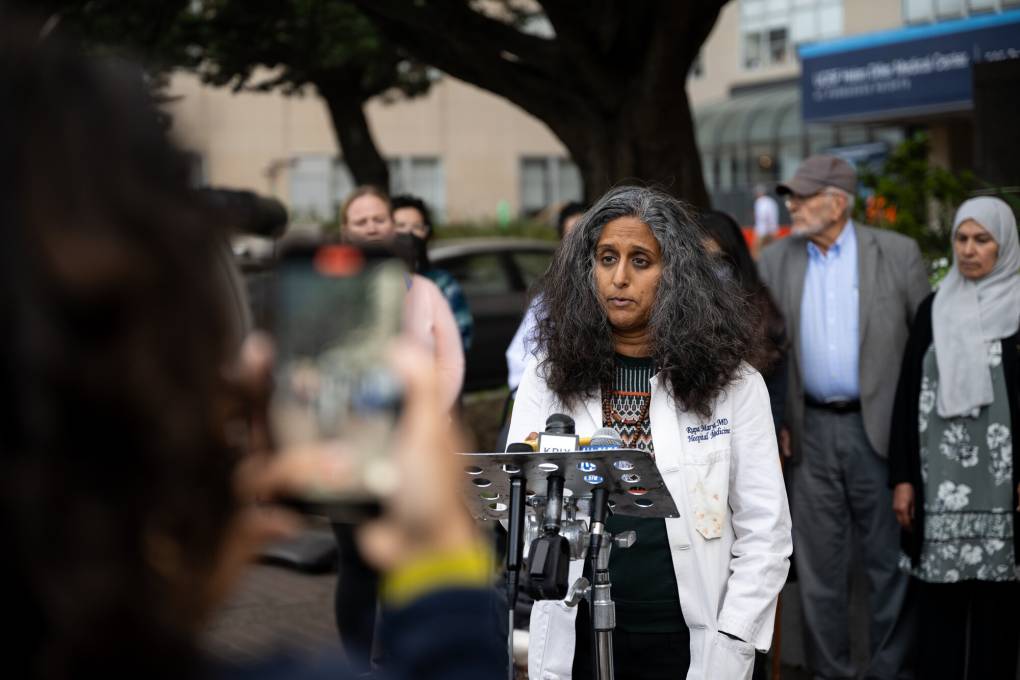
"caption": "Dr. Rupa Marya speaks during a press conference with UCSF medical professionals to call for a cease-fire in Gaza outside of the UCSF Helen Diller Medical Center at Parnassus Heights in San Francisco on Oct. 31, 2023.",
"credit": "Beth LaBerge/KQED",
"altTag": null,
"description": null,
"imgSizes": {
"medium": {
"file": "https://cdn.kqed.org/wp-content/uploads/sites/10/2024/09/231031-UCSFGazaPresser-22-BL_qed-800x533.jpg",
"width": 800,
"height": 533,
"mimeType": "image/jpeg"
},
"large": {
"file": "https://cdn.kqed.org/wp-content/uploads/sites/10/2024/09/231031-UCSFGazaPresser-22-BL_qed-1020x680.jpg",
"width": 1020,
"height": 680,
"mimeType": "image/jpeg"
},
"thumbnail": {
"file": "https://cdn.kqed.org/wp-content/uploads/sites/10/2024/09/231031-UCSFGazaPresser-22-BL_qed-160x107.jpg",
"width": 160,
"height": 107,
"mimeType": "image/jpeg"
},
"1536x1536": {
"file": "https://cdn.kqed.org/wp-content/uploads/sites/10/2024/09/231031-UCSFGazaPresser-22-BL_qed-1536x1024.jpg",
"width": 1536,
"height": 1024,
"mimeType": "image/jpeg"
},
"post-thumbnail": {
"file": "https://cdn.kqed.org/wp-content/uploads/sites/10/2024/09/231031-UCSFGazaPresser-22-BL_qed-672x372.jpg",
"width": 672,
"height": 372,
"mimeType": "image/jpeg"
},
"twentyfourteen-full-width": {
"file": "https://cdn.kqed.org/wp-content/uploads/sites/10/2024/09/231031-UCSFGazaPresser-22-BL_qed-1038x576.jpg",
"width": 1038,
"height": 576,
"mimeType": "image/jpeg"
},
"full-width": {
"file": "https://cdn.kqed.org/wp-content/uploads/sites/10/2024/09/231031-UCSFGazaPresser-22-BL_qed-1920x1280.jpg",
"width": 1920,
"height": 1280,
"mimeType": "image/jpeg"
},
"kqedFullSize": {
"file": "https://cdn.kqed.org/wp-content/uploads/sites/10/2024/09/231031-UCSFGazaPresser-22-BL_qed.jpg",
"width": 2000,
"height": 1333
}
},
"isLoading": false,
"fetchFailed": false
},
"news_12005204": {
"type": "attachments",
"id": "news_12005204",
"meta": {
"index": "attachments_1716263798",
"site": "news",
"id": "12005204",
"found": true
},
"title": "240425-StanfordGazaProtest-018-BL_qed",
"publishDate": 1726681055,
"status": "inherit",
"parent": 12005195,
"modified": 1747085226,
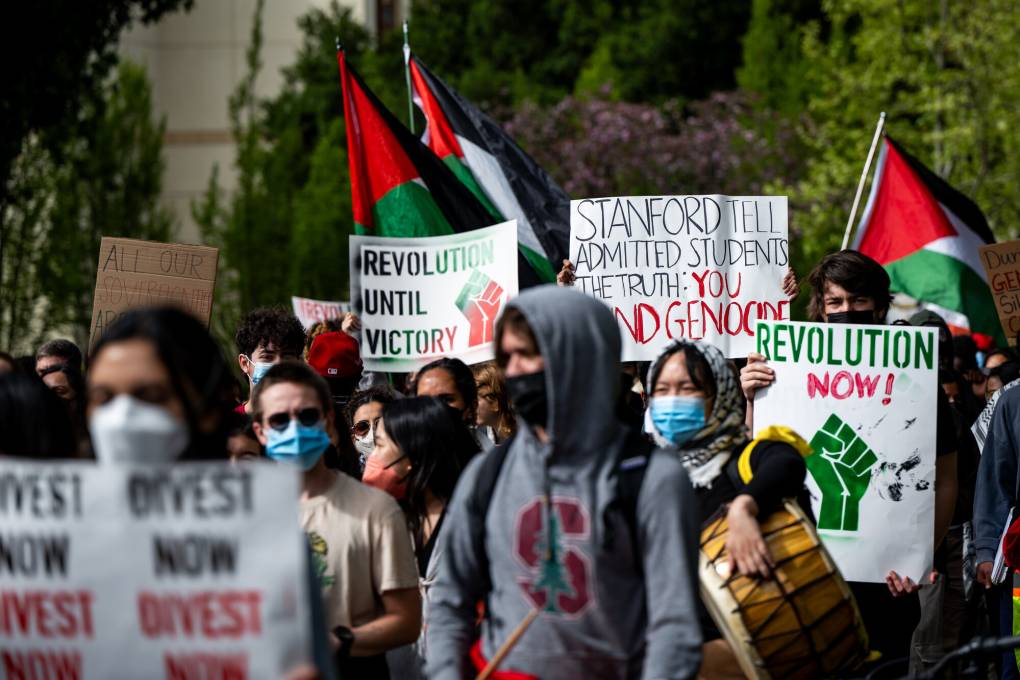
"caption": "Pro-Palestinian demonstrators march through the Stanford University campus in Stanford, California, on April 25, 2024.",
"credit": "Beth LaBerge/KQED",
"altTag": null,
"description": null,
"imgSizes": {
"medium": {
"file": "https://cdn.kqed.org/wp-content/uploads/sites/10/2024/09/240425-StanfordGazaProtest-018-BL_qed-800x533.jpg",
"width": 800,
"height": 533,
"mimeType": "image/jpeg"
},
"large": {
"file": "https://cdn.kqed.org/wp-content/uploads/sites/10/2024/09/240425-StanfordGazaProtest-018-BL_qed-1020x680.jpg",
"width": 1020,
"height": 680,
"mimeType": "image/jpeg"
},
"thumbnail": {
"file": "https://cdn.kqed.org/wp-content/uploads/sites/10/2024/09/240425-StanfordGazaProtest-018-BL_qed-160x107.jpg",
"width": 160,
"height": 107,
"mimeType": "image/jpeg"
},
"1536x1536": {
"file": "https://cdn.kqed.org/wp-content/uploads/sites/10/2024/09/240425-StanfordGazaProtest-018-BL_qed-1536x1024.jpg",
"width": 1536,
"height": 1024,
"mimeType": "image/jpeg"
},
"post-thumbnail": {
"file": "https://cdn.kqed.org/wp-content/uploads/sites/10/2024/09/240425-StanfordGazaProtest-018-BL_qed-672x372.jpg",
"width": 672,
"height": 372,
"mimeType": "image/jpeg"
},
"twentyfourteen-full-width": {
"file": "https://cdn.kqed.org/wp-content/uploads/sites/10/2024/09/240425-StanfordGazaProtest-018-BL_qed-1038x576.jpg",
"width": 1038,
"height": 576,
"mimeType": "image/jpeg"
},
"full-width": {
"file": "https://cdn.kqed.org/wp-content/uploads/sites/10/2024/09/240425-StanfordGazaProtest-018-BL_qed-1920x1280.jpg",
"width": 1920,
"height": 1280,
"mimeType": "image/jpeg"
},
"kqedFullSize": {
"file": "https://cdn.kqed.org/wp-content/uploads/sites/10/2024/09/240425-StanfordGazaProtest-018-BL_qed.jpg",
"width": 1999,
"height": 1333
}
},
"isLoading": false,
"fetchFailed": false
},
"news_12004878": {
"type": "attachments",
"id": "news_12004878",
"meta": {
"index": "attachments_1716263798",
"site": "news",
"id": "12004878",
"found": true
},
"title": "240415-880GazaProtest-015-BL_qed",
"publishDate": 1726514367,
"status": "inherit",
"parent": 12004860,
"modified": 1726514383,
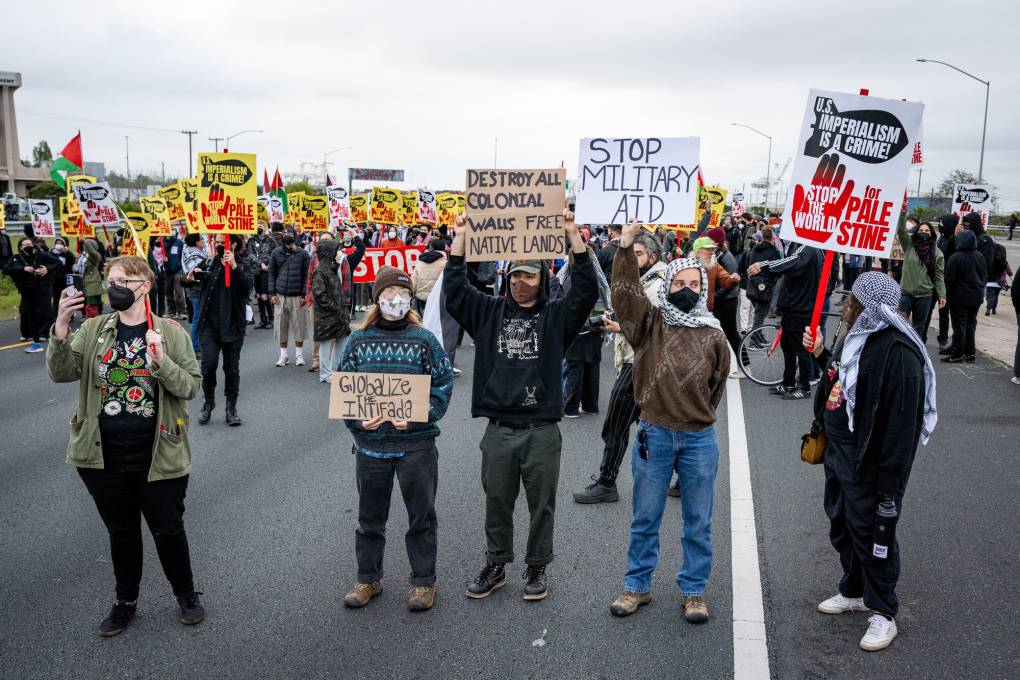
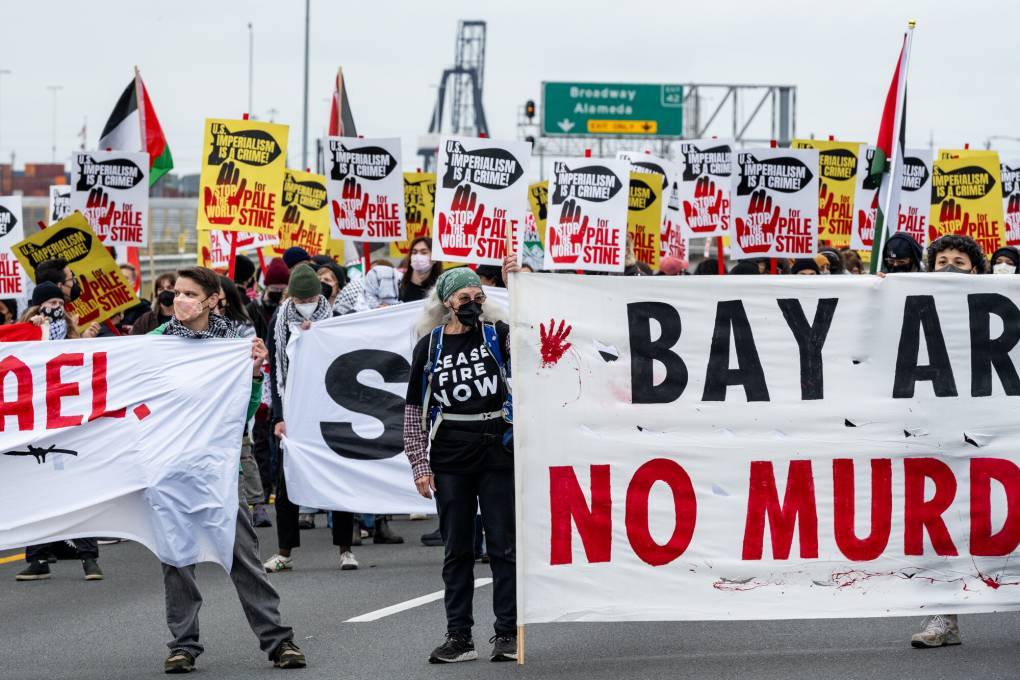
"caption": "Demonstrators shut down the southbound lanes of I-880 on the morning of April 15, 2024, in West Oakland. The protesters, engaging in a multi-city 'economic blockade in solidarity with Palestine,' marched from the West Oakland BART station to the 7th Street on-ramp and onto the freeway.",
"credit": "Beth LaBerge/KQED",
"altTag": null,
"description": null,
"imgSizes": {
"medium": {
"file": "https://cdn.kqed.org/wp-content/uploads/sites/10/2024/09/240415-880GazaProtest-015-BL_qed-800x533.jpg",
"width": 800,
"height": 533,
"mimeType": "image/jpeg"
},
"large": {
"file": "https://cdn.kqed.org/wp-content/uploads/sites/10/2024/09/240415-880GazaProtest-015-BL_qed-1020x680.jpg",
"width": 1020,
"height": 680,
"mimeType": "image/jpeg"
},
"thumbnail": {
"file": "https://cdn.kqed.org/wp-content/uploads/sites/10/2024/09/240415-880GazaProtest-015-BL_qed-160x107.jpg",
"width": 160,
"height": 107,
"mimeType": "image/jpeg"
},
"1536x1536": {
"file": "https://cdn.kqed.org/wp-content/uploads/sites/10/2024/09/240415-880GazaProtest-015-BL_qed-1536x1024.jpg",
"width": 1536,
"height": 1024,
"mimeType": "image/jpeg"
},
"post-thumbnail": {
"file": "https://cdn.kqed.org/wp-content/uploads/sites/10/2024/09/240415-880GazaProtest-015-BL_qed-672x372.jpg",
"width": 672,
"height": 372,
"mimeType": "image/jpeg"
},
"twentyfourteen-full-width": {
"file": "https://cdn.kqed.org/wp-content/uploads/sites/10/2024/09/240415-880GazaProtest-015-BL_qed-1038x576.jpg",
"width": 1038,
"height": 576,
"mimeType": "image/jpeg"
},
"full-width": {
"file": "https://cdn.kqed.org/wp-content/uploads/sites/10/2024/09/240415-880GazaProtest-015-BL_qed-1920x1280.jpg",
"width": 1920,
"height": 1280,
"mimeType": "image/jpeg"
},
"kqedFullSize": {
"file": "https://cdn.kqed.org/wp-content/uploads/sites/10/2024/09/240415-880GazaProtest-015-BL_qed.jpg",
"width": 2000,
"height": 1333
}
},
"isLoading": false,
"fetchFailed": false
},
"news_12004344": {
"type": "attachments",
"id": "news_12004344",
"meta": {
"index": "attachments_1716263798",
"site": "news",
"id": "12004344",
"found": true
},
"title": "UCBerkeleyMakdisi",
"publishDate": 1726072360,
"status": "inherit",
"parent": 12047251,
"modified": 1752606871,
"caption": "UC Berkeley history professor Ussama Makdisi.",
"credit": "Courtesy of Sofia Liashcheva via UC Berkeley",
"altTag": null,
"description": null,
"imgSizes": {
"medium": {
"file": "https://cdn.kqed.org/wp-content/uploads/sites/10/2024/09/UCBerkeleyMakdisi-800x547.jpg",
"width": 800,
"height": 547,
"mimeType": "image/jpeg"
},
"large": {
"file": "https://cdn.kqed.org/wp-content/uploads/sites/10/2024/09/UCBerkeleyMakdisi-1020x698.jpg",
"width": 1020,
"height": 698,
"mimeType": "image/jpeg"
},
"thumbnail": {
"file": "https://cdn.kqed.org/wp-content/uploads/sites/10/2024/09/UCBerkeleyMakdisi-160x109.jpg",
"width": 160,
"height": 109,
"mimeType": "image/jpeg"
},
"1536x1536": {
"file": "https://cdn.kqed.org/wp-content/uploads/sites/10/2024/09/UCBerkeleyMakdisi-1536x1051.jpg",
"width": 1536,
"height": 1051,
"mimeType": "image/jpeg"
},
"post-thumbnail": {
"file": "https://cdn.kqed.org/wp-content/uploads/sites/10/2024/09/UCBerkeleyMakdisi-672x372.jpg",
"width": 672,
"height": 372,
"mimeType": "image/jpeg"
},
"twentyfourteen-full-width": {
"file": "https://cdn.kqed.org/wp-content/uploads/sites/10/2024/09/UCBerkeleyMakdisi-1038x576.jpg",
"width": 1038,
"height": 576,
"mimeType": "image/jpeg"
},
"full-width": {
"file": "https://cdn.kqed.org/wp-content/uploads/sites/10/2024/09/UCBerkeleyMakdisi-1920x1313.jpg",
"width": 1920,
"height": 1313,
"mimeType": "image/jpeg"
},
"kqedFullSize": {
"file": "https://cdn.kqed.org/wp-content/uploads/sites/10/2024/09/UCBerkeleyMakdisi.jpg",
"width": 2000,
"height": 1368
}
},
"isLoading": false,
"fetchFailed": false
},
"news_11987738": {
"type": "attachments",
"id": "news_11987738",
"meta": {
"index": "attachments_1716263798",
"site": "news",
"id": "11987738",
"found": true
},
"title": "UC Santa Cruz Workers Strike Over Treatment Of Pro-Palestinian Protesters",
"publishDate": 1716587632,
"status": "inherit",
"parent": 11987737,
"modified": 1716587703,
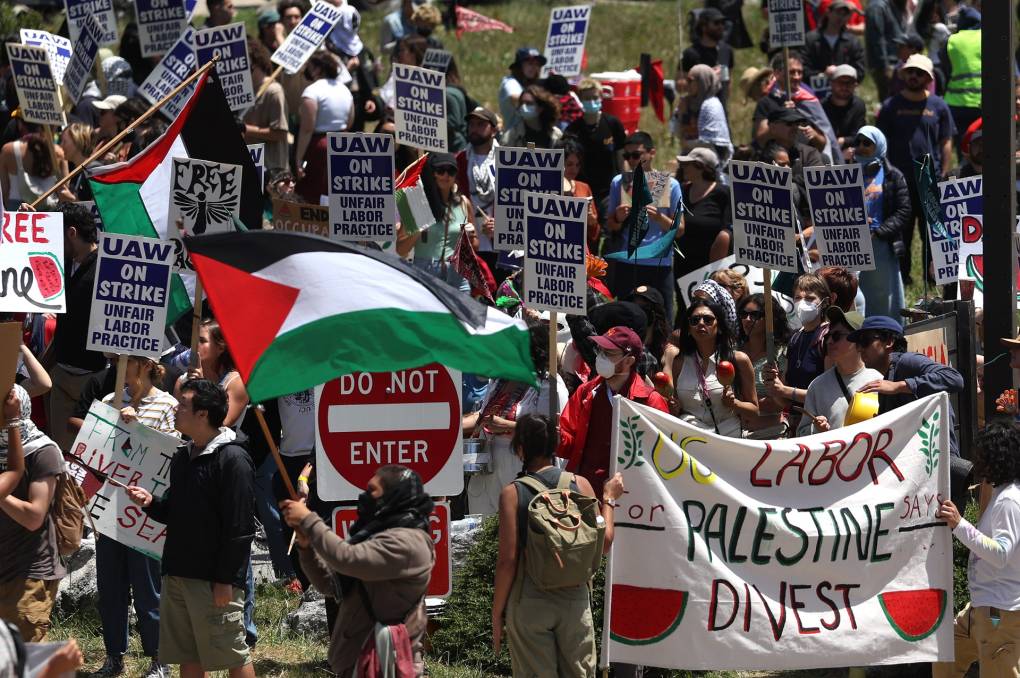
"caption": "UC Santa Cruz academic workers who are union members of UAW 4811 and pro-Palestinian protesters carry signs as they demonstrate in front of the campus on May 20, 2024.",
"credit": "Justin Sullivan/Getty Images",
"altTag": null,
"description": null,
"imgSizes": {
"medium": {
"file": "https://cdn.kqed.org/wp-content/uploads/sites/10/2024/05/GettyImages-2153876773-800x532.jpg",
"width": 800,
"height": 532,
"mimeType": "image/jpeg"
},
"large": {
"file": "https://cdn.kqed.org/wp-content/uploads/sites/10/2024/05/GettyImages-2153876773-1020x678.jpg",
"width": 1020,
"height": 678,
"mimeType": "image/jpeg"
},
"thumbnail": {
"file": "https://cdn.kqed.org/wp-content/uploads/sites/10/2024/05/GettyImages-2153876773-160x106.jpg",
"width": 160,
"height": 106,
"mimeType": "image/jpeg"
},
"1536x1536": {
"file": "https://cdn.kqed.org/wp-content/uploads/sites/10/2024/05/GettyImages-2153876773-1536x1021.jpg",
"width": 1536,
"height": 1021,
"mimeType": "image/jpeg"
},
"post-thumbnail": {
"file": "https://cdn.kqed.org/wp-content/uploads/sites/10/2024/05/GettyImages-2153876773-672x372.jpg",
"width": 672,
"height": 372,
"mimeType": "image/jpeg"
},
"twentyfourteen-full-width": {
"file": "https://cdn.kqed.org/wp-content/uploads/sites/10/2024/05/GettyImages-2153876773-1038x576.jpg",
"width": 1038,
"height": 576,
"mimeType": "image/jpeg"
},
"kqedFullSize": {
"file": "https://cdn.kqed.org/wp-content/uploads/sites/10/2024/05/GettyImages-2153876773.jpg",
"width": 1920,
"height": 1276
}
},
"isLoading": false,
"fetchFailed": false
},
"news_12003442": {
"type": "attachments",
"id": "news_12003442",
"meta": {
"index": "attachments_1716263798",
"site": "news",
"id": "12003442",
"found": true
},
"title": "UCSFProPalestineProtest1",
"publishDate": 1725654168,
"status": "inherit",
"parent": 12003439,
"modified": 1725666118,
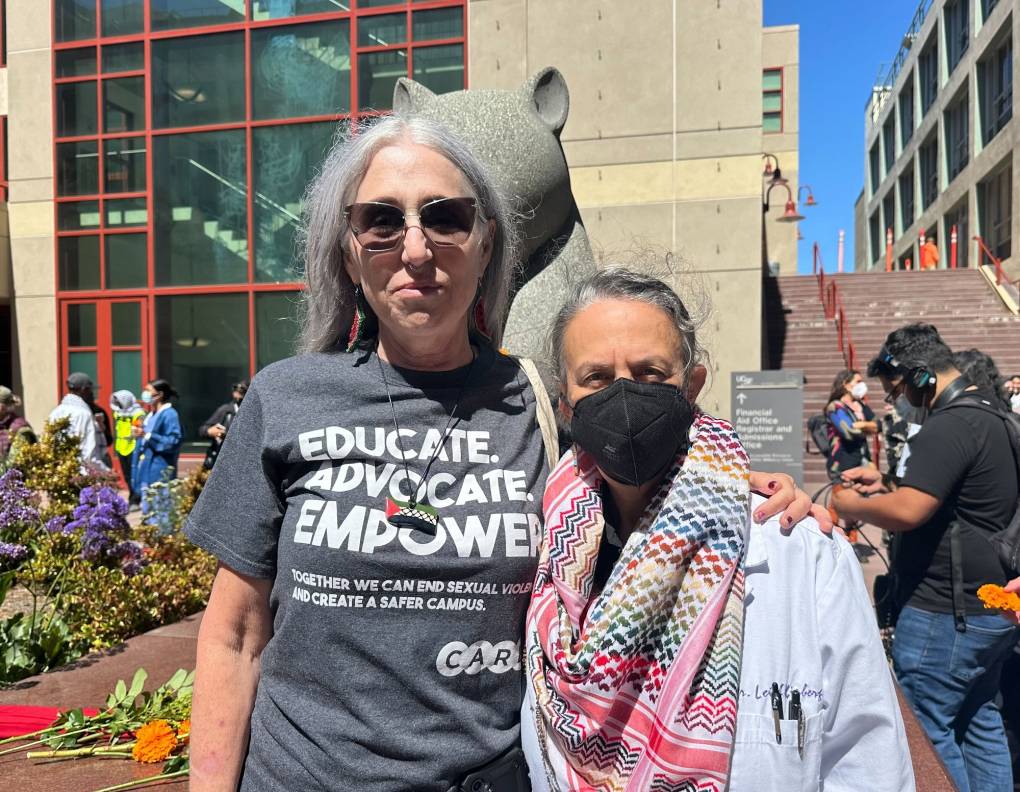
"caption": "Denise Caramagno (left) and Leigh Kimberg protested Friday outside of UCSF. Caramagno, a former violence prevention advocate at the university, believes UCSF is firing her for speaking out about the war in Gaza. ",
"credit": "Katie DeBenedetti/KQED",
"altTag": null,
"description": null,
"imgSizes": {
"medium": {
"file": "https://cdn.kqed.org/wp-content/uploads/sites/10/2024/09/UCSFProPalestineProtest1-800x621.jpg",
"width": 800,
"height": 621,
"mimeType": "image/jpeg"
},
"large": {
"file": "https://cdn.kqed.org/wp-content/uploads/sites/10/2024/09/UCSFProPalestineProtest1-1020x792.jpg",
"width": 1020,
"height": 792,
"mimeType": "image/jpeg"
},
"thumbnail": {
"file": "https://cdn.kqed.org/wp-content/uploads/sites/10/2024/09/UCSFProPalestineProtest1-160x124.jpg",
"width": 160,
"height": 124,
"mimeType": "image/jpeg"
},
"1536x1536": {
"file": "https://cdn.kqed.org/wp-content/uploads/sites/10/2024/09/UCSFProPalestineProtest1-1536x1192.jpg",
"width": 1536,
"height": 1192,
"mimeType": "image/jpeg"
},
"post-thumbnail": {
"file": "https://cdn.kqed.org/wp-content/uploads/sites/10/2024/09/UCSFProPalestineProtest1-672x372.jpg",
"width": 672,
"height": 372,
"mimeType": "image/jpeg"
},
"twentyfourteen-full-width": {
"file": "https://cdn.kqed.org/wp-content/uploads/sites/10/2024/09/UCSFProPalestineProtest1-1038x576.jpg",
"width": 1038,
"height": 576,
"mimeType": "image/jpeg"
},
"full-width": {
"file": "https://cdn.kqed.org/wp-content/uploads/sites/10/2024/09/UCSFProPalestineProtest1-1920x1490.jpg",
"width": 1920,
"height": 1490,
"mimeType": "image/jpeg"
},
"kqedFullSize": {
"file": "https://cdn.kqed.org/wp-content/uploads/sites/10/2024/09/UCSFProPalestineProtest1.jpg",
"width": 2000,
"height": 1552
}
},
"isLoading": false,
"fetchFailed": false
},
"news_12002710": {
"type": "attachments",
"id": "news_12002710",
"meta": {
"index": "attachments_1716263798",
"site": "news",
"id": "12002710",
"found": true
},
"title": "Israel Palestinians",
"publishDate": 1725223152,
"status": "inherit",
"parent": 12002709,
"modified": 1725223286,
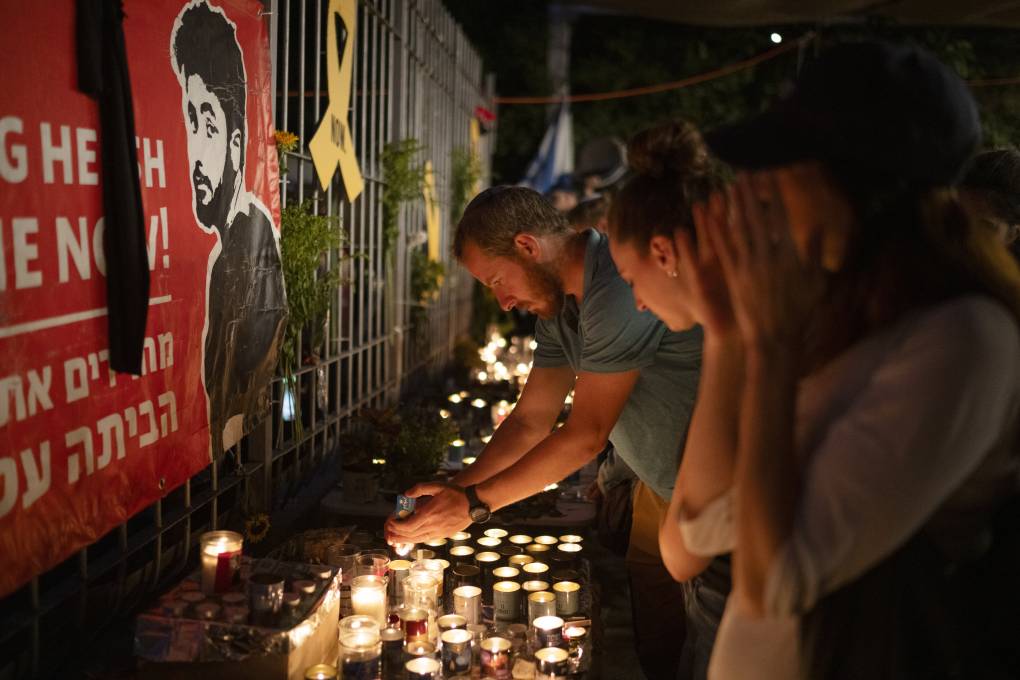
"caption": "People light candles during a vigil in memory of slain hostage Hersh Goldberg-Polin in Jerusalem, Israel, Sunday, Sept. 1, 2024. ",
"credit": "Leo Correa/Associated Press",
"altTag": "Several people stand in front of candles and an illustration as a man bends over to light a candle at night.",
"description": null,
"imgSizes": {
"medium": {
"file": "https://cdn.kqed.org/wp-content/uploads/sites/10/2024/09/AP24245646593426-800x533.jpg",
"width": 800,
"height": 533,
"mimeType": "image/jpeg"
},
"large": {
"file": "https://cdn.kqed.org/wp-content/uploads/sites/10/2024/09/AP24245646593426-1020x680.jpg",
"width": 1020,
"height": 680,
"mimeType": "image/jpeg"
},
"thumbnail": {
"file": "https://cdn.kqed.org/wp-content/uploads/sites/10/2024/09/AP24245646593426-160x107.jpg",
"width": 160,
"height": 107,
"mimeType": "image/jpeg"
},
"1536x1536": {
"file": "https://cdn.kqed.org/wp-content/uploads/sites/10/2024/09/AP24245646593426-1536x1024.jpg",
"width": 1536,
"height": 1024,
"mimeType": "image/jpeg"
},
"2048x2048": {
"file": "https://cdn.kqed.org/wp-content/uploads/sites/10/2024/09/AP24245646593426-2048x1365.jpg",
"width": 2048,
"height": 1365,
"mimeType": "image/jpeg"
},
"post-thumbnail": {
"file": "https://cdn.kqed.org/wp-content/uploads/sites/10/2024/09/AP24245646593426-672x372.jpg",
"width": 672,
"height": 372,
"mimeType": "image/jpeg"
},
"twentyfourteen-full-width": {
"file": "https://cdn.kqed.org/wp-content/uploads/sites/10/2024/09/AP24245646593426-1038x576.jpg",
"width": 1038,
"height": 576,
"mimeType": "image/jpeg"
},
"full-width": {
"file": "https://cdn.kqed.org/wp-content/uploads/sites/10/2024/09/AP24245646593426-1920x1280.jpg",
"width": 1920,
"height": 1280,
"mimeType": "image/jpeg"
},
"kqedFullSize": {
"file": "https://cdn.kqed.org/wp-content/uploads/sites/10/2024/09/AP24245646593426-scaled.jpg",
"width": 2560,
"height": 1707
}
},
"isLoading": false,
"fetchFailed": false
},
"news_12002407": {
"type": "attachments",
"id": "news_12002407",
"meta": {
"index": "attachments_1716263798",
"site": "news",
"id": "12002407",
"found": true
},
"title": "20240829-SFSUGazarally-JY-011",
"publishDate": 1724966273,
"status": "inherit",
"parent": 0,
"modified": 1756334137,
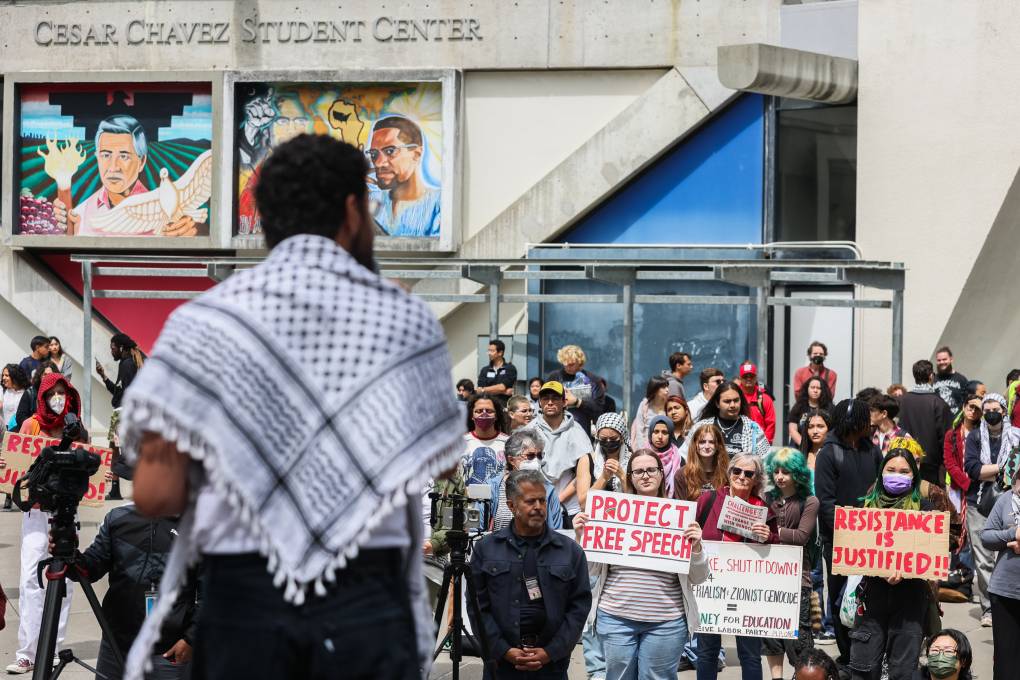
"caption": "A Palestinian Youth Movement press conference and rally to announce San Francisco State University's divestments from weapons manufacturers at the school's Malcolm X Plaza on Thursday.",
"credit": "Juliana Yamada/KQED",
"altTag": null,
"description": null,
"imgSizes": {
"medium": {
"file": "https://cdn.kqed.org/wp-content/uploads/sites/10/2024/08/20240829-SFSUGazarally-JY-011-800x533.jpg",
"width": 800,
"height": 533,
"mimeType": "image/jpeg"
},
"large": {
"file": "https://cdn.kqed.org/wp-content/uploads/sites/10/2024/08/20240829-SFSUGazarally-JY-011-1020x680.jpg",
"width": 1020,
"height": 680,
"mimeType": "image/jpeg"
},
"thumbnail": {
"file": "https://cdn.kqed.org/wp-content/uploads/sites/10/2024/08/20240829-SFSUGazarally-JY-011-160x107.jpg",
"width": 160,
"height": 107,
"mimeType": "image/jpeg"
},
"1536x1536": {
"file": "https://cdn.kqed.org/wp-content/uploads/sites/10/2024/08/20240829-SFSUGazarally-JY-011-1536x1024.jpg",
"width": 1536,
"height": 1024,
"mimeType": "image/jpeg"
},
"2048x2048": {
"file": "https://cdn.kqed.org/wp-content/uploads/sites/10/2024/08/20240829-SFSUGazarally-JY-011-2048x1365.jpg",
"width": 2048,
"height": 1365,
"mimeType": "image/jpeg"
},
"post-thumbnail": {
"file": "https://cdn.kqed.org/wp-content/uploads/sites/10/2024/08/20240829-SFSUGazarally-JY-011-672x372.jpg",
"width": 672,
"height": 372,
"mimeType": "image/jpeg"
},
"twentyfourteen-full-width": {
"file": "https://cdn.kqed.org/wp-content/uploads/sites/10/2024/08/20240829-SFSUGazarally-JY-011-1038x576.jpg",
"width": 1038,
"height": 576,
"mimeType": "image/jpeg"
},
"full-width": {
"file": "https://cdn.kqed.org/wp-content/uploads/sites/10/2024/08/20240829-SFSUGazarally-JY-011-1920x1280.jpg",
"width": 1920,
"height": 1280,
"mimeType": "image/jpeg"
},
"kqedFullSize": {
"file": "https://cdn.kqed.org/wp-content/uploads/sites/10/2024/08/20240829-SFSUGazarally-JY-011-scaled.jpg",
"width": 2560,
"height": 1707
}
},
"isLoading": false,
"fetchFailed": false
},
"news_12000906": {
"type": "attachments",
"id": "news_12000906",
"meta": {
"index": "attachments_1716263798",
"site": "news",
"id": "12000906",
"found": true
},
"title": "081924-DNC-Protest-Chicago-AP-01 copy",
"publishDate": 1724176600,
"status": "inherit",
"parent": 12000903,
"modified": 1724180101,
"caption": "Protesters on the Gaza war gather for a march to the Democratic National Convention in Chicago on Aug. 19, 2024. ",
"credit": "Noah Berger/AP Photo",
"altTag": null,
"description": null,
"imgSizes": {
"medium": {
"file": "https://cdn.kqed.org/wp-content/uploads/sites/10/2024/08/081924-DNC-Protest-Chicago-AP-01-copy-800x534.jpg",
"width": 800,
"height": 534,
"mimeType": "image/jpeg"
},
"large": {
"file": "https://cdn.kqed.org/wp-content/uploads/sites/10/2024/08/081924-DNC-Protest-Chicago-AP-01-copy-1020x680.jpg",
"width": 1020,
"height": 680,
"mimeType": "image/jpeg"
},
"thumbnail": {
"file": "https://cdn.kqed.org/wp-content/uploads/sites/10/2024/08/081924-DNC-Protest-Chicago-AP-01-copy-160x107.jpg",
"width": 160,
"height": 107,
"mimeType": "image/jpeg"
},
"1536x1536": {
"file": "https://cdn.kqed.org/wp-content/uploads/sites/10/2024/08/081924-DNC-Protest-Chicago-AP-01-copy-1536x1025.jpg",
"width": 1536,
"height": 1025,
"mimeType": "image/jpeg"
},
"post-thumbnail": {
"file": "https://cdn.kqed.org/wp-content/uploads/sites/10/2024/08/081924-DNC-Protest-Chicago-AP-01-copy-672x372.jpg",
"width": 672,
"height": 372,
"mimeType": "image/jpeg"
},
"twentyfourteen-full-width": {
"file": "https://cdn.kqed.org/wp-content/uploads/sites/10/2024/08/081924-DNC-Protest-Chicago-AP-01-copy-1038x576.jpg",
"width": 1038,
"height": 576,
"mimeType": "image/jpeg"
},
"full-width": {
"file": "https://cdn.kqed.org/wp-content/uploads/sites/10/2024/08/081924-DNC-Protest-Chicago-AP-01-copy-1920x1281.jpg",
"width": 1920,
"height": 1281,
"mimeType": "image/jpeg"
},
"kqedFullSize": {
"file": "https://cdn.kqed.org/wp-content/uploads/sites/10/2024/08/081924-DNC-Protest-Chicago-AP-01-copy.jpg",
"width": 2000,
"height": 1334
}
},
"isLoading": false,
"fetchFailed": false
},
"news_12000887": {
"type": "attachments",
"id": "news_12000887",
"meta": {
"index": "attachments_1716263798",
"site": "news",
"id": "12000887",
"found": true
},
"title": "240415-880GazaProtest-020-BL_qed",
"publishDate": 1724174222,
"status": "inherit",
"parent": 12000881,
"modified": 1729648414,
"caption": "Demonstrators shut down the southbound lanes of I-880 on the morning of April 15, 2024, in West Oakland. The protesters, engaging in an economic blockade in solidarity with Palestine, marched from the West Oakland BART Station to the freeway.",
"credit": "Beth LaBerge/KQED",
"altTag": null,
"description": null,
"imgSizes": {
"medium": {
"file": "https://cdn.kqed.org/wp-content/uploads/sites/10/2024/08/240415-880GazaProtest-020-BL_qed-800x533.jpg",
"width": 800,
"height": 533,
"mimeType": "image/jpeg"
},
"large": {
"file": "https://cdn.kqed.org/wp-content/uploads/sites/10/2024/08/240415-880GazaProtest-020-BL_qed-1020x680.jpg",
"width": 1020,
"height": 680,
"mimeType": "image/jpeg"
},
"thumbnail": {
"file": "https://cdn.kqed.org/wp-content/uploads/sites/10/2024/08/240415-880GazaProtest-020-BL_qed-160x107.jpg",
"width": 160,
"height": 107,
"mimeType": "image/jpeg"
},
"1536x1536": {
"file": "https://cdn.kqed.org/wp-content/uploads/sites/10/2024/08/240415-880GazaProtest-020-BL_qed-1536x1024.jpg",
"width": 1536,
"height": 1024,
"mimeType": "image/jpeg"
},
"post-thumbnail": {
"file": "https://cdn.kqed.org/wp-content/uploads/sites/10/2024/08/240415-880GazaProtest-020-BL_qed-672x372.jpg",
"width": 672,
"height": 372,
"mimeType": "image/jpeg"
},
"twentyfourteen-full-width": {
"file": "https://cdn.kqed.org/wp-content/uploads/sites/10/2024/08/240415-880GazaProtest-020-BL_qed-1038x576.jpg",
"width": 1038,
"height": 576,
"mimeType": "image/jpeg"
},
"full-width": {
"file": "https://cdn.kqed.org/wp-content/uploads/sites/10/2024/08/240415-880GazaProtest-020-BL_qed-1920x1280.jpg",
"width": 1920,
"height": 1280,
"mimeType": "image/jpeg"
},
"kqedFullSize": {
"file": "https://cdn.kqed.org/wp-content/uploads/sites/10/2024/08/240415-880GazaProtest-020-BL_qed.jpg",
"width": 2000,
"height": 1333
}
},
"isLoading": false,
"fetchFailed": false
},
"news_12000838": {
"type": "attachments",
"id": "news_12000838",
"meta": {
"index": "attachments_1716263798",
"site": "news",
"id": "12000838",
"found": true
},
"title": "Vice President Kamala Harris Continues Her \"Fight For Reproductive Freedoms\" Tour In San Jose, CA",
"publishDate": 1724111358,
"status": "inherit",
"parent": 12000702,
"modified": 1724113118,
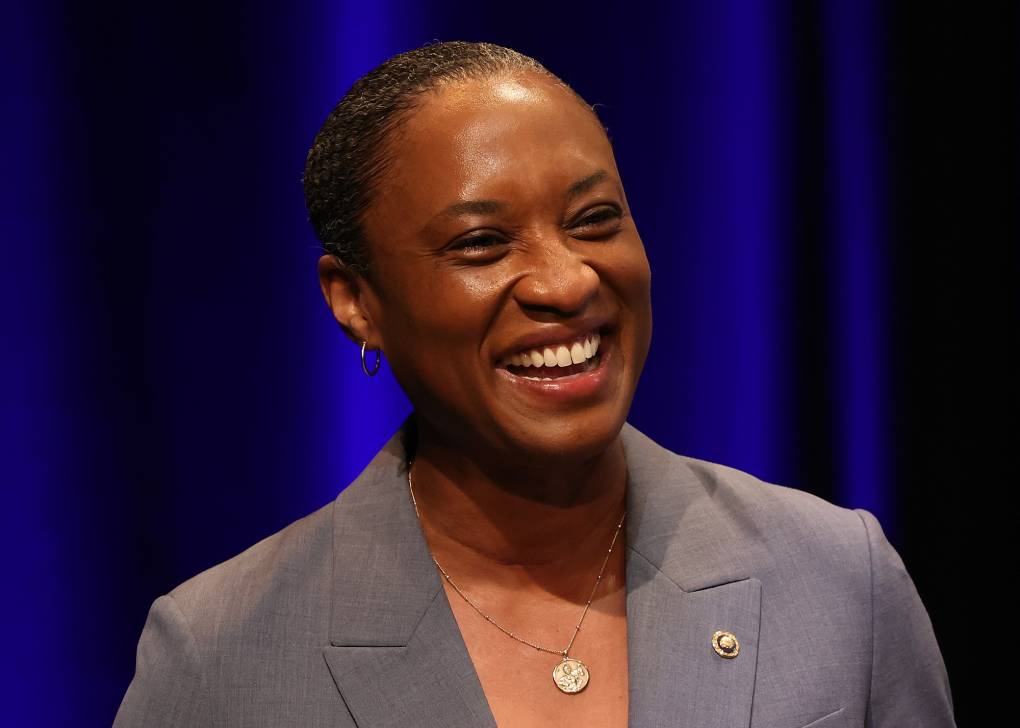
"caption": "U.S. Sen. Laphonza Butler (D-CA) speaks during a reproductive rights event with Vice President Kamala Harris at the Mexican Heritage Plaza on Jan. 29, 2024, in San José, California.",
"credit": "Justin Sullivan/Getty Images",
"altTag": null,
"description": null,
"imgSizes": {
"medium": {
"file": "https://cdn.kqed.org/wp-content/uploads/sites/10/2024/08/Laphonza-Butler-Getty-800x571.jpg",
"width": 800,
"height": 571,
"mimeType": "image/jpeg"
},
"large": {
"file": "https://cdn.kqed.org/wp-content/uploads/sites/10/2024/08/Laphonza-Butler-Getty-1020x728.jpg",
"width": 1020,
"height": 728,
"mimeType": "image/jpeg"
},
"thumbnail": {
"file": "https://cdn.kqed.org/wp-content/uploads/sites/10/2024/08/Laphonza-Butler-Getty-160x114.jpg",
"width": 160,
"height": 114,
"mimeType": "image/jpeg"
},
"1536x1536": {
"file": "https://cdn.kqed.org/wp-content/uploads/sites/10/2024/08/Laphonza-Butler-Getty-1536x1097.jpg",
"width": 1536,
"height": 1097,
"mimeType": "image/jpeg"
},
"post-thumbnail": {
"file": "https://cdn.kqed.org/wp-content/uploads/sites/10/2024/08/Laphonza-Butler-Getty-672x372.jpg",
"width": 672,
"height": 372,
"mimeType": "image/jpeg"
},
"twentyfourteen-full-width": {
"file": "https://cdn.kqed.org/wp-content/uploads/sites/10/2024/08/Laphonza-Butler-Getty-1038x576.jpg",
"width": 1038,
"height": 576,
"mimeType": "image/jpeg"
},
"full-width": {
"file": "https://cdn.kqed.org/wp-content/uploads/sites/10/2024/08/Laphonza-Butler-Getty-1920x1371.jpg",
"width": 1920,
"height": 1371,
"mimeType": "image/jpeg"
},
"kqedFullSize": {
"file": "https://cdn.kqed.org/wp-content/uploads/sites/10/2024/08/Laphonza-Butler-Getty.jpg",
"width": 2000,
"height": 1428
}
},
"isLoading": false,
"fetchFailed": false
},
"news_12000772": {
"type": "attachments",
"id": "news_12000772",
"meta": {
"index": "attachments_1716263798",
"site": "news",
"id": "12000772",
"found": true
},
"title": "240424-BERKELEY GAZA ENCAMPMENT-MD-06_qed",
"publishDate": 1724099018,
"status": "inherit",
"parent": 12000770,
"modified": 1724099051,
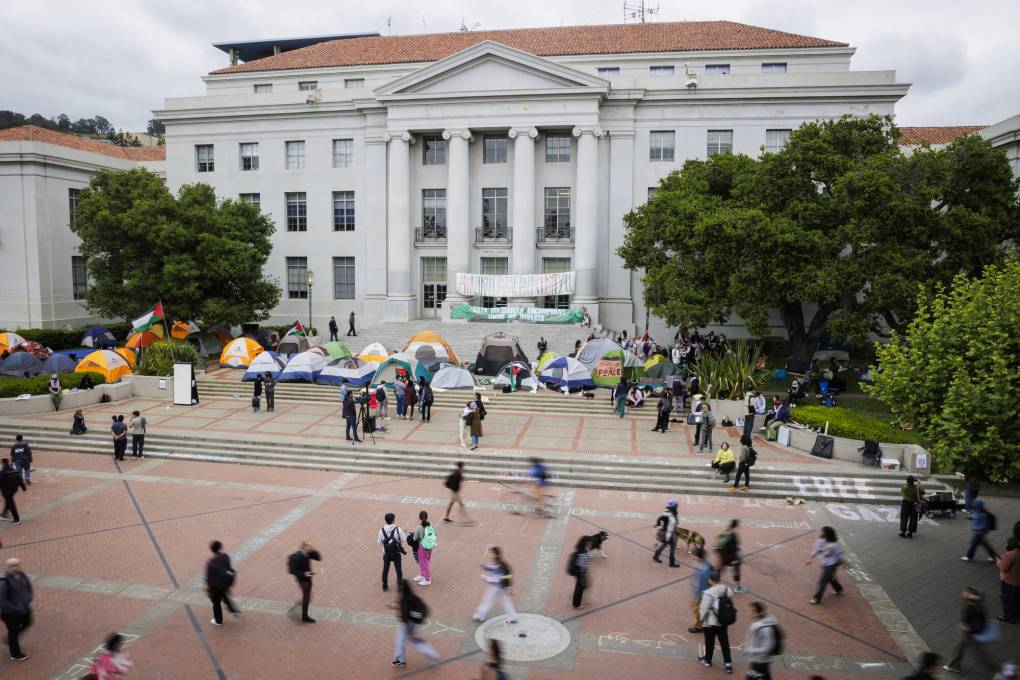
"caption": "The UC Berkeley Gaza Solidarity Encampment in front of Sproul Hall on April 23, 2024.",
"credit": "Martin do Nascimento/KQED",
"altTag": null,
"description": null,
"imgSizes": {
"medium": {
"file": "https://cdn.kqed.org/wp-content/uploads/sites/10/2024/08/240424-BERKELEY-GAZA-ENCAMPMENT-MD-06_qed-800x533.jpg",
"width": 800,
"height": 533,
"mimeType": "image/jpeg"
},
"large": {
"file": "https://cdn.kqed.org/wp-content/uploads/sites/10/2024/08/240424-BERKELEY-GAZA-ENCAMPMENT-MD-06_qed-1020x680.jpg",
"width": 1020,
"height": 680,
"mimeType": "image/jpeg"
},
"thumbnail": {
"file": "https://cdn.kqed.org/wp-content/uploads/sites/10/2024/08/240424-BERKELEY-GAZA-ENCAMPMENT-MD-06_qed-160x107.jpg",
"width": 160,
"height": 107,
"mimeType": "image/jpeg"
},
"1536x1536": {
"file": "https://cdn.kqed.org/wp-content/uploads/sites/10/2024/08/240424-BERKELEY-GAZA-ENCAMPMENT-MD-06_qed-1536x1024.jpg",
"width": 1536,
"height": 1024,
"mimeType": "image/jpeg"
},
"post-thumbnail": {
"file": "https://cdn.kqed.org/wp-content/uploads/sites/10/2024/08/240424-BERKELEY-GAZA-ENCAMPMENT-MD-06_qed-672x372.jpg",
"width": 672,
"height": 372,
"mimeType": "image/jpeg"
},
"twentyfourteen-full-width": {
"file": "https://cdn.kqed.org/wp-content/uploads/sites/10/2024/08/240424-BERKELEY-GAZA-ENCAMPMENT-MD-06_qed-1038x576.jpg",
"width": 1038,
"height": 576,
"mimeType": "image/jpeg"
},
"full-width": {
"file": "https://cdn.kqed.org/wp-content/uploads/sites/10/2024/08/240424-BERKELEY-GAZA-ENCAMPMENT-MD-06_qed-1920x1280.jpg",
"width": 1920,
"height": 1280,
"mimeType": "image/jpeg"
},
"kqedFullSize": {
"file": "https://cdn.kqed.org/wp-content/uploads/sites/10/2024/08/240424-BERKELEY-GAZA-ENCAMPMENT-MD-06_qed.jpg",
"width": 2000,
"height": 1333
}
},
"isLoading": false,
"fetchFailed": false
}
},
"audioPlayerReducer": {
"postId": "stream_live",
"isPaused": true,
"isPlaying": false,
"pfsActive": false,
"pledgeModalIsOpen": true,
"playerDrawerIsOpen": false,
"liveAudioPlayStartedAt": 0,
"liveAudioPlayContext": ""
},
"authorsReducer": {
"byline_news_12002709": {
"type": "authors",
"id": "byline_news_12002709",
"meta": {
"override": true
},
"slug": "byline_news_12002709",
"name": "Josef Federman and Melanie Lidman, Associated Press",
"isLoading": false
},
"byline_news_12000903": {
"type": "authors",
"id": "byline_news_12000903",
"meta": {
"override": true
},
"slug": "byline_news_12000903",
"name": "\u003ca href=\"https://calmatters.org/author/sameea-kamal/\">Sameea Kamal\u003c/a>, CalMatters",
"isLoading": false
},
"gmarzorati": {
"type": "authors",
"id": "227",
"meta": {
"index": "authors_1716337520",
"id": "227",
"found": true
},
"name": "Guy Marzorati",
"firstName": "Guy",
"lastName": "Marzorati",
"slug": "gmarzorati",
"email": "gmarzorati@KQED.org",
"display_author_email": true,
"staff_mastheads": [
"news"
],
"title": "Correspondent",
"bio": "Guy Marzorati is a correspondent on KQED's California Politics and Government Desk, based in San Jose. A graduate of Santa Clara University, Guy joined KQED in 2013. He reports on state and local politics and produces KQED's digital voter guide.",
"avatar": "https://secure.gravatar.com/avatar/e7038b8dbfd55b104369b76b1cd0b9de?s=600&d=blank&r=g",
"twitter": "guymarzorati",
"facebook": null,
"instagram": null,
"linkedin": null,
"sites": [
{
"site": "",
"roles": [
"editor"
]
},
{
"site": "news",
"roles": [
"editor"
]
},
{
"site": "science",
"roles": [
"editor"
]
},
{
"site": "forum",
"roles": [
"editor"
]
},
{
"site": "elections",
"roles": [
"editor"
]
},
{
"site": "liveblog",
"roles": [
"editor"
]
}
],
"headData": {
"title": "Guy Marzorati | KQED",
"description": "Correspondent",
"ogImgSrc": "https://secure.gravatar.com/avatar/e7038b8dbfd55b104369b76b1cd0b9de?s=600&d=blank&r=g",
"twImgSrc": "https://secure.gravatar.com/avatar/e7038b8dbfd55b104369b76b1cd0b9de?s=600&d=blank&r=g"
},
"isLoading": false,
"link": "/author/gmarzorati"
},
"ahall": {
"type": "authors",
"id": "11490",
"meta": {
"index": "authors_1716337520",
"id": "11490",
"found": true
},
"name": "Alex Hall",
"firstName": "Alex",
"lastName": "Hall",
"slug": "ahall",
"email": "ahall@kqed.org",
"display_author_email": false,
"staff_mastheads": [
"news"
],
"title": "KQED Enterprise & Accountability Reporter",
"bio": "Alex Hall is KQED's Enterprise and Accountability Reporter. She previously covered the Central Valley for five years from KQED's bureau in Fresno. Before joining KQED, Alex was an investigative reporting fellow at Wisconsin Public Radio and the Wisconsin Center for Investigative Journalism. She has also worked as a bilingual producer for NPR's investigative unit and freelance video producer for Reuters TV on the Latin America desk. She got her start in journalism in South America, where she worked as a radio producer and Spanish-English translator for CNN Chile. Her documentary and investigation into the series of deadly COVID-19 outbreaks at Foster Farms won a national Edward R. Murrow award and was named an Investigative Reporters & Editors award finalist. Alex's reporting for Reveal on the Wisconsin dairy industry's reliance on undocumented immigrant labor was made into a film, Los Lecheros, which won a regional Edward R. Murrow award for best news documentary.",
"avatar": "https://secure.gravatar.com/avatar/04c28ad4a7caa7ac2ef39c655c4030c993a3f331481d1da4799bb76ea85b9afa?s=600&d=blank&r=g",
"twitter": "@chalexhall",
"bluesky": null,
"facebook": null,
"instagram": null,
"linkedin": null,
"sites": [
{
"site": "news",
"roles": [
"editor"
]
},
{
"site": "liveblog",
"roles": [
"author"
]
}
],
"headData": {
"title": "Alex Hall | KQED",
"description": "KQED Enterprise & Accountability Reporter",
"ogImgSrc": "https://secure.gravatar.com/avatar/04c28ad4a7caa7ac2ef39c655c4030c993a3f331481d1da4799bb76ea85b9afa?s=600&d=blank&r=g",
"twImgSrc": "https://secure.gravatar.com/avatar/04c28ad4a7caa7ac2ef39c655c4030c993a3f331481d1da4799bb76ea85b9afa?s=600&d=blank&r=g"
},
"isLoading": false,
"link": "/author/ahall"
},
"jlara": {
"type": "authors",
"id": "11761",
"meta": {
"index": "authors_1716337520",
"id": "11761",
"found": true
},
"name": "Juan Carlos Lara",
"firstName": "Juan Carlos",
"lastName": "Lara",
"slug": "jlara",
"email": "jlara@kqed.org",
"display_author_email": false,
"staff_mastheads": [],
"title": "KQED Contributor",
"bio": null,
"avatar": "https://secure.gravatar.com/avatar/19e2052b9b05657c5ff2af2121846e9c?s=600&d=blank&r=g",
"twitter": null,
"facebook": null,
"instagram": null,
"linkedin": null,
"sites": [
{
"site": "arts",
"roles": [
"editor"
]
},
{
"site": "news",
"roles": [
"editor"
]
},
{
"site": "forum",
"roles": [
"editor"
]
},
{
"site": "liveblog",
"roles": [
"contributor"
]
}
],
"headData": {
"title": "Juan Carlos Lara | KQED",
"description": "KQED Contributor",
"ogImgSrc": "https://secure.gravatar.com/avatar/19e2052b9b05657c5ff2af2121846e9c?s=600&d=blank&r=g",
"twImgSrc": "https://secure.gravatar.com/avatar/19e2052b9b05657c5ff2af2121846e9c?s=600&d=blank&r=g"
},
"isLoading": false,
"link": "/author/jlara"
},
"kdebenedetti": {
"type": "authors",
"id": "11913",
"meta": {
"index": "authors_1716337520",
"id": "11913",
"found": true
},
"name": "Katie DeBenedetti",
"firstName": "Katie",
"lastName": "DeBenedetti",
"slug": "kdebenedetti",
"email": "kdebenedetti@kqed.org",
"display_author_email": false,
"staff_mastheads": [
"news",
"science"
],
"title": "KQED Contributor",
"bio": "Katie DeBenedetti is a digital reporter covering daily news for the Express Desk. Prior to joining KQED as a culture reporting intern in January 2024, she covered education and city government for the Napa Valley Register.",
"avatar": "https://secure.gravatar.com/avatar/6e31073cb8f7e4214ab03f42771d0f45?s=600&d=blank&r=g",
"twitter": null,
"facebook": null,
"instagram": null,
"linkedin": null,
"sites": [
{
"site": "news",
"roles": [
"author"
]
},
{
"site": "science",
"roles": [
"author"
]
},
{
"site": "liveblog",
"roles": [
"author"
]
}
],
"headData": {
"title": "Katie DeBenedetti | KQED",
"description": "KQED Contributor",
"ogImgSrc": "https://secure.gravatar.com/avatar/6e31073cb8f7e4214ab03f42771d0f45?s=600&d=blank&r=g",
"twImgSrc": "https://secure.gravatar.com/avatar/6e31073cb8f7e4214ab03f42771d0f45?s=600&d=blank&r=g"
},
"isLoading": false,
"link": "/author/kdebenedetti"
},
"emanoukian": {
"type": "authors",
"id": "11925",
"meta": {
"index": "authors_1716337520",
"id": "11925",
"found": true
},
"name": "Elize Manoukian",
"firstName": "Elize",
"lastName": "Manoukian",
"slug": "emanoukian",
"email": "emanoukian@KQED.org",
"display_author_email": false,
"staff_mastheads": [
"news"
],
"title": "Digital News Editor",
"bio": "Elize Manoukian is an award-winning audio producer and Senior Editor on the Express Desk, KQED's digital news platform. Her work has appeared on KPFA, Interlochen Public Radio, Oregon Public Broadcast, the New York Daily News, LA Times and the San Diego Union-Tribune.",
"avatar": "https://secure.gravatar.com/avatar/4525f1a8e46ccb30933b32653d9772064cfefe3fa655eb45b3b3a80341f6bdad?s=600&d=blank&r=g",
"twitter": null,
"bluesky": null,
"facebook": null,
"instagram": null,
"linkedin": null,
"sites": [
{
"site": "arts",
"roles": [
"editor"
]
},
{
"site": "news",
"roles": [
"editor"
]
},
{
"site": "science",
"roles": [
"editor"
]
}
],
"headData": {
"title": "Elize Manoukian | KQED",
"description": "Digital News Editor",
"ogImgSrc": "https://secure.gravatar.com/avatar/4525f1a8e46ccb30933b32653d9772064cfefe3fa655eb45b3b3a80341f6bdad?s=600&d=blank&r=g",
"twImgSrc": "https://secure.gravatar.com/avatar/4525f1a8e46ccb30933b32653d9772064cfefe3fa655eb45b3b3a80341f6bdad?s=600&d=blank&r=g"
},
"isLoading": false,
"link": "/author/emanoukian"
}
},
"pagesReducer": {
"news_tag_israel-hamas-war": {
"type": "terms",
"id": "news_33333",
"meta": {
"index": "terms_1716263798",
"site": "news",
"id": "33333",
"score": 9.55735
},
"featImg": null,
"name": "Israel-Hamas War",
"description": null,
"taxonomy": "tag",
"headData": {
"twImgId": null,
"twTitle": null,
"ogTitle": null,
"ogImgId": null,
"twDescription": null,
"description": null,
"title": "Israel-Hamas War Archives | KQED News",
"ogDescription": null
},
"ttid": 33350,
"slug": "israel-hamas-war",
"isLoading": false,
"title": "Israel-Hamas War",
"pageMeta": {
"site": "news",
"WpPageTemplate": "page-topic-editorial",
"currentPage": 7
},
"blocks": [
{
"blockName": "kqed/post-list",
"attrs": {
"layout": "cardArticle2",
"query": "posts/news?tag=israel-hamas-war",
"seeMore": false,
"paginated": true,
"page": 7
}
},
{
"blockName": "kqed/ad"
}
]
}
},
"pfsSessionReducer": {},
"postsReducer": {
"stream_live": {
"type": "live",
"id": "stream_live",
"audioUrl": "https://streams.kqed.org/kqedradio",
"title": "Live Stream",
"excerpt": "Live Stream information currently unavailable.",
"link": "/radio",
"featImg": "",
"label": {
"name": "KQED Live",
"link": "/"
}
},
"stream_kqedNewscast": {
"type": "posts",
"id": "stream_kqedNewscast",
"audioUrl": "https://www.kqed.org/.stream/anon/radio/RDnews/newscast.mp3?_=1",
"title": "KQED Newscast",
"featImg": "",
"label": {
"name": "88.5 FM",
"link": "/"
}
},
"news_12006193": {
"type": "posts",
"id": "news_12006193",
"meta": {
"index": "posts_1716263798",
"site": "news",
"id": "12006193",
"score": null,
"sort": [
1727274647000
]
},
"guestAuthors": [],
"slug": "ucsf-campus-faces-uproar-after-doctor-allegedly-targets-israeli-student-on-social-media",
"title": "UCSF Campus Faces Uproar After Doctor Allegedly Targets Israeli Student on Social Media",
"publishDate": 1727274647,
"format": "standard",
"headTitle": "UCSF Campus Faces Uproar After Doctor Allegedly Targets Israeli Student on Social Media | KQED",
"labelTerm": {
"site": "news"
},
"content": "\u003cp>A social media post by a University of California San Francisco professor suggesting that an Israeli medical student may have participated in genocide has generated backlash within a health care community already divided over the war between Israel and Hamas.\u003c/p>\n\u003cp>The Sunday post on X by Dr. Rupa Marya, a professor of internal medicine, referenced student concerns that a medical student from Israel may have, she wrote, “participated in the genocide of Palestinians in the IDF before matriculating to medical school in CA.”\u003c/p>\n\u003cp>She then asked, “How do we address this in our professional ranks?”\u003c/p>\n\u003cp>The post quickly caught steam on social media, with more than 214,000 views, nearly 1,000 shares and hundreds of comments in support of both the student and Marya, the \u003cem>San Francisco Chronicle\u003c/em> \u003ca href=\"https://www.sfchronicle.com/sf/article/ucsf-doctor-israeli-student-social-media-19787105.php\">reported\u003c/a>.\u003c/p>\n\u003cp>That prompted a \u003ca href=\"https://x.com/Scott_Wiener/status/1837570677492404558\">rebuke\u003c/a> from state Sen. Scott Wiener (D-San Francisco).\u003c/p>\n\u003cp>[ad fullwidth]\u003c/p>\n\u003cp>“I was absolutely horrified when I saw Dr. Marya’s post,” Wiener told KQED. “She is a professor at UCSF, and for her to basically publicly encourage people to harass a first-year med student is just unconscionable.”\u003c/p>\n\u003cp>Wiener, who co-chairs the Legislative Jewish Caucus, said the committee has been focused on the experiences of Jewish students on the state’s college campuses since the Hamas attack on Israel that killed over 1,200 civilians on Oct. 7, 2023.\u003c/p>\n\u003cp>Wiener and Marya \u003ca href=\"https://www.kqed.org/news/12003439/a-ucsf-student-advocate-spoke-up-for-faculty-of-color-then-she-was-fired\">clashed online\u003c/a> in January after Marya wrote that the “presence of Zionism” in U.S. medicine should be examined as a “structural impediment to health equity.”\u003c/p>\n\u003cp>“She promoted a conspiracy theory that ‘Zionist doctors at UCSF were going to harm patients,’ which is an old antisemitic conspiracy theory about Jewish doctors,” Wiener said. “And now she’s at it again, trying to demonize med students — her own students at her own institution — because they are Israeli. It’s completely unacceptable.”\u003c/p>\n\u003cp>Marya, who co-founded Do No Harm, a policy advocacy coalition, has been a vocal proponent of a cease-fire resolution. In San Francisco, she has long been known as a \u003ca href=\"https://www.kqed.org/arts/13855177/doctor-musician-and-activist-rupa-marya-offers-a-healing-balm-on-new-april-fishes-album\">local physician, musician and activist\u003c/a>. In 2021, she co-authored \u003cem>Inflamed: Deep Medicine and the Anatomy of Injustice\u003c/em>, a book about how the socioeconomic background of patients can influence their health.\u003c/p>\n\u003cp>“I’ve never come up against the kind of repression and, specifically, racist repression that I’ve seen and experienced since I’ve said ‘stop bombing hospitals,’” she \u003ca href=\"https://www.kqed.org/news/12003439/a-ucsf-student-advocate-spoke-up-for-faculty-of-color-then-she-was-fired\">told KQED earlier this month\u003c/a>.\u003c/p>\n\u003cp>Marya, who has since deleted her X account, did not respond to KQED’s request for comment on this story.\u003c/p>\n\u003cfigure id=\"attachment_12006199\" class=\"wp-caption aligncenter\" style=\"max-width: 2000px\">\u003cimg loading=\"lazy\" decoding=\"async\" class=\"size-full wp-image-12006199\" src=\"https://cdn.kqed.org/wp-content/uploads/sites/10/2024/09/3050240908_520abecbfb_o_qed.jpg\" alt=\"\" width=\"2000\" height=\"1156\" srcset=\"https://cdn.kqed.org/wp-content/uploads/sites/10/2024/09/3050240908_520abecbfb_o_qed.jpg 2000w, https://cdn.kqed.org/wp-content/uploads/sites/10/2024/09/3050240908_520abecbfb_o_qed-800x462.jpg 800w, https://cdn.kqed.org/wp-content/uploads/sites/10/2024/09/3050240908_520abecbfb_o_qed-1020x590.jpg 1020w, https://cdn.kqed.org/wp-content/uploads/sites/10/2024/09/3050240908_520abecbfb_o_qed-160x92.jpg 160w, https://cdn.kqed.org/wp-content/uploads/sites/10/2024/09/3050240908_520abecbfb_o_qed-1536x888.jpg 1536w, https://cdn.kqed.org/wp-content/uploads/sites/10/2024/09/3050240908_520abecbfb_o_qed-1920x1110.jpg 1920w\" sizes=\"(max-width: 2000px) 100vw, 2000px\">\u003cfigcaption class=\"wp-caption-text\">UCSF professor Dr. Rupa Marya faced backlash after sharing students’ concerns about an Israeli classmate’s military background. State Sen. Scott Wiener condemned the “toxic environment” at UCSF, and Chancellor Sam Hawgood promised swift action. \u003ccite>(Thomas Hawk/Flickr)\u003c/cite>\u003c/figcaption>\u003c/figure>\n\u003cp>On Monday, UCSF Chancellor Sam Hawgood promised “immediate action to address the situation,” according to a letter \u003ca href=\"https://x.com/UCSF/status/1838236238392054151\">published on social media\u003c/a>. A spokesperson for the UCSF declined to elaborate.\u003c/p>\n\u003cp>Campuses across the UC system have been roiled by conflict over the Israel-Hamas war. At UCSF, which is the city’s second-largest employer and serves over 40,000 patients a year, the graduate school and the university’s public hospitals are closely intertwined.\u003c/p>\n\u003cp>Concerned staff and students have said the school is prohibiting them from speaking out against the health implications of a war that has \u003ca href=\"https://www.pbs.org/newshour/show/gazas-first-polio-case-in-25-years-highlights-total-collapse-of-its-health-infrastructure\">destroyed\u003c/a> Gaza’s medical infrastructure and claimed more than 40,000 Palestinian lives.\u003c/p>\n\u003cp>“A lot of the discussions with faculty are in huddled, quiet spaces for fear of being reprimanded, for fear of being counseled, for fear of being unfairly written up and in some cases publicly attacked,” Jess Ghannam, chair of UCSF’s faculty association, said. “There’s no place or space where we can openly and freely speak about this.”\u003c/p>\n\u003cp>Ghannam declined to speak about Marya.\u003c/p>\n\u003cp>On Sept. 19, some \u003ca href=\"https://www.kqed.org/news/12005478/university-of-california-is-accused-of-trying-to-silence-faculty-speech-about-war-in-gaza\">faculty members at UCSF\u003c/a> joined faculty from across the state to accuse the UC system of carrying out an illegal campaign to repress academic freedom in the wake of pro-Palestinian campus protests. This came after a \u003ca href=\"https://www.kqed.org/news/12003439/a-ucsf-student-advocate-spoke-up-for-faculty-of-color-then-she-was-fired\">UCSF employee was allegedly fired for expressing support for Marya\u003c/a> and then sharing colleagues’ complaints in an email, which was a violation of school policy.\u003c/p>\n\u003cp>UCSF was also notably the \u003ca href=\"https://www.kqed.org/news/11986812/some-bay-area-universities-reach-deal-to-end-encampments-but-students-say-their-fight-continues\">site of the stiffest university opposition to student encampments\u003c/a> among Bay Area campuses.\u003c/p>\n\u003cp>“All of us are bearing witness to the fact that this genocide is going on, and health workers are uniquely qualified and obligated to speak up against this,” Ghannam said. “The idea that we would be silent in the face of this grotesque violence that’s being carried out right now goes against everything that we believe as health workers, as physicians, as nurses, as doctors.\u003c/p>\n\u003cp>\u003c/p>\n\u003cp>“And it goes against the very values of UCSF.”\u003c/p>\n\n",
"blocks": [],
"excerpt": "A social media post by a UCSF physician went viral on X, inflamed tensions over the Israel-Hamas war on campus. \r\n",
"status": "publish",
"parent": 0,
"modified": 1727285783,
"stats": {
"hasAudio": false,
"hasVideo": false,
"hasChartOrMap": false,
"iframeSrcs": [],
"hasGoogleForm": false,
"hasGallery": false,
"hasHearkenModule": false,
"hasPolis": false,
"paragraphCount": 23,
"wordCount": 849
},
"headData": {
"title": "UCSF Campus Faces Uproar After Doctor Allegedly Targets Israeli Student on Social Media | KQED",
"description": "A social media post by a UCSF physician went viral on X, inflamed tensions over the Israel-Hamas war on campus. \r\n",
"ogTitle": "",
"ogDescription": "",
"ogImgId": "",
"twTitle": "",
"twDescription": "",
"twImgId": "",
"schema": {
"@context": "https://schema.org",
"@type": "NewsArticle",
"headline": "UCSF Campus Faces Uproar After Doctor Allegedly Targets Israeli Student on Social Media",
"datePublished": "2024-09-25T07:30:47-07:00",
"dateModified": "2024-09-25T10:36:23-07:00",
"image": "https://cdn.kqed.org/wp-content/uploads/2020/02/KQED-OG-Image@1x.png",
"isAccessibleForFree": "True",
"publisher": {
"@type": "NewsMediaOrganization",
"@id": "https://www.kqed.org/#organization",
"name": "KQED",
"logo": "https://cdn.kqed.org/wp-content/uploads/2020/02/KQED-OG-Image@1x.png",
"url": "https://www.kqed.org",
"sameAs": [
"https://www.facebook.com/KQED",
"https://twitter.com/KQED",
"https://www.instagram.com/kqed/",
"https://www.tiktok.com/@kqedofficial",
"https://www.linkedin.com/company/kqed",
"https://www.youtube.com/channel/UCeC0IOo7i1P_61zVUWbJ4nw"
]
}
}
},
"sticky": false,
"nprStoryId": "kqed-12006193",
"excludeFromSiteSearch": "Include",
"articleAge": "0",
"path": "/news/12006193/ucsf-campus-faces-uproar-after-doctor-allegedly-targets-israeli-student-on-social-media",
"audioTrackLength": null,
"parsedContent": [
{
"type": "contentString",
"content": "\u003cdiv class=\"post-body\">\u003cp>\u003cp>A social media post by a University of California San Francisco professor suggesting that an Israeli medical student may have participated in genocide has generated backlash within a health care community already divided over the war between Israel and Hamas.\u003c/p>\n\u003cp>The Sunday post on X by Dr. Rupa Marya, a professor of internal medicine, referenced student concerns that a medical student from Israel may have, she wrote, “participated in the genocide of Palestinians in the IDF before matriculating to medical school in CA.”\u003c/p>\n\u003cp>She then asked, “How do we address this in our professional ranks?”\u003c/p>\n\u003cp>The post quickly caught steam on social media, with more than 214,000 views, nearly 1,000 shares and hundreds of comments in support of both the student and Marya, the \u003cem>San Francisco Chronicle\u003c/em> \u003ca href=\"https://www.sfchronicle.com/sf/article/ucsf-doctor-israeli-student-social-media-19787105.php\">reported\u003c/a>.\u003c/p>\n\u003cp>That prompted a \u003ca href=\"https://x.com/Scott_Wiener/status/1837570677492404558\">rebuke\u003c/a> from state Sen. Scott Wiener (D-San Francisco).\u003c/p>\n\u003cp>\u003c/p>\u003c/div>",
"attributes": {
"named": {},
"numeric": []
}
},
{
"type": "component",
"content": "",
"name": "ad",
"attributes": {
"named": {
"label": "fullwidth"
},
"numeric": [
"fullwidth"
]
}
},
{
"type": "contentString",
"content": "\u003cdiv class=\"post-body\">\u003cp>\u003c/p>\n\u003cp>“I was absolutely horrified when I saw Dr. Marya’s post,” Wiener told KQED. “She is a professor at UCSF, and for her to basically publicly encourage people to harass a first-year med student is just unconscionable.”\u003c/p>\n\u003cp>Wiener, who co-chairs the Legislative Jewish Caucus, said the committee has been focused on the experiences of Jewish students on the state’s college campuses since the Hamas attack on Israel that killed over 1,200 civilians on Oct. 7, 2023.\u003c/p>\n\u003cp>Wiener and Marya \u003ca href=\"https://www.kqed.org/news/12003439/a-ucsf-student-advocate-spoke-up-for-faculty-of-color-then-she-was-fired\">clashed online\u003c/a> in January after Marya wrote that the “presence of Zionism” in U.S. medicine should be examined as a “structural impediment to health equity.”\u003c/p>\n\u003cp>“She promoted a conspiracy theory that ‘Zionist doctors at UCSF were going to harm patients,’ which is an old antisemitic conspiracy theory about Jewish doctors,” Wiener said. “And now she’s at it again, trying to demonize med students — her own students at her own institution — because they are Israeli. It’s completely unacceptable.”\u003c/p>\n\u003cp>Marya, who co-founded Do No Harm, a policy advocacy coalition, has been a vocal proponent of a cease-fire resolution. In San Francisco, she has long been known as a \u003ca href=\"https://www.kqed.org/arts/13855177/doctor-musician-and-activist-rupa-marya-offers-a-healing-balm-on-new-april-fishes-album\">local physician, musician and activist\u003c/a>. In 2021, she co-authored \u003cem>Inflamed: Deep Medicine and the Anatomy of Injustice\u003c/em>, a book about how the socioeconomic background of patients can influence their health.\u003c/p>\n\u003cp>“I’ve never come up against the kind of repression and, specifically, racist repression that I’ve seen and experienced since I’ve said ‘stop bombing hospitals,’” she \u003ca href=\"https://www.kqed.org/news/12003439/a-ucsf-student-advocate-spoke-up-for-faculty-of-color-then-she-was-fired\">told KQED earlier this month\u003c/a>.\u003c/p>\n\u003cp>Marya, who has since deleted her X account, did not respond to KQED’s request for comment on this story.\u003c/p>\n\u003cfigure id=\"attachment_12006199\" class=\"wp-caption aligncenter\" style=\"max-width: 2000px\">\u003cimg loading=\"lazy\" decoding=\"async\" class=\"size-full wp-image-12006199\" src=\"https://cdn.kqed.org/wp-content/uploads/sites/10/2024/09/3050240908_520abecbfb_o_qed.jpg\" alt=\"\" width=\"2000\" height=\"1156\" srcset=\"https://cdn.kqed.org/wp-content/uploads/sites/10/2024/09/3050240908_520abecbfb_o_qed.jpg 2000w, https://cdn.kqed.org/wp-content/uploads/sites/10/2024/09/3050240908_520abecbfb_o_qed-800x462.jpg 800w, https://cdn.kqed.org/wp-content/uploads/sites/10/2024/09/3050240908_520abecbfb_o_qed-1020x590.jpg 1020w, https://cdn.kqed.org/wp-content/uploads/sites/10/2024/09/3050240908_520abecbfb_o_qed-160x92.jpg 160w, https://cdn.kqed.org/wp-content/uploads/sites/10/2024/09/3050240908_520abecbfb_o_qed-1536x888.jpg 1536w, https://cdn.kqed.org/wp-content/uploads/sites/10/2024/09/3050240908_520abecbfb_o_qed-1920x1110.jpg 1920w\" sizes=\"(max-width: 2000px) 100vw, 2000px\">\u003cfigcaption class=\"wp-caption-text\">UCSF professor Dr. Rupa Marya faced backlash after sharing students’ concerns about an Israeli classmate’s military background. State Sen. Scott Wiener condemned the “toxic environment” at UCSF, and Chancellor Sam Hawgood promised swift action. \u003ccite>(Thomas Hawk/Flickr)\u003c/cite>\u003c/figcaption>\u003c/figure>\n\u003cp>On Monday, UCSF Chancellor Sam Hawgood promised “immediate action to address the situation,” according to a letter \u003ca href=\"https://x.com/UCSF/status/1838236238392054151\">published on social media\u003c/a>. A spokesperson for the UCSF declined to elaborate.\u003c/p>\n\u003cp>Campuses across the UC system have been roiled by conflict over the Israel-Hamas war. At UCSF, which is the city’s second-largest employer and serves over 40,000 patients a year, the graduate school and the university’s public hospitals are closely intertwined.\u003c/p>\n\u003cp>Concerned staff and students have said the school is prohibiting them from speaking out against the health implications of a war that has \u003ca href=\"https://www.pbs.org/newshour/show/gazas-first-polio-case-in-25-years-highlights-total-collapse-of-its-health-infrastructure\">destroyed\u003c/a> Gaza’s medical infrastructure and claimed more than 40,000 Palestinian lives.\u003c/p>\n\u003cp>“A lot of the discussions with faculty are in huddled, quiet spaces for fear of being reprimanded, for fear of being counseled, for fear of being unfairly written up and in some cases publicly attacked,” Jess Ghannam, chair of UCSF’s faculty association, said. “There’s no place or space where we can openly and freely speak about this.”\u003c/p>\n\u003cp>Ghannam declined to speak about Marya.\u003c/p>\n\u003cp>On Sept. 19, some \u003ca href=\"https://www.kqed.org/news/12005478/university-of-california-is-accused-of-trying-to-silence-faculty-speech-about-war-in-gaza\">faculty members at UCSF\u003c/a> joined faculty from across the state to accuse the UC system of carrying out an illegal campaign to repress academic freedom in the wake of pro-Palestinian campus protests. This came after a \u003ca href=\"https://www.kqed.org/news/12003439/a-ucsf-student-advocate-spoke-up-for-faculty-of-color-then-she-was-fired\">UCSF employee was allegedly fired for expressing support for Marya\u003c/a> and then sharing colleagues’ complaints in an email, which was a violation of school policy.\u003c/p>\n\u003cp>UCSF was also notably the \u003ca href=\"https://www.kqed.org/news/11986812/some-bay-area-universities-reach-deal-to-end-encampments-but-students-say-their-fight-continues\">site of the stiffest university opposition to student encampments\u003c/a> among Bay Area campuses.\u003c/p>\n\u003cp>“All of us are bearing witness to the fact that this genocide is going on, and health workers are uniquely qualified and obligated to speak up against this,” Ghannam said. “The idea that we would be silent in the face of this grotesque violence that’s being carried out right now goes against everything that we believe as health workers, as physicians, as nurses, as doctors.\u003c/p>\n\u003cp>\u003c/p>\n\u003cp>“And it goes against the very values of UCSF.”\u003c/p>\n\n\u003c/div>\u003c/p>",
"attributes": {
"named": {},
"numeric": []
}
}
],
"link": "/news/12006193/ucsf-campus-faces-uproar-after-doctor-allegedly-targets-israeli-student-on-social-media",
"authors": [
"11925"
],
"categories": [
"news_31795",
"news_18540",
"news_8"
],
"tags": [
"news_20013",
"news_6631",
"news_33333",
"news_17968",
"news_922"
],
"featImg": "news_12006196",
"label": "news"
},
"news_12005195": {
"type": "posts",
"id": "news_12005195",
"meta": {
"index": "posts_1716263798",
"site": "news",
"id": "12005195",
"score": null,
"sort": [
1726685619000
]
},
"guestAuthors": [],
"slug": "stanfords-new-protest-policies-ban-tents-overnight-require-students-to-remove-masks-when-asked",
"title": "Stanford’s New Protest Policies Ban Tents Overnight, Require Students to Remove Masks When Asked",
"publishDate": 1726685619,
"format": "standard",
"headTitle": "Stanford’s New Protest Policies Ban Tents Overnight, Require Students to Remove Masks When Asked | KQED",
"labelTerm": {
"site": "news"
},
"content": "\u003cp>Days before the start of its fall term, \u003ca href=\"https://www.kqed.org/news/tag/stanford\">Stanford\u003c/a> announced new “freedom of expression” policies amid a polarized presidential election season and the ongoing war in Gaza.\u003c/p>\n\u003cp>Among the biggest policy changes are an obligation to remove facial coverings when asked and a clarification of the camping policy, requiring that tents and structures be removed overnight regardless of whether people are present. Much of the policy is not new, but it centralizes rules regarding where and how students can protest, and it introduces a new reporting system for discrimination after multiple \u003ca href=\"https://www.kqed.org/news/11989050/pro-palestinian-stanford-protesters-detained-after-occupying-presidents-office\" target=\"_blank\" rel=\"noopener\">high-profile antiwar protests\u003c/a> — including a barricade inside the office of the university’s president that \u003ca href=\"https://www.kqed.org/news/11991389/press-freedom-groups-want-charges-dropped-against-stanford-student-journalist\" target=\"_blank\" rel=\"noopener\">resulted in 13 arrests\u003c/a> — in the spring.\u003c/p>\n\u003cp>The new rule on facial coverings requires people to remove them for the purpose of identification “under circumstances covered by the Campus Disruptions Policy,” similar to \u003ca href=\"https://www.kqed.org/news/12002150/uc-academic-workers-union-says-new-protest-policies-will-limit-free-speech\">policies introduced at other universities\u003c/a> this fall. People could be asked to remove masks for identification if they are violating policy by disrupting or preventing classes, lectures, meetings and other activities, obstructing the movement of any person around a campus building, or refusing to leave a building that is closed.\u003c/p>\n\u003cp>“It’s a method of surveillance that a lot of students don’t necessarily feel comfortable with,” Emily Williams, who was a spokesperson for the Stanford Against Apartheid in Palestine coalition in the spring, told KQED. They said some students were worried about the “subjectivity” of the requirement.\u003c/p>\n\u003cp>[ad fullwidth]\u003c/p>\n\u003cp>“In a time where COVID-19 rates are rising and other infectious diseases, as people are returning from their travels for the summer, it’s a policy that might scare people out of wearing facial protection because of the fear of being surveilled or being singled out.”\u003c/p>\n\u003cp>The overnight camping policy, which disallows staying outside on university campus between 10 p.m. and 8 a.m., has also been updated to prevent “setting up structures that remain between those hours,” regardless of whether people are in them. The policy was \u003ca href=\"https://news.stanford.edu/stories/2024/02/preserving-free-speech-safety-white-plaza\">enforced in February\u003c/a>, ending a sit-in by pro-Palestinian protesters on the campus’ White Plaza that had lasted more than 100 days.\u003c/p>\n\u003cfigure id=\"attachment_12005209\" class=\"wp-caption aligncenter\" style=\"max-width: 2000px\">\u003cimg loading=\"lazy\" decoding=\"async\" class=\"size-full wp-image-12005209\" src=\"https://cdn.kqed.org/wp-content/uploads/sites/10/2024/09/240425-StanfordGazaProtest-017-BL_qed.jpg\" alt=\"\" width=\"2000\" height=\"1333\" srcset=\"https://cdn.kqed.org/wp-content/uploads/sites/10/2024/09/240425-StanfordGazaProtest-017-BL_qed.jpg 2000w, https://cdn.kqed.org/wp-content/uploads/sites/10/2024/09/240425-StanfordGazaProtest-017-BL_qed-800x533.jpg 800w, https://cdn.kqed.org/wp-content/uploads/sites/10/2024/09/240425-StanfordGazaProtest-017-BL_qed-1020x680.jpg 1020w, https://cdn.kqed.org/wp-content/uploads/sites/10/2024/09/240425-StanfordGazaProtest-017-BL_qed-160x107.jpg 160w, https://cdn.kqed.org/wp-content/uploads/sites/10/2024/09/240425-StanfordGazaProtest-017-BL_qed-1536x1024.jpg 1536w, https://cdn.kqed.org/wp-content/uploads/sites/10/2024/09/240425-StanfordGazaProtest-017-BL_qed-1920x1280.jpg 1920w\" sizes=\"(max-width: 2000px) 100vw, 2000px\">\u003cfigcaption class=\"wp-caption-text\">Pro-Palestinian demonstrators march through the Stanford University campus in Stanford, Calif., on April 25, 2024, calling for the university to divest from Israel. \u003ccite>(Beth LaBerge/KQED)\u003c/cite>\u003c/figcaption>\u003c/figure>\n\u003cp>However, Williams said that a later encampment set up in April was allowed to remain in place until June 5, when campus leaders dismantled it after the occupation of the president’s office by protesters. Stanford’s new president, Jonathan Levin, \u003ca href=\"https://www.sfchronicle.com/bayarea/article/stanford-debuts-freedom-expression-policy-19772135.php\">told the \u003cem>San Francisco Chronicle\u003c/em>\u003c/a> two weeks ago that the school would enforce and be clear about its policies this year.\u003c/p>\n\u003cp>In an email shared with students on Tuesday, campus leaders said the new Freedom of Expression website provides interim guidance on “the application of freedom of expression principles in different contexts around campus.”\u003c/p>\n\u003cp>“The focus of our policies is on having reasonable, viewpoint-neutral time, place and manner rules that leave ample channels for expression,” the message from Provost Jenny Martinez and Vice Provost for Student Affairs Michele Rasmussen reads.\u003c/p>\n\u003cp>The site also centralizes rules for events on White Plaza, where large “spontaneous” gatherings by campus affiliates are allowed without advance permission. The policy requires credence for planned events and adherence to “rules regarding amplified noise and other issues.”\u003c/p>\n\u003cp>[aside postID=news_12002172 hero='https://cdn.kqed.org/wp-content/uploads/sites/10/2022/05/RS19790_GettyImages-493193647-qut-1020x702.jpg']\u003c/p>\n\u003cp>Several other outdoor areas — Meyer Green, the groves next to the Oval, Manzanita Field, and Panama Street Clearing — have been designated for large events. Small gatherings can be held in a wider variety of settings, but events held at these locations with over 100 participants, loud sound, marching or running, or a high-profile speaker will be subject to new Major Event Protocol, which requires permission from the Office of Student Engagement or registration by a faculty or staff member. The site says permission won’t be denied based on the “viewpoint of speakers or participants,” but organizers must follow registration rules and work with campus authorities.\u003c/p>\n\u003cp>New policy also tightens rules on recording and taking photos of lectures and official course-related activities and limits allowed photos for personal use.\u003c/p>\n\u003cp>“Widespread recording may chill open discussion within classrooms when students are faced with the possibility of a comment made in class ‘going viral’ on social media,” the policy reads.\u003c/p>\n\u003cp>A second website linked in the provosts’ email also introduces a new Title VI process for students to report discrimination, replacing the university’s Protected Identity Harm Reporting (PIHR) protocol. It includes an early screen for reports involving speech protected by federal or state law, a structure for providing updates on existing claims and a dashboard for reporting incidents to the community, according to the message.\u003c/p>\n\u003cp>Leaders say the new process is in response to concerns with PIHR, including confusion about its purpose, the timeline for following up on submitted reports and “long-standing concerns about the potential for the PIHR process to chill freedom of expression.”\u003c/p>\n\u003cp>The new system is formed around Title VI, which prohibits institutions receiving federal funding from discriminating on the basis of race, while the previous focused on “protected identity harm,” which the email calls “vague.”\u003c/p>\n\u003cp>Much of the guidance is “interim,” administrators said in the email sent to students on Tuesday, and some policies will continue to be evaluated over the next year.\u003c/p>\n\u003cp>Williams said that how students respond largely depends on how the policy changes affect their lives.\u003c/p>\n\u003cp>“I think it’s just a matter of being able to experience it first and see how they’re going to play into action,” they told KQED. “Student reaction could largely vary.”\u003c/p>\n\u003cp>\u003c/p>\n",
"blocks": [],
"excerpt": "The new policies centralize and clarify rules on “freedom of expression” after last year’s protests over the war in Gaza and set up a new system for reporting discrimination.",
"status": "publish",
"parent": 0,
"modified": 1726688315,
"stats": {
"hasAudio": false,
"hasVideo": false,
"hasChartOrMap": false,
"iframeSrcs": [],
"hasGoogleForm": false,
"hasGallery": false,
"hasHearkenModule": false,
"hasPolis": false,
"paragraphCount": 22,
"wordCount": 1004
},
"headData": {
"title": "Stanford’s New Protest Policies Ban Tents Overnight, Require Students to Remove Masks When Asked | KQED",
"description": "The new policies centralize and clarify rules on “freedom of expression” after last year’s protests over the war in Gaza and set up a new system for reporting discrimination.",
"ogTitle": "",
"ogDescription": "",
"ogImgId": "",
"twTitle": "",
"twDescription": "",
"twImgId": "",
"schema": {
"@context": "https://schema.org",
"@type": "NewsArticle",
"headline": "Stanford’s New Protest Policies Ban Tents Overnight, Require Students to Remove Masks When Asked",
"datePublished": "2024-09-18T11:53:39-07:00",
"dateModified": "2024-09-18T12:38:35-07:00",
"image": "https://cdn.kqed.org/wp-content/uploads/2020/02/KQED-OG-Image@1x.png",
"isAccessibleForFree": "True",
"publisher": {
"@type": "NewsMediaOrganization",
"@id": "https://www.kqed.org/#organization",
"name": "KQED",
"logo": "https://cdn.kqed.org/wp-content/uploads/2020/02/KQED-OG-Image@1x.png",
"url": "https://www.kqed.org",
"sameAs": [
"https://www.facebook.com/KQED",
"https://twitter.com/KQED",
"https://www.instagram.com/kqed/",
"https://www.tiktok.com/@kqedofficial",
"https://www.linkedin.com/company/kqed",
"https://www.youtube.com/channel/UCeC0IOo7i1P_61zVUWbJ4nw"
]
}
}
},
"sticky": false,
"nprStoryId": "kqed-12005195",
"excludeFromSiteSearch": "Include",
"articleAge": "0",
"path": "/news/12005195/stanfords-new-protest-policies-ban-tents-overnight-require-students-to-remove-masks-when-asked",
"audioTrackLength": null,
"parsedContent": [
{
"type": "contentString",
"content": "\u003cdiv class=\"post-body\">\u003cp>\u003cp>Days before the start of its fall term, \u003ca href=\"https://www.kqed.org/news/tag/stanford\">Stanford\u003c/a> announced new “freedom of expression” policies amid a polarized presidential election season and the ongoing war in Gaza.\u003c/p>\n\u003cp>Among the biggest policy changes are an obligation to remove facial coverings when asked and a clarification of the camping policy, requiring that tents and structures be removed overnight regardless of whether people are present. Much of the policy is not new, but it centralizes rules regarding where and how students can protest, and it introduces a new reporting system for discrimination after multiple \u003ca href=\"https://www.kqed.org/news/11989050/pro-palestinian-stanford-protesters-detained-after-occupying-presidents-office\" target=\"_blank\" rel=\"noopener\">high-profile antiwar protests\u003c/a> — including a barricade inside the office of the university’s president that \u003ca href=\"https://www.kqed.org/news/11991389/press-freedom-groups-want-charges-dropped-against-stanford-student-journalist\" target=\"_blank\" rel=\"noopener\">resulted in 13 arrests\u003c/a> — in the spring.\u003c/p>\n\u003cp>The new rule on facial coverings requires people to remove them for the purpose of identification “under circumstances covered by the Campus Disruptions Policy,” similar to \u003ca href=\"https://www.kqed.org/news/12002150/uc-academic-workers-union-says-new-protest-policies-will-limit-free-speech\">policies introduced at other universities\u003c/a> this fall. People could be asked to remove masks for identification if they are violating policy by disrupting or preventing classes, lectures, meetings and other activities, obstructing the movement of any person around a campus building, or refusing to leave a building that is closed.\u003c/p>\n\u003cp>“It’s a method of surveillance that a lot of students don’t necessarily feel comfortable with,” Emily Williams, who was a spokesperson for the Stanford Against Apartheid in Palestine coalition in the spring, told KQED. They said some students were worried about the “subjectivity” of the requirement.\u003c/p>\n\u003cp>\u003c/p>\u003c/div>",
"attributes": {
"named": {},
"numeric": []
}
},
{
"type": "component",
"content": "",
"name": "ad",
"attributes": {
"named": {
"label": "fullwidth"
},
"numeric": [
"fullwidth"
]
}
},
{
"type": "contentString",
"content": "\u003cdiv class=\"post-body\">\u003cp>\u003c/p>\n\u003cp>“In a time where COVID-19 rates are rising and other infectious diseases, as people are returning from their travels for the summer, it’s a policy that might scare people out of wearing facial protection because of the fear of being surveilled or being singled out.”\u003c/p>\n\u003cp>The overnight camping policy, which disallows staying outside on university campus between 10 p.m. and 8 a.m., has also been updated to prevent “setting up structures that remain between those hours,” regardless of whether people are in them. The policy was \u003ca href=\"https://news.stanford.edu/stories/2024/02/preserving-free-speech-safety-white-plaza\">enforced in February\u003c/a>, ending a sit-in by pro-Palestinian protesters on the campus’ White Plaza that had lasted more than 100 days.\u003c/p>\n\u003cfigure id=\"attachment_12005209\" class=\"wp-caption aligncenter\" style=\"max-width: 2000px\">\u003cimg loading=\"lazy\" decoding=\"async\" class=\"size-full wp-image-12005209\" src=\"https://cdn.kqed.org/wp-content/uploads/sites/10/2024/09/240425-StanfordGazaProtest-017-BL_qed.jpg\" alt=\"\" width=\"2000\" height=\"1333\" srcset=\"https://cdn.kqed.org/wp-content/uploads/sites/10/2024/09/240425-StanfordGazaProtest-017-BL_qed.jpg 2000w, https://cdn.kqed.org/wp-content/uploads/sites/10/2024/09/240425-StanfordGazaProtest-017-BL_qed-800x533.jpg 800w, https://cdn.kqed.org/wp-content/uploads/sites/10/2024/09/240425-StanfordGazaProtest-017-BL_qed-1020x680.jpg 1020w, https://cdn.kqed.org/wp-content/uploads/sites/10/2024/09/240425-StanfordGazaProtest-017-BL_qed-160x107.jpg 160w, https://cdn.kqed.org/wp-content/uploads/sites/10/2024/09/240425-StanfordGazaProtest-017-BL_qed-1536x1024.jpg 1536w, https://cdn.kqed.org/wp-content/uploads/sites/10/2024/09/240425-StanfordGazaProtest-017-BL_qed-1920x1280.jpg 1920w\" sizes=\"(max-width: 2000px) 100vw, 2000px\">\u003cfigcaption class=\"wp-caption-text\">Pro-Palestinian demonstrators march through the Stanford University campus in Stanford, Calif., on April 25, 2024, calling for the university to divest from Israel. \u003ccite>(Beth LaBerge/KQED)\u003c/cite>\u003c/figcaption>\u003c/figure>\n\u003cp>However, Williams said that a later encampment set up in April was allowed to remain in place until June 5, when campus leaders dismantled it after the occupation of the president’s office by protesters. Stanford’s new president, Jonathan Levin, \u003ca href=\"https://www.sfchronicle.com/bayarea/article/stanford-debuts-freedom-expression-policy-19772135.php\">told the \u003cem>San Francisco Chronicle\u003c/em>\u003c/a> two weeks ago that the school would enforce and be clear about its policies this year.\u003c/p>\n\u003cp>In an email shared with students on Tuesday, campus leaders said the new Freedom of Expression website provides interim guidance on “the application of freedom of expression principles in different contexts around campus.”\u003c/p>\n\u003cp>“The focus of our policies is on having reasonable, viewpoint-neutral time, place and manner rules that leave ample channels for expression,” the message from Provost Jenny Martinez and Vice Provost for Student Affairs Michele Rasmussen reads.\u003c/p>\n\u003cp>The site also centralizes rules for events on White Plaza, where large “spontaneous” gatherings by campus affiliates are allowed without advance permission. The policy requires credence for planned events and adherence to “rules regarding amplified noise and other issues.”\u003c/p>\n\u003cp>\u003c/p>\u003c/div>",
"attributes": {
"named": {},
"numeric": []
}
},
{
"type": "component",
"content": "",
"name": "aside",
"attributes": {
"named": {
"postid": "news_12002172",
"hero": "https://cdn.kqed.org/wp-content/uploads/sites/10/2022/05/RS19790_GettyImages-493193647-qut-1020x702.jpg",
"label": ""
},
"numeric": []
}
},
{
"type": "contentString",
"content": "\u003cdiv class=\"post-body\">\u003cp>\u003c/p>\n\u003cp>Several other outdoor areas — Meyer Green, the groves next to the Oval, Manzanita Field, and Panama Street Clearing — have been designated for large events. Small gatherings can be held in a wider variety of settings, but events held at these locations with over 100 participants, loud sound, marching or running, or a high-profile speaker will be subject to new Major Event Protocol, which requires permission from the Office of Student Engagement or registration by a faculty or staff member. The site says permission won’t be denied based on the “viewpoint of speakers or participants,” but organizers must follow registration rules and work with campus authorities.\u003c/p>\n\u003cp>New policy also tightens rules on recording and taking photos of lectures and official course-related activities and limits allowed photos for personal use.\u003c/p>\n\u003cp>“Widespread recording may chill open discussion within classrooms when students are faced with the possibility of a comment made in class ‘going viral’ on social media,” the policy reads.\u003c/p>\n\u003cp>A second website linked in the provosts’ email also introduces a new Title VI process for students to report discrimination, replacing the university’s Protected Identity Harm Reporting (PIHR) protocol. It includes an early screen for reports involving speech protected by federal or state law, a structure for providing updates on existing claims and a dashboard for reporting incidents to the community, according to the message.\u003c/p>\n\u003cp>Leaders say the new process is in response to concerns with PIHR, including confusion about its purpose, the timeline for following up on submitted reports and “long-standing concerns about the potential for the PIHR process to chill freedom of expression.”\u003c/p>\n\u003cp>The new system is formed around Title VI, which prohibits institutions receiving federal funding from discriminating on the basis of race, while the previous focused on “protected identity harm,” which the email calls “vague.”\u003c/p>\n\u003cp>Much of the guidance is “interim,” administrators said in the email sent to students on Tuesday, and some policies will continue to be evaluated over the next year.\u003c/p>\n\u003cp>Williams said that how students respond largely depends on how the policy changes affect their lives.\u003c/p>\n\u003cp>“I think it’s just a matter of being able to experience it first and see how they’re going to play into action,” they told KQED. “Student reaction could largely vary.”\u003c/p>\n\u003cp>\u003c/p>\n\u003c/div>\u003c/p>",
"attributes": {
"named": {},
"numeric": []
}
}
],
"link": "/news/12005195/stanfords-new-protest-policies-ban-tents-overnight-require-students-to-remove-masks-when-asked",
"authors": [
"11913"
],
"categories": [
"news_31795",
"news_18540",
"news_8"
],
"tags": [
"news_18538",
"news_20013",
"news_6631",
"news_33333",
"news_18541",
"news_21285",
"news_178",
"news_1928"
],
"featImg": "news_12005204",
"label": "news"
},
"news_12004860": {
"type": "posts",
"id": "news_12004860",
"meta": {
"index": "posts_1716263798",
"site": "news",
"id": "12004860",
"score": null,
"sort": [
1726528604000
]
},
"guestAuthors": [],
"slug": "golden-gate-bridge-protesters-plead-not-guilty-to-felony-and-misdemeanor-charges",
"title": "Golden Gate Bridge Protesters Plead Not Guilty to Felony and Misdemeanor Charges",
"publishDate": 1726528604,
"format": "standard",
"headTitle": "Golden Gate Bridge Protesters Plead Not Guilty to Felony and Misdemeanor Charges | KQED",
"labelTerm": {
"site": "news"
},
"content": "\u003cp>Anti-war activists accused of participating in a protest that shut down the \u003ca href=\"https://www.kqed.org/news/tag/golden-gate-bridge\">Golden Gate Bridge\u003c/a> in April pleaded not guilty to felony and misdemeanor charges ranging from conspiracy to false imprisonment in San Francisco on Monday morning.\u003c/p>\n\u003cp>The protest \u003ca href=\"https://www.kqed.org/news/11982940/protesters-shut-down-880-freeway-in-oakland-as-part-of-economic-blockade-for-gaza\">blocked the bridge on Tax Day\u003c/a> to decry U.S. support for Israel’s war in Gaza and to demand a cease-fire.\u003c/p>\n\u003cp>Hundreds of supporters packed the hallways at the Hall of Justice to rally for the defendants, known as the Golden Gate 26. Eight face felony conspiracy charges and 18 have been charged with misdemeanors. Collectively, the entire group faces more than 1,000 charges of false imprisonment linked to people who were caught in the traffic jam on the bridge.\u003c/p>\n\u003cp>Jeff Wozniak, an attorney representing the protesters facing felony charges, has called this an “unprecedented charging decision” by District Attorney Brooke Jenkins to preempt future protests.\u003c/p>\n\u003cp>[ad fullwidth]\u003c/p>\n\u003cp>“This is not the type of case that people should be in jail for,” Wozniak said. “The community recognizes the long history of political activism in the Bay Area and recognizes that this is an utterly ridiculous waste of resources on behalf of D.A. Jenkins and clearly an attempt to chill political speech.”\u003c/p>\n\u003cp>The legal team of the defendants facing felony charges plan to argue that the \u003ca href=\"https://www.kqed.org/news/12000881/attorneys-for-golden-gate-bridge-protesters-demand-das-recusal-alleging-pro-israel-bias\">district attorney should have recused\u003c/a> herself from the case based on what they have called a “pro-Israel bias.” They demanded more information about the content of two private meetings she held with the Israeli Consulate and about gifts she received during those meetings.\u003c/p>\n\u003cfigure id=\"attachment_12004880\" class=\"wp-caption aligncenter\" style=\"max-width: 2000px\">\u003cimg loading=\"lazy\" decoding=\"async\" class=\"size-full wp-image-12004880\" src=\"https://cdn.kqed.org/wp-content/uploads/sites/10/2024/09/240415-880GazaProtest-066-BL_qed.jpg\" alt=\"\" width=\"2000\" height=\"1333\" srcset=\"https://cdn.kqed.org/wp-content/uploads/sites/10/2024/09/240415-880GazaProtest-066-BL_qed.jpg 2000w, https://cdn.kqed.org/wp-content/uploads/sites/10/2024/09/240415-880GazaProtest-066-BL_qed-800x533.jpg 800w, https://cdn.kqed.org/wp-content/uploads/sites/10/2024/09/240415-880GazaProtest-066-BL_qed-1020x680.jpg 1020w, https://cdn.kqed.org/wp-content/uploads/sites/10/2024/09/240415-880GazaProtest-066-BL_qed-160x107.jpg 160w, https://cdn.kqed.org/wp-content/uploads/sites/10/2024/09/240415-880GazaProtest-066-BL_qed-1536x1024.jpg 1536w, https://cdn.kqed.org/wp-content/uploads/sites/10/2024/09/240415-880GazaProtest-066-BL_qed-1920x1280.jpg 1920w\" sizes=\"(max-width: 2000px) 100vw, 2000px\">\u003cfigcaption class=\"wp-caption-text\">California Highway Patrol officers ask for people to disperse after demonstrators shut down the southbound lanes of I-880 on the morning of April 15, 2024, in West Oakland. The protesters, engaging in a multi-city ‘economic blockade in solidarity with Palestine,’ marched from the West Oakland BART station to the 7th Street on-ramp and onto the freeway. \u003ccite>(Beth LaBerge/KQED)\u003c/cite>\u003c/figcaption>\u003c/figure>\n\u003cp>In April, the district attorney’s office said the charges were not political.\u003c/p>\n\u003cp>“Charging decisions are made based on the facts, evidence and the law,” the office said in a statement. “We do not pursue political prosecutions under any circumstances at any time.”\u003c/p>\n\u003cp>The office also said Jenkins would recuse herself in the case of a conflict of interest and that it is not unusual for her to conduct meetings with foreign officials.\u003c/p>\n\u003cp>Jenkins has previously said that the Golden Gate Bridge protest compromised public safety and caused “extreme threats” to those trapped on the bridge during the morning commute.\u003c/p>\n\u003cp>Criminal defense attorneys and legal experts have questioned her approach to prosecuting the protesters, especially the controversial\u003ca href=\"https://www.kqed.org/news/11999854/golden-gate-bridge-protesters-surrender-to-face-controversial-false-imprisonment-charges\"> false imprisonment charges,\u003c/a> which defined delayed motorists as victims. In past mass prosecutions, protesters have typically faced misdemeanor charges for blocking a roadway and for disobeying the orders of law enforcement.\u003c/p>\n\u003cp>[aside postID=news_12000881 hero='https://cdn.kqed.org/wp-content/uploads/sites/10/2024/08/240415-880GazaProtest-020-BL_qed-1020x680.jpg']\u003c/p>\n\u003cp>Instead, in the days after the Golden Gate Bridge protest, the district attorney put out a call on \u003ca href=\"https://x.com/BrookeJenkinsSF/status/1780616603954204930\">social media\u003c/a> to anyone trapped on the bridge on April 15, saying that they may be entitled to financial compensation.\u003c/p>\n\u003cp>“We depend on prosecutors to be reliable, fair, and equitable in their charging decisions,” Wozniak said. “And if you have two similar actions, they should be charged the same way.”\u003c/p>\n\u003cp>Late last year, a group of 78 pro-Palestinian protesters disrupted traffic on the San Francisco-Oakland Bay Bridge to call for a cease-fire in the war in Gaza. The so-called \u003ca href=\"https://www.kqed.org/news/11970376/demonstrators-pack-the-court-to-support-activists-arrested-for-blocking-bay-bridge-last-month\">Bay Bridge 78\u003c/a> were charged with five misdemeanors each — including false imprisonment — and reached an agreement to avoid jail time in March.\u003c/p>\n\u003cp>Rachel Lederman, an attorney with the Center for Protest Law and Litigation, who represented the Bay Bridge 78, said there was no difference in conduct between the two cases and that claims of false imprisonment are “far-fetched.”\u003c/p>\n\u003cp>According to Lederman, in the Bay Bridge case, one motorist did receive a “small amount” of restitution.\u003c/p>\n\u003cp>Someone who was trapped on the Bay Bridge became ill and required an ambulance. The costs were then divided among the 78 Bay Bridge protesters before their cases were dismissed.\u003c/p>\n\u003cp>“But in the case of the Golden Gate 26, the D.A. seems to be seeking some large amount of restitution,” Lederman said.\u003c/p>\n\u003cp>The Golden Gate Bridge protesters \u003ca href=\"https://www.kqed.org/news/11999854/golden-gate-bridge-protesters-surrender-to-face-controversial-false-imprisonment-charges\">initially surrendered to police\u003c/a> in early August after a warrant was issued for their arrest by the California Highway Patrol.\u003c/p>\n\u003cp>The felony defendants will return to court on Sept. 30, and those facing misdemeanors will return to court at the end of October. If found guilty of criminal charges, the protesters would face years of jail time.\u003c/p>\n\u003cp>Wozniak said that after their hearing on Monday morning, his clients “feel empowered.”\u003c/p>\n\u003cp>“They know that they’re on the right side of justice, on the right side of history,” he said. “And as we see across this country — week in, week out — the people are willing to put their bodies on the line to demand an end to the genocide in Gaza.”\u003c/p>\n\u003cp>\u003c/p>\n",
"blocks": [],
"excerpt": "A lawyer for the anti-war protesters who blocked the Golden Gate Bridge in April said the San Francisco district attorney’s prosecution is unprecedented and politically motivated.",
"status": "publish",
"parent": 0,
"modified": 1726529836,
"stats": {
"hasAudio": false,
"hasVideo": false,
"hasChartOrMap": false,
"iframeSrcs": [],
"hasGoogleForm": false,
"hasGallery": false,
"hasHearkenModule": false,
"hasPolis": false,
"paragraphCount": 25,
"wordCount": 889
},
"headData": {
"title": "Golden Gate Bridge Protesters Plead Not Guilty to Felony and Misdemeanor Charges | KQED",
"description": "A lawyer for the anti-war protesters who blocked the Golden Gate Bridge in April said the San Francisco district attorney’s prosecution is unprecedented and politically motivated.",
"ogTitle": "",
"ogDescription": "",
"ogImgId": "",
"twTitle": "",
"twDescription": "",
"twImgId": "",
"schema": {
"@context": "https://schema.org",
"@type": "NewsArticle",
"headline": "Golden Gate Bridge Protesters Plead Not Guilty to Felony and Misdemeanor Charges",
"datePublished": "2024-09-16T16:16:44-07:00",
"dateModified": "2024-09-16T16:37:16-07:00",
"image": "https://cdn.kqed.org/wp-content/uploads/2020/02/KQED-OG-Image@1x.png",
"isAccessibleForFree": "True",
"publisher": {
"@type": "NewsMediaOrganization",
"@id": "https://www.kqed.org/#organization",
"name": "KQED",
"logo": "https://cdn.kqed.org/wp-content/uploads/2020/02/KQED-OG-Image@1x.png",
"url": "https://www.kqed.org",
"sameAs": [
"https://www.facebook.com/KQED",
"https://twitter.com/KQED",
"https://www.instagram.com/kqed/",
"https://www.tiktok.com/@kqedofficial",
"https://www.linkedin.com/company/kqed",
"https://www.youtube.com/channel/UCeC0IOo7i1P_61zVUWbJ4nw"
]
}
}
},
"sticky": false,
"nprStoryId": "kqed-12004860",
"excludeFromSiteSearch": "Include",
"articleAge": "0",
"path": "/news/12004860/golden-gate-bridge-protesters-plead-not-guilty-to-felony-and-misdemeanor-charges",
"audioTrackLength": null,
"parsedContent": [
{
"type": "contentString",
"content": "\u003cdiv class=\"post-body\">\u003cp>\u003cp>Anti-war activists accused of participating in a protest that shut down the \u003ca href=\"https://www.kqed.org/news/tag/golden-gate-bridge\">Golden Gate Bridge\u003c/a> in April pleaded not guilty to felony and misdemeanor charges ranging from conspiracy to false imprisonment in San Francisco on Monday morning.\u003c/p>\n\u003cp>The protest \u003ca href=\"https://www.kqed.org/news/11982940/protesters-shut-down-880-freeway-in-oakland-as-part-of-economic-blockade-for-gaza\">blocked the bridge on Tax Day\u003c/a> to decry U.S. support for Israel’s war in Gaza and to demand a cease-fire.\u003c/p>\n\u003cp>Hundreds of supporters packed the hallways at the Hall of Justice to rally for the defendants, known as the Golden Gate 26. Eight face felony conspiracy charges and 18 have been charged with misdemeanors. Collectively, the entire group faces more than 1,000 charges of false imprisonment linked to people who were caught in the traffic jam on the bridge.\u003c/p>\n\u003cp>Jeff Wozniak, an attorney representing the protesters facing felony charges, has called this an “unprecedented charging decision” by District Attorney Brooke Jenkins to preempt future protests.\u003c/p>\n\u003cp>\u003c/p>\u003c/div>",
"attributes": {
"named": {},
"numeric": []
}
},
{
"type": "component",
"content": "",
"name": "ad",
"attributes": {
"named": {
"label": "fullwidth"
},
"numeric": [
"fullwidth"
]
}
},
{
"type": "contentString",
"content": "\u003cdiv class=\"post-body\">\u003cp>\u003c/p>\n\u003cp>“This is not the type of case that people should be in jail for,” Wozniak said. “The community recognizes the long history of political activism in the Bay Area and recognizes that this is an utterly ridiculous waste of resources on behalf of D.A. Jenkins and clearly an attempt to chill political speech.”\u003c/p>\n\u003cp>The legal team of the defendants facing felony charges plan to argue that the \u003ca href=\"https://www.kqed.org/news/12000881/attorneys-for-golden-gate-bridge-protesters-demand-das-recusal-alleging-pro-israel-bias\">district attorney should have recused\u003c/a> herself from the case based on what they have called a “pro-Israel bias.” They demanded more information about the content of two private meetings she held with the Israeli Consulate and about gifts she received during those meetings.\u003c/p>\n\u003cfigure id=\"attachment_12004880\" class=\"wp-caption aligncenter\" style=\"max-width: 2000px\">\u003cimg loading=\"lazy\" decoding=\"async\" class=\"size-full wp-image-12004880\" src=\"https://cdn.kqed.org/wp-content/uploads/sites/10/2024/09/240415-880GazaProtest-066-BL_qed.jpg\" alt=\"\" width=\"2000\" height=\"1333\" srcset=\"https://cdn.kqed.org/wp-content/uploads/sites/10/2024/09/240415-880GazaProtest-066-BL_qed.jpg 2000w, https://cdn.kqed.org/wp-content/uploads/sites/10/2024/09/240415-880GazaProtest-066-BL_qed-800x533.jpg 800w, https://cdn.kqed.org/wp-content/uploads/sites/10/2024/09/240415-880GazaProtest-066-BL_qed-1020x680.jpg 1020w, https://cdn.kqed.org/wp-content/uploads/sites/10/2024/09/240415-880GazaProtest-066-BL_qed-160x107.jpg 160w, https://cdn.kqed.org/wp-content/uploads/sites/10/2024/09/240415-880GazaProtest-066-BL_qed-1536x1024.jpg 1536w, https://cdn.kqed.org/wp-content/uploads/sites/10/2024/09/240415-880GazaProtest-066-BL_qed-1920x1280.jpg 1920w\" sizes=\"(max-width: 2000px) 100vw, 2000px\">\u003cfigcaption class=\"wp-caption-text\">California Highway Patrol officers ask for people to disperse after demonstrators shut down the southbound lanes of I-880 on the morning of April 15, 2024, in West Oakland. The protesters, engaging in a multi-city ‘economic blockade in solidarity with Palestine,’ marched from the West Oakland BART station to the 7th Street on-ramp and onto the freeway. \u003ccite>(Beth LaBerge/KQED)\u003c/cite>\u003c/figcaption>\u003c/figure>\n\u003cp>In April, the district attorney’s office said the charges were not political.\u003c/p>\n\u003cp>“Charging decisions are made based on the facts, evidence and the law,” the office said in a statement. “We do not pursue political prosecutions under any circumstances at any time.”\u003c/p>\n\u003cp>The office also said Jenkins would recuse herself in the case of a conflict of interest and that it is not unusual for her to conduct meetings with foreign officials.\u003c/p>\n\u003cp>Jenkins has previously said that the Golden Gate Bridge protest compromised public safety and caused “extreme threats” to those trapped on the bridge during the morning commute.\u003c/p>\n\u003cp>Criminal defense attorneys and legal experts have questioned her approach to prosecuting the protesters, especially the controversial\u003ca href=\"https://www.kqed.org/news/11999854/golden-gate-bridge-protesters-surrender-to-face-controversial-false-imprisonment-charges\"> false imprisonment charges,\u003c/a> which defined delayed motorists as victims. In past mass prosecutions, protesters have typically faced misdemeanor charges for blocking a roadway and for disobeying the orders of law enforcement.\u003c/p>\n\u003cp>\u003c/p>\u003c/div>",
"attributes": {
"named": {},
"numeric": []
}
},
{
"type": "component",
"content": "",
"name": "aside",
"attributes": {
"named": {
"postid": "news_12000881",
"hero": "https://cdn.kqed.org/wp-content/uploads/sites/10/2024/08/240415-880GazaProtest-020-BL_qed-1020x680.jpg",
"label": ""
},
"numeric": []
}
},
{
"type": "contentString",
"content": "\u003cdiv class=\"post-body\">\u003cp>\u003c/p>\n\u003cp>Instead, in the days after the Golden Gate Bridge protest, the district attorney put out a call on \u003ca href=\"https://x.com/BrookeJenkinsSF/status/1780616603954204930\">social media\u003c/a> to anyone trapped on the bridge on April 15, saying that they may be entitled to financial compensation.\u003c/p>\n\u003cp>“We depend on prosecutors to be reliable, fair, and equitable in their charging decisions,” Wozniak said. “And if you have two similar actions, they should be charged the same way.”\u003c/p>\n\u003cp>Late last year, a group of 78 pro-Palestinian protesters disrupted traffic on the San Francisco-Oakland Bay Bridge to call for a cease-fire in the war in Gaza. The so-called \u003ca href=\"https://www.kqed.org/news/11970376/demonstrators-pack-the-court-to-support-activists-arrested-for-blocking-bay-bridge-last-month\">Bay Bridge 78\u003c/a> were charged with five misdemeanors each — including false imprisonment — and reached an agreement to avoid jail time in March.\u003c/p>\n\u003cp>Rachel Lederman, an attorney with the Center for Protest Law and Litigation, who represented the Bay Bridge 78, said there was no difference in conduct between the two cases and that claims of false imprisonment are “far-fetched.”\u003c/p>\n\u003cp>According to Lederman, in the Bay Bridge case, one motorist did receive a “small amount” of restitution.\u003c/p>\n\u003cp>Someone who was trapped on the Bay Bridge became ill and required an ambulance. The costs were then divided among the 78 Bay Bridge protesters before their cases were dismissed.\u003c/p>\n\u003cp>“But in the case of the Golden Gate 26, the D.A. seems to be seeking some large amount of restitution,” Lederman said.\u003c/p>\n\u003cp>The Golden Gate Bridge protesters \u003ca href=\"https://www.kqed.org/news/11999854/golden-gate-bridge-protesters-surrender-to-face-controversial-false-imprisonment-charges\">initially surrendered to police\u003c/a> in early August after a warrant was issued for their arrest by the California Highway Patrol.\u003c/p>\n\u003cp>The felony defendants will return to court on Sept. 30, and those facing misdemeanors will return to court at the end of October. If found guilty of criminal charges, the protesters would face years of jail time.\u003c/p>\n\u003cp>Wozniak said that after their hearing on Monday morning, his clients “feel empowered.”\u003c/p>\n\u003cp>“They know that they’re on the right side of justice, on the right side of history,” he said. “And as we see across this country — week in, week out — the people are willing to put their bodies on the line to demand an end to the genocide in Gaza.”\u003c/p>\n\u003cp>\u003c/p>\n\u003c/div>\u003c/p>",
"attributes": {
"named": {},
"numeric": []
}
}
],
"link": "/news/12004860/golden-gate-bridge-protesters-plead-not-guilty-to-felony-and-misdemeanor-charges",
"authors": [
"11925"
],
"categories": [
"news_8"
],
"tags": [
"news_18538",
"news_6631",
"news_1276",
"news_33333",
"news_33647",
"news_745",
"news_38"
],
"featImg": "news_12004878",
"label": "news"
},
"news_12003861": {
"type": "posts",
"id": "news_12003861",
"meta": {
"index": "posts_1716263798",
"site": "news",
"id": "12003861",
"score": null,
"sort": [
1726091350000
]
},
"guestAuthors": [],
"slug": "uc-berkeley-launches-new-palestinian-studies-program-this-fall",
"title": "UC Berkeley Launches New Palestinian Studies Program This Fall",
"publishDate": 1726091350,
"format": "audio",
"headTitle": "UC Berkeley Launches New Palestinian Studies Program This Fall | KQED",
"labelTerm": {
"site": "news"
},
"content": "\u003cp>\u003ca href=\"https://www.kqed.org/news/tag/uc-berkeley\">UC Berkeley\u003c/a> will launch an endowed program and chair in Palestinian and Arab Studies — one of the first in the nation — amid an ongoing war between Israel and Hamas that has fueled high student demand and interest in better understanding the region.\u003c/p>\n\u003cp>Ussama Makdisi, a UC Berkeley history professor and leading scholar of modern Arab history, was named the program’s inaugural chair. Makdisi said the program, announced Monday, represents an opportunity to build more understanding about the Palestinian people, who are often seen through the lens of conflict but who have a rich history of their own.\u003c/p>\n\u003cp>He said it would also allow students and faculty to connect Palestinian history more deeply with related fields such as Indigenous, Latinx and Black studies.\u003c/p>\n\u003cp>“It’s really important for us to contextualize and understand more deeply all the beauty, all the complexity of a pluralist people who have been very unfairly maligned and defamed. And at the same time, it can teach us a lot about ourselves,” Makdisi said.\u003c/p>\n\u003cp>[ad fullwidth]\u003c/p>\n\u003cp>“It’s a beautiful history that needs to be brought out. Of course, there are also tragic aspects to the history that we’re seeing play out right now.”\u003c/p>\n\u003cp>A $3.25 million gift by anonymous donors led to the establishment of the program and the May Ziadeh Chair in Palestinian and Arab Studies, which holds a mandate of providing students with an opportunity to discuss and learn freely about Palestinian and Arab history, culture, politics and society.\u003c/p>\n\u003cp>May Ziadeh was a pioneering Palestinian-Lebanese feminist, poet and writer, who played a key role in the Arab cultural renaissance in the modern Middle East. Ziadeh “personified the deep interconnections between Palestinians and the rest of the Arab world,” the University said in a release.\u003c/p>\n\u003cp>[aside postID=science_1994014 hero='https://cdn.kqed.org/wp-content/uploads/sites/35/2020/01/RS36479_GettyImages-110129474_Justin-Sullivan-qut-1020x701.jpg']\u003c/p>\n\u003cp>The University has also contributed $500,000 to student-facing activities, undergraduate scholarships and conferences.\u003c/p>\n\u003cp>Makdisi said there has been a high demand for courses about Palestinian history and culture since he first began teaching at the University in 2022, but it has increased since the war kicked off by Hamas’ attack on Oct. 7.\u003c/p>\n\u003cp>“There’s just a tremendous hunger to know more about Palestinian history, more about Palestinian society, more about Palestinian culture, more about their life, more about their context,” Makdisi said.\u003c/p>\n\u003cp>“Most people in this country are just not exposed to any of this knowledge.”\u003c/p>\n\u003cp>Makdisi joined UC Berkeley in 2022 from Rice University, where he was the first holder of the Arab-American Educational Foundation Chair of Arab Studies.\u003c/p>\n\u003cp>UC Berkeley’s new program, which will be housed in the University’s Social Science Department, is believed to be one of a few to focus on Palestinians in the nation, according\u003ca href=\"https://www.latimes.com/california/story/2024-09-10/uc-berkeley-launches-palestinian-studies-amid-high-demand\"> to the\u003cem> Los Angeles Times\u003c/em>\u003c/a>.\u003c/p>\n\u003cp>“At a time when understanding the complexities of the Middle East is more crucial than ever, this gift allows the Social Sciences to take a leading role in fostering critical scholarship and dialogue,” Berkeley Social Sciences Dean Raka Ray said in a statement.\u003c/p>\n\u003cp>Makdisi also highlighted the urgency of grappling with this history in light of the obliteration of education institutions, teachers, and students in Gaza, which the UN has termed “scholasticide.”\u003c/p>\n\u003cp>“There’s a huge amount of work ahead of us,” Makdisi said.\u003c/p>\n\u003cp>The program will host its inaugural conference on Nov. 12 and 13.\u003c/p>\n\u003cp>The announcement of the program came just as students returned to Berkeley’s campuses after a turbulent spring that saw mass protests and encampments over University investments in weapons companies. After state legislators decided to \u003ca href=\"https://www.dailycal.org/news/uc/state-withholds-25m-from-uc-until-systemwide-free-speech-rules-enforced/article_7d1339d4-44db-11ef-bc87-d33ae1af64bb.html\">withhold $25 million in funding\u003c/a> from the UC, \u003ca href=\"https://www.kqed.org/news/12001778/students-suspended-over-pro-palestinian-protests-tread-a-fine-line-as-fall-semester-begins-at-bay-area-universities\">university leaders announced policy changes to campus free speech\u003c/a>.\u003c/p>\n\u003cp>“Historians understand that there’s a desperate need to provide our students a better sense of what’s going on now,” Makdisi said.\u003c/p>\n\u003cp>“But it’s also important to provide what Berkeley is all about — a first-class education.”\u003c/p>\n\u003cp>\u003c/p>\n",
"blocks": [],
"excerpt": "UC Berkeley has launched a new program to meet huge student demand to understand Palestinian history in the context of the Israel-Hamas war.",
"status": "publish",
"parent": 0,
"modified": 1726687083,
"stats": {
"hasAudio": false,
"hasVideo": false,
"hasChartOrMap": false,
"iframeSrcs": [],
"hasGoogleForm": false,
"hasGallery": false,
"hasHearkenModule": false,
"hasPolis": false,
"paragraphCount": 23,
"wordCount": 699
},
"headData": {
"title": "UC Berkeley Launches New Palestinian Studies Program This Fall | KQED",
"description": "UC Berkeley has launched a new program to meet huge student demand to understand Palestinian history in the context of the Israel-Hamas war.",
"ogTitle": "",
"ogDescription": "",
"ogImgId": "",
"twTitle": "",
"twDescription": "",
"twImgId": "",
"schema": {
"@context": "https://schema.org",
"@type": "NewsArticle",
"headline": "UC Berkeley Launches New Palestinian Studies Program This Fall",
"datePublished": "2024-09-11T14:49:10-07:00",
"dateModified": "2024-09-18T12:18:03-07:00",
"image": "https://cdn.kqed.org/wp-content/uploads/2020/02/KQED-OG-Image@1x.png",
"isAccessibleForFree": "True",
"publisher": {
"@type": "NewsMediaOrganization",
"@id": "https://www.kqed.org/#organization",
"name": "KQED",
"logo": "https://cdn.kqed.org/wp-content/uploads/2020/02/KQED-OG-Image@1x.png",
"url": "https://www.kqed.org",
"sameAs": [
"https://www.facebook.com/KQED",
"https://twitter.com/KQED",
"https://www.instagram.com/kqed/",
"https://www.tiktok.com/@kqedofficial",
"https://www.linkedin.com/company/kqed",
"https://www.youtube.com/channel/UCeC0IOo7i1P_61zVUWbJ4nw"
]
}
}
},
"audioUrl": "https://traffic.omny.fm/d/clips/0af137ef-751e-4b19-a055-aaef00d2d578/ffca7e9f-6831-4[…]f-aaef00f5a073/bc326bae-7ac4-4d36-8676-b1e9000abb82/audio.mp3",
"sticky": false,
"nprStoryId": "kqed-12003861",
"excludeFromSiteSearch": "Include",
"articleAge": "0",
"path": "/news/12003861/uc-berkeley-launches-new-palestinian-studies-program-this-fall",
"audioTrackLength": null,
"parsedContent": [
{
"type": "contentString",
"content": "\u003cdiv class=\"post-body\">\u003cp>\u003cp>\u003ca href=\"https://www.kqed.org/news/tag/uc-berkeley\">UC Berkeley\u003c/a> will launch an endowed program and chair in Palestinian and Arab Studies — one of the first in the nation — amid an ongoing war between Israel and Hamas that has fueled high student demand and interest in better understanding the region.\u003c/p>\n\u003cp>Ussama Makdisi, a UC Berkeley history professor and leading scholar of modern Arab history, was named the program’s inaugural chair. Makdisi said the program, announced Monday, represents an opportunity to build more understanding about the Palestinian people, who are often seen through the lens of conflict but who have a rich history of their own.\u003c/p>\n\u003cp>He said it would also allow students and faculty to connect Palestinian history more deeply with related fields such as Indigenous, Latinx and Black studies.\u003c/p>\n\u003cp>“It’s really important for us to contextualize and understand more deeply all the beauty, all the complexity of a pluralist people who have been very unfairly maligned and defamed. And at the same time, it can teach us a lot about ourselves,” Makdisi said.\u003c/p>\n\u003cp>\u003c/p>\u003c/div>",
"attributes": {
"named": {},
"numeric": []
}
},
{
"type": "component",
"content": "",
"name": "ad",
"attributes": {
"named": {
"label": "fullwidth"
},
"numeric": [
"fullwidth"
]
}
},
{
"type": "contentString",
"content": "\u003cdiv class=\"post-body\">\u003cp>\u003c/p>\n\u003cp>“It’s a beautiful history that needs to be brought out. Of course, there are also tragic aspects to the history that we’re seeing play out right now.”\u003c/p>\n\u003cp>A $3.25 million gift by anonymous donors led to the establishment of the program and the May Ziadeh Chair in Palestinian and Arab Studies, which holds a mandate of providing students with an opportunity to discuss and learn freely about Palestinian and Arab history, culture, politics and society.\u003c/p>\n\u003cp>May Ziadeh was a pioneering Palestinian-Lebanese feminist, poet and writer, who played a key role in the Arab cultural renaissance in the modern Middle East. Ziadeh “personified the deep interconnections between Palestinians and the rest of the Arab world,” the University said in a release.\u003c/p>\n\u003cp>\u003c/p>\u003c/div>",
"attributes": {
"named": {},
"numeric": []
}
},
{
"type": "component",
"content": "",
"name": "aside",
"attributes": {
"named": {
"postid": "science_1994014",
"hero": "https://cdn.kqed.org/wp-content/uploads/sites/35/2020/01/RS36479_GettyImages-110129474_Justin-Sullivan-qut-1020x701.jpg",
"label": ""
},
"numeric": []
}
},
{
"type": "contentString",
"content": "\u003cdiv class=\"post-body\">\u003cp>\u003c/p>\n\u003cp>The University has also contributed $500,000 to student-facing activities, undergraduate scholarships and conferences.\u003c/p>\n\u003cp>Makdisi said there has been a high demand for courses about Palestinian history and culture since he first began teaching at the University in 2022, but it has increased since the war kicked off by Hamas’ attack on Oct. 7.\u003c/p>\n\u003cp>“There’s just a tremendous hunger to know more about Palestinian history, more about Palestinian society, more about Palestinian culture, more about their life, more about their context,” Makdisi said.\u003c/p>\n\u003cp>“Most people in this country are just not exposed to any of this knowledge.”\u003c/p>\n\u003cp>Makdisi joined UC Berkeley in 2022 from Rice University, where he was the first holder of the Arab-American Educational Foundation Chair of Arab Studies.\u003c/p>\n\u003cp>UC Berkeley’s new program, which will be housed in the University’s Social Science Department, is believed to be one of a few to focus on Palestinians in the nation, according\u003ca href=\"https://www.latimes.com/california/story/2024-09-10/uc-berkeley-launches-palestinian-studies-amid-high-demand\"> to the\u003cem> Los Angeles Times\u003c/em>\u003c/a>.\u003c/p>\n\u003cp>“At a time when understanding the complexities of the Middle East is more crucial than ever, this gift allows the Social Sciences to take a leading role in fostering critical scholarship and dialogue,” Berkeley Social Sciences Dean Raka Ray said in a statement.\u003c/p>\n\u003cp>Makdisi also highlighted the urgency of grappling with this history in light of the obliteration of education institutions, teachers, and students in Gaza, which the UN has termed “scholasticide.”\u003c/p>\n\u003cp>“There’s a huge amount of work ahead of us,” Makdisi said.\u003c/p>\n\u003cp>The program will host its inaugural conference on Nov. 12 and 13.\u003c/p>\n\u003cp>The announcement of the program came just as students returned to Berkeley’s campuses after a turbulent spring that saw mass protests and encampments over University investments in weapons companies. After state legislators decided to \u003ca href=\"https://www.dailycal.org/news/uc/state-withholds-25m-from-uc-until-systemwide-free-speech-rules-enforced/article_7d1339d4-44db-11ef-bc87-d33ae1af64bb.html\">withhold $25 million in funding\u003c/a> from the UC, \u003ca href=\"https://www.kqed.org/news/12001778/students-suspended-over-pro-palestinian-protests-tread-a-fine-line-as-fall-semester-begins-at-bay-area-universities\">university leaders announced policy changes to campus free speech\u003c/a>.\u003c/p>\n\u003cp>“Historians understand that there’s a desperate need to provide our students a better sense of what’s going on now,” Makdisi said.\u003c/p>\n\u003cp>“But it’s also important to provide what Berkeley is all about — a first-class education.”\u003c/p>\n\u003cp>\u003c/p>\n\u003c/div>\u003c/p>",
"attributes": {
"named": {},
"numeric": []
}
}
],
"link": "/news/12003861/uc-berkeley-launches-new-palestinian-studies-program-this-fall",
"authors": [
"11925"
],
"categories": [
"news_31795",
"news_18540",
"news_8"
],
"tags": [
"news_1386",
"news_129",
"news_20013",
"news_6631",
"news_33333",
"news_33439",
"news_33440",
"news_17597"
],
"featImg": "news_12004344",
"label": "news"
},
"news_12003855": {
"type": "posts",
"id": "news_12003855",
"meta": {
"index": "posts_1716263798",
"site": "news",
"id": "12003855",
"score": null,
"sort": [
1726002990000
]
},
"guestAuthors": [],
"slug": "uc-santa-cruz-students-professor-sue-over-campus-bans-after-pro-palestinian-protest",
"title": "UC Santa Cruz Students, Professor Sue Over Campus Bans After Pro-Palestinian Protest",
"publishDate": 1726002990,
"format": "standard",
"headTitle": "UC Santa Cruz Students, Professor Sue Over Campus Bans After Pro-Palestinian Protest | KQED",
"labelTerm": {
"site": "news"
},
"content": "\u003cp>As pro-Palestinian activism resumes on college campuses this fall, a group of \u003ca href=\"https://www.kqed.org/news/tag/uc-santa-cruz\">UC Santa Cruz\u003c/a> activists is suing the school for issuing what they believe were illegal campus bans to protesters last spring. Their goal is to prevent the school from doing so again.\u003c/p>\n\u003cp>On Monday, lawyers filed a lawsuit on behalf of two students and a professor who were among more than 110 people arrested during a \u003ca href=\"https://www.kqed.org/news/11988397/many-protesters-arrested-at-uc-santa-cruz-pro-palestinian-encampment\">protest in May\u003c/a>. They say that campus officials issued up to two-week bans to many of the people arrested, leaving some without housing, campus resources, or places to take their final exams for the spring quarter.\u003c/p>\n\u003cp>“They flunked classes and had difficulty obtaining enough food during this period of time,” Rachel Lederman, a member of the legal team, said. “One of my clients couldn’t access an important health care appointment at the campus health center because she was banned from campus. The effects were pretty devastating, even though the ban was short term.”\u003c/p>\n\u003cp>Late on May 30, police in riot gear were deployed to a pro-Palestinian encampment set up in a little-used parking lot near the base of UC Santa Cruz’s mountainous campus.\u003c/p>\n\u003cp>[ad fullwidth]\u003c/p>\n\u003cp>Lederman said that when students and professors heard police were arriving, many joined to stand in solidarity with the protesters. Throughout the night, she said police surrounded and squeezed in on them and eventually arrested and detained 112 people.\u003c/p>\n\u003cp>When they were released, many were told they were temporarily banned from campus and could face a misdemeanor charge if they did not comply.\u003c/p>\n\u003cp>The suit filed by Lederman and the protesters’ legal team claims that UCSC officials illegally imposed a California penal code that allows the school to “withdraw permission for a person to be on campus.” The statute limits these temporary bans to 14 days.\u003c/p>\n\u003cp>She said that the California Supreme Court has limited the scope of the legal code so that a ban without a hearing can only be imposed if a person’s presence on campus constitutes a “substantial and material threat of significant injury to persons or property.”\u003c/p>\n\u003cp>“They didn’t present any such threat,” Lederman told KQED. “There was no violence or disruption caused by this protest. The only disruption was caused by these bans that instantly banished students from campus.”\u003c/p>\n\u003cp>Lederman said that some students were able to have hearings that resulted in an earlier end to their campus bans, but those didn’t take place until at least a week after they were issued.\u003c/p>\n\u003cp>[aside postID=news_11988397 hero='https://cdn.kqed.org/wp-content/uploads/sites/10/2024/05/GettyImages-2153876789-1020x676.jpg']\u003c/p>\n\u003cp>UC Santa Cruz officials said that they had not been served the suit as of Tuesday morning but that they are committed to upholding community members’ rights of free expression and speech and “remain confident that decisions made in the spring were necessary and critical to preserve safety, access, and operations of the campus.”\u003c/p>\n\u003cp>Laaila Irshad, one of the students named in the suit, was a resident adviser and was compensated for her work through free housing and meal points. The campus ban meant she wasn’t able to access it either.\u003c/p>\n\u003cp>“She didn’t really have a way to get food. She doesn’t receive parental support; she depends on the meal points that she receives in compensation for her R.A. job,” Lederman said. “She also couldn’t do her R.A. job, even though residents were still contacting her for help.”\u003c/p>\n\u003cp>Irshad said that she failed her classes when she couldn’t access her computer, complete assignments, or attend classes.\u003c/p>\n\u003cp>Now, Irshad is considering taking time off of school due to the stress and concerns for safety.\u003c/p>\n\u003cp>“The ban prevented me from accessing my meal plan, my job, and my housing. It was incredibly destabilizing physically, emotionally, and financially,” she said in a statement published by the\u003c/p>\n\u003cp>American Civil Liberties Union NorCal branch.\u003c/p>\n\u003cp>The bans occurred during the last two weeks of the spring quarter, and according to Professor Christine Hong, who is also joining the lawsuit over her ban, it was up to individual instructors to decide whether to offer students a remote option for their final exam.\u003c/p>\n\u003cp>Hong said she arrived at the protest around 11 p.m. after hearing from a student that police were present.\u003c/p>\n\u003cp>“In the past, faculty have served as a buffer between students and the police at different protests. We’ve also been there to witness what has happened, and I also went because I also was joining in the protest,” Hong, who is the director of the campus Center for Racial Justice, said.\u003c/p>\n\u003cp>Her banishment prevented her from accessing her personal library, which was on campus, and her office. She also wasn’t able to record the necessary asynchronous lectures in the campus’s recording studio.\u003c/p>\n\u003cp>Hong had a hearing after ten days, and her campus ban was overturned that evening. The lawsuit is asking for an injunction to prevent the school from issuing these bans and a declaration that doing so is illegal, she said.\u003c/p>\n\u003cp>“We are trying to make sure that both UC Santa Cruz and others don’t use this tactic again to just banish students and faculty from campus for speaking out for Palestine,” Lederman told KQED.\u003c/p>\n\u003cp>\u003cem>KQED’s \u003ca href=\"https://www.kqed.org/author/kmizuguchi\">Keith Mizuguchi\u003c/a> contributed to this report.\u003c/em>\u003c/p>\n\u003cp>\u003c/p>\n",
"blocks": [],
"excerpt": "The lawsuit argues the university’s ban was illegal and prevented them from accessing vital campus resources.",
"status": "publish",
"parent": 0,
"modified": 1726004367,
"stats": {
"hasAudio": false,
"hasVideo": false,
"hasChartOrMap": false,
"iframeSrcs": [],
"hasGoogleForm": false,
"hasGallery": false,
"hasHearkenModule": false,
"hasPolis": false,
"paragraphCount": 27,
"wordCount": 930
},
"headData": {
"title": "UC Santa Cruz Students, Professor Sue Over Campus Bans After Pro-Palestinian Protest | KQED",
"description": "The lawsuit argues the university’s ban was illegal and prevented them from accessing vital campus resources.",
"ogTitle": "",
"ogDescription": "",
"ogImgId": "",
"twTitle": "",
"twDescription": "",
"twImgId": "",
"schema": {
"@context": "https://schema.org",
"@type": "NewsArticle",
"headline": "UC Santa Cruz Students, Professor Sue Over Campus Bans After Pro-Palestinian Protest",
"datePublished": "2024-09-10T14:16:30-07:00",
"dateModified": "2024-09-10T14:39:27-07:00",
"image": "https://cdn.kqed.org/wp-content/uploads/2020/02/KQED-OG-Image@1x.png",
"isAccessibleForFree": "True",
"publisher": {
"@type": "NewsMediaOrganization",
"@id": "https://www.kqed.org/#organization",
"name": "KQED",
"logo": "https://cdn.kqed.org/wp-content/uploads/2020/02/KQED-OG-Image@1x.png",
"url": "https://www.kqed.org",
"sameAs": [
"https://www.facebook.com/KQED",
"https://twitter.com/KQED",
"https://www.instagram.com/kqed/",
"https://www.tiktok.com/@kqedofficial",
"https://www.linkedin.com/company/kqed",
"https://www.youtube.com/channel/UCeC0IOo7i1P_61zVUWbJ4nw"
]
}
}
},
"sticky": false,
"nprStoryId": "kqed-12003855",
"excludeFromSiteSearch": "Include",
"articleAge": "0",
"path": "/news/12003855/uc-santa-cruz-students-professor-sue-over-campus-bans-after-pro-palestinian-protest",
"audioTrackLength": null,
"parsedContent": [
{
"type": "contentString",
"content": "\u003cdiv class=\"post-body\">\u003cp>\u003cp>As pro-Palestinian activism resumes on college campuses this fall, a group of \u003ca href=\"https://www.kqed.org/news/tag/uc-santa-cruz\">UC Santa Cruz\u003c/a> activists is suing the school for issuing what they believe were illegal campus bans to protesters last spring. Their goal is to prevent the school from doing so again.\u003c/p>\n\u003cp>On Monday, lawyers filed a lawsuit on behalf of two students and a professor who were among more than 110 people arrested during a \u003ca href=\"https://www.kqed.org/news/11988397/many-protesters-arrested-at-uc-santa-cruz-pro-palestinian-encampment\">protest in May\u003c/a>. They say that campus officials issued up to two-week bans to many of the people arrested, leaving some without housing, campus resources, or places to take their final exams for the spring quarter.\u003c/p>\n\u003cp>“They flunked classes and had difficulty obtaining enough food during this period of time,” Rachel Lederman, a member of the legal team, said. “One of my clients couldn’t access an important health care appointment at the campus health center because she was banned from campus. The effects were pretty devastating, even though the ban was short term.”\u003c/p>\n\u003cp>Late on May 30, police in riot gear were deployed to a pro-Palestinian encampment set up in a little-used parking lot near the base of UC Santa Cruz’s mountainous campus.\u003c/p>\n\u003cp>\u003c/p>\u003c/div>",
"attributes": {
"named": {},
"numeric": []
}
},
{
"type": "component",
"content": "",
"name": "ad",
"attributes": {
"named": {
"label": "fullwidth"
},
"numeric": [
"fullwidth"
]
}
},
{
"type": "contentString",
"content": "\u003cdiv class=\"post-body\">\u003cp>\u003c/p>\n\u003cp>Lederman said that when students and professors heard police were arriving, many joined to stand in solidarity with the protesters. Throughout the night, she said police surrounded and squeezed in on them and eventually arrested and detained 112 people.\u003c/p>\n\u003cp>When they were released, many were told they were temporarily banned from campus and could face a misdemeanor charge if they did not comply.\u003c/p>\n\u003cp>The suit filed by Lederman and the protesters’ legal team claims that UCSC officials illegally imposed a California penal code that allows the school to “withdraw permission for a person to be on campus.” The statute limits these temporary bans to 14 days.\u003c/p>\n\u003cp>She said that the California Supreme Court has limited the scope of the legal code so that a ban without a hearing can only be imposed if a person’s presence on campus constitutes a “substantial and material threat of significant injury to persons or property.”\u003c/p>\n\u003cp>“They didn’t present any such threat,” Lederman told KQED. “There was no violence or disruption caused by this protest. The only disruption was caused by these bans that instantly banished students from campus.”\u003c/p>\n\u003cp>Lederman said that some students were able to have hearings that resulted in an earlier end to their campus bans, but those didn’t take place until at least a week after they were issued.\u003c/p>\n\u003cp>\u003c/p>\u003c/div>",
"attributes": {
"named": {},
"numeric": []
}
},
{
"type": "component",
"content": "",
"name": "aside",
"attributes": {
"named": {
"postid": "news_11988397",
"hero": "https://cdn.kqed.org/wp-content/uploads/sites/10/2024/05/GettyImages-2153876789-1020x676.jpg",
"label": ""
},
"numeric": []
}
},
{
"type": "contentString",
"content": "\u003cdiv class=\"post-body\">\u003cp>\u003c/p>\n\u003cp>UC Santa Cruz officials said that they had not been served the suit as of Tuesday morning but that they are committed to upholding community members’ rights of free expression and speech and “remain confident that decisions made in the spring were necessary and critical to preserve safety, access, and operations of the campus.”\u003c/p>\n\u003cp>Laaila Irshad, one of the students named in the suit, was a resident adviser and was compensated for her work through free housing and meal points. The campus ban meant she wasn’t able to access it either.\u003c/p>\n\u003cp>“She didn’t really have a way to get food. She doesn’t receive parental support; she depends on the meal points that she receives in compensation for her R.A. job,” Lederman said. “She also couldn’t do her R.A. job, even though residents were still contacting her for help.”\u003c/p>\n\u003cp>Irshad said that she failed her classes when she couldn’t access her computer, complete assignments, or attend classes.\u003c/p>\n\u003cp>Now, Irshad is considering taking time off of school due to the stress and concerns for safety.\u003c/p>\n\u003cp>“The ban prevented me from accessing my meal plan, my job, and my housing. It was incredibly destabilizing physically, emotionally, and financially,” she said in a statement published by the\u003c/p>\n\u003cp>American Civil Liberties Union NorCal branch.\u003c/p>\n\u003cp>The bans occurred during the last two weeks of the spring quarter, and according to Professor Christine Hong, who is also joining the lawsuit over her ban, it was up to individual instructors to decide whether to offer students a remote option for their final exam.\u003c/p>\n\u003cp>Hong said she arrived at the protest around 11 p.m. after hearing from a student that police were present.\u003c/p>\n\u003cp>“In the past, faculty have served as a buffer between students and the police at different protests. We’ve also been there to witness what has happened, and I also went because I also was joining in the protest,” Hong, who is the director of the campus Center for Racial Justice, said.\u003c/p>\n\u003cp>Her banishment prevented her from accessing her personal library, which was on campus, and her office. She also wasn’t able to record the necessary asynchronous lectures in the campus’s recording studio.\u003c/p>\n\u003cp>Hong had a hearing after ten days, and her campus ban was overturned that evening. The lawsuit is asking for an injunction to prevent the school from issuing these bans and a declaration that doing so is illegal, she said.\u003c/p>\n\u003cp>“We are trying to make sure that both UC Santa Cruz and others don’t use this tactic again to just banish students and faculty from campus for speaking out for Palestine,” Lederman told KQED.\u003c/p>\n\u003cp>\u003cem>KQED’s \u003ca href=\"https://www.kqed.org/author/kmizuguchi\">Keith Mizuguchi\u003c/a> contributed to this report.\u003c/em>\u003c/p>\n\u003cp>\u003c/p>\n\u003c/div>\u003c/p>",
"attributes": {
"named": {},
"numeric": []
}
}
],
"link": "/news/12003855/uc-santa-cruz-students-professor-sue-over-campus-bans-after-pro-palestinian-protest",
"authors": [
"11913"
],
"categories": [
"news_31795",
"news_18540",
"news_8"
],
"tags": [
"news_18538",
"news_20013",
"news_6631",
"news_33333",
"news_21891",
"news_33647",
"news_745",
"news_721",
"news_25682"
],
"featImg": "news_11987738",
"label": "news"
},
"news_12003439": {
"type": "posts",
"id": "news_12003439",
"meta": {
"index": "posts_1716263798",
"site": "news",
"id": "12003439",
"score": null,
"sort": [
1725728409000
]
},
"guestAuthors": [],
"slug": "a-ucsf-student-advocate-spoke-up-for-faculty-of-color-then-she-was-fired",
"title": "A UCSF Student Advocate Spoke Up for Faculty of Color. Then She Was Fired",
"publishDate": 1725728409,
"format": "standard",
"headTitle": "A UCSF Student Advocate Spoke Up for Faculty of Color. Then She Was Fired | KQED",
"labelTerm": {
"site": "news"
},
"content": "\u003cp>Updated at 1:05 p.m.\u003c/p>\n\u003cp>\u003cem>\u003cstrong>Editor’s Note:\u003c/strong> Because of an editing error, an earlier version of this story incorrectly referred to the university that suspended 22 students for establishing an encampment to protest the Israel-Hamas war. It was the University of San Francisco, not UC San Francisco. The earlier version also erroneously reported that Denise Caramagno had reached out to former clients. This story has been corrected.\u003c/em>\u003c/p>\n\u003cp>Denise Caramagno has worked as a violence prevention advocate at UC San Francisco for almost a decade. Last month, she received an email notifying her of the university’s intent to fire her.\u003c/p>\n\u003cp>“UCSF hired me to support people who experienced different kinds of violence and harm. And part of my job was prevention of violence,” she said during a protest outside of the university’s campus on Friday. “I saw my colleagues being silenced as they spoke about genocide in Gaza. I spoke out. I felt a professional obligation to do so.\u003c/p>\n\u003cp>“I think they’re firing me for doing the job they hired me to do.”\u003c/p>\n\u003cp>Most Bay Area universities are back in session for the fall semester, and with the return of classes comes the return of student organizers whose \u003ca href=\"https://www.kqed.org/news/11986812/some-bay-area-universities-reach-deal-to-end-encampments-but-students-say-their-fight-continues\">mass demonstrations and encampments rocked campuses\u003c/a> across the country in the spring, including at UCSF.\u003c/p>\n\u003cp>[ad fullwidth]\u003c/p>\n\u003cp>In January, Rupa Marya, a UCSF professor of internal medicine, wrote a series of posts on X that claimed the “presence of Zionism” in U.S. medicine should be examined as a “structural impediment to health equity.” The posts sparked backlash, including from state Sen. Scott Weiner, who \u003ca href=\"https://x.com/Scott_Wiener/status/1742966467484868909?ref_src=twsrc%5Etfw%7Ctwcamp%5Etweetembed%7Ctwterm%5E1742966467484868909%7Ctwgr%5E4efe6d1fc94503206ec77c65018bd1c0e629682f%7Ctwcon%5Es1_&ref_url=https%3A%2F%2F48hills.org%2F2024%2F09%2Fucsf-fires-staffer-who-challenged-schools-stance-on-palestine%2F\">wrote\u003c/a> that the posts played into an antisemitic trope accusing Jewish doctors of harm.\u003c/p>\n\u003cp>Days later, UCSF released a statement, without reference to Mayra or her posts, that said a “conspiracy theory” circulating on social media was “stating that ‘Zionist’ doctors are a threat to Arab, Palestinian, South Asian, Muslim and Black patients.”\u003c/p>\n\u003cp>“This sweeping, baseless and racist generalization must be condemned,” the statement continued.\u003c/p>\n\u003cfigure id=\"attachment_12003443\" class=\"wp-caption aligncenter\" style=\"max-width: 2000px\">\u003cimg loading=\"lazy\" decoding=\"async\" class=\"size-full wp-image-12003443\" src=\"https://cdn.kqed.org/wp-content/uploads/sites/10/2024/09/UCSFProPalestineProtest2.jpg\" alt=\"\" width=\"2000\" height=\"1500\" srcset=\"https://cdn.kqed.org/wp-content/uploads/sites/10/2024/09/UCSFProPalestineProtest2.jpg 2000w, https://cdn.kqed.org/wp-content/uploads/sites/10/2024/09/UCSFProPalestineProtest2-800x600.jpg 800w, https://cdn.kqed.org/wp-content/uploads/sites/10/2024/09/UCSFProPalestineProtest2-1020x765.jpg 1020w, https://cdn.kqed.org/wp-content/uploads/sites/10/2024/09/UCSFProPalestineProtest2-160x120.jpg 160w, https://cdn.kqed.org/wp-content/uploads/sites/10/2024/09/UCSFProPalestineProtest2-1536x1152.jpg 1536w, https://cdn.kqed.org/wp-content/uploads/sites/10/2024/09/UCSFProPalestineProtest2-1920x1440.jpg 1920w\" sizes=\"(max-width: 2000px) 100vw, 2000px\">\u003cfigcaption class=\"wp-caption-text\">Dr. Rupa Marya, whose posts on X prompted Caramagno to speak out, addressed attendees during Friday’s press conference. \u003ccite>(Katie DeBenedetti/KQED)\u003c/cite>\u003c/figcaption>\u003c/figure>\n\u003cp>Caramagno responded on social media, writing that UCSF was “coordinating an attack on its own faculty of color who are asking legitimate questions about social determinants of health.”\u003c/p>\n\u003cp>She said her post led to complaints from staff, which were sent to her. Initially, she was told that she hadn’t violated any policies, but after forwarding one complaint to colleagues, she was notified that she wasn’t allowed to share the complaint against her. In August, she received an email that the university intended to terminate her.\u003c/p>\n\u003cp>“I’m being fired for speaking out in support of my Black and brown colleagues who are experts in health disparities,” she said Friday.\u003c/p>\n\u003cp>[aside postID=news_11986194 hero='https://cdn.kqed.org/wp-content/uploads/sites/10/2024/05/9AC167B8-3D82-4AF2-9121-585F5E8B99EB-e1715732459324.jpg']\u003c/p>\n\u003cp>In a statement responding to claims by Caramagno that she was being fired for doing her job, UCSF said,\u003c/p>\n\u003cp>“Privacy laws prevent us from commenting on any specific individual or situation. However, what is being discussed on social media is factually inaccurate.”\u003c/p>\n\u003cp>The university still employs Marya. She said that for more than 20 years, she has advocated for communities of color, including during the Black Lives Matter movement, as well as for immigrant patients, women and LGBTQ communities.\u003c/p>\n\u003cp>“I’ve never come up against the kind of repression and, specifically, racist repression that I’ve seen and experienced since I’ve said ‘stop bombing hospitals,’” she said.\u003c/p>\n\u003cp>Throughout the protest, which was attended by about 100 doctors, nurses, students and staff, Caramagno stood on the sidewalk just off campus grounds. She has not been allowed to enter since the university initiated a formal investigation about a month ago.\u003c/p>\n\u003cp>Her official termination date was Aug. 29, but the process has not officially ended, according to Caramagno, who said she has an upcoming hearing. She told KQED that she was not allowed to contact any of her roughly 30 active clients.\u003c/p>\n\u003cp>“I’m not sure how they’re being supported, and I feel genuine concern for the people who need support,” Caramagno said.\u003c/p>\n\u003cp>\u003cem>KQED’s \u003c/em>\u003ca href=\"https://www.kqed.org/author/jlara\">\u003cem>Juan Carlos Lara\u003c/em>\u003c/a>\u003cem> contributed to this story\u003c/em>.\u003c/p>\n\u003cp>\u003c/p>\n",
"blocks": [],
"excerpt": "Denise Caramagno claims she was terminated for posting in support of colleagues she says were being silenced for speaking about genocide in Gaza. The university’s administration disagrees.",
"status": "publish",
"parent": 0,
"modified": 1725739608,
"stats": {
"hasAudio": false,
"hasVideo": false,
"hasChartOrMap": false,
"iframeSrcs": [],
"hasGoogleForm": false,
"hasGallery": false,
"hasHearkenModule": false,
"hasPolis": false,
"paragraphCount": 23,
"wordCount": 752
},
"headData": {
"title": "A UCSF Student Advocate Spoke Up for Faculty of Color. Then She Was Fired | KQED",
"description": "Denise Caramagno claims she was terminated for posting in support of colleagues she says were being silenced for speaking about genocide in Gaza. The university’s administration disagrees.",
"ogTitle": "",
"ogDescription": "",
"ogImgId": "",
"twTitle": "",
"twDescription": "",
"twImgId": "",
"schema": {
"@context": "https://schema.org",
"@type": "NewsArticle",
"headline": "A UCSF Student Advocate Spoke Up for Faculty of Color. Then She Was Fired",
"datePublished": "2024-09-07T10:00:09-07:00",
"dateModified": "2024-09-07T13:06:48-07:00",
"image": "https://cdn.kqed.org/wp-content/uploads/2020/02/KQED-OG-Image@1x.png",
"isAccessibleForFree": "True",
"publisher": {
"@type": "NewsMediaOrganization",
"@id": "https://www.kqed.org/#organization",
"name": "KQED",
"logo": "https://cdn.kqed.org/wp-content/uploads/2020/02/KQED-OG-Image@1x.png",
"url": "https://www.kqed.org",
"sameAs": [
"https://www.facebook.com/KQED",
"https://twitter.com/KQED",
"https://www.instagram.com/kqed/",
"https://www.tiktok.com/@kqedofficial",
"https://www.linkedin.com/company/kqed",
"https://www.youtube.com/channel/UCeC0IOo7i1P_61zVUWbJ4nw"
]
}
}
},
"sticky": false,
"nprStoryId": "kqed-12003439",
"excludeFromSiteSearch": "Include",
"articleAge": "0",
"path": "/news/12003439/a-ucsf-student-advocate-spoke-up-for-faculty-of-color-then-she-was-fired",
"audioTrackLength": null,
"parsedContent": [
{
"type": "contentString",
"content": "\u003cdiv class=\"post-body\">\u003cp>\u003cp>Updated at 1:05 p.m.\u003c/p>\n\u003cp>\u003cem>\u003cstrong>Editor’s Note:\u003c/strong> Because of an editing error, an earlier version of this story incorrectly referred to the university that suspended 22 students for establishing an encampment to protest the Israel-Hamas war. It was the University of San Francisco, not UC San Francisco. The earlier version also erroneously reported that Denise Caramagno had reached out to former clients. This story has been corrected.\u003c/em>\u003c/p>\n\u003cp>Denise Caramagno has worked as a violence prevention advocate at UC San Francisco for almost a decade. Last month, she received an email notifying her of the university’s intent to fire her.\u003c/p>\n\u003cp>“UCSF hired me to support people who experienced different kinds of violence and harm. And part of my job was prevention of violence,” she said during a protest outside of the university’s campus on Friday. “I saw my colleagues being silenced as they spoke about genocide in Gaza. I spoke out. I felt a professional obligation to do so.\u003c/p>\n\u003cp>“I think they’re firing me for doing the job they hired me to do.”\u003c/p>\n\u003cp>Most Bay Area universities are back in session for the fall semester, and with the return of classes comes the return of student organizers whose \u003ca href=\"https://www.kqed.org/news/11986812/some-bay-area-universities-reach-deal-to-end-encampments-but-students-say-their-fight-continues\">mass demonstrations and encampments rocked campuses\u003c/a> across the country in the spring, including at UCSF.\u003c/p>\n\u003cp>\u003c/p>\u003c/div>",
"attributes": {
"named": {},
"numeric": []
}
},
{
"type": "component",
"content": "",
"name": "ad",
"attributes": {
"named": {
"label": "fullwidth"
},
"numeric": [
"fullwidth"
]
}
},
{
"type": "contentString",
"content": "\u003cdiv class=\"post-body\">\u003cp>\u003c/p>\n\u003cp>In January, Rupa Marya, a UCSF professor of internal medicine, wrote a series of posts on X that claimed the “presence of Zionism” in U.S. medicine should be examined as a “structural impediment to health equity.” The posts sparked backlash, including from state Sen. Scott Weiner, who \u003ca href=\"https://x.com/Scott_Wiener/status/1742966467484868909?ref_src=twsrc%5Etfw%7Ctwcamp%5Etweetembed%7Ctwterm%5E1742966467484868909%7Ctwgr%5E4efe6d1fc94503206ec77c65018bd1c0e629682f%7Ctwcon%5Es1_&ref_url=https%3A%2F%2F48hills.org%2F2024%2F09%2Fucsf-fires-staffer-who-challenged-schools-stance-on-palestine%2F\">wrote\u003c/a> that the posts played into an antisemitic trope accusing Jewish doctors of harm.\u003c/p>\n\u003cp>Days later, UCSF released a statement, without reference to Mayra or her posts, that said a “conspiracy theory” circulating on social media was “stating that ‘Zionist’ doctors are a threat to Arab, Palestinian, South Asian, Muslim and Black patients.”\u003c/p>\n\u003cp>“This sweeping, baseless and racist generalization must be condemned,” the statement continued.\u003c/p>\n\u003cfigure id=\"attachment_12003443\" class=\"wp-caption aligncenter\" style=\"max-width: 2000px\">\u003cimg loading=\"lazy\" decoding=\"async\" class=\"size-full wp-image-12003443\" src=\"https://cdn.kqed.org/wp-content/uploads/sites/10/2024/09/UCSFProPalestineProtest2.jpg\" alt=\"\" width=\"2000\" height=\"1500\" srcset=\"https://cdn.kqed.org/wp-content/uploads/sites/10/2024/09/UCSFProPalestineProtest2.jpg 2000w, https://cdn.kqed.org/wp-content/uploads/sites/10/2024/09/UCSFProPalestineProtest2-800x600.jpg 800w, https://cdn.kqed.org/wp-content/uploads/sites/10/2024/09/UCSFProPalestineProtest2-1020x765.jpg 1020w, https://cdn.kqed.org/wp-content/uploads/sites/10/2024/09/UCSFProPalestineProtest2-160x120.jpg 160w, https://cdn.kqed.org/wp-content/uploads/sites/10/2024/09/UCSFProPalestineProtest2-1536x1152.jpg 1536w, https://cdn.kqed.org/wp-content/uploads/sites/10/2024/09/UCSFProPalestineProtest2-1920x1440.jpg 1920w\" sizes=\"(max-width: 2000px) 100vw, 2000px\">\u003cfigcaption class=\"wp-caption-text\">Dr. Rupa Marya, whose posts on X prompted Caramagno to speak out, addressed attendees during Friday’s press conference. \u003ccite>(Katie DeBenedetti/KQED)\u003c/cite>\u003c/figcaption>\u003c/figure>\n\u003cp>Caramagno responded on social media, writing that UCSF was “coordinating an attack on its own faculty of color who are asking legitimate questions about social determinants of health.”\u003c/p>\n\u003cp>She said her post led to complaints from staff, which were sent to her. Initially, she was told that she hadn’t violated any policies, but after forwarding one complaint to colleagues, she was notified that she wasn’t allowed to share the complaint against her. In August, she received an email that the university intended to terminate her.\u003c/p>\n\u003cp>“I’m being fired for speaking out in support of my Black and brown colleagues who are experts in health disparities,” she said Friday.\u003c/p>\n\u003cp>\u003c/p>\u003c/div>",
"attributes": {
"named": {},
"numeric": []
}
},
{
"type": "component",
"content": "",
"name": "aside",
"attributes": {
"named": {
"postid": "news_11986194",
"hero": "https://cdn.kqed.org/wp-content/uploads/sites/10/2024/05/9AC167B8-3D82-4AF2-9121-585F5E8B99EB-e1715732459324.jpg",
"label": ""
},
"numeric": []
}
},
{
"type": "contentString",
"content": "\u003cdiv class=\"post-body\">\u003cp>\u003c/p>\n\u003cp>In a statement responding to claims by Caramagno that she was being fired for doing her job, UCSF said,\u003c/p>\n\u003cp>“Privacy laws prevent us from commenting on any specific individual or situation. However, what is being discussed on social media is factually inaccurate.”\u003c/p>\n\u003cp>The university still employs Marya. She said that for more than 20 years, she has advocated for communities of color, including during the Black Lives Matter movement, as well as for immigrant patients, women and LGBTQ communities.\u003c/p>\n\u003cp>“I’ve never come up against the kind of repression and, specifically, racist repression that I’ve seen and experienced since I’ve said ‘stop bombing hospitals,’” she said.\u003c/p>\n\u003cp>Throughout the protest, which was attended by about 100 doctors, nurses, students and staff, Caramagno stood on the sidewalk just off campus grounds. She has not been allowed to enter since the university initiated a formal investigation about a month ago.\u003c/p>\n\u003cp>Her official termination date was Aug. 29, but the process has not officially ended, according to Caramagno, who said she has an upcoming hearing. She told KQED that she was not allowed to contact any of her roughly 30 active clients.\u003c/p>\n\u003cp>“I’m not sure how they’re being supported, and I feel genuine concern for the people who need support,” Caramagno said.\u003c/p>\n\u003cp>\u003cem>KQED’s \u003c/em>\u003ca href=\"https://www.kqed.org/author/jlara\">\u003cem>Juan Carlos Lara\u003c/em>\u003c/a>\u003cem> contributed to this story\u003c/em>.\u003c/p>\n\u003cp>\u003c/p>\n\u003c/div>\u003c/p>",
"attributes": {
"named": {},
"numeric": []
}
}
],
"link": "/news/12003439/a-ucsf-student-advocate-spoke-up-for-faculty-of-color-then-she-was-fired",
"authors": [
"11913"
],
"categories": [
"news_31795",
"news_18540",
"news_8"
],
"tags": [
"news_34008",
"news_20013",
"news_6631",
"news_33333",
"news_33647",
"news_745",
"news_38",
"news_922",
"news_676"
],
"featImg": "news_12003442",
"label": "news"
},
"news_12002709": {
"type": "posts",
"id": "news_12002709",
"meta": {
"index": "posts_1716263798",
"site": "news",
"id": "12002709",
"score": null,
"sort": [
1725225284000
]
},
"guestAuthors": [],
"slug": "israeli-demonstrators-demand-cease-fire-after-6-hostages-including-berkeley-native-die-in-gaza",
"title": "Israeli Demonstrators Demand Cease-Fire After 6 Hostages, Including Berkeley Native, Die in Gaza",
"publishDate": 1725225284,
"format": "standard",
"headTitle": "Israeli Demonstrators Demand Cease-Fire After 6 Hostages, Including Berkeley Native, Die in Gaza | KQED",
"labelTerm": {
"site": "news"
},
"content": "\u003cp>Tens of thousands of grieving and angry Israelis surged into the streets Sunday night after six more hostages – including a Berkeley native – were found dead in Gaza, chanting “Now! Now!” as they demanded that Prime Minister Benjamin Netanyahu reach \u003ca href=\"https://apnews.com/article/israel-palestinians-netanyahu-sinwar-ceasefire-talks-c00b30d31ac8d25592ce63c2398097a5\">a cease-fire with Hamas\u003c/a> to bring the remaining captives home.\u003c/p>\n\u003cp>The mass outpouring appeared to be the largest such demonstration in 11 months of war and protesters said it felt like a possible turning point, although the country is deeply divided.\u003c/p>\n\u003cp>Israel’s largest trade union, the Histadrut, further pressured the government by calling a general strike for Monday, the first since the Oct. 7 Hamas attack that started \u003ca href=\"https://apnews.com/hub/israel-hamas-war\">the war\u003c/a>. It aims to shut down or disrupt major sectors of the economy, including banking, health care and the country’s main airport.\u003c/p>\n\u003cp>Cease-fire negotiations have \u003ca href=\"https://apnews.com/article/israel-palestinians-gaza-war-news-08-21-2024-4153fa5fe0daf904f570f4e73f31d2c9\">dragged on for months\u003c/a>. Many blame Netanyahu for failing to reach a deal, which opinion polls show a majority of Israelis favor. But the prime minister also has significant support for his strategy of “total victory” against Hamas, even if a deal for the hostages has to wait.\u003c/p>\n\u003cp>Thousands of people, some of them weeping, gathered Sunday night outside Netanyahu’s office in Jerusalem. In Tel Aviv, hostages’ relatives marched with coffins to symbolize the toll.\u003c/p>\n\u003cp>[ad fullwidth]\u003c/p>\n\u003cp>“We really think that the government is making these decisions for its own conservation and not for the lives of the hostages, and we need to tell them, ‘Stop!’” said Shlomit Hacohen, a Tel Aviv resident.\u003c/p>\n\u003cp>Three of the six hostages found dead — including an Israeli-American — were reportedly scheduled to be released in the first phase of a cease-fire proposal discussed in July, and this only added to the sense of fury and frustration among the protesters.\u003c/p>\n\u003cp>“Nothing is worse than knowing that they could have been saved,” said Dana Loutaly. “Sometimes it takes something so awful to shake people up and get them out into the streets.”\u003c/p>\n\u003cp>The military said \u003ca href=\"https://apnews.com/article/israel-palestinians-hamas-war-hostages-goldberg-polin-ade75fccee02f4f8e48cd1c2de784c06\">all six hostages were killed\u003c/a> shortly before Israeli forces arrived. “Whoever murders hostages doesn’t want a deal,” Netanyahu said, blaming the Hamas militant group for the stalled negotiations.\u003c/p>\n\u003cp>One hostage was Israeli-American Hersh Goldberg-Polin, 23, a native of Berkeley, who lost part of his left arm to a grenade in the attack. In April, a Hamas-issued video showed him alive, sparking new protests in Israel.\u003c/p>\n\u003cp>The army identified the others as Ori Danino, 25; Eden Yerushalmi, 24; Almog Sarusi, 27; Alexander Lobanov, 33; and Carmel Gat, 40.\u003c/p>\n\u003cp>The Israeli Health Ministry said autopsies had determined the hostages were shot at close range and died on Thursday or Friday. The army said the bodies were recovered from a tunnel in the southern Gaza city of Rafah, around a kilometer (half a mile) from where another hostage \u003ca href=\"https://apnews.com/article/israel-palestinians-hamas-war-news-08-27-2024-696f8ee830207815efd31320976ef118\">was rescued alive last week\u003c/a>.\u003c/p>\n\u003cp>Lt. Col. Nadav Shoshani, a military spokesperson, said Israeli forces found the bodies several dozen meters (yards) underground as “ongoing combat” was underway, but that there was no firefight in the tunnel itself. He said there was no doubt Hamas had killed them.\u003c/p>\n\u003cp>Hamas has offered to release the hostages in return for an end to the war, the withdrawal of Israeli forces from Gaza and the release of a large number of Palestinian prisoners, including high-profile militants.\u003c/p>\n\u003cp>Izzat al-Rishq, a senior Hamas official, said the hostages would still be alive if Israel had accepted a U.S.-backed cease-fire proposal that Hamas \u003ca href=\"https://apnews.com/article/hamas-israel-gaza-ceasefire-negotiations-us-8509c5e68d57c96af99653c8292180b2\">said it had agreed to in July\u003c/a>.\u003c/p>\n\u003cp>Funerals began, with more outrage. Sarusi’s body was wrapped in an Israeli flag. “You were abandoned on and on, daily, hour after hour, 331 days,” his mother, Nira, said. “You and so many beautiful and pure souls.”\u003c/p>\n\u003ch3>Divisions in Israel, and in the government\u003c/h3>\n\u003cp>Netanyahu has vowed to continue the fighting until Hamas is destroyed.\u003c/p>\n\u003cp>Top security officials say the intense pressure on Hamas has created favorable conditions for a cease-fire deal. The army, noting the difficulty of rescue operations, has acknowledged that a deal is the only way to bring home large numbers of hostages safely.\u003c/p>\n\u003cp>But critics have accused the prime minister of putting his personal interests over those of the hostages. The war’s end likely will lead to an investigation into his government’s failures in the Oct. 7 attacks, the government’s collapse and early elections.\u003c/p>\n\u003cp>Some analysts said the public outcry over the six hostages who died could signal a new level of political pressure on Netanyahu.\u003c/p>\n\u003cp>“I think this is an earthquake. This isn’t just one more step in the war,” said Nomi Bar-Yaacov, associate fellow in the International Security Program at Chatham House, shortly before Sunday’s protests.\u003c/p>\n\u003cp>Divisions also have been exposed within the government. Senior military and security officials, including Defense Minister Yoav Gallant, have warned that time is running out.\u003c/p>\n\u003cp>Israel’s Channel 12 reported that Netanyahu got into a shouting match at a security Cabinet meeting Thursday with Gallant, who accused him of prioritizing control of \u003ca href=\"https://www.ap.org/news-highlights/spotlights/2024/why-is-israel-demanding-control-over-2-gaza-corridors-in-the-cease-fire-talks/\">a strategic corridor along the Gaza-Egypt border\u003c/a> — a major sticking point in the talks — over the lives of the hostages.\u003c/p>\n\u003cp>An Israeli official confirmed the report and said three of the hostages — Goldberg-Polin, Yerushalmi and Gat — had been slated to be released in the first phase of a cease-fire proposal discussed in July. The official was not authorized to brief media about the negotiations and spoke on condition of anonymity.\u003c/p>\n\u003cp>“In the name of the state of Israel, I hold their families close to my heart and ask forgiveness,” Gallant said Sunday. The Cabinet was meeting Sunday night.\u003c/p>\n\u003cp>A forum of hostage families has demanded a “complete halt of the country” to push for a cease-fire and hostage release.\u003c/p>\n\u003cp>Even a mass outpouring of anger would not immediately threaten Netanyahu or his far right government. He still controls a majority in parliament. But he has caved in to public pressure before. A general strike last year helped lead to a delay in his controversial judicial overhaul.\u003c/p>\n\u003ch3>A family’s high-profile campaign\u003c/h3>\n\u003cp>Goldberg-Polin’s parents, U.S.-born immigrants to Israel, became perhaps the most high-profile relatives of hostages on the international stage. They met with U.S. President Joe Biden and Pope Francis and on Aug. 21, they addressed the \u003ca href=\"https://apnews.com/video/democratic-national-convention-chicago-hostage-situations-national-national-ab7123fce37f420881242cade670659a\">Democratic National Convention\u003c/a> — after sustained applause and chants of “bring him home.” [aside postID=\"news_11988523,news_12000903,news_11999777\" label=\"Related Stories\"]\u003c/p>\n\u003cp>Biden on Sunday said he was “devastated and outraged.” The White House said he spoke with Goldberg-Polin’s parents and offered condolences.\u003c/p>\n\u003cp>Some 250 hostages were taken on Oct. 7. Israel now believes 101 remain in captivity, including 35 who are thought to be dead. More than 100 were freed during a cease-fire in November in exchange for the release of Palestinians imprisoned by Israel. Eight have been rescued by Israeli forces. Israeli troops \u003ca href=\"https://apnews.com/article/israel-hamas-war-news-12-15-2023-072436cece0f2351fadfed892e985554\">mistakenly killed three Israelis\u003c/a> who escaped captivity in December.\u003c/p>\n\u003cp>Hamas-led militants killed some 1,200 people, mostly civilians, when they stormed into southern Israel on Oct. 7. Israel’s retaliatory offensive in Gaza has killed over 40,000 Palestinians, according to local health officials, who do not say how many were militants.\u003c/p>\n\u003cp>On Sunday, an Israeli strike hit a car on a road in southern Gaza and killed four Palestinians, according to Aqsa Martyrs Hospital officials and an AP journalist who counted the bodies.\u003c/p>\n\u003cp>[ad floatright]\u003c/p>\n\u003cp>The war has displaced the vast majority of Gaza’s 2.3 million people, often multiple times, and plunged the besieged territory \u003ca href=\"https://apnews.com/article/israel-hamas-gaza-polio-who-vaccinations-3acaa0dcf9744810c51032f45e609a2f\">into a humanitarian catastrophe\u003c/a>.\u003c/p>\n\n",
"blocks": [],
"excerpt": "Tens of thousands of Israelis expressed grief and anger after six more hostages were found dead in Gaza. Demonstrators are urging Prime Minister Benjamin Netanyahu to reach a cease-fire deal to bring the remaining captives home. ",
"status": "publish",
"parent": 0,
"modified": 1725225284,
"stats": {
"hasAudio": false,
"hasVideo": false,
"hasChartOrMap": false,
"iframeSrcs": [],
"hasGoogleForm": false,
"hasGallery": false,
"hasHearkenModule": false,
"hasPolis": false,
"paragraphCount": 35,
"wordCount": 1319
},
"headData": {
"title": "Israeli Demonstrators Demand Cease-Fire After 6 Hostages, Including Berkeley Native, Die in Gaza | KQED",
"description": "Tens of thousands of Israelis expressed grief and anger after six more hostages were found dead in Gaza. Demonstrators are urging Prime Minister Benjamin Netanyahu to reach a cease-fire deal to bring the remaining captives home. ",
"ogTitle": "",
"ogDescription": "",
"ogImgId": "",
"twTitle": "",
"twDescription": "",
"twImgId": "",
"schema": {
"@context": "https://schema.org",
"@type": "NewsArticle",
"headline": "Israeli Demonstrators Demand Cease-Fire After 6 Hostages, Including Berkeley Native, Die in Gaza",
"datePublished": "2024-09-01T14:14:44-07:00",
"dateModified": "2024-09-01T14:14:44-07:00",
"image": "https://cdn.kqed.org/wp-content/uploads/2020/02/KQED-OG-Image@1x.png",
"isAccessibleForFree": "True",
"publisher": {
"@type": "NewsMediaOrganization",
"@id": "https://www.kqed.org/#organization",
"name": "KQED",
"logo": "https://cdn.kqed.org/wp-content/uploads/2020/02/KQED-OG-Image@1x.png",
"url": "https://www.kqed.org",
"sameAs": [
"https://www.facebook.com/KQED",
"https://twitter.com/KQED",
"https://www.instagram.com/kqed/",
"https://www.tiktok.com/@kqedofficial",
"https://www.linkedin.com/company/kqed",
"https://www.youtube.com/channel/UCeC0IOo7i1P_61zVUWbJ4nw"
]
}
}
},
"sticky": false,
"nprByline": "Josef Federman and Melanie Lidman, Associated Press",
"nprStoryId": "kqed-12002709",
"excludeFromSiteSearch": "Include",
"showOnAuthorArchivePages": "No",
"articleAge": "0",
"path": "/news/12002709/israeli-demonstrators-demand-cease-fire-after-6-hostages-including-berkeley-native-die-in-gaza",
"audioTrackLength": null,
"parsedContent": [
{
"type": "contentString",
"content": "\u003cdiv class=\"post-body\">\u003cp>\u003cp>Tens of thousands of grieving and angry Israelis surged into the streets Sunday night after six more hostages – including a Berkeley native – were found dead in Gaza, chanting “Now! Now!” as they demanded that Prime Minister Benjamin Netanyahu reach \u003ca href=\"https://apnews.com/article/israel-palestinians-netanyahu-sinwar-ceasefire-talks-c00b30d31ac8d25592ce63c2398097a5\">a cease-fire with Hamas\u003c/a> to bring the remaining captives home.\u003c/p>\n\u003cp>The mass outpouring appeared to be the largest such demonstration in 11 months of war and protesters said it felt like a possible turning point, although the country is deeply divided.\u003c/p>\n\u003cp>Israel’s largest trade union, the Histadrut, further pressured the government by calling a general strike for Monday, the first since the Oct. 7 Hamas attack that started \u003ca href=\"https://apnews.com/hub/israel-hamas-war\">the war\u003c/a>. It aims to shut down or disrupt major sectors of the economy, including banking, health care and the country’s main airport.\u003c/p>\n\u003cp>Cease-fire negotiations have \u003ca href=\"https://apnews.com/article/israel-palestinians-gaza-war-news-08-21-2024-4153fa5fe0daf904f570f4e73f31d2c9\">dragged on for months\u003c/a>. Many blame Netanyahu for failing to reach a deal, which opinion polls show a majority of Israelis favor. But the prime minister also has significant support for his strategy of “total victory” against Hamas, even if a deal for the hostages has to wait.\u003c/p>\n\u003cp>Thousands of people, some of them weeping, gathered Sunday night outside Netanyahu’s office in Jerusalem. In Tel Aviv, hostages’ relatives marched with coffins to symbolize the toll.\u003c/p>\n\u003cp>\u003c/p>\u003c/div>",
"attributes": {
"named": {},
"numeric": []
}
},
{
"type": "component",
"content": "",
"name": "ad",
"attributes": {
"named": {
"label": "fullwidth"
},
"numeric": [
"fullwidth"
]
}
},
{
"type": "contentString",
"content": "\u003cdiv class=\"post-body\">\u003cp>\u003c/p>\n\u003cp>“We really think that the government is making these decisions for its own conservation and not for the lives of the hostages, and we need to tell them, ‘Stop!’” said Shlomit Hacohen, a Tel Aviv resident.\u003c/p>\n\u003cp>Three of the six hostages found dead — including an Israeli-American — were reportedly scheduled to be released in the first phase of a cease-fire proposal discussed in July, and this only added to the sense of fury and frustration among the protesters.\u003c/p>\n\u003cp>“Nothing is worse than knowing that they could have been saved,” said Dana Loutaly. “Sometimes it takes something so awful to shake people up and get them out into the streets.”\u003c/p>\n\u003cp>The military said \u003ca href=\"https://apnews.com/article/israel-palestinians-hamas-war-hostages-goldberg-polin-ade75fccee02f4f8e48cd1c2de784c06\">all six hostages were killed\u003c/a> shortly before Israeli forces arrived. “Whoever murders hostages doesn’t want a deal,” Netanyahu said, blaming the Hamas militant group for the stalled negotiations.\u003c/p>\n\u003cp>One hostage was Israeli-American Hersh Goldberg-Polin, 23, a native of Berkeley, who lost part of his left arm to a grenade in the attack. In April, a Hamas-issued video showed him alive, sparking new protests in Israel.\u003c/p>\n\u003cp>The army identified the others as Ori Danino, 25; Eden Yerushalmi, 24; Almog Sarusi, 27; Alexander Lobanov, 33; and Carmel Gat, 40.\u003c/p>\n\u003cp>The Israeli Health Ministry said autopsies had determined the hostages were shot at close range and died on Thursday or Friday. The army said the bodies were recovered from a tunnel in the southern Gaza city of Rafah, around a kilometer (half a mile) from where another hostage \u003ca href=\"https://apnews.com/article/israel-palestinians-hamas-war-news-08-27-2024-696f8ee830207815efd31320976ef118\">was rescued alive last week\u003c/a>.\u003c/p>\n\u003cp>Lt. Col. Nadav Shoshani, a military spokesperson, said Israeli forces found the bodies several dozen meters (yards) underground as “ongoing combat” was underway, but that there was no firefight in the tunnel itself. He said there was no doubt Hamas had killed them.\u003c/p>\n\u003cp>Hamas has offered to release the hostages in return for an end to the war, the withdrawal of Israeli forces from Gaza and the release of a large number of Palestinian prisoners, including high-profile militants.\u003c/p>\n\u003cp>Izzat al-Rishq, a senior Hamas official, said the hostages would still be alive if Israel had accepted a U.S.-backed cease-fire proposal that Hamas \u003ca href=\"https://apnews.com/article/hamas-israel-gaza-ceasefire-negotiations-us-8509c5e68d57c96af99653c8292180b2\">said it had agreed to in July\u003c/a>.\u003c/p>\n\u003cp>Funerals began, with more outrage. Sarusi’s body was wrapped in an Israeli flag. “You were abandoned on and on, daily, hour after hour, 331 days,” his mother, Nira, said. “You and so many beautiful and pure souls.”\u003c/p>\n\u003ch3>Divisions in Israel, and in the government\u003c/h3>\n\u003cp>Netanyahu has vowed to continue the fighting until Hamas is destroyed.\u003c/p>\n\u003cp>Top security officials say the intense pressure on Hamas has created favorable conditions for a cease-fire deal. The army, noting the difficulty of rescue operations, has acknowledged that a deal is the only way to bring home large numbers of hostages safely.\u003c/p>\n\u003cp>But critics have accused the prime minister of putting his personal interests over those of the hostages. The war’s end likely will lead to an investigation into his government’s failures in the Oct. 7 attacks, the government’s collapse and early elections.\u003c/p>\n\u003cp>Some analysts said the public outcry over the six hostages who died could signal a new level of political pressure on Netanyahu.\u003c/p>\n\u003cp>“I think this is an earthquake. This isn’t just one more step in the war,” said Nomi Bar-Yaacov, associate fellow in the International Security Program at Chatham House, shortly before Sunday’s protests.\u003c/p>\n\u003cp>Divisions also have been exposed within the government. Senior military and security officials, including Defense Minister Yoav Gallant, have warned that time is running out.\u003c/p>\n\u003cp>Israel’s Channel 12 reported that Netanyahu got into a shouting match at a security Cabinet meeting Thursday with Gallant, who accused him of prioritizing control of \u003ca href=\"https://www.ap.org/news-highlights/spotlights/2024/why-is-israel-demanding-control-over-2-gaza-corridors-in-the-cease-fire-talks/\">a strategic corridor along the Gaza-Egypt border\u003c/a> — a major sticking point in the talks — over the lives of the hostages.\u003c/p>\n\u003cp>An Israeli official confirmed the report and said three of the hostages — Goldberg-Polin, Yerushalmi and Gat — had been slated to be released in the first phase of a cease-fire proposal discussed in July. The official was not authorized to brief media about the negotiations and spoke on condition of anonymity.\u003c/p>\n\u003cp>“In the name of the state of Israel, I hold their families close to my heart and ask forgiveness,” Gallant said Sunday. The Cabinet was meeting Sunday night.\u003c/p>\n\u003cp>A forum of hostage families has demanded a “complete halt of the country” to push for a cease-fire and hostage release.\u003c/p>\n\u003cp>Even a mass outpouring of anger would not immediately threaten Netanyahu or his far right government. He still controls a majority in parliament. But he has caved in to public pressure before. A general strike last year helped lead to a delay in his controversial judicial overhaul.\u003c/p>\n\u003ch3>A family’s high-profile campaign\u003c/h3>\n\u003cp>Goldberg-Polin’s parents, U.S.-born immigrants to Israel, became perhaps the most high-profile relatives of hostages on the international stage. They met with U.S. President Joe Biden and Pope Francis and on Aug. 21, they addressed the \u003ca href=\"https://apnews.com/video/democratic-national-convention-chicago-hostage-situations-national-national-ab7123fce37f420881242cade670659a\">Democratic National Convention\u003c/a> — after sustained applause and chants of “bring him home.” \u003c/p>\u003c/div>",
"attributes": {
"named": {},
"numeric": []
}
},
{
"type": "component",
"content": "",
"name": "aside",
"attributes": {
"named": {
"postid": "news_11988523,news_12000903,news_11999777",
"label": "Related Stories "
},
"numeric": []
}
},
{
"type": "contentString",
"content": "\u003cdiv class=\"post-body\">\u003cp>\u003c/p>\n\u003cp>Biden on Sunday said he was “devastated and outraged.” The White House said he spoke with Goldberg-Polin’s parents and offered condolences.\u003c/p>\n\u003cp>Some 250 hostages were taken on Oct. 7. Israel now believes 101 remain in captivity, including 35 who are thought to be dead. More than 100 were freed during a cease-fire in November in exchange for the release of Palestinians imprisoned by Israel. Eight have been rescued by Israeli forces. Israeli troops \u003ca href=\"https://apnews.com/article/israel-hamas-war-news-12-15-2023-072436cece0f2351fadfed892e985554\">mistakenly killed three Israelis\u003c/a> who escaped captivity in December.\u003c/p>\n\u003cp>Hamas-led militants killed some 1,200 people, mostly civilians, when they stormed into southern Israel on Oct. 7. Israel’s retaliatory offensive in Gaza has killed over 40,000 Palestinians, according to local health officials, who do not say how many were militants.\u003c/p>\n\u003cp>On Sunday, an Israeli strike hit a car on a road in southern Gaza and killed four Palestinians, according to Aqsa Martyrs Hospital officials and an AP journalist who counted the bodies.\u003c/p>\n\u003cp>\u003c/p>\u003c/div>",
"attributes": {
"named": {},
"numeric": []
}
},
{
"type": "component",
"content": "",
"name": "ad",
"attributes": {
"named": {
"label": "floatright"
},
"numeric": [
"floatright"
]
}
},
{
"type": "contentString",
"content": "\u003cdiv class=\"post-body\">\u003cp>\u003c/p>\n\u003cp>The war has displaced the vast majority of Gaza’s 2.3 million people, often multiple times, and plunged the besieged territory \u003ca href=\"https://apnews.com/article/israel-hamas-gaza-polio-who-vaccinations-3acaa0dcf9744810c51032f45e609a2f\">into a humanitarian catastrophe\u003c/a>.\u003c/p>\n\n\u003c/div>\u003c/p>",
"attributes": {
"named": {},
"numeric": []
}
}
],
"link": "/news/12002709/israeli-demonstrators-demand-cease-fire-after-6-hostages-including-berkeley-native-die-in-gaza",
"authors": [
"byline_news_12002709"
],
"categories": [
"news_8"
],
"tags": [
"news_33706",
"news_6631",
"news_33333"
],
"featImg": "news_12002710",
"label": "news"
},
"news_12002307": {
"type": "posts",
"id": "news_12002307",
"meta": {
"index": "posts_1716263798",
"site": "news",
"id": "12002307",
"score": null,
"sort": [
1724970355000
]
},
"guestAuthors": [],
"slug": "san-francisco-state-divests-from-weapons-makers-after-working-with-student-activists",
"title": "San Francisco State Divests From Weapons Makers After Working With Student Activists",
"publishDate": 1724970355,
"format": "standard",
"headTitle": "San Francisco State Divests From Weapons Makers After Working With Student Activists | KQED",
"labelTerm": {
"site": "news"
},
"content": "\u003cp>San Francisco State University has pulled its investments from four companies tied to weapons manufacturing, a move that was celebrated by student activists \u003ca href=\"https://www.kqed.org/news/11985130/sfsu-president-begins-negotiations-with-campus-gaza-protesters\">whose protests last year\u003c/a> brought campus administrators to the negotiating table.\u003c/p>\n\u003cp>Pro-Palestinian student organizers rallied at the university’s central Malcolm X Plaza on Thursday, a day after they first announced that they had worked with university administrators to identify four companies for divestment: weapons manufacturers Lockheed Martin and Leonardo, data analysis company and military contractor Palantir, and construction equipment maker Caterpillar, whose \u003ca href=\"https://www.forbes.com/sites/erictegler/2023/10/24/israels-armored-caterpillar-bulldozers-will-be-active-in-gaza/\">bulldozers have been armored and in some cases weaponized\u003c/a> by the Israel Defense Forces.\u003c/p>\n\u003cp>The group worked over the summer to draft new policies against investments in weapons manufacturers and companies involved in violations of human rights and international law. The draft still requires a final vote by the board of the San Francisco State University Foundation, scheduled for December.\u003c/p>\n\u003cp>[ad fullwidth]\u003c/p>\n\u003cp>Representatives for the foundation, which handles the fundraising of private donations and how they’re invested, \u003ca href=\"https://edsource.org/2024/san-francisco-state-drops-investments-in-arms-makers-following-negotiations-with-pro-palestinian-students/718266\">confirmed to Edsource\u003c/a> that its stocks and bonds in Lockheed Martin, Leonardo and Palantir had already been sold according to the proposed revisions — and that Caterpillar was screened out under a pre-existing policy against fossil fuel investments.\u003c/p>\n\u003cp>“I want to thank all the work group participants who dedicated time this summer to the creation of this plan, including the representatives from Students for Gaza and members of our Investment Committee,” foundation president and university vice president Jeff Jackanicz said.\u003c/p>\n\u003cfigure id=\"attachment_12002403\" class=\"wp-caption aligncenter\" style=\"max-width: 2560px\">\u003cimg loading=\"lazy\" decoding=\"async\" class=\"size-full wp-image-12002403\" src=\"https://cdn.kqed.org/wp-content/uploads/sites/10/2024/08/20240829-SFSUGazarally-JY-007-scaled.jpg\" alt=\"\" width=\"2560\" height=\"1707\" srcset=\"https://cdn.kqed.org/wp-content/uploads/sites/10/2024/08/20240829-SFSUGazarally-JY-007-scaled.jpg 2560w, https://cdn.kqed.org/wp-content/uploads/sites/10/2024/08/20240829-SFSUGazarally-JY-007-800x533.jpg 800w, https://cdn.kqed.org/wp-content/uploads/sites/10/2024/08/20240829-SFSUGazarally-JY-007-1020x680.jpg 1020w, https://cdn.kqed.org/wp-content/uploads/sites/10/2024/08/20240829-SFSUGazarally-JY-007-160x107.jpg 160w, https://cdn.kqed.org/wp-content/uploads/sites/10/2024/08/20240829-SFSUGazarally-JY-007-1536x1024.jpg 1536w, https://cdn.kqed.org/wp-content/uploads/sites/10/2024/08/20240829-SFSUGazarally-JY-007-2048x1365.jpg 2048w, https://cdn.kqed.org/wp-content/uploads/sites/10/2024/08/20240829-SFSUGazarally-JY-007-1920x1280.jpg 1920w\" sizes=\"auto, (max-width: 2560px) 100vw, 2560px\">\u003cfigcaption class=\"wp-caption-text\">Students gather for a San Francisco State University Students for Gaza press conference and rally to announce the university’s divestments from weapons manufacturers on SFSU’s campus on Thursday. \u003ccite>(Juliana Yamada/KQED)\u003c/cite>\u003c/figcaption>\u003c/figure>\n\u003cp>The announcement fulfills one of the terms university president Lynn Mahoney agreed to in May after \u003ca href=\"https://www.kqed.org/news/11984403/sfsu-pro-palestinian-encampment-established-as-students-rally-for-divestment\">student organizers camped on campus\u003c/a> for nearly three weeks. Mahoney’s meeting with protesters to discuss their demands was believed to be the first of its kind amid last spring’s wave of student demonstrations.\u003c/p>\n\u003cp>[aside postID=news_12001778 hero='https://cdn.kqed.org/wp-content/uploads/sites/10/2024/08/240821-GAZACAMPUSPROTESTS-05-BL-KQED-1020x680.jpg']\u003c/p>\n\u003cp>Rama Ali Kased, an associate professor of race and resistance studies and a faculty advisor for Students for Gaza at SF State, said the working groups that arose out of that agreement were collaborative.\u003c/p>\n\u003cp>“We worked with the university this summer to ensure that our investment policy was aligned with the values of our university, a university that upholds social justice, economic justice and racial justice as part of the mission of the university,” Kased said.\u003c/p>\n\u003cp>Student organizers’ campus rally on Thursday to celebrate the news was planned in coordination with students from other campuses, including UC Berkeley, the University of San Francisco and San José State University, they said.\u003c/p>\n\u003cp>The coordinated action is consistent with recent statements by student activists, some of whom have said they want to prioritize more \u003ca href=\"https://www.kqed.org/news/12001778/students-suspended-over-pro-palestinian-protests-tread-a-fine-line-as-fall-semester-begins-at-bay-area-universities\">cross-campus organizing\u003c/a> as this school year gets underway.\u003c/p>\n\u003cp>“Many students will be returning back to campus from their summer breaks,” said Zaid Yousef, a member of Students for Justice in Palestine at UC Berkeley. “Yet there was no such thing as a ‘summer break’ for the people of Gaza. There are no more universities left in Gaza.”\u003c/p>\n\u003cp>\u003c/p>\n",
"blocks": [],
"excerpt": "Pro-Palestinian student organizers celebrated the divestment from Lockheed Martin, Leonardo, Palantir and Caterpillar, which follow last spring’s campus protests. ",
"status": "publish",
"parent": 0,
"modified": 1746242890,
"stats": {
"hasAudio": false,
"hasVideo": false,
"hasChartOrMap": false,
"iframeSrcs": [],
"hasGoogleForm": false,
"hasGallery": false,
"hasHearkenModule": false,
"hasPolis": false,
"paragraphCount": 14,
"wordCount": 559
},
"headData": {
"title": "San Francisco State Divests From Weapons Makers After Working With Student Activists | KQED",
"description": "Pro-Palestinian student organizers celebrated the divestment from Lockheed Martin, Leonardo, Palantir and Caterpillar, which follow last spring’s campus protests. ",
"ogTitle": "",
"ogDescription": "",
"ogImgId": "",
"twTitle": "",
"twDescription": "",
"twImgId": "",
"schema": {
"@context": "https://schema.org",
"@type": "NewsArticle",
"headline": "San Francisco State Divests From Weapons Makers After Working With Student Activists",
"datePublished": "2024-08-29T15:25:55-07:00",
"dateModified": "2025-05-02T20:28:10-07:00",
"image": "https://cdn.kqed.org/wp-content/uploads/2020/02/KQED-OG-Image@1x.png",
"isAccessibleForFree": "True",
"publisher": {
"@type": "NewsMediaOrganization",
"@id": "https://www.kqed.org/#organization",
"name": "KQED",
"logo": "https://cdn.kqed.org/wp-content/uploads/2020/02/KQED-OG-Image@1x.png",
"url": "https://www.kqed.org",
"sameAs": [
"https://www.facebook.com/KQED",
"https://twitter.com/KQED",
"https://www.instagram.com/kqed/",
"https://www.tiktok.com/@kqedofficial",
"https://www.linkedin.com/company/kqed",
"https://www.youtube.com/channel/UCeC0IOo7i1P_61zVUWbJ4nw"
]
}
}
},
"sticky": false,
"nprStoryId": "kqed-12002307",
"templateType": "standard",
"featuredImageType": "standard",
"excludeFromSiteSearch": "Include",
"articleAge": "0",
"path": "/news/12002307/san-francisco-state-divests-from-weapons-makers-after-working-with-student-activists",
"audioTrackLength": null,
"parsedContent": [
{
"type": "contentString",
"content": "\u003cdiv class=\"post-body\">\u003cp>\u003cp>San Francisco State University has pulled its investments from four companies tied to weapons manufacturing, a move that was celebrated by student activists \u003ca href=\"https://www.kqed.org/news/11985130/sfsu-president-begins-negotiations-with-campus-gaza-protesters\">whose protests last year\u003c/a> brought campus administrators to the negotiating table.\u003c/p>\n\u003cp>Pro-Palestinian student organizers rallied at the university’s central Malcolm X Plaza on Thursday, a day after they first announced that they had worked with university administrators to identify four companies for divestment: weapons manufacturers Lockheed Martin and Leonardo, data analysis company and military contractor Palantir, and construction equipment maker Caterpillar, whose \u003ca href=\"https://www.forbes.com/sites/erictegler/2023/10/24/israels-armored-caterpillar-bulldozers-will-be-active-in-gaza/\">bulldozers have been armored and in some cases weaponized\u003c/a> by the Israel Defense Forces.\u003c/p>\n\u003cp>The group worked over the summer to draft new policies against investments in weapons manufacturers and companies involved in violations of human rights and international law. The draft still requires a final vote by the board of the San Francisco State University Foundation, scheduled for December.\u003c/p>\n\u003cp>\u003c/p>\u003c/div>",
"attributes": {
"named": {},
"numeric": []
}
},
{
"type": "component",
"content": "",
"name": "ad",
"attributes": {
"named": {
"label": "fullwidth"
},
"numeric": [
"fullwidth"
]
}
},
{
"type": "contentString",
"content": "\u003cdiv class=\"post-body\">\u003cp>\u003c/p>\n\u003cp>Representatives for the foundation, which handles the fundraising of private donations and how they’re invested, \u003ca href=\"https://edsource.org/2024/san-francisco-state-drops-investments-in-arms-makers-following-negotiations-with-pro-palestinian-students/718266\">confirmed to Edsource\u003c/a> that its stocks and bonds in Lockheed Martin, Leonardo and Palantir had already been sold according to the proposed revisions — and that Caterpillar was screened out under a pre-existing policy against fossil fuel investments.\u003c/p>\n\u003cp>“I want to thank all the work group participants who dedicated time this summer to the creation of this plan, including the representatives from Students for Gaza and members of our Investment Committee,” foundation president and university vice president Jeff Jackanicz said.\u003c/p>\n\u003cfigure id=\"attachment_12002403\" class=\"wp-caption aligncenter\" style=\"max-width: 2560px\">\u003cimg loading=\"lazy\" decoding=\"async\" class=\"size-full wp-image-12002403\" src=\"https://cdn.kqed.org/wp-content/uploads/sites/10/2024/08/20240829-SFSUGazarally-JY-007-scaled.jpg\" alt=\"\" width=\"2560\" height=\"1707\" srcset=\"https://cdn.kqed.org/wp-content/uploads/sites/10/2024/08/20240829-SFSUGazarally-JY-007-scaled.jpg 2560w, https://cdn.kqed.org/wp-content/uploads/sites/10/2024/08/20240829-SFSUGazarally-JY-007-800x533.jpg 800w, https://cdn.kqed.org/wp-content/uploads/sites/10/2024/08/20240829-SFSUGazarally-JY-007-1020x680.jpg 1020w, https://cdn.kqed.org/wp-content/uploads/sites/10/2024/08/20240829-SFSUGazarally-JY-007-160x107.jpg 160w, https://cdn.kqed.org/wp-content/uploads/sites/10/2024/08/20240829-SFSUGazarally-JY-007-1536x1024.jpg 1536w, https://cdn.kqed.org/wp-content/uploads/sites/10/2024/08/20240829-SFSUGazarally-JY-007-2048x1365.jpg 2048w, https://cdn.kqed.org/wp-content/uploads/sites/10/2024/08/20240829-SFSUGazarally-JY-007-1920x1280.jpg 1920w\" sizes=\"auto, (max-width: 2560px) 100vw, 2560px\">\u003cfigcaption class=\"wp-caption-text\">Students gather for a San Francisco State University Students for Gaza press conference and rally to announce the university’s divestments from weapons manufacturers on SFSU’s campus on Thursday. \u003ccite>(Juliana Yamada/KQED)\u003c/cite>\u003c/figcaption>\u003c/figure>\n\u003cp>The announcement fulfills one of the terms university president Lynn Mahoney agreed to in May after \u003ca href=\"https://www.kqed.org/news/11984403/sfsu-pro-palestinian-encampment-established-as-students-rally-for-divestment\">student organizers camped on campus\u003c/a> for nearly three weeks. Mahoney’s meeting with protesters to discuss their demands was believed to be the first of its kind amid last spring’s wave of student demonstrations.\u003c/p>\n\u003cp>\u003c/p>\u003c/div>",
"attributes": {
"named": {},
"numeric": []
}
},
{
"type": "component",
"content": "",
"name": "aside",
"attributes": {
"named": {
"postid": "news_12001778",
"hero": "https://cdn.kqed.org/wp-content/uploads/sites/10/2024/08/240821-GAZACAMPUSPROTESTS-05-BL-KQED-1020x680.jpg",
"label": ""
},
"numeric": []
}
},
{
"type": "contentString",
"content": "\u003cdiv class=\"post-body\">\u003cp>\u003c/p>\n\u003cp>Rama Ali Kased, an associate professor of race and resistance studies and a faculty advisor for Students for Gaza at SF State, said the working groups that arose out of that agreement were collaborative.\u003c/p>\n\u003cp>“We worked with the university this summer to ensure that our investment policy was aligned with the values of our university, a university that upholds social justice, economic justice and racial justice as part of the mission of the university,” Kased said.\u003c/p>\n\u003cp>Student organizers’ campus rally on Thursday to celebrate the news was planned in coordination with students from other campuses, including UC Berkeley, the University of San Francisco and San José State University, they said.\u003c/p>\n\u003cp>The coordinated action is consistent with recent statements by student activists, some of whom have said they want to prioritize more \u003ca href=\"https://www.kqed.org/news/12001778/students-suspended-over-pro-palestinian-protests-tread-a-fine-line-as-fall-semester-begins-at-bay-area-universities\">cross-campus organizing\u003c/a> as this school year gets underway.\u003c/p>\n\u003cp>“Many students will be returning back to campus from their summer breaks,” said Zaid Yousef, a member of Students for Justice in Palestine at UC Berkeley. “Yet there was no such thing as a ‘summer break’ for the people of Gaza. There are no more universities left in Gaza.”\u003c/p>\n\u003cp>\u003c/p>\n\u003c/div>\u003c/p>",
"attributes": {
"named": {},
"numeric": []
}
}
],
"link": "/news/12002307/san-francisco-state-divests-from-weapons-makers-after-working-with-student-activists",
"authors": [
"11761"
],
"categories": [
"news_18540",
"news_8"
],
"tags": [
"news_34006",
"news_20013",
"news_6631",
"news_33333",
"news_38",
"news_2200"
],
"featImg": "news_12002407",
"label": "news"
},
"news_12000903": {
"type": "posts",
"id": "news_12000903",
"meta": {
"index": "posts_1716263798",
"site": "news",
"id": "12000903",
"score": null,
"sort": [
1724187650000
]
},
"guestAuthors": [],
"slug": "some-california-democrats-want-an-arms-embargo-on-israel-how-far-will-they-push-kamala-harris",
"title": "Some California Democrats Want an Arms Embargo on Israel. How Far Will They Push Kamala Harris?",
"publishDate": 1724187650,
"format": "standard",
"headTitle": "Some California Democrats Want an Arms Embargo on Israel. How Far Will They Push Kamala Harris? | KQED",
"labelTerm": {
"term": 18481,
"site": "news"
},
"content": "\u003cp>CHICAGO — What will Kamala Harris do about the Gaza war if she’s elected president? To some Californians watching, the best indicator might be what she’s doing now.\u003c/p>\n\u003cp>The vice president seemed to take a stronger stance against Israel’s military response since Hamas’ attack on Oct. 7 — \u003ca href=\"https://www.npr.org/2024/03/03/1235712368/kamala-harris-gaza-ceasefire-israel-aid\">calling for a cease-fire before President Joe Biden\u003c/a> did and skipped Israeli Prime Minister \u003ca href=\"https://www.c-span.org/video/?536521-1/israeli-prime-minister-address-joint-meeting-congress\">Benjamin Netanyahu’s speech before Congress\u003c/a> in July. After meeting him, she said she pressed him for a cease-fire and \u003ca href=\"https://www.npr.org/2024/07/25/nx-s1-5048285/harris-gaza-war\">pledged not to stay silent about the humanitarian crisis\u003c/a>.\u003c/p>\n\u003cp>But then came her \u003ca href=\"https://www.nytimes.com/2024/08/08/us/politics/harris-rally-gaza-protesters.html\">shutdown of pro-Palestinian protesters at a campaign rally\u003c/a> this month in Michigan. And, perhaps most importantly, she declined to support an \u003ca href=\"https://www.nytimes.com/2024/08/08/us/politics/harris-israel-arms-embargo.html\">arms embargo on weapons sold to Israel\u003c/a>.\u003c/p>\n\u003cp>[ad fullwidth]\u003c/p>\n\u003cp>The mixed messaging has had mixed reactions from those who oppose the war at this week’s Democratic National Convention in Chicago, with delegates and protesters from California seeking different ways to pressure the party for change.\u003c/p>\n\u003cp>Inside the convention hall, some delegates want the party platform to call for the arms embargo, though the one adopted on a voice vote on Monday does not include it.\u003c/p>\n\u003cp>Joseph Salas, a delegate from California, said he wants a stronger stand from Harris and wants to see the party acknowledge Palestinians’ loss of land in its platform. “We need to hold our elected officials accountable to the platform we write,” he said.\u003c/p>\n\u003cp>On the streets outside the United Center, hundreds of protesters marched Monday to send a message to Democratic leaders.\u003c/p>\n\u003cp>The demonstrators included Wassim Hage, a community leader with the San Francisco-based Arab Resource and Organizing Center, who traveled to Chicago not for the convention but for the March on DNC, arranged by a coalition that included labor, gender justice and other groups.\u003c/p>\n\u003cp>Hage said he sees an opportunity in \u003ca href=\"https://calmatters.org/politics/2023/11/gaza-war-california-leaders/\">activism from within the party\u003c/a> and those on the outside: “We are watching the cracks in the Democratic Party establishment emerge, and I think our goal is to pressure those cracks, to make sure that support for Israel, support for Zionism in the short-term and the long-term is not, is not tenable for American politicians.”\u003c/p>\n\u003cp>\u003ca href=\"https://www.pbs.org/newshour/show/blinken-urges-hamas-to-accept-bridging-proposal-agreed-to-by-israel\">While cease-fire talks continue\u003c/a>, as of this week, Israel’s military has killed 40,000 people, \u003ca href=\"https://apnews.com/article/israel-hamas-gaza-war-palestinians-statistics-40000-7ebec13101f6d08fe10cedbf5e172dde\">a quarter of them reported to be children\u003c/a>, the Associated Press reports.\u003c/p>\n\u003cp>[aside label=\"Related Stories\" postID=\"news_11996920,forum_2010101905301,news_11982112\"]\u003c/p>\n\u003cp>According to the \u003ca href=\"https://www.cfr.org/article/us-aid-israel-four-charts\">Council on Foreign Relations\u003c/a>, since October, the United States has allocated at least $12.5 billion in military aid to Israel and has provisionally agreed to provide Israel with $3.8 billion per year through 2028. As of June, the U.S. had pledged $674 million in humanitarian aid to Palestinians since October.\u003c/p>\n\u003cp>For many attending the convention, the choice between Harris and former president Donald Trump is an obvious one — and one they’re excited about, donning Harris-emblazoned shirts and other fashion accessories.\u003c/p>\n\u003cp>But for others for whom the conflict is central, the path forward weighs heavy.\u003c/p>\n\u003cp>Sabrene Odeh, an uncommitted delegate from Washington state, said for her to vote for Harris, she wants to see tangible movement on the Gaza issue.\u003c/p>\n\u003cp>“A lot of folks have been talking about sympathetic words, feelings, vibes,” said Odeh, who is Palestinian. “That, unfortunately, doesn’t save lives, and we need lives saved now.”\u003c/p>\n\u003cp>Even though the convention adopted the party platform, Liano Sharon, a delegate from Michigan, said some still plan to push for language that would include a cease-fire plus an arms embargo, which was a main point of contention during the public drafting phase, the \u003ca href=\"https://www.washingtonpost.com/politics/2024/08/18/dnc-platform/\">\u003cem>Washington Post\u003c/em> reports\u003c/a>.\u003c/p>\n\u003cp>\u003ca href=\"https://democrats.org/wp-content/uploads/2024/08/FINAL-MASTER-PLATFORM.pdf#page=83\">The platform (PDF)\u003c/a> currently states that Democrats “commitment to Israel’s security, its qualitative military edge, its right to defend itself, and the 2016 Memorandum of Understanding is ironclad.”\u003c/p>\n\u003cp>The platform also states the party recognizes the worth of every innocent life, “whether Israeli or Palestinian.”\u003c/p>\n\u003cp>Separate from the platform push, delegates from around the U.S. are collecting signatures on \u003ca href=\"https://airtable.com/appPU7Smi9CEtJq2A/pagMCamXvS2MUj2I4/form\">a letter\u003c/a> asking Harris to “turn the page on President Biden’s policy on Gaza.” One delegate who signed the letter on Sunday said there were about 150 signatures at that point.\u003c/p>\n\u003cp>In his convention speech on Monday night, \u003ca href=\"https://www.axios.com/2024/08/20/biden-dnc-gaza-war-protesters-point\">Biden said\u003c/a> he’s “working around the clock” to end civilian suffering, “finally deliver a cease-fire and end this war.” He also said that protesters on the streets “have a point. A lot of innocent people are being killed on both sides.”\u003c/p>\n\u003cfigure id=\"attachment_12000908\" class=\"wp-caption alignnone\" style=\"max-width: 1536px\">\u003cimg loading=\"lazy\" decoding=\"async\" class=\"size-full wp-image-12000908\" src=\"https://cdn.kqed.org/wp-content/uploads/sites/10/2024/08/081824-DNC-Gaza-Protest-Chicago-AP-01-copy.jpg\" alt=\"\" width=\"1536\" height=\"1024\" srcset=\"https://cdn.kqed.org/wp-content/uploads/sites/10/2024/08/081824-DNC-Gaza-Protest-Chicago-AP-01-copy.jpg 1536w, https://cdn.kqed.org/wp-content/uploads/sites/10/2024/08/081824-DNC-Gaza-Protest-Chicago-AP-01-copy-800x533.jpg 800w, https://cdn.kqed.org/wp-content/uploads/sites/10/2024/08/081824-DNC-Gaza-Protest-Chicago-AP-01-copy-1020x680.jpg 1020w, https://cdn.kqed.org/wp-content/uploads/sites/10/2024/08/081824-DNC-Gaza-Protest-Chicago-AP-01-copy-160x107.jpg 160w\" sizes=\"(max-width: 1536px) 100vw, 1536px\">\u003cfigcaption class=\"wp-caption-text\">Thousands take part in the Bodies Outside of Unjust Laws march and rally a day before the start of the Democratic National Convention in Chicago on Aug. 18, 2024. \u003ccite>(Alexandra Buxbaum/Sipa USA via AP Photo)\u003c/cite>\u003c/figcaption>\u003c/figure>\n\u003cp>But delegates aren’t the only ones in action this week.\u003c/p>\n\u003cp>Kitzia Esteva, an organizer with the Grassroots Global Justice Alliance from San Francisco, said that they flew to Chicago because the plight of Palestinians intersects with a lot of important movements.\u003c/p>\n\u003cp>“The funding that goes to those things is in direct correlation to the funding we don’t receive for our communities, from things like healthcare, like access to reproductive care, like access to childcare,” they said.\u003c/p>\n\u003cp>“Yet we’re seeing billions upon billions of dollars going to killing and to literally breaking down the infrastructures of care that Palestinians have,” they said.\u003c/p>\n\u003cp>Esteva said Harris has a \u003ca href=\"https://calmatters.org/politics/2024/07/kamala-harris-california-background/\">history of being pushed\u003c/a> to support more progressive policies, including on climate issues: “I think all of those things didn’t happen because of the goodness of her heart or even her political leanings, but because we were a steady drum intervening and really pushing her to right side of history.”\u003c/p>\n\u003cp>Fatima Iqbal-Zubair, chairperson of the California Democratic Party’s Progressive Caucus, told CalMatters last week that she had endorsed Harris and Gov. Tim Walz early on despite her concerns about their stances on Gaza.\u003c/p>\n\u003cp>Under Harris and Walz, she said, “a lot of vulnerable communities will keep their rights or have more rights.”\u003c/p>\n\u003cp>\u003c/p>\n",
"blocks": [],
"excerpt": "The Gaza war has divided California Democrats for months. Now, some of them are pushing the national party at the Chicago convention to support an arms embargo on Israel.",
"status": "publish",
"parent": 0,
"modified": 1724181261,
"stats": {
"hasAudio": false,
"hasVideo": false,
"hasChartOrMap": false,
"iframeSrcs": [],
"hasGoogleForm": false,
"hasGallery": false,
"hasHearkenModule": false,
"hasPolis": false,
"paragraphCount": 30,
"wordCount": 1063
},
"headData": {
"title": "Some California Democrats Want an Arms Embargo on Israel. How Far Will They Push Kamala Harris? | KQED",
"description": "The Gaza war has divided California Democrats for months. Now, some of them are pushing the national party at the Chicago convention to support an arms embargo on Israel.",
"ogTitle": "",
"ogDescription": "",
"ogImgId": "",
"twTitle": "",
"twDescription": "",
"twImgId": "",
"schema": {
"@context": "https://schema.org",
"@type": "NewsArticle",
"headline": "Some California Democrats Want an Arms Embargo on Israel. How Far Will They Push Kamala Harris?",
"datePublished": "2024-08-20T14:00:50-07:00",
"dateModified": "2024-08-20T12:14:21-07:00",
"image": "https://cdn.kqed.org/wp-content/uploads/2020/02/KQED-OG-Image@1x.png",
"isAccessibleForFree": "True",
"publisher": {
"@type": "NewsMediaOrganization",
"@id": "https://www.kqed.org/#organization",
"name": "KQED",
"logo": "https://cdn.kqed.org/wp-content/uploads/2020/02/KQED-OG-Image@1x.png",
"url": "https://www.kqed.org",
"sameAs": [
"https://www.facebook.com/KQED",
"https://twitter.com/KQED",
"https://www.instagram.com/kqed/",
"https://www.tiktok.com/@kqedofficial",
"https://www.linkedin.com/company/kqed",
"https://www.youtube.com/channel/UCeC0IOo7i1P_61zVUWbJ4nw"
]
}
}
},
"sticky": false,
"nprByline": "\u003ca href=\"https://calmatters.org/author/sameea-kamal/\">Sameea Kamal\u003c/a>, CalMatters",
"excludeFromSiteSearch": "Include",
"showOnAuthorArchivePages": "No",
"articleAge": "0",
"path": "/news/12000903/some-california-democrats-want-an-arms-embargo-on-israel-how-far-will-they-push-kamala-harris",
"audioTrackLength": null,
"parsedContent": [
{
"type": "contentString",
"content": "\u003cdiv class=\"post-body\">\u003cp>\u003cp>CHICAGO — What will Kamala Harris do about the Gaza war if she’s elected president? To some Californians watching, the best indicator might be what she’s doing now.\u003c/p>\n\u003cp>The vice president seemed to take a stronger stance against Israel’s military response since Hamas’ attack on Oct. 7 — \u003ca href=\"https://www.npr.org/2024/03/03/1235712368/kamala-harris-gaza-ceasefire-israel-aid\">calling for a cease-fire before President Joe Biden\u003c/a> did and skipped Israeli Prime Minister \u003ca href=\"https://www.c-span.org/video/?536521-1/israeli-prime-minister-address-joint-meeting-congress\">Benjamin Netanyahu’s speech before Congress\u003c/a> in July. After meeting him, she said she pressed him for a cease-fire and \u003ca href=\"https://www.npr.org/2024/07/25/nx-s1-5048285/harris-gaza-war\">pledged not to stay silent about the humanitarian crisis\u003c/a>.\u003c/p>\n\u003cp>But then came her \u003ca href=\"https://www.nytimes.com/2024/08/08/us/politics/harris-rally-gaza-protesters.html\">shutdown of pro-Palestinian protesters at a campaign rally\u003c/a> this month in Michigan. And, perhaps most importantly, she declined to support an \u003ca href=\"https://www.nytimes.com/2024/08/08/us/politics/harris-israel-arms-embargo.html\">arms embargo on weapons sold to Israel\u003c/a>.\u003c/p>\n\u003cp>\u003c/p>\u003c/div>",
"attributes": {
"named": {},
"numeric": []
}
},
{
"type": "component",
"content": "",
"name": "ad",
"attributes": {
"named": {
"label": "fullwidth"
},
"numeric": [
"fullwidth"
]
}
},
{
"type": "contentString",
"content": "\u003cdiv class=\"post-body\">\u003cp>\u003c/p>\n\u003cp>The mixed messaging has had mixed reactions from those who oppose the war at this week’s Democratic National Convention in Chicago, with delegates and protesters from California seeking different ways to pressure the party for change.\u003c/p>\n\u003cp>Inside the convention hall, some delegates want the party platform to call for the arms embargo, though the one adopted on a voice vote on Monday does not include it.\u003c/p>\n\u003cp>Joseph Salas, a delegate from California, said he wants a stronger stand from Harris and wants to see the party acknowledge Palestinians’ loss of land in its platform. “We need to hold our elected officials accountable to the platform we write,” he said.\u003c/p>\n\u003cp>On the streets outside the United Center, hundreds of protesters marched Monday to send a message to Democratic leaders.\u003c/p>\n\u003cp>The demonstrators included Wassim Hage, a community leader with the San Francisco-based Arab Resource and Organizing Center, who traveled to Chicago not for the convention but for the March on DNC, arranged by a coalition that included labor, gender justice and other groups.\u003c/p>\n\u003cp>Hage said he sees an opportunity in \u003ca href=\"https://calmatters.org/politics/2023/11/gaza-war-california-leaders/\">activism from within the party\u003c/a> and those on the outside: “We are watching the cracks in the Democratic Party establishment emerge, and I think our goal is to pressure those cracks, to make sure that support for Israel, support for Zionism in the short-term and the long-term is not, is not tenable for American politicians.”\u003c/p>\n\u003cp>\u003ca href=\"https://www.pbs.org/newshour/show/blinken-urges-hamas-to-accept-bridging-proposal-agreed-to-by-israel\">While cease-fire talks continue\u003c/a>, as of this week, Israel’s military has killed 40,000 people, \u003ca href=\"https://apnews.com/article/israel-hamas-gaza-war-palestinians-statistics-40000-7ebec13101f6d08fe10cedbf5e172dde\">a quarter of them reported to be children\u003c/a>, the Associated Press reports.\u003c/p>\n\u003cp>\u003c/p>\u003c/div>",
"attributes": {
"named": {},
"numeric": []
}
},
{
"type": "component",
"content": "",
"name": "aside",
"attributes": {
"named": {
"label": "Related Stories ",
"postid": "news_11996920,forum_2010101905301,news_11982112"
},
"numeric": []
}
},
{
"type": "contentString",
"content": "\u003cdiv class=\"post-body\">\u003cp>\u003c/p>\n\u003cp>According to the \u003ca href=\"https://www.cfr.org/article/us-aid-israel-four-charts\">Council on Foreign Relations\u003c/a>, since October, the United States has allocated at least $12.5 billion in military aid to Israel and has provisionally agreed to provide Israel with $3.8 billion per year through 2028. As of June, the U.S. had pledged $674 million in humanitarian aid to Palestinians since October.\u003c/p>\n\u003cp>For many attending the convention, the choice between Harris and former president Donald Trump is an obvious one — and one they’re excited about, donning Harris-emblazoned shirts and other fashion accessories.\u003c/p>\n\u003cp>But for others for whom the conflict is central, the path forward weighs heavy.\u003c/p>\n\u003cp>Sabrene Odeh, an uncommitted delegate from Washington state, said for her to vote for Harris, she wants to see tangible movement on the Gaza issue.\u003c/p>\n\u003cp>“A lot of folks have been talking about sympathetic words, feelings, vibes,” said Odeh, who is Palestinian. “That, unfortunately, doesn’t save lives, and we need lives saved now.”\u003c/p>\n\u003cp>Even though the convention adopted the party platform, Liano Sharon, a delegate from Michigan, said some still plan to push for language that would include a cease-fire plus an arms embargo, which was a main point of contention during the public drafting phase, the \u003ca href=\"https://www.washingtonpost.com/politics/2024/08/18/dnc-platform/\">\u003cem>Washington Post\u003c/em> reports\u003c/a>.\u003c/p>\n\u003cp>\u003ca href=\"https://democrats.org/wp-content/uploads/2024/08/FINAL-MASTER-PLATFORM.pdf#page=83\">The platform (PDF)\u003c/a> currently states that Democrats “commitment to Israel’s security, its qualitative military edge, its right to defend itself, and the 2016 Memorandum of Understanding is ironclad.”\u003c/p>\n\u003cp>The platform also states the party recognizes the worth of every innocent life, “whether Israeli or Palestinian.”\u003c/p>\n\u003cp>Separate from the platform push, delegates from around the U.S. are collecting signatures on \u003ca href=\"https://airtable.com/appPU7Smi9CEtJq2A/pagMCamXvS2MUj2I4/form\">a letter\u003c/a> asking Harris to “turn the page on President Biden’s policy on Gaza.” One delegate who signed the letter on Sunday said there were about 150 signatures at that point.\u003c/p>\n\u003cp>In his convention speech on Monday night, \u003ca href=\"https://www.axios.com/2024/08/20/biden-dnc-gaza-war-protesters-point\">Biden said\u003c/a> he’s “working around the clock” to end civilian suffering, “finally deliver a cease-fire and end this war.” He also said that protesters on the streets “have a point. A lot of innocent people are being killed on both sides.”\u003c/p>\n\u003cfigure id=\"attachment_12000908\" class=\"wp-caption alignnone\" style=\"max-width: 1536px\">\u003cimg loading=\"lazy\" decoding=\"async\" class=\"size-full wp-image-12000908\" src=\"https://cdn.kqed.org/wp-content/uploads/sites/10/2024/08/081824-DNC-Gaza-Protest-Chicago-AP-01-copy.jpg\" alt=\"\" width=\"1536\" height=\"1024\" srcset=\"https://cdn.kqed.org/wp-content/uploads/sites/10/2024/08/081824-DNC-Gaza-Protest-Chicago-AP-01-copy.jpg 1536w, https://cdn.kqed.org/wp-content/uploads/sites/10/2024/08/081824-DNC-Gaza-Protest-Chicago-AP-01-copy-800x533.jpg 800w, https://cdn.kqed.org/wp-content/uploads/sites/10/2024/08/081824-DNC-Gaza-Protest-Chicago-AP-01-copy-1020x680.jpg 1020w, https://cdn.kqed.org/wp-content/uploads/sites/10/2024/08/081824-DNC-Gaza-Protest-Chicago-AP-01-copy-160x107.jpg 160w\" sizes=\"(max-width: 1536px) 100vw, 1536px\">\u003cfigcaption class=\"wp-caption-text\">Thousands take part in the Bodies Outside of Unjust Laws march and rally a day before the start of the Democratic National Convention in Chicago on Aug. 18, 2024. \u003ccite>(Alexandra Buxbaum/Sipa USA via AP Photo)\u003c/cite>\u003c/figcaption>\u003c/figure>\n\u003cp>But delegates aren’t the only ones in action this week.\u003c/p>\n\u003cp>Kitzia Esteva, an organizer with the Grassroots Global Justice Alliance from San Francisco, said that they flew to Chicago because the plight of Palestinians intersects with a lot of important movements.\u003c/p>\n\u003cp>“The funding that goes to those things is in direct correlation to the funding we don’t receive for our communities, from things like healthcare, like access to reproductive care, like access to childcare,” they said.\u003c/p>\n\u003cp>“Yet we’re seeing billions upon billions of dollars going to killing and to literally breaking down the infrastructures of care that Palestinians have,” they said.\u003c/p>\n\u003cp>Esteva said Harris has a \u003ca href=\"https://calmatters.org/politics/2024/07/kamala-harris-california-background/\">history of being pushed\u003c/a> to support more progressive policies, including on climate issues: “I think all of those things didn’t happen because of the goodness of her heart or even her political leanings, but because we were a steady drum intervening and really pushing her to right side of history.”\u003c/p>\n\u003cp>Fatima Iqbal-Zubair, chairperson of the California Democratic Party’s Progressive Caucus, told CalMatters last week that she had endorsed Harris and Gov. Tim Walz early on despite her concerns about their stances on Gaza.\u003c/p>\n\u003cp>Under Harris and Walz, she said, “a lot of vulnerable communities will keep their rights or have more rights.”\u003c/p>\n\u003cp>\u003c/p>\n\u003c/div>\u003c/p>",
"attributes": {
"named": {},
"numeric": []
}
}
],
"link": "/news/12000903/some-california-democrats-want-an-arms-embargo-on-israel-how-far-will-they-push-kamala-harris",
"authors": [
"byline_news_12000903"
],
"categories": [
"news_8",
"news_13"
],
"tags": [
"news_21983",
"news_6631",
"news_33333",
"news_61"
],
"affiliates": [
"news_18481"
],
"featImg": "news_12000906",
"label": "news_18481"
},
"news_12000881": {
"type": "posts",
"id": "news_12000881",
"meta": {
"index": "posts_1716263798",
"site": "news",
"id": "12000881",
"score": null,
"sort": [
1724180425000
]
},
"guestAuthors": [],
"slug": "attorneys-for-golden-gate-bridge-protesters-demand-das-recusal-alleging-pro-israel-bias",
"title": "Attorneys for Golden Gate Bridge Protesters Demand DA’s Recusal, Alleging Pro-Israel Bias",
"publishDate": 1724180425,
"format": "standard",
"headTitle": "Attorneys for Golden Gate Bridge Protesters Demand DA’s Recusal, Alleging Pro-Israel Bias | KQED",
"labelTerm": {
"site": "news"
},
"content": "\u003cp>Lawyers for the 26 people charged in connection with a pro-Palestinian protest that blocked the Golden Gate Bridge in April are calling on the district attorney to recuse herself from the case, alleging a conflict of interest and a “pattern of anti-Palestinian and anti-Arab racism” in her office.\u003c/p>\n\u003cp>The protesters, known to their supporters as the Golden Gate 26, each \u003ca href=\"https://www.kqed.org/news/11999854/golden-gate-bridge-protesters-surrender-to-face-controversial-false-imprisonment-charges\">face more than 40 counts\u003c/a>, including felonies for eight defendants. Their defense team alleges that the charges are politically motivated.\u003c/p>\n\u003cp>In a letter sent via email on Tuesday to District Attorney Brooke Jenkins, the defense team accused prosecutors of overcharging the protesters with false imprisonment and conspiracy charges, noting that \u003ca href=\"https://www.kqed.org/news/10837192/activism-inconvenience-and-a-slice-of-protest-history-on-the-bay-bridge\">past Bay Area bridge protests\u003c/a> that blocked traffic “were handled as infractions and/or ultimately dismissed.”\u003c/p>\n\u003cp>The letter cites potential conflicts of interest, saying Jenkins “had at least two unpublicized meetings with the Israeli Consulate” in February and December last year.\u003c/p>\n\u003cp>[ad fullwidth]\u003c/p>\n\u003cp>Jeff Wozniak, an attorney for the protesters, said he and the legal team looked into Jenkins’ office after feeling that the case was overcharged.\u003c/p>\n\u003cp>“Jenkins met with the Israeli Consulate in December. It was a meeting that was not on Jenkins’ public calendar. The only reason we know about it is because of wine that was gifted to her during that meeting,” he said. “We don’t know who was in the meeting. We don’t know what was discussed.”\u003c/p>\n\u003cp>The wine totaled $17.49 and was received on Dec. 12, according to a statement of economic interests filed by the district attorney’s office. Days later, \u003ca href=\"https://www.kqed.org/news/11970376/demonstrators-pack-the-court-to-support-activists-arrested-for-blocking-bay-bridge-last-month\">80 protesters were charged\u003c/a> with five misdemeanors each in connection with a protest that blocked the Bay Bridge in November.\u003c/p>\n\u003cp>\u003cspan style=\"font-weight: 400\">[aside postID=news_12000770 hero='https://cdn.kqed.org/wp-content/uploads/sites/10/2024/08/240424-BERKELEY-GAZA-ENCAMPMENT-MD-06_qed-1020x680.jpg']\u003c/span>\u003c/p>\n\u003cp>The office also reported a $60 gift of wine from the Israeli Consulate in February 2023.\u003c/p>\n\u003cp>Wozniak said he believes the charges could have something to do with bias in Jenkins’ office after she allegedly met with the Israeli Consulate in December.\u003c/p>\n\u003cp>The letter to her office also cites potential conflicts among members of her staff, including that her director of public affairs previously worked for the American Israel Public Affairs Committee, a major pro-Israel lobbying group.\u003c/p>\n\u003cp>Additionally, it points to emails from Assistant District Attorney Michael Menesini, revealed in February by the San Francisco Standard, that described Palestinians as “brutal Arab invaders,” “hate mongers,” and “Nazis” who need to be “sent back to their native homelands.” The district attorney’s office said at the time that Menesini’s communications reflected his “personal views,” and he quietly retired in April, \u003ca href=\"https://sfstandard.com/2024/04/05/san-francisco-prosecutor-michael-menesini-retires-anti-arab-emails/\">the Standard reported\u003c/a>.\u003c/p>\n\u003cp>The district attorney’s office said in a statement that a meeting with consular staff “does not create a real or apparent conflict of interest” and added that Jenkins’ office meets periodically with consulates for “discussions around [the] safety of consulates, consulate staff and their citizen populations.” The statement does not say whether Jenkins met with Israeli consular staff around the dates of the gifts or what she discussed if they did meet.\u003c/p>\n\u003cfigure id=\"attachment_12000928\" class=\"wp-caption aligncenter\" style=\"max-width: 2000px\">\u003cimg loading=\"lazy\" decoding=\"async\" class=\"size-full wp-image-12000928\" src=\"https://cdn.kqed.org/wp-content/uploads/sites/10/2024/08/020_KQED_DABrookeJenkins_07072022_qed.jpg\" alt=\"\" width=\"2000\" height=\"1333\" srcset=\"https://cdn.kqed.org/wp-content/uploads/sites/10/2024/08/020_KQED_DABrookeJenkins_07072022_qed.jpg 2000w, https://cdn.kqed.org/wp-content/uploads/sites/10/2024/08/020_KQED_DABrookeJenkins_07072022_qed-800x533.jpg 800w, https://cdn.kqed.org/wp-content/uploads/sites/10/2024/08/020_KQED_DABrookeJenkins_07072022_qed-1020x680.jpg 1020w, https://cdn.kqed.org/wp-content/uploads/sites/10/2024/08/020_KQED_DABrookeJenkins_07072022_qed-160x107.jpg 160w, https://cdn.kqed.org/wp-content/uploads/sites/10/2024/08/020_KQED_DABrookeJenkins_07072022_qed-1536x1024.jpg 1536w, https://cdn.kqed.org/wp-content/uploads/sites/10/2024/08/020_KQED_DABrookeJenkins_07072022_qed-1920x1280.jpg 1920w\" sizes=\"(max-width: 2000px) 100vw, 2000px\">\u003cfigcaption class=\"wp-caption-text\">San Francisco District Attorney Brooke Jenkins speaks during a press conference at City Hall on July 7, 2022. On Tuesday, lawyers for the “Golden Gate Bridge 26” called on Jenkins to recuse herself from the case, alleging a conflict of interest and a “pattern of anti-Palestinian and anti-Arab racism” in her office. \u003ccite>(Beth LaBerge/KQED)\u003c/cite>\u003c/figcaption>\u003c/figure>\n\u003cp>“If the defense files a recusal motion, we will litigate that in court, not in the press,” the statement continues.\u003c/p>\n\u003cp>The office’s statement also rejects the notion that the charges levied against the Golden Gate Bridge protesters are “political,” as Wozniak and the defense team have suggested.\u003c/p>\n\u003cp>“Charging decisions are made based on the facts, evidence and the law,” the office said. “We do not pursue political prosecutions under any circumstances at any time.”\u003c/p>\n\u003cp>In cases where there is a real or apparent conflict of interest, the office takes steps, including recusing specific staff, up to and including the district attorney or the office as needed, the statement said.\u003c/p>\n\u003cp>Wozniak said the defense team plans to file motions for vindictive prosecution, discriminatory prosecution and recusal.\u003c/p>\n\u003cp>“Jenkins should recuse herself. The attorney general should take over the case,” he told KQED. “And I think the attorney general, when they review this case, will see that it’s completely and utterly overcharged. This is a political prosecution.”\u003c/p>\n\u003cp>\u003c/p>\n",
"blocks": [],
"excerpt": "Defense attorneys say the case is overcharged, citing alleged anti-Palestinian racism in the San Francisco district attorney’s office and meetings with Israeli officials.",
"status": "publish",
"parent": 0,
"modified": 1724183370,
"stats": {
"hasAudio": false,
"hasVideo": false,
"hasChartOrMap": false,
"iframeSrcs": [],
"hasGoogleForm": false,
"hasGallery": false,
"hasHearkenModule": false,
"hasPolis": false,
"paragraphCount": 21,
"wordCount": 798
},
"headData": {
"title": "Attorneys for Golden Gate Bridge Protesters Demand DA’s Recusal, Alleging Pro-Israel Bias | KQED",
"description": "Defense attorneys say the case is overcharged, citing alleged anti-Palestinian racism in the San Francisco district attorney’s office and meetings with Israeli officials.",
"ogTitle": "",
"ogDescription": "",
"ogImgId": "",
"twTitle": "",
"twDescription": "",
"twImgId": "",
"schema": {
"@context": "https://schema.org",
"@type": "NewsArticle",
"headline": "Attorneys for Golden Gate Bridge Protesters Demand DA’s Recusal, Alleging Pro-Israel Bias",
"datePublished": "2024-08-20T12:00:25-07:00",
"dateModified": "2024-08-20T12:49:30-07:00",
"image": "https://cdn.kqed.org/wp-content/uploads/2020/02/KQED-OG-Image@1x.png",
"isAccessibleForFree": "True",
"publisher": {
"@type": "NewsMediaOrganization",
"@id": "https://www.kqed.org/#organization",
"name": "KQED",
"logo": "https://cdn.kqed.org/wp-content/uploads/2020/02/KQED-OG-Image@1x.png",
"url": "https://www.kqed.org",
"sameAs": [
"https://www.facebook.com/KQED",
"https://twitter.com/KQED",
"https://www.instagram.com/kqed/",
"https://www.tiktok.com/@kqedofficial",
"https://www.linkedin.com/company/kqed",
"https://www.youtube.com/channel/UCeC0IOo7i1P_61zVUWbJ4nw"
]
}
}
},
"sticky": false,
"nprStoryId": "kqed-12000881",
"excludeFromSiteSearch": "Include",
"articleAge": "0",
"path": "/news/12000881/attorneys-for-golden-gate-bridge-protesters-demand-das-recusal-alleging-pro-israel-bias",
"audioTrackLength": null,
"parsedContent": [
{
"type": "contentString",
"content": "\u003cdiv class=\"post-body\">\u003cp>\u003cp>Lawyers for the 26 people charged in connection with a pro-Palestinian protest that blocked the Golden Gate Bridge in April are calling on the district attorney to recuse herself from the case, alleging a conflict of interest and a “pattern of anti-Palestinian and anti-Arab racism” in her office.\u003c/p>\n\u003cp>The protesters, known to their supporters as the Golden Gate 26, each \u003ca href=\"https://www.kqed.org/news/11999854/golden-gate-bridge-protesters-surrender-to-face-controversial-false-imprisonment-charges\">face more than 40 counts\u003c/a>, including felonies for eight defendants. Their defense team alleges that the charges are politically motivated.\u003c/p>\n\u003cp>In a letter sent via email on Tuesday to District Attorney Brooke Jenkins, the defense team accused prosecutors of overcharging the protesters with false imprisonment and conspiracy charges, noting that \u003ca href=\"https://www.kqed.org/news/10837192/activism-inconvenience-and-a-slice-of-protest-history-on-the-bay-bridge\">past Bay Area bridge protests\u003c/a> that blocked traffic “were handled as infractions and/or ultimately dismissed.”\u003c/p>\n\u003cp>The letter cites potential conflicts of interest, saying Jenkins “had at least two unpublicized meetings with the Israeli Consulate” in February and December last year.\u003c/p>\n\u003cp>\u003c/p>\u003c/div>",
"attributes": {
"named": {},
"numeric": []
}
},
{
"type": "component",
"content": "",
"name": "ad",
"attributes": {
"named": {
"label": "fullwidth"
},
"numeric": [
"fullwidth"
]
}
},
{
"type": "contentString",
"content": "\u003cdiv class=\"post-body\">\u003cp>\u003c/p>\n\u003cp>Jeff Wozniak, an attorney for the protesters, said he and the legal team looked into Jenkins’ office after feeling that the case was overcharged.\u003c/p>\n\u003cp>“Jenkins met with the Israeli Consulate in December. It was a meeting that was not on Jenkins’ public calendar. The only reason we know about it is because of wine that was gifted to her during that meeting,” he said. “We don’t know who was in the meeting. We don’t know what was discussed.”\u003c/p>\n\u003cp>The wine totaled $17.49 and was received on Dec. 12, according to a statement of economic interests filed by the district attorney’s office. Days later, \u003ca href=\"https://www.kqed.org/news/11970376/demonstrators-pack-the-court-to-support-activists-arrested-for-blocking-bay-bridge-last-month\">80 protesters were charged\u003c/a> with five misdemeanors each in connection with a protest that blocked the Bay Bridge in November.\u003c/p>\n\u003cp>\u003cspan style=\"font-weight: 400\">\u003c/p>\u003c/div>",
"attributes": {
"named": {},
"numeric": []
}
},
{
"type": "component",
"content": "",
"name": "aside",
"attributes": {
"named": {
"postid": "news_12000770",
"hero": "https://cdn.kqed.org/wp-content/uploads/sites/10/2024/08/240424-BERKELEY-GAZA-ENCAMPMENT-MD-06_qed-1020x680.jpg",
"label": ""
},
"numeric": []
}
},
{
"type": "contentString",
"content": "\u003cdiv class=\"post-body\">\u003cp>\u003c/span>\u003c/p>\n\u003cp>The office also reported a $60 gift of wine from the Israeli Consulate in February 2023.\u003c/p>\n\u003cp>Wozniak said he believes the charges could have something to do with bias in Jenkins’ office after she allegedly met with the Israeli Consulate in December.\u003c/p>\n\u003cp>The letter to her office also cites potential conflicts among members of her staff, including that her director of public affairs previously worked for the American Israel Public Affairs Committee, a major pro-Israel lobbying group.\u003c/p>\n\u003cp>Additionally, it points to emails from Assistant District Attorney Michael Menesini, revealed in February by the San Francisco Standard, that described Palestinians as “brutal Arab invaders,” “hate mongers,” and “Nazis” who need to be “sent back to their native homelands.” The district attorney’s office said at the time that Menesini’s communications reflected his “personal views,” and he quietly retired in April, \u003ca href=\"https://sfstandard.com/2024/04/05/san-francisco-prosecutor-michael-menesini-retires-anti-arab-emails/\">the Standard reported\u003c/a>.\u003c/p>\n\u003cp>The district attorney’s office said in a statement that a meeting with consular staff “does not create a real or apparent conflict of interest” and added that Jenkins’ office meets periodically with consulates for “discussions around [the] safety of consulates, consulate staff and their citizen populations.” The statement does not say whether Jenkins met with Israeli consular staff around the dates of the gifts or what she discussed if they did meet.\u003c/p>\n\u003cfigure id=\"attachment_12000928\" class=\"wp-caption aligncenter\" style=\"max-width: 2000px\">\u003cimg loading=\"lazy\" decoding=\"async\" class=\"size-full wp-image-12000928\" src=\"https://cdn.kqed.org/wp-content/uploads/sites/10/2024/08/020_KQED_DABrookeJenkins_07072022_qed.jpg\" alt=\"\" width=\"2000\" height=\"1333\" srcset=\"https://cdn.kqed.org/wp-content/uploads/sites/10/2024/08/020_KQED_DABrookeJenkins_07072022_qed.jpg 2000w, https://cdn.kqed.org/wp-content/uploads/sites/10/2024/08/020_KQED_DABrookeJenkins_07072022_qed-800x533.jpg 800w, https://cdn.kqed.org/wp-content/uploads/sites/10/2024/08/020_KQED_DABrookeJenkins_07072022_qed-1020x680.jpg 1020w, https://cdn.kqed.org/wp-content/uploads/sites/10/2024/08/020_KQED_DABrookeJenkins_07072022_qed-160x107.jpg 160w, https://cdn.kqed.org/wp-content/uploads/sites/10/2024/08/020_KQED_DABrookeJenkins_07072022_qed-1536x1024.jpg 1536w, https://cdn.kqed.org/wp-content/uploads/sites/10/2024/08/020_KQED_DABrookeJenkins_07072022_qed-1920x1280.jpg 1920w\" sizes=\"(max-width: 2000px) 100vw, 2000px\">\u003cfigcaption class=\"wp-caption-text\">San Francisco District Attorney Brooke Jenkins speaks during a press conference at City Hall on July 7, 2022. On Tuesday, lawyers for the “Golden Gate Bridge 26” called on Jenkins to recuse herself from the case, alleging a conflict of interest and a “pattern of anti-Palestinian and anti-Arab racism” in her office. \u003ccite>(Beth LaBerge/KQED)\u003c/cite>\u003c/figcaption>\u003c/figure>\n\u003cp>“If the defense files a recusal motion, we will litigate that in court, not in the press,” the statement continues.\u003c/p>\n\u003cp>The office’s statement also rejects the notion that the charges levied against the Golden Gate Bridge protesters are “political,” as Wozniak and the defense team have suggested.\u003c/p>\n\u003cp>“Charging decisions are made based on the facts, evidence and the law,” the office said. “We do not pursue political prosecutions under any circumstances at any time.”\u003c/p>\n\u003cp>In cases where there is a real or apparent conflict of interest, the office takes steps, including recusing specific staff, up to and including the district attorney or the office as needed, the statement said.\u003c/p>\n\u003cp>Wozniak said the defense team plans to file motions for vindictive prosecution, discriminatory prosecution and recusal.\u003c/p>\n\u003cp>“Jenkins should recuse herself. The attorney general should take over the case,” he told KQED. “And I think the attorney general, when they review this case, will see that it’s completely and utterly overcharged. This is a political prosecution.”\u003c/p>\n\u003cp>\u003c/p>\n\u003c/div>\u003c/p>",
"attributes": {
"named": {},
"numeric": []
}
}
],
"link": "/news/12000881/attorneys-for-golden-gate-bridge-protesters-demand-das-recusal-alleging-pro-israel-bias",
"authors": [
"11913"
],
"categories": [
"news_34167",
"news_8"
],
"tags": [
"news_1386",
"news_33672",
"news_31298",
"news_27626",
"news_6631",
"news_1276",
"news_33333",
"news_745",
"news_38"
],
"featImg": "news_12000887",
"label": "news"
},
"news_12000702": {
"type": "posts",
"id": "news_12000702",
"meta": {
"index": "posts_1716263798",
"site": "news",
"id": "12000702",
"score": null,
"sort": [
1724111970000
]
},
"guestAuthors": [],
"slug": "laphonza-butler-on-future-plans-i-am-figuring-that-out",
"title": "Laphonza Butler on Future Plans: 'I Am Figuring That Out'",
"publishDate": 1724111970,
"format": "standard",
"headTitle": "Laphonza Butler on Future Plans: ‘I Am Figuring That Out’ | KQED",
"labelTerm": {
"site": "news"
},
"content": "\u003cp>\u003cspan style=\"font-weight: 400\">CHICAGO\u003c/span>\u003cspan style=\"font-weight: 400\"> — \u003c/span>Of the hundreds of elected officials \u003ca href=\"https://www.kqed.org/news/12000691/democrats-prepare-to-celebrate-a-daughter-of-california-at-chicago-convention\">gathered in Chicago for the Democratic National Convention\u003c/a>, few have worked with the party’s nominee, Vice President Kamala Harris, more intimately than California Sen. Laphonza Butler.\u003c/p>\n\u003cp>Their relationship dates back to Harris’ first run for Attorney General in 2010, when Butler led a powerful union of long-term care workers, SEIU 2015, in support of Harris’ candidacy. When Harris launched a run for president in 2019, \u003ca href=\"https://www.kqed.org/news/11739580/laphonza-butler-on-her-move-from-labor-leadership-to-the-harris-campaign\">Butler served as a top adviser to the campaign\u003c/a>.\u003c/p>\n\u003cp>Now, as Harris prepares to accept her party’s nomination for president, Butler \u003ca href=\"https://www.kqed.org/news/12000760/sen-laphonza-butler-on-the-rise-of-her-friend-kamala-harris\">told KQED’s Political Breakdown\u003c/a> that she’s feeling a mix of pride and downright astonishment.\u003c/p>\n\u003cp>“To now have a woman who I know, who has known my daughter her entire life, who every day is an example of what is possible for not just my daughter, but California, what’s possible for our country — is something that I don’t know that will fully set in until November,” Butler said.\u003c/p>\n\u003cp>[ad fullwidth]\u003c/p>\n\u003cp>In a wide-ranging interview, Butler expressed confidence in Harris’ ability to navigate the war in Gaza and left open the possibility of joining a potential Harris administration.\u003c/p>\n\u003cp>One thing is clear: Butler seemed to have no regrets about her decision to leave the Senate when her term finishes in January — and not run to hold the seat she was appointed to by Gov. Gavin Newsom following the death of Dianne Feinstein.\u003c/p>\n\u003cp>“That’s not what I want to do with my life,” Butler said. “We can’t go and tell our daughters that they can be anything that they want to be and then try to make someone else be the thing that we want them to be. I just don’t want to do it.”\u003c/p>\n\u003cp>\u003cspan style=\"font-weight: 400\">[aside postID=news_12000691 hero='https://cdn.kqed.org/wp-content/uploads/sites/10/2024/08/GettyImages-2166686058-1020x680.jpg']\u003c/span>\u003c/p>\n\u003cp>During her brief tenure in the Senate, Butler said she has focused on seeking common ground on issues that connect California with states represented by Republicans. Butler said she hopes to transcend California’s liberal image by connecting red-state senators “with the part of California that means something to them.”\u003c/p>\n\u003cp>“We’re \u003ca href=\"https://www.kqed.org/forum/2010101906641/california-regulators-roll-out-plan-to-stabilize-home-insurance-market\">losing insurance coverage in California\u003c/a> for our family homeowners, and the same is true in Louisiana and Oklahoma and Florida,” Butler said. “Our farmers are trying to find ways to make sure that they are able to water … their crops. That is true for Iowa and Kansas.”\u003c/p>\n\u003cp>On perhaps the most high-profile issue to come to the Senate floor during her tenure, Butler \u003ca href=\"https://www.senate.gov/legislative/LIS/roll_call_votes/vote1182/vote_118_2_00039.htm\">voted in favor of a bipartisan border security deal\u003c/a> that added border funding and new immigrant visas — but also curtailed America’s asylum system.\u003c/p>\n\u003cp>In the process, Butler broke with California’s other Democratic Senator, Alex Padilla, who said the asylum limits would put the country in conflict with international obligations and throw the border into chaos. Butler said the issue will remain “extremely challenging” for the next administration and Congress.\u003c/p>\n\u003cp>“We have got to make sure that we are electing leaders who can both tell the truth about the challenge of migration that’s happened at our borders and see the value and contribution that immigrants make to our country and to our economy,” she said.\u003c/p>\n\u003cp>Six days after Butler was sworn into the Senate, Hamas launched its attack against Israel. Israel’s subsequent invasion of Gaza and the ongoing war has loomed over Butler’s tenure in Washington; just months into the job, she \u003ca href=\"https://www.politico.com/news/2023/12/12/sen-laphonza-butler-faces-cease-fire-protesters-at-forum-00131437\">faced protesters who urged her to call for a cease-fire\u003c/a>.\u003c/p>\n\u003cp>Speaking in Chicago as thousands of pro-Palestinian protesters marched toward the convention arena, Butler said Harris is well-positioned to lead efforts toward peace in the region.\u003c/p>\n\u003cp>“I think the vice president has been louder than a whole lot of folks in Washington about the need to get to a cease-fire,” she said.\u003c/p>\n\u003cp>“Honestly, getting to a cease-fire isn’t going to happen at this convention,” Butler said. “What we’re here to do at this convention is to nominate the vice president as the Democratic Party nominee.”\u003c/p>\n\u003cp>“Because she shares the value set of so many of those activists, I think she’s also in the right place to be doing the work to actually bring the cease-fire to pass,” she said.\u003c/p>\n\u003cp>Should Harris win, it remains to be seen whether Butler will have a role in doing that work alongside her longtime confidant.\u003c/p>\n\u003cp>Asked about her future plans, Butler replied simply: “I am figuring that out.”\u003c/p>\n\u003cp>\u003c/p>\n",
"blocks": [],
"excerpt": "The California Senator and Kamala Harris confidant discusses the war in Gaza and immigration with KQED.",
"status": "publish",
"parent": 0,
"modified": 1725490403,
"stats": {
"hasAudio": false,
"hasVideo": false,
"hasChartOrMap": false,
"iframeSrcs": [],
"hasGoogleForm": false,
"hasGallery": false,
"hasHearkenModule": false,
"hasPolis": false,
"paragraphCount": 22,
"wordCount": 814
},
"headData": {
"title": "Laphonza Butler on Future Plans: 'I Am Figuring That Out' | KQED",
"description": "The California Senator and Kamala Harris confidant discusses the war in Gaza and immigration with KQED.",
"ogTitle": "",
"ogDescription": "",
"ogImgId": "",
"twTitle": "",
"twDescription": "",
"twImgId": "",
"schema": {
"@context": "https://schema.org",
"@type": "NewsArticle",
"headline": "Laphonza Butler on Future Plans: 'I Am Figuring That Out'",
"datePublished": "2024-08-19T16:59:30-07:00",
"dateModified": "2024-09-04T15:53:23-07:00",
"image": "https://cdn.kqed.org/wp-content/uploads/2020/02/KQED-OG-Image@1x.png",
"isAccessibleForFree": "True",
"publisher": {
"@type": "NewsMediaOrganization",
"@id": "https://www.kqed.org/#organization",
"name": "KQED",
"logo": "https://cdn.kqed.org/wp-content/uploads/2020/02/KQED-OG-Image@1x.png",
"url": "https://www.kqed.org",
"sameAs": [
"https://www.facebook.com/KQED",
"https://twitter.com/KQED",
"https://www.instagram.com/kqed/",
"https://www.tiktok.com/@kqedofficial",
"https://www.linkedin.com/company/kqed",
"https://www.youtube.com/channel/UCeC0IOo7i1P_61zVUWbJ4nw"
]
}
}
},
"sticky": false,
"nprStoryId": "kqed-12000702",
"excludeFromSiteSearch": "Include",
"articleAge": "0",
"path": "/news/12000702/laphonza-butler-on-future-plans-i-am-figuring-that-out",
"audioTrackLength": null,
"parsedContent": [
{
"type": "contentString",
"content": "\u003cdiv class=\"post-body\">\u003cp>\u003cp>\u003cspan style=\"font-weight: 400\">CHICAGO\u003c/span>\u003cspan style=\"font-weight: 400\"> — \u003c/span>Of the hundreds of elected officials \u003ca href=\"https://www.kqed.org/news/12000691/democrats-prepare-to-celebrate-a-daughter-of-california-at-chicago-convention\">gathered in Chicago for the Democratic National Convention\u003c/a>, few have worked with the party’s nominee, Vice President Kamala Harris, more intimately than California Sen. Laphonza Butler.\u003c/p>\n\u003cp>Their relationship dates back to Harris’ first run for Attorney General in 2010, when Butler led a powerful union of long-term care workers, SEIU 2015, in support of Harris’ candidacy. When Harris launched a run for president in 2019, \u003ca href=\"https://www.kqed.org/news/11739580/laphonza-butler-on-her-move-from-labor-leadership-to-the-harris-campaign\">Butler served as a top adviser to the campaign\u003c/a>.\u003c/p>\n\u003cp>Now, as Harris prepares to accept her party’s nomination for president, Butler \u003ca href=\"https://www.kqed.org/news/12000760/sen-laphonza-butler-on-the-rise-of-her-friend-kamala-harris\">told KQED’s Political Breakdown\u003c/a> that she’s feeling a mix of pride and downright astonishment.\u003c/p>\n\u003cp>“To now have a woman who I know, who has known my daughter her entire life, who every day is an example of what is possible for not just my daughter, but California, what’s possible for our country — is something that I don’t know that will fully set in until November,” Butler said.\u003c/p>\n\u003cp>\u003c/p>\u003c/div>",
"attributes": {
"named": {},
"numeric": []
}
},
{
"type": "component",
"content": "",
"name": "ad",
"attributes": {
"named": {
"label": "fullwidth"
},
"numeric": [
"fullwidth"
]
}
},
{
"type": "contentString",
"content": "\u003cdiv class=\"post-body\">\u003cp>\u003c/p>\n\u003cp>In a wide-ranging interview, Butler expressed confidence in Harris’ ability to navigate the war in Gaza and left open the possibility of joining a potential Harris administration.\u003c/p>\n\u003cp>One thing is clear: Butler seemed to have no regrets about her decision to leave the Senate when her term finishes in January — and not run to hold the seat she was appointed to by Gov. Gavin Newsom following the death of Dianne Feinstein.\u003c/p>\n\u003cp>“That’s not what I want to do with my life,” Butler said. “We can’t go and tell our daughters that they can be anything that they want to be and then try to make someone else be the thing that we want them to be. I just don’t want to do it.”\u003c/p>\n\u003cp>\u003cspan style=\"font-weight: 400\">\u003c/p>\u003c/div>",
"attributes": {
"named": {},
"numeric": []
}
},
{
"type": "component",
"content": "",
"name": "aside",
"attributes": {
"named": {
"postid": "news_12000691",
"hero": "https://cdn.kqed.org/wp-content/uploads/sites/10/2024/08/GettyImages-2166686058-1020x680.jpg",
"label": ""
},
"numeric": []
}
},
{
"type": "contentString",
"content": "\u003cdiv class=\"post-body\">\u003cp>\u003c/span>\u003c/p>\n\u003cp>During her brief tenure in the Senate, Butler said she has focused on seeking common ground on issues that connect California with states represented by Republicans. Butler said she hopes to transcend California’s liberal image by connecting red-state senators “with the part of California that means something to them.”\u003c/p>\n\u003cp>“We’re \u003ca href=\"https://www.kqed.org/forum/2010101906641/california-regulators-roll-out-plan-to-stabilize-home-insurance-market\">losing insurance coverage in California\u003c/a> for our family homeowners, and the same is true in Louisiana and Oklahoma and Florida,” Butler said. “Our farmers are trying to find ways to make sure that they are able to water … their crops. That is true for Iowa and Kansas.”\u003c/p>\n\u003cp>On perhaps the most high-profile issue to come to the Senate floor during her tenure, Butler \u003ca href=\"https://www.senate.gov/legislative/LIS/roll_call_votes/vote1182/vote_118_2_00039.htm\">voted in favor of a bipartisan border security deal\u003c/a> that added border funding and new immigrant visas — but also curtailed America’s asylum system.\u003c/p>\n\u003cp>In the process, Butler broke with California’s other Democratic Senator, Alex Padilla, who said the asylum limits would put the country in conflict with international obligations and throw the border into chaos. Butler said the issue will remain “extremely challenging” for the next administration and Congress.\u003c/p>\n\u003cp>“We have got to make sure that we are electing leaders who can both tell the truth about the challenge of migration that’s happened at our borders and see the value and contribution that immigrants make to our country and to our economy,” she said.\u003c/p>\n\u003cp>Six days after Butler was sworn into the Senate, Hamas launched its attack against Israel. Israel’s subsequent invasion of Gaza and the ongoing war has loomed over Butler’s tenure in Washington; just months into the job, she \u003ca href=\"https://www.politico.com/news/2023/12/12/sen-laphonza-butler-faces-cease-fire-protesters-at-forum-00131437\">faced protesters who urged her to call for a cease-fire\u003c/a>.\u003c/p>\n\u003cp>Speaking in Chicago as thousands of pro-Palestinian protesters marched toward the convention arena, Butler said Harris is well-positioned to lead efforts toward peace in the region.\u003c/p>\n\u003cp>“I think the vice president has been louder than a whole lot of folks in Washington about the need to get to a cease-fire,” she said.\u003c/p>\n\u003cp>“Honestly, getting to a cease-fire isn’t going to happen at this convention,” Butler said. “What we’re here to do at this convention is to nominate the vice president as the Democratic Party nominee.”\u003c/p>\n\u003cp>“Because she shares the value set of so many of those activists, I think she’s also in the right place to be doing the work to actually bring the cease-fire to pass,” she said.\u003c/p>\n\u003cp>Should Harris win, it remains to be seen whether Butler will have a role in doing that work alongside her longtime confidant.\u003c/p>\n\u003cp>Asked about her future plans, Butler replied simply: “I am figuring that out.”\u003c/p>\n\u003cp>\u003c/p>\n\u003c/div>\u003c/p>",
"attributes": {
"named": {},
"numeric": []
}
}
],
"link": "/news/12000702/laphonza-butler-on-future-plans-i-am-figuring-that-out",
"authors": [
"227"
],
"categories": [
"news_8"
],
"tags": [
"news_34416",
"news_34377",
"news_6631",
"news_33333",
"news_33277",
"news_17968",
"news_29111"
],
"featImg": "news_12000838",
"label": "news"
},
"news_12000770": {
"type": "posts",
"id": "news_12000770",
"meta": {
"index": "posts_1716263798",
"site": "news",
"id": "12000770",
"score": null,
"sort": [
1724099479000
]
},
"guestAuthors": [],
"slug": "uc-president-orders-new-rules-on-encampments-masks-as-students-return-to-school",
"title": "UC President Orders New Rules on Encampments, Masks as Students Return to School",
"publishDate": 1724099479,
"format": "standard",
"headTitle": "UC President Orders New Rules on Encampments, Masks as Students Return to School | KQED",
"labelTerm": {
"site": "news"
},
"content": "\u003cp>\u003cem>Updated 4 p.m. Monday\u003c/em>\u003c/p>\n\u003cp>University of California President Michael V. Drake directed campus leaders on Monday to communicate and enforce rules on protest encampments as students prepare to return to class after last spring’s demonstrations against the war in \u003ca href=\"https://www.kqed.org/news/tag/gaza\">Gaza\u003c/a>.\u003c/p>\n\u003cp>In a \u003ca href=\"https://www.documentcloud.org/documents/25051187-letter-from-president-drake-chancellors-policies-impacting-expressive-activity-003\">letter to the chancellors of the 10 UC campuses\u003c/a>, which does not specifically mention the last year’s protests or violence at some schools, Drake outlined required policies that ban putting up tents and campsites on university property, blocking access to university buildings and masking to evade being recognized.\u003c/p>\n\u003cp>“As we prepare to begin a new academic year, it is important that we reaffirm our commitment to fostering an environment that encourages free expression and debate while protecting the rights of all community members to teach, study, live, provide and receive clinical care, and work safely,” the letter reads.\u003c/p>\n\u003cp>The policies also require that people on campuses identify themselves to university officials.\u003c/p>\n\u003cp>[ad fullwidth]\u003c/p>\n\u003cp>Drake acknowledged that existing policies cover the requirements at most campuses but directed chancellors to develop or amend policies where they don’t.\u003c/p>\n\u003cp>A spokesperson for UC Berkeley confirmed that the school’s chancellor, Richard K. Lyons, had received the letter, which was distributed to all students, staff and faculty Monday morning.\u003c/p>\n\u003cp>Lyons, who took office last month, said in a \u003ca href=\"https://news.berkeley.edu/2024/08/19/embracing-our-principles-of-community-honoring-our-legacy-of-free-speech/\">video message\u003c/a> that the directives were consistent with the university’s existing practices and that the university will “continue to respond in a quick and concerted manner to violence, to violations of laws and to words or deeds that rise to the level of harassment and/or discrimination.”\u003c/p>\n\u003cp>\u003cspan style=\"font-weight: 400\">[aside postID=news_11999854 hero='https://cdn.kqed.org/wp-content/uploads/sites/10/2024/04/DSC_0201-1020x680.jpg']\u003c/span>\u003c/p>\n\u003cp>“Behavior of that sort will not be tolerated,” he said.\u003c/p>\n\u003cp>In a separate letter addressed \u003ca href=\"https://www.universityofcalifornia.edu/press-room/updates-uc-campus-climate-efforts\">to the UC community\u003c/a>, Drake said that campus leaders had spent the summer reflecting on the events of the past year and that consistent policies and laws were key to achieving a balance between free speech and the need to maintain safety and university operations.\u003c/p>\n\u003cp>Amid months of nationwide student protests against the ongoing war between Hamas and Israel and universities’ investments in Israel, the last school year’s demonstrations at UC campuses led to “significant disruptions that resulted in violence, vandalism, class and research interruption, and restricted access to public spaces,” the University of California Office of the President said in a statement to KQED.\u003c/p>\n\u003cp>“While we provide many opportunities and venues for the expression of diverse viewpoints at UC campuses, activities that violate the law, University policy, or both will not be tolerated,” the statement reads.\u003c/p>\n\u003cp>The letters come as students return to California campuses for a new school year — starting this month at UC Berkeley and UC Merced and next month at the other eight campuses.\u003c/p>\n\u003cp>“I think what they’re trying to do is make more consistent their authoritarian crackdown on these protests,” said Graeme Blair, an associate professor of political science at UCLA and a member of the Faculty for Justice in Palestine, in a phone interview with KQED. “We plan to challenge these, and I think that some of the policies that they are suggesting are clearly unconstitutional and won’t stand up to legal scrutiny.”\u003c/p>\n\u003cp>Jamie Hindery, a UCLA graduate student and former negotiator for the UC Santa Cruz encampment, criticized the policy on masking.\u003c/p>\n\u003cp>“To receive an email signed by a medical doctor that outlines a potential ban on masking was extremely unsettling and disconcerting,” Hindery said, pointing to an increase in COVID-19 cases. “Banning masks, whether to conceal identity or to protect from illness, is a violation of our First Amendment rights and any enforcement of that policy would surely result in lawsuits against the university.”\u003c/p>\n\u003cp>When asked how campuses would distinguish between prohibited masks and those used to protect from COVID-19, a spokesperson for the UC Office of the President said officials will evaluate the intent behind their use.\u003c/p>\n\u003cp>“If a mask is worn in a context where the wearer is violating policies or laws, officials may determine that the mask is being used to evade identification,” the spokesperson said. “Individuals or groups believed to be engaging in prohibited conduct will be informed about the violation[s], asked to, and then directed to take corrective actions and modify their behavior.”\u003c/p>\n\u003cp>In an emailed statement, the Bay Area Chapter of the Palestinian Youth Movement said the UC system’s response to the protests “exposes their priorities in repressing and silencing students and campus community members across California, and ultimately ignoring the core popular demands to divest from entities that fuel Israel’s ongoing genocide in Gaza — a genocide that has led to massacring of well over 40,000 Palestinians.”\u003c/p>\n\u003cp>\u003c/p>\n",
"blocks": [],
"excerpt": "After last school year’s protests against the war in Gaza, the University of California president outlined required policies against putting up tents, blocking access to buildings and masking to intimidate or evade recognition.",
"status": "publish",
"parent": 0,
"modified": 1740521529,
"stats": {
"hasAudio": false,
"hasVideo": false,
"hasChartOrMap": false,
"iframeSrcs": [],
"hasGoogleForm": false,
"hasGallery": false,
"hasHearkenModule": false,
"hasPolis": false,
"paragraphCount": 22,
"wordCount": 827
},
"headData": {
"title": "UC President Orders New Rules on Encampments, Masks as Students Return to School | KQED",
"description": "After last school year’s protests against the war in Gaza, the University of California president outlined required policies against putting up tents, blocking access to buildings and masking to intimidate or evade recognition.",
"ogTitle": "",
"ogDescription": "",
"ogImgId": "",
"twTitle": "",
"twDescription": "",
"twImgId": "",
"schema": {
"@context": "https://schema.org",
"@type": "NewsArticle",
"headline": "UC President Orders New Rules on Encampments, Masks as Students Return to School",
"datePublished": "2024-08-19T13:31:19-07:00",
"dateModified": "2025-02-25T14:12:09-08:00",
"image": "https://cdn.kqed.org/wp-content/uploads/2020/02/KQED-OG-Image@1x.png",
"isAccessibleForFree": "True",
"publisher": {
"@type": "NewsMediaOrganization",
"@id": "https://www.kqed.org/#organization",
"name": "KQED",
"logo": "https://cdn.kqed.org/wp-content/uploads/2020/02/KQED-OG-Image@1x.png",
"url": "https://www.kqed.org",
"sameAs": [
"https://www.facebook.com/KQED",
"https://twitter.com/KQED",
"https://www.instagram.com/kqed/",
"https://www.tiktok.com/@kqedofficial",
"https://www.linkedin.com/company/kqed",
"https://www.youtube.com/channel/UCeC0IOo7i1P_61zVUWbJ4nw"
]
}
}
},
"sticky": false,
"nprStoryId": "kqed-12000770",
"excludeFromSiteSearch": "Include",
"articleAge": "0",
"path": "/news/12000770/uc-president-orders-new-rules-on-encampments-masks-as-students-return-to-school",
"audioTrackLength": null,
"parsedContent": [
{
"type": "contentString",
"content": "\u003cdiv class=\"post-body\">\u003cp>\u003cp>\u003cem>Updated 4 p.m. Monday\u003c/em>\u003c/p>\n\u003cp>University of California President Michael V. Drake directed campus leaders on Monday to communicate and enforce rules on protest encampments as students prepare to return to class after last spring’s demonstrations against the war in \u003ca href=\"https://www.kqed.org/news/tag/gaza\">Gaza\u003c/a>.\u003c/p>\n\u003cp>In a \u003ca href=\"https://www.documentcloud.org/documents/25051187-letter-from-president-drake-chancellors-policies-impacting-expressive-activity-003\">letter to the chancellors of the 10 UC campuses\u003c/a>, which does not specifically mention the last year’s protests or violence at some schools, Drake outlined required policies that ban putting up tents and campsites on university property, blocking access to university buildings and masking to evade being recognized.\u003c/p>\n\u003cp>“As we prepare to begin a new academic year, it is important that we reaffirm our commitment to fostering an environment that encourages free expression and debate while protecting the rights of all community members to teach, study, live, provide and receive clinical care, and work safely,” the letter reads.\u003c/p>\n\u003cp>The policies also require that people on campuses identify themselves to university officials.\u003c/p>\n\u003cp>\u003c/p>\u003c/div>",
"attributes": {
"named": {},
"numeric": []
}
},
{
"type": "component",
"content": "",
"name": "ad",
"attributes": {
"named": {
"label": "fullwidth"
},
"numeric": [
"fullwidth"
]
}
},
{
"type": "contentString",
"content": "\u003cdiv class=\"post-body\">\u003cp>\u003c/p>\n\u003cp>Drake acknowledged that existing policies cover the requirements at most campuses but directed chancellors to develop or amend policies where they don’t.\u003c/p>\n\u003cp>A spokesperson for UC Berkeley confirmed that the school’s chancellor, Richard K. Lyons, had received the letter, which was distributed to all students, staff and faculty Monday morning.\u003c/p>\n\u003cp>Lyons, who took office last month, said in a \u003ca href=\"https://news.berkeley.edu/2024/08/19/embracing-our-principles-of-community-honoring-our-legacy-of-free-speech/\">video message\u003c/a> that the directives were consistent with the university’s existing practices and that the university will “continue to respond in a quick and concerted manner to violence, to violations of laws and to words or deeds that rise to the level of harassment and/or discrimination.”\u003c/p>\n\u003cp>\u003cspan style=\"font-weight: 400\">\u003c/p>\u003c/div>",
"attributes": {
"named": {},
"numeric": []
}
},
{
"type": "component",
"content": "",
"name": "aside",
"attributes": {
"named": {
"postid": "news_11999854",
"hero": "https://cdn.kqed.org/wp-content/uploads/sites/10/2024/04/DSC_0201-1020x680.jpg",
"label": ""
},
"numeric": []
}
},
{
"type": "contentString",
"content": "\u003cdiv class=\"post-body\">\u003cp>\u003c/span>\u003c/p>\n\u003cp>“Behavior of that sort will not be tolerated,” he said.\u003c/p>\n\u003cp>In a separate letter addressed \u003ca href=\"https://www.universityofcalifornia.edu/press-room/updates-uc-campus-climate-efforts\">to the UC community\u003c/a>, Drake said that campus leaders had spent the summer reflecting on the events of the past year and that consistent policies and laws were key to achieving a balance between free speech and the need to maintain safety and university operations.\u003c/p>\n\u003cp>Amid months of nationwide student protests against the ongoing war between Hamas and Israel and universities’ investments in Israel, the last school year’s demonstrations at UC campuses led to “significant disruptions that resulted in violence, vandalism, class and research interruption, and restricted access to public spaces,” the University of California Office of the President said in a statement to KQED.\u003c/p>\n\u003cp>“While we provide many opportunities and venues for the expression of diverse viewpoints at UC campuses, activities that violate the law, University policy, or both will not be tolerated,” the statement reads.\u003c/p>\n\u003cp>The letters come as students return to California campuses for a new school year — starting this month at UC Berkeley and UC Merced and next month at the other eight campuses.\u003c/p>\n\u003cp>“I think what they’re trying to do is make more consistent their authoritarian crackdown on these protests,” said Graeme Blair, an associate professor of political science at UCLA and a member of the Faculty for Justice in Palestine, in a phone interview with KQED. “We plan to challenge these, and I think that some of the policies that they are suggesting are clearly unconstitutional and won’t stand up to legal scrutiny.”\u003c/p>\n\u003cp>Jamie Hindery, a UCLA graduate student and former negotiator for the UC Santa Cruz encampment, criticized the policy on masking.\u003c/p>\n\u003cp>“To receive an email signed by a medical doctor that outlines a potential ban on masking was extremely unsettling and disconcerting,” Hindery said, pointing to an increase in COVID-19 cases. “Banning masks, whether to conceal identity or to protect from illness, is a violation of our First Amendment rights and any enforcement of that policy would surely result in lawsuits against the university.”\u003c/p>\n\u003cp>When asked how campuses would distinguish between prohibited masks and those used to protect from COVID-19, a spokesperson for the UC Office of the President said officials will evaluate the intent behind their use.\u003c/p>\n\u003cp>“If a mask is worn in a context where the wearer is violating policies or laws, officials may determine that the mask is being used to evade identification,” the spokesperson said. “Individuals or groups believed to be engaging in prohibited conduct will be informed about the violation[s], asked to, and then directed to take corrective actions and modify their behavior.”\u003c/p>\n\u003cp>In an emailed statement, the Bay Area Chapter of the Palestinian Youth Movement said the UC system’s response to the protests “exposes their priorities in repressing and silencing students and campus community members across California, and ultimately ignoring the core popular demands to divest from entities that fuel Israel’s ongoing genocide in Gaza — a genocide that has led to massacring of well over 40,000 Palestinians.”\u003c/p>\n\u003cp>\u003c/p>\n\u003c/div>\u003c/p>",
"attributes": {
"named": {},
"numeric": []
}
}
],
"link": "/news/12000770/uc-president-orders-new-rules-on-encampments-masks-as-students-return-to-school",
"authors": [
"11490"
],
"categories": [
"news_18540",
"news_8"
],
"tags": [
"news_17423",
"news_34008",
"news_20013",
"news_27626",
"news_6631",
"news_21214",
"news_33333",
"news_22456",
"news_17597"
],
"featImg": "news_12000772",
"label": "news"
}
},
"podcastsReducer": {
"isFetching": false,
"fetchFailed": false,
"hasFetched": false,
"podcasts": {}
},
"radioProgramsReducer": {
"isFetching": false,
"fetchFailed": false,
"hasFetched": false,
"radioPrograms": {}
},
"radioSearchSegmentsReducer": {},
"programsReducer": {
"all-things-considered": {
"id": "all-things-considered",
"title": "All Things Considered",
"info": "Every weekday, \u003cem>All Things Considered\u003c/em> hosts Robert Siegel, Audie Cornish, Ari Shapiro, and Kelly McEvers present the program's trademark mix of news, interviews, commentaries, reviews, and offbeat features. Michel Martin hosts on the weekends.",
"airtime": "MON-FRI 1pm-2pm, 4:30pm-6:30pm\u003cbr />SAT-SUN 5pm-6pm",
"imageSrc": "https://cdn.kqed.org/wp-content/uploads/2024/04/All-Things-Considered-Podcast-Tile-360x360-1.jpg",
"officialWebsiteLink": "https://www.npr.org/programs/all-things-considered/",
"meta": {
"site": "news",
"source": "npr"
},
"link": "/radio/program/all-things-considered"
},
"american-suburb-podcast": {
"id": "american-suburb-podcast",
"title": "American Suburb: The Podcast",
"tagline": "The flip side of gentrification, told through one town",
"info": "Gentrification is changing cities across America, forcing people from neighborhoods they have long called home. Call them the displaced. Now those priced out of the Bay Area are looking for a better life in an unlikely place. American Suburb follows this migration to one California town along the Delta, 45 miles from San Francisco. But is this once sleepy suburb ready for them?",
"imageSrc": "https://cdn.kqed.org/wp-content/uploads/2024/04/American-Suburb-Podcast-Tile-703x703-1.jpg",
"officialWebsiteLink": "/news/series/american-suburb-podcast",
"meta": {
"site": "news",
"source": "kqed",
"order": 19
},
"link": "/news/series/american-suburb-podcast/",
"subscribe": {
"npr": "https://rpb3r.app.goo.gl/RBrW",
"apple": "https://itunes.apple.com/WebObjects/MZStore.woa/wa/viewPodcast?mt=2&id=1287748328",
"tuneIn": "https://tunein.com/radio/American-Suburb-p1086805/",
"rss": "https://ww2.kqed.org/news/series/american-suburb-podcast/feed/podcast",
"google": "https://podcasts.google.com/feed/aHR0cHM6Ly9mZWVkcy5tZWdhcGhvbmUuZm0vS1FJTkMzMDExODgxNjA5"
}
},
"baycurious": {
"id": "baycurious",
"title": "Bay Curious",
"tagline": "Exploring the Bay Area, one question at a time",
"info": "KQED’s new podcast, Bay Curious, gets to the bottom of the mysteries — both profound and peculiar — that give the Bay Area its unique identity. And we’ll do it with your help! You ask the questions. You decide what Bay Curious investigates. And you join us on the journey to find the answers.",
"imageSrc": "https://cdn.kqed.org/wp-content/uploads/2024/04/Bay-Curious-Podcast-Tile-703x703-1.jpg",
"imageAlt": "KQED Bay Curious",
"officialWebsiteLink": "/news/series/baycurious",
"meta": {
"site": "news",
"source": "kqed",
"order": 3
},
"link": "/podcasts/baycurious",
"subscribe": {
"apple": "https://podcasts.apple.com/us/podcast/bay-curious/id1172473406",
"npr": "https://www.npr.org/podcasts/500557090/bay-curious",
"rss": "https://ww2.kqed.org/news/category/bay-curious-podcast/feed/podcast",
"amazon": "https://music.amazon.com/podcasts/9a90d476-aa04-455d-9a4c-0871ed6216d4/bay-curious",
"stitcher": "https://www.stitcher.com/podcast/kqed/bay-curious",
"spotify": "https://open.spotify.com/show/6O76IdmhixfijmhTZLIJ8k"
}
},
"bbc-world-service": {
"id": "bbc-world-service",
"title": "BBC World Service",
"info": "The day's top stories from BBC News compiled twice daily in the week, once at weekends.",
"airtime": "MON-FRI 9pm-10pm, TUE-FRI 1am-2am",
"imageSrc": "https://cdn.kqed.org/wp-content/uploads/2024/04/BBC-World-Service-Podcast-Tile-360x360-1.jpg",
"officialWebsiteLink": "https://www.bbc.co.uk/sounds/play/live:bbc_world_service",
"meta": {
"site": "news",
"source": "BBC World Service"
},
"link": "/radio/program/bbc-world-service",
"subscribe": {
"apple": "https://itunes.apple.com/us/podcast/global-news-podcast/id135067274?mt=2",
"tuneIn": "https://tunein.com/radio/BBC-World-Service-p455581/",
"rss": "https://podcasts.files.bbci.co.uk/p02nq0gn.rss"
}
},
"californiareport": {
"id": "californiareport",
"title": "The California Report",
"tagline": "California, day by day",
"info": "KQED’s statewide radio news program providing daily coverage of issues, trends and public policy decisions.",
"imageSrc": "https://cdn.kqed.org/wp-content/uploads/2024/04/The-California-Report-Podcast-Tile-703x703-1.jpg",
"imageAlt": "KQED The California Report",
"officialWebsiteLink": "/californiareport",
"meta": {
"site": "news",
"source": "kqed",
"order": 8
},
"link": "/californiareport",
"subscribe": {
"apple": "https://podcasts.apple.com/us/podcast/kqeds-the-california-report/id79681292",
"amazon": "https://music.amazon.com/podcasts/26099305-72af-4542-9dde-ac1807fe36d5/kqed-s-the-california-report",
"npr": "https://www.npr.org/podcasts/432285393/the-california-report",
"stitcher": "https://www.stitcher.com/podcast/kqedfm-kqeds-the-california-report-podcast-8838",
"rss": "https://ww2.kqed.org/news/tag/tcram/feed/podcast"
}
},
"californiareportmagazine": {
"id": "californiareportmagazine",
"title": "The California Report Magazine",
"tagline": "Your state, your stories",
"info": "Every week, The California Report Magazine takes you on a road trip for the ears: to visit the places and meet the people who make California unique. The in-depth storytelling podcast from the California Report.",
"airtime": "FRI 4:30pm-5pm, 6:30pm-7pm, 11pm-11:30pm",
"imageSrc": "https://cdn.kqed.org/wp-content/uploads/2024/04/The-California-Report-Magazine-Podcast-Tile-703x703-1.jpg",
"imageAlt": "KQED The California Report Magazine",
"officialWebsiteLink": "/californiareportmagazine",
"meta": {
"site": "news",
"source": "kqed",
"order": 10
},
"link": "/californiareportmagazine",
"subscribe": {
"apple": "https://podcasts.apple.com/us/podcast/the-california-report-magazine/id1314750545",
"google": "https://podcasts.google.com/feed/aHR0cHM6Ly9mZWVkcy5tZWdhcGhvbmUuZm0vS1FJTkM3NjkwNjk1OTAz",
"npr": "https://www.npr.org/podcasts/564733126/the-california-report-magazine",
"stitcher": "https://www.stitcher.com/podcast/kqed/the-california-report-magazine",
"rss": "https://ww2.kqed.org/news/tag/tcrmag/feed/podcast"
}
},
"city-arts": {
"id": "city-arts",
"title": "City Arts & Lectures",
"info": "A one-hour radio program to hear celebrated writers, artists and thinkers address contemporary ideas and values, often discussing the creative process. Please note: tapes or transcripts are not available",
"imageSrc": "https://ww2.kqed.org/radio/wp-content/uploads/sites/50/2018/05/cityartsandlecture-300x300.jpg",
"officialWebsiteLink": "https://www.cityarts.net/",
"airtime": "SUN 1pm-2pm, TUE 10pm, WED 1am",
"meta": {
"site": "news",
"source": "City Arts & Lectures"
},
"link": "https://www.cityarts.net",
"subscribe": {
"tuneIn": "https://tunein.com/radio/City-Arts-and-Lectures-p692/",
"rss": "https://www.cityarts.net/feed/"
}
},
"closealltabs": {
"id": "closealltabs",
"title": "Close All Tabs",
"tagline": "Your irreverent guide to the trends redefining our world",
"info": "Close All Tabs breaks down how digital culture shapes our world through thoughtful insights and irreverent humor.",
"imageSrc": "https://cdn.kqed.org/wp-content/uploads/2025/02/CAT_2_Tile-scaled.jpg",
"imageAlt": "KQED Close All Tabs",
"officialWebsiteLink": "/podcasts/closealltabs",
"meta": {
"site": "news",
"source": "kqed",
"order": 1
},
"link": "/podcasts/closealltabs",
"subscribe": {
"apple": "https://podcasts.apple.com/us/podcast/close-all-tabs/id214663465",
"rss": "https://feeds.megaphone.fm/KQINC6993880386",
"amazon": "https://music.amazon.com/podcasts/92d9d4ac-67a3-4eed-b10a-fb45d45b1ef2/close-all-tabs",
"spotify": "https://open.spotify.com/show/6LAJFHnGK1pYXYzv6SIol6?si=deb0cae19813417c"
}
},
"code-switch-life-kit": {
"id": "code-switch-life-kit",
"title": "Code Switch / Life Kit",
"info": "\u003cem>Code Switch\u003c/em>, which listeners will hear in the first part of the hour, has fearless and much-needed conversations about race. Hosted by journalists of color, the show tackles the subject of race head-on, exploring how it impacts every part of society — from politics and pop culture to history, sports and more.\u003cbr />\u003cbr />\u003cem>Life Kit\u003c/em>, which will be in the second part of the hour, guides you through spaces and feelings no one prepares you for — from finances to mental health, from workplace microaggressions to imposter syndrome, from relationships to parenting. The show features experts with real world experience and shares their knowledge. Because everyone needs a little help being human.\u003cbr />\u003cbr />\u003ca href=\"https://www.npr.org/podcasts/510312/codeswitch\">\u003cem>Code Switch\u003c/em> offical site and podcast\u003c/a>\u003cbr />\u003ca href=\"https://www.npr.org/lifekit\">\u003cem>Life Kit\u003c/em> offical site and podcast\u003c/a>\u003cbr />",
"airtime": "SUN 9pm-10pm",
"imageSrc": "https://cdn.kqed.org/wp-content/uploads/2024/04/Code-Switch-Life-Kit-Podcast-Tile-360x360-1.jpg",
"meta": {
"site": "radio",
"source": "npr"
},
"link": "/radio/program/code-switch-life-kit",
"subscribe": {
"apple": "https://podcasts.apple.com/podcast/1112190608?mt=2&at=11l79Y&ct=nprdirectory",
"google": "https://podcasts.google.com/feed/aHR0cHM6Ly93d3cubnByLm9yZy9yc3MvcG9kY2FzdC5waHA_aWQ9NTEwMzEy",
"spotify": "https://open.spotify.com/show/3bExJ9JQpkwNhoHvaIIuyV",
"rss": "https://feeds.npr.org/510312/podcast.xml"
}
},
"commonwealth-club": {
"id": "commonwealth-club",
"title": "Commonwealth Club of California Podcast",
"info": "The Commonwealth Club of California is the nation's oldest and largest public affairs forum. As a non-partisan forum, The Club brings to the public airwaves diverse viewpoints on important topics. The Club's weekly radio broadcast - the oldest in the U.S., dating back to 1924 - is carried across the nation on public radio stations and is now podcasting. Our website archive features audio of our recent programs, as well as selected speeches from our long and distinguished history. This podcast feed is usually updated twice a week and is always un-edited.",
"airtime": "THU 10pm, FRI 1am",
"imageSrc": "https://cdn.kqed.org/wp-content/uploads/2024/04/Commonwealth-Club-Podcast-Tile-360x360-1.jpg",
"officialWebsiteLink": "https://www.commonwealthclub.org/podcasts",
"meta": {
"site": "news",
"source": "Commonwealth Club of California"
},
"link": "/radio/program/commonwealth-club",
"subscribe": {
"apple": "https://itunes.apple.com/us/podcast/commonwealth-club-of-california-podcast/id976334034?mt=2",
"google": "https://podcasts.google.com/feed/aHR0cDovL3d3dy5jb21tb253ZWFsdGhjbHViLm9yZy9hdWRpby9wb2RjYXN0L3dlZWtseS54bWw",
"tuneIn": "https://tunein.com/radio/Commonwealth-Club-of-California-p1060/"
}
},
"forum": {
"id": "forum",
"title": "Forum",
"tagline": "The conversation starts here",
"info": "KQED’s live call-in program discussing local, state, national and international issues, as well as in-depth interviews.",
"airtime": "MON-FRI 9am-11am, 10pm-11pm",
"imageSrc": "https://cdn.kqed.org/wp-content/uploads/2024/04/Forum-Podcast-Tile-703x703-1.jpg",
"imageAlt": "KQED Forum with Mina Kim and Alexis Madrigal",
"officialWebsiteLink": "/forum",
"meta": {
"site": "news",
"source": "kqed",
"order": 9
},
"link": "/forum",
"subscribe": {
"apple": "https://podcasts.apple.com/us/podcast/kqeds-forum/id73329719",
"google": "https://podcasts.google.com/feed/aHR0cHM6Ly9mZWVkcy5tZWdhcGhvbmUuZm0vS1FJTkM5NTU3MzgxNjMz",
"npr": "https://www.npr.org/podcasts/432307980/forum",
"stitcher": "https://www.stitcher.com/podcast/kqedfm-kqeds-forum-podcast",
"rss": "https://feeds.megaphone.fm/KQINC9557381633"
}
},
"freakonomics-radio": {
"id": "freakonomics-radio",
"title": "Freakonomics Radio",
"info": "Freakonomics Radio is a one-hour award-winning podcast and public-radio project hosted by Stephen Dubner, with co-author Steve Levitt as a regular guest. It is produced in partnership with WNYC.",
"imageSrc": "https://ww2.kqed.org/news/wp-content/uploads/sites/10/2018/05/freakonomicsRadio.png",
"officialWebsiteLink": "http://freakonomics.com/",
"airtime": "SUN 1am-2am, SAT 3pm-4pm",
"meta": {
"site": "radio",
"source": "WNYC"
},
"link": "/radio/program/freakonomics-radio",
"subscribe": {
"npr": "https://rpb3r.app.goo.gl/4s8b",
"apple": "https://itunes.apple.com/us/podcast/freakonomics-radio/id354668519",
"tuneIn": "https://tunein.com/podcasts/WNYC-Podcasts/Freakonomics-Radio-p272293/",
"rss": "https://feeds.feedburner.com/freakonomicsradio"
}
},
"fresh-air": {
"id": "fresh-air",
"title": "Fresh Air",
"info": "Hosted by Terry Gross, \u003cem>Fresh Air from WHYY\u003c/em> is the Peabody Award-winning weekday magazine of contemporary arts and issues. One of public radio's most popular programs, Fresh Air features intimate conversations with today's biggest luminaries.",
"airtime": "MON-FRI 7pm-8pm",
"imageSrc": "https://cdn.kqed.org/wp-content/uploads/2024/04/Fresh-Air-Podcast-Tile-360x360-1.jpg",
"officialWebsiteLink": "https://www.npr.org/programs/fresh-air/",
"meta": {
"site": "radio",
"source": "npr"
},
"link": "/radio/program/fresh-air",
"subscribe": {
"npr": "https://rpb3r.app.goo.gl/4s8b",
"apple": "https://itunes.apple.com/WebObjects/MZStore.woa/wa/viewPodcast?s=143441&mt=2&id=214089682&at=11l79Y&ct=nprdirectory",
"tuneIn": "https://tunein.com/radio/Fresh-Air-p17/",
"rss": "https://feeds.npr.org/381444908/podcast.xml"
}
},
"here-and-now": {
"id": "here-and-now",
"title": "Here & Now",
"info": "A live production of NPR and WBUR Boston, in collaboration with stations across the country, Here & Now reflects the fluid world of news as it's happening in the middle of the day, with timely, in-depth news, interviews and conversation. Hosted by Robin Young, Jeremy Hobson and Tonya Mosley.",
"airtime": "MON-THU 11am-12pm",
"imageSrc": "https://cdn.kqed.org/wp-content/uploads/2024/04/Here-And-Now-Podcast-Tile-360x360-1.jpg",
"officialWebsiteLink": "http://www.wbur.org/hereandnow",
"meta": {
"site": "news",
"source": "npr"
},
"link": "/radio/program/here-and-now",
"subsdcribe": {
"apple": "https://itunes.apple.com/WebObjects/MZStore.woa/wa/viewPodcast?mt=2&id=426698661",
"tuneIn": "https://tunein.com/radio/Here--Now-p211/",
"rss": "https://feeds.npr.org/510051/podcast.xml"
}
},
"hidden-brain": {
"id": "hidden-brain",
"title": "Hidden Brain",
"info": "Shankar Vedantam uses science and storytelling to reveal the unconscious patterns that drive human behavior, shape our choices and direct our relationships.",
"imageSrc": "https://ww2.kqed.org/radio/wp-content/uploads/sites/50/2018/05/hiddenbrain.jpg",
"officialWebsiteLink": "https://www.npr.org/series/423302056/hidden-brain",
"airtime": "SUN 7pm-8pm",
"meta": {
"site": "news",
"source": "NPR"
},
"link": "/radio/program/hidden-brain",
"subscribe": {
"apple": "https://itunes.apple.com/us/podcast/hidden-brain/id1028908750?mt=2",
"tuneIn": "https://tunein.com/podcasts/Science-Podcasts/Hidden-Brain-p787503/",
"rss": "https://feeds.npr.org/510308/podcast.xml"
}
},
"how-i-built-this": {
"id": "how-i-built-this",
"title": "How I Built This with Guy Raz",
"info": "Guy Raz dives into the stories behind some of the world's best known companies. How I Built This weaves a narrative journey about innovators, entrepreneurs and idealists—and the movements they built.",
"imageSrc": "https://ww2.kqed.org/news/wp-content/uploads/sites/10/2018/05/howIBuiltThis.png",
"officialWebsiteLink": "https://www.npr.org/podcasts/510313/how-i-built-this",
"airtime": "SUN 7:30pm-8pm",
"meta": {
"site": "news",
"source": "npr"
},
"link": "/radio/program/how-i-built-this",
"subscribe": {
"npr": "https://rpb3r.app.goo.gl/3zxy",
"apple": "https://itunes.apple.com/us/podcast/how-i-built-this-with-guy-raz/id1150510297?mt=2",
"tuneIn": "https://tunein.com/podcasts/Arts--Culture-Podcasts/How-I-Built-This-p910896/",
"rss": "https://feeds.npr.org/510313/podcast.xml"
}
},
"hyphenacion": {
"id": "hyphenacion",
"title": "Hyphenación",
"tagline": "Where conversation and cultura meet",
"info": "What kind of no sabo word is Hyphenación? For us, it’s about living within a hyphenation. Like being a third-gen Mexican-American from the Texas border now living that Bay Area Chicano life. Like Xorje! Each week we bring together a couple of hyphenated Latinos to talk all about personal life choices: family, careers, relationships, belonging … everything is on the table. ",
"imageSrc": "https://cdn.kqed.org/wp-content/uploads/2025/03/Hyphenacion_FinalAssets_PodcastTile.png",
"imageAlt": "KQED Hyphenación",
"officialWebsiteLink": "/podcasts/hyphenacion",
"meta": {
"site": "news",
"source": "kqed",
"order": 15
},
"link": "/podcasts/hyphenacion",
"subscribe": {
"apple": "https://podcasts.apple.com/us/podcast/hyphenaci%C3%B3n/id1191591838",
"spotify": "https://open.spotify.com/show/2p3Fifq96nw9BPcmFdIq0o?si=39209f7b25774f38",
"youtube": "https://www.youtube.com/c/kqedarts",
"amazon": "https://music.amazon.com/podcasts/6c3dd23c-93fb-4aab-97ba-1725fa6315f1/hyphenaci%C3%B3n",
"rss": "https://feeds.megaphone.fm/KQINC2275451163"
}
},
"jerrybrown": {
"id": "jerrybrown",
"title": "The Political Mind of Jerry Brown",
"tagline": "Lessons from a lifetime in politics",
"info": "The Political Mind of Jerry Brown brings listeners the wisdom of the former Governor, Mayor, and presidential candidate. Scott Shafer interviewed Brown for more than 40 hours, covering the former governor's life and half-century in the political game – and Brown has some lessons he'd like to share. ",
"imageSrc": "https://cdn.kqed.org/wp-content/uploads/2024/04/The-Political-Mind-of-Jerry-Brown-Podcast-Tile-703x703-1.jpg",
"imageAlt": "KQED The Political Mind of Jerry Brown",
"officialWebsiteLink": "/podcasts/jerrybrown",
"meta": {
"site": "news",
"source": "kqed",
"order": 18
},
"link": "/podcasts/jerrybrown",
"subscribe": {
"npr": "https://www.npr.org/podcasts/790253322/the-political-mind-of-jerry-brown",
"apple": "https://itunes.apple.com/us/podcast/id1492194549",
"rss": "https://ww2.kqed.org/news/series/jerrybrown/feed/podcast/",
"tuneIn": "http://tun.in/pjGcK",
"stitcher": "https://www.stitcher.com/podcast/kqed/the-political-mind-of-jerry-brown",
"spotify": "https://open.spotify.com/show/54C1dmuyFyKMFttY6X2j6r?si=K8SgRCoISNK6ZbjpXrX5-w",
"amazon": "https://music.amazon.com/podcasts/44420f75-3b0e-4301-ab3b-16da6b09e543/the-political-mind-of-jerry-brown"
}
},
"latino-usa": {
"id": "latino-usa",
"title": "Latino USA",
"airtime": "MON 1am-2am, SUN 6pm-7pm",
"info": "Latino USA, the radio journal of news and culture, is the only national, English-language radio program produced from a Latino perspective.",
"imageSrc": "https://ww2.kqed.org/radio/wp-content/uploads/sites/50/2018/04/latinoUsa.jpg",
"officialWebsiteLink": "http://latinousa.org/",
"meta": {
"site": "news",
"source": "npr"
},
"link": "/radio/program/latino-usa",
"subscribe": {
"npr": "https://rpb3r.app.goo.gl/xtTd",
"apple": "https://itunes.apple.com/WebObjects/MZStore.woa/wa/viewPodcast?s=143441&mt=2&id=79681317&at=11l79Y&ct=nprdirectory",
"tuneIn": "https://tunein.com/radio/Latino-USA-p621/",
"rss": "https://feeds.npr.org/510016/podcast.xml"
}
},
"marketplace": {
"id": "marketplace",
"title": "Marketplace",
"info": "Our flagship program, helmed by Kai Ryssdal, examines what the day in money delivered, through stories, conversations, newsworthy numbers and more. Updated Monday through Friday at about 3:30 p.m. PT.",
"airtime": "MON-FRI 4pm-4:30pm, MON-WED 6:30pm-7pm",
"imageSrc": "https://cdn.kqed.org/wp-content/uploads/2024/04/Marketplace-Podcast-Tile-360x360-1.jpg",
"officialWebsiteLink": "https://www.marketplace.org/",
"meta": {
"site": "news",
"source": "American Public Media"
},
"link": "/radio/program/marketplace",
"subscribe": {
"apple": "https://itunes.apple.com/WebObjects/MZStore.woa/wa/viewPodcast?s=143441&mt=2&id=201853034&at=11l79Y&ct=nprdirectory",
"tuneIn": "https://tunein.com/radio/APM-Marketplace-p88/",
"rss": "https://feeds.publicradio.org/public_feeds/marketplace-pm/rss/rss"
}
},
"masters-of-scale": {
"id": "masters-of-scale",
"title": "Masters of Scale",
"info": "Masters of Scale is an original podcast in which LinkedIn co-founder and Greylock Partner Reid Hoffman sets out to describe and prove theories that explain how great entrepreneurs take their companies from zero to a gazillion in ingenious fashion.",
"airtime": "Every other Wednesday June 12 through October 16 at 8pm (repeats Thursdays at 2am)",
"imageSrc": "https://cdn.kqed.org/wp-content/uploads/2024/04/Masters-of-Scale-Podcast-Tile-360x360-1.jpg",
"officialWebsiteLink": "https://mastersofscale.com/",
"meta": {
"site": "radio",
"source": "WaitWhat"
},
"link": "/radio/program/masters-of-scale",
"subscribe": {
"apple": "http://mastersofscale.app.link/",
"rss": "https://rss.art19.com/masters-of-scale"
}
},
"mindshift": {
"id": "mindshift",
"title": "MindShift",
"tagline": "A podcast about the future of learning and how we raise our kids",
"info": "The MindShift podcast explores the innovations in education that are shaping how kids learn. Hosts Ki Sung and Katrina Schwartz introduce listeners to educators, researchers, parents and students who are developing effective ways to improve how kids learn. We cover topics like how fed-up administrators are developing surprising tactics to deal with classroom disruptions; how listening to podcasts are helping kids develop reading skills; the consequences of overparenting; and why interdisciplinary learning can engage students on all ends of the traditional achievement spectrum. This podcast is part of the MindShift education site, a division of KQED News. KQED is an NPR/PBS member station based in San Francisco. You can also visit the MindShift website for episodes and supplemental blog posts or tweet us \u003ca href=\"https://twitter.com/MindShiftKQED\">@MindShiftKQED\u003c/a> or visit us at \u003ca href=\"/mindshift\">MindShift.KQED.org\u003c/a>",
"imageSrc": "https://cdn.kqed.org/wp-content/uploads/2024/04/Mindshift-Podcast-Tile-703x703-1.jpg",
"imageAlt": "KQED MindShift: How We Will Learn",
"officialWebsiteLink": "/mindshift/",
"meta": {
"site": "news",
"source": "kqed",
"order": 12
},
"link": "/podcasts/mindshift",
"subscribe": {
"apple": "https://podcasts.apple.com/us/podcast/mindshift-podcast/id1078765985",
"google": "https://podcasts.google.com/feed/aHR0cHM6Ly9mZWVkcy5tZWdhcGhvbmUuZm0vS1FJTkM1NzY0NjAwNDI5",
"npr": "https://www.npr.org/podcasts/464615685/mind-shift-podcast",
"stitcher": "https://www.stitcher.com/podcast/kqed/stories-teachers-share",
"spotify": "https://open.spotify.com/show/0MxSpNYZKNprFLCl7eEtyx"
}
},
"morning-edition": {
"id": "morning-edition",
"title": "Morning Edition",
"info": "\u003cem>Morning Edition\u003c/em> takes listeners around the country and the world with multi-faceted stories and commentaries every weekday. Hosts Steve Inskeep, David Greene and Rachel Martin bring you the latest breaking news and features to prepare you for the day.",
"airtime": "MON-FRI 3am-9am",
"imageSrc": "https://cdn.kqed.org/wp-content/uploads/2024/04/Morning-Edition-Podcast-Tile-360x360-1.jpg",
"officialWebsiteLink": "https://www.npr.org/programs/morning-edition/",
"meta": {
"site": "news",
"source": "npr"
},
"link": "/radio/program/morning-edition"
},
"onourwatch": {
"id": "onourwatch",
"title": "On Our Watch",
"tagline": "Deeply-reported investigative journalism",
"info": "For decades, the process for how police police themselves has been inconsistent – if not opaque. In some states, like California, these proceedings were completely hidden. After a new police transparency law unsealed scores of internal affairs files, our reporters set out to examine these cases and the shadow world of police discipline. On Our Watch brings listeners into the rooms where officers are questioned and witnesses are interrogated to find out who this system is really protecting. Is it the officers, or the public they've sworn to serve?",
"imageSrc": "https://cdn.kqed.org/wp-content/uploads/2024/04/On-Our-Watch-Podcast-Tile-703x703-1.jpg",
"imageAlt": "On Our Watch from NPR and KQED",
"officialWebsiteLink": "/podcasts/onourwatch",
"meta": {
"site": "news",
"source": "kqed",
"order": 11
},
"link": "/podcasts/onourwatch",
"subscribe": {
"apple": "https://podcasts.apple.com/podcast/id1567098962",
"google": "https://podcasts.google.com/feed/aHR0cHM6Ly9mZWVkcy5ucHIub3JnLzUxMDM2MC9wb2RjYXN0LnhtbD9zYz1nb29nbGVwb2RjYXN0cw",
"npr": "https://rpb3r.app.goo.gl/onourwatch",
"spotify": "https://open.spotify.com/show/0OLWoyizopu6tY1XiuX70x",
"tuneIn": "https://tunein.com/radio/On-Our-Watch-p1436229/",
"stitcher": "https://www.stitcher.com/show/on-our-watch",
"rss": "https://feeds.npr.org/510360/podcast.xml"
}
},
"on-the-media": {
"id": "on-the-media",
"title": "On The Media",
"info": "Our weekly podcast explores how the media 'sausage' is made, casts an incisive eye on fluctuations in the marketplace of ideas, and examines threats to the freedom of information and expression in America and abroad. For one hour a week, the show tries to lift the veil from the process of \"making media,\" especially news media, because it's through that lens that we see the world and the world sees us",
"airtime": "SUN 2pm-3pm, MON 12am-1am",
"imageSrc": "https://ww2.kqed.org/radio/wp-content/uploads/sites/50/2018/04/onTheMedia.png",
"officialWebsiteLink": "https://www.wnycstudios.org/shows/otm",
"meta": {
"site": "news",
"source": "wnyc"
},
"link": "/radio/program/on-the-media",
"subscribe": {
"apple": "https://itunes.apple.com/us/podcast/on-the-media/id73330715?mt=2",
"tuneIn": "https://tunein.com/radio/On-the-Media-p69/",
"rss": "http://feeds.wnyc.org/onthemedia"
}
},
"pbs-newshour": {
"id": "pbs-newshour",
"title": "PBS NewsHour",
"info": "Analysis, background reports and updates from the PBS NewsHour putting today's news in context.",
"airtime": "MON-FRI 3pm-4pm",
"imageSrc": "https://cdn.kqed.org/wp-content/uploads/2024/04/PBS-News-Hour-Podcast-Tile-360x360-1.jpg",
"officialWebsiteLink": "https://www.pbs.org/newshour/",
"meta": {
"site": "news",
"source": "pbs"
},
"link": "/radio/program/pbs-newshour",
"subscribe": {
"apple": "https://itunes.apple.com/us/podcast/pbs-newshour-full-show/id394432287?mt=2",
"tuneIn": "https://tunein.com/radio/PBS-NewsHour---Full-Show-p425698/",
"rss": "https://www.pbs.org/newshour/feeds/rss/podcasts/show"
}
},
"perspectives": {
"id": "perspectives",
"title": "Perspectives",
"tagline": "KQED's series of daily listener commentaries since 1991",
"info": "KQED's series of daily listener commentaries since 1991.",
"imageSrc": "https://cdn.kqed.org/wp-content/uploads/2025/01/Perspectives_Tile_Final.jpg",
"imageAlt": "KQED Perspectives",
"officialWebsiteLink": "/perspectives/",
"meta": {
"site": "radio",
"source": "kqed",
"order": 14
},
"link": "/perspectives",
"subscribe": {
"apple": "https://podcasts.apple.com/us/podcast/id73801135",
"npr": "https://www.npr.org/podcasts/432309616/perspectives",
"rss": "https://ww2.kqed.org/perspectives/category/perspectives/feed/",
"google": "https://podcasts.google.com/feed/aHR0cHM6Ly93dzIua3FlZC5vcmcvcGVyc3BlY3RpdmVzL2NhdGVnb3J5L3BlcnNwZWN0aXZlcy9mZWVkLw"
}
},
"planet-money": {
"id": "planet-money",
"title": "Planet Money",
"info": "The economy explained. Imagine you could call up a friend and say, Meet me at the bar and tell me what's going on with the economy. Now imagine that's actually a fun evening.",
"airtime": "SUN 3pm-4pm",
"imageSrc": "https://ww2.kqed.org/radio/wp-content/uploads/sites/50/2018/04/planetmoney.jpg",
"officialWebsiteLink": "https://www.npr.org/sections/money/",
"meta": {
"site": "news",
"source": "npr"
},
"link": "/radio/program/planet-money",
"subscribe": {
"npr": "https://rpb3r.app.goo.gl/M4f5",
"apple": "https://itunes.apple.com/us/podcast/planet-money/id290783428?mt=2",
"tuneIn": "https://tunein.com/podcasts/Business--Economics-Podcasts/Planet-Money-p164680/",
"rss": "https://feeds.npr.org/510289/podcast.xml"
}
},
"politicalbreakdown": {
"id": "politicalbreakdown",
"title": "Political Breakdown",
"tagline": "Politics from a personal perspective",
"info": "Political Breakdown is a new series that explores the political intersection of California and the nation. Each week hosts Scott Shafer and Marisa Lagos are joined with a new special guest to unpack politics -- with personality — and offer an insider’s glimpse at how politics happens.",
"airtime": "THU 6:30pm-7pm",
"imageSrc": "https://cdn.kqed.org/wp-content/uploads/2024/04/Political-Breakdown-2024-Podcast-Tile-703x703-1.jpg",
"imageAlt": "KQED Political Breakdown",
"officialWebsiteLink": "/podcasts/politicalbreakdown",
"meta": {
"site": "radio",
"source": "kqed",
"order": 5
},
"link": "/podcasts/politicalbreakdown",
"subscribe": {
"apple": "https://podcasts.apple.com/us/podcast/political-breakdown/id1327641087",
"amazon": "https://music.amazon.com/podcasts/e0c2d153-ad36-4c8d-901d-f1da6a724824/political-breakdown",
"npr": "https://www.npr.org/podcasts/572155894/political-breakdown",
"stitcher": "https://www.stitcher.com/podcast/kqed/political-breakdown",
"spotify": "https://open.spotify.com/show/07RVyIjIdk2WDuVehvBMoN",
"rss": "https://ww2.kqed.org/news/tag/political-breakdown/feed/podcast"
}
},
"possible": {
"id": "possible",
"title": "Possible",
"info": "Possible is hosted by entrepreneur Reid Hoffman and writer Aria Finger. Together in Possible, Hoffman and Finger lead enlightening discussions about building a brighter collective future. The show features interviews with visionary guests like Trevor Noah, Sam Altman and Janette Sadik-Khan. Possible paints an optimistic portrait of the world we can create through science, policy, business, art and our shared humanity. It asks: What if everything goes right for once? How can we get there? Each episode also includes a short fiction story generated by advanced AI GPT-4, serving as a thought-provoking springboard to speculate how humanity could leverage technology for good.",
"airtime": "SUN 2pm",
"imageSrc": "https://cdn.kqed.org/wp-content/uploads/2024/04/Possible-Podcast-Tile-360x360-1.jpg",
"officialWebsiteLink": "https://www.possible.fm/",
"meta": {
"site": "news",
"source": "Possible"
},
"link": "/radio/program/possible",
"subscribe": {
"apple": "https://podcasts.apple.com/us/podcast/possible/id1677184070",
"spotify": "https://open.spotify.com/show/730YpdUSNlMyPQwNnyjp4k"
}
},
"pri-the-world": {
"id": "pri-the-world",
"title": "PRI's The World: Latest Edition",
"info": "Each weekday, host Marco Werman and his team of producers bring you the world's most interesting stories in an hour of radio that reminds us just how small our planet really is.",
"airtime": "MON-FRI 2pm-3pm",
"imageSrc": "https://cdn.kqed.org/wp-content/uploads/2024/04/The-World-Podcast-Tile-360x360-1.jpg",
"officialWebsiteLink": "https://www.pri.org/programs/the-world",
"meta": {
"site": "news",
"source": "PRI"
},
"link": "/radio/program/pri-the-world",
"subscribe": {
"apple": "https://itunes.apple.com/us/podcast/pris-the-world-latest-edition/id278196007?mt=2",
"tuneIn": "https://tunein.com/podcasts/News--Politics-Podcasts/PRIs-The-World-p24/",
"rss": "http://feeds.feedburner.com/pri/theworld"
}
},
"radiolab": {
"id": "radiolab",
"title": "Radiolab",
"info": "A two-time Peabody Award-winner, Radiolab is an investigation told through sounds and stories, and centered around one big idea. In the Radiolab world, information sounds like music and science and culture collide. Hosted by Jad Abumrad and Robert Krulwich, the show is designed for listeners who demand skepticism, but appreciate wonder. WNYC Studios is the producer of other leading podcasts including Freakonomics Radio, Death, Sex & Money, On the Media and many more.",
"airtime": "SUN 12am-1am, SAT 2pm-3pm",
"imageSrc": "https://ww2.kqed.org/radio/wp-content/uploads/sites/50/2018/04/radiolab1400.png",
"officialWebsiteLink": "https://www.wnycstudios.org/shows/radiolab/",
"meta": {
"site": "science",
"source": "WNYC"
},
"link": "/radio/program/radiolab",
"subscribe": {
"apple": "https://itunes.apple.com/us/podcast/radiolab/id152249110?mt=2",
"tuneIn": "https://tunein.com/radio/RadioLab-p68032/",
"rss": "https://feeds.wnyc.org/radiolab"
}
},
"reveal": {
"id": "reveal",
"title": "Reveal",
"info": "Created by The Center for Investigative Reporting and PRX, Reveal is public radios first one-hour weekly radio show and podcast dedicated to investigative reporting. Credible, fact based and without a partisan agenda, Reveal combines the power and artistry of driveway moment storytelling with data-rich reporting on critically important issues. The result is stories that inform and inspire, arming our listeners with information to right injustices, hold the powerful accountable and improve lives.Reveal is hosted by Al Letson and showcases the award-winning work of CIR and newsrooms large and small across the nation. In a radio and podcast market crowded with choices, Reveal focuses on important and often surprising stories that illuminate the world for our listeners.",
"airtime": "SAT 4pm-5pm",
"imageSrc": "https://ww2.kqed.org/radio/wp-content/uploads/sites/50/2018/04/reveal300px.png",
"officialWebsiteLink": "https://www.revealnews.org/episodes/",
"meta": {
"site": "news",
"source": "npr"
},
"link": "/radio/program/reveal",
"subscribe": {
"apple": "https://itunes.apple.com/us/podcast/reveal/id886009669",
"tuneIn": "https://tunein.com/radio/Reveal-p679597/",
"rss": "http://feeds.revealradio.org/revealpodcast"
}
},
"rightnowish": {
"id": "rightnowish",
"title": "Rightnowish",
"tagline": "Art is where you find it",
"info": "Rightnowish digs into life in the Bay Area right now… ish. Journalist Pendarvis Harshaw takes us to galleries painted on the sides of liquor stores in West Oakland. We'll dance in warehouses in the Bayview, make smoothies with kids in South Berkeley, and listen to classical music in a 1984 Cutlass Supreme in Richmond. Every week, Pen talks to movers and shakers about how the Bay Area shapes what they create, and how they shape the place we call home.",
"imageSrc": "https://cdn.kqed.org/wp-content/uploads/2024/04/Rightnowish-Podcast-Tile-500x500-1.jpg",
"imageAlt": "KQED Rightnowish with Pendarvis Harshaw",
"officialWebsiteLink": "/podcasts/rightnowish",
"meta": {
"site": "arts",
"source": "kqed",
"order": 16
},
"link": "/podcasts/rightnowish",
"subscribe": {
"npr": "https://www.npr.org/podcasts/721590300/rightnowish",
"rss": "https://ww2.kqed.org/arts/programs/rightnowish/feed/podcast",
"apple": "https://podcasts.apple.com/us/podcast/rightnowish/id1482187648",
"stitcher": "https://www.stitcher.com/podcast/kqed/rightnowish",
"google": "https://podcasts.google.com/feed/aHR0cHM6Ly9mZWVkcy5tZWdhcGhvbmUuZm0vS1FJTkMxMjU5MTY3NDc4",
"spotify": "https://open.spotify.com/show/7kEJuafTzTVan7B78ttz1I"
}
},
"science-friday": {
"id": "science-friday",
"title": "Science Friday",
"info": "Science Friday is a weekly science talk show, broadcast live over public radio stations nationwide. Each week, the show focuses on science topics that are in the news and tries to bring an educated, balanced discussion to bear on the scientific issues at hand. Panels of expert guests join host Ira Flatow, a veteran science journalist, to discuss science and to take questions from listeners during the call-in portion of the program.",
"airtime": "FRI 11am-1pm",
"imageSrc": "https://cdn.kqed.org/wp-content/uploads/2024/04/Science-Friday-Podcast-Tile-360x360-1.jpg",
"officialWebsiteLink": "https://www.wnycstudios.org/shows/science-friday",
"meta": {
"site": "news",
"source": "npr"
},
"link": "/radio/program/science-friday",
"subscribe": {
"apple": "https://itunes.apple.com/WebObjects/MZStore.woa/wa/viewPodcast?s=143441&mt=2&id=73329284&at=11l79Y&ct=nprdirectory",
"tuneIn": "https://tunein.com/radio/Science-Friday-p394/",
"rss": "http://feeds.wnyc.org/science-friday"
}
},
"snap-judgment": {
"id": "snap-judgment",
"title": "Snap Judgment",
"tagline": "Real stories with killer beats",
"info": "The Snap Judgment radio show and podcast mixes real stories with killer beats to produce cinematic, dramatic radio. Snap's musical brand of storytelling dares listeners to see the world through the eyes of another. This is storytelling... with a BEAT!! Snap first aired on public radio stations nationwide in July 2010. Today, Snap Judgment airs on over 450 public radio stations and is brought to the airwaves by KQED & PRX.",
"airtime": "SAT 1pm-2pm, 9pm-10pm",
"imageSrc": "https://cdn.kqed.org/wp-content/uploads/2024/05/Snap-Judgment-Podcast-Tile-703x703-1.jpg",
"imageAlt": "KQED Snap Judgment",
"officialWebsiteLink": "https://snapjudgment.org",
"meta": {
"site": "arts",
"source": "kqed",
"order": 4
},
"link": "https://snapjudgment.org",
"subscribe": {
"apple": "https://podcasts.apple.com/us/podcast/snap-judgment/id283657561",
"npr": "https://www.npr.org/podcasts/449018144/snap-judgment",
"stitcher": "https://www.pandora.com/podcast/snap-judgment/PC:241?source=stitcher-sunset",
"spotify": "https://open.spotify.com/show/3Cct7ZWmxHNAtLgBTqjC5v",
"rss": "https://snap.feed.snapjudgment.org/"
}
},
"soldout": {
"id": "soldout",
"title": "SOLD OUT: Rethinking Housing in America",
"tagline": "A new future for housing",
"info": "Sold Out: Rethinking Housing in America",
"imageSrc": "https://cdn.kqed.org/wp-content/uploads/2024/04/Sold-Out-Podcast-Tile-703x703-1.jpg",
"imageAlt": "KQED Sold Out: Rethinking Housing in America",
"officialWebsiteLink": "/podcasts/soldout",
"meta": {
"site": "news",
"source": "kqed",
"order": 13
},
"link": "/podcasts/soldout",
"subscribe": {
"npr": "https://www.npr.org/podcasts/911586047/s-o-l-d-o-u-t-a-new-future-for-housing",
"apple": "https://podcasts.apple.com/us/podcast/introducing-sold-out-rethinking-housing-in-america/id1531354937",
"rss": "https://feeds.megaphone.fm/soldout",
"spotify": "https://open.spotify.com/show/38dTBSk2ISFoPiyYNoKn1X",
"stitcher": "https://www.stitcher.com/podcast/kqed/sold-out-rethinking-housing-in-america",
"tunein": "https://tunein.com/radio/SOLD-OUT-Rethinking-Housing-in-America-p1365871/"
}
},
"spooked": {
"id": "spooked",
"title": "Spooked",
"tagline": "True-life supernatural stories",
"info": "",
"imageSrc": "https://cdn.kqed.org/wp-content/uploads/2024/10/Spooked-Podcast-Tile-703x703-1.jpg",
"imageAlt": "KQED Spooked",
"officialWebsiteLink": "https://spookedpodcast.org/",
"meta": {
"site": "news",
"source": "kqed",
"order": 7
},
"link": "https://spookedpodcast.org/",
"subscribe": {
"apple": "https://podcasts.apple.com/us/podcast/spooked/id1279361017",
"npr": "https://www.npr.org/podcasts/549547848/snap-judgment-presents-spooked",
"spotify": "https://open.spotify.com/show/76571Rfl3m7PLJQZKQIGCT",
"rss": "https://feeds.simplecast.com/TBotaapn"
}
},
"tech-nation": {
"id": "tech-nation",
"title": "Tech Nation Radio Podcast",
"info": "Tech Nation is a weekly public radio program, hosted by Dr. Moira Gunn. Founded in 1993, it has grown from a simple interview show to a multi-faceted production, featuring conversations with noted technology and science leaders, and a weekly science and technology-related commentary.",
"airtime": "FRI 10pm",
"imageSrc": "https://cdn.kqed.org/wp-content/uploads/2024/04/Tech-Nation-Radio-Podcast-Tile-360x360-1.jpg",
"officialWebsiteLink": "http://technation.podomatic.com/",
"meta": {
"site": "science",
"source": "Tech Nation Media"
},
"link": "/radio/program/tech-nation",
"subscribe": {
"rss": "https://technation.podomatic.com/rss2.xml"
}
},
"ted-radio-hour": {
"id": "ted-radio-hour",
"title": "TED Radio Hour",
"info": "The TED Radio Hour is a journey through fascinating ideas, astonishing inventions, fresh approaches to old problems, and new ways to think and create.",
"airtime": "SUN 3pm-4pm, SAT 10pm-11pm",
"imageSrc": "https://ww2.kqed.org/radio/wp-content/uploads/sites/50/2018/04/tedRadioHour.jpg",
"officialWebsiteLink": "https://www.npr.org/programs/ted-radio-hour/?showDate=2018-06-22",
"meta": {
"site": "news",
"source": "npr"
},
"link": "/radio/program/ted-radio-hour",
"subscribe": {
"npr": "https://rpb3r.app.goo.gl/8vsS",
"apple": "https://itunes.apple.com/WebObjects/MZStore.woa/wa/viewPodcast?s=143441&mt=2&id=523121474&at=11l79Y&ct=nprdirectory",
"tuneIn": "https://tunein.com/radio/TED-Radio-Hour-p418021/",
"rss": "https://feeds.npr.org/510298/podcast.xml"
}
},
"thebay": {
"id": "thebay",
"title": "The Bay",
"tagline": "Local news to keep you rooted",
"info": "Host Devin Katayama walks you through the biggest story of the day with reporters and newsmakers.",
"imageSrc": "https://cdn.kqed.org/wp-content/uploads/2024/04/The-Bay-Podcast-Tile-703x703-1.jpg",
"imageAlt": "KQED The Bay",
"officialWebsiteLink": "/podcasts/thebay",
"meta": {
"site": "radio",
"source": "kqed",
"order": 2
},
"link": "/podcasts/thebay",
"subscribe": {
"apple": "https://podcasts.apple.com/us/podcast/the-bay/id1350043452",
"amazon": "https://music.amazon.com/podcasts/d800ea4c-7a2c-42f2-b861-edaf78a5db0b/the-bay",
"npr": "https://www.npr.org/podcasts/586725995/the-bay",
"stitcher": "https://www.stitcher.com/podcast/kqed/the-bay",
"spotify": "https://open.spotify.com/show/4BIKBKIujizLHlIlBNaAqQ",
"rss": "https://feeds.megaphone.fm/KQINC8259786327"
}
},
"thelatest": {
"id": "thelatest",
"title": "The Latest",
"tagline": "Trusted local news in real time",
"info": "",
"imageSrc": "https://cdn.kqed.org/wp-content/uploads/2025/05/The-Latest-2025-Podcast-Tile-703x703-1.jpg",
"imageAlt": "KQED The Latest",
"officialWebsiteLink": "/thelatest",
"meta": {
"site": "news",
"source": "kqed",
"order": 6
},
"link": "/thelatest",
"subscribe": {
"apple": "https://podcasts.apple.com/us/podcast/the-latest-from-kqed/id1197721799",
"npr": "https://www.npr.org/podcasts/1257949365/the-latest-from-k-q-e-d",
"spotify": "https://open.spotify.com/show/5KIIXMgM9GTi5AepwOYvIZ?si=bd3053fec7244dba",
"rss": "https://feeds.megaphone.fm/KQINC9137121918"
}
},
"theleap": {
"id": "theleap",
"title": "The Leap",
"tagline": "What if you closed your eyes, and jumped?",
"info": "Stories about people making dramatic, risky changes, told by award-winning public radio reporter Judy Campbell.",
"imageSrc": "https://cdn.kqed.org/wp-content/uploads/2024/04/The-Leap-Podcast-Tile-703x703-1.jpg",
"imageAlt": "KQED The Leap",
"officialWebsiteLink": "/podcasts/theleap",
"meta": {
"site": "news",
"source": "kqed",
"order": 17
},
"link": "/podcasts/theleap",
"subscribe": {
"apple": "https://podcasts.apple.com/us/podcast/the-leap/id1046668171",
"npr": "https://www.npr.org/podcasts/447248267/the-leap",
"stitcher": "https://www.stitcher.com/podcast/kqed/the-leap",
"spotify": "https://open.spotify.com/show/3sSlVHHzU0ytLwuGs1SD1U",
"rss": "https://ww2.kqed.org/news/programs/the-leap/feed/podcast"
}
},
"the-moth-radio-hour": {
"id": "the-moth-radio-hour",
"title": "The Moth Radio Hour",
"info": "Since its launch in 1997, The Moth has presented thousands of true stories, told live and without notes, to standing-room-only crowds worldwide. Moth storytellers stand alone, under a spotlight, with only a microphone and a roomful of strangers. The storyteller and the audience embark on a high-wire act of shared experience which is both terrifying and exhilarating. Since 2008, The Moth podcast has featured many of our favorite stories told live on Moth stages around the country. For information on all of our programs and live events, visit themoth.org.",
"airtime": "SAT 8pm-9pm and SUN 11am-12pm",
"imageSrc": "https://ww2.kqed.org/radio/wp-content/uploads/sites/50/2018/04/theMoth.jpg",
"officialWebsiteLink": "https://themoth.org/",
"meta": {
"site": "arts",
"source": "prx"
},
"link": "/radio/program/the-moth-radio-hour",
"subscribe": {
"apple": "https://itunes.apple.com/us/podcast/the-moth-podcast/id275699983?mt=2",
"tuneIn": "https://tunein.com/radio/The-Moth-p273888/",
"rss": "http://feeds.themoth.org/themothpodcast"
}
},
"the-new-yorker-radio-hour": {
"id": "the-new-yorker-radio-hour",
"title": "The New Yorker Radio Hour",
"info": "The New Yorker Radio Hour is a weekly program presented by the magazine's editor, David Remnick, and produced by WNYC Studios and The New Yorker. Each episode features a diverse mix of interviews, profiles, storytelling, and an occasional burst of humor inspired by the magazine, and shaped by its writers, artists, and editors. This isn't a radio version of a magazine, but something all its own, reflecting the rich possibilities of audio storytelling and conversation. Theme music for the show was composed and performed by Merrill Garbus of tUnE-YArDs.",
"airtime": "SAT 10am-11am",
"imageSrc": "https://cdn.kqed.org/wp-content/uploads/2024/04/The-New-Yorker-Podcast-Tile-360x360-1.jpg",
"officialWebsiteLink": "https://www.wnycstudios.org/shows/tnyradiohour",
"meta": {
"site": "arts",
"source": "WNYC"
},
"link": "/radio/program/the-new-yorker-radio-hour",
"subscribe": {
"apple": "https://itunes.apple.com/us/podcast/id1050430296",
"tuneIn": "https://tunein.com/podcasts/WNYC-Podcasts/New-Yorker-Radio-Hour-p803804/",
"rss": "https://feeds.feedburner.com/newyorkerradiohour"
}
},
"the-sam-sanders-show": {
"id": "the-sam-sanders-show",
"title": "The Sam Sanders Show",
"info": "One of public radio's most dynamic voices, Sam Sanders helped launch The NPR Politics Podcast and hosted NPR's hit show It's Been A Minute. Now, the award-winning host returns with something brand new, The Sam Sanders Show. Every week, Sam Sanders and friends dig into the culture that shapes our lives: what's driving the biggest trends, how artists really think, and even the memes you can't stop scrolling past. Sam is beloved for his way of unpacking the world and bringing you up close to fresh currents and engaging conversations. The Sam Sanders Show is smart, funny and always a good time.",
"airtime": "FRI 12-1pm AND SAT 11am-12pm",
"imageSrc": "https://cdn.kqed.org/wp-content/uploads/2025/11/The-Sam-Sanders-Show-Podcast-Tile-400x400-1.jpg",
"officialWebsiteLink": "https://www.kcrw.com/shows/the-sam-sanders-show/latest",
"meta": {
"site": "arts",
"source": "KCRW"
},
"link": "https://www.kcrw.com/shows/the-sam-sanders-show/latest",
"subscribe": {
"rss": "https://feed.cdnstream1.com/zjb/feed/download/ac/28/59/ac28594c-e1d0-4231-8728-61865cdc80e8.xml"
}
},
"the-splendid-table": {
"id": "the-splendid-table",
"title": "The Splendid Table",
"info": "\u003cem>The Splendid Table\u003c/em> hosts our nation's conversations about cooking, sustainability and food culture.",
"imageSrc": "https://cdn.kqed.org/wp-content/uploads/2024/04/The-Splendid-Table-Podcast-Tile-360x360-1.jpg",
"officialWebsiteLink": "https://www.splendidtable.org/",
"airtime": "SUN 10-11 pm",
"meta": {
"site": "radio",
"source": "npr"
},
"link": "/radio/program/the-splendid-table"
},
"this-american-life": {
"id": "this-american-life",
"title": "This American Life",
"info": "This American Life is a weekly public radio show, heard by 2.2 million people on more than 500 stations. Another 2.5 million people download the weekly podcast. It is hosted by Ira Glass, produced in collaboration with Chicago Public Media, delivered to stations by PRX The Public Radio Exchange, and has won all of the major broadcasting awards.",
"airtime": "SAT 12pm-1pm, 7pm-8pm",
"imageSrc": "https://ww2.kqed.org/radio/wp-content/uploads/sites/50/2018/04/thisAmericanLife.png",
"officialWebsiteLink": "https://www.thisamericanlife.org/",
"meta": {
"site": "news",
"source": "wbez"
},
"link": "/radio/program/this-american-life",
"subscribe": {
"apple": "https://itunes.apple.com/WebObjects/MZStore.woa/wa/viewPodcast?s=143441&mt=2&id=201671138&at=11l79Y&ct=nprdirectory",
"rss": "https://www.thisamericanlife.org/podcast/rss.xml"
}
},
"tinydeskradio": {
"id": "tinydeskradio",
"title": "Tiny Desk Radio",
"info": "We're bringing the best of Tiny Desk to the airwaves, only on public radio.",
"airtime": "SUN 8pm and SAT 9pm",
"imageSrc": "https://cdn.kqed.org/wp-content/uploads/2025/04/300x300-For-Member-Station-Logo-Tiny-Desk-Radio-@2x.png",
"officialWebsiteLink": "https://www.npr.org/series/g-s1-52030/tiny-desk-radio",
"meta": {
"site": "news",
"source": "npr"
},
"link": "/radio/program/tinydeskradio",
"subscribe": {
"rss": "https://feeds.npr.org/g-s1-52030/rss.xml"
}
},
"wait-wait-dont-tell-me": {
"id": "wait-wait-dont-tell-me",
"title": "Wait Wait... Don't Tell Me!",
"info": "Peter Sagal and Bill Kurtis host the weekly NPR News quiz show alongside some of the best and brightest news and entertainment personalities.",
"airtime": "SUN 10am-11am, SAT 11am-12pm, SAT 6pm-7pm",
"imageSrc": "https://cdn.kqed.org/wp-content/uploads/2024/04/Wait-Wait-Podcast-Tile-300x300-1.jpg",
"officialWebsiteLink": "https://www.npr.org/programs/wait-wait-dont-tell-me/",
"meta": {
"site": "news",
"source": "npr"
},
"link": "/radio/program/wait-wait-dont-tell-me",
"subscribe": {
"npr": "https://rpb3r.app.goo.gl/Xogv",
"apple": "https://itunes.apple.com/WebObjects/MZStore.woa/wa/viewPodcast?s=143441&mt=2&id=121493804&at=11l79Y&ct=nprdirectory",
"tuneIn": "https://tunein.com/radio/Wait-Wait-Dont-Tell-Me-p46/",
"rss": "https://feeds.npr.org/344098539/podcast.xml"
}
},
"weekend-edition-saturday": {
"id": "weekend-edition-saturday",
"title": "Weekend Edition Saturday",
"info": "Weekend Edition Saturday wraps up the week's news and offers a mix of analysis and features on a wide range of topics, including arts, sports, entertainment, and human interest stories. The two-hour program is hosted by NPR's Peabody Award-winning Scott Simon.",
"airtime": "SAT 5am-10am",
"imageSrc": "https://cdn.kqed.org/wp-content/uploads/2024/04/Weekend-Edition-Podcast-Tile-360x360-1.jpg",
"officialWebsiteLink": "https://www.npr.org/programs/weekend-edition-saturday/",
"meta": {
"site": "news",
"source": "npr"
},
"link": "/radio/program/weekend-edition-saturday"
},
"weekend-edition-sunday": {
"id": "weekend-edition-sunday",
"title": "Weekend Edition Sunday",
"info": "Weekend Edition Sunday features interviews with newsmakers, artists, scientists, politicians, musicians, writers, theologians and historians. The program has covered news events from Nelson Mandela's 1990 release from a South African prison to the capture of Saddam Hussein.",
"airtime": "SUN 5am-10am",
"imageSrc": "https://cdn.kqed.org/wp-content/uploads/2024/04/Weekend-Edition-Podcast-Tile-360x360-1.jpg",
"officialWebsiteLink": "https://www.npr.org/programs/weekend-edition-sunday/",
"meta": {
"site": "news",
"source": "npr"
},
"link": "/radio/program/weekend-edition-sunday"
}
},
"racesReducer": {},
"racesGenElectionReducer": {},
"racesGenElection2026Reducer": {},
"racesGenElection2026PresidentialReducer": {},
"radioSchedulesReducer": {},
"listsReducer": {
"posts/news?tag=israel-hamas-war": {
"isFetching": false,
"latestQuery": {
"from": 72,
"size": 12
},
"vitalsOnly": false,
"totalRequested": 12,
"isLoading": false,
"isLoadingMore": true,
"total": {
"value": 139,
"relation": "eq"
},
"items": [
"news_12006193",
"news_12005195",
"news_12004860",
"news_12003861",
"news_12003855",
"news_12003439",
"news_12002709",
"news_12002307",
"news_12000903",
"news_12000881",
"news_12000702",
"news_12000770"
],
"complete": true
}
},
"recallGuideReducer": {
"intros": {},
"policy": {},
"candidates": {}
},
"savedArticleReducer": {
"articles": [],
"status": {}
},
"newslettersReducer": {
"isFetching": false,
"fetchFailed": false,
"hasFetched": false,
"newsletters": {},
"isSubscribing": false,
"isUnsubscribing": false,
"subscribedNewsletters": {}
},
"termsReducer": {
"about": {
"name": "About",
"type": "terms",
"id": "about",
"slug": "about",
"link": "/about",
"taxonomy": "site"
},
"arts": {
"name": "Arts & Culture",
"grouping": [
"arts",
"pop",
"trulyca"
],
"description": "KQED Arts provides daily in-depth coverage of the Bay Area's music, art, film, performing arts, literature and arts news, as well as cultural commentary and criticism.",
"type": "terms",
"id": "arts",
"slug": "arts",
"link": "/arts",
"taxonomy": "site"
},
"artschool": {
"name": "Art School",
"parent": "arts",
"type": "terms",
"id": "artschool",
"slug": "artschool",
"link": "/artschool",
"taxonomy": "site"
},
"bayareabites": {
"name": "KQED food",
"grouping": [
"food",
"bayareabites",
"checkplease"
],
"parent": "food",
"type": "terms",
"id": "bayareabites",
"slug": "bayareabites",
"link": "/food",
"taxonomy": "site"
},
"bayareahiphop": {
"name": "Bay Area Hiphop",
"type": "terms",
"id": "bayareahiphop",
"slug": "bayareahiphop",
"link": "/bayareahiphop",
"taxonomy": "site"
},
"campaign21": {
"name": "Campaign 21",
"type": "terms",
"id": "campaign21",
"slug": "campaign21",
"link": "/campaign21",
"taxonomy": "site"
},
"careers": {
"name": "Careers",
"type": "terms",
"id": "careers",
"slug": "careers",
"link": "/careers",
"taxonomy": "site"
},
"checkplease": {
"name": "KQED food",
"grouping": [
"food",
"bayareabites",
"checkplease"
],
"parent": "food",
"type": "terms",
"id": "checkplease",
"slug": "checkplease",
"link": "/food",
"taxonomy": "site"
},
"education": {
"name": "Education",
"grouping": [
"education"
],
"type": "terms",
"id": "education",
"slug": "education",
"link": "/education",
"taxonomy": "site"
},
"elections": {
"name": "Elections",
"type": "terms",
"id": "elections",
"slug": "elections",
"link": "/elections",
"taxonomy": "site"
},
"events": {
"name": "Events",
"type": "terms",
"id": "events",
"slug": "events",
"link": "/events",
"taxonomy": "site"
},
"event": {
"name": "Event",
"alias": "events",
"type": "terms",
"id": "event",
"slug": "event",
"link": "/event",
"taxonomy": "site"
},
"filmschoolshorts": {
"name": "Film School Shorts",
"type": "terms",
"id": "filmschoolshorts",
"slug": "filmschoolshorts",
"link": "/filmschoolshorts",
"taxonomy": "site"
},
"food": {
"name": "KQED food",
"grouping": [
"food",
"bayareabites",
"checkplease"
],
"type": "terms",
"id": "food",
"slug": "food",
"link": "/food",
"taxonomy": "site"
},
"forum": {
"name": "Forum",
"relatedContentQuery": "posts/forum?",
"parent": "news",
"type": "terms",
"id": "forum",
"slug": "forum",
"link": "/forum",
"taxonomy": "site"
},
"futureofyou": {
"name": "Future of You",
"grouping": [
"science",
"futureofyou"
],
"parent": "science",
"type": "terms",
"id": "futureofyou",
"slug": "futureofyou",
"link": "/futureofyou",
"taxonomy": "site"
},
"jpepinheart": {
"name": "KQED food",
"relatedContentQuery": "posts/food,bayareabites,checkplease",
"parent": "food",
"type": "terms",
"id": "jpepinheart",
"slug": "jpepinheart",
"link": "/food",
"taxonomy": "site"
},
"liveblog": {
"name": "Live Blog",
"type": "terms",
"id": "liveblog",
"slug": "liveblog",
"link": "/liveblog",
"taxonomy": "site"
},
"livetv": {
"name": "Live TV",
"parent": "tv",
"type": "terms",
"id": "livetv",
"slug": "livetv",
"link": "/livetv",
"taxonomy": "site"
},
"lowdown": {
"name": "The Lowdown",
"relatedContentQuery": "posts/lowdown?",
"parent": "news",
"type": "terms",
"id": "lowdown",
"slug": "lowdown",
"link": "/lowdown",
"taxonomy": "site"
},
"mindshift": {
"name": "Mindshift",
"parent": "news",
"description": "MindShift explores the future of education by highlighting the innovative – and sometimes counterintuitive – ways educators and parents are helping all children succeed.",
"type": "terms",
"id": "mindshift",
"slug": "mindshift",
"link": "/mindshift",
"taxonomy": "site"
},
"news": {
"name": "News",
"grouping": [
"news",
"forum"
],
"type": "terms",
"id": "news",
"slug": "news",
"link": "/news",
"taxonomy": "site"
},
"newsletters": {
"name": "newsletters",
"type": "terms",
"id": "newsletters",
"slug": "newsletters",
"link": "/newsletters",
"taxonomy": "site"
},
"perspectives": {
"name": "Perspectives",
"parent": "radio",
"type": "terms",
"id": "perspectives",
"slug": "perspectives",
"link": "/perspectives",
"taxonomy": "site"
},
"podcasts": {
"name": "Podcasts",
"type": "terms",
"id": "podcasts",
"slug": "podcasts",
"link": "/podcasts",
"taxonomy": "site"
},
"pop": {
"name": "Pop",
"parent": "arts",
"type": "terms",
"id": "pop",
"slug": "pop",
"link": "/pop",
"taxonomy": "site"
},
"pressroom": {
"name": "Pressroom",
"type": "terms",
"id": "pressroom",
"slug": "pressroom",
"link": "/pressroom",
"taxonomy": "site"
},
"quest": {
"name": "Quest",
"parent": "science",
"type": "terms",
"id": "quest",
"slug": "quest",
"link": "/quest",
"taxonomy": "site"
},
"radio": {
"name": "Radio",
"grouping": [
"forum",
"perspectives"
],
"description": "Listen to KQED Public Radio – home of Forum and The California Report – on 88.5 FM in San Francisco, 89.3 FM in Sacramento, 88.3 FM in Santa Rosa and 88.1 FM in Martinez.",
"type": "terms",
"id": "radio",
"slug": "radio",
"link": "/radio",
"taxonomy": "site"
},
"root": {
"name": "KQED",
"image": "https://ww2.kqed.org/app/uploads/2020/02/KQED-OG-Image@1x.png",
"imageWidth": 1200,
"imageHeight": 630,
"headData": {
"title": "KQED | News, Radio, Podcasts, TV | Public Media for Northern California",
"description": "KQED provides public radio, television, and independent reporting on issues that matter to the Bay Area. We’re the NPR and PBS member station for Northern California."
},
"type": "terms",
"id": "root",
"slug": "root",
"link": "/root",
"taxonomy": "site"
},
"science": {
"name": "Science",
"grouping": [
"science",
"futureofyou"
],
"description": "KQED Science brings you award-winning science and environment coverage from the Bay Area and beyond.",
"type": "terms",
"id": "science",
"slug": "science",
"link": "/science",
"taxonomy": "site"
},
"stateofhealth": {
"name": "State of Health",
"parent": "science",
"type": "terms",
"id": "stateofhealth",
"slug": "stateofhealth",
"link": "/stateofhealth",
"taxonomy": "site"
},
"support": {
"name": "Support",
"type": "terms",
"id": "support",
"slug": "support",
"link": "/support",
"taxonomy": "site"
},
"thedolist": {
"name": "The Do List",
"parent": "arts",
"type": "terms",
"id": "thedolist",
"slug": "thedolist",
"link": "/thedolist",
"taxonomy": "site"
},
"trulyca": {
"name": "Truly CA",
"grouping": [
"arts",
"pop",
"trulyca"
],
"parent": "arts",
"type": "terms",
"id": "trulyca",
"slug": "trulyca",
"link": "/trulyca",
"taxonomy": "site"
},
"tv": {
"name": "TV",
"type": "terms",
"id": "tv",
"slug": "tv",
"link": "/tv",
"taxonomy": "site"
},
"voterguide": {
"name": "Voter Guide",
"parent": "elections",
"alias": "elections",
"type": "terms",
"id": "voterguide",
"slug": "voterguide",
"link": "/voterguide",
"taxonomy": "site"
},
"guiaelectoral": {
"name": "Guia Electoral",
"parent": "elections",
"alias": "elections",
"type": "terms",
"id": "guiaelectoral",
"slug": "guiaelectoral",
"link": "/guiaelectoral",
"taxonomy": "site"
},
"news_tag_israel-hamas-war": {
"isLoading": true
},
"news_33333": {
"type": "terms",
"id": "news_33333",
"meta": {
"index": "terms_1716263798",
"site": "news",
"id": "33333",
"found": true
},
"relationships": {},
"featImg": null,
"name": "Israel-Hamas War",
"description": null,
"taxonomy": "tag",
"headData": {
"twImgId": null,
"twTitle": null,
"ogTitle": null,
"ogImgId": null,
"twDescription": null,
"description": null,
"title": "Israel-Hamas War Archives | KQED News",
"ogDescription": null
},
"ttid": 33350,
"slug": "israel-hamas-war",
"isLoading": false,
"link": "/news/tag/israel-hamas-war"
},
"news_31795": {
"type": "terms",
"id": "news_31795",
"meta": {
"index": "terms_1716263798",
"site": "news",
"id": "31795",
"found": true
},
"relationships": {},
"featImg": null,
"name": "California",
"description": null,
"taxonomy": "category",
"headData": {
"twImgId": null,
"twTitle": null,
"ogTitle": null,
"ogImgId": null,
"twDescription": null,
"description": null,
"title": "California Archives | KQED News",
"ogDescription": null
},
"ttid": 31812,
"slug": "california",
"isLoading": false,
"link": "/news/category/california"
},
"news_18540": {
"type": "terms",
"id": "news_18540",
"meta": {
"index": "terms_1716263798",
"site": "news",
"id": "18540",
"found": true
},
"relationships": {},
"featImg": null,
"name": "Education",
"description": null,
"taxonomy": "category",
"headData": {
"twImgId": null,
"twTitle": null,
"ogTitle": null,
"ogImgId": null,
"twDescription": null,
"description": null,
"title": "Education Archives | KQED News",
"ogDescription": null
},
"ttid": 2595,
"slug": "education",
"isLoading": false,
"link": "/news/category/education"
},
"news_8": {
"type": "terms",
"id": "news_8",
"meta": {
"index": "terms_1716263798",
"site": "news",
"id": "8",
"found": true
},
"relationships": {},
"featImg": null,
"name": "News",
"description": null,
"taxonomy": "category",
"headData": {
"twImgId": null,
"twTitle": null,
"ogTitle": null,
"ogImgId": null,
"twDescription": null,
"description": null,
"title": "News Archives | KQED News",
"ogDescription": null
},
"ttid": 8,
"slug": "news",
"isLoading": false,
"link": "/news/category/news"
},
"news_20013": {
"type": "terms",
"id": "news_20013",
"meta": {
"index": "terms_1716263798",
"site": "news",
"id": "20013",
"found": true
},
"relationships": {},
"featImg": null,
"name": "education",
"description": null,
"taxonomy": "tag",
"headData": {
"twImgId": null,
"twTitle": null,
"ogTitle": null,
"ogImgId": null,
"twDescription": null,
"description": null,
"title": "education Archives | KQED News",
"ogDescription": null
},
"ttid": 20030,
"slug": "education",
"isLoading": false,
"link": "/news/tag/education"
},
"news_6631": {
"type": "terms",
"id": "news_6631",
"meta": {
"index": "terms_1716263798",
"site": "news",
"id": "6631",
"found": true
},
"relationships": {},
"featImg": null,
"name": "Gaza",
"description": null,
"taxonomy": "tag",
"headData": {
"twImgId": null,
"twTitle": null,
"ogTitle": null,
"ogImgId": null,
"twDescription": null,
"description": null,
"title": "Gaza Archives | KQED News",
"ogDescription": null
},
"ttid": 6655,
"slug": "gaza",
"isLoading": false,
"link": "/news/tag/gaza"
},
"news_17968": {
"type": "terms",
"id": "news_17968",
"meta": {
"index": "terms_1716263798",
"site": "news",
"id": "17968",
"found": true
},
"relationships": {},
"name": "Politics",
"slug": "politics",
"taxonomy": "tag",
"description": null,
"featImg": null,
"headData": {
"title": "Politics | KQED News",
"description": null,
"ogTitle": null,
"ogDescription": null,
"ogImgId": null,
"twTitle": null,
"twDescription": null,
"twImgId": null
},
"ttid": 18002,
"isLoading": false,
"link": "/news/tag/politics"
},
"news_922": {
"type": "terms",
"id": "news_922",
"meta": {
"index": "terms_1716263798",
"site": "news",
"id": "922",
"found": true
},
"relationships": {},
"featImg": null,
"name": "ucsf",
"description": null,
"taxonomy": "tag",
"headData": {
"twImgId": null,
"twTitle": null,
"ogTitle": null,
"ogImgId": null,
"twDescription": null,
"description": null,
"title": "ucsf Archives | KQED News",
"ogDescription": null
},
"ttid": 932,
"slug": "ucsf",
"isLoading": false,
"link": "/news/tag/ucsf"
},
"news_33746": {
"type": "terms",
"id": "news_33746",
"meta": {
"index": "terms_1716263798",
"site": "news",
"id": "33746",
"found": true
},
"relationships": {},
"featImg": null,
"name": "Education",
"description": null,
"taxonomy": "interest",
"headData": {
"twImgId": null,
"twTitle": null,
"ogTitle": null,
"ogImgId": null,
"twDescription": null,
"description": null,
"title": "Education Archives | KQED News",
"ogDescription": null
},
"ttid": 33763,
"slug": "education",
"isLoading": false,
"link": "/news/interest/education"
},
"news_33733": {
"type": "terms",
"id": "news_33733",
"meta": {
"index": "terms_1716263798",
"site": "news",
"id": "33733",
"found": true
},
"relationships": {},
"featImg": null,
"name": "News",
"description": null,
"taxonomy": "interest",
"headData": {
"twImgId": null,
"twTitle": null,
"ogTitle": null,
"ogImgId": null,
"twDescription": null,
"description": null,
"title": "News Archives | KQED News",
"ogDescription": null
},
"ttid": 33750,
"slug": "news",
"isLoading": false,
"link": "/news/interest/news"
},
"news_33729": {
"type": "terms",
"id": "news_33729",
"meta": {
"index": "terms_1716263798",
"site": "news",
"id": "33729",
"found": true
},
"relationships": {},
"featImg": null,
"name": "San Francisco",
"description": null,
"taxonomy": "interest",
"headData": {
"twImgId": null,
"twTitle": null,
"ogTitle": null,
"ogImgId": null,
"twDescription": null,
"description": null,
"title": "San Francisco Archives | KQED News",
"ogDescription": null
},
"ttid": 33746,
"slug": "san-francisco",
"isLoading": false,
"link": "/news/interest/san-francisco"
},
"news_18538": {
"type": "terms",
"id": "news_18538",
"meta": {
"index": "terms_1716263798",
"site": "news",
"id": "18538",
"found": true
},
"relationships": {},
"featImg": null,
"name": "California",
"description": null,
"taxonomy": "tag",
"headData": {
"twImgId": null,
"twTitle": null,
"ogTitle": null,
"ogImgId": null,
"twDescription": null,
"description": null,
"title": "California Archives | KQED News",
"ogDescription": null
},
"ttid": 31,
"slug": "california",
"isLoading": false,
"link": "/news/tag/california"
},
"news_18541": {
"type": "terms",
"id": "news_18541",
"meta": {
"index": "terms_1716263798",
"site": "news",
"id": "18541",
"found": true
},
"relationships": {},
"featImg": null,
"name": "San Jose",
"description": null,
"taxonomy": "tag",
"headData": {
"twImgId": null,
"twTitle": null,
"ogTitle": null,
"ogImgId": null,
"twDescription": null,
"description": null,
"title": "San Jose Archives | KQED News",
"ogDescription": null
},
"ttid": 91,
"slug": "san-jose",
"isLoading": false,
"link": "/news/tag/san-jose"
},
"news_21285": {
"type": "terms",
"id": "news_21285",
"meta": {
"index": "terms_1716263798",
"site": "news",
"id": "21285",
"found": true
},
"relationships": {},
"featImg": null,
"name": "South Bay",
"description": null,
"taxonomy": "tag",
"headData": {
"twImgId": null,
"twTitle": null,
"ogTitle": null,
"ogImgId": null,
"twDescription": null,
"description": null,
"title": "South Bay Archives | KQED News",
"ogDescription": null
},
"ttid": 21302,
"slug": "south-bay",
"isLoading": false,
"link": "/news/tag/south-bay"
},
"news_178": {
"type": "terms",
"id": "news_178",
"meta": {
"index": "terms_1716263798",
"site": "news",
"id": "178",
"found": true
},
"relationships": {},
"featImg": null,
"name": "Stanford",
"description": null,
"taxonomy": "tag",
"headData": {
"twImgId": null,
"twTitle": null,
"ogTitle": null,
"ogImgId": null,
"twDescription": null,
"description": null,
"title": "Stanford Archives | KQED News",
"ogDescription": null
},
"ttid": 185,
"slug": "stanford",
"isLoading": false,
"link": "/news/tag/stanford"
},
"news_1928": {
"type": "terms",
"id": "news_1928",
"meta": {
"index": "terms_1716263798",
"site": "news",
"id": "1928",
"found": true
},
"relationships": {},
"featImg": null,
"name": "Stanford University",
"description": null,
"taxonomy": "tag",
"headData": {
"twImgId": null,
"twTitle": null,
"ogTitle": null,
"ogImgId": null,
"twDescription": null,
"description": null,
"title": "Stanford University Archives | KQED News",
"ogDescription": null
},
"ttid": 1943,
"slug": "stanford-university",
"isLoading": false,
"link": "/news/tag/stanford-university"
},
"news_33731": {
"type": "terms",
"id": "news_33731",
"meta": {
"index": "terms_1716263798",
"site": "news",
"id": "33731",
"found": true
},
"relationships": {},
"featImg": null,
"name": "South Bay",
"description": null,
"taxonomy": "interest",
"headData": {
"twImgId": null,
"twTitle": null,
"ogTitle": null,
"ogImgId": null,
"twDescription": null,
"description": null,
"title": "South Bay Archives | KQED News",
"ogDescription": null
},
"ttid": 33748,
"slug": "south-bay",
"isLoading": false,
"link": "/news/interest/south-bay"
},
"news_1276": {
"type": "terms",
"id": "news_1276",
"meta": {
"index": "terms_1716263798",
"site": "news",
"id": "1276",
"found": true
},
"relationships": {},
"featImg": null,
"name": "Golden Gate Bridge",
"description": null,
"taxonomy": "tag",
"headData": {
"twImgId": null,
"twTitle": null,
"ogTitle": null,
"ogImgId": null,
"twDescription": null,
"description": null,
"title": "Golden Gate Bridge Archives | KQED News",
"ogDescription": null
},
"ttid": 1288,
"slug": "golden-gate-bridge",
"isLoading": false,
"link": "/news/tag/golden-gate-bridge"
},
"news_33647": {
"type": "terms",
"id": "news_33647",
"meta": {
"index": "terms_1716263798",
"site": "news",
"id": "33647",
"found": true
},
"relationships": {},
"featImg": null,
"name": "pro-palestinian protest",
"description": null,
"taxonomy": "tag",
"headData": {
"twImgId": null,
"twTitle": null,
"ogTitle": null,
"ogImgId": null,
"twDescription": null,
"description": null,
"title": "pro-palestinian protest Archives | KQED News",
"ogDescription": null
},
"ttid": 33664,
"slug": "pro-palestinian-protest",
"isLoading": false,
"link": "/news/tag/pro-palestinian-protest"
},
"news_745": {
"type": "terms",
"id": "news_745",
"meta": {
"index": "terms_1716263798",
"site": "news",
"id": "745",
"found": true
},
"relationships": {},
"featImg": null,
"name": "protests",
"description": null,
"taxonomy": "tag",
"headData": {
"twImgId": null,
"twTitle": null,
"ogTitle": null,
"ogImgId": null,
"twDescription": null,
"description": null,
"title": "protests Archives | KQED News",
"ogDescription": null
},
"ttid": 754,
"slug": "protests",
"isLoading": false,
"link": "/news/tag/protests"
},
"news_38": {
"type": "terms",
"id": "news_38",
"meta": {
"index": "terms_1716263798",
"site": "news",
"id": "38",
"found": true
},
"relationships": {},
"featImg": null,
"name": "San Francisco",
"description": null,
"taxonomy": "tag",
"headData": {
"twImgId": null,
"twTitle": null,
"ogTitle": null,
"ogImgId": null,
"twDescription": null,
"description": null,
"title": "San Francisco Archives | KQED News",
"ogDescription": null
},
"ttid": 58,
"slug": "san-francisco",
"isLoading": false,
"link": "/news/tag/san-francisco"
},
"news_33734": {
"type": "terms",
"id": "news_33734",
"meta": {
"index": "terms_1716263798",
"site": "news",
"id": "33734",
"found": true
},
"relationships": {},
"featImg": null,
"name": "Local Politics",
"description": null,
"taxonomy": "interest",
"headData": {
"twImgId": null,
"twTitle": null,
"ogTitle": null,
"ogImgId": null,
"twDescription": null,
"description": null,
"title": "Local Politics Archives | KQED News",
"ogDescription": null
},
"ttid": 33751,
"slug": "local-politics",
"isLoading": false,
"link": "/news/interest/local-politics"
},
"news_1386": {
"type": "terms",
"id": "news_1386",
"meta": {
"index": "terms_1716263798",
"site": "news",
"id": "1386",
"found": true
},
"relationships": {},
"featImg": null,
"name": "Bay Area",
"description": null,
"taxonomy": "tag",
"headData": {
"twImgId": null,
"twTitle": null,
"ogTitle": null,
"ogImgId": null,
"twDescription": null,
"description": null,
"title": "Bay Area Archives | KQED News",
"ogDescription": null
},
"ttid": 1398,
"slug": "bay-area",
"isLoading": false,
"link": "/news/tag/bay-area"
},
"news_129": {
"type": "terms",
"id": "news_129",
"meta": {
"index": "terms_1716263798",
"site": "news",
"id": "129",
"found": true
},
"relationships": {},
"featImg": null,
"name": "Berkeley",
"description": null,
"taxonomy": "tag",
"headData": {
"twImgId": null,
"twTitle": null,
"ogTitle": null,
"ogImgId": null,
"twDescription": null,
"description": null,
"title": "Berkeley Archives | KQED News",
"ogDescription": null
},
"ttid": 133,
"slug": "berkeley",
"isLoading": false,
"link": "/news/tag/berkeley"
},
"news_33439": {
"type": "terms",
"id": "news_33439",
"meta": {
"index": "terms_1716263798",
"site": "news",
"id": "33439",
"found": true
},
"relationships": {},
"featImg": null,
"name": "Palestinian-Americans",
"description": null,
"taxonomy": "tag",
"headData": {
"twImgId": null,
"twTitle": null,
"ogTitle": null,
"ogImgId": null,
"twDescription": null,
"description": null,
"title": "Palestinian-Americans Archives | KQED News",
"ogDescription": null
},
"ttid": 33456,
"slug": "palestinian-americans",
"isLoading": false,
"link": "/news/tag/palestinian-americans"
},
"news_33440": {
"type": "terms",
"id": "news_33440",
"meta": {
"index": "terms_1716263798",
"site": "news",
"id": "33440",
"found": true
},
"relationships": {},
"featImg": null,
"name": "Palestinians",
"description": null,
"taxonomy": "tag",
"headData": {
"twImgId": null,
"twTitle": null,
"ogTitle": null,
"ogImgId": null,
"twDescription": null,
"description": null,
"title": "Palestinians Archives | KQED News",
"ogDescription": null
},
"ttid": 33457,
"slug": "palestinians",
"isLoading": false,
"link": "/news/tag/palestinians"
},
"news_17597": {
"type": "terms",
"id": "news_17597",
"meta": {
"index": "terms_1716263798",
"site": "news",
"id": "17597",
"found": true
},
"relationships": {},
"featImg": null,
"name": "UC Berkeley",
"description": null,
"taxonomy": "tag",
"headData": {
"twImgId": null,
"twTitle": null,
"ogTitle": null,
"ogImgId": null,
"twDescription": null,
"description": null,
"title": "UC Berkeley Archives | KQED News",
"ogDescription": null
},
"ttid": 17631,
"slug": "uc-berkeley",
"isLoading": false,
"link": "/news/tag/uc-berkeley"
},
"news_33742": {
"type": "terms",
"id": "news_33742",
"meta": {
"index": "terms_1716263798",
"site": "news",
"id": "33742",
"found": true
},
"relationships": {},
"featImg": null,
"name": "Berkeley",
"description": null,
"taxonomy": "interest",
"headData": {
"twImgId": null,
"twTitle": null,
"ogTitle": null,
"ogImgId": null,
"twDescription": null,
"description": null,
"title": "Berkeley Archives | KQED News",
"ogDescription": null
},
"ttid": 33759,
"slug": "berkeley",
"isLoading": false,
"link": "/news/interest/berkeley"
},
"news_21891": {
"type": "terms",
"id": "news_21891",
"meta": {
"index": "terms_1716263798",
"site": "news",
"id": "21891",
"found": true
},
"relationships": {},
"featImg": null,
"name": "lawsuits",
"description": null,
"taxonomy": "tag",
"headData": {
"twImgId": null,
"twTitle": null,
"ogTitle": null,
"ogImgId": null,
"twDescription": null,
"description": null,
"title": "lawsuits Archives | KQED News",
"ogDescription": null
},
"ttid": 21908,
"slug": "lawsuits",
"isLoading": false,
"link": "/news/tag/lawsuits"
},
"news_721": {
"type": "terms",
"id": "news_721",
"meta": {
"index": "terms_1716263798",
"site": "news",
"id": "721",
"found": true
},
"relationships": {},
"featImg": null,
"name": "Santa Cruz",
"description": null,
"taxonomy": "tag",
"headData": {
"twImgId": null,
"twTitle": null,
"ogTitle": null,
"ogImgId": null,
"twDescription": null,
"description": null,
"title": "Santa Cruz Archives | KQED News",
"ogDescription": null
},
"ttid": 730,
"slug": "santa-cruz",
"isLoading": false,
"link": "/news/tag/santa-cruz"
},
"news_25682": {
"type": "terms",
"id": "news_25682",
"meta": {
"index": "terms_1716263798",
"site": "news",
"id": "25682",
"found": true
},
"relationships": {},
"featImg": null,
"name": "UC Santa Cruz",
"description": null,
"taxonomy": "tag",
"headData": {
"twImgId": null,
"twTitle": null,
"ogTitle": null,
"ogImgId": null,
"twDescription": null,
"description": null,
"title": "UC Santa Cruz Archives | KQED News",
"ogDescription": null
},
"ttid": 25699,
"slug": "uc-santa-cruz",
"isLoading": false,
"link": "/news/tag/uc-santa-cruz"
},
"news_33738": {
"type": "terms",
"id": "news_33738",
"meta": {
"index": "terms_1716263798",
"site": "news",
"id": "33738",
"found": true
},
"relationships": {},
"featImg": null,
"name": "California",
"description": null,
"taxonomy": "interest",
"headData": {
"twImgId": null,
"twTitle": null,
"ogTitle": null,
"ogImgId": null,
"twDescription": null,
"description": null,
"title": "California Archives | KQED News",
"ogDescription": null
},
"ttid": 33755,
"slug": "california",
"isLoading": false,
"link": "/news/interest/california"
},
"news_34008": {
"type": "terms",
"id": "news_34008",
"meta": {
"index": "terms_1716263798",
"site": "news",
"id": "34008",
"found": true
},
"relationships": {},
"featImg": null,
"name": "campus protests",
"description": null,
"taxonomy": "tag",
"headData": {
"twImgId": null,
"twTitle": null,
"ogTitle": null,
"ogImgId": null,
"twDescription": null,
"description": null,
"title": "campus protests Archives | KQED News",
"ogDescription": null
},
"ttid": 34025,
"slug": "campus-protests",
"isLoading": false,
"link": "/news/tag/campus-protests"
},
"news_676": {
"type": "terms",
"id": "news_676",
"meta": {
"index": "terms_1716263798",
"site": "news",
"id": "676",
"found": true
},
"relationships": {},
"featImg": null,
"name": "University of San Francisco",
"description": null,
"taxonomy": "tag",
"headData": {
"twImgId": null,
"twTitle": null,
"ogTitle": null,
"ogImgId": null,
"twDescription": null,
"description": null,
"title": "University of San Francisco Archives | KQED News",
"ogDescription": null
},
"ttid": 685,
"slug": "university-of-san-francisco",
"isLoading": false,
"link": "/news/tag/university-of-san-francisco"
},
"news_33706": {
"type": "terms",
"id": "news_33706",
"meta": {
"index": "terms_1716263798",
"site": "news",
"id": "33706",
"found": true
},
"relationships": {},
"featImg": null,
"name": "ceasefire",
"description": null,
"taxonomy": "tag",
"headData": {
"twImgId": null,
"twTitle": null,
"ogTitle": null,
"ogImgId": null,
"twDescription": null,
"description": null,
"title": "ceasefire Archives | KQED News",
"ogDescription": null
},
"ttid": 33723,
"slug": "ceasefire",
"isLoading": false,
"link": "/news/tag/ceasefire"
},
"news_34006": {
"type": "terms",
"id": "news_34006",
"meta": {
"index": "terms_1716263798",
"site": "news",
"id": "34006",
"found": true
},
"relationships": {},
"name": "divestment",
"slug": "divestment",
"taxonomy": "tag",
"description": null,
"featImg": null,
"headData": {
"title": "divestment | KQED News",
"description": null,
"ogTitle": null,
"ogDescription": null,
"ogImgId": null,
"twTitle": null,
"twDescription": null,
"twImgId": null,
"metaRobotsNoIndex": "noindex"
},
"ttid": 34023,
"isLoading": false,
"link": "/news/tag/divestment"
},
"news_2200": {
"type": "terms",
"id": "news_2200",
"meta": {
"index": "terms_1716263798",
"site": "news",
"id": "2200",
"found": true
},
"relationships": {},
"featImg": null,
"name": "San Francisco State University",
"description": null,
"taxonomy": "tag",
"headData": {
"twImgId": null,
"twTitle": null,
"ogTitle": null,
"ogImgId": null,
"twDescription": null,
"description": null,
"title": "San Francisco State University Archives | KQED News",
"ogDescription": null
},
"ttid": 2215,
"slug": "san-francisco-state-university",
"isLoading": false,
"link": "/news/tag/san-francisco-state-university"
},
"news_13": {
"type": "terms",
"id": "news_13",
"meta": {
"index": "terms_1716263798",
"site": "news",
"id": "13",
"found": true
},
"relationships": {},
"name": "Politics",
"slug": "politics",
"taxonomy": "category",
"description": null,
"featImg": null,
"headData": {
"title": "Politics | KQED News",
"description": null,
"ogTitle": null,
"ogDescription": null,
"ogImgId": null,
"twTitle": null,
"twDescription": null,
"twImgId": null
},
"ttid": 13,
"isLoading": false,
"link": "/news/category/politics"
},
"news_21983": {
"type": "terms",
"id": "news_21983",
"meta": {
"index": "terms_1716263798",
"site": "news",
"id": "21983",
"found": true
},
"relationships": {},
"featImg": null,
"name": "democratic party",
"description": null,
"taxonomy": "tag",
"headData": {
"twImgId": null,
"twTitle": null,
"ogTitle": null,
"ogImgId": null,
"twDescription": null,
"description": null,
"title": "democratic party Archives | KQED News",
"ogDescription": null
},
"ttid": 22000,
"slug": "democratic-party",
"isLoading": false,
"link": "/news/tag/democratic-party"
},
"news_61": {
"type": "terms",
"id": "news_61",
"meta": {
"index": "terms_1716263798",
"site": "news",
"id": "61",
"found": true
},
"relationships": {},
"name": "Kamala Harris",
"slug": "kamala-harris",
"taxonomy": "tag",
"description": "Browse all our stories on Vice President Kamala Harris, including archive coverage of her accomplishments — and controversies — during her time in Bay Area and California politics before 2020.\r\n\r\nThe Oakland-born, Berkeley-raised Harris was San Francisco district attorney from 2004–10, California attorney general from 2011–17 and United States senator for California from 2017–21. In 2020, she became the first woman, the first Black woman and the first South Asian woman to be elected to vice president.",
"featImg": null,
"headData": {
"title": "Kamala Harris Archives | KQED News",
"description": "Browse all our stories on Vice President Kamala Harris, including archive coverage of her accomplishments — and controversies — during her time in Bay Area and California politics before 2020. The Oakland-born, Berkeley-raised Harris was San Francisco district attorney from 2004–10, California attorney general from 2011–17 and United States senator for California from 2017–21. In 2020, she became the first woman, the first Black woman and the first South Asian woman to be elected to vice president.",
"ogTitle": null,
"ogDescription": null,
"ogImgId": null,
"twTitle": null,
"twDescription": null,
"twImgId": null
},
"ttid": 62,
"isLoading": false,
"link": "/news/tag/kamala-harris"
},
"news_18481": {
"type": "terms",
"id": "news_18481",
"meta": {
"index": "terms_1716263798",
"site": "news",
"id": "18481",
"found": true
},
"relationships": {},
"featImg": null,
"name": "CALmatters",
"description": null,
"taxonomy": "affiliate",
"headData": {
"twImgId": null,
"twTitle": null,
"ogTitle": null,
"ogImgId": null,
"twDescription": null,
"description": null,
"title": "CALmatters Archives | KQED Arts",
"ogDescription": null
},
"ttid": 18515,
"slug": "calmatters",
"isLoading": false,
"link": "/news/affiliate/calmatters"
},
"news_34167": {
"type": "terms",
"id": "news_34167",
"meta": {
"index": "terms_1716263798",
"site": "news",
"id": "34167",
"found": true
},
"relationships": {},
"name": "Criminal Justice",
"slug": "criminal-justice",
"taxonomy": "category",
"description": null,
"featImg": null,
"headData": {
"title": "Criminal Justice Archives | KQED News",
"description": null,
"ogTitle": null,
"ogDescription": null,
"ogImgId": null,
"twTitle": null,
"twDescription": null,
"twImgId": null
},
"ttid": 34184,
"isLoading": false,
"link": "/news/category/criminal-justice"
},
"news_33672": {
"type": "terms",
"id": "news_33672",
"meta": {
"index": "terms_1716263798",
"site": "news",
"id": "33672",
"found": true
},
"relationships": {},
"name": "Bay Bridge protest",
"slug": "bay-bridge-protest",
"taxonomy": "tag",
"description": null,
"featImg": null,
"headData": {
"title": "Bay Bridge protest | KQED News",
"description": null,
"ogTitle": null,
"ogDescription": null,
"ogImgId": null,
"twTitle": null,
"twDescription": null,
"twImgId": null,
"metaRobotsNoIndex": "noindex"
},
"ttid": 33689,
"isLoading": false,
"link": "/news/tag/bay-bridge-protest"
},
"news_31298": {
"type": "terms",
"id": "news_31298",
"meta": {
"index": "terms_1716263798",
"site": "news",
"id": "31298",
"found": true
},
"relationships": {},
"name": "Brooke Jenkins",
"slug": "brooke-jenkins",
"taxonomy": "tag",
"description": null,
"featImg": null,
"headData": {
"title": "Brooke Jenkins | KQED News",
"description": null,
"ogTitle": null,
"ogDescription": null,
"ogImgId": null,
"twTitle": null,
"twDescription": null,
"twImgId": null,
"metaRobotsNoIndex": "index"
},
"ttid": 31315,
"isLoading": false,
"link": "/news/tag/brooke-jenkins"
},
"news_27626": {
"type": "terms",
"id": "news_27626",
"meta": {
"index": "terms_1716263798",
"site": "news",
"id": "27626",
"found": true
},
"relationships": {},
"featImg": null,
"name": "featured-news",
"description": null,
"taxonomy": "tag",
"headData": {
"twImgId": null,
"twTitle": null,
"ogTitle": null,
"ogImgId": null,
"twDescription": null,
"description": null,
"title": "featured-news Archives | KQED News",
"ogDescription": null
},
"ttid": 27643,
"slug": "featured-news",
"isLoading": false,
"link": "/news/tag/featured-news"
},
"news_34416": {
"type": "terms",
"id": "news_34416",
"meta": {
"index": "terms_1716263798",
"site": "news",
"id": "34416",
"found": true
},
"relationships": {},
"name": "DNC",
"slug": "dnc",
"taxonomy": "tag",
"description": null,
"featImg": null,
"headData": {
"title": "DNC | KQED News",
"description": null,
"ogTitle": null,
"ogDescription": null,
"ogImgId": null,
"twTitle": null,
"twDescription": null,
"twImgId": null
},
"ttid": 34433,
"isLoading": false,
"link": "/news/tag/dnc"
},
"news_34377": {
"type": "terms",
"id": "news_34377",
"meta": {
"index": "terms_1716263798",
"site": "news",
"id": "34377",
"found": true
},
"relationships": {},
"name": "featured-politics",
"slug": "featured-politics",
"taxonomy": "tag",
"description": null,
"featImg": null,
"headData": {
"title": "featured-politics Archives | KQED News",
"description": null,
"ogTitle": null,
"ogDescription": null,
"ogImgId": null,
"twTitle": null,
"twDescription": null,
"twImgId": null
},
"ttid": 34394,
"isLoading": false,
"link": "/news/tag/featured-politics"
},
"news_33277": {
"type": "terms",
"id": "news_33277",
"meta": {
"index": "terms_1716263798",
"site": "news",
"id": "33277",
"found": true
},
"relationships": {},
"featImg": null,
"name": "Laphonza Butler",
"description": null,
"taxonomy": "tag",
"headData": {
"twImgId": null,
"twTitle": null,
"ogTitle": null,
"ogImgId": null,
"twDescription": null,
"description": null,
"title": "Laphonza Butler Archives | KQED News",
"ogDescription": null
},
"ttid": 33294,
"slug": "laphonza-butler",
"isLoading": false,
"link": "/news/tag/laphonza-butler"
},
"news_29111": {
"type": "terms",
"id": "news_29111",
"meta": {
"index": "terms_1716263798",
"site": "news",
"id": "29111",
"found": true
},
"relationships": {},
"name": "Presidential Election",
"slug": "presidential-election",
"taxonomy": "tag",
"description": null,
"featImg": null,
"headData": {
"title": "Presidential Election Archives | KQED News",
"description": null,
"ogTitle": null,
"ogDescription": null,
"ogImgId": null,
"twTitle": null,
"twDescription": null,
"twImgId": null
},
"ttid": 29128,
"isLoading": false,
"link": "/news/tag/presidential-election"
},
"news_17423": {
"type": "terms",
"id": "news_17423",
"meta": {
"index": "terms_1716263798",
"site": "news",
"id": "17423",
"found": true
},
"relationships": {},
"featImg": null,
"name": "Berkeley protests",
"description": null,
"taxonomy": "tag",
"headData": {
"twImgId": null,
"twTitle": null,
"ogTitle": null,
"ogImgId": null,
"twDescription": null,
"description": null,
"title": "Berkeley protests Archives | KQED News",
"ogDescription": null
},
"ttid": 17456,
"slug": "berkeley-protests",
"isLoading": false,
"link": "/news/tag/berkeley-protests"
},
"news_21214": {
"type": "terms",
"id": "news_21214",
"meta": {
"index": "terms_1716263798",
"site": "news",
"id": "21214",
"found": true
},
"relationships": {},
"featImg": null,
"name": "homeless encampments",
"description": null,
"taxonomy": "tag",
"headData": {
"twImgId": null,
"twTitle": null,
"ogTitle": null,
"ogImgId": null,
"twDescription": null,
"description": null,
"title": "homeless encampments Archives | KQED News",
"ogDescription": null
},
"ttid": 21231,
"slug": "homeless-encampments",
"isLoading": false,
"link": "/news/tag/homeless-encampments"
},
"news_22456": {
"type": "terms",
"id": "news_22456",
"meta": {
"index": "terms_1716263798",
"site": "news",
"id": "22456",
"found": true
},
"relationships": {},
"featImg": null,
"name": "public safety",
"description": null,
"taxonomy": "tag",
"headData": {
"twImgId": null,
"twTitle": null,
"ogTitle": null,
"ogImgId": null,
"twDescription": null,
"description": null,
"title": "public safety Archives | KQED News",
"ogDescription": null
},
"ttid": 22473,
"slug": "public-safety",
"isLoading": false,
"link": "/news/tag/public-safety"
}
},
"userPermissionsReducer": {
"wpLoggedIn": false
},
"eventsReducer": {},
"fssReducer": {},
"tvDailyScheduleReducer": {},
"tvWeeklyScheduleReducer": {},
"tvPrimetimeScheduleReducer": {},
"tvMonthlyScheduleReducer": {},
"userAccountReducer": {
"user": {
"email": null,
"emailStatus": "EMAIL_UNVALIDATED",
"loggedStatus": "LOGGED_OUT",
"loggingChecked": false,
"articles": [],
"firstName": null,
"lastName": null,
"phoneNumber": null,
"fetchingMembership": false,
"membershipError": false,
"memberships": [
{
"id": null,
"startDate": null,
"firstName": null,
"lastName": null,
"familyNumber": null,
"memberNumber": null,
"memberSince": null,
"expirationDate": null,
"pfsEligible": false,
"isSustaining": false,
"membershipLevel": "Prospect",
"membershipStatus": "Non Member",
"lastGiftDate": null,
"renewalDate": null,
"lastDonationAmount": null
}
]
},
"authModal": {
"isOpen": false,
"view": "LANDING_VIEW"
},
"error": null
},
"youthMediaReducer": {},
"checkPleaseReducer": {
"filterData": {
"region": {
"key": "Restaurant Region",
"filters": [
"Any Region"
]
},
"cuisine": {
"key": "Restaurant Cuisine",
"filters": [
"Any Cuisine"
]
}
},
"restaurantDataById": {},
"restaurantIdsSorted": [],
"error": null
},
"userAgentReducer": {
"userAgent": "Mozilla/5.0 AppleWebKit/537.36 (KHTML, like Gecko; compatible; ClaudeBot/1.0; +claudebot@anthropic.com)",
"isBot": true
},
"requestOutcomesReducer": {
"notFound": []
}
}