window.__IS_SSR__=true
window.__INITIAL_STATE__={
"attachmentsReducer": {
"audio_0": {
"type": "attachments",
"id": "audio_0",
"imgSizes": {
"kqedFullSize": {
"file": "https://ww2.kqed.org/news/wp-content/themes/KQED-unified/img/audio_bgs/background0.jpg"
}
}
},
"audio_1": {
"type": "attachments",
"id": "audio_1",
"imgSizes": {
"kqedFullSize": {
"file": "https://ww2.kqed.org/news/wp-content/themes/KQED-unified/img/audio_bgs/background1.jpg"
}
}
},
"audio_2": {
"type": "attachments",
"id": "audio_2",
"imgSizes": {
"kqedFullSize": {
"file": "https://ww2.kqed.org/news/wp-content/themes/KQED-unified/img/audio_bgs/background2.jpg"
}
}
},
"audio_3": {
"type": "attachments",
"id": "audio_3",
"imgSizes": {
"kqedFullSize": {
"file": "https://ww2.kqed.org/news/wp-content/themes/KQED-unified/img/audio_bgs/background3.jpg"
}
}
},
"audio_4": {
"type": "attachments",
"id": "audio_4",
"imgSizes": {
"kqedFullSize": {
"file": "https://ww2.kqed.org/news/wp-content/themes/KQED-unified/img/audio_bgs/background4.jpg"
}
}
},
"placeholder": {
"type": "attachments",
"id": "placeholder",
"imgSizes": {
"thumbnail": {
"file": "https://cdn.kqed.org/wp-content/uploads/2024/12/KQED-Default-Image-816638274-2000x1333-1-160x107.jpg",
"width": 160,
"height": 107,
"mimeType": "image/jpeg"
},
"medium": {
"file": "https://cdn.kqed.org/wp-content/uploads/2024/12/KQED-Default-Image-816638274-2000x1333-1-800x533.jpg",
"width": 800,
"height": 533,
"mimeType": "image/jpeg"
},
"medium_large": {
"file": "https://cdn.kqed.org/wp-content/uploads/2024/12/KQED-Default-Image-816638274-2000x1333-1-768x512.jpg",
"width": 768,
"height": 512,
"mimeType": "image/jpeg"
},
"large": {
"file": "https://cdn.kqed.org/wp-content/uploads/2024/12/KQED-Default-Image-816638274-2000x1333-1-1020x680.jpg",
"width": 1020,
"height": 680,
"mimeType": "image/jpeg"
},
"1536x1536": {
"file": "https://cdn.kqed.org/wp-content/uploads/2024/12/KQED-Default-Image-816638274-2000x1333-1-1536x1024.jpg",
"width": 1536,
"height": 1024,
"mimeType": "image/jpeg"
},
"fd-lrg": {
"file": "https://cdn.kqed.org/wp-content/uploads/2024/12/KQED-Default-Image-816638274-2000x1333-1-1536x1024.jpg",
"width": 1536,
"height": 1024,
"mimeType": "image/jpeg"
},
"fd-med": {
"file": "https://cdn.kqed.org/wp-content/uploads/2024/12/KQED-Default-Image-816638274-2000x1333-1-1020x680.jpg",
"width": 1020,
"height": 680,
"mimeType": "image/jpeg"
},
"fd-sm": {
"file": "https://cdn.kqed.org/wp-content/uploads/2024/12/KQED-Default-Image-816638274-2000x1333-1-800x533.jpg",
"width": 800,
"height": 533,
"mimeType": "image/jpeg"
},
"post-thumbnail": {
"file": "https://cdn.kqed.org/wp-content/uploads/2024/12/KQED-Default-Image-816638274-2000x1333-1-672x372.jpg",
"width": 672,
"height": 372,
"mimeType": "image/jpeg"
},
"twentyfourteen-full-width": {
"file": "https://cdn.kqed.org/wp-content/uploads/2024/12/KQED-Default-Image-816638274-2000x1333-1-1038x576.jpg",
"width": 1038,
"height": 576,
"mimeType": "image/jpeg"
},
"xxsmall": {
"file": "https://cdn.kqed.org/wp-content/uploads/2024/12/KQED-Default-Image-816638274-2000x1333-1-160x107.jpg",
"width": 160,
"height": 107,
"mimeType": "image/jpeg"
},
"xsmall": {
"file": "https://cdn.kqed.org/wp-content/uploads/2024/12/KQED-Default-Image-816638274-2000x1333-1-672x372.jpg",
"width": 672,
"height": 372,
"mimeType": "image/jpeg"
},
"small": {
"file": "https://cdn.kqed.org/wp-content/uploads/2024/12/KQED-Default-Image-816638274-2000x1333-1-672x372.jpg",
"width": 672,
"height": 372,
"mimeType": "image/jpeg"
},
"xlarge": {
"file": "https://cdn.kqed.org/wp-content/uploads/2024/12/KQED-Default-Image-816638274-2000x1333-1-1020x680.jpg",
"width": 1020,
"height": 680,
"mimeType": "image/jpeg"
},
"full-width": {
"file": "https://cdn.kqed.org/wp-content/uploads/2024/12/KQED-Default-Image-816638274-2000x1333-1-1920x1280.jpg",
"width": 1920,
"height": 1280,
"mimeType": "image/jpeg"
},
"guest-author-32": {
"file": "https://cdn.kqed.org/wp-content/uploads/2025/01/KQED-Default-Image-816638274-1333x1333-1-160x160.jpg",
"width": 32,
"height": 32,
"mimeType": "image/jpeg"
},
"guest-author-50": {
"file": "https://cdn.kqed.org/wp-content/uploads/2025/01/KQED-Default-Image-816638274-1333x1333-1-160x160.jpg",
"width": 50,
"height": 50,
"mimeType": "image/jpeg"
},
"guest-author-64": {
"file": "https://cdn.kqed.org/wp-content/uploads/2025/01/KQED-Default-Image-816638274-1333x1333-1-160x160.jpg",
"width": 64,
"height": 64,
"mimeType": "image/jpeg"
},
"guest-author-96": {
"file": "https://cdn.kqed.org/wp-content/uploads/2025/01/KQED-Default-Image-816638274-1333x1333-1-160x160.jpg",
"width": 96,
"height": 96,
"mimeType": "image/jpeg"
},
"guest-author-128": {
"file": "https://cdn.kqed.org/wp-content/uploads/2025/01/KQED-Default-Image-816638274-1333x1333-1-160x160.jpg",
"width": 128,
"height": 128,
"mimeType": "image/jpeg"
},
"detail": {
"file": "https://cdn.kqed.org/wp-content/uploads/2025/01/KQED-Default-Image-816638274-1333x1333-1-160x160.jpg",
"width": 160,
"height": 160,
"mimeType": "image/jpeg"
},
"kqedFullSize": {
"file": "https://cdn.kqed.org/wp-content/uploads/2024/12/KQED-Default-Image-816638274-2000x1333-1.jpg",
"width": 2000,
"height": 1333
}
}
},
"news_12021323": {
"type": "attachments",
"id": "news_12021323",
"meta": {
"index": "attachments_1716263798",
"site": "news",
"id": "12021323",
"found": true
},
"title": "240109-CAWindStorm-056",
"publishDate": 1736467983,
"status": "inherit",
"parent": 0,
"modified": 1737076475,
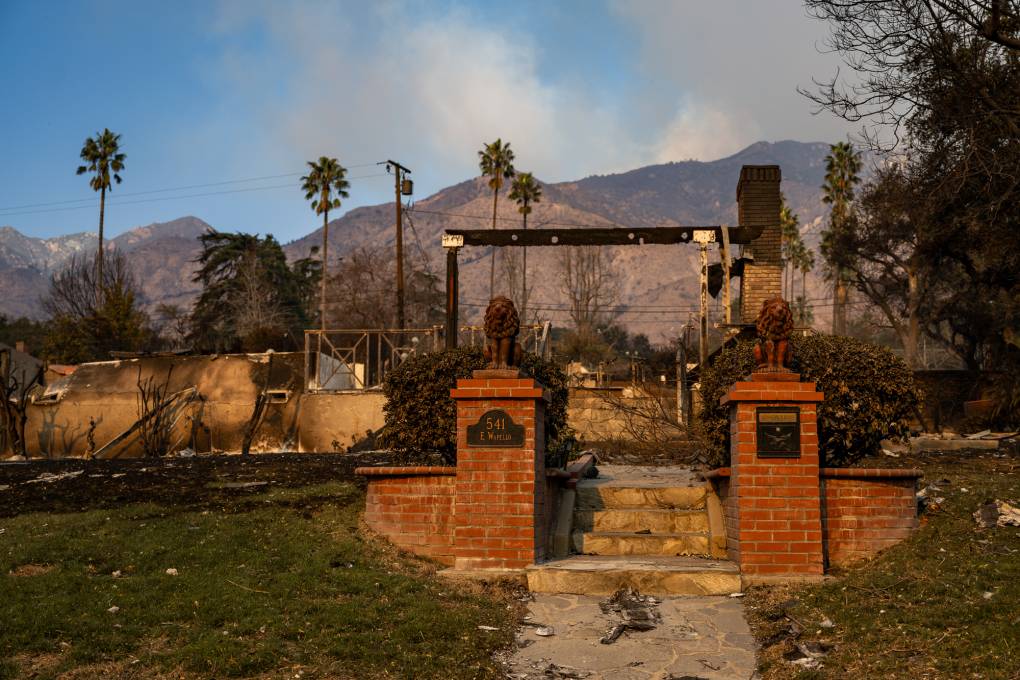
"caption": "The remains of a house in Altadena, California, after the Eaton Fire swept through the area northeast of Los Angeles on Thursday, Jan. 9, 2025.",
"credit": "Beth LaBerge/KQED",
"altTag": null,
"description": null,
"imgSizes": {
"medium": {
"file": "https://cdn.kqed.org/wp-content/uploads/sites/10/2025/01/240109-CAWindStorm-056-800x533.jpg",
"width": 800,
"height": 533,
"mimeType": "image/jpeg"
},
"large": {
"file": "https://cdn.kqed.org/wp-content/uploads/sites/10/2025/01/240109-CAWindStorm-056-1020x680.jpg",
"width": 1020,
"height": 680,
"mimeType": "image/jpeg"
},
"thumbnail": {
"file": "https://cdn.kqed.org/wp-content/uploads/sites/10/2025/01/240109-CAWindStorm-056-160x107.jpg",
"width": 160,
"height": 107,
"mimeType": "image/jpeg"
},
"1536x1536": {
"file": "https://cdn.kqed.org/wp-content/uploads/sites/10/2025/01/240109-CAWindStorm-056-1536x1024.jpg",
"width": 1536,
"height": 1024,
"mimeType": "image/jpeg"
},
"post-thumbnail": {
"file": "https://cdn.kqed.org/wp-content/uploads/sites/10/2025/01/240109-CAWindStorm-056-672x372.jpg",
"width": 672,
"height": 372,
"mimeType": "image/jpeg"
},
"twentyfourteen-full-width": {
"file": "https://cdn.kqed.org/wp-content/uploads/sites/10/2025/01/240109-CAWindStorm-056-1038x576.jpg",
"width": 1038,
"height": 576,
"mimeType": "image/jpeg"
},
"full-width": {
"file": "https://cdn.kqed.org/wp-content/uploads/sites/10/2025/01/240109-CAWindStorm-056-1920x1280.jpg",
"width": 1920,
"height": 1280,
"mimeType": "image/jpeg"
},
"kqedFullSize": {
"file": "https://cdn.kqed.org/wp-content/uploads/sites/10/2025/01/240109-CAWindStorm-056.jpg",
"width": 2000,
"height": 1333
}
},
"isLoading": false,
"fetchFailed": false
},
"news_12022441": {
"type": "attachments",
"id": "news_12022441",
"meta": {
"index": "attachments_1716263798",
"site": "news",
"id": "12022441",
"found": true
},
"title": "011025_LA-Wildfires_JH_CM_14 copy",
"publishDate": 1736981756,
"status": "inherit",
"parent": 12022439,
"modified": 1736981781,
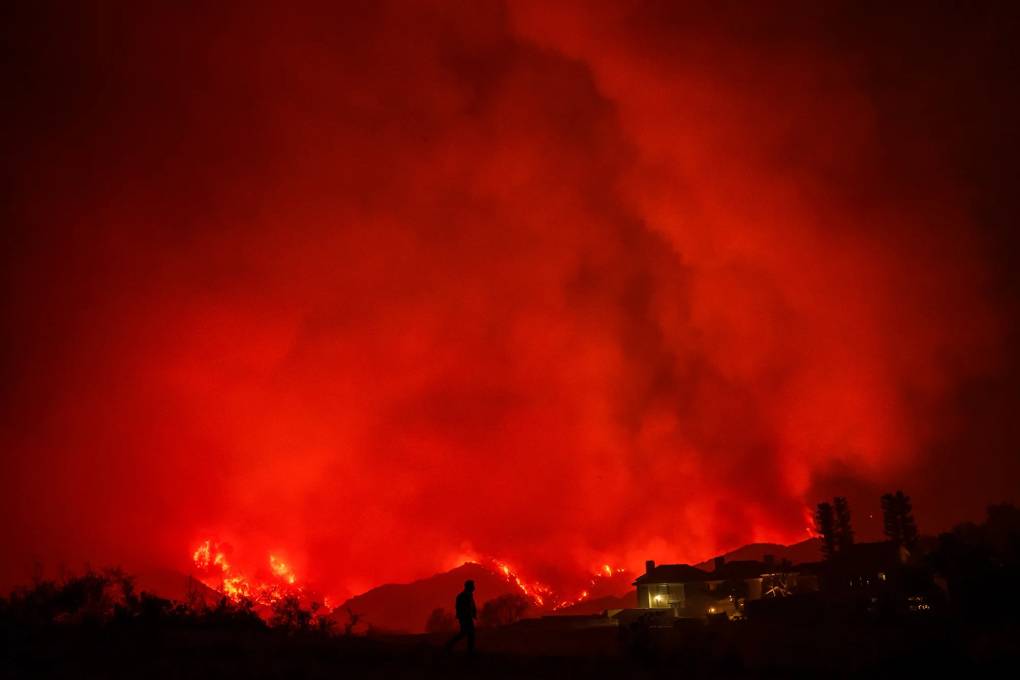
"caption": "The western hills of Mandeville Canyon burning as the Palisades Fire continues to spread in Los Angeles on Jan. 10, 2025.",
"credit": "Jules Hotz for CalMatters",
"altTag": null,
"description": null,
"imgSizes": {
"medium": {
"file": "https://cdn.kqed.org/wp-content/uploads/sites/10/2025/01/011025_LA-Wildfires_JH_CM_14-copy-800x533.jpg",
"width": 800,
"height": 533,
"mimeType": "image/jpeg"
},
"large": {
"file": "https://cdn.kqed.org/wp-content/uploads/sites/10/2025/01/011025_LA-Wildfires_JH_CM_14-copy-1020x680.jpg",
"width": 1020,
"height": 680,
"mimeType": "image/jpeg"
},
"thumbnail": {
"file": "https://cdn.kqed.org/wp-content/uploads/sites/10/2025/01/011025_LA-Wildfires_JH_CM_14-copy-160x107.jpg",
"width": 160,
"height": 107,
"mimeType": "image/jpeg"
},
"1536x1536": {
"file": "https://cdn.kqed.org/wp-content/uploads/sites/10/2025/01/011025_LA-Wildfires_JH_CM_14-copy-1536x1024.jpg",
"width": 1536,
"height": 1024,
"mimeType": "image/jpeg"
},
"post-thumbnail": {
"file": "https://cdn.kqed.org/wp-content/uploads/sites/10/2025/01/011025_LA-Wildfires_JH_CM_14-copy-672x372.jpg",
"width": 672,
"height": 372,
"mimeType": "image/jpeg"
},
"twentyfourteen-full-width": {
"file": "https://cdn.kqed.org/wp-content/uploads/sites/10/2025/01/011025_LA-Wildfires_JH_CM_14-copy-1038x576.jpg",
"width": 1038,
"height": 576,
"mimeType": "image/jpeg"
},
"full-width": {
"file": "https://cdn.kqed.org/wp-content/uploads/sites/10/2025/01/011025_LA-Wildfires_JH_CM_14-copy-1920x1280.jpg",
"width": 1920,
"height": 1280,
"mimeType": "image/jpeg"
},
"kqedFullSize": {
"file": "https://cdn.kqed.org/wp-content/uploads/sites/10/2025/01/011025_LA-Wildfires_JH_CM_14-copy.jpg",
"width": 2000,
"height": 1333
}
},
"isLoading": false,
"fetchFailed": false
},
"news_12022379": {
"type": "attachments",
"id": "news_12022379",
"meta": {
"index": "attachments_1716263798",
"site": "news",
"id": "12022379",
"found": true
},
"title": "PacificPalisadesRebuild2",
"publishDate": 1736975553,
"status": "inherit",
"parent": 12022375,
"modified": 1736975824,
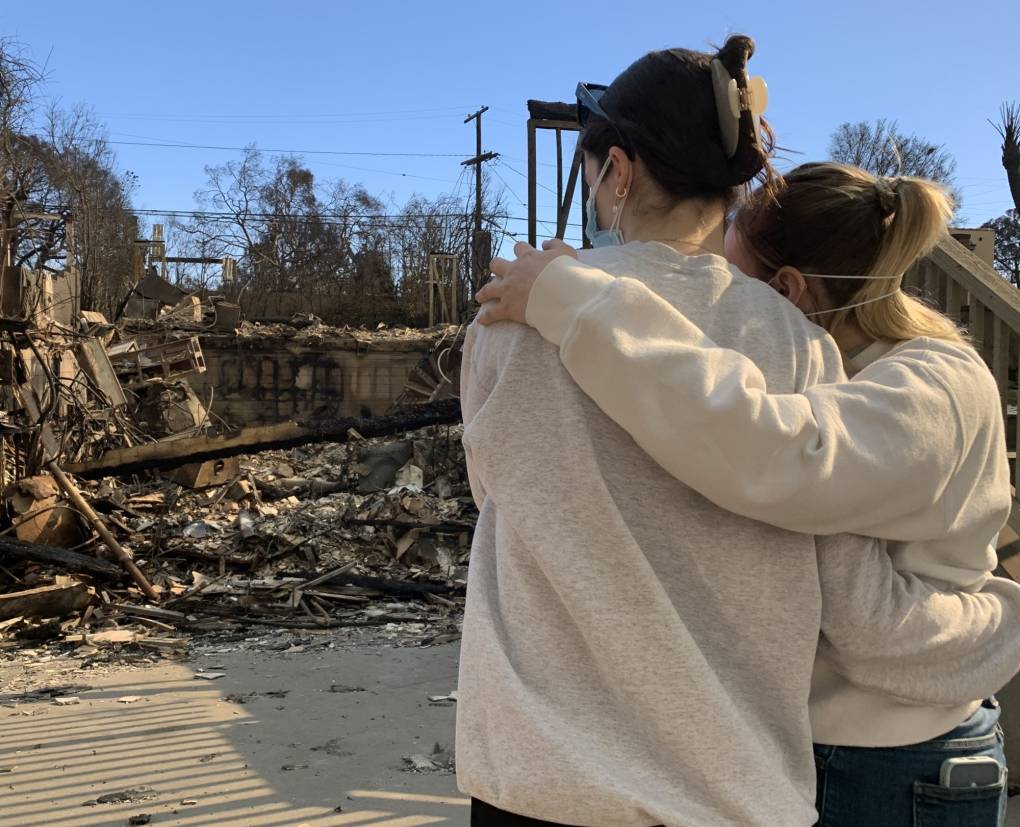
"caption": "Katharine Steffes consoles Emma Deiter on Saturday, Jan. 11, 2025, as she gazes at the ruins of her home at 910 Hartzell St., destroyed by the Palisades fire. Deiter had hoped to recover her late dog's ashes and her prom dress, but both were lost in the devastation.",
"credit": "Rachael Myrow/KQED",
"altTag": null,
"description": null,
"imgSizes": {
"medium": {
"file": "https://cdn.kqed.org/wp-content/uploads/sites/10/2025/01/PacificPalisadesRebuild2-800x649.jpg",
"width": 800,
"height": 649,
"mimeType": "image/jpeg"
},
"large": {
"file": "https://cdn.kqed.org/wp-content/uploads/sites/10/2025/01/PacificPalisadesRebuild2-1020x827.jpg",
"width": 1020,
"height": 827,
"mimeType": "image/jpeg"
},
"thumbnail": {
"file": "https://cdn.kqed.org/wp-content/uploads/sites/10/2025/01/PacificPalisadesRebuild2-160x130.jpg",
"width": 160,
"height": 130,
"mimeType": "image/jpeg"
},
"1536x1536": {
"file": "https://cdn.kqed.org/wp-content/uploads/sites/10/2025/01/PacificPalisadesRebuild2-1536x1246.jpg",
"width": 1536,
"height": 1246,
"mimeType": "image/jpeg"
},
"post-thumbnail": {
"file": "https://cdn.kqed.org/wp-content/uploads/sites/10/2025/01/PacificPalisadesRebuild2-672x372.jpg",
"width": 672,
"height": 372,
"mimeType": "image/jpeg"
},
"twentyfourteen-full-width": {
"file": "https://cdn.kqed.org/wp-content/uploads/sites/10/2025/01/PacificPalisadesRebuild2-1038x576.jpg",
"width": 1038,
"height": 576,
"mimeType": "image/jpeg"
},
"full-width": {
"file": "https://cdn.kqed.org/wp-content/uploads/sites/10/2025/01/PacificPalisadesRebuild2-1920x1557.jpg",
"width": 1920,
"height": 1557,
"mimeType": "image/jpeg"
},
"kqedFullSize": {
"file": "https://cdn.kqed.org/wp-content/uploads/sites/10/2025/01/PacificPalisadesRebuild2.jpg",
"width": 2000,
"height": 1622
}
},
"isLoading": false,
"fetchFailed": false
},
"news_12022233": {
"type": "attachments",
"id": "news_12022233",
"meta": {
"index": "attachments_1716263798",
"site": "news",
"id": "12022233",
"found": true
},
"title": "20250113_North-Beach_DMB_02163",
"publishDate": 1736900741,
"status": "inherit",
"parent": 11970450,
"modified": 1763676324,
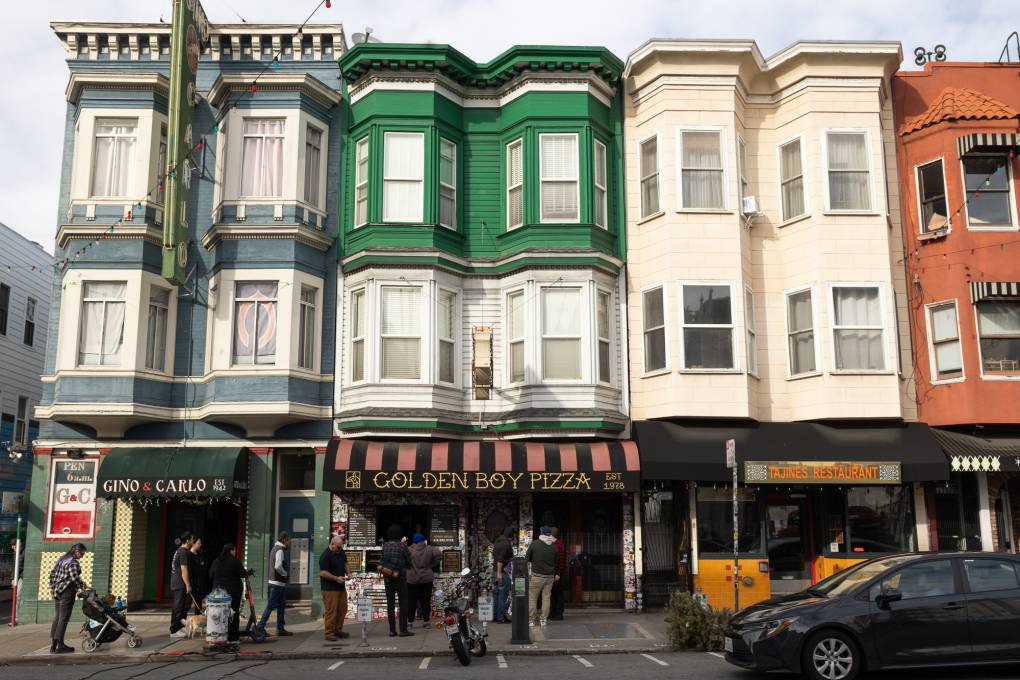
"caption": "People form a line for slices at Golden Boy Pizza on Green Street in North Beach on Monday, Jan. 13, 2025. ",
"credit": "David M. Barreda/KQED",
"altTag": null,
"description": null,
"imgSizes": {
"medium": {
"file": "https://cdn.kqed.org/wp-content/uploads/sites/10/2025/01/20250113_North-Beach_DMB_02163-800x533.jpg",
"width": 800,
"height": 533,
"mimeType": "image/jpeg"
},
"large": {
"file": "https://cdn.kqed.org/wp-content/uploads/sites/10/2025/01/20250113_North-Beach_DMB_02163-1020x680.jpg",
"width": 1020,
"height": 680,
"mimeType": "image/jpeg"
},
"thumbnail": {
"file": "https://cdn.kqed.org/wp-content/uploads/sites/10/2025/01/20250113_North-Beach_DMB_02163-160x107.jpg",
"width": 160,
"height": 107,
"mimeType": "image/jpeg"
},
"1536x1536": {
"file": "https://cdn.kqed.org/wp-content/uploads/sites/10/2025/01/20250113_North-Beach_DMB_02163-1536x1024.jpg",
"width": 1536,
"height": 1024,
"mimeType": "image/jpeg"
},
"post-thumbnail": {
"file": "https://cdn.kqed.org/wp-content/uploads/sites/10/2025/01/20250113_North-Beach_DMB_02163-672x372.jpg",
"width": 672,
"height": 372,
"mimeType": "image/jpeg"
},
"twentyfourteen-full-width": {
"file": "https://cdn.kqed.org/wp-content/uploads/sites/10/2025/01/20250113_North-Beach_DMB_02163-1038x576.jpg",
"width": 1038,
"height": 576,
"mimeType": "image/jpeg"
},
"full-width": {
"file": "https://cdn.kqed.org/wp-content/uploads/sites/10/2025/01/20250113_North-Beach_DMB_02163-1920x1280.jpg",
"width": 1920,
"height": 1280,
"mimeType": "image/jpeg"
},
"kqedFullSize": {
"file": "https://cdn.kqed.org/wp-content/uploads/sites/10/2025/01/20250113_North-Beach_DMB_02163.jpg",
"width": 2000,
"height": 1333
}
},
"isLoading": false,
"fetchFailed": false
},
"news_12022061": {
"type": "attachments",
"id": "news_12022061",
"meta": {
"index": "attachments_1716263798",
"site": "news",
"id": "12022061",
"found": true
},
"title": "California-Wildfires-Inequality",
"publishDate": 1736880829,
"status": "inherit",
"parent": 12022057,
"modified": 1736888152,
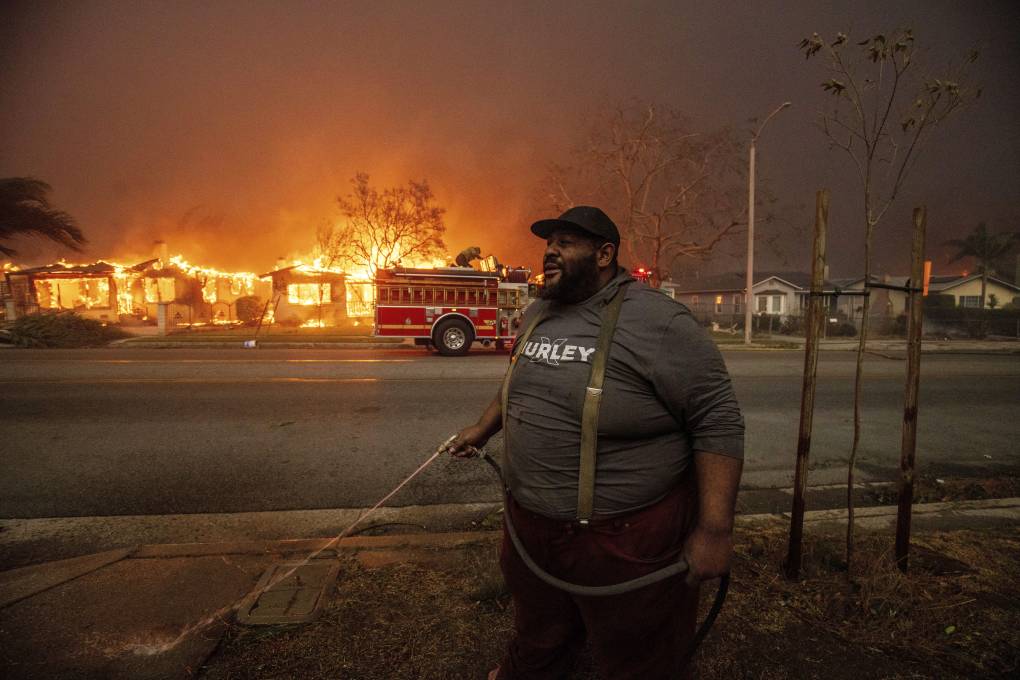
"caption": "A resident sprays their property with a garden hose as the Eaton Fire engulfs structures across the street, Wednesday, Jan. 8, 2025, in Altadena, Los Angeles County. ",
"credit": "Ethan Swope/AP Photo",
"altTag": null,
"description": null,
"imgSizes": {
"medium": {
"file": "https://cdn.kqed.org/wp-content/uploads/sites/10/2025/01/AP25011807951099-800x534.jpg",
"width": 800,
"height": 534,
"mimeType": "image/jpeg"
},
"large": {
"file": "https://cdn.kqed.org/wp-content/uploads/sites/10/2025/01/AP25011807951099-1020x680.jpg",
"width": 1020,
"height": 680,
"mimeType": "image/jpeg"
},
"thumbnail": {
"file": "https://cdn.kqed.org/wp-content/uploads/sites/10/2025/01/AP25011807951099-160x107.jpg",
"width": 160,
"height": 107,
"mimeType": "image/jpeg"
},
"1536x1536": {
"file": "https://cdn.kqed.org/wp-content/uploads/sites/10/2025/01/AP25011807951099-1536x1025.jpg",
"width": 1536,
"height": 1025,
"mimeType": "image/jpeg"
},
"2048x2048": {
"file": "https://cdn.kqed.org/wp-content/uploads/sites/10/2025/01/AP25011807951099-2048x1366.jpg",
"width": 2048,
"height": 1366,
"mimeType": "image/jpeg"
},
"post-thumbnail": {
"file": "https://cdn.kqed.org/wp-content/uploads/sites/10/2025/01/AP25011807951099-672x372.jpg",
"width": 672,
"height": 372,
"mimeType": "image/jpeg"
},
"twentyfourteen-full-width": {
"file": "https://cdn.kqed.org/wp-content/uploads/sites/10/2025/01/AP25011807951099-1038x576.jpg",
"width": 1038,
"height": 576,
"mimeType": "image/jpeg"
},
"full-width": {
"file": "https://cdn.kqed.org/wp-content/uploads/sites/10/2025/01/AP25011807951099-1920x1281.jpg",
"width": 1920,
"height": 1281,
"mimeType": "image/jpeg"
},
"kqedFullSize": {
"file": "https://cdn.kqed.org/wp-content/uploads/sites/10/2025/01/AP25011807951099-scaled.jpg",
"width": 2560,
"height": 1708
}
},
"isLoading": false,
"fetchFailed": false
},
"news_12020498": {
"type": "attachments",
"id": "news_12020498",
"meta": {
"index": "attachments_1716263798",
"site": "news",
"id": "12020498",
"found": true
},
"title": "250105-LurieInaugurationCleanup-51",
"publishDate": 1736206956,
"status": "inherit",
"parent": 0,
"modified": 1736207201,
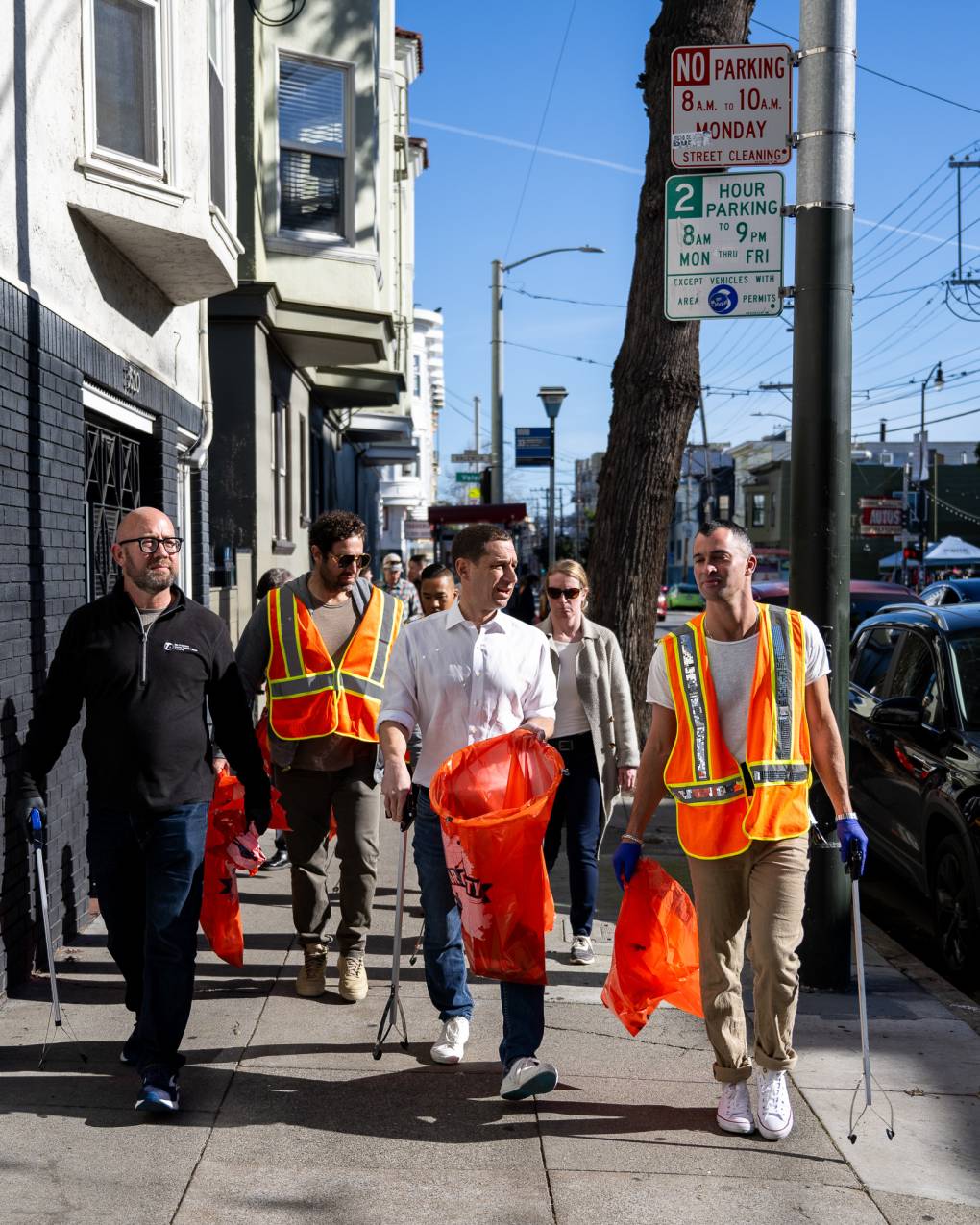
"caption": "San Francisco Mayor-elect Daniel Lurie walks with Supervisor Rafael Mandelman and Manny Yekutiel during a trash pick up in the Mission District on Jan. 5, 2025, during a weekend of service before his inauguration.",
"credit": "Beth LaBerge/KQED",
"altTag": null,
"description": null,
"imgSizes": {
"medium": {
"file": "https://cdn.kqed.org/wp-content/uploads/sites/10/2025/01/250105-LurieInaugurationCleanup-51-800x1000.jpg",
"width": 800,
"height": 1000,
"mimeType": "image/jpeg"
},
"large": {
"file": "https://cdn.kqed.org/wp-content/uploads/sites/10/2025/01/250105-LurieInaugurationCleanup-51-1020x1275.jpg",
"width": 1020,
"height": 1275,
"mimeType": "image/jpeg"
},
"thumbnail": {
"file": "https://cdn.kqed.org/wp-content/uploads/sites/10/2025/01/250105-LurieInaugurationCleanup-51-160x200.jpg",
"width": 160,
"height": 200,
"mimeType": "image/jpeg"
},
"1536x1536": {
"file": "https://cdn.kqed.org/wp-content/uploads/sites/10/2025/01/250105-LurieInaugurationCleanup-51-1229x1536.jpg",
"width": 1229,
"height": 1536,
"mimeType": "image/jpeg"
},
"post-thumbnail": {
"file": "https://cdn.kqed.org/wp-content/uploads/sites/10/2025/01/250105-LurieInaugurationCleanup-51-672x372.jpg",
"width": 672,
"height": 372,
"mimeType": "image/jpeg"
},
"twentyfourteen-full-width": {
"file": "https://cdn.kqed.org/wp-content/uploads/sites/10/2025/01/250105-LurieInaugurationCleanup-51-1038x576.jpg",
"width": 1038,
"height": 576,
"mimeType": "image/jpeg"
},
"kqedFullSize": {
"file": "https://cdn.kqed.org/wp-content/uploads/sites/10/2025/01/250105-LurieInaugurationCleanup-51.jpg",
"width": 1600,
"height": 2000
}
},
"isLoading": false,
"fetchFailed": false
},
"news_12021028": {
"type": "attachments",
"id": "news_12021028",
"meta": {
"index": "attachments_1716263798",
"site": "news",
"id": "12021028",
"found": true
},
"title": "APTOPIX California Wildfires",
"publishDate": 1736384165,
"status": "inherit",
"parent": 12021019,
"modified": 1736384206,
"caption": "A person tries to hose down embers from the Palisades Fire in the Pacific Palisades neighborhood of Los Angeles on Tuesday, Jan. 7, 2025.",
"credit": "Etienne Laurent/AP Photo",
"altTag": null,
"description": null,
"imgSizes": {
"medium": {
"file": "https://cdn.kqed.org/wp-content/uploads/sites/10/2025/01/CAWildfireSoCal4AP-800x533.jpg",
"width": 800,
"height": 533,
"mimeType": "image/jpeg"
},
"large": {
"file": "https://cdn.kqed.org/wp-content/uploads/sites/10/2025/01/CAWildfireSoCal4AP-1020x680.jpg",
"width": 1020,
"height": 680,
"mimeType": "image/jpeg"
},
"thumbnail": {
"file": "https://cdn.kqed.org/wp-content/uploads/sites/10/2025/01/CAWildfireSoCal4AP-160x107.jpg",
"width": 160,
"height": 107,
"mimeType": "image/jpeg"
},
"1536x1536": {
"file": "https://cdn.kqed.org/wp-content/uploads/sites/10/2025/01/CAWildfireSoCal4AP-1536x1024.jpg",
"width": 1536,
"height": 1024,
"mimeType": "image/jpeg"
},
"post-thumbnail": {
"file": "https://cdn.kqed.org/wp-content/uploads/sites/10/2025/01/CAWildfireSoCal4AP-672x372.jpg",
"width": 672,
"height": 372,
"mimeType": "image/jpeg"
},
"twentyfourteen-full-width": {
"file": "https://cdn.kqed.org/wp-content/uploads/sites/10/2025/01/CAWildfireSoCal4AP-1038x576.jpg",
"width": 1038,
"height": 576,
"mimeType": "image/jpeg"
},
"full-width": {
"file": "https://cdn.kqed.org/wp-content/uploads/sites/10/2025/01/CAWildfireSoCal4AP-1920x1280.jpg",
"width": 1920,
"height": 1280,
"mimeType": "image/jpeg"
},
"kqedFullSize": {
"file": "https://cdn.kqed.org/wp-content/uploads/sites/10/2025/01/CAWildfireSoCal4AP.jpg",
"width": 2000,
"height": 1333
}
},
"isLoading": false,
"fetchFailed": false
},
"news_12019948": {
"type": "attachments",
"id": "news_12019948",
"meta": {
"index": "attachments_1716263798",
"site": "news",
"id": "12019948",
"found": true
},
"title": "241203-FresnoCampingBan-74-BL_qed",
"publishDate": 1735432452,
"status": "inherit",
"parent": 12019944,
"modified": 1735578454,
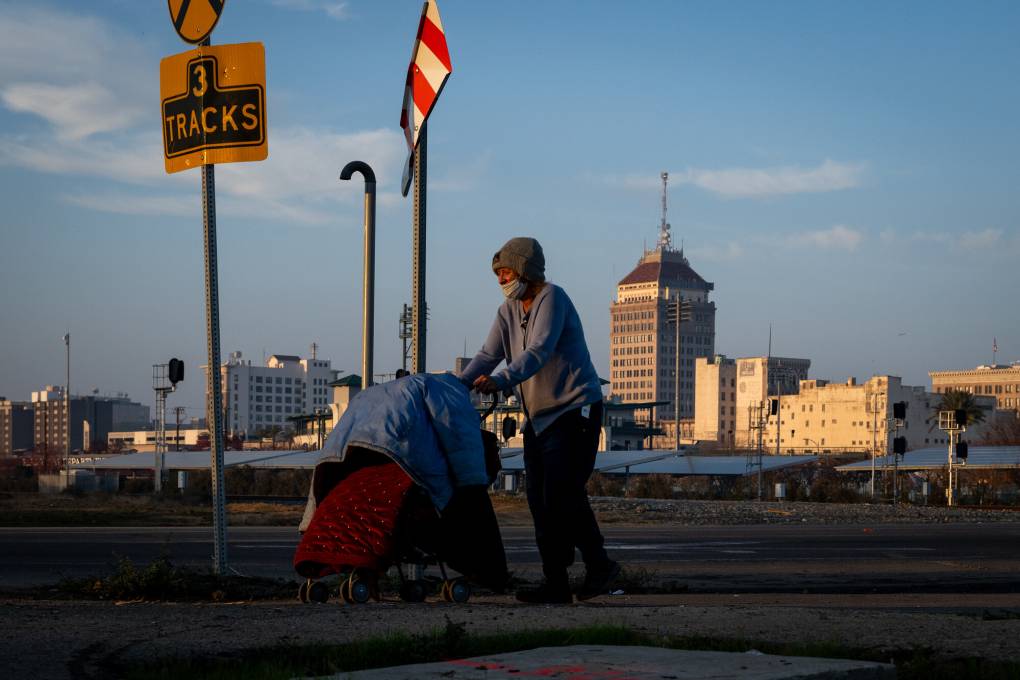
"caption": "An unhoused Fresno resident walks with the Tower District in downtown Fresno in the background, on Dec. 3, 2024.",
"credit": "Beth LaBerge/KQED",
"altTag": null,
"description": null,
"imgSizes": {
"medium": {
"file": "https://cdn.kqed.org/wp-content/uploads/sites/10/2024/12/241203-FresnoCampingBan-74-BL_qed-800x533.jpg",
"width": 800,
"height": 533,
"mimeType": "image/jpeg"
},
"large": {
"file": "https://cdn.kqed.org/wp-content/uploads/sites/10/2024/12/241203-FresnoCampingBan-74-BL_qed-1020x680.jpg",
"width": 1020,
"height": 680,
"mimeType": "image/jpeg"
},
"thumbnail": {
"file": "https://cdn.kqed.org/wp-content/uploads/sites/10/2024/12/241203-FresnoCampingBan-74-BL_qed-160x107.jpg",
"width": 160,
"height": 107,
"mimeType": "image/jpeg"
},
"1536x1536": {
"file": "https://cdn.kqed.org/wp-content/uploads/sites/10/2024/12/241203-FresnoCampingBan-74-BL_qed-1536x1024.jpg",
"width": 1536,
"height": 1024,
"mimeType": "image/jpeg"
},
"post-thumbnail": {
"file": "https://cdn.kqed.org/wp-content/uploads/sites/10/2024/12/241203-FresnoCampingBan-74-BL_qed-672x372.jpg",
"width": 672,
"height": 372,
"mimeType": "image/jpeg"
},
"twentyfourteen-full-width": {
"file": "https://cdn.kqed.org/wp-content/uploads/sites/10/2024/12/241203-FresnoCampingBan-74-BL_qed-1038x576.jpg",
"width": 1038,
"height": 576,
"mimeType": "image/jpeg"
},
"full-width": {
"file": "https://cdn.kqed.org/wp-content/uploads/sites/10/2024/12/241203-FresnoCampingBan-74-BL_qed-1920x1280.jpg",
"width": 1920,
"height": 1280,
"mimeType": "image/jpeg"
},
"kqedFullSize": {
"file": "https://cdn.kqed.org/wp-content/uploads/sites/10/2024/12/241203-FresnoCampingBan-74-BL_qed.jpg",
"width": 1999,
"height": 1333
}
},
"isLoading": false,
"fetchFailed": false
},
"news_12020030": {
"type": "attachments",
"id": "news_12020030",
"meta": {
"index": "attachments_1716263798",
"site": "news",
"id": "12020030",
"found": true
},
"title": "Yorba Linda Blue Ridge Fire",
"publishDate": 1735602111,
"status": "inherit",
"parent": 0,
"modified": 1735603492,
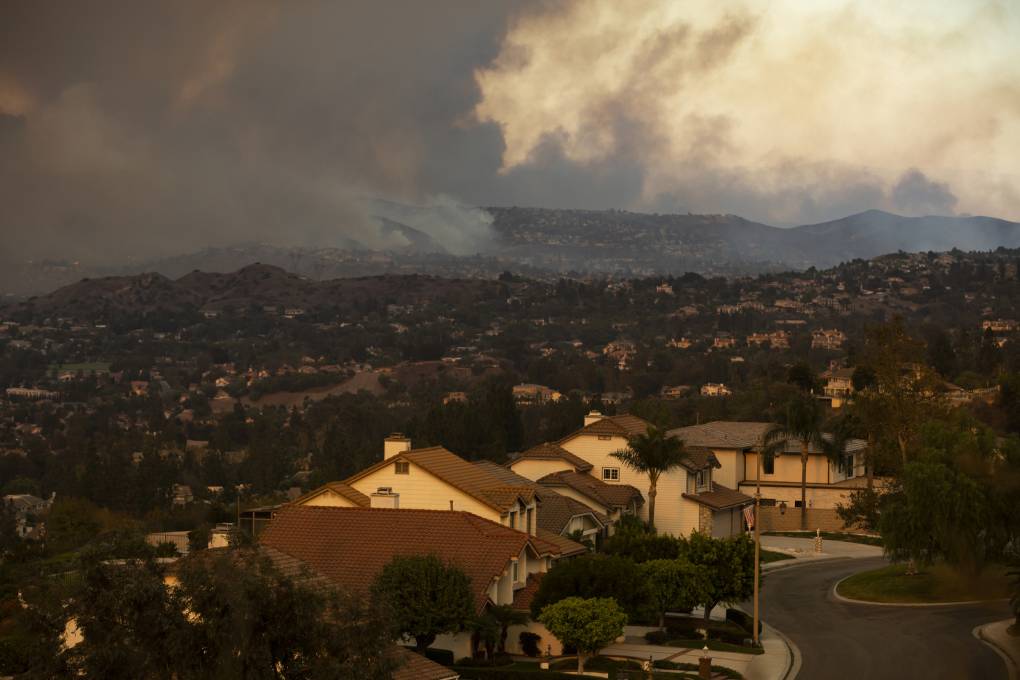
"caption": "Smoke from the Blue Ridge Fire engulf the hills above Yorba Linda, Orange County, in October 2020.",
"credit": "Matt Gush/Getty Images",
"altTag": null,
"description": null,
"imgSizes": {
"medium": {
"file": "https://cdn.kqed.org/wp-content/uploads/sites/10/2024/12/GettyImages-1282423085-1-800x533.jpg",
"width": 800,
"height": 533,
"mimeType": "image/jpeg"
},
"large": {
"file": "https://cdn.kqed.org/wp-content/uploads/sites/10/2024/12/GettyImages-1282423085-1-1020x680.jpg",
"width": 1020,
"height": 680,
"mimeType": "image/jpeg"
},
"thumbnail": {
"file": "https://cdn.kqed.org/wp-content/uploads/sites/10/2024/12/GettyImages-1282423085-1-160x107.jpg",
"width": 160,
"height": 107,
"mimeType": "image/jpeg"
},
"1536x1536": {
"file": "https://cdn.kqed.org/wp-content/uploads/sites/10/2024/12/GettyImages-1282423085-1-1536x1024.jpg",
"width": 1536,
"height": 1024,
"mimeType": "image/jpeg"
},
"2048x2048": {
"file": "https://cdn.kqed.org/wp-content/uploads/sites/10/2024/12/GettyImages-1282423085-1-2048x1365.jpg",
"width": 2048,
"height": 1365,
"mimeType": "image/jpeg"
},
"post-thumbnail": {
"file": "https://cdn.kqed.org/wp-content/uploads/sites/10/2024/12/GettyImages-1282423085-1-672x372.jpg",
"width": 672,
"height": 372,
"mimeType": "image/jpeg"
},
"twentyfourteen-full-width": {
"file": "https://cdn.kqed.org/wp-content/uploads/sites/10/2024/12/GettyImages-1282423085-1-1038x576.jpg",
"width": 1038,
"height": 576,
"mimeType": "image/jpeg"
},
"full-width": {
"file": "https://cdn.kqed.org/wp-content/uploads/sites/10/2024/12/GettyImages-1282423085-1-1920x1280.jpg",
"width": 1920,
"height": 1280,
"mimeType": "image/jpeg"
},
"kqedFullSize": {
"file": "https://cdn.kqed.org/wp-content/uploads/sites/10/2024/12/GettyImages-1282423085-1.jpg",
"width": 2121,
"height": 1414
}
},
"isLoading": false,
"fetchFailed": false
},
"news_12019454": {
"type": "attachments",
"id": "news_12019454",
"meta": {
"index": "attachments_1716263798",
"site": "news",
"id": "12019454",
"found": true
},
"title": "003_KQED_Housing_MountainView_02192020_3309",
"publishDate": 1734737743,
"status": "inherit",
"parent": 12019437,
"modified": 1735423994,
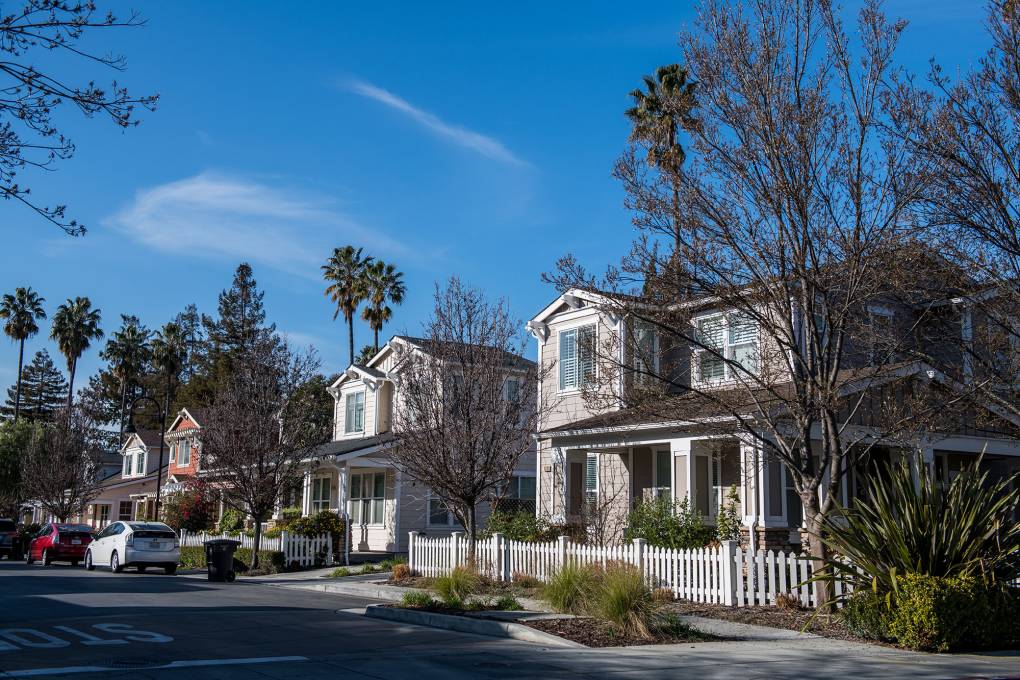
"caption": "Housing in Mountain View, Santa Clara County, on Feb. 19, 2020.\n",
"credit": "Beth LaBerge/KQED",
"altTag": null,
"description": null,
"imgSizes": {
"medium": {
"file": "https://cdn.kqed.org/wp-content/uploads/sites/10/2024/12/003_KQED_Housing_MountainView_02192020_3309-800x533.jpg",
"width": 800,
"height": 533,
"mimeType": "image/jpeg"
},
"large": {
"file": "https://cdn.kqed.org/wp-content/uploads/sites/10/2024/12/003_KQED_Housing_MountainView_02192020_3309-1020x680.jpg",
"width": 1020,
"height": 680,
"mimeType": "image/jpeg"
},
"thumbnail": {
"file": "https://cdn.kqed.org/wp-content/uploads/sites/10/2024/12/003_KQED_Housing_MountainView_02192020_3309-160x107.jpg",
"width": 160,
"height": 107,
"mimeType": "image/jpeg"
},
"1536x1536": {
"file": "https://cdn.kqed.org/wp-content/uploads/sites/10/2024/12/003_KQED_Housing_MountainView_02192020_3309-1536x1024.jpg",
"width": 1536,
"height": 1024,
"mimeType": "image/jpeg"
},
"post-thumbnail": {
"file": "https://cdn.kqed.org/wp-content/uploads/sites/10/2024/12/003_KQED_Housing_MountainView_02192020_3309-672x372.jpg",
"width": 672,
"height": 372,
"mimeType": "image/jpeg"
},
"twentyfourteen-full-width": {
"file": "https://cdn.kqed.org/wp-content/uploads/sites/10/2024/12/003_KQED_Housing_MountainView_02192020_3309-1038x576.jpg",
"width": 1038,
"height": 576,
"mimeType": "image/jpeg"
},
"full-width": {
"file": "https://cdn.kqed.org/wp-content/uploads/sites/10/2024/12/003_KQED_Housing_MountainView_02192020_3309-1920x1280.jpg",
"width": 1920,
"height": 1280,
"mimeType": "image/jpeg"
},
"kqedFullSize": {
"file": "https://cdn.kqed.org/wp-content/uploads/sites/10/2024/12/003_KQED_Housing_MountainView_02192020_3309.jpg",
"width": 2000,
"height": 1333
}
},
"isLoading": false,
"fetchFailed": false
},
"news_12018942": {
"type": "attachments",
"id": "news_12018942",
"meta": {
"index": "attachments_1716263798",
"site": "news",
"id": "12018942",
"found": true
},
"title": "OceanTowerRendering2",
"publishDate": 1734563770,
"status": "inherit",
"parent": 12018940,
"modified": 1734565128,
"caption": "A rendering of the proposed development at 2700 Sloat Blvd.",
"credit": "Courtesy of SCB and Bezier",
"altTag": null,
"description": null,
"imgSizes": {
"medium": {
"file": "https://cdn.kqed.org/wp-content/uploads/sites/10/2024/12/OceanTowerRendering2-800x450.jpg",
"width": 800,
"height": 450,
"mimeType": "image/jpeg"
},
"large": {
"file": "https://cdn.kqed.org/wp-content/uploads/sites/10/2024/12/OceanTowerRendering2-1020x574.jpg",
"width": 1020,
"height": 574,
"mimeType": "image/jpeg"
},
"thumbnail": {
"file": "https://cdn.kqed.org/wp-content/uploads/sites/10/2024/12/OceanTowerRendering2-160x90.jpg",
"width": 160,
"height": 90,
"mimeType": "image/jpeg"
},
"1536x1536": {
"file": "https://cdn.kqed.org/wp-content/uploads/sites/10/2024/12/OceanTowerRendering2-1536x864.jpg",
"width": 1536,
"height": 864,
"mimeType": "image/jpeg"
},
"post-thumbnail": {
"file": "https://cdn.kqed.org/wp-content/uploads/sites/10/2024/12/OceanTowerRendering2-672x372.jpg",
"width": 672,
"height": 372,
"mimeType": "image/jpeg"
},
"twentyfourteen-full-width": {
"file": "https://cdn.kqed.org/wp-content/uploads/sites/10/2024/12/OceanTowerRendering2-1038x576.jpg",
"width": 1038,
"height": 576,
"mimeType": "image/jpeg"
},
"full-width": {
"file": "https://cdn.kqed.org/wp-content/uploads/sites/10/2024/12/OceanTowerRendering2-1920x1080.jpg",
"width": 1920,
"height": 1080,
"mimeType": "image/jpeg"
},
"kqedFullSize": {
"file": "https://cdn.kqed.org/wp-content/uploads/sites/10/2024/12/OceanTowerRendering2.jpg",
"width": 2000,
"height": 1125
}
},
"isLoading": false,
"fetchFailed": false
},
"news_12018725": {
"type": "attachments",
"id": "news_12018725",
"meta": {
"index": "attachments_1716263798",
"site": "news",
"id": "12018725",
"found": true
},
"title": "20241217-UnhousedDemonstrations-JY-054",
"publishDate": 1734480874,
"status": "inherit",
"parent": 0,
"modified": 1734481146,
"caption": "Marria Evbuoma paints on a tent during a demonstration against the rise in encampment sweeps in front of City Hall in San Francisco on Tuesday, Dec. 17, 2024.",
"credit": "Juliana Yamada/KQED",
"altTag": null,
"description": null,
"imgSizes": {
"medium": {
"file": "https://cdn.kqed.org/wp-content/uploads/sites/10/2024/12/20241217-UnhousedDemonstrations-JY-054-800x533.jpg",
"width": 800,
"height": 533,
"mimeType": "image/jpeg"
},
"large": {
"file": "https://cdn.kqed.org/wp-content/uploads/sites/10/2024/12/20241217-UnhousedDemonstrations-JY-054-1020x679.jpg",
"width": 1020,
"height": 679,
"mimeType": "image/jpeg"
},
"thumbnail": {
"file": "https://cdn.kqed.org/wp-content/uploads/sites/10/2024/12/20241217-UnhousedDemonstrations-JY-054-160x107.jpg",
"width": 160,
"height": 107,
"mimeType": "image/jpeg"
},
"1536x1536": {
"file": "https://cdn.kqed.org/wp-content/uploads/sites/10/2024/12/20241217-UnhousedDemonstrations-JY-054-1536x1023.jpg",
"width": 1536,
"height": 1023,
"mimeType": "image/jpeg"
},
"post-thumbnail": {
"file": "https://cdn.kqed.org/wp-content/uploads/sites/10/2024/12/20241217-UnhousedDemonstrations-JY-054-672x372.jpg",
"width": 672,
"height": 372,
"mimeType": "image/jpeg"
},
"twentyfourteen-full-width": {
"file": "https://cdn.kqed.org/wp-content/uploads/sites/10/2024/12/20241217-UnhousedDemonstrations-JY-054-1038x576.jpg",
"width": 1038,
"height": 576,
"mimeType": "image/jpeg"
},
"full-width": {
"file": "https://cdn.kqed.org/wp-content/uploads/sites/10/2024/12/20241217-UnhousedDemonstrations-JY-054-1920x1279.jpg",
"width": 1920,
"height": 1279,
"mimeType": "image/jpeg"
},
"kqedFullSize": {
"file": "https://cdn.kqed.org/wp-content/uploads/sites/10/2024/12/20241217-UnhousedDemonstrations-JY-054.jpg",
"width": 2000,
"height": 1332
}
},
"isLoading": false,
"fetchFailed": false
}
},
"audioPlayerReducer": {
"postId": "stream_live",
"isPaused": true,
"isPlaying": false,
"pfsActive": false,
"pledgeModalIsOpen": true,
"playerDrawerIsOpen": false,
"liveAudioPlayStartedAt": 0,
"liveAudioPlayContext": ""
},
"authorsReducer": {
"byline_news_12022439": {
"type": "authors",
"id": "byline_news_12022439",
"meta": {
"override": true
},
"slug": "byline_news_12022439",
"name": "\u003ca href=\"https://calmatters.org/author/marisa-kendall/\">Marisa Kendall\u003c/a>, CalMatters",
"isLoading": false
},
"byline_news_12022057": {
"type": "authors",
"id": "byline_news_12022057",
"meta": {
"override": true
},
"slug": "byline_news_12022057",
"name": "Terry Tang, Jennifer Sinco Kelleher and Jae Hong, Associated Press",
"isLoading": false
},
"rachael-myrow": {
"type": "authors",
"id": "251",
"meta": {
"index": "authors_1716337520",
"id": "251",
"found": true
},
"name": "Rachael Myrow",
"firstName": "Rachael",
"lastName": "Myrow",
"slug": "rachael-myrow",
"email": "rmyrow@kqed.org",
"display_author_email": true,
"staff_mastheads": [
"news"
],
"title": "Senior Editor of KQED's Silicon Valley News Desk",
"bio": "• I write and edit stories about how Silicon Valley power and policies shape everyday life in California. I’m also passionate about making Bay Area history and culture more accessible to a broad public. • I’ve been a journalist for most of my life, starting in high school with The Franklin Press in Los Angeles, where I grew up. While earning my first degree in English at UC Berkeley, I got my start in public radio at KALX-FM. After completing a second degree in journalism at Cal, I landed my first professional job at Marketplace, then moved on to KPCC (now LAist), and then KQED, where I hosted The California Report for more than seven years. • My reporting has appeared on NPR, The World, WBUR’s \u003ci>Here & Now\u003c/i>, and the BBC. I also guest host for KQED’s \u003ci>Forum\u003c/i>, as well as the Commonwealth Club in San Francisco. • I speak periodically on media, democracy and technology issues, and do voiceover work for documentaries and educational video projects. • Outside of the studio, you'll find me hiking Bay Area trails and whipping up Insta-ready meals in my kitchen. • I do not accept gifts, money, or favors from anyone connected to my reporting, I don't pay people for information, and I do not support or donate to political causes. • I strive to treat the people I report on with fairness, honesty, and respect. I also recognize there are often multiple sides to a story and work to verify information through multiple sources and documentation. If I get something wrong, I correct it.",
"avatar": "https://secure.gravatar.com/avatar/3ed8a3c5f26025e4a805ba634cda8cd764906b97438a6d9ce216b044e340da4e?s=600&d=blank&r=g",
"twitter": "rachaelmyrow",
"bluesky": null,
"facebook": null,
"instagram": null,
"linkedin": "https://www.linkedin.com/in/rachaelmyrow/",
"sites": [
{
"site": "arts",
"roles": [
"administrator"
]
},
{
"site": "news",
"roles": [
"edit_others_posts",
"editor"
]
},
{
"site": "futureofyou",
"roles": [
"editor"
]
},
{
"site": "bayareabites",
"roles": [
"editor"
]
},
{
"site": "stateofhealth",
"roles": [
"editor"
]
},
{
"site": "science",
"roles": [
"editor"
]
},
{
"site": "food",
"roles": [
"editor"
]
},
{
"site": "forum",
"roles": [
"editor"
]
},
{
"site": "liveblog",
"roles": [
"author"
]
}
],
"headData": {
"title": "Rachael Myrow | KQED",
"description": "Senior Editor of KQED's Silicon Valley News Desk",
"ogImgSrc": "https://secure.gravatar.com/avatar/3ed8a3c5f26025e4a805ba634cda8cd764906b97438a6d9ce216b044e340da4e?s=600&d=blank&r=g",
"twImgSrc": "https://secure.gravatar.com/avatar/3ed8a3c5f26025e4a805ba634cda8cd764906b97438a6d9ce216b044e340da4e?s=600&d=blank&r=g"
},
"isLoading": false,
"link": "/author/rachael-myrow"
},
"dventon": {
"type": "authors",
"id": "11088",
"meta": {
"index": "authors_1716337520",
"id": "11088",
"found": true
},
"name": "Danielle Venton",
"firstName": "Danielle",
"lastName": "Venton",
"slug": "dventon",
"email": "dventon@kqed.org",
"display_author_email": true,
"staff_mastheads": [
"science"
],
"title": "Science reporter",
"bio": "Danielle Venton is a reporter for KQED Science. She covers wildfires, space and oceans (though she is prone to sea sickness).\r\n\r\nBefore joining KQED in 2015, Danielle was a staff reporter at KRCB in Sonoma County and a freelancer. She studied science communication at UC Santa Cruz and formerly worked at CERN in Geneva, Switzerland where she wrote about computing. She lives in Sonoma County and enjoys backpacking.",
"avatar": "https://secure.gravatar.com/avatar/37b292b5c40c8d93959c4f48d73b5286f41b7abd8588277e941905a3ed4c801c?s=600&d=blank&r=g",
"twitter": "DanielleVenton",
"bluesky": null,
"facebook": null,
"instagram": null,
"linkedin": null,
"sites": [
{
"site": "arts",
"roles": [
"contributor"
]
},
{
"site": "news",
"roles": [
"editor"
]
},
{
"site": "futureofyou",
"roles": [
"editor"
]
},
{
"site": "science",
"roles": [
"editor"
]
},
{
"site": "liveblog",
"roles": [
"contributor"
]
}
],
"headData": {
"title": "Danielle Venton | KQED",
"description": "Science reporter",
"ogImgSrc": "https://secure.gravatar.com/avatar/37b292b5c40c8d93959c4f48d73b5286f41b7abd8588277e941905a3ed4c801c?s=600&d=blank&r=g",
"twImgSrc": "https://secure.gravatar.com/avatar/37b292b5c40c8d93959c4f48d73b5286f41b7abd8588277e941905a3ed4c801c?s=600&d=blank&r=g"
},
"isLoading": false,
"link": "/author/dventon"
},
"vrancano": {
"type": "authors",
"id": "11276",
"meta": {
"index": "authors_1716337520",
"id": "11276",
"found": true
},
"name": "Vanessa Rancaño",
"firstName": "Vanessa",
"lastName": "Rancaño",
"slug": "vrancano",
"email": "vrancano@kqed.org",
"display_author_email": false,
"staff_mastheads": [
"news"
],
"title": "Reporter",
"bio": "Vanessa Rancaño is a features reporter for KQED. She’s also covered homelessness and education for the station and reported from the Central Valley. Her work has aired across public radio, from flagship national news shows to longform narrative podcasts. Before taking up a mic, she worked as a freelance print journalist. She’s been recognized with a number of national and regional awards. Vanessa grew up in California's Central Valley. She's a former NPR Kroc Fellow, and a graduate of the UC Berkeley Graduate School of Journalism.",
"avatar": "https://secure.gravatar.com/avatar/b3a383dfb0e7ee1c17568f2cf067904ab654d6e3de9743fc661f3c788ade1bed?s=600&d=blank&r=g",
"twitter": "vanessarancano",
"bluesky": null,
"facebook": null,
"instagram": null,
"linkedin": null,
"sites": [
{
"site": "arts",
"roles": [
"editor"
]
},
{
"site": "news",
"roles": [
"editor"
]
},
{
"site": "liveblog",
"roles": [
"contributor"
]
}
],
"headData": {
"title": "Vanessa Rancaño | KQED",
"description": "Reporter",
"ogImgSrc": "https://secure.gravatar.com/avatar/b3a383dfb0e7ee1c17568f2cf067904ab654d6e3de9743fc661f3c788ade1bed?s=600&d=blank&r=g",
"twImgSrc": "https://secure.gravatar.com/avatar/b3a383dfb0e7ee1c17568f2cf067904ab654d6e3de9743fc661f3c788ade1bed?s=600&d=blank&r=g"
},
"isLoading": false,
"link": "/author/vrancano"
},
"abandlamudi": {
"type": "authors",
"id": "11672",
"meta": {
"index": "authors_1716337520",
"id": "11672",
"found": true
},
"name": "Adhiti Bandlamudi",
"firstName": "Adhiti",
"lastName": "Bandlamudi",
"slug": "abandlamudi",
"email": "abandlamudi@kqed.org",
"display_author_email": false,
"staff_mastheads": [
"news"
],
"title": "KQED Housing Reporter",
"bio": "Adhiti Bandlamudi reports for KQED's Housing desk. She focuses on how housing gets built across the Bay Area. Before joining KQED in 2020, she reported for WUNC in Durham, North Carolina, WABE in Atlanta, Georgia and Capital Public Radio in Sacramento. In 2017, she was awarded a Kroc Fellowship at NPR where she reported on everything from sprinkles to the Golden State Killer's arrest. When she's not reporting, she's baking new recipes in her kitchen or watching movies with friends and family. She's originally from Georgia and has strong opinions about Great British Bake Off.",
"avatar": "https://secure.gravatar.com/avatar/868129c8b257bb99a3500e2c86a65400?s=600&d=mm&r=g",
"twitter": "oddity_adhiti",
"facebook": null,
"instagram": null,
"linkedin": null,
"sites": [
{
"site": "arts",
"roles": [
"author"
]
},
{
"site": "news",
"roles": [
"editor"
]
},
{
"site": "liveblog",
"roles": [
"author"
]
}
],
"headData": {
"title": "Adhiti Bandlamudi | KQED",
"description": "KQED Housing Reporter",
"ogImgSrc": "https://secure.gravatar.com/avatar/868129c8b257bb99a3500e2c86a65400?s=600&d=mm&r=g",
"twImgSrc": "https://secure.gravatar.com/avatar/868129c8b257bb99a3500e2c86a65400?s=600&d=mm&r=g"
},
"isLoading": false,
"link": "/author/abandlamudi"
},
"sjohnson": {
"type": "authors",
"id": "11840",
"meta": {
"index": "authors_1716337520",
"id": "11840",
"found": true
},
"name": "Sydney Johnson",
"firstName": "Sydney",
"lastName": "Johnson",
"slug": "sjohnson",
"email": "sjohnson@kqed.org",
"display_author_email": false,
"staff_mastheads": [
"news"
],
"title": "KQED Reporter",
"bio": "Sydney Johnson is a general assignment reporter at KQED. She previously reported on public health and city government at the San Francisco Examiner, and before that, she covered statewide education policy for EdSource. Her reporting has won multiple local, state and national awards. Sydney is a graduate of the University of California, Berkeley and lives in San Francisco.",
"avatar": "https://secure.gravatar.com/avatar/97855f2719b72ad6190b7c535fe642c8?s=600&d=blank&r=g",
"twitter": "sydneyfjohnson",
"facebook": null,
"instagram": null,
"linkedin": null,
"sites": [
{
"site": "news",
"roles": [
"editor"
]
}
],
"headData": {
"title": "Sydney Johnson | KQED",
"description": "KQED Reporter",
"ogImgSrc": "https://secure.gravatar.com/avatar/97855f2719b72ad6190b7c535fe642c8?s=600&d=blank&r=g",
"twImgSrc": "https://secure.gravatar.com/avatar/97855f2719b72ad6190b7c535fe642c8?s=600&d=blank&r=g"
},
"isLoading": false,
"link": "/author/sjohnson"
},
"slim": {
"type": "authors",
"id": "11920",
"meta": {
"index": "authors_1716337520",
"id": "11920",
"found": true
},
"name": "Samantha Lim",
"firstName": "Samantha",
"lastName": "Lim",
"slug": "slim",
"email": "slim@KQED.org",
"display_author_email": false,
"staff_mastheads": [],
"title": "KQED Contributor",
"bio": null,
"avatar": "https://secure.gravatar.com/avatar/82e592e6c15fe1a04d385e8ad0fb0b4e?s=600&d=blank&r=g",
"twitter": null,
"facebook": null,
"instagram": null,
"linkedin": null,
"sites": [
{
"site": "news",
"roles": []
}
],
"headData": {
"title": "Samantha Lim | KQED",
"description": "KQED Contributor",
"ogImgSrc": "https://secure.gravatar.com/avatar/82e592e6c15fe1a04d385e8ad0fb0b4e?s=600&d=blank&r=g",
"twImgSrc": "https://secure.gravatar.com/avatar/82e592e6c15fe1a04d385e8ad0fb0b4e?s=600&d=blank&r=g"
},
"isLoading": false,
"link": "/author/slim"
},
"gzada": {
"type": "authors",
"id": "11929",
"meta": {
"index": "authors_1716337520",
"id": "11929",
"found": true
},
"name": "Gilare Zada",
"firstName": "Gilare",
"lastName": "Zada",
"slug": "gzada",
"email": "gzada@kqed.org",
"display_author_email": true,
"staff_mastheads": [
"news"
],
"title": null,
"bio": "Gilare Zada is a Kurdish-American from San Diego, CA. Storytelling, fitness, and binge reading are some of her passions outside of news reporting. Her work has appeared in Mission Local, the Peninsula Press, the San Francisco Press Club, and more. She also writes as a class correspondent for the Stanford Magazine - go Card!",
"avatar": "https://secure.gravatar.com/avatar/33a75f2b947669a488a805edec3fbf3838c1cedaedda710e983770633b4d6a75?s=600&d=blank&r=g",
"twitter": null,
"bluesky": null,
"facebook": null,
"instagram": null,
"linkedin": null,
"sites": [
{
"site": "arts",
"roles": [
"editor"
]
},
{
"site": "news",
"roles": [
"administrator"
]
},
{
"site": "science",
"roles": [
"editor"
]
}
],
"headData": {
"title": "Gilare Zada | KQED",
"description": null,
"ogImgSrc": "https://secure.gravatar.com/avatar/33a75f2b947669a488a805edec3fbf3838c1cedaedda710e983770633b4d6a75?s=600&d=blank&r=g",
"twImgSrc": "https://secure.gravatar.com/avatar/33a75f2b947669a488a805edec3fbf3838c1cedaedda710e983770633b4d6a75?s=600&d=blank&r=g"
},
"isLoading": false,
"link": "/author/gzada"
}
},
"pagesReducer": {
"news_tag_housing": {
"type": "terms",
"id": "news_1775",
"meta": {
"index": "terms_1716263798",
"site": "news",
"id": "1775",
"score": 7.0361176
},
"featImg": null,
"name": "housing",
"description": null,
"taxonomy": "tag",
"headData": {
"twImgId": null,
"twTitle": null,
"ogTitle": null,
"ogImgId": null,
"twDescription": null,
"description": null,
"title": "housing Archives | KQED News",
"ogDescription": null
},
"ttid": 1790,
"slug": "housing",
"isLoading": false,
"title": "housing",
"pageMeta": {
"site": "news",
"WpPageTemplate": "page-topic-editorial",
"currentPage": 24
},
"blocks": [
{
"blockName": "kqed/post-list",
"attrs": {
"layout": "cardArticle2",
"query": "posts/news?tag=housing",
"seeMore": false,
"paginated": true,
"page": 24
}
},
{
"blockName": "kqed/ad"
}
]
}
},
"pfsSessionReducer": {},
"postsReducer": {
"stream_live": {
"type": "live",
"id": "stream_live",
"audioUrl": "https://streams.kqed.org/kqedradio",
"title": "Live Stream",
"excerpt": "Live Stream information currently unavailable.",
"link": "/radio",
"featImg": "",
"label": {
"name": "KQED Live",
"link": "/"
}
},
"stream_kqedNewscast": {
"type": "posts",
"id": "stream_kqedNewscast",
"audioUrl": "https://www.kqed.org/.stream/anon/radio/RDnews/newscast.mp3?_=1",
"title": "KQED Newscast",
"featImg": "",
"label": {
"name": "88.5 FM",
"link": "/"
}
},
"news_12022146": {
"type": "posts",
"id": "news_12022146",
"meta": {
"index": "posts_1716263798",
"site": "news",
"id": "12022146",
"score": null,
"sort": [
1737127859000
]
},
"guestAuthors": [],
"slug": "california-fast-tracks-wildfire-recovery-eases-key-building-regulations-temporarily",
"title": "California Fast-Tracks Wildfire Recovery, Eases Key Building Regulations Temporarily",
"publishDate": 1737127859,
"format": "standard",
"headTitle": "California Fast-Tracks Wildfire Recovery, Eases Key Building Regulations Temporarily | KQED",
"labelTerm": {
"site": "news"
},
"content": "\u003cp>\u003ca href=\"https://www.kqed.org/news/tag/gavin-newsom\">Gov. Gavin Newsom\u003c/a> signed an executive order suspending environmental review processes for victims looking to rebuild after the \u003ca href=\"https://www.kqed.org/news/tag/wildfire\">Los Angeles wildfires\u003c/a> destroyed over 40,000 acres of land and more than 12,000 structures.\u003c/p>\n\u003cp>The decision, which effectively waives the California Environmental Quality Act and the California Coastal Act, comes as a surprise in a state that boasts some of the strictest building regulations and environmental review processes. California has received criticism for the difficulty of getting building projects approved, a process that is also notoriously expensive.\u003c/p>\n\u003cp>Under the order Newsom signed Sunday, state and local agencies are directed to help the residents of Los Angeles and Ventura Counties by expediting processes that would hinder reconstruction. They have also been tasked with identifying additional building codes that can be safely suspended.\u003c/p>\n\u003cp>[ad fullwidth]\u003c/p>\n\u003cp>“When the fires are extinguished, victims who have lost their homes and businesses must be able to rebuild quickly and without roadblocks,” Newsom said in a Sunday \u003ca href=\"https://www.gov.ca.gov/2025/01/12/governor-newsom-signs-executive-order-to-help-los-angeles-rebuild-faster-and-stronger/\">press release\u003c/a>. “The executive order I signed today will help cut permitting delays, an important first step in allowing our communities to recover faster and stronger.”\u003c/p>\n\u003cp>The environmental safety restrictions that govern construction projects are an obstacle for anyone looking to build in the state. Legislators have also expanded regulations aimed at \u003ca href=\"https://www.kqed.org/news/12021125/la-fires-renew-debate-over-prescribed-burns-and-fire-preparedness-in-california\">improving fire and earthquake resilience\u003c/a> in fire-prone neighborhoods. These requirements, like installing sprinkler systems and external water tanks, can be cost-prohibitive for homeowners.\u003c/p>\n\u003cfigure id=\"attachment_12021322\" class=\"wp-caption aligncenter\" style=\"max-width: 2000px\">\u003cimg loading=\"lazy\" decoding=\"async\" class=\"size-full wp-image-12021322\" src=\"https://cdn.kqed.org/wp-content/uploads/sites/10/2025/01/240109-CAWindStorm-055.jpg\" alt=\"\" width=\"2000\" height=\"1333\" srcset=\"https://cdn.kqed.org/wp-content/uploads/sites/10/2025/01/240109-CAWindStorm-055.jpg 2000w, https://cdn.kqed.org/wp-content/uploads/sites/10/2025/01/240109-CAWindStorm-055-800x533.jpg 800w, https://cdn.kqed.org/wp-content/uploads/sites/10/2025/01/240109-CAWindStorm-055-1020x680.jpg 1020w, https://cdn.kqed.org/wp-content/uploads/sites/10/2025/01/240109-CAWindStorm-055-160x107.jpg 160w, https://cdn.kqed.org/wp-content/uploads/sites/10/2025/01/240109-CAWindStorm-055-1536x1024.jpg 1536w, https://cdn.kqed.org/wp-content/uploads/sites/10/2025/01/240109-CAWindStorm-055-1920x1280.jpg 1920w\" sizes=\"auto, (max-width: 2000px) 100vw, 2000px\">\u003cfigcaption class=\"wp-caption-text\">The remains of a house in Altadena, California, after the Eaton Fire swept through the area northeast of Los Angeles, California, on Thursday, Jan. 9, 2025. \u003ccite>(Beth LaBerge/KQED)\u003c/cite>\u003c/figcaption>\u003c/figure>\n\u003cp>Some state residents have also questioned why the process for rebuilding was not streamlined after other wildfires. Republican Assemblymember David Tangipa, who represents the Central Valley, said that wildfire victims are still recovering from the Creek Fire in 2020 in a \u003ca href=\"https://x.com/DavidTangipa/status/1878470719161700812\">social media post\u003c/a> and called on the state government to address the disparity.\u003c/p>\n\u003cp>Matt Sedlar, a climate analyst at the Center for Economic and Policy Research, said the issue is more complex than simply rebuilding. He said he’s worried that Newsom’s order may come with unintended consequences.\u003c/p>\n\u003cp>“CEQA review is something that’s been a thorn in the side of many housing advocates because a lot of localities use that to hold up development,” Sedlar said. “My concern is that there’s a bullet point that directs state agencies to identify additional permanent requirements, including provisions of the building code, that can safely be suspended to accelerate rebuilding.”\u003c/p>\n\u003cp>Sedlar noted that in areas like Los Angeles County, a high risk of wildfires necessitates resiliency measures when it comes to rebuilding.\u003c/p>\n\u003cfigure id=\"attachment_12021263\" class=\"wp-caption aligncenter\" style=\"max-width: 2000px\">\u003cimg loading=\"lazy\" decoding=\"async\" class=\"size-full wp-image-12021263\" src=\"https://cdn.kqed.org/wp-content/uploads/sites/10/2025/01/240109-CAWindStorm-043.jpg\" alt=\"\" width=\"2000\" height=\"1333\" srcset=\"https://cdn.kqed.org/wp-content/uploads/sites/10/2025/01/240109-CAWindStorm-043.jpg 2000w, https://cdn.kqed.org/wp-content/uploads/sites/10/2025/01/240109-CAWindStorm-043-800x533.jpg 800w, https://cdn.kqed.org/wp-content/uploads/sites/10/2025/01/240109-CAWindStorm-043-1020x680.jpg 1020w, https://cdn.kqed.org/wp-content/uploads/sites/10/2025/01/240109-CAWindStorm-043-160x107.jpg 160w, https://cdn.kqed.org/wp-content/uploads/sites/10/2025/01/240109-CAWindStorm-043-1536x1024.jpg 1536w, https://cdn.kqed.org/wp-content/uploads/sites/10/2025/01/240109-CAWindStorm-043-1920x1280.jpg 1920w\" sizes=\"auto, (max-width: 2000px) 100vw, 2000px\">\u003cfigcaption class=\"wp-caption-text\">Buildings are destroyed along Fair Oaks Avenue in Altadena, California, after the Eaton Fire swept through the area northeast of Los Angeles, California, on Thursday, Jan. 9, 2025. \u003ccite>(Beth LaBerge/KQED)\u003c/cite>\u003c/figcaption>\u003c/figure>\n\u003cp>“It wouldn’t make a whole lot of sense to rebuild as things were before because that’s the opposite of adaptive resilience,” he said.\u003c/p>\n\u003cp>The focus instead should be on mitigating the costs associated with making these neighborhoods safer, whether that’s through state or federal assistance, according to Sedlar.\u003c/p>\n\u003cp>In the United States, experts and state officials are working together to find solutions that account for rising building costs, environmental safety and the need for hardened homes. In 2006, Florida legislators introduced \u003ca href=\"https://mysafeflhome.com/\">My Safe Florida Home\u003c/a>, a program that distributes funds to applicants looking to improve the resiliency of their homes against natural disasters like hurricanes. The program is wildly popular.\u003c/p>\n\u003cp>[aside postID=news_12022375 hero='https://cdn.kqed.org/wp-content/uploads/sites/10/2025/01/PacificPalisadesRebuild2-1020x827.jpg']\u003c/p>\n\u003cp>When Florida Gov. Ron DeSantis allocated $200 million to the program in July, funding ran out in less than 10 days, according to \u003ca href=\"https://www.fox13news.com/news/part-my-safe-florida-home-program-runs-out-funding-2-weeks-after-applications-open\">news reports\u003c/a>. Because applications were divided into five groups based on need, only lower-income applicants aged 60 were eligible for consideration.\u003c/p>\n\u003cp>Given California’s large population size, Sedlar said, the state would face similar difficulties in creating a grant program that covers all interested homeowners.\u003c/p>\n\u003cp>“There’s a huge risk of wildfire throughout the state,” Sedlar said. “How do you allocate enough money to cover everyone? Obviously, there are areas that are less susceptible to fires — urban fires, wildfires — than others, but it’s still going to be extremely competitive.”\u003c/p>\n\u003cp>Since the wildfires broke, several conservative politicians, pundits and donors have spread misinformation and criticized state leaders, alleging that inept policymaking led to disaster. President-elect Donald Trump’s comments have caused some state officials to \u003ca href=\"https://www.kqed.org/news/12021435/trumps-misinformation-la-fires-fuels-concerns-over-future-disaster-aid-california\">worry over how a Trump administration may affect future federal aid\u003c/a>.\u003c/p>\n\u003cp>Republican Congressional leaders have touted the idea of \u003ca href=\"https://www.kqed.org/news/12022111/republican-leaders-push-conditions-disaster-relief-california-wildfire-victims\">placing conditions\u003c/a> on federal assistance for California wildfire victims. At a Monday press conference, House Speaker Mike Johnson claimed, without evidence, that state and local officials were complicit in the scope of the fires.\u003c/p>\n\u003cfigure id=\"attachment_12021951\" class=\"wp-caption aligncenter\" style=\"max-width: 2000px\">\u003cimg loading=\"lazy\" decoding=\"async\" class=\"size-full wp-image-12021951\" src=\"https://cdn.kqed.org/wp-content/uploads/sites/10/2025/01/CAWildfireSchoolAP.jpg\" alt=\"\" width=\"2000\" height=\"1328\" srcset=\"https://cdn.kqed.org/wp-content/uploads/sites/10/2025/01/CAWildfireSchoolAP.jpg 2000w, https://cdn.kqed.org/wp-content/uploads/sites/10/2025/01/CAWildfireSchoolAP-800x531.jpg 800w, https://cdn.kqed.org/wp-content/uploads/sites/10/2025/01/CAWildfireSchoolAP-1020x677.jpg 1020w, https://cdn.kqed.org/wp-content/uploads/sites/10/2025/01/CAWildfireSchoolAP-160x106.jpg 160w, https://cdn.kqed.org/wp-content/uploads/sites/10/2025/01/CAWildfireSchoolAP-1536x1020.jpg 1536w, https://cdn.kqed.org/wp-content/uploads/sites/10/2025/01/CAWildfireSchoolAP-1920x1275.jpg 1920w\" sizes=\"auto, (max-width: 2000px) 100vw, 2000px\">\u003cfigcaption class=\"wp-caption-text\">A firefighter studies the charred remains of St. Mark’s School, a preschool and K-6 grade school on Altadena Drive, on Friday, Jan. 10, 2025, in Altadena, California. \u003ccite>(Chris Pizzello/AP Photo)\u003c/cite>\u003c/figcaption>\u003c/figure>\n\u003cp>Johnson and other conservatives have also suggested that federal assistance be made contingent upon California Democrats agreeing to raise the national debt ceiling, an issue that Trump has been vocal about in the past.\u003c/p>\n\u003cp>“What do we need to do to reduce the risk and make the Pacific Palisades buildable again?” said Bill Jackson, who leads the San Francisco Republican Party. “Our national governments are not piggy banks for communities that do not have a realistic approach toward sustaining themselves and defending themselves in the event of a natural disaster.”\u003c/p>\n\u003cp>California leaders have introduced several proposals to address fire mitigation. On Monday, Newsom \u003ca href=\"https://www.kqed.org/news/12021941/newsom-expands-special-session-speed-up-los-angeles-wildfire-relief-funds\">expanded the special session\u003c/a> that began in December to include $1.5 billion for fire preparedness.\u003c/p>\n\u003cp>The California Department of Insurance also introduced plans for a statewide home-hardening grant program that would fund projects such as installing fire-resistant roofs and defensible spaces.\u003c/p>\n\u003cp>“Making homes and communities safer from wildfires needs to be a top priority for our state,” Insurance Commissioner Ricardo Lara said during a press conference last week. “Looking forward, I will also work with the state Legislature and the Governor’s Administration to support my proposal to provide consumers with home hardening grants.”\u003c/p>\n\u003cp>[ad floatright]\u003c/p>\n",
"blocks": [],
"excerpt": "After L.A. wildfires scorched 40,000 acres and 12,000 structures, Gov. Gavin Newsom suspended environmental reviews to speed up rebuilding and reduce costly delays.",
"status": "publish",
"parent": 0,
"modified": 1737076938,
"stats": {
"hasAudio": false,
"hasVideo": false,
"hasChartOrMap": false,
"iframeSrcs": [],
"hasGoogleForm": false,
"hasGallery": false,
"hasHearkenModule": false,
"hasPolis": false,
"paragraphCount": 25,
"wordCount": 1076
},
"headData": {
"title": "California Fast-Tracks Wildfire Recovery, Eases Key Building Regulations Temporarily | KQED",
"description": "After L.A. wildfires scorched 40,000 acres and 12,000 structures, Gov. Gavin Newsom suspended environmental reviews to speed up rebuilding and reduce costly delays.",
"ogTitle": "",
"ogDescription": "",
"ogImgId": "",
"twTitle": "",
"twDescription": "",
"twImgId": "",
"schema": {
"@context": "https://schema.org",
"@type": "NewsArticle",
"headline": "California Fast-Tracks Wildfire Recovery, Eases Key Building Regulations Temporarily",
"datePublished": "2025-01-17T07:30:59-08:00",
"dateModified": "2025-01-16T17:22:18-08:00",
"image": "https://cdn.kqed.org/wp-content/uploads/2020/02/KQED-OG-Image@1x.png",
"isAccessibleForFree": "True",
"publisher": {
"@type": "NewsMediaOrganization",
"@id": "https://www.kqed.org/#organization",
"name": "KQED",
"logo": "https://cdn.kqed.org/wp-content/uploads/2020/02/KQED-OG-Image@1x.png",
"url": "https://www.kqed.org",
"sameAs": [
"https://www.facebook.com/KQED",
"https://twitter.com/KQED",
"https://www.instagram.com/kqed/",
"https://www.tiktok.com/@kqedofficial",
"https://www.linkedin.com/company/kqed",
"https://www.youtube.com/channel/UCeC0IOo7i1P_61zVUWbJ4nw"
]
}
}
},
"sticky": false,
"excludeFromSiteSearch": "Include",
"articleAge": "0",
"path": "/news/12022146/california-fast-tracks-wildfire-recovery-eases-key-building-regulations-temporarily",
"audioTrackLength": null,
"parsedContent": [
{
"type": "contentString",
"content": "\u003cdiv class=\"post-body\">\u003cp>\u003cp>\u003ca href=\"https://www.kqed.org/news/tag/gavin-newsom\">Gov. Gavin Newsom\u003c/a> signed an executive order suspending environmental review processes for victims looking to rebuild after the \u003ca href=\"https://www.kqed.org/news/tag/wildfire\">Los Angeles wildfires\u003c/a> destroyed over 40,000 acres of land and more than 12,000 structures.\u003c/p>\n\u003cp>The decision, which effectively waives the California Environmental Quality Act and the California Coastal Act, comes as a surprise in a state that boasts some of the strictest building regulations and environmental review processes. California has received criticism for the difficulty of getting building projects approved, a process that is also notoriously expensive.\u003c/p>\n\u003cp>Under the order Newsom signed Sunday, state and local agencies are directed to help the residents of Los Angeles and Ventura Counties by expediting processes that would hinder reconstruction. They have also been tasked with identifying additional building codes that can be safely suspended.\u003c/p>\n\u003cp>\u003c/p>\u003c/div>",
"attributes": {
"named": {},
"numeric": []
}
},
{
"type": "component",
"content": "",
"name": "ad",
"attributes": {
"named": {
"label": "fullwidth"
},
"numeric": [
"fullwidth"
]
}
},
{
"type": "contentString",
"content": "\u003cdiv class=\"post-body\">\u003cp>\u003c/p>\n\u003cp>“When the fires are extinguished, victims who have lost their homes and businesses must be able to rebuild quickly and without roadblocks,” Newsom said in a Sunday \u003ca href=\"https://www.gov.ca.gov/2025/01/12/governor-newsom-signs-executive-order-to-help-los-angeles-rebuild-faster-and-stronger/\">press release\u003c/a>. “The executive order I signed today will help cut permitting delays, an important first step in allowing our communities to recover faster and stronger.”\u003c/p>\n\u003cp>The environmental safety restrictions that govern construction projects are an obstacle for anyone looking to build in the state. Legislators have also expanded regulations aimed at \u003ca href=\"https://www.kqed.org/news/12021125/la-fires-renew-debate-over-prescribed-burns-and-fire-preparedness-in-california\">improving fire and earthquake resilience\u003c/a> in fire-prone neighborhoods. These requirements, like installing sprinkler systems and external water tanks, can be cost-prohibitive for homeowners.\u003c/p>\n\u003cfigure id=\"attachment_12021322\" class=\"wp-caption aligncenter\" style=\"max-width: 2000px\">\u003cimg loading=\"lazy\" decoding=\"async\" class=\"size-full wp-image-12021322\" src=\"https://cdn.kqed.org/wp-content/uploads/sites/10/2025/01/240109-CAWindStorm-055.jpg\" alt=\"\" width=\"2000\" height=\"1333\" srcset=\"https://cdn.kqed.org/wp-content/uploads/sites/10/2025/01/240109-CAWindStorm-055.jpg 2000w, https://cdn.kqed.org/wp-content/uploads/sites/10/2025/01/240109-CAWindStorm-055-800x533.jpg 800w, https://cdn.kqed.org/wp-content/uploads/sites/10/2025/01/240109-CAWindStorm-055-1020x680.jpg 1020w, https://cdn.kqed.org/wp-content/uploads/sites/10/2025/01/240109-CAWindStorm-055-160x107.jpg 160w, https://cdn.kqed.org/wp-content/uploads/sites/10/2025/01/240109-CAWindStorm-055-1536x1024.jpg 1536w, https://cdn.kqed.org/wp-content/uploads/sites/10/2025/01/240109-CAWindStorm-055-1920x1280.jpg 1920w\" sizes=\"auto, (max-width: 2000px) 100vw, 2000px\">\u003cfigcaption class=\"wp-caption-text\">The remains of a house in Altadena, California, after the Eaton Fire swept through the area northeast of Los Angeles, California, on Thursday, Jan. 9, 2025. \u003ccite>(Beth LaBerge/KQED)\u003c/cite>\u003c/figcaption>\u003c/figure>\n\u003cp>Some state residents have also questioned why the process for rebuilding was not streamlined after other wildfires. Republican Assemblymember David Tangipa, who represents the Central Valley, said that wildfire victims are still recovering from the Creek Fire in 2020 in a \u003ca href=\"https://x.com/DavidTangipa/status/1878470719161700812\">social media post\u003c/a> and called on the state government to address the disparity.\u003c/p>\n\u003cp>Matt Sedlar, a climate analyst at the Center for Economic and Policy Research, said the issue is more complex than simply rebuilding. He said he’s worried that Newsom’s order may come with unintended consequences.\u003c/p>\n\u003cp>“CEQA review is something that’s been a thorn in the side of many housing advocates because a lot of localities use that to hold up development,” Sedlar said. “My concern is that there’s a bullet point that directs state agencies to identify additional permanent requirements, including provisions of the building code, that can safely be suspended to accelerate rebuilding.”\u003c/p>\n\u003cp>Sedlar noted that in areas like Los Angeles County, a high risk of wildfires necessitates resiliency measures when it comes to rebuilding.\u003c/p>\n\u003cfigure id=\"attachment_12021263\" class=\"wp-caption aligncenter\" style=\"max-width: 2000px\">\u003cimg loading=\"lazy\" decoding=\"async\" class=\"size-full wp-image-12021263\" src=\"https://cdn.kqed.org/wp-content/uploads/sites/10/2025/01/240109-CAWindStorm-043.jpg\" alt=\"\" width=\"2000\" height=\"1333\" srcset=\"https://cdn.kqed.org/wp-content/uploads/sites/10/2025/01/240109-CAWindStorm-043.jpg 2000w, https://cdn.kqed.org/wp-content/uploads/sites/10/2025/01/240109-CAWindStorm-043-800x533.jpg 800w, https://cdn.kqed.org/wp-content/uploads/sites/10/2025/01/240109-CAWindStorm-043-1020x680.jpg 1020w, https://cdn.kqed.org/wp-content/uploads/sites/10/2025/01/240109-CAWindStorm-043-160x107.jpg 160w, https://cdn.kqed.org/wp-content/uploads/sites/10/2025/01/240109-CAWindStorm-043-1536x1024.jpg 1536w, https://cdn.kqed.org/wp-content/uploads/sites/10/2025/01/240109-CAWindStorm-043-1920x1280.jpg 1920w\" sizes=\"auto, (max-width: 2000px) 100vw, 2000px\">\u003cfigcaption class=\"wp-caption-text\">Buildings are destroyed along Fair Oaks Avenue in Altadena, California, after the Eaton Fire swept through the area northeast of Los Angeles, California, on Thursday, Jan. 9, 2025. \u003ccite>(Beth LaBerge/KQED)\u003c/cite>\u003c/figcaption>\u003c/figure>\n\u003cp>“It wouldn’t make a whole lot of sense to rebuild as things were before because that’s the opposite of adaptive resilience,” he said.\u003c/p>\n\u003cp>The focus instead should be on mitigating the costs associated with making these neighborhoods safer, whether that’s through state or federal assistance, according to Sedlar.\u003c/p>\n\u003cp>In the United States, experts and state officials are working together to find solutions that account for rising building costs, environmental safety and the need for hardened homes. In 2006, Florida legislators introduced \u003ca href=\"https://mysafeflhome.com/\">My Safe Florida Home\u003c/a>, a program that distributes funds to applicants looking to improve the resiliency of their homes against natural disasters like hurricanes. The program is wildly popular.\u003c/p>\n\u003cp>\u003c/p>\u003c/div>",
"attributes": {
"named": {},
"numeric": []
}
},
{
"type": "component",
"content": "",
"name": "aside",
"attributes": {
"named": {
"postid": "news_12022375",
"hero": "https://cdn.kqed.org/wp-content/uploads/sites/10/2025/01/PacificPalisadesRebuild2-1020x827.jpg",
"label": ""
},
"numeric": []
}
},
{
"type": "contentString",
"content": "\u003cdiv class=\"post-body\">\u003cp>\u003c/p>\n\u003cp>When Florida Gov. Ron DeSantis allocated $200 million to the program in July, funding ran out in less than 10 days, according to \u003ca href=\"https://www.fox13news.com/news/part-my-safe-florida-home-program-runs-out-funding-2-weeks-after-applications-open\">news reports\u003c/a>. Because applications were divided into five groups based on need, only lower-income applicants aged 60 were eligible for consideration.\u003c/p>\n\u003cp>Given California’s large population size, Sedlar said, the state would face similar difficulties in creating a grant program that covers all interested homeowners.\u003c/p>\n\u003cp>“There’s a huge risk of wildfire throughout the state,” Sedlar said. “How do you allocate enough money to cover everyone? Obviously, there are areas that are less susceptible to fires — urban fires, wildfires — than others, but it’s still going to be extremely competitive.”\u003c/p>\n\u003cp>Since the wildfires broke, several conservative politicians, pundits and donors have spread misinformation and criticized state leaders, alleging that inept policymaking led to disaster. President-elect Donald Trump’s comments have caused some state officials to \u003ca href=\"https://www.kqed.org/news/12021435/trumps-misinformation-la-fires-fuels-concerns-over-future-disaster-aid-california\">worry over how a Trump administration may affect future federal aid\u003c/a>.\u003c/p>\n\u003cp>Republican Congressional leaders have touted the idea of \u003ca href=\"https://www.kqed.org/news/12022111/republican-leaders-push-conditions-disaster-relief-california-wildfire-victims\">placing conditions\u003c/a> on federal assistance for California wildfire victims. At a Monday press conference, House Speaker Mike Johnson claimed, without evidence, that state and local officials were complicit in the scope of the fires.\u003c/p>\n\u003cfigure id=\"attachment_12021951\" class=\"wp-caption aligncenter\" style=\"max-width: 2000px\">\u003cimg loading=\"lazy\" decoding=\"async\" class=\"size-full wp-image-12021951\" src=\"https://cdn.kqed.org/wp-content/uploads/sites/10/2025/01/CAWildfireSchoolAP.jpg\" alt=\"\" width=\"2000\" height=\"1328\" srcset=\"https://cdn.kqed.org/wp-content/uploads/sites/10/2025/01/CAWildfireSchoolAP.jpg 2000w, https://cdn.kqed.org/wp-content/uploads/sites/10/2025/01/CAWildfireSchoolAP-800x531.jpg 800w, https://cdn.kqed.org/wp-content/uploads/sites/10/2025/01/CAWildfireSchoolAP-1020x677.jpg 1020w, https://cdn.kqed.org/wp-content/uploads/sites/10/2025/01/CAWildfireSchoolAP-160x106.jpg 160w, https://cdn.kqed.org/wp-content/uploads/sites/10/2025/01/CAWildfireSchoolAP-1536x1020.jpg 1536w, https://cdn.kqed.org/wp-content/uploads/sites/10/2025/01/CAWildfireSchoolAP-1920x1275.jpg 1920w\" sizes=\"auto, (max-width: 2000px) 100vw, 2000px\">\u003cfigcaption class=\"wp-caption-text\">A firefighter studies the charred remains of St. Mark’s School, a preschool and K-6 grade school on Altadena Drive, on Friday, Jan. 10, 2025, in Altadena, California. \u003ccite>(Chris Pizzello/AP Photo)\u003c/cite>\u003c/figcaption>\u003c/figure>\n\u003cp>Johnson and other conservatives have also suggested that federal assistance be made contingent upon California Democrats agreeing to raise the national debt ceiling, an issue that Trump has been vocal about in the past.\u003c/p>\n\u003cp>“What do we need to do to reduce the risk and make the Pacific Palisades buildable again?” said Bill Jackson, who leads the San Francisco Republican Party. “Our national governments are not piggy banks for communities that do not have a realistic approach toward sustaining themselves and defending themselves in the event of a natural disaster.”\u003c/p>\n\u003cp>California leaders have introduced several proposals to address fire mitigation. On Monday, Newsom \u003ca href=\"https://www.kqed.org/news/12021941/newsom-expands-special-session-speed-up-los-angeles-wildfire-relief-funds\">expanded the special session\u003c/a> that began in December to include $1.5 billion for fire preparedness.\u003c/p>\n\u003cp>The California Department of Insurance also introduced plans for a statewide home-hardening grant program that would fund projects such as installing fire-resistant roofs and defensible spaces.\u003c/p>\n\u003cp>“Making homes and communities safer from wildfires needs to be a top priority for our state,” Insurance Commissioner Ricardo Lara said during a press conference last week. “Looking forward, I will also work with the state Legislature and the Governor’s Administration to support my proposal to provide consumers with home hardening grants.”\u003c/p>\n\u003cp>\u003c/p>\u003c/div>",
"attributes": {
"named": {},
"numeric": []
}
},
{
"type": "component",
"content": "",
"name": "ad",
"attributes": {
"named": {
"label": "floatright"
},
"numeric": [
"floatright"
]
}
},
{
"type": "contentString",
"content": "\u003cdiv class=\"post-body\">\u003cp>\u003c/p>\n\u003c/div>\u003c/p>",
"attributes": {
"named": {},
"numeric": []
}
}
],
"link": "/news/12022146/california-fast-tracks-wildfire-recovery-eases-key-building-regulations-temporarily",
"authors": [
"11920"
],
"categories": [
"news_31795",
"news_6266",
"news_8"
],
"tags": [
"news_3921",
"news_18538",
"news_19204",
"news_255",
"news_1323",
"news_20023",
"news_16",
"news_34178",
"news_1775",
"news_4",
"news_21238",
"news_33426",
"news_881",
"news_4463"
],
"featImg": "news_12021323",
"label": "news"
},
"news_12022439": {
"type": "posts",
"id": "news_12022439",
"meta": {
"index": "posts_1716263798",
"site": "news",
"id": "12022439",
"score": null,
"sort": [
1736983400000
]
},
"guestAuthors": [],
"slug": "the-crisis-is-here-la-fires-could-exacerbate-californias-homelessness-problem",
"title": "'The Crisis Is Here': LA Fires Could Exacerbate California's Homelessness Problem",
"publishDate": 1736983400,
"format": "standard",
"headTitle": "‘The Crisis Is Here’: LA Fires Could Exacerbate California’s Homelessness Problem | KQED",
"labelTerm": {
"term": 18481,
"site": "news"
},
"content": "\u003cp>Jennielynn Holmes stood in the middle of a makeshift evacuation center when the scope of the crisis hit her.\u003c/p>\n\u003cp>Surrounded by thousands of people who had just fled the Tubbs Fire, which burned through Santa Rosa in 2017, Holmes realized many of these people would soon be added to the area’s already extensive caseload of unhoused clients.\u003c/p>\n\u003cp>“This is the group of people (that) is one crisis away from entering homelessness,” thought Holmes, who helps lead the area’s homelessness response as CEO of Catholic Charities of the Diocese of Santa Rosa. “And the crisis is here.”\u003c/p>\n\u003cp>[ad fullwidth]\u003c/p>\n\u003cp>As \u003ca href=\"https://calmatters.org/environment/wildfires/2025/01/la-fires-size-mapped/\">multiple wildfires\u003c/a> continue to incinerate homes and displace tens of thousands of people in Los Angeles County, experts worry about the long-term effects the fires will have on the state’s already dire homelessness crisis. In other parts of California burned by past wildfires, communities are still dealing with the fallout years later.\u003c/p>\n\u003cp>People who had too little or no insurance on their homes, or who rented, sometimes end up on the street when their home burns and they can’t find another place to live.\u003c/p>\n\u003cp>But it’s not just people whose homes burn down that feel the pain. Renters in undamaged buildings get evicted because their landlord raises rents to take advantage of refugees’ desperation — or because the landlord lost another home in the fire and needs to move into their rental unit.[aside label=\"Related Stories\" postID=\"news_12021019,news_12022375,news_12022057\"]And when a community loses thousands of homes at once when they already have a housing shortage, prices go up across the board, displacing even more people. To make the situation worse, each fire threatens to raise already sky-high home \u003ca href=\"https://calmatters.org/economy/2025/01/la-fires-california-insurance/\">insurance rates\u003c/a>, making rebuilding or buying a new home even more prohibitively expensive.\u003c/p>\n\u003cp>As climate change leads to hotter and drier seasons in California, these \u003ca href=\"https://calmatters.org/explainers/california-wildfire-season-worsening-explained/\">wildfires\u003c/a> have become more unpredictable and extreme. Each new, devastating fire sets the state back in its fight against homelessness.\u003c/p>\n\u003cp>“It’s really putting a strain on all of California at this point,” said Matt Plotkin, who helped lead recovery efforts for the 2018 Camp Fire in Butte County as head of what is now the Camp Fire Collaborative, before landing in his current role as director of equity and advocacy for United Way of Northern California.\u003c/p>\n\u003cp>The fires in Los Angeles County have burned more than 40,000 acres, killed at least 24 people and damaged or destroyed an estimated 12,000 homes and other structures — a loss sure to further exacerbate the housing shortage in a county that already has more than \u003ca href=\"https://www.lahsa.org/documents?id=8170-los-angeles-county-hc2024-data-summary\">75,000 homeless residents\u003c/a>. While much of the attention around the current fires has been on destruction in the wealthy enclave of \u003ca href=\"https://www.nytimes.com/2025/01/12/us/palisades-wildfires.html\">Pacific Palisades\u003c/a>, experts say the rich won’t be the only ones affected.\u003c/p>\n\u003cp>An analysis of three past California wildfires sheds some light on what might happen once the smoke clears in Los Angeles County.\u003c/p>\n\u003ch2>Camp Fire\u003c/h2>\n\u003cp>After the 2018 \u003ca href=\"https://www.fire.ca.gov/incidents/2018/11/8/camp-fire/\">Camp Fire\u003c/a> destroyed much of the rural town of Paradise in Butte County, thousands of evacuees poured into Chico, about 15 miles away. Now, more than six years later, the Sacramento Valley city still feels the effects.\u003c/p>\n\u003cp>“We are still dealing with people being now, unfortunately, chronically houseless due to the Camp Fire,” Plotkin said. “The impact, I would not use the word ‘impacted’ because that is past tense. I would say it is still current, present. So I still say ‘impact.’”\u003c/p>\n\u003cp>Paradise lost about 15,000 homes in the fire. So far, only about 2,900 single-family homes and 550 multi-family units have been rebuilt, according to Mayor Steve Crowder. The loss had a large ripple effect. After the fire, vacancy rates in Butte County dropped to 1% or less, according to the county’s 2023 homeless point-in-time count \u003ca href=\"https://www.buttehomelesscoc.com/uploads/1/1/7/5/117500423/2023_pit_executive_summary.pdf\">report (PDF)\u003c/a>.\u003c/p>\n\u003cfigure id=\"attachment_12022442\" class=\"wp-caption aligncenter\" style=\"max-width: 1568px\">\u003cimg loading=\"lazy\" decoding=\"async\" class=\"size-full wp-image-12022442\" src=\"https://cdn.kqed.org/wp-content/uploads/sites/10/2025/01/100119_Paradise_AW_CM_019-copy.jpg\" alt=\"\" width=\"1568\" height=\"1045\" srcset=\"https://cdn.kqed.org/wp-content/uploads/sites/10/2025/01/100119_Paradise_AW_CM_019-copy.jpg 1568w, https://cdn.kqed.org/wp-content/uploads/sites/10/2025/01/100119_Paradise_AW_CM_019-copy-800x533.jpg 800w, https://cdn.kqed.org/wp-content/uploads/sites/10/2025/01/100119_Paradise_AW_CM_019-copy-1020x680.jpg 1020w, https://cdn.kqed.org/wp-content/uploads/sites/10/2025/01/100119_Paradise_AW_CM_019-copy-160x107.jpg 160w, https://cdn.kqed.org/wp-content/uploads/sites/10/2025/01/100119_Paradise_AW_CM_019-copy-1536x1024.jpg 1536w\" sizes=\"auto, (max-width: 1568px) 100vw, 1568px\">\u003cfigcaption class=\"wp-caption-text\">A worker walks among the debris at Evergreen Mobile Home Park in Paradise on Oct. 1, 2019. Nearly eleven months after the Camp Fire, California Recycle and other agencies are still working to remove wildfire debris from the area. \u003ccite>(Anne Wernikoff for CalMatters)\u003c/cite>\u003c/figcaption>\u003c/figure>\n\u003cp>The fire also made life more difficult for people who were already homeless in Paradise. Before the fire, the town had a few homeless shelters operated by local churches. Those are all gone now, Crowder said.\u003c/p>\n\u003cp>Immediately after the fire, Paradise passed an ordinance allowing survivors to live in trailers or RVs on their burned-out properties while they rebuild. It was supposed to be a temporary measure, but, in many cases, rebuilding took years as people waited for slow-moving insurance, federal funds and money from a settlement with PG&E to reach them. About 100 trailers remain — and some have no sewage hookup, creating unsanitary conditions, Crowder said.\u003c/p>\n\u003cp>The town soon will have to figure out how to remove those trailers and try to find permanent housing for their occupants, he said.\u003c/p>\n\u003ch2>CZU Lightning Complex\u003c/h2>\n\u003cp>The 2020 CZU Lightning Complex, made up of multiple fires sparked by lightning strikes, destroyed nearly 700 homes in Santa Cruz County.\u003c/p>\n\u003cp>Four years later, only about a third of those residences were being rebuilt, according to a 2024 Santa Cruz County Civil Grand Jury \u003ca href=\"https://www.santacruzcountyca.gov/Portals/0/County/GrandJury/GJ2024_final/2024-6_CZU_Report.pdf\">report (PDF)\u003c/a>.\u003c/p>\n\u003cp>For several years, people displaced either directly or indirectly by the fires showed up at homeless service provider Housing Matters asking for help, said the nonprofit’s Chief Initiatives Officer Tom Stagg. While no one collected comprehensive data on how many people became homeless specifically because of the fire, the anecdotal evidence was everywhere, he said.\u003c/p>\n\u003cp>“I remember definitely seeing an increase in RVs that people were staying in in town for up to two years after the fire,” he said.\u003c/p>\n\u003cp>The CZU fires tore through rural communities in the Santa Cruz Mountains, including the San Lorenzo Valley, which used to be an affordable refuge for people priced out of other areas, Stagg said. Losing homes there has made the region’s affordable housing crisis even worse, he said.\u003c/p>\n\u003cfigure id=\"attachment_12022443\" class=\"wp-caption aligncenter\" style=\"max-width: 1568px\">\u003cimg loading=\"lazy\" decoding=\"async\" class=\"size-full wp-image-12022443\" src=\"https://cdn.kqed.org/wp-content/uploads/sites/10/2025/01/SJM_BoulderCreekCZU_082320_01-copy.jpg\" alt=\"\" width=\"1568\" height=\"1045\" srcset=\"https://cdn.kqed.org/wp-content/uploads/sites/10/2025/01/SJM_BoulderCreekCZU_082320_01-copy.jpg 1568w, https://cdn.kqed.org/wp-content/uploads/sites/10/2025/01/SJM_BoulderCreekCZU_082320_01-copy-800x533.jpg 800w, https://cdn.kqed.org/wp-content/uploads/sites/10/2025/01/SJM_BoulderCreekCZU_082320_01-copy-1020x680.jpg 1020w, https://cdn.kqed.org/wp-content/uploads/sites/10/2025/01/SJM_BoulderCreekCZU_082320_01-copy-160x107.jpg 160w, https://cdn.kqed.org/wp-content/uploads/sites/10/2025/01/SJM_BoulderCreekCZU_082320_01-copy-1536x1024.jpg 1536w\" sizes=\"auto, (max-width: 1568px) 100vw, 1568px\">\u003cfigcaption class=\"wp-caption-text\">Burned cars in the rubble of a home during the CZU Lightning Complex Fire, near Boulder Creek, on Aug. 23, 2020. \u003ccite>(Aric Crabb/Bay Area News Group)\u003c/cite>\u003c/figcaption>\u003c/figure>\n\u003cp>In addition, people burned out of the Santa Cruz Mountains — or trying to escape the threat of fire there — moved into the city of Santa Cruz, stressing the city’s housing market and bringing down the vacancy rate, said Robert Ratner, director of Santa Cruz County’s Housing for Health.\u003c/p>\n\u003cp>It’s common for people to migrate after a fire, traveling to places where they have friends and family or where they believe they can find affordable housing. That fact makes every California wildfire a regional — even statewide — event. Even before the CZU fires, Stagg’s team saw people end up homeless in Santa Cruz after being displaced from Paradise by the Camp Fire.\u003c/p>\n\u003cp>It’s difficult to track exactly how many people are made homeless by a fire, but as fires increasingly ravage California, some communities are interested in trying.\u003c/p>\n\u003cp>Because of the COVID-19 pandemic, Santa Cruz County did not conduct a homeless census in the year after the CZU fires. Later counts asked participants about the primary reason they became homeless, listing natural disaster as an option. Few people ever chose that answer, but Ratner thinks that may be because there are so many combined factors that lead to homelessness. For example, someone might be displaced by a fire, but it’s ultimately their economic insecurity that prevents them from finding a new place to live.\u003c/p>\n\u003cp>Wording the question differently might produce better data, Ratner said.\u003c/p>\n\u003cp>“It feels like something we need to start asking about so we can get better information,” he said.\u003c/p>\n\u003cp>Some rural counties in the far north of the state, where wildfires are frequent, already ask. In 2023, nearly a quarter of Siskiyou County’s 507 homeless residents said they were homeless as a result of fire, according to the county’s most recent \u003ca href=\"https://files.cityofredding.gov/Document%20Center/Departments/Housing/NorCal%20COC/PIT/Reports/2023%20NorCal%20CoC%20PIT%20Report.pdf\">point-in-time count (PDF)\u003c/a>.\u003c/p>\n\u003ch2>Tubbs Fire\u003c/h2>\n\u003cp>After the 2017 \u003ca href=\"https://www.fire.ca.gov/incidents/2017/10/8/tubbs-fire-central-lnu-complex/\">Tubbs Fire\u003c/a> burned through Napa and Sonoma counties in the Bay Area’s wine country, local service providers saw a spike in homelessness about a year and a half later, Holmes said.\u003c/p>\n\u003cp>Immediately after the fire, money and other aid from FEMA, the local and state government, and philanthropic organizations poured in. Many people were able to live doubled or tripled-up with friends or family for a period of time. But when the money ran out, and those cramped living situations became unsustainable, people found themselves out on the street.\u003c/p>\n\u003cp>It’s a situation that could repeat in Los Angeles County, Holmes said.\u003c/p>\n\u003cp>“It’s incredibly challenging because you’re dealing with a huge new homeless population,” she said. “People who lost their homes are now technically homeless. So with already a crazy amount of people experiencing homelessness, particularly in Southern California, and now you add on potentially tens of thousands more.”\u003c/p>\n\u003cfigure id=\"attachment_12022444\" class=\"wp-caption aligncenter\" style=\"max-width: 1568px\">\u003cimg loading=\"lazy\" decoding=\"async\" class=\"size-full wp-image-12022444\" src=\"https://cdn.kqed.org/wp-content/uploads/sites/10/2025/01/011425-Tubbs-Fire-JH-AP-01-copy.jpg\" alt=\"\" width=\"1568\" height=\"1046\" srcset=\"https://cdn.kqed.org/wp-content/uploads/sites/10/2025/01/011425-Tubbs-Fire-JH-AP-01-copy.jpg 1568w, https://cdn.kqed.org/wp-content/uploads/sites/10/2025/01/011425-Tubbs-Fire-JH-AP-01-copy-800x534.jpg 800w, https://cdn.kqed.org/wp-content/uploads/sites/10/2025/01/011425-Tubbs-Fire-JH-AP-01-copy-1020x680.jpg 1020w, https://cdn.kqed.org/wp-content/uploads/sites/10/2025/01/011425-Tubbs-Fire-JH-AP-01-copy-160x107.jpg 160w, https://cdn.kqed.org/wp-content/uploads/sites/10/2025/01/011425-Tubbs-Fire-JH-AP-01-copy-1536x1025.jpg 1536w\" sizes=\"auto, (max-width: 1568px) 100vw, 1568px\">\u003cfigcaption class=\"wp-caption-text\">In this Oct. 13, 2017, file photo, a row of chimneys stand in a neighborhood devastated by the Tubbs Fire near Santa Rosa, Sonoma County. In an order dated July 12, 2021, Los Angeles County Superior Court Judge Mary Strobel ruled that California Insurance Commissioner Richard Lara has the power to order the state’s ‘Insurer of last resort’ to offer more options for homeowners who can’t buy traditional coverage because they live in areas threatened by wildfires. \u003ccite>(Jae C. Hong/AP Photo)\u003c/cite>\u003c/figcaption>\u003c/figure>\n\u003cp>After the Tubbs Fires, the Catholic Charities of the Diocese of Santa Rosa (the organization Holmes runs) created a disaster case management team with up to 20 case managers and wrote a disaster case management playbook. The organization thought it would be a temporary program. But the fires continued, and it’s now become a permanent fixture.\u003c/p>\n\u003cp>For several years following the fire, Sonoma County included fire-related questions in its annual \u003ca href=\"https://sonomacounty.ca.gov/Microsites/Permit%20Sonoma/Documents/Archive/Misc/2018_HomelessCensusReport.pdf\">homeless point-in-time count (PDF)\u003c/a>. The year after the disaster, more than a third of homeless survey respondents said their previous housing or sleeping location had been affected by the fire in some way — including 12% who said it had been burned or otherwise destroyed.\u003c/p>\n\u003cp>The county also surveyed people who were housed to determine how many people might be at risk of becoming homeless. The survey found about 7% of Sonoma County households had someone living with them temporarily in the year after the fire. Using that data, the researchers estimated that 21,482 people were living temporarily doubled-up. Of those, nearly 40% said they were living that way because they lost their housing as a direct result of the fire. An additional 11% said they lost their housing because their landlord moved in or the rent increased because of the fire.\u003c/p>\n\u003cp>The city of Santa Rosa has \u003ca href=\"https://santarosa.maps.arcgis.com/apps/dashboards/07e39ea4077c42a883430a9f60103bc2\">permitted\u003c/a> 3,220 new residential units since the 2017 fire, according to city data. That includes more than 370 affordable units, said Megan Basinger, the city’s director of housing and community services.\u003c/p>\n\u003cp>“We’ve seen more restricted units come online since the fire than I think we’ve ever seen,” she said.\u003c/p>\n\u003cp>As Los Angeles County starts to think about rebuilding, no one is watching with more empathy than those who have been through it before, Holmes said.\u003c/p>\n\u003cp>“We just feel so much for what’s going on down there because we know what it feels like,” she said, “to watch a community you love just be taken away so quickly.”\u003c/p>\n\u003cp>[ad floatright]\u003c/p>\n",
"blocks": [],
"excerpt": "As wildfires continue to incinerate homes and displace tens of thousands of people in L.A. County, experts worry about the long-term effects the fires will have on the state’s already dire homelessness crisis.",
"status": "publish",
"parent": 0,
"modified": 1736985328,
"stats": {
"hasAudio": false,
"hasVideo": false,
"hasChartOrMap": false,
"iframeSrcs": [],
"hasGoogleForm": false,
"hasGallery": false,
"hasHearkenModule": false,
"hasPolis": false,
"paragraphCount": 41,
"wordCount": 1996
},
"headData": {
"title": "'The Crisis Is Here': LA Fires Could Exacerbate California's Homelessness Problem | KQED",
"description": "As wildfires continue to incinerate homes and displace tens of thousands of people in L.A. County, experts worry about the long-term effects the fires will have on the state’s already dire homelessness crisis.",
"ogTitle": "",
"ogDescription": "",
"ogImgId": "",
"twTitle": "",
"twDescription": "",
"twImgId": "",
"schema": {
"@context": "https://schema.org",
"@type": "NewsArticle",
"headline": "'The Crisis Is Here': LA Fires Could Exacerbate California's Homelessness Problem",
"datePublished": "2025-01-15T15:23:20-08:00",
"dateModified": "2025-01-15T15:55:28-08:00",
"image": "https://cdn.kqed.org/wp-content/uploads/2020/02/KQED-OG-Image@1x.png",
"isAccessibleForFree": "True",
"publisher": {
"@type": "NewsMediaOrganization",
"@id": "https://www.kqed.org/#organization",
"name": "KQED",
"logo": "https://cdn.kqed.org/wp-content/uploads/2020/02/KQED-OG-Image@1x.png",
"url": "https://www.kqed.org",
"sameAs": [
"https://www.facebook.com/KQED",
"https://twitter.com/KQED",
"https://www.instagram.com/kqed/",
"https://www.tiktok.com/@kqedofficial",
"https://www.linkedin.com/company/kqed",
"https://www.youtube.com/channel/UCeC0IOo7i1P_61zVUWbJ4nw"
]
}
}
},
"sticky": false,
"nprByline": "\u003ca href=\"https://calmatters.org/author/marisa-kendall/\">Marisa Kendall\u003c/a>, CalMatters",
"nprStoryId": "kqed-12022439",
"excludeFromSiteSearch": "Include",
"showOnAuthorArchivePages": "No",
"articleAge": "0",
"path": "/news/12022439/the-crisis-is-here-la-fires-could-exacerbate-californias-homelessness-problem",
"audioTrackLength": null,
"parsedContent": [
{
"type": "contentString",
"content": "\u003cdiv class=\"post-body\">\u003cp>\u003cp>Jennielynn Holmes stood in the middle of a makeshift evacuation center when the scope of the crisis hit her.\u003c/p>\n\u003cp>Surrounded by thousands of people who had just fled the Tubbs Fire, which burned through Santa Rosa in 2017, Holmes realized many of these people would soon be added to the area’s already extensive caseload of unhoused clients.\u003c/p>\n\u003cp>“This is the group of people (that) is one crisis away from entering homelessness,” thought Holmes, who helps lead the area’s homelessness response as CEO of Catholic Charities of the Diocese of Santa Rosa. “And the crisis is here.”\u003c/p>\n\u003cp>\u003c/p>\u003c/div>",
"attributes": {
"named": {},
"numeric": []
}
},
{
"type": "component",
"content": "",
"name": "ad",
"attributes": {
"named": {
"label": "fullwidth"
},
"numeric": [
"fullwidth"
]
}
},
{
"type": "contentString",
"content": "\u003cdiv class=\"post-body\">\u003cp>\u003c/p>\n\u003cp>As \u003ca href=\"https://calmatters.org/environment/wildfires/2025/01/la-fires-size-mapped/\">multiple wildfires\u003c/a> continue to incinerate homes and displace tens of thousands of people in Los Angeles County, experts worry about the long-term effects the fires will have on the state’s already dire homelessness crisis. In other parts of California burned by past wildfires, communities are still dealing with the fallout years later.\u003c/p>\n\u003cp>People who had too little or no insurance on their homes, or who rented, sometimes end up on the street when their home burns and they can’t find another place to live.\u003c/p>\n\u003cp>But it’s not just people whose homes burn down that feel the pain. Renters in undamaged buildings get evicted because their landlord raises rents to take advantage of refugees’ desperation — or because the landlord lost another home in the fire and needs to move into their rental unit.\u003c/p>\u003c/div>",
"attributes": {
"named": {},
"numeric": []
}
},
{
"type": "component",
"content": "",
"name": "aside",
"attributes": {
"named": {
"label": "Related Stories ",
"postid": "news_12021019,news_12022375,news_12022057"
},
"numeric": []
}
},
{
"type": "contentString",
"content": "\u003cdiv class=\"post-body\">\u003cp>And when a community loses thousands of homes at once when they already have a housing shortage, prices go up across the board, displacing even more people. To make the situation worse, each fire threatens to raise already sky-high home \u003ca href=\"https://calmatters.org/economy/2025/01/la-fires-california-insurance/\">insurance rates\u003c/a>, making rebuilding or buying a new home even more prohibitively expensive.\u003c/p>\n\u003cp>As climate change leads to hotter and drier seasons in California, these \u003ca href=\"https://calmatters.org/explainers/california-wildfire-season-worsening-explained/\">wildfires\u003c/a> have become more unpredictable and extreme. Each new, devastating fire sets the state back in its fight against homelessness.\u003c/p>\n\u003cp>“It’s really putting a strain on all of California at this point,” said Matt Plotkin, who helped lead recovery efforts for the 2018 Camp Fire in Butte County as head of what is now the Camp Fire Collaborative, before landing in his current role as director of equity and advocacy for United Way of Northern California.\u003c/p>\n\u003cp>The fires in Los Angeles County have burned more than 40,000 acres, killed at least 24 people and damaged or destroyed an estimated 12,000 homes and other structures — a loss sure to further exacerbate the housing shortage in a county that already has more than \u003ca href=\"https://www.lahsa.org/documents?id=8170-los-angeles-county-hc2024-data-summary\">75,000 homeless residents\u003c/a>. While much of the attention around the current fires has been on destruction in the wealthy enclave of \u003ca href=\"https://www.nytimes.com/2025/01/12/us/palisades-wildfires.html\">Pacific Palisades\u003c/a>, experts say the rich won’t be the only ones affected.\u003c/p>\n\u003cp>An analysis of three past California wildfires sheds some light on what might happen once the smoke clears in Los Angeles County.\u003c/p>\n\u003ch2>Camp Fire\u003c/h2>\n\u003cp>After the 2018 \u003ca href=\"https://www.fire.ca.gov/incidents/2018/11/8/camp-fire/\">Camp Fire\u003c/a> destroyed much of the rural town of Paradise in Butte County, thousands of evacuees poured into Chico, about 15 miles away. Now, more than six years later, the Sacramento Valley city still feels the effects.\u003c/p>\n\u003cp>“We are still dealing with people being now, unfortunately, chronically houseless due to the Camp Fire,” Plotkin said. “The impact, I would not use the word ‘impacted’ because that is past tense. I would say it is still current, present. So I still say ‘impact.’”\u003c/p>\n\u003cp>Paradise lost about 15,000 homes in the fire. So far, only about 2,900 single-family homes and 550 multi-family units have been rebuilt, according to Mayor Steve Crowder. The loss had a large ripple effect. After the fire, vacancy rates in Butte County dropped to 1% or less, according to the county’s 2023 homeless point-in-time count \u003ca href=\"https://www.buttehomelesscoc.com/uploads/1/1/7/5/117500423/2023_pit_executive_summary.pdf\">report (PDF)\u003c/a>.\u003c/p>\n\u003cfigure id=\"attachment_12022442\" class=\"wp-caption aligncenter\" style=\"max-width: 1568px\">\u003cimg loading=\"lazy\" decoding=\"async\" class=\"size-full wp-image-12022442\" src=\"https://cdn.kqed.org/wp-content/uploads/sites/10/2025/01/100119_Paradise_AW_CM_019-copy.jpg\" alt=\"\" width=\"1568\" height=\"1045\" srcset=\"https://cdn.kqed.org/wp-content/uploads/sites/10/2025/01/100119_Paradise_AW_CM_019-copy.jpg 1568w, https://cdn.kqed.org/wp-content/uploads/sites/10/2025/01/100119_Paradise_AW_CM_019-copy-800x533.jpg 800w, https://cdn.kqed.org/wp-content/uploads/sites/10/2025/01/100119_Paradise_AW_CM_019-copy-1020x680.jpg 1020w, https://cdn.kqed.org/wp-content/uploads/sites/10/2025/01/100119_Paradise_AW_CM_019-copy-160x107.jpg 160w, https://cdn.kqed.org/wp-content/uploads/sites/10/2025/01/100119_Paradise_AW_CM_019-copy-1536x1024.jpg 1536w\" sizes=\"auto, (max-width: 1568px) 100vw, 1568px\">\u003cfigcaption class=\"wp-caption-text\">A worker walks among the debris at Evergreen Mobile Home Park in Paradise on Oct. 1, 2019. Nearly eleven months after the Camp Fire, California Recycle and other agencies are still working to remove wildfire debris from the area. \u003ccite>(Anne Wernikoff for CalMatters)\u003c/cite>\u003c/figcaption>\u003c/figure>\n\u003cp>The fire also made life more difficult for people who were already homeless in Paradise. Before the fire, the town had a few homeless shelters operated by local churches. Those are all gone now, Crowder said.\u003c/p>\n\u003cp>Immediately after the fire, Paradise passed an ordinance allowing survivors to live in trailers or RVs on their burned-out properties while they rebuild. It was supposed to be a temporary measure, but, in many cases, rebuilding took years as people waited for slow-moving insurance, federal funds and money from a settlement with PG&E to reach them. About 100 trailers remain — and some have no sewage hookup, creating unsanitary conditions, Crowder said.\u003c/p>\n\u003cp>The town soon will have to figure out how to remove those trailers and try to find permanent housing for their occupants, he said.\u003c/p>\n\u003ch2>CZU Lightning Complex\u003c/h2>\n\u003cp>The 2020 CZU Lightning Complex, made up of multiple fires sparked by lightning strikes, destroyed nearly 700 homes in Santa Cruz County.\u003c/p>\n\u003cp>Four years later, only about a third of those residences were being rebuilt, according to a 2024 Santa Cruz County Civil Grand Jury \u003ca href=\"https://www.santacruzcountyca.gov/Portals/0/County/GrandJury/GJ2024_final/2024-6_CZU_Report.pdf\">report (PDF)\u003c/a>.\u003c/p>\n\u003cp>For several years, people displaced either directly or indirectly by the fires showed up at homeless service provider Housing Matters asking for help, said the nonprofit’s Chief Initiatives Officer Tom Stagg. While no one collected comprehensive data on how many people became homeless specifically because of the fire, the anecdotal evidence was everywhere, he said.\u003c/p>\n\u003cp>“I remember definitely seeing an increase in RVs that people were staying in in town for up to two years after the fire,” he said.\u003c/p>\n\u003cp>The CZU fires tore through rural communities in the Santa Cruz Mountains, including the San Lorenzo Valley, which used to be an affordable refuge for people priced out of other areas, Stagg said. Losing homes there has made the region’s affordable housing crisis even worse, he said.\u003c/p>\n\u003cfigure id=\"attachment_12022443\" class=\"wp-caption aligncenter\" style=\"max-width: 1568px\">\u003cimg loading=\"lazy\" decoding=\"async\" class=\"size-full wp-image-12022443\" src=\"https://cdn.kqed.org/wp-content/uploads/sites/10/2025/01/SJM_BoulderCreekCZU_082320_01-copy.jpg\" alt=\"\" width=\"1568\" height=\"1045\" srcset=\"https://cdn.kqed.org/wp-content/uploads/sites/10/2025/01/SJM_BoulderCreekCZU_082320_01-copy.jpg 1568w, https://cdn.kqed.org/wp-content/uploads/sites/10/2025/01/SJM_BoulderCreekCZU_082320_01-copy-800x533.jpg 800w, https://cdn.kqed.org/wp-content/uploads/sites/10/2025/01/SJM_BoulderCreekCZU_082320_01-copy-1020x680.jpg 1020w, https://cdn.kqed.org/wp-content/uploads/sites/10/2025/01/SJM_BoulderCreekCZU_082320_01-copy-160x107.jpg 160w, https://cdn.kqed.org/wp-content/uploads/sites/10/2025/01/SJM_BoulderCreekCZU_082320_01-copy-1536x1024.jpg 1536w\" sizes=\"auto, (max-width: 1568px) 100vw, 1568px\">\u003cfigcaption class=\"wp-caption-text\">Burned cars in the rubble of a home during the CZU Lightning Complex Fire, near Boulder Creek, on Aug. 23, 2020. \u003ccite>(Aric Crabb/Bay Area News Group)\u003c/cite>\u003c/figcaption>\u003c/figure>\n\u003cp>In addition, people burned out of the Santa Cruz Mountains — or trying to escape the threat of fire there — moved into the city of Santa Cruz, stressing the city’s housing market and bringing down the vacancy rate, said Robert Ratner, director of Santa Cruz County’s Housing for Health.\u003c/p>\n\u003cp>It’s common for people to migrate after a fire, traveling to places where they have friends and family or where they believe they can find affordable housing. That fact makes every California wildfire a regional — even statewide — event. Even before the CZU fires, Stagg’s team saw people end up homeless in Santa Cruz after being displaced from Paradise by the Camp Fire.\u003c/p>\n\u003cp>It’s difficult to track exactly how many people are made homeless by a fire, but as fires increasingly ravage California, some communities are interested in trying.\u003c/p>\n\u003cp>Because of the COVID-19 pandemic, Santa Cruz County did not conduct a homeless census in the year after the CZU fires. Later counts asked participants about the primary reason they became homeless, listing natural disaster as an option. Few people ever chose that answer, but Ratner thinks that may be because there are so many combined factors that lead to homelessness. For example, someone might be displaced by a fire, but it’s ultimately their economic insecurity that prevents them from finding a new place to live.\u003c/p>\n\u003cp>Wording the question differently might produce better data, Ratner said.\u003c/p>\n\u003cp>“It feels like something we need to start asking about so we can get better information,” he said.\u003c/p>\n\u003cp>Some rural counties in the far north of the state, where wildfires are frequent, already ask. In 2023, nearly a quarter of Siskiyou County’s 507 homeless residents said they were homeless as a result of fire, according to the county’s most recent \u003ca href=\"https://files.cityofredding.gov/Document%20Center/Departments/Housing/NorCal%20COC/PIT/Reports/2023%20NorCal%20CoC%20PIT%20Report.pdf\">point-in-time count (PDF)\u003c/a>.\u003c/p>\n\u003ch2>Tubbs Fire\u003c/h2>\n\u003cp>After the 2017 \u003ca href=\"https://www.fire.ca.gov/incidents/2017/10/8/tubbs-fire-central-lnu-complex/\">Tubbs Fire\u003c/a> burned through Napa and Sonoma counties in the Bay Area’s wine country, local service providers saw a spike in homelessness about a year and a half later, Holmes said.\u003c/p>\n\u003cp>Immediately after the fire, money and other aid from FEMA, the local and state government, and philanthropic organizations poured in. Many people were able to live doubled or tripled-up with friends or family for a period of time. But when the money ran out, and those cramped living situations became unsustainable, people found themselves out on the street.\u003c/p>\n\u003cp>It’s a situation that could repeat in Los Angeles County, Holmes said.\u003c/p>\n\u003cp>“It’s incredibly challenging because you’re dealing with a huge new homeless population,” she said. “People who lost their homes are now technically homeless. So with already a crazy amount of people experiencing homelessness, particularly in Southern California, and now you add on potentially tens of thousands more.”\u003c/p>\n\u003cfigure id=\"attachment_12022444\" class=\"wp-caption aligncenter\" style=\"max-width: 1568px\">\u003cimg loading=\"lazy\" decoding=\"async\" class=\"size-full wp-image-12022444\" src=\"https://cdn.kqed.org/wp-content/uploads/sites/10/2025/01/011425-Tubbs-Fire-JH-AP-01-copy.jpg\" alt=\"\" width=\"1568\" height=\"1046\" srcset=\"https://cdn.kqed.org/wp-content/uploads/sites/10/2025/01/011425-Tubbs-Fire-JH-AP-01-copy.jpg 1568w, https://cdn.kqed.org/wp-content/uploads/sites/10/2025/01/011425-Tubbs-Fire-JH-AP-01-copy-800x534.jpg 800w, https://cdn.kqed.org/wp-content/uploads/sites/10/2025/01/011425-Tubbs-Fire-JH-AP-01-copy-1020x680.jpg 1020w, https://cdn.kqed.org/wp-content/uploads/sites/10/2025/01/011425-Tubbs-Fire-JH-AP-01-copy-160x107.jpg 160w, https://cdn.kqed.org/wp-content/uploads/sites/10/2025/01/011425-Tubbs-Fire-JH-AP-01-copy-1536x1025.jpg 1536w\" sizes=\"auto, (max-width: 1568px) 100vw, 1568px\">\u003cfigcaption class=\"wp-caption-text\">In this Oct. 13, 2017, file photo, a row of chimneys stand in a neighborhood devastated by the Tubbs Fire near Santa Rosa, Sonoma County. In an order dated July 12, 2021, Los Angeles County Superior Court Judge Mary Strobel ruled that California Insurance Commissioner Richard Lara has the power to order the state’s ‘Insurer of last resort’ to offer more options for homeowners who can’t buy traditional coverage because they live in areas threatened by wildfires. \u003ccite>(Jae C. Hong/AP Photo)\u003c/cite>\u003c/figcaption>\u003c/figure>\n\u003cp>After the Tubbs Fires, the Catholic Charities of the Diocese of Santa Rosa (the organization Holmes runs) created a disaster case management team with up to 20 case managers and wrote a disaster case management playbook. The organization thought it would be a temporary program. But the fires continued, and it’s now become a permanent fixture.\u003c/p>\n\u003cp>For several years following the fire, Sonoma County included fire-related questions in its annual \u003ca href=\"https://sonomacounty.ca.gov/Microsites/Permit%20Sonoma/Documents/Archive/Misc/2018_HomelessCensusReport.pdf\">homeless point-in-time count (PDF)\u003c/a>. The year after the disaster, more than a third of homeless survey respondents said their previous housing or sleeping location had been affected by the fire in some way — including 12% who said it had been burned or otherwise destroyed.\u003c/p>\n\u003cp>The county also surveyed people who were housed to determine how many people might be at risk of becoming homeless. The survey found about 7% of Sonoma County households had someone living with them temporarily in the year after the fire. Using that data, the researchers estimated that 21,482 people were living temporarily doubled-up. Of those, nearly 40% said they were living that way because they lost their housing as a direct result of the fire. An additional 11% said they lost their housing because their landlord moved in or the rent increased because of the fire.\u003c/p>\n\u003cp>The city of Santa Rosa has \u003ca href=\"https://santarosa.maps.arcgis.com/apps/dashboards/07e39ea4077c42a883430a9f60103bc2\">permitted\u003c/a> 3,220 new residential units since the 2017 fire, according to city data. That includes more than 370 affordable units, said Megan Basinger, the city’s director of housing and community services.\u003c/p>\n\u003cp>“We’ve seen more restricted units come online since the fire than I think we’ve ever seen,” she said.\u003c/p>\n\u003cp>As Los Angeles County starts to think about rebuilding, no one is watching with more empathy than those who have been through it before, Holmes said.\u003c/p>\n\u003cp>“We just feel so much for what’s going on down there because we know what it feels like,” she said, “to watch a community you love just be taken away so quickly.”\u003c/p>\n\u003cp>\u003c/p>\u003c/div>",
"attributes": {
"named": {},
"numeric": []
}
},
{
"type": "component",
"content": "",
"name": "ad",
"attributes": {
"named": {
"label": "floatright"
},
"numeric": [
"floatright"
]
}
},
{
"type": "contentString",
"content": "\u003cdiv class=\"post-body\">\u003cp>\u003c/p>\n\u003c/div>\u003c/p>",
"attributes": {
"named": {},
"numeric": []
}
}
],
"link": "/news/12022439/the-crisis-is-here-la-fires-could-exacerbate-californias-homelessness-problem",
"authors": [
"byline_news_12022439"
],
"categories": [
"news_31795",
"news_34165",
"news_6266",
"news_8"
],
"tags": [
"news_4020",
"news_1775",
"news_4",
"news_21238",
"news_4463"
],
"affiliates": [
"news_18481"
],
"featImg": "news_12022441",
"label": "news_18481"
},
"news_12022375": {
"type": "posts",
"id": "news_12022375",
"meta": {
"index": "posts_1716263798",
"site": "news",
"id": "12022375",
"score": null,
"sort": [
1736980880000
]
},
"guestAuthors": [],
"slug": "many-in-pacific-palisades-were-not-wealthy-after-fire-can-they-rebuild",
"title": "Many in Pacific Palisades Were Not Wealthy. After Fire, Can They Rebuild?",
"publishDate": 1736980880,
"format": "standard",
"headTitle": "Many in Pacific Palisades Were Not Wealthy. After Fire, Can They Rebuild? | KQED",
"labelTerm": {
"site": "news"
},
"content": "\u003cp>\u003cstrong>Los Angeles — \u003c/strong>Many Pacific Palisades locals, current and former, have been following the \u003ca href=\"https://www.facebook.com/kent.steffes.5\">Facebook feed of 56-year-old Kent Steffes\u003c/a>. He lives in nearby Brentwood now and hasn’t lost his home, but perhaps that’s given him the emotional bandwidth to share more effectively with others what’s happened to their old neighborhood.\u003c/p>\n\u003cp>Overlooking the Pacific Ocean like its neighbors Malibu and Santa Monica, Pacific Palisades is an affluent neighborhood by any measure. It’s home to celebrities like Arnold Schwarzenegger, Reese Witherspoon and Tom Hanks. Median home values often exceed $3 million. Luxury homes sell for tens of millions. But many of the families who’ve lost their homes are not fabulously wealthy.\u003c/p>\n\u003cp>“What most people don’t know is that a lot of the homes are owned by people who can’t afford to live here anymore. They won’t be able to rebuild,” Steffes said. That’s because many family members can’t afford to buy the homes they own at the current market rate. “They couldn’t afford to get a mortgage on it.”\u003c/p>\n\u003cp>[ad fullwidth]\u003c/p>\n\u003cp>Along with his 20-year-old daughter, Katharine Steffes, who also attended Palisades High (partially burned), we toured the neighborhood as it lay smoking. “All my friends live here,” the sophomore at the University of Notre Dame said. “I don’t know if this place will ever be the same.”\u003c/p>\n\u003cp>Kent Steffes’ family moved to the Pacific Palisades highlands in 1973 when he was 5. His dad, an engineer at Hughes Aircraft Co., bought a home for $75,000, which would be around $533,000 in today’s dollars. The house had five bedrooms, although many homes built in “Pali” in the 1960s and ’70s featured two or three bedrooms.\u003c/p>\n\u003cfigure id=\"attachment_12022381\" class=\"wp-caption aligncenter\" style=\"max-width: 1024px\">\u003cimg loading=\"lazy\" decoding=\"async\" class=\"size-full wp-image-12022381\" src=\"https://cdn.kqed.org/wp-content/uploads/sites/10/2025/01/PacificPalisadesRebuild1.jpeg\" alt=\"\" width=\"1024\" height=\"768\" srcset=\"https://cdn.kqed.org/wp-content/uploads/sites/10/2025/01/PacificPalisadesRebuild1.jpeg 1024w, https://cdn.kqed.org/wp-content/uploads/sites/10/2025/01/PacificPalisadesRebuild1-800x600.jpeg 800w, https://cdn.kqed.org/wp-content/uploads/sites/10/2025/01/PacificPalisadesRebuild1-1020x765.jpeg 1020w, https://cdn.kqed.org/wp-content/uploads/sites/10/2025/01/PacificPalisadesRebuild1-160x120.jpeg 160w\" sizes=\"auto, (max-width: 1024px) 100vw, 1024px\">\u003cfigcaption class=\"wp-caption-text\">“What most people don’t know is that a lot of the homes are owned by people who can’t afford to live here anymore. They won’t be able to rebuild,” said Kent Steffes, 56, who grew up in Pacific Palisades. \u003ccite>(Rachael Myrow/KQED)\u003c/cite>\u003c/figcaption>\u003c/figure>\n\u003cp>“You were always outside biking or riding skateboards around town,” said Steffes, who grew up to win the inaugural beach volleyball gold medal at the \u003ca href=\"https://en.wikipedia.org/wiki/1996_Summer_Olympics\">1996 Summer Olympics\u003c/a> in \u003ca href=\"https://en.wikipedia.org/wiki/Atlanta\">Atlanta\u003c/a>. He works in finance now. “There was always someplace to explore and have fun and plenty of friends to do it with. We ran out of the house in the morning and didn’t come home until the street lights came on.”\u003c/p>\n\u003cp>But as the decades passed, the neighborhood grew wealthier. By the time Steffes was in his 30s, many modest three- to four-bedroom homes were giving way to “McMansions,” double the size, on the same small lots. Big or small, the original owners aged and died and passed on their homes to their children, as Kent Steffes’ parents did. “We just sold that home last year for $2.5 million.”\u003c/p>\n\u003cp>Because of \u003ca href=\"https://www.kqed.org/news/11711689/40-years-on-how-does-proposition-13-impact-the-california-dream\">Proposition 13\u003c/a>, passed in 1978, family members who inherited properties were essentially given the original property tax rate. Steffes’ parents paid about $4,000 in property taxes. Steffes said the people who bought the house last year pay about $37,500.\u003c/p>\n\u003cp>In addition to the much higher tax rate, a lot of insurance plans cover only the value of the house as it is, not the cost to rebuild according to modern building codes.\u003c/p>\n\u003cp>“So they’ll say, ‘Hey, your house is worth $300,000,’” Steffes said hypothetically. “But it’ll cost you $1 million to rebuild that same thing.”\u003c/p>\n\u003cp>Nancy Wallace, a real estate professor at UC Berkeley’s Haas School of Business, \u003ca href=\"https://newsroom.haas.berkeley.edu/research/the-situation-is-dire-why-prof-nancy-wallace-researches-wildfire-risk/\">lost her own home\u003c/a> to the Oakland Hills fire of 1991. She’s now considered an expert in price modeling and wildfire “mispricing,” as she puts it, in the insurance market.\u003c/p>\n\u003cfigure id=\"attachment_12022382\" class=\"wp-caption aligncenter\" style=\"max-width: 1216px\">\u003cimg loading=\"lazy\" decoding=\"async\" class=\"size-full wp-image-12022382\" src=\"https://cdn.kqed.org/wp-content/uploads/sites/10/2025/01/PacificPalisadesRebuild3.jpg\" alt=\"\" width=\"1216\" height=\"912\" srcset=\"https://cdn.kqed.org/wp-content/uploads/sites/10/2025/01/PacificPalisadesRebuild3.jpg 1216w, https://cdn.kqed.org/wp-content/uploads/sites/10/2025/01/PacificPalisadesRebuild3-800x600.jpg 800w, https://cdn.kqed.org/wp-content/uploads/sites/10/2025/01/PacificPalisadesRebuild3-1020x765.jpg 1020w, https://cdn.kqed.org/wp-content/uploads/sites/10/2025/01/PacificPalisadesRebuild3-160x120.jpg 160w\" sizes=\"auto, (max-width: 1216px) 100vw, 1216px\">\u003cfigcaption class=\"wp-caption-text\">Marquez Charter Elementary School was destroyed in the Palisades fire, erasing cherished childhood memories for countless individuals. \u003ccite>(Courtesy Kent Steffes )\u003c/cite>\u003c/figcaption>\u003c/figure>\n\u003cp>“Insurance adjusters are not your friends,” she said. “They’re not there to sympathize. They’re there to minimize the payout of their company. It might be dressed up with nice words, but that is the challenge that you’re facing.”\u003c/p>\n\u003cp>Due in large part to \u003ca href=\"https://www.kqed.org/news/12020835/southern-california-fires-could-be-most-expensive-us-history\">climate-change-driven wildfires\u003c/a>, hundreds of thousands of Californians have lost their insurance policies altogether in 2024. This has forced many homeowners to turn to the \u003ca href=\"https://www.kqed.org/science/1992401/homeowners-insurance-market-stretched-even-thinner-as-2-more-companies-leave-california\">California FAIR Plan\u003c/a>, a state-mandated insurance market of last resort, which often provides more expensive and limited coverage.\u003c/p>\n\u003cp>State Farm, the largest insurer group in California,\u003ca href=\"https://apnews.com/article/california-wildfire-insurance-e31bef0ed7eeddcde096a5b8f2c1768f\"> announced a halt\u003c/a> to new homeowner insurance policies in the state in 2023 and began canceling or non-renewing policies for tens of thousands of properties in 2024.\u003c/p>\n\u003cp>[aside postID=news_12021911 hero='https://cdn.kqed.org/wp-content/uploads/sites/10/2025/01/20250113_Oakland-Fires_DMB_01810_qed-1020x680.jpg']\u003c/p>\n\u003cp>However, a spokesman told KQED State Farm still insures 250,000 homes and “As of Tuesday, Jan. 14, we’ve begun to process over 6,700 home and auto claims, already putting tens of millions of dollars back into customers’ hands. We are prepared to address the growing number of claims expected as residents return and assess damage.”\u003c/p>\n\u003cp>Allstate paused the sale of homeowners insurance policies for new customers in 2022. “We continue to offer coverage to most existing homeowners insurance customers,” an Allstate spokesperson wrote KQED.\u003c/p>\n\u003cp>Based on Wallace’s analysis, about 1 million California homes are in high- or very high-risk areas, with 2 million to 4.5 million more in vulnerable wildland-urban interface zones. The time it takes to rebuild a home after a wildfire varies significantly depending on the severity of the damage, availability of contractors, and compliance with updated building codes, but Wallace estimates it could take up to four years to rebuild a home destroyed by a wildfire.\u003c/p>\n\u003cp>“Four years is a lifetime for many people,” she said but noted the incentives in the current system are to rebuild, and for those with the money to rebuild, build back bigger and more expensively. That’s if they have insurance policies that will meet the demand now.\u003c/p>\n\u003cp>Given \u003ca href=\"https://abcnews.go.com/Business/los-angeles-fire-losses-reach-30-billion-insurers/story?id=117653563\">how expensive\u003c/a> the Palisades Fire is expected to be, Wallace warned the California insurance market could fail because many insurance policies are too generous given the actual risks, and the state insurance commissioner’s office has only recently begun to allow the industry to adjust for the changing reality.\u003c/p>\n\u003cp>All these factors exacerbate the trend toward gentrification in Pacific Palisades and neighborhoods like it, meaning home ownership in those places is becoming infeasible for any but the most wealthy Californians.\u003c/p>\n\u003cp>Ultimately, Wallace said, many homeowners in Pacific Palisades will choose to do what she did after the Oakland Hills fire took her home: move out of the neighborhood.\u003c/p>\n\u003cp>[ad floatright]\u003c/p>\n",
"blocks": [],
"excerpt": "Although the Palisades Fire affected a largely affluent area, many families who lost their homes were longtime residents who would not be able to afford to recreate what they had before.",
"status": "publish",
"parent": 0,
"modified": 1736984570,
"stats": {
"hasAudio": false,
"hasVideo": false,
"hasChartOrMap": false,
"iframeSrcs": [],
"hasGoogleForm": false,
"hasGallery": false,
"hasHearkenModule": false,
"hasPolis": false,
"paragraphCount": 24,
"wordCount": 1189
},
"headData": {
"title": "Many in Pacific Palisades Were Not Wealthy. After Fire, Can They Rebuild? | KQED",
"description": "Although the Palisades Fire affected a largely affluent area, many families who lost their homes were longtime residents who would not be able to afford to recreate what they had before.",
"ogTitle": "",
"ogDescription": "",
"ogImgId": "",
"twTitle": "",
"twDescription": "",
"twImgId": "",
"schema": {
"@context": "https://schema.org",
"@type": "NewsArticle",
"headline": "Many in Pacific Palisades Were Not Wealthy. After Fire, Can They Rebuild?",
"datePublished": "2025-01-15T14:41:20-08:00",
"dateModified": "2025-01-15T15:42:50-08:00",
"image": "https://cdn.kqed.org/wp-content/uploads/2020/02/KQED-OG-Image@1x.png",
"isAccessibleForFree": "True",
"publisher": {
"@type": "NewsMediaOrganization",
"@id": "https://www.kqed.org/#organization",
"name": "KQED",
"logo": "https://cdn.kqed.org/wp-content/uploads/2020/02/KQED-OG-Image@1x.png",
"url": "https://www.kqed.org",
"sameAs": [
"https://www.facebook.com/KQED",
"https://twitter.com/KQED",
"https://www.instagram.com/kqed/",
"https://www.tiktok.com/@kqedofficial",
"https://www.linkedin.com/company/kqed",
"https://www.youtube.com/channel/UCeC0IOo7i1P_61zVUWbJ4nw"
]
}
}
},
"sticky": false,
"nprStoryId": "kqed-12022375",
"excludeFromSiteSearch": "Include",
"articleAge": "0",
"path": "/news/12022375/many-in-pacific-palisades-were-not-wealthy-after-fire-can-they-rebuild",
"audioTrackLength": null,
"parsedContent": [
{
"type": "contentString",
"content": "\u003cdiv class=\"post-body\">\u003cp>\u003cp>\u003cstrong>Los Angeles — \u003c/strong>Many Pacific Palisades locals, current and former, have been following the \u003ca href=\"https://www.facebook.com/kent.steffes.5\">Facebook feed of 56-year-old Kent Steffes\u003c/a>. He lives in nearby Brentwood now and hasn’t lost his home, but perhaps that’s given him the emotional bandwidth to share more effectively with others what’s happened to their old neighborhood.\u003c/p>\n\u003cp>Overlooking the Pacific Ocean like its neighbors Malibu and Santa Monica, Pacific Palisades is an affluent neighborhood by any measure. It’s home to celebrities like Arnold Schwarzenegger, Reese Witherspoon and Tom Hanks. Median home values often exceed $3 million. Luxury homes sell for tens of millions. But many of the families who’ve lost their homes are not fabulously wealthy.\u003c/p>\n\u003cp>“What most people don’t know is that a lot of the homes are owned by people who can’t afford to live here anymore. They won’t be able to rebuild,” Steffes said. That’s because many family members can’t afford to buy the homes they own at the current market rate. “They couldn’t afford to get a mortgage on it.”\u003c/p>\n\u003cp>\u003c/p>\u003c/div>",
"attributes": {
"named": {},
"numeric": []
}
},
{
"type": "component",
"content": "",
"name": "ad",
"attributes": {
"named": {
"label": "fullwidth"
},
"numeric": [
"fullwidth"
]
}
},
{
"type": "contentString",
"content": "\u003cdiv class=\"post-body\">\u003cp>\u003c/p>\n\u003cp>Along with his 20-year-old daughter, Katharine Steffes, who also attended Palisades High (partially burned), we toured the neighborhood as it lay smoking. “All my friends live here,” the sophomore at the University of Notre Dame said. “I don’t know if this place will ever be the same.”\u003c/p>\n\u003cp>Kent Steffes’ family moved to the Pacific Palisades highlands in 1973 when he was 5. His dad, an engineer at Hughes Aircraft Co., bought a home for $75,000, which would be around $533,000 in today’s dollars. The house had five bedrooms, although many homes built in “Pali” in the 1960s and ’70s featured two or three bedrooms.\u003c/p>\n\u003cfigure id=\"attachment_12022381\" class=\"wp-caption aligncenter\" style=\"max-width: 1024px\">\u003cimg loading=\"lazy\" decoding=\"async\" class=\"size-full wp-image-12022381\" src=\"https://cdn.kqed.org/wp-content/uploads/sites/10/2025/01/PacificPalisadesRebuild1.jpeg\" alt=\"\" width=\"1024\" height=\"768\" srcset=\"https://cdn.kqed.org/wp-content/uploads/sites/10/2025/01/PacificPalisadesRebuild1.jpeg 1024w, https://cdn.kqed.org/wp-content/uploads/sites/10/2025/01/PacificPalisadesRebuild1-800x600.jpeg 800w, https://cdn.kqed.org/wp-content/uploads/sites/10/2025/01/PacificPalisadesRebuild1-1020x765.jpeg 1020w, https://cdn.kqed.org/wp-content/uploads/sites/10/2025/01/PacificPalisadesRebuild1-160x120.jpeg 160w\" sizes=\"auto, (max-width: 1024px) 100vw, 1024px\">\u003cfigcaption class=\"wp-caption-text\">“What most people don’t know is that a lot of the homes are owned by people who can’t afford to live here anymore. They won’t be able to rebuild,” said Kent Steffes, 56, who grew up in Pacific Palisades. \u003ccite>(Rachael Myrow/KQED)\u003c/cite>\u003c/figcaption>\u003c/figure>\n\u003cp>“You were always outside biking or riding skateboards around town,” said Steffes, who grew up to win the inaugural beach volleyball gold medal at the \u003ca href=\"https://en.wikipedia.org/wiki/1996_Summer_Olympics\">1996 Summer Olympics\u003c/a> in \u003ca href=\"https://en.wikipedia.org/wiki/Atlanta\">Atlanta\u003c/a>. He works in finance now. “There was always someplace to explore and have fun and plenty of friends to do it with. We ran out of the house in the morning and didn’t come home until the street lights came on.”\u003c/p>\n\u003cp>But as the decades passed, the neighborhood grew wealthier. By the time Steffes was in his 30s, many modest three- to four-bedroom homes were giving way to “McMansions,” double the size, on the same small lots. Big or small, the original owners aged and died and passed on their homes to their children, as Kent Steffes’ parents did. “We just sold that home last year for $2.5 million.”\u003c/p>\n\u003cp>Because of \u003ca href=\"https://www.kqed.org/news/11711689/40-years-on-how-does-proposition-13-impact-the-california-dream\">Proposition 13\u003c/a>, passed in 1978, family members who inherited properties were essentially given the original property tax rate. Steffes’ parents paid about $4,000 in property taxes. Steffes said the people who bought the house last year pay about $37,500.\u003c/p>\n\u003cp>In addition to the much higher tax rate, a lot of insurance plans cover only the value of the house as it is, not the cost to rebuild according to modern building codes.\u003c/p>\n\u003cp>“So they’ll say, ‘Hey, your house is worth $300,000,’” Steffes said hypothetically. “But it’ll cost you $1 million to rebuild that same thing.”\u003c/p>\n\u003cp>Nancy Wallace, a real estate professor at UC Berkeley’s Haas School of Business, \u003ca href=\"https://newsroom.haas.berkeley.edu/research/the-situation-is-dire-why-prof-nancy-wallace-researches-wildfire-risk/\">lost her own home\u003c/a> to the Oakland Hills fire of 1991. She’s now considered an expert in price modeling and wildfire “mispricing,” as she puts it, in the insurance market.\u003c/p>\n\u003cfigure id=\"attachment_12022382\" class=\"wp-caption aligncenter\" style=\"max-width: 1216px\">\u003cimg loading=\"lazy\" decoding=\"async\" class=\"size-full wp-image-12022382\" src=\"https://cdn.kqed.org/wp-content/uploads/sites/10/2025/01/PacificPalisadesRebuild3.jpg\" alt=\"\" width=\"1216\" height=\"912\" srcset=\"https://cdn.kqed.org/wp-content/uploads/sites/10/2025/01/PacificPalisadesRebuild3.jpg 1216w, https://cdn.kqed.org/wp-content/uploads/sites/10/2025/01/PacificPalisadesRebuild3-800x600.jpg 800w, https://cdn.kqed.org/wp-content/uploads/sites/10/2025/01/PacificPalisadesRebuild3-1020x765.jpg 1020w, https://cdn.kqed.org/wp-content/uploads/sites/10/2025/01/PacificPalisadesRebuild3-160x120.jpg 160w\" sizes=\"auto, (max-width: 1216px) 100vw, 1216px\">\u003cfigcaption class=\"wp-caption-text\">Marquez Charter Elementary School was destroyed in the Palisades fire, erasing cherished childhood memories for countless individuals. \u003ccite>(Courtesy Kent Steffes )\u003c/cite>\u003c/figcaption>\u003c/figure>\n\u003cp>“Insurance adjusters are not your friends,” she said. “They’re not there to sympathize. They’re there to minimize the payout of their company. It might be dressed up with nice words, but that is the challenge that you’re facing.”\u003c/p>\n\u003cp>Due in large part to \u003ca href=\"https://www.kqed.org/news/12020835/southern-california-fires-could-be-most-expensive-us-history\">climate-change-driven wildfires\u003c/a>, hundreds of thousands of Californians have lost their insurance policies altogether in 2024. This has forced many homeowners to turn to the \u003ca href=\"https://www.kqed.org/science/1992401/homeowners-insurance-market-stretched-even-thinner-as-2-more-companies-leave-california\">California FAIR Plan\u003c/a>, a state-mandated insurance market of last resort, which often provides more expensive and limited coverage.\u003c/p>\n\u003cp>State Farm, the largest insurer group in California,\u003ca href=\"https://apnews.com/article/california-wildfire-insurance-e31bef0ed7eeddcde096a5b8f2c1768f\"> announced a halt\u003c/a> to new homeowner insurance policies in the state in 2023 and began canceling or non-renewing policies for tens of thousands of properties in 2024.\u003c/p>\n\u003cp>\u003c/p>\u003c/div>",
"attributes": {
"named": {},
"numeric": []
}
},
{
"type": "component",
"content": "",
"name": "aside",
"attributes": {
"named": {
"postid": "news_12021911",
"hero": "https://cdn.kqed.org/wp-content/uploads/sites/10/2025/01/20250113_Oakland-Fires_DMB_01810_qed-1020x680.jpg",
"label": ""
},
"numeric": []
}
},
{
"type": "contentString",
"content": "\u003cdiv class=\"post-body\">\u003cp>\u003c/p>\n\u003cp>However, a spokesman told KQED State Farm still insures 250,000 homes and “As of Tuesday, Jan. 14, we’ve begun to process over 6,700 home and auto claims, already putting tens of millions of dollars back into customers’ hands. We are prepared to address the growing number of claims expected as residents return and assess damage.”\u003c/p>\n\u003cp>Allstate paused the sale of homeowners insurance policies for new customers in 2022. “We continue to offer coverage to most existing homeowners insurance customers,” an Allstate spokesperson wrote KQED.\u003c/p>\n\u003cp>Based on Wallace’s analysis, about 1 million California homes are in high- or very high-risk areas, with 2 million to 4.5 million more in vulnerable wildland-urban interface zones. The time it takes to rebuild a home after a wildfire varies significantly depending on the severity of the damage, availability of contractors, and compliance with updated building codes, but Wallace estimates it could take up to four years to rebuild a home destroyed by a wildfire.\u003c/p>\n\u003cp>“Four years is a lifetime for many people,” she said but noted the incentives in the current system are to rebuild, and for those with the money to rebuild, build back bigger and more expensively. That’s if they have insurance policies that will meet the demand now.\u003c/p>\n\u003cp>Given \u003ca href=\"https://abcnews.go.com/Business/los-angeles-fire-losses-reach-30-billion-insurers/story?id=117653563\">how expensive\u003c/a> the Palisades Fire is expected to be, Wallace warned the California insurance market could fail because many insurance policies are too generous given the actual risks, and the state insurance commissioner’s office has only recently begun to allow the industry to adjust for the changing reality.\u003c/p>\n\u003cp>All these factors exacerbate the trend toward gentrification in Pacific Palisades and neighborhoods like it, meaning home ownership in those places is becoming infeasible for any but the most wealthy Californians.\u003c/p>\n\u003cp>Ultimately, Wallace said, many homeowners in Pacific Palisades will choose to do what she did after the Oakland Hills fire took her home: move out of the neighborhood.\u003c/p>\n\u003cp>\u003c/p>\u003c/div>",
"attributes": {
"named": {},
"numeric": []
}
},
{
"type": "component",
"content": "",
"name": "ad",
"attributes": {
"named": {
"label": "floatright"
},
"numeric": [
"floatright"
]
}
},
{
"type": "contentString",
"content": "\u003cdiv class=\"post-body\">\u003cp>\u003c/p>\n\u003c/div>\u003c/p>",
"attributes": {
"named": {},
"numeric": []
}
}
],
"link": "/news/12022375/many-in-pacific-palisades-were-not-wealthy-after-fire-can-they-rebuild",
"authors": [
"251"
],
"categories": [
"news_31795",
"news_6266",
"news_8"
],
"tags": [
"news_3921",
"news_18538",
"news_19204",
"news_255",
"news_20023",
"news_27626",
"news_34178",
"news_4020",
"news_1775",
"news_881",
"news_4463"
],
"featImg": "news_12022379",
"label": "news"
},
"news_12022208": {
"type": "posts",
"id": "news_12022208",
"meta": {
"index": "posts_1716263798",
"site": "news",
"id": "12022208",
"score": null,
"sort": [
1736946003000
]
},
"guestAuthors": [],
"slug": "why-a-push-to-make-san-franciscos-north-beach-a-historic-district-has-housing-advocates-worried",
"title": "Why a Push to Make San Francisco's North Beach a Historic District Has Housing Advocates Worried",
"publishDate": 1736946003,
"format": "standard",
"headTitle": "Why a Push to Make San Francisco’s North Beach a Historic District Has Housing Advocates Worried | KQED",
"labelTerm": {
"site": "news"
},
"content": "\u003cp>A local preservationist group in North Beach on Wednesday is hoping to make its case to city officials to designate the neighborhood as a historic district — a move San Francisco housing advocates say would make it all but impossible to build new housing there.\u003c/p>\n\u003cp>The San Francisco Historic Preservation Commission will hear comments from the public about the proposal. It has until the end of the month to present its recommendation to the state’s Historical Resources Commission, which is expected to vote on it and other nominations in early February.\u003c/p>\n\u003cp>The \u003ca href=\"https://nesfc.org/portfolio-items/north-beach-survey/\">Northeast San Francisco Conservancy\u003c/a>, a neighborhood group, applied for the designation \u003ca href=\"https://citypln-m-extnl.sfgov.org/Commissions/HPC/1_15_2025/Commission%20Packet/2024-011152CRV.pdf\">in June\u003c/a> and is hoping the move will help preserve roughly a dozen blocks of North Beach, mostly along Columbus Avenue, Powell Street, Stockton Street and Broadway. The area includes several iconic sites, such as Washington Square Park, City Lights Bookstore, the Old Spaghetti Factory Cafe and Saint Francis of Assisi Church.\u003c/p>\n\u003cfigure id=\"attachment_12022237\" class=\"wp-caption aligncenter\" style=\"max-width: 2000px\">\u003cimg loading=\"lazy\" decoding=\"async\" class=\"size-full wp-image-12022237\" src=\"https://cdn.kqed.org/wp-content/uploads/sites/10/2025/01/20250113_North-Beach_DMB_00193.jpg\" alt=\"\" width=\"2000\" height=\"1333\" srcset=\"https://cdn.kqed.org/wp-content/uploads/sites/10/2025/01/20250113_North-Beach_DMB_00193.jpg 2000w, https://cdn.kqed.org/wp-content/uploads/sites/10/2025/01/20250113_North-Beach_DMB_00193-800x533.jpg 800w, https://cdn.kqed.org/wp-content/uploads/sites/10/2025/01/20250113_North-Beach_DMB_00193-1020x680.jpg 1020w, https://cdn.kqed.org/wp-content/uploads/sites/10/2025/01/20250113_North-Beach_DMB_00193-160x107.jpg 160w, https://cdn.kqed.org/wp-content/uploads/sites/10/2025/01/20250113_North-Beach_DMB_00193-1536x1024.jpg 1536w, https://cdn.kqed.org/wp-content/uploads/sites/10/2025/01/20250113_North-Beach_DMB_00193-1920x1280.jpg 1920w\" sizes=\"auto, (max-width: 2000px) 100vw, 2000px\">\u003cfigcaption class=\"wp-caption-text\">Saints Peter and Paul Church and apartment buildings in North Beach, on Monday, Jan. 13, 2025. \u003ccite>(David M. Barreda/KQED)\u003c/cite>\u003c/figcaption>\u003c/figure>\n\u003cp>“North Beach has an amazingly rich history,” said Nancy Shanahan, a historian with the Northeast San Francisco Conservancy and wife of former Supervisor Aaron Peskin, whose district included North Beach.\u003c/p>\n\u003cp>However, housing advocates warn that if the group is successful, more than 600 buildings within that area would be exempt from certain state housing laws. It’s a tactic that’s become increasingly common in recent years as \u003ca href=\"https://www.kqed.org/news/11943154/they-asked-for-this-california-sues-huntington-beach-for-flouting-laws-meant-to-ease-housing-crisis\">state officials have levied stricter laws\u003c/a> on cities and counties, requiring them to plan for a record number of new homes. The move in North Beach follows \u003ca href=\"https://www.sfchronicle.com/bayarea/article/housing-nimby-historic-baywood-18450990.php\">Baywood in San Mateo\u003c/a>, \u003ca href=\"https://www.sgvtribune.com/2024/08/17/former-montebello-seminary-deemed-eligible-for-historic-registry-in-spite-of-owners-opposition/?clearUserState=true\">Montebello\u003c/a> near Los Angeles and \u003ca href=\"https://www.youtube.com/watch?v=27JKQs1hRzI&t=5712s&ab_channel=CityofSanDiegoPublicHearings\">North Florence Heights\u003c/a> in San Diego, all of which have sought the same designation.\u003c/p>\n\u003cfigure id=\"attachment_12022236\" class=\"wp-caption aligncenter\" style=\"max-width: 2000px\">\u003cimg loading=\"lazy\" decoding=\"async\" class=\"size-full wp-image-12022236\" src=\"https://cdn.kqed.org/wp-content/uploads/sites/10/2025/01/20250113_North-Beach_DMB_02319.jpg\" alt=\"\" width=\"2000\" height=\"1333\" srcset=\"https://cdn.kqed.org/wp-content/uploads/sites/10/2025/01/20250113_North-Beach_DMB_02319.jpg 2000w, https://cdn.kqed.org/wp-content/uploads/sites/10/2025/01/20250113_North-Beach_DMB_02319-800x533.jpg 800w, https://cdn.kqed.org/wp-content/uploads/sites/10/2025/01/20250113_North-Beach_DMB_02319-1020x680.jpg 1020w, https://cdn.kqed.org/wp-content/uploads/sites/10/2025/01/20250113_North-Beach_DMB_02319-160x107.jpg 160w, https://cdn.kqed.org/wp-content/uploads/sites/10/2025/01/20250113_North-Beach_DMB_02319-1536x1024.jpg 1536w, https://cdn.kqed.org/wp-content/uploads/sites/10/2025/01/20250113_North-Beach_DMB_02319-1920x1280.jpg 1920w\" sizes=\"auto, (max-width: 2000px) 100vw, 2000px\">\u003cfigcaption class=\"wp-caption-text\">An apartment window looks out above Columbus Cafe on Green Street in North Beach on Monday, Jan. 13, 2025. \u003ccite>(David M. Barreda/KQED)\u003c/cite>\u003c/figcaption>\u003c/figure>\n\u003cp>“When you’re talking about turning an entire neighborhood into a historic district with the goal of making it harder — impossible — to build any housing there, that’s very concerning,” said State Sen. Scott Wiener (D-San Francisco).\u003c/p>\n\u003cp>Along with enjoying special property tax benefits and opportunities for more funding, historic districts have stricter rules for how developers can retrofit or redevelop buildings to preserve the architecture and historic character of the district. To keep up with those stringent standards, developers often have to spend more on projects, meaning the resulting building is either expensive or never gets built.\u003c/p>\n\u003cp>San Francisco is home to a \u003ca href=\"https://data.sfgov.org/Geographic-Locations-and-Boundaries/Map-of-Historic-Districts/y75h-nbt2\">handful of historic districts\u003c/a> recognized by the state and national register, including parts of Russian Hill, Golden Gate Park, Jackson Square and the Presidio, but the city itself plays a minor role in designating these districts as “historic.” Instead, it’s up to the \u003ca href=\"https://ohp.parks.ca.gov/?page_id=1067\">State Historical Resources Commission\u003c/a>.\u003c/p>\n\u003cfigure id=\"attachment_12022230\" class=\"wp-caption aligncenter\" style=\"max-width: 2000px\">\u003cimg loading=\"lazy\" decoding=\"async\" class=\"size-full wp-image-12022230\" src=\"https://cdn.kqed.org/wp-content/uploads/sites/10/2025/01/20250113_North-Beach_DMB_05549_duo.jpg\" alt=\"\" width=\"2000\" height=\"1339\" srcset=\"https://cdn.kqed.org/wp-content/uploads/sites/10/2025/01/20250113_North-Beach_DMB_05549_duo.jpg 2000w, https://cdn.kqed.org/wp-content/uploads/sites/10/2025/01/20250113_North-Beach_DMB_05549_duo-800x536.jpg 800w, https://cdn.kqed.org/wp-content/uploads/sites/10/2025/01/20250113_North-Beach_DMB_05549_duo-1020x683.jpg 1020w, https://cdn.kqed.org/wp-content/uploads/sites/10/2025/01/20250113_North-Beach_DMB_05549_duo-160x107.jpg 160w, https://cdn.kqed.org/wp-content/uploads/sites/10/2025/01/20250113_North-Beach_DMB_05549_duo-1536x1028.jpg 1536w, https://cdn.kqed.org/wp-content/uploads/sites/10/2025/01/20250113_North-Beach_DMB_05549_duo-1920x1285.jpg 1920w\" sizes=\"auto, (max-width: 2000px) 100vw, 2000px\">\u003cfigcaption class=\"wp-caption-text\">(Clockwise from top left) A for-rent sign on Jasper Place, apartment numbers on Bannam Place, pedestrians on the corner of Krausgrill Place and Filbert Street, and a man carries drycleaning on Green Street in North Beach on Monday, Jan. 13, 2025. \u003ccite>(David M. Barreda/KQED)\u003c/cite>\u003c/figcaption>\u003c/figure>\n\u003cp>This centralized process \u003ca href=\"https://ohp.parks.ca.gov/?page_id=21371\">dates back to the early 1900s\u003c/a>, but housing advocates, including Wiener, argue these designations are increasingly being “weaponized” to slow new housing or prevent it altogether. Anyone who wants to designate a particular area as a “historic district” — and can afford to pay architectural experts and historians to draft an application — can simply submit their nomination to the state.\u003c/p>\n\u003cp>“The problem here is that you have people who do not want to see any new housing built in North Beach not going to City Hall to have the conversation, but going to a state body and asking them to short-circuit local conversations,” Wiener said.\u003c/p>\n\u003cfigure id=\"attachment_12022231\" class=\"wp-caption aligncenter\" style=\"max-width: 2000px\">\u003cimg loading=\"lazy\" decoding=\"async\" class=\"size-full wp-image-12022231\" src=\"https://cdn.kqed.org/wp-content/uploads/sites/10/2025/01/20250113_North-Beach_DMB_02875.jpg\" alt=\"\" width=\"2000\" height=\"1333\" srcset=\"https://cdn.kqed.org/wp-content/uploads/sites/10/2025/01/20250113_North-Beach_DMB_02875.jpg 2000w, https://cdn.kqed.org/wp-content/uploads/sites/10/2025/01/20250113_North-Beach_DMB_02875-800x533.jpg 800w, https://cdn.kqed.org/wp-content/uploads/sites/10/2025/01/20250113_North-Beach_DMB_02875-1020x680.jpg 1020w, https://cdn.kqed.org/wp-content/uploads/sites/10/2025/01/20250113_North-Beach_DMB_02875-160x107.jpg 160w, https://cdn.kqed.org/wp-content/uploads/sites/10/2025/01/20250113_North-Beach_DMB_02875-1536x1024.jpg 1536w, https://cdn.kqed.org/wp-content/uploads/sites/10/2025/01/20250113_North-Beach_DMB_02875-1920x1280.jpg 1920w\" sizes=\"auto, (max-width: 2000px) 100vw, 2000px\">\u003cfigcaption class=\"wp-caption-text\">Pedestrians and cafe-goers mix along Columbus Avenue in North Beach on Monday, Jan. 13, 2025. \u003ccite>(David M. Barreda/KQED)\u003c/cite>\u003c/figcaption>\u003c/figure>\n\u003cp>Shanahan refutes that interpretation: “This is not a maneuver to block new housing from being built in North Beach,” she said.\u003c/p>\n\u003cp>However, Woody LaBounty of San Francisco Heritage, a local historic preservation advocacy group and proponent of the plan, said the state’s increasing zeal in ensuring new housing gets built across California does play a role in his support for the proposal.\u003c/p>\n\u003cp>“It’s especially important now because so many of these state housing production bills try to basically get outside of local control,” he said. “This is a great way to take another look at this before you just tear down this building to build a larger building because there’s something special here that probably should be preserved.”\u003c/p>\n\u003cfigure id=\"attachment_12022235\" class=\"wp-caption aligncenter\" style=\"max-width: 2000px\">\u003cimg loading=\"lazy\" decoding=\"async\" class=\"size-full wp-image-12022235\" src=\"https://cdn.kqed.org/wp-content/uploads/sites/10/2025/01/20250113_North-Beach_DMB_00439.jpg\" alt=\"\" width=\"2000\" height=\"1333\" srcset=\"https://cdn.kqed.org/wp-content/uploads/sites/10/2025/01/20250113_North-Beach_DMB_00439.jpg 2000w, https://cdn.kqed.org/wp-content/uploads/sites/10/2025/01/20250113_North-Beach_DMB_00439-800x533.jpg 800w, https://cdn.kqed.org/wp-content/uploads/sites/10/2025/01/20250113_North-Beach_DMB_00439-1020x680.jpg 1020w, https://cdn.kqed.org/wp-content/uploads/sites/10/2025/01/20250113_North-Beach_DMB_00439-160x107.jpg 160w, https://cdn.kqed.org/wp-content/uploads/sites/10/2025/01/20250113_North-Beach_DMB_00439-1536x1024.jpg 1536w, https://cdn.kqed.org/wp-content/uploads/sites/10/2025/01/20250113_North-Beach_DMB_00439-1920x1280.jpg 1920w\" sizes=\"auto, (max-width: 2000px) 100vw, 2000px\">\u003cfigcaption class=\"wp-caption-text\">A pedestrian crosses Union Street in North Beach on Monday, Jan. 13, 2025. \u003ccite>(David M. Barreda/KQED)\u003c/cite>\u003c/figcaption>\u003c/figure>\n\u003cp>Last year, the Legislature \u003ca href=\"https://leginfo.legislature.ca.gov/faces/billNavClient.xhtml?bill_id=202320240AB2580\">passed a law\u003c/a> requiring cities to report historic districts to the state’s housing department to monitor how those designations impact the city’s ability to address housing needs.[aside label=\"Related Stories\" postID=\"news_12017695,news_12018617,news_12017713\"]The state’s housing department has tasked San Francisco with making room \u003ca href=\"https://abag.ca.gov/sites/default/files/documents/2021-12/Final_RHNA_Allocation_Report_2023-2031-approved_0.pdf#page=28\">for more than 82,000\u003c/a> new homes and apartments by 2031, and city officials have consistently made it clear that all neighborhoods should expect to “\u003ca href=\"https://default.sfplanning.org/plans-and-programs/planning-for-the-city/housing-element/2014_Housing_Element_Part_II_DRAFT.pdf\">accept their fair share of affordable housing\u003c/a>.”\u003c/p>\n\u003cp>Jane Natoli, San Francisco Organizing Director of pro-housing group YIMBY Action, said that when affluent neighborhoods like North Beach try to exempt themselves from housing laws, it puts a larger burden on other neighborhoods with fewer resources to plan for more housing, and it can make those historic neighborhoods more expensive.\u003c/p>\n\u003cp>“I think most people can reasonably agree that there are historic resources that we want to save, but when we paint with too wide a brush, it becomes just another tool to obstruct housing and make it harder to live in California,” she said. “Then who can appreciate the history? Who gets to enjoy that historic neighborhood if they can’t afford to live in it or near it?”\u003c/p>\n\u003cfigure id=\"attachment_12022232\" class=\"wp-caption aligncenter\" style=\"max-width: 2000px\">\u003cimg loading=\"lazy\" decoding=\"async\" class=\"size-full wp-image-12022232\" src=\"https://cdn.kqed.org/wp-content/uploads/sites/10/2025/01/20250113_North-Beach_DMB_00789.jpg\" alt=\"\" width=\"2000\" height=\"1333\" srcset=\"https://cdn.kqed.org/wp-content/uploads/sites/10/2025/01/20250113_North-Beach_DMB_00789.jpg 2000w, https://cdn.kqed.org/wp-content/uploads/sites/10/2025/01/20250113_North-Beach_DMB_00789-800x533.jpg 800w, https://cdn.kqed.org/wp-content/uploads/sites/10/2025/01/20250113_North-Beach_DMB_00789-1020x680.jpg 1020w, https://cdn.kqed.org/wp-content/uploads/sites/10/2025/01/20250113_North-Beach_DMB_00789-160x107.jpg 160w, https://cdn.kqed.org/wp-content/uploads/sites/10/2025/01/20250113_North-Beach_DMB_00789-1536x1024.jpg 1536w, https://cdn.kqed.org/wp-content/uploads/sites/10/2025/01/20250113_North-Beach_DMB_00789-1920x1280.jpg 1920w\" sizes=\"auto, (max-width: 2000px) 100vw, 2000px\">\u003cfigcaption class=\"wp-caption-text\">A dilapidated building on Union Street and Columbus Avenue in North Beach on Monday, Jan. 13, 2025. \u003ccite>(David M. Barreda/KQED)\u003c/cite>\u003c/figcaption>\u003c/figure>\n\u003cp>LaBounty agreed that it’s not fair that, usually, only affluent neighborhoods like North Beach and Saint Francis Wood in San Francisco or Baywood in San Mateo, can afford to go through the lengthy and expensive process of getting designated as a historic district. However, he said that disparity was only a sign there should be more support from local and state governments to assist less affluent communities who want to document their historic sites.\u003c/p>\n\u003cp>“For us, it’s not about freezing things; it’s about managing change, and we can all work together to do that,” he said. “I think that people who want more housing and the people who want to save special places — we can work together to get more housing into these neighborhoods and save the places that everybody loves.”\u003c/p>\n\u003cfigure id=\"attachment_12022234\" class=\"wp-caption aligncenter\" style=\"max-width: 2000px\">\u003cimg loading=\"lazy\" decoding=\"async\" class=\"size-full wp-image-12022234\" src=\"https://cdn.kqed.org/wp-content/uploads/sites/10/2025/01/20250113_North-Beach_DMB_03525.jpg\" alt=\"\" width=\"2000\" height=\"1333\" srcset=\"https://cdn.kqed.org/wp-content/uploads/sites/10/2025/01/20250113_North-Beach_DMB_03525.jpg 2000w, https://cdn.kqed.org/wp-content/uploads/sites/10/2025/01/20250113_North-Beach_DMB_03525-800x533.jpg 800w, https://cdn.kqed.org/wp-content/uploads/sites/10/2025/01/20250113_North-Beach_DMB_03525-1020x680.jpg 1020w, https://cdn.kqed.org/wp-content/uploads/sites/10/2025/01/20250113_North-Beach_DMB_03525-160x107.jpg 160w, https://cdn.kqed.org/wp-content/uploads/sites/10/2025/01/20250113_North-Beach_DMB_03525-1536x1024.jpg 1536w, https://cdn.kqed.org/wp-content/uploads/sites/10/2025/01/20250113_North-Beach_DMB_03525-1920x1280.jpg 1920w\" sizes=\"auto, (max-width: 2000px) 100vw, 2000px\">\u003cfigcaption class=\"wp-caption-text\">A garage, painted in the national colors of Italy, faces out on Vallejo Street on the corner of Margrave Place in North Beach on Monday, Jan. 13, 2025. \u003ccite>(David M. Barreda/KQED)\u003c/cite>\u003c/figcaption>\u003c/figure>\n\u003cp>\u003cem>Editor’s Note: This story has been updated to include a correction. An earlier version of the story misidentified former Supervisor Aaron Peskin as a current elected official. \u003c/em>\u003c/p>\n\u003cp>https://docs.google.com/forms/d/e/1FAIpQLSfZ-ZKtuSHdeWqxooQwfEcr-oiOpdpJcf2RLZInU7aqjjQlRQ/viewform?embedded=true\u003c/p>\n\u003cp>[ad fullwidth]\u003c/p>\n\u003cp>[ad floatright]\u003c/p>\n",
"blocks": [],
"excerpt": "A growing number of cities and neighborhoods are seeking historic district designation by the state. But with that designation comes more barriers to new housing.",
"status": "publish",
"parent": 0,
"modified": 1736986027,
"stats": {
"hasAudio": false,
"hasVideo": false,
"hasChartOrMap": false,
"iframeSrcs": [],
"hasGoogleForm": true,
"hasGallery": false,
"hasHearkenModule": false,
"hasPolis": false,
"paragraphCount": 21,
"wordCount": 1271
},
"headData": {
"title": "Why a Push to Make San Francisco's North Beach a Historic District Has Housing Advocates Worried | KQED",
"description": "A growing number of cities and neighborhoods are seeking historic district designation by the state. But with that designation comes more barriers to new housing.",
"ogTitle": "",
"ogDescription": "",
"ogImgId": "",
"twTitle": "",
"twDescription": "",
"twImgId": "",
"schema": {
"@context": "https://schema.org",
"@type": "NewsArticle",
"headline": "Why a Push to Make San Francisco's North Beach a Historic District Has Housing Advocates Worried",
"datePublished": "2025-01-15T05:00:03-08:00",
"dateModified": "2025-01-15T16:07:07-08:00",
"image": "https://cdn.kqed.org/wp-content/uploads/2020/02/KQED-OG-Image@1x.png",
"isAccessibleForFree": "True",
"publisher": {
"@type": "NewsMediaOrganization",
"@id": "https://www.kqed.org/#organization",
"name": "KQED",
"logo": "https://cdn.kqed.org/wp-content/uploads/2020/02/KQED-OG-Image@1x.png",
"url": "https://www.kqed.org",
"sameAs": [
"https://www.facebook.com/KQED",
"https://twitter.com/KQED",
"https://www.instagram.com/kqed/",
"https://www.tiktok.com/@kqedofficial",
"https://www.linkedin.com/company/kqed",
"https://www.youtube.com/channel/UCeC0IOo7i1P_61zVUWbJ4nw"
]
}
}
},
"sticky": false,
"nprStoryId": "kqed-12022208",
"excludeFromSiteSearch": "Include",
"articleAge": "0",
"path": "/news/12022208/why-a-push-to-make-san-franciscos-north-beach-a-historic-district-has-housing-advocates-worried",
"audioTrackLength": null,
"parsedContent": [
{
"type": "contentString",
"content": "\u003cdiv class=\"post-body\">\u003cp>\u003cp>A local preservationist group in North Beach on Wednesday is hoping to make its case to city officials to designate the neighborhood as a historic district — a move San Francisco housing advocates say would make it all but impossible to build new housing there.\u003c/p>\n\u003cp>The San Francisco Historic Preservation Commission will hear comments from the public about the proposal. It has until the end of the month to present its recommendation to the state’s Historical Resources Commission, which is expected to vote on it and other nominations in early February.\u003c/p>\n\u003cp>The \u003ca href=\"https://nesfc.org/portfolio-items/north-beach-survey/\">Northeast San Francisco Conservancy\u003c/a>, a neighborhood group, applied for the designation \u003ca href=\"https://citypln-m-extnl.sfgov.org/Commissions/HPC/1_15_2025/Commission%20Packet/2024-011152CRV.pdf\">in June\u003c/a> and is hoping the move will help preserve roughly a dozen blocks of North Beach, mostly along Columbus Avenue, Powell Street, Stockton Street and Broadway. The area includes several iconic sites, such as Washington Square Park, City Lights Bookstore, the Old Spaghetti Factory Cafe and Saint Francis of Assisi Church.\u003c/p>\n\u003cfigure id=\"attachment_12022237\" class=\"wp-caption aligncenter\" style=\"max-width: 2000px\">\u003cimg loading=\"lazy\" decoding=\"async\" class=\"size-full wp-image-12022237\" src=\"https://cdn.kqed.org/wp-content/uploads/sites/10/2025/01/20250113_North-Beach_DMB_00193.jpg\" alt=\"\" width=\"2000\" height=\"1333\" srcset=\"https://cdn.kqed.org/wp-content/uploads/sites/10/2025/01/20250113_North-Beach_DMB_00193.jpg 2000w, https://cdn.kqed.org/wp-content/uploads/sites/10/2025/01/20250113_North-Beach_DMB_00193-800x533.jpg 800w, https://cdn.kqed.org/wp-content/uploads/sites/10/2025/01/20250113_North-Beach_DMB_00193-1020x680.jpg 1020w, https://cdn.kqed.org/wp-content/uploads/sites/10/2025/01/20250113_North-Beach_DMB_00193-160x107.jpg 160w, https://cdn.kqed.org/wp-content/uploads/sites/10/2025/01/20250113_North-Beach_DMB_00193-1536x1024.jpg 1536w, https://cdn.kqed.org/wp-content/uploads/sites/10/2025/01/20250113_North-Beach_DMB_00193-1920x1280.jpg 1920w\" sizes=\"auto, (max-width: 2000px) 100vw, 2000px\">\u003cfigcaption class=\"wp-caption-text\">Saints Peter and Paul Church and apartment buildings in North Beach, on Monday, Jan. 13, 2025. \u003ccite>(David M. Barreda/KQED)\u003c/cite>\u003c/figcaption>\u003c/figure>\n\u003cp>“North Beach has an amazingly rich history,” said Nancy Shanahan, a historian with the Northeast San Francisco Conservancy and wife of former Supervisor Aaron Peskin, whose district included North Beach.\u003c/p>\n\u003cp>However, housing advocates warn that if the group is successful, more than 600 buildings within that area would be exempt from certain state housing laws. It’s a tactic that’s become increasingly common in recent years as \u003ca href=\"https://www.kqed.org/news/11943154/they-asked-for-this-california-sues-huntington-beach-for-flouting-laws-meant-to-ease-housing-crisis\">state officials have levied stricter laws\u003c/a> on cities and counties, requiring them to plan for a record number of new homes. The move in North Beach follows \u003ca href=\"https://www.sfchronicle.com/bayarea/article/housing-nimby-historic-baywood-18450990.php\">Baywood in San Mateo\u003c/a>, \u003ca href=\"https://www.sgvtribune.com/2024/08/17/former-montebello-seminary-deemed-eligible-for-historic-registry-in-spite-of-owners-opposition/?clearUserState=true\">Montebello\u003c/a> near Los Angeles and \u003ca href=\"https://www.youtube.com/watch?v=27JKQs1hRzI&t=5712s&ab_channel=CityofSanDiegoPublicHearings\">North Florence Heights\u003c/a> in San Diego, all of which have sought the same designation.\u003c/p>\n\u003cfigure id=\"attachment_12022236\" class=\"wp-caption aligncenter\" style=\"max-width: 2000px\">\u003cimg loading=\"lazy\" decoding=\"async\" class=\"size-full wp-image-12022236\" src=\"https://cdn.kqed.org/wp-content/uploads/sites/10/2025/01/20250113_North-Beach_DMB_02319.jpg\" alt=\"\" width=\"2000\" height=\"1333\" srcset=\"https://cdn.kqed.org/wp-content/uploads/sites/10/2025/01/20250113_North-Beach_DMB_02319.jpg 2000w, https://cdn.kqed.org/wp-content/uploads/sites/10/2025/01/20250113_North-Beach_DMB_02319-800x533.jpg 800w, https://cdn.kqed.org/wp-content/uploads/sites/10/2025/01/20250113_North-Beach_DMB_02319-1020x680.jpg 1020w, https://cdn.kqed.org/wp-content/uploads/sites/10/2025/01/20250113_North-Beach_DMB_02319-160x107.jpg 160w, https://cdn.kqed.org/wp-content/uploads/sites/10/2025/01/20250113_North-Beach_DMB_02319-1536x1024.jpg 1536w, https://cdn.kqed.org/wp-content/uploads/sites/10/2025/01/20250113_North-Beach_DMB_02319-1920x1280.jpg 1920w\" sizes=\"auto, (max-width: 2000px) 100vw, 2000px\">\u003cfigcaption class=\"wp-caption-text\">An apartment window looks out above Columbus Cafe on Green Street in North Beach on Monday, Jan. 13, 2025. \u003ccite>(David M. Barreda/KQED)\u003c/cite>\u003c/figcaption>\u003c/figure>\n\u003cp>“When you’re talking about turning an entire neighborhood into a historic district with the goal of making it harder — impossible — to build any housing there, that’s very concerning,” said State Sen. Scott Wiener (D-San Francisco).\u003c/p>\n\u003cp>Along with enjoying special property tax benefits and opportunities for more funding, historic districts have stricter rules for how developers can retrofit or redevelop buildings to preserve the architecture and historic character of the district. To keep up with those stringent standards, developers often have to spend more on projects, meaning the resulting building is either expensive or never gets built.\u003c/p>\n\u003cp>San Francisco is home to a \u003ca href=\"https://data.sfgov.org/Geographic-Locations-and-Boundaries/Map-of-Historic-Districts/y75h-nbt2\">handful of historic districts\u003c/a> recognized by the state and national register, including parts of Russian Hill, Golden Gate Park, Jackson Square and the Presidio, but the city itself plays a minor role in designating these districts as “historic.” Instead, it’s up to the \u003ca href=\"https://ohp.parks.ca.gov/?page_id=1067\">State Historical Resources Commission\u003c/a>.\u003c/p>\n\u003cfigure id=\"attachment_12022230\" class=\"wp-caption aligncenter\" style=\"max-width: 2000px\">\u003cimg loading=\"lazy\" decoding=\"async\" class=\"size-full wp-image-12022230\" src=\"https://cdn.kqed.org/wp-content/uploads/sites/10/2025/01/20250113_North-Beach_DMB_05549_duo.jpg\" alt=\"\" width=\"2000\" height=\"1339\" srcset=\"https://cdn.kqed.org/wp-content/uploads/sites/10/2025/01/20250113_North-Beach_DMB_05549_duo.jpg 2000w, https://cdn.kqed.org/wp-content/uploads/sites/10/2025/01/20250113_North-Beach_DMB_05549_duo-800x536.jpg 800w, https://cdn.kqed.org/wp-content/uploads/sites/10/2025/01/20250113_North-Beach_DMB_05549_duo-1020x683.jpg 1020w, https://cdn.kqed.org/wp-content/uploads/sites/10/2025/01/20250113_North-Beach_DMB_05549_duo-160x107.jpg 160w, https://cdn.kqed.org/wp-content/uploads/sites/10/2025/01/20250113_North-Beach_DMB_05549_duo-1536x1028.jpg 1536w, https://cdn.kqed.org/wp-content/uploads/sites/10/2025/01/20250113_North-Beach_DMB_05549_duo-1920x1285.jpg 1920w\" sizes=\"auto, (max-width: 2000px) 100vw, 2000px\">\u003cfigcaption class=\"wp-caption-text\">(Clockwise from top left) A for-rent sign on Jasper Place, apartment numbers on Bannam Place, pedestrians on the corner of Krausgrill Place and Filbert Street, and a man carries drycleaning on Green Street in North Beach on Monday, Jan. 13, 2025. \u003ccite>(David M. Barreda/KQED)\u003c/cite>\u003c/figcaption>\u003c/figure>\n\u003cp>This centralized process \u003ca href=\"https://ohp.parks.ca.gov/?page_id=21371\">dates back to the early 1900s\u003c/a>, but housing advocates, including Wiener, argue these designations are increasingly being “weaponized” to slow new housing or prevent it altogether. Anyone who wants to designate a particular area as a “historic district” — and can afford to pay architectural experts and historians to draft an application — can simply submit their nomination to the state.\u003c/p>\n\u003cp>“The problem here is that you have people who do not want to see any new housing built in North Beach not going to City Hall to have the conversation, but going to a state body and asking them to short-circuit local conversations,” Wiener said.\u003c/p>\n\u003cfigure id=\"attachment_12022231\" class=\"wp-caption aligncenter\" style=\"max-width: 2000px\">\u003cimg loading=\"lazy\" decoding=\"async\" class=\"size-full wp-image-12022231\" src=\"https://cdn.kqed.org/wp-content/uploads/sites/10/2025/01/20250113_North-Beach_DMB_02875.jpg\" alt=\"\" width=\"2000\" height=\"1333\" srcset=\"https://cdn.kqed.org/wp-content/uploads/sites/10/2025/01/20250113_North-Beach_DMB_02875.jpg 2000w, https://cdn.kqed.org/wp-content/uploads/sites/10/2025/01/20250113_North-Beach_DMB_02875-800x533.jpg 800w, https://cdn.kqed.org/wp-content/uploads/sites/10/2025/01/20250113_North-Beach_DMB_02875-1020x680.jpg 1020w, https://cdn.kqed.org/wp-content/uploads/sites/10/2025/01/20250113_North-Beach_DMB_02875-160x107.jpg 160w, https://cdn.kqed.org/wp-content/uploads/sites/10/2025/01/20250113_North-Beach_DMB_02875-1536x1024.jpg 1536w, https://cdn.kqed.org/wp-content/uploads/sites/10/2025/01/20250113_North-Beach_DMB_02875-1920x1280.jpg 1920w\" sizes=\"auto, (max-width: 2000px) 100vw, 2000px\">\u003cfigcaption class=\"wp-caption-text\">Pedestrians and cafe-goers mix along Columbus Avenue in North Beach on Monday, Jan. 13, 2025. \u003ccite>(David M. Barreda/KQED)\u003c/cite>\u003c/figcaption>\u003c/figure>\n\u003cp>Shanahan refutes that interpretation: “This is not a maneuver to block new housing from being built in North Beach,” she said.\u003c/p>\n\u003cp>However, Woody LaBounty of San Francisco Heritage, a local historic preservation advocacy group and proponent of the plan, said the state’s increasing zeal in ensuring new housing gets built across California does play a role in his support for the proposal.\u003c/p>\n\u003cp>“It’s especially important now because so many of these state housing production bills try to basically get outside of local control,” he said. “This is a great way to take another look at this before you just tear down this building to build a larger building because there’s something special here that probably should be preserved.”\u003c/p>\n\u003cfigure id=\"attachment_12022235\" class=\"wp-caption aligncenter\" style=\"max-width: 2000px\">\u003cimg loading=\"lazy\" decoding=\"async\" class=\"size-full wp-image-12022235\" src=\"https://cdn.kqed.org/wp-content/uploads/sites/10/2025/01/20250113_North-Beach_DMB_00439.jpg\" alt=\"\" width=\"2000\" height=\"1333\" srcset=\"https://cdn.kqed.org/wp-content/uploads/sites/10/2025/01/20250113_North-Beach_DMB_00439.jpg 2000w, https://cdn.kqed.org/wp-content/uploads/sites/10/2025/01/20250113_North-Beach_DMB_00439-800x533.jpg 800w, https://cdn.kqed.org/wp-content/uploads/sites/10/2025/01/20250113_North-Beach_DMB_00439-1020x680.jpg 1020w, https://cdn.kqed.org/wp-content/uploads/sites/10/2025/01/20250113_North-Beach_DMB_00439-160x107.jpg 160w, https://cdn.kqed.org/wp-content/uploads/sites/10/2025/01/20250113_North-Beach_DMB_00439-1536x1024.jpg 1536w, https://cdn.kqed.org/wp-content/uploads/sites/10/2025/01/20250113_North-Beach_DMB_00439-1920x1280.jpg 1920w\" sizes=\"auto, (max-width: 2000px) 100vw, 2000px\">\u003cfigcaption class=\"wp-caption-text\">A pedestrian crosses Union Street in North Beach on Monday, Jan. 13, 2025. \u003ccite>(David M. Barreda/KQED)\u003c/cite>\u003c/figcaption>\u003c/figure>\n\u003cp>Last year, the Legislature \u003ca href=\"https://leginfo.legislature.ca.gov/faces/billNavClient.xhtml?bill_id=202320240AB2580\">passed a law\u003c/a> requiring cities to report historic districts to the state’s housing department to monitor how those designations impact the city’s ability to address housing needs.\u003c/p>\u003c/div>",
"attributes": {
"named": {},
"numeric": []
}
},
{
"type": "component",
"content": "",
"name": "aside",
"attributes": {
"named": {
"label": "Related Stories ",
"postid": "news_12017695,news_12018617,news_12017713"
},
"numeric": []
}
},
{
"type": "contentString",
"content": "\u003cdiv class=\"post-body\">\u003cp>The state’s housing department has tasked San Francisco with making room \u003ca href=\"https://abag.ca.gov/sites/default/files/documents/2021-12/Final_RHNA_Allocation_Report_2023-2031-approved_0.pdf#page=28\">for more than 82,000\u003c/a> new homes and apartments by 2031, and city officials have consistently made it clear that all neighborhoods should expect to “\u003ca href=\"https://default.sfplanning.org/plans-and-programs/planning-for-the-city/housing-element/2014_Housing_Element_Part_II_DRAFT.pdf\">accept their fair share of affordable housing\u003c/a>.”\u003c/p>\n\u003cp>Jane Natoli, San Francisco Organizing Director of pro-housing group YIMBY Action, said that when affluent neighborhoods like North Beach try to exempt themselves from housing laws, it puts a larger burden on other neighborhoods with fewer resources to plan for more housing, and it can make those historic neighborhoods more expensive.\u003c/p>\n\u003cp>“I think most people can reasonably agree that there are historic resources that we want to save, but when we paint with too wide a brush, it becomes just another tool to obstruct housing and make it harder to live in California,” she said. “Then who can appreciate the history? Who gets to enjoy that historic neighborhood if they can’t afford to live in it or near it?”\u003c/p>\n\u003cfigure id=\"attachment_12022232\" class=\"wp-caption aligncenter\" style=\"max-width: 2000px\">\u003cimg loading=\"lazy\" decoding=\"async\" class=\"size-full wp-image-12022232\" src=\"https://cdn.kqed.org/wp-content/uploads/sites/10/2025/01/20250113_North-Beach_DMB_00789.jpg\" alt=\"\" width=\"2000\" height=\"1333\" srcset=\"https://cdn.kqed.org/wp-content/uploads/sites/10/2025/01/20250113_North-Beach_DMB_00789.jpg 2000w, https://cdn.kqed.org/wp-content/uploads/sites/10/2025/01/20250113_North-Beach_DMB_00789-800x533.jpg 800w, https://cdn.kqed.org/wp-content/uploads/sites/10/2025/01/20250113_North-Beach_DMB_00789-1020x680.jpg 1020w, https://cdn.kqed.org/wp-content/uploads/sites/10/2025/01/20250113_North-Beach_DMB_00789-160x107.jpg 160w, https://cdn.kqed.org/wp-content/uploads/sites/10/2025/01/20250113_North-Beach_DMB_00789-1536x1024.jpg 1536w, https://cdn.kqed.org/wp-content/uploads/sites/10/2025/01/20250113_North-Beach_DMB_00789-1920x1280.jpg 1920w\" sizes=\"auto, (max-width: 2000px) 100vw, 2000px\">\u003cfigcaption class=\"wp-caption-text\">A dilapidated building on Union Street and Columbus Avenue in North Beach on Monday, Jan. 13, 2025. \u003ccite>(David M. Barreda/KQED)\u003c/cite>\u003c/figcaption>\u003c/figure>\n\u003cp>LaBounty agreed that it’s not fair that, usually, only affluent neighborhoods like North Beach and Saint Francis Wood in San Francisco or Baywood in San Mateo, can afford to go through the lengthy and expensive process of getting designated as a historic district. However, he said that disparity was only a sign there should be more support from local and state governments to assist less affluent communities who want to document their historic sites.\u003c/p>\n\u003cp>“For us, it’s not about freezing things; it’s about managing change, and we can all work together to do that,” he said. “I think that people who want more housing and the people who want to save special places — we can work together to get more housing into these neighborhoods and save the places that everybody loves.”\u003c/p>\n\u003cfigure id=\"attachment_12022234\" class=\"wp-caption aligncenter\" style=\"max-width: 2000px\">\u003cimg loading=\"lazy\" decoding=\"async\" class=\"size-full wp-image-12022234\" src=\"https://cdn.kqed.org/wp-content/uploads/sites/10/2025/01/20250113_North-Beach_DMB_03525.jpg\" alt=\"\" width=\"2000\" height=\"1333\" srcset=\"https://cdn.kqed.org/wp-content/uploads/sites/10/2025/01/20250113_North-Beach_DMB_03525.jpg 2000w, https://cdn.kqed.org/wp-content/uploads/sites/10/2025/01/20250113_North-Beach_DMB_03525-800x533.jpg 800w, https://cdn.kqed.org/wp-content/uploads/sites/10/2025/01/20250113_North-Beach_DMB_03525-1020x680.jpg 1020w, https://cdn.kqed.org/wp-content/uploads/sites/10/2025/01/20250113_North-Beach_DMB_03525-160x107.jpg 160w, https://cdn.kqed.org/wp-content/uploads/sites/10/2025/01/20250113_North-Beach_DMB_03525-1536x1024.jpg 1536w, https://cdn.kqed.org/wp-content/uploads/sites/10/2025/01/20250113_North-Beach_DMB_03525-1920x1280.jpg 1920w\" sizes=\"auto, (max-width: 2000px) 100vw, 2000px\">\u003cfigcaption class=\"wp-caption-text\">A garage, painted in the national colors of Italy, faces out on Vallejo Street on the corner of Margrave Place in North Beach on Monday, Jan. 13, 2025. \u003ccite>(David M. Barreda/KQED)\u003c/cite>\u003c/figcaption>\u003c/figure>\n\u003cp>\u003cem>Editor’s Note: This story has been updated to include a correction. An earlier version of the story misidentified former Supervisor Aaron Peskin as a current elected official. \u003c/em>\u003c/p>\u003c/p>\u003cp>\u003cdiv class='utils-parseShortcode-shortcodes-__shortcodes__shortcodeWrapper'>\n \u003ciframe\n src='https://docs.google.com/forms/d/e/1FAIpQLSfZ-ZKtuSHdeWqxooQwfEcr-oiOpdpJcf2RLZInU7aqjjQlRQ/viewform?embedded=true?embedded=true'\n title='https://docs.google.com/forms/d/e/1FAIpQLSfZ-ZKtuSHdeWqxooQwfEcr-oiOpdpJcf2RLZInU7aqjjQlRQ/viewform?embedded=true'\n width='760' height='500'\n frameborder='0'\n marginheight='0' marginwidth='0'>\u003c/iframe>\u003c/div>\u003c/p>\u003cp>\u003cp>\u003c/p>\u003c/div>",
"attributes": {
"named": {},
"numeric": []
}
},
{
"type": "component",
"content": "",
"name": "ad",
"attributes": {
"named": {
"label": "fullwidth"
},
"numeric": [
"fullwidth"
]
}
},
{
"type": "contentString",
"content": "\u003cdiv class=\"post-body\">\u003cp>\u003c/p>\n\u003cp>\u003c/p>\u003c/div>",
"attributes": {
"named": {},
"numeric": []
}
},
{
"type": "component",
"content": "",
"name": "ad",
"attributes": {
"named": {
"label": "floatright"
},
"numeric": [
"floatright"
]
}
},
{
"type": "contentString",
"content": "\u003cdiv class=\"post-body\">\u003cp>\u003c/p>\n\u003c/div>\u003c/p>",
"attributes": {
"named": {},
"numeric": []
}
}
],
"link": "/news/12022208/why-a-push-to-make-san-franciscos-north-beach-a-historic-district-has-housing-advocates-worried",
"authors": [
"11672"
],
"categories": [
"news_6266",
"news_8"
],
"tags": [
"news_1775"
],
"featImg": "news_12022233",
"label": "news"
},
"news_12022057": {
"type": "posts",
"id": "news_12022057",
"meta": {
"index": "posts_1716263798",
"site": "news",
"id": "12022057",
"score": null,
"sort": [
1736884805000
]
},
"guestAuthors": [],
"slug": "the-california-wildfires-could-be-leaving-deeper-inequality-in-their-wake",
"title": "Altadena Was Home to a Diverse, Vibrant Community. The Fires May Have Destroyed That",
"publishDate": 1736884805,
"format": "standard",
"headTitle": "Altadena Was Home to a Diverse, Vibrant Community. The Fires May Have Destroyed That | KQED",
"labelTerm": {
"site": "news"
},
"content": "\u003cp>The sight of celebrity mansions and \u003ca href=\"https://apnews.com/article/landmarks-destroyed-california-wildfires-135b5d227f3ea1b5b9f877b48e3bbdb9\">movie landmarks\u003c/a> reduced to ashes can make it seem like the wildfires roaring through the Los Angeles area affected a constellation of movie stars.\u003c/p>\n\u003cp>But a drive \u003ca href=\"https://apnews.com/article/los-angeles-wildfires-southern-california-c5826e0ab8db965cb2814132ff54ee6f\">through the charred neighborhoods\u003c/a> around Altadena shows that the fires also burned through a remarkable haven for generations of Black families avoiding discriminatory housing practices elsewhere. They have been communities of racial and economic diversity, where many people own their own homes.\u003c/p>\n\u003cp>Some now fear the most destructive fires in California’s history have altered that for good. Recovery and rebuilding may be out of reach for many, and the pressures of gentrification could be renewed.\u003c/p>\n\u003cp>Samantha Santoro, 22, a first-generation college student at Cal Poly Pomona, remembered being annoyed when the initial news coverage of the wildfires focused more on celebrities. She and her sister, who attends UC Berkeley, worry how their Mexican immigrant parents and working-class neighbors who lost their homes in Altadena will move forward.\u003c/p>\n\u003cp>[ad fullwidth]\u003c/p>\n\u003cp>“We don’t have like, ‘Oh, I’ll just go to my second home and stay there,’” Santoro said.\u003c/p>\n\u003cp>The landlord of their family’s two-bedroom house with a pool had never increased the $1,650 rent, making it possible for the Santoros to affordably raise their daughters. Now, they’re temporarily staying with a relative in Pasadena. The family has renters insurance but not much else.\u003c/p>\n\u003cp>“I think it’s hard to believe that you have nothing,” Santoro said, through tears, thinking of her parents. “Everything that they ever worked for was in that house.”\u003c/p>\n\u003cp>Altadena had been a mix of tiny bungalows and magnificent mansions. The community of 42,000 includes blue-collar families, artists, entertainment industry workers and white-collar ones. About 58% of residents are non-white, with one-fourth of them Hispanic and nearly a fifth Black, according to Census data.\u003c/p>\n\u003cfigure id=\"attachment_12022064\" class=\"wp-caption aligncenter\" style=\"max-width: 1024px\">\u003cimg loading=\"lazy\" decoding=\"async\" class=\"size-full wp-image-12022064\" src=\"https://cdn.kqed.org/wp-content/uploads/sites/10/2025/01/GettyImages-2193297850.jpg\" alt=\"\" width=\"1024\" height=\"683\" srcset=\"https://cdn.kqed.org/wp-content/uploads/sites/10/2025/01/GettyImages-2193297850.jpg 1024w, https://cdn.kqed.org/wp-content/uploads/sites/10/2025/01/GettyImages-2193297850-800x534.jpg 800w, https://cdn.kqed.org/wp-content/uploads/sites/10/2025/01/GettyImages-2193297850-1020x680.jpg 1020w, https://cdn.kqed.org/wp-content/uploads/sites/10/2025/01/GettyImages-2193297850-160x107.jpg 160w\" sizes=\"auto, (max-width: 1024px) 100vw, 1024px\">\u003cfigcaption class=\"wp-caption-text\">A view of burned Altadena Church and Chevron gas station as greater Los Angeles fire continue, in Altadena, Los Angeles County, on Jan. 13, 2025. \u003ccite>(Tayfun Coskun/Anadolu via Getty Images)\u003c/cite>\u003c/figcaption>\u003c/figure>\n\u003cp>During the Civil Rights era, Altadena became a rare land of opportunity for Black Americans to reach the middle class without the discriminatory practices of denying them access to credit. They kept homes within the family and helped others to flourish. Today, the Black homeownership rate there is at 81.5%, almost double the national rate.\u003c/p>\n\u003cp>That’s impressive, considering 92% of the 15,000 residences in Altadena are single-family homes, according to the 2023 Census American Community Survey. The median income is over $129,000. Just over 7% of residents live in poverty.\u003c/p>\n\u003cp>Victoria Knapp, chair of the Altadena Town Council, worries that the fires have irreparably changed the landscape for these families.\u003c/p>\n\u003cp>“Someone is going to buy it and develop who knows what on it. And that is going to change the character of Altadena,” Knapp said, adding that those with fewer resources will be disproportionately hurt.\u003c/p>\n\u003cp>The family of Kenneth Snowden, 57, was one of the Black families able to purchase a home in 1962. That house, as well as the one Snowden bought almost 20 years ago, are both gone.\u003c/p>\n\u003cp>He is challenging state and federal officials to help all fire-affected communities fairly because “your $40 million home is no different than my $2 million home.”\u003c/p>\n\u003cp>Snowden wants the ability to acquire home loans with 0% interest. “Give us the ability to rebuild, restart our lives,” he said. “If you can spend billions of dollars fighting a war, you can spend a billion dollars to help us get back where we were at.”[aside label=\"Related Stories\" postID=\"news_12022028,news_12021954,news_12021019\"]Shawn Brown lost not only her home but also the public charter school she founded in Altadena. She had a message for fellow Black homeowners who might be tempted with offers for their property: “I would tell them to stand strong, rebuild, continue the generational progress of African-Americans.”\u003c/p>\n\u003cp>She and other staff at Pasadena Rosebud Academy are trying to raise money to rebuild while looking at temporary sites in churches.\u003c/p>\n\u003cp>But even some churches have burned. At Altadena Baptist Church, the bell tower is pretty much the only thing still standing.\u003c/p>\n\u003cp>The Rev. George Van Alstine and others are trying to help more than 10 church members who lost homes with needs like navigating insurance and federal aid. The pastor is worried the fires will lead to gentrification, with Black parishioners, who make up half the congregation, paying the price.\u003c/p>\n\u003cp>“We’re seeing a number of families who are probably going to have to move out of the area because rebuilding in Altadena will be too expensive for them,” he said.\u003c/p>\n\u003cp>The 32-year-old photographer Daniela Dawson, who had been working two jobs to meet the $2,200 rent for her studio apartment, fled the wildfires with her Hyundai SUV and her cat, Lola. She lost almost everything else, including thousands of dollars of photography gear.\u003c/p>\n\u003cp>She did not have renter’s insurance. “Obviously, now I’m thinking about it. Wish I had it,” she said.\u003c/p>\n\u003cp>Dawson plans to return to Arizona, where she lived previously and regroup. But she likely won’t be returning to Altadena.\u003c/p>\n\u003cp>\u003cem>Tang reported from Sunnyvale, California. Kelleher reported from Honolulu. Associated Press deputy director Kim Johnson in Chicago, graphics artist Philip Holm in New York and data reporter Angeliki Kastanis in Los Angeles contributed to this report.\u003c/em>\u003c/p>\n\u003cp>\u003c/p>\n",
"blocks": [],
"excerpt": "Altadena was a haven for generations of Black families, many of whom owned their own homes after moving here decades ago to avoid discriminatory housing practices elsewhere. Some now fear the fires may have destroyed that dream.",
"status": "publish",
"parent": 0,
"modified": 1736888854,
"stats": {
"hasAudio": false,
"hasVideo": false,
"hasChartOrMap": false,
"iframeSrcs": [],
"hasGoogleForm": false,
"hasGallery": false,
"hasHearkenModule": false,
"hasPolis": false,
"paragraphCount": 25,
"wordCount": 941
},
"headData": {
"title": "Altadena Was Home to a Diverse, Vibrant Community. The Fires May Have Destroyed That | KQED",
"description": "Altadena was a haven for generations of Black families, many of whom owned their own homes after moving here decades ago to avoid discriminatory housing practices elsewhere. Some now fear the fires may have destroyed that dream.",
"ogTitle": "",
"ogDescription": "",
"ogImgId": "",
"twTitle": "",
"twDescription": "",
"twImgId": "",
"schema": {
"@context": "https://schema.org",
"@type": "NewsArticle",
"headline": "Altadena Was Home to a Diverse, Vibrant Community. The Fires May Have Destroyed That",
"datePublished": "2025-01-14T12:00:05-08:00",
"dateModified": "2025-01-14T13:07:34-08:00",
"image": "https://cdn.kqed.org/wp-content/uploads/2020/02/KQED-OG-Image@1x.png",
"isAccessibleForFree": "True",
"publisher": {
"@type": "NewsMediaOrganization",
"@id": "https://www.kqed.org/#organization",
"name": "KQED",
"logo": "https://cdn.kqed.org/wp-content/uploads/2020/02/KQED-OG-Image@1x.png",
"url": "https://www.kqed.org",
"sameAs": [
"https://www.facebook.com/KQED",
"https://twitter.com/KQED",
"https://www.instagram.com/kqed/",
"https://www.tiktok.com/@kqedofficial",
"https://www.linkedin.com/company/kqed",
"https://www.youtube.com/channel/UCeC0IOo7i1P_61zVUWbJ4nw"
]
}
}
},
"sticky": false,
"nprByline": "Terry Tang, Jennifer Sinco Kelleher and Jae Hong, Associated Press",
"nprStoryId": "kqed-12022057",
"excludeFromSiteSearch": "Include",
"showOnAuthorArchivePages": "No",
"articleAge": "0",
"path": "/news/12022057/the-california-wildfires-could-be-leaving-deeper-inequality-in-their-wake",
"audioTrackLength": null,
"parsedContent": [
{
"type": "contentString",
"content": "\u003cdiv class=\"post-body\">\u003cp>\u003cp>The sight of celebrity mansions and \u003ca href=\"https://apnews.com/article/landmarks-destroyed-california-wildfires-135b5d227f3ea1b5b9f877b48e3bbdb9\">movie landmarks\u003c/a> reduced to ashes can make it seem like the wildfires roaring through the Los Angeles area affected a constellation of movie stars.\u003c/p>\n\u003cp>But a drive \u003ca href=\"https://apnews.com/article/los-angeles-wildfires-southern-california-c5826e0ab8db965cb2814132ff54ee6f\">through the charred neighborhoods\u003c/a> around Altadena shows that the fires also burned through a remarkable haven for generations of Black families avoiding discriminatory housing practices elsewhere. They have been communities of racial and economic diversity, where many people own their own homes.\u003c/p>\n\u003cp>Some now fear the most destructive fires in California’s history have altered that for good. Recovery and rebuilding may be out of reach for many, and the pressures of gentrification could be renewed.\u003c/p>\n\u003cp>Samantha Santoro, 22, a first-generation college student at Cal Poly Pomona, remembered being annoyed when the initial news coverage of the wildfires focused more on celebrities. She and her sister, who attends UC Berkeley, worry how their Mexican immigrant parents and working-class neighbors who lost their homes in Altadena will move forward.\u003c/p>\n\u003cp>\u003c/p>\u003c/div>",
"attributes": {
"named": {},
"numeric": []
}
},
{
"type": "component",
"content": "",
"name": "ad",
"attributes": {
"named": {
"label": "fullwidth"
},
"numeric": [
"fullwidth"
]
}
},
{
"type": "contentString",
"content": "\u003cdiv class=\"post-body\">\u003cp>\u003c/p>\n\u003cp>“We don’t have like, ‘Oh, I’ll just go to my second home and stay there,’” Santoro said.\u003c/p>\n\u003cp>The landlord of their family’s two-bedroom house with a pool had never increased the $1,650 rent, making it possible for the Santoros to affordably raise their daughters. Now, they’re temporarily staying with a relative in Pasadena. The family has renters insurance but not much else.\u003c/p>\n\u003cp>“I think it’s hard to believe that you have nothing,” Santoro said, through tears, thinking of her parents. “Everything that they ever worked for was in that house.”\u003c/p>\n\u003cp>Altadena had been a mix of tiny bungalows and magnificent mansions. The community of 42,000 includes blue-collar families, artists, entertainment industry workers and white-collar ones. About 58% of residents are non-white, with one-fourth of them Hispanic and nearly a fifth Black, according to Census data.\u003c/p>\n\u003cfigure id=\"attachment_12022064\" class=\"wp-caption aligncenter\" style=\"max-width: 1024px\">\u003cimg loading=\"lazy\" decoding=\"async\" class=\"size-full wp-image-12022064\" src=\"https://cdn.kqed.org/wp-content/uploads/sites/10/2025/01/GettyImages-2193297850.jpg\" alt=\"\" width=\"1024\" height=\"683\" srcset=\"https://cdn.kqed.org/wp-content/uploads/sites/10/2025/01/GettyImages-2193297850.jpg 1024w, https://cdn.kqed.org/wp-content/uploads/sites/10/2025/01/GettyImages-2193297850-800x534.jpg 800w, https://cdn.kqed.org/wp-content/uploads/sites/10/2025/01/GettyImages-2193297850-1020x680.jpg 1020w, https://cdn.kqed.org/wp-content/uploads/sites/10/2025/01/GettyImages-2193297850-160x107.jpg 160w\" sizes=\"auto, (max-width: 1024px) 100vw, 1024px\">\u003cfigcaption class=\"wp-caption-text\">A view of burned Altadena Church and Chevron gas station as greater Los Angeles fire continue, in Altadena, Los Angeles County, on Jan. 13, 2025. \u003ccite>(Tayfun Coskun/Anadolu via Getty Images)\u003c/cite>\u003c/figcaption>\u003c/figure>\n\u003cp>During the Civil Rights era, Altadena became a rare land of opportunity for Black Americans to reach the middle class without the discriminatory practices of denying them access to credit. They kept homes within the family and helped others to flourish. Today, the Black homeownership rate there is at 81.5%, almost double the national rate.\u003c/p>\n\u003cp>That’s impressive, considering 92% of the 15,000 residences in Altadena are single-family homes, according to the 2023 Census American Community Survey. The median income is over $129,000. Just over 7% of residents live in poverty.\u003c/p>\n\u003cp>Victoria Knapp, chair of the Altadena Town Council, worries that the fires have irreparably changed the landscape for these families.\u003c/p>\n\u003cp>“Someone is going to buy it and develop who knows what on it. And that is going to change the character of Altadena,” Knapp said, adding that those with fewer resources will be disproportionately hurt.\u003c/p>\n\u003cp>The family of Kenneth Snowden, 57, was one of the Black families able to purchase a home in 1962. That house, as well as the one Snowden bought almost 20 years ago, are both gone.\u003c/p>\n\u003cp>He is challenging state and federal officials to help all fire-affected communities fairly because “your $40 million home is no different than my $2 million home.”\u003c/p>\n\u003cp>Snowden wants the ability to acquire home loans with 0% interest. “Give us the ability to rebuild, restart our lives,” he said. “If you can spend billions of dollars fighting a war, you can spend a billion dollars to help us get back where we were at.”\u003c/p>\u003c/div>",
"attributes": {
"named": {},
"numeric": []
}
},
{
"type": "component",
"content": "",
"name": "aside",
"attributes": {
"named": {
"label": "Related Stories ",
"postid": "news_12022028,news_12021954,news_12021019"
},
"numeric": []
}
},
{
"type": "contentString",
"content": "\u003cdiv class=\"post-body\">\u003cp>Shawn Brown lost not only her home but also the public charter school she founded in Altadena. She had a message for fellow Black homeowners who might be tempted with offers for their property: “I would tell them to stand strong, rebuild, continue the generational progress of African-Americans.”\u003c/p>\n\u003cp>She and other staff at Pasadena Rosebud Academy are trying to raise money to rebuild while looking at temporary sites in churches.\u003c/p>\n\u003cp>But even some churches have burned. At Altadena Baptist Church, the bell tower is pretty much the only thing still standing.\u003c/p>\n\u003cp>The Rev. George Van Alstine and others are trying to help more than 10 church members who lost homes with needs like navigating insurance and federal aid. The pastor is worried the fires will lead to gentrification, with Black parishioners, who make up half the congregation, paying the price.\u003c/p>\n\u003cp>“We’re seeing a number of families who are probably going to have to move out of the area because rebuilding in Altadena will be too expensive for them,” he said.\u003c/p>\n\u003cp>The 32-year-old photographer Daniela Dawson, who had been working two jobs to meet the $2,200 rent for her studio apartment, fled the wildfires with her Hyundai SUV and her cat, Lola. She lost almost everything else, including thousands of dollars of photography gear.\u003c/p>\n\u003cp>She did not have renter’s insurance. “Obviously, now I’m thinking about it. Wish I had it,” she said.\u003c/p>\n\u003cp>Dawson plans to return to Arizona, where she lived previously and regroup. But she likely won’t be returning to Altadena.\u003c/p>\n\u003cp>\u003cem>Tang reported from Sunnyvale, California. Kelleher reported from Honolulu. Associated Press deputy director Kim Johnson in Chicago, graphics artist Philip Holm in New York and data reporter Angeliki Kastanis in Los Angeles contributed to this report.\u003c/em>\u003c/p>\n\u003cp>\u003c/p>\n\u003c/div>\u003c/p>",
"attributes": {
"named": {},
"numeric": []
}
}
],
"link": "/news/12022057/the-california-wildfires-could-be-leaving-deeper-inequality-in-their-wake",
"authors": [
"byline_news_12022057"
],
"categories": [
"news_31795",
"news_34165",
"news_19906",
"news_6266",
"news_8"
],
"tags": [
"news_27626",
"news_1775",
"news_4",
"news_34868"
],
"featImg": "news_12022061",
"label": "news"
},
"news_12021879": {
"type": "posts",
"id": "news_12021879",
"meta": {
"index": "posts_1716263798",
"site": "news",
"id": "12021879",
"score": null,
"sort": [
1736863236000
]
},
"guestAuthors": [],
"slug": "sf-mayor-lurie-launches-1st-legislative-push-fentanyl-emergency-response",
"title": "SF Mayor Lurie Launches His 1st Legislative Push: Fentanyl Emergency Response",
"publishDate": 1736863236,
"format": "standard",
"headTitle": "SF Mayor Lurie Launches His 1st Legislative Push: Fentanyl Emergency Response | KQED",
"labelTerm": {
"site": "news"
},
"content": "\u003cp>Newly sworn-in \u003ca href=\"https://www.kqed.org/news/tag/daniel-lurie\">Mayor Daniel Lurie\u003c/a> promised voters he would make big strides on San Francisco’s most pressing issues around homelessness and drugs. Now comes the heavy lifting.\u003c/p>\n\u003cp>On Tuesday, he’ll ask the Board of Supervisors to approve a handful of bureaucratic policy changes that he said will speed up permitting to build elements of his campaign platform, like opening 1,500 shelter beds in his first six months in office.\u003c/p>\n\u003cp>On the campaign trail, Lurie had vowed to declare a state of emergency around fentanyl. During his inaugural address on Wednesday, the mayor told the sun-kissed masses he is \u003ca href=\"https://www.kqed.org/news/12020848/now-sf-mayor-lurie-unveils-emergency-plans-drug-homelessness-crises\">introducing what he’s called “Fentanyl State of Emergency Ordinances”\u003c/a> — not exactly an emergency proclamation, but a legislative move that he’ll need supervisors to pass.\u003c/p>\n\u003cp>[ad fullwidth]\u003c/p>\n\u003cp>“This will allow us to further surge resources and bypass the bureaucratic hurdles standing in the way of tackling this crisis,” Lurie said. Hinting at the clearance, he still needs to move forward on his idea, Lurie added: “I look forward to working with the incoming Board of Supervisors for their quick approval.”\u003c/p>\n\u003cp>Lurie’s “Fentanyl State of Emergency Ordinances” should not be confused with an official state of emergency, a specific legal action that can allow mayors to bypass regulations and bureaucracy in response to a disaster. The difference means Lurie has to get permission from colleagues to streamline these efforts since, legally, he can’t declare an emergency over fentanyl (or any other drug) specifically, \u003ca href=\"https://missionlocal.org/2024/11/san-francisco-has-no-idea-how-daniel-lurie-will-govern-does-he/\">\u003cem>Mission Local\u003c/em> reports\u003c/a>.\u003c/p>\n\u003cfigure id=\"attachment_12021881\" class=\"wp-caption aligncenter\" style=\"max-width: 2000px\">\u003cimg loading=\"lazy\" decoding=\"async\" class=\"size-full wp-image-12021881\" src=\"https://cdn.kqed.org/wp-content/uploads/sites/10/2025/01/240108-LurieInaugurationDay-34_qed.jpg\" alt=\"\" width=\"2000\" height=\"1333\" srcset=\"https://cdn.kqed.org/wp-content/uploads/sites/10/2025/01/240108-LurieInaugurationDay-34_qed.jpg 2000w, https://cdn.kqed.org/wp-content/uploads/sites/10/2025/01/240108-LurieInaugurationDay-34_qed-800x533.jpg 800w, https://cdn.kqed.org/wp-content/uploads/sites/10/2025/01/240108-LurieInaugurationDay-34_qed-1020x680.jpg 1020w, https://cdn.kqed.org/wp-content/uploads/sites/10/2025/01/240108-LurieInaugurationDay-34_qed-160x107.jpg 160w, https://cdn.kqed.org/wp-content/uploads/sites/10/2025/01/240108-LurieInaugurationDay-34_qed-1536x1024.jpg 1536w, https://cdn.kqed.org/wp-content/uploads/sites/10/2025/01/240108-LurieInaugurationDay-34_qed-1920x1280.jpg 1920w\" sizes=\"auto, (max-width: 2000px) 100vw, 2000px\">\u003cfigcaption class=\"wp-caption-text\">Daniel Lurie addresses a crowd of hundreds for the first time as city mayor on Inauguration Day at Civic Center in San Francisco on Jan. 8, 2025. \u003ccite>(Beth LaBerge/KQED)\u003c/cite>\u003c/figcaption>\u003c/figure>\n\u003cp>Supervisor Bilal Mahmood represents the Tenderloin, where the majority of overdose deaths have occurred in recent years in San Francisco. He said he’s optimistic about the plan, which was still sparse on details as of Monday.\u003c/p>\n\u003cp>“It gives us the same powers we had during COVID to work with urgency to spin up new command centers and shelters and give us the personnel we need to shut down open-air drug markets,” Mahmood said.\u003c/p>\n\u003cp>If supervisors pass his legislative package, Lurie wants to first expand evening hours for the city’s Drug Market Agency Coordination Center — which targets outdoor drug users, drug dealers and illegal street vending — and asked the police chief to come up with a budget to make the effort permanent. He also wants to create a “Hospitality Zone Task Force,” essentially a police unit for the city’s tourist areas, including Union Square, Market Street and Moscone Center.\u003c/p>\n\u003cp>Lurie also wants to open up an additional 24/7 drop-off center for people experiencing a behavioral health crisis. In his speech last week, Lurie said the center would be “police-friendly” while serving as an alternative to overnight stays in jail or the city’s emergency rooms.\u003c/p>\n\u003cp>San Francisco already has several street intervention teams that respond to overdoses and other crises that police may be less equipped to handle. But the mayor also said he wants to streamline those initiatives — which could mean cuts or reorganization ahead.\u003c/p>\n\u003cp>“We currently have at least nine street teams operated by five different departments. Despite having made a vast investment of resources and personnel, no one thinks the current structure is working,” Lurie said. “Our first step in streamlining our crisis response is to mandate that all departments coordinate to build and maintain a single public-facing Street Conditions Dashboard.”\u003c/p>\n\u003ch2>Who’s paying?\u003c/h2>\n\u003cp>Lurie, an heir to the Levi Strauss fortune who ran an anti-poverty nonprofit but has no prior experience in elected office, said he wants to fund his ambitious promises using a mix of private and public funding.\u003c/p>\n\u003cp>“This authorization will fast track a public-private partnership to stand up temporary emergency shelter and address the homelessness crisis on our streets,” Lurie said last Wednesday. “It is time to move past the politics of demonizing each other on every single issue. It’s time to redefine how politics works in San Francisco.”\u003c/p>\n\u003cfigure id=\"attachment_12020807\" class=\"wp-caption aligncenter\" style=\"max-width: 2000px\">\u003cimg loading=\"lazy\" decoding=\"async\" class=\"size-full wp-image-12020807\" src=\"https://cdn.kqed.org/wp-content/uploads/sites/10/2025/01/250108-LurieInaugurationDay-10.jpg\" alt=\"\" width=\"2000\" height=\"1333\" srcset=\"https://cdn.kqed.org/wp-content/uploads/sites/10/2025/01/250108-LurieInaugurationDay-10.jpg 2000w, https://cdn.kqed.org/wp-content/uploads/sites/10/2025/01/250108-LurieInaugurationDay-10-800x533.jpg 800w, https://cdn.kqed.org/wp-content/uploads/sites/10/2025/01/250108-LurieInaugurationDay-10-1020x680.jpg 1020w, https://cdn.kqed.org/wp-content/uploads/sites/10/2025/01/250108-LurieInaugurationDay-10-160x107.jpg 160w, https://cdn.kqed.org/wp-content/uploads/sites/10/2025/01/250108-LurieInaugurationDay-10-1536x1024.jpg 1536w, https://cdn.kqed.org/wp-content/uploads/sites/10/2025/01/250108-LurieInaugurationDay-10-1920x1280.jpg 1920w\" sizes=\"auto, (max-width: 2000px) 100vw, 2000px\">\u003cfigcaption class=\"wp-caption-text\">Mayor-elect Daniel Lurie and his family serve food at St. Anthony’s Foundation, a nonprofit providing meals, medical care, clothing, shelter and addiction recovery in San Francisco, on Jan. 8, 2025, before his inauguration ceremony. \u003ccite>(Beth LaBerge/KQED)\u003c/cite>\u003c/figcaption>\u003c/figure>\n\u003cp>On the campaign trail, Lurie maintained a steadfast message that he would bring accountability and change to San Francisco as a political outsider with no ties to corruption scandals and other status quo operations in City Hall. But Lurie’s first major ask to his colleagues on the Board of Supervisors would essentially give supervisors less authority to block or approve contracts that departments will need to make in order to, for example, expand shelters and staff them.\u003c/p>\n\u003cp>A policy memo provided by the mayor’s office said the mayor would propose to “speed procurement processes by waiving code procurement rules for executing contracts and grants” and authorize the use of private funding in the form of behested payments, which are essentially donations. The city administrator and controller will also be tasked with reviewing and auditing the ordinances.\u003c/p>\n\u003cp>[aside postID=news_12020848 hero='https://cdn.kqed.org/wp-content/uploads/sites/10/2025/01/20250108_LurieInaugurationDay_GC_00196-1020x680.jpg']\u003c/p>\n\u003cp>“There are good reasons we have processes in place to avoid conflicts of interest and ethical problems. But with something this high profile, I have confidence in the fourth estate and city government that we can get this right,” said Supervisor Matt Dorsey, whose district includes the South of Market neighborhood. “Fentanyl is a moral emergency and personal to me as someone with experience recovering from drug addiction. We have an opportunity to bring solutions that are as big as the problem and surge resources where they are needed.”\u003c/p>\n\u003cp>The city has had a fraught relationship with behested payments in the past, however, and critics and government watchdogs say they can open the floodgates for corruption.\u003c/p>\n\u003cp>After a spiraling corruption scandal involving behested payments sent former Public Works head Mohammad Nuru to prison, San Francisco voters in June 2022 passed legislation that made it harder for city officials to solicit donations in an effort to limit misconduct.\u003c/p>\n\u003cp>The city can grant waivers to its behested payment laws, and it has done so several times already, including Mayor London Breed’s effort to fundraise for pandas at the city’s zoo and the city’s unsuccessfully attempt to open overdose prevention centers with private funding.\u003c/p>\n\u003cp>Supervisor Rafael Mandelman, who recently was elected board president, didn’t comment on Lurie’s plan specifically since the legislation was still underway but said he supports giving the mayor more flexibility to carry out his platform.\u003c/p>\n\u003cp>“It is reasonable to ask private parties to contribute to the city’s efforts, and if people want to do it as a gift, that is laudable, and the mayor should have the authority to do that,” Mandelman said. “I think our behested payment restrictions are pretty cumbersome and hard for the mayor and BOS to navigate. I would be open to reforms of that.”\u003c/p>\n\u003cp>[ad floatright]\u003c/p>\n",
"blocks": [],
"excerpt": "Mayor Daniel Lurie promised to make big strides on San Francisco’s most pressing issues around homelessness and drugs. Now comes the heavy lifting.",
"status": "publish",
"parent": 0,
"modified": 1740520827,
"stats": {
"hasAudio": false,
"hasVideo": false,
"hasChartOrMap": false,
"iframeSrcs": [],
"hasGoogleForm": false,
"hasGallery": false,
"hasHearkenModule": false,
"hasPolis": false,
"paragraphCount": 24,
"wordCount": 1237
},
"headData": {
"title": "SF Mayor Lurie Launches His 1st Legislative Push: Fentanyl Emergency Response | KQED",
"description": "Mayor Daniel Lurie promised to make big strides on San Francisco’s most pressing issues around homelessness and drugs. Now comes the heavy lifting.",
"ogTitle": "",
"ogDescription": "",
"ogImgId": "",
"twTitle": "",
"twDescription": "",
"twImgId": "",
"schema": {
"@context": "https://schema.org",
"@type": "NewsArticle",
"headline": "SF Mayor Lurie Launches His 1st Legislative Push: Fentanyl Emergency Response",
"datePublished": "2025-01-14T06:00:36-08:00",
"dateModified": "2025-02-25T14:00:27-08:00",
"image": "https://cdn.kqed.org/wp-content/uploads/2020/02/KQED-OG-Image@1x.png",
"isAccessibleForFree": "True",
"publisher": {
"@type": "NewsMediaOrganization",
"@id": "https://www.kqed.org/#organization",
"name": "KQED",
"logo": "https://cdn.kqed.org/wp-content/uploads/2020/02/KQED-OG-Image@1x.png",
"url": "https://www.kqed.org",
"sameAs": [
"https://www.facebook.com/KQED",
"https://twitter.com/KQED",
"https://www.instagram.com/kqed/",
"https://www.tiktok.com/@kqedofficial",
"https://www.linkedin.com/company/kqed",
"https://www.youtube.com/channel/UCeC0IOo7i1P_61zVUWbJ4nw"
]
}
}
},
"sticky": false,
"nprStoryId": "kqed-12021879",
"excludeFromSiteSearch": "Include",
"articleAge": "0",
"path": "/news/12021879/sf-mayor-lurie-launches-1st-legislative-push-fentanyl-emergency-response",
"audioTrackLength": null,
"parsedContent": [
{
"type": "contentString",
"content": "\u003cdiv class=\"post-body\">\u003cp>\u003cp>Newly sworn-in \u003ca href=\"https://www.kqed.org/news/tag/daniel-lurie\">Mayor Daniel Lurie\u003c/a> promised voters he would make big strides on San Francisco’s most pressing issues around homelessness and drugs. Now comes the heavy lifting.\u003c/p>\n\u003cp>On Tuesday, he’ll ask the Board of Supervisors to approve a handful of bureaucratic policy changes that he said will speed up permitting to build elements of his campaign platform, like opening 1,500 shelter beds in his first six months in office.\u003c/p>\n\u003cp>On the campaign trail, Lurie had vowed to declare a state of emergency around fentanyl. During his inaugural address on Wednesday, the mayor told the sun-kissed masses he is \u003ca href=\"https://www.kqed.org/news/12020848/now-sf-mayor-lurie-unveils-emergency-plans-drug-homelessness-crises\">introducing what he’s called “Fentanyl State of Emergency Ordinances”\u003c/a> — not exactly an emergency proclamation, but a legislative move that he’ll need supervisors to pass.\u003c/p>\n\u003cp>\u003c/p>\u003c/div>",
"attributes": {
"named": {},
"numeric": []
}
},
{
"type": "component",
"content": "",
"name": "ad",
"attributes": {
"named": {
"label": "fullwidth"
},
"numeric": [
"fullwidth"
]
}
},
{
"type": "contentString",
"content": "\u003cdiv class=\"post-body\">\u003cp>\u003c/p>\n\u003cp>“This will allow us to further surge resources and bypass the bureaucratic hurdles standing in the way of tackling this crisis,” Lurie said. Hinting at the clearance, he still needs to move forward on his idea, Lurie added: “I look forward to working with the incoming Board of Supervisors for their quick approval.”\u003c/p>\n\u003cp>Lurie’s “Fentanyl State of Emergency Ordinances” should not be confused with an official state of emergency, a specific legal action that can allow mayors to bypass regulations and bureaucracy in response to a disaster. The difference means Lurie has to get permission from colleagues to streamline these efforts since, legally, he can’t declare an emergency over fentanyl (or any other drug) specifically, \u003ca href=\"https://missionlocal.org/2024/11/san-francisco-has-no-idea-how-daniel-lurie-will-govern-does-he/\">\u003cem>Mission Local\u003c/em> reports\u003c/a>.\u003c/p>\n\u003cfigure id=\"attachment_12021881\" class=\"wp-caption aligncenter\" style=\"max-width: 2000px\">\u003cimg loading=\"lazy\" decoding=\"async\" class=\"size-full wp-image-12021881\" src=\"https://cdn.kqed.org/wp-content/uploads/sites/10/2025/01/240108-LurieInaugurationDay-34_qed.jpg\" alt=\"\" width=\"2000\" height=\"1333\" srcset=\"https://cdn.kqed.org/wp-content/uploads/sites/10/2025/01/240108-LurieInaugurationDay-34_qed.jpg 2000w, https://cdn.kqed.org/wp-content/uploads/sites/10/2025/01/240108-LurieInaugurationDay-34_qed-800x533.jpg 800w, https://cdn.kqed.org/wp-content/uploads/sites/10/2025/01/240108-LurieInaugurationDay-34_qed-1020x680.jpg 1020w, https://cdn.kqed.org/wp-content/uploads/sites/10/2025/01/240108-LurieInaugurationDay-34_qed-160x107.jpg 160w, https://cdn.kqed.org/wp-content/uploads/sites/10/2025/01/240108-LurieInaugurationDay-34_qed-1536x1024.jpg 1536w, https://cdn.kqed.org/wp-content/uploads/sites/10/2025/01/240108-LurieInaugurationDay-34_qed-1920x1280.jpg 1920w\" sizes=\"auto, (max-width: 2000px) 100vw, 2000px\">\u003cfigcaption class=\"wp-caption-text\">Daniel Lurie addresses a crowd of hundreds for the first time as city mayor on Inauguration Day at Civic Center in San Francisco on Jan. 8, 2025. \u003ccite>(Beth LaBerge/KQED)\u003c/cite>\u003c/figcaption>\u003c/figure>\n\u003cp>Supervisor Bilal Mahmood represents the Tenderloin, where the majority of overdose deaths have occurred in recent years in San Francisco. He said he’s optimistic about the plan, which was still sparse on details as of Monday.\u003c/p>\n\u003cp>“It gives us the same powers we had during COVID to work with urgency to spin up new command centers and shelters and give us the personnel we need to shut down open-air drug markets,” Mahmood said.\u003c/p>\n\u003cp>If supervisors pass his legislative package, Lurie wants to first expand evening hours for the city’s Drug Market Agency Coordination Center — which targets outdoor drug users, drug dealers and illegal street vending — and asked the police chief to come up with a budget to make the effort permanent. He also wants to create a “Hospitality Zone Task Force,” essentially a police unit for the city’s tourist areas, including Union Square, Market Street and Moscone Center.\u003c/p>\n\u003cp>Lurie also wants to open up an additional 24/7 drop-off center for people experiencing a behavioral health crisis. In his speech last week, Lurie said the center would be “police-friendly” while serving as an alternative to overnight stays in jail or the city’s emergency rooms.\u003c/p>\n\u003cp>San Francisco already has several street intervention teams that respond to overdoses and other crises that police may be less equipped to handle. But the mayor also said he wants to streamline those initiatives — which could mean cuts or reorganization ahead.\u003c/p>\n\u003cp>“We currently have at least nine street teams operated by five different departments. Despite having made a vast investment of resources and personnel, no one thinks the current structure is working,” Lurie said. “Our first step in streamlining our crisis response is to mandate that all departments coordinate to build and maintain a single public-facing Street Conditions Dashboard.”\u003c/p>\n\u003ch2>Who’s paying?\u003c/h2>\n\u003cp>Lurie, an heir to the Levi Strauss fortune who ran an anti-poverty nonprofit but has no prior experience in elected office, said he wants to fund his ambitious promises using a mix of private and public funding.\u003c/p>\n\u003cp>“This authorization will fast track a public-private partnership to stand up temporary emergency shelter and address the homelessness crisis on our streets,” Lurie said last Wednesday. “It is time to move past the politics of demonizing each other on every single issue. It’s time to redefine how politics works in San Francisco.”\u003c/p>\n\u003cfigure id=\"attachment_12020807\" class=\"wp-caption aligncenter\" style=\"max-width: 2000px\">\u003cimg loading=\"lazy\" decoding=\"async\" class=\"size-full wp-image-12020807\" src=\"https://cdn.kqed.org/wp-content/uploads/sites/10/2025/01/250108-LurieInaugurationDay-10.jpg\" alt=\"\" width=\"2000\" height=\"1333\" srcset=\"https://cdn.kqed.org/wp-content/uploads/sites/10/2025/01/250108-LurieInaugurationDay-10.jpg 2000w, https://cdn.kqed.org/wp-content/uploads/sites/10/2025/01/250108-LurieInaugurationDay-10-800x533.jpg 800w, https://cdn.kqed.org/wp-content/uploads/sites/10/2025/01/250108-LurieInaugurationDay-10-1020x680.jpg 1020w, https://cdn.kqed.org/wp-content/uploads/sites/10/2025/01/250108-LurieInaugurationDay-10-160x107.jpg 160w, https://cdn.kqed.org/wp-content/uploads/sites/10/2025/01/250108-LurieInaugurationDay-10-1536x1024.jpg 1536w, https://cdn.kqed.org/wp-content/uploads/sites/10/2025/01/250108-LurieInaugurationDay-10-1920x1280.jpg 1920w\" sizes=\"auto, (max-width: 2000px) 100vw, 2000px\">\u003cfigcaption class=\"wp-caption-text\">Mayor-elect Daniel Lurie and his family serve food at St. Anthony’s Foundation, a nonprofit providing meals, medical care, clothing, shelter and addiction recovery in San Francisco, on Jan. 8, 2025, before his inauguration ceremony. \u003ccite>(Beth LaBerge/KQED)\u003c/cite>\u003c/figcaption>\u003c/figure>\n\u003cp>On the campaign trail, Lurie maintained a steadfast message that he would bring accountability and change to San Francisco as a political outsider with no ties to corruption scandals and other status quo operations in City Hall. But Lurie’s first major ask to his colleagues on the Board of Supervisors would essentially give supervisors less authority to block or approve contracts that departments will need to make in order to, for example, expand shelters and staff them.\u003c/p>\n\u003cp>A policy memo provided by the mayor’s office said the mayor would propose to “speed procurement processes by waiving code procurement rules for executing contracts and grants” and authorize the use of private funding in the form of behested payments, which are essentially donations. The city administrator and controller will also be tasked with reviewing and auditing the ordinances.\u003c/p>\n\u003cp>\u003c/p>\u003c/div>",
"attributes": {
"named": {},
"numeric": []
}
},
{
"type": "component",
"content": "",
"name": "aside",
"attributes": {
"named": {
"postid": "news_12020848",
"hero": "https://cdn.kqed.org/wp-content/uploads/sites/10/2025/01/20250108_LurieInaugurationDay_GC_00196-1020x680.jpg",
"label": ""
},
"numeric": []
}
},
{
"type": "contentString",
"content": "\u003cdiv class=\"post-body\">\u003cp>\u003c/p>\n\u003cp>“There are good reasons we have processes in place to avoid conflicts of interest and ethical problems. But with something this high profile, I have confidence in the fourth estate and city government that we can get this right,” said Supervisor Matt Dorsey, whose district includes the South of Market neighborhood. “Fentanyl is a moral emergency and personal to me as someone with experience recovering from drug addiction. We have an opportunity to bring solutions that are as big as the problem and surge resources where they are needed.”\u003c/p>\n\u003cp>The city has had a fraught relationship with behested payments in the past, however, and critics and government watchdogs say they can open the floodgates for corruption.\u003c/p>\n\u003cp>After a spiraling corruption scandal involving behested payments sent former Public Works head Mohammad Nuru to prison, San Francisco voters in June 2022 passed legislation that made it harder for city officials to solicit donations in an effort to limit misconduct.\u003c/p>\n\u003cp>The city can grant waivers to its behested payment laws, and it has done so several times already, including Mayor London Breed’s effort to fundraise for pandas at the city’s zoo and the city’s unsuccessfully attempt to open overdose prevention centers with private funding.\u003c/p>\n\u003cp>Supervisor Rafael Mandelman, who recently was elected board president, didn’t comment on Lurie’s plan specifically since the legislation was still underway but said he supports giving the mayor more flexibility to carry out his platform.\u003c/p>\n\u003cp>“It is reasonable to ask private parties to contribute to the city’s efforts, and if people want to do it as a gift, that is laudable, and the mayor should have the authority to do that,” Mandelman said. “I think our behested payment restrictions are pretty cumbersome and hard for the mayor and BOS to navigate. I would be open to reforms of that.”\u003c/p>\n\u003cp>\u003c/p>\u003c/div>",
"attributes": {
"named": {},
"numeric": []
}
},
{
"type": "component",
"content": "",
"name": "ad",
"attributes": {
"named": {
"label": "floatright"
},
"numeric": [
"floatright"
]
}
},
{
"type": "contentString",
"content": "\u003cdiv class=\"post-body\">\u003cp>\u003c/p>\n\u003c/div>\u003c/p>",
"attributes": {
"named": {},
"numeric": []
}
}
],
"link": "/news/12021879/sf-mayor-lurie-launches-1st-legislative-push-fentanyl-emergency-response",
"authors": [
"11840"
],
"categories": [
"news_457",
"news_28250",
"news_8"
],
"tags": [
"news_34055",
"news_34377",
"news_23051",
"news_18543",
"news_4020",
"news_1775",
"news_17968",
"news_25113",
"news_38",
"news_3181"
],
"featImg": "news_12020498",
"label": "news"
},
"news_12021019": {
"type": "posts",
"id": "news_12021019",
"meta": {
"index": "posts_1716263798",
"site": "news",
"id": "12021019",
"score": null,
"sort": [
1736424020000
]
},
"guestAuthors": [],
"slug": "la-fires-threaten-california-insurance-market-stability-housing-costs",
"title": "LA Fires Threaten California Insurance Market Stability, Housing Costs",
"publishDate": 1736424020,
"format": "standard",
"headTitle": "LA Fires Threaten California Insurance Market Stability, Housing Costs | KQED",
"labelTerm": {
"site": "news"
},
"content": "\u003cp>\u003cem>\u003cstrong>Read our story on the harrowing evacuations in Pacific Palisades \u003c/strong>\u003c/em>\u003ca href=\"https://www.kqed.org/news/12020808/as-la-fires-rage-harrowing-evacuations-play-out-on-traffic-choked-roads\">\u003cem>\u003cstrong>here\u003c/strong>\u003c/em>\u003c/a>.\u003c/p>\n\u003cp>The Los Angeles County firestorm continues to rage, taking at least five lives, causing injuries and destroying thousands of buildings. Many homes in some of the most affected areas are covered by the California FAIR plan, the state’s \u003ca href=\"https://www.kqed.org/science/1992401/homeowners-insurance-market-stretched-even-thinner-as-2-more-companies-leave-california\">insurer of last resort\u003c/a>.\u003c/p>\n\u003cp>The fires could further destabilize an already \u003ca href=\"https://www.kqed.org/science/1985175/insurance-in-california-is-changing-heres-how-it-may-affect-you\">rickety insurance market\u003c/a>.\u003c/p>\n\u003cp>The timing of the disaster threatens to undermine the fledgling progress state officials have made in attracting insurance companies back to the California market. In the past year, officials have \u003ca href=\"https://www.kqed.org/forum/2010101906641/california-regulators-roll-out-plan-to-stabilize-home-insurance-market\">overhauled insurance regulations\u003c/a>, working to increase coverage availability to consumers in high-risk areas while responding to long-standing industry requests.\u003c/p>\n\u003cp>“We’re just going to be in a challenging situation. I think it’s not clear yet how challenging it will be,” said Michael Wara, energy and climate expert at Stanford University.\u003c/p>\n\u003cp>[ad fullwidth]\u003c/p>\n\u003cp>It’s too early to assess the extent of the destruction, but the fires are likely to be one of the most damaging events in state history. JP Morgan issued a \u003ca href=\"https://www.investors.com/news/top-california-property-insurer-earns-double-upgrade-from-goldman/\">preliminary estimate of $10 billion\u003c/a>.\u003c/p>\n\u003cp>Whatever the final tally, the fires are sure to be a major hit to large insurers like State Farm, Allstate and Farmers, and to the California FAIR Plan.\u003c/p>\n\u003cp>“The fires have hit one of the highest value areas,” said Ben Collier, professor of risk management and insurance at Temple University.\u003c/p>\n\u003cp>The FAIR Plan lists Pacific Palisades as one of the areas where it is \u003ca href=\"https://www.cfpnet.com/key-statistics-data/\">most financially exposed\u003c/a>, responsible for up to $5.9 billion. Last year, Victoria Roach, the FAIR Plan president, said the plan has about $200 million in surplus and $2.5 billion in reinsurance.\u003c/p>\n\u003cp>The state recently \u003ca href=\"https://www.insurance.ca.gov/0250-insurers/0300-insurers/0200-bulletins/bulletin-notices-commiss-opinion/upload/BULLETIN_2024-8__RE_INSURER_RECOUPMENT_PROCEDURES_IN_THE_HIGHLY_UNLIKELY_EVENT_OF_ASSESSMENT_BY_THE_FAIR_PLAN.pdf\">clarified\u003c/a> what would happen if the FAIR Plan does not have enough money to pay out claims. Other insurance companies will have to pick up the bill — and will be allowed to pass some of the costs onto customers.\u003c/p>\n\u003cfigure id=\"attachment_12020929\" class=\"wp-caption aligncenter\" style=\"max-width: 2560px\">\u003cimg loading=\"lazy\" decoding=\"async\" class=\"size-full wp-image-12020929\" src=\"https://cdn.kqed.org/wp-content/uploads/sites/10/2025/01/npr.brightspotcdn-copy-7-scaled.jpg\" alt=\"People fleeing among cars with a tree and orange smoky haze and flames in the background.\" width=\"2560\" height=\"1706\" srcset=\"https://cdn.kqed.org/wp-content/uploads/sites/10/2025/01/npr.brightspotcdn-copy-7-scaled.jpg 2560w, https://cdn.kqed.org/wp-content/uploads/sites/10/2025/01/npr.brightspotcdn-copy-7-800x533.jpg 800w, https://cdn.kqed.org/wp-content/uploads/sites/10/2025/01/npr.brightspotcdn-copy-7-1020x680.jpg 1020w, https://cdn.kqed.org/wp-content/uploads/sites/10/2025/01/npr.brightspotcdn-copy-7-160x107.jpg 160w, https://cdn.kqed.org/wp-content/uploads/sites/10/2025/01/npr.brightspotcdn-copy-7-1536x1024.jpg 1536w, https://cdn.kqed.org/wp-content/uploads/sites/10/2025/01/npr.brightspotcdn-copy-7-2048x1365.jpg 2048w, https://cdn.kqed.org/wp-content/uploads/sites/10/2025/01/npr.brightspotcdn-copy-7-1920x1280.jpg 1920w\" sizes=\"auto, (max-width: 2560px) 100vw, 2560px\">\u003cfigcaption class=\"wp-caption-text\">People flee from the advancing Palisades Fire, by car and on foot, in the Pacific Palisades neighborhood of Los Angeles on Tuesday, Jan. 7, 2025. \u003ccite>(Etienne Laurent/AP Photo)\u003c/cite>\u003c/figcaption>\u003c/figure>\n\u003cp>The state protects consumers from any changes to their insurance policy for one year following a disaster.\u003c/p>\n\u003cp>Insurance Commissioner Ricardo Lara said in a statement that his department is committed to ensuring consumers “receive the services you contracted for with your insurance company,” adding that companies are pledging their commitment to the state.\u003c/p>\n\u003cp>“We will hold them accountable for the promises they have made,” Lara said.\u003c/p>\n\u003cp>While it’s too early to tell if the fires will eclipse the available FAIR Plan funds, if they did, “then the next round of claims would be paid by a combination of insurance companies and from other policyholders of private insurance companies,” Collier said.\u003c/p>\n\u003cp>It can already be hard to get insurance in the state, he said, “and this is likely to make the situation notably worse.”\u003c/p>\n\u003cp>Within hours of these fires breaking out, internet rumors began to circulate that these fires would bankrupt insurance companies, including the FAIR Plan. That is unlikely to happen, experts said, because insurance carriers have planned for this contingency.[aside postID=news_12020835 hero='https://cdn.kqed.org/wp-content/uploads/sites/10/2025/01/CAWildfireSoCal3AP.jpg']\u003c/p>\n\u003cp>In a statement emailed to KQED, a FAIR Plan spokesperson said they are aware of what they called “misinformation being posted online” but added that it is “too early to provide loss estimates as claims are just beginning to be submitted and processed.”\u003c/p>\n\u003cp>“The FAIR Plan has payment mechanisms in place, including reinsurance, to ensure all covered claims are paid,” the statement said. “The FAIR Plan remains vigilant in working with its customers in these challenging times.”\u003c/p>\n\u003cp>State’s insurance regulators have been implementing a massive overhaul of insurance rules designed to ease the crisis in the insurance markets and to allow companies to charge what they think aligns with the risk exposure. In response, \u003ca href=\"https://www.kqed.org/news/12017886/farmers-insurance-to-step-up-coverage-in-california-a-sign-tide-is-turning\">some companies are loosening up\u003c/a>, offering more coverage to attract customers. The fires could backtrack that progress.\u003c/p>\n\u003cp>The past year has been accompanied by eye-popping rate increases, particularly in areas with wildfire risk. But Wara said the worst is likely ahead of us.\u003c/p>\n\u003cp>“The rate increases we’ve had, which have been extreme, especially for the people in the high-risk areas, such as the Sierra or Pacific Palisades, but that is a preview at this point of what is to come,” Wara said.\u003c/p>\n\u003cp>Customers and insurance companies are likely to feel the pain. Companies often use reinsurance — insurance for insurers — to guarantee they’ll have enough money to pay out claims.\u003c/p>\n\u003cp>“Insurance companies in a catastrophe are like a bank during a bank run,” Wara said. “And as long as you have enough money in the vault to survive the bank run, you’re OK. But reinsurance means you can keep less money in your own vault because someone else’s vault is available to you.”\u003c/p>\n\u003cfigure id=\"attachment_12020947\" class=\"wp-caption aligncenter\" style=\"max-width: 2560px\">\u003cimg loading=\"lazy\" decoding=\"async\" class=\"size-full wp-image-12020947\" src=\"https://cdn.kqed.org/wp-content/uploads/sites/10/2025/01/npr.brightspotcdn-copy-14-scaled.jpg\" alt=\"A firefighter jumps over a low wall and toward a burning house.\" width=\"2560\" height=\"1707\" srcset=\"https://cdn.kqed.org/wp-content/uploads/sites/10/2025/01/npr.brightspotcdn-copy-14-scaled.jpg 2560w, https://cdn.kqed.org/wp-content/uploads/sites/10/2025/01/npr.brightspotcdn-copy-14-800x534.jpg 800w, https://cdn.kqed.org/wp-content/uploads/sites/10/2025/01/npr.brightspotcdn-copy-14-1020x680.jpg 1020w, https://cdn.kqed.org/wp-content/uploads/sites/10/2025/01/npr.brightspotcdn-copy-14-160x107.jpg 160w, https://cdn.kqed.org/wp-content/uploads/sites/10/2025/01/npr.brightspotcdn-copy-14-1536x1024.jpg 1536w, https://cdn.kqed.org/wp-content/uploads/sites/10/2025/01/npr.brightspotcdn-copy-14-2048x1366.jpg 2048w, https://cdn.kqed.org/wp-content/uploads/sites/10/2025/01/npr.brightspotcdn-copy-14-1920x1280.jpg 1920w\" sizes=\"auto, (max-width: 2560px) 100vw, 2560px\">\u003cfigcaption class=\"wp-caption-text\">A firefighter jumps over a fence while fighting the Palisades Fire in the Pacific Palisades neighborhood of Los Angeles on Jan. 8, 2025. \u003ccite>(Ethan Swope/AP)\u003c/cite>\u003c/figcaption>\u003c/figure>\n\u003cp>However, seeing this destruction could prompt reinsurance companies to pull back further from California, meaning insurance companies either have to raise that capital themselves or further reduce their exposure in the state.\u003c/p>\n\u003cp>While the state regulates insurance companies, it does not get to exert the same level of control over reinsurers. Nor does the federal government.\u003c/p>\n\u003cp>Insurance is already pricey in California. Make it much worse, and it could become too expensive for many people to own a home here.\u003c/p>\n\u003cp>“There are places in Florida where insurance costs $50,000 a year,” Wara said. “If that were to happen in California in the wildland-urban interface, we would be in a very different kind of challenge.”\u003c/p>\n\u003cp>What has been, until now, an insurance problem could balloon into a homeownership problem, where middle- and working-class people can’t own homes because mortgage, insurance and property taxes simply become too much.\u003c/p>\n\u003cp>“And [then] you have to sell your house,” Wara said. “And you find that your home value has gone down a lot because the cost of owning your home, including taxes and insurance, is a lot higher than it used to be. And that’s where we might be heading. I hope not.”\u003c/p>\n\u003cp>But the chances that we are moving in that direction went up as soon as the fires broke out.\u003c/p>\n\u003cp>[ad floatright]\u003c/p>\n",
"blocks": [],
"excerpt": "The fires are on track to become one of the most costly disasters in California history. How will they affect the price of owning a home in years to come? ",
"status": "publish",
"parent": 0,
"modified": 1736544869,
"stats": {
"hasAudio": false,
"hasVideo": false,
"hasChartOrMap": false,
"iframeSrcs": [],
"hasGoogleForm": false,
"hasGallery": false,
"hasHearkenModule": false,
"hasPolis": false,
"paragraphCount": 32,
"wordCount": 1124
},
"headData": {
"title": "LA Fires Threaten California Insurance Market Stability, Housing Costs | KQED",
"description": "The fires are on track to become one of the most costly disasters in California history. How will they affect the price of owning a home in years to come? ",
"ogTitle": "",
"ogDescription": "",
"ogImgId": "",
"twTitle": "",
"twDescription": "",
"twImgId": "",
"schema": {
"@context": "https://schema.org",
"@type": "NewsArticle",
"headline": "LA Fires Threaten California Insurance Market Stability, Housing Costs",
"datePublished": "2025-01-09T04:00:20-08:00",
"dateModified": "2025-01-10T13:34:29-08:00",
"image": "https://cdn.kqed.org/wp-content/uploads/2020/02/KQED-OG-Image@1x.png",
"isAccessibleForFree": "True",
"publisher": {
"@type": "NewsMediaOrganization",
"@id": "https://www.kqed.org/#organization",
"name": "KQED",
"logo": "https://cdn.kqed.org/wp-content/uploads/2020/02/KQED-OG-Image@1x.png",
"url": "https://www.kqed.org",
"sameAs": [
"https://www.facebook.com/KQED",
"https://twitter.com/KQED",
"https://www.instagram.com/kqed/",
"https://www.tiktok.com/@kqedofficial",
"https://www.linkedin.com/company/kqed",
"https://www.youtube.com/channel/UCeC0IOo7i1P_61zVUWbJ4nw"
]
}
}
},
"sticky": false,
"nprStoryId": "kqed-12021019",
"excludeFromSiteSearch": "Include",
"articleAge": "0",
"path": "/news/12021019/la-fires-threaten-california-insurance-market-stability-housing-costs",
"audioTrackLength": null,
"parsedContent": [
{
"type": "contentString",
"content": "\u003cdiv class=\"post-body\">\u003cp>\u003cp>\u003cem>\u003cstrong>Read our story on the harrowing evacuations in Pacific Palisades \u003c/strong>\u003c/em>\u003ca href=\"https://www.kqed.org/news/12020808/as-la-fires-rage-harrowing-evacuations-play-out-on-traffic-choked-roads\">\u003cem>\u003cstrong>here\u003c/strong>\u003c/em>\u003c/a>.\u003c/p>\n\u003cp>The Los Angeles County firestorm continues to rage, taking at least five lives, causing injuries and destroying thousands of buildings. Many homes in some of the most affected areas are covered by the California FAIR plan, the state’s \u003ca href=\"https://www.kqed.org/science/1992401/homeowners-insurance-market-stretched-even-thinner-as-2-more-companies-leave-california\">insurer of last resort\u003c/a>.\u003c/p>\n\u003cp>The fires could further destabilize an already \u003ca href=\"https://www.kqed.org/science/1985175/insurance-in-california-is-changing-heres-how-it-may-affect-you\">rickety insurance market\u003c/a>.\u003c/p>\n\u003cp>The timing of the disaster threatens to undermine the fledgling progress state officials have made in attracting insurance companies back to the California market. In the past year, officials have \u003ca href=\"https://www.kqed.org/forum/2010101906641/california-regulators-roll-out-plan-to-stabilize-home-insurance-market\">overhauled insurance regulations\u003c/a>, working to increase coverage availability to consumers in high-risk areas while responding to long-standing industry requests.\u003c/p>\n\u003cp>“We’re just going to be in a challenging situation. I think it’s not clear yet how challenging it will be,” said Michael Wara, energy and climate expert at Stanford University.\u003c/p>\n\u003cp>\u003c/p>\u003c/div>",
"attributes": {
"named": {},
"numeric": []
}
},
{
"type": "component",
"content": "",
"name": "ad",
"attributes": {
"named": {
"label": "fullwidth"
},
"numeric": [
"fullwidth"
]
}
},
{
"type": "contentString",
"content": "\u003cdiv class=\"post-body\">\u003cp>\u003c/p>\n\u003cp>It’s too early to assess the extent of the destruction, but the fires are likely to be one of the most damaging events in state history. JP Morgan issued a \u003ca href=\"https://www.investors.com/news/top-california-property-insurer-earns-double-upgrade-from-goldman/\">preliminary estimate of $10 billion\u003c/a>.\u003c/p>\n\u003cp>Whatever the final tally, the fires are sure to be a major hit to large insurers like State Farm, Allstate and Farmers, and to the California FAIR Plan.\u003c/p>\n\u003cp>“The fires have hit one of the highest value areas,” said Ben Collier, professor of risk management and insurance at Temple University.\u003c/p>\n\u003cp>The FAIR Plan lists Pacific Palisades as one of the areas where it is \u003ca href=\"https://www.cfpnet.com/key-statistics-data/\">most financially exposed\u003c/a>, responsible for up to $5.9 billion. Last year, Victoria Roach, the FAIR Plan president, said the plan has about $200 million in surplus and $2.5 billion in reinsurance.\u003c/p>\n\u003cp>The state recently \u003ca href=\"https://www.insurance.ca.gov/0250-insurers/0300-insurers/0200-bulletins/bulletin-notices-commiss-opinion/upload/BULLETIN_2024-8__RE_INSURER_RECOUPMENT_PROCEDURES_IN_THE_HIGHLY_UNLIKELY_EVENT_OF_ASSESSMENT_BY_THE_FAIR_PLAN.pdf\">clarified\u003c/a> what would happen if the FAIR Plan does not have enough money to pay out claims. Other insurance companies will have to pick up the bill — and will be allowed to pass some of the costs onto customers.\u003c/p>\n\u003cfigure id=\"attachment_12020929\" class=\"wp-caption aligncenter\" style=\"max-width: 2560px\">\u003cimg loading=\"lazy\" decoding=\"async\" class=\"size-full wp-image-12020929\" src=\"https://cdn.kqed.org/wp-content/uploads/sites/10/2025/01/npr.brightspotcdn-copy-7-scaled.jpg\" alt=\"People fleeing among cars with a tree and orange smoky haze and flames in the background.\" width=\"2560\" height=\"1706\" srcset=\"https://cdn.kqed.org/wp-content/uploads/sites/10/2025/01/npr.brightspotcdn-copy-7-scaled.jpg 2560w, https://cdn.kqed.org/wp-content/uploads/sites/10/2025/01/npr.brightspotcdn-copy-7-800x533.jpg 800w, https://cdn.kqed.org/wp-content/uploads/sites/10/2025/01/npr.brightspotcdn-copy-7-1020x680.jpg 1020w, https://cdn.kqed.org/wp-content/uploads/sites/10/2025/01/npr.brightspotcdn-copy-7-160x107.jpg 160w, https://cdn.kqed.org/wp-content/uploads/sites/10/2025/01/npr.brightspotcdn-copy-7-1536x1024.jpg 1536w, https://cdn.kqed.org/wp-content/uploads/sites/10/2025/01/npr.brightspotcdn-copy-7-2048x1365.jpg 2048w, https://cdn.kqed.org/wp-content/uploads/sites/10/2025/01/npr.brightspotcdn-copy-7-1920x1280.jpg 1920w\" sizes=\"auto, (max-width: 2560px) 100vw, 2560px\">\u003cfigcaption class=\"wp-caption-text\">People flee from the advancing Palisades Fire, by car and on foot, in the Pacific Palisades neighborhood of Los Angeles on Tuesday, Jan. 7, 2025. \u003ccite>(Etienne Laurent/AP Photo)\u003c/cite>\u003c/figcaption>\u003c/figure>\n\u003cp>The state protects consumers from any changes to their insurance policy for one year following a disaster.\u003c/p>\n\u003cp>Insurance Commissioner Ricardo Lara said in a statement that his department is committed to ensuring consumers “receive the services you contracted for with your insurance company,” adding that companies are pledging their commitment to the state.\u003c/p>\n\u003cp>“We will hold them accountable for the promises they have made,” Lara said.\u003c/p>\n\u003cp>While it’s too early to tell if the fires will eclipse the available FAIR Plan funds, if they did, “then the next round of claims would be paid by a combination of insurance companies and from other policyholders of private insurance companies,” Collier said.\u003c/p>\n\u003cp>It can already be hard to get insurance in the state, he said, “and this is likely to make the situation notably worse.”\u003c/p>\n\u003cp>Within hours of these fires breaking out, internet rumors began to circulate that these fires would bankrupt insurance companies, including the FAIR Plan. That is unlikely to happen, experts said, because insurance carriers have planned for this contingency.\u003c/p>\u003c/div>",
"attributes": {
"named": {},
"numeric": []
}
},
{
"type": "component",
"content": "",
"name": "aside",
"attributes": {
"named": {
"postid": "news_12020835",
"hero": "https://cdn.kqed.org/wp-content/uploads/sites/10/2025/01/CAWildfireSoCal3AP.jpg",
"label": ""
},
"numeric": []
}
},
{
"type": "contentString",
"content": "\u003cdiv class=\"post-body\">\u003cp>\u003c/p>\n\u003cp>In a statement emailed to KQED, a FAIR Plan spokesperson said they are aware of what they called “misinformation being posted online” but added that it is “too early to provide loss estimates as claims are just beginning to be submitted and processed.”\u003c/p>\n\u003cp>“The FAIR Plan has payment mechanisms in place, including reinsurance, to ensure all covered claims are paid,” the statement said. “The FAIR Plan remains vigilant in working with its customers in these challenging times.”\u003c/p>\n\u003cp>State’s insurance regulators have been implementing a massive overhaul of insurance rules designed to ease the crisis in the insurance markets and to allow companies to charge what they think aligns with the risk exposure. In response, \u003ca href=\"https://www.kqed.org/news/12017886/farmers-insurance-to-step-up-coverage-in-california-a-sign-tide-is-turning\">some companies are loosening up\u003c/a>, offering more coverage to attract customers. The fires could backtrack that progress.\u003c/p>\n\u003cp>The past year has been accompanied by eye-popping rate increases, particularly in areas with wildfire risk. But Wara said the worst is likely ahead of us.\u003c/p>\n\u003cp>“The rate increases we’ve had, which have been extreme, especially for the people in the high-risk areas, such as the Sierra or Pacific Palisades, but that is a preview at this point of what is to come,” Wara said.\u003c/p>\n\u003cp>Customers and insurance companies are likely to feel the pain. Companies often use reinsurance — insurance for insurers — to guarantee they’ll have enough money to pay out claims.\u003c/p>\n\u003cp>“Insurance companies in a catastrophe are like a bank during a bank run,” Wara said. “And as long as you have enough money in the vault to survive the bank run, you’re OK. But reinsurance means you can keep less money in your own vault because someone else’s vault is available to you.”\u003c/p>\n\u003cfigure id=\"attachment_12020947\" class=\"wp-caption aligncenter\" style=\"max-width: 2560px\">\u003cimg loading=\"lazy\" decoding=\"async\" class=\"size-full wp-image-12020947\" src=\"https://cdn.kqed.org/wp-content/uploads/sites/10/2025/01/npr.brightspotcdn-copy-14-scaled.jpg\" alt=\"A firefighter jumps over a low wall and toward a burning house.\" width=\"2560\" height=\"1707\" srcset=\"https://cdn.kqed.org/wp-content/uploads/sites/10/2025/01/npr.brightspotcdn-copy-14-scaled.jpg 2560w, https://cdn.kqed.org/wp-content/uploads/sites/10/2025/01/npr.brightspotcdn-copy-14-800x534.jpg 800w, https://cdn.kqed.org/wp-content/uploads/sites/10/2025/01/npr.brightspotcdn-copy-14-1020x680.jpg 1020w, https://cdn.kqed.org/wp-content/uploads/sites/10/2025/01/npr.brightspotcdn-copy-14-160x107.jpg 160w, https://cdn.kqed.org/wp-content/uploads/sites/10/2025/01/npr.brightspotcdn-copy-14-1536x1024.jpg 1536w, https://cdn.kqed.org/wp-content/uploads/sites/10/2025/01/npr.brightspotcdn-copy-14-2048x1366.jpg 2048w, https://cdn.kqed.org/wp-content/uploads/sites/10/2025/01/npr.brightspotcdn-copy-14-1920x1280.jpg 1920w\" sizes=\"auto, (max-width: 2560px) 100vw, 2560px\">\u003cfigcaption class=\"wp-caption-text\">A firefighter jumps over a fence while fighting the Palisades Fire in the Pacific Palisades neighborhood of Los Angeles on Jan. 8, 2025. \u003ccite>(Ethan Swope/AP)\u003c/cite>\u003c/figcaption>\u003c/figure>\n\u003cp>However, seeing this destruction could prompt reinsurance companies to pull back further from California, meaning insurance companies either have to raise that capital themselves or further reduce their exposure in the state.\u003c/p>\n\u003cp>While the state regulates insurance companies, it does not get to exert the same level of control over reinsurers. Nor does the federal government.\u003c/p>\n\u003cp>Insurance is already pricey in California. Make it much worse, and it could become too expensive for many people to own a home here.\u003c/p>\n\u003cp>“There are places in Florida where insurance costs $50,000 a year,” Wara said. “If that were to happen in California in the wildland-urban interface, we would be in a very different kind of challenge.”\u003c/p>\n\u003cp>What has been, until now, an insurance problem could balloon into a homeownership problem, where middle- and working-class people can’t own homes because mortgage, insurance and property taxes simply become too much.\u003c/p>\n\u003cp>“And [then] you have to sell your house,” Wara said. “And you find that your home value has gone down a lot because the cost of owning your home, including taxes and insurance, is a lot higher than it used to be. And that’s where we might be heading. I hope not.”\u003c/p>\n\u003cp>But the chances that we are moving in that direction went up as soon as the fires broke out.\u003c/p>\n\u003cp>\u003c/p>\u003c/div>",
"attributes": {
"named": {},
"numeric": []
}
},
{
"type": "component",
"content": "",
"name": "ad",
"attributes": {
"named": {
"label": "floatright"
},
"numeric": [
"floatright"
]
}
},
{
"type": "contentString",
"content": "\u003cdiv class=\"post-body\">\u003cp>\u003c/p>\n\u003c/div>\u003c/p>",
"attributes": {
"named": {},
"numeric": []
}
}
],
"link": "/news/12021019/la-fires-threaten-california-insurance-market-stability-housing-costs",
"authors": [
"11088"
],
"categories": [
"news_31795",
"news_34165",
"news_8",
"news_356"
],
"tags": [
"news_18538",
"news_19204",
"news_255",
"news_27626",
"news_28199",
"news_34178",
"news_1775",
"news_4463"
],
"featImg": "news_12021028",
"label": "news"
},
"news_12019944": {
"type": "posts",
"id": "news_12019944",
"meta": {
"index": "posts_1716263798",
"site": "news",
"id": "12019944",
"score": null,
"sort": [
1736177802000
]
},
"guestAuthors": [],
"slug": "in-fresno-one-of-californias-toughest-new-camping-bans-comes-into-focus",
"title": "In Fresno, One of California's Toughest New Camping Bans Comes Into Focus",
"publishDate": 1736177802,
"format": "standard",
"headTitle": "In Fresno, One of California’s Toughest New Camping Bans Comes Into Focus | KQED",
"labelTerm": {
"site": "news"
},
"content": "\u003cp>On a foggy morning in early December, Fresno police Sgt. Steven Jaquez scanned the city streets for tents, shopping carts, strewn belongings, and their owners.\u003c/p>\n\u003cp>From behind the wheel of his patrol car, he pointed out a small group of mostly men sitting on the sidewalk drinking beers with bags and carts around them. As soon as they spotted him, they scrambled to their feet.\u003c/p>\n\u003cp>“They know there’s a good chance, ‘if I don’t get up and I don’t get moving, those cops are probably going to arrest me,'” said Jaquez, who supervises the department’s police team that responds to complaints about homeless encampments.\u003c/p>\n\u003cp>Since the Supreme Court \u003ca href=\"https://www.npr.org/2024/06/28/nx-s1-4992010/supreme-court-homeless-punish-sleeping-encampments\">\u003cu>empowered local governments to crack down\u003c/u>\u003c/a> on homeless encampments in June, at least 40 jurisdictions around California have enacted new laws or toughened existing ones, according to the National Homelessness Law Center.\u003c/p>\n\u003cp>\u003ca href=\"https://www.huduser.gov/portal/sites/default/files/pdf/2023-AHAR-Part-1.pdf\">\u003cu>The state is ground zero (PDF)\u003c/u>\u003c/a> for the nation’s homelessness crisis and NHLC says California’s new tally of camping bans is higher than any other state in the nation. Advocates for homeless people say that \u003ca href=\"https://librarystage.municode.com/ca/fresno/ordinances/code_of_ordinances?nodeId=1310244\">\u003cu>Fresno’s law\u003c/u>\u003c/a> is among the toughest in the state: banning camping, sitting or lying on public property anytime, anywhere.\u003c/p>\n\u003cfigure id=\"attachment_12017616\" class=\"wp-caption aligncenter\" style=\"max-width: 2000px\">\u003cimg loading=\"lazy\" decoding=\"async\" class=\"size-full wp-image-12017616\" src=\"https://cdn.kqed.org/wp-content/uploads/sites/10/2024/12/241203-FresnoCampingBan-39-BL.jpg\" alt=\"\" width=\"2000\" height=\"1332\" srcset=\"https://cdn.kqed.org/wp-content/uploads/sites/10/2024/12/241203-FresnoCampingBan-39-BL.jpg 2000w, https://cdn.kqed.org/wp-content/uploads/sites/10/2024/12/241203-FresnoCampingBan-39-BL-800x533.jpg 800w, https://cdn.kqed.org/wp-content/uploads/sites/10/2024/12/241203-FresnoCampingBan-39-BL-1020x679.jpg 1020w, https://cdn.kqed.org/wp-content/uploads/sites/10/2024/12/241203-FresnoCampingBan-39-BL-160x107.jpg 160w, https://cdn.kqed.org/wp-content/uploads/sites/10/2024/12/241203-FresnoCampingBan-39-BL-1536x1023.jpg 1536w, https://cdn.kqed.org/wp-content/uploads/sites/10/2024/12/241203-FresnoCampingBan-39-BL-1920x1279.jpg 1920w\" sizes=\"auto, (max-width: 2000px) 100vw, 2000px\">\u003cfigcaption class=\"wp-caption-text\">Members of the Fresno Police Department’s Homeless Assistance Response Team (HART) speak with Shannon Thom, an unhoused resident, in Fresno on Dec. 3, 2024. \u003ccite>(Beth LaBerge/KQED)\u003c/cite>\u003c/figcaption>\u003c/figure>\n\u003cp>City officials say the law is crafted to incentivize people to choose rehab by offering substance abuse treatment in lieu of arrest for violating the law — a misdemeanor punishable with up to a year in jail, a fine of up to $1,000 or both.\u003c/p>\n\u003cp>“Enough is enough,” Fresno City Councilmember Miguel Arias said in late September on \u003ca href=\"https://www.kqed.org/news/12005898/fresno-rolls-out-one-of-californias-most-aggressive-camping-bans\">\u003cu>the day the law went into effect\u003c/u>\u003c/a>. “It’s time for them to get the help or expect to go through withdrawals in a county jail.”\u003c/p>\n\u003cp>\u003ca href=\"https://docs.google.com/viewer?url=https%3A%2F%2Ffiles.hudexchange.info%2Freports%2Fpublished%2FCoC_PopSub_CoC_CA-514-2023_CA_2023.pdf\" target=\"_blank\" rel=\"noopener\">\u003cu>Only a subset of\u003c/u>\u003c/a> unhoused people in the area report being chronic substance users, according to data collected by the federal government. And city officials say they’re also trying to provide housing and services to people who don’t use drugs – but resources are limited.\u003c/p>\n\u003cp>The new policies in Fresno and across the state mark a dramatic shift from the pandemic, when the \u003ca href=\"https://nlihc.org/resource/cdc-advises-against-clearing-homeless-encampments-if-alternate-housing-not-available\">\u003cu>CDC advised encampments should be left in place\u003c/u>\u003c/a>. And as the number of people experiencing homelessness has spiked in the state — growing to more than \u003ca href=\"https://www.huduser.gov/portal/datasets/ahar/2023-ahar-part-1-pit-estimates-of-homelessness-in-the-us.html\">\u003cu>181,000 at last count\u003c/u>\u003c/a>\u003cu> \u003c/u>— voters have \u003ca href=\"https://www.ppic.org/blog/overwhelming-majorities-are-concerned-about-homelessness-support-many-policies-to-address-it/\">\u003cu>in turn become increasingly impatient\u003c/u>\u003c/a> for \u003ca href=\"https://www.latimes.com/homeless-housing/story/2021-12-01/la-voters-are-frustrated-impatient-over-persistent-homelessness-crisis\">\u003cu>a change from the status quo\u003c/u>\u003c/a>. Now, the reality of this new paradigm in Fresno is beginning to take shape.\u003c/p>\n\u003cp>[ad fullwidth]\u003c/p>\n\u003ch2>‘We really don’t know where to go’\u003c/h2>\n\u003cp>The day after the law went into effect in September, a homeless man named Amado Real was sitting with his friends on the sidewalk in front of a boarded-up building near downtown Fresno when police officers with the Homeless Assistance Response Team rolled up.\u003c/p>\n\u003cp>They told Real and the others they had to leave because of the new law, and offered to take them to a homeless services provider downtown.\u003c/p>\n\u003cp>Real and his girlfriend refused — Real later said because they feel it’s chaotic and dangerous down there, and they felt safer staying where they were.\u003c/p>\n\u003cp>“We really don’t know where to go,” Real said.\u003c/p>\n\u003cfigure id=\"attachment_12017614\" class=\"wp-caption aligncenter\" style=\"max-width: 2000px\">\u003cimg loading=\"lazy\" decoding=\"async\" class=\"size-full wp-image-12017614\" src=\"https://cdn.kqed.org/wp-content/uploads/sites/10/2024/12/241203-FresnoCampingBan-27-BL.jpg\" alt=\"\" width=\"2000\" height=\"1332\" srcset=\"https://cdn.kqed.org/wp-content/uploads/sites/10/2024/12/241203-FresnoCampingBan-27-BL.jpg 2000w, https://cdn.kqed.org/wp-content/uploads/sites/10/2024/12/241203-FresnoCampingBan-27-BL-800x533.jpg 800w, https://cdn.kqed.org/wp-content/uploads/sites/10/2024/12/241203-FresnoCampingBan-27-BL-1020x679.jpg 1020w, https://cdn.kqed.org/wp-content/uploads/sites/10/2024/12/241203-FresnoCampingBan-27-BL-160x107.jpg 160w, https://cdn.kqed.org/wp-content/uploads/sites/10/2024/12/241203-FresnoCampingBan-27-BL-1536x1023.jpg 1536w, https://cdn.kqed.org/wp-content/uploads/sites/10/2024/12/241203-FresnoCampingBan-27-BL-1920x1279.jpg 1920w\" sizes=\"auto, (max-width: 2000px) 100vw, 2000px\">\u003cfigcaption class=\"wp-caption-text\">Members of the Fresno Police Department’s Homeless Assistance Response Team (HART) stand near a group of unhoused residents after their camp was cleared in Fresno on Dec. 3, 2024. \u003ccite>(Beth LaBerge/KQED)\u003c/cite>\u003c/figcaption>\u003c/figure>\n\u003cp>That same sentiment was echoed by a number of homeless people in Fresno, though others said they had positive experiences getting services. A spokesperson for the city said that they’ve cleaned up an encampment around the service-provider to make it safer.\u003c/p>\n\u003cp>Real is exactly the kind of person city leaders say they’re targeting with the new law — a longtime heroin addict who has been living on the streets for over four years. Real said he grew up in Fresno and spends much of his time in the neighborhood where he was raised.\u003c/p>\n\u003cp>Three days into the crackdown, police had already told him to move along at least three times. He couldn’t sit in front of the boarded up building, in a gas station parking lot, or, just a couple minutes later, stand on the sidewalk around the corner.\u003c/p>\n\u003cp>“It’s like I don’t have any rights anymore,” the 59-year-old said. “I can’t even walk in my own neighborhood. I can’t even sit down. I can’t even be alive.”\u003c/p>\n\u003cp>This is the kind of “\u003ca href=\"https://www.fresnobee.com/news/local/article292931589.html\">\u003cu>tough love\u003c/u>\u003c/a>” leaders in Fresno have said they hope will force people to get off the streets. But three months after the law went into effect, Real wasn’t any closer to getting clean or housed.\u003c/p>\n\u003cp>Like other people living unsheltered in the city, he had found a way to camp out of public view and make do with fewer things, a change many business owners and residents welcome.\u003c/p>\n\u003cfigure id=\"attachment_12017613\" class=\"wp-caption aligncenter\" style=\"max-width: 2000px\">\u003cimg loading=\"lazy\" decoding=\"async\" class=\"size-full wp-image-12017613\" src=\"https://cdn.kqed.org/wp-content/uploads/sites/10/2024/12/241203-FresnoCampingBan-23-BL.jpg\" alt=\"\" width=\"2000\" height=\"1332\" srcset=\"https://cdn.kqed.org/wp-content/uploads/sites/10/2024/12/241203-FresnoCampingBan-23-BL.jpg 2000w, https://cdn.kqed.org/wp-content/uploads/sites/10/2024/12/241203-FresnoCampingBan-23-BL-800x533.jpg 800w, https://cdn.kqed.org/wp-content/uploads/sites/10/2024/12/241203-FresnoCampingBan-23-BL-1020x679.jpg 1020w, https://cdn.kqed.org/wp-content/uploads/sites/10/2024/12/241203-FresnoCampingBan-23-BL-160x107.jpg 160w, https://cdn.kqed.org/wp-content/uploads/sites/10/2024/12/241203-FresnoCampingBan-23-BL-1536x1023.jpg 1536w, https://cdn.kqed.org/wp-content/uploads/sites/10/2024/12/241203-FresnoCampingBan-23-BL-1920x1279.jpg 1920w\" sizes=\"auto, (max-width: 2000px) 100vw, 2000px\">\u003cfigcaption class=\"wp-caption-text\">An unhoused person packs a cart of their belongings after Officer Omar Khan, a police officer with the Homeless Assistance Response Team (HART), speaks with them about clearing the area in Fresno on Dec. 3, 2024, while Public Utilities Department employees begin to discard of items. \u003ccite>(Beth LaBerge/KQED)\u003c/cite>\u003c/figcaption>\u003c/figure>\n\u003cp>Mayor Jerry Dyer said the law is making a difference. “Behavior is changing for the better,” he said. “We’re still utilizing compassion and being humane in the way we approach people, but now there’s the accountability.”\u003c/p>\n\u003cp>By mid-December, a police spokesperson said they’d arrested more than 300 people. They also said only 15 people had accepted the treatment offer so far.\u003c/p>\n\u003cp>Real had predicted that kind of reluctant response. He said he’s been to rehab three times, and even started training as a drug counselor before he relapsed.\u003c/p>\n\u003cp>“You can’t force somebody into rehab. It’s not going to work,” he said. “I know that from experience.”\u003c/p>\n\u003ch2>‘The true long-term solution is housing’\u003c/h2>\n\u003cp>People arrested under the law can be offered the option of completing a six-month drug treatment program to avoid the arrest appearing on their criminal record, according to police training documents. But \u003ca href=\"https://docs.google.com/viewer?url=https%3A%2F%2Ffiles.hudexchange.info%2Freports%2Fpublished%2FCoC_PopSub_CoC_CA-514-2023_CA_2023.pdf\">\u003cu>only about a third \u003c/u>\u003c/a>report being chronic substance users.\u003c/p>\n\u003cp>\u003ca href=\"https://siepr.stanford.edu/publications/policy-brief/homelessness-california-causes-and-policy-considerations\">\u003cu>Research\u003c/u>\u003c/a> finds homelessness is caused by an interplay of both personal and structural factors; trauma, mental illness, discrimination and incarceration make people more vulnerable to ending up on the streets. Drug addiction can be a contributing factor, but experts say it’s the \u003ca href=\"https://homelessness.ucsf.edu/our-impact/studies/california-statewide-study-people-experiencing-homelessness\">\u003cu>precarity caused by\u003c/u>\u003c/a> poverty and high housing costs that drives widespread homelessness.\u003c/p>\n\u003cp>Between 2017 and last year, rents in Fresno County for a typical two-bedroom apartment increased more than 40%, \u003ca href=\"https://www.huduser.gov/portal/datasets/fmr/fmrs/FY2017_code/select_Geography.odn\">\u003cu>according to the federal government\u003c/u>\u003c/a>. During that time, the number of unhoused people in Fresno and the neighboring county \u003ca href=\"https://www.hudexchange.info/programs/coc/coc-homeless-populations-and-subpopulations-reports/?filter_Year=2023&filter_Scope=CoC&filter_State=CA&filter_CoC=CA-514&program=CoC&group=PopSub\">\u003cu>more than doubled\u003c/u>.\u003c/a>\u003c/p>\n\u003cfigure id=\"attachment_12017615\" class=\"wp-caption aligncenter\" style=\"max-width: 2000px\">\u003cimg loading=\"lazy\" decoding=\"async\" class=\"size-full wp-image-12017615\" src=\"https://cdn.kqed.org/wp-content/uploads/sites/10/2024/12/241203-FresnoCampingBan-56-BL.jpg\" alt=\"\" width=\"2000\" height=\"1332\" srcset=\"https://cdn.kqed.org/wp-content/uploads/sites/10/2024/12/241203-FresnoCampingBan-56-BL.jpg 2000w, https://cdn.kqed.org/wp-content/uploads/sites/10/2024/12/241203-FresnoCampingBan-56-BL-800x533.jpg 800w, https://cdn.kqed.org/wp-content/uploads/sites/10/2024/12/241203-FresnoCampingBan-56-BL-1020x679.jpg 1020w, https://cdn.kqed.org/wp-content/uploads/sites/10/2024/12/241203-FresnoCampingBan-56-BL-160x107.jpg 160w, https://cdn.kqed.org/wp-content/uploads/sites/10/2024/12/241203-FresnoCampingBan-56-BL-1536x1023.jpg 1536w, https://cdn.kqed.org/wp-content/uploads/sites/10/2024/12/241203-FresnoCampingBan-56-BL-1920x1279.jpg 1920w\" sizes=\"auto, (max-width: 2000px) 100vw, 2000px\">\u003cfigcaption class=\"wp-caption-text\">Gary Briggs, an unhoused resident in the Mayfair neighborhood of Fresno, moves a cart of items he was allowed to keep after the Homeless Assistance Response Team (HART) cleared his camp on Dec. 3, 2024, while carrying a kitten named Snowflake. \u003ccite>(Beth LaBerge/KQED)\u003c/cite>\u003c/figcaption>\u003c/figure>\n\u003cp>Officials emphasize that police and outreach workers regularly offer to connect people with housing and other services before they make an arrest.\u003c/p>\n\u003cp>But in Real’s case, he said it hasn’t led to actually being housed. Outreach workers have helped him sign up for a spot on the waitlist at an emergency shelter four times, he said, but he hasn’t followed up with them, and they haven’t followed up with him. He doesn’t have a phone, a watch, or a permanent address.\u003c/p>\n\u003cp>And despite efforts to provide more shelter beds and services, the city struggles to match demand. Dyer said Fresno spends about $15 million on shelter services per year, which helped fund about 1,400 year-round emergency shelter and transitional housing beds. And there were \u003ca href=\"https://fresnomaderahomeless.org/point-in-time\">\u003cu>nearly as many people\u003c/u>\u003c/a> sleeping in them, \u003ca href=\"https://files.hudexchange.info/reports/published/CoC_HIC_CoC_CA-514-2023_CA_2023.pdf\">\u003cu>according to federal data (PDF)\u003c/u>\u003c/a>.\u003c/p>\n\u003cp>Meanwhile, there were another 1,800 people \u003ca href=\"https://fresnomaderahomeless.org/point-in-time\">\u003cu>living unsheltered on Fresno’s streets\u003c/u>\u003c/a>.\u003c/p>\n\u003cp>“Based on our outreach, 90% of the unhoused are already waiting for services,” said Fresno civil rights and criminal defense attorney Kevin Little. “So it’s really a meaningless law to give them a choice between being arrested and seeking services that they already are waiting for.”\u003c/p>\n\u003cp>With the help of volunteers, Little said he has been interviewing unhoused people affected by the camping ban and preparing to file a lawsuit against the city.\u003c/p>\n\u003cp>He argued the law is leaving unhoused people worse off without actually solving anything, warning these arrests can set off a cascade of negative consequences that only further entrench people into homelessness — an \u003ca href=\"https://journals.sagepub.com/doi/full/10.1177/0003122419872671\">\u003cu>assertion\u003c/u>\u003c/a>\u003ca href=\"https://bmcpublichealth.biomedcentral.com/articles/10.1186/s12889-022-13227-4\">\u003cu>supported\u003c/u>\u003c/a> by \u003ca href=\"https://housingmatters.urban.org/research-summary/criminalizing-homelessness-creates-instability-unhoused-people\">\u003cu>research\u003c/u>\u003c/a>.[aside label=\"Related Stories\" postID=\"news_12005898,news_12009058,news_12005474,news_12018466\"]Jail booking logs in Fresno show the majority of people arrested on public camping charges are only held in custody for a matter of hours, just long enough to be processed. But advocates for the unhoused, and unhoused people themselves, say they can lose most of their belongings in the process and get separated from friends and pets.\u003c/p>\n\u003cp>According to the city, 51 people arrested on charges of public camping were prosecuted by the City Attorney’s Office by mid-December. Most of those cases were still working their way through the system; eight had been dismissed, and 17 defendants hadn’t shown up to court, likely earning them warrants for failing to appear.\u003c/p>\n\u003cp>Dyer dismissed concerns that the arrests are ineffectual, saying the camping ban is just one part of the city’s broader strategy to address homelessness, which includes investing in shelter and affordable housing.\u003c/p>\n\u003cp>“The true long-term solution is housing with services,” Dyer said, adding that he also sees a role for enforcement. “I do believe that it’s the necessary accountability that’s going to cause people to change behavior over the long run. And it is something that the people of Fresno expect.”\u003c/p>\n\u003cp>California’s \u003ca href=\"https://www.hcd.ca.gov/planning-and-community-development/housing-element-implementation-and-apr-dashboard\">Housing and Community Development Department shows\u003c/a> that Fresno completed some 780 low-income housing units between 2019 and last year, and a spokesperson for the city said hundreds more are in the works.\u003c/p>\n\u003cfigure id=\"attachment_12019473\" class=\"wp-caption aligncenter\" style=\"max-width: 1999px\">\u003cimg loading=\"lazy\" decoding=\"async\" class=\"size-full wp-image-12019473\" src=\"https://cdn.kqed.org/wp-content/uploads/sites/10/2024/12/241203-FresnoCampingBan-85-BL.jpg\" alt=\"\" width=\"1999\" height=\"1333\" srcset=\"https://cdn.kqed.org/wp-content/uploads/sites/10/2024/12/241203-FresnoCampingBan-85-BL.jpg 1999w, https://cdn.kqed.org/wp-content/uploads/sites/10/2024/12/241203-FresnoCampingBan-85-BL-800x533.jpg 800w, https://cdn.kqed.org/wp-content/uploads/sites/10/2024/12/241203-FresnoCampingBan-85-BL-1020x680.jpg 1020w, https://cdn.kqed.org/wp-content/uploads/sites/10/2024/12/241203-FresnoCampingBan-85-BL-160x107.jpg 160w, https://cdn.kqed.org/wp-content/uploads/sites/10/2024/12/241203-FresnoCampingBan-85-BL-1536x1024.jpg 1536w, https://cdn.kqed.org/wp-content/uploads/sites/10/2024/12/241203-FresnoCampingBan-85-BL-1920x1280.jpg 1920w\" sizes=\"auto, (max-width: 1999px) 100vw, 1999px\">\u003cfigcaption class=\"wp-caption-text\">Juan Rodriguez, an unhoused resident sits on G Street near the Poverello House in Fresno on Dec. 3, 2024. \u003ccite>(Beth LaBerge/KQED)\u003c/cite>\u003c/figcaption>\u003c/figure>\n\u003ch2>Mixed feelings among residents\u003c/h2>\n\u003cp>In interviews, residents expressed mixed feelings about the law. Some business owners said they relied on unhoused people as customers, others said they were glad to see police respond more quickly to complaints.\u003c/p>\n\u003cp>As Sgt. Jaquez worked his way around the city, following reported complaints from alley to sidewalk to overpass, more than one person approached him to express their gratitude for his team’s work.\u003c/p>\n\u003cp>Among them was Devonta Mayberry, who uses an electric wheelchair. He told Jaquez the clear sidewalks have transformed his ability to get around his neighborhood, and made his daughter feel safer walking around.\u003c/p>\n\u003cp>“Y’all finally getting this stuff cleaned up,” he said. “They’re doing drugs out here and then it’s babies right here. All we can do is call for help.”\u003c/p>\n\u003cp>“You hit me up on 311 if you have problems,” Jaquez said, referring to Fresno’s non-emergency phone number that connects residents to city services. “We’re trying to return neighborhoods back to people who live in the neighborhoods.”\u003c/p>\n\u003cp>In the roughly 25 years since he began work as a police officer in Fresno, Sgt. Jaquez said he has watched tent encampments take over parts of the city. After three years working with the department’s homelessness response team, he said he’s proud of his work cleaning up some of the larger camps. But even he doesn’t see this as a solution.\u003c/p>\n\u003cp>“Just moving them right now does not solve this problem,” he said. “But it gives a couple of hours, and then we’ll come back another time and deal with it again.”\u003c/p>\n\u003cp>[ad floatright]\u003c/p>\n",
"blocks": [],
"excerpt": "California has more camping bans than any other state. Advocates for homeless people say Fresno's law is among the toughest, banning camping, sitting or lying on public property anytime, anywhere. ",
"status": "publish",
"parent": 0,
"modified": 1742323924,
"stats": {
"hasAudio": false,
"hasVideo": false,
"hasChartOrMap": false,
"iframeSrcs": [],
"hasGoogleForm": false,
"hasGallery": false,
"hasHearkenModule": false,
"hasPolis": false,
"paragraphCount": 46,
"wordCount": 2125
},
"headData": {
"title": "In Fresno, One of California's Toughest New Camping Bans Comes Into Focus | KQED",
"description": "California has more camping bans than any other state. Advocates for homeless people say Fresno's law is among the toughest, banning camping, sitting or lying on public property anytime, anywhere. ",
"ogTitle": "",
"ogDescription": "",
"ogImgId": "",
"twTitle": "",
"twDescription": "",
"twImgId": "",
"schema": {
"@context": "https://schema.org",
"@type": "NewsArticle",
"headline": "In Fresno, One of California's Toughest New Camping Bans Comes Into Focus",
"datePublished": "2025-01-06T07:36:42-08:00",
"dateModified": "2025-03-18T11:52:04-07:00",
"image": "https://cdn.kqed.org/wp-content/uploads/2020/02/KQED-OG-Image@1x.png",
"isAccessibleForFree": "True",
"publisher": {
"@type": "NewsMediaOrganization",
"@id": "https://www.kqed.org/#organization",
"name": "KQED",
"logo": "https://cdn.kqed.org/wp-content/uploads/2020/02/KQED-OG-Image@1x.png",
"url": "https://www.kqed.org",
"sameAs": [
"https://www.facebook.com/KQED",
"https://twitter.com/KQED",
"https://www.instagram.com/kqed/",
"https://www.tiktok.com/@kqedofficial",
"https://www.linkedin.com/company/kqed",
"https://www.youtube.com/channel/UCeC0IOo7i1P_61zVUWbJ4nw"
]
}
}
},
"audioUrl": "https://traffic.omny.fm/d/clips/0af137ef-751e-4b19-a055-aaef00d2d578/ffca7e9f-6831-41c5-bcaf-aaef00f5a073/1fca80cc-7985-4608-a8cc-b256011418c5/audio.mp3",
"sticky": false,
"nprStoryId": "kqed-12019944",
"templateType": "standard",
"featuredImageType": "standard",
"excludeFromSiteSearch": "Include",
"showOnAuthorArchivePages": "No",
"articleAge": "0",
"path": "/news/12019944/in-fresno-one-of-californias-toughest-new-camping-bans-comes-into-focus",
"audioTrackLength": null,
"parsedContent": [
{
"type": "contentString",
"content": "\u003cdiv class=\"post-body\">\u003cp>\u003cp>On a foggy morning in early December, Fresno police Sgt. Steven Jaquez scanned the city streets for tents, shopping carts, strewn belongings, and their owners.\u003c/p>\n\u003cp>From behind the wheel of his patrol car, he pointed out a small group of mostly men sitting on the sidewalk drinking beers with bags and carts around them. As soon as they spotted him, they scrambled to their feet.\u003c/p>\n\u003cp>“They know there’s a good chance, ‘if I don’t get up and I don’t get moving, those cops are probably going to arrest me,'” said Jaquez, who supervises the department’s police team that responds to complaints about homeless encampments.\u003c/p>\n\u003cp>Since the Supreme Court \u003ca href=\"https://www.npr.org/2024/06/28/nx-s1-4992010/supreme-court-homeless-punish-sleeping-encampments\">\u003cu>empowered local governments to crack down\u003c/u>\u003c/a> on homeless encampments in June, at least 40 jurisdictions around California have enacted new laws or toughened existing ones, according to the National Homelessness Law Center.\u003c/p>\n\u003cp>\u003ca href=\"https://www.huduser.gov/portal/sites/default/files/pdf/2023-AHAR-Part-1.pdf\">\u003cu>The state is ground zero (PDF)\u003c/u>\u003c/a> for the nation’s homelessness crisis and NHLC says California’s new tally of camping bans is higher than any other state in the nation. Advocates for homeless people say that \u003ca href=\"https://librarystage.municode.com/ca/fresno/ordinances/code_of_ordinances?nodeId=1310244\">\u003cu>Fresno’s law\u003c/u>\u003c/a> is among the toughest in the state: banning camping, sitting or lying on public property anytime, anywhere.\u003c/p>\n\u003cfigure id=\"attachment_12017616\" class=\"wp-caption aligncenter\" style=\"max-width: 2000px\">\u003cimg loading=\"lazy\" decoding=\"async\" class=\"size-full wp-image-12017616\" src=\"https://cdn.kqed.org/wp-content/uploads/sites/10/2024/12/241203-FresnoCampingBan-39-BL.jpg\" alt=\"\" width=\"2000\" height=\"1332\" srcset=\"https://cdn.kqed.org/wp-content/uploads/sites/10/2024/12/241203-FresnoCampingBan-39-BL.jpg 2000w, https://cdn.kqed.org/wp-content/uploads/sites/10/2024/12/241203-FresnoCampingBan-39-BL-800x533.jpg 800w, https://cdn.kqed.org/wp-content/uploads/sites/10/2024/12/241203-FresnoCampingBan-39-BL-1020x679.jpg 1020w, https://cdn.kqed.org/wp-content/uploads/sites/10/2024/12/241203-FresnoCampingBan-39-BL-160x107.jpg 160w, https://cdn.kqed.org/wp-content/uploads/sites/10/2024/12/241203-FresnoCampingBan-39-BL-1536x1023.jpg 1536w, https://cdn.kqed.org/wp-content/uploads/sites/10/2024/12/241203-FresnoCampingBan-39-BL-1920x1279.jpg 1920w\" sizes=\"auto, (max-width: 2000px) 100vw, 2000px\">\u003cfigcaption class=\"wp-caption-text\">Members of the Fresno Police Department’s Homeless Assistance Response Team (HART) speak with Shannon Thom, an unhoused resident, in Fresno on Dec. 3, 2024. \u003ccite>(Beth LaBerge/KQED)\u003c/cite>\u003c/figcaption>\u003c/figure>\n\u003cp>City officials say the law is crafted to incentivize people to choose rehab by offering substance abuse treatment in lieu of arrest for violating the law — a misdemeanor punishable with up to a year in jail, a fine of up to $1,000 or both.\u003c/p>\n\u003cp>“Enough is enough,” Fresno City Councilmember Miguel Arias said in late September on \u003ca href=\"https://www.kqed.org/news/12005898/fresno-rolls-out-one-of-californias-most-aggressive-camping-bans\">\u003cu>the day the law went into effect\u003c/u>\u003c/a>. “It’s time for them to get the help or expect to go through withdrawals in a county jail.”\u003c/p>\n\u003cp>\u003ca href=\"https://docs.google.com/viewer?url=https%3A%2F%2Ffiles.hudexchange.info%2Freports%2Fpublished%2FCoC_PopSub_CoC_CA-514-2023_CA_2023.pdf\" target=\"_blank\" rel=\"noopener\">\u003cu>Only a subset of\u003c/u>\u003c/a> unhoused people in the area report being chronic substance users, according to data collected by the federal government. And city officials say they’re also trying to provide housing and services to people who don’t use drugs – but resources are limited.\u003c/p>\n\u003cp>The new policies in Fresno and across the state mark a dramatic shift from the pandemic, when the \u003ca href=\"https://nlihc.org/resource/cdc-advises-against-clearing-homeless-encampments-if-alternate-housing-not-available\">\u003cu>CDC advised encampments should be left in place\u003c/u>\u003c/a>. And as the number of people experiencing homelessness has spiked in the state — growing to more than \u003ca href=\"https://www.huduser.gov/portal/datasets/ahar/2023-ahar-part-1-pit-estimates-of-homelessness-in-the-us.html\">\u003cu>181,000 at last count\u003c/u>\u003c/a>\u003cu> \u003c/u>— voters have \u003ca href=\"https://www.ppic.org/blog/overwhelming-majorities-are-concerned-about-homelessness-support-many-policies-to-address-it/\">\u003cu>in turn become increasingly impatient\u003c/u>\u003c/a> for \u003ca href=\"https://www.latimes.com/homeless-housing/story/2021-12-01/la-voters-are-frustrated-impatient-over-persistent-homelessness-crisis\">\u003cu>a change from the status quo\u003c/u>\u003c/a>. Now, the reality of this new paradigm in Fresno is beginning to take shape.\u003c/p>\n\u003cp>\u003c/p>\u003c/div>",
"attributes": {
"named": {},
"numeric": []
}
},
{
"type": "component",
"content": "",
"name": "ad",
"attributes": {
"named": {
"label": "fullwidth"
},
"numeric": [
"fullwidth"
]
}
},
{
"type": "contentString",
"content": "\u003cdiv class=\"post-body\">\u003cp>\u003c/p>\n\u003ch2>‘We really don’t know where to go’\u003c/h2>\n\u003cp>The day after the law went into effect in September, a homeless man named Amado Real was sitting with his friends on the sidewalk in front of a boarded-up building near downtown Fresno when police officers with the Homeless Assistance Response Team rolled up.\u003c/p>\n\u003cp>They told Real and the others they had to leave because of the new law, and offered to take them to a homeless services provider downtown.\u003c/p>\n\u003cp>Real and his girlfriend refused — Real later said because they feel it’s chaotic and dangerous down there, and they felt safer staying where they were.\u003c/p>\n\u003cp>“We really don’t know where to go,” Real said.\u003c/p>\n\u003cfigure id=\"attachment_12017614\" class=\"wp-caption aligncenter\" style=\"max-width: 2000px\">\u003cimg loading=\"lazy\" decoding=\"async\" class=\"size-full wp-image-12017614\" src=\"https://cdn.kqed.org/wp-content/uploads/sites/10/2024/12/241203-FresnoCampingBan-27-BL.jpg\" alt=\"\" width=\"2000\" height=\"1332\" srcset=\"https://cdn.kqed.org/wp-content/uploads/sites/10/2024/12/241203-FresnoCampingBan-27-BL.jpg 2000w, https://cdn.kqed.org/wp-content/uploads/sites/10/2024/12/241203-FresnoCampingBan-27-BL-800x533.jpg 800w, https://cdn.kqed.org/wp-content/uploads/sites/10/2024/12/241203-FresnoCampingBan-27-BL-1020x679.jpg 1020w, https://cdn.kqed.org/wp-content/uploads/sites/10/2024/12/241203-FresnoCampingBan-27-BL-160x107.jpg 160w, https://cdn.kqed.org/wp-content/uploads/sites/10/2024/12/241203-FresnoCampingBan-27-BL-1536x1023.jpg 1536w, https://cdn.kqed.org/wp-content/uploads/sites/10/2024/12/241203-FresnoCampingBan-27-BL-1920x1279.jpg 1920w\" sizes=\"auto, (max-width: 2000px) 100vw, 2000px\">\u003cfigcaption class=\"wp-caption-text\">Members of the Fresno Police Department’s Homeless Assistance Response Team (HART) stand near a group of unhoused residents after their camp was cleared in Fresno on Dec. 3, 2024. \u003ccite>(Beth LaBerge/KQED)\u003c/cite>\u003c/figcaption>\u003c/figure>\n\u003cp>That same sentiment was echoed by a number of homeless people in Fresno, though others said they had positive experiences getting services. A spokesperson for the city said that they’ve cleaned up an encampment around the service-provider to make it safer.\u003c/p>\n\u003cp>Real is exactly the kind of person city leaders say they’re targeting with the new law — a longtime heroin addict who has been living on the streets for over four years. Real said he grew up in Fresno and spends much of his time in the neighborhood where he was raised.\u003c/p>\n\u003cp>Three days into the crackdown, police had already told him to move along at least three times. He couldn’t sit in front of the boarded up building, in a gas station parking lot, or, just a couple minutes later, stand on the sidewalk around the corner.\u003c/p>\n\u003cp>“It’s like I don’t have any rights anymore,” the 59-year-old said. “I can’t even walk in my own neighborhood. I can’t even sit down. I can’t even be alive.”\u003c/p>\n\u003cp>This is the kind of “\u003ca href=\"https://www.fresnobee.com/news/local/article292931589.html\">\u003cu>tough love\u003c/u>\u003c/a>” leaders in Fresno have said they hope will force people to get off the streets. But three months after the law went into effect, Real wasn’t any closer to getting clean or housed.\u003c/p>\n\u003cp>Like other people living unsheltered in the city, he had found a way to camp out of public view and make do with fewer things, a change many business owners and residents welcome.\u003c/p>\n\u003cfigure id=\"attachment_12017613\" class=\"wp-caption aligncenter\" style=\"max-width: 2000px\">\u003cimg loading=\"lazy\" decoding=\"async\" class=\"size-full wp-image-12017613\" src=\"https://cdn.kqed.org/wp-content/uploads/sites/10/2024/12/241203-FresnoCampingBan-23-BL.jpg\" alt=\"\" width=\"2000\" height=\"1332\" srcset=\"https://cdn.kqed.org/wp-content/uploads/sites/10/2024/12/241203-FresnoCampingBan-23-BL.jpg 2000w, https://cdn.kqed.org/wp-content/uploads/sites/10/2024/12/241203-FresnoCampingBan-23-BL-800x533.jpg 800w, https://cdn.kqed.org/wp-content/uploads/sites/10/2024/12/241203-FresnoCampingBan-23-BL-1020x679.jpg 1020w, https://cdn.kqed.org/wp-content/uploads/sites/10/2024/12/241203-FresnoCampingBan-23-BL-160x107.jpg 160w, https://cdn.kqed.org/wp-content/uploads/sites/10/2024/12/241203-FresnoCampingBan-23-BL-1536x1023.jpg 1536w, https://cdn.kqed.org/wp-content/uploads/sites/10/2024/12/241203-FresnoCampingBan-23-BL-1920x1279.jpg 1920w\" sizes=\"auto, (max-width: 2000px) 100vw, 2000px\">\u003cfigcaption class=\"wp-caption-text\">An unhoused person packs a cart of their belongings after Officer Omar Khan, a police officer with the Homeless Assistance Response Team (HART), speaks with them about clearing the area in Fresno on Dec. 3, 2024, while Public Utilities Department employees begin to discard of items. \u003ccite>(Beth LaBerge/KQED)\u003c/cite>\u003c/figcaption>\u003c/figure>\n\u003cp>Mayor Jerry Dyer said the law is making a difference. “Behavior is changing for the better,” he said. “We’re still utilizing compassion and being humane in the way we approach people, but now there’s the accountability.”\u003c/p>\n\u003cp>By mid-December, a police spokesperson said they’d arrested more than 300 people. They also said only 15 people had accepted the treatment offer so far.\u003c/p>\n\u003cp>Real had predicted that kind of reluctant response. He said he’s been to rehab three times, and even started training as a drug counselor before he relapsed.\u003c/p>\n\u003cp>“You can’t force somebody into rehab. It’s not going to work,” he said. “I know that from experience.”\u003c/p>\n\u003ch2>‘The true long-term solution is housing’\u003c/h2>\n\u003cp>People arrested under the law can be offered the option of completing a six-month drug treatment program to avoid the arrest appearing on their criminal record, according to police training documents. But \u003ca href=\"https://docs.google.com/viewer?url=https%3A%2F%2Ffiles.hudexchange.info%2Freports%2Fpublished%2FCoC_PopSub_CoC_CA-514-2023_CA_2023.pdf\">\u003cu>only about a third \u003c/u>\u003c/a>report being chronic substance users.\u003c/p>\n\u003cp>\u003ca href=\"https://siepr.stanford.edu/publications/policy-brief/homelessness-california-causes-and-policy-considerations\">\u003cu>Research\u003c/u>\u003c/a> finds homelessness is caused by an interplay of both personal and structural factors; trauma, mental illness, discrimination and incarceration make people more vulnerable to ending up on the streets. Drug addiction can be a contributing factor, but experts say it’s the \u003ca href=\"https://homelessness.ucsf.edu/our-impact/studies/california-statewide-study-people-experiencing-homelessness\">\u003cu>precarity caused by\u003c/u>\u003c/a> poverty and high housing costs that drives widespread homelessness.\u003c/p>\n\u003cp>Between 2017 and last year, rents in Fresno County for a typical two-bedroom apartment increased more than 40%, \u003ca href=\"https://www.huduser.gov/portal/datasets/fmr/fmrs/FY2017_code/select_Geography.odn\">\u003cu>according to the federal government\u003c/u>\u003c/a>. During that time, the number of unhoused people in Fresno and the neighboring county \u003ca href=\"https://www.hudexchange.info/programs/coc/coc-homeless-populations-and-subpopulations-reports/?filter_Year=2023&filter_Scope=CoC&filter_State=CA&filter_CoC=CA-514&program=CoC&group=PopSub\">\u003cu>more than doubled\u003c/u>.\u003c/a>\u003c/p>\n\u003cfigure id=\"attachment_12017615\" class=\"wp-caption aligncenter\" style=\"max-width: 2000px\">\u003cimg loading=\"lazy\" decoding=\"async\" class=\"size-full wp-image-12017615\" src=\"https://cdn.kqed.org/wp-content/uploads/sites/10/2024/12/241203-FresnoCampingBan-56-BL.jpg\" alt=\"\" width=\"2000\" height=\"1332\" srcset=\"https://cdn.kqed.org/wp-content/uploads/sites/10/2024/12/241203-FresnoCampingBan-56-BL.jpg 2000w, https://cdn.kqed.org/wp-content/uploads/sites/10/2024/12/241203-FresnoCampingBan-56-BL-800x533.jpg 800w, https://cdn.kqed.org/wp-content/uploads/sites/10/2024/12/241203-FresnoCampingBan-56-BL-1020x679.jpg 1020w, https://cdn.kqed.org/wp-content/uploads/sites/10/2024/12/241203-FresnoCampingBan-56-BL-160x107.jpg 160w, https://cdn.kqed.org/wp-content/uploads/sites/10/2024/12/241203-FresnoCampingBan-56-BL-1536x1023.jpg 1536w, https://cdn.kqed.org/wp-content/uploads/sites/10/2024/12/241203-FresnoCampingBan-56-BL-1920x1279.jpg 1920w\" sizes=\"auto, (max-width: 2000px) 100vw, 2000px\">\u003cfigcaption class=\"wp-caption-text\">Gary Briggs, an unhoused resident in the Mayfair neighborhood of Fresno, moves a cart of items he was allowed to keep after the Homeless Assistance Response Team (HART) cleared his camp on Dec. 3, 2024, while carrying a kitten named Snowflake. \u003ccite>(Beth LaBerge/KQED)\u003c/cite>\u003c/figcaption>\u003c/figure>\n\u003cp>Officials emphasize that police and outreach workers regularly offer to connect people with housing and other services before they make an arrest.\u003c/p>\n\u003cp>But in Real’s case, he said it hasn’t led to actually being housed. Outreach workers have helped him sign up for a spot on the waitlist at an emergency shelter four times, he said, but he hasn’t followed up with them, and they haven’t followed up with him. He doesn’t have a phone, a watch, or a permanent address.\u003c/p>\n\u003cp>And despite efforts to provide more shelter beds and services, the city struggles to match demand. Dyer said Fresno spends about $15 million on shelter services per year, which helped fund about 1,400 year-round emergency shelter and transitional housing beds. And there were \u003ca href=\"https://fresnomaderahomeless.org/point-in-time\">\u003cu>nearly as many people\u003c/u>\u003c/a> sleeping in them, \u003ca href=\"https://files.hudexchange.info/reports/published/CoC_HIC_CoC_CA-514-2023_CA_2023.pdf\">\u003cu>according to federal data (PDF)\u003c/u>\u003c/a>.\u003c/p>\n\u003cp>Meanwhile, there were another 1,800 people \u003ca href=\"https://fresnomaderahomeless.org/point-in-time\">\u003cu>living unsheltered on Fresno’s streets\u003c/u>\u003c/a>.\u003c/p>\n\u003cp>“Based on our outreach, 90% of the unhoused are already waiting for services,” said Fresno civil rights and criminal defense attorney Kevin Little. “So it’s really a meaningless law to give them a choice between being arrested and seeking services that they already are waiting for.”\u003c/p>\n\u003cp>With the help of volunteers, Little said he has been interviewing unhoused people affected by the camping ban and preparing to file a lawsuit against the city.\u003c/p>\n\u003cp>He argued the law is leaving unhoused people worse off without actually solving anything, warning these arrests can set off a cascade of negative consequences that only further entrench people into homelessness — an \u003ca href=\"https://journals.sagepub.com/doi/full/10.1177/0003122419872671\">\u003cu>assertion\u003c/u>\u003c/a>\u003ca href=\"https://bmcpublichealth.biomedcentral.com/articles/10.1186/s12889-022-13227-4\">\u003cu>supported\u003c/u>\u003c/a> by \u003ca href=\"https://housingmatters.urban.org/research-summary/criminalizing-homelessness-creates-instability-unhoused-people\">\u003cu>research\u003c/u>\u003c/a>.\u003c/p>\u003c/div>",
"attributes": {
"named": {},
"numeric": []
}
},
{
"type": "component",
"content": "",
"name": "aside",
"attributes": {
"named": {
"label": "Related Stories ",
"postid": "news_12005898,news_12009058,news_12005474,news_12018466"
},
"numeric": []
}
},
{
"type": "contentString",
"content": "\u003cdiv class=\"post-body\">\u003cp>Jail booking logs in Fresno show the majority of people arrested on public camping charges are only held in custody for a matter of hours, just long enough to be processed. But advocates for the unhoused, and unhoused people themselves, say they can lose most of their belongings in the process and get separated from friends and pets.\u003c/p>\n\u003cp>According to the city, 51 people arrested on charges of public camping were prosecuted by the City Attorney’s Office by mid-December. Most of those cases were still working their way through the system; eight had been dismissed, and 17 defendants hadn’t shown up to court, likely earning them warrants for failing to appear.\u003c/p>\n\u003cp>Dyer dismissed concerns that the arrests are ineffectual, saying the camping ban is just one part of the city’s broader strategy to address homelessness, which includes investing in shelter and affordable housing.\u003c/p>\n\u003cp>“The true long-term solution is housing with services,” Dyer said, adding that he also sees a role for enforcement. “I do believe that it’s the necessary accountability that’s going to cause people to change behavior over the long run. And it is something that the people of Fresno expect.”\u003c/p>\n\u003cp>California’s \u003ca href=\"https://www.hcd.ca.gov/planning-and-community-development/housing-element-implementation-and-apr-dashboard\">Housing and Community Development Department shows\u003c/a> that Fresno completed some 780 low-income housing units between 2019 and last year, and a spokesperson for the city said hundreds more are in the works.\u003c/p>\n\u003cfigure id=\"attachment_12019473\" class=\"wp-caption aligncenter\" style=\"max-width: 1999px\">\u003cimg loading=\"lazy\" decoding=\"async\" class=\"size-full wp-image-12019473\" src=\"https://cdn.kqed.org/wp-content/uploads/sites/10/2024/12/241203-FresnoCampingBan-85-BL.jpg\" alt=\"\" width=\"1999\" height=\"1333\" srcset=\"https://cdn.kqed.org/wp-content/uploads/sites/10/2024/12/241203-FresnoCampingBan-85-BL.jpg 1999w, https://cdn.kqed.org/wp-content/uploads/sites/10/2024/12/241203-FresnoCampingBan-85-BL-800x533.jpg 800w, https://cdn.kqed.org/wp-content/uploads/sites/10/2024/12/241203-FresnoCampingBan-85-BL-1020x680.jpg 1020w, https://cdn.kqed.org/wp-content/uploads/sites/10/2024/12/241203-FresnoCampingBan-85-BL-160x107.jpg 160w, https://cdn.kqed.org/wp-content/uploads/sites/10/2024/12/241203-FresnoCampingBan-85-BL-1536x1024.jpg 1536w, https://cdn.kqed.org/wp-content/uploads/sites/10/2024/12/241203-FresnoCampingBan-85-BL-1920x1280.jpg 1920w\" sizes=\"auto, (max-width: 1999px) 100vw, 1999px\">\u003cfigcaption class=\"wp-caption-text\">Juan Rodriguez, an unhoused resident sits on G Street near the Poverello House in Fresno on Dec. 3, 2024. \u003ccite>(Beth LaBerge/KQED)\u003c/cite>\u003c/figcaption>\u003c/figure>\n\u003ch2>Mixed feelings among residents\u003c/h2>\n\u003cp>In interviews, residents expressed mixed feelings about the law. Some business owners said they relied on unhoused people as customers, others said they were glad to see police respond more quickly to complaints.\u003c/p>\n\u003cp>As Sgt. Jaquez worked his way around the city, following reported complaints from alley to sidewalk to overpass, more than one person approached him to express their gratitude for his team’s work.\u003c/p>\n\u003cp>Among them was Devonta Mayberry, who uses an electric wheelchair. He told Jaquez the clear sidewalks have transformed his ability to get around his neighborhood, and made his daughter feel safer walking around.\u003c/p>\n\u003cp>“Y’all finally getting this stuff cleaned up,” he said. “They’re doing drugs out here and then it’s babies right here. All we can do is call for help.”\u003c/p>\n\u003cp>“You hit me up on 311 if you have problems,” Jaquez said, referring to Fresno’s non-emergency phone number that connects residents to city services. “We’re trying to return neighborhoods back to people who live in the neighborhoods.”\u003c/p>\n\u003cp>In the roughly 25 years since he began work as a police officer in Fresno, Sgt. Jaquez said he has watched tent encampments take over parts of the city. After three years working with the department’s homelessness response team, he said he’s proud of his work cleaning up some of the larger camps. But even he doesn’t see this as a solution.\u003c/p>\n\u003cp>“Just moving them right now does not solve this problem,” he said. “But it gives a couple of hours, and then we’ll come back another time and deal with it again.”\u003c/p>\n\u003cp>\u003c/p>\u003c/div>",
"attributes": {
"named": {},
"numeric": []
}
},
{
"type": "component",
"content": "",
"name": "ad",
"attributes": {
"named": {
"label": "floatright"
},
"numeric": [
"floatright"
]
}
},
{
"type": "contentString",
"content": "\u003cdiv class=\"post-body\">\u003cp>\u003c/p>\n\u003c/div>\u003c/p>",
"attributes": {
"named": {},
"numeric": []
}
}
],
"link": "/news/12019944/in-fresno-one-of-californias-toughest-new-camping-bans-comes-into-focus",
"authors": [
"11276"
],
"categories": [
"news_31795",
"news_6266",
"news_6188",
"news_8"
],
"tags": [
"news_27626",
"news_37",
"news_4020",
"news_1775"
],
"featImg": "news_12019948",
"label": "news"
},
"news_12019991": {
"type": "posts",
"id": "news_12019991",
"meta": {
"index": "posts_1716263798",
"site": "news",
"id": "12019991",
"score": null,
"sort": [
1735603007000
]
},
"guestAuthors": [],
"slug": "facing-crisis-california-insurance-regulators-cap-largest-rules-change-in-30-years",
"title": "Facing Crisis, California Insurance Regulators Cap Largest Rules Change in 30 Years",
"publishDate": 1735603007,
"format": "standard",
"headTitle": "Facing Crisis, California Insurance Regulators Cap Largest Rules Change in 30 Years | KQED",
"labelTerm": {
"site": "news"
},
"content": "\u003cp>The California Department of Insurance announced Monday that the final step of its \u003ca href=\"https://www.kqed.org/science/1985175/insurance-in-california-is-changing-heres-how-it-may-affect-you\">regulatory overhaul\u003c/a> is in place after more than a year in the works, signifying the largest change in regulations for 30 years in an attempt to stem the state’s insurance availability crisis.\u003c/p>\n\u003cp>The overhaul, known as the \u003ca href=\"https://www.insurance.ca.gov/0400-news/0100-press-releases/2023/release051-2023.cfm\">Sustainable Insurance Strategy\u003c/a>, held several components, including allowing companies to use wildfire \u003ca href=\"https://www.kqed.org/news/12014632/california-insurance-regulators-aim-ease-coverage-crisis-new-rules\">catastrophe modeling\u003c/a> in setting rates and a commitment from CDI to \u003ca href=\"https://www.insurance.ca.gov/0400-news/0100-press-releases/2024/release035-2024.cfm\">review rate filings more quickly\u003c/a> with a new process.\u003c/p>\n\u003cp>“Can consumers get the insurance they need today? The answer, in all honesty, is no,” Insurance Commissioner Ricardo Lara said when \u003ca href=\"https://www.youtube.com/watch?v=FD76XjxIUno\">announcing the overhaul\u003c/a> in 2023. “Because climate change impacts are accelerating, we need to take action to expand insurance availability over the next 10 years.”[aside label=\"Related Stories\" postID=\"science_1985175,news_12014632,news_12017886\"]The regulation finalized Monday allows insurance companies to pass some of the costs of reinsurance on to their customers. Reinsurance is effectively insurance for insurance companies. Before the change, California was the only state that did not allow this.\u003c/p>\n\u003cp>Regulators are allowing only California-related costs to be passed on, to protect consumers from paying for out-of-state disasters like Gulf Coast hurricanes.\u003c/p>\n\u003cp>The catch for the insurance industry is that to claim reinsurance costs, they must write more policies in areas where insurance is hard to get because of wildfire risk. And they have to keep increasing the number of policies written each year by 5% until they reach 85% of their statewide market share in \u003ca href=\"https://www.kqed.org/science/1993316/california-shows-where-insurers-would-need-to-boost-coverage-in-fire-prone-areas\">wildfire-distressed areas\u003c/a>.\u003c/p>\n\u003cp>For example, if a company held 50% of all home insurance policies in California, then they would need to write coverage for 42.5% of all homes in wildfire-distressed areas in order to be able to claim reinsurance costs. (The regulation allowing catastrophe models also requires companies to write more policies in wildfire areas where it’s currently difficult to get coverage.)\u003c/p>\n\u003cp>Although the regulation is now on the books, it will take some months before rates based on these new rules go into effect.\u003cbr>\n[ad fullwidth]\u003c/p>\n\u003cp>\u003c/p>\n",
"blocks": [],
"excerpt": "Residents should see insurance options expand this year, but homeowners may also see some higher rates as insurers are allowed to charge for reinsurance and forward-looking risk models.",
"status": "publish",
"parent": 0,
"modified": 1735604194,
"stats": {
"hasAudio": false,
"hasVideo": false,
"hasChartOrMap": false,
"iframeSrcs": [],
"hasGoogleForm": false,
"hasGallery": false,
"hasHearkenModule": false,
"hasPolis": false,
"paragraphCount": 8,
"wordCount": 352
},
"headData": {
"title": "Facing Crisis, California Insurance Regulators Cap Largest Rules Change in 30 Years | KQED",
"description": "Residents should see insurance options expand this year, but homeowners may also see some higher rates as insurers are allowed to charge for reinsurance and forward-looking risk models.",
"ogTitle": "",
"ogDescription": "",
"ogImgId": "",
"twTitle": "",
"twDescription": "",
"twImgId": "",
"schema": {
"@context": "https://schema.org",
"@type": "NewsArticle",
"headline": "Facing Crisis, California Insurance Regulators Cap Largest Rules Change in 30 Years",
"datePublished": "2024-12-30T15:56:47-08:00",
"dateModified": "2024-12-30T16:16:34-08:00",
"image": "https://cdn.kqed.org/wp-content/uploads/2020/02/KQED-OG-Image@1x.png",
"isAccessibleForFree": "True",
"publisher": {
"@type": "NewsMediaOrganization",
"@id": "https://www.kqed.org/#organization",
"name": "KQED",
"logo": "https://cdn.kqed.org/wp-content/uploads/2020/02/KQED-OG-Image@1x.png",
"url": "https://www.kqed.org",
"sameAs": [
"https://www.facebook.com/KQED",
"https://twitter.com/KQED",
"https://www.instagram.com/kqed/",
"https://www.tiktok.com/@kqedofficial",
"https://www.linkedin.com/company/kqed",
"https://www.youtube.com/channel/UCeC0IOo7i1P_61zVUWbJ4nw"
]
}
}
},
"sticky": false,
"nprStoryId": "kqed-12019991",
"excludeFromSiteSearch": "Include",
"articleAge": "0",
"path": "/news/12019991/facing-crisis-california-insurance-regulators-cap-largest-rules-change-in-30-years",
"audioTrackLength": null,
"parsedContent": [
{
"type": "contentString",
"content": "\u003cdiv class=\"post-body\">\u003cp>\u003cp>The California Department of Insurance announced Monday that the final step of its \u003ca href=\"https://www.kqed.org/science/1985175/insurance-in-california-is-changing-heres-how-it-may-affect-you\">regulatory overhaul\u003c/a> is in place after more than a year in the works, signifying the largest change in regulations for 30 years in an attempt to stem the state’s insurance availability crisis.\u003c/p>\n\u003cp>The overhaul, known as the \u003ca href=\"https://www.insurance.ca.gov/0400-news/0100-press-releases/2023/release051-2023.cfm\">Sustainable Insurance Strategy\u003c/a>, held several components, including allowing companies to use wildfire \u003ca href=\"https://www.kqed.org/news/12014632/california-insurance-regulators-aim-ease-coverage-crisis-new-rules\">catastrophe modeling\u003c/a> in setting rates and a commitment from CDI to \u003ca href=\"https://www.insurance.ca.gov/0400-news/0100-press-releases/2024/release035-2024.cfm\">review rate filings more quickly\u003c/a> with a new process.\u003c/p>\n\u003cp>“Can consumers get the insurance they need today? The answer, in all honesty, is no,” Insurance Commissioner Ricardo Lara said when \u003ca href=\"https://www.youtube.com/watch?v=FD76XjxIUno\">announcing the overhaul\u003c/a> in 2023. “Because climate change impacts are accelerating, we need to take action to expand insurance availability over the next 10 years.”\u003c/p>\u003c/div>",
"attributes": {
"named": {},
"numeric": []
}
},
{
"type": "component",
"content": "",
"name": "aside",
"attributes": {
"named": {
"label": "Related Stories ",
"postid": "science_1985175,news_12014632,news_12017886"
},
"numeric": []
}
},
{
"type": "contentString",
"content": "\u003cdiv class=\"post-body\">\u003cp>The regulation finalized Monday allows insurance companies to pass some of the costs of reinsurance on to their customers. Reinsurance is effectively insurance for insurance companies. Before the change, California was the only state that did not allow this.\u003c/p>\n\u003cp>Regulators are allowing only California-related costs to be passed on, to protect consumers from paying for out-of-state disasters like Gulf Coast hurricanes.\u003c/p>\n\u003cp>The catch for the insurance industry is that to claim reinsurance costs, they must write more policies in areas where insurance is hard to get because of wildfire risk. And they have to keep increasing the number of policies written each year by 5% until they reach 85% of their statewide market share in \u003ca href=\"https://www.kqed.org/science/1993316/california-shows-where-insurers-would-need-to-boost-coverage-in-fire-prone-areas\">wildfire-distressed areas\u003c/a>.\u003c/p>\n\u003cp>For example, if a company held 50% of all home insurance policies in California, then they would need to write coverage for 42.5% of all homes in wildfire-distressed areas in order to be able to claim reinsurance costs. (The regulation allowing catastrophe models also requires companies to write more policies in wildfire areas where it’s currently difficult to get coverage.)\u003c/p>\n\u003cp>Although the regulation is now on the books, it will take some months before rates based on these new rules go into effect.\u003cbr>\n\u003c/p>\u003c/div>",
"attributes": {
"named": {},
"numeric": []
}
},
{
"type": "component",
"content": "",
"name": "ad",
"attributes": {
"named": {
"label": "fullwidth"
},
"numeric": [
"fullwidth"
]
}
},
{
"type": "contentString",
"content": "\u003cdiv class=\"post-body\">\u003cp>\u003c/p>\n\u003cp>\u003c/p>\n\u003c/div>\u003c/p>",
"attributes": {
"named": {},
"numeric": []
}
}
],
"link": "/news/12019991/facing-crisis-california-insurance-regulators-cap-largest-rules-change-in-30-years",
"authors": [
"11088"
],
"categories": [
"news_34165",
"news_6266",
"news_8"
],
"tags": [
"news_19204",
"news_34178",
"news_1775",
"news_18159"
],
"featImg": "news_12020030",
"label": "news"
},
"news_12019437": {
"type": "posts",
"id": "news_12019437",
"meta": {
"index": "posts_1716263798",
"site": "news",
"id": "12019437",
"score": null,
"sort": [
1735588834000
]
},
"guestAuthors": [],
"slug": "an-uncertain-housing-market-could-mean-more-renters-and-fewer-buyers-in-2025",
"title": "An 'Uncertain' Housing Market Could Mean More Renters and Fewer Buyers in 2025",
"publishDate": 1735588834,
"format": "standard",
"headTitle": "An ‘Uncertain’ Housing Market Could Mean More Renters and Fewer Buyers in 2025 | KQED",
"labelTerm": {
"site": "news"
},
"content": "\u003cp>2024 was a slow year for the housing market.\u003c/p>\n\u003cp>Interest rates remained high, and despite cuts from the Federal Reserve, \u003ca href=\"https://www.kqed.org/news/12001621/interest-rate-cuts-wont-necessarily-help-bay-areas-notorious-housing-market\">mortgage rates haven’t responded\u003c/a>. That meant that more people opted to either continue renting or hold off on buying or selling a home in an uncertain and expensive market.\u003c/p>\n\u003cp>\u003ca href=\"https://www.nar.realtor/newsroom/in-the-news/do-elections-affect-the-housing-market-heres-what-experts-say-the-motley-fool\">Election years have historically meant that people wait to see\u003c/a> what happens before making a move, and 2024 was no exception. So, what does that mean for the housing market for 2025?\u003c/p>\n\u003cp>Housing experts aren’t sure yet. And as President-elect Donald Trump enters the White House, it’s not clear how his promises on the campaign trail to deport \u003ca href=\"https://www.kqed.org/news/12016037/california-is-a-sanctuary-state-how-much-protection-will-that-give-immigrants-from-trumps-deportation-plans\">undocumented immigrants en masse\u003c/a> and \u003ca href=\"https://www.npr.org/2024/12/20/g-s1-39118/trump-tariffs-free-trade-republicans-gop-ideology-china-europe\">impose more tariffs\u003c/a> could impact housing construction and mortgage rates.\u003c/p>\n\u003cp>“That’s the trillion dollar question,” said Steven Huang, president of the San Francisco Association of Realtors. “Some of his policies indicate that inflation will go back up and therefore interest rates will not be cut, or perhaps go up.”\u003c/p>\n\u003cp>[ad fullwidth]\u003c/p>\n\u003cp>“On the other hand,” Huang continued, “the new president comes from the real estate industry and understands how crucial interest rates are for home buying.”\u003c/p>\n\u003cp>Amid all this uncertainty, here’s what we know — and what experts predict — for the housing market in 2025.\u003c/p>\n\u003ch2>Renters and landlords should expect more of the same in 2025\u003c/h2>\n\u003cp>According to experts, the future for Bay Area renters is looking fairly \u003ca href=\"https://www.politico.eu/article/boomers-internet-slang-gen-z-politics-mid-rizz-pick-me-vibes-simp/#:~:text=Mid:%20Saying%20something%20is%20%E2%80%9Cmid,to%20any%20huge%20world%20event.\">mid\u003c/a> — to put it in the parlance of Gen Z’ers.\u003c/p>\n\u003cp>While apartments in San Francisco and San Jose remain \u003ca href=\"https://www.zumper.com/#rent-report\">some of the most expensive \u003c/a>in the country, rents have steadied and even declined in cities like \u003ca href=\"https://www.sfchronicle.com/eastbay/article/apartment-rent-sf-oakland-19920159.php\">Oakland\u003c/a> and \u003ca href=\"https://www.redfin.com/news/college-grad-rent-burden-2024/\">Sacramento\u003c/a>, though not as steeply as in other parts of the country.\u003c/p>\n\u003cp>\u003cspan style=\"font-weight: 400\">[aside label='Related Coverage' tag='housing']\u003c/span>\u003c/p>\n\u003cp>Nationwide, the \u003ca href=\"https://www.rent.com/research/average-rent-price-report/\">median asking rent dropped a little less than 1%\u003c/a> from Nov. 2023 to a year later. Some cities, including \u003ca href=\"https://www.pbs.org/newshour/economy/biggest-apartment-construction-boom-in-decades-likely-to-bring-renters-uneven-relief\">Austin, Nashville, Tampa\u003c/a> and \u003ca href=\"https://www.rentcafe.com/blog/rental-market/market-snapshots/new-apartment-construction/\">Raleigh,\u003c/a> saw a surge in apartment and condo construction between 2021 and 2023, which caused rents to drop as much as 12% as supply met demand.\u003c/p>\n\u003cp>But the Bay Area marches to the beat of its own drum. Igor Popov, chief economist for Apartment List, an online rental website, said construction locally has been slow, and there’s no sign of it picking up soon. Demand remains high, which means rent prices won’t fall much until more supply is added.\u003c/p>\n\u003cp>“The Bay Area has never been one for massive waves of construction, and it probably doesn’t surprise anyone that the Bay Area is also sitting out this wave,” he said.\u003c/p>\n\u003cp>What’s more, Popov said, the 2020 economy allowed many \u003ca href=\"https://www.kqed.org/news/11909141/sf-lost-more-than-116000-residents-during-pandemics-first-year\">high-income renters to leave the region\u003c/a> while working remotely — or, as he puts it, “untether from the Bay Area housing market, but stay attached to the Bay Area labor market.” That helped cool the market slightly, but not significantly.\u003c/p>\n\u003ch2>What about a ‘housing market crash’?\u003c/h2>\n\u003cp>While Popov and other analysts expect rent trends to stay largely steady in 2025, the Trump administration brings some uncertainty to how stable the country’s economy will be. \u003ca href=\"https://www.lendingtree.com/home/mortgage/housing-market-crash-risk-survey/\">A recent survey from mortgage broker LendingTree\u003c/a> found that 38% of consumers think the housing market is at risk of crashing under Trump.\u003c/p>\n\u003cp>That same survey found that more than a third of Americans actually want the housing market to crash because it might make home prices more affordable. But experts say a market crash could also lead to higher unemployment rates and stricter rules around lending.\u003c/p>\n\u003cp>Other experts are looking more favorably towards the future. Jonas Bordo, CEO of online rental marketplace Dwellsy, said 2025 could be a “goldilocks market” for landlords and renters as rents rise a little bit, but not too much.\u003c/p>\n\u003cp>“Renters won’t see increases as big compared to the increases they’ve seen in the past,” Bordo said. “Landlords will get a little bit of an increase in order to defray some of the additional costs that they’re facing. So, hopefully, it’s a reasonable balance.”\u003c/p>\n\u003cp>However, landlords will face a new set of rules in 2025 around how they \u003ca href=\"https://digitaldemocracy.calmatters.org/bills/ca_202320240ab2801\">handle security deposits\u003c/a> and \u003ca href=\"https://digitaldemocracy.calmatters.org/bills/ca_202320240ab2747\">report their tenants’ rent payments\u003c/a> to credit bureaus. Bordo said more regulations will make it harder for smaller landlords to stay compliant with the evolving laws.\u003c/p>\n\u003cp>“Most landlords in this state are not big, fancy companies that have lawyers and legal teams that can help keep them legal,” he said. “It is incredibly difficult to stay compliant, even for large companies.”\u003c/p>\n\u003cfigure id=\"attachment_12006179\" class=\"wp-caption alignnone\" style=\"max-width: 1999px\">\u003ca href=\"https://cdn.kqed.org/wp-content/uploads/sites/10/2024/09/011_SanFrancisco_Housing_07292021_qed.jpg\">\u003cimg loading=\"lazy\" decoding=\"async\" class=\"wp-image-12006179 size-full\" src=\"https://cdn.kqed.org/wp-content/uploads/sites/10/2024/09/011_SanFrancisco_Housing_07292021_qed.jpg\" alt=\"\" width=\"1999\" height=\"1333\" srcset=\"https://cdn.kqed.org/wp-content/uploads/sites/10/2024/09/011_SanFrancisco_Housing_07292021_qed.jpg 1999w, https://cdn.kqed.org/wp-content/uploads/sites/10/2024/09/011_SanFrancisco_Housing_07292021_qed-800x533.jpg 800w, https://cdn.kqed.org/wp-content/uploads/sites/10/2024/09/011_SanFrancisco_Housing_07292021_qed-1020x680.jpg 1020w, https://cdn.kqed.org/wp-content/uploads/sites/10/2024/09/011_SanFrancisco_Housing_07292021_qed-160x107.jpg 160w, https://cdn.kqed.org/wp-content/uploads/sites/10/2024/09/011_SanFrancisco_Housing_07292021_qed-1536x1024.jpg 1536w, https://cdn.kqed.org/wp-content/uploads/sites/10/2024/09/011_SanFrancisco_Housing_07292021_qed-1920x1280.jpg 1920w\" sizes=\"auto, (max-width: 1999px) 100vw, 1999px\">\u003c/a>\u003cfigcaption class=\"wp-caption-text\">A ‘For Rent’ sign hangs in the window of an apartment building in San Francisco. \u003ccite>(Beth LaBerge/KQED)\u003c/cite>\u003c/figcaption>\u003c/figure>\n\u003ch2>Homebuyers and sellers might be more ‘locked in’ with an uncertain political climate\u003c/h2>\n\u003cp>For homebuyers and sellers, the outlook appears more turbulent in the new year, according to Huang. He is seeing the “locked-in effect” play out as many property owners — who are enjoying low mortgage rates from pandemic-era interest rate cuts — hold off on moving while rates remain high.\u003c/p>\n\u003cp>The only people who are making moves to buy or sell are the people who have to, Huang said: “Whether they’re having kids or getting married — they just have to make a life decision” about moving to a new home.\u003c/p>\n\u003cp>“But until we see mortgage rates go down to perhaps 5% or less, we’re not going to see much sales volume,” he said.\u003c/p>\n\u003cp>Even as offices begin to call workers back into the office, Huang expects those employees looking to live closer to work to decide to rent instead of buy. While some major Bay Area employers, including \u003ca href=\"https://sfstandard.com/2024/07/17/salesforce-pressures-its-workers-back-to-the-office-as-layoffs-continue/\">Salesforce\u003c/a> and \u003ca href=\"https://fortune.com/2024/05/08/uber-ceo-dara-khosrowshahi-wants-more-workers-to-return-to-the-office/\">Uber\u003c/a>, have rolled back pandemic-era work-from-home policies, others have been slow to force employees back to city centers.\u003c/p>\n\u003cp>During the pandemic, many of those workers moved to the East Bay in search of affordable housing and more space. Because of that, cities like \u003ca href=\"https://www.sfgate.com/local/article/dublin-fastest-growing-california-city-17789467.php\">Dublin and Brentwood\u003c/a> saw high population growth. David Stark, a spokesperson for the Bay East Association of Realtors, said even though home prices in those cities are starting to rise, people still want to be homeowners.\u003c/p>\n\u003cp>“These other, much larger, fundamental issues of supply and demand are really driving the market conditions,” he said. “Where the rubber meets the road, people still want to be homeowners, particularly in the East Bay.”\u003c/p>\n\u003ch2>What other housing questions do you have for KQED?\u003c/h2>\n\u003cp>Housing is one of the most crucial — and contentious — issues in the Bay Area, and here at KQED, we have a whole team dedicated to exploring \u003ca href=\"https://www.kqed.org/housing\">stories about housing affordability\u003c/a>.\u003c/p>\n\u003cp>As part of our work, we also want to bring you explainers and guides about housing in the region, offering practical advice and insight for renters, homeowners and unhoused folks on a wide range of housing situations. We also want you to send us your story ideas and tips, share your personal experience with housing in the Bay Area or volunteer to be one of the KQED readers and listeners we consult about housing stories.\u003c/p>\n\u003cp>\u003cstrong>So tell us: What housing question should we answer next?\u003c/strong>\u003c/p>\n\u003cp>You can use the comment box below to submit your question about housing in the Bay Area or California more widely. Or, maybe there’s a housing program you want explained or investigated. Whatever’s on your mind, use the Google Form below to talk to us. The information you provide here will be shared with the folks who work on KQED’s housing coverage, and we may follow up with you directly through the contact details you provide. (We’ll never share your information outside of KQED without your permission.) We won’t be able to reply to everyone who submits a question, but what you tell us will make our reporting stronger on KQED.org, KQED Public Radio and our social media channels.\u003c/p>\n\u003cp>[ad floatright]\u003c/p>\n\u003cp>https://docs.google.com/forms/d/e/1FAIpQLSfZ-ZKtuSHdeWqxooQwfEcr-oiOpdpJcf2RLZInU7aqjjQlRQ/viewform?embedded=true\u003c/p>\n\n",
"blocks": [],
"excerpt": "Housing experts say 2025 will be a renter’s market in some parts of the Bay Area as apartment prices have stabilized or even dropped. It’s a different story for prospective home buyers and sellers. ",
"status": "publish",
"parent": 0,
"modified": 1738783786,
"stats": {
"hasAudio": false,
"hasVideo": false,
"hasChartOrMap": false,
"iframeSrcs": [],
"hasGoogleForm": true,
"hasGallery": false,
"hasHearkenModule": false,
"hasPolis": false,
"paragraphCount": 32,
"wordCount": 1381
},
"headData": {
"title": "An 'Uncertain' Housing Market Could Mean More Renters and Fewer Buyers in 2025 | KQED",
"description": "Housing experts say 2025 will be a renter’s market in some parts of the Bay Area as apartment prices have stabilized or even dropped. It’s a different story for prospective home buyers and sellers. ",
"ogTitle": "",
"ogDescription": "",
"ogImgId": "",
"twTitle": "",
"twDescription": "",
"twImgId": "",
"schema": {
"@context": "https://schema.org",
"@type": "NewsArticle",
"headline": "An 'Uncertain' Housing Market Could Mean More Renters and Fewer Buyers in 2025",
"datePublished": "2024-12-30T12:00:34-08:00",
"dateModified": "2025-02-05T11:29:46-08:00",
"image": "https://cdn.kqed.org/wp-content/uploads/2020/02/KQED-OG-Image@1x.png",
"isAccessibleForFree": "True",
"publisher": {
"@type": "NewsMediaOrganization",
"@id": "https://www.kqed.org/#organization",
"name": "KQED",
"logo": "https://cdn.kqed.org/wp-content/uploads/2020/02/KQED-OG-Image@1x.png",
"url": "https://www.kqed.org",
"sameAs": [
"https://www.facebook.com/KQED",
"https://twitter.com/KQED",
"https://www.instagram.com/kqed/",
"https://www.tiktok.com/@kqedofficial",
"https://www.linkedin.com/company/kqed",
"https://www.youtube.com/channel/UCeC0IOo7i1P_61zVUWbJ4nw"
]
}
}
},
"audioUrl": "https://traffic.omny.fm/d/clips/0af137ef-751e-4b19-a055-aaef00d2d578/ffca7e9f-6831-41c5-bcaf-aaef00f5a073/53b850e0-e3e9-4b60-a6fd-b266011a79eb/audio.mp3",
"sticky": false,
"nprStoryId": "kqed-12019437",
"excludeFromSiteSearch": "Include",
"articleAge": "0",
"path": "/news/12019437/an-uncertain-housing-market-could-mean-more-renters-and-fewer-buyers-in-2025",
"audioTrackLength": null,
"parsedContent": [
{
"type": "contentString",
"content": "\u003cdiv class=\"post-body\">\u003cp>\u003cp>2024 was a slow year for the housing market.\u003c/p>\n\u003cp>Interest rates remained high, and despite cuts from the Federal Reserve, \u003ca href=\"https://www.kqed.org/news/12001621/interest-rate-cuts-wont-necessarily-help-bay-areas-notorious-housing-market\">mortgage rates haven’t responded\u003c/a>. That meant that more people opted to either continue renting or hold off on buying or selling a home in an uncertain and expensive market.\u003c/p>\n\u003cp>\u003ca href=\"https://www.nar.realtor/newsroom/in-the-news/do-elections-affect-the-housing-market-heres-what-experts-say-the-motley-fool\">Election years have historically meant that people wait to see\u003c/a> what happens before making a move, and 2024 was no exception. So, what does that mean for the housing market for 2025?\u003c/p>\n\u003cp>Housing experts aren’t sure yet. And as President-elect Donald Trump enters the White House, it’s not clear how his promises on the campaign trail to deport \u003ca href=\"https://www.kqed.org/news/12016037/california-is-a-sanctuary-state-how-much-protection-will-that-give-immigrants-from-trumps-deportation-plans\">undocumented immigrants en masse\u003c/a> and \u003ca href=\"https://www.npr.org/2024/12/20/g-s1-39118/trump-tariffs-free-trade-republicans-gop-ideology-china-europe\">impose more tariffs\u003c/a> could impact housing construction and mortgage rates.\u003c/p>\n\u003cp>“That’s the trillion dollar question,” said Steven Huang, president of the San Francisco Association of Realtors. “Some of his policies indicate that inflation will go back up and therefore interest rates will not be cut, or perhaps go up.”\u003c/p>\n\u003cp>\u003c/p>\u003c/div>",
"attributes": {
"named": {},
"numeric": []
}
},
{
"type": "component",
"content": "",
"name": "ad",
"attributes": {
"named": {
"label": "fullwidth"
},
"numeric": [
"fullwidth"
]
}
},
{
"type": "contentString",
"content": "\u003cdiv class=\"post-body\">\u003cp>\u003c/p>\n\u003cp>“On the other hand,” Huang continued, “the new president comes from the real estate industry and understands how crucial interest rates are for home buying.”\u003c/p>\n\u003cp>Amid all this uncertainty, here’s what we know — and what experts predict — for the housing market in 2025.\u003c/p>\n\u003ch2>Renters and landlords should expect more of the same in 2025\u003c/h2>\n\u003cp>According to experts, the future for Bay Area renters is looking fairly \u003ca href=\"https://www.politico.eu/article/boomers-internet-slang-gen-z-politics-mid-rizz-pick-me-vibes-simp/#:~:text=Mid:%20Saying%20something%20is%20%E2%80%9Cmid,to%20any%20huge%20world%20event.\">mid\u003c/a> — to put it in the parlance of Gen Z’ers.\u003c/p>\n\u003cp>While apartments in San Francisco and San Jose remain \u003ca href=\"https://www.zumper.com/#rent-report\">some of the most expensive \u003c/a>in the country, rents have steadied and even declined in cities like \u003ca href=\"https://www.sfchronicle.com/eastbay/article/apartment-rent-sf-oakland-19920159.php\">Oakland\u003c/a> and \u003ca href=\"https://www.redfin.com/news/college-grad-rent-burden-2024/\">Sacramento\u003c/a>, though not as steeply as in other parts of the country.\u003c/p>\n\u003cp>\u003cspan style=\"font-weight: 400\">\u003c/p>\u003c/div>",
"attributes": {
"named": {},
"numeric": []
}
},
{
"type": "component",
"content": "",
"name": "aside",
"attributes": {
"named": {
"label": "Related Coverage ",
"tag": "housing"
},
"numeric": []
}
},
{
"type": "contentString",
"content": "\u003cdiv class=\"post-body\">\u003cp>\u003c/span>\u003c/p>\n\u003cp>Nationwide, the \u003ca href=\"https://www.rent.com/research/average-rent-price-report/\">median asking rent dropped a little less than 1%\u003c/a> from Nov. 2023 to a year later. Some cities, including \u003ca href=\"https://www.pbs.org/newshour/economy/biggest-apartment-construction-boom-in-decades-likely-to-bring-renters-uneven-relief\">Austin, Nashville, Tampa\u003c/a> and \u003ca href=\"https://www.rentcafe.com/blog/rental-market/market-snapshots/new-apartment-construction/\">Raleigh,\u003c/a> saw a surge in apartment and condo construction between 2021 and 2023, which caused rents to drop as much as 12% as supply met demand.\u003c/p>\n\u003cp>But the Bay Area marches to the beat of its own drum. Igor Popov, chief economist for Apartment List, an online rental website, said construction locally has been slow, and there’s no sign of it picking up soon. Demand remains high, which means rent prices won’t fall much until more supply is added.\u003c/p>\n\u003cp>“The Bay Area has never been one for massive waves of construction, and it probably doesn’t surprise anyone that the Bay Area is also sitting out this wave,” he said.\u003c/p>\n\u003cp>What’s more, Popov said, the 2020 economy allowed many \u003ca href=\"https://www.kqed.org/news/11909141/sf-lost-more-than-116000-residents-during-pandemics-first-year\">high-income renters to leave the region\u003c/a> while working remotely — or, as he puts it, “untether from the Bay Area housing market, but stay attached to the Bay Area labor market.” That helped cool the market slightly, but not significantly.\u003c/p>\n\u003ch2>What about a ‘housing market crash’?\u003c/h2>\n\u003cp>While Popov and other analysts expect rent trends to stay largely steady in 2025, the Trump administration brings some uncertainty to how stable the country’s economy will be. \u003ca href=\"https://www.lendingtree.com/home/mortgage/housing-market-crash-risk-survey/\">A recent survey from mortgage broker LendingTree\u003c/a> found that 38% of consumers think the housing market is at risk of crashing under Trump.\u003c/p>\n\u003cp>That same survey found that more than a third of Americans actually want the housing market to crash because it might make home prices more affordable. But experts say a market crash could also lead to higher unemployment rates and stricter rules around lending.\u003c/p>\n\u003cp>Other experts are looking more favorably towards the future. Jonas Bordo, CEO of online rental marketplace Dwellsy, said 2025 could be a “goldilocks market” for landlords and renters as rents rise a little bit, but not too much.\u003c/p>\n\u003cp>“Renters won’t see increases as big compared to the increases they’ve seen in the past,” Bordo said. “Landlords will get a little bit of an increase in order to defray some of the additional costs that they’re facing. So, hopefully, it’s a reasonable balance.”\u003c/p>\n\u003cp>However, landlords will face a new set of rules in 2025 around how they \u003ca href=\"https://digitaldemocracy.calmatters.org/bills/ca_202320240ab2801\">handle security deposits\u003c/a> and \u003ca href=\"https://digitaldemocracy.calmatters.org/bills/ca_202320240ab2747\">report their tenants’ rent payments\u003c/a> to credit bureaus. Bordo said more regulations will make it harder for smaller landlords to stay compliant with the evolving laws.\u003c/p>\n\u003cp>“Most landlords in this state are not big, fancy companies that have lawyers and legal teams that can help keep them legal,” he said. “It is incredibly difficult to stay compliant, even for large companies.”\u003c/p>\n\u003cfigure id=\"attachment_12006179\" class=\"wp-caption alignnone\" style=\"max-width: 1999px\">\u003ca href=\"https://cdn.kqed.org/wp-content/uploads/sites/10/2024/09/011_SanFrancisco_Housing_07292021_qed.jpg\">\u003cimg loading=\"lazy\" decoding=\"async\" class=\"wp-image-12006179 size-full\" src=\"https://cdn.kqed.org/wp-content/uploads/sites/10/2024/09/011_SanFrancisco_Housing_07292021_qed.jpg\" alt=\"\" width=\"1999\" height=\"1333\" srcset=\"https://cdn.kqed.org/wp-content/uploads/sites/10/2024/09/011_SanFrancisco_Housing_07292021_qed.jpg 1999w, https://cdn.kqed.org/wp-content/uploads/sites/10/2024/09/011_SanFrancisco_Housing_07292021_qed-800x533.jpg 800w, https://cdn.kqed.org/wp-content/uploads/sites/10/2024/09/011_SanFrancisco_Housing_07292021_qed-1020x680.jpg 1020w, https://cdn.kqed.org/wp-content/uploads/sites/10/2024/09/011_SanFrancisco_Housing_07292021_qed-160x107.jpg 160w, https://cdn.kqed.org/wp-content/uploads/sites/10/2024/09/011_SanFrancisco_Housing_07292021_qed-1536x1024.jpg 1536w, https://cdn.kqed.org/wp-content/uploads/sites/10/2024/09/011_SanFrancisco_Housing_07292021_qed-1920x1280.jpg 1920w\" sizes=\"auto, (max-width: 1999px) 100vw, 1999px\">\u003c/a>\u003cfigcaption class=\"wp-caption-text\">A ‘For Rent’ sign hangs in the window of an apartment building in San Francisco. \u003ccite>(Beth LaBerge/KQED)\u003c/cite>\u003c/figcaption>\u003c/figure>\n\u003ch2>Homebuyers and sellers might be more ‘locked in’ with an uncertain political climate\u003c/h2>\n\u003cp>For homebuyers and sellers, the outlook appears more turbulent in the new year, according to Huang. He is seeing the “locked-in effect” play out as many property owners — who are enjoying low mortgage rates from pandemic-era interest rate cuts — hold off on moving while rates remain high.\u003c/p>\n\u003cp>The only people who are making moves to buy or sell are the people who have to, Huang said: “Whether they’re having kids or getting married — they just have to make a life decision” about moving to a new home.\u003c/p>\n\u003cp>“But until we see mortgage rates go down to perhaps 5% or less, we’re not going to see much sales volume,” he said.\u003c/p>\n\u003cp>Even as offices begin to call workers back into the office, Huang expects those employees looking to live closer to work to decide to rent instead of buy. While some major Bay Area employers, including \u003ca href=\"https://sfstandard.com/2024/07/17/salesforce-pressures-its-workers-back-to-the-office-as-layoffs-continue/\">Salesforce\u003c/a> and \u003ca href=\"https://fortune.com/2024/05/08/uber-ceo-dara-khosrowshahi-wants-more-workers-to-return-to-the-office/\">Uber\u003c/a>, have rolled back pandemic-era work-from-home policies, others have been slow to force employees back to city centers.\u003c/p>\n\u003cp>During the pandemic, many of those workers moved to the East Bay in search of affordable housing and more space. Because of that, cities like \u003ca href=\"https://www.sfgate.com/local/article/dublin-fastest-growing-california-city-17789467.php\">Dublin and Brentwood\u003c/a> saw high population growth. David Stark, a spokesperson for the Bay East Association of Realtors, said even though home prices in those cities are starting to rise, people still want to be homeowners.\u003c/p>\n\u003cp>“These other, much larger, fundamental issues of supply and demand are really driving the market conditions,” he said. “Where the rubber meets the road, people still want to be homeowners, particularly in the East Bay.”\u003c/p>\n\u003ch2>What other housing questions do you have for KQED?\u003c/h2>\n\u003cp>Housing is one of the most crucial — and contentious — issues in the Bay Area, and here at KQED, we have a whole team dedicated to exploring \u003ca href=\"https://www.kqed.org/housing\">stories about housing affordability\u003c/a>.\u003c/p>\n\u003cp>As part of our work, we also want to bring you explainers and guides about housing in the region, offering practical advice and insight for renters, homeowners and unhoused folks on a wide range of housing situations. We also want you to send us your story ideas and tips, share your personal experience with housing in the Bay Area or volunteer to be one of the KQED readers and listeners we consult about housing stories.\u003c/p>\n\u003cp>\u003cstrong>So tell us: What housing question should we answer next?\u003c/strong>\u003c/p>\n\u003cp>You can use the comment box below to submit your question about housing in the Bay Area or California more widely. Or, maybe there’s a housing program you want explained or investigated. Whatever’s on your mind, use the Google Form below to talk to us. The information you provide here will be shared with the folks who work on KQED’s housing coverage, and we may follow up with you directly through the contact details you provide. (We’ll never share your information outside of KQED without your permission.) We won’t be able to reply to everyone who submits a question, but what you tell us will make our reporting stronger on KQED.org, KQED Public Radio and our social media channels.\u003c/p>\n\u003cp>\u003c/p>\u003c/div>",
"attributes": {
"named": {},
"numeric": []
}
},
{
"type": "component",
"content": "",
"name": "ad",
"attributes": {
"named": {
"label": "floatright"
},
"numeric": [
"floatright"
]
}
},
{
"type": "contentString",
"content": "\u003cdiv class=\"post-body\">\u003cp>\u003c/p>\u003c/p>\u003cp>\u003cdiv class='utils-parseShortcode-shortcodes-__shortcodes__shortcodeWrapper'>\n \u003ciframe\n src='https://docs.google.com/forms/d/e/1FAIpQLSfZ-ZKtuSHdeWqxooQwfEcr-oiOpdpJcf2RLZInU7aqjjQlRQ/viewform?embedded=true?embedded=true'\n title='https://docs.google.com/forms/d/e/1FAIpQLSfZ-ZKtuSHdeWqxooQwfEcr-oiOpdpJcf2RLZInU7aqjjQlRQ/viewform?embedded=true'\n width='760' height='500'\n frameborder='0'\n marginheight='0' marginwidth='0'>\u003c/iframe>\u003c/div>\u003c/p>\u003cp>\n\u003c/div>\u003c/p>",
"attributes": {
"named": {},
"numeric": []
}
}
],
"link": "/news/12019437/an-uncertain-housing-market-could-mean-more-renters-and-fewer-buyers-in-2025",
"authors": [
"11672"
],
"categories": [
"news_6266"
],
"tags": [
"news_3921",
"news_32707",
"news_18538",
"news_27626",
"news_1775",
"news_27707"
],
"featImg": "news_12019454",
"label": "news"
},
"news_12018940": {
"type": "posts",
"id": "news_12018940",
"meta": {
"index": "posts_1716263798",
"site": "news",
"id": "12018940",
"score": null,
"sort": [
1734569520000
]
},
"guestAuthors": [],
"slug": "san-francisco-developer-unveils-plans-new-22-story-ocean-beach-project",
"title": "San Francisco Developer Unveils Plans for New 22-Story Ocean Beach Project",
"publishDate": 1734569520,
"format": "standard",
"headTitle": "San Francisco Developer Unveils Plans for New 22-Story Ocean Beach Project | KQED",
"labelTerm": {
"site": "news"
},
"content": "\u003cp>A new developer has turned its attention to \u003ca href=\"https://www.kqed.org/news/tag/san-francisco\">San Francisco’s\u003c/a> Ocean Beach just months after a proposal to construct a 50-story apartment building on the 2700 Sloat Boulevard site was withdrawn.\u003c/p>\n\u003cp>The initial proposal was met with vehement pushback by Sunset District residents and local officials. It was slammed for its scale and density. Eventually, the developer, CH Planning LLC, withdrew its name from consideration.\u003c/p>\n\u003cp>Now, the San Francisco Housing Development Corporation has partnered with Housing America to submit an application on Tuesday for a 22-story, mixed-income building with senior housing.\u003c/p>\n\u003cp>[ad fullwidth]\u003c/p>\n\u003cp>The proposal envisions a 446-unit building spanning approximately 38,000 square feet, complete with a parking lot designed to accommodate both bicycles and cars. About half of the units, which range from studio apartments to condominiums, would be set aside as affordable senior housing.\u003c/p>\n\u003cp>The planning application estimates construction costs at $223 million and includes plans for amenities such as over 4,000 square feet of shared common spaces, electric vehicle charging stations, and both public and private parking.\u003c/p>\n\u003cfigure id=\"attachment_12018944\" class=\"wp-caption aligncenter\" style=\"max-width: 2000px\">\u003cimg loading=\"lazy\" decoding=\"async\" class=\"size-full wp-image-12018944\" src=\"https://cdn.kqed.org/wp-content/uploads/sites/10/2024/12/OceanTowerRendering1.jpg\" alt=\"\" width=\"2000\" height=\"1125\" srcset=\"https://cdn.kqed.org/wp-content/uploads/sites/10/2024/12/OceanTowerRendering1.jpg 2000w, https://cdn.kqed.org/wp-content/uploads/sites/10/2024/12/OceanTowerRendering1-800x450.jpg 800w, https://cdn.kqed.org/wp-content/uploads/sites/10/2024/12/OceanTowerRendering1-1020x574.jpg 1020w, https://cdn.kqed.org/wp-content/uploads/sites/10/2024/12/OceanTowerRendering1-160x90.jpg 160w, https://cdn.kqed.org/wp-content/uploads/sites/10/2024/12/OceanTowerRendering1-1536x864.jpg 1536w, https://cdn.kqed.org/wp-content/uploads/sites/10/2024/12/OceanTowerRendering1-1920x1080.jpg 1920w\" sizes=\"auto, (max-width: 2000px) 100vw, 2000px\">\u003cfigcaption class=\"wp-caption-text\">A rendering of the proposed development at 2700 Sloat Blvd. \u003ccite>(Courtesy of SCB and Bezier)\u003c/cite>\u003c/figcaption>\u003c/figure>\n\u003cp>The building would appear to be somewhat split in two, according to Dan Sider, chief of staff of the city’s planning department. He described two conjoined buildings that form a cohesive structure, with one building facing the ocean and the other on a slight slant, facing the East.\u003c/p>\n\u003cp>Although CH Planning still legally owns the site, its manager, Raelynn Hickey, said that the company is in the process of selling to the new developers.\u003c/p>\n\u003cp>“We have nothing to do with their proposed project,” Hickey said in a written statement.\u003c/p>\n\u003cp>The new developers have submitted their application under state law AB 2011, which streamlines certain regulatory requirements typically required for development projects, such as full environmental reviews and prior approval from the planning commission.\u003c/p>\n\u003cp>[aside postID=news_12018466 hero='https://cdn.kqed.org/wp-content/uploads/sites/10/2024/12/20241217-UnhousedDemonstrations-JY-054-1020x679.jpg']\u003c/p>\n\u003cp>While the developers claim that the proposed project “exceeds” AB 2011’s standards, the application is still under review to determine if it qualifies for the expedited approval process granted by the law.\u003c/p>\n\u003cp>Sider noted that the proposal “hasn’t yet been assessed for Code compliance, but we remain hopeful that the project will be thoughtfully designed and adhere to all regulations.” He added that the location “has always been an ideal spot for new housing.”\u003c/p>\n\u003cp>The original plan for a 50-story, 712-unit high-rise was met with fierce opposition from city planners, residents and \u003ca href=\"https://www.kqed.org/news/tag/joel-engardio\">Supervisor Joel Engardio\u003c/a>, who represents the Sunset District, where the site is located.\u003c/p>\n\u003cp>Engardio called the initial proposal a “middle finger to the city” and dismissed it as a plan “no one would take seriously.”\u003c/p>\n\u003cp>Although the new proposal significantly reduces the building’s height, with only 22 stories, Engardio remains critical.\u003c/p>\n\u003cp>“Twenty-two stories is still far beyond what’s reasonable,” he said in an interview. “We need to stop dreaming up massive skyscrapers at the beach and focus on real housing that will meet the needs of real families.”\u003c/p>\n\u003cp>Engardio pointed out that the Coastal Commission will need to weigh in on the project and criticized the developers for not adhering to the Sunset District’s current zoning laws, which limit building heights to 10 stories.\u003c/p>\n\u003cp>“We need more housing for seniors and families in the Sunset and throughout San Francisco,” Engardio said. “But no one wants Ocean Beach to turn into Miami Beach.”\u003c/p>\n\u003cp>\u003c/p>\n",
"blocks": [],
"excerpt": "San Francisco Housing Development Corporation and Housing America submitted an application for a 446-unit building.",
"status": "publish",
"parent": 0,
"modified": 1734573050,
"stats": {
"hasAudio": false,
"hasVideo": false,
"hasChartOrMap": false,
"iframeSrcs": [],
"hasGoogleForm": false,
"hasGallery": false,
"hasHearkenModule": false,
"hasPolis": false,
"paragraphCount": 20,
"wordCount": 617
},
"headData": {
"title": "San Francisco Developer Unveils Plans for New 22-Story Ocean Beach Project | KQED",
"description": "San Francisco Housing Development Corporation and Housing America submitted an application for a 446-unit building.",
"ogTitle": "",
"ogDescription": "",
"ogImgId": "",
"twTitle": "",
"twDescription": "",
"twImgId": "",
"schema": {
"@context": "https://schema.org",
"@type": "NewsArticle",
"headline": "San Francisco Developer Unveils Plans for New 22-Story Ocean Beach Project",
"datePublished": "2024-12-18T16:52:00-08:00",
"dateModified": "2024-12-18T17:50:50-08:00",
"image": "https://cdn.kqed.org/wp-content/uploads/2020/02/KQED-OG-Image@1x.png",
"isAccessibleForFree": "True",
"publisher": {
"@type": "NewsMediaOrganization",
"@id": "https://www.kqed.org/#organization",
"name": "KQED",
"logo": "https://cdn.kqed.org/wp-content/uploads/2020/02/KQED-OG-Image@1x.png",
"url": "https://www.kqed.org",
"sameAs": [
"https://www.facebook.com/KQED",
"https://twitter.com/KQED",
"https://www.instagram.com/kqed/",
"https://www.tiktok.com/@kqedofficial",
"https://www.linkedin.com/company/kqed",
"https://www.youtube.com/channel/UCeC0IOo7i1P_61zVUWbJ4nw"
]
}
}
},
"sticky": false,
"nprStoryId": "kqed-12018940",
"excludeFromSiteSearch": "Include",
"articleAge": "0",
"path": "/news/12018940/san-francisco-developer-unveils-plans-new-22-story-ocean-beach-project",
"audioTrackLength": null,
"parsedContent": [
{
"type": "contentString",
"content": "\u003cdiv class=\"post-body\">\u003cp>\u003cp>A new developer has turned its attention to \u003ca href=\"https://www.kqed.org/news/tag/san-francisco\">San Francisco’s\u003c/a> Ocean Beach just months after a proposal to construct a 50-story apartment building on the 2700 Sloat Boulevard site was withdrawn.\u003c/p>\n\u003cp>The initial proposal was met with vehement pushback by Sunset District residents and local officials. It was slammed for its scale and density. Eventually, the developer, CH Planning LLC, withdrew its name from consideration.\u003c/p>\n\u003cp>Now, the San Francisco Housing Development Corporation has partnered with Housing America to submit an application on Tuesday for a 22-story, mixed-income building with senior housing.\u003c/p>\n\u003cp>\u003c/p>\u003c/div>",
"attributes": {
"named": {},
"numeric": []
}
},
{
"type": "component",
"content": "",
"name": "ad",
"attributes": {
"named": {
"label": "fullwidth"
},
"numeric": [
"fullwidth"
]
}
},
{
"type": "contentString",
"content": "\u003cdiv class=\"post-body\">\u003cp>\u003c/p>\n\u003cp>The proposal envisions a 446-unit building spanning approximately 38,000 square feet, complete with a parking lot designed to accommodate both bicycles and cars. About half of the units, which range from studio apartments to condominiums, would be set aside as affordable senior housing.\u003c/p>\n\u003cp>The planning application estimates construction costs at $223 million and includes plans for amenities such as over 4,000 square feet of shared common spaces, electric vehicle charging stations, and both public and private parking.\u003c/p>\n\u003cfigure id=\"attachment_12018944\" class=\"wp-caption aligncenter\" style=\"max-width: 2000px\">\u003cimg loading=\"lazy\" decoding=\"async\" class=\"size-full wp-image-12018944\" src=\"https://cdn.kqed.org/wp-content/uploads/sites/10/2024/12/OceanTowerRendering1.jpg\" alt=\"\" width=\"2000\" height=\"1125\" srcset=\"https://cdn.kqed.org/wp-content/uploads/sites/10/2024/12/OceanTowerRendering1.jpg 2000w, https://cdn.kqed.org/wp-content/uploads/sites/10/2024/12/OceanTowerRendering1-800x450.jpg 800w, https://cdn.kqed.org/wp-content/uploads/sites/10/2024/12/OceanTowerRendering1-1020x574.jpg 1020w, https://cdn.kqed.org/wp-content/uploads/sites/10/2024/12/OceanTowerRendering1-160x90.jpg 160w, https://cdn.kqed.org/wp-content/uploads/sites/10/2024/12/OceanTowerRendering1-1536x864.jpg 1536w, https://cdn.kqed.org/wp-content/uploads/sites/10/2024/12/OceanTowerRendering1-1920x1080.jpg 1920w\" sizes=\"auto, (max-width: 2000px) 100vw, 2000px\">\u003cfigcaption class=\"wp-caption-text\">A rendering of the proposed development at 2700 Sloat Blvd. \u003ccite>(Courtesy of SCB and Bezier)\u003c/cite>\u003c/figcaption>\u003c/figure>\n\u003cp>The building would appear to be somewhat split in two, according to Dan Sider, chief of staff of the city’s planning department. He described two conjoined buildings that form a cohesive structure, with one building facing the ocean and the other on a slight slant, facing the East.\u003c/p>\n\u003cp>Although CH Planning still legally owns the site, its manager, Raelynn Hickey, said that the company is in the process of selling to the new developers.\u003c/p>\n\u003cp>“We have nothing to do with their proposed project,” Hickey said in a written statement.\u003c/p>\n\u003cp>The new developers have submitted their application under state law AB 2011, which streamlines certain regulatory requirements typically required for development projects, such as full environmental reviews and prior approval from the planning commission.\u003c/p>\n\u003cp>\u003c/p>\u003c/div>",
"attributes": {
"named": {},
"numeric": []
}
},
{
"type": "component",
"content": "",
"name": "aside",
"attributes": {
"named": {
"postid": "news_12018466",
"hero": "https://cdn.kqed.org/wp-content/uploads/sites/10/2024/12/20241217-UnhousedDemonstrations-JY-054-1020x679.jpg",
"label": ""
},
"numeric": []
}
},
{
"type": "contentString",
"content": "\u003cdiv class=\"post-body\">\u003cp>\u003c/p>\n\u003cp>While the developers claim that the proposed project “exceeds” AB 2011’s standards, the application is still under review to determine if it qualifies for the expedited approval process granted by the law.\u003c/p>\n\u003cp>Sider noted that the proposal “hasn’t yet been assessed for Code compliance, but we remain hopeful that the project will be thoughtfully designed and adhere to all regulations.” He added that the location “has always been an ideal spot for new housing.”\u003c/p>\n\u003cp>The original plan for a 50-story, 712-unit high-rise was met with fierce opposition from city planners, residents and \u003ca href=\"https://www.kqed.org/news/tag/joel-engardio\">Supervisor Joel Engardio\u003c/a>, who represents the Sunset District, where the site is located.\u003c/p>\n\u003cp>Engardio called the initial proposal a “middle finger to the city” and dismissed it as a plan “no one would take seriously.”\u003c/p>\n\u003cp>Although the new proposal significantly reduces the building’s height, with only 22 stories, Engardio remains critical.\u003c/p>\n\u003cp>“Twenty-two stories is still far beyond what’s reasonable,” he said in an interview. “We need to stop dreaming up massive skyscrapers at the beach and focus on real housing that will meet the needs of real families.”\u003c/p>\n\u003cp>Engardio pointed out that the Coastal Commission will need to weigh in on the project and criticized the developers for not adhering to the Sunset District’s current zoning laws, which limit building heights to 10 stories.\u003c/p>\n\u003cp>“We need more housing for seniors and families in the Sunset and throughout San Francisco,” Engardio said. “But no one wants Ocean Beach to turn into Miami Beach.”\u003c/p>\n\u003cp>\u003c/p>\n\u003c/div>\u003c/p>",
"attributes": {
"named": {},
"numeric": []
}
}
],
"link": "/news/12018940/san-francisco-developer-unveils-plans-new-22-story-ocean-beach-project",
"authors": [
"11929"
],
"categories": [
"news_31795",
"news_6266",
"news_8"
],
"tags": [
"news_3921",
"news_1775",
"news_31578",
"news_240",
"news_38",
"news_31584"
],
"featImg": "news_12018942",
"label": "news"
},
"news_12018466": {
"type": "posts",
"id": "news_12018466",
"meta": {
"index": "posts_1716263798",
"site": "news",
"id": "12018466",
"score": null,
"sort": [
1734480679000
]
},
"guestAuthors": [],
"slug": "protesters-sf-oakland-la-denounce-rise-encampment-sweeps",
"title": "Protesters in SF, Oakland, LA Denounce Rise in Encampment Sweeps",
"publishDate": 1734480679,
"format": "standard",
"headTitle": "Protesters in SF, Oakland, LA Denounce Rise in Encampment Sweeps | KQED",
"labelTerm": {
"site": "news"
},
"content": "\u003cp>Groups of homeless rights advocates gathered at city halls across California and Washington state on Tuesday to protest the \u003ca href=\"https://www.kqed.org/news/12006541/sfs-homeless-sweeps-have-cleared-over-1200-tents-where-are-people-going\">rise in encampment sweeps\u003c/a> that followed a U.S. Supreme Court decision over the summer.\u003c/p>\n\u003cp>The coordinated demonstrations in San Francisco, Oakland, Vallejo, Fresno, Los Angeles and Seattle, hosted by advocacy groups Poor Magazine and Wood Street Commons, called on city leaders to stop the sweeps and instead focus on building more housing.\u003c/p>\n\u003cp>“What we’re dealing with right now is a way to criminalize people who are dealing with poverty, who are not able to afford rent,” homeless rights advocate Junebug Kealoha said outside San Francisco City Hall. “When someone is constantly swept, they are just shuffled and things get taken — it’s hard to stay on top of anything.”\u003c/p>\n\u003cp>[ad fullwidth]\u003c/p>\n\u003cp>The demonstrations came roughly half a year after a June \u003ca href=\"https://www.kqed.org/news/11991340/supreme-court-says-laws-criminalizing-homeless-camping-do-not-violate-constitution\">Supreme Court ruling\u003c/a> expanded local governments’ authority to fine and jail people for sleeping outside, even if no shelter is available. About a month later, \u003ca href=\"https://www.kqed.org/news/11997352/newsom-orders-state-agencies-to-dismantle-homeless-encampments-across-california\">Gov. Gavin Newsom responded\u003c/a> by directing state agencies to crack down on encampments and urging local governments to do the same.\u003c/p>\n\u003cp>\u003ca href=\"https://www.kqed.org/news/12005898/fresno-rolls-out-one-of-californias-most-aggressive-camping-bans\">Fresno\u003c/a>, \u003ca href=\"https://www.kqed.org/news/12004348/berkeley-moves-to-expand-homeless-encampment-sweeps-in-more-aggressive-approach\">Berkeley\u003c/a> and a host of other cities implemented new rules, making it easier for local governments to clear sidewalk camps. In other cities, such as \u003ca href=\"https://www.kqed.org/news/11996234/sf-mayor-says-very-aggressive-encampment-sweeps-will-start-in-august\">San Francisco\u003c/a>, officials more aggressively enforced anti-camping laws already on the books.\u003c/p>\n\u003cfigure id=\"attachment_12018728\" class=\"wp-caption aligncenter\" style=\"max-width: 2000px\">\u003cimg loading=\"lazy\" decoding=\"async\" class=\"size-full wp-image-12018728\" src=\"https://cdn.kqed.org/wp-content/uploads/sites/10/2024/12/20241217-UnhousedDemonstrations-JY-155.jpg\" alt=\"\" width=\"2000\" height=\"1332\" srcset=\"https://cdn.kqed.org/wp-content/uploads/sites/10/2024/12/20241217-UnhousedDemonstrations-JY-155.jpg 2000w, https://cdn.kqed.org/wp-content/uploads/sites/10/2024/12/20241217-UnhousedDemonstrations-JY-155-800x533.jpg 800w, https://cdn.kqed.org/wp-content/uploads/sites/10/2024/12/20241217-UnhousedDemonstrations-JY-155-1020x679.jpg 1020w, https://cdn.kqed.org/wp-content/uploads/sites/10/2024/12/20241217-UnhousedDemonstrations-JY-155-160x107.jpg 160w, https://cdn.kqed.org/wp-content/uploads/sites/10/2024/12/20241217-UnhousedDemonstrations-JY-155-1536x1023.jpg 1536w, https://cdn.kqed.org/wp-content/uploads/sites/10/2024/12/20241217-UnhousedDemonstrations-JY-155-1920x1279.jpg 1920w\" sizes=\"auto, (max-width: 2000px) 100vw, 2000px\">\u003cfigcaption class=\"wp-caption-text\">Alvaro Tellez, a traditional Aztec dancer and Homefulness resident, attends a demonstration against the rise in encampment sweeps in front of City Hall in San Francisco on Tuesday, Dec. 17, 2024. \u003ccite>(Juliana Yamada/KQED)\u003c/cite>\u003c/figcaption>\u003c/figure>\n\u003cp>On Tuesday, demonstrators in San Francisco held signs saying “Make Housing A Human Right” and set up tents with the words “Where do we go?” painted in bright colors. As the wet, cold winter season starts, homeless rights advocates say they want cities to at least pause encampment sweeps.\u003c/p>\n\u003cp>“All we’re trying to do is get away from the elements, away from the rain and the winter,” said Miguel Muteado Silencio, a homeless rights advocate with experience living on the streets. “It’s sad that in places like San Francisco and Oakland, during the harshest time, when the most vulnerable people are having a hard time, they’re being swept up, and their belongings are being taken away.”\u003c/p>\n\u003cp>According to San Francisco’s Department of Emergency Management, city workers removed \u003ca href=\"https://www.kqed.org/news/12015125/tentless-amid-encampment-crackdown-unhoused-san-franciscans-storms\">more than 2,400 tents and structures\u003c/a> from city streets between Aug. 1 and Nov. 17.\u003c/p>\n\u003cp>[aside postID=news_12015125 hero='https://cdn.kqed.org/wp-content/uploads/sites/10/2024/11/241119-SFHomelessArrests-02-BL-1020x680.jpg']\u003c/p>\n\u003cp>Frank Noto, president of the San Francisco nonprofit Stop Crime Action, understands that housing is the ultimate, long-term solution to homelessness but said encampment sweeps should be part of the solution in the short term. “We can’t create supportive housing in a short period of time,” he said. “So, we try to muddle through, and we’re seeing a bunch of imperfect solutions.”\u003c/p>\n\u003cp>However, unhoused residents at Tuesday’s demonstration said they are worried about their future in the Bay Area as cities impose stricter rules.\u003c/p>\n\u003cp>In San Francisco earlier this month, policymakers capped the amount of time families could stay in city shelters, reducing the time from six months to 90 days.\u003c/p>\n\u003cp>And this month, supervisors reversed a policy change approved by city \u003ca href=\"https://www.kqed.org/news/12007425/san-francisco-bans-overnight-parking-for-rvs-on-most-city-streets\">transportation officials in October\u003c/a> that allowed oversized vehicles to be towed if the people living inside them reject offers of shelter, housing or services. The \u003ca href=\"https://www.kqed.org/news/12017544/sf-supes-reverse-citys-controversial-rv-parking-ban\">San Francisco Board of Supervisors rejected those restrictions\u003c/a> after receiving letters and appeals from homeless rights advocates and people living in RVs.\u003c/p>\n\u003cp>Maks Doulton, 63, was just placed in temporary subsidized housing a few months ago after living on San Francisco’s streets for a year. Though she has a roof over her head now, she fears she’ll become homeless again when her subsidy ends.\u003c/p>\n\u003cp>“What happens to me in a year?” she asked. “I won’t be able to afford rent in a year either — then what?”\u003c/p>\n\u003cp>\u003c/p>\n",
"blocks": [],
"excerpt": "Homeless rights advocates say the increased encampment sweeps since the Supreme Court’s Grants Pass ruling make it harder for unhoused people to stay safe and get resources.",
"status": "publish",
"parent": 0,
"modified": 1734484587,
"stats": {
"hasAudio": false,
"hasVideo": false,
"hasChartOrMap": false,
"iframeSrcs": [],
"hasGoogleForm": false,
"hasGallery": false,
"hasHearkenModule": false,
"hasPolis": false,
"paragraphCount": 17,
"wordCount": 704
},
"headData": {
"title": "Protesters in SF, Oakland, LA Denounce Rise in Encampment Sweeps | KQED",
"description": "Homeless rights advocates say the increased encampment sweeps since the Supreme Court’s Grants Pass ruling make it harder for unhoused people to stay safe and get resources.",
"ogTitle": "",
"ogDescription": "",
"ogImgId": "",
"twTitle": "",
"twDescription": "",
"twImgId": "",
"schema": {
"@context": "https://schema.org",
"@type": "NewsArticle",
"headline": "Protesters in SF, Oakland, LA Denounce Rise in Encampment Sweeps",
"datePublished": "2024-12-17T16:11:19-08:00",
"dateModified": "2024-12-17T17:16:27-08:00",
"image": "https://cdn.kqed.org/wp-content/uploads/2020/02/KQED-OG-Image@1x.png",
"isAccessibleForFree": "True",
"publisher": {
"@type": "NewsMediaOrganization",
"@id": "https://www.kqed.org/#organization",
"name": "KQED",
"logo": "https://cdn.kqed.org/wp-content/uploads/2020/02/KQED-OG-Image@1x.png",
"url": "https://www.kqed.org",
"sameAs": [
"https://www.facebook.com/KQED",
"https://twitter.com/KQED",
"https://www.instagram.com/kqed/",
"https://www.tiktok.com/@kqedofficial",
"https://www.linkedin.com/company/kqed",
"https://www.youtube.com/channel/UCeC0IOo7i1P_61zVUWbJ4nw"
]
}
}
},
"sticky": false,
"nprStoryId": "kqed-12018466",
"excludeFromSiteSearch": "Include",
"articleAge": "0",
"path": "/news/12018466/protesters-sf-oakland-la-denounce-rise-encampment-sweeps",
"audioTrackLength": null,
"parsedContent": [
{
"type": "contentString",
"content": "\u003cdiv class=\"post-body\">\u003cp>\u003cp>Groups of homeless rights advocates gathered at city halls across California and Washington state on Tuesday to protest the \u003ca href=\"https://www.kqed.org/news/12006541/sfs-homeless-sweeps-have-cleared-over-1200-tents-where-are-people-going\">rise in encampment sweeps\u003c/a> that followed a U.S. Supreme Court decision over the summer.\u003c/p>\n\u003cp>The coordinated demonstrations in San Francisco, Oakland, Vallejo, Fresno, Los Angeles and Seattle, hosted by advocacy groups Poor Magazine and Wood Street Commons, called on city leaders to stop the sweeps and instead focus on building more housing.\u003c/p>\n\u003cp>“What we’re dealing with right now is a way to criminalize people who are dealing with poverty, who are not able to afford rent,” homeless rights advocate Junebug Kealoha said outside San Francisco City Hall. “When someone is constantly swept, they are just shuffled and things get taken — it’s hard to stay on top of anything.”\u003c/p>\n\u003cp>\u003c/p>\u003c/div>",
"attributes": {
"named": {},
"numeric": []
}
},
{
"type": "component",
"content": "",
"name": "ad",
"attributes": {
"named": {
"label": "fullwidth"
},
"numeric": [
"fullwidth"
]
}
},
{
"type": "contentString",
"content": "\u003cdiv class=\"post-body\">\u003cp>\u003c/p>\n\u003cp>The demonstrations came roughly half a year after a June \u003ca href=\"https://www.kqed.org/news/11991340/supreme-court-says-laws-criminalizing-homeless-camping-do-not-violate-constitution\">Supreme Court ruling\u003c/a> expanded local governments’ authority to fine and jail people for sleeping outside, even if no shelter is available. About a month later, \u003ca href=\"https://www.kqed.org/news/11997352/newsom-orders-state-agencies-to-dismantle-homeless-encampments-across-california\">Gov. Gavin Newsom responded\u003c/a> by directing state agencies to crack down on encampments and urging local governments to do the same.\u003c/p>\n\u003cp>\u003ca href=\"https://www.kqed.org/news/12005898/fresno-rolls-out-one-of-californias-most-aggressive-camping-bans\">Fresno\u003c/a>, \u003ca href=\"https://www.kqed.org/news/12004348/berkeley-moves-to-expand-homeless-encampment-sweeps-in-more-aggressive-approach\">Berkeley\u003c/a> and a host of other cities implemented new rules, making it easier for local governments to clear sidewalk camps. In other cities, such as \u003ca href=\"https://www.kqed.org/news/11996234/sf-mayor-says-very-aggressive-encampment-sweeps-will-start-in-august\">San Francisco\u003c/a>, officials more aggressively enforced anti-camping laws already on the books.\u003c/p>\n\u003cfigure id=\"attachment_12018728\" class=\"wp-caption aligncenter\" style=\"max-width: 2000px\">\u003cimg loading=\"lazy\" decoding=\"async\" class=\"size-full wp-image-12018728\" src=\"https://cdn.kqed.org/wp-content/uploads/sites/10/2024/12/20241217-UnhousedDemonstrations-JY-155.jpg\" alt=\"\" width=\"2000\" height=\"1332\" srcset=\"https://cdn.kqed.org/wp-content/uploads/sites/10/2024/12/20241217-UnhousedDemonstrations-JY-155.jpg 2000w, https://cdn.kqed.org/wp-content/uploads/sites/10/2024/12/20241217-UnhousedDemonstrations-JY-155-800x533.jpg 800w, https://cdn.kqed.org/wp-content/uploads/sites/10/2024/12/20241217-UnhousedDemonstrations-JY-155-1020x679.jpg 1020w, https://cdn.kqed.org/wp-content/uploads/sites/10/2024/12/20241217-UnhousedDemonstrations-JY-155-160x107.jpg 160w, https://cdn.kqed.org/wp-content/uploads/sites/10/2024/12/20241217-UnhousedDemonstrations-JY-155-1536x1023.jpg 1536w, https://cdn.kqed.org/wp-content/uploads/sites/10/2024/12/20241217-UnhousedDemonstrations-JY-155-1920x1279.jpg 1920w\" sizes=\"auto, (max-width: 2000px) 100vw, 2000px\">\u003cfigcaption class=\"wp-caption-text\">Alvaro Tellez, a traditional Aztec dancer and Homefulness resident, attends a demonstration against the rise in encampment sweeps in front of City Hall in San Francisco on Tuesday, Dec. 17, 2024. \u003ccite>(Juliana Yamada/KQED)\u003c/cite>\u003c/figcaption>\u003c/figure>\n\u003cp>On Tuesday, demonstrators in San Francisco held signs saying “Make Housing A Human Right” and set up tents with the words “Where do we go?” painted in bright colors. As the wet, cold winter season starts, homeless rights advocates say they want cities to at least pause encampment sweeps.\u003c/p>\n\u003cp>“All we’re trying to do is get away from the elements, away from the rain and the winter,” said Miguel Muteado Silencio, a homeless rights advocate with experience living on the streets. “It’s sad that in places like San Francisco and Oakland, during the harshest time, when the most vulnerable people are having a hard time, they’re being swept up, and their belongings are being taken away.”\u003c/p>\n\u003cp>According to San Francisco’s Department of Emergency Management, city workers removed \u003ca href=\"https://www.kqed.org/news/12015125/tentless-amid-encampment-crackdown-unhoused-san-franciscans-storms\">more than 2,400 tents and structures\u003c/a> from city streets between Aug. 1 and Nov. 17.\u003c/p>\n\u003cp>\u003c/p>\u003c/div>",
"attributes": {
"named": {},
"numeric": []
}
},
{
"type": "component",
"content": "",
"name": "aside",
"attributes": {
"named": {
"postid": "news_12015125",
"hero": "https://cdn.kqed.org/wp-content/uploads/sites/10/2024/11/241119-SFHomelessArrests-02-BL-1020x680.jpg",
"label": ""
},
"numeric": []
}
},
{
"type": "contentString",
"content": "\u003cdiv class=\"post-body\">\u003cp>\u003c/p>\n\u003cp>Frank Noto, president of the San Francisco nonprofit Stop Crime Action, understands that housing is the ultimate, long-term solution to homelessness but said encampment sweeps should be part of the solution in the short term. “We can’t create supportive housing in a short period of time,” he said. “So, we try to muddle through, and we’re seeing a bunch of imperfect solutions.”\u003c/p>\n\u003cp>However, unhoused residents at Tuesday’s demonstration said they are worried about their future in the Bay Area as cities impose stricter rules.\u003c/p>\n\u003cp>In San Francisco earlier this month, policymakers capped the amount of time families could stay in city shelters, reducing the time from six months to 90 days.\u003c/p>\n\u003cp>And this month, supervisors reversed a policy change approved by city \u003ca href=\"https://www.kqed.org/news/12007425/san-francisco-bans-overnight-parking-for-rvs-on-most-city-streets\">transportation officials in October\u003c/a> that allowed oversized vehicles to be towed if the people living inside them reject offers of shelter, housing or services. The \u003ca href=\"https://www.kqed.org/news/12017544/sf-supes-reverse-citys-controversial-rv-parking-ban\">San Francisco Board of Supervisors rejected those restrictions\u003c/a> after receiving letters and appeals from homeless rights advocates and people living in RVs.\u003c/p>\n\u003cp>Maks Doulton, 63, was just placed in temporary subsidized housing a few months ago after living on San Francisco’s streets for a year. Though she has a roof over her head now, she fears she’ll become homeless again when her subsidy ends.\u003c/p>\n\u003cp>“What happens to me in a year?” she asked. “I won’t be able to afford rent in a year either — then what?”\u003c/p>\n\u003cp>\u003c/p>\n\u003c/div>\u003c/p>",
"attributes": {
"named": {},
"numeric": []
}
}
],
"link": "/news/12018466/protesters-sf-oakland-la-denounce-rise-encampment-sweeps",
"authors": [
"11672"
],
"categories": [
"news_31795",
"news_6266",
"news_8"
],
"tags": [
"news_18538",
"news_1775",
"news_34054"
],
"featImg": "news_12018725",
"label": "news"
}
},
"podcastsReducer": {
"isFetching": false,
"fetchFailed": false,
"hasFetched": false,
"podcasts": {}
},
"radioProgramsReducer": {
"isFetching": false,
"fetchFailed": false,
"hasFetched": false,
"radioPrograms": {}
},
"radioSearchSegmentsReducer": {},
"programsReducer": {
"all-things-considered": {
"id": "all-things-considered",
"title": "All Things Considered",
"info": "Every weekday, \u003cem>All Things Considered\u003c/em> hosts Robert Siegel, Audie Cornish, Ari Shapiro, and Kelly McEvers present the program's trademark mix of news, interviews, commentaries, reviews, and offbeat features. Michel Martin hosts on the weekends.",
"airtime": "MON-FRI 1pm-2pm, 4:30pm-6:30pm\u003cbr />SAT-SUN 5pm-6pm",
"imageSrc": "https://cdn.kqed.org/wp-content/uploads/2024/04/All-Things-Considered-Podcast-Tile-360x360-1.jpg",
"officialWebsiteLink": "https://www.npr.org/programs/all-things-considered/",
"meta": {
"site": "news",
"source": "npr"
},
"link": "/radio/program/all-things-considered"
},
"american-suburb-podcast": {
"id": "american-suburb-podcast",
"title": "American Suburb: The Podcast",
"tagline": "The flip side of gentrification, told through one town",
"info": "Gentrification is changing cities across America, forcing people from neighborhoods they have long called home. Call them the displaced. Now those priced out of the Bay Area are looking for a better life in an unlikely place. American Suburb follows this migration to one California town along the Delta, 45 miles from San Francisco. But is this once sleepy suburb ready for them?",
"imageSrc": "https://cdn.kqed.org/wp-content/uploads/2024/04/American-Suburb-Podcast-Tile-703x703-1.jpg",
"officialWebsiteLink": "/news/series/american-suburb-podcast",
"meta": {
"site": "news",
"source": "kqed",
"order": 19
},
"link": "/news/series/american-suburb-podcast/",
"subscribe": {
"npr": "https://rpb3r.app.goo.gl/RBrW",
"apple": "https://itunes.apple.com/WebObjects/MZStore.woa/wa/viewPodcast?mt=2&id=1287748328",
"tuneIn": "https://tunein.com/radio/American-Suburb-p1086805/",
"rss": "https://ww2.kqed.org/news/series/american-suburb-podcast/feed/podcast",
"google": "https://podcasts.google.com/feed/aHR0cHM6Ly9mZWVkcy5tZWdhcGhvbmUuZm0vS1FJTkMzMDExODgxNjA5"
}
},
"baycurious": {
"id": "baycurious",
"title": "Bay Curious",
"tagline": "Exploring the Bay Area, one question at a time",
"info": "KQED’s new podcast, Bay Curious, gets to the bottom of the mysteries — both profound and peculiar — that give the Bay Area its unique identity. And we’ll do it with your help! You ask the questions. You decide what Bay Curious investigates. And you join us on the journey to find the answers.",
"imageSrc": "https://cdn.kqed.org/wp-content/uploads/2024/04/Bay-Curious-Podcast-Tile-703x703-1.jpg",
"imageAlt": "KQED Bay Curious",
"officialWebsiteLink": "/news/series/baycurious",
"meta": {
"site": "news",
"source": "kqed",
"order": 3
},
"link": "/podcasts/baycurious",
"subscribe": {
"apple": "https://podcasts.apple.com/us/podcast/bay-curious/id1172473406",
"npr": "https://www.npr.org/podcasts/500557090/bay-curious",
"rss": "https://ww2.kqed.org/news/category/bay-curious-podcast/feed/podcast",
"amazon": "https://music.amazon.com/podcasts/9a90d476-aa04-455d-9a4c-0871ed6216d4/bay-curious",
"stitcher": "https://www.stitcher.com/podcast/kqed/bay-curious",
"spotify": "https://open.spotify.com/show/6O76IdmhixfijmhTZLIJ8k"
}
},
"bbc-world-service": {
"id": "bbc-world-service",
"title": "BBC World Service",
"info": "The day's top stories from BBC News compiled twice daily in the week, once at weekends.",
"airtime": "MON-FRI 9pm-10pm, TUE-FRI 1am-2am",
"imageSrc": "https://cdn.kqed.org/wp-content/uploads/2024/04/BBC-World-Service-Podcast-Tile-360x360-1.jpg",
"officialWebsiteLink": "https://www.bbc.co.uk/sounds/play/live:bbc_world_service",
"meta": {
"site": "news",
"source": "BBC World Service"
},
"link": "/radio/program/bbc-world-service",
"subscribe": {
"apple": "https://itunes.apple.com/us/podcast/global-news-podcast/id135067274?mt=2",
"tuneIn": "https://tunein.com/radio/BBC-World-Service-p455581/",
"rss": "https://podcasts.files.bbci.co.uk/p02nq0gn.rss"
}
},
"californiareport": {
"id": "californiareport",
"title": "The California Report",
"tagline": "California, day by day",
"info": "KQED’s statewide radio news program providing daily coverage of issues, trends and public policy decisions.",
"imageSrc": "https://cdn.kqed.org/wp-content/uploads/2024/04/The-California-Report-Podcast-Tile-703x703-1.jpg",
"imageAlt": "KQED The California Report",
"officialWebsiteLink": "/californiareport",
"meta": {
"site": "news",
"source": "kqed",
"order": 8
},
"link": "/californiareport",
"subscribe": {
"apple": "https://podcasts.apple.com/us/podcast/kqeds-the-california-report/id79681292",
"amazon": "https://music.amazon.com/podcasts/26099305-72af-4542-9dde-ac1807fe36d5/kqed-s-the-california-report",
"npr": "https://www.npr.org/podcasts/432285393/the-california-report",
"stitcher": "https://www.stitcher.com/podcast/kqedfm-kqeds-the-california-report-podcast-8838",
"rss": "https://ww2.kqed.org/news/tag/tcram/feed/podcast"
}
},
"californiareportmagazine": {
"id": "californiareportmagazine",
"title": "The California Report Magazine",
"tagline": "Your state, your stories",
"info": "Every week, The California Report Magazine takes you on a road trip for the ears: to visit the places and meet the people who make California unique. The in-depth storytelling podcast from the California Report.",
"airtime": "FRI 4:30pm-5pm, 6:30pm-7pm, 11pm-11:30pm",
"imageSrc": "https://cdn.kqed.org/wp-content/uploads/2024/04/The-California-Report-Magazine-Podcast-Tile-703x703-1.jpg",
"imageAlt": "KQED The California Report Magazine",
"officialWebsiteLink": "/californiareportmagazine",
"meta": {
"site": "news",
"source": "kqed",
"order": 10
},
"link": "/californiareportmagazine",
"subscribe": {
"apple": "https://podcasts.apple.com/us/podcast/the-california-report-magazine/id1314750545",
"google": "https://podcasts.google.com/feed/aHR0cHM6Ly9mZWVkcy5tZWdhcGhvbmUuZm0vS1FJTkM3NjkwNjk1OTAz",
"npr": "https://www.npr.org/podcasts/564733126/the-california-report-magazine",
"stitcher": "https://www.stitcher.com/podcast/kqed/the-california-report-magazine",
"rss": "https://ww2.kqed.org/news/tag/tcrmag/feed/podcast"
}
},
"city-arts": {
"id": "city-arts",
"title": "City Arts & Lectures",
"info": "A one-hour radio program to hear celebrated writers, artists and thinkers address contemporary ideas and values, often discussing the creative process. Please note: tapes or transcripts are not available",
"imageSrc": "https://ww2.kqed.org/radio/wp-content/uploads/sites/50/2018/05/cityartsandlecture-300x300.jpg",
"officialWebsiteLink": "https://www.cityarts.net/",
"airtime": "SUN 1pm-2pm, TUE 10pm, WED 1am",
"meta": {
"site": "news",
"source": "City Arts & Lectures"
},
"link": "https://www.cityarts.net",
"subscribe": {
"tuneIn": "https://tunein.com/radio/City-Arts-and-Lectures-p692/",
"rss": "https://www.cityarts.net/feed/"
}
},
"closealltabs": {
"id": "closealltabs",
"title": "Close All Tabs",
"tagline": "Your irreverent guide to the trends redefining our world",
"info": "Close All Tabs breaks down how digital culture shapes our world through thoughtful insights and irreverent humor.",
"imageSrc": "https://cdn.kqed.org/wp-content/uploads/2025/02/CAT_2_Tile-scaled.jpg",
"imageAlt": "KQED Close All Tabs",
"officialWebsiteLink": "/podcasts/closealltabs",
"meta": {
"site": "news",
"source": "kqed",
"order": 1
},
"link": "/podcasts/closealltabs",
"subscribe": {
"apple": "https://podcasts.apple.com/us/podcast/close-all-tabs/id214663465",
"rss": "https://feeds.megaphone.fm/KQINC6993880386",
"amazon": "https://music.amazon.com/podcasts/92d9d4ac-67a3-4eed-b10a-fb45d45b1ef2/close-all-tabs",
"spotify": "https://open.spotify.com/show/6LAJFHnGK1pYXYzv6SIol6?si=deb0cae19813417c"
}
},
"code-switch-life-kit": {
"id": "code-switch-life-kit",
"title": "Code Switch / Life Kit",
"info": "\u003cem>Code Switch\u003c/em>, which listeners will hear in the first part of the hour, has fearless and much-needed conversations about race. Hosted by journalists of color, the show tackles the subject of race head-on, exploring how it impacts every part of society — from politics and pop culture to history, sports and more.\u003cbr />\u003cbr />\u003cem>Life Kit\u003c/em>, which will be in the second part of the hour, guides you through spaces and feelings no one prepares you for — from finances to mental health, from workplace microaggressions to imposter syndrome, from relationships to parenting. The show features experts with real world experience and shares their knowledge. Because everyone needs a little help being human.\u003cbr />\u003cbr />\u003ca href=\"https://www.npr.org/podcasts/510312/codeswitch\">\u003cem>Code Switch\u003c/em> offical site and podcast\u003c/a>\u003cbr />\u003ca href=\"https://www.npr.org/lifekit\">\u003cem>Life Kit\u003c/em> offical site and podcast\u003c/a>\u003cbr />",
"airtime": "SUN 9pm-10pm",
"imageSrc": "https://cdn.kqed.org/wp-content/uploads/2024/04/Code-Switch-Life-Kit-Podcast-Tile-360x360-1.jpg",
"meta": {
"site": "radio",
"source": "npr"
},
"link": "/radio/program/code-switch-life-kit",
"subscribe": {
"apple": "https://podcasts.apple.com/podcast/1112190608?mt=2&at=11l79Y&ct=nprdirectory",
"google": "https://podcasts.google.com/feed/aHR0cHM6Ly93d3cubnByLm9yZy9yc3MvcG9kY2FzdC5waHA_aWQ9NTEwMzEy",
"spotify": "https://open.spotify.com/show/3bExJ9JQpkwNhoHvaIIuyV",
"rss": "https://feeds.npr.org/510312/podcast.xml"
}
},
"commonwealth-club": {
"id": "commonwealth-club",
"title": "Commonwealth Club of California Podcast",
"info": "The Commonwealth Club of California is the nation's oldest and largest public affairs forum. As a non-partisan forum, The Club brings to the public airwaves diverse viewpoints on important topics. The Club's weekly radio broadcast - the oldest in the U.S., dating back to 1924 - is carried across the nation on public radio stations and is now podcasting. Our website archive features audio of our recent programs, as well as selected speeches from our long and distinguished history. This podcast feed is usually updated twice a week and is always un-edited.",
"airtime": "THU 10pm, FRI 1am",
"imageSrc": "https://cdn.kqed.org/wp-content/uploads/2024/04/Commonwealth-Club-Podcast-Tile-360x360-1.jpg",
"officialWebsiteLink": "https://www.commonwealthclub.org/podcasts",
"meta": {
"site": "news",
"source": "Commonwealth Club of California"
},
"link": "/radio/program/commonwealth-club",
"subscribe": {
"apple": "https://itunes.apple.com/us/podcast/commonwealth-club-of-california-podcast/id976334034?mt=2",
"google": "https://podcasts.google.com/feed/aHR0cDovL3d3dy5jb21tb253ZWFsdGhjbHViLm9yZy9hdWRpby9wb2RjYXN0L3dlZWtseS54bWw",
"tuneIn": "https://tunein.com/radio/Commonwealth-Club-of-California-p1060/"
}
},
"forum": {
"id": "forum",
"title": "Forum",
"tagline": "The conversation starts here",
"info": "KQED’s live call-in program discussing local, state, national and international issues, as well as in-depth interviews.",
"airtime": "MON-FRI 9am-11am, 10pm-11pm",
"imageSrc": "https://cdn.kqed.org/wp-content/uploads/2024/04/Forum-Podcast-Tile-703x703-1.jpg",
"imageAlt": "KQED Forum with Mina Kim and Alexis Madrigal",
"officialWebsiteLink": "/forum",
"meta": {
"site": "news",
"source": "kqed",
"order": 9
},
"link": "/forum",
"subscribe": {
"apple": "https://podcasts.apple.com/us/podcast/kqeds-forum/id73329719",
"google": "https://podcasts.google.com/feed/aHR0cHM6Ly9mZWVkcy5tZWdhcGhvbmUuZm0vS1FJTkM5NTU3MzgxNjMz",
"npr": "https://www.npr.org/podcasts/432307980/forum",
"stitcher": "https://www.stitcher.com/podcast/kqedfm-kqeds-forum-podcast",
"rss": "https://feeds.megaphone.fm/KQINC9557381633"
}
},
"freakonomics-radio": {
"id": "freakonomics-radio",
"title": "Freakonomics Radio",
"info": "Freakonomics Radio is a one-hour award-winning podcast and public-radio project hosted by Stephen Dubner, with co-author Steve Levitt as a regular guest. It is produced in partnership with WNYC.",
"imageSrc": "https://ww2.kqed.org/news/wp-content/uploads/sites/10/2018/05/freakonomicsRadio.png",
"officialWebsiteLink": "http://freakonomics.com/",
"airtime": "SUN 1am-2am, SAT 3pm-4pm",
"meta": {
"site": "radio",
"source": "WNYC"
},
"link": "/radio/program/freakonomics-radio",
"subscribe": {
"npr": "https://rpb3r.app.goo.gl/4s8b",
"apple": "https://itunes.apple.com/us/podcast/freakonomics-radio/id354668519",
"tuneIn": "https://tunein.com/podcasts/WNYC-Podcasts/Freakonomics-Radio-p272293/",
"rss": "https://feeds.feedburner.com/freakonomicsradio"
}
},
"fresh-air": {
"id": "fresh-air",
"title": "Fresh Air",
"info": "Hosted by Terry Gross, \u003cem>Fresh Air from WHYY\u003c/em> is the Peabody Award-winning weekday magazine of contemporary arts and issues. One of public radio's most popular programs, Fresh Air features intimate conversations with today's biggest luminaries.",
"airtime": "MON-FRI 7pm-8pm",
"imageSrc": "https://cdn.kqed.org/wp-content/uploads/2024/04/Fresh-Air-Podcast-Tile-360x360-1.jpg",
"officialWebsiteLink": "https://www.npr.org/programs/fresh-air/",
"meta": {
"site": "radio",
"source": "npr"
},
"link": "/radio/program/fresh-air",
"subscribe": {
"npr": "https://rpb3r.app.goo.gl/4s8b",
"apple": "https://itunes.apple.com/WebObjects/MZStore.woa/wa/viewPodcast?s=143441&mt=2&id=214089682&at=11l79Y&ct=nprdirectory",
"tuneIn": "https://tunein.com/radio/Fresh-Air-p17/",
"rss": "https://feeds.npr.org/381444908/podcast.xml"
}
},
"here-and-now": {
"id": "here-and-now",
"title": "Here & Now",
"info": "A live production of NPR and WBUR Boston, in collaboration with stations across the country, Here & Now reflects the fluid world of news as it's happening in the middle of the day, with timely, in-depth news, interviews and conversation. Hosted by Robin Young, Jeremy Hobson and Tonya Mosley.",
"airtime": "MON-THU 11am-12pm",
"imageSrc": "https://cdn.kqed.org/wp-content/uploads/2024/04/Here-And-Now-Podcast-Tile-360x360-1.jpg",
"officialWebsiteLink": "http://www.wbur.org/hereandnow",
"meta": {
"site": "news",
"source": "npr"
},
"link": "/radio/program/here-and-now",
"subsdcribe": {
"apple": "https://itunes.apple.com/WebObjects/MZStore.woa/wa/viewPodcast?mt=2&id=426698661",
"tuneIn": "https://tunein.com/radio/Here--Now-p211/",
"rss": "https://feeds.npr.org/510051/podcast.xml"
}
},
"hidden-brain": {
"id": "hidden-brain",
"title": "Hidden Brain",
"info": "Shankar Vedantam uses science and storytelling to reveal the unconscious patterns that drive human behavior, shape our choices and direct our relationships.",
"imageSrc": "https://ww2.kqed.org/radio/wp-content/uploads/sites/50/2018/05/hiddenbrain.jpg",
"officialWebsiteLink": "https://www.npr.org/series/423302056/hidden-brain",
"airtime": "SUN 7pm-8pm",
"meta": {
"site": "news",
"source": "NPR"
},
"link": "/radio/program/hidden-brain",
"subscribe": {
"apple": "https://itunes.apple.com/us/podcast/hidden-brain/id1028908750?mt=2",
"tuneIn": "https://tunein.com/podcasts/Science-Podcasts/Hidden-Brain-p787503/",
"rss": "https://feeds.npr.org/510308/podcast.xml"
}
},
"how-i-built-this": {
"id": "how-i-built-this",
"title": "How I Built This with Guy Raz",
"info": "Guy Raz dives into the stories behind some of the world's best known companies. How I Built This weaves a narrative journey about innovators, entrepreneurs and idealists—and the movements they built.",
"imageSrc": "https://ww2.kqed.org/news/wp-content/uploads/sites/10/2018/05/howIBuiltThis.png",
"officialWebsiteLink": "https://www.npr.org/podcasts/510313/how-i-built-this",
"airtime": "SUN 7:30pm-8pm",
"meta": {
"site": "news",
"source": "npr"
},
"link": "/radio/program/how-i-built-this",
"subscribe": {
"npr": "https://rpb3r.app.goo.gl/3zxy",
"apple": "https://itunes.apple.com/us/podcast/how-i-built-this-with-guy-raz/id1150510297?mt=2",
"tuneIn": "https://tunein.com/podcasts/Arts--Culture-Podcasts/How-I-Built-This-p910896/",
"rss": "https://feeds.npr.org/510313/podcast.xml"
}
},
"hyphenacion": {
"id": "hyphenacion",
"title": "Hyphenación",
"tagline": "Where conversation and cultura meet",
"info": "What kind of no sabo word is Hyphenación? For us, it’s about living within a hyphenation. Like being a third-gen Mexican-American from the Texas border now living that Bay Area Chicano life. Like Xorje! Each week we bring together a couple of hyphenated Latinos to talk all about personal life choices: family, careers, relationships, belonging … everything is on the table. ",
"imageSrc": "https://cdn.kqed.org/wp-content/uploads/2025/03/Hyphenacion_FinalAssets_PodcastTile.png",
"imageAlt": "KQED Hyphenación",
"officialWebsiteLink": "/podcasts/hyphenacion",
"meta": {
"site": "news",
"source": "kqed",
"order": 15
},
"link": "/podcasts/hyphenacion",
"subscribe": {
"apple": "https://podcasts.apple.com/us/podcast/hyphenaci%C3%B3n/id1191591838",
"spotify": "https://open.spotify.com/show/2p3Fifq96nw9BPcmFdIq0o?si=39209f7b25774f38",
"youtube": "https://www.youtube.com/c/kqedarts",
"amazon": "https://music.amazon.com/podcasts/6c3dd23c-93fb-4aab-97ba-1725fa6315f1/hyphenaci%C3%B3n",
"rss": "https://feeds.megaphone.fm/KQINC2275451163"
}
},
"jerrybrown": {
"id": "jerrybrown",
"title": "The Political Mind of Jerry Brown",
"tagline": "Lessons from a lifetime in politics",
"info": "The Political Mind of Jerry Brown brings listeners the wisdom of the former Governor, Mayor, and presidential candidate. Scott Shafer interviewed Brown for more than 40 hours, covering the former governor's life and half-century in the political game – and Brown has some lessons he'd like to share. ",
"imageSrc": "https://cdn.kqed.org/wp-content/uploads/2024/04/The-Political-Mind-of-Jerry-Brown-Podcast-Tile-703x703-1.jpg",
"imageAlt": "KQED The Political Mind of Jerry Brown",
"officialWebsiteLink": "/podcasts/jerrybrown",
"meta": {
"site": "news",
"source": "kqed",
"order": 18
},
"link": "/podcasts/jerrybrown",
"subscribe": {
"npr": "https://www.npr.org/podcasts/790253322/the-political-mind-of-jerry-brown",
"apple": "https://itunes.apple.com/us/podcast/id1492194549",
"rss": "https://ww2.kqed.org/news/series/jerrybrown/feed/podcast/",
"tuneIn": "http://tun.in/pjGcK",
"stitcher": "https://www.stitcher.com/podcast/kqed/the-political-mind-of-jerry-brown",
"spotify": "https://open.spotify.com/show/54C1dmuyFyKMFttY6X2j6r?si=K8SgRCoISNK6ZbjpXrX5-w",
"amazon": "https://music.amazon.com/podcasts/44420f75-3b0e-4301-ab3b-16da6b09e543/the-political-mind-of-jerry-brown"
}
},
"latino-usa": {
"id": "latino-usa",
"title": "Latino USA",
"airtime": "MON 1am-2am, SUN 6pm-7pm",
"info": "Latino USA, the radio journal of news and culture, is the only national, English-language radio program produced from a Latino perspective.",
"imageSrc": "https://ww2.kqed.org/radio/wp-content/uploads/sites/50/2018/04/latinoUsa.jpg",
"officialWebsiteLink": "http://latinousa.org/",
"meta": {
"site": "news",
"source": "npr"
},
"link": "/radio/program/latino-usa",
"subscribe": {
"npr": "https://rpb3r.app.goo.gl/xtTd",
"apple": "https://itunes.apple.com/WebObjects/MZStore.woa/wa/viewPodcast?s=143441&mt=2&id=79681317&at=11l79Y&ct=nprdirectory",
"tuneIn": "https://tunein.com/radio/Latino-USA-p621/",
"rss": "https://feeds.npr.org/510016/podcast.xml"
}
},
"marketplace": {
"id": "marketplace",
"title": "Marketplace",
"info": "Our flagship program, helmed by Kai Ryssdal, examines what the day in money delivered, through stories, conversations, newsworthy numbers and more. Updated Monday through Friday at about 3:30 p.m. PT.",
"airtime": "MON-FRI 4pm-4:30pm, MON-WED 6:30pm-7pm",
"imageSrc": "https://cdn.kqed.org/wp-content/uploads/2024/04/Marketplace-Podcast-Tile-360x360-1.jpg",
"officialWebsiteLink": "https://www.marketplace.org/",
"meta": {
"site": "news",
"source": "American Public Media"
},
"link": "/radio/program/marketplace",
"subscribe": {
"apple": "https://itunes.apple.com/WebObjects/MZStore.woa/wa/viewPodcast?s=143441&mt=2&id=201853034&at=11l79Y&ct=nprdirectory",
"tuneIn": "https://tunein.com/radio/APM-Marketplace-p88/",
"rss": "https://feeds.publicradio.org/public_feeds/marketplace-pm/rss/rss"
}
},
"masters-of-scale": {
"id": "masters-of-scale",
"title": "Masters of Scale",
"info": "Masters of Scale is an original podcast in which LinkedIn co-founder and Greylock Partner Reid Hoffman sets out to describe and prove theories that explain how great entrepreneurs take their companies from zero to a gazillion in ingenious fashion.",
"airtime": "Every other Wednesday June 12 through October 16 at 8pm (repeats Thursdays at 2am)",
"imageSrc": "https://cdn.kqed.org/wp-content/uploads/2024/04/Masters-of-Scale-Podcast-Tile-360x360-1.jpg",
"officialWebsiteLink": "https://mastersofscale.com/",
"meta": {
"site": "radio",
"source": "WaitWhat"
},
"link": "/radio/program/masters-of-scale",
"subscribe": {
"apple": "http://mastersofscale.app.link/",
"rss": "https://rss.art19.com/masters-of-scale"
}
},
"mindshift": {
"id": "mindshift",
"title": "MindShift",
"tagline": "A podcast about the future of learning and how we raise our kids",
"info": "The MindShift podcast explores the innovations in education that are shaping how kids learn. Hosts Ki Sung and Katrina Schwartz introduce listeners to educators, researchers, parents and students who are developing effective ways to improve how kids learn. We cover topics like how fed-up administrators are developing surprising tactics to deal with classroom disruptions; how listening to podcasts are helping kids develop reading skills; the consequences of overparenting; and why interdisciplinary learning can engage students on all ends of the traditional achievement spectrum. This podcast is part of the MindShift education site, a division of KQED News. KQED is an NPR/PBS member station based in San Francisco. You can also visit the MindShift website for episodes and supplemental blog posts or tweet us \u003ca href=\"https://twitter.com/MindShiftKQED\">@MindShiftKQED\u003c/a> or visit us at \u003ca href=\"/mindshift\">MindShift.KQED.org\u003c/a>",
"imageSrc": "https://cdn.kqed.org/wp-content/uploads/2024/04/Mindshift-Podcast-Tile-703x703-1.jpg",
"imageAlt": "KQED MindShift: How We Will Learn",
"officialWebsiteLink": "/mindshift/",
"meta": {
"site": "news",
"source": "kqed",
"order": 12
},
"link": "/podcasts/mindshift",
"subscribe": {
"apple": "https://podcasts.apple.com/us/podcast/mindshift-podcast/id1078765985",
"google": "https://podcasts.google.com/feed/aHR0cHM6Ly9mZWVkcy5tZWdhcGhvbmUuZm0vS1FJTkM1NzY0NjAwNDI5",
"npr": "https://www.npr.org/podcasts/464615685/mind-shift-podcast",
"stitcher": "https://www.stitcher.com/podcast/kqed/stories-teachers-share",
"spotify": "https://open.spotify.com/show/0MxSpNYZKNprFLCl7eEtyx"
}
},
"morning-edition": {
"id": "morning-edition",
"title": "Morning Edition",
"info": "\u003cem>Morning Edition\u003c/em> takes listeners around the country and the world with multi-faceted stories and commentaries every weekday. Hosts Steve Inskeep, David Greene and Rachel Martin bring you the latest breaking news and features to prepare you for the day.",
"airtime": "MON-FRI 3am-9am",
"imageSrc": "https://cdn.kqed.org/wp-content/uploads/2024/04/Morning-Edition-Podcast-Tile-360x360-1.jpg",
"officialWebsiteLink": "https://www.npr.org/programs/morning-edition/",
"meta": {
"site": "news",
"source": "npr"
},
"link": "/radio/program/morning-edition"
},
"onourwatch": {
"id": "onourwatch",
"title": "On Our Watch",
"tagline": "Deeply-reported investigative journalism",
"info": "For decades, the process for how police police themselves has been inconsistent – if not opaque. In some states, like California, these proceedings were completely hidden. After a new police transparency law unsealed scores of internal affairs files, our reporters set out to examine these cases and the shadow world of police discipline. On Our Watch brings listeners into the rooms where officers are questioned and witnesses are interrogated to find out who this system is really protecting. Is it the officers, or the public they've sworn to serve?",
"imageSrc": "https://cdn.kqed.org/wp-content/uploads/2024/04/On-Our-Watch-Podcast-Tile-703x703-1.jpg",
"imageAlt": "On Our Watch from NPR and KQED",
"officialWebsiteLink": "/podcasts/onourwatch",
"meta": {
"site": "news",
"source": "kqed",
"order": 11
},
"link": "/podcasts/onourwatch",
"subscribe": {
"apple": "https://podcasts.apple.com/podcast/id1567098962",
"google": "https://podcasts.google.com/feed/aHR0cHM6Ly9mZWVkcy5ucHIub3JnLzUxMDM2MC9wb2RjYXN0LnhtbD9zYz1nb29nbGVwb2RjYXN0cw",
"npr": "https://rpb3r.app.goo.gl/onourwatch",
"spotify": "https://open.spotify.com/show/0OLWoyizopu6tY1XiuX70x",
"tuneIn": "https://tunein.com/radio/On-Our-Watch-p1436229/",
"stitcher": "https://www.stitcher.com/show/on-our-watch",
"rss": "https://feeds.npr.org/510360/podcast.xml"
}
},
"on-the-media": {
"id": "on-the-media",
"title": "On The Media",
"info": "Our weekly podcast explores how the media 'sausage' is made, casts an incisive eye on fluctuations in the marketplace of ideas, and examines threats to the freedom of information and expression in America and abroad. For one hour a week, the show tries to lift the veil from the process of \"making media,\" especially news media, because it's through that lens that we see the world and the world sees us",
"airtime": "SUN 2pm-3pm, MON 12am-1am",
"imageSrc": "https://ww2.kqed.org/radio/wp-content/uploads/sites/50/2018/04/onTheMedia.png",
"officialWebsiteLink": "https://www.wnycstudios.org/shows/otm",
"meta": {
"site": "news",
"source": "wnyc"
},
"link": "/radio/program/on-the-media",
"subscribe": {
"apple": "https://itunes.apple.com/us/podcast/on-the-media/id73330715?mt=2",
"tuneIn": "https://tunein.com/radio/On-the-Media-p69/",
"rss": "http://feeds.wnyc.org/onthemedia"
}
},
"pbs-newshour": {
"id": "pbs-newshour",
"title": "PBS NewsHour",
"info": "Analysis, background reports and updates from the PBS NewsHour putting today's news in context.",
"airtime": "MON-FRI 3pm-4pm",
"imageSrc": "https://cdn.kqed.org/wp-content/uploads/2024/04/PBS-News-Hour-Podcast-Tile-360x360-1.jpg",
"officialWebsiteLink": "https://www.pbs.org/newshour/",
"meta": {
"site": "news",
"source": "pbs"
},
"link": "/radio/program/pbs-newshour",
"subscribe": {
"apple": "https://itunes.apple.com/us/podcast/pbs-newshour-full-show/id394432287?mt=2",
"tuneIn": "https://tunein.com/radio/PBS-NewsHour---Full-Show-p425698/",
"rss": "https://www.pbs.org/newshour/feeds/rss/podcasts/show"
}
},
"perspectives": {
"id": "perspectives",
"title": "Perspectives",
"tagline": "KQED's series of daily listener commentaries since 1991",
"info": "KQED's series of daily listener commentaries since 1991.",
"imageSrc": "https://cdn.kqed.org/wp-content/uploads/2025/01/Perspectives_Tile_Final.jpg",
"imageAlt": "KQED Perspectives",
"officialWebsiteLink": "/perspectives/",
"meta": {
"site": "radio",
"source": "kqed",
"order": 14
},
"link": "/perspectives",
"subscribe": {
"apple": "https://podcasts.apple.com/us/podcast/id73801135",
"npr": "https://www.npr.org/podcasts/432309616/perspectives",
"rss": "https://ww2.kqed.org/perspectives/category/perspectives/feed/",
"google": "https://podcasts.google.com/feed/aHR0cHM6Ly93dzIua3FlZC5vcmcvcGVyc3BlY3RpdmVzL2NhdGVnb3J5L3BlcnNwZWN0aXZlcy9mZWVkLw"
}
},
"planet-money": {
"id": "planet-money",
"title": "Planet Money",
"info": "The economy explained. Imagine you could call up a friend and say, Meet me at the bar and tell me what's going on with the economy. Now imagine that's actually a fun evening.",
"airtime": "SUN 3pm-4pm",
"imageSrc": "https://ww2.kqed.org/radio/wp-content/uploads/sites/50/2018/04/planetmoney.jpg",
"officialWebsiteLink": "https://www.npr.org/sections/money/",
"meta": {
"site": "news",
"source": "npr"
},
"link": "/radio/program/planet-money",
"subscribe": {
"npr": "https://rpb3r.app.goo.gl/M4f5",
"apple": "https://itunes.apple.com/us/podcast/planet-money/id290783428?mt=2",
"tuneIn": "https://tunein.com/podcasts/Business--Economics-Podcasts/Planet-Money-p164680/",
"rss": "https://feeds.npr.org/510289/podcast.xml"
}
},
"politicalbreakdown": {
"id": "politicalbreakdown",
"title": "Political Breakdown",
"tagline": "Politics from a personal perspective",
"info": "Political Breakdown is a new series that explores the political intersection of California and the nation. Each week hosts Scott Shafer and Marisa Lagos are joined with a new special guest to unpack politics -- with personality — and offer an insider’s glimpse at how politics happens.",
"airtime": "THU 6:30pm-7pm",
"imageSrc": "https://cdn.kqed.org/wp-content/uploads/2024/04/Political-Breakdown-2024-Podcast-Tile-703x703-1.jpg",
"imageAlt": "KQED Political Breakdown",
"officialWebsiteLink": "/podcasts/politicalbreakdown",
"meta": {
"site": "radio",
"source": "kqed",
"order": 5
},
"link": "/podcasts/politicalbreakdown",
"subscribe": {
"apple": "https://podcasts.apple.com/us/podcast/political-breakdown/id1327641087",
"amazon": "https://music.amazon.com/podcasts/e0c2d153-ad36-4c8d-901d-f1da6a724824/political-breakdown",
"npr": "https://www.npr.org/podcasts/572155894/political-breakdown",
"stitcher": "https://www.stitcher.com/podcast/kqed/political-breakdown",
"spotify": "https://open.spotify.com/show/07RVyIjIdk2WDuVehvBMoN",
"rss": "https://ww2.kqed.org/news/tag/political-breakdown/feed/podcast"
}
},
"possible": {
"id": "possible",
"title": "Possible",
"info": "Possible is hosted by entrepreneur Reid Hoffman and writer Aria Finger. Together in Possible, Hoffman and Finger lead enlightening discussions about building a brighter collective future. The show features interviews with visionary guests like Trevor Noah, Sam Altman and Janette Sadik-Khan. Possible paints an optimistic portrait of the world we can create through science, policy, business, art and our shared humanity. It asks: What if everything goes right for once? How can we get there? Each episode also includes a short fiction story generated by advanced AI GPT-4, serving as a thought-provoking springboard to speculate how humanity could leverage technology for good.",
"airtime": "SUN 2pm",
"imageSrc": "https://cdn.kqed.org/wp-content/uploads/2024/04/Possible-Podcast-Tile-360x360-1.jpg",
"officialWebsiteLink": "https://www.possible.fm/",
"meta": {
"site": "news",
"source": "Possible"
},
"link": "/radio/program/possible",
"subscribe": {
"apple": "https://podcasts.apple.com/us/podcast/possible/id1677184070",
"spotify": "https://open.spotify.com/show/730YpdUSNlMyPQwNnyjp4k"
}
},
"pri-the-world": {
"id": "pri-the-world",
"title": "PRI's The World: Latest Edition",
"info": "Each weekday, host Marco Werman and his team of producers bring you the world's most interesting stories in an hour of radio that reminds us just how small our planet really is.",
"airtime": "MON-FRI 2pm-3pm",
"imageSrc": "https://cdn.kqed.org/wp-content/uploads/2024/04/The-World-Podcast-Tile-360x360-1.jpg",
"officialWebsiteLink": "https://www.pri.org/programs/the-world",
"meta": {
"site": "news",
"source": "PRI"
},
"link": "/radio/program/pri-the-world",
"subscribe": {
"apple": "https://itunes.apple.com/us/podcast/pris-the-world-latest-edition/id278196007?mt=2",
"tuneIn": "https://tunein.com/podcasts/News--Politics-Podcasts/PRIs-The-World-p24/",
"rss": "http://feeds.feedburner.com/pri/theworld"
}
},
"radiolab": {
"id": "radiolab",
"title": "Radiolab",
"info": "A two-time Peabody Award-winner, Radiolab is an investigation told through sounds and stories, and centered around one big idea. In the Radiolab world, information sounds like music and science and culture collide. Hosted by Jad Abumrad and Robert Krulwich, the show is designed for listeners who demand skepticism, but appreciate wonder. WNYC Studios is the producer of other leading podcasts including Freakonomics Radio, Death, Sex & Money, On the Media and many more.",
"airtime": "SUN 12am-1am, SAT 2pm-3pm",
"imageSrc": "https://ww2.kqed.org/radio/wp-content/uploads/sites/50/2018/04/radiolab1400.png",
"officialWebsiteLink": "https://www.wnycstudios.org/shows/radiolab/",
"meta": {
"site": "science",
"source": "WNYC"
},
"link": "/radio/program/radiolab",
"subscribe": {
"apple": "https://itunes.apple.com/us/podcast/radiolab/id152249110?mt=2",
"tuneIn": "https://tunein.com/radio/RadioLab-p68032/",
"rss": "https://feeds.wnyc.org/radiolab"
}
},
"reveal": {
"id": "reveal",
"title": "Reveal",
"info": "Created by The Center for Investigative Reporting and PRX, Reveal is public radios first one-hour weekly radio show and podcast dedicated to investigative reporting. Credible, fact based and without a partisan agenda, Reveal combines the power and artistry of driveway moment storytelling with data-rich reporting on critically important issues. The result is stories that inform and inspire, arming our listeners with information to right injustices, hold the powerful accountable and improve lives.Reveal is hosted by Al Letson and showcases the award-winning work of CIR and newsrooms large and small across the nation. In a radio and podcast market crowded with choices, Reveal focuses on important and often surprising stories that illuminate the world for our listeners.",
"airtime": "SAT 4pm-5pm",
"imageSrc": "https://ww2.kqed.org/radio/wp-content/uploads/sites/50/2018/04/reveal300px.png",
"officialWebsiteLink": "https://www.revealnews.org/episodes/",
"meta": {
"site": "news",
"source": "npr"
},
"link": "/radio/program/reveal",
"subscribe": {
"apple": "https://itunes.apple.com/us/podcast/reveal/id886009669",
"tuneIn": "https://tunein.com/radio/Reveal-p679597/",
"rss": "http://feeds.revealradio.org/revealpodcast"
}
},
"rightnowish": {
"id": "rightnowish",
"title": "Rightnowish",
"tagline": "Art is where you find it",
"info": "Rightnowish digs into life in the Bay Area right now… ish. Journalist Pendarvis Harshaw takes us to galleries painted on the sides of liquor stores in West Oakland. We'll dance in warehouses in the Bayview, make smoothies with kids in South Berkeley, and listen to classical music in a 1984 Cutlass Supreme in Richmond. Every week, Pen talks to movers and shakers about how the Bay Area shapes what they create, and how they shape the place we call home.",
"imageSrc": "https://cdn.kqed.org/wp-content/uploads/2024/04/Rightnowish-Podcast-Tile-500x500-1.jpg",
"imageAlt": "KQED Rightnowish with Pendarvis Harshaw",
"officialWebsiteLink": "/podcasts/rightnowish",
"meta": {
"site": "arts",
"source": "kqed",
"order": 16
},
"link": "/podcasts/rightnowish",
"subscribe": {
"npr": "https://www.npr.org/podcasts/721590300/rightnowish",
"rss": "https://ww2.kqed.org/arts/programs/rightnowish/feed/podcast",
"apple": "https://podcasts.apple.com/us/podcast/rightnowish/id1482187648",
"stitcher": "https://www.stitcher.com/podcast/kqed/rightnowish",
"google": "https://podcasts.google.com/feed/aHR0cHM6Ly9mZWVkcy5tZWdhcGhvbmUuZm0vS1FJTkMxMjU5MTY3NDc4",
"spotify": "https://open.spotify.com/show/7kEJuafTzTVan7B78ttz1I"
}
},
"science-friday": {
"id": "science-friday",
"title": "Science Friday",
"info": "Science Friday is a weekly science talk show, broadcast live over public radio stations nationwide. Each week, the show focuses on science topics that are in the news and tries to bring an educated, balanced discussion to bear on the scientific issues at hand. Panels of expert guests join host Ira Flatow, a veteran science journalist, to discuss science and to take questions from listeners during the call-in portion of the program.",
"airtime": "FRI 11am-1pm",
"imageSrc": "https://cdn.kqed.org/wp-content/uploads/2024/04/Science-Friday-Podcast-Tile-360x360-1.jpg",
"officialWebsiteLink": "https://www.wnycstudios.org/shows/science-friday",
"meta": {
"site": "news",
"source": "npr"
},
"link": "/radio/program/science-friday",
"subscribe": {
"apple": "https://itunes.apple.com/WebObjects/MZStore.woa/wa/viewPodcast?s=143441&mt=2&id=73329284&at=11l79Y&ct=nprdirectory",
"tuneIn": "https://tunein.com/radio/Science-Friday-p394/",
"rss": "http://feeds.wnyc.org/science-friday"
}
},
"snap-judgment": {
"id": "snap-judgment",
"title": "Snap Judgment",
"tagline": "Real stories with killer beats",
"info": "The Snap Judgment radio show and podcast mixes real stories with killer beats to produce cinematic, dramatic radio. Snap's musical brand of storytelling dares listeners to see the world through the eyes of another. This is storytelling... with a BEAT!! Snap first aired on public radio stations nationwide in July 2010. Today, Snap Judgment airs on over 450 public radio stations and is brought to the airwaves by KQED & PRX.",
"airtime": "SAT 1pm-2pm, 9pm-10pm",
"imageSrc": "https://cdn.kqed.org/wp-content/uploads/2024/05/Snap-Judgment-Podcast-Tile-703x703-1.jpg",
"imageAlt": "KQED Snap Judgment",
"officialWebsiteLink": "https://snapjudgment.org",
"meta": {
"site": "arts",
"source": "kqed",
"order": 4
},
"link": "https://snapjudgment.org",
"subscribe": {
"apple": "https://podcasts.apple.com/us/podcast/snap-judgment/id283657561",
"npr": "https://www.npr.org/podcasts/449018144/snap-judgment",
"stitcher": "https://www.pandora.com/podcast/snap-judgment/PC:241?source=stitcher-sunset",
"spotify": "https://open.spotify.com/show/3Cct7ZWmxHNAtLgBTqjC5v",
"rss": "https://snap.feed.snapjudgment.org/"
}
},
"soldout": {
"id": "soldout",
"title": "SOLD OUT: Rethinking Housing in America",
"tagline": "A new future for housing",
"info": "Sold Out: Rethinking Housing in America",
"imageSrc": "https://cdn.kqed.org/wp-content/uploads/2024/04/Sold-Out-Podcast-Tile-703x703-1.jpg",
"imageAlt": "KQED Sold Out: Rethinking Housing in America",
"officialWebsiteLink": "/podcasts/soldout",
"meta": {
"site": "news",
"source": "kqed",
"order": 13
},
"link": "/podcasts/soldout",
"subscribe": {
"npr": "https://www.npr.org/podcasts/911586047/s-o-l-d-o-u-t-a-new-future-for-housing",
"apple": "https://podcasts.apple.com/us/podcast/introducing-sold-out-rethinking-housing-in-america/id1531354937",
"rss": "https://feeds.megaphone.fm/soldout",
"spotify": "https://open.spotify.com/show/38dTBSk2ISFoPiyYNoKn1X",
"stitcher": "https://www.stitcher.com/podcast/kqed/sold-out-rethinking-housing-in-america",
"tunein": "https://tunein.com/radio/SOLD-OUT-Rethinking-Housing-in-America-p1365871/"
}
},
"spooked": {
"id": "spooked",
"title": "Spooked",
"tagline": "True-life supernatural stories",
"info": "",
"imageSrc": "https://cdn.kqed.org/wp-content/uploads/2024/10/Spooked-Podcast-Tile-703x703-1.jpg",
"imageAlt": "KQED Spooked",
"officialWebsiteLink": "https://spookedpodcast.org/",
"meta": {
"site": "news",
"source": "kqed",
"order": 7
},
"link": "https://spookedpodcast.org/",
"subscribe": {
"apple": "https://podcasts.apple.com/us/podcast/spooked/id1279361017",
"npr": "https://www.npr.org/podcasts/549547848/snap-judgment-presents-spooked",
"spotify": "https://open.spotify.com/show/76571Rfl3m7PLJQZKQIGCT",
"rss": "https://feeds.simplecast.com/TBotaapn"
}
},
"tech-nation": {
"id": "tech-nation",
"title": "Tech Nation Radio Podcast",
"info": "Tech Nation is a weekly public radio program, hosted by Dr. Moira Gunn. Founded in 1993, it has grown from a simple interview show to a multi-faceted production, featuring conversations with noted technology and science leaders, and a weekly science and technology-related commentary.",
"airtime": "FRI 10pm",
"imageSrc": "https://cdn.kqed.org/wp-content/uploads/2024/04/Tech-Nation-Radio-Podcast-Tile-360x360-1.jpg",
"officialWebsiteLink": "http://technation.podomatic.com/",
"meta": {
"site": "science",
"source": "Tech Nation Media"
},
"link": "/radio/program/tech-nation",
"subscribe": {
"rss": "https://technation.podomatic.com/rss2.xml"
}
},
"ted-radio-hour": {
"id": "ted-radio-hour",
"title": "TED Radio Hour",
"info": "The TED Radio Hour is a journey through fascinating ideas, astonishing inventions, fresh approaches to old problems, and new ways to think and create.",
"airtime": "SUN 3pm-4pm, SAT 10pm-11pm",
"imageSrc": "https://ww2.kqed.org/radio/wp-content/uploads/sites/50/2018/04/tedRadioHour.jpg",
"officialWebsiteLink": "https://www.npr.org/programs/ted-radio-hour/?showDate=2018-06-22",
"meta": {
"site": "news",
"source": "npr"
},
"link": "/radio/program/ted-radio-hour",
"subscribe": {
"npr": "https://rpb3r.app.goo.gl/8vsS",
"apple": "https://itunes.apple.com/WebObjects/MZStore.woa/wa/viewPodcast?s=143441&mt=2&id=523121474&at=11l79Y&ct=nprdirectory",
"tuneIn": "https://tunein.com/radio/TED-Radio-Hour-p418021/",
"rss": "https://feeds.npr.org/510298/podcast.xml"
}
},
"thebay": {
"id": "thebay",
"title": "The Bay",
"tagline": "Local news to keep you rooted",
"info": "Host Devin Katayama walks you through the biggest story of the day with reporters and newsmakers.",
"imageSrc": "https://cdn.kqed.org/wp-content/uploads/2024/04/The-Bay-Podcast-Tile-703x703-1.jpg",
"imageAlt": "KQED The Bay",
"officialWebsiteLink": "/podcasts/thebay",
"meta": {
"site": "radio",
"source": "kqed",
"order": 2
},
"link": "/podcasts/thebay",
"subscribe": {
"apple": "https://podcasts.apple.com/us/podcast/the-bay/id1350043452",
"amazon": "https://music.amazon.com/podcasts/d800ea4c-7a2c-42f2-b861-edaf78a5db0b/the-bay",
"npr": "https://www.npr.org/podcasts/586725995/the-bay",
"stitcher": "https://www.stitcher.com/podcast/kqed/the-bay",
"spotify": "https://open.spotify.com/show/4BIKBKIujizLHlIlBNaAqQ",
"rss": "https://feeds.megaphone.fm/KQINC8259786327"
}
},
"thelatest": {
"id": "thelatest",
"title": "The Latest",
"tagline": "Trusted local news in real time",
"info": "",
"imageSrc": "https://cdn.kqed.org/wp-content/uploads/2025/05/The-Latest-2025-Podcast-Tile-703x703-1.jpg",
"imageAlt": "KQED The Latest",
"officialWebsiteLink": "/thelatest",
"meta": {
"site": "news",
"source": "kqed",
"order": 6
},
"link": "/thelatest",
"subscribe": {
"apple": "https://podcasts.apple.com/us/podcast/the-latest-from-kqed/id1197721799",
"npr": "https://www.npr.org/podcasts/1257949365/the-latest-from-k-q-e-d",
"spotify": "https://open.spotify.com/show/5KIIXMgM9GTi5AepwOYvIZ?si=bd3053fec7244dba",
"rss": "https://feeds.megaphone.fm/KQINC9137121918"
}
},
"theleap": {
"id": "theleap",
"title": "The Leap",
"tagline": "What if you closed your eyes, and jumped?",
"info": "Stories about people making dramatic, risky changes, told by award-winning public radio reporter Judy Campbell.",
"imageSrc": "https://cdn.kqed.org/wp-content/uploads/2024/04/The-Leap-Podcast-Tile-703x703-1.jpg",
"imageAlt": "KQED The Leap",
"officialWebsiteLink": "/podcasts/theleap",
"meta": {
"site": "news",
"source": "kqed",
"order": 17
},
"link": "/podcasts/theleap",
"subscribe": {
"apple": "https://podcasts.apple.com/us/podcast/the-leap/id1046668171",
"npr": "https://www.npr.org/podcasts/447248267/the-leap",
"stitcher": "https://www.stitcher.com/podcast/kqed/the-leap",
"spotify": "https://open.spotify.com/show/3sSlVHHzU0ytLwuGs1SD1U",
"rss": "https://ww2.kqed.org/news/programs/the-leap/feed/podcast"
}
},
"the-moth-radio-hour": {
"id": "the-moth-radio-hour",
"title": "The Moth Radio Hour",
"info": "Since its launch in 1997, The Moth has presented thousands of true stories, told live and without notes, to standing-room-only crowds worldwide. Moth storytellers stand alone, under a spotlight, with only a microphone and a roomful of strangers. The storyteller and the audience embark on a high-wire act of shared experience which is both terrifying and exhilarating. Since 2008, The Moth podcast has featured many of our favorite stories told live on Moth stages around the country. For information on all of our programs and live events, visit themoth.org.",
"airtime": "SAT 8pm-9pm and SUN 11am-12pm",
"imageSrc": "https://ww2.kqed.org/radio/wp-content/uploads/sites/50/2018/04/theMoth.jpg",
"officialWebsiteLink": "https://themoth.org/",
"meta": {
"site": "arts",
"source": "prx"
},
"link": "/radio/program/the-moth-radio-hour",
"subscribe": {
"apple": "https://itunes.apple.com/us/podcast/the-moth-podcast/id275699983?mt=2",
"tuneIn": "https://tunein.com/radio/The-Moth-p273888/",
"rss": "http://feeds.themoth.org/themothpodcast"
}
},
"the-new-yorker-radio-hour": {
"id": "the-new-yorker-radio-hour",
"title": "The New Yorker Radio Hour",
"info": "The New Yorker Radio Hour is a weekly program presented by the magazine's editor, David Remnick, and produced by WNYC Studios and The New Yorker. Each episode features a diverse mix of interviews, profiles, storytelling, and an occasional burst of humor inspired by the magazine, and shaped by its writers, artists, and editors. This isn't a radio version of a magazine, but something all its own, reflecting the rich possibilities of audio storytelling and conversation. Theme music for the show was composed and performed by Merrill Garbus of tUnE-YArDs.",
"airtime": "SAT 10am-11am",
"imageSrc": "https://cdn.kqed.org/wp-content/uploads/2024/04/The-New-Yorker-Podcast-Tile-360x360-1.jpg",
"officialWebsiteLink": "https://www.wnycstudios.org/shows/tnyradiohour",
"meta": {
"site": "arts",
"source": "WNYC"
},
"link": "/radio/program/the-new-yorker-radio-hour",
"subscribe": {
"apple": "https://itunes.apple.com/us/podcast/id1050430296",
"tuneIn": "https://tunein.com/podcasts/WNYC-Podcasts/New-Yorker-Radio-Hour-p803804/",
"rss": "https://feeds.feedburner.com/newyorkerradiohour"
}
},
"the-sam-sanders-show": {
"id": "the-sam-sanders-show",
"title": "The Sam Sanders Show",
"info": "One of public radio's most dynamic voices, Sam Sanders helped launch The NPR Politics Podcast and hosted NPR's hit show It's Been A Minute. Now, the award-winning host returns with something brand new, The Sam Sanders Show. Every week, Sam Sanders and friends dig into the culture that shapes our lives: what's driving the biggest trends, how artists really think, and even the memes you can't stop scrolling past. Sam is beloved for his way of unpacking the world and bringing you up close to fresh currents and engaging conversations. The Sam Sanders Show is smart, funny and always a good time.",
"airtime": "FRI 12-1pm AND SAT 11am-12pm",
"imageSrc": "https://cdn.kqed.org/wp-content/uploads/2025/11/The-Sam-Sanders-Show-Podcast-Tile-400x400-1.jpg",
"officialWebsiteLink": "https://www.kcrw.com/shows/the-sam-sanders-show/latest",
"meta": {
"site": "arts",
"source": "KCRW"
},
"link": "https://www.kcrw.com/shows/the-sam-sanders-show/latest",
"subscribe": {
"rss": "https://feed.cdnstream1.com/zjb/feed/download/ac/28/59/ac28594c-e1d0-4231-8728-61865cdc80e8.xml"
}
},
"the-splendid-table": {
"id": "the-splendid-table",
"title": "The Splendid Table",
"info": "\u003cem>The Splendid Table\u003c/em> hosts our nation's conversations about cooking, sustainability and food culture.",
"imageSrc": "https://cdn.kqed.org/wp-content/uploads/2024/04/The-Splendid-Table-Podcast-Tile-360x360-1.jpg",
"officialWebsiteLink": "https://www.splendidtable.org/",
"airtime": "SUN 10-11 pm",
"meta": {
"site": "radio",
"source": "npr"
},
"link": "/radio/program/the-splendid-table"
},
"this-american-life": {
"id": "this-american-life",
"title": "This American Life",
"info": "This American Life is a weekly public radio show, heard by 2.2 million people on more than 500 stations. Another 2.5 million people download the weekly podcast. It is hosted by Ira Glass, produced in collaboration with Chicago Public Media, delivered to stations by PRX The Public Radio Exchange, and has won all of the major broadcasting awards.",
"airtime": "SAT 12pm-1pm, 7pm-8pm",
"imageSrc": "https://ww2.kqed.org/radio/wp-content/uploads/sites/50/2018/04/thisAmericanLife.png",
"officialWebsiteLink": "https://www.thisamericanlife.org/",
"meta": {
"site": "news",
"source": "wbez"
},
"link": "/radio/program/this-american-life",
"subscribe": {
"apple": "https://itunes.apple.com/WebObjects/MZStore.woa/wa/viewPodcast?s=143441&mt=2&id=201671138&at=11l79Y&ct=nprdirectory",
"rss": "https://www.thisamericanlife.org/podcast/rss.xml"
}
},
"tinydeskradio": {
"id": "tinydeskradio",
"title": "Tiny Desk Radio",
"info": "We're bringing the best of Tiny Desk to the airwaves, only on public radio.",
"airtime": "SUN 8pm and SAT 9pm",
"imageSrc": "https://cdn.kqed.org/wp-content/uploads/2025/04/300x300-For-Member-Station-Logo-Tiny-Desk-Radio-@2x.png",
"officialWebsiteLink": "https://www.npr.org/series/g-s1-52030/tiny-desk-radio",
"meta": {
"site": "news",
"source": "npr"
},
"link": "/radio/program/tinydeskradio",
"subscribe": {
"rss": "https://feeds.npr.org/g-s1-52030/rss.xml"
}
},
"wait-wait-dont-tell-me": {
"id": "wait-wait-dont-tell-me",
"title": "Wait Wait... Don't Tell Me!",
"info": "Peter Sagal and Bill Kurtis host the weekly NPR News quiz show alongside some of the best and brightest news and entertainment personalities.",
"airtime": "SUN 10am-11am, SAT 11am-12pm, SAT 6pm-7pm",
"imageSrc": "https://cdn.kqed.org/wp-content/uploads/2024/04/Wait-Wait-Podcast-Tile-300x300-1.jpg",
"officialWebsiteLink": "https://www.npr.org/programs/wait-wait-dont-tell-me/",
"meta": {
"site": "news",
"source": "npr"
},
"link": "/radio/program/wait-wait-dont-tell-me",
"subscribe": {
"npr": "https://rpb3r.app.goo.gl/Xogv",
"apple": "https://itunes.apple.com/WebObjects/MZStore.woa/wa/viewPodcast?s=143441&mt=2&id=121493804&at=11l79Y&ct=nprdirectory",
"tuneIn": "https://tunein.com/radio/Wait-Wait-Dont-Tell-Me-p46/",
"rss": "https://feeds.npr.org/344098539/podcast.xml"
}
},
"weekend-edition-saturday": {
"id": "weekend-edition-saturday",
"title": "Weekend Edition Saturday",
"info": "Weekend Edition Saturday wraps up the week's news and offers a mix of analysis and features on a wide range of topics, including arts, sports, entertainment, and human interest stories. The two-hour program is hosted by NPR's Peabody Award-winning Scott Simon.",
"airtime": "SAT 5am-10am",
"imageSrc": "https://cdn.kqed.org/wp-content/uploads/2024/04/Weekend-Edition-Podcast-Tile-360x360-1.jpg",
"officialWebsiteLink": "https://www.npr.org/programs/weekend-edition-saturday/",
"meta": {
"site": "news",
"source": "npr"
},
"link": "/radio/program/weekend-edition-saturday"
},
"weekend-edition-sunday": {
"id": "weekend-edition-sunday",
"title": "Weekend Edition Sunday",
"info": "Weekend Edition Sunday features interviews with newsmakers, artists, scientists, politicians, musicians, writers, theologians and historians. The program has covered news events from Nelson Mandela's 1990 release from a South African prison to the capture of Saddam Hussein.",
"airtime": "SUN 5am-10am",
"imageSrc": "https://cdn.kqed.org/wp-content/uploads/2024/04/Weekend-Edition-Podcast-Tile-360x360-1.jpg",
"officialWebsiteLink": "https://www.npr.org/programs/weekend-edition-sunday/",
"meta": {
"site": "news",
"source": "npr"
},
"link": "/radio/program/weekend-edition-sunday"
}
},
"racesReducer": {},
"racesGenElectionReducer": {},
"racesGenElection2026Reducer": {},
"radioSchedulesReducer": {},
"listsReducer": {
"posts/news?tag=housing": {
"isFetching": false,
"latestQuery": {
"from": 276,
"size": 12
},
"vitalsOnly": false,
"totalRequested": 12,
"isLoading": false,
"isLoadingMore": true,
"total": {
"value": 907,
"relation": "eq"
},
"items": [
"news_12022146",
"news_12022439",
"news_12022375",
"news_12022208",
"news_12022057",
"news_12021879",
"news_12021019",
"news_12019944",
"news_12019991",
"news_12019437",
"news_12018940",
"news_12018466"
],
"complete": true
}
},
"recallGuideReducer": {
"intros": {},
"policy": {},
"candidates": {}
},
"savedArticleReducer": {
"articles": [],
"status": {}
},
"newslettersReducer": {
"isFetching": false,
"fetchFailed": false,
"hasFetched": false,
"newsletters": {},
"isSubscribing": false,
"isUnsubscribing": false,
"subscribedNewsletters": {}
},
"termsReducer": {
"about": {
"name": "About",
"type": "terms",
"id": "about",
"slug": "about",
"link": "/about",
"taxonomy": "site"
},
"arts": {
"name": "Arts & Culture",
"grouping": [
"arts",
"pop",
"trulyca"
],
"description": "KQED Arts provides daily in-depth coverage of the Bay Area's music, art, film, performing arts, literature and arts news, as well as cultural commentary and criticism.",
"type": "terms",
"id": "arts",
"slug": "arts",
"link": "/arts",
"taxonomy": "site"
},
"artschool": {
"name": "Art School",
"parent": "arts",
"type": "terms",
"id": "artschool",
"slug": "artschool",
"link": "/artschool",
"taxonomy": "site"
},
"bayareabites": {
"name": "KQED food",
"grouping": [
"food",
"bayareabites",
"checkplease"
],
"parent": "food",
"type": "terms",
"id": "bayareabites",
"slug": "bayareabites",
"link": "/food",
"taxonomy": "site"
},
"bayareahiphop": {
"name": "Bay Area Hiphop",
"type": "terms",
"id": "bayareahiphop",
"slug": "bayareahiphop",
"link": "/bayareahiphop",
"taxonomy": "site"
},
"campaign21": {
"name": "Campaign 21",
"type": "terms",
"id": "campaign21",
"slug": "campaign21",
"link": "/campaign21",
"taxonomy": "site"
},
"careers": {
"name": "Careers",
"type": "terms",
"id": "careers",
"slug": "careers",
"link": "/careers",
"taxonomy": "site"
},
"checkplease": {
"name": "KQED food",
"grouping": [
"food",
"bayareabites",
"checkplease"
],
"parent": "food",
"type": "terms",
"id": "checkplease",
"slug": "checkplease",
"link": "/food",
"taxonomy": "site"
},
"education": {
"name": "Education",
"grouping": [
"education"
],
"type": "terms",
"id": "education",
"slug": "education",
"link": "/education",
"taxonomy": "site"
},
"elections": {
"name": "Elections",
"type": "terms",
"id": "elections",
"slug": "elections",
"link": "/elections",
"taxonomy": "site"
},
"events": {
"name": "Events",
"type": "terms",
"id": "events",
"slug": "events",
"link": "/events",
"taxonomy": "site"
},
"event": {
"name": "Event",
"alias": "events",
"type": "terms",
"id": "event",
"slug": "event",
"link": "/event",
"taxonomy": "site"
},
"filmschoolshorts": {
"name": "Film School Shorts",
"type": "terms",
"id": "filmschoolshorts",
"slug": "filmschoolshorts",
"link": "/filmschoolshorts",
"taxonomy": "site"
},
"food": {
"name": "KQED food",
"grouping": [
"food",
"bayareabites",
"checkplease"
],
"type": "terms",
"id": "food",
"slug": "food",
"link": "/food",
"taxonomy": "site"
},
"forum": {
"name": "Forum",
"relatedContentQuery": "posts/forum?",
"parent": "news",
"type": "terms",
"id": "forum",
"slug": "forum",
"link": "/forum",
"taxonomy": "site"
},
"futureofyou": {
"name": "Future of You",
"grouping": [
"science",
"futureofyou"
],
"parent": "science",
"type": "terms",
"id": "futureofyou",
"slug": "futureofyou",
"link": "/futureofyou",
"taxonomy": "site"
},
"jpepinheart": {
"name": "KQED food",
"relatedContentQuery": "posts/food,bayareabites,checkplease",
"parent": "food",
"type": "terms",
"id": "jpepinheart",
"slug": "jpepinheart",
"link": "/food",
"taxonomy": "site"
},
"liveblog": {
"name": "Live Blog",
"type": "terms",
"id": "liveblog",
"slug": "liveblog",
"link": "/liveblog",
"taxonomy": "site"
},
"livetv": {
"name": "Live TV",
"parent": "tv",
"type": "terms",
"id": "livetv",
"slug": "livetv",
"link": "/livetv",
"taxonomy": "site"
},
"lowdown": {
"name": "The Lowdown",
"relatedContentQuery": "posts/lowdown?",
"parent": "news",
"type": "terms",
"id": "lowdown",
"slug": "lowdown",
"link": "/lowdown",
"taxonomy": "site"
},
"mindshift": {
"name": "Mindshift",
"parent": "news",
"description": "MindShift explores the future of education by highlighting the innovative – and sometimes counterintuitive – ways educators and parents are helping all children succeed.",
"type": "terms",
"id": "mindshift",
"slug": "mindshift",
"link": "/mindshift",
"taxonomy": "site"
},
"news": {
"name": "News",
"grouping": [
"news",
"forum"
],
"type": "terms",
"id": "news",
"slug": "news",
"link": "/news",
"taxonomy": "site"
},
"newsletters": {
"name": "newsletters",
"type": "terms",
"id": "newsletters",
"slug": "newsletters",
"link": "/newsletters",
"taxonomy": "site"
},
"perspectives": {
"name": "Perspectives",
"parent": "radio",
"type": "terms",
"id": "perspectives",
"slug": "perspectives",
"link": "/perspectives",
"taxonomy": "site"
},
"podcasts": {
"name": "Podcasts",
"type": "terms",
"id": "podcasts",
"slug": "podcasts",
"link": "/podcasts",
"taxonomy": "site"
},
"pop": {
"name": "Pop",
"parent": "arts",
"type": "terms",
"id": "pop",
"slug": "pop",
"link": "/pop",
"taxonomy": "site"
},
"pressroom": {
"name": "Pressroom",
"type": "terms",
"id": "pressroom",
"slug": "pressroom",
"link": "/pressroom",
"taxonomy": "site"
},
"quest": {
"name": "Quest",
"parent": "science",
"type": "terms",
"id": "quest",
"slug": "quest",
"link": "/quest",
"taxonomy": "site"
},
"radio": {
"name": "Radio",
"grouping": [
"forum",
"perspectives"
],
"description": "Listen to KQED Public Radio – home of Forum and The California Report – on 88.5 FM in San Francisco, 89.3 FM in Sacramento, 88.3 FM in Santa Rosa and 88.1 FM in Martinez.",
"type": "terms",
"id": "radio",
"slug": "radio",
"link": "/radio",
"taxonomy": "site"
},
"root": {
"name": "KQED",
"image": "https://ww2.kqed.org/app/uploads/2020/02/KQED-OG-Image@1x.png",
"imageWidth": 1200,
"imageHeight": 630,
"headData": {
"title": "KQED | News, Radio, Podcasts, TV | Public Media for Northern California",
"description": "KQED provides public radio, television, and independent reporting on issues that matter to the Bay Area. We’re the NPR and PBS member station for Northern California."
},
"type": "terms",
"id": "root",
"slug": "root",
"link": "/root",
"taxonomy": "site"
},
"science": {
"name": "Science",
"grouping": [
"science",
"futureofyou"
],
"description": "KQED Science brings you award-winning science and environment coverage from the Bay Area and beyond.",
"type": "terms",
"id": "science",
"slug": "science",
"link": "/science",
"taxonomy": "site"
},
"stateofhealth": {
"name": "State of Health",
"parent": "science",
"type": "terms",
"id": "stateofhealth",
"slug": "stateofhealth",
"link": "/stateofhealth",
"taxonomy": "site"
},
"support": {
"name": "Support",
"type": "terms",
"id": "support",
"slug": "support",
"link": "/support",
"taxonomy": "site"
},
"thedolist": {
"name": "The Do List",
"parent": "arts",
"type": "terms",
"id": "thedolist",
"slug": "thedolist",
"link": "/thedolist",
"taxonomy": "site"
},
"trulyca": {
"name": "Truly CA",
"grouping": [
"arts",
"pop",
"trulyca"
],
"parent": "arts",
"type": "terms",
"id": "trulyca",
"slug": "trulyca",
"link": "/trulyca",
"taxonomy": "site"
},
"tv": {
"name": "TV",
"type": "terms",
"id": "tv",
"slug": "tv",
"link": "/tv",
"taxonomy": "site"
},
"voterguide": {
"name": "Voter Guide",
"parent": "elections",
"alias": "elections",
"type": "terms",
"id": "voterguide",
"slug": "voterguide",
"link": "/voterguide",
"taxonomy": "site"
},
"guiaelectoral": {
"name": "Guia Electoral",
"parent": "elections",
"alias": "elections",
"type": "terms",
"id": "guiaelectoral",
"slug": "guiaelectoral",
"link": "/guiaelectoral",
"taxonomy": "site"
},
"news_tag_housing": {
"isLoading": true
},
"news_1775": {
"type": "terms",
"id": "news_1775",
"meta": {
"index": "terms_1716263798",
"site": "news",
"id": "1775",
"found": true
},
"relationships": {},
"featImg": null,
"name": "housing",
"description": null,
"taxonomy": "tag",
"headData": {
"twImgId": null,
"twTitle": null,
"ogTitle": null,
"ogImgId": null,
"twDescription": null,
"description": null,
"title": "housing Archives | KQED News",
"ogDescription": null
},
"ttid": 1790,
"slug": "housing",
"isLoading": false,
"link": "/news/tag/housing"
},
"news_31795": {
"type": "terms",
"id": "news_31795",
"meta": {
"index": "terms_1716263798",
"site": "news",
"id": "31795",
"found": true
},
"relationships": {},
"featImg": null,
"name": "California",
"description": null,
"taxonomy": "category",
"headData": {
"twImgId": null,
"twTitle": null,
"ogTitle": null,
"ogImgId": null,
"twDescription": null,
"description": null,
"title": "California Archives | KQED News",
"ogDescription": null
},
"ttid": 31812,
"slug": "california",
"isLoading": false,
"link": "/news/category/california"
},
"news_6266": {
"type": "terms",
"id": "news_6266",
"meta": {
"index": "terms_1716263798",
"site": "news",
"id": "6266",
"found": true
},
"relationships": {},
"featImg": null,
"name": "Housing",
"description": null,
"taxonomy": "category",
"headData": {
"twImgId": null,
"twTitle": null,
"ogTitle": null,
"ogImgId": null,
"twDescription": null,
"description": null,
"title": "Housing Archives | KQED News",
"ogDescription": null
},
"ttid": 6290,
"slug": "housing",
"isLoading": false,
"link": "/news/category/housing"
},
"news_8": {
"type": "terms",
"id": "news_8",
"meta": {
"index": "terms_1716263798",
"site": "news",
"id": "8",
"found": true
},
"relationships": {},
"featImg": null,
"name": "News",
"description": null,
"taxonomy": "category",
"headData": {
"twImgId": null,
"twTitle": null,
"ogTitle": null,
"ogImgId": null,
"twDescription": null,
"description": null,
"title": "News Archives | KQED News",
"ogDescription": null
},
"ttid": 8,
"slug": "news",
"isLoading": false,
"link": "/news/category/news"
},
"news_3921": {
"type": "terms",
"id": "news_3921",
"meta": {
"index": "terms_1716263798",
"site": "news",
"id": "3921",
"found": true
},
"relationships": {},
"featImg": null,
"name": "affordable housing",
"description": null,
"taxonomy": "tag",
"headData": {
"twImgId": null,
"twTitle": null,
"ogTitle": null,
"ogImgId": null,
"twDescription": null,
"description": null,
"title": "affordable housing Archives | KQED News",
"ogDescription": null
},
"ttid": 3940,
"slug": "affordable-housing",
"isLoading": false,
"link": "/news/tag/affordable-housing"
},
"news_18538": {
"type": "terms",
"id": "news_18538",
"meta": {
"index": "terms_1716263798",
"site": "news",
"id": "18538",
"found": true
},
"relationships": {},
"featImg": null,
"name": "California",
"description": null,
"taxonomy": "tag",
"headData": {
"twImgId": null,
"twTitle": null,
"ogTitle": null,
"ogImgId": null,
"twDescription": null,
"description": null,
"title": "California Archives | KQED News",
"ogDescription": null
},
"ttid": 31,
"slug": "california",
"isLoading": false,
"link": "/news/tag/california"
},
"news_19204": {
"type": "terms",
"id": "news_19204",
"meta": {
"index": "terms_1716263798",
"site": "news",
"id": "19204",
"found": true
},
"relationships": {},
"featImg": null,
"name": "climate",
"description": null,
"taxonomy": "tag",
"headData": {
"twImgId": null,
"twTitle": null,
"ogTitle": null,
"ogImgId": null,
"twDescription": null,
"description": null,
"title": "climate Archives | KQED News",
"ogDescription": null
},
"ttid": 19221,
"slug": "climate",
"isLoading": false,
"link": "/news/tag/climate"
},
"news_255": {
"type": "terms",
"id": "news_255",
"meta": {
"index": "terms_1716263798",
"site": "news",
"id": "255",
"found": true
},
"relationships": {},
"featImg": null,
"name": "climate change",
"description": null,
"taxonomy": "tag",
"headData": {
"twImgId": null,
"twTitle": null,
"ogTitle": null,
"ogImgId": null,
"twDescription": null,
"description": null,
"title": "climate change Archives | KQED News",
"ogDescription": null
},
"ttid": 263,
"slug": "climate-change",
"isLoading": false,
"link": "/news/tag/climate-change"
},
"news_1323": {
"type": "terms",
"id": "news_1323",
"meta": {
"index": "terms_1716263798",
"site": "news",
"id": "1323",
"found": true
},
"relationships": {},
"featImg": null,
"name": "Donald Trump",
"description": null,
"taxonomy": "tag",
"headData": {
"twImgId": null,
"twTitle": null,
"ogTitle": null,
"ogImgId": null,
"twDescription": null,
"description": null,
"title": "Donald Trump Archives | KQED News",
"ogDescription": null
},
"ttid": 1335,
"slug": "donald-trump",
"isLoading": false,
"link": "/news/tag/donald-trump"
},
"news_20023": {
"type": "terms",
"id": "news_20023",
"meta": {
"index": "terms_1716263798",
"site": "news",
"id": "20023",
"found": true
},
"relationships": {},
"featImg": null,
"name": "environment",
"description": null,
"taxonomy": "tag",
"headData": {
"twImgId": null,
"twTitle": null,
"ogTitle": null,
"ogImgId": null,
"twDescription": null,
"description": null,
"title": "environment Archives | KQED News",
"ogDescription": null
},
"ttid": 20040,
"slug": "environment",
"isLoading": false,
"link": "/news/tag/environment"
},
"news_16": {
"type": "terms",
"id": "news_16",
"meta": {
"index": "terms_1716263798",
"site": "news",
"id": "16",
"found": true
},
"relationships": {},
"featImg": null,
"name": "Gavin Newsom",
"description": null,
"taxonomy": "tag",
"headData": {
"twImgId": null,
"twTitle": null,
"ogTitle": null,
"ogImgId": null,
"twDescription": null,
"description": null,
"title": "Gavin Newsom Archives | KQED News",
"ogDescription": null
},
"ttid": 16,
"slug": "gavin-newsom",
"isLoading": false,
"link": "/news/tag/gavin-newsom"
},
"news_34178": {
"type": "terms",
"id": "news_34178",
"meta": {
"index": "terms_1716263798",
"site": "news",
"id": "34178",
"found": true
},
"relationships": {},
"name": "home insurance",
"slug": "home-insurance",
"taxonomy": "tag",
"description": null,
"featImg": null,
"headData": {
"title": "home insurance Archives | KQED News",
"description": null,
"ogTitle": null,
"ogDescription": null,
"ogImgId": null,
"twTitle": null,
"twDescription": null,
"twImgId": null
},
"ttid": 34195,
"isLoading": false,
"link": "/news/tag/home-insurance"
},
"news_4": {
"type": "terms",
"id": "news_4",
"meta": {
"index": "terms_1716263798",
"site": "news",
"id": "4",
"found": true
},
"relationships": {},
"featImg": null,
"name": "los angeles",
"description": null,
"taxonomy": "tag",
"headData": {
"twImgId": null,
"twTitle": null,
"ogTitle": null,
"ogImgId": null,
"twDescription": null,
"description": null,
"title": "los angeles Archives | KQED News",
"ogDescription": null
},
"ttid": 4,
"slug": "los-angeles",
"isLoading": false,
"link": "/news/tag/los-angeles"
},
"news_21238": {
"type": "terms",
"id": "news_21238",
"meta": {
"index": "terms_1716263798",
"site": "news",
"id": "21238",
"found": true
},
"relationships": {},
"featImg": null,
"name": "Los Angeles County",
"description": null,
"taxonomy": "tag",
"headData": {
"twImgId": null,
"twTitle": null,
"ogTitle": null,
"ogImgId": null,
"twDescription": null,
"description": null,
"title": "Los Angeles County Archives | KQED News",
"ogDescription": null
},
"ttid": 21255,
"slug": "los-angeles-county",
"isLoading": false,
"link": "/news/tag/los-angeles-county"
},
"news_33426": {
"type": "terms",
"id": "news_33426",
"meta": {
"index": "terms_1716263798",
"site": "news",
"id": "33426",
"found": true
},
"relationships": {},
"featImg": null,
"name": "Mike Johnson",
"description": null,
"taxonomy": "tag",
"headData": {
"twImgId": null,
"twTitle": null,
"ogTitle": null,
"ogImgId": null,
"twDescription": null,
"description": null,
"title": "Mike Johnson Archives | KQED News",
"ogDescription": null
},
"ttid": 33443,
"slug": "mike-johnson",
"isLoading": false,
"link": "/news/tag/mike-johnson"
},
"news_881": {
"type": "terms",
"id": "news_881",
"meta": {
"index": "terms_1716263798",
"site": "news",
"id": "881",
"found": true
},
"relationships": {},
"featImg": null,
"name": "Natural Disasters",
"description": null,
"taxonomy": "tag",
"headData": {
"twImgId": null,
"twTitle": null,
"ogTitle": null,
"ogImgId": null,
"twDescription": null,
"description": null,
"title": "Natural Disasters Archives | KQED News",
"ogDescription": null
},
"ttid": 891,
"slug": "natural-disasters",
"isLoading": false,
"link": "/news/tag/natural-disasters"
},
"news_4463": {
"type": "terms",
"id": "news_4463",
"meta": {
"index": "terms_1716263798",
"site": "news",
"id": "4463",
"found": true
},
"relationships": {},
"featImg": null,
"name": "wildfires",
"description": null,
"taxonomy": "tag",
"headData": {
"twImgId": null,
"twTitle": null,
"ogTitle": null,
"ogImgId": null,
"twDescription": null,
"description": null,
"title": "wildfires Archives | KQED News",
"ogDescription": null
},
"ttid": 4482,
"slug": "wildfires",
"isLoading": false,
"link": "/news/tag/wildfires"
},
"news_33738": {
"type": "terms",
"id": "news_33738",
"meta": {
"index": "terms_1716263798",
"site": "news",
"id": "33738",
"found": true
},
"relationships": {},
"featImg": null,
"name": "California",
"description": null,
"taxonomy": "interest",
"headData": {
"twImgId": null,
"twTitle": null,
"ogTitle": null,
"ogImgId": null,
"twDescription": null,
"description": null,
"title": "California Archives | KQED News",
"ogDescription": null
},
"ttid": 33755,
"slug": "california",
"isLoading": false,
"link": "/news/interest/california"
},
"news_33739": {
"type": "terms",
"id": "news_33739",
"meta": {
"index": "terms_1716263798",
"site": "news",
"id": "33739",
"found": true
},
"relationships": {},
"featImg": null,
"name": "Housing",
"description": null,
"taxonomy": "interest",
"headData": {
"twImgId": null,
"twTitle": null,
"ogTitle": null,
"ogImgId": null,
"twDescription": null,
"description": null,
"title": "Housing Archives | KQED News",
"ogDescription": null
},
"ttid": 33756,
"slug": "housing",
"isLoading": false,
"link": "/news/interest/housing"
},
"news_33733": {
"type": "terms",
"id": "news_33733",
"meta": {
"index": "terms_1716263798",
"site": "news",
"id": "33733",
"found": true
},
"relationships": {},
"featImg": null,
"name": "News",
"description": null,
"taxonomy": "interest",
"headData": {
"twImgId": null,
"twTitle": null,
"ogTitle": null,
"ogImgId": null,
"twDescription": null,
"description": null,
"title": "News Archives | KQED News",
"ogDescription": null
},
"ttid": 33750,
"slug": "news",
"isLoading": false,
"link": "/news/interest/news"
},
"news_34165": {
"type": "terms",
"id": "news_34165",
"meta": {
"index": "terms_1716263798",
"site": "news",
"id": "34165",
"found": true
},
"relationships": {},
"name": "Climate",
"slug": "climate",
"taxonomy": "category",
"description": null,
"featImg": null,
"headData": {
"title": "Climate Archives | KQED News",
"description": null,
"ogTitle": null,
"ogDescription": null,
"ogImgId": null,
"twTitle": null,
"twDescription": null,
"twImgId": null
},
"ttid": 34182,
"isLoading": false,
"link": "/news/category/climate"
},
"news_4020": {
"type": "terms",
"id": "news_4020",
"meta": {
"index": "terms_1716263798",
"site": "news",
"id": "4020",
"found": true
},
"relationships": {},
"name": "Homelessness",
"slug": "homelessness",
"taxonomy": "tag",
"description": null,
"featImg": null,
"headData": {
"title": "Homelessness | KQED News",
"description": null,
"ogTitle": null,
"ogDescription": null,
"ogImgId": null,
"twTitle": null,
"twDescription": null,
"twImgId": null,
"metaRobotsNoIndex": "index"
},
"ttid": 4039,
"isLoading": false,
"link": "/news/tag/homelessness"
},
"news_18481": {
"type": "terms",
"id": "news_18481",
"meta": {
"index": "terms_1716263798",
"site": "news",
"id": "18481",
"found": true
},
"relationships": {},
"featImg": null,
"name": "CALmatters",
"description": null,
"taxonomy": "affiliate",
"headData": {
"twImgId": null,
"twTitle": null,
"ogTitle": null,
"ogImgId": null,
"twDescription": null,
"description": null,
"title": "CALmatters Archives | KQED Arts",
"ogDescription": null
},
"ttid": 18515,
"slug": "calmatters",
"isLoading": false,
"link": "/news/affiliate/calmatters"
},
"news_33750": {
"type": "terms",
"id": "news_33750",
"meta": {
"index": "terms_1716263798",
"site": "news",
"id": "33750",
"found": true
},
"relationships": {},
"featImg": null,
"name": "Climate",
"description": null,
"taxonomy": "interest",
"headData": {
"twImgId": null,
"twTitle": null,
"ogTitle": null,
"ogImgId": null,
"twDescription": null,
"description": null,
"title": "Climate Archives | KQED News",
"ogDescription": null
},
"ttid": 33767,
"slug": "climate",
"isLoading": false,
"link": "/news/interest/climate"
},
"news_27626": {
"type": "terms",
"id": "news_27626",
"meta": {
"index": "terms_1716263798",
"site": "news",
"id": "27626",
"found": true
},
"relationships": {},
"featImg": null,
"name": "featured-news",
"description": null,
"taxonomy": "tag",
"headData": {
"twImgId": null,
"twTitle": null,
"ogTitle": null,
"ogImgId": null,
"twDescription": null,
"description": null,
"title": "featured-news Archives | KQED News",
"ogDescription": null
},
"ttid": 27643,
"slug": "featured-news",
"isLoading": false,
"link": "/news/tag/featured-news"
},
"news_33729": {
"type": "terms",
"id": "news_33729",
"meta": {
"index": "terms_1716263798",
"site": "news",
"id": "33729",
"found": true
},
"relationships": {},
"featImg": null,
"name": "San Francisco",
"description": null,
"taxonomy": "interest",
"headData": {
"twImgId": null,
"twTitle": null,
"ogTitle": null,
"ogImgId": null,
"twDescription": null,
"description": null,
"title": "San Francisco Archives | KQED News",
"ogDescription": null
},
"ttid": 33746,
"slug": "san-francisco",
"isLoading": false,
"link": "/news/interest/san-francisco"
},
"news_19906": {
"type": "terms",
"id": "news_19906",
"meta": {
"index": "terms_1716263798",
"site": "news",
"id": "19906",
"found": true
},
"relationships": {},
"featImg": null,
"name": "Environment",
"description": null,
"taxonomy": "category",
"headData": {
"twImgId": null,
"twTitle": null,
"ogTitle": null,
"ogImgId": null,
"twDescription": null,
"description": null,
"title": "Environment Archives | KQED News",
"ogDescription": null
},
"ttid": 19923,
"slug": "environment",
"isLoading": false,
"link": "/news/category/environment"
},
"news_34868": {
"type": "terms",
"id": "news_34868",
"meta": {
"index": "terms_1716263798",
"site": "news",
"id": "34868",
"found": true
},
"relationships": {},
"name": "los angeles fires",
"slug": "los-angeles-fires",
"taxonomy": "tag",
"description": null,
"featImg": null,
"headData": {
"title": "los angeles fires | KQED News",
"description": null,
"ogTitle": null,
"ogDescription": null,
"ogImgId": null,
"twTitle": null,
"twDescription": null,
"twImgId": null
},
"ttid": 34885,
"isLoading": false,
"link": "/news/tag/los-angeles-fires"
},
"news_457": {
"type": "terms",
"id": "news_457",
"meta": {
"index": "terms_1716263798",
"site": "news",
"id": "457",
"found": true
},
"relationships": {},
"featImg": null,
"name": "Health",
"description": null,
"taxonomy": "category",
"headData": {
"twImgId": null,
"twTitle": null,
"ogTitle": null,
"ogImgId": null,
"twDescription": null,
"description": null,
"title": "Health Archives | KQED News",
"ogDescription": null
},
"ttid": 16998,
"slug": "health",
"isLoading": false,
"link": "/news/category/health"
},
"news_28250": {
"type": "terms",
"id": "news_28250",
"meta": {
"index": "terms_1716263798",
"site": "news",
"id": "28250",
"found": true
},
"relationships": {},
"featImg": null,
"name": "Local",
"description": null,
"taxonomy": "category",
"headData": {
"twImgId": null,
"twTitle": null,
"ogTitle": null,
"ogImgId": null,
"twDescription": null,
"description": null,
"title": "Local Archives | KQED News",
"ogDescription": null
},
"ttid": 28267,
"slug": "local",
"isLoading": false,
"link": "/news/category/local"
},
"news_34055": {
"type": "terms",
"id": "news_34055",
"meta": {
"index": "terms_1716263798",
"site": "news",
"id": "34055",
"found": true
},
"relationships": {},
"name": "Daniel Lurie",
"slug": "daniel-lurie",
"taxonomy": "tag",
"description": null,
"featImg": null,
"headData": {
"title": "Daniel Lurie | KQED News",
"description": null,
"ogTitle": null,
"ogDescription": null,
"ogImgId": null,
"twTitle": null,
"twDescription": null,
"twImgId": null
},
"ttid": 34072,
"isLoading": false,
"link": "/news/tag/daniel-lurie"
},
"news_34377": {
"type": "terms",
"id": "news_34377",
"meta": {
"index": "terms_1716263798",
"site": "news",
"id": "34377",
"found": true
},
"relationships": {},
"name": "featured-politics",
"slug": "featured-politics",
"taxonomy": "tag",
"description": null,
"featImg": null,
"headData": {
"title": "featured-politics Archives | KQED News",
"description": null,
"ogTitle": null,
"ogDescription": null,
"ogImgId": null,
"twTitle": null,
"twDescription": null,
"twImgId": null
},
"ttid": 34394,
"isLoading": false,
"link": "/news/tag/featured-politics"
},
"news_23051": {
"type": "terms",
"id": "news_23051",
"meta": {
"index": "terms_1716263798",
"site": "news",
"id": "23051",
"found": true
},
"relationships": {},
"featImg": null,
"name": "fentanyl",
"description": null,
"taxonomy": "tag",
"headData": {
"twImgId": null,
"twTitle": null,
"ogTitle": null,
"ogImgId": null,
"twDescription": null,
"description": null,
"title": "fentanyl Archives | KQED News",
"ogDescription": null
},
"ttid": 23068,
"slug": "fentanyl",
"isLoading": false,
"link": "/news/tag/fentanyl"
},
"news_18543": {
"type": "terms",
"id": "news_18543",
"meta": {
"index": "terms_1716263798",
"site": "news",
"id": "18543",
"found": true
},
"relationships": {},
"featImg": null,
"name": "Health",
"description": null,
"taxonomy": "tag",
"headData": {
"twImgId": null,
"twTitle": null,
"ogTitle": null,
"ogImgId": null,
"twDescription": null,
"description": null,
"title": "Health Archives | KQED News",
"ogDescription": null
},
"ttid": 466,
"slug": "health",
"isLoading": false,
"link": "/news/tag/health"
},
"news_17968": {
"type": "terms",
"id": "news_17968",
"meta": {
"index": "terms_1716263798",
"site": "news",
"id": "17968",
"found": true
},
"relationships": {},
"name": "Politics",
"slug": "politics",
"taxonomy": "tag",
"description": null,
"featImg": null,
"headData": {
"title": "Politics | KQED News",
"description": null,
"ogTitle": null,
"ogDescription": null,
"ogImgId": null,
"twTitle": null,
"twDescription": null,
"twImgId": null
},
"ttid": 18002,
"isLoading": false,
"link": "/news/tag/politics"
},
"news_25113": {
"type": "terms",
"id": "news_25113",
"meta": {
"index": "terms_1716263798",
"site": "news",
"id": "25113",
"found": true
},
"relationships": {},
"featImg": null,
"name": "Rafael Mandelman",
"description": null,
"taxonomy": "tag",
"headData": {
"twImgId": null,
"twTitle": null,
"ogTitle": null,
"ogImgId": null,
"twDescription": null,
"description": null,
"title": "Rafael Mandelman Archives | KQED News",
"ogDescription": null
},
"ttid": 25130,
"slug": "rafael-mandelman",
"isLoading": false,
"link": "/news/tag/rafael-mandelman"
},
"news_38": {
"type": "terms",
"id": "news_38",
"meta": {
"index": "terms_1716263798",
"site": "news",
"id": "38",
"found": true
},
"relationships": {},
"featImg": null,
"name": "San Francisco",
"description": null,
"taxonomy": "tag",
"headData": {
"twImgId": null,
"twTitle": null,
"ogTitle": null,
"ogImgId": null,
"twDescription": null,
"description": null,
"title": "San Francisco Archives | KQED News",
"ogDescription": null
},
"ttid": 58,
"slug": "san-francisco",
"isLoading": false,
"link": "/news/tag/san-francisco"
},
"news_3181": {
"type": "terms",
"id": "news_3181",
"meta": {
"index": "terms_1716263798",
"site": "news",
"id": "3181",
"found": true
},
"relationships": {},
"featImg": null,
"name": "Tenderloin",
"description": null,
"taxonomy": "tag",
"headData": {
"twImgId": null,
"twTitle": null,
"ogTitle": null,
"ogImgId": null,
"twDescription": null,
"description": null,
"title": "Tenderloin Archives | KQED News",
"ogDescription": null
},
"ttid": 3199,
"slug": "tenderloin",
"isLoading": false,
"link": "/news/tag/tenderloin"
},
"news_33747": {
"type": "terms",
"id": "news_33747",
"meta": {
"index": "terms_1716263798",
"site": "news",
"id": "33747",
"found": true
},
"relationships": {},
"featImg": null,
"name": "Health",
"description": null,
"taxonomy": "interest",
"headData": {
"twImgId": null,
"twTitle": null,
"ogTitle": null,
"ogImgId": null,
"twDescription": null,
"description": null,
"title": "Health Archives | KQED News",
"ogDescription": null
},
"ttid": 33764,
"slug": "health",
"isLoading": false,
"link": "/news/interest/health"
},
"news_356": {
"type": "terms",
"id": "news_356",
"meta": {
"index": "terms_1716263798",
"site": "news",
"id": "356",
"found": true
},
"relationships": {},
"featImg": null,
"name": "Science",
"description": null,
"taxonomy": "category",
"headData": {
"twImgId": null,
"twTitle": null,
"ogTitle": null,
"ogImgId": null,
"twDescription": null,
"description": null,
"title": "Science Archives | KQED News",
"ogDescription": null
},
"ttid": 364,
"slug": "science",
"isLoading": false,
"link": "/news/category/science"
},
"news_28199": {
"type": "terms",
"id": "news_28199",
"meta": {
"index": "terms_1716263798",
"site": "news",
"id": "28199",
"found": true
},
"relationships": {},
"featImg": null,
"name": "featured-science",
"description": null,
"taxonomy": "tag",
"headData": {
"twImgId": null,
"twTitle": null,
"ogTitle": null,
"ogImgId": null,
"twDescription": null,
"description": null,
"title": "featured-science Archives | KQED News",
"ogDescription": null
},
"ttid": 28216,
"slug": "featured-science",
"isLoading": false,
"link": "/news/tag/featured-science"
},
"news_33737": {
"type": "terms",
"id": "news_33737",
"meta": {
"index": "terms_1716263798",
"site": "news",
"id": "33737",
"found": true
},
"relationships": {},
"featImg": null,
"name": "Science",
"description": null,
"taxonomy": "interest",
"headData": {
"twImgId": null,
"twTitle": null,
"ogTitle": null,
"ogImgId": null,
"twDescription": null,
"description": null,
"title": "Science Archives | KQED News",
"ogDescription": null
},
"ttid": 33754,
"slug": "science",
"isLoading": false,
"link": "/news/interest/science"
},
"news_6188": {
"type": "terms",
"id": "news_6188",
"meta": {
"index": "terms_1716263798",
"site": "news",
"id": "6188",
"found": true
},
"relationships": {},
"featImg": null,
"name": "Law and Justice",
"description": null,
"taxonomy": "category",
"headData": {
"twImgId": null,
"twTitle": null,
"ogTitle": null,
"ogImgId": null,
"twDescription": null,
"description": null,
"title": "Law and Justice Archives | KQED News",
"ogDescription": null
},
"ttid": 6212,
"slug": "law-and-justice",
"isLoading": false,
"link": "/news/category/law-and-justice"
},
"news_37": {
"type": "terms",
"id": "news_37",
"meta": {
"index": "terms_1716263798",
"site": "news",
"id": "37",
"found": true
},
"relationships": {},
"featImg": null,
"name": "Fresno",
"description": null,
"taxonomy": "tag",
"headData": {
"twImgId": null,
"twTitle": null,
"ogTitle": null,
"ogImgId": null,
"twDescription": null,
"description": null,
"title": "Fresno Archives | KQED News",
"ogDescription": null
},
"ttid": 37,
"slug": "fresno",
"isLoading": false,
"link": "/news/tag/fresno"
},
"news_18159": {
"type": "terms",
"id": "news_18159",
"meta": {
"index": "terms_1716263798",
"site": "news",
"id": "18159",
"found": true
},
"relationships": {},
"featImg": null,
"name": "insurance",
"description": null,
"taxonomy": "tag",
"headData": {
"twImgId": null,
"twTitle": null,
"ogTitle": null,
"ogImgId": null,
"twDescription": null,
"description": null,
"title": "insurance Archives | KQED News",
"ogDescription": null
},
"ttid": 18193,
"slug": "insurance",
"isLoading": false,
"link": "/news/tag/insurance"
},
"news_32707": {
"type": "terms",
"id": "news_32707",
"meta": {
"index": "terms_1716263798",
"site": "news",
"id": "32707",
"found": true
},
"relationships": {},
"featImg": null,
"name": "audience-news",
"description": null,
"taxonomy": "tag",
"headData": {
"twImgId": null,
"twTitle": null,
"ogTitle": null,
"ogImgId": null,
"twDescription": null,
"description": null,
"title": "audience-news Archives | KQED News",
"ogDescription": null
},
"ttid": 32724,
"slug": "audience-news",
"isLoading": false,
"link": "/news/tag/audience-news"
},
"news_27707": {
"type": "terms",
"id": "news_27707",
"meta": {
"index": "terms_1716263798",
"site": "news",
"id": "27707",
"found": true
},
"relationships": {},
"featImg": null,
"name": "tenants",
"description": null,
"taxonomy": "tag",
"headData": {
"twImgId": null,
"twTitle": null,
"ogTitle": null,
"ogImgId": null,
"twDescription": null,
"description": null,
"title": "tenants Archives | KQED News",
"ogDescription": null
},
"ttid": 27724,
"slug": "tenants",
"isLoading": false,
"link": "/news/tag/tenants"
},
"news_31578": {
"type": "terms",
"id": "news_31578",
"meta": {
"index": "terms_1716263798",
"site": "news",
"id": "31578",
"found": true
},
"relationships": {},
"featImg": null,
"name": "Joel Engardio",
"description": null,
"taxonomy": "tag",
"headData": {
"twImgId": null,
"twTitle": null,
"ogTitle": null,
"ogImgId": null,
"twDescription": null,
"description": null,
"title": "Joel Engardio Archives | KQED News",
"ogDescription": null
},
"ttid": 31595,
"slug": "joel-engardio",
"isLoading": false,
"link": "/news/tag/joel-engardio"
},
"news_240": {
"type": "terms",
"id": "news_240",
"meta": {
"index": "terms_1716263798",
"site": "news",
"id": "240",
"found": true
},
"relationships": {},
"featImg": null,
"name": "Ocean Beach",
"description": null,
"taxonomy": "tag",
"headData": {
"twImgId": null,
"twTitle": null,
"ogTitle": null,
"ogImgId": null,
"twDescription": null,
"description": null,
"title": "Ocean Beach Archives | KQED News",
"ogDescription": null
},
"ttid": 248,
"slug": "ocean-beach",
"isLoading": false,
"link": "/news/tag/ocean-beach"
},
"news_31584": {
"type": "terms",
"id": "news_31584",
"meta": {
"index": "terms_1716263798",
"site": "news",
"id": "31584",
"found": true
},
"relationships": {},
"featImg": null,
"name": "sunset district",
"description": null,
"taxonomy": "tag",
"headData": {
"twImgId": null,
"twTitle": null,
"ogTitle": null,
"ogImgId": null,
"twDescription": null,
"description": null,
"title": "sunset district Archives | KQED News",
"ogDescription": null
},
"ttid": 31601,
"slug": "sunset-district",
"isLoading": false,
"link": "/news/tag/sunset-district"
},
"news_34054": {
"type": "terms",
"id": "news_34054",
"meta": {
"index": "terms_1716263798",
"site": "news",
"id": "34054",
"found": true
},
"relationships": {},
"featImg": null,
"name": "oakland",
"description": null,
"taxonomy": "tag",
"headData": {
"twImgId": null,
"twTitle": null,
"ogTitle": null,
"ogImgId": null,
"twDescription": null,
"description": null,
"title": "oakland Archives | KQED News",
"ogDescription": null
},
"ttid": 34071,
"slug": "oakland",
"isLoading": false,
"link": "/news/tag/oakland"
}
},
"userPermissionsReducer": {
"wpLoggedIn": false
},
"eventsReducer": {},
"fssReducer": {},
"tvDailyScheduleReducer": {},
"tvWeeklyScheduleReducer": {},
"tvPrimetimeScheduleReducer": {},
"tvMonthlyScheduleReducer": {},
"userAccountReducer": {
"user": {
"email": null,
"emailStatus": "EMAIL_UNVALIDATED",
"loggedStatus": "LOGGED_OUT",
"loggingChecked": false,
"articles": [],
"firstName": null,
"lastName": null,
"phoneNumber": null,
"fetchingMembership": false,
"membershipError": false,
"memberships": [
{
"id": null,
"startDate": null,
"firstName": null,
"lastName": null,
"familyNumber": null,
"memberNumber": null,
"memberSince": null,
"expirationDate": null,
"pfsEligible": false,
"isSustaining": false,
"membershipLevel": "Prospect",
"membershipStatus": "Non Member",
"lastGiftDate": null,
"renewalDate": null,
"lastDonationAmount": null
}
]
},
"authModal": {
"isOpen": false,
"view": "LANDING_VIEW"
},
"error": null
},
"youthMediaReducer": {},
"checkPleaseReducer": {
"filterData": {
"region": {
"key": "Restaurant Region",
"filters": [
"Any Region"
]
},
"cuisine": {
"key": "Restaurant Cuisine",
"filters": [
"Any Cuisine"
]
}
},
"restaurantDataById": {},
"restaurantIdsSorted": [],
"error": null
},
"userAgentReducer": {
"userAgent": "Mozilla/5.0 AppleWebKit/537.36 (KHTML, like Gecko; compatible; ClaudeBot/1.0; +claudebot@anthropic.com)",
"isBot": true
},
"requestOutcomesReducer": {
"notFound": []
}
}