window.__IS_SSR__=true
window.__INITIAL_STATE__={
"attachmentsReducer": {
"audio_0": {
"type": "attachments",
"id": "audio_0",
"imgSizes": {
"kqedFullSize": {
"file": "https://ww2.kqed.org/news/wp-content/themes/KQED-unified/img/audio_bgs/background0.jpg"
}
}
},
"audio_1": {
"type": "attachments",
"id": "audio_1",
"imgSizes": {
"kqedFullSize": {
"file": "https://ww2.kqed.org/news/wp-content/themes/KQED-unified/img/audio_bgs/background1.jpg"
}
}
},
"audio_2": {
"type": "attachments",
"id": "audio_2",
"imgSizes": {
"kqedFullSize": {
"file": "https://ww2.kqed.org/news/wp-content/themes/KQED-unified/img/audio_bgs/background2.jpg"
}
}
},
"audio_3": {
"type": "attachments",
"id": "audio_3",
"imgSizes": {
"kqedFullSize": {
"file": "https://ww2.kqed.org/news/wp-content/themes/KQED-unified/img/audio_bgs/background3.jpg"
}
}
},
"audio_4": {
"type": "attachments",
"id": "audio_4",
"imgSizes": {
"kqedFullSize": {
"file": "https://ww2.kqed.org/news/wp-content/themes/KQED-unified/img/audio_bgs/background4.jpg"
}
}
},
"placeholder": {
"type": "attachments",
"id": "placeholder",
"imgSizes": {
"thumbnail": {
"file": "https://cdn.kqed.org/wp-content/uploads/2024/12/KQED-Default-Image-816638274-2000x1333-1-160x107.jpg",
"width": 160,
"height": 107,
"mimeType": "image/jpeg"
},
"medium": {
"file": "https://cdn.kqed.org/wp-content/uploads/2024/12/KQED-Default-Image-816638274-2000x1333-1-800x533.jpg",
"width": 800,
"height": 533,
"mimeType": "image/jpeg"
},
"medium_large": {
"file": "https://cdn.kqed.org/wp-content/uploads/2024/12/KQED-Default-Image-816638274-2000x1333-1-768x512.jpg",
"width": 768,
"height": 512,
"mimeType": "image/jpeg"
},
"large": {
"file": "https://cdn.kqed.org/wp-content/uploads/2024/12/KQED-Default-Image-816638274-2000x1333-1-1020x680.jpg",
"width": 1020,
"height": 680,
"mimeType": "image/jpeg"
},
"1536x1536": {
"file": "https://cdn.kqed.org/wp-content/uploads/2024/12/KQED-Default-Image-816638274-2000x1333-1-1536x1024.jpg",
"width": 1536,
"height": 1024,
"mimeType": "image/jpeg"
},
"fd-lrg": {
"file": "https://cdn.kqed.org/wp-content/uploads/2024/12/KQED-Default-Image-816638274-2000x1333-1-1536x1024.jpg",
"width": 1536,
"height": 1024,
"mimeType": "image/jpeg"
},
"fd-med": {
"file": "https://cdn.kqed.org/wp-content/uploads/2024/12/KQED-Default-Image-816638274-2000x1333-1-1020x680.jpg",
"width": 1020,
"height": 680,
"mimeType": "image/jpeg"
},
"fd-sm": {
"file": "https://cdn.kqed.org/wp-content/uploads/2024/12/KQED-Default-Image-816638274-2000x1333-1-800x533.jpg",
"width": 800,
"height": 533,
"mimeType": "image/jpeg"
},
"post-thumbnail": {
"file": "https://cdn.kqed.org/wp-content/uploads/2024/12/KQED-Default-Image-816638274-2000x1333-1-672x372.jpg",
"width": 672,
"height": 372,
"mimeType": "image/jpeg"
},
"twentyfourteen-full-width": {
"file": "https://cdn.kqed.org/wp-content/uploads/2024/12/KQED-Default-Image-816638274-2000x1333-1-1038x576.jpg",
"width": 1038,
"height": 576,
"mimeType": "image/jpeg"
},
"xxsmall": {
"file": "https://cdn.kqed.org/wp-content/uploads/2024/12/KQED-Default-Image-816638274-2000x1333-1-160x107.jpg",
"width": 160,
"height": 107,
"mimeType": "image/jpeg"
},
"xsmall": {
"file": "https://cdn.kqed.org/wp-content/uploads/2024/12/KQED-Default-Image-816638274-2000x1333-1-672x372.jpg",
"width": 672,
"height": 372,
"mimeType": "image/jpeg"
},
"small": {
"file": "https://cdn.kqed.org/wp-content/uploads/2024/12/KQED-Default-Image-816638274-2000x1333-1-672x372.jpg",
"width": 672,
"height": 372,
"mimeType": "image/jpeg"
},
"xlarge": {
"file": "https://cdn.kqed.org/wp-content/uploads/2024/12/KQED-Default-Image-816638274-2000x1333-1-1020x680.jpg",
"width": 1020,
"height": 680,
"mimeType": "image/jpeg"
},
"full-width": {
"file": "https://cdn.kqed.org/wp-content/uploads/2024/12/KQED-Default-Image-816638274-2000x1333-1-1920x1280.jpg",
"width": 1920,
"height": 1280,
"mimeType": "image/jpeg"
},
"guest-author-32": {
"file": "https://cdn.kqed.org/wp-content/uploads/2025/01/KQED-Default-Image-816638274-1333x1333-1-160x160.jpg",
"width": 32,
"height": 32,
"mimeType": "image/jpeg"
},
"guest-author-50": {
"file": "https://cdn.kqed.org/wp-content/uploads/2025/01/KQED-Default-Image-816638274-1333x1333-1-160x160.jpg",
"width": 50,
"height": 50,
"mimeType": "image/jpeg"
},
"guest-author-64": {
"file": "https://cdn.kqed.org/wp-content/uploads/2025/01/KQED-Default-Image-816638274-1333x1333-1-160x160.jpg",
"width": 64,
"height": 64,
"mimeType": "image/jpeg"
},
"guest-author-96": {
"file": "https://cdn.kqed.org/wp-content/uploads/2025/01/KQED-Default-Image-816638274-1333x1333-1-160x160.jpg",
"width": 96,
"height": 96,
"mimeType": "image/jpeg"
},
"guest-author-128": {
"file": "https://cdn.kqed.org/wp-content/uploads/2025/01/KQED-Default-Image-816638274-1333x1333-1-160x160.jpg",
"width": 128,
"height": 128,
"mimeType": "image/jpeg"
},
"detail": {
"file": "https://cdn.kqed.org/wp-content/uploads/2025/01/KQED-Default-Image-816638274-1333x1333-1-160x160.jpg",
"width": 160,
"height": 160,
"mimeType": "image/jpeg"
},
"kqedFullSize": {
"file": "https://cdn.kqed.org/wp-content/uploads/2024/12/KQED-Default-Image-816638274-2000x1333-1.jpg",
"width": 2000,
"height": 1333
}
}
},
"news_51705": {
"type": "attachments",
"id": "news_51705",
"meta": {
"index": "attachments_1716263798",
"site": "news",
"id": "51705",
"found": true
},
"parent": 51683,
"imgSizes": {
"kqedFullSize": {
"file": "https://ww2.kqed.org/app/uploads/sites/10/2011/12/71664277-e1375372040547.jpg",
"width": 640,
"height": 467
}
},
"publishDate": 1325203041,
"modified": 1325203041,
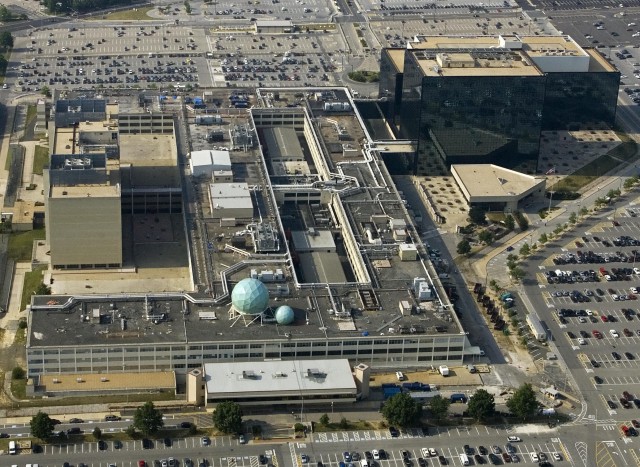
"caption": "The National Security Agency in Fort Meade, Maryland. (Paul J. Richards/AFP/Getty Images)",
"description": "FORT MEAD, UNITED STATES: (FILES) This 31 May, 2006, file photo shows the National Security Agency (NSA) is shown in Fort Meade, Maryland. A US judge on 16 August, 2006, halted the warrantless wiretapping program by the NSA and ruled that US President George W. Bush overstepped his authority when authorizing the unconstitutional program. Federal Judge Anna Diggs Taylor ordered a permanent injuction barring the Terrorist Surveillance Program, which has been used to monitor millions of US citizens. \"It was never the intent of the (Constitutional) framers to give the President such unfettered control, particularly when his actions blatantly disregard the parameters clearly enumerated in the Bill of Rights,\" Taylor wrote in a 43-page opinion. AFP PHOTO/PAUL J. RICHARDS/FILES (Photo credit should read PAUL J. RICHARDS/AFP/Getty Images)",
"title": "(FILES) This 31 May, 2006, file photo sh",
"credit": null,
"status": "inherit",
"isLoading": false,
"fetchFailed": false
},
"news_57351": {
"type": "attachments",
"id": "news_57351",
"meta": {
"index": "attachments_1716263798",
"site": "news",
"id": "57351",
"found": true
},
"parent": 57339,
"imgSizes": {
"kqedFullSize": {
"file": "https://ww2.kqed.org/app/uploads/sites/10/2012/02/google081511-e1380310658946.jpg",
"width": 640,
"height": 405
}
},
"publishDate": 1329961907,
"modified": 1329961907,
"caption": "Google has tweaked its search algorithm in a major way. (Tim Boyle/Getty Images)",
"description": "Mobile phone users will be able to view apps privacy policies before downloading. (Tim Boyle/Getty Images)",
"title": "google",
"credit": null,
"status": "inherit",
"isLoading": false,
"fetchFailed": false
},
"news_110845": {
"type": "attachments",
"id": "news_110845",
"meta": {
"index": "attachments_1716263798",
"site": "news",
"id": "110845",
"found": true
},
"parent": 110844,
"imgSizes": {
"kqedFullSize": {
"file": "https://ww2.kqed.org/app/uploads/sites/10/2013/09/RS378_Google_082411-scr-e1378918079421.jpg",
"width": 640,
"height": 404
}
},
"publishDate": 1378915127,
"modified": 1378915127,
"caption": "Google's headquarters, and many of its office buildings, are in Mountain View.",
"description": "Google's headquarters, and many of its office buildings, are in Mountain View.",
"title": "Google ",
"credit": null,
"status": "inherit",
"isLoading": false,
"fetchFailed": false
},
"news_42245": {
"type": "attachments",
"id": "news_42245",
"meta": {
"index": "attachments_1716263798",
"site": "news",
"id": "42245",
"found": true
},
"parent": 42207,
"imgSizes": {
"kqedFullSize": {
"file": "https://ww2.kqed.org/app/uploads/sites/10/2011/10/Jobs_2003_rev-e1376418037530.jpg",
"width": 640,
"height": 585
}
},
"publishDate": 1317946796,
"modified": 1317946796,
"caption": "Steve Jobs announces the availability of iTunes for PC computers in October, 2003. He was diagnosed with cancer the same month. (Justin Sullivan/Getty Images)",
"description": "SAN FRANCISCO - OCTOBER 16: Apple CEO Steve Jobs delivers a kenote address October 16, 2003 in San Francisco. Jobs announced the popular iTunes music program would now be able to be used on both Apple and PC computers and the successful 99 cent music store was adding thousands of new songs. (Photo by Justin Sullivan/Getty Images)",
"title": "Steve Jobs announces the availability of iTunes for PC computers in October, 2003. He was diagnosed with cancer the same month. (Justin Sullivan/Getty Images)",
"credit": null,
"status": "inherit",
"isLoading": false,
"fetchFailed": false
},
"news_105443": {
"type": "attachments",
"id": "news_105443",
"meta": {
"index": "attachments_1716263798",
"site": "news",
"id": "105443",
"found": true
},
"parent": 105437,
"imgSizes": {
"kqedFullSize": {
"file": "https://ww2.kqed.org/app/uploads/sites/10/2013/08/SFC-bldg.jpg",
"width": 640,
"height": 383
}
},
"publishDate": 1375464293,
"modified": 1375464293,
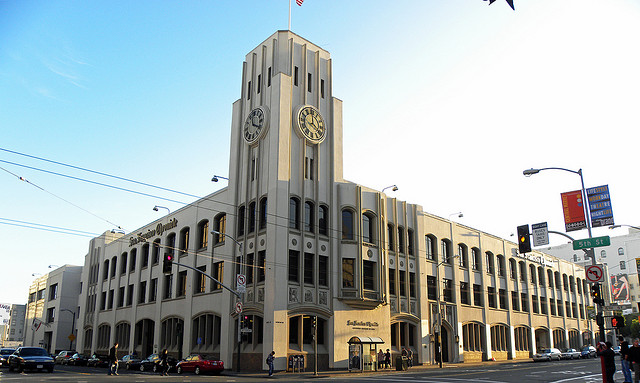
"caption": "The San Francisco Chronicle building, where Yahoo is planning to move in this October. (jeremy80/Flickr)",
"description": null,
"title": "SFC bldg",
"credit": null,
"status": "inherit",
"isLoading": false,
"fetchFailed": false
}
},
"audioPlayerReducer": {
"postId": "stream_live",
"isPaused": true,
"isPlaying": false,
"pfsActive": false,
"pledgeModalIsOpen": true,
"playerDrawerIsOpen": false,
"liveAudioPlayStartedAt": 0,
"liveAudioPlayContext": ""
},
"authorsReducer": {
"jbrooks": {
"type": "authors",
"id": "80",
"meta": {
"index": "authors_1716337520",
"id": "80",
"found": true
},
"name": "Jon Brooks",
"firstName": "Jon",
"lastName": "Brooks",
"slug": "jbrooks",
"email": "jbrooks@kqed.org",
"display_author_email": true,
"staff_mastheads": [
"science"
],
"title": "Digital Editor",
"bio": "Jon Brooks is a former Digital Editor for KQED Science. He is the former editor of KQED’s daily news blog, News Fix. In 2014, he won a California Journalism Award for his coverage of ride services like Uber and Lyft and the taxi industry. A veteran blogger, he previously worked for Yahoo! in various news writing and editing roles. Jon is also a playwright whose work has been produced in San Francisco, New York, Italy, and around the U.S. He has written about film for his own blog and studied film at Boston University.",
"avatar": "https://secure.gravatar.com/avatar/98887f7ed1c876ed414d4c915e969584?s=600&d=blank&r=g",
"twitter": "jbrooksfoy",
"facebook": null,
"instagram": null,
"linkedin": null,
"sites": [
{
"site": "arts",
"roles": [
"Contributor",
"editor"
]
},
{
"site": "news",
"roles": [
"author"
]
},
{
"site": "futureofyou",
"roles": [
"administrator"
]
},
{
"site": "mindshift",
"roles": [
"editor"
]
},
{
"site": "stateofhealth",
"roles": [
"editor"
]
},
{
"site": "science",
"roles": [
"administrator"
]
},
{
"site": "quest",
"roles": [
"editor"
]
}
],
"headData": {
"title": "Jon Brooks | KQED",
"description": "Digital Editor",
"ogImgSrc": "https://secure.gravatar.com/avatar/98887f7ed1c876ed414d4c915e969584?s=600&d=blank&r=g",
"twImgSrc": "https://secure.gravatar.com/avatar/98887f7ed1c876ed414d4c915e969584?s=600&d=blank&r=g"
},
"isLoading": false,
"link": "/author/jbrooks"
},
"danbrekke": {
"type": "authors",
"id": "222",
"meta": {
"index": "authors_1716337520",
"id": "222",
"found": true
},
"name": "Dan Brekke",
"firstName": "Dan",
"lastName": "Brekke",
"slug": "danbrekke",
"email": "dbrekke@kqed.org",
"display_author_email": true,
"staff_mastheads": [
"news",
"science"
],
"title": "KQED Editor and Reporter",
"bio": "Dan Brekke is a reporter and editor for KQED News, responsible for coverage of topics ranging from California water issues to the Bay Area's transportation challenges. In a newsroom career that began in Chicago in 1972, Dan has worked for \u003cem>The San Francisco Examiner,\u003c/em> Wired and TechTV and has been published in The New York Times, The New York Times Magazine, Business 2.0, Salon and elsewhere.\r\n\r\nSince joining KQED in 2007, Dan has reported, edited and produced both radio and online features and breaking news pieces. He has shared as both editor and reporter in four Society of Professional Journalists Norcal Excellence in Journalism awards and one Edward R. Murrow regional award. He was chosen for a spring 2017 residency at the Mesa Refuge to advance his research on California salmon.\r\n\r\nEmail Dan at: \u003ca href=\"mailto:dbrekke@kqed.org\">dbrekke@kqed.org\u003c/a>\r\n\r\n\u003cstrong>Twitter:\u003c/strong> \u003ca href=\"https://twitter.com/danbrekke\" rel=\"noopener noreferrer\">twitter.com/danbrekke\u003c/a>\r\n\u003cstrong>Facebook:\u003c/strong> \u003ca href=\"https://www.facebook.com/danbrekke\" rel=\"noopener noreferrer\">www.facebook.com/danbrekke\u003c/a>\r\n\u003cstrong>LinkedIn:\u003c/strong> \u003ca href=\"https://www.linkedin.com/in/danbrekke\" rel=\"noopener noreferrer\">www.linkedin.com/in/danbrekke\u003c/a>",
"avatar": "https://secure.gravatar.com/avatar/8f1f0d2a978fb3b23426c922c7e2af558fa36905b49c4ce76a97dc3c72d27226?s=600&d=mm&r=g",
"twitter": "danbrekke",
"bluesky": null,
"facebook": null,
"instagram": "https://www.instagram.com/dan.brekke/",
"linkedin": "https://www.linkedin.com/in/danbrekke/",
"sites": [
{
"site": "news",
"roles": [
"administrator",
"create_posts"
]
},
{
"site": "stateofhealth",
"roles": [
"editor"
]
},
{
"site": "science",
"roles": [
"editor"
]
},
{
"site": "quest",
"roles": [
"contributor"
]
},
{
"site": "food",
"roles": [
"contributor"
]
},
{
"site": "forum",
"roles": [
"contributor"
]
},
{
"site": "elections",
"roles": [
"editor"
]
},
{
"site": "liveblog",
"roles": [
"editor"
]
}
],
"headData": {
"title": "Dan Brekke | KQED",
"description": "KQED Editor and Reporter",
"ogImgSrc": "https://secure.gravatar.com/avatar/8f1f0d2a978fb3b23426c922c7e2af558fa36905b49c4ce76a97dc3c72d27226?s=600&d=mm&r=g",
"twImgSrc": "https://secure.gravatar.com/avatar/8f1f0d2a978fb3b23426c922c7e2af558fa36905b49c4ce76a97dc3c72d27226?s=600&d=mm&r=g"
},
"isLoading": false,
"link": "/author/danbrekke"
},
"davidweir": {
"type": "authors",
"id": "223",
"meta": {
"index": "authors_1716337520",
"id": "223",
"found": true
},
"name": "David Weir",
"firstName": "David",
"lastName": "Weir",
"slug": "davidweir",
"email": "dweir@kqed.org",
"display_author_email": false,
"staff_mastheads": [],
"title": "KQED Contributor",
"bio": "David Weir is KQED's senior editor for digital news. He previously worked at \u003cem>Rolling Stone,\u003c/em> Salon, Wired Digital, Excite@Home,\u003cem> Mother Jones,\u003c/em> and as a co-founder and executive director of the Center for Investigative Reporting.\r\n\r\nOver the past 40 years, he and his teams have won dozens of awards, including a National Magazine Award, an IRE Award and a Webby. He has authored or co-authored four books, including (with Mark Schapiro) \u003cem>Circle of Poison.\u003c/em>\r\n\r\nHe has a ba\u003cspan class=\"example\">chelor's degree\u003c/span> in journalism from the University of Michigan, and has taught journalism at the University of California at Berkeley, Stanford and San Francisco State.",
"avatar": "https://secure.gravatar.com/avatar/c6642c16c4d2d2de5e6f067edf92b9c8?s=600&d=blank&r=g",
"twitter": null,
"facebook": null,
"instagram": null,
"linkedin": null,
"sites": [
{
"site": "arts",
"roles": [
"editor"
]
},
{
"site": "news",
"roles": [
"subscriber"
]
},
{
"site": "lowdown",
"roles": [
"editor"
]
},
{
"site": "stateofhealth",
"roles": [
"administrator"
]
},
{
"site": "science",
"roles": [
"editor"
]
}
],
"headData": {
"title": "David Weir | KQED",
"description": "KQED Contributor",
"ogImgSrc": "https://secure.gravatar.com/avatar/c6642c16c4d2d2de5e6f067edf92b9c8?s=600&d=blank&r=g",
"twImgSrc": "https://secure.gravatar.com/avatar/c6642c16c4d2d2de5e6f067edf92b9c8?s=600&d=blank&r=g"
},
"isLoading": false,
"link": "/author/davidweir"
},
"kqed": {
"type": "authors",
"id": "236",
"meta": {
"index": "authors_1716337520",
"id": "236",
"found": true
},
"name": "KQED News Staff",
"firstName": "KQED News Staff",
"lastName": null,
"slug": "kqed",
"email": "faq@kqed.org",
"display_author_email": false,
"staff_mastheads": [],
"title": null,
"bio": null,
"avatar": "https://secure.gravatar.com/avatar/ef0e801a68c4c54afa9180db14084167?s=600&d=blank&r=g",
"twitter": null,
"facebook": null,
"instagram": null,
"linkedin": null,
"sites": [
{
"site": "arts",
"roles": [
"contributor"
]
},
{
"site": "news",
"roles": [
"editor"
]
},
{
"site": "futureofyou",
"roles": [
"author"
]
}
],
"headData": {
"title": "KQED News Staff | KQED",
"description": null,
"ogImgSrc": "https://secure.gravatar.com/avatar/ef0e801a68c4c54afa9180db14084167?s=600&d=blank&r=g",
"twImgSrc": "https://secure.gravatar.com/avatar/ef0e801a68c4c54afa9180db14084167?s=600&d=blank&r=g"
},
"isLoading": false,
"link": "/author/kqed"
},
"kqednewsstaffandwires": {
"type": "authors",
"id": "237",
"meta": {
"index": "authors_1716337520",
"id": "237",
"found": true
},
"name": "KQED News Staff and Wires",
"firstName": "KQED News Staff and Wires",
"lastName": null,
"slug": "kqednewsstaffandwires",
"email": "onlinenewsstaff@kqed.org",
"display_author_email": false,
"staff_mastheads": [],
"title": null,
"bio": null,
"avatar": "https://secure.gravatar.com/avatar/72295af8ebbfbd19a4948f5271285664?s=600&d=blank&r=g",
"twitter": null,
"facebook": null,
"instagram": null,
"linkedin": null,
"sites": [
{
"site": "arts",
"roles": [
"contributor"
]
},
{
"site": "news",
"roles": [
"contributor"
]
},
{
"site": "lowdown",
"roles": [
"author"
]
},
{
"site": "stateofhealth",
"roles": [
"contributor"
]
},
{
"site": "food",
"roles": [
"author"
]
}
],
"headData": {
"title": "KQED News Staff and Wires | KQED",
"description": null,
"ogImgSrc": "https://secure.gravatar.com/avatar/72295af8ebbfbd19a4948f5271285664?s=600&d=blank&r=g",
"twImgSrc": "https://secure.gravatar.com/avatar/72295af8ebbfbd19a4948f5271285664?s=600&d=blank&r=g"
},
"isLoading": false,
"link": "/author/kqednewsstaffandwires"
},
"katharinefong": {
"type": "authors",
"id": "1479",
"meta": {
"index": "authors_1716337520",
"id": "1479",
"found": true
},
"name": "Katharine Fong",
"firstName": "Katharine",
"lastName": "Fong",
"slug": "katharinefong",
"email": "katharinefong@gmail.com",
"display_author_email": false,
"staff_mastheads": [],
"title": null,
"bio": null,
"avatar": "https://secure.gravatar.com/avatar/7ee290207889c71d9adcaf3591853a92?s=600&d=blank&r=g",
"twitter": null,
"facebook": null,
"instagram": null,
"linkedin": null,
"sites": [
{
"site": "news",
"roles": [
"subscriber"
]
},
{
"site": "lowdown",
"roles": [
"editor"
]
},
{
"site": "stateofhealth",
"roles": [
"subscriber"
]
}
],
"headData": {
"title": "Katharine Fong | KQED",
"description": null,
"ogImgSrc": "https://secure.gravatar.com/avatar/7ee290207889c71d9adcaf3591853a92?s=600&d=blank&r=g",
"twImgSrc": "https://secure.gravatar.com/avatar/7ee290207889c71d9adcaf3591853a92?s=600&d=blank&r=g"
},
"isLoading": false,
"link": "/author/katharinefong"
}
},
"pagesReducer": {
"news_tag_google": {
"type": "terms",
"id": "news_93",
"meta": {
"index": "terms_1716263798",
"site": "news",
"id": "93",
"score": 8.458717
},
"featImg": null,
"name": "Google",
"description": null,
"taxonomy": "tag",
"headData": {
"twImgId": null,
"twTitle": null,
"ogTitle": null,
"ogImgId": null,
"twDescription": null,
"description": null,
"title": "Google Archives | KQED News",
"ogDescription": null
},
"ttid": 96,
"slug": "google",
"isLoading": false,
"title": "Google",
"pageMeta": {
"site": "news",
"WpPageTemplate": "page-topic-editorial",
"currentPage": 18
},
"blocks": [
{
"blockName": "kqed/post-list",
"attrs": {
"layout": "cardArticle2",
"query": "posts/news?tag=google",
"seeMore": false,
"paginated": true,
"page": 18
}
},
{
"blockName": "kqed/ad"
}
]
}
},
"pfsSessionReducer": {},
"postsReducer": {
"stream_live": {
"type": "live",
"id": "stream_live",
"audioUrl": "https://streams.kqed.org/kqedradio",
"title": "Live Stream",
"excerpt": "Live Stream information currently unavailable.",
"link": "/radio",
"featImg": "",
"label": {
"name": "KQED Live",
"link": "/"
}
},
"stream_kqedNewscast": {
"type": "posts",
"id": "stream_kqedNewscast",
"audioUrl": "https://www.kqed.org/.stream/anon/radio/RDnews/newscast.mp3?_=1",
"title": "KQED Newscast",
"featImg": "",
"label": {
"name": "88.5 FM",
"link": "/"
}
},
"news_120259": {
"type": "posts",
"id": "news_120259",
"meta": {
"index": "posts_1716263798",
"site": "news",
"id": "120259",
"score": null,
"sort": [
1386612749000
]
},
"parent": 0,
"labelTerm": {
"site": "news",
"term": 6944
},
"blocks": [],
"publishDate": 1386612749,
"format": "aside",
"disqusTitle": "Tech Heavyweights Launch Surveillance Reform Campaign ",
"title": "Tech Heavyweights Launch Surveillance Reform Campaign ",
"headTitle": "News Fix | KQED News",
"content": "\u003cfigure id=\"attachment_113415\" class=\"wp-caption aligncenter\" style=\"max-width: 640px\">\u003ca href=\"http://ww2.kqed.org/news/2013/09/30/hot-on-your-trail-privacy-your-data-and-who-has-access-to-it/rs6114_56667803-scr-2/\" rel=\"attachment wp-att-113415\">\u003cimg class=\"size-full wp-image-113415\" src=\"http://ww2.kqed.org/news/wp-content/uploads/sites/10/2013/09/RS6114_56667803-scr1-e1380579014386.jpg\" alt=\"A computer workstation at the NSA Threat Operations Center at Fort Meade, Md. (Paul. J. Richards/AFP-Getty Images)\" width=\"640\" height=\"441\">\u003c/a>\u003cfigcaption class=\"wp-caption-text\">A computer workstation at the NSA Threat Operations Center at Fort Meade, Md. (Paul. J. Richards/AFP-Getty Images)\u003c/figcaption>\u003c/figure>\n\u003cp>Eight firms that handle massive amounts of Americans' personal data and communications have launched a campaign to pressure the U.S. government to rein in its surveillance efforts after more than \u003ca href=\"http://america.aljazeera.com/articles/multimedia/timeline-edward-snowden-revelations.html\" target=\"_blank\">six months of disclosures\u003c/a> about far-reaching National Security Agency spying programs.\u003c/p>\n\u003cp>The campaign, called \u003ca href=\"http://reformgovernmentsurveillance.com/\" target=\"_blank\">Reform Government Surveillance\u003c/a>, calls on governments around the world to adopt five principles to narrow spying on citizens. The effort involves AOL, Apple, Facebook, Google, LinkedIn, Microsoft, Twitter and Yahoo. The companies are responding to revelations about NSA spying touched off in June by former agency contractor \u003ca href=\"http://www.theguardian.com/world/2013/dec/09/edward-snowden-voted-guardian-person-of-year-2013\" target=\"_blank\">Edward Snowden\u003c/a>.\u003c/p>\n\u003cp>The five principles the companies are campaigning for:\u003c/p>\n\u003cul>\n\u003cli>\u003cstrong>Limiting governments' authority to collect users' information: \u003c/strong>Governments should codify sensible limitations on their ability to compel service providers to disclose user data that balance their need for the data in limited circumstances, users’ reasonable privacy interests, and the impact on trust in the Internet. In addition, governments should limit surveillance to specific, known users for lawful purposes, and should not undertake bulk data collection of Internet communications.\u003c/li>\n\u003cli>\u003cstrong>Oversight and accountability:\u003c/strong> Intelligence agencies seeking to collect or compel the production of information should do so under a clear legal framework in which executive powers are subject to strong checks and balances. Reviewing courts should be independent and include an adversarial process, and governments should allow important rulings of law to be made public in a timely manner so that the courts are accountable to an informed citizenry.\u003c/li>\n\u003cli>\u003cstrong>Transparency about government demands:\u003c/strong> Transparency is essential to a debate over governments’ surveillance powers and the scope of programs that are administered under those powers. Governments should allow companies to publish the number and nature of government demands for user information. In addition, governments should also promptly disclose this data publicly.\u003c/li>\n\u003cli>\u003cstrong>Respecting the free flow of information:\u003c/strong> The ability of data to flow or be accessed across borders is essential to a robust 21st century global economy. Governments should permit the transfer of data and should not inhibit access by companies or individuals to lawfully available information that is stored outside of the country. Governments should not require service providers to locate infrastructure within a country’s borders or operate locally.\u003c/li>\n\u003cli>\u003cstrong>Avoiding conflicts among governments: \u003c/strong>In order to avoid conflicting laws, there should be a robust, principled, and transparent framework to govern lawful requests for data across jurisdictions, such as improved mutual legal assistance treaty — or “MLAT” — processes. Where the laws of one jurisdiction conflict with the laws of another, it is incumbent upon governments to work together to resolve the conflict.\u003c/li>\n\u003c/ul>\n\u003cp>Although the companies' appeal is addressed to \"the world's governments,\" they also include an \"open letter to Washington that says in part: \"The balance in many countries has tipped too far in favor of the state and away from the rights of the individual — rights that are enshrined in our Constitution. This undermines the freedoms we all cherish. It’s time for a change.\"\u003c/p>\n\u003cp>[ad fullwidth]\u003c/p>\u003cp>\u003c/p>\n",
"disqusIdentifier": "120259 http://ww2.kqed.org/news/?p=120259",
"disqusUrl": "https://ww2.kqed.org/news/2013/12/09/tech-heavyweights-launch-surveillance-reform-campaign/",
"stats": {
"hasVideo": false,
"hasChartOrMap": false,
"hasAudio": false,
"hasPolis": false,
"wordCount": 518,
"hasGoogleForm": false,
"hasGallery": false,
"hasHearkenModule": false,
"iframeSrcs": [],
"paragraphCount": 6
},
"modified": 1386632022,
"excerpt": "As Snowden revelations continue, eight major tech firms urge lawmakers to rein in spy agencies.",
"headData": {
"twImgId": "",
"twTitle": "",
"ogTitle": "",
"ogImgId": "",
"twDescription": "",
"description": "As Snowden revelations continue, eight major tech firms urge lawmakers to rein in spy agencies.",
"title": "Tech Heavyweights Launch Surveillance Reform Campaign | KQED",
"ogDescription": "",
"schema": {
"@context": "https://schema.org",
"@type": "NewsArticle",
"headline": "Tech Heavyweights Launch Surveillance Reform Campaign ",
"datePublished": "2013-12-09T10:12:29-08:00",
"dateModified": "2013-12-09T15:33:42-08:00",
"image": "https://cdn.kqed.org/wp-content/uploads/2020/02/KQED-OG-Image@1x.png",
"isAccessibleForFree": "True",
"publisher": {
"@type": "NewsMediaOrganization",
"@id": "https://www.kqed.org/#organization",
"name": "KQED",
"logo": "https://cdn.kqed.org/wp-content/uploads/2020/02/KQED-OG-Image@1x.png",
"url": "https://www.kqed.org",
"sameAs": [
"https://www.facebook.com/KQED",
"https://twitter.com/KQED",
"https://www.instagram.com/kqed/",
"https://www.tiktok.com/@kqedofficial",
"https://www.linkedin.com/company/kqed",
"https://www.youtube.com/channel/UCeC0IOo7i1P_61zVUWbJ4nw"
]
}
}
},
"guestAuthors": [],
"slug": "tech-heavyweights-launch-surveillance-reform-campaign",
"status": "publish",
"customPermalink": "2013/12/09/tech-heavyweights-weigh-in-on-surveillance/",
"path": "/news/120259/tech-heavyweights-launch-surveillance-reform-campaign",
"audioTrackLength": null,
"parsedContent": [
{
"type": "contentString",
"content": "\u003cdiv class=\"post-body\">\u003cp>\u003cfigure id=\"attachment_113415\" class=\"wp-caption aligncenter\" style=\"max-width: 640px\">\u003ca href=\"http://ww2.kqed.org/news/2013/09/30/hot-on-your-trail-privacy-your-data-and-who-has-access-to-it/rs6114_56667803-scr-2/\" rel=\"attachment wp-att-113415\">\u003cimg class=\"size-full wp-image-113415\" src=\"http://ww2.kqed.org/news/wp-content/uploads/sites/10/2013/09/RS6114_56667803-scr1-e1380579014386.jpg\" alt=\"A computer workstation at the NSA Threat Operations Center at Fort Meade, Md. (Paul. J. Richards/AFP-Getty Images)\" width=\"640\" height=\"441\">\u003c/a>\u003cfigcaption class=\"wp-caption-text\">A computer workstation at the NSA Threat Operations Center at Fort Meade, Md. (Paul. J. Richards/AFP-Getty Images)\u003c/figcaption>\u003c/figure>\n\u003cp>Eight firms that handle massive amounts of Americans' personal data and communications have launched a campaign to pressure the U.S. government to rein in its surveillance efforts after more than \u003ca href=\"http://america.aljazeera.com/articles/multimedia/timeline-edward-snowden-revelations.html\" target=\"_blank\">six months of disclosures\u003c/a> about far-reaching National Security Agency spying programs.\u003c/p>\n\u003cp>The campaign, called \u003ca href=\"http://reformgovernmentsurveillance.com/\" target=\"_blank\">Reform Government Surveillance\u003c/a>, calls on governments around the world to adopt five principles to narrow spying on citizens. The effort involves AOL, Apple, Facebook, Google, LinkedIn, Microsoft, Twitter and Yahoo. The companies are responding to revelations about NSA spying touched off in June by former agency contractor \u003ca href=\"http://www.theguardian.com/world/2013/dec/09/edward-snowden-voted-guardian-person-of-year-2013\" target=\"_blank\">Edward Snowden\u003c/a>.\u003c/p>\n\u003cp>The five principles the companies are campaigning for:\u003c/p>\n\u003cul>\n\u003cli>\u003cstrong>Limiting governments' authority to collect users' information: \u003c/strong>Governments should codify sensible limitations on their ability to compel service providers to disclose user data that balance their need for the data in limited circumstances, users’ reasonable privacy interests, and the impact on trust in the Internet. In addition, governments should limit surveillance to specific, known users for lawful purposes, and should not undertake bulk data collection of Internet communications.\u003c/li>\n\u003cli>\u003cstrong>Oversight and accountability:\u003c/strong> Intelligence agencies seeking to collect or compel the production of information should do so under a clear legal framework in which executive powers are subject to strong checks and balances. Reviewing courts should be independent and include an adversarial process, and governments should allow important rulings of law to be made public in a timely manner so that the courts are accountable to an informed citizenry.\u003c/li>\n\u003cli>\u003cstrong>Transparency about government demands:\u003c/strong> Transparency is essential to a debate over governments’ surveillance powers and the scope of programs that are administered under those powers. Governments should allow companies to publish the number and nature of government demands for user information. In addition, governments should also promptly disclose this data publicly.\u003c/li>\n\u003cli>\u003cstrong>Respecting the free flow of information:\u003c/strong> The ability of data to flow or be accessed across borders is essential to a robust 21st century global economy. Governments should permit the transfer of data and should not inhibit access by companies or individuals to lawfully available information that is stored outside of the country. Governments should not require service providers to locate infrastructure within a country’s borders or operate locally.\u003c/li>\n\u003cli>\u003cstrong>Avoiding conflicts among governments: \u003c/strong>In order to avoid conflicting laws, there should be a robust, principled, and transparent framework to govern lawful requests for data across jurisdictions, such as improved mutual legal assistance treaty — or “MLAT” — processes. Where the laws of one jurisdiction conflict with the laws of another, it is incumbent upon governments to work together to resolve the conflict.\u003c/li>\n\u003c/ul>\n\u003cp>Although the companies' appeal is addressed to \"the world's governments,\" they also include an \"open letter to Washington that says in part: \"The balance in many countries has tipped too far in favor of the state and away from the rights of the individual — rights that are enshrined in our Constitution. This undermines the freedoms we all cherish. It’s time for a change.\"\u003c/p>\n\u003cp>\u003c/p>\u003c/div>",
"attributes": {
"named": {},
"numeric": []
}
},
{
"type": "component",
"content": "",
"name": "ad",
"attributes": {
"named": {
"label": "fullwidth"
},
"numeric": [
"fullwidth"
]
}
},
{
"type": "contentString",
"content": "\u003cdiv class=\"post-body\">\u003cp>\u003c/p>\u003cp>\u003c/p>\n\u003c/div>\u003c/p>",
"attributes": {
"named": {},
"numeric": []
}
}
],
"link": "/news/120259/tech-heavyweights-launch-surveillance-reform-campaign",
"authors": [
"222"
],
"programs": [
"news_6944"
],
"tags": [
"news_249",
"news_93",
"news_152",
"news_1445",
"news_1859",
"news_5264",
"news_4289",
"news_346",
"news_351"
],
"label": "news_6944"
},
"news_116664": {
"type": "posts",
"id": "news_116664",
"meta": {
"index": "posts_1716263798",
"site": "news",
"id": "116664",
"score": null,
"sort": [
1383321655000
]
},
"parent": 0,
"labelTerm": {
"site": "news",
"term": 6944
},
"blocks": [],
"publishDate": 1383321655,
"format": "aside",
"disqusTitle": "Google Barge Speculation Heats Up After News Report",
"title": "Google Barge Speculation Heats Up After News Report",
"headTitle": "News Fix | KQED News",
"content": "\u003cp>\u003cstrong>By Jon Brooks and Katharine Fong\u003c/strong>\u003c/p>\n\u003cfigure id=\"attachment_116766\" class=\"wp-caption alignnone\" style=\"max-width: 640px\">\u003ca href=\"http://ww2.kqed.org/news/2013/10/31/google-barge/rs7294_google_barge_web_3-scr/\" rel=\"attachment wp-att-116766\">\u003cimg class=\"size-full wp-image-116766\" src=\"http://ww2.kqed.org/news/wp-content/uploads/sites/10/2013/10/RS7294_Google_Barge_web_3-scr-e1383263627908.jpg\" alt=\"A thing of mystery. (Sara Bloomberg / KQED)\" width=\"640\" height=\"427\">\u003c/a>\u003cfigcaption class=\"wp-caption-text\">A thing of mystery. (Sara Bloomberg / KQED)\u003c/figcaption>\u003c/figure>\n\u003cp>There comes a time in every online journalist's life when he has to capitulate to the newsworthiness of that damned Google Barge.\u003c/p>\n\u003cp>So, uncle, we say.\u003c/p>\n\u003cp>Uncle.\u003cstrong> \u003c/strong>\u003c/p>\n\u003cp>Citing \"multiple sources,\" \u003ca href=\"http://sanfrancisco.cbslocal.com/2013/10/31/googles-secret-revealed-barge-to-offer-high-end-showrooms-party-deck/\" target=\"_blank\">KPIX reported\u003c/a> last night that the barge \"will feature luxury showrooms and a party deck ... to market Google Glass and other gadgets to invitation-only clients.\"\u003c/p>\n\u003cp>[ad fullwidth]\u003c/p>\n\u003cp>\u003cstrong>\u003c/strong>\u003c/p>\n\u003caside class=\"pullquote alignleft\">A \u003ca href=\"http://ww2.kqed.org/news/2013/10/31/google-barge/#list\">partial list\u003c/a> of what the barge might be:\n\u003cul>\n\u003cli>\u003cstrong>Offshore housing for San Francisco residents displaced by tech workers \u003c/strong>\u003c/li>\n\u003cli>\u003cstrong>Prototype of Google entry for the next America's Cup\u003c/strong>\u003c/li>\n\u003cli>\u003cstrong>Dick Cheney's new undisclosed location\u003c/strong>\u003c/li>\u003c/ul>\u003c/aside>\n\u003cp>\n\n\u003c/p>\u003cblockquote>\u003cp>The project, which has been in the planning stages for more than a year, was created at Google[x], the secret facility that Google reportedly runs near its corporate headquarters in Mountain View. It is personally directed by Google co-founder Sergey Brin and is Google’s attempt to upstage rival Apple and its chain of popular retail stores, sources said.\u003c/p>\u003c/blockquote>\n\u003cp> \u003c/p>\n\u003cp>KPIX also says the building is made out of shipping containers that can be disassembled and reconstructed in other locations.\u003c/p>\n\u003cp>\u003ca href=\"http://sanfrancisco.cbslocal.com/video?autoStart=true&topVideoCatNo=default&clipId=9478663\" target=\"_blank\">Watch the video report here\u003c/a>.\u003c/p>\n\u003cp>\u003ca href=\"http://news.cnet.com/8301-1023_3-57608585-93/is-google-building-a-hulking-floating-data-center-in-sf-bay/\" target=\"_blank\">CNET broke the barge story\u003c/a> last week, reporting that \"Google was granted a patent in 2009 for a floating data center, and putting data centers inside shipping containers is already a well-established practice.\" Google has a history of \u003ca href=\"http://news.cnet.com/Jostling-to-get-inside-Googles-Oregon-outpost/2100-1030_3-6089518.html\">putting data centers in places with cheap cooling\u003c/a> — a best-usage idea for the bay if we've ever heard one — as well as taking on unique projects like \u003ca title=\"Meet Google's 'Project Loon': Balloon-powered Net access -- Friday, Jun 14, 2013\" href=\"http://news.cnet.com/8301-17938_105-57589464-1/meet-googles-project-loon-balloon-powered-net-access/\">bringing Internet access to developing nations via balloons\u003c/a> and \u003ca title=\"Google said to deploy Wi-Fi blimps in Africa and Asia -- Monday, May 27, 2013\" href=\"http://news.cnet.com/8301-1023_3-57586348-93/google-said-to-deploy-wi-fi-blimps-in-africa-and-asia/\">blimps\u003c/a>.\u003c/p>\n\u003cp>But others have suggested that the barge will be a \u003ca href=\"http://sanfrancisco.cbslocal.com/2013/10/25/secret-google-facility-found-floating-on-san-francisco-bay/\">floating store for Google Glass\u003c/a>, or as a \u003ca href=\"http://www.mercurynews.com/business/ci_24409819/googles-top-secret-floating-facility-waterborne-data-center?source=pkg\">floating classroom to teach about tech\u003c/a>. (See the Washington Post's \u003ca href=\"http://www.washingtonpost.com/blogs/innovations/wp/2013/10/30/googles-crazy-barge-scheme-your-complete-guide/?tid=pm_national_pop\" target=\"_blank\">Google's crazy barge scheme: Your complete guide\u003c/a> for more. And don't forget, there's \u003ca href=\"http://www.latimes.com/business/technology/la-fi-tn-google-barges-what-could-they-be-20131029,0,804501.story#axzz2jJqDsEYa\" target=\"_blank\">another secret floating barge\u003c/a> all the way on the other side of the country. Which means, of course, we are now \u003cem>surrounded\u003c/em>.)\u003c/p>\n\u003cp>Whatever the barge is, no one is at liberty to say, at least publicly. Non-disclosure agreements have been flying all over the place. Even the U.S. Coast Guard, which \u003ca href=\"http://www.usatoday.com/story/news/nation/2013/10/30/coast-guard-visits-mysterious-google-barge/3318347/\">visited the barge yesterday\u003c/a>, had to sign NDAs.\u003c/p>\n\u003cp>Two nights ago, Jon Stewart weighed in, in a segment titled \"Floaters\" (!). Stewart noted Google's ubiquity, now surrounding us on water and from the air, as well as monitoring every street in the country — and, with its effort to \u003ca href=\"http://content.time.com/time/magazine/article/0,9171,2152422,00.html\">\"solve death,\"\u003c/a> he said, the company \"won't even let us die!\"\u003c/p>\n\u003cp>\u003ciframe src=\"http://media.mtvnservices.com/embed/mgid:cms:video:thedailyshow.com:430081\" frameborder=\"0\" width=\"360\" height=\"293\">\u003c/iframe>\u003c/p>\n\u003cp>\u003c!--more-->In keeping with \"write what you know,\" Mercury News Sports columnist Mark Purdy on Thursday \u003ca href=\"http://www.mercurynews.com/sports/ci_24422304/purdy-google-barge-docked-at-treasure-island-leads\">offered up\u003c/a> his own theories about the mysterious barge, summed up in a handy poll for readers:\u003c/p>\n\u003cp>What should the Google barge hold?\u003c/p>\n\u003cul>\n\u003cli>The \"GoogleBarn\" Warriors stadium (cheaper than renovating Piers 30-32)\u003c/li>\n\u003cli>49er Michael Crabtree's secret Achilles' tendon rehab facility\u003c/li>\n\u003cli>A floating medical unit for injured San Jose Sharks players\u003c/li>\n\u003cli>Shame shelter for Cal's non-graduate athletes\u003c/li>\n\u003cli>Storage for 50 dozen varieties of Oregon's football uniforms, to be used Nov. 7 against Stanford\u003c/li>\n\u003cli>Isolation chamber for Bud Selig, after he is kidnapped by Oakland and San Jose officials, until he finally decides the A's ballpark issue.\u003c/li>\n\u003c/ul>\n\u003cp>\u003ca name=\"list\">\u003c/a>\u003c/p>\n\u003cp>Suffice it to say, we're all dying to know what the barge is for. But if Google has its way, as Stewart reminded us, that may never happen. Some other possibilities ...\u003c/p>\n\u003cul>\n\u003cli>Offshore housing for San Francisco residents displaced by tech workers\u003c/li>\n\u003cli>Prototype of Google entry for the next America's Cup\u003c/li>\n\u003cli>Dick Cheney's new undisclosed location\u003c/li>\n\u003cli>Expensive yet too-literal tribute to \u003ca href=\"http://www.youtube.com/watch?v=cAQSZhazYk8\" target=\"_blank\">1980s soul group DeBarge\u003c/a>\u003c/li>\n\u003cli>Floating fortress for Larry Page walking-around money\u003c/li>\n\u003cli>\"Barge\" one of few nouns left in English language not modified by \"Google\" — \u003cem>rectified\u003c/em>.\u003c/li>\n\u003cli>The \u003ca href=\"http://www.google.com/imgres?imgurl=http://www.startrek.com/legacy_media/images/200508/tng-142-j25-borg-cube/320x240.jpg&imgrefurl=http://scary-pictures.feedio.net/wtf-star-trek-mondo-s-borg-queen-poster/mimg.ugo.com*201007*51066*cuts*spock-monkey_480x640.jpg/&h=240&w=320&sz=30&tbnid=3HM7Q9pLS-N3mM:&tbnh=103&tbnw=137&zoom=1&usg=__nBiVm-1teUZdKe-B7otsvs-B62c=&docid=n0EfZQjb4l1roM&sa=X&ei=C9tyUrj2Lqb5iQLj9IGQBQ&ved=0CD8Q9QEwAg\" target=\"_blank\">Borg\u003c/a> have finally \u003ca href=\"http://ww4.hdnux.com/photos/24/41/52/5380799/3/628x471.jpg\" target=\"_blank\">arrived\u003c/a>.\u003c/li>\n\u003c/ul>\n\u003cp>\u003c/p>\n\u003cp>Enjoy barge season. It may go on for awhile.\u003c/p>\n\n",
"disqusIdentifier": "116664 http://ww2.kqed.org/news/?p=116664",
"disqusUrl": "https://ww2.kqed.org/news/2013/11/01/google-barge-the-search-for-answers/",
"stats": {
"hasVideo": true,
"hasChartOrMap": false,
"hasAudio": false,
"hasPolis": false,
"wordCount": 666,
"hasGoogleForm": false,
"hasGallery": false,
"hasHearkenModule": false,
"iframeSrcs": [],
"paragraphCount": 22
},
"modified": 1399488746,
"excerpt": "Has the Google barge mystery been solved?",
"headData": {
"twImgId": "",
"twTitle": "",
"ogTitle": "",
"ogImgId": "",
"twDescription": "",
"description": "Has the Google barge mystery been solved?",
"title": "Google Barge Speculation Heats Up After News Report | KQED",
"ogDescription": "",
"schema": {
"@context": "https://schema.org",
"@type": "NewsArticle",
"headline": "Google Barge Speculation Heats Up After News Report",
"datePublished": "2013-11-01T09:00:55-07:00",
"dateModified": "2014-05-07T11:52:26-07:00",
"image": "https://cdn.kqed.org/wp-content/uploads/2020/02/KQED-OG-Image@1x.png",
"isAccessibleForFree": "True",
"publisher": {
"@type": "NewsMediaOrganization",
"@id": "https://www.kqed.org/#organization",
"name": "KQED",
"logo": "https://cdn.kqed.org/wp-content/uploads/2020/02/KQED-OG-Image@1x.png",
"url": "https://www.kqed.org",
"sameAs": [
"https://www.facebook.com/KQED",
"https://twitter.com/KQED",
"https://www.instagram.com/kqed/",
"https://www.tiktok.com/@kqedofficial",
"https://www.linkedin.com/company/kqed",
"https://www.youtube.com/channel/UCeC0IOo7i1P_61zVUWbJ4nw"
]
}
}
},
"guestAuthors": [],
"slug": "google-barge-the-search-for-answers",
"status": "publish",
"customPermalink": "2013/10/31/google-barge/",
"path": "/news/116664/google-barge-the-search-for-answers",
"audioTrackLength": null,
"parsedContent": [
{
"type": "contentString",
"content": "\u003cdiv class=\"post-body\">\u003cp>\u003cp>\u003cstrong>By Jon Brooks and Katharine Fong\u003c/strong>\u003c/p>\n\u003cfigure id=\"attachment_116766\" class=\"wp-caption alignnone\" style=\"max-width: 640px\">\u003ca href=\"http://ww2.kqed.org/news/2013/10/31/google-barge/rs7294_google_barge_web_3-scr/\" rel=\"attachment wp-att-116766\">\u003cimg class=\"size-full wp-image-116766\" src=\"http://ww2.kqed.org/news/wp-content/uploads/sites/10/2013/10/RS7294_Google_Barge_web_3-scr-e1383263627908.jpg\" alt=\"A thing of mystery. (Sara Bloomberg / KQED)\" width=\"640\" height=\"427\">\u003c/a>\u003cfigcaption class=\"wp-caption-text\">A thing of mystery. (Sara Bloomberg / KQED)\u003c/figcaption>\u003c/figure>\n\u003cp>There comes a time in every online journalist's life when he has to capitulate to the newsworthiness of that damned Google Barge.\u003c/p>\n\u003cp>So, uncle, we say.\u003c/p>\n\u003cp>Uncle.\u003cstrong> \u003c/strong>\u003c/p>\n\u003cp>Citing \"multiple sources,\" \u003ca href=\"http://sanfrancisco.cbslocal.com/2013/10/31/googles-secret-revealed-barge-to-offer-high-end-showrooms-party-deck/\" target=\"_blank\">KPIX reported\u003c/a> last night that the barge \"will feature luxury showrooms and a party deck ... to market Google Glass and other gadgets to invitation-only clients.\"\u003c/p>\n\u003cp>\u003c/p>\u003c/div>",
"attributes": {
"named": {},
"numeric": []
}
},
{
"type": "component",
"content": "",
"name": "ad",
"attributes": {
"named": {
"label": "fullwidth"
},
"numeric": [
"fullwidth"
]
}
},
{
"type": "contentString",
"content": "\u003cdiv class=\"post-body\">\u003cp>\u003c/p>\n\u003cp>\u003cstrong>\u003c/strong>\u003c/p>\n\u003caside class=\"pullquote alignleft\">A \u003ca href=\"http://ww2.kqed.org/news/2013/10/31/google-barge/#list\">partial list\u003c/a> of what the barge might be:\n\u003cul>\n\u003cli>\u003cstrong>Offshore housing for San Francisco residents displaced by tech workers \u003c/strong>\u003c/li>\n\u003cli>\u003cstrong>Prototype of Google entry for the next America's Cup\u003c/strong>\u003c/li>\n\u003cli>\u003cstrong>Dick Cheney's new undisclosed location\u003c/strong>\u003c/li>\u003c/ul>\u003c/aside>\n\u003cp>\n\n\u003c/p>\u003cblockquote>\u003cp>The project, which has been in the planning stages for more than a year, was created at Google[x], the secret facility that Google reportedly runs near its corporate headquarters in Mountain View. It is personally directed by Google co-founder Sergey Brin and is Google’s attempt to upstage rival Apple and its chain of popular retail stores, sources said.\u003c/p>\u003c/blockquote>\n\u003cp> \u003c/p>\n\u003cp>KPIX also says the building is made out of shipping containers that can be disassembled and reconstructed in other locations.\u003c/p>\n\u003cp>\u003ca href=\"http://sanfrancisco.cbslocal.com/video?autoStart=true&topVideoCatNo=default&clipId=9478663\" target=\"_blank\">Watch the video report here\u003c/a>.\u003c/p>\n\u003cp>\u003ca href=\"http://news.cnet.com/8301-1023_3-57608585-93/is-google-building-a-hulking-floating-data-center-in-sf-bay/\" target=\"_blank\">CNET broke the barge story\u003c/a> last week, reporting that \"Google was granted a patent in 2009 for a floating data center, and putting data centers inside shipping containers is already a well-established practice.\" Google has a history of \u003ca href=\"http://news.cnet.com/Jostling-to-get-inside-Googles-Oregon-outpost/2100-1030_3-6089518.html\">putting data centers in places with cheap cooling\u003c/a> — a best-usage idea for the bay if we've ever heard one — as well as taking on unique projects like \u003ca title=\"Meet Google's 'Project Loon': Balloon-powered Net access -- Friday, Jun 14, 2013\" href=\"http://news.cnet.com/8301-17938_105-57589464-1/meet-googles-project-loon-balloon-powered-net-access/\">bringing Internet access to developing nations via balloons\u003c/a> and \u003ca title=\"Google said to deploy Wi-Fi blimps in Africa and Asia -- Monday, May 27, 2013\" href=\"http://news.cnet.com/8301-1023_3-57586348-93/google-said-to-deploy-wi-fi-blimps-in-africa-and-asia/\">blimps\u003c/a>.\u003c/p>\n\u003cp>But others have suggested that the barge will be a \u003ca href=\"http://sanfrancisco.cbslocal.com/2013/10/25/secret-google-facility-found-floating-on-san-francisco-bay/\">floating store for Google Glass\u003c/a>, or as a \u003ca href=\"http://www.mercurynews.com/business/ci_24409819/googles-top-secret-floating-facility-waterborne-data-center?source=pkg\">floating classroom to teach about tech\u003c/a>. (See the Washington Post's \u003ca href=\"http://www.washingtonpost.com/blogs/innovations/wp/2013/10/30/googles-crazy-barge-scheme-your-complete-guide/?tid=pm_national_pop\" target=\"_blank\">Google's crazy barge scheme: Your complete guide\u003c/a> for more. And don't forget, there's \u003ca href=\"http://www.latimes.com/business/technology/la-fi-tn-google-barges-what-could-they-be-20131029,0,804501.story#axzz2jJqDsEYa\" target=\"_blank\">another secret floating barge\u003c/a> all the way on the other side of the country. Which means, of course, we are now \u003cem>surrounded\u003c/em>.)\u003c/p>\n\u003cp>Whatever the barge is, no one is at liberty to say, at least publicly. Non-disclosure agreements have been flying all over the place. Even the U.S. Coast Guard, which \u003ca href=\"http://www.usatoday.com/story/news/nation/2013/10/30/coast-guard-visits-mysterious-google-barge/3318347/\">visited the barge yesterday\u003c/a>, had to sign NDAs.\u003c/p>\n\u003cp>Two nights ago, Jon Stewart weighed in, in a segment titled \"Floaters\" (!). Stewart noted Google's ubiquity, now surrounding us on water and from the air, as well as monitoring every street in the country — and, with its effort to \u003ca href=\"http://content.time.com/time/magazine/article/0,9171,2152422,00.html\">\"solve death,\"\u003c/a> he said, the company \"won't even let us die!\"\u003c/p>\n\u003cp>\u003ciframe src=\"http://media.mtvnservices.com/embed/mgid:cms:video:thedailyshow.com:430081\" frameborder=\"0\" width=\"360\" height=\"293\">\u003c/iframe>\u003c/p>\n\u003cp>\u003c!--more-->In keeping with \"write what you know,\" Mercury News Sports columnist Mark Purdy on Thursday \u003ca href=\"http://www.mercurynews.com/sports/ci_24422304/purdy-google-barge-docked-at-treasure-island-leads\">offered up\u003c/a> his own theories about the mysterious barge, summed up in a handy poll for readers:\u003c/p>\n\u003cp>What should the Google barge hold?\u003c/p>\n\u003cul>\n\u003cli>The \"GoogleBarn\" Warriors stadium (cheaper than renovating Piers 30-32)\u003c/li>\n\u003cli>49er Michael Crabtree's secret Achilles' tendon rehab facility\u003c/li>\n\u003cli>A floating medical unit for injured San Jose Sharks players\u003c/li>\n\u003cli>Shame shelter for Cal's non-graduate athletes\u003c/li>\n\u003cli>Storage for 50 dozen varieties of Oregon's football uniforms, to be used Nov. 7 against Stanford\u003c/li>\n\u003cli>Isolation chamber for Bud Selig, after he is kidnapped by Oakland and San Jose officials, until he finally decides the A's ballpark issue.\u003c/li>\n\u003c/ul>\n\u003cp>\u003ca name=\"list\">\u003c/a>\u003c/p>\n\u003cp>Suffice it to say, we're all dying to know what the barge is for. But if Google has its way, as Stewart reminded us, that may never happen. Some other possibilities ...\u003c/p>\n\u003cul>\n\u003cli>Offshore housing for San Francisco residents displaced by tech workers\u003c/li>\n\u003cli>Prototype of Google entry for the next America's Cup\u003c/li>\n\u003cli>Dick Cheney's new undisclosed location\u003c/li>\n\u003cli>Expensive yet too-literal tribute to \u003ca href=\"http://www.youtube.com/watch?v=cAQSZhazYk8\" target=\"_blank\">1980s soul group DeBarge\u003c/a>\u003c/li>\n\u003cli>Floating fortress for Larry Page walking-around money\u003c/li>\n\u003cli>\"Barge\" one of few nouns left in English language not modified by \"Google\" — \u003cem>rectified\u003c/em>.\u003c/li>\n\u003cli>The \u003ca href=\"http://www.google.com/imgres?imgurl=http://www.startrek.com/legacy_media/images/200508/tng-142-j25-borg-cube/320x240.jpg&imgrefurl=http://scary-pictures.feedio.net/wtf-star-trek-mondo-s-borg-queen-poster/mimg.ugo.com*201007*51066*cuts*spock-monkey_480x640.jpg/&h=240&w=320&sz=30&tbnid=3HM7Q9pLS-N3mM:&tbnh=103&tbnw=137&zoom=1&usg=__nBiVm-1teUZdKe-B7otsvs-B62c=&docid=n0EfZQjb4l1roM&sa=X&ei=C9tyUrj2Lqb5iQLj9IGQBQ&ved=0CD8Q9QEwAg\" target=\"_blank\">Borg\u003c/a> have finally \u003ca href=\"http://ww4.hdnux.com/photos/24/41/52/5380799/3/628x471.jpg\" target=\"_blank\">arrived\u003c/a>.\u003c/li>\n\u003c/ul>\n\u003cp>\u003c/p>\n\u003cp>Enjoy barge season. It may go on for awhile.\u003c/p>\n\n\u003c/div>\u003c/p>",
"attributes": {
"named": {},
"numeric": []
}
}
],
"link": "/news/116664/google-barge-the-search-for-answers",
"authors": [
"236"
],
"programs": [
"news_6944"
],
"categories": [
"news_1758",
"news_248"
],
"tags": [
"news_93",
"news_5014",
"news_38"
],
"label": "news_6944"
},
"news_116534": {
"type": "posts",
"id": "news_116534",
"meta": {
"index": "posts_1716263798",
"site": "news",
"id": "116534",
"score": null,
"sort": [
1383178878000
]
},
"parent": 0,
"labelTerm": {
"site": "news",
"term": 6944
},
"blocks": [],
"publishDate": 1383178878,
"format": "aside",
"disqusTitle": "NSA Spying on Google and Yahoo: Just Assume You've Been Hacked",
"title": "NSA Spying on Google and Yahoo: Just Assume You've Been Hacked",
"headTitle": "News Fix | KQED News",
"content": "\u003cfigure id=\"attachment_51705\" class=\"wp-caption alignnone\" style=\"max-width: 640px\">\u003ca href=\"http://ww2.kqed.org/news/2011/12/29/san-francisco-appeals-court-oks-telecom-immunity-in-wiretapping-cases/files-this-31-may-2006-file-photo-sh/\" rel=\"attachment wp-att-51705\">\u003cimg class=\"size-large wp-image-51705\" src=\"http://ww2.kqed.org/news/wp-content/uploads/sites/10/2011/12/71664277-1024x747.jpg\" alt=\"Judges rule that citizens can sue the NSA for wiretapping, but not telecom companies.\" width=\"640\" height=\"466\">\u003c/a>\u003cfigcaption class=\"wp-caption-text\">The National Security Agency in Fort Meade, Maryland. According to the Washington Post, the NSA sends millions of Google and Yahoo records each day to data warehouses to the Fort Meade headquarters. (Paul J. Richards/AFP/Getty Images)\u003c/figcaption>\u003c/figure>\n\u003cp>One more reason to be skittish about entrusting your info and data to the cloud:\u003c/p>\n\u003cp>A \u003ca href=\"http://www.washingtonpost.com/world/national-security/nsa-infiltrates-links-to-yahoo-google-data-centers-worldwide-snowden-documents-say/2013/10/30/e51d661e-4166-11e3-8b74-d89d714ca4dd_story.html\">Washington Post story\u003c/a> on Wednesday, based on documents leaked by former National Security Agency contractor Edward Snowden, asserted that the NSA regularly intercepts data from Google and Yahoo as it passes through the companies' servers outside of the U.S.\u003c/p>\n\u003cp>This data almost certainly includes Americans' email and other information.\u003c/p>\n\u003cp>Google and Yahoo deny knowledge of the government spying program, code-named Muscular (who comes up with these names?). Because the NSA collects data that passes through the tech companies' private clouds overseas, the agency does not need U.S. court approval. The leaked documents include a hand-drawn diagram showing \u003ca href=\"http://www.washingtonpost.com/world/national-security/nsa-infiltrates-links-to-yahoo-google-data-centers-worldwide-snowden-documents-say/2013/10/30/e51d661e-4166-11e3-8b74-d89d714ca4dd_story.html\">\"Google Cloud Exploitation.\"\u003c/a>\u003c/p>\n\u003cp>The Times explained how Muscular is deployed:\u003c/p>\n\u003cblockquote>\u003cp>Even though NSA has been obtaining data directly from Google and Yahoo with court orders through the previously disclosed \u003ca id=\"EVGAP00075\" title=\"PRISM (surveillance program)\" href=\"http://www.latimes.com/topic/politics/interior-policy/personal-data-collection/prism-%28surveillance-program%29-EVGAP00075.topic\">PRISM program\u003c/a>, the new documents show it also has been taking data without permission abroad, outside the oversight of the Foreign Intelligence Surveillance Court. According to the documents, which include a hand-drawn diagram, the information is collected as it passes through the companies’ private clouds and makes its way to the public Internet. The information, which includes metadata (participants, date and time of a communication) as well as text and video content, is reportedly not encrypted.\u003c/p>\u003c/blockquote>\n\u003cp>NSA director Gen. Keith Alexander told \u003ca href=\"http://www.politico.com/story/2013/10/keith-alexander-nsa-report-google-yahoo-99103.html\">Politico \u003c/a>on Wednesday that he was \"unaware of the Post’s report — adding the NSA is 'not authorized' to access companies data centers and instead must 'go through a court process' to obtain such content.\"\u003c/p>\n\u003cp>[ad fullwidth]\u003c/p>\n\u003cp>The Times published a statement by an NSA spokeswoman, which said: “The assertion that we collect vast quantities of U.S. persons’ data from this type of collection is not true. NSA applies attorney general-approved processes to protect the privacy of U.S. persons – minimizing the likelihood of their information in our targeting, collection, processing, exploitation, retention and dissemination. NSA is a foreign intelligence agency. And we’re focused on discovering and developing intelligence about valid foreign intelligence targets only.”\u003c/p>\n\u003cp>Google has said it's \u003ca href=\"http://blogs.wsj.com/digits/2013/10/30/report-nsa-intercepts-google-and-yahoo-server-data/\">beefing up\u003c/a> its encryption processes. Still, it's probably best to assume at this point that whatever you write in an email can be read by the NSA.\u003c/p>\n\u003cp>\u003c/p>\n\u003cp> \u003c/p>\n\n",
"disqusIdentifier": "116534 http://ww2.kqed.org/news/?p=116534",
"disqusUrl": "https://ww2.kqed.org/news/2013/10/30/nsa-spying-on-google-and-yahoo-just-assume-youve-been-hacked/",
"stats": {
"hasVideo": false,
"hasChartOrMap": false,
"hasAudio": false,
"hasPolis": false,
"wordCount": 432,
"hasGoogleForm": false,
"hasGallery": false,
"hasHearkenModule": false,
"iframeSrcs": [],
"paragraphCount": 11
},
"modified": 1383178878,
"excerpt": "More revelations from leaked documents that point to government collection of emails and more.",
"headData": {
"twImgId": "",
"twTitle": "",
"ogTitle": "",
"ogImgId": "",
"twDescription": "",
"description": "More revelations from leaked documents that point to government collection of emails and more.",
"title": "NSA Spying on Google and Yahoo: Just Assume You've Been Hacked | KQED",
"ogDescription": "",
"schema": {
"@context": "https://schema.org",
"@type": "NewsArticle",
"headline": "NSA Spying on Google and Yahoo: Just Assume You've Been Hacked",
"datePublished": "2013-10-30T17:21:18-07:00",
"dateModified": "2013-10-30T17:21:18-07:00",
"image": "https://cdn.kqed.org/wp-content/uploads/2020/02/KQED-OG-Image@1x.png",
"isAccessibleForFree": "True",
"publisher": {
"@type": "NewsMediaOrganization",
"@id": "https://www.kqed.org/#organization",
"name": "KQED",
"logo": "https://cdn.kqed.org/wp-content/uploads/2020/02/KQED-OG-Image@1x.png",
"url": "https://www.kqed.org",
"sameAs": [
"https://www.facebook.com/KQED",
"https://twitter.com/KQED",
"https://www.instagram.com/kqed/",
"https://www.tiktok.com/@kqedofficial",
"https://www.linkedin.com/company/kqed",
"https://www.youtube.com/channel/UCeC0IOo7i1P_61zVUWbJ4nw"
]
}
}
},
"guestAuthors": [],
"slug": "nsa-spying-on-google-and-yahoo-just-assume-youve-been-hacked",
"status": "publish",
"customPermalink": "2013/10/30/nsa-google-yahoo/",
"path": "/news/116534/nsa-spying-on-google-and-yahoo-just-assume-youve-been-hacked",
"audioTrackLength": null,
"parsedContent": [
{
"type": "contentString",
"content": "\u003cdiv class=\"post-body\">\u003cp>\u003cfigure id=\"attachment_51705\" class=\"wp-caption alignnone\" style=\"max-width: 640px\">\u003ca href=\"http://ww2.kqed.org/news/2011/12/29/san-francisco-appeals-court-oks-telecom-immunity-in-wiretapping-cases/files-this-31-may-2006-file-photo-sh/\" rel=\"attachment wp-att-51705\">\u003cimg class=\"size-large wp-image-51705\" src=\"http://ww2.kqed.org/news/wp-content/uploads/sites/10/2011/12/71664277-1024x747.jpg\" alt=\"Judges rule that citizens can sue the NSA for wiretapping, but not telecom companies.\" width=\"640\" height=\"466\">\u003c/a>\u003cfigcaption class=\"wp-caption-text\">The National Security Agency in Fort Meade, Maryland. According to the Washington Post, the NSA sends millions of Google and Yahoo records each day to data warehouses to the Fort Meade headquarters. (Paul J. Richards/AFP/Getty Images)\u003c/figcaption>\u003c/figure>\n\u003cp>One more reason to be skittish about entrusting your info and data to the cloud:\u003c/p>\n\u003cp>A \u003ca href=\"http://www.washingtonpost.com/world/national-security/nsa-infiltrates-links-to-yahoo-google-data-centers-worldwide-snowden-documents-say/2013/10/30/e51d661e-4166-11e3-8b74-d89d714ca4dd_story.html\">Washington Post story\u003c/a> on Wednesday, based on documents leaked by former National Security Agency contractor Edward Snowden, asserted that the NSA regularly intercepts data from Google and Yahoo as it passes through the companies' servers outside of the U.S.\u003c/p>\n\u003cp>This data almost certainly includes Americans' email and other information.\u003c/p>\n\u003cp>Google and Yahoo deny knowledge of the government spying program, code-named Muscular (who comes up with these names?). Because the NSA collects data that passes through the tech companies' private clouds overseas, the agency does not need U.S. court approval. The leaked documents include a hand-drawn diagram showing \u003ca href=\"http://www.washingtonpost.com/world/national-security/nsa-infiltrates-links-to-yahoo-google-data-centers-worldwide-snowden-documents-say/2013/10/30/e51d661e-4166-11e3-8b74-d89d714ca4dd_story.html\">\"Google Cloud Exploitation.\"\u003c/a>\u003c/p>\n\u003cp>The Times explained how Muscular is deployed:\u003c/p>\n\u003cblockquote>\u003cp>Even though NSA has been obtaining data directly from Google and Yahoo with court orders through the previously disclosed \u003ca id=\"EVGAP00075\" title=\"PRISM (surveillance program)\" href=\"http://www.latimes.com/topic/politics/interior-policy/personal-data-collection/prism-%28surveillance-program%29-EVGAP00075.topic\">PRISM program\u003c/a>, the new documents show it also has been taking data without permission abroad, outside the oversight of the Foreign Intelligence Surveillance Court. According to the documents, which include a hand-drawn diagram, the information is collected as it passes through the companies’ private clouds and makes its way to the public Internet. The information, which includes metadata (participants, date and time of a communication) as well as text and video content, is reportedly not encrypted.\u003c/p>\u003c/blockquote>\n\u003cp>NSA director Gen. Keith Alexander told \u003ca href=\"http://www.politico.com/story/2013/10/keith-alexander-nsa-report-google-yahoo-99103.html\">Politico \u003c/a>on Wednesday that he was \"unaware of the Post’s report — adding the NSA is 'not authorized' to access companies data centers and instead must 'go through a court process' to obtain such content.\"\u003c/p>\n\u003cp>\u003c/p>\u003c/div>",
"attributes": {
"named": {},
"numeric": []
}
},
{
"type": "component",
"content": "",
"name": "ad",
"attributes": {
"named": {
"label": "fullwidth"
},
"numeric": [
"fullwidth"
]
}
},
{
"type": "contentString",
"content": "\u003cdiv class=\"post-body\">\u003cp>\u003c/p>\n\u003cp>The Times published a statement by an NSA spokeswoman, which said: “The assertion that we collect vast quantities of U.S. persons’ data from this type of collection is not true. NSA applies attorney general-approved processes to protect the privacy of U.S. persons – minimizing the likelihood of their information in our targeting, collection, processing, exploitation, retention and dissemination. NSA is a foreign intelligence agency. And we’re focused on discovering and developing intelligence about valid foreign intelligence targets only.”\u003c/p>\n\u003cp>Google has said it's \u003ca href=\"http://blogs.wsj.com/digits/2013/10/30/report-nsa-intercepts-google-and-yahoo-server-data/\">beefing up\u003c/a> its encryption processes. Still, it's probably best to assume at this point that whatever you write in an email can be read by the NSA.\u003c/p>\n\u003cp>\u003c/p>\n\u003cp> \u003c/p>\n\n\u003c/div>\u003c/p>",
"attributes": {
"named": {},
"numeric": []
}
}
],
"link": "/news/116534/nsa-spying-on-google-and-yahoo-just-assume-youve-been-hacked",
"authors": [
"1479"
],
"programs": [
"news_6944"
],
"categories": [
"news_8"
],
"tags": [
"news_93",
"news_4481",
"news_4289",
"news_351"
],
"featImg": "news_51705",
"label": "news_6944"
},
"news_113079": {
"type": "posts",
"id": "news_113079",
"meta": {
"index": "posts_1716263798",
"site": "news",
"id": "113079",
"score": null,
"sort": [
1380310784000
]
},
"parent": 0,
"labelTerm": {
"site": "news",
"term": 6944
},
"blocks": [],
"publishDate": 1380310784,
"format": "aside",
"disqusTitle": "Google's New Search Takes On More Complex Queries",
"title": "Google's New Search Takes On More Complex Queries",
"headTitle": "News Fix | KQED News",
"content": "\u003cp> \u003c/p>\n\u003cfigure id=\"attachment_57351\" class=\"wp-caption alignright\" style=\"max-width: 300px\">\u003ca href=\"http://ww2.kqed.org/news/2012/02/22/mobile-apps-agree-to-disclose-privacy-policies/google-to-buy-motorola-mobility-for-12-5-billion-to-rival-apple/\" rel=\"attachment wp-att-57351\">\u003cimg class=\"size-medium wp-image-57351 \" src=\"http://ww2.kqed.org/news/wp-content/uploads/sites/10/2012/02/google081511-300x189.jpg\" alt=\"Mobile phone users will be able to view apps privacy policies before downloading. (Tim Boyle/Getty Images)\" width=\"300\" height=\"189\">\u003c/a>\u003cfigcaption class=\"wp-caption-text\">Google has tweaked its search algorithm in a major way. (Tim Boyle/Getty Images)\u003c/figcaption>\u003c/figure>\n\u003cp>Talk about a stealth operation. About a month ago, Google changed its search algorithm. It was done so quietly, and so smoothly, that no one detected anything new.\u003c/p>\n\u003cp>But the move represents a big change in search — akin to replacing the engine of a 1950s car, \u003ca href=\"http://searchengineland.com/google-hummingbird-172816\">said Danny Sullivan\u003c/a> of industry blog \u003ca href=\"https://www.searchengineland.com\">Search Engine Land\u003c/a>.\u003c/p>\n\u003cp>“It’s fair to say the general public seemed not to have noticed that Google ripped out its engine while driving down the road and replaced it with something else.”\u003c/p>\n\u003cp>\u003ca href=\"http://insidesearch.blogspot.com/2013/09/fifteen-years-onand-were-just-getting.html#uds-search-results\">Google\u003c/a> said it made the change because users are asking longer and more complex questions and are searching more often on mobile phones with voice search. \u003c/p>\n\u003caside class=\"pullquote alignleft\"> 'Google ripped out its engine while driving down the road and replaced it with something else.'\u003c/aside>\n\u003cp>The new algorithm is called Hummingbird, because it's precise and fast, says Google. Previously — since 1998, as Google just celebrated its 15th birthday — the search giant matched keywords in a query to the same words on Web pages. Hummingbird represents a shift to understanding the meaning of phrases in a query, and shows Web pages that more accurately match that meaning.\u003c/p>\n\u003cp>[ad fullwidth]\u003c/p>\n\u003cp>Sullivan's FAQ spells out many of the details of Hummingbird's capabilities. Among them:\u003c/p>\n\u003cblockquote>\u003cp>In particular, Google said that Hummingbird is paying more attention to each word in a query, ensuring that the whole query — the whole sentence or conversation or meaning — is taken into account, rather than particular words. The goal is that pages matching the meaning do better, rather than pages matching just a few words.\u003c/p>\n\u003cp>Does this mean SEO is dead?\u003c/p>\n\u003cp>No, SEO is not yet again dead. In fact, Google’s saying there’s nothing new or different SEOs or publishers need to worry about. Guidance remains the same, it says: Have original, high-quality content. Signals that have been important in the past remain important; Hummingbird just allows Google to process them in new and hopefully better ways.\u003c/p>\u003c/blockquote>\n\u003cp>\u003c/p>\n\u003cp>What's next? At the Google 15-year celebration, Amit Singhal, senior VP for search, \u003ca href=\"http://www.forbes.com/sites/roberthof/2013/09/26/google-just-revamped-search-to-handle-your-long-questions/\">said \u003c/a>Google will keep reinventing itself to give you a simple, more intuitive experience. At some point, a Google search will answer your questions, have a conversation in a natural way, and even anticipate what you might want to know.\u003c/p>\n\n",
"disqusIdentifier": "113079 http://ww2.kqed.org/news/?p=113079",
"disqusUrl": "https://ww2.kqed.org/news/2013/09/27/googles-new-search-takes-on-more-complex-queries/",
"stats": {
"hasVideo": false,
"hasChartOrMap": false,
"hasAudio": false,
"hasPolis": false,
"wordCount": 409,
"hasGoogleForm": false,
"hasGallery": false,
"hasHearkenModule": false,
"iframeSrcs": [],
"paragraphCount": 12
},
"modified": 1380322278,
"excerpt": "New algorithm focuses on meaning of phrases and relationships to things.",
"headData": {
"twImgId": "",
"twTitle": "",
"ogTitle": "",
"ogImgId": "",
"twDescription": "",
"description": "New algorithm focuses on meaning of phrases and relationships to things.",
"title": "Google's New Search Takes On More Complex Queries | KQED",
"ogDescription": "",
"schema": {
"@context": "https://schema.org",
"@type": "NewsArticle",
"headline": "Google's New Search Takes On More Complex Queries",
"datePublished": "2013-09-27T12:39:44-07:00",
"dateModified": "2013-09-27T15:51:18-07:00",
"image": "https://cdn.kqed.org/wp-content/uploads/2020/02/KQED-OG-Image@1x.png",
"isAccessibleForFree": "True",
"publisher": {
"@type": "NewsMediaOrganization",
"@id": "https://www.kqed.org/#organization",
"name": "KQED",
"logo": "https://cdn.kqed.org/wp-content/uploads/2020/02/KQED-OG-Image@1x.png",
"url": "https://www.kqed.org",
"sameAs": [
"https://www.facebook.com/KQED",
"https://twitter.com/KQED",
"https://www.instagram.com/kqed/",
"https://www.tiktok.com/@kqedofficial",
"https://www.linkedin.com/company/kqed",
"https://www.youtube.com/channel/UCeC0IOo7i1P_61zVUWbJ4nw"
]
}
}
},
"guestAuthors": [],
"slug": "googles-new-search-takes-on-more-complex-queries",
"status": "publish",
"customPermalink": "2013/09/27/113079/Google-search/",
"path": "/news/113079/googles-new-search-takes-on-more-complex-queries",
"audioTrackLength": null,
"parsedContent": [
{
"type": "contentString",
"content": "\u003cdiv class=\"post-body\">\u003cp>\u003cp> \u003c/p>\n\u003cfigure id=\"attachment_57351\" class=\"wp-caption alignright\" style=\"max-width: 300px\">\u003ca href=\"http://ww2.kqed.org/news/2012/02/22/mobile-apps-agree-to-disclose-privacy-policies/google-to-buy-motorola-mobility-for-12-5-billion-to-rival-apple/\" rel=\"attachment wp-att-57351\">\u003cimg class=\"size-medium wp-image-57351 \" src=\"http://ww2.kqed.org/news/wp-content/uploads/sites/10/2012/02/google081511-300x189.jpg\" alt=\"Mobile phone users will be able to view apps privacy policies before downloading. (Tim Boyle/Getty Images)\" width=\"300\" height=\"189\">\u003c/a>\u003cfigcaption class=\"wp-caption-text\">Google has tweaked its search algorithm in a major way. (Tim Boyle/Getty Images)\u003c/figcaption>\u003c/figure>\n\u003cp>Talk about a stealth operation. About a month ago, Google changed its search algorithm. It was done so quietly, and so smoothly, that no one detected anything new.\u003c/p>\n\u003cp>But the move represents a big change in search — akin to replacing the engine of a 1950s car, \u003ca href=\"http://searchengineland.com/google-hummingbird-172816\">said Danny Sullivan\u003c/a> of industry blog \u003ca href=\"https://www.searchengineland.com\">Search Engine Land\u003c/a>.\u003c/p>\n\u003cp>“It’s fair to say the general public seemed not to have noticed that Google ripped out its engine while driving down the road and replaced it with something else.”\u003c/p>\n\u003cp>\u003ca href=\"http://insidesearch.blogspot.com/2013/09/fifteen-years-onand-were-just-getting.html#uds-search-results\">Google\u003c/a> said it made the change because users are asking longer and more complex questions and are searching more often on mobile phones with voice search. \u003c/p>\n\u003caside class=\"pullquote alignleft\"> 'Google ripped out its engine while driving down the road and replaced it with something else.'\u003c/aside>\n\u003cp>The new algorithm is called Hummingbird, because it's precise and fast, says Google. Previously — since 1998, as Google just celebrated its 15th birthday — the search giant matched keywords in a query to the same words on Web pages. Hummingbird represents a shift to understanding the meaning of phrases in a query, and shows Web pages that more accurately match that meaning.\u003c/p>\n\u003cp>\u003c/p>\u003c/div>",
"attributes": {
"named": {},
"numeric": []
}
},
{
"type": "component",
"content": "",
"name": "ad",
"attributes": {
"named": {
"label": "fullwidth"
},
"numeric": [
"fullwidth"
]
}
},
{
"type": "contentString",
"content": "\u003cdiv class=\"post-body\">\u003cp>\u003c/p>\n\u003cp>Sullivan's FAQ spells out many of the details of Hummingbird's capabilities. Among them:\u003c/p>\n\u003cblockquote>\u003cp>In particular, Google said that Hummingbird is paying more attention to each word in a query, ensuring that the whole query — the whole sentence or conversation or meaning — is taken into account, rather than particular words. The goal is that pages matching the meaning do better, rather than pages matching just a few words.\u003c/p>\n\u003cp>Does this mean SEO is dead?\u003c/p>\n\u003cp>No, SEO is not yet again dead. In fact, Google’s saying there’s nothing new or different SEOs or publishers need to worry about. Guidance remains the same, it says: Have original, high-quality content. Signals that have been important in the past remain important; Hummingbird just allows Google to process them in new and hopefully better ways.\u003c/p>\u003c/blockquote>\n\u003cp>\u003c/p>\n\u003cp>What's next? At the Google 15-year celebration, Amit Singhal, senior VP for search, \u003ca href=\"http://www.forbes.com/sites/roberthof/2013/09/26/google-just-revamped-search-to-handle-your-long-questions/\">said \u003c/a>Google will keep reinventing itself to give you a simple, more intuitive experience. At some point, a Google search will answer your questions, have a conversation in a natural way, and even anticipate what you might want to know.\u003c/p>\n\n\u003c/div>\u003c/p>",
"attributes": {
"named": {},
"numeric": []
}
}
],
"link": "/news/113079/googles-new-search-takes-on-more-complex-queries",
"authors": [
"1479"
],
"programs": [
"news_6944"
],
"categories": [
"news_248"
],
"tags": [
"news_93",
"news_4890"
],
"featImg": "news_57351",
"label": "news_6944"
},
"news_112318": {
"type": "posts",
"id": "news_112318",
"meta": {
"index": "posts_1716263798",
"site": "news",
"id": "112318",
"score": null,
"sort": [
1379969313000
]
},
"parent": 0,
"labelTerm": {
"site": "news",
"term": 6944
},
"blocks": [],
"publishDate": 1379969313,
"format": "aside",
"disqusTitle": "Google Continues Its Real Estate Buying Binge ",
"title": "Google Continues Its Real Estate Buying Binge ",
"headTitle": "News Fix | KQED News",
"content": "\u003cfigure id=\"attachment_110845\" class=\"wp-caption aligncenter\" style=\"max-width: 640px\">\u003ca href=\"http://ww2.kqed.org/news/2013/09/11/google-street-view-wiretapping-appeals-court-ruling/rs378_google_082411-scr/\" rel=\"attachment wp-att-110845\">\u003cimg class=\"size-full wp-image-110845 \" src=\"http://ww2.kqed.org/news/wp-content/uploads/sites/10/2013/09/RS378_Google_082411-scr-e1378918079421.jpg\" alt=\"Google's headquarters, and many of its office buildings, are in Mountain View.\" width=\"640\" height=\"404\">\u003c/a>\u003cfigcaption class=\"wp-caption-text\">Google's headquarters, and many of its office buildings, are in Mountain View.\u003c/figcaption>\u003c/figure>\n\u003cp>Judging by recent acquisitions, \u003ca href=\"http://www.google.com/about/company/\">Google\u003c/a> loves Mountain View.\u003c/p>\n\u003cp>The \u003ca href=\"http://www.bizjournals.com/sanjose/news/2013/09/20/google-drops-235m-on-equity-office.html\">Silicon Valley Business Journal\u003c/a> reports that the search giant, in its largest property purchase of the year, just paid $235.5 million to acquire a six-building portfolio in Mountain View. This includes two buildings currently leased to another blue-chip corporate tenant, Symantec.\u003c/p>\n\u003cblockquote>\u003cp>The transaction, which totaled just over 400,000 square feet of office space, is the latest in a string of major leases and acquisitions for Google. Many of those deals have closed in the third quarter as the search giant continues a breathtaking expansion and hiring binge.\u003c/p>\u003c/blockquote>\n\u003cp>The Journal goes on to detail the properties:\u003c/p>\n\u003cul>\n\u003cli>\u003cstrong>Mountain View Technology Center,\u003c/strong> a 131,500-square-foot, two-building project at 313 and 323 Fairchild Drive, for which Google paid $82.2 million, or $625 per square foot.\u003c/li>\n\u003cli>\u003cstrong>Gateway Center,\u003c/strong> a 236,400-square-foot project at 401 Ellis St. and 500 E. Middlefield Drive. Google paid $138.8 million, or $587 per square foot.\u003c/li>\n\u003cli>\u003cstrong>485 and 495 Clyde Ave.\u003c/strong>, a pair of R&D buildings totaling 64,800 square feet. Google paid $15 million, or $230 per square foot.\u003c/li>\n\u003c/ul>\n\u003cp>Google has leased the Fairchild Research Center since June 2011. Symantec currently occupies Gateway Center, and OpenTV, a television-tech company, is the main tenant in the Clyde Avenue buildings.\u003c/p>\n\u003cp>[ad fullwidth]\u003c/p>\u003cp>\u003c/p>\n",
"disqusIdentifier": "112318 http://ww2.kqed.org/news/?p=112318",
"disqusUrl": "https://ww2.kqed.org/news/2013/09/23/google-continues-its-real-estate-buying-binge/",
"stats": {
"hasVideo": false,
"hasChartOrMap": false,
"hasAudio": false,
"hasPolis": false,
"wordCount": 240,
"hasGoogleForm": false,
"hasGallery": false,
"hasHearkenModule": false,
"iframeSrcs": [],
"paragraphCount": 7
},
"modified": 1399488752,
"excerpt": "Search giant expands its footprint in Mountain View with a six-building, $235.5 million purchase.",
"headData": {
"twImgId": "",
"twTitle": "",
"ogTitle": "",
"ogImgId": "",
"twDescription": "",
"description": "Search giant expands its footprint in Mountain View with a six-building, $235.5 million purchase.",
"title": "Google Continues Its Real Estate Buying Binge | KQED",
"ogDescription": "",
"schema": {
"@context": "https://schema.org",
"@type": "NewsArticle",
"headline": "Google Continues Its Real Estate Buying Binge ",
"datePublished": "2013-09-23T13:48:33-07:00",
"dateModified": "2014-05-07T11:52:32-07:00",
"image": "https://cdn.kqed.org/wp-content/uploads/2020/02/KQED-OG-Image@1x.png",
"isAccessibleForFree": "True",
"publisher": {
"@type": "NewsMediaOrganization",
"@id": "https://www.kqed.org/#organization",
"name": "KQED",
"logo": "https://cdn.kqed.org/wp-content/uploads/2020/02/KQED-OG-Image@1x.png",
"url": "https://www.kqed.org",
"sameAs": [
"https://www.facebook.com/KQED",
"https://twitter.com/KQED",
"https://www.instagram.com/kqed/",
"https://www.tiktok.com/@kqedofficial",
"https://www.linkedin.com/company/kqed",
"https://www.youtube.com/channel/UCeC0IOo7i1P_61zVUWbJ4nw"
]
}
}
},
"guestAuthors": [],
"slug": "google-continues-its-real-estate-buying-binge",
"status": "publish",
"customPermalink": "2013/09/23/112318/Google-Mountain-View-real-estate/",
"path": "/news/112318/google-continues-its-real-estate-buying-binge",
"audioTrackLength": null,
"parsedContent": [
{
"type": "contentString",
"content": "\u003cdiv class=\"post-body\">\u003cp>\u003cfigure id=\"attachment_110845\" class=\"wp-caption aligncenter\" style=\"max-width: 640px\">\u003ca href=\"http://ww2.kqed.org/news/2013/09/11/google-street-view-wiretapping-appeals-court-ruling/rs378_google_082411-scr/\" rel=\"attachment wp-att-110845\">\u003cimg class=\"size-full wp-image-110845 \" src=\"http://ww2.kqed.org/news/wp-content/uploads/sites/10/2013/09/RS378_Google_082411-scr-e1378918079421.jpg\" alt=\"Google's headquarters, and many of its office buildings, are in Mountain View.\" width=\"640\" height=\"404\">\u003c/a>\u003cfigcaption class=\"wp-caption-text\">Google's headquarters, and many of its office buildings, are in Mountain View.\u003c/figcaption>\u003c/figure>\n\u003cp>Judging by recent acquisitions, \u003ca href=\"http://www.google.com/about/company/\">Google\u003c/a> loves Mountain View.\u003c/p>\n\u003cp>The \u003ca href=\"http://www.bizjournals.com/sanjose/news/2013/09/20/google-drops-235m-on-equity-office.html\">Silicon Valley Business Journal\u003c/a> reports that the search giant, in its largest property purchase of the year, just paid $235.5 million to acquire a six-building portfolio in Mountain View. This includes two buildings currently leased to another blue-chip corporate tenant, Symantec.\u003c/p>\n\u003cblockquote>\u003cp>The transaction, which totaled just over 400,000 square feet of office space, is the latest in a string of major leases and acquisitions for Google. Many of those deals have closed in the third quarter as the search giant continues a breathtaking expansion and hiring binge.\u003c/p>\u003c/blockquote>\n\u003cp>The Journal goes on to detail the properties:\u003c/p>\n\u003cul>\n\u003cli>\u003cstrong>Mountain View Technology Center,\u003c/strong> a 131,500-square-foot, two-building project at 313 and 323 Fairchild Drive, for which Google paid $82.2 million, or $625 per square foot.\u003c/li>\n\u003cli>\u003cstrong>Gateway Center,\u003c/strong> a 236,400-square-foot project at 401 Ellis St. and 500 E. Middlefield Drive. Google paid $138.8 million, or $587 per square foot.\u003c/li>\n\u003cli>\u003cstrong>485 and 495 Clyde Ave.\u003c/strong>, a pair of R&D buildings totaling 64,800 square feet. Google paid $15 million, or $230 per square foot.\u003c/li>\n\u003c/ul>\n\u003cp>Google has leased the Fairchild Research Center since June 2011. Symantec currently occupies Gateway Center, and OpenTV, a television-tech company, is the main tenant in the Clyde Avenue buildings.\u003c/p>\n\u003cp>\u003c/p>\u003c/div>",
"attributes": {
"named": {},
"numeric": []
}
},
{
"type": "component",
"content": "",
"name": "ad",
"attributes": {
"named": {
"label": "fullwidth"
},
"numeric": [
"fullwidth"
]
}
},
{
"type": "contentString",
"content": "\u003cdiv class=\"post-body\">\u003cp>\u003c/p>\u003cp>\u003c/p>\n\u003c/div>\u003c/p>",
"attributes": {
"named": {},
"numeric": []
}
}
],
"link": "/news/112318/google-continues-its-real-estate-buying-binge",
"authors": [
"1479"
],
"programs": [
"news_6944"
],
"categories": [
"news_1758",
"news_6266"
],
"tags": [
"news_93",
"news_638"
],
"featImg": "news_110845",
"label": "news_6944"
},
"news_110844": {
"type": "posts",
"id": "news_110844",
"meta": {
"index": "posts_1716263798",
"site": "news",
"id": "110844",
"score": null,
"sort": [
1378915309000
]
},
"parent": 0,
"labelTerm": {
"site": "news",
"term": 6944
},
"blocks": [],
"publishDate": 1378915309,
"format": "aside",
"disqusTitle": "Google Loses Round in 'Street View' Wiretapping Case ",
"title": "Google Loses Round in 'Street View' Wiretapping Case ",
"headTitle": "News Fix | KQED News",
"content": "\u003cp>\u003ca href=\"http://ww2.kqed.org/news/2013/09/11/google-street-view-wiretapping-appeals-court-ruling/rs378_google_082411-scr/\" rel=\"attachment wp-att-110845\">\u003cimg class=\"alignright size-medium wp-image-110845\" src=\"http://ww2.kqed.org/news/wp-content/uploads/sites/10/2013/09/RS378_Google_082411-scr-300x189.jpg\" alt=\"Google \" width=\"300\" height=\"189\">\u003c/a>The 9th U.S. Circuit Court of Appeals in San Francisco \u003ca href=\"http://cdn.ca9.uscourts.gov/datastore/opinions/2013/09/10/11-17483.pdf\" target=\"_blank\">issued a unanimous ruling yesterday\u003c/a> refusing to throw out a lawsuit accusing Google of violating federal wiretapping laws. The suit alleges Google broke the law when it collected data from unencrypted Wi-Fi networks as part of its \u003ca href=\"http://en.wikipedia.org/wiki/Google_Street_View\" target=\"_blank\">Street View \u003c/a>project. Street View uses specially equipped vehicles — they carry a tall ungainly 360-degree camera on the roof — to capture on-the-ground images of thoroughfares. Among other things, the images are used to complement views in Google Maps and Google Earth.\u003c/p>\n\u003cp>But the Street View electronics are also capable of capturing information other than images. The devices also have the capacity to \"sniff\" data from unsecured wireless routers -- information the company can use to augment its location and mapping services. The company has faced complaints in several countries after privacy officials found it was grabbing bits of personal data from unsecured networks. Here's \u003ca href=\"http://www.wired.com/threatlevel/2013/09/googles-wifi-wiretapping/\" target=\"_blank\">Wired's summary\u003c/a>:\u003c/p>\n\u003cblockquote>\u003cp>Google said it didn’t realize it was sniffing packets of data on unsecured Wi-Fi networks in about a dozen countries over a three-year period until German privacy authorities began questioning in 2010 what data Google’s Street View cars were collecting. Google, along with other companies, uses databases of Wi-Fi networks and their locations to augment or replace GPS when attempting to figure out the location of a computer or mobile device. Google had claimed the lawsuit was “without merit,” but has abandoned the practice of payload sniffing from open networks.\u003c/p>\u003c/blockquote>\n\u003cp>The net effect of Tuesday's ruling: The wiretapping lawsuit can proceed in U.S. District Court in San Jose. Google says it's \"disappointed\" with the ruling.\u003c!--more-->\u003c/p>\n\u003cp>Here's the Associated Press story on the case and yesterday's ruling:\u003c/p>\n\u003cp>\u003cstrong>MARTHA MENDOZA\u003cbr>\nAP National Writer\u003c/strong>\u003c/p>\n\u003cp>[ad fullwidth]\u003c/p>\n\u003cp>A federal appeals court said Tuesday that Google wrongly collected people's personal correspondence and online activities through their Wi-Fi systems as it drove down their streets with car cameras shooting photos for its Street View mapping project.\u003c/p>\n\u003cp>The ruling that the practice violates wiretap laws sends a warning to other companies seeking to suck up vast amounts of data from unencrypted Wi-Fi signals.\u003c/p>\n\u003cp>\"The payload data transmitted over unencrypted Wi-Fi networks that was captured by Google included emails, usernames, passwords, images, and documents,\" wrote the U.S. Court of Appeals in San Francisco in a report released Tuesday\u003c/p>\n\u003cp>Google had argued that its activities were exempt from the wiretap law because data transmitted over a Wi-Fi network is a \"radio communication\" and is \"readily accessible to the public.\"\u003c/p>\n\u003cp>Not so, wrote the judges, agreeing with an earlier federal judge's ruling.\u003c/p>\n\u003cp>\"Even if it is commonplace for members of the general public to connect to a neighbor's unencrypted Wi-Fi network, members of the general public do not typically mistakenly intercept, store and decode data transmitted by other devices on the network,\" they said.\u003c/p>\n\u003cp>Google's Street View cars can be spotted with pole-mounted cameras on their roofs, photographing along roadways the world over. The photos then show up on Google's popular Street View map option, where viewers can virtually scroll along a street past homes, cars and shops, all captured in photographs.\u003c/p>\n\u003cp>But unbeknown to passers-by, those cameras weren't just making photos. They were also collecting detailed information transmitted over Wi-Fi networks they passed through.\u003c/p>\n\u003cp>Privacy experts and industry watchers said this was the first time an appeals court has ruled that it's illegal for a company to sniff out and collect private information from the Wi-Fi networks that provide Internet service to people at home. Google is also the first publicly known company to try.\u003c/p>\n\u003cp>\"This appeals court decision is a tremendous victory for privacy rights. It means Google can't suck up private communications from people's Wi-Fi networks and claim their Wi-Spying was exempt from federal wiretap laws,\" said John M. Simpson, Consumer Watchdog's privacy project director. \"Because Google's Wi-Spy activity was so extensive, the potential damages could amount to billions of dollars.\"\u003c/p>\n\u003cp>Marc Rotenberg, executive director of Electronic Privacy Information Center, called it \"a landmark decision for Internet privacy.\"\u003c/p>\n\u003cp>\"The court made clear that the federal privacy law applies to residential Wi-Fi networks,\" he said. \"Users should be protected when a company tries to capture data that travels between their laptop and their printer in their home.\"\u003c/p>\n\u003cp>A Google spokesperson said Tuesday that attorneys for the Internet giant are \"disappointed in the 9th Circuit's decision and are considering our next steps.\"\u003c/p>\n\u003cp>Attorney Elizabeth Cabraser, representing a class action of plaintiffs who say their privacy was invaded by Google, said Tuesday they look forward to resuming their case now that a federal appeals court has ruled in their favor.\u003c/p>\n\u003cp>Google has apologized for the snooping, which it says took place between 2008 and March 2010. It promised to stop collecting the data and said the practice, conducted in more than 30 countries, was inadvertent but not illegal.\u003c/p>\n\u003cp>Earlier this year Google settled a 37-state lawsuit for $7 million after attorneys general sued over what they said was an invasion of privacy for the data collection.\u003c/p>\n\u003cp>The practice was discovered by a German data protection commissioner in 2010. A few months later, Google co-founder Sergey Brin told conference-goers that the firm had made a mistake.\u003c/p>\n\u003cp>\"In short, let me just say that we screwed up,\" he said at the time.\u003c/p>\n\u003cp>\u003c/p>\n\u003cp>Google says it has disabled the equipment that was collecting the data, and agreed to destroy the information as soon as possible. The company is currently obliged to hold it, unused, because of ongoing litigation.\u003c/p>\n\n",
"disqusIdentifier": "110844 http://ww2.kqed.org/news/?p=110844",
"disqusUrl": "https://ww2.kqed.org/news/2013/09/11/google-loses-round-in-street-view-wiretapping-case/",
"stats": {
"hasVideo": false,
"hasChartOrMap": false,
"hasAudio": false,
"hasPolis": false,
"wordCount": 959,
"hasGoogleForm": false,
"hasGallery": false,
"hasHearkenModule": false,
"iframeSrcs": [],
"paragraphCount": 27
},
"modified": 1398733194,
"excerpt": "A San Francisco appeals court says company's Wi-Fi snooping not exempt from legal action. ",
"headData": {
"twImgId": "",
"twTitle": "",
"ogTitle": "",
"ogImgId": "",
"twDescription": "",
"description": "A San Francisco appeals court says company's Wi-Fi snooping not exempt from legal action. ",
"title": "Google Loses Round in 'Street View' Wiretapping Case | KQED",
"ogDescription": "",
"schema": {
"@context": "https://schema.org",
"@type": "NewsArticle",
"headline": "Google Loses Round in 'Street View' Wiretapping Case ",
"datePublished": "2013-09-11T09:01:49-07:00",
"dateModified": "2014-04-28T17:59:54-07:00",
"image": "https://cdn.kqed.org/wp-content/uploads/2020/02/KQED-OG-Image@1x.png",
"isAccessibleForFree": "True",
"publisher": {
"@type": "NewsMediaOrganization",
"@id": "https://www.kqed.org/#organization",
"name": "KQED",
"logo": "https://cdn.kqed.org/wp-content/uploads/2020/02/KQED-OG-Image@1x.png",
"url": "https://www.kqed.org",
"sameAs": [
"https://www.facebook.com/KQED",
"https://twitter.com/KQED",
"https://www.instagram.com/kqed/",
"https://www.tiktok.com/@kqedofficial",
"https://www.linkedin.com/company/kqed",
"https://www.youtube.com/channel/UCeC0IOo7i1P_61zVUWbJ4nw"
]
}
}
},
"guestAuthors": [],
"slug": "google-loses-round-in-street-view-wiretapping-case",
"status": "publish",
"customPermalink": "2013/09/11/google-street-view-wiretapping-appeals-court-ruling/",
"path": "/news/110844/google-loses-round-in-street-view-wiretapping-case",
"audioTrackLength": null,
"parsedContent": [
{
"type": "contentString",
"content": "\u003cdiv class=\"post-body\">\u003cp>\u003cp>\u003ca href=\"http://ww2.kqed.org/news/2013/09/11/google-street-view-wiretapping-appeals-court-ruling/rs378_google_082411-scr/\" rel=\"attachment wp-att-110845\">\u003cimg class=\"alignright size-medium wp-image-110845\" src=\"http://ww2.kqed.org/news/wp-content/uploads/sites/10/2013/09/RS378_Google_082411-scr-300x189.jpg\" alt=\"Google \" width=\"300\" height=\"189\">\u003c/a>The 9th U.S. Circuit Court of Appeals in San Francisco \u003ca href=\"http://cdn.ca9.uscourts.gov/datastore/opinions/2013/09/10/11-17483.pdf\" target=\"_blank\">issued a unanimous ruling yesterday\u003c/a> refusing to throw out a lawsuit accusing Google of violating federal wiretapping laws. The suit alleges Google broke the law when it collected data from unencrypted Wi-Fi networks as part of its \u003ca href=\"http://en.wikipedia.org/wiki/Google_Street_View\" target=\"_blank\">Street View \u003c/a>project. Street View uses specially equipped vehicles — they carry a tall ungainly 360-degree camera on the roof — to capture on-the-ground images of thoroughfares. Among other things, the images are used to complement views in Google Maps and Google Earth.\u003c/p>\n\u003cp>But the Street View electronics are also capable of capturing information other than images. The devices also have the capacity to \"sniff\" data from unsecured wireless routers -- information the company can use to augment its location and mapping services. The company has faced complaints in several countries after privacy officials found it was grabbing bits of personal data from unsecured networks. Here's \u003ca href=\"http://www.wired.com/threatlevel/2013/09/googles-wifi-wiretapping/\" target=\"_blank\">Wired's summary\u003c/a>:\u003c/p>\n\u003cblockquote>\u003cp>Google said it didn’t realize it was sniffing packets of data on unsecured Wi-Fi networks in about a dozen countries over a three-year period until German privacy authorities began questioning in 2010 what data Google’s Street View cars were collecting. Google, along with other companies, uses databases of Wi-Fi networks and their locations to augment or replace GPS when attempting to figure out the location of a computer or mobile device. Google had claimed the lawsuit was “without merit,” but has abandoned the practice of payload sniffing from open networks.\u003c/p>\u003c/blockquote>\n\u003cp>The net effect of Tuesday's ruling: The wiretapping lawsuit can proceed in U.S. District Court in San Jose. Google says it's \"disappointed\" with the ruling.\u003c!--more-->\u003c/p>\n\u003cp>Here's the Associated Press story on the case and yesterday's ruling:\u003c/p>\n\u003cp>\u003cstrong>MARTHA MENDOZA\u003cbr>\nAP National Writer\u003c/strong>\u003c/p>\n\u003cp>\u003c/p>\u003c/div>",
"attributes": {
"named": {},
"numeric": []
}
},
{
"type": "component",
"content": "",
"name": "ad",
"attributes": {
"named": {
"label": "fullwidth"
},
"numeric": [
"fullwidth"
]
}
},
{
"type": "contentString",
"content": "\u003cdiv class=\"post-body\">\u003cp>\u003c/p>\n\u003cp>A federal appeals court said Tuesday that Google wrongly collected people's personal correspondence and online activities through their Wi-Fi systems as it drove down their streets with car cameras shooting photos for its Street View mapping project.\u003c/p>\n\u003cp>The ruling that the practice violates wiretap laws sends a warning to other companies seeking to suck up vast amounts of data from unencrypted Wi-Fi signals.\u003c/p>\n\u003cp>\"The payload data transmitted over unencrypted Wi-Fi networks that was captured by Google included emails, usernames, passwords, images, and documents,\" wrote the U.S. Court of Appeals in San Francisco in a report released Tuesday\u003c/p>\n\u003cp>Google had argued that its activities were exempt from the wiretap law because data transmitted over a Wi-Fi network is a \"radio communication\" and is \"readily accessible to the public.\"\u003c/p>\n\u003cp>Not so, wrote the judges, agreeing with an earlier federal judge's ruling.\u003c/p>\n\u003cp>\"Even if it is commonplace for members of the general public to connect to a neighbor's unencrypted Wi-Fi network, members of the general public do not typically mistakenly intercept, store and decode data transmitted by other devices on the network,\" they said.\u003c/p>\n\u003cp>Google's Street View cars can be spotted with pole-mounted cameras on their roofs, photographing along roadways the world over. The photos then show up on Google's popular Street View map option, where viewers can virtually scroll along a street past homes, cars and shops, all captured in photographs.\u003c/p>\n\u003cp>But unbeknown to passers-by, those cameras weren't just making photos. They were also collecting detailed information transmitted over Wi-Fi networks they passed through.\u003c/p>\n\u003cp>Privacy experts and industry watchers said this was the first time an appeals court has ruled that it's illegal for a company to sniff out and collect private information from the Wi-Fi networks that provide Internet service to people at home. Google is also the first publicly known company to try.\u003c/p>\n\u003cp>\"This appeals court decision is a tremendous victory for privacy rights. It means Google can't suck up private communications from people's Wi-Fi networks and claim their Wi-Spying was exempt from federal wiretap laws,\" said John M. Simpson, Consumer Watchdog's privacy project director. \"Because Google's Wi-Spy activity was so extensive, the potential damages could amount to billions of dollars.\"\u003c/p>\n\u003cp>Marc Rotenberg, executive director of Electronic Privacy Information Center, called it \"a landmark decision for Internet privacy.\"\u003c/p>\n\u003cp>\"The court made clear that the federal privacy law applies to residential Wi-Fi networks,\" he said. \"Users should be protected when a company tries to capture data that travels between their laptop and their printer in their home.\"\u003c/p>\n\u003cp>A Google spokesperson said Tuesday that attorneys for the Internet giant are \"disappointed in the 9th Circuit's decision and are considering our next steps.\"\u003c/p>\n\u003cp>Attorney Elizabeth Cabraser, representing a class action of plaintiffs who say their privacy was invaded by Google, said Tuesday they look forward to resuming their case now that a federal appeals court has ruled in their favor.\u003c/p>\n\u003cp>Google has apologized for the snooping, which it says took place between 2008 and March 2010. It promised to stop collecting the data and said the practice, conducted in more than 30 countries, was inadvertent but not illegal.\u003c/p>\n\u003cp>Earlier this year Google settled a 37-state lawsuit for $7 million after attorneys general sued over what they said was an invasion of privacy for the data collection.\u003c/p>\n\u003cp>The practice was discovered by a German data protection commissioner in 2010. A few months later, Google co-founder Sergey Brin told conference-goers that the firm had made a mistake.\u003c/p>\n\u003cp>\"In short, let me just say that we screwed up,\" he said at the time.\u003c/p>\n\u003cp>\u003c/p>\n\u003cp>Google says it has disabled the equipment that was collecting the data, and agreed to destroy the information as soon as possible. The company is currently obliged to hold it, unused, because of ongoing litigation.\u003c/p>\n\n\u003c/div>\u003c/p>",
"attributes": {
"named": {},
"numeric": []
}
}
],
"link": "/news/110844/google-loses-round-in-street-view-wiretapping-case",
"authors": [
"222"
],
"programs": [
"news_6944"
],
"categories": [
"news_6188",
"news_248"
],
"tags": [
"news_93",
"news_4818",
"news_4819"
],
"featImg": "news_110845",
"label": "news_6944"
},
"news_106649": {
"type": "posts",
"id": "news_106649",
"meta": {
"index": "posts_1716263798",
"site": "news",
"id": "106649",
"score": null,
"sort": [
1376412152000
]
},
"parent": 0,
"labelTerm": {
"site": "news",
"term": 6944
},
"blocks": [],
"publishDate": 1376412152,
"format": "aside",
"title": "In Rare Interview, Larry Ellison Says Apple Going Down Without Steve Jobs",
"headTitle": "In Rare Interview, Larry Ellison Says Apple Going Down Without Steve Jobs | KQED",
"content": "\u003cp>“CBS This Morning” showed an interview with Oracle CEO Larry Ellison today. Ellison, who rarely speaks to the media, discussed his legal battle with Google, telling Charlie Rose that Larry Page “took our stuff and that was wrong.” Then he talked about Steve Jobs, whom Ellison called “his best friend for 25 years.” After being asked by Rose what was going to happen to Apple without Jobs, Ellison said:\u003c/p>\n\u003cp>“We already know. We conducted the experiment. It’s been done. We saw Apple with Steve Jobs (raises his hand high), we saw Apple without Steve Jobs (lowers hand), we saw Apple with Steve Jobs (hand back up), now we’re going to see Apple without Steve Jobs.”\u003c/p>\n\u003cp>After being asked by Rose if he was saying that “Apple is going down without Steve Jobs,” Ellison said, “Yeah, they are. I’ll say it publicly. He’s irreplaceable. They will not nearly be so successful because he’s gone.”\u003c/p>\n\u003cp>Ellison also called Jobs “our Edison” and “our Picasso.”\u003c/p>\n\u003cp>Good stuff, but too bad Rose didn’t ask him about that \u003ca href=\"http://www.bloomberg.com/news/2013-06-05/how-larry-ellison-is-destroying-the-america-s-cup.html\" target=\"_blank\" rel=\"noopener\">kooky America’s Cup\u003c/a>.\u003c/p>\n\u003cp>[ad fullwidth]\u003c/p>\u003cp>\u003c/p>\n",
"stats": {
"hasVideo": false,
"hasChartOrMap": false,
"hasAudio": false,
"hasPolis": false,
"wordCount": 208,
"hasGoogleForm": false,
"hasGallery": false,
"hasHearkenModule": false,
"iframeSrcs": [],
"paragraphCount": 7
},
"modified": 1685487381,
"excerpt": null,
"headData": {
"twImgId": "",
"twTitle": "",
"ogTitle": "",
"ogImgId": "",
"twDescription": "",
"description": ""CBS This Morning" showed an interview with Oracle CEO Larry Ellison today. Ellison, who rarely speaks to the media, discussed his legal battle with Google, telling Charlie Rose that Larry Page "took our stuff and that was wrong." Then he talked about Steve Jobs, whom Ellison called "his best friend for 25 years." After being",
"title": "In Rare Interview, Larry Ellison Says Apple Going Down Without Steve Jobs | KQED",
"ogDescription": "",
"schema": {
"@context": "https://schema.org",
"@type": "NewsArticle",
"headline": "In Rare Interview, Larry Ellison Says Apple Going Down Without Steve Jobs",
"datePublished": "2013-08-13T09:42:32-07:00",
"dateModified": "2023-05-30T15:56:21-07:00",
"image": "https://cdn.kqed.org/wp-content/uploads/2020/02/KQED-OG-Image@1x.png",
"isAccessibleForFree": "True",
"publisher": {
"@type": "NewsMediaOrganization",
"@id": "https://www.kqed.org/#organization",
"name": "KQED",
"logo": "https://cdn.kqed.org/wp-content/uploads/2020/02/KQED-OG-Image@1x.png",
"url": "https://www.kqed.org",
"sameAs": [
"https://www.facebook.com/KQED",
"https://twitter.com/KQED",
"https://www.instagram.com/kqed/",
"https://www.tiktok.com/@kqedofficial",
"https://www.linkedin.com/company/kqed",
"https://www.youtube.com/channel/UCeC0IOo7i1P_61zVUWbJ4nw"
]
}
}
},
"guestAuthors": [],
"slug": "in-rare-interview-larry-ellison-says-apple-going-down-without-steve-jobs",
"status": "publish",
"customPermalink": "2013/08/13/larry-ellison-charlie-rose/",
"templateType": "standard",
"excludeFromSiteSearch": "Include",
"featuredImageType": "standard",
"articleAge": "0",
"path": "/news/106649/in-rare-interview-larry-ellison-says-apple-going-down-without-steve-jobs",
"audioTrackLength": null,
"parsedContent": [
{
"type": "contentString",
"content": "\u003cdiv class=\"post-body\">\u003cp>\u003cp>“CBS This Morning” showed an interview with Oracle CEO Larry Ellison today. Ellison, who rarely speaks to the media, discussed his legal battle with Google, telling Charlie Rose that Larry Page “took our stuff and that was wrong.” Then he talked about Steve Jobs, whom Ellison called “his best friend for 25 years.” After being asked by Rose what was going to happen to Apple without Jobs, Ellison said:\u003c/p>\n\u003cp>“We already know. We conducted the experiment. It’s been done. We saw Apple with Steve Jobs (raises his hand high), we saw Apple without Steve Jobs (lowers hand), we saw Apple with Steve Jobs (hand back up), now we’re going to see Apple without Steve Jobs.”\u003c/p>\n\u003cp>After being asked by Rose if he was saying that “Apple is going down without Steve Jobs,” Ellison said, “Yeah, they are. I’ll say it publicly. He’s irreplaceable. They will not nearly be so successful because he’s gone.”\u003c/p>\n\u003cp>Ellison also called Jobs “our Edison” and “our Picasso.”\u003c/p>\n\u003cp>Good stuff, but too bad Rose didn’t ask him about that \u003ca href=\"http://www.bloomberg.com/news/2013-06-05/how-larry-ellison-is-destroying-the-america-s-cup.html\" target=\"_blank\" rel=\"noopener\">kooky America’s Cup\u003c/a>.\u003c/p>\n\u003cp>\u003c/p>\u003c/div>",
"attributes": {
"named": {},
"numeric": []
}
},
{
"type": "component",
"content": "",
"name": "ad",
"attributes": {
"named": {
"label": "fullwidth"
},
"numeric": [
"fullwidth"
]
}
},
{
"type": "contentString",
"content": "\u003cdiv class=\"post-body\">\u003cp>\u003c/p>\u003cp>\u003c/p>\n\u003c/div>\u003c/p>",
"attributes": {
"named": {},
"numeric": []
}
}
],
"link": "/news/106649/in-rare-interview-larry-ellison-says-apple-going-down-without-steve-jobs",
"authors": [
"80"
],
"programs": [
"news_6944"
],
"categories": [
"news_1758",
"news_248"
],
"tags": [
"news_93",
"news_411",
"news_301"
],
"featImg": "news_42245",
"label": "news_6944"
},
"news_105437": {
"type": "posts",
"id": "news_105437",
"meta": {
"index": "posts_1716263798",
"site": "news",
"id": "105437",
"score": null,
"sort": [
1375465185000
]
},
"parent": 0,
"labelTerm": {
"site": "news",
"term": 6944
},
"blocks": [],
"publishDate": 1375465185,
"format": "aside",
"disqusTitle": "Yahoo to Move into Chronicle Building as Tech Office Grab in S.F. Intensifies",
"title": "Yahoo to Move into Chronicle Building as Tech Office Grab in S.F. Intensifies",
"headTitle": "News Fix | KQED News",
"content": "\u003cfigure id=\"attachment_105443\" class=\"wp-caption alignleft\" style=\"max-width: 300px\">\u003ca href=\"http://ww2.kqed.org/news/2013/08/02/105437/yahoo-chronicle-building-tech-boom/sfc-bldg/\" rel=\"attachment wp-att-105443\">\u003cimg class=\"size-medium wp-image-105443 \" src=\"http://ww2.kqed.org/news/wp-content/uploads/sites/10/2013/08/SFC-bldg-300x179.jpg\" alt=\"The San Francisco Chronicle building, where Yahoo is planning to move in this October. (jeremy80/Flickr)\" width=\"300\" height=\"179\">\u003c/a>\u003cfigcaption class=\"wp-caption-text\">The San Francisco Chronicle building, where Yahoo is planning to relocate from the Financial District (jeremy80/Flickr)\u003c/figcaption>\u003c/figure>\n\u003cp>Yahoo is moving its San Francisco offices from the Financial District to the iconic San Francisco Chronicle building at Fifth and Mission, according to a \u003ca href=\"http://yahoo.tumblr.com/post/57067083208/innovation-station-soma-here-we-come\">post \u003c/a>on Yahoo's Tumblr blog.\u003c/p>\n\u003cp>\"We’re designing a cool, fun and beautiful space to inspire collaboration and innovation,\" writes Jacqueline Reses, Yahoo's chief development officer\u003cem>. \"\u003c/em>We love the symbolism of moving into the Chronicle building, as it personifies the digital revolution in how people around the world consume media.\"\u003c/p>\n\u003cp>The three-story building at 901 Mission St., which is still home to the Chronicle, used to feature two full floors of newspaper employees before the daily newspaper laid off large numbers of staffers due to a steep decline in advertising revenue, which in turn was largely thanks to Internet sites like Yahoo and classified ad sites like Craigslist.\u003c!--more-->\u003c/p>\n\u003cp>Bloomberg's Dan Levy is\u003ca href=\"http://www.bloomberg.com/news/2013-08-01/yahoo-to-take-space-at-san-francisco-chronicle-building.html\"> reporting\u003c/a>: \"The Yahoo deal is for five years and 70,000 square feet (6,500 square meters), said a person with knowledge of the agreement who asked not to be identified because the information is private. Asking rents in the area averaged $44 a square foot in the second quarter, according to CBRE Group Inc.\"\u003c/p>\n\u003cp>Meanwhile, James Temple \u003ca href=\"http://blog.sfgate.com/techchron/2013/07/29/yahoo-zeroes-in-on-chronicle-lease-as-big-tech-deals-flood-the-market/\">reported\u003c/a> on The Tech Chronicles blog earlier this week that Yahoo is only one of many big tech companies searching for additional office space in the city, as a boom in the technology sector continues to drive the local economy.\u003c/p>\n\u003cp>[ad fullwidth]\u003c/p>\n\u003cp>\"According to real estate sources, Zendesk is eyeing the market for about 125,000 square feet, just two years after \u003ca href=\"http://www.bizjournals.com/sanfrancisco/blog/2011/08/zendesk-doubles-new-market-street.html\">doubling its headquarters on Market Street\u003c/a>,\" wrote Temple. \"Likewise, \u003ca href=\"http://www.practicefusion.com/\">Practice Fusion\u003c/a> is looking around for the same amount of space, Intuit is on the hunt for around 100,000 square feet and Microsoft is scouting for about 60,000 square feet.\"\u003c/p>\n\u003cp>Bloomberg's Levy had earlier reported that Google is also deep into serious expansion mode in the city: \"Google agreed to expand its San Francisco \u003ca href=\"http://topics.bloomberg.com/office-space/\">office space\u003c/a> at Morgan Stanley’s Hills Plaza building in what would be the city’s biggest lease transaction of 2013, according to a person with direct knowledge of the deal.\u003c/p>\n\u003cp>\u003c/p>\n\u003cp>\"The planned 10-year lease for 350,000 square feet (32,500 square meters) will increase Google’s space at the waterfront location by 25 percent, said the person, who asked not to be named because the process is private. The \u003ca href=\"http://topics.bloomberg.com/mountain-view/\">Mountain View\u003c/a>, California-based company will pay average rent of $65 a square foot, little changed from the rate in its current agreement, which expires in 2015, the person said. \"\u003c/p>\n\n",
"disqusIdentifier": "105437 http://ww2.kqed.org/news/?p=105437",
"disqusUrl": "https://ww2.kqed.org/news/2013/08/02/yahoo-to-move-into-chronicle-building-as-tech-office-grab-in-s-f-intensifies/",
"stats": {
"hasVideo": false,
"hasChartOrMap": false,
"hasAudio": false,
"hasPolis": false,
"wordCount": 451,
"hasGoogleForm": false,
"hasGallery": false,
"hasHearkenModule": false,
"iframeSrcs": [],
"paragraphCount": 10
},
"modified": 1375482621,
"excerpt": null,
"headData": {
"twImgId": "",
"twTitle": "",
"ogTitle": "",
"ogImgId": "",
"twDescription": "",
"description": "Yahoo is moving its San Francisco offices from the Financial District to the iconic San Francisco Chronicle building at Fifth and Mission, according to a post on Yahoo's Tumblr blog. "We’re designing a cool, fun and beautiful space to inspire collaboration and innovation," writes Jacqueline Reses, Yahoo's chief development officer. "We love the symbolism of",
"title": "Yahoo to Move into Chronicle Building as Tech Office Grab in S.F. Intensifies | KQED",
"ogDescription": "",
"schema": {
"@context": "https://schema.org",
"@type": "NewsArticle",
"headline": "Yahoo to Move into Chronicle Building as Tech Office Grab in S.F. Intensifies",
"datePublished": "2013-08-02T10:39:45-07:00",
"dateModified": "2013-08-02T15:30:21-07:00",
"image": "https://cdn.kqed.org/wp-content/uploads/2020/02/KQED-OG-Image@1x.png",
"isAccessibleForFree": "True",
"publisher": {
"@type": "NewsMediaOrganization",
"@id": "https://www.kqed.org/#organization",
"name": "KQED",
"logo": "https://cdn.kqed.org/wp-content/uploads/2020/02/KQED-OG-Image@1x.png",
"url": "https://www.kqed.org",
"sameAs": [
"https://www.facebook.com/KQED",
"https://twitter.com/KQED",
"https://www.instagram.com/kqed/",
"https://www.tiktok.com/@kqedofficial",
"https://www.linkedin.com/company/kqed",
"https://www.youtube.com/channel/UCeC0IOo7i1P_61zVUWbJ4nw"
]
}
}
},
"guestAuthors": [],
"slug": "yahoo-to-move-into-chronicle-building-as-tech-office-grab-in-s-f-intensifies",
"status": "publish",
"customPermalink": "2013/08/02/105437/yahoo-chronicle-building-tech-boom/",
"path": "/news/105437/yahoo-to-move-into-chronicle-building-as-tech-office-grab-in-s-f-intensifies",
"audioTrackLength": null,
"parsedContent": [
{
"type": "contentString",
"content": "\u003cdiv class=\"post-body\">\u003cp>\u003cfigure id=\"attachment_105443\" class=\"wp-caption alignleft\" style=\"max-width: 300px\">\u003ca href=\"http://ww2.kqed.org/news/2013/08/02/105437/yahoo-chronicle-building-tech-boom/sfc-bldg/\" rel=\"attachment wp-att-105443\">\u003cimg class=\"size-medium wp-image-105443 \" src=\"http://ww2.kqed.org/news/wp-content/uploads/sites/10/2013/08/SFC-bldg-300x179.jpg\" alt=\"The San Francisco Chronicle building, where Yahoo is planning to move in this October. (jeremy80/Flickr)\" width=\"300\" height=\"179\">\u003c/a>\u003cfigcaption class=\"wp-caption-text\">The San Francisco Chronicle building, where Yahoo is planning to relocate from the Financial District (jeremy80/Flickr)\u003c/figcaption>\u003c/figure>\n\u003cp>Yahoo is moving its San Francisco offices from the Financial District to the iconic San Francisco Chronicle building at Fifth and Mission, according to a \u003ca href=\"http://yahoo.tumblr.com/post/57067083208/innovation-station-soma-here-we-come\">post \u003c/a>on Yahoo's Tumblr blog.\u003c/p>\n\u003cp>\"We’re designing a cool, fun and beautiful space to inspire collaboration and innovation,\" writes Jacqueline Reses, Yahoo's chief development officer\u003cem>. \"\u003c/em>We love the symbolism of moving into the Chronicle building, as it personifies the digital revolution in how people around the world consume media.\"\u003c/p>\n\u003cp>The three-story building at 901 Mission St., which is still home to the Chronicle, used to feature two full floors of newspaper employees before the daily newspaper laid off large numbers of staffers due to a steep decline in advertising revenue, which in turn was largely thanks to Internet sites like Yahoo and classified ad sites like Craigslist.\u003c!--more-->\u003c/p>\n\u003cp>Bloomberg's Dan Levy is\u003ca href=\"http://www.bloomberg.com/news/2013-08-01/yahoo-to-take-space-at-san-francisco-chronicle-building.html\"> reporting\u003c/a>: \"The Yahoo deal is for five years and 70,000 square feet (6,500 square meters), said a person with knowledge of the agreement who asked not to be identified because the information is private. Asking rents in the area averaged $44 a square foot in the second quarter, according to CBRE Group Inc.\"\u003c/p>\n\u003cp>Meanwhile, James Temple \u003ca href=\"http://blog.sfgate.com/techchron/2013/07/29/yahoo-zeroes-in-on-chronicle-lease-as-big-tech-deals-flood-the-market/\">reported\u003c/a> on The Tech Chronicles blog earlier this week that Yahoo is only one of many big tech companies searching for additional office space in the city, as a boom in the technology sector continues to drive the local economy.\u003c/p>\n\u003cp>\u003c/p>\u003c/div>",
"attributes": {
"named": {},
"numeric": []
}
},
{
"type": "component",
"content": "",
"name": "ad",
"attributes": {
"named": {
"label": "fullwidth"
},
"numeric": [
"fullwidth"
]
}
},
{
"type": "contentString",
"content": "\u003cdiv class=\"post-body\">\u003cp>\u003c/p>\n\u003cp>\"According to real estate sources, Zendesk is eyeing the market for about 125,000 square feet, just two years after \u003ca href=\"http://www.bizjournals.com/sanfrancisco/blog/2011/08/zendesk-doubles-new-market-street.html\">doubling its headquarters on Market Street\u003c/a>,\" wrote Temple. \"Likewise, \u003ca href=\"http://www.practicefusion.com/\">Practice Fusion\u003c/a> is looking around for the same amount of space, Intuit is on the hunt for around 100,000 square feet and Microsoft is scouting for about 60,000 square feet.\"\u003c/p>\n\u003cp>Bloomberg's Levy had earlier reported that Google is also deep into serious expansion mode in the city: \"Google agreed to expand its San Francisco \u003ca href=\"http://topics.bloomberg.com/office-space/\">office space\u003c/a> at Morgan Stanley’s Hills Plaza building in what would be the city’s biggest lease transaction of 2013, according to a person with direct knowledge of the deal.\u003c/p>\n\u003cp>\u003c/p>\n\u003cp>\"The planned 10-year lease for 350,000 square feet (32,500 square meters) will increase Google’s space at the waterfront location by 25 percent, said the person, who asked not to be named because the process is private. The \u003ca href=\"http://topics.bloomberg.com/mountain-view/\">Mountain View\u003c/a>, California-based company will pay average rent of $65 a square foot, little changed from the rate in its current agreement, which expires in 2015, the person said. \"\u003c/p>\n\n\u003c/div>\u003c/p>",
"attributes": {
"named": {},
"numeric": []
}
}
],
"link": "/news/105437/yahoo-to-move-into-chronicle-building-as-tech-office-grab-in-s-f-intensifies",
"authors": [
"237"
],
"programs": [
"news_6944"
],
"categories": [
"news_6266",
"news_248"
],
"tags": [
"news_93",
"news_4674",
"news_38",
"news_1258",
"news_351",
"news_4673"
],
"featImg": "news_105443",
"label": "news_6944"
},
"news_104561": {
"type": "posts",
"id": "news_104561",
"meta": {
"index": "posts_1716263798",
"site": "news",
"id": "104561",
"score": null,
"sort": [
1374709892000
]
},
"parent": 0,
"labelTerm": {
"site": "news",
"term": 6944
},
"blocks": [],
"publishDate": 1374709892,
"format": "aside",
"disqusTitle": "Protesters Target Google's Ties to James Inhofe, Senate's Noted Climate-Change Denier ",
"title": "Protesters Target Google's Ties to James Inhofe, Senate's Noted Climate-Change Denier ",
"headTitle": "News Fix | KQED News",
"content": "\u003cfigure id=\"attachment_104566\" class=\"wp-caption alignright\" style=\"max-width: 300px\">\u003ca href=\"http://ww2.kqed.org/news/2013/07/24/google-james-inhofe-climate-change-fundraiser/rs4549_googleworkers20120712-lpr/\" rel=\"attachment wp-att-104566\">\u003cimg class=\"size-medium wp-image-104566 \" src=\"http://ww2.kqed.org/news/wp-content/uploads/sites/10/2013/07/RS4549_GoogleWorkers20120712-lpr-300x200.jpg\" alt=\"Workers on Google's main campus in Mountain View. \" width=\"300\" height=\"200\">\u003c/a>\u003cfigcaption class=\"wp-caption-text\">Workers on Google's main campus in Mountain View. (David Paul Morris/Getty Images)\u003c/figcaption>\u003c/figure>\n\u003cp>Last month, Google CEO Eric Schmidt \u003ca href=\"http://www.theregister.co.uk/2013/06/06/googles_schmidt_climate_skeptics_and_warming_deniers_are_liars/\" target=\"_blank\">had some strong words\u003c/a> on the subject of climate-change deniers:\u003c/p>\n\u003cblockquote>\u003cp>\"You can hold back knowledge, but you cannot prevent it from spreading. You can lie about the effects of climate change, but eventually you'll be seen as a liar.\"\u003c/p>\u003c/blockquote>\n\u003cp>So it's struck a lot of people as very strange that just a few weeks later, Google hosted a Washington, D.C. fundraiser for Congress's Global Warming Denier-in-Chief, Sen. James Inhofe, a Republican from Oklahoma.\u003c/p>\n\u003cp>Inhofe's skepticism about human-caused climate change—in the face of \u003ca href=\"http://blogs.kqed.org/science/2013/05/23/california-scientists-sign-consensus-dont-ignore-climate-change/\" target=\"_blank\">a growing consensus\u003c/a> among scientists about the issue's reality and urgency—is legendary. A decade ago, he called it \"the greatest hoax ever perpetrated on the American people.\" He's hardly backed off that stance since. Last year, he published \"\u003ca href=\"http://www.amazon.com/The-Greatest-Hoax-Conspiracy-Threatens/dp/1936488493\" target=\"_blank\">The Greatest Hoax\u003c/a>,\" which expanded on the theme and charged, among other things, that global warming is nothing more than a cover for cap-and-trade schemes, which he called \"the largest tax increase in American history.\" (Cap-and-trade exchanges, like the \u003ca href=\"http://science.kqed.org/quest/audio/cap-and-trade-101-how-californias-carbon-market-works/\" target=\"_blank\">one in California\u003c/a>, function as markets for buying and selling carbon emission credits.)\u003c/p>\n\u003cp>A few months later, he gave \u003ca href=\"http://www.youtube.com/watch?v=AXcribQLjeE\" target=\"_blank\">a long Senate floor speech\u003c/a> laying out his position and dismissing those who assert \"that global warming is occurring today and is occurring because of the release of CO2 and anthropogenic gases, methane and such as that—that's really a hoax.\"\u003c/p>\n\u003cp>Earlier this year, Inhofe was featured prominently in \"\u003ca href=\"http://greedylyingbastards.com/\" target=\"_blank\">Greedy Lying Bastards\u003c/a>,\" a no-holds-barred activist documentary that examined the energy industry's efforts to thwart a government response to climate change.\u003c!--more-->\u003c/p>\n\u003cp>[ad fullwidth]\u003c/p>\n\u003cp>Inhofe \u003ca href=\"http://www.tulsaworld.com/article.aspx/Michael_Smith_Inhofe_proud_to_be_target_of_climate/20130329_283_D1_ULNSho896228\" target=\"_blank\">told the Tulsa World\u003c/a> he was proud to be singled out as a leading foe of the climate-changers:\u003c/p>\n\u003cblockquote>\u003cp>\"As I said in July 2003, when I first called global warming the greatest hoax perpetrated on the American people, science has been co-opted by those who care more about peddling gloom-and-doom fear tactics to drive their own broader political agenda. Just by watching the trailer, that's exactly what this video seems to do, as well, leveraging the unknown to incite fear and raise money to make people like Al Gore even wealthier.\"\u003c/p>\u003c/blockquote>\n\u003cp>So ... that's Sen. Inhofe. As far as Google goes, environmental and climate-change activists have been all over the company, whose motto is, famously, \"\u003ca href=\"http://investor.google.com/corporate/code-of-conduct.html\" target=\"_blank\">don't be evil\u003c/a>,\" for having anything to do with the senator, much less sponsor a fundraiser for him. A group called Forecast the Facts launched \u003ca href=\"http://act.forecastthefacts.org/sign/google_stop_funding_inhofe\" target=\"_blank\">an online petition\u003c/a> protesting the company's relationship with Inhofe, and today tried to deliver 50,000 signatures to Google at its Mountain View headquarters.\u003c/p>\n\u003cp>Forecast the Facts' Brad Johnson told KQED reporter Francesca Segre that Google \"should be held to the values that it itself espouses.” And since the company had declined to accept the petition, he and other protesters tried to engage with Google employees they encountered on the company campus.\u003c/p>\n\u003cp>\"The Googlers are shareholders,\" Johnson said, \"and they are some of the most important stake holders in Google’s corporate ethics. And one thing we’ve learned by coming out here is that a lot of Googlers are upset by what their company has chosen to do.\"\u003c/p>\n\u003cp>\u003c/p>\n\u003cp>Google didn't respond to our emailed request for comment on today's protest. It hasn't had a lot to say about the issue beyond brief statements to a couple of other media outlets earlier this month. And what the company said, to the San Francisco Chronicle and Time magazine among others, is that while it disagrees with Inhofe on climate issues, it has found common ground with him on others, including its business operations in Oklahoma -- which consists of a data center in Mayes County that employs 100 people.\u003c/p>\n\n",
"disqusIdentifier": "104561 http://ww2.kqed.org/news/?p=104561",
"disqusUrl": "https://ww2.kqed.org/news/2013/07/24/protesters-target-googles-ties-to-james-inhofe-noted-senates-climate-change-denier/",
"stats": {
"hasVideo": false,
"hasChartOrMap": false,
"hasAudio": false,
"hasPolis": false,
"wordCount": 656,
"hasGoogleForm": false,
"hasGallery": false,
"hasHearkenModule": false,
"iframeSrcs": [],
"paragraphCount": 14
},
"modified": 1374766420,
"excerpt": null,
"headData": {
"twImgId": "",
"twTitle": "",
"ogTitle": "",
"ogImgId": "",
"twDescription": "",
"description": "Last month, Google CEO Eric Schmidt had some strong words on the subject of climate-change deniers: "You can hold back knowledge, but you cannot prevent it from spreading. You can lie about the effects of climate change, but eventually you'll be seen as a liar." So it's struck a lot of people as very strange",
"title": "Protesters Target Google's Ties to James Inhofe, Senate's Noted Climate-Change Denier | KQED",
"ogDescription": "",
"schema": {
"@context": "https://schema.org",
"@type": "NewsArticle",
"headline": "Protesters Target Google's Ties to James Inhofe, Senate's Noted Climate-Change Denier ",
"datePublished": "2013-07-24T16:51:32-07:00",
"dateModified": "2013-07-25T08:33:40-07:00",
"image": "https://cdn.kqed.org/wp-content/uploads/2020/02/KQED-OG-Image@1x.png",
"isAccessibleForFree": "True",
"publisher": {
"@type": "NewsMediaOrganization",
"@id": "https://www.kqed.org/#organization",
"name": "KQED",
"logo": "https://cdn.kqed.org/wp-content/uploads/2020/02/KQED-OG-Image@1x.png",
"url": "https://www.kqed.org",
"sameAs": [
"https://www.facebook.com/KQED",
"https://twitter.com/KQED",
"https://www.instagram.com/kqed/",
"https://www.tiktok.com/@kqedofficial",
"https://www.linkedin.com/company/kqed",
"https://www.youtube.com/channel/UCeC0IOo7i1P_61zVUWbJ4nw"
]
}
}
},
"guestAuthors": [],
"slug": "protesters-target-googles-ties-to-james-inhofe-noted-senates-climate-change-denier",
"status": "publish",
"customPermalink": "2013/07/24/google-james-inhofe-climate-change-fundraiser/",
"path": "/news/104561/protesters-target-googles-ties-to-james-inhofe-noted-senates-climate-change-denier",
"audioTrackLength": null,
"parsedContent": [
{
"type": "contentString",
"content": "\u003cdiv class=\"post-body\">\u003cp>\u003cfigure id=\"attachment_104566\" class=\"wp-caption alignright\" style=\"max-width: 300px\">\u003ca href=\"http://ww2.kqed.org/news/2013/07/24/google-james-inhofe-climate-change-fundraiser/rs4549_googleworkers20120712-lpr/\" rel=\"attachment wp-att-104566\">\u003cimg class=\"size-medium wp-image-104566 \" src=\"http://ww2.kqed.org/news/wp-content/uploads/sites/10/2013/07/RS4549_GoogleWorkers20120712-lpr-300x200.jpg\" alt=\"Workers on Google's main campus in Mountain View. \" width=\"300\" height=\"200\">\u003c/a>\u003cfigcaption class=\"wp-caption-text\">Workers on Google's main campus in Mountain View. (David Paul Morris/Getty Images)\u003c/figcaption>\u003c/figure>\n\u003cp>Last month, Google CEO Eric Schmidt \u003ca href=\"http://www.theregister.co.uk/2013/06/06/googles_schmidt_climate_skeptics_and_warming_deniers_are_liars/\" target=\"_blank\">had some strong words\u003c/a> on the subject of climate-change deniers:\u003c/p>\n\u003cblockquote>\u003cp>\"You can hold back knowledge, but you cannot prevent it from spreading. You can lie about the effects of climate change, but eventually you'll be seen as a liar.\"\u003c/p>\u003c/blockquote>\n\u003cp>So it's struck a lot of people as very strange that just a few weeks later, Google hosted a Washington, D.C. fundraiser for Congress's Global Warming Denier-in-Chief, Sen. James Inhofe, a Republican from Oklahoma.\u003c/p>\n\u003cp>Inhofe's skepticism about human-caused climate change—in the face of \u003ca href=\"http://blogs.kqed.org/science/2013/05/23/california-scientists-sign-consensus-dont-ignore-climate-change/\" target=\"_blank\">a growing consensus\u003c/a> among scientists about the issue's reality and urgency—is legendary. A decade ago, he called it \"the greatest hoax ever perpetrated on the American people.\" He's hardly backed off that stance since. Last year, he published \"\u003ca href=\"http://www.amazon.com/The-Greatest-Hoax-Conspiracy-Threatens/dp/1936488493\" target=\"_blank\">The Greatest Hoax\u003c/a>,\" which expanded on the theme and charged, among other things, that global warming is nothing more than a cover for cap-and-trade schemes, which he called \"the largest tax increase in American history.\" (Cap-and-trade exchanges, like the \u003ca href=\"http://science.kqed.org/quest/audio/cap-and-trade-101-how-californias-carbon-market-works/\" target=\"_blank\">one in California\u003c/a>, function as markets for buying and selling carbon emission credits.)\u003c/p>\n\u003cp>A few months later, he gave \u003ca href=\"http://www.youtube.com/watch?v=AXcribQLjeE\" target=\"_blank\">a long Senate floor speech\u003c/a> laying out his position and dismissing those who assert \"that global warming is occurring today and is occurring because of the release of CO2 and anthropogenic gases, methane and such as that—that's really a hoax.\"\u003c/p>\n\u003cp>Earlier this year, Inhofe was featured prominently in \"\u003ca href=\"http://greedylyingbastards.com/\" target=\"_blank\">Greedy Lying Bastards\u003c/a>,\" a no-holds-barred activist documentary that examined the energy industry's efforts to thwart a government response to climate change.\u003c!--more-->\u003c/p>\n\u003cp>\u003c/p>\u003c/div>",
"attributes": {
"named": {},
"numeric": []
}
},
{
"type": "component",
"content": "",
"name": "ad",
"attributes": {
"named": {
"label": "fullwidth"
},
"numeric": [
"fullwidth"
]
}
},
{
"type": "contentString",
"content": "\u003cdiv class=\"post-body\">\u003cp>\u003c/p>\n\u003cp>Inhofe \u003ca href=\"http://www.tulsaworld.com/article.aspx/Michael_Smith_Inhofe_proud_to_be_target_of_climate/20130329_283_D1_ULNSho896228\" target=\"_blank\">told the Tulsa World\u003c/a> he was proud to be singled out as a leading foe of the climate-changers:\u003c/p>\n\u003cblockquote>\u003cp>\"As I said in July 2003, when I first called global warming the greatest hoax perpetrated on the American people, science has been co-opted by those who care more about peddling gloom-and-doom fear tactics to drive their own broader political agenda. Just by watching the trailer, that's exactly what this video seems to do, as well, leveraging the unknown to incite fear and raise money to make people like Al Gore even wealthier.\"\u003c/p>\u003c/blockquote>\n\u003cp>So ... that's Sen. Inhofe. As far as Google goes, environmental and climate-change activists have been all over the company, whose motto is, famously, \"\u003ca href=\"http://investor.google.com/corporate/code-of-conduct.html\" target=\"_blank\">don't be evil\u003c/a>,\" for having anything to do with the senator, much less sponsor a fundraiser for him. A group called Forecast the Facts launched \u003ca href=\"http://act.forecastthefacts.org/sign/google_stop_funding_inhofe\" target=\"_blank\">an online petition\u003c/a> protesting the company's relationship with Inhofe, and today tried to deliver 50,000 signatures to Google at its Mountain View headquarters.\u003c/p>\n\u003cp>Forecast the Facts' Brad Johnson told KQED reporter Francesca Segre that Google \"should be held to the values that it itself espouses.” And since the company had declined to accept the petition, he and other protesters tried to engage with Google employees they encountered on the company campus.\u003c/p>\n\u003cp>\"The Googlers are shareholders,\" Johnson said, \"and they are some of the most important stake holders in Google’s corporate ethics. And one thing we’ve learned by coming out here is that a lot of Googlers are upset by what their company has chosen to do.\"\u003c/p>\n\u003cp>\u003c/p>\n\u003cp>Google didn't respond to our emailed request for comment on today's protest. It hasn't had a lot to say about the issue beyond brief statements to a couple of other media outlets earlier this month. And what the company said, to the San Francisco Chronicle and Time magazine among others, is that while it disagrees with Inhofe on climate issues, it has found common ground with him on others, including its business operations in Oklahoma -- which consists of a data center in Mayes County that employs 100 people.\u003c/p>\n\n\u003c/div>\u003c/p>",
"attributes": {
"named": {},
"numeric": []
}
}
],
"link": "/news/104561/protesters-target-googles-ties-to-james-inhofe-noted-senates-climate-change-denier",
"authors": [
"222"
],
"programs": [
"news_6944"
],
"categories": [
"news_13",
"news_356"
],
"tags": [
"news_255",
"news_93"
],
"label": "news_6944"
},
"news_102644": {
"type": "posts",
"id": "news_102644",
"meta": {
"index": "posts_1716263798",
"site": "news",
"id": "102644",
"score": null,
"sort": [
1373039858000
]
},
"parent": 0,
"labelTerm": {
"site": "news",
"term": 6944
},
"blocks": [],
"publishDate": 1373039858,
"format": "aside",
"disqusTitle": "Tech News Roundup: Google's Win, Vine’s Update, Yahoo vs. NSA, and the Inventor of the Mouse",
"title": "Tech News Roundup: Google's Win, Vine’s Update, Yahoo vs. NSA, and the Inventor of the Mouse",
"headTitle": "News Fix | KQED News",
"content": "\u003cfigure id=\"attachment_73881\" class=\"wp-caption alignright\" style=\"max-width: 300px\">\u003ca href=\"http://ww2.kqed.org/news/2012/08/22/4-tips-for-recovering-your-stolen-phone-or-tablet/apples-new-ipad-is-displayed-at-a-branc/\" rel=\"attachment wp-att-73881\">\u003cimg class=\"size-medium wp-image-73881 \" src=\"http://ww2.kqed.org/news/wp-content/uploads/sites/10/2012/08/149523855-300x203.jpg\" alt=\"iPad\" width=\"300\" height=\"203\">\u003c/a>\u003cfigcaption class=\"wp-caption-text\">Photo by JUNG YEON-JE/AFP\u003c/figcaption>\u003c/figure>\n\u003cp>\u003cstrong>Google Wins Key Ruling in Book-Scanning Case\u003c/strong>\u003c/p>\n\u003cp>Jonathan Stempel, \u003ca href=\"http://www.reuters.com/article/2013/07/01/us-google-books-idUSBRE9600MX20130701\">reporting\u003c/a> for Reuters: “Google notched a legal victory in its bid to create the world's largest digital books library, winning the reversal of a court order that had allowed authors challenging the project to sue as a group.\u003c/p>\n\u003cp>\"A panel of the 2nd U.S. Circuit Court of Appeals in New York said Circuit Judge Denny Chin prematurely certified a class of authors without first deciding if the 'fair use' defense under U.S. copyright law allowed Google to display snippets of books.”\u003c/p>\n\u003cp>This ruling effectively means that authors would have to pursue legal claims individually rather than as part of a class. The “fair use” argument, should it prevail, would allow Google to continue with its massive scanning project, which already has produced digital copies of some 20 million books.\u003c!--more-->\u003c/p>\n\u003cp>\u003cstrong>In the Latest Round in the Twitter-Facebook Video War, Vine Launches New Features\u003c/strong>\u003c/p>\n\u003cp>[ad fullwidth]\u003c/p>\n\u003cp>Jordan Crook, \u003ca href=\"http://techcrunch.com/2013/07/03/vine-fights-intsagram-with-biggest-app-update-yet/\">reported\u003c/a> in TechCrunch that Twitter’s Vine, the six-second looping video app, has launched new features, including a “redesigned camera, categories for various vine genres, and the ability to revine people’s existing Vines.”\u003c/p>\n\u003cp>The move comes quickly after Facebook announced Instagram Video, a 15-second, non-looping video app.\u003c/p>\n\u003cp>Crook noted: “With Instagram’s recent launch of Instagram Video, many have posited that the end of Vine is near. However, Vine has shown rapid growth and an active community over the past six months, with over 13 million users on the service. The limits put forth within the app, like a six-second maximum, and a lack of editability, have actually made the app more appealing to users both creatively and consumption-wise.\"\u003c/p>\n\u003cp>\u003cstrong>Yahoo Fought Against Turning Over Data to the NSA Back in 2008\u003c/strong>\u003c/p>\n\u003cp>Claire Cain Miller and Nicole Perlroth \u003ca href=\"bits.blogs.nytimes.com/2013/06/28/secret-court-declassifies-yahoos-role-in-disclosure-fight/\">reported\u003c/a> in the Bits Blog of The New York Times that Yahoo fought and lost a secret case with the government's surveillance court in 2008 that set the stage for the basis on which Internet companies have been forced to provide massive amounts of data under the National Security Agency’s Prism program.\u003c/p>\n\u003cp>“The court used a heavily redacted version of the decision by the FISA court of review, published in 2008 without Yahoo’s name, to warn other companies that they need not even try to test the legality of FISA requests.”\u003c/p>\n\u003cp>In another twist on the data collection controversy, ProPublica’s Jeff Larson filed a Freedom of Information Act Request with the NSA to find out what information the agency had collected on him. The agency \u003ca href=\"http://www.propublica.org/article/nsa-responding-to-this-foia-would-help-our-adversaries\">responded\u003c/a> that it could not confirm or deny whether it collected Larsen’s metadata:\u003c/p>\n\u003cp>“Any positive or negative response on a request-by-request basis would allow our adversaries to accumulate information and draw conclusions about the NSA's technical capabilities, sources, and methods. Our adversaries are likely to evaluate all public responses related to these programs. Were we to provide positive or negative responses to requests such as yours, our adversaries' compilation of the information provided would reasonably be expected to cause exceptionally grave damage to the national security.\"\u003c/p>\n\u003cp>\u003cstrong>The Visionary Who Invented the Computer Mouse Dies\u003c/strong>\u003c/p>\n\u003cp>\u003cstrong>\u003c/strong>John Markoff, writing in \u003ca href=\"http://www.nytimes.com/2013/07/04/technology/douglas-c-engelbart-inventor-of-the-computer-mouse-dies-at-88.html?pagewanted=all&_r=0\">The New York Times\u003c/a> about the life of one of the earliest computer visionaries, Doug Engelbart, who died this week at the age of 88:\u003c/p>\n\u003cp>“Engelbart was 25, just engaged to be married, and thinking about his future when he had an epiphany in 1950 that would change the world…The epiphany spoke to him of technology’s potential to expand human intelligence, and from it he spun out a career that indeed had lasting impact. It led to a host of inventions that became the basis for the Internet and the modern personal computer.”\u003c/p>\n\u003cp>His best known invention was the computer mouse, which he created in 1964.\u003c/p>\n\u003cp> \u003c/p>\n\u003cp>\u003c/p>\n\u003cp> \u003c/p>\n\n",
"disqusIdentifier": "102644 http://ww2.kqed.org/news/?p=102644",
"disqusUrl": "https://ww2.kqed.org/news/2013/07/05/tech-news-roundup-googles-win-vines-update-yahoo-vs-nsa-and-the-inventor-of-the-mouse/",
"stats": {
"hasVideo": false,
"hasChartOrMap": false,
"hasAudio": false,
"hasPolis": false,
"wordCount": 672,
"hasGoogleForm": false,
"hasGallery": false,
"hasHearkenModule": false,
"iframeSrcs": [],
"paragraphCount": 19
},
"modified": 1373040166,
"excerpt": null,
"headData": {
"twImgId": "",
"twTitle": "",
"ogTitle": "",
"ogImgId": "",
"twDescription": "",
"description": "Google Wins Key Ruling in Book-Scanning Case Jonathan Stempel, reporting for Reuters: “Google notched a legal victory in its bid to create the world's largest digital books library, winning the reversal of a court order that had allowed authors challenging the project to sue as a group. "A panel of the 2nd U.S. Circuit Court",
"title": "Tech News Roundup: Google's Win, Vine’s Update, Yahoo vs. NSA, and the Inventor of the Mouse | KQED",
"ogDescription": "",
"schema": {
"@context": "https://schema.org",
"@type": "NewsArticle",
"headline": "Tech News Roundup: Google's Win, Vine’s Update, Yahoo vs. NSA, and the Inventor of the Mouse",
"datePublished": "2013-07-05T08:57:38-07:00",
"dateModified": "2013-07-05T09:02:46-07:00",
"image": "https://cdn.kqed.org/wp-content/uploads/2020/02/KQED-OG-Image@1x.png",
"isAccessibleForFree": "True",
"publisher": {
"@type": "NewsMediaOrganization",
"@id": "https://www.kqed.org/#organization",
"name": "KQED",
"logo": "https://cdn.kqed.org/wp-content/uploads/2020/02/KQED-OG-Image@1x.png",
"url": "https://www.kqed.org",
"sameAs": [
"https://www.facebook.com/KQED",
"https://twitter.com/KQED",
"https://www.instagram.com/kqed/",
"https://www.tiktok.com/@kqedofficial",
"https://www.linkedin.com/company/kqed",
"https://www.youtube.com/channel/UCeC0IOo7i1P_61zVUWbJ4nw"
]
}
}
},
"guestAuthors": [],
"slug": "tech-news-roundup-googles-win-vines-update-yahoo-vs-nsa-and-the-inventor-of-the-mouse",
"status": "publish",
"customPermalink": "2013/07/05/102644/",
"path": "/news/102644/tech-news-roundup-googles-win-vines-update-yahoo-vs-nsa-and-the-inventor-of-the-mouse",
"audioTrackLength": null,
"parsedContent": [
{
"type": "contentString",
"content": "\u003cdiv class=\"post-body\">\u003cp>\u003cfigure id=\"attachment_73881\" class=\"wp-caption alignright\" style=\"max-width: 300px\">\u003ca href=\"http://ww2.kqed.org/news/2012/08/22/4-tips-for-recovering-your-stolen-phone-or-tablet/apples-new-ipad-is-displayed-at-a-branc/\" rel=\"attachment wp-att-73881\">\u003cimg class=\"size-medium wp-image-73881 \" src=\"http://ww2.kqed.org/news/wp-content/uploads/sites/10/2012/08/149523855-300x203.jpg\" alt=\"iPad\" width=\"300\" height=\"203\">\u003c/a>\u003cfigcaption class=\"wp-caption-text\">Photo by JUNG YEON-JE/AFP\u003c/figcaption>\u003c/figure>\n\u003cp>\u003cstrong>Google Wins Key Ruling in Book-Scanning Case\u003c/strong>\u003c/p>\n\u003cp>Jonathan Stempel, \u003ca href=\"http://www.reuters.com/article/2013/07/01/us-google-books-idUSBRE9600MX20130701\">reporting\u003c/a> for Reuters: “Google notched a legal victory in its bid to create the world's largest digital books library, winning the reversal of a court order that had allowed authors challenging the project to sue as a group.\u003c/p>\n\u003cp>\"A panel of the 2nd U.S. Circuit Court of Appeals in New York said Circuit Judge Denny Chin prematurely certified a class of authors without first deciding if the 'fair use' defense under U.S. copyright law allowed Google to display snippets of books.”\u003c/p>\n\u003cp>This ruling effectively means that authors would have to pursue legal claims individually rather than as part of a class. The “fair use” argument, should it prevail, would allow Google to continue with its massive scanning project, which already has produced digital copies of some 20 million books.\u003c!--more-->\u003c/p>\n\u003cp>\u003cstrong>In the Latest Round in the Twitter-Facebook Video War, Vine Launches New Features\u003c/strong>\u003c/p>\n\u003cp>\u003c/p>\u003c/div>",
"attributes": {
"named": {},
"numeric": []
}
},
{
"type": "component",
"content": "",
"name": "ad",
"attributes": {
"named": {
"label": "fullwidth"
},
"numeric": [
"fullwidth"
]
}
},
{
"type": "contentString",
"content": "\u003cdiv class=\"post-body\">\u003cp>\u003c/p>\n\u003cp>Jordan Crook, \u003ca href=\"http://techcrunch.com/2013/07/03/vine-fights-intsagram-with-biggest-app-update-yet/\">reported\u003c/a> in TechCrunch that Twitter’s Vine, the six-second looping video app, has launched new features, including a “redesigned camera, categories for various vine genres, and the ability to revine people’s existing Vines.”\u003c/p>\n\u003cp>The move comes quickly after Facebook announced Instagram Video, a 15-second, non-looping video app.\u003c/p>\n\u003cp>Crook noted: “With Instagram’s recent launch of Instagram Video, many have posited that the end of Vine is near. However, Vine has shown rapid growth and an active community over the past six months, with over 13 million users on the service. The limits put forth within the app, like a six-second maximum, and a lack of editability, have actually made the app more appealing to users both creatively and consumption-wise.\"\u003c/p>\n\u003cp>\u003cstrong>Yahoo Fought Against Turning Over Data to the NSA Back in 2008\u003c/strong>\u003c/p>\n\u003cp>Claire Cain Miller and Nicole Perlroth \u003ca href=\"bits.blogs.nytimes.com/2013/06/28/secret-court-declassifies-yahoos-role-in-disclosure-fight/\">reported\u003c/a> in the Bits Blog of The New York Times that Yahoo fought and lost a secret case with the government's surveillance court in 2008 that set the stage for the basis on which Internet companies have been forced to provide massive amounts of data under the National Security Agency’s Prism program.\u003c/p>\n\u003cp>“The court used a heavily redacted version of the decision by the FISA court of review, published in 2008 without Yahoo’s name, to warn other companies that they need not even try to test the legality of FISA requests.”\u003c/p>\n\u003cp>In another twist on the data collection controversy, ProPublica’s Jeff Larson filed a Freedom of Information Act Request with the NSA to find out what information the agency had collected on him. The agency \u003ca href=\"http://www.propublica.org/article/nsa-responding-to-this-foia-would-help-our-adversaries\">responded\u003c/a> that it could not confirm or deny whether it collected Larsen’s metadata:\u003c/p>\n\u003cp>“Any positive or negative response on a request-by-request basis would allow our adversaries to accumulate information and draw conclusions about the NSA's technical capabilities, sources, and methods. Our adversaries are likely to evaluate all public responses related to these programs. Were we to provide positive or negative responses to requests such as yours, our adversaries' compilation of the information provided would reasonably be expected to cause exceptionally grave damage to the national security.\"\u003c/p>\n\u003cp>\u003cstrong>The Visionary Who Invented the Computer Mouse Dies\u003c/strong>\u003c/p>\n\u003cp>\u003cstrong>\u003c/strong>John Markoff, writing in \u003ca href=\"http://www.nytimes.com/2013/07/04/technology/douglas-c-engelbart-inventor-of-the-computer-mouse-dies-at-88.html?pagewanted=all&_r=0\">The New York Times\u003c/a> about the life of one of the earliest computer visionaries, Doug Engelbart, who died this week at the age of 88:\u003c/p>\n\u003cp>“Engelbart was 25, just engaged to be married, and thinking about his future when he had an epiphany in 1950 that would change the world…The epiphany spoke to him of technology’s potential to expand human intelligence, and from it he spun out a career that indeed had lasting impact. It led to a host of inventions that became the basis for the Internet and the modern personal computer.”\u003c/p>\n\u003cp>His best known invention was the computer mouse, which he created in 1964.\u003c/p>\n\u003cp> \u003c/p>\n\u003cp>\u003c/p>\n\u003cp> \u003c/p>\n\n\u003c/div>\u003c/p>",
"attributes": {
"named": {},
"numeric": []
}
}
],
"link": "/news/102644/tech-news-roundup-googles-win-vines-update-yahoo-vs-nsa-and-the-inventor-of-the-mouse",
"authors": [
"223"
],
"programs": [
"news_6944"
],
"categories": [
"news_248"
],
"tags": [
"news_4574",
"news_249",
"news_93",
"news_4573",
"news_4481",
"news_346",
"news_4544",
"news_351"
],
"label": "news_6944"
},
"news_100772": {
"type": "posts",
"id": "news_100772",
"meta": {
"index": "posts_1716263798",
"site": "news",
"id": "100772",
"score": null,
"sort": [
1371832876000
]
},
"guestAuthors": [],
"slug": "this-week-in-tech-googles-surveillance-challenge-privacy-worries-and-instagram-videos",
"title": "This Week in Tech: Google's Surveillance Challenge, Privacy Worries and Instagram Videos",
"publishDate": 1371832876,
"format": "aside",
"headTitle": "This Week in Tech: Google’s Surveillance Challenge, Privacy Worries and Instagram Videos | KQED",
"labelTerm": {
"term": 6944,
"site": "news"
},
"content": "\u003cfigure id=\"attachment_98917\" class=\"wp-caption alignnone\" style=\"max-width: 640px\">\u003ca href=\"http://ww2.kqed.org/news/2013/06/06/verizon-nsa-phone-records/cellphone/\" rel=\"attachment wp-att-98917\">\u003cimg loading=\"lazy\" decoding=\"async\" class=\"size-large wp-image-98917\" src=\"http://ww2.kqed.org/news/wp-content/uploads/sites/10/2013/06/cellphone-1024x682.jpg\" alt=\"(Photo: Getty Images)\" width=\"640\" height=\"426\">\u003c/a>\u003cfigcaption class=\"wp-caption-text\">(Photo: Getty Images)\u003c/figcaption>\u003c/figure>\n\u003cp>\u003cstrong>Google on Surveillance\u003c/strong>\u003c/p>\n\u003cp>Earlier this week, Google cited its right under the First Amendment to disclose more details to the public about its role in the U.S. government’s surveillance programs.\u003c/p>\n\u003cp>In a \u003ca href=\"https://www.documentcloud.org/documents/716099-foreign-intelligence-surveillance-court-motion.html\">document\u003c/a> filed with the secret U.S. Foreign Intelligence Surveillance Court, the company said it needed to reveal more because “Google’s reputation and business has been harmed by the false or misleading reports in the media.”\u003c/p>\n\u003cp>This highly unusual legal challenge came, according to the \u003ca href=\"http://blogs.wsj.com/digits/2013/06/18/google-challenges-surveillance-gag-order-citing-first-amendment/\">Wall Street Journal\u003c/a>, after “contentious discussions” between Google and the Justice Department failed to produce agreement that the company could be more transparent about its involvement in the secret data-sharing program known as Prism.\u003c/p>\n\u003cp>In the filing, the company argued that “these are matters of significant weight and importance, and transparency is critical to advancing public debate in a thoughtful and democratic manner.”\u003c!--more-->\u003c/p>\n\u003cp>[ad fullwidth]\u003c/p>\n\u003cp>\u003cstrong>Firefox and Cookies\u003c/strong>\u003c/p>\n\u003cp>Another significant Internet company, the non-profit Mozilla, maker of the Firefox browser, \u003ca href=\"http://www.washingtonpost.com/business/technology/firefox-browser-to-move-ahead-with-do-not-track/2013/06/19/b0ad618c-d8f6-11e2-a9f2-42ee3912ae0e_story.html?wpisrc=nl_headlines\">announced\u003c/a> it is developing blocking technology that will eventually allow hundreds of millions of users to limit the most common method used by companies to track their movements on the Web.\u003c/p>\n\u003cp>“We’re trying to change the dynamic so that trackers behave better,” said Brendan Eich, chief technology officer at Mozilla.\u003c/p>\n\u003cp>Mozilla’s efforts are not focused on the kinds of surveillance conducted by government agencies such as the National Security Agency, but on the placement of “cookies” in users’ browsers that allow third parties to track which Web sites they visit.\u003c/p>\n\u003cp>Advertisers typically use this method to target ads to users as they surf the Web.\u003c/p>\n\u003cp>\u003ca href=\"http://ww2.kqed.org/news/2013/06/20/facebook-instagram-video/\">\u003cstrong>Instagram Video\u003c/strong>\u003c/a>\u003c/p>\n\u003cp>This week brought another round in the ongoing Facebook-Twitter competition, as Facebook’s Instagram \u003ca href=\"http://blog.instagram.com/post/53448889009/video-on-instagram\">introduced\u003c/a> a feature allowing video clips of 15 seconds as “another way to share your stories.”\u003c/p>\n\u003cp>This move comes roughly half a year after Twitter introduced its Vine video feature. The Vine videos are constrained to six seconds and looping, whereas the Instagram product is non-looping.\u003c/p>\n\u003cp>The result is a very difference user experience, said \u003ca href=\"http://news.cnet.com/8301-1023_3-57590382-93/why-instagram-video-and-vine-are-apples-and-oranges/\">analysts\u003c/a> interviewed by Cnet, making Instagram’s move less directly competitive with Twitter and more the launch of an alternative story-telling channel.\u003c/p>\n\u003cp>A recent \u003ca href=\"http://www.pewinternet.org/Reports/2013/Teens-Social-Media-And-Privacy.aspx\">study\u003c/a> by the Pew Research Center found that one key demographic of Facebook users – teenagers – reports “waning enthusiasm” for the giant social network, preferring Instagram and other options for sharing content with their friends. The study also reported that teens use many techniques, including inside jokes to cloak their meaning and protect their privacy online.\u003c/p>\n\u003cp>\u003cstrong>Google Glass and Privacy\u003c/strong>\u003c/p>\n\u003cp>Finally, government officials from seven countries this week asked Google to address privacy concerns raised by its wearable computer device, Glass.\u003c/p>\n\u003cp>Officials from Canada, the Netherlands, Australia, New Zealand, Mexico, Israel and Switzerland sent a \u003ca href=\"http://bits.blogs.nytimes.com/2013/06/19/privacy-officials-worldwide-press-google-about-glass/?_r=0\">letter\u003c/a> to Google’s CEO, Larry Page, stating: “We would be very interested in hearing about the privacy implications of this new product and the steps you are taking to ensure that, as you move forward with Google Glass, individuals’ privacy rights are respected around the world.”\u003c/p>\n\u003cp>\u003c/p>\n\u003cp>Page has dismissed such concerns in the past as the usual fears that emerge when the company introduces a new, previously unknown technology, and that they rarely turn out to be “an actual concern.”\u003c/p>\n\n",
"blocks": [],
"excerpt": null,
"status": "publish",
"parent": 0,
"modified": 1721148837,
"stats": {
"hasAudio": false,
"hasVideo": false,
"hasChartOrMap": false,
"iframeSrcs": [],
"hasGoogleForm": false,
"hasGallery": false,
"hasHearkenModule": false,
"hasPolis": false,
"paragraphCount": 21,
"wordCount": 575
},
"headData": {
"title": "This Week in Tech: Google's Surveillance Challenge, Privacy Worries and Instagram Videos | KQED",
"description": "Google on Surveillance Earlier this week, Google cited its right under the First Amendment to disclose more details to the public about its role in the U.S. government’s surveillance programs. In a document filed with the secret U.S. Foreign Intelligence Surveillance Court, the company said it needed to reveal more because “Google’s reputation and business",
"ogTitle": "",
"ogDescription": "",
"ogImgId": "",
"twTitle": "",
"twDescription": "",
"twImgId": "",
"schema": {
"@context": "https://schema.org",
"@type": "NewsArticle",
"headline": "This Week in Tech: Google's Surveillance Challenge, Privacy Worries and Instagram Videos",
"datePublished": "2013-06-21T09:41:16-07:00",
"dateModified": "2024-07-16T09:53:57-07:00",
"image": "https://cdn.kqed.org/wp-content/uploads/2020/02/KQED-OG-Image@1x.png",
"isAccessibleForFree": "True",
"publisher": {
"@type": "NewsMediaOrganization",
"@id": "https://www.kqed.org/#organization",
"name": "KQED",
"logo": "https://cdn.kqed.org/wp-content/uploads/2020/02/KQED-OG-Image@1x.png",
"url": "https://www.kqed.org",
"sameAs": [
"https://www.facebook.com/KQED",
"https://twitter.com/KQED",
"https://www.instagram.com/kqed/",
"https://www.tiktok.com/@kqedofficial",
"https://www.linkedin.com/company/kqed",
"https://www.youtube.com/channel/UCeC0IOo7i1P_61zVUWbJ4nw"
]
}
}
},
"sticky": false,
"customPermalink": "2013/06/21/100772/",
"path": "/news/100772/this-week-in-tech-googles-surveillance-challenge-privacy-worries-and-instagram-videos",
"audioTrackLength": null,
"parsedContent": [
{
"type": "contentString",
"content": "\u003cdiv class=\"post-body\">\u003cp>\u003cfigure id=\"attachment_98917\" class=\"wp-caption alignnone\" style=\"max-width: 640px\">\u003ca href=\"http://ww2.kqed.org/news/2013/06/06/verizon-nsa-phone-records/cellphone/\" rel=\"attachment wp-att-98917\">\u003cimg loading=\"lazy\" decoding=\"async\" class=\"size-large wp-image-98917\" src=\"http://ww2.kqed.org/news/wp-content/uploads/sites/10/2013/06/cellphone-1024x682.jpg\" alt=\"(Photo: Getty Images)\" width=\"640\" height=\"426\">\u003c/a>\u003cfigcaption class=\"wp-caption-text\">(Photo: Getty Images)\u003c/figcaption>\u003c/figure>\n\u003cp>\u003cstrong>Google on Surveillance\u003c/strong>\u003c/p>\n\u003cp>Earlier this week, Google cited its right under the First Amendment to disclose more details to the public about its role in the U.S. government’s surveillance programs.\u003c/p>\n\u003cp>In a \u003ca href=\"https://www.documentcloud.org/documents/716099-foreign-intelligence-surveillance-court-motion.html\">document\u003c/a> filed with the secret U.S. Foreign Intelligence Surveillance Court, the company said it needed to reveal more because “Google’s reputation and business has been harmed by the false or misleading reports in the media.”\u003c/p>\n\u003cp>This highly unusual legal challenge came, according to the \u003ca href=\"http://blogs.wsj.com/digits/2013/06/18/google-challenges-surveillance-gag-order-citing-first-amendment/\">Wall Street Journal\u003c/a>, after “contentious discussions” between Google and the Justice Department failed to produce agreement that the company could be more transparent about its involvement in the secret data-sharing program known as Prism.\u003c/p>\n\u003cp>In the filing, the company argued that “these are matters of significant weight and importance, and transparency is critical to advancing public debate in a thoughtful and democratic manner.”\u003c!--more-->\u003c/p>\n\u003cp>\u003c/p>\u003c/div>",
"attributes": {
"named": {},
"numeric": []
}
},
{
"type": "component",
"content": "",
"name": "ad",
"attributes": {
"named": {
"label": "fullwidth"
},
"numeric": [
"fullwidth"
]
}
},
{
"type": "contentString",
"content": "\u003cdiv class=\"post-body\">\u003cp>\u003c/p>\n\u003cp>\u003cstrong>Firefox and Cookies\u003c/strong>\u003c/p>\n\u003cp>Another significant Internet company, the non-profit Mozilla, maker of the Firefox browser, \u003ca href=\"http://www.washingtonpost.com/business/technology/firefox-browser-to-move-ahead-with-do-not-track/2013/06/19/b0ad618c-d8f6-11e2-a9f2-42ee3912ae0e_story.html?wpisrc=nl_headlines\">announced\u003c/a> it is developing blocking technology that will eventually allow hundreds of millions of users to limit the most common method used by companies to track their movements on the Web.\u003c/p>\n\u003cp>“We’re trying to change the dynamic so that trackers behave better,” said Brendan Eich, chief technology officer at Mozilla.\u003c/p>\n\u003cp>Mozilla’s efforts are not focused on the kinds of surveillance conducted by government agencies such as the National Security Agency, but on the placement of “cookies” in users’ browsers that allow third parties to track which Web sites they visit.\u003c/p>\n\u003cp>Advertisers typically use this method to target ads to users as they surf the Web.\u003c/p>\n\u003cp>\u003ca href=\"http://ww2.kqed.org/news/2013/06/20/facebook-instagram-video/\">\u003cstrong>Instagram Video\u003c/strong>\u003c/a>\u003c/p>\n\u003cp>This week brought another round in the ongoing Facebook-Twitter competition, as Facebook’s Instagram \u003ca href=\"http://blog.instagram.com/post/53448889009/video-on-instagram\">introduced\u003c/a> a feature allowing video clips of 15 seconds as “another way to share your stories.”\u003c/p>\n\u003cp>This move comes roughly half a year after Twitter introduced its Vine video feature. The Vine videos are constrained to six seconds and looping, whereas the Instagram product is non-looping.\u003c/p>\n\u003cp>The result is a very difference user experience, said \u003ca href=\"http://news.cnet.com/8301-1023_3-57590382-93/why-instagram-video-and-vine-are-apples-and-oranges/\">analysts\u003c/a> interviewed by Cnet, making Instagram’s move less directly competitive with Twitter and more the launch of an alternative story-telling channel.\u003c/p>\n\u003cp>A recent \u003ca href=\"http://www.pewinternet.org/Reports/2013/Teens-Social-Media-And-Privacy.aspx\">study\u003c/a> by the Pew Research Center found that one key demographic of Facebook users – teenagers – reports “waning enthusiasm” for the giant social network, preferring Instagram and other options for sharing content with their friends. The study also reported that teens use many techniques, including inside jokes to cloak their meaning and protect their privacy online.\u003c/p>\n\u003cp>\u003cstrong>Google Glass and Privacy\u003c/strong>\u003c/p>\n\u003cp>Finally, government officials from seven countries this week asked Google to address privacy concerns raised by its wearable computer device, Glass.\u003c/p>\n\u003cp>Officials from Canada, the Netherlands, Australia, New Zealand, Mexico, Israel and Switzerland sent a \u003ca href=\"http://bits.blogs.nytimes.com/2013/06/19/privacy-officials-worldwide-press-google-about-glass/?_r=0\">letter\u003c/a> to Google’s CEO, Larry Page, stating: “We would be very interested in hearing about the privacy implications of this new product and the steps you are taking to ensure that, as you move forward with Google Glass, individuals’ privacy rights are respected around the world.”\u003c/p>\n\u003cp>\u003c/p>\n\u003cp>Page has dismissed such concerns in the past as the usual fears that emerge when the company introduces a new, previously unknown technology, and that they rarely turn out to be “an actual concern.”\u003c/p>\n\n\u003c/div>\u003c/p>",
"attributes": {
"named": {},
"numeric": []
}
}
],
"link": "/news/100772/this-week-in-tech-googles-surveillance-challenge-privacy-worries-and-instagram-videos",
"authors": [
"223"
],
"programs": [
"news_6944"
],
"categories": [
"news_1758",
"news_248"
],
"tags": [
"news_249",
"news_4543",
"news_4545",
"news_93",
"news_2451",
"news_4518",
"news_4491",
"news_1859",
"news_4289",
"news_346",
"news_150",
"news_4544"
],
"label": "news_6944"
},
"news_100181": {
"type": "posts",
"id": "news_100181",
"meta": {
"index": "posts_1716263798",
"site": "news",
"id": "100181",
"score": null,
"sort": [
1371648626000
]
},
"parent": 0,
"labelTerm": {
"site": "news",
"term": 6944
},
"blocks": [],
"publishDate": 1371648626,
"format": "aside",
"disqusTitle": "Silicon Valley Cos. Join With Labor in Teaching Janitors English",
"title": "Silicon Valley Cos. Join With Labor in Teaching Janitors English",
"headTitle": "News Fix | KQED News",
"content": "\u003cp>\u003cstrong>By Jason Margolis\u003c/strong>\u003c/p>\n\u003cp>If the immigration bill being debated by the Senate this week becomes law, millions of immigrants eager to become legal residents will need to learn English. It's also currently a requirement for passing the citizenship exam.\u003c/p>\n\u003cp>But studying is a daunting task for people working multiple jobs, and budget cuts to adult education make finding a class difficult.\u003c/p>\n\u003cfigure id=\"attachment_100203\" class=\"wp-caption alignright\" style=\"max-width: 300px\">\u003cimg class=\"size-medium wp-image-100203\" src=\"http://ww2.kqed.org/news/wp-content/uploads/sites/10/2013/06/DSC_0016-300x200.jpg\" alt=\"Volunteer tutors at Google team up with the company's janitors in weekly English classes and independent study. (Jason Margolis/KQED)\" width=\"300\" height=\"200\">\u003cfigcaption class=\"wp-caption-text\">Volunteer tutors at Google team up with the company's janitors in weekly English classes and independent study. (Jason Margolis/KQED)\u003c/figcaption>\u003c/figure>\n\u003cp>Consider the case of Daniel Montes. When he was 18, Montes moved to the Bay Area from Mexico. Everything was an adjustment, but nothing was more difficult than the new language.\u003c/p>\n\u003cp>“It would be equal to losing your voice and not being able to speak from one day to the next,” he said.\u003c/p>\n\u003cp>[ad fullwidth]\u003c/p>\n\u003cp>Montes found work as a janitor. He said he remained virtually silent at work for two years until he found an ESL class in a church in San Jose.\u003c/p>\n\u003cp>“It was a big commitment, and it was very difficult physically to sustain,” he said. “There were times when I would lose my pencil because I was so tired from working two jobs.”\u003c/p>\n\u003cp>That was in the late 1970s. Today Montes runs Brilliant General Maintenance, a company in San Jose. He has about 300 janitors on his staff, most of whom are immigrants like him. Montes said he’s glad his employees have an easier path to learn English. \u003c!--more-->\u003c/p>\n\u003cp>Thirteen years ago, the Service Employees International Union (SEIU), which represents janitors in California, struck a bargaining agreement with contractors like Montes. Employers up and down the state now contribute a few extra pennies per hour worked toward training programs -- everything from health education to new parenting classes to English instruction.\u003c/p>\n\u003cp>Companies must independently agree to allow classes at the worksite, and many firms are allowing them in both Los Angeles and the Bay Area. In the past two years, a growing number of Silicon Valley’s biggest companies -- Facebook, Cisco and Google among them -- have agreed to transform boardrooms into classrooms.\u003c/p>\n\u003cp>I visited a class at Google’s Mountain View campus, where student janitors were taking classes with a trained teacher and also working one-on-one with volunteer tutors who are Google employees. One student and tutor arrived early in the morning, an hour before their shifts started. Classes also take place at night.\u003c/p>\n\u003cp>“Before I worked here, I had three works (jobs), and I didn’t have time for school,” said Edith De la Rosa, a janitor originally from Mexico. She started taking classes at Google last year.\u003c/p>\n\u003cp>The convenience of learning English at the workplace isn’t just benefiting janitors; It helps the companies as well. A Google manager I met expressed his support for the training program. But he preferred that I let the janitors do the talking.\u003c/p>\n\u003cp>De la Rosa said she certain she’s a better employee now.\u003c/p>\n\u003cp>“Every day I learn two or three words. It helps me in conversations with the clients. For example, ‘Excuse me, do you know who is fixing the toilets or the lights, or something?’ And I say, ‘Oh no, the water has come to the floor, oh yeah, I do it. Let me take something to clean it up.’ ”\u003c/p>\n\u003cp>Even that basic conversation would have been impossible last year.\u003c/p>\n\u003cp>But companies like Google are under no obligation to open their buildings to the janitors. And many Bay Area companies are refusing.\u003c/p>\n\u003cp>“It’s surprisingly hard to sell (the English program) because it’s a subcontracted workforce. Often the corporations that employ (the janitors) indirectly don’t even want to hear or talk about it,” said Alison Ascher Webber, associate director of the nonprofit Building Skills Partnership. Her company coordinates the English classes.\u003c/p>\n\u003cp>“It’s not (the corporation’s) bottom line, it’s not what they do,” she said. “They’re just about numbers on a finance sheet. As long as the rooms are clean, it’s all about cutting costs.”\u003c/p>\n\u003cp>Webber mentioned Intel and Chevron as two companies that have refused the program. I sent multiple emails and placed phone calls to both Intel and Chevron to ask about the English-learning program. Neither responded.\u003c/p>\n\u003cp>Webber called this attitude shortsighted. She stressed that Silicon Valley increasingly needs midlevel managers: “How are we going to get people to check the water systems at the sewage treatment center? How are we going to get people to become firemen, be metal workers and machinists?”\u003cbr>\nEnglish will allow immigrants to step into those positions. But learning English in California has become increasingly difficult.\u003c/p>\n\u003cp>Over the past five years, adult education budgets have been slashed by some 60 percent statewide across local districts where beginning adult ESL classes are traditionally taught. Five years ago, the San Jose school district had 10,000 adults enrolled. Today, there are less than 2,500 adult learners.\u003c/p>\n\u003cp>\u003c/p>\n\u003cp>Community colleges can’t pick up all that slack either. With these severe cutbacks, that makes English-language learning in boardrooms all the more critical.\u003c/p>\n\n",
"disqusIdentifier": "100181 http://ww2.kqed.org/news/?p=100181",
"disqusUrl": "https://ww2.kqed.org/news/2013/06/19/silicon-valley-cos-join-with-labor-in-teaching-janitors-english/",
"stats": {
"hasVideo": false,
"hasChartOrMap": false,
"hasAudio": false,
"hasPolis": false,
"wordCount": 880,
"hasGoogleForm": false,
"hasGallery": false,
"hasHearkenModule": false,
"iframeSrcs": [],
"paragraphCount": 25
},
"modified": 1371666765,
"excerpt": null,
"headData": {
"twImgId": "",
"twTitle": "",
"ogTitle": "",
"ogImgId": "",
"twDescription": "",
"description": "By Jason Margolis If the immigration bill being debated by the Senate this week becomes law, millions of immigrants eager to become legal residents will need to learn English. It's also currently a requirement for passing the citizenship exam. But studying is a daunting task for people working multiple jobs, and budget cuts to adult",
"title": "Silicon Valley Cos. Join With Labor in Teaching Janitors English | KQED",
"ogDescription": "",
"schema": {
"@context": "https://schema.org",
"@type": "NewsArticle",
"headline": "Silicon Valley Cos. Join With Labor in Teaching Janitors English",
"datePublished": "2013-06-19T06:30:26-07:00",
"dateModified": "2013-06-19T11:32:45-07:00",
"image": "https://cdn.kqed.org/wp-content/uploads/2020/02/KQED-OG-Image@1x.png",
"isAccessibleForFree": "True",
"publisher": {
"@type": "NewsMediaOrganization",
"@id": "https://www.kqed.org/#organization",
"name": "KQED",
"logo": "https://cdn.kqed.org/wp-content/uploads/2020/02/KQED-OG-Image@1x.png",
"url": "https://www.kqed.org",
"sameAs": [
"https://www.facebook.com/KQED",
"https://twitter.com/KQED",
"https://www.instagram.com/kqed/",
"https://www.tiktok.com/@kqedofficial",
"https://www.linkedin.com/company/kqed",
"https://www.youtube.com/channel/UCeC0IOo7i1P_61zVUWbJ4nw"
]
}
}
},
"guestAuthors": [],
"slug": "silicon-valley-cos-join-with-labor-in-teaching-janitors-english",
"status": "publish",
"customPermalink": "2013/06/17/google-facebook-cisco-learn-english-at-work/",
"path": "/news/100181/silicon-valley-cos-join-with-labor-in-teaching-janitors-english",
"audioTrackLength": null,
"parsedContent": [
{
"type": "contentString",
"content": "\u003cdiv class=\"post-body\">\u003cp>\u003cp>\u003cstrong>By Jason Margolis\u003c/strong>\u003c/p>\n\u003cp>If the immigration bill being debated by the Senate this week becomes law, millions of immigrants eager to become legal residents will need to learn English. It's also currently a requirement for passing the citizenship exam.\u003c/p>\n\u003cp>But studying is a daunting task for people working multiple jobs, and budget cuts to adult education make finding a class difficult.\u003c/p>\n\u003cfigure id=\"attachment_100203\" class=\"wp-caption alignright\" style=\"max-width: 300px\">\u003cimg class=\"size-medium wp-image-100203\" src=\"http://ww2.kqed.org/news/wp-content/uploads/sites/10/2013/06/DSC_0016-300x200.jpg\" alt=\"Volunteer tutors at Google team up with the company's janitors in weekly English classes and independent study. (Jason Margolis/KQED)\" width=\"300\" height=\"200\">\u003cfigcaption class=\"wp-caption-text\">Volunteer tutors at Google team up with the company's janitors in weekly English classes and independent study. (Jason Margolis/KQED)\u003c/figcaption>\u003c/figure>\n\u003cp>Consider the case of Daniel Montes. When he was 18, Montes moved to the Bay Area from Mexico. Everything was an adjustment, but nothing was more difficult than the new language.\u003c/p>\n\u003cp>“It would be equal to losing your voice and not being able to speak from one day to the next,” he said.\u003c/p>\n\u003cp>\u003c/p>\u003c/div>",
"attributes": {
"named": {},
"numeric": []
}
},
{
"type": "component",
"content": "",
"name": "ad",
"attributes": {
"named": {
"label": "fullwidth"
},
"numeric": [
"fullwidth"
]
}
},
{
"type": "contentString",
"content": "\u003cdiv class=\"post-body\">\u003cp>\u003c/p>\n\u003cp>Montes found work as a janitor. He said he remained virtually silent at work for two years until he found an ESL class in a church in San Jose.\u003c/p>\n\u003cp>“It was a big commitment, and it was very difficult physically to sustain,” he said. “There were times when I would lose my pencil because I was so tired from working two jobs.”\u003c/p>\n\u003cp>That was in the late 1970s. Today Montes runs Brilliant General Maintenance, a company in San Jose. He has about 300 janitors on his staff, most of whom are immigrants like him. Montes said he’s glad his employees have an easier path to learn English. \u003c!--more-->\u003c/p>\n\u003cp>Thirteen years ago, the Service Employees International Union (SEIU), which represents janitors in California, struck a bargaining agreement with contractors like Montes. Employers up and down the state now contribute a few extra pennies per hour worked toward training programs -- everything from health education to new parenting classes to English instruction.\u003c/p>\n\u003cp>Companies must independently agree to allow classes at the worksite, and many firms are allowing them in both Los Angeles and the Bay Area. In the past two years, a growing number of Silicon Valley’s biggest companies -- Facebook, Cisco and Google among them -- have agreed to transform boardrooms into classrooms.\u003c/p>\n\u003cp>I visited a class at Google’s Mountain View campus, where student janitors were taking classes with a trained teacher and also working one-on-one with volunteer tutors who are Google employees. One student and tutor arrived early in the morning, an hour before their shifts started. Classes also take place at night.\u003c/p>\n\u003cp>“Before I worked here, I had three works (jobs), and I didn’t have time for school,” said Edith De la Rosa, a janitor originally from Mexico. She started taking classes at Google last year.\u003c/p>\n\u003cp>The convenience of learning English at the workplace isn’t just benefiting janitors; It helps the companies as well. A Google manager I met expressed his support for the training program. But he preferred that I let the janitors do the talking.\u003c/p>\n\u003cp>De la Rosa said she certain she’s a better employee now.\u003c/p>\n\u003cp>“Every day I learn two or three words. It helps me in conversations with the clients. For example, ‘Excuse me, do you know who is fixing the toilets or the lights, or something?’ And I say, ‘Oh no, the water has come to the floor, oh yeah, I do it. Let me take something to clean it up.’ ”\u003c/p>\n\u003cp>Even that basic conversation would have been impossible last year.\u003c/p>\n\u003cp>But companies like Google are under no obligation to open their buildings to the janitors. And many Bay Area companies are refusing.\u003c/p>\n\u003cp>“It’s surprisingly hard to sell (the English program) because it’s a subcontracted workforce. Often the corporations that employ (the janitors) indirectly don’t even want to hear or talk about it,” said Alison Ascher Webber, associate director of the nonprofit Building Skills Partnership. Her company coordinates the English classes.\u003c/p>\n\u003cp>“It’s not (the corporation’s) bottom line, it’s not what they do,” she said. “They’re just about numbers on a finance sheet. As long as the rooms are clean, it’s all about cutting costs.”\u003c/p>\n\u003cp>Webber mentioned Intel and Chevron as two companies that have refused the program. I sent multiple emails and placed phone calls to both Intel and Chevron to ask about the English-learning program. Neither responded.\u003c/p>\n\u003cp>Webber called this attitude shortsighted. She stressed that Silicon Valley increasingly needs midlevel managers: “How are we going to get people to check the water systems at the sewage treatment center? How are we going to get people to become firemen, be metal workers and machinists?”\u003cbr>\nEnglish will allow immigrants to step into those positions. But learning English in California has become increasingly difficult.\u003c/p>\n\u003cp>Over the past five years, adult education budgets have been slashed by some 60 percent statewide across local districts where beginning adult ESL classes are traditionally taught. Five years ago, the San Jose school district had 10,000 adults enrolled. Today, there are less than 2,500 adult learners.\u003c/p>\n\u003cp>\u003c/p>\n\u003cp>Community colleges can’t pick up all that slack either. With these severe cutbacks, that makes English-language learning in boardrooms all the more critical.\u003c/p>\n\n\u003c/div>\u003c/p>",
"attributes": {
"named": {},
"numeric": []
}
}
],
"link": "/news/100181/silicon-valley-cos-join-with-labor-in-teaching-janitors-english",
"authors": [
"236"
],
"programs": [
"news_6944"
],
"categories": [
"news_1169",
"news_248"
],
"tags": [
"news_1702",
"news_249",
"news_93",
"news_19904",
"news_18541"
],
"label": "news_6944"
}
},
"podcastsReducer": {
"isFetching": false,
"fetchFailed": false,
"hasFetched": false,
"podcasts": {}
},
"radioProgramsReducer": {
"isFetching": false,
"fetchFailed": false,
"hasFetched": false,
"radioPrograms": {}
},
"radioSearchSegmentsReducer": {},
"programsReducer": {
"all-things-considered": {
"id": "all-things-considered",
"title": "All Things Considered",
"info": "Every weekday, \u003cem>All Things Considered\u003c/em> hosts Robert Siegel, Audie Cornish, Ari Shapiro, and Kelly McEvers present the program's trademark mix of news, interviews, commentaries, reviews, and offbeat features. Michel Martin hosts on the weekends.",
"airtime": "MON-FRI 1pm-2pm, 4:30pm-6:30pm\u003cbr />SAT-SUN 5pm-6pm",
"imageSrc": "https://cdn.kqed.org/wp-content/uploads/2024/04/All-Things-Considered-Podcast-Tile-360x360-1.jpg",
"officialWebsiteLink": "https://www.npr.org/programs/all-things-considered/",
"meta": {
"site": "news",
"source": "npr"
},
"link": "/radio/program/all-things-considered"
},
"american-suburb-podcast": {
"id": "american-suburb-podcast",
"title": "American Suburb: The Podcast",
"tagline": "The flip side of gentrification, told through one town",
"info": "Gentrification is changing cities across America, forcing people from neighborhoods they have long called home. Call them the displaced. Now those priced out of the Bay Area are looking for a better life in an unlikely place. American Suburb follows this migration to one California town along the Delta, 45 miles from San Francisco. But is this once sleepy suburb ready for them?",
"imageSrc": "https://cdn.kqed.org/wp-content/uploads/2024/04/American-Suburb-Podcast-Tile-703x703-1.jpg",
"officialWebsiteLink": "/news/series/american-suburb-podcast",
"meta": {
"site": "news",
"source": "kqed",
"order": 19
},
"link": "/news/series/american-suburb-podcast/",
"subscribe": {
"npr": "https://rpb3r.app.goo.gl/RBrW",
"apple": "https://itunes.apple.com/WebObjects/MZStore.woa/wa/viewPodcast?mt=2&id=1287748328",
"tuneIn": "https://tunein.com/radio/American-Suburb-p1086805/",
"rss": "https://ww2.kqed.org/news/series/american-suburb-podcast/feed/podcast",
"google": "https://podcasts.google.com/feed/aHR0cHM6Ly9mZWVkcy5tZWdhcGhvbmUuZm0vS1FJTkMzMDExODgxNjA5"
}
},
"baycurious": {
"id": "baycurious",
"title": "Bay Curious",
"tagline": "Exploring the Bay Area, one question at a time",
"info": "KQED’s new podcast, Bay Curious, gets to the bottom of the mysteries — both profound and peculiar — that give the Bay Area its unique identity. And we’ll do it with your help! You ask the questions. You decide what Bay Curious investigates. And you join us on the journey to find the answers.",
"imageSrc": "https://cdn.kqed.org/wp-content/uploads/2024/04/Bay-Curious-Podcast-Tile-703x703-1.jpg",
"imageAlt": "KQED Bay Curious",
"officialWebsiteLink": "/news/series/baycurious",
"meta": {
"site": "news",
"source": "kqed",
"order": 3
},
"link": "/podcasts/baycurious",
"subscribe": {
"apple": "https://podcasts.apple.com/us/podcast/bay-curious/id1172473406",
"npr": "https://www.npr.org/podcasts/500557090/bay-curious",
"rss": "https://ww2.kqed.org/news/category/bay-curious-podcast/feed/podcast",
"amazon": "https://music.amazon.com/podcasts/9a90d476-aa04-455d-9a4c-0871ed6216d4/bay-curious",
"stitcher": "https://www.stitcher.com/podcast/kqed/bay-curious",
"spotify": "https://open.spotify.com/show/6O76IdmhixfijmhTZLIJ8k"
}
},
"bbc-world-service": {
"id": "bbc-world-service",
"title": "BBC World Service",
"info": "The day's top stories from BBC News compiled twice daily in the week, once at weekends.",
"airtime": "MON-FRI 9pm-10pm, TUE-FRI 1am-2am",
"imageSrc": "https://cdn.kqed.org/wp-content/uploads/2024/04/BBC-World-Service-Podcast-Tile-360x360-1.jpg",
"officialWebsiteLink": "https://www.bbc.co.uk/sounds/play/live:bbc_world_service",
"meta": {
"site": "news",
"source": "BBC World Service"
},
"link": "/radio/program/bbc-world-service",
"subscribe": {
"apple": "https://itunes.apple.com/us/podcast/global-news-podcast/id135067274?mt=2",
"tuneIn": "https://tunein.com/radio/BBC-World-Service-p455581/",
"rss": "https://podcasts.files.bbci.co.uk/p02nq0gn.rss"
}
},
"californiareport": {
"id": "californiareport",
"title": "The California Report",
"tagline": "California, day by day",
"info": "KQED’s statewide radio news program providing daily coverage of issues, trends and public policy decisions.",
"imageSrc": "https://cdn.kqed.org/wp-content/uploads/2024/04/The-California-Report-Podcast-Tile-703x703-1.jpg",
"imageAlt": "KQED The California Report",
"officialWebsiteLink": "/californiareport",
"meta": {
"site": "news",
"source": "kqed",
"order": 8
},
"link": "/californiareport",
"subscribe": {
"apple": "https://podcasts.apple.com/us/podcast/kqeds-the-california-report/id79681292",
"amazon": "https://music.amazon.com/podcasts/26099305-72af-4542-9dde-ac1807fe36d5/kqed-s-the-california-report",
"npr": "https://www.npr.org/podcasts/432285393/the-california-report",
"stitcher": "https://www.stitcher.com/podcast/kqedfm-kqeds-the-california-report-podcast-8838",
"rss": "https://ww2.kqed.org/news/tag/tcram/feed/podcast"
}
},
"californiareportmagazine": {
"id": "californiareportmagazine",
"title": "The California Report Magazine",
"tagline": "Your state, your stories",
"info": "Every week, The California Report Magazine takes you on a road trip for the ears: to visit the places and meet the people who make California unique. The in-depth storytelling podcast from the California Report.",
"airtime": "FRI 4:30pm-5pm, 6:30pm-7pm, 11pm-11:30pm",
"imageSrc": "https://cdn.kqed.org/wp-content/uploads/2024/04/The-California-Report-Magazine-Podcast-Tile-703x703-1.jpg",
"imageAlt": "KQED The California Report Magazine",
"officialWebsiteLink": "/californiareportmagazine",
"meta": {
"site": "news",
"source": "kqed",
"order": 10
},
"link": "/californiareportmagazine",
"subscribe": {
"apple": "https://podcasts.apple.com/us/podcast/the-california-report-magazine/id1314750545",
"google": "https://podcasts.google.com/feed/aHR0cHM6Ly9mZWVkcy5tZWdhcGhvbmUuZm0vS1FJTkM3NjkwNjk1OTAz",
"npr": "https://www.npr.org/podcasts/564733126/the-california-report-magazine",
"stitcher": "https://www.stitcher.com/podcast/kqed/the-california-report-magazine",
"rss": "https://ww2.kqed.org/news/tag/tcrmag/feed/podcast"
}
},
"city-arts": {
"id": "city-arts",
"title": "City Arts & Lectures",
"info": "A one-hour radio program to hear celebrated writers, artists and thinkers address contemporary ideas and values, often discussing the creative process. Please note: tapes or transcripts are not available",
"imageSrc": "https://ww2.kqed.org/radio/wp-content/uploads/sites/50/2018/05/cityartsandlecture-300x300.jpg",
"officialWebsiteLink": "https://www.cityarts.net/",
"airtime": "SUN 1pm-2pm, TUE 10pm, WED 1am",
"meta": {
"site": "news",
"source": "City Arts & Lectures"
},
"link": "https://www.cityarts.net",
"subscribe": {
"tuneIn": "https://tunein.com/radio/City-Arts-and-Lectures-p692/",
"rss": "https://www.cityarts.net/feed/"
}
},
"closealltabs": {
"id": "closealltabs",
"title": "Close All Tabs",
"tagline": "Your irreverent guide to the trends redefining our world",
"info": "Close All Tabs breaks down how digital culture shapes our world through thoughtful insights and irreverent humor.",
"imageSrc": "https://cdn.kqed.org/wp-content/uploads/2025/02/CAT_2_Tile-scaled.jpg",
"imageAlt": "KQED Close All Tabs",
"officialWebsiteLink": "/podcasts/closealltabs",
"meta": {
"site": "news",
"source": "kqed",
"order": 1
},
"link": "/podcasts/closealltabs",
"subscribe": {
"apple": "https://podcasts.apple.com/us/podcast/close-all-tabs/id214663465",
"rss": "https://feeds.megaphone.fm/KQINC6993880386",
"amazon": "https://music.amazon.com/podcasts/92d9d4ac-67a3-4eed-b10a-fb45d45b1ef2/close-all-tabs",
"spotify": "https://open.spotify.com/show/6LAJFHnGK1pYXYzv6SIol6?si=deb0cae19813417c"
}
},
"code-switch-life-kit": {
"id": "code-switch-life-kit",
"title": "Code Switch / Life Kit",
"info": "\u003cem>Code Switch\u003c/em>, which listeners will hear in the first part of the hour, has fearless and much-needed conversations about race. Hosted by journalists of color, the show tackles the subject of race head-on, exploring how it impacts every part of society — from politics and pop culture to history, sports and more.\u003cbr />\u003cbr />\u003cem>Life Kit\u003c/em>, which will be in the second part of the hour, guides you through spaces and feelings no one prepares you for — from finances to mental health, from workplace microaggressions to imposter syndrome, from relationships to parenting. The show features experts with real world experience and shares their knowledge. Because everyone needs a little help being human.\u003cbr />\u003cbr />\u003ca href=\"https://www.npr.org/podcasts/510312/codeswitch\">\u003cem>Code Switch\u003c/em> offical site and podcast\u003c/a>\u003cbr />\u003ca href=\"https://www.npr.org/lifekit\">\u003cem>Life Kit\u003c/em> offical site and podcast\u003c/a>\u003cbr />",
"airtime": "SUN 9pm-10pm",
"imageSrc": "https://cdn.kqed.org/wp-content/uploads/2024/04/Code-Switch-Life-Kit-Podcast-Tile-360x360-1.jpg",
"meta": {
"site": "radio",
"source": "npr"
},
"link": "/radio/program/code-switch-life-kit",
"subscribe": {
"apple": "https://podcasts.apple.com/podcast/1112190608?mt=2&at=11l79Y&ct=nprdirectory",
"google": "https://podcasts.google.com/feed/aHR0cHM6Ly93d3cubnByLm9yZy9yc3MvcG9kY2FzdC5waHA_aWQ9NTEwMzEy",
"spotify": "https://open.spotify.com/show/3bExJ9JQpkwNhoHvaIIuyV",
"rss": "https://feeds.npr.org/510312/podcast.xml"
}
},
"commonwealth-club": {
"id": "commonwealth-club",
"title": "Commonwealth Club of California Podcast",
"info": "The Commonwealth Club of California is the nation's oldest and largest public affairs forum. As a non-partisan forum, The Club brings to the public airwaves diverse viewpoints on important topics. The Club's weekly radio broadcast - the oldest in the U.S., dating back to 1924 - is carried across the nation on public radio stations and is now podcasting. Our website archive features audio of our recent programs, as well as selected speeches from our long and distinguished history. This podcast feed is usually updated twice a week and is always un-edited.",
"airtime": "THU 10pm, FRI 1am",
"imageSrc": "https://cdn.kqed.org/wp-content/uploads/2024/04/Commonwealth-Club-Podcast-Tile-360x360-1.jpg",
"officialWebsiteLink": "https://www.commonwealthclub.org/podcasts",
"meta": {
"site": "news",
"source": "Commonwealth Club of California"
},
"link": "/radio/program/commonwealth-club",
"subscribe": {
"apple": "https://itunes.apple.com/us/podcast/commonwealth-club-of-california-podcast/id976334034?mt=2",
"google": "https://podcasts.google.com/feed/aHR0cDovL3d3dy5jb21tb253ZWFsdGhjbHViLm9yZy9hdWRpby9wb2RjYXN0L3dlZWtseS54bWw",
"tuneIn": "https://tunein.com/radio/Commonwealth-Club-of-California-p1060/"
}
},
"forum": {
"id": "forum",
"title": "Forum",
"tagline": "The conversation starts here",
"info": "KQED’s live call-in program discussing local, state, national and international issues, as well as in-depth interviews.",
"airtime": "MON-FRI 9am-11am, 10pm-11pm",
"imageSrc": "https://cdn.kqed.org/wp-content/uploads/2024/04/Forum-Podcast-Tile-703x703-1.jpg",
"imageAlt": "KQED Forum with Mina Kim and Alexis Madrigal",
"officialWebsiteLink": "/forum",
"meta": {
"site": "news",
"source": "kqed",
"order": 9
},
"link": "/forum",
"subscribe": {
"apple": "https://podcasts.apple.com/us/podcast/kqeds-forum/id73329719",
"google": "https://podcasts.google.com/feed/aHR0cHM6Ly9mZWVkcy5tZWdhcGhvbmUuZm0vS1FJTkM5NTU3MzgxNjMz",
"npr": "https://www.npr.org/podcasts/432307980/forum",
"stitcher": "https://www.stitcher.com/podcast/kqedfm-kqeds-forum-podcast",
"rss": "https://feeds.megaphone.fm/KQINC9557381633"
}
},
"freakonomics-radio": {
"id": "freakonomics-radio",
"title": "Freakonomics Radio",
"info": "Freakonomics Radio is a one-hour award-winning podcast and public-radio project hosted by Stephen Dubner, with co-author Steve Levitt as a regular guest. It is produced in partnership with WNYC.",
"imageSrc": "https://ww2.kqed.org/news/wp-content/uploads/sites/10/2018/05/freakonomicsRadio.png",
"officialWebsiteLink": "http://freakonomics.com/",
"airtime": "SUN 1am-2am, SAT 3pm-4pm",
"meta": {
"site": "radio",
"source": "WNYC"
},
"link": "/radio/program/freakonomics-radio",
"subscribe": {
"npr": "https://rpb3r.app.goo.gl/4s8b",
"apple": "https://itunes.apple.com/us/podcast/freakonomics-radio/id354668519",
"tuneIn": "https://tunein.com/podcasts/WNYC-Podcasts/Freakonomics-Radio-p272293/",
"rss": "https://feeds.feedburner.com/freakonomicsradio"
}
},
"fresh-air": {
"id": "fresh-air",
"title": "Fresh Air",
"info": "Hosted by Terry Gross, \u003cem>Fresh Air from WHYY\u003c/em> is the Peabody Award-winning weekday magazine of contemporary arts and issues. One of public radio's most popular programs, Fresh Air features intimate conversations with today's biggest luminaries.",
"airtime": "MON-FRI 7pm-8pm",
"imageSrc": "https://cdn.kqed.org/wp-content/uploads/2024/04/Fresh-Air-Podcast-Tile-360x360-1.jpg",
"officialWebsiteLink": "https://www.npr.org/programs/fresh-air/",
"meta": {
"site": "radio",
"source": "npr"
},
"link": "/radio/program/fresh-air",
"subscribe": {
"npr": "https://rpb3r.app.goo.gl/4s8b",
"apple": "https://itunes.apple.com/WebObjects/MZStore.woa/wa/viewPodcast?s=143441&mt=2&id=214089682&at=11l79Y&ct=nprdirectory",
"tuneIn": "https://tunein.com/radio/Fresh-Air-p17/",
"rss": "https://feeds.npr.org/381444908/podcast.xml"
}
},
"here-and-now": {
"id": "here-and-now",
"title": "Here & Now",
"info": "A live production of NPR and WBUR Boston, in collaboration with stations across the country, Here & Now reflects the fluid world of news as it's happening in the middle of the day, with timely, in-depth news, interviews and conversation. Hosted by Robin Young, Jeremy Hobson and Tonya Mosley.",
"airtime": "MON-THU 11am-12pm",
"imageSrc": "https://cdn.kqed.org/wp-content/uploads/2024/04/Here-And-Now-Podcast-Tile-360x360-1.jpg",
"officialWebsiteLink": "http://www.wbur.org/hereandnow",
"meta": {
"site": "news",
"source": "npr"
},
"link": "/radio/program/here-and-now",
"subsdcribe": {
"apple": "https://itunes.apple.com/WebObjects/MZStore.woa/wa/viewPodcast?mt=2&id=426698661",
"tuneIn": "https://tunein.com/radio/Here--Now-p211/",
"rss": "https://feeds.npr.org/510051/podcast.xml"
}
},
"hidden-brain": {
"id": "hidden-brain",
"title": "Hidden Brain",
"info": "Shankar Vedantam uses science and storytelling to reveal the unconscious patterns that drive human behavior, shape our choices and direct our relationships.",
"imageSrc": "https://ww2.kqed.org/radio/wp-content/uploads/sites/50/2018/05/hiddenbrain.jpg",
"officialWebsiteLink": "https://www.npr.org/series/423302056/hidden-brain",
"airtime": "SUN 7pm-8pm",
"meta": {
"site": "news",
"source": "NPR"
},
"link": "/radio/program/hidden-brain",
"subscribe": {
"apple": "https://itunes.apple.com/us/podcast/hidden-brain/id1028908750?mt=2",
"tuneIn": "https://tunein.com/podcasts/Science-Podcasts/Hidden-Brain-p787503/",
"rss": "https://feeds.npr.org/510308/podcast.xml"
}
},
"how-i-built-this": {
"id": "how-i-built-this",
"title": "How I Built This with Guy Raz",
"info": "Guy Raz dives into the stories behind some of the world's best known companies. How I Built This weaves a narrative journey about innovators, entrepreneurs and idealists—and the movements they built.",
"imageSrc": "https://ww2.kqed.org/news/wp-content/uploads/sites/10/2018/05/howIBuiltThis.png",
"officialWebsiteLink": "https://www.npr.org/podcasts/510313/how-i-built-this",
"airtime": "SUN 7:30pm-8pm",
"meta": {
"site": "news",
"source": "npr"
},
"link": "/radio/program/how-i-built-this",
"subscribe": {
"npr": "https://rpb3r.app.goo.gl/3zxy",
"apple": "https://itunes.apple.com/us/podcast/how-i-built-this-with-guy-raz/id1150510297?mt=2",
"tuneIn": "https://tunein.com/podcasts/Arts--Culture-Podcasts/How-I-Built-This-p910896/",
"rss": "https://feeds.npr.org/510313/podcast.xml"
}
},
"hyphenacion": {
"id": "hyphenacion",
"title": "Hyphenación",
"tagline": "Where conversation and cultura meet",
"info": "What kind of no sabo word is Hyphenación? For us, it’s about living within a hyphenation. Like being a third-gen Mexican-American from the Texas border now living that Bay Area Chicano life. Like Xorje! Each week we bring together a couple of hyphenated Latinos to talk all about personal life choices: family, careers, relationships, belonging … everything is on the table. ",
"imageSrc": "https://cdn.kqed.org/wp-content/uploads/2025/03/Hyphenacion_FinalAssets_PodcastTile.png",
"imageAlt": "KQED Hyphenación",
"officialWebsiteLink": "/podcasts/hyphenacion",
"meta": {
"site": "news",
"source": "kqed",
"order": 15
},
"link": "/podcasts/hyphenacion",
"subscribe": {
"apple": "https://podcasts.apple.com/us/podcast/hyphenaci%C3%B3n/id1191591838",
"spotify": "https://open.spotify.com/show/2p3Fifq96nw9BPcmFdIq0o?si=39209f7b25774f38",
"youtube": "https://www.youtube.com/c/kqedarts",
"amazon": "https://music.amazon.com/podcasts/6c3dd23c-93fb-4aab-97ba-1725fa6315f1/hyphenaci%C3%B3n",
"rss": "https://feeds.megaphone.fm/KQINC2275451163"
}
},
"jerrybrown": {
"id": "jerrybrown",
"title": "The Political Mind of Jerry Brown",
"tagline": "Lessons from a lifetime in politics",
"info": "The Political Mind of Jerry Brown brings listeners the wisdom of the former Governor, Mayor, and presidential candidate. Scott Shafer interviewed Brown for more than 40 hours, covering the former governor's life and half-century in the political game – and Brown has some lessons he'd like to share. ",
"imageSrc": "https://cdn.kqed.org/wp-content/uploads/2024/04/The-Political-Mind-of-Jerry-Brown-Podcast-Tile-703x703-1.jpg",
"imageAlt": "KQED The Political Mind of Jerry Brown",
"officialWebsiteLink": "/podcasts/jerrybrown",
"meta": {
"site": "news",
"source": "kqed",
"order": 18
},
"link": "/podcasts/jerrybrown",
"subscribe": {
"npr": "https://www.npr.org/podcasts/790253322/the-political-mind-of-jerry-brown",
"apple": "https://itunes.apple.com/us/podcast/id1492194549",
"rss": "https://ww2.kqed.org/news/series/jerrybrown/feed/podcast/",
"tuneIn": "http://tun.in/pjGcK",
"stitcher": "https://www.stitcher.com/podcast/kqed/the-political-mind-of-jerry-brown",
"spotify": "https://open.spotify.com/show/54C1dmuyFyKMFttY6X2j6r?si=K8SgRCoISNK6ZbjpXrX5-w",
"amazon": "https://music.amazon.com/podcasts/44420f75-3b0e-4301-ab3b-16da6b09e543/the-political-mind-of-jerry-brown"
}
},
"latino-usa": {
"id": "latino-usa",
"title": "Latino USA",
"airtime": "MON 1am-2am, SUN 6pm-7pm",
"info": "Latino USA, the radio journal of news and culture, is the only national, English-language radio program produced from a Latino perspective.",
"imageSrc": "https://ww2.kqed.org/radio/wp-content/uploads/sites/50/2018/04/latinoUsa.jpg",
"officialWebsiteLink": "http://latinousa.org/",
"meta": {
"site": "news",
"source": "npr"
},
"link": "/radio/program/latino-usa",
"subscribe": {
"npr": "https://rpb3r.app.goo.gl/xtTd",
"apple": "https://itunes.apple.com/WebObjects/MZStore.woa/wa/viewPodcast?s=143441&mt=2&id=79681317&at=11l79Y&ct=nprdirectory",
"tuneIn": "https://tunein.com/radio/Latino-USA-p621/",
"rss": "https://feeds.npr.org/510016/podcast.xml"
}
},
"marketplace": {
"id": "marketplace",
"title": "Marketplace",
"info": "Our flagship program, helmed by Kai Ryssdal, examines what the day in money delivered, through stories, conversations, newsworthy numbers and more. Updated Monday through Friday at about 3:30 p.m. PT.",
"airtime": "MON-FRI 4pm-4:30pm, MON-WED 6:30pm-7pm",
"imageSrc": "https://cdn.kqed.org/wp-content/uploads/2024/04/Marketplace-Podcast-Tile-360x360-1.jpg",
"officialWebsiteLink": "https://www.marketplace.org/",
"meta": {
"site": "news",
"source": "American Public Media"
},
"link": "/radio/program/marketplace",
"subscribe": {
"apple": "https://itunes.apple.com/WebObjects/MZStore.woa/wa/viewPodcast?s=143441&mt=2&id=201853034&at=11l79Y&ct=nprdirectory",
"tuneIn": "https://tunein.com/radio/APM-Marketplace-p88/",
"rss": "https://feeds.publicradio.org/public_feeds/marketplace-pm/rss/rss"
}
},
"masters-of-scale": {
"id": "masters-of-scale",
"title": "Masters of Scale",
"info": "Masters of Scale is an original podcast in which LinkedIn co-founder and Greylock Partner Reid Hoffman sets out to describe and prove theories that explain how great entrepreneurs take their companies from zero to a gazillion in ingenious fashion.",
"airtime": "Every other Wednesday June 12 through October 16 at 8pm (repeats Thursdays at 2am)",
"imageSrc": "https://cdn.kqed.org/wp-content/uploads/2024/04/Masters-of-Scale-Podcast-Tile-360x360-1.jpg",
"officialWebsiteLink": "https://mastersofscale.com/",
"meta": {
"site": "radio",
"source": "WaitWhat"
},
"link": "/radio/program/masters-of-scale",
"subscribe": {
"apple": "http://mastersofscale.app.link/",
"rss": "https://rss.art19.com/masters-of-scale"
}
},
"mindshift": {
"id": "mindshift",
"title": "MindShift",
"tagline": "A podcast about the future of learning and how we raise our kids",
"info": "The MindShift podcast explores the innovations in education that are shaping how kids learn. Hosts Ki Sung and Katrina Schwartz introduce listeners to educators, researchers, parents and students who are developing effective ways to improve how kids learn. We cover topics like how fed-up administrators are developing surprising tactics to deal with classroom disruptions; how listening to podcasts are helping kids develop reading skills; the consequences of overparenting; and why interdisciplinary learning can engage students on all ends of the traditional achievement spectrum. This podcast is part of the MindShift education site, a division of KQED News. KQED is an NPR/PBS member station based in San Francisco. You can also visit the MindShift website for episodes and supplemental blog posts or tweet us \u003ca href=\"https://twitter.com/MindShiftKQED\">@MindShiftKQED\u003c/a> or visit us at \u003ca href=\"/mindshift\">MindShift.KQED.org\u003c/a>",
"imageSrc": "https://cdn.kqed.org/wp-content/uploads/2024/04/Mindshift-Podcast-Tile-703x703-1.jpg",
"imageAlt": "KQED MindShift: How We Will Learn",
"officialWebsiteLink": "/mindshift/",
"meta": {
"site": "news",
"source": "kqed",
"order": 12
},
"link": "/podcasts/mindshift",
"subscribe": {
"apple": "https://podcasts.apple.com/us/podcast/mindshift-podcast/id1078765985",
"google": "https://podcasts.google.com/feed/aHR0cHM6Ly9mZWVkcy5tZWdhcGhvbmUuZm0vS1FJTkM1NzY0NjAwNDI5",
"npr": "https://www.npr.org/podcasts/464615685/mind-shift-podcast",
"stitcher": "https://www.stitcher.com/podcast/kqed/stories-teachers-share",
"spotify": "https://open.spotify.com/show/0MxSpNYZKNprFLCl7eEtyx"
}
},
"morning-edition": {
"id": "morning-edition",
"title": "Morning Edition",
"info": "\u003cem>Morning Edition\u003c/em> takes listeners around the country and the world with multi-faceted stories and commentaries every weekday. Hosts Steve Inskeep, David Greene and Rachel Martin bring you the latest breaking news and features to prepare you for the day.",
"airtime": "MON-FRI 3am-9am",
"imageSrc": "https://cdn.kqed.org/wp-content/uploads/2024/04/Morning-Edition-Podcast-Tile-360x360-1.jpg",
"officialWebsiteLink": "https://www.npr.org/programs/morning-edition/",
"meta": {
"site": "news",
"source": "npr"
},
"link": "/radio/program/morning-edition"
},
"onourwatch": {
"id": "onourwatch",
"title": "On Our Watch",
"tagline": "Deeply-reported investigative journalism",
"info": "For decades, the process for how police police themselves has been inconsistent – if not opaque. In some states, like California, these proceedings were completely hidden. After a new police transparency law unsealed scores of internal affairs files, our reporters set out to examine these cases and the shadow world of police discipline. On Our Watch brings listeners into the rooms where officers are questioned and witnesses are interrogated to find out who this system is really protecting. Is it the officers, or the public they've sworn to serve?",
"imageSrc": "https://cdn.kqed.org/wp-content/uploads/2024/04/On-Our-Watch-Podcast-Tile-703x703-1.jpg",
"imageAlt": "On Our Watch from NPR and KQED",
"officialWebsiteLink": "/podcasts/onourwatch",
"meta": {
"site": "news",
"source": "kqed",
"order": 11
},
"link": "/podcasts/onourwatch",
"subscribe": {
"apple": "https://podcasts.apple.com/podcast/id1567098962",
"google": "https://podcasts.google.com/feed/aHR0cHM6Ly9mZWVkcy5ucHIub3JnLzUxMDM2MC9wb2RjYXN0LnhtbD9zYz1nb29nbGVwb2RjYXN0cw",
"npr": "https://rpb3r.app.goo.gl/onourwatch",
"spotify": "https://open.spotify.com/show/0OLWoyizopu6tY1XiuX70x",
"tuneIn": "https://tunein.com/radio/On-Our-Watch-p1436229/",
"stitcher": "https://www.stitcher.com/show/on-our-watch",
"rss": "https://feeds.npr.org/510360/podcast.xml"
}
},
"on-the-media": {
"id": "on-the-media",
"title": "On The Media",
"info": "Our weekly podcast explores how the media 'sausage' is made, casts an incisive eye on fluctuations in the marketplace of ideas, and examines threats to the freedom of information and expression in America and abroad. For one hour a week, the show tries to lift the veil from the process of \"making media,\" especially news media, because it's through that lens that we see the world and the world sees us",
"airtime": "SUN 2pm-3pm, MON 12am-1am",
"imageSrc": "https://ww2.kqed.org/radio/wp-content/uploads/sites/50/2018/04/onTheMedia.png",
"officialWebsiteLink": "https://www.wnycstudios.org/shows/otm",
"meta": {
"site": "news",
"source": "wnyc"
},
"link": "/radio/program/on-the-media",
"subscribe": {
"apple": "https://itunes.apple.com/us/podcast/on-the-media/id73330715?mt=2",
"tuneIn": "https://tunein.com/radio/On-the-Media-p69/",
"rss": "http://feeds.wnyc.org/onthemedia"
}
},
"pbs-newshour": {
"id": "pbs-newshour",
"title": "PBS NewsHour",
"info": "Analysis, background reports and updates from the PBS NewsHour putting today's news in context.",
"airtime": "MON-FRI 3pm-4pm",
"imageSrc": "https://cdn.kqed.org/wp-content/uploads/2024/04/PBS-News-Hour-Podcast-Tile-360x360-1.jpg",
"officialWebsiteLink": "https://www.pbs.org/newshour/",
"meta": {
"site": "news",
"source": "pbs"
},
"link": "/radio/program/pbs-newshour",
"subscribe": {
"apple": "https://itunes.apple.com/us/podcast/pbs-newshour-full-show/id394432287?mt=2",
"tuneIn": "https://tunein.com/radio/PBS-NewsHour---Full-Show-p425698/",
"rss": "https://www.pbs.org/newshour/feeds/rss/podcasts/show"
}
},
"perspectives": {
"id": "perspectives",
"title": "Perspectives",
"tagline": "KQED's series of daily listener commentaries since 1991",
"info": "KQED's series of daily listener commentaries since 1991.",
"imageSrc": "https://cdn.kqed.org/wp-content/uploads/2025/01/Perspectives_Tile_Final.jpg",
"imageAlt": "KQED Perspectives",
"officialWebsiteLink": "/perspectives/",
"meta": {
"site": "radio",
"source": "kqed",
"order": 14
},
"link": "/perspectives",
"subscribe": {
"apple": "https://podcasts.apple.com/us/podcast/id73801135",
"npr": "https://www.npr.org/podcasts/432309616/perspectives",
"rss": "https://ww2.kqed.org/perspectives/category/perspectives/feed/",
"google": "https://podcasts.google.com/feed/aHR0cHM6Ly93dzIua3FlZC5vcmcvcGVyc3BlY3RpdmVzL2NhdGVnb3J5L3BlcnNwZWN0aXZlcy9mZWVkLw"
}
},
"planet-money": {
"id": "planet-money",
"title": "Planet Money",
"info": "The economy explained. Imagine you could call up a friend and say, Meet me at the bar and tell me what's going on with the economy. Now imagine that's actually a fun evening.",
"airtime": "SUN 3pm-4pm",
"imageSrc": "https://ww2.kqed.org/radio/wp-content/uploads/sites/50/2018/04/planetmoney.jpg",
"officialWebsiteLink": "https://www.npr.org/sections/money/",
"meta": {
"site": "news",
"source": "npr"
},
"link": "/radio/program/planet-money",
"subscribe": {
"npr": "https://rpb3r.app.goo.gl/M4f5",
"apple": "https://itunes.apple.com/us/podcast/planet-money/id290783428?mt=2",
"tuneIn": "https://tunein.com/podcasts/Business--Economics-Podcasts/Planet-Money-p164680/",
"rss": "https://feeds.npr.org/510289/podcast.xml"
}
},
"politicalbreakdown": {
"id": "politicalbreakdown",
"title": "Political Breakdown",
"tagline": "Politics from a personal perspective",
"info": "Political Breakdown is a new series that explores the political intersection of California and the nation. Each week hosts Scott Shafer and Marisa Lagos are joined with a new special guest to unpack politics -- with personality — and offer an insider’s glimpse at how politics happens.",
"airtime": "THU 6:30pm-7pm",
"imageSrc": "https://cdn.kqed.org/wp-content/uploads/2024/04/Political-Breakdown-2024-Podcast-Tile-703x703-1.jpg",
"imageAlt": "KQED Political Breakdown",
"officialWebsiteLink": "/podcasts/politicalbreakdown",
"meta": {
"site": "radio",
"source": "kqed",
"order": 5
},
"link": "/podcasts/politicalbreakdown",
"subscribe": {
"apple": "https://podcasts.apple.com/us/podcast/political-breakdown/id1327641087",
"amazon": "https://music.amazon.com/podcasts/e0c2d153-ad36-4c8d-901d-f1da6a724824/political-breakdown",
"npr": "https://www.npr.org/podcasts/572155894/political-breakdown",
"stitcher": "https://www.stitcher.com/podcast/kqed/political-breakdown",
"spotify": "https://open.spotify.com/show/07RVyIjIdk2WDuVehvBMoN",
"rss": "https://ww2.kqed.org/news/tag/political-breakdown/feed/podcast"
}
},
"possible": {
"id": "possible",
"title": "Possible",
"info": "Possible is hosted by entrepreneur Reid Hoffman and writer Aria Finger. Together in Possible, Hoffman and Finger lead enlightening discussions about building a brighter collective future. The show features interviews with visionary guests like Trevor Noah, Sam Altman and Janette Sadik-Khan. Possible paints an optimistic portrait of the world we can create through science, policy, business, art and our shared humanity. It asks: What if everything goes right for once? How can we get there? Each episode also includes a short fiction story generated by advanced AI GPT-4, serving as a thought-provoking springboard to speculate how humanity could leverage technology for good.",
"airtime": "SUN 2pm",
"imageSrc": "https://cdn.kqed.org/wp-content/uploads/2024/04/Possible-Podcast-Tile-360x360-1.jpg",
"officialWebsiteLink": "https://www.possible.fm/",
"meta": {
"site": "news",
"source": "Possible"
},
"link": "/radio/program/possible",
"subscribe": {
"apple": "https://podcasts.apple.com/us/podcast/possible/id1677184070",
"spotify": "https://open.spotify.com/show/730YpdUSNlMyPQwNnyjp4k"
}
},
"pri-the-world": {
"id": "pri-the-world",
"title": "PRI's The World: Latest Edition",
"info": "Each weekday, host Marco Werman and his team of producers bring you the world's most interesting stories in an hour of radio that reminds us just how small our planet really is.",
"airtime": "MON-FRI 2pm-3pm",
"imageSrc": "https://cdn.kqed.org/wp-content/uploads/2024/04/The-World-Podcast-Tile-360x360-1.jpg",
"officialWebsiteLink": "https://www.pri.org/programs/the-world",
"meta": {
"site": "news",
"source": "PRI"
},
"link": "/radio/program/pri-the-world",
"subscribe": {
"apple": "https://itunes.apple.com/us/podcast/pris-the-world-latest-edition/id278196007?mt=2",
"tuneIn": "https://tunein.com/podcasts/News--Politics-Podcasts/PRIs-The-World-p24/",
"rss": "http://feeds.feedburner.com/pri/theworld"
}
},
"radiolab": {
"id": "radiolab",
"title": "Radiolab",
"info": "A two-time Peabody Award-winner, Radiolab is an investigation told through sounds and stories, and centered around one big idea. In the Radiolab world, information sounds like music and science and culture collide. Hosted by Jad Abumrad and Robert Krulwich, the show is designed for listeners who demand skepticism, but appreciate wonder. WNYC Studios is the producer of other leading podcasts including Freakonomics Radio, Death, Sex & Money, On the Media and many more.",
"airtime": "SUN 12am-1am, SAT 2pm-3pm",
"imageSrc": "https://ww2.kqed.org/radio/wp-content/uploads/sites/50/2018/04/radiolab1400.png",
"officialWebsiteLink": "https://www.wnycstudios.org/shows/radiolab/",
"meta": {
"site": "science",
"source": "WNYC"
},
"link": "/radio/program/radiolab",
"subscribe": {
"apple": "https://itunes.apple.com/us/podcast/radiolab/id152249110?mt=2",
"tuneIn": "https://tunein.com/radio/RadioLab-p68032/",
"rss": "https://feeds.wnyc.org/radiolab"
}
},
"reveal": {
"id": "reveal",
"title": "Reveal",
"info": "Created by The Center for Investigative Reporting and PRX, Reveal is public radios first one-hour weekly radio show and podcast dedicated to investigative reporting. Credible, fact based and without a partisan agenda, Reveal combines the power and artistry of driveway moment storytelling with data-rich reporting on critically important issues. The result is stories that inform and inspire, arming our listeners with information to right injustices, hold the powerful accountable and improve lives.Reveal is hosted by Al Letson and showcases the award-winning work of CIR and newsrooms large and small across the nation. In a radio and podcast market crowded with choices, Reveal focuses on important and often surprising stories that illuminate the world for our listeners.",
"airtime": "SAT 4pm-5pm",
"imageSrc": "https://ww2.kqed.org/radio/wp-content/uploads/sites/50/2018/04/reveal300px.png",
"officialWebsiteLink": "https://www.revealnews.org/episodes/",
"meta": {
"site": "news",
"source": "npr"
},
"link": "/radio/program/reveal",
"subscribe": {
"apple": "https://itunes.apple.com/us/podcast/reveal/id886009669",
"tuneIn": "https://tunein.com/radio/Reveal-p679597/",
"rss": "http://feeds.revealradio.org/revealpodcast"
}
},
"rightnowish": {
"id": "rightnowish",
"title": "Rightnowish",
"tagline": "Art is where you find it",
"info": "Rightnowish digs into life in the Bay Area right now… ish. Journalist Pendarvis Harshaw takes us to galleries painted on the sides of liquor stores in West Oakland. We'll dance in warehouses in the Bayview, make smoothies with kids in South Berkeley, and listen to classical music in a 1984 Cutlass Supreme in Richmond. Every week, Pen talks to movers and shakers about how the Bay Area shapes what they create, and how they shape the place we call home.",
"imageSrc": "https://cdn.kqed.org/wp-content/uploads/2024/04/Rightnowish-Podcast-Tile-500x500-1.jpg",
"imageAlt": "KQED Rightnowish with Pendarvis Harshaw",
"officialWebsiteLink": "/podcasts/rightnowish",
"meta": {
"site": "arts",
"source": "kqed",
"order": 16
},
"link": "/podcasts/rightnowish",
"subscribe": {
"npr": "https://www.npr.org/podcasts/721590300/rightnowish",
"rss": "https://ww2.kqed.org/arts/programs/rightnowish/feed/podcast",
"apple": "https://podcasts.apple.com/us/podcast/rightnowish/id1482187648",
"stitcher": "https://www.stitcher.com/podcast/kqed/rightnowish",
"google": "https://podcasts.google.com/feed/aHR0cHM6Ly9mZWVkcy5tZWdhcGhvbmUuZm0vS1FJTkMxMjU5MTY3NDc4",
"spotify": "https://open.spotify.com/show/7kEJuafTzTVan7B78ttz1I"
}
},
"science-friday": {
"id": "science-friday",
"title": "Science Friday",
"info": "Science Friday is a weekly science talk show, broadcast live over public radio stations nationwide. Each week, the show focuses on science topics that are in the news and tries to bring an educated, balanced discussion to bear on the scientific issues at hand. Panels of expert guests join host Ira Flatow, a veteran science journalist, to discuss science and to take questions from listeners during the call-in portion of the program.",
"airtime": "FRI 11am-1pm",
"imageSrc": "https://cdn.kqed.org/wp-content/uploads/2024/04/Science-Friday-Podcast-Tile-360x360-1.jpg",
"officialWebsiteLink": "https://www.wnycstudios.org/shows/science-friday",
"meta": {
"site": "news",
"source": "npr"
},
"link": "/radio/program/science-friday",
"subscribe": {
"apple": "https://itunes.apple.com/WebObjects/MZStore.woa/wa/viewPodcast?s=143441&mt=2&id=73329284&at=11l79Y&ct=nprdirectory",
"tuneIn": "https://tunein.com/radio/Science-Friday-p394/",
"rss": "http://feeds.wnyc.org/science-friday"
}
},
"snap-judgment": {
"id": "snap-judgment",
"title": "Snap Judgment",
"tagline": "Real stories with killer beats",
"info": "The Snap Judgment radio show and podcast mixes real stories with killer beats to produce cinematic, dramatic radio. Snap's musical brand of storytelling dares listeners to see the world through the eyes of another. This is storytelling... with a BEAT!! Snap first aired on public radio stations nationwide in July 2010. Today, Snap Judgment airs on over 450 public radio stations and is brought to the airwaves by KQED & PRX.",
"airtime": "SAT 1pm-2pm, 9pm-10pm",
"imageSrc": "https://cdn.kqed.org/wp-content/uploads/2024/05/Snap-Judgment-Podcast-Tile-703x703-1.jpg",
"imageAlt": "KQED Snap Judgment",
"officialWebsiteLink": "https://snapjudgment.org",
"meta": {
"site": "arts",
"source": "kqed",
"order": 4
},
"link": "https://snapjudgment.org",
"subscribe": {
"apple": "https://podcasts.apple.com/us/podcast/snap-judgment/id283657561",
"npr": "https://www.npr.org/podcasts/449018144/snap-judgment",
"stitcher": "https://www.pandora.com/podcast/snap-judgment/PC:241?source=stitcher-sunset",
"spotify": "https://open.spotify.com/show/3Cct7ZWmxHNAtLgBTqjC5v",
"rss": "https://snap.feed.snapjudgment.org/"
}
},
"soldout": {
"id": "soldout",
"title": "SOLD OUT: Rethinking Housing in America",
"tagline": "A new future for housing",
"info": "Sold Out: Rethinking Housing in America",
"imageSrc": "https://cdn.kqed.org/wp-content/uploads/2024/04/Sold-Out-Podcast-Tile-703x703-1.jpg",
"imageAlt": "KQED Sold Out: Rethinking Housing in America",
"officialWebsiteLink": "/podcasts/soldout",
"meta": {
"site": "news",
"source": "kqed",
"order": 13
},
"link": "/podcasts/soldout",
"subscribe": {
"npr": "https://www.npr.org/podcasts/911586047/s-o-l-d-o-u-t-a-new-future-for-housing",
"apple": "https://podcasts.apple.com/us/podcast/introducing-sold-out-rethinking-housing-in-america/id1531354937",
"rss": "https://feeds.megaphone.fm/soldout",
"spotify": "https://open.spotify.com/show/38dTBSk2ISFoPiyYNoKn1X",
"stitcher": "https://www.stitcher.com/podcast/kqed/sold-out-rethinking-housing-in-america",
"tunein": "https://tunein.com/radio/SOLD-OUT-Rethinking-Housing-in-America-p1365871/"
}
},
"spooked": {
"id": "spooked",
"title": "Spooked",
"tagline": "True-life supernatural stories",
"info": "",
"imageSrc": "https://cdn.kqed.org/wp-content/uploads/2024/10/Spooked-Podcast-Tile-703x703-1.jpg",
"imageAlt": "KQED Spooked",
"officialWebsiteLink": "https://spookedpodcast.org/",
"meta": {
"site": "news",
"source": "kqed",
"order": 7
},
"link": "https://spookedpodcast.org/",
"subscribe": {
"apple": "https://podcasts.apple.com/us/podcast/spooked/id1279361017",
"npr": "https://www.npr.org/podcasts/549547848/snap-judgment-presents-spooked",
"spotify": "https://open.spotify.com/show/76571Rfl3m7PLJQZKQIGCT",
"rss": "https://feeds.simplecast.com/TBotaapn"
}
},
"tech-nation": {
"id": "tech-nation",
"title": "Tech Nation Radio Podcast",
"info": "Tech Nation is a weekly public radio program, hosted by Dr. Moira Gunn. Founded in 1993, it has grown from a simple interview show to a multi-faceted production, featuring conversations with noted technology and science leaders, and a weekly science and technology-related commentary.",
"airtime": "FRI 10pm",
"imageSrc": "https://cdn.kqed.org/wp-content/uploads/2024/04/Tech-Nation-Radio-Podcast-Tile-360x360-1.jpg",
"officialWebsiteLink": "http://technation.podomatic.com/",
"meta": {
"site": "science",
"source": "Tech Nation Media"
},
"link": "/radio/program/tech-nation",
"subscribe": {
"rss": "https://technation.podomatic.com/rss2.xml"
}
},
"ted-radio-hour": {
"id": "ted-radio-hour",
"title": "TED Radio Hour",
"info": "The TED Radio Hour is a journey through fascinating ideas, astonishing inventions, fresh approaches to old problems, and new ways to think and create.",
"airtime": "SUN 3pm-4pm, SAT 10pm-11pm",
"imageSrc": "https://ww2.kqed.org/radio/wp-content/uploads/sites/50/2018/04/tedRadioHour.jpg",
"officialWebsiteLink": "https://www.npr.org/programs/ted-radio-hour/?showDate=2018-06-22",
"meta": {
"site": "news",
"source": "npr"
},
"link": "/radio/program/ted-radio-hour",
"subscribe": {
"npr": "https://rpb3r.app.goo.gl/8vsS",
"apple": "https://itunes.apple.com/WebObjects/MZStore.woa/wa/viewPodcast?s=143441&mt=2&id=523121474&at=11l79Y&ct=nprdirectory",
"tuneIn": "https://tunein.com/radio/TED-Radio-Hour-p418021/",
"rss": "https://feeds.npr.org/510298/podcast.xml"
}
},
"thebay": {
"id": "thebay",
"title": "The Bay",
"tagline": "Local news to keep you rooted",
"info": "Host Devin Katayama walks you through the biggest story of the day with reporters and newsmakers.",
"imageSrc": "https://cdn.kqed.org/wp-content/uploads/2024/04/The-Bay-Podcast-Tile-703x703-1.jpg",
"imageAlt": "KQED The Bay",
"officialWebsiteLink": "/podcasts/thebay",
"meta": {
"site": "radio",
"source": "kqed",
"order": 2
},
"link": "/podcasts/thebay",
"subscribe": {
"apple": "https://podcasts.apple.com/us/podcast/the-bay/id1350043452",
"amazon": "https://music.amazon.com/podcasts/d800ea4c-7a2c-42f2-b861-edaf78a5db0b/the-bay",
"npr": "https://www.npr.org/podcasts/586725995/the-bay",
"stitcher": "https://www.stitcher.com/podcast/kqed/the-bay",
"spotify": "https://open.spotify.com/show/4BIKBKIujizLHlIlBNaAqQ",
"rss": "https://feeds.megaphone.fm/KQINC8259786327"
}
},
"thelatest": {
"id": "thelatest",
"title": "The Latest",
"tagline": "Trusted local news in real time",
"info": "",
"imageSrc": "https://cdn.kqed.org/wp-content/uploads/2025/05/The-Latest-2025-Podcast-Tile-703x703-1.jpg",
"imageAlt": "KQED The Latest",
"officialWebsiteLink": "/thelatest",
"meta": {
"site": "news",
"source": "kqed",
"order": 6
},
"link": "/thelatest",
"subscribe": {
"apple": "https://podcasts.apple.com/us/podcast/the-latest-from-kqed/id1197721799",
"npr": "https://www.npr.org/podcasts/1257949365/the-latest-from-k-q-e-d",
"spotify": "https://open.spotify.com/show/5KIIXMgM9GTi5AepwOYvIZ?si=bd3053fec7244dba",
"rss": "https://feeds.megaphone.fm/KQINC9137121918"
}
},
"theleap": {
"id": "theleap",
"title": "The Leap",
"tagline": "What if you closed your eyes, and jumped?",
"info": "Stories about people making dramatic, risky changes, told by award-winning public radio reporter Judy Campbell.",
"imageSrc": "https://cdn.kqed.org/wp-content/uploads/2024/04/The-Leap-Podcast-Tile-703x703-1.jpg",
"imageAlt": "KQED The Leap",
"officialWebsiteLink": "/podcasts/theleap",
"meta": {
"site": "news",
"source": "kqed",
"order": 17
},
"link": "/podcasts/theleap",
"subscribe": {
"apple": "https://podcasts.apple.com/us/podcast/the-leap/id1046668171",
"npr": "https://www.npr.org/podcasts/447248267/the-leap",
"stitcher": "https://www.stitcher.com/podcast/kqed/the-leap",
"spotify": "https://open.spotify.com/show/3sSlVHHzU0ytLwuGs1SD1U",
"rss": "https://ww2.kqed.org/news/programs/the-leap/feed/podcast"
}
},
"the-moth-radio-hour": {
"id": "the-moth-radio-hour",
"title": "The Moth Radio Hour",
"info": "Since its launch in 1997, The Moth has presented thousands of true stories, told live and without notes, to standing-room-only crowds worldwide. Moth storytellers stand alone, under a spotlight, with only a microphone and a roomful of strangers. The storyteller and the audience embark on a high-wire act of shared experience which is both terrifying and exhilarating. Since 2008, The Moth podcast has featured many of our favorite stories told live on Moth stages around the country. For information on all of our programs and live events, visit themoth.org.",
"airtime": "SAT 8pm-9pm and SUN 11am-12pm",
"imageSrc": "https://ww2.kqed.org/radio/wp-content/uploads/sites/50/2018/04/theMoth.jpg",
"officialWebsiteLink": "https://themoth.org/",
"meta": {
"site": "arts",
"source": "prx"
},
"link": "/radio/program/the-moth-radio-hour",
"subscribe": {
"apple": "https://itunes.apple.com/us/podcast/the-moth-podcast/id275699983?mt=2",
"tuneIn": "https://tunein.com/radio/The-Moth-p273888/",
"rss": "http://feeds.themoth.org/themothpodcast"
}
},
"the-new-yorker-radio-hour": {
"id": "the-new-yorker-radio-hour",
"title": "The New Yorker Radio Hour",
"info": "The New Yorker Radio Hour is a weekly program presented by the magazine's editor, David Remnick, and produced by WNYC Studios and The New Yorker. Each episode features a diverse mix of interviews, profiles, storytelling, and an occasional burst of humor inspired by the magazine, and shaped by its writers, artists, and editors. This isn't a radio version of a magazine, but something all its own, reflecting the rich possibilities of audio storytelling and conversation. Theme music for the show was composed and performed by Merrill Garbus of tUnE-YArDs.",
"airtime": "SAT 10am-11am",
"imageSrc": "https://cdn.kqed.org/wp-content/uploads/2024/04/The-New-Yorker-Podcast-Tile-360x360-1.jpg",
"officialWebsiteLink": "https://www.wnycstudios.org/shows/tnyradiohour",
"meta": {
"site": "arts",
"source": "WNYC"
},
"link": "/radio/program/the-new-yorker-radio-hour",
"subscribe": {
"apple": "https://itunes.apple.com/us/podcast/id1050430296",
"tuneIn": "https://tunein.com/podcasts/WNYC-Podcasts/New-Yorker-Radio-Hour-p803804/",
"rss": "https://feeds.feedburner.com/newyorkerradiohour"
}
},
"the-sam-sanders-show": {
"id": "the-sam-sanders-show",
"title": "The Sam Sanders Show",
"info": "One of public radio's most dynamic voices, Sam Sanders helped launch The NPR Politics Podcast and hosted NPR's hit show It's Been A Minute. Now, the award-winning host returns with something brand new, The Sam Sanders Show. Every week, Sam Sanders and friends dig into the culture that shapes our lives: what's driving the biggest trends, how artists really think, and even the memes you can't stop scrolling past. Sam is beloved for his way of unpacking the world and bringing you up close to fresh currents and engaging conversations. The Sam Sanders Show is smart, funny and always a good time.",
"airtime": "FRI 12-1pm AND SAT 11am-12pm",
"imageSrc": "https://cdn.kqed.org/wp-content/uploads/2025/11/The-Sam-Sanders-Show-Podcast-Tile-400x400-1.jpg",
"officialWebsiteLink": "https://www.kcrw.com/shows/the-sam-sanders-show/latest",
"meta": {
"site": "arts",
"source": "KCRW"
},
"link": "https://www.kcrw.com/shows/the-sam-sanders-show/latest",
"subscribe": {
"rss": "https://feed.cdnstream1.com/zjb/feed/download/ac/28/59/ac28594c-e1d0-4231-8728-61865cdc80e8.xml"
}
},
"the-splendid-table": {
"id": "the-splendid-table",
"title": "The Splendid Table",
"info": "\u003cem>The Splendid Table\u003c/em> hosts our nation's conversations about cooking, sustainability and food culture.",
"imageSrc": "https://cdn.kqed.org/wp-content/uploads/2024/04/The-Splendid-Table-Podcast-Tile-360x360-1.jpg",
"officialWebsiteLink": "https://www.splendidtable.org/",
"airtime": "SUN 10-11 pm",
"meta": {
"site": "radio",
"source": "npr"
},
"link": "/radio/program/the-splendid-table"
},
"this-american-life": {
"id": "this-american-life",
"title": "This American Life",
"info": "This American Life is a weekly public radio show, heard by 2.2 million people on more than 500 stations. Another 2.5 million people download the weekly podcast. It is hosted by Ira Glass, produced in collaboration with Chicago Public Media, delivered to stations by PRX The Public Radio Exchange, and has won all of the major broadcasting awards.",
"airtime": "SAT 12pm-1pm, 7pm-8pm",
"imageSrc": "https://ww2.kqed.org/radio/wp-content/uploads/sites/50/2018/04/thisAmericanLife.png",
"officialWebsiteLink": "https://www.thisamericanlife.org/",
"meta": {
"site": "news",
"source": "wbez"
},
"link": "/radio/program/this-american-life",
"subscribe": {
"apple": "https://itunes.apple.com/WebObjects/MZStore.woa/wa/viewPodcast?s=143441&mt=2&id=201671138&at=11l79Y&ct=nprdirectory",
"rss": "https://www.thisamericanlife.org/podcast/rss.xml"
}
},
"tinydeskradio": {
"id": "tinydeskradio",
"title": "Tiny Desk Radio",
"info": "We're bringing the best of Tiny Desk to the airwaves, only on public radio.",
"airtime": "SUN 8pm and SAT 9pm",
"imageSrc": "https://cdn.kqed.org/wp-content/uploads/2025/04/300x300-For-Member-Station-Logo-Tiny-Desk-Radio-@2x.png",
"officialWebsiteLink": "https://www.npr.org/series/g-s1-52030/tiny-desk-radio",
"meta": {
"site": "news",
"source": "npr"
},
"link": "/radio/program/tinydeskradio",
"subscribe": {
"rss": "https://feeds.npr.org/g-s1-52030/rss.xml"
}
},
"wait-wait-dont-tell-me": {
"id": "wait-wait-dont-tell-me",
"title": "Wait Wait... Don't Tell Me!",
"info": "Peter Sagal and Bill Kurtis host the weekly NPR News quiz show alongside some of the best and brightest news and entertainment personalities.",
"airtime": "SUN 10am-11am, SAT 11am-12pm, SAT 6pm-7pm",
"imageSrc": "https://cdn.kqed.org/wp-content/uploads/2024/04/Wait-Wait-Podcast-Tile-300x300-1.jpg",
"officialWebsiteLink": "https://www.npr.org/programs/wait-wait-dont-tell-me/",
"meta": {
"site": "news",
"source": "npr"
},
"link": "/radio/program/wait-wait-dont-tell-me",
"subscribe": {
"npr": "https://rpb3r.app.goo.gl/Xogv",
"apple": "https://itunes.apple.com/WebObjects/MZStore.woa/wa/viewPodcast?s=143441&mt=2&id=121493804&at=11l79Y&ct=nprdirectory",
"tuneIn": "https://tunein.com/radio/Wait-Wait-Dont-Tell-Me-p46/",
"rss": "https://feeds.npr.org/344098539/podcast.xml"
}
},
"weekend-edition-saturday": {
"id": "weekend-edition-saturday",
"title": "Weekend Edition Saturday",
"info": "Weekend Edition Saturday wraps up the week's news and offers a mix of analysis and features on a wide range of topics, including arts, sports, entertainment, and human interest stories. The two-hour program is hosted by NPR's Peabody Award-winning Scott Simon.",
"airtime": "SAT 5am-10am",
"imageSrc": "https://cdn.kqed.org/wp-content/uploads/2024/04/Weekend-Edition-Podcast-Tile-360x360-1.jpg",
"officialWebsiteLink": "https://www.npr.org/programs/weekend-edition-saturday/",
"meta": {
"site": "news",
"source": "npr"
},
"link": "/radio/program/weekend-edition-saturday"
},
"weekend-edition-sunday": {
"id": "weekend-edition-sunday",
"title": "Weekend Edition Sunday",
"info": "Weekend Edition Sunday features interviews with newsmakers, artists, scientists, politicians, musicians, writers, theologians and historians. The program has covered news events from Nelson Mandela's 1990 release from a South African prison to the capture of Saddam Hussein.",
"airtime": "SUN 5am-10am",
"imageSrc": "https://cdn.kqed.org/wp-content/uploads/2024/04/Weekend-Edition-Podcast-Tile-360x360-1.jpg",
"officialWebsiteLink": "https://www.npr.org/programs/weekend-edition-sunday/",
"meta": {
"site": "news",
"source": "npr"
},
"link": "/radio/program/weekend-edition-sunday"
}
},
"racesReducer": {},
"racesGenElectionReducer": {},
"racesGenElection2026Reducer": {},
"racesGenElection2026PresidentialReducer": {},
"radioSchedulesReducer": {},
"listsReducer": {
"posts/news?tag=google": {
"isFetching": false,
"latestQuery": {
"from": 204,
"size": 12
},
"vitalsOnly": false,
"totalRequested": 12,
"isLoading": false,
"isLoadingMore": true,
"total": {
"value": 283,
"relation": "eq"
},
"items": [
"news_120259",
"news_116664",
"news_116534",
"news_113079",
"news_112318",
"news_110844",
"news_106649",
"news_105437",
"news_104561",
"news_102644",
"news_100772",
"news_100181"
],
"complete": true
}
},
"recallGuideReducer": {
"intros": {},
"policy": {},
"candidates": {}
},
"savedArticleReducer": {
"articles": [],
"status": {}
},
"newslettersReducer": {
"isFetching": false,
"fetchFailed": false,
"hasFetched": false,
"newsletters": {},
"isSubscribing": false,
"isUnsubscribing": false,
"subscribedNewsletters": {}
},
"termsReducer": {
"about": {
"name": "About",
"type": "terms",
"id": "about",
"slug": "about",
"link": "/about",
"taxonomy": "site"
},
"arts": {
"name": "Arts & Culture",
"grouping": [
"arts",
"pop",
"trulyca"
],
"description": "KQED Arts provides daily in-depth coverage of the Bay Area's music, art, film, performing arts, literature and arts news, as well as cultural commentary and criticism.",
"type": "terms",
"id": "arts",
"slug": "arts",
"link": "/arts",
"taxonomy": "site"
},
"artschool": {
"name": "Art School",
"parent": "arts",
"type": "terms",
"id": "artschool",
"slug": "artschool",
"link": "/artschool",
"taxonomy": "site"
},
"bayareabites": {
"name": "KQED food",
"grouping": [
"food",
"bayareabites",
"checkplease"
],
"parent": "food",
"type": "terms",
"id": "bayareabites",
"slug": "bayareabites",
"link": "/food",
"taxonomy": "site"
},
"bayareahiphop": {
"name": "Bay Area Hiphop",
"type": "terms",
"id": "bayareahiphop",
"slug": "bayareahiphop",
"link": "/bayareahiphop",
"taxonomy": "site"
},
"campaign21": {
"name": "Campaign 21",
"type": "terms",
"id": "campaign21",
"slug": "campaign21",
"link": "/campaign21",
"taxonomy": "site"
},
"careers": {
"name": "Careers",
"type": "terms",
"id": "careers",
"slug": "careers",
"link": "/careers",
"taxonomy": "site"
},
"checkplease": {
"name": "KQED food",
"grouping": [
"food",
"bayareabites",
"checkplease"
],
"parent": "food",
"type": "terms",
"id": "checkplease",
"slug": "checkplease",
"link": "/food",
"taxonomy": "site"
},
"education": {
"name": "Education",
"grouping": [
"education"
],
"type": "terms",
"id": "education",
"slug": "education",
"link": "/education",
"taxonomy": "site"
},
"elections": {
"name": "Elections",
"type": "terms",
"id": "elections",
"slug": "elections",
"link": "/elections",
"taxonomy": "site"
},
"events": {
"name": "Events",
"type": "terms",
"id": "events",
"slug": "events",
"link": "/events",
"taxonomy": "site"
},
"event": {
"name": "Event",
"alias": "events",
"type": "terms",
"id": "event",
"slug": "event",
"link": "/event",
"taxonomy": "site"
},
"filmschoolshorts": {
"name": "Film School Shorts",
"type": "terms",
"id": "filmschoolshorts",
"slug": "filmschoolshorts",
"link": "/filmschoolshorts",
"taxonomy": "site"
},
"food": {
"name": "KQED food",
"grouping": [
"food",
"bayareabites",
"checkplease"
],
"type": "terms",
"id": "food",
"slug": "food",
"link": "/food",
"taxonomy": "site"
},
"forum": {
"name": "Forum",
"relatedContentQuery": "posts/forum?",
"parent": "news",
"type": "terms",
"id": "forum",
"slug": "forum",
"link": "/forum",
"taxonomy": "site"
},
"futureofyou": {
"name": "Future of You",
"grouping": [
"science",
"futureofyou"
],
"parent": "science",
"type": "terms",
"id": "futureofyou",
"slug": "futureofyou",
"link": "/futureofyou",
"taxonomy": "site"
},
"jpepinheart": {
"name": "KQED food",
"relatedContentQuery": "posts/food,bayareabites,checkplease",
"parent": "food",
"type": "terms",
"id": "jpepinheart",
"slug": "jpepinheart",
"link": "/food",
"taxonomy": "site"
},
"liveblog": {
"name": "Live Blog",
"type": "terms",
"id": "liveblog",
"slug": "liveblog",
"link": "/liveblog",
"taxonomy": "site"
},
"livetv": {
"name": "Live TV",
"parent": "tv",
"type": "terms",
"id": "livetv",
"slug": "livetv",
"link": "/livetv",
"taxonomy": "site"
},
"lowdown": {
"name": "The Lowdown",
"relatedContentQuery": "posts/lowdown?",
"parent": "news",
"type": "terms",
"id": "lowdown",
"slug": "lowdown",
"link": "/lowdown",
"taxonomy": "site"
},
"mindshift": {
"name": "Mindshift",
"parent": "news",
"description": "MindShift explores the future of education by highlighting the innovative – and sometimes counterintuitive – ways educators and parents are helping all children succeed.",
"type": "terms",
"id": "mindshift",
"slug": "mindshift",
"link": "/mindshift",
"taxonomy": "site"
},
"news": {
"name": "News",
"grouping": [
"news",
"forum"
],
"type": "terms",
"id": "news",
"slug": "news",
"link": "/news",
"taxonomy": "site"
},
"newsletters": {
"name": "newsletters",
"type": "terms",
"id": "newsletters",
"slug": "newsletters",
"link": "/newsletters",
"taxonomy": "site"
},
"perspectives": {
"name": "Perspectives",
"parent": "radio",
"type": "terms",
"id": "perspectives",
"slug": "perspectives",
"link": "/perspectives",
"taxonomy": "site"
},
"podcasts": {
"name": "Podcasts",
"type": "terms",
"id": "podcasts",
"slug": "podcasts",
"link": "/podcasts",
"taxonomy": "site"
},
"pop": {
"name": "Pop",
"parent": "arts",
"type": "terms",
"id": "pop",
"slug": "pop",
"link": "/pop",
"taxonomy": "site"
},
"pressroom": {
"name": "Pressroom",
"type": "terms",
"id": "pressroom",
"slug": "pressroom",
"link": "/pressroom",
"taxonomy": "site"
},
"quest": {
"name": "Quest",
"parent": "science",
"type": "terms",
"id": "quest",
"slug": "quest",
"link": "/quest",
"taxonomy": "site"
},
"radio": {
"name": "Radio",
"grouping": [
"forum",
"perspectives"
],
"description": "Listen to KQED Public Radio – home of Forum and The California Report – on 88.5 FM in San Francisco, 89.3 FM in Sacramento, 88.3 FM in Santa Rosa and 88.1 FM in Martinez.",
"type": "terms",
"id": "radio",
"slug": "radio",
"link": "/radio",
"taxonomy": "site"
},
"root": {
"name": "KQED",
"image": "https://ww2.kqed.org/app/uploads/2020/02/KQED-OG-Image@1x.png",
"imageWidth": 1200,
"imageHeight": 630,
"headData": {
"title": "KQED | News, Radio, Podcasts, TV | Public Media for Northern California",
"description": "KQED provides public radio, television, and independent reporting on issues that matter to the Bay Area. We’re the NPR and PBS member station for Northern California."
},
"type": "terms",
"id": "root",
"slug": "root",
"link": "/root",
"taxonomy": "site"
},
"science": {
"name": "Science",
"grouping": [
"science",
"futureofyou"
],
"description": "KQED Science brings you award-winning science and environment coverage from the Bay Area and beyond.",
"type": "terms",
"id": "science",
"slug": "science",
"link": "/science",
"taxonomy": "site"
},
"stateofhealth": {
"name": "State of Health",
"parent": "science",
"type": "terms",
"id": "stateofhealth",
"slug": "stateofhealth",
"link": "/stateofhealth",
"taxonomy": "site"
},
"support": {
"name": "Support",
"type": "terms",
"id": "support",
"slug": "support",
"link": "/support",
"taxonomy": "site"
},
"thedolist": {
"name": "The Do List",
"parent": "arts",
"type": "terms",
"id": "thedolist",
"slug": "thedolist",
"link": "/thedolist",
"taxonomy": "site"
},
"trulyca": {
"name": "Truly CA",
"grouping": [
"arts",
"pop",
"trulyca"
],
"parent": "arts",
"type": "terms",
"id": "trulyca",
"slug": "trulyca",
"link": "/trulyca",
"taxonomy": "site"
},
"tv": {
"name": "TV",
"type": "terms",
"id": "tv",
"slug": "tv",
"link": "/tv",
"taxonomy": "site"
},
"voterguide": {
"name": "Voter Guide",
"parent": "elections",
"alias": "elections",
"type": "terms",
"id": "voterguide",
"slug": "voterguide",
"link": "/voterguide",
"taxonomy": "site"
},
"guiaelectoral": {
"name": "Guia Electoral",
"parent": "elections",
"alias": "elections",
"type": "terms",
"id": "guiaelectoral",
"slug": "guiaelectoral",
"link": "/guiaelectoral",
"taxonomy": "site"
},
"news_tag_google": {
"isLoading": true
},
"news_93": {
"type": "terms",
"id": "news_93",
"meta": {
"index": "terms_1716263798",
"site": "news",
"id": "93",
"found": true
},
"relationships": {},
"featImg": null,
"name": "Google",
"description": null,
"taxonomy": "tag",
"headData": {
"twImgId": null,
"twTitle": null,
"ogTitle": null,
"ogImgId": null,
"twDescription": null,
"description": null,
"title": "Google Archives | KQED News",
"ogDescription": null
},
"ttid": 96,
"slug": "google",
"isLoading": false,
"link": "/news/tag/google"
},
"news_6944": {
"type": "terms",
"id": "news_6944",
"meta": {
"index": "terms_1716263798",
"site": "news",
"id": "6944",
"found": true
},
"relationships": {},
"featImg": "https://ww2.kqed.org/app/uploads/sites/10/2014/10/News-Fix-Logo-Web-Banners-04.png",
"name": "News Fix",
"description": null,
"taxonomy": "program",
"headData": {
"twImgId": null,
"twTitle": null,
"ogTitle": null,
"ogImgId": null,
"twDescription": null,
"description": "The News Fix is a daily news podcast from KQED that breaks down the latest headlines and provides in-depth analysis of the stories that matter to the Bay Area.",
"title": "News Fix - Daily Dose of Bay Area News | KQED",
"ogDescription": null
},
"ttid": 6968,
"slug": "news-fix",
"isLoading": false,
"link": "/news/program/news-fix"
},
"news_249": {
"type": "terms",
"id": "news_249",
"meta": {
"index": "terms_1716263798",
"site": "news",
"id": "249",
"found": true
},
"relationships": {},
"featImg": null,
"name": "Facebook",
"description": null,
"taxonomy": "tag",
"headData": {
"twImgId": null,
"twTitle": null,
"ogTitle": null,
"ogImgId": null,
"twDescription": null,
"description": null,
"title": "Facebook Archives | KQED News",
"ogDescription": null
},
"ttid": 257,
"slug": "facebook",
"isLoading": false,
"link": "/news/tag/facebook"
},
"news_152": {
"type": "terms",
"id": "news_152",
"meta": {
"index": "terms_1716263798",
"site": "news",
"id": "152",
"found": true
},
"relationships": {},
"featImg": null,
"name": "Government",
"description": null,
"taxonomy": "tag",
"headData": {
"twImgId": null,
"twTitle": null,
"ogTitle": null,
"ogImgId": null,
"twDescription": null,
"description": null,
"title": "Government Archives | KQED News",
"ogDescription": null
},
"ttid": 159,
"slug": "government",
"isLoading": false,
"link": "/news/tag/government"
},
"news_1445": {
"type": "terms",
"id": "news_1445",
"meta": {
"index": "terms_1716263798",
"site": "news",
"id": "1445",
"found": true
},
"relationships": {},
"featImg": null,
"name": "LinkedIn",
"description": null,
"taxonomy": "tag",
"headData": {
"twImgId": null,
"twTitle": null,
"ogTitle": null,
"ogImgId": null,
"twDescription": null,
"description": null,
"title": "LinkedIn Archives | KQED News",
"ogDescription": null
},
"ttid": 1457,
"slug": "linkedin",
"isLoading": false,
"link": "/news/tag/linkedin"
},
"news_1859": {
"type": "terms",
"id": "news_1859",
"meta": {
"index": "terms_1716263798",
"site": "news",
"id": "1859",
"found": true
},
"relationships": {},
"featImg": null,
"name": "privacy",
"description": null,
"taxonomy": "tag",
"headData": {
"twImgId": null,
"twTitle": null,
"ogTitle": null,
"ogImgId": null,
"twDescription": null,
"description": null,
"title": "privacy Archives | KQED News",
"ogDescription": null
},
"ttid": 1874,
"slug": "privacy",
"isLoading": false,
"link": "/news/tag/privacy"
},
"news_5264": {
"type": "terms",
"id": "news_5264",
"meta": {
"index": "terms_1716263798",
"site": "news",
"id": "5264",
"found": true
},
"relationships": {},
"featImg": null,
"name": "reform government surveillance",
"description": null,
"taxonomy": "tag",
"headData": {
"twImgId": null,
"twTitle": null,
"ogTitle": null,
"ogImgId": null,
"twDescription": null,
"description": null,
"title": "reform government surveillance Archives | KQED News",
"ogDescription": null
},
"ttid": 5286,
"slug": "reform-government-surveillance",
"isLoading": false,
"link": "/news/tag/reform-government-surveillance"
},
"news_4289": {
"type": "terms",
"id": "news_4289",
"meta": {
"index": "terms_1716263798",
"site": "news",
"id": "4289",
"found": true
},
"relationships": {},
"featImg": null,
"name": "surveillance",
"description": null,
"taxonomy": "tag",
"headData": {
"twImgId": null,
"twTitle": null,
"ogTitle": null,
"ogImgId": null,
"twDescription": null,
"description": null,
"title": "surveillance Archives | KQED News",
"ogDescription": null
},
"ttid": 4308,
"slug": "surveillance",
"isLoading": false,
"link": "/news/tag/surveillance"
},
"news_346": {
"type": "terms",
"id": "news_346",
"meta": {
"index": "terms_1716263798",
"site": "news",
"id": "346",
"found": true
},
"relationships": {},
"featImg": null,
"name": "Twitter",
"description": null,
"taxonomy": "tag",
"headData": {
"twImgId": null,
"twTitle": null,
"ogTitle": null,
"ogImgId": null,
"twDescription": null,
"description": null,
"title": "Twitter Archives | KQED News",
"ogDescription": null
},
"ttid": 354,
"slug": "twitter",
"isLoading": false,
"link": "/news/tag/twitter"
},
"news_351": {
"type": "terms",
"id": "news_351",
"meta": {
"index": "terms_1716263798",
"site": "news",
"id": "351",
"found": true
},
"relationships": {},
"featImg": null,
"name": "Yahoo!",
"description": null,
"taxonomy": "tag",
"headData": {
"twImgId": null,
"twTitle": null,
"ogTitle": null,
"ogImgId": null,
"twDescription": null,
"description": null,
"title": "Yahoo! Archives | KQED News",
"ogDescription": null
},
"ttid": 359,
"slug": "yahoo",
"isLoading": false,
"link": "/news/tag/yahoo"
},
"news_1758": {
"type": "terms",
"id": "news_1758",
"meta": {
"index": "terms_1716263798",
"site": "news",
"id": "1758",
"found": true
},
"relationships": {},
"featImg": null,
"name": "Economy",
"description": null,
"taxonomy": "category",
"headData": {
"twImgId": null,
"twTitle": null,
"ogTitle": null,
"ogImgId": null,
"twDescription": null,
"description": "Full coverage of the economy",
"title": "Economy Archives | KQED News",
"ogDescription": null
},
"ttid": 2648,
"slug": "economy",
"isLoading": false,
"link": "/news/category/economy"
},
"news_248": {
"type": "terms",
"id": "news_248",
"meta": {
"index": "terms_1716263798",
"site": "news",
"id": "248",
"found": true
},
"relationships": {},
"featImg": null,
"name": "Technology",
"description": null,
"taxonomy": "category",
"headData": {
"twImgId": null,
"twTitle": null,
"ogTitle": null,
"ogImgId": null,
"twDescription": null,
"description": null,
"title": "Technology Archives | KQED News",
"ogDescription": null
},
"ttid": 256,
"slug": "technology",
"isLoading": false,
"link": "/news/category/technology"
},
"news_5014": {
"type": "terms",
"id": "news_5014",
"meta": {
"index": "terms_1716263798",
"site": "news",
"id": "5014",
"found": true
},
"relationships": {},
"featImg": null,
"name": "Google barge",
"description": null,
"taxonomy": "tag",
"headData": {
"twImgId": null,
"twTitle": null,
"ogTitle": null,
"ogImgId": null,
"twDescription": null,
"description": null,
"title": "Google barge Archives | KQED News",
"ogDescription": null
},
"ttid": 5033,
"slug": "google-barge",
"isLoading": false,
"link": "/news/tag/google-barge"
},
"news_38": {
"type": "terms",
"id": "news_38",
"meta": {
"index": "terms_1716263798",
"site": "news",
"id": "38",
"found": true
},
"relationships": {},
"featImg": null,
"name": "San Francisco",
"description": null,
"taxonomy": "tag",
"headData": {
"twImgId": null,
"twTitle": null,
"ogTitle": null,
"ogImgId": null,
"twDescription": null,
"description": null,
"title": "San Francisco Archives | KQED News",
"ogDescription": null
},
"ttid": 58,
"slug": "san-francisco",
"isLoading": false,
"link": "/news/tag/san-francisco"
},
"news_8": {
"type": "terms",
"id": "news_8",
"meta": {
"index": "terms_1716263798",
"site": "news",
"id": "8",
"found": true
},
"relationships": {},
"featImg": null,
"name": "News",
"description": null,
"taxonomy": "category",
"headData": {
"twImgId": null,
"twTitle": null,
"ogTitle": null,
"ogImgId": null,
"twDescription": null,
"description": null,
"title": "News Archives | KQED News",
"ogDescription": null
},
"ttid": 8,
"slug": "news",
"isLoading": false,
"link": "/news/category/news"
},
"news_4481": {
"type": "terms",
"id": "news_4481",
"meta": {
"index": "terms_1716263798",
"site": "news",
"id": "4481",
"found": true
},
"relationships": {},
"featImg": null,
"name": "NSA",
"description": null,
"taxonomy": "tag",
"headData": {
"twImgId": null,
"twTitle": null,
"ogTitle": null,
"ogImgId": null,
"twDescription": null,
"description": null,
"title": "NSA Archives | KQED News",
"ogDescription": null
},
"ttid": 4500,
"slug": "nsa",
"isLoading": false,
"link": "/news/tag/nsa"
},
"news_4890": {
"type": "terms",
"id": "news_4890",
"meta": {
"index": "terms_1716263798",
"site": "news",
"id": "4890",
"found": true
},
"relationships": {},
"featImg": null,
"name": "search",
"description": null,
"taxonomy": "tag",
"headData": {
"twImgId": null,
"twTitle": null,
"ogTitle": null,
"ogImgId": null,
"twDescription": null,
"description": null,
"title": "search Archives | KQED News",
"ogDescription": null
},
"ttid": 4909,
"slug": "search",
"isLoading": false,
"link": "/news/tag/search"
},
"news_6266": {
"type": "terms",
"id": "news_6266",
"meta": {
"index": "terms_1716263798",
"site": "news",
"id": "6266",
"found": true
},
"relationships": {},
"featImg": null,
"name": "Housing",
"description": null,
"taxonomy": "category",
"headData": {
"twImgId": null,
"twTitle": null,
"ogTitle": null,
"ogImgId": null,
"twDescription": null,
"description": null,
"title": "Housing Archives | KQED News",
"ogDescription": null
},
"ttid": 6290,
"slug": "housing",
"isLoading": false,
"link": "/news/category/housing"
},
"news_638": {
"type": "terms",
"id": "news_638",
"meta": {
"index": "terms_1716263798",
"site": "news",
"id": "638",
"found": true
},
"relationships": {},
"featImg": null,
"name": "Mountain View",
"description": null,
"taxonomy": "tag",
"headData": {
"twImgId": null,
"twTitle": null,
"ogTitle": null,
"ogImgId": null,
"twDescription": null,
"description": null,
"title": "Mountain View Archives | KQED News",
"ogDescription": null
},
"ttid": 647,
"slug": "mountain-view",
"isLoading": false,
"link": "/news/tag/mountain-view"
},
"news_6188": {
"type": "terms",
"id": "news_6188",
"meta": {
"index": "terms_1716263798",
"site": "news",
"id": "6188",
"found": true
},
"relationships": {},
"featImg": null,
"name": "Law and Justice",
"description": null,
"taxonomy": "category",
"headData": {
"twImgId": null,
"twTitle": null,
"ogTitle": null,
"ogImgId": null,
"twDescription": null,
"description": null,
"title": "Law and Justice Archives | KQED News",
"ogDescription": null
},
"ttid": 6212,
"slug": "law-and-justice",
"isLoading": false,
"link": "/news/category/law-and-justice"
},
"news_4818": {
"type": "terms",
"id": "news_4818",
"meta": {
"index": "terms_1716263798",
"site": "news",
"id": "4818",
"found": true
},
"relationships": {},
"featImg": null,
"name": "Street View",
"description": null,
"taxonomy": "tag",
"headData": {
"twImgId": null,
"twTitle": null,
"ogTitle": null,
"ogImgId": null,
"twDescription": null,
"description": null,
"title": "Street View Archives | KQED News",
"ogDescription": null
},
"ttid": 4837,
"slug": "street-view",
"isLoading": false,
"link": "/news/tag/street-view"
},
"news_4819": {
"type": "terms",
"id": "news_4819",
"meta": {
"index": "terms_1716263798",
"site": "news",
"id": "4819",
"found": true
},
"relationships": {},
"featImg": null,
"name": "wiretapping",
"description": null,
"taxonomy": "tag",
"headData": {
"twImgId": null,
"twTitle": null,
"ogTitle": null,
"ogImgId": null,
"twDescription": null,
"description": null,
"title": "wiretapping Archives | KQED News",
"ogDescription": null
},
"ttid": 4838,
"slug": "wiretapping",
"isLoading": false,
"link": "/news/tag/wiretapping"
},
"news_411": {
"type": "terms",
"id": "news_411",
"meta": {
"index": "terms_1716263798",
"site": "news",
"id": "411",
"found": true
},
"relationships": {},
"featImg": null,
"name": "Larry Ellison",
"description": null,
"taxonomy": "tag",
"headData": {
"twImgId": null,
"twTitle": null,
"ogTitle": null,
"ogImgId": null,
"twDescription": null,
"description": null,
"title": "Larry Ellison Archives | KQED News",
"ogDescription": null
},
"ttid": 420,
"slug": "larry-ellison",
"isLoading": false,
"link": "/news/tag/larry-ellison"
},
"news_301": {
"type": "terms",
"id": "news_301",
"meta": {
"index": "terms_1716263798",
"site": "news",
"id": "301",
"found": true
},
"relationships": {},
"featImg": null,
"name": "Steve Jobs",
"description": null,
"taxonomy": "tag",
"headData": {
"twImgId": null,
"twTitle": null,
"ogTitle": null,
"ogImgId": null,
"twDescription": null,
"description": null,
"title": "Steve Jobs Archives | KQED News",
"ogDescription": null
},
"ttid": 309,
"slug": "steve-jobs",
"isLoading": false,
"link": "/news/tag/steve-jobs"
},
"news_4674": {
"type": "terms",
"id": "news_4674",
"meta": {
"index": "terms_1716263798",
"site": "news",
"id": "4674",
"found": true
},
"relationships": {},
"featImg": null,
"name": "practice fusion",
"description": null,
"taxonomy": "tag",
"headData": {
"twImgId": null,
"twTitle": null,
"ogTitle": null,
"ogImgId": null,
"twDescription": null,
"description": null,
"title": "practice fusion Archives | KQED News",
"ogDescription": null
},
"ttid": 4693,
"slug": "practice-fusion",
"isLoading": false,
"link": "/news/tag/practice-fusion"
},
"news_1258": {
"type": "terms",
"id": "news_1258",
"meta": {
"index": "terms_1716263798",
"site": "news",
"id": "1258",
"found": true
},
"relationships": {},
"featImg": null,
"name": "San Francisco Chronicle",
"description": null,
"taxonomy": "tag",
"headData": {
"twImgId": null,
"twTitle": null,
"ogTitle": null,
"ogImgId": null,
"twDescription": null,
"description": null,
"title": "San Francisco Chronicle Archives | KQED News",
"ogDescription": null
},
"ttid": 1270,
"slug": "san-francisco-chronicle",
"isLoading": false,
"link": "/news/tag/san-francisco-chronicle"
},
"news_4673": {
"type": "terms",
"id": "news_4673",
"meta": {
"index": "terms_1716263798",
"site": "news",
"id": "4673",
"found": true
},
"relationships": {},
"featImg": null,
"name": "zendesk",
"description": null,
"taxonomy": "tag",
"headData": {
"twImgId": null,
"twTitle": null,
"ogTitle": null,
"ogImgId": null,
"twDescription": null,
"description": null,
"title": "zendesk Archives | KQED News",
"ogDescription": null
},
"ttid": 4692,
"slug": "zendesk",
"isLoading": false,
"link": "/news/tag/zendesk"
},
"news_13": {
"type": "terms",
"id": "news_13",
"meta": {
"index": "terms_1716263798",
"site": "news",
"id": "13",
"found": true
},
"relationships": {},
"name": "Politics",
"slug": "politics",
"taxonomy": "category",
"description": null,
"featImg": null,
"headData": {
"title": "Politics | KQED News",
"description": null,
"ogTitle": null,
"ogDescription": null,
"ogImgId": null,
"twTitle": null,
"twDescription": null,
"twImgId": null
},
"ttid": 13,
"isLoading": false,
"link": "/news/category/politics"
},
"news_356": {
"type": "terms",
"id": "news_356",
"meta": {
"index": "terms_1716263798",
"site": "news",
"id": "356",
"found": true
},
"relationships": {},
"featImg": null,
"name": "Science",
"description": null,
"taxonomy": "category",
"headData": {
"twImgId": null,
"twTitle": null,
"ogTitle": null,
"ogImgId": null,
"twDescription": null,
"description": null,
"title": "Science Archives | KQED News",
"ogDescription": null
},
"ttid": 364,
"slug": "science",
"isLoading": false,
"link": "/news/category/science"
},
"news_255": {
"type": "terms",
"id": "news_255",
"meta": {
"index": "terms_1716263798",
"site": "news",
"id": "255",
"found": true
},
"relationships": {},
"featImg": null,
"name": "climate change",
"description": null,
"taxonomy": "tag",
"headData": {
"twImgId": null,
"twTitle": null,
"ogTitle": null,
"ogImgId": null,
"twDescription": null,
"description": null,
"title": "climate change Archives | KQED News",
"ogDescription": null
},
"ttid": 263,
"slug": "climate-change",
"isLoading": false,
"link": "/news/tag/climate-change"
},
"news_4574": {
"type": "terms",
"id": "news_4574",
"meta": {
"index": "terms_1716263798",
"site": "news",
"id": "4574",
"found": true
},
"relationships": {},
"featImg": null,
"name": "Doug Englebart",
"description": null,
"taxonomy": "tag",
"headData": {
"twImgId": null,
"twTitle": null,
"ogTitle": null,
"ogImgId": null,
"twDescription": null,
"description": null,
"title": "Doug Englebart Archives | KQED News",
"ogDescription": null
},
"ttid": 4593,
"slug": "doug-englebart",
"isLoading": false,
"link": "/news/tag/doug-englebart"
},
"news_4573": {
"type": "terms",
"id": "news_4573",
"meta": {
"index": "terms_1716263798",
"site": "news",
"id": "4573",
"found": true
},
"relationships": {},
"featImg": null,
"name": "Instgram Video",
"description": null,
"taxonomy": "tag",
"headData": {
"twImgId": null,
"twTitle": null,
"ogTitle": null,
"ogImgId": null,
"twDescription": null,
"description": null,
"title": "Instgram Video Archives | KQED News",
"ogDescription": null
},
"ttid": 4592,
"slug": "instgram-video",
"isLoading": false,
"link": "/news/tag/instgram-video"
},
"news_4544": {
"type": "terms",
"id": "news_4544",
"meta": {
"index": "terms_1716263798",
"site": "news",
"id": "4544",
"found": true
},
"relationships": {},
"name": "Vine",
"slug": "vine",
"taxonomy": "tag",
"description": null,
"featImg": null,
"headData": {
"title": "Vine | KQED News",
"description": null,
"ogTitle": null,
"ogDescription": null,
"ogImgId": null,
"twTitle": null,
"twDescription": null,
"twImgId": null,
"metaRobotsNoIndex": "noindex"
},
"ttid": 4563,
"isLoading": false,
"link": "/news/tag/vine"
},
"news_4543": {
"type": "terms",
"id": "news_4543",
"meta": {
"index": "terms_1716263798",
"site": "news",
"id": "4543",
"found": true
},
"relationships": {},
"name": "Firefox",
"slug": "firefox",
"taxonomy": "tag",
"description": null,
"featImg": null,
"headData": {
"title": "Firefox | KQED News",
"description": null,
"ogTitle": null,
"ogDescription": null,
"ogImgId": null,
"twTitle": null,
"twDescription": null,
"twImgId": null,
"metaRobotsNoIndex": "noindex"
},
"ttid": 4562,
"isLoading": false,
"link": "/news/tag/firefox"
},
"news_4545": {
"type": "terms",
"id": "news_4545",
"meta": {
"index": "terms_1716263798",
"site": "news",
"id": "4545",
"found": true
},
"relationships": {},
"name": "Glass",
"slug": "glass",
"taxonomy": "tag",
"description": null,
"featImg": null,
"headData": {
"title": "Glass | KQED News",
"description": null,
"ogTitle": null,
"ogDescription": null,
"ogImgId": null,
"twTitle": null,
"twDescription": null,
"twImgId": null,
"metaRobotsNoIndex": "noindex"
},
"ttid": 4564,
"isLoading": false,
"link": "/news/tag/glass"
},
"news_2451": {
"type": "terms",
"id": "news_2451",
"meta": {
"index": "terms_1716263798",
"site": "news",
"id": "2451",
"found": true
},
"relationships": {},
"featImg": null,
"name": "Instagram",
"description": null,
"taxonomy": "tag",
"headData": {
"twImgId": null,
"twTitle": null,
"ogTitle": null,
"ogImgId": null,
"twDescription": null,
"description": null,
"title": "Instagram Archives | KQED News",
"ogDescription": null
},
"ttid": 2466,
"slug": "instagram",
"isLoading": false,
"link": "/news/tag/instagram"
},
"news_4518": {
"type": "terms",
"id": "news_4518",
"meta": {
"index": "terms_1716263798",
"site": "news",
"id": "4518",
"found": true
},
"relationships": {},
"name": "Mozilla",
"slug": "mozilla",
"taxonomy": "tag",
"description": null,
"featImg": null,
"headData": {
"title": "Mozilla | KQED News",
"description": null,
"ogTitle": null,
"ogDescription": null,
"ogImgId": null,
"twTitle": null,
"twDescription": null,
"twImgId": null,
"metaRobotsNoIndex": "noindex"
},
"ttid": 4537,
"isLoading": false,
"link": "/news/tag/mozilla"
},
"news_4491": {
"type": "terms",
"id": "news_4491",
"meta": {
"index": "terms_1716263798",
"site": "news",
"id": "4491",
"found": true
},
"relationships": {},
"name": "PRISM",
"slug": "prism",
"taxonomy": "tag",
"description": null,
"featImg": null,
"headData": {
"title": "PRISM | KQED News",
"description": null,
"ogTitle": null,
"ogDescription": null,
"ogImgId": null,
"twTitle": null,
"twDescription": null,
"twImgId": null,
"metaRobotsNoIndex": "noindex"
},
"ttid": 4510,
"isLoading": false,
"link": "/news/tag/prism"
},
"news_150": {
"type": "terms",
"id": "news_150",
"meta": {
"index": "terms_1716263798",
"site": "news",
"id": "150",
"found": true
},
"relationships": {},
"featImg": null,
"name": "video",
"description": null,
"taxonomy": "tag",
"headData": {
"twImgId": null,
"twTitle": null,
"ogTitle": null,
"ogImgId": null,
"twDescription": null,
"description": null,
"title": "video Archives | KQED News",
"ogDescription": null
},
"ttid": 157,
"slug": "video",
"isLoading": false,
"link": "/news/tag/video"
},
"news_1169": {
"type": "terms",
"id": "news_1169",
"meta": {
"index": "terms_1716263798",
"site": "news",
"id": "1169",
"found": true
},
"relationships": {},
"featImg": null,
"name": "Immigration",
"description": null,
"taxonomy": "category",
"headData": {
"twImgId": null,
"twTitle": null,
"ogTitle": null,
"ogImgId": null,
"twDescription": null,
"description": null,
"title": "Immigration Archives | KQED News",
"ogDescription": null
},
"ttid": 1180,
"slug": "immigration",
"isLoading": false,
"link": "/news/category/immigration"
},
"news_1702": {
"type": "terms",
"id": "news_1702",
"meta": {
"index": "terms_1716263798",
"site": "news",
"id": "1702",
"found": true
},
"relationships": {},
"featImg": null,
"name": "Cisco",
"description": null,
"taxonomy": "tag",
"headData": {
"twImgId": null,
"twTitle": null,
"ogTitle": null,
"ogImgId": null,
"twDescription": null,
"description": null,
"title": "Cisco Archives | KQED News",
"ogDescription": null
},
"ttid": 1714,
"slug": "cisco",
"isLoading": false,
"link": "/news/tag/cisco"
},
"news_19904": {
"type": "terms",
"id": "news_19904",
"meta": {
"index": "terms_1716263798",
"site": "news",
"id": "19904",
"found": true
},
"relationships": {},
"name": "Labor",
"slug": "labor",
"taxonomy": "tag",
"description": null,
"featImg": null,
"headData": {
"title": "Labor | KQED News",
"description": null,
"ogTitle": null,
"ogDescription": null,
"ogImgId": null,
"twTitle": null,
"twDescription": null,
"twImgId": null
},
"ttid": 19921,
"isLoading": false,
"link": "/news/tag/labor"
},
"news_18541": {
"type": "terms",
"id": "news_18541",
"meta": {
"index": "terms_1716263798",
"site": "news",
"id": "18541",
"found": true
},
"relationships": {},
"featImg": null,
"name": "San Jose",
"description": null,
"taxonomy": "tag",
"headData": {
"twImgId": null,
"twTitle": null,
"ogTitle": null,
"ogImgId": null,
"twDescription": null,
"description": null,
"title": "San Jose Archives | KQED News",
"ogDescription": null
},
"ttid": 91,
"slug": "san-jose",
"isLoading": false,
"link": "/news/tag/san-jose"
}
},
"userPermissionsReducer": {
"wpLoggedIn": false
},
"eventsReducer": {},
"fssReducer": {},
"tvDailyScheduleReducer": {},
"tvWeeklyScheduleReducer": {},
"tvPrimetimeScheduleReducer": {},
"tvMonthlyScheduleReducer": {},
"userAccountReducer": {
"user": {
"email": null,
"emailStatus": "EMAIL_UNVALIDATED",
"loggedStatus": "LOGGED_OUT",
"loggingChecked": false,
"articles": [],
"firstName": null,
"lastName": null,
"phoneNumber": null,
"fetchingMembership": false,
"membershipError": false,
"memberships": [
{
"id": null,
"startDate": null,
"firstName": null,
"lastName": null,
"familyNumber": null,
"memberNumber": null,
"memberSince": null,
"expirationDate": null,
"pfsEligible": false,
"isSustaining": false,
"membershipLevel": "Prospect",
"membershipStatus": "Non Member",
"lastGiftDate": null,
"renewalDate": null,
"lastDonationAmount": null
}
]
},
"authModal": {
"isOpen": false,
"view": "LANDING_VIEW"
},
"error": null
},
"youthMediaReducer": {},
"checkPleaseReducer": {
"filterData": {
"region": {
"key": "Restaurant Region",
"filters": [
"Any Region"
]
},
"cuisine": {
"key": "Restaurant Cuisine",
"filters": [
"Any Cuisine"
]
}
},
"restaurantDataById": {},
"restaurantIdsSorted": [],
"error": null
},
"userAgentReducer": {
"userAgent": "Mozilla/5.0 AppleWebKit/537.36 (KHTML, like Gecko; compatible; ClaudeBot/1.0; +claudebot@anthropic.com)",
"isBot": true
},
"requestOutcomesReducer": {
"notFound": []
}
}