window.__IS_SSR__=true
window.__INITIAL_STATE__={
"attachmentsReducer": {
"audio_0": {
"type": "attachments",
"id": "audio_0",
"imgSizes": {
"kqedFullSize": {
"file": "https://ww2.kqed.org/news/wp-content/themes/KQED-unified/img/audio_bgs/background0.jpg"
}
}
},
"audio_1": {
"type": "attachments",
"id": "audio_1",
"imgSizes": {
"kqedFullSize": {
"file": "https://ww2.kqed.org/news/wp-content/themes/KQED-unified/img/audio_bgs/background1.jpg"
}
}
},
"audio_2": {
"type": "attachments",
"id": "audio_2",
"imgSizes": {
"kqedFullSize": {
"file": "https://ww2.kqed.org/news/wp-content/themes/KQED-unified/img/audio_bgs/background2.jpg"
}
}
},
"audio_3": {
"type": "attachments",
"id": "audio_3",
"imgSizes": {
"kqedFullSize": {
"file": "https://ww2.kqed.org/news/wp-content/themes/KQED-unified/img/audio_bgs/background3.jpg"
}
}
},
"audio_4": {
"type": "attachments",
"id": "audio_4",
"imgSizes": {
"kqedFullSize": {
"file": "https://ww2.kqed.org/news/wp-content/themes/KQED-unified/img/audio_bgs/background4.jpg"
}
}
},
"placeholder": {
"type": "attachments",
"id": "placeholder",
"imgSizes": {
"thumbnail": {
"file": "https://cdn.kqed.org/wp-content/uploads/2024/12/KQED-Default-Image-816638274-2000x1333-1-160x107.jpg",
"width": 160,
"height": 107,
"mimeType": "image/jpeg"
},
"medium": {
"file": "https://cdn.kqed.org/wp-content/uploads/2024/12/KQED-Default-Image-816638274-2000x1333-1-800x533.jpg",
"width": 800,
"height": 533,
"mimeType": "image/jpeg"
},
"medium_large": {
"file": "https://cdn.kqed.org/wp-content/uploads/2024/12/KQED-Default-Image-816638274-2000x1333-1-768x512.jpg",
"width": 768,
"height": 512,
"mimeType": "image/jpeg"
},
"large": {
"file": "https://cdn.kqed.org/wp-content/uploads/2024/12/KQED-Default-Image-816638274-2000x1333-1-1020x680.jpg",
"width": 1020,
"height": 680,
"mimeType": "image/jpeg"
},
"1536x1536": {
"file": "https://cdn.kqed.org/wp-content/uploads/2024/12/KQED-Default-Image-816638274-2000x1333-1-1536x1024.jpg",
"width": 1536,
"height": 1024,
"mimeType": "image/jpeg"
},
"fd-lrg": {
"file": "https://cdn.kqed.org/wp-content/uploads/2024/12/KQED-Default-Image-816638274-2000x1333-1-1536x1024.jpg",
"width": 1536,
"height": 1024,
"mimeType": "image/jpeg"
},
"fd-med": {
"file": "https://cdn.kqed.org/wp-content/uploads/2024/12/KQED-Default-Image-816638274-2000x1333-1-1020x680.jpg",
"width": 1020,
"height": 680,
"mimeType": "image/jpeg"
},
"fd-sm": {
"file": "https://cdn.kqed.org/wp-content/uploads/2024/12/KQED-Default-Image-816638274-2000x1333-1-800x533.jpg",
"width": 800,
"height": 533,
"mimeType": "image/jpeg"
},
"post-thumbnail": {
"file": "https://cdn.kqed.org/wp-content/uploads/2024/12/KQED-Default-Image-816638274-2000x1333-1-672x372.jpg",
"width": 672,
"height": 372,
"mimeType": "image/jpeg"
},
"twentyfourteen-full-width": {
"file": "https://cdn.kqed.org/wp-content/uploads/2024/12/KQED-Default-Image-816638274-2000x1333-1-1038x576.jpg",
"width": 1038,
"height": 576,
"mimeType": "image/jpeg"
},
"xxsmall": {
"file": "https://cdn.kqed.org/wp-content/uploads/2024/12/KQED-Default-Image-816638274-2000x1333-1-160x107.jpg",
"width": 160,
"height": 107,
"mimeType": "image/jpeg"
},
"xsmall": {
"file": "https://cdn.kqed.org/wp-content/uploads/2024/12/KQED-Default-Image-816638274-2000x1333-1-672x372.jpg",
"width": 672,
"height": 372,
"mimeType": "image/jpeg"
},
"small": {
"file": "https://cdn.kqed.org/wp-content/uploads/2024/12/KQED-Default-Image-816638274-2000x1333-1-672x372.jpg",
"width": 672,
"height": 372,
"mimeType": "image/jpeg"
},
"xlarge": {
"file": "https://cdn.kqed.org/wp-content/uploads/2024/12/KQED-Default-Image-816638274-2000x1333-1-1020x680.jpg",
"width": 1020,
"height": 680,
"mimeType": "image/jpeg"
},
"full-width": {
"file": "https://cdn.kqed.org/wp-content/uploads/2024/12/KQED-Default-Image-816638274-2000x1333-1-1920x1280.jpg",
"width": 1920,
"height": 1280,
"mimeType": "image/jpeg"
},
"guest-author-32": {
"file": "https://cdn.kqed.org/wp-content/uploads/2025/01/KQED-Default-Image-816638274-1333x1333-1-160x160.jpg",
"width": 32,
"height": 32,
"mimeType": "image/jpeg"
},
"guest-author-50": {
"file": "https://cdn.kqed.org/wp-content/uploads/2025/01/KQED-Default-Image-816638274-1333x1333-1-160x160.jpg",
"width": 50,
"height": 50,
"mimeType": "image/jpeg"
},
"guest-author-64": {
"file": "https://cdn.kqed.org/wp-content/uploads/2025/01/KQED-Default-Image-816638274-1333x1333-1-160x160.jpg",
"width": 64,
"height": 64,
"mimeType": "image/jpeg"
},
"guest-author-96": {
"file": "https://cdn.kqed.org/wp-content/uploads/2025/01/KQED-Default-Image-816638274-1333x1333-1-160x160.jpg",
"width": 96,
"height": 96,
"mimeType": "image/jpeg"
},
"guest-author-128": {
"file": "https://cdn.kqed.org/wp-content/uploads/2025/01/KQED-Default-Image-816638274-1333x1333-1-160x160.jpg",
"width": 128,
"height": 128,
"mimeType": "image/jpeg"
},
"detail": {
"file": "https://cdn.kqed.org/wp-content/uploads/2025/01/KQED-Default-Image-816638274-1333x1333-1-160x160.jpg",
"width": 160,
"height": 160,
"mimeType": "image/jpeg"
},
"kqedFullSize": {
"file": "https://cdn.kqed.org/wp-content/uploads/2024/12/KQED-Default-Image-816638274-2000x1333-1.jpg",
"width": 2000,
"height": 1333
}
}
},
"news_11738864": {
"type": "attachments",
"id": "news_11738864",
"meta": {
"index": "attachments_1716263798",
"site": "news",
"id": "11738864",
"found": true
},
"parent": 11738783,
"imgSizes": {
"post-thumbnail": {
"file": "https://ww2.kqed.org/app/uploads/sites/10/2019/04/potts-walden-1920-672x372.jpg",
"width": 672,
"mimeType": "image/jpeg",
"height": 372
},
"kqedFullSize": {
"file": "https://ww2.kqed.org/app/uploads/sites/10/2019/04/potts-walden-1920.jpg",
"width": 1920,
"height": 1280
},
"guest-author-50": {
"file": "https://ww2.kqed.org/app/uploads/sites/10/2019/04/potts-walden-1920-50x50.jpg",
"width": 50,
"mimeType": "image/jpeg",
"height": 50
},
"guest-author-96": {
"file": "https://ww2.kqed.org/app/uploads/sites/10/2019/04/potts-walden-1920-96x96.jpg",
"width": 96,
"mimeType": "image/jpeg",
"height": 96
},
"apple_news_ca_portrait_12_9": {
"file": "https://ww2.kqed.org/app/uploads/sites/10/2019/04/potts-walden-1920-1122x1280.jpg",
"width": 1122,
"mimeType": "image/jpeg",
"height": 1280
},
"medium": {
"file": "https://ww2.kqed.org/app/uploads/sites/10/2019/04/potts-walden-1920-800x533.jpg",
"width": 800,
"mimeType": "image/jpeg",
"height": 533
},
"guest-author-32": {
"file": "https://ww2.kqed.org/app/uploads/sites/10/2019/04/potts-walden-1920-32x32.jpg",
"width": 32,
"mimeType": "image/jpeg",
"height": 32
},
"apple_news_ca_portrait_9_7": {
"file": "https://ww2.kqed.org/app/uploads/sites/10/2019/04/potts-walden-1920-840x1120.jpg",
"width": 840,
"mimeType": "image/jpeg",
"height": 1120
},
"apple_news_ca_square_9_7": {
"file": "https://ww2.kqed.org/app/uploads/sites/10/2019/04/potts-walden-1920-1104x1104.jpg",
"width": 1104,
"mimeType": "image/jpeg",
"height": 1104
},
"apple_news_ca_portrait_4_7": {
"file": "https://ww2.kqed.org/app/uploads/sites/10/2019/04/potts-walden-1920-414x552.jpg",
"width": 414,
"mimeType": "image/jpeg",
"height": 552
},
"apple_news_ca_square_12_9": {
"file": "https://ww2.kqed.org/app/uploads/sites/10/2019/04/potts-walden-1920-1472x1280.jpg",
"width": 1472,
"mimeType": "image/jpeg",
"height": 1280
},
"apple_news_ca_portrait_5_5": {
"file": "https://ww2.kqed.org/app/uploads/sites/10/2019/04/potts-walden-1920-687x916.jpg",
"width": 687,
"mimeType": "image/jpeg",
"height": 916
},
"apple_news_ca_square_4_7": {
"file": "https://ww2.kqed.org/app/uploads/sites/10/2019/04/potts-walden-1920-550x550.jpg",
"width": 550,
"mimeType": "image/jpeg",
"height": 550
},
"apple_news_ca_square_5_5": {
"file": "https://ww2.kqed.org/app/uploads/sites/10/2019/04/potts-walden-1920-912x912.jpg",
"width": 912,
"mimeType": "image/jpeg",
"height": 912
},
"apple_news_ca_landscape_5_5": {
"file": "https://ww2.kqed.org/app/uploads/sites/10/2019/04/potts-walden-1920-1044x783.jpg",
"width": 1044,
"mimeType": "image/jpeg",
"height": 783
},
"apple_news_ca_square_4_0": {
"file": "https://ww2.kqed.org/app/uploads/sites/10/2019/04/potts-walden-1920-470x470.jpg",
"width": 470,
"mimeType": "image/jpeg",
"height": 470
},
"twentyfourteen-full-width": {
"file": "https://ww2.kqed.org/app/uploads/sites/10/2019/04/potts-walden-1920-1038x576.jpg",
"width": 1038,
"mimeType": "image/jpeg",
"height": 576
},
"thumbnail": {
"file": "https://ww2.kqed.org/app/uploads/sites/10/2019/04/potts-walden-1920-160x107.jpg",
"width": 160,
"mimeType": "image/jpeg",
"height": 107
},
"apple_news_ca_landscape_4_7": {
"file": "https://ww2.kqed.org/app/uploads/sites/10/2019/04/potts-walden-1920-632x474.jpg",
"width": 632,
"mimeType": "image/jpeg",
"height": 474
},
"large": {
"file": "https://ww2.kqed.org/app/uploads/sites/10/2019/04/potts-walden-1920-1020x680.jpg",
"width": 1020,
"mimeType": "image/jpeg",
"height": 680
},
"complete_open_graph": {
"file": "https://ww2.kqed.org/app/uploads/sites/10/2019/04/potts-walden-1920-1200x800.jpg",
"width": 1200,
"mimeType": "image/jpeg",
"height": 800
},
"apple_news_ca_landscape_4_0": {
"file": "https://ww2.kqed.org/app/uploads/sites/10/2019/04/potts-walden-1920-536x402.jpg",
"width": 536,
"mimeType": "image/jpeg",
"height": 402
},
"guest-author-64": {
"file": "https://ww2.kqed.org/app/uploads/sites/10/2019/04/potts-walden-1920-64x64.jpg",
"width": 64,
"mimeType": "image/jpeg",
"height": 64
},
"apple_news_ca_portrait_4_0": {
"file": "https://ww2.kqed.org/app/uploads/sites/10/2019/04/potts-walden-1920-354x472.jpg",
"width": 354,
"mimeType": "image/jpeg",
"height": 472
},
"apple_news_ca_landscape_12_9": {
"file": "https://ww2.kqed.org/app/uploads/sites/10/2019/04/potts-walden-1920-1832x1280.jpg",
"width": 1832,
"mimeType": "image/jpeg",
"height": 1280
},
"full-width": {
"file": "https://ww2.kqed.org/app/uploads/sites/10/2019/04/potts-walden-1920-1920x1280.jpg",
"width": 1920,
"mimeType": "image/jpeg",
"height": 1280
},
"guest-author-128": {
"file": "https://ww2.kqed.org/app/uploads/sites/10/2019/04/potts-walden-1920-128x128.jpg",
"width": 128,
"mimeType": "image/jpeg",
"height": 128
},
"apple_news_ca_landscape_9_7": {
"file": "https://ww2.kqed.org/app/uploads/sites/10/2019/04/potts-walden-1920-1376x1032.jpg",
"width": 1376,
"mimeType": "image/jpeg",
"height": 1032
}
},
"publishDate": 1554837831,
"modified": 1554843192,
"caption": "Alexandria Walden, counsel for free expression and human rights at Google, testifies during a House Judiciary Committee hearing discussing hate crimes and the rise of white nationalism on Capitol Hill on April 9, 2019 in Washington, D.C. She sits next to Neil Potts, Facebook director of public policy.",
"description": "Alexandria Walden, counsel for free expression and human rights at Google, testifies during a House Judiciary Committee hearing discussing hate crimes and the rise of white nationalism on Capitol Hill on April 9, 2019 in Washington, D.C. She sits next to Neil Potts, Facebook director of public policy.",
"title": "potts-walden-1920",
"credit": "Zach Gibson/Getty Images",
"status": "inherit",
"isLoading": false,
"fetchFailed": false
},
"news_11738398": {
"type": "attachments",
"id": "news_11738398",
"meta": {
"index": "attachments_1716263798",
"site": "news",
"id": "11738398",
"found": true
},
"parent": 11738391,
"imgSizes": {
"post-thumbnail": {
"file": "https://ww2.kqed.org/app/uploads/sites/10/2019/04/GettyImages-664440974-e1554664067447-672x372.jpg",
"width": 672,
"mimeType": "image/jpeg",
"height": 372
},
"kqedFullSize": {
"file": "https://ww2.kqed.org/app/uploads/sites/10/2019/04/GettyImages-664440974-e1554664067447.jpg",
"width": 1478,
"height": 969
},
"guest-author-50": {
"file": "https://ww2.kqed.org/app/uploads/sites/10/2019/04/GettyImages-664440974-e1554664067447-50x50.jpg",
"width": 50,
"mimeType": "image/jpeg",
"height": 50
},
"guest-author-96": {
"file": "https://ww2.kqed.org/app/uploads/sites/10/2019/04/GettyImages-664440974-e1554664067447-96x96.jpg",
"width": 96,
"mimeType": "image/jpeg",
"height": 96
},
"apple_news_ca_portrait_12_9": {
"file": "https://ww2.kqed.org/app/uploads/sites/10/2019/04/GettyImages-664440974-e1554664067447-1122x969.jpg",
"width": 1122,
"mimeType": "image/jpeg",
"height": 969
},
"medium": {
"file": "https://ww2.kqed.org/app/uploads/sites/10/2019/04/GettyImages-664440974-e1554664067447-800x524.jpg",
"width": 800,
"mimeType": "image/jpeg",
"height": 524
},
"guest-author-32": {
"file": "https://ww2.kqed.org/app/uploads/sites/10/2019/04/GettyImages-664440974-e1554664067447-32x32.jpg",
"width": 32,
"mimeType": "image/jpeg",
"height": 32
},
"apple_news_ca_portrait_9_7": {
"file": "https://ww2.kqed.org/app/uploads/sites/10/2019/04/GettyImages-664440974-e1554664067447-840x969.jpg",
"width": 840,
"mimeType": "image/jpeg",
"height": 969
},
"apple_news_ca_square_9_7": {
"file": "https://ww2.kqed.org/app/uploads/sites/10/2019/04/GettyImages-664440974-e1554664067447-1104x969.jpg",
"width": 1104,
"mimeType": "image/jpeg",
"height": 969
},
"apple_news_ca_portrait_4_7": {
"file": "https://ww2.kqed.org/app/uploads/sites/10/2019/04/GettyImages-664440974-e1554664067447-414x552.jpg",
"width": 414,
"mimeType": "image/jpeg",
"height": 552
},
"apple_news_ca_square_12_9": {
"file": "https://ww2.kqed.org/app/uploads/sites/10/2019/04/GettyImages-664440974-e1554664067447-1472x969.jpg",
"width": 1472,
"mimeType": "image/jpeg",
"height": 969
},
"apple_news_ca_portrait_5_5": {
"file": "https://ww2.kqed.org/app/uploads/sites/10/2019/04/GettyImages-664440974-e1554664067447-687x916.jpg",
"width": 687,
"mimeType": "image/jpeg",
"height": 916
},
"apple_news_ca_square_4_7": {
"file": "https://ww2.kqed.org/app/uploads/sites/10/2019/04/GettyImages-664440974-e1554664067447-550x550.jpg",
"width": 550,
"mimeType": "image/jpeg",
"height": 550
},
"apple_news_ca_square_5_5": {
"file": "https://ww2.kqed.org/app/uploads/sites/10/2019/04/GettyImages-664440974-e1554664067447-912x912.jpg",
"width": 912,
"mimeType": "image/jpeg",
"height": 912
},
"apple_news_ca_landscape_5_5": {
"file": "https://ww2.kqed.org/app/uploads/sites/10/2019/04/GettyImages-664440974-e1554664067447-1044x783.jpg",
"width": 1044,
"mimeType": "image/jpeg",
"height": 783
},
"apple_news_ca_square_4_0": {
"file": "https://ww2.kqed.org/app/uploads/sites/10/2019/04/GettyImages-664440974-e1554664067447-470x470.jpg",
"width": 470,
"mimeType": "image/jpeg",
"height": 470
},
"twentyfourteen-full-width": {
"file": "https://ww2.kqed.org/app/uploads/sites/10/2019/04/GettyImages-664440974-e1554664067447-1038x576.jpg",
"width": 1038,
"mimeType": "image/jpeg",
"height": 576
},
"thumbnail": {
"file": "https://ww2.kqed.org/app/uploads/sites/10/2019/04/GettyImages-664440974-e1554664067447-160x105.jpg",
"width": 160,
"mimeType": "image/jpeg",
"height": 105
},
"apple_news_ca_landscape_4_7": {
"file": "https://ww2.kqed.org/app/uploads/sites/10/2019/04/GettyImages-664440974-e1554664067447-632x474.jpg",
"width": 632,
"mimeType": "image/jpeg",
"height": 474
},
"large": {
"file": "https://ww2.kqed.org/app/uploads/sites/10/2019/04/GettyImages-664440974-e1554664067447-1020x669.jpg",
"width": 1020,
"mimeType": "image/jpeg",
"height": 669
},
"complete_open_graph": {
"file": "https://ww2.kqed.org/app/uploads/sites/10/2019/04/GettyImages-664440974-e1554664067447-1200x787.jpg",
"width": 1200,
"mimeType": "image/jpeg",
"height": 787
},
"apple_news_ca_landscape_4_0": {
"file": "https://ww2.kqed.org/app/uploads/sites/10/2019/04/GettyImages-664440974-e1554664067447-536x402.jpg",
"width": 536,
"mimeType": "image/jpeg",
"height": 402
},
"guest-author-64": {
"file": "https://ww2.kqed.org/app/uploads/sites/10/2019/04/GettyImages-664440974-e1554664067447-64x64.jpg",
"width": 64,
"mimeType": "image/jpeg",
"height": 64
},
"apple_news_ca_portrait_4_0": {
"file": "https://ww2.kqed.org/app/uploads/sites/10/2019/04/GettyImages-664440974-e1554664067447-354x472.jpg",
"width": 354,
"mimeType": "image/jpeg",
"height": 472
},
"apple_news_ca_landscape_12_9": {
"file": "https://ww2.kqed.org/app/uploads/sites/10/2019/04/GettyImages-664440974-1832x1374.jpg",
"width": 1832,
"mimeType": "image/jpeg",
"height": 1374
},
"full-width": {
"file": "https://ww2.kqed.org/app/uploads/sites/10/2019/04/GettyImages-664440974-1920x1282.jpg",
"width": 1920,
"mimeType": "image/jpeg",
"height": 1282
},
"guest-author-128": {
"file": "https://ww2.kqed.org/app/uploads/sites/10/2019/04/GettyImages-664440974-e1554664067447-128x128.jpg",
"width": 128,
"mimeType": "image/jpeg",
"height": 128
},
"apple_news_ca_landscape_9_7": {
"file": "https://ww2.kqed.org/app/uploads/sites/10/2019/04/GettyImages-664440974-e1554664067447-1376x969.jpg",
"width": 1376,
"mimeType": "image/jpeg",
"height": 969
}
},
"publishDate": 1554663971,
"modified": 1554825054,
"caption": "European regulators are working to build international consensus for what they call “human-centric AI.” Regulators in the U.S.? Not so much.",
"description": "European regulators are working to build international consensus for what they call “human-centric AI.” Regulators in the US? Not so much.",
"title": "INDIA-TECHNOLOGY-INTEL",
"credit": "Getty Images",
"status": "inherit",
"isLoading": false,
"fetchFailed": false
},
"news_11738400": {
"type": "attachments",
"id": "news_11738400",
"meta": {
"index": "attachments_1716263798",
"site": "news",
"id": "11738400",
"found": true
},
"parent": 11738391,
"imgSizes": {
"post-thumbnail": {
"file": "https://ww2.kqed.org/app/uploads/sites/10/2019/04/RS26525_GettyImages-486234008-qut-672x372.jpg",
"width": 672,
"mimeType": "image/jpeg",
"height": 372
},
"kqedFullSize": {
"file": "https://ww2.kqed.org/app/uploads/sites/10/2019/04/RS26525_GettyImages-486234008-qut.jpg",
"width": 1920,
"height": 1281
},
"guest-author-50": {
"file": "https://ww2.kqed.org/app/uploads/sites/10/2019/04/RS26525_GettyImages-486234008-qut-50x50.jpg",
"width": 50,
"mimeType": "image/jpeg",
"height": 50
},
"guest-author-96": {
"file": "https://ww2.kqed.org/app/uploads/sites/10/2019/04/RS26525_GettyImages-486234008-qut-96x96.jpg",
"width": 96,
"mimeType": "image/jpeg",
"height": 96
},
"apple_news_ca_portrait_12_9": {
"file": "https://ww2.kqed.org/app/uploads/sites/10/2019/04/RS26525_GettyImages-486234008-qut-1122x1281.jpg",
"width": 1122,
"mimeType": "image/jpeg",
"height": 1281
},
"medium": {
"file": "https://ww2.kqed.org/app/uploads/sites/10/2019/04/RS26525_GettyImages-486234008-qut-800x534.jpg",
"width": 800,
"mimeType": "image/jpeg",
"height": 534
},
"guest-author-32": {
"file": "https://ww2.kqed.org/app/uploads/sites/10/2019/04/RS26525_GettyImages-486234008-qut-32x32.jpg",
"width": 32,
"mimeType": "image/jpeg",
"height": 32
},
"apple_news_ca_portrait_9_7": {
"file": "https://ww2.kqed.org/app/uploads/sites/10/2019/04/RS26525_GettyImages-486234008-qut-840x1120.jpg",
"width": 840,
"mimeType": "image/jpeg",
"height": 1120
},
"apple_news_ca_square_9_7": {
"file": "https://ww2.kqed.org/app/uploads/sites/10/2019/04/RS26525_GettyImages-486234008-qut-1104x1104.jpg",
"width": 1104,
"mimeType": "image/jpeg",
"height": 1104
},
"apple_news_ca_portrait_4_7": {
"file": "https://ww2.kqed.org/app/uploads/sites/10/2019/04/RS26525_GettyImages-486234008-qut-414x552.jpg",
"width": 414,
"mimeType": "image/jpeg",
"height": 552
},
"apple_news_ca_square_12_9": {
"file": "https://ww2.kqed.org/app/uploads/sites/10/2019/04/RS26525_GettyImages-486234008-qut-1472x1281.jpg",
"width": 1472,
"mimeType": "image/jpeg",
"height": 1281
},
"apple_news_ca_portrait_5_5": {
"file": "https://ww2.kqed.org/app/uploads/sites/10/2019/04/RS26525_GettyImages-486234008-qut-687x916.jpg",
"width": 687,
"mimeType": "image/jpeg",
"height": 916
},
"apple_news_ca_square_4_7": {
"file": "https://ww2.kqed.org/app/uploads/sites/10/2019/04/RS26525_GettyImages-486234008-qut-550x550.jpg",
"width": 550,
"mimeType": "image/jpeg",
"height": 550
},
"apple_news_ca_square_5_5": {
"file": "https://ww2.kqed.org/app/uploads/sites/10/2019/04/RS26525_GettyImages-486234008-qut-912x912.jpg",
"width": 912,
"mimeType": "image/jpeg",
"height": 912
},
"apple_news_ca_landscape_5_5": {
"file": "https://ww2.kqed.org/app/uploads/sites/10/2019/04/RS26525_GettyImages-486234008-qut-1044x783.jpg",
"width": 1044,
"mimeType": "image/jpeg",
"height": 783
},
"apple_news_ca_square_4_0": {
"file": "https://ww2.kqed.org/app/uploads/sites/10/2019/04/RS26525_GettyImages-486234008-qut-470x470.jpg",
"width": 470,
"mimeType": "image/jpeg",
"height": 470
},
"twentyfourteen-full-width": {
"file": "https://ww2.kqed.org/app/uploads/sites/10/2019/04/RS26525_GettyImages-486234008-qut-1038x576.jpg",
"width": 1038,
"mimeType": "image/jpeg",
"height": 576
},
"thumbnail": {
"file": "https://ww2.kqed.org/app/uploads/sites/10/2019/04/RS26525_GettyImages-486234008-qut-160x107.jpg",
"width": 160,
"mimeType": "image/jpeg",
"height": 107
},
"apple_news_ca_landscape_4_7": {
"file": "https://ww2.kqed.org/app/uploads/sites/10/2019/04/RS26525_GettyImages-486234008-qut-632x474.jpg",
"width": 632,
"mimeType": "image/jpeg",
"height": 474
},
"large": {
"file": "https://ww2.kqed.org/app/uploads/sites/10/2019/04/RS26525_GettyImages-486234008-qut-1020x681.jpg",
"width": 1020,
"mimeType": "image/jpeg",
"height": 681
},
"complete_open_graph": {
"file": "https://ww2.kqed.org/app/uploads/sites/10/2019/04/RS26525_GettyImages-486234008-qut-1200x801.jpg",
"width": 1200,
"mimeType": "image/jpeg",
"height": 801
},
"apple_news_ca_landscape_4_0": {
"file": "https://ww2.kqed.org/app/uploads/sites/10/2019/04/RS26525_GettyImages-486234008-qut-536x402.jpg",
"width": 536,
"mimeType": "image/jpeg",
"height": 402
},
"guest-author-64": {
"file": "https://ww2.kqed.org/app/uploads/sites/10/2019/04/RS26525_GettyImages-486234008-qut-64x64.jpg",
"width": 64,
"mimeType": "image/jpeg",
"height": 64
},
"apple_news_ca_portrait_4_0": {
"file": "https://ww2.kqed.org/app/uploads/sites/10/2019/04/RS26525_GettyImages-486234008-qut-354x472.jpg",
"width": 354,
"mimeType": "image/jpeg",
"height": 472
},
"apple_news_ca_landscape_12_9": {
"file": "https://ww2.kqed.org/app/uploads/sites/10/2019/04/RS26525_GettyImages-486234008-qut-1832x1281.jpg",
"width": 1832,
"mimeType": "image/jpeg",
"height": 1281
},
"full-width": {
"file": "https://ww2.kqed.org/app/uploads/sites/10/2019/04/RS26525_GettyImages-486234008-qut-1920x1281.jpg",
"width": 1920,
"mimeType": "image/jpeg",
"height": 1281
},
"guest-author-128": {
"file": "https://ww2.kqed.org/app/uploads/sites/10/2019/04/RS26525_GettyImages-486234008-qut-128x128.jpg",
"width": 128,
"mimeType": "image/jpeg",
"height": 128
},
"apple_news_ca_landscape_9_7": {
"file": "https://ww2.kqed.org/app/uploads/sites/10/2019/04/RS26525_GettyImages-486234008-qut-1376x1032.jpg",
"width": 1376,
"mimeType": "image/jpeg",
"height": 1032
}
},
"publishDate": 1554664698,
"modified": 1584158349,
"caption": "A significant percentage of tech workers at companies like Google and Facebook are contractors — not official employees — and receive vastly different wages and benefits than their counterparts.",
"description": null,
"title": "Google Updates Its Logo",
"credit": "Justin Sullivan/Getty Images",
"status": "inherit",
"isLoading": false,
"fetchFailed": false
},
"news_11732621": {
"type": "attachments",
"id": "news_11732621",
"meta": {
"index": "attachments_1716263798",
"site": "news",
"id": "11732621",
"found": true
},
"parent": 11732620,
"imgSizes": {
"twentyfourteen-full-width": {
"file": "https://ww2.kqed.org/app/uploads/sites/10/2019/03/gettyimages-936083116_slide-3e70954a8411a47eae7fed29faec169c8c9a7088-1038x576.jpg",
"width": 1038,
"mimeType": "image/jpeg",
"height": 576
},
"thumbnail": {
"file": "https://ww2.kqed.org/app/uploads/sites/10/2019/03/gettyimages-936083116_slide-3e70954a8411a47eae7fed29faec169c8c9a7088-160x107.jpg",
"width": 160,
"mimeType": "image/jpeg",
"height": 107
},
"post-thumbnail": {
"file": "https://ww2.kqed.org/app/uploads/sites/10/2019/03/gettyimages-936083116_slide-3e70954a8411a47eae7fed29faec169c8c9a7088-672x372.jpg",
"width": 672,
"mimeType": "image/jpeg",
"height": 372
},
"kqedFullSize": {
"file": "https://ww2.kqed.org/app/uploads/sites/10/2019/03/gettyimages-936083116_slide-3e70954a8411a47eae7fed29faec169c8c9a7088-e1552499753206.jpg",
"width": 1920,
"height": 1280
},
"large": {
"file": "https://ww2.kqed.org/app/uploads/sites/10/2019/03/gettyimages-936083116_slide-3e70954a8411a47eae7fed29faec169c8c9a7088-1020x680.jpg",
"width": 1020,
"mimeType": "image/jpeg",
"height": 680
},
"complete_open_graph": {
"file": "https://ww2.kqed.org/app/uploads/sites/10/2019/03/gettyimages-936083116_slide-3e70954a8411a47eae7fed29faec169c8c9a7088-1200x800.jpg",
"width": 1200,
"mimeType": "image/jpeg",
"height": 800
},
"guest-author-50": {
"file": "https://ww2.kqed.org/app/uploads/sites/10/2019/03/gettyimages-936083116_slide-3e70954a8411a47eae7fed29faec169c8c9a7088-50x50.jpg",
"width": 50,
"mimeType": "image/jpeg",
"height": 50
},
"guest-author-96": {
"file": "https://ww2.kqed.org/app/uploads/sites/10/2019/03/gettyimages-936083116_slide-3e70954a8411a47eae7fed29faec169c8c9a7088-96x96.jpg",
"width": 96,
"mimeType": "image/jpeg",
"height": 96
},
"medium": {
"file": "https://ww2.kqed.org/app/uploads/sites/10/2019/03/gettyimages-936083116_slide-3e70954a8411a47eae7fed29faec169c8c9a7088-800x533.jpg",
"width": 800,
"mimeType": "image/jpeg",
"height": 533
},
"guest-author-64": {
"file": "https://ww2.kqed.org/app/uploads/sites/10/2019/03/gettyimages-936083116_slide-3e70954a8411a47eae7fed29faec169c8c9a7088-64x64.jpg",
"width": 64,
"mimeType": "image/jpeg",
"height": 64
},
"guest-author-32": {
"file": "https://ww2.kqed.org/app/uploads/sites/10/2019/03/gettyimages-936083116_slide-3e70954a8411a47eae7fed29faec169c8c9a7088-32x32.jpg",
"width": 32,
"mimeType": "image/jpeg",
"height": 32
},
"full-width": {
"file": "https://ww2.kqed.org/app/uploads/sites/10/2019/03/gettyimages-936083116_slide-3e70954a8411a47eae7fed29faec169c8c9a7088-1920x1280.jpg",
"width": 1920,
"mimeType": "image/jpeg",
"height": 1280
},
"guest-author-128": {
"file": "https://ww2.kqed.org/app/uploads/sites/10/2019/03/gettyimages-936083116_slide-3e70954a8411a47eae7fed29faec169c8c9a7088-128x128.jpg",
"width": 128,
"mimeType": "image/jpeg",
"height": 128
}
},
"publishDate": 1552498971,
"modified": 1552500132,
"caption": "After years of light regulation, the tech industry is coming under scrutiny from Congress and regulators due to a series of online privacy breaches.",
"description": "After years of light regulation, the tech industry is coming under scrutiny from Congress and regulators due to a series of privacy breaches.",
"title": "After years of light regulation, the tech industry is coming under scrutiny from Congress and regulators due to a series of privacy breaches.",
"credit": "Chandan Khanna/AFP/Getty Images",
"status": "inherit",
"isLoading": false,
"fetchFailed": false
},
"news_11732214": {
"type": "attachments",
"id": "news_11732214",
"meta": {
"index": "attachments_1716263798",
"site": "news",
"id": "11732214",
"found": true
},
"parent": 11732213,
"imgSizes": {
"twentyfourteen-full-width": {
"file": "https://ww2.kqed.org/app/uploads/sites/10/2019/03/ap_19068029862466_wide-cf61ba03032e89f6389a491d7a2103539b80a67a-1038x576.jpg",
"width": 1038,
"mimeType": "image/jpeg",
"height": 576
},
"thumbnail": {
"file": "https://ww2.kqed.org/app/uploads/sites/10/2019/03/ap_19068029862466_wide-cf61ba03032e89f6389a491d7a2103539b80a67a-160x90.jpg",
"width": 160,
"mimeType": "image/jpeg",
"height": 90
},
"post-thumbnail": {
"file": "https://ww2.kqed.org/app/uploads/sites/10/2019/03/ap_19068029862466_wide-cf61ba03032e89f6389a491d7a2103539b80a67a-672x372.jpg",
"width": 672,
"mimeType": "image/jpeg",
"height": 372
},
"kqedFullSize": {
"file": "https://ww2.kqed.org/app/uploads/sites/10/2019/03/ap_19068029862466_wide-cf61ba03032e89f6389a491d7a2103539b80a67a-e1552330819810.jpg",
"width": 1920,
"height": 1080
},
"large": {
"file": "https://ww2.kqed.org/app/uploads/sites/10/2019/03/ap_19068029862466_wide-cf61ba03032e89f6389a491d7a2103539b80a67a-1020x574.jpg",
"width": 1020,
"mimeType": "image/jpeg",
"height": 574
},
"complete_open_graph": {
"file": "https://ww2.kqed.org/app/uploads/sites/10/2019/03/ap_19068029862466_wide-cf61ba03032e89f6389a491d7a2103539b80a67a-1200x675.jpg",
"width": 1200,
"mimeType": "image/jpeg",
"height": 675
},
"guest-author-50": {
"file": "https://ww2.kqed.org/app/uploads/sites/10/2019/03/ap_19068029862466_wide-cf61ba03032e89f6389a491d7a2103539b80a67a-50x50.jpg",
"width": 50,
"mimeType": "image/jpeg",
"height": 50
},
"guest-author-96": {
"file": "https://ww2.kqed.org/app/uploads/sites/10/2019/03/ap_19068029862466_wide-cf61ba03032e89f6389a491d7a2103539b80a67a-96x96.jpg",
"width": 96,
"mimeType": "image/jpeg",
"height": 96
},
"medium": {
"file": "https://ww2.kqed.org/app/uploads/sites/10/2019/03/ap_19068029862466_wide-cf61ba03032e89f6389a491d7a2103539b80a67a-800x450.jpg",
"width": 800,
"mimeType": "image/jpeg",
"height": 450
},
"guest-author-64": {
"file": "https://ww2.kqed.org/app/uploads/sites/10/2019/03/ap_19068029862466_wide-cf61ba03032e89f6389a491d7a2103539b80a67a-64x64.jpg",
"width": 64,
"mimeType": "image/jpeg",
"height": 64
},
"guest-author-32": {
"file": "https://ww2.kqed.org/app/uploads/sites/10/2019/03/ap_19068029862466_wide-cf61ba03032e89f6389a491d7a2103539b80a67a-32x32.jpg",
"width": 32,
"mimeType": "image/jpeg",
"height": 32
},
"full-width": {
"file": "https://ww2.kqed.org/app/uploads/sites/10/2019/03/ap_19068029862466_wide-cf61ba03032e89f6389a491d7a2103539b80a67a-1920x1080.jpg",
"width": 1920,
"mimeType": "image/jpeg",
"height": 1080
},
"guest-author-128": {
"file": "https://ww2.kqed.org/app/uploads/sites/10/2019/03/ap_19068029862466_wide-cf61ba03032e89f6389a491d7a2103539b80a67a-128x128.jpg",
"width": 128,
"mimeType": "image/jpeg",
"height": 128
}
},
"publishDate": 1552330709,
"modified": 1552330841,
"caption": "Democratic presidential candidate Sen. Elizabeth Warren, D-Mass., speaks to local residents last Friday in the Queens borough of New York. She wants to break up tech giants.",
"description": "Democratic presidential candidate Sen. Elizabeth Warren, D-Mass., speaks to local residents last Friday in the Queens borough of New York. She wants to break up tech giants.",
"title": "Democratic presidential candidate Sen. Elizabeth Warren, D-Mass., speaks to local residents last Friday in the Queens borough of New York. She wants to break up tech giants.",
"credit": "Frank Franklin II/AP",
"status": "inherit",
"isLoading": false,
"fetchFailed": false
},
"news_11729776": {
"type": "attachments",
"id": "news_11729776",
"meta": {
"index": "attachments_1716263798",
"site": "news",
"id": "11729776",
"found": true
},
"parent": 11729726,
"imgSizes": {
"twentyfourteen-full-width": {
"file": "https://ww2.kqed.org/app/uploads/sites/10/2019/02/GoogleWalkout-1038x576.jpg",
"width": 1038,
"mimeType": "image/jpeg",
"height": 576
},
"thumbnail": {
"file": "https://ww2.kqed.org/app/uploads/sites/10/2019/02/GoogleWalkout-160x107.jpg",
"width": 160,
"mimeType": "image/jpeg",
"height": 107
},
"post-thumbnail": {
"file": "https://ww2.kqed.org/app/uploads/sites/10/2019/02/GoogleWalkout-672x372.jpg",
"width": 672,
"mimeType": "image/jpeg",
"height": 372
},
"kqedFullSize": {
"file": "https://ww2.kqed.org/app/uploads/sites/10/2019/02/GoogleWalkout.jpg",
"width": 1920,
"height": 1280
},
"large": {
"file": "https://ww2.kqed.org/app/uploads/sites/10/2019/02/GoogleWalkout-1020x680.jpg",
"width": 1020,
"mimeType": "image/jpeg",
"height": 680
},
"complete_open_graph": {
"file": "https://ww2.kqed.org/app/uploads/sites/10/2019/02/GoogleWalkout-1200x800.jpg",
"width": 1200,
"mimeType": "image/jpeg",
"height": 800
},
"guest-author-50": {
"file": "https://ww2.kqed.org/app/uploads/sites/10/2019/02/GoogleWalkout-50x50.jpg",
"width": 50,
"mimeType": "image/jpeg",
"height": 50
},
"guest-author-96": {
"file": "https://ww2.kqed.org/app/uploads/sites/10/2019/02/GoogleWalkout-96x96.jpg",
"width": 96,
"mimeType": "image/jpeg",
"height": 96
},
"medium": {
"file": "https://ww2.kqed.org/app/uploads/sites/10/2019/02/GoogleWalkout-800x533.jpg",
"width": 800,
"mimeType": "image/jpeg",
"height": 533
},
"guest-author-64": {
"file": "https://ww2.kqed.org/app/uploads/sites/10/2019/02/GoogleWalkout-64x64.jpg",
"width": 64,
"mimeType": "image/jpeg",
"height": 64
},
"guest-author-32": {
"file": "https://ww2.kqed.org/app/uploads/sites/10/2019/02/GoogleWalkout-32x32.jpg",
"width": 32,
"mimeType": "image/jpeg",
"height": 32
},
"full-width": {
"file": "https://ww2.kqed.org/app/uploads/sites/10/2019/02/GoogleWalkout-1920x1280.jpg",
"width": 1920,
"mimeType": "image/jpeg",
"height": 1280
},
"guest-author-128": {
"file": "https://ww2.kqed.org/app/uploads/sites/10/2019/02/GoogleWalkout-128x128.jpg",
"width": 128,
"mimeType": "image/jpeg",
"height": 128
}
},
"publishDate": 1551388334,
"modified": 1551390689,
"caption": "Google employees walk off the job to protest the company's handling of sexual misconduct claims, on Nov. 1, 2018, in Mountain View. The tech worker movement to end arbitration began with that protest.",
"description": "Google employees walk off the job to protest the company's handling of sexual misconduct claims, on Nov. 1, 2018, in Mountain View. The tech worker movement to end arbitration began with that protest.",
"title": "GoogleWalkout",
"credit": "Mason Trinca/Getty Images",
"status": "inherit",
"isLoading": false,
"fetchFailed": false
},
"news_11729208": {
"type": "attachments",
"id": "news_11729208",
"meta": {
"index": "attachments_1716263798",
"site": "news",
"id": "11729208",
"found": true
},
"parent": 11729086,
"imgSizes": {
"twentyfourteen-full-width": {
"file": "https://ww2.kqed.org/app/uploads/sites/10/2019/02/NewsomPhones-1038x576.jpg",
"width": 1038,
"mimeType": "image/jpeg",
"height": 576
},
"thumbnail": {
"file": "https://ww2.kqed.org/app/uploads/sites/10/2019/02/NewsomPhones-160x106.jpg",
"width": 160,
"mimeType": "image/jpeg",
"height": 106
},
"post-thumbnail": {
"file": "https://ww2.kqed.org/app/uploads/sites/10/2019/02/NewsomPhones-672x372.jpg",
"width": 672,
"mimeType": "image/jpeg",
"height": 372
},
"kqedFullSize": {
"file": "https://ww2.kqed.org/app/uploads/sites/10/2019/02/NewsomPhones.jpg",
"width": 1920,
"height": 1273
},
"large": {
"file": "https://ww2.kqed.org/app/uploads/sites/10/2019/02/NewsomPhones-1020x676.jpg",
"width": 1020,
"mimeType": "image/jpeg",
"height": 676
},
"complete_open_graph": {
"file": "https://ww2.kqed.org/app/uploads/sites/10/2019/02/NewsomPhones-1200x796.jpg",
"width": 1200,
"mimeType": "image/jpeg",
"height": 796
},
"guest-author-50": {
"file": "https://ww2.kqed.org/app/uploads/sites/10/2019/02/NewsomPhones-50x50.jpg",
"width": 50,
"mimeType": "image/jpeg",
"height": 50
},
"guest-author-96": {
"file": "https://ww2.kqed.org/app/uploads/sites/10/2019/02/NewsomPhones-96x96.jpg",
"width": 96,
"mimeType": "image/jpeg",
"height": 96
},
"medium": {
"file": "https://ww2.kqed.org/app/uploads/sites/10/2019/02/NewsomPhones-800x530.jpg",
"width": 800,
"mimeType": "image/jpeg",
"height": 530
},
"guest-author-64": {
"file": "https://ww2.kqed.org/app/uploads/sites/10/2019/02/NewsomPhones-64x64.jpg",
"width": 64,
"mimeType": "image/jpeg",
"height": 64
},
"guest-author-32": {
"file": "https://ww2.kqed.org/app/uploads/sites/10/2019/02/NewsomPhones-32x32.jpg",
"width": 32,
"mimeType": "image/jpeg",
"height": 32
},
"full-width": {
"file": "https://ww2.kqed.org/app/uploads/sites/10/2019/02/NewsomPhones-1920x1273.jpg",
"width": 1920,
"mimeType": "image/jpeg",
"height": 1273
},
"guest-author-128": {
"file": "https://ww2.kqed.org/app/uploads/sites/10/2019/02/NewsomPhones-128x128.jpg",
"width": 128,
"mimeType": "image/jpeg",
"height": 128
}
},
"publishDate": 1551226637,
"modified": 1551226730,
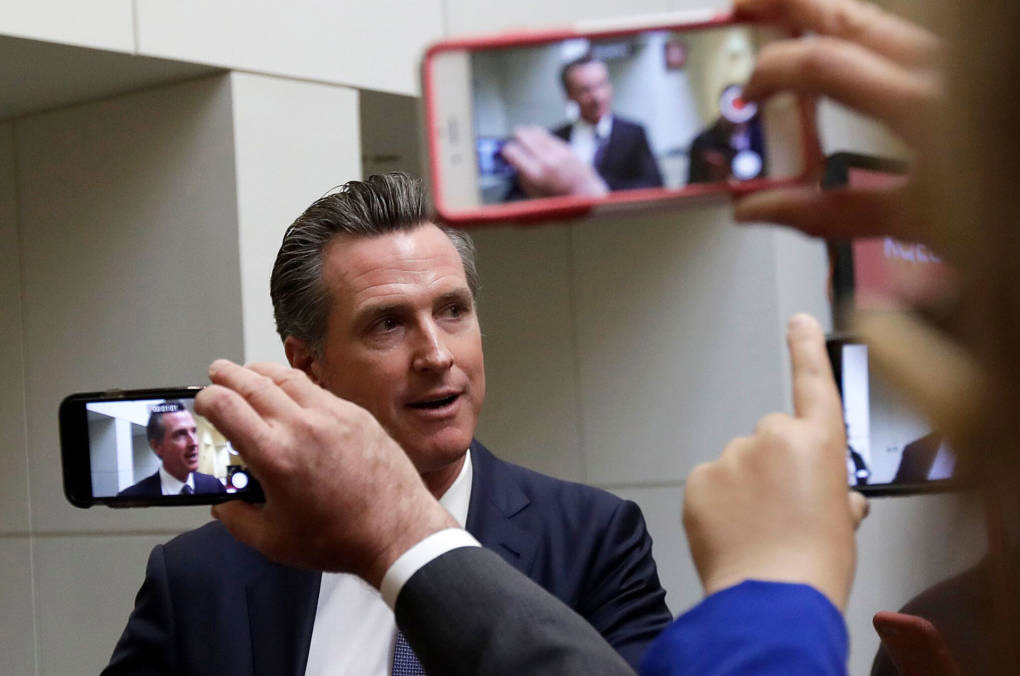
"caption": "In his recent State of the State address, Gov. Gavin Newsom said California consumers should make money from all their data. ",
"description": "In his recent State of the State address, Gov. Gavin Newsom said California consumers should make money from all their data. ",
"title": "NewsomPhones",
"credit": "Jeff Chiu/AP/Pool",
"status": "inherit",
"isLoading": false,
"fetchFailed": false
},
"news_10400479": {
"type": "attachments",
"id": "news_10400479",
"meta": {
"index": "attachments_1716263798",
"site": "news",
"id": "10400479",
"found": true
},
"parent": 10399927,
"imgSizes": {
"twentyfourteen-full-width": {
"file": "https://ww2.kqed.org/app/uploads/sites/10/2015/01/Liccardo-Inauguration3-e1420663084223-997x576.jpg",
"width": 997,
"mimeType": "image/jpeg",
"height": 576
},
"thumbnail": {
"file": "https://ww2.kqed.org/app/uploads/sites/10/2015/01/Liccardo-Inauguration3-e1420663084223-400x280.jpg",
"width": 400,
"mimeType": "image/jpeg",
"height": 280
},
"post-thumbnail": {
"file": "https://ww2.kqed.org/app/uploads/sites/10/2015/01/Liccardo-Inauguration3-e1420663084223-672x372.jpg",
"width": 672,
"mimeType": "image/jpeg",
"height": 372
},
"kqedFullSize": {
"file": "https://ww2.kqed.org/app/uploads/sites/10/2015/01/Liccardo-Inauguration3-e1420663084223.jpg",
"width": 997,
"height": 700
},
"guest-author-96": {
"file": "https://ww2.kqed.org/app/uploads/sites/10/2015/01/Liccardo-Inauguration3-e1420663084223-96x96.jpg",
"width": 96,
"mimeType": "image/jpeg",
"height": 96
},
"medium": {
"file": "https://ww2.kqed.org/app/uploads/sites/10/2015/01/Liccardo-Inauguration3-e1420663084223-800x561.jpg",
"width": 800,
"mimeType": "image/jpeg",
"height": 561
},
"guest-author-64": {
"file": "https://ww2.kqed.org/app/uploads/sites/10/2015/01/Liccardo-Inauguration3-e1420663084223-64x64.jpg",
"width": 64,
"mimeType": "image/jpeg",
"height": 64
},
"detail": {
"file": "https://ww2.kqed.org/app/uploads/sites/10/2015/01/Liccardo-Inauguration3-e1420663084223-75x75.jpg",
"width": 75,
"mimeType": "image/jpeg",
"height": 75
},
"guest-author-32": {
"file": "https://ww2.kqed.org/app/uploads/sites/10/2015/01/Liccardo-Inauguration3-e1420663084223-32x32.jpg",
"width": 32,
"mimeType": "image/jpeg",
"height": 32
},
"guest-author-128": {
"file": "https://ww2.kqed.org/app/uploads/sites/10/2015/01/Liccardo-Inauguration3-e1420663084223-128x128.jpg",
"width": 128,
"mimeType": "image/jpeg",
"height": 128
}
},
"publishDate": 1420660566,
"modified": 1551223056,
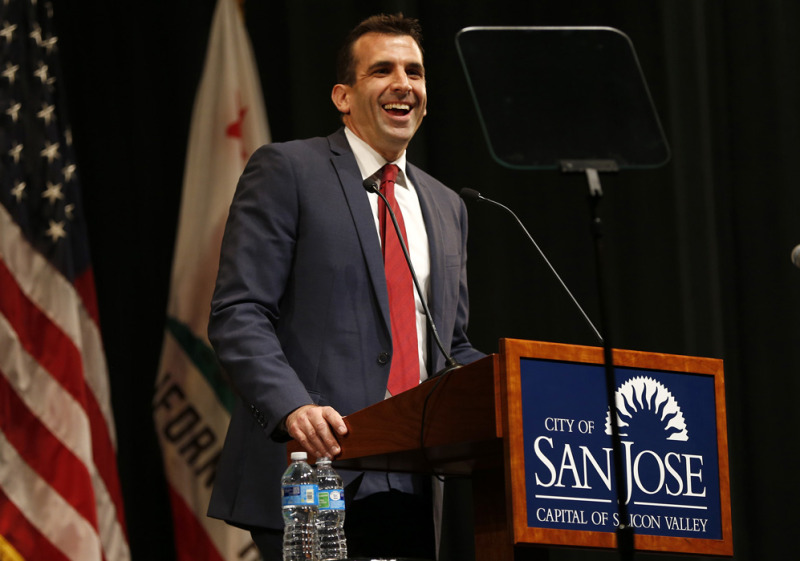
"caption": "San Jose Mayor Sam Liccardo addresses the audience at his inaugural ceremony. ",
"description": "San Jose Mayor Sam Liccardo addresses the audience at his inaugural ceremony. ",
"title": "Sam Liccardo-San Jose",
"credit": "Courtesy of Nhat V. Meyer/Bay Area News Group",
"status": "inherit",
"isLoading": false,
"fetchFailed": false
},
"news_11726712": {
"type": "attachments",
"id": "news_11726712",
"meta": {
"index": "attachments_1716263798",
"site": "news",
"id": "11726712",
"found": true
},
"parent": 11726676,
"imgSizes": {
"twentyfourteen-full-width": {
"file": "https://ww2.kqed.org/app/uploads/sites/10/2019/02/GoogleSign-1038x576.jpg",
"width": 1038,
"mimeType": "image/jpeg",
"height": 576
},
"thumbnail": {
"file": "https://ww2.kqed.org/app/uploads/sites/10/2019/02/GoogleSign-160x105.jpg",
"width": 160,
"mimeType": "image/jpeg",
"height": 105
},
"post-thumbnail": {
"file": "https://ww2.kqed.org/app/uploads/sites/10/2019/02/GoogleSign-672x372.jpg",
"width": 672,
"mimeType": "image/jpeg",
"height": 372
},
"kqedFullSize": {
"file": "https://ww2.kqed.org/app/uploads/sites/10/2019/02/GoogleSign.jpg",
"width": 1920,
"height": 1263
},
"large": {
"file": "https://ww2.kqed.org/app/uploads/sites/10/2019/02/GoogleSign-1020x671.jpg",
"width": 1020,
"mimeType": "image/jpeg",
"height": 671
},
"complete_open_graph": {
"file": "https://ww2.kqed.org/app/uploads/sites/10/2019/02/GoogleSign-1200x789.jpg",
"width": 1200,
"mimeType": "image/jpeg",
"height": 789
},
"guest-author-50": {
"file": "https://ww2.kqed.org/app/uploads/sites/10/2019/02/GoogleSign-50x50.jpg",
"width": 50,
"mimeType": "image/jpeg",
"height": 50
},
"guest-author-96": {
"file": "https://ww2.kqed.org/app/uploads/sites/10/2019/02/GoogleSign-96x96.jpg",
"width": 96,
"mimeType": "image/jpeg",
"height": 96
},
"medium": {
"file": "https://ww2.kqed.org/app/uploads/sites/10/2019/02/GoogleSign-800x526.jpg",
"width": 800,
"mimeType": "image/jpeg",
"height": 526
},
"guest-author-64": {
"file": "https://ww2.kqed.org/app/uploads/sites/10/2019/02/GoogleSign-64x64.jpg",
"width": 64,
"mimeType": "image/jpeg",
"height": 64
},
"guest-author-32": {
"file": "https://ww2.kqed.org/app/uploads/sites/10/2019/02/GoogleSign-32x32.jpg",
"width": 32,
"mimeType": "image/jpeg",
"height": 32
},
"full-width": {
"file": "https://ww2.kqed.org/app/uploads/sites/10/2019/02/GoogleSign-1920x1263.jpg",
"width": 1920,
"mimeType": "image/jpeg",
"height": 1263
},
"detail": {
"file": "https://ww2.kqed.org/app/uploads/sites/10/2019/02/GoogleSign-150x150.jpg",
"width": 150,
"mimeType": "image/jpeg",
"height": 150
},
"guest-author-128": {
"file": "https://ww2.kqed.org/app/uploads/sites/10/2019/02/GoogleSign-128x128.jpg",
"width": 128,
"mimeType": "image/jpeg",
"height": 128
}
},
"publishDate": 1550270224,
"modified": 1568050438,
"caption": "A sign is posted outside Google headquarters in Mountain View. The tech giant is planning to build a campus in San Jose.",
"description": "A sign is posted outside Google headquarters in Mountain View. The tech giant is planning to build a campus in San Jose.",
"title": "GoogleSign",
"credit": "Josh Edelson/AFP/Getty Images",
"status": "inherit",
"isLoading": false,
"fetchFailed": false
},
"news_11725963": {
"type": "attachments",
"id": "news_11725963",
"meta": {
"index": "attachments_1716263798",
"site": "news",
"id": "11725963",
"found": true
},
"parent": 11725956,
"imgSizes": {
"thumbnail": {
"file": "https://ww2.kqed.org/app/uploads/sites/10/2019/02/absher-app_wide-cf0a19d261b88dd764d1fedebe098ce539351f88-160x90.jpg",
"width": 160,
"mimeType": "image/jpeg",
"height": 90
},
"post-thumbnail": {
"file": "https://ww2.kqed.org/app/uploads/sites/10/2019/02/absher-app_wide-cf0a19d261b88dd764d1fedebe098ce539351f88-672x372.jpg",
"width": 672,
"mimeType": "image/jpeg",
"height": 372
},
"kqedFullSize": {
"file": "https://ww2.kqed.org/app/uploads/sites/10/2019/02/absher-app_wide-cf0a19d261b88dd764d1fedebe098ce539351f88.jpg",
"width": 740,
"height": 416
},
"guest-author-50": {
"file": "https://ww2.kqed.org/app/uploads/sites/10/2019/02/absher-app_wide-cf0a19d261b88dd764d1fedebe098ce539351f88-50x50.jpg",
"width": 50,
"mimeType": "image/jpeg",
"height": 50
},
"guest-author-96": {
"file": "https://ww2.kqed.org/app/uploads/sites/10/2019/02/absher-app_wide-cf0a19d261b88dd764d1fedebe098ce539351f88-96x96.jpg",
"width": 96,
"mimeType": "image/jpeg",
"height": 96
},
"guest-author-64": {
"file": "https://ww2.kqed.org/app/uploads/sites/10/2019/02/absher-app_wide-cf0a19d261b88dd764d1fedebe098ce539351f88-64x64.jpg",
"width": 64,
"mimeType": "image/jpeg",
"height": 64
},
"detail": {
"file": "https://ww2.kqed.org/app/uploads/sites/10/2019/02/absher-app_wide-cf0a19d261b88dd764d1fedebe098ce539351f88-150x150.jpg",
"width": 150,
"mimeType": "image/jpeg",
"height": 150
},
"guest-author-32": {
"file": "https://ww2.kqed.org/app/uploads/sites/10/2019/02/absher-app_wide-cf0a19d261b88dd764d1fedebe098ce539351f88-32x32.jpg",
"width": 32,
"mimeType": "image/jpeg",
"height": 32
},
"guest-author-128": {
"file": "https://ww2.kqed.org/app/uploads/sites/10/2019/02/absher-app_wide-cf0a19d261b88dd764d1fedebe098ce539351f88-128x128.jpg",
"width": 128,
"mimeType": "image/jpeg",
"height": 128
}
},
"publishDate": 1550094749,
"modified": 1550094766,
"caption": "The Absher app, available in the Apple and Google apps stores in Saudi Arabia, allows men to track the whereabouts of their wives and daughters.",
"description": null,
"title": "absher-app",
"credit": "NPR",
"status": "inherit",
"isLoading": false,
"fetchFailed": false
},
"news_11723424": {
"type": "attachments",
"id": "news_11723424",
"meta": {
"index": "attachments_1716263798",
"site": "news",
"id": "11723424",
"found": true
},
"parent": 11723347,
"imgSizes": {
"twentyfourteen-full-width": {
"file": "https://ww2.kqed.org/app/uploads/sites/10/2019/02/GettyImages-904333356-1038x576.jpg",
"width": 1038,
"mimeType": "image/jpeg",
"height": 576
},
"thumbnail": {
"file": "https://ww2.kqed.org/app/uploads/sites/10/2019/02/GettyImages-904333356-160x107.jpg",
"width": 160,
"mimeType": "image/jpeg",
"height": 107
},
"post-thumbnail": {
"file": "https://ww2.kqed.org/app/uploads/sites/10/2019/02/GettyImages-904333356-672x372.jpg",
"width": 672,
"mimeType": "image/jpeg",
"height": 372
},
"kqedFullSize": {
"file": "https://ww2.kqed.org/app/uploads/sites/10/2019/02/GettyImages-904333356-e1549329358657.jpg",
"width": 1920,
"height": 1281
},
"large": {
"file": "https://ww2.kqed.org/app/uploads/sites/10/2019/02/GettyImages-904333356-1020x680.jpg",
"width": 1020,
"mimeType": "image/jpeg",
"height": 680
},
"complete_open_graph": {
"file": "https://ww2.kqed.org/app/uploads/sites/10/2019/02/GettyImages-904333356-1200x801.jpg",
"width": 1200,
"mimeType": "image/jpeg",
"height": 801
},
"guest-author-50": {
"file": "https://ww2.kqed.org/app/uploads/sites/10/2019/02/GettyImages-904333356-50x50.jpg",
"width": 50,
"mimeType": "image/jpeg",
"height": 50
},
"guest-author-96": {
"file": "https://ww2.kqed.org/app/uploads/sites/10/2019/02/GettyImages-904333356-96x96.jpg",
"width": 96,
"mimeType": "image/jpeg",
"height": 96
},
"medium": {
"file": "https://ww2.kqed.org/app/uploads/sites/10/2019/02/GettyImages-904333356-800x534.jpg",
"width": 800,
"mimeType": "image/jpeg",
"height": 534
},
"guest-author-64": {
"file": "https://ww2.kqed.org/app/uploads/sites/10/2019/02/GettyImages-904333356-64x64.jpg",
"width": 64,
"mimeType": "image/jpeg",
"height": 64
},
"guest-author-32": {
"file": "https://ww2.kqed.org/app/uploads/sites/10/2019/02/GettyImages-904333356-32x32.jpg",
"width": 32,
"mimeType": "image/jpeg",
"height": 32
},
"full-width": {
"file": "https://ww2.kqed.org/app/uploads/sites/10/2019/02/GettyImages-904333356-1920x1281.jpg",
"width": 1920,
"mimeType": "image/jpeg",
"height": 1281
},
"detail": {
"file": "https://ww2.kqed.org/app/uploads/sites/10/2019/02/GettyImages-904333356-150x150.jpg",
"width": 150,
"mimeType": "image/jpeg",
"height": 150
},
"guest-author-128": {
"file": "https://ww2.kqed.org/app/uploads/sites/10/2019/02/GettyImages-904333356-128x128.jpg",
"width": 128,
"mimeType": "image/jpeg",
"height": 128
}
},
"publishDate": 1549329291,
"modified": 1549329352,
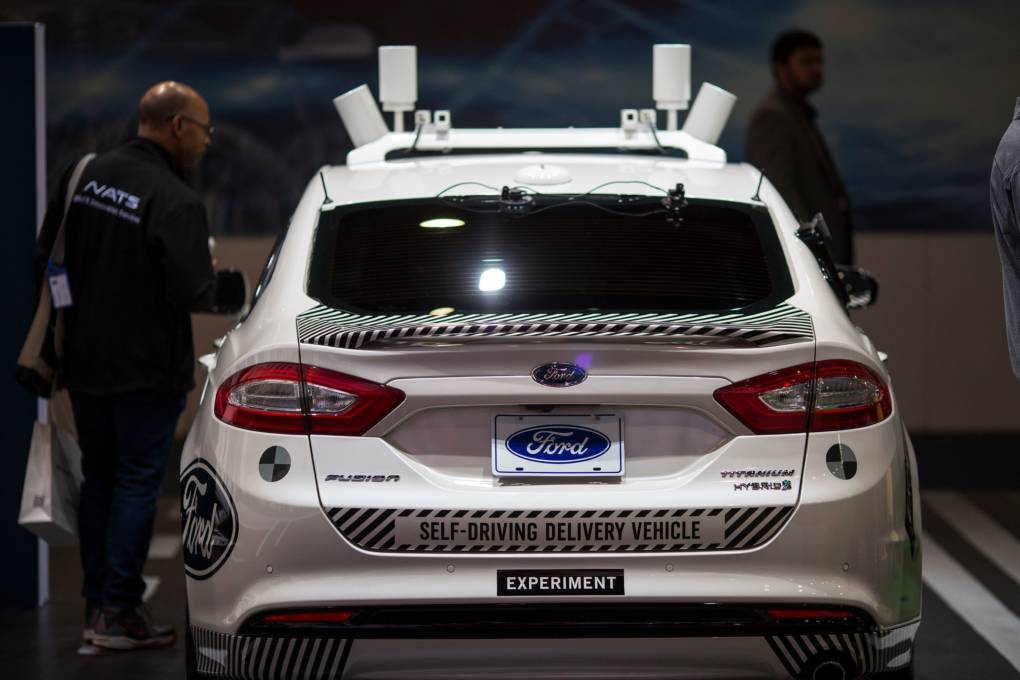
"caption": "An experimental Ford Fusion self-driving delivery car is displayed at CES in Las Vegas, Nevada.",
"description": null,
"title": "US-LIFESTYLE-IT-CES",
"credit": "David McNew/AFP/Getty Images",
"status": "inherit",
"isLoading": false,
"fetchFailed": false
},
"news_11703080": {
"type": "attachments",
"id": "news_11703080",
"meta": {
"index": "attachments_1716263798",
"site": "news",
"id": "11703080",
"found": true
},
"parent": 11702872,
"imgSizes": {
"small": {
"file": "https://ww2.kqed.org/app/uploads/sites/10/2018/11/GoogleWalkout2-520x347.jpg",
"width": 520,
"mimeType": "image/jpeg",
"height": 347
},
"twentyfourteen-full-width": {
"file": "https://ww2.kqed.org/app/uploads/sites/10/2018/11/GoogleWalkout2-1038x576.jpg",
"width": 1038,
"mimeType": "image/jpeg",
"height": 576
},
"thumbnail": {
"file": "https://ww2.kqed.org/app/uploads/sites/10/2018/11/GoogleWalkout2-160x107.jpg",
"width": 160,
"mimeType": "image/jpeg",
"height": 107
},
"fd-sm": {
"file": "https://ww2.kqed.org/app/uploads/sites/10/2018/11/GoogleWalkout2-960x640.jpg",
"width": 960,
"mimeType": "image/jpeg",
"height": 640
},
"post-thumbnail": {
"file": "https://ww2.kqed.org/app/uploads/sites/10/2018/11/GoogleWalkout2-672x372.jpg",
"width": 672,
"mimeType": "image/jpeg",
"height": 372
},
"xsmall": {
"file": "https://ww2.kqed.org/app/uploads/sites/10/2018/11/GoogleWalkout2-375x250.jpg",
"width": 375,
"mimeType": "image/jpeg",
"height": 250
},
"kqedFullSize": {
"file": "https://ww2.kqed.org/app/uploads/sites/10/2018/11/GoogleWalkout2.jpg",
"width": 1920,
"height": 1280
},
"large": {
"file": "https://ww2.kqed.org/app/uploads/sites/10/2018/11/GoogleWalkout2-1020x680.jpg",
"width": 1020,
"mimeType": "image/jpeg",
"height": 680
},
"xlarge": {
"file": "https://ww2.kqed.org/app/uploads/sites/10/2018/11/GoogleWalkout2-1180x787.jpg",
"width": 1180,
"mimeType": "image/jpeg",
"height": 787
},
"complete_open_graph": {
"file": "https://ww2.kqed.org/app/uploads/sites/10/2018/11/GoogleWalkout2-1200x800.jpg",
"width": 1200,
"mimeType": "image/jpeg",
"height": 800
},
"guest-author-50": {
"file": "https://ww2.kqed.org/app/uploads/sites/10/2018/11/GoogleWalkout2-50x50.jpg",
"width": 50,
"mimeType": "image/jpeg",
"height": 50
},
"guest-author-96": {
"file": "https://ww2.kqed.org/app/uploads/sites/10/2018/11/GoogleWalkout2-96x96.jpg",
"width": 96,
"mimeType": "image/jpeg",
"height": 96
},
"medium": {
"file": "https://ww2.kqed.org/app/uploads/sites/10/2018/11/GoogleWalkout2-800x533.jpg",
"width": 800,
"mimeType": "image/jpeg",
"height": 533
},
"guest-author-64": {
"file": "https://ww2.kqed.org/app/uploads/sites/10/2018/11/GoogleWalkout2-64x64.jpg",
"width": 64,
"mimeType": "image/jpeg",
"height": 64
},
"guest-author-32": {
"file": "https://ww2.kqed.org/app/uploads/sites/10/2018/11/GoogleWalkout2-32x32.jpg",
"width": 32,
"mimeType": "image/jpeg",
"height": 32
},
"fd-lrg": {
"file": "https://ww2.kqed.org/app/uploads/sites/10/2018/11/GoogleWalkout2-1920x1280.jpg",
"width": 1920,
"mimeType": "image/jpeg",
"height": 1280
},
"fd-med": {
"file": "https://ww2.kqed.org/app/uploads/sites/10/2018/11/GoogleWalkout2-1180x787.jpg",
"width": 1180,
"mimeType": "image/jpeg",
"height": 787
},
"full-width": {
"file": "https://ww2.kqed.org/app/uploads/sites/10/2018/11/GoogleWalkout2-1920x1280.jpg",
"width": 1920,
"mimeType": "image/jpeg",
"height": 1280
},
"detail": {
"file": "https://ww2.kqed.org/app/uploads/sites/10/2018/11/GoogleWalkout2-150x150.jpg",
"width": 150,
"mimeType": "image/jpeg",
"height": 150
},
"guest-author-128": {
"file": "https://ww2.kqed.org/app/uploads/sites/10/2018/11/GoogleWalkout2-128x128.jpg",
"width": 128,
"mimeType": "image/jpeg",
"height": 128
},
"xxsmall": {
"file": "https://ww2.kqed.org/app/uploads/sites/10/2018/11/GoogleWalkout2-240x160.jpg",
"width": 240,
"mimeType": "image/jpeg",
"height": 160
}
},
"publishDate": 1541114532,
"modified": 1541114551,
"caption": "Google employees walk off the job to protest the company's handling of sexual misconduct claims, on Nov. 1, 2018, in Mountain View.",
"description": "Google employees walk off the job to protest the company's handling of sexual misconduct claims, on Nov. 1, 2018, in Mountain View.",
"title": "GoogleWalkout2",
"credit": "Mason Trinca/Getty Images",
"status": "inherit",
"isLoading": false,
"fetchFailed": false
}
},
"audioPlayerReducer": {
"postId": "stream_live",
"isPaused": true,
"isPlaying": false,
"pfsActive": false,
"pledgeModalIsOpen": true,
"playerDrawerIsOpen": false,
"liveAudioPlayStartedAt": 0,
"liveAudioPlayContext": ""
},
"authorsReducer": {
"byline_news_11738783": {
"type": "authors",
"id": "byline_news_11738783",
"meta": {
"override": true
},
"slug": "byline_news_11738783",
"name": "\u003cstrong>Barbara Ortutay, Marcy Gordon and Rachel Lerman\u003cbr />Associated Press\u003c/strong>",
"isLoading": false
},
"byline_news_11738391": {
"type": "authors",
"id": "byline_news_11738391",
"meta": {
"override": true
},
"slug": "byline_news_11738391",
"name": "Matt O'Brien and Rachel Lerman\u003cbr>Associated Press",
"isLoading": false
},
"byline_news_11732620": {
"type": "authors",
"id": "byline_news_11732620",
"meta": {
"override": true
},
"slug": "byline_news_11732620",
"name": "\u003cstrong>Brian Naylor\u003c/strong>",
"isLoading": false
},
"byline_news_11732213": {
"type": "authors",
"id": "byline_news_11732213",
"meta": {
"override": true
},
"slug": "byline_news_11732213",
"name": "Aarti Shahani",
"isLoading": false
},
"byline_news_11726676": {
"type": "authors",
"id": "byline_news_11726676",
"meta": {
"override": true
},
"slug": "byline_news_11726676",
"name": "\u003cstrong>\u003ca href=\"https://www.npr.org/people/297147616/jasmine-garsd\">Jasmine Garsd\u003c/a>\u003c/strong>",
"isLoading": false
},
"byline_news_11725956": {
"type": "authors",
"id": "byline_news_11725956",
"meta": {
"override": true
},
"slug": "byline_news_11725956",
"name": "Laura Sydell",
"isLoading": false
},
"byline_news_11723347": {
"type": "authors",
"id": "byline_news_11723347",
"meta": {
"override": true
},
"slug": "byline_news_11723347",
"name": "\u003cstrong>Tom Krisher\u003c/strong>\u003cbr>Associated Press",
"isLoading": false
},
"rachael-myrow": {
"type": "authors",
"id": "251",
"meta": {
"index": "authors_1716337520",
"id": "251",
"found": true
},
"name": "Rachael Myrow",
"firstName": "Rachael",
"lastName": "Myrow",
"slug": "rachael-myrow",
"email": "rmyrow@kqed.org",
"display_author_email": true,
"staff_mastheads": [
"news"
],
"title": "Senior Editor of KQED's Silicon Valley News Desk",
"bio": "• I write and edit stories about how Silicon Valley power and policies shape everyday life in California. I’m also passionate about making Bay Area history and culture more accessible to a broad public. • I’ve been a journalist for most of my life, starting in high school with The Franklin Press in Los Angeles, where I grew up. While earning my first degree in English at UC Berkeley, I got my start in public radio at KALX-FM. After completing a second degree in journalism at Cal, I landed my first professional job at Marketplace, then moved on to KPCC (now LAist), and then KQED, where I hosted The California Report for more than seven years. • My reporting has appeared on NPR, The World, WBUR’s \u003ci>Here & Now\u003c/i>, and the BBC. I also guest host for KQED’s \u003ci>Forum\u003c/i>, as well as the Commonwealth Club in San Francisco. • I speak periodically on media, democracy and technology issues, and do voiceover work for documentaries and educational video projects. • Outside of the studio, you'll find me hiking Bay Area trails and whipping up Insta-ready meals in my kitchen. • I do not accept gifts, money, or favors from anyone connected to my reporting, I don't pay people for information, and I do not support or donate to political causes. • I strive to treat the people I report on with fairness, honesty, and respect. I also recognize there are often multiple sides to a story and work to verify information through multiple sources and documentation. If I get something wrong, I correct it.",
"avatar": "https://secure.gravatar.com/avatar/3ed8a3c5f26025e4a805ba634cda8cd764906b97438a6d9ce216b044e340da4e?s=600&d=blank&r=g",
"twitter": "rachaelmyrow",
"bluesky": null,
"facebook": null,
"instagram": null,
"linkedin": "https://www.linkedin.com/in/rachaelmyrow/",
"sites": [
{
"site": "arts",
"roles": [
"administrator"
]
},
{
"site": "news",
"roles": [
"edit_others_posts",
"editor"
]
},
{
"site": "futureofyou",
"roles": [
"editor"
]
},
{
"site": "bayareabites",
"roles": [
"editor"
]
},
{
"site": "stateofhealth",
"roles": [
"editor"
]
},
{
"site": "science",
"roles": [
"editor"
]
},
{
"site": "food",
"roles": [
"editor"
]
},
{
"site": "forum",
"roles": [
"editor"
]
},
{
"site": "liveblog",
"roles": [
"author"
]
}
],
"headData": {
"title": "Rachael Myrow | KQED",
"description": "Senior Editor of KQED's Silicon Valley News Desk",
"ogImgSrc": "https://secure.gravatar.com/avatar/3ed8a3c5f26025e4a805ba634cda8cd764906b97438a6d9ce216b044e340da4e?s=600&d=blank&r=g",
"twImgSrc": "https://secure.gravatar.com/avatar/3ed8a3c5f26025e4a805ba634cda8cd764906b97438a6d9ce216b044e340da4e?s=600&d=blank&r=g"
},
"isLoading": false,
"link": "/author/rachael-myrow"
},
"samharnett": {
"type": "authors",
"id": "253",
"meta": {
"index": "authors_1716337520",
"id": "253",
"found": true
},
"name": "Sam Harnett",
"firstName": "Sam",
"lastName": "Harnett",
"slug": "samharnett",
"email": "samharnett@gmail.com",
"display_author_email": false,
"staff_mastheads": [],
"title": "KQED Contributor",
"bio": "Sam Harnett covered tech and work at KQED. He is the co-creator of \u003cem>\u003ca href=\"http://www.theworldaccordingtosound.org\">The World According to Sound\u003c/a>,\u003c/em> a 90-second podcast that features different sounds and the stories behind them.\r\n\r\nBefore coming to KQED, Sam worked as an independent reporter who contributed regularly to \u003cem>The California Report, Marketplace,\u003c/em> \u003cem>The World \u003c/em>and NPR.",
"avatar": "https://secure.gravatar.com/avatar/2538b972ac02f2b9546c7a6c59a0f3d0?s=600&d=blank&r=g",
"twitter": "Samwharnett",
"facebook": null,
"instagram": null,
"linkedin": null,
"sites": [
{
"site": "news",
"roles": [
"edit_others_posts",
"subscriber"
]
},
{
"site": "stateofhealth",
"roles": [
"author"
]
},
{
"site": "science",
"roles": [
"editor"
]
},
{
"site": "quest",
"roles": [
"subscriber"
]
}
],
"headData": {
"title": "Sam Harnett | KQED",
"description": "KQED Contributor",
"ogImgSrc": "https://secure.gravatar.com/avatar/2538b972ac02f2b9546c7a6c59a0f3d0?s=600&d=blank&r=g",
"twImgSrc": "https://secure.gravatar.com/avatar/2538b972ac02f2b9546c7a6c59a0f3d0?s=600&d=blank&r=g"
},
"isLoading": false,
"link": "/author/samharnett"
}
},
"pagesReducer": {
"news_tag_google": {
"type": "terms",
"id": "news_93",
"meta": {
"index": "terms_1716263798",
"site": "news",
"id": "93",
"score": 8.458737
},
"featImg": null,
"name": "Google",
"description": null,
"taxonomy": "tag",
"headData": {
"twImgId": null,
"twTitle": null,
"ogTitle": null,
"ogImgId": null,
"twDescription": null,
"description": null,
"title": "Google Archives | KQED News",
"ogDescription": null
},
"ttid": 96,
"slug": "google",
"isLoading": false,
"title": "Google",
"pageMeta": {
"site": "news",
"WpPageTemplate": "page-topic-editorial",
"currentPage": 10
},
"blocks": [
{
"blockName": "kqed/post-list",
"attrs": {
"layout": "cardArticle2",
"query": "posts/news?tag=google",
"seeMore": false,
"paginated": true,
"page": 10
}
},
{
"blockName": "kqed/ad"
}
]
}
},
"pfsSessionReducer": {},
"postsReducer": {
"stream_live": {
"type": "live",
"id": "stream_live",
"audioUrl": "https://streams.kqed.org/kqedradio",
"title": "Live Stream",
"excerpt": "Live Stream information currently unavailable.",
"link": "/radio",
"featImg": "",
"label": {
"name": "KQED Live",
"link": "/"
}
},
"stream_kqedNewscast": {
"type": "posts",
"id": "stream_kqedNewscast",
"audioUrl": "https://www.kqed.org/.stream/anon/radio/RDnews/newscast.mp3?_=1",
"title": "KQED Newscast",
"featImg": "",
"label": {
"name": "88.5 FM",
"link": "/"
}
},
"news_11738783": {
"type": "posts",
"id": "news_11738783",
"meta": {
"index": "posts_1716263798",
"site": "news",
"id": "11738783",
"score": null,
"sort": [
1554845811000
]
},
"parent": 0,
"labelTerm": {
"site": "news"
},
"blocks": [],
"publishDate": 1554845811,
"format": "audio",
"disqusTitle": "Facebook, Google Face House Committee on Rise of Hate Crimes, White Supremacy",
"title": "Facebook, Google Face House Committee on Rise of Hate Crimes, White Supremacy",
"headTitle": "KQED News",
"content": "\u003cp>WASHINGTON — A congressional hearing on online hate turned into a vivid demonstration of the problem Tuesday when a \u003ca href=\"https://www.youtube.com/watch?v=4RZswuCGPwM\" rel=\"noopener\" target=\"_blank\">YouTube livestream\u003c/a> of the proceedings was bombarded with racist and anti-Semitic comments from internet users.\u003c/p>\n\u003cp>[aside label=\"Hate Crimes and White Supremacy\" tag=\"white-supremacy\"]\u003c/p>\n\u003cp>YouTube disabled the live chat section of the streaming video about 30 minutes into the hearing because of what it called \"hateful comments.\"\u003c/p>\n\u003cp>The incident came as executives from Google and Facebook appeared before the House Judiciary Committee to answer questions about the companies' role in the spread of hate crimes and the rise of white nationalism in the U.S. They were joined by leaders of such human rights organizations as the Anti-Defamation League and the Equal Justice Society, along with conservative commentator Candace Owens.\u003c/p>\n\u003cp>Neil Potts, Facebook director of public policy, and Alexandria Walden, counsel for free expression and human rights at Google, defended policies at the two companies that prohibit material that incites violence or hate. Google owns YouTube.\u003c/p>\n\u003cp>\"There is no place for terrorism or hate on Facebook,\" Potts testified. \"We remove any content that incites violence.\"\u003c/p>\n\u003cp>The hearing broke down into partisan disagreement among the lawmakers and among some of the witnesses, with Republican members of Congress denouncing as hate speech Democratic Rep. Ilhan Omar's criticism of American supporters of Israel.\u003c/p>\n\u003cp>As the bickering went on, committee chairman Rep. Jerrold Nadler, D-N.Y., was handed a news report that included the hateful comments about the hearing on YouTube. He read them aloud, along with the users' screen names, as the room quieted.\u003c/p>\n\u003cp>\"This just illustrates part of the problem we're dealing with,\" Nadler said.\u003c/p>\n\u003cp>The hearing comes as the U.S. is experiencing an increase in hate crimes and hate groups.\u003c/p>\n\u003cp>[ad fullwidth]\u003c/p>\n\u003cp>There were 1,020 known hate groups in the country in 2018, the fourth straight year of growth, according to the Southern Poverty Law Center, which monitors extremism in the U.S. Hate crimes, meanwhile, rose 30 percent in the three-year period ending in 2017, the organization said, citing FBI figures.\u003c/p>\n\u003cp>Democratic Rep. David Cicilline of Rhode Island grilled the Facebook and Google executives about their companies' responsibility for the spread of white supremacist views, pushing them to acknowledge they have played a role, even if it was unintentional. Potts and Walden conceded the companies have a duty to try to curb hate.\u003c/p>\n\u003cp>But the challenges became clear as Cicilline pushed Potts to answer why Facebook did not immediately remove far-right commentator Faith Goldy last week, after announcing a ban on white nationalism on the social network.\u003c/p>\n\u003cp>Goldy, who has asked her viewers to help \"stop the white race from vanishing,\" was not removed until Monday.\u003c/p>\n\u003cp>\"What specific proactive steps is Facebook taking to identify other leaders like Faith Goldy and pre-emptively remove them from the platform?\" Cicilline asked.\u003c/p>\n\u003cp>Potts reiterated that the company works to identify people with links to hate and violence and banishes them from Facebook.\u003c/p>\n\u003cp>The hearing was prompted by the mosque shootings last month in Christchurch, New Zealand, that left 50 people dead. The gunman \u003ca href=\"https://www.npr.org/2019/03/19/704690054/facebook-admits-mosque-shooting-video-was-viewed-at-least-4-000-times\" rel=\"noopener\" target=\"_blank\">livestreamed the attacks on Facebook\u003c/a> and published a long post online that espoused white supremacist views.\u003c/p>\n\u003cp>But controversy over white nationalism and hate speech has dogged online platforms such as Facebook and Google's YouTube for years.\u003c/p>\n\u003cp>In 2017, following the deadly violence in Charlottesville, Virginia, tech giants \u003ca href=\"https://www.apnews.com/09e4a4b1fb664b5a947ec23fc988ef07\" rel=\"noopener\" target=\"_blank\">began banishing\u003c/a> extremist groups and individuals espousing white supremacist views and support for violence. Facebook extended the ban to white nationalists.\u003c/p>\n\u003cp>Despite the ban, accounts such as one with the name Aryan Pride were still visible as of late Monday. The account read: \"IF YOUR NOT WHITE friend ur own kind cause Im not ur friend.\"\u003c/p>\n\u003cp>On Wednesday, a Senate subcommittee will hold a hearing on allegations that companies such as Facebook, Google and Twitter are biased against conservatives, an allegation leveled by political figures from President Trump on down.\u003c/p>\n\u003cp>The companies have denied any such bias.\u003c/p>\n\u003cp>\u003cem>Ortutay and Lerman contributed from San Francisco.\u003c/em>\u003c/p>\n\u003cp>\u003c/p>\n",
"disqusIdentifier": "11738783 https://ww2.kqed.org/news/?p=11738783",
"disqusUrl": "https://ww2.kqed.org/news/2019/04/09/facebook-google-face-house-committee-on-rise-of-hate-crimes-white-supremacy/",
"stats": {
"hasVideo": false,
"hasChartOrMap": false,
"hasAudio": false,
"hasPolis": false,
"wordCount": 672,
"hasGoogleForm": false,
"hasGallery": false,
"hasHearkenModule": false,
"iframeSrcs": [],
"paragraphCount": 25
},
"modified": 1554913951,
"excerpt": "The hearing was prompted by the mosque shootings last month in New Zealand that left 50 people dead. The gunman livestreamed the attacks on Facebook and published a post online that espoused white supremacist views.",
"headData": {
"twImgId": "",
"twTitle": "",
"ogTitle": "",
"ogImgId": "",
"twDescription": "",
"description": "The hearing was prompted by the mosque shootings last month in New Zealand that left 50 people dead. The gunman livestreamed the attacks on Facebook and published a post online that espoused white supremacist views.",
"title": "Facebook, Google Face House Committee on Rise of Hate Crimes, White Supremacy | KQED",
"ogDescription": "",
"schema": {
"@context": "https://schema.org",
"@type": "NewsArticle",
"headline": "Facebook, Google Face House Committee on Rise of Hate Crimes, White Supremacy",
"datePublished": "2019-04-09T14:36:51-07:00",
"dateModified": "2019-04-10T09:32:31-07:00",
"image": "https://cdn.kqed.org/wp-content/uploads/2020/02/KQED-OG-Image@1x.png",
"isAccessibleForFree": "True",
"publisher": {
"@type": "NewsMediaOrganization",
"@id": "https://www.kqed.org/#organization",
"name": "KQED",
"logo": "https://cdn.kqed.org/wp-content/uploads/2020/02/KQED-OG-Image@1x.png",
"url": "https://www.kqed.org",
"sameAs": [
"https://www.facebook.com/KQED",
"https://twitter.com/KQED",
"https://www.instagram.com/kqed/",
"https://www.tiktok.com/@kqedofficial",
"https://www.linkedin.com/company/kqed",
"https://www.youtube.com/channel/UCeC0IOo7i1P_61zVUWbJ4nw"
]
}
}
},
"guestAuthors": [],
"slug": "facebook-google-face-house-committee-on-rise-of-hate-crimes-white-supremacy",
"status": "publish",
"audioUrl": "https://www.kqed.org/.stream/anon/radio/tcr/2019/04/MyrowHateSpeechHearing.mp3",
"nprByline": "\u003cstrong>Barbara Ortutay, Marcy Gordon and Rachel Lerman\u003cbr />Associated Press\u003c/strong>",
"audioTrackLength": 91,
"path": "/news/11738783/facebook-google-face-house-committee-on-rise-of-hate-crimes-white-supremacy",
"audioDuration": 89000,
"parsedContent": [
{
"type": "contentString",
"content": "\u003cdiv class=\"post-body\">\u003cp>\u003cp>WASHINGTON — A congressional hearing on online hate turned into a vivid demonstration of the problem Tuesday when a \u003ca href=\"https://www.youtube.com/watch?v=4RZswuCGPwM\" rel=\"noopener\" target=\"_blank\">YouTube livestream\u003c/a> of the proceedings was bombarded with racist and anti-Semitic comments from internet users.\u003c/p>\n\u003cp>\u003c/p>\u003c/div>",
"attributes": {
"named": {},
"numeric": []
}
},
{
"type": "component",
"content": "",
"name": "aside",
"attributes": {
"named": {
"label": "Hate Crimes and White Supremacy ",
"tag": "white-supremacy"
},
"numeric": []
}
},
{
"type": "contentString",
"content": "\u003cdiv class=\"post-body\">\u003cp>\u003c/p>\n\u003cp>YouTube disabled the live chat section of the streaming video about 30 minutes into the hearing because of what it called \"hateful comments.\"\u003c/p>\n\u003cp>The incident came as executives from Google and Facebook appeared before the House Judiciary Committee to answer questions about the companies' role in the spread of hate crimes and the rise of white nationalism in the U.S. They were joined by leaders of such human rights organizations as the Anti-Defamation League and the Equal Justice Society, along with conservative commentator Candace Owens.\u003c/p>\n\u003cp>Neil Potts, Facebook director of public policy, and Alexandria Walden, counsel for free expression and human rights at Google, defended policies at the two companies that prohibit material that incites violence or hate. Google owns YouTube.\u003c/p>\n\u003cp>\"There is no place for terrorism or hate on Facebook,\" Potts testified. \"We remove any content that incites violence.\"\u003c/p>\n\u003cp>The hearing broke down into partisan disagreement among the lawmakers and among some of the witnesses, with Republican members of Congress denouncing as hate speech Democratic Rep. Ilhan Omar's criticism of American supporters of Israel.\u003c/p>\n\u003cp>As the bickering went on, committee chairman Rep. Jerrold Nadler, D-N.Y., was handed a news report that included the hateful comments about the hearing on YouTube. He read them aloud, along with the users' screen names, as the room quieted.\u003c/p>\n\u003cp>\"This just illustrates part of the problem we're dealing with,\" Nadler said.\u003c/p>\n\u003cp>The hearing comes as the U.S. is experiencing an increase in hate crimes and hate groups.\u003c/p>\n\u003cp>\u003c/p>\u003c/div>",
"attributes": {
"named": {},
"numeric": []
}
},
{
"type": "component",
"content": "",
"name": "ad",
"attributes": {
"named": {
"label": "fullwidth"
},
"numeric": [
"fullwidth"
]
}
},
{
"type": "contentString",
"content": "\u003cdiv class=\"post-body\">\u003cp>\u003c/p>\n\u003cp>There were 1,020 known hate groups in the country in 2018, the fourth straight year of growth, according to the Southern Poverty Law Center, which monitors extremism in the U.S. Hate crimes, meanwhile, rose 30 percent in the three-year period ending in 2017, the organization said, citing FBI figures.\u003c/p>\n\u003cp>Democratic Rep. David Cicilline of Rhode Island grilled the Facebook and Google executives about their companies' responsibility for the spread of white supremacist views, pushing them to acknowledge they have played a role, even if it was unintentional. Potts and Walden conceded the companies have a duty to try to curb hate.\u003c/p>\n\u003cp>But the challenges became clear as Cicilline pushed Potts to answer why Facebook did not immediately remove far-right commentator Faith Goldy last week, after announcing a ban on white nationalism on the social network.\u003c/p>\n\u003cp>Goldy, who has asked her viewers to help \"stop the white race from vanishing,\" was not removed until Monday.\u003c/p>\n\u003cp>\"What specific proactive steps is Facebook taking to identify other leaders like Faith Goldy and pre-emptively remove them from the platform?\" Cicilline asked.\u003c/p>\n\u003cp>Potts reiterated that the company works to identify people with links to hate and violence and banishes them from Facebook.\u003c/p>\n\u003cp>The hearing was prompted by the mosque shootings last month in Christchurch, New Zealand, that left 50 people dead. The gunman \u003ca href=\"https://www.npr.org/2019/03/19/704690054/facebook-admits-mosque-shooting-video-was-viewed-at-least-4-000-times\" rel=\"noopener\" target=\"_blank\">livestreamed the attacks on Facebook\u003c/a> and published a long post online that espoused white supremacist views.\u003c/p>\n\u003cp>But controversy over white nationalism and hate speech has dogged online platforms such as Facebook and Google's YouTube for years.\u003c/p>\n\u003cp>In 2017, following the deadly violence in Charlottesville, Virginia, tech giants \u003ca href=\"https://www.apnews.com/09e4a4b1fb664b5a947ec23fc988ef07\" rel=\"noopener\" target=\"_blank\">began banishing\u003c/a> extremist groups and individuals espousing white supremacist views and support for violence. Facebook extended the ban to white nationalists.\u003c/p>\n\u003cp>Despite the ban, accounts such as one with the name Aryan Pride were still visible as of late Monday. The account read: \"IF YOUR NOT WHITE friend ur own kind cause Im not ur friend.\"\u003c/p>\n\u003cp>On Wednesday, a Senate subcommittee will hold a hearing on allegations that companies such as Facebook, Google and Twitter are biased against conservatives, an allegation leveled by political figures from President Trump on down.\u003c/p>\n\u003cp>The companies have denied any such bias.\u003c/p>\n\u003cp>\u003cem>Ortutay and Lerman contributed from San Francisco.\u003c/em>\u003c/p>\n\u003cp>\u003c/p>\n\u003c/div>\u003c/p>",
"attributes": {
"named": {},
"numeric": []
}
}
],
"link": "/news/11738783/facebook-google-face-house-committee-on-rise-of-hate-crimes-white-supremacy",
"authors": [
"byline_news_11738783"
],
"categories": [
"news_6188",
"news_8",
"news_248"
],
"tags": [
"news_24276",
"news_249",
"news_93",
"news_4273",
"news_21449",
"news_21025",
"news_22585"
],
"featImg": "news_11738864",
"label": "news"
},
"news_11738727": {
"type": "posts",
"id": "news_11738727",
"meta": {
"index": "posts_1716263798",
"site": "news",
"id": "11738727",
"score": null,
"sort": [
1554836409000
]
},
"guestAuthors": [],
"slug": "while-american-politicians-dither-europe-gets-busy-crafting-artificial-intelligence-regulations",
"title": "While America Dithers, Europe Gets Busy Crafting Artificial Intelligence Regulations",
"publishDate": 1554836409,
"format": "audio",
"headTitle": "While America Dithers, Europe Gets Busy Crafting Artificial Intelligence Regulations | KQED",
"labelTerm": {
"site": "news"
},
"content": "\u003cp>Who’s responsible when a driverless car runs over a pedestrian? Or a social media platform steers housing ads away from African Americans? These real-world outcomes driven by artificial intelligence are cropping up before politicians and regulators can get up to speed. At least, here in the U.S.\u003c/p>\n\u003cp>[aside tag='technology, AI' label='The Future of Tech']\u003c/p>\n\u003cp>The European Commission isn’t rolling out any laws governing artificial intelligence right away, but it looks likely it will eventually. \u003c/p>\n\u003cp>“As is the case with all technologies, AI raises a number of concerns that need to be tackled. If we are not vigilant, the use of AI may lead to undesirable outcomes — intended or not,” wrote \u003ca href=\"https://ec.europa.eu/digital-single-market/en/pekka-ala-pietila\">Pekka Ala-Pietilä\u003c/a>, the chair of the EU’s High-Level Expert Group on Artificial Intelligence, in a recent \u003ca href=\"https://ec.europa.eu/digital-single-market/en/blogposts/towards-trustworthy-ai-ethics-competitiveness-go-hand-hand\" target=\"_blank\" rel=\"noopener\">statement\u003c/a> on the European Commission website.\u003c/p>\n\u003cp>The group collected ideas from 50-plus experts and \u003ca href=\"https://ec.europa.eu/digital-single-market/en/news/draft-ethics-guidelines-trustworthy-ai\" target=\"_blank\" rel=\"noopener\">issued a report\u003c/a> last December. This week, after receiving more than 500 comments in response, the group issued \u003ca href=\"https://ec.europa.eu/digital-single-market/en/news/ethics-guidelines-trustworthy-ai\" target=\"_blank\" rel=\"noopener\">ethics guidelines\u003c/a> for trustworthy artificial intelligence. Here are the “key requirements” for assessing AI:\u003c/p>\n\u003cul>\n\u003cli>\u003cstrong>Human agency and oversight:\u003c/strong> AI systems should enable equitable societies by supporting human agency and fundamental rights, and not decrease, limit or misguide human autonomy.\u003c/li>\n\u003cli>\u003cstrong>Robustness and safety:\u003c/strong> Trustworthy AI requires algorithms to be secure, reliable and robust enough to deal with errors or inconsistencies during all life cycle phases of AI systems.\u003c/li>\n\u003cli>\u003cstrong>Privacy and data governance:\u003c/strong> Citizens should have full control over their own data, while data concerning them will not be used to harm or discriminate against them.\u003c/li>\n\u003cli>\u003cstrong>Transparency:\u003c/strong> The traceability of AI systems should be ensured.\u003c/li>\n\u003cli>\u003cstrong>Diversity, non-discrimination and fairness:\u003c/strong> AI systems should consider the whole range of human abilities, skills and requirements, and ensure accessibility.\u003c/li>\n\u003cli>\u003cstrong>Societal and environmental well-being:\u003c/strong> AI systems should be used to enhance positive social change and enhance sustainability and ecological responsibility.\u003c/li>\n\u003cli>\u003cstrong>Accountability:\u003c/strong> Mechanisms should be put in place to ensure responsibility and accountability for AI systems and their outcomes.\u003c/li>\n\u003c/ul>\n\u003cp>“One thing that jumped out at me was the sixth principle, which is societal and environmental well-being,” said assistant professor \u003ca href=\"http://www.danielsusser.info\" target=\"_blank\" rel=\"noopener\">Daniel Susser\u003c/a>, who specializes in technology and ethics at Penn State. He’s excited that Europeans are starting to ask the tough questions about what we want companies like Google and Amazon to be responsible for as they dream up potential futures for us.\u003c/p>\n\u003cp>“Regulating, especially regulating technology, is generally thought of as an attempt to articulate what companies should not do,” Susser said. “We also want to articulate a positive notion of what sort of world we want technology to be helping us build — and I think that will need to [hashed] out more specifically, but I’m happy to see it in there.”\u003c/p>\n\u003cp>Next steps include a \u003ca href=\"http://europa.eu/rapid/press-release_IP-19-1893_en.htm\" target=\"_blank\" rel=\"noopener\">pilot program\u003c/a> to develop draft rules to roll out this summer. Whether the Europeans inspire U.S. politicians and regulators to follow suit is unclear. Americans have been singularly slow to consider a wide range of regulation issues around technology. Facebook CEO Mark Zuckerberg has repeatedly apologized to federal lawmakers for various failings of the social media giant, but there are no laws to force change from his company and others in Silicon Valley.\u003c/p>\n\u003cp>[ad fullwidth]\u003c/p>\n\u003cp>Meanwhile, one 14-year-old committed suicide in Britain inspired by what she saw online, and UK regulators \u003ca href=\"https://www.reuters.com/article/us-britain-tech-regulation/britain-plans-social-media-regulation-to-battle-harmful-content-idUSKCN1RJ0QP\" target=\"_blank\" rel=\"noopener\">proposed new laws\u003c/a> to slap penalties on social media companies and technology firms if they fail to protect users from harmful content.\u003c/p>\n\u003cp>Experts say American companies driving much of the world’s AI won’t be able to ignore what happens in Europe.\u003c/p>\n\u003cp>Experts also say no regulation is not an option we want to accept. Private industry \u003ca href=\"https://www.kqed.org/news/11738391/tech-giants-initiatives-to-address-ai-ethics-concerns-under-scrutiny\" target=\"_blank\" rel=\"noopener\">has encountered blowback\u003c/a> over its attempts at self-regulation. As \u003ca href=\"https://mila.quebec/en/yoshua-bengio/\" target=\"_blank\" rel=\"noopener\">Yoshua Bengio\u003c/a>, a computer scientist and winner of the 2018 Turing Award for his work on deep learning, told the journal \u003ca href=\"https://www.nature.com/articles/d41586-019-00505-2\" target=\"_blank\" rel=\"noopener\">Nature\u003c/a>:\u003c/p>\n\u003cblockquote>\u003cp>Self-regulation is not going to work. Do you think that voluntary taxation works? It doesn’t. Companies that follow ethical guidelines would be disadvantaged with respect to the companies that do not. It’s like driving. Whether it’s on the left or the right side, everybody needs to drive in the same way; otherwise, we’re in trouble.\u003c/p>\u003c/blockquote>\n\u003cp>\u003c/p>\n",
"blocks": [],
"excerpt": "The European Commission is launching a pilot project to test draft ethical rules for artificial intelligence.",
"status": "publish",
"parent": 0,
"modified": 1729028942,
"stats": {
"hasAudio": false,
"hasVideo": false,
"hasChartOrMap": false,
"iframeSrcs": [],
"hasGoogleForm": false,
"hasGallery": false,
"hasHearkenModule": false,
"hasPolis": false,
"paragraphCount": 14,
"wordCount": 741
},
"headData": {
"title": "While America Dithers, Europe Gets Busy Crafting Artificial Intelligence Regulations | KQED",
"description": "The European Commission is launching a pilot project to test draft ethical rules for artificial intelligence.",
"ogTitle": "",
"ogDescription": "",
"ogImgId": "",
"twTitle": "",
"twDescription": "",
"twImgId": "",
"schema": {
"@context": "https://schema.org",
"@type": "NewsArticle",
"headline": "While America Dithers, Europe Gets Busy Crafting Artificial Intelligence Regulations",
"datePublished": "2019-04-09T12:00:09-07:00",
"dateModified": "2024-10-15T14:49:02-07:00",
"image": "https://cdn.kqed.org/wp-content/uploads/2020/02/KQED-OG-Image@1x.png",
"isAccessibleForFree": "True",
"publisher": {
"@type": "NewsMediaOrganization",
"@id": "https://www.kqed.org/#organization",
"name": "KQED",
"logo": "https://cdn.kqed.org/wp-content/uploads/2020/02/KQED-OG-Image@1x.png",
"url": "https://www.kqed.org",
"sameAs": [
"https://www.facebook.com/KQED",
"https://twitter.com/KQED",
"https://www.instagram.com/kqed/",
"https://www.tiktok.com/@kqedofficial",
"https://www.linkedin.com/company/kqed",
"https://www.youtube.com/channel/UCeC0IOo7i1P_61zVUWbJ4nw"
]
}
}
},
"audioUrl": "https://www.kqed.org/.stream/anon/radio/RDnews/2019/04/MyrowAIEthics.mp3",
"sticky": false,
"audioTrackLength": 114,
"path": "/news/11738727/while-american-politicians-dither-europe-gets-busy-crafting-artificial-intelligence-regulations",
"parsedContent": [
{
"type": "contentString",
"content": "\u003cdiv class=\"post-body\">\u003cp>\u003cp>Who’s responsible when a driverless car runs over a pedestrian? Or a social media platform steers housing ads away from African Americans? These real-world outcomes driven by artificial intelligence are cropping up before politicians and regulators can get up to speed. At least, here in the U.S.\u003c/p>\n\u003cp>\u003c/p>\u003c/div>",
"attributes": {
"named": {},
"numeric": []
}
},
{
"type": "component",
"content": "",
"name": "aside",
"attributes": {
"named": {
"tag": "technology, AI",
"label": "The Future of Tech "
},
"numeric": []
}
},
{
"type": "contentString",
"content": "\u003cdiv class=\"post-body\">\u003cp>\u003c/p>\n\u003cp>The European Commission isn’t rolling out any laws governing artificial intelligence right away, but it looks likely it will eventually. \u003c/p>\n\u003cp>“As is the case with all technologies, AI raises a number of concerns that need to be tackled. If we are not vigilant, the use of AI may lead to undesirable outcomes — intended or not,” wrote \u003ca href=\"https://ec.europa.eu/digital-single-market/en/pekka-ala-pietila\">Pekka Ala-Pietilä\u003c/a>, the chair of the EU’s High-Level Expert Group on Artificial Intelligence, in a recent \u003ca href=\"https://ec.europa.eu/digital-single-market/en/blogposts/towards-trustworthy-ai-ethics-competitiveness-go-hand-hand\" target=\"_blank\" rel=\"noopener\">statement\u003c/a> on the European Commission website.\u003c/p>\n\u003cp>The group collected ideas from 50-plus experts and \u003ca href=\"https://ec.europa.eu/digital-single-market/en/news/draft-ethics-guidelines-trustworthy-ai\" target=\"_blank\" rel=\"noopener\">issued a report\u003c/a> last December. This week, after receiving more than 500 comments in response, the group issued \u003ca href=\"https://ec.europa.eu/digital-single-market/en/news/ethics-guidelines-trustworthy-ai\" target=\"_blank\" rel=\"noopener\">ethics guidelines\u003c/a> for trustworthy artificial intelligence. Here are the “key requirements” for assessing AI:\u003c/p>\n\u003cul>\n\u003cli>\u003cstrong>Human agency and oversight:\u003c/strong> AI systems should enable equitable societies by supporting human agency and fundamental rights, and not decrease, limit or misguide human autonomy.\u003c/li>\n\u003cli>\u003cstrong>Robustness and safety:\u003c/strong> Trustworthy AI requires algorithms to be secure, reliable and robust enough to deal with errors or inconsistencies during all life cycle phases of AI systems.\u003c/li>\n\u003cli>\u003cstrong>Privacy and data governance:\u003c/strong> Citizens should have full control over their own data, while data concerning them will not be used to harm or discriminate against them.\u003c/li>\n\u003cli>\u003cstrong>Transparency:\u003c/strong> The traceability of AI systems should be ensured.\u003c/li>\n\u003cli>\u003cstrong>Diversity, non-discrimination and fairness:\u003c/strong> AI systems should consider the whole range of human abilities, skills and requirements, and ensure accessibility.\u003c/li>\n\u003cli>\u003cstrong>Societal and environmental well-being:\u003c/strong> AI systems should be used to enhance positive social change and enhance sustainability and ecological responsibility.\u003c/li>\n\u003cli>\u003cstrong>Accountability:\u003c/strong> Mechanisms should be put in place to ensure responsibility and accountability for AI systems and their outcomes.\u003c/li>\n\u003c/ul>\n\u003cp>“One thing that jumped out at me was the sixth principle, which is societal and environmental well-being,” said assistant professor \u003ca href=\"http://www.danielsusser.info\" target=\"_blank\" rel=\"noopener\">Daniel Susser\u003c/a>, who specializes in technology and ethics at Penn State. He’s excited that Europeans are starting to ask the tough questions about what we want companies like Google and Amazon to be responsible for as they dream up potential futures for us.\u003c/p>\n\u003cp>“Regulating, especially regulating technology, is generally thought of as an attempt to articulate what companies should not do,” Susser said. “We also want to articulate a positive notion of what sort of world we want technology to be helping us build — and I think that will need to [hashed] out more specifically, but I’m happy to see it in there.”\u003c/p>\n\u003cp>Next steps include a \u003ca href=\"http://europa.eu/rapid/press-release_IP-19-1893_en.htm\" target=\"_blank\" rel=\"noopener\">pilot program\u003c/a> to develop draft rules to roll out this summer. Whether the Europeans inspire U.S. politicians and regulators to follow suit is unclear. Americans have been singularly slow to consider a wide range of regulation issues around technology. Facebook CEO Mark Zuckerberg has repeatedly apologized to federal lawmakers for various failings of the social media giant, but there are no laws to force change from his company and others in Silicon Valley.\u003c/p>\n\u003cp>\u003c/p>\u003c/div>",
"attributes": {
"named": {},
"numeric": []
}
},
{
"type": "component",
"content": "",
"name": "ad",
"attributes": {
"named": {
"label": "fullwidth"
},
"numeric": [
"fullwidth"
]
}
},
{
"type": "contentString",
"content": "\u003cdiv class=\"post-body\">\u003cp>\u003c/p>\n\u003cp>Meanwhile, one 14-year-old committed suicide in Britain inspired by what she saw online, and UK regulators \u003ca href=\"https://www.reuters.com/article/us-britain-tech-regulation/britain-plans-social-media-regulation-to-battle-harmful-content-idUSKCN1RJ0QP\" target=\"_blank\" rel=\"noopener\">proposed new laws\u003c/a> to slap penalties on social media companies and technology firms if they fail to protect users from harmful content.\u003c/p>\n\u003cp>Experts say American companies driving much of the world’s AI won’t be able to ignore what happens in Europe.\u003c/p>\n\u003cp>Experts also say no regulation is not an option we want to accept. Private industry \u003ca href=\"https://www.kqed.org/news/11738391/tech-giants-initiatives-to-address-ai-ethics-concerns-under-scrutiny\" target=\"_blank\" rel=\"noopener\">has encountered blowback\u003c/a> over its attempts at self-regulation. As \u003ca href=\"https://mila.quebec/en/yoshua-bengio/\" target=\"_blank\" rel=\"noopener\">Yoshua Bengio\u003c/a>, a computer scientist and winner of the 2018 Turing Award for his work on deep learning, told the journal \u003ca href=\"https://www.nature.com/articles/d41586-019-00505-2\" target=\"_blank\" rel=\"noopener\">Nature\u003c/a>:\u003c/p>\n\u003cblockquote>\u003cp>Self-regulation is not going to work. Do you think that voluntary taxation works? It doesn’t. Companies that follow ethical guidelines would be disadvantaged with respect to the companies that do not. It’s like driving. Whether it’s on the left or the right side, everybody needs to drive in the same way; otherwise, we’re in trouble.\u003c/p>\u003c/blockquote>\n\u003cp>\u003c/p>\n\u003c/div>\u003c/p>",
"attributes": {
"named": {},
"numeric": []
}
}
],
"link": "/news/11738727/while-american-politicians-dither-europe-gets-busy-crafting-artificial-intelligence-regulations",
"authors": [
"251"
],
"categories": [
"news_1758",
"news_8",
"news_13",
"news_248"
],
"tags": [
"news_25184",
"news_24027",
"news_1611",
"news_249",
"news_93",
"news_18341",
"news_3952",
"news_2011",
"news_1631"
],
"featImg": "news_11738398",
"label": "news"
},
"news_11738391": {
"type": "posts",
"id": "news_11738391",
"meta": {
"index": "posts_1716263798",
"site": "news",
"id": "11738391",
"score": null,
"sort": [
1554669012000
]
},
"parent": 0,
"labelTerm": {},
"blocks": [],
"publishDate": 1554669012,
"format": "standard",
"disqusTitle": "Tech Giants' Initiatives to Address AI Ethics Concerns Under Scrutiny",
"title": "Tech Giants' Initiatives to Address AI Ethics Concerns Under Scrutiny",
"headTitle": "The California Report | KQED News",
"content": "\u003cp>The biggest tech companies want you to know that they're taking special care to ensure that their use of artificial intelligence to sift through mountains of data, analyze faces or build virtual assistants doesn't spill over to the dark side.\u003c/p>\n\u003cp>But their efforts to assuage concerns that their machines may be used for nefarious ends have not been universally embraced. Some skeptics see it as mere window dressing by corporations more interested in profit than what's in society's best interests.\u003c/p>\n\u003cp>\"Ethical AI\" has become a new corporate buzz phrase, slapped on internal review committees, fancy job titles, research projects and philanthropic initiatives.\u003c/p>\n\u003cp>The moves are meant to address concerns over racial and gender bias emerging in facial recognition and other AI systems, as well as address anxieties about job losses to the technology and its use by law enforcement and the military.\u003c/p>\n\u003cp>But how much substance lies behind the increasingly public ethics campaigns? And who gets to decide which technological pursuits do no harm?\u003c/p>\n\u003cp>[ad fullwidth]\u003c/p>\n\u003cp>Google was hit with both questions when it formed a new board of outside advisers in late March to help guide how it uses AI in products. But instead of winning over potential critics, it sparked internal rancor.\u003c/p>\n\u003cp>A little more than a week later, Google bowed to pressure from the backlash and dissolved the council.\u003c/p>\n\u003cp>The outside board fell apart in stages. One of the board's eight inaugural members quit within days and another quickly became the target of protests from Google employees who said her conservative views don't align with the company's professed values.\u003c/p>\n\u003cp>As thousands of employees called for the removal of Heritage Foundation President Kay Coles James, Google \u003ca href=\"https://www.forbes.com/sites/jilliandonfro/2019/04/04/google-cancels-its-ai-ethics-board-less-than-two-weeks-after-launch-in-the-wake-of-employee-protest/#1f0aeb396e28\" rel=\"noopener\" target=\"_blank\">disbanded the board\u003c/a> last week.\u003c/p>\n\u003cp>Employees said James has made past comments that were anti-trans and anti-immigrant and should not be on an ethics panel. The Heritage Foundation did not respond to a request for comment.\u003c/p>\n\u003cp>[pullquote citation='Ben Wagner, AI researcher'] \"It's basically an attempt to pretend like you're doing ethical things and using ethics as a tool to reach an end, like avoiding regulation.\" [/pullquote]\u003c/p>\n\u003cp>\"It's become clear that in the current environment, (the council) can't function as we wanted,\" the company said in a statement. That environment is one of increasing concern that the corporate AI ethics campaigns lack teeth.\u003c/p>\n\u003cp>\"I think (Google's decision) reflects a broader public understanding that ethics involves more than just creating an ethics board without an institutional framework to provide for accountability,\" AI researcher Ben Wagner said.\u003c/p>\n\u003cp>Google's original initiative fell into a tech industry trend that Wagner calls \"ethics-washing,\" which he describes as a superficial effort that's mostly a show for the public or lawmakers.\u003c/p>\n\u003cp>\"It's basically an attempt to pretend like you're doing ethical things and using ethics as a tool to reach an end, like avoiding regulation,\" said Wagner, an assistant professor at the Vienna University of Economics and Business. \"It's a new form of self-regulation without calling it that by name.\"\u003c/p>\n\u003cp>Big companies have made an increasingly visible effort to discuss their AI efforts in recent years.\u003c/p>\n\u003cp>Microsoft, which often tries to position itself as an industry leader on ethics and privacy issues, published its principles around developing AI, released a short book that discussed the societal implications of the technology and has called for some government regulation of AI technologies.\u003c/p>\n\u003cp>The company's president even met with Pope Francis earlier this year to discuss industry ethics. Amazon recently announced it is helping fund federal research into \"algorithmic fairness,\" and Salesforce employs an \"architect\" for ethical AI practice, as well as a \"chief ethical and human use\" officer. It's hard to find a brand-name tech firm without similar initiatives.\u003c/p>\n\u003cp>It's a good thing that companies are studying the issue and seeking perspectives on industry ethics, said Oren Etzioni, CEO of the Allen Institute for Artificial Intelligence, a research organization.[aside tag='technology, AI' label='The Future of Tech']\u003c/p>\n\u003cp>But ultimately, he said, a company's CEO is tasked with deciding what suggestions on AI ethics to incorporate in business decisions.\u003c/p>\n\u003cp>\"I think overall it's a positive step rather than a fig leaf,\" he said. \"That said, the proof is in successful implementation. I think the jury is still out on that.\"\u003c/p>\n\u003cp>The impact artificial intelligence can have on society has never been more clear, Etzioni said, and companies are reacting to studies about the power of recommendation algorithms and gender bias in AI.\u003c/p>\n\u003cp>But as Google's attempt shows, discussing the issues in the public eye also invites public scrutiny.\u003c/p>\n\u003cp>Google employees have had more success than other tech workers at demanding change at their company.\u003c/p>\n\u003cp>The internet search behemoth dropped a contract with the Pentagon after employees pushed back on the ethical implications of using the company's AI technology to analyze drone video.\u003c/p>\n\u003cp>And after more than 2,400 Google employees signed a petition calling for James to be taken off the board, Google scrapped the board altogether.\u003c/p>\n\u003cp>Google had also faced dissent from its chosen councilmembers. Alessandro Acquisti, a professor at Carnegie Mellon University, \u003ca href=\"https://twitter.com/ssnstudy/status/1112099099124350976\" rel=\"noopener\" target=\"_blank\">announced on Twitter\u003c/a> he was declining the invitation.\u003c/p>\n\u003cp>https://twitter.com/ssnstudy/status/1112099054551515138\u003c/p>\n\u003cp>He wrote that he is devoted to grappling fairness and inclusion in AI, but this was not the \"the right forum for me to engage in this important work.\" He declined to comment further.\u003c/p>\n\u003cp>One expert who had committed to staying on the council is Joanna Bryson, associate professor in computing at the University of Bath.\u003c/p>\n\u003cp>A self-described liberal, she said before the dissolution that it makes sense to have political diversity on the panel, and she didn't agree with those who think it's just for show.\u003c/p>\n\u003cp>\"I just don't think Google is that stupid,\" Bryson said. \"I don't think they're there just to have a poster on a wall.\"\u003c/p>\n\u003cp>She said, however, that companies like Google and Microsoft do have a real concern about liability — meaning they want to make sure they show themselves, and the public, that they've tried their best to build products the right way before releasing them.\u003c/p>\n\u003cp>\"It's not just the right thing to do, it's the thing they need to do,\" she said. Bryson said she was hopeful Google actually wanted to brainstorm hard problems and should find another way to do so after the council dissolved.\u003c/p>\n\u003cp>It's unclear what Google will do next. The company said its \"going back to the drawing board\" and would find other ways of getting outside opinions.[pullquote align='left' citation='Joanna Bryson, University of Bath associate professor'] \"It's not just the right thing to do, it's the thing they need to do.\" [/pullquote]\u003c/p>\n\u003cp>Wagner said now would be the time for Google to set up ethics principles that include commitments they must stick to, external oversight and other checkpoints to hold them accountable.\u003c/p>\n\u003cp>Even if companies keep setting up external boards to oversee AI responsibility, government regulation will still be needed, said Liz O'Sullivan, a tech worker who left AI company Clarifai over the company's work in the Pentagon's Project Maven — the same project that Google dropped after its employees protested.\u003c/p>\n\u003cp>O'Sullivan is wary of boards that can make suggestions that companies are under no legal obligation to stick to.\u003c/p>\n\u003cp>[ad floatright]\u003c/p>\n\u003cp>\"Every company of that size that states they're interested in having some sort of oversight that has no ability or authority to restrict or restrain company behavior seems like they're doing it for the press of it all,\" she said.\u003c/p>\n\n",
"disqusIdentifier": "11738391 https://ww2.kqed.org/news/?p=11738391",
"disqusUrl": "https://ww2.kqed.org/news/2019/04/07/tech-giants-initiatives-to-address-ai-ethics-concerns-under-scrutiny/",
"stats": {
"hasVideo": false,
"hasChartOrMap": false,
"hasAudio": false,
"hasPolis": false,
"wordCount": 1281,
"hasGoogleForm": false,
"hasGallery": false,
"hasHearkenModule": false,
"iframeSrcs": [],
"paragraphCount": 40
},
"modified": 1554669012,
"excerpt": "Tech workers and the public are pushing companies like Google, Microsoft and Amazon to follow through on their promises to think critically about the ethics of artificial intelligence.",
"headData": {
"twImgId": "",
"twTitle": "",
"ogTitle": "",
"ogImgId": "",
"twDescription": "",
"description": "Tech workers and the public are pushing companies like Google, Microsoft and Amazon to follow through on their promises to think critically about the ethics of artificial intelligence.",
"title": "Tech Giants' Initiatives to Address AI Ethics Concerns Under Scrutiny | KQED",
"ogDescription": "",
"schema": {
"@context": "https://schema.org",
"@type": "NewsArticle",
"headline": "Tech Giants' Initiatives to Address AI Ethics Concerns Under Scrutiny",
"datePublished": "2019-04-07T13:30:12-07:00",
"dateModified": "2019-04-07T13:30:12-07:00",
"image": "https://cdn.kqed.org/wp-content/uploads/2020/02/KQED-OG-Image@1x.png",
"isAccessibleForFree": "True",
"publisher": {
"@type": "NewsMediaOrganization",
"@id": "https://www.kqed.org/#organization",
"name": "KQED",
"logo": "https://cdn.kqed.org/wp-content/uploads/2020/02/KQED-OG-Image@1x.png",
"url": "https://www.kqed.org",
"sameAs": [
"https://www.facebook.com/KQED",
"https://twitter.com/KQED",
"https://www.instagram.com/kqed/",
"https://www.tiktok.com/@kqedofficial",
"https://www.linkedin.com/company/kqed",
"https://www.youtube.com/channel/UCeC0IOo7i1P_61zVUWbJ4nw"
]
}
}
},
"guestAuthors": [],
"slug": "tech-giants-initiatives-to-address-ai-ethics-concerns-under-scrutiny",
"status": "publish",
"nprByline": "Matt O'Brien and Rachel Lerman\u003cbr>Associated Press",
"source": "Associated Press",
"path": "/news/11738391/tech-giants-initiatives-to-address-ai-ethics-concerns-under-scrutiny",
"audioTrackLength": null,
"parsedContent": [
{
"type": "contentString",
"content": "\u003cdiv class=\"post-body\">\u003cp>\u003cp>The biggest tech companies want you to know that they're taking special care to ensure that their use of artificial intelligence to sift through mountains of data, analyze faces or build virtual assistants doesn't spill over to the dark side.\u003c/p>\n\u003cp>But their efforts to assuage concerns that their machines may be used for nefarious ends have not been universally embraced. Some skeptics see it as mere window dressing by corporations more interested in profit than what's in society's best interests.\u003c/p>\n\u003cp>\"Ethical AI\" has become a new corporate buzz phrase, slapped on internal review committees, fancy job titles, research projects and philanthropic initiatives.\u003c/p>\n\u003cp>The moves are meant to address concerns over racial and gender bias emerging in facial recognition and other AI systems, as well as address anxieties about job losses to the technology and its use by law enforcement and the military.\u003c/p>\n\u003cp>But how much substance lies behind the increasingly public ethics campaigns? And who gets to decide which technological pursuits do no harm?\u003c/p>\n\u003cp>\u003c/p>\u003c/div>",
"attributes": {
"named": {},
"numeric": []
}
},
{
"type": "component",
"content": "",
"name": "ad",
"attributes": {
"named": {
"label": "fullwidth"
},
"numeric": [
"fullwidth"
]
}
},
{
"type": "contentString",
"content": "\u003cdiv class=\"post-body\">\u003cp>\u003c/p>\n\u003cp>Google was hit with both questions when it formed a new board of outside advisers in late March to help guide how it uses AI in products. But instead of winning over potential critics, it sparked internal rancor.\u003c/p>\n\u003cp>A little more than a week later, Google bowed to pressure from the backlash and dissolved the council.\u003c/p>\n\u003cp>The outside board fell apart in stages. One of the board's eight inaugural members quit within days and another quickly became the target of protests from Google employees who said her conservative views don't align with the company's professed values.\u003c/p>\n\u003cp>As thousands of employees called for the removal of Heritage Foundation President Kay Coles James, Google \u003ca href=\"https://www.forbes.com/sites/jilliandonfro/2019/04/04/google-cancels-its-ai-ethics-board-less-than-two-weeks-after-launch-in-the-wake-of-employee-protest/#1f0aeb396e28\" rel=\"noopener\" target=\"_blank\">disbanded the board\u003c/a> last week.\u003c/p>\n\u003cp>Employees said James has made past comments that were anti-trans and anti-immigrant and should not be on an ethics panel. The Heritage Foundation did not respond to a request for comment.\u003c/p>\n\u003cp>\u003c/p>\u003c/div>",
"attributes": {
"named": {},
"numeric": []
}
},
{
"type": "component",
"content": " \"It's basically an attempt to pretend like you're doing ethical things and using ethics as a tool to reach an end, like avoiding regulation.\" ",
"name": "pullquote",
"attributes": {
"named": {
"citation": "Ben Wagner, AI researcher",
"label": ""
},
"numeric": []
}
},
{
"type": "contentString",
"content": "\u003cdiv class=\"post-body\">\u003cp>\u003c/p>\n\u003cp>\"It's become clear that in the current environment, (the council) can't function as we wanted,\" the company said in a statement. That environment is one of increasing concern that the corporate AI ethics campaigns lack teeth.\u003c/p>\n\u003cp>\"I think (Google's decision) reflects a broader public understanding that ethics involves more than just creating an ethics board without an institutional framework to provide for accountability,\" AI researcher Ben Wagner said.\u003c/p>\n\u003cp>Google's original initiative fell into a tech industry trend that Wagner calls \"ethics-washing,\" which he describes as a superficial effort that's mostly a show for the public or lawmakers.\u003c/p>\n\u003cp>\"It's basically an attempt to pretend like you're doing ethical things and using ethics as a tool to reach an end, like avoiding regulation,\" said Wagner, an assistant professor at the Vienna University of Economics and Business. \"It's a new form of self-regulation without calling it that by name.\"\u003c/p>\n\u003cp>Big companies have made an increasingly visible effort to discuss their AI efforts in recent years.\u003c/p>\n\u003cp>Microsoft, which often tries to position itself as an industry leader on ethics and privacy issues, published its principles around developing AI, released a short book that discussed the societal implications of the technology and has called for some government regulation of AI technologies.\u003c/p>\n\u003cp>The company's president even met with Pope Francis earlier this year to discuss industry ethics. Amazon recently announced it is helping fund federal research into \"algorithmic fairness,\" and Salesforce employs an \"architect\" for ethical AI practice, as well as a \"chief ethical and human use\" officer. It's hard to find a brand-name tech firm without similar initiatives.\u003c/p>\n\u003cp>It's a good thing that companies are studying the issue and seeking perspectives on industry ethics, said Oren Etzioni, CEO of the Allen Institute for Artificial Intelligence, a research organization.\u003c/p>\u003c/div>",
"attributes": {
"named": {},
"numeric": []
}
},
{
"type": "component",
"content": "",
"name": "aside",
"attributes": {
"named": {
"tag": "technology, AI",
"label": "The Future of Tech "
},
"numeric": []
}
},
{
"type": "contentString",
"content": "\u003cdiv class=\"post-body\">\u003cp>\u003c/p>\n\u003cp>But ultimately, he said, a company's CEO is tasked with deciding what suggestions on AI ethics to incorporate in business decisions.\u003c/p>\n\u003cp>\"I think overall it's a positive step rather than a fig leaf,\" he said. \"That said, the proof is in successful implementation. I think the jury is still out on that.\"\u003c/p>\n\u003cp>The impact artificial intelligence can have on society has never been more clear, Etzioni said, and companies are reacting to studies about the power of recommendation algorithms and gender bias in AI.\u003c/p>\n\u003cp>But as Google's attempt shows, discussing the issues in the public eye also invites public scrutiny.\u003c/p>\n\u003cp>Google employees have had more success than other tech workers at demanding change at their company.\u003c/p>\n\u003cp>The internet search behemoth dropped a contract with the Pentagon after employees pushed back on the ethical implications of using the company's AI technology to analyze drone video.\u003c/p>\n\u003cp>And after more than 2,400 Google employees signed a petition calling for James to be taken off the board, Google scrapped the board altogether.\u003c/p>\n\u003cp>Google had also faced dissent from its chosen councilmembers. Alessandro Acquisti, a professor at Carnegie Mellon University, \u003ca href=\"https://twitter.com/ssnstudy/status/1112099099124350976\" rel=\"noopener\" target=\"_blank\">announced on Twitter\u003c/a> he was declining the invitation.\u003c/p>\u003c/p>\u003c/div>",
"attributes": {
"named": {},
"numeric": []
}
},
{
"type": "component",
"content": "",
"name": "singleTwitterStatus",
"attributes": {
"named": {
"id": "1112099054551515138"
},
"numeric": []
}
},
{
"type": "contentString",
"content": "\u003cdiv class=\"post-body\">\u003cp>\n\u003cp>He wrote that he is devoted to grappling fairness and inclusion in AI, but this was not the \"the right forum for me to engage in this important work.\" He declined to comment further.\u003c/p>\n\u003cp>One expert who had committed to staying on the council is Joanna Bryson, associate professor in computing at the University of Bath.\u003c/p>\n\u003cp>A self-described liberal, she said before the dissolution that it makes sense to have political diversity on the panel, and she didn't agree with those who think it's just for show.\u003c/p>\n\u003cp>\"I just don't think Google is that stupid,\" Bryson said. \"I don't think they're there just to have a poster on a wall.\"\u003c/p>\n\u003cp>She said, however, that companies like Google and Microsoft do have a real concern about liability — meaning they want to make sure they show themselves, and the public, that they've tried their best to build products the right way before releasing them.\u003c/p>\n\u003cp>\"It's not just the right thing to do, it's the thing they need to do,\" she said. Bryson said she was hopeful Google actually wanted to brainstorm hard problems and should find another way to do so after the council dissolved.\u003c/p>\n\u003cp>It's unclear what Google will do next. The company said its \"going back to the drawing board\" and would find other ways of getting outside opinions.\u003c/p>\u003c/div>",
"attributes": {
"named": {},
"numeric": []
}
},
{
"type": "component",
"content": " \"It's not just the right thing to do, it's the thing they need to do.\" ",
"name": "pullquote",
"attributes": {
"named": {
"align": "left",
"citation": "Joanna Bryson, University of Bath associate professor",
"label": ""
},
"numeric": []
}
},
{
"type": "contentString",
"content": "\u003cdiv class=\"post-body\">\u003cp>\u003c/p>\n\u003cp>Wagner said now would be the time for Google to set up ethics principles that include commitments they must stick to, external oversight and other checkpoints to hold them accountable.\u003c/p>\n\u003cp>Even if companies keep setting up external boards to oversee AI responsibility, government regulation will still be needed, said Liz O'Sullivan, a tech worker who left AI company Clarifai over the company's work in the Pentagon's Project Maven — the same project that Google dropped after its employees protested.\u003c/p>\n\u003cp>O'Sullivan is wary of boards that can make suggestions that companies are under no legal obligation to stick to.\u003c/p>\n\u003cp>\u003c/p>\u003c/div>",
"attributes": {
"named": {},
"numeric": []
}
},
{
"type": "component",
"content": "",
"name": "ad",
"attributes": {
"named": {
"label": "floatright"
},
"numeric": [
"floatright"
]
}
},
{
"type": "contentString",
"content": "\u003cdiv class=\"post-body\">\u003cp>\u003c/p>\n\u003cp>\"Every company of that size that states they're interested in having some sort of oversight that has no ability or authority to restrict or restrain company behavior seems like they're doing it for the press of it all,\" she said.\u003c/p>\n\n\u003c/div>\u003c/p>",
"attributes": {
"named": {},
"numeric": []
}
}
],
"link": "/news/11738391/tech-giants-initiatives-to-address-ai-ethics-concerns-under-scrutiny",
"authors": [
"byline_news_11738391"
],
"programs": [
"news_72"
],
"categories": [
"news_8",
"news_248"
],
"tags": [
"news_25184",
"news_1611",
"news_2114",
"news_19542",
"news_93",
"news_3952"
],
"featImg": "news_11738400",
"label": "source_news_11738391"
},
"news_11732620": {
"type": "posts",
"id": "news_11732620",
"meta": {
"index": "posts_1716263798",
"site": "news",
"id": "11732620",
"score": null,
"sort": [
1552501026000
]
},
"guestAuthors": [],
"slug": "targeting-online-privacy-congress-sets-a-new-tone-with-big-tech",
"title": "Targeting Online Privacy, Congress Sets A New Tone With Big Tech",
"publishDate": 1552501026,
"format": "standard",
"headTitle": "Targeting Online Privacy, Congress Sets A New Tone With Big Tech | KQED",
"labelTerm": {},
"content": "\u003cp>For years, big tech has been given a pretty free rein by Capitol Hill to act as they chose: Congressional oversight of the industry largely focused on whether there was political bias on various platforms.\u003c/p>\n\u003cp>But in a reversal, Congress is holding oversight hearings this week, and lawmakers are proposing regulations to crack down on how big tech companies use and resell their customers’ personal information.\u003c/p>\n\u003cp>The change is driven in part by the new Democratic majority in the House, along with younger and more tech-savvy lawmakers in both parties.\u003c/p>\n\u003cp>\u003cstrong>“They want to know”\u003c/strong>\u003c/p>\n\u003cp>The constant \u003ca href=\"https://www.wsj.com/articles/you-give-apps-sensitive-personal-information-then-they-tell-facebook-11550851636\">stream of reports\u003c/a> about how data is being used by companies like Facebook and Google (both of which have been NPR funders) shows that self-regulation hasn’t worked, said Rep. Jan Schakowsky, D-Ill.\u003c/p>\n\u003cp>[ad fullwidth]\u003c/p>\n\u003cp>“In the last two weeks alone, we learned that Facebook exposed individuals’ private health information that consumers thought was in a protected closed group,” Schakowsky told NPR, “and collected data from third-party apps … on issues as personal as \u003ca href=\"https://www.npr.org/2019/02/27/697026827/storing-health-records-on-your-phone-can-apple-live-up-to-its-privacy-values\">women’s menstrual cycles and cancer treatment\u003c/a>.”\u003c/p>\n\u003cp>Legislation is needed “that sets the terms on privacy. And I think what consumers really want is transparency. They want to know what’s actually being collected. They want some control and then they want some accountability,” said Schakowsky.\u003c/p>\n\u003cp>[pullquote size=\"small\" align=”right” citation=\"Sen. Josh Hawley, Missouri Republican\"]‘What’s complicated is you don’t allow consumers to stop your tracking of them. You tell them that you do … but in fact you’re still gathering the information.’[/pullquote]\u003c/p>\n\u003cp>There aren’t many issues in Congress with bipartisan support these days, but the need for stricter privacy rules for tech companies is one. Republicans agree it’s time to set some limits on what big tech companies can do with personal data.\u003c/p>\n\u003cp>Rep. Greg Walden, R-Ore., the ranking member on the House Energy and Commerce Committee, said he has “not met a single American who has ever fully read the fine print of some sort of agreement when you download an app or get an update.”\u003c/p>\n\u003cp>“You know you’re going to update it and you’re going to push agree, and you’re not reading the privacy policy of that company,” he said. “And the question is, did they even follow their own privacy policies or are the privacy policies adequate?”\u003c/p>\n\u003cp>\u003cstrong>It’s complicated\u003c/strong>\u003c/p>\n\u003cp>Across the Capitol, at a Senate Judiciary Committee hearing on Tuesday, freshman Sen. Josh Hawley grilled Google’s senior privacy counsel on the company’s location tracking policy for its Android mobile operating system, noting that phone users can’t turn off the location-tracking function.\u003c/p>\n\u003cp>“Do you think an average consumer who uses your products fully understands Google builds a profile about her, tracks where she goes to work, tracks where her boyfriend lives, tracks where she goes to church, tracks when she goes to the doctor?” the Missouri Republican asked Will DeVries. “Do you think that an average consumer would anticipate that?”\u003c/p>\n\u003cp>DeVries responded that Google has a duty “to communicate this information clearly,” adding, “I don’t believe we track that information at that level without communicating it.”\u003c/p>\n\u003cp>“It’s a complicated subject,” he said, because some of that data is needed to make the user’s phone operate properly.\u003c/p>\n\u003cp>But Hawley said, “What’s complicated is you don’t allow consumers to stop your tracking of them. You tell them that you do … but in fact you’re still gathering the information.”\u003c/p>\n\u003cp>[pullquote size=\"small\" align=”right” citation=\"Dave Grimaldi of the Interactive Advertising Bureau\"]‘I think that changing or altering the Internet experience state to state would be something that would be a giant turnoff to consumers and just wouldn’t help anyone.’[/pullquote]\u003c/p>\n\u003cp>Hawley and Sen. Ed Markey, D-Mass., introduced legislation to protect the online privacy of minors. The measure, \u003ca href=\"https://www.markey.senate.gov/news/press-releases/senators-markey-and-hawley-introduce-bipartisan-legislation-to-update-childrens-online-privacy-rules\">according to a press release from the senators\u003c/a>, would prohibit “internet companies from collecting personal and location information from anyone under 13 without parental consent and from anyone 13- to 15-years old without the user’s consent.”\u003c/p>\n\u003cp>It’s one of a number of bills expected to be introduced by lawmakers from both parties and chambers in the coming months.\u003c/p>\n\u003cp>\u003cstrong>Getting states on the same page\u003c/strong>\u003c/p>\n\u003cp>GOP lawmakers and the tech industry want to ensure that whatever steps Congress takes to enact privacy regulations supersede any measures enacted by the states.\u003c/p>\n\u003cp>[aside tag='online-privacy' label='More from our coverage of online privacy.']\u003c/p>\n\u003cp>California has already \u003ca href=\"https://www.npr.org/2018/06/29/624336039/california-passes-strict-internet-privacy-law-with-implications-for-the-country\">approved its own strict privacy legislation\u003c/a>. Dave Grimaldi of the Interactive Advertising Bureau, which represents Facebook, Amazon (also an NPR funder) and Google among others, said the tech industry is willing to go along with new privacy regulations. But he told NPR that the industry can’t navigate 50 different laws, nor could consumers.\u003c/p>\n\u003cp>“The Internet is global,” Grimaldi said. “It most certainly goes over state lines. And I think that changing or altering the Internet experience state to state would be something that would be a giant turnoff to consumers and just wouldn’t help anyone.”\u003c/p>\n\u003cp>\u003cstrong>More scrutiny to come\u003c/strong>\u003c/p>\n\u003cp>The tech companies are facing a challenge on another front: The Federal Trade Commission last week announced a task force to take a look at recent industry mergers. Marc Rotenberg, president of the Electronic Privacy Information Center, said it’s long overdue.\u003c/p>\n\u003cp>\u003c/p>\n\u003cp>“I think they probably should have set up that task force more than a decade ago,” Rotenberg said, “around the time they were approving the mergers that allowed for example Google to acquire DoubleClick, the big Internet advertising firm, or Facebook to acquire WhatsApp, which was a competing messaging service. Those deals should have been subject to much more scrutiny than they were at the time.”\u003c/p>\n\n",
"blocks": [],
"excerpt": "After years of little regulation, lawmakers in both chambers say the tech industry needs to do more to protect its users' personal information.",
"status": "publish",
"parent": 0,
"modified": 1740179074,
"stats": {
"hasAudio": false,
"hasVideo": false,
"hasChartOrMap": false,
"iframeSrcs": [],
"hasGoogleForm": false,
"hasGallery": false,
"hasHearkenModule": false,
"hasPolis": false,
"paragraphCount": 30,
"wordCount": 1038
},
"headData": {
"title": "Targeting Online Privacy, Congress Sets A New Tone With Big Tech | KQED",
"description": "After years of little regulation, lawmakers in both chambers say the tech industry needs to do more to protect its users' personal information.",
"ogTitle": "",
"ogDescription": "",
"ogImgId": "",
"twTitle": "",
"twDescription": "",
"twImgId": "",
"schema": {
"@context": "https://schema.org",
"@type": "NewsArticle",
"headline": "Targeting Online Privacy, Congress Sets A New Tone With Big Tech",
"datePublished": "2019-03-13T11:17:06-07:00",
"dateModified": "2025-02-21T15:04:34-08:00",
"image": "https://cdn.kqed.org/wp-content/uploads/2020/02/KQED-OG-Image@1x.png",
"isAccessibleForFree": "True",
"publisher": {
"@type": "NewsMediaOrganization",
"@id": "https://www.kqed.org/#organization",
"name": "KQED",
"logo": "https://cdn.kqed.org/wp-content/uploads/2020/02/KQED-OG-Image@1x.png",
"url": "https://www.kqed.org",
"sameAs": [
"https://www.facebook.com/KQED",
"https://twitter.com/KQED",
"https://www.instagram.com/kqed/",
"https://www.tiktok.com/@kqedofficial",
"https://www.linkedin.com/company/kqed",
"https://www.youtube.com/channel/UCeC0IOo7i1P_61zVUWbJ4nw"
]
}
}
},
"source": "NPR",
"sourceUrl": "https://www.npr.org.",
"sticky": false,
"nprImageCredit": "Chandan Khanna",
"nprByline": "\u003cstrong>Brian Naylor\u003c/strong>",
"nprImageAgency": "AFP/Getty Images",
"nprStoryId": "702619020",
"nprApiLink": "http://api.npr.org/query?id=702619020&apiKey=MDAxOTAwOTE4MDEyMTkxMDAzNjczZDljZA004",
"nprHtmlLink": "https://www.npr.org/2019/03/13/702619020/targeting-online-privacy-congress-sets-a-new-tone-with-big-tech?ft=nprml&f=702619020",
"nprRetrievedStory": "1",
"nprPubDate": "Wed, 13 Mar 2019 08:51:00 -0400",
"nprStoryDate": "Wed, 13 Mar 2019 05:00:35 -0400",
"nprLastModifiedDate": "Wed, 13 Mar 2019 08:51:07 -0400",
"nprAudio": "https://ondemand.npr.org/anon.npr-mp3/npr/atc/2019/03/20190311_atc_congress_and_tech.mp3?orgId=1&topicId=1014&d=214&story=702619020&ft=nprml&f=702619020",
"nprAudioM3u": "http://api.npr.org/m3u/1702828378-835c74.m3u?orgId=1&topicId=1014&d=214&story=702619020&ft=nprml&f=702619020",
"audioTrackLength": 215,
"path": "/news/11732620/targeting-online-privacy-congress-sets-a-new-tone-with-big-tech",
"audioUrl": "https://ondemand.npr.org/anon.npr-mp3/npr/atc/2019/03/20190311_atc_congress_and_tech.mp3?orgId=1&topicId=1014&d=214&story=702619020&ft=nprml&f=702619020",
"parsedContent": [
{
"type": "contentString",
"content": "\u003cdiv class=\"post-body\">\u003cp>\u003cp>For years, big tech has been given a pretty free rein by Capitol Hill to act as they chose: Congressional oversight of the industry largely focused on whether there was political bias on various platforms.\u003c/p>\n\u003cp>But in a reversal, Congress is holding oversight hearings this week, and lawmakers are proposing regulations to crack down on how big tech companies use and resell their customers’ personal information.\u003c/p>\n\u003cp>The change is driven in part by the new Democratic majority in the House, along with younger and more tech-savvy lawmakers in both parties.\u003c/p>\n\u003cp>\u003cstrong>“They want to know”\u003c/strong>\u003c/p>\n\u003cp>The constant \u003ca href=\"https://www.wsj.com/articles/you-give-apps-sensitive-personal-information-then-they-tell-facebook-11550851636\">stream of reports\u003c/a> about how data is being used by companies like Facebook and Google (both of which have been NPR funders) shows that self-regulation hasn’t worked, said Rep. Jan Schakowsky, D-Ill.\u003c/p>\n\u003cp>\u003c/p>\u003c/div>",
"attributes": {
"named": {},
"numeric": []
}
},
{
"type": "component",
"content": "",
"name": "ad",
"attributes": {
"named": {
"label": "fullwidth"
},
"numeric": [
"fullwidth"
]
}
},
{
"type": "contentString",
"content": "\u003cdiv class=\"post-body\">\u003cp>\u003c/p>\n\u003cp>“In the last two weeks alone, we learned that Facebook exposed individuals’ private health information that consumers thought was in a protected closed group,” Schakowsky told NPR, “and collected data from third-party apps … on issues as personal as \u003ca href=\"https://www.npr.org/2019/02/27/697026827/storing-health-records-on-your-phone-can-apple-live-up-to-its-privacy-values\">women’s menstrual cycles and cancer treatment\u003c/a>.”\u003c/p>\n\u003cp>Legislation is needed “that sets the terms on privacy. And I think what consumers really want is transparency. They want to know what’s actually being collected. They want some control and then they want some accountability,” said Schakowsky.\u003c/p>\n\u003cp>\u003c/p>\u003c/div>",
"attributes": {
"named": {},
"numeric": []
}
},
{
"type": "component",
"content": "‘What’s complicated is you don’t allow consumers to stop your tracking of them. You tell them that you do … but in fact you’re still gathering the information.’",
"name": "pullquote",
"attributes": {
"named": {
"size": "small",
"align": "”right”",
"citation": "Sen. Josh Hawley, Missouri Republican",
"label": ""
},
"numeric": []
}
},
{
"type": "contentString",
"content": "\u003cdiv class=\"post-body\">\u003cp>\u003c/p>\n\u003cp>There aren’t many issues in Congress with bipartisan support these days, but the need for stricter privacy rules for tech companies is one. Republicans agree it’s time to set some limits on what big tech companies can do with personal data.\u003c/p>\n\u003cp>Rep. Greg Walden, R-Ore., the ranking member on the House Energy and Commerce Committee, said he has “not met a single American who has ever fully read the fine print of some sort of agreement when you download an app or get an update.”\u003c/p>\n\u003cp>“You know you’re going to update it and you’re going to push agree, and you’re not reading the privacy policy of that company,” he said. “And the question is, did they even follow their own privacy policies or are the privacy policies adequate?”\u003c/p>\n\u003cp>\u003cstrong>It’s complicated\u003c/strong>\u003c/p>\n\u003cp>Across the Capitol, at a Senate Judiciary Committee hearing on Tuesday, freshman Sen. Josh Hawley grilled Google’s senior privacy counsel on the company’s location tracking policy for its Android mobile operating system, noting that phone users can’t turn off the location-tracking function.\u003c/p>\n\u003cp>“Do you think an average consumer who uses your products fully understands Google builds a profile about her, tracks where she goes to work, tracks where her boyfriend lives, tracks where she goes to church, tracks when she goes to the doctor?” the Missouri Republican asked Will DeVries. “Do you think that an average consumer would anticipate that?”\u003c/p>\n\u003cp>DeVries responded that Google has a duty “to communicate this information clearly,” adding, “I don’t believe we track that information at that level without communicating it.”\u003c/p>\n\u003cp>“It’s a complicated subject,” he said, because some of that data is needed to make the user’s phone operate properly.\u003c/p>\n\u003cp>But Hawley said, “What’s complicated is you don’t allow consumers to stop your tracking of them. You tell them that you do … but in fact you’re still gathering the information.”\u003c/p>\n\u003cp>\u003c/p>\u003c/div>",
"attributes": {
"named": {},
"numeric": []
}
},
{
"type": "component",
"content": "‘I think that changing or altering the Internet experience state to state would be something that would be a giant turnoff to consumers and just wouldn’t help anyone.’",
"name": "pullquote",
"attributes": {
"named": {
"size": "small",
"align": "”right”",
"citation": "Dave Grimaldi of the Interactive Advertising Bureau",
"label": ""
},
"numeric": []
}
},
{
"type": "contentString",
"content": "\u003cdiv class=\"post-body\">\u003cp>\u003c/p>\n\u003cp>Hawley and Sen. Ed Markey, D-Mass., introduced legislation to protect the online privacy of minors. The measure, \u003ca href=\"https://www.markey.senate.gov/news/press-releases/senators-markey-and-hawley-introduce-bipartisan-legislation-to-update-childrens-online-privacy-rules\">according to a press release from the senators\u003c/a>, would prohibit “internet companies from collecting personal and location information from anyone under 13 without parental consent and from anyone 13- to 15-years old without the user’s consent.”\u003c/p>\n\u003cp>It’s one of a number of bills expected to be introduced by lawmakers from both parties and chambers in the coming months.\u003c/p>\n\u003cp>\u003cstrong>Getting states on the same page\u003c/strong>\u003c/p>\n\u003cp>GOP lawmakers and the tech industry want to ensure that whatever steps Congress takes to enact privacy regulations supersede any measures enacted by the states.\u003c/p>\n\u003cp>\u003c/p>\u003c/div>",
"attributes": {
"named": {},
"numeric": []
}
},
{
"type": "component",
"content": "",
"name": "aside",
"attributes": {
"named": {
"tag": "online-privacy",
"label": "More from our coverage of online privacy. "
},
"numeric": []
}
},
{
"type": "contentString",
"content": "\u003cdiv class=\"post-body\">\u003cp>\u003c/p>\n\u003cp>California has already \u003ca href=\"https://www.npr.org/2018/06/29/624336039/california-passes-strict-internet-privacy-law-with-implications-for-the-country\">approved its own strict privacy legislation\u003c/a>. Dave Grimaldi of the Interactive Advertising Bureau, which represents Facebook, Amazon (also an NPR funder) and Google among others, said the tech industry is willing to go along with new privacy regulations. But he told NPR that the industry can’t navigate 50 different laws, nor could consumers.\u003c/p>\n\u003cp>“The Internet is global,” Grimaldi said. “It most certainly goes over state lines. And I think that changing or altering the Internet experience state to state would be something that would be a giant turnoff to consumers and just wouldn’t help anyone.”\u003c/p>\n\u003cp>\u003cstrong>More scrutiny to come\u003c/strong>\u003c/p>\n\u003cp>The tech companies are facing a challenge on another front: The Federal Trade Commission last week announced a task force to take a look at recent industry mergers. Marc Rotenberg, president of the Electronic Privacy Information Center, said it’s long overdue.\u003c/p>\n\u003cp>\u003c/p>\n\u003cp>“I think they probably should have set up that task force more than a decade ago,” Rotenberg said, “around the time they were approving the mergers that allowed for example Google to acquire DoubleClick, the big Internet advertising firm, or Facebook to acquire WhatsApp, which was a competing messaging service. Those deals should have been subject to much more scrutiny than they were at the time.”\u003c/p>\n\n\u003c/div>\u003c/p>",
"attributes": {
"named": {},
"numeric": []
}
}
],
"link": "/news/11732620/targeting-online-privacy-congress-sets-a-new-tone-with-big-tech",
"authors": [
"byline_news_11732620"
],
"programs": [
"news_72"
],
"categories": [
"news_8",
"news_33520",
"news_13",
"news_248"
],
"tags": [
"news_1611",
"news_20149",
"news_249",
"news_93",
"news_2125",
"news_3195",
"news_1631",
"news_5800"
],
"featImg": "news_11732621",
"label": "source_news_11732620"
},
"news_11732213": {
"type": "posts",
"id": "news_11732213",
"meta": {
"index": "posts_1716263798",
"site": "news",
"id": "11732213",
"score": null,
"sort": [
1552331724000
]
},
"guestAuthors": [
{
"ID": "98603",
"displayName": "Aarti Shahani",
"firstName": "Aarti",
"lastName": "Shahani",
"userLogin": "aarti-shahani",
"userEmail": "ashahani@kqed.org",
"linkedAccount": "aartishahani",
"website": "",
"description": "",
"userNicename": "aarti-shahani",
"type": "guest-author",
"nickname": ""
}
],
"slug": "democratic-candidates-target-tech-giants-who-are-major-party-donors",
"title": "Democratic Candidates Target Tech Giants, Who Are Major Party Donors",
"publishDate": 1552331724,
"format": "standard",
"headTitle": "Democratic Candidates Target Tech Giants, Who Are Major Party Donors | KQED",
"labelTerm": {},
"content": "\u003cp>Over the weekend in Austin, Texas, South by Southwest became a major presidential forum. More than half a dozen candidates showed up to the annual music, arts and technology convention. Democrats competed with each other to be the tough-on-tech candidate, a development in line with the party’s move to the left but at odds with its reliance on tech donors.\u003c/p>\n\u003cp>Hundreds of fans cheered as Sen. Elizabeth Warren hopped on stage. She had just rallied in Queens, N.Y., where Amazon pulled its plan to build a new headquarters in the face of protest. Now, at a conference full of tech workers, she came with the same message: Break up the tech giants; they’re killing competition.\u003c/p>\n\u003cp>“We want to keep that marketplace competitive, not let a giant who has an incredible information advantage and a manipulative advantage be able to snuff you out,” she said at the \u003ca href=\"https://www.texastribune.org/2019/02/25/texas-tribune-sxsw-conversations-america/\">political event\u003c/a> sponsored by SXSW and \u003cem>The Texas Tribune\u003c/em>.\u003c/p>\n\u003cp>\u003c!-- iframe plugin v.4.3 wordpress.org/plugins/iframe/ -->\u003cbr>\n\u003ciframe loading=\"lazy\" src=\"https://www.npr.org/player/embed/702102576/702147941\" width=\"100%\" height=\"290\" frameborder=\"0\" scrolling=\"no\" title=\"NPR embedded audio player\" class=\"iframe-class\">\u003c/iframe>\u003c/p>\n\u003cp>Amazon is her Exhibit One. \u003c/p>\n\u003cp>The popular site for shopping is increasingly becoming the maker of products. AmazonBasics offers everything from bed frames and yoga mats to jumper cables. Warren is against a single company running the marketplace and manufacturing the goods sold because, according to her, that’s too much power in too few hands.\u003c/p>\n\u003cp>While consumers benefit from low prices, small businesses are losing. The audience broke into laughter and thunderous applause when Warren said that under her leadership, the losers would change. “The monopolist will make fewer monopoly profits. Boo hoo!”\u003c/p>\n\u003cp>After years of scandal — privacy violations, election interference, mega hacks — Silicon Valley has emerged, early on, as a presidential campaign issue. Warren’s call is pushing her party to the left, a place where many Democrats aren’t ready to go given the party’s reliance on tech donors.\u003c/p>\n\u003cp>[ad fullwidth]\u003c/p>\n\u003cp>In the 2018 midterms, \u003ca href=\"https://www.opensecrets.org/industries/contrib.php?ind=B\">tech companies clearly favored Democrats\u003c/a> over the GOP: 69 percent of Amazon money went to Democratic federal campaigns, as did 79 percent of Facebook money and 83 percent of Alphabet (parent company of Google) money.\u003c/p>\n\u003cp>“It’s going to be awkward,” said Sheila Krumholz. “They’re doing a dance.”\u003c/p>\n\u003cp>Krumholz directs the Center for Responsive Politics, which tracks campaign finance. The dance is this: appeal to voters to raise money online, but don’t burn bridges with top executives. “Not everyone will be able to depend on a strategy that deploys populist messages aimed at driving so many small online donations that together they provide a huge portion of the funds,” she said.\u003c/p>\n\u003cp>Sen. Kamala Harris, who’s leading Warren \u003ca href=\"https://www.realclearpolitics.com/epolls/2020/president/us/2020_democratic_presidential_nomination-6730.html\">in polls\u003c/a>, is one of the few candidates in the crowded primary with star power. Harris has spent years as a state attorney general and senator advocating for stronger data privacy. But her home base is California and, strategists say, Silicon Valley is the ATM. According Krumholz, Harris may be waiting to see whether the leftist position pays off or if a “more moderated approach” brings in more dollars.\u003c/p>\n\u003cp>[aside postID=\"news_11730244,news_11729086\" label=\"Data Privacy in California\"]\u003c/p>\n\u003cp>Another presidential candidate, Sen. Amy Klobuchar, wants to stand out for her track record taking on Silicon Valley. In 2018, according to \u003ca href=\"https://www.fec.gov/data/receipts/individual-contributions/?two_year_transaction_period=2018&committee_id=C00410191&committee_id=C00431353&min_date=01%2F01%2F2017&max_date=12%2F31%2F2018&contributor_employer=amazon\">federal filings\u003c/a>, she received support from powerful tech donors including former Google chairman Eric Schmidt, Facebook Chief Operating Officer Sheryl Sandberg and Amazon’s top lawyer David Zapolsky.\u003c/p>\n\u003cp>But she also has aggressively sponsored bills in the Senate to regulate the industry, by \u003ca href=\"https://www.congress.gov/bill/115th-congress/senate-bill/1812?q=%7B%22search%22%3A%5B%22klobuchar%22%5D%7D\">blocking mergers\u003c/a> and making it easier for \u003ca href=\"https://www.congress.gov/bill/115th-congress/senate-bill/2728?q=%7B%22search%22%3A%5B%22klobuchar%22%5D%7D\">consumers to opt out of data collection\u003c/a>, among others. She came to SXSW with another bold new idea: every time a tech giant such as Facebook or Google makes ad money, by selling access to user eyeballs, make the company pay.\u003c/p>\n\u003cp>“There should be some kind of a tax on it,” she said. She also acknowledged the tax proposal would not be popular among industry executives. “They’re going to scream when they hear this.”\u003c/p>\n\u003cp>While she was not prepared to embrace the call to break up big tech companies, Klobuchar says she wants to “unleash” antitrust investigations and has \u003ca href=\"https://www.klobuchar.senate.gov/public/index.cfm/2019/2/klobuchar-introduces-legislation-to-modernize-antitrust-enforcement-and-promote-competition\">sponsored legislation\u003c/a> to better fund federal regulators.\u003c/p>\n\u003cp>Andrew Yang, a candidate virtually unknown outside tech circles, packed his room at SXSW. While he described Warren’s anti-monopoly position as “unimaginative” and “retrograde,” he too believes in taxing tech. Yang says because artificial intelligence is destroying jobs, the tech industry should pay for a \u003ca href=\"https://www.npr.org/2016/09/24/495186758/as-our-jobs-are-automated-some-say-well-need-a-guaranteed-basic-income\">universal basic income\u003c/a>.\u003c/p>\n\u003cp>“We have to start devising a system that helps more Americans share in the gains from growth in companies like Amazon, instead of just being able to access cheap goods,” he said.\u003c/p>\n\u003cp>Democratic candidates are experimenting with how tech regulation translates into stump speeches. Klobuchar and Yang’s messages didn’t excite people as much as Warren’s blunter call. Her speech ended in a mob of adoring fans, including a few tech workers, who embraced her, pledging their support and money, and asking for selfies. As a party, the challenge will be to galvanize supporters in tech while taking on the industry. \u003c/p>\n\u003cdiv class=\"fullattribution\">Copyright 2019 NPR. To see more, visit https://www.npr.org.\u003cimg decoding=\"async\" src=\"https://www.google-analytics.com/__utm.gif?utmac=UA-5828686-4&utmdt=Democratic+Candidates+Target+Tech+Giants%2C+Who+Are+Major+Party+Donors&utme=8(APIKey)9(MDAxOTAwOTE4MDEyMTkxMDAzNjczZDljZA004)\">\u003c/div>\n\u003cp>\u003c/p>\n",
"blocks": [],
"excerpt": "Silicon Valley has emerged early as a presidential campaign issue among Democrats at SXSW. Calls to regulate tech put the party in an awkward position, given its reliance on tech donors.",
"status": "publish",
"parent": 0,
"modified": 1729028964,
"stats": {
"hasAudio": false,
"hasVideo": false,
"hasChartOrMap": false,
"iframeSrcs": [],
"hasGoogleForm": false,
"hasGallery": false,
"hasHearkenModule": false,
"hasPolis": false,
"paragraphCount": 22,
"wordCount": 892
},
"headData": {
"title": "Democratic Candidates Target Tech Giants, Who Are Major Party Donors | KQED",
"description": "Silicon Valley has emerged early as a presidential campaign issue among Democrats at SXSW. Calls to regulate tech put the party in an awkward position, given its reliance on tech donors.",
"ogTitle": "",
"ogDescription": "",
"ogImgId": "",
"twTitle": "",
"twDescription": "",
"twImgId": "",
"schema": {
"@context": "https://schema.org",
"@type": "NewsArticle",
"headline": "Democratic Candidates Target Tech Giants, Who Are Major Party Donors",
"datePublished": "2019-03-11T12:15:24-07:00",
"dateModified": "2024-10-15T14:49:24-07:00",
"image": "https://cdn.kqed.org/wp-content/uploads/2020/02/KQED-OG-Image@1x.png",
"isAccessibleForFree": "True",
"publisher": {
"@type": "NewsMediaOrganization",
"@id": "https://www.kqed.org/#organization",
"name": "KQED",
"logo": "https://cdn.kqed.org/wp-content/uploads/2020/02/KQED-OG-Image@1x.png",
"url": "https://www.kqed.org",
"sameAs": [
"https://www.facebook.com/KQED",
"https://twitter.com/KQED",
"https://www.instagram.com/kqed/",
"https://www.tiktok.com/@kqedofficial",
"https://www.linkedin.com/company/kqed",
"https://www.youtube.com/channel/UCeC0IOo7i1P_61zVUWbJ4nw"
]
}
}
},
"source": "NPR",
"sourceUrl": "https://www.npr.org/",
"sticky": false,
"nprImageCredit": "Frank Franklin II",
"nprByline": "Aarti Shahani",
"nprImageAgency": "AP",
"nprStoryId": "702102576",
"nprApiLink": "http://api.npr.org/query?id=702102576&apiKey=MDAxOTAwOTE4MDEyMTkxMDAzNjczZDljZA004",
"nprHtmlLink": "https://www.npr.org/2019/03/11/702102576/democratic-candidates-target-tech-giants-who-are-major-party-donors?ft=nprml&f=702102576",
"nprRetrievedStory": "1",
"nprPubDate": "Mon, 11 Mar 2019 13:40:00 -0400",
"nprStoryDate": "Mon, 11 Mar 2019 07:24:00 -0400",
"nprLastModifiedDate": "Mon, 11 Mar 2019 13:40:42 -0400",
"nprAudio": "https://ondemand.npr.org/anon.npr-mp3/npr/me/2019/03/20190311_me_democrats_and_the_tech_industry.mp3?orgId=1&topicId=1019&d=251&p=3&story=702102576&ft=nprml&f=702102576",
"nprAudioM3u": "http://api.npr.org/m3u/1702147941-c26f45.m3u?orgId=1&topicId=1019&d=251&p=3&story=702102576&ft=nprml&f=702102576",
"audioTrackLength": 251,
"path": "/news/11732213/democratic-candidates-target-tech-giants-who-are-major-party-donors",
"audioUrl": "https://ondemand.npr.org/anon.npr-mp3/npr/me/2019/03/20190311_me_democrats_and_the_tech_industry.mp3?orgId=1&topicId=1019&d=251&p=3&story=702102576&ft=nprml&f=702102576",
"parsedContent": [
{
"type": "contentString",
"content": "\u003cdiv class=\"post-body\">\u003cp>\u003cp>Over the weekend in Austin, Texas, South by Southwest became a major presidential forum. More than half a dozen candidates showed up to the annual music, arts and technology convention. Democrats competed with each other to be the tough-on-tech candidate, a development in line with the party’s move to the left but at odds with its reliance on tech donors.\u003c/p>\n\u003cp>Hundreds of fans cheered as Sen. Elizabeth Warren hopped on stage. She had just rallied in Queens, N.Y., where Amazon pulled its plan to build a new headquarters in the face of protest. Now, at a conference full of tech workers, she came with the same message: Break up the tech giants; they’re killing competition.\u003c/p>\n\u003cp>“We want to keep that marketplace competitive, not let a giant who has an incredible information advantage and a manipulative advantage be able to snuff you out,” she said at the \u003ca href=\"https://www.texastribune.org/2019/02/25/texas-tribune-sxsw-conversations-america/\">political event\u003c/a> sponsored by SXSW and \u003cem>The Texas Tribune\u003c/em>.\u003c/p>\n\u003cp>\u003c!-- iframe plugin v.4.3 wordpress.org/plugins/iframe/ -->\u003cbr>\n\u003ciframe loading=\"lazy\" src=\"https://www.npr.org/player/embed/702102576/702147941\" width=\"100%\" height=\"290\" frameborder=\"0\" scrolling=\"no\" title=\"NPR embedded audio player\" class=\"iframe-class\">\u003c/iframe>\u003c/p>\n\u003cp>Amazon is her Exhibit One. \u003c/p>\n\u003cp>The popular site for shopping is increasingly becoming the maker of products. AmazonBasics offers everything from bed frames and yoga mats to jumper cables. Warren is against a single company running the marketplace and manufacturing the goods sold because, according to her, that’s too much power in too few hands.\u003c/p>\n\u003cp>While consumers benefit from low prices, small businesses are losing. The audience broke into laughter and thunderous applause when Warren said that under her leadership, the losers would change. “The monopolist will make fewer monopoly profits. Boo hoo!”\u003c/p>\n\u003cp>After years of scandal — privacy violations, election interference, mega hacks — Silicon Valley has emerged, early on, as a presidential campaign issue. Warren’s call is pushing her party to the left, a place where many Democrats aren’t ready to go given the party’s reliance on tech donors.\u003c/p>\n\u003cp>\u003c/p>\u003c/div>",
"attributes": {
"named": {},
"numeric": []
}
},
{
"type": "component",
"content": "",
"name": "ad",
"attributes": {
"named": {
"label": "fullwidth"
},
"numeric": [
"fullwidth"
]
}
},
{
"type": "contentString",
"content": "\u003cdiv class=\"post-body\">\u003cp>\u003c/p>\n\u003cp>In the 2018 midterms, \u003ca href=\"https://www.opensecrets.org/industries/contrib.php?ind=B\">tech companies clearly favored Democrats\u003c/a> over the GOP: 69 percent of Amazon money went to Democratic federal campaigns, as did 79 percent of Facebook money and 83 percent of Alphabet (parent company of Google) money.\u003c/p>\n\u003cp>“It’s going to be awkward,” said Sheila Krumholz. “They’re doing a dance.”\u003c/p>\n\u003cp>Krumholz directs the Center for Responsive Politics, which tracks campaign finance. The dance is this: appeal to voters to raise money online, but don’t burn bridges with top executives. “Not everyone will be able to depend on a strategy that deploys populist messages aimed at driving so many small online donations that together they provide a huge portion of the funds,” she said.\u003c/p>\n\u003cp>Sen. Kamala Harris, who’s leading Warren \u003ca href=\"https://www.realclearpolitics.com/epolls/2020/president/us/2020_democratic_presidential_nomination-6730.html\">in polls\u003c/a>, is one of the few candidates in the crowded primary with star power. Harris has spent years as a state attorney general and senator advocating for stronger data privacy. But her home base is California and, strategists say, Silicon Valley is the ATM. According Krumholz, Harris may be waiting to see whether the leftist position pays off or if a “more moderated approach” brings in more dollars.\u003c/p>\n\u003cp>\u003c/p>\u003c/div>",
"attributes": {
"named": {},
"numeric": []
}
},
{
"type": "component",
"content": "",
"name": "aside",
"attributes": {
"named": {
"postid": "news_11730244,news_11729086",
"label": "Data Privacy in California "
},
"numeric": []
}
},
{
"type": "contentString",
"content": "\u003cdiv class=\"post-body\">\u003cp>\u003c/p>\n\u003cp>Another presidential candidate, Sen. Amy Klobuchar, wants to stand out for her track record taking on Silicon Valley. In 2018, according to \u003ca href=\"https://www.fec.gov/data/receipts/individual-contributions/?two_year_transaction_period=2018&committee_id=C00410191&committee_id=C00431353&min_date=01%2F01%2F2017&max_date=12%2F31%2F2018&contributor_employer=amazon\">federal filings\u003c/a>, she received support from powerful tech donors including former Google chairman Eric Schmidt, Facebook Chief Operating Officer Sheryl Sandberg and Amazon’s top lawyer David Zapolsky.\u003c/p>\n\u003cp>But she also has aggressively sponsored bills in the Senate to regulate the industry, by \u003ca href=\"https://www.congress.gov/bill/115th-congress/senate-bill/1812?q=%7B%22search%22%3A%5B%22klobuchar%22%5D%7D\">blocking mergers\u003c/a> and making it easier for \u003ca href=\"https://www.congress.gov/bill/115th-congress/senate-bill/2728?q=%7B%22search%22%3A%5B%22klobuchar%22%5D%7D\">consumers to opt out of data collection\u003c/a>, among others. She came to SXSW with another bold new idea: every time a tech giant such as Facebook or Google makes ad money, by selling access to user eyeballs, make the company pay.\u003c/p>\n\u003cp>“There should be some kind of a tax on it,” she said. She also acknowledged the tax proposal would not be popular among industry executives. “They’re going to scream when they hear this.”\u003c/p>\n\u003cp>While she was not prepared to embrace the call to break up big tech companies, Klobuchar says she wants to “unleash” antitrust investigations and has \u003ca href=\"https://www.klobuchar.senate.gov/public/index.cfm/2019/2/klobuchar-introduces-legislation-to-modernize-antitrust-enforcement-and-promote-competition\">sponsored legislation\u003c/a> to better fund federal regulators.\u003c/p>\n\u003cp>Andrew Yang, a candidate virtually unknown outside tech circles, packed his room at SXSW. While he described Warren’s anti-monopoly position as “unimaginative” and “retrograde,” he too believes in taxing tech. Yang says because artificial intelligence is destroying jobs, the tech industry should pay for a \u003ca href=\"https://www.npr.org/2016/09/24/495186758/as-our-jobs-are-automated-some-say-well-need-a-guaranteed-basic-income\">universal basic income\u003c/a>.\u003c/p>\n\u003cp>“We have to start devising a system that helps more Americans share in the gains from growth in companies like Amazon, instead of just being able to access cheap goods,” he said.\u003c/p>\n\u003cp>Democratic candidates are experimenting with how tech regulation translates into stump speeches. Klobuchar and Yang’s messages didn’t excite people as much as Warren’s blunter call. Her speech ended in a mob of adoring fans, including a few tech workers, who embraced her, pledging their support and money, and asking for selfies. As a party, the challenge will be to galvanize supporters in tech while taking on the industry. \u003c/p>\n\u003cdiv class=\"fullattribution\">Copyright 2019 NPR. To see more, visit https://www.npr.org.\u003cimg decoding=\"async\" src=\"https://www.google-analytics.com/__utm.gif?utmac=UA-5828686-4&utmdt=Democratic+Candidates+Target+Tech+Giants%2C+Who+Are+Major+Party+Donors&utme=8(APIKey)9(MDAxOTAwOTE4MDEyMTkxMDAzNjczZDljZA004)\">\u003c/div>\n\u003cp>\u003c/p>\n\u003c/div>\u003c/p>",
"attributes": {
"named": {},
"numeric": []
}
}
],
"link": "/news/11732213/democratic-candidates-target-tech-giants-who-are-major-party-donors",
"authors": [
"byline_news_11732213"
],
"programs": [
"news_72"
],
"categories": [
"news_1758",
"news_8",
"news_33520",
"news_13",
"news_248"
],
"tags": [
"news_1611",
"news_19905",
"news_28756",
"news_24972",
"news_249",
"news_93",
"news_61",
"news_1631"
],
"affiliates": [
"news_253"
],
"featImg": "news_11732214",
"label": "source_news_11732213"
},
"news_11729726": {
"type": "posts",
"id": "news_11729726",
"meta": {
"index": "posts_1716263798",
"site": "news",
"id": "11729726",
"score": null,
"sort": [
1551404533000
]
},
"parent": 0,
"labelTerm": {
"site": "news"
},
"blocks": [],
"publishDate": 1551404533,
"format": "audio",
"disqusTitle": "Google Employees Visit Washington in Push to End Mandatory Arbitration for All Workers",
"title": "Google Employees Visit Washington in Push to End Mandatory Arbitration for All Workers",
"headTitle": "KQED News",
"content": "\u003cp>A group of Google employees visited Capitol Hill on Thursday to support legislation to curb mandatory arbitration, which forces workers to handle employment disputes behind closed doors.\u003c/p>\n\u003cp>They call themselves \"Googlers for Ending Forced Arbitration,\" and they just came off a big victory in Silicon Valley. The group succeeded in getting Google to stop requiring its full-time employees to sign arbitration clauses. Now, they're trying to build on that momentum to end the practice for all workers.\u003c/p>\n\u003cp>The group went to Washington to present a bill co-sponsored by Bay Area congresswoman Jackie Speier. It aims to end forced arbitration for workers of all types in all industries.\u003c/p>\n\u003cp>This tech worker movement to end mandatory arbitration started with \u003ca href=\"https://www.kqed.org/news/11714714/time-is-up-employee-unrest-grows-at-silicon-valley-companies\">a protest against sexual harassment at Google\u003c/a>.\u003c/p>\n\u003caside class=\"pullquote alignright\">'We demand structural change in the name of transparency, accountability and equity. We demand an end to forced arbitration.'\u003ccite> Google employee Celie O’Neil-Hart \u003c/cite>\u003c/aside>\n\u003cp>Tens of thousands of Google workers walked out last November, saying mandatory arbitration was silencing workers, especially around instances of sexual harassment.\u003c/p>\n\u003cp>\"We demand structural change in the name of transparency, accountability and equity,\" said Google employee Celie O’Neil-Hart, who spoke at the protest. \"We demand an end to forced arbitration.\"\u003c/p>\n\u003cp>Mandatory arbitration clauses force workers to settle disputes with their employer not in court, but behind closed doors with a company-appointed moderator. That means cases of sexual harassment, wage theft and discrimination may never become public the way they might in a court hearing.\u003c/p>\n\u003cp>“What we really object to is this idea that you as an employee don’t have a choice in how you access justice,\" said Tanuja Gupta, one of the Google employees visiting Washington.\u003c/p>\n\u003cp>[ad fullwidth]\u003c/p>\n\u003cp>Google did not respond to request for comment on this story.\u003c/p>\n\u003cp>Christine Hines, legislative director for the National Association of Consumer Advocates, said settling employee matters behind closed doors makes it harder to learn what’s going on inside corporations.\u003c/p>\n\u003caside class=\"alignright\">\n\u003ch3>\u003ca href=\"https://www.kqed.org/news/11701484/google-reveals-48-employees-fired-for-sexual-harassment-in-last-2-years\">Google Reveals 48 Employees Fired for Sexual Harassment in Last 2 Years\u003c/a>\u003c/h3>\n\u003cfigure>\u003ca href=\"https://www.kqed.org/news/11701484/google-reveals-48-employees-fired-for-sexual-harassment-in-last-2-years\">\u003cimg src=\"https://ww2.kqed.org/wp-content/uploads/sites/10/2018/10/AndyRubin-1180x844.jpg\" alt=\"\">\u003c/a>\u003c/figure>\n\u003c/aside>\n\u003cp>\"It not only hurts their workers,\" Hines said, \"it hurts society at large, that we don’t know about the systemic misconduct of the corporation.\"\u003c/p>\n\u003cp>Hines pointed out that mandatory arbitration was not originally intended for workers. When the Federal Arbitration Act was enacted in 1925, it was used by corporations to resolve contract disputes. The idea was that companies could go to arbitration instead of suing and heading to court every time they had a disagreement.\u003c/p>\n\u003cp>But starting in the 1980s, a series of Supreme Court cases expanded mandatory arbitration. They made it legal for corporations to have consumers and workers sign away their right to go to court. In the last decade, court decisions have gone further, making it so that mandatory arbitration clauses can now have workers and consumers waive their right to participate in class-action lawsuits.\u003c/p>\n\u003cp>Sanjukta Paul, a law professor at Wayne State University, said that for workers, mandatory arbitration is a really new thing.\u003c/p>\n\u003cp>In the early 1990s, a small percentage of workers had these clauses in their contracts. By the early 2000s that number was up to a quarter of all U.S. workers. Today, over half of the nation's workforce signs away their rights to courts.\u003c/p>\n\u003caside class=\"alignright\">\n\u003ch3>\u003ca href=\"https://www.kqed.org/news/11725956/apple-google-criticized-for-carrying-app-that-lets-saudi-men-track-their-wives\">Apple, Google Criticized For Carrying App That Lets Saudi Men Track Their Wives\u003c/a>\u003c/h3>\n\u003cfigure>\u003ca href=\"https://www.kqed.org/news/11725956/apple-google-criticized-for-carrying-app-that-lets-saudi-men-track-their-wives\">\u003cimg src=\"https://ww2.kqed.org/wp-content/uploads/sites/10/2019/02/absher-app_wide-cf0a19d261b88dd764d1fedebe098ce539351f88.jpg\" alt=\"\">\u003c/a>\u003c/figure>\n\u003c/aside>\n\u003cp>Paul said mandatory arbitration has become “a condition of working and therefore a condition of making a living. The more that this becomes the standard industry practice, the more you don’t really have a choice to avoid it.”\u003c/p>\n\u003cp>The push to end mandatory arbitration at Google is part of \u003ca href=\"https://www.kqed.org/news/11679302/in-a-direct-challenge-to-their-employers-tech-workers-begin-to-organize\">a growing culture of activism among tech workers\u003c/a>. Ever since the 2016 election, tech workers have become more outspoken politically, especially around how their companies are being run and what they are building.\u003c/p>\n\u003cp>Under pressure from employees, companies like Adobe, Intuit and now Google have ended mandatory arbitration for full-time employees. But over half of Google’s workers are contractors — and they still have mandatory arbitration in their contracts.\u003c/p>\n\u003cp>One contract worker, who doesn’t want to use her name for fear of reprisal, showed me the part of her contract that deals with mandatory arbitration. In the seven-page document, it was the only part that was in bold and in all caps. Here’s what it says:\u003c/p>\n\u003cblockquote>\u003cp>In consideration of my assignment with Google and its promise to arbitrate all disputes, I agree that, except as provided below, Google and I waive any right to a judge or jury trial in any dispute.\u003c/p>\u003c/blockquote>\n\u003cp>Her contract is with a third-party staffing company, even though she works at Google. At this point Google is not requiring those staffing companies to remove the mandatory arbitration clause from their contracts.\u003c/p>\n\u003cp>The worker said she’s happy that full-time employees at Google are no longer forced into arbitration, but she’d like to see the same change applied to contractors.\u003c/p>\n\u003cp>If the Googlers for Ending Forced Arbitration get what they want, then employees and contractors in all industries will no longer be subject to mandatory arbitration.\u003c/p>\n\u003cp>\u003c/p>\n",
"disqusIdentifier": "11729726 https://ww2.kqed.org/news/?p=11729726",
"disqusUrl": "https://ww2.kqed.org/news/2019/02/28/google-employees-visit-washington-in-push-to-end-mandatory-arbitration-for-all-workers/",
"stats": {
"hasVideo": false,
"hasChartOrMap": false,
"hasAudio": false,
"hasPolis": false,
"wordCount": 867,
"hasGoogleForm": false,
"hasGallery": false,
"hasHearkenModule": false,
"iframeSrcs": [],
"paragraphCount": 25
},
"modified": 1551404533,
"excerpt": "The movement to end mandatory arbitration began with protests over sexual harassment at Google last fall.",
"headData": {
"twImgId": "",
"twTitle": "",
"ogTitle": "",
"ogImgId": "",
"twDescription": "",
"description": "The movement to end mandatory arbitration began with protests over sexual harassment at Google last fall.",
"title": "Google Employees Visit Washington in Push to End Mandatory Arbitration for All Workers | KQED",
"ogDescription": "",
"schema": {
"@context": "https://schema.org",
"@type": "NewsArticle",
"headline": "Google Employees Visit Washington in Push to End Mandatory Arbitration for All Workers",
"datePublished": "2019-02-28T17:42:13-08:00",
"dateModified": "2019-02-28T17:42:13-08:00",
"image": "https://cdn.kqed.org/wp-content/uploads/2020/02/KQED-OG-Image@1x.png",
"isAccessibleForFree": "True",
"publisher": {
"@type": "NewsMediaOrganization",
"@id": "https://www.kqed.org/#organization",
"name": "KQED",
"logo": "https://cdn.kqed.org/wp-content/uploads/2020/02/KQED-OG-Image@1x.png",
"url": "https://www.kqed.org",
"sameAs": [
"https://www.facebook.com/KQED",
"https://twitter.com/KQED",
"https://www.instagram.com/kqed/",
"https://www.tiktok.com/@kqedofficial",
"https://www.linkedin.com/company/kqed",
"https://www.youtube.com/channel/UCeC0IOo7i1P_61zVUWbJ4nw"
]
}
}
},
"guestAuthors": [],
"slug": "google-employees-visit-washington-in-push-to-end-mandatory-arbitration-for-all-workers",
"status": "publish",
"audioUrl": "https://www.kqed.org/.stream/anon/radio/RDnews/2019/02/HarnettForcedArbitration.mp3",
"audioTrackLength": 205,
"path": "/news/11729726/google-employees-visit-washington-in-push-to-end-mandatory-arbitration-for-all-workers",
"audioDuration": 221000,
"parsedContent": [
{
"type": "contentString",
"content": "\u003cdiv class=\"post-body\">\u003cp>\u003cp>A group of Google employees visited Capitol Hill on Thursday to support legislation to curb mandatory arbitration, which forces workers to handle employment disputes behind closed doors.\u003c/p>\n\u003cp>They call themselves \"Googlers for Ending Forced Arbitration,\" and they just came off a big victory in Silicon Valley. The group succeeded in getting Google to stop requiring its full-time employees to sign arbitration clauses. Now, they're trying to build on that momentum to end the practice for all workers.\u003c/p>\n\u003cp>The group went to Washington to present a bill co-sponsored by Bay Area congresswoman Jackie Speier. It aims to end forced arbitration for workers of all types in all industries.\u003c/p>\n\u003cp>This tech worker movement to end mandatory arbitration started with \u003ca href=\"https://www.kqed.org/news/11714714/time-is-up-employee-unrest-grows-at-silicon-valley-companies\">a protest against sexual harassment at Google\u003c/a>.\u003c/p>\n\u003caside class=\"pullquote alignright\">'We demand structural change in the name of transparency, accountability and equity. We demand an end to forced arbitration.'\u003ccite> Google employee Celie O’Neil-Hart \u003c/cite>\u003c/aside>\n\u003cp>Tens of thousands of Google workers walked out last November, saying mandatory arbitration was silencing workers, especially around instances of sexual harassment.\u003c/p>\n\u003cp>\"We demand structural change in the name of transparency, accountability and equity,\" said Google employee Celie O’Neil-Hart, who spoke at the protest. \"We demand an end to forced arbitration.\"\u003c/p>\n\u003cp>Mandatory arbitration clauses force workers to settle disputes with their employer not in court, but behind closed doors with a company-appointed moderator. That means cases of sexual harassment, wage theft and discrimination may never become public the way they might in a court hearing.\u003c/p>\n\u003cp>“What we really object to is this idea that you as an employee don’t have a choice in how you access justice,\" said Tanuja Gupta, one of the Google employees visiting Washington.\u003c/p>\n\u003cp>\u003c/p>\u003c/div>",
"attributes": {
"named": {},
"numeric": []
}
},
{
"type": "component",
"content": "",
"name": "ad",
"attributes": {
"named": {
"label": "fullwidth"
},
"numeric": [
"fullwidth"
]
}
},
{
"type": "contentString",
"content": "\u003cdiv class=\"post-body\">\u003cp>\u003c/p>\n\u003cp>Google did not respond to request for comment on this story.\u003c/p>\n\u003cp>Christine Hines, legislative director for the National Association of Consumer Advocates, said settling employee matters behind closed doors makes it harder to learn what’s going on inside corporations.\u003c/p>\n\u003caside class=\"alignright\">\n\u003ch3>\u003ca href=\"https://www.kqed.org/news/11701484/google-reveals-48-employees-fired-for-sexual-harassment-in-last-2-years\">Google Reveals 48 Employees Fired for Sexual Harassment in Last 2 Years\u003c/a>\u003c/h3>\n\u003cfigure>\u003ca href=\"https://www.kqed.org/news/11701484/google-reveals-48-employees-fired-for-sexual-harassment-in-last-2-years\">\u003cimg src=\"https://ww2.kqed.org/wp-content/uploads/sites/10/2018/10/AndyRubin-1180x844.jpg\" alt=\"\">\u003c/a>\u003c/figure>\n\u003c/aside>\n\u003cp>\"It not only hurts their workers,\" Hines said, \"it hurts society at large, that we don’t know about the systemic misconduct of the corporation.\"\u003c/p>\n\u003cp>Hines pointed out that mandatory arbitration was not originally intended for workers. When the Federal Arbitration Act was enacted in 1925, it was used by corporations to resolve contract disputes. The idea was that companies could go to arbitration instead of suing and heading to court every time they had a disagreement.\u003c/p>\n\u003cp>But starting in the 1980s, a series of Supreme Court cases expanded mandatory arbitration. They made it legal for corporations to have consumers and workers sign away their right to go to court. In the last decade, court decisions have gone further, making it so that mandatory arbitration clauses can now have workers and consumers waive their right to participate in class-action lawsuits.\u003c/p>\n\u003cp>Sanjukta Paul, a law professor at Wayne State University, said that for workers, mandatory arbitration is a really new thing.\u003c/p>\n\u003cp>In the early 1990s, a small percentage of workers had these clauses in their contracts. By the early 2000s that number was up to a quarter of all U.S. workers. Today, over half of the nation's workforce signs away their rights to courts.\u003c/p>\n\u003caside class=\"alignright\">\n\u003ch3>\u003ca href=\"https://www.kqed.org/news/11725956/apple-google-criticized-for-carrying-app-that-lets-saudi-men-track-their-wives\">Apple, Google Criticized For Carrying App That Lets Saudi Men Track Their Wives\u003c/a>\u003c/h3>\n\u003cfigure>\u003ca href=\"https://www.kqed.org/news/11725956/apple-google-criticized-for-carrying-app-that-lets-saudi-men-track-their-wives\">\u003cimg src=\"https://ww2.kqed.org/wp-content/uploads/sites/10/2019/02/absher-app_wide-cf0a19d261b88dd764d1fedebe098ce539351f88.jpg\" alt=\"\">\u003c/a>\u003c/figure>\n\u003c/aside>\n\u003cp>Paul said mandatory arbitration has become “a condition of working and therefore a condition of making a living. The more that this becomes the standard industry practice, the more you don’t really have a choice to avoid it.”\u003c/p>\n\u003cp>The push to end mandatory arbitration at Google is part of \u003ca href=\"https://www.kqed.org/news/11679302/in-a-direct-challenge-to-their-employers-tech-workers-begin-to-organize\">a growing culture of activism among tech workers\u003c/a>. Ever since the 2016 election, tech workers have become more outspoken politically, especially around how their companies are being run and what they are building.\u003c/p>\n\u003cp>Under pressure from employees, companies like Adobe, Intuit and now Google have ended mandatory arbitration for full-time employees. But over half of Google’s workers are contractors — and they still have mandatory arbitration in their contracts.\u003c/p>\n\u003cp>One contract worker, who doesn’t want to use her name for fear of reprisal, showed me the part of her contract that deals with mandatory arbitration. In the seven-page document, it was the only part that was in bold and in all caps. Here’s what it says:\u003c/p>\n\u003cblockquote>\u003cp>In consideration of my assignment with Google and its promise to arbitrate all disputes, I agree that, except as provided below, Google and I waive any right to a judge or jury trial in any dispute.\u003c/p>\u003c/blockquote>\n\u003cp>Her contract is with a third-party staffing company, even though she works at Google. At this point Google is not requiring those staffing companies to remove the mandatory arbitration clause from their contracts.\u003c/p>\n\u003cp>The worker said she’s happy that full-time employees at Google are no longer forced into arbitration, but she’d like to see the same change applied to contractors.\u003c/p>\n\u003cp>If the Googlers for Ending Forced Arbitration get what they want, then employees and contractors in all industries will no longer be subject to mandatory arbitration.\u003c/p>\n\u003cp>\u003c/p>\n\u003c/div>\u003c/p>",
"attributes": {
"named": {},
"numeric": []
}
}
],
"link": "/news/11729726/google-employees-visit-washington-in-push-to-end-mandatory-arbitration-for-all-workers",
"authors": [
"253"
],
"categories": [
"news_6188",
"news_8",
"news_13",
"news_248"
],
"tags": [
"news_20149",
"news_93",
"news_19904",
"news_21804",
"news_2838"
],
"featImg": "news_11729776",
"label": "news"
},
"news_11729086": {
"type": "posts",
"id": "news_11729086",
"meta": {
"index": "posts_1716263798",
"site": "news",
"id": "11729086",
"score": null,
"sort": [
1551228004000
]
},
"guestAuthors": [],
"slug": "why-privacy-advocates-are-worried-about-newsoms-call-for-a-digital-dividend",
"title": "Why Privacy Advocates Are Worried About Newsom's Call for a 'Digital Dividend'",
"publishDate": 1551228004,
"format": "audio",
"headTitle": "Why Privacy Advocates Are Worried About Newsom’s Call for a ‘Digital Dividend’ | KQED",
"labelTerm": {
"term": 72,
"site": "news"
},
"content": "\u003cp>[dropcap]W[/dropcap]hat you do online. When you’re home. When you’re not. Where you shop. Who you friend and date. What apps you download and how you use them. Your age, sex, income, credit score, and location day and night. We trade thousands and thousands of points of data like this every day to use websites like Facebook, services like Gmail and apps like Tinder.\u003c/p>\n\u003cp>Personal data has become the currency of the Internet. Things are free online because you’re paying with your data. Companies mine that data, and then monetize it through advertising.\u003c/p>\n\u003cp>Big data collectors like Google and Facebook record not only what you do on their sites, but also elsewhere on the Internet through tracking devices like browser cookies. They combine all that information with data they acquire and purchase from third parties. \u003ca href=\"https://www.kqed.org/news/11657315/heres-the-data-facebook-has-on-users-and-how-the-company-gathers-it\">The result is a big ball of data\u003c/a> about you that can be used by advertisers for marketing.\u003c/p>\n\u003caside class=\"pullquote alignright\">‘This digital dividend scheme is really a trick for consumers to get them to agree to allow their information to be collected even more.’\u003ccite>Jeffrey Chester, Center for Digital Democracy\u003c/cite>\u003c/aside>\n\u003cp>Most smaller data collectors, like say a free smartphone game, sell the data they gather to brokers. Companies that have platforms to reach eyeballs — like Google and Facebook — roll up their own balls of user data and charge advertisers to target marketing to its users based on that information.\u003c/p>\n\u003cp>In his state of the state address, Gov. Gavin Newsom \u003ca href=\"https://www.kqed.org/news/11726287/gov-gavin-newsom-wants-users-to-profit-from-online-data\" rel=\"noopener\" target=\"_blank\">said consumers should make money from all their data\u003c/a>. \u003c/p>\n\u003cp>“I’ve asked my team to develop a proposal for a new ‘data dividend’ for Californians, because we recognize that your data has value and it belongs to you,” he said.\u003c/p>\n\u003cp>This idea isn’t new. \u003c/p>\n\u003cp>Private companies like Datacoup and Meeco have \u003ca href=\"https://www.marketplace.org/2014/08/27/tech/how-sell-your-private-data-if-you-really-want\">tried to get consumers to sell their data\u003c/a> directly to advertisers. The problem these companies have run into is that even selling even your most personal, intimate details won’t actually bring you that much money.\u003c/p>\n\u003cp>That’s because one individual’s information isn’t worth that much on its own. Even U.S. consumers, who, because of their buying power, have the most valuable personal information in the world, have only been able to make tens of dollars a month on these data marketplaces.\u003c/p>\n\u003cp>Data really starts to gain value when companies have information on millions or billions of users, and when they control the mediums for advertisers to access those users.\u003c/p>\n\u003cp>[ad fullwidth]\u003c/p>\n\u003cp>When news came out that Gov. Newsom wanted to pursue a digital dividend, some suggested that this could be trouble for companies like Google and Facebook. Could they survive if they were forced to pay users for their data?\u003c/p>\n\u003cp>But it’s all speculation so far. There are no details on how the dividend would work. Would companies have to provide cash? Would they have to give customers an option of paying to keep their data private? Or could Facebook and Google make their services free in exchange for user data, which is what they’re already doing?\u003c/p>\n\u003cp>Google and Facebook have not made a public comment about Newsom’s proposal.\u003c/p>\n\u003caside class=\"alignright\">\n\u003ch3>\u003ca href=\"https://www.kqed.org/news/11657315/heres-the-data-facebook-has-on-users-and-how-the-company-gathers-it\">Here’s the Data Facebook Has on Users and How the Company Gathers It\u003c/a>\u003c/h3>\n\u003cfigure>\u003ca href=\"https://www.kqed.org/news/11657315/heres-the-data-facebook-has-on-users-and-how-the-company-gathers-it\">\u003cimg decoding=\"async\" src=\"https://ww2.kqed.org/wp-content/uploads/sites/10/2017/06/RS23343_GettyImages-624830956-qut-1180x787.jpg\" alt=\"\">\u003c/a>\u003c/figure>\n\u003c/aside>\n\u003cp>It is impossible to tell how, if at all, the dividend would impact the business model at Google, Facebook or any other company that traffics in our personal data.\u003c/p>\n\u003cp>What we do know is that privacy advocates have not rallied around the call for a digital dividend. \u003c/p>\n\u003cp>Jeffrey Chester, for one, is concerned that Newsom and others are even floating the idea of paying people for data.\u003c/p>\n\u003cp>Chester is with the Center for Digital Democracy, a privacy advocacy group. He said giving people a digital dividend could actually speed up the collection of data rather than slow it down because it will regularize the idea that our personal information should be bought and sold.\u003c/p>\n\u003cp>“This digital dividend scheme is really a trick for consumers to get them to agree to allow their information to be collected even more than what’s going on today,” Chester said. What we really need to do, Chester said, is to protect data from being collected and used by corporations to shape our experiences online and off.\u003c/p>\n\u003cp>The stakes are high Chester said. Our online data has not only become the currency of the internet, it is increasingly being used to shape how we think of ourselves and each other. It is the grist for the algorithms that construct our online worlds.\u003c/p>\n\u003cp>What ads do you see online? What discounts are you offered? What stories pop up in your social media feed? Who should you friend? Who are you paired with on a dating app? What restaurants are recommended to you? What videos are shown to your children? What data are the companies making these decisions looking at? Who collected it? How accurate is it? How is it changing the way you see the world?\u003c/p>\n\u003cp>How much money, really, is it worth to have a say in these answers?\u003c/p>\n\u003cp>\u003c/p>\n",
"blocks": [],
"excerpt": "Gov. Gavin Newsom said California consumers should get a cut of the cash internet companies make off their personal data. But some privacy advocates aren’t on board.",
"status": "publish",
"parent": 0,
"modified": 1722643878,
"stats": {
"hasAudio": false,
"hasVideo": false,
"hasChartOrMap": false,
"iframeSrcs": [],
"hasGoogleForm": false,
"hasGallery": false,
"hasHearkenModule": false,
"hasPolis": false,
"paragraphCount": 23,
"wordCount": 867
},
"headData": {
"title": "Why Privacy Advocates Are Worried About Newsom's Call for a 'Digital Dividend' | KQED",
"description": "Gov. Gavin Newsom said California consumers should get a cut of the cash internet companies make off their personal data. But some privacy advocates aren’t on board.",
"ogTitle": "",
"ogDescription": "",
"ogImgId": "",
"twTitle": "",
"twDescription": "",
"twImgId": "",
"schema": {
"@context": "https://schema.org",
"@type": "NewsArticle",
"headline": "Why Privacy Advocates Are Worried About Newsom's Call for a 'Digital Dividend'",
"datePublished": "2019-02-26T16:40:04-08:00",
"dateModified": "2024-08-02T17:11:18-07:00",
"image": "https://cdn.kqed.org/wp-content/uploads/2020/02/KQED-OG-Image@1x.png",
"isAccessibleForFree": "True",
"publisher": {
"@type": "NewsMediaOrganization",
"@id": "https://www.kqed.org/#organization",
"name": "KQED",
"logo": "https://cdn.kqed.org/wp-content/uploads/2020/02/KQED-OG-Image@1x.png",
"url": "https://www.kqed.org",
"sameAs": [
"https://www.facebook.com/KQED",
"https://twitter.com/KQED",
"https://www.instagram.com/kqed/",
"https://www.tiktok.com/@kqedofficial",
"https://www.linkedin.com/company/kqed",
"https://www.youtube.com/channel/UCeC0IOo7i1P_61zVUWbJ4nw"
]
}
}
},
"audioUrl": "https://www.kqed.org/.stream/anon/radio/tcr/2019/02/HarnettDigitalDividends.mp3",
"sticky": false,
"audioTrackLength": 131,
"path": "/news/11729086/why-privacy-advocates-are-worried-about-newsoms-call-for-a-digital-dividend",
"parsedContent": [
{
"type": "contentString",
"content": "\u003cdiv class=\"post-body\">\u003cp>\u003cp>\u003c/p>\u003cp>\u003cspan class=\"utils-parseShortcode-shortcodes-__dropcapShortcode__dropcap\">W\u003c/span>\u003c/p>\u003cp>hat you do online. When you’re home. When you’re not. Where you shop. Who you friend and date. What apps you download and how you use them. Your age, sex, income, credit score, and location day and night. We trade thousands and thousands of points of data like this every day to use websites like Facebook, services like Gmail and apps like Tinder.\u003c/p>\n\u003cp>Personal data has become the currency of the Internet. Things are free online because you’re paying with your data. Companies mine that data, and then monetize it through advertising.\u003c/p>\n\u003cp>Big data collectors like Google and Facebook record not only what you do on their sites, but also elsewhere on the Internet through tracking devices like browser cookies. They combine all that information with data they acquire and purchase from third parties. \u003ca href=\"https://www.kqed.org/news/11657315/heres-the-data-facebook-has-on-users-and-how-the-company-gathers-it\">The result is a big ball of data\u003c/a> about you that can be used by advertisers for marketing.\u003c/p>\n\u003caside class=\"pullquote alignright\">‘This digital dividend scheme is really a trick for consumers to get them to agree to allow their information to be collected even more.’\u003ccite>Jeffrey Chester, Center for Digital Democracy\u003c/cite>\u003c/aside>\n\u003cp>Most smaller data collectors, like say a free smartphone game, sell the data they gather to brokers. Companies that have platforms to reach eyeballs — like Google and Facebook — roll up their own balls of user data and charge advertisers to target marketing to its users based on that information.\u003c/p>\n\u003cp>In his state of the state address, Gov. Gavin Newsom \u003ca href=\"https://www.kqed.org/news/11726287/gov-gavin-newsom-wants-users-to-profit-from-online-data\" rel=\"noopener\" target=\"_blank\">said consumers should make money from all their data\u003c/a>. \u003c/p>\n\u003cp>“I’ve asked my team to develop a proposal for a new ‘data dividend’ for Californians, because we recognize that your data has value and it belongs to you,” he said.\u003c/p>\n\u003cp>This idea isn’t new. \u003c/p>\n\u003cp>Private companies like Datacoup and Meeco have \u003ca href=\"https://www.marketplace.org/2014/08/27/tech/how-sell-your-private-data-if-you-really-want\">tried to get consumers to sell their data\u003c/a> directly to advertisers. The problem these companies have run into is that even selling even your most personal, intimate details won’t actually bring you that much money.\u003c/p>\n\u003cp>That’s because one individual’s information isn’t worth that much on its own. Even U.S. consumers, who, because of their buying power, have the most valuable personal information in the world, have only been able to make tens of dollars a month on these data marketplaces.\u003c/p>\n\u003cp>Data really starts to gain value when companies have information on millions or billions of users, and when they control the mediums for advertisers to access those users.\u003c/p>\n\u003cp>\u003c/p>\u003c/div>",
"attributes": {
"named": {},
"numeric": []
}
},
{
"type": "component",
"content": "",
"name": "ad",
"attributes": {
"named": {
"label": "fullwidth"
},
"numeric": [
"fullwidth"
]
}
},
{
"type": "contentString",
"content": "\u003cdiv class=\"post-body\">\u003cp>\u003c/p>\n\u003cp>When news came out that Gov. Newsom wanted to pursue a digital dividend, some suggested that this could be trouble for companies like Google and Facebook. Could they survive if they were forced to pay users for their data?\u003c/p>\n\u003cp>But it’s all speculation so far. There are no details on how the dividend would work. Would companies have to provide cash? Would they have to give customers an option of paying to keep their data private? Or could Facebook and Google make their services free in exchange for user data, which is what they’re already doing?\u003c/p>\n\u003cp>Google and Facebook have not made a public comment about Newsom’s proposal.\u003c/p>\n\u003caside class=\"alignright\">\n\u003ch3>\u003ca href=\"https://www.kqed.org/news/11657315/heres-the-data-facebook-has-on-users-and-how-the-company-gathers-it\">Here’s the Data Facebook Has on Users and How the Company Gathers It\u003c/a>\u003c/h3>\n\u003cfigure>\u003ca href=\"https://www.kqed.org/news/11657315/heres-the-data-facebook-has-on-users-and-how-the-company-gathers-it\">\u003cimg decoding=\"async\" src=\"https://ww2.kqed.org/wp-content/uploads/sites/10/2017/06/RS23343_GettyImages-624830956-qut-1180x787.jpg\" alt=\"\">\u003c/a>\u003c/figure>\n\u003c/aside>\n\u003cp>It is impossible to tell how, if at all, the dividend would impact the business model at Google, Facebook or any other company that traffics in our personal data.\u003c/p>\n\u003cp>What we do know is that privacy advocates have not rallied around the call for a digital dividend. \u003c/p>\n\u003cp>Jeffrey Chester, for one, is concerned that Newsom and others are even floating the idea of paying people for data.\u003c/p>\n\u003cp>Chester is with the Center for Digital Democracy, a privacy advocacy group. He said giving people a digital dividend could actually speed up the collection of data rather than slow it down because it will regularize the idea that our personal information should be bought and sold.\u003c/p>\n\u003cp>“This digital dividend scheme is really a trick for consumers to get them to agree to allow their information to be collected even more than what’s going on today,” Chester said. What we really need to do, Chester said, is to protect data from being collected and used by corporations to shape our experiences online and off.\u003c/p>\n\u003cp>The stakes are high Chester said. Our online data has not only become the currency of the internet, it is increasingly being used to shape how we think of ourselves and each other. It is the grist for the algorithms that construct our online worlds.\u003c/p>\n\u003cp>What ads do you see online? What discounts are you offered? What stories pop up in your social media feed? Who should you friend? Who are you paired with on a dating app? What restaurants are recommended to you? What videos are shown to your children? What data are the companies making these decisions looking at? Who collected it? How accurate is it? How is it changing the way you see the world?\u003c/p>\n\u003cp>How much money, really, is it worth to have a say in these answers?\u003c/p>\n\u003cp>\u003c/p>\n\u003c/div>\u003c/p>",
"attributes": {
"named": {},
"numeric": []
}
}
],
"link": "/news/11729086/why-privacy-advocates-are-worried-about-newsoms-call-for-a-digital-dividend",
"authors": [
"253"
],
"programs": [
"news_72"
],
"categories": [
"news_1758",
"news_6188",
"news_8",
"news_13",
"news_248"
],
"tags": [
"news_22844",
"news_249",
"news_16",
"news_93",
"news_2451",
"news_2125",
"news_720",
"news_1631"
],
"featImg": "news_11729208",
"label": "news_72"
},
"news_11729124": {
"type": "posts",
"id": "news_11729124",
"meta": {
"index": "posts_1716263798",
"site": "news",
"id": "11729124",
"score": null,
"sort": [
1551224795000
]
},
"guestAuthors": [],
"slug": "san-jose-mayor-apologizes-for-not-disclosing-condo-near-google-project",
"title": "San Jose Mayor Apologizes for Late Disclosure on Condo Near Google Project",
"publishDate": 1551224795,
"format": "standard",
"headTitle": "San Jose Mayor Apologizes for Late Disclosure on Condo Near Google Project | KQED",
"labelTerm": {
"site": "news"
},
"content": "\u003cp>San Jose Mayor Sam Liccardo has asked the state’s \u003ca href=\"http://www.fppc.ca.gov\" target=\"_blank\" rel=\"noopener\">Fair Political Practices Commission\u003c/a> to weigh in on his belated disclosure of ownership of a property that, years later, happens to be located near the proposed Google development downtown.\u003c/p>\n\u003cp>When Liccardo and Jessica Garcia-Kohl were married in 2013, she already owned the condo. But, as first reported by the \u003ca href=\"https://sanjosespotlight.com/mayor-sam-liccardo-failed-to-disclose-property-near-google-development/\" target=\"_blank\" rel=\"noopener\">San Jose Spotlight\u003c/a>, Liccardo didn’t publicly disclose his joint interest in the unit until 2018 — when talks were already well underway for a multimillion-dollar city land sale to Google about a mile from the condo.\u003c/p>\n\u003cp>[aside hero=\"https://ww2.kqed.org/wp-content/uploads/sites/10/2018/02/RS378_Google_082411-1180x744.jpg\" label=\"Google in San Jose\" link1=\"https://www.kqed.org/news/11709962/despite-fierce-opposition-san-jose-city-council-unanimously-approves-major-public-land-sale-to-google,Despite Fierce Opposition, San Jose Approves Major Public Land Sale to Google\" link2=\"https://www.kqed.org/news/11709388/a-220m-google-village-in-the-bay-areas-largest-city,A $220 Million Google 'Village' in the Bay Area's Largest City\" link3=\"https://www.kqed.org/forum/2010101860444/google-eyes-san-jose-for-campus-for-20000-employees,Google Eyes San Jose for Campus for 20,000 Employees\"]“The short answer is, I screwed up,” Liccardo told KQED. “Basically, when we got married, I should have disclosed the fact that I owned this condo.”\u003c/p>\n\u003cp>The mayor said he remembered he needed to file the proper paperwork with state authorities when the couple decided to sell the property. According to the San Jose Spotlight, it was sold in March 2018 for $745,000.\u003c/p>\n\u003cp>Why did they decide to sell it? Not, Liccardo said, to capitalize on the rising real estate market locally. “There’s really no connection. We were having more and more problems with the condo — plumbing and other issues — and we decided we wanted to get out.”\u003c/p>\n\u003cp>[ad fullwidth]\u003c/p>\n\u003cp>Liccardo added he’s still living and owning nearby. “Everybody knows that, because it’s on my website. There was never any doubt about the fact that I, along with tens of thousands of other folks who own property downtown — our homes — might benefit if there’s economic development downtown.”\u003c/p>\n\u003cp>San Jose’s city attorney says the law doesn’t find conflict of interest unless a property is within 500 feet of a development. But critics of the sale to Google say it’s one more thing that doesn’t look good about the deal.\u003c/p>\n\u003cp>“Some people are making a lot of money off of this deal and there’s other people who are going to lose everything,” said Sandy Perry, president of the \u003ca href=\"https://ahnscc.wordpress.com\" target=\"_blank\" rel=\"noopener\">Affordable Housing Network of Santa Clara County\u003c/a>. “They’re just being crushed by the tech industry moving into Silicon Valley, and the rents are going through the roof.”\u003c/p>\n\u003cp>Perry believes Liccardo should have recused himself from voting on the Google project. Instead, he cast two votes in favor of it.\u003c/p>\n\u003cp>\u003c/p>\n\u003cp>Scott Wagers wouldn’t go that far. The pastor at \u003ca href=\"http://chamministry.com\" target=\"_blank\" rel=\"noopener\">CHAM Deliverance Ministry\u003c/a> works with local politicians on behalf of the homeless and believes Liccardo is well-meaning. However, he said, “It doesn’t look good. I don’t mistrust him personally, but it creates distrust.”\u003c/p>\n\n",
"blocks": [],
"excerpt": "When Sam Liccardo got married in 2013, his wife already owned a condo. But he didn’t disclose his joint interest in the unit until 2018 — when talks were well underway for a multimillion-dollar city land sale to Google about a mile away.",
"status": "publish",
"parent": 0,
"modified": 1729028975,
"stats": {
"hasAudio": false,
"hasVideo": false,
"hasChartOrMap": false,
"iframeSrcs": [],
"hasGoogleForm": false,
"hasGallery": false,
"hasHearkenModule": false,
"hasPolis": false,
"paragraphCount": 12,
"wordCount": 578
},
"headData": {
"title": "San Jose Mayor Apologizes for Late Disclosure on Condo Near Google Project | KQED",
"description": "When Sam Liccardo got married in 2013, his wife already owned a condo. But he didn’t disclose his joint interest in the unit until 2018 — when talks were well underway for a multimillion-dollar city land sale to Google about a mile away.",
"ogTitle": "",
"ogDescription": "",
"ogImgId": "",
"twTitle": "",
"twDescription": "",
"twImgId": "",
"schema": {
"@context": "https://schema.org",
"@type": "NewsArticle",
"headline": "San Jose Mayor Apologizes for Late Disclosure on Condo Near Google Project",
"datePublished": "2019-02-26T15:46:35-08:00",
"dateModified": "2024-10-15T14:49:35-07:00",
"image": "https://cdn.kqed.org/wp-content/uploads/2020/02/KQED-OG-Image@1x.png",
"isAccessibleForFree": "True",
"publisher": {
"@type": "NewsMediaOrganization",
"@id": "https://www.kqed.org/#organization",
"name": "KQED",
"logo": "https://cdn.kqed.org/wp-content/uploads/2020/02/KQED-OG-Image@1x.png",
"url": "https://www.kqed.org",
"sameAs": [
"https://www.facebook.com/KQED",
"https://twitter.com/KQED",
"https://www.instagram.com/kqed/",
"https://www.tiktok.com/@kqedofficial",
"https://www.linkedin.com/company/kqed",
"https://www.youtube.com/channel/UCeC0IOo7i1P_61zVUWbJ4nw"
]
}
}
},
"sticky": false,
"path": "/news/11729124/san-jose-mayor-apologizes-for-not-disclosing-condo-near-google-project",
"audioTrackLength": null,
"parsedContent": [
{
"type": "contentString",
"content": "\u003cdiv class=\"post-body\">\u003cp>\u003cp>San Jose Mayor Sam Liccardo has asked the state’s \u003ca href=\"http://www.fppc.ca.gov\" target=\"_blank\" rel=\"noopener\">Fair Political Practices Commission\u003c/a> to weigh in on his belated disclosure of ownership of a property that, years later, happens to be located near the proposed Google development downtown.\u003c/p>\n\u003cp>When Liccardo and Jessica Garcia-Kohl were married in 2013, she already owned the condo. But, as first reported by the \u003ca href=\"https://sanjosespotlight.com/mayor-sam-liccardo-failed-to-disclose-property-near-google-development/\" target=\"_blank\" rel=\"noopener\">San Jose Spotlight\u003c/a>, Liccardo didn’t publicly disclose his joint interest in the unit until 2018 — when talks were already well underway for a multimillion-dollar city land sale to Google about a mile from the condo.\u003c/p>\n\u003cp>\u003c/p>\u003c/div>",
"attributes": {
"named": {},
"numeric": []
}
},
{
"type": "component",
"content": "",
"name": "aside",
"attributes": {
"named": {
"hero": "https://ww2.kqed.org/wp-content/uploads/sites/10/2018/02/RS378_Google_082411-1180x744.jpg",
"label": "Google in San Jose ",
"link1": "https://www.kqed.org/news/11709962/despite-fierce-opposition-san-jose-city-council-unanimously-approves-major-public-land-sale-to-google,Despite Fierce Opposition, San Jose Approves Major Public Land Sale to Google",
"link2": "https://www.kqed.org/news/11709388/a-220m-google-village-in-the-bay-areas-largest-city,A $220 Million Google 'Village' in the Bay Area's Largest City",
"link3": "https://www.kqed.org/forum/2010101860444/google-eyes-san-jose-for-campus-for-20000-employees,Google Eyes San Jose for Campus for 20,000 Employees"
},
"numeric": []
}
},
{
"type": "contentString",
"content": "\u003cdiv class=\"post-body\">\u003cp>“The short answer is, I screwed up,” Liccardo told KQED. “Basically, when we got married, I should have disclosed the fact that I owned this condo.”\u003c/p>\n\u003cp>The mayor said he remembered he needed to file the proper paperwork with state authorities when the couple decided to sell the property. According to the San Jose Spotlight, it was sold in March 2018 for $745,000.\u003c/p>\n\u003cp>Why did they decide to sell it? Not, Liccardo said, to capitalize on the rising real estate market locally. “There’s really no connection. We were having more and more problems with the condo — plumbing and other issues — and we decided we wanted to get out.”\u003c/p>\n\u003cp>\u003c/p>\u003c/div>",
"attributes": {
"named": {},
"numeric": []
}
},
{
"type": "component",
"content": "",
"name": "ad",
"attributes": {
"named": {
"label": "fullwidth"
},
"numeric": [
"fullwidth"
]
}
},
{
"type": "contentString",
"content": "\u003cdiv class=\"post-body\">\u003cp>\u003c/p>\n\u003cp>Liccardo added he’s still living and owning nearby. “Everybody knows that, because it’s on my website. There was never any doubt about the fact that I, along with tens of thousands of other folks who own property downtown — our homes — might benefit if there’s economic development downtown.”\u003c/p>\n\u003cp>San Jose’s city attorney says the law doesn’t find conflict of interest unless a property is within 500 feet of a development. But critics of the sale to Google say it’s one more thing that doesn’t look good about the deal.\u003c/p>\n\u003cp>“Some people are making a lot of money off of this deal and there’s other people who are going to lose everything,” said Sandy Perry, president of the \u003ca href=\"https://ahnscc.wordpress.com\" target=\"_blank\" rel=\"noopener\">Affordable Housing Network of Santa Clara County\u003c/a>. “They’re just being crushed by the tech industry moving into Silicon Valley, and the rents are going through the roof.”\u003c/p>\n\u003cp>Perry believes Liccardo should have recused himself from voting on the Google project. Instead, he cast two votes in favor of it.\u003c/p>\n\u003cp>\u003c/p>\n\u003cp>Scott Wagers wouldn’t go that far. The pastor at \u003ca href=\"http://chamministry.com\" target=\"_blank\" rel=\"noopener\">CHAM Deliverance Ministry\u003c/a> works with local politicians on behalf of the homeless and believes Liccardo is well-meaning. However, he said, “It doesn’t look good. I don’t mistrust him personally, but it creates distrust.”\u003c/p>\n\n\u003c/div>\u003c/p>",
"attributes": {
"named": {},
"numeric": []
}
}
],
"link": "/news/11729124/san-jose-mayor-apologizes-for-not-disclosing-condo-near-google-project",
"authors": [
"251"
],
"categories": [
"news_1758",
"news_6266",
"news_8",
"news_248"
],
"tags": [
"news_3921",
"news_93",
"news_17968",
"news_6413",
"news_1631"
],
"featImg": "news_10400479",
"label": "news"
},
"news_11726676": {
"type": "posts",
"id": "news_11726676",
"meta": {
"index": "posts_1716263798",
"site": "news",
"id": "11726676",
"score": null,
"sort": [
1550270801000
]
},
"guestAuthors": [],
"slug": "as-amazon-drops-nyc-plans-san-jose-looks-smart-for-not-offering-incentives",
"title": "As Amazon Drops NYC Plans, San Jose Looks Smart for Not Offering Incentives",
"publishDate": 1550270801,
"format": "standard",
"headTitle": "As Amazon Drops NYC Plans, San Jose Looks Smart for Not Offering Incentives | KQED",
"labelTerm": {},
"content": "\u003cp>A mayor from a Bay Area city that tried to land big tech companies might be starting to look pretty smart after Amazon canceled its plans for a New York City headquarters. Activists and local politicians said New York had given up too much for too little.\u003c/p>\n\u003cp>But it doesn’t have to be that way, according to San Jose Mayor Sam Liccardo, who refused to offer Amazon and another tech giant, Google, any incentives to locate in his city.\u003c/p>\n\u003cp>Amazon’s decision to \u003ca href=\"https://www.npr.org/2019/02/14/694740118/amazon-drops-plans-for-new-york-headquarters\">back out\u003c/a> of the \u003ca href=\"https://www.kqed.org/news/11713070/google-commences-1b-expansion-in-new-york-city\" target=\"_blank\" rel=\"noopener\">New York City plan\u003c/a> followed opposition from activists and local politicians over the hefty tax breaks and incentives the company would’ve gotten when it moved in.\u003c/p>\n\u003caside class=\"pullquote alignright\">‘If you’re offering incentives, those are dollars you could use to be building out transit, to … supporting an ecosystem of talent development.’\u003ccite>San Jose Mayor Sam Liccardo\u003c/cite>\u003c/aside>\n\u003cp>As big tech companies expand nationwide, cities continue to grapple with how to make sure they are benefiting. San Jose is one example.\u003c/p>\n\u003cp>Last year, when Amazon was looking for a city \u003ca href=\"https://www.npr.org/sections/alltechconsidered/2017/09/18/551773552/cities-try-convincing-amazon-they-re-ready-for-its-new-headquarters\">to house its second headquarters\u003c/a>, Liccardo threw San Jose’s hat in the ring. But unlike the various cities that promised generous tax incentives, San Jose offered Amazon no money.\u003c/p>\n\u003cp>[ad fullwidth]\u003c/p>\n\u003cp>“If you’re offering incentives, those are dollars you could use to be building out transit, to … supporting an ecosystem of talent development,” Liccardo says.\u003c/p>\n\u003cp>When Amazon ultimately picked New York for one of its new campuses, many activists said it made no sense for one of the world’s wealthiest companies to get gig tax breaks and other incentives. It caused such a local outrage, \u003ca href=\"https://www.npr.org/2019/02/14/694740118/amazon-drops-plans-for-new-york-headquarters\">Amazon announced it was pulling out\u003c/a>.\u003c/p>\n\u003cp>“The lesson for cities really ought to be, don’t take the bait. And don’t even offer the bait,” Liccardo says.\u003c/p>\n\u003caside class=\"alignright\">\n\u003ch3>\u003ca href=\"https://www.kqed.org/news/11710256/the-google-land-rush\">The Google Land Rush\u003c/a>\u003c/h3>\n\u003cfigure>\u003ca href=\"https://www.kqed.org/news/11710256/the-google-land-rush\">\u003cimg decoding=\"async\" src=\"https://ww2.kqed.org/wp-content/uploads/sites/10/2018/12/welcometo_120518_final-1020x649.jpg\" alt=\"\">\u003c/a>\u003c/figure>\n\u003c/aside>\n\u003cp>Which is not to say he doesn’t want Big Tech headquartered in San Jose — Adobe, Cisco and eBay are based there.\u003c/p>\n\u003cp>“We’re the only major city in the United States that actually has a smaller daytime population than nighttime population,” Liccardo says. “And, as a result, our residents spend a lot of time commuting. We’re right up there with the worst cities in commutes and obviously it drives up the housing costs. And so we get the worst of both worlds.”\u003c/p>\n\u003cfigure id=\"attachment_11726713\" class=\"wp-caption alignright\" style=\"max-width: 800px\">\u003cimg loading=\"lazy\" decoding=\"async\" src=\"https://ww2.kqed.org/news/wp-content/uploads/sites/10/2019/02/ap_454227697688_enl-ab56b9778e011bcd7ad96d8c9cba597df4712bef-s1400-800x1117.jpg\" alt=\"San Jose Mayor Sam Liccardo.\" width=\"800\" height=\"1117\" class=\"size-medium wp-image-11726713\" srcset=\"https://cdn.kqed.org/wp-content/uploads/sites/10/2019/02/ap_454227697688_enl-ab56b9778e011bcd7ad96d8c9cba597df4712bef-s1400-800x1117.jpg 800w, https://cdn.kqed.org/wp-content/uploads/sites/10/2019/02/ap_454227697688_enl-ab56b9778e011bcd7ad96d8c9cba597df4712bef-s1400-160x223.jpg 160w, https://cdn.kqed.org/wp-content/uploads/sites/10/2019/02/ap_454227697688_enl-ab56b9778e011bcd7ad96d8c9cba597df4712bef-s1400-1020x1424.jpg 1020w, https://cdn.kqed.org/wp-content/uploads/sites/10/2019/02/ap_454227697688_enl-ab56b9778e011bcd7ad96d8c9cba597df4712bef-s1400-860x1200.jpg 860w, https://cdn.kqed.org/wp-content/uploads/sites/10/2019/02/ap_454227697688_enl-ab56b9778e011bcd7ad96d8c9cba597df4712bef-s1400.jpg 1400w\" sizes=\"auto, (max-width: 800px) 100vw, 800px\">\u003cfigcaption class=\"wp-caption-text\">San Jose Mayor Sam Liccardo. \u003ccite>(Tony Avelar/Invision/AP)\u003c/cite>\u003c/figcaption>\u003c/figure>\n\u003cp>Liccardo says when he was approached by Google, which was interested in building a campus in San Jose, the company didn’t ask for incentives and his government didn’t offer any. Rather, the mayor says the city is requiring that 25 percent of the housing built around the campus be rent-restricted and affordable. Like most of the Bay Area, the cost of living in San Jose has skyrocketed, largely driven by the tech boom.\u003c/p>\n\u003cp>Google, which is headquartered nearby Mountain View, is projected to bring \u003ca href=\"https://www.mercurynews.com/2018/11/28/google-village-could-bring-24000-jobs-to-downtown-san-jose-study/\">tens of thousands of jobs\u003c/a> to San Jose. And Liccardo says the company agreed to fees on development to help fund affordable housing.\u003c/p>\n\u003cp>Google is planning to develop as much as 8 million square feet in downtown San Jose. The city lacks the allure of San Francisco or neighboring Palo Alto, so it’s not hard to see why some are so excited to develop it.\u003c/p>\n\u003cp>But plenty of locals and activists are not happy with Google moving in.\u003c/p>\n\u003cp>Jeff Buchanan, the policy director at Working Partnerships USA, a community labor coalition, says that even if San Jose isn’t offering big tax breaks, that doesn’t mean Google’s move will be good for the city.\u003c/p>\n\u003cp>“Maybe we’re not offering billions in tax rebates,” he says. “But we’re offering really valuable public land in an area where prices are going through the roof. Google is just on the beneficial side of things going their way, without having to give anything back.”\u003c/p>\n\u003cp>Like many activists in the various cities where tech is expanding, Buchanan has questions about the details: How exactly is housing going to be kept affordable? And, of all those jobs coming to town, how many will go to locals?\u003c/p>\n\u003caside class=\"alignright\">\n\u003ch3>\u003ca href=\"https://www.kqed.org/news/11723268/details-emerge-on-san-joses-100-million-pledge-to-build-more-affordable-housing\">Details Emerge on San Jose’s $100 Million Pledge to Build More Affordable Housing\u003c/a>\u003c/h3>\n\u003cfigure>\u003ca href=\"https://www.kqed.org/news/11723268/details-emerge-on-san-joses-100-million-pledge-to-build-more-affordable-housing\">\u003cimg decoding=\"async\" src=\"https://ww2.kqed.org/wp-content/uploads/sites/10/2019/02/67e331_eab4d73496c2473f9957aefb8a8fe1a9mv2_d_4000_2304_s_2.jpg\" alt=\"\">\u003c/a>\u003c/figure>\n\u003c/aside>\n\u003cp>“When you look at Google’s workforce,” Buchanan says, “only about \u003ca href=\"https://diversity.google/annual-report/\">7 percent\u003c/a> are either Latino or African-American. You look at the population of San Jose, and it just looks incredibly different than who it is that Google is actually hiring.”\u003c/p>\n\u003cp>Expensive housing has been a problem for people like Joseph Chavez. A few years ago, it was so bad that his family — like so many others — had to leave San Jose.\u003c/p>\n\u003cp>“The prices are so outrageous, we’ve got to move to the Central Valley to actually have affordable homes,” he explains. “So with Google coming here, it might be a bad idea. Rent’s going to go sky high.”\u003c/p>\n\u003cp>But Chavez works in construction, and he’s hoping to work on the new San Jose Google site. “More jobs means more opportunities. More opportunity means everybody gets to eat. If it pays well, you might be able to make it,” he says.\u003c/p>\n\u003cp>\u003c/p>\n\u003cp>Whether he’ll be able to make it in San Jose after the Google campus gets built, that’s an open question.\u003c/p>\n\u003cdiv class=\"fullattribution\">Copyright 2019 NPR. To see more, visit \u003ca href=\"https://www.npr.org\">https://www.npr.org\u003c/a>.\u003cimg decoding=\"async\" src=\"https://www.google-analytics.com/__utm.gif?utmac=UA-5828686-4&utmdt=This+City+Told+Amazon+And+Google%3A+No+Incentives+For+You&utme=8(APIKey)9(MDAxOTAwOTE4MDEyMTkxMDAzNjczZDljZA004)\">\u003c/div>\n\n",
"blocks": [],
"excerpt": "Amazon canceled plans for a New York City HQ after meeting stiff opposition over big tax breaks and other incentives. San Jose's mayor refused to offer similar incentives but landed Google anyway.",
"status": "publish",
"parent": 0,
"modified": 1740180637,
"stats": {
"hasAudio": false,
"hasVideo": false,
"hasChartOrMap": false,
"iframeSrcs": [],
"hasGoogleForm": false,
"hasGallery": false,
"hasHearkenModule": false,
"hasPolis": false,
"paragraphCount": 24,
"wordCount": 947
},
"headData": {
"title": "As Amazon Drops NYC Plans, San Jose Looks Smart for Not Offering Incentives | KQED",
"description": "Amazon canceled plans for a New York City HQ after meeting stiff opposition over big tax breaks and other incentives. San Jose's mayor refused to offer similar incentives but landed Google anyway.",
"ogTitle": "",
"ogDescription": "",
"ogImgId": "",
"twTitle": "",
"twDescription": "",
"twImgId": "",
"schema": {
"@context": "https://schema.org",
"@type": "NewsArticle",
"headline": "As Amazon Drops NYC Plans, San Jose Looks Smart for Not Offering Incentives",
"datePublished": "2019-02-15T14:46:41-08:00",
"dateModified": "2025-02-21T15:30:37-08:00",
"image": "https://cdn.kqed.org/wp-content/uploads/2020/02/KQED-OG-Image@1x.png",
"isAccessibleForFree": "True",
"publisher": {
"@type": "NewsMediaOrganization",
"@id": "https://www.kqed.org/#organization",
"name": "KQED",
"logo": "https://cdn.kqed.org/wp-content/uploads/2020/02/KQED-OG-Image@1x.png",
"url": "https://www.kqed.org",
"sameAs": [
"https://www.facebook.com/KQED",
"https://twitter.com/KQED",
"https://www.instagram.com/kqed/",
"https://www.tiktok.com/@kqedofficial",
"https://www.linkedin.com/company/kqed",
"https://www.youtube.com/channel/UCeC0IOo7i1P_61zVUWbJ4nw"
]
}
}
},
"source": "NPR",
"sourceUrl": "https://www.npr.org",
"sticky": false,
"nprImageCredit": "Marcio Jose Sanchez",
"nprByline": "\u003cstrong>\u003ca href=\"https://www.npr.org/people/297147616/jasmine-garsd\">Jasmine Garsd\u003c/a>\u003c/strong>",
"nprImageAgency": "AP",
"nprStoryId": "695156096",
"nprApiLink": "http://api.npr.org/query?id=695156096&apiKey=MDAxOTAwOTE4MDEyMTkxMDAzNjczZDljZA004",
"nprHtmlLink": "https://www.npr.org/2019/02/15/695156096/this-city-told-amazon-and-google-no-incentives-for-you?ft=nprml&f=695156096",
"nprRetrievedStory": "1",
"nprPubDate": "Fri, 15 Feb 2019 15:34:00 -0500",
"nprStoryDate": "Fri, 15 Feb 2019 15:25:23 -0500",
"nprLastModifiedDate": "Fri, 15 Feb 2019 15:34:41 -0500",
"path": "/news/11726676/as-amazon-drops-nyc-plans-san-jose-looks-smart-for-not-offering-incentives",
"audioTrackLength": null,
"parsedContent": [
{
"type": "contentString",
"content": "\u003cdiv class=\"post-body\">\u003cp>\u003cp>A mayor from a Bay Area city that tried to land big tech companies might be starting to look pretty smart after Amazon canceled its plans for a New York City headquarters. Activists and local politicians said New York had given up too much for too little.\u003c/p>\n\u003cp>But it doesn’t have to be that way, according to San Jose Mayor Sam Liccardo, who refused to offer Amazon and another tech giant, Google, any incentives to locate in his city.\u003c/p>\n\u003cp>Amazon’s decision to \u003ca href=\"https://www.npr.org/2019/02/14/694740118/amazon-drops-plans-for-new-york-headquarters\">back out\u003c/a> of the \u003ca href=\"https://www.kqed.org/news/11713070/google-commences-1b-expansion-in-new-york-city\" target=\"_blank\" rel=\"noopener\">New York City plan\u003c/a> followed opposition from activists and local politicians over the hefty tax breaks and incentives the company would’ve gotten when it moved in.\u003c/p>\n\u003caside class=\"pullquote alignright\">‘If you’re offering incentives, those are dollars you could use to be building out transit, to … supporting an ecosystem of talent development.’\u003ccite>San Jose Mayor Sam Liccardo\u003c/cite>\u003c/aside>\n\u003cp>As big tech companies expand nationwide, cities continue to grapple with how to make sure they are benefiting. San Jose is one example.\u003c/p>\n\u003cp>Last year, when Amazon was looking for a city \u003ca href=\"https://www.npr.org/sections/alltechconsidered/2017/09/18/551773552/cities-try-convincing-amazon-they-re-ready-for-its-new-headquarters\">to house its second headquarters\u003c/a>, Liccardo threw San Jose’s hat in the ring. But unlike the various cities that promised generous tax incentives, San Jose offered Amazon no money.\u003c/p>\n\u003cp>\u003c/p>\u003c/div>",
"attributes": {
"named": {},
"numeric": []
}
},
{
"type": "component",
"content": "",
"name": "ad",
"attributes": {
"named": {
"label": "fullwidth"
},
"numeric": [
"fullwidth"
]
}
},
{
"type": "contentString",
"content": "\u003cdiv class=\"post-body\">\u003cp>\u003c/p>\n\u003cp>“If you’re offering incentives, those are dollars you could use to be building out transit, to … supporting an ecosystem of talent development,” Liccardo says.\u003c/p>\n\u003cp>When Amazon ultimately picked New York for one of its new campuses, many activists said it made no sense for one of the world’s wealthiest companies to get gig tax breaks and other incentives. It caused such a local outrage, \u003ca href=\"https://www.npr.org/2019/02/14/694740118/amazon-drops-plans-for-new-york-headquarters\">Amazon announced it was pulling out\u003c/a>.\u003c/p>\n\u003cp>“The lesson for cities really ought to be, don’t take the bait. And don’t even offer the bait,” Liccardo says.\u003c/p>\n\u003caside class=\"alignright\">\n\u003ch3>\u003ca href=\"https://www.kqed.org/news/11710256/the-google-land-rush\">The Google Land Rush\u003c/a>\u003c/h3>\n\u003cfigure>\u003ca href=\"https://www.kqed.org/news/11710256/the-google-land-rush\">\u003cimg decoding=\"async\" src=\"https://ww2.kqed.org/wp-content/uploads/sites/10/2018/12/welcometo_120518_final-1020x649.jpg\" alt=\"\">\u003c/a>\u003c/figure>\n\u003c/aside>\n\u003cp>Which is not to say he doesn’t want Big Tech headquartered in San Jose — Adobe, Cisco and eBay are based there.\u003c/p>\n\u003cp>“We’re the only major city in the United States that actually has a smaller daytime population than nighttime population,” Liccardo says. “And, as a result, our residents spend a lot of time commuting. We’re right up there with the worst cities in commutes and obviously it drives up the housing costs. And so we get the worst of both worlds.”\u003c/p>\n\u003cfigure id=\"attachment_11726713\" class=\"wp-caption alignright\" style=\"max-width: 800px\">\u003cimg loading=\"lazy\" decoding=\"async\" src=\"https://ww2.kqed.org/news/wp-content/uploads/sites/10/2019/02/ap_454227697688_enl-ab56b9778e011bcd7ad96d8c9cba597df4712bef-s1400-800x1117.jpg\" alt=\"San Jose Mayor Sam Liccardo.\" width=\"800\" height=\"1117\" class=\"size-medium wp-image-11726713\" srcset=\"https://cdn.kqed.org/wp-content/uploads/sites/10/2019/02/ap_454227697688_enl-ab56b9778e011bcd7ad96d8c9cba597df4712bef-s1400-800x1117.jpg 800w, https://cdn.kqed.org/wp-content/uploads/sites/10/2019/02/ap_454227697688_enl-ab56b9778e011bcd7ad96d8c9cba597df4712bef-s1400-160x223.jpg 160w, https://cdn.kqed.org/wp-content/uploads/sites/10/2019/02/ap_454227697688_enl-ab56b9778e011bcd7ad96d8c9cba597df4712bef-s1400-1020x1424.jpg 1020w, https://cdn.kqed.org/wp-content/uploads/sites/10/2019/02/ap_454227697688_enl-ab56b9778e011bcd7ad96d8c9cba597df4712bef-s1400-860x1200.jpg 860w, https://cdn.kqed.org/wp-content/uploads/sites/10/2019/02/ap_454227697688_enl-ab56b9778e011bcd7ad96d8c9cba597df4712bef-s1400.jpg 1400w\" sizes=\"auto, (max-width: 800px) 100vw, 800px\">\u003cfigcaption class=\"wp-caption-text\">San Jose Mayor Sam Liccardo. \u003ccite>(Tony Avelar/Invision/AP)\u003c/cite>\u003c/figcaption>\u003c/figure>\n\u003cp>Liccardo says when he was approached by Google, which was interested in building a campus in San Jose, the company didn’t ask for incentives and his government didn’t offer any. Rather, the mayor says the city is requiring that 25 percent of the housing built around the campus be rent-restricted and affordable. Like most of the Bay Area, the cost of living in San Jose has skyrocketed, largely driven by the tech boom.\u003c/p>\n\u003cp>Google, which is headquartered nearby Mountain View, is projected to bring \u003ca href=\"https://www.mercurynews.com/2018/11/28/google-village-could-bring-24000-jobs-to-downtown-san-jose-study/\">tens of thousands of jobs\u003c/a> to San Jose. And Liccardo says the company agreed to fees on development to help fund affordable housing.\u003c/p>\n\u003cp>Google is planning to develop as much as 8 million square feet in downtown San Jose. The city lacks the allure of San Francisco or neighboring Palo Alto, so it’s not hard to see why some are so excited to develop it.\u003c/p>\n\u003cp>But plenty of locals and activists are not happy with Google moving in.\u003c/p>\n\u003cp>Jeff Buchanan, the policy director at Working Partnerships USA, a community labor coalition, says that even if San Jose isn’t offering big tax breaks, that doesn’t mean Google’s move will be good for the city.\u003c/p>\n\u003cp>“Maybe we’re not offering billions in tax rebates,” he says. “But we’re offering really valuable public land in an area where prices are going through the roof. Google is just on the beneficial side of things going their way, without having to give anything back.”\u003c/p>\n\u003cp>Like many activists in the various cities where tech is expanding, Buchanan has questions about the details: How exactly is housing going to be kept affordable? And, of all those jobs coming to town, how many will go to locals?\u003c/p>\n\u003caside class=\"alignright\">\n\u003ch3>\u003ca href=\"https://www.kqed.org/news/11723268/details-emerge-on-san-joses-100-million-pledge-to-build-more-affordable-housing\">Details Emerge on San Jose’s $100 Million Pledge to Build More Affordable Housing\u003c/a>\u003c/h3>\n\u003cfigure>\u003ca href=\"https://www.kqed.org/news/11723268/details-emerge-on-san-joses-100-million-pledge-to-build-more-affordable-housing\">\u003cimg decoding=\"async\" src=\"https://ww2.kqed.org/wp-content/uploads/sites/10/2019/02/67e331_eab4d73496c2473f9957aefb8a8fe1a9mv2_d_4000_2304_s_2.jpg\" alt=\"\">\u003c/a>\u003c/figure>\n\u003c/aside>\n\u003cp>“When you look at Google’s workforce,” Buchanan says, “only about \u003ca href=\"https://diversity.google/annual-report/\">7 percent\u003c/a> are either Latino or African-American. You look at the population of San Jose, and it just looks incredibly different than who it is that Google is actually hiring.”\u003c/p>\n\u003cp>Expensive housing has been a problem for people like Joseph Chavez. A few years ago, it was so bad that his family — like so many others — had to leave San Jose.\u003c/p>\n\u003cp>“The prices are so outrageous, we’ve got to move to the Central Valley to actually have affordable homes,” he explains. “So with Google coming here, it might be a bad idea. Rent’s going to go sky high.”\u003c/p>\n\u003cp>But Chavez works in construction, and he’s hoping to work on the new San Jose Google site. “More jobs means more opportunities. More opportunity means everybody gets to eat. If it pays well, you might be able to make it,” he says.\u003c/p>\n\u003cp>\u003c/p>\n\u003cp>Whether he’ll be able to make it in San Jose after the Google campus gets built, that’s an open question.\u003c/p>\n\u003cdiv class=\"fullattribution\">Copyright 2019 NPR. To see more, visit \u003ca href=\"https://www.npr.org\">https://www.npr.org\u003c/a>.\u003cimg decoding=\"async\" src=\"https://www.google-analytics.com/__utm.gif?utmac=UA-5828686-4&utmdt=This+City+Told+Amazon+And+Google%3A+No+Incentives+For+You&utme=8(APIKey)9(MDAxOTAwOTE4MDEyMTkxMDAzNjczZDljZA004)\">\u003c/div>\n\n\u003c/div>\u003c/p>",
"attributes": {
"named": {},
"numeric": []
}
}
],
"link": "/news/11726676/as-amazon-drops-nyc-plans-san-jose-looks-smart-for-not-offering-incentives",
"authors": [
"byline_news_11726676"
],
"programs": [
"news_72"
],
"categories": [
"news_1758",
"news_6266",
"news_8",
"news_33520",
"news_248"
],
"tags": [
"news_1611",
"news_93",
"news_6413",
"news_18541",
"news_1631"
],
"affiliates": [
"news_253"
],
"featImg": "news_11726712",
"label": "source_news_11726676"
},
"news_11725956": {
"type": "posts",
"id": "news_11725956",
"meta": {
"index": "posts_1716263798",
"site": "news",
"id": "11725956",
"score": null,
"sort": [
1550095024000
]
},
"guestAuthors": [],
"slug": "apple-google-criticized-for-carrying-app-that-lets-saudi-men-track-their-wives",
"title": "Apple, Google Criticized For Carrying App That Lets Saudi Men Track Their Wives",
"publishDate": 1550095024,
"format": "standard",
"headTitle": "Apple, Google Criticized For Carrying App That Lets Saudi Men Track Their Wives | KQED",
"labelTerm": {},
"content": "\u003cp>Apple and Google are getting blowback from U.S. human rights activists and lawmakers for carrying an app that lets Saudi men track the whereabouts of their wives and daughters.\u003c/p>\n\u003cp>The app, called Absher, and available in both app stores in Saudi Arabia, was created by the National Information Center, which is a project of the Saudi Ministry of Interior\u003ca href=\"https://www.moi.gov.sa/wps/portal/Home/sectors/nic/\"> according to a Saudi government website\u003c/a> .\u003c/p>\n\u003cp>The \u003ca href=\"https://itunes.apple.com/us/app/%D8%A3%D8%A8%D8%B4%D8%B1/id1004966456#?platform=iphone\">description of the app \u003c/a>in \u003ca href=\"https://play.google.com/store/apps/details?id=sa.gov.moi&hl=en\">both stores\u003c/a> says that with Absher, “you can safely browse your profile or your family members, or [laborers] working for you, and perform a wide range of eServices online.”\u003c/p>\n\u003cp>In Saudi Arabia, women’s lives are highly restricted. For example, according to Human Rights Watch, women have always needed permission from a male guardian, usually a father or husband, to leave the country. In the past, paper forms were required prior to travel. The Absher app makes this process a lot more convenient for Saudi men.\u003c/p>\n\u003cp>“It’s really designed with the men in mind,” says Rothna Begum, a senior researcher on women’s rights at Human Rights Watch. “Of course, it’s incredibly demeaning, insulting and humiliating for the women, and downright abusive in many cases, because you’re allowing men absolute control over women’s movements.”\u003c/p>\n\u003cp>[ad fullwidth]\u003c/p>\n\u003cp>This week, Sen. Ron Wyden, D-Ore., \u003ca href=\"https://www.businessinsider.com/absher-senator-ron-wyden-demands-apple-google-remove-saudi-govt-app-2019-2\">sent a letter\u003c/a> to both companies asking them to remove the app. “Saudi men can also reportedly use Absher to receive real-time text message alerts every time these women enter or leave the country or to prevent these women from leaving the country,” he wrote.\u003c/p>\n\u003cp>In an interview with NPR on Monday, Apple CEO Tim Cook said he wasn’t aware of the app.\u003c/p>\n\u003cp>“I haven’t heard about it,” Cook said. “But obviously we’ll take a look at it if that’s the case.”\u003c/p>\n\u003cp>NPR also reached out to Google, but the company has not responded.\u003c/p>\n\u003cp>Apple and Google have faced previous controversies over apps in their stores. \u003ca href=\"https://developer.apple.com/app-store/review/guidelines/\">Both stores\u003c/a> have policies \u003ca href=\"https://play.google.com/about/developer-content-policy-print/\">banning inappropriate content\u003c/a> such as the promotion of hate speech, graphic violence, bullying and harassment. The companies have \u003ca href=\"https://www.scribd.com/document/366675400/12-1-17-Letter-From-Rep-Lieu-to-Tim-Cook\">faced some backlash\u003c/a> over these policies, particularly around how they might impact small businesses.\u003c/p>\n\u003cp>Begum, of Human Rights Watch, says she can see how the companies might not have initially realized that the app could be used for monitoring women. “It has other services that are quite generic and normal government services,” she says.\u003c/p>\n\u003cp>Apple and Google have different systems for flagging inappropriate apps. Apple prescreens apps, and Begum says Google relies on its users to alert it about violations. But, she says, each company needs to boost scrutiny of government-supported apps, especially when they are created by repressive regimes.\u003c/p>\n\u003cp>“They should consider the human rights implications … especially when it’s offered by a government,” Begun says. “When they’re evaluating whether an app should be allowed … providers really should consider the broader context or the purpose of the app, how it’s being used in practice and whether it’s facilitating abuse.”\u003c/p>\n\u003cp>Ironically, Absher has also been \u003ca href=\"https://www.nytimes.com/2019/01/11/world/middleeast/saudi-arabia-women-flee.html\">helpful to a some women trying to escape \u003c/a>the repressive Saudi regime. Begum says some women have managed to secretly change the settings in the app on their male guardian’s phone so that it allows them to travel.\u003c/p>\n\u003cp>However, she says, Google and Apple need to push back against the Saudi government and either disable the app entirely or disable the features that enable men to track women in their families. “By not saying anything, they’ve allowed the government to facilitate the abuse,” she says.\u003c/p>\n\u003cp>\u003c/p>\n\u003cp>In his letter to Google and Apple, Wyden wrote: “It is hardly news that the Saudi monarchy seeks to restrict and repress Saudi women, but American companies should not enable or facilitate the Saudi government’s patriarchy.”\u003c/p>\n\u003cdiv class=\"fullattribution\">Copyright 2019 NPR. To see more, visit https://www.npr.org.\u003cimg decoding=\"async\" src=\"https://www.google-analytics.com/__utm.gif?utmac=UA-5828686-4&utmdt=Apple%2C+Google+Criticized+For+Carrying+App+That+Lets+Saudi+Men+Track+Their+Wives&utme=8(APIKey)9(MDAxOTAwOTE4MDEyMTkxMDAzNjczZDljZA004)\">\u003c/div>\n\n",
"blocks": [],
"excerpt": "The app has gotten the attention of some human rights groups and lawmakers in the U.S. who are now asking the two tech companies to remove it. ",
"status": "publish",
"parent": 0,
"modified": 1721113853,
"stats": {
"hasAudio": false,
"hasVideo": false,
"hasChartOrMap": false,
"iframeSrcs": [],
"hasGoogleForm": false,
"hasGallery": false,
"hasHearkenModule": false,
"hasPolis": false,
"paragraphCount": 18,
"wordCount": 687
},
"headData": {
"title": "Apple, Google Criticized For Carrying App That Lets Saudi Men Track Their Wives | KQED",
"description": "The app has gotten the attention of some human rights groups and lawmakers in the U.S. who are now asking the two tech companies to remove it. ",
"ogTitle": "",
"ogDescription": "",
"ogImgId": "",
"twTitle": "",
"twDescription": "",
"twImgId": "",
"schema": {
"@context": "https://schema.org",
"@type": "NewsArticle",
"headline": "Apple, Google Criticized For Carrying App That Lets Saudi Men Track Their Wives",
"datePublished": "2019-02-13T13:57:04-08:00",
"dateModified": "2024-07-16T00:10:53-07:00",
"image": "https://cdn.kqed.org/wp-content/uploads/2020/02/KQED-OG-Image@1x.png",
"isAccessibleForFree": "True",
"publisher": {
"@type": "NewsMediaOrganization",
"@id": "https://www.kqed.org/#organization",
"name": "KQED",
"logo": "https://cdn.kqed.org/wp-content/uploads/2020/02/KQED-OG-Image@1x.png",
"url": "https://www.kqed.org",
"sameAs": [
"https://www.facebook.com/KQED",
"https://twitter.com/KQED",
"https://www.instagram.com/kqed/",
"https://www.tiktok.com/@kqedofficial",
"https://www.linkedin.com/company/kqed",
"https://www.youtube.com/channel/UCeC0IOo7i1P_61zVUWbJ4nw"
]
}
}
},
"source": "NPR",
"sourceUrl": "https://www.npr.org/",
"sticky": false,
"nprByline": "Laura Sydell",
"nprImageAgency": "Apple App Store/Screenshot by NPR",
"nprStoryId": "693994447",
"nprApiLink": "http://api.npr.org/query?id=693994447&apiKey=MDAxOTAwOTE4MDEyMTkxMDAzNjczZDljZA004",
"nprHtmlLink": "https://www.npr.org/2019/02/12/693994447/apple-google-criticized-for-carrying-app-that-lets-saudi-men-track-their-wives?ft=nprml&f=693994447",
"nprRetrievedStory": "1",
"nprPubDate": "Wed, 13 Feb 2019 09:18:00 -0500",
"nprStoryDate": "Tue, 12 Feb 2019 18:33:00 -0500",
"nprLastModifiedDate": "Wed, 13 Feb 2019 15:51:24 -0500",
"path": "/news/11725956/apple-google-criticized-for-carrying-app-that-lets-saudi-men-track-their-wives",
"audioTrackLength": null,
"parsedContent": [
{
"type": "contentString",
"content": "\u003cdiv class=\"post-body\">\u003cp>\u003cp>Apple and Google are getting blowback from U.S. human rights activists and lawmakers for carrying an app that lets Saudi men track the whereabouts of their wives and daughters.\u003c/p>\n\u003cp>The app, called Absher, and available in both app stores in Saudi Arabia, was created by the National Information Center, which is a project of the Saudi Ministry of Interior\u003ca href=\"https://www.moi.gov.sa/wps/portal/Home/sectors/nic/\"> according to a Saudi government website\u003c/a> .\u003c/p>\n\u003cp>The \u003ca href=\"https://itunes.apple.com/us/app/%D8%A3%D8%A8%D8%B4%D8%B1/id1004966456#?platform=iphone\">description of the app \u003c/a>in \u003ca href=\"https://play.google.com/store/apps/details?id=sa.gov.moi&hl=en\">both stores\u003c/a> says that with Absher, “you can safely browse your profile or your family members, or [laborers] working for you, and perform a wide range of eServices online.”\u003c/p>\n\u003cp>In Saudi Arabia, women’s lives are highly restricted. For example, according to Human Rights Watch, women have always needed permission from a male guardian, usually a father or husband, to leave the country. In the past, paper forms were required prior to travel. The Absher app makes this process a lot more convenient for Saudi men.\u003c/p>\n\u003cp>“It’s really designed with the men in mind,” says Rothna Begum, a senior researcher on women’s rights at Human Rights Watch. “Of course, it’s incredibly demeaning, insulting and humiliating for the women, and downright abusive in many cases, because you’re allowing men absolute control over women’s movements.”\u003c/p>\n\u003cp>\u003c/p>\u003c/div>",
"attributes": {
"named": {},
"numeric": []
}
},
{
"type": "component",
"content": "",
"name": "ad",
"attributes": {
"named": {
"label": "fullwidth"
},
"numeric": [
"fullwidth"
]
}
},
{
"type": "contentString",
"content": "\u003cdiv class=\"post-body\">\u003cp>\u003c/p>\n\u003cp>This week, Sen. Ron Wyden, D-Ore., \u003ca href=\"https://www.businessinsider.com/absher-senator-ron-wyden-demands-apple-google-remove-saudi-govt-app-2019-2\">sent a letter\u003c/a> to both companies asking them to remove the app. “Saudi men can also reportedly use Absher to receive real-time text message alerts every time these women enter or leave the country or to prevent these women from leaving the country,” he wrote.\u003c/p>\n\u003cp>In an interview with NPR on Monday, Apple CEO Tim Cook said he wasn’t aware of the app.\u003c/p>\n\u003cp>“I haven’t heard about it,” Cook said. “But obviously we’ll take a look at it if that’s the case.”\u003c/p>\n\u003cp>NPR also reached out to Google, but the company has not responded.\u003c/p>\n\u003cp>Apple and Google have faced previous controversies over apps in their stores. \u003ca href=\"https://developer.apple.com/app-store/review/guidelines/\">Both stores\u003c/a> have policies \u003ca href=\"https://play.google.com/about/developer-content-policy-print/\">banning inappropriate content\u003c/a> such as the promotion of hate speech, graphic violence, bullying and harassment. The companies have \u003ca href=\"https://www.scribd.com/document/366675400/12-1-17-Letter-From-Rep-Lieu-to-Tim-Cook\">faced some backlash\u003c/a> over these policies, particularly around how they might impact small businesses.\u003c/p>\n\u003cp>Begum, of Human Rights Watch, says she can see how the companies might not have initially realized that the app could be used for monitoring women. “It has other services that are quite generic and normal government services,” she says.\u003c/p>\n\u003cp>Apple and Google have different systems for flagging inappropriate apps. Apple prescreens apps, and Begum says Google relies on its users to alert it about violations. But, she says, each company needs to boost scrutiny of government-supported apps, especially when they are created by repressive regimes.\u003c/p>\n\u003cp>“They should consider the human rights implications … especially when it’s offered by a government,” Begun says. “When they’re evaluating whether an app should be allowed … providers really should consider the broader context or the purpose of the app, how it’s being used in practice and whether it’s facilitating abuse.”\u003c/p>\n\u003cp>Ironically, Absher has also been \u003ca href=\"https://www.nytimes.com/2019/01/11/world/middleeast/saudi-arabia-women-flee.html\">helpful to a some women trying to escape \u003c/a>the repressive Saudi regime. Begum says some women have managed to secretly change the settings in the app on their male guardian’s phone so that it allows them to travel.\u003c/p>\n\u003cp>However, she says, Google and Apple need to push back against the Saudi government and either disable the app entirely or disable the features that enable men to track women in their families. “By not saying anything, they’ve allowed the government to facilitate the abuse,” she says.\u003c/p>\n\u003cp>\u003c/p>\n\u003cp>In his letter to Google and Apple, Wyden wrote: “It is hardly news that the Saudi monarchy seeks to restrict and repress Saudi women, but American companies should not enable or facilitate the Saudi government’s patriarchy.”\u003c/p>\n\u003cdiv class=\"fullattribution\">Copyright 2019 NPR. To see more, visit https://www.npr.org.\u003cimg decoding=\"async\" src=\"https://www.google-analytics.com/__utm.gif?utmac=UA-5828686-4&utmdt=Apple%2C+Google+Criticized+For+Carrying+App+That+Lets+Saudi+Men+Track+Their+Wives&utme=8(APIKey)9(MDAxOTAwOTE4MDEyMTkxMDAzNjczZDljZA004)\">\u003c/div>\n\n\u003c/div>\u003c/p>",
"attributes": {
"named": {},
"numeric": []
}
}
],
"link": "/news/11725956/apple-google-criticized-for-carrying-app-that-lets-saudi-men-track-their-wives",
"authors": [
"byline_news_11725956"
],
"categories": [
"news_8",
"news_248"
],
"tags": [
"news_19182",
"news_93",
"news_23749",
"news_1631",
"news_1917"
],
"affiliates": [
"news_253"
],
"featImg": "news_11725963",
"label": "source_news_11725956"
},
"news_11723347": {
"type": "posts",
"id": "news_11723347",
"meta": {
"index": "posts_1716263798",
"site": "news",
"id": "11723347",
"score": null,
"sort": [
1549724401000
]
},
"parent": 0,
"labelTerm": {},
"blocks": [],
"publishDate": 1549724401,
"format": "image",
"disqusTitle": "5 Reasons Why Self-Driving Cars Aren't Coming Anytime Soon",
"title": "5 Reasons Why Self-Driving Cars Aren't Coming Anytime Soon",
"headTitle": "The California Report | KQED News",
"content": "\u003cp>In the world of autonomous vehicles, Pittsburgh and Silicon Valley are bustling hubs of development and testing. But ask those involved in self-driving vehicles when we might actually see them carrying passengers in every city, and you'll get an almost universal answer: Not anytime soon.\u003c/p>\n\u003caside class=\"alignright\">\n\u003ch3>\u003ca href=\"https://www.kqed.org/news/11723058/will-self-driving-cars-put-us-in-transportation-heaven-or-hell\">Will Self-Driving Cars Put Us in Transportation Heaven or Hell?\u003c/a>\u003c/h3>\n\u003cfigure>\u003ca href=\"https://www.kqed.org/news/11723058/will-self-driving-cars-put-us-in-transportation-heaven-or-hell\">\u003cimg class=\"\" src=\"https://ww2.kqed.org/wp-content/uploads/sites/10/2019/02/RS8358_152766339-1020x711.jpg\" alt=\"\" width=\"389\" height=\"271\">\u003c/a>\u003c/figure>\n\u003c/aside>\n\u003cp>An optimistic assessment is 10 years. Many others say decades as researchers try to conquer a number of obstacles. The vehicles themselves will debut in limited, well-mapped areas within cities and spread outward.\u003c/p>\n\u003cp>The \u003ca href=\"https://www.kqed.org/news/11657306/police-release-video-of-fatal-crash-involving-uber-self-driving-car\">fatal crash in Arizona\u003c/a> involving an Uber autonomous vehicle in March slowed progress, largely because it hurt the public's perception of the safety of vehicles.\u003c/p>\n\u003cp>Companies slowed research to be more careful. Google's Waymo, for instance, decided not to launch a fully autonomous ride-hailing service in the Phoenix area and will rely on human backup drivers to ferry passengers, at least for now.\u003c/p>\n\u003cp>Here are the problems that researchers must overcome to start giving rides without humans behind the wheel:\u003c/p>\n\u003ch3>Snow and Weather\u003c/h3>\n\u003cp>When it's heavy enough to cover the pavement, snow blocks the view of lane lines that vehicle cameras use to find their way. Researchers so far haven't figured out a way around this. That's why much of the testing is done in warm-weather climates such as Arizona and California.\u003c/p>\n\u003cp>Heavy snow, rain, fog and sandstorms can obstruct the view of cameras. Light beams sent out by laser sensors can bounce off snowflakes and think they are obstacles. Radar can see through the weather, but it doesn't show the shape of an object needed for computers to figure out what it is.\u003c/p>\n\u003caside class=\"alignright\">\n\u003ch3>\u003ca href=\"https://www.kqed.org/science/1933667/should-self-driving-cars-have-ethics\">Should Self-Driving Cars Have Ethics?\u003c/a>\u003c/h3>\n\u003cfigure>\u003ca href=\"https://www.kqed.org/science/1933667/should-self-driving-cars-have-ethics\">\u003cimg src=\"https://ww2.kqed.org/wp-content/uploads/sites/35/2018/10/gettyimages-843272498-80183887af24176749966ee5ee5cd0e22bf46cf5-1180x885.jpg\" alt=\"\">\u003c/a>\u003c/figure>\n\u003c/aside>\n\u003cp>\"It's like losing part of your vision,\" says Raj Rajkumar, an electrical and computer engineering professor at Carnegie Mellon University.\u003cbr>\nResearchers are working on laser sensors that use a different light beam wavelength to see through snowflakes, said Greg McGuire, director of the MCity autonomous vehicle testing lab at the University of Michigan. Software also is being developed so vehicles can differentiate between real obstacles and snowflakes, rain, fog, and other conditions.\u003c/p>\n\u003cp>But many companies are still trying to master the difficult task of driving on a clear day with steady traction.\u003c/p>\n\u003cp>\"Once we are able to have a system reliably perform in those, then we'll start working toward expanding to those more challenging conditions,\" said Noah Zych, Uber's head of system safety for self-driving cars.\u003cbr>\n[ad fullwidth]\u003c/p>\n\u003ch3>Pavement Lines and Curbs\u003c/h3>\n\u003cp>Across the globe, roadway marking lines are different, or they may not even exist. Lane lines aren't standardized, so vehicles have to learn how to drive differently in each city. Sometimes there aren't any curbs to help vehicles judge lane width.\u003c/p>\n\u003cp>For instance, in Pittsburgh's industrial \"Strip District,\" where many self-driving vehicles are tested, the city draws lines across the narrow lanes to mark where vehicles should stop for stop signs. Sometimes the lines are so far back and buildings are so close to the street that autonomous cars can't see traffic on the cross street if they stop at the line. One workaround is to program vehicles to stop for the line and creep forward.\u003c/p>\n\u003cp>\"Is it better to do a double stop?\" asked Pete Rander, president of Argo AI, an autonomous vehicle company in which Ford has invested heavily. \"Since intersections vary, it's not that easy.\"\u003c/p>\n\u003ch3>Dealing With Human Drivers\u003c/h3>\n\u003cp>For many years, autonomous vehicles will have to deal with humans who don't always play by the rules. They double-park or walk in front of cars. Recently in Pittsburgh, an Argo backup driver had to take over when his car stopped during a right turn, blocking an intersection when it couldn't immediately decide whether to go around a double-parked delivery truck.\u003c/p>\n\u003caside class=\"alignright\">\n\u003ch3>\u003ca href=\"https://www.kqed.org/news/11668523/distracted-autopilot\">Mark Fiore: Distracted Autopilot\u003c/a>\u003c/h3>\n\u003cfigure>\u003ca href=\"https://www.kqed.org/news/11668523/distracted-autopilot\">\u003cimg src=\"https://ww2.kqed.org/wp-content/uploads/sites/10/2018/05/distracted_051518_final-1180x753.jpg\" alt=\"\">\u003c/a>\u003c/figure>\n\u003c/aside>\n\u003cp>\"Even if the car might eventually figure something out, it's shared space, and it's socially unacceptable\" to block traffic, Rander said.\u003c/p>\n\u003cp>Humans also make eye contact with other drivers to make sure they're looking in the right direction, something still being developed for autonomous vehicles.\u003c/p>\n\u003cp>Add to that the antagonism that some feel toward robots. People have reportedly been harassing Waymo's autonomous test vehicles near Phoenix. The Arizona Republic reported in December that police is suburban Chandler have documented at least 21 cases in the past two years, including a man waiving a gun at a Waymo van and people who slashed tires and threw rocks. One Jeep forced the vans off the road six times.\u003c/p>\n\u003ch3>Left Turns\u003c/h3>\n\u003cp>Deciding when to turn left in front of oncoming traffic without a green arrow is one of the more difficult tasks for human drivers and one that causes many crashes. Autonomous vehicles have the same trouble.\u003c/p>\n\u003caside class=\"pullquote alignright\">'I think the things that humans have challenges with, we're challenged with as well.'\u003ccite>Waymo CEO John Krafcik\u003c/cite>\u003c/aside>\n\u003cp>Waymo CEO John Krafcik said in a recent interview that his company's vehicles are still encountering occasional problems at intersections.\u003c/p>\n\u003cp>\"I think the things that humans have challenges with, we're challenged with as well,\" he said. \"So sometimes unprotected lefts are super challenging for a human, sometimes they're super challenging for us.\"\u003c/p>\n\u003ch3>Consumer Acceptance\u003c/h3>\n\u003cp>The fatal Uber crash near Phoenix last year did more than push the pause button on testing. It also rattled consumers who someday will be asked to ride in self-driving vehicles.\u003c/p>\n\u003caside class=\"alignright\">\n\u003ch3>\u003ca href=\"https://www.kqed.org/news/11658245/arizona-suspends-ubers-self-driving-vehicle-testing-after-fatal-crash\">Uber Won't Seek California Permit Renewal to Test Self-Driving Vehicles After Fatal Crash\u003c/a>\u003c/h3>\n\u003cfigure>\u003ca href=\"https://www.kqed.org/news/11658245/arizona-suspends-ubers-self-driving-vehicle-testing-after-fatal-crash\">\u003cimg src=\"https://ww2.kqed.org/wp-content/uploads/sites/10/2018/03/ntsb-uber-ff64f5bdd733572617aece2b246b2f335d0c9033-1180x885.jpg\" alt=\"\">\u003c/a>\u003c/figure>\n\u003c/aside>\n\u003cp>Surveys taken after the Uber crash showed that drivers are reluctant to give up control to a computer. One by AAA found that 73 percent of American drivers would be too fearful to ride in a fully self-driving vehicle. That's up from 63 percent in late 2017.\u003c/p>\n\u003cp>Autonomous vehicle companies are showing test passengers information on screens about where the vehicles are headed and what its sensors are seeing. The more people ride, the more they trust the vehicles, says Waymo's Krafcik.\u003c/p>\n\u003cp>\"After they become more and more confident they rarely look at the screens, and they're on their phones or relaxing or sleeping,\" he said.\u003c/p>\n\u003cp>\u003c/p>\n",
"disqusIdentifier": "11723347 https://ww2.kqed.org/news/?p=11723347",
"disqusUrl": "https://ww2.kqed.org/news/2019/02/09/5-reasons-why-autonomous-cars-arent-coming-anytime-soon/",
"stats": {
"hasVideo": false,
"hasChartOrMap": false,
"hasAudio": false,
"hasPolis": false,
"wordCount": 1045,
"hasGoogleForm": false,
"hasGallery": false,
"hasHearkenModule": false,
"iframeSrcs": [],
"paragraphCount": 25
},
"modified": 1549727046,
"excerpt": "An optimistic assessment is 10 years. But many others say decades as researchers try to conquer a number of obstacles.",
"headData": {
"twImgId": "",
"twTitle": "",
"ogTitle": "",
"ogImgId": "",
"twDescription": "",
"description": "An optimistic assessment is 10 years. But many others say decades as researchers try to conquer a number of obstacles.",
"title": "5 Reasons Why Self-Driving Cars Aren't Coming Anytime Soon | KQED",
"ogDescription": "",
"schema": {
"@context": "https://schema.org",
"@type": "NewsArticle",
"headline": "5 Reasons Why Self-Driving Cars Aren't Coming Anytime Soon",
"datePublished": "2019-02-09T07:00:01-08:00",
"dateModified": "2019-02-09T07:44:06-08:00",
"image": "https://cdn.kqed.org/wp-content/uploads/2020/02/KQED-OG-Image@1x.png",
"isAccessibleForFree": "True",
"publisher": {
"@type": "NewsMediaOrganization",
"@id": "https://www.kqed.org/#organization",
"name": "KQED",
"logo": "https://cdn.kqed.org/wp-content/uploads/2020/02/KQED-OG-Image@1x.png",
"url": "https://www.kqed.org",
"sameAs": [
"https://www.facebook.com/KQED",
"https://twitter.com/KQED",
"https://www.instagram.com/kqed/",
"https://www.tiktok.com/@kqedofficial",
"https://www.linkedin.com/company/kqed",
"https://www.youtube.com/channel/UCeC0IOo7i1P_61zVUWbJ4nw"
]
}
}
},
"guestAuthors": [],
"slug": "5-reasons-why-autonomous-cars-arent-coming-anytime-soon",
"status": "publish",
"nprByline": "\u003cstrong>Tom Krisher\u003c/strong>\u003cbr>Associated Press",
"source": "Associated Press",
"path": "/news/11723347/5-reasons-why-autonomous-cars-arent-coming-anytime-soon",
"audioTrackLength": null,
"parsedContent": [
{
"type": "contentString",
"content": "\u003cdiv class=\"post-body\">\u003cp>\u003cp>In the world of autonomous vehicles, Pittsburgh and Silicon Valley are bustling hubs of development and testing. But ask those involved in self-driving vehicles when we might actually see them carrying passengers in every city, and you'll get an almost universal answer: Not anytime soon.\u003c/p>\n\u003caside class=\"alignright\">\n\u003ch3>\u003ca href=\"https://www.kqed.org/news/11723058/will-self-driving-cars-put-us-in-transportation-heaven-or-hell\">Will Self-Driving Cars Put Us in Transportation Heaven or Hell?\u003c/a>\u003c/h3>\n\u003cfigure>\u003ca href=\"https://www.kqed.org/news/11723058/will-self-driving-cars-put-us-in-transportation-heaven-or-hell\">\u003cimg class=\"\" src=\"https://ww2.kqed.org/wp-content/uploads/sites/10/2019/02/RS8358_152766339-1020x711.jpg\" alt=\"\" width=\"389\" height=\"271\">\u003c/a>\u003c/figure>\n\u003c/aside>\n\u003cp>An optimistic assessment is 10 years. Many others say decades as researchers try to conquer a number of obstacles. The vehicles themselves will debut in limited, well-mapped areas within cities and spread outward.\u003c/p>\n\u003cp>The \u003ca href=\"https://www.kqed.org/news/11657306/police-release-video-of-fatal-crash-involving-uber-self-driving-car\">fatal crash in Arizona\u003c/a> involving an Uber autonomous vehicle in March slowed progress, largely because it hurt the public's perception of the safety of vehicles.\u003c/p>\n\u003cp>Companies slowed research to be more careful. Google's Waymo, for instance, decided not to launch a fully autonomous ride-hailing service in the Phoenix area and will rely on human backup drivers to ferry passengers, at least for now.\u003c/p>\n\u003cp>Here are the problems that researchers must overcome to start giving rides without humans behind the wheel:\u003c/p>\n\u003ch3>Snow and Weather\u003c/h3>\n\u003cp>When it's heavy enough to cover the pavement, snow blocks the view of lane lines that vehicle cameras use to find their way. Researchers so far haven't figured out a way around this. That's why much of the testing is done in warm-weather climates such as Arizona and California.\u003c/p>\n\u003cp>Heavy snow, rain, fog and sandstorms can obstruct the view of cameras. Light beams sent out by laser sensors can bounce off snowflakes and think they are obstacles. Radar can see through the weather, but it doesn't show the shape of an object needed for computers to figure out what it is.\u003c/p>\n\u003caside class=\"alignright\">\n\u003ch3>\u003ca href=\"https://www.kqed.org/science/1933667/should-self-driving-cars-have-ethics\">Should Self-Driving Cars Have Ethics?\u003c/a>\u003c/h3>\n\u003cfigure>\u003ca href=\"https://www.kqed.org/science/1933667/should-self-driving-cars-have-ethics\">\u003cimg src=\"https://ww2.kqed.org/wp-content/uploads/sites/35/2018/10/gettyimages-843272498-80183887af24176749966ee5ee5cd0e22bf46cf5-1180x885.jpg\" alt=\"\">\u003c/a>\u003c/figure>\n\u003c/aside>\n\u003cp>\"It's like losing part of your vision,\" says Raj Rajkumar, an electrical and computer engineering professor at Carnegie Mellon University.\u003cbr>\nResearchers are working on laser sensors that use a different light beam wavelength to see through snowflakes, said Greg McGuire, director of the MCity autonomous vehicle testing lab at the University of Michigan. Software also is being developed so vehicles can differentiate between real obstacles and snowflakes, rain, fog, and other conditions.\u003c/p>\n\u003cp>But many companies are still trying to master the difficult task of driving on a clear day with steady traction.\u003c/p>\n\u003cp>\"Once we are able to have a system reliably perform in those, then we'll start working toward expanding to those more challenging conditions,\" said Noah Zych, Uber's head of system safety for self-driving cars.\u003cbr>\n\u003c/p>\u003c/div>",
"attributes": {
"named": {},
"numeric": []
}
},
{
"type": "component",
"content": "",
"name": "ad",
"attributes": {
"named": {
"label": "fullwidth"
},
"numeric": [
"fullwidth"
]
}
},
{
"type": "contentString",
"content": "\u003cdiv class=\"post-body\">\u003cp>\u003c/p>\n\u003ch3>Pavement Lines and Curbs\u003c/h3>\n\u003cp>Across the globe, roadway marking lines are different, or they may not even exist. Lane lines aren't standardized, so vehicles have to learn how to drive differently in each city. Sometimes there aren't any curbs to help vehicles judge lane width.\u003c/p>\n\u003cp>For instance, in Pittsburgh's industrial \"Strip District,\" where many self-driving vehicles are tested, the city draws lines across the narrow lanes to mark where vehicles should stop for stop signs. Sometimes the lines are so far back and buildings are so close to the street that autonomous cars can't see traffic on the cross street if they stop at the line. One workaround is to program vehicles to stop for the line and creep forward.\u003c/p>\n\u003cp>\"Is it better to do a double stop?\" asked Pete Rander, president of Argo AI, an autonomous vehicle company in which Ford has invested heavily. \"Since intersections vary, it's not that easy.\"\u003c/p>\n\u003ch3>Dealing With Human Drivers\u003c/h3>\n\u003cp>For many years, autonomous vehicles will have to deal with humans who don't always play by the rules. They double-park or walk in front of cars. Recently in Pittsburgh, an Argo backup driver had to take over when his car stopped during a right turn, blocking an intersection when it couldn't immediately decide whether to go around a double-parked delivery truck.\u003c/p>\n\u003caside class=\"alignright\">\n\u003ch3>\u003ca href=\"https://www.kqed.org/news/11668523/distracted-autopilot\">Mark Fiore: Distracted Autopilot\u003c/a>\u003c/h3>\n\u003cfigure>\u003ca href=\"https://www.kqed.org/news/11668523/distracted-autopilot\">\u003cimg src=\"https://ww2.kqed.org/wp-content/uploads/sites/10/2018/05/distracted_051518_final-1180x753.jpg\" alt=\"\">\u003c/a>\u003c/figure>\n\u003c/aside>\n\u003cp>\"Even if the car might eventually figure something out, it's shared space, and it's socially unacceptable\" to block traffic, Rander said.\u003c/p>\n\u003cp>Humans also make eye contact with other drivers to make sure they're looking in the right direction, something still being developed for autonomous vehicles.\u003c/p>\n\u003cp>Add to that the antagonism that some feel toward robots. People have reportedly been harassing Waymo's autonomous test vehicles near Phoenix. The Arizona Republic reported in December that police is suburban Chandler have documented at least 21 cases in the past two years, including a man waiving a gun at a Waymo van and people who slashed tires and threw rocks. One Jeep forced the vans off the road six times.\u003c/p>\n\u003ch3>Left Turns\u003c/h3>\n\u003cp>Deciding when to turn left in front of oncoming traffic without a green arrow is one of the more difficult tasks for human drivers and one that causes many crashes. Autonomous vehicles have the same trouble.\u003c/p>\n\u003caside class=\"pullquote alignright\">'I think the things that humans have challenges with, we're challenged with as well.'\u003ccite>Waymo CEO John Krafcik\u003c/cite>\u003c/aside>\n\u003cp>Waymo CEO John Krafcik said in a recent interview that his company's vehicles are still encountering occasional problems at intersections.\u003c/p>\n\u003cp>\"I think the things that humans have challenges with, we're challenged with as well,\" he said. \"So sometimes unprotected lefts are super challenging for a human, sometimes they're super challenging for us.\"\u003c/p>\n\u003ch3>Consumer Acceptance\u003c/h3>\n\u003cp>The fatal Uber crash near Phoenix last year did more than push the pause button on testing. It also rattled consumers who someday will be asked to ride in self-driving vehicles.\u003c/p>\n\u003caside class=\"alignright\">\n\u003ch3>\u003ca href=\"https://www.kqed.org/news/11658245/arizona-suspends-ubers-self-driving-vehicle-testing-after-fatal-crash\">Uber Won't Seek California Permit Renewal to Test Self-Driving Vehicles After Fatal Crash\u003c/a>\u003c/h3>\n\u003cfigure>\u003ca href=\"https://www.kqed.org/news/11658245/arizona-suspends-ubers-self-driving-vehicle-testing-after-fatal-crash\">\u003cimg src=\"https://ww2.kqed.org/wp-content/uploads/sites/10/2018/03/ntsb-uber-ff64f5bdd733572617aece2b246b2f335d0c9033-1180x885.jpg\" alt=\"\">\u003c/a>\u003c/figure>\n\u003c/aside>\n\u003cp>Surveys taken after the Uber crash showed that drivers are reluctant to give up control to a computer. One by AAA found that 73 percent of American drivers would be too fearful to ride in a fully self-driving vehicle. That's up from 63 percent in late 2017.\u003c/p>\n\u003cp>Autonomous vehicle companies are showing test passengers information on screens about where the vehicles are headed and what its sensors are seeing. The more people ride, the more they trust the vehicles, says Waymo's Krafcik.\u003c/p>\n\u003cp>\"After they become more and more confident they rarely look at the screens, and they're on their phones or relaxing or sleeping,\" he said.\u003c/p>\n\u003cp>\u003c/p>\n\u003c/div>\u003c/p>",
"attributes": {
"named": {},
"numeric": []
}
}
],
"link": "/news/11723347/5-reasons-why-autonomous-cars-arent-coming-anytime-soon",
"authors": [
"byline_news_11723347"
],
"programs": [
"news_72"
],
"categories": [
"news_8",
"news_356",
"news_248",
"news_1397"
],
"tags": [
"news_20291",
"news_19542",
"news_93",
"news_18078",
"news_57",
"news_4523",
"news_20576"
],
"featImg": "news_11723424",
"label": "source_news_11723347"
},
"news_11714714": {
"type": "posts",
"id": "news_11714714",
"meta": {
"index": "posts_1716263798",
"site": "news",
"id": "11714714",
"score": null,
"sort": [
1545943235000
]
},
"guestAuthors": [],
"slug": "time-is-up-employee-unrest-grows-at-silicon-valley-companies",
"title": "'Time Is Up': Employee Unrest Grows at Silicon Valley Companies",
"publishDate": 1545943235,
"format": "audio",
"headTitle": "‘Time Is Up’: Employee Unrest Grows at Silicon Valley Companies | KQED",
"labelTerm": {
"term": 72,
"site": "news"
},
"content": "\u003cp>This fall, something unprecedented happened at Google: An estimated 20,000 workers at company campuses around the world walked out in protest.\u003c/p>\n\u003cp>The walkout was sparked by sexual harassment and golden parachutes given to executives, but the protesters’ concerns ranged from Google’s work with the U.S. military on drone technology to a lack of diversity at the company.\u003c/p>\n\u003cp>One issue they all had in common: power. Workers didn’t feel like Google gave them the power it promised when it hired them.\u003c/p>\n\u003cp>Companies like Google and Facebook have far more revenue than most corporations, which has helped them avoid traditional conflicts with labor over things like pay and benefits. And worker protests and organizing have never been a big part of Silicon Valley’s startup culture.\u003c/p>\n\u003cp>The idea was that these companies were supposed to be different — no stuffy bosses, no suits; instead, flat power structures and well-compensated employees who could focus on “making the world a better place.” But as the companies have grown into large multinational corporations, they now have increasingly dissatisfied workforces.\u003c/p>\n\u003cp>[ad fullwidth]\u003c/p>\n\u003cp>At the Google walkout, Celie O’Neil-Hart demanded a number of things, including that the company put an employee on its board. “When we put our Noogler hats on,” Hart told the crowd, “you told us to have an owner’s mindset. You told us, ‘You aren’t just employees. You are owners.’ Well, the owners say time is up!”\u003c/p>\n\u003cp>Noogler hats are given to Google employees when they are first hired. They’re multicolored caps with little propellers. The hats embody the startup vibe of Google’s past. But today the company has over 85,000 full-time employees, and it’s close to joining Amazon and Apple as America’s only trillion-dollar corporations.\u003c/p>\n\u003cp>\u003ca href=\"https://www.kqed.org/news/11681049/the-latest-tech-disruption-labor-organizing\">Organizing in Silicon Valley\u003c/a> didn’t start with relatively well-paid tech employees, but instead with the industry’s shadow workforce — independent contractors. And there are tens of thousands of them. At Google they reportedly make up half the staff, doing everything from cooking to coding, but they don’t get high salaries or perks like free lunches and child care.\u003c/p>\n\u003cp>In 2015, contractors began organizing under a group called Silicon Valley Rising. They have achieved some things, like higher pay and unions for some bus drivers.\u003c/p>\n\u003cp>But it wasn’t until Donald Trump’s election in 2016 that full-time tech employees began organizing in earnest. A group called the \u003ca href=\"https://www.kqed.org/news/11679302/in-a-direct-challenge-to-their-employers-tech-workers-begin-to-organize\">Tech Workers Coalition emerged\u003c/a> to complement Silicon Valley Rising. It has workers of all types, from contractors to full-time programmers.\u003c/p>\n\u003cp>“One of the first things I noticed when I came to the Bay Area and started working in the tech industry was the blatant discrimination and basically a class system,” said Google employee Stephanie Parker. “How people were treated along the same old lines of race, class and gender that you see in any other industry — and even more stratified here.”\u003c/p>\n\u003cp>As a woman of color working in the tech industry, Parker said she has often felt alone.\u003c/p>\n\u003cp>“My story of feeling isolated and that no one else understands, of feeling that my co-workers just want to focus on building tools and building apps and are not worried about these larger issues — that story is present in so many tech workplaces.”\u003c/p>\n\u003cp>Over the last year, workers at different tech firms have protested openly. At Microsoft, they spoke out against the company’s work with Immigration and Customs Enforcement. At Amazon, they criticized the company for providing facial recognition software to police departments. And at Salesforce, they held a rally against the company’s work with Customs and Border Protection.\u003c/p>\n\u003cp>Tech executives like CEO Sundar Pichai of Google are trying to placate workers. He spoke with The New York Times about the \u003ca href=\"https://www.kqed.org/news/11702872/google-employees-begin-global-walkout-to-protest-companys-treatment-of-women\">Google walkout\u003c/a>, which the company eventually supported publicly.\u003c/p>\n\u003cp>“Moments like this show that we didn’t always get it right,” Pichai said. “We are committed to doing better and we’re listening to employees, which is part of why I think today is important.”\u003c/p>\n\u003cp>Some workers say they are scared of speaking up. Silicon Valley companies make them sign nondisclosure agreements and discourage them from talking to the press. At a recent protest, one worker active in the Tech Workers Coalition was afraid to give his name for fear of losing his job.\u003c/p>\n\u003cp>“As we start to grow and as we get stronger,” he said, “it will be easier for people to stand up and to be more public about this. For the time being, we have to carve out a way to take action that still protects us.”\u003c/p>\n\u003cp>\u003c/p>\n\u003cp>He hopes the organizing is a signal to other tech workers: You aren’t alone. And he says if enough of them come together, maybe they can create workplaces that look a little more like the Silicon Valley they imagined.\u003c/p>\n\n",
"blocks": [],
"excerpt": "Worker protests and organizing have never been a big part of Silicon Valley’s startup culture. But this year saw major demonstrations from tech workers who want a bigger say in how their companies work. ",
"status": "publish",
"parent": 0,
"modified": 1729029005,
"stats": {
"hasAudio": false,
"hasVideo": false,
"hasChartOrMap": false,
"iframeSrcs": [],
"hasGoogleForm": false,
"hasGallery": false,
"hasHearkenModule": false,
"hasPolis": false,
"paragraphCount": 21,
"wordCount": 860
},
"headData": {
"title": "'Time Is Up': Employee Unrest Grows at Silicon Valley Companies | KQED",
"description": "Worker protests and organizing have never been a big part of Silicon Valley’s startup culture. But this year saw major demonstrations from tech workers who want a bigger say in how their companies work. ",
"ogTitle": "",
"ogDescription": "",
"ogImgId": "",
"twTitle": "",
"twDescription": "",
"twImgId": "",
"schema": {
"@context": "https://schema.org",
"@type": "NewsArticle",
"headline": "'Time Is Up': Employee Unrest Grows at Silicon Valley Companies",
"datePublished": "2018-12-27T12:40:35-08:00",
"dateModified": "2024-10-15T14:50:05-07:00",
"image": "https://cdn.kqed.org/wp-content/uploads/2020/02/KQED-OG-Image@1x.png",
"isAccessibleForFree": "True",
"publisher": {
"@type": "NewsMediaOrganization",
"@id": "https://www.kqed.org/#organization",
"name": "KQED",
"logo": "https://cdn.kqed.org/wp-content/uploads/2020/02/KQED-OG-Image@1x.png",
"url": "https://www.kqed.org",
"sameAs": [
"https://www.facebook.com/KQED",
"https://twitter.com/KQED",
"https://www.instagram.com/kqed/",
"https://www.tiktok.com/@kqedofficial",
"https://www.linkedin.com/company/kqed",
"https://www.youtube.com/channel/UCeC0IOo7i1P_61zVUWbJ4nw"
]
}
}
},
"audioUrl": "https://www.kqed.org/.stream/anon/radio/tcr/2018/12/HarnettTechWorkers.mp3",
"sticky": false,
"audioTrackLength": 320,
"path": "/news/11714714/time-is-up-employee-unrest-grows-at-silicon-valley-companies",
"parsedContent": [
{
"type": "contentString",
"content": "\u003cdiv class=\"post-body\">\u003cp>\u003cp>This fall, something unprecedented happened at Google: An estimated 20,000 workers at company campuses around the world walked out in protest.\u003c/p>\n\u003cp>The walkout was sparked by sexual harassment and golden parachutes given to executives, but the protesters’ concerns ranged from Google’s work with the U.S. military on drone technology to a lack of diversity at the company.\u003c/p>\n\u003cp>One issue they all had in common: power. Workers didn’t feel like Google gave them the power it promised when it hired them.\u003c/p>\n\u003cp>Companies like Google and Facebook have far more revenue than most corporations, which has helped them avoid traditional conflicts with labor over things like pay and benefits. And worker protests and organizing have never been a big part of Silicon Valley’s startup culture.\u003c/p>\n\u003cp>The idea was that these companies were supposed to be different — no stuffy bosses, no suits; instead, flat power structures and well-compensated employees who could focus on “making the world a better place.” But as the companies have grown into large multinational corporations, they now have increasingly dissatisfied workforces.\u003c/p>\n\u003cp>\u003c/p>\u003c/div>",
"attributes": {
"named": {},
"numeric": []
}
},
{
"type": "component",
"content": "",
"name": "ad",
"attributes": {
"named": {
"label": "fullwidth"
},
"numeric": [
"fullwidth"
]
}
},
{
"type": "contentString",
"content": "\u003cdiv class=\"post-body\">\u003cp>\u003c/p>\n\u003cp>At the Google walkout, Celie O’Neil-Hart demanded a number of things, including that the company put an employee on its board. “When we put our Noogler hats on,” Hart told the crowd, “you told us to have an owner’s mindset. You told us, ‘You aren’t just employees. You are owners.’ Well, the owners say time is up!”\u003c/p>\n\u003cp>Noogler hats are given to Google employees when they are first hired. They’re multicolored caps with little propellers. The hats embody the startup vibe of Google’s past. But today the company has over 85,000 full-time employees, and it’s close to joining Amazon and Apple as America’s only trillion-dollar corporations.\u003c/p>\n\u003cp>\u003ca href=\"https://www.kqed.org/news/11681049/the-latest-tech-disruption-labor-organizing\">Organizing in Silicon Valley\u003c/a> didn’t start with relatively well-paid tech employees, but instead with the industry’s shadow workforce — independent contractors. And there are tens of thousands of them. At Google they reportedly make up half the staff, doing everything from cooking to coding, but they don’t get high salaries or perks like free lunches and child care.\u003c/p>\n\u003cp>In 2015, contractors began organizing under a group called Silicon Valley Rising. They have achieved some things, like higher pay and unions for some bus drivers.\u003c/p>\n\u003cp>But it wasn’t until Donald Trump’s election in 2016 that full-time tech employees began organizing in earnest. A group called the \u003ca href=\"https://www.kqed.org/news/11679302/in-a-direct-challenge-to-their-employers-tech-workers-begin-to-organize\">Tech Workers Coalition emerged\u003c/a> to complement Silicon Valley Rising. It has workers of all types, from contractors to full-time programmers.\u003c/p>\n\u003cp>“One of the first things I noticed when I came to the Bay Area and started working in the tech industry was the blatant discrimination and basically a class system,” said Google employee Stephanie Parker. “How people were treated along the same old lines of race, class and gender that you see in any other industry — and even more stratified here.”\u003c/p>\n\u003cp>As a woman of color working in the tech industry, Parker said she has often felt alone.\u003c/p>\n\u003cp>“My story of feeling isolated and that no one else understands, of feeling that my co-workers just want to focus on building tools and building apps and are not worried about these larger issues — that story is present in so many tech workplaces.”\u003c/p>\n\u003cp>Over the last year, workers at different tech firms have protested openly. At Microsoft, they spoke out against the company’s work with Immigration and Customs Enforcement. At Amazon, they criticized the company for providing facial recognition software to police departments. And at Salesforce, they held a rally against the company’s work with Customs and Border Protection.\u003c/p>\n\u003cp>Tech executives like CEO Sundar Pichai of Google are trying to placate workers. He spoke with The New York Times about the \u003ca href=\"https://www.kqed.org/news/11702872/google-employees-begin-global-walkout-to-protest-companys-treatment-of-women\">Google walkout\u003c/a>, which the company eventually supported publicly.\u003c/p>\n\u003cp>“Moments like this show that we didn’t always get it right,” Pichai said. “We are committed to doing better and we’re listening to employees, which is part of why I think today is important.”\u003c/p>\n\u003cp>Some workers say they are scared of speaking up. Silicon Valley companies make them sign nondisclosure agreements and discourage them from talking to the press. At a recent protest, one worker active in the Tech Workers Coalition was afraid to give his name for fear of losing his job.\u003c/p>\n\u003cp>“As we start to grow and as we get stronger,” he said, “it will be easier for people to stand up and to be more public about this. For the time being, we have to carve out a way to take action that still protects us.”\u003c/p>\n\u003cp>\u003c/p>\n\u003cp>He hopes the organizing is a signal to other tech workers: You aren’t alone. And he says if enough of them come together, maybe they can create workplaces that look a little more like the Silicon Valley they imagined.\u003c/p>\n\n\u003c/div>\u003c/p>",
"attributes": {
"named": {},
"numeric": []
}
}
],
"link": "/news/11714714/time-is-up-employee-unrest-grows-at-silicon-valley-companies",
"authors": [
"253"
],
"programs": [
"news_72"
],
"categories": [
"news_34551",
"news_8",
"news_33520",
"news_248"
],
"tags": [
"news_249",
"news_17994",
"news_93",
"news_19904",
"news_22800",
"news_1631",
"news_17041"
],
"featImg": "news_11703080",
"label": "news_72"
}
},
"podcastsReducer": {
"isFetching": false,
"fetchFailed": false,
"hasFetched": false,
"podcasts": {}
},
"radioProgramsReducer": {
"isFetching": false,
"fetchFailed": false,
"hasFetched": false,
"radioPrograms": {}
},
"radioSearchSegmentsReducer": {},
"programsReducer": {
"all-things-considered": {
"id": "all-things-considered",
"title": "All Things Considered",
"info": "Every weekday, \u003cem>All Things Considered\u003c/em> hosts Robert Siegel, Audie Cornish, Ari Shapiro, and Kelly McEvers present the program's trademark mix of news, interviews, commentaries, reviews, and offbeat features. Michel Martin hosts on the weekends.",
"airtime": "MON-FRI 1pm-2pm, 4:30pm-6:30pm\u003cbr />SAT-SUN 5pm-6pm",
"imageSrc": "https://cdn.kqed.org/wp-content/uploads/2024/04/All-Things-Considered-Podcast-Tile-360x360-1.jpg",
"officialWebsiteLink": "https://www.npr.org/programs/all-things-considered/",
"meta": {
"site": "news",
"source": "npr"
},
"link": "/radio/program/all-things-considered"
},
"american-suburb-podcast": {
"id": "american-suburb-podcast",
"title": "American Suburb: The Podcast",
"tagline": "The flip side of gentrification, told through one town",
"info": "Gentrification is changing cities across America, forcing people from neighborhoods they have long called home. Call them the displaced. Now those priced out of the Bay Area are looking for a better life in an unlikely place. American Suburb follows this migration to one California town along the Delta, 45 miles from San Francisco. But is this once sleepy suburb ready for them?",
"imageSrc": "https://cdn.kqed.org/wp-content/uploads/2024/04/American-Suburb-Podcast-Tile-703x703-1.jpg",
"officialWebsiteLink": "/news/series/american-suburb-podcast",
"meta": {
"site": "news",
"source": "kqed",
"order": 19
},
"link": "/news/series/american-suburb-podcast/",
"subscribe": {
"npr": "https://rpb3r.app.goo.gl/RBrW",
"apple": "https://itunes.apple.com/WebObjects/MZStore.woa/wa/viewPodcast?mt=2&id=1287748328",
"tuneIn": "https://tunein.com/radio/American-Suburb-p1086805/",
"rss": "https://ww2.kqed.org/news/series/american-suburb-podcast/feed/podcast",
"google": "https://podcasts.google.com/feed/aHR0cHM6Ly9mZWVkcy5tZWdhcGhvbmUuZm0vS1FJTkMzMDExODgxNjA5"
}
},
"baycurious": {
"id": "baycurious",
"title": "Bay Curious",
"tagline": "Exploring the Bay Area, one question at a time",
"info": "KQED’s new podcast, Bay Curious, gets to the bottom of the mysteries — both profound and peculiar — that give the Bay Area its unique identity. And we’ll do it with your help! You ask the questions. You decide what Bay Curious investigates. And you join us on the journey to find the answers.",
"imageSrc": "https://cdn.kqed.org/wp-content/uploads/2024/04/Bay-Curious-Podcast-Tile-703x703-1.jpg",
"imageAlt": "KQED Bay Curious",
"officialWebsiteLink": "/news/series/baycurious",
"meta": {
"site": "news",
"source": "kqed",
"order": 3
},
"link": "/podcasts/baycurious",
"subscribe": {
"apple": "https://podcasts.apple.com/us/podcast/bay-curious/id1172473406",
"npr": "https://www.npr.org/podcasts/500557090/bay-curious",
"rss": "https://ww2.kqed.org/news/category/bay-curious-podcast/feed/podcast",
"amazon": "https://music.amazon.com/podcasts/9a90d476-aa04-455d-9a4c-0871ed6216d4/bay-curious",
"stitcher": "https://www.stitcher.com/podcast/kqed/bay-curious",
"spotify": "https://open.spotify.com/show/6O76IdmhixfijmhTZLIJ8k"
}
},
"bbc-world-service": {
"id": "bbc-world-service",
"title": "BBC World Service",
"info": "The day's top stories from BBC News compiled twice daily in the week, once at weekends.",
"airtime": "MON-FRI 9pm-10pm, TUE-FRI 1am-2am",
"imageSrc": "https://cdn.kqed.org/wp-content/uploads/2024/04/BBC-World-Service-Podcast-Tile-360x360-1.jpg",
"officialWebsiteLink": "https://www.bbc.co.uk/sounds/play/live:bbc_world_service",
"meta": {
"site": "news",
"source": "BBC World Service"
},
"link": "/radio/program/bbc-world-service",
"subscribe": {
"apple": "https://itunes.apple.com/us/podcast/global-news-podcast/id135067274?mt=2",
"tuneIn": "https://tunein.com/radio/BBC-World-Service-p455581/",
"rss": "https://podcasts.files.bbci.co.uk/p02nq0gn.rss"
}
},
"californiareport": {
"id": "californiareport",
"title": "The California Report",
"tagline": "California, day by day",
"info": "KQED’s statewide radio news program providing daily coverage of issues, trends and public policy decisions.",
"imageSrc": "https://cdn.kqed.org/wp-content/uploads/2024/04/The-California-Report-Podcast-Tile-703x703-1.jpg",
"imageAlt": "KQED The California Report",
"officialWebsiteLink": "/californiareport",
"meta": {
"site": "news",
"source": "kqed",
"order": 8
},
"link": "/californiareport",
"subscribe": {
"apple": "https://podcasts.apple.com/us/podcast/kqeds-the-california-report/id79681292",
"amazon": "https://music.amazon.com/podcasts/26099305-72af-4542-9dde-ac1807fe36d5/kqed-s-the-california-report",
"npr": "https://www.npr.org/podcasts/432285393/the-california-report",
"stitcher": "https://www.stitcher.com/podcast/kqedfm-kqeds-the-california-report-podcast-8838",
"rss": "https://ww2.kqed.org/news/tag/tcram/feed/podcast"
}
},
"californiareportmagazine": {
"id": "californiareportmagazine",
"title": "The California Report Magazine",
"tagline": "Your state, your stories",
"info": "Every week, The California Report Magazine takes you on a road trip for the ears: to visit the places and meet the people who make California unique. The in-depth storytelling podcast from the California Report.",
"airtime": "FRI 4:30pm-5pm, 6:30pm-7pm, 11pm-11:30pm",
"imageSrc": "https://cdn.kqed.org/wp-content/uploads/2024/04/The-California-Report-Magazine-Podcast-Tile-703x703-1.jpg",
"imageAlt": "KQED The California Report Magazine",
"officialWebsiteLink": "/californiareportmagazine",
"meta": {
"site": "news",
"source": "kqed",
"order": 10
},
"link": "/californiareportmagazine",
"subscribe": {
"apple": "https://podcasts.apple.com/us/podcast/the-california-report-magazine/id1314750545",
"google": "https://podcasts.google.com/feed/aHR0cHM6Ly9mZWVkcy5tZWdhcGhvbmUuZm0vS1FJTkM3NjkwNjk1OTAz",
"npr": "https://www.npr.org/podcasts/564733126/the-california-report-magazine",
"stitcher": "https://www.stitcher.com/podcast/kqed/the-california-report-magazine",
"rss": "https://ww2.kqed.org/news/tag/tcrmag/feed/podcast"
}
},
"city-arts": {
"id": "city-arts",
"title": "City Arts & Lectures",
"info": "A one-hour radio program to hear celebrated writers, artists and thinkers address contemporary ideas and values, often discussing the creative process. Please note: tapes or transcripts are not available",
"imageSrc": "https://ww2.kqed.org/radio/wp-content/uploads/sites/50/2018/05/cityartsandlecture-300x300.jpg",
"officialWebsiteLink": "https://www.cityarts.net/",
"airtime": "SUN 1pm-2pm, TUE 10pm, WED 1am",
"meta": {
"site": "news",
"source": "City Arts & Lectures"
},
"link": "https://www.cityarts.net",
"subscribe": {
"tuneIn": "https://tunein.com/radio/City-Arts-and-Lectures-p692/",
"rss": "https://www.cityarts.net/feed/"
}
},
"closealltabs": {
"id": "closealltabs",
"title": "Close All Tabs",
"tagline": "Your irreverent guide to the trends redefining our world",
"info": "Close All Tabs breaks down how digital culture shapes our world through thoughtful insights and irreverent humor.",
"imageSrc": "https://cdn.kqed.org/wp-content/uploads/2025/02/CAT_2_Tile-scaled.jpg",
"imageAlt": "KQED Close All Tabs",
"officialWebsiteLink": "/podcasts/closealltabs",
"meta": {
"site": "news",
"source": "kqed",
"order": 1
},
"link": "/podcasts/closealltabs",
"subscribe": {
"apple": "https://podcasts.apple.com/us/podcast/close-all-tabs/id214663465",
"rss": "https://feeds.megaphone.fm/KQINC6993880386",
"amazon": "https://music.amazon.com/podcasts/92d9d4ac-67a3-4eed-b10a-fb45d45b1ef2/close-all-tabs",
"spotify": "https://open.spotify.com/show/6LAJFHnGK1pYXYzv6SIol6?si=deb0cae19813417c"
}
},
"code-switch-life-kit": {
"id": "code-switch-life-kit",
"title": "Code Switch / Life Kit",
"info": "\u003cem>Code Switch\u003c/em>, which listeners will hear in the first part of the hour, has fearless and much-needed conversations about race. Hosted by journalists of color, the show tackles the subject of race head-on, exploring how it impacts every part of society — from politics and pop culture to history, sports and more.\u003cbr />\u003cbr />\u003cem>Life Kit\u003c/em>, which will be in the second part of the hour, guides you through spaces and feelings no one prepares you for — from finances to mental health, from workplace microaggressions to imposter syndrome, from relationships to parenting. The show features experts with real world experience and shares their knowledge. Because everyone needs a little help being human.\u003cbr />\u003cbr />\u003ca href=\"https://www.npr.org/podcasts/510312/codeswitch\">\u003cem>Code Switch\u003c/em> offical site and podcast\u003c/a>\u003cbr />\u003ca href=\"https://www.npr.org/lifekit\">\u003cem>Life Kit\u003c/em> offical site and podcast\u003c/a>\u003cbr />",
"airtime": "SUN 9pm-10pm",
"imageSrc": "https://cdn.kqed.org/wp-content/uploads/2024/04/Code-Switch-Life-Kit-Podcast-Tile-360x360-1.jpg",
"meta": {
"site": "radio",
"source": "npr"
},
"link": "/radio/program/code-switch-life-kit",
"subscribe": {
"apple": "https://podcasts.apple.com/podcast/1112190608?mt=2&at=11l79Y&ct=nprdirectory",
"google": "https://podcasts.google.com/feed/aHR0cHM6Ly93d3cubnByLm9yZy9yc3MvcG9kY2FzdC5waHA_aWQ9NTEwMzEy",
"spotify": "https://open.spotify.com/show/3bExJ9JQpkwNhoHvaIIuyV",
"rss": "https://feeds.npr.org/510312/podcast.xml"
}
},
"commonwealth-club": {
"id": "commonwealth-club",
"title": "Commonwealth Club of California Podcast",
"info": "The Commonwealth Club of California is the nation's oldest and largest public affairs forum. As a non-partisan forum, The Club brings to the public airwaves diverse viewpoints on important topics. The Club's weekly radio broadcast - the oldest in the U.S., dating back to 1924 - is carried across the nation on public radio stations and is now podcasting. Our website archive features audio of our recent programs, as well as selected speeches from our long and distinguished history. This podcast feed is usually updated twice a week and is always un-edited.",
"airtime": "THU 10pm, FRI 1am",
"imageSrc": "https://cdn.kqed.org/wp-content/uploads/2024/04/Commonwealth-Club-Podcast-Tile-360x360-1.jpg",
"officialWebsiteLink": "https://www.commonwealthclub.org/podcasts",
"meta": {
"site": "news",
"source": "Commonwealth Club of California"
},
"link": "/radio/program/commonwealth-club",
"subscribe": {
"apple": "https://itunes.apple.com/us/podcast/commonwealth-club-of-california-podcast/id976334034?mt=2",
"google": "https://podcasts.google.com/feed/aHR0cDovL3d3dy5jb21tb253ZWFsdGhjbHViLm9yZy9hdWRpby9wb2RjYXN0L3dlZWtseS54bWw",
"tuneIn": "https://tunein.com/radio/Commonwealth-Club-of-California-p1060/"
}
},
"forum": {
"id": "forum",
"title": "Forum",
"tagline": "The conversation starts here",
"info": "KQED’s live call-in program discussing local, state, national and international issues, as well as in-depth interviews.",
"airtime": "MON-FRI 9am-11am, 10pm-11pm",
"imageSrc": "https://cdn.kqed.org/wp-content/uploads/2024/04/Forum-Podcast-Tile-703x703-1.jpg",
"imageAlt": "KQED Forum with Mina Kim and Alexis Madrigal",
"officialWebsiteLink": "/forum",
"meta": {
"site": "news",
"source": "kqed",
"order": 9
},
"link": "/forum",
"subscribe": {
"apple": "https://podcasts.apple.com/us/podcast/kqeds-forum/id73329719",
"google": "https://podcasts.google.com/feed/aHR0cHM6Ly9mZWVkcy5tZWdhcGhvbmUuZm0vS1FJTkM5NTU3MzgxNjMz",
"npr": "https://www.npr.org/podcasts/432307980/forum",
"stitcher": "https://www.stitcher.com/podcast/kqedfm-kqeds-forum-podcast",
"rss": "https://feeds.megaphone.fm/KQINC9557381633"
}
},
"freakonomics-radio": {
"id": "freakonomics-radio",
"title": "Freakonomics Radio",
"info": "Freakonomics Radio is a one-hour award-winning podcast and public-radio project hosted by Stephen Dubner, with co-author Steve Levitt as a regular guest. It is produced in partnership with WNYC.",
"imageSrc": "https://ww2.kqed.org/news/wp-content/uploads/sites/10/2018/05/freakonomicsRadio.png",
"officialWebsiteLink": "http://freakonomics.com/",
"airtime": "SUN 1am-2am, SAT 3pm-4pm",
"meta": {
"site": "radio",
"source": "WNYC"
},
"link": "/radio/program/freakonomics-radio",
"subscribe": {
"npr": "https://rpb3r.app.goo.gl/4s8b",
"apple": "https://itunes.apple.com/us/podcast/freakonomics-radio/id354668519",
"tuneIn": "https://tunein.com/podcasts/WNYC-Podcasts/Freakonomics-Radio-p272293/",
"rss": "https://feeds.feedburner.com/freakonomicsradio"
}
},
"fresh-air": {
"id": "fresh-air",
"title": "Fresh Air",
"info": "Hosted by Terry Gross, \u003cem>Fresh Air from WHYY\u003c/em> is the Peabody Award-winning weekday magazine of contemporary arts and issues. One of public radio's most popular programs, Fresh Air features intimate conversations with today's biggest luminaries.",
"airtime": "MON-FRI 7pm-8pm",
"imageSrc": "https://cdn.kqed.org/wp-content/uploads/2024/04/Fresh-Air-Podcast-Tile-360x360-1.jpg",
"officialWebsiteLink": "https://www.npr.org/programs/fresh-air/",
"meta": {
"site": "radio",
"source": "npr"
},
"link": "/radio/program/fresh-air",
"subscribe": {
"npr": "https://rpb3r.app.goo.gl/4s8b",
"apple": "https://itunes.apple.com/WebObjects/MZStore.woa/wa/viewPodcast?s=143441&mt=2&id=214089682&at=11l79Y&ct=nprdirectory",
"tuneIn": "https://tunein.com/radio/Fresh-Air-p17/",
"rss": "https://feeds.npr.org/381444908/podcast.xml"
}
},
"here-and-now": {
"id": "here-and-now",
"title": "Here & Now",
"info": "A live production of NPR and WBUR Boston, in collaboration with stations across the country, Here & Now reflects the fluid world of news as it's happening in the middle of the day, with timely, in-depth news, interviews and conversation. Hosted by Robin Young, Jeremy Hobson and Tonya Mosley.",
"airtime": "MON-THU 11am-12pm",
"imageSrc": "https://cdn.kqed.org/wp-content/uploads/2024/04/Here-And-Now-Podcast-Tile-360x360-1.jpg",
"officialWebsiteLink": "http://www.wbur.org/hereandnow",
"meta": {
"site": "news",
"source": "npr"
},
"link": "/radio/program/here-and-now",
"subsdcribe": {
"apple": "https://itunes.apple.com/WebObjects/MZStore.woa/wa/viewPodcast?mt=2&id=426698661",
"tuneIn": "https://tunein.com/radio/Here--Now-p211/",
"rss": "https://feeds.npr.org/510051/podcast.xml"
}
},
"hidden-brain": {
"id": "hidden-brain",
"title": "Hidden Brain",
"info": "Shankar Vedantam uses science and storytelling to reveal the unconscious patterns that drive human behavior, shape our choices and direct our relationships.",
"imageSrc": "https://ww2.kqed.org/radio/wp-content/uploads/sites/50/2018/05/hiddenbrain.jpg",
"officialWebsiteLink": "https://www.npr.org/series/423302056/hidden-brain",
"airtime": "SUN 7pm-8pm",
"meta": {
"site": "news",
"source": "NPR"
},
"link": "/radio/program/hidden-brain",
"subscribe": {
"apple": "https://itunes.apple.com/us/podcast/hidden-brain/id1028908750?mt=2",
"tuneIn": "https://tunein.com/podcasts/Science-Podcasts/Hidden-Brain-p787503/",
"rss": "https://feeds.npr.org/510308/podcast.xml"
}
},
"how-i-built-this": {
"id": "how-i-built-this",
"title": "How I Built This with Guy Raz",
"info": "Guy Raz dives into the stories behind some of the world's best known companies. How I Built This weaves a narrative journey about innovators, entrepreneurs and idealists—and the movements they built.",
"imageSrc": "https://ww2.kqed.org/news/wp-content/uploads/sites/10/2018/05/howIBuiltThis.png",
"officialWebsiteLink": "https://www.npr.org/podcasts/510313/how-i-built-this",
"airtime": "SUN 7:30pm-8pm",
"meta": {
"site": "news",
"source": "npr"
},
"link": "/radio/program/how-i-built-this",
"subscribe": {
"npr": "https://rpb3r.app.goo.gl/3zxy",
"apple": "https://itunes.apple.com/us/podcast/how-i-built-this-with-guy-raz/id1150510297?mt=2",
"tuneIn": "https://tunein.com/podcasts/Arts--Culture-Podcasts/How-I-Built-This-p910896/",
"rss": "https://feeds.npr.org/510313/podcast.xml"
}
},
"hyphenacion": {
"id": "hyphenacion",
"title": "Hyphenación",
"tagline": "Where conversation and cultura meet",
"info": "What kind of no sabo word is Hyphenación? For us, it’s about living within a hyphenation. Like being a third-gen Mexican-American from the Texas border now living that Bay Area Chicano life. Like Xorje! Each week we bring together a couple of hyphenated Latinos to talk all about personal life choices: family, careers, relationships, belonging … everything is on the table. ",
"imageSrc": "https://cdn.kqed.org/wp-content/uploads/2025/03/Hyphenacion_FinalAssets_PodcastTile.png",
"imageAlt": "KQED Hyphenación",
"officialWebsiteLink": "/podcasts/hyphenacion",
"meta": {
"site": "news",
"source": "kqed",
"order": 15
},
"link": "/podcasts/hyphenacion",
"subscribe": {
"apple": "https://podcasts.apple.com/us/podcast/hyphenaci%C3%B3n/id1191591838",
"spotify": "https://open.spotify.com/show/2p3Fifq96nw9BPcmFdIq0o?si=39209f7b25774f38",
"youtube": "https://www.youtube.com/c/kqedarts",
"amazon": "https://music.amazon.com/podcasts/6c3dd23c-93fb-4aab-97ba-1725fa6315f1/hyphenaci%C3%B3n",
"rss": "https://feeds.megaphone.fm/KQINC2275451163"
}
},
"jerrybrown": {
"id": "jerrybrown",
"title": "The Political Mind of Jerry Brown",
"tagline": "Lessons from a lifetime in politics",
"info": "The Political Mind of Jerry Brown brings listeners the wisdom of the former Governor, Mayor, and presidential candidate. Scott Shafer interviewed Brown for more than 40 hours, covering the former governor's life and half-century in the political game – and Brown has some lessons he'd like to share. ",
"imageSrc": "https://cdn.kqed.org/wp-content/uploads/2024/04/The-Political-Mind-of-Jerry-Brown-Podcast-Tile-703x703-1.jpg",
"imageAlt": "KQED The Political Mind of Jerry Brown",
"officialWebsiteLink": "/podcasts/jerrybrown",
"meta": {
"site": "news",
"source": "kqed",
"order": 18
},
"link": "/podcasts/jerrybrown",
"subscribe": {
"npr": "https://www.npr.org/podcasts/790253322/the-political-mind-of-jerry-brown",
"apple": "https://itunes.apple.com/us/podcast/id1492194549",
"rss": "https://ww2.kqed.org/news/series/jerrybrown/feed/podcast/",
"tuneIn": "http://tun.in/pjGcK",
"stitcher": "https://www.stitcher.com/podcast/kqed/the-political-mind-of-jerry-brown",
"spotify": "https://open.spotify.com/show/54C1dmuyFyKMFttY6X2j6r?si=K8SgRCoISNK6ZbjpXrX5-w",
"amazon": "https://music.amazon.com/podcasts/44420f75-3b0e-4301-ab3b-16da6b09e543/the-political-mind-of-jerry-brown"
}
},
"latino-usa": {
"id": "latino-usa",
"title": "Latino USA",
"airtime": "MON 1am-2am, SUN 6pm-7pm",
"info": "Latino USA, the radio journal of news and culture, is the only national, English-language radio program produced from a Latino perspective.",
"imageSrc": "https://ww2.kqed.org/radio/wp-content/uploads/sites/50/2018/04/latinoUsa.jpg",
"officialWebsiteLink": "http://latinousa.org/",
"meta": {
"site": "news",
"source": "npr"
},
"link": "/radio/program/latino-usa",
"subscribe": {
"npr": "https://rpb3r.app.goo.gl/xtTd",
"apple": "https://itunes.apple.com/WebObjects/MZStore.woa/wa/viewPodcast?s=143441&mt=2&id=79681317&at=11l79Y&ct=nprdirectory",
"tuneIn": "https://tunein.com/radio/Latino-USA-p621/",
"rss": "https://feeds.npr.org/510016/podcast.xml"
}
},
"marketplace": {
"id": "marketplace",
"title": "Marketplace",
"info": "Our flagship program, helmed by Kai Ryssdal, examines what the day in money delivered, through stories, conversations, newsworthy numbers and more. Updated Monday through Friday at about 3:30 p.m. PT.",
"airtime": "MON-FRI 4pm-4:30pm, MON-WED 6:30pm-7pm",
"imageSrc": "https://cdn.kqed.org/wp-content/uploads/2024/04/Marketplace-Podcast-Tile-360x360-1.jpg",
"officialWebsiteLink": "https://www.marketplace.org/",
"meta": {
"site": "news",
"source": "American Public Media"
},
"link": "/radio/program/marketplace",
"subscribe": {
"apple": "https://itunes.apple.com/WebObjects/MZStore.woa/wa/viewPodcast?s=143441&mt=2&id=201853034&at=11l79Y&ct=nprdirectory",
"tuneIn": "https://tunein.com/radio/APM-Marketplace-p88/",
"rss": "https://feeds.publicradio.org/public_feeds/marketplace-pm/rss/rss"
}
},
"masters-of-scale": {
"id": "masters-of-scale",
"title": "Masters of Scale",
"info": "Masters of Scale is an original podcast in which LinkedIn co-founder and Greylock Partner Reid Hoffman sets out to describe and prove theories that explain how great entrepreneurs take their companies from zero to a gazillion in ingenious fashion.",
"airtime": "Every other Wednesday June 12 through October 16 at 8pm (repeats Thursdays at 2am)",
"imageSrc": "https://cdn.kqed.org/wp-content/uploads/2024/04/Masters-of-Scale-Podcast-Tile-360x360-1.jpg",
"officialWebsiteLink": "https://mastersofscale.com/",
"meta": {
"site": "radio",
"source": "WaitWhat"
},
"link": "/radio/program/masters-of-scale",
"subscribe": {
"apple": "http://mastersofscale.app.link/",
"rss": "https://rss.art19.com/masters-of-scale"
}
},
"mindshift": {
"id": "mindshift",
"title": "MindShift",
"tagline": "A podcast about the future of learning and how we raise our kids",
"info": "The MindShift podcast explores the innovations in education that are shaping how kids learn. Hosts Ki Sung and Katrina Schwartz introduce listeners to educators, researchers, parents and students who are developing effective ways to improve how kids learn. We cover topics like how fed-up administrators are developing surprising tactics to deal with classroom disruptions; how listening to podcasts are helping kids develop reading skills; the consequences of overparenting; and why interdisciplinary learning can engage students on all ends of the traditional achievement spectrum. This podcast is part of the MindShift education site, a division of KQED News. KQED is an NPR/PBS member station based in San Francisco. You can also visit the MindShift website for episodes and supplemental blog posts or tweet us \u003ca href=\"https://twitter.com/MindShiftKQED\">@MindShiftKQED\u003c/a> or visit us at \u003ca href=\"/mindshift\">MindShift.KQED.org\u003c/a>",
"imageSrc": "https://cdn.kqed.org/wp-content/uploads/2024/04/Mindshift-Podcast-Tile-703x703-1.jpg",
"imageAlt": "KQED MindShift: How We Will Learn",
"officialWebsiteLink": "/mindshift/",
"meta": {
"site": "news",
"source": "kqed",
"order": 12
},
"link": "/podcasts/mindshift",
"subscribe": {
"apple": "https://podcasts.apple.com/us/podcast/mindshift-podcast/id1078765985",
"google": "https://podcasts.google.com/feed/aHR0cHM6Ly9mZWVkcy5tZWdhcGhvbmUuZm0vS1FJTkM1NzY0NjAwNDI5",
"npr": "https://www.npr.org/podcasts/464615685/mind-shift-podcast",
"stitcher": "https://www.stitcher.com/podcast/kqed/stories-teachers-share",
"spotify": "https://open.spotify.com/show/0MxSpNYZKNprFLCl7eEtyx"
}
},
"morning-edition": {
"id": "morning-edition",
"title": "Morning Edition",
"info": "\u003cem>Morning Edition\u003c/em> takes listeners around the country and the world with multi-faceted stories and commentaries every weekday. Hosts Steve Inskeep, David Greene and Rachel Martin bring you the latest breaking news and features to prepare you for the day.",
"airtime": "MON-FRI 3am-9am",
"imageSrc": "https://cdn.kqed.org/wp-content/uploads/2024/04/Morning-Edition-Podcast-Tile-360x360-1.jpg",
"officialWebsiteLink": "https://www.npr.org/programs/morning-edition/",
"meta": {
"site": "news",
"source": "npr"
},
"link": "/radio/program/morning-edition"
},
"onourwatch": {
"id": "onourwatch",
"title": "On Our Watch",
"tagline": "Deeply-reported investigative journalism",
"info": "For decades, the process for how police police themselves has been inconsistent – if not opaque. In some states, like California, these proceedings were completely hidden. After a new police transparency law unsealed scores of internal affairs files, our reporters set out to examine these cases and the shadow world of police discipline. On Our Watch brings listeners into the rooms where officers are questioned and witnesses are interrogated to find out who this system is really protecting. Is it the officers, or the public they've sworn to serve?",
"imageSrc": "https://cdn.kqed.org/wp-content/uploads/2024/04/On-Our-Watch-Podcast-Tile-703x703-1.jpg",
"imageAlt": "On Our Watch from NPR and KQED",
"officialWebsiteLink": "/podcasts/onourwatch",
"meta": {
"site": "news",
"source": "kqed",
"order": 11
},
"link": "/podcasts/onourwatch",
"subscribe": {
"apple": "https://podcasts.apple.com/podcast/id1567098962",
"google": "https://podcasts.google.com/feed/aHR0cHM6Ly9mZWVkcy5ucHIub3JnLzUxMDM2MC9wb2RjYXN0LnhtbD9zYz1nb29nbGVwb2RjYXN0cw",
"npr": "https://rpb3r.app.goo.gl/onourwatch",
"spotify": "https://open.spotify.com/show/0OLWoyizopu6tY1XiuX70x",
"tuneIn": "https://tunein.com/radio/On-Our-Watch-p1436229/",
"stitcher": "https://www.stitcher.com/show/on-our-watch",
"rss": "https://feeds.npr.org/510360/podcast.xml"
}
},
"on-the-media": {
"id": "on-the-media",
"title": "On The Media",
"info": "Our weekly podcast explores how the media 'sausage' is made, casts an incisive eye on fluctuations in the marketplace of ideas, and examines threats to the freedom of information and expression in America and abroad. For one hour a week, the show tries to lift the veil from the process of \"making media,\" especially news media, because it's through that lens that we see the world and the world sees us",
"airtime": "SUN 2pm-3pm, MON 12am-1am",
"imageSrc": "https://ww2.kqed.org/radio/wp-content/uploads/sites/50/2018/04/onTheMedia.png",
"officialWebsiteLink": "https://www.wnycstudios.org/shows/otm",
"meta": {
"site": "news",
"source": "wnyc"
},
"link": "/radio/program/on-the-media",
"subscribe": {
"apple": "https://itunes.apple.com/us/podcast/on-the-media/id73330715?mt=2",
"tuneIn": "https://tunein.com/radio/On-the-Media-p69/",
"rss": "http://feeds.wnyc.org/onthemedia"
}
},
"pbs-newshour": {
"id": "pbs-newshour",
"title": "PBS NewsHour",
"info": "Analysis, background reports and updates from the PBS NewsHour putting today's news in context.",
"airtime": "MON-FRI 3pm-4pm",
"imageSrc": "https://cdn.kqed.org/wp-content/uploads/2024/04/PBS-News-Hour-Podcast-Tile-360x360-1.jpg",
"officialWebsiteLink": "https://www.pbs.org/newshour/",
"meta": {
"site": "news",
"source": "pbs"
},
"link": "/radio/program/pbs-newshour",
"subscribe": {
"apple": "https://itunes.apple.com/us/podcast/pbs-newshour-full-show/id394432287?mt=2",
"tuneIn": "https://tunein.com/radio/PBS-NewsHour---Full-Show-p425698/",
"rss": "https://www.pbs.org/newshour/feeds/rss/podcasts/show"
}
},
"perspectives": {
"id": "perspectives",
"title": "Perspectives",
"tagline": "KQED's series of daily listener commentaries since 1991",
"info": "KQED's series of daily listener commentaries since 1991.",
"imageSrc": "https://cdn.kqed.org/wp-content/uploads/2025/01/Perspectives_Tile_Final.jpg",
"imageAlt": "KQED Perspectives",
"officialWebsiteLink": "/perspectives/",
"meta": {
"site": "radio",
"source": "kqed",
"order": 14
},
"link": "/perspectives",
"subscribe": {
"apple": "https://podcasts.apple.com/us/podcast/id73801135",
"npr": "https://www.npr.org/podcasts/432309616/perspectives",
"rss": "https://ww2.kqed.org/perspectives/category/perspectives/feed/",
"google": "https://podcasts.google.com/feed/aHR0cHM6Ly93dzIua3FlZC5vcmcvcGVyc3BlY3RpdmVzL2NhdGVnb3J5L3BlcnNwZWN0aXZlcy9mZWVkLw"
}
},
"planet-money": {
"id": "planet-money",
"title": "Planet Money",
"info": "The economy explained. Imagine you could call up a friend and say, Meet me at the bar and tell me what's going on with the economy. Now imagine that's actually a fun evening.",
"airtime": "SUN 3pm-4pm",
"imageSrc": "https://ww2.kqed.org/radio/wp-content/uploads/sites/50/2018/04/planetmoney.jpg",
"officialWebsiteLink": "https://www.npr.org/sections/money/",
"meta": {
"site": "news",
"source": "npr"
},
"link": "/radio/program/planet-money",
"subscribe": {
"npr": "https://rpb3r.app.goo.gl/M4f5",
"apple": "https://itunes.apple.com/us/podcast/planet-money/id290783428?mt=2",
"tuneIn": "https://tunein.com/podcasts/Business--Economics-Podcasts/Planet-Money-p164680/",
"rss": "https://feeds.npr.org/510289/podcast.xml"
}
},
"politicalbreakdown": {
"id": "politicalbreakdown",
"title": "Political Breakdown",
"tagline": "Politics from a personal perspective",
"info": "Political Breakdown is a new series that explores the political intersection of California and the nation. Each week hosts Scott Shafer and Marisa Lagos are joined with a new special guest to unpack politics -- with personality — and offer an insider’s glimpse at how politics happens.",
"airtime": "THU 6:30pm-7pm",
"imageSrc": "https://cdn.kqed.org/wp-content/uploads/2024/04/Political-Breakdown-2024-Podcast-Tile-703x703-1.jpg",
"imageAlt": "KQED Political Breakdown",
"officialWebsiteLink": "/podcasts/politicalbreakdown",
"meta": {
"site": "radio",
"source": "kqed",
"order": 5
},
"link": "/podcasts/politicalbreakdown",
"subscribe": {
"apple": "https://podcasts.apple.com/us/podcast/political-breakdown/id1327641087",
"amazon": "https://music.amazon.com/podcasts/e0c2d153-ad36-4c8d-901d-f1da6a724824/political-breakdown",
"npr": "https://www.npr.org/podcasts/572155894/political-breakdown",
"stitcher": "https://www.stitcher.com/podcast/kqed/political-breakdown",
"spotify": "https://open.spotify.com/show/07RVyIjIdk2WDuVehvBMoN",
"rss": "https://ww2.kqed.org/news/tag/political-breakdown/feed/podcast"
}
},
"possible": {
"id": "possible",
"title": "Possible",
"info": "Possible is hosted by entrepreneur Reid Hoffman and writer Aria Finger. Together in Possible, Hoffman and Finger lead enlightening discussions about building a brighter collective future. The show features interviews with visionary guests like Trevor Noah, Sam Altman and Janette Sadik-Khan. Possible paints an optimistic portrait of the world we can create through science, policy, business, art and our shared humanity. It asks: What if everything goes right for once? How can we get there? Each episode also includes a short fiction story generated by advanced AI GPT-4, serving as a thought-provoking springboard to speculate how humanity could leverage technology for good.",
"airtime": "SUN 2pm",
"imageSrc": "https://cdn.kqed.org/wp-content/uploads/2024/04/Possible-Podcast-Tile-360x360-1.jpg",
"officialWebsiteLink": "https://www.possible.fm/",
"meta": {
"site": "news",
"source": "Possible"
},
"link": "/radio/program/possible",
"subscribe": {
"apple": "https://podcasts.apple.com/us/podcast/possible/id1677184070",
"spotify": "https://open.spotify.com/show/730YpdUSNlMyPQwNnyjp4k"
}
},
"pri-the-world": {
"id": "pri-the-world",
"title": "PRI's The World: Latest Edition",
"info": "Each weekday, host Marco Werman and his team of producers bring you the world's most interesting stories in an hour of radio that reminds us just how small our planet really is.",
"airtime": "MON-FRI 2pm-3pm",
"imageSrc": "https://cdn.kqed.org/wp-content/uploads/2024/04/The-World-Podcast-Tile-360x360-1.jpg",
"officialWebsiteLink": "https://www.pri.org/programs/the-world",
"meta": {
"site": "news",
"source": "PRI"
},
"link": "/radio/program/pri-the-world",
"subscribe": {
"apple": "https://itunes.apple.com/us/podcast/pris-the-world-latest-edition/id278196007?mt=2",
"tuneIn": "https://tunein.com/podcasts/News--Politics-Podcasts/PRIs-The-World-p24/",
"rss": "http://feeds.feedburner.com/pri/theworld"
}
},
"radiolab": {
"id": "radiolab",
"title": "Radiolab",
"info": "A two-time Peabody Award-winner, Radiolab is an investigation told through sounds and stories, and centered around one big idea. In the Radiolab world, information sounds like music and science and culture collide. Hosted by Jad Abumrad and Robert Krulwich, the show is designed for listeners who demand skepticism, but appreciate wonder. WNYC Studios is the producer of other leading podcasts including Freakonomics Radio, Death, Sex & Money, On the Media and many more.",
"airtime": "SUN 12am-1am, SAT 2pm-3pm",
"imageSrc": "https://ww2.kqed.org/radio/wp-content/uploads/sites/50/2018/04/radiolab1400.png",
"officialWebsiteLink": "https://www.wnycstudios.org/shows/radiolab/",
"meta": {
"site": "science",
"source": "WNYC"
},
"link": "/radio/program/radiolab",
"subscribe": {
"apple": "https://itunes.apple.com/us/podcast/radiolab/id152249110?mt=2",
"tuneIn": "https://tunein.com/radio/RadioLab-p68032/",
"rss": "https://feeds.wnyc.org/radiolab"
}
},
"reveal": {
"id": "reveal",
"title": "Reveal",
"info": "Created by The Center for Investigative Reporting and PRX, Reveal is public radios first one-hour weekly radio show and podcast dedicated to investigative reporting. Credible, fact based and without a partisan agenda, Reveal combines the power and artistry of driveway moment storytelling with data-rich reporting on critically important issues. The result is stories that inform and inspire, arming our listeners with information to right injustices, hold the powerful accountable and improve lives.Reveal is hosted by Al Letson and showcases the award-winning work of CIR and newsrooms large and small across the nation. In a radio and podcast market crowded with choices, Reveal focuses on important and often surprising stories that illuminate the world for our listeners.",
"airtime": "SAT 4pm-5pm",
"imageSrc": "https://ww2.kqed.org/radio/wp-content/uploads/sites/50/2018/04/reveal300px.png",
"officialWebsiteLink": "https://www.revealnews.org/episodes/",
"meta": {
"site": "news",
"source": "npr"
},
"link": "/radio/program/reveal",
"subscribe": {
"apple": "https://itunes.apple.com/us/podcast/reveal/id886009669",
"tuneIn": "https://tunein.com/radio/Reveal-p679597/",
"rss": "http://feeds.revealradio.org/revealpodcast"
}
},
"rightnowish": {
"id": "rightnowish",
"title": "Rightnowish",
"tagline": "Art is where you find it",
"info": "Rightnowish digs into life in the Bay Area right now… ish. Journalist Pendarvis Harshaw takes us to galleries painted on the sides of liquor stores in West Oakland. We'll dance in warehouses in the Bayview, make smoothies with kids in South Berkeley, and listen to classical music in a 1984 Cutlass Supreme in Richmond. Every week, Pen talks to movers and shakers about how the Bay Area shapes what they create, and how they shape the place we call home.",
"imageSrc": "https://cdn.kqed.org/wp-content/uploads/2024/04/Rightnowish-Podcast-Tile-500x500-1.jpg",
"imageAlt": "KQED Rightnowish with Pendarvis Harshaw",
"officialWebsiteLink": "/podcasts/rightnowish",
"meta": {
"site": "arts",
"source": "kqed",
"order": 16
},
"link": "/podcasts/rightnowish",
"subscribe": {
"npr": "https://www.npr.org/podcasts/721590300/rightnowish",
"rss": "https://ww2.kqed.org/arts/programs/rightnowish/feed/podcast",
"apple": "https://podcasts.apple.com/us/podcast/rightnowish/id1482187648",
"stitcher": "https://www.stitcher.com/podcast/kqed/rightnowish",
"google": "https://podcasts.google.com/feed/aHR0cHM6Ly9mZWVkcy5tZWdhcGhvbmUuZm0vS1FJTkMxMjU5MTY3NDc4",
"spotify": "https://open.spotify.com/show/7kEJuafTzTVan7B78ttz1I"
}
},
"science-friday": {
"id": "science-friday",
"title": "Science Friday",
"info": "Science Friday is a weekly science talk show, broadcast live over public radio stations nationwide. Each week, the show focuses on science topics that are in the news and tries to bring an educated, balanced discussion to bear on the scientific issues at hand. Panels of expert guests join host Ira Flatow, a veteran science journalist, to discuss science and to take questions from listeners during the call-in portion of the program.",
"airtime": "FRI 11am-1pm",
"imageSrc": "https://cdn.kqed.org/wp-content/uploads/2024/04/Science-Friday-Podcast-Tile-360x360-1.jpg",
"officialWebsiteLink": "https://www.wnycstudios.org/shows/science-friday",
"meta": {
"site": "news",
"source": "npr"
},
"link": "/radio/program/science-friday",
"subscribe": {
"apple": "https://itunes.apple.com/WebObjects/MZStore.woa/wa/viewPodcast?s=143441&mt=2&id=73329284&at=11l79Y&ct=nprdirectory",
"tuneIn": "https://tunein.com/radio/Science-Friday-p394/",
"rss": "http://feeds.wnyc.org/science-friday"
}
},
"snap-judgment": {
"id": "snap-judgment",
"title": "Snap Judgment",
"tagline": "Real stories with killer beats",
"info": "The Snap Judgment radio show and podcast mixes real stories with killer beats to produce cinematic, dramatic radio. Snap's musical brand of storytelling dares listeners to see the world through the eyes of another. This is storytelling... with a BEAT!! Snap first aired on public radio stations nationwide in July 2010. Today, Snap Judgment airs on over 450 public radio stations and is brought to the airwaves by KQED & PRX.",
"airtime": "SAT 1pm-2pm, 9pm-10pm",
"imageSrc": "https://cdn.kqed.org/wp-content/uploads/2024/05/Snap-Judgment-Podcast-Tile-703x703-1.jpg",
"imageAlt": "KQED Snap Judgment",
"officialWebsiteLink": "https://snapjudgment.org",
"meta": {
"site": "arts",
"source": "kqed",
"order": 4
},
"link": "https://snapjudgment.org",
"subscribe": {
"apple": "https://podcasts.apple.com/us/podcast/snap-judgment/id283657561",
"npr": "https://www.npr.org/podcasts/449018144/snap-judgment",
"stitcher": "https://www.pandora.com/podcast/snap-judgment/PC:241?source=stitcher-sunset",
"spotify": "https://open.spotify.com/show/3Cct7ZWmxHNAtLgBTqjC5v",
"rss": "https://snap.feed.snapjudgment.org/"
}
},
"soldout": {
"id": "soldout",
"title": "SOLD OUT: Rethinking Housing in America",
"tagline": "A new future for housing",
"info": "Sold Out: Rethinking Housing in America",
"imageSrc": "https://cdn.kqed.org/wp-content/uploads/2024/04/Sold-Out-Podcast-Tile-703x703-1.jpg",
"imageAlt": "KQED Sold Out: Rethinking Housing in America",
"officialWebsiteLink": "/podcasts/soldout",
"meta": {
"site": "news",
"source": "kqed",
"order": 13
},
"link": "/podcasts/soldout",
"subscribe": {
"npr": "https://www.npr.org/podcasts/911586047/s-o-l-d-o-u-t-a-new-future-for-housing",
"apple": "https://podcasts.apple.com/us/podcast/introducing-sold-out-rethinking-housing-in-america/id1531354937",
"rss": "https://feeds.megaphone.fm/soldout",
"spotify": "https://open.spotify.com/show/38dTBSk2ISFoPiyYNoKn1X",
"stitcher": "https://www.stitcher.com/podcast/kqed/sold-out-rethinking-housing-in-america",
"tunein": "https://tunein.com/radio/SOLD-OUT-Rethinking-Housing-in-America-p1365871/"
}
},
"spooked": {
"id": "spooked",
"title": "Spooked",
"tagline": "True-life supernatural stories",
"info": "",
"imageSrc": "https://cdn.kqed.org/wp-content/uploads/2024/10/Spooked-Podcast-Tile-703x703-1.jpg",
"imageAlt": "KQED Spooked",
"officialWebsiteLink": "https://spookedpodcast.org/",
"meta": {
"site": "news",
"source": "kqed",
"order": 7
},
"link": "https://spookedpodcast.org/",
"subscribe": {
"apple": "https://podcasts.apple.com/us/podcast/spooked/id1279361017",
"npr": "https://www.npr.org/podcasts/549547848/snap-judgment-presents-spooked",
"spotify": "https://open.spotify.com/show/76571Rfl3m7PLJQZKQIGCT",
"rss": "https://feeds.simplecast.com/TBotaapn"
}
},
"tech-nation": {
"id": "tech-nation",
"title": "Tech Nation Radio Podcast",
"info": "Tech Nation is a weekly public radio program, hosted by Dr. Moira Gunn. Founded in 1993, it has grown from a simple interview show to a multi-faceted production, featuring conversations with noted technology and science leaders, and a weekly science and technology-related commentary.",
"airtime": "FRI 10pm",
"imageSrc": "https://cdn.kqed.org/wp-content/uploads/2024/04/Tech-Nation-Radio-Podcast-Tile-360x360-1.jpg",
"officialWebsiteLink": "http://technation.podomatic.com/",
"meta": {
"site": "science",
"source": "Tech Nation Media"
},
"link": "/radio/program/tech-nation",
"subscribe": {
"rss": "https://technation.podomatic.com/rss2.xml"
}
},
"ted-radio-hour": {
"id": "ted-radio-hour",
"title": "TED Radio Hour",
"info": "The TED Radio Hour is a journey through fascinating ideas, astonishing inventions, fresh approaches to old problems, and new ways to think and create.",
"airtime": "SUN 3pm-4pm, SAT 10pm-11pm",
"imageSrc": "https://ww2.kqed.org/radio/wp-content/uploads/sites/50/2018/04/tedRadioHour.jpg",
"officialWebsiteLink": "https://www.npr.org/programs/ted-radio-hour/?showDate=2018-06-22",
"meta": {
"site": "news",
"source": "npr"
},
"link": "/radio/program/ted-radio-hour",
"subscribe": {
"npr": "https://rpb3r.app.goo.gl/8vsS",
"apple": "https://itunes.apple.com/WebObjects/MZStore.woa/wa/viewPodcast?s=143441&mt=2&id=523121474&at=11l79Y&ct=nprdirectory",
"tuneIn": "https://tunein.com/radio/TED-Radio-Hour-p418021/",
"rss": "https://feeds.npr.org/510298/podcast.xml"
}
},
"thebay": {
"id": "thebay",
"title": "The Bay",
"tagline": "Local news to keep you rooted",
"info": "Host Devin Katayama walks you through the biggest story of the day with reporters and newsmakers.",
"imageSrc": "https://cdn.kqed.org/wp-content/uploads/2024/04/The-Bay-Podcast-Tile-703x703-1.jpg",
"imageAlt": "KQED The Bay",
"officialWebsiteLink": "/podcasts/thebay",
"meta": {
"site": "radio",
"source": "kqed",
"order": 2
},
"link": "/podcasts/thebay",
"subscribe": {
"apple": "https://podcasts.apple.com/us/podcast/the-bay/id1350043452",
"amazon": "https://music.amazon.com/podcasts/d800ea4c-7a2c-42f2-b861-edaf78a5db0b/the-bay",
"npr": "https://www.npr.org/podcasts/586725995/the-bay",
"stitcher": "https://www.stitcher.com/podcast/kqed/the-bay",
"spotify": "https://open.spotify.com/show/4BIKBKIujizLHlIlBNaAqQ",
"rss": "https://feeds.megaphone.fm/KQINC8259786327"
}
},
"thelatest": {
"id": "thelatest",
"title": "The Latest",
"tagline": "Trusted local news in real time",
"info": "",
"imageSrc": "https://cdn.kqed.org/wp-content/uploads/2025/05/The-Latest-2025-Podcast-Tile-703x703-1.jpg",
"imageAlt": "KQED The Latest",
"officialWebsiteLink": "/thelatest",
"meta": {
"site": "news",
"source": "kqed",
"order": 6
},
"link": "/thelatest",
"subscribe": {
"apple": "https://podcasts.apple.com/us/podcast/the-latest-from-kqed/id1197721799",
"npr": "https://www.npr.org/podcasts/1257949365/the-latest-from-k-q-e-d",
"spotify": "https://open.spotify.com/show/5KIIXMgM9GTi5AepwOYvIZ?si=bd3053fec7244dba",
"rss": "https://feeds.megaphone.fm/KQINC9137121918"
}
},
"theleap": {
"id": "theleap",
"title": "The Leap",
"tagline": "What if you closed your eyes, and jumped?",
"info": "Stories about people making dramatic, risky changes, told by award-winning public radio reporter Judy Campbell.",
"imageSrc": "https://cdn.kqed.org/wp-content/uploads/2024/04/The-Leap-Podcast-Tile-703x703-1.jpg",
"imageAlt": "KQED The Leap",
"officialWebsiteLink": "/podcasts/theleap",
"meta": {
"site": "news",
"source": "kqed",
"order": 17
},
"link": "/podcasts/theleap",
"subscribe": {
"apple": "https://podcasts.apple.com/us/podcast/the-leap/id1046668171",
"npr": "https://www.npr.org/podcasts/447248267/the-leap",
"stitcher": "https://www.stitcher.com/podcast/kqed/the-leap",
"spotify": "https://open.spotify.com/show/3sSlVHHzU0ytLwuGs1SD1U",
"rss": "https://ww2.kqed.org/news/programs/the-leap/feed/podcast"
}
},
"the-moth-radio-hour": {
"id": "the-moth-radio-hour",
"title": "The Moth Radio Hour",
"info": "Since its launch in 1997, The Moth has presented thousands of true stories, told live and without notes, to standing-room-only crowds worldwide. Moth storytellers stand alone, under a spotlight, with only a microphone and a roomful of strangers. The storyteller and the audience embark on a high-wire act of shared experience which is both terrifying and exhilarating. Since 2008, The Moth podcast has featured many of our favorite stories told live on Moth stages around the country. For information on all of our programs and live events, visit themoth.org.",
"airtime": "SAT 8pm-9pm and SUN 11am-12pm",
"imageSrc": "https://ww2.kqed.org/radio/wp-content/uploads/sites/50/2018/04/theMoth.jpg",
"officialWebsiteLink": "https://themoth.org/",
"meta": {
"site": "arts",
"source": "prx"
},
"link": "/radio/program/the-moth-radio-hour",
"subscribe": {
"apple": "https://itunes.apple.com/us/podcast/the-moth-podcast/id275699983?mt=2",
"tuneIn": "https://tunein.com/radio/The-Moth-p273888/",
"rss": "http://feeds.themoth.org/themothpodcast"
}
},
"the-new-yorker-radio-hour": {
"id": "the-new-yorker-radio-hour",
"title": "The New Yorker Radio Hour",
"info": "The New Yorker Radio Hour is a weekly program presented by the magazine's editor, David Remnick, and produced by WNYC Studios and The New Yorker. Each episode features a diverse mix of interviews, profiles, storytelling, and an occasional burst of humor inspired by the magazine, and shaped by its writers, artists, and editors. This isn't a radio version of a magazine, but something all its own, reflecting the rich possibilities of audio storytelling and conversation. Theme music for the show was composed and performed by Merrill Garbus of tUnE-YArDs.",
"airtime": "SAT 10am-11am",
"imageSrc": "https://cdn.kqed.org/wp-content/uploads/2024/04/The-New-Yorker-Podcast-Tile-360x360-1.jpg",
"officialWebsiteLink": "https://www.wnycstudios.org/shows/tnyradiohour",
"meta": {
"site": "arts",
"source": "WNYC"
},
"link": "/radio/program/the-new-yorker-radio-hour",
"subscribe": {
"apple": "https://itunes.apple.com/us/podcast/id1050430296",
"tuneIn": "https://tunein.com/podcasts/WNYC-Podcasts/New-Yorker-Radio-Hour-p803804/",
"rss": "https://feeds.feedburner.com/newyorkerradiohour"
}
},
"the-sam-sanders-show": {
"id": "the-sam-sanders-show",
"title": "The Sam Sanders Show",
"info": "One of public radio's most dynamic voices, Sam Sanders helped launch The NPR Politics Podcast and hosted NPR's hit show It's Been A Minute. Now, the award-winning host returns with something brand new, The Sam Sanders Show. Every week, Sam Sanders and friends dig into the culture that shapes our lives: what's driving the biggest trends, how artists really think, and even the memes you can't stop scrolling past. Sam is beloved for his way of unpacking the world and bringing you up close to fresh currents and engaging conversations. The Sam Sanders Show is smart, funny and always a good time.",
"airtime": "FRI 12-1pm AND SAT 11am-12pm",
"imageSrc": "https://cdn.kqed.org/wp-content/uploads/2025/11/The-Sam-Sanders-Show-Podcast-Tile-400x400-1.jpg",
"officialWebsiteLink": "https://www.kcrw.com/shows/the-sam-sanders-show/latest",
"meta": {
"site": "arts",
"source": "KCRW"
},
"link": "https://www.kcrw.com/shows/the-sam-sanders-show/latest",
"subscribe": {
"rss": "https://feed.cdnstream1.com/zjb/feed/download/ac/28/59/ac28594c-e1d0-4231-8728-61865cdc80e8.xml"
}
},
"the-splendid-table": {
"id": "the-splendid-table",
"title": "The Splendid Table",
"info": "\u003cem>The Splendid Table\u003c/em> hosts our nation's conversations about cooking, sustainability and food culture.",
"imageSrc": "https://cdn.kqed.org/wp-content/uploads/2024/04/The-Splendid-Table-Podcast-Tile-360x360-1.jpg",
"officialWebsiteLink": "https://www.splendidtable.org/",
"airtime": "SUN 10-11 pm",
"meta": {
"site": "radio",
"source": "npr"
},
"link": "/radio/program/the-splendid-table"
},
"this-american-life": {
"id": "this-american-life",
"title": "This American Life",
"info": "This American Life is a weekly public radio show, heard by 2.2 million people on more than 500 stations. Another 2.5 million people download the weekly podcast. It is hosted by Ira Glass, produced in collaboration with Chicago Public Media, delivered to stations by PRX The Public Radio Exchange, and has won all of the major broadcasting awards.",
"airtime": "SAT 12pm-1pm, 7pm-8pm",
"imageSrc": "https://ww2.kqed.org/radio/wp-content/uploads/sites/50/2018/04/thisAmericanLife.png",
"officialWebsiteLink": "https://www.thisamericanlife.org/",
"meta": {
"site": "news",
"source": "wbez"
},
"link": "/radio/program/this-american-life",
"subscribe": {
"apple": "https://itunes.apple.com/WebObjects/MZStore.woa/wa/viewPodcast?s=143441&mt=2&id=201671138&at=11l79Y&ct=nprdirectory",
"rss": "https://www.thisamericanlife.org/podcast/rss.xml"
}
},
"tinydeskradio": {
"id": "tinydeskradio",
"title": "Tiny Desk Radio",
"info": "We're bringing the best of Tiny Desk to the airwaves, only on public radio.",
"airtime": "SUN 8pm and SAT 9pm",
"imageSrc": "https://cdn.kqed.org/wp-content/uploads/2025/04/300x300-For-Member-Station-Logo-Tiny-Desk-Radio-@2x.png",
"officialWebsiteLink": "https://www.npr.org/series/g-s1-52030/tiny-desk-radio",
"meta": {
"site": "news",
"source": "npr"
},
"link": "/radio/program/tinydeskradio",
"subscribe": {
"rss": "https://feeds.npr.org/g-s1-52030/rss.xml"
}
},
"wait-wait-dont-tell-me": {
"id": "wait-wait-dont-tell-me",
"title": "Wait Wait... Don't Tell Me!",
"info": "Peter Sagal and Bill Kurtis host the weekly NPR News quiz show alongside some of the best and brightest news and entertainment personalities.",
"airtime": "SUN 10am-11am, SAT 11am-12pm, SAT 6pm-7pm",
"imageSrc": "https://cdn.kqed.org/wp-content/uploads/2024/04/Wait-Wait-Podcast-Tile-300x300-1.jpg",
"officialWebsiteLink": "https://www.npr.org/programs/wait-wait-dont-tell-me/",
"meta": {
"site": "news",
"source": "npr"
},
"link": "/radio/program/wait-wait-dont-tell-me",
"subscribe": {
"npr": "https://rpb3r.app.goo.gl/Xogv",
"apple": "https://itunes.apple.com/WebObjects/MZStore.woa/wa/viewPodcast?s=143441&mt=2&id=121493804&at=11l79Y&ct=nprdirectory",
"tuneIn": "https://tunein.com/radio/Wait-Wait-Dont-Tell-Me-p46/",
"rss": "https://feeds.npr.org/344098539/podcast.xml"
}
},
"weekend-edition-saturday": {
"id": "weekend-edition-saturday",
"title": "Weekend Edition Saturday",
"info": "Weekend Edition Saturday wraps up the week's news and offers a mix of analysis and features on a wide range of topics, including arts, sports, entertainment, and human interest stories. The two-hour program is hosted by NPR's Peabody Award-winning Scott Simon.",
"airtime": "SAT 5am-10am",
"imageSrc": "https://cdn.kqed.org/wp-content/uploads/2024/04/Weekend-Edition-Podcast-Tile-360x360-1.jpg",
"officialWebsiteLink": "https://www.npr.org/programs/weekend-edition-saturday/",
"meta": {
"site": "news",
"source": "npr"
},
"link": "/radio/program/weekend-edition-saturday"
},
"weekend-edition-sunday": {
"id": "weekend-edition-sunday",
"title": "Weekend Edition Sunday",
"info": "Weekend Edition Sunday features interviews with newsmakers, artists, scientists, politicians, musicians, writers, theologians and historians. The program has covered news events from Nelson Mandela's 1990 release from a South African prison to the capture of Saddam Hussein.",
"airtime": "SUN 5am-10am",
"imageSrc": "https://cdn.kqed.org/wp-content/uploads/2024/04/Weekend-Edition-Podcast-Tile-360x360-1.jpg",
"officialWebsiteLink": "https://www.npr.org/programs/weekend-edition-sunday/",
"meta": {
"site": "news",
"source": "npr"
},
"link": "/radio/program/weekend-edition-sunday"
}
},
"racesReducer": {},
"racesGenElectionReducer": {},
"racesGenElection2026Reducer": {},
"racesGenElection2026PresidentialReducer": {},
"radioSchedulesReducer": {},
"listsReducer": {
"posts/news?tag=google": {
"isFetching": false,
"latestQuery": {
"from": 108,
"size": 12
},
"vitalsOnly": false,
"totalRequested": 12,
"isLoading": false,
"isLoadingMore": true,
"total": {
"value": 283,
"relation": "eq"
},
"items": [
"news_11738783",
"news_11738727",
"news_11738391",
"news_11732620",
"news_11732213",
"news_11729726",
"news_11729086",
"news_11729124",
"news_11726676",
"news_11725956",
"news_11723347",
"news_11714714"
],
"complete": true
}
},
"recallGuideReducer": {
"intros": {},
"policy": {},
"candidates": {}
},
"savedArticleReducer": {
"articles": [],
"status": {}
},
"newslettersReducer": {
"isFetching": false,
"fetchFailed": false,
"hasFetched": false,
"newsletters": {},
"isSubscribing": false,
"isUnsubscribing": false,
"subscribedNewsletters": {}
},
"termsReducer": {
"about": {
"name": "About",
"type": "terms",
"id": "about",
"slug": "about",
"link": "/about",
"taxonomy": "site"
},
"arts": {
"name": "Arts & Culture",
"grouping": [
"arts",
"pop",
"trulyca"
],
"description": "KQED Arts provides daily in-depth coverage of the Bay Area's music, art, film, performing arts, literature and arts news, as well as cultural commentary and criticism.",
"type": "terms",
"id": "arts",
"slug": "arts",
"link": "/arts",
"taxonomy": "site"
},
"artschool": {
"name": "Art School",
"parent": "arts",
"type": "terms",
"id": "artschool",
"slug": "artschool",
"link": "/artschool",
"taxonomy": "site"
},
"bayareabites": {
"name": "KQED food",
"grouping": [
"food",
"bayareabites",
"checkplease"
],
"parent": "food",
"type": "terms",
"id": "bayareabites",
"slug": "bayareabites",
"link": "/food",
"taxonomy": "site"
},
"bayareahiphop": {
"name": "Bay Area Hiphop",
"type": "terms",
"id": "bayareahiphop",
"slug": "bayareahiphop",
"link": "/bayareahiphop",
"taxonomy": "site"
},
"campaign21": {
"name": "Campaign 21",
"type": "terms",
"id": "campaign21",
"slug": "campaign21",
"link": "/campaign21",
"taxonomy": "site"
},
"careers": {
"name": "Careers",
"type": "terms",
"id": "careers",
"slug": "careers",
"link": "/careers",
"taxonomy": "site"
},
"checkplease": {
"name": "KQED food",
"grouping": [
"food",
"bayareabites",
"checkplease"
],
"parent": "food",
"type": "terms",
"id": "checkplease",
"slug": "checkplease",
"link": "/food",
"taxonomy": "site"
},
"education": {
"name": "Education",
"grouping": [
"education"
],
"type": "terms",
"id": "education",
"slug": "education",
"link": "/education",
"taxonomy": "site"
},
"elections": {
"name": "Elections",
"type": "terms",
"id": "elections",
"slug": "elections",
"link": "/elections",
"taxonomy": "site"
},
"events": {
"name": "Events",
"type": "terms",
"id": "events",
"slug": "events",
"link": "/events",
"taxonomy": "site"
},
"event": {
"name": "Event",
"alias": "events",
"type": "terms",
"id": "event",
"slug": "event",
"link": "/event",
"taxonomy": "site"
},
"filmschoolshorts": {
"name": "Film School Shorts",
"type": "terms",
"id": "filmschoolshorts",
"slug": "filmschoolshorts",
"link": "/filmschoolshorts",
"taxonomy": "site"
},
"food": {
"name": "KQED food",
"grouping": [
"food",
"bayareabites",
"checkplease"
],
"type": "terms",
"id": "food",
"slug": "food",
"link": "/food",
"taxonomy": "site"
},
"forum": {
"name": "Forum",
"relatedContentQuery": "posts/forum?",
"parent": "news",
"type": "terms",
"id": "forum",
"slug": "forum",
"link": "/forum",
"taxonomy": "site"
},
"futureofyou": {
"name": "Future of You",
"grouping": [
"science",
"futureofyou"
],
"parent": "science",
"type": "terms",
"id": "futureofyou",
"slug": "futureofyou",
"link": "/futureofyou",
"taxonomy": "site"
},
"jpepinheart": {
"name": "KQED food",
"relatedContentQuery": "posts/food,bayareabites,checkplease",
"parent": "food",
"type": "terms",
"id": "jpepinheart",
"slug": "jpepinheart",
"link": "/food",
"taxonomy": "site"
},
"liveblog": {
"name": "Live Blog",
"type": "terms",
"id": "liveblog",
"slug": "liveblog",
"link": "/liveblog",
"taxonomy": "site"
},
"livetv": {
"name": "Live TV",
"parent": "tv",
"type": "terms",
"id": "livetv",
"slug": "livetv",
"link": "/livetv",
"taxonomy": "site"
},
"lowdown": {
"name": "The Lowdown",
"relatedContentQuery": "posts/lowdown?",
"parent": "news",
"type": "terms",
"id": "lowdown",
"slug": "lowdown",
"link": "/lowdown",
"taxonomy": "site"
},
"mindshift": {
"name": "Mindshift",
"parent": "news",
"description": "MindShift explores the future of education by highlighting the innovative – and sometimes counterintuitive – ways educators and parents are helping all children succeed.",
"type": "terms",
"id": "mindshift",
"slug": "mindshift",
"link": "/mindshift",
"taxonomy": "site"
},
"news": {
"name": "News",
"grouping": [
"news",
"forum"
],
"type": "terms",
"id": "news",
"slug": "news",
"link": "/news",
"taxonomy": "site"
},
"newsletters": {
"name": "newsletters",
"type": "terms",
"id": "newsletters",
"slug": "newsletters",
"link": "/newsletters",
"taxonomy": "site"
},
"perspectives": {
"name": "Perspectives",
"parent": "radio",
"type": "terms",
"id": "perspectives",
"slug": "perspectives",
"link": "/perspectives",
"taxonomy": "site"
},
"podcasts": {
"name": "Podcasts",
"type": "terms",
"id": "podcasts",
"slug": "podcasts",
"link": "/podcasts",
"taxonomy": "site"
},
"pop": {
"name": "Pop",
"parent": "arts",
"type": "terms",
"id": "pop",
"slug": "pop",
"link": "/pop",
"taxonomy": "site"
},
"pressroom": {
"name": "Pressroom",
"type": "terms",
"id": "pressroom",
"slug": "pressroom",
"link": "/pressroom",
"taxonomy": "site"
},
"quest": {
"name": "Quest",
"parent": "science",
"type": "terms",
"id": "quest",
"slug": "quest",
"link": "/quest",
"taxonomy": "site"
},
"radio": {
"name": "Radio",
"grouping": [
"forum",
"perspectives"
],
"description": "Listen to KQED Public Radio – home of Forum and The California Report – on 88.5 FM in San Francisco, 89.3 FM in Sacramento, 88.3 FM in Santa Rosa and 88.1 FM in Martinez.",
"type": "terms",
"id": "radio",
"slug": "radio",
"link": "/radio",
"taxonomy": "site"
},
"root": {
"name": "KQED",
"image": "https://ww2.kqed.org/app/uploads/2020/02/KQED-OG-Image@1x.png",
"imageWidth": 1200,
"imageHeight": 630,
"headData": {
"title": "KQED | News, Radio, Podcasts, TV | Public Media for Northern California",
"description": "KQED provides public radio, television, and independent reporting on issues that matter to the Bay Area. We’re the NPR and PBS member station for Northern California."
},
"type": "terms",
"id": "root",
"slug": "root",
"link": "/root",
"taxonomy": "site"
},
"science": {
"name": "Science",
"grouping": [
"science",
"futureofyou"
],
"description": "KQED Science brings you award-winning science and environment coverage from the Bay Area and beyond.",
"type": "terms",
"id": "science",
"slug": "science",
"link": "/science",
"taxonomy": "site"
},
"stateofhealth": {
"name": "State of Health",
"parent": "science",
"type": "terms",
"id": "stateofhealth",
"slug": "stateofhealth",
"link": "/stateofhealth",
"taxonomy": "site"
},
"support": {
"name": "Support",
"type": "terms",
"id": "support",
"slug": "support",
"link": "/support",
"taxonomy": "site"
},
"thedolist": {
"name": "The Do List",
"parent": "arts",
"type": "terms",
"id": "thedolist",
"slug": "thedolist",
"link": "/thedolist",
"taxonomy": "site"
},
"trulyca": {
"name": "Truly CA",
"grouping": [
"arts",
"pop",
"trulyca"
],
"parent": "arts",
"type": "terms",
"id": "trulyca",
"slug": "trulyca",
"link": "/trulyca",
"taxonomy": "site"
},
"tv": {
"name": "TV",
"type": "terms",
"id": "tv",
"slug": "tv",
"link": "/tv",
"taxonomy": "site"
},
"voterguide": {
"name": "Voter Guide",
"parent": "elections",
"alias": "elections",
"type": "terms",
"id": "voterguide",
"slug": "voterguide",
"link": "/voterguide",
"taxonomy": "site"
},
"guiaelectoral": {
"name": "Guia Electoral",
"parent": "elections",
"alias": "elections",
"type": "terms",
"id": "guiaelectoral",
"slug": "guiaelectoral",
"link": "/guiaelectoral",
"taxonomy": "site"
},
"news_tag_google": {
"isLoading": true
},
"news_93": {
"type": "terms",
"id": "news_93",
"meta": {
"index": "terms_1716263798",
"site": "news",
"id": "93",
"found": true
},
"relationships": {},
"featImg": null,
"name": "Google",
"description": null,
"taxonomy": "tag",
"headData": {
"twImgId": null,
"twTitle": null,
"ogTitle": null,
"ogImgId": null,
"twDescription": null,
"description": null,
"title": "Google Archives | KQED News",
"ogDescription": null
},
"ttid": 96,
"slug": "google",
"isLoading": false,
"link": "/news/tag/google"
},
"source_news_11738391": {
"type": "terms",
"id": "source_news_11738391",
"meta": {
"override": true
},
"name": "Associated Press",
"isLoading": false
},
"source_news_11732620": {
"type": "terms",
"id": "source_news_11732620",
"meta": {
"override": true
},
"name": "NPR",
"link": "https://www.npr.org.",
"isLoading": false
},
"source_news_11732213": {
"type": "terms",
"id": "source_news_11732213",
"meta": {
"override": true
},
"name": "NPR",
"link": "https://www.npr.org/",
"isLoading": false
},
"source_news_11726676": {
"type": "terms",
"id": "source_news_11726676",
"meta": {
"override": true
},
"name": "NPR",
"link": "https://www.npr.org",
"isLoading": false
},
"source_news_11725956": {
"type": "terms",
"id": "source_news_11725956",
"meta": {
"override": true
},
"name": "NPR",
"link": "https://www.npr.org/",
"isLoading": false
},
"source_news_11723347": {
"type": "terms",
"id": "source_news_11723347",
"meta": {
"override": true
},
"name": "Associated Press",
"isLoading": false
},
"news_6188": {
"type": "terms",
"id": "news_6188",
"meta": {
"index": "terms_1716263798",
"site": "news",
"id": "6188",
"found": true
},
"relationships": {},
"featImg": null,
"name": "Law and Justice",
"description": null,
"taxonomy": "category",
"headData": {
"twImgId": null,
"twTitle": null,
"ogTitle": null,
"ogImgId": null,
"twDescription": null,
"description": null,
"title": "Law and Justice Archives | KQED News",
"ogDescription": null
},
"ttid": 6212,
"slug": "law-and-justice",
"isLoading": false,
"link": "/news/category/law-and-justice"
},
"news_8": {
"type": "terms",
"id": "news_8",
"meta": {
"index": "terms_1716263798",
"site": "news",
"id": "8",
"found": true
},
"relationships": {},
"featImg": null,
"name": "News",
"description": null,
"taxonomy": "category",
"headData": {
"twImgId": null,
"twTitle": null,
"ogTitle": null,
"ogImgId": null,
"twDescription": null,
"description": null,
"title": "News Archives | KQED News",
"ogDescription": null
},
"ttid": 8,
"slug": "news",
"isLoading": false,
"link": "/news/category/news"
},
"news_248": {
"type": "terms",
"id": "news_248",
"meta": {
"index": "terms_1716263798",
"site": "news",
"id": "248",
"found": true
},
"relationships": {},
"featImg": null,
"name": "Technology",
"description": null,
"taxonomy": "category",
"headData": {
"twImgId": null,
"twTitle": null,
"ogTitle": null,
"ogImgId": null,
"twDescription": null,
"description": null,
"title": "Technology Archives | KQED News",
"ogDescription": null
},
"ttid": 256,
"slug": "technology",
"isLoading": false,
"link": "/news/category/technology"
},
"news_24276": {
"type": "terms",
"id": "news_24276",
"meta": {
"index": "terms_1716263798",
"site": "news",
"id": "24276",
"found": true
},
"relationships": {},
"featImg": null,
"name": "Anti-Semitism",
"description": null,
"taxonomy": "tag",
"headData": {
"twImgId": null,
"twTitle": null,
"ogTitle": null,
"ogImgId": null,
"twDescription": null,
"description": null,
"title": "Anti-Semitism Archives | KQED News",
"ogDescription": null
},
"ttid": 24293,
"slug": "anti-semitism",
"isLoading": false,
"link": "/news/tag/anti-semitism"
},
"news_249": {
"type": "terms",
"id": "news_249",
"meta": {
"index": "terms_1716263798",
"site": "news",
"id": "249",
"found": true
},
"relationships": {},
"featImg": null,
"name": "Facebook",
"description": null,
"taxonomy": "tag",
"headData": {
"twImgId": null,
"twTitle": null,
"ogTitle": null,
"ogImgId": null,
"twDescription": null,
"description": null,
"title": "Facebook Archives | KQED News",
"ogDescription": null
},
"ttid": 257,
"slug": "facebook",
"isLoading": false,
"link": "/news/tag/facebook"
},
"news_4273": {
"type": "terms",
"id": "news_4273",
"meta": {
"index": "terms_1716263798",
"site": "news",
"id": "4273",
"found": true
},
"relationships": {},
"featImg": null,
"name": "hate crimes",
"description": null,
"taxonomy": "tag",
"headData": {
"twImgId": null,
"twTitle": null,
"ogTitle": null,
"ogImgId": null,
"twDescription": null,
"description": null,
"title": "hate crimes Archives | KQED News",
"ogDescription": null
},
"ttid": 4292,
"slug": "hate-crimes",
"isLoading": false,
"link": "/news/tag/hate-crimes"
},
"news_21025": {
"type": "terms",
"id": "news_21025",
"meta": {
"index": "terms_1716263798",
"site": "news",
"id": "21025",
"found": true
},
"relationships": {},
"featImg": null,
"name": "white supremacy",
"description": null,
"taxonomy": "tag",
"headData": {
"twImgId": null,
"twTitle": null,
"ogTitle": null,
"ogImgId": null,
"twDescription": null,
"description": null,
"title": "white supremacy Archives | KQED News",
"ogDescription": null
},
"ttid": 21042,
"slug": "white-supremacy",
"isLoading": false,
"link": "/news/tag/white-supremacy"
},
"news_22585": {
"type": "terms",
"id": "news_22585",
"meta": {
"index": "terms_1716263798",
"site": "news",
"id": "22585",
"found": true
},
"relationships": {},
"featImg": null,
"name": "YouTube",
"description": null,
"taxonomy": "tag",
"headData": {
"twImgId": null,
"twTitle": null,
"ogTitle": null,
"ogImgId": null,
"twDescription": null,
"description": null,
"title": "YouTube Archives | KQED News",
"ogDescription": null
},
"ttid": 22602,
"slug": "youtube",
"isLoading": false,
"link": "/news/tag/youtube"
},
"news_1758": {
"type": "terms",
"id": "news_1758",
"meta": {
"index": "terms_1716263798",
"site": "news",
"id": "1758",
"found": true
},
"relationships": {},
"featImg": null,
"name": "Economy",
"description": null,
"taxonomy": "category",
"headData": {
"twImgId": null,
"twTitle": null,
"ogTitle": null,
"ogImgId": null,
"twDescription": null,
"description": "Full coverage of the economy",
"title": "Economy Archives | KQED News",
"ogDescription": null
},
"ttid": 2648,
"slug": "economy",
"isLoading": false,
"link": "/news/category/economy"
},
"news_13": {
"type": "terms",
"id": "news_13",
"meta": {
"index": "terms_1716263798",
"site": "news",
"id": "13",
"found": true
},
"relationships": {},
"name": "Politics",
"slug": "politics",
"taxonomy": "category",
"description": null,
"featImg": null,
"headData": {
"title": "Politics | KQED News",
"description": null,
"ogTitle": null,
"ogDescription": null,
"ogImgId": null,
"twTitle": null,
"twDescription": null,
"twImgId": null
},
"ttid": 13,
"isLoading": false,
"link": "/news/category/politics"
},
"news_25184": {
"type": "terms",
"id": "news_25184",
"meta": {
"index": "terms_1716263798",
"site": "news",
"id": "25184",
"found": true
},
"relationships": {},
"featImg": null,
"name": "AI",
"description": null,
"taxonomy": "tag",
"headData": {
"twImgId": null,
"twTitle": null,
"ogTitle": null,
"ogImgId": null,
"twDescription": null,
"description": null,
"title": "AI Archives | KQED News",
"ogDescription": null
},
"ttid": 25201,
"slug": "ai",
"isLoading": false,
"link": "/news/tag/ai"
},
"news_24027": {
"type": "terms",
"id": "news_24027",
"meta": {
"index": "terms_1716263798",
"site": "news",
"id": "24027",
"found": true
},
"relationships": {},
"featImg": null,
"name": "Alphabet",
"description": null,
"taxonomy": "tag",
"headData": {
"twImgId": null,
"twTitle": null,
"ogTitle": null,
"ogImgId": null,
"twDescription": null,
"description": null,
"title": "Alphabet Archives | KQED News",
"ogDescription": null
},
"ttid": 24044,
"slug": "alphabet",
"isLoading": false,
"link": "/news/tag/alphabet"
},
"news_1611": {
"type": "terms",
"id": "news_1611",
"meta": {
"index": "terms_1716263798",
"site": "news",
"id": "1611",
"found": true
},
"relationships": {},
"featImg": null,
"name": "Amazon",
"description": null,
"taxonomy": "tag",
"headData": {
"twImgId": null,
"twTitle": null,
"ogTitle": null,
"ogImgId": null,
"twDescription": null,
"description": null,
"title": "Amazon Archives | KQED News",
"ogDescription": null
},
"ttid": 1623,
"slug": "amazon",
"isLoading": false,
"link": "/news/tag/amazon"
},
"news_18341": {
"type": "terms",
"id": "news_18341",
"meta": {
"index": "terms_1716263798",
"site": "news",
"id": "18341",
"found": true
},
"relationships": {},
"featImg": null,
"name": "Intel",
"description": null,
"taxonomy": "tag",
"headData": {
"twImgId": null,
"twTitle": null,
"ogTitle": null,
"ogImgId": null,
"twDescription": null,
"description": null,
"title": "Intel Archives | KQED News",
"ogDescription": null
},
"ttid": 18375,
"slug": "intel",
"isLoading": false,
"link": "/news/tag/intel"
},
"news_3952": {
"type": "terms",
"id": "news_3952",
"meta": {
"index": "terms_1716263798",
"site": "news",
"id": "3952",
"found": true
},
"relationships": {},
"featImg": null,
"name": "Microsoft",
"description": null,
"taxonomy": "tag",
"headData": {
"twImgId": null,
"twTitle": null,
"ogTitle": null,
"ogImgId": null,
"twDescription": null,
"description": null,
"title": "Microsoft Archives | KQED News",
"ogDescription": null
},
"ttid": 3971,
"slug": "microsoft",
"isLoading": false,
"link": "/news/tag/microsoft"
},
"news_2011": {
"type": "terms",
"id": "news_2011",
"meta": {
"index": "terms_1716263798",
"site": "news",
"id": "2011",
"found": true
},
"relationships": {},
"featImg": null,
"name": "Rachael Myrow",
"description": null,
"taxonomy": "tag",
"headData": {
"twImgId": null,
"twTitle": null,
"ogTitle": null,
"ogImgId": null,
"twDescription": null,
"description": null,
"title": "Rachael Myrow Archives | KQED News",
"ogDescription": null
},
"ttid": 2026,
"slug": "rachael-myrow-2",
"isLoading": false,
"link": "/news/tag/rachael-myrow-2"
},
"news_1631": {
"type": "terms",
"id": "news_1631",
"meta": {
"index": "terms_1716263798",
"site": "news",
"id": "1631",
"found": true
},
"relationships": {},
"name": "Technology",
"slug": "technology",
"taxonomy": "tag",
"description": null,
"featImg": null,
"headData": {
"title": "Technology | KQED News",
"description": null,
"ogTitle": null,
"ogDescription": null,
"ogImgId": null,
"twTitle": null,
"twDescription": null,
"twImgId": null
},
"ttid": 1643,
"isLoading": false,
"link": "/news/tag/technology"
},
"news_72": {
"type": "terms",
"id": "news_72",
"meta": {
"index": "terms_1716263798",
"site": "news",
"id": "72",
"found": true
},
"relationships": {},
"featImg": "https://ww2.kqed.org/app/uploads/sites/10/2014/10/TCR-2-Logo-Web-Banners-03.png",
"name": "The California Report",
"description": null,
"taxonomy": "program",
"headData": {
"twImgId": null,
"twTitle": null,
"ogTitle": null,
"ogImgId": null,
"twDescription": null,
"description": null,
"title": "The California Report Archives | KQED News",
"ogDescription": null
},
"ttid": 6969,
"slug": "the-california-report",
"isLoading": false,
"link": "/news/program/the-california-report"
},
"news_19542": {
"type": "terms",
"id": "news_19542",
"meta": {
"index": "terms_1716263798",
"site": "news",
"id": "19542",
"found": true
},
"relationships": {},
"featImg": null,
"name": "featured",
"description": null,
"taxonomy": "tag",
"headData": {
"twImgId": null,
"twTitle": null,
"ogTitle": null,
"ogImgId": null,
"twDescription": null,
"description": null,
"title": "featured Archives | KQED News",
"ogDescription": null
},
"ttid": 19559,
"slug": "featured",
"isLoading": false,
"link": "/news/tag/featured"
},
"news_33520": {
"type": "terms",
"id": "news_33520",
"meta": {
"index": "terms_1716263798",
"site": "news",
"id": "33520",
"found": true
},
"relationships": {},
"featImg": null,
"name": "Podcast",
"description": null,
"taxonomy": "category",
"headData": {
"twImgId": null,
"twTitle": null,
"ogTitle": null,
"ogImgId": null,
"twDescription": null,
"description": null,
"title": "Podcast Archives | KQED News",
"ogDescription": null
},
"ttid": 33537,
"slug": "podcast",
"isLoading": false,
"link": "/news/category/podcast"
},
"news_20149": {
"type": "terms",
"id": "news_20149",
"meta": {
"index": "terms_1716263798",
"site": "news",
"id": "20149",
"found": true
},
"relationships": {},
"featImg": null,
"name": "Congress",
"description": null,
"taxonomy": "tag",
"headData": {
"twImgId": null,
"twTitle": null,
"ogTitle": null,
"ogImgId": null,
"twDescription": null,
"description": null,
"title": "Congress Archives | KQED News",
"ogDescription": null
},
"ttid": 20166,
"slug": "congress",
"isLoading": false,
"link": "/news/tag/congress"
},
"news_2125": {
"type": "terms",
"id": "news_2125",
"meta": {
"index": "terms_1716263798",
"site": "news",
"id": "2125",
"found": true
},
"relationships": {},
"featImg": null,
"name": "online privacy",
"description": null,
"taxonomy": "tag",
"headData": {
"twImgId": null,
"twTitle": null,
"ogTitle": null,
"ogImgId": null,
"twDescription": null,
"description": null,
"title": "online privacy Archives | KQED News",
"ogDescription": null
},
"ttid": 2140,
"slug": "online-privacy",
"isLoading": false,
"link": "/news/tag/online-privacy"
},
"news_3195": {
"type": "terms",
"id": "news_3195",
"meta": {
"index": "terms_1716263798",
"site": "news",
"id": "3195",
"found": true
},
"relationships": {},
"featImg": null,
"name": "regulation",
"description": null,
"taxonomy": "tag",
"headData": {
"twImgId": null,
"twTitle": null,
"ogTitle": null,
"ogImgId": null,
"twDescription": null,
"description": null,
"title": "regulation Archives | KQED News",
"ogDescription": null
},
"ttid": 3213,
"slug": "regulation",
"isLoading": false,
"link": "/news/tag/regulation"
},
"news_5800": {
"type": "terms",
"id": "news_5800",
"meta": {
"index": "terms_1716263798",
"site": "news",
"id": "5800",
"found": true
},
"relationships": {},
"featImg": null,
"name": "Whatsapp",
"description": null,
"taxonomy": "tag",
"headData": {
"twImgId": null,
"twTitle": null,
"ogTitle": null,
"ogImgId": null,
"twDescription": null,
"description": null,
"title": "Whatsapp Archives | KQED News",
"ogDescription": null
},
"ttid": 5824,
"slug": "whatsapp",
"isLoading": false,
"link": "/news/tag/whatsapp"
},
"news_19905": {
"type": "terms",
"id": "news_19905",
"meta": {
"index": "terms_1716263798",
"site": "news",
"id": "19905",
"found": true
},
"relationships": {},
"featImg": null,
"name": "campaign finance",
"description": null,
"taxonomy": "tag",
"headData": {
"twImgId": null,
"twTitle": null,
"ogTitle": null,
"ogImgId": null,
"twDescription": null,
"description": null,
"title": "campaign finance Archives | KQED News",
"ogDescription": null
},
"ttid": 19922,
"slug": "campaign-finance",
"isLoading": false,
"link": "/news/tag/campaign-finance"
},
"news_28756": {
"type": "terms",
"id": "news_28756",
"meta": {
"index": "terms_1716263798",
"site": "news",
"id": "28756",
"found": true
},
"relationships": {},
"name": "Election 2020",
"slug": "election-2020",
"taxonomy": "tag",
"description": null,
"featImg": null,
"headData": {
"title": "Election 2020 | KQED News",
"description": null,
"ogTitle": null,
"ogDescription": null,
"ogImgId": null,
"twTitle": null,
"twDescription": null,
"twImgId": null
},
"ttid": 28773,
"isLoading": false,
"link": "/news/tag/election-2020"
},
"news_24972": {
"type": "terms",
"id": "news_24972",
"meta": {
"index": "terms_1716263798",
"site": "news",
"id": "24972",
"found": true
},
"relationships": {},
"featImg": null,
"name": "Elizabeth Warren",
"description": null,
"taxonomy": "tag",
"headData": {
"twImgId": null,
"twTitle": null,
"ogTitle": null,
"ogImgId": null,
"twDescription": null,
"description": null,
"title": "Elizabeth Warren Archives | KQED News",
"ogDescription": null
},
"ttid": 24989,
"slug": "elizabeth-warren",
"isLoading": false,
"link": "/news/tag/elizabeth-warren"
},
"news_61": {
"type": "terms",
"id": "news_61",
"meta": {
"index": "terms_1716263798",
"site": "news",
"id": "61",
"found": true
},
"relationships": {},
"name": "Kamala Harris",
"slug": "kamala-harris",
"taxonomy": "tag",
"description": "Browse all our stories on Vice President Kamala Harris, including archive coverage of her accomplishments — and controversies — during her time in Bay Area and California politics before 2020.\r\n\r\nThe Oakland-born, Berkeley-raised Harris was San Francisco district attorney from 2004–10, California attorney general from 2011–17 and United States senator for California from 2017–21. In 2020, she became the first woman, the first Black woman and the first South Asian woman to be elected to vice president.",
"featImg": null,
"headData": {
"title": "Kamala Harris Archives | KQED News",
"description": "Browse all our stories on Vice President Kamala Harris, including archive coverage of her accomplishments — and controversies — during her time in Bay Area and California politics before 2020. The Oakland-born, Berkeley-raised Harris was San Francisco district attorney from 2004–10, California attorney general from 2011–17 and United States senator for California from 2017–21. In 2020, she became the first woman, the first Black woman and the first South Asian woman to be elected to vice president.",
"ogTitle": null,
"ogDescription": null,
"ogImgId": null,
"twTitle": null,
"twDescription": null,
"twImgId": null
},
"ttid": 62,
"isLoading": false,
"link": "/news/tag/kamala-harris"
},
"news_253": {
"type": "terms",
"id": "news_253",
"meta": {
"index": "terms_1716263798",
"site": "news",
"id": "253",
"found": true
},
"relationships": {},
"featImg": null,
"name": "NPR",
"description": null,
"taxonomy": "affiliate",
"headData": {
"twImgId": null,
"twTitle": null,
"ogTitle": null,
"ogImgId": null,
"twDescription": null,
"description": "KQED is the NPR station for the Bay Area, providing award-winning news, programming, and community engagement.",
"title": "NPR Archives - Get the Latest News and Reports from California | KQED",
"ogDescription": null
},
"ttid": 7083,
"slug": "npr",
"isLoading": false,
"link": "/news/affiliate/npr"
},
"news_19904": {
"type": "terms",
"id": "news_19904",
"meta": {
"index": "terms_1716263798",
"site": "news",
"id": "19904",
"found": true
},
"relationships": {},
"name": "Labor",
"slug": "labor",
"taxonomy": "tag",
"description": null,
"featImg": null,
"headData": {
"title": "Labor | KQED News",
"description": null,
"ogTitle": null,
"ogDescription": null,
"ogImgId": null,
"twTitle": null,
"twDescription": null,
"twImgId": null
},
"ttid": 19921,
"isLoading": false,
"link": "/news/tag/labor"
},
"news_21804": {
"type": "terms",
"id": "news_21804",
"meta": {
"index": "terms_1716263798",
"site": "news",
"id": "21804",
"found": true
},
"relationships": {},
"featImg": null,
"name": "MeToo",
"description": null,
"taxonomy": "tag",
"headData": {
"twImgId": null,
"twTitle": null,
"ogTitle": null,
"ogImgId": null,
"twDescription": null,
"description": null,
"title": "MeToo Archives | KQED News",
"ogDescription": null
},
"ttid": 21821,
"slug": "metoo",
"isLoading": false,
"link": "/news/tag/metoo"
},
"news_2838": {
"type": "terms",
"id": "news_2838",
"meta": {
"index": "terms_1716263798",
"site": "news",
"id": "2838",
"found": true
},
"relationships": {},
"featImg": null,
"name": "sexual harassment",
"description": null,
"taxonomy": "tag",
"headData": {
"twImgId": null,
"twTitle": null,
"ogTitle": null,
"ogImgId": null,
"twDescription": null,
"description": null,
"title": "sexual harassment Archives | KQED News",
"ogDescription": null
},
"ttid": 2856,
"slug": "sexual-harassment",
"isLoading": false,
"link": "/news/tag/sexual-harassment"
},
"news_22844": {
"type": "terms",
"id": "news_22844",
"meta": {
"index": "terms_1716263798",
"site": "news",
"id": "22844",
"found": true
},
"relationships": {},
"featImg": null,
"name": "Data Privacy",
"description": null,
"taxonomy": "tag",
"headData": {
"twImgId": null,
"twTitle": null,
"ogTitle": null,
"ogImgId": null,
"twDescription": null,
"description": null,
"title": "Data Privacy Archives | KQED News",
"ogDescription": null
},
"ttid": 22861,
"slug": "data-privacy",
"isLoading": false,
"link": "/news/tag/data-privacy"
},
"news_16": {
"type": "terms",
"id": "news_16",
"meta": {
"index": "terms_1716263798",
"site": "news",
"id": "16",
"found": true
},
"relationships": {},
"featImg": null,
"name": "Gavin Newsom",
"description": null,
"taxonomy": "tag",
"headData": {
"twImgId": null,
"twTitle": null,
"ogTitle": null,
"ogImgId": null,
"twDescription": null,
"description": null,
"title": "Gavin Newsom Archives | KQED News",
"ogDescription": null
},
"ttid": 16,
"slug": "gavin-newsom",
"isLoading": false,
"link": "/news/tag/gavin-newsom"
},
"news_2451": {
"type": "terms",
"id": "news_2451",
"meta": {
"index": "terms_1716263798",
"site": "news",
"id": "2451",
"found": true
},
"relationships": {},
"featImg": null,
"name": "Instagram",
"description": null,
"taxonomy": "tag",
"headData": {
"twImgId": null,
"twTitle": null,
"ogTitle": null,
"ogImgId": null,
"twDescription": null,
"description": null,
"title": "Instagram Archives | KQED News",
"ogDescription": null
},
"ttid": 2466,
"slug": "instagram",
"isLoading": false,
"link": "/news/tag/instagram"
},
"news_720": {
"type": "terms",
"id": "news_720",
"meta": {
"index": "terms_1716263798",
"site": "news",
"id": "720",
"found": true
},
"relationships": {},
"featImg": null,
"name": "State of the State",
"description": null,
"taxonomy": "tag",
"headData": {
"twImgId": null,
"twTitle": null,
"ogTitle": null,
"ogImgId": null,
"twDescription": null,
"description": null,
"title": "State of the State Archives | KQED News",
"ogDescription": null
},
"ttid": 729,
"slug": "state-of-the-state",
"isLoading": false,
"link": "/news/tag/state-of-the-state"
},
"news_6266": {
"type": "terms",
"id": "news_6266",
"meta": {
"index": "terms_1716263798",
"site": "news",
"id": "6266",
"found": true
},
"relationships": {},
"featImg": null,
"name": "Housing",
"description": null,
"taxonomy": "category",
"headData": {
"twImgId": null,
"twTitle": null,
"ogTitle": null,
"ogImgId": null,
"twDescription": null,
"description": null,
"title": "Housing Archives | KQED News",
"ogDescription": null
},
"ttid": 6290,
"slug": "housing",
"isLoading": false,
"link": "/news/category/housing"
},
"news_3921": {
"type": "terms",
"id": "news_3921",
"meta": {
"index": "terms_1716263798",
"site": "news",
"id": "3921",
"found": true
},
"relationships": {},
"featImg": null,
"name": "affordable housing",
"description": null,
"taxonomy": "tag",
"headData": {
"twImgId": null,
"twTitle": null,
"ogTitle": null,
"ogImgId": null,
"twDescription": null,
"description": null,
"title": "affordable housing Archives | KQED News",
"ogDescription": null
},
"ttid": 3940,
"slug": "affordable-housing",
"isLoading": false,
"link": "/news/tag/affordable-housing"
},
"news_17968": {
"type": "terms",
"id": "news_17968",
"meta": {
"index": "terms_1716263798",
"site": "news",
"id": "17968",
"found": true
},
"relationships": {},
"name": "Politics",
"slug": "politics",
"taxonomy": "tag",
"description": null,
"featImg": null,
"headData": {
"title": "Politics | KQED News",
"description": null,
"ogTitle": null,
"ogDescription": null,
"ogImgId": null,
"twTitle": null,
"twDescription": null,
"twImgId": null
},
"ttid": 18002,
"isLoading": false,
"link": "/news/tag/politics"
},
"news_6413": {
"type": "terms",
"id": "news_6413",
"meta": {
"index": "terms_1716263798",
"site": "news",
"id": "6413",
"found": true
},
"relationships": {},
"featImg": null,
"name": "Sam Liccardo",
"description": null,
"taxonomy": "tag",
"headData": {
"twImgId": null,
"twTitle": null,
"ogTitle": null,
"ogImgId": null,
"twDescription": null,
"description": null,
"title": "Sam Liccardo Archives | KQED News",
"ogDescription": null
},
"ttid": 6437,
"slug": "sam-liccardo",
"isLoading": false,
"link": "/news/tag/sam-liccardo"
},
"news_18541": {
"type": "terms",
"id": "news_18541",
"meta": {
"index": "terms_1716263798",
"site": "news",
"id": "18541",
"found": true
},
"relationships": {},
"featImg": null,
"name": "San Jose",
"description": null,
"taxonomy": "tag",
"headData": {
"twImgId": null,
"twTitle": null,
"ogTitle": null,
"ogImgId": null,
"twDescription": null,
"description": null,
"title": "San Jose Archives | KQED News",
"ogDescription": null
},
"ttid": 91,
"slug": "san-jose",
"isLoading": false,
"link": "/news/tag/san-jose"
},
"news_19182": {
"type": "terms",
"id": "news_19182",
"meta": {
"index": "terms_1716263798",
"site": "news",
"id": "19182",
"found": true
},
"relationships": {},
"featImg": null,
"name": "Apple",
"description": null,
"taxonomy": "tag",
"headData": {
"twImgId": null,
"twTitle": null,
"ogTitle": null,
"ogImgId": null,
"twDescription": null,
"description": null,
"title": "Apple Archives | KQED News",
"ogDescription": null
},
"ttid": 19199,
"slug": "apple",
"isLoading": false,
"link": "/news/tag/apple"
},
"news_23749": {
"type": "terms",
"id": "news_23749",
"meta": {
"index": "terms_1716263798",
"site": "news",
"id": "23749",
"found": true
},
"relationships": {},
"featImg": null,
"name": "Saudi Arabia",
"description": null,
"taxonomy": "tag",
"headData": {
"twImgId": null,
"twTitle": null,
"ogTitle": null,
"ogImgId": null,
"twDescription": null,
"description": null,
"title": "Saudi Arabia Archives | KQED News",
"ogDescription": null
},
"ttid": 23766,
"slug": "saudi-arabia",
"isLoading": false,
"link": "/news/tag/saudi-arabia"
},
"news_1917": {
"type": "terms",
"id": "news_1917",
"meta": {
"index": "terms_1716263798",
"site": "news",
"id": "1917",
"found": true
},
"relationships": {},
"featImg": null,
"name": "women's rights",
"description": null,
"taxonomy": "tag",
"headData": {
"twImgId": null,
"twTitle": null,
"ogTitle": null,
"ogImgId": null,
"twDescription": null,
"description": null,
"title": "women's rights Archives | KQED News",
"ogDescription": null
},
"ttid": 1932,
"slug": "womens-rights",
"isLoading": false,
"link": "/news/tag/womens-rights"
},
"news_356": {
"type": "terms",
"id": "news_356",
"meta": {
"index": "terms_1716263798",
"site": "news",
"id": "356",
"found": true
},
"relationships": {},
"featImg": null,
"name": "Science",
"description": null,
"taxonomy": "category",
"headData": {
"twImgId": null,
"twTitle": null,
"ogTitle": null,
"ogImgId": null,
"twDescription": null,
"description": null,
"title": "Science Archives | KQED News",
"ogDescription": null
},
"ttid": 364,
"slug": "science",
"isLoading": false,
"link": "/news/category/science"
},
"news_1397": {
"type": "terms",
"id": "news_1397",
"meta": {
"index": "terms_1716263798",
"site": "news",
"id": "1397",
"found": true
},
"relationships": {},
"featImg": null,
"name": "Transportation",
"description": null,
"taxonomy": "category",
"headData": {
"twImgId": null,
"twTitle": null,
"ogTitle": null,
"ogImgId": null,
"twDescription": null,
"description": null,
"title": "Transportation Archives | KQED News",
"ogDescription": null
},
"ttid": 1409,
"slug": "transportation",
"isLoading": false,
"link": "/news/category/transportation"
},
"news_18078": {
"type": "terms",
"id": "news_18078",
"meta": {
"index": "terms_1716263798",
"site": "news",
"id": "18078",
"found": true
},
"relationships": {},
"featImg": null,
"name": "self-driving cars",
"description": null,
"taxonomy": "tag",
"headData": {
"twImgId": null,
"twTitle": null,
"ogTitle": null,
"ogImgId": null,
"twDescription": null,
"description": null,
"title": "self-driving cars Archives | KQED News",
"ogDescription": null
},
"ttid": 18112,
"slug": "self-driving-cars",
"isLoading": false,
"link": "/news/tag/self-driving-cars"
},
"news_57": {
"type": "terms",
"id": "news_57",
"meta": {
"index": "terms_1716263798",
"site": "news",
"id": "57",
"found": true
},
"relationships": {},
"featImg": null,
"name": "Tesla",
"description": null,
"taxonomy": "tag",
"headData": {
"twImgId": null,
"twTitle": null,
"ogTitle": null,
"ogImgId": null,
"twDescription": null,
"description": null,
"title": "Tesla Archives | KQED News",
"ogDescription": null
},
"ttid": 57,
"slug": "tesla",
"isLoading": false,
"link": "/news/tag/tesla"
},
"news_4523": {
"type": "terms",
"id": "news_4523",
"meta": {
"index": "terms_1716263798",
"site": "news",
"id": "4523",
"found": true
},
"relationships": {},
"featImg": null,
"name": "Uber",
"description": null,
"taxonomy": "tag",
"headData": {
"twImgId": null,
"twTitle": null,
"ogTitle": null,
"ogImgId": null,
"twDescription": null,
"description": null,
"title": "Uber Archives | KQED News",
"ogDescription": null
},
"ttid": 4542,
"slug": "uber",
"isLoading": false,
"link": "/news/tag/uber"
},
"news_20576": {
"type": "terms",
"id": "news_20576",
"meta": {
"index": "terms_1716263798",
"site": "news",
"id": "20576",
"found": true
},
"relationships": {},
"featImg": null,
"name": "Waymo",
"description": null,
"taxonomy": "tag",
"headData": {
"twImgId": null,
"twTitle": null,
"ogTitle": null,
"ogImgId": null,
"twDescription": null,
"description": null,
"title": "Waymo Archives | KQED News",
"ogDescription": null
},
"ttid": 20593,
"slug": "waymo",
"isLoading": false,
"link": "/news/tag/waymo"
},
"news_34551": {
"type": "terms",
"id": "news_34551",
"meta": {
"index": "terms_1716263798",
"site": "news",
"id": "34551",
"found": true
},
"relationships": {},
"name": "Labor",
"slug": "labor",
"taxonomy": "category",
"description": "We examine worker safety, workplace regulation, employment trends and union organizing.",
"featImg": null,
"headData": {
"title": "Labor | KQED News",
"description": "We examine worker safety, workplace regulation, employment trends and union organizing.",
"ogTitle": null,
"ogDescription": null,
"ogImgId": null,
"twTitle": null,
"twDescription": null,
"twImgId": null
},
"ttid": 34568,
"isLoading": false,
"link": "/news/category/labor"
},
"news_17994": {
"type": "terms",
"id": "news_17994",
"meta": {
"index": "terms_1716263798",
"site": "news",
"id": "17994",
"found": true
},
"relationships": {},
"featImg": null,
"name": "gig economy",
"description": null,
"taxonomy": "tag",
"headData": {
"twImgId": null,
"twTitle": null,
"ogTitle": null,
"ogImgId": null,
"twDescription": null,
"description": null,
"title": "gig economy Archives | KQED News",
"ogDescription": null
},
"ttid": 18028,
"slug": "gig-economy",
"isLoading": false,
"link": "/news/tag/gig-economy"
},
"news_22800": {
"type": "terms",
"id": "news_22800",
"meta": {
"index": "terms_1716263798",
"site": "news",
"id": "22800",
"found": true
},
"relationships": {},
"featImg": null,
"name": "Sam Harnett",
"description": null,
"taxonomy": "tag",
"headData": {
"twImgId": null,
"twTitle": null,
"ogTitle": null,
"ogImgId": null,
"twDescription": null,
"description": null,
"title": "Sam Harnett Archives | KQED News",
"ogDescription": null
},
"ttid": 22817,
"slug": "sam-harnett",
"isLoading": false,
"link": "/news/tag/sam-harnett"
},
"news_17041": {
"type": "terms",
"id": "news_17041",
"meta": {
"index": "terms_1716263798",
"site": "news",
"id": "17041",
"found": true
},
"relationships": {},
"featImg": null,
"name": "the-california-report-featured",
"description": null,
"taxonomy": "tag",
"headData": {
"twImgId": null,
"twTitle": null,
"ogTitle": null,
"ogImgId": null,
"twDescription": null,
"description": null,
"title": "the-california-report-featured Archives | KQED News",
"ogDescription": null
},
"ttid": 17067,
"slug": "the-california-report-featured",
"isLoading": false,
"link": "/news/tag/the-california-report-featured"
}
},
"userPermissionsReducer": {
"wpLoggedIn": false
},
"eventsReducer": {},
"fssReducer": {},
"tvDailyScheduleReducer": {},
"tvWeeklyScheduleReducer": {},
"tvPrimetimeScheduleReducer": {},
"tvMonthlyScheduleReducer": {},
"userAccountReducer": {
"user": {
"email": null,
"emailStatus": "EMAIL_UNVALIDATED",
"loggedStatus": "LOGGED_OUT",
"loggingChecked": false,
"articles": [],
"firstName": null,
"lastName": null,
"phoneNumber": null,
"fetchingMembership": false,
"membershipError": false,
"memberships": [
{
"id": null,
"startDate": null,
"firstName": null,
"lastName": null,
"familyNumber": null,
"memberNumber": null,
"memberSince": null,
"expirationDate": null,
"pfsEligible": false,
"isSustaining": false,
"membershipLevel": "Prospect",
"membershipStatus": "Non Member",
"lastGiftDate": null,
"renewalDate": null,
"lastDonationAmount": null
}
]
},
"authModal": {
"isOpen": false,
"view": "LANDING_VIEW"
},
"error": null
},
"youthMediaReducer": {},
"checkPleaseReducer": {
"filterData": {
"region": {
"key": "Restaurant Region",
"filters": [
"Any Region"
]
},
"cuisine": {
"key": "Restaurant Cuisine",
"filters": [
"Any Cuisine"
]
}
},
"restaurantDataById": {},
"restaurantIdsSorted": [],
"error": null
},
"userAgentReducer": {
"userAgent": "Mozilla/5.0 AppleWebKit/537.36 (KHTML, like Gecko; compatible; ClaudeBot/1.0; +claudebot@anthropic.com)",
"isBot": true
},
"requestOutcomesReducer": {
"notFound": []
}
}