window.__IS_SSR__=true
window.__INITIAL_STATE__={
"attachmentsReducer": {
"audio_0": {
"type": "attachments",
"id": "audio_0",
"imgSizes": {
"kqedFullSize": {
"file": "https://ww2.kqed.org/news/wp-content/themes/KQED-unified/img/audio_bgs/background0.jpg"
}
}
},
"audio_1": {
"type": "attachments",
"id": "audio_1",
"imgSizes": {
"kqedFullSize": {
"file": "https://ww2.kqed.org/news/wp-content/themes/KQED-unified/img/audio_bgs/background1.jpg"
}
}
},
"audio_2": {
"type": "attachments",
"id": "audio_2",
"imgSizes": {
"kqedFullSize": {
"file": "https://ww2.kqed.org/news/wp-content/themes/KQED-unified/img/audio_bgs/background2.jpg"
}
}
},
"audio_3": {
"type": "attachments",
"id": "audio_3",
"imgSizes": {
"kqedFullSize": {
"file": "https://ww2.kqed.org/news/wp-content/themes/KQED-unified/img/audio_bgs/background3.jpg"
}
}
},
"audio_4": {
"type": "attachments",
"id": "audio_4",
"imgSizes": {
"kqedFullSize": {
"file": "https://ww2.kqed.org/news/wp-content/themes/KQED-unified/img/audio_bgs/background4.jpg"
}
}
},
"placeholder": {
"type": "attachments",
"id": "placeholder",
"imgSizes": {
"thumbnail": {
"file": "https://cdn.kqed.org/wp-content/uploads/2024/12/KQED-Default-Image-816638274-2000x1333-1-160x107.jpg",
"width": 160,
"height": 107,
"mimeType": "image/jpeg"
},
"medium": {
"file": "https://cdn.kqed.org/wp-content/uploads/2024/12/KQED-Default-Image-816638274-2000x1333-1-800x533.jpg",
"width": 800,
"height": 533,
"mimeType": "image/jpeg"
},
"medium_large": {
"file": "https://cdn.kqed.org/wp-content/uploads/2024/12/KQED-Default-Image-816638274-2000x1333-1-768x512.jpg",
"width": 768,
"height": 512,
"mimeType": "image/jpeg"
},
"large": {
"file": "https://cdn.kqed.org/wp-content/uploads/2024/12/KQED-Default-Image-816638274-2000x1333-1-1020x680.jpg",
"width": 1020,
"height": 680,
"mimeType": "image/jpeg"
},
"1536x1536": {
"file": "https://cdn.kqed.org/wp-content/uploads/2024/12/KQED-Default-Image-816638274-2000x1333-1-1536x1024.jpg",
"width": 1536,
"height": 1024,
"mimeType": "image/jpeg"
},
"fd-lrg": {
"file": "https://cdn.kqed.org/wp-content/uploads/2024/12/KQED-Default-Image-816638274-2000x1333-1-1536x1024.jpg",
"width": 1536,
"height": 1024,
"mimeType": "image/jpeg"
},
"fd-med": {
"file": "https://cdn.kqed.org/wp-content/uploads/2024/12/KQED-Default-Image-816638274-2000x1333-1-1020x680.jpg",
"width": 1020,
"height": 680,
"mimeType": "image/jpeg"
},
"fd-sm": {
"file": "https://cdn.kqed.org/wp-content/uploads/2024/12/KQED-Default-Image-816638274-2000x1333-1-800x533.jpg",
"width": 800,
"height": 533,
"mimeType": "image/jpeg"
},
"post-thumbnail": {
"file": "https://cdn.kqed.org/wp-content/uploads/2024/12/KQED-Default-Image-816638274-2000x1333-1-672x372.jpg",
"width": 672,
"height": 372,
"mimeType": "image/jpeg"
},
"twentyfourteen-full-width": {
"file": "https://cdn.kqed.org/wp-content/uploads/2024/12/KQED-Default-Image-816638274-2000x1333-1-1038x576.jpg",
"width": 1038,
"height": 576,
"mimeType": "image/jpeg"
},
"xxsmall": {
"file": "https://cdn.kqed.org/wp-content/uploads/2024/12/KQED-Default-Image-816638274-2000x1333-1-160x107.jpg",
"width": 160,
"height": 107,
"mimeType": "image/jpeg"
},
"xsmall": {
"file": "https://cdn.kqed.org/wp-content/uploads/2024/12/KQED-Default-Image-816638274-2000x1333-1-672x372.jpg",
"width": 672,
"height": 372,
"mimeType": "image/jpeg"
},
"small": {
"file": "https://cdn.kqed.org/wp-content/uploads/2024/12/KQED-Default-Image-816638274-2000x1333-1-672x372.jpg",
"width": 672,
"height": 372,
"mimeType": "image/jpeg"
},
"xlarge": {
"file": "https://cdn.kqed.org/wp-content/uploads/2024/12/KQED-Default-Image-816638274-2000x1333-1-1020x680.jpg",
"width": 1020,
"height": 680,
"mimeType": "image/jpeg"
},
"full-width": {
"file": "https://cdn.kqed.org/wp-content/uploads/2024/12/KQED-Default-Image-816638274-2000x1333-1-1920x1280.jpg",
"width": 1920,
"height": 1280,
"mimeType": "image/jpeg"
},
"guest-author-32": {
"file": "https://cdn.kqed.org/wp-content/uploads/2025/01/KQED-Default-Image-816638274-1333x1333-1-160x160.jpg",
"width": 32,
"height": 32,
"mimeType": "image/jpeg"
},
"guest-author-50": {
"file": "https://cdn.kqed.org/wp-content/uploads/2025/01/KQED-Default-Image-816638274-1333x1333-1-160x160.jpg",
"width": 50,
"height": 50,
"mimeType": "image/jpeg"
},
"guest-author-64": {
"file": "https://cdn.kqed.org/wp-content/uploads/2025/01/KQED-Default-Image-816638274-1333x1333-1-160x160.jpg",
"width": 64,
"height": 64,
"mimeType": "image/jpeg"
},
"guest-author-96": {
"file": "https://cdn.kqed.org/wp-content/uploads/2025/01/KQED-Default-Image-816638274-1333x1333-1-160x160.jpg",
"width": 96,
"height": 96,
"mimeType": "image/jpeg"
},
"guest-author-128": {
"file": "https://cdn.kqed.org/wp-content/uploads/2025/01/KQED-Default-Image-816638274-1333x1333-1-160x160.jpg",
"width": 128,
"height": 128,
"mimeType": "image/jpeg"
},
"detail": {
"file": "https://cdn.kqed.org/wp-content/uploads/2025/01/KQED-Default-Image-816638274-1333x1333-1-160x160.jpg",
"width": 160,
"height": 160,
"mimeType": "image/jpeg"
},
"kqedFullSize": {
"file": "https://cdn.kqed.org/wp-content/uploads/2024/12/KQED-Default-Image-816638274-2000x1333-1.jpg",
"width": 2000,
"height": 1333
}
}
},
"news_11968957": {
"type": "attachments",
"id": "news_11968957",
"meta": {
"index": "attachments_1716263798",
"site": "news",
"id": "11968957",
"found": true
},
"parent": 11968948,
"imgSizes": {
"twentyfourteen-full-width": {
"file": "https://ww2.kqed.org/app/uploads/sites/10/2023/12/20230822-SFSU-36-JY-qut-1038x576.jpg",
"width": 1038,
"mimeType": "image/jpeg",
"height": 576
},
"thumbnail": {
"file": "https://ww2.kqed.org/app/uploads/sites/10/2023/12/20230822-SFSU-36-JY-qut-160x107.jpg",
"width": 160,
"mimeType": "image/jpeg",
"height": 107
},
"post-thumbnail": {
"file": "https://ww2.kqed.org/app/uploads/sites/10/2023/12/20230822-SFSU-36-JY-qut-672x372.jpg",
"width": 672,
"mimeType": "image/jpeg",
"height": 372
},
"kqedFullSize": {
"file": "https://ww2.kqed.org/app/uploads/sites/10/2023/12/20230822-SFSU-36-JY-qut.jpg",
"width": 1920,
"height": 1280
},
"large": {
"file": "https://ww2.kqed.org/app/uploads/sites/10/2023/12/20230822-SFSU-36-JY-qut-1020x680.jpg",
"width": 1020,
"mimeType": "image/jpeg",
"height": 680
},
"1536x1536": {
"file": "https://ww2.kqed.org/app/uploads/sites/10/2023/12/20230822-SFSU-36-JY-qut-1536x1024.jpg",
"width": 1536,
"mimeType": "image/jpeg",
"height": 1024
},
"medium": {
"file": "https://ww2.kqed.org/app/uploads/sites/10/2023/12/20230822-SFSU-36-JY-qut-800x533.jpg",
"width": 800,
"mimeType": "image/jpeg",
"height": 533
}
},
"publishDate": 1701718434,
"modified": 1701718618,
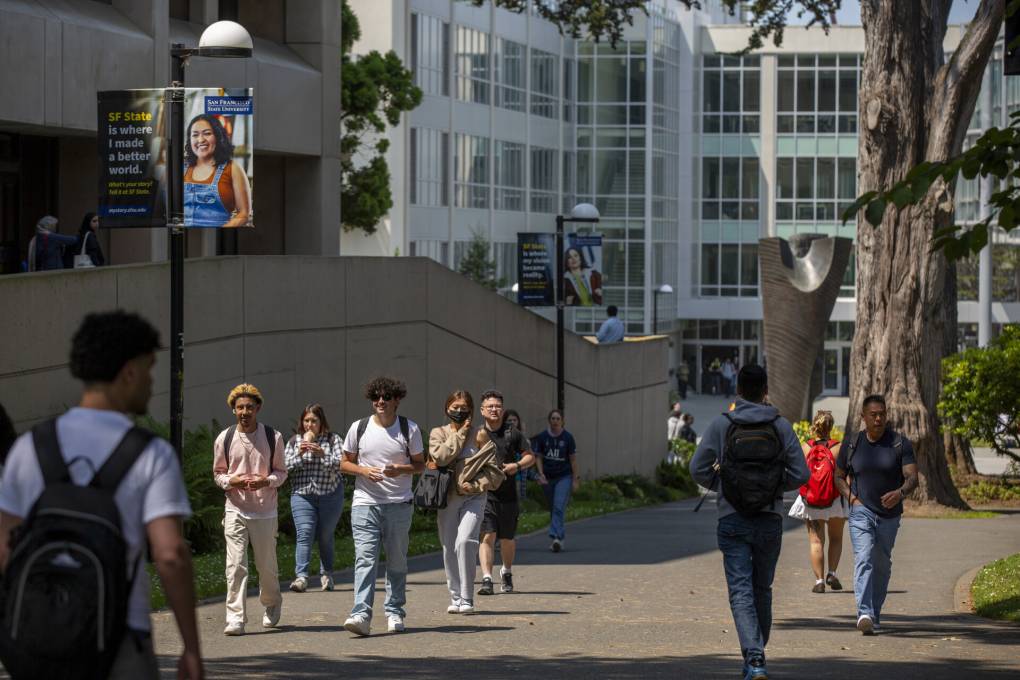
"caption": "Students walk across San Francisco State’s campus on Aug. 22, 2023.",
"description": null,
"title": "20230822-SFSU-36-JY-qut",
"credit": "Juliana Yamada/KQED",
"status": "inherit",
"altTag": "Many students, wearing backpacks, walk across a college campus. A banner on a lamppost reads: 'SF State is where I made a better world.'",
"isLoading": false,
"fetchFailed": false
},
"news_11983266": {
"type": "attachments",
"id": "news_11983266",
"meta": {
"index": "attachments_1716263798",
"site": "news",
"id": "11983266",
"found": true
},
"parent": 11983257,
"imgSizes": {
"twentyfourteen-full-width": {
"file": "https://cdn.kqed.org/wp-content/uploads/sites/10/2024/04/49913407146_5eba557487_k-1038x576.jpg",
"width": 1038,
"mimeType": "image/jpeg",
"height": 576
},
"thumbnail": {
"file": "https://cdn.kqed.org/wp-content/uploads/sites/10/2024/04/49913407146_5eba557487_k-160x107.jpg",
"width": 160,
"mimeType": "image/jpeg",
"height": 107
},
"post-thumbnail": {
"file": "https://cdn.kqed.org/wp-content/uploads/sites/10/2024/04/49913407146_5eba557487_k-672x372.jpg",
"width": 672,
"mimeType": "image/jpeg",
"height": 372
},
"kqedFullSize": {
"file": "https://cdn.kqed.org/wp-content/uploads/sites/10/2024/04/49913407146_5eba557487_k.jpg",
"width": 2048,
"height": 1365
},
"large": {
"file": "https://cdn.kqed.org/wp-content/uploads/sites/10/2024/04/49913407146_5eba557487_k-1020x680.jpg",
"width": 1020,
"mimeType": "image/jpeg",
"height": 680
},
"1536x1536": {
"file": "https://cdn.kqed.org/wp-content/uploads/sites/10/2024/04/49913407146_5eba557487_k-1536x1024.jpg",
"width": 1536,
"mimeType": "image/jpeg",
"height": 1024
},
"full-width": {
"file": "https://cdn.kqed.org/wp-content/uploads/sites/10/2024/04/49913407146_5eba557487_k-1920x1280.jpg",
"width": 1920,
"mimeType": "image/jpeg",
"height": 1280
},
"medium": {
"file": "https://cdn.kqed.org/wp-content/uploads/sites/10/2024/04/49913407146_5eba557487_k-800x533.jpg",
"width": 800,
"mimeType": "image/jpeg",
"height": 533
}
},
"publishDate": 1713385250,
"modified": 1713385285,
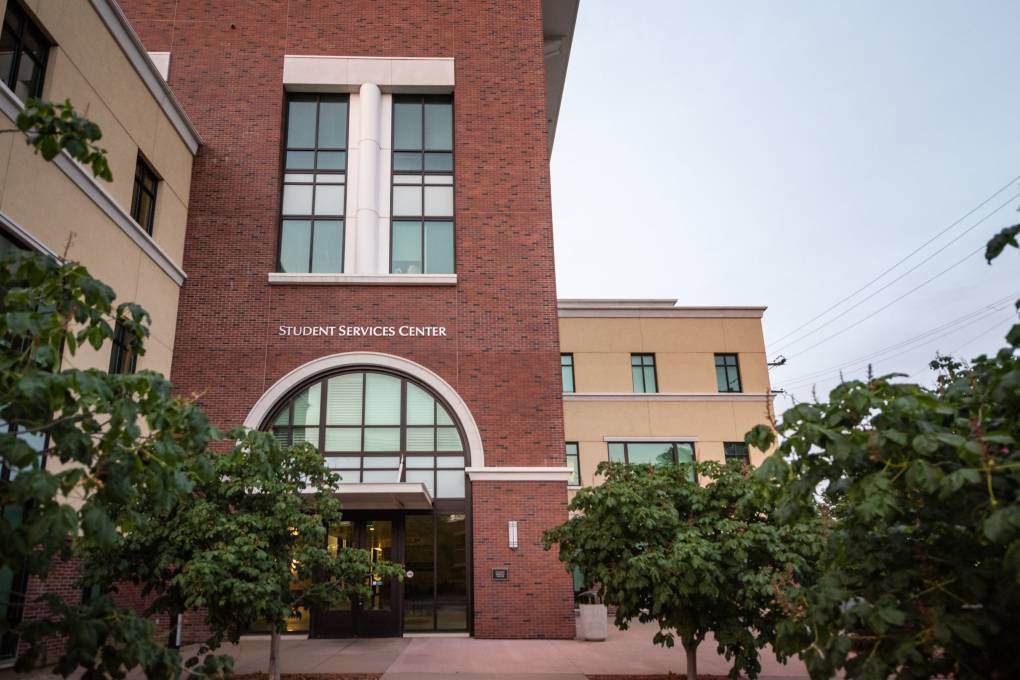
"caption": "The Student Services Center at Chico State.",
"description": null,
"title": "49913407146_5eba557487_k",
"credit": "Jason Halley/Chico State",
"status": "inherit",
"altTag": null,
"isLoading": false,
"fetchFailed": false
},
"news_11979390": {
"type": "attachments",
"id": "news_11979390",
"meta": {
"index": "attachments_1716263798",
"site": "news",
"id": "11979390",
"found": true
},
"title": "hispanic college student doing some home works from home with laptop",
"publishDate": 1710374837,
"status": "inherit",
"parent": 11979367,
"modified": 1759874426,
"caption": "A glitch blocking mixed-status families has caused stress for many, but some steps can be taken in the meantime when it comes to the FAFSA application.",
"credit": "Carol Yepes/Getty Images",
"altTag": "A young woman with dark brown hair stares intently at her computer screen.",
"description": null,
"imgSizes": {
"medium": {
"file": "https://cdn.kqed.org/wp-content/uploads/sites/10/2024/03/GettyImages-1403066184-800x533.jpg",
"width": 800,
"height": 533,
"mimeType": "image/jpeg"
},
"large": {
"file": "https://cdn.kqed.org/wp-content/uploads/sites/10/2024/03/GettyImages-1403066184-1020x680.jpg",
"width": 1020,
"height": 680,
"mimeType": "image/jpeg"
},
"thumbnail": {
"file": "https://cdn.kqed.org/wp-content/uploads/sites/10/2024/03/GettyImages-1403066184-160x107.jpg",
"width": 160,
"height": 107,
"mimeType": "image/jpeg"
},
"1536x1536": {
"file": "https://cdn.kqed.org/wp-content/uploads/sites/10/2024/03/GettyImages-1403066184-1536x1024.jpg",
"width": 1536,
"height": 1024,
"mimeType": "image/jpeg"
},
"2048x2048": {
"file": "https://cdn.kqed.org/wp-content/uploads/sites/10/2024/03/GettyImages-1403066184-2048x1365.jpg",
"width": 2048,
"height": 1365,
"mimeType": "image/jpeg"
},
"post-thumbnail": {
"file": "https://cdn.kqed.org/wp-content/uploads/sites/10/2024/03/GettyImages-1403066184-672x372.jpg",
"width": 672,
"height": 372,
"mimeType": "image/jpeg"
},
"twentyfourteen-full-width": {
"file": "https://cdn.kqed.org/wp-content/uploads/sites/10/2024/03/GettyImages-1403066184-1038x576.jpg",
"width": 1038,
"height": 576,
"mimeType": "image/jpeg"
},
"full-width": {
"file": "https://cdn.kqed.org/wp-content/uploads/sites/10/2024/03/GettyImages-1403066184-1920x1280.jpg",
"width": 1920,
"height": 1280,
"mimeType": "image/jpeg"
},
"kqedFullSize": {
"file": "https://cdn.kqed.org/wp-content/uploads/sites/10/2024/03/GettyImages-1403066184.jpg",
"width": 2121,
"height": 1414
}
},
"isLoading": false,
"fetchFailed": false
},
"news_11979076": {
"type": "attachments",
"id": "news_11979076",
"meta": {
"index": "attachments_1716263798",
"site": "news",
"id": "11979076",
"found": true
},
"parent": 11979072,
"imgSizes": {
"twentyfourteen-full-width": {
"file": "https://cdn.kqed.org/wp-content/uploads/sites/10/2024/03/AP24071688455086-1038x576.jpg",
"width": 1038,
"mimeType": "image/jpeg",
"height": 576
},
"thumbnail": {
"file": "https://cdn.kqed.org/wp-content/uploads/sites/10/2024/03/AP24071688455086-160x107.jpg",
"width": 160,
"mimeType": "image/jpeg",
"height": 107
},
"post-thumbnail": {
"file": "https://cdn.kqed.org/wp-content/uploads/sites/10/2024/03/AP24071688455086-672x372.jpg",
"width": 672,
"mimeType": "image/jpeg",
"height": 372
},
"kqedFullSize": {
"file": "https://cdn.kqed.org/wp-content/uploads/sites/10/2024/03/AP24071688455086-scaled.jpg",
"width": 2560,
"height": 1707
},
"2048x2048": {
"file": "https://cdn.kqed.org/wp-content/uploads/sites/10/2024/03/AP24071688455086-2048x1365.jpg",
"width": 2048,
"mimeType": "image/jpeg",
"height": 1365
},
"large": {
"file": "https://cdn.kqed.org/wp-content/uploads/sites/10/2024/03/AP24071688455086-1020x680.jpg",
"width": 1020,
"mimeType": "image/jpeg",
"height": 680
},
"1536x1536": {
"file": "https://cdn.kqed.org/wp-content/uploads/sites/10/2024/03/AP24071688455086-1536x1024.jpg",
"width": 1536,
"mimeType": "image/jpeg",
"height": 1024
},
"full-width": {
"file": "https://cdn.kqed.org/wp-content/uploads/sites/10/2024/03/AP24071688455086-1920x1280.jpg",
"width": 1920,
"mimeType": "image/jpeg",
"height": 1280
},
"medium": {
"file": "https://cdn.kqed.org/wp-content/uploads/sites/10/2024/03/AP24071688455086-800x533.jpg",
"width": 800,
"mimeType": "image/jpeg",
"height": 533
}
},
"publishDate": 1710264096,
"modified": 1710269575,
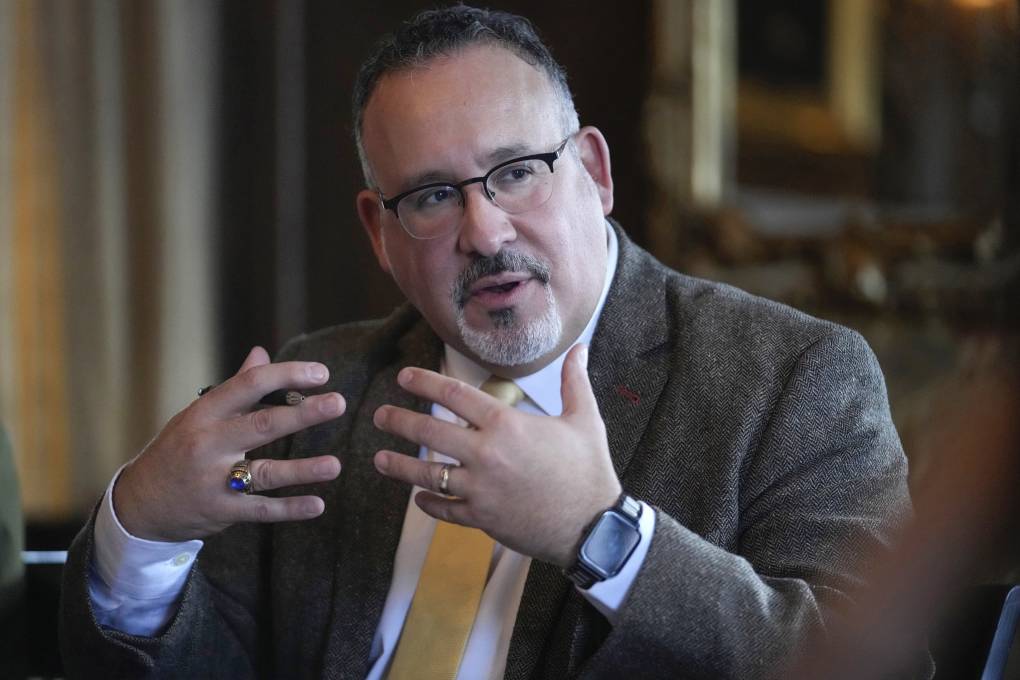
"caption": "Education Secretary Miguel Cardona participates in a roundtable discussion with students from Dartmouth College on Jan. 10, 2024. After months of delays and technical hiccups, some colleges and universities have started to receive federal data they need to put together financial aid offers for incoming students. ",
"description": null,
"title": "Miguel Cardona",
"credit": "Steven Senne/The Associated Press",
"status": "inherit",
"altTag": "A white man wearing glasses and a business suit has his hands raised by his chest.",
"isLoading": false,
"fetchFailed": false
},
"news_11970804": {
"type": "attachments",
"id": "news_11970804",
"meta": {
"index": "attachments_1716263798",
"site": "news",
"id": "11970804",
"found": true
},
"parent": 11970802,
"imgSizes": {
"twentyfourteen-full-width": {
"file": "https://cdn.kqed.org/wp-content/uploads/sites/10/2023/12/101423_Collge-Info-Berkeley_JY_CM_08-copy-1038x576.jpg",
"width": 1038,
"mimeType": "image/jpeg",
"height": 576
},
"thumbnail": {
"file": "https://cdn.kqed.org/wp-content/uploads/sites/10/2023/12/101423_Collge-Info-Berkeley_JY_CM_08-copy-160x107.jpg",
"width": 160,
"mimeType": "image/jpeg",
"height": 107
},
"post-thumbnail": {
"file": "https://cdn.kqed.org/wp-content/uploads/sites/10/2023/12/101423_Collge-Info-Berkeley_JY_CM_08-copy-672x372.jpg",
"width": 672,
"mimeType": "image/jpeg",
"height": 372
},
"kqedFullSize": {
"file": "https://cdn.kqed.org/wp-content/uploads/sites/10/2023/12/101423_Collge-Info-Berkeley_JY_CM_08-copy.jpg",
"width": 2000,
"height": 1333
},
"large": {
"file": "https://cdn.kqed.org/wp-content/uploads/sites/10/2023/12/101423_Collge-Info-Berkeley_JY_CM_08-copy-1020x680.jpg",
"width": 1020,
"mimeType": "image/jpeg",
"height": 680
},
"1536x1536": {
"file": "https://cdn.kqed.org/wp-content/uploads/sites/10/2023/12/101423_Collge-Info-Berkeley_JY_CM_08-copy-1536x1024.jpg",
"width": 1536,
"mimeType": "image/jpeg",
"height": 1024
},
"full-width": {
"file": "https://cdn.kqed.org/wp-content/uploads/sites/10/2023/12/101423_Collge-Info-Berkeley_JY_CM_08-copy-1920x1280.jpg",
"width": 1920,
"mimeType": "image/jpeg",
"height": 1280
},
"medium": {
"file": "https://cdn.kqed.org/wp-content/uploads/sites/10/2023/12/101423_Collge-Info-Berkeley_JY_CM_08-copy-800x533.jpg",
"width": 800,
"mimeType": "image/jpeg",
"height": 533
}
},
"publishDate": 1703362534,
"modified": 1703362590,
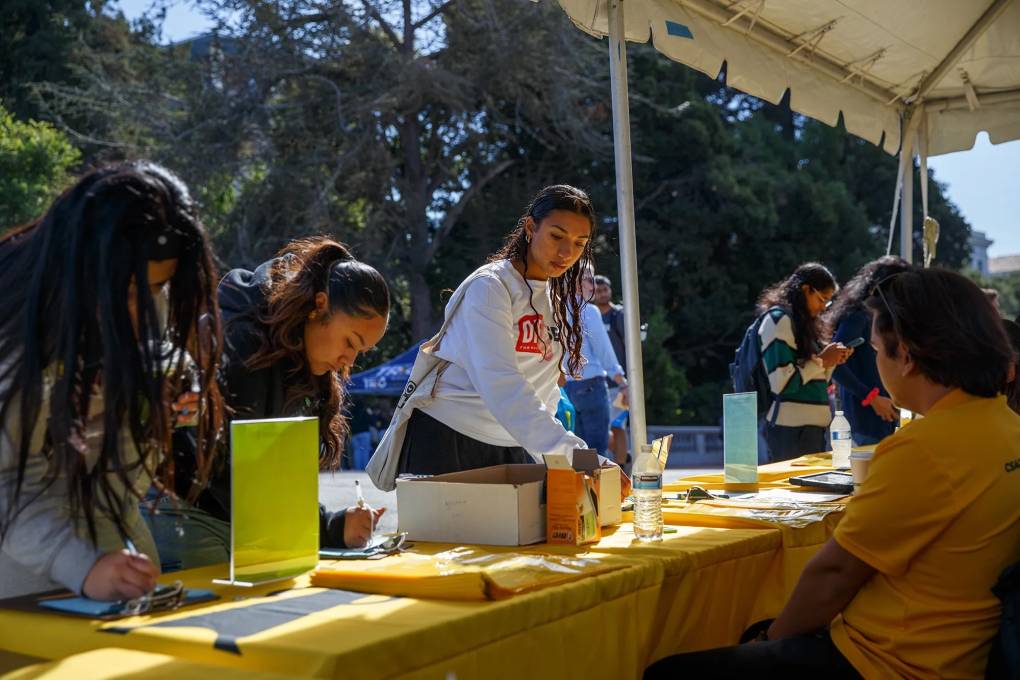
"caption": "Prospective college applicants visit the California Student Aid Commission booth at College Information Day at UC Berkeley in Berkeley on Oct. 14, 2023. CSAC held informational sessions on financial aid to help inform students and their families about their options.",
"description": null,
"title": "101423_Collge-Info-Berkeley_JY_CM_08 copy",
"credit": "Juliana Yamada for CalMatters",
"status": "inherit",
"altTag": "Female students behind a desk outdoors.",
"isLoading": false,
"fetchFailed": false
},
"news_11968720": {
"type": "attachments",
"id": "news_11968720",
"meta": {
"index": "attachments_1716263798",
"site": "news",
"id": "11968720",
"found": true
},
"parent": 11968584,
"imgSizes": {
"twentyfourteen-full-width": {
"file": "https://ww2.kqed.org/app/uploads/sites/10/2023/11/IMG_0524-1038x576.jpg",
"width": 1038,
"mimeType": "image/jpeg",
"height": 576
},
"thumbnail": {
"file": "https://ww2.kqed.org/app/uploads/sites/10/2023/11/IMG_0524-160x103.jpg",
"width": 160,
"mimeType": "image/jpeg",
"height": 103
},
"post-thumbnail": {
"file": "https://ww2.kqed.org/app/uploads/sites/10/2023/11/IMG_0524-672x372.jpg",
"width": 672,
"mimeType": "image/jpeg",
"height": 372
},
"kqedFullSize": {
"file": "https://ww2.kqed.org/app/uploads/sites/10/2023/11/IMG_0524.jpg",
"width": 1920,
"height": 1240
},
"large": {
"file": "https://ww2.kqed.org/app/uploads/sites/10/2023/11/IMG_0524-1020x659.jpg",
"width": 1020,
"mimeType": "image/jpeg",
"height": 659
},
"1536x1536": {
"file": "https://ww2.kqed.org/app/uploads/sites/10/2023/11/IMG_0524-1536x992.jpg",
"width": 1536,
"mimeType": "image/jpeg",
"height": 992
},
"medium": {
"file": "https://ww2.kqed.org/app/uploads/sites/10/2023/11/IMG_0524-800x517.jpg",
"width": 800,
"mimeType": "image/jpeg",
"height": 517
}
},
"publishDate": 1701381639,
"modified": 1701381705,
"caption": "Completing FAFSA nearly always means involving your family in discussions about finances. For many students, that's far from a simple conversation.",
"description": null,
"title": "fafsa-login",
"credit": "Anna Vignet/KQED",
"status": "inherit",
"altTag": "An illustration showing a pair of hands holding a yellow sheet of paper that reads FAFSA. In the background, a number of figures representing family members talk.",
"isLoading": false,
"fetchFailed": false
},
"news_11927306": {
"type": "attachments",
"id": "news_11927306",
"meta": {
"index": "attachments_1716263798",
"site": "news",
"id": "11927306",
"found": true
},
"parent": 11927018,
"imgSizes": {
"twentyfourteen-full-width": {
"file": "https://ww2.kqed.org/app/uploads/sites/10/2022/09/RS58894_GettyImages-1402026133-qut-1038x576.jpg",
"width": 1038,
"mimeType": "image/jpeg",
"height": 576
},
"thumbnail": {
"file": "https://ww2.kqed.org/app/uploads/sites/10/2022/09/RS58894_GettyImages-1402026133-qut-160x118.jpg",
"width": 160,
"mimeType": "image/jpeg",
"height": 118
},
"post-thumbnail": {
"file": "https://ww2.kqed.org/app/uploads/sites/10/2022/09/RS58894_GettyImages-1402026133-qut-672x372.jpg",
"width": 672,
"mimeType": "image/jpeg",
"height": 372
},
"kqedFullSize": {
"file": "https://ww2.kqed.org/app/uploads/sites/10/2022/09/RS58894_GettyImages-1402026133-qut.jpg",
"width": 1920,
"height": 1419
},
"large": {
"file": "https://ww2.kqed.org/app/uploads/sites/10/2022/09/RS58894_GettyImages-1402026133-qut-1020x754.jpg",
"width": 1020,
"mimeType": "image/jpeg",
"height": 754
},
"1536x1536": {
"file": "https://ww2.kqed.org/app/uploads/sites/10/2022/09/RS58894_GettyImages-1402026133-qut-1536x1135.jpg",
"width": 1536,
"mimeType": "image/jpeg",
"height": 1135
},
"medium": {
"file": "https://ww2.kqed.org/app/uploads/sites/10/2022/09/RS58894_GettyImages-1402026133-qut-800x591.jpg",
"width": 800,
"mimeType": "image/jpeg",
"height": 591
}
},
"publishDate": 1664564144,
"modified": 1664579671,
"caption": "The Long Beach City College graduation ceremony allowed students from 2020, 2021 and 2022 to walk the stage for the first in-person commencement since 2019.",
"description": null,
"title": "Long Beach City College holds graduation for classes of 2020, 2021 and 2022.",
"credit": "Brittany Murray/MediaNews Group/Long Beach Press-Telegram via Getty Images",
"status": "inherit",
"altTag": null,
"isLoading": false,
"fetchFailed": false
}
},
"audioPlayerReducer": {
"postId": "stream_live",
"isPaused": true,
"isPlaying": false,
"pfsActive": false,
"pledgeModalIsOpen": true,
"playerDrawerIsOpen": false,
"liveAudioPlayStartedAt": 0,
"liveAudioPlayContext": ""
},
"authorsReducer": {
"byline_news_11983823": {
"type": "authors",
"id": "byline_news_11983823",
"meta": {
"override": true
},
"slug": "byline_news_11983823",
"name": "Mikhail Zinshteyn\u003cbr>CalMatters\u003c/br>",
"isLoading": false
},
"byline_news_11983257": {
"type": "authors",
"id": "byline_news_11983257",
"meta": {
"override": true
},
"slug": "byline_news_11983257",
"name": "\u003ca href=\"https://edsource.org/author/asmith\">Ashley A. Smith\u003c/a>",
"isLoading": false
},
"byline_news_11979072": {
"type": "authors",
"id": "byline_news_11979072",
"meta": {
"override": true
},
"slug": "byline_news_11979072",
"name": "Annie Ma and Collin Binkley\u003cbr>Associated Press\u003c/br>",
"isLoading": false
},
"byline_news_11970802": {
"type": "authors",
"id": "byline_news_11970802",
"meta": {
"override": true
},
"slug": "byline_news_11970802",
"name": "\u003ca href=\"https://calmatters.org/author/mikhailzinshteyn/\">Mikhail Zinshteyn\u003c/a>",
"isLoading": false
},
"byline_news_11927018": {
"type": "authors",
"id": "byline_news_11927018",
"meta": {
"override": true
},
"slug": "byline_news_11927018",
"name": "Adriana Morga, Associated Press",
"isLoading": false
},
"ccabreralomeli": {
"type": "authors",
"id": "11708",
"meta": {
"index": "authors_1716337520",
"id": "11708",
"found": true
},
"name": "Carlos Cabrera-Lomelí",
"firstName": "Carlos",
"lastName": "Cabrera-Lomelí",
"slug": "ccabreralomeli",
"email": "ccabreralomeli@KQED.org",
"display_author_email": true,
"staff_mastheads": [
"news"
],
"title": "Community Reporter",
"bio": "Carlos Cabrera-Lomelí is a community reporter with KQED's digital engagement team. He also reports and co-produces for KQED's bilingual news hub KQED en Español. He grew up in San Francisco's Mission District and has previously worked with Univision, 48 Hills and REFORMA in Mexico City.",
"avatar": "https://secure.gravatar.com/avatar/c309be9665e484f887b818c89e273ecc673004f426f36b24d00a4d813a2e0518?s=600&d=blank&r=g",
"twitter": "@LomeliCabrera",
"bluesky": null,
"facebook": null,
"instagram": null,
"linkedin": null,
"sites": [
{
"site": "arts",
"roles": [
"editor"
]
},
{
"site": "news",
"roles": [
"editor"
]
},
{
"site": "about",
"roles": [
"editor"
]
},
{
"site": "science",
"roles": [
"editor"
]
},
{
"site": "perspectives",
"roles": [
"editor"
]
},
{
"site": "elections",
"roles": [
"editor"
]
},
{
"site": "liveblog",
"roles": [
"contributor"
]
}
],
"headData": {
"title": "Carlos Cabrera-Lomelí | KQED",
"description": "Community Reporter",
"ogImgSrc": "https://secure.gravatar.com/avatar/c309be9665e484f887b818c89e273ecc673004f426f36b24d00a4d813a2e0518?s=600&d=blank&r=g",
"twImgSrc": "https://secure.gravatar.com/avatar/c309be9665e484f887b818c89e273ecc673004f426f36b24d00a4d813a2e0518?s=600&d=blank&r=g"
},
"isLoading": false,
"link": "/author/ccabreralomeli"
}
},
"pagesReducer": {
"news_tag_fafsa": {
"type": "terms",
"id": "news_31715",
"meta": {
"index": "terms_1716263798",
"site": "news",
"id": "31715",
"score": 9.889647
},
"featImg": null,
"name": "FAFSA",
"description": null,
"taxonomy": "tag",
"headData": {
"twImgId": null,
"twTitle": null,
"ogTitle": null,
"ogImgId": null,
"twDescription": null,
"description": null,
"title": "FAFSA Archives | KQED News",
"ogDescription": null
},
"ttid": 31732,
"slug": "fafsa",
"isLoading": false,
"title": "FAFSA",
"pageMeta": {
"site": "news",
"WpPageTemplate": "page-topic-editorial",
"currentPage": 2
},
"blocks": [
{
"blockName": "kqed/post-list",
"attrs": {
"layout": "cardArticle2",
"query": "posts/news?tag=fafsa",
"seeMore": false,
"paginated": true,
"page": 2
}
},
{
"blockName": "kqed/ad"
}
]
}
},
"pfsSessionReducer": {},
"postsReducer": {
"stream_live": {
"type": "live",
"id": "stream_live",
"audioUrl": "https://streams.kqed.org/kqedradio",
"title": "Live Stream",
"excerpt": "Live Stream information currently unavailable.",
"link": "/radio",
"featImg": "",
"label": {
"name": "KQED Live",
"link": "/"
}
},
"stream_kqedNewscast": {
"type": "posts",
"id": "stream_kqedNewscast",
"audioUrl": "https://www.kqed.org/.stream/anon/radio/RDnews/newscast.mp3?_=1",
"title": "KQED Newscast",
"featImg": "",
"label": {
"name": "88.5 FM",
"link": "/"
}
},
"news_11983823": {
"type": "posts",
"id": "news_11983823",
"meta": {
"index": "posts_1716263798",
"site": "news",
"id": "11983823",
"score": null,
"sort": [
1713906044000
]
},
"parent": 0,
"labelTerm": {
"site": "news",
"term": 18481
},
"blocks": [],
"publishDate": 1713906044,
"format": "standard",
"title": "Planned Cal Grant Expansion for Public College Students in Jeopardy Amid Growing State Deficit",
"headTitle": "Planned Cal Grant Expansion for Public College Students in Jeopardy Amid Growing State Deficit | KQED",
"content": "\u003cp>When California’s budget surplus was in the tens of billions of dollars two years ago, legislators passed a law that would expand the state’s nationally renowned free-tuition and cash-aid program to an additional 137,000 college students by fall 2024 — \u003ca href=\"https://ebudget.ca.gov/2022-23/pdf/Enacted/BudgetSummary/HigherEducation.pdf#page=10\">but only if the money was there\u003c/a>.\u003c/p>\n\u003cp>Whether the Cal Grant tuition program grows will play out in the next two months as state legislators and Gov. Gavin Newsom grapple with a budget deficit now estimated at between \u003ca href=\"https://calmatters.org/politics/2024/01/newsom-budget-california/\">$38 billion\u003c/a> and \u003ca href=\"https://calmatters.org/politics/capitol/2024/02/california-budget-deficit-balloons/\">$73 billion\u003c/a>, depending on whom you ask.\u003c/p>\n\u003cp>Early signs suggest California’s upcoming budget, which legislators and the governor must finalize by late June, won’t be able to shoulder the new expenses. “Based on current revenue projections, those conditions are unlikely to be met in 2024–25,” wrote Lisa Qing, an analyst with the nonpartisan Legislative Analyst’s Office, in an email last week.\u003c/p>\n\u003cp>Full expansion \u003ca href=\"https://abgt.assembly.ca.gov/system/files/2024-03/sub-3-march-19-agenda-final.pdf#page=9\">would cost $245 million\u003c/a>, on top of the \u003ca href=\"https://abgt.assembly.ca.gov/system/files/2024-03/sub-3-march-19-agenda-final.pdf#page=10\">$2.4 billion the state already spends on the Cal Grant\u003c/a> program. The financial aid juggernaut fully covers tuition at the University of California and California State University and provides cash awards to community college students of $1,650, though some \u003ca href=\"https://www.csac.ca.gov/students-dependents\">students with children get more\u003c/a>. Private college students receive partial tuition waivers.\u003c/p>\n\u003cp>If implemented, \u003ca href=\"https://abgt.assembly.ca.gov/system/files/2024-03/sub-3-march-19-agenda-final.pdf#page=10\">much of the increased benefit\u003c/a> would go to lower-income community college students who aren’t eligible for the Cal Grant due to GPA restrictions.\u003c/p>\n\u003cp>[ad fullwidth]\u003c/p>\n\u003cp>Some lawmakers are asking whether the state could partially expand the grant program in the hopes that more money will be available next year — no sure bet as projections show California will battle \u003ca href=\"https://calmatters.org/politics/2024/01/california-budget-lao-review-newsom/#:~:text=Worse%2C%20both%20the%20governor%20and%20Legislative%20Analyst%E2%80%99s%20Office%20predict%20large%20deficits%20of%20about%20%2430%20billion%20annually%20through%202027%2D28.\">$30 billion deficits through 2028\u003c/a>.\u003c/p>\n\u003cp>Meanwhile, the UC system has asked lawmakers to delay changes to the Cal Grant until next year. An official cited the colossal problems caused by new \u003ca href=\"https://calmatters.org/education/higher-education/2024/03/financial-aid/\">changes to the federal financial aid application\u003c/a>, known as FAFSA, that have upended the normal workflow of financial aid offices across the country.\u003c/p>\n\u003cp>Another reason is that the proposed Cal Grant changes would generally lower the income eligibility cutoff, ultimately making fewer UC students eligible for the grant over time.\u003c/p>\n\u003cp>“Given that and the challenges that we’re facing this year with FAFSA, we would prefer that Cal Grant reform be enacted for ’25–’26,” said Shawn Brick, UC’s director of financial aid, \u003ca href=\"https://digitaldemocracy.calmatters.org/hearings/257710?t=630&f=4bdaaf3f51f0652e230d2df807380a98\">at a March Assembly hearing\u003c/a>.\u003c/p>\n\u003ch2>What full Cal Grant expansion would look like\u003c/h2>\n\u003cp>Right now, Cal Grant consists of eight programs, each with its own rules and award amounts that collectively benefit about 400,000 students. The law to revamp Cal Grant would collapse all those programs into just two: the Cal Grant 2 for community colleges and the Cal Grant 4 for four-year universities.\u003c/p>\n\u003cp>The overhaul would expand eligibility to roughly 185,000 additional students \u003ca href=\"https://abgt.assembly.ca.gov/system/files/2024-03/sub-3-march-19-agenda-final.pdf#page=9\">but exclude 48,000 students currently eligible\u003c/a> — a net increase of 137,000 students. Those already getting the award would continue to receive it.\u003c/p>\n\u003cp>Students would be \u003ca href=\"https://abgt.assembly.ca.gov/system/files/2024-03/sub-3-march-19-agenda-final.pdf#page=8\">newly eligible for several reasons\u003c/a>. If they’re community college students, they’ll no longer need to satisfy a minimum GPA of 2.0. This builds on a 2021 law that \u003ca href=\"https://ebudget.ca.gov/2021-22/pdf/Enacted/BudgetSummary/HigherEducation.pdf#page=9\">allowed more than 100,000 community college students\u003c/a> to receive the Cal Grant for the first time. University students would be newly eligible because the rules \u003ca href=\"https://abgt.assembly.ca.gov/system/files/2024-03/sub-3-march-19-agenda-final.pdf#page=8\">would no longer limit the award\u003c/a> to students under 28.\u003c/p>\n\u003cp>[aside label=\"more higher ed coverage\" tag=\"higher-education\"]The new rules would also make students eligible for the Cal Grant even if they enroll directly into a university more than a year after finishing high school, removing the time-out-of-high school restriction.\u003c/p>\n\u003cp>However, the overhaul would also lower the income ceiling, excluding about 48,000 students who are now eligible for it. For example, under current rules, the income ceiling for a family of four with a dependent student going to college is $131,000. It would drop to $76,000 under the Cal Grant overhaul, \u003ca href=\"https://digitaldemocracy.calmatters.org/hearings/257710?t=96&f=4bdaaf3f51f0652e230d2df807380a98\">Qing said at a March legislative hearing\u003c/a>.\u003c/p>\n\u003cp>Also, university students \u003ca href=\"https://digitaldemocracy.calmatters.org/hearings/257710?t=130&f=4bdaaf3f51f0652e230d2df807380a98\">would no longer be eligible\u003c/a> for some cash awards, with the expectation that campus financial aid programs \u003ca href=\"https://digitaldemocracy.calmatters.org/hearings/257710?t=159&f=4bdaaf3f51f0652e230d2df807380a98\">pick up the slack\u003c/a>. At the same time, some university students who now only receive a $1,650 cash award as freshmen would instead be granted the tuition waiver, which is a higher value.\u003c/p>\n\u003cp>Also, under the new Cal Grant rules, an additional 45,000 lower-income students who are parents would be eligible for the award, and \u003ca href=\"https://www.csac.ca.gov/students-dependents\">students with dependent children \u003c/a>could receive an additional $6,000.\u003c/p>\n\u003ch2>Most of the new awards would go to community college students\u003c/h2>\n\u003cp>The agency that oversees financial aid, the California Student Aid Commission, \u003ca href=\"https://abgt.assembly.ca.gov/system/files/2024-03/sub-3-march-19-agenda-final.pdf#page=10\">projects that by the end of the decade\u003c/a>, 120,000 more community college students will receive a Cal Grant annually under the overhaul.\u003c/p>\n\u003cp>It’s a different story for UC students. Under existing rules, the number of UC students receiving a Cal Grant is projected to grow by 17,000 by 2030. But under the overhauled Cal Grant, only 5,500 more UC students would get the award by then.\u003c/p>\n\u003cp>Still, students at UC, which has the highest tuition, would collectively receive more Cal Grant dollars than students elsewhere.\u003c/p>\n\u003cp>Assemblymember David Alvarez, a Democrat from Chula Vista, noted at a March hearing that UC is \u003ca href=\"https://abgt.assembly.ca.gov/system/files/2024-03/sub-3-march-13-final-agenda.pdf#page=6\">enrolling a smaller percentage of lower-income students\u003c/a> than in the past, which he thinks is the reason why the system is projected to see fewer of its students acquire a Cal Grant under the overhaul.\u003c/p>\n\u003cp>“Let’s identify more of our California students that are lower income to be able to attend our UC system,” \u003ca href=\"https://digitaldemocracy.calmatters.org/hearings/257710?t=1632&f=4bdaaf3f51f0652e230d2df807380a98\">Alvarez said\u003c/a>. “And therefore, I think Cal Grant can be a net benefit for the UC system.”\u003c/p>\n\u003cp>Alvarez, who leads the Assembly’s budget subcommittee on education, wants to see the Cal Grant expanded in some capacity by July when the state’s 2024–25 budget begins. “We know it will happen, but we are in a budget situation where we need to think about how that is going to happen. But I believe it must start this year,” he said.\u003c/p>\n\u003cp>Last month, state senators asked the Student Aid Commission to float some ideas for a \u003ca href=\"https://sbud.senate.ca.gov/sites/sbud.senate.ca.gov/files/March%207%202024_%20CA%20Student%20Aid%20Commission%20UC%20CSU%20CCC%20UC%20College%20of%20the%20Law%20SF%20State%20Library.pdf#page=8\">partial rollout that limits costs\u003c/a>.\u003c/p>\n\u003cp>One idea is to increase the size of the community college cash awards this year so they’re tied to inflation — one of the changes that would kick in under a full Cal Grant overhaul anyway.\u003c/p>\n\u003cp>Another option is to expand the number of students who are also parents receiving the cash award but lower the amount each student receives. An official with the commission, Jake Brymner, told lawmakers at a March hearing that doing so would mean 45,000 more students receive the cash award but that everyone \u003ca href=\"https://digitaldemocracy.calmatters.org/hearings/257579?t=410&f=cf17d1310e8ea48f9120dabd65ef74b0\">would get between $3,000 and $4,000\u003c/a> — less than the $6,000 students get now.\u003c/p>\n\u003cp>Brymner \u003ca href=\"https://digitaldemocracy.calmatters.org/hearings/257579?t=305&f=cf17d1310e8ea48f9120dabd65ef74b0\">also suggested\u003c/a> limiting the Cal Grant for community college students to those who meet the current 2.0 GPA rule.\u003c/p>\n\u003cp>Finally, lawmakers could overhaul the Cal Grant but \u003ca href=\"https://digitaldemocracy.calmatters.org/hearings/257579?t=452&f=cf17d1310e8ea48f9120dabd65ef74b0\">lower the income ceilings even more\u003c/a> to limit costs, Brymner said. That idea is likely the least popular.\u003c/p>\n\u003cp>“I would hate to see a reduction to the income ceilings,” Noelia Gonzalez, Cal State’s director for financial aid programs, said \u003ca href=\"https://digitaldemocracy.calmatters.org/hearings/257579?t=620&f=cf17d1310e8ea48f9120dabd65ef74b0\">at the same hearing\u003c/a>. She said it would come at a particularly poor time for middle-class students.\u003c/p>\n\u003cp>Because of the state’s budget deficit, Newsom favors nixing a planned one-time increase to the \u003ca href=\"https://calmatters.org/education/higher-education/2023/07/middle-class-scholarship-california/\">Middle Class Scholarship\u003c/a>, a relatively new financial aid program funded at around $630 million in 2022–23 and $860 million in 2023–24. Last year, lawmakers had promised to put \u003ca href=\"https://abgt.assembly.ca.gov/system/files/2024-03/sub-3-march-19-agenda-final.pdf#page=16\">an additional $60 million into the scholarship\u003c/a>. Instead, Newsom wants to cut it back to around $630 million.\u003c/p>\n\u003cp>[ad floatright]\u003c/p>\n\u003cp>That \u003ca href=\"https://abgt.assembly.ca.gov/system/files/2024-03/sub-3-march-19-agenda-final.pdf#page=16\">would drop average awards\u003c/a> from above $2,500 to just below $2,000 for the roughly 300,000 UC and Cal State students receiving them.\u003c/p>\n\n",
"stats": {
"hasVideo": false,
"hasChartOrMap": false,
"hasAudio": false,
"hasPolis": false,
"wordCount": 1363,
"hasGoogleForm": false,
"hasGallery": false,
"hasHearkenModule": false,
"iframeSrcs": [],
"paragraphCount": 32
},
"modified": 1713906384,
"excerpt": "Two years ago, state legislators planned to offer the Cal Grant, which fully covers tuition at the University of California and California State University, to 137,000 additional students. But it's unclear if that will happen.",
"headData": {
"twImgId": "",
"twTitle": "",
"ogTitle": "",
"ogImgId": "",
"twDescription": "",
"description": "Two years ago, state legislators planned to offer the Cal Grant, which fully covers tuition at the University of California and California State University, to 137,000 additional students. But it's unclear if that will happen.",
"title": "Planned Cal Grant Expansion for Public College Students in Jeopardy Amid Growing State Deficit | KQED",
"ogDescription": "",
"schema": {
"@context": "https://schema.org",
"@type": "NewsArticle",
"headline": "Planned Cal Grant Expansion for Public College Students in Jeopardy Amid Growing State Deficit",
"datePublished": "2024-04-23T14:00:44-07:00",
"dateModified": "2024-04-23T14:06:24-07:00",
"image": "https://cdn.kqed.org/wp-content/uploads/2020/02/KQED-OG-Image@1x.png",
"isAccessibleForFree": "True",
"publisher": {
"@type": "NewsMediaOrganization",
"@id": "https://www.kqed.org/#organization",
"name": "KQED",
"logo": "https://cdn.kqed.org/wp-content/uploads/2020/02/KQED-OG-Image@1x.png",
"url": "https://www.kqed.org",
"sameAs": [
"https://www.facebook.com/KQED",
"https://twitter.com/KQED",
"https://www.instagram.com/kqed/",
"https://www.tiktok.com/@kqedofficial",
"https://www.linkedin.com/company/kqed",
"https://www.youtube.com/channel/UCeC0IOo7i1P_61zVUWbJ4nw"
]
}
}
},
"guestAuthors": [],
"slug": "planned-cal-grant-expansion-for-public-college-students-in-jeopardy-amid-growing-state-deficit",
"status": "publish",
"nprByline": "Mikhail Zinshteyn\u003cbr>CalMatters\u003c/br>",
"excludeFromSiteSearch": "Include",
"sticky": false,
"showOnAuthorArchivePages": "No",
"articleAge": "0",
"path": "/news/11983823/planned-cal-grant-expansion-for-public-college-students-in-jeopardy-amid-growing-state-deficit",
"audioTrackLength": null,
"parsedContent": [
{
"type": "contentString",
"content": "\u003cdiv class=\"post-body\">\u003cp>\u003cp>When California’s budget surplus was in the tens of billions of dollars two years ago, legislators passed a law that would expand the state’s nationally renowned free-tuition and cash-aid program to an additional 137,000 college students by fall 2024 — \u003ca href=\"https://ebudget.ca.gov/2022-23/pdf/Enacted/BudgetSummary/HigherEducation.pdf#page=10\">but only if the money was there\u003c/a>.\u003c/p>\n\u003cp>Whether the Cal Grant tuition program grows will play out in the next two months as state legislators and Gov. Gavin Newsom grapple with a budget deficit now estimated at between \u003ca href=\"https://calmatters.org/politics/2024/01/newsom-budget-california/\">$38 billion\u003c/a> and \u003ca href=\"https://calmatters.org/politics/capitol/2024/02/california-budget-deficit-balloons/\">$73 billion\u003c/a>, depending on whom you ask.\u003c/p>\n\u003cp>Early signs suggest California’s upcoming budget, which legislators and the governor must finalize by late June, won’t be able to shoulder the new expenses. “Based on current revenue projections, those conditions are unlikely to be met in 2024–25,” wrote Lisa Qing, an analyst with the nonpartisan Legislative Analyst’s Office, in an email last week.\u003c/p>\n\u003cp>Full expansion \u003ca href=\"https://abgt.assembly.ca.gov/system/files/2024-03/sub-3-march-19-agenda-final.pdf#page=9\">would cost $245 million\u003c/a>, on top of the \u003ca href=\"https://abgt.assembly.ca.gov/system/files/2024-03/sub-3-march-19-agenda-final.pdf#page=10\">$2.4 billion the state already spends on the Cal Grant\u003c/a> program. The financial aid juggernaut fully covers tuition at the University of California and California State University and provides cash awards to community college students of $1,650, though some \u003ca href=\"https://www.csac.ca.gov/students-dependents\">students with children get more\u003c/a>. Private college students receive partial tuition waivers.\u003c/p>\n\u003cp>If implemented, \u003ca href=\"https://abgt.assembly.ca.gov/system/files/2024-03/sub-3-march-19-agenda-final.pdf#page=10\">much of the increased benefit\u003c/a> would go to lower-income community college students who aren’t eligible for the Cal Grant due to GPA restrictions.\u003c/p>\n\u003cp>\u003c/p>\u003c/div>",
"attributes": {
"named": {},
"numeric": []
}
},
{
"type": "component",
"content": "",
"name": "ad",
"attributes": {
"named": {
"label": "fullwidth"
},
"numeric": [
"fullwidth"
]
}
},
{
"type": "contentString",
"content": "\u003cdiv class=\"post-body\">\u003cp>\u003c/p>\n\u003cp>Some lawmakers are asking whether the state could partially expand the grant program in the hopes that more money will be available next year — no sure bet as projections show California will battle \u003ca href=\"https://calmatters.org/politics/2024/01/california-budget-lao-review-newsom/#:~:text=Worse%2C%20both%20the%20governor%20and%20Legislative%20Analyst%E2%80%99s%20Office%20predict%20large%20deficits%20of%20about%20%2430%20billion%20annually%20through%202027%2D28.\">$30 billion deficits through 2028\u003c/a>.\u003c/p>\n\u003cp>Meanwhile, the UC system has asked lawmakers to delay changes to the Cal Grant until next year. An official cited the colossal problems caused by new \u003ca href=\"https://calmatters.org/education/higher-education/2024/03/financial-aid/\">changes to the federal financial aid application\u003c/a>, known as FAFSA, that have upended the normal workflow of financial aid offices across the country.\u003c/p>\n\u003cp>Another reason is that the proposed Cal Grant changes would generally lower the income eligibility cutoff, ultimately making fewer UC students eligible for the grant over time.\u003c/p>\n\u003cp>“Given that and the challenges that we’re facing this year with FAFSA, we would prefer that Cal Grant reform be enacted for ’25–’26,” said Shawn Brick, UC’s director of financial aid, \u003ca href=\"https://digitaldemocracy.calmatters.org/hearings/257710?t=630&f=4bdaaf3f51f0652e230d2df807380a98\">at a March Assembly hearing\u003c/a>.\u003c/p>\n\u003ch2>What full Cal Grant expansion would look like\u003c/h2>\n\u003cp>Right now, Cal Grant consists of eight programs, each with its own rules and award amounts that collectively benefit about 400,000 students. The law to revamp Cal Grant would collapse all those programs into just two: the Cal Grant 2 for community colleges and the Cal Grant 4 for four-year universities.\u003c/p>\n\u003cp>The overhaul would expand eligibility to roughly 185,000 additional students \u003ca href=\"https://abgt.assembly.ca.gov/system/files/2024-03/sub-3-march-19-agenda-final.pdf#page=9\">but exclude 48,000 students currently eligible\u003c/a> — a net increase of 137,000 students. Those already getting the award would continue to receive it.\u003c/p>\n\u003cp>Students would be \u003ca href=\"https://abgt.assembly.ca.gov/system/files/2024-03/sub-3-march-19-agenda-final.pdf#page=8\">newly eligible for several reasons\u003c/a>. If they’re community college students, they’ll no longer need to satisfy a minimum GPA of 2.0. This builds on a 2021 law that \u003ca href=\"https://ebudget.ca.gov/2021-22/pdf/Enacted/BudgetSummary/HigherEducation.pdf#page=9\">allowed more than 100,000 community college students\u003c/a> to receive the Cal Grant for the first time. University students would be newly eligible because the rules \u003ca href=\"https://abgt.assembly.ca.gov/system/files/2024-03/sub-3-march-19-agenda-final.pdf#page=8\">would no longer limit the award\u003c/a> to students under 28.\u003c/p>\n\u003cp>\u003c/p>\u003c/div>",
"attributes": {
"named": {},
"numeric": []
}
},
{
"type": "component",
"content": "",
"name": "aside",
"attributes": {
"named": {
"label": "more higher ed coverage ",
"tag": "higher-education"
},
"numeric": []
}
},
{
"type": "contentString",
"content": "\u003cdiv class=\"post-body\">\u003cp>The new rules would also make students eligible for the Cal Grant even if they enroll directly into a university more than a year after finishing high school, removing the time-out-of-high school restriction.\u003c/p>\n\u003cp>However, the overhaul would also lower the income ceiling, excluding about 48,000 students who are now eligible for it. For example, under current rules, the income ceiling for a family of four with a dependent student going to college is $131,000. It would drop to $76,000 under the Cal Grant overhaul, \u003ca href=\"https://digitaldemocracy.calmatters.org/hearings/257710?t=96&f=4bdaaf3f51f0652e230d2df807380a98\">Qing said at a March legislative hearing\u003c/a>.\u003c/p>\n\u003cp>Also, university students \u003ca href=\"https://digitaldemocracy.calmatters.org/hearings/257710?t=130&f=4bdaaf3f51f0652e230d2df807380a98\">would no longer be eligible\u003c/a> for some cash awards, with the expectation that campus financial aid programs \u003ca href=\"https://digitaldemocracy.calmatters.org/hearings/257710?t=159&f=4bdaaf3f51f0652e230d2df807380a98\">pick up the slack\u003c/a>. At the same time, some university students who now only receive a $1,650 cash award as freshmen would instead be granted the tuition waiver, which is a higher value.\u003c/p>\n\u003cp>Also, under the new Cal Grant rules, an additional 45,000 lower-income students who are parents would be eligible for the award, and \u003ca href=\"https://www.csac.ca.gov/students-dependents\">students with dependent children \u003c/a>could receive an additional $6,000.\u003c/p>\n\u003ch2>Most of the new awards would go to community college students\u003c/h2>\n\u003cp>The agency that oversees financial aid, the California Student Aid Commission, \u003ca href=\"https://abgt.assembly.ca.gov/system/files/2024-03/sub-3-march-19-agenda-final.pdf#page=10\">projects that by the end of the decade\u003c/a>, 120,000 more community college students will receive a Cal Grant annually under the overhaul.\u003c/p>\n\u003cp>It’s a different story for UC students. Under existing rules, the number of UC students receiving a Cal Grant is projected to grow by 17,000 by 2030. But under the overhauled Cal Grant, only 5,500 more UC students would get the award by then.\u003c/p>\n\u003cp>Still, students at UC, which has the highest tuition, would collectively receive more Cal Grant dollars than students elsewhere.\u003c/p>\n\u003cp>Assemblymember David Alvarez, a Democrat from Chula Vista, noted at a March hearing that UC is \u003ca href=\"https://abgt.assembly.ca.gov/system/files/2024-03/sub-3-march-13-final-agenda.pdf#page=6\">enrolling a smaller percentage of lower-income students\u003c/a> than in the past, which he thinks is the reason why the system is projected to see fewer of its students acquire a Cal Grant under the overhaul.\u003c/p>\n\u003cp>“Let’s identify more of our California students that are lower income to be able to attend our UC system,” \u003ca href=\"https://digitaldemocracy.calmatters.org/hearings/257710?t=1632&f=4bdaaf3f51f0652e230d2df807380a98\">Alvarez said\u003c/a>. “And therefore, I think Cal Grant can be a net benefit for the UC system.”\u003c/p>\n\u003cp>Alvarez, who leads the Assembly’s budget subcommittee on education, wants to see the Cal Grant expanded in some capacity by July when the state’s 2024–25 budget begins. “We know it will happen, but we are in a budget situation where we need to think about how that is going to happen. But I believe it must start this year,” he said.\u003c/p>\n\u003cp>Last month, state senators asked the Student Aid Commission to float some ideas for a \u003ca href=\"https://sbud.senate.ca.gov/sites/sbud.senate.ca.gov/files/March%207%202024_%20CA%20Student%20Aid%20Commission%20UC%20CSU%20CCC%20UC%20College%20of%20the%20Law%20SF%20State%20Library.pdf#page=8\">partial rollout that limits costs\u003c/a>.\u003c/p>\n\u003cp>One idea is to increase the size of the community college cash awards this year so they’re tied to inflation — one of the changes that would kick in under a full Cal Grant overhaul anyway.\u003c/p>\n\u003cp>Another option is to expand the number of students who are also parents receiving the cash award but lower the amount each student receives. An official with the commission, Jake Brymner, told lawmakers at a March hearing that doing so would mean 45,000 more students receive the cash award but that everyone \u003ca href=\"https://digitaldemocracy.calmatters.org/hearings/257579?t=410&f=cf17d1310e8ea48f9120dabd65ef74b0\">would get between $3,000 and $4,000\u003c/a> — less than the $6,000 students get now.\u003c/p>\n\u003cp>Brymner \u003ca href=\"https://digitaldemocracy.calmatters.org/hearings/257579?t=305&f=cf17d1310e8ea48f9120dabd65ef74b0\">also suggested\u003c/a> limiting the Cal Grant for community college students to those who meet the current 2.0 GPA rule.\u003c/p>\n\u003cp>Finally, lawmakers could overhaul the Cal Grant but \u003ca href=\"https://digitaldemocracy.calmatters.org/hearings/257579?t=452&f=cf17d1310e8ea48f9120dabd65ef74b0\">lower the income ceilings even more\u003c/a> to limit costs, Brymner said. That idea is likely the least popular.\u003c/p>\n\u003cp>“I would hate to see a reduction to the income ceilings,” Noelia Gonzalez, Cal State’s director for financial aid programs, said \u003ca href=\"https://digitaldemocracy.calmatters.org/hearings/257579?t=620&f=cf17d1310e8ea48f9120dabd65ef74b0\">at the same hearing\u003c/a>. She said it would come at a particularly poor time for middle-class students.\u003c/p>\n\u003cp>Because of the state’s budget deficit, Newsom favors nixing a planned one-time increase to the \u003ca href=\"https://calmatters.org/education/higher-education/2023/07/middle-class-scholarship-california/\">Middle Class Scholarship\u003c/a>, a relatively new financial aid program funded at around $630 million in 2022–23 and $860 million in 2023–24. Last year, lawmakers had promised to put \u003ca href=\"https://abgt.assembly.ca.gov/system/files/2024-03/sub-3-march-19-agenda-final.pdf#page=16\">an additional $60 million into the scholarship\u003c/a>. Instead, Newsom wants to cut it back to around $630 million.\u003c/p>\n\u003cp>\u003c/p>\u003c/div>",
"attributes": {
"named": {},
"numeric": []
}
},
{
"type": "component",
"content": "",
"name": "ad",
"attributes": {
"named": {
"label": "floatright"
},
"numeric": [
"floatright"
]
}
},
{
"type": "contentString",
"content": "\u003cdiv class=\"post-body\">\u003cp>\u003c/p>\n\u003cp>That \u003ca href=\"https://abgt.assembly.ca.gov/system/files/2024-03/sub-3-march-19-agenda-final.pdf#page=16\">would drop average awards\u003c/a> from above $2,500 to just below $2,000 for the roughly 300,000 UC and Cal State students receiving them.\u003c/p>\n\n\u003c/div>\u003c/p>",
"attributes": {
"named": {},
"numeric": []
}
}
],
"link": "/news/11983823/planned-cal-grant-expansion-for-public-college-students-in-jeopardy-amid-growing-state-deficit",
"authors": [
"byline_news_11983823"
],
"categories": [
"news_8"
],
"tags": [
"news_18085",
"news_20013",
"news_31715",
"news_22697",
"news_4843",
"news_797"
],
"affiliates": [
"news_18481"
],
"featImg": "news_11968957",
"label": "news_18481"
},
"news_11983257": {
"type": "posts",
"id": "news_11983257",
"meta": {
"index": "posts_1716263798",
"site": "news",
"id": "11983257",
"score": null,
"sort": [
1713388104000
]
},
"parent": 0,
"labelTerm": {},
"blocks": [],
"publishDate": 1713388104,
"format": "standard",
"title": "Amid FAFSA Mistakes and Delays, Universities Struggle to Help Students",
"headTitle": "Amid FAFSA Mistakes and Delays, Universities Struggle to Help Students | KQED",
"content": "\u003cp>Unprecedented difficulties in students applying for federal financial aid have wreaked havoc among financial aid and admissions officers across California’s colleges and universities, who are facing longer hours and more stress, sometimes while short on staff.\u003c/p>\n\u003cp>Since its initial delay last year from Oct. 1 to Dec. 31, the U.S. Department of Education’s rollout of the new Free Application for Federal Student Aid (FAFSA) form has been challenging and \u003ca href=\"https://edsource.org/2024/fafsa-delays-are-leaving-students-in-limbo-california-campuses-dont-expect-help/705350\">frustrating for students, their families\u003c/a> and the college campuses they seek to attend. For many students, financial aid plays a significant role in deciding where and if they will go to college.\u003c/p>\n\u003cp>And the resulting delays have pushed back students’ decisions.\u003c/p>\n\u003cp>Kamila Juarez, a senior at Grace Davis High in Modesto, has been accepted to all the universities she’s applied to, including Cal Poly SLO, UC Davis, UCLA and UC San Diego, but she hasn’t decided where she will go because financial aid is the biggest influence on her decision. And Juarez hasn’t heard anything yet about how much she will receive, which has created a frustrating situation.\u003c/p>\n\u003cp>“It’s kind of stressful,” she said, adding that if money were not an option, her first choice would be Cal Poly, followed by UCLA. “When I do know how much I get, I know I’ll have to decide pretty fast.”\u003c/p>\n\u003cp>Both UC and CSU systems extended the deadline for Intent to Register for fall 2024 to no earlier than May 15. A\u003ca class=\"external\" href=\"https://www.calstate.edu/attend/student-services/casper/Pages/statement-of-intent-to-register.aspx\" target=\"_blank\" rel=\"noopener\"> host of other Cal State campuses\u003c/a> extended it further to June 1 because of the delays.\u003c/p>\n\u003ch2 class=\"wp-block-heading\">Harder hit than other states\u003c/h2>\n\u003cp>California, in particular, has been hard hit in the FAFSA debacle because of the large number of “mixed-status” families, or U.S. citizens who have at least one parent without a Social Security number. Many of those students have been\u003ca href=\"https://edsource.org/updates/california-to-expand-alternative-financial-aid-application-to-students-from-mixed-status-families\"> unable to submit a FAFSA\u003c/a>. Last week, Gov. Gavin Newsom, the California Student Aid Commission and the UC and Cal State systems agreed that students could \u003ca href=\"https://edsource.org/updates/california-to-expand-alternative-financial-aid-application-to-students-from-mixed-status-families\">submit a California Dream Act \u003c/a>application in place of the FAFSA so they could at least receive priority access to state financial aid. The Dream Act is typically only available to undocumented students.\u003c/p>\n\u003cp>[aside label=\"Related Stories\" postID=\"news_11979367,news_11979072,news_11957693\"]“We do hope to get offers out (soon). It still feels like there is an equity issue between being able to send out financial aid offers that have zero problems to not being able to provide financial aid offers to students that fit in these other scenarios,” said Becki Sanchez, director of financial aid at UC Irvine. “In a sense, it makes us feel very uneasy.”\u003c/p>\n\u003cp>The situation doesn’t seem to be improving.\u003c/p>\n\u003cp>“It has been very scary, to say the least, trying to keep up with all of these changes and errors and resolutions that don’t make sense from the feds,” said Sonia Jethani, director of financial aid and scholarships at California State University, East Bay.\u003cstrong> \u003c/strong>“We’re hanging in there. We have to make sure that we’re on top of it in order to answer the students and provide support to them as much as possible. But I’ve never seen this before.”\u003c/p>\n\u003cp>Financial aid and admissions officers say that in the nearly 40 years that the FAFSA has existed, this year’s problems have been unprecedented.\u003c/p>\n\u003cp>Typically, as has been the process for decades, high school seniors and community college transfer students would begin completing the FAFSA in October to meet California’s March priority deadline for access to state aid like the Cal Grant. During that period, those students would submit applications to the colleges and universities they’re seeking admission to so they would have their offer letters by early spring. The traditional timing allowed financial aid offices to send details about grants, loans and scholarships to students around March and April, in time for them to decide on the college they plan to attend in the fall.\u003c/p>\n\u003cp>But this year’s repeated FAFSA disruptions mean colleges haven’t been able to send out aid awards, either because students have had trouble applying, the department has miscalculated some students’ aid, or colleges haven’t received any aid information from the department. Each award letter sent by colleges to their admitted students who complete a financial aid application is customized with a combination of federal, state and institutional, grants, loans and scholarships.\u003c/p>\n\u003ch2 class=\"wp-block-heading\">California extended deadline\u003c/h2>\n\u003cp>According to the National College Attainment Network’s FAFSA tracker, California is among the states that dropped the most in FAFSA completions compared to last year before the form was revised. As of April 5, completions were down 43.4%.\u003c/p>\n\u003cp>California extended its priority FAFSA application deadline to May 2.\u003c/p>\n\u003cp>\u003c!-- iframe plugin v.4.3 wordpress.org/plugins/iframe/ -->\u003cbr>\n\u003ciframe loading=\"lazy\" src=\"https://flo.uri.sh/visualisation/17523318/embed\" width=\"800\" height=\"600\" scrolling=\"yes\" class=\"iframe-class\" frameborder=\"0\">\u003c/iframe>\u003c/p>\n\u003cp>“We should have had our financial aid packages ready by now,” Jethani said. “We probably won’t be ready to send out aid notifications until the second half of this month.”\u003c/p>\n\u003cp>Financial aid officers at Cal Poly Pomona anticipate they will start sending award letters to students this week. The campus added workshops, including on Saturdays, to host informational sessions and help students complete the FAFSA. Jeanette Phillips, executive director of financial aid and scholarships for the campus, said they would also do some extra tracking and target their communications to ensure their admitted students completed the FAFSA.\u003c/p>\n\u003cp>“Like many schools, we’re a little short-staffed, but we are doing our very best,” Phillips said, adding that the delays have added work to their normal spring duties like processing summer financial aid, which “is a significantly manual process. … We still have to work with our current students. We have a number of appeals that students have submitted for financial review.”\u003c/p>\n\u003cp>Phillips said the financial aid officers would normally have plenty of time to focus and prioritize, “but now we have to double up, triple up our energy and efforts to try to handle” everything.\u003c/p>\n\u003cp>Because the Pomona campus is fielding more questions and concerns from families this year, Phillips said financial aid officers are spending about an extra 15% of their time meeting with students.\u003c/p>\n\u003cp>The federal department’s mistakes also have financial aid officers adding unique disclosures to the information they give their potential students. The department notified colleges last week that \u003ca href=\"https://edsource.org/updates/one-step-forward-two-steps-back-fafsa-troubles-continue\">they made mistakes on tax information\u003c/a> submitted by students, amounting to about 30% to 40% of unusable files.\u003c/p>\n\u003cp>“We feel like the Department of Education has basically put it on the universities to figure this out for our students,” Sanchez said. “It’s really disappointing, their response to this.”\u003c/p>\n\u003cp>[ad fullwidth]\u003c/p>\n\u003cp>Sanchez said the Irvine campus has about 30% of financial aid offers it can’t send because they need to be reprocessed by the department.\u003c/p>\n\u003cp>Jethani said the East Bay financial aid officers are providing disclosures to students within their financial aid packages that the information they receive is based on information that could change because of the various errors and mistakes from the department.\u003c/p>\n\u003cp>Some of the mistakes are due to the new formula the department is using to determine aid. In the past, the FAFSA used “expected family contribution” to calculate students’ aid, but the new form uses the \u003ca class=\"external\" href=\"https://www.usnews.com/education/best-colleges/paying-for-college/articles/fafsa-changes-what-is-the-student-aid-index\" target=\"_blank\" rel=\"noopener\">“student aid index formula\u003c/a>.” In March, the department announced a miscalculation of the student aid index, which led to further delays.\u003c/p>\n\u003cp>CSU East Bay and some other campuses have partnered with third-party vendors to help with their FAFSA “backend processing,” like verifying information because they are short on staff. The East Bay campus anticipates it will also be “triaging” and fielding various questions from students even after the fall term begins, Jethani said.\u003c/p>\n\u003cp>During a hearing on the FAFSA debacle on Capitol Hill on Wednesday, Justin Draeger, president of the National Association of Student Financial Aid Administrators, gave the department an F grade for its rollout.\u003c/p>\n\u003cp>“This really adds up to a crisis of credibility for the Department of Education,” he said. “If there was a financial aid director or even a college president that delayed financial aid on their campus for up to six months, the professional price that would be paid for that would be pretty steep.”\u003c/p>\n\u003cp>And as for those mixed-status students who are now encouraged to fill out the Dream Act application, Sanchez said her office will still try to encourage them to complete the FAFSA.\u003c/p>\n\u003cp>“These are U.S. citizens, and they are entitled to federal student aid such as the Pell Grant and student loans, federal work-study, and all those things that they are not eligible for under the (Dream Act application),” she said.\u003c/p>\n\u003ch2 class=\"wp-block-heading\">Impact on enrollments\u003c/h2>\n\u003cp>The ripple effect of this year’s FAFSA delays is expected to significantly affect campuses’ enrollments, especially those that have faced challenges encouraging students to attend.\u003c/p>\n\u003cp>[pullquote align=\"right\" size=\"medium\" citation=\"Becki Sanchez, director of financial aid, UC Irvine\"]‘We feel like the Department of Education has basically put it on the universities to figure this out for our students. It’s really disappointing, their response to this.’[/pullquote]“Universities nationwide are likely seeing enrollment downturns just like East Bay right now,” Jethani said. “We are low in enrollment, and we are low in applications, and we are low on decisions because all of these students are waiting on their financial aid to be able to decide on whether they can afford to come. This is a pretty scary time for everyone.”\u003c/p>\n\u003cp>The universities are facing pressure to maintain or raise their enrollments, but Phillips said California has an additional competitor for students to contend with an increase in the minimum wage.\u003c/p>\n\u003cp>“The decision that some students are making out of high school is, do I go get that $20-an-hour job, or do I go to school?” Phillips said.\u003c/p>\n\u003cp>About 70% of Cal Poly Pomona’s students receive some form of financial aid, which means that the delays have made it difficult for the campus to project what the fall enrollment will look like, said Jessica Wagoner, senior associate vice president of enrollment management and services.\u003c/p>\n\u003cp>The UC system, on the other hand, saw \u003ca href=\"https://edsource.org/updates/uc-sees-increase-in-applications-due-to-more-transfers\">record applications this year\u003c/a> because of an increase in students who want to transfer, and there are expectations that enrollment will continue to increase across its campuses. However, there is still concern that the FAFSA problems will particularly affect low-income and first-generation students.\u003c/p>\n\u003cp>“We’re a very popular campus, so I’m not worried about us making our big numbers,” said Dale Leaman, executive director of undergraduate admissions for UC Irvine. “The thing that concerns me the most is the students who just get so frustrated with the situation that they just give up … especially our first-generation families, where parents have not gone through this.”\u003c/p>\n\u003cp>Sanchez said families have lost a lot of trust in the department because of the poor FAFSA rollout, so the responsibility will fall on universities to rebuild that trust.\u003c/p>\n\u003cp>“My job is to make this successful in spite of things going bad,” she said. “My plan is if the Department of Education isn’t going to pull it together, we are certainly going to make sure that our students are OK, that they’re not harmed, that they start classes on time, that they don’t have to worry about these things.”\u003c/p>\n\u003cp>\u003cem>California Student Journalism Corps member Ashley Bolter contributed to this report.\u003c/em>\u003c/p>\n\u003cp>\u003ca href=\"https://edsource.org/2024/californias-universities-navigate-unprecedented-fafsa-mistakes-and-delays/709889\">\u003cem>This story originally appeared in EdSource and was updated on April 16 to include the latest information on California’s drop in completed FAFSA applications.\u003c/em>\u003c/a>\u003c/p>\n\u003cp>[ad floatright]\u003c/p>\n",
"stats": {
"hasVideo": false,
"hasChartOrMap": true,
"hasAudio": false,
"hasPolis": false,
"wordCount": 2022,
"hasGoogleForm": false,
"hasGallery": false,
"hasHearkenModule": false,
"iframeSrcs": [
"https://flo.uri.sh/visualisation/17523318/embed"
],
"paragraphCount": 44
},
"modified": 1713391846,
"excerpt": "California college and university aid and admissions officers have been trying to get students the correct information as FAFSA delays and mistakes wreak havoc on the higher education system.",
"headData": {
"twImgId": "",
"twTitle": "",
"ogTitle": "",
"ogImgId": "",
"twDescription": "",
"description": "California college and university aid and admissions officers have been trying to get students the correct information as FAFSA delays and mistakes wreak havoc on the higher education system.",
"title": "Amid FAFSA Mistakes and Delays, Universities Struggle to Help Students | KQED",
"ogDescription": "",
"schema": {
"@context": "https://schema.org",
"@type": "NewsArticle",
"headline": "Amid FAFSA Mistakes and Delays, Universities Struggle to Help Students",
"datePublished": "2024-04-17T14:08:24-07:00",
"dateModified": "2024-04-17T15:10:46-07:00",
"image": "https://cdn.kqed.org/wp-content/uploads/2020/02/KQED-OG-Image@1x.png",
"isAccessibleForFree": "True",
"publisher": {
"@type": "NewsMediaOrganization",
"@id": "https://www.kqed.org/#organization",
"name": "KQED",
"logo": "https://cdn.kqed.org/wp-content/uploads/2020/02/KQED-OG-Image@1x.png",
"url": "https://www.kqed.org",
"sameAs": [
"https://www.facebook.com/KQED",
"https://twitter.com/KQED",
"https://www.instagram.com/kqed/",
"https://www.tiktok.com/@kqedofficial",
"https://www.linkedin.com/company/kqed",
"https://www.youtube.com/channel/UCeC0IOo7i1P_61zVUWbJ4nw"
]
}
}
},
"guestAuthors": [],
"slug": "amid-fafsa-mistakes-and-delays-universities-struggle-to-help-students",
"status": "publish",
"sourceUrl": "https://edsource.org/",
"nprByline": "\u003ca href=\"https://edsource.org/author/asmith\">Ashley A. Smith\u003c/a>",
"excludeFromSiteSearch": "Include",
"sticky": false,
"source": "EdSource",
"showOnAuthorArchivePages": "No",
"articleAge": "0",
"path": "/news/11983257/amid-fafsa-mistakes-and-delays-universities-struggle-to-help-students",
"audioTrackLength": null,
"parsedContent": [
{
"type": "contentString",
"content": "\u003cdiv class=\"post-body\">\u003cp>\u003cp>Unprecedented difficulties in students applying for federal financial aid have wreaked havoc among financial aid and admissions officers across California’s colleges and universities, who are facing longer hours and more stress, sometimes while short on staff.\u003c/p>\n\u003cp>Since its initial delay last year from Oct. 1 to Dec. 31, the U.S. Department of Education’s rollout of the new Free Application for Federal Student Aid (FAFSA) form has been challenging and \u003ca href=\"https://edsource.org/2024/fafsa-delays-are-leaving-students-in-limbo-california-campuses-dont-expect-help/705350\">frustrating for students, their families\u003c/a> and the college campuses they seek to attend. For many students, financial aid plays a significant role in deciding where and if they will go to college.\u003c/p>\n\u003cp>And the resulting delays have pushed back students’ decisions.\u003c/p>\n\u003cp>Kamila Juarez, a senior at Grace Davis High in Modesto, has been accepted to all the universities she’s applied to, including Cal Poly SLO, UC Davis, UCLA and UC San Diego, but she hasn’t decided where she will go because financial aid is the biggest influence on her decision. And Juarez hasn’t heard anything yet about how much she will receive, which has created a frustrating situation.\u003c/p>\n\u003cp>“It’s kind of stressful,” she said, adding that if money were not an option, her first choice would be Cal Poly, followed by UCLA. “When I do know how much I get, I know I’ll have to decide pretty fast.”\u003c/p>\n\u003cp>Both UC and CSU systems extended the deadline for Intent to Register for fall 2024 to no earlier than May 15. A\u003ca class=\"external\" href=\"https://www.calstate.edu/attend/student-services/casper/Pages/statement-of-intent-to-register.aspx\" target=\"_blank\" rel=\"noopener\"> host of other Cal State campuses\u003c/a> extended it further to June 1 because of the delays.\u003c/p>\n\u003ch2 class=\"wp-block-heading\">Harder hit than other states\u003c/h2>\n\u003cp>California, in particular, has been hard hit in the FAFSA debacle because of the large number of “mixed-status” families, or U.S. citizens who have at least one parent without a Social Security number. Many of those students have been\u003ca href=\"https://edsource.org/updates/california-to-expand-alternative-financial-aid-application-to-students-from-mixed-status-families\"> unable to submit a FAFSA\u003c/a>. Last week, Gov. Gavin Newsom, the California Student Aid Commission and the UC and Cal State systems agreed that students could \u003ca href=\"https://edsource.org/updates/california-to-expand-alternative-financial-aid-application-to-students-from-mixed-status-families\">submit a California Dream Act \u003c/a>application in place of the FAFSA so they could at least receive priority access to state financial aid. The Dream Act is typically only available to undocumented students.\u003c/p>\n\u003cp>\u003c/p>\u003c/div>",
"attributes": {
"named": {},
"numeric": []
}
},
{
"type": "component",
"content": "",
"name": "aside",
"attributes": {
"named": {
"label": "Related Stories ",
"postid": "news_11979367,news_11979072,news_11957693"
},
"numeric": []
}
},
{
"type": "contentString",
"content": "\u003cdiv class=\"post-body\">\u003cp>“We do hope to get offers out (soon). It still feels like there is an equity issue between being able to send out financial aid offers that have zero problems to not being able to provide financial aid offers to students that fit in these other scenarios,” said Becki Sanchez, director of financial aid at UC Irvine. “In a sense, it makes us feel very uneasy.”\u003c/p>\n\u003cp>The situation doesn’t seem to be improving.\u003c/p>\n\u003cp>“It has been very scary, to say the least, trying to keep up with all of these changes and errors and resolutions that don’t make sense from the feds,” said Sonia Jethani, director of financial aid and scholarships at California State University, East Bay.\u003cstrong> \u003c/strong>“We’re hanging in there. We have to make sure that we’re on top of it in order to answer the students and provide support to them as much as possible. But I’ve never seen this before.”\u003c/p>\n\u003cp>Financial aid and admissions officers say that in the nearly 40 years that the FAFSA has existed, this year’s problems have been unprecedented.\u003c/p>\n\u003cp>Typically, as has been the process for decades, high school seniors and community college transfer students would begin completing the FAFSA in October to meet California’s March priority deadline for access to state aid like the Cal Grant. During that period, those students would submit applications to the colleges and universities they’re seeking admission to so they would have their offer letters by early spring. The traditional timing allowed financial aid offices to send details about grants, loans and scholarships to students around March and April, in time for them to decide on the college they plan to attend in the fall.\u003c/p>\n\u003cp>But this year’s repeated FAFSA disruptions mean colleges haven’t been able to send out aid awards, either because students have had trouble applying, the department has miscalculated some students’ aid, or colleges haven’t received any aid information from the department. Each award letter sent by colleges to their admitted students who complete a financial aid application is customized with a combination of federal, state and institutional, grants, loans and scholarships.\u003c/p>\n\u003ch2 class=\"wp-block-heading\">California extended deadline\u003c/h2>\n\u003cp>According to the National College Attainment Network’s FAFSA tracker, California is among the states that dropped the most in FAFSA completions compared to last year before the form was revised. As of April 5, completions were down 43.4%.\u003c/p>\n\u003cp>California extended its priority FAFSA application deadline to May 2.\u003c/p>\n\u003cp>\u003c!-- iframe plugin v.4.3 wordpress.org/plugins/iframe/ -->\u003cbr>\n\u003ciframe loading=\"lazy\" src=\"https://flo.uri.sh/visualisation/17523318/embed\" width=\"800\" height=\"600\" scrolling=\"yes\" class=\"iframe-class\" frameborder=\"0\">\u003c/iframe>\u003c/p>\n\u003cp>“We should have had our financial aid packages ready by now,” Jethani said. “We probably won’t be ready to send out aid notifications until the second half of this month.”\u003c/p>\n\u003cp>Financial aid officers at Cal Poly Pomona anticipate they will start sending award letters to students this week. The campus added workshops, including on Saturdays, to host informational sessions and help students complete the FAFSA. Jeanette Phillips, executive director of financial aid and scholarships for the campus, said they would also do some extra tracking and target their communications to ensure their admitted students completed the FAFSA.\u003c/p>\n\u003cp>“Like many schools, we’re a little short-staffed, but we are doing our very best,” Phillips said, adding that the delays have added work to their normal spring duties like processing summer financial aid, which “is a significantly manual process. … We still have to work with our current students. We have a number of appeals that students have submitted for financial review.”\u003c/p>\n\u003cp>Phillips said the financial aid officers would normally have plenty of time to focus and prioritize, “but now we have to double up, triple up our energy and efforts to try to handle” everything.\u003c/p>\n\u003cp>Because the Pomona campus is fielding more questions and concerns from families this year, Phillips said financial aid officers are spending about an extra 15% of their time meeting with students.\u003c/p>\n\u003cp>The federal department’s mistakes also have financial aid officers adding unique disclosures to the information they give their potential students. The department notified colleges last week that \u003ca href=\"https://edsource.org/updates/one-step-forward-two-steps-back-fafsa-troubles-continue\">they made mistakes on tax information\u003c/a> submitted by students, amounting to about 30% to 40% of unusable files.\u003c/p>\n\u003cp>“We feel like the Department of Education has basically put it on the universities to figure this out for our students,” Sanchez said. “It’s really disappointing, their response to this.”\u003c/p>\n\u003cp>\u003c/p>\u003c/div>",
"attributes": {
"named": {},
"numeric": []
}
},
{
"type": "component",
"content": "",
"name": "ad",
"attributes": {
"named": {
"label": "fullwidth"
},
"numeric": [
"fullwidth"
]
}
},
{
"type": "contentString",
"content": "\u003cdiv class=\"post-body\">\u003cp>\u003c/p>\n\u003cp>Sanchez said the Irvine campus has about 30% of financial aid offers it can’t send because they need to be reprocessed by the department.\u003c/p>\n\u003cp>Jethani said the East Bay financial aid officers are providing disclosures to students within their financial aid packages that the information they receive is based on information that could change because of the various errors and mistakes from the department.\u003c/p>\n\u003cp>Some of the mistakes are due to the new formula the department is using to determine aid. In the past, the FAFSA used “expected family contribution” to calculate students’ aid, but the new form uses the \u003ca class=\"external\" href=\"https://www.usnews.com/education/best-colleges/paying-for-college/articles/fafsa-changes-what-is-the-student-aid-index\" target=\"_blank\" rel=\"noopener\">“student aid index formula\u003c/a>.” In March, the department announced a miscalculation of the student aid index, which led to further delays.\u003c/p>\n\u003cp>CSU East Bay and some other campuses have partnered with third-party vendors to help with their FAFSA “backend processing,” like verifying information because they are short on staff. The East Bay campus anticipates it will also be “triaging” and fielding various questions from students even after the fall term begins, Jethani said.\u003c/p>\n\u003cp>During a hearing on the FAFSA debacle on Capitol Hill on Wednesday, Justin Draeger, president of the National Association of Student Financial Aid Administrators, gave the department an F grade for its rollout.\u003c/p>\n\u003cp>“This really adds up to a crisis of credibility for the Department of Education,” he said. “If there was a financial aid director or even a college president that delayed financial aid on their campus for up to six months, the professional price that would be paid for that would be pretty steep.”\u003c/p>\n\u003cp>And as for those mixed-status students who are now encouraged to fill out the Dream Act application, Sanchez said her office will still try to encourage them to complete the FAFSA.\u003c/p>\n\u003cp>“These are U.S. citizens, and they are entitled to federal student aid such as the Pell Grant and student loans, federal work-study, and all those things that they are not eligible for under the (Dream Act application),” she said.\u003c/p>\n\u003ch2 class=\"wp-block-heading\">Impact on enrollments\u003c/h2>\n\u003cp>The ripple effect of this year’s FAFSA delays is expected to significantly affect campuses’ enrollments, especially those that have faced challenges encouraging students to attend.\u003c/p>\n\u003cp>\u003c/p>\u003c/div>",
"attributes": {
"named": {},
"numeric": []
}
},
{
"type": "component",
"content": "‘We feel like the Department of Education has basically put it on the universities to figure this out for our students. It’s really disappointing, their response to this.’",
"name": "pullquote",
"attributes": {
"named": {
"align": "right",
"size": "medium",
"citation": "Becki Sanchez, director of financial aid, UC Irvine",
"label": ""
},
"numeric": []
}
},
{
"type": "contentString",
"content": "\u003cdiv class=\"post-body\">\u003cp>“Universities nationwide are likely seeing enrollment downturns just like East Bay right now,” Jethani said. “We are low in enrollment, and we are low in applications, and we are low on decisions because all of these students are waiting on their financial aid to be able to decide on whether they can afford to come. This is a pretty scary time for everyone.”\u003c/p>\n\u003cp>The universities are facing pressure to maintain or raise their enrollments, but Phillips said California has an additional competitor for students to contend with an increase in the minimum wage.\u003c/p>\n\u003cp>“The decision that some students are making out of high school is, do I go get that $20-an-hour job, or do I go to school?” Phillips said.\u003c/p>\n\u003cp>About 70% of Cal Poly Pomona’s students receive some form of financial aid, which means that the delays have made it difficult for the campus to project what the fall enrollment will look like, said Jessica Wagoner, senior associate vice president of enrollment management and services.\u003c/p>\n\u003cp>The UC system, on the other hand, saw \u003ca href=\"https://edsource.org/updates/uc-sees-increase-in-applications-due-to-more-transfers\">record applications this year\u003c/a> because of an increase in students who want to transfer, and there are expectations that enrollment will continue to increase across its campuses. However, there is still concern that the FAFSA problems will particularly affect low-income and first-generation students.\u003c/p>\n\u003cp>“We’re a very popular campus, so I’m not worried about us making our big numbers,” said Dale Leaman, executive director of undergraduate admissions for UC Irvine. “The thing that concerns me the most is the students who just get so frustrated with the situation that they just give up … especially our first-generation families, where parents have not gone through this.”\u003c/p>\n\u003cp>Sanchez said families have lost a lot of trust in the department because of the poor FAFSA rollout, so the responsibility will fall on universities to rebuild that trust.\u003c/p>\n\u003cp>“My job is to make this successful in spite of things going bad,” she said. “My plan is if the Department of Education isn’t going to pull it together, we are certainly going to make sure that our students are OK, that they’re not harmed, that they start classes on time, that they don’t have to worry about these things.”\u003c/p>\n\u003cp>\u003cem>California Student Journalism Corps member Ashley Bolter contributed to this report.\u003c/em>\u003c/p>\n\u003cp>\u003ca href=\"https://edsource.org/2024/californias-universities-navigate-unprecedented-fafsa-mistakes-and-delays/709889\">\u003cem>This story originally appeared in EdSource and was updated on April 16 to include the latest information on California’s drop in completed FAFSA applications.\u003c/em>\u003c/a>\u003c/p>\n\u003cp>\u003c/p>\u003c/div>",
"attributes": {
"named": {},
"numeric": []
}
},
{
"type": "component",
"content": "",
"name": "ad",
"attributes": {
"named": {
"label": "floatright"
},
"numeric": [
"floatright"
]
}
},
{
"type": "contentString",
"content": "\u003cdiv class=\"post-body\">\u003cp>\u003c/p>\n\u003c/div>\u003c/p>",
"attributes": {
"named": {},
"numeric": []
}
}
],
"link": "/news/11983257/amid-fafsa-mistakes-and-delays-universities-struggle-to-help-students",
"authors": [
"byline_news_11983257"
],
"categories": [
"news_8"
],
"tags": [
"news_33638",
"news_20013",
"news_31715",
"news_3457"
],
"featImg": "news_11983266",
"label": "source_news_11983257"
},
"news_11979367": {
"type": "posts",
"id": "news_11979367",
"meta": {
"index": "posts_1716263798",
"site": "news",
"id": "11979367",
"score": null,
"sort": [
1712958644000
]
},
"guestAuthors": [],
"slug": "fafsa-2024-the-big-error-affecting-mixed-status-families-and-what-to-do-if-youre-an-affected-student",
"title": "If You're a Mixed-Status Student Still Struggling With FAFSA, You Have Options",
"publishDate": 1712958644,
"format": "standard",
"headTitle": "If You’re a Mixed-Status Student Still Struggling With FAFSA, You Have Options | KQED",
"labelTerm": {
"site": "news"
},
"content": "\u003cp>\u003cem>\u003cstrong>Note:\u003c/strong> This article includes outdated information from the 2024 FAFSA process. If you are a student from a mixed status families and are seeking up-to-date information on completing FAFSA in 2026, \u003ca href=\"https://www.kqed.org/news/12066920/what-should-mixed-status-students-know-about-fafsa-this-year\">you can read our most recent guide\u003c/a>.\u003c/em>\u003c/p>\n\u003cp>Completing the Free Application for Federal Student Aid or FAFSA this year has been \u003cem>complicated\u003c/em>, to say the least. Especially if your family is considered “mixed status” — when a student has a Social Security number but one parent does not, due to their immigration status.\u003c/p>\n\u003cp>When the Department of Education began its process of revamping FAFSA several years ago, one of the stated goals was to make the application more easily accessible for mixed-status families. Federal officials told KQED last year that \u003ca href=\"https://www.kqed.org/news/11957693/applying-for-fafsa-in-2023-will-be-different-what-to-know-including-deadlines#undocumented\">the updated FAFSA would allow undocumented parents to complete the form\u003c/a> without needing a Social Security number.\u003c/p>\n\u003cp>But that was not the case. For months, students from mixed-status families were blocked from completing the 2024–25 FAFSA form. Without a parent’s Social Security number, the form showed error messages and blocked students from submitting it. “I repeat and repeat the same thing, and it sends me back with the same error message,” Josue Hernández, high school senior in San Francisco, told KQED in February. “I’ve been trying every day for the past month, nonstop. And it still doesn’t work.”\u003c/p>\n\u003cp>[ad fullwidth]\u003c/p>\n\u003cp>And finally, on March 12, after months of delays and countless calls from students and counselors, the Department of Education announced it had successfully resolved the glitches that prevented students from mixed-status families from completing their FAFSA form. Students with “contributors without an SSN [Social Security Number] can now successfully submit the form,” said the statement.\u003c/p>\n\u003cp>Despite the glitch being fixed, mixed-status families lost months of time to complete FAFSA. And on their end, colleges also had less time to calculate students’ financial aid packages. The aftermath of the FAFSA glitches has left many mixed-status families in complicated and confusing situations, but colleges and California state officials are taking action to give students more time to seek out financial aid and make a decision about college.\u003c/p>\n\u003cp>Keep reading to learn what advice for mixed-status families KQED heard from college access advisors and financial aid offices.\u003c/p>\n\u003ch2>Keep track of deadlines — all the deadlines\u003c/h2>\n\u003cp>If you applied to colleges in California, you need to complete the FAFSA to qualify for the \u003ca href=\"https://www.csac.ca.gov/cal-grants\">Cal Grant\u003c/a>, a state financial aid program. The Cal Grant can help with tuition for schools in the UC and CSU system, along with many private universities in California.\u003c/p>\n\u003cp>Good news: You now have till May 2, 2024 to submit the 2024–25 FAFSA form and be eligible for California state financial aid, including the CalGrant. State officials extended the deadline for California students earlier this year in response to the multiple FAFSA glitches.\u003c/p>\n\u003cp>Keep in mind, however, May 2 is the new deadline \u003cem>just\u003c/em> for state aid. Each school can decide its own deadline for when students need to submit FAFSA. Some colleges have pushed back their regular deadline to give students more time to complete the form, while others have granted case-by-case extensions.\u003c/p>\n\u003cp>At this point, make sure to have an up-to-date list of the FAFSA deadline for every school you’ve completed an application for. If one of these deadlines is coming up soon — or has already passed — contact the college’s financial aid office if you haven’t done so already. Even if you haven’t spoken to the financial aid team there before, the best thing you can do is make sure they know about your situation and that you need more time.[pullquote align=\"right\" size=\"medium\" citation=\"Jill Marinelli, program director, Mission Graduates\"]‘It’s scary to ask questions and raise your hand. But it’s part of growing into an adult, something we all do throughout life.’[/pullquote]\u003c/p>\n\u003cp>If the idea of reaching out makes you feel a little nervous, remember: Not reaching out could actually make things a lot more complicated later, as schools may not consider you for certain grants or scholarships. “It’s scary to ask questions and raise your hand,” said Jill Marinelli, program director at Mission Graduates, a San Francisco-based organization that helps many immigrant and lower-income students get to college. “But it’s part of growing into an adult, something we all do throughout life.”\u003c/p>\n\u003ch2>Make sure \u003cem>you’ll\u003c/em> receive the information you need to choose your college\u003c/h2>\n\u003cp>Another set of deadlines to keep in mind later down the road — those related to Decision Day. Traditionally, most colleges ask accepted students to let them know by May 1 if they will enroll or not. However, the FAFSA delays have caused several schools to push back this deadline, too. All nine schools in the University of California system, for example, now require accepted students to make their decisions by May 15.\u003c/p>\n\u003cp>If you already submitted FAFSA, keep in mind that colleges may send a letter with a breakdown of the financial aid you qualify for much later than your peers. If you don’t know when they will send that information to you, ask them as soon as possible.\u003c/p>\n\u003cp>It’s critical you know when that information is coming in so you have it before deciding where to go to college.\u003c/p>\n\u003ch2>\u003cstrong>Is the FAFSA form still glitching for you? There are back-up options \u003c/strong>\u003c/h2>\n\u003cp>If the FAFSA form is still blocking you from submitting your information because one of your parents doesn’t have a Social Security number, depending on your circumstances you may have two back-up options open to you as a California student:\u003c/p>\n\u003cp>\u003cstrong>Use the California Dream Act Application instead\u003c/strong>\u003c/p>\n\u003cp>On April 9, the state’s Student Aid Commission announced that the California Dream Act Application (CADAA) — which has usually been reserved only for California students who don’t have a Social Security number themselves — \u003ca href=\"https://www.csac.ca.gov/cadaa-msf\">will be now available to students from mixed-status families who are still facing issues completing FAFSA.\u003c/a>\u003c/p>\n\u003cp>This does not mean that mixed-status families seeking state aid are now required to complete CADAA \u003cem>on top of\u003c/em> FAFSA. Rather, CADAA is a back-up option for students who — despite the recent fixes from the Department of Education — are still finding themselves blocked from completing FAFSA because one of their parents or guardians does not have a Social Security number.\u003c/p>\n\u003cp>“We encourage [first-time students of mixed-status families] to first attempt to complete the Free Application for Federal Student Aid (FAFSA),” said California State University Chancellor Mildred García in a statement.\u003c/p>\n\u003cp>“If they are unable to do so, students should then complete the California Dream Act Application (CADAA) well before the May 2 deadline and later complete the FAFSA as soon as that becomes feasible,” García said.\u003c/p>\n\u003cp>Something else to keep in mind: Not all colleges take CADAA. If you still haven’t been able to complete FAFSA, contact the financial aid offices of the colleges you applied to and ask if they accept CADAA so you can share your family’s financial information.\u003c/p>\n\u003cp>\u003cstrong>Submit an incomplete FAFSA\u003c/strong>\u003c/p>\n\u003cp>The second back-up option: A Department of Education spokesperson shared with KQED in February that the agency has put in place a process that allows students from mixed-status families “to submit an incomplete FAFSA.”\u003c/p>\n\u003cp>What this means is that a student, using their own FSA ID, can manually enter their parent’s information, submit their FAFSA and later come back to submit a correction when the form has been fixed later this month.[aside label=\"Related Stories\" postID=\"mindshift_63208,news_11979072\"]\u003c/p>\n\u003cp>So, can any student from a mixed-status family use this second workaround? Unfortunately not. The Department of Education clarifies that this process “should only be used in the rare cases where students face an imminent deadline” that requires a FAFSA submission.\u003c/p>\n\u003cp>If this is your case, here’s how you can access the workaround: Contact the FSAIC at 1-800-433-3243, mention your family is mixed-status and that you need to submit an incomplete FAFSA — and be ready to share detailed information on the university or scholarship you need to file FAFSA for immediately. And if you have previously requested an extension from that specific university or scholarship and were denied, make sure to mention that as well.\u003c/p>\n\u003ch2>\u003cstrong>Don’t be hesitant to call the Department of Education\u003c/strong>\u003c/h2>\n\u003cp>Marinelli from Mission Graduates in San Francisco has worked with dozens of students and families through FAFSA troubles this year. One strategy, she says, that has brought results: Calling up the Federal Student Aid Information Center (FSAIC).\u003c/p>\n\u003cp>“The more people that call and say ‘this is an issue,’ the more likely they are to fix it,” she said. “It’s teaching students self-advocacy and reminding them that it’s worth it; they are worth it.”\u003c/p>\n\u003cp>However, Marinelli added that wait times when calling FSAIC are quite long — and students should set aside 40–60 minutes when calling. You can reach the FSAIC at 1-800-433-3243.\u003c/p>\n\u003ch2>\u003cstrong>Applied to private schools? Don’t forget about the CSS Profile\u003c/strong>\u003c/h2>\n\u003cp>If you applied to private universities, you most likely also had to complete the \u003ca href=\"https://cssprofile.collegeboard.org/\">CSS Profile\u003c/a>, a separate application operated by the College Board and used by private schools to determine how much from their own funds they give out to students in financial aid.\u003c/p>\n\u003cp>The CSS Profile is a much more complex form than the FAFSA and asks very specific questions about a family’s income and assets. There have not been any delays or glitches with the CSS Profile this year, which has helped private schools determine financial aid awards while the Department of Education fixes its FAFSA errors.\u003c/p>\n\u003cp>Stanford University is just one of those private schools that’s already ahead in calculating the aid prospective students could receive because of the CSS Profile.\u003c/p>\n\u003cp>“What we’re going to be doing is telling [families], ‘Look, this is what you qualify for, the total amount based on the Profile,’” said Karen Cooper, Stanford’s director of financial aid — who also confirmed that once the FAFSA data comes in, there may not be that much that changes. “There may be some Pell Grants that may come in to help with some of that total.”\u003c/p>\n\u003cp>Stanford is a unique case, however, because it has incredibly large financial resources that allow the school to provide very generous financial aid packages to accepted students from lower-income backgrounds. Not all private schools have the same resources — and some may actually depend \u003cem>more \u003c/em>on federal and state grants to build a student’s financial aid package.\u003c/p>\n\u003cp>With that in mind, it’s best to contact each school you have applied to and ask them what information about you they are missing. If you’ve already submitted FAFSA, request a timeline for when you can expect a complete estimate of the financial aid package you qualify for. And if you need that information quickly — so you can make a decision on where to go to college — let colleges know that as well.\u003c/p>\n\u003ch2>\u003cstrong>And remember, you aren’t alone in this\u003c/strong>\u003c/h2>\n\u003cp>It’s OK to feel frustrated with the financial aid process at the best of times. And it’s \u003cem>definitely \u003c/em>OK to feel frustrated with FAFSA in 2024.\u003c/p>\n\u003cp>The problems with this year’s FAFSA can take an emotional toll — especially on seniors who’ve given their best these past four years, stayed up late working on college applications and hustled to get everything in on time. But all the glitches and delays we’ve seen with FAFSA this admissions cycle have nothing to do with you as an individual, especially if you come from a mixed-status family.\u003c/p>\n\u003cp>This problem has become so serious that even Congress is taking action. Dozens of senators, led by Sens. Alex Padilla of California and Bernie Sanders of Vermont, sent a letter to Secretary of Education Miguel Cardona urging his team to fix the error that’s preventing mixed-status families from completing the form. Earlier this week, \u003ca href=\"https://omny.fm/shows/kqed-segmented-audio/kqed-newscast-5e573249-5500-4ec2-a2a7-78383ae57787\">Padilla told KQED\u003c/a> that having a parent or guardian without a Social Security number “should not be an inhibitor to be able to access financial aid a student is otherwise eligible for.”\u003c/p>\n\u003cp>“It’s the first time that a lot of students are filling out a government form or paperwork like this,” said Marinelli of Mission Graduates. “Just doing it alone is overwhelming — and when it’s glitching and having problems, it just makes them want to give up and say, ‘what’s even the point?’”[pullquote align=\"left\" size=\"medium\" citation=\"Charles Bailey-Gates, associate director of financial aid, San Francisco State University\"]‘We are not going to let any student fall through the cracks … We see you. We know that it’s a struggle.’[/pullquote]But there \u003cem>is \u003c/em>a point to all of this, she reminds you. Students who are working towards a college education, Marinelli says, belong in school. “They deserve this money. It’s there for them,” she said. “We have to keep reminding them to advocate for themselves and not give up.”\u003c/p>\n\u003cp>\u003cem>This story was originally published on March 14.\u003c/em>\u003c/p>\n\u003ch2>\u003ca id=\"tellus\">\u003c/a>Tell us: What else do you need information about?\u003c/h2>\n\u003cp>At KQED News, we know that it can sometimes be hard to track down the answers to navigate life in the Bay Area in 2024. We’ve published \u003ca href=\"https://www.kqed.org/news/tag/coronavirus-resources-and-explainers\">clear, practical explainers and guides about COVID\u003c/a>, \u003ca href=\"https://www.kqed.org/news/11936674/how-to-prepare-for-this-weeks-atmospheric-river-storm-sandbags-emergency-kits-and-more\">how to cope with intense winter weather\u003c/a> and \u003ca href=\"https://www.kqed.org/news/11821950/how-to-safely-attend-a-protest-in-the-bay-area\">how to exercise your right to protest safely\u003c/a>.\u003c/p>\n\u003cp>So tell us: What do you need to know more about? Tell us, and you could see your question answered online or on social media. What you submit will make our reporting stronger, and help us decide what to cover here on our site, and on KQED Public Radio, too.\u003c/p>\n\u003cp>[hearken id=\"10483\" src=\"https://modules.wearehearken.com/kqed/embed/10483.js\"]\u003c/p>\n\u003cp>[ad fullwidth]\u003c/p>\n\u003cp>[ad floatright]\u003c/p>\n",
"blocks": [],
"excerpt": "Why are students with undocumented parents particularly affected by the errors plaguing the 2024–25 Free Application for Federal Student Aid or FAFSA — and what you can do if you’re among them.",
"status": "publish",
"parent": 0,
"modified": 1766520150,
"stats": {
"hasAudio": false,
"hasVideo": false,
"hasChartOrMap": false,
"iframeSrcs": [],
"hasGoogleForm": false,
"hasGallery": false,
"hasHearkenModule": true,
"hasPolis": false,
"paragraphCount": 47,
"wordCount": 2447
},
"headData": {
"title": "If You're a Mixed-Status Student Still Struggling With FAFSA, You Have Options | KQED",
"description": "Why are students with undocumented parents particularly affected by the errors plaguing the 2024–25 Free Application for Federal Student Aid or FAFSA — and what you can do if you’re among them.",
"ogTitle": "",
"ogDescription": "",
"ogImgId": "",
"twTitle": "",
"twDescription": "",
"twImgId": "",
"schema": {
"@context": "https://schema.org",
"@type": "NewsArticle",
"headline": "If You're a Mixed-Status Student Still Struggling With FAFSA, You Have Options",
"datePublished": "2024-04-12T14:50:44-07:00",
"dateModified": "2025-12-23T12:02:30-08:00",
"image": "https://cdn.kqed.org/wp-content/uploads/2020/02/KQED-OG-Image@1x.png",
"isAccessibleForFree": "True",
"publisher": {
"@type": "NewsMediaOrganization",
"@id": "https://www.kqed.org/#organization",
"name": "KQED",
"logo": "https://cdn.kqed.org/wp-content/uploads/2020/02/KQED-OG-Image@1x.png",
"url": "https://www.kqed.org",
"sameAs": [
"https://www.facebook.com/KQED",
"https://twitter.com/KQED",
"https://www.instagram.com/kqed/",
"https://www.tiktok.com/@kqedofficial",
"https://www.linkedin.com/company/kqed",
"https://www.youtube.com/channel/UCeC0IOo7i1P_61zVUWbJ4nw"
]
}
}
},
"primaryCategory": {
"termId": 8,
"slug": "news",
"name": "News"
},
"sticky": false,
"templateType": "standard",
"featuredImageType": "standard",
"excludeFromSiteSearch": "Include",
"articleAge": "0",
"path": "/news/11979367/fafsa-2024-the-big-error-affecting-mixed-status-families-and-what-to-do-if-youre-an-affected-student",
"audioTrackLength": null,
"parsedContent": [
{
"type": "contentString",
"content": "\u003cdiv class=\"post-body\">\u003cp>\u003cp>\u003cem>\u003cstrong>Note:\u003c/strong> This article includes outdated information from the 2024 FAFSA process. If you are a student from a mixed status families and are seeking up-to-date information on completing FAFSA in 2026, \u003ca href=\"https://www.kqed.org/news/12066920/what-should-mixed-status-students-know-about-fafsa-this-year\">you can read our most recent guide\u003c/a>.\u003c/em>\u003c/p>\n\u003cp>Completing the Free Application for Federal Student Aid or FAFSA this year has been \u003cem>complicated\u003c/em>, to say the least. Especially if your family is considered “mixed status” — when a student has a Social Security number but one parent does not, due to their immigration status.\u003c/p>\n\u003cp>When the Department of Education began its process of revamping FAFSA several years ago, one of the stated goals was to make the application more easily accessible for mixed-status families. Federal officials told KQED last year that \u003ca href=\"https://www.kqed.org/news/11957693/applying-for-fafsa-in-2023-will-be-different-what-to-know-including-deadlines#undocumented\">the updated FAFSA would allow undocumented parents to complete the form\u003c/a> without needing a Social Security number.\u003c/p>\n\u003cp>But that was not the case. For months, students from mixed-status families were blocked from completing the 2024–25 FAFSA form. Without a parent’s Social Security number, the form showed error messages and blocked students from submitting it. “I repeat and repeat the same thing, and it sends me back with the same error message,” Josue Hernández, high school senior in San Francisco, told KQED in February. “I’ve been trying every day for the past month, nonstop. And it still doesn’t work.”\u003c/p>\n\u003cp>\u003c/p>\u003c/div>",
"attributes": {
"named": {},
"numeric": []
}
},
{
"type": "component",
"content": "",
"name": "ad",
"attributes": {
"named": {
"label": "fullwidth"
},
"numeric": [
"fullwidth"
]
}
},
{
"type": "contentString",
"content": "\u003cdiv class=\"post-body\">\u003cp>\u003c/p>\n\u003cp>And finally, on March 12, after months of delays and countless calls from students and counselors, the Department of Education announced it had successfully resolved the glitches that prevented students from mixed-status families from completing their FAFSA form. Students with “contributors without an SSN [Social Security Number] can now successfully submit the form,” said the statement.\u003c/p>\n\u003cp>Despite the glitch being fixed, mixed-status families lost months of time to complete FAFSA. And on their end, colleges also had less time to calculate students’ financial aid packages. The aftermath of the FAFSA glitches has left many mixed-status families in complicated and confusing situations, but colleges and California state officials are taking action to give students more time to seek out financial aid and make a decision about college.\u003c/p>\n\u003cp>Keep reading to learn what advice for mixed-status families KQED heard from college access advisors and financial aid offices.\u003c/p>\n\u003ch2>Keep track of deadlines — all the deadlines\u003c/h2>\n\u003cp>If you applied to colleges in California, you need to complete the FAFSA to qualify for the \u003ca href=\"https://www.csac.ca.gov/cal-grants\">Cal Grant\u003c/a>, a state financial aid program. The Cal Grant can help with tuition for schools in the UC and CSU system, along with many private universities in California.\u003c/p>\n\u003cp>Good news: You now have till May 2, 2024 to submit the 2024–25 FAFSA form and be eligible for California state financial aid, including the CalGrant. State officials extended the deadline for California students earlier this year in response to the multiple FAFSA glitches.\u003c/p>\n\u003cp>Keep in mind, however, May 2 is the new deadline \u003cem>just\u003c/em> for state aid. Each school can decide its own deadline for when students need to submit FAFSA. Some colleges have pushed back their regular deadline to give students more time to complete the form, while others have granted case-by-case extensions.\u003c/p>\n\u003cp>At this point, make sure to have an up-to-date list of the FAFSA deadline for every school you’ve completed an application for. If one of these deadlines is coming up soon — or has already passed — contact the college’s financial aid office if you haven’t done so already. Even if you haven’t spoken to the financial aid team there before, the best thing you can do is make sure they know about your situation and that you need more time.\u003c/p>\u003c/div>",
"attributes": {
"named": {},
"numeric": []
}
},
{
"type": "component",
"content": "‘It’s scary to ask questions and raise your hand. But it’s part of growing into an adult, something we all do throughout life.’",
"name": "pullquote",
"attributes": {
"named": {
"align": "right",
"size": "medium",
"citation": "Jill Marinelli, program director, Mission Graduates",
"label": ""
},
"numeric": []
}
},
{
"type": "contentString",
"content": "\u003cdiv class=\"post-body\">\u003cp>\u003c/p>\n\u003cp>If the idea of reaching out makes you feel a little nervous, remember: Not reaching out could actually make things a lot more complicated later, as schools may not consider you for certain grants or scholarships. “It’s scary to ask questions and raise your hand,” said Jill Marinelli, program director at Mission Graduates, a San Francisco-based organization that helps many immigrant and lower-income students get to college. “But it’s part of growing into an adult, something we all do throughout life.”\u003c/p>\n\u003ch2>Make sure \u003cem>you’ll\u003c/em> receive the information you need to choose your college\u003c/h2>\n\u003cp>Another set of deadlines to keep in mind later down the road — those related to Decision Day. Traditionally, most colleges ask accepted students to let them know by May 1 if they will enroll or not. However, the FAFSA delays have caused several schools to push back this deadline, too. All nine schools in the University of California system, for example, now require accepted students to make their decisions by May 15.\u003c/p>\n\u003cp>If you already submitted FAFSA, keep in mind that colleges may send a letter with a breakdown of the financial aid you qualify for much later than your peers. If you don’t know when they will send that information to you, ask them as soon as possible.\u003c/p>\n\u003cp>It’s critical you know when that information is coming in so you have it before deciding where to go to college.\u003c/p>\n\u003ch2>\u003cstrong>Is the FAFSA form still glitching for you? There are back-up options \u003c/strong>\u003c/h2>\n\u003cp>If the FAFSA form is still blocking you from submitting your information because one of your parents doesn’t have a Social Security number, depending on your circumstances you may have two back-up options open to you as a California student:\u003c/p>\n\u003cp>\u003cstrong>Use the California Dream Act Application instead\u003c/strong>\u003c/p>\n\u003cp>On April 9, the state’s Student Aid Commission announced that the California Dream Act Application (CADAA) — which has usually been reserved only for California students who don’t have a Social Security number themselves — \u003ca href=\"https://www.csac.ca.gov/cadaa-msf\">will be now available to students from mixed-status families who are still facing issues completing FAFSA.\u003c/a>\u003c/p>\n\u003cp>This does not mean that mixed-status families seeking state aid are now required to complete CADAA \u003cem>on top of\u003c/em> FAFSA. Rather, CADAA is a back-up option for students who — despite the recent fixes from the Department of Education — are still finding themselves blocked from completing FAFSA because one of their parents or guardians does not have a Social Security number.\u003c/p>\n\u003cp>“We encourage [first-time students of mixed-status families] to first attempt to complete the Free Application for Federal Student Aid (FAFSA),” said California State University Chancellor Mildred García in a statement.\u003c/p>\n\u003cp>“If they are unable to do so, students should then complete the California Dream Act Application (CADAA) well before the May 2 deadline and later complete the FAFSA as soon as that becomes feasible,” García said.\u003c/p>\n\u003cp>Something else to keep in mind: Not all colleges take CADAA. If you still haven’t been able to complete FAFSA, contact the financial aid offices of the colleges you applied to and ask if they accept CADAA so you can share your family’s financial information.\u003c/p>\n\u003cp>\u003cstrong>Submit an incomplete FAFSA\u003c/strong>\u003c/p>\n\u003cp>The second back-up option: A Department of Education spokesperson shared with KQED in February that the agency has put in place a process that allows students from mixed-status families “to submit an incomplete FAFSA.”\u003c/p>\n\u003cp>What this means is that a student, using their own FSA ID, can manually enter their parent’s information, submit their FAFSA and later come back to submit a correction when the form has been fixed later this month.\u003c/p>\u003c/div>",
"attributes": {
"named": {},
"numeric": []
}
},
{
"type": "component",
"content": "",
"name": "aside",
"attributes": {
"named": {
"label": "Related Stories ",
"postid": "mindshift_63208,news_11979072"
},
"numeric": []
}
},
{
"type": "contentString",
"content": "\u003cdiv class=\"post-body\">\u003cp>\u003c/p>\n\u003cp>So, can any student from a mixed-status family use this second workaround? Unfortunately not. The Department of Education clarifies that this process “should only be used in the rare cases where students face an imminent deadline” that requires a FAFSA submission.\u003c/p>\n\u003cp>If this is your case, here’s how you can access the workaround: Contact the FSAIC at 1-800-433-3243, mention your family is mixed-status and that you need to submit an incomplete FAFSA — and be ready to share detailed information on the university or scholarship you need to file FAFSA for immediately. And if you have previously requested an extension from that specific university or scholarship and were denied, make sure to mention that as well.\u003c/p>\n\u003ch2>\u003cstrong>Don’t be hesitant to call the Department of Education\u003c/strong>\u003c/h2>\n\u003cp>Marinelli from Mission Graduates in San Francisco has worked with dozens of students and families through FAFSA troubles this year. One strategy, she says, that has brought results: Calling up the Federal Student Aid Information Center (FSAIC).\u003c/p>\n\u003cp>“The more people that call and say ‘this is an issue,’ the more likely they are to fix it,” she said. “It’s teaching students self-advocacy and reminding them that it’s worth it; they are worth it.”\u003c/p>\n\u003cp>However, Marinelli added that wait times when calling FSAIC are quite long — and students should set aside 40–60 minutes when calling. You can reach the FSAIC at 1-800-433-3243.\u003c/p>\n\u003ch2>\u003cstrong>Applied to private schools? Don’t forget about the CSS Profile\u003c/strong>\u003c/h2>\n\u003cp>If you applied to private universities, you most likely also had to complete the \u003ca href=\"https://cssprofile.collegeboard.org/\">CSS Profile\u003c/a>, a separate application operated by the College Board and used by private schools to determine how much from their own funds they give out to students in financial aid.\u003c/p>\n\u003cp>The CSS Profile is a much more complex form than the FAFSA and asks very specific questions about a family’s income and assets. There have not been any delays or glitches with the CSS Profile this year, which has helped private schools determine financial aid awards while the Department of Education fixes its FAFSA errors.\u003c/p>\n\u003cp>Stanford University is just one of those private schools that’s already ahead in calculating the aid prospective students could receive because of the CSS Profile.\u003c/p>\n\u003cp>“What we’re going to be doing is telling [families], ‘Look, this is what you qualify for, the total amount based on the Profile,’” said Karen Cooper, Stanford’s director of financial aid — who also confirmed that once the FAFSA data comes in, there may not be that much that changes. “There may be some Pell Grants that may come in to help with some of that total.”\u003c/p>\n\u003cp>Stanford is a unique case, however, because it has incredibly large financial resources that allow the school to provide very generous financial aid packages to accepted students from lower-income backgrounds. Not all private schools have the same resources — and some may actually depend \u003cem>more \u003c/em>on federal and state grants to build a student’s financial aid package.\u003c/p>\n\u003cp>With that in mind, it’s best to contact each school you have applied to and ask them what information about you they are missing. If you’ve already submitted FAFSA, request a timeline for when you can expect a complete estimate of the financial aid package you qualify for. And if you need that information quickly — so you can make a decision on where to go to college — let colleges know that as well.\u003c/p>\n\u003ch2>\u003cstrong>And remember, you aren’t alone in this\u003c/strong>\u003c/h2>\n\u003cp>It’s OK to feel frustrated with the financial aid process at the best of times. And it’s \u003cem>definitely \u003c/em>OK to feel frustrated with FAFSA in 2024.\u003c/p>\n\u003cp>The problems with this year’s FAFSA can take an emotional toll — especially on seniors who’ve given their best these past four years, stayed up late working on college applications and hustled to get everything in on time. But all the glitches and delays we’ve seen with FAFSA this admissions cycle have nothing to do with you as an individual, especially if you come from a mixed-status family.\u003c/p>\n\u003cp>This problem has become so serious that even Congress is taking action. Dozens of senators, led by Sens. Alex Padilla of California and Bernie Sanders of Vermont, sent a letter to Secretary of Education Miguel Cardona urging his team to fix the error that’s preventing mixed-status families from completing the form. Earlier this week, \u003ca href=\"https://omny.fm/shows/kqed-segmented-audio/kqed-newscast-5e573249-5500-4ec2-a2a7-78383ae57787\">Padilla told KQED\u003c/a> that having a parent or guardian without a Social Security number “should not be an inhibitor to be able to access financial aid a student is otherwise eligible for.”\u003c/p>\n\u003cp>“It’s the first time that a lot of students are filling out a government form or paperwork like this,” said Marinelli of Mission Graduates. “Just doing it alone is overwhelming — and when it’s glitching and having problems, it just makes them want to give up and say, ‘what’s even the point?’”\u003c/p>\u003c/div>",
"attributes": {
"named": {},
"numeric": []
}
},
{
"type": "component",
"content": "‘We are not going to let any student fall through the cracks … We see you. We know that it’s a struggle.’",
"name": "pullquote",
"attributes": {
"named": {
"align": "left",
"size": "medium",
"citation": "Charles Bailey-Gates, associate director of financial aid, San Francisco State University",
"label": ""
},
"numeric": []
}
},
{
"type": "contentString",
"content": "\u003cdiv class=\"post-body\">\u003cp>But there \u003cem>is \u003c/em>a point to all of this, she reminds you. Students who are working towards a college education, Marinelli says, belong in school. “They deserve this money. It’s there for them,” she said. “We have to keep reminding them to advocate for themselves and not give up.”\u003c/p>\n\u003cp>\u003cem>This story was originally published on March 14.\u003c/em>\u003c/p>\n\u003ch2>\u003ca id=\"tellus\">\u003c/a>Tell us: What else do you need information about?\u003c/h2>\n\u003cp>At KQED News, we know that it can sometimes be hard to track down the answers to navigate life in the Bay Area in 2024. We’ve published \u003ca href=\"https://www.kqed.org/news/tag/coronavirus-resources-and-explainers\">clear, practical explainers and guides about COVID\u003c/a>, \u003ca href=\"https://www.kqed.org/news/11936674/how-to-prepare-for-this-weeks-atmospheric-river-storm-sandbags-emergency-kits-and-more\">how to cope with intense winter weather\u003c/a> and \u003ca href=\"https://www.kqed.org/news/11821950/how-to-safely-attend-a-protest-in-the-bay-area\">how to exercise your right to protest safely\u003c/a>.\u003c/p>\n\u003cp>So tell us: What do you need to know more about? Tell us, and you could see your question answered online or on social media. What you submit will make our reporting stronger, and help us decide what to cover here on our site, and on KQED Public Radio, too.\u003c/p>\n\u003cp>\u003c/p>\u003c/div>",
"attributes": {
"named": {},
"numeric": []
}
},
{
"type": "component",
"content": "",
"name": "hearken",
"attributes": {
"named": {
"id": "10483",
"src": "https://modules.wearehearken.com/kqed/embed/10483.js",
"label": ""
},
"numeric": []
}
},
{
"type": "contentString",
"content": "\u003cdiv class=\"post-body\">\u003cp>\u003c/p>\n\u003cp>\u003c/p>\u003c/div>",
"attributes": {
"named": {},
"numeric": []
}
},
{
"type": "component",
"content": "",
"name": "ad",
"attributes": {
"named": {
"label": "fullwidth"
},
"numeric": [
"fullwidth"
]
}
},
{
"type": "contentString",
"content": "\u003cdiv class=\"post-body\">\u003cp>\u003c/p>\n\u003cp>\u003c/p>\u003c/div>",
"attributes": {
"named": {},
"numeric": []
}
},
{
"type": "component",
"content": "",
"name": "ad",
"attributes": {
"named": {
"label": "floatright"
},
"numeric": [
"floatright"
]
}
},
{
"type": "contentString",
"content": "\u003cdiv class=\"post-body\">\u003cp>\u003c/p>\n\u003c/div>\u003c/p>",
"attributes": {
"named": {},
"numeric": []
}
}
],
"link": "/news/11979367/fafsa-2024-the-big-error-affecting-mixed-status-families-and-what-to-do-if-youre-an-affected-student",
"authors": [
"11708"
],
"categories": [
"news_18540",
"news_1169",
"news_8"
],
"tags": [
"news_32707",
"news_20013",
"news_31715",
"news_20202"
],
"featImg": "news_11979390",
"label": "news"
},
"news_11979072": {
"type": "posts",
"id": "news_11979072",
"meta": {
"index": "posts_1716263798",
"site": "news",
"id": "11979072",
"score": null,
"sort": [
1710270025000
]
},
"parent": 0,
"labelTerm": {
"site": "news"
},
"blocks": [],
"publishDate": 1710270025,
"format": "standard",
"title": "Months Into Botched FAFSA Revamp, Some Colleges Finally Receiving Students' Financial Aid Info",
"headTitle": "Months Into Botched FAFSA Revamp, Some Colleges Finally Receiving Students’ Financial Aid Info | KQED",
"content": "\u003cp>After months of delays and technical hiccups, some colleges and universities have started to receive federal data they need to put together \u003ca href=\"https://apnews.com/article/fafsa-financial-aid-college-education-faf16cf14fb69a20e373d3ada1b63dca\">financial aid offers for incoming students\u003c/a>, the Biden administration said Monday.\u003c/p>\n\u003cp>The Education Department said it sent a first batch of student records to a few dozen universities on Sunday and is making final updates before expanding to more universities.[aside postID=\"news_11957693,news_11968584,news_11975534\" label=\"Related Stories\"]\u003c/p>\n\u003cp>The delay has cut into the time schools usually have to assemble financial aid packages before the typical May 1 deadline for students to commit to a university. Many colleges have extended enrollment deadlines as they wait on the federal government, leaving families across the nation wondering how much financial help they will get with college tuition.\u003c/p>\n\u003cp>The \u003ca href=\"https://apnews.com/article/fafsa-financial-aid-college-b8ee034d2198bf287c1bd909fc318477?utm_campaign=TrueAnthem&utm_medium=AP&utm_source=Twitter\">Free Application for Federal Student Aid overhaul\u003c/a> delayed the form’s usual rollout from October to late December. The department then soft-launched the new version to address lingering bugs in the system, but many families reported difficulties accessing the form.\u003c/p>\n\u003cp>Congress ordered the update in 2020 to simplify the notoriously complex form and expand federal student aid to more low-income students. The new application reduces the number of questions from 108 to fewer than 50, using a new and more generous formula to determine eligibility for federal student aid.\u003c/p>\n\u003cp>[ad fullwidth]\u003c/p>\n\u003cp>The delays have had cascading impacts across higher education. FAFSA information is used to award state and federal education grants, and schools use it to assemble financial aid packages for prospective students. In the meantime, families often have only a murky idea of how much they would need to pay, which can be a dealbreaker when choosing colleges.\u003c/p>\n\u003cp>Advocates fear the holdup will deter some students, especially those who were already on the fence, from pursuing higher education.\u003c/p>\n\u003cp>Repeated delays have become a blemish for the Biden administration, which has blamed Congress for rejecting requests for more money to overhaul information systems and update the decades-old application process.\u003c/p>\n\u003cp>Republicans in Congress said the Government Accountability Office has launched an investigation into the administration’s handling of the overhaul.\u003c/p>\n\u003cp>Every year, about 17 million students submit the FAFSA as part of their applications for financial aid. So far, 5.5 million students have been able to fill out the new FAFSA form, according to the department.\u003c/p>\n\u003cp>The department updated its formula to account for inflation, increasing the amount of aid students are eligible to receive. However, the initial release didn’t include the updated inflation tool.\u003c/p>\n\u003cp>In a letter to the department in February, over 100 Democratic lawmakers pressed for answers on how the department planned to minimize the impact the delays have had on families.\u003c/p>\n\u003cp>\u003c/p>\n\u003cp>“Any delays in financial aid processing will most impact the students that need aid most, including many students of color, students from mixed-status families, students from rural backgrounds, students experiencing homelessness or in foster care, first-generation students, and students from underserved communities,” they wrote. “For institutions to support students’ ability to make informed decisions about their future, they need clear guidance and resources from the Department immediately on any and all next steps.”\u003c/p>\n\n",
"stats": {
"hasVideo": false,
"hasChartOrMap": false,
"hasAudio": false,
"hasPolis": false,
"wordCount": 530,
"hasGoogleForm": false,
"hasGallery": false,
"hasHearkenModule": false,
"iframeSrcs": [],
"paragraphCount": 15
},
"modified": 1710270009,
"excerpt": "The delay has cut into the time schools usually have to assemble financial aid packages before the typical May 1 deadline for students to commit to a university.",
"headData": {
"twImgId": "",
"twTitle": "",
"ogTitle": "",
"ogImgId": "",
"twDescription": "",
"description": "The delay has cut into the time schools usually have to assemble financial aid packages before the typical May 1 deadline for students to commit to a university.",
"title": "Months Into Botched FAFSA Revamp, Some Colleges Finally Receiving Students' Financial Aid Info | KQED",
"ogDescription": "",
"schema": {
"@context": "https://schema.org",
"@type": "NewsArticle",
"headline": "Months Into Botched FAFSA Revamp, Some Colleges Finally Receiving Students' Financial Aid Info",
"datePublished": "2024-03-12T12:00:25-07:00",
"dateModified": "2024-03-12T12:00:09-07:00",
"image": "https://cdn.kqed.org/wp-content/uploads/2020/02/KQED-OG-Image@1x.png",
"isAccessibleForFree": "True",
"publisher": {
"@type": "NewsMediaOrganization",
"@id": "https://www.kqed.org/#organization",
"name": "KQED",
"logo": "https://cdn.kqed.org/wp-content/uploads/2020/02/KQED-OG-Image@1x.png",
"url": "https://www.kqed.org",
"sameAs": [
"https://www.facebook.com/KQED",
"https://twitter.com/KQED",
"https://www.instagram.com/kqed/",
"https://www.tiktok.com/@kqedofficial",
"https://www.linkedin.com/company/kqed",
"https://www.youtube.com/channel/UCeC0IOo7i1P_61zVUWbJ4nw"
]
}
}
},
"guestAuthors": [],
"slug": "months-into-botched-fafsa-revamp-some-colleges-finally-receiving-students-financial-aid-info",
"status": "publish",
"nprByline": "Annie Ma and Collin Binkley\u003cbr>Associated Press\u003c/br>",
"excludeFromSiteSearch": "Include",
"sticky": false,
"showOnAuthorArchivePages": "No",
"articleAge": "0",
"path": "/news/11979072/months-into-botched-fafsa-revamp-some-colleges-finally-receiving-students-financial-aid-info",
"audioTrackLength": null,
"parsedContent": [
{
"type": "contentString",
"content": "\u003cdiv class=\"post-body\">\u003cp>\u003cp>After months of delays and technical hiccups, some colleges and universities have started to receive federal data they need to put together \u003ca href=\"https://apnews.com/article/fafsa-financial-aid-college-education-faf16cf14fb69a20e373d3ada1b63dca\">financial aid offers for incoming students\u003c/a>, the Biden administration said Monday.\u003c/p>\n\u003cp>The Education Department said it sent a first batch of student records to a few dozen universities on Sunday and is making final updates before expanding to more universities.\u003c/p>\u003c/div>",
"attributes": {
"named": {},
"numeric": []
}
},
{
"type": "component",
"content": "",
"name": "aside",
"attributes": {
"named": {
"postid": "news_11957693,news_11968584,news_11975534",
"label": "Related Stories "
},
"numeric": []
}
},
{
"type": "contentString",
"content": "\u003cdiv class=\"post-body\">\u003cp>\u003c/p>\n\u003cp>The delay has cut into the time schools usually have to assemble financial aid packages before the typical May 1 deadline for students to commit to a university. Many colleges have extended enrollment deadlines as they wait on the federal government, leaving families across the nation wondering how much financial help they will get with college tuition.\u003c/p>\n\u003cp>The \u003ca href=\"https://apnews.com/article/fafsa-financial-aid-college-b8ee034d2198bf287c1bd909fc318477?utm_campaign=TrueAnthem&utm_medium=AP&utm_source=Twitter\">Free Application for Federal Student Aid overhaul\u003c/a> delayed the form’s usual rollout from October to late December. The department then soft-launched the new version to address lingering bugs in the system, but many families reported difficulties accessing the form.\u003c/p>\n\u003cp>Congress ordered the update in 2020 to simplify the notoriously complex form and expand federal student aid to more low-income students. The new application reduces the number of questions from 108 to fewer than 50, using a new and more generous formula to determine eligibility for federal student aid.\u003c/p>\n\u003cp>\u003c/p>\u003c/div>",
"attributes": {
"named": {},
"numeric": []
}
},
{
"type": "component",
"content": "",
"name": "ad",
"attributes": {
"named": {
"label": "fullwidth"
},
"numeric": [
"fullwidth"
]
}
},
{
"type": "contentString",
"content": "\u003cdiv class=\"post-body\">\u003cp>\u003c/p>\n\u003cp>The delays have had cascading impacts across higher education. FAFSA information is used to award state and federal education grants, and schools use it to assemble financial aid packages for prospective students. In the meantime, families often have only a murky idea of how much they would need to pay, which can be a dealbreaker when choosing colleges.\u003c/p>\n\u003cp>Advocates fear the holdup will deter some students, especially those who were already on the fence, from pursuing higher education.\u003c/p>\n\u003cp>Repeated delays have become a blemish for the Biden administration, which has blamed Congress for rejecting requests for more money to overhaul information systems and update the decades-old application process.\u003c/p>\n\u003cp>Republicans in Congress said the Government Accountability Office has launched an investigation into the administration’s handling of the overhaul.\u003c/p>\n\u003cp>Every year, about 17 million students submit the FAFSA as part of their applications for financial aid. So far, 5.5 million students have been able to fill out the new FAFSA form, according to the department.\u003c/p>\n\u003cp>The department updated its formula to account for inflation, increasing the amount of aid students are eligible to receive. However, the initial release didn’t include the updated inflation tool.\u003c/p>\n\u003cp>In a letter to the department in February, over 100 Democratic lawmakers pressed for answers on how the department planned to minimize the impact the delays have had on families.\u003c/p>\n\u003cp>\u003c/p>\n\u003cp>“Any delays in financial aid processing will most impact the students that need aid most, including many students of color, students from mixed-status families, students from rural backgrounds, students experiencing homelessness or in foster care, first-generation students, and students from underserved communities,” they wrote. “For institutions to support students’ ability to make informed decisions about their future, they need clear guidance and resources from the Department immediately on any and all next steps.”\u003c/p>\n\n\u003c/div>\u003c/p>",
"attributes": {
"named": {},
"numeric": []
}
}
],
"link": "/news/11979072/months-into-botched-fafsa-revamp-some-colleges-finally-receiving-students-financial-aid-info",
"authors": [
"byline_news_11979072"
],
"categories": [
"news_18540",
"news_8"
],
"tags": [
"news_32239",
"news_31715",
"news_22697"
],
"featImg": "news_11979076",
"label": "news"
},
"news_11970802": {
"type": "posts",
"id": "news_11970802",
"meta": {
"index": "posts_1716263798",
"site": "news",
"id": "11970802",
"score": null,
"sort": [
1703368811000
]
},
"guestAuthors": [],
"slug": "for-undocumented-california-students-missing-out-on-financial-aid-a-new-application-could-help",
"title": "For Undocumented California Students Missing Out on Financial Aid, a New Application Could Help",
"publishDate": 1703368811,
"format": "standard",
"headTitle": "For Undocumented California Students Missing Out on Financial Aid, a New Application Could Help | KQED",
"labelTerm": {
"term": 18481,
"site": "news"
},
"content": "\u003cp>Each year more than \u003ca href=\"https://www.csac.ca.gov/post/total-applications\">35,000 undocumented students\u003c/a> with dreams of earning a college degree in California apply for the state’s marquee financial aid program, the Cal Grant — but \u003ca href=\"https://www.csac.ca.gov/post/cal-grant-paid-awards\">only about a third receive it\u003c/a>.\u003c/p>\n\u003cp>With no access to federal financial aid and \u003ca href=\"https://calmatters.org/newsletter/california-democrats-convention/#:~:text=From%20CalMatters%20higher,to%20break%20them.\">few work opportunities\u003c/a>, losing out on state dollars further undermines the ability of undocumented students to pay for school. The Cal Grant, for example, waives tuition at California’s public universities and provides cash awards of about $1,650 to community college students\u003c/p>\n\u003cp>Now, after several years of advocacy and a \u003ca href=\"https://leginfo.legislature.ca.gov/faces/billNavClient.xhtml?bill_id=202320240AB1540\">state law passed this year\u003c/a>, California financial aid administrators are about to debut a revised application meant to get more college grants for undocumented students.\u003c/p>\n\u003cp>[ad fullwidth]\u003c/p>\n\u003cp>“What we all recognized was that we’ve asked these students to go through more processes, more forms, unfortunately to receive less financial aid,” said Jake Brymner, deputy director for policy and public affairs for the California Student Aid Commission. He and a commission staff member provided CalMatters with a virtual walkthrough of the new application.\u003c/p>\n\u003cp>The California Dream Act Application, often called CADAA, will for the first time allow students to also complete a frequently overlooked legal affidavit that’s essential to accessing state aid. The new application \u003ca href=\"https://dream.csac.ca.gov/landing\">will debut by the end of December\u003c/a>.\u003c/p>\n\u003cp>While a seemingly small change, it spares students from having to fill out two documents separately and at different times in the year, which has been the process ever since undocumented students became eligible for state aid through a 2011 state law. That has resulted in many students completing one form but not the other out of confusion or lack of awareness.\u003c/p>\n\u003cp>[pullquote align=\"right\" size=\"medium\" citation=\"Jake Brymner, deputy director for policy and public affairs, California Student Aid Commission\"]‘What we all recognized was that we’ve asked these students to go through more processes, more forms, unfortunately to receive less financial aid.’[/pullquote]For example, among community college students, about 62,000 completed the affidavit but only around 25,000 finished the dream act application in 2021, according to data from the California Student Aid Commission, the state agency behind the application overhaul.\u003c/p>\n\u003cp>Without the application and affidavit, undocumented community college students \u003ca href=\"https://www.csac.ca.gov/sites/main/files/file-attachments/renewing_the_dream_full_report.pdf?1677607402#page=20\">can’t receive the Cal Grant and other related aid (PDF)\u003c/a>, such as a \u003ca href=\"https://icangotocollege.com/financial-aid/student-success-completion-grant\">grant for full-time students\u003c/a> and money in exchange for \u003ca href=\"https://www.csac.ca.gov/sites/main/files/file-attachments/dsig_faq_for_students.pdf?1696383968\">community service (PDF)\u003c/a>. Those three programs together provide more than $14,000 in possible grants annually. Undocumented students at public universities also lose out on key aid. Most undocumented college students in California \u003ca href=\"https://www.csac.ca.gov/sites/main/files/file-attachments/renewing_the_dream_full_report.pdf?1677607402#page=23\">attend a community college (PDF)\u003c/a>.\u003c/p>\n\u003cp>Now the legal affidavit will be embedded in the California Dream Act Application, the result of a 2023 state law created through \u003ca href=\"https://leginfo.legislature.ca.gov/faces/billNavClient.xhtml?bill_id=202320240AB1540\">Assembly Bill 1540\u003c/a>, authored by Mike Fong, a Democrat from Monterey Park.\u003c/p>\n\u003cp>The changes should help students who are in a situation Leo Rodriguez was in when he began college. “When I first enrolled at a community college, I was billed $6,000 because I was incorrectly deemed an international student, a common occurrence for undocumented students,” he wrote in a \u003ca href=\"https://calmatters.org/commentary/2023/05/undocumented-students-college-financial-aid/\">May CalMatters commentary\u003c/a> about affording college as an undocumented student. Though he attended and graduated from a California high school, he didn’t know that he needed the affidavit “to prove eligibility for in-state tuition, and to separately complete a Dream Act application to be considered for financial aid.”\u003c/p>\n\u003cp>A March report by the commission identified many of the hurdles undocumented students face in accessing state aid, including student confusion over the affidavit. All told, only \u003ca href=\"https://calmatters.org/newsletters/whatmatters/2023/03/california-budget-senate-newsom/#:~:text=From%20CalMatters%20higher%20education%20reporter%20Mikhail%20Zinshteyn%3A%C2%A0\">about 14%\u003c/a> of the state’s nearly 100,000 undocumented college students received any state financial aid in 2021–22, in large part because half didn’t take the first step to apply for aid even though many have low incomes. The report \u003ca href=\"https://www.csac.ca.gov/sites/main/files/file-attachments/renewing_the_dream_full_report.pdf?1677607402#page=13\">called for a state law to allow the affidavit (PDF)\u003c/a> to be a part of the dream act application. About half a year later, Fong’s bill was signed into law.\u003c/p>\n\u003cp>The affidavit in question stems from a 2001 law that has \u003ca href=\"https://www.csac.ca.gov/sites/main/files/file-attachments/renewing_the_dream_full_report.pdf?1677607402#page=19\">been amended several times since (PDF)\u003c/a>. It grants \u003ca href=\"https://immigrantsrising.org/wp-content/uploads/Immigrants-Rising_Statewide-AB-540-FAQ.pdf#page=5\">undocumented students, certain visa holders and other college-goers (PDF)\u003c/a> in-state tuition at California’s public universities and community colleges. This is a major perk because students deemed non-residents are charged about three times more in tuition. The in-state designation also makes undocumented students eligible for state grants, such as tuition waivers and cash awards.\u003c/p>\n\u003cp>[aside label=\"Related Stories\" postID=\"news_11969685,news_11928582,news_11923249\"]That’s where the California Dream Act Application and the affidavit intersect: One opens the door for aid, the other lets the applicant walk through it.\u003c/p>\n\u003cp>Students who sign the affidavit declare that they’ve either filed an application to legalize their immigration status in the U.S. or will do so once national law creates such a pathway. \u003ca href=\"https://immigrantsrising.org/wp-content/uploads/Immigrants-Rising_AB-540-Quick-Guide.pdf\">It also has students confirm (PDF)\u003c/a> that they’ve had three years of K–12, adult school or community college education in California, as well as a high school diploma, an equivalent certificate, an associate degree or proof that they’ve taken the minimum set courses needed to transfer to a University of California or California State University campus.\u003c/p>\n\u003cp>Embedding the affidavit in the dream act application is “going to be a big step forward,” but it’s not the only step needed “to ensure that students can receive all the financial aid for whatever they have eligibility for,” said Nancy Jodaitis, director of higher education issues at Immigrants Rising, a San Francisco-based project of \u003ca href=\"https://communityinitiatives.org/project/immigrants-rising/\">a larger nonprofit\u003c/a>.\u003c/p>\n\u003cp>Sending the affidavit to the schools the student hopes to attend is the first step, but all UCs and Cal States, and about half of community colleges, require official transcripts and attendance records from the student. How campuses will notify students with outstanding paperwork will be an ongoing issue to monitor, Jodaitis said.\u003c/p>\n\u003cp>Immigrants Rising in May \u003ca href=\"https://immigrantsrising.org/wp-content/uploads/Immigrants-Rising_Statewide-AB-540-FAQ.pdf\">published a comprehensive guide explaining the affidavit process (PDF)\u003c/a> in partnership with the state’s public colleges and universities. It’s now working on a set of recommendations for how campuses can best apprise students of the remaining paperwork they’ll have to submit once they’ve turned in their affidavit through the dream act. That’ll be published in January, she added.\u003c/p>\n\u003cfigure id=\"attachment_11970805\" class=\"wp-caption alignnone\" style=\"max-width: 1568px\">\u003cimg loading=\"lazy\" decoding=\"async\" class=\"size-full wp-image-11970805\" src=\"https://cdn.kqed.org/wp-content/uploads/sites/10/2023/12/101423_Collge-Info-Berkeley_JY_CM_23-copy.jpg\" alt=\"\" width=\"1568\" height=\"1045\" srcset=\"https://cdn.kqed.org/wp-content/uploads/sites/10/2023/12/101423_Collge-Info-Berkeley_JY_CM_23-copy.jpg 1568w, https://cdn.kqed.org/wp-content/uploads/sites/10/2023/12/101423_Collge-Info-Berkeley_JY_CM_23-copy-800x533.jpg 800w, https://cdn.kqed.org/wp-content/uploads/sites/10/2023/12/101423_Collge-Info-Berkeley_JY_CM_23-copy-1020x680.jpg 1020w, https://cdn.kqed.org/wp-content/uploads/sites/10/2023/12/101423_Collge-Info-Berkeley_JY_CM_23-copy-160x107.jpg 160w, https://cdn.kqed.org/wp-content/uploads/sites/10/2023/12/101423_Collge-Info-Berkeley_JY_CM_23-copy-1536x1024.jpg 1536w\" sizes=\"(max-width: 1568px) 100vw, 1568px\">\u003cfigcaption class=\"wp-caption-text\">FAFSA fact sheets are displayed at College Information Day at UC Berkeley in Berkeley on Oct. 14, 2023. \u003ccite>(Juliana Yamada for CalMatters)\u003c/cite>\u003c/figcaption>\u003c/figure>\n\u003cp>In 2024, UC will ask students to submit the affidavits to the campuses directly, instead of through the dream act application, a spokesperson said. That’s because the UC is \u003ca href=\"https://cshe.berkeley.edu/publications/how-and-why-university-california-got-its-autonomy\">constitutionally independent\u003c/a> of many state laws. \u003ca href=\"https://www.cccco.edu/-/media/CCCCO-Website/docs/report/2023-chaptered-legislation-and-guidance-november-report-a11y.pdf#page=21\">Community colleges (PDF)\u003c/a> and \u003ca href=\"https://leginfo.legislature.ca.gov/faces/billNavClient.xhtml?bill_id=202320240AB1540#:~:text=(B)%C2%A0(i)%C2%A0The%20California%20State%20University\">Cal State\u003c/a> have to comply with the law.\u003c/p>\n\u003cp>Advocates who focus on financial aid for undocumented students say that schools, state agencies and nonprofits that share with students information about college affordability should proactively include the dream act application and its related forms.\u003c/p>\n\u003cp>“I hardly saw financial aid workshops tailored for undocumented students in high school,” wrote Rodriguez. Instead, he mostly encountered information about the federal Free Application for Federal Student Aid, “which sent mixed messages about whether or not I was eligible for financial aid to begin with,” he added.\u003c/p>\n\u003cp>State law \u003ca href=\"https://calmatters.org/education/higher-education/college-beat/2023/11/high-school-financial-aid-applications-increase/\">now requires that high school seniors\u003c/a> complete a financial aid application, with few exceptions. The more school districts and nonprofits can stress the federal financial aid grant \u003cem>and \u003c/em>the dream act application, the likelier undocumented students will hear the message and apply, Jodaitis said.\u003c/p>\n\u003cp>Information students place in the dream act application isn’t shared with the federal government or with immigration authorities, the \u003ca href=\"https://www.csac.ca.gov/sites/main/files/file-attachments/california_dream_act_application_1.pdf?1698767919\">commission and state department of education stressed in a 2022 letter (PDF)\u003c/a>. That’s a message the commission will likely repeat in the face of a presidential election year in which \u003ca href=\"https://www.npr.org/2023/12/13/1218935981/republican-candidates-immigration#:~:text=What%20border%20security%20policies%20should%20the%20U.S.%20put%20in%20place%3F\">anti-immigrant sentiment is bound to take center stage\u003c/a>.\u003c/p>\n\u003cp>Students applying for the dream act who intend to enter college in fall 2024 will submit \u003ca href=\"https://www.csac.ca.gov/sites/main/files/file-attachments/california_dream_act_faq.pdf?1694549553#page=5\">their household’s 2022 income information (PDF)\u003c/a>. Once the application goes live, students pursuing a four-year degree should complete the dream act forms by \u003ca href=\"https://calmatters.org/education/higher-education/college-beat/2023/11/high-school-financial-aid-applications-increase/#:~:text=The%20overhauled%20FAFSA,Student%20Aid%20website.\">April 2 or sooner\u003c/a>. Students planning to attend a community college have until early September to file their paperwork.\u003c/p>\n\u003cp>[ad floatright]\u003c/p>\n",
"blocks": [],
"excerpt": "The financial aid application for undocumented students is cumbersome and confusing, and many students aren’t completing the forms. A new law streamlines the process.",
"status": "publish",
"parent": 0,
"modified": 1721136054,
"stats": {
"hasAudio": false,
"hasVideo": false,
"hasChartOrMap": false,
"iframeSrcs": [],
"hasGoogleForm": false,
"hasGallery": false,
"hasHearkenModule": false,
"hasPolis": false,
"paragraphCount": 25,
"wordCount": 1453
},
"headData": {
"title": "For Undocumented California Students Missing Out on Financial Aid, a New Application Could Help | KQED",
"description": "The financial aid application for undocumented students is cumbersome and confusing, and many students aren’t completing the forms. A new law streamlines the process.",
"ogTitle": "",
"ogDescription": "",
"ogImgId": "",
"twTitle": "",
"twDescription": "",
"twImgId": "",
"schema": {
"@context": "https://schema.org",
"@type": "NewsArticle",
"headline": "For Undocumented California Students Missing Out on Financial Aid, a New Application Could Help",
"datePublished": "2023-12-23T14:00:11-08:00",
"dateModified": "2024-07-16T06:20:54-07:00",
"image": "https://cdn.kqed.org/wp-content/uploads/2020/02/KQED-OG-Image@1x.png",
"isAccessibleForFree": "True",
"publisher": {
"@type": "NewsMediaOrganization",
"@id": "https://www.kqed.org/#organization",
"name": "KQED",
"logo": "https://cdn.kqed.org/wp-content/uploads/2020/02/KQED-OG-Image@1x.png",
"url": "https://www.kqed.org",
"sameAs": [
"https://www.facebook.com/KQED",
"https://twitter.com/KQED",
"https://www.instagram.com/kqed/",
"https://www.tiktok.com/@kqedofficial",
"https://www.linkedin.com/company/kqed",
"https://www.youtube.com/channel/UCeC0IOo7i1P_61zVUWbJ4nw"
]
}
}
},
"sticky": false,
"nprByline": "\u003ca href=\"https://calmatters.org/author/mikhailzinshteyn/\">Mikhail Zinshteyn\u003c/a>",
"excludeFromSiteSearch": "Include",
"showOnAuthorArchivePages": "No",
"articleAge": "0",
"path": "/news/11970802/for-undocumented-california-students-missing-out-on-financial-aid-a-new-application-could-help",
"audioTrackLength": null,
"parsedContent": [
{
"type": "contentString",
"content": "\u003cdiv class=\"post-body\">\u003cp>\u003cp>Each year more than \u003ca href=\"https://www.csac.ca.gov/post/total-applications\">35,000 undocumented students\u003c/a> with dreams of earning a college degree in California apply for the state’s marquee financial aid program, the Cal Grant — but \u003ca href=\"https://www.csac.ca.gov/post/cal-grant-paid-awards\">only about a third receive it\u003c/a>.\u003c/p>\n\u003cp>With no access to federal financial aid and \u003ca href=\"https://calmatters.org/newsletter/california-democrats-convention/#:~:text=From%20CalMatters%20higher,to%20break%20them.\">few work opportunities\u003c/a>, losing out on state dollars further undermines the ability of undocumented students to pay for school. The Cal Grant, for example, waives tuition at California’s public universities and provides cash awards of about $1,650 to community college students\u003c/p>\n\u003cp>Now, after several years of advocacy and a \u003ca href=\"https://leginfo.legislature.ca.gov/faces/billNavClient.xhtml?bill_id=202320240AB1540\">state law passed this year\u003c/a>, California financial aid administrators are about to debut a revised application meant to get more college grants for undocumented students.\u003c/p>\n\u003cp>\u003c/p>\u003c/div>",
"attributes": {
"named": {},
"numeric": []
}
},
{
"type": "component",
"content": "",
"name": "ad",
"attributes": {
"named": {
"label": "fullwidth"
},
"numeric": [
"fullwidth"
]
}
},
{
"type": "contentString",
"content": "\u003cdiv class=\"post-body\">\u003cp>\u003c/p>\n\u003cp>“What we all recognized was that we’ve asked these students to go through more processes, more forms, unfortunately to receive less financial aid,” said Jake Brymner, deputy director for policy and public affairs for the California Student Aid Commission. He and a commission staff member provided CalMatters with a virtual walkthrough of the new application.\u003c/p>\n\u003cp>The California Dream Act Application, often called CADAA, will for the first time allow students to also complete a frequently overlooked legal affidavit that’s essential to accessing state aid. The new application \u003ca href=\"https://dream.csac.ca.gov/landing\">will debut by the end of December\u003c/a>.\u003c/p>\n\u003cp>While a seemingly small change, it spares students from having to fill out two documents separately and at different times in the year, which has been the process ever since undocumented students became eligible for state aid through a 2011 state law. That has resulted in many students completing one form but not the other out of confusion or lack of awareness.\u003c/p>\n\u003cp>\u003c/p>\u003c/div>",
"attributes": {
"named": {},
"numeric": []
}
},
{
"type": "component",
"content": "‘What we all recognized was that we’ve asked these students to go through more processes, more forms, unfortunately to receive less financial aid.’",
"name": "pullquote",
"attributes": {
"named": {
"align": "right",
"size": "medium",
"citation": "Jake Brymner, deputy director for policy and public affairs, California Student Aid Commission",
"label": ""
},
"numeric": []
}
},
{
"type": "contentString",
"content": "\u003cdiv class=\"post-body\">\u003cp>For example, among community college students, about 62,000 completed the affidavit but only around 25,000 finished the dream act application in 2021, according to data from the California Student Aid Commission, the state agency behind the application overhaul.\u003c/p>\n\u003cp>Without the application and affidavit, undocumented community college students \u003ca href=\"https://www.csac.ca.gov/sites/main/files/file-attachments/renewing_the_dream_full_report.pdf?1677607402#page=20\">can’t receive the Cal Grant and other related aid (PDF)\u003c/a>, such as a \u003ca href=\"https://icangotocollege.com/financial-aid/student-success-completion-grant\">grant for full-time students\u003c/a> and money in exchange for \u003ca href=\"https://www.csac.ca.gov/sites/main/files/file-attachments/dsig_faq_for_students.pdf?1696383968\">community service (PDF)\u003c/a>. Those three programs together provide more than $14,000 in possible grants annually. Undocumented students at public universities also lose out on key aid. Most undocumented college students in California \u003ca href=\"https://www.csac.ca.gov/sites/main/files/file-attachments/renewing_the_dream_full_report.pdf?1677607402#page=23\">attend a community college (PDF)\u003c/a>.\u003c/p>\n\u003cp>Now the legal affidavit will be embedded in the California Dream Act Application, the result of a 2023 state law created through \u003ca href=\"https://leginfo.legislature.ca.gov/faces/billNavClient.xhtml?bill_id=202320240AB1540\">Assembly Bill 1540\u003c/a>, authored by Mike Fong, a Democrat from Monterey Park.\u003c/p>\n\u003cp>The changes should help students who are in a situation Leo Rodriguez was in when he began college. “When I first enrolled at a community college, I was billed $6,000 because I was incorrectly deemed an international student, a common occurrence for undocumented students,” he wrote in a \u003ca href=\"https://calmatters.org/commentary/2023/05/undocumented-students-college-financial-aid/\">May CalMatters commentary\u003c/a> about affording college as an undocumented student. Though he attended and graduated from a California high school, he didn’t know that he needed the affidavit “to prove eligibility for in-state tuition, and to separately complete a Dream Act application to be considered for financial aid.”\u003c/p>\n\u003cp>A March report by the commission identified many of the hurdles undocumented students face in accessing state aid, including student confusion over the affidavit. All told, only \u003ca href=\"https://calmatters.org/newsletters/whatmatters/2023/03/california-budget-senate-newsom/#:~:text=From%20CalMatters%20higher%20education%20reporter%20Mikhail%20Zinshteyn%3A%C2%A0\">about 14%\u003c/a> of the state’s nearly 100,000 undocumented college students received any state financial aid in 2021–22, in large part because half didn’t take the first step to apply for aid even though many have low incomes. The report \u003ca href=\"https://www.csac.ca.gov/sites/main/files/file-attachments/renewing_the_dream_full_report.pdf?1677607402#page=13\">called for a state law to allow the affidavit (PDF)\u003c/a> to be a part of the dream act application. About half a year later, Fong’s bill was signed into law.\u003c/p>\n\u003cp>The affidavit in question stems from a 2001 law that has \u003ca href=\"https://www.csac.ca.gov/sites/main/files/file-attachments/renewing_the_dream_full_report.pdf?1677607402#page=19\">been amended several times since (PDF)\u003c/a>. It grants \u003ca href=\"https://immigrantsrising.org/wp-content/uploads/Immigrants-Rising_Statewide-AB-540-FAQ.pdf#page=5\">undocumented students, certain visa holders and other college-goers (PDF)\u003c/a> in-state tuition at California’s public universities and community colleges. This is a major perk because students deemed non-residents are charged about three times more in tuition. The in-state designation also makes undocumented students eligible for state grants, such as tuition waivers and cash awards.\u003c/p>\n\u003cp>\u003c/p>\u003c/div>",
"attributes": {
"named": {},
"numeric": []
}
},
{
"type": "component",
"content": "",
"name": "aside",
"attributes": {
"named": {
"label": "Related Stories ",
"postid": "news_11969685,news_11928582,news_11923249"
},
"numeric": []
}
},
{
"type": "contentString",
"content": "\u003cdiv class=\"post-body\">\u003cp>That’s where the California Dream Act Application and the affidavit intersect: One opens the door for aid, the other lets the applicant walk through it.\u003c/p>\n\u003cp>Students who sign the affidavit declare that they’ve either filed an application to legalize their immigration status in the U.S. or will do so once national law creates such a pathway. \u003ca href=\"https://immigrantsrising.org/wp-content/uploads/Immigrants-Rising_AB-540-Quick-Guide.pdf\">It also has students confirm (PDF)\u003c/a> that they’ve had three years of K–12, adult school or community college education in California, as well as a high school diploma, an equivalent certificate, an associate degree or proof that they’ve taken the minimum set courses needed to transfer to a University of California or California State University campus.\u003c/p>\n\u003cp>Embedding the affidavit in the dream act application is “going to be a big step forward,” but it’s not the only step needed “to ensure that students can receive all the financial aid for whatever they have eligibility for,” said Nancy Jodaitis, director of higher education issues at Immigrants Rising, a San Francisco-based project of \u003ca href=\"https://communityinitiatives.org/project/immigrants-rising/\">a larger nonprofit\u003c/a>.\u003c/p>\n\u003cp>Sending the affidavit to the schools the student hopes to attend is the first step, but all UCs and Cal States, and about half of community colleges, require official transcripts and attendance records from the student. How campuses will notify students with outstanding paperwork will be an ongoing issue to monitor, Jodaitis said.\u003c/p>\n\u003cp>Immigrants Rising in May \u003ca href=\"https://immigrantsrising.org/wp-content/uploads/Immigrants-Rising_Statewide-AB-540-FAQ.pdf\">published a comprehensive guide explaining the affidavit process (PDF)\u003c/a> in partnership with the state’s public colleges and universities. It’s now working on a set of recommendations for how campuses can best apprise students of the remaining paperwork they’ll have to submit once they’ve turned in their affidavit through the dream act. That’ll be published in January, she added.\u003c/p>\n\u003cfigure id=\"attachment_11970805\" class=\"wp-caption alignnone\" style=\"max-width: 1568px\">\u003cimg loading=\"lazy\" decoding=\"async\" class=\"size-full wp-image-11970805\" src=\"https://cdn.kqed.org/wp-content/uploads/sites/10/2023/12/101423_Collge-Info-Berkeley_JY_CM_23-copy.jpg\" alt=\"\" width=\"1568\" height=\"1045\" srcset=\"https://cdn.kqed.org/wp-content/uploads/sites/10/2023/12/101423_Collge-Info-Berkeley_JY_CM_23-copy.jpg 1568w, https://cdn.kqed.org/wp-content/uploads/sites/10/2023/12/101423_Collge-Info-Berkeley_JY_CM_23-copy-800x533.jpg 800w, https://cdn.kqed.org/wp-content/uploads/sites/10/2023/12/101423_Collge-Info-Berkeley_JY_CM_23-copy-1020x680.jpg 1020w, https://cdn.kqed.org/wp-content/uploads/sites/10/2023/12/101423_Collge-Info-Berkeley_JY_CM_23-copy-160x107.jpg 160w, https://cdn.kqed.org/wp-content/uploads/sites/10/2023/12/101423_Collge-Info-Berkeley_JY_CM_23-copy-1536x1024.jpg 1536w\" sizes=\"(max-width: 1568px) 100vw, 1568px\">\u003cfigcaption class=\"wp-caption-text\">FAFSA fact sheets are displayed at College Information Day at UC Berkeley in Berkeley on Oct. 14, 2023. \u003ccite>(Juliana Yamada for CalMatters)\u003c/cite>\u003c/figcaption>\u003c/figure>\n\u003cp>In 2024, UC will ask students to submit the affidavits to the campuses directly, instead of through the dream act application, a spokesperson said. That’s because the UC is \u003ca href=\"https://cshe.berkeley.edu/publications/how-and-why-university-california-got-its-autonomy\">constitutionally independent\u003c/a> of many state laws. \u003ca href=\"https://www.cccco.edu/-/media/CCCCO-Website/docs/report/2023-chaptered-legislation-and-guidance-november-report-a11y.pdf#page=21\">Community colleges (PDF)\u003c/a> and \u003ca href=\"https://leginfo.legislature.ca.gov/faces/billNavClient.xhtml?bill_id=202320240AB1540#:~:text=(B)%C2%A0(i)%C2%A0The%20California%20State%20University\">Cal State\u003c/a> have to comply with the law.\u003c/p>\n\u003cp>Advocates who focus on financial aid for undocumented students say that schools, state agencies and nonprofits that share with students information about college affordability should proactively include the dream act application and its related forms.\u003c/p>\n\u003cp>“I hardly saw financial aid workshops tailored for undocumented students in high school,” wrote Rodriguez. Instead, he mostly encountered information about the federal Free Application for Federal Student Aid, “which sent mixed messages about whether or not I was eligible for financial aid to begin with,” he added.\u003c/p>\n\u003cp>State law \u003ca href=\"https://calmatters.org/education/higher-education/college-beat/2023/11/high-school-financial-aid-applications-increase/\">now requires that high school seniors\u003c/a> complete a financial aid application, with few exceptions. The more school districts and nonprofits can stress the federal financial aid grant \u003cem>and \u003c/em>the dream act application, the likelier undocumented students will hear the message and apply, Jodaitis said.\u003c/p>\n\u003cp>Information students place in the dream act application isn’t shared with the federal government or with immigration authorities, the \u003ca href=\"https://www.csac.ca.gov/sites/main/files/file-attachments/california_dream_act_application_1.pdf?1698767919\">commission and state department of education stressed in a 2022 letter (PDF)\u003c/a>. That’s a message the commission will likely repeat in the face of a presidential election year in which \u003ca href=\"https://www.npr.org/2023/12/13/1218935981/republican-candidates-immigration#:~:text=What%20border%20security%20policies%20should%20the%20U.S.%20put%20in%20place%3F\">anti-immigrant sentiment is bound to take center stage\u003c/a>.\u003c/p>\n\u003cp>Students applying for the dream act who intend to enter college in fall 2024 will submit \u003ca href=\"https://www.csac.ca.gov/sites/main/files/file-attachments/california_dream_act_faq.pdf?1694549553#page=5\">their household’s 2022 income information (PDF)\u003c/a>. Once the application goes live, students pursuing a four-year degree should complete the dream act forms by \u003ca href=\"https://calmatters.org/education/higher-education/college-beat/2023/11/high-school-financial-aid-applications-increase/#:~:text=The%20overhauled%20FAFSA,Student%20Aid%20website.\">April 2 or sooner\u003c/a>. Students planning to attend a community college have until early September to file their paperwork.\u003c/p>\n\u003cp>\u003c/p>\u003c/div>",
"attributes": {
"named": {},
"numeric": []
}
},
{
"type": "component",
"content": "",
"name": "ad",
"attributes": {
"named": {
"label": "floatright"
},
"numeric": [
"floatright"
]
}
},
{
"type": "contentString",
"content": "\u003cdiv class=\"post-body\">\u003cp>\u003c/p>\n\u003c/div>\u003c/p>",
"attributes": {
"named": {},
"numeric": []
}
}
],
"link": "/news/11970802/for-undocumented-california-students-missing-out-on-financial-aid-a-new-application-could-help",
"authors": [
"byline_news_11970802"
],
"categories": [
"news_18540",
"news_8"
],
"tags": [
"news_20415",
"news_20013",
"news_31715",
"news_27626",
"news_22697",
"news_20202"
],
"affiliates": [
"news_18481"
],
"featImg": "news_11970804",
"label": "news_18481"
},
"news_11968584": {
"type": "posts",
"id": "news_11968584",
"meta": {
"index": "posts_1716263798",
"site": "news",
"id": "11968584",
"score": null,
"sort": [
1701381651000
]
},
"guestAuthors": [],
"slug": "fafsa-application-money-family-discussions",
"title": "Navigating FAFSA: Discussing Financial Aid with Your Family",
"publishDate": 1701381651,
"format": "standard",
"headTitle": "Navigating FAFSA: Discussing Financial Aid with Your Family | KQED",
"labelTerm": {
"site": "news"
},
"content": "\u003cp>\u003cstrong>Update, 10 a.m. Tuesday, March 26:\u003c/strong> The \u003ca href=\"https://studentaid.gov/h/apply-for-aid/fafsa\">2024–25 FAFSA is now online\u003c/a>, and t\u003ca href=\"https://www.kqed.org/news/11957693/applying-for-fafsa-in-2023-will-be-different-what-to-know-including-deadlines\">he deadline to submit the form to be eligible for California state financial aid has been extended\u003c/a> to May 2, 2024. Additionally, \u003ca href=\"https://www.kqed.org/news/11979367/fafsa-2024-the-big-error-affecting-mixed-status-families-and-what-to-do-if-youre-an-affected-student\">students from mixed-status families\u003c/a> — where a student has a Social Security number but a parent doesn’t — can now complete the FAFSA thanks to updates to the form in early March.\u003c/p>\n\u003cp>\u003cem>Original story continues:\u003c/em>\u003c/p>\n\u003cp>This summer, Daniel Ortega, 22, will receive a bachelor’s degree in legal studies and sociology from UC Berkeley — becoming the first in his family to graduate from college.\u003c/p>\n\u003cp>This will be the conclusion of a journey that began when Ortega was a high school senior in Riverside County when he started his college applications. Back then, he had to figure out the college admissions process completely by himself.\u003c/p>\n\u003cp>His parents, who immigrated to the U.S. before Ortega was born, only completed elementary school and spoke limited English — meaning they were unfamiliar with the world of college applications. “I knew back then it was going to be a bit of a challenge,” Ortega said, “but I also knew that I had to do this.”\u003c/p>\n\u003ch2>Introducing a family to FAFSA\u003c/h2>\n\u003cp>As he hustled to complete his applications, Ortega learned that to qualify for financial aid — something he needed to afford a college education — he would need to complete \u003ca href=\"https://www.kqed.org/news/11957693/applying-for-fafsa-in-2023-will-be-different-what-to-know-including-deadlines\">the Free Application for Federal Student Aid\u003c/a>, or FAFSA for short.\u003c/p>\n\u003cp>“I had literally never even taken a look at this application. I didn’t know what to expect, what was going to be required,” he said. As he scrolled through the online FAFSA portal, he learned that he would need to share personal family information, including specific questions about how much his parents earned and even their taxes.[aside postID=news_11957693 hero='https://ww2.kqed.org/app/uploads/sites/10/2023/08/230630-UC-BERKELEY-GETTY-JS-KQED-1-1020x680.jpeg']\u003c/p>\n\u003cp>“It was really the first time that I looked at my parents’ tax forms,” he said — adding that before FAFSA, he’d never had a reason to sit his parents down and ask them about how much money they made. “So that meant going through that process of figuring out, ‘Okay, what do these numbers [on their taxes] mean?’”\u003c/p>\n\u003cp>On \u003ci>top \u003c/i>of that, Ortega had to figure this all out in two languages: English to complete the FAFSA and Spanish to talk to his parents and get the information he needed for the form. “But luckily, I was able to translate enough to where my parents had an idea of what it was that I was doing — and why I needed all their information,” he said.\u003c/p>\n\u003ch2>When students take the lead on financial aid\u003c/h2>\n\u003cp>Now, filling out the FAFSA comes naturally for Ortega: So much so that he’s helped his younger sister, who’s now at community college, and plans to support his youngest sister when she becomes a high school senior. There are countless stories similar to Ortega’s: students who can’t count on their parents’ help to fill out the FAFSA (and other necessary financial aid documents) for various reasons.\u003c/p>\n\u003cp>Every family situation is, of course, different. But being a high school senior or current college student \u003ci>and \u003c/i>figuring out your family’s financial information — while you balance classes, jobs and personal responsibilities — is never easy. Especially if talking with family about financial matters is complicated.\u003c/p>\n\u003cp>That’s why KQED spoke to financial aid experts from universities across California and college access nonprofits to create this guide for students taking the lead on the financial aid part of the college application process.\u003c/p>\n\u003cp>Keep reading for more guidance, or jump to a specific question:\u003c/p>\n\u003cul>\n\u003cli>\u003cstrong>\u003ca href=\"#fafsaapplication\">I don’t usually talk about money with family. So, how can I talk to them about FAFSA?\u003c/a>\u003c/strong>\u003c/li>\n\u003cli>\u003cstrong>\u003ca href=\"#familyissuesfafsa\">My family cannot (or will not) help me with FAFSA\u003c/a>\u003c/strong>\u003c/li>\n\u003cli>\u003cstrong>\u003ca href=\"#multilingualfafsa\">What if my family does not speak English?\u003c/a>\u003c/strong>\u003c/li>\n\u003c/ul>\n\u003ch2>How do I explain FAFSA — and why it matters — to my family?\u003c/h2>\n\u003cp>If you are confused about what FAFSA is or what it does, it’s not going to be easy talking to your family about it. So, let’s unpack this together.\u003c/p>\n\u003cp>Rosanna Ferro is the chief of education at College Track, an Oakland-based nonprofit that helps first-generation and low-income high school students from across the country graduate college. She said that before they have the conversation with their family, students should first feel comfortable answering three questions:\u003c/p>\n\u003col>\n\u003cli>“What is FAFSA?”\u003c/li>\n\u003cli>“What is the purpose of FAFSA?”\u003c/li>\n\u003cli>“What type of information will I need to share when completing FAFSA, and how is it going to be used?”\u003c/li>\n\u003c/ol>\n\u003cp>Before working at College Track, Ferro supported hundreds of first-generation and immigrant students at William College in Massachusetts and Ithaca College in New York. Ferro said that the questions she would get from students and their families were the same ones her family had when she applied to college. For her, this shows how the concerns families may have — and the misinformation they might be receiving about financial aid — often remain constant through time.”\u003c/p>\n\u003cul>\n\u003cli>\u003cstrong>\u003ca href=\"#tellus\">Tell us: What other financial topics do you need information about right now?\u003c/a>\u003c/strong>\u003c/li>\n\u003c/ul>\n\u003cp>“Once you have the fundamentals down, you can then start figuring out what type of information you need and how to get that information,” she said.\u003c/p>\n\u003cfigure id=\"attachment_11968634\" class=\"wp-caption alignnone\" style=\"max-width: 1920px\">\u003cimg loading=\"lazy\" decoding=\"async\" class=\"size-full wp-image-11968634\" src=\"https://ww2.kqed.org/app/uploads/sites/10/2023/11/pexels-rdne-stock-project-7713372-scaled-e1701297559201.jpg\" alt=\"Two people, one older and one younger, sit on a stuffed seat looking at a laptop. The younger person is wearing college graduation clothes.\" width=\"1920\" height=\"1280\" srcset=\"https://cdn.kqed.org/wp-content/uploads/sites/10/2023/11/pexels-rdne-stock-project-7713372-scaled-e1701297559201.jpg 1920w, https://cdn.kqed.org/wp-content/uploads/sites/10/2023/11/pexels-rdne-stock-project-7713372-scaled-e1701297559201-800x533.jpg 800w, https://cdn.kqed.org/wp-content/uploads/sites/10/2023/11/pexels-rdne-stock-project-7713372-scaled-e1701297559201-1020x680.jpg 1020w, https://cdn.kqed.org/wp-content/uploads/sites/10/2023/11/pexels-rdne-stock-project-7713372-scaled-e1701297559201-160x107.jpg 160w, https://cdn.kqed.org/wp-content/uploads/sites/10/2023/11/pexels-rdne-stock-project-7713372-scaled-e1701297559201-1536x1024.jpg 1536w\" sizes=\"auto, (max-width: 1920px) 100vw, 1920px\">\u003cfigcaption class=\"wp-caption-text\">If money conversations are new for you and your family, talking about the importance of college financial aid can feel daunting. \u003ccite>(RDNE Stock Project/Pexels)\u003c/cite>\u003c/figcaption>\u003c/figure>\n\u003col>\n\u003cli>\u003cb>“What is FAFSA?”\u003c/b>\u003c/li>\n\u003c/ol>\n\u003cp>Here’s a one-sentence description of FAFSA you can share with your family: “FAFSA is a free online application from the Department of Education that helps students qualify for financial aid from the government and colleges.”\u003c/p>\n\u003cp>If your parents only speak Spanish, here is the description you can use: “FAFSA es una aplicación electrónica gratuita creada por el Departamento de Educación, la cual ayuda a estudiantes recibir ayuda financiera del gobierno y universidades.”\u003c/p>\n\u003cp>(KQED will be updating this description with more languages.)\u003c/p>\n\u003cp>In the past, students were required to fill out all of FAFSA, including the sections that asked about their family’s tax and financial information. But with \u003ca href=\"https://studentaid.gov/h/apply-for-aid/fafsa\">the new FAFSA form\u003c/a>, parents and students must fill out the form by creating their own \u003ca href=\"https://studentaid.gov/fsa-id/create-account/launch\">FSA ID accounts\u003c/a>. Learn more about \u003ca href=\"https://www.kqed.org/news/11957693/applying-for-fafsa-in-2023-will-be-different-what-to-know-including-deadlines\">the recent changes to FAFSA\u003c/a>.\u003c/p>\n\u003cp>Filling out the FAFSA does \u003ci>not \u003c/i>mean you will automatically get free money for college. It also is not a loan application. You don’t need perfect grades to complete FAFSA.\u003c/p>\n\u003col start=\"2\">\n\u003cli>\u003cb>“What is the purpose of FAFSA?”\u003c/b>\u003c/li>\n\u003c/ol>\n\u003cp>When you fill out FAFSA, you share your family’s financial information on a platform that the Department of Education can access. This government agency uses your information to decide which grants, loans and \u003ca href=\"https://studentaid.gov/understand-aid/types/work-study\">work-study programs\u003c/a> you are eligible for. (Remember, being \u003ci>eligible\u003c/i> for a pot of money does not mean you have already \u003ci>received\u003c/i> this pot of money.)\u003c/p>\n\u003cp>The colleges you are applying for will also ask you to complete FAFSA. It doesn’t matter what type of schools you are applying for — public universities, private schools and community colleges all require FAFSA. With your FAFSA information, the financial aid office at these schools can calculate how much you or your family, will have to pay for your education and how much financial aid the school can give you.\u003c/p>\n\u003cp>If you are already in college, you are required to complete FAFSA each year so both your school and the federal government can stay updated on any changes to your family’s income. If your family’s income dropped from one year to the next, you can inform your school through the FAFSA — and potentially receive more financial aid.\u003c/p>\n\u003col start=\"3\">\n\u003cli>\u003cb>“What information do I need for FAFSA, and where does it go?”\u003c/b>\u003c/li>\n\u003c/ol>\n\u003cp>The good news: The \u003ca href=\"https://studentaid.gov/h/apply-for-aid/fafsa\">new version of FAFSA released at the end of 2023\u003c/a> has fewer questions than before. But you should still set aside a couple of hours to finish this with your family.\u003c/p>\n\u003cp>If you live with both of your parents, ask them to have their tax information from the past few years ready (including their 1040 and W-2 forms) and their Social Security numbers. Read a \u003ca href=\"https://studentaid.gov/apply-for-aid/fafsa/filling-out\">complete list of the information you’ll need to complete FAFSA.\u003c/a>\u003c/p>\n\u003cp>Obviously, not everyone lives with both of their parents or can depend on their parents’ help during the college process. Some families don’t have Social Security numbers or have their tax information readily available.\u003c/p>\n\u003cp>Something important to know up-front: The information you and your family share on FAFSA will \u003ci>only \u003c/i>be shared with the Department of Education and the staff working at the financial aid offices of the schools you are applying to. It will not be shared with the IRS or other government agencies, like ICE.\u003c/p>\n\u003cp>Sonia Jethani, the director of the financial aid office at California State University East Bay, said she understands why some families worry about who can see their FAFSA form. “Their financial information is completely safe with us,” Jethani said. “The only reason why we’re asking for this information is to ensure that they get their financial aid package and nothing else.” Read more below about what to say if your family is reluctant to share their finances for FAFSA.\u003c/p>\n\u003cp>[ad fullwidth]\u003c/p>\n\u003ch2>\u003ca id=\"fafsaapplication\">\u003c/a>I’m not used to talking about finances with my family. So, how do I start a FAFSA conversation?\u003c/h2>\n\u003cp>Even just raising anything related to money in some families could spark an uncomfortable situation.\u003c/p>\n\u003cp>College Track’s Ferro understands the anxiety students may feel in these situations. But parents and family members will usually do their best to help, she said — once they fully understand what FAFSA is.\u003c/p>\n\u003cp>“Let your parents know why this is important and how this is a major determining factor in terms of how you can actually fund your education,” Ferro said, adding that without FAFSA, there’s no way students will be able to receive money from schools or the federal government.[aside postID='news_11967137,news_11966673,news_11940562' label='More Guides From KQED']\u003c/p>\n\u003cp>Don’t be vague about what you need when talking to your family about FAFSA, Ferro said. Be clear about what FAFSA is (see above) and which documents you’ll need, along with the deadlines. Use specific terms like: “Your 1040 form” and “Your W-2 form,” and always remind them you have limited time to send this information in.\u003c/p>\n\u003cp>Can’t remember what documents you need? \u003ca href=\"https://studentaid.gov/apply-for-aid/fafsa/filling-out\">Pull up the FAFSA documentation list when talking to your family\u003c/a>. Is your family the type that you need to tell them something several times so they remember? You can set reminders for yourself on your phone every few days so you can check in with your parents about what’s missing. Try to think ahead about the obstacles you might encounter during these initial conversations and prepare for them accordingly.\u003c/p>\n\u003ch2>My family still doesn’t want to share their financial information. What now?\u003c/h2>\n\u003cp>In some cases, parents or guardians may push back when a student asks for tax documents.\u003c/p>\n\u003cp>Coleeta McElroy and Lucy Serrato-Lager, from the financial aid office at California State University, San José, said they’d seen this situation a lot. “A lot of times, parents may just be afraid of where their information is going,” Serrato-Lager said, adding this happens particularly with parents who are undocumented and are understandably afraid to share personal data with others.\u003c/p>\n\u003cp>“But once we explain to them that this information doesn’t go anywhere else, then they’re more willing to give the information,” she said.\u003c/p>\n\u003cp>In other instances, McElroy said, parents may think that if the student completes FAFSA alone — without mentioning their family’s income — they could qualify for more aid. This is called filing as an “independent student.”\u003c/p>\n\u003cp>“There are parents who feel their students have graduated from high school and therefore they are independent,” she said. “But how a parent may view ‘independence’ and how the federal government views’ independence’ are two different things,” she said.\u003c/p>\n\u003cp>The Department of Education \u003ca href=\"https://studentaid.gov/apply-for-aid/fafsa/filling-out/dependency\">will only consider you an “independent student”\u003c/a> if you are at least 24 years old, married, a veteran, or already have your own children who depend on you, among a few other categories. If you don’t fit into any of those groups, \u003ca href=\"https://studentaid.gov/apply-for-aid/fafsa/filling-out/dependency\">you are a “dependent student”\u003c/a> — and both you and your family will still have to complete the FAFSA together.\u003c/p>\n\u003ch2>What if my parents are separated — and one of them is not in the picture at all?\u003c/h2>\n\u003cp>The new FAFSA form will ask students to answer questions “about the parent with whom you lived more during the past 12 months.”\u003c/p>\n\u003cp>So if you’ve only lived with one parent this past year — let’s say it’s mom — you will only have to answer questions about mom, and you will only need to work with mom to obtain her financial information. Rest assured, you won’t need to track down an absent parent to complete FAFSA.\u003c/p>\n\u003cfigure id=\"attachment_11968637\" class=\"wp-caption alignnone\" style=\"max-width: 1920px\">\u003cimg loading=\"lazy\" decoding=\"async\" class=\"size-full wp-image-11968637\" src=\"https://ww2.kqed.org/app/uploads/sites/10/2023/11/pexels-william-fortunato-6140905.jpg\" alt=\"Two figures, photographed from behind, walk on a wide city street.\" width=\"1920\" height=\"1280\" srcset=\"https://cdn.kqed.org/wp-content/uploads/sites/10/2023/11/pexels-william-fortunato-6140905.jpg 1920w, https://cdn.kqed.org/wp-content/uploads/sites/10/2023/11/pexels-william-fortunato-6140905-800x533.jpg 800w, https://cdn.kqed.org/wp-content/uploads/sites/10/2023/11/pexels-william-fortunato-6140905-1020x680.jpg 1020w, https://cdn.kqed.org/wp-content/uploads/sites/10/2023/11/pexels-william-fortunato-6140905-160x107.jpg 160w, https://cdn.kqed.org/wp-content/uploads/sites/10/2023/11/pexels-william-fortunato-6140905-1536x1024.jpg 1536w\" sizes=\"auto, (max-width: 1920px) 100vw, 1920px\">\u003cfigcaption class=\"wp-caption-text\">Filling out the FAFSA can be challenging, especially if you’re also helping your family navigate the process. \u003ccite>(William Fortunato/Pexels)\u003c/cite>\u003c/figcaption>\u003c/figure>\n\u003ch2>\u003ca id=\"familyissuesfafsa\">\u003c/a>My family is flat-out refusing to help me with FAFSA\u003c/h2>\n\u003cp>There are, unfortunately, some cases where a family will straight-up refuse to help out the student with the college process — even if the student explains how important going to college is for them.\u003c/p>\n\u003cp>“We know not everyone has a family situation where that conversation is actually productive,” said Ferro from College Track. She’s seen situations like these in the past, where students have a really complicated relationship with their family, but adds that there \u003ci>are\u003c/i> “ways to support students who don’t have positive home lives.”\u003c/p>\n\u003cp>This kind of family dynamic, Ferro said, “should not be a reason why somebody decides not to go to college.”\u003c/p>\n\u003cp>If this is your situation, and you want to go to college, Ferro recommends looking for an ally you can trust as soon as you possibly can. If you are in high school, this can be a teacher from years past or perhaps a counselor. You can also ask staff at your school if they know of any after-school programs or nonprofits that help students through the college process. Find that somebody you can trust that can help you think of strategies to complete everything you need for college. There are folks out there who \u003ci>will \u003c/i>want to help you.\u003c/p>\n\u003cp>Ferro affirms that there is nothing wrong with asking for help, and if a student is feeling anxious, she recommends seeing things this way: “This resource is here for a reason. It’s here to help me. There’s nothing wrong with me: I am entitled to this resource, and I deserve the help.”\u003c/p>\n\u003cp>Depending on your situation, you can complete FAFSA without your family’s financial information. But be aware that this only applies for particular circumstances — and you will need to first contact the financial aid offices of the schools you are applying to and \u003ca href=\"https://studentaid.gov/help-center/answers/article/what-is-professional-judgment\">explicitly ask for their “professional judgment.”\u003c/a>\u003c/p>\n\u003cp>Paul Dieken, who heads the financial aid office at Pomona College in Southern California, said schools have to follow specific rules set by the federal government before they waive certain FAFSA requirements through “professional judgment.” This could include situations where the student is experiencing abuse or is afraid to contact their parents.\u003c/p>\n\u003cp>However, a student would need to provide the schools with some sort of documentation of their situation. “Maybe a letter from a third party, maybe a religious leader like a priest or a minister or somebody that knows the family,” Dieken said. “Sometimes, we can make a waiver in that case.”\u003c/p>\n\u003cp>If this is your situation, it’s best to contact the financial aid offices of the schools you’re applying to directly.\u003c/p>\n\u003ch2>\u003ca id=\"multilingualfafsa\">\u003c/a>My family doesn’t speak English. How can I make sure our conversations about FAFSA are a success?\u003c/h2>\n\u003cp>Over 65 million people in the U.S. \u003ca href=\"https://www.census.gov/library/stories/2022/12/languages-we-speak-in-united-states.html\">speak another language at home that’s not English\u003c/a>. And in many of those homes, it’s young people who are helping close language gaps.\u003c/p>\n\u003cp>“What a lot of our community experiences is that the student ends up being the translator,” said Catherine Marroquín, a senior director at Mission Graduates, a San Francisco-based organization that helps many immigrant and low-income students get to college. “They end up being the face for the family for the things that they need to do.”\u003c/p>\n\u003cp>Being a translator could be another (yet another) hat that a student has to wear during the admissions process. But there are tools out there that will make it easier to talk about college, financial aid and FAFSA with your family in your home language:\u003c/p>\n\u003cul>\n\u003cli>The California Student Aid Commission, a state agency that helps connect students with financial aid, has \u003ca href=\"https://www.csac.ca.gov/all-in\">helpful breakdowns of FAFSA and other California-specific grants and scholarships\u003c/a>. At the top of the page, there’s a “Language” bar that will translate the whole website into any language you need.\u003c/li>\n\u003cli>If your family only speaks Spanish, \u003ca href=\"https://studentaid.gov/\">StudentAid.gov\u003c/a>, the official government website for accessing the FAFSA application, is now completely available in Spanish. All you have to do is look for the “Español” tab on the upper right side of the website. Additionally, if there are very specific terms you need a translation for, the \u003ca href=\"https://www.nasfaa.org/uploads/documents/ektron/88fdd293-2f4e-4c63-996e-f4bb95192879/0787ae7a3bcd4d0e98888ea6e82a69344.pdf\">Department of Education\u003c/a> and \u003ca href=\"https://www.csueastbay.edu/espanol/files/pdf/glosario.pdf\">Cal State East Bay\u003c/a> have created their own bilingual financial aid glossaries.\u003c/li>\n\u003cli>For Tagalog speakers, the University of Guam created a video series in 2023 \u003ca href=\"https://tac.uog.edu/tools/fafsa-tag/\">that explains in Tagalog the basics of financial aid and what type of questions are included in FAFSA\u003c/a>.\u003c/li>\n\u003c/ul>\n\u003cp>KQED will be updating this list with more language-specific resources. But keep in mind that individual colleges may have someone in their financial aid team who can speak the same language as your family. Sometimes, this information is listed on the college’s financial aid website, and sometimes, it’s not, but it doesn’t hurt to ask the schools you are applying to. Many of the financial aid officers KQED spoke to confirmed that when parents hear about the college process in their own language, it makes it much easier for them to support their students.\u003c/p>\n\u003cp>Additionally, something that UC Berkeley senior Daniel Ortega found helpful when he was applying to college was reaching out to other young bilingual people in his community.\u003c/p>\n\u003cp>“I got a lot of help from my friends as well who were not new to this, who had siblings that had already gone to college and had to do the application,” he said. Older students may have already figured out smart ways to translate English terms.\u003c/p>\n\u003ch2>\u003ca id=\"tellus\">\u003c/a>Tell us: What else do you need information about?\u003c/h2>\n\u003cp>At KQED News, we know that it can sometimes be hard to track down the answers to navigate life in the Bay Area in 2024. We’ve published \u003ca href=\"https://www.kqed.org/news/tag/coronavirus-resources-and-explainers\">clear, practical explainers and guides about COVID-19\u003c/a>, \u003ca href=\"https://www.kqed.org/news/11936674/how-to-prepare-for-this-weeks-atmospheric-river-storm-sandbags-emergency-kits-and-more\">how to cope with intense winter weather\u003c/a>, and \u003ca href=\"https://www.kqed.org/news/11821950/how-to-safely-attend-a-protest-in-the-bay-area\">how to exercise your right to protest safely\u003c/a>.\u003c/p>\n\u003cp>So tell us: What do you need to know more about? Tell us, and you could see your question answered online or on social media. What you submit will make our reporting stronger and help us decide what to cover here on our site and on KQED Public Radio, too.\u003c/p>\n\u003cp>[hearken id=\"10483\" src=\"https://modules.wearehearken.com/kqed/embed/10483.js\"]\u003c/p>\n\u003cp>[ad floatright]\u003c/p>\n",
"blocks": [],
"excerpt": "For many students, even just talking to family about FAFSA and college financial aid — let alone filling out the form itself — can be difficult. We spoke to the experts for their advice.",
"status": "publish",
"parent": 0,
"modified": 1747758331,
"stats": {
"hasAudio": false,
"hasVideo": false,
"hasChartOrMap": false,
"iframeSrcs": [],
"hasGoogleForm": false,
"hasGallery": false,
"hasHearkenModule": true,
"hasPolis": false,
"paragraphCount": 63,
"wordCount": 3419
},
"headData": {
"title": "How to Discuss Financial Aid & FAFSA with Your Family | KQED",
"description": "Learn how to approach discussing the FASFA with your family members so that you can get the financial information you need to receive financial aid for college.",
"ogTitle": "",
"ogDescription": "",
"ogImgId": "",
"twTitle": "",
"twDescription": "",
"twImgId": "",
"socialTitle": "How to Discuss Financial Aid & FAFSA with Your Family | KQED",
"socialDescription": "Learn how to approach discussing the FASFA with your family members so that you can get the financial information you need to receive financial aid for college.",
"schema": {
"@context": "https://schema.org",
"@type": "NewsArticle",
"headline": "Navigating FAFSA: Discussing Financial Aid with Your Family",
"datePublished": "2023-11-30T14:00:51-08:00",
"dateModified": "2025-05-20T09:25:31-07:00",
"image": "https://cdn.kqed.org/wp-content/uploads/2020/02/KQED-OG-Image@1x.png",
"isAccessibleForFree": "True",
"publisher": {
"@type": "NewsMediaOrganization",
"@id": "https://www.kqed.org/#organization",
"name": "KQED",
"logo": "https://cdn.kqed.org/wp-content/uploads/2020/02/KQED-OG-Image@1x.png",
"url": "https://www.kqed.org",
"sameAs": [
"https://www.facebook.com/KQED",
"https://twitter.com/KQED",
"https://www.instagram.com/kqed/",
"https://www.tiktok.com/@kqedofficial",
"https://www.linkedin.com/company/kqed",
"https://www.youtube.com/channel/UCeC0IOo7i1P_61zVUWbJ4nw"
]
}
}
},
"sticky": false,
"templateType": "standard",
"featuredImageType": "standard",
"excludeFromSiteSearch": "Include",
"articleAge": "0",
"path": "/news/11968584/fafsa-application-money-family-discussions",
"audioTrackLength": null,
"parsedContent": [
{
"type": "contentString",
"content": "\u003cdiv class=\"post-body\">\u003cp>\u003cp>\u003cstrong>Update, 10 a.m. Tuesday, March 26:\u003c/strong> The \u003ca href=\"https://studentaid.gov/h/apply-for-aid/fafsa\">2024–25 FAFSA is now online\u003c/a>, and t\u003ca href=\"https://www.kqed.org/news/11957693/applying-for-fafsa-in-2023-will-be-different-what-to-know-including-deadlines\">he deadline to submit the form to be eligible for California state financial aid has been extended\u003c/a> to May 2, 2024. Additionally, \u003ca href=\"https://www.kqed.org/news/11979367/fafsa-2024-the-big-error-affecting-mixed-status-families-and-what-to-do-if-youre-an-affected-student\">students from mixed-status families\u003c/a> — where a student has a Social Security number but a parent doesn’t — can now complete the FAFSA thanks to updates to the form in early March.\u003c/p>\n\u003cp>\u003cem>Original story continues:\u003c/em>\u003c/p>\n\u003cp>This summer, Daniel Ortega, 22, will receive a bachelor’s degree in legal studies and sociology from UC Berkeley — becoming the first in his family to graduate from college.\u003c/p>\n\u003cp>This will be the conclusion of a journey that began when Ortega was a high school senior in Riverside County when he started his college applications. Back then, he had to figure out the college admissions process completely by himself.\u003c/p>\n\u003cp>His parents, who immigrated to the U.S. before Ortega was born, only completed elementary school and spoke limited English — meaning they were unfamiliar with the world of college applications. “I knew back then it was going to be a bit of a challenge,” Ortega said, “but I also knew that I had to do this.”\u003c/p>\n\u003ch2>Introducing a family to FAFSA\u003c/h2>\n\u003cp>As he hustled to complete his applications, Ortega learned that to qualify for financial aid — something he needed to afford a college education — he would need to complete \u003ca href=\"https://www.kqed.org/news/11957693/applying-for-fafsa-in-2023-will-be-different-what-to-know-including-deadlines\">the Free Application for Federal Student Aid\u003c/a>, or FAFSA for short.\u003c/p>\n\u003cp>“I had literally never even taken a look at this application. I didn’t know what to expect, what was going to be required,” he said. As he scrolled through the online FAFSA portal, he learned that he would need to share personal family information, including specific questions about how much his parents earned and even their taxes.\u003c/p>\u003c/div>",
"attributes": {
"named": {},
"numeric": []
}
},
{
"type": "component",
"content": "",
"name": "aside",
"attributes": {
"named": {
"postid": "news_11957693",
"hero": "https://ww2.kqed.org/app/uploads/sites/10/2023/08/230630-UC-BERKELEY-GETTY-JS-KQED-1-1020x680.jpeg",
"label": ""
},
"numeric": []
}
},
{
"type": "contentString",
"content": "\u003cdiv class=\"post-body\">\u003cp>\u003c/p>\n\u003cp>“It was really the first time that I looked at my parents’ tax forms,” he said — adding that before FAFSA, he’d never had a reason to sit his parents down and ask them about how much money they made. “So that meant going through that process of figuring out, ‘Okay, what do these numbers [on their taxes] mean?’”\u003c/p>\n\u003cp>On \u003ci>top \u003c/i>of that, Ortega had to figure this all out in two languages: English to complete the FAFSA and Spanish to talk to his parents and get the information he needed for the form. “But luckily, I was able to translate enough to where my parents had an idea of what it was that I was doing — and why I needed all their information,” he said.\u003c/p>\n\u003ch2>When students take the lead on financial aid\u003c/h2>\n\u003cp>Now, filling out the FAFSA comes naturally for Ortega: So much so that he’s helped his younger sister, who’s now at community college, and plans to support his youngest sister when she becomes a high school senior. There are countless stories similar to Ortega’s: students who can’t count on their parents’ help to fill out the FAFSA (and other necessary financial aid documents) for various reasons.\u003c/p>\n\u003cp>Every family situation is, of course, different. But being a high school senior or current college student \u003ci>and \u003c/i>figuring out your family’s financial information — while you balance classes, jobs and personal responsibilities — is never easy. Especially if talking with family about financial matters is complicated.\u003c/p>\n\u003cp>That’s why KQED spoke to financial aid experts from universities across California and college access nonprofits to create this guide for students taking the lead on the financial aid part of the college application process.\u003c/p>\n\u003cp>Keep reading for more guidance, or jump to a specific question:\u003c/p>\n\u003cul>\n\u003cli>\u003cstrong>\u003ca href=\"#fafsaapplication\">I don’t usually talk about money with family. So, how can I talk to them about FAFSA?\u003c/a>\u003c/strong>\u003c/li>\n\u003cli>\u003cstrong>\u003ca href=\"#familyissuesfafsa\">My family cannot (or will not) help me with FAFSA\u003c/a>\u003c/strong>\u003c/li>\n\u003cli>\u003cstrong>\u003ca href=\"#multilingualfafsa\">What if my family does not speak English?\u003c/a>\u003c/strong>\u003c/li>\n\u003c/ul>\n\u003ch2>How do I explain FAFSA — and why it matters — to my family?\u003c/h2>\n\u003cp>If you are confused about what FAFSA is or what it does, it’s not going to be easy talking to your family about it. So, let’s unpack this together.\u003c/p>\n\u003cp>Rosanna Ferro is the chief of education at College Track, an Oakland-based nonprofit that helps first-generation and low-income high school students from across the country graduate college. She said that before they have the conversation with their family, students should first feel comfortable answering three questions:\u003c/p>\n\u003col>\n\u003cli>“What is FAFSA?”\u003c/li>\n\u003cli>“What is the purpose of FAFSA?”\u003c/li>\n\u003cli>“What type of information will I need to share when completing FAFSA, and how is it going to be used?”\u003c/li>\n\u003c/ol>\n\u003cp>Before working at College Track, Ferro supported hundreds of first-generation and immigrant students at William College in Massachusetts and Ithaca College in New York. Ferro said that the questions she would get from students and their families were the same ones her family had when she applied to college. For her, this shows how the concerns families may have — and the misinformation they might be receiving about financial aid — often remain constant through time.”\u003c/p>\n\u003cul>\n\u003cli>\u003cstrong>\u003ca href=\"#tellus\">Tell us: What other financial topics do you need information about right now?\u003c/a>\u003c/strong>\u003c/li>\n\u003c/ul>\n\u003cp>“Once you have the fundamentals down, you can then start figuring out what type of information you need and how to get that information,” she said.\u003c/p>\n\u003cfigure id=\"attachment_11968634\" class=\"wp-caption alignnone\" style=\"max-width: 1920px\">\u003cimg loading=\"lazy\" decoding=\"async\" class=\"size-full wp-image-11968634\" src=\"https://ww2.kqed.org/app/uploads/sites/10/2023/11/pexels-rdne-stock-project-7713372-scaled-e1701297559201.jpg\" alt=\"Two people, one older and one younger, sit on a stuffed seat looking at a laptop. The younger person is wearing college graduation clothes.\" width=\"1920\" height=\"1280\" srcset=\"https://cdn.kqed.org/wp-content/uploads/sites/10/2023/11/pexels-rdne-stock-project-7713372-scaled-e1701297559201.jpg 1920w, https://cdn.kqed.org/wp-content/uploads/sites/10/2023/11/pexels-rdne-stock-project-7713372-scaled-e1701297559201-800x533.jpg 800w, https://cdn.kqed.org/wp-content/uploads/sites/10/2023/11/pexels-rdne-stock-project-7713372-scaled-e1701297559201-1020x680.jpg 1020w, https://cdn.kqed.org/wp-content/uploads/sites/10/2023/11/pexels-rdne-stock-project-7713372-scaled-e1701297559201-160x107.jpg 160w, https://cdn.kqed.org/wp-content/uploads/sites/10/2023/11/pexels-rdne-stock-project-7713372-scaled-e1701297559201-1536x1024.jpg 1536w\" sizes=\"auto, (max-width: 1920px) 100vw, 1920px\">\u003cfigcaption class=\"wp-caption-text\">If money conversations are new for you and your family, talking about the importance of college financial aid can feel daunting. \u003ccite>(RDNE Stock Project/Pexels)\u003c/cite>\u003c/figcaption>\u003c/figure>\n\u003col>\n\u003cli>\u003cb>“What is FAFSA?”\u003c/b>\u003c/li>\n\u003c/ol>\n\u003cp>Here’s a one-sentence description of FAFSA you can share with your family: “FAFSA is a free online application from the Department of Education that helps students qualify for financial aid from the government and colleges.”\u003c/p>\n\u003cp>If your parents only speak Spanish, here is the description you can use: “FAFSA es una aplicación electrónica gratuita creada por el Departamento de Educación, la cual ayuda a estudiantes recibir ayuda financiera del gobierno y universidades.”\u003c/p>\n\u003cp>(KQED will be updating this description with more languages.)\u003c/p>\n\u003cp>In the past, students were required to fill out all of FAFSA, including the sections that asked about their family’s tax and financial information. But with \u003ca href=\"https://studentaid.gov/h/apply-for-aid/fafsa\">the new FAFSA form\u003c/a>, parents and students must fill out the form by creating their own \u003ca href=\"https://studentaid.gov/fsa-id/create-account/launch\">FSA ID accounts\u003c/a>. Learn more about \u003ca href=\"https://www.kqed.org/news/11957693/applying-for-fafsa-in-2023-will-be-different-what-to-know-including-deadlines\">the recent changes to FAFSA\u003c/a>.\u003c/p>\n\u003cp>Filling out the FAFSA does \u003ci>not \u003c/i>mean you will automatically get free money for college. It also is not a loan application. You don’t need perfect grades to complete FAFSA.\u003c/p>\n\u003col start=\"2\">\n\u003cli>\u003cb>“What is the purpose of FAFSA?”\u003c/b>\u003c/li>\n\u003c/ol>\n\u003cp>When you fill out FAFSA, you share your family’s financial information on a platform that the Department of Education can access. This government agency uses your information to decide which grants, loans and \u003ca href=\"https://studentaid.gov/understand-aid/types/work-study\">work-study programs\u003c/a> you are eligible for. (Remember, being \u003ci>eligible\u003c/i> for a pot of money does not mean you have already \u003ci>received\u003c/i> this pot of money.)\u003c/p>\n\u003cp>The colleges you are applying for will also ask you to complete FAFSA. It doesn’t matter what type of schools you are applying for — public universities, private schools and community colleges all require FAFSA. With your FAFSA information, the financial aid office at these schools can calculate how much you or your family, will have to pay for your education and how much financial aid the school can give you.\u003c/p>\n\u003cp>If you are already in college, you are required to complete FAFSA each year so both your school and the federal government can stay updated on any changes to your family’s income. If your family’s income dropped from one year to the next, you can inform your school through the FAFSA — and potentially receive more financial aid.\u003c/p>\n\u003col start=\"3\">\n\u003cli>\u003cb>“What information do I need for FAFSA, and where does it go?”\u003c/b>\u003c/li>\n\u003c/ol>\n\u003cp>The good news: The \u003ca href=\"https://studentaid.gov/h/apply-for-aid/fafsa\">new version of FAFSA released at the end of 2023\u003c/a> has fewer questions than before. But you should still set aside a couple of hours to finish this with your family.\u003c/p>\n\u003cp>If you live with both of your parents, ask them to have their tax information from the past few years ready (including their 1040 and W-2 forms) and their Social Security numbers. Read a \u003ca href=\"https://studentaid.gov/apply-for-aid/fafsa/filling-out\">complete list of the information you’ll need to complete FAFSA.\u003c/a>\u003c/p>\n\u003cp>Obviously, not everyone lives with both of their parents or can depend on their parents’ help during the college process. Some families don’t have Social Security numbers or have their tax information readily available.\u003c/p>\n\u003cp>Something important to know up-front: The information you and your family share on FAFSA will \u003ci>only \u003c/i>be shared with the Department of Education and the staff working at the financial aid offices of the schools you are applying to. It will not be shared with the IRS or other government agencies, like ICE.\u003c/p>\n\u003cp>Sonia Jethani, the director of the financial aid office at California State University East Bay, said she understands why some families worry about who can see their FAFSA form. “Their financial information is completely safe with us,” Jethani said. “The only reason why we’re asking for this information is to ensure that they get their financial aid package and nothing else.” Read more below about what to say if your family is reluctant to share their finances for FAFSA.\u003c/p>\n\u003cp>\u003c/p>\u003c/div>",
"attributes": {
"named": {},
"numeric": []
}
},
{
"type": "component",
"content": "",
"name": "ad",
"attributes": {
"named": {
"label": "fullwidth"
},
"numeric": [
"fullwidth"
]
}
},
{
"type": "contentString",
"content": "\u003cdiv class=\"post-body\">\u003cp>\u003c/p>\n\u003ch2>\u003ca id=\"fafsaapplication\">\u003c/a>I’m not used to talking about finances with my family. So, how do I start a FAFSA conversation?\u003c/h2>\n\u003cp>Even just raising anything related to money in some families could spark an uncomfortable situation.\u003c/p>\n\u003cp>College Track’s Ferro understands the anxiety students may feel in these situations. But parents and family members will usually do their best to help, she said — once they fully understand what FAFSA is.\u003c/p>\n\u003cp>“Let your parents know why this is important and how this is a major determining factor in terms of how you can actually fund your education,” Ferro said, adding that without FAFSA, there’s no way students will be able to receive money from schools or the federal government.\u003c/p>\u003c/div>",
"attributes": {
"named": {},
"numeric": []
}
},
{
"type": "component",
"content": "",
"name": "aside",
"attributes": {
"named": {
"postid": "news_11967137,news_11966673,news_11940562",
"label": "More Guides From KQED "
},
"numeric": []
}
},
{
"type": "contentString",
"content": "\u003cdiv class=\"post-body\">\u003cp>\u003c/p>\n\u003cp>Don’t be vague about what you need when talking to your family about FAFSA, Ferro said. Be clear about what FAFSA is (see above) and which documents you’ll need, along with the deadlines. Use specific terms like: “Your 1040 form” and “Your W-2 form,” and always remind them you have limited time to send this information in.\u003c/p>\n\u003cp>Can’t remember what documents you need? \u003ca href=\"https://studentaid.gov/apply-for-aid/fafsa/filling-out\">Pull up the FAFSA documentation list when talking to your family\u003c/a>. Is your family the type that you need to tell them something several times so they remember? You can set reminders for yourself on your phone every few days so you can check in with your parents about what’s missing. Try to think ahead about the obstacles you might encounter during these initial conversations and prepare for them accordingly.\u003c/p>\n\u003ch2>My family still doesn’t want to share their financial information. What now?\u003c/h2>\n\u003cp>In some cases, parents or guardians may push back when a student asks for tax documents.\u003c/p>\n\u003cp>Coleeta McElroy and Lucy Serrato-Lager, from the financial aid office at California State University, San José, said they’d seen this situation a lot. “A lot of times, parents may just be afraid of where their information is going,” Serrato-Lager said, adding this happens particularly with parents who are undocumented and are understandably afraid to share personal data with others.\u003c/p>\n\u003cp>“But once we explain to them that this information doesn’t go anywhere else, then they’re more willing to give the information,” she said.\u003c/p>\n\u003cp>In other instances, McElroy said, parents may think that if the student completes FAFSA alone — without mentioning their family’s income — they could qualify for more aid. This is called filing as an “independent student.”\u003c/p>\n\u003cp>“There are parents who feel their students have graduated from high school and therefore they are independent,” she said. “But how a parent may view ‘independence’ and how the federal government views’ independence’ are two different things,” she said.\u003c/p>\n\u003cp>The Department of Education \u003ca href=\"https://studentaid.gov/apply-for-aid/fafsa/filling-out/dependency\">will only consider you an “independent student”\u003c/a> if you are at least 24 years old, married, a veteran, or already have your own children who depend on you, among a few other categories. If you don’t fit into any of those groups, \u003ca href=\"https://studentaid.gov/apply-for-aid/fafsa/filling-out/dependency\">you are a “dependent student”\u003c/a> — and both you and your family will still have to complete the FAFSA together.\u003c/p>\n\u003ch2>What if my parents are separated — and one of them is not in the picture at all?\u003c/h2>\n\u003cp>The new FAFSA form will ask students to answer questions “about the parent with whom you lived more during the past 12 months.”\u003c/p>\n\u003cp>So if you’ve only lived with one parent this past year — let’s say it’s mom — you will only have to answer questions about mom, and you will only need to work with mom to obtain her financial information. Rest assured, you won’t need to track down an absent parent to complete FAFSA.\u003c/p>\n\u003cfigure id=\"attachment_11968637\" class=\"wp-caption alignnone\" style=\"max-width: 1920px\">\u003cimg loading=\"lazy\" decoding=\"async\" class=\"size-full wp-image-11968637\" src=\"https://ww2.kqed.org/app/uploads/sites/10/2023/11/pexels-william-fortunato-6140905.jpg\" alt=\"Two figures, photographed from behind, walk on a wide city street.\" width=\"1920\" height=\"1280\" srcset=\"https://cdn.kqed.org/wp-content/uploads/sites/10/2023/11/pexels-william-fortunato-6140905.jpg 1920w, https://cdn.kqed.org/wp-content/uploads/sites/10/2023/11/pexels-william-fortunato-6140905-800x533.jpg 800w, https://cdn.kqed.org/wp-content/uploads/sites/10/2023/11/pexels-william-fortunato-6140905-1020x680.jpg 1020w, https://cdn.kqed.org/wp-content/uploads/sites/10/2023/11/pexels-william-fortunato-6140905-160x107.jpg 160w, https://cdn.kqed.org/wp-content/uploads/sites/10/2023/11/pexels-william-fortunato-6140905-1536x1024.jpg 1536w\" sizes=\"auto, (max-width: 1920px) 100vw, 1920px\">\u003cfigcaption class=\"wp-caption-text\">Filling out the FAFSA can be challenging, especially if you’re also helping your family navigate the process. \u003ccite>(William Fortunato/Pexels)\u003c/cite>\u003c/figcaption>\u003c/figure>\n\u003ch2>\u003ca id=\"familyissuesfafsa\">\u003c/a>My family is flat-out refusing to help me with FAFSA\u003c/h2>\n\u003cp>There are, unfortunately, some cases where a family will straight-up refuse to help out the student with the college process — even if the student explains how important going to college is for them.\u003c/p>\n\u003cp>“We know not everyone has a family situation where that conversation is actually productive,” said Ferro from College Track. She’s seen situations like these in the past, where students have a really complicated relationship with their family, but adds that there \u003ci>are\u003c/i> “ways to support students who don’t have positive home lives.”\u003c/p>\n\u003cp>This kind of family dynamic, Ferro said, “should not be a reason why somebody decides not to go to college.”\u003c/p>\n\u003cp>If this is your situation, and you want to go to college, Ferro recommends looking for an ally you can trust as soon as you possibly can. If you are in high school, this can be a teacher from years past or perhaps a counselor. You can also ask staff at your school if they know of any after-school programs or nonprofits that help students through the college process. Find that somebody you can trust that can help you think of strategies to complete everything you need for college. There are folks out there who \u003ci>will \u003c/i>want to help you.\u003c/p>\n\u003cp>Ferro affirms that there is nothing wrong with asking for help, and if a student is feeling anxious, she recommends seeing things this way: “This resource is here for a reason. It’s here to help me. There’s nothing wrong with me: I am entitled to this resource, and I deserve the help.”\u003c/p>\n\u003cp>Depending on your situation, you can complete FAFSA without your family’s financial information. But be aware that this only applies for particular circumstances — and you will need to first contact the financial aid offices of the schools you are applying to and \u003ca href=\"https://studentaid.gov/help-center/answers/article/what-is-professional-judgment\">explicitly ask for their “professional judgment.”\u003c/a>\u003c/p>\n\u003cp>Paul Dieken, who heads the financial aid office at Pomona College in Southern California, said schools have to follow specific rules set by the federal government before they waive certain FAFSA requirements through “professional judgment.” This could include situations where the student is experiencing abuse or is afraid to contact their parents.\u003c/p>\n\u003cp>However, a student would need to provide the schools with some sort of documentation of their situation. “Maybe a letter from a third party, maybe a religious leader like a priest or a minister or somebody that knows the family,” Dieken said. “Sometimes, we can make a waiver in that case.”\u003c/p>\n\u003cp>If this is your situation, it’s best to contact the financial aid offices of the schools you’re applying to directly.\u003c/p>\n\u003ch2>\u003ca id=\"multilingualfafsa\">\u003c/a>My family doesn’t speak English. How can I make sure our conversations about FAFSA are a success?\u003c/h2>\n\u003cp>Over 65 million people in the U.S. \u003ca href=\"https://www.census.gov/library/stories/2022/12/languages-we-speak-in-united-states.html\">speak another language at home that’s not English\u003c/a>. And in many of those homes, it’s young people who are helping close language gaps.\u003c/p>\n\u003cp>“What a lot of our community experiences is that the student ends up being the translator,” said Catherine Marroquín, a senior director at Mission Graduates, a San Francisco-based organization that helps many immigrant and low-income students get to college. “They end up being the face for the family for the things that they need to do.”\u003c/p>\n\u003cp>Being a translator could be another (yet another) hat that a student has to wear during the admissions process. But there are tools out there that will make it easier to talk about college, financial aid and FAFSA with your family in your home language:\u003c/p>\n\u003cul>\n\u003cli>The California Student Aid Commission, a state agency that helps connect students with financial aid, has \u003ca href=\"https://www.csac.ca.gov/all-in\">helpful breakdowns of FAFSA and other California-specific grants and scholarships\u003c/a>. At the top of the page, there’s a “Language” bar that will translate the whole website into any language you need.\u003c/li>\n\u003cli>If your family only speaks Spanish, \u003ca href=\"https://studentaid.gov/\">StudentAid.gov\u003c/a>, the official government website for accessing the FAFSA application, is now completely available in Spanish. All you have to do is look for the “Español” tab on the upper right side of the website. Additionally, if there are very specific terms you need a translation for, the \u003ca href=\"https://www.nasfaa.org/uploads/documents/ektron/88fdd293-2f4e-4c63-996e-f4bb95192879/0787ae7a3bcd4d0e98888ea6e82a69344.pdf\">Department of Education\u003c/a> and \u003ca href=\"https://www.csueastbay.edu/espanol/files/pdf/glosario.pdf\">Cal State East Bay\u003c/a> have created their own bilingual financial aid glossaries.\u003c/li>\n\u003cli>For Tagalog speakers, the University of Guam created a video series in 2023 \u003ca href=\"https://tac.uog.edu/tools/fafsa-tag/\">that explains in Tagalog the basics of financial aid and what type of questions are included in FAFSA\u003c/a>.\u003c/li>\n\u003c/ul>\n\u003cp>KQED will be updating this list with more language-specific resources. But keep in mind that individual colleges may have someone in their financial aid team who can speak the same language as your family. Sometimes, this information is listed on the college’s financial aid website, and sometimes, it’s not, but it doesn’t hurt to ask the schools you are applying to. Many of the financial aid officers KQED spoke to confirmed that when parents hear about the college process in their own language, it makes it much easier for them to support their students.\u003c/p>\n\u003cp>Additionally, something that UC Berkeley senior Daniel Ortega found helpful when he was applying to college was reaching out to other young bilingual people in his community.\u003c/p>\n\u003cp>“I got a lot of help from my friends as well who were not new to this, who had siblings that had already gone to college and had to do the application,” he said. Older students may have already figured out smart ways to translate English terms.\u003c/p>\n\u003ch2>\u003ca id=\"tellus\">\u003c/a>Tell us: What else do you need information about?\u003c/h2>\n\u003cp>At KQED News, we know that it can sometimes be hard to track down the answers to navigate life in the Bay Area in 2024. We’ve published \u003ca href=\"https://www.kqed.org/news/tag/coronavirus-resources-and-explainers\">clear, practical explainers and guides about COVID-19\u003c/a>, \u003ca href=\"https://www.kqed.org/news/11936674/how-to-prepare-for-this-weeks-atmospheric-river-storm-sandbags-emergency-kits-and-more\">how to cope with intense winter weather\u003c/a>, and \u003ca href=\"https://www.kqed.org/news/11821950/how-to-safely-attend-a-protest-in-the-bay-area\">how to exercise your right to protest safely\u003c/a>.\u003c/p>\n\u003cp>So tell us: What do you need to know more about? Tell us, and you could see your question answered online or on social media. What you submit will make our reporting stronger and help us decide what to cover here on our site and on KQED Public Radio, too.\u003c/p>\n\u003cp>\u003c/p>\u003c/div>",
"attributes": {
"named": {},
"numeric": []
}
},
{
"type": "component",
"content": "",
"name": "hearken",
"attributes": {
"named": {
"id": "10483",
"src": "https://modules.wearehearken.com/kqed/embed/10483.js",
"label": ""
},
"numeric": []
}
},
{
"type": "contentString",
"content": "\u003cdiv class=\"post-body\">\u003cp>\u003c/p>\n\u003cp>\u003c/p>\u003c/div>",
"attributes": {
"named": {},
"numeric": []
}
},
{
"type": "component",
"content": "",
"name": "ad",
"attributes": {
"named": {
"label": "floatright"
},
"numeric": [
"floatright"
]
}
},
{
"type": "contentString",
"content": "\u003cdiv class=\"post-body\">\u003cp>\u003c/p>\n\u003c/div>\u003c/p>",
"attributes": {
"named": {},
"numeric": []
}
}
],
"link": "/news/11968584/fafsa-application-money-family-discussions",
"authors": [
"11708"
],
"categories": [
"news_8"
],
"tags": [
"news_32707",
"news_31715",
"news_27626",
"news_22697",
"news_4843"
],
"featImg": "news_11968720",
"label": "news"
},
"news_11927018": {
"type": "posts",
"id": "news_11927018",
"meta": {
"index": "posts_1716263798",
"site": "news",
"id": "11927018",
"score": null,
"sort": [
1664564349000
]
},
"guestAuthors": [],
"slug": "fafsa-opens-oct-1-heres-what-you-need-to-know-about-applications-for-federal-student-aid",
"title": "FAFSA Opens Oct. 1. Here's What You Need to Know About Applications for Federal Student Aid",
"publishDate": 1664564349,
"format": "standard",
"headTitle": "FAFSA Opens Oct. 1. Here’s What You Need to Know About Applications for Federal Student Aid | KQED",
"labelTerm": {
"site": "news"
},
"content": "\u003cp>\u003cem>\u003ca href=\"https://apnews.com/article/espanol-financial-aid-season-what-you-need-to-know-212d885e9b92707de45f36827c9a4586\">\u003cstrong>Leer en español.\u003c/strong>\u003c/a>\u003c/em>\u003c/p>\n\u003cp>The \u003ca href=\"https://studentaid.gov/h/apply-for-aid/fafsa\">Free Application for Federal Student Aid\u003c/a> filing season starts October 1 for the 2023-2024 school year. If you plan to attend college next year, experts say you might want to fill out the FAFSA application as close to the opening date as possible.\u003c/p>\n\u003cp>Many institutions award financial aid on a first-come, first-serve basis. Karen McCarthy, vice president of public policy and federal relations from the \u003ca href=\"https://www.nasfaa.org/\">National Association of Student Financial Aid Administrators\u003c/a>, recommends students get started.\u003c/p>\n\u003cp>“It is a good idea to do it on the earlier side,” said McCarthy. “Whenever (colleges) run out of money, then that’s all the funding they have for the year.”\u003c/p>\n\u003cp>Whether this is your first or fifth time filling out the application, here are some recommendations and background for completing this process and getting financial aid for your college career.\u003c/p>\n\u003cp>\u003cstrong>Jump straight to:\u003c/strong>\u003c/p>\n\u003cul>\n\u003cli>\u003cstrong>\u003ca href=\"#whofafsa\">Who should fill out my FAFSA, and how?\u003c/a>\u003c/strong>\u003c/li>\n\u003cli>\u003cstrong>\u003ca href=\"#whenfafsa\">When should I fill out the FAFSA for fall 2023-2024?\u003c/a>\u003c/strong>\u003c/li>\n\u003cli>\u003cstrong>\u003ca href=\"#renewfafsa\">Do I need to renew my FAFSA?\u003c/a>\u003c/strong>\u003c/li>\n\u003cli>\u003cstrong>\u003ca href=\"#parentsfafsa\">How should I work with my parents to fill out the FAFSA?\u003c/a>\u003c/strong>\u003c/li>\n\u003cli>\u003cstrong>\u003ca href=\"#mistakefafsa\">What if I make a mistake filling out my FAFSA?\u003c/a>\u003c/strong>\u003c/li>\n\u003c/ul>\n\u003ch2>How does FAFSA work?\u003c/h2>\n\u003cp>The FAFSA is a free government application that uses financial information from you and \u003ca href=\"https://studentaid.gov/articles/parents-understanding-fafsa/\">your family\u003c/a> to determine whether you can get financial aid from the federal government to pay for college.\u003c/p>\n\u003cp>The FAFSA will send your financial information to \u003ca href=\"https://studentaid.gov/apply-for-aid/fafsa/filling-out/school-list\">the schools listed in the application that you are interested in attending — up to 10 schools\u003c/a>. Each school that admits you will send you a financial aid package. The amount of financial aid you get depends on each institution.\u003c/p>\n\u003cp>This application is also used to determine eligibility for other federal student aid programs, like work-study and loans, as well as state and school aid. Sometimes, private, merit-based scholarships also require FAFSA information to determine whether you qualify for their specific aid.\u003c/p>\n\u003cp>“Completing the FAFSA is probably the single most important thing you can do to get in line for scholarships, grants and other federal financial aid for college,” said Rick Castellano, vice president of corporate communications at Sallie Mae.\u003c/p>\n\u003cp>Nitro College, a website that offers advice for college students, has \u003ca href=\"https://www.nitrocollege.com/fafsa-guide\">a step-by-step guide listing all the questions in the FAFSA\u003c/a>.\u003c/p>\n\u003ch2>\u003ca id=\"whofafsa\">\u003c/a>Who should fill out the FAFSA?\u003c/h2>\n\u003cp>Anyone planning to attend college next year should fill out the FAFSA. Many decide not to apply, thinking their family’s income is too high to be considered, but McCarthy recommends all students fill out the application.\u003c/p>\n\u003cp>“There’s no commitment, there’s no charge,” said McCarthy. “See what happens, you may be surprised. And if not, you have it on file in case you change your mind.”\u003c/p>\n\u003cp>Students and parents can use the \u003ca href=\"https://studentaid.gov/aid-estimator/\">federal student aid estimator\u003c/a> to get an early approximation of their financial package.\u003c/p>\n\u003ch2>How do I fill out the FAFSA?\u003c/h2>\n\u003cp>The first step is to \u003ca href=\"https://studentaid.gov/fsa-id/create-account/launch\">create an FSA ID\u003c/a> to help you log into your account electronically. If you are a dependent student, your parents also will need to create an account.\u003c/p>\n\u003cp>Before starting your application, McCarthy recommends using your permanent personal email, one that is “available to you and that you check regularly.”\u003c/p>\n\u003cp>Here are the documents you will need to fill out your FAFSA application:\u003c/p>\n\u003cul>\n\u003cli>Your Social Security number\u003c/li>\n\u003cli>Your driver’s license number, if you have one\u003c/li>\n\u003cli>Your green card number, if you are not a U.S. citizen\u003c/li>\n\u003cli>Your federal income tax returns, W-2s and other records of money earned\u003c/li>\n\u003cli>Your bank statements and records of investments\u003c/li>\n\u003cli>Your records of untaxed income\u003c/li>\n\u003c/ul>\n\u003cp>The application offers the option to get your federal tax return information from \u003ca href=\"https://studentaid.gov/help-center/answers/article/what-is-irs-drt\">the IRS data retrieval tool\u003c/a>.\u003c/p>\n\u003cp>McCarthy also recommends students use their physical Social Security card when they fill out the application, not only to make sure they use the right number, but to double-check their name.\u003c/p>\n\u003cp>“It’s much easier to avoid an issue in the first place,” said McCarthy. Some students who use their middle name in their daily lives make the mistake of listing it as their first name on the application, she said. This causes issues with the application that will need to be resolved.\u003c/p>\n\u003ch2>\u003ca id=\"whenfafsa\">\u003c/a>When should I fill out the FAFSA for fall 2023-2024?\u003c/h2>\n\u003cp>Meeting deadlines is important to avoid missing out on any possible financial aid you might receive. Aside from the federal deadline, students need to know whether their state also has a deadline to be considered for financial aid.\u003c/p>\n\u003cp>The FAFSA application for the 2023-2024 year opens on October 1 and must be submitted by June 30, 2024.\u003c/p>\n\u003cp>Each state has different deadlines for financial aid. \u003ca href=\"https://studentaid.gov/apply-for-aid/fafsa/fafsa-deadlines#state\">California has a March 2, 2023, deadline\u003c/a> for many state financial aid programs, but has different deadlines for others.\u003c/p>\n\u003ch2>\u003ca id=\"renewfafsa\">\u003c/a>Do I have to renew my FAFSA?\u003c/h2>\n\u003cp>The FAFSA needs to be filled out every year you plan to attend college. However, it usually becomes easier to navigate the process after you’ve done it once.\u003c/p>\n\u003cp>“I feel a lot faster every year,” said Haley Campbell Garcia, 28, who filled out the FAFSA for the first time in 2013 and has filled it out every year since, for her undergraduate and graduate degrees.\u003c/p>\n\u003cp>When you \u003ca href=\"https://studentaid.gov/apply-for-aid/fafsa/renew\">renew your application\u003c/a>, some information is already pre-filled, but tax information and other items need to be updated.\u003c/p>\n\u003ch2>\u003ca id=\"parentsfafsa\">\u003c/a>What information do I need from my parents for the FAFSA?\u003c/h2>\n\u003cp>If you are filing as a dependent student, you’ll need to provide the financial information of at least one parent. If you list both parents, you need to know how they filed their tax return — jointly or separately — and their official marital status, said McCarthy.\u003c/p>\n\u003cp>“It seems like it should be obvious, but sometimes people don’t necessarily know whether their parents are separated or actually divorced,” said McCarthy. You can find the official marital status of your parents by checking their tax return.\u003c/p>\n\u003cp>\u003ca href=\"https://studentaid.gov/fsa-id/create-account/launch\">Parents need to create their own FSA IDs.\u003c/a> When your parents fill out the application, they can manually input their tax return information or use the IRS data retrieval tool.\u003c/p>\n\u003cp>Parents will need this information to fill out the FAFSA:\u003c/p>\n\u003cul>\n\u003cli>Social Security number or green card number (if they are not U.S. citizens)\u003c/li>\n\u003cli>Federal income tax returns, W-2s and other records of money earned\u003c/li>\n\u003c/ul>\n\u003cp>If a student is applying for the 2023-2024 school year, parents need to use their 2021 federal tax return information.\u003c/p>\n\u003cp>If you have questions about income information, you can call the federal student aid office at (800) 433-3243.\u003c/p>\n\u003cp>[ad fullwidth]\u003c/p>\n\u003ch2>What if my parents are noncitizens when I fill out the FAFSA?\u003c/h2>\n\u003cp>Your parents’ citizenship status does not affect your eligibility for student aid. The application doesn’t ask for your parents’ legal status in the country.\u003c/p>\n\u003cp>If your parent does not have a Social Security number, students should enter all zeros on the application. Also, parents without a Social Security number won’t need to create an FSA ID, but will need to sign the application by printing and mailing it to the financial aid office so the student’s application gets processed.\u003c/p>\n\u003cp>\u003ca href=\"https://studentaid.gov/apply-for-aid/fafsa/filling-out/parent-info#unwilling-parents\">For more details on noncitizen parents, you can visit studentaid.gov.\u003c/a>\u003c/p>\n\u003ch2>How can I speak with my parents about the FAFSA when they’re never done it before?\u003c/h2>\n\u003cp>Whether you are a first-generation college student or your parents are immigrants, having to explain the FAFSA to them can be challenging.\u003c/p>\n\u003cp>The way Jessica Sansarran, a 25-year-old resident of Orlando, Florida, approached this issue was by reading FAFSA guides to her parents and communicating her frustrations with the process.\u003c/p>\n\u003cp>“I told them, ‘You know, this is complicated for me, too,’” said Sansarran, whose parents are from Guyana.\u003c/p>\n\u003cp>Anastasia Acerno, 21, approached the process similarly.\u003c/p>\n\u003cp>“I would just ask my parents for all their tax documentation, wait for them to find it, and then just ask them the questions myself, instead of having them go through the application,” said Acerno, who graduated from the University of Albany.\u003c/p>\n\u003ch2>What if my financial circumstances have changed since 2021?\u003c/h2>\n\u003cp>\u003ca href=\"https://studentaid.gov/fafsa/announcements/changes-family-financial-situation?src=trending\">If your (or your family’s) financial situation has drastically changed\u003c/a>, you need to contact the specific institution that you are planning to attend. Each college handles special circumstances differently, said McCarthy.\u003c/p>\n\u003ch2>When will I receive my FAFSA financial aid package?\u003c/h2>\n\u003cp>\u003ca href=\"https://studentaid.gov/help-center/answers/article/next-steps-after-submitting-fafsa\">FAFSA applications take three to five days to process\u003c/a>, according to the student aid website. However, when you receive your financial aid package will depend on your institution. Usually, students get their financial aid package shortly after their admission offers.\u003c/p>\n\u003ch2>\u003ca id=\"mistakefafsa\">\u003c/a>What if I made a mistake on my FAFSA?\u003c/h2>\n\u003cp>\u003ca href=\"https://studentaid.gov/apply-for-aid/fafsa/review-and-correct/correct\">If you made a mistake filling out your application\u003c/a>, you need to correct your FAFSA form. You can do this by logging in with your FSA ID, going to the “My FAFSA” page and selecting “make corrections.”\u003c/p>\n\u003cp>In some instances, if the changes cannot be made through the FAFSA portal, students will need to reach out to their institution’s financial aid office to make corrections.\u003c/p>\n\u003ch2>What if my financial aid is not enough to pay for my college?\u003c/h2>\n\u003cp>If the financial aid package from the college you plan to attend will not cover your college expenses, there are alternatives.\u003c/p>\n\u003cp>You can look into scholarships that might help lower the cost of attending college, or \u003ca href=\"https://studentaid.gov/understand-aid/types/loans/subsidized-unsubsidized\">student loans\u003c/a>. There are two types of student loans: federal and private. Federal student loans usually offer lower interest rates than private loans.\u003c/p>\n\u003ch2>Where can I find more help to fill out the FAFSA?\u003c/h2>\n\u003cp>\u003ca href=\"https://studentaid.gov/\">A lot of information about the FAFSA can be found on the studentaid.gov website\u003c/a>, but if you have more specific questions, you can speak with the financial aid office of your desired institution.\u003c/p>\n\u003cp>From filling out basic questions to a more in-depth understanding of your financial aid package, your college or community college’s financial aid office can help.\u003c/p>\n\u003cp>In Yvette Solano’s case, she requested help from someone in the financial aid office who spoke Spanish.\u003c/p>\n\u003cp>“For me, it was about feeling comfortable asking questions and understanding the information,” said Solano, 25, who attended San Diego City College and graduated from Cal State, Los Angeles this summer. “You shouldn’t be ashamed of asking for help.” \u003ca href=\"https://apnews.com/article/espanol-financial-aid-season-what-you-need-to-know-212d885e9b92707de45f36827c9a4586\">\u003cstrong>Read the guide to applying for the FAFSA in Spanish.\u003c/strong>\u003c/a>\u003c/p>\n\u003cp>McCarthy also recommends looking for college access organizations that provide free help completing the FAFSA.\u003c/p>\n\u003cp>Students or parents can also \u003ca href=\"https://studentaid.gov/help-center/contact#all-aid-fsaic\">call, email or live-chat with the Federal Student Aid Information Center\u003c/a>.\u003c/p>\n\u003cp>\u003cem>The Associated Press receives support from the Charles Schwab Foundation for educational and explanatory reporting to improve financial literacy. The independent foundation is separate from Charles Schwab and Co. Inc. The AP is solely responsible for its journalism.\u003c/em>\u003c/p>\n\u003cp>[ad floatright]\u003c/p>\n",
"blocks": [],
"excerpt": "When do FAFSA applications open, and what do you need to know about applying for student aid? Get the guide.",
"status": "publish",
"parent": 0,
"modified": 1740612876,
"stats": {
"hasAudio": false,
"hasVideo": false,
"hasChartOrMap": false,
"iframeSrcs": [],
"hasGoogleForm": false,
"hasGallery": false,
"hasHearkenModule": false,
"hasPolis": false,
"paragraphCount": 55,
"wordCount": 1844
},
"headData": {
"title": "FAFSA Opens Oct. 1. Here's What You Need to Know About Applications for Federal Student Aid | KQED",
"description": "When do FAFSA applications open, and what do you need to know about applying for student aid? Get the guide.",
"ogTitle": "",
"ogDescription": "",
"ogImgId": "",
"twTitle": "",
"twDescription": "",
"twImgId": "",
"schema": {
"@context": "https://schema.org",
"@type": "NewsArticle",
"headline": "FAFSA Opens Oct. 1. Here's What You Need to Know About Applications for Federal Student Aid",
"datePublished": "2022-09-30T11:59:09-07:00",
"dateModified": "2025-02-26T15:34:36-08:00",
"image": "https://cdn.kqed.org/wp-content/uploads/2020/02/KQED-OG-Image@1x.png",
"isAccessibleForFree": "True",
"publisher": {
"@type": "NewsMediaOrganization",
"@id": "https://www.kqed.org/#organization",
"name": "KQED",
"logo": "https://cdn.kqed.org/wp-content/uploads/2020/02/KQED-OG-Image@1x.png",
"url": "https://www.kqed.org",
"sameAs": [
"https://www.facebook.com/KQED",
"https://twitter.com/KQED",
"https://www.instagram.com/kqed/",
"https://www.tiktok.com/@kqedofficial",
"https://www.linkedin.com/company/kqed",
"https://www.youtube.com/channel/UCeC0IOo7i1P_61zVUWbJ4nw"
]
}
}
},
"sticky": false,
"nprByline": "Adriana Morga, Associated Press",
"excludeFromSiteSearch": "Include",
"showOnAuthorArchivePages": "No",
"path": "/news/11927018/fafsa-opens-oct-1-heres-what-you-need-to-know-about-applications-for-federal-student-aid",
"audioTrackLength": null,
"parsedContent": [
{
"type": "contentString",
"content": "\u003cdiv class=\"post-body\">\u003cp>\u003cp>\u003cem>\u003ca href=\"https://apnews.com/article/espanol-financial-aid-season-what-you-need-to-know-212d885e9b92707de45f36827c9a4586\">\u003cstrong>Leer en español.\u003c/strong>\u003c/a>\u003c/em>\u003c/p>\n\u003cp>The \u003ca href=\"https://studentaid.gov/h/apply-for-aid/fafsa\">Free Application for Federal Student Aid\u003c/a> filing season starts October 1 for the 2023-2024 school year. If you plan to attend college next year, experts say you might want to fill out the FAFSA application as close to the opening date as possible.\u003c/p>\n\u003cp>Many institutions award financial aid on a first-come, first-serve basis. Karen McCarthy, vice president of public policy and federal relations from the \u003ca href=\"https://www.nasfaa.org/\">National Association of Student Financial Aid Administrators\u003c/a>, recommends students get started.\u003c/p>\n\u003cp>“It is a good idea to do it on the earlier side,” said McCarthy. “Whenever (colleges) run out of money, then that’s all the funding they have for the year.”\u003c/p>\n\u003cp>Whether this is your first or fifth time filling out the application, here are some recommendations and background for completing this process and getting financial aid for your college career.\u003c/p>\n\u003cp>\u003cstrong>Jump straight to:\u003c/strong>\u003c/p>\n\u003cul>\n\u003cli>\u003cstrong>\u003ca href=\"#whofafsa\">Who should fill out my FAFSA, and how?\u003c/a>\u003c/strong>\u003c/li>\n\u003cli>\u003cstrong>\u003ca href=\"#whenfafsa\">When should I fill out the FAFSA for fall 2023-2024?\u003c/a>\u003c/strong>\u003c/li>\n\u003cli>\u003cstrong>\u003ca href=\"#renewfafsa\">Do I need to renew my FAFSA?\u003c/a>\u003c/strong>\u003c/li>\n\u003cli>\u003cstrong>\u003ca href=\"#parentsfafsa\">How should I work with my parents to fill out the FAFSA?\u003c/a>\u003c/strong>\u003c/li>\n\u003cli>\u003cstrong>\u003ca href=\"#mistakefafsa\">What if I make a mistake filling out my FAFSA?\u003c/a>\u003c/strong>\u003c/li>\n\u003c/ul>\n\u003ch2>How does FAFSA work?\u003c/h2>\n\u003cp>The FAFSA is a free government application that uses financial information from you and \u003ca href=\"https://studentaid.gov/articles/parents-understanding-fafsa/\">your family\u003c/a> to determine whether you can get financial aid from the federal government to pay for college.\u003c/p>\n\u003cp>The FAFSA will send your financial information to \u003ca href=\"https://studentaid.gov/apply-for-aid/fafsa/filling-out/school-list\">the schools listed in the application that you are interested in attending — up to 10 schools\u003c/a>. Each school that admits you will send you a financial aid package. The amount of financial aid you get depends on each institution.\u003c/p>\n\u003cp>This application is also used to determine eligibility for other federal student aid programs, like work-study and loans, as well as state and school aid. Sometimes, private, merit-based scholarships also require FAFSA information to determine whether you qualify for their specific aid.\u003c/p>\n\u003cp>“Completing the FAFSA is probably the single most important thing you can do to get in line for scholarships, grants and other federal financial aid for college,” said Rick Castellano, vice president of corporate communications at Sallie Mae.\u003c/p>\n\u003cp>Nitro College, a website that offers advice for college students, has \u003ca href=\"https://www.nitrocollege.com/fafsa-guide\">a step-by-step guide listing all the questions in the FAFSA\u003c/a>.\u003c/p>\n\u003ch2>\u003ca id=\"whofafsa\">\u003c/a>Who should fill out the FAFSA?\u003c/h2>\n\u003cp>Anyone planning to attend college next year should fill out the FAFSA. Many decide not to apply, thinking their family’s income is too high to be considered, but McCarthy recommends all students fill out the application.\u003c/p>\n\u003cp>“There’s no commitment, there’s no charge,” said McCarthy. “See what happens, you may be surprised. And if not, you have it on file in case you change your mind.”\u003c/p>\n\u003cp>Students and parents can use the \u003ca href=\"https://studentaid.gov/aid-estimator/\">federal student aid estimator\u003c/a> to get an early approximation of their financial package.\u003c/p>\n\u003ch2>How do I fill out the FAFSA?\u003c/h2>\n\u003cp>The first step is to \u003ca href=\"https://studentaid.gov/fsa-id/create-account/launch\">create an FSA ID\u003c/a> to help you log into your account electronically. If you are a dependent student, your parents also will need to create an account.\u003c/p>\n\u003cp>Before starting your application, McCarthy recommends using your permanent personal email, one that is “available to you and that you check regularly.”\u003c/p>\n\u003cp>Here are the documents you will need to fill out your FAFSA application:\u003c/p>\n\u003cul>\n\u003cli>Your Social Security number\u003c/li>\n\u003cli>Your driver’s license number, if you have one\u003c/li>\n\u003cli>Your green card number, if you are not a U.S. citizen\u003c/li>\n\u003cli>Your federal income tax returns, W-2s and other records of money earned\u003c/li>\n\u003cli>Your bank statements and records of investments\u003c/li>\n\u003cli>Your records of untaxed income\u003c/li>\n\u003c/ul>\n\u003cp>The application offers the option to get your federal tax return information from \u003ca href=\"https://studentaid.gov/help-center/answers/article/what-is-irs-drt\">the IRS data retrieval tool\u003c/a>.\u003c/p>\n\u003cp>McCarthy also recommends students use their physical Social Security card when they fill out the application, not only to make sure they use the right number, but to double-check their name.\u003c/p>\n\u003cp>“It’s much easier to avoid an issue in the first place,” said McCarthy. Some students who use their middle name in their daily lives make the mistake of listing it as their first name on the application, she said. This causes issues with the application that will need to be resolved.\u003c/p>\n\u003ch2>\u003ca id=\"whenfafsa\">\u003c/a>When should I fill out the FAFSA for fall 2023-2024?\u003c/h2>\n\u003cp>Meeting deadlines is important to avoid missing out on any possible financial aid you might receive. Aside from the federal deadline, students need to know whether their state also has a deadline to be considered for financial aid.\u003c/p>\n\u003cp>The FAFSA application for the 2023-2024 year opens on October 1 and must be submitted by June 30, 2024.\u003c/p>\n\u003cp>Each state has different deadlines for financial aid. \u003ca href=\"https://studentaid.gov/apply-for-aid/fafsa/fafsa-deadlines#state\">California has a March 2, 2023, deadline\u003c/a> for many state financial aid programs, but has different deadlines for others.\u003c/p>\n\u003ch2>\u003ca id=\"renewfafsa\">\u003c/a>Do I have to renew my FAFSA?\u003c/h2>\n\u003cp>The FAFSA needs to be filled out every year you plan to attend college. However, it usually becomes easier to navigate the process after you’ve done it once.\u003c/p>\n\u003cp>“I feel a lot faster every year,” said Haley Campbell Garcia, 28, who filled out the FAFSA for the first time in 2013 and has filled it out every year since, for her undergraduate and graduate degrees.\u003c/p>\n\u003cp>When you \u003ca href=\"https://studentaid.gov/apply-for-aid/fafsa/renew\">renew your application\u003c/a>, some information is already pre-filled, but tax information and other items need to be updated.\u003c/p>\n\u003ch2>\u003ca id=\"parentsfafsa\">\u003c/a>What information do I need from my parents for the FAFSA?\u003c/h2>\n\u003cp>If you are filing as a dependent student, you’ll need to provide the financial information of at least one parent. If you list both parents, you need to know how they filed their tax return — jointly or separately — and their official marital status, said McCarthy.\u003c/p>\n\u003cp>“It seems like it should be obvious, but sometimes people don’t necessarily know whether their parents are separated or actually divorced,” said McCarthy. You can find the official marital status of your parents by checking their tax return.\u003c/p>\n\u003cp>\u003ca href=\"https://studentaid.gov/fsa-id/create-account/launch\">Parents need to create their own FSA IDs.\u003c/a> When your parents fill out the application, they can manually input their tax return information or use the IRS data retrieval tool.\u003c/p>\n\u003cp>Parents will need this information to fill out the FAFSA:\u003c/p>\n\u003cul>\n\u003cli>Social Security number or green card number (if they are not U.S. citizens)\u003c/li>\n\u003cli>Federal income tax returns, W-2s and other records of money earned\u003c/li>\n\u003c/ul>\n\u003cp>If a student is applying for the 2023-2024 school year, parents need to use their 2021 federal tax return information.\u003c/p>\n\u003cp>If you have questions about income information, you can call the federal student aid office at (800) 433-3243.\u003c/p>\n\u003cp>\u003c/p>\u003c/div>",
"attributes": {
"named": {},
"numeric": []
}
},
{
"type": "component",
"content": "",
"name": "ad",
"attributes": {
"named": {
"label": "fullwidth"
},
"numeric": [
"fullwidth"
]
}
},
{
"type": "contentString",
"content": "\u003cdiv class=\"post-body\">\u003cp>\u003c/p>\n\u003ch2>What if my parents are noncitizens when I fill out the FAFSA?\u003c/h2>\n\u003cp>Your parents’ citizenship status does not affect your eligibility for student aid. The application doesn’t ask for your parents’ legal status in the country.\u003c/p>\n\u003cp>If your parent does not have a Social Security number, students should enter all zeros on the application. Also, parents without a Social Security number won’t need to create an FSA ID, but will need to sign the application by printing and mailing it to the financial aid office so the student’s application gets processed.\u003c/p>\n\u003cp>\u003ca href=\"https://studentaid.gov/apply-for-aid/fafsa/filling-out/parent-info#unwilling-parents\">For more details on noncitizen parents, you can visit studentaid.gov.\u003c/a>\u003c/p>\n\u003ch2>How can I speak with my parents about the FAFSA when they’re never done it before?\u003c/h2>\n\u003cp>Whether you are a first-generation college student or your parents are immigrants, having to explain the FAFSA to them can be challenging.\u003c/p>\n\u003cp>The way Jessica Sansarran, a 25-year-old resident of Orlando, Florida, approached this issue was by reading FAFSA guides to her parents and communicating her frustrations with the process.\u003c/p>\n\u003cp>“I told them, ‘You know, this is complicated for me, too,’” said Sansarran, whose parents are from Guyana.\u003c/p>\n\u003cp>Anastasia Acerno, 21, approached the process similarly.\u003c/p>\n\u003cp>“I would just ask my parents for all their tax documentation, wait for them to find it, and then just ask them the questions myself, instead of having them go through the application,” said Acerno, who graduated from the University of Albany.\u003c/p>\n\u003ch2>What if my financial circumstances have changed since 2021?\u003c/h2>\n\u003cp>\u003ca href=\"https://studentaid.gov/fafsa/announcements/changes-family-financial-situation?src=trending\">If your (or your family’s) financial situation has drastically changed\u003c/a>, you need to contact the specific institution that you are planning to attend. Each college handles special circumstances differently, said McCarthy.\u003c/p>\n\u003ch2>When will I receive my FAFSA financial aid package?\u003c/h2>\n\u003cp>\u003ca href=\"https://studentaid.gov/help-center/answers/article/next-steps-after-submitting-fafsa\">FAFSA applications take three to five days to process\u003c/a>, according to the student aid website. However, when you receive your financial aid package will depend on your institution. Usually, students get their financial aid package shortly after their admission offers.\u003c/p>\n\u003ch2>\u003ca id=\"mistakefafsa\">\u003c/a>What if I made a mistake on my FAFSA?\u003c/h2>\n\u003cp>\u003ca href=\"https://studentaid.gov/apply-for-aid/fafsa/review-and-correct/correct\">If you made a mistake filling out your application\u003c/a>, you need to correct your FAFSA form. You can do this by logging in with your FSA ID, going to the “My FAFSA” page and selecting “make corrections.”\u003c/p>\n\u003cp>In some instances, if the changes cannot be made through the FAFSA portal, students will need to reach out to their institution’s financial aid office to make corrections.\u003c/p>\n\u003ch2>What if my financial aid is not enough to pay for my college?\u003c/h2>\n\u003cp>If the financial aid package from the college you plan to attend will not cover your college expenses, there are alternatives.\u003c/p>\n\u003cp>You can look into scholarships that might help lower the cost of attending college, or \u003ca href=\"https://studentaid.gov/understand-aid/types/loans/subsidized-unsubsidized\">student loans\u003c/a>. There are two types of student loans: federal and private. Federal student loans usually offer lower interest rates than private loans.\u003c/p>\n\u003ch2>Where can I find more help to fill out the FAFSA?\u003c/h2>\n\u003cp>\u003ca href=\"https://studentaid.gov/\">A lot of information about the FAFSA can be found on the studentaid.gov website\u003c/a>, but if you have more specific questions, you can speak with the financial aid office of your desired institution.\u003c/p>\n\u003cp>From filling out basic questions to a more in-depth understanding of your financial aid package, your college or community college’s financial aid office can help.\u003c/p>\n\u003cp>In Yvette Solano’s case, she requested help from someone in the financial aid office who spoke Spanish.\u003c/p>\n\u003cp>“For me, it was about feeling comfortable asking questions and understanding the information,” said Solano, 25, who attended San Diego City College and graduated from Cal State, Los Angeles this summer. “You shouldn’t be ashamed of asking for help.” \u003ca href=\"https://apnews.com/article/espanol-financial-aid-season-what-you-need-to-know-212d885e9b92707de45f36827c9a4586\">\u003cstrong>Read the guide to applying for the FAFSA in Spanish.\u003c/strong>\u003c/a>\u003c/p>\n\u003cp>McCarthy also recommends looking for college access organizations that provide free help completing the FAFSA.\u003c/p>\n\u003cp>Students or parents can also \u003ca href=\"https://studentaid.gov/help-center/contact#all-aid-fsaic\">call, email or live-chat with the Federal Student Aid Information Center\u003c/a>.\u003c/p>\n\u003cp>\u003cem>The Associated Press receives support from the Charles Schwab Foundation for educational and explanatory reporting to improve financial literacy. The independent foundation is separate from Charles Schwab and Co. Inc. The AP is solely responsible for its journalism.\u003c/em>\u003c/p>\n\u003cp>\u003c/p>\u003c/div>",
"attributes": {
"named": {},
"numeric": []
}
},
{
"type": "component",
"content": "",
"name": "ad",
"attributes": {
"named": {
"label": "floatright"
},
"numeric": [
"floatright"
]
}
},
{
"type": "contentString",
"content": "\u003cdiv class=\"post-body\">\u003cp>\u003c/p>\n\u003c/div>\u003c/p>",
"attributes": {
"named": {},
"numeric": []
}
}
],
"link": "/news/11927018/fafsa-opens-oct-1-heres-what-you-need-to-know-about-applications-for-federal-student-aid",
"authors": [
"byline_news_11927018"
],
"categories": [
"news_18540",
"news_8"
],
"tags": [
"news_18085",
"news_20013",
"news_31715",
"news_22697",
"news_3457"
],
"featImg": "news_11927306",
"label": "news"
}
},
"podcastsReducer": {
"isFetching": false,
"fetchFailed": false,
"hasFetched": false,
"podcasts": {}
},
"radioProgramsReducer": {
"isFetching": false,
"fetchFailed": false,
"hasFetched": false,
"radioPrograms": {}
},
"programsReducer": {
"all-things-considered": {
"id": "all-things-considered",
"title": "All Things Considered",
"info": "Every weekday, \u003cem>All Things Considered\u003c/em> hosts Robert Siegel, Audie Cornish, Ari Shapiro, and Kelly McEvers present the program's trademark mix of news, interviews, commentaries, reviews, and offbeat features. Michel Martin hosts on the weekends.",
"airtime": "MON-FRI 1pm-2pm, 4:30pm-6:30pm\u003cbr />SAT-SUN 5pm-6pm",
"imageSrc": "https://cdn.kqed.org/wp-content/uploads/2024/04/All-Things-Considered-Podcast-Tile-360x360-1.jpg",
"officialWebsiteLink": "https://www.npr.org/programs/all-things-considered/",
"meta": {
"site": "news",
"source": "npr"
},
"link": "/radio/program/all-things-considered"
},
"american-suburb-podcast": {
"id": "american-suburb-podcast",
"title": "American Suburb: The Podcast",
"tagline": "The flip side of gentrification, told through one town",
"info": "Gentrification is changing cities across America, forcing people from neighborhoods they have long called home. Call them the displaced. Now those priced out of the Bay Area are looking for a better life in an unlikely place. American Suburb follows this migration to one California town along the Delta, 45 miles from San Francisco. But is this once sleepy suburb ready for them?",
"imageSrc": "https://cdn.kqed.org/wp-content/uploads/2024/04/American-Suburb-Podcast-Tile-703x703-1.jpg",
"officialWebsiteLink": "/news/series/american-suburb-podcast",
"meta": {
"site": "news",
"source": "kqed",
"order": 19
},
"link": "/news/series/american-suburb-podcast/",
"subscribe": {
"npr": "https://rpb3r.app.goo.gl/RBrW",
"apple": "https://itunes.apple.com/WebObjects/MZStore.woa/wa/viewPodcast?mt=2&id=1287748328",
"tuneIn": "https://tunein.com/radio/American-Suburb-p1086805/",
"rss": "https://ww2.kqed.org/news/series/american-suburb-podcast/feed/podcast",
"google": "https://podcasts.google.com/feed/aHR0cHM6Ly9mZWVkcy5tZWdhcGhvbmUuZm0vS1FJTkMzMDExODgxNjA5"
}
},
"baycurious": {
"id": "baycurious",
"title": "Bay Curious",
"tagline": "Exploring the Bay Area, one question at a time",
"info": "KQED’s new podcast, Bay Curious, gets to the bottom of the mysteries — both profound and peculiar — that give the Bay Area its unique identity. And we’ll do it with your help! You ask the questions. You decide what Bay Curious investigates. And you join us on the journey to find the answers.",
"imageSrc": "https://cdn.kqed.org/wp-content/uploads/2024/04/Bay-Curious-Podcast-Tile-703x703-1.jpg",
"imageAlt": "KQED Bay Curious",
"officialWebsiteLink": "/news/series/baycurious",
"meta": {
"site": "news",
"source": "kqed",
"order": 3
},
"link": "/podcasts/baycurious",
"subscribe": {
"apple": "https://podcasts.apple.com/us/podcast/bay-curious/id1172473406",
"npr": "https://www.npr.org/podcasts/500557090/bay-curious",
"rss": "https://ww2.kqed.org/news/category/bay-curious-podcast/feed/podcast",
"amazon": "https://music.amazon.com/podcasts/9a90d476-aa04-455d-9a4c-0871ed6216d4/bay-curious",
"stitcher": "https://www.stitcher.com/podcast/kqed/bay-curious",
"spotify": "https://open.spotify.com/show/6O76IdmhixfijmhTZLIJ8k"
}
},
"bbc-world-service": {
"id": "bbc-world-service",
"title": "BBC World Service",
"info": "The day's top stories from BBC News compiled twice daily in the week, once at weekends.",
"airtime": "MON-FRI 9pm-10pm, TUE-FRI 1am-2am",
"imageSrc": "https://cdn.kqed.org/wp-content/uploads/2024/04/BBC-World-Service-Podcast-Tile-360x360-1.jpg",
"officialWebsiteLink": "https://www.bbc.co.uk/sounds/play/live:bbc_world_service",
"meta": {
"site": "news",
"source": "BBC World Service"
},
"link": "/radio/program/bbc-world-service",
"subscribe": {
"apple": "https://itunes.apple.com/us/podcast/global-news-podcast/id135067274?mt=2",
"tuneIn": "https://tunein.com/radio/BBC-World-Service-p455581/",
"rss": "https://podcasts.files.bbci.co.uk/p02nq0gn.rss"
}
},
"californiareport": {
"id": "californiareport",
"title": "The California Report",
"tagline": "California, day by day",
"info": "KQED’s statewide radio news program providing daily coverage of issues, trends and public policy decisions.",
"imageSrc": "https://cdn.kqed.org/wp-content/uploads/2024/04/The-California-Report-Podcast-Tile-703x703-1.jpg",
"imageAlt": "KQED The California Report",
"officialWebsiteLink": "/californiareport",
"meta": {
"site": "news",
"source": "kqed",
"order": 8
},
"link": "/californiareport",
"subscribe": {
"apple": "https://podcasts.apple.com/us/podcast/kqeds-the-california-report/id79681292",
"amazon": "https://music.amazon.com/podcasts/26099305-72af-4542-9dde-ac1807fe36d5/kqed-s-the-california-report",
"npr": "https://www.npr.org/podcasts/432285393/the-california-report",
"stitcher": "https://www.stitcher.com/podcast/kqedfm-kqeds-the-california-report-podcast-8838",
"rss": "https://ww2.kqed.org/news/tag/tcram/feed/podcast"
}
},
"californiareportmagazine": {
"id": "californiareportmagazine",
"title": "The California Report Magazine",
"tagline": "Your state, your stories",
"info": "Every week, The California Report Magazine takes you on a road trip for the ears: to visit the places and meet the people who make California unique. The in-depth storytelling podcast from the California Report.",
"airtime": "FRI 4:30pm-5pm, 6:30pm-7pm, 11pm-11:30pm",
"imageSrc": "https://cdn.kqed.org/wp-content/uploads/2024/04/The-California-Report-Magazine-Podcast-Tile-703x703-1.jpg",
"imageAlt": "KQED The California Report Magazine",
"officialWebsiteLink": "/californiareportmagazine",
"meta": {
"site": "news",
"source": "kqed",
"order": 10
},
"link": "/californiareportmagazine",
"subscribe": {
"apple": "https://podcasts.apple.com/us/podcast/the-california-report-magazine/id1314750545",
"google": "https://podcasts.google.com/feed/aHR0cHM6Ly9mZWVkcy5tZWdhcGhvbmUuZm0vS1FJTkM3NjkwNjk1OTAz",
"npr": "https://www.npr.org/podcasts/564733126/the-california-report-magazine",
"stitcher": "https://www.stitcher.com/podcast/kqed/the-california-report-magazine",
"rss": "https://ww2.kqed.org/news/tag/tcrmag/feed/podcast"
}
},
"city-arts": {
"id": "city-arts",
"title": "City Arts & Lectures",
"info": "A one-hour radio program to hear celebrated writers, artists and thinkers address contemporary ideas and values, often discussing the creative process. Please note: tapes or transcripts are not available",
"imageSrc": "https://ww2.kqed.org/radio/wp-content/uploads/sites/50/2018/05/cityartsandlecture-300x300.jpg",
"officialWebsiteLink": "https://www.cityarts.net/",
"airtime": "SUN 1pm-2pm, TUE 10pm, WED 1am",
"meta": {
"site": "news",
"source": "City Arts & Lectures"
},
"link": "https://www.cityarts.net",
"subscribe": {
"tuneIn": "https://tunein.com/radio/City-Arts-and-Lectures-p692/",
"rss": "https://www.cityarts.net/feed/"
}
},
"closealltabs": {
"id": "closealltabs",
"title": "Close All Tabs",
"tagline": "Your irreverent guide to the trends redefining our world",
"info": "Close All Tabs breaks down how digital culture shapes our world through thoughtful insights and irreverent humor.",
"imageSrc": "https://cdn.kqed.org/wp-content/uploads/2025/02/CAT_2_Tile-scaled.jpg",
"imageAlt": "KQED Close All Tabs",
"officialWebsiteLink": "/podcasts/closealltabs",
"meta": {
"site": "news",
"source": "kqed",
"order": 1
},
"link": "/podcasts/closealltabs",
"subscribe": {
"apple": "https://podcasts.apple.com/us/podcast/close-all-tabs/id214663465",
"rss": "https://feeds.megaphone.fm/KQINC6993880386",
"amazon": "https://music.amazon.com/podcasts/92d9d4ac-67a3-4eed-b10a-fb45d45b1ef2/close-all-tabs",
"spotify": "https://open.spotify.com/show/6LAJFHnGK1pYXYzv6SIol6?si=deb0cae19813417c"
}
},
"code-switch-life-kit": {
"id": "code-switch-life-kit",
"title": "Code Switch / Life Kit",
"info": "\u003cem>Code Switch\u003c/em>, which listeners will hear in the first part of the hour, has fearless and much-needed conversations about race. Hosted by journalists of color, the show tackles the subject of race head-on, exploring how it impacts every part of society — from politics and pop culture to history, sports and more.\u003cbr />\u003cbr />\u003cem>Life Kit\u003c/em>, which will be in the second part of the hour, guides you through spaces and feelings no one prepares you for — from finances to mental health, from workplace microaggressions to imposter syndrome, from relationships to parenting. The show features experts with real world experience and shares their knowledge. Because everyone needs a little help being human.\u003cbr />\u003cbr />\u003ca href=\"https://www.npr.org/podcasts/510312/codeswitch\">\u003cem>Code Switch\u003c/em> offical site and podcast\u003c/a>\u003cbr />\u003ca href=\"https://www.npr.org/lifekit\">\u003cem>Life Kit\u003c/em> offical site and podcast\u003c/a>\u003cbr />",
"airtime": "SUN 9pm-10pm",
"imageSrc": "https://cdn.kqed.org/wp-content/uploads/2024/04/Code-Switch-Life-Kit-Podcast-Tile-360x360-1.jpg",
"meta": {
"site": "radio",
"source": "npr"
},
"link": "/radio/program/code-switch-life-kit",
"subscribe": {
"apple": "https://podcasts.apple.com/podcast/1112190608?mt=2&at=11l79Y&ct=nprdirectory",
"google": "https://podcasts.google.com/feed/aHR0cHM6Ly93d3cubnByLm9yZy9yc3MvcG9kY2FzdC5waHA_aWQ9NTEwMzEy",
"spotify": "https://open.spotify.com/show/3bExJ9JQpkwNhoHvaIIuyV",
"rss": "https://feeds.npr.org/510312/podcast.xml"
}
},
"commonwealth-club": {
"id": "commonwealth-club",
"title": "Commonwealth Club of California Podcast",
"info": "The Commonwealth Club of California is the nation's oldest and largest public affairs forum. As a non-partisan forum, The Club brings to the public airwaves diverse viewpoints on important topics. The Club's weekly radio broadcast - the oldest in the U.S., dating back to 1924 - is carried across the nation on public radio stations and is now podcasting. Our website archive features audio of our recent programs, as well as selected speeches from our long and distinguished history. This podcast feed is usually updated twice a week and is always un-edited.",
"airtime": "THU 10pm, FRI 1am",
"imageSrc": "https://cdn.kqed.org/wp-content/uploads/2024/04/Commonwealth-Club-Podcast-Tile-360x360-1.jpg",
"officialWebsiteLink": "https://www.commonwealthclub.org/podcasts",
"meta": {
"site": "news",
"source": "Commonwealth Club of California"
},
"link": "/radio/program/commonwealth-club",
"subscribe": {
"apple": "https://itunes.apple.com/us/podcast/commonwealth-club-of-california-podcast/id976334034?mt=2",
"google": "https://podcasts.google.com/feed/aHR0cDovL3d3dy5jb21tb253ZWFsdGhjbHViLm9yZy9hdWRpby9wb2RjYXN0L3dlZWtseS54bWw",
"tuneIn": "https://tunein.com/radio/Commonwealth-Club-of-California-p1060/"
}
},
"forum": {
"id": "forum",
"title": "Forum",
"tagline": "The conversation starts here",
"info": "KQED’s live call-in program discussing local, state, national and international issues, as well as in-depth interviews.",
"airtime": "MON-FRI 9am-11am, 10pm-11pm",
"imageSrc": "https://cdn.kqed.org/wp-content/uploads/2024/04/Forum-Podcast-Tile-703x703-1.jpg",
"imageAlt": "KQED Forum with Mina Kim and Alexis Madrigal",
"officialWebsiteLink": "/forum",
"meta": {
"site": "news",
"source": "kqed",
"order": 9
},
"link": "/forum",
"subscribe": {
"apple": "https://podcasts.apple.com/us/podcast/kqeds-forum/id73329719",
"google": "https://podcasts.google.com/feed/aHR0cHM6Ly9mZWVkcy5tZWdhcGhvbmUuZm0vS1FJTkM5NTU3MzgxNjMz",
"npr": "https://www.npr.org/podcasts/432307980/forum",
"stitcher": "https://www.stitcher.com/podcast/kqedfm-kqeds-forum-podcast",
"rss": "https://feeds.megaphone.fm/KQINC9557381633"
}
},
"freakonomics-radio": {
"id": "freakonomics-radio",
"title": "Freakonomics Radio",
"info": "Freakonomics Radio is a one-hour award-winning podcast and public-radio project hosted by Stephen Dubner, with co-author Steve Levitt as a regular guest. It is produced in partnership with WNYC.",
"imageSrc": "https://ww2.kqed.org/news/wp-content/uploads/sites/10/2018/05/freakonomicsRadio.png",
"officialWebsiteLink": "http://freakonomics.com/",
"airtime": "SUN 1am-2am, SAT 3pm-4pm",
"meta": {
"site": "radio",
"source": "WNYC"
},
"link": "/radio/program/freakonomics-radio",
"subscribe": {
"npr": "https://rpb3r.app.goo.gl/4s8b",
"apple": "https://itunes.apple.com/us/podcast/freakonomics-radio/id354668519",
"tuneIn": "https://tunein.com/podcasts/WNYC-Podcasts/Freakonomics-Radio-p272293/",
"rss": "https://feeds.feedburner.com/freakonomicsradio"
}
},
"fresh-air": {
"id": "fresh-air",
"title": "Fresh Air",
"info": "Hosted by Terry Gross, \u003cem>Fresh Air from WHYY\u003c/em> is the Peabody Award-winning weekday magazine of contemporary arts and issues. One of public radio's most popular programs, Fresh Air features intimate conversations with today's biggest luminaries.",
"airtime": "MON-FRI 7pm-8pm",
"imageSrc": "https://cdn.kqed.org/wp-content/uploads/2024/04/Fresh-Air-Podcast-Tile-360x360-1.jpg",
"officialWebsiteLink": "https://www.npr.org/programs/fresh-air/",
"meta": {
"site": "radio",
"source": "npr"
},
"link": "/radio/program/fresh-air",
"subscribe": {
"npr": "https://rpb3r.app.goo.gl/4s8b",
"apple": "https://itunes.apple.com/WebObjects/MZStore.woa/wa/viewPodcast?s=143441&mt=2&id=214089682&at=11l79Y&ct=nprdirectory",
"tuneIn": "https://tunein.com/radio/Fresh-Air-p17/",
"rss": "https://feeds.npr.org/381444908/podcast.xml"
}
},
"here-and-now": {
"id": "here-and-now",
"title": "Here & Now",
"info": "A live production of NPR and WBUR Boston, in collaboration with stations across the country, Here & Now reflects the fluid world of news as it's happening in the middle of the day, with timely, in-depth news, interviews and conversation. Hosted by Robin Young, Jeremy Hobson and Tonya Mosley.",
"airtime": "MON-THU 11am-12pm",
"imageSrc": "https://cdn.kqed.org/wp-content/uploads/2024/04/Here-And-Now-Podcast-Tile-360x360-1.jpg",
"officialWebsiteLink": "http://www.wbur.org/hereandnow",
"meta": {
"site": "news",
"source": "npr"
},
"link": "/radio/program/here-and-now",
"subsdcribe": {
"apple": "https://itunes.apple.com/WebObjects/MZStore.woa/wa/viewPodcast?mt=2&id=426698661",
"tuneIn": "https://tunein.com/radio/Here--Now-p211/",
"rss": "https://feeds.npr.org/510051/podcast.xml"
}
},
"hidden-brain": {
"id": "hidden-brain",
"title": "Hidden Brain",
"info": "Shankar Vedantam uses science and storytelling to reveal the unconscious patterns that drive human behavior, shape our choices and direct our relationships.",
"imageSrc": "https://ww2.kqed.org/radio/wp-content/uploads/sites/50/2018/05/hiddenbrain.jpg",
"officialWebsiteLink": "https://www.npr.org/series/423302056/hidden-brain",
"airtime": "SUN 7pm-8pm",
"meta": {
"site": "news",
"source": "NPR"
},
"link": "/radio/program/hidden-brain",
"subscribe": {
"apple": "https://itunes.apple.com/us/podcast/hidden-brain/id1028908750?mt=2",
"tuneIn": "https://tunein.com/podcasts/Science-Podcasts/Hidden-Brain-p787503/",
"rss": "https://feeds.npr.org/510308/podcast.xml"
}
},
"how-i-built-this": {
"id": "how-i-built-this",
"title": "How I Built This with Guy Raz",
"info": "Guy Raz dives into the stories behind some of the world's best known companies. How I Built This weaves a narrative journey about innovators, entrepreneurs and idealists—and the movements they built.",
"imageSrc": "https://ww2.kqed.org/news/wp-content/uploads/sites/10/2018/05/howIBuiltThis.png",
"officialWebsiteLink": "https://www.npr.org/podcasts/510313/how-i-built-this",
"airtime": "SUN 7:30pm-8pm",
"meta": {
"site": "news",
"source": "npr"
},
"link": "/radio/program/how-i-built-this",
"subscribe": {
"npr": "https://rpb3r.app.goo.gl/3zxy",
"apple": "https://itunes.apple.com/us/podcast/how-i-built-this-with-guy-raz/id1150510297?mt=2",
"tuneIn": "https://tunein.com/podcasts/Arts--Culture-Podcasts/How-I-Built-This-p910896/",
"rss": "https://feeds.npr.org/510313/podcast.xml"
}
},
"hyphenacion": {
"id": "hyphenacion",
"title": "Hyphenación",
"tagline": "Where conversation and cultura meet",
"info": "What kind of no sabo word is Hyphenación? For us, it’s about living within a hyphenation. Like being a third-gen Mexican-American from the Texas border now living that Bay Area Chicano life. Like Xorje! Each week we bring together a couple of hyphenated Latinos to talk all about personal life choices: family, careers, relationships, belonging … everything is on the table. ",
"imageSrc": "https://cdn.kqed.org/wp-content/uploads/2025/03/Hyphenacion_FinalAssets_PodcastTile.png",
"imageAlt": "KQED Hyphenación",
"officialWebsiteLink": "/podcasts/hyphenacion",
"meta": {
"site": "news",
"source": "kqed",
"order": 15
},
"link": "/podcasts/hyphenacion",
"subscribe": {
"apple": "https://podcasts.apple.com/us/podcast/hyphenaci%C3%B3n/id1191591838",
"spotify": "https://open.spotify.com/show/2p3Fifq96nw9BPcmFdIq0o?si=39209f7b25774f38",
"youtube": "https://www.youtube.com/c/kqedarts",
"amazon": "https://music.amazon.com/podcasts/6c3dd23c-93fb-4aab-97ba-1725fa6315f1/hyphenaci%C3%B3n",
"rss": "https://feeds.megaphone.fm/KQINC2275451163"
}
},
"jerrybrown": {
"id": "jerrybrown",
"title": "The Political Mind of Jerry Brown",
"tagline": "Lessons from a lifetime in politics",
"info": "The Political Mind of Jerry Brown brings listeners the wisdom of the former Governor, Mayor, and presidential candidate. Scott Shafer interviewed Brown for more than 40 hours, covering the former governor's life and half-century in the political game – and Brown has some lessons he'd like to share. ",
"imageSrc": "https://cdn.kqed.org/wp-content/uploads/2024/04/The-Political-Mind-of-Jerry-Brown-Podcast-Tile-703x703-1.jpg",
"imageAlt": "KQED The Political Mind of Jerry Brown",
"officialWebsiteLink": "/podcasts/jerrybrown",
"meta": {
"site": "news",
"source": "kqed",
"order": 18
},
"link": "/podcasts/jerrybrown",
"subscribe": {
"npr": "https://www.npr.org/podcasts/790253322/the-political-mind-of-jerry-brown",
"apple": "https://itunes.apple.com/us/podcast/id1492194549",
"rss": "https://ww2.kqed.org/news/series/jerrybrown/feed/podcast/",
"tuneIn": "http://tun.in/pjGcK",
"stitcher": "https://www.stitcher.com/podcast/kqed/the-political-mind-of-jerry-brown",
"spotify": "https://open.spotify.com/show/54C1dmuyFyKMFttY6X2j6r?si=K8SgRCoISNK6ZbjpXrX5-w",
"amazon": "https://music.amazon.com/podcasts/44420f75-3b0e-4301-ab3b-16da6b09e543/the-political-mind-of-jerry-brown"
}
},
"latino-usa": {
"id": "latino-usa",
"title": "Latino USA",
"airtime": "MON 1am-2am, SUN 6pm-7pm",
"info": "Latino USA, the radio journal of news and culture, is the only national, English-language radio program produced from a Latino perspective.",
"imageSrc": "https://ww2.kqed.org/radio/wp-content/uploads/sites/50/2018/04/latinoUsa.jpg",
"officialWebsiteLink": "http://latinousa.org/",
"meta": {
"site": "news",
"source": "npr"
},
"link": "/radio/program/latino-usa",
"subscribe": {
"npr": "https://rpb3r.app.goo.gl/xtTd",
"apple": "https://itunes.apple.com/WebObjects/MZStore.woa/wa/viewPodcast?s=143441&mt=2&id=79681317&at=11l79Y&ct=nprdirectory",
"tuneIn": "https://tunein.com/radio/Latino-USA-p621/",
"rss": "https://feeds.npr.org/510016/podcast.xml"
}
},
"marketplace": {
"id": "marketplace",
"title": "Marketplace",
"info": "Our flagship program, helmed by Kai Ryssdal, examines what the day in money delivered, through stories, conversations, newsworthy numbers and more. Updated Monday through Friday at about 3:30 p.m. PT.",
"airtime": "MON-FRI 4pm-4:30pm, MON-WED 6:30pm-7pm",
"imageSrc": "https://cdn.kqed.org/wp-content/uploads/2024/04/Marketplace-Podcast-Tile-360x360-1.jpg",
"officialWebsiteLink": "https://www.marketplace.org/",
"meta": {
"site": "news",
"source": "American Public Media"
},
"link": "/radio/program/marketplace",
"subscribe": {
"apple": "https://itunes.apple.com/WebObjects/MZStore.woa/wa/viewPodcast?s=143441&mt=2&id=201853034&at=11l79Y&ct=nprdirectory",
"tuneIn": "https://tunein.com/radio/APM-Marketplace-p88/",
"rss": "https://feeds.publicradio.org/public_feeds/marketplace-pm/rss/rss"
}
},
"masters-of-scale": {
"id": "masters-of-scale",
"title": "Masters of Scale",
"info": "Masters of Scale is an original podcast in which LinkedIn co-founder and Greylock Partner Reid Hoffman sets out to describe and prove theories that explain how great entrepreneurs take their companies from zero to a gazillion in ingenious fashion.",
"airtime": "Every other Wednesday June 12 through October 16 at 8pm (repeats Thursdays at 2am)",
"imageSrc": "https://cdn.kqed.org/wp-content/uploads/2024/04/Masters-of-Scale-Podcast-Tile-360x360-1.jpg",
"officialWebsiteLink": "https://mastersofscale.com/",
"meta": {
"site": "radio",
"source": "WaitWhat"
},
"link": "/radio/program/masters-of-scale",
"subscribe": {
"apple": "http://mastersofscale.app.link/",
"rss": "https://rss.art19.com/masters-of-scale"
}
},
"mindshift": {
"id": "mindshift",
"title": "MindShift",
"tagline": "A podcast about the future of learning and how we raise our kids",
"info": "The MindShift podcast explores the innovations in education that are shaping how kids learn. Hosts Ki Sung and Katrina Schwartz introduce listeners to educators, researchers, parents and students who are developing effective ways to improve how kids learn. We cover topics like how fed-up administrators are developing surprising tactics to deal with classroom disruptions; how listening to podcasts are helping kids develop reading skills; the consequences of overparenting; and why interdisciplinary learning can engage students on all ends of the traditional achievement spectrum. This podcast is part of the MindShift education site, a division of KQED News. KQED is an NPR/PBS member station based in San Francisco. You can also visit the MindShift website for episodes and supplemental blog posts or tweet us \u003ca href=\"https://twitter.com/MindShiftKQED\">@MindShiftKQED\u003c/a> or visit us at \u003ca href=\"/mindshift\">MindShift.KQED.org\u003c/a>",
"imageSrc": "https://cdn.kqed.org/wp-content/uploads/2024/04/Mindshift-Podcast-Tile-703x703-1.jpg",
"imageAlt": "KQED MindShift: How We Will Learn",
"officialWebsiteLink": "/mindshift/",
"meta": {
"site": "news",
"source": "kqed",
"order": 12
},
"link": "/podcasts/mindshift",
"subscribe": {
"apple": "https://podcasts.apple.com/us/podcast/mindshift-podcast/id1078765985",
"google": "https://podcasts.google.com/feed/aHR0cHM6Ly9mZWVkcy5tZWdhcGhvbmUuZm0vS1FJTkM1NzY0NjAwNDI5",
"npr": "https://www.npr.org/podcasts/464615685/mind-shift-podcast",
"stitcher": "https://www.stitcher.com/podcast/kqed/stories-teachers-share",
"spotify": "https://open.spotify.com/show/0MxSpNYZKNprFLCl7eEtyx"
}
},
"morning-edition": {
"id": "morning-edition",
"title": "Morning Edition",
"info": "\u003cem>Morning Edition\u003c/em> takes listeners around the country and the world with multi-faceted stories and commentaries every weekday. Hosts Steve Inskeep, David Greene and Rachel Martin bring you the latest breaking news and features to prepare you for the day.",
"airtime": "MON-FRI 3am-9am",
"imageSrc": "https://cdn.kqed.org/wp-content/uploads/2024/04/Morning-Edition-Podcast-Tile-360x360-1.jpg",
"officialWebsiteLink": "https://www.npr.org/programs/morning-edition/",
"meta": {
"site": "news",
"source": "npr"
},
"link": "/radio/program/morning-edition"
},
"onourwatch": {
"id": "onourwatch",
"title": "On Our Watch",
"tagline": "Deeply-reported investigative journalism",
"info": "For decades, the process for how police police themselves has been inconsistent – if not opaque. In some states, like California, these proceedings were completely hidden. After a new police transparency law unsealed scores of internal affairs files, our reporters set out to examine these cases and the shadow world of police discipline. On Our Watch brings listeners into the rooms where officers are questioned and witnesses are interrogated to find out who this system is really protecting. Is it the officers, or the public they've sworn to serve?",
"imageSrc": "https://cdn.kqed.org/wp-content/uploads/2024/04/On-Our-Watch-Podcast-Tile-703x703-1.jpg",
"imageAlt": "On Our Watch from NPR and KQED",
"officialWebsiteLink": "/podcasts/onourwatch",
"meta": {
"site": "news",
"source": "kqed",
"order": 11
},
"link": "/podcasts/onourwatch",
"subscribe": {
"apple": "https://podcasts.apple.com/podcast/id1567098962",
"google": "https://podcasts.google.com/feed/aHR0cHM6Ly9mZWVkcy5ucHIub3JnLzUxMDM2MC9wb2RjYXN0LnhtbD9zYz1nb29nbGVwb2RjYXN0cw",
"npr": "https://rpb3r.app.goo.gl/onourwatch",
"spotify": "https://open.spotify.com/show/0OLWoyizopu6tY1XiuX70x",
"tuneIn": "https://tunein.com/radio/On-Our-Watch-p1436229/",
"stitcher": "https://www.stitcher.com/show/on-our-watch",
"rss": "https://feeds.npr.org/510360/podcast.xml"
}
},
"on-the-media": {
"id": "on-the-media",
"title": "On The Media",
"info": "Our weekly podcast explores how the media 'sausage' is made, casts an incisive eye on fluctuations in the marketplace of ideas, and examines threats to the freedom of information and expression in America and abroad. For one hour a week, the show tries to lift the veil from the process of \"making media,\" especially news media, because it's through that lens that we see the world and the world sees us",
"airtime": "SUN 2pm-3pm, MON 12am-1am",
"imageSrc": "https://ww2.kqed.org/radio/wp-content/uploads/sites/50/2018/04/onTheMedia.png",
"officialWebsiteLink": "https://www.wnycstudios.org/shows/otm",
"meta": {
"site": "news",
"source": "wnyc"
},
"link": "/radio/program/on-the-media",
"subscribe": {
"apple": "https://itunes.apple.com/us/podcast/on-the-media/id73330715?mt=2",
"tuneIn": "https://tunein.com/radio/On-the-Media-p69/",
"rss": "http://feeds.wnyc.org/onthemedia"
}
},
"pbs-newshour": {
"id": "pbs-newshour",
"title": "PBS NewsHour",
"info": "Analysis, background reports and updates from the PBS NewsHour putting today's news in context.",
"airtime": "MON-FRI 3pm-4pm",
"imageSrc": "https://cdn.kqed.org/wp-content/uploads/2024/04/PBS-News-Hour-Podcast-Tile-360x360-1.jpg",
"officialWebsiteLink": "https://www.pbs.org/newshour/",
"meta": {
"site": "news",
"source": "pbs"
},
"link": "/radio/program/pbs-newshour",
"subscribe": {
"apple": "https://itunes.apple.com/us/podcast/pbs-newshour-full-show/id394432287?mt=2",
"tuneIn": "https://tunein.com/radio/PBS-NewsHour---Full-Show-p425698/",
"rss": "https://www.pbs.org/newshour/feeds/rss/podcasts/show"
}
},
"perspectives": {
"id": "perspectives",
"title": "Perspectives",
"tagline": "KQED's series of daily listener commentaries since 1991",
"info": "KQED's series of daily listener commentaries since 1991.",
"imageSrc": "https://cdn.kqed.org/wp-content/uploads/2025/01/Perspectives_Tile_Final.jpg",
"imageAlt": "KQED Perspectives",
"officialWebsiteLink": "/perspectives/",
"meta": {
"site": "radio",
"source": "kqed",
"order": 14
},
"link": "/perspectives",
"subscribe": {
"apple": "https://podcasts.apple.com/us/podcast/id73801135",
"npr": "https://www.npr.org/podcasts/432309616/perspectives",
"rss": "https://ww2.kqed.org/perspectives/category/perspectives/feed/",
"google": "https://podcasts.google.com/feed/aHR0cHM6Ly93dzIua3FlZC5vcmcvcGVyc3BlY3RpdmVzL2NhdGVnb3J5L3BlcnNwZWN0aXZlcy9mZWVkLw"
}
},
"planet-money": {
"id": "planet-money",
"title": "Planet Money",
"info": "The economy explained. Imagine you could call up a friend and say, Meet me at the bar and tell me what's going on with the economy. Now imagine that's actually a fun evening.",
"airtime": "SUN 3pm-4pm",
"imageSrc": "https://ww2.kqed.org/radio/wp-content/uploads/sites/50/2018/04/planetmoney.jpg",
"officialWebsiteLink": "https://www.npr.org/sections/money/",
"meta": {
"site": "news",
"source": "npr"
},
"link": "/radio/program/planet-money",
"subscribe": {
"npr": "https://rpb3r.app.goo.gl/M4f5",
"apple": "https://itunes.apple.com/us/podcast/planet-money/id290783428?mt=2",
"tuneIn": "https://tunein.com/podcasts/Business--Economics-Podcasts/Planet-Money-p164680/",
"rss": "https://feeds.npr.org/510289/podcast.xml"
}
},
"politicalbreakdown": {
"id": "politicalbreakdown",
"title": "Political Breakdown",
"tagline": "Politics from a personal perspective",
"info": "Political Breakdown is a new series that explores the political intersection of California and the nation. Each week hosts Scott Shafer and Marisa Lagos are joined with a new special guest to unpack politics -- with personality — and offer an insider’s glimpse at how politics happens.",
"airtime": "THU 6:30pm-7pm",
"imageSrc": "https://cdn.kqed.org/wp-content/uploads/2024/04/Political-Breakdown-2024-Podcast-Tile-703x703-1.jpg",
"imageAlt": "KQED Political Breakdown",
"officialWebsiteLink": "/podcasts/politicalbreakdown",
"meta": {
"site": "radio",
"source": "kqed",
"order": 5
},
"link": "/podcasts/politicalbreakdown",
"subscribe": {
"apple": "https://podcasts.apple.com/us/podcast/political-breakdown/id1327641087",
"amazon": "https://music.amazon.com/podcasts/e0c2d153-ad36-4c8d-901d-f1da6a724824/political-breakdown",
"npr": "https://www.npr.org/podcasts/572155894/political-breakdown",
"stitcher": "https://www.stitcher.com/podcast/kqed/political-breakdown",
"spotify": "https://open.spotify.com/show/07RVyIjIdk2WDuVehvBMoN",
"rss": "https://ww2.kqed.org/news/tag/political-breakdown/feed/podcast"
}
},
"possible": {
"id": "possible",
"title": "Possible",
"info": "Possible is hosted by entrepreneur Reid Hoffman and writer Aria Finger. Together in Possible, Hoffman and Finger lead enlightening discussions about building a brighter collective future. The show features interviews with visionary guests like Trevor Noah, Sam Altman and Janette Sadik-Khan. Possible paints an optimistic portrait of the world we can create through science, policy, business, art and our shared humanity. It asks: What if everything goes right for once? How can we get there? Each episode also includes a short fiction story generated by advanced AI GPT-4, serving as a thought-provoking springboard to speculate how humanity could leverage technology for good.",
"airtime": "SUN 2pm",
"imageSrc": "https://cdn.kqed.org/wp-content/uploads/2024/04/Possible-Podcast-Tile-360x360-1.jpg",
"officialWebsiteLink": "https://www.possible.fm/",
"meta": {
"site": "news",
"source": "Possible"
},
"link": "/radio/program/possible",
"subscribe": {
"apple": "https://podcasts.apple.com/us/podcast/possible/id1677184070",
"spotify": "https://open.spotify.com/show/730YpdUSNlMyPQwNnyjp4k"
}
},
"pri-the-world": {
"id": "pri-the-world",
"title": "PRI's The World: Latest Edition",
"info": "Each weekday, host Marco Werman and his team of producers bring you the world's most interesting stories in an hour of radio that reminds us just how small our planet really is.",
"airtime": "MON-FRI 2pm-3pm",
"imageSrc": "https://cdn.kqed.org/wp-content/uploads/2024/04/The-World-Podcast-Tile-360x360-1.jpg",
"officialWebsiteLink": "https://www.pri.org/programs/the-world",
"meta": {
"site": "news",
"source": "PRI"
},
"link": "/radio/program/pri-the-world",
"subscribe": {
"apple": "https://itunes.apple.com/us/podcast/pris-the-world-latest-edition/id278196007?mt=2",
"tuneIn": "https://tunein.com/podcasts/News--Politics-Podcasts/PRIs-The-World-p24/",
"rss": "http://feeds.feedburner.com/pri/theworld"
}
},
"radiolab": {
"id": "radiolab",
"title": "Radiolab",
"info": "A two-time Peabody Award-winner, Radiolab is an investigation told through sounds and stories, and centered around one big idea. In the Radiolab world, information sounds like music and science and culture collide. Hosted by Jad Abumrad and Robert Krulwich, the show is designed for listeners who demand skepticism, but appreciate wonder. WNYC Studios is the producer of other leading podcasts including Freakonomics Radio, Death, Sex & Money, On the Media and many more.",
"airtime": "SUN 12am-1am, SAT 2pm-3pm",
"imageSrc": "https://ww2.kqed.org/radio/wp-content/uploads/sites/50/2018/04/radiolab1400.png",
"officialWebsiteLink": "https://www.wnycstudios.org/shows/radiolab/",
"meta": {
"site": "science",
"source": "WNYC"
},
"link": "/radio/program/radiolab",
"subscribe": {
"apple": "https://itunes.apple.com/us/podcast/radiolab/id152249110?mt=2",
"tuneIn": "https://tunein.com/radio/RadioLab-p68032/",
"rss": "https://feeds.wnyc.org/radiolab"
}
},
"reveal": {
"id": "reveal",
"title": "Reveal",
"info": "Created by The Center for Investigative Reporting and PRX, Reveal is public radios first one-hour weekly radio show and podcast dedicated to investigative reporting. Credible, fact based and without a partisan agenda, Reveal combines the power and artistry of driveway moment storytelling with data-rich reporting on critically important issues. The result is stories that inform and inspire, arming our listeners with information to right injustices, hold the powerful accountable and improve lives.Reveal is hosted by Al Letson and showcases the award-winning work of CIR and newsrooms large and small across the nation. In a radio and podcast market crowded with choices, Reveal focuses on important and often surprising stories that illuminate the world for our listeners.",
"airtime": "SAT 4pm-5pm",
"imageSrc": "https://ww2.kqed.org/radio/wp-content/uploads/sites/50/2018/04/reveal300px.png",
"officialWebsiteLink": "https://www.revealnews.org/episodes/",
"meta": {
"site": "news",
"source": "npr"
},
"link": "/radio/program/reveal",
"subscribe": {
"apple": "https://itunes.apple.com/us/podcast/reveal/id886009669",
"tuneIn": "https://tunein.com/radio/Reveal-p679597/",
"rss": "http://feeds.revealradio.org/revealpodcast"
}
},
"rightnowish": {
"id": "rightnowish",
"title": "Rightnowish",
"tagline": "Art is where you find it",
"info": "Rightnowish digs into life in the Bay Area right now… ish. Journalist Pendarvis Harshaw takes us to galleries painted on the sides of liquor stores in West Oakland. We'll dance in warehouses in the Bayview, make smoothies with kids in South Berkeley, and listen to classical music in a 1984 Cutlass Supreme in Richmond. Every week, Pen talks to movers and shakers about how the Bay Area shapes what they create, and how they shape the place we call home.",
"imageSrc": "https://cdn.kqed.org/wp-content/uploads/2024/04/Rightnowish-Podcast-Tile-500x500-1.jpg",
"imageAlt": "KQED Rightnowish with Pendarvis Harshaw",
"officialWebsiteLink": "/podcasts/rightnowish",
"meta": {
"site": "arts",
"source": "kqed",
"order": 16
},
"link": "/podcasts/rightnowish",
"subscribe": {
"npr": "https://www.npr.org/podcasts/721590300/rightnowish",
"rss": "https://ww2.kqed.org/arts/programs/rightnowish/feed/podcast",
"apple": "https://podcasts.apple.com/us/podcast/rightnowish/id1482187648",
"stitcher": "https://www.stitcher.com/podcast/kqed/rightnowish",
"google": "https://podcasts.google.com/feed/aHR0cHM6Ly9mZWVkcy5tZWdhcGhvbmUuZm0vS1FJTkMxMjU5MTY3NDc4",
"spotify": "https://open.spotify.com/show/7kEJuafTzTVan7B78ttz1I"
}
},
"science-friday": {
"id": "science-friday",
"title": "Science Friday",
"info": "Science Friday is a weekly science talk show, broadcast live over public radio stations nationwide. Each week, the show focuses on science topics that are in the news and tries to bring an educated, balanced discussion to bear on the scientific issues at hand. Panels of expert guests join host Ira Flatow, a veteran science journalist, to discuss science and to take questions from listeners during the call-in portion of the program.",
"airtime": "FRI 11am-1pm",
"imageSrc": "https://cdn.kqed.org/wp-content/uploads/2024/04/Science-Friday-Podcast-Tile-360x360-1.jpg",
"officialWebsiteLink": "https://www.wnycstudios.org/shows/science-friday",
"meta": {
"site": "news",
"source": "npr"
},
"link": "/radio/program/science-friday",
"subscribe": {
"apple": "https://itunes.apple.com/WebObjects/MZStore.woa/wa/viewPodcast?s=143441&mt=2&id=73329284&at=11l79Y&ct=nprdirectory",
"tuneIn": "https://tunein.com/radio/Science-Friday-p394/",
"rss": "http://feeds.wnyc.org/science-friday"
}
},
"snap-judgment": {
"id": "snap-judgment",
"title": "Snap Judgment",
"tagline": "Real stories with killer beats",
"info": "The Snap Judgment radio show and podcast mixes real stories with killer beats to produce cinematic, dramatic radio. Snap's musical brand of storytelling dares listeners to see the world through the eyes of another. This is storytelling... with a BEAT!! Snap first aired on public radio stations nationwide in July 2010. Today, Snap Judgment airs on over 450 public radio stations and is brought to the airwaves by KQED & PRX.",
"airtime": "SAT 1pm-2pm, 9pm-10pm",
"imageSrc": "https://cdn.kqed.org/wp-content/uploads/2024/05/Snap-Judgment-Podcast-Tile-703x703-1.jpg",
"imageAlt": "KQED Snap Judgment",
"officialWebsiteLink": "https://snapjudgment.org",
"meta": {
"site": "arts",
"source": "kqed",
"order": 4
},
"link": "https://snapjudgment.org",
"subscribe": {
"apple": "https://podcasts.apple.com/us/podcast/snap-judgment/id283657561",
"npr": "https://www.npr.org/podcasts/449018144/snap-judgment",
"stitcher": "https://www.pandora.com/podcast/snap-judgment/PC:241?source=stitcher-sunset",
"spotify": "https://open.spotify.com/show/3Cct7ZWmxHNAtLgBTqjC5v",
"rss": "https://snap.feed.snapjudgment.org/"
}
},
"soldout": {
"id": "soldout",
"title": "SOLD OUT: Rethinking Housing in America",
"tagline": "A new future for housing",
"info": "Sold Out: Rethinking Housing in America",
"imageSrc": "https://cdn.kqed.org/wp-content/uploads/2024/04/Sold-Out-Podcast-Tile-703x703-1.jpg",
"imageAlt": "KQED Sold Out: Rethinking Housing in America",
"officialWebsiteLink": "/podcasts/soldout",
"meta": {
"site": "news",
"source": "kqed",
"order": 13
},
"link": "/podcasts/soldout",
"subscribe": {
"npr": "https://www.npr.org/podcasts/911586047/s-o-l-d-o-u-t-a-new-future-for-housing",
"apple": "https://podcasts.apple.com/us/podcast/introducing-sold-out-rethinking-housing-in-america/id1531354937",
"rss": "https://feeds.megaphone.fm/soldout",
"spotify": "https://open.spotify.com/show/38dTBSk2ISFoPiyYNoKn1X",
"stitcher": "https://www.stitcher.com/podcast/kqed/sold-out-rethinking-housing-in-america",
"tunein": "https://tunein.com/radio/SOLD-OUT-Rethinking-Housing-in-America-p1365871/"
}
},
"spooked": {
"id": "spooked",
"title": "Spooked",
"tagline": "True-life supernatural stories",
"info": "",
"imageSrc": "https://cdn.kqed.org/wp-content/uploads/2024/10/Spooked-Podcast-Tile-703x703-1.jpg",
"imageAlt": "KQED Spooked",
"officialWebsiteLink": "https://spookedpodcast.org/",
"meta": {
"site": "news",
"source": "kqed",
"order": 7
},
"link": "https://spookedpodcast.org/",
"subscribe": {
"apple": "https://podcasts.apple.com/us/podcast/spooked/id1279361017",
"npr": "https://www.npr.org/podcasts/549547848/snap-judgment-presents-spooked",
"spotify": "https://open.spotify.com/show/76571Rfl3m7PLJQZKQIGCT",
"rss": "https://feeds.simplecast.com/TBotaapn"
}
},
"tech-nation": {
"id": "tech-nation",
"title": "Tech Nation Radio Podcast",
"info": "Tech Nation is a weekly public radio program, hosted by Dr. Moira Gunn. Founded in 1993, it has grown from a simple interview show to a multi-faceted production, featuring conversations with noted technology and science leaders, and a weekly science and technology-related commentary.",
"airtime": "FRI 10pm",
"imageSrc": "https://cdn.kqed.org/wp-content/uploads/2024/04/Tech-Nation-Radio-Podcast-Tile-360x360-1.jpg",
"officialWebsiteLink": "http://technation.podomatic.com/",
"meta": {
"site": "science",
"source": "Tech Nation Media"
},
"link": "/radio/program/tech-nation",
"subscribe": {
"rss": "https://technation.podomatic.com/rss2.xml"
}
},
"ted-radio-hour": {
"id": "ted-radio-hour",
"title": "TED Radio Hour",
"info": "The TED Radio Hour is a journey through fascinating ideas, astonishing inventions, fresh approaches to old problems, and new ways to think and create.",
"airtime": "SUN 3pm-4pm, SAT 10pm-11pm",
"imageSrc": "https://ww2.kqed.org/radio/wp-content/uploads/sites/50/2018/04/tedRadioHour.jpg",
"officialWebsiteLink": "https://www.npr.org/programs/ted-radio-hour/?showDate=2018-06-22",
"meta": {
"site": "news",
"source": "npr"
},
"link": "/radio/program/ted-radio-hour",
"subscribe": {
"npr": "https://rpb3r.app.goo.gl/8vsS",
"apple": "https://itunes.apple.com/WebObjects/MZStore.woa/wa/viewPodcast?s=143441&mt=2&id=523121474&at=11l79Y&ct=nprdirectory",
"tuneIn": "https://tunein.com/radio/TED-Radio-Hour-p418021/",
"rss": "https://feeds.npr.org/510298/podcast.xml"
}
},
"thebay": {
"id": "thebay",
"title": "The Bay",
"tagline": "Local news to keep you rooted",
"info": "Host Devin Katayama walks you through the biggest story of the day with reporters and newsmakers.",
"imageSrc": "https://cdn.kqed.org/wp-content/uploads/2024/04/The-Bay-Podcast-Tile-703x703-1.jpg",
"imageAlt": "KQED The Bay",
"officialWebsiteLink": "/podcasts/thebay",
"meta": {
"site": "radio",
"source": "kqed",
"order": 2
},
"link": "/podcasts/thebay",
"subscribe": {
"apple": "https://podcasts.apple.com/us/podcast/the-bay/id1350043452",
"amazon": "https://music.amazon.com/podcasts/d800ea4c-7a2c-42f2-b861-edaf78a5db0b/the-bay",
"npr": "https://www.npr.org/podcasts/586725995/the-bay",
"stitcher": "https://www.stitcher.com/podcast/kqed/the-bay",
"spotify": "https://open.spotify.com/show/4BIKBKIujizLHlIlBNaAqQ",
"rss": "https://feeds.megaphone.fm/KQINC8259786327"
}
},
"thelatest": {
"id": "thelatest",
"title": "The Latest",
"tagline": "Trusted local news in real time",
"info": "",
"imageSrc": "https://cdn.kqed.org/wp-content/uploads/2025/05/The-Latest-2025-Podcast-Tile-703x703-1.jpg",
"imageAlt": "KQED The Latest",
"officialWebsiteLink": "/thelatest",
"meta": {
"site": "news",
"source": "kqed",
"order": 6
},
"link": "/thelatest",
"subscribe": {
"apple": "https://podcasts.apple.com/us/podcast/the-latest-from-kqed/id1197721799",
"npr": "https://www.npr.org/podcasts/1257949365/the-latest-from-k-q-e-d",
"spotify": "https://open.spotify.com/show/5KIIXMgM9GTi5AepwOYvIZ?si=bd3053fec7244dba",
"rss": "https://feeds.megaphone.fm/KQINC9137121918"
}
},
"theleap": {
"id": "theleap",
"title": "The Leap",
"tagline": "What if you closed your eyes, and jumped?",
"info": "Stories about people making dramatic, risky changes, told by award-winning public radio reporter Judy Campbell.",
"imageSrc": "https://cdn.kqed.org/wp-content/uploads/2024/04/The-Leap-Podcast-Tile-703x703-1.jpg",
"imageAlt": "KQED The Leap",
"officialWebsiteLink": "/podcasts/theleap",
"meta": {
"site": "news",
"source": "kqed",
"order": 17
},
"link": "/podcasts/theleap",
"subscribe": {
"apple": "https://podcasts.apple.com/us/podcast/the-leap/id1046668171",
"npr": "https://www.npr.org/podcasts/447248267/the-leap",
"stitcher": "https://www.stitcher.com/podcast/kqed/the-leap",
"spotify": "https://open.spotify.com/show/3sSlVHHzU0ytLwuGs1SD1U",
"rss": "https://ww2.kqed.org/news/programs/the-leap/feed/podcast"
}
},
"the-moth-radio-hour": {
"id": "the-moth-radio-hour",
"title": "The Moth Radio Hour",
"info": "Since its launch in 1997, The Moth has presented thousands of true stories, told live and without notes, to standing-room-only crowds worldwide. Moth storytellers stand alone, under a spotlight, with only a microphone and a roomful of strangers. The storyteller and the audience embark on a high-wire act of shared experience which is both terrifying and exhilarating. Since 2008, The Moth podcast has featured many of our favorite stories told live on Moth stages around the country. For information on all of our programs and live events, visit themoth.org.",
"airtime": "SAT 8pm-9pm and SUN 11am-12pm",
"imageSrc": "https://ww2.kqed.org/radio/wp-content/uploads/sites/50/2018/04/theMoth.jpg",
"officialWebsiteLink": "https://themoth.org/",
"meta": {
"site": "arts",
"source": "prx"
},
"link": "/radio/program/the-moth-radio-hour",
"subscribe": {
"apple": "https://itunes.apple.com/us/podcast/the-moth-podcast/id275699983?mt=2",
"tuneIn": "https://tunein.com/radio/The-Moth-p273888/",
"rss": "http://feeds.themoth.org/themothpodcast"
}
},
"the-new-yorker-radio-hour": {
"id": "the-new-yorker-radio-hour",
"title": "The New Yorker Radio Hour",
"info": "The New Yorker Radio Hour is a weekly program presented by the magazine's editor, David Remnick, and produced by WNYC Studios and The New Yorker. Each episode features a diverse mix of interviews, profiles, storytelling, and an occasional burst of humor inspired by the magazine, and shaped by its writers, artists, and editors. This isn't a radio version of a magazine, but something all its own, reflecting the rich possibilities of audio storytelling and conversation. Theme music for the show was composed and performed by Merrill Garbus of tUnE-YArDs.",
"airtime": "SAT 10am-11am",
"imageSrc": "https://cdn.kqed.org/wp-content/uploads/2024/04/The-New-Yorker-Podcast-Tile-360x360-1.jpg",
"officialWebsiteLink": "https://www.wnycstudios.org/shows/tnyradiohour",
"meta": {
"site": "arts",
"source": "WNYC"
},
"link": "/radio/program/the-new-yorker-radio-hour",
"subscribe": {
"apple": "https://itunes.apple.com/us/podcast/id1050430296",
"tuneIn": "https://tunein.com/podcasts/WNYC-Podcasts/New-Yorker-Radio-Hour-p803804/",
"rss": "https://feeds.feedburner.com/newyorkerradiohour"
}
},
"the-sam-sanders-show": {
"id": "the-sam-sanders-show",
"title": "The Sam Sanders Show",
"info": "One of public radio's most dynamic voices, Sam Sanders helped launch The NPR Politics Podcast and hosted NPR's hit show It's Been A Minute. Now, the award-winning host returns with something brand new, The Sam Sanders Show. Every week, Sam Sanders and friends dig into the culture that shapes our lives: what's driving the biggest trends, how artists really think, and even the memes you can't stop scrolling past. Sam is beloved for his way of unpacking the world and bringing you up close to fresh currents and engaging conversations. The Sam Sanders Show is smart, funny and always a good time.",
"airtime": "FRI 12-1pm AND SAT 11am-12pm",
"imageSrc": "https://cdn.kqed.org/wp-content/uploads/2025/11/The-Sam-Sanders-Show-Podcast-Tile-400x400-1.jpg",
"officialWebsiteLink": "https://www.kcrw.com/shows/the-sam-sanders-show/latest",
"meta": {
"site": "arts",
"source": "KCRW"
},
"link": "https://www.kcrw.com/shows/the-sam-sanders-show/latest",
"subscribe": {
"rss": "https://feed.cdnstream1.com/zjb/feed/download/ac/28/59/ac28594c-e1d0-4231-8728-61865cdc80e8.xml"
}
},
"the-splendid-table": {
"id": "the-splendid-table",
"title": "The Splendid Table",
"info": "\u003cem>The Splendid Table\u003c/em> hosts our nation's conversations about cooking, sustainability and food culture.",
"imageSrc": "https://cdn.kqed.org/wp-content/uploads/2024/04/The-Splendid-Table-Podcast-Tile-360x360-1.jpg",
"officialWebsiteLink": "https://www.splendidtable.org/",
"airtime": "SUN 10-11 pm",
"meta": {
"site": "radio",
"source": "npr"
},
"link": "/radio/program/the-splendid-table"
},
"this-american-life": {
"id": "this-american-life",
"title": "This American Life",
"info": "This American Life is a weekly public radio show, heard by 2.2 million people on more than 500 stations. Another 2.5 million people download the weekly podcast. It is hosted by Ira Glass, produced in collaboration with Chicago Public Media, delivered to stations by PRX The Public Radio Exchange, and has won all of the major broadcasting awards.",
"airtime": "SAT 12pm-1pm, 7pm-8pm",
"imageSrc": "https://ww2.kqed.org/radio/wp-content/uploads/sites/50/2018/04/thisAmericanLife.png",
"officialWebsiteLink": "https://www.thisamericanlife.org/",
"meta": {
"site": "news",
"source": "wbez"
},
"link": "/radio/program/this-american-life",
"subscribe": {
"apple": "https://itunes.apple.com/WebObjects/MZStore.woa/wa/viewPodcast?s=143441&mt=2&id=201671138&at=11l79Y&ct=nprdirectory",
"rss": "https://www.thisamericanlife.org/podcast/rss.xml"
}
},
"tinydeskradio": {
"id": "tinydeskradio",
"title": "Tiny Desk Radio",
"info": "We're bringing the best of Tiny Desk to the airwaves, only on public radio.",
"airtime": "SUN 8pm and SAT 9pm",
"imageSrc": "https://cdn.kqed.org/wp-content/uploads/2025/04/300x300-For-Member-Station-Logo-Tiny-Desk-Radio-@2x.png",
"officialWebsiteLink": "https://www.npr.org/series/g-s1-52030/tiny-desk-radio",
"meta": {
"site": "news",
"source": "npr"
},
"link": "/radio/program/tinydeskradio",
"subscribe": {
"rss": "https://feeds.npr.org/g-s1-52030/rss.xml"
}
},
"wait-wait-dont-tell-me": {
"id": "wait-wait-dont-tell-me",
"title": "Wait Wait... Don't Tell Me!",
"info": "Peter Sagal and Bill Kurtis host the weekly NPR News quiz show alongside some of the best and brightest news and entertainment personalities.",
"airtime": "SUN 10am-11am, SAT 11am-12pm, SAT 6pm-7pm",
"imageSrc": "https://cdn.kqed.org/wp-content/uploads/2024/04/Wait-Wait-Podcast-Tile-300x300-1.jpg",
"officialWebsiteLink": "https://www.npr.org/programs/wait-wait-dont-tell-me/",
"meta": {
"site": "news",
"source": "npr"
},
"link": "/radio/program/wait-wait-dont-tell-me",
"subscribe": {
"npr": "https://rpb3r.app.goo.gl/Xogv",
"apple": "https://itunes.apple.com/WebObjects/MZStore.woa/wa/viewPodcast?s=143441&mt=2&id=121493804&at=11l79Y&ct=nprdirectory",
"tuneIn": "https://tunein.com/radio/Wait-Wait-Dont-Tell-Me-p46/",
"rss": "https://feeds.npr.org/344098539/podcast.xml"
}
},
"weekend-edition-saturday": {
"id": "weekend-edition-saturday",
"title": "Weekend Edition Saturday",
"info": "Weekend Edition Saturday wraps up the week's news and offers a mix of analysis and features on a wide range of topics, including arts, sports, entertainment, and human interest stories. The two-hour program is hosted by NPR's Peabody Award-winning Scott Simon.",
"airtime": "SAT 5am-10am",
"imageSrc": "https://cdn.kqed.org/wp-content/uploads/2024/04/Weekend-Edition-Podcast-Tile-360x360-1.jpg",
"officialWebsiteLink": "https://www.npr.org/programs/weekend-edition-saturday/",
"meta": {
"site": "news",
"source": "npr"
},
"link": "/radio/program/weekend-edition-saturday"
},
"weekend-edition-sunday": {
"id": "weekend-edition-sunday",
"title": "Weekend Edition Sunday",
"info": "Weekend Edition Sunday features interviews with newsmakers, artists, scientists, politicians, musicians, writers, theologians and historians. The program has covered news events from Nelson Mandela's 1990 release from a South African prison to the capture of Saddam Hussein.",
"airtime": "SUN 5am-10am",
"imageSrc": "https://cdn.kqed.org/wp-content/uploads/2024/04/Weekend-Edition-Podcast-Tile-360x360-1.jpg",
"officialWebsiteLink": "https://www.npr.org/programs/weekend-edition-sunday/",
"meta": {
"site": "news",
"source": "npr"
},
"link": "/radio/program/weekend-edition-sunday"
}
},
"racesReducer": {},
"racesGenElectionReducer": {},
"racesGenElection2026Reducer": {},
"radioSchedulesReducer": {},
"listsReducer": {
"posts/news?tag=fafsa": {
"isFetching": false,
"latestQuery": {
"from": 12,
"size": 12
},
"vitalsOnly": false,
"totalRequested": 7,
"isLoading": false,
"isLoadingMore": true,
"total": {
"value": 19,
"relation": "eq"
},
"items": [
"news_11983823",
"news_11983257",
"news_11979367",
"news_11979072",
"news_11970802",
"news_11968584",
"news_11927018"
],
"complete": true
}
},
"recallGuideReducer": {
"intros": {},
"policy": {},
"candidates": {}
},
"savedArticleReducer": {
"articles": [],
"status": {}
},
"newslettersReducer": {
"isFetching": false,
"fetchFailed": false,
"hasFetched": false,
"newsletters": {},
"isSubscribing": false,
"isUnsubscribing": false,
"subscribedNewsletters": {}
},
"termsReducer": {
"about": {
"name": "About",
"type": "terms",
"id": "about",
"slug": "about",
"link": "/about",
"taxonomy": "site"
},
"arts": {
"name": "Arts & Culture",
"grouping": [
"arts",
"pop",
"trulyca"
],
"description": "KQED Arts provides daily in-depth coverage of the Bay Area's music, art, film, performing arts, literature and arts news, as well as cultural commentary and criticism.",
"type": "terms",
"id": "arts",
"slug": "arts",
"link": "/arts",
"taxonomy": "site"
},
"artschool": {
"name": "Art School",
"parent": "arts",
"type": "terms",
"id": "artschool",
"slug": "artschool",
"link": "/artschool",
"taxonomy": "site"
},
"bayareabites": {
"name": "KQED food",
"grouping": [
"food",
"bayareabites",
"checkplease"
],
"parent": "food",
"type": "terms",
"id": "bayareabites",
"slug": "bayareabites",
"link": "/food",
"taxonomy": "site"
},
"bayareahiphop": {
"name": "Bay Area Hiphop",
"type": "terms",
"id": "bayareahiphop",
"slug": "bayareahiphop",
"link": "/bayareahiphop",
"taxonomy": "site"
},
"campaign21": {
"name": "Campaign 21",
"type": "terms",
"id": "campaign21",
"slug": "campaign21",
"link": "/campaign21",
"taxonomy": "site"
},
"careers": {
"name": "Careers",
"type": "terms",
"id": "careers",
"slug": "careers",
"link": "/careers",
"taxonomy": "site"
},
"checkplease": {
"name": "KQED food",
"grouping": [
"food",
"bayareabites",
"checkplease"
],
"parent": "food",
"type": "terms",
"id": "checkplease",
"slug": "checkplease",
"link": "/food",
"taxonomy": "site"
},
"education": {
"name": "Education",
"grouping": [
"education"
],
"type": "terms",
"id": "education",
"slug": "education",
"link": "/education",
"taxonomy": "site"
},
"elections": {
"name": "Elections",
"type": "terms",
"id": "elections",
"slug": "elections",
"link": "/elections",
"taxonomy": "site"
},
"events": {
"name": "Events",
"type": "terms",
"id": "events",
"slug": "events",
"link": "/events",
"taxonomy": "site"
},
"event": {
"name": "Event",
"alias": "events",
"type": "terms",
"id": "event",
"slug": "event",
"link": "/event",
"taxonomy": "site"
},
"filmschoolshorts": {
"name": "Film School Shorts",
"type": "terms",
"id": "filmschoolshorts",
"slug": "filmschoolshorts",
"link": "/filmschoolshorts",
"taxonomy": "site"
},
"food": {
"name": "KQED food",
"grouping": [
"food",
"bayareabites",
"checkplease"
],
"type": "terms",
"id": "food",
"slug": "food",
"link": "/food",
"taxonomy": "site"
},
"forum": {
"name": "Forum",
"relatedContentQuery": "posts/forum?",
"parent": "news",
"type": "terms",
"id": "forum",
"slug": "forum",
"link": "/forum",
"taxonomy": "site"
},
"futureofyou": {
"name": "Future of You",
"grouping": [
"science",
"futureofyou"
],
"parent": "science",
"type": "terms",
"id": "futureofyou",
"slug": "futureofyou",
"link": "/futureofyou",
"taxonomy": "site"
},
"jpepinheart": {
"name": "KQED food",
"relatedContentQuery": "posts/food,bayareabites,checkplease",
"parent": "food",
"type": "terms",
"id": "jpepinheart",
"slug": "jpepinheart",
"link": "/food",
"taxonomy": "site"
},
"liveblog": {
"name": "Live Blog",
"type": "terms",
"id": "liveblog",
"slug": "liveblog",
"link": "/liveblog",
"taxonomy": "site"
},
"livetv": {
"name": "Live TV",
"parent": "tv",
"type": "terms",
"id": "livetv",
"slug": "livetv",
"link": "/livetv",
"taxonomy": "site"
},
"lowdown": {
"name": "The Lowdown",
"relatedContentQuery": "posts/lowdown?",
"parent": "news",
"type": "terms",
"id": "lowdown",
"slug": "lowdown",
"link": "/lowdown",
"taxonomy": "site"
},
"mindshift": {
"name": "Mindshift",
"parent": "news",
"description": "MindShift explores the future of education by highlighting the innovative – and sometimes counterintuitive – ways educators and parents are helping all children succeed.",
"type": "terms",
"id": "mindshift",
"slug": "mindshift",
"link": "/mindshift",
"taxonomy": "site"
},
"news": {
"name": "News",
"grouping": [
"news",
"forum"
],
"type": "terms",
"id": "news",
"slug": "news",
"link": "/news",
"taxonomy": "site"
},
"newsletters": {
"name": "newsletters",
"type": "terms",
"id": "newsletters",
"slug": "newsletters",
"link": "/newsletters",
"taxonomy": "site"
},
"perspectives": {
"name": "Perspectives",
"parent": "radio",
"type": "terms",
"id": "perspectives",
"slug": "perspectives",
"link": "/perspectives",
"taxonomy": "site"
},
"podcasts": {
"name": "Podcasts",
"type": "terms",
"id": "podcasts",
"slug": "podcasts",
"link": "/podcasts",
"taxonomy": "site"
},
"pop": {
"name": "Pop",
"parent": "arts",
"type": "terms",
"id": "pop",
"slug": "pop",
"link": "/pop",
"taxonomy": "site"
},
"pressroom": {
"name": "Pressroom",
"type": "terms",
"id": "pressroom",
"slug": "pressroom",
"link": "/pressroom",
"taxonomy": "site"
},
"quest": {
"name": "Quest",
"parent": "science",
"type": "terms",
"id": "quest",
"slug": "quest",
"link": "/quest",
"taxonomy": "site"
},
"radio": {
"name": "Radio",
"grouping": [
"forum",
"perspectives"
],
"description": "Listen to KQED Public Radio – home of Forum and The California Report – on 88.5 FM in San Francisco, 89.3 FM in Sacramento, 88.3 FM in Santa Rosa and 88.1 FM in Martinez.",
"type": "terms",
"id": "radio",
"slug": "radio",
"link": "/radio",
"taxonomy": "site"
},
"root": {
"name": "KQED",
"image": "https://ww2.kqed.org/app/uploads/2020/02/KQED-OG-Image@1x.png",
"imageWidth": 1200,
"imageHeight": 630,
"headData": {
"title": "KQED | News, Radio, Podcasts, TV | Public Media for Northern California",
"description": "KQED provides public radio, television, and independent reporting on issues that matter to the Bay Area. We’re the NPR and PBS member station for Northern California."
},
"type": "terms",
"id": "root",
"slug": "root",
"link": "/root",
"taxonomy": "site"
},
"science": {
"name": "Science",
"grouping": [
"science",
"futureofyou"
],
"description": "KQED Science brings you award-winning science and environment coverage from the Bay Area and beyond.",
"type": "terms",
"id": "science",
"slug": "science",
"link": "/science",
"taxonomy": "site"
},
"stateofhealth": {
"name": "State of Health",
"parent": "science",
"type": "terms",
"id": "stateofhealth",
"slug": "stateofhealth",
"link": "/stateofhealth",
"taxonomy": "site"
},
"support": {
"name": "Support",
"type": "terms",
"id": "support",
"slug": "support",
"link": "/support",
"taxonomy": "site"
},
"thedolist": {
"name": "The Do List",
"parent": "arts",
"type": "terms",
"id": "thedolist",
"slug": "thedolist",
"link": "/thedolist",
"taxonomy": "site"
},
"trulyca": {
"name": "Truly CA",
"grouping": [
"arts",
"pop",
"trulyca"
],
"parent": "arts",
"type": "terms",
"id": "trulyca",
"slug": "trulyca",
"link": "/trulyca",
"taxonomy": "site"
},
"tv": {
"name": "TV",
"type": "terms",
"id": "tv",
"slug": "tv",
"link": "/tv",
"taxonomy": "site"
},
"voterguide": {
"name": "Voter Guide",
"parent": "elections",
"alias": "elections",
"type": "terms",
"id": "voterguide",
"slug": "voterguide",
"link": "/voterguide",
"taxonomy": "site"
},
"guiaelectoral": {
"name": "Guia Electoral",
"parent": "elections",
"alias": "elections",
"type": "terms",
"id": "guiaelectoral",
"slug": "guiaelectoral",
"link": "/guiaelectoral",
"taxonomy": "site"
},
"news_tag_fafsa": {
"isLoading": true
},
"news_31715": {
"type": "terms",
"id": "news_31715",
"meta": {
"index": "terms_1716263798",
"site": "news",
"id": "31715",
"found": true
},
"relationships": {},
"featImg": null,
"name": "FAFSA",
"description": null,
"taxonomy": "tag",
"headData": {
"twImgId": null,
"twTitle": null,
"ogTitle": null,
"ogImgId": null,
"twDescription": null,
"description": null,
"title": "FAFSA Archives | KQED News",
"ogDescription": null
},
"ttid": 31732,
"slug": "fafsa",
"isLoading": false,
"link": "/news/tag/fafsa"
},
"source_news_11983257": {
"type": "terms",
"id": "source_news_11983257",
"meta": {
"override": true
},
"name": "EdSource",
"link": "https://edsource.org/",
"isLoading": false
},
"news_8": {
"type": "terms",
"id": "news_8",
"meta": {
"index": "terms_1716263798",
"site": "news",
"id": "8",
"found": true
},
"relationships": {},
"featImg": null,
"name": "News",
"description": null,
"taxonomy": "category",
"headData": {
"twImgId": null,
"twTitle": null,
"ogTitle": null,
"ogImgId": null,
"twDescription": null,
"description": null,
"title": "News Archives | KQED News",
"ogDescription": null
},
"ttid": 8,
"slug": "news",
"isLoading": false,
"link": "/news/category/news"
},
"news_18085": {
"type": "terms",
"id": "news_18085",
"meta": {
"index": "terms_1716263798",
"site": "news",
"id": "18085",
"found": true
},
"relationships": {},
"name": "College",
"slug": "college",
"taxonomy": "tag",
"description": null,
"featImg": null,
"headData": {
"title": "College | KQED News",
"description": null,
"ogTitle": null,
"ogDescription": null,
"ogImgId": null,
"twTitle": null,
"twDescription": null,
"twImgId": null
},
"ttid": 18119,
"isLoading": false,
"link": "/news/tag/college"
},
"news_20013": {
"type": "terms",
"id": "news_20013",
"meta": {
"index": "terms_1716263798",
"site": "news",
"id": "20013",
"found": true
},
"relationships": {},
"featImg": null,
"name": "education",
"description": null,
"taxonomy": "tag",
"headData": {
"twImgId": null,
"twTitle": null,
"ogTitle": null,
"ogImgId": null,
"twDescription": null,
"description": null,
"title": "education Archives | KQED News",
"ogDescription": null
},
"ttid": 20030,
"slug": "education",
"isLoading": false,
"link": "/news/tag/education"
},
"news_22697": {
"type": "terms",
"id": "news_22697",
"meta": {
"index": "terms_1716263798",
"site": "news",
"id": "22697",
"found": true
},
"relationships": {},
"featImg": null,
"name": "financial aid",
"description": null,
"taxonomy": "tag",
"headData": {
"twImgId": null,
"twTitle": null,
"ogTitle": null,
"ogImgId": null,
"twDescription": null,
"description": null,
"title": "financial aid Archives | KQED News",
"ogDescription": null
},
"ttid": 22714,
"slug": "financial-aid",
"isLoading": false,
"link": "/news/tag/financial-aid"
},
"news_4843": {
"type": "terms",
"id": "news_4843",
"meta": {
"index": "terms_1716263798",
"site": "news",
"id": "4843",
"found": true
},
"relationships": {},
"featImg": null,
"name": "higher education",
"description": null,
"taxonomy": "tag",
"headData": {
"twImgId": null,
"twTitle": null,
"ogTitle": null,
"ogImgId": null,
"twDescription": null,
"description": null,
"title": "higher education Archives | KQED News",
"ogDescription": null
},
"ttid": 4862,
"slug": "higher-education",
"isLoading": false,
"link": "/news/tag/higher-education"
},
"news_797": {
"type": "terms",
"id": "news_797",
"meta": {
"index": "terms_1716263798",
"site": "news",
"id": "797",
"found": true
},
"relationships": {},
"featImg": null,
"name": "tuition",
"description": null,
"taxonomy": "tag",
"headData": {
"twImgId": null,
"twTitle": null,
"ogTitle": null,
"ogImgId": null,
"twDescription": null,
"description": null,
"title": "tuition Archives | KQED News",
"ogDescription": null
},
"ttid": 807,
"slug": "tuition",
"isLoading": false,
"link": "/news/tag/tuition"
},
"news_18481": {
"type": "terms",
"id": "news_18481",
"meta": {
"index": "terms_1716263798",
"site": "news",
"id": "18481",
"found": true
},
"relationships": {},
"featImg": null,
"name": "CALmatters",
"description": null,
"taxonomy": "affiliate",
"headData": {
"twImgId": null,
"twTitle": null,
"ogTitle": null,
"ogImgId": null,
"twDescription": null,
"description": null,
"title": "CALmatters Archives | KQED Arts",
"ogDescription": null
},
"ttid": 18515,
"slug": "calmatters",
"isLoading": false,
"link": "/news/affiliate/calmatters"
},
"news_33746": {
"type": "terms",
"id": "news_33746",
"meta": {
"index": "terms_1716263798",
"site": "news",
"id": "33746",
"found": true
},
"relationships": {},
"featImg": null,
"name": "Education",
"description": null,
"taxonomy": "interest",
"headData": {
"twImgId": null,
"twTitle": null,
"ogTitle": null,
"ogImgId": null,
"twDescription": null,
"description": null,
"title": "Education Archives | KQED News",
"ogDescription": null
},
"ttid": 33763,
"slug": "education",
"isLoading": false,
"link": "/news/interest/education"
},
"news_33638": {
"type": "terms",
"id": "news_33638",
"meta": {
"index": "terms_1716263798",
"site": "news",
"id": "33638",
"found": true
},
"relationships": {},
"featImg": null,
"name": "california colleges",
"description": null,
"taxonomy": "tag",
"headData": {
"twImgId": null,
"twTitle": null,
"ogTitle": null,
"ogImgId": null,
"twDescription": null,
"description": null,
"title": "california colleges Archives | KQED News",
"ogDescription": null
},
"ttid": 33655,
"slug": "california-colleges",
"isLoading": false,
"link": "/news/tag/california-colleges"
},
"news_3457": {
"type": "terms",
"id": "news_3457",
"meta": {
"index": "terms_1716263798",
"site": "news",
"id": "3457",
"found": true
},
"relationships": {},
"name": "Students",
"slug": "students",
"taxonomy": "tag",
"description": null,
"featImg": null,
"headData": {
"title": "Students | KQED News",
"description": null,
"ogTitle": null,
"ogDescription": null,
"ogImgId": null,
"twTitle": null,
"twDescription": null,
"twImgId": null
},
"ttid": 3475,
"isLoading": false,
"link": "/news/tag/students"
},
"news_33733": {
"type": "terms",
"id": "news_33733",
"meta": {
"index": "terms_1716263798",
"site": "news",
"id": "33733",
"found": true
},
"relationships": {},
"featImg": null,
"name": "News",
"description": null,
"taxonomy": "interest",
"headData": {
"twImgId": null,
"twTitle": null,
"ogTitle": null,
"ogImgId": null,
"twDescription": null,
"description": null,
"title": "News Archives | KQED News",
"ogDescription": null
},
"ttid": 33750,
"slug": "news",
"isLoading": false,
"link": "/news/interest/news"
},
"news_18540": {
"type": "terms",
"id": "news_18540",
"meta": {
"index": "terms_1716263798",
"site": "news",
"id": "18540",
"found": true
},
"relationships": {},
"featImg": null,
"name": "Education",
"description": null,
"taxonomy": "category",
"headData": {
"twImgId": null,
"twTitle": null,
"ogTitle": null,
"ogImgId": null,
"twDescription": null,
"description": null,
"title": "Education Archives | KQED News",
"ogDescription": null
},
"ttid": 2595,
"slug": "education",
"isLoading": false,
"link": "/news/category/education"
},
"news_1169": {
"type": "terms",
"id": "news_1169",
"meta": {
"index": "terms_1716263798",
"site": "news",
"id": "1169",
"found": true
},
"relationships": {},
"featImg": null,
"name": "Immigration",
"description": null,
"taxonomy": "category",
"headData": {
"twImgId": null,
"twTitle": null,
"ogTitle": null,
"ogImgId": null,
"twDescription": null,
"description": null,
"title": "Immigration Archives | KQED News",
"ogDescription": null
},
"ttid": 1180,
"slug": "immigration",
"isLoading": false,
"link": "/news/category/immigration"
},
"news_32707": {
"type": "terms",
"id": "news_32707",
"meta": {
"index": "terms_1716263798",
"site": "news",
"id": "32707",
"found": true
},
"relationships": {},
"featImg": null,
"name": "audience-news",
"description": null,
"taxonomy": "tag",
"headData": {
"twImgId": null,
"twTitle": null,
"ogTitle": null,
"ogImgId": null,
"twDescription": null,
"description": null,
"title": "audience-news Archives | KQED News",
"ogDescription": null
},
"ttid": 32724,
"slug": "audience-news",
"isLoading": false,
"link": "/news/tag/audience-news"
},
"news_20202": {
"type": "terms",
"id": "news_20202",
"meta": {
"index": "terms_1716263798",
"site": "news",
"id": "20202",
"found": true
},
"relationships": {},
"featImg": null,
"name": "immigration",
"description": null,
"taxonomy": "tag",
"headData": {
"twImgId": null,
"twTitle": null,
"ogTitle": null,
"ogImgId": null,
"twDescription": null,
"description": null,
"title": "immigration Archives | KQED News",
"ogDescription": null
},
"ttid": 20219,
"slug": "immigration",
"isLoading": false,
"link": "/news/tag/immigration"
},
"news_33738": {
"type": "terms",
"id": "news_33738",
"meta": {
"index": "terms_1716263798",
"site": "news",
"id": "33738",
"found": true
},
"relationships": {},
"featImg": null,
"name": "California",
"description": null,
"taxonomy": "interest",
"headData": {
"twImgId": null,
"twTitle": null,
"ogTitle": null,
"ogImgId": null,
"twDescription": null,
"description": null,
"title": "California Archives | KQED News",
"ogDescription": null
},
"ttid": 33755,
"slug": "california",
"isLoading": false,
"link": "/news/interest/california"
},
"news_33748": {
"type": "terms",
"id": "news_33748",
"meta": {
"index": "terms_1716263798",
"site": "news",
"id": "33748",
"found": true
},
"relationships": {},
"featImg": null,
"name": "Immigration",
"description": null,
"taxonomy": "interest",
"headData": {
"twImgId": null,
"twTitle": null,
"ogTitle": null,
"ogImgId": null,
"twDescription": null,
"description": null,
"title": "Immigration Archives | KQED News",
"ogDescription": null
},
"ttid": 33765,
"slug": "immigration",
"isLoading": false,
"link": "/news/interest/immigration"
},
"news_32239": {
"type": "terms",
"id": "news_32239",
"meta": {
"index": "terms_1716263798",
"site": "news",
"id": "32239",
"found": true
},
"relationships": {},
"featImg": null,
"name": "colleges",
"description": null,
"taxonomy": "tag",
"headData": {
"twImgId": null,
"twTitle": null,
"ogTitle": null,
"ogImgId": null,
"twDescription": null,
"description": null,
"title": "colleges Archives | KQED News",
"ogDescription": null
},
"ttid": 32256,
"slug": "colleges",
"isLoading": false,
"link": "/news/tag/colleges"
},
"news_20415": {
"type": "terms",
"id": "news_20415",
"meta": {
"index": "terms_1716263798",
"site": "news",
"id": "20415",
"found": true
},
"relationships": {},
"featImg": null,
"name": "dreamers",
"description": null,
"taxonomy": "tag",
"headData": {
"twImgId": null,
"twTitle": null,
"ogTitle": null,
"ogImgId": null,
"twDescription": null,
"description": null,
"title": "dreamers Archives | KQED News",
"ogDescription": null
},
"ttid": 20432,
"slug": "dreamers",
"isLoading": false,
"link": "/news/tag/dreamers"
},
"news_27626": {
"type": "terms",
"id": "news_27626",
"meta": {
"index": "terms_1716263798",
"site": "news",
"id": "27626",
"found": true
},
"relationships": {},
"featImg": null,
"name": "featured-news",
"description": null,
"taxonomy": "tag",
"headData": {
"twImgId": null,
"twTitle": null,
"ogTitle": null,
"ogImgId": null,
"twDescription": null,
"description": null,
"title": "featured-news Archives | KQED News",
"ogDescription": null
},
"ttid": 27643,
"slug": "featured-news",
"isLoading": false,
"link": "/news/tag/featured-news"
}
},
"userPermissionsReducer": {
"wpLoggedIn": false
},
"eventsReducer": {},
"fssReducer": {},
"tvDailyScheduleReducer": {},
"tvWeeklyScheduleReducer": {},
"tvPrimetimeScheduleReducer": {},
"tvMonthlyScheduleReducer": {},
"userAccountReducer": {
"user": {
"email": null,
"emailStatus": "EMAIL_UNVALIDATED",
"loggedStatus": "LOGGED_OUT",
"loggingChecked": false,
"articles": [],
"firstName": null,
"lastName": null,
"phoneNumber": null,
"fetchingMembership": false,
"membershipError": false,
"memberships": [
{
"id": null,
"startDate": null,
"firstName": null,
"lastName": null,
"familyNumber": null,
"memberNumber": null,
"memberSince": null,
"expirationDate": null,
"pfsEligible": false,
"isSustaining": false,
"membershipLevel": "Prospect",
"membershipStatus": "Non Member",
"lastGiftDate": null,
"renewalDate": null,
"lastDonationAmount": null
}
]
},
"authModal": {
"isOpen": false,
"view": "LANDING_VIEW"
},
"error": null
},
"youthMediaReducer": {},
"checkPleaseReducer": {
"filterData": {
"region": {
"key": "Restaurant Region",
"filters": [
"Any Region"
]
},
"cuisine": {
"key": "Restaurant Cuisine",
"filters": [
"Any Cuisine"
]
}
},
"restaurantDataById": {},
"restaurantIdsSorted": [],
"error": null
},
"userAgentReducer": {
"userAgent": "Mozilla/5.0 AppleWebKit/537.36 (KHTML, like Gecko; compatible; ClaudeBot/1.0; +claudebot@anthropic.com)",
"isBot": true
}
}