window.__IS_SSR__=true
window.__INITIAL_STATE__={
"attachmentsReducer": {
"audio_0": {
"type": "attachments",
"id": "audio_0",
"imgSizes": {
"kqedFullSize": {
"file": "https://ww2.kqed.org/news/wp-content/themes/KQED-unified/img/audio_bgs/background0.jpg"
}
}
},
"audio_1": {
"type": "attachments",
"id": "audio_1",
"imgSizes": {
"kqedFullSize": {
"file": "https://ww2.kqed.org/news/wp-content/themes/KQED-unified/img/audio_bgs/background1.jpg"
}
}
},
"audio_2": {
"type": "attachments",
"id": "audio_2",
"imgSizes": {
"kqedFullSize": {
"file": "https://ww2.kqed.org/news/wp-content/themes/KQED-unified/img/audio_bgs/background2.jpg"
}
}
},
"audio_3": {
"type": "attachments",
"id": "audio_3",
"imgSizes": {
"kqedFullSize": {
"file": "https://ww2.kqed.org/news/wp-content/themes/KQED-unified/img/audio_bgs/background3.jpg"
}
}
},
"audio_4": {
"type": "attachments",
"id": "audio_4",
"imgSizes": {
"kqedFullSize": {
"file": "https://ww2.kqed.org/news/wp-content/themes/KQED-unified/img/audio_bgs/background4.jpg"
}
}
},
"placeholder": {
"type": "attachments",
"id": "placeholder",
"imgSizes": {
"thumbnail": {
"file": "https://cdn.kqed.org/wp-content/uploads/2024/12/KQED-Default-Image-816638274-2000x1333-1-160x107.jpg",
"width": 160,
"height": 107,
"mimeType": "image/jpeg"
},
"medium": {
"file": "https://cdn.kqed.org/wp-content/uploads/2024/12/KQED-Default-Image-816638274-2000x1333-1-800x533.jpg",
"width": 800,
"height": 533,
"mimeType": "image/jpeg"
},
"medium_large": {
"file": "https://cdn.kqed.org/wp-content/uploads/2024/12/KQED-Default-Image-816638274-2000x1333-1-768x512.jpg",
"width": 768,
"height": 512,
"mimeType": "image/jpeg"
},
"large": {
"file": "https://cdn.kqed.org/wp-content/uploads/2024/12/KQED-Default-Image-816638274-2000x1333-1-1020x680.jpg",
"width": 1020,
"height": 680,
"mimeType": "image/jpeg"
},
"1536x1536": {
"file": "https://cdn.kqed.org/wp-content/uploads/2024/12/KQED-Default-Image-816638274-2000x1333-1-1536x1024.jpg",
"width": 1536,
"height": 1024,
"mimeType": "image/jpeg"
},
"fd-lrg": {
"file": "https://cdn.kqed.org/wp-content/uploads/2024/12/KQED-Default-Image-816638274-2000x1333-1-1536x1024.jpg",
"width": 1536,
"height": 1024,
"mimeType": "image/jpeg"
},
"fd-med": {
"file": "https://cdn.kqed.org/wp-content/uploads/2024/12/KQED-Default-Image-816638274-2000x1333-1-1020x680.jpg",
"width": 1020,
"height": 680,
"mimeType": "image/jpeg"
},
"fd-sm": {
"file": "https://cdn.kqed.org/wp-content/uploads/2024/12/KQED-Default-Image-816638274-2000x1333-1-800x533.jpg",
"width": 800,
"height": 533,
"mimeType": "image/jpeg"
},
"post-thumbnail": {
"file": "https://cdn.kqed.org/wp-content/uploads/2024/12/KQED-Default-Image-816638274-2000x1333-1-672x372.jpg",
"width": 672,
"height": 372,
"mimeType": "image/jpeg"
},
"twentyfourteen-full-width": {
"file": "https://cdn.kqed.org/wp-content/uploads/2024/12/KQED-Default-Image-816638274-2000x1333-1-1038x576.jpg",
"width": 1038,
"height": 576,
"mimeType": "image/jpeg"
},
"xxsmall": {
"file": "https://cdn.kqed.org/wp-content/uploads/2024/12/KQED-Default-Image-816638274-2000x1333-1-160x107.jpg",
"width": 160,
"height": 107,
"mimeType": "image/jpeg"
},
"xsmall": {
"file": "https://cdn.kqed.org/wp-content/uploads/2024/12/KQED-Default-Image-816638274-2000x1333-1-672x372.jpg",
"width": 672,
"height": 372,
"mimeType": "image/jpeg"
},
"small": {
"file": "https://cdn.kqed.org/wp-content/uploads/2024/12/KQED-Default-Image-816638274-2000x1333-1-672x372.jpg",
"width": 672,
"height": 372,
"mimeType": "image/jpeg"
},
"xlarge": {
"file": "https://cdn.kqed.org/wp-content/uploads/2024/12/KQED-Default-Image-816638274-2000x1333-1-1020x680.jpg",
"width": 1020,
"height": 680,
"mimeType": "image/jpeg"
},
"full-width": {
"file": "https://cdn.kqed.org/wp-content/uploads/2024/12/KQED-Default-Image-816638274-2000x1333-1-1920x1280.jpg",
"width": 1920,
"height": 1280,
"mimeType": "image/jpeg"
},
"guest-author-32": {
"file": "https://cdn.kqed.org/wp-content/uploads/2025/01/KQED-Default-Image-816638274-1333x1333-1-160x160.jpg",
"width": 32,
"height": 32,
"mimeType": "image/jpeg"
},
"guest-author-50": {
"file": "https://cdn.kqed.org/wp-content/uploads/2025/01/KQED-Default-Image-816638274-1333x1333-1-160x160.jpg",
"width": 50,
"height": 50,
"mimeType": "image/jpeg"
},
"guest-author-64": {
"file": "https://cdn.kqed.org/wp-content/uploads/2025/01/KQED-Default-Image-816638274-1333x1333-1-160x160.jpg",
"width": 64,
"height": 64,
"mimeType": "image/jpeg"
},
"guest-author-96": {
"file": "https://cdn.kqed.org/wp-content/uploads/2025/01/KQED-Default-Image-816638274-1333x1333-1-160x160.jpg",
"width": 96,
"height": 96,
"mimeType": "image/jpeg"
},
"guest-author-128": {
"file": "https://cdn.kqed.org/wp-content/uploads/2025/01/KQED-Default-Image-816638274-1333x1333-1-160x160.jpg",
"width": 128,
"height": 128,
"mimeType": "image/jpeg"
},
"detail": {
"file": "https://cdn.kqed.org/wp-content/uploads/2025/01/KQED-Default-Image-816638274-1333x1333-1-160x160.jpg",
"width": 160,
"height": 160,
"mimeType": "image/jpeg"
},
"kqedFullSize": {
"file": "https://cdn.kqed.org/wp-content/uploads/2024/12/KQED-Default-Image-816638274-2000x1333-1.jpg",
"width": 2000,
"height": 1333
}
}
},
"news_11691303": {
"type": "attachments",
"id": "news_11691303",
"meta": {
"index": "attachments_1716263798",
"site": "news",
"id": "11691303",
"found": true
},
"parent": 11691258,
"imgSizes": {
"small": {
"file": "https://ww2.kqed.org/app/uploads/sites/10/2018/09/RS32751_IMG_6542-qut-520x390.jpg",
"width": 520,
"mimeType": "image/jpeg",
"height": 390
},
"twentyfourteen-full-width": {
"file": "https://ww2.kqed.org/app/uploads/sites/10/2018/09/RS32751_IMG_6542-qut-1038x576.jpg",
"width": 1038,
"mimeType": "image/jpeg",
"height": 576
},
"thumbnail": {
"file": "https://ww2.kqed.org/app/uploads/sites/10/2018/09/RS32751_IMG_6542-qut-160x120.jpg",
"width": 160,
"mimeType": "image/jpeg",
"height": 120
},
"fd-sm": {
"file": "https://ww2.kqed.org/app/uploads/sites/10/2018/09/RS32751_IMG_6542-qut-960x720.jpg",
"width": 960,
"mimeType": "image/jpeg",
"height": 720
},
"post-thumbnail": {
"file": "https://ww2.kqed.org/app/uploads/sites/10/2018/09/RS32751_IMG_6542-qut-672x372.jpg",
"width": 672,
"mimeType": "image/jpeg",
"height": 372
},
"xsmall": {
"file": "https://ww2.kqed.org/app/uploads/sites/10/2018/09/RS32751_IMG_6542-qut-375x281.jpg",
"width": 375,
"mimeType": "image/jpeg",
"height": 281
},
"kqedFullSize": {
"file": "https://ww2.kqed.org/app/uploads/sites/10/2018/09/RS32751_IMG_6542-qut.jpg",
"width": 1920,
"height": 1440
},
"large": {
"file": "https://ww2.kqed.org/app/uploads/sites/10/2018/09/RS32751_IMG_6542-qut-1020x765.jpg",
"width": 1020,
"mimeType": "image/jpeg",
"height": 765
},
"xlarge": {
"file": "https://ww2.kqed.org/app/uploads/sites/10/2018/09/RS32751_IMG_6542-qut-1180x885.jpg",
"width": 1180,
"mimeType": "image/jpeg",
"height": 885
},
"complete_open_graph": {
"file": "https://ww2.kqed.org/app/uploads/sites/10/2018/09/RS32751_IMG_6542-qut-1200x900.jpg",
"width": 1200,
"mimeType": "image/jpeg",
"height": 900
},
"guest-author-50": {
"file": "https://ww2.kqed.org/app/uploads/sites/10/2018/09/RS32751_IMG_6542-qut-50x50.jpg",
"width": 50,
"mimeType": "image/jpeg",
"height": 50
},
"guest-author-96": {
"file": "https://ww2.kqed.org/app/uploads/sites/10/2018/09/RS32751_IMG_6542-qut-96x96.jpg",
"width": 96,
"mimeType": "image/jpeg",
"height": 96
},
"medium": {
"file": "https://ww2.kqed.org/app/uploads/sites/10/2018/09/RS32751_IMG_6542-qut-800x600.jpg",
"width": 800,
"mimeType": "image/jpeg",
"height": 600
},
"guest-author-64": {
"file": "https://ww2.kqed.org/app/uploads/sites/10/2018/09/RS32751_IMG_6542-qut-64x64.jpg",
"width": 64,
"mimeType": "image/jpeg",
"height": 64
},
"guest-author-32": {
"file": "https://ww2.kqed.org/app/uploads/sites/10/2018/09/RS32751_IMG_6542-qut-32x32.jpg",
"width": 32,
"mimeType": "image/jpeg",
"height": 32
},
"fd-lrg": {
"file": "https://ww2.kqed.org/app/uploads/sites/10/2018/09/RS32751_IMG_6542-qut-1920x1440.jpg",
"width": 1920,
"mimeType": "image/jpeg",
"height": 1440
},
"fd-med": {
"file": "https://ww2.kqed.org/app/uploads/sites/10/2018/09/RS32751_IMG_6542-qut-1180x885.jpg",
"width": 1180,
"mimeType": "image/jpeg",
"height": 885
},
"full-width": {
"file": "https://ww2.kqed.org/app/uploads/sites/10/2018/09/RS32751_IMG_6542-qut-1920x1440.jpg",
"width": 1920,
"mimeType": "image/jpeg",
"height": 1440
},
"detail": {
"file": "https://ww2.kqed.org/app/uploads/sites/10/2018/09/RS32751_IMG_6542-qut-150x150.jpg",
"width": 150,
"mimeType": "image/jpeg",
"height": 150
},
"guest-author-128": {
"file": "https://ww2.kqed.org/app/uploads/sites/10/2018/09/RS32751_IMG_6542-qut-128x128.jpg",
"width": 128,
"mimeType": "image/jpeg",
"height": 128
},
"xxsmall": {
"file": "https://ww2.kqed.org/app/uploads/sites/10/2018/09/RS32751_IMG_6542-qut-240x180.jpg",
"width": 240,
"mimeType": "image/jpeg",
"height": 180
}
},
"publishDate": 1536447034,
"modified": 1536447116,
"caption": "Protesters donned inflatable dinosaur costumes and held signs reading \"Don't be Fossil Fuel-ish!\"",
"description": null,
"title": "RS32751_IMG_6542-qut",
"credit": "Sonja Hutson/KQED",
"status": "inherit",
"isLoading": false,
"fetchFailed": false
},
"news_11613081": {
"type": "attachments",
"id": "news_11613081",
"meta": {
"index": "attachments_1716263798",
"site": "news",
"id": "11613081",
"found": true
},
"parent": 11613080,
"imgSizes": {
"small": {
"file": "https://ww2.kqed.org/app/uploads/sites/10/2017/08/RS26279_ExideMoney1-qut-520x347.jpg",
"width": 520,
"mimeType": "image/jpeg",
"height": 347
},
"twentyfourteen-full-width": {
"file": "https://ww2.kqed.org/app/uploads/sites/10/2017/08/RS26279_ExideMoney1-qut-1038x576.jpg",
"width": 1038,
"mimeType": "image/jpeg",
"height": 576
},
"thumbnail": {
"file": "https://ww2.kqed.org/app/uploads/sites/10/2017/08/RS26279_ExideMoney1-qut-160x107.jpg",
"width": 160,
"mimeType": "image/jpeg",
"height": 107
},
"fd-sm": {
"file": "https://ww2.kqed.org/app/uploads/sites/10/2017/08/RS26279_ExideMoney1-qut-960x641.jpg",
"width": 960,
"mimeType": "image/jpeg",
"height": 641
},
"post-thumbnail": {
"file": "https://ww2.kqed.org/app/uploads/sites/10/2017/08/RS26279_ExideMoney1-qut-672x372.jpg",
"width": 672,
"mimeType": "image/jpeg",
"height": 372
},
"xsmall": {
"file": "https://ww2.kqed.org/app/uploads/sites/10/2017/08/RS26279_ExideMoney1-qut-375x250.jpg",
"width": 375,
"mimeType": "image/jpeg",
"height": 250
},
"kqedFullSize": {
"file": "https://ww2.kqed.org/app/uploads/sites/10/2017/08/RS26279_ExideMoney1-qut.jpg",
"width": 1920,
"height": 1281
},
"large": {
"file": "https://ww2.kqed.org/app/uploads/sites/10/2017/08/RS26279_ExideMoney1-qut-1020x681.jpg",
"width": 1020,
"mimeType": "image/jpeg",
"height": 681
},
"xlarge": {
"file": "https://ww2.kqed.org/app/uploads/sites/10/2017/08/RS26279_ExideMoney1-qut-1180x787.jpg",
"width": 1180,
"mimeType": "image/jpeg",
"height": 787
},
"guest-author-50": {
"file": "https://ww2.kqed.org/app/uploads/sites/10/2017/08/RS26279_ExideMoney1-qut-50x50.jpg",
"width": 50,
"mimeType": "image/jpeg",
"height": 50
},
"guest-author-96": {
"file": "https://ww2.kqed.org/app/uploads/sites/10/2017/08/RS26279_ExideMoney1-qut-96x96.jpg",
"width": 96,
"mimeType": "image/jpeg",
"height": 96
},
"medium": {
"file": "https://ww2.kqed.org/app/uploads/sites/10/2017/08/RS26279_ExideMoney1-qut-800x534.jpg",
"width": 800,
"mimeType": "image/jpeg",
"height": 534
},
"guest-author-64": {
"file": "https://ww2.kqed.org/app/uploads/sites/10/2017/08/RS26279_ExideMoney1-qut-64x64.jpg",
"width": 64,
"mimeType": "image/jpeg",
"height": 64
},
"guest-author-32": {
"file": "https://ww2.kqed.org/app/uploads/sites/10/2017/08/RS26279_ExideMoney1-qut-32x32.jpg",
"width": 32,
"mimeType": "image/jpeg",
"height": 32
},
"fd-lrg": {
"file": "https://ww2.kqed.org/app/uploads/sites/10/2017/08/RS26279_ExideMoney1-qut-1920x1281.jpg",
"width": 1920,
"mimeType": "image/jpeg",
"height": 1281
},
"fd-med": {
"file": "https://ww2.kqed.org/app/uploads/sites/10/2017/08/RS26279_ExideMoney1-qut-1180x787.jpg",
"width": 1180,
"mimeType": "image/jpeg",
"height": 787
},
"full-width": {
"file": "https://ww2.kqed.org/app/uploads/sites/10/2017/08/RS26279_ExideMoney1-qut-1920x1281.jpg",
"width": 1920,
"mimeType": "image/jpeg",
"height": 1281
},
"detail": {
"file": "https://ww2.kqed.org/app/uploads/sites/10/2017/08/RS26279_ExideMoney1-qut-150x150.jpg",
"width": 150,
"mimeType": "image/jpeg",
"height": 150
},
"guest-author-128": {
"file": "https://ww2.kqed.org/app/uploads/sites/10/2017/08/RS26279_ExideMoney1-qut-128x128.jpg",
"width": 128,
"mimeType": "image/jpeg",
"height": 128
},
"xxsmall": {
"file": "https://ww2.kqed.org/app/uploads/sites/10/2017/08/RS26279_ExideMoney1-qut-240x160.jpg",
"width": 240,
"mimeType": "image/jpeg",
"height": 160
}
},
"publishDate": 1503124991,
"modified": 1503534173,
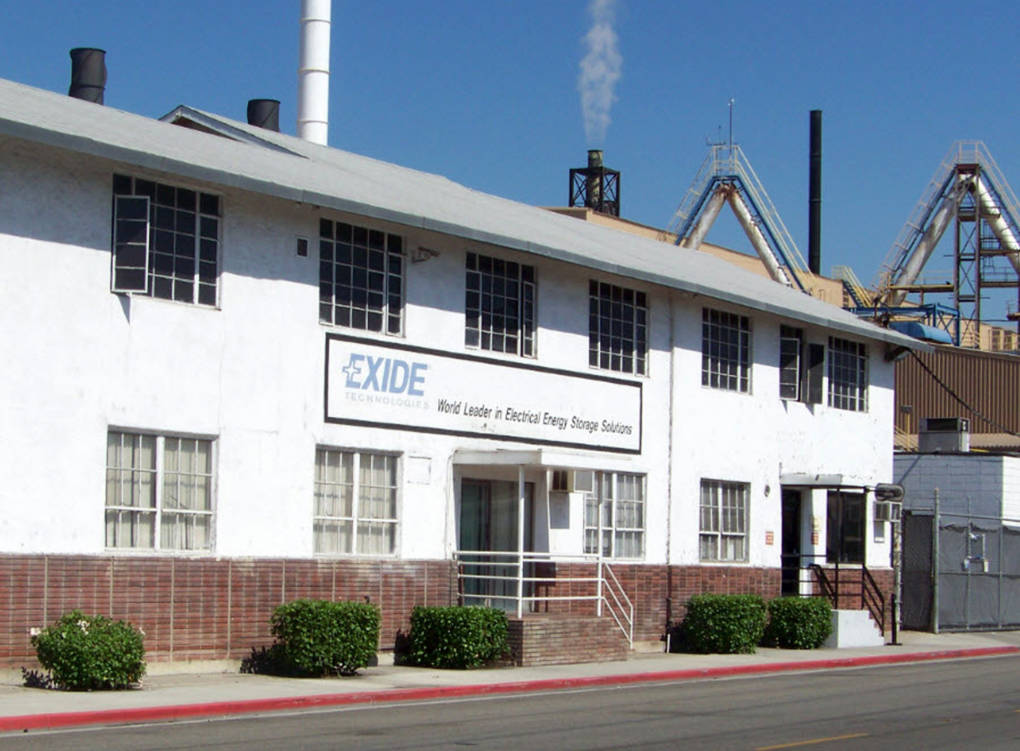
"caption": "The Exide Technologies battery recycling plant in Vernon was closed two years ago and is awaiting demolition.",
"description": null,
"title": "RS26279_ExideMoney1-qut",
"credit": "Chris Richard/KQED",
"status": "inherit",
"isLoading": false,
"fetchFailed": false
},
"news_11559988": {
"type": "attachments",
"id": "news_11559988",
"meta": {
"index": "attachments_1716263798",
"site": "news",
"id": "11559988",
"found": true
},
"parent": 11553538,
"imgSizes": {
"small": {
"file": "https://ww2.kqed.org/app/uploads/sites/10/2017/07/ExidePlant-520x383.jpg",
"width": 520,
"mimeType": "image/jpeg",
"height": 383
},
"twentyfourteen-full-width": {
"file": "https://ww2.kqed.org/app/uploads/sites/10/2017/07/ExidePlant-1038x576.jpg",
"width": 1038,
"mimeType": "image/jpeg",
"height": 576
},
"thumbnail": {
"file": "https://ww2.kqed.org/app/uploads/sites/10/2017/07/ExidePlant-160x118.jpg",
"width": 160,
"mimeType": "image/jpeg",
"height": 118
},
"fd-sm": {
"file": "https://ww2.kqed.org/app/uploads/sites/10/2017/07/ExidePlant-960x707.jpg",
"width": 960,
"mimeType": "image/jpeg",
"height": 707
},
"post-thumbnail": {
"file": "https://ww2.kqed.org/app/uploads/sites/10/2017/07/ExidePlant-672x372.jpg",
"width": 672,
"mimeType": "image/jpeg",
"height": 372
},
"xsmall": {
"file": "https://ww2.kqed.org/app/uploads/sites/10/2017/07/ExidePlant-375x276.jpg",
"width": 375,
"mimeType": "image/jpeg",
"height": 276
},
"kqedFullSize": {
"file": "https://ww2.kqed.org/app/uploads/sites/10/2017/07/ExidePlant.jpg",
"width": 1920,
"height": 1413
},
"large": {
"file": "https://ww2.kqed.org/app/uploads/sites/10/2017/07/ExidePlant-1020x751.jpg",
"width": 1020,
"mimeType": "image/jpeg",
"height": 751
},
"xlarge": {
"file": "https://ww2.kqed.org/app/uploads/sites/10/2017/07/ExidePlant-1180x868.jpg",
"width": 1180,
"mimeType": "image/jpeg",
"height": 868
},
"guest-author-50": {
"file": "https://ww2.kqed.org/app/uploads/sites/10/2017/07/ExidePlant-50x50.jpg",
"width": 50,
"mimeType": "image/jpeg",
"height": 50
},
"guest-author-96": {
"file": "https://ww2.kqed.org/app/uploads/sites/10/2017/07/ExidePlant-96x96.jpg",
"width": 96,
"mimeType": "image/jpeg",
"height": 96
},
"medium": {
"file": "https://ww2.kqed.org/app/uploads/sites/10/2017/07/ExidePlant-800x589.jpg",
"width": 800,
"mimeType": "image/jpeg",
"height": 589
},
"guest-author-64": {
"file": "https://ww2.kqed.org/app/uploads/sites/10/2017/07/ExidePlant-64x64.jpg",
"width": 64,
"mimeType": "image/jpeg",
"height": 64
},
"guest-author-32": {
"file": "https://ww2.kqed.org/app/uploads/sites/10/2017/07/ExidePlant-32x32.jpg",
"width": 32,
"mimeType": "image/jpeg",
"height": 32
},
"fd-lrg": {
"file": "https://ww2.kqed.org/app/uploads/sites/10/2017/07/ExidePlant-1920x1413.jpg",
"width": 1920,
"mimeType": "image/jpeg",
"height": 1413
},
"fd-med": {
"file": "https://ww2.kqed.org/app/uploads/sites/10/2017/07/ExidePlant-1180x868.jpg",
"width": 1180,
"mimeType": "image/jpeg",
"height": 868
},
"full-width": {
"file": "https://ww2.kqed.org/app/uploads/sites/10/2017/07/ExidePlant-1920x1413.jpg",
"width": 1920,
"mimeType": "image/jpeg",
"height": 1413
},
"detail": {
"file": "https://ww2.kqed.org/app/uploads/sites/10/2017/07/ExidePlant-150x150.jpg",
"width": 150,
"mimeType": "image/jpeg",
"height": 150
},
"guest-author-128": {
"file": "https://ww2.kqed.org/app/uploads/sites/10/2017/07/ExidePlant-128x128.jpg",
"width": 128,
"mimeType": "image/jpeg",
"height": 128
},
"xxsmall": {
"file": "https://ww2.kqed.org/app/uploads/sites/10/2017/07/ExidePlant-240x177.jpg",
"width": 240,
"mimeType": "image/jpeg",
"height": 177
}
},
"publishDate": 1499719643,
"modified": 1499727478,
"caption": "The Exide Technologies plant in Vernon, California.",
"description": "The Exide Technologies plant in Vernon.",
"title": "ExidePlant",
"credit": "Chris Richard/KQED",
"status": "inherit",
"isLoading": false,
"fetchFailed": false
},
"news_11475525": {
"type": "attachments",
"id": "news_11475525",
"meta": {
"index": "attachments_1716263798",
"site": "news",
"id": "11475525",
"found": true
},
"parent": 11473247,
"imgSizes": {
"small": {
"file": "https://ww2.kqed.org/app/uploads/sites/10/2017/05/RS25451_20170515_StateCapitol_Sen_BobWieckowski_credit_BertJohnson-1-qut-520x347.jpg",
"width": 520,
"mimeType": "image/jpeg",
"height": 347
},
"twentyfourteen-full-width": {
"file": "https://ww2.kqed.org/app/uploads/sites/10/2017/05/RS25451_20170515_StateCapitol_Sen_BobWieckowski_credit_BertJohnson-1-qut-1038x576.jpg",
"width": 1038,
"mimeType": "image/jpeg",
"height": 576
},
"thumbnail": {
"file": "https://ww2.kqed.org/app/uploads/sites/10/2017/05/RS25451_20170515_StateCapitol_Sen_BobWieckowski_credit_BertJohnson-1-qut-160x107.jpg",
"width": 160,
"mimeType": "image/jpeg",
"height": 107
},
"fd-sm": {
"file": "https://ww2.kqed.org/app/uploads/sites/10/2017/05/RS25451_20170515_StateCapitol_Sen_BobWieckowski_credit_BertJohnson-1-qut-960x640.jpg",
"width": 960,
"mimeType": "image/jpeg",
"height": 640
},
"post-thumbnail": {
"file": "https://ww2.kqed.org/app/uploads/sites/10/2017/05/RS25451_20170515_StateCapitol_Sen_BobWieckowski_credit_BertJohnson-1-qut-672x372.jpg",
"width": 672,
"mimeType": "image/jpeg",
"height": 372
},
"xsmall": {
"file": "https://ww2.kqed.org/app/uploads/sites/10/2017/05/RS25451_20170515_StateCapitol_Sen_BobWieckowski_credit_BertJohnson-1-qut-375x250.jpg",
"width": 375,
"mimeType": "image/jpeg",
"height": 250
},
"kqedFullSize": {
"file": "https://ww2.kqed.org/app/uploads/sites/10/2017/05/RS25451_20170515_StateCapitol_Sen_BobWieckowski_credit_BertJohnson-1-qut.jpg",
"width": 1920,
"height": 1280
},
"large": {
"file": "https://ww2.kqed.org/app/uploads/sites/10/2017/05/RS25451_20170515_StateCapitol_Sen_BobWieckowski_credit_BertJohnson-1-qut-1020x680.jpg",
"width": 1020,
"mimeType": "image/jpeg",
"height": 680
},
"xlarge": {
"file": "https://ww2.kqed.org/app/uploads/sites/10/2017/05/RS25451_20170515_StateCapitol_Sen_BobWieckowski_credit_BertJohnson-1-qut-1180x787.jpg",
"width": 1180,
"mimeType": "image/jpeg",
"height": 787
},
"guest-author-50": {
"file": "https://ww2.kqed.org/app/uploads/sites/10/2017/05/RS25451_20170515_StateCapitol_Sen_BobWieckowski_credit_BertJohnson-1-qut-50x50.jpg",
"width": 50,
"mimeType": "image/jpeg",
"height": 50
},
"guest-author-96": {
"file": "https://ww2.kqed.org/app/uploads/sites/10/2017/05/RS25451_20170515_StateCapitol_Sen_BobWieckowski_credit_BertJohnson-1-qut-96x96.jpg",
"width": 96,
"mimeType": "image/jpeg",
"height": 96
},
"medium": {
"file": "https://ww2.kqed.org/app/uploads/sites/10/2017/05/RS25451_20170515_StateCapitol_Sen_BobWieckowski_credit_BertJohnson-1-qut-800x533.jpg",
"width": 800,
"mimeType": "image/jpeg",
"height": 533
},
"guest-author-64": {
"file": "https://ww2.kqed.org/app/uploads/sites/10/2017/05/RS25451_20170515_StateCapitol_Sen_BobWieckowski_credit_BertJohnson-1-qut-64x64.jpg",
"width": 64,
"mimeType": "image/jpeg",
"height": 64
},
"guest-author-32": {
"file": "https://ww2.kqed.org/app/uploads/sites/10/2017/05/RS25451_20170515_StateCapitol_Sen_BobWieckowski_credit_BertJohnson-1-qut-32x32.jpg",
"width": 32,
"mimeType": "image/jpeg",
"height": 32
},
"fd-lrg": {
"file": "https://ww2.kqed.org/app/uploads/sites/10/2017/05/RS25451_20170515_StateCapitol_Sen_BobWieckowski_credit_BertJohnson-1-qut-1920x1280.jpg",
"width": 1920,
"mimeType": "image/jpeg",
"height": 1280
},
"fd-med": {
"file": "https://ww2.kqed.org/app/uploads/sites/10/2017/05/RS25451_20170515_StateCapitol_Sen_BobWieckowski_credit_BertJohnson-1-qut-1180x787.jpg",
"width": 1180,
"mimeType": "image/jpeg",
"height": 787
},
"full-width": {
"file": "https://ww2.kqed.org/app/uploads/sites/10/2017/05/RS25451_20170515_StateCapitol_Sen_BobWieckowski_credit_BertJohnson-1-qut-1920x1280.jpg",
"width": 1920,
"mimeType": "image/jpeg",
"height": 1280
},
"detail": {
"file": "https://ww2.kqed.org/app/uploads/sites/10/2017/05/RS25451_20170515_StateCapitol_Sen_BobWieckowski_credit_BertJohnson-1-qut-150x150.jpg",
"width": 150,
"mimeType": "image/jpeg",
"height": 150
},
"guest-author-128": {
"file": "https://ww2.kqed.org/app/uploads/sites/10/2017/05/RS25451_20170515_StateCapitol_Sen_BobWieckowski_credit_BertJohnson-1-qut-128x128.jpg",
"width": 128,
"mimeType": "image/jpeg",
"height": 128
},
"xxsmall": {
"file": "https://ww2.kqed.org/app/uploads/sites/10/2017/05/RS25451_20170515_StateCapitol_Sen_BobWieckowski_credit_BertJohnson-1-qut-240x160.jpg",
"width": 240,
"mimeType": "image/jpeg",
"height": 160
}
},
"publishDate": 1495653139,
"modified": 1495653216,
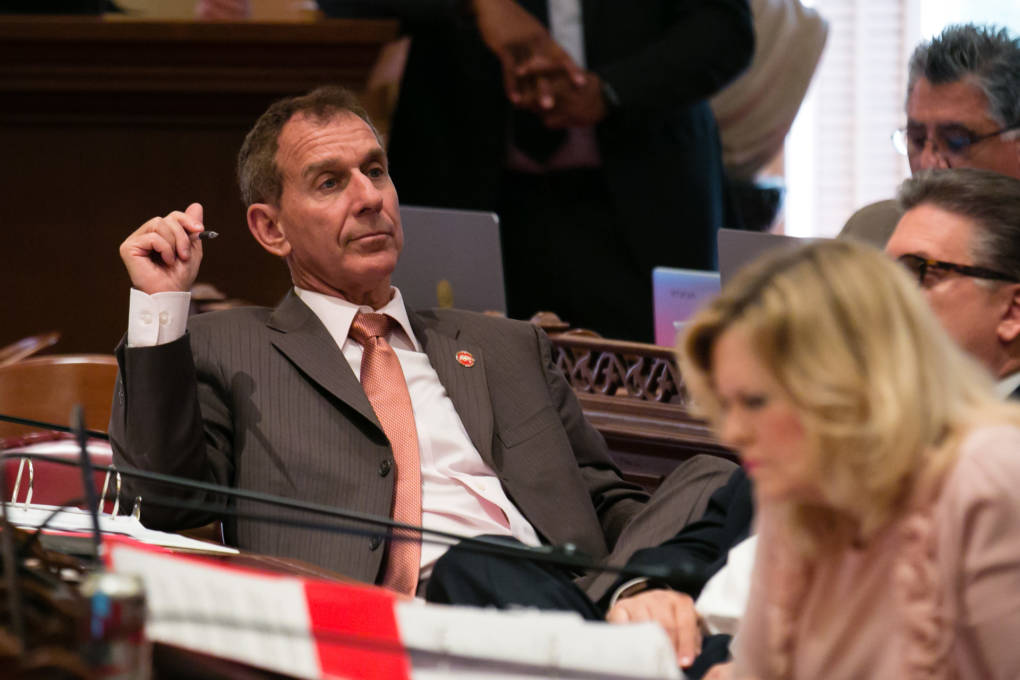
"caption": "Senator Bob Wieckowski (D-Fremont) is pushing a proposal to extend the state's cap-and-trade program.",
"description": null,
"title": "Bob Wieckowski",
"credit": "Bert Johnson/KQED",
"status": "inherit",
"isLoading": false,
"fetchFailed": false
},
"news_11459627": {
"type": "attachments",
"id": "news_11459627",
"meta": {
"index": "attachments_1716263798",
"site": "news",
"id": "11459627",
"found": true
},
"parent": 11359487,
"imgSizes": {
"small": {
"file": "https://ww2.kqed.org/app/uploads/sites/10/2017/05/SantaSusanaSign-520x308.jpg",
"width": 520,
"mimeType": "image/jpeg",
"height": 308
},
"twentyfourteen-full-width": {
"file": "https://ww2.kqed.org/app/uploads/sites/10/2017/05/SantaSusanaSign-1038x576.jpg",
"width": 1038,
"mimeType": "image/jpeg",
"height": 576
},
"thumbnail": {
"file": "https://ww2.kqed.org/app/uploads/sites/10/2017/05/SantaSusanaSign-160x95.jpg",
"width": 160,
"mimeType": "image/jpeg",
"height": 95
},
"fd-sm": {
"file": "https://ww2.kqed.org/app/uploads/sites/10/2017/05/SantaSusanaSign-960x570.jpg",
"width": 960,
"mimeType": "image/jpeg",
"height": 570
},
"post-thumbnail": {
"file": "https://ww2.kqed.org/app/uploads/sites/10/2017/05/SantaSusanaSign-672x372.jpg",
"width": 672,
"mimeType": "image/jpeg",
"height": 372
},
"xsmall": {
"file": "https://ww2.kqed.org/app/uploads/sites/10/2017/05/SantaSusanaSign-375x222.jpg",
"width": 375,
"mimeType": "image/jpeg",
"height": 222
},
"kqedFullSize": {
"file": "https://ww2.kqed.org/app/uploads/sites/10/2017/05/SantaSusanaSign.jpg",
"width": 1920,
"height": 1139
},
"large": {
"file": "https://ww2.kqed.org/app/uploads/sites/10/2017/05/SantaSusanaSign-1020x605.jpg",
"width": 1020,
"mimeType": "image/jpeg",
"height": 605
},
"xlarge": {
"file": "https://ww2.kqed.org/app/uploads/sites/10/2017/05/SantaSusanaSign-1180x700.jpg",
"width": 1180,
"mimeType": "image/jpeg",
"height": 700
},
"guest-author-50": {
"file": "https://ww2.kqed.org/app/uploads/sites/10/2017/05/SantaSusanaSign-50x50.jpg",
"width": 50,
"mimeType": "image/jpeg",
"height": 50
},
"guest-author-96": {
"file": "https://ww2.kqed.org/app/uploads/sites/10/2017/05/SantaSusanaSign-96x96.jpg",
"width": 96,
"mimeType": "image/jpeg",
"height": 96
},
"medium": {
"file": "https://ww2.kqed.org/app/uploads/sites/10/2017/05/SantaSusanaSign-800x475.jpg",
"width": 800,
"mimeType": "image/jpeg",
"height": 475
},
"guest-author-64": {
"file": "https://ww2.kqed.org/app/uploads/sites/10/2017/05/SantaSusanaSign-64x64.jpg",
"width": 64,
"mimeType": "image/jpeg",
"height": 64
},
"guest-author-32": {
"file": "https://ww2.kqed.org/app/uploads/sites/10/2017/05/SantaSusanaSign-32x32.jpg",
"width": 32,
"mimeType": "image/jpeg",
"height": 32
},
"fd-lrg": {
"file": "https://ww2.kqed.org/app/uploads/sites/10/2017/05/SantaSusanaSign-1920x1139.jpg",
"width": 1920,
"mimeType": "image/jpeg",
"height": 1139
},
"fd-med": {
"file": "https://ww2.kqed.org/app/uploads/sites/10/2017/05/SantaSusanaSign-1180x700.jpg",
"width": 1180,
"mimeType": "image/jpeg",
"height": 700
},
"full-width": {
"file": "https://ww2.kqed.org/app/uploads/sites/10/2017/05/SantaSusanaSign-1920x1139.jpg",
"width": 1920,
"mimeType": "image/jpeg",
"height": 1139
},
"detail": {
"file": "https://ww2.kqed.org/app/uploads/sites/10/2017/05/SantaSusanaSign-150x150.jpg",
"width": 150,
"mimeType": "image/jpeg",
"height": 150
},
"guest-author-128": {
"file": "https://ww2.kqed.org/app/uploads/sites/10/2017/05/SantaSusanaSign-128x128.jpg",
"width": 128,
"mimeType": "image/jpeg",
"height": 128
},
"xxsmall": {
"file": "https://ww2.kqed.org/app/uploads/sites/10/2017/05/SantaSusanaSign-240x142.jpg",
"width": 240,
"mimeType": "image/jpeg",
"height": 142
}
},
"publishDate": 1494887755,
"modified": 1494887784,
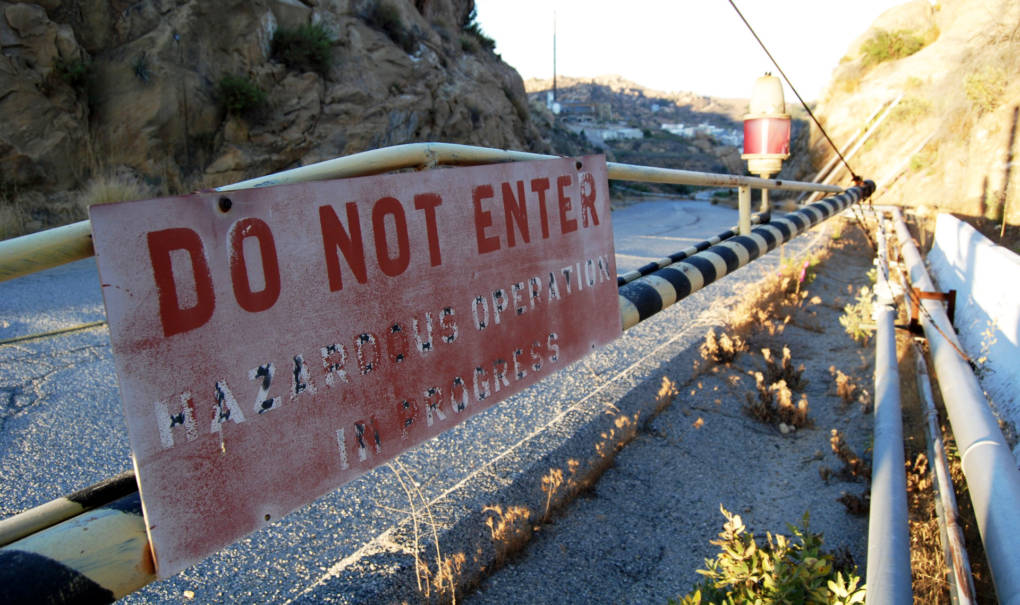
"caption": "Decades of chemical and nuclear contamination pollute the Santa Susana Field Laboratory near Los Angeles.",
"description": "Decades of chemical and nuclear contamination pollute the Santa Susana Field Laboratory near Los Angeles.",
"title": "SantaSusanaSign",
"credit": "William Preston Bowling",
"status": "inherit",
"isLoading": false,
"fetchFailed": false
},
"news_11420775": {
"type": "attachments",
"id": "news_11420775",
"meta": {
"index": "attachments_1716263798",
"site": "news",
"id": "11420775",
"found": true
},
"parent": 11420768,
"imgSizes": {
"small": {
"file": "https://ww2.kqed.org/app/uploads/sites/10/2017/04/EPA-Rally-4-520x292.jpeg",
"width": 520,
"mimeType": "image/jpeg",
"height": 292
},
"twentyfourteen-full-width": {
"file": "https://ww2.kqed.org/app/uploads/sites/10/2017/04/EPA-Rally-4-1038x576.jpeg",
"width": 1038,
"mimeType": "image/jpeg",
"height": 576
},
"thumbnail": {
"file": "https://ww2.kqed.org/app/uploads/sites/10/2017/04/EPA-Rally-4-160x90.jpeg",
"width": 160,
"mimeType": "image/jpeg",
"height": 90
},
"fd-sm": {
"file": "https://ww2.kqed.org/app/uploads/sites/10/2017/04/EPA-Rally-4-960x540.jpeg",
"width": 960,
"mimeType": "image/jpeg",
"height": 540
},
"post-thumbnail": {
"file": "https://ww2.kqed.org/app/uploads/sites/10/2017/04/EPA-Rally-4-672x372.jpeg",
"width": 672,
"mimeType": "image/jpeg",
"height": 372
},
"xsmall": {
"file": "https://ww2.kqed.org/app/uploads/sites/10/2017/04/EPA-Rally-4-375x211.jpeg",
"width": 375,
"mimeType": "image/jpeg",
"height": 211
},
"kqedFullSize": {
"file": "https://ww2.kqed.org/app/uploads/sites/10/2017/04/EPA-Rally-4.jpeg",
"width": 1206,
"height": 678
},
"large": {
"file": "https://ww2.kqed.org/app/uploads/sites/10/2017/04/EPA-Rally-4-1020x573.jpeg",
"width": 1020,
"mimeType": "image/jpeg",
"height": 573
},
"xlarge": {
"file": "https://ww2.kqed.org/app/uploads/sites/10/2017/04/EPA-Rally-4-1180x663.jpeg",
"width": 1180,
"mimeType": "image/jpeg",
"height": 663
},
"guest-author-50": {
"file": "https://ww2.kqed.org/app/uploads/sites/10/2017/04/EPA-Rally-4-50x50.jpeg",
"width": 50,
"mimeType": "image/jpeg",
"height": 50
},
"guest-author-96": {
"file": "https://ww2.kqed.org/app/uploads/sites/10/2017/04/EPA-Rally-4-96x96.jpeg",
"width": 96,
"mimeType": "image/jpeg",
"height": 96
},
"medium": {
"file": "https://ww2.kqed.org/app/uploads/sites/10/2017/04/EPA-Rally-4-800x450.jpeg",
"width": 800,
"mimeType": "image/jpeg",
"height": 450
},
"guest-author-64": {
"file": "https://ww2.kqed.org/app/uploads/sites/10/2017/04/EPA-Rally-4-64x64.jpeg",
"width": 64,
"mimeType": "image/jpeg",
"height": 64
},
"guest-author-32": {
"file": "https://ww2.kqed.org/app/uploads/sites/10/2017/04/EPA-Rally-4-32x32.jpeg",
"width": 32,
"mimeType": "image/jpeg",
"height": 32
},
"fd-med": {
"file": "https://ww2.kqed.org/app/uploads/sites/10/2017/04/EPA-Rally-4-1180x663.jpeg",
"width": 1180,
"mimeType": "image/jpeg",
"height": 663
},
"detail": {
"file": "https://ww2.kqed.org/app/uploads/sites/10/2017/04/EPA-Rally-4-150x150.jpeg",
"width": 150,
"mimeType": "image/jpeg",
"height": 150
},
"guest-author-128": {
"file": "https://ww2.kqed.org/app/uploads/sites/10/2017/04/EPA-Rally-4-128x128.jpeg",
"width": 128,
"mimeType": "image/jpeg",
"height": 128
},
"xxsmall": {
"file": "https://ww2.kqed.org/app/uploads/sites/10/2017/04/EPA-Rally-4-240x135.jpeg",
"width": 240,
"mimeType": "image/jpeg",
"height": 135
}
},
"publishDate": 1492824091,
"modified": 1492824091,
"caption": null,
"description": null,
"title": "EPA Rally 4",
"credit": null,
"status": "inherit",
"isLoading": false,
"fetchFailed": false
},
"arts_11755643": {
"type": "attachments",
"id": "arts_11755643",
"meta": {
"index": "attachments_1716263798",
"site": "arts",
"id": "11755643",
"found": true
},
"parent": 11753949,
"imgSizes": {
"twentyfourteen-full-width": {
"file": "https://ww2.kqed.org/app/uploads/sites/2/2016/06/favivan5-1-1038x576.jpg",
"width": 1038,
"mimeType": "image/jpeg",
"height": 576
},
"thumbnail": {
"file": "https://ww2.kqed.org/app/uploads/sites/2/2016/06/favivan5-1-400x225.jpg",
"width": 400,
"mimeType": "image/jpeg",
"height": 225
},
"fd-sm": {
"file": "https://ww2.kqed.org/app/uploads/sites/2/2016/06/favivan5-1-960x540.jpg",
"width": 960,
"mimeType": "image/jpeg",
"height": 540
},
"post-thumbnail": {
"file": "https://ww2.kqed.org/app/uploads/sites/2/2016/06/favivan5-1-672x372.jpg",
"width": 672,
"mimeType": "image/jpeg",
"height": 372
},
"kqedFullSize": {
"file": "https://ww2.kqed.org/app/uploads/sites/2/2016/06/favivan5-1.jpg",
"width": 1920,
"height": 1080
},
"large": {
"file": "https://ww2.kqed.org/app/uploads/sites/2/2016/06/favivan5-1-1180x664.jpg",
"width": 1180,
"mimeType": "image/jpeg",
"height": 664
},
"guest-author-50": {
"file": "https://ww2.kqed.org/app/uploads/sites/2/2016/06/favivan5-1-50x50.jpg",
"width": 50,
"mimeType": "image/jpeg",
"height": 50
},
"guest-author-96": {
"file": "https://ww2.kqed.org/app/uploads/sites/2/2016/06/favivan5-1-96x96.jpg",
"width": 96,
"mimeType": "image/jpeg",
"height": 96
},
"medium": {
"file": "https://ww2.kqed.org/app/uploads/sites/2/2016/06/favivan5-1-800x450.jpg",
"width": 800,
"mimeType": "image/jpeg",
"height": 450
},
"guest-author-64": {
"file": "https://ww2.kqed.org/app/uploads/sites/2/2016/06/favivan5-1-64x64.jpg",
"width": 64,
"mimeType": "image/jpeg",
"height": 64
},
"guest-author-32": {
"file": "https://ww2.kqed.org/app/uploads/sites/2/2016/06/favivan5-1-32x32.jpg",
"width": 32,
"mimeType": "image/jpeg",
"height": 32
},
"fd-lrg": {
"file": "https://ww2.kqed.org/app/uploads/sites/2/2016/06/favivan5-1-1920x1080.jpg",
"width": 1920,
"mimeType": "image/jpeg",
"height": 1080
},
"fd-med": {
"file": "https://ww2.kqed.org/app/uploads/sites/2/2016/06/favivan5-1-1180x664.jpg",
"width": 1180,
"mimeType": "image/jpeg",
"height": 664
},
"detail": {
"file": "https://ww2.kqed.org/app/uploads/sites/2/2016/06/favivan5-1-150x150.jpg",
"width": 150,
"mimeType": "image/jpeg",
"height": 150
},
"medium_large": {
"file": "https://ww2.kqed.org/app/uploads/sites/2/2016/06/favivan5-1-768x432.jpg",
"width": 768,
"mimeType": "image/jpeg",
"height": 432
},
"guest-author-128": {
"file": "https://ww2.kqed.org/app/uploads/sites/2/2016/06/favivan5-1-128x128.jpg",
"width": 128,
"mimeType": "image/jpeg",
"height": 128
}
},
"publishDate": 1467263260,
"modified": 1467263331,
"caption": "Artists were key to the success of the People's Climate March",
"description": "Artists were key to the success of the People's Climate March",
"title": "favivan5",
"credit": null,
"status": "inherit",
"isLoading": false,
"fetchFailed": false
},
"news_10975726": {
"type": "attachments",
"id": "news_10975726",
"meta": {
"index": "attachments_1716263798",
"site": "news",
"id": "10975726",
"found": true
},
"parent": 10975719,
"imgSizes": {
"twentyfourteen-full-width": {
"file": "https://ww2.kqed.org/app/uploads/sites/10/2016/06/oil_drilling-1038x576.jpg",
"width": 1038,
"mimeType": "image/jpeg",
"height": 576
},
"thumbnail": {
"file": "https://ww2.kqed.org/app/uploads/sites/10/2016/06/oil_drilling-400x300.jpg",
"width": 400,
"mimeType": "image/jpeg",
"height": 300
},
"fd-sm": {
"file": "https://ww2.kqed.org/app/uploads/sites/10/2016/06/oil_drilling-960x720.jpg",
"width": 960,
"mimeType": "image/jpeg",
"height": 720
},
"post-thumbnail": {
"file": "https://ww2.kqed.org/app/uploads/sites/10/2016/06/oil_drilling-672x372.jpg",
"width": 672,
"mimeType": "image/jpeg",
"height": 372
},
"kqedFullSize": {
"file": "https://ww2.kqed.org/app/uploads/sites/10/2016/06/oil_drilling.jpg",
"width": 1280,
"height": 960
},
"guest-author-50": {
"file": "https://ww2.kqed.org/app/uploads/sites/10/2016/06/oil_drilling-50x50.jpg",
"width": 50,
"mimeType": "image/jpeg",
"height": 50
},
"guest-author-96": {
"file": "https://ww2.kqed.org/app/uploads/sites/10/2016/06/oil_drilling-96x96.jpg",
"width": 96,
"mimeType": "image/jpeg",
"height": 96
},
"medium": {
"file": "https://ww2.kqed.org/app/uploads/sites/10/2016/06/oil_drilling-800x600.jpg",
"width": 800,
"mimeType": "image/jpeg",
"height": 600
},
"guest-author-64": {
"file": "https://ww2.kqed.org/app/uploads/sites/10/2016/06/oil_drilling-64x64.jpg",
"width": 64,
"mimeType": "image/jpeg",
"height": 64
},
"guest-author-32": {
"file": "https://ww2.kqed.org/app/uploads/sites/10/2016/06/oil_drilling-32x32.jpg",
"width": 32,
"mimeType": "image/jpeg",
"height": 32
},
"jmtc-small-thumb": {
"file": "https://ww2.kqed.org/app/uploads/sites/10/2016/06/oil_drilling-280x150.jpg",
"width": 280,
"mimeType": "image/jpeg",
"height": 150
},
"fd-med": {
"file": "https://ww2.kqed.org/app/uploads/sites/10/2016/06/oil_drilling-1180x885.jpg",
"width": 1180,
"mimeType": "image/jpeg",
"height": 885
},
"detail": {
"file": "https://ww2.kqed.org/app/uploads/sites/10/2016/06/oil_drilling-150x150.jpg",
"width": 150,
"mimeType": "image/jpeg",
"height": 150
},
"guest-author-128": {
"file": "https://ww2.kqed.org/app/uploads/sites/10/2016/06/oil_drilling-128x128.jpg",
"width": 128,
"mimeType": "image/jpeg",
"height": 128
}
},
"publishDate": 1464906891,
"modified": 1464906937,
"caption": "Oil drilling in Southern California.",
"description": "Oil drilling in Southern California.",
"title": "oil_drilling",
"credit": "Neal Wellons/Creative Commons",
"status": "inherit",
"isLoading": false,
"fetchFailed": false
},
"news_10590483": {
"type": "attachments",
"id": "news_10590483",
"meta": {
"index": "attachments_1716263798",
"site": "news",
"id": "10590483",
"found": true
},
"parent": 10585739,
"imgSizes": {
"twentyfourteen-full-width": {
"file": "https://ww2.kqed.org/app/uploads/sites/10/2015/07/8587826505_6377441764_o-1038x576.jpg",
"width": 1038,
"mimeType": "image/jpeg",
"height": 576
},
"thumbnail": {
"file": "https://ww2.kqed.org/app/uploads/sites/10/2015/07/8587826505_6377441764_o-400x259.jpg",
"width": 400,
"mimeType": "image/jpeg",
"height": 259
},
"fd-sm": {
"file": "https://ww2.kqed.org/app/uploads/sites/10/2015/07/8587826505_6377441764_o-960x622.jpg",
"width": 960,
"mimeType": "image/jpeg",
"height": 622
},
"post-thumbnail": {
"file": "https://ww2.kqed.org/app/uploads/sites/10/2015/07/8587826505_6377441764_o-672x372.jpg",
"width": 672,
"mimeType": "image/jpeg",
"height": 372
},
"kqedFullSize": {
"file": "https://ww2.kqed.org/app/uploads/sites/10/2015/07/8587826505_6377441764_o-e1436203736700.jpg",
"width": 1920,
"height": 1244
},
"large": {
"file": "https://ww2.kqed.org/app/uploads/sites/10/2015/07/8587826505_6377441764_o-1440x933.jpg",
"width": 1440,
"mimeType": "image/jpeg",
"height": 933
},
"guest-author-96": {
"file": "https://ww2.kqed.org/app/uploads/sites/10/2015/07/8587826505_6377441764_o-96x96.jpg",
"width": 96,
"mimeType": "image/jpeg",
"height": 96
},
"medium": {
"file": "https://ww2.kqed.org/app/uploads/sites/10/2015/07/8587826505_6377441764_o-800x518.jpg",
"width": 800,
"mimeType": "image/jpeg",
"height": 518
},
"guest-author-64": {
"file": "https://ww2.kqed.org/app/uploads/sites/10/2015/07/8587826505_6377441764_o-64x64.jpg",
"width": 64,
"mimeType": "image/jpeg",
"height": 64
},
"guest-author-32": {
"file": "https://ww2.kqed.org/app/uploads/sites/10/2015/07/8587826505_6377441764_o-32x32.jpg",
"width": 32,
"mimeType": "image/jpeg",
"height": 32
},
"jmtc-small-thumb": {
"file": "https://ww2.kqed.org/app/uploads/sites/10/2015/07/8587826505_6377441764_o-280x150.jpg",
"width": 280,
"mimeType": "image/jpeg",
"height": 150
},
"fd-med": {
"file": "https://ww2.kqed.org/app/uploads/sites/10/2015/07/8587826505_6377441764_o-1180x765.jpg",
"width": 1180,
"mimeType": "image/jpeg",
"height": 765
},
"detail": {
"file": "https://ww2.kqed.org/app/uploads/sites/10/2015/07/8587826505_6377441764_o-75x75.jpg",
"width": 75,
"mimeType": "image/jpeg",
"height": 75
},
"guest-author-128": {
"file": "https://ww2.kqed.org/app/uploads/sites/10/2015/07/8587826505_6377441764_o-128x128.jpg",
"width": 128,
"mimeType": "image/jpeg",
"height": 128
}
},
"publishDate": 1436203564,
"modified": 1467125632,
"caption": "Port of Oakland, from the Oakland Estuary. ",
"description": null,
"title": "Port of Oakland",
"credit": "Dan Brekke/KQED",
"status": "inherit",
"isLoading": false,
"fetchFailed": false
}
},
"audioPlayerReducer": {
"postId": "stream_live",
"isPaused": true,
"isPlaying": false,
"pfsActive": false,
"pledgeModalIsOpen": true,
"playerDrawerIsOpen": false,
"liveAudioPlayStartedAt": 0,
"liveAudioPlayContext": ""
},
"authorsReducer": {
"byline_news_10975719": {
"type": "authors",
"id": "byline_news_10975719",
"meta": {
"override": true
},
"slug": "byline_news_10975719",
"name": "Laurel Rosenhall, CALmatters",
"isLoading": false
},
"chrisrichard": {
"type": "authors",
"id": "219",
"meta": {
"index": "authors_1716337520",
"id": "219",
"found": true
},
"name": "Chris Richard",
"firstName": "Chris",
"lastName": "Richard",
"slug": "chrisrichard",
"email": "chris@chrisrichard.org",
"display_author_email": false,
"staff_mastheads": [],
"title": null,
"bio": null,
"avatar": "https://secure.gravatar.com/avatar/0a5aab2628cba861c36f5f2142bf3e9c?s=600&d=blank&r=g",
"twitter": null,
"facebook": null,
"instagram": null,
"linkedin": null,
"sites": [
{
"site": "news",
"roles": [
"author"
]
},
{
"site": "stateofhealth",
"roles": [
"author"
]
}
],
"headData": {
"title": "Chris Richard | KQED",
"description": null,
"ogImgSrc": "https://secure.gravatar.com/avatar/0a5aab2628cba861c36f5f2142bf3e9c?s=600&d=blank&r=g",
"twImgSrc": "https://secure.gravatar.com/avatar/0a5aab2628cba861c36f5f2142bf3e9c?s=600&d=blank&r=g"
},
"isLoading": false,
"link": "/author/chrisrichard"
},
"danbrekke": {
"type": "authors",
"id": "222",
"meta": {
"index": "authors_1716337520",
"id": "222",
"found": true
},
"name": "Dan Brekke",
"firstName": "Dan",
"lastName": "Brekke",
"slug": "danbrekke",
"email": "dbrekke@kqed.org",
"display_author_email": true,
"staff_mastheads": [
"news",
"science"
],
"title": "KQED Editor and Reporter",
"bio": "Dan Brekke is a reporter and editor for KQED News, responsible for coverage of topics ranging from California water issues to the Bay Area's transportation challenges. In a newsroom career that began in Chicago in 1972, Dan has worked for \u003cem>The San Francisco Examiner,\u003c/em> Wired and TechTV and has been published in The New York Times, The New York Times Magazine, Business 2.0, Salon and elsewhere.\r\n\r\nSince joining KQED in 2007, Dan has reported, edited and produced both radio and online features and breaking news pieces. He has shared as both editor and reporter in four Society of Professional Journalists Norcal Excellence in Journalism awards and one Edward R. Murrow regional award. He was chosen for a spring 2017 residency at the Mesa Refuge to advance his research on California salmon.\r\n\r\nEmail Dan at: \u003ca href=\"mailto:dbrekke@kqed.org\">dbrekke@kqed.org\u003c/a>\r\n\r\n\u003cstrong>Twitter:\u003c/strong> \u003ca href=\"https://twitter.com/danbrekke\" rel=\"noopener noreferrer\">twitter.com/danbrekke\u003c/a>\r\n\u003cstrong>Facebook:\u003c/strong> \u003ca href=\"https://www.facebook.com/danbrekke\" rel=\"noopener noreferrer\">www.facebook.com/danbrekke\u003c/a>\r\n\u003cstrong>LinkedIn:\u003c/strong> \u003ca href=\"https://www.linkedin.com/in/danbrekke\" rel=\"noopener noreferrer\">www.linkedin.com/in/danbrekke\u003c/a>",
"avatar": "https://secure.gravatar.com/avatar/c8126230345efca3f7aa89b1a402be45?s=600&d=mm&r=g",
"twitter": "danbrekke",
"facebook": null,
"instagram": "https://www.instagram.com/dan.brekke/",
"linkedin": "https://www.linkedin.com/in/danbrekke/",
"sites": [
{
"site": "news",
"roles": [
"administrator",
"create_posts"
]
},
{
"site": "stateofhealth",
"roles": [
"editor"
]
},
{
"site": "science",
"roles": [
"editor"
]
},
{
"site": "quest",
"roles": [
"contributor"
]
},
{
"site": "food",
"roles": [
"contributor"
]
},
{
"site": "forum",
"roles": [
"contributor"
]
},
{
"site": "liveblog",
"roles": [
"editor"
]
}
],
"headData": {
"title": "Dan Brekke | KQED",
"description": "KQED Editor and Reporter",
"ogImgSrc": "https://secure.gravatar.com/avatar/c8126230345efca3f7aa89b1a402be45?s=600&d=mm&r=g",
"twImgSrc": "https://secure.gravatar.com/avatar/c8126230345efca3f7aa89b1a402be45?s=600&d=mm&r=g"
},
"isLoading": false,
"link": "/author/danbrekke"
},
"gmarzorati": {
"type": "authors",
"id": "227",
"meta": {
"index": "authors_1716337520",
"id": "227",
"found": true
},
"name": "Guy Marzorati",
"firstName": "Guy",
"lastName": "Marzorati",
"slug": "gmarzorati",
"email": "gmarzorati@KQED.org",
"display_author_email": true,
"staff_mastheads": [
"news"
],
"title": "Correspondent",
"bio": "Guy Marzorati is a correspondent on KQED's California Politics and Government Desk, based in San Jose. A graduate of Santa Clara University, Guy joined KQED in 2013. He reports on state and local politics and produces KQED's digital voter guide.",
"avatar": "https://secure.gravatar.com/avatar/e7038b8dbfd55b104369b76b1cd0b9de?s=600&d=blank&r=g",
"twitter": "guymarzorati",
"facebook": null,
"instagram": null,
"linkedin": null,
"sites": [
{
"site": "",
"roles": [
"editor"
]
},
{
"site": "news",
"roles": [
"editor"
]
},
{
"site": "science",
"roles": [
"editor"
]
},
{
"site": "forum",
"roles": [
"editor"
]
},
{
"site": "elections",
"roles": [
"editor"
]
},
{
"site": "liveblog",
"roles": [
"editor"
]
}
],
"headData": {
"title": "Guy Marzorati | KQED",
"description": "Correspondent",
"ogImgSrc": "https://secure.gravatar.com/avatar/e7038b8dbfd55b104369b76b1cd0b9de?s=600&d=blank&r=g",
"twImgSrc": "https://secure.gravatar.com/avatar/e7038b8dbfd55b104369b76b1cd0b9de?s=600&d=blank&r=g"
},
"isLoading": false,
"link": "/author/gmarzorati"
},
"kwhalen": {
"type": "authors",
"id": "3248",
"meta": {
"index": "authors_1716337520",
"id": "3248",
"found": true
},
"name": "Kelly Whalen",
"firstName": "Kelly",
"lastName": "Whalen",
"slug": "kwhalen",
"email": "kwhalen@kqed.org",
"display_author_email": false,
"staff_mastheads": [],
"title": "Senior Video Producer",
"bio": "Kelly Whalen is a filmmaker and educator who directs and produces social justice documentaries and award-winning arts and culture web series. She is the creator of KQED Arts’ three-time Webby Award-winning YouTube series \u003cem>If Cities Could Dance\u003c/em>, featuring dancers across the country representing their cities’ signature moves, and the director of \u003cem>When the Waters Get Deep\u003c/em>, a documentary about Oakland-based artists SOL Development and their work toward healing their communities’ trauma from gun violence.",
"avatar": "https://secure.gravatar.com/avatar/1a2b57e8a13abdcfc3d4966d9c0e1512?s=600&d=blank&r=g",
"twitter": "kellyfilmmaker",
"facebook": null,
"instagram": null,
"linkedin": null,
"sites": [
{
"site": "arts",
"roles": [
"subscriber"
]
}
],
"headData": {
"title": "Kelly Whalen | KQED",
"description": "Senior Video Producer",
"ogImgSrc": "https://secure.gravatar.com/avatar/1a2b57e8a13abdcfc3d4966d9c0e1512?s=600&d=blank&r=g",
"twImgSrc": "https://secure.gravatar.com/avatar/1a2b57e8a13abdcfc3d4966d9c0e1512?s=600&d=blank&r=g"
},
"isLoading": false,
"link": "/author/kwhalen"
},
"jsmall": {
"type": "authors",
"id": "6625",
"meta": {
"index": "authors_1716337520",
"id": "6625",
"found": true
},
"name": "Julie Small",
"firstName": "Julie",
"lastName": "Small",
"slug": "jsmall",
"email": "jsmall@kqed.org",
"display_author_email": true,
"staff_mastheads": [
"news"
],
"title": "KQED Contributor",
"bio": "Julie Small reports on criminal justice and immigration.\r\n\r\nShe was part of a team at KQED awarded a regional 2019 Edward R. Murrow award for continuing coverage of the Trump Administration's family separation policy.\r\n\r\nThe Society for Professional Journalists recognized Julie's 2018 \u003ca href=\"https://www.kqed.org/news/11636262/the-officer-tased-him-31-times-the-sheriff-called-his-death-an-accident\">reporting\u003c/a> on the San Joaquin County Sheriff's \u003ca href=\"https://www.kqed.org/news/11634689/autopsy-doctors-sheriff-overrode-death-findings-to-protect-law-enforcement\">interference\u003c/a> in death investigations with an Excellence in Journalism Award for Ongoing Coverage.\r\n\r\nJulie's\u003ca href=\"https://www.kqed.org/news/11039666/two-mentally-ill-inmates-died-one-month-in-santa-clara\"> reporting\u003c/a> with Lisa Pickoff-White on the treatment of mentally ill offenders in California jails earned a 2017 regional Edward R. Murrow Award for news reporting and an investigative reporting award from the SPJ of Northern California.\r\n\r\nBefore joining KQED, Julie covered government and politics in Sacramento for Southern California Public Radio (SCPR). Her 2010 \u003ca href=\"https://www.scpr.org/specials/prisonmedical/\">series\u003c/a> on lapses in California’s prison medical care also won a regional Edward R. Murrow Award for investigative reporting and a Golden Mic Award from the RTNDA of Southern California.\r\n\r\nJulie began her career in journalism in 2000 as the deputy foreign editor for public radio's \u003cem>Marketplace, \u003c/em>while earning her master's degree in journalism from USC’s Annenberg School of Communication.",
"avatar": "https://secure.gravatar.com/avatar/4baedf201468df97be97c2a9dd7585d0?s=600&d=blank&r=g",
"twitter": "@SmallRadio2",
"facebook": null,
"instagram": null,
"linkedin": null,
"sites": [
{
"site": "news",
"roles": [
"editor"
]
},
{
"site": "stateofhealth",
"roles": [
"author"
]
},
{
"site": "science",
"roles": [
"author"
]
}
],
"headData": {
"title": "Julie Small | KQED",
"description": "KQED Contributor",
"ogImgSrc": "https://secure.gravatar.com/avatar/4baedf201468df97be97c2a9dd7585d0?s=600&d=blank&r=g",
"twImgSrc": "https://secure.gravatar.com/avatar/4baedf201468df97be97c2a9dd7585d0?s=600&d=blank&r=g"
},
"isLoading": false,
"link": "/author/jsmall"
},
"cveltman": {
"type": "authors",
"id": "8608",
"meta": {
"index": "authors_1716337520",
"id": "8608",
"found": true
},
"name": "Chloe Veltman",
"firstName": "Chloe",
"lastName": "Veltman",
"slug": "cveltman",
"email": "cveltman@kqed.org",
"display_author_email": true,
"staff_mastheads": [],
"title": "Arts and Culture Reporter",
"bio": "Chloe Veltman is a former arts and culture reporter for KQED. Prior to joining the organization, she launched and led the arts bureau at Colorado Public Radio, served as the Bay Area's culture columnist for the New York Times, and was the founder, host and executive producer of VoiceBox, a national award-winning weekly podcast/radio show and live events series all about the human voice. Chloe is the recipient of numerous prizes, grants and fellowships including a Webby Award for her work on interactive storytelling, both the John S Knight Journalism Fellowship and Humanities Center Fellowship at Stanford University, the Sundance Arts Writing Fellowship and a Library of Congress Research Fellowship. She is the author of the book \"On Acting\" and has appeared as a guest lecturer at Yale University and the San Francisco Conservatory of Music among other institutions. She holds a BA in english literature from King's College, Cambridge, and a Masters in Dramaturgy from the Central School of Speech and Drama/Harvard Institute for Advanced Theater Training.\r\n\u003ca href=\"https://www.chloeveltman.com\">www.chloeveltman.com\u003c/a>",
"avatar": "https://secure.gravatar.com/avatar/55403394b00a1ddab683952c2eb2cf85?s=600&d=blank&r=g",
"twitter": "chloeveltman",
"facebook": null,
"instagram": null,
"linkedin": null,
"sites": [
{
"site": "arts",
"roles": []
},
{
"site": "news",
"roles": [
"author"
]
},
{
"site": "pop",
"roles": [
"editor"
]
},
{
"site": "science",
"roles": []
}
],
"headData": {
"title": "Chloe Veltman | KQED",
"description": "Arts and Culture Reporter",
"ogImgSrc": "https://secure.gravatar.com/avatar/55403394b00a1ddab683952c2eb2cf85?s=600&d=blank&r=g",
"twImgSrc": "https://secure.gravatar.com/avatar/55403394b00a1ddab683952c2eb2cf85?s=600&d=blank&r=g"
},
"isLoading": false,
"link": "/author/cveltman"
},
"shutson": {
"type": "authors",
"id": "11216",
"meta": {
"index": "authors_1716337520",
"id": "11216",
"found": true
},
"name": "Sonja Hutson",
"firstName": "Sonja",
"lastName": "Hutson",
"slug": "shutson",
"email": "shutson@kqed.org",
"display_author_email": false,
"staff_mastheads": [],
"title": "KQED Contributor",
"bio": "Sonja Hutson is a former reporter for KQED's Silicon Valley desk and weekend newscasts. She primarily covers tech and housing. Sonja is a Bay Area native and now lives in San Francisco. When she's not working, you can find her camping, skiing, scuba diving, and struggling with the New York Times Crossword. Email: \u003ca href=\"mailto:shutson@kqed.org\">shutson@kqed.org. \u003c/a>Twitter: \u003ca href=\"https://twitter.com/SonjaHutson\">@SonjaHutson\u003c/a>",
"avatar": "https://secure.gravatar.com/avatar/7537c5e36818614e599b6c0f41d72b7a?s=600&d=blank&r=g",
"twitter": "SonjaHutson",
"facebook": null,
"instagram": null,
"linkedin": null,
"sites": [
{
"site": "arts",
"roles": [
"author"
]
},
{
"site": "news",
"roles": [
"subscriber"
]
}
],
"headData": {
"title": "Sonja Hutson | KQED",
"description": "KQED Contributor",
"ogImgSrc": "https://secure.gravatar.com/avatar/7537c5e36818614e599b6c0f41d72b7a?s=600&d=blank&r=g",
"twImgSrc": "https://secure.gravatar.com/avatar/7537c5e36818614e599b6c0f41d72b7a?s=600&d=blank&r=g"
},
"isLoading": false,
"link": "/author/shutson"
},
"csaldana": {
"type": "authors",
"id": "11301",
"meta": {
"index": "authors_1716337520",
"id": "11301",
"found": true
},
"name": "Cesar Saldaña",
"firstName": "Cesar",
"lastName": "Saldaña",
"slug": "csaldana",
"email": "csaldana@kqed.org",
"display_author_email": false,
"staff_mastheads": [
"news"
],
"title": "KQED Contributor",
"bio": null,
"avatar": "https://secure.gravatar.com/avatar/04e89425007fe7102f750c79e76274bc?s=600&d=mm&r=g",
"twitter": null,
"facebook": null,
"instagram": null,
"linkedin": null,
"sites": [
{
"site": "news",
"roles": []
},
{
"site": "perspectives",
"roles": []
}
],
"headData": {
"title": "Cesar Saldaña | KQED",
"description": "KQED Contributor",
"ogImgSrc": "https://secure.gravatar.com/avatar/04e89425007fe7102f750c79e76274bc?s=600&d=mm&r=g",
"twImgSrc": "https://secure.gravatar.com/avatar/04e89425007fe7102f750c79e76274bc?s=600&d=mm&r=g"
},
"isLoading": false,
"link": "/author/csaldana"
},
"mwiley": {
"type": "authors",
"id": "11526",
"meta": {
"index": "authors_1716337520",
"id": "11526",
"found": true
},
"name": "Michelle Wiley",
"firstName": "Michelle",
"lastName": "Wiley",
"slug": "mwiley",
"email": "mwiley@KQED.org",
"display_author_email": true,
"staff_mastheads": [],
"title": null,
"bio": "Michelle Wiley was the senior editor of weekends.",
"avatar": "https://secure.gravatar.com/avatar/3b897d82a09e8587e8e73fa69fbcc635?s=600&d=blank&r=g",
"twitter": "michelleewiley",
"facebook": null,
"instagram": null,
"linkedin": null,
"sites": [
{
"site": "",
"roles": [
"editor"
]
},
{
"site": "arts",
"roles": [
"editor"
]
},
{
"site": "news",
"roles": [
"subscriber"
]
},
{
"site": "lowdown",
"roles": [
"editor"
]
},
{
"site": "science",
"roles": [
"editor"
]
},
{
"site": "podcasts",
"roles": [
"editor"
]
}
],
"headData": {
"title": "Michelle Wiley | KQED",
"description": null,
"ogImgSrc": "https://secure.gravatar.com/avatar/3b897d82a09e8587e8e73fa69fbcc635?s=600&d=blank&r=g",
"twImgSrc": "https://secure.gravatar.com/avatar/3b897d82a09e8587e8e73fa69fbcc635?s=600&d=blank&r=g"
},
"isLoading": false,
"link": "/author/mwiley"
}
},
"pagesReducer": {
"news_tag_environmental-justice": {
"type": "terms",
"id": "news_18299",
"meta": {
"index": "terms_1716263798",
"site": "news",
"id": "18299",
"score": 9.553133
},
"featImg": null,
"name": "environmental justice",
"description": null,
"taxonomy": "tag",
"headData": {
"twImgId": null,
"twTitle": null,
"ogTitle": null,
"ogImgId": null,
"twDescription": null,
"description": null,
"title": "environmental justice Archives | KQED News",
"ogDescription": null
},
"ttid": 18333,
"slug": "environmental-justice",
"isLoading": false,
"title": "environmental justice",
"pageMeta": {
"site": "news",
"WpPageTemplate": "page-topic-editorial",
"currentPage": 3
},
"blocks": [
{
"blockName": "kqed/post-list",
"attrs": {
"layout": "cardArticle2",
"query": "posts/news?tag=environmental-justice",
"seeMore": false,
"paginated": true,
"page": 3
}
},
{
"blockName": "kqed/ad"
}
]
}
},
"pfsSessionReducer": {},
"postsReducer": {
"stream_live": {
"type": "live",
"id": "stream_live",
"audioUrl": "https://streams.kqed.org/kqedradio",
"title": "Live Stream",
"excerpt": "Live Stream information currently unavailable.",
"link": "/radio",
"featImg": "",
"label": {
"name": "KQED Live",
"link": "/"
}
},
"stream_kqedNewscast": {
"type": "posts",
"id": "stream_kqedNewscast",
"audioUrl": "https://www.kqed.org/.stream/anon/radio/RDnews/newscast.mp3?_=1",
"title": "KQED Newscast",
"featImg": "",
"label": {
"name": "88.5 FM",
"link": "/"
}
},
"news_11691258": {
"type": "posts",
"id": "news_11691258",
"meta": {
"index": "posts_1716263798",
"site": "news",
"id": "11691258",
"score": null,
"sort": [
1536450124000
]
},
"guestAuthors": [],
"slug": "thousands-take-to-san-francisco-streets-as-part-of-worldwide-climate-change-marches",
"title": "Thousands Take to San Francisco Streets as Part of Worldwide Climate Change Marches",
"publishDate": 1536450124,
"format": "audio",
"headTitle": "Thousands Take to San Francisco Streets as Part of Worldwide Climate Change Marches | KQED",
"labelTerm": {
"term": 72,
"site": "news"
},
"content": "\u003cp>The “\u003ca href=\"https://ca.riseforclimate.org/live/\" rel=\"noopener\" target=\"_blank\">Rise for Climate, Jobs and Justice\u003c/a>” march in San Francisco on Saturday was one of 250 rallies throughout the country, and one of more than 900 held \u003ca href=\"https://riseforclimate.org/live/\" rel=\"noopener\" target=\"_blank\">worldwide\u003c/a> in 95 countries. \u003c/p>\n\u003cp>Attendees came from all over California to take part in the march ahead of the \u003ca href=\"https://www.kqed.org/science/1930718/your-guide-to-public-events-around-the-global-climate-action-summit\" rel=\"noopener\" target=\"_blank\">Global Climate Action Summit\u003c/a> being held in the city, starting Wednesday. The summit, co-chaired by Gov. Jerry Brown, is being framed as a meeting of world leaders to set ambitious goals to stop climate change.\u003c/p>\n\u003cp>But San Francisco marchers on Sunday told a different story.\u003c/p>\n\u003cfigure id=\"attachment_11691302\" class=\"wp-caption aligncenter\" style=\"max-width: 800px\">\u003cimg loading=\"lazy\" decoding=\"async\" class=\"size-medium wp-image-11691302\" src=\"https://ww2.kqed.org/news/wp-content/uploads/sites/10/2018/09/RS32750_IMG_6547-qut-800x600.jpg\" alt=\"\" width=\"800\" height=\"600\" srcset=\"https://cdn.kqed.org/wp-content/uploads/sites/10/2018/09/RS32750_IMG_6547-qut-800x600.jpg 800w, https://cdn.kqed.org/wp-content/uploads/sites/10/2018/09/RS32750_IMG_6547-qut-160x120.jpg 160w, https://cdn.kqed.org/wp-content/uploads/sites/10/2018/09/RS32750_IMG_6547-qut-1020x765.jpg 1020w, https://cdn.kqed.org/wp-content/uploads/sites/10/2018/09/RS32750_IMG_6547-qut-1200x900.jpg 1200w, https://cdn.kqed.org/wp-content/uploads/sites/10/2018/09/RS32750_IMG_6547-qut.jpg 1920w, https://cdn.kqed.org/wp-content/uploads/sites/10/2018/09/RS32750_IMG_6547-qut-1180x885.jpg 1180w, https://cdn.kqed.org/wp-content/uploads/sites/10/2018/09/RS32750_IMG_6547-qut-960x720.jpg 960w, https://cdn.kqed.org/wp-content/uploads/sites/10/2018/09/RS32750_IMG_6547-qut-240x180.jpg 240w, https://cdn.kqed.org/wp-content/uploads/sites/10/2018/09/RS32750_IMG_6547-qut-375x281.jpg 375w, https://cdn.kqed.org/wp-content/uploads/sites/10/2018/09/RS32750_IMG_6547-qut-520x390.jpg 520w\" sizes=\"(max-width: 800px) 100vw, 800px\">\u003cfigcaption class=\"wp-caption-text\">Thousands marched down Market Street, led by indigenous people who say they’ve led fights across the nation to halt the construction of oil pipelines. \u003ccite>(Sonja Hutson/KQED)\u003c/cite>\u003c/figcaption>\u003c/figure>\n\u003cp>“They will raise their brand of leadership on climate solutions, but those are based on industry solutions and maintaining the status quo,” says Gladys Limón, Executive Director of the California Environmental Justice Alliance. Limón, along with others at the march, take issue with some of the policies championed by Brown, including the cap-and-trade system, which places a cap on greenhouse gas emissions for companies who can then buy and sell those allowances.\u003c/p>\n\u003cp>“You can’t pollute something over here and then decide you’re gonna pay for some clean air somewhere else,” says Corrinna Gould with Indian People Organizing for Change, “and that pollution is still there.”\u003c/p>\n\u003cp>[ad fullwidth]\u003c/p>\n\u003cp>Also on Saturday, Brown \u003ca href=\"https://www.kqed.org/news/11691228/brown-signs-bills-to-make-new-offshore-drilling-in-california-more-difficult\" rel=\"noopener\" target=\"_blank\">signed two bills\u003c/a> into law that would make it more difficult for the Trump administration to add new offshore drilling along the California coast. \u003c/p>\n\u003cp>But May Boeve, executive director of 350.org — which helped organize the march — called Brown’s actions “pure theater.”\u003c/p>\n\u003cp>“The message from the 30,000 people marching in the streets of San Francisco today was clear: keep fossil fuels in the ground,” Boeve said in a statement. \u003c/p>\n\u003cfigure id=\"attachment_11691304\" class=\"wp-caption aligncenter\" style=\"max-width: 800px\">\u003cimg loading=\"lazy\" decoding=\"async\" class=\"size-medium wp-image-11691304\" src=\"https://ww2.kqed.org/news/wp-content/uploads/sites/10/2018/09/RS32753_IMG_6519-qut-800x600.jpg\" alt=\"\" width=\"800\" height=\"600\" srcset=\"https://cdn.kqed.org/wp-content/uploads/sites/10/2018/09/RS32753_IMG_6519-qut-800x600.jpg 800w, https://cdn.kqed.org/wp-content/uploads/sites/10/2018/09/RS32753_IMG_6519-qut-160x120.jpg 160w, https://cdn.kqed.org/wp-content/uploads/sites/10/2018/09/RS32753_IMG_6519-qut-1020x765.jpg 1020w, https://cdn.kqed.org/wp-content/uploads/sites/10/2018/09/RS32753_IMG_6519-qut-1200x900.jpg 1200w, https://cdn.kqed.org/wp-content/uploads/sites/10/2018/09/RS32753_IMG_6519-qut.jpg 1920w, https://cdn.kqed.org/wp-content/uploads/sites/10/2018/09/RS32753_IMG_6519-qut-1180x885.jpg 1180w, https://cdn.kqed.org/wp-content/uploads/sites/10/2018/09/RS32753_IMG_6519-qut-960x720.jpg 960w, https://cdn.kqed.org/wp-content/uploads/sites/10/2018/09/RS32753_IMG_6519-qut-240x180.jpg 240w, https://cdn.kqed.org/wp-content/uploads/sites/10/2018/09/RS32753_IMG_6519-qut-375x281.jpg 375w, https://cdn.kqed.org/wp-content/uploads/sites/10/2018/09/RS32753_IMG_6519-qut-520x390.jpg 520w\" sizes=\"(max-width: 800px) 100vw, 800px\">\u003cfigcaption class=\"wp-caption-text\">Organizers lay out hand-painted signs ahead of the march. \u003ccite>(Sonja Hutson/KQED)\u003c/cite>\u003c/figcaption>\u003c/figure>\n\u003cp>Marchers want to phase out fossil fuels entirely, which they say is especially important for low-income communities that have lots of drilling sites, like South Central Los Angeles.\u003c/p>\n\u003cp>Tracey Beltran, who lives in that area, says that her community is fighting to pass an ordinance at the city council that would provide a “2,500-foot buffer around all drilling sites in L.A., shutting down four specific sites in South Central.”\u003c/p>\n\u003cp>\u003c/p>\n\u003cp>Beltran and other marchers say they these changes should be led by local community leaders.\u003c/p>\n\n",
"blocks": [],
"excerpt": "Thousands take to the streets in San Francisco to participate in a worldwide climate march, in advance of the Global Climate Action Summit next week. ",
"status": "publish",
"parent": 0,
"modified": 1726001383,
"stats": {
"hasAudio": false,
"hasVideo": false,
"hasChartOrMap": false,
"iframeSrcs": [],
"hasGoogleForm": false,
"hasGallery": false,
"hasHearkenModule": false,
"hasPolis": false,
"paragraphCount": 13,
"wordCount": 432
},
"headData": {
"title": "Thousands Take to San Francisco Streets as Part of Worldwide Climate Change Marches | KQED",
"description": "Thousands take to the streets in San Francisco to participate in a worldwide climate march, in advance of the Global Climate Action Summit next week. ",
"ogTitle": "",
"ogDescription": "",
"ogImgId": "",
"twTitle": "",
"twDescription": "",
"twImgId": "",
"schema": {
"@context": "https://schema.org",
"@type": "NewsArticle",
"headline": "Thousands Take to San Francisco Streets as Part of Worldwide Climate Change Marches",
"datePublished": "2018-09-08T16:42:04-07:00",
"dateModified": "2024-09-10T13:49:43-07:00",
"image": "https://cdn.kqed.org/wp-content/uploads/2020/02/KQED-OG-Image@1x.png",
"isAccessibleForFree": "True",
"publisher": {
"@type": "NewsMediaOrganization",
"@id": "https://www.kqed.org/#organization",
"name": "KQED",
"logo": "https://cdn.kqed.org/wp-content/uploads/2020/02/KQED-OG-Image@1x.png",
"url": "https://www.kqed.org",
"sameAs": [
"https://www.facebook.com/KQED",
"https://twitter.com/KQED",
"https://www.instagram.com/kqed/",
"https://www.tiktok.com/@kqedofficial",
"https://www.linkedin.com/company/kqed",
"https://www.youtube.com/channel/UCeC0IOo7i1P_61zVUWbJ4nw"
]
}
}
},
"audioUrl": "https://www.kqed.org/.stream/anon/radio/tcr/2018/09/TCRAM20180910McKenneyClimateMarch.mp3",
"sticky": false,
"audioTrackLength": 118,
"path": "/news/11691258/thousands-take-to-san-francisco-streets-as-part-of-worldwide-climate-change-marches",
"audioDuration": 133000,
"parsedContent": [
{
"type": "contentString",
"content": "\u003cdiv class=\"post-body\">\u003cp>\u003cp>The “\u003ca href=\"https://ca.riseforclimate.org/live/\" rel=\"noopener\" target=\"_blank\">Rise for Climate, Jobs and Justice\u003c/a>” march in San Francisco on Saturday was one of 250 rallies throughout the country, and one of more than 900 held \u003ca href=\"https://riseforclimate.org/live/\" rel=\"noopener\" target=\"_blank\">worldwide\u003c/a> in 95 countries. \u003c/p>\n\u003cp>Attendees came from all over California to take part in the march ahead of the \u003ca href=\"https://www.kqed.org/science/1930718/your-guide-to-public-events-around-the-global-climate-action-summit\" rel=\"noopener\" target=\"_blank\">Global Climate Action Summit\u003c/a> being held in the city, starting Wednesday. The summit, co-chaired by Gov. Jerry Brown, is being framed as a meeting of world leaders to set ambitious goals to stop climate change.\u003c/p>\n\u003cp>But San Francisco marchers on Sunday told a different story.\u003c/p>\n\u003cfigure id=\"attachment_11691302\" class=\"wp-caption aligncenter\" style=\"max-width: 800px\">\u003cimg loading=\"lazy\" decoding=\"async\" class=\"size-medium wp-image-11691302\" src=\"https://ww2.kqed.org/news/wp-content/uploads/sites/10/2018/09/RS32750_IMG_6547-qut-800x600.jpg\" alt=\"\" width=\"800\" height=\"600\" srcset=\"https://cdn.kqed.org/wp-content/uploads/sites/10/2018/09/RS32750_IMG_6547-qut-800x600.jpg 800w, https://cdn.kqed.org/wp-content/uploads/sites/10/2018/09/RS32750_IMG_6547-qut-160x120.jpg 160w, https://cdn.kqed.org/wp-content/uploads/sites/10/2018/09/RS32750_IMG_6547-qut-1020x765.jpg 1020w, https://cdn.kqed.org/wp-content/uploads/sites/10/2018/09/RS32750_IMG_6547-qut-1200x900.jpg 1200w, https://cdn.kqed.org/wp-content/uploads/sites/10/2018/09/RS32750_IMG_6547-qut.jpg 1920w, https://cdn.kqed.org/wp-content/uploads/sites/10/2018/09/RS32750_IMG_6547-qut-1180x885.jpg 1180w, https://cdn.kqed.org/wp-content/uploads/sites/10/2018/09/RS32750_IMG_6547-qut-960x720.jpg 960w, https://cdn.kqed.org/wp-content/uploads/sites/10/2018/09/RS32750_IMG_6547-qut-240x180.jpg 240w, https://cdn.kqed.org/wp-content/uploads/sites/10/2018/09/RS32750_IMG_6547-qut-375x281.jpg 375w, https://cdn.kqed.org/wp-content/uploads/sites/10/2018/09/RS32750_IMG_6547-qut-520x390.jpg 520w\" sizes=\"(max-width: 800px) 100vw, 800px\">\u003cfigcaption class=\"wp-caption-text\">Thousands marched down Market Street, led by indigenous people who say they’ve led fights across the nation to halt the construction of oil pipelines. \u003ccite>(Sonja Hutson/KQED)\u003c/cite>\u003c/figcaption>\u003c/figure>\n\u003cp>“They will raise their brand of leadership on climate solutions, but those are based on industry solutions and maintaining the status quo,” says Gladys Limón, Executive Director of the California Environmental Justice Alliance. Limón, along with others at the march, take issue with some of the policies championed by Brown, including the cap-and-trade system, which places a cap on greenhouse gas emissions for companies who can then buy and sell those allowances.\u003c/p>\n\u003cp>“You can’t pollute something over here and then decide you’re gonna pay for some clean air somewhere else,” says Corrinna Gould with Indian People Organizing for Change, “and that pollution is still there.”\u003c/p>\n\u003cp>\u003c/p>\u003c/div>",
"attributes": {
"named": {},
"numeric": []
}
},
{
"type": "component",
"content": "",
"name": "ad",
"attributes": {
"named": {
"label": "fullwidth"
},
"numeric": [
"fullwidth"
]
}
},
{
"type": "contentString",
"content": "\u003cdiv class=\"post-body\">\u003cp>\u003c/p>\n\u003cp>Also on Saturday, Brown \u003ca href=\"https://www.kqed.org/news/11691228/brown-signs-bills-to-make-new-offshore-drilling-in-california-more-difficult\" rel=\"noopener\" target=\"_blank\">signed two bills\u003c/a> into law that would make it more difficult for the Trump administration to add new offshore drilling along the California coast. \u003c/p>\n\u003cp>But May Boeve, executive director of 350.org — which helped organize the march — called Brown’s actions “pure theater.”\u003c/p>\n\u003cp>“The message from the 30,000 people marching in the streets of San Francisco today was clear: keep fossil fuels in the ground,” Boeve said in a statement. \u003c/p>\n\u003cfigure id=\"attachment_11691304\" class=\"wp-caption aligncenter\" style=\"max-width: 800px\">\u003cimg loading=\"lazy\" decoding=\"async\" class=\"size-medium wp-image-11691304\" src=\"https://ww2.kqed.org/news/wp-content/uploads/sites/10/2018/09/RS32753_IMG_6519-qut-800x600.jpg\" alt=\"\" width=\"800\" height=\"600\" srcset=\"https://cdn.kqed.org/wp-content/uploads/sites/10/2018/09/RS32753_IMG_6519-qut-800x600.jpg 800w, https://cdn.kqed.org/wp-content/uploads/sites/10/2018/09/RS32753_IMG_6519-qut-160x120.jpg 160w, https://cdn.kqed.org/wp-content/uploads/sites/10/2018/09/RS32753_IMG_6519-qut-1020x765.jpg 1020w, https://cdn.kqed.org/wp-content/uploads/sites/10/2018/09/RS32753_IMG_6519-qut-1200x900.jpg 1200w, https://cdn.kqed.org/wp-content/uploads/sites/10/2018/09/RS32753_IMG_6519-qut.jpg 1920w, https://cdn.kqed.org/wp-content/uploads/sites/10/2018/09/RS32753_IMG_6519-qut-1180x885.jpg 1180w, https://cdn.kqed.org/wp-content/uploads/sites/10/2018/09/RS32753_IMG_6519-qut-960x720.jpg 960w, https://cdn.kqed.org/wp-content/uploads/sites/10/2018/09/RS32753_IMG_6519-qut-240x180.jpg 240w, https://cdn.kqed.org/wp-content/uploads/sites/10/2018/09/RS32753_IMG_6519-qut-375x281.jpg 375w, https://cdn.kqed.org/wp-content/uploads/sites/10/2018/09/RS32753_IMG_6519-qut-520x390.jpg 520w\" sizes=\"(max-width: 800px) 100vw, 800px\">\u003cfigcaption class=\"wp-caption-text\">Organizers lay out hand-painted signs ahead of the march. \u003ccite>(Sonja Hutson/KQED)\u003c/cite>\u003c/figcaption>\u003c/figure>\n\u003cp>Marchers want to phase out fossil fuels entirely, which they say is especially important for low-income communities that have lots of drilling sites, like South Central Los Angeles.\u003c/p>\n\u003cp>Tracey Beltran, who lives in that area, says that her community is fighting to pass an ordinance at the city council that would provide a “2,500-foot buffer around all drilling sites in L.A., shutting down four specific sites in South Central.”\u003c/p>\n\u003cp>\u003c/p>\n\u003cp>Beltran and other marchers say they these changes should be led by local community leaders.\u003c/p>\n\n\u003c/div>\u003c/p>",
"attributes": {
"named": {},
"numeric": []
}
}
],
"link": "/news/11691258/thousands-take-to-san-francisco-streets-as-part-of-worldwide-climate-change-marches",
"authors": [
"11526",
"11216"
],
"programs": [
"news_72"
],
"categories": [
"news_34165",
"news_8"
],
"tags": [
"news_255",
"news_18299",
"news_30",
"news_17041"
],
"featImg": "news_11691303",
"label": "news_72"
},
"news_11613080": {
"type": "posts",
"id": "news_11613080",
"meta": {
"index": "posts_1716263798",
"site": "news",
"id": "11613080",
"score": null,
"sort": [
1503576001000
]
},
"guestAuthors": [],
"slug": "state-aims-to-close-funding-gap-for-lead-contamination-cleanup-neighbors-skeptical",
"title": "State Aims to Close Funding Gap for Lead Contamination Cleanup, Neighbors Skeptical",
"publishDate": 1503576001,
"format": "standard",
"headTitle": "State Aims to Close Funding Gap for Lead Contamination Cleanup, Neighbors Skeptical | KQED",
"labelTerm": {
"term": 72,
"site": "news"
},
"content": "\u003cp>In some ways, the neighborhood around the \u003ca href=\"https://www.exide.com\" target=\"_blank\" rel=\"noopener noreferrer\">Exide Technologies\u003c/a> battery recycling plant in Vernon doesn’t seem to have changed much in the two years since Exide \u003ca href=\"http://www.latimes.com/local/california/la-me-exide-sg-storygallery.html\" target=\"_blank\" rel=\"noopener noreferrer\">shut down\u003c/a> operations there.\u003c/p>\n\u003cp>Trucks keep rumbling by. The summer sun bears down on the treeless street, sending up waves of heat from the asphalt. And once again, each faint puff of wind carries a bolus of foul air, the stench of decaying flesh from a rendering plant down the block, solid and heavy, like blows to the stomach.\u003c/p>\n\u003cp>But even when the Exide plant was still operating, often the only sign of the industrial work behind the gates was the occasional employee crossing the street between buildings, or the very thin, very pale streams of fumes from the chimneys.\u003c/p>\n\u003caside class=\"pullquote alignright\">‘It just kept falling on us and falling on us. We didn’t know much about it. Then suddenly it was a real big problem, and I haven’t heard yet how they’re going to make everybody safe.’\u003ccite>Joaquin Romero\u003c/cite>\u003c/aside>\n\u003cp>Just before it closed, the Exide plant — several miles southeast of downtown Los Angeles — was recycling as many as 40,000 car batteries a day. Authorities believe it showered the neighborhood with lead dust for decades.\u003c/p>\n\u003cp>Today there are a few outward signs that the factory infrastructure is going away.\u003c/p>\n\u003cp>[ad fullwidth]\u003c/p>\n\u003cp>The “God Bless America” poster has vanished from a factory wall, as have the company’s navy-blue Exide logos.\u003c/p>\n\u003cp>The state Department of Toxic Substances Control, which regulates hazardous waste sites, \u003ca href=\"https://www.dtsc.ca.gov/HazardousWaste/Projects/upload/Exide_Notice_Final-EIR.pdf\" target=\"_blank\" rel=\"noopener noreferrer\">has approved a conceptual plan\u003c/a> for demolishing the plant and \u003ca href=\"https://www.youtube.com/watch?v=3Mip1bobZ0I&feature=youtu.be\" target=\"_blank\" rel=\"noopener noreferrer\">is studying procedures\u003c/a> for doing that without further polluting the surrounding area. In July, the department \u003ca href=\"https://www.documentcloud.org/documents/3890581-7-6-2017-Cleanup-Plan-Exec-Summary-English-Final.html#document/p4/a361487\" target=\"_blank\" rel=\"noopener noreferrer\">issued a plan\u003c/a> for cleaning up about a quarter of the most contaminated homes nearby.\u003c/p>\n\u003cp>But some people living near the plant fear the cleanup could drag on indefinitely or peter out with the job incomplete.\u003c/p>\n\u003cp>“With some things, you take one look or you get one little sniff and you know it’s bad news. You know to stay away from it or to complain,” said Joaquin Romero, watching his son at a park about 2 miles from the battery recycling plant.\u003cbr>\n[contextly_sidebar id=”unZ8JwbXIaUFD6MSMVa6oHzQxoEE88Rm”]\u003cbr>\nRomero added: “With Exide, it’s not like the lead stank or anything. It just kept falling on us and falling on us. We didn’t know much about it. Then suddenly it was a real big problem, and I haven’t heard yet how they’re going to make everybody safe.”\u003c/p>\n\u003cp>In March 2015, as public protests mounted against the battery recycler for allegedly poisoning its neighbors with lead and arsenic, the company struck a deal with the federal Department of Justice \u003ca href=\"https://www.documentcloud.org/documents/2804657-Exide-Agreement.html#document/p1/a289739\" target=\"_blank\" rel=\"noopener noreferrer\">to avoid felony prosecution\u003c/a> for illegally storing and transporting lead and acid.\u003c/p>\n\u003cp>Lead is a potent \u003ca href=\"http://www.who.int/mediacentre/factsheets/fs379/en/\" target=\"_blank\" rel=\"noopener noreferrer\">neurotoxin\u003c/a>, especially dangerous to \u003ca href=\"https://www.ncbi.nlm.nih.gov/pubmed/11083332\" target=\"_blank\" rel=\"noopener noreferrer\">children\u003c/a>, pregnant women and the elderly. \u003ca href=\"https://www.cdc.gov/niosh/topics/lead/health.html\" target=\"_blank\" rel=\"noopener noreferrer\">Studies\u003c/a> also have \u003ca href=\"https://www.urmc.rochester.edu/news/story/1212/study-links-lead-exposure-to-brain-cancer-in-adults.aspx\">linked\u003c/a> lead exposure to cancer.\u003c/p>\n\u003cp>An estimated 10,000 homes are contaminated. So far, the state has only come up with enough \u003ca href=\"https://www.documentcloud.org/documents/3935511-EIR-Summary.html#document/p6/a369613\" target=\"_blank\" rel=\"noopener noreferrer\">to clean up 2,500\u003c/a>.\u003c/p>\n\u003cfigure id=\"attachment_11613090\" class=\"wp-caption alignright\" style=\"max-width: 1920px\">\u003cimg loading=\"lazy\" decoding=\"async\" class=\"wp-image-11613090 size-full\" src=\"https://ww2.kqed.org/news/wp-content/uploads/sites/10/2017/08/RS26280_BarbaraLee-qut.jpg\" alt=\"\" width=\"1920\" height=\"1281\" srcset=\"https://cdn.kqed.org/wp-content/uploads/sites/10/2017/08/RS26280_BarbaraLee-qut.jpg 1920w, https://cdn.kqed.org/wp-content/uploads/sites/10/2017/08/RS26280_BarbaraLee-qut-160x107.jpg 160w, https://cdn.kqed.org/wp-content/uploads/sites/10/2017/08/RS26280_BarbaraLee-qut-800x534.jpg 800w, https://cdn.kqed.org/wp-content/uploads/sites/10/2017/08/RS26280_BarbaraLee-qut-1020x681.jpg 1020w, https://cdn.kqed.org/wp-content/uploads/sites/10/2017/08/RS26280_BarbaraLee-qut-1180x787.jpg 1180w, https://cdn.kqed.org/wp-content/uploads/sites/10/2017/08/RS26280_BarbaraLee-qut-960x641.jpg 960w, https://cdn.kqed.org/wp-content/uploads/sites/10/2017/08/RS26280_BarbaraLee-qut-240x160.jpg 240w, https://cdn.kqed.org/wp-content/uploads/sites/10/2017/08/RS26280_BarbaraLee-qut-375x250.jpg 375w, https://cdn.kqed.org/wp-content/uploads/sites/10/2017/08/RS26280_BarbaraLee-qut-520x347.jpg 520w\" sizes=\"(max-width: 1920px) 100vw, 1920px\">\u003cfigcaption class=\"wp-caption-text\">Barbara Lee, director of the state Department of Toxic Substances Control. \u003ccite>(Chris Richard/KQED)\u003c/cite>\u003c/figcaption>\u003c/figure>\n\u003cp>At a recent community meeting, state Department of Toxic Substances Control Director \u003ca href=\"http://www.dtsc.ca.gov/InformationResources/Exec/BarbaraLee.cfm\" target=\"_blank\" rel=\"noopener noreferrer\">Barbara Lee\u003c/a> told Exide neighbors that her department is doing the best it can to clean up the contamination with the money it has.\u003c/p>\n\u003cp>“I’m not going to tell you that the other properties aren’t contaminated,” she said. “But I am going to tell you that in this phase of the cleanup, we are cleaning up all of the properties that have the highest levels of lead.”\u003c/p>\n\u003cp>She said it’s just a start.\u003c/p>\n\u003cp>“Exide is obligated under the law to clean up all its contamination and we are going to make sure they do that,” she said.\u003c/p>\n\u003cp>Teresa Marquez wonders, with a great deal of skepticism, how far that pledge will go.\u003c/p>\n\u003cp>Marquez lives on a leafy street in Boyle Heights, outside the radius that the department has drawn for its cleanup program. She says she built her house for family, a place where her grandchildren could come play in the dirt.\u003c/p>\n\u003cp>But Marquez says she can’t risk having her grandchildren play in her yard after a lead survey found high levels of contamination.\u003c/p>\n\u003cp>“Do you know how much that hurts me?” she said. “It hurts.”\u003c/p>\n\u003cfigure id=\"attachment_11613099\" class=\"wp-caption aligncenter\" style=\"max-width: 1920px\">\u003cimg loading=\"lazy\" decoding=\"async\" class=\"wp-image-11613099 size-full\" src=\"https://ww2.kqed.org/news/wp-content/uploads/sites/10/2017/08/RS26282_TeresaMarquez-qut.jpg\" alt=\"\" width=\"1920\" height=\"1281\" srcset=\"https://cdn.kqed.org/wp-content/uploads/sites/10/2017/08/RS26282_TeresaMarquez-qut.jpg 1920w, https://cdn.kqed.org/wp-content/uploads/sites/10/2017/08/RS26282_TeresaMarquez-qut-160x107.jpg 160w, https://cdn.kqed.org/wp-content/uploads/sites/10/2017/08/RS26282_TeresaMarquez-qut-800x534.jpg 800w, https://cdn.kqed.org/wp-content/uploads/sites/10/2017/08/RS26282_TeresaMarquez-qut-1020x681.jpg 1020w, https://cdn.kqed.org/wp-content/uploads/sites/10/2017/08/RS26282_TeresaMarquez-qut-1180x787.jpg 1180w, https://cdn.kqed.org/wp-content/uploads/sites/10/2017/08/RS26282_TeresaMarquez-qut-960x641.jpg 960w, https://cdn.kqed.org/wp-content/uploads/sites/10/2017/08/RS26282_TeresaMarquez-qut-240x160.jpg 240w, https://cdn.kqed.org/wp-content/uploads/sites/10/2017/08/RS26282_TeresaMarquez-qut-375x250.jpg 375w, https://cdn.kqed.org/wp-content/uploads/sites/10/2017/08/RS26282_TeresaMarquez-qut-520x347.jpg 520w\" sizes=\"(max-width: 1920px) 100vw, 1920px\">\u003cfigcaption class=\"wp-caption-text\">Teresa Marquez says she built her home to welcome family. When a study turned up high lead levels on her property, Marquez said she felt compelled to keep her grandchildren from playing in the yard. \u003ccite>(Chris Richard/KQED)\u003c/cite>\u003c/figcaption>\u003c/figure>\n\u003cp>Marquez serves on a \u003ca href=\"http://www.dtsc.ca.gov/HazardousWaste/Projects/ExideAdvisory.cfm\" target=\"_blank\" rel=\"noopener noreferrer\">neighborhood group\u003c/a> that advises the Department of Toxic Substances Control on the cleanup. She is campaigning to nearly triple the size of region that the department has identified as contaminated by Exide.\u003c/p>\n\u003cp>“This is a family neighborhood,” she said. “The children here all face the same risks.”\u003c/p>\n\u003cp>But it could be at least two years before the department can press Exide on the cleanup area it has now.\u003c/p>\n\u003cp>When state officials ordered the battery recycler closed, \u003ca href=\"https://www.documentcloud.org/documents/2804657-Exide-Agreement.html#document/p198/a369615\" target=\"_blank\" rel=\"noopener noreferrer\">it gave Exide until 2019\u003c/a> to identify the extent of the contamination and make a cleanup plan. It also ordered the company to pay into a remediation fund.\u003c/p>\n\u003cp>Los Angeles County Supervisor Hilda Solis, who represents parts of the contaminated area, believes the full cleanup could cost at least $500 million.\u003c/p>\n\u003cp>So far, the state has required Exide to put up only \u003ca href=\"https://www.documentcloud.org/documents/3935515-Exide-FCI2014-StipOrder112114.html#document/p7/a369614\" target=\"_blank\" rel=\"noopener noreferrer\">$9 million\u003c/a>. When Exide shut down, the department didn’t know how widespread the contamination was.\u003c/p>\n\u003cfigure id=\"attachment_11613102\" class=\"wp-caption aligncenter\" style=\"max-width: 800px\">\u003cimg loading=\"lazy\" decoding=\"async\" class=\"wp-image-11613102 size-medium\" src=\"https://ww2.kqed.org/news/wp-content/uploads/sites/10/2017/08/RS26283_ExideChild-qut-800x534.jpg\" alt=\"\" width=\"800\" height=\"534\" srcset=\"https://cdn.kqed.org/wp-content/uploads/sites/10/2017/08/RS26283_ExideChild-qut-800x534.jpg 800w, https://cdn.kqed.org/wp-content/uploads/sites/10/2017/08/RS26283_ExideChild-qut-160x107.jpg 160w, https://cdn.kqed.org/wp-content/uploads/sites/10/2017/08/RS26283_ExideChild-qut-1020x681.jpg 1020w, https://cdn.kqed.org/wp-content/uploads/sites/10/2017/08/RS26283_ExideChild-qut.jpg 1920w, https://cdn.kqed.org/wp-content/uploads/sites/10/2017/08/RS26283_ExideChild-qut-1180x787.jpg 1180w, https://cdn.kqed.org/wp-content/uploads/sites/10/2017/08/RS26283_ExideChild-qut-960x641.jpg 960w, https://cdn.kqed.org/wp-content/uploads/sites/10/2017/08/RS26283_ExideChild-qut-240x160.jpg 240w, https://cdn.kqed.org/wp-content/uploads/sites/10/2017/08/RS26283_ExideChild-qut-375x250.jpg 375w, https://cdn.kqed.org/wp-content/uploads/sites/10/2017/08/RS26283_ExideChild-qut-520x347.jpg 520w\" sizes=\"(max-width: 800px) 100vw, 800px\">\u003cfigcaption class=\"wp-caption-text\">Jaedyn Mercado, 8, plays on a trampoline in Boyle Heights, just outside the area the state Department of Toxic Substances Control has designated as likely to have been contaminated with lead dust from the Exide Technologies battery recycling plant. Activists say the department’s contamination map is too small, and children outside its boundaries also are in danger of lead poisoning. \u003ccite>(Chris Richard/KQED)\u003c/cite>\u003c/figcaption>\u003c/figure>\n\u003cp>“Now that we have much more information — you know, we have tens of thousands of sampling results — we are pursuing Exide for a much greater cleanup,” said the department’s \u003ca href=\"http://www.dtsc.ca.gov/InformationResources/Exec/MohsenNazemi.cfm\" target=\"_blank\" rel=\"noopener noreferrer\">Mohsen Nazemi\u003c/a>, who is overseeing the cleanup.\u003c/p>\n\u003cp>Nazemi says there may be a legal fight. The company has repeatedly challenged claims that it is primarily responsible for the lead contamination. Exide has \u003ca href=\"https://www.documentcloud.org/documents/3935521-ExideLawsuitAgainstPublicHealth-April2016.html\" target=\"_blank\" rel=\"noopener noreferrer\">sued the state\u003c/a> for data it claims may point to other polluters.\u003c/p>\n\u003cp>In a \u003ca href=\"https://www.documentcloud.org/documents/3935519-Exide-Technologies-Response-Aug-18-2017-002.html#document/p1/a369617\" target=\"_blank\" rel=\"noopener noreferrer\">written response to questions\u003c/a>, Exide spokeswoman Melissa Floyd points out that the region has a long history of exposure to leaded gasoline and lead-based paint. The company did not answer questions about what it considers a fair payment to be.\u003c/p>\n\u003cp>Nazemi said in order to make an effective argument in court, the department must be able to demonstrate that it has considered all possible sources of pollution. The department will assess cleanup costs to any other alleged polluters identified besides Exide, Nazemi said.\u003c/p>\n\u003cp>For years, courts have applied a principle called “joint and several liability” to such cases, said \u003ca href=\"https://law.ucla.edu/faculty/faculty-profiles/sean-b-hecht/\" target=\"_blank\" rel=\"noopener noreferrer\">Sean Hecht\u003c/a>, co-director of the Emmett Institute on Climate Change and the Environment at the UCLA School of Law. It’s a little like the reasoning that can find a getaway car driver criminally liable for violence during a bank robbery.\u003c/p>\n\u003cfigure id=\"attachment_11613094\" class=\"wp-caption alignright\" style=\"max-width: 1920px\">\u003cimg loading=\"lazy\" decoding=\"async\" class=\"wp-image-11613094 size-full\" src=\"https://ww2.kqed.org/news/wp-content/uploads/sites/10/2017/08/RS26281_MohsenNazemi-qut.jpg\" alt=\"\" width=\"1920\" height=\"1281\" srcset=\"https://cdn.kqed.org/wp-content/uploads/sites/10/2017/08/RS26281_MohsenNazemi-qut.jpg 1920w, https://cdn.kqed.org/wp-content/uploads/sites/10/2017/08/RS26281_MohsenNazemi-qut-160x107.jpg 160w, https://cdn.kqed.org/wp-content/uploads/sites/10/2017/08/RS26281_MohsenNazemi-qut-800x534.jpg 800w, https://cdn.kqed.org/wp-content/uploads/sites/10/2017/08/RS26281_MohsenNazemi-qut-1020x681.jpg 1020w, https://cdn.kqed.org/wp-content/uploads/sites/10/2017/08/RS26281_MohsenNazemi-qut-1180x787.jpg 1180w, https://cdn.kqed.org/wp-content/uploads/sites/10/2017/08/RS26281_MohsenNazemi-qut-960x641.jpg 960w, https://cdn.kqed.org/wp-content/uploads/sites/10/2017/08/RS26281_MohsenNazemi-qut-240x160.jpg 240w, https://cdn.kqed.org/wp-content/uploads/sites/10/2017/08/RS26281_MohsenNazemi-qut-375x250.jpg 375w, https://cdn.kqed.org/wp-content/uploads/sites/10/2017/08/RS26281_MohsenNazemi-qut-520x347.jpg 520w\" sizes=\"(max-width: 1920px) 100vw, 1920px\">\u003cfigcaption class=\"wp-caption-text\">Mohsen Nazemi, who is overseeing the state Department of Toxic Substances Control’s cleanup program near the Exide Technologies battery recycling plant, listens to a question at a public presentation on the cleanup. Nazemi is a deputy director with the department. \u003ccite>(Chris Richard/KQED)\u003c/cite>\u003c/figcaption>\u003c/figure>\n\u003cp>Courts have been prepared to hold polluters responsible for cleanups even when they created only part of the mess. But Hecht says in several recent cases, those penalties have been reduced.\u003c/p>\n\u003cp>In such cases, “[Plaintiffs are] taking a risk that ultimately an appeals court might decide to shave off the liability and only hold the defendant responsible for some much smaller percentage of the contamination, and so typically there will be a settlement,” he said.\u003c/p>\n\u003cp>\u003ca href=\"https://www.nrdc.org/experts/david-pettit\" target=\"_blank\" rel=\"noopener noreferrer\">David Pettit\u003c/a>, a senior attorney at the Natural Resources Defense Council, said the Department of Toxic Substances Control’s record of lax enforcement could undermine its legal strategy.\u003c/p>\n\u003cp>The department \u003ca href=\"https://www.documentcloud.org/documents/2492399-exides-interim-permit.html#document/p1/a256852\" target=\"_blank\" rel=\"noopener noreferrer\">let the Exide plant operate\u003c/a> without a fully approved hazardous waste permit for 33 years.\u003c/p>\n\u003cp>In all that time, Exide didn’t satisfy regulators that it fully met California’s rules for the safe operation of such toxic sites. Further, state investigators failed to follow up in repeated instances where Exide allegedly violated department regulations, \u003ca href=\"https://www.documentcloud.org/documents/2491555-gnb-inc-rcra-facility-assessment-10-1990-pages-1.html#document/p6/a256858\" target=\"_blank\" rel=\"noopener noreferrer\">records show\u003c/a>.\u003c/p>\n\u003cp>“What [Exide] will say is, ‘We had monitoring and you knew what was coming in and going out, and you didn’t do a thing until it became politically expedient for you to do something because politicians started making noise,’ ” Pettit said.\u003c/p>\n\u003cp>Ingrid Brostrom, a senior attorney with the \u003ca href=\"http://www.crpe-ej.org/\" target=\"_blank\" rel=\"noopener noreferrer\">Center on Race, Poverty & the Environment\u003c/a>, said the department’s lapses in oversight could end up costing taxpayers.\u003c/p>\n\u003cp>“I have seen on numerous occasions companies simply walking away and vanishing and leaving communities holding the bag, or that there just isn’t enough money available to the company to pay for the harm it has caused,” she said.\u003c/p>\n\u003cp>Brostrom supports proposed legislation, \u003ca href=\"https://leginfo.legislature.ca.gov/faces/billNavClient.xhtml?bill_id=201720180AB245\" target=\"_blank\" rel=\"noopener noreferrer\">Assembly Bill 245\u003c/a>, that increases requirements for facilities that handle hazardous waste, as did Exide, to fund the cleanup of contamination they have caused. The legislation would also increase the penalties for violations of waste disposal laws.\u003c/p>\n\u003cp>In April, another piece of Exide-related \u003ca href=\"https://leginfo.legislature.ca.gov/faces/billNavClient.xhtml?bill_id=201520160AB2153\" target=\"_blank\" rel=\"noopener noreferrer\">legislation\u003c/a> by Assemblywoman Cristina Garcia, D-Bell Gardens, took effect. For each lead-acid battery sold, the state would impose a $1 fee on the purchaser and another $1 fee on the manufacturer, with the money devoted to a special fund for cleaning up lead contamination. A state \u003ca href=\"https://www.boe.ca.gov/legdiv/pdf/2153abEnrolled16jc.pdf\" target=\"_blank\" rel=\"noopener noreferrer\">analysis\u003c/a> predicts the fees could raise $26 million annually.\u003c/p>\n\u003cp>[ad floatright]\u003c/p>\n\u003cp>Garcia spokeswoman Teala Schaff said some of that money could go to the neighborhoods around Exide.\u003c/p>\n\n",
"blocks": [],
"excerpt": "The battery recycling company has been closed for two years but cleanup is just getting underway.",
"status": "publish",
"parent": 0,
"modified": 1721152594,
"stats": {
"hasAudio": false,
"hasVideo": false,
"hasChartOrMap": false,
"iframeSrcs": [],
"hasGoogleForm": false,
"hasGallery": false,
"hasHearkenModule": false,
"hasPolis": false,
"paragraphCount": 44,
"wordCount": 1754
},
"headData": {
"title": "State Aims to Close Funding Gap for Lead Contamination Cleanup, Neighbors Skeptical | KQED",
"description": "The battery recycling company has been closed for two years but cleanup is just getting underway.",
"ogTitle": "",
"ogDescription": "",
"ogImgId": "",
"twTitle": "",
"twDescription": "",
"twImgId": "",
"schema": {
"@context": "https://schema.org",
"@type": "NewsArticle",
"headline": "State Aims to Close Funding Gap for Lead Contamination Cleanup, Neighbors Skeptical",
"datePublished": "2017-08-24T05:00:01-07:00",
"dateModified": "2024-07-16T10:56:34-07:00",
"image": "https://cdn.kqed.org/wp-content/uploads/2020/02/KQED-OG-Image@1x.png",
"isAccessibleForFree": "True",
"publisher": {
"@type": "NewsMediaOrganization",
"@id": "https://www.kqed.org/#organization",
"name": "KQED",
"logo": "https://cdn.kqed.org/wp-content/uploads/2020/02/KQED-OG-Image@1x.png",
"url": "https://www.kqed.org",
"sameAs": [
"https://www.facebook.com/KQED",
"https://twitter.com/KQED",
"https://www.instagram.com/kqed/",
"https://www.tiktok.com/@kqedofficial",
"https://www.linkedin.com/company/kqed",
"https://www.youtube.com/channel/UCeC0IOo7i1P_61zVUWbJ4nw"
]
}
}
},
"sticky": false,
"path": "/news/11613080/state-aims-to-close-funding-gap-for-lead-contamination-cleanup-neighbors-skeptical",
"audioTrackLength": null,
"parsedContent": [
{
"type": "contentString",
"content": "\u003cdiv class=\"post-body\">\u003cp>\u003cp>In some ways, the neighborhood around the \u003ca href=\"https://www.exide.com\" target=\"_blank\" rel=\"noopener noreferrer\">Exide Technologies\u003c/a> battery recycling plant in Vernon doesn’t seem to have changed much in the two years since Exide \u003ca href=\"http://www.latimes.com/local/california/la-me-exide-sg-storygallery.html\" target=\"_blank\" rel=\"noopener noreferrer\">shut down\u003c/a> operations there.\u003c/p>\n\u003cp>Trucks keep rumbling by. The summer sun bears down on the treeless street, sending up waves of heat from the asphalt. And once again, each faint puff of wind carries a bolus of foul air, the stench of decaying flesh from a rendering plant down the block, solid and heavy, like blows to the stomach.\u003c/p>\n\u003cp>But even when the Exide plant was still operating, often the only sign of the industrial work behind the gates was the occasional employee crossing the street between buildings, or the very thin, very pale streams of fumes from the chimneys.\u003c/p>\n\u003caside class=\"pullquote alignright\">‘It just kept falling on us and falling on us. We didn’t know much about it. Then suddenly it was a real big problem, and I haven’t heard yet how they’re going to make everybody safe.’\u003ccite>Joaquin Romero\u003c/cite>\u003c/aside>\n\u003cp>Just before it closed, the Exide plant — several miles southeast of downtown Los Angeles — was recycling as many as 40,000 car batteries a day. Authorities believe it showered the neighborhood with lead dust for decades.\u003c/p>\n\u003cp>Today there are a few outward signs that the factory infrastructure is going away.\u003c/p>\n\u003cp>\u003c/p>\u003c/div>",
"attributes": {
"named": {},
"numeric": []
}
},
{
"type": "component",
"content": "",
"name": "ad",
"attributes": {
"named": {
"label": "fullwidth"
},
"numeric": [
"fullwidth"
]
}
},
{
"type": "contentString",
"content": "\u003cdiv class=\"post-body\">\u003cp>\u003c/p>\n\u003cp>The “God Bless America” poster has vanished from a factory wall, as have the company’s navy-blue Exide logos.\u003c/p>\n\u003cp>The state Department of Toxic Substances Control, which regulates hazardous waste sites, \u003ca href=\"https://www.dtsc.ca.gov/HazardousWaste/Projects/upload/Exide_Notice_Final-EIR.pdf\" target=\"_blank\" rel=\"noopener noreferrer\">has approved a conceptual plan\u003c/a> for demolishing the plant and \u003ca href=\"https://www.youtube.com/watch?v=3Mip1bobZ0I&feature=youtu.be\" target=\"_blank\" rel=\"noopener noreferrer\">is studying procedures\u003c/a> for doing that without further polluting the surrounding area. In July, the department \u003ca href=\"https://www.documentcloud.org/documents/3890581-7-6-2017-Cleanup-Plan-Exec-Summary-English-Final.html#document/p4/a361487\" target=\"_blank\" rel=\"noopener noreferrer\">issued a plan\u003c/a> for cleaning up about a quarter of the most contaminated homes nearby.\u003c/p>\n\u003cp>But some people living near the plant fear the cleanup could drag on indefinitely or peter out with the job incomplete.\u003c/p>\n\u003cp>“With some things, you take one look or you get one little sniff and you know it’s bad news. You know to stay away from it or to complain,” said Joaquin Romero, watching his son at a park about 2 miles from the battery recycling plant.\u003cbr>\n\u003c/p>\u003cp>\u003c/p>\u003cp>\u003cbr>\nRomero added: “With Exide, it’s not like the lead stank or anything. It just kept falling on us and falling on us. We didn’t know much about it. Then suddenly it was a real big problem, and I haven’t heard yet how they’re going to make everybody safe.”\u003c/p>\n\u003cp>In March 2015, as public protests mounted against the battery recycler for allegedly poisoning its neighbors with lead and arsenic, the company struck a deal with the federal Department of Justice \u003ca href=\"https://www.documentcloud.org/documents/2804657-Exide-Agreement.html#document/p1/a289739\" target=\"_blank\" rel=\"noopener noreferrer\">to avoid felony prosecution\u003c/a> for illegally storing and transporting lead and acid.\u003c/p>\n\u003cp>Lead is a potent \u003ca href=\"http://www.who.int/mediacentre/factsheets/fs379/en/\" target=\"_blank\" rel=\"noopener noreferrer\">neurotoxin\u003c/a>, especially dangerous to \u003ca href=\"https://www.ncbi.nlm.nih.gov/pubmed/11083332\" target=\"_blank\" rel=\"noopener noreferrer\">children\u003c/a>, pregnant women and the elderly. \u003ca href=\"https://www.cdc.gov/niosh/topics/lead/health.html\" target=\"_blank\" rel=\"noopener noreferrer\">Studies\u003c/a> also have \u003ca href=\"https://www.urmc.rochester.edu/news/story/1212/study-links-lead-exposure-to-brain-cancer-in-adults.aspx\">linked\u003c/a> lead exposure to cancer.\u003c/p>\n\u003cp>An estimated 10,000 homes are contaminated. So far, the state has only come up with enough \u003ca href=\"https://www.documentcloud.org/documents/3935511-EIR-Summary.html#document/p6/a369613\" target=\"_blank\" rel=\"noopener noreferrer\">to clean up 2,500\u003c/a>.\u003c/p>\n\u003cfigure id=\"attachment_11613090\" class=\"wp-caption alignright\" style=\"max-width: 1920px\">\u003cimg loading=\"lazy\" decoding=\"async\" class=\"wp-image-11613090 size-full\" src=\"https://ww2.kqed.org/news/wp-content/uploads/sites/10/2017/08/RS26280_BarbaraLee-qut.jpg\" alt=\"\" width=\"1920\" height=\"1281\" srcset=\"https://cdn.kqed.org/wp-content/uploads/sites/10/2017/08/RS26280_BarbaraLee-qut.jpg 1920w, https://cdn.kqed.org/wp-content/uploads/sites/10/2017/08/RS26280_BarbaraLee-qut-160x107.jpg 160w, https://cdn.kqed.org/wp-content/uploads/sites/10/2017/08/RS26280_BarbaraLee-qut-800x534.jpg 800w, https://cdn.kqed.org/wp-content/uploads/sites/10/2017/08/RS26280_BarbaraLee-qut-1020x681.jpg 1020w, https://cdn.kqed.org/wp-content/uploads/sites/10/2017/08/RS26280_BarbaraLee-qut-1180x787.jpg 1180w, https://cdn.kqed.org/wp-content/uploads/sites/10/2017/08/RS26280_BarbaraLee-qut-960x641.jpg 960w, https://cdn.kqed.org/wp-content/uploads/sites/10/2017/08/RS26280_BarbaraLee-qut-240x160.jpg 240w, https://cdn.kqed.org/wp-content/uploads/sites/10/2017/08/RS26280_BarbaraLee-qut-375x250.jpg 375w, https://cdn.kqed.org/wp-content/uploads/sites/10/2017/08/RS26280_BarbaraLee-qut-520x347.jpg 520w\" sizes=\"(max-width: 1920px) 100vw, 1920px\">\u003cfigcaption class=\"wp-caption-text\">Barbara Lee, director of the state Department of Toxic Substances Control. \u003ccite>(Chris Richard/KQED)\u003c/cite>\u003c/figcaption>\u003c/figure>\n\u003cp>At a recent community meeting, state Department of Toxic Substances Control Director \u003ca href=\"http://www.dtsc.ca.gov/InformationResources/Exec/BarbaraLee.cfm\" target=\"_blank\" rel=\"noopener noreferrer\">Barbara Lee\u003c/a> told Exide neighbors that her department is doing the best it can to clean up the contamination with the money it has.\u003c/p>\n\u003cp>“I’m not going to tell you that the other properties aren’t contaminated,” she said. “But I am going to tell you that in this phase of the cleanup, we are cleaning up all of the properties that have the highest levels of lead.”\u003c/p>\n\u003cp>She said it’s just a start.\u003c/p>\n\u003cp>“Exide is obligated under the law to clean up all its contamination and we are going to make sure they do that,” she said.\u003c/p>\n\u003cp>Teresa Marquez wonders, with a great deal of skepticism, how far that pledge will go.\u003c/p>\n\u003cp>Marquez lives on a leafy street in Boyle Heights, outside the radius that the department has drawn for its cleanup program. She says she built her house for family, a place where her grandchildren could come play in the dirt.\u003c/p>\n\u003cp>But Marquez says she can’t risk having her grandchildren play in her yard after a lead survey found high levels of contamination.\u003c/p>\n\u003cp>“Do you know how much that hurts me?” she said. “It hurts.”\u003c/p>\n\u003cfigure id=\"attachment_11613099\" class=\"wp-caption aligncenter\" style=\"max-width: 1920px\">\u003cimg loading=\"lazy\" decoding=\"async\" class=\"wp-image-11613099 size-full\" src=\"https://ww2.kqed.org/news/wp-content/uploads/sites/10/2017/08/RS26282_TeresaMarquez-qut.jpg\" alt=\"\" width=\"1920\" height=\"1281\" srcset=\"https://cdn.kqed.org/wp-content/uploads/sites/10/2017/08/RS26282_TeresaMarquez-qut.jpg 1920w, https://cdn.kqed.org/wp-content/uploads/sites/10/2017/08/RS26282_TeresaMarquez-qut-160x107.jpg 160w, https://cdn.kqed.org/wp-content/uploads/sites/10/2017/08/RS26282_TeresaMarquez-qut-800x534.jpg 800w, https://cdn.kqed.org/wp-content/uploads/sites/10/2017/08/RS26282_TeresaMarquez-qut-1020x681.jpg 1020w, https://cdn.kqed.org/wp-content/uploads/sites/10/2017/08/RS26282_TeresaMarquez-qut-1180x787.jpg 1180w, https://cdn.kqed.org/wp-content/uploads/sites/10/2017/08/RS26282_TeresaMarquez-qut-960x641.jpg 960w, https://cdn.kqed.org/wp-content/uploads/sites/10/2017/08/RS26282_TeresaMarquez-qut-240x160.jpg 240w, https://cdn.kqed.org/wp-content/uploads/sites/10/2017/08/RS26282_TeresaMarquez-qut-375x250.jpg 375w, https://cdn.kqed.org/wp-content/uploads/sites/10/2017/08/RS26282_TeresaMarquez-qut-520x347.jpg 520w\" sizes=\"(max-width: 1920px) 100vw, 1920px\">\u003cfigcaption class=\"wp-caption-text\">Teresa Marquez says she built her home to welcome family. When a study turned up high lead levels on her property, Marquez said she felt compelled to keep her grandchildren from playing in the yard. \u003ccite>(Chris Richard/KQED)\u003c/cite>\u003c/figcaption>\u003c/figure>\n\u003cp>Marquez serves on a \u003ca href=\"http://www.dtsc.ca.gov/HazardousWaste/Projects/ExideAdvisory.cfm\" target=\"_blank\" rel=\"noopener noreferrer\">neighborhood group\u003c/a> that advises the Department of Toxic Substances Control on the cleanup. She is campaigning to nearly triple the size of region that the department has identified as contaminated by Exide.\u003c/p>\n\u003cp>“This is a family neighborhood,” she said. “The children here all face the same risks.”\u003c/p>\n\u003cp>But it could be at least two years before the department can press Exide on the cleanup area it has now.\u003c/p>\n\u003cp>When state officials ordered the battery recycler closed, \u003ca href=\"https://www.documentcloud.org/documents/2804657-Exide-Agreement.html#document/p198/a369615\" target=\"_blank\" rel=\"noopener noreferrer\">it gave Exide until 2019\u003c/a> to identify the extent of the contamination and make a cleanup plan. It also ordered the company to pay into a remediation fund.\u003c/p>\n\u003cp>Los Angeles County Supervisor Hilda Solis, who represents parts of the contaminated area, believes the full cleanup could cost at least $500 million.\u003c/p>\n\u003cp>So far, the state has required Exide to put up only \u003ca href=\"https://www.documentcloud.org/documents/3935515-Exide-FCI2014-StipOrder112114.html#document/p7/a369614\" target=\"_blank\" rel=\"noopener noreferrer\">$9 million\u003c/a>. When Exide shut down, the department didn’t know how widespread the contamination was.\u003c/p>\n\u003cfigure id=\"attachment_11613102\" class=\"wp-caption aligncenter\" style=\"max-width: 800px\">\u003cimg loading=\"lazy\" decoding=\"async\" class=\"wp-image-11613102 size-medium\" src=\"https://ww2.kqed.org/news/wp-content/uploads/sites/10/2017/08/RS26283_ExideChild-qut-800x534.jpg\" alt=\"\" width=\"800\" height=\"534\" srcset=\"https://cdn.kqed.org/wp-content/uploads/sites/10/2017/08/RS26283_ExideChild-qut-800x534.jpg 800w, https://cdn.kqed.org/wp-content/uploads/sites/10/2017/08/RS26283_ExideChild-qut-160x107.jpg 160w, https://cdn.kqed.org/wp-content/uploads/sites/10/2017/08/RS26283_ExideChild-qut-1020x681.jpg 1020w, https://cdn.kqed.org/wp-content/uploads/sites/10/2017/08/RS26283_ExideChild-qut.jpg 1920w, https://cdn.kqed.org/wp-content/uploads/sites/10/2017/08/RS26283_ExideChild-qut-1180x787.jpg 1180w, https://cdn.kqed.org/wp-content/uploads/sites/10/2017/08/RS26283_ExideChild-qut-960x641.jpg 960w, https://cdn.kqed.org/wp-content/uploads/sites/10/2017/08/RS26283_ExideChild-qut-240x160.jpg 240w, https://cdn.kqed.org/wp-content/uploads/sites/10/2017/08/RS26283_ExideChild-qut-375x250.jpg 375w, https://cdn.kqed.org/wp-content/uploads/sites/10/2017/08/RS26283_ExideChild-qut-520x347.jpg 520w\" sizes=\"(max-width: 800px) 100vw, 800px\">\u003cfigcaption class=\"wp-caption-text\">Jaedyn Mercado, 8, plays on a trampoline in Boyle Heights, just outside the area the state Department of Toxic Substances Control has designated as likely to have been contaminated with lead dust from the Exide Technologies battery recycling plant. Activists say the department’s contamination map is too small, and children outside its boundaries also are in danger of lead poisoning. \u003ccite>(Chris Richard/KQED)\u003c/cite>\u003c/figcaption>\u003c/figure>\n\u003cp>“Now that we have much more information — you know, we have tens of thousands of sampling results — we are pursuing Exide for a much greater cleanup,” said the department’s \u003ca href=\"http://www.dtsc.ca.gov/InformationResources/Exec/MohsenNazemi.cfm\" target=\"_blank\" rel=\"noopener noreferrer\">Mohsen Nazemi\u003c/a>, who is overseeing the cleanup.\u003c/p>\n\u003cp>Nazemi says there may be a legal fight. The company has repeatedly challenged claims that it is primarily responsible for the lead contamination. Exide has \u003ca href=\"https://www.documentcloud.org/documents/3935521-ExideLawsuitAgainstPublicHealth-April2016.html\" target=\"_blank\" rel=\"noopener noreferrer\">sued the state\u003c/a> for data it claims may point to other polluters.\u003c/p>\n\u003cp>In a \u003ca href=\"https://www.documentcloud.org/documents/3935519-Exide-Technologies-Response-Aug-18-2017-002.html#document/p1/a369617\" target=\"_blank\" rel=\"noopener noreferrer\">written response to questions\u003c/a>, Exide spokeswoman Melissa Floyd points out that the region has a long history of exposure to leaded gasoline and lead-based paint. The company did not answer questions about what it considers a fair payment to be.\u003c/p>\n\u003cp>Nazemi said in order to make an effective argument in court, the department must be able to demonstrate that it has considered all possible sources of pollution. The department will assess cleanup costs to any other alleged polluters identified besides Exide, Nazemi said.\u003c/p>\n\u003cp>For years, courts have applied a principle called “joint and several liability” to such cases, said \u003ca href=\"https://law.ucla.edu/faculty/faculty-profiles/sean-b-hecht/\" target=\"_blank\" rel=\"noopener noreferrer\">Sean Hecht\u003c/a>, co-director of the Emmett Institute on Climate Change and the Environment at the UCLA School of Law. It’s a little like the reasoning that can find a getaway car driver criminally liable for violence during a bank robbery.\u003c/p>\n\u003cfigure id=\"attachment_11613094\" class=\"wp-caption alignright\" style=\"max-width: 1920px\">\u003cimg loading=\"lazy\" decoding=\"async\" class=\"wp-image-11613094 size-full\" src=\"https://ww2.kqed.org/news/wp-content/uploads/sites/10/2017/08/RS26281_MohsenNazemi-qut.jpg\" alt=\"\" width=\"1920\" height=\"1281\" srcset=\"https://cdn.kqed.org/wp-content/uploads/sites/10/2017/08/RS26281_MohsenNazemi-qut.jpg 1920w, https://cdn.kqed.org/wp-content/uploads/sites/10/2017/08/RS26281_MohsenNazemi-qut-160x107.jpg 160w, https://cdn.kqed.org/wp-content/uploads/sites/10/2017/08/RS26281_MohsenNazemi-qut-800x534.jpg 800w, https://cdn.kqed.org/wp-content/uploads/sites/10/2017/08/RS26281_MohsenNazemi-qut-1020x681.jpg 1020w, https://cdn.kqed.org/wp-content/uploads/sites/10/2017/08/RS26281_MohsenNazemi-qut-1180x787.jpg 1180w, https://cdn.kqed.org/wp-content/uploads/sites/10/2017/08/RS26281_MohsenNazemi-qut-960x641.jpg 960w, https://cdn.kqed.org/wp-content/uploads/sites/10/2017/08/RS26281_MohsenNazemi-qut-240x160.jpg 240w, https://cdn.kqed.org/wp-content/uploads/sites/10/2017/08/RS26281_MohsenNazemi-qut-375x250.jpg 375w, https://cdn.kqed.org/wp-content/uploads/sites/10/2017/08/RS26281_MohsenNazemi-qut-520x347.jpg 520w\" sizes=\"(max-width: 1920px) 100vw, 1920px\">\u003cfigcaption class=\"wp-caption-text\">Mohsen Nazemi, who is overseeing the state Department of Toxic Substances Control’s cleanup program near the Exide Technologies battery recycling plant, listens to a question at a public presentation on the cleanup. Nazemi is a deputy director with the department. \u003ccite>(Chris Richard/KQED)\u003c/cite>\u003c/figcaption>\u003c/figure>\n\u003cp>Courts have been prepared to hold polluters responsible for cleanups even when they created only part of the mess. But Hecht says in several recent cases, those penalties have been reduced.\u003c/p>\n\u003cp>In such cases, “[Plaintiffs are] taking a risk that ultimately an appeals court might decide to shave off the liability and only hold the defendant responsible for some much smaller percentage of the contamination, and so typically there will be a settlement,” he said.\u003c/p>\n\u003cp>\u003ca href=\"https://www.nrdc.org/experts/david-pettit\" target=\"_blank\" rel=\"noopener noreferrer\">David Pettit\u003c/a>, a senior attorney at the Natural Resources Defense Council, said the Department of Toxic Substances Control’s record of lax enforcement could undermine its legal strategy.\u003c/p>\n\u003cp>The department \u003ca href=\"https://www.documentcloud.org/documents/2492399-exides-interim-permit.html#document/p1/a256852\" target=\"_blank\" rel=\"noopener noreferrer\">let the Exide plant operate\u003c/a> without a fully approved hazardous waste permit for 33 years.\u003c/p>\n\u003cp>In all that time, Exide didn’t satisfy regulators that it fully met California’s rules for the safe operation of such toxic sites. Further, state investigators failed to follow up in repeated instances where Exide allegedly violated department regulations, \u003ca href=\"https://www.documentcloud.org/documents/2491555-gnb-inc-rcra-facility-assessment-10-1990-pages-1.html#document/p6/a256858\" target=\"_blank\" rel=\"noopener noreferrer\">records show\u003c/a>.\u003c/p>\n\u003cp>“What [Exide] will say is, ‘We had monitoring and you knew what was coming in and going out, and you didn’t do a thing until it became politically expedient for you to do something because politicians started making noise,’ ” Pettit said.\u003c/p>\n\u003cp>Ingrid Brostrom, a senior attorney with the \u003ca href=\"http://www.crpe-ej.org/\" target=\"_blank\" rel=\"noopener noreferrer\">Center on Race, Poverty & the Environment\u003c/a>, said the department’s lapses in oversight could end up costing taxpayers.\u003c/p>\n\u003cp>“I have seen on numerous occasions companies simply walking away and vanishing and leaving communities holding the bag, or that there just isn’t enough money available to the company to pay for the harm it has caused,” she said.\u003c/p>\n\u003cp>Brostrom supports proposed legislation, \u003ca href=\"https://leginfo.legislature.ca.gov/faces/billNavClient.xhtml?bill_id=201720180AB245\" target=\"_blank\" rel=\"noopener noreferrer\">Assembly Bill 245\u003c/a>, that increases requirements for facilities that handle hazardous waste, as did Exide, to fund the cleanup of contamination they have caused. The legislation would also increase the penalties for violations of waste disposal laws.\u003c/p>\n\u003cp>In April, another piece of Exide-related \u003ca href=\"https://leginfo.legislature.ca.gov/faces/billNavClient.xhtml?bill_id=201520160AB2153\" target=\"_blank\" rel=\"noopener noreferrer\">legislation\u003c/a> by Assemblywoman Cristina Garcia, D-Bell Gardens, took effect. For each lead-acid battery sold, the state would impose a $1 fee on the purchaser and another $1 fee on the manufacturer, with the money devoted to a special fund for cleaning up lead contamination. A state \u003ca href=\"https://www.boe.ca.gov/legdiv/pdf/2153abEnrolled16jc.pdf\" target=\"_blank\" rel=\"noopener noreferrer\">analysis\u003c/a> predicts the fees could raise $26 million annually.\u003c/p>\n\u003cp>\u003c/p>\u003c/div>",
"attributes": {
"named": {},
"numeric": []
}
},
{
"type": "component",
"content": "",
"name": "ad",
"attributes": {
"named": {
"label": "floatright"
},
"numeric": [
"floatright"
]
}
},
{
"type": "contentString",
"content": "\u003cdiv class=\"post-body\">\u003cp>\u003c/p>\n\u003cp>Garcia spokeswoman Teala Schaff said some of that money could go to the neighborhoods around Exide.\u003c/p>\n\n\u003c/div>\u003c/p>",
"attributes": {
"named": {},
"numeric": []
}
}
],
"link": "/news/11613080/state-aims-to-close-funding-gap-for-lead-contamination-cleanup-neighbors-skeptical",
"authors": [
"219"
],
"programs": [
"news_72"
],
"categories": [
"news_19906",
"news_8"
],
"tags": [
"news_20023",
"news_18299",
"news_17286",
"news_17041"
],
"featImg": "news_11613081",
"label": "news_72"
},
"news_11553538": {
"type": "posts",
"id": "news_11553538",
"meta": {
"index": "posts_1716263798",
"site": "news",
"id": "11553538",
"score": null,
"sort": [
1499726324000
]
},
"guestAuthors": [],
"slug": "after-decades-of-pollution-state-details-cleanup-from-l-a-s-exide-battery-plant",
"title": "After Decades of Pollution, State Details Cleanup From L.A.’s Exide Battery Plant",
"publishDate": 1499726324,
"format": "standard",
"headTitle": "After Decades of Pollution, State Details Cleanup From L.A.’s Exide Battery Plant | KQED",
"labelTerm": {
"term": 72,
"site": "news"
},
"content": "\u003cp>State regulators have released plans to clean up lead contamination from thousands of homes near the Exide Technologies battery recycling plant in Vernon, just east of downtown Los Angeles.\u003c/p>\n\u003cp>Officials call it the biggest industrial waste cleanup project in California, and one of the largest in the country. But they said their funding — \u003ca href=\"https://www.documentcloud.org/documents/3882495-2-17-16-Exide-Letter.html#document/p1/a360466\" target=\"_blank\" rel=\"noopener noreferrer\">$176.6 million\u003c/a> allocated by state legislators last year — is only sufficient to clean up about a quarter of the estimated 10,000 properties that have been contaminated in a 1.7 mile-radius around the plant.\u003c/p>\n\u003cp>The state Department of Toxic Substances Control (DTSC) hopes to pick a cleanup contractor next month and work should start shortly after that, said Mohsen Nazemi, who is overseeing the project.\u003c/p>\n\u003cp>[contextly_sidebar id=”35xTUe4SHNIMlF8WoWwC5xFUNre4Rj1X”]\u003c/p>\n\u003cp>Regulators measure contamination by its concentration, expressed as parts per million. For the Exide project, the DTSC will give the highest priority to properties it considers most contaminated and that pose the greatest risk to vulnerable people. Lead is a potent neurotoxin. \u003ca href=\"http://www.who.int/mediacentre/factsheets/fs379/en/\" target=\"_blank\" rel=\"noopener noreferrer\">Studies have found\u003c/a> young children are especially vulnerable to lead exposure.\u003c/p>\n\u003cp>[ad fullwidth]\u003c/p>\n\u003cp>At the top of \u003ca href=\"https://www.documentcloud.org/documents/3890581-7-6-2017-Cleanup-Plan-Exec-Summary-English-Final.html#document/p4/a361487\" target=\"_blank\" rel=\"noopener noreferrer\">DTSC’s priority list\u003c/a> will be:\u003c/p>\n\u003cul>\n\u003cli>Homes with soil lead concentrations of at least 400 parts per million.\u003c/li>\n\u003cli>Residential properties where cumulative sampling finds contamination at less than 400 parts per million, but that have hot spots of at least 1,000 parts per million.\u003c/li>\n\u003cli>Day care and child care centers with soil lead concentrations of 80 parts per million or higher that have not yet been cleaned.\u003c/li>\n\u003c/ul>\n\u003cp>Originally, the cleanup set a safety threshold of 80 parts per million. DTSC director Barbara Lee said the department still will clean the properties it can work on now to that level. But cleaning up where the contamination is between 80 and 400 parts per million “depends entirely on available funding,” Lee said.\u003c/p>\n\u003cfigure id=\"attachment_11560064\" class=\"wp-caption aligncenter\" style=\"max-width: 800px\">\u003cimg loading=\"lazy\" decoding=\"async\" class=\"size-medium wp-image-11560064\" src=\"https://ww2.kqed.org/news/wp-content/uploads/sites/10/2017/07/RS24641_ExideLead3-qut-800x535.jpg\" alt=\"Boyle Heights resident Claudia Gonzalez says she tries to keep her 7-month-old daughter Perla’s hands very clean, for fear that the baby might be poisoned by lead contamination in the neighborhood. Boyle Heights is a center of community activism concerning Exide.\" width=\"800\" height=\"535\" srcset=\"https://cdn.kqed.org/wp-content/uploads/sites/10/2017/07/RS24641_ExideLead3-qut-800x535.jpg 800w, https://cdn.kqed.org/wp-content/uploads/sites/10/2017/07/RS24641_ExideLead3-qut-160x107.jpg 160w, https://cdn.kqed.org/wp-content/uploads/sites/10/2017/07/RS24641_ExideLead3-qut-1020x683.jpg 1020w, https://cdn.kqed.org/wp-content/uploads/sites/10/2017/07/RS24641_ExideLead3-qut.jpg 1920w, https://cdn.kqed.org/wp-content/uploads/sites/10/2017/07/RS24641_ExideLead3-qut-1180x790.jpg 1180w, https://cdn.kqed.org/wp-content/uploads/sites/10/2017/07/RS24641_ExideLead3-qut-960x643.jpg 960w, https://cdn.kqed.org/wp-content/uploads/sites/10/2017/07/RS24641_ExideLead3-qut-240x161.jpg 240w, https://cdn.kqed.org/wp-content/uploads/sites/10/2017/07/RS24641_ExideLead3-qut-375x251.jpg 375w, https://cdn.kqed.org/wp-content/uploads/sites/10/2017/07/RS24641_ExideLead3-qut-520x348.jpg 520w\" sizes=\"(max-width: 800px) 100vw, 800px\">\u003cfigcaption class=\"wp-caption-text\">Boyle Heights resident Claudia Gonzalez says she tries to keep her 7-month-old daughter Perla’s hands very clean, for fear that the baby might be poisoned by lead contamination in the neighborhood. Boyle Heights is a center of community activism concerning Exide. \u003ccite>(Chris Richard/KQED)\u003c/cite>\u003c/figcaption>\u003c/figure>\n\u003cp>The DTSC’s plan does include some concessions to local concerns. The draft plan had proposed to give the highest priority to properties with lead contamination at or above 1,000 parts per million.\u003c/p>\n\u003cp>That drew criticism from Angelo Bellomo, deputy director for health protection at the Los Angeles County Department of Public Health. He noted that at that level, the soil would be contaminated enough that it would have to go to specially licensed landfills.\u003c/p>\n\u003cp>Further, he predicted that the DTSC might underestimate some of the worst contamination, because the department arrives at its figures by averaging all the lead it discovers on a property. He cautioned that might inappropriately minimize the health threat posed by a spot of very high contamination.\u003c/p>\n\u003cp>On Thursday, Nazemi stood by the department’s method for calculating contamination.\u003c/p>\n\u003cp>[contextly_sidebar id=”MnttNWpqmZbh9cp75FCKocNXcYwYCL13″]\u003c/p>\n\u003cp>But the department’s final cleanup plan drops the threshold for priority cleanup significantly, to 400 parts per million. Department director Lee pointed out that is also the U.S. Environmental Protection Agency’s standard for residential cleanups and the benchmark that the state Department of Public Health uses for flagging contamination in children’s play areas.\u003c/p>\n\u003cp>The final plan also takes hot spots into account.\u003c/p>\n\u003cp>Nazemi said the department took heed of another community concern as well.\u003c/p>\n\u003cp>Earlier, the DTSC had proposed to give the highest priority to homes where young children or pregnant women live. But Nazemi said many people pointed out that children and pregnant women regularly visit other homes in the neighborhood.\u003c/p>\n\u003cp>“We took all that to heart, and that’s why the prioritization in the final cleanup plan is the way it is,” Nazemi said.\u003c/p>\n\u003cfigure id=\"attachment_11553819\" class=\"wp-caption aligncenter\" style=\"max-width: 1920px\">\u003cimg loading=\"lazy\" decoding=\"async\" class=\"wp-image-11553819 size-full\" src=\"https://ww2.kqed.org/news/wp-content/uploads/sites/10/2017/07/RS25895_ExideSurvey2-qut.jpg\" alt=\"\" width=\"1920\" height=\"1285\" srcset=\"https://cdn.kqed.org/wp-content/uploads/sites/10/2017/07/RS25895_ExideSurvey2-qut.jpg 1920w, https://cdn.kqed.org/wp-content/uploads/sites/10/2017/07/RS25895_ExideSurvey2-qut-160x107.jpg 160w, https://cdn.kqed.org/wp-content/uploads/sites/10/2017/07/RS25895_ExideSurvey2-qut-800x535.jpg 800w, https://cdn.kqed.org/wp-content/uploads/sites/10/2017/07/RS25895_ExideSurvey2-qut-1020x683.jpg 1020w, https://cdn.kqed.org/wp-content/uploads/sites/10/2017/07/RS25895_ExideSurvey2-qut-1180x790.jpg 1180w, https://cdn.kqed.org/wp-content/uploads/sites/10/2017/07/RS25895_ExideSurvey2-qut-960x643.jpg 960w, https://cdn.kqed.org/wp-content/uploads/sites/10/2017/07/RS25895_ExideSurvey2-qut-240x161.jpg 240w, https://cdn.kqed.org/wp-content/uploads/sites/10/2017/07/RS25895_ExideSurvey2-qut-375x251.jpg 375w, https://cdn.kqed.org/wp-content/uploads/sites/10/2017/07/RS25895_ExideSurvey2-qut-520x348.jpg 520w\" sizes=\"(max-width: 1920px) 100vw, 1920px\">\u003cfigcaption class=\"wp-caption-text\">As members of the news media look on, East Los Angeles resident Tomás Cortes (L) answers community health worker Lindsey Lastra’s questions about his and his family’s health. Lastra is a community liaison for the Los Angeles County Department of Public Health. Hundreds of volunteers from county agencies and community organizations joined in a survey recently to identify the possible risks and health consequences of lead contamination caused by the Exide Technologies battery recycling plant in Vernon. \u003ccite>(Chris Richard)\u003c/cite>\u003c/figcaption>\u003c/figure>\n\u003cp>Jill Johnston, an assistant professor of preventive medicine at the University of Southern California who serves on a \u003ca href=\"http://www.dtsc.ca.gov/HazardousWaste/Projects/ExideAdvisory.cfm\" target=\"_blank\" rel=\"noopener noreferrer\">DTSC community advisory group\u003c/a>, welcomed those changes.\u003c/p>\n\u003cp>“I think what they have here is a lot more clear than what they had presented earlier,” she said.\u003c/p>\n\u003cp>At Resurrection Catholic Church in Boyle Heights, a center of community activism concerning Exide, Monsignor John Moretta said he’s still concerned that the cleanup does not appear to address parkways. While it’s true that those tree yards are public and not formally part of residential properties, people regularly cross them and children play on them, Moretta said.\u003c/p>\n\u003cp>He said he’ll continue to demand attention to that issue.\u003c/p>\n\u003cp>Exide’s neighbors have been increasingly critical of the DTSC’s oversight and cleanup plans.\u003c/p>\n\u003caside class=\"pullquote alignright\">‘There’s no way in heck that the DTSC should be in charge of the cleanup because all they’re going to do is try to cover their tracks as to how much they messed up.’\u003ccite>Joe Gonzalez, cancer patient and Exide neighbor\u003c/cite>\u003c/aside>\n\u003cp>The battery plant shut down two years ago. Just before it closed, it was recycling as many as 40,000 car batteries a day. Authorities believe it vented a lot of pollution, showering nearby homes with lead dust for decades. The DTSC \u003ca href=\"https://www.documentcloud.org/documents/2492399-exides-interim-permit.html#document/p1/a256852\" target=\"_blank\" rel=\"noopener noreferrer\">let the polluter operate for 33 years\u003c/a> on a permit that was supposed to be temporary.\u003c/p>\n\u003cp>Recently the Los Angeles County Department of Public Health released results of a community \u003ca href=\"https://www.documentcloud.org/documents/3883215-ExideCommunitySurvey.html\">survey \u003c/a>that showed:\u003c/p>\n\u003cul>\n\u003cli>48 percent of those questioned had at least one child under 6 years of age, or that such children spent time in their homes and yards.\u003c/li>\n\u003cli>65 percent of those surveyed reported that their yards had been tested for lead. But of those, more than half said they hadn’t received their testing results.\u003c/li>\n\u003cli>52 percent of those surveyed said they’re not satisfied with the pace of the cleanup.\u003c/li>\n\u003c/ul>\n\u003cp>In an email, Department of Toxic Substances Control spokeswoman Abbott Dutton writes that the DTSC is trying to protect children who might be exposed to Exide’s lead.\u003c/p>\n\u003cp>“The health and safety of this community, especially the youngest and most vulnerable, is the department’s top priority,” the email states.\u003c/p>\n\u003cp>“The proposed cleanup is the largest of its kind undertaken in California; it demonstrates the Administration’s strong commitment to protecting the health of those who live in these communities.”\u003c/p>\n\u003cfigure id=\"attachment_11553822\" class=\"wp-caption aligncenter\" style=\"max-width: 1920px\">\u003cimg loading=\"lazy\" decoding=\"async\" class=\"wp-image-11553822 size-full\" src=\"https://ww2.kqed.org/news/wp-content/uploads/sites/10/2017/07/RS25901_ExideSurvey6-qut.jpg\" alt=\"\" width=\"1920\" height=\"1281\" srcset=\"https://cdn.kqed.org/wp-content/uploads/sites/10/2017/07/RS25901_ExideSurvey6-qut.jpg 1920w, https://cdn.kqed.org/wp-content/uploads/sites/10/2017/07/RS25901_ExideSurvey6-qut-160x107.jpg 160w, https://cdn.kqed.org/wp-content/uploads/sites/10/2017/07/RS25901_ExideSurvey6-qut-800x534.jpg 800w, https://cdn.kqed.org/wp-content/uploads/sites/10/2017/07/RS25901_ExideSurvey6-qut-1020x681.jpg 1020w, https://cdn.kqed.org/wp-content/uploads/sites/10/2017/07/RS25901_ExideSurvey6-qut-1180x787.jpg 1180w, https://cdn.kqed.org/wp-content/uploads/sites/10/2017/07/RS25901_ExideSurvey6-qut-960x641.jpg 960w, https://cdn.kqed.org/wp-content/uploads/sites/10/2017/07/RS25901_ExideSurvey6-qut-240x160.jpg 240w, https://cdn.kqed.org/wp-content/uploads/sites/10/2017/07/RS25901_ExideSurvey6-qut-375x250.jpg 375w, https://cdn.kqed.org/wp-content/uploads/sites/10/2017/07/RS25901_ExideSurvey6-qut-520x347.jpg 520w\" sizes=\"(max-width: 1920px) 100vw, 1920px\">\u003cfigcaption class=\"wp-caption-text\">Exide neighbor Joe Gonzalez blames a lifetime of exposure to contaminants from the battery recycling plant for his terminal cancer \u003ccite>(Chris Richard/KQED)\u003c/cite>\u003c/figcaption>\u003c/figure>\n\u003cp>Dutton notes that DTSC contractors have taken samples from some 8,221 parcels out of the total 10,129 in the area it is assigned to investigate. The department has mailed lab-certified results to the property owners of more than half the sites tested, and weekly shipments continue, Dutton writes. And she states the department holds regular workshops in how to read the reports.\u003c/p>\n\u003cp>In response to criticisms over the pace of the cleanup, Dutton points out that work was suspended when the department was required to prepare an environmental impact report under the California Environmental Quality Act. She notes that Gov. Jerry Brown originally proposed waiving the requirement for a report, but the department acceded to community and state legislative concerns and proceeded with the review.\u003c/p>\n\u003cp>Speaking at a press conference last week to announce the results of the community survey, lifelong Exide neighbor Joe Gonzalez said he no longer trusts what the DTSC says. He suspects his two cancer diagnoses are linked to a lifetime of exposure to contaminants from the plant. He blames the DTSC for not enforcing environmental laws sooner, and he thoroughly distrusts the current cleanup.\u003c/p>\n\u003cp>“This is what happens when you put the fox in charge of the hen house,” he said. “There’s no way in heck that the DTSC should be in charge of the cleanup because all they’re going to do is try to cover their tracks as how much they messed up.”\u003c/p>\n\u003cfigure id=\"attachment_11560073\" class=\"wp-caption aligncenter\" style=\"max-width: 800px\">\u003cimg loading=\"lazy\" decoding=\"async\" class=\"wp-image-11560073 size-medium\" src=\"https://ww2.kqed.org/news/wp-content/uploads/sites/10/2017/07/HildaSolis-800x613.jpg\" alt=\"Los Angeles County Supervisor Hilda Solis (R) called on state officials to work faster on cleaning up homes contaminated by lead dust from the Exide battery recycling plant at a press conference in June.\" width=\"800\" height=\"613\" srcset=\"https://cdn.kqed.org/wp-content/uploads/sites/10/2017/07/HildaSolis-800x613.jpg 800w, https://cdn.kqed.org/wp-content/uploads/sites/10/2017/07/HildaSolis-160x123.jpg 160w, https://cdn.kqed.org/wp-content/uploads/sites/10/2017/07/HildaSolis-1020x782.jpg 1020w, https://cdn.kqed.org/wp-content/uploads/sites/10/2017/07/HildaSolis.jpg 1920w, https://cdn.kqed.org/wp-content/uploads/sites/10/2017/07/HildaSolis-1180x905.jpg 1180w, https://cdn.kqed.org/wp-content/uploads/sites/10/2017/07/HildaSolis-960x736.jpg 960w, https://cdn.kqed.org/wp-content/uploads/sites/10/2017/07/HildaSolis-240x184.jpg 240w, https://cdn.kqed.org/wp-content/uploads/sites/10/2017/07/HildaSolis-375x288.jpg 375w, https://cdn.kqed.org/wp-content/uploads/sites/10/2017/07/HildaSolis-520x399.jpg 520w\" sizes=\"(max-width: 800px) 100vw, 800px\">\u003cfigcaption class=\"wp-caption-text\">Los Angeles County Supervisor Hilda Solis (R), at a press conference in June, called on state officials to work faster on cleaning up homes contaminated by lead dust from the Exide battery recycling plant. \u003ccite>(Chris Richard/KQED)\u003c/cite>\u003c/figcaption>\u003c/figure>\n\u003cp>One big question remains: how to pay to clean up the properties not covered by the DTSC’s recently announced plan.\u003c/p>\n\u003cp>Los Angeles County Supervisor Hilda Solis estimates the total cleanup cost at $500 million. At the press conference where the survey results were announced, Solis urged state officials to find new funding, including expedited action on applying funds from\u003ca href=\"https://leginfo.legislature.ca.gov/faces/billNavClient.xhtml?bill_id=201520160AB2153\" target=\"_blank\" rel=\"noopener noreferrer\"> a new state fee \u003c/a>on car batteries to cover cleanup costs.\u003c/p>\n\u003cp>But DTSC director Lee said it’s too soon to predict how much money that fee will raise.\u003c/p>\n\u003cp>[ad floatright]\u003c/p>\n\u003cp>Exide is\u003ca href=\"https://www.documentcloud.org/documents/3891368-IndependentReviewPanelSummary.html#document/p11/a361633\" target=\"_blank\" rel=\"noopener noreferrer\"> legally bound \u003c/a>to pay $26 million to help pay for cleaning up the contamination it caused to homes near the plant. So far, it’s \u003ca href=\"https://www.documentcloud.org/documents/3891368-IndependentReviewPanelSummary.html#document/p11/a361635\">chipped in $9 million\u003c/a>, with another $5 million due in 2020.\u003c/p>\n\n",
"blocks": [],
"excerpt": "Regulators say they have only enough funding to clean about a quarter of an estimated 10,000 contaminated properties.",
"status": "publish",
"parent": 0,
"modified": 1721152598,
"stats": {
"hasAudio": false,
"hasVideo": false,
"hasChartOrMap": false,
"iframeSrcs": [],
"hasGoogleForm": false,
"hasGallery": false,
"hasHearkenModule": false,
"hasPolis": false,
"paragraphCount": 37,
"wordCount": 1602
},
"headData": {
"title": "After Decades of Pollution, State Details Cleanup From L.A.’s Exide Battery Plant | KQED",
"description": "Regulators say they have only enough funding to clean about a quarter of an estimated 10,000 contaminated properties.",
"ogTitle": "",
"ogDescription": "",
"ogImgId": "",
"twTitle": "",
"twDescription": "",
"twImgId": "",
"schema": {
"@context": "https://schema.org",
"@type": "NewsArticle",
"headline": "After Decades of Pollution, State Details Cleanup From L.A.’s Exide Battery Plant",
"datePublished": "2017-07-10T15:38:44-07:00",
"dateModified": "2024-07-16T10:56:38-07:00",
"image": "https://cdn.kqed.org/wp-content/uploads/2020/02/KQED-OG-Image@1x.png",
"isAccessibleForFree": "True",
"publisher": {
"@type": "NewsMediaOrganization",
"@id": "https://www.kqed.org/#organization",
"name": "KQED",
"logo": "https://cdn.kqed.org/wp-content/uploads/2020/02/KQED-OG-Image@1x.png",
"url": "https://www.kqed.org",
"sameAs": [
"https://www.facebook.com/KQED",
"https://twitter.com/KQED",
"https://www.instagram.com/kqed/",
"https://www.tiktok.com/@kqedofficial",
"https://www.linkedin.com/company/kqed",
"https://www.youtube.com/channel/UCeC0IOo7i1P_61zVUWbJ4nw"
]
}
}
},
"sticky": false,
"path": "/news/11553538/after-decades-of-pollution-state-details-cleanup-from-l-a-s-exide-battery-plant",
"audioTrackLength": null,
"parsedContent": [
{
"type": "contentString",
"content": "\u003cdiv class=\"post-body\">\u003cp>\u003cp>State regulators have released plans to clean up lead contamination from thousands of homes near the Exide Technologies battery recycling plant in Vernon, just east of downtown Los Angeles.\u003c/p>\n\u003cp>Officials call it the biggest industrial waste cleanup project in California, and one of the largest in the country. But they said their funding — \u003ca href=\"https://www.documentcloud.org/documents/3882495-2-17-16-Exide-Letter.html#document/p1/a360466\" target=\"_blank\" rel=\"noopener noreferrer\">$176.6 million\u003c/a> allocated by state legislators last year — is only sufficient to clean up about a quarter of the estimated 10,000 properties that have been contaminated in a 1.7 mile-radius around the plant.\u003c/p>\n\u003cp>The state Department of Toxic Substances Control (DTSC) hopes to pick a cleanup contractor next month and work should start shortly after that, said Mohsen Nazemi, who is overseeing the project.\u003c/p>\n\u003cp>\u003c/p>\u003cp>\u003c/p>\u003cp>\u003c/p>\n\u003cp>Regulators measure contamination by its concentration, expressed as parts per million. For the Exide project, the DTSC will give the highest priority to properties it considers most contaminated and that pose the greatest risk to vulnerable people. Lead is a potent neurotoxin. \u003ca href=\"http://www.who.int/mediacentre/factsheets/fs379/en/\" target=\"_blank\" rel=\"noopener noreferrer\">Studies have found\u003c/a> young children are especially vulnerable to lead exposure.\u003c/p>\n\u003cp>\u003c/p>\u003c/div>",
"attributes": {
"named": {},
"numeric": []
}
},
{
"type": "component",
"content": "",
"name": "ad",
"attributes": {
"named": {
"label": "fullwidth"
},
"numeric": [
"fullwidth"
]
}
},
{
"type": "contentString",
"content": "\u003cdiv class=\"post-body\">\u003cp>\u003c/p>\n\u003cp>At the top of \u003ca href=\"https://www.documentcloud.org/documents/3890581-7-6-2017-Cleanup-Plan-Exec-Summary-English-Final.html#document/p4/a361487\" target=\"_blank\" rel=\"noopener noreferrer\">DTSC’s priority list\u003c/a> will be:\u003c/p>\n\u003cul>\n\u003cli>Homes with soil lead concentrations of at least 400 parts per million.\u003c/li>\n\u003cli>Residential properties where cumulative sampling finds contamination at less than 400 parts per million, but that have hot spots of at least 1,000 parts per million.\u003c/li>\n\u003cli>Day care and child care centers with soil lead concentrations of 80 parts per million or higher that have not yet been cleaned.\u003c/li>\n\u003c/ul>\n\u003cp>Originally, the cleanup set a safety threshold of 80 parts per million. DTSC director Barbara Lee said the department still will clean the properties it can work on now to that level. But cleaning up where the contamination is between 80 and 400 parts per million “depends entirely on available funding,” Lee said.\u003c/p>\n\u003cfigure id=\"attachment_11560064\" class=\"wp-caption aligncenter\" style=\"max-width: 800px\">\u003cimg loading=\"lazy\" decoding=\"async\" class=\"size-medium wp-image-11560064\" src=\"https://ww2.kqed.org/news/wp-content/uploads/sites/10/2017/07/RS24641_ExideLead3-qut-800x535.jpg\" alt=\"Boyle Heights resident Claudia Gonzalez says she tries to keep her 7-month-old daughter Perla’s hands very clean, for fear that the baby might be poisoned by lead contamination in the neighborhood. Boyle Heights is a center of community activism concerning Exide.\" width=\"800\" height=\"535\" srcset=\"https://cdn.kqed.org/wp-content/uploads/sites/10/2017/07/RS24641_ExideLead3-qut-800x535.jpg 800w, https://cdn.kqed.org/wp-content/uploads/sites/10/2017/07/RS24641_ExideLead3-qut-160x107.jpg 160w, https://cdn.kqed.org/wp-content/uploads/sites/10/2017/07/RS24641_ExideLead3-qut-1020x683.jpg 1020w, https://cdn.kqed.org/wp-content/uploads/sites/10/2017/07/RS24641_ExideLead3-qut.jpg 1920w, https://cdn.kqed.org/wp-content/uploads/sites/10/2017/07/RS24641_ExideLead3-qut-1180x790.jpg 1180w, https://cdn.kqed.org/wp-content/uploads/sites/10/2017/07/RS24641_ExideLead3-qut-960x643.jpg 960w, https://cdn.kqed.org/wp-content/uploads/sites/10/2017/07/RS24641_ExideLead3-qut-240x161.jpg 240w, https://cdn.kqed.org/wp-content/uploads/sites/10/2017/07/RS24641_ExideLead3-qut-375x251.jpg 375w, https://cdn.kqed.org/wp-content/uploads/sites/10/2017/07/RS24641_ExideLead3-qut-520x348.jpg 520w\" sizes=\"(max-width: 800px) 100vw, 800px\">\u003cfigcaption class=\"wp-caption-text\">Boyle Heights resident Claudia Gonzalez says she tries to keep her 7-month-old daughter Perla’s hands very clean, for fear that the baby might be poisoned by lead contamination in the neighborhood. Boyle Heights is a center of community activism concerning Exide. \u003ccite>(Chris Richard/KQED)\u003c/cite>\u003c/figcaption>\u003c/figure>\n\u003cp>The DTSC’s plan does include some concessions to local concerns. The draft plan had proposed to give the highest priority to properties with lead contamination at or above 1,000 parts per million.\u003c/p>\n\u003cp>That drew criticism from Angelo Bellomo, deputy director for health protection at the Los Angeles County Department of Public Health. He noted that at that level, the soil would be contaminated enough that it would have to go to specially licensed landfills.\u003c/p>\n\u003cp>Further, he predicted that the DTSC might underestimate some of the worst contamination, because the department arrives at its figures by averaging all the lead it discovers on a property. He cautioned that might inappropriately minimize the health threat posed by a spot of very high contamination.\u003c/p>\n\u003cp>On Thursday, Nazemi stood by the department’s method for calculating contamination.\u003c/p>\n\u003cp>\u003c/p>\u003cp>\u003c/p>\u003cp>\u003c/p>\n\u003cp>But the department’s final cleanup plan drops the threshold for priority cleanup significantly, to 400 parts per million. Department director Lee pointed out that is also the U.S. Environmental Protection Agency’s standard for residential cleanups and the benchmark that the state Department of Public Health uses for flagging contamination in children’s play areas.\u003c/p>\n\u003cp>The final plan also takes hot spots into account.\u003c/p>\n\u003cp>Nazemi said the department took heed of another community concern as well.\u003c/p>\n\u003cp>Earlier, the DTSC had proposed to give the highest priority to homes where young children or pregnant women live. But Nazemi said many people pointed out that children and pregnant women regularly visit other homes in the neighborhood.\u003c/p>\n\u003cp>“We took all that to heart, and that’s why the prioritization in the final cleanup plan is the way it is,” Nazemi said.\u003c/p>\n\u003cfigure id=\"attachment_11553819\" class=\"wp-caption aligncenter\" style=\"max-width: 1920px\">\u003cimg loading=\"lazy\" decoding=\"async\" class=\"wp-image-11553819 size-full\" src=\"https://ww2.kqed.org/news/wp-content/uploads/sites/10/2017/07/RS25895_ExideSurvey2-qut.jpg\" alt=\"\" width=\"1920\" height=\"1285\" srcset=\"https://cdn.kqed.org/wp-content/uploads/sites/10/2017/07/RS25895_ExideSurvey2-qut.jpg 1920w, https://cdn.kqed.org/wp-content/uploads/sites/10/2017/07/RS25895_ExideSurvey2-qut-160x107.jpg 160w, https://cdn.kqed.org/wp-content/uploads/sites/10/2017/07/RS25895_ExideSurvey2-qut-800x535.jpg 800w, https://cdn.kqed.org/wp-content/uploads/sites/10/2017/07/RS25895_ExideSurvey2-qut-1020x683.jpg 1020w, https://cdn.kqed.org/wp-content/uploads/sites/10/2017/07/RS25895_ExideSurvey2-qut-1180x790.jpg 1180w, https://cdn.kqed.org/wp-content/uploads/sites/10/2017/07/RS25895_ExideSurvey2-qut-960x643.jpg 960w, https://cdn.kqed.org/wp-content/uploads/sites/10/2017/07/RS25895_ExideSurvey2-qut-240x161.jpg 240w, https://cdn.kqed.org/wp-content/uploads/sites/10/2017/07/RS25895_ExideSurvey2-qut-375x251.jpg 375w, https://cdn.kqed.org/wp-content/uploads/sites/10/2017/07/RS25895_ExideSurvey2-qut-520x348.jpg 520w\" sizes=\"(max-width: 1920px) 100vw, 1920px\">\u003cfigcaption class=\"wp-caption-text\">As members of the news media look on, East Los Angeles resident Tomás Cortes (L) answers community health worker Lindsey Lastra’s questions about his and his family’s health. Lastra is a community liaison for the Los Angeles County Department of Public Health. Hundreds of volunteers from county agencies and community organizations joined in a survey recently to identify the possible risks and health consequences of lead contamination caused by the Exide Technologies battery recycling plant in Vernon. \u003ccite>(Chris Richard)\u003c/cite>\u003c/figcaption>\u003c/figure>\n\u003cp>Jill Johnston, an assistant professor of preventive medicine at the University of Southern California who serves on a \u003ca href=\"http://www.dtsc.ca.gov/HazardousWaste/Projects/ExideAdvisory.cfm\" target=\"_blank\" rel=\"noopener noreferrer\">DTSC community advisory group\u003c/a>, welcomed those changes.\u003c/p>\n\u003cp>“I think what they have here is a lot more clear than what they had presented earlier,” she said.\u003c/p>\n\u003cp>At Resurrection Catholic Church in Boyle Heights, a center of community activism concerning Exide, Monsignor John Moretta said he’s still concerned that the cleanup does not appear to address parkways. While it’s true that those tree yards are public and not formally part of residential properties, people regularly cross them and children play on them, Moretta said.\u003c/p>\n\u003cp>He said he’ll continue to demand attention to that issue.\u003c/p>\n\u003cp>Exide’s neighbors have been increasingly critical of the DTSC’s oversight and cleanup plans.\u003c/p>\n\u003caside class=\"pullquote alignright\">‘There’s no way in heck that the DTSC should be in charge of the cleanup because all they’re going to do is try to cover their tracks as to how much they messed up.’\u003ccite>Joe Gonzalez, cancer patient and Exide neighbor\u003c/cite>\u003c/aside>\n\u003cp>The battery plant shut down two years ago. Just before it closed, it was recycling as many as 40,000 car batteries a day. Authorities believe it vented a lot of pollution, showering nearby homes with lead dust for decades. The DTSC \u003ca href=\"https://www.documentcloud.org/documents/2492399-exides-interim-permit.html#document/p1/a256852\" target=\"_blank\" rel=\"noopener noreferrer\">let the polluter operate for 33 years\u003c/a> on a permit that was supposed to be temporary.\u003c/p>\n\u003cp>Recently the Los Angeles County Department of Public Health released results of a community \u003ca href=\"https://www.documentcloud.org/documents/3883215-ExideCommunitySurvey.html\">survey \u003c/a>that showed:\u003c/p>\n\u003cul>\n\u003cli>48 percent of those questioned had at least one child under 6 years of age, or that such children spent time in their homes and yards.\u003c/li>\n\u003cli>65 percent of those surveyed reported that their yards had been tested for lead. But of those, more than half said they hadn’t received their testing results.\u003c/li>\n\u003cli>52 percent of those surveyed said they’re not satisfied with the pace of the cleanup.\u003c/li>\n\u003c/ul>\n\u003cp>In an email, Department of Toxic Substances Control spokeswoman Abbott Dutton writes that the DTSC is trying to protect children who might be exposed to Exide’s lead.\u003c/p>\n\u003cp>“The health and safety of this community, especially the youngest and most vulnerable, is the department’s top priority,” the email states.\u003c/p>\n\u003cp>“The proposed cleanup is the largest of its kind undertaken in California; it demonstrates the Administration’s strong commitment to protecting the health of those who live in these communities.”\u003c/p>\n\u003cfigure id=\"attachment_11553822\" class=\"wp-caption aligncenter\" style=\"max-width: 1920px\">\u003cimg loading=\"lazy\" decoding=\"async\" class=\"wp-image-11553822 size-full\" src=\"https://ww2.kqed.org/news/wp-content/uploads/sites/10/2017/07/RS25901_ExideSurvey6-qut.jpg\" alt=\"\" width=\"1920\" height=\"1281\" srcset=\"https://cdn.kqed.org/wp-content/uploads/sites/10/2017/07/RS25901_ExideSurvey6-qut.jpg 1920w, https://cdn.kqed.org/wp-content/uploads/sites/10/2017/07/RS25901_ExideSurvey6-qut-160x107.jpg 160w, https://cdn.kqed.org/wp-content/uploads/sites/10/2017/07/RS25901_ExideSurvey6-qut-800x534.jpg 800w, https://cdn.kqed.org/wp-content/uploads/sites/10/2017/07/RS25901_ExideSurvey6-qut-1020x681.jpg 1020w, https://cdn.kqed.org/wp-content/uploads/sites/10/2017/07/RS25901_ExideSurvey6-qut-1180x787.jpg 1180w, https://cdn.kqed.org/wp-content/uploads/sites/10/2017/07/RS25901_ExideSurvey6-qut-960x641.jpg 960w, https://cdn.kqed.org/wp-content/uploads/sites/10/2017/07/RS25901_ExideSurvey6-qut-240x160.jpg 240w, https://cdn.kqed.org/wp-content/uploads/sites/10/2017/07/RS25901_ExideSurvey6-qut-375x250.jpg 375w, https://cdn.kqed.org/wp-content/uploads/sites/10/2017/07/RS25901_ExideSurvey6-qut-520x347.jpg 520w\" sizes=\"(max-width: 1920px) 100vw, 1920px\">\u003cfigcaption class=\"wp-caption-text\">Exide neighbor Joe Gonzalez blames a lifetime of exposure to contaminants from the battery recycling plant for his terminal cancer \u003ccite>(Chris Richard/KQED)\u003c/cite>\u003c/figcaption>\u003c/figure>\n\u003cp>Dutton notes that DTSC contractors have taken samples from some 8,221 parcels out of the total 10,129 in the area it is assigned to investigate. The department has mailed lab-certified results to the property owners of more than half the sites tested, and weekly shipments continue, Dutton writes. And she states the department holds regular workshops in how to read the reports.\u003c/p>\n\u003cp>In response to criticisms over the pace of the cleanup, Dutton points out that work was suspended when the department was required to prepare an environmental impact report under the California Environmental Quality Act. She notes that Gov. Jerry Brown originally proposed waiving the requirement for a report, but the department acceded to community and state legislative concerns and proceeded with the review.\u003c/p>\n\u003cp>Speaking at a press conference last week to announce the results of the community survey, lifelong Exide neighbor Joe Gonzalez said he no longer trusts what the DTSC says. He suspects his two cancer diagnoses are linked to a lifetime of exposure to contaminants from the plant. He blames the DTSC for not enforcing environmental laws sooner, and he thoroughly distrusts the current cleanup.\u003c/p>\n\u003cp>“This is what happens when you put the fox in charge of the hen house,” he said. “There’s no way in heck that the DTSC should be in charge of the cleanup because all they’re going to do is try to cover their tracks as how much they messed up.”\u003c/p>\n\u003cfigure id=\"attachment_11560073\" class=\"wp-caption aligncenter\" style=\"max-width: 800px\">\u003cimg loading=\"lazy\" decoding=\"async\" class=\"wp-image-11560073 size-medium\" src=\"https://ww2.kqed.org/news/wp-content/uploads/sites/10/2017/07/HildaSolis-800x613.jpg\" alt=\"Los Angeles County Supervisor Hilda Solis (R) called on state officials to work faster on cleaning up homes contaminated by lead dust from the Exide battery recycling plant at a press conference in June.\" width=\"800\" height=\"613\" srcset=\"https://cdn.kqed.org/wp-content/uploads/sites/10/2017/07/HildaSolis-800x613.jpg 800w, https://cdn.kqed.org/wp-content/uploads/sites/10/2017/07/HildaSolis-160x123.jpg 160w, https://cdn.kqed.org/wp-content/uploads/sites/10/2017/07/HildaSolis-1020x782.jpg 1020w, https://cdn.kqed.org/wp-content/uploads/sites/10/2017/07/HildaSolis.jpg 1920w, https://cdn.kqed.org/wp-content/uploads/sites/10/2017/07/HildaSolis-1180x905.jpg 1180w, https://cdn.kqed.org/wp-content/uploads/sites/10/2017/07/HildaSolis-960x736.jpg 960w, https://cdn.kqed.org/wp-content/uploads/sites/10/2017/07/HildaSolis-240x184.jpg 240w, https://cdn.kqed.org/wp-content/uploads/sites/10/2017/07/HildaSolis-375x288.jpg 375w, https://cdn.kqed.org/wp-content/uploads/sites/10/2017/07/HildaSolis-520x399.jpg 520w\" sizes=\"(max-width: 800px) 100vw, 800px\">\u003cfigcaption class=\"wp-caption-text\">Los Angeles County Supervisor Hilda Solis (R), at a press conference in June, called on state officials to work faster on cleaning up homes contaminated by lead dust from the Exide battery recycling plant. \u003ccite>(Chris Richard/KQED)\u003c/cite>\u003c/figcaption>\u003c/figure>\n\u003cp>One big question remains: how to pay to clean up the properties not covered by the DTSC’s recently announced plan.\u003c/p>\n\u003cp>Los Angeles County Supervisor Hilda Solis estimates the total cleanup cost at $500 million. At the press conference where the survey results were announced, Solis urged state officials to find new funding, including expedited action on applying funds from\u003ca href=\"https://leginfo.legislature.ca.gov/faces/billNavClient.xhtml?bill_id=201520160AB2153\" target=\"_blank\" rel=\"noopener noreferrer\"> a new state fee \u003c/a>on car batteries to cover cleanup costs.\u003c/p>\n\u003cp>But DTSC director Lee said it’s too soon to predict how much money that fee will raise.\u003c/p>\n\u003cp>\u003c/p>\u003c/div>",
"attributes": {
"named": {},
"numeric": []
}
},
{
"type": "component",
"content": "",
"name": "ad",
"attributes": {
"named": {
"label": "floatright"
},
"numeric": [
"floatright"
]
}
},
{
"type": "contentString",
"content": "\u003cdiv class=\"post-body\">\u003cp>\u003c/p>\n\u003cp>Exide is\u003ca href=\"https://www.documentcloud.org/documents/3891368-IndependentReviewPanelSummary.html#document/p11/a361633\" target=\"_blank\" rel=\"noopener noreferrer\"> legally bound \u003c/a>to pay $26 million to help pay for cleaning up the contamination it caused to homes near the plant. So far, it’s \u003ca href=\"https://www.documentcloud.org/documents/3891368-IndependentReviewPanelSummary.html#document/p11/a361635\">chipped in $9 million\u003c/a>, with another $5 million due in 2020.\u003c/p>\n\n\u003c/div>\u003c/p>",
"attributes": {
"named": {},
"numeric": []
}
}
],
"link": "/news/11553538/after-decades-of-pollution-state-details-cleanup-from-l-a-s-exide-battery-plant",
"authors": [
"219"
],
"programs": [
"news_72"
],
"categories": [
"news_19906",
"news_457",
"news_8",
"news_356"
],
"tags": [
"news_18299",
"news_3025",
"news_4",
"news_19960",
"news_17286",
"news_17041"
],
"featImg": "news_11559988",
"label": "news_72"
},
"news_11473247": {
"type": "posts",
"id": "news_11473247",
"meta": {
"index": "posts_1716263798",
"site": "news",
"id": "11473247",
"score": null,
"sort": [
1495695768000
]
},
"parent": 0,
"labelTerm": {
"site": "news",
"term": 72
},
"blocks": [],
"publishDate": 1495695768,
"format": "audio",
"disqusTitle": "State Democrats Have New Leverage in Effort to Curb Greenhouse Gases",
"title": "State Democrats Have New Leverage in Effort to Curb Greenhouse Gases",
"headTitle": "The California Report | KQED News",
"content": "\u003cp>When Democratic lawmakers and Gov. Jerry Brown launched California last year \u003ca href=\"https://ww2.kqed.org/news/2016/08/23/tougher-greenhouse-gas-emission-limits-move-forward-in-legislature/\" target=\"_blank\" rel=\"noopener noreferrer\">toward a new goal\u003c/a> of reducing greenhouse gases, they did so without addressing one of the state's key mechanisms for reaching the goal: the cap-and-trade program.\u003c/p>\n\u003cp>By taking that first step of setting climate change reduction benchmarks, Democrats pushing for tougher environmental regulations now have leverage over businesses in determining how the state will reach its ambitious goals.\u003c/p>\n\u003cp>\"I’m sort of working backwards,\" said Sen. Bob Wieckowski (D-Fremont), who is carrying \u003ca href=\"https://leginfo.legislature.ca.gov/faces/billTextClient.xhtml?bill_id=201720180SB775\" target=\"_blank\" rel=\"noopener noreferrer\">SB 775\u003c/a>, a cap-and-trade extension bill. \"We said here are our targets. But now we really have to figure what to do on a year-to-year basis to make sure we meet that goal that we set. And the world is watching us.\"\u003c/p>\n\u003cp>California's current cap-and-trade program -- a market-based system in which companies purchase permits that allow them to pollute -- expires in 2020.\u003c/p>\n\u003cp>[contextly_sidebar id=\"Sot4E0RV4fGlNdyzRrtTSZObBzCx8JgX\"]\u003c/p>\n\u003cp>Experts contend that cap and trade \u003ca href=\"https://ww2.kqed.org/science/2016/09/26/10-years-in-has-californias-climate-law-really-lowered-emissions/\">wasn't the most vital initiative\u003c/a> in helping California achieve its current greenhouse gas targets, which mandate the state reduce emissions to 1990 levels by the year 2020. Instead, slow economic growth and new fuel and energy standards largely helped the state meet that goal. Questions remain as to whether cap and trade can assume such a supporting role going forward.\u003c/p>\n\u003cp>[ad fullwidth]\u003c/p>\n\u003cp>\"The state’s goal for 2030 is really bold and ambitious,\" said \u003ca href=\"https://law.stanford.edu/directory/michael-wara/\" target=\"_blank\" rel=\"noopener noreferrer\">Michael Wara\u003c/a>, an associate professor at Stanford Law School who is advising legislators on cap and trade. \"Emissions reductions are going to be a little bit harder to achieve, because we can’t rely on unemployment and reduced income driving reductions.\"\u003c/p>\n\u003cp>The new goals outlined in last year's landmark climate change law, SB 32, are pushing lawmakers to make the cap-and-trade system tougher on emissions. Having those goals set in place also gives environmentalists the upper hand. If lawmakers can't agree on a way to extend the market-based system, the state could place costly mandates on companies to cut emissions, even if it results in the closure of factories or refineries.\u003c/p>\n\u003caside class=\"pullquote alignright\">'Command and control is the ultimate hammer. It’s a threat but there has to be some reality to the discussion.'\u003ccite>Loren Kaye, president of the California Foundation for Commerce and Education\u003c/cite>\u003c/aside>\n\u003cp>That alternative is called command and control, and is vehemently opposed by business groups like the California Chamber of Commerce and the Western States Petroleum Association.\u003c/p>\n\u003cp>\"Command and control is the ultimate hammer. It’s a threat but there has to be some reality to the discussion,\" said Loren Kaye, president of the California Foundation for Commerce and Education, a think tank affiliated with the California Chamber of Commerce. \"Does it mean there’s going to be no more open-grill cooking in California?\"\u003c/p>\n\u003cp>Lawmakers acknowledge the high cost that command and control could place on businesses and consumers. But they're using the possibility as cover to propose significant changes to the current cap-and-trade program after 2020.\u003c/p>\n\u003cp>\"You have to realize that if nothing happens, it’s command and control,\" said Assemblywoman Cristina Garcia (D-Downey), who is pushing her own cap-and-trade bill in the Assembly. \"It is something [business groups] forget but I haven’t forgot when I’m in the room negotiating.\"\u003c/p>\n\u003cp>Wieckowski's bill in the Senate would raise the minimum price, or floor, of emission allowances that companies must buy to $20 per metric ton, up from the current price of around $13.50. The hope is that the higher prices push companies to reduce the amount of greenhouse gases they emit.\u003c/p>\n\u003cp>[contextly_sidebar id=\"EZ320oGk3gEoJVXuwV70L5HRQIZCbyt6\"]\u003c/p>\n\u003cp>The bill would also end the business-friendly practice of offsets, in which companies can fund environmental projects around the country in exchange for the ability to pollute in California.\u003c/p>\n\u003cp>\"There has been some concern from the environmental justice community that these are not helping out the neighborhood,\" said Wieckowski.\u003c/p>\n\u003cp>Garcia is pushing for a greater focus on addressing local clean air goals through cap and trade. One provision of her bill, \u003ca href=\"https://leginfo.legislature.ca.gov/faces/billNavClient.xhtml?bill_id=201720180AB378\" target=\"_blank\" rel=\"noopener noreferrer\">AB 378,\u003c/a> would penalize businesses if they don't reduce particulate matter in the air.\u003c/p>\n\u003cp>\"I think where cap and trade has failed is we’ve done a great job of being global leaders, but we’ve done a poor job of helping our backyard,\" Garcia said.\u003c/p>\n\u003cp>Business groups have come out against the bill, arguing its focus on clean air will prove costly. Kaye, who represents business interests, says it treats an actual cap-and-trade extension as an \"afterthought.\"\u003c/p>\n\u003cp>Garcia's environmental justice focus on cap and trade is resonating. This week, Gov. Jerry Brown joined Garcia for a tour of her district, which includes cities along Interstate 5 southeast of Los Angeles like Downey, Bell Gardens and Commerce.\u003c/p>\n\u003cp>https://twitter.com/AsmGarcia/status/867123969140285441\u003c/p>\n\u003cp>\"I live five blocks from the freeway, one of the heaviest corridors that we have in California,\" Garcia said. \"Bell Gardens and Commerce are among the 5 percent most polluted cities in the state, so it’s personal now.\"\u003c/p>\n\u003cp>The governor still disagrees with Garcia and Assembly Democrats over how many votes will be necessary to extend the cap-and-trade program. Brown's administration has been adamant that an extension should be approved on a two-thirds vote, to end an ongoing legal debate about how cap-and-trade revenues are raised and spent.\u003c/p>\n\u003cp>https://twitter.com/NancyEMcFadden/status/865358257145102336\u003c/p>\n\u003cp>Garcia said \"the courts are telling us it can\" proceed with a simple majority vote, referring to a recent state appeals court decision protecting the current cap-and-trade program. It's a sticking point that would have to be resolved in short order to meet the governor's desire to get a cap-and-trade deal in place next month.\u003c/p>\n\u003cp>\u003c/p>\n\u003cp>\"There is a deadline that he would like, but it’s a self-imposed deadline,\" said Garcia. \"He’s not the king of California. We have different groups, including the Legislature, that get to decide whether or not the deadline is necessary. And in reality it’s not necessary.\"\u003c/p>\n\n",
"disqusIdentifier": "11473247 https://ww2.kqed.org/news/?p=11473247",
"disqusUrl": "https://ww2.kqed.org/news/2017/05/25/state-democrats-have-new-leverage-in-effort-to-curb-greenhouse-gases/",
"stats": {
"hasVideo": false,
"hasChartOrMap": false,
"hasAudio": false,
"hasPolis": false,
"wordCount": 1060,
"hasGoogleForm": false,
"hasGallery": false,
"hasHearkenModule": false,
"iframeSrcs": [],
"paragraphCount": 26
},
"modified": 1495754532,
"excerpt": "If lawmakers can't agree on a way to extend cap and trade, the state could place costly mandates on companies to cut emissions.",
"headData": {
"twImgId": "",
"twTitle": "",
"ogTitle": "",
"ogImgId": "",
"twDescription": "",
"description": "If lawmakers can't agree on a way to extend cap and trade, the state could place costly mandates on companies to cut emissions.",
"title": "State Democrats Have New Leverage in Effort to Curb Greenhouse Gases | KQED",
"ogDescription": "",
"schema": {
"@context": "https://schema.org",
"@type": "NewsArticle",
"headline": "State Democrats Have New Leverage in Effort to Curb Greenhouse Gases",
"datePublished": "2017-05-25T00:02:48-07:00",
"dateModified": "2017-05-25T16:22:12-07:00",
"image": "https://cdn.kqed.org/wp-content/uploads/2020/02/KQED-OG-Image@1x.png",
"isAccessibleForFree": "True",
"publisher": {
"@type": "NewsMediaOrganization",
"@id": "https://www.kqed.org/#organization",
"name": "KQED",
"logo": "https://cdn.kqed.org/wp-content/uploads/2020/02/KQED-OG-Image@1x.png",
"url": "https://www.kqed.org",
"sameAs": [
"https://www.facebook.com/KQED",
"https://twitter.com/KQED",
"https://www.instagram.com/kqed/",
"https://www.tiktok.com/@kqedofficial",
"https://www.linkedin.com/company/kqed",
"https://www.youtube.com/channel/UCeC0IOo7i1P_61zVUWbJ4nw"
]
}
}
},
"guestAuthors": [],
"slug": "state-democrats-have-new-leverage-in-effort-to-curb-greenhouse-gases",
"status": "publish",
"audioUrl": "http://www.kqed.org/.stream/anon/radio/tcr/2017/05/2017-05-23d-tcr.mp3",
"guestFields": "0",
"path": "/news/11473247/state-democrats-have-new-leverage-in-effort-to-curb-greenhouse-gases",
"audioTrackLength": null,
"parsedContent": [
{
"type": "contentString",
"content": "\u003cdiv class=\"post-body\">\u003cp>\u003cp>When Democratic lawmakers and Gov. Jerry Brown launched California last year \u003ca href=\"https://ww2.kqed.org/news/2016/08/23/tougher-greenhouse-gas-emission-limits-move-forward-in-legislature/\" target=\"_blank\" rel=\"noopener noreferrer\">toward a new goal\u003c/a> of reducing greenhouse gases, they did so without addressing one of the state's key mechanisms for reaching the goal: the cap-and-trade program.\u003c/p>\n\u003cp>By taking that first step of setting climate change reduction benchmarks, Democrats pushing for tougher environmental regulations now have leverage over businesses in determining how the state will reach its ambitious goals.\u003c/p>\n\u003cp>\"I’m sort of working backwards,\" said Sen. Bob Wieckowski (D-Fremont), who is carrying \u003ca href=\"https://leginfo.legislature.ca.gov/faces/billTextClient.xhtml?bill_id=201720180SB775\" target=\"_blank\" rel=\"noopener noreferrer\">SB 775\u003c/a>, a cap-and-trade extension bill. \"We said here are our targets. But now we really have to figure what to do on a year-to-year basis to make sure we meet that goal that we set. And the world is watching us.\"\u003c/p>\n\u003cp>California's current cap-and-trade program -- a market-based system in which companies purchase permits that allow them to pollute -- expires in 2020.\u003c/p>\n\u003cp>\u003c/p>\u003cp>\u003c/p>\u003cp>\u003c/p>\n\u003cp>Experts contend that cap and trade \u003ca href=\"https://ww2.kqed.org/science/2016/09/26/10-years-in-has-californias-climate-law-really-lowered-emissions/\">wasn't the most vital initiative\u003c/a> in helping California achieve its current greenhouse gas targets, which mandate the state reduce emissions to 1990 levels by the year 2020. Instead, slow economic growth and new fuel and energy standards largely helped the state meet that goal. Questions remain as to whether cap and trade can assume such a supporting role going forward.\u003c/p>\n\u003cp>\u003c/p>\u003c/div>",
"attributes": {
"named": {},
"numeric": []
}
},
{
"type": "component",
"content": "",
"name": "ad",
"attributes": {
"named": {
"label": "fullwidth"
},
"numeric": [
"fullwidth"
]
}
},
{
"type": "contentString",
"content": "\u003cdiv class=\"post-body\">\u003cp>\u003c/p>\n\u003cp>\"The state’s goal for 2030 is really bold and ambitious,\" said \u003ca href=\"https://law.stanford.edu/directory/michael-wara/\" target=\"_blank\" rel=\"noopener noreferrer\">Michael Wara\u003c/a>, an associate professor at Stanford Law School who is advising legislators on cap and trade. \"Emissions reductions are going to be a little bit harder to achieve, because we can’t rely on unemployment and reduced income driving reductions.\"\u003c/p>\n\u003cp>The new goals outlined in last year's landmark climate change law, SB 32, are pushing lawmakers to make the cap-and-trade system tougher on emissions. Having those goals set in place also gives environmentalists the upper hand. If lawmakers can't agree on a way to extend the market-based system, the state could place costly mandates on companies to cut emissions, even if it results in the closure of factories or refineries.\u003c/p>\n\u003caside class=\"pullquote alignright\">'Command and control is the ultimate hammer. It’s a threat but there has to be some reality to the discussion.'\u003ccite>Loren Kaye, president of the California Foundation for Commerce and Education\u003c/cite>\u003c/aside>\n\u003cp>That alternative is called command and control, and is vehemently opposed by business groups like the California Chamber of Commerce and the Western States Petroleum Association.\u003c/p>\n\u003cp>\"Command and control is the ultimate hammer. It’s a threat but there has to be some reality to the discussion,\" said Loren Kaye, president of the California Foundation for Commerce and Education, a think tank affiliated with the California Chamber of Commerce. \"Does it mean there’s going to be no more open-grill cooking in California?\"\u003c/p>\n\u003cp>Lawmakers acknowledge the high cost that command and control could place on businesses and consumers. But they're using the possibility as cover to propose significant changes to the current cap-and-trade program after 2020.\u003c/p>\n\u003cp>\"You have to realize that if nothing happens, it’s command and control,\" said Assemblywoman Cristina Garcia (D-Downey), who is pushing her own cap-and-trade bill in the Assembly. \"It is something [business groups] forget but I haven’t forgot when I’m in the room negotiating.\"\u003c/p>\n\u003cp>Wieckowski's bill in the Senate would raise the minimum price, or floor, of emission allowances that companies must buy to $20 per metric ton, up from the current price of around $13.50. The hope is that the higher prices push companies to reduce the amount of greenhouse gases they emit.\u003c/p>\n\u003cp>\u003c/p>\u003cp>\u003c/p>\u003cp>\u003c/p>\n\u003cp>The bill would also end the business-friendly practice of offsets, in which companies can fund environmental projects around the country in exchange for the ability to pollute in California.\u003c/p>\n\u003cp>\"There has been some concern from the environmental justice community that these are not helping out the neighborhood,\" said Wieckowski.\u003c/p>\n\u003cp>Garcia is pushing for a greater focus on addressing local clean air goals through cap and trade. One provision of her bill, \u003ca href=\"https://leginfo.legislature.ca.gov/faces/billNavClient.xhtml?bill_id=201720180AB378\" target=\"_blank\" rel=\"noopener noreferrer\">AB 378,\u003c/a> would penalize businesses if they don't reduce particulate matter in the air.\u003c/p>\n\u003cp>\"I think where cap and trade has failed is we’ve done a great job of being global leaders, but we’ve done a poor job of helping our backyard,\" Garcia said.\u003c/p>\n\u003cp>Business groups have come out against the bill, arguing its focus on clean air will prove costly. Kaye, who represents business interests, says it treats an actual cap-and-trade extension as an \"afterthought.\"\u003c/p>\n\u003cp>Garcia's environmental justice focus on cap and trade is resonating. This week, Gov. Jerry Brown joined Garcia for a tour of her district, which includes cities along Interstate 5 southeast of Los Angeles like Downey, Bell Gardens and Commerce.\u003c/p>\u003c/p>\u003c/div>",
"attributes": {
"named": {},
"numeric": []
}
},
{
"type": "component",
"content": "",
"name": "singleTwitterStatus",
"attributes": {
"named": {
"id": "867123969140285441"
},
"numeric": []
}
},
{
"type": "contentString",
"content": "\u003cdiv class=\"post-body\">\u003cp>\n\u003cp>\"I live five blocks from the freeway, one of the heaviest corridors that we have in California,\" Garcia said. \"Bell Gardens and Commerce are among the 5 percent most polluted cities in the state, so it’s personal now.\"\u003c/p>\n\u003cp>The governor still disagrees with Garcia and Assembly Democrats over how many votes will be necessary to extend the cap-and-trade program. Brown's administration has been adamant that an extension should be approved on a two-thirds vote, to end an ongoing legal debate about how cap-and-trade revenues are raised and spent.\u003c/p>\u003c/p>\u003c/div>",
"attributes": {
"named": {},
"numeric": []
}
},
{
"type": "component",
"content": "",
"name": "singleTwitterStatus",
"attributes": {
"named": {
"id": "865358257145102336"
},
"numeric": []
}
},
{
"type": "contentString",
"content": "\u003cdiv class=\"post-body\">\u003cp>\n\u003cp>Garcia said \"the courts are telling us it can\" proceed with a simple majority vote, referring to a recent state appeals court decision protecting the current cap-and-trade program. It's a sticking point that would have to be resolved in short order to meet the governor's desire to get a cap-and-trade deal in place next month.\u003c/p>\n\u003cp>\u003c/p>\n\u003cp>\"There is a deadline that he would like, but it’s a self-imposed deadline,\" said Garcia. \"He’s not the king of California. We have different groups, including the Legislature, that get to decide whether or not the deadline is necessary. And in reality it’s not necessary.\"\u003c/p>\n\n\u003c/div>\u003c/p>",
"attributes": {
"named": {},
"numeric": []
}
}
],
"link": "/news/11473247/state-democrats-have-new-leverage-in-effort-to-curb-greenhouse-gases",
"authors": [
"227"
],
"programs": [
"news_6944",
"news_72"
],
"categories": [
"news_19906",
"news_8",
"news_13",
"news_356"
],
"tags": [
"news_782",
"news_255",
"news_21001",
"news_18299",
"news_19542",
"news_30",
"news_17286",
"news_17041"
],
"featImg": "news_11475525",
"label": "news_72"
},
"news_11359487": {
"type": "posts",
"id": "news_11359487",
"meta": {
"index": "posts_1716263798",
"site": "news",
"id": "11359487",
"score": null,
"sort": [
1494918613000
]
},
"guestAuthors": [],
"slug": "at-contaminated-lab-site-rigorous-cleanup-standards-again-in-question",
"title": "At Contaminated Lab Site, Rigorous Cleanup Standards Again in Question",
"publishDate": 1494918613,
"format": "image",
"headTitle": "At Contaminated Lab Site, Rigorous Cleanup Standards Again in Question | KQED",
"labelTerm": {
"term": 72,
"site": "news"
},
"content": "\u003cp>It’s been more than half a century since an experimental nuclear reactor at the Santa Susana Field Laboratory near Los Angeles \u003ca href=\"https://www.documentcloud.org/documents/2271069-report-of-the-santa-susana-field-laboratory-panel.html#document/p10/a352292\">suffered a partial nuclear meltdown\u003c/a>, spewing radiation over a period of weeks.\u003c/p>\n\u003cp>Private industry and government agencies followed that with repeated \u003ca href=\"https://www.documentcloud.org/documents/2424338-11-30-07-preliminary-assessment-site-inspection.html#document/p21/a351479\">chemical \u003c/a>spills,\u003ca href=\"https://www.documentcloud.org/documents/2271069-report-of-the-santa-susana-field-laboratory-panel.html#document/p9/a339581\"> accidental releases \u003c/a>of more radioactive material and \u003ca href=\"https://www.documentcloud.org/documents/2752144-1958-Burn-Pit-Memo.html#document/p1/a282086\">the open-air burning of poisonous chemicals\u003c/a> and \u003ca href=\"https://www.documentcloud.org/documents/2337520-carr-declaration.html#document/p40/a238263\">gases\u003c/a> at the former site use for the development and testing of nuclear reactors, rockets, missiles and munitions.\u003c/p>\n\u003cp>Both\u003ca href=\"https://www.documentcloud.org/documents/2761443-NASA-DTSC-Final-AOC-Dec-2010.html#document/p12/a352294\"> NASA\u003c/a> and the federal \u003ca href=\"https://www.documentcloud.org/documents/2761442-64791-SSFL-DOE-AOC-Final.html#document/p5/a339563\">Department of Energy\u003c/a> are behind on their legal \u003ca href=\"https://www.nasa.gov/home/hqnews/2010/dec/HQ_10-326_Santa_Susana.html\">agreements \u003c/a>to clean up all traces of the pollution they’d caused at the mountaintop laboratory about 30 miles northwest of downtown Los Angeles.\u003c/p>\n\u003cp>The Boeing Company, which inherited more than three-quarters of the laboratory grounds when it acquired \u003ca href=\"http://www.rocket.com/\">Aerojet Rocketdyne\u003c/a> in 1996, waged a\u003ca href=\"https://www.documentcloud.org/documents/2428063-the-federal-court-ruling-that-overturned-sb-990.html#document/p13/a242520\"> successful lawsuit\u003c/a> to overturn similarly \u003ca href=\"http://leginfo.legislature.ca.gov/faces/billNavClient.xhtml?bill_id=200720080SB990&search_keywords=\">rigorous cleanup requirements\u003c/a> for its share of the land.\u003c/p>\n\u003cp>Instead, it has been preparing its cleanup under the terms of a 2007 consent order in which the state Department of Toxic Substances Control \u003ca href=\"https://www.documentcloud.org/documents/2500793-ref-13.html#document/p8/a352028\">allows the company to write \u003c/a>its own risk assessment.\u003c/p>\n\u003cp>[ad fullwidth]\u003c/p>\n\u003cp>[contextly_sidebar id=”Qk5l28CgHB2xlwhGy1TZJOiCNrqhhiVM”]\u003c/p>\n\u003cp>Boeing has completed numerous studies on where the contamination is and how to clean it up, in accordance with DTSC requirements. It’s filed scores of reports.\u003c/p>\n\u003cp>The 2007 order stipulates that Boeing must complete remediation of contaminated soil and related cleanup tasks \u003ca href=\"https://www.documentcloud.org/documents/2500793-ref-13.html#document/p10/a352720\">by the end of next month\u003c/a>. Dave Dassler, the company’s site closure director, estimates that might require digging out and hauling away up to 400,000 cubic yards of dirt, enough to fill the Rose Bowl. The digging hasn’t even started.\u003c/p>\n\u003ch3>Boeing Creates Easement to Set Aside Land as Open Space\u003c/h3>\n\u003cp>Many public health and environmental activists say that Boeing’s characterization of the threat posed by the contamination at Santa Susana is far too permissive for a severely contaminated site that is only half a mile away and steeply uphill from residential neighborhoods.\u003c/p>\n\u003cp>But a recent Boeing legal maneuver may clear the way for the company to negotiate terms that are even less rigorous.\u003c/p>\n\u003cfigure id=\"attachment_11367884\" class=\"wp-caption aligncenter\" style=\"max-width: 800px\">\u003cimg loading=\"lazy\" decoding=\"async\" class=\"size-medium wp-image-11367884\" src=\"https://ww2.kqed.org/news/wp-content/uploads/sites/10/2017/03/RS24633_DSC_0055-qut-800x535.jpg\" alt=\"The Santa Susana Field Laboratory is surrounded by suburbs that extend to within half a mile of the lab gate.\" width=\"800\" height=\"535\" srcset=\"https://cdn.kqed.org/wp-content/uploads/sites/10/2017/03/RS24633_DSC_0055-qut-800x535.jpg 800w, https://cdn.kqed.org/wp-content/uploads/sites/10/2017/03/RS24633_DSC_0055-qut-160x107.jpg 160w, https://cdn.kqed.org/wp-content/uploads/sites/10/2017/03/RS24633_DSC_0055-qut-1020x683.jpg 1020w, https://cdn.kqed.org/wp-content/uploads/sites/10/2017/03/RS24633_DSC_0055-qut.jpg 1920w, https://cdn.kqed.org/wp-content/uploads/sites/10/2017/03/RS24633_DSC_0055-qut-1180x790.jpg 1180w, https://cdn.kqed.org/wp-content/uploads/sites/10/2017/03/RS24633_DSC_0055-qut-960x643.jpg 960w, https://cdn.kqed.org/wp-content/uploads/sites/10/2017/03/RS24633_DSC_0055-qut-240x161.jpg 240w, https://cdn.kqed.org/wp-content/uploads/sites/10/2017/03/RS24633_DSC_0055-qut-375x251.jpg 375w, https://cdn.kqed.org/wp-content/uploads/sites/10/2017/03/RS24633_DSC_0055-qut-520x348.jpg 520w\" sizes=\"(max-width: 800px) 100vw, 800px\">\u003cfigcaption class=\"wp-caption-text\">The Santa Susana Field Laboratory is surrounded by suburbs that extend to within half a mile of the lab gate. \u003ccite>(Chris Richard)\u003c/cite>\u003c/figcaption>\u003c/figure>\n\u003cp>Company officials have long declared that Boeing will preserve its property as open space to protect wildlife and preserve pre-Columbian historic sites in the hills adjacent to former test and accident sites.\u003c/p>\n\u003cp>Now, Boeing has made that commitment legally binding by granting the Pennsylvania-based \u003ca href=\"http://northamericanlandtrust.org/\">North American Land Trust\u003c/a> a \u003ca href=\"https://www.documentcloud.org/documents/3698554-Grant-Deed.html#document/p4/a351999\">conservation easement\u003c/a> that declares the company’s property permanent open space.\u003c/p>\n\u003cp>For years, activists have predicted that Santa Susana, which is surrounded by suburbs, might be turned into a housing development. Now the company’s agreement with the land trust \u003ca href=\"https://www.documentcloud.org/documents/3698554-Grant-Deed.html#document/p8/a352001\">bars \u003c/a>residential, commercial, industrial or agricultural development, North American president Stephen Johnson said.\u003c/p>\n\u003caside class=\"pullquote alignright\">‘My organization never felt this land had a secure open space future until now.’\u003ccite>Clark Stevens, Resource Conservation District of the Santa Monica Mountains\u003c/cite>\u003c/aside>\n\u003cp>Clark Stevens, executive officer of the \u003ca href=\"http://www.rcdsmm.org/\">Resource Conservation District of the Santa Monica Mountains\u003c/a>, said the agreement protects a vital travel corridor for wildlife, such as deer and mountain lions, between the Los Padres National Forest to the north and the Santa Monica Mountains.\u003c/p>\n\u003cp>Stevens, who has worked with conservation easements for 15 years, said Boeing stands to receive a substantial tax write-off for voiding its property’s development value. He said the public will benefit as well, because the building ban is legally inviolable.\u003c/p>\n\u003cp>“It rides with the land,” he said. “It doesn’t matter who the owner is in the future. They will be restricted by the conservation easement. My organization never felt this land had a secure open space future until now, because Boeing saying they would keep it open space was just a policy that could change. This easement changes that. It has teeth.”\u003c/p>\n\u003cp>With a firm development prohibition in place, it’s appropriate to reconsider cleanup standards, Stevens said.\u003c/p>\n\u003cp>“Now that we know we have protected open space, we should take seriously the fact that no one will ever live there and not overdo the cleanup,” he said. “My organization does habitat restoration. You can’t restore land that has been scraped to bare rock.”\u003c/p>\n\u003cfigure id=\"attachment_11459642\" class=\"wp-caption aligncenter\" style=\"max-width: 800px\">\u003cimg loading=\"lazy\" decoding=\"async\" class=\"size-medium wp-image-11459642\" src=\"https://ww2.kqed.org/news/wp-content/uploads/sites/10/2017/05/HirschMic-800x510.jpg\" alt=\"Dan Hirsch, president of the nuclear watchdog group Committee to Bridge the Gap and director of the Program on Environmental and Nuclear Policy at UC Santa Cruz. \" width=\"800\" height=\"510\" srcset=\"https://cdn.kqed.org/wp-content/uploads/sites/10/2017/05/HirschMic-800x510.jpg 800w, https://cdn.kqed.org/wp-content/uploads/sites/10/2017/05/HirschMic-160x102.jpg 160w, https://cdn.kqed.org/wp-content/uploads/sites/10/2017/05/HirschMic-1020x650.jpg 1020w, https://cdn.kqed.org/wp-content/uploads/sites/10/2017/05/HirschMic.jpg 1920w, https://cdn.kqed.org/wp-content/uploads/sites/10/2017/05/HirschMic-1180x752.jpg 1180w, https://cdn.kqed.org/wp-content/uploads/sites/10/2017/05/HirschMic-960x612.jpg 960w, https://cdn.kqed.org/wp-content/uploads/sites/10/2017/05/HirschMic-240x153.jpg 240w, https://cdn.kqed.org/wp-content/uploads/sites/10/2017/05/HirschMic-375x239.jpg 375w, https://cdn.kqed.org/wp-content/uploads/sites/10/2017/05/HirschMic-520x331.jpg 520w\" sizes=\"(max-width: 800px) 100vw, 800px\">\u003cfigcaption class=\"wp-caption-text\">Dan Hirsch, president of the nuclear watchdog group Committee to Bridge the Gap and director of the Program on Environmental and Nuclear Policy at UC Santa Cruz. \u003ccite>(Chris Richard/KQED)\u003c/cite>\u003c/figcaption>\u003c/figure>\n\u003cp>Like other Boeing officials, company spokeswoman Megan Hilfer has argued that Boeing is committed to making its property clean enough for people to live there.\u003c/p>\n\u003cp>Now, with the easement in place, the cleanup standard Boeing will apply “remains to be seen,” Hilfer said in a telephone interview.\u003c/p>\n\u003caside class=\"pullquote alignright\">‘The problem is that the people living nearby aren’t open space. They are real people who for the rest of their lives will face the risk of exposure to the toxic contamination leaking off that site.’\u003ccite>Dan Hirsh, president, Committee to Bridge the Gap\u003c/cite>\u003c/aside>\n\u003cp>“We look forward to working with the DTSC to determine the appropriate cleanup actions for Boeing’s portion of Santa Susana,” she said.\u003c/p>\n\u003cp>Dan Hirsch, president of the nuclear watchdog group \u003ca href=\"http://committeetobridgethegap.org/\">Committee to Bridge the Gap\u003c/a> and director of the \u003ca href=\"https://socialsciences.ucsc.edu/academics/singleton.php?&singleton=true&cruz_id=dohirsch\" target=\"_blank\" rel=\"noopener noreferrer\">Program on Environmental and Nuclear Policy at UC Santa Cruz,\u003c/a> fears the conservation easement will undermine a thorough cleanup at the field laboratory. By declaring its land “open space,” Boeing glosses over the fact that its contamination is very close to residential neighborhoods, Hirsch said.\u003c/p>\n\u003cp>“The problem is that the people living nearby aren’t open space. They are real people who for the rest of their lives will face the risk of exposure to the toxic contamination leaking off that site,” he said.\u003c/p>\n\u003cp>The Simi Hills, where the laboratory is located, lie between the suburban communities of Chatsworth and Simi Valley. Residential neighborhoods extend to within half a mile of the laboratory gates, and \u003ca href=\"http://www.simivalley.org/index.aspx?page=795\">a new housing development\u003c/a> is rising just north of the portion of Santa Susana where the experimental reactor once operated.\u003c/p>\n\u003cp>At a public meeting this month, the \u003ca href=\"http://www.dtsc.ca.gov/SiteCleanup/Santa_Susana_Field_Lab/ssfl_contacts.cfm\" target=\"_blank\" rel=\"noopener noreferrer\">project team leader \u003c/a>for Santa Susana at the state \u003ca href=\"http://www.dtsc.ca.gov\" target=\"_blank\" rel=\"noopener noreferrer\">Department of Toxic Substances Control\u003c/a>, Mark Malinowski, said the department only recently received a copy of Boeing’s easement agreement and hasn’t determined how it might affect the cleanup.\u003c/p>\n\u003cp>But Malinowski questioned whether the laboratory endangers its neighbors. He said a detailed survey of a property next to the laboratory’s most active radiological site didn’t find any contaminants that would pose a public threat. DTSC spokesman Russ Edmondson said the same holds true for the rest of the land around the laboratory.\u003c/p>\n\u003cfigure id=\"attachment_11439172\" class=\"wp-caption aligncenter\" style=\"max-width: 1920px\">\u003cimg loading=\"lazy\" decoding=\"async\" class=\"wp-image-11439172 size-full\" src=\"https://ww2.kqed.org/news/wp-content/uploads/sites/10/2017/05/RS25132__DSC0190-qut.jpg\" alt=\"\" width=\"1920\" height=\"1285\" srcset=\"https://cdn.kqed.org/wp-content/uploads/sites/10/2017/05/RS25132__DSC0190-qut.jpg 1920w, https://cdn.kqed.org/wp-content/uploads/sites/10/2017/05/RS25132__DSC0190-qut-160x107.jpg 160w, https://cdn.kqed.org/wp-content/uploads/sites/10/2017/05/RS25132__DSC0190-qut-800x535.jpg 800w, https://cdn.kqed.org/wp-content/uploads/sites/10/2017/05/RS25132__DSC0190-qut-1020x683.jpg 1020w, https://cdn.kqed.org/wp-content/uploads/sites/10/2017/05/RS25132__DSC0190-qut-1180x790.jpg 1180w, https://cdn.kqed.org/wp-content/uploads/sites/10/2017/05/RS25132__DSC0190-qut-960x643.jpg 960w, https://cdn.kqed.org/wp-content/uploads/sites/10/2017/05/RS25132__DSC0190-qut-240x161.jpg 240w, https://cdn.kqed.org/wp-content/uploads/sites/10/2017/05/RS25132__DSC0190-qut-375x251.jpg 375w, https://cdn.kqed.org/wp-content/uploads/sites/10/2017/05/RS25132__DSC0190-qut-520x348.jpg 520w\" sizes=\"(max-width: 1920px) 100vw, 1920px\">\u003cfigcaption class=\"wp-caption-text\">Mark Malinowski, Santa Susana project team leader for the state Department of Toxic Substances Control, answers a question at a public meeting. \u003ccite>(Chris Richard)\u003c/cite>\u003c/figcaption>\u003c/figure>\n\u003cp>That drew a terse response from Denise Duffield, associate director of Physicians for Social Responsibility in Los Angeles.\u003c/p>\n\u003cp>“So how do they know better than the National Academy of Sciences?” she asked. “The academy says there is \u003ca href=\"https://www.nirs.org/press/06-30-2005/\">no safe exposure level\u003c/a> for radioactivity.”\u003c/p>\n\u003ch3>How Rigorous Should the Safety Standards Be?\u003c/h3>\n\u003cp>The \u003ca href=\"http://www.waterboards.ca.gov/losangeles/\">Los Angeles Regional Water Quality Control Board \u003c/a>has repeatedly called attention to poisons and radioactive material in runoff from the laboratory. In 2007, for instance, it fined Boeing \u003ca href=\"https://www.documentcloud.org/documents/3701400-pressrelease2007-0911boeingpaysfine.html\">$471,000 \u003c/a> for releasing wastewater with elevated levels of chromium, dioxin, lead and mercury. Tests in 2009 found elevated levels of \u003ca href=\"https://www.documentcloud.org/documents/3717250-RWQCB-NPDES-Outfal-008-and-009-Status-Report.html#document/p2/a352759\">cesium-137\u003c/a>, copper and\u003ca href=\"https://www.documentcloud.org/documents/3717250-RWQCB-NPDES-Outfal-008-and-009-Status-Report.html#document/p2/a352758\"> lead\u003c/a>. In 2010, the board fined Boeing again after the laboratory’s runoff contained levels of radioactive materials, dioxins, mercury and other contaminants that the board \u003ca href=\"https://www.documentcloud.org/documents/3717282-50621720-Complaint.html#document/p5/a352775\">considered excessive\u003c/a>. This time, the fine was for \u003ca href=\"https://www.documentcloud.org/documents/3699738-50624955-CJ.html#document/p3/a352286\">$500,000.\u003c/a>\u003cspan class=\"SS_L3\">\u003cspan class=\"verdana\">\u003cbr>\n\u003c/span>\u003c/span>\u003c/p>\n\u003cp>In an interview, Malinowski stood by his claim.\u003c/p>\n\u003cp>“The numbers that the water board looks at for their discharge limits are much, much lower than human health standards are,” he said. “They are extremely low numbers.”\u003c/p>\n\u003cp>The water board isn’t the only government agency with stricter requirements than those the DTSC is applying at Santa Susana. Records show the department is holding Boeing to much weaker standards than the federal government’ s general guidelines as well. One example: The state has accepted a threshold for strontium 90, a carcinogen, that is \u003ca href=\"https://www.documentcloud.org/documents/3453382-PRGs-EPA-vs-DTSC.html#document/p2/a337179\">more than 1,000 times\u003c/a> more lenient than the EPA \u003ca href=\"https://www.documentcloud.org/documents/3453382-PRGs-EPA-vs-DTSC.html#document/p1/a337178\">cleanup standard\u003c/a>.\u003c/p>\n\u003cp>\u003ca href=\"https://ww2.kqed.org/news/wp-content/uploads/sites/10/2017/03/RS24779_Lead-qut.jpg\">\u003cimg loading=\"lazy\" decoding=\"async\" class=\"aligncenter wp-image-11378766 size-medium\" src=\"https://ww2.kqed.org/news/wp-content/uploads/sites/10/2017/03/RS24779_Lead-qut-800x550.jpg\" alt=\"RS24779_Lead-qut\" width=\"800\" height=\"550\" srcset=\"https://cdn.kqed.org/wp-content/uploads/sites/10/2017/03/RS24779_Lead-qut-800x550.jpg 800w, https://cdn.kqed.org/wp-content/uploads/sites/10/2017/03/RS24779_Lead-qut-160x110.jpg 160w, https://cdn.kqed.org/wp-content/uploads/sites/10/2017/03/RS24779_Lead-qut-1020x702.jpg 1020w, https://cdn.kqed.org/wp-content/uploads/sites/10/2017/03/RS24779_Lead-qut.jpg 1920w, https://cdn.kqed.org/wp-content/uploads/sites/10/2017/03/RS24779_Lead-qut-1180x812.jpg 1180w, https://cdn.kqed.org/wp-content/uploads/sites/10/2017/03/RS24779_Lead-qut-960x661.jpg 960w, https://cdn.kqed.org/wp-content/uploads/sites/10/2017/03/RS24779_Lead-qut-240x165.jpg 240w, https://cdn.kqed.org/wp-content/uploads/sites/10/2017/03/RS24779_Lead-qut-375x258.jpg 375w, https://cdn.kqed.org/wp-content/uploads/sites/10/2017/03/RS24779_Lead-qut-520x358.jpg 520w\" sizes=\"(max-width: 800px) 100vw, 800px\">\u003c/a>\u003c/p>\n\u003cp>Before it can clean up a toxic site, a pollution control agency has to identify where the contamination is and how dangerous it is. To do that, it chooses from a range of possible “risk-based screening levels” that can be used to create a pollution map.\u003c/p>\n\u003cp>The federal EPA’s standard for determining how much pollution must be removed from a polluted site is to achieve a contaminant level low enough that the pollution can be expected to cause no more than one cancer per million people over a 30-year period.\u003c/p>\n\u003cp>Regulators may set different screening levels depending on the land’s expected use, but residential scenarios are strict, because that’s where people spend the most time and face the greatest risk from pollutants.\u003c/p>\n\u003cp>For instance, the EPA considers the possibility that residents will eat fruit and vegetables from backyard gardens. It’s not that the EPA is trying to promote gardening. It’s the agency’s way of acknowledging that often, ingesting contaminants is more dangerous than merely passing by them or touching them.\u003c/p>\n\u003cp>Boeing has argued that a residential cleanup isn’t necessary at Santa Susana because nobody is going to live there. The company has promised that it would clean the land to a residential standard anyway, to be absolutely sure that the environment is protected, as well as the health of people living nearby or visiting the site.\u003c/p>\n\u003cp>Some residential scenarios are more rigorous than others. DTSC scientists who assesses the health risks of pollution \u003ca href=\"https://www.documentcloud.org/documents/3519086-65750-DTSC-Comments-on-Draft-HH-RBSLs-TM-2012-05.html#document/p6/a344374\">recommended \u003c/a>including a strict residential standard in setting the screening levels for Santa Susana. But in 2013, the department \u003ca href=\"https://www.documentcloud.org/documents/2433969-boeing-soil-scl-submittal-and-dtsc-approval.html#document/p4/a245064\">accepted\u003c/a> a Boeing method that \u003ca href=\"https://www.documentcloud.org/documents/3516752-Risk-Assessment-Excerpt.html\">skipped\u003c/a> the strictest benchmarks.\u003c/p>\n\u003cp>One result was a 2015 risk assessment in which Boeing discreetly contradicted itself. It started out by claiming the pollution \u003ca href=\"https://www.documentcloud.org/documents/3515375-66635-Draft-RCRA-Facility-Investigation-Data.html#document/p26/a343144\">really wasn’t that bad\u003c/a>. But buried in an appendix was an acknowledgment that if Boeing were to factor in the possibility of people eating fruit and vegetables grown on the site, it would have to admit to a cancer risk as high as \u003ca href=\"https://www.documentcloud.org/documents/3515375-66635-Draft-RCRA-Facility-Investigation-Data.html#document/p622/a343149\">three in 10\u003c/a>.\u003c/p>\n\u003cp>An assessment for another portion of the laboratory grounds acknowledged that if Boeing were to apply the strict standard there, it would have to admit the pollution was severe enough that for every 10 hypothetical people living there,\u003ca href=\"https://www.documentcloud.org/documents/3522589-Draft-RCRA-Facility-Investigation-Data-Summary.html#document/p2856/a345374\"> nine would get cancer\u003c/a>.\u003c/p>\n\u003cp>The revelations\u003ca href=\"https://www.documentcloud.org/documents/3515481-SSFL-Letter-to-B-Lee.html#document/p2/a343151\"> infuriated elected officials\u003c/a>, who pointed out that real people live very close to these sites. The DTSC \u003ca href=\"https://www.documentcloud.org/documents/3514661-67213-2016-08-23-DTSC-Cmmnt-Ltr-and-Cmmnts-for.html#document/p2/a343156\">ordered\u003c/a> Boeing to change its assessments to include gardens. But Boeing didn’t change its screening methods.\u003c/p>\n\u003cfigure id=\"attachment_11459714\" class=\"wp-caption aligncenter\" style=\"max-width: 800px\">\u003cimg loading=\"lazy\" decoding=\"async\" class=\"size-medium wp-image-11459714\" src=\"https://ww2.kqed.org/news/wp-content/uploads/sites/10/2017/05/Detwiler-800x529.jpg\" alt=\"John Detwiler, who lives just downhill from the Santa Susana Field Laboratory, told a public meeting recently that he’s angry and disappointed at the state Department of Toxic Substances Control’s failure to clean up the laboratory. \" width=\"800\" height=\"529\" srcset=\"https://cdn.kqed.org/wp-content/uploads/sites/10/2017/05/Detwiler-800x529.jpg 800w, https://cdn.kqed.org/wp-content/uploads/sites/10/2017/05/Detwiler-160x106.jpg 160w, https://cdn.kqed.org/wp-content/uploads/sites/10/2017/05/Detwiler-1020x674.jpg 1020w, https://cdn.kqed.org/wp-content/uploads/sites/10/2017/05/Detwiler.jpg 1920w, https://cdn.kqed.org/wp-content/uploads/sites/10/2017/05/Detwiler-1180x780.jpg 1180w, https://cdn.kqed.org/wp-content/uploads/sites/10/2017/05/Detwiler-960x635.jpg 960w, https://cdn.kqed.org/wp-content/uploads/sites/10/2017/05/Detwiler-240x159.jpg 240w, https://cdn.kqed.org/wp-content/uploads/sites/10/2017/05/Detwiler-375x248.jpg 375w, https://cdn.kqed.org/wp-content/uploads/sites/10/2017/05/Detwiler-520x344.jpg 520w\" sizes=\"(max-width: 800px) 100vw, 800px\">\u003cfigcaption class=\"wp-caption-text\">John Detwiler, who lives just downhill from the Santa Susana Field Laboratory, told a public meeting recently that he’s angry and disappointed at the state Department of Toxic Substances Control’s failure to clean up the laboratory. \u003ccite>(Chris Richard/KQED)\u003c/cite>\u003c/figcaption>\u003c/figure>\n\u003cp>In response to repeated inquiries, department public affairs officials offered no explanation as to why the DTSC allowed Boeing to continue to employ a screening method the department had expressly forbidden.\u003c/p>\n\u003cp>However, in a March 24 email, Boeing spokeswoman Megan Hilfer defended the company’s ongoing use of the less rigorous standard.\u003c/p>\n\u003cp>“When considering a risk-based approach, future land use is a critical consideration to ensure the property is adequately cleaned for that end use, while also protecting against adverse cleanup impacts to natural and cultural resources,” the email states.\u003c/p>\n\u003cp>“This is why including a garden exposure pathway in that assessment for Santa Susana, as some have suggested, makes no sense: the property will be legally-restricted open space where no produce of any kind will ever be grown for consumption on-site.”\u003c/p>\n\u003cp>Such arguments anger John Detwiler, who lives just downhill from the laboratory.\u003c/p>\n\u003cp>“Don’t tell me no pollution comes down every time it rains, every time the ground shakes, when the wind blows, we’re all victims,” he said. “Including me. Including my wife. Including her daughter. We’re all victims.”\u003c/p>\n\u003cp>[ad floatright]\u003c/p>\n\u003cp>\u003cem>\u003cstrong>Note:\u003c/strong> Reporting for this \u003ca href=\"https://ww2.kqed.org/news/tag/santa-susana-field-laboratory/\" target=\"_blank\" rel=\"noopener noreferrer\">series of stories\u003c/a> received financial support from the \u003ca href=\"http://www.fij.org\">Fund for Investigative Journalism\u003c/a>.\u003c/em>\u003c/p>\n\n",
"blocks": [],
"excerpt": "Boeing set aside the land near L.A. for conservation, but watchdogs fear cleanup standards will slip at Santa Susana Field Laboratory.",
"status": "publish",
"parent": 0,
"modified": 1726009380,
"stats": {
"hasAudio": false,
"hasVideo": false,
"hasChartOrMap": false,
"iframeSrcs": [],
"hasGoogleForm": false,
"hasGallery": false,
"hasHearkenModule": false,
"hasPolis": false,
"paragraphCount": 51,
"wordCount": 2134
},
"headData": {
"title": "At Contaminated Lab Site, Rigorous Cleanup Standards Again in Question | KQED",
"description": "Boeing set aside the land near L.A. for conservation, but watchdogs fear cleanup standards will slip at Santa Susana Field Laboratory.",
"ogTitle": "",
"ogDescription": "",
"ogImgId": "",
"twTitle": "",
"twDescription": "",
"twImgId": "",
"schema": {
"@context": "https://schema.org",
"@type": "NewsArticle",
"headline": "At Contaminated Lab Site, Rigorous Cleanup Standards Again in Question",
"datePublished": "2017-05-16T00:10:13-07:00",
"dateModified": "2024-09-10T16:03:00-07:00",
"image": "https://cdn.kqed.org/wp-content/uploads/2020/02/KQED-OG-Image@1x.png",
"isAccessibleForFree": "True",
"publisher": {
"@type": "NewsMediaOrganization",
"@id": "https://www.kqed.org/#organization",
"name": "KQED",
"logo": "https://cdn.kqed.org/wp-content/uploads/2020/02/KQED-OG-Image@1x.png",
"url": "https://www.kqed.org",
"sameAs": [
"https://www.facebook.com/KQED",
"https://twitter.com/KQED",
"https://www.instagram.com/kqed/",
"https://www.tiktok.com/@kqedofficial",
"https://www.linkedin.com/company/kqed",
"https://www.youtube.com/channel/UCeC0IOo7i1P_61zVUWbJ4nw"
]
}
}
},
"sticky": false,
"path": "/news/11359487/at-contaminated-lab-site-rigorous-cleanup-standards-again-in-question",
"audioTrackLength": null,
"parsedContent": [
{
"type": "contentString",
"content": "\u003cdiv class=\"post-body\">\u003cp>\u003cp>It’s been more than half a century since an experimental nuclear reactor at the Santa Susana Field Laboratory near Los Angeles \u003ca href=\"https://www.documentcloud.org/documents/2271069-report-of-the-santa-susana-field-laboratory-panel.html#document/p10/a352292\">suffered a partial nuclear meltdown\u003c/a>, spewing radiation over a period of weeks.\u003c/p>\n\u003cp>Private industry and government agencies followed that with repeated \u003ca href=\"https://www.documentcloud.org/documents/2424338-11-30-07-preliminary-assessment-site-inspection.html#document/p21/a351479\">chemical \u003c/a>spills,\u003ca href=\"https://www.documentcloud.org/documents/2271069-report-of-the-santa-susana-field-laboratory-panel.html#document/p9/a339581\"> accidental releases \u003c/a>of more radioactive material and \u003ca href=\"https://www.documentcloud.org/documents/2752144-1958-Burn-Pit-Memo.html#document/p1/a282086\">the open-air burning of poisonous chemicals\u003c/a> and \u003ca href=\"https://www.documentcloud.org/documents/2337520-carr-declaration.html#document/p40/a238263\">gases\u003c/a> at the former site use for the development and testing of nuclear reactors, rockets, missiles and munitions.\u003c/p>\n\u003cp>Both\u003ca href=\"https://www.documentcloud.org/documents/2761443-NASA-DTSC-Final-AOC-Dec-2010.html#document/p12/a352294\"> NASA\u003c/a> and the federal \u003ca href=\"https://www.documentcloud.org/documents/2761442-64791-SSFL-DOE-AOC-Final.html#document/p5/a339563\">Department of Energy\u003c/a> are behind on their legal \u003ca href=\"https://www.nasa.gov/home/hqnews/2010/dec/HQ_10-326_Santa_Susana.html\">agreements \u003c/a>to clean up all traces of the pollution they’d caused at the mountaintop laboratory about 30 miles northwest of downtown Los Angeles.\u003c/p>\n\u003cp>The Boeing Company, which inherited more than three-quarters of the laboratory grounds when it acquired \u003ca href=\"http://www.rocket.com/\">Aerojet Rocketdyne\u003c/a> in 1996, waged a\u003ca href=\"https://www.documentcloud.org/documents/2428063-the-federal-court-ruling-that-overturned-sb-990.html#document/p13/a242520\"> successful lawsuit\u003c/a> to overturn similarly \u003ca href=\"http://leginfo.legislature.ca.gov/faces/billNavClient.xhtml?bill_id=200720080SB990&search_keywords=\">rigorous cleanup requirements\u003c/a> for its share of the land.\u003c/p>\n\u003cp>Instead, it has been preparing its cleanup under the terms of a 2007 consent order in which the state Department of Toxic Substances Control \u003ca href=\"https://www.documentcloud.org/documents/2500793-ref-13.html#document/p8/a352028\">allows the company to write \u003c/a>its own risk assessment.\u003c/p>\n\u003cp>\u003c/p>\u003c/div>",
"attributes": {
"named": {},
"numeric": []
}
},
{
"type": "component",
"content": "",
"name": "ad",
"attributes": {
"named": {
"label": "fullwidth"
},
"numeric": [
"fullwidth"
]
}
},
{
"type": "contentString",
"content": "\u003cdiv class=\"post-body\">\u003cp>\u003c/p>\n\u003cp>\u003c/p>\u003cp>\u003c/p>\u003cp>\u003c/p>\n\u003cp>Boeing has completed numerous studies on where the contamination is and how to clean it up, in accordance with DTSC requirements. It’s filed scores of reports.\u003c/p>\n\u003cp>The 2007 order stipulates that Boeing must complete remediation of contaminated soil and related cleanup tasks \u003ca href=\"https://www.documentcloud.org/documents/2500793-ref-13.html#document/p10/a352720\">by the end of next month\u003c/a>. Dave Dassler, the company’s site closure director, estimates that might require digging out and hauling away up to 400,000 cubic yards of dirt, enough to fill the Rose Bowl. The digging hasn’t even started.\u003c/p>\n\u003ch3>Boeing Creates Easement to Set Aside Land as Open Space\u003c/h3>\n\u003cp>Many public health and environmental activists say that Boeing’s characterization of the threat posed by the contamination at Santa Susana is far too permissive for a severely contaminated site that is only half a mile away and steeply uphill from residential neighborhoods.\u003c/p>\n\u003cp>But a recent Boeing legal maneuver may clear the way for the company to negotiate terms that are even less rigorous.\u003c/p>\n\u003cfigure id=\"attachment_11367884\" class=\"wp-caption aligncenter\" style=\"max-width: 800px\">\u003cimg loading=\"lazy\" decoding=\"async\" class=\"size-medium wp-image-11367884\" src=\"https://ww2.kqed.org/news/wp-content/uploads/sites/10/2017/03/RS24633_DSC_0055-qut-800x535.jpg\" alt=\"The Santa Susana Field Laboratory is surrounded by suburbs that extend to within half a mile of the lab gate.\" width=\"800\" height=\"535\" srcset=\"https://cdn.kqed.org/wp-content/uploads/sites/10/2017/03/RS24633_DSC_0055-qut-800x535.jpg 800w, https://cdn.kqed.org/wp-content/uploads/sites/10/2017/03/RS24633_DSC_0055-qut-160x107.jpg 160w, https://cdn.kqed.org/wp-content/uploads/sites/10/2017/03/RS24633_DSC_0055-qut-1020x683.jpg 1020w, https://cdn.kqed.org/wp-content/uploads/sites/10/2017/03/RS24633_DSC_0055-qut.jpg 1920w, https://cdn.kqed.org/wp-content/uploads/sites/10/2017/03/RS24633_DSC_0055-qut-1180x790.jpg 1180w, https://cdn.kqed.org/wp-content/uploads/sites/10/2017/03/RS24633_DSC_0055-qut-960x643.jpg 960w, https://cdn.kqed.org/wp-content/uploads/sites/10/2017/03/RS24633_DSC_0055-qut-240x161.jpg 240w, https://cdn.kqed.org/wp-content/uploads/sites/10/2017/03/RS24633_DSC_0055-qut-375x251.jpg 375w, https://cdn.kqed.org/wp-content/uploads/sites/10/2017/03/RS24633_DSC_0055-qut-520x348.jpg 520w\" sizes=\"(max-width: 800px) 100vw, 800px\">\u003cfigcaption class=\"wp-caption-text\">The Santa Susana Field Laboratory is surrounded by suburbs that extend to within half a mile of the lab gate. \u003ccite>(Chris Richard)\u003c/cite>\u003c/figcaption>\u003c/figure>\n\u003cp>Company officials have long declared that Boeing will preserve its property as open space to protect wildlife and preserve pre-Columbian historic sites in the hills adjacent to former test and accident sites.\u003c/p>\n\u003cp>Now, Boeing has made that commitment legally binding by granting the Pennsylvania-based \u003ca href=\"http://northamericanlandtrust.org/\">North American Land Trust\u003c/a> a \u003ca href=\"https://www.documentcloud.org/documents/3698554-Grant-Deed.html#document/p4/a351999\">conservation easement\u003c/a> that declares the company’s property permanent open space.\u003c/p>\n\u003cp>For years, activists have predicted that Santa Susana, which is surrounded by suburbs, might be turned into a housing development. Now the company’s agreement with the land trust \u003ca href=\"https://www.documentcloud.org/documents/3698554-Grant-Deed.html#document/p8/a352001\">bars \u003c/a>residential, commercial, industrial or agricultural development, North American president Stephen Johnson said.\u003c/p>\n\u003caside class=\"pullquote alignright\">‘My organization never felt this land had a secure open space future until now.’\u003ccite>Clark Stevens, Resource Conservation District of the Santa Monica Mountains\u003c/cite>\u003c/aside>\n\u003cp>Clark Stevens, executive officer of the \u003ca href=\"http://www.rcdsmm.org/\">Resource Conservation District of the Santa Monica Mountains\u003c/a>, said the agreement protects a vital travel corridor for wildlife, such as deer and mountain lions, between the Los Padres National Forest to the north and the Santa Monica Mountains.\u003c/p>\n\u003cp>Stevens, who has worked with conservation easements for 15 years, said Boeing stands to receive a substantial tax write-off for voiding its property’s development value. He said the public will benefit as well, because the building ban is legally inviolable.\u003c/p>\n\u003cp>“It rides with the land,” he said. “It doesn’t matter who the owner is in the future. They will be restricted by the conservation easement. My organization never felt this land had a secure open space future until now, because Boeing saying they would keep it open space was just a policy that could change. This easement changes that. It has teeth.”\u003c/p>\n\u003cp>With a firm development prohibition in place, it’s appropriate to reconsider cleanup standards, Stevens said.\u003c/p>\n\u003cp>“Now that we know we have protected open space, we should take seriously the fact that no one will ever live there and not overdo the cleanup,” he said. “My organization does habitat restoration. You can’t restore land that has been scraped to bare rock.”\u003c/p>\n\u003cfigure id=\"attachment_11459642\" class=\"wp-caption aligncenter\" style=\"max-width: 800px\">\u003cimg loading=\"lazy\" decoding=\"async\" class=\"size-medium wp-image-11459642\" src=\"https://ww2.kqed.org/news/wp-content/uploads/sites/10/2017/05/HirschMic-800x510.jpg\" alt=\"Dan Hirsch, president of the nuclear watchdog group Committee to Bridge the Gap and director of the Program on Environmental and Nuclear Policy at UC Santa Cruz. \" width=\"800\" height=\"510\" srcset=\"https://cdn.kqed.org/wp-content/uploads/sites/10/2017/05/HirschMic-800x510.jpg 800w, https://cdn.kqed.org/wp-content/uploads/sites/10/2017/05/HirschMic-160x102.jpg 160w, https://cdn.kqed.org/wp-content/uploads/sites/10/2017/05/HirschMic-1020x650.jpg 1020w, https://cdn.kqed.org/wp-content/uploads/sites/10/2017/05/HirschMic.jpg 1920w, https://cdn.kqed.org/wp-content/uploads/sites/10/2017/05/HirschMic-1180x752.jpg 1180w, https://cdn.kqed.org/wp-content/uploads/sites/10/2017/05/HirschMic-960x612.jpg 960w, https://cdn.kqed.org/wp-content/uploads/sites/10/2017/05/HirschMic-240x153.jpg 240w, https://cdn.kqed.org/wp-content/uploads/sites/10/2017/05/HirschMic-375x239.jpg 375w, https://cdn.kqed.org/wp-content/uploads/sites/10/2017/05/HirschMic-520x331.jpg 520w\" sizes=\"(max-width: 800px) 100vw, 800px\">\u003cfigcaption class=\"wp-caption-text\">Dan Hirsch, president of the nuclear watchdog group Committee to Bridge the Gap and director of the Program on Environmental and Nuclear Policy at UC Santa Cruz. \u003ccite>(Chris Richard/KQED)\u003c/cite>\u003c/figcaption>\u003c/figure>\n\u003cp>Like other Boeing officials, company spokeswoman Megan Hilfer has argued that Boeing is committed to making its property clean enough for people to live there.\u003c/p>\n\u003cp>Now, with the easement in place, the cleanup standard Boeing will apply “remains to be seen,” Hilfer said in a telephone interview.\u003c/p>\n\u003caside class=\"pullquote alignright\">‘The problem is that the people living nearby aren’t open space. They are real people who for the rest of their lives will face the risk of exposure to the toxic contamination leaking off that site.’\u003ccite>Dan Hirsh, president, Committee to Bridge the Gap\u003c/cite>\u003c/aside>\n\u003cp>“We look forward to working with the DTSC to determine the appropriate cleanup actions for Boeing’s portion of Santa Susana,” she said.\u003c/p>\n\u003cp>Dan Hirsch, president of the nuclear watchdog group \u003ca href=\"http://committeetobridgethegap.org/\">Committee to Bridge the Gap\u003c/a> and director of the \u003ca href=\"https://socialsciences.ucsc.edu/academics/singleton.php?&singleton=true&cruz_id=dohirsch\" target=\"_blank\" rel=\"noopener noreferrer\">Program on Environmental and Nuclear Policy at UC Santa Cruz,\u003c/a> fears the conservation easement will undermine a thorough cleanup at the field laboratory. By declaring its land “open space,” Boeing glosses over the fact that its contamination is very close to residential neighborhoods, Hirsch said.\u003c/p>\n\u003cp>“The problem is that the people living nearby aren’t open space. They are real people who for the rest of their lives will face the risk of exposure to the toxic contamination leaking off that site,” he said.\u003c/p>\n\u003cp>The Simi Hills, where the laboratory is located, lie between the suburban communities of Chatsworth and Simi Valley. Residential neighborhoods extend to within half a mile of the laboratory gates, and \u003ca href=\"http://www.simivalley.org/index.aspx?page=795\">a new housing development\u003c/a> is rising just north of the portion of Santa Susana where the experimental reactor once operated.\u003c/p>\n\u003cp>At a public meeting this month, the \u003ca href=\"http://www.dtsc.ca.gov/SiteCleanup/Santa_Susana_Field_Lab/ssfl_contacts.cfm\" target=\"_blank\" rel=\"noopener noreferrer\">project team leader \u003c/a>for Santa Susana at the state \u003ca href=\"http://www.dtsc.ca.gov\" target=\"_blank\" rel=\"noopener noreferrer\">Department of Toxic Substances Control\u003c/a>, Mark Malinowski, said the department only recently received a copy of Boeing’s easement agreement and hasn’t determined how it might affect the cleanup.\u003c/p>\n\u003cp>But Malinowski questioned whether the laboratory endangers its neighbors. He said a detailed survey of a property next to the laboratory’s most active radiological site didn’t find any contaminants that would pose a public threat. DTSC spokesman Russ Edmondson said the same holds true for the rest of the land around the laboratory.\u003c/p>\n\u003cfigure id=\"attachment_11439172\" class=\"wp-caption aligncenter\" style=\"max-width: 1920px\">\u003cimg loading=\"lazy\" decoding=\"async\" class=\"wp-image-11439172 size-full\" src=\"https://ww2.kqed.org/news/wp-content/uploads/sites/10/2017/05/RS25132__DSC0190-qut.jpg\" alt=\"\" width=\"1920\" height=\"1285\" srcset=\"https://cdn.kqed.org/wp-content/uploads/sites/10/2017/05/RS25132__DSC0190-qut.jpg 1920w, https://cdn.kqed.org/wp-content/uploads/sites/10/2017/05/RS25132__DSC0190-qut-160x107.jpg 160w, https://cdn.kqed.org/wp-content/uploads/sites/10/2017/05/RS25132__DSC0190-qut-800x535.jpg 800w, https://cdn.kqed.org/wp-content/uploads/sites/10/2017/05/RS25132__DSC0190-qut-1020x683.jpg 1020w, https://cdn.kqed.org/wp-content/uploads/sites/10/2017/05/RS25132__DSC0190-qut-1180x790.jpg 1180w, https://cdn.kqed.org/wp-content/uploads/sites/10/2017/05/RS25132__DSC0190-qut-960x643.jpg 960w, https://cdn.kqed.org/wp-content/uploads/sites/10/2017/05/RS25132__DSC0190-qut-240x161.jpg 240w, https://cdn.kqed.org/wp-content/uploads/sites/10/2017/05/RS25132__DSC0190-qut-375x251.jpg 375w, https://cdn.kqed.org/wp-content/uploads/sites/10/2017/05/RS25132__DSC0190-qut-520x348.jpg 520w\" sizes=\"(max-width: 1920px) 100vw, 1920px\">\u003cfigcaption class=\"wp-caption-text\">Mark Malinowski, Santa Susana project team leader for the state Department of Toxic Substances Control, answers a question at a public meeting. \u003ccite>(Chris Richard)\u003c/cite>\u003c/figcaption>\u003c/figure>\n\u003cp>That drew a terse response from Denise Duffield, associate director of Physicians for Social Responsibility in Los Angeles.\u003c/p>\n\u003cp>“So how do they know better than the National Academy of Sciences?” she asked. “The academy says there is \u003ca href=\"https://www.nirs.org/press/06-30-2005/\">no safe exposure level\u003c/a> for radioactivity.”\u003c/p>\n\u003ch3>How Rigorous Should the Safety Standards Be?\u003c/h3>\n\u003cp>The \u003ca href=\"http://www.waterboards.ca.gov/losangeles/\">Los Angeles Regional Water Quality Control Board \u003c/a>has repeatedly called attention to poisons and radioactive material in runoff from the laboratory. In 2007, for instance, it fined Boeing \u003ca href=\"https://www.documentcloud.org/documents/3701400-pressrelease2007-0911boeingpaysfine.html\">$471,000 \u003c/a> for releasing wastewater with elevated levels of chromium, dioxin, lead and mercury. Tests in 2009 found elevated levels of \u003ca href=\"https://www.documentcloud.org/documents/3717250-RWQCB-NPDES-Outfal-008-and-009-Status-Report.html#document/p2/a352759\">cesium-137\u003c/a>, copper and\u003ca href=\"https://www.documentcloud.org/documents/3717250-RWQCB-NPDES-Outfal-008-and-009-Status-Report.html#document/p2/a352758\"> lead\u003c/a>. In 2010, the board fined Boeing again after the laboratory’s runoff contained levels of radioactive materials, dioxins, mercury and other contaminants that the board \u003ca href=\"https://www.documentcloud.org/documents/3717282-50621720-Complaint.html#document/p5/a352775\">considered excessive\u003c/a>. This time, the fine was for \u003ca href=\"https://www.documentcloud.org/documents/3699738-50624955-CJ.html#document/p3/a352286\">$500,000.\u003c/a>\u003cspan class=\"SS_L3\">\u003cspan class=\"verdana\">\u003cbr>\n\u003c/span>\u003c/span>\u003c/p>\n\u003cp>In an interview, Malinowski stood by his claim.\u003c/p>\n\u003cp>“The numbers that the water board looks at for their discharge limits are much, much lower than human health standards are,” he said. “They are extremely low numbers.”\u003c/p>\n\u003cp>The water board isn’t the only government agency with stricter requirements than those the DTSC is applying at Santa Susana. Records show the department is holding Boeing to much weaker standards than the federal government’ s general guidelines as well. One example: The state has accepted a threshold for strontium 90, a carcinogen, that is \u003ca href=\"https://www.documentcloud.org/documents/3453382-PRGs-EPA-vs-DTSC.html#document/p2/a337179\">more than 1,000 times\u003c/a> more lenient than the EPA \u003ca href=\"https://www.documentcloud.org/documents/3453382-PRGs-EPA-vs-DTSC.html#document/p1/a337178\">cleanup standard\u003c/a>.\u003c/p>\n\u003cp>\u003ca href=\"https://ww2.kqed.org/news/wp-content/uploads/sites/10/2017/03/RS24779_Lead-qut.jpg\">\u003cimg loading=\"lazy\" decoding=\"async\" class=\"aligncenter wp-image-11378766 size-medium\" src=\"https://ww2.kqed.org/news/wp-content/uploads/sites/10/2017/03/RS24779_Lead-qut-800x550.jpg\" alt=\"RS24779_Lead-qut\" width=\"800\" height=\"550\" srcset=\"https://cdn.kqed.org/wp-content/uploads/sites/10/2017/03/RS24779_Lead-qut-800x550.jpg 800w, https://cdn.kqed.org/wp-content/uploads/sites/10/2017/03/RS24779_Lead-qut-160x110.jpg 160w, https://cdn.kqed.org/wp-content/uploads/sites/10/2017/03/RS24779_Lead-qut-1020x702.jpg 1020w, https://cdn.kqed.org/wp-content/uploads/sites/10/2017/03/RS24779_Lead-qut.jpg 1920w, https://cdn.kqed.org/wp-content/uploads/sites/10/2017/03/RS24779_Lead-qut-1180x812.jpg 1180w, https://cdn.kqed.org/wp-content/uploads/sites/10/2017/03/RS24779_Lead-qut-960x661.jpg 960w, https://cdn.kqed.org/wp-content/uploads/sites/10/2017/03/RS24779_Lead-qut-240x165.jpg 240w, https://cdn.kqed.org/wp-content/uploads/sites/10/2017/03/RS24779_Lead-qut-375x258.jpg 375w, https://cdn.kqed.org/wp-content/uploads/sites/10/2017/03/RS24779_Lead-qut-520x358.jpg 520w\" sizes=\"(max-width: 800px) 100vw, 800px\">\u003c/a>\u003c/p>\n\u003cp>Before it can clean up a toxic site, a pollution control agency has to identify where the contamination is and how dangerous it is. To do that, it chooses from a range of possible “risk-based screening levels” that can be used to create a pollution map.\u003c/p>\n\u003cp>The federal EPA’s standard for determining how much pollution must be removed from a polluted site is to achieve a contaminant level low enough that the pollution can be expected to cause no more than one cancer per million people over a 30-year period.\u003c/p>\n\u003cp>Regulators may set different screening levels depending on the land’s expected use, but residential scenarios are strict, because that’s where people spend the most time and face the greatest risk from pollutants.\u003c/p>\n\u003cp>For instance, the EPA considers the possibility that residents will eat fruit and vegetables from backyard gardens. It’s not that the EPA is trying to promote gardening. It’s the agency’s way of acknowledging that often, ingesting contaminants is more dangerous than merely passing by them or touching them.\u003c/p>\n\u003cp>Boeing has argued that a residential cleanup isn’t necessary at Santa Susana because nobody is going to live there. The company has promised that it would clean the land to a residential standard anyway, to be absolutely sure that the environment is protected, as well as the health of people living nearby or visiting the site.\u003c/p>\n\u003cp>Some residential scenarios are more rigorous than others. DTSC scientists who assesses the health risks of pollution \u003ca href=\"https://www.documentcloud.org/documents/3519086-65750-DTSC-Comments-on-Draft-HH-RBSLs-TM-2012-05.html#document/p6/a344374\">recommended \u003c/a>including a strict residential standard in setting the screening levels for Santa Susana. But in 2013, the department \u003ca href=\"https://www.documentcloud.org/documents/2433969-boeing-soil-scl-submittal-and-dtsc-approval.html#document/p4/a245064\">accepted\u003c/a> a Boeing method that \u003ca href=\"https://www.documentcloud.org/documents/3516752-Risk-Assessment-Excerpt.html\">skipped\u003c/a> the strictest benchmarks.\u003c/p>\n\u003cp>One result was a 2015 risk assessment in which Boeing discreetly contradicted itself. It started out by claiming the pollution \u003ca href=\"https://www.documentcloud.org/documents/3515375-66635-Draft-RCRA-Facility-Investigation-Data.html#document/p26/a343144\">really wasn’t that bad\u003c/a>. But buried in an appendix was an acknowledgment that if Boeing were to factor in the possibility of people eating fruit and vegetables grown on the site, it would have to admit to a cancer risk as high as \u003ca href=\"https://www.documentcloud.org/documents/3515375-66635-Draft-RCRA-Facility-Investigation-Data.html#document/p622/a343149\">three in 10\u003c/a>.\u003c/p>\n\u003cp>An assessment for another portion of the laboratory grounds acknowledged that if Boeing were to apply the strict standard there, it would have to admit the pollution was severe enough that for every 10 hypothetical people living there,\u003ca href=\"https://www.documentcloud.org/documents/3522589-Draft-RCRA-Facility-Investigation-Data-Summary.html#document/p2856/a345374\"> nine would get cancer\u003c/a>.\u003c/p>\n\u003cp>The revelations\u003ca href=\"https://www.documentcloud.org/documents/3515481-SSFL-Letter-to-B-Lee.html#document/p2/a343151\"> infuriated elected officials\u003c/a>, who pointed out that real people live very close to these sites. The DTSC \u003ca href=\"https://www.documentcloud.org/documents/3514661-67213-2016-08-23-DTSC-Cmmnt-Ltr-and-Cmmnts-for.html#document/p2/a343156\">ordered\u003c/a> Boeing to change its assessments to include gardens. But Boeing didn’t change its screening methods.\u003c/p>\n\u003cfigure id=\"attachment_11459714\" class=\"wp-caption aligncenter\" style=\"max-width: 800px\">\u003cimg loading=\"lazy\" decoding=\"async\" class=\"size-medium wp-image-11459714\" src=\"https://ww2.kqed.org/news/wp-content/uploads/sites/10/2017/05/Detwiler-800x529.jpg\" alt=\"John Detwiler, who lives just downhill from the Santa Susana Field Laboratory, told a public meeting recently that he’s angry and disappointed at the state Department of Toxic Substances Control’s failure to clean up the laboratory. \" width=\"800\" height=\"529\" srcset=\"https://cdn.kqed.org/wp-content/uploads/sites/10/2017/05/Detwiler-800x529.jpg 800w, https://cdn.kqed.org/wp-content/uploads/sites/10/2017/05/Detwiler-160x106.jpg 160w, https://cdn.kqed.org/wp-content/uploads/sites/10/2017/05/Detwiler-1020x674.jpg 1020w, https://cdn.kqed.org/wp-content/uploads/sites/10/2017/05/Detwiler.jpg 1920w, https://cdn.kqed.org/wp-content/uploads/sites/10/2017/05/Detwiler-1180x780.jpg 1180w, https://cdn.kqed.org/wp-content/uploads/sites/10/2017/05/Detwiler-960x635.jpg 960w, https://cdn.kqed.org/wp-content/uploads/sites/10/2017/05/Detwiler-240x159.jpg 240w, https://cdn.kqed.org/wp-content/uploads/sites/10/2017/05/Detwiler-375x248.jpg 375w, https://cdn.kqed.org/wp-content/uploads/sites/10/2017/05/Detwiler-520x344.jpg 520w\" sizes=\"(max-width: 800px) 100vw, 800px\">\u003cfigcaption class=\"wp-caption-text\">John Detwiler, who lives just downhill from the Santa Susana Field Laboratory, told a public meeting recently that he’s angry and disappointed at the state Department of Toxic Substances Control’s failure to clean up the laboratory. \u003ccite>(Chris Richard/KQED)\u003c/cite>\u003c/figcaption>\u003c/figure>\n\u003cp>In response to repeated inquiries, department public affairs officials offered no explanation as to why the DTSC allowed Boeing to continue to employ a screening method the department had expressly forbidden.\u003c/p>\n\u003cp>However, in a March 24 email, Boeing spokeswoman Megan Hilfer defended the company’s ongoing use of the less rigorous standard.\u003c/p>\n\u003cp>“When considering a risk-based approach, future land use is a critical consideration to ensure the property is adequately cleaned for that end use, while also protecting against adverse cleanup impacts to natural and cultural resources,” the email states.\u003c/p>\n\u003cp>“This is why including a garden exposure pathway in that assessment for Santa Susana, as some have suggested, makes no sense: the property will be legally-restricted open space where no produce of any kind will ever be grown for consumption on-site.”\u003c/p>\n\u003cp>Such arguments anger John Detwiler, who lives just downhill from the laboratory.\u003c/p>\n\u003cp>“Don’t tell me no pollution comes down every time it rains, every time the ground shakes, when the wind blows, we’re all victims,” he said. “Including me. Including my wife. Including her daughter. We’re all victims.”\u003c/p>\n\u003cp>\u003c/p>\u003c/div>",
"attributes": {
"named": {},
"numeric": []
}
},
{
"type": "component",
"content": "",
"name": "ad",
"attributes": {
"named": {
"label": "floatright"
},
"numeric": [
"floatright"
]
}
},
{
"type": "contentString",
"content": "\u003cdiv class=\"post-body\">\u003cp>\u003c/p>\n\u003cp>\u003cem>\u003cstrong>Note:\u003c/strong> Reporting for this \u003ca href=\"https://ww2.kqed.org/news/tag/santa-susana-field-laboratory/\" target=\"_blank\" rel=\"noopener noreferrer\">series of stories\u003c/a> received financial support from the \u003ca href=\"http://www.fij.org\">Fund for Investigative Journalism\u003c/a>.\u003c/em>\u003c/p>\n\n\u003c/div>\u003c/p>",
"attributes": {
"named": {},
"numeric": []
}
}
],
"link": "/news/11359487/at-contaminated-lab-site-rigorous-cleanup-standards-again-in-question",
"authors": [
"219"
],
"programs": [
"news_72"
],
"categories": [
"news_19906",
"news_457",
"news_8",
"news_13",
"news_356"
],
"tags": [
"news_20023",
"news_18299",
"news_18543",
"news_17286"
],
"featImg": "news_11459627",
"label": "news_72"
},
"news_11420768": {
"type": "posts",
"id": "news_11420768",
"meta": {
"index": "posts_1716263798",
"site": "news",
"id": "11420768",
"score": null,
"sort": [
1492824588000
]
},
"parent": 0,
"labelTerm": {
"site": "news",
"term": 6944
},
"blocks": [],
"publishDate": 1492824588,
"format": "standard",
"disqusTitle": "Environmental Groups Rally and March in S.F. to Demand Action from EPA",
"title": "Environmental Groups Rally and March in S.F. to Demand Action from EPA",
"headTitle": "News Fix | KQED News",
"content": "\u003cp>Dozens of environmental groups from California and Arizona rallied in front of the Environmental Protection Agency’s San Francisco office a day before the city's Earth Day celebration and March for Science.\u003c/p>\n\u003cp>The groups' leaders met with Alexis Strauss, the EPA’s regional administrator for the Pacific Southwest, to express their concerns about climate change and its impact on low-income communities and communities of color.\u003c/p>\n\u003cp>They're also demanding that EPA Administrator Scott Pruitt step down.\u003c/p>\n\u003cp>Bradley Angel, the executive director of Greenaction, a health and environmental justice group, helped organize the march.\u003c/p>\n\u003cp>“The purpose is for the people most affected to say, ‘We're already dumped on and sick, and our people are dying. We need more protections, not less.’ This is resistance against Trump and his policies,” he said.\u003c/p>\n\u003cp>[ad fullwidth]\u003c/p>\n\u003cp>Indigenous rights groups also participated in the protest, including the Colorado River Indian Tribes, a coalition that represents the Mohave, Chemehuevi, Hopi and Navajo people.\u003c/p>\n\u003cp>David Harper, the coalition's spokesman, spoke at the rally. He said that the people he represents are dealing with the effects of climate change in their communities and are fearful of it getting worse under Trump.\u003c/p>\n\u003cp>“We have an expectation that the U.S. EPA continues to monitor, regulate and enforce and protect the Colorado River. We’re here today to protect our river and our natural resources,” Harper said. “We can no longer be that type of Indian that sits back and waits. We have to stand up and have our voices heard.”\u003c/p>\n\u003cp>Many of the organizations at the event were promoting causes beyond environmental justice.\u003c/p>\n\u003cp>Laura Gracia, the youth organizer for Communities for a Better Environment, said acknowledging intersectionality -- the overlapping of minority statuses -- is vital in fighting climate change.\u003c/p>\n\u003cp>“All my young people, all my women of color, all my queer people and gender-nonconforming people, all my indigenous people, all of us, we are here. We are at the front lines, and we will continue to be at the front lines. We are not victims, we are warriors, and we will keep fighting,” Gracia said to rally the crowd.\u003c/p>\n\u003cp>\u003c/p>\n\u003cp>After the demonstration, the protesters marched -- accompanied by police escorts -- through streets downtown and South of Market, briefly shutting down traffic. Many of the demonstrators said they would also join the March for Science on Saturday.\u003c/p>\n\n",
"disqusIdentifier": "11420768 https://ww2.kqed.org/news/?p=11420768",
"disqusUrl": "https://ww2.kqed.org/news/2017/04/21/environmental-organizations-protest-in-san-francisco-to-celebrate-earth-day/",
"stats": {
"hasVideo": false,
"hasChartOrMap": false,
"hasAudio": false,
"hasPolis": false,
"wordCount": 403,
"hasGoogleForm": false,
"hasGallery": false,
"hasHearkenModule": false,
"iframeSrcs": [],
"paragraphCount": 14
},
"modified": 1492830816,
"excerpt": "Dozens of organizations, including representatives from native tribes, gather to demand EPA action on climate change ",
"headData": {
"twImgId": "",
"twTitle": "",
"ogTitle": "",
"ogImgId": "",
"twDescription": "",
"description": "Dozens of organizations, including representatives from native tribes, gather to demand EPA action on climate change ",
"title": "Environmental Groups Rally and March in S.F. to Demand Action from EPA | KQED",
"ogDescription": "",
"schema": {
"@context": "https://schema.org",
"@type": "NewsArticle",
"headline": "Environmental Groups Rally and March in S.F. to Demand Action from EPA",
"datePublished": "2017-04-21T18:29:48-07:00",
"dateModified": "2017-04-21T20:13:36-07:00",
"image": "https://cdn.kqed.org/wp-content/uploads/2020/02/KQED-OG-Image@1x.png",
"isAccessibleForFree": "True",
"publisher": {
"@type": "NewsMediaOrganization",
"@id": "https://www.kqed.org/#organization",
"name": "KQED",
"logo": "https://cdn.kqed.org/wp-content/uploads/2020/02/KQED-OG-Image@1x.png",
"url": "https://www.kqed.org",
"sameAs": [
"https://www.facebook.com/KQED",
"https://twitter.com/KQED",
"https://www.instagram.com/kqed/",
"https://www.tiktok.com/@kqedofficial",
"https://www.linkedin.com/company/kqed",
"https://www.youtube.com/channel/UCeC0IOo7i1P_61zVUWbJ4nw"
]
}
}
},
"guestAuthors": [],
"slug": "environmental-organizations-protest-in-san-francisco-to-celebrate-earth-day",
"status": "publish",
"path": "/news/11420768/environmental-organizations-protest-in-san-francisco-to-celebrate-earth-day",
"audioTrackLength": null,
"parsedContent": [
{
"type": "contentString",
"content": "\u003cdiv class=\"post-body\">\u003cp>\u003cp>Dozens of environmental groups from California and Arizona rallied in front of the Environmental Protection Agency’s San Francisco office a day before the city's Earth Day celebration and March for Science.\u003c/p>\n\u003cp>The groups' leaders met with Alexis Strauss, the EPA’s regional administrator for the Pacific Southwest, to express their concerns about climate change and its impact on low-income communities and communities of color.\u003c/p>\n\u003cp>They're also demanding that EPA Administrator Scott Pruitt step down.\u003c/p>\n\u003cp>Bradley Angel, the executive director of Greenaction, a health and environmental justice group, helped organize the march.\u003c/p>\n\u003cp>“The purpose is for the people most affected to say, ‘We're already dumped on and sick, and our people are dying. We need more protections, not less.’ This is resistance against Trump and his policies,” he said.\u003c/p>\n\u003cp>\u003c/p>\u003c/div>",
"attributes": {
"named": {},
"numeric": []
}
},
{
"type": "component",
"content": "",
"name": "ad",
"attributes": {
"named": {
"label": "fullwidth"
},
"numeric": [
"fullwidth"
]
}
},
{
"type": "contentString",
"content": "\u003cdiv class=\"post-body\">\u003cp>\u003c/p>\n\u003cp>Indigenous rights groups also participated in the protest, including the Colorado River Indian Tribes, a coalition that represents the Mohave, Chemehuevi, Hopi and Navajo people.\u003c/p>\n\u003cp>David Harper, the coalition's spokesman, spoke at the rally. He said that the people he represents are dealing with the effects of climate change in their communities and are fearful of it getting worse under Trump.\u003c/p>\n\u003cp>“We have an expectation that the U.S. EPA continues to monitor, regulate and enforce and protect the Colorado River. We’re here today to protect our river and our natural resources,” Harper said. “We can no longer be that type of Indian that sits back and waits. We have to stand up and have our voices heard.”\u003c/p>\n\u003cp>Many of the organizations at the event were promoting causes beyond environmental justice.\u003c/p>\n\u003cp>Laura Gracia, the youth organizer for Communities for a Better Environment, said acknowledging intersectionality -- the overlapping of minority statuses -- is vital in fighting climate change.\u003c/p>\n\u003cp>“All my young people, all my women of color, all my queer people and gender-nonconforming people, all my indigenous people, all of us, we are here. We are at the front lines, and we will continue to be at the front lines. We are not victims, we are warriors, and we will keep fighting,” Gracia said to rally the crowd.\u003c/p>\n\u003cp>\u003c/p>\n\u003cp>After the demonstration, the protesters marched -- accompanied by police escorts -- through streets downtown and South of Market, briefly shutting down traffic. Many of the demonstrators said they would also join the March for Science on Saturday.\u003c/p>\n\n\u003c/div>\u003c/p>",
"attributes": {
"named": {},
"numeric": []
}
}
],
"link": "/news/11420768/environmental-organizations-protest-in-san-francisco-to-celebrate-earth-day",
"authors": [
"11301"
],
"programs": [
"news_6944"
],
"categories": [
"news_19906",
"news_8",
"news_356"
],
"tags": [
"news_19367",
"news_18299",
"news_1262"
],
"featImg": "news_11420775",
"label": "news_6944"
},
"arts_11753949": {
"type": "posts",
"id": "arts_11753949",
"meta": {
"index": "posts_1716263798",
"site": "arts",
"id": "11753949",
"score": null,
"sort": [
1467298826000
]
},
"guestAuthors": [],
"slug": "van-jones-favianna-rodriguez-put-artists-of-color-at-heart-of-environmental-movement",
"title": "Van Jones & Favianna Rodriguez Put Artists of Color at Heart of Environmental Movement",
"publishDate": 1467298826,
"format": "video",
"headTitle": "Van Jones & Favianna Rodriguez Put Artists of Color at Heart of Environmental Movement | KQED",
"labelTerm": {
"site": "arts"
},
"content": "\u003cp>Artist \u003ca href=\"http://favianna.tumblr.com/\" target=\"_blank\" rel=\"noopener\">Favianna Rodriguez\u003c/a> and political commentator \u003ca href=\"http://www.vanjones.net/\" target=\"_blank\" rel=\"noopener\">Van Jones\u003c/a> have a lot in common. They both came up through the grassroots activism scene of the Bay Area in the late 1990s. They both run non-profit organizations/initiatives — respectively, \u003ca href=\"http://www.culturestrike.org/\" target=\"_blank\" rel=\"noopener\">CultureStrike\u003c/a> and \u003ca href=\"http://www.greenforall.org/\" target=\"_blank\" rel=\"noopener\">Green for All \u003c/a>— that seek to provide environmental justice for communities of color. And they’re both on a mission to shake up the environmental movement by putting artists from diverse backgrounds at the forefront of the drive to combat global warming.\u003c/p>\n\u003cp>“For so long, when you think of environmentalists, you think of a white guy in Birkenstocks, and yet communities of color have dirtier air, dirtier water, refineries,” Rodriguez says. “I think in the climate movement we need to make room for more artists to tell stories from the front lines that lead us to action.”\u003c/p>\n\u003cp>Jones and Rodriguez strongly believe that artists coming out of struggling neighborhoods are uniquely equipped to deliver a powerful message about the environment. The traditional ways of talking about climate change are just not getting across. Conversely, comedians, visual artists, writers and other creatives know how to connect the hard facts with people’s hearts.\u003c/p>\n\u003cp>“When we talk about global warming, we have people who are paid millions of dollars to do polls and communicate, but their messages don’t work,” Jones says. “But you get Boots Riley, one of the great rappers, to describe the problem — that’s much more effective.”\u003c/p>\n\u003cp>KQED Arts invited Jones and Rodriguez to share their thoughts about art and the environment in a conversation that was recorded at Rodriguez’s studio in West Oakland on Friday, Jun. 3.\u003c/p>\n\u003cp>[ad fullwidth]\u003c/p>\n\u003cp>In addition to the video, here is an extended audio version of the interview, edited from the original conversation.\u003c/p>\n\u003cp>[soundcloud url=”https://api.soundcloud.com/tracks/271482359″ params=”color=ff5500&auto_play=false&hide_related=false&show_comments=true&show_user=true&show_reposts=false” width=”100%” height=”166″ iframe=”true” /]\u003c/p>\n\u003cp style=\"text-align: right\">\u003cem>–Chloe Veltman\u003c/em>\u003c/p>\n\u003cp>\u003c/p>\n\u003cp style=\"text-align: left\">The above video features the following artists and their work:\u003c/p>\n\u003cul>\n\u003cli>CultureStrike and JustSeeds \u003cem>We are the Storm\u003c/em> climate change portfolio, featuring work by Favianna Rodriguez, Meredith Stern, and Nicolas Medin\u003c/li>\n\u003cli>\u003cem>Brother Earth\u003c/em>, featuring Boots Riley and Josh Healey, produced by Movement Generation\u003c/li>\n\u003cli>\u003cem>Climate Warrior\u003c/em>, produced by CultureStrike\u003c/li>\n\u003cli>\u003cem>Land,\u003c/em> by Lares Feliciano\u003c/li>\n\u003cli>\u003cem>Into the Streets \u003c/em>produced by Meerkat Media Collective\u003c/li>\n\u003cli>Coverage of the Climate Ribbon Project\u003c/li>\n\u003cli>\n\u003c/ul>\n\n",
"blocks": [],
"excerpt": "The political commentator and artist discuss how creative people from diverse racial and ethnic backgrounds are helping to move the needle on global warming\r\n",
"status": "publish",
"parent": 0,
"modified": 1726787577,
"stats": {
"hasAudio": false,
"hasVideo": false,
"hasChartOrMap": false,
"iframeSrcs": [],
"hasGoogleForm": false,
"hasGallery": false,
"hasHearkenModule": false,
"hasPolis": false,
"paragraphCount": 9,
"wordCount": 428
},
"headData": {
"title": "Van Jones & Favianna Rodriguez Put Artists of Color at Heart of Environmental Movement | KQED",
"description": "The political commentator and artist discuss how creative people from diverse racial and ethnic backgrounds are helping to move the needle on global warming\r\n",
"ogTitle": "",
"ogDescription": "",
"ogImgId": "",
"twTitle": "",
"twDescription": "",
"twImgId": "",
"schema": {
"@context": "https://schema.org",
"@type": "Article",
"headline": "Van Jones & Favianna Rodriguez Put Artists of Color at Heart of Environmental Movement",
"datePublished": "2016-06-30T08:00:26-07:00",
"dateModified": "2024-09-19T16:12:57-07:00",
"image": "https://cdn.kqed.org/wp-content/uploads/2020/02/KQED-OG-Image@1x.png"
}
},
"videoEmbed": "https://youtu.be/gyGXz6hUcAg",
"guestFields": "0",
"sticky": false,
"path": "/arts/11753949/van-jones-favianna-rodriguez-put-artists-of-color-at-heart-of-environmental-movement",
"audioTrackLength": null,
"parsedContent": [
{
"type": "contentString",
"content": "\u003cdiv class=\"post-body\">\u003cp>\u003cp>Artist \u003ca href=\"http://favianna.tumblr.com/\" target=\"_blank\" rel=\"noopener\">Favianna Rodriguez\u003c/a> and political commentator \u003ca href=\"http://www.vanjones.net/\" target=\"_blank\" rel=\"noopener\">Van Jones\u003c/a> have a lot in common. They both came up through the grassroots activism scene of the Bay Area in the late 1990s. They both run non-profit organizations/initiatives — respectively, \u003ca href=\"http://www.culturestrike.org/\" target=\"_blank\" rel=\"noopener\">CultureStrike\u003c/a> and \u003ca href=\"http://www.greenforall.org/\" target=\"_blank\" rel=\"noopener\">Green for All \u003c/a>— that seek to provide environmental justice for communities of color. And they’re both on a mission to shake up the environmental movement by putting artists from diverse backgrounds at the forefront of the drive to combat global warming.\u003c/p>\n\u003cp>“For so long, when you think of environmentalists, you think of a white guy in Birkenstocks, and yet communities of color have dirtier air, dirtier water, refineries,” Rodriguez says. “I think in the climate movement we need to make room for more artists to tell stories from the front lines that lead us to action.”\u003c/p>\n\u003cp>Jones and Rodriguez strongly believe that artists coming out of struggling neighborhoods are uniquely equipped to deliver a powerful message about the environment. The traditional ways of talking about climate change are just not getting across. Conversely, comedians, visual artists, writers and other creatives know how to connect the hard facts with people’s hearts.\u003c/p>\n\u003cp>“When we talk about global warming, we have people who are paid millions of dollars to do polls and communicate, but their messages don’t work,” Jones says. “But you get Boots Riley, one of the great rappers, to describe the problem — that’s much more effective.”\u003c/p>\n\u003cp>KQED Arts invited Jones and Rodriguez to share their thoughts about art and the environment in a conversation that was recorded at Rodriguez’s studio in West Oakland on Friday, Jun. 3.\u003c/p>\n\u003cp>\u003c/p>\u003c/div>",
"attributes": {
"named": {},
"numeric": []
}
},
{
"type": "component",
"content": "",
"name": "ad",
"attributes": {
"named": {
"label": "fullwidth"
},
"numeric": [
"fullwidth"
]
}
},
{
"type": "contentString",
"content": "\u003cdiv class=\"post-body\">\u003cp>\u003c/p>\n\u003cp>In addition to the video, here is an extended audio version of the interview, edited from the original conversation.\u003c/p>\n\u003cp>\u003c/p>\u003cp>\u003cdiv class='utils-parseShortcode-shortcodes-__shortcodes__shortcodeWrapper'>\n \u003ciframe width='”100%”' height='”166″'\n scrolling='no' frameborder='no'\n src='https://w.soundcloud.com/player/?url=”https://api.soundcloud.com/tracks/271482359″&visual=true&”color=ff5500&auto_play=false&hide_related=false&show_comments=true&show_user=true&show_reposts=false”'\n title='”https://api.soundcloud.com/tracks/271482359″'>\n \u003c/iframe>\n \u003c/div>\u003c/p>\u003cp>\u003c/p>\n\u003cp style=\"text-align: right\">\u003cem>–Chloe Veltman\u003c/em>\u003c/p>\n\u003cp>\u003c/p>\n\u003cp style=\"text-align: left\">The above video features the following artists and their work:\u003c/p>\n\u003cul>\n\u003cli>CultureStrike and JustSeeds \u003cem>We are the Storm\u003c/em> climate change portfolio, featuring work by Favianna Rodriguez, Meredith Stern, and Nicolas Medin\u003c/li>\n\u003cli>\u003cem>Brother Earth\u003c/em>, featuring Boots Riley and Josh Healey, produced by Movement Generation\u003c/li>\n\u003cli>\u003cem>Climate Warrior\u003c/em>, produced by CultureStrike\u003c/li>\n\u003cli>\u003cem>Land,\u003c/em> by Lares Feliciano\u003c/li>\n\u003cli>\u003cem>Into the Streets \u003c/em>produced by Meerkat Media Collective\u003c/li>\n\u003cli>Coverage of the Climate Ribbon Project\u003c/li>\n\u003cli>\n\u003c/ul>\n\n\u003c/div>\u003c/p>",
"attributes": {
"named": {},
"numeric": []
}
}
],
"link": "/arts/11753949/van-jones-favianna-rodriguez-put-artists-of-color-at-heart-of-environmental-movement",
"authors": [
"8608",
"3248"
],
"categories": [
"arts_235"
],
"tags": [
"arts_1119",
"arts_1118",
"arts_596",
"arts_1007"
],
"featImg": "arts_11755643",
"label": "arts"
},
"news_10975719": {
"type": "posts",
"id": "news_10975719",
"meta": {
"index": "posts_1716263798",
"site": "news",
"id": "10975719",
"score": null,
"sort": [
1464907803000
]
},
"parent": 0,
"labelTerm": {},
"blocks": [],
"publishDate": 1464907803,
"format": "standard",
"disqusTitle": "Oil Money Flows for Black and Latino Democrats",
"title": "Oil Money Flows for Black and Latino Democrats",
"headTitle": "Election 2016 | The California Report | KQED News",
"content": "\u003cp>It’s not often that interest groups call out public officials by their race, but as environmentalists evaluated state lawmakers’ voting records last year, that is just what they did.\u003c/p>\n\u003cp>Black and Latino Democrats “must do better” to buck the interests of the petroleum industry and help the communities they represent, the California Environmental Justice Alliance wrote in its \u003ca href=\"http://caleja.org/wp-content/uploads/2016/01/CEJA_scorecard_2015.pdf\">scorecard\u003c/a>. “We cannot sit on the sidelines as communities of color are used as a wedge for the interests of industry lobbyists,” the group said.\u003c/p>\n\u003caside class=\"pullquote alignright\">'We cannot sit on the sidelines as communities of color are used as a wedge for the interests of industry lobbyists.'\u003ccite>California Environmental Justice Alliance\u003c/cite>\u003c/aside>\n\u003cp>The report followed a bruising fight that split Democrats over a proposal to slash vehicles’ petroleum use to slow global warming. Business-friendly Democrats -- many of them African-Americans and Latinos representing economically depressed regions -- sided with the oil industry against the plan, arguing it would hurt working-class Californians by raising the price of gas. They won; the provision was stripped from legislation.\u003c/p>\n\u003cp>Now, oil companies are pouring millions of dollars into legislative contests across the state. And the Democrats they most visibly support are black and Latino.\u003c/p>\n\u003cp>The intersection of environmental and ethnic politics reflects a state dominated by Democrats in which 62 percent of the population is non-white. As the Republican Party -- the traditional industry ally -- has shrunk, many business interests have shifted political spending to buoy Democrats. In some contests, all the Democratic candidates are people of color.\u003c/p>\n\u003cp>[ad fullwidth]\u003c/p>\n\u003cp>Oil’s support for black and Latino Democrats also reflects cultural and \u003ca href=\"http://www.nytimes.com/2012/04/14/us/californias-economic-split-pits-west-against-east.html?_r=0\">economic divides.\u003c/a> The economy is booming in coastal areas, where more whites live, while stagnating in \u003ca href=\"http://www.dof.ca.gov/research/demographic/state_census_data_center/census_2010/documents/Map5_RaceHispDistribution_2010.jpg\">heavily Latino\u003c/a> regions inland. Though blacks and Latinos historically aligned with the liberal wing of the Democratic Party, the economic divide has created fertile ground for industry arguments about the financial burden of some environmental policies.\u003c/p>\n\u003cp>“Big Oil has not been at the top of most Democrats’ friends lists,” said Roger Salazar, a Democratic political consultant. But energy businesses have “been very smart in looking at some of the internal play ... They’ve started to figure out that there is a difference between your coastal, liberal, more affluent Democrat and your inland, urban, less affluent Democrat.”\u003c/p>\n\u003cp>[contextly_sidebar id=\"7rDueRlzM1234HmrASAgBg6xcg7IhLSi\"]\u003c/p>\n\u003cp>Not every lawmaker fits the pattern. The Legislature’s Democratic leaders are both Latinos from urban Los Angeles with strong environmental records: Senate leader Kevin de Leon, who carried the bill on petroleum use, and Assembly Speaker Anthony Rendon, who led the California League of Conservation Voters before being elected.\u003c/p>\n\u003cp>But the environmental movement \u003ca href=\"http://www.motherjones.com/environment/2014/05/white-men-run-big-environmental-organizations\">remains largely white\u003c/a>, creating an opening for the oil industry to court ethnic communities, said Marce Gutierrez, who heads an ocean conservation group called Azul.\u003c/p>\n\u003cp>“When you have a historical failure of the environmental movement to engage meaningfully with Latinos and people of color, you open it up for that sort of thing to happen,” she said.\u003c/p>\n\u003cp>Hoping to bolster the Legislature’s caucus of \u003ca href=\"https://calmatters.org/articles/rise-of-the-business-democrat/\">moderate Democrats\u003c/a>, businesses are pouring millions into advertising campaigns that are \u003ca href=\"https://calmatters.org/articles/money-talks-candidates-listen/\">not controlled by candidates\u003c/a>. Some political committees combine oil money with funds from other interests to support an array of candidates, including white Democrats.\u003c/p>\n\u003cp>\u003ca href=\"http://ww2.kqed.org/news/wp-content/uploads/sites/10/2016/06/Chart_oil_PAC.jpg\">\u003cimg class=\"aligncenter size-full wp-image-10975728\" src=\"http://ww2.kqed.org/news/wp-content/uploads/sites/10/2016/06/Chart_oil_PAC.jpg\" alt=\"Chart_oil_PAC\" width=\"720\" height=\"540\" srcset=\"https://ww2.kqed.org/app/uploads/sites/10/2016/06/Chart_oil_PAC.jpg 720w, https://ww2.kqed.org/app/uploads/sites/10/2016/06/Chart_oil_PAC-400x300.jpg 400w\" sizes=\"(max-width: 720px) 100vw, 720px\">\u003c/a>\u003c/p>\n\u003cp>One committee, the Coalition to Restore California’s Middle Class, is funded entirely by oil: Chevron, Tesoro, Valero and the California Resources Corporation. The group had spent nearly $2 million as of May 31 -- with more spending likely before Tuesday’s primary -- to benefit eight candidates. Two are white Republicans; six are Latino or African-American Democrats.\u003c/p>\n\u003cp>A representative of the group declined an interview, instead emailing a statement saying it \"supports leaders who have protected California jobs and the middle class and share our commitment to policies that help businesses thrive.\"\u003c/p>\n\u003cp>The committee has created a \u003ca href=\"http://restorethemiddleclassca.com/\">series of ads\u003c/a> aimed at working-class Californians:\u003c/p>\n\u003cul>\n\u003cli>One praises \u003ca href=\"https://calmatters.org/articles/a-pivotal-race-for-california-democrats/\">Assemblywoman Cheryl Brown\u003c/a> (D-San Bernardino) for blocking the petroleum reduction proposed by “fancy-pants politicians.”\u003c/li>\n\u003cli>A spot supporting Democrat Cecilia Aguiar-Curry in an agricultural region shows a picnic table brimming with strawberries and grapes and says energy companies “make the clean fuels that bring our food from farm to fork.”\u003c/li>\n\u003cli>An ad for Assemblywoman Nora Campos (D-San Jose), who is challenging an incumbent Democrat for state Senate, touts her work on maternity health care as a Latina hangs onesies on a clothesline.\u003c/li>\n\u003c/ul>\n\u003cp>Aguiar-Curry and Campos are each competing against white men campaigning on their environmental records.\u003c/p>\n\u003cp>Campos declined an interview request. Her campaign consultant, Ed McGovern, sent an email decrying the “proliferation of special interest money in politics” and noting that Campos’ main opponent, Sen. Jim Beall (D-San Jose), is benefiting from \u003ca href=\"http://cal-access.ss.ca.gov/PDFGen/pdfgen.prg?filingid=2044495&amendid=1\">$500,000\u003c/a> from billionaire environmentalist \u003ca href=\"https://calmatters.org/articles/climate-soulmates/\">Tom Steyer\u003c/a>.\u003c/p>\n\u003cp>Beall said oil companies are trying to oust him because he’s rebuffed their efforts to repeal California’s \u003ca href=\"https://calmatters.org/articles/oil-gears-up-for-another-climate-fight/\">low-carbon fuel standard\u003c/a> that requires cleaner blends.\u003c/p>\n\u003cp>“I have to say no to them when they come up with something that hurts people -- like dirtier air,” Beall said. “They’re opposing me on my record.”\u003c/p>\n\u003cp>Aguiar-Curry, the mayor of Winters, said oil companies see that she works to understand both sides in a debate. Her main opponent, Davis mayor Dan Wolk, said the industry is against him because he has promoted renewable energy.\u003c/p>\n\u003cp>In 2014, the Coalition to Restore California’s Middle Class spent $714,000 to help elect two Democrats: Assemblymen Rudy Salas (D-Bakersfield) and Jim Cooper (D-Elk Grove), a Latino and African-American, respectively, from different ends of the Central Valley.\u003c/p>\n\u003cp>It was a good investment: The pair assumed powerful posts last year as chairmen of the moderate Democratic caucus.\u003c/p>\n\u003cp>\u003c/p>\n\u003cp>\u003cem>CALmatters is a non-profit journalism venture dedicated to exploring state policies and politics. \u003c/em>\u003c/p>\n\n",
"disqusIdentifier": "10975719 http://ww2.kqed.org/news/?p=10975719",
"disqusUrl": "https://ww2.kqed.org/news/2016/06/02/oil-money-flows-for-black-and-latino-democrats/",
"stats": {
"hasVideo": false,
"hasChartOrMap": false,
"hasAudio": false,
"hasPolis": false,
"wordCount": 991,
"hasGoogleForm": false,
"hasGallery": false,
"hasHearkenModule": false,
"iframeSrcs": [],
"paragraphCount": 26
},
"modified": 1464910879,
"excerpt": "Campaign contributions from oil companies are disproportionately going to black and Latino Democrats.",
"headData": {
"twImgId": "",
"twTitle": "",
"ogTitle": "",
"ogImgId": "",
"twDescription": "",
"description": "Campaign contributions from oil companies are disproportionately going to black and Latino Democrats.",
"title": "Oil Money Flows for Black and Latino Democrats | KQED",
"ogDescription": "",
"schema": {
"@context": "https://schema.org",
"@type": "NewsArticle",
"headline": "Oil Money Flows for Black and Latino Democrats",
"datePublished": "2016-06-02T15:50:03-07:00",
"dateModified": "2016-06-02T16:41:19-07:00",
"image": "https://cdn.kqed.org/wp-content/uploads/2020/02/KQED-OG-Image@1x.png",
"isAccessibleForFree": "True",
"publisher": {
"@type": "NewsMediaOrganization",
"@id": "https://www.kqed.org/#organization",
"name": "KQED",
"logo": "https://cdn.kqed.org/wp-content/uploads/2020/02/KQED-OG-Image@1x.png",
"url": "https://www.kqed.org",
"sameAs": [
"https://www.facebook.com/KQED",
"https://twitter.com/KQED",
"https://www.instagram.com/kqed/",
"https://www.tiktok.com/@kqedofficial",
"https://www.linkedin.com/company/kqed",
"https://www.youtube.com/channel/UCeC0IOo7i1P_61zVUWbJ4nw"
]
}
}
},
"guestAuthors": [],
"slug": "oil-money-flows-for-black-and-latino-democrats",
"status": "publish",
"sourceUrl": "https://calmatters.org",
"nprByline": "Laurel Rosenhall, CALmatters",
"source": "CALmatters",
"nprStoryId": "480519474",
"path": "/news/10975719/oil-money-flows-for-black-and-latino-democrats",
"audioTrackLength": null,
"parsedContent": [
{
"type": "contentString",
"content": "\u003cdiv class=\"post-body\">\u003cp>\u003cp>It’s not often that interest groups call out public officials by their race, but as environmentalists evaluated state lawmakers’ voting records last year, that is just what they did.\u003c/p>\n\u003cp>Black and Latino Democrats “must do better” to buck the interests of the petroleum industry and help the communities they represent, the California Environmental Justice Alliance wrote in its \u003ca href=\"http://caleja.org/wp-content/uploads/2016/01/CEJA_scorecard_2015.pdf\">scorecard\u003c/a>. “We cannot sit on the sidelines as communities of color are used as a wedge for the interests of industry lobbyists,” the group said.\u003c/p>\n\u003caside class=\"pullquote alignright\">'We cannot sit on the sidelines as communities of color are used as a wedge for the interests of industry lobbyists.'\u003ccite>California Environmental Justice Alliance\u003c/cite>\u003c/aside>\n\u003cp>The report followed a bruising fight that split Democrats over a proposal to slash vehicles’ petroleum use to slow global warming. Business-friendly Democrats -- many of them African-Americans and Latinos representing economically depressed regions -- sided with the oil industry against the plan, arguing it would hurt working-class Californians by raising the price of gas. They won; the provision was stripped from legislation.\u003c/p>\n\u003cp>Now, oil companies are pouring millions of dollars into legislative contests across the state. And the Democrats they most visibly support are black and Latino.\u003c/p>\n\u003cp>The intersection of environmental and ethnic politics reflects a state dominated by Democrats in which 62 percent of the population is non-white. As the Republican Party -- the traditional industry ally -- has shrunk, many business interests have shifted political spending to buoy Democrats. In some contests, all the Democratic candidates are people of color.\u003c/p>\n\u003cp>\u003c/p>\u003c/div>",
"attributes": {
"named": {},
"numeric": []
}
},
{
"type": "component",
"content": "",
"name": "ad",
"attributes": {
"named": {
"label": "fullwidth"
},
"numeric": [
"fullwidth"
]
}
},
{
"type": "contentString",
"content": "\u003cdiv class=\"post-body\">\u003cp>\u003c/p>\n\u003cp>Oil’s support for black and Latino Democrats also reflects cultural and \u003ca href=\"http://www.nytimes.com/2012/04/14/us/californias-economic-split-pits-west-against-east.html?_r=0\">economic divides.\u003c/a> The economy is booming in coastal areas, where more whites live, while stagnating in \u003ca href=\"http://www.dof.ca.gov/research/demographic/state_census_data_center/census_2010/documents/Map5_RaceHispDistribution_2010.jpg\">heavily Latino\u003c/a> regions inland. Though blacks and Latinos historically aligned with the liberal wing of the Democratic Party, the economic divide has created fertile ground for industry arguments about the financial burden of some environmental policies.\u003c/p>\n\u003cp>“Big Oil has not been at the top of most Democrats’ friends lists,” said Roger Salazar, a Democratic political consultant. But energy businesses have “been very smart in looking at some of the internal play ... They’ve started to figure out that there is a difference between your coastal, liberal, more affluent Democrat and your inland, urban, less affluent Democrat.”\u003c/p>\n\u003cp>\u003c/p>\u003cp>\u003c/p>\u003cp>\u003c/p>\n\u003cp>Not every lawmaker fits the pattern. The Legislature’s Democratic leaders are both Latinos from urban Los Angeles with strong environmental records: Senate leader Kevin de Leon, who carried the bill on petroleum use, and Assembly Speaker Anthony Rendon, who led the California League of Conservation Voters before being elected.\u003c/p>\n\u003cp>But the environmental movement \u003ca href=\"http://www.motherjones.com/environment/2014/05/white-men-run-big-environmental-organizations\">remains largely white\u003c/a>, creating an opening for the oil industry to court ethnic communities, said Marce Gutierrez, who heads an ocean conservation group called Azul.\u003c/p>\n\u003cp>“When you have a historical failure of the environmental movement to engage meaningfully with Latinos and people of color, you open it up for that sort of thing to happen,” she said.\u003c/p>\n\u003cp>Hoping to bolster the Legislature’s caucus of \u003ca href=\"https://calmatters.org/articles/rise-of-the-business-democrat/\">moderate Democrats\u003c/a>, businesses are pouring millions into advertising campaigns that are \u003ca href=\"https://calmatters.org/articles/money-talks-candidates-listen/\">not controlled by candidates\u003c/a>. Some political committees combine oil money with funds from other interests to support an array of candidates, including white Democrats.\u003c/p>\n\u003cp>\u003ca href=\"http://ww2.kqed.org/news/wp-content/uploads/sites/10/2016/06/Chart_oil_PAC.jpg\">\u003cimg class=\"aligncenter size-full wp-image-10975728\" src=\"http://ww2.kqed.org/news/wp-content/uploads/sites/10/2016/06/Chart_oil_PAC.jpg\" alt=\"Chart_oil_PAC\" width=\"720\" height=\"540\" srcset=\"https://ww2.kqed.org/app/uploads/sites/10/2016/06/Chart_oil_PAC.jpg 720w, https://ww2.kqed.org/app/uploads/sites/10/2016/06/Chart_oil_PAC-400x300.jpg 400w\" sizes=\"(max-width: 720px) 100vw, 720px\">\u003c/a>\u003c/p>\n\u003cp>One committee, the Coalition to Restore California’s Middle Class, is funded entirely by oil: Chevron, Tesoro, Valero and the California Resources Corporation. The group had spent nearly $2 million as of May 31 -- with more spending likely before Tuesday’s primary -- to benefit eight candidates. Two are white Republicans; six are Latino or African-American Democrats.\u003c/p>\n\u003cp>A representative of the group declined an interview, instead emailing a statement saying it \"supports leaders who have protected California jobs and the middle class and share our commitment to policies that help businesses thrive.\"\u003c/p>\n\u003cp>The committee has created a \u003ca href=\"http://restorethemiddleclassca.com/\">series of ads\u003c/a> aimed at working-class Californians:\u003c/p>\n\u003cul>\n\u003cli>One praises \u003ca href=\"https://calmatters.org/articles/a-pivotal-race-for-california-democrats/\">Assemblywoman Cheryl Brown\u003c/a> (D-San Bernardino) for blocking the petroleum reduction proposed by “fancy-pants politicians.”\u003c/li>\n\u003cli>A spot supporting Democrat Cecilia Aguiar-Curry in an agricultural region shows a picnic table brimming with strawberries and grapes and says energy companies “make the clean fuels that bring our food from farm to fork.”\u003c/li>\n\u003cli>An ad for Assemblywoman Nora Campos (D-San Jose), who is challenging an incumbent Democrat for state Senate, touts her work on maternity health care as a Latina hangs onesies on a clothesline.\u003c/li>\n\u003c/ul>\n\u003cp>Aguiar-Curry and Campos are each competing against white men campaigning on their environmental records.\u003c/p>\n\u003cp>Campos declined an interview request. Her campaign consultant, Ed McGovern, sent an email decrying the “proliferation of special interest money in politics” and noting that Campos’ main opponent, Sen. Jim Beall (D-San Jose), is benefiting from \u003ca href=\"http://cal-access.ss.ca.gov/PDFGen/pdfgen.prg?filingid=2044495&amendid=1\">$500,000\u003c/a> from billionaire environmentalist \u003ca href=\"https://calmatters.org/articles/climate-soulmates/\">Tom Steyer\u003c/a>.\u003c/p>\n\u003cp>Beall said oil companies are trying to oust him because he’s rebuffed their efforts to repeal California’s \u003ca href=\"https://calmatters.org/articles/oil-gears-up-for-another-climate-fight/\">low-carbon fuel standard\u003c/a> that requires cleaner blends.\u003c/p>\n\u003cp>“I have to say no to them when they come up with something that hurts people -- like dirtier air,” Beall said. “They’re opposing me on my record.”\u003c/p>\n\u003cp>Aguiar-Curry, the mayor of Winters, said oil companies see that she works to understand both sides in a debate. Her main opponent, Davis mayor Dan Wolk, said the industry is against him because he has promoted renewable energy.\u003c/p>\n\u003cp>In 2014, the Coalition to Restore California’s Middle Class spent $714,000 to help elect two Democrats: Assemblymen Rudy Salas (D-Bakersfield) and Jim Cooper (D-Elk Grove), a Latino and African-American, respectively, from different ends of the Central Valley.\u003c/p>\n\u003cp>It was a good investment: The pair assumed powerful posts last year as chairmen of the moderate Democratic caucus.\u003c/p>\n\u003cp>\u003c/p>\n\u003cp>\u003cem>CALmatters is a non-profit journalism venture dedicated to exploring state policies and politics. \u003c/em>\u003c/p>\n\n\u003c/div>\u003c/p>",
"attributes": {
"named": {},
"numeric": []
}
}
],
"link": "/news/10975719/oil-money-flows-for-black-and-latino-democrats",
"authors": [
"byline_news_10975719"
],
"programs": [
"news_72"
],
"series": [
"news_19101"
],
"categories": [
"news_19906",
"news_13"
],
"tags": [
"news_19905",
"news_18299",
"news_4198",
"news_17286"
],
"affiliates": [
"news_18481"
],
"featImg": "news_10975726",
"label": "source_news_10975719"
},
"news_10585739": {
"type": "posts",
"id": "news_10585739",
"meta": {
"index": "posts_1716263798",
"site": "news",
"id": "10585739",
"score": null,
"sort": [
1436206988000
]
},
"parent": 0,
"labelTerm": {
"site": "news",
"term": 6944
},
"blocks": [],
"publishDate": 1436206988,
"format": "standard",
"disqusTitle": "Oakland Mayor, Port Developer in Dispute Over Plan to Ship Coal",
"title": "Oakland Mayor, Port Developer in Dispute Over Plan to Ship Coal",
"headTitle": "News Fix | KQED News",
"content": "\u003cp>\u003cspan style=\"font-size: 4.6875em;float: left;line-height: 0.733em;padding: 0.05em 0.1em 0 0;font-family: times, serif, georgia\">O\u003c/span>akland Mayor Libby Schaaf and the powerful developer behind the city's ambitious redevelopment of the old Oakland Army Base are embroiled in a dispute over a proposal to use a new cargo facility to export coal -- a rift the developer says could threaten the success of the $500 million project.\u003c/p>\n\u003cp>The disagreement, which prompted Schaaf to rebuke developer Phil Tagami for pursuing the coal plan over the city's objections, is detailed in a series of emails and other documents that the Sierra Club's San Francisco Bay Area chapter obtained through a state Public Records Act request.\u003c/p>\n\u003cp>The issue of whether coal will be shipped through the new cargo terminal has long been a subject of concern for community leaders, especially in West Oakland, which suffers disproportionate rates of respiratory disease linked to heavy ship and truck traffic to the Port of Oakland.\u003c/p>\n\u003cp>The City Council last year passed a resolution opposing coal shipments through the new facility. And for his part, Tagami had met earlier expressions of concern with what sounded like definitive assurances that coal shipments would not go through the terminal he's in charge of building. About two-thirds of the overall project's \u003ca href=\"http://www.oaklandglobal.com/assets/funding%20chart.pdf\" target=\"_blank\">half-billion-dollar pricetag\u003c/a> will come from local, state and federal funds.\u003c/p>\n\u003cp>\"It has come to my attention that there are community concerns about a purported plan to develop a coal plant or coal distribution facility as part of the Oakland Global project,\" Tagami said in the project's December 2013 newsletter. \"This is simply untrue. The individuals spreading this notion are misinformed. CCIG is publicly on record as having no interest or involvement in the pursuit of coal-related operations at the former Oakland Army Base.\"\u003c/p>\n\u003cp>[ad fullwidth]\u003c/p>\n\u003cp>CCIG stands for California Capital and Investment Group, the commercial real estate firm Tagami heads and which in 2012 won the right to develop the city's portion of the old Oakland Army Base. By early this year, CCIG's stance on \"coal-related operations\" at the new facility had changed from \"no interest\" to very interested.\u003c/p>\n\u003caside class=\"pullquote alignright\">'You have been awarded the privilege and opportunity of a lifetime to develop this unique piece of land. You must respect the owner and public's decree that we will not have coal shipped through our city.'\u003ccite>Oakland Mayor Libby Schaaf,\u003cbr>\nEmail to developer Phil Tagami\u003c/cite>\u003c/aside>\n\u003cp>\u003cspan style=\"font-size: 4.6875em;float: left;line-height: 0.733em;padding: 0.05em 0.1em 0 0;font-family: times, serif, georgia\">T\u003c/span>hat happened after four Utah counties said they'd like to invest in part of the port project called the Oakland Bulk and Oversize Terminal. The counties want to help pay for the terminal as a way of guaranteeing their ability to ship the \"energy commodities\" they produce -- coal -- to overseas markets. In April, a state community investment board approved a $53 million loan to the counties, which they plan to use to become partners in the Oakland bulk terminal.\u003c/p>\n\u003cp>The board's meeting featured a brief appearance by Mark McClure, a principal in Tagami's CCIG. McClure actually spoke after the Utah Permanent Community Impact Fund Board had voted to approve the $53 million loan and pointed out virtues of the new port relative to rival facilities elsewhere on the West Coast.\u003c/p>\n\u003cp>\"One of the key components that people forget is that you can have the product, and you can have an outlet on a port, but we're very dependent on the rail lines to move the product from one place to another,\" McClure told the board. He added that the two railroads serving the port, Union Pacific and Burlington Northern, both have direct routes west to the Bay Area from Utah.\u003c/p>\n\u003cp>\u003c!-- iframe plugin v.4.3 wordpress.org/plugins/iframe/ -->\u003cbr>\n\u003ciframe width=\"100%\" height=\"166\" scrolling=\"no\" frameborder=\"no\" src=\"https://w.soundcloud.com/player/?url=https%3A//api.soundcloud.com/tracks/213446330&color=ff5500&auto_play=false&hide_related=false&show_comments=true&show_user=true&show_reposts=false\" class=\"iframe-class\">\u003c/iframe>\u003c/p>\n\u003cp>Details of the Utah counties' investment in the port -- they are supposed to get an equity stake in the port in return for their cash -- still remained to be worked out after the vote.\u003c/p>\n\u003cp>But the deal gradually made its way into the media -- first in Utah and by late April \u003ca href=\"http://www.contracostatimes.com/breaking-news/ci_27981684/unlikely-partners-utah-investing-53-million-export-coal\" target=\"_blank\">in the Bay Area\u003c/a>.\u003c/p>\n\u003cp>Tagami, who had earlier dismissed concerns about development of a coal-shipping facility at the new port facility, now suggested that the matter was out of his hands. That's because his company, CCIG, had transferred its rights to develop and operate the planned Oakland bulk cargo facility to another party, Terminal Logistics Solutions. The firm was created last year and is headed by Jerry Bridges, a former executive director of the Port of Oakland.\u003c/p>\n\u003cp>\u003cspan style=\"font-size: 4.6875em;float: left;line-height: 0.733em;padding: 0.05em 0.1em 0 0;font-family: times, serif, georgia\">O\u003c/span>n May 11, Schaaf attended a breakfast of the city's business and community leaders. During the get-together, Bridges apparently talked about coal coming to the new bulk cargo terminal -- again, something that Schaaf and a majority on the City Council were already on the record as opposing.\u003c/p>\n\u003cp>We don't know what Schaaf said to Bridges during breakfast. But thanks to the Sierra Club, we know just what she had to say to Tagami. In an email written immediately after hearing Bridges, Schaaf started with the subject line \"stop all mention of coal now.\" Then she wrote:\u003c/p>\n\u003cblockquote>\u003cp>Dear Phil,\u003cbr>\nI was extremely disappointed to once again hear Jerry Bridges mention the possibility of shipping coal into Oakland at the Oakland Dialogue breakfast. Stop it immediately. You have been awarded the privilege and opportunity of a lifetime to develop this unique piece of land. You must respect the owner and public's decree that we will not have coal shipped through our city. I cannot believe this restriction will ruin the viability of your project. Please declare definitively that you will respect the policy of the City of Oakland and you will not allow coal to come through Oakland. If you don't do that soon, we will all have to expend time and energy in a public battle that no one needs and will distract us all from the important work at hand of moving Oakland towards a brighter future.\u003c/p>\n\u003cp>Best,\u003cbr>\nLibby\u003c/p>\u003c/blockquote>\n\u003cp>Schaaf was not addressing a stranger. Tagami is an Oakland native who endorsed Schaaf's mayoral run last year. He has also become \u003ca href=\"http://www.bizjournals.com/sanfrancisco/stories/2005/11/21/focus4.html?jst=s_cn_hl\" target=\"_blank\">a larger-than-life figure\u003c/a> in the city by leading a couple of the downtown area's signature redevelopment projects: the Rotunda Building, the landmark building that his California Capital and Investment group owns and manages, and the Fox Oakland theater. He has also served on the city's Planning Commission and on the Port of Oakland board of directors.\u003c/p>\n\u003caside class=\"pullquote alignleft\">'I respectfully request that the City, including members of the City Council, refrain from any issuance of press releases or irretrievable public statements or actions. ...'\u003ccite>Port developer Phil Tagami,\u003cbr>\nLetter to Mayor Libby Schaaf\u003c/cite>\u003c/aside>\n\u003cp>In a letter on May 13, Tagami told Schaaf that for the new cargo terminal to be financially viable, it \"needs to handle whatever legal bulk goods the potential customer may need to pass through the facility.\" What's more, Tagami said, the city's earlier approvals have essentially given him permission to go ahead as he sees fit.\u003c/p>\n\u003cp>Tagami urged the city -- especially Schaaf and members of the City Council -- to \"keep its proverbial powder dry for the moment\" and refrain from making \"any irretrievable public statements or actions\" until discussions had taken place.\u003c/p>\n\u003cp>\u003cspan style=\"font-size: 4.6875em;float: left;line-height: 0.733em;padding: 0.05em 0.1em 0 0;font-family: times, serif, georgia\">N\u003c/span>early two months later, the matter appears to be unresolved, and now, neither Schaaf nor Tagami have much to say about the dispute publicly.\u003c/p>\n\u003cp>In a statement last week, Tagami said no commitment has been made yet to ship \"any particular commodity\" -- presumably including Utah coal -- through the new bulk cargo facility. But he repeated his earlier insistence that developing the bulk facility as he wants to is necessary \"to ensure the viability of the entire revitalization plan for Oakland’s working waterfront.\"\u003c/p>\n\u003cp>In her own written statement, Schaaf would only say, \"I am working with our business partners on the redevelopment of the former Oakland Army Base to find a mutually acceptable way to move forward that respects our city policy and honors Oaklanders' commitment to protecting our environment and the health and safety of this community.\"\u003c/p>\n\u003cp>That's not enough for the local chapter of the Sierra Club, which wants the issued aired publicly.\u003c/p>\n\u003cp>Jess Dervin-Ackerman, the group's conservation program manager, says not only are port developers \"doing something that clearly Oakland doesn’t want, but they’re also doing it very sneakily, where there’s no opportunity for the public to weigh in.\"\u003c/p>\n\u003cp>She says the city will lose its leverage to stop coal shipments through the new port once the terminal operator signs a deal with the Utah counties that would like to ship coal through the new facility.\u003c/p>\n\u003cp>West Oakland Councilwoman Lynette Gibson McElhaney has planned to bring a resolution to the City Council “to consider the health and safety impacts of a possible deal to bring thousands of coal-filled rail cars from Utah to be shipped out of the Port of Oakland.”\u003c/p>\n\u003cp>But nothing’s on the schedule yet.\u003c/p>\n\u003cp>[ad floatright]\u003c/p>\n\u003cp>The Sierra Club and supporters plan to protest outside City Hall on July 21 at the City Council's last meeting before its summer recess.\u003c/p>\n\n",
"disqusIdentifier": "10585739 http://ww2.kqed.org/news/?p=10585739",
"disqusUrl": "https://ww2.kqed.org/news/2015/07/06/oakland-mayor-port-developer-in-dispute-over-plan-to-ship-coal/",
"stats": {
"hasVideo": false,
"hasChartOrMap": false,
"hasAudio": true,
"hasPolis": false,
"wordCount": 1506,
"hasGoogleForm": false,
"hasGallery": false,
"hasHearkenModule": false,
"iframeSrcs": [],
"paragraphCount": 31
},
"modified": 1436218297,
"excerpt": "Libby Schaaf blasts real estate mogul Phil Tagami for defying city's opposition to coal shipments.",
"headData": {
"twImgId": "",
"twTitle": "",
"ogTitle": "",
"ogImgId": "",
"twDescription": "",
"description": "Libby Schaaf blasts real estate mogul Phil Tagami for defying city's opposition to coal shipments.",
"title": "Oakland Mayor, Port Developer in Dispute Over Plan to Ship Coal | KQED",
"ogDescription": "",
"schema": {
"@context": "https://schema.org",
"@type": "NewsArticle",
"headline": "Oakland Mayor, Port Developer in Dispute Over Plan to Ship Coal",
"datePublished": "2015-07-06T11:23:08-07:00",
"dateModified": "2015-07-06T14:31:37-07:00",
"image": "https://cdn.kqed.org/wp-content/uploads/2020/02/KQED-OG-Image@1x.png",
"isAccessibleForFree": "True",
"publisher": {
"@type": "NewsMediaOrganization",
"@id": "https://www.kqed.org/#organization",
"name": "KQED",
"logo": "https://cdn.kqed.org/wp-content/uploads/2020/02/KQED-OG-Image@1x.png",
"url": "https://www.kqed.org",
"sameAs": [
"https://www.facebook.com/KQED",
"https://twitter.com/KQED",
"https://www.instagram.com/kqed/",
"https://www.tiktok.com/@kqedofficial",
"https://www.linkedin.com/company/kqed",
"https://www.youtube.com/channel/UCeC0IOo7i1P_61zVUWbJ4nw"
]
}
}
},
"guestAuthors": [],
"slug": "oakland-mayor-port-developer-in-dispute-over-plan-to-ship-coal",
"status": "publish",
"path": "/news/10585739/oakland-mayor-port-developer-in-dispute-over-plan-to-ship-coal",
"audioTrackLength": null,
"parsedContent": [
{
"type": "contentString",
"content": "\u003cdiv class=\"post-body\">\u003cp>\u003cp>\u003cspan style=\"font-size: 4.6875em;float: left;line-height: 0.733em;padding: 0.05em 0.1em 0 0;font-family: times, serif, georgia\">O\u003c/span>akland Mayor Libby Schaaf and the powerful developer behind the city's ambitious redevelopment of the old Oakland Army Base are embroiled in a dispute over a proposal to use a new cargo facility to export coal -- a rift the developer says could threaten the success of the $500 million project.\u003c/p>\n\u003cp>The disagreement, which prompted Schaaf to rebuke developer Phil Tagami for pursuing the coal plan over the city's objections, is detailed in a series of emails and other documents that the Sierra Club's San Francisco Bay Area chapter obtained through a state Public Records Act request.\u003c/p>\n\u003cp>The issue of whether coal will be shipped through the new cargo terminal has long been a subject of concern for community leaders, especially in West Oakland, which suffers disproportionate rates of respiratory disease linked to heavy ship and truck traffic to the Port of Oakland.\u003c/p>\n\u003cp>The City Council last year passed a resolution opposing coal shipments through the new facility. And for his part, Tagami had met earlier expressions of concern with what sounded like definitive assurances that coal shipments would not go through the terminal he's in charge of building. About two-thirds of the overall project's \u003ca href=\"http://www.oaklandglobal.com/assets/funding%20chart.pdf\" target=\"_blank\">half-billion-dollar pricetag\u003c/a> will come from local, state and federal funds.\u003c/p>\n\u003cp>\"It has come to my attention that there are community concerns about a purported plan to develop a coal plant or coal distribution facility as part of the Oakland Global project,\" Tagami said in the project's December 2013 newsletter. \"This is simply untrue. The individuals spreading this notion are misinformed. CCIG is publicly on record as having no interest or involvement in the pursuit of coal-related operations at the former Oakland Army Base.\"\u003c/p>\n\u003cp>\u003c/p>\u003c/div>",
"attributes": {
"named": {},
"numeric": []
}
},
{
"type": "component",
"content": "",
"name": "ad",
"attributes": {
"named": {
"label": "fullwidth"
},
"numeric": [
"fullwidth"
]
}
},
{
"type": "contentString",
"content": "\u003cdiv class=\"post-body\">\u003cp>\u003c/p>\n\u003cp>CCIG stands for California Capital and Investment Group, the commercial real estate firm Tagami heads and which in 2012 won the right to develop the city's portion of the old Oakland Army Base. By early this year, CCIG's stance on \"coal-related operations\" at the new facility had changed from \"no interest\" to very interested.\u003c/p>\n\u003caside class=\"pullquote alignright\">'You have been awarded the privilege and opportunity of a lifetime to develop this unique piece of land. You must respect the owner and public's decree that we will not have coal shipped through our city.'\u003ccite>Oakland Mayor Libby Schaaf,\u003cbr>\nEmail to developer Phil Tagami\u003c/cite>\u003c/aside>\n\u003cp>\u003cspan style=\"font-size: 4.6875em;float: left;line-height: 0.733em;padding: 0.05em 0.1em 0 0;font-family: times, serif, georgia\">T\u003c/span>hat happened after four Utah counties said they'd like to invest in part of the port project called the Oakland Bulk and Oversize Terminal. The counties want to help pay for the terminal as a way of guaranteeing their ability to ship the \"energy commodities\" they produce -- coal -- to overseas markets. In April, a state community investment board approved a $53 million loan to the counties, which they plan to use to become partners in the Oakland bulk terminal.\u003c/p>\n\u003cp>The board's meeting featured a brief appearance by Mark McClure, a principal in Tagami's CCIG. McClure actually spoke after the Utah Permanent Community Impact Fund Board had voted to approve the $53 million loan and pointed out virtues of the new port relative to rival facilities elsewhere on the West Coast.\u003c/p>\n\u003cp>\"One of the key components that people forget is that you can have the product, and you can have an outlet on a port, but we're very dependent on the rail lines to move the product from one place to another,\" McClure told the board. He added that the two railroads serving the port, Union Pacific and Burlington Northern, both have direct routes west to the Bay Area from Utah.\u003c/p>\n\u003cp>\u003c!-- iframe plugin v.4.3 wordpress.org/plugins/iframe/ -->\u003cbr>\n\u003ciframe width=\"100%\" height=\"166\" scrolling=\"no\" frameborder=\"no\" src=\"https://w.soundcloud.com/player/?url=https%3A//api.soundcloud.com/tracks/213446330&color=ff5500&auto_play=false&hide_related=false&show_comments=true&show_user=true&show_reposts=false\" class=\"iframe-class\">\u003c/iframe>\u003c/p>\n\u003cp>Details of the Utah counties' investment in the port -- they are supposed to get an equity stake in the port in return for their cash -- still remained to be worked out after the vote.\u003c/p>\n\u003cp>But the deal gradually made its way into the media -- first in Utah and by late April \u003ca href=\"http://www.contracostatimes.com/breaking-news/ci_27981684/unlikely-partners-utah-investing-53-million-export-coal\" target=\"_blank\">in the Bay Area\u003c/a>.\u003c/p>\n\u003cp>Tagami, who had earlier dismissed concerns about development of a coal-shipping facility at the new port facility, now suggested that the matter was out of his hands. That's because his company, CCIG, had transferred its rights to develop and operate the planned Oakland bulk cargo facility to another party, Terminal Logistics Solutions. The firm was created last year and is headed by Jerry Bridges, a former executive director of the Port of Oakland.\u003c/p>\n\u003cp>\u003cspan style=\"font-size: 4.6875em;float: left;line-height: 0.733em;padding: 0.05em 0.1em 0 0;font-family: times, serif, georgia\">O\u003c/span>n May 11, Schaaf attended a breakfast of the city's business and community leaders. During the get-together, Bridges apparently talked about coal coming to the new bulk cargo terminal -- again, something that Schaaf and a majority on the City Council were already on the record as opposing.\u003c/p>\n\u003cp>We don't know what Schaaf said to Bridges during breakfast. But thanks to the Sierra Club, we know just what she had to say to Tagami. In an email written immediately after hearing Bridges, Schaaf started with the subject line \"stop all mention of coal now.\" Then she wrote:\u003c/p>\n\u003cblockquote>\u003cp>Dear Phil,\u003cbr>\nI was extremely disappointed to once again hear Jerry Bridges mention the possibility of shipping coal into Oakland at the Oakland Dialogue breakfast. Stop it immediately. You have been awarded the privilege and opportunity of a lifetime to develop this unique piece of land. You must respect the owner and public's decree that we will not have coal shipped through our city. I cannot believe this restriction will ruin the viability of your project. Please declare definitively that you will respect the policy of the City of Oakland and you will not allow coal to come through Oakland. If you don't do that soon, we will all have to expend time and energy in a public battle that no one needs and will distract us all from the important work at hand of moving Oakland towards a brighter future.\u003c/p>\n\u003cp>Best,\u003cbr>\nLibby\u003c/p>\u003c/blockquote>\n\u003cp>Schaaf was not addressing a stranger. Tagami is an Oakland native who endorsed Schaaf's mayoral run last year. He has also become \u003ca href=\"http://www.bizjournals.com/sanfrancisco/stories/2005/11/21/focus4.html?jst=s_cn_hl\" target=\"_blank\">a larger-than-life figure\u003c/a> in the city by leading a couple of the downtown area's signature redevelopment projects: the Rotunda Building, the landmark building that his California Capital and Investment group owns and manages, and the Fox Oakland theater. He has also served on the city's Planning Commission and on the Port of Oakland board of directors.\u003c/p>\n\u003caside class=\"pullquote alignleft\">'I respectfully request that the City, including members of the City Council, refrain from any issuance of press releases or irretrievable public statements or actions. ...'\u003ccite>Port developer Phil Tagami,\u003cbr>\nLetter to Mayor Libby Schaaf\u003c/cite>\u003c/aside>\n\u003cp>In a letter on May 13, Tagami told Schaaf that for the new cargo terminal to be financially viable, it \"needs to handle whatever legal bulk goods the potential customer may need to pass through the facility.\" What's more, Tagami said, the city's earlier approvals have essentially given him permission to go ahead as he sees fit.\u003c/p>\n\u003cp>Tagami urged the city -- especially Schaaf and members of the City Council -- to \"keep its proverbial powder dry for the moment\" and refrain from making \"any irretrievable public statements or actions\" until discussions had taken place.\u003c/p>\n\u003cp>\u003cspan style=\"font-size: 4.6875em;float: left;line-height: 0.733em;padding: 0.05em 0.1em 0 0;font-family: times, serif, georgia\">N\u003c/span>early two months later, the matter appears to be unresolved, and now, neither Schaaf nor Tagami have much to say about the dispute publicly.\u003c/p>\n\u003cp>In a statement last week, Tagami said no commitment has been made yet to ship \"any particular commodity\" -- presumably including Utah coal -- through the new bulk cargo facility. But he repeated his earlier insistence that developing the bulk facility as he wants to is necessary \"to ensure the viability of the entire revitalization plan for Oakland’s working waterfront.\"\u003c/p>\n\u003cp>In her own written statement, Schaaf would only say, \"I am working with our business partners on the redevelopment of the former Oakland Army Base to find a mutually acceptable way to move forward that respects our city policy and honors Oaklanders' commitment to protecting our environment and the health and safety of this community.\"\u003c/p>\n\u003cp>That's not enough for the local chapter of the Sierra Club, which wants the issued aired publicly.\u003c/p>\n\u003cp>Jess Dervin-Ackerman, the group's conservation program manager, says not only are port developers \"doing something that clearly Oakland doesn’t want, but they’re also doing it very sneakily, where there’s no opportunity for the public to weigh in.\"\u003c/p>\n\u003cp>She says the city will lose its leverage to stop coal shipments through the new port once the terminal operator signs a deal with the Utah counties that would like to ship coal through the new facility.\u003c/p>\n\u003cp>West Oakland Councilwoman Lynette Gibson McElhaney has planned to bring a resolution to the City Council “to consider the health and safety impacts of a possible deal to bring thousands of coal-filled rail cars from Utah to be shipped out of the Port of Oakland.”\u003c/p>\n\u003cp>But nothing’s on the schedule yet.\u003c/p>\n\u003cp>\u003c/p>\u003c/div>",
"attributes": {
"named": {},
"numeric": []
}
},
{
"type": "component",
"content": "",
"name": "ad",
"attributes": {
"named": {
"label": "floatright"
},
"numeric": [
"floatright"
]
}
},
{
"type": "contentString",
"content": "\u003cdiv class=\"post-body\">\u003cp>\u003c/p>\n\u003cp>The Sierra Club and supporters plan to protest outside City Hall on July 21 at the City Council's last meeting before its summer recess.\u003c/p>\n\n\u003c/div>\u003c/p>",
"attributes": {
"named": {},
"numeric": []
}
}
],
"link": "/news/10585739/oakland-mayor-port-developer-in-dispute-over-plan-to-ship-coal",
"authors": [
"6625",
"222"
],
"programs": [
"news_6944"
],
"categories": [
"news_19906",
"news_8"
],
"tags": [
"news_18299",
"news_6905",
"news_18"
],
"featImg": "news_10590483",
"label": "news_6944"
}
},
"podcastsReducer": {
"isFetching": false,
"fetchFailed": false,
"hasFetched": false,
"podcasts": {}
},
"radioProgramsReducer": {
"isFetching": false,
"fetchFailed": false,
"hasFetched": false,
"radioPrograms": {}
},
"programsReducer": {
"all-things-considered": {
"id": "all-things-considered",
"title": "All Things Considered",
"info": "Every weekday, \u003cem>All Things Considered\u003c/em> hosts Robert Siegel, Audie Cornish, Ari Shapiro, and Kelly McEvers present the program's trademark mix of news, interviews, commentaries, reviews, and offbeat features. Michel Martin hosts on the weekends.",
"airtime": "MON-FRI 1pm-2pm, 4:30pm-6:30pm\u003cbr />SAT-SUN 5pm-6pm",
"imageSrc": "https://cdn.kqed.org/wp-content/uploads/2024/04/All-Things-Considered-Podcast-Tile-360x360-1.jpg",
"officialWebsiteLink": "https://www.npr.org/programs/all-things-considered/",
"meta": {
"site": "news",
"source": "npr"
},
"link": "/radio/program/all-things-considered"
},
"american-suburb-podcast": {
"id": "american-suburb-podcast",
"title": "American Suburb: The Podcast",
"tagline": "The flip side of gentrification, told through one town",
"info": "Gentrification is changing cities across America, forcing people from neighborhoods they have long called home. Call them the displaced. Now those priced out of the Bay Area are looking for a better life in an unlikely place. American Suburb follows this migration to one California town along the Delta, 45 miles from San Francisco. But is this once sleepy suburb ready for them?",
"imageSrc": "https://cdn.kqed.org/wp-content/uploads/2024/04/American-Suburb-Podcast-Tile-703x703-1.jpg",
"officialWebsiteLink": "/news/series/american-suburb-podcast",
"meta": {
"site": "news",
"source": "kqed",
"order": 19
},
"link": "/news/series/american-suburb-podcast/",
"subscribe": {
"npr": "https://rpb3r.app.goo.gl/RBrW",
"apple": "https://itunes.apple.com/WebObjects/MZStore.woa/wa/viewPodcast?mt=2&id=1287748328",
"tuneIn": "https://tunein.com/radio/American-Suburb-p1086805/",
"rss": "https://ww2.kqed.org/news/series/american-suburb-podcast/feed/podcast",
"google": "https://podcasts.google.com/feed/aHR0cHM6Ly9mZWVkcy5tZWdhcGhvbmUuZm0vS1FJTkMzMDExODgxNjA5"
}
},
"baycurious": {
"id": "baycurious",
"title": "Bay Curious",
"tagline": "Exploring the Bay Area, one question at a time",
"info": "KQED’s new podcast, Bay Curious, gets to the bottom of the mysteries — both profound and peculiar — that give the Bay Area its unique identity. And we’ll do it with your help! You ask the questions. You decide what Bay Curious investigates. And you join us on the journey to find the answers.",
"imageSrc": "https://cdn.kqed.org/wp-content/uploads/2024/04/Bay-Curious-Podcast-Tile-703x703-1.jpg",
"imageAlt": "KQED Bay Curious",
"officialWebsiteLink": "/news/series/baycurious",
"meta": {
"site": "news",
"source": "kqed",
"order": 3
},
"link": "/podcasts/baycurious",
"subscribe": {
"apple": "https://podcasts.apple.com/us/podcast/bay-curious/id1172473406",
"npr": "https://www.npr.org/podcasts/500557090/bay-curious",
"rss": "https://ww2.kqed.org/news/category/bay-curious-podcast/feed/podcast",
"amazon": "https://music.amazon.com/podcasts/9a90d476-aa04-455d-9a4c-0871ed6216d4/bay-curious",
"stitcher": "https://www.stitcher.com/podcast/kqed/bay-curious",
"spotify": "https://open.spotify.com/show/6O76IdmhixfijmhTZLIJ8k"
}
},
"bbc-world-service": {
"id": "bbc-world-service",
"title": "BBC World Service",
"info": "The day's top stories from BBC News compiled twice daily in the week, once at weekends.",
"airtime": "MON-FRI 9pm-10pm, TUE-FRI 1am-2am",
"imageSrc": "https://cdn.kqed.org/wp-content/uploads/2024/04/BBC-World-Service-Podcast-Tile-360x360-1.jpg",
"officialWebsiteLink": "https://www.bbc.co.uk/sounds/play/live:bbc_world_service",
"meta": {
"site": "news",
"source": "BBC World Service"
},
"link": "/radio/program/bbc-world-service",
"subscribe": {
"apple": "https://itunes.apple.com/us/podcast/global-news-podcast/id135067274?mt=2",
"tuneIn": "https://tunein.com/radio/BBC-World-Service-p455581/",
"rss": "https://podcasts.files.bbci.co.uk/p02nq0gn.rss"
}
},
"californiareport": {
"id": "californiareport",
"title": "The California Report",
"tagline": "California, day by day",
"info": "KQED’s statewide radio news program providing daily coverage of issues, trends and public policy decisions.",
"imageSrc": "https://cdn.kqed.org/wp-content/uploads/2024/04/The-California-Report-Podcast-Tile-703x703-1.jpg",
"imageAlt": "KQED The California Report",
"officialWebsiteLink": "/californiareport",
"meta": {
"site": "news",
"source": "kqed",
"order": 8
},
"link": "/californiareport",
"subscribe": {
"apple": "https://podcasts.apple.com/us/podcast/kqeds-the-california-report/id79681292",
"amazon": "https://music.amazon.com/podcasts/26099305-72af-4542-9dde-ac1807fe36d5/kqed-s-the-california-report",
"npr": "https://www.npr.org/podcasts/432285393/the-california-report",
"stitcher": "https://www.stitcher.com/podcast/kqedfm-kqeds-the-california-report-podcast-8838",
"rss": "https://ww2.kqed.org/news/tag/tcram/feed/podcast"
}
},
"californiareportmagazine": {
"id": "californiareportmagazine",
"title": "The California Report Magazine",
"tagline": "Your state, your stories",
"info": "Every week, The California Report Magazine takes you on a road trip for the ears: to visit the places and meet the people who make California unique. The in-depth storytelling podcast from the California Report.",
"airtime": "FRI 4:30pm-5pm, 6:30pm-7pm, 11pm-11:30pm",
"imageSrc": "https://cdn.kqed.org/wp-content/uploads/2024/04/The-California-Report-Magazine-Podcast-Tile-703x703-1.jpg",
"imageAlt": "KQED The California Report Magazine",
"officialWebsiteLink": "/californiareportmagazine",
"meta": {
"site": "news",
"source": "kqed",
"order": 10
},
"link": "/californiareportmagazine",
"subscribe": {
"apple": "https://podcasts.apple.com/us/podcast/the-california-report-magazine/id1314750545",
"google": "https://podcasts.google.com/feed/aHR0cHM6Ly9mZWVkcy5tZWdhcGhvbmUuZm0vS1FJTkM3NjkwNjk1OTAz",
"npr": "https://www.npr.org/podcasts/564733126/the-california-report-magazine",
"stitcher": "https://www.stitcher.com/podcast/kqed/the-california-report-magazine",
"rss": "https://ww2.kqed.org/news/tag/tcrmag/feed/podcast"
}
},
"city-arts": {
"id": "city-arts",
"title": "City Arts & Lectures",
"info": "A one-hour radio program to hear celebrated writers, artists and thinkers address contemporary ideas and values, often discussing the creative process. Please note: tapes or transcripts are not available",
"imageSrc": "https://ww2.kqed.org/radio/wp-content/uploads/sites/50/2018/05/cityartsandlecture-300x300.jpg",
"officialWebsiteLink": "https://www.cityarts.net/",
"airtime": "SUN 1pm-2pm, TUE 10pm, WED 1am",
"meta": {
"site": "news",
"source": "City Arts & Lectures"
},
"link": "https://www.cityarts.net",
"subscribe": {
"tuneIn": "https://tunein.com/radio/City-Arts-and-Lectures-p692/",
"rss": "https://www.cityarts.net/feed/"
}
},
"closealltabs": {
"id": "closealltabs",
"title": "Close All Tabs",
"tagline": "Your irreverent guide to the trends redefining our world",
"info": "Close All Tabs breaks down how digital culture shapes our world through thoughtful insights and irreverent humor.",
"imageSrc": "https://cdn.kqed.org/wp-content/uploads/2025/02/CAT_2_Tile-scaled.jpg",
"imageAlt": "KQED Close All Tabs",
"officialWebsiteLink": "/podcasts/closealltabs",
"meta": {
"site": "news",
"source": "kqed",
"order": 1
},
"link": "/podcasts/closealltabs",
"subscribe": {
"apple": "https://podcasts.apple.com/us/podcast/close-all-tabs/id214663465",
"rss": "https://feeds.megaphone.fm/KQINC6993880386",
"amazon": "https://music.amazon.com/podcasts/92d9d4ac-67a3-4eed-b10a-fb45d45b1ef2/close-all-tabs",
"spotify": "https://open.spotify.com/show/6LAJFHnGK1pYXYzv6SIol6?si=deb0cae19813417c"
}
},
"code-switch-life-kit": {
"id": "code-switch-life-kit",
"title": "Code Switch / Life Kit",
"info": "\u003cem>Code Switch\u003c/em>, which listeners will hear in the first part of the hour, has fearless and much-needed conversations about race. Hosted by journalists of color, the show tackles the subject of race head-on, exploring how it impacts every part of society — from politics and pop culture to history, sports and more.\u003cbr />\u003cbr />\u003cem>Life Kit\u003c/em>, which will be in the second part of the hour, guides you through spaces and feelings no one prepares you for — from finances to mental health, from workplace microaggressions to imposter syndrome, from relationships to parenting. The show features experts with real world experience and shares their knowledge. Because everyone needs a little help being human.\u003cbr />\u003cbr />\u003ca href=\"https://www.npr.org/podcasts/510312/codeswitch\">\u003cem>Code Switch\u003c/em> offical site and podcast\u003c/a>\u003cbr />\u003ca href=\"https://www.npr.org/lifekit\">\u003cem>Life Kit\u003c/em> offical site and podcast\u003c/a>\u003cbr />",
"airtime": "SUN 9pm-10pm",
"imageSrc": "https://cdn.kqed.org/wp-content/uploads/2024/04/Code-Switch-Life-Kit-Podcast-Tile-360x360-1.jpg",
"meta": {
"site": "radio",
"source": "npr"
},
"link": "/radio/program/code-switch-life-kit",
"subscribe": {
"apple": "https://podcasts.apple.com/podcast/1112190608?mt=2&at=11l79Y&ct=nprdirectory",
"google": "https://podcasts.google.com/feed/aHR0cHM6Ly93d3cubnByLm9yZy9yc3MvcG9kY2FzdC5waHA_aWQ9NTEwMzEy",
"spotify": "https://open.spotify.com/show/3bExJ9JQpkwNhoHvaIIuyV",
"rss": "https://feeds.npr.org/510312/podcast.xml"
}
},
"commonwealth-club": {
"id": "commonwealth-club",
"title": "Commonwealth Club of California Podcast",
"info": "The Commonwealth Club of California is the nation's oldest and largest public affairs forum. As a non-partisan forum, The Club brings to the public airwaves diverse viewpoints on important topics. The Club's weekly radio broadcast - the oldest in the U.S., dating back to 1924 - is carried across the nation on public radio stations and is now podcasting. Our website archive features audio of our recent programs, as well as selected speeches from our long and distinguished history. This podcast feed is usually updated twice a week and is always un-edited.",
"airtime": "THU 10pm, FRI 1am",
"imageSrc": "https://cdn.kqed.org/wp-content/uploads/2024/04/Commonwealth-Club-Podcast-Tile-360x360-1.jpg",
"officialWebsiteLink": "https://www.commonwealthclub.org/podcasts",
"meta": {
"site": "news",
"source": "Commonwealth Club of California"
},
"link": "/radio/program/commonwealth-club",
"subscribe": {
"apple": "https://itunes.apple.com/us/podcast/commonwealth-club-of-california-podcast/id976334034?mt=2",
"google": "https://podcasts.google.com/feed/aHR0cDovL3d3dy5jb21tb253ZWFsdGhjbHViLm9yZy9hdWRpby9wb2RjYXN0L3dlZWtseS54bWw",
"tuneIn": "https://tunein.com/radio/Commonwealth-Club-of-California-p1060/"
}
},
"forum": {
"id": "forum",
"title": "Forum",
"tagline": "The conversation starts here",
"info": "KQED’s live call-in program discussing local, state, national and international issues, as well as in-depth interviews.",
"airtime": "MON-FRI 9am-11am, 10pm-11pm",
"imageSrc": "https://cdn.kqed.org/wp-content/uploads/2024/04/Forum-Podcast-Tile-703x703-1.jpg",
"imageAlt": "KQED Forum with Mina Kim and Alexis Madrigal",
"officialWebsiteLink": "/forum",
"meta": {
"site": "news",
"source": "kqed",
"order": 9
},
"link": "/forum",
"subscribe": {
"apple": "https://podcasts.apple.com/us/podcast/kqeds-forum/id73329719",
"google": "https://podcasts.google.com/feed/aHR0cHM6Ly9mZWVkcy5tZWdhcGhvbmUuZm0vS1FJTkM5NTU3MzgxNjMz",
"npr": "https://www.npr.org/podcasts/432307980/forum",
"stitcher": "https://www.stitcher.com/podcast/kqedfm-kqeds-forum-podcast",
"rss": "https://feeds.megaphone.fm/KQINC9557381633"
}
},
"freakonomics-radio": {
"id": "freakonomics-radio",
"title": "Freakonomics Radio",
"info": "Freakonomics Radio is a one-hour award-winning podcast and public-radio project hosted by Stephen Dubner, with co-author Steve Levitt as a regular guest. It is produced in partnership with WNYC.",
"imageSrc": "https://ww2.kqed.org/news/wp-content/uploads/sites/10/2018/05/freakonomicsRadio.png",
"officialWebsiteLink": "http://freakonomics.com/",
"airtime": "SUN 1am-2am, SAT 3pm-4pm",
"meta": {
"site": "radio",
"source": "WNYC"
},
"link": "/radio/program/freakonomics-radio",
"subscribe": {
"npr": "https://rpb3r.app.goo.gl/4s8b",
"apple": "https://itunes.apple.com/us/podcast/freakonomics-radio/id354668519",
"tuneIn": "https://tunein.com/podcasts/WNYC-Podcasts/Freakonomics-Radio-p272293/",
"rss": "https://feeds.feedburner.com/freakonomicsradio"
}
},
"fresh-air": {
"id": "fresh-air",
"title": "Fresh Air",
"info": "Hosted by Terry Gross, \u003cem>Fresh Air from WHYY\u003c/em> is the Peabody Award-winning weekday magazine of contemporary arts and issues. One of public radio's most popular programs, Fresh Air features intimate conversations with today's biggest luminaries.",
"airtime": "MON-FRI 7pm-8pm",
"imageSrc": "https://cdn.kqed.org/wp-content/uploads/2024/04/Fresh-Air-Podcast-Tile-360x360-1.jpg",
"officialWebsiteLink": "https://www.npr.org/programs/fresh-air/",
"meta": {
"site": "radio",
"source": "npr"
},
"link": "/radio/program/fresh-air",
"subscribe": {
"npr": "https://rpb3r.app.goo.gl/4s8b",
"apple": "https://itunes.apple.com/WebObjects/MZStore.woa/wa/viewPodcast?s=143441&mt=2&id=214089682&at=11l79Y&ct=nprdirectory",
"tuneIn": "https://tunein.com/radio/Fresh-Air-p17/",
"rss": "https://feeds.npr.org/381444908/podcast.xml"
}
},
"here-and-now": {
"id": "here-and-now",
"title": "Here & Now",
"info": "A live production of NPR and WBUR Boston, in collaboration with stations across the country, Here & Now reflects the fluid world of news as it's happening in the middle of the day, with timely, in-depth news, interviews and conversation. Hosted by Robin Young, Jeremy Hobson and Tonya Mosley.",
"airtime": "MON-THU 11am-12pm",
"imageSrc": "https://cdn.kqed.org/wp-content/uploads/2024/04/Here-And-Now-Podcast-Tile-360x360-1.jpg",
"officialWebsiteLink": "http://www.wbur.org/hereandnow",
"meta": {
"site": "news",
"source": "npr"
},
"link": "/radio/program/here-and-now",
"subsdcribe": {
"apple": "https://itunes.apple.com/WebObjects/MZStore.woa/wa/viewPodcast?mt=2&id=426698661",
"tuneIn": "https://tunein.com/radio/Here--Now-p211/",
"rss": "https://feeds.npr.org/510051/podcast.xml"
}
},
"hidden-brain": {
"id": "hidden-brain",
"title": "Hidden Brain",
"info": "Shankar Vedantam uses science and storytelling to reveal the unconscious patterns that drive human behavior, shape our choices and direct our relationships.",
"imageSrc": "https://ww2.kqed.org/radio/wp-content/uploads/sites/50/2018/05/hiddenbrain.jpg",
"officialWebsiteLink": "https://www.npr.org/series/423302056/hidden-brain",
"airtime": "SUN 7pm-8pm",
"meta": {
"site": "news",
"source": "NPR"
},
"link": "/radio/program/hidden-brain",
"subscribe": {
"apple": "https://itunes.apple.com/us/podcast/hidden-brain/id1028908750?mt=2",
"tuneIn": "https://tunein.com/podcasts/Science-Podcasts/Hidden-Brain-p787503/",
"rss": "https://feeds.npr.org/510308/podcast.xml"
}
},
"how-i-built-this": {
"id": "how-i-built-this",
"title": "How I Built This with Guy Raz",
"info": "Guy Raz dives into the stories behind some of the world's best known companies. How I Built This weaves a narrative journey about innovators, entrepreneurs and idealists—and the movements they built.",
"imageSrc": "https://ww2.kqed.org/news/wp-content/uploads/sites/10/2018/05/howIBuiltThis.png",
"officialWebsiteLink": "https://www.npr.org/podcasts/510313/how-i-built-this",
"airtime": "SUN 7:30pm-8pm",
"meta": {
"site": "news",
"source": "npr"
},
"link": "/radio/program/how-i-built-this",
"subscribe": {
"npr": "https://rpb3r.app.goo.gl/3zxy",
"apple": "https://itunes.apple.com/us/podcast/how-i-built-this-with-guy-raz/id1150510297?mt=2",
"tuneIn": "https://tunein.com/podcasts/Arts--Culture-Podcasts/How-I-Built-This-p910896/",
"rss": "https://feeds.npr.org/510313/podcast.xml"
}
},
"hyphenacion": {
"id": "hyphenacion",
"title": "Hyphenación",
"tagline": "Where conversation and cultura meet",
"info": "What kind of no sabo word is Hyphenación? For us, it’s about living within a hyphenation. Like being a third-gen Mexican-American from the Texas border now living that Bay Area Chicano life. Like Xorje! Each week we bring together a couple of hyphenated Latinos to talk all about personal life choices: family, careers, relationships, belonging … everything is on the table. ",
"imageSrc": "https://cdn.kqed.org/wp-content/uploads/2025/03/Hyphenacion_FinalAssets_PodcastTile.png",
"imageAlt": "KQED Hyphenación",
"officialWebsiteLink": "/podcasts/hyphenacion",
"meta": {
"site": "news",
"source": "kqed",
"order": 15
},
"link": "/podcasts/hyphenacion",
"subscribe": {
"apple": "https://podcasts.apple.com/us/podcast/hyphenaci%C3%B3n/id1191591838",
"spotify": "https://open.spotify.com/show/2p3Fifq96nw9BPcmFdIq0o?si=39209f7b25774f38",
"youtube": "https://www.youtube.com/c/kqedarts",
"amazon": "https://music.amazon.com/podcasts/6c3dd23c-93fb-4aab-97ba-1725fa6315f1/hyphenaci%C3%B3n",
"rss": "https://feeds.megaphone.fm/KQINC2275451163"
}
},
"jerrybrown": {
"id": "jerrybrown",
"title": "The Political Mind of Jerry Brown",
"tagline": "Lessons from a lifetime in politics",
"info": "The Political Mind of Jerry Brown brings listeners the wisdom of the former Governor, Mayor, and presidential candidate. Scott Shafer interviewed Brown for more than 40 hours, covering the former governor's life and half-century in the political game – and Brown has some lessons he'd like to share. ",
"imageSrc": "https://cdn.kqed.org/wp-content/uploads/2024/04/The-Political-Mind-of-Jerry-Brown-Podcast-Tile-703x703-1.jpg",
"imageAlt": "KQED The Political Mind of Jerry Brown",
"officialWebsiteLink": "/podcasts/jerrybrown",
"meta": {
"site": "news",
"source": "kqed",
"order": 18
},
"link": "/podcasts/jerrybrown",
"subscribe": {
"npr": "https://www.npr.org/podcasts/790253322/the-political-mind-of-jerry-brown",
"apple": "https://itunes.apple.com/us/podcast/id1492194549",
"rss": "https://ww2.kqed.org/news/series/jerrybrown/feed/podcast/",
"tuneIn": "http://tun.in/pjGcK",
"stitcher": "https://www.stitcher.com/podcast/kqed/the-political-mind-of-jerry-brown",
"spotify": "https://open.spotify.com/show/54C1dmuyFyKMFttY6X2j6r?si=K8SgRCoISNK6ZbjpXrX5-w",
"amazon": "https://music.amazon.com/podcasts/44420f75-3b0e-4301-ab3b-16da6b09e543/the-political-mind-of-jerry-brown"
}
},
"latino-usa": {
"id": "latino-usa",
"title": "Latino USA",
"airtime": "MON 1am-2am, SUN 6pm-7pm",
"info": "Latino USA, the radio journal of news and culture, is the only national, English-language radio program produced from a Latino perspective.",
"imageSrc": "https://ww2.kqed.org/radio/wp-content/uploads/sites/50/2018/04/latinoUsa.jpg",
"officialWebsiteLink": "http://latinousa.org/",
"meta": {
"site": "news",
"source": "npr"
},
"link": "/radio/program/latino-usa",
"subscribe": {
"npr": "https://rpb3r.app.goo.gl/xtTd",
"apple": "https://itunes.apple.com/WebObjects/MZStore.woa/wa/viewPodcast?s=143441&mt=2&id=79681317&at=11l79Y&ct=nprdirectory",
"tuneIn": "https://tunein.com/radio/Latino-USA-p621/",
"rss": "https://feeds.npr.org/510016/podcast.xml"
}
},
"marketplace": {
"id": "marketplace",
"title": "Marketplace",
"info": "Our flagship program, helmed by Kai Ryssdal, examines what the day in money delivered, through stories, conversations, newsworthy numbers and more. Updated Monday through Friday at about 3:30 p.m. PT.",
"airtime": "MON-FRI 4pm-4:30pm, MON-WED 6:30pm-7pm",
"imageSrc": "https://cdn.kqed.org/wp-content/uploads/2024/04/Marketplace-Podcast-Tile-360x360-1.jpg",
"officialWebsiteLink": "https://www.marketplace.org/",
"meta": {
"site": "news",
"source": "American Public Media"
},
"link": "/radio/program/marketplace",
"subscribe": {
"apple": "https://itunes.apple.com/WebObjects/MZStore.woa/wa/viewPodcast?s=143441&mt=2&id=201853034&at=11l79Y&ct=nprdirectory",
"tuneIn": "https://tunein.com/radio/APM-Marketplace-p88/",
"rss": "https://feeds.publicradio.org/public_feeds/marketplace-pm/rss/rss"
}
},
"masters-of-scale": {
"id": "masters-of-scale",
"title": "Masters of Scale",
"info": "Masters of Scale is an original podcast in which LinkedIn co-founder and Greylock Partner Reid Hoffman sets out to describe and prove theories that explain how great entrepreneurs take their companies from zero to a gazillion in ingenious fashion.",
"airtime": "Every other Wednesday June 12 through October 16 at 8pm (repeats Thursdays at 2am)",
"imageSrc": "https://cdn.kqed.org/wp-content/uploads/2024/04/Masters-of-Scale-Podcast-Tile-360x360-1.jpg",
"officialWebsiteLink": "https://mastersofscale.com/",
"meta": {
"site": "radio",
"source": "WaitWhat"
},
"link": "/radio/program/masters-of-scale",
"subscribe": {
"apple": "http://mastersofscale.app.link/",
"rss": "https://rss.art19.com/masters-of-scale"
}
},
"mindshift": {
"id": "mindshift",
"title": "MindShift",
"tagline": "A podcast about the future of learning and how we raise our kids",
"info": "The MindShift podcast explores the innovations in education that are shaping how kids learn. Hosts Ki Sung and Katrina Schwartz introduce listeners to educators, researchers, parents and students who are developing effective ways to improve how kids learn. We cover topics like how fed-up administrators are developing surprising tactics to deal with classroom disruptions; how listening to podcasts are helping kids develop reading skills; the consequences of overparenting; and why interdisciplinary learning can engage students on all ends of the traditional achievement spectrum. This podcast is part of the MindShift education site, a division of KQED News. KQED is an NPR/PBS member station based in San Francisco. You can also visit the MindShift website for episodes and supplemental blog posts or tweet us \u003ca href=\"https://twitter.com/MindShiftKQED\">@MindShiftKQED\u003c/a> or visit us at \u003ca href=\"/mindshift\">MindShift.KQED.org\u003c/a>",
"imageSrc": "https://cdn.kqed.org/wp-content/uploads/2024/04/Mindshift-Podcast-Tile-703x703-1.jpg",
"imageAlt": "KQED MindShift: How We Will Learn",
"officialWebsiteLink": "/mindshift/",
"meta": {
"site": "news",
"source": "kqed",
"order": 12
},
"link": "/podcasts/mindshift",
"subscribe": {
"apple": "https://podcasts.apple.com/us/podcast/mindshift-podcast/id1078765985",
"google": "https://podcasts.google.com/feed/aHR0cHM6Ly9mZWVkcy5tZWdhcGhvbmUuZm0vS1FJTkM1NzY0NjAwNDI5",
"npr": "https://www.npr.org/podcasts/464615685/mind-shift-podcast",
"stitcher": "https://www.stitcher.com/podcast/kqed/stories-teachers-share",
"spotify": "https://open.spotify.com/show/0MxSpNYZKNprFLCl7eEtyx"
}
},
"morning-edition": {
"id": "morning-edition",
"title": "Morning Edition",
"info": "\u003cem>Morning Edition\u003c/em> takes listeners around the country and the world with multi-faceted stories and commentaries every weekday. Hosts Steve Inskeep, David Greene and Rachel Martin bring you the latest breaking news and features to prepare you for the day.",
"airtime": "MON-FRI 3am-9am",
"imageSrc": "https://cdn.kqed.org/wp-content/uploads/2024/04/Morning-Edition-Podcast-Tile-360x360-1.jpg",
"officialWebsiteLink": "https://www.npr.org/programs/morning-edition/",
"meta": {
"site": "news",
"source": "npr"
},
"link": "/radio/program/morning-edition"
},
"onourwatch": {
"id": "onourwatch",
"title": "On Our Watch",
"tagline": "Deeply-reported investigative journalism",
"info": "For decades, the process for how police police themselves has been inconsistent – if not opaque. In some states, like California, these proceedings were completely hidden. After a new police transparency law unsealed scores of internal affairs files, our reporters set out to examine these cases and the shadow world of police discipline. On Our Watch brings listeners into the rooms where officers are questioned and witnesses are interrogated to find out who this system is really protecting. Is it the officers, or the public they've sworn to serve?",
"imageSrc": "https://cdn.kqed.org/wp-content/uploads/2024/04/On-Our-Watch-Podcast-Tile-703x703-1.jpg",
"imageAlt": "On Our Watch from NPR and KQED",
"officialWebsiteLink": "/podcasts/onourwatch",
"meta": {
"site": "news",
"source": "kqed",
"order": 11
},
"link": "/podcasts/onourwatch",
"subscribe": {
"apple": "https://podcasts.apple.com/podcast/id1567098962",
"google": "https://podcasts.google.com/feed/aHR0cHM6Ly9mZWVkcy5ucHIub3JnLzUxMDM2MC9wb2RjYXN0LnhtbD9zYz1nb29nbGVwb2RjYXN0cw",
"npr": "https://rpb3r.app.goo.gl/onourwatch",
"spotify": "https://open.spotify.com/show/0OLWoyizopu6tY1XiuX70x",
"tuneIn": "https://tunein.com/radio/On-Our-Watch-p1436229/",
"stitcher": "https://www.stitcher.com/show/on-our-watch",
"rss": "https://feeds.npr.org/510360/podcast.xml"
}
},
"on-the-media": {
"id": "on-the-media",
"title": "On The Media",
"info": "Our weekly podcast explores how the media 'sausage' is made, casts an incisive eye on fluctuations in the marketplace of ideas, and examines threats to the freedom of information and expression in America and abroad. For one hour a week, the show tries to lift the veil from the process of \"making media,\" especially news media, because it's through that lens that we see the world and the world sees us",
"airtime": "SUN 2pm-3pm, MON 12am-1am",
"imageSrc": "https://ww2.kqed.org/radio/wp-content/uploads/sites/50/2018/04/onTheMedia.png",
"officialWebsiteLink": "https://www.wnycstudios.org/shows/otm",
"meta": {
"site": "news",
"source": "wnyc"
},
"link": "/radio/program/on-the-media",
"subscribe": {
"apple": "https://itunes.apple.com/us/podcast/on-the-media/id73330715?mt=2",
"tuneIn": "https://tunein.com/radio/On-the-Media-p69/",
"rss": "http://feeds.wnyc.org/onthemedia"
}
},
"pbs-newshour": {
"id": "pbs-newshour",
"title": "PBS NewsHour",
"info": "Analysis, background reports and updates from the PBS NewsHour putting today's news in context.",
"airtime": "MON-FRI 3pm-4pm",
"imageSrc": "https://cdn.kqed.org/wp-content/uploads/2024/04/PBS-News-Hour-Podcast-Tile-360x360-1.jpg",
"officialWebsiteLink": "https://www.pbs.org/newshour/",
"meta": {
"site": "news",
"source": "pbs"
},
"link": "/radio/program/pbs-newshour",
"subscribe": {
"apple": "https://itunes.apple.com/us/podcast/pbs-newshour-full-show/id394432287?mt=2",
"tuneIn": "https://tunein.com/radio/PBS-NewsHour---Full-Show-p425698/",
"rss": "https://www.pbs.org/newshour/feeds/rss/podcasts/show"
}
},
"perspectives": {
"id": "perspectives",
"title": "Perspectives",
"tagline": "KQED's series of daily listener commentaries since 1991",
"info": "KQED's series of daily listener commentaries since 1991.",
"imageSrc": "https://cdn.kqed.org/wp-content/uploads/2025/01/Perspectives_Tile_Final.jpg",
"imageAlt": "KQED Perspectives",
"officialWebsiteLink": "/perspectives/",
"meta": {
"site": "radio",
"source": "kqed",
"order": 14
},
"link": "/perspectives",
"subscribe": {
"apple": "https://podcasts.apple.com/us/podcast/id73801135",
"npr": "https://www.npr.org/podcasts/432309616/perspectives",
"rss": "https://ww2.kqed.org/perspectives/category/perspectives/feed/",
"google": "https://podcasts.google.com/feed/aHR0cHM6Ly93dzIua3FlZC5vcmcvcGVyc3BlY3RpdmVzL2NhdGVnb3J5L3BlcnNwZWN0aXZlcy9mZWVkLw"
}
},
"planet-money": {
"id": "planet-money",
"title": "Planet Money",
"info": "The economy explained. Imagine you could call up a friend and say, Meet me at the bar and tell me what's going on with the economy. Now imagine that's actually a fun evening.",
"airtime": "SUN 3pm-4pm",
"imageSrc": "https://ww2.kqed.org/radio/wp-content/uploads/sites/50/2018/04/planetmoney.jpg",
"officialWebsiteLink": "https://www.npr.org/sections/money/",
"meta": {
"site": "news",
"source": "npr"
},
"link": "/radio/program/planet-money",
"subscribe": {
"npr": "https://rpb3r.app.goo.gl/M4f5",
"apple": "https://itunes.apple.com/us/podcast/planet-money/id290783428?mt=2",
"tuneIn": "https://tunein.com/podcasts/Business--Economics-Podcasts/Planet-Money-p164680/",
"rss": "https://feeds.npr.org/510289/podcast.xml"
}
},
"politicalbreakdown": {
"id": "politicalbreakdown",
"title": "Political Breakdown",
"tagline": "Politics from a personal perspective",
"info": "Political Breakdown is a new series that explores the political intersection of California and the nation. Each week hosts Scott Shafer and Marisa Lagos are joined with a new special guest to unpack politics -- with personality — and offer an insider’s glimpse at how politics happens.",
"airtime": "THU 6:30pm-7pm",
"imageSrc": "https://cdn.kqed.org/wp-content/uploads/2024/04/Political-Breakdown-2024-Podcast-Tile-703x703-1.jpg",
"imageAlt": "KQED Political Breakdown",
"officialWebsiteLink": "/podcasts/politicalbreakdown",
"meta": {
"site": "radio",
"source": "kqed",
"order": 5
},
"link": "/podcasts/politicalbreakdown",
"subscribe": {
"apple": "https://podcasts.apple.com/us/podcast/political-breakdown/id1327641087",
"amazon": "https://music.amazon.com/podcasts/e0c2d153-ad36-4c8d-901d-f1da6a724824/political-breakdown",
"npr": "https://www.npr.org/podcasts/572155894/political-breakdown",
"stitcher": "https://www.stitcher.com/podcast/kqed/political-breakdown",
"spotify": "https://open.spotify.com/show/07RVyIjIdk2WDuVehvBMoN",
"rss": "https://ww2.kqed.org/news/tag/political-breakdown/feed/podcast"
}
},
"possible": {
"id": "possible",
"title": "Possible",
"info": "Possible is hosted by entrepreneur Reid Hoffman and writer Aria Finger. Together in Possible, Hoffman and Finger lead enlightening discussions about building a brighter collective future. The show features interviews with visionary guests like Trevor Noah, Sam Altman and Janette Sadik-Khan. Possible paints an optimistic portrait of the world we can create through science, policy, business, art and our shared humanity. It asks: What if everything goes right for once? How can we get there? Each episode also includes a short fiction story generated by advanced AI GPT-4, serving as a thought-provoking springboard to speculate how humanity could leverage technology for good.",
"airtime": "SUN 2pm",
"imageSrc": "https://cdn.kqed.org/wp-content/uploads/2024/04/Possible-Podcast-Tile-360x360-1.jpg",
"officialWebsiteLink": "https://www.possible.fm/",
"meta": {
"site": "news",
"source": "Possible"
},
"link": "/radio/program/possible",
"subscribe": {
"apple": "https://podcasts.apple.com/us/podcast/possible/id1677184070",
"spotify": "https://open.spotify.com/show/730YpdUSNlMyPQwNnyjp4k"
}
},
"pri-the-world": {
"id": "pri-the-world",
"title": "PRI's The World: Latest Edition",
"info": "Each weekday, host Marco Werman and his team of producers bring you the world's most interesting stories in an hour of radio that reminds us just how small our planet really is.",
"airtime": "MON-FRI 2pm-3pm",
"imageSrc": "https://cdn.kqed.org/wp-content/uploads/2024/04/The-World-Podcast-Tile-360x360-1.jpg",
"officialWebsiteLink": "https://www.pri.org/programs/the-world",
"meta": {
"site": "news",
"source": "PRI"
},
"link": "/radio/program/pri-the-world",
"subscribe": {
"apple": "https://itunes.apple.com/us/podcast/pris-the-world-latest-edition/id278196007?mt=2",
"tuneIn": "https://tunein.com/podcasts/News--Politics-Podcasts/PRIs-The-World-p24/",
"rss": "http://feeds.feedburner.com/pri/theworld"
}
},
"radiolab": {
"id": "radiolab",
"title": "Radiolab",
"info": "A two-time Peabody Award-winner, Radiolab is an investigation told through sounds and stories, and centered around one big idea. In the Radiolab world, information sounds like music and science and culture collide. Hosted by Jad Abumrad and Robert Krulwich, the show is designed for listeners who demand skepticism, but appreciate wonder. WNYC Studios is the producer of other leading podcasts including Freakonomics Radio, Death, Sex & Money, On the Media and many more.",
"airtime": "SUN 12am-1am, SAT 2pm-3pm",
"imageSrc": "https://ww2.kqed.org/radio/wp-content/uploads/sites/50/2018/04/radiolab1400.png",
"officialWebsiteLink": "https://www.wnycstudios.org/shows/radiolab/",
"meta": {
"site": "science",
"source": "WNYC"
},
"link": "/radio/program/radiolab",
"subscribe": {
"apple": "https://itunes.apple.com/us/podcast/radiolab/id152249110?mt=2",
"tuneIn": "https://tunein.com/radio/RadioLab-p68032/",
"rss": "https://feeds.wnyc.org/radiolab"
}
},
"reveal": {
"id": "reveal",
"title": "Reveal",
"info": "Created by The Center for Investigative Reporting and PRX, Reveal is public radios first one-hour weekly radio show and podcast dedicated to investigative reporting. Credible, fact based and without a partisan agenda, Reveal combines the power and artistry of driveway moment storytelling with data-rich reporting on critically important issues. The result is stories that inform and inspire, arming our listeners with information to right injustices, hold the powerful accountable and improve lives.Reveal is hosted by Al Letson and showcases the award-winning work of CIR and newsrooms large and small across the nation. In a radio and podcast market crowded with choices, Reveal focuses on important and often surprising stories that illuminate the world for our listeners.",
"airtime": "SAT 4pm-5pm",
"imageSrc": "https://ww2.kqed.org/radio/wp-content/uploads/sites/50/2018/04/reveal300px.png",
"officialWebsiteLink": "https://www.revealnews.org/episodes/",
"meta": {
"site": "news",
"source": "npr"
},
"link": "/radio/program/reveal",
"subscribe": {
"apple": "https://itunes.apple.com/us/podcast/reveal/id886009669",
"tuneIn": "https://tunein.com/radio/Reveal-p679597/",
"rss": "http://feeds.revealradio.org/revealpodcast"
}
},
"rightnowish": {
"id": "rightnowish",
"title": "Rightnowish",
"tagline": "Art is where you find it",
"info": "Rightnowish digs into life in the Bay Area right now… ish. Journalist Pendarvis Harshaw takes us to galleries painted on the sides of liquor stores in West Oakland. We'll dance in warehouses in the Bayview, make smoothies with kids in South Berkeley, and listen to classical music in a 1984 Cutlass Supreme in Richmond. Every week, Pen talks to movers and shakers about how the Bay Area shapes what they create, and how they shape the place we call home.",
"imageSrc": "https://cdn.kqed.org/wp-content/uploads/2024/04/Rightnowish-Podcast-Tile-500x500-1.jpg",
"imageAlt": "KQED Rightnowish with Pendarvis Harshaw",
"officialWebsiteLink": "/podcasts/rightnowish",
"meta": {
"site": "arts",
"source": "kqed",
"order": 16
},
"link": "/podcasts/rightnowish",
"subscribe": {
"npr": "https://www.npr.org/podcasts/721590300/rightnowish",
"rss": "https://ww2.kqed.org/arts/programs/rightnowish/feed/podcast",
"apple": "https://podcasts.apple.com/us/podcast/rightnowish/id1482187648",
"stitcher": "https://www.stitcher.com/podcast/kqed/rightnowish",
"google": "https://podcasts.google.com/feed/aHR0cHM6Ly9mZWVkcy5tZWdhcGhvbmUuZm0vS1FJTkMxMjU5MTY3NDc4",
"spotify": "https://open.spotify.com/show/7kEJuafTzTVan7B78ttz1I"
}
},
"science-friday": {
"id": "science-friday",
"title": "Science Friday",
"info": "Science Friday is a weekly science talk show, broadcast live over public radio stations nationwide. Each week, the show focuses on science topics that are in the news and tries to bring an educated, balanced discussion to bear on the scientific issues at hand. Panels of expert guests join host Ira Flatow, a veteran science journalist, to discuss science and to take questions from listeners during the call-in portion of the program.",
"airtime": "FRI 11am-1pm",
"imageSrc": "https://cdn.kqed.org/wp-content/uploads/2024/04/Science-Friday-Podcast-Tile-360x360-1.jpg",
"officialWebsiteLink": "https://www.wnycstudios.org/shows/science-friday",
"meta": {
"site": "news",
"source": "npr"
},
"link": "/radio/program/science-friday",
"subscribe": {
"apple": "https://itunes.apple.com/WebObjects/MZStore.woa/wa/viewPodcast?s=143441&mt=2&id=73329284&at=11l79Y&ct=nprdirectory",
"tuneIn": "https://tunein.com/radio/Science-Friday-p394/",
"rss": "http://feeds.wnyc.org/science-friday"
}
},
"snap-judgment": {
"id": "snap-judgment",
"title": "Snap Judgment",
"tagline": "Real stories with killer beats",
"info": "The Snap Judgment radio show and podcast mixes real stories with killer beats to produce cinematic, dramatic radio. Snap's musical brand of storytelling dares listeners to see the world through the eyes of another. This is storytelling... with a BEAT!! Snap first aired on public radio stations nationwide in July 2010. Today, Snap Judgment airs on over 450 public radio stations and is brought to the airwaves by KQED & PRX.",
"airtime": "SAT 1pm-2pm, 9pm-10pm",
"imageSrc": "https://cdn.kqed.org/wp-content/uploads/2024/05/Snap-Judgment-Podcast-Tile-703x703-1.jpg",
"imageAlt": "KQED Snap Judgment",
"officialWebsiteLink": "https://snapjudgment.org",
"meta": {
"site": "arts",
"source": "kqed",
"order": 4
},
"link": "https://snapjudgment.org",
"subscribe": {
"apple": "https://podcasts.apple.com/us/podcast/snap-judgment/id283657561",
"npr": "https://www.npr.org/podcasts/449018144/snap-judgment",
"stitcher": "https://www.pandora.com/podcast/snap-judgment/PC:241?source=stitcher-sunset",
"spotify": "https://open.spotify.com/show/3Cct7ZWmxHNAtLgBTqjC5v",
"rss": "https://snap.feed.snapjudgment.org/"
}
},
"soldout": {
"id": "soldout",
"title": "SOLD OUT: Rethinking Housing in America",
"tagline": "A new future for housing",
"info": "Sold Out: Rethinking Housing in America",
"imageSrc": "https://cdn.kqed.org/wp-content/uploads/2024/04/Sold-Out-Podcast-Tile-703x703-1.jpg",
"imageAlt": "KQED Sold Out: Rethinking Housing in America",
"officialWebsiteLink": "/podcasts/soldout",
"meta": {
"site": "news",
"source": "kqed",
"order": 13
},
"link": "/podcasts/soldout",
"subscribe": {
"npr": "https://www.npr.org/podcasts/911586047/s-o-l-d-o-u-t-a-new-future-for-housing",
"apple": "https://podcasts.apple.com/us/podcast/introducing-sold-out-rethinking-housing-in-america/id1531354937",
"rss": "https://feeds.megaphone.fm/soldout",
"spotify": "https://open.spotify.com/show/38dTBSk2ISFoPiyYNoKn1X",
"stitcher": "https://www.stitcher.com/podcast/kqed/sold-out-rethinking-housing-in-america",
"tunein": "https://tunein.com/radio/SOLD-OUT-Rethinking-Housing-in-America-p1365871/"
}
},
"spooked": {
"id": "spooked",
"title": "Spooked",
"tagline": "True-life supernatural stories",
"info": "",
"imageSrc": "https://cdn.kqed.org/wp-content/uploads/2024/10/Spooked-Podcast-Tile-703x703-1.jpg",
"imageAlt": "KQED Spooked",
"officialWebsiteLink": "https://spookedpodcast.org/",
"meta": {
"site": "news",
"source": "kqed",
"order": 7
},
"link": "https://spookedpodcast.org/",
"subscribe": {
"apple": "https://podcasts.apple.com/us/podcast/spooked/id1279361017",
"npr": "https://www.npr.org/podcasts/549547848/snap-judgment-presents-spooked",
"spotify": "https://open.spotify.com/show/76571Rfl3m7PLJQZKQIGCT",
"rss": "https://feeds.simplecast.com/TBotaapn"
}
},
"tech-nation": {
"id": "tech-nation",
"title": "Tech Nation Radio Podcast",
"info": "Tech Nation is a weekly public radio program, hosted by Dr. Moira Gunn. Founded in 1993, it has grown from a simple interview show to a multi-faceted production, featuring conversations with noted technology and science leaders, and a weekly science and technology-related commentary.",
"airtime": "FRI 10pm",
"imageSrc": "https://cdn.kqed.org/wp-content/uploads/2024/04/Tech-Nation-Radio-Podcast-Tile-360x360-1.jpg",
"officialWebsiteLink": "http://technation.podomatic.com/",
"meta": {
"site": "science",
"source": "Tech Nation Media"
},
"link": "/radio/program/tech-nation",
"subscribe": {
"rss": "https://technation.podomatic.com/rss2.xml"
}
},
"ted-radio-hour": {
"id": "ted-radio-hour",
"title": "TED Radio Hour",
"info": "The TED Radio Hour is a journey through fascinating ideas, astonishing inventions, fresh approaches to old problems, and new ways to think and create.",
"airtime": "SUN 3pm-4pm, SAT 10pm-11pm",
"imageSrc": "https://ww2.kqed.org/radio/wp-content/uploads/sites/50/2018/04/tedRadioHour.jpg",
"officialWebsiteLink": "https://www.npr.org/programs/ted-radio-hour/?showDate=2018-06-22",
"meta": {
"site": "news",
"source": "npr"
},
"link": "/radio/program/ted-radio-hour",
"subscribe": {
"npr": "https://rpb3r.app.goo.gl/8vsS",
"apple": "https://itunes.apple.com/WebObjects/MZStore.woa/wa/viewPodcast?s=143441&mt=2&id=523121474&at=11l79Y&ct=nprdirectory",
"tuneIn": "https://tunein.com/radio/TED-Radio-Hour-p418021/",
"rss": "https://feeds.npr.org/510298/podcast.xml"
}
},
"thebay": {
"id": "thebay",
"title": "The Bay",
"tagline": "Local news to keep you rooted",
"info": "Host Devin Katayama walks you through the biggest story of the day with reporters and newsmakers.",
"imageSrc": "https://cdn.kqed.org/wp-content/uploads/2024/04/The-Bay-Podcast-Tile-703x703-1.jpg",
"imageAlt": "KQED The Bay",
"officialWebsiteLink": "/podcasts/thebay",
"meta": {
"site": "radio",
"source": "kqed",
"order": 2
},
"link": "/podcasts/thebay",
"subscribe": {
"apple": "https://podcasts.apple.com/us/podcast/the-bay/id1350043452",
"amazon": "https://music.amazon.com/podcasts/d800ea4c-7a2c-42f2-b861-edaf78a5db0b/the-bay",
"npr": "https://www.npr.org/podcasts/586725995/the-bay",
"stitcher": "https://www.stitcher.com/podcast/kqed/the-bay",
"spotify": "https://open.spotify.com/show/4BIKBKIujizLHlIlBNaAqQ",
"rss": "https://feeds.megaphone.fm/KQINC8259786327"
}
},
"thelatest": {
"id": "thelatest",
"title": "The Latest",
"tagline": "Trusted local news in real time",
"info": "",
"imageSrc": "https://cdn.kqed.org/wp-content/uploads/2025/05/The-Latest-2025-Podcast-Tile-703x703-1.jpg",
"imageAlt": "KQED The Latest",
"officialWebsiteLink": "/thelatest",
"meta": {
"site": "news",
"source": "kqed",
"order": 6
},
"link": "/thelatest",
"subscribe": {
"apple": "https://podcasts.apple.com/us/podcast/the-latest-from-kqed/id1197721799",
"npr": "https://www.npr.org/podcasts/1257949365/the-latest-from-k-q-e-d",
"spotify": "https://open.spotify.com/show/5KIIXMgM9GTi5AepwOYvIZ?si=bd3053fec7244dba",
"rss": "https://feeds.megaphone.fm/KQINC9137121918"
}
},
"theleap": {
"id": "theleap",
"title": "The Leap",
"tagline": "What if you closed your eyes, and jumped?",
"info": "Stories about people making dramatic, risky changes, told by award-winning public radio reporter Judy Campbell.",
"imageSrc": "https://cdn.kqed.org/wp-content/uploads/2024/04/The-Leap-Podcast-Tile-703x703-1.jpg",
"imageAlt": "KQED The Leap",
"officialWebsiteLink": "/podcasts/theleap",
"meta": {
"site": "news",
"source": "kqed",
"order": 17
},
"link": "/podcasts/theleap",
"subscribe": {
"apple": "https://podcasts.apple.com/us/podcast/the-leap/id1046668171",
"npr": "https://www.npr.org/podcasts/447248267/the-leap",
"stitcher": "https://www.stitcher.com/podcast/kqed/the-leap",
"spotify": "https://open.spotify.com/show/3sSlVHHzU0ytLwuGs1SD1U",
"rss": "https://ww2.kqed.org/news/programs/the-leap/feed/podcast"
}
},
"the-moth-radio-hour": {
"id": "the-moth-radio-hour",
"title": "The Moth Radio Hour",
"info": "Since its launch in 1997, The Moth has presented thousands of true stories, told live and without notes, to standing-room-only crowds worldwide. Moth storytellers stand alone, under a spotlight, with only a microphone and a roomful of strangers. The storyteller and the audience embark on a high-wire act of shared experience which is both terrifying and exhilarating. Since 2008, The Moth podcast has featured many of our favorite stories told live on Moth stages around the country. For information on all of our programs and live events, visit themoth.org.",
"airtime": "SAT 8pm-9pm and SUN 11am-12pm",
"imageSrc": "https://ww2.kqed.org/radio/wp-content/uploads/sites/50/2018/04/theMoth.jpg",
"officialWebsiteLink": "https://themoth.org/",
"meta": {
"site": "arts",
"source": "prx"
},
"link": "/radio/program/the-moth-radio-hour",
"subscribe": {
"apple": "https://itunes.apple.com/us/podcast/the-moth-podcast/id275699983?mt=2",
"tuneIn": "https://tunein.com/radio/The-Moth-p273888/",
"rss": "http://feeds.themoth.org/themothpodcast"
}
},
"the-new-yorker-radio-hour": {
"id": "the-new-yorker-radio-hour",
"title": "The New Yorker Radio Hour",
"info": "The New Yorker Radio Hour is a weekly program presented by the magazine's editor, David Remnick, and produced by WNYC Studios and The New Yorker. Each episode features a diverse mix of interviews, profiles, storytelling, and an occasional burst of humor inspired by the magazine, and shaped by its writers, artists, and editors. This isn't a radio version of a magazine, but something all its own, reflecting the rich possibilities of audio storytelling and conversation. Theme music for the show was composed and performed by Merrill Garbus of tUnE-YArDs.",
"airtime": "SAT 10am-11am",
"imageSrc": "https://cdn.kqed.org/wp-content/uploads/2024/04/The-New-Yorker-Podcast-Tile-360x360-1.jpg",
"officialWebsiteLink": "https://www.wnycstudios.org/shows/tnyradiohour",
"meta": {
"site": "arts",
"source": "WNYC"
},
"link": "/radio/program/the-new-yorker-radio-hour",
"subscribe": {
"apple": "https://itunes.apple.com/us/podcast/id1050430296",
"tuneIn": "https://tunein.com/podcasts/WNYC-Podcasts/New-Yorker-Radio-Hour-p803804/",
"rss": "https://feeds.feedburner.com/newyorkerradiohour"
}
},
"the-sam-sanders-show": {
"id": "the-sam-sanders-show",
"title": "The Sam Sanders Show",
"info": "One of public radio's most dynamic voices, Sam Sanders helped launch The NPR Politics Podcast and hosted NPR's hit show It's Been A Minute. Now, the award-winning host returns with something brand new, The Sam Sanders Show. Every week, Sam Sanders and friends dig into the culture that shapes our lives: what's driving the biggest trends, how artists really think, and even the memes you can't stop scrolling past. Sam is beloved for his way of unpacking the world and bringing you up close to fresh currents and engaging conversations. The Sam Sanders Show is smart, funny and always a good time.",
"airtime": "FRI 12-1pm AND SAT 11am-12pm",
"imageSrc": "https://cdn.kqed.org/wp-content/uploads/2025/11/The-Sam-Sanders-Show-Podcast-Tile-400x400-1.jpg",
"officialWebsiteLink": "https://www.kcrw.com/shows/the-sam-sanders-show/latest",
"meta": {
"site": "arts",
"source": "KCRW"
},
"link": "https://www.kcrw.com/shows/the-sam-sanders-show/latest",
"subscribe": {
"rss": "https://feed.cdnstream1.com/zjb/feed/download/ac/28/59/ac28594c-e1d0-4231-8728-61865cdc80e8.xml"
}
},
"the-splendid-table": {
"id": "the-splendid-table",
"title": "The Splendid Table",
"info": "\u003cem>The Splendid Table\u003c/em> hosts our nation's conversations about cooking, sustainability and food culture.",
"imageSrc": "https://cdn.kqed.org/wp-content/uploads/2024/04/The-Splendid-Table-Podcast-Tile-360x360-1.jpg",
"officialWebsiteLink": "https://www.splendidtable.org/",
"airtime": "SUN 10-11 pm",
"meta": {
"site": "radio",
"source": "npr"
},
"link": "/radio/program/the-splendid-table"
},
"this-american-life": {
"id": "this-american-life",
"title": "This American Life",
"info": "This American Life is a weekly public radio show, heard by 2.2 million people on more than 500 stations. Another 2.5 million people download the weekly podcast. It is hosted by Ira Glass, produced in collaboration with Chicago Public Media, delivered to stations by PRX The Public Radio Exchange, and has won all of the major broadcasting awards.",
"airtime": "SAT 12pm-1pm, 7pm-8pm",
"imageSrc": "https://ww2.kqed.org/radio/wp-content/uploads/sites/50/2018/04/thisAmericanLife.png",
"officialWebsiteLink": "https://www.thisamericanlife.org/",
"meta": {
"site": "news",
"source": "wbez"
},
"link": "/radio/program/this-american-life",
"subscribe": {
"apple": "https://itunes.apple.com/WebObjects/MZStore.woa/wa/viewPodcast?s=143441&mt=2&id=201671138&at=11l79Y&ct=nprdirectory",
"rss": "https://www.thisamericanlife.org/podcast/rss.xml"
}
},
"tinydeskradio": {
"id": "tinydeskradio",
"title": "Tiny Desk Radio",
"info": "We're bringing the best of Tiny Desk to the airwaves, only on public radio.",
"airtime": "SUN 8pm and SAT 9pm",
"imageSrc": "https://cdn.kqed.org/wp-content/uploads/2025/04/300x300-For-Member-Station-Logo-Tiny-Desk-Radio-@2x.png",
"officialWebsiteLink": "https://www.npr.org/series/g-s1-52030/tiny-desk-radio",
"meta": {
"site": "news",
"source": "npr"
},
"link": "/radio/program/tinydeskradio",
"subscribe": {
"rss": "https://feeds.npr.org/g-s1-52030/rss.xml"
}
},
"wait-wait-dont-tell-me": {
"id": "wait-wait-dont-tell-me",
"title": "Wait Wait... Don't Tell Me!",
"info": "Peter Sagal and Bill Kurtis host the weekly NPR News quiz show alongside some of the best and brightest news and entertainment personalities.",
"airtime": "SUN 10am-11am, SAT 11am-12pm, SAT 6pm-7pm",
"imageSrc": "https://cdn.kqed.org/wp-content/uploads/2024/04/Wait-Wait-Podcast-Tile-300x300-1.jpg",
"officialWebsiteLink": "https://www.npr.org/programs/wait-wait-dont-tell-me/",
"meta": {
"site": "news",
"source": "npr"
},
"link": "/radio/program/wait-wait-dont-tell-me",
"subscribe": {
"npr": "https://rpb3r.app.goo.gl/Xogv",
"apple": "https://itunes.apple.com/WebObjects/MZStore.woa/wa/viewPodcast?s=143441&mt=2&id=121493804&at=11l79Y&ct=nprdirectory",
"tuneIn": "https://tunein.com/radio/Wait-Wait-Dont-Tell-Me-p46/",
"rss": "https://feeds.npr.org/344098539/podcast.xml"
}
},
"weekend-edition-saturday": {
"id": "weekend-edition-saturday",
"title": "Weekend Edition Saturday",
"info": "Weekend Edition Saturday wraps up the week's news and offers a mix of analysis and features on a wide range of topics, including arts, sports, entertainment, and human interest stories. The two-hour program is hosted by NPR's Peabody Award-winning Scott Simon.",
"airtime": "SAT 5am-10am",
"imageSrc": "https://cdn.kqed.org/wp-content/uploads/2024/04/Weekend-Edition-Podcast-Tile-360x360-1.jpg",
"officialWebsiteLink": "https://www.npr.org/programs/weekend-edition-saturday/",
"meta": {
"site": "news",
"source": "npr"
},
"link": "/radio/program/weekend-edition-saturday"
},
"weekend-edition-sunday": {
"id": "weekend-edition-sunday",
"title": "Weekend Edition Sunday",
"info": "Weekend Edition Sunday features interviews with newsmakers, artists, scientists, politicians, musicians, writers, theologians and historians. The program has covered news events from Nelson Mandela's 1990 release from a South African prison to the capture of Saddam Hussein.",
"airtime": "SUN 5am-10am",
"imageSrc": "https://cdn.kqed.org/wp-content/uploads/2024/04/Weekend-Edition-Podcast-Tile-360x360-1.jpg",
"officialWebsiteLink": "https://www.npr.org/programs/weekend-edition-sunday/",
"meta": {
"site": "news",
"source": "npr"
},
"link": "/radio/program/weekend-edition-sunday"
}
},
"racesReducer": {},
"racesGenElectionReducer": {},
"racesGenElection2026Reducer": {},
"radioSchedulesReducer": {},
"listsReducer": {
"posts/news?tag=environmental-justice": {
"isFetching": false,
"latestQuery": {
"from": 24,
"size": 12
},
"vitalsOnly": false,
"totalRequested": 9,
"isLoading": false,
"isLoadingMore": true,
"total": {
"value": 33,
"relation": "eq"
},
"items": [
"news_11691258",
"news_11613080",
"news_11553538",
"news_11473247",
"news_11359487",
"news_11420768",
"arts_11753949",
"news_10975719",
"news_10585739"
],
"complete": true
}
},
"recallGuideReducer": {
"intros": {},
"policy": {},
"candidates": {}
},
"savedArticleReducer": {
"articles": [],
"status": {}
},
"newslettersReducer": {
"isFetching": false,
"fetchFailed": false,
"hasFetched": false,
"newsletters": {},
"isSubscribing": false,
"isUnsubscribing": false,
"subscribedNewsletters": {}
},
"termsReducer": {
"about": {
"name": "About",
"type": "terms",
"id": "about",
"slug": "about",
"link": "/about",
"taxonomy": "site"
},
"arts": {
"name": "Arts & Culture",
"grouping": [
"arts",
"pop",
"trulyca"
],
"description": "KQED Arts provides daily in-depth coverage of the Bay Area's music, art, film, performing arts, literature and arts news, as well as cultural commentary and criticism.",
"type": "terms",
"id": "arts",
"slug": "arts",
"link": "/arts",
"taxonomy": "site"
},
"artschool": {
"name": "Art School",
"parent": "arts",
"type": "terms",
"id": "artschool",
"slug": "artschool",
"link": "/artschool",
"taxonomy": "site"
},
"bayareabites": {
"name": "KQED food",
"grouping": [
"food",
"bayareabites",
"checkplease"
],
"parent": "food",
"type": "terms",
"id": "bayareabites",
"slug": "bayareabites",
"link": "/food",
"taxonomy": "site"
},
"bayareahiphop": {
"name": "Bay Area Hiphop",
"type": "terms",
"id": "bayareahiphop",
"slug": "bayareahiphop",
"link": "/bayareahiphop",
"taxonomy": "site"
},
"campaign21": {
"name": "Campaign 21",
"type": "terms",
"id": "campaign21",
"slug": "campaign21",
"link": "/campaign21",
"taxonomy": "site"
},
"careers": {
"name": "Careers",
"type": "terms",
"id": "careers",
"slug": "careers",
"link": "/careers",
"taxonomy": "site"
},
"checkplease": {
"name": "KQED food",
"grouping": [
"food",
"bayareabites",
"checkplease"
],
"parent": "food",
"type": "terms",
"id": "checkplease",
"slug": "checkplease",
"link": "/food",
"taxonomy": "site"
},
"education": {
"name": "Education",
"grouping": [
"education"
],
"type": "terms",
"id": "education",
"slug": "education",
"link": "/education",
"taxonomy": "site"
},
"elections": {
"name": "Elections",
"type": "terms",
"id": "elections",
"slug": "elections",
"link": "/elections",
"taxonomy": "site"
},
"events": {
"name": "Events",
"type": "terms",
"id": "events",
"slug": "events",
"link": "/events",
"taxonomy": "site"
},
"event": {
"name": "Event",
"alias": "events",
"type": "terms",
"id": "event",
"slug": "event",
"link": "/event",
"taxonomy": "site"
},
"filmschoolshorts": {
"name": "Film School Shorts",
"type": "terms",
"id": "filmschoolshorts",
"slug": "filmschoolshorts",
"link": "/filmschoolshorts",
"taxonomy": "site"
},
"food": {
"name": "KQED food",
"grouping": [
"food",
"bayareabites",
"checkplease"
],
"type": "terms",
"id": "food",
"slug": "food",
"link": "/food",
"taxonomy": "site"
},
"forum": {
"name": "Forum",
"relatedContentQuery": "posts/forum?",
"parent": "news",
"type": "terms",
"id": "forum",
"slug": "forum",
"link": "/forum",
"taxonomy": "site"
},
"futureofyou": {
"name": "Future of You",
"grouping": [
"science",
"futureofyou"
],
"parent": "science",
"type": "terms",
"id": "futureofyou",
"slug": "futureofyou",
"link": "/futureofyou",
"taxonomy": "site"
},
"jpepinheart": {
"name": "KQED food",
"relatedContentQuery": "posts/food,bayareabites,checkplease",
"parent": "food",
"type": "terms",
"id": "jpepinheart",
"slug": "jpepinheart",
"link": "/food",
"taxonomy": "site"
},
"liveblog": {
"name": "Live Blog",
"type": "terms",
"id": "liveblog",
"slug": "liveblog",
"link": "/liveblog",
"taxonomy": "site"
},
"livetv": {
"name": "Live TV",
"parent": "tv",
"type": "terms",
"id": "livetv",
"slug": "livetv",
"link": "/livetv",
"taxonomy": "site"
},
"lowdown": {
"name": "The Lowdown",
"relatedContentQuery": "posts/lowdown?",
"parent": "news",
"type": "terms",
"id": "lowdown",
"slug": "lowdown",
"link": "/lowdown",
"taxonomy": "site"
},
"mindshift": {
"name": "Mindshift",
"parent": "news",
"description": "MindShift explores the future of education by highlighting the innovative – and sometimes counterintuitive – ways educators and parents are helping all children succeed.",
"type": "terms",
"id": "mindshift",
"slug": "mindshift",
"link": "/mindshift",
"taxonomy": "site"
},
"news": {
"name": "News",
"grouping": [
"news",
"forum"
],
"type": "terms",
"id": "news",
"slug": "news",
"link": "/news",
"taxonomy": "site"
},
"newsletters": {
"name": "newsletters",
"type": "terms",
"id": "newsletters",
"slug": "newsletters",
"link": "/newsletters",
"taxonomy": "site"
},
"perspectives": {
"name": "Perspectives",
"parent": "radio",
"type": "terms",
"id": "perspectives",
"slug": "perspectives",
"link": "/perspectives",
"taxonomy": "site"
},
"podcasts": {
"name": "Podcasts",
"type": "terms",
"id": "podcasts",
"slug": "podcasts",
"link": "/podcasts",
"taxonomy": "site"
},
"pop": {
"name": "Pop",
"parent": "arts",
"type": "terms",
"id": "pop",
"slug": "pop",
"link": "/pop",
"taxonomy": "site"
},
"pressroom": {
"name": "Pressroom",
"type": "terms",
"id": "pressroom",
"slug": "pressroom",
"link": "/pressroom",
"taxonomy": "site"
},
"quest": {
"name": "Quest",
"parent": "science",
"type": "terms",
"id": "quest",
"slug": "quest",
"link": "/quest",
"taxonomy": "site"
},
"radio": {
"name": "Radio",
"grouping": [
"forum",
"perspectives"
],
"description": "Listen to KQED Public Radio – home of Forum and The California Report – on 88.5 FM in San Francisco, 89.3 FM in Sacramento, 88.3 FM in Santa Rosa and 88.1 FM in Martinez.",
"type": "terms",
"id": "radio",
"slug": "radio",
"link": "/radio",
"taxonomy": "site"
},
"root": {
"name": "KQED",
"image": "https://ww2.kqed.org/app/uploads/2020/02/KQED-OG-Image@1x.png",
"imageWidth": 1200,
"imageHeight": 630,
"headData": {
"title": "KQED | News, Radio, Podcasts, TV | Public Media for Northern California",
"description": "KQED provides public radio, television, and independent reporting on issues that matter to the Bay Area. We’re the NPR and PBS member station for Northern California."
},
"type": "terms",
"id": "root",
"slug": "root",
"link": "/root",
"taxonomy": "site"
},
"science": {
"name": "Science",
"grouping": [
"science",
"futureofyou"
],
"description": "KQED Science brings you award-winning science and environment coverage from the Bay Area and beyond.",
"type": "terms",
"id": "science",
"slug": "science",
"link": "/science",
"taxonomy": "site"
},
"stateofhealth": {
"name": "State of Health",
"parent": "science",
"type": "terms",
"id": "stateofhealth",
"slug": "stateofhealth",
"link": "/stateofhealth",
"taxonomy": "site"
},
"support": {
"name": "Support",
"type": "terms",
"id": "support",
"slug": "support",
"link": "/support",
"taxonomy": "site"
},
"thedolist": {
"name": "The Do List",
"parent": "arts",
"type": "terms",
"id": "thedolist",
"slug": "thedolist",
"link": "/thedolist",
"taxonomy": "site"
},
"trulyca": {
"name": "Truly CA",
"grouping": [
"arts",
"pop",
"trulyca"
],
"parent": "arts",
"type": "terms",
"id": "trulyca",
"slug": "trulyca",
"link": "/trulyca",
"taxonomy": "site"
},
"tv": {
"name": "TV",
"type": "terms",
"id": "tv",
"slug": "tv",
"link": "/tv",
"taxonomy": "site"
},
"voterguide": {
"name": "Voter Guide",
"parent": "elections",
"alias": "elections",
"type": "terms",
"id": "voterguide",
"slug": "voterguide",
"link": "/voterguide",
"taxonomy": "site"
},
"guiaelectoral": {
"name": "Guia Electoral",
"parent": "elections",
"alias": "elections",
"type": "terms",
"id": "guiaelectoral",
"slug": "guiaelectoral",
"link": "/guiaelectoral",
"taxonomy": "site"
},
"news_tag_environmental-justice": {
"isLoading": true
},
"news_18299": {
"type": "terms",
"id": "news_18299",
"meta": {
"index": "terms_1716263798",
"site": "news",
"id": "18299",
"found": true
},
"relationships": {},
"featImg": null,
"name": "environmental justice",
"description": null,
"taxonomy": "tag",
"headData": {
"twImgId": null,
"twTitle": null,
"ogTitle": null,
"ogImgId": null,
"twDescription": null,
"description": null,
"title": "environmental justice Archives | KQED News",
"ogDescription": null
},
"ttid": 18333,
"slug": "environmental-justice",
"isLoading": false,
"link": "/news/tag/environmental-justice"
},
"source_news_10975719": {
"type": "terms",
"id": "source_news_10975719",
"meta": {
"override": true
},
"name": "CALmatters",
"link": "https://calmatters.org",
"isLoading": false
},
"news_72": {
"type": "terms",
"id": "news_72",
"meta": {
"index": "terms_1716263798",
"site": "news",
"id": "72",
"found": true
},
"relationships": {},
"featImg": "https://ww2.kqed.org/app/uploads/sites/10/2014/10/TCR-2-Logo-Web-Banners-03.png",
"name": "The California Report",
"description": null,
"taxonomy": "program",
"headData": {
"twImgId": null,
"twTitle": null,
"ogTitle": null,
"ogImgId": null,
"twDescription": null,
"description": null,
"title": "The California Report Archives | KQED News",
"ogDescription": null
},
"ttid": 6969,
"slug": "the-california-report",
"isLoading": false,
"link": "/news/program/the-california-report"
},
"news_34165": {
"type": "terms",
"id": "news_34165",
"meta": {
"index": "terms_1716263798",
"site": "news",
"id": "34165",
"found": true
},
"relationships": {},
"name": "Climate",
"slug": "climate",
"taxonomy": "category",
"description": null,
"featImg": null,
"headData": {
"title": "Climate Archives | KQED News",
"description": null,
"ogTitle": null,
"ogDescription": null,
"ogImgId": null,
"twTitle": null,
"twDescription": null,
"twImgId": null
},
"ttid": 34182,
"isLoading": false,
"link": "/news/category/climate"
},
"news_8": {
"type": "terms",
"id": "news_8",
"meta": {
"index": "terms_1716263798",
"site": "news",
"id": "8",
"found": true
},
"relationships": {},
"featImg": null,
"name": "News",
"description": null,
"taxonomy": "category",
"headData": {
"twImgId": null,
"twTitle": null,
"ogTitle": null,
"ogImgId": null,
"twDescription": null,
"description": null,
"title": "News Archives | KQED News",
"ogDescription": null
},
"ttid": 8,
"slug": "news",
"isLoading": false,
"link": "/news/category/news"
},
"news_255": {
"type": "terms",
"id": "news_255",
"meta": {
"index": "terms_1716263798",
"site": "news",
"id": "255",
"found": true
},
"relationships": {},
"featImg": null,
"name": "climate change",
"description": null,
"taxonomy": "tag",
"headData": {
"twImgId": null,
"twTitle": null,
"ogTitle": null,
"ogImgId": null,
"twDescription": null,
"description": null,
"title": "climate change Archives | KQED News",
"ogDescription": null
},
"ttid": 263,
"slug": "climate-change",
"isLoading": false,
"link": "/news/tag/climate-change"
},
"news_30": {
"type": "terms",
"id": "news_30",
"meta": {
"index": "terms_1716263798",
"site": "news",
"id": "30",
"found": true
},
"relationships": {},
"featImg": null,
"name": "Jerry Brown",
"description": null,
"taxonomy": "tag",
"headData": {
"twImgId": null,
"twTitle": null,
"ogTitle": null,
"ogImgId": null,
"twDescription": null,
"description": null,
"title": "Jerry Brown Archives | KQED News",
"ogDescription": null
},
"ttid": 30,
"slug": "jerry-brown",
"isLoading": false,
"link": "/news/tag/jerry-brown"
},
"news_17041": {
"type": "terms",
"id": "news_17041",
"meta": {
"index": "terms_1716263798",
"site": "news",
"id": "17041",
"found": true
},
"relationships": {},
"featImg": null,
"name": "the-california-report-featured",
"description": null,
"taxonomy": "tag",
"headData": {
"twImgId": null,
"twTitle": null,
"ogTitle": null,
"ogImgId": null,
"twDescription": null,
"description": null,
"title": "the-california-report-featured Archives | KQED News",
"ogDescription": null
},
"ttid": 17067,
"slug": "the-california-report-featured",
"isLoading": false,
"link": "/news/tag/the-california-report-featured"
},
"news_19906": {
"type": "terms",
"id": "news_19906",
"meta": {
"index": "terms_1716263798",
"site": "news",
"id": "19906",
"found": true
},
"relationships": {},
"featImg": null,
"name": "Environment",
"description": null,
"taxonomy": "category",
"headData": {
"twImgId": null,
"twTitle": null,
"ogTitle": null,
"ogImgId": null,
"twDescription": null,
"description": null,
"title": "Environment Archives | KQED News",
"ogDescription": null
},
"ttid": 19923,
"slug": "environment",
"isLoading": false,
"link": "/news/category/environment"
},
"news_20023": {
"type": "terms",
"id": "news_20023",
"meta": {
"index": "terms_1716263798",
"site": "news",
"id": "20023",
"found": true
},
"relationships": {},
"featImg": null,
"name": "environment",
"description": null,
"taxonomy": "tag",
"headData": {
"twImgId": null,
"twTitle": null,
"ogTitle": null,
"ogImgId": null,
"twDescription": null,
"description": null,
"title": "environment Archives | KQED News",
"ogDescription": null
},
"ttid": 20040,
"slug": "environment",
"isLoading": false,
"link": "/news/tag/environment"
},
"news_17286": {
"type": "terms",
"id": "news_17286",
"meta": {
"index": "terms_1716263798",
"site": "news",
"id": "17286",
"found": true
},
"relationships": {},
"featImg": null,
"name": "tcr",
"description": null,
"taxonomy": "tag",
"headData": {
"twImgId": null,
"twTitle": null,
"ogTitle": null,
"ogImgId": null,
"twDescription": null,
"description": null,
"title": "tcr Archives | KQED News",
"ogDescription": null
},
"ttid": 17318,
"slug": "tcr",
"isLoading": false,
"link": "/news/tag/tcr"
},
"news_457": {
"type": "terms",
"id": "news_457",
"meta": {
"index": "terms_1716263798",
"site": "news",
"id": "457",
"found": true
},
"relationships": {},
"featImg": null,
"name": "Health",
"description": null,
"taxonomy": "category",
"headData": {
"twImgId": null,
"twTitle": null,
"ogTitle": null,
"ogImgId": null,
"twDescription": null,
"description": null,
"title": "Health Archives | KQED News",
"ogDescription": null
},
"ttid": 16998,
"slug": "health",
"isLoading": false,
"link": "/news/category/health"
},
"news_356": {
"type": "terms",
"id": "news_356",
"meta": {
"index": "terms_1716263798",
"site": "news",
"id": "356",
"found": true
},
"relationships": {},
"featImg": null,
"name": "Science",
"description": null,
"taxonomy": "category",
"headData": {
"twImgId": null,
"twTitle": null,
"ogTitle": null,
"ogImgId": null,
"twDescription": null,
"description": null,
"title": "Science Archives | KQED News",
"ogDescription": null
},
"ttid": 364,
"slug": "science",
"isLoading": false,
"link": "/news/category/science"
},
"news_3025": {
"type": "terms",
"id": "news_3025",
"meta": {
"index": "terms_1716263798",
"site": "news",
"id": "3025",
"found": true
},
"relationships": {},
"featImg": null,
"name": "lead",
"description": null,
"taxonomy": "tag",
"headData": {
"twImgId": null,
"twTitle": null,
"ogTitle": null,
"ogImgId": null,
"twDescription": null,
"description": null,
"title": "lead Archives | KQED News",
"ogDescription": null
},
"ttid": 3043,
"slug": "lead",
"isLoading": false,
"link": "/news/tag/lead"
},
"news_4": {
"type": "terms",
"id": "news_4",
"meta": {
"index": "terms_1716263798",
"site": "news",
"id": "4",
"found": true
},
"relationships": {},
"featImg": null,
"name": "los angeles",
"description": null,
"taxonomy": "tag",
"headData": {
"twImgId": null,
"twTitle": null,
"ogTitle": null,
"ogImgId": null,
"twDescription": null,
"description": null,
"title": "los angeles Archives | KQED News",
"ogDescription": null
},
"ttid": 4,
"slug": "los-angeles",
"isLoading": false,
"link": "/news/tag/los-angeles"
},
"news_19960": {
"type": "terms",
"id": "news_19960",
"meta": {
"index": "terms_1716263798",
"site": "news",
"id": "19960",
"found": true
},
"relationships": {},
"featImg": null,
"name": "public health",
"description": null,
"taxonomy": "tag",
"headData": {
"twImgId": null,
"twTitle": null,
"ogTitle": null,
"ogImgId": null,
"twDescription": null,
"description": null,
"title": "public health Archives | KQED News",
"ogDescription": null
},
"ttid": 19977,
"slug": "public-health",
"isLoading": false,
"link": "/news/tag/public-health"
},
"news_6944": {
"type": "terms",
"id": "news_6944",
"meta": {
"index": "terms_1716263798",
"site": "news",
"id": "6944",
"found": true
},
"relationships": {},
"featImg": "https://ww2.kqed.org/app/uploads/sites/10/2014/10/News-Fix-Logo-Web-Banners-04.png",
"name": "News Fix",
"description": null,
"taxonomy": "program",
"headData": {
"twImgId": null,
"twTitle": null,
"ogTitle": null,
"ogImgId": null,
"twDescription": null,
"description": "The News Fix is a daily news podcast from KQED that breaks down the latest headlines and provides in-depth analysis of the stories that matter to the Bay Area.",
"title": "News Fix - Daily Dose of Bay Area News | KQED",
"ogDescription": null
},
"ttid": 6968,
"slug": "news-fix",
"isLoading": false,
"link": "/news/program/news-fix"
},
"news_13": {
"type": "terms",
"id": "news_13",
"meta": {
"index": "terms_1716263798",
"site": "news",
"id": "13",
"found": true
},
"relationships": {},
"name": "Politics",
"slug": "politics",
"taxonomy": "category",
"description": null,
"featImg": null,
"headData": {
"title": "Politics | KQED News",
"description": null,
"ogTitle": null,
"ogDescription": null,
"ogImgId": null,
"twTitle": null,
"twDescription": null,
"twImgId": null
},
"ttid": 13,
"isLoading": false,
"link": "/news/category/politics"
},
"news_782": {
"type": "terms",
"id": "news_782",
"meta": {
"index": "terms_1716263798",
"site": "news",
"id": "782",
"found": true
},
"relationships": {},
"featImg": null,
"name": "cap and trade",
"description": null,
"taxonomy": "tag",
"headData": {
"twImgId": null,
"twTitle": null,
"ogTitle": null,
"ogImgId": null,
"twDescription": null,
"description": null,
"title": "cap and trade Archives | KQED News",
"ogDescription": null
},
"ttid": 791,
"slug": "cap-and-trade",
"isLoading": false,
"link": "/news/tag/cap-and-trade"
},
"news_21001": {
"type": "terms",
"id": "news_21001",
"meta": {
"index": "terms_1716263798",
"site": "news",
"id": "21001",
"found": true
},
"relationships": {},
"featImg": null,
"name": "Cristina Garcia",
"description": null,
"taxonomy": "tag",
"headData": {
"twImgId": null,
"twTitle": null,
"ogTitle": null,
"ogImgId": null,
"twDescription": null,
"description": null,
"title": "Cristina Garcia Archives | KQED News",
"ogDescription": null
},
"ttid": 21018,
"slug": "cristina-garcia",
"isLoading": false,
"link": "/news/tag/cristina-garcia"
},
"news_19542": {
"type": "terms",
"id": "news_19542",
"meta": {
"index": "terms_1716263798",
"site": "news",
"id": "19542",
"found": true
},
"relationships": {},
"featImg": null,
"name": "featured",
"description": null,
"taxonomy": "tag",
"headData": {
"twImgId": null,
"twTitle": null,
"ogTitle": null,
"ogImgId": null,
"twDescription": null,
"description": null,
"title": "featured Archives | KQED News",
"ogDescription": null
},
"ttid": 19559,
"slug": "featured",
"isLoading": false,
"link": "/news/tag/featured"
},
"news_18543": {
"type": "terms",
"id": "news_18543",
"meta": {
"index": "terms_1716263798",
"site": "news",
"id": "18543",
"found": true
},
"relationships": {},
"featImg": null,
"name": "Health",
"description": null,
"taxonomy": "tag",
"headData": {
"twImgId": null,
"twTitle": null,
"ogTitle": null,
"ogImgId": null,
"twDescription": null,
"description": null,
"title": "Health Archives | KQED News",
"ogDescription": null
},
"ttid": 466,
"slug": "health",
"isLoading": false,
"link": "/news/tag/health"
},
"news_19367": {
"type": "terms",
"id": "news_19367",
"meta": {
"index": "terms_1716263798",
"site": "news",
"id": "19367",
"found": true
},
"relationships": {},
"featImg": null,
"name": "Earth Day",
"description": null,
"taxonomy": "tag",
"headData": {
"twImgId": null,
"twTitle": null,
"ogTitle": null,
"ogImgId": null,
"twDescription": null,
"description": null,
"title": "Earth Day Archives | KQED News",
"ogDescription": null
},
"ttid": 19384,
"slug": "earth-day",
"isLoading": false,
"link": "/news/tag/earth-day"
},
"news_1262": {
"type": "terms",
"id": "news_1262",
"meta": {
"index": "terms_1716263798",
"site": "news",
"id": "1262",
"found": true
},
"relationships": {},
"featImg": null,
"name": "native americans",
"description": null,
"taxonomy": "tag",
"headData": {
"twImgId": null,
"twTitle": null,
"ogTitle": null,
"ogImgId": null,
"twDescription": null,
"description": null,
"title": "native americans Archives | KQED News",
"ogDescription": null
},
"ttid": 1274,
"slug": "native-americans",
"isLoading": false,
"link": "/news/tag/native-americans"
},
"arts_235": {
"type": "terms",
"id": "arts_235",
"meta": {
"index": "terms_1716263798",
"site": "arts",
"id": "235",
"found": true
},
"relationships": {},
"featImg": null,
"name": "News",
"description": null,
"taxonomy": "category",
"headData": {
"twImgId": null,
"twTitle": null,
"ogTitle": null,
"ogImgId": null,
"twDescription": null,
"description": null,
"title": "News Archives | KQED Arts",
"ogDescription": null
},
"ttid": 236,
"slug": "news",
"isLoading": false,
"link": "/arts/category/news"
},
"arts_1119": {
"type": "terms",
"id": "arts_1119",
"meta": {
"index": "terms_1716263798",
"site": "arts",
"id": "1119",
"found": true
},
"relationships": {},
"featImg": null,
"name": "feature",
"description": null,
"taxonomy": "tag",
"headData": {
"twImgId": null,
"twTitle": null,
"ogTitle": null,
"ogImgId": null,
"twDescription": null,
"description": null,
"title": "feature Archives | KQED Arts",
"ogDescription": null
},
"ttid": 1136,
"slug": "feature",
"isLoading": false,
"link": "/arts/tag/feature"
},
"arts_1118": {
"type": "terms",
"id": "arts_1118",
"meta": {
"index": "terms_1716263798",
"site": "arts",
"id": "1118",
"found": true
},
"relationships": {},
"featImg": null,
"name": "featured",
"description": null,
"taxonomy": "tag",
"headData": {
"twImgId": null,
"twTitle": null,
"ogTitle": null,
"ogImgId": null,
"twDescription": null,
"description": null,
"title": "featured Archives | KQED Arts",
"ogDescription": null
},
"ttid": 1135,
"slug": "featured",
"isLoading": false,
"link": "/arts/tag/featured"
},
"arts_596": {
"type": "terms",
"id": "arts_596",
"meta": {
"index": "terms_1716263798",
"site": "arts",
"id": "596",
"found": true
},
"relationships": {},
"featImg": null,
"name": "ntv",
"description": null,
"taxonomy": "tag",
"headData": {
"twImgId": null,
"twTitle": null,
"ogTitle": null,
"ogImgId": null,
"twDescription": null,
"description": null,
"title": "ntv Archives | KQED Arts",
"ogDescription": null
},
"ttid": 602,
"slug": "ntv",
"isLoading": false,
"link": "/arts/tag/ntv"
},
"arts_1007": {
"type": "terms",
"id": "arts_1007",
"meta": {
"index": "terms_1716263798",
"site": "arts",
"id": "1007",
"found": true
},
"relationships": {},
"featImg": null,
"name": "video",
"description": null,
"taxonomy": "tag",
"headData": {
"twImgId": null,
"twTitle": null,
"ogTitle": null,
"ogImgId": null,
"twDescription": null,
"description": null,
"title": "video Archives | KQED Arts",
"ogDescription": null
},
"ttid": 1024,
"slug": "video",
"isLoading": false,
"link": "/arts/tag/video"
},
"news_19101": {
"type": "terms",
"id": "news_19101",
"meta": {
"index": "terms_1716263798",
"site": "news",
"id": "19101",
"found": true
},
"relationships": {},
"featImg": "https://ww2.kqed.org/app/uploads/sites/10/2016/04/election2016_hor.png",
"name": "Election 2016",
"description": null,
"taxonomy": "series",
"headData": {
"twImgId": null,
"twTitle": null,
"ogTitle": null,
"ogImgId": null,
"twDescription": null,
"description": null,
"title": "Election 2016 Archives | KQED News",
"ogDescription": null
},
"ttid": 19118,
"slug": "election-2016",
"isLoading": false,
"link": "/news/series/election-2016"
},
"news_19905": {
"type": "terms",
"id": "news_19905",
"meta": {
"index": "terms_1716263798",
"site": "news",
"id": "19905",
"found": true
},
"relationships": {},
"featImg": null,
"name": "campaign finance",
"description": null,
"taxonomy": "tag",
"headData": {
"twImgId": null,
"twTitle": null,
"ogTitle": null,
"ogImgId": null,
"twDescription": null,
"description": null,
"title": "campaign finance Archives | KQED News",
"ogDescription": null
},
"ttid": 19922,
"slug": "campaign-finance",
"isLoading": false,
"link": "/news/tag/campaign-finance"
},
"news_4198": {
"type": "terms",
"id": "news_4198",
"meta": {
"index": "terms_1716263798",
"site": "news",
"id": "4198",
"found": true
},
"relationships": {},
"featImg": null,
"name": "oil and gas",
"description": null,
"taxonomy": "tag",
"headData": {
"twImgId": null,
"twTitle": null,
"ogTitle": null,
"ogImgId": null,
"twDescription": null,
"description": null,
"title": "oil and gas Archives | KQED News",
"ogDescription": null
},
"ttid": 4217,
"slug": "oil-and-gas",
"isLoading": false,
"link": "/news/tag/oil-and-gas"
},
"news_18481": {
"type": "terms",
"id": "news_18481",
"meta": {
"index": "terms_1716263798",
"site": "news",
"id": "18481",
"found": true
},
"relationships": {},
"featImg": null,
"name": "CALmatters",
"description": null,
"taxonomy": "affiliate",
"headData": {
"twImgId": null,
"twTitle": null,
"ogTitle": null,
"ogImgId": null,
"twDescription": null,
"description": null,
"title": "CALmatters Archives | KQED Arts",
"ogDescription": null
},
"ttid": 18515,
"slug": "calmatters",
"isLoading": false,
"link": "/news/affiliate/calmatters"
},
"news_6905": {
"type": "terms",
"id": "news_6905",
"meta": {
"index": "terms_1716263798",
"site": "news",
"id": "6905",
"found": true
},
"relationships": {},
"featImg": null,
"name": "Libby Schaaf",
"description": null,
"taxonomy": "tag",
"headData": {
"twImgId": null,
"twTitle": null,
"ogTitle": null,
"ogImgId": null,
"twDescription": null,
"description": null,
"title": "Libby Schaaf Archives | KQED News",
"ogDescription": null
},
"ttid": 6929,
"slug": "libby-schaaf",
"isLoading": false,
"link": "/news/tag/libby-schaaf"
}
},
"userPermissionsReducer": {
"wpLoggedIn": false
},
"eventsReducer": {},
"fssReducer": {},
"tvDailyScheduleReducer": {},
"tvWeeklyScheduleReducer": {},
"tvPrimetimeScheduleReducer": {},
"tvMonthlyScheduleReducer": {},
"userAccountReducer": {
"user": {
"email": null,
"emailStatus": "EMAIL_UNVALIDATED",
"loggedStatus": "LOGGED_OUT",
"loggingChecked": false,
"articles": [],
"firstName": null,
"lastName": null,
"phoneNumber": null,
"fetchingMembership": false,
"membershipError": false,
"memberships": [
{
"id": null,
"startDate": null,
"firstName": null,
"lastName": null,
"familyNumber": null,
"memberNumber": null,
"memberSince": null,
"expirationDate": null,
"pfsEligible": false,
"isSustaining": false,
"membershipLevel": "Prospect",
"membershipStatus": "Non Member",
"lastGiftDate": null,
"renewalDate": null,
"lastDonationAmount": null
}
]
},
"authModal": {
"isOpen": false,
"view": "LANDING_VIEW"
},
"error": null
},
"youthMediaReducer": {},
"checkPleaseReducer": {
"filterData": {
"region": {
"key": "Restaurant Region",
"filters": [
"Any Region"
]
},
"cuisine": {
"key": "Restaurant Cuisine",
"filters": [
"Any Cuisine"
]
}
},
"restaurantDataById": {},
"restaurantIdsSorted": [],
"error": null
},
"userAgentReducer": {
"userAgent": "Mozilla/5.0 AppleWebKit/537.36 (KHTML, like Gecko; compatible; ClaudeBot/1.0; +claudebot@anthropic.com)",
"isBot": true
}
}