window.__IS_SSR__=true
window.__INITIAL_STATE__={
"attachmentsReducer": {
"audio_0": {
"type": "attachments",
"id": "audio_0",
"imgSizes": {
"kqedFullSize": {
"file": "https://ww2.kqed.org/news/wp-content/themes/KQED-unified/img/audio_bgs/background0.jpg"
}
}
},
"audio_1": {
"type": "attachments",
"id": "audio_1",
"imgSizes": {
"kqedFullSize": {
"file": "https://ww2.kqed.org/news/wp-content/themes/KQED-unified/img/audio_bgs/background1.jpg"
}
}
},
"audio_2": {
"type": "attachments",
"id": "audio_2",
"imgSizes": {
"kqedFullSize": {
"file": "https://ww2.kqed.org/news/wp-content/themes/KQED-unified/img/audio_bgs/background2.jpg"
}
}
},
"audio_3": {
"type": "attachments",
"id": "audio_3",
"imgSizes": {
"kqedFullSize": {
"file": "https://ww2.kqed.org/news/wp-content/themes/KQED-unified/img/audio_bgs/background3.jpg"
}
}
},
"audio_4": {
"type": "attachments",
"id": "audio_4",
"imgSizes": {
"kqedFullSize": {
"file": "https://ww2.kqed.org/news/wp-content/themes/KQED-unified/img/audio_bgs/background4.jpg"
}
}
},
"placeholder": {
"type": "attachments",
"id": "placeholder",
"imgSizes": {
"thumbnail": {
"file": "https://cdn.kqed.org/wp-content/uploads/2024/12/KQED-Default-Image-816638274-2000x1333-1-160x107.jpg",
"width": 160,
"height": 107,
"mimeType": "image/jpeg"
},
"medium": {
"file": "https://cdn.kqed.org/wp-content/uploads/2024/12/KQED-Default-Image-816638274-2000x1333-1-800x533.jpg",
"width": 800,
"height": 533,
"mimeType": "image/jpeg"
},
"medium_large": {
"file": "https://cdn.kqed.org/wp-content/uploads/2024/12/KQED-Default-Image-816638274-2000x1333-1-768x512.jpg",
"width": 768,
"height": 512,
"mimeType": "image/jpeg"
},
"large": {
"file": "https://cdn.kqed.org/wp-content/uploads/2024/12/KQED-Default-Image-816638274-2000x1333-1-1020x680.jpg",
"width": 1020,
"height": 680,
"mimeType": "image/jpeg"
},
"1536x1536": {
"file": "https://cdn.kqed.org/wp-content/uploads/2024/12/KQED-Default-Image-816638274-2000x1333-1-1536x1024.jpg",
"width": 1536,
"height": 1024,
"mimeType": "image/jpeg"
},
"fd-lrg": {
"file": "https://cdn.kqed.org/wp-content/uploads/2024/12/KQED-Default-Image-816638274-2000x1333-1-1536x1024.jpg",
"width": 1536,
"height": 1024,
"mimeType": "image/jpeg"
},
"fd-med": {
"file": "https://cdn.kqed.org/wp-content/uploads/2024/12/KQED-Default-Image-816638274-2000x1333-1-1020x680.jpg",
"width": 1020,
"height": 680,
"mimeType": "image/jpeg"
},
"fd-sm": {
"file": "https://cdn.kqed.org/wp-content/uploads/2024/12/KQED-Default-Image-816638274-2000x1333-1-800x533.jpg",
"width": 800,
"height": 533,
"mimeType": "image/jpeg"
},
"post-thumbnail": {
"file": "https://cdn.kqed.org/wp-content/uploads/2024/12/KQED-Default-Image-816638274-2000x1333-1-672x372.jpg",
"width": 672,
"height": 372,
"mimeType": "image/jpeg"
},
"twentyfourteen-full-width": {
"file": "https://cdn.kqed.org/wp-content/uploads/2024/12/KQED-Default-Image-816638274-2000x1333-1-1038x576.jpg",
"width": 1038,
"height": 576,
"mimeType": "image/jpeg"
},
"xxsmall": {
"file": "https://cdn.kqed.org/wp-content/uploads/2024/12/KQED-Default-Image-816638274-2000x1333-1-160x107.jpg",
"width": 160,
"height": 107,
"mimeType": "image/jpeg"
},
"xsmall": {
"file": "https://cdn.kqed.org/wp-content/uploads/2024/12/KQED-Default-Image-816638274-2000x1333-1-672x372.jpg",
"width": 672,
"height": 372,
"mimeType": "image/jpeg"
},
"small": {
"file": "https://cdn.kqed.org/wp-content/uploads/2024/12/KQED-Default-Image-816638274-2000x1333-1-672x372.jpg",
"width": 672,
"height": 372,
"mimeType": "image/jpeg"
},
"xlarge": {
"file": "https://cdn.kqed.org/wp-content/uploads/2024/12/KQED-Default-Image-816638274-2000x1333-1-1020x680.jpg",
"width": 1020,
"height": 680,
"mimeType": "image/jpeg"
},
"full-width": {
"file": "https://cdn.kqed.org/wp-content/uploads/2024/12/KQED-Default-Image-816638274-2000x1333-1-1920x1280.jpg",
"width": 1920,
"height": 1280,
"mimeType": "image/jpeg"
},
"guest-author-32": {
"file": "https://cdn.kqed.org/wp-content/uploads/2025/01/KQED-Default-Image-816638274-1333x1333-1-160x160.jpg",
"width": 32,
"height": 32,
"mimeType": "image/jpeg"
},
"guest-author-50": {
"file": "https://cdn.kqed.org/wp-content/uploads/2025/01/KQED-Default-Image-816638274-1333x1333-1-160x160.jpg",
"width": 50,
"height": 50,
"mimeType": "image/jpeg"
},
"guest-author-64": {
"file": "https://cdn.kqed.org/wp-content/uploads/2025/01/KQED-Default-Image-816638274-1333x1333-1-160x160.jpg",
"width": 64,
"height": 64,
"mimeType": "image/jpeg"
},
"guest-author-96": {
"file": "https://cdn.kqed.org/wp-content/uploads/2025/01/KQED-Default-Image-816638274-1333x1333-1-160x160.jpg",
"width": 96,
"height": 96,
"mimeType": "image/jpeg"
},
"guest-author-128": {
"file": "https://cdn.kqed.org/wp-content/uploads/2025/01/KQED-Default-Image-816638274-1333x1333-1-160x160.jpg",
"width": 128,
"height": 128,
"mimeType": "image/jpeg"
},
"detail": {
"file": "https://cdn.kqed.org/wp-content/uploads/2025/01/KQED-Default-Image-816638274-1333x1333-1-160x160.jpg",
"width": 160,
"height": 160,
"mimeType": "image/jpeg"
},
"kqedFullSize": {
"file": "https://cdn.kqed.org/wp-content/uploads/2024/12/KQED-Default-Image-816638274-2000x1333-1.jpg",
"width": 2000,
"height": 1333
}
}
},
"news_11166118": {
"type": "attachments",
"id": "news_11166118",
"meta": {
"index": "attachments_1716263798",
"site": "news",
"id": "11166118",
"found": true
},
"parent": 11166117,
"imgSizes": {
"small": {
"file": "https://ww2.kqed.org/app/uploads/sites/10/2016/11/flickr-canada-flag_custom-65cccf7694b473b9145f822fa348df2cab655388-520x344.jpg",
"width": 520,
"mimeType": "image/jpeg",
"height": 344
},
"twentyfourteen-full-width": {
"file": "https://ww2.kqed.org/app/uploads/sites/10/2016/11/flickr-canada-flag_custom-65cccf7694b473b9145f822fa348df2cab655388-1038x576.jpg",
"width": 1038,
"mimeType": "image/jpeg",
"height": 576
},
"thumbnail": {
"file": "https://ww2.kqed.org/app/uploads/sites/10/2016/11/flickr-canada-flag_custom-65cccf7694b473b9145f822fa348df2cab655388-160x106.jpg",
"width": 160,
"mimeType": "image/jpeg",
"height": 106
},
"fd-sm": {
"file": "https://ww2.kqed.org/app/uploads/sites/10/2016/11/flickr-canada-flag_custom-65cccf7694b473b9145f822fa348df2cab655388-960x636.jpg",
"width": 960,
"mimeType": "image/jpeg",
"height": 636
},
"post-thumbnail": {
"file": "https://ww2.kqed.org/app/uploads/sites/10/2016/11/flickr-canada-flag_custom-65cccf7694b473b9145f822fa348df2cab655388-672x372.jpg",
"width": 672,
"mimeType": "image/jpeg",
"height": 372
},
"xsmall": {
"file": "https://ww2.kqed.org/app/uploads/sites/10/2016/11/flickr-canada-flag_custom-65cccf7694b473b9145f822fa348df2cab655388-375x248.jpg",
"width": 375,
"mimeType": "image/jpeg",
"height": 248
},
"kqedFullSize": {
"file": "https://ww2.kqed.org/app/uploads/sites/10/2016/11/flickr-canada-flag_custom-65cccf7694b473b9145f822fa348df2cab655388-e1478682943610.jpg",
"width": 1920,
"height": 1272
},
"large": {
"file": "https://ww2.kqed.org/app/uploads/sites/10/2016/11/flickr-canada-flag_custom-65cccf7694b473b9145f822fa348df2cab655388-1020x676.jpg",
"width": 1020,
"mimeType": "image/jpeg",
"height": 676
},
"xlarge": {
"file": "https://ww2.kqed.org/app/uploads/sites/10/2016/11/flickr-canada-flag_custom-65cccf7694b473b9145f822fa348df2cab655388-1180x782.jpg",
"width": 1180,
"mimeType": "image/jpeg",
"height": 782
},
"guest-author-50": {
"file": "https://ww2.kqed.org/app/uploads/sites/10/2016/11/flickr-canada-flag_custom-65cccf7694b473b9145f822fa348df2cab655388-50x50.jpg",
"width": 50,
"mimeType": "image/jpeg",
"height": 50
},
"guest-author-96": {
"file": "https://ww2.kqed.org/app/uploads/sites/10/2016/11/flickr-canada-flag_custom-65cccf7694b473b9145f822fa348df2cab655388-96x96.jpg",
"width": 96,
"mimeType": "image/jpeg",
"height": 96
},
"medium": {
"file": "https://ww2.kqed.org/app/uploads/sites/10/2016/11/flickr-canada-flag_custom-65cccf7694b473b9145f822fa348df2cab655388-800x530.jpg",
"width": 800,
"mimeType": "image/jpeg",
"height": 530
},
"guest-author-64": {
"file": "https://ww2.kqed.org/app/uploads/sites/10/2016/11/flickr-canada-flag_custom-65cccf7694b473b9145f822fa348df2cab655388-64x64.jpg",
"width": 64,
"mimeType": "image/jpeg",
"height": 64
},
"guest-author-32": {
"file": "https://ww2.kqed.org/app/uploads/sites/10/2016/11/flickr-canada-flag_custom-65cccf7694b473b9145f822fa348df2cab655388-32x32.jpg",
"width": 32,
"mimeType": "image/jpeg",
"height": 32
},
"jmtc-small-thumb": {
"file": "https://ww2.kqed.org/app/uploads/sites/10/2016/11/flickr-canada-flag_custom-65cccf7694b473b9145f822fa348df2cab655388-280x150.jpg",
"width": 280,
"mimeType": "image/jpeg",
"height": 150
},
"fd-lrg": {
"file": "https://ww2.kqed.org/app/uploads/sites/10/2016/11/flickr-canada-flag_custom-65cccf7694b473b9145f822fa348df2cab655388-1920x1272.jpg",
"width": 1920,
"mimeType": "image/jpeg",
"height": 1272
},
"fd-med": {
"file": "https://ww2.kqed.org/app/uploads/sites/10/2016/11/flickr-canada-flag_custom-65cccf7694b473b9145f822fa348df2cab655388-1180x782.jpg",
"width": 1180,
"mimeType": "image/jpeg",
"height": 782
},
"full-width": {
"file": "https://ww2.kqed.org/app/uploads/sites/10/2016/11/flickr-canada-flag_custom-65cccf7694b473b9145f822fa348df2cab655388-1920x1272.jpg",
"width": 1920,
"mimeType": "image/jpeg",
"height": 1272
},
"detail": {
"file": "https://ww2.kqed.org/app/uploads/sites/10/2016/11/flickr-canada-flag_custom-65cccf7694b473b9145f822fa348df2cab655388-150x150.jpg",
"width": 150,
"mimeType": "image/jpeg",
"height": 150
},
"guest-author-128": {
"file": "https://ww2.kqed.org/app/uploads/sites/10/2016/11/flickr-canada-flag_custom-65cccf7694b473b9145f822fa348df2cab655388-128x128.jpg",
"width": 128,
"mimeType": "image/jpeg",
"height": 128
},
"xxsmall": {
"file": "https://ww2.kqed.org/app/uploads/sites/10/2016/11/flickr-canada-flag_custom-65cccf7694b473b9145f822fa348df2cab655388-240x159.jpg",
"width": 240,
"mimeType": "image/jpeg",
"height": 159
}
},
"publishDate": 1478679183,
"modified": 1478683028,
"caption": "Search traffic for \"Canada,\" \"Canada immigration\" and \"move to Canada\" increased on election night, according to Google Trends.",
"description": "Search traffic for \"Canada,\" \"Canada immigration\" and \"move to Canada\" increased on election night, according to Google Trends.",
"title": "Search traffic for \"Canada,\" \"Canada immigration\" and \"move to Canada\" increased on election night, according to Google Trends.",
"credit": "Open Grid Scheduler/Grid Engine via Flickr",
"status": "inherit",
"isLoading": false,
"fetchFailed": false
},
"news_11166046": {
"type": "attachments",
"id": "news_11166046",
"meta": {
"index": "attachments_1716263798",
"site": "news",
"id": "11166046",
"found": true
},
"parent": 11166036,
"imgSizes": {
"small": {
"file": "https://ww2.kqed.org/app/uploads/sites/10/2016/11/TrumpFist-520x342.jpg",
"width": 520,
"mimeType": "image/jpeg",
"height": 342
},
"twentyfourteen-full-width": {
"file": "https://ww2.kqed.org/app/uploads/sites/10/2016/11/TrumpFist-1038x576.jpg",
"width": 1038,
"mimeType": "image/jpeg",
"height": 576
},
"thumbnail": {
"file": "https://ww2.kqed.org/app/uploads/sites/10/2016/11/TrumpFist-160x105.jpg",
"width": 160,
"mimeType": "image/jpeg",
"height": 105
},
"fd-sm": {
"file": "https://ww2.kqed.org/app/uploads/sites/10/2016/11/TrumpFist-960x631.jpg",
"width": 960,
"mimeType": "image/jpeg",
"height": 631
},
"post-thumbnail": {
"file": "https://ww2.kqed.org/app/uploads/sites/10/2016/11/TrumpFist-672x372.jpg",
"width": 672,
"mimeType": "image/jpeg",
"height": 372
},
"xsmall": {
"file": "https://ww2.kqed.org/app/uploads/sites/10/2016/11/TrumpFist-375x246.jpg",
"width": 375,
"mimeType": "image/jpeg",
"height": 246
},
"kqedFullSize": {
"file": "https://ww2.kqed.org/app/uploads/sites/10/2016/11/TrumpFist.jpg",
"width": 1920,
"height": 1262
},
"large": {
"file": "https://ww2.kqed.org/app/uploads/sites/10/2016/11/TrumpFist-1020x670.jpg",
"width": 1020,
"mimeType": "image/jpeg",
"height": 670
},
"xlarge": {
"file": "https://ww2.kqed.org/app/uploads/sites/10/2016/11/TrumpFist-1180x776.jpg",
"width": 1180,
"mimeType": "image/jpeg",
"height": 776
},
"guest-author-50": {
"file": "https://ww2.kqed.org/app/uploads/sites/10/2016/11/TrumpFist-50x50.jpg",
"width": 50,
"mimeType": "image/jpeg",
"height": 50
},
"guest-author-96": {
"file": "https://ww2.kqed.org/app/uploads/sites/10/2016/11/TrumpFist-96x96.jpg",
"width": 96,
"mimeType": "image/jpeg",
"height": 96
},
"medium": {
"file": "https://ww2.kqed.org/app/uploads/sites/10/2016/11/TrumpFist-800x526.jpg",
"width": 800,
"mimeType": "image/jpeg",
"height": 526
},
"guest-author-64": {
"file": "https://ww2.kqed.org/app/uploads/sites/10/2016/11/TrumpFist-64x64.jpg",
"width": 64,
"mimeType": "image/jpeg",
"height": 64
},
"guest-author-32": {
"file": "https://ww2.kqed.org/app/uploads/sites/10/2016/11/TrumpFist-32x32.jpg",
"width": 32,
"mimeType": "image/jpeg",
"height": 32
},
"jmtc-small-thumb": {
"file": "https://ww2.kqed.org/app/uploads/sites/10/2016/11/TrumpFist-280x150.jpg",
"width": 280,
"mimeType": "image/jpeg",
"height": 150
},
"fd-lrg": {
"file": "https://ww2.kqed.org/app/uploads/sites/10/2016/11/TrumpFist-1920x1262.jpg",
"width": 1920,
"mimeType": "image/jpeg",
"height": 1262
},
"fd-med": {
"file": "https://ww2.kqed.org/app/uploads/sites/10/2016/11/TrumpFist-1180x776.jpg",
"width": 1180,
"mimeType": "image/jpeg",
"height": 776
},
"full-width": {
"file": "https://ww2.kqed.org/app/uploads/sites/10/2016/11/TrumpFist-1920x1262.jpg",
"width": 1920,
"mimeType": "image/jpeg",
"height": 1262
},
"detail": {
"file": "https://ww2.kqed.org/app/uploads/sites/10/2016/11/TrumpFist-150x150.jpg",
"width": 150,
"mimeType": "image/jpeg",
"height": 150
},
"guest-author-128": {
"file": "https://ww2.kqed.org/app/uploads/sites/10/2016/11/TrumpFist-128x128.jpg",
"width": 128,
"mimeType": "image/jpeg",
"height": 128
},
"xxsmall": {
"file": "https://ww2.kqed.org/app/uploads/sites/10/2016/11/TrumpFist-240x158.jpg",
"width": 240,
"mimeType": "image/jpeg",
"height": 158
}
},
"publishDate": 1478677978,
"modified": 1478688499,
"caption": "President-elect Donald Trump arrives at the New York Hilton Midtown in New York on Nov. 8, 2016. ",
"description": "President-elect Donald Trump arrives at the New York Hilton Midtown in New York on November 8, 2016. ",
"title": "trumpfist",
"credit": "SAUL LOEB/AFP/Getty Images",
"status": "inherit",
"isLoading": false,
"fetchFailed": false
},
"news_11159909": {
"type": "attachments",
"id": "news_11159909",
"meta": {
"index": "attachments_1716263798",
"site": "news",
"id": "11159909",
"found": true
},
"parent": 11159844,
"imgSizes": {
"small": {
"file": "https://ww2.kqed.org/app/uploads/sites/10/2017/11/RS19474_DSC_0422-qut-520x346.jpg",
"width": 520,
"mimeType": "image/jpeg",
"height": 346
},
"twentyfourteen-full-width": {
"file": "https://ww2.kqed.org/app/uploads/sites/10/2017/11/RS19474_DSC_0422-qut-1038x576.jpg",
"width": 1038,
"mimeType": "image/jpeg",
"height": 576
},
"thumbnail": {
"file": "https://ww2.kqed.org/app/uploads/sites/10/2017/11/RS19474_DSC_0422-qut-160x106.jpg",
"width": 160,
"mimeType": "image/jpeg",
"height": 106
},
"fd-sm": {
"file": "https://ww2.kqed.org/app/uploads/sites/10/2017/11/RS19474_DSC_0422-qut-960x639.jpg",
"width": 960,
"mimeType": "image/jpeg",
"height": 639
},
"post-thumbnail": {
"file": "https://ww2.kqed.org/app/uploads/sites/10/2017/11/RS19474_DSC_0422-qut-672x372.jpg",
"width": 672,
"mimeType": "image/jpeg",
"height": 372
},
"xsmall": {
"file": "https://ww2.kqed.org/app/uploads/sites/10/2017/11/RS19474_DSC_0422-qut-375x249.jpg",
"width": 375,
"mimeType": "image/jpeg",
"height": 249
},
"kqedFullSize": {
"file": "https://ww2.kqed.org/app/uploads/sites/10/2017/11/RS19474_DSC_0422-qut.jpg",
"width": 1920,
"height": 1277
},
"large": {
"file": "https://ww2.kqed.org/app/uploads/sites/10/2017/11/RS19474_DSC_0422-qut-1020x678.jpg",
"width": 1020,
"mimeType": "image/jpeg",
"height": 678
},
"xlarge": {
"file": "https://ww2.kqed.org/app/uploads/sites/10/2017/11/RS19474_DSC_0422-qut-1180x785.jpg",
"width": 1180,
"mimeType": "image/jpeg",
"height": 785
},
"guest-author-50": {
"file": "https://ww2.kqed.org/app/uploads/sites/10/2017/11/RS19474_DSC_0422-qut-50x50.jpg",
"width": 50,
"mimeType": "image/jpeg",
"height": 50
},
"guest-author-96": {
"file": "https://ww2.kqed.org/app/uploads/sites/10/2017/11/RS19474_DSC_0422-qut-96x96.jpg",
"width": 96,
"mimeType": "image/jpeg",
"height": 96
},
"medium": {
"file": "https://ww2.kqed.org/app/uploads/sites/10/2017/11/RS19474_DSC_0422-qut-800x532.jpg",
"width": 800,
"mimeType": "image/jpeg",
"height": 532
},
"guest-author-64": {
"file": "https://ww2.kqed.org/app/uploads/sites/10/2017/11/RS19474_DSC_0422-qut-64x64.jpg",
"width": 64,
"mimeType": "image/jpeg",
"height": 64
},
"guest-author-32": {
"file": "https://ww2.kqed.org/app/uploads/sites/10/2017/11/RS19474_DSC_0422-qut-32x32.jpg",
"width": 32,
"mimeType": "image/jpeg",
"height": 32
},
"jmtc-small-thumb": {
"file": "https://ww2.kqed.org/app/uploads/sites/10/2017/11/RS19474_DSC_0422-qut-280x150.jpg",
"width": 280,
"mimeType": "image/jpeg",
"height": 150
},
"fd-lrg": {
"file": "https://ww2.kqed.org/app/uploads/sites/10/2017/11/RS19474_DSC_0422-qut-1920x1277.jpg",
"width": 1920,
"mimeType": "image/jpeg",
"height": 1277
},
"fd-med": {
"file": "https://ww2.kqed.org/app/uploads/sites/10/2017/11/RS19474_DSC_0422-qut-1180x785.jpg",
"width": 1180,
"mimeType": "image/jpeg",
"height": 785
},
"full-width": {
"file": "https://ww2.kqed.org/app/uploads/sites/10/2017/11/RS19474_DSC_0422-qut-1920x1277.jpg",
"width": 1920,
"mimeType": "image/jpeg",
"height": 1277
},
"detail": {
"file": "https://ww2.kqed.org/app/uploads/sites/10/2017/11/RS19474_DSC_0422-qut-150x150.jpg",
"width": 150,
"mimeType": "image/jpeg",
"height": 150
},
"guest-author-128": {
"file": "https://ww2.kqed.org/app/uploads/sites/10/2017/11/RS19474_DSC_0422-qut-128x128.jpg",
"width": 128,
"mimeType": "image/jpeg",
"height": 128
},
"xxsmall": {
"file": "https://ww2.kqed.org/app/uploads/sites/10/2017/11/RS19474_DSC_0422-qut-240x160.jpg",
"width": 240,
"mimeType": "image/jpeg",
"height": 160
}
},
"publishDate": 1478304061,
"modified": 1478304099,
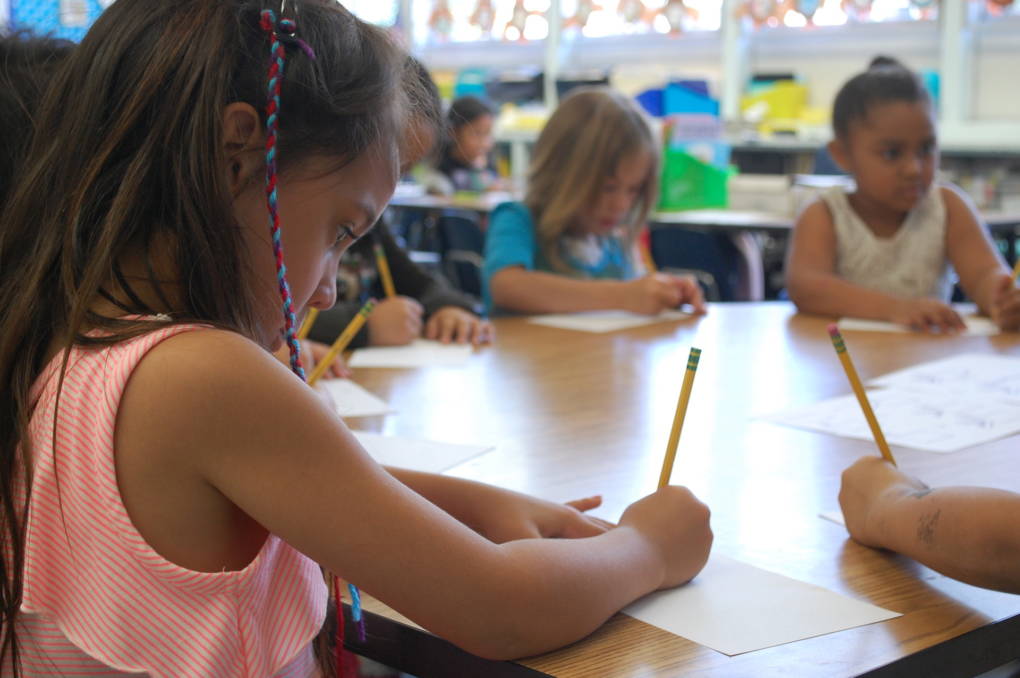
"caption": "A kindergarten student at Oak Ridge Elementary School in the Sacramento Unified School District completes a writing assignment to hone her language skills.",
"description": null,
"title": "rs19474_dsc_0422-qut",
"credit": "Gabriel Salcedo/KQED",
"status": "inherit",
"isLoading": false,
"fetchFailed": false
},
"news_11164127": {
"type": "attachments",
"id": "news_11164127",
"meta": {
"index": "attachments_1716263798",
"site": "news",
"id": "11164127",
"found": true
},
"parent": 11159841,
"imgSizes": {
"small": {
"file": "https://ww2.kqed.org/app/uploads/sites/10/2016/11/RS21838_GettyImages-538635728-qut-520x347.jpg",
"width": 520,
"mimeType": "image/jpeg",
"height": 347
},
"twentyfourteen-full-width": {
"file": "https://ww2.kqed.org/app/uploads/sites/10/2016/11/RS21838_GettyImages-538635728-qut-1038x576.jpg",
"width": 1038,
"mimeType": "image/jpeg",
"height": 576
},
"thumbnail": {
"file": "https://ww2.kqed.org/app/uploads/sites/10/2016/11/RS21838_GettyImages-538635728-qut-160x107.jpg",
"width": 160,
"mimeType": "image/jpeg",
"height": 107
},
"fd-sm": {
"file": "https://ww2.kqed.org/app/uploads/sites/10/2016/11/RS21838_GettyImages-538635728-qut-960x640.jpg",
"width": 960,
"mimeType": "image/jpeg",
"height": 640
},
"post-thumbnail": {
"file": "https://ww2.kqed.org/app/uploads/sites/10/2016/11/RS21838_GettyImages-538635728-qut-672x372.jpg",
"width": 672,
"mimeType": "image/jpeg",
"height": 372
},
"xsmall": {
"file": "https://ww2.kqed.org/app/uploads/sites/10/2016/11/RS21838_GettyImages-538635728-qut-375x250.jpg",
"width": 375,
"mimeType": "image/jpeg",
"height": 250
},
"kqedFullSize": {
"file": "https://ww2.kqed.org/app/uploads/sites/10/2016/11/RS21838_GettyImages-538635728-qut.jpg",
"width": 1920,
"height": 1280
},
"large": {
"file": "https://ww2.kqed.org/app/uploads/sites/10/2016/11/RS21838_GettyImages-538635728-qut-1020x680.jpg",
"width": 1020,
"mimeType": "image/jpeg",
"height": 680
},
"xlarge": {
"file": "https://ww2.kqed.org/app/uploads/sites/10/2016/11/RS21838_GettyImages-538635728-qut-1180x787.jpg",
"width": 1180,
"mimeType": "image/jpeg",
"height": 787
},
"guest-author-50": {
"file": "https://ww2.kqed.org/app/uploads/sites/10/2016/11/RS21838_GettyImages-538635728-qut-50x50.jpg",
"width": 50,
"mimeType": "image/jpeg",
"height": 50
},
"guest-author-96": {
"file": "https://ww2.kqed.org/app/uploads/sites/10/2016/11/RS21838_GettyImages-538635728-qut-96x96.jpg",
"width": 96,
"mimeType": "image/jpeg",
"height": 96
},
"medium": {
"file": "https://ww2.kqed.org/app/uploads/sites/10/2016/11/RS21838_GettyImages-538635728-qut-800x533.jpg",
"width": 800,
"mimeType": "image/jpeg",
"height": 533
},
"guest-author-64": {
"file": "https://ww2.kqed.org/app/uploads/sites/10/2016/11/RS21838_GettyImages-538635728-qut-64x64.jpg",
"width": 64,
"mimeType": "image/jpeg",
"height": 64
},
"guest-author-32": {
"file": "https://ww2.kqed.org/app/uploads/sites/10/2016/11/RS21838_GettyImages-538635728-qut-32x32.jpg",
"width": 32,
"mimeType": "image/jpeg",
"height": 32
},
"jmtc-small-thumb": {
"file": "https://ww2.kqed.org/app/uploads/sites/10/2016/11/RS21838_GettyImages-538635728-qut-280x150.jpg",
"width": 280,
"mimeType": "image/jpeg",
"height": 150
},
"fd-lrg": {
"file": "https://ww2.kqed.org/app/uploads/sites/10/2016/11/RS21838_GettyImages-538635728-qut-1920x1280.jpg",
"width": 1920,
"mimeType": "image/jpeg",
"height": 1280
},
"fd-med": {
"file": "https://ww2.kqed.org/app/uploads/sites/10/2016/11/RS21838_GettyImages-538635728-qut-1180x787.jpg",
"width": 1180,
"mimeType": "image/jpeg",
"height": 787
},
"full-width": {
"file": "https://ww2.kqed.org/app/uploads/sites/10/2016/11/RS21838_GettyImages-538635728-qut-1920x1280.jpg",
"width": 1920,
"mimeType": "image/jpeg",
"height": 1280
},
"detail": {
"file": "https://ww2.kqed.org/app/uploads/sites/10/2016/11/RS21838_GettyImages-538635728-qut-150x150.jpg",
"width": 150,
"mimeType": "image/jpeg",
"height": 150
},
"guest-author-128": {
"file": "https://ww2.kqed.org/app/uploads/sites/10/2016/11/RS21838_GettyImages-538635728-qut-128x128.jpg",
"width": 128,
"mimeType": "image/jpeg",
"height": 128
},
"xxsmall": {
"file": "https://ww2.kqed.org/app/uploads/sites/10/2016/11/RS21838_GettyImages-538635728-qut-240x160.jpg",
"width": 240,
"mimeType": "image/jpeg",
"height": 160
}
},
"publishDate": 1478570955,
"modified": 1478571003,
"caption": "Rosa Ayala checks her ballot after voting in the US presidential primary June 7, 2016 in Los Angeles.",
"description": "Rosa Ayala checks her ballot after voting in the US presidential primary June 7, 2016 in Los Angeles.",
"title": "rs21838_gettyimages-538635728-qut",
"credit": "Michael Owen Baker/AFP/Getty Images",
"status": "inherit",
"isLoading": false,
"fetchFailed": false
},
"news_11159907": {
"type": "attachments",
"id": "news_11159907",
"meta": {
"index": "attachments_1716263798",
"site": "news",
"id": "11159907",
"found": true
},
"parent": 11159847,
"imgSizes": {
"small": {
"file": "https://ww2.kqed.org/app/uploads/sites/10/2016/11/RS4217_162873323-520x351.jpg",
"width": 520,
"mimeType": "image/jpeg",
"height": 351
},
"twentyfourteen-full-width": {
"file": "https://ww2.kqed.org/app/uploads/sites/10/2016/11/RS4217_162873323-1038x576.jpg",
"width": 1038,
"mimeType": "image/jpeg",
"height": 576
},
"thumbnail": {
"file": "https://ww2.kqed.org/app/uploads/sites/10/2016/11/RS4217_162873323-160x108.jpg",
"width": 160,
"mimeType": "image/jpeg",
"height": 108
},
"fd-sm": {
"file": "https://ww2.kqed.org/app/uploads/sites/10/2016/11/RS4217_162873323-960x649.jpg",
"width": 960,
"mimeType": "image/jpeg",
"height": 649
},
"post-thumbnail": {
"file": "https://ww2.kqed.org/app/uploads/sites/10/2016/11/RS4217_162873323-672x372.jpg",
"width": 672,
"mimeType": "image/jpeg",
"height": 372
},
"xsmall": {
"file": "https://ww2.kqed.org/app/uploads/sites/10/2016/11/RS4217_162873323-375x253.jpg",
"width": 375,
"mimeType": "image/jpeg",
"height": 253
},
"kqedFullSize": {
"file": "https://ww2.kqed.org/app/uploads/sites/10/2016/11/RS4217_162873323.jpg",
"width": 4373,
"height": 2955
},
"large": {
"file": "https://ww2.kqed.org/app/uploads/sites/10/2016/11/RS4217_162873323-1020x689.jpg",
"width": 1020,
"mimeType": "image/jpeg",
"height": 689
},
"xlarge": {
"file": "https://ww2.kqed.org/app/uploads/sites/10/2016/11/RS4217_162873323-1180x797.jpg",
"width": 1180,
"mimeType": "image/jpeg",
"height": 797
},
"guest-author-50": {
"file": "https://ww2.kqed.org/app/uploads/sites/10/2016/11/RS4217_162873323-50x50.jpg",
"width": 50,
"mimeType": "image/jpeg",
"height": 50
},
"guest-author-96": {
"file": "https://ww2.kqed.org/app/uploads/sites/10/2016/11/RS4217_162873323-96x96.jpg",
"width": 96,
"mimeType": "image/jpeg",
"height": 96
},
"medium": {
"file": "https://ww2.kqed.org/app/uploads/sites/10/2016/11/RS4217_162873323-800x541.jpg",
"width": 800,
"mimeType": "image/jpeg",
"height": 541
},
"guest-author-64": {
"file": "https://ww2.kqed.org/app/uploads/sites/10/2016/11/RS4217_162873323-64x64.jpg",
"width": 64,
"mimeType": "image/jpeg",
"height": 64
},
"guest-author-32": {
"file": "https://ww2.kqed.org/app/uploads/sites/10/2016/11/RS4217_162873323-32x32.jpg",
"width": 32,
"mimeType": "image/jpeg",
"height": 32
},
"jmtc-small-thumb": {
"file": "https://ww2.kqed.org/app/uploads/sites/10/2016/11/RS4217_162873323-280x150.jpg",
"width": 280,
"mimeType": "image/jpeg",
"height": 150
},
"fd-lrg": {
"file": "https://ww2.kqed.org/app/uploads/sites/10/2016/11/RS4217_162873323-1920x1297.jpg",
"width": 1920,
"mimeType": "image/jpeg",
"height": 1297
},
"fd-med": {
"file": "https://ww2.kqed.org/app/uploads/sites/10/2016/11/RS4217_162873323-1180x797.jpg",
"width": 1180,
"mimeType": "image/jpeg",
"height": 797
},
"full-width": {
"file": "https://ww2.kqed.org/app/uploads/sites/10/2016/11/RS4217_162873323-1920x1297.jpg",
"width": 1920,
"mimeType": "image/jpeg",
"height": 1297
},
"detail": {
"file": "https://ww2.kqed.org/app/uploads/sites/10/2016/11/RS4217_162873323-150x150.jpg",
"width": 150,
"mimeType": "image/jpeg",
"height": 150
},
"guest-author-128": {
"file": "https://ww2.kqed.org/app/uploads/sites/10/2016/11/RS4217_162873323-128x128.jpg",
"width": 128,
"mimeType": "image/jpeg",
"height": 128
},
"xxsmall": {
"file": "https://ww2.kqed.org/app/uploads/sites/10/2016/11/RS4217_162873323-240x162.jpg",
"width": 240,
"mimeType": "image/jpeg",
"height": 162
}
},
"publishDate": 1478303958,
"modified": 1478304193,
"caption": null,
"description": null,
"title": "US-POLITICS-CONGRESS-SEQUESTRATION",
"credit": "Saul Loeb/AFP/Getty Images",
"status": "inherit",
"isLoading": false,
"fetchFailed": false
},
"news_11165545": {
"type": "attachments",
"id": "news_11165545",
"meta": {
"index": "attachments_1716263798",
"site": "news",
"id": "11165545",
"found": true
},
"parent": 11165541,
"imgSizes": {
"small": {
"file": "https://ww2.kqed.org/app/uploads/sites/10/2016/11/RS21920_161108_TotlandPlayground_bhs01-520x347.jpg",
"width": 520,
"mimeType": "image/jpeg",
"height": 347
},
"twentyfourteen-full-width": {
"file": "https://ww2.kqed.org/app/uploads/sites/10/2016/11/RS21920_161108_TotlandPlayground_bhs01-1038x576.jpg",
"width": 1038,
"mimeType": "image/jpeg",
"height": 576
},
"thumbnail": {
"file": "https://ww2.kqed.org/app/uploads/sites/10/2016/11/RS21920_161108_TotlandPlayground_bhs01-160x107.jpg",
"width": 160,
"mimeType": "image/jpeg",
"height": 107
},
"fd-sm": {
"file": "https://ww2.kqed.org/app/uploads/sites/10/2016/11/RS21920_161108_TotlandPlayground_bhs01-960x640.jpg",
"width": 960,
"mimeType": "image/jpeg",
"height": 640
},
"post-thumbnail": {
"file": "https://ww2.kqed.org/app/uploads/sites/10/2016/11/RS21920_161108_TotlandPlayground_bhs01-672x372.jpg",
"width": 672,
"mimeType": "image/jpeg",
"height": 372
},
"xsmall": {
"file": "https://ww2.kqed.org/app/uploads/sites/10/2016/11/RS21920_161108_TotlandPlayground_bhs01-375x250.jpg",
"width": 375,
"mimeType": "image/jpeg",
"height": 250
},
"kqedFullSize": {
"file": "https://ww2.kqed.org/app/uploads/sites/10/2016/11/RS21920_161108_TotlandPlayground_bhs01.jpg",
"width": 1920,
"height": 1280
},
"large": {
"file": "https://ww2.kqed.org/app/uploads/sites/10/2016/11/RS21920_161108_TotlandPlayground_bhs01-1020x680.jpg",
"width": 1020,
"mimeType": "image/jpeg",
"height": 680
},
"xlarge": {
"file": "https://ww2.kqed.org/app/uploads/sites/10/2016/11/RS21920_161108_TotlandPlayground_bhs01-1180x787.jpg",
"width": 1180,
"mimeType": "image/jpeg",
"height": 787
},
"guest-author-50": {
"file": "https://ww2.kqed.org/app/uploads/sites/10/2016/11/RS21920_161108_TotlandPlayground_bhs01-50x50.jpg",
"width": 50,
"mimeType": "image/jpeg",
"height": 50
},
"guest-author-96": {
"file": "https://ww2.kqed.org/app/uploads/sites/10/2016/11/RS21920_161108_TotlandPlayground_bhs01-96x96.jpg",
"width": 96,
"mimeType": "image/jpeg",
"height": 96
},
"medium": {
"file": "https://ww2.kqed.org/app/uploads/sites/10/2016/11/RS21920_161108_TotlandPlayground_bhs01-800x533.jpg",
"width": 800,
"mimeType": "image/jpeg",
"height": 533
},
"guest-author-64": {
"file": "https://ww2.kqed.org/app/uploads/sites/10/2016/11/RS21920_161108_TotlandPlayground_bhs01-64x64.jpg",
"width": 64,
"mimeType": "image/jpeg",
"height": 64
},
"guest-author-32": {
"file": "https://ww2.kqed.org/app/uploads/sites/10/2016/11/RS21920_161108_TotlandPlayground_bhs01-32x32.jpg",
"width": 32,
"mimeType": "image/jpeg",
"height": 32
},
"jmtc-small-thumb": {
"file": "https://ww2.kqed.org/app/uploads/sites/10/2016/11/RS21920_161108_TotlandPlayground_bhs01-280x150.jpg",
"width": 280,
"mimeType": "image/jpeg",
"height": 150
},
"fd-lrg": {
"file": "https://ww2.kqed.org/app/uploads/sites/10/2016/11/RS21920_161108_TotlandPlayground_bhs01-1920x1280.jpg",
"width": 1920,
"mimeType": "image/jpeg",
"height": 1280
},
"fd-med": {
"file": "https://ww2.kqed.org/app/uploads/sites/10/2016/11/RS21920_161108_TotlandPlayground_bhs01-1180x787.jpg",
"width": 1180,
"mimeType": "image/jpeg",
"height": 787
},
"full-width": {
"file": "https://ww2.kqed.org/app/uploads/sites/10/2016/11/RS21920_161108_TotlandPlayground_bhs01-1920x1280.jpg",
"width": 1920,
"mimeType": "image/jpeg",
"height": 1280
},
"detail": {
"file": "https://ww2.kqed.org/app/uploads/sites/10/2016/11/RS21920_161108_TotlandPlayground_bhs01-150x150.jpg",
"width": 150,
"mimeType": "image/jpeg",
"height": 150
},
"guest-author-128": {
"file": "https://ww2.kqed.org/app/uploads/sites/10/2016/11/RS21920_161108_TotlandPlayground_bhs01-128x128.jpg",
"width": 128,
"mimeType": "image/jpeg",
"height": 128
},
"xxsmall": {
"file": "https://ww2.kqed.org/app/uploads/sites/10/2016/11/RS21920_161108_TotlandPlayground_bhs01-240x160.jpg",
"width": 240,
"mimeType": "image/jpeg",
"height": 160
}
},
"publishDate": 1478656204,
"modified": 1479946851,
"caption": "Multilingual 'I Voted' stickers at a polling place in Berkeley. ",
"description": null,
"title": "I Voted",
"credit": "Brittany Hosea-Small/KQED",
"status": "inherit",
"isLoading": false,
"fetchFailed": false
},
"news_11164120": {
"type": "attachments",
"id": "news_11164120",
"meta": {
"index": "attachments_1716263798",
"site": "news",
"id": "11164120",
"found": true
},
"parent": 11159636,
"imgSizes": {
"small": {
"file": "https://ww2.kqed.org/app/uploads/sites/10/2016/11/RS21837_GettyImages-620900216-qut-520x390.jpg",
"width": 520,
"mimeType": "image/jpeg",
"height": 390
},
"twentyfourteen-full-width": {
"file": "https://ww2.kqed.org/app/uploads/sites/10/2016/11/RS21837_GettyImages-620900216-qut-1038x576.jpg",
"width": 1038,
"mimeType": "image/jpeg",
"height": 576
},
"thumbnail": {
"file": "https://ww2.kqed.org/app/uploads/sites/10/2016/11/RS21837_GettyImages-620900216-qut-160x120.jpg",
"width": 160,
"mimeType": "image/jpeg",
"height": 120
},
"fd-sm": {
"file": "https://ww2.kqed.org/app/uploads/sites/10/2016/11/RS21837_GettyImages-620900216-qut-960x720.jpg",
"width": 960,
"mimeType": "image/jpeg",
"height": 720
},
"post-thumbnail": {
"file": "https://ww2.kqed.org/app/uploads/sites/10/2016/11/RS21837_GettyImages-620900216-qut-672x372.jpg",
"width": 672,
"mimeType": "image/jpeg",
"height": 372
},
"xsmall": {
"file": "https://ww2.kqed.org/app/uploads/sites/10/2016/11/RS21837_GettyImages-620900216-qut-375x281.jpg",
"width": 375,
"mimeType": "image/jpeg",
"height": 281
},
"kqedFullSize": {
"file": "https://ww2.kqed.org/app/uploads/sites/10/2016/11/RS21837_GettyImages-620900216-qut.jpg",
"width": 1920,
"height": 1440
},
"large": {
"file": "https://ww2.kqed.org/app/uploads/sites/10/2016/11/RS21837_GettyImages-620900216-qut-1020x765.jpg",
"width": 1020,
"mimeType": "image/jpeg",
"height": 765
},
"xlarge": {
"file": "https://ww2.kqed.org/app/uploads/sites/10/2016/11/RS21837_GettyImages-620900216-qut-1180x885.jpg",
"width": 1180,
"mimeType": "image/jpeg",
"height": 885
},
"guest-author-50": {
"file": "https://ww2.kqed.org/app/uploads/sites/10/2016/11/RS21837_GettyImages-620900216-qut-50x50.jpg",
"width": 50,
"mimeType": "image/jpeg",
"height": 50
},
"guest-author-96": {
"file": "https://ww2.kqed.org/app/uploads/sites/10/2016/11/RS21837_GettyImages-620900216-qut-96x96.jpg",
"width": 96,
"mimeType": "image/jpeg",
"height": 96
},
"medium": {
"file": "https://ww2.kqed.org/app/uploads/sites/10/2016/11/RS21837_GettyImages-620900216-qut-800x600.jpg",
"width": 800,
"mimeType": "image/jpeg",
"height": 600
},
"guest-author-64": {
"file": "https://ww2.kqed.org/app/uploads/sites/10/2016/11/RS21837_GettyImages-620900216-qut-64x64.jpg",
"width": 64,
"mimeType": "image/jpeg",
"height": 64
},
"guest-author-32": {
"file": "https://ww2.kqed.org/app/uploads/sites/10/2016/11/RS21837_GettyImages-620900216-qut-32x32.jpg",
"width": 32,
"mimeType": "image/jpeg",
"height": 32
},
"jmtc-small-thumb": {
"file": "https://ww2.kqed.org/app/uploads/sites/10/2016/11/RS21837_GettyImages-620900216-qut-280x150.jpg",
"width": 280,
"mimeType": "image/jpeg",
"height": 150
},
"fd-lrg": {
"file": "https://ww2.kqed.org/app/uploads/sites/10/2016/11/RS21837_GettyImages-620900216-qut-1920x1440.jpg",
"width": 1920,
"mimeType": "image/jpeg",
"height": 1440
},
"fd-med": {
"file": "https://ww2.kqed.org/app/uploads/sites/10/2016/11/RS21837_GettyImages-620900216-qut-1180x885.jpg",
"width": 1180,
"mimeType": "image/jpeg",
"height": 885
},
"full-width": {
"file": "https://ww2.kqed.org/app/uploads/sites/10/2016/11/RS21837_GettyImages-620900216-qut-1920x1440.jpg",
"width": 1920,
"mimeType": "image/jpeg",
"height": 1440
},
"detail": {
"file": "https://ww2.kqed.org/app/uploads/sites/10/2016/11/RS21837_GettyImages-620900216-qut-150x150.jpg",
"width": 150,
"mimeType": "image/jpeg",
"height": 150
},
"guest-author-128": {
"file": "https://ww2.kqed.org/app/uploads/sites/10/2016/11/RS21837_GettyImages-620900216-qut-128x128.jpg",
"width": 128,
"mimeType": "image/jpeg",
"height": 128
},
"xxsmall": {
"file": "https://ww2.kqed.org/app/uploads/sites/10/2016/11/RS21837_GettyImages-620900216-qut-240x180.jpg",
"width": 240,
"mimeType": "image/jpeg",
"height": 180
}
},
"publishDate": 1478570222,
"modified": 1478570234,
"caption": null,
"description": null,
"title": "rs21837_gettyimages-620900216-qut",
"credit": "JEWEL SAMAD,JEFF KOWALSKY/AFP/Getty Images",
"status": "inherit",
"isLoading": false,
"fetchFailed": false
},
"news_11165462": {
"type": "attachments",
"id": "news_11165462",
"meta": {
"index": "attachments_1716263798",
"site": "news",
"id": "11165462",
"found": true
},
"parent": 11165456,
"imgSizes": {
"small": {
"file": "https://ww2.kqed.org/app/uploads/sites/10/2016/11/GettyImages-621783856-520x347.jpg",
"width": 520,
"mimeType": "image/jpeg",
"height": 347
},
"twentyfourteen-full-width": {
"file": "https://ww2.kqed.org/app/uploads/sites/10/2016/11/GettyImages-621783856-1038x576.jpg",
"width": 1038,
"mimeType": "image/jpeg",
"height": 576
},
"thumbnail": {
"file": "https://ww2.kqed.org/app/uploads/sites/10/2016/11/GettyImages-621783856-160x107.jpg",
"width": 160,
"mimeType": "image/jpeg",
"height": 107
},
"fd-sm": {
"file": "https://ww2.kqed.org/app/uploads/sites/10/2016/11/GettyImages-621783856-960x640.jpg",
"width": 960,
"mimeType": "image/jpeg",
"height": 640
},
"post-thumbnail": {
"file": "https://ww2.kqed.org/app/uploads/sites/10/2016/11/GettyImages-621783856-672x372.jpg",
"width": 672,
"mimeType": "image/jpeg",
"height": 372
},
"xsmall": {
"file": "https://ww2.kqed.org/app/uploads/sites/10/2016/11/GettyImages-621783856-375x250.jpg",
"width": 375,
"mimeType": "image/jpeg",
"height": 250
},
"kqedFullSize": {
"file": "https://ww2.kqed.org/app/uploads/sites/10/2016/11/GettyImages-621783856.jpg",
"width": 3500,
"height": 2333
},
"large": {
"file": "https://ww2.kqed.org/app/uploads/sites/10/2016/11/GettyImages-621783856-1020x680.jpg",
"width": 1020,
"mimeType": "image/jpeg",
"height": 680
},
"xlarge": {
"file": "https://ww2.kqed.org/app/uploads/sites/10/2016/11/GettyImages-621783856-1180x787.jpg",
"width": 1180,
"mimeType": "image/jpeg",
"height": 787
},
"guest-author-50": {
"file": "https://ww2.kqed.org/app/uploads/sites/10/2016/11/GettyImages-621783856-50x50.jpg",
"width": 50,
"mimeType": "image/jpeg",
"height": 50
},
"guest-author-96": {
"file": "https://ww2.kqed.org/app/uploads/sites/10/2016/11/GettyImages-621783856-96x96.jpg",
"width": 96,
"mimeType": "image/jpeg",
"height": 96
},
"medium": {
"file": "https://ww2.kqed.org/app/uploads/sites/10/2016/11/GettyImages-621783856-800x533.jpg",
"width": 800,
"mimeType": "image/jpeg",
"height": 533
},
"guest-author-64": {
"file": "https://ww2.kqed.org/app/uploads/sites/10/2016/11/GettyImages-621783856-64x64.jpg",
"width": 64,
"mimeType": "image/jpeg",
"height": 64
},
"guest-author-32": {
"file": "https://ww2.kqed.org/app/uploads/sites/10/2016/11/GettyImages-621783856-32x32.jpg",
"width": 32,
"mimeType": "image/jpeg",
"height": 32
},
"jmtc-small-thumb": {
"file": "https://ww2.kqed.org/app/uploads/sites/10/2016/11/GettyImages-621783856-280x150.jpg",
"width": 280,
"mimeType": "image/jpeg",
"height": 150
},
"fd-lrg": {
"file": "https://ww2.kqed.org/app/uploads/sites/10/2016/11/GettyImages-621783856-1920x1280.jpg",
"width": 1920,
"mimeType": "image/jpeg",
"height": 1280
},
"fd-med": {
"file": "https://ww2.kqed.org/app/uploads/sites/10/2016/11/GettyImages-621783856-1180x787.jpg",
"width": 1180,
"mimeType": "image/jpeg",
"height": 787
},
"full-width": {
"file": "https://ww2.kqed.org/app/uploads/sites/10/2016/11/GettyImages-621783856-1920x1280.jpg",
"width": 1920,
"mimeType": "image/jpeg",
"height": 1280
},
"detail": {
"file": "https://ww2.kqed.org/app/uploads/sites/10/2016/11/GettyImages-621783856-150x150.jpg",
"width": 150,
"mimeType": "image/jpeg",
"height": 150
},
"guest-author-128": {
"file": "https://ww2.kqed.org/app/uploads/sites/10/2016/11/GettyImages-621783856-128x128.jpg",
"width": 128,
"mimeType": "image/jpeg",
"height": 128
},
"xxsmall": {
"file": "https://ww2.kqed.org/app/uploads/sites/10/2016/11/GettyImages-621783856-240x160.jpg",
"width": 240,
"mimeType": "image/jpeg",
"height": 160
}
},
"publishDate": 1478650650,
"modified": 1478663018,
"caption": "People vote at the lifeguard station at Venice Beach on Nov. 8, 2016, in Los Angeles.",
"description": "People vote at the Los Angeles Lifeguard station at Venice Beach on November 8, 2016 in Los Angeles, United States.",
"title": "Nation Goes To The Polls In Contentious Presidential Election Between Hillary Clinton And Donald Trump",
"credit": "David McNew/Getty Images)",
"status": "inherit",
"isLoading": false,
"fetchFailed": false
},
"news_11159383": {
"type": "attachments",
"id": "news_11159383",
"meta": {
"index": "attachments_1716263798",
"site": "news",
"id": "11159383",
"found": true
},
"parent": 11159320,
"imgSizes": {
"small": {
"file": "https://ww2.kqed.org/app/uploads/sites/10/2016/11/pfizer-1920-520x347.jpg",
"width": 520,
"mimeType": "image/jpeg",
"height": 347
},
"twentyfourteen-full-width": {
"file": "https://ww2.kqed.org/app/uploads/sites/10/2016/11/pfizer-1920-1038x576.jpg",
"width": 1038,
"mimeType": "image/jpeg",
"height": 576
},
"thumbnail": {
"file": "https://ww2.kqed.org/app/uploads/sites/10/2016/11/pfizer-1920-160x107.jpg",
"width": 160,
"mimeType": "image/jpeg",
"height": 107
},
"fd-sm": {
"file": "https://ww2.kqed.org/app/uploads/sites/10/2016/11/pfizer-1920-960x640.jpg",
"width": 960,
"mimeType": "image/jpeg",
"height": 640
},
"post-thumbnail": {
"file": "https://ww2.kqed.org/app/uploads/sites/10/2016/11/pfizer-1920-672x372.jpg",
"width": 672,
"mimeType": "image/jpeg",
"height": 372
},
"xsmall": {
"file": "https://ww2.kqed.org/app/uploads/sites/10/2016/11/pfizer-1920-375x250.jpg",
"width": 375,
"mimeType": "image/jpeg",
"height": 250
},
"kqedFullSize": {
"file": "https://ww2.kqed.org/app/uploads/sites/10/2016/11/pfizer-1920.jpg",
"width": 1920,
"height": 1280
},
"large": {
"file": "https://ww2.kqed.org/app/uploads/sites/10/2016/11/pfizer-1920-1020x680.jpg",
"width": 1020,
"mimeType": "image/jpeg",
"height": 680
},
"xlarge": {
"file": "https://ww2.kqed.org/app/uploads/sites/10/2016/11/pfizer-1920-1180x787.jpg",
"width": 1180,
"mimeType": "image/jpeg",
"height": 787
},
"guest-author-50": {
"file": "https://ww2.kqed.org/app/uploads/sites/10/2016/11/pfizer-1920-50x50.jpg",
"width": 50,
"mimeType": "image/jpeg",
"height": 50
},
"guest-author-96": {
"file": "https://ww2.kqed.org/app/uploads/sites/10/2016/11/pfizer-1920-96x96.jpg",
"width": 96,
"mimeType": "image/jpeg",
"height": 96
},
"medium": {
"file": "https://ww2.kqed.org/app/uploads/sites/10/2016/11/pfizer-1920-800x533.jpg",
"width": 800,
"mimeType": "image/jpeg",
"height": 533
},
"guest-author-64": {
"file": "https://ww2.kqed.org/app/uploads/sites/10/2016/11/pfizer-1920-64x64.jpg",
"width": 64,
"mimeType": "image/jpeg",
"height": 64
},
"guest-author-32": {
"file": "https://ww2.kqed.org/app/uploads/sites/10/2016/11/pfizer-1920-32x32.jpg",
"width": 32,
"mimeType": "image/jpeg",
"height": 32
},
"jmtc-small-thumb": {
"file": "https://ww2.kqed.org/app/uploads/sites/10/2016/11/pfizer-1920-280x150.jpg",
"width": 280,
"mimeType": "image/jpeg",
"height": 150
},
"fd-lrg": {
"file": "https://ww2.kqed.org/app/uploads/sites/10/2016/11/pfizer-1920-1920x1280.jpg",
"width": 1920,
"mimeType": "image/jpeg",
"height": 1280
},
"fd-med": {
"file": "https://ww2.kqed.org/app/uploads/sites/10/2016/11/pfizer-1920-1180x787.jpg",
"width": 1180,
"mimeType": "image/jpeg",
"height": 787
},
"full-width": {
"file": "https://ww2.kqed.org/app/uploads/sites/10/2016/11/pfizer-1920-1920x1280.jpg",
"width": 1920,
"mimeType": "image/jpeg",
"height": 1280
},
"detail": {
"file": "https://ww2.kqed.org/app/uploads/sites/10/2016/11/pfizer-1920-150x150.jpg",
"width": 150,
"mimeType": "image/jpeg",
"height": 150
},
"guest-author-128": {
"file": "https://ww2.kqed.org/app/uploads/sites/10/2016/11/pfizer-1920-128x128.jpg",
"width": 128,
"mimeType": "image/jpeg",
"height": 128
},
"xxsmall": {
"file": "https://ww2.kqed.org/app/uploads/sites/10/2016/11/pfizer-1920-240x160.jpg",
"width": 240,
"mimeType": "image/jpeg",
"height": 160
}
},
"publishDate": 1478284034,
"modified": 1478284088,
"caption": "The Pfizer headquarters in New York City stands in the heart of Manhattan's business district on Oct. 29, 2015.",
"description": null,
"title": "pfizer-1920",
"credit": "Spencer Platt/Getty Images)",
"status": "inherit",
"isLoading": false,
"fetchFailed": false
},
"news_11153862": {
"type": "attachments",
"id": "news_11153862",
"meta": {
"index": "attachments_1716263798",
"site": "news",
"id": "11153862",
"found": true
},
"parent": 11148362,
"imgSizes": {
"small": {
"file": "https://ww2.kqed.org/app/uploads/sites/10/2016/10/Prop60Performers-520x367.jpg",
"width": 520,
"mimeType": "image/jpeg",
"height": 367
},
"twentyfourteen-full-width": {
"file": "https://ww2.kqed.org/app/uploads/sites/10/2016/10/Prop60Performers-1038x576.jpg",
"width": 1038,
"mimeType": "image/jpeg",
"height": 576
},
"thumbnail": {
"file": "https://ww2.kqed.org/app/uploads/sites/10/2016/10/Prop60Performers-160x113.jpg",
"width": 160,
"mimeType": "image/jpeg",
"height": 113
},
"fd-sm": {
"file": "https://ww2.kqed.org/app/uploads/sites/10/2016/10/Prop60Performers-960x678.jpg",
"width": 960,
"mimeType": "image/jpeg",
"height": 678
},
"post-thumbnail": {
"file": "https://ww2.kqed.org/app/uploads/sites/10/2016/10/Prop60Performers-672x372.jpg",
"width": 672,
"mimeType": "image/jpeg",
"height": 372
},
"xsmall": {
"file": "https://ww2.kqed.org/app/uploads/sites/10/2016/10/Prop60Performers-375x265.jpg",
"width": 375,
"mimeType": "image/jpeg",
"height": 265
},
"kqedFullSize": {
"file": "https://ww2.kqed.org/app/uploads/sites/10/2016/10/Prop60Performers.jpg",
"width": 1920,
"height": 1356
},
"large": {
"file": "https://ww2.kqed.org/app/uploads/sites/10/2016/10/Prop60Performers-1020x720.jpg",
"width": 1020,
"mimeType": "image/jpeg",
"height": 720
},
"xlarge": {
"file": "https://ww2.kqed.org/app/uploads/sites/10/2016/10/Prop60Performers-1180x833.jpg",
"width": 1180,
"mimeType": "image/jpeg",
"height": 833
},
"guest-author-50": {
"file": "https://ww2.kqed.org/app/uploads/sites/10/2016/10/Prop60Performers-50x50.jpg",
"width": 50,
"mimeType": "image/jpeg",
"height": 50
},
"guest-author-96": {
"file": "https://ww2.kqed.org/app/uploads/sites/10/2016/10/Prop60Performers-96x96.jpg",
"width": 96,
"mimeType": "image/jpeg",
"height": 96
},
"medium": {
"file": "https://ww2.kqed.org/app/uploads/sites/10/2016/10/Prop60Performers-800x565.jpg",
"width": 800,
"mimeType": "image/jpeg",
"height": 565
},
"guest-author-64": {
"file": "https://ww2.kqed.org/app/uploads/sites/10/2016/10/Prop60Performers-64x64.jpg",
"width": 64,
"mimeType": "image/jpeg",
"height": 64
},
"guest-author-32": {
"file": "https://ww2.kqed.org/app/uploads/sites/10/2016/10/Prop60Performers-32x32.jpg",
"width": 32,
"mimeType": "image/jpeg",
"height": 32
},
"jmtc-small-thumb": {
"file": "https://ww2.kqed.org/app/uploads/sites/10/2016/10/Prop60Performers-280x150.jpg",
"width": 280,
"mimeType": "image/jpeg",
"height": 150
},
"fd-lrg": {
"file": "https://ww2.kqed.org/app/uploads/sites/10/2016/10/Prop60Performers-1920x1356.jpg",
"width": 1920,
"mimeType": "image/jpeg",
"height": 1356
},
"fd-med": {
"file": "https://ww2.kqed.org/app/uploads/sites/10/2016/10/Prop60Performers-1180x833.jpg",
"width": 1180,
"mimeType": "image/jpeg",
"height": 833
},
"full-width": {
"file": "https://ww2.kqed.org/app/uploads/sites/10/2016/10/Prop60Performers-1920x1356.jpg",
"width": 1920,
"mimeType": "image/jpeg",
"height": 1356
},
"detail": {
"file": "https://ww2.kqed.org/app/uploads/sites/10/2016/10/Prop60Performers-150x150.jpg",
"width": 150,
"mimeType": "image/jpeg",
"height": 150
},
"guest-author-128": {
"file": "https://ww2.kqed.org/app/uploads/sites/10/2016/10/Prop60Performers-128x128.jpg",
"width": 128,
"mimeType": "image/jpeg",
"height": 128
},
"xxsmall": {
"file": "https://ww2.kqed.org/app/uploads/sites/10/2016/10/Prop60Performers-240x170.jpg",
"width": 240,
"mimeType": "image/jpeg",
"height": 170
}
},
"publishDate": 1477942280,
"modified": 1477942341,
"caption": "Performers from the adult film industry protest Proposition 60 outside the AIDS Healthcare Foundation in Los Angeles.",
"description": "Performers from the adult film industry protest Proposition 60 outside the AIDS Healthcare Foundation in Los Angeles.",
"title": "prop60performers",
"credit": "April Dembosky/KQED",
"status": "inherit",
"isLoading": false,
"fetchFailed": false
},
"news_11150090": {
"type": "attachments",
"id": "news_11150090",
"meta": {
"index": "attachments_1716263798",
"site": "news",
"id": "11150090",
"found": true
},
"parent": 11149536,
"imgSizes": {
"small": {
"file": "https://ww2.kqed.org/app/uploads/sites/10/2016/10/RS21457_IMG_0137-qut-1-520x390.jpg",
"width": 520,
"mimeType": "image/jpeg",
"height": 390
},
"twentyfourteen-full-width": {
"file": "https://ww2.kqed.org/app/uploads/sites/10/2016/10/RS21457_IMG_0137-qut-1-1038x576.jpg",
"width": 1038,
"mimeType": "image/jpeg",
"height": 576
},
"thumbnail": {
"file": "https://ww2.kqed.org/app/uploads/sites/10/2016/10/RS21457_IMG_0137-qut-1-160x120.jpg",
"width": 160,
"mimeType": "image/jpeg",
"height": 120
},
"fd-sm": {
"file": "https://ww2.kqed.org/app/uploads/sites/10/2016/10/RS21457_IMG_0137-qut-1-960x720.jpg",
"width": 960,
"mimeType": "image/jpeg",
"height": 720
},
"post-thumbnail": {
"file": "https://ww2.kqed.org/app/uploads/sites/10/2016/10/RS21457_IMG_0137-qut-1-672x372.jpg",
"width": 672,
"mimeType": "image/jpeg",
"height": 372
},
"xsmall": {
"file": "https://ww2.kqed.org/app/uploads/sites/10/2016/10/RS21457_IMG_0137-qut-1-375x281.jpg",
"width": 375,
"mimeType": "image/jpeg",
"height": 281
},
"kqedFullSize": {
"file": "https://ww2.kqed.org/app/uploads/sites/10/2016/10/RS21457_IMG_0137-qut-1.jpg",
"width": 1920,
"height": 1440
},
"large": {
"file": "https://ww2.kqed.org/app/uploads/sites/10/2016/10/RS21457_IMG_0137-qut-1-1020x765.jpg",
"width": 1020,
"mimeType": "image/jpeg",
"height": 765
},
"xlarge": {
"file": "https://ww2.kqed.org/app/uploads/sites/10/2016/10/RS21457_IMG_0137-qut-1-1180x885.jpg",
"width": 1180,
"mimeType": "image/jpeg",
"height": 885
},
"guest-author-50": {
"file": "https://ww2.kqed.org/app/uploads/sites/10/2016/10/RS21457_IMG_0137-qut-1-50x50.jpg",
"width": 50,
"mimeType": "image/jpeg",
"height": 50
},
"guest-author-96": {
"file": "https://ww2.kqed.org/app/uploads/sites/10/2016/10/RS21457_IMG_0137-qut-1-96x96.jpg",
"width": 96,
"mimeType": "image/jpeg",
"height": 96
},
"medium": {
"file": "https://ww2.kqed.org/app/uploads/sites/10/2016/10/RS21457_IMG_0137-qut-1-800x600.jpg",
"width": 800,
"mimeType": "image/jpeg",
"height": 600
},
"guest-author-64": {
"file": "https://ww2.kqed.org/app/uploads/sites/10/2016/10/RS21457_IMG_0137-qut-1-64x64.jpg",
"width": 64,
"mimeType": "image/jpeg",
"height": 64
},
"guest-author-32": {
"file": "https://ww2.kqed.org/app/uploads/sites/10/2016/10/RS21457_IMG_0137-qut-1-32x32.jpg",
"width": 32,
"mimeType": "image/jpeg",
"height": 32
},
"jmtc-small-thumb": {
"file": "https://ww2.kqed.org/app/uploads/sites/10/2016/10/RS21457_IMG_0137-qut-1-280x150.jpg",
"width": 280,
"mimeType": "image/jpeg",
"height": 150
},
"fd-lrg": {
"file": "https://ww2.kqed.org/app/uploads/sites/10/2016/10/RS21457_IMG_0137-qut-1-1920x1440.jpg",
"width": 1920,
"mimeType": "image/jpeg",
"height": 1440
},
"fd-med": {
"file": "https://ww2.kqed.org/app/uploads/sites/10/2016/10/RS21457_IMG_0137-qut-1-1180x885.jpg",
"width": 1180,
"mimeType": "image/jpeg",
"height": 885
},
"full-width": {
"file": "https://ww2.kqed.org/app/uploads/sites/10/2016/10/RS21457_IMG_0137-qut-1-1920x1440.jpg",
"width": 1920,
"mimeType": "image/jpeg",
"height": 1440
},
"detail": {
"file": "https://ww2.kqed.org/app/uploads/sites/10/2016/10/RS21457_IMG_0137-qut-1-150x150.jpg",
"width": 150,
"mimeType": "image/jpeg",
"height": 150
},
"guest-author-128": {
"file": "https://ww2.kqed.org/app/uploads/sites/10/2016/10/RS21457_IMG_0137-qut-1-128x128.jpg",
"width": 128,
"mimeType": "image/jpeg",
"height": 128
},
"xxsmall": {
"file": "https://ww2.kqed.org/app/uploads/sites/10/2016/10/RS21457_IMG_0137-qut-1-240x180.jpg",
"width": 240,
"mimeType": "image/jpeg",
"height": 180
}
},
"publishDate": 1477699768,
"modified": 1477951603,
"caption": "San Francisco, Oakland and Albany are proposing to tax distributors 1 cent per ounce of sodas, ice teas and other sugary drinks they bring into city limits. The measures aim to fund nutrition and health programs to reduce Type 2 diabetes, a disease strongly linked to overconsumption of sugar.",
"description": null,
"title": "rs21457_img_0137-qut-1",
"credit": "Farida Jhabvala Romero/KQED",
"status": "inherit",
"isLoading": false,
"fetchFailed": false
},
"news_11149605": {
"type": "attachments",
"id": "news_11149605",
"meta": {
"index": "attachments_1716263798",
"site": "news",
"id": "11149605",
"found": true
},
"parent": 11149602,
"imgSizes": {
"small": {
"file": "https://ww2.kqed.org/app/uploads/sites/10/2016/10/32749-full-520x347.jpg",
"width": 520,
"mimeType": "image/jpeg",
"height": 347
},
"twentyfourteen-full-width": {
"file": "https://ww2.kqed.org/app/uploads/sites/10/2016/10/32749-full-1024x576.jpg",
"width": 1024,
"mimeType": "image/jpeg",
"height": 576
},
"thumbnail": {
"file": "https://ww2.kqed.org/app/uploads/sites/10/2016/10/32749-full-160x107.jpg",
"width": 160,
"mimeType": "image/jpeg",
"height": 107
},
"fd-sm": {
"file": "https://ww2.kqed.org/app/uploads/sites/10/2016/10/32749-full-960x640.jpg",
"width": 960,
"mimeType": "image/jpeg",
"height": 640
},
"post-thumbnail": {
"file": "https://ww2.kqed.org/app/uploads/sites/10/2016/10/32749-full-672x372.jpg",
"width": 672,
"mimeType": "image/jpeg",
"height": 372
},
"xsmall": {
"file": "https://ww2.kqed.org/app/uploads/sites/10/2016/10/32749-full-375x250.jpg",
"width": 375,
"mimeType": "image/jpeg",
"height": 250
},
"kqedFullSize": {
"file": "https://ww2.kqed.org/app/uploads/sites/10/2016/10/32749-full.jpg",
"width": 1024,
"height": 683
},
"large": {
"file": "https://ww2.kqed.org/app/uploads/sites/10/2016/10/32749-full-1020x680.jpg",
"width": 1020,
"mimeType": "image/jpeg",
"height": 680
},
"guest-author-50": {
"file": "https://ww2.kqed.org/app/uploads/sites/10/2016/10/32749-full-50x50.jpg",
"width": 50,
"mimeType": "image/jpeg",
"height": 50
},
"guest-author-96": {
"file": "https://ww2.kqed.org/app/uploads/sites/10/2016/10/32749-full-96x96.jpg",
"width": 96,
"mimeType": "image/jpeg",
"height": 96
},
"medium": {
"file": "https://ww2.kqed.org/app/uploads/sites/10/2016/10/32749-full-800x534.jpg",
"width": 800,
"mimeType": "image/jpeg",
"height": 534
},
"guest-author-64": {
"file": "https://ww2.kqed.org/app/uploads/sites/10/2016/10/32749-full-64x64.jpg",
"width": 64,
"mimeType": "image/jpeg",
"height": 64
},
"guest-author-32": {
"file": "https://ww2.kqed.org/app/uploads/sites/10/2016/10/32749-full-32x32.jpg",
"width": 32,
"mimeType": "image/jpeg",
"height": 32
},
"jmtc-small-thumb": {
"file": "https://ww2.kqed.org/app/uploads/sites/10/2016/10/32749-full-280x150.jpg",
"width": 280,
"mimeType": "image/jpeg",
"height": 150
},
"detail": {
"file": "https://ww2.kqed.org/app/uploads/sites/10/2016/10/32749-full-150x150.jpg",
"width": 150,
"mimeType": "image/jpeg",
"height": 150
},
"guest-author-128": {
"file": "https://ww2.kqed.org/app/uploads/sites/10/2016/10/32749-full-128x128.jpg",
"width": 128,
"mimeType": "image/jpeg",
"height": 128
},
"xxsmall": {
"file": "https://ww2.kqed.org/app/uploads/sites/10/2016/10/32749-full-240x160.jpg",
"width": 240,
"mimeType": "image/jpeg",
"height": 160
}
},
"publishDate": 1477524308,
"modified": 1477681214,
"caption": "Several people listen to a speaker express her opposition to the Citizens United ruling at an Occupy Courts protest in Los Angeles in 2012. ",
"description": "Several people listen to a speaker express her opposition to the Citizens United ruling at an Occupy Courts protest in Los Angeles in 2012. ",
"title": "File photo: Several people listen to a speaker express her opposition to the Citizens United ruling at an Occupy Courts protest in Los Angeles in 2012.",
"credit": "Corey Bridwell/KPCC",
"status": "inherit",
"isLoading": false,
"fetchFailed": false
}
},
"audioPlayerReducer": {
"postId": "stream_live",
"isPaused": true,
"isPlaying": false,
"pfsActive": false,
"pledgeModalIsOpen": true,
"playerDrawerIsOpen": false,
"liveAudioPlayStartedAt": 0,
"liveAudioPlayContext": ""
},
"authorsReducer": {
"byline_news_11166117": {
"type": "authors",
"id": "byline_news_11166117",
"meta": {
"override": true
},
"slug": "byline_news_11166117",
"name": "Camila Domonoske",
"isLoading": false
},
"byline_news_11166036": {
"type": "authors",
"id": "byline_news_11166036",
"meta": {
"override": true
},
"slug": "byline_news_11166036",
"name": "Carrie Johnson",
"isLoading": false
},
"byline_news_11159636": {
"type": "authors",
"id": "byline_news_11159636",
"meta": {
"override": true
},
"slug": "byline_news_11159636",
"name": "\u003cstrong>NPR Staff\u003c/strong>",
"isLoading": false
},
"byline_news_11165456": {
"type": "authors",
"id": "byline_news_11165456",
"meta": {
"override": true
},
"slug": "byline_news_11165456",
"name": "\u003cb> Janie Har \u003cbr> Associated Press \u003c/b>",
"isLoading": false
},
"byline_news_11159320": {
"type": "authors",
"id": "byline_news_11159320",
"meta": {
"override": true
},
"slug": "byline_news_11159320",
"name": "\u003cstrong>Ashleigh McEvoy\u003c/strong>",
"isLoading": false
},
"byline_news_11149602": {
"type": "authors",
"id": "byline_news_11149602",
"meta": {
"override": true
},
"slug": "byline_news_11149602",
"name": "\u003cstrong>\u003ca href=\"http://www.scpr.org/about/people/staff/mary-plummer\">Mary Plummer\u003c/a> \u003cbr> \u003ca href=\"http://www.scpr.org/\">KPCC\u003c/a>\u003c/strong>",
"isLoading": false
},
"anatintocalis": {
"type": "authors",
"id": "211",
"meta": {
"index": "authors_1716337520",
"id": "211",
"found": true
},
"name": "Ana Tintocalis",
"firstName": "Ana",
"lastName": "Tintocalis",
"slug": "anatintocalis",
"email": "atintocalis@kqed.org",
"display_author_email": false,
"staff_mastheads": [],
"title": null,
"bio": null,
"avatar": "https://secure.gravatar.com/avatar/722c50f51f04eff38fa0e5a3f1d29450?s=600&d=blank&r=g",
"twitter": null,
"facebook": null,
"instagram": null,
"linkedin": null,
"sites": [
{
"site": "news",
"roles": [
"subscriber"
]
},
{
"site": "stateofhealth",
"roles": [
"subscriber"
]
}
],
"headData": {
"title": "Ana Tintocalis | KQED",
"description": null,
"ogImgSrc": "https://secure.gravatar.com/avatar/722c50f51f04eff38fa0e5a3f1d29450?s=600&d=blank&r=g",
"twImgSrc": "https://secure.gravatar.com/avatar/722c50f51f04eff38fa0e5a3f1d29450?s=600&d=blank&r=g"
},
"isLoading": false,
"link": "/author/anatintocalis"
},
"danbrekke": {
"type": "authors",
"id": "222",
"meta": {
"index": "authors_1716337520",
"id": "222",
"found": true
},
"name": "Dan Brekke",
"firstName": "Dan",
"lastName": "Brekke",
"slug": "danbrekke",
"email": "dbrekke@kqed.org",
"display_author_email": true,
"staff_mastheads": [
"news",
"science"
],
"title": "KQED Editor and Reporter",
"bio": "Dan Brekke is a reporter and editor for KQED News, responsible for coverage of topics ranging from California water issues to the Bay Area's transportation challenges. In a newsroom career that began in Chicago in 1972, Dan has worked for \u003cem>The San Francisco Examiner,\u003c/em> Wired and TechTV and has been published in The New York Times, The New York Times Magazine, Business 2.0, Salon and elsewhere.\r\n\r\nSince joining KQED in 2007, Dan has reported, edited and produced both radio and online features and breaking news pieces. He has shared as both editor and reporter in four Society of Professional Journalists Norcal Excellence in Journalism awards and one Edward R. Murrow regional award. He was chosen for a spring 2017 residency at the Mesa Refuge to advance his research on California salmon.\r\n\r\nEmail Dan at: \u003ca href=\"mailto:dbrekke@kqed.org\">dbrekke@kqed.org\u003c/a>\r\n\r\n\u003cstrong>Twitter:\u003c/strong> \u003ca href=\"https://twitter.com/danbrekke\" rel=\"noopener noreferrer\">twitter.com/danbrekke\u003c/a>\r\n\u003cstrong>Facebook:\u003c/strong> \u003ca href=\"https://www.facebook.com/danbrekke\" rel=\"noopener noreferrer\">www.facebook.com/danbrekke\u003c/a>\r\n\u003cstrong>LinkedIn:\u003c/strong> \u003ca href=\"https://www.linkedin.com/in/danbrekke\" rel=\"noopener noreferrer\">www.linkedin.com/in/danbrekke\u003c/a>",
"avatar": "https://secure.gravatar.com/avatar/8f1f0d2a978fb3b23426c922c7e2af558fa36905b49c4ce76a97dc3c72d27226?s=600&d=mm&r=g",
"twitter": "danbrekke",
"bluesky": null,
"facebook": null,
"instagram": "https://www.instagram.com/dan.brekke/",
"linkedin": "https://www.linkedin.com/in/danbrekke/",
"sites": [
{
"site": "news",
"roles": [
"administrator",
"create_posts"
]
},
{
"site": "stateofhealth",
"roles": [
"editor"
]
},
{
"site": "science",
"roles": [
"editor"
]
},
{
"site": "quest",
"roles": [
"contributor"
]
},
{
"site": "food",
"roles": [
"contributor"
]
},
{
"site": "forum",
"roles": [
"contributor"
]
},
{
"site": "elections",
"roles": [
"editor"
]
},
{
"site": "liveblog",
"roles": [
"editor"
]
}
],
"headData": {
"title": "Dan Brekke | KQED",
"description": "KQED Editor and Reporter",
"ogImgSrc": "https://secure.gravatar.com/avatar/8f1f0d2a978fb3b23426c922c7e2af558fa36905b49c4ce76a97dc3c72d27226?s=600&d=mm&r=g",
"twImgSrc": "https://secure.gravatar.com/avatar/8f1f0d2a978fb3b23426c922c7e2af558fa36905b49c4ce76a97dc3c72d27226?s=600&d=mm&r=g"
},
"isLoading": false,
"link": "/author/danbrekke"
},
"kqed": {
"type": "authors",
"id": "236",
"meta": {
"index": "authors_1716337520",
"id": "236",
"found": true
},
"name": "KQED News Staff",
"firstName": "KQED News Staff",
"lastName": null,
"slug": "kqed",
"email": "faq@kqed.org",
"display_author_email": false,
"staff_mastheads": [],
"title": null,
"bio": null,
"avatar": "https://secure.gravatar.com/avatar/ef0e801a68c4c54afa9180db14084167?s=600&d=blank&r=g",
"twitter": null,
"facebook": null,
"instagram": null,
"linkedin": null,
"sites": [
{
"site": "arts",
"roles": [
"contributor"
]
},
{
"site": "news",
"roles": [
"editor"
]
},
{
"site": "futureofyou",
"roles": [
"author"
]
}
],
"headData": {
"title": "KQED News Staff | KQED",
"description": null,
"ogImgSrc": "https://secure.gravatar.com/avatar/ef0e801a68c4c54afa9180db14084167?s=600&d=blank&r=g",
"twImgSrc": "https://secure.gravatar.com/avatar/ef0e801a68c4c54afa9180db14084167?s=600&d=blank&r=g"
},
"isLoading": false,
"link": "/author/kqed"
},
"adembosky": {
"type": "authors",
"id": "3205",
"meta": {
"index": "authors_1716337520",
"id": "3205",
"found": true
},
"name": "April Dembosky",
"firstName": "April",
"lastName": "Dembosky",
"slug": "adembosky",
"email": "adembosky@kqed.org",
"display_author_email": false,
"staff_mastheads": [
"news",
"science"
],
"title": "KQED Health Correspondent",
"bio": "April Dembosky is the health correspondent for KQED News and a regular contributor to NPR. She specializes in covering altered states of mind, from postpartum depression to methamphetamine-induced psychosis to the insanity defense. Her investigative series on insurance companies sidestepping mental health laws won multiple awards, including first place in beat reporting from the national Association of Health Care Journalists. She is the recipient of numerous other prizes and fellowships, including a national Edward R. Murrow award for investigative reporting, a Society of Professional Journalists award for long-form storytelling, and a Carter Center Fellowship for Mental Health Journalism.\r\n\r\nDembosky reported and produced \u003cem>Soundtrack of Silence\u003c/em>, an audio documentary about music and memory that is currently being made into a feature film by Paramount Pictures.\r\n\r\nBefore joining KQED in 2013, Dembosky covered technology and Silicon Valley for \u003cem>The Financial Times of London,\u003c/em> and contributed business and arts stories to \u003cem>Marketplace \u003c/em>and \u003cem>The New York Times.\u003c/em> She got her undergraduate degree in philosophy from Smith College and her master's in journalism from the University of California, Berkeley. She is a classically trained violinist and proud alum of the first symphony orchestra at Burning Man.",
"avatar": "https://secure.gravatar.com/avatar/d6593cd737b732102fe0b6250b5351c2d3bc9b2987566514aa3c9a106494d684?s=600&d=blank&r=g",
"twitter": "adembosky",
"bluesky": null,
"facebook": null,
"instagram": null,
"linkedin": null,
"sites": [
{
"site": "arts",
"roles": [
"author"
]
},
{
"site": "news",
"roles": [
"editor"
]
},
{
"site": "futureofyou",
"roles": [
"author"
]
},
{
"site": "stateofhealth",
"roles": [
"editor"
]
},
{
"site": "science",
"roles": [
"editor"
]
},
{
"site": "forum",
"roles": [
"editor"
]
}
],
"headData": {
"title": "April Dembosky | KQED",
"description": "KQED Health Correspondent",
"ogImgSrc": "https://secure.gravatar.com/avatar/d6593cd737b732102fe0b6250b5351c2d3bc9b2987566514aa3c9a106494d684?s=600&d=blank&r=g",
"twImgSrc": "https://secure.gravatar.com/avatar/d6593cd737b732102fe0b6250b5351c2d3bc9b2987566514aa3c9a106494d684?s=600&d=blank&r=g"
},
"isLoading": false,
"link": "/author/adembosky"
},
"fjhabvala": {
"type": "authors",
"id": "8659",
"meta": {
"index": "authors_1716337520",
"id": "8659",
"found": true
},
"name": "Farida Jhabvala Romero",
"firstName": "Farida",
"lastName": "Jhabvala Romero",
"slug": "fjhabvala",
"email": "fjhabvala@kqed.org",
"display_author_email": true,
"staff_mastheads": [
"news"
],
"title": "KQED Contributor",
"bio": "Farida Jhabvala Romero is a Labor Correspondent for KQED. She previously covered immigration. Farida was \u003ca href=\"https://www.ccnma.org/2022-most-influential-latina-journalists\">named\u003c/a> one of the 10 Most Influential Latina Journalists in California in 2022 by the California Chicano News Media Association. Her work has won awards from the Society of Professional Journalists (Northern California), as well as a national and regional Edward M. Murrow Award for the collaborative reporting projects “Dangerous Air” and “Graying California.” Before joining KQED, Farida worked as a producer at Radio Bilingüe, a national public radio network. Farida earned her master’s degree in journalism from Stanford University.",
"avatar": "https://secure.gravatar.com/avatar/f9f022d4e2609741874222a1e9d41f48fea74011aa7c615eef91d9a50c944ebe?s=600&d=blank&r=g",
"twitter": "FaridaJhabvala",
"bluesky": null,
"facebook": null,
"instagram": null,
"linkedin": "https://www.linkedin.com/in/faridajhabvala/",
"sites": [
{
"site": "news",
"roles": [
"editor"
]
},
{
"site": "stateofhealth",
"roles": [
"author"
]
},
{
"site": "liveblog",
"roles": [
"author"
]
}
],
"headData": {
"title": "Farida Jhabvala Romero | KQED",
"description": "KQED Contributor",
"ogImgSrc": "https://secure.gravatar.com/avatar/f9f022d4e2609741874222a1e9d41f48fea74011aa7c615eef91d9a50c944ebe?s=600&d=blank&r=g",
"twImgSrc": "https://secure.gravatar.com/avatar/f9f022d4e2609741874222a1e9d41f48fea74011aa7c615eef91d9a50c944ebe?s=600&d=blank&r=g"
},
"isLoading": false,
"link": "/author/fjhabvala"
}
},
"pagesReducer": {
"news_tag_elections": {
"type": "terms",
"id": "news_23394",
"meta": {
"index": "terms_1716263798",
"site": "news",
"id": "23394",
"score": 9.107828
},
"featImg": null,
"name": "elections",
"description": null,
"taxonomy": "tag",
"headData": {
"twImgId": null,
"twTitle": null,
"ogTitle": null,
"ogImgId": null,
"twDescription": null,
"description": null,
"title": "elections Archives | KQED News",
"ogDescription": null
},
"ttid": 23411,
"slug": "elections",
"isLoading": false,
"title": "elections",
"pageMeta": {
"site": "news",
"WpPageTemplate": "page-topic-editorial",
"currentPage": 15
},
"blocks": [
{
"blockName": "kqed/post-list",
"attrs": {
"layout": "cardArticle2",
"query": "posts/news?tag=elections",
"seeMore": false,
"paginated": true,
"page": 15
}
},
{
"blockName": "kqed/ad"
}
]
}
},
"pfsSessionReducer": {},
"postsReducer": {
"stream_live": {
"type": "live",
"id": "stream_live",
"audioUrl": "https://hls.kqed.org/hls/kqed_app/playlist.m3u8",
"title": "Live Stream",
"excerpt": "Live Stream information currently unavailable.",
"link": "/radio",
"featImg": "",
"label": {
"name": "KQED Live",
"link": "/"
}
},
"stream_kqedNewscast": {
"type": "posts",
"id": "stream_kqedNewscast",
"audioUrl": "https://www.kqed.org/.stream/anon/radio/RDnews/newscast.mp3?_=1",
"title": "KQED Newscast",
"featImg": "",
"label": {
"name": "88.5 FM",
"link": "/"
}
},
"news_11166117": {
"type": "posts",
"id": "news_11166117",
"meta": {
"index": "posts_1716263798",
"site": "news",
"id": "11166117",
"score": null,
"sort": [
1478679390000
]
},
"guestAuthors": [],
"slug": "canadas-immigration-website-has-been-down-for-hours",
"title": "Canada's Immigration Website Has Been Down for Hours",
"publishDate": 1478679390,
"format": "standard",
"headTitle": "Canada’s Immigration Website Has Been Down for Hours | KQED",
"labelTerm": {},
"content": "\u003cp>Canada’s Immigration and Citizenship site has been down for hours — apparently due to a spike in searches by Americans watching the presidential election.\u003c/p>\n\u003cp>Search traffic for “Canada immigration,” “Canada” and “move to Canada” has increased in the United States relative to the last seven days, according to Google Trends. Google reports that the search terms were particularly popular in Oregon, Washington, Vermont and California.\u003c/p>\n\u003cp>Meanwhile, Business Insider \u003ca href=\"http://www.businessinsider.com/canadian-immigration-site-crash-election-2016-11\">reports\u003c/a> that a story called “\u003ca href=\"http://www.businessinsider.com/how-to-move-canada-2016-11\">How to move to Canada and become a Canadian citizen\u003c/a>” has been the top story on the site on Tuesday night.\u003c/p>\n\u003cp>The Wayback Machine has an archive of the currently inaccessible site, if you’re curious, including the page with information on \u003ca href=\"https://web.archive.org/web/20160715203209/http://www.cic.gc.ca/english/immigrate/index.asp\">“how you can immigrate to Canada.”\u003c/a>\u003c/p>\n\u003cp>Will anyone actually do it?\u003c/p>\n\u003cp>[ad fullwidth]\u003c/p>\n\u003cp>NPR’s Danielle Kurtzleben took \u003ca href=\"http://www.npr.org/2016/03/30/472279572/do-americans-actually-follow-through-on-election-threats-to-move-to-canada\">a long look\u003c/a> at that question earlier this year.\u003c/p>\n\u003cp>“Every election, there’s that chorus of people who insist they are moving to Canada if candidate so-and-so wins. Everyone knows these people. They’re tweeting and \u003ca href=\"http://thehill.com/blogs/ballot-box/presidential-races/google-searches-move-to-canada-donald-trump-super-tuesday\">Googling\u003c/a> about it as you read this,” she wrote. (Which is undoubtedly true right now.)\u003c/p>\n\u003cp>\u003c/p>\n\u003cp>Determining how many people actually follow through is surprisingly difficult, Kurtzleben found. The short answer is: a few, but probably for reasons more complicated than pure politics.\u003c/p>\n\u003cdiv class=\"fullattribution\">Copyright 2016 NPR. To see more, visit http://www.npr.org/.\u003cimg decoding=\"async\" src=\"http://www.google-analytics.com/__utm.gif?utmac=UA-5828686-4&utmdt=Canada%27s+Immigration+Website+Has+Been+Down+For+Hours&utme=8(APIKey)9(MDAxOTAwOTE4MDEyMTkxMDAzNjczZDljZA004)\">\u003c/div>\n\n",
"blocks": [],
"excerpt": "Search traffic for 'Canada,' 'Canada immigration' and 'move to Canada' increased on election night, according to Google Trends.",
"status": "publish",
"parent": 0,
"modified": 1728428323,
"stats": {
"hasAudio": false,
"hasVideo": false,
"hasChartOrMap": false,
"iframeSrcs": [],
"hasGoogleForm": false,
"hasGallery": false,
"hasHearkenModule": false,
"hasPolis": false,
"paragraphCount": 10,
"wordCount": 242
},
"headData": {
"title": "Canada's Immigration Website Has Been Down for Hours | KQED",
"description": "Search traffic for 'Canada,' 'Canada immigration' and 'move to Canada' increased on election night, according to Google Trends.",
"ogTitle": "",
"ogDescription": "",
"ogImgId": "",
"twTitle": "",
"twDescription": "",
"twImgId": "",
"schema": {
"@context": "https://schema.org",
"@type": "NewsArticle",
"headline": "Canada's Immigration Website Has Been Down for Hours",
"datePublished": "2016-11-09T00:16:30-08:00",
"dateModified": "2024-10-08T15:58:43-07:00",
"image": "https://cdn.kqed.org/wp-content/uploads/2020/02/KQED-OG-Image@1x.png",
"isAccessibleForFree": "True",
"publisher": {
"@type": "NewsMediaOrganization",
"@id": "https://www.kqed.org/#organization",
"name": "KQED",
"logo": "https://cdn.kqed.org/wp-content/uploads/2020/02/KQED-OG-Image@1x.png",
"url": "https://www.kqed.org",
"sameAs": [
"https://www.facebook.com/KQED",
"https://twitter.com/KQED",
"https://www.instagram.com/kqed/",
"https://www.tiktok.com/@kqedofficial",
"https://www.linkedin.com/company/kqed",
"https://www.youtube.com/channel/UCeC0IOo7i1P_61zVUWbJ4nw"
]
}
}
},
"source": "NPR",
"sourceUrl": "http://www.npr.org/",
"sticky": false,
"nprByline": "Camila Domonoske",
"nprImageAgency": "Open Grid Scheduler/Grid Engine via Flickr",
"nprStoryId": "501352852",
"nprApiLink": "http://api.npr.org/query?id=501352852&apiKey=MDAxOTAwOTE4MDEyMTkxMDAzNjczZDljZA004",
"nprHtmlLink": "http://www.npr.org/sections/thetwo-way/2016/11/09/501352852/canadas-immigration-website-has-been-down-for-hours?ft=nprml&f=501352852",
"nprRetrievedStory": "1",
"nprPubDate": "Wed, 09 Nov 2016 02:03:00 -0500",
"nprStoryDate": "Wed, 09 Nov 2016 01:43:00 -0500",
"nprLastModifiedDate": "Wed, 09 Nov 2016 02:03:57 -0500",
"path": "/news/11166117/canadas-immigration-website-has-been-down-for-hours",
"audioTrackLength": null,
"parsedContent": [
{
"type": "contentString",
"content": "\u003cdiv class=\"post-body\">\u003cp>\u003cp>Canada’s Immigration and Citizenship site has been down for hours — apparently due to a spike in searches by Americans watching the presidential election.\u003c/p>\n\u003cp>Search traffic for “Canada immigration,” “Canada” and “move to Canada” has increased in the United States relative to the last seven days, according to Google Trends. Google reports that the search terms were particularly popular in Oregon, Washington, Vermont and California.\u003c/p>\n\u003cp>Meanwhile, Business Insider \u003ca href=\"http://www.businessinsider.com/canadian-immigration-site-crash-election-2016-11\">reports\u003c/a> that a story called “\u003ca href=\"http://www.businessinsider.com/how-to-move-canada-2016-11\">How to move to Canada and become a Canadian citizen\u003c/a>” has been the top story on the site on Tuesday night.\u003c/p>\n\u003cp>The Wayback Machine has an archive of the currently inaccessible site, if you’re curious, including the page with information on \u003ca href=\"https://web.archive.org/web/20160715203209/http://www.cic.gc.ca/english/immigrate/index.asp\">“how you can immigrate to Canada.”\u003c/a>\u003c/p>\n\u003cp>Will anyone actually do it?\u003c/p>\n\u003cp>\u003c/p>\u003c/div>",
"attributes": {
"named": {},
"numeric": []
}
},
{
"type": "component",
"content": "",
"name": "ad",
"attributes": {
"named": {
"label": "fullwidth"
},
"numeric": [
"fullwidth"
]
}
},
{
"type": "contentString",
"content": "\u003cdiv class=\"post-body\">\u003cp>\u003c/p>\n\u003cp>NPR’s Danielle Kurtzleben took \u003ca href=\"http://www.npr.org/2016/03/30/472279572/do-americans-actually-follow-through-on-election-threats-to-move-to-canada\">a long look\u003c/a> at that question earlier this year.\u003c/p>\n\u003cp>“Every election, there’s that chorus of people who insist they are moving to Canada if candidate so-and-so wins. Everyone knows these people. They’re tweeting and \u003ca href=\"http://thehill.com/blogs/ballot-box/presidential-races/google-searches-move-to-canada-donald-trump-super-tuesday\">Googling\u003c/a> about it as you read this,” she wrote. (Which is undoubtedly true right now.)\u003c/p>\n\u003cp>\u003c/p>\n\u003cp>Determining how many people actually follow through is surprisingly difficult, Kurtzleben found. The short answer is: a few, but probably for reasons more complicated than pure politics.\u003c/p>\n\u003cdiv class=\"fullattribution\">Copyright 2016 NPR. To see more, visit http://www.npr.org/.\u003cimg decoding=\"async\" src=\"http://www.google-analytics.com/__utm.gif?utmac=UA-5828686-4&utmdt=Canada%27s+Immigration+Website+Has+Been+Down+For+Hours&utme=8(APIKey)9(MDAxOTAwOTE4MDEyMTkxMDAzNjczZDljZA004)\">\u003c/div>\n\n\u003c/div>\u003c/p>",
"attributes": {
"named": {},
"numeric": []
}
}
],
"link": "/news/11166117/canadas-immigration-website-has-been-down-for-hours",
"authors": [
"byline_news_11166117"
],
"programs": [
"news_6944",
"news_72"
],
"series": [
"news_19101"
],
"categories": [
"news_1169",
"news_8",
"news_33520",
"news_13"
],
"tags": [
"news_20189",
"news_1323",
"news_23394",
"news_1866",
"news_17286"
],
"affiliates": [
"news_253"
],
"featImg": "news_11166118",
"label": "source_news_11166117"
},
"news_11166036": {
"type": "posts",
"id": "news_11166036",
"meta": {
"index": "posts_1716263798",
"site": "news",
"id": "11166036",
"score": null,
"sort": [
1478677301000
]
},
"guestAuthors": [],
"slug": "donald-trump-clinches-the-presidency-in-major-upset",
"title": "Donald Trump Clinches the Presidency in Historic Upset",
"publishDate": 1478677301,
"format": "standard",
"headTitle": "Donald Trump Clinches the Presidency in Historic Upset | KQED",
"labelTerm": {},
"content": "\u003cp>Donald J. Trump has been elected the 45th president of the United States, the capstone of a tumultuous and divisive campaign that won over white voters with the promise to “Make America Great Again.”\u003c/p>\n\u003cp>Trump crossed the 270 electoral vote threshold at 2:31 a.m. ET, according to Associated Press projections.\u003c/p>\n\u003cp>The rise of Trump, a candidate with no prior experience in the military or elected office, confounded nearly everyone in politics. Improbably, the real estate-scion-turned-reality-TV-star had not even been a member of the Republican Party for long. That made his victory over Democratic rival Hillary Clinton even more stunning, preventing her from becoming the nation’s first female president.\u003c/p>\n\u003cp>But in a rough-and-tumble campaign, Trump convinced a large slice of the American electorate that the government, Wall Street and the justice system were rigged. “I will be your voice,” he told supporters, who then defied the polls to propel him to the nation’s highest office.\u003c/p>\n\u003cp>Critical battleground states broke Trump’s way. Delegate-rich Ohio, Florida, Pennsylvania and Wisconsin moved to the Republican candidate. Many polls failed to predict those shifts, leaving crowds at Trump’s party in New York momentarily puzzled, then celebratory. About a mile away, in Manhattan, the event for former Secretary of State Clinton turned solemn.\u003c/p>\n\u003cp>[ad fullwidth]\u003c/p>\n\u003cp>Clinton’s campaign chairman, John Podesta, told a dwindling crowd early Wednesday that she would not be speaking yet. “They’re still counting votes and every vote should count,” he said.\u003c/p>\n\u003cp>Republican Party elites initially brushed off Trump. But he bested 16 more experienced rivals in the primary process while spending little on traditional campaign infrastructure and relying on family members for political and media acumen. By the presidential race’s closing days, Trump had won support from only one living GOP presidential nominee, former Sen. Bob Dole of Kansas. Turns out, he didn’t need the extra help.\u003c/p>\n\u003cp>[http_redir]\u003c/p>\n\u003cp>\u003c!-- iframe plugin v.4.3 wordpress.org/plugins/iframe/ -->\u003cbr>\n\u003ciframe loading=\"lazy\" src=\"http://interactives.ap.org/2016/general-election/?SITE=KQEDFMELN\" width=\"100%\" height=\"500\" scrolling=\"yes\" class=\"iframe-class\" frameborder=\"0\">\u003c/iframe>\u003c/p>\n\u003cp>“We want him to be as conservative and effective a president as possible,” said Rich Lowry, editor of the conservative National Review,\u003cem> \u003c/em> who has opposed Trump. “We’re skeptical of him on many levels, but you only have one president at a time.”\u003c/p>\n\u003cp>Trump will succeed Barack Obama, a two-term president and the first African-American to occupy the office. The president-elect is virtually Obama’s polar opposite and in fact needled Obama for years with false claims over his birthplace.\u003c/p>\n\u003cp>Obama had campaigned feverishly to elect Clinton in hopes she would preserve his signature domestic health care law, revive a plan to open up a path to citizenship for undocumented immigrants, and nominate more left-leaning justices to the Supreme Court.\u003c/p>\n\u003cp>By contrast, Trump’s governing agenda is far less clear. He has promised to deport millions of immigrants who don’t have papers, to build a wall along the U.S. border with Mexico and to bargain with foreign governments, such as those of Russia and China. His list of nearly two dozen potential nominees to the nation’s highest court is largely in line with conservative doctrine, if Trump in fact chooses from that list.\u003c/p>\n\u003cp>There are hints that Trump, 70, would defer to his vice president, Indiana Gov. Mike Pence, on many key policy decisions.\u003c/p>\n\u003cp>That would hardly be the first unorthodox decision by the candidate and his campaign.\u003c/p>\n\u003cp>To say Trump violated the norms of political contests would be an understatement. He never released his tax returns, citing an ongoing audit that would not have barred him from making them public. He called his opponent a “nasty woman,” launched his campaign by declaring that some Mexican immigrants who come to the U.S. illegally are “rapists” and “murderers,” and flatly denied accounts from about a dozen women who accused him of past sexual misconduct or assault.\u003c/p>\n\u003cp>Many voters also appeared to be undeterred by the release of a 2005 videotape from Access Hollywood in which Trump, on a hot mic, talked about grabbing women between the legs because celebrities “can do anything.”\u003c/p>\n\u003cp>His relationship with Congress represents another uncertainty. Trump has openly feuded with Republican lawmakers such as House Speaker Paul Ryan. In other cases, Trump promised to create a SuperPAC that would go after his enemies.\u003c/p>\n\u003cp>The election deals yet another bitter defeat to Clinton, 69, a former first lady and U.S. senator who had appeared to retain a modest lead in national polls heading into Election Day. Clinton, the first woman to run atop the ticket of a major political party, had cast her candidacy as an inclusive vision for the future. She pledged to devote new resources to restoring American infrastructure, to fight for gun safety measures, to fix a broken immigration system and to nominate judges to the Supreme Court who would overhaul the campaign finance system.\u003c/p>\n\u003cp>Clinton had been shadowed for more than a year by revelations she used a private email server to conduct State Department business. The FBI investigated her handling of classified information and determined that “no reasonable prosecutor” would have filed any criminal case.\u003c/p>\n\u003cp>But in the final weeks of the campaign, FBI Director James Comey dropped a bombshell. He notified Congress that the agency had discovered a new cache of emails and needed to sort through them, just 11 days before the election. Comey later announced the FBI had found nothing to change its analysis in the case, after polls between Clinton and Trump had tightened.\u003c/p>\n\u003cp>Former Trump adviser Barry Bennett attributed the victory to the idea that Trump understood the mood of voters better than the political professionals.\u003c/p>\n\u003cp>“It’s a testament to how angry they are at Washington, and Washington better hear it,” Bennett said. “Perhaps we got a little aligned too closely with business and not with the people. So maybe this is a shift back, which would be good for the party.”\u003c/p>\n\u003cp>[ad floatright]\u003c/p>\n\u003cp>Trump supporter and onetime candidate Ben Carson put the president-elect’s appeal this way: “As I’ve said all along, this is not about Democrats and Republicans, this is about we the people versus the political elites.”\u003c/p>\n\u003cdiv class=\"fullattribution\">Copyright 2016 NPR. To see more, visit http://www.npr.org/.\u003cimg decoding=\"async\" src=\"http://www.google-analytics.com/__utm.gif?utmac=UA-5828686-4&utmdt=Donald+Trump+Clinches+The+Presidency+In+Major+Upset&utme=8(APIKey)9(MDAxOTAwOTE4MDEyMTkxMDAzNjczZDljZA004)\">\u003c/div>\n\n",
"blocks": [],
"excerpt": "The rise of a candidate with no experience in the military or elected office confounded nearly everyone in politics. But Trump won over white voters with his promise to 'Make America Great Again.'",
"status": "publish",
"parent": 0,
"modified": 1728428327,
"stats": {
"hasAudio": false,
"hasVideo": false,
"hasChartOrMap": true,
"iframeSrcs": [
"http://interactives.ap.org/2016/general-election/"
],
"hasGoogleForm": false,
"hasGallery": false,
"hasHearkenModule": false,
"hasPolis": false,
"paragraphCount": 26,
"wordCount": 1071
},
"headData": {
"title": "Donald Trump Clinches the Presidency in Historic Upset | KQED",
"description": "The rise of a candidate with no experience in the military or elected office confounded nearly everyone in politics. But Trump won over white voters with his promise to 'Make America Great Again.'",
"ogTitle": "",
"ogDescription": "",
"ogImgId": "",
"twTitle": "",
"twDescription": "",
"twImgId": "",
"schema": {
"@context": "https://schema.org",
"@type": "NewsArticle",
"headline": "Donald Trump Clinches the Presidency in Historic Upset",
"datePublished": "2016-11-08T23:41:41-08:00",
"dateModified": "2024-10-08T15:58:47-07:00",
"image": "https://cdn.kqed.org/wp-content/uploads/2020/02/KQED-OG-Image@1x.png",
"isAccessibleForFree": "True",
"publisher": {
"@type": "NewsMediaOrganization",
"@id": "https://www.kqed.org/#organization",
"name": "KQED",
"logo": "https://cdn.kqed.org/wp-content/uploads/2020/02/KQED-OG-Image@1x.png",
"url": "https://www.kqed.org",
"sameAs": [
"https://www.facebook.com/KQED",
"https://twitter.com/KQED",
"https://www.instagram.com/kqed/",
"https://www.tiktok.com/@kqedofficial",
"https://www.linkedin.com/company/kqed",
"https://www.youtube.com/channel/UCeC0IOo7i1P_61zVUWbJ4nw"
]
}
}
},
"source": "NPR",
"sourceUrl": "http://www.npr.org/",
"sticky": false,
"nprImageCredit": "Jabin Botsford",
"nprByline": "Carrie Johnson",
"nprImageAgency": "The Washington Post/Getty Images",
"nprStoryId": "500716650",
"nprApiLink": "http://api.npr.org/query?id=500716650&apiKey=MDAxOTAwOTE4MDEyMTkxMDAzNjczZDljZA004",
"nprHtmlLink": "http://www.npr.org/2016/11/09/500716650/donald-trump-clinches-the-presidency-in-major-upset?ft=nprml&f=500716650",
"nprRetrievedStory": "1",
"nprPubDate": "Wed, 09 Nov 2016 02:34:00 -0500",
"nprStoryDate": "Wed, 09 Nov 2016 02:33:00 -0500",
"nprLastModifiedDate": "Wed, 09 Nov 2016 02:34:28 -0500",
"path": "/news/11166036/donald-trump-clinches-the-presidency-in-major-upset",
"audioTrackLength": null,
"parsedContent": [
{
"type": "contentString",
"content": "\u003cdiv class=\"post-body\">\u003cp>\u003cp>Donald J. Trump has been elected the 45th president of the United States, the capstone of a tumultuous and divisive campaign that won over white voters with the promise to “Make America Great Again.”\u003c/p>\n\u003cp>Trump crossed the 270 electoral vote threshold at 2:31 a.m. ET, according to Associated Press projections.\u003c/p>\n\u003cp>The rise of Trump, a candidate with no prior experience in the military or elected office, confounded nearly everyone in politics. Improbably, the real estate-scion-turned-reality-TV-star had not even been a member of the Republican Party for long. That made his victory over Democratic rival Hillary Clinton even more stunning, preventing her from becoming the nation’s first female president.\u003c/p>\n\u003cp>But in a rough-and-tumble campaign, Trump convinced a large slice of the American electorate that the government, Wall Street and the justice system were rigged. “I will be your voice,” he told supporters, who then defied the polls to propel him to the nation’s highest office.\u003c/p>\n\u003cp>Critical battleground states broke Trump’s way. Delegate-rich Ohio, Florida, Pennsylvania and Wisconsin moved to the Republican candidate. Many polls failed to predict those shifts, leaving crowds at Trump’s party in New York momentarily puzzled, then celebratory. About a mile away, in Manhattan, the event for former Secretary of State Clinton turned solemn.\u003c/p>\n\u003cp>\u003c/p>\u003c/div>",
"attributes": {
"named": {},
"numeric": []
}
},
{
"type": "component",
"content": "",
"name": "ad",
"attributes": {
"named": {
"label": "fullwidth"
},
"numeric": [
"fullwidth"
]
}
},
{
"type": "contentString",
"content": "\u003cdiv class=\"post-body\">\u003cp>\u003c/p>\n\u003cp>Clinton’s campaign chairman, John Podesta, told a dwindling crowd early Wednesday that she would not be speaking yet. “They’re still counting votes and every vote should count,” he said.\u003c/p>\n\u003cp>Republican Party elites initially brushed off Trump. But he bested 16 more experienced rivals in the primary process while spending little on traditional campaign infrastructure and relying on family members for political and media acumen. By the presidential race’s closing days, Trump had won support from only one living GOP presidential nominee, former Sen. Bob Dole of Kansas. Turns out, he didn’t need the extra help.\u003c/p>\n\u003cp>[http_redir]\u003c/p>\n\u003cp>\u003c!-- iframe plugin v.4.3 wordpress.org/plugins/iframe/ -->\u003cbr>\n\u003ciframe loading=\"lazy\" src=\"http://interactives.ap.org/2016/general-election/?SITE=KQEDFMELN\" width=\"100%\" height=\"500\" scrolling=\"yes\" class=\"iframe-class\" frameborder=\"0\">\u003c/iframe>\u003c/p>\n\u003cp>“We want him to be as conservative and effective a president as possible,” said Rich Lowry, editor of the conservative National Review,\u003cem> \u003c/em> who has opposed Trump. “We’re skeptical of him on many levels, but you only have one president at a time.”\u003c/p>\n\u003cp>Trump will succeed Barack Obama, a two-term president and the first African-American to occupy the office. The president-elect is virtually Obama’s polar opposite and in fact needled Obama for years with false claims over his birthplace.\u003c/p>\n\u003cp>Obama had campaigned feverishly to elect Clinton in hopes she would preserve his signature domestic health care law, revive a plan to open up a path to citizenship for undocumented immigrants, and nominate more left-leaning justices to the Supreme Court.\u003c/p>\n\u003cp>By contrast, Trump’s governing agenda is far less clear. He has promised to deport millions of immigrants who don’t have papers, to build a wall along the U.S. border with Mexico and to bargain with foreign governments, such as those of Russia and China. His list of nearly two dozen potential nominees to the nation’s highest court is largely in line with conservative doctrine, if Trump in fact chooses from that list.\u003c/p>\n\u003cp>There are hints that Trump, 70, would defer to his vice president, Indiana Gov. Mike Pence, on many key policy decisions.\u003c/p>\n\u003cp>That would hardly be the first unorthodox decision by the candidate and his campaign.\u003c/p>\n\u003cp>To say Trump violated the norms of political contests would be an understatement. He never released his tax returns, citing an ongoing audit that would not have barred him from making them public. He called his opponent a “nasty woman,” launched his campaign by declaring that some Mexican immigrants who come to the U.S. illegally are “rapists” and “murderers,” and flatly denied accounts from about a dozen women who accused him of past sexual misconduct or assault.\u003c/p>\n\u003cp>Many voters also appeared to be undeterred by the release of a 2005 videotape from Access Hollywood in which Trump, on a hot mic, talked about grabbing women between the legs because celebrities “can do anything.”\u003c/p>\n\u003cp>His relationship with Congress represents another uncertainty. Trump has openly feuded with Republican lawmakers such as House Speaker Paul Ryan. In other cases, Trump promised to create a SuperPAC that would go after his enemies.\u003c/p>\n\u003cp>The election deals yet another bitter defeat to Clinton, 69, a former first lady and U.S. senator who had appeared to retain a modest lead in national polls heading into Election Day. Clinton, the first woman to run atop the ticket of a major political party, had cast her candidacy as an inclusive vision for the future. She pledged to devote new resources to restoring American infrastructure, to fight for gun safety measures, to fix a broken immigration system and to nominate judges to the Supreme Court who would overhaul the campaign finance system.\u003c/p>\n\u003cp>Clinton had been shadowed for more than a year by revelations she used a private email server to conduct State Department business. The FBI investigated her handling of classified information and determined that “no reasonable prosecutor” would have filed any criminal case.\u003c/p>\n\u003cp>But in the final weeks of the campaign, FBI Director James Comey dropped a bombshell. He notified Congress that the agency had discovered a new cache of emails and needed to sort through them, just 11 days before the election. Comey later announced the FBI had found nothing to change its analysis in the case, after polls between Clinton and Trump had tightened.\u003c/p>\n\u003cp>Former Trump adviser Barry Bennett attributed the victory to the idea that Trump understood the mood of voters better than the political professionals.\u003c/p>\n\u003cp>“It’s a testament to how angry they are at Washington, and Washington better hear it,” Bennett said. “Perhaps we got a little aligned too closely with business and not with the people. So maybe this is a shift back, which would be good for the party.”\u003c/p>\n\u003cp>\u003c/p>\u003c/div>",
"attributes": {
"named": {},
"numeric": []
}
},
{
"type": "component",
"content": "",
"name": "ad",
"attributes": {
"named": {
"label": "floatright"
},
"numeric": [
"floatright"
]
}
},
{
"type": "contentString",
"content": "\u003cdiv class=\"post-body\">\u003cp>\u003c/p>\n\u003cp>Trump supporter and onetime candidate Ben Carson put the president-elect’s appeal this way: “As I’ve said all along, this is not about Democrats and Republicans, this is about we the people versus the political elites.”\u003c/p>\n\u003cdiv class=\"fullattribution\">Copyright 2016 NPR. To see more, visit http://www.npr.org/.\u003cimg decoding=\"async\" src=\"http://www.google-analytics.com/__utm.gif?utmac=UA-5828686-4&utmdt=Donald+Trump+Clinches+The+Presidency+In+Major+Upset&utme=8(APIKey)9(MDAxOTAwOTE4MDEyMTkxMDAzNjczZDljZA004)\">\u003c/div>\n\n\u003c/div>\u003c/p>",
"attributes": {
"named": {},
"numeric": []
}
}
],
"link": "/news/11166036/donald-trump-clinches-the-presidency-in-major-upset",
"authors": [
"byline_news_11166036"
],
"programs": [
"news_6944",
"news_72"
],
"series": [
"news_19101"
],
"categories": [
"news_8",
"news_33520",
"news_13"
],
"tags": [
"news_1323",
"news_23394",
"news_19542",
"news_17286",
"news_17041",
"news_2027"
],
"featImg": "news_11166046",
"label": "source_news_11166036"
},
"news_11159844": {
"type": "posts",
"id": "news_11159844",
"meta": {
"index": "posts_1716263798",
"site": "news",
"id": "11159844",
"score": null,
"sort": [
1478671839000
]
},
"guestAuthors": [],
"slug": "voters-embrace-bilingual-education-in-prop-58-victory",
"title": "Voters Embrace Bilingual Education, Extend Taxes in Prop. 58 and 55 Victories",
"publishDate": 1478671839,
"format": "standard",
"headTitle": "Voters Embrace Bilingual Education, Extend Taxes in Prop. 58 and 55 Victories | KQED",
"labelTerm": {
"term": 72,
"site": "news"
},
"content": "\u003cp>California has made a huge about-face when it comes to bilingual education in public schools, approving \u003ca href=\"https://ww2.kqed.org/news/tag/proposition-58/\" target=\"_blank\" rel=\"noopener\">Proposition 58\u003c/a>. The significance of this initiative underscores the changing demographics and cultural shifts in the Golden State.\u003c/p>\n\u003cp>“I’m really elated right now, as a teacher and as a Californian,” said Anne Zerrien-Lee, who teaches first grade at Aldama Elementary, a Spanish-English dual-language school in Highland Park in Los Angeles. “I think this shows that people are realizing the great benefit to our students of learning in two languages.”\u003c/p>\n\u003cfigure id=\"attachment_11165616\" class=\"wp-caption aligncenter\" style=\"max-width: 800px\">\u003cimg loading=\"lazy\" decoding=\"async\" class=\"size-medium wp-image-11165616\" src=\"http://ww2.kqed.org/news/wp-content/uploads/sites/10/2017/11/Mendez-800x600.jpg\" alt=\"Harry Mendez attends Randall Elementary School in Milpitas, California.\" width=\"800\" height=\"600\" srcset=\"https://cdn.kqed.org/wp-content/uploads/sites/10/2017/11/Mendez.jpg 800w, https://cdn.kqed.org/wp-content/uploads/sites/10/2017/11/Mendez-160x120.jpg 160w, https://cdn.kqed.org/wp-content/uploads/sites/10/2017/11/Mendez-240x180.jpg 240w, https://cdn.kqed.org/wp-content/uploads/sites/10/2017/11/Mendez-375x281.jpg 375w, https://cdn.kqed.org/wp-content/uploads/sites/10/2017/11/Mendez-520x390.jpg 520w\" sizes=\"(max-width: 800px) 100vw, 800px\">\u003cfigcaption class=\"wp-caption-text\">Harry Mendez attends Randall Elementary School in Milpitas, California.\u003c/figcaption>\u003c/figure>\n\u003cp>Eighteen years ago, voters approved \u003ca href=\"https://ballotpedia.org/California_Proposition_227,_the_%22English_in_Public_Schools%22_Initiative_(1998)\">Proposition 227\u003c/a>, the English in Public Schools initiative, which required schools to teach all students in “English only” unless parents obtained a waiver for their child.\u003c/p>\n\u003cp>Proposition 58 will repeal key provisions of Proposition 227, thereby eliminating the English-only mandate.\u003c/p>\n\u003cp>Instead, school districts could adopt an approach they see fit to teach English learners, as long as they get community input and ensure that all students master the English language. Teacher Zerrien-Lee says it will make it easier for more schools to establish dual-language programs like the one where she teaches, in which all students are taught in both English and another language.\u003c/p>\n\u003cp>[ad fullwidth]\u003c/p>\n\u003cp>“Most families in California have not been able to access that,” said Zerrien-Lee. “They didn’t know they had the right to bilingual education for their kids, and they didn’t know how to go about getting it. And most school districts did not really advertise it or let parents know they had the right.”\u003c/p>\n\u003cp>Many education experts, as well as influential Latino state lawmakers, say helping young people in California master more than one language today is extremely valuable to succeed in a global economy.\u003c/p>\n\u003cp>The initiative’s most vocal opponent, Silicon Valley businessman \u003ca href=\"https://www.facebook.com/Ron.Unz/\">Ron Unz\u003c/a>, who led the 1998 campaign to dismantle bilingual education, continued to argue this year that bilingual education simply does not effectively teach students the English language.\u003c/p>\n\u003cp>\u003ca href=\"http://voterguide.sos.ca.gov/en/propositions/55/\">Proposition 55\u003c/a> also emerged victorious late Tuesday night. Of the three education-related ballot measures this year, this measure could arguably have the biggest impact on students in the classroom.\u003c/p>\n\u003cp>The measure requires the wealthiest of Californians to continue paying higher taxes for another 12 years to fund schools and health care programs for low-income families. It’s considered an extension of \u003ca href=\"http://trackprop30.ca.gov/\">Proposition 30\u003c/a>, approved in 2012, which raised both sales and income taxes.\u003c/p>\n\u003cfigure id=\"attachment_11165612\" class=\"wp-caption aligncenter\" style=\"max-width: 800px\">\u003cimg loading=\"lazy\" decoding=\"async\" class=\"size-medium wp-image-11165612\" src=\"http://ww2.kqed.org/news/wp-content/uploads/sites/10/2017/11/SpcEd-800x490.jpg\" alt=\"Special education instructional aide Jocelyn Ramirez (middle) works with students in small groups at Oak Ridge Elementary School in the Sacramento Unified School District.\" width=\"800\" height=\"490\" srcset=\"https://cdn.kqed.org/wp-content/uploads/sites/10/2017/11/SpcEd-800x490.jpg 800w, https://cdn.kqed.org/wp-content/uploads/sites/10/2017/11/SpcEd-160x98.jpg 160w, https://cdn.kqed.org/wp-content/uploads/sites/10/2017/11/SpcEd-1020x625.jpg 1020w, https://cdn.kqed.org/wp-content/uploads/sites/10/2017/11/SpcEd.jpg 1920w, https://cdn.kqed.org/wp-content/uploads/sites/10/2017/11/SpcEd-1180x723.jpg 1180w, https://cdn.kqed.org/wp-content/uploads/sites/10/2017/11/SpcEd-960x588.jpg 960w, https://cdn.kqed.org/wp-content/uploads/sites/10/2017/11/SpcEd-240x147.jpg 240w, https://cdn.kqed.org/wp-content/uploads/sites/10/2017/11/SpcEd-375x230.jpg 375w, https://cdn.kqed.org/wp-content/uploads/sites/10/2017/11/SpcEd-520x319.jpg 520w\" sizes=\"(max-width: 800px) 100vw, 800px\">\u003cfigcaption class=\"wp-caption-text\">Special education instructional aide Jocelyn Ramirez (middle) works with students in small groups at Oak Ridge Elementary School in the Sacramento Unified School District.\u003c/figcaption>\u003c/figure>\n\u003cp>“I’m very excited because it confirms that California voters and Californians believe in their public schools and are willing to stand up for our students,” said Eric Heins, president of the California Teachers Association.\u003c/p>\n\u003cp>Education groups across California, including the state’s two most powerful teachers unions, have been pushing hard for the extension, staging rallies up and down the state.\u003c/p>\n\u003cp>They say the tax extension is desperately needed to protect future spending for schools. For the first time in nearly a decade, schools are actually hiring more teachers and staff, as well as adopting more academic programs to meet the specific needs of their students.\u003c/p>\n\u003cp>“What this money allows us to do is to continue all those exciting changes and restore programs like career and technical education, music and art and keep class sizes at least down to a reasonable level,” said Heins. “It doesn’t fix everything. I mean, it’s certainly not the panacea, but it brings a kind of stability so we can continue to make the kinds of changes that are actually good for our students, so we can focus on the whole child. As a teacher it makes me very excited.”\u003c/p>\n\u003cp>Without Proposition 55, districts could have once again faced the volatility of the state’s boom-and-bust budget cycles, possibly resulting in big education spending cuts. That would likely derail many initiatives districts have implemented in order to satisfy\u003ca href=\"http://www.cde.ca.gov/re/cc/\"> California’s new academic standards.\u003c/a>\u003c/p>\n\u003cp>The measure also helps fund community colleges. Fifteen-year-old Zhihao Gao, who attends Oakland Technical High School, was part of a group that called voters to urge them to vote yes on the measure. “The main reason why I support Prop 55 is that it is in a way supporting my education, as a young person of color,” Gao said. “Both of my parents never attended college, but I will, and that will definitely change my life in a way that has never been done in my family.”\u003c/p>\n\u003cp>Californians also approved \u003ca href=\"http://voterguide.sos.ca.gov/en/propositions/51/\">Proposition 51\u003c/a>. The measure will advance construction and modernization projects for K-12 schools and community colleges.\u003c/p>\n\u003cp>One of the big sticking points with this initiative has been whether its approach to funding school facility projects makes prudent fiscal sense.\u003c/p>\n\u003cfigure id=\"attachment_11165614\" class=\"wp-caption aligncenter\" style=\"max-width: 800px\">\u003cimg loading=\"lazy\" decoding=\"async\" class=\"size-medium wp-image-11165614\" src=\"http://ww2.kqed.org/news/wp-content/uploads/sites/10/2017/11/Hallway-800x524.jpg\" alt=\"Some students at City College of San Francisco in the counseling and student center.\" width=\"800\" height=\"524\" srcset=\"https://cdn.kqed.org/wp-content/uploads/sites/10/2017/11/Hallway-800x524.jpg 800w, https://cdn.kqed.org/wp-content/uploads/sites/10/2017/11/Hallway-160x105.jpg 160w, https://cdn.kqed.org/wp-content/uploads/sites/10/2017/11/Hallway-1020x668.jpg 1020w, https://cdn.kqed.org/wp-content/uploads/sites/10/2017/11/Hallway.jpg 1920w, https://cdn.kqed.org/wp-content/uploads/sites/10/2017/11/Hallway-1180x773.jpg 1180w, https://cdn.kqed.org/wp-content/uploads/sites/10/2017/11/Hallway-960x629.jpg 960w, https://cdn.kqed.org/wp-content/uploads/sites/10/2017/11/Hallway-240x157.jpg 240w, https://cdn.kqed.org/wp-content/uploads/sites/10/2017/11/Hallway-375x246.jpg 375w, https://cdn.kqed.org/wp-content/uploads/sites/10/2017/11/Hallway-520x341.jpg 520w\" sizes=\"(max-width: 800px) 100vw, 800px\">\u003cfigcaption class=\"wp-caption-text\">Some students at City College of San Francisco in the counseling and student center.\u003c/figcaption>\u003c/figure>\n\u003cp>Proposition 51 allows for the sale of $9 billion in general obligation bonds. However, the nonpartisan \u003ca href=\"http://www.lao.ca.gov/\">Legislative Analyst’s Office\u003c/a> says if the $9 billion in bonds were sold at an average interest rate of 5 percent, the total cost to pay off the bonds would be $17.6 billion — $9 billion in principal plus $8.6 billion in interest.\u003c/p>\n\u003cp>\u003cem>Zaidee Stavely contributed to this article.\u003c/em>\u003c/p>\n\u003cp>\u003c/p>\n\u003cp>\u003cem>This post has been updated.\u003c/em>\u003c/p>\n\n",
"blocks": [],
"excerpt": "Californians have eliminated the English-only mandate, approved a tax extension to raise billions of dollars for schools and approved another measure to advance school construction projects.",
"status": "publish",
"parent": 0,
"modified": 1728428348,
"stats": {
"hasAudio": false,
"hasVideo": false,
"hasChartOrMap": false,
"iframeSrcs": [],
"hasGoogleForm": false,
"hasGallery": false,
"hasHearkenModule": false,
"hasPolis": false,
"paragraphCount": 23,
"wordCount": 936
},
"headData": {
"title": "Voters Embrace Bilingual Education, Extend Taxes in Prop. 58 and 55 Victories | KQED",
"description": "Californians have eliminated the English-only mandate, approved a tax extension to raise billions of dollars for schools and approved another measure to advance school construction projects.",
"ogTitle": "",
"ogDescription": "",
"ogImgId": "",
"twTitle": "",
"twDescription": "",
"twImgId": "",
"schema": {
"@context": "https://schema.org",
"@type": "NewsArticle",
"headline": "Voters Embrace Bilingual Education, Extend Taxes in Prop. 58 and 55 Victories",
"datePublished": "2016-11-08T22:10:39-08:00",
"dateModified": "2024-10-08T15:59:08-07:00",
"image": "https://cdn.kqed.org/wp-content/uploads/2020/02/KQED-OG-Image@1x.png",
"isAccessibleForFree": "True",
"publisher": {
"@type": "NewsMediaOrganization",
"@id": "https://www.kqed.org/#organization",
"name": "KQED",
"logo": "https://cdn.kqed.org/wp-content/uploads/2020/02/KQED-OG-Image@1x.png",
"url": "https://www.kqed.org",
"sameAs": [
"https://www.facebook.com/KQED",
"https://twitter.com/KQED",
"https://www.instagram.com/kqed/",
"https://www.tiktok.com/@kqedofficial",
"https://www.linkedin.com/company/kqed",
"https://www.youtube.com/channel/UCeC0IOo7i1P_61zVUWbJ4nw"
]
}
}
},
"sticky": false,
"path": "/news/11159844/voters-embrace-bilingual-education-in-prop-58-victory",
"audioTrackLength": null,
"parsedContent": [
{
"type": "contentString",
"content": "\u003cdiv class=\"post-body\">\u003cp>\u003cp>California has made a huge about-face when it comes to bilingual education in public schools, approving \u003ca href=\"https://ww2.kqed.org/news/tag/proposition-58/\" target=\"_blank\" rel=\"noopener\">Proposition 58\u003c/a>. The significance of this initiative underscores the changing demographics and cultural shifts in the Golden State.\u003c/p>\n\u003cp>“I’m really elated right now, as a teacher and as a Californian,” said Anne Zerrien-Lee, who teaches first grade at Aldama Elementary, a Spanish-English dual-language school in Highland Park in Los Angeles. “I think this shows that people are realizing the great benefit to our students of learning in two languages.”\u003c/p>\n\u003cfigure id=\"attachment_11165616\" class=\"wp-caption aligncenter\" style=\"max-width: 800px\">\u003cimg loading=\"lazy\" decoding=\"async\" class=\"size-medium wp-image-11165616\" src=\"http://ww2.kqed.org/news/wp-content/uploads/sites/10/2017/11/Mendez-800x600.jpg\" alt=\"Harry Mendez attends Randall Elementary School in Milpitas, California.\" width=\"800\" height=\"600\" srcset=\"https://cdn.kqed.org/wp-content/uploads/sites/10/2017/11/Mendez.jpg 800w, https://cdn.kqed.org/wp-content/uploads/sites/10/2017/11/Mendez-160x120.jpg 160w, https://cdn.kqed.org/wp-content/uploads/sites/10/2017/11/Mendez-240x180.jpg 240w, https://cdn.kqed.org/wp-content/uploads/sites/10/2017/11/Mendez-375x281.jpg 375w, https://cdn.kqed.org/wp-content/uploads/sites/10/2017/11/Mendez-520x390.jpg 520w\" sizes=\"(max-width: 800px) 100vw, 800px\">\u003cfigcaption class=\"wp-caption-text\">Harry Mendez attends Randall Elementary School in Milpitas, California.\u003c/figcaption>\u003c/figure>\n\u003cp>Eighteen years ago, voters approved \u003ca href=\"https://ballotpedia.org/California_Proposition_227,_the_%22English_in_Public_Schools%22_Initiative_(1998)\">Proposition 227\u003c/a>, the English in Public Schools initiative, which required schools to teach all students in “English only” unless parents obtained a waiver for their child.\u003c/p>\n\u003cp>Proposition 58 will repeal key provisions of Proposition 227, thereby eliminating the English-only mandate.\u003c/p>\n\u003cp>Instead, school districts could adopt an approach they see fit to teach English learners, as long as they get community input and ensure that all students master the English language. Teacher Zerrien-Lee says it will make it easier for more schools to establish dual-language programs like the one where she teaches, in which all students are taught in both English and another language.\u003c/p>\n\u003cp>\u003c/p>\u003c/div>",
"attributes": {
"named": {},
"numeric": []
}
},
{
"type": "component",
"content": "",
"name": "ad",
"attributes": {
"named": {
"label": "fullwidth"
},
"numeric": [
"fullwidth"
]
}
},
{
"type": "contentString",
"content": "\u003cdiv class=\"post-body\">\u003cp>\u003c/p>\n\u003cp>“Most families in California have not been able to access that,” said Zerrien-Lee. “They didn’t know they had the right to bilingual education for their kids, and they didn’t know how to go about getting it. And most school districts did not really advertise it or let parents know they had the right.”\u003c/p>\n\u003cp>Many education experts, as well as influential Latino state lawmakers, say helping young people in California master more than one language today is extremely valuable to succeed in a global economy.\u003c/p>\n\u003cp>The initiative’s most vocal opponent, Silicon Valley businessman \u003ca href=\"https://www.facebook.com/Ron.Unz/\">Ron Unz\u003c/a>, who led the 1998 campaign to dismantle bilingual education, continued to argue this year that bilingual education simply does not effectively teach students the English language.\u003c/p>\n\u003cp>\u003ca href=\"http://voterguide.sos.ca.gov/en/propositions/55/\">Proposition 55\u003c/a> also emerged victorious late Tuesday night. Of the three education-related ballot measures this year, this measure could arguably have the biggest impact on students in the classroom.\u003c/p>\n\u003cp>The measure requires the wealthiest of Californians to continue paying higher taxes for another 12 years to fund schools and health care programs for low-income families. It’s considered an extension of \u003ca href=\"http://trackprop30.ca.gov/\">Proposition 30\u003c/a>, approved in 2012, which raised both sales and income taxes.\u003c/p>\n\u003cfigure id=\"attachment_11165612\" class=\"wp-caption aligncenter\" style=\"max-width: 800px\">\u003cimg loading=\"lazy\" decoding=\"async\" class=\"size-medium wp-image-11165612\" src=\"http://ww2.kqed.org/news/wp-content/uploads/sites/10/2017/11/SpcEd-800x490.jpg\" alt=\"Special education instructional aide Jocelyn Ramirez (middle) works with students in small groups at Oak Ridge Elementary School in the Sacramento Unified School District.\" width=\"800\" height=\"490\" srcset=\"https://cdn.kqed.org/wp-content/uploads/sites/10/2017/11/SpcEd-800x490.jpg 800w, https://cdn.kqed.org/wp-content/uploads/sites/10/2017/11/SpcEd-160x98.jpg 160w, https://cdn.kqed.org/wp-content/uploads/sites/10/2017/11/SpcEd-1020x625.jpg 1020w, https://cdn.kqed.org/wp-content/uploads/sites/10/2017/11/SpcEd.jpg 1920w, https://cdn.kqed.org/wp-content/uploads/sites/10/2017/11/SpcEd-1180x723.jpg 1180w, https://cdn.kqed.org/wp-content/uploads/sites/10/2017/11/SpcEd-960x588.jpg 960w, https://cdn.kqed.org/wp-content/uploads/sites/10/2017/11/SpcEd-240x147.jpg 240w, https://cdn.kqed.org/wp-content/uploads/sites/10/2017/11/SpcEd-375x230.jpg 375w, https://cdn.kqed.org/wp-content/uploads/sites/10/2017/11/SpcEd-520x319.jpg 520w\" sizes=\"(max-width: 800px) 100vw, 800px\">\u003cfigcaption class=\"wp-caption-text\">Special education instructional aide Jocelyn Ramirez (middle) works with students in small groups at Oak Ridge Elementary School in the Sacramento Unified School District.\u003c/figcaption>\u003c/figure>\n\u003cp>“I’m very excited because it confirms that California voters and Californians believe in their public schools and are willing to stand up for our students,” said Eric Heins, president of the California Teachers Association.\u003c/p>\n\u003cp>Education groups across California, including the state’s two most powerful teachers unions, have been pushing hard for the extension, staging rallies up and down the state.\u003c/p>\n\u003cp>They say the tax extension is desperately needed to protect future spending for schools. For the first time in nearly a decade, schools are actually hiring more teachers and staff, as well as adopting more academic programs to meet the specific needs of their students.\u003c/p>\n\u003cp>“What this money allows us to do is to continue all those exciting changes and restore programs like career and technical education, music and art and keep class sizes at least down to a reasonable level,” said Heins. “It doesn’t fix everything. I mean, it’s certainly not the panacea, but it brings a kind of stability so we can continue to make the kinds of changes that are actually good for our students, so we can focus on the whole child. As a teacher it makes me very excited.”\u003c/p>\n\u003cp>Without Proposition 55, districts could have once again faced the volatility of the state’s boom-and-bust budget cycles, possibly resulting in big education spending cuts. That would likely derail many initiatives districts have implemented in order to satisfy\u003ca href=\"http://www.cde.ca.gov/re/cc/\"> California’s new academic standards.\u003c/a>\u003c/p>\n\u003cp>The measure also helps fund community colleges. Fifteen-year-old Zhihao Gao, who attends Oakland Technical High School, was part of a group that called voters to urge them to vote yes on the measure. “The main reason why I support Prop 55 is that it is in a way supporting my education, as a young person of color,” Gao said. “Both of my parents never attended college, but I will, and that will definitely change my life in a way that has never been done in my family.”\u003c/p>\n\u003cp>Californians also approved \u003ca href=\"http://voterguide.sos.ca.gov/en/propositions/51/\">Proposition 51\u003c/a>. The measure will advance construction and modernization projects for K-12 schools and community colleges.\u003c/p>\n\u003cp>One of the big sticking points with this initiative has been whether its approach to funding school facility projects makes prudent fiscal sense.\u003c/p>\n\u003cfigure id=\"attachment_11165614\" class=\"wp-caption aligncenter\" style=\"max-width: 800px\">\u003cimg loading=\"lazy\" decoding=\"async\" class=\"size-medium wp-image-11165614\" src=\"http://ww2.kqed.org/news/wp-content/uploads/sites/10/2017/11/Hallway-800x524.jpg\" alt=\"Some students at City College of San Francisco in the counseling and student center.\" width=\"800\" height=\"524\" srcset=\"https://cdn.kqed.org/wp-content/uploads/sites/10/2017/11/Hallway-800x524.jpg 800w, https://cdn.kqed.org/wp-content/uploads/sites/10/2017/11/Hallway-160x105.jpg 160w, https://cdn.kqed.org/wp-content/uploads/sites/10/2017/11/Hallway-1020x668.jpg 1020w, https://cdn.kqed.org/wp-content/uploads/sites/10/2017/11/Hallway.jpg 1920w, https://cdn.kqed.org/wp-content/uploads/sites/10/2017/11/Hallway-1180x773.jpg 1180w, https://cdn.kqed.org/wp-content/uploads/sites/10/2017/11/Hallway-960x629.jpg 960w, https://cdn.kqed.org/wp-content/uploads/sites/10/2017/11/Hallway-240x157.jpg 240w, https://cdn.kqed.org/wp-content/uploads/sites/10/2017/11/Hallway-375x246.jpg 375w, https://cdn.kqed.org/wp-content/uploads/sites/10/2017/11/Hallway-520x341.jpg 520w\" sizes=\"(max-width: 800px) 100vw, 800px\">\u003cfigcaption class=\"wp-caption-text\">Some students at City College of San Francisco in the counseling and student center.\u003c/figcaption>\u003c/figure>\n\u003cp>Proposition 51 allows for the sale of $9 billion in general obligation bonds. However, the nonpartisan \u003ca href=\"http://www.lao.ca.gov/\">Legislative Analyst’s Office\u003c/a> says if the $9 billion in bonds were sold at an average interest rate of 5 percent, the total cost to pay off the bonds would be $17.6 billion — $9 billion in principal plus $8.6 billion in interest.\u003c/p>\n\u003cp>\u003cem>Zaidee Stavely contributed to this article.\u003c/em>\u003c/p>\n\u003cp>\u003c/p>\n\u003cp>\u003cem>This post has been updated.\u003c/em>\u003c/p>\n\n\u003c/div>\u003c/p>",
"attributes": {
"named": {},
"numeric": []
}
}
],
"link": "/news/11159844/voters-embrace-bilingual-education-in-prop-58-victory",
"authors": [
"211"
],
"programs": [
"news_6944",
"news_72"
],
"series": [
"news_19101"
],
"categories": [
"news_18540",
"news_8",
"news_33520"
],
"tags": [
"news_19217",
"news_23394",
"news_19909",
"news_19915",
"news_17286",
"news_2027"
],
"featImg": "news_11159909",
"label": "news_72"
},
"news_11159841": {
"type": "posts",
"id": "news_11159841",
"meta": {
"index": "posts_1716263798",
"site": "news",
"id": "11159841",
"score": null,
"sort": [
1478664399000
]
},
"guestAuthors": [],
"slug": "how-did-california-vote-for-president",
"title": "How Did California Vote for President?",
"publishDate": 1478664399,
"format": "standard",
"headTitle": "How Did California Vote for President? | KQED",
"labelTerm": {
"term": 72,
"site": "news"
},
"content": "\u003cp>[http_redir]\u003cbr>\n\u003c!-- iframe plugin v.4.3 wordpress.org/plugins/iframe/ -->\u003cbr>\n\u003ciframe loading=\"lazy\" src=\"https://apps.npr.org/elections16graphics/state-results/child.html?state=CA\" height=\"1400\" width=\"100%\" frameborder=\"0\" border=\"0\" scrolling=\"yes\" class=\"iframe-class\">\u003c/iframe>\u003c/p>\n\u003cp>[ad fullwidth]\u003c/p>\u003cp>\u003c/p>\n",
"blocks": [],
"excerpt": "See a county-by-county breakdown of how California voted in the presidential election.",
"status": "publish",
"parent": 0,
"modified": 1723158863,
"stats": {
"hasAudio": false,
"hasVideo": false,
"hasChartOrMap": true,
"iframeSrcs": [
"https://apps.npr.org/elections16graphics/state-results/child.html"
],
"hasGoogleForm": false,
"hasGallery": false,
"hasHearkenModule": false,
"hasPolis": false,
"paragraphCount": 3,
"wordCount": 3
},
"headData": {
"title": "How Did California Vote for President? | KQED",
"description": "See a county-by-county breakdown of how California voted in the presidential election.",
"ogTitle": "",
"ogDescription": "",
"ogImgId": "",
"twTitle": "",
"twDescription": "",
"twImgId": "",
"schema": {
"@context": "https://schema.org",
"@type": "NewsArticle",
"headline": "How Did California Vote for President?",
"datePublished": "2016-11-08T20:06:39-08:00",
"dateModified": "2024-08-08T16:14:23-07:00",
"image": "https://cdn.kqed.org/wp-content/uploads/2020/02/KQED-OG-Image@1x.png",
"isAccessibleForFree": "True",
"publisher": {
"@type": "NewsMediaOrganization",
"@id": "https://www.kqed.org/#organization",
"name": "KQED",
"logo": "https://cdn.kqed.org/wp-content/uploads/2020/02/KQED-OG-Image@1x.png",
"url": "https://www.kqed.org",
"sameAs": [
"https://www.facebook.com/KQED",
"https://twitter.com/KQED",
"https://www.instagram.com/kqed/",
"https://www.tiktok.com/@kqedofficial",
"https://www.linkedin.com/company/kqed",
"https://www.youtube.com/channel/UCeC0IOo7i1P_61zVUWbJ4nw"
]
}
}
},
"sticky": false,
"path": "/news/11159841/how-did-california-vote-for-president",
"audioTrackLength": null,
"parsedContent": [
{
"type": "contentString",
"content": "\u003cdiv class=\"post-body\">\u003cp>\u003cp>[http_redir]\u003cbr>\n\u003c!-- iframe plugin v.4.3 wordpress.org/plugins/iframe/ -->\u003cbr>\n\u003ciframe loading=\"lazy\" src=\"https://apps.npr.org/elections16graphics/state-results/child.html?state=CA\" height=\"1400\" width=\"100%\" frameborder=\"0\" border=\"0\" scrolling=\"yes\" class=\"iframe-class\">\u003c/iframe>\u003c/p>\n\u003cp>\u003c/p>\u003c/div>",
"attributes": {
"named": {},
"numeric": []
}
},
{
"type": "component",
"content": "",
"name": "ad",
"attributes": {
"named": {
"label": "fullwidth"
},
"numeric": [
"fullwidth"
]
}
},
{
"type": "contentString",
"content": "\u003cdiv class=\"post-body\">\u003cp>\u003c/p>\u003cp>\u003c/p>\n\u003c/div>\u003c/p>",
"attributes": {
"named": {},
"numeric": []
}
}
],
"link": "/news/11159841/how-did-california-vote-for-president",
"authors": [
"236"
],
"programs": [
"news_6944",
"news_72"
],
"series": [
"news_19101"
],
"categories": [
"news_8",
"news_13"
],
"tags": [
"news_1323",
"news_23394",
"news_1866"
],
"featImg": "news_11164127",
"label": "news_72"
},
"news_11159847": {
"type": "posts",
"id": "news_11159847",
"meta": {
"index": "posts_1716263798",
"site": "news",
"id": "11159847",
"score": null,
"sort": [
1478661880000
]
},
"guestAuthors": [],
"slug": "who-will-control-congress",
"title": "Who Will Control Congress?",
"publishDate": 1478661880,
"format": "standard",
"headTitle": "Who Will Control Congress? | KQED",
"labelTerm": {
"term": 72,
"site": "news"
},
"content": "\u003cp>Right now, there are 54 Republicans, 45 Democrats and one independent in the U.S. Senate. There are 34 seats up for grabs in 2016 — Republicans hold 24 and Democrats 10. Democrats will need to gain \u003ca class=\"red_link\" href=\"http://www.270towin.com/content/who-controls-the-senate-in-a-tie/\" target=\"_blank\" rel=\"noopener\">four or five\u003c/a> seats to take control (if Hillary Clinton is elected president, Democrats would need only four seats because Vice President Tim Kaine would break any ties).\u003c/p>\n\u003cp>Only 12 Senate races and 48 House races are considered even potentially competitive. The “expected” bar shows both current calls and races that are considered “safe” Democratic and Republican seats. Independents are grouped according to their likely caucus affiliation (in the Senate, Bernie Sanders of Vermont and Angus King of Maine both caucus with the Democrats).\u003c/p>\n\u003cp>Throughout the night, you’ll be able to monitor party control of the House and Senate as races are called. Here’s what the scales look like now:\u003c/p>\n\u003cp>[http_redir]\u003ciframe src=\"http://interactives.ap.org/2016/balance-of-power/?SITE=KQEDFMELN&OFFICE=Senate\" width=\"100%\" frameborder=\"0\" border=\"0\">\u003c/iframe>\u003cbr>\n[http_redir]\u003ciframe src=\"http://interactives.ap.org/2016/balance-of-power/?SITE=KQEDFMELN&OFFICE=House\" width=\"100%\" frameborder=\"0\" border=\"0\">\u003c/iframe>\u003c/p>\n\u003cp>[ad fullwidth]\u003c/p>\u003cp>\u003c/p>\n",
"blocks": [],
"excerpt": "Will the Republicans or the Democrats control the Senate?",
"status": "publish",
"parent": 0,
"modified": 1723158871,
"stats": {
"hasAudio": false,
"hasVideo": false,
"hasChartOrMap": true,
"iframeSrcs": [
"http://interactives.ap.org/2016/balance-of-power/"
],
"hasGoogleForm": false,
"hasGallery": false,
"hasHearkenModule": false,
"hasPolis": false,
"paragraphCount": 6,
"wordCount": 161
},
"headData": {
"title": "Who Will Control Congress? | KQED",
"description": "Will the Republicans or the Democrats control the Senate?",
"ogTitle": "",
"ogDescription": "",
"ogImgId": "",
"twTitle": "",
"twDescription": "",
"twImgId": "",
"schema": {
"@context": "https://schema.org",
"@type": "NewsArticle",
"headline": "Who Will Control Congress?",
"datePublished": "2016-11-08T19:24:40-08:00",
"dateModified": "2024-08-08T16:14:31-07:00",
"image": "https://cdn.kqed.org/wp-content/uploads/2020/02/KQED-OG-Image@1x.png",
"isAccessibleForFree": "True",
"publisher": {
"@type": "NewsMediaOrganization",
"@id": "https://www.kqed.org/#organization",
"name": "KQED",
"logo": "https://cdn.kqed.org/wp-content/uploads/2020/02/KQED-OG-Image@1x.png",
"url": "https://www.kqed.org",
"sameAs": [
"https://www.facebook.com/KQED",
"https://twitter.com/KQED",
"https://www.instagram.com/kqed/",
"https://www.tiktok.com/@kqedofficial",
"https://www.linkedin.com/company/kqed",
"https://www.youtube.com/channel/UCeC0IOo7i1P_61zVUWbJ4nw"
]
}
}
},
"sticky": false,
"path": "/news/11159847/who-will-control-congress",
"audioTrackLength": null,
"parsedContent": [
{
"type": "contentString",
"content": "\u003cdiv class=\"post-body\">\u003cp>\u003cp>Right now, there are 54 Republicans, 45 Democrats and one independent in the U.S. Senate. There are 34 seats up for grabs in 2016 — Republicans hold 24 and Democrats 10. Democrats will need to gain \u003ca class=\"red_link\" href=\"http://www.270towin.com/content/who-controls-the-senate-in-a-tie/\" target=\"_blank\" rel=\"noopener\">four or five\u003c/a> seats to take control (if Hillary Clinton is elected president, Democrats would need only four seats because Vice President Tim Kaine would break any ties).\u003c/p>\n\u003cp>Only 12 Senate races and 48 House races are considered even potentially competitive. The “expected” bar shows both current calls and races that are considered “safe” Democratic and Republican seats. Independents are grouped according to their likely caucus affiliation (in the Senate, Bernie Sanders of Vermont and Angus King of Maine both caucus with the Democrats).\u003c/p>\n\u003cp>Throughout the night, you’ll be able to monitor party control of the House and Senate as races are called. Here’s what the scales look like now:\u003c/p>\n\u003cp>[http_redir]\u003ciframe src=\"http://interactives.ap.org/2016/balance-of-power/?SITE=KQEDFMELN&OFFICE=Senate\" width=\"100%\" frameborder=\"0\" border=\"0\">\u003c/iframe>\u003cbr>\n[http_redir]\u003ciframe src=\"http://interactives.ap.org/2016/balance-of-power/?SITE=KQEDFMELN&OFFICE=House\" width=\"100%\" frameborder=\"0\" border=\"0\">\u003c/iframe>\u003c/p>\n\u003cp>\u003c/p>\u003c/div>",
"attributes": {
"named": {},
"numeric": []
}
},
{
"type": "component",
"content": "",
"name": "ad",
"attributes": {
"named": {
"label": "fullwidth"
},
"numeric": [
"fullwidth"
]
}
},
{
"type": "contentString",
"content": "\u003cdiv class=\"post-body\">\u003cp>\u003c/p>\u003cp>\u003c/p>\n\u003c/div>\u003c/p>",
"attributes": {
"named": {},
"numeric": []
}
}
],
"link": "/news/11159847/who-will-control-congress",
"authors": [
"236"
],
"programs": [
"news_6944",
"news_72"
],
"series": [
"news_19101"
],
"categories": [
"news_8"
],
"tags": [
"news_23394",
"news_387"
],
"featImg": "news_11159907",
"label": "news_72"
},
"news_11165541": {
"type": "posts",
"id": "news_11165541",
"meta": {
"index": "posts_1716263798",
"site": "news",
"id": "11165541",
"score": null,
"sort": [
1478657463000
]
},
"guestAuthors": [],
"slug": "live-ish-election-night-blog-a-surprise-in-virginia",
"title": "Live-ish Election Night Blog: Heading Toward a Stunning Result",
"publishDate": 1478657463,
"format": "standard",
"headTitle": "Live-ish Election Night Blog: Heading Toward a Stunning Result | KQED",
"labelTerm": {
"term": 72,
"site": "news"
},
"content": "\u003cp>\u003cstrong>9:55 p.m.: Moving on.\u003c/strong> Your blogger is required to move on to other subjects — I’m covering local transit races tonight, too. But let’s leave with a few links, if you’re not following them already, and a screengrab of the middle of The New York Times web frontpage, which I think lays out the story quite clearly. This isn’t quite over yet, but it’s getting close.\u003c/p>\n\u003cp>The links: \u003c/p>\n\u003cul>\n\u003cli>\u003ca href=\"http://www.nytimes.com/elections/forecast/president?action=click&pgtype=Homepage&clickSource=story-heading&module=span-abc-region®ion=span-abc-region&WT.nav=span-abc-region\" target=\"_blank\" rel=\"noopener\">The New York Times live results forecast\u003c/a>. Good stuff here — this site caught the direction of the evening very early on.\u003c/li>\n\u003cli>FiveThirtyEight’s \u003ca href=\"http://fivethirtyeight.com/live-blog/2016-election-results-coverage/\" target=\"_blank\" rel=\"noopener\">live election night coverage\u003c/a> and\u003ca href=\"http://projects.fivethirtyeight.com/election-night-forecast-2016/\" target=\"_blank\" rel=\"noopener\"> live election night forecast\u003c/a>.\n\u003c/li>\n\u003cli>And from the red side of the coverage sphere, here’s \u003ca href=\"http://www.breitbart.com/live/2016-election-day-live-updates/\" target=\"_blank\" rel=\"noopener\">live election updates\u003c/a> from Breitbart.\u003c/li>\n\u003c/ul>\n\u003cfigure id=\"attachment_11165940\" class=\"wp-caption aligncenter\" style=\"max-width: 800px\">\u003ca href=\"http://ww2.kqed.org/news/wp-content/uploads/sites/10/2016/11/nytimes.png\">\u003cimg loading=\"lazy\" decoding=\"async\" src=\"http://ww2.kqed.org/news/wp-content/uploads/sites/10/2016/11/nytimes-800x504.png\" alt=\"Screengrab of New York Times election results.\" width=\"800\" height=\"504\" class=\"size-medium wp-image-11165940\" srcset=\"https://cdn.kqed.org/wp-content/uploads/sites/10/2016/11/nytimes-800x504.png 800w, https://cdn.kqed.org/wp-content/uploads/sites/10/2016/11/nytimes-160x101.png 160w, https://cdn.kqed.org/wp-content/uploads/sites/10/2016/11/nytimes-960x605.png 960w, https://cdn.kqed.org/wp-content/uploads/sites/10/2016/11/nytimes-240x151.png 240w, https://cdn.kqed.org/wp-content/uploads/sites/10/2016/11/nytimes-375x236.png 375w, https://cdn.kqed.org/wp-content/uploads/sites/10/2016/11/nytimes-520x328.png 520w, https://cdn.kqed.org/wp-content/uploads/sites/10/2016/11/nytimes.png 1005w\" sizes=\"(max-width: 800px) 100vw, 800px\">\u003c/a>\u003cfigcaption class=\"wp-caption-text\">Screengrab of New York Times election results.\u003c/figcaption>\u003c/figure>\n\u003cp>\u003cstrong>9 p.m.: National results again.\u003c/strong> FiveThirtyEight \u003ca href=\"http://projects.fivethirtyeight.com/election-night-forecast-2016/\" target=\"_blank\" rel=\"noopener\">has flipped again\u003c/a>, and maybe for the last time. Now the site shows Trump with a 77 percent chance of winning, thanks to unexpectedly robust showings in \u003ca href=\"http://www.nytimes.com/elections/results/pennsylvania?action=click&pgtype=Homepage&clickSource=story-heading&module=span-abc-region®ion=span-abc-region&WT.nav=span-abc-region\" target=\"_blank\" rel=\"noopener\"> Pennylvania\u003c/a>, \u003ca href=\"http://www.nytimes.com/elections/forecast/president/michigan\" target=\"_blank\" rel=\"noopener\">Michigan\u003c/a> and \u003ca href=\"http://www.nytimes.com/elections/results/wisconsin?action=click&pgtype=Homepage&clickSource=story-heading&module=span-abc-region®ion=span-abc-region&WT.nav=span-abc-region\" target=\"_blank\" rel=\"noopener\">Wisconsin\u003c/a>.\u003c/p>\n\u003cp>With about 78 percent of precincts reporting, Trump held a 4 percentage point lead. Here’s what FiveThirtyEight says about Wisconsin, which the site had given Clinton a roughly 3-1 chance of winning: \u003c/p>\n\u003cblockquote>\u003cp>The Wisconsin numbers are something else, as others have said. This is a state that Trump lost in the primary by a wide margin. This is a state where conservative talk radio was against Trump. This is a state where Paul Ryan, who Trump went toe-to-toe with, is from. And it looks like the most likely state to put Trump in the White House right now.\u003c/p>\u003c/blockquote>\n\u003cp>\u003cstrong>8:35 p.m.: Hey, a Democrat’s going to the U.S. Senate.\u003c/strong> AP has made another unsurprising call: State Attorney General Kamala Harris, facing off with a fellow Democrat, Southern California Rep. Loretta Sanchez, has been elected. Harris enjoyed a big lead in polls throughout the election season. \u003c/p>\n\u003cp>[ad fullwidth]\u003c/p>\n\u003cp>\u003cstrong>8:20 p.m.: California speaks.\u003c/strong> News services raced each other to call California for Clinton just milliseconds after the polls — or most of them — were closed here. \u003c/p>\n\u003cp>Also of note, in case you’re of the persuasion who wants an escape from the reality of the election returns: the Associated Press says that Proposition 64, a measure to legalize recreational marijuana, has passed. The Los Angeles Times agrees.\u003c/p>\n\u003cp>https://twitter.com/latimes/status/796206098030202881\u003c/p>\n\u003cp>\u003cstrong>7:50 p.m.: Projection flickering.\u003c/strong> Well — we won’t keep this up, but let us note that FiveThirtyEight’s live forecast is flickering, having flipped back to Clinton by a razor-thin percentage — 50-48 percent. The FiveThirtyEight electoral vote projection gives Clinton 272 — the barest of majorities. \u003c/p>\n\u003cp>The New York Times — have we mentioned it before — continues to offer the downer of all downers for Clinton supporters, forecasting Trump with a 94 percent chance of prevailing when the night is over. \u003c/p>\n\u003cp>\u003cstrong>7:40 p.m.: Markets rattled.\u003c/strong> The financial markets — stock futures and some foreign currencies, including Mexico’s peso, plunged as election returns indicate a possible Trump victory. Here’s our post: \u003ca href=\"https://ww2.kqed.org/news/2016/11/08/u-s-markets-fall-steeply-on-early-election-results/\" target=\"_blank\" rel=\"noopener\">U.S. Markets Fall Steeply on Early Election Results\u003c/a>.\u003c/p>\n\u003cp>\u003cstrong>7:30 p.m.: Keystone drama.\u003c/strong> Another drama to watch: Pennsylvania. Here’s a state that, according to \u003ca href=\"http://projects.fivethirtyeight.com/2016-election-forecast/pennsylvania/\" target=\"_blank\" rel=\"noopener\">FiveThirtyEight’s survey of survey\u003c/a>s taken in the Keystone State, showed Clinton ahead in every single poll taken for months. As of this writing, she’s ahead. The New York Times projection, though, shows Pennsylvania falling into Trump’s column. The Times also projects Trump winning a series of other battlegrounds seen as crucial to Clinton’s campaign, including Wisconsin and Michigan. If they all go red. … Well, last Jan. 20, I asked folks in the newsroom what they would be doing on Inauguration Day 2017, when President Trump took office. \u003c/p>\n\u003cp>\u003cstrong>7:15 p.m.: Virginia, by the way …\u003c/strong> Returns from suburban Washington, D.C., appear to have put Clinton over the top in the Old Dominion. Even Fox News has called the state for her. \u003c/p>\n\u003cp>\u003ca href=\"http://www.nytimes.com/elections/forecast/president?action=click&pgtype=Homepage&clickSource=story-heading&module=span-abc-region®ion=span-abc-region&WT.nav=span-abc-region\" target=\"_blank\" rel=\"noopener\">The New York Times forecast\u003c/a> continues to portray a dire result for Clinton, rating Trump’s chance of winning the Electoral College at 82 percent. \u003ca href=\"http://projects.fivethirtyeight.com/election-night-forecast-2016/\" target=\"_blank\" rel=\"noopener\">FiveThirtyEight’s live forecast\u003c/a> has also flipped Trump’s way, showing him with a 55 percent chance of winning.. \u003c/p>\n\u003cp>\u003cstrong>7:05 p.m.: The joint is jumping.\u003c/strong> California polls close in less than an hour, but we already have our first Election 2016 postmortem: Journos watching TV and shouting out every single percentage point change in the returns — and obsessing about a bunch of statistical projections we may or may not understand — are sure a jumpy lot.\u003c/p>\n\u003cp>By the way, I don’t exempt myself from the description above. Case in point:\u003c/p>\n\u003cp>For the past half-hour or so, I and others have watched in surprise (surprise,not horror) as \u003ca href=\"http://www.nytimes.com/elections/forecast/president?action=click&pgtype=Homepage&clickSource=story-heading&module=span-abc-region®ion=span-abc-region&WT.nav=span-abc-region\" target=\"_blank\" rel=\"noopener\">The New York Times presidential returns tracker\u003c/a> has showed Donald Trump gaining a higher and higher likelihood of being elected president. It’s currently showing a 73 percent chance that Trump will capture the White House. \u003c/p>\n\u003cp>Meantime, let’s go over to FiveThirtyEight, which has its own \u003ca href=\"http://projects.fivethirtyeight.com/election-night-forecast-2016/\" target=\"_blank\" rel=\"noopener\">live forecast\u003c/a>, driven, I imagine, by a markedly different set of assumptions and algorithms. Until the last 10 minutes or so, it was showing Clinton’s chance of winning at 72 percent. Now … it’s down to 60, with Trump at 38. \u003c/p>\n\u003cp>What gives? Hell if I know. Although what I’ve been saying to folks based on my reading of the data reported on these and other sites is that this will be a very, very close election. Maybe I was right. \u003c/p>\n\u003cp>\u003cstrong>\u003cem>6:45 p.m.:\u003c/em> Who do you love?\u003c/strong> Something to digest while we’re contemplating the next chapter of the republic. The \u003ca href=\"http://www.latimes.com/nation/politics/trailguide/la-na-election-day-2016-exit-polls-47-of-californians-trust-1478649943-htmlstory.html\" target=\"_blank\" rel=\"noopener\">L.A. Times reports\u003c/a> on exit polling today in California:\u003c/p>\n\u003cblockquote>\u003cp>Hillary Clinton has battled issues of trustworthiness throughout her presidential campaign, but in California more than twice as many voters see her as trustworthy compared with those who feel the same way about Donald Trump.\u003c/p>\n\u003cp>Early exit polls conducted by Edison Research found 47.2% of voters agreed that Clinton is an honest and trustworthy candidate. Just 17.2% said the same of Trump.\u003c/p>\n\u003cp>But nearly a third of California voters (30.7%) said they don’t trust either candidate. Just 1.9% said they trust both.\u003c/p>\u003c/blockquote>\n\u003cp>\u003cstrong>\u003cem>6:35 p.m.:\u003c/em> A forecast surprise?\u003c/strong> The New York Times \u003ca href=\"http://www.nytimes.com/elections/forecast/president?action=click&pgtype=Homepage&clickSource=story-heading&module=span-abc-region®ion=span-abc-region&WT.nav=span-abc-region\" target=\"_blank\" rel=\"noopener\">Live Presidential Forecast\u003c/a> page is causing a stir. It’s showing Donald Trump with a better-than-even chance to win a majority in the Electoral College. \u003c/p>\n\u003cp>The page comes with a caveat: “Heads-up: Forecasts may be volatile early in the night. These numbers will become more trustworthy once more votes have been counted.” \u003c/p>\n\u003cp>Our question: Is it still early? \u003c/p>\n\u003cp>Take a look at the \u003ca href=\"http://www.nytimes.com/elections/forecast/president?action=click&pgtype=Homepage&clickSource=story-heading&module=span-abc-region®ion=span-abc-region&WT.nav=span-abc-region\" target=\"_blank\" rel=\"noopener\">Times’ forecast page\u003c/a> and decide for yourself.\u003c/p>\n\u003cp>\u003cstrong>\u003cem>6 p.m.:\u003c/em> Virginia surprise?\u003c/strong> It’s just after 6 p.m. here in San Francisco’s beautiful semi-Potrero Hill area, and California’s polls won’t be closed for another two hours. But vote counting has commenced on the East Coast and parts of the Midwest, so if you’re inclined to get jumpy about the results, your adrenaline is already pumping.\u003c/p>\n\u003cp>If you’re in the mood for one surprise, take a look at Virginia. That’s the home state of Democratic candidate Hillary Clinton’s running mate, Tim Kaine. The state has reliably shown up in Clinton’s column in pre-election polling. But the results right now show Republican Donald Trump hanging on to a four-point lead with about 80 percent of the vote counted there. (Yes, blue counties in suburban Washington, D.C., and around Richmond have yet to report.)\u003c/p>\n\u003cp>\u003ca href=\"http://projects.fivethirtyeight.com/election-night-forecast-2016/\" target=\"_blank\" rel=\"noopener\">FiveThirtyEight rates Clinton\u003c/a> as having an 86 percent to take Virginia as of 6:20 p.m.\u003c/p>\n\u003cp>[ad floatright]\u003c/p>\n\u003cp>The import, should Trump capture Virginia, is that it could signal that he’ll capture other battleground states — especially North Carolina — and gain a path to the presidency that had appeared to be foreclosed.\u003c/p>\n\n",
"blocks": [],
"excerpt": "California's polls aren't even close to shutting down yet, but already our Election Night adrenaline is pumping. ",
"status": "publish",
"parent": 0,
"modified": 1728428382,
"stats": {
"hasAudio": false,
"hasVideo": false,
"hasChartOrMap": false,
"iframeSrcs": [],
"hasGoogleForm": false,
"hasGallery": false,
"hasHearkenModule": false,
"hasPolis": false,
"paragraphCount": 33,
"wordCount": 1393
},
"headData": {
"title": "Live-ish Election Night Blog: Heading Toward a Stunning Result | KQED",
"description": "California's polls aren't even close to shutting down yet, but already our Election Night adrenaline is pumping. ",
"ogTitle": "",
"ogDescription": "",
"ogImgId": "",
"twTitle": "",
"twDescription": "",
"twImgId": "",
"schema": {
"@context": "https://schema.org",
"@type": "NewsArticle",
"headline": "Live-ish Election Night Blog: Heading Toward a Stunning Result",
"datePublished": "2016-11-08T18:11:03-08:00",
"dateModified": "2024-10-08T15:59:42-07:00",
"image": "https://cdn.kqed.org/wp-content/uploads/2020/02/KQED-OG-Image@1x.png",
"isAccessibleForFree": "True",
"publisher": {
"@type": "NewsMediaOrganization",
"@id": "https://www.kqed.org/#organization",
"name": "KQED",
"logo": "https://cdn.kqed.org/wp-content/uploads/2020/02/KQED-OG-Image@1x.png",
"url": "https://www.kqed.org",
"sameAs": [
"https://www.facebook.com/KQED",
"https://twitter.com/KQED",
"https://www.instagram.com/kqed/",
"https://www.tiktok.com/@kqedofficial",
"https://www.linkedin.com/company/kqed",
"https://www.youtube.com/channel/UCeC0IOo7i1P_61zVUWbJ4nw"
]
}
}
},
"sticky": false,
"customPermalink": "2016/11/08/kqed-election-night-live-blog/",
"path": "/news/11165541/live-ish-election-night-blog-a-surprise-in-virginia",
"audioTrackLength": null,
"parsedContent": [
{
"type": "contentString",
"content": "\u003cdiv class=\"post-body\">\u003cp>\u003cp>\u003cstrong>9:55 p.m.: Moving on.\u003c/strong> Your blogger is required to move on to other subjects — I’m covering local transit races tonight, too. But let’s leave with a few links, if you’re not following them already, and a screengrab of the middle of The New York Times web frontpage, which I think lays out the story quite clearly. This isn’t quite over yet, but it’s getting close.\u003c/p>\n\u003cp>The links: \u003c/p>\n\u003cul>\n\u003cli>\u003ca href=\"http://www.nytimes.com/elections/forecast/president?action=click&pgtype=Homepage&clickSource=story-heading&module=span-abc-region®ion=span-abc-region&WT.nav=span-abc-region\" target=\"_blank\" rel=\"noopener\">The New York Times live results forecast\u003c/a>. Good stuff here — this site caught the direction of the evening very early on.\u003c/li>\n\u003cli>FiveThirtyEight’s \u003ca href=\"http://fivethirtyeight.com/live-blog/2016-election-results-coverage/\" target=\"_blank\" rel=\"noopener\">live election night coverage\u003c/a> and\u003ca href=\"http://projects.fivethirtyeight.com/election-night-forecast-2016/\" target=\"_blank\" rel=\"noopener\"> live election night forecast\u003c/a>.\n\u003c/li>\n\u003cli>And from the red side of the coverage sphere, here’s \u003ca href=\"http://www.breitbart.com/live/2016-election-day-live-updates/\" target=\"_blank\" rel=\"noopener\">live election updates\u003c/a> from Breitbart.\u003c/li>\n\u003c/ul>\n\u003cfigure id=\"attachment_11165940\" class=\"wp-caption aligncenter\" style=\"max-width: 800px\">\u003ca href=\"http://ww2.kqed.org/news/wp-content/uploads/sites/10/2016/11/nytimes.png\">\u003cimg loading=\"lazy\" decoding=\"async\" src=\"http://ww2.kqed.org/news/wp-content/uploads/sites/10/2016/11/nytimes-800x504.png\" alt=\"Screengrab of New York Times election results.\" width=\"800\" height=\"504\" class=\"size-medium wp-image-11165940\" srcset=\"https://cdn.kqed.org/wp-content/uploads/sites/10/2016/11/nytimes-800x504.png 800w, https://cdn.kqed.org/wp-content/uploads/sites/10/2016/11/nytimes-160x101.png 160w, https://cdn.kqed.org/wp-content/uploads/sites/10/2016/11/nytimes-960x605.png 960w, https://cdn.kqed.org/wp-content/uploads/sites/10/2016/11/nytimes-240x151.png 240w, https://cdn.kqed.org/wp-content/uploads/sites/10/2016/11/nytimes-375x236.png 375w, https://cdn.kqed.org/wp-content/uploads/sites/10/2016/11/nytimes-520x328.png 520w, https://cdn.kqed.org/wp-content/uploads/sites/10/2016/11/nytimes.png 1005w\" sizes=\"(max-width: 800px) 100vw, 800px\">\u003c/a>\u003cfigcaption class=\"wp-caption-text\">Screengrab of New York Times election results.\u003c/figcaption>\u003c/figure>\n\u003cp>\u003cstrong>9 p.m.: National results again.\u003c/strong> FiveThirtyEight \u003ca href=\"http://projects.fivethirtyeight.com/election-night-forecast-2016/\" target=\"_blank\" rel=\"noopener\">has flipped again\u003c/a>, and maybe for the last time. Now the site shows Trump with a 77 percent chance of winning, thanks to unexpectedly robust showings in \u003ca href=\"http://www.nytimes.com/elections/results/pennsylvania?action=click&pgtype=Homepage&clickSource=story-heading&module=span-abc-region®ion=span-abc-region&WT.nav=span-abc-region\" target=\"_blank\" rel=\"noopener\"> Pennylvania\u003c/a>, \u003ca href=\"http://www.nytimes.com/elections/forecast/president/michigan\" target=\"_blank\" rel=\"noopener\">Michigan\u003c/a> and \u003ca href=\"http://www.nytimes.com/elections/results/wisconsin?action=click&pgtype=Homepage&clickSource=story-heading&module=span-abc-region®ion=span-abc-region&WT.nav=span-abc-region\" target=\"_blank\" rel=\"noopener\">Wisconsin\u003c/a>.\u003c/p>\n\u003cp>With about 78 percent of precincts reporting, Trump held a 4 percentage point lead. Here’s what FiveThirtyEight says about Wisconsin, which the site had given Clinton a roughly 3-1 chance of winning: \u003c/p>\n\u003cblockquote>\u003cp>The Wisconsin numbers are something else, as others have said. This is a state that Trump lost in the primary by a wide margin. This is a state where conservative talk radio was against Trump. This is a state where Paul Ryan, who Trump went toe-to-toe with, is from. And it looks like the most likely state to put Trump in the White House right now.\u003c/p>\u003c/blockquote>\n\u003cp>\u003cstrong>8:35 p.m.: Hey, a Democrat’s going to the U.S. Senate.\u003c/strong> AP has made another unsurprising call: State Attorney General Kamala Harris, facing off with a fellow Democrat, Southern California Rep. Loretta Sanchez, has been elected. Harris enjoyed a big lead in polls throughout the election season. \u003c/p>\n\u003cp>\u003c/p>\u003c/div>",
"attributes": {
"named": {},
"numeric": []
}
},
{
"type": "component",
"content": "",
"name": "ad",
"attributes": {
"named": {
"label": "fullwidth"
},
"numeric": [
"fullwidth"
]
}
},
{
"type": "contentString",
"content": "\u003cdiv class=\"post-body\">\u003cp>\u003c/p>\n\u003cp>\u003cstrong>8:20 p.m.: California speaks.\u003c/strong> News services raced each other to call California for Clinton just milliseconds after the polls — or most of them — were closed here. \u003c/p>\n\u003cp>Also of note, in case you’re of the persuasion who wants an escape from the reality of the election returns: the Associated Press says that Proposition 64, a measure to legalize recreational marijuana, has passed. The Los Angeles Times agrees.\u003c/p>\u003c/p>\u003c/div>",
"attributes": {
"named": {},
"numeric": []
}
},
{
"type": "component",
"content": "",
"name": "singleTwitterStatus",
"attributes": {
"named": {
"id": "796206098030202881"
},
"numeric": []
}
},
{
"type": "contentString",
"content": "\u003cdiv class=\"post-body\">\u003cp>\n\u003cp>\u003cstrong>7:50 p.m.: Projection flickering.\u003c/strong> Well — we won’t keep this up, but let us note that FiveThirtyEight’s live forecast is flickering, having flipped back to Clinton by a razor-thin percentage — 50-48 percent. The FiveThirtyEight electoral vote projection gives Clinton 272 — the barest of majorities. \u003c/p>\n\u003cp>The New York Times — have we mentioned it before — continues to offer the downer of all downers for Clinton supporters, forecasting Trump with a 94 percent chance of prevailing when the night is over. \u003c/p>\n\u003cp>\u003cstrong>7:40 p.m.: Markets rattled.\u003c/strong> The financial markets — stock futures and some foreign currencies, including Mexico’s peso, plunged as election returns indicate a possible Trump victory. Here’s our post: \u003ca href=\"https://ww2.kqed.org/news/2016/11/08/u-s-markets-fall-steeply-on-early-election-results/\" target=\"_blank\" rel=\"noopener\">U.S. Markets Fall Steeply on Early Election Results\u003c/a>.\u003c/p>\n\u003cp>\u003cstrong>7:30 p.m.: Keystone drama.\u003c/strong> Another drama to watch: Pennsylvania. Here’s a state that, according to \u003ca href=\"http://projects.fivethirtyeight.com/2016-election-forecast/pennsylvania/\" target=\"_blank\" rel=\"noopener\">FiveThirtyEight’s survey of survey\u003c/a>s taken in the Keystone State, showed Clinton ahead in every single poll taken for months. As of this writing, she’s ahead. The New York Times projection, though, shows Pennsylvania falling into Trump’s column. The Times also projects Trump winning a series of other battlegrounds seen as crucial to Clinton’s campaign, including Wisconsin and Michigan. If they all go red. … Well, last Jan. 20, I asked folks in the newsroom what they would be doing on Inauguration Day 2017, when President Trump took office. \u003c/p>\n\u003cp>\u003cstrong>7:15 p.m.: Virginia, by the way …\u003c/strong> Returns from suburban Washington, D.C., appear to have put Clinton over the top in the Old Dominion. Even Fox News has called the state for her. \u003c/p>\n\u003cp>\u003ca href=\"http://www.nytimes.com/elections/forecast/president?action=click&pgtype=Homepage&clickSource=story-heading&module=span-abc-region®ion=span-abc-region&WT.nav=span-abc-region\" target=\"_blank\" rel=\"noopener\">The New York Times forecast\u003c/a> continues to portray a dire result for Clinton, rating Trump’s chance of winning the Electoral College at 82 percent. \u003ca href=\"http://projects.fivethirtyeight.com/election-night-forecast-2016/\" target=\"_blank\" rel=\"noopener\">FiveThirtyEight’s live forecast\u003c/a> has also flipped Trump’s way, showing him with a 55 percent chance of winning.. \u003c/p>\n\u003cp>\u003cstrong>7:05 p.m.: The joint is jumping.\u003c/strong> California polls close in less than an hour, but we already have our first Election 2016 postmortem: Journos watching TV and shouting out every single percentage point change in the returns — and obsessing about a bunch of statistical projections we may or may not understand — are sure a jumpy lot.\u003c/p>\n\u003cp>By the way, I don’t exempt myself from the description above. Case in point:\u003c/p>\n\u003cp>For the past half-hour or so, I and others have watched in surprise (surprise,not horror) as \u003ca href=\"http://www.nytimes.com/elections/forecast/president?action=click&pgtype=Homepage&clickSource=story-heading&module=span-abc-region®ion=span-abc-region&WT.nav=span-abc-region\" target=\"_blank\" rel=\"noopener\">The New York Times presidential returns tracker\u003c/a> has showed Donald Trump gaining a higher and higher likelihood of being elected president. It’s currently showing a 73 percent chance that Trump will capture the White House. \u003c/p>\n\u003cp>Meantime, let’s go over to FiveThirtyEight, which has its own \u003ca href=\"http://projects.fivethirtyeight.com/election-night-forecast-2016/\" target=\"_blank\" rel=\"noopener\">live forecast\u003c/a>, driven, I imagine, by a markedly different set of assumptions and algorithms. Until the last 10 minutes or so, it was showing Clinton’s chance of winning at 72 percent. Now … it’s down to 60, with Trump at 38. \u003c/p>\n\u003cp>What gives? Hell if I know. Although what I’ve been saying to folks based on my reading of the data reported on these and other sites is that this will be a very, very close election. Maybe I was right. \u003c/p>\n\u003cp>\u003cstrong>\u003cem>6:45 p.m.:\u003c/em> Who do you love?\u003c/strong> Something to digest while we’re contemplating the next chapter of the republic. The \u003ca href=\"http://www.latimes.com/nation/politics/trailguide/la-na-election-day-2016-exit-polls-47-of-californians-trust-1478649943-htmlstory.html\" target=\"_blank\" rel=\"noopener\">L.A. Times reports\u003c/a> on exit polling today in California:\u003c/p>\n\u003cblockquote>\u003cp>Hillary Clinton has battled issues of trustworthiness throughout her presidential campaign, but in California more than twice as many voters see her as trustworthy compared with those who feel the same way about Donald Trump.\u003c/p>\n\u003cp>Early exit polls conducted by Edison Research found 47.2% of voters agreed that Clinton is an honest and trustworthy candidate. Just 17.2% said the same of Trump.\u003c/p>\n\u003cp>But nearly a third of California voters (30.7%) said they don’t trust either candidate. Just 1.9% said they trust both.\u003c/p>\u003c/blockquote>\n\u003cp>\u003cstrong>\u003cem>6:35 p.m.:\u003c/em> A forecast surprise?\u003c/strong> The New York Times \u003ca href=\"http://www.nytimes.com/elections/forecast/president?action=click&pgtype=Homepage&clickSource=story-heading&module=span-abc-region®ion=span-abc-region&WT.nav=span-abc-region\" target=\"_blank\" rel=\"noopener\">Live Presidential Forecast\u003c/a> page is causing a stir. It’s showing Donald Trump with a better-than-even chance to win a majority in the Electoral College. \u003c/p>\n\u003cp>The page comes with a caveat: “Heads-up: Forecasts may be volatile early in the night. These numbers will become more trustworthy once more votes have been counted.” \u003c/p>\n\u003cp>Our question: Is it still early? \u003c/p>\n\u003cp>Take a look at the \u003ca href=\"http://www.nytimes.com/elections/forecast/president?action=click&pgtype=Homepage&clickSource=story-heading&module=span-abc-region®ion=span-abc-region&WT.nav=span-abc-region\" target=\"_blank\" rel=\"noopener\">Times’ forecast page\u003c/a> and decide for yourself.\u003c/p>\n\u003cp>\u003cstrong>\u003cem>6 p.m.:\u003c/em> Virginia surprise?\u003c/strong> It’s just after 6 p.m. here in San Francisco’s beautiful semi-Potrero Hill area, and California’s polls won’t be closed for another two hours. But vote counting has commenced on the East Coast and parts of the Midwest, so if you’re inclined to get jumpy about the results, your adrenaline is already pumping.\u003c/p>\n\u003cp>If you’re in the mood for one surprise, take a look at Virginia. That’s the home state of Democratic candidate Hillary Clinton’s running mate, Tim Kaine. The state has reliably shown up in Clinton’s column in pre-election polling. But the results right now show Republican Donald Trump hanging on to a four-point lead with about 80 percent of the vote counted there. (Yes, blue counties in suburban Washington, D.C., and around Richmond have yet to report.)\u003c/p>\n\u003cp>\u003ca href=\"http://projects.fivethirtyeight.com/election-night-forecast-2016/\" target=\"_blank\" rel=\"noopener\">FiveThirtyEight rates Clinton\u003c/a> as having an 86 percent to take Virginia as of 6:20 p.m.\u003c/p>\n\u003cp>\u003c/p>\u003c/div>",
"attributes": {
"named": {},
"numeric": []
}
},
{
"type": "component",
"content": "",
"name": "ad",
"attributes": {
"named": {
"label": "floatright"
},
"numeric": [
"floatright"
]
}
},
{
"type": "contentString",
"content": "\u003cdiv class=\"post-body\">\u003cp>\u003c/p>\n\u003cp>The import, should Trump capture Virginia, is that it could signal that he’ll capture other battleground states — especially North Carolina — and gain a path to the presidency that had appeared to be foreclosed.\u003c/p>\n\n\u003c/div>\u003c/p>",
"attributes": {
"named": {},
"numeric": []
}
}
],
"link": "/news/11165541/live-ish-election-night-blog-a-surprise-in-virginia",
"authors": [
"222"
],
"programs": [
"news_6944",
"news_72"
],
"series": [
"news_19101"
],
"categories": [
"news_33520",
"news_13"
],
"tags": [
"news_23394",
"news_19542",
"news_17041"
],
"featImg": "news_11165545",
"label": "news_72"
},
"news_11159636": {
"type": "posts",
"id": "news_11159636",
"meta": {
"index": "posts_1716263798",
"site": "news",
"id": "11159636",
"score": null,
"sort": [
1478653623000
]
},
"guestAuthors": [],
"slug": "national-presidential-election-results",
"title": "Presidential Results, State by State",
"publishDate": 1478653623,
"format": "aside",
"headTitle": "Presidential Results, State by State | KQED",
"labelTerm": {
"term": 72,
"site": "news"
},
"content": "\u003cp>[http_redir]\u003c/p>\n\u003cp>\u003c!-- iframe plugin v.4.3 wordpress.org/plugins/iframe/ -->\u003cbr>\n\u003ciframe loading=\"lazy\" src=\"http://apps.npr.org/elections16graphics/board-president/child.html\" height=\"1400\" width=\"100%\" frameborder=\"0\" border=\"0\" scrolling=\"yes\" class=\"iframe-class\">\u003c/iframe>\u003c/p>\n\u003cp>[ad fullwidth]\u003c/p>\u003cp>\u003c/p>\n",
"blocks": [],
"excerpt": "Poll closing times and presidential election results for each state.",
"status": "publish",
"parent": 0,
"modified": 1723158886,
"stats": {
"hasAudio": false,
"hasVideo": false,
"hasChartOrMap": true,
"iframeSrcs": [
"http://apps.npr.org/elections16graphics/board-president/child.html"
],
"hasGoogleForm": false,
"hasGallery": false,
"hasHearkenModule": false,
"hasPolis": false,
"paragraphCount": 4,
"wordCount": 3
},
"headData": {
"title": "Presidential Results, State by State | KQED",
"description": "Poll closing times and presidential election results for each state.",
"ogTitle": "",
"ogDescription": "",
"ogImgId": "",
"twTitle": "",
"twDescription": "",
"twImgId": "",
"schema": {
"@context": "https://schema.org",
"@type": "NewsArticle",
"headline": "Presidential Results, State by State",
"datePublished": "2016-11-08T17:07:03-08:00",
"dateModified": "2024-08-08T16:14:46-07:00",
"image": "https://cdn.kqed.org/wp-content/uploads/2020/02/KQED-OG-Image@1x.png",
"isAccessibleForFree": "True",
"publisher": {
"@type": "NewsMediaOrganization",
"@id": "https://www.kqed.org/#organization",
"name": "KQED",
"logo": "https://cdn.kqed.org/wp-content/uploads/2020/02/KQED-OG-Image@1x.png",
"url": "https://www.kqed.org",
"sameAs": [
"https://www.facebook.com/KQED",
"https://twitter.com/KQED",
"https://www.instagram.com/kqed/",
"https://www.tiktok.com/@kqedofficial",
"https://www.linkedin.com/company/kqed",
"https://www.youtube.com/channel/UCeC0IOo7i1P_61zVUWbJ4nw"
]
}
}
},
"sticky": false,
"nprByline": "\u003cstrong>NPR Staff\u003c/strong>",
"path": "/news/11159636/national-presidential-election-results",
"audioTrackLength": null,
"parsedContent": [
{
"type": "contentString",
"content": "\u003cdiv class=\"post-body\">\u003cp>\u003cp>[http_redir]\u003c/p>\n\u003cp>\u003c!-- iframe plugin v.4.3 wordpress.org/plugins/iframe/ -->\u003cbr>\n\u003ciframe loading=\"lazy\" src=\"http://apps.npr.org/elections16graphics/board-president/child.html\" height=\"1400\" width=\"100%\" frameborder=\"0\" border=\"0\" scrolling=\"yes\" class=\"iframe-class\">\u003c/iframe>\u003c/p>\n\u003cp>\u003c/p>\u003c/div>",
"attributes": {
"named": {},
"numeric": []
}
},
{
"type": "component",
"content": "",
"name": "ad",
"attributes": {
"named": {
"label": "fullwidth"
},
"numeric": [
"fullwidth"
]
}
},
{
"type": "contentString",
"content": "\u003cdiv class=\"post-body\">\u003cp>\u003c/p>\u003cp>\u003c/p>\n\u003c/div>\u003c/p>",
"attributes": {
"named": {},
"numeric": []
}
}
],
"link": "/news/11159636/national-presidential-election-results",
"authors": [
"byline_news_11159636"
],
"programs": [
"news_6944",
"news_72"
],
"series": [
"news_19101"
],
"categories": [
"news_8",
"news_13"
],
"tags": [
"news_1323",
"news_23394",
"news_1866"
],
"featImg": "news_11164120",
"label": "news_72"
},
"news_11165456": {
"type": "posts",
"id": "news_11165456",
"meta": {
"index": "posts_1716263798",
"site": "news",
"id": "11165456",
"score": null,
"sort": [
1478651235000
]
},
"guestAuthors": [],
"slug": "california-voters-confused-frustrated-in-long-lines",
"title": "California Voters Confused, Frustrated In Long Lines",
"publishDate": 1478651235,
"format": "standard",
"headTitle": "California Voters Confused, Frustrated In Long Lines | KQED",
"labelTerm": {
"term": 72,
"site": "news"
},
"content": "\u003cp>SAN FRANCISCO — California voters waited in lines to cast their ballots Tuesday and peppered elections officials and monitors with questions about polling locations and absentee ballots, as voting got underway in the Golden State in what was expected to be a high turnout election.\u003c/p>\n\u003cp>Frustrations ran high at a few Los Angeles polling places as voters were left waiting two hours when ballot-marking devices and rosters arrived late. Elections officials didn’t say what caused the delay at Delano Recreation Center in Van Nuys.\u003c/p>\n\u003cp>“It’s been a fiasco,” said voter Bob Corbett, who arrived well before the 7 a.m. opening time and said he would wait as long as it took to cast his vote.\u003c/p>\n\u003cp>There were no immediate reports of similar problems or glitches elsewhere in the state.\u003c/p>\n\u003cp>A record 19.4 million voters in California are registered for the presidential election — about 78 percent of those eligible. That’s the highest percentage of eligible citizens registered before a general election in 20 years, the Secretary of State’s Office said in a statement. About 5 million people have already cast ballots in early voting, according to the data tracking firm Political Data Inc., with millions more voters expected to show up at polls Tuesday.\u003c/p>\n\u003cp>[ad fullwidth]\u003c/p>\n\u003cp>At least 150 people were waiting to vote at the North Hollywood Amelia Earhart Regional Library in Los Angeles before it opened. Long lines were reported at polling places across the city, as voters hoped to cast their ballots before heading to work.\u003c/p>\n\u003cp>In Northern California, a steady stream of cars pulled up to an absentee ballot drop-off station outside a courthouse in Oakland. And at a columbarium in San Francisco that served as a polling location, people filled out their ballots on steps next to urns and crypts after officials ran out of voting booths.\u003c/p>\n\u003cp>Kim Alexander, president of the California Voter Foundation, said she fielded calls from people who lost their absentee ballots or wondered whether they could cast a vote in a different county because they weren’t going to be in their home county. Alexander said you can vote at a different polling place in the county in which you’re registered, but cautioned against trying to vote in a different county.\u003c/p>\n\u003cp>Tuesday’s turnout appeared consistent with heavy in-person crowds reported by elections officials at polling sites over the weekend and Monday. In Los Angeles County, thousands of voters waited hours over the weekend to cast ballots, some standing in line for three hours or more. Nearly 18,000 ballots were cast Saturday and Sunday in the county.\u003c/p>\n\u003cp>More than 50 patients at Ronald Reagan UCLA Medical Center in Los Angeles were able to vote from their hospital beds, thanks to a volunteer program.\u003c/p>\n\u003cp>Lara Ibrahim had planned to vote at her usual polling place but ended up giving birth earlier than expected. She cast her ballot in her hospital room with her new baby, George, by her side. Volunteers brought ballots to eligible patients and then dropped them off at a polling station.\u003c/p>\n\u003cp>California is not known for long lines on Election Day, but some observers said that this election is different. There are 17 statewide ballot measures, in addition to local measures, that may take time for voters to digest while they are inside voting booths. And the state has a record 11.7 million people registered to vote by mail, some of whom may show up at polling sites unaware they have ballots at home that they need to surrender before they can get a new ballot.\u003c/p>\n\u003cp>Voter advocacy groups, meanwhile, are on high alert, worried about possible voter intimidation stemming from GOP presidential nominee Donald Trump’s repeated assertions that the election is rigged against him.\u003c/p>\n\u003cp>Trump’s California campaign said trained observers will report discrepancies to lawyers.\u003c/p>\n\u003cp>“We are not using this to suppress the vote. We are using this to make sure everyone is doing the right thing and to get their vote counted,” spokesman Jon Cordova said.\u003c/p>\n\u003cp>Paul Mitchell, vice president of Political Data, said he expects counties this year to issue a large number of provisional backup ballots to people whose eligibility can’t be immediately verified. Those ballots are counted after counties verify the voter is registered and hasn’t voted already, he said, which means close contests may not be decided right away.\u003c/p>\n\u003cp>“As a result we have to wait for a few days for the papers to tell us who won,” he said. “But the worse outcome is to not let these people vote in the first place.”\u003c/p>\n\u003cp>\u003c/p>\n\u003cp>\u003cem>Associated Press writers Sudhin Thanawala, Christopher Weber and photographer Richard Vogel contributed to this report. Weber and Vogel reported from Los Angeles.\u003c/em>\u003c/p>\n\n",
"blocks": [],
"excerpt": "California is not known for long lines on Election Day, but some observers said that this election is different. ",
"status": "publish",
"parent": 0,
"modified": 1728428385,
"stats": {
"hasAudio": false,
"hasVideo": false,
"hasChartOrMap": false,
"iframeSrcs": [],
"hasGoogleForm": false,
"hasGallery": false,
"hasHearkenModule": false,
"hasPolis": false,
"paragraphCount": 20,
"wordCount": 810
},
"headData": {
"title": "California Voters Confused, Frustrated In Long Lines | KQED",
"description": "California is not known for long lines on Election Day, but some observers said that this election is different. ",
"ogTitle": "",
"ogDescription": "",
"ogImgId": "",
"twTitle": "",
"twDescription": "",
"twImgId": "",
"schema": {
"@context": "https://schema.org",
"@type": "NewsArticle",
"headline": "California Voters Confused, Frustrated In Long Lines",
"datePublished": "2016-11-08T16:27:15-08:00",
"dateModified": "2024-10-08T15:59:45-07:00",
"image": "https://cdn.kqed.org/wp-content/uploads/2020/02/KQED-OG-Image@1x.png",
"isAccessibleForFree": "True",
"publisher": {
"@type": "NewsMediaOrganization",
"@id": "https://www.kqed.org/#organization",
"name": "KQED",
"logo": "https://cdn.kqed.org/wp-content/uploads/2020/02/KQED-OG-Image@1x.png",
"url": "https://www.kqed.org",
"sameAs": [
"https://www.facebook.com/KQED",
"https://twitter.com/KQED",
"https://www.instagram.com/kqed/",
"https://www.tiktok.com/@kqedofficial",
"https://www.linkedin.com/company/kqed",
"https://www.youtube.com/channel/UCeC0IOo7i1P_61zVUWbJ4nw"
]
}
}
},
"sticky": false,
"nprByline": "\u003cb> Janie Har \u003cbr> Associated Press \u003c/b>",
"path": "/news/11165456/california-voters-confused-frustrated-in-long-lines",
"audioTrackLength": null,
"parsedContent": [
{
"type": "contentString",
"content": "\u003cdiv class=\"post-body\">\u003cp>\u003cp>SAN FRANCISCO — California voters waited in lines to cast their ballots Tuesday and peppered elections officials and monitors with questions about polling locations and absentee ballots, as voting got underway in the Golden State in what was expected to be a high turnout election.\u003c/p>\n\u003cp>Frustrations ran high at a few Los Angeles polling places as voters were left waiting two hours when ballot-marking devices and rosters arrived late. Elections officials didn’t say what caused the delay at Delano Recreation Center in Van Nuys.\u003c/p>\n\u003cp>“It’s been a fiasco,” said voter Bob Corbett, who arrived well before the 7 a.m. opening time and said he would wait as long as it took to cast his vote.\u003c/p>\n\u003cp>There were no immediate reports of similar problems or glitches elsewhere in the state.\u003c/p>\n\u003cp>A record 19.4 million voters in California are registered for the presidential election — about 78 percent of those eligible. That’s the highest percentage of eligible citizens registered before a general election in 20 years, the Secretary of State’s Office said in a statement. About 5 million people have already cast ballots in early voting, according to the data tracking firm Political Data Inc., with millions more voters expected to show up at polls Tuesday.\u003c/p>\n\u003cp>\u003c/p>\u003c/div>",
"attributes": {
"named": {},
"numeric": []
}
},
{
"type": "component",
"content": "",
"name": "ad",
"attributes": {
"named": {
"label": "fullwidth"
},
"numeric": [
"fullwidth"
]
}
},
{
"type": "contentString",
"content": "\u003cdiv class=\"post-body\">\u003cp>\u003c/p>\n\u003cp>At least 150 people were waiting to vote at the North Hollywood Amelia Earhart Regional Library in Los Angeles before it opened. Long lines were reported at polling places across the city, as voters hoped to cast their ballots before heading to work.\u003c/p>\n\u003cp>In Northern California, a steady stream of cars pulled up to an absentee ballot drop-off station outside a courthouse in Oakland. And at a columbarium in San Francisco that served as a polling location, people filled out their ballots on steps next to urns and crypts after officials ran out of voting booths.\u003c/p>\n\u003cp>Kim Alexander, president of the California Voter Foundation, said she fielded calls from people who lost their absentee ballots or wondered whether they could cast a vote in a different county because they weren’t going to be in their home county. Alexander said you can vote at a different polling place in the county in which you’re registered, but cautioned against trying to vote in a different county.\u003c/p>\n\u003cp>Tuesday’s turnout appeared consistent with heavy in-person crowds reported by elections officials at polling sites over the weekend and Monday. In Los Angeles County, thousands of voters waited hours over the weekend to cast ballots, some standing in line for three hours or more. Nearly 18,000 ballots were cast Saturday and Sunday in the county.\u003c/p>\n\u003cp>More than 50 patients at Ronald Reagan UCLA Medical Center in Los Angeles were able to vote from their hospital beds, thanks to a volunteer program.\u003c/p>\n\u003cp>Lara Ibrahim had planned to vote at her usual polling place but ended up giving birth earlier than expected. She cast her ballot in her hospital room with her new baby, George, by her side. Volunteers brought ballots to eligible patients and then dropped them off at a polling station.\u003c/p>\n\u003cp>California is not known for long lines on Election Day, but some observers said that this election is different. There are 17 statewide ballot measures, in addition to local measures, that may take time for voters to digest while they are inside voting booths. And the state has a record 11.7 million people registered to vote by mail, some of whom may show up at polling sites unaware they have ballots at home that they need to surrender before they can get a new ballot.\u003c/p>\n\u003cp>Voter advocacy groups, meanwhile, are on high alert, worried about possible voter intimidation stemming from GOP presidential nominee Donald Trump’s repeated assertions that the election is rigged against him.\u003c/p>\n\u003cp>Trump’s California campaign said trained observers will report discrepancies to lawyers.\u003c/p>\n\u003cp>“We are not using this to suppress the vote. We are using this to make sure everyone is doing the right thing and to get their vote counted,” spokesman Jon Cordova said.\u003c/p>\n\u003cp>Paul Mitchell, vice president of Political Data, said he expects counties this year to issue a large number of provisional backup ballots to people whose eligibility can’t be immediately verified. Those ballots are counted after counties verify the voter is registered and hasn’t voted already, he said, which means close contests may not be decided right away.\u003c/p>\n\u003cp>“As a result we have to wait for a few days for the papers to tell us who won,” he said. “But the worse outcome is to not let these people vote in the first place.”\u003c/p>\n\u003cp>\u003c/p>\n\u003cp>\u003cem>Associated Press writers Sudhin Thanawala, Christopher Weber and photographer Richard Vogel contributed to this report. Weber and Vogel reported from Los Angeles.\u003c/em>\u003c/p>\n\n\u003c/div>\u003c/p>",
"attributes": {
"named": {},
"numeric": []
}
}
],
"link": "/news/11165456/california-voters-confused-frustrated-in-long-lines",
"authors": [
"byline_news_11165456"
],
"programs": [
"news_6944",
"news_72"
],
"series": [
"news_19101"
],
"categories": [
"news_8",
"news_33520",
"news_13"
],
"tags": [
"news_23394",
"news_2027"
],
"featImg": "news_11165462",
"label": "news_72"
},
"news_11159320": {
"type": "posts",
"id": "news_11159320",
"meta": {
"index": "posts_1716263798",
"site": "news",
"id": "11159320",
"score": null,
"sort": [
1478284162000
]
},
"guestAuthors": [],
"slug": "out-of-state-money-dominates-four-california-ballot-campaigns",
"title": "Out-of-State Money Dominates Four California Ballot Campaigns",
"publishDate": 1478284162,
"format": "standard",
"headTitle": "Out-of-State Money Dominates Four California Ballot Campaigns | KQED",
"labelTerm": {},
"content": "\u003cp>Four state ballot measure campaigns have each received more than 75 percent of their funding from individuals and groups outside California, according to a \u003ca href=\"http://maplight.org/\" target=\"_blank\" rel=\"noopener\">MapLight\u003c/a> analysis.\u003c/p>\n\u003cp>Drug companies and a pharmaceutical industry trade association based outside the state have provided 86 percent of the $109 million raised to defeat Proposition 61. The measure would limit the price California pays for prescription drugs. Two New York-based pharmaceutical firms, Pfizer and Merck, and New Jersey-based Johnson & Johnson have each contributed more than $9 million.\u003c/p>\n\u003cp>The AIDS Healthcare Foundation, which is based in Los Angeles, has provided $16.7 million of the nearly $17 million raised for Proposition 61. The California Nurses Association has given $56,000.\u003c/p>\n\u003cp>Plastic bag and other plastics manufacturers outside California have contributed 99 percent of the money raised — over $6 million — against Proposition 67 and for Proposition 65. Proposition 67 would ban the use of plastic bags; Proposition 65 would direct proceeds from the sale of carryout bags to a state-run environmental fund, a move opposed by grocers and environmental groups.\u003c/p>\n\u003cp>Supporters of Proposition 67 have raised over $1.8 million; more than 80 percent of that money has come from individuals and groups in the state, including environmental organizations and the California Grocers Association. Proposition 65 has no financial opposition.\u003c/p>\n\u003cp>[ad fullwidth]\u003c/p>\n\u003cp>While Californians have provided nearly 60 percent of the $24 million raised to support Proposition 64, a measure that would legalize marijuana use, the No campaign has relied heavily on out-of-state contributions. \u003ca href=\"http://maplight.org/content/individuals-spend-big-in-initiative-battles\" target=\"_blank\" rel=\"noopener\">One person\u003c/a> — Julie Schauer, a Pennsylvania retiree — has given almost $1.4 million to fight the initiative. Contributions from outside California make up 85 percent of the $1.6 million raised to defeat the measure.\u003c/p>\n\u003cp>\u003cem>Methodology: MapLight analysis of contributions to committees supporting or opposing ballot measures using data available from the California Secretary of State as of Nov. 2, 2016. Campaigns were identified using contributions since Jan. 1, 2015, and the analysis includes any contributions given during the full time that the related committees were active, excluding contributions between allied committees. Searchable contributions data is available on \u003ca href=\"http://powersearch.sos.ca.gov/advanced.php\" target=\"_blank\" rel=\"noopener\">Power Search\u003c/a>.\u003c/em>\u003c/p>\n\u003cp>\u003c/p>\n\u003cp>\u003cstrong>About MapLight\u003c/strong>\u003cbr>\nMapLight is a 501(c)(3) nonprofit, nonpartisan research organization that tracks money in politics. More information about MapLight can be found \u003ca href=\"http://maplight.org/content/about-maplight\" target=\"_blank\" rel=\"noopener\">here\u003c/a>.\u003c/p>\n\n",
"blocks": [],
"excerpt": "Four state ballot measure campaigns have each received more than 75 percent of their funding from individuals and groups outside of California.",
"status": "publish",
"parent": 0,
"modified": 1721108946,
"stats": {
"hasAudio": false,
"hasVideo": false,
"hasChartOrMap": false,
"iframeSrcs": [],
"hasGoogleForm": false,
"hasGallery": false,
"hasHearkenModule": false,
"hasPolis": false,
"paragraphCount": 10,
"wordCount": 382
},
"headData": {
"title": "Out-of-State Money Dominates Four California Ballot Campaigns | KQED",
"description": "Four state ballot measure campaigns have each received more than 75 percent of their funding from individuals and groups outside of California.",
"ogTitle": "",
"ogDescription": "",
"ogImgId": "",
"twTitle": "",
"twDescription": "",
"twImgId": "",
"schema": {
"@context": "https://schema.org",
"@type": "NewsArticle",
"headline": "Out-of-State Money Dominates Four California Ballot Campaigns",
"datePublished": "2016-11-04T11:29:22-07:00",
"dateModified": "2024-07-15T22:49:06-07:00",
"image": "https://cdn.kqed.org/wp-content/uploads/2020/02/KQED-OG-Image@1x.png",
"isAccessibleForFree": "True",
"publisher": {
"@type": "NewsMediaOrganization",
"@id": "https://www.kqed.org/#organization",
"name": "KQED",
"logo": "https://cdn.kqed.org/wp-content/uploads/2020/02/KQED-OG-Image@1x.png",
"url": "https://www.kqed.org",
"sameAs": [
"https://www.facebook.com/KQED",
"https://twitter.com/KQED",
"https://www.instagram.com/kqed/",
"https://www.tiktok.com/@kqedofficial",
"https://www.linkedin.com/company/kqed",
"https://www.youtube.com/channel/UCeC0IOo7i1P_61zVUWbJ4nw"
]
}
}
},
"source": "MapLight",
"sourceUrl": "http://maplight.org/",
"sticky": false,
"nprByline": "\u003cstrong>Ashleigh McEvoy\u003c/strong>",
"path": "/news/11159320/out-of-state-money-dominates-four-california-ballot-campaigns",
"audioTrackLength": null,
"parsedContent": [
{
"type": "contentString",
"content": "\u003cdiv class=\"post-body\">\u003cp>\u003cp>Four state ballot measure campaigns have each received more than 75 percent of their funding from individuals and groups outside California, according to a \u003ca href=\"http://maplight.org/\" target=\"_blank\" rel=\"noopener\">MapLight\u003c/a> analysis.\u003c/p>\n\u003cp>Drug companies and a pharmaceutical industry trade association based outside the state have provided 86 percent of the $109 million raised to defeat Proposition 61. The measure would limit the price California pays for prescription drugs. Two New York-based pharmaceutical firms, Pfizer and Merck, and New Jersey-based Johnson & Johnson have each contributed more than $9 million.\u003c/p>\n\u003cp>The AIDS Healthcare Foundation, which is based in Los Angeles, has provided $16.7 million of the nearly $17 million raised for Proposition 61. The California Nurses Association has given $56,000.\u003c/p>\n\u003cp>Plastic bag and other plastics manufacturers outside California have contributed 99 percent of the money raised — over $6 million — against Proposition 67 and for Proposition 65. Proposition 67 would ban the use of plastic bags; Proposition 65 would direct proceeds from the sale of carryout bags to a state-run environmental fund, a move opposed by grocers and environmental groups.\u003c/p>\n\u003cp>Supporters of Proposition 67 have raised over $1.8 million; more than 80 percent of that money has come from individuals and groups in the state, including environmental organizations and the California Grocers Association. Proposition 65 has no financial opposition.\u003c/p>\n\u003cp>\u003c/p>\u003c/div>",
"attributes": {
"named": {},
"numeric": []
}
},
{
"type": "component",
"content": "",
"name": "ad",
"attributes": {
"named": {
"label": "fullwidth"
},
"numeric": [
"fullwidth"
]
}
},
{
"type": "contentString",
"content": "\u003cdiv class=\"post-body\">\u003cp>\u003c/p>\n\u003cp>While Californians have provided nearly 60 percent of the $24 million raised to support Proposition 64, a measure that would legalize marijuana use, the No campaign has relied heavily on out-of-state contributions. \u003ca href=\"http://maplight.org/content/individuals-spend-big-in-initiative-battles\" target=\"_blank\" rel=\"noopener\">One person\u003c/a> — Julie Schauer, a Pennsylvania retiree — has given almost $1.4 million to fight the initiative. Contributions from outside California make up 85 percent of the $1.6 million raised to defeat the measure.\u003c/p>\n\u003cp>\u003cem>Methodology: MapLight analysis of contributions to committees supporting or opposing ballot measures using data available from the California Secretary of State as of Nov. 2, 2016. Campaigns were identified using contributions since Jan. 1, 2015, and the analysis includes any contributions given during the full time that the related committees were active, excluding contributions between allied committees. Searchable contributions data is available on \u003ca href=\"http://powersearch.sos.ca.gov/advanced.php\" target=\"_blank\" rel=\"noopener\">Power Search\u003c/a>.\u003c/em>\u003c/p>\n\u003cp>\u003c/p>\n\u003cp>\u003cstrong>About MapLight\u003c/strong>\u003cbr>\nMapLight is a 501(c)(3) nonprofit, nonpartisan research organization that tracks money in politics. More information about MapLight can be found \u003ca href=\"http://maplight.org/content/about-maplight\" target=\"_blank\" rel=\"noopener\">here\u003c/a>.\u003c/p>\n\n\u003c/div>\u003c/p>",
"attributes": {
"named": {},
"numeric": []
}
}
],
"link": "/news/11159320/out-of-state-money-dominates-four-california-ballot-campaigns",
"authors": [
"byline_news_11159320"
],
"programs": [
"news_6944",
"news_72"
],
"series": [
"news_19101"
],
"categories": [
"news_1758",
"news_19906",
"news_8",
"news_13"
],
"tags": [
"news_23394",
"news_19919",
"news_19895",
"news_19921",
"news_17286"
],
"featImg": "news_11159383",
"label": "source_news_11159320"
},
"news_11148362": {
"type": "posts",
"id": "news_11148362",
"meta": {
"index": "posts_1716263798",
"site": "news",
"id": "11148362",
"score": null,
"sort": [
1477983714000
]
},
"guestAuthors": [],
"slug": "from-maverick-aids-activist-to-porn-police-the-man-behind-proposition-60",
"title": "From Maverick AIDS Activist to Porn Police? The Man Behind Proposition 60",
"publishDate": 1477983714,
"format": "image",
"headTitle": "From Maverick AIDS Activist to Porn Police? The Man Behind Proposition 60 | KQED",
"labelTerm": {
"term": 72,
"site": "news"
},
"content": "\u003cp>LOS ANGELES — When Mike Stabile first moved to Los Angeles in 2011, he was struck by a billboard he saw along the freeway. It showed a line of cocaine and a turned-over shot glass, with the caption: \u003cem>You know why. Free HIV test.\u003c/em>\u003c/p>\n\u003cp>“I literally pulled over the car and was like, what’s going on?” Stabile remembers. “I was having a panic attack.”\u003c/p>\n\u003cp>Another ad showed two men in bed, looking nervous, with the question: \u003cem>“Trust Him?”\u003c/em>\u003c/p>\n\u003cp>“As a gay man, you really have to fight against this idea that you’re constantly in danger,” says Stabile, who came of age during the height of the AIDS epidemic in the 1980s. “Fear and stigma actually works against people getting tested.”\u003c/p>\n\u003cfigure id=\"attachment_11148363\" class=\"wp-caption aligncenter\" style=\"max-width: 800px\">\u003cimg loading=\"lazy\" decoding=\"async\" class=\"wp-image-11148363 size-medium\" src=\"http://ww2.kqed.org/news/wp-content/uploads/sites/10/2016/10/TrustHim_GayWhite_1094x335-800x245.jpg\" alt=\"TrustHim_GayWhite_1094x335\" width=\"800\" height=\"245\" srcset=\"https://cdn.kqed.org/wp-content/uploads/sites/10/2016/10/TrustHim_GayWhite_1094x335-800x245.jpg 800w, https://cdn.kqed.org/wp-content/uploads/sites/10/2016/10/TrustHim_GayWhite_1094x335-160x49.jpg 160w, https://cdn.kqed.org/wp-content/uploads/sites/10/2016/10/TrustHim_GayWhite_1094x335-1020x312.jpg 1020w, https://cdn.kqed.org/wp-content/uploads/sites/10/2016/10/TrustHim_GayWhite_1094x335-960x294.jpg 960w, https://cdn.kqed.org/wp-content/uploads/sites/10/2016/10/TrustHim_GayWhite_1094x335-240x73.jpg 240w, https://cdn.kqed.org/wp-content/uploads/sites/10/2016/10/TrustHim_GayWhite_1094x335-375x115.jpg 375w, https://cdn.kqed.org/wp-content/uploads/sites/10/2016/10/TrustHim_GayWhite_1094x335-520x159.jpg 520w, https://cdn.kqed.org/wp-content/uploads/sites/10/2016/10/TrustHim_GayWhite_1094x335.jpg 1094w\" sizes=\"(max-width: 800px) 100vw, 800px\">\u003cfigcaption class=\"wp-caption-text\">One of many ads sponsored by the AIDS Healthcare Foundation. \u003ccite>(Photo Courtesy of AIDS Healthcare Foundation)\u003c/cite>\u003c/figcaption>\u003c/figure>\n\u003cp>Stabile says he sees the same heavy-handed, moralistic attitude behind \u003ca href=\"http://elections.kqed.org/measures/2023/info/proposition-60\">Proposition 60\u003c/a>, the state ballot initiative that would require adult film performers to use condoms on porn sets. If they don’t, and state regulators fail to enforce the mandate in a timely manner, any Californian can sue the film producer.\u003c/p>\n\u003cp>[ad fullwidth]\u003c/p>\n\u003cp>“Its success depends on stigma around sex, stigma around porn,” says Stabile, who now works for the \u003ca href=\"http://dontharassca.com/\">No on 60 campaign\u003c/a>.\u003c/p>\n\u003cp>The man behind Proposition 60 — and all those billboards — is Michael Weinstein, president of the \u003ca href=\"https://www.aidshealth.org/#/\">AIDS Healthcare Foundation\u003c/a>, and a longtime maverick in gay activist circles.\u003c/p>\n\u003cp>The nonprofit runs pharmacies and provides HIV care in 13 states and 37 countries, and gave away 38.5 million condoms last year. It’s putting $4.5 million from its pharmacy sales into backing the Proposition 60 condom mandate. (It also put $14.7 million behind \u003ca href=\"http://elections.kqed.org/measure/2024/info/proposition-61\">Proposition 61\u003c/a>, Weinstein’s initiative aimed at lowering drug prices.)\u003c/p>\n\u003cp>[soundcloud url=”https://api.soundcloud.com/tracks/290964734″ params=”color=ff5500&auto_play=false&hide_related=false&show_comments=true&show_user=true&show_reposts=false” width=”100%” height=”166″ iframe=”true” /]\u003c/p>\n\u003cp>Weinstein says he’s steadfastly promoting condoms when other groups seem to have forgotten them.\u003c/p>\n\u003cp>“It’s unfashionable,” he says. “I was on a panel discussion and one of the guys said, ‘You’re acting like our mother telling us to wear galoshes.’ And my reaction was, ‘Yeah, somebody needs to do that!’ I mean, I’m not trying to win a popularity contest. Obviously.”\u003c/p>\n\u003caside class=\"pullquote alignright\">‘I’m not trying to win a popularity contest. Obviously.’\u003cbr>\n\u003ccite>Michael Weinstein\u003c/cite>\u003c/aside>\n\u003cp>For Weinstein, Proposition 60 is primarily about protecting adult film workers against sexually transmitted diseases at a time when infection rates are at a 20-year high across California. But it’s also another large-scale condom campaign.\u003c/p>\n\u003cp>“A lot of people get their sex education through these films and I think it’s sending a bad message,” Weinstein says. “I don’t want young people to be educated that the only kind of sex that’s hot is unsafe sex.”\u003c/p>\n\u003cfigure id=\"attachment_11148455\" class=\"wp-caption aligncenter\" style=\"max-width: 800px\">\u003cimg loading=\"lazy\" decoding=\"async\" class=\"wp-image-11148455 size-medium\" src=\"http://ww2.kqed.org/news/wp-content/uploads/sites/10/2016/10/Michael-Weinstein_1973-800x600.jpg\" alt=\"Michael Weinstein, president of the AIDS Healthcare Foundation, in his office in Los Angeles. Behind him is a painting of Chris Brownlie, who worked with Weinstein to found the first AIDS hospice in LA.\" width=\"800\" height=\"600\" srcset=\"https://cdn.kqed.org/wp-content/uploads/sites/10/2016/10/Michael-Weinstein_1973-800x600.jpg 800w, https://cdn.kqed.org/wp-content/uploads/sites/10/2016/10/Michael-Weinstein_1973-160x120.jpg 160w, https://cdn.kqed.org/wp-content/uploads/sites/10/2016/10/Michael-Weinstein_1973-1020x765.jpg 1020w, https://cdn.kqed.org/wp-content/uploads/sites/10/2016/10/Michael-Weinstein_1973-1920x1440.jpg 1920w, https://cdn.kqed.org/wp-content/uploads/sites/10/2016/10/Michael-Weinstein_1973-1180x885.jpg 1180w, https://cdn.kqed.org/wp-content/uploads/sites/10/2016/10/Michael-Weinstein_1973-960x720.jpg 960w, https://cdn.kqed.org/wp-content/uploads/sites/10/2016/10/Michael-Weinstein_1973-240x180.jpg 240w, https://cdn.kqed.org/wp-content/uploads/sites/10/2016/10/Michael-Weinstein_1973-375x281.jpg 375w, https://cdn.kqed.org/wp-content/uploads/sites/10/2016/10/Michael-Weinstein_1973-520x390.jpg 520w\" sizes=\"(max-width: 800px) 100vw, 800px\">\u003cfigcaption class=\"wp-caption-text\">Michael Weinstein, president of the AIDS Healthcare Foundation, in his office in Los Angeles. Behind him is a painting of Chris Brownlie, who worked with Weinstein to found the first AIDS hospice in L.A. He is backing Propositions 60 and 61. \u003ccite>(April Dembosky/KQED)\u003c/cite>\u003c/figcaption>\u003c/figure>\n\u003cp>\u003cstrong>Controversial Figure\u003c/strong>\u003c/p>\n\u003cp>Weinstein has long taken controversial positions, but he’s often landed on the right side of history. In the 1980s, he fought lawmakers in California who wanted to quarantine AIDS patients. When nurses were afraid touch patients, leaving them languishing in the hallways of county hospitals, he helped set up one of the first AIDS hospices, where people could die with dignity and compassion. And when the AIDS cocktail came out, Weinstein risked bankruptcy to provide the drugs to uninsured patients.\u003c/p>\n\u003cp>“We decided we had a moral obligation to give them, and we paid for them and those people lived,” he says.\u003c/p>\n\u003cp>One of Weinstein’s more recent and most unpopular stances is on \u003ca href=\"https://www.aids.gov/hiv-aids-basics/prevention/reduce-your-risk/pre-exposure-prophylaxis/\">PrEP\u003c/a>, the daily HIV prevention pill. Many activists consider it a Gift from God. Weinstein calls it a party drug.\u003c/p>\n\u003cp>“It’s often taken in conjunction with crystal meth and other party drugs,” he says. “It’s really a get-out-of-jail-free card.”\u003c/p>\n\u003cp>Weinstein says it gives people a free pass to not use condoms and be reckless, driving a rise in other STDs, which\u003ca href=\"http://ww2.kqed.org/stateofhealth/2015/09/02/no-new-infections-in-hundreds-taking-pill-to-prevent-hiv/\"> recent studies\u003c/a> bear out. But other public health groups say PrEP will reduce HIV transmission and save lives, which the studies also support.\u003c/p>\n\u003cp>“It’s not helpful to have one of the largest HIV organizations in the world trivializing it or downplaying its importance,” says Courtney Mulhern-Pearson, director of state and local affairs at the \u003ca href=\"http://www.sfaf.org/\">San Francisco AIDS Foundation.\u003c/a>\u003c/p>\n\u003cp>Her group, along with \u003ca href=\"https://aplahealth.org/\">AIDS Project LA\u003c/a>, is opposed to Proposition 60, in part because it ignores PrEP. Mulhern-Pearson says Weinstein’s singular focus on condoms is outdated and unrealistic.\u003c/p>\n\u003cp>“Condom fatigue is real,” she says. “And I think that all of us are probably not realistic and not forthcoming about our condom use.”\u003c/p>\n\u003cp>\u003cstrong>History and Opposition\u003c/strong>\u003c/p>\n\u003cp>Weinstein has been fighting to mandate condoms in adult films for years. While federal and state worker safety laws technically already require producers to protect performers against STDs with condoms, the law is largely ignored and poorly enforced. Weinstein has been pushing Cal/OSHA for years to refine and clarify regulations, \u003ca href=\"https://ww2.kqed.org/stateofhealth/2016/02/17/california-porn-industry-protests-rules-mandating-condoms/\">without success\u003c/a>. He’s backed local measures in Los Angeles County to require condoms, which \u003ca href=\"https://ballotpedia.org/Los_Angeles_Porn_Actors_Required_to_Wear_Condoms_Act,_Measure_B_(November_2012)\">passed\u003c/a>, but enforcement has, again, been minimal.\u003c/p>\n\u003cp>At every turn, the adult film industry has fought hard against condom mandates. They say it will force them to make products that won’t sell, driving the business underground or out of state.\u003c/p>\n\u003cfigure id=\"attachment_11153923\" class=\"wp-caption aligncenter\" style=\"max-width: 800px\">\u003cimg loading=\"lazy\" decoding=\"async\" class=\"size-medium wp-image-11153923\" src=\"http://ww2.kqed.org/news/wp-content/uploads/sites/10/2016/10/Prop60Protesters-800x567.jpg\" alt=\"Adult film performers rally against Proposition 60 outside Michael Weinstein’s office.\" width=\"800\" height=\"567\" srcset=\"https://cdn.kqed.org/wp-content/uploads/sites/10/2016/10/Prop60Protesters-800x567.jpg 800w, https://cdn.kqed.org/wp-content/uploads/sites/10/2016/10/Prop60Protesters-160x113.jpg 160w, https://cdn.kqed.org/wp-content/uploads/sites/10/2016/10/Prop60Protesters-1020x723.jpg 1020w, https://cdn.kqed.org/wp-content/uploads/sites/10/2016/10/Prop60Protesters.jpg 1920w, https://cdn.kqed.org/wp-content/uploads/sites/10/2016/10/Prop60Protesters-1180x836.jpg 1180w, https://cdn.kqed.org/wp-content/uploads/sites/10/2016/10/Prop60Protesters-960x680.jpg 960w, https://cdn.kqed.org/wp-content/uploads/sites/10/2016/10/Prop60Protesters-240x170.jpg 240w, https://cdn.kqed.org/wp-content/uploads/sites/10/2016/10/Prop60Protesters-375x266.jpg 375w, https://cdn.kqed.org/wp-content/uploads/sites/10/2016/10/Prop60Protesters-520x368.jpg 520w\" sizes=\"(max-width: 800px) 100vw, 800px\">\u003cfigcaption class=\"wp-caption-text\">Adult film performers rally against Proposition 60 outside Michael Weinstein’s office. \u003ccite>(April Dembosky/KQED)\u003c/cite>\u003c/figcaption>\u003c/figure>\n\u003cp>In mid-October, more than 100 adult film performers rallied outside Weinstein’s office in Los Angeles to protest Proposition 60. They chanted slogans like “Our Bodies, Our Choice!” and carried signs that said “Where is Weinstein?”\u003c/p>\n\u003cp>They say they prefer to rely on the industry’s bimonthly testing protocol over condoms. Performer Ela Darling says condoms don’t work on porn sets — they’re uncomfortable and cause friction rashes.\u003c/p>\n\u003cp>“The sex you have on camera isn’t like the sex you have at home,” she says. “It’s like Olympic-level, athletic sex.”\u003c/p>\n\u003cp>She’s frustrated that Weinstein is ignoring their concerns.\u003c/p>\n\u003cp>“He will not hear us, he will not speak to us, but he’s happy speaking\u003cem> for\u003c/em> us,” she says. “And that’s the problem.”\u003c/p>\n\u003cp>Weinstein defends his refusal to meet with the adult film industry.\u003c/p>\n\u003cp>“I’m not going to put myself in a position of debating people where all they do is call me names,” he says.\u003c/p>\n\u003cp>It’s true. Weinstein’s critics have called him bombastic, a bully. They compare him to Donald Trump. They post tweets that refer to him as the Condom Nazi.\u003c/p>\n\u003cp>“In case they haven’t noticed, I’m Jewish and I’m gay, OK,” he says. “It makes my skin curl.”\u003c/p>\n\u003cp>Weinstein says he’s never liked the limelight. He’s had to develop a thick skin to stay in this business, to stand up for what he believes is the moral thing to do, for what he believes is his responsibility toward young generations.\u003c/p>\n\u003cp>But it’s clear that the criticism bothers him.\u003c/p>\n\u003cp>“He’s been hurt,” says Sharon Raphael, an old friend and fellow activist. “I know that it hurts him.”\u003c/p>\n\u003cp>But, she adds, everyone knows he’s a force to be reckoned with.\u003c/p>\n\u003cp>“When most people would be down and out, strike three, he’d get up again,” she says. “He never gives up. Ever.”\u003c/p>\n\u003cp>[ad floatright]\u003c/p>\n\u003cp>\u003cem>\u003ca href=\"https://ww2.kqed.org/news/tag/cacounts/\">California Counts\u003c/a> is a collaboration of KPBS, KPCC, KQED and Capital Public Radio to report on the 2016 election. The coverage focuses on major issues and solicits diverse voices on what’s important to the future of California.\u003c/em>\u003c/p>\n\n",
"blocks": [],
"excerpt": "Michael Weinstein is a controversial figure in HIV/AIDS activism. Now he's taking on the adult film industry with Proposition 60.",
"status": "publish",
"parent": 0,
"modified": 1726009424,
"stats": {
"hasAudio": false,
"hasVideo": false,
"hasChartOrMap": false,
"iframeSrcs": [],
"hasGoogleForm": false,
"hasGallery": false,
"hasHearkenModule": false,
"hasPolis": false,
"paragraphCount": 42,
"wordCount": 1441
},
"headData": {
"title": "From Maverick AIDS Activist to Porn Police? The Man Behind Proposition 60 | KQED",
"description": "Michael Weinstein is a controversial figure in HIV/AIDS activism. Now he's taking on the adult film industry with Proposition 60.",
"ogTitle": "",
"ogDescription": "",
"ogImgId": "",
"twTitle": "",
"twDescription": "",
"twImgId": "",
"schema": {
"@context": "https://schema.org",
"@type": "NewsArticle",
"headline": "From Maverick AIDS Activist to Porn Police? The Man Behind Proposition 60",
"datePublished": "2016-11-01T00:01:54-07:00",
"dateModified": "2024-09-10T16:03:44-07:00",
"image": "https://cdn.kqed.org/wp-content/uploads/2020/02/KQED-OG-Image@1x.png",
"isAccessibleForFree": "True",
"publisher": {
"@type": "NewsMediaOrganization",
"@id": "https://www.kqed.org/#organization",
"name": "KQED",
"logo": "https://cdn.kqed.org/wp-content/uploads/2020/02/KQED-OG-Image@1x.png",
"url": "https://www.kqed.org",
"sameAs": [
"https://www.facebook.com/KQED",
"https://twitter.com/KQED",
"https://www.instagram.com/kqed/",
"https://www.tiktok.com/@kqedofficial",
"https://www.linkedin.com/company/kqed",
"https://www.youtube.com/channel/UCeC0IOo7i1P_61zVUWbJ4nw"
]
}
}
},
"sticky": false,
"path": "/news/11148362/from-maverick-aids-activist-to-porn-police-the-man-behind-proposition-60",
"audioTrackLength": null,
"parsedContent": [
{
"type": "contentString",
"content": "\u003cdiv class=\"post-body\">\u003cp>\u003cp>LOS ANGELES — When Mike Stabile first moved to Los Angeles in 2011, he was struck by a billboard he saw along the freeway. It showed a line of cocaine and a turned-over shot glass, with the caption: \u003cem>You know why. Free HIV test.\u003c/em>\u003c/p>\n\u003cp>“I literally pulled over the car and was like, what’s going on?” Stabile remembers. “I was having a panic attack.”\u003c/p>\n\u003cp>Another ad showed two men in bed, looking nervous, with the question: \u003cem>“Trust Him?”\u003c/em>\u003c/p>\n\u003cp>“As a gay man, you really have to fight against this idea that you’re constantly in danger,” says Stabile, who came of age during the height of the AIDS epidemic in the 1980s. “Fear and stigma actually works against people getting tested.”\u003c/p>\n\u003cfigure id=\"attachment_11148363\" class=\"wp-caption aligncenter\" style=\"max-width: 800px\">\u003cimg loading=\"lazy\" decoding=\"async\" class=\"wp-image-11148363 size-medium\" src=\"http://ww2.kqed.org/news/wp-content/uploads/sites/10/2016/10/TrustHim_GayWhite_1094x335-800x245.jpg\" alt=\"TrustHim_GayWhite_1094x335\" width=\"800\" height=\"245\" srcset=\"https://cdn.kqed.org/wp-content/uploads/sites/10/2016/10/TrustHim_GayWhite_1094x335-800x245.jpg 800w, https://cdn.kqed.org/wp-content/uploads/sites/10/2016/10/TrustHim_GayWhite_1094x335-160x49.jpg 160w, https://cdn.kqed.org/wp-content/uploads/sites/10/2016/10/TrustHim_GayWhite_1094x335-1020x312.jpg 1020w, https://cdn.kqed.org/wp-content/uploads/sites/10/2016/10/TrustHim_GayWhite_1094x335-960x294.jpg 960w, https://cdn.kqed.org/wp-content/uploads/sites/10/2016/10/TrustHim_GayWhite_1094x335-240x73.jpg 240w, https://cdn.kqed.org/wp-content/uploads/sites/10/2016/10/TrustHim_GayWhite_1094x335-375x115.jpg 375w, https://cdn.kqed.org/wp-content/uploads/sites/10/2016/10/TrustHim_GayWhite_1094x335-520x159.jpg 520w, https://cdn.kqed.org/wp-content/uploads/sites/10/2016/10/TrustHim_GayWhite_1094x335.jpg 1094w\" sizes=\"(max-width: 800px) 100vw, 800px\">\u003cfigcaption class=\"wp-caption-text\">One of many ads sponsored by the AIDS Healthcare Foundation. \u003ccite>(Photo Courtesy of AIDS Healthcare Foundation)\u003c/cite>\u003c/figcaption>\u003c/figure>\n\u003cp>Stabile says he sees the same heavy-handed, moralistic attitude behind \u003ca href=\"http://elections.kqed.org/measures/2023/info/proposition-60\">Proposition 60\u003c/a>, the state ballot initiative that would require adult film performers to use condoms on porn sets. If they don’t, and state regulators fail to enforce the mandate in a timely manner, any Californian can sue the film producer.\u003c/p>\n\u003cp>\u003c/p>\u003c/div>",
"attributes": {
"named": {},
"numeric": []
}
},
{
"type": "component",
"content": "",
"name": "ad",
"attributes": {
"named": {
"label": "fullwidth"
},
"numeric": [
"fullwidth"
]
}
},
{
"type": "contentString",
"content": "\u003cdiv class=\"post-body\">\u003cp>\u003c/p>\n\u003cp>“Its success depends on stigma around sex, stigma around porn,” says Stabile, who now works for the \u003ca href=\"http://dontharassca.com/\">No on 60 campaign\u003c/a>.\u003c/p>\n\u003cp>The man behind Proposition 60 — and all those billboards — is Michael Weinstein, president of the \u003ca href=\"https://www.aidshealth.org/#/\">AIDS Healthcare Foundation\u003c/a>, and a longtime maverick in gay activist circles.\u003c/p>\n\u003cp>The nonprofit runs pharmacies and provides HIV care in 13 states and 37 countries, and gave away 38.5 million condoms last year. It’s putting $4.5 million from its pharmacy sales into backing the Proposition 60 condom mandate. (It also put $14.7 million behind \u003ca href=\"http://elections.kqed.org/measure/2024/info/proposition-61\">Proposition 61\u003c/a>, Weinstein’s initiative aimed at lowering drug prices.)\u003c/p>\n\u003cp>\u003c/p>\u003cp>\u003cdiv class='utils-parseShortcode-shortcodes-__shortcodes__shortcodeWrapper'>\n \u003ciframe width='”100%”' height='”166″'\n scrolling='no' frameborder='no'\n src='https://w.soundcloud.com/player/?url=”https://api.soundcloud.com/tracks/290964734″&visual=true&”color=ff5500&auto_play=false&hide_related=false&show_comments=true&show_user=true&show_reposts=false”'\n title='”https://api.soundcloud.com/tracks/290964734″'>\n \u003c/iframe>\n \u003c/div>\u003c/p>\u003cp>\u003c/p>\n\u003cp>Weinstein says he’s steadfastly promoting condoms when other groups seem to have forgotten them.\u003c/p>\n\u003cp>“It’s unfashionable,” he says. “I was on a panel discussion and one of the guys said, ‘You’re acting like our mother telling us to wear galoshes.’ And my reaction was, ‘Yeah, somebody needs to do that!’ I mean, I’m not trying to win a popularity contest. Obviously.”\u003c/p>\n\u003caside class=\"pullquote alignright\">‘I’m not trying to win a popularity contest. Obviously.’\u003cbr>\n\u003ccite>Michael Weinstein\u003c/cite>\u003c/aside>\n\u003cp>For Weinstein, Proposition 60 is primarily about protecting adult film workers against sexually transmitted diseases at a time when infection rates are at a 20-year high across California. But it’s also another large-scale condom campaign.\u003c/p>\n\u003cp>“A lot of people get their sex education through these films and I think it’s sending a bad message,” Weinstein says. “I don’t want young people to be educated that the only kind of sex that’s hot is unsafe sex.”\u003c/p>\n\u003cfigure id=\"attachment_11148455\" class=\"wp-caption aligncenter\" style=\"max-width: 800px\">\u003cimg loading=\"lazy\" decoding=\"async\" class=\"wp-image-11148455 size-medium\" src=\"http://ww2.kqed.org/news/wp-content/uploads/sites/10/2016/10/Michael-Weinstein_1973-800x600.jpg\" alt=\"Michael Weinstein, president of the AIDS Healthcare Foundation, in his office in Los Angeles. Behind him is a painting of Chris Brownlie, who worked with Weinstein to found the first AIDS hospice in LA.\" width=\"800\" height=\"600\" srcset=\"https://cdn.kqed.org/wp-content/uploads/sites/10/2016/10/Michael-Weinstein_1973-800x600.jpg 800w, https://cdn.kqed.org/wp-content/uploads/sites/10/2016/10/Michael-Weinstein_1973-160x120.jpg 160w, https://cdn.kqed.org/wp-content/uploads/sites/10/2016/10/Michael-Weinstein_1973-1020x765.jpg 1020w, https://cdn.kqed.org/wp-content/uploads/sites/10/2016/10/Michael-Weinstein_1973-1920x1440.jpg 1920w, https://cdn.kqed.org/wp-content/uploads/sites/10/2016/10/Michael-Weinstein_1973-1180x885.jpg 1180w, https://cdn.kqed.org/wp-content/uploads/sites/10/2016/10/Michael-Weinstein_1973-960x720.jpg 960w, https://cdn.kqed.org/wp-content/uploads/sites/10/2016/10/Michael-Weinstein_1973-240x180.jpg 240w, https://cdn.kqed.org/wp-content/uploads/sites/10/2016/10/Michael-Weinstein_1973-375x281.jpg 375w, https://cdn.kqed.org/wp-content/uploads/sites/10/2016/10/Michael-Weinstein_1973-520x390.jpg 520w\" sizes=\"(max-width: 800px) 100vw, 800px\">\u003cfigcaption class=\"wp-caption-text\">Michael Weinstein, president of the AIDS Healthcare Foundation, in his office in Los Angeles. Behind him is a painting of Chris Brownlie, who worked with Weinstein to found the first AIDS hospice in L.A. He is backing Propositions 60 and 61. \u003ccite>(April Dembosky/KQED)\u003c/cite>\u003c/figcaption>\u003c/figure>\n\u003cp>\u003cstrong>Controversial Figure\u003c/strong>\u003c/p>\n\u003cp>Weinstein has long taken controversial positions, but he’s often landed on the right side of history. In the 1980s, he fought lawmakers in California who wanted to quarantine AIDS patients. When nurses were afraid touch patients, leaving them languishing in the hallways of county hospitals, he helped set up one of the first AIDS hospices, where people could die with dignity and compassion. And when the AIDS cocktail came out, Weinstein risked bankruptcy to provide the drugs to uninsured patients.\u003c/p>\n\u003cp>“We decided we had a moral obligation to give them, and we paid for them and those people lived,” he says.\u003c/p>\n\u003cp>One of Weinstein’s more recent and most unpopular stances is on \u003ca href=\"https://www.aids.gov/hiv-aids-basics/prevention/reduce-your-risk/pre-exposure-prophylaxis/\">PrEP\u003c/a>, the daily HIV prevention pill. Many activists consider it a Gift from God. Weinstein calls it a party drug.\u003c/p>\n\u003cp>“It’s often taken in conjunction with crystal meth and other party drugs,” he says. “It’s really a get-out-of-jail-free card.”\u003c/p>\n\u003cp>Weinstein says it gives people a free pass to not use condoms and be reckless, driving a rise in other STDs, which\u003ca href=\"http://ww2.kqed.org/stateofhealth/2015/09/02/no-new-infections-in-hundreds-taking-pill-to-prevent-hiv/\"> recent studies\u003c/a> bear out. But other public health groups say PrEP will reduce HIV transmission and save lives, which the studies also support.\u003c/p>\n\u003cp>“It’s not helpful to have one of the largest HIV organizations in the world trivializing it or downplaying its importance,” says Courtney Mulhern-Pearson, director of state and local affairs at the \u003ca href=\"http://www.sfaf.org/\">San Francisco AIDS Foundation.\u003c/a>\u003c/p>\n\u003cp>Her group, along with \u003ca href=\"https://aplahealth.org/\">AIDS Project LA\u003c/a>, is opposed to Proposition 60, in part because it ignores PrEP. Mulhern-Pearson says Weinstein’s singular focus on condoms is outdated and unrealistic.\u003c/p>\n\u003cp>“Condom fatigue is real,” she says. “And I think that all of us are probably not realistic and not forthcoming about our condom use.”\u003c/p>\n\u003cp>\u003cstrong>History and Opposition\u003c/strong>\u003c/p>\n\u003cp>Weinstein has been fighting to mandate condoms in adult films for years. While federal and state worker safety laws technically already require producers to protect performers against STDs with condoms, the law is largely ignored and poorly enforced. Weinstein has been pushing Cal/OSHA for years to refine and clarify regulations, \u003ca href=\"https://ww2.kqed.org/stateofhealth/2016/02/17/california-porn-industry-protests-rules-mandating-condoms/\">without success\u003c/a>. He’s backed local measures in Los Angeles County to require condoms, which \u003ca href=\"https://ballotpedia.org/Los_Angeles_Porn_Actors_Required_to_Wear_Condoms_Act,_Measure_B_(November_2012)\">passed\u003c/a>, but enforcement has, again, been minimal.\u003c/p>\n\u003cp>At every turn, the adult film industry has fought hard against condom mandates. They say it will force them to make products that won’t sell, driving the business underground or out of state.\u003c/p>\n\u003cfigure id=\"attachment_11153923\" class=\"wp-caption aligncenter\" style=\"max-width: 800px\">\u003cimg loading=\"lazy\" decoding=\"async\" class=\"size-medium wp-image-11153923\" src=\"http://ww2.kqed.org/news/wp-content/uploads/sites/10/2016/10/Prop60Protesters-800x567.jpg\" alt=\"Adult film performers rally against Proposition 60 outside Michael Weinstein’s office.\" width=\"800\" height=\"567\" srcset=\"https://cdn.kqed.org/wp-content/uploads/sites/10/2016/10/Prop60Protesters-800x567.jpg 800w, https://cdn.kqed.org/wp-content/uploads/sites/10/2016/10/Prop60Protesters-160x113.jpg 160w, https://cdn.kqed.org/wp-content/uploads/sites/10/2016/10/Prop60Protesters-1020x723.jpg 1020w, https://cdn.kqed.org/wp-content/uploads/sites/10/2016/10/Prop60Protesters.jpg 1920w, https://cdn.kqed.org/wp-content/uploads/sites/10/2016/10/Prop60Protesters-1180x836.jpg 1180w, https://cdn.kqed.org/wp-content/uploads/sites/10/2016/10/Prop60Protesters-960x680.jpg 960w, https://cdn.kqed.org/wp-content/uploads/sites/10/2016/10/Prop60Protesters-240x170.jpg 240w, https://cdn.kqed.org/wp-content/uploads/sites/10/2016/10/Prop60Protesters-375x266.jpg 375w, https://cdn.kqed.org/wp-content/uploads/sites/10/2016/10/Prop60Protesters-520x368.jpg 520w\" sizes=\"(max-width: 800px) 100vw, 800px\">\u003cfigcaption class=\"wp-caption-text\">Adult film performers rally against Proposition 60 outside Michael Weinstein’s office. \u003ccite>(April Dembosky/KQED)\u003c/cite>\u003c/figcaption>\u003c/figure>\n\u003cp>In mid-October, more than 100 adult film performers rallied outside Weinstein’s office in Los Angeles to protest Proposition 60. They chanted slogans like “Our Bodies, Our Choice!” and carried signs that said “Where is Weinstein?”\u003c/p>\n\u003cp>They say they prefer to rely on the industry’s bimonthly testing protocol over condoms. Performer Ela Darling says condoms don’t work on porn sets — they’re uncomfortable and cause friction rashes.\u003c/p>\n\u003cp>“The sex you have on camera isn’t like the sex you have at home,” she says. “It’s like Olympic-level, athletic sex.”\u003c/p>\n\u003cp>She’s frustrated that Weinstein is ignoring their concerns.\u003c/p>\n\u003cp>“He will not hear us, he will not speak to us, but he’s happy speaking\u003cem> for\u003c/em> us,” she says. “And that’s the problem.”\u003c/p>\n\u003cp>Weinstein defends his refusal to meet with the adult film industry.\u003c/p>\n\u003cp>“I’m not going to put myself in a position of debating people where all they do is call me names,” he says.\u003c/p>\n\u003cp>It’s true. Weinstein’s critics have called him bombastic, a bully. They compare him to Donald Trump. They post tweets that refer to him as the Condom Nazi.\u003c/p>\n\u003cp>“In case they haven’t noticed, I’m Jewish and I’m gay, OK,” he says. “It makes my skin curl.”\u003c/p>\n\u003cp>Weinstein says he’s never liked the limelight. He’s had to develop a thick skin to stay in this business, to stand up for what he believes is the moral thing to do, for what he believes is his responsibility toward young generations.\u003c/p>\n\u003cp>But it’s clear that the criticism bothers him.\u003c/p>\n\u003cp>“He’s been hurt,” says Sharon Raphael, an old friend and fellow activist. “I know that it hurts him.”\u003c/p>\n\u003cp>But, she adds, everyone knows he’s a force to be reckoned with.\u003c/p>\n\u003cp>“When most people would be down and out, strike three, he’d get up again,” she says. “He never gives up. Ever.”\u003c/p>\n\u003cp>\u003c/p>\u003c/div>",
"attributes": {
"named": {},
"numeric": []
}
},
{
"type": "component",
"content": "",
"name": "ad",
"attributes": {
"named": {
"label": "floatright"
},
"numeric": [
"floatright"
]
}
},
{
"type": "contentString",
"content": "\u003cdiv class=\"post-body\">\u003cp>\u003c/p>\n\u003cp>\u003cem>\u003ca href=\"https://ww2.kqed.org/news/tag/cacounts/\">California Counts\u003c/a> is a collaboration of KPBS, KPCC, KQED and Capital Public Radio to report on the 2016 election. The coverage focuses on major issues and solicits diverse voices on what’s important to the future of California.\u003c/em>\u003c/p>\n\n\u003c/div>\u003c/p>",
"attributes": {
"named": {},
"numeric": []
}
}
],
"link": "/news/11148362/from-maverick-aids-activist-to-porn-police-the-man-behind-proposition-60",
"authors": [
"3205"
],
"programs": [
"news_6944",
"news_72"
],
"series": [
"news_19101"
],
"categories": [
"news_457",
"news_8",
"news_13"
],
"tags": [
"news_19217",
"news_23394",
"news_18543",
"news_17286",
"news_17041"
],
"featImg": "news_11153862",
"label": "news_72"
},
"news_11149536": {
"type": "posts",
"id": "news_11149536",
"meta": {
"index": "posts_1716263798",
"site": "news",
"id": "11149536",
"score": null,
"sort": [
1477956141000
]
},
"guestAuthors": [],
"slug": "big-bucks-in-bay-area-battles-over-soda-tax-point-to-national-stakes",
"title": "Big Bucks in Bay Area Battles Over Soda Tax Point to National Stakes",
"publishDate": 1477956141,
"format": "standard",
"headTitle": "Big Bucks in Bay Area Battles Over Soda Tax Point to National Stakes | KQED",
"labelTerm": {
"term": 72,
"site": "news"
},
"content": "\u003cp>What difference can a city tax make of 1 cent per ounce on distributors of sugary drinks? Plenty, if you look at the flood of money going into two Bay Area ballot measures proposing that tax.\u003c/p>\n\u003cp>Campaign contributions for and against soda taxes in San Francisco and Oakland rose to more than $46 million, making these local contests two of the most expensive in California this election. The vast majority of that money comes from just three out-of-state funding sources, according to campaign finance reports, pointing to the high stakes and potential nationwide reach of these election battles.\u003c/p>\n\u003cp>The American Beverage Association, representing giants like Coca-Cola and PepsiCo, has spent $28.7 million fighting the taxes in San Francisco and Oakland. Meanwhile, billionaires Michael Bloomberg of New York and Texans John and Laura Arnold have injected more than $17 million into the pro-tax campaign advertisements, mostly during recent weeks.\u003c/p>\n\u003cp>The East Bay town of Albany\u003cu>,\u003c/u> with just 19,000 residents, is also proposing a similar soda tax. The ABA has spent $185,000 to fight that measure, while supporters have raised only about $6,200, with the biggest donation from the American Heart Association.\u003c/p>\n\u003cp>All three Bay Area measures aim to raise significant funds — about \u003ca href=\"http://sfgov.org/elections/sites/default/files/Documents/candidates/Controller%20Statement%20Prop%20V%20-%20Tax%20on%20Distributing%20Sugar-sweetened%20Beverages.pdf\" target=\"_blank\" rel=\"noopener\">$15 million\u003c/a> in San Francisco, $6 million in Oakland and $220,000 in Albany per year — for health and education programs to reduce the consumption of sugary drinks and stem a growing Type 2 diabetes epidemic.\u003c/p>\n\u003cp>[ad fullwidth]\u003c/p>\n\u003cp>Cities that might be considering a similar tax in other states are paying attention, say political observers. Voters in Berkeley became the first in the U.S. to pass a soda tax in 2014. Will larger cities like San Francisco and Oakland follow?\u003c/p>\n\u003cp>Jessica Levinson, a professor at Loyola Law School in Los Angeles whose work focuses on campaign finance and ethics, said the “extraordinary” amount of money fueling the Bay Area soda tax contests has to do with the nationwide ramifications of this issue.\u003c/p>\n\u003cp>“The American Beverage Association has spent a lot of money on these municipal measures, but I think they understand that they probably have more to lose if this passes,” Levinson said. “If there’s a soda tax in San Francisco and/or Oakland, then it will send a signal to cities throughout the state and probably throughout the nation.”\u003c/p>\n\u003cp>For months, the ABA-funded “No on Grocery Tax” campaign has blanketed voters with mailers and ads that often feature small-business owners of color saying the tax could hurt them and low-income residents. They argue that distributors will pass on the cost of a soda tax to small-business owners, who might raise the prices of other food products they sell to stay competitive.\u003c/p>\n\u003cp>Jason McDaniel, a political science professor at San Francisco State University, said the ABA’s strategy aims to drive a divide among progressives along race and income differences on a key issue for many Bay Area voters: cost of living.\u003c/p>\n\u003cp>“They are giving people reasons to sort of be on different sides of the issue. That might make the decision harder for some voters, and therefore more likely to vote no,” said McDaniel.\u003c/p>\n\u003cp>Berkeley’s soda tax has not worked like a tax on groceries, according to research by UC Berkeley’s School of Public Health and the Oakland-based Public Health Institute. The city has now spent — as promised — over $2 million in added tax revenue on nutrition and health programs in public schools and lower-income areas.\u003c/p>\n\u003cp>Following Berkeley’s model, \u003ca href=\"http://sfgov.org/elections/file/3941\" target=\"_blank\" rel=\"noopener\">Proposition V\u003c/a> in San Francisco and \u003ca href=\"http://www.acgov.org/rov/elections/20161108/documents/MeasureHH.pdf\" target=\"_blank\" rel=\"noopener\">Measure HH\u003c/a> in Oakland would create an advisory board made up of residents and public health experts to recommend to the City Council how to spend additional tax revenues. Measure \u003ca href=\"http://elections.kqed.org/articles/11125905/is-the-soda-tax-on-your-ballot-actually-a-grocery-tax\" target=\"_blank\" rel=\"noopener\">O1\u003c/a> in Albany would also seek public input to spend additional funds.\u003c/p>\n\u003cp>The campaigns pushing for soda taxes this year in all three cities are relying heavily on volunteers going door to door to garner support in diverse, low-income neighborhoods, where the soda industry heavily markets its products. African-Americans, Latinos and people of Native American descent are more likely than whites to suffer from Type 2 diabetes, obesity and other illnesses strongly linked to overconsumption of sugar, according to the Centers for Disease Control and Prevention.\u003c/p>\n\u003cp>\u003c/p>\n\u003cp>The soda tax measures exempt 100 percent juice, milk, baby formula and drinks for medical purposes.\u003c/p>\n\n",
"blocks": [],
"excerpt": "Contributions to campaigns for and against soda taxes in San Francisco and Oakland now top $46 million. The vast majority of that money comes from just three out-of-state donors.",
"status": "publish",
"parent": 0,
"modified": 1721109180,
"stats": {
"hasAudio": false,
"hasVideo": false,
"hasChartOrMap": false,
"iframeSrcs": [],
"hasGoogleForm": false,
"hasGallery": false,
"hasHearkenModule": false,
"hasPolis": false,
"paragraphCount": 17,
"wordCount": 804
},
"headData": {
"title": "Big Bucks in Bay Area Battles Over Soda Tax Point to National Stakes | KQED",
"description": "Contributions to campaigns for and against soda taxes in San Francisco and Oakland now top $46 million. The vast majority of that money comes from just three out-of-state donors.",
"ogTitle": "",
"ogDescription": "",
"ogImgId": "",
"twTitle": "",
"twDescription": "",
"twImgId": "",
"schema": {
"@context": "https://schema.org",
"@type": "NewsArticle",
"headline": "Big Bucks in Bay Area Battles Over Soda Tax Point to National Stakes",
"datePublished": "2016-10-31T16:22:21-07:00",
"dateModified": "2024-07-15T22:53:00-07:00",
"image": "https://cdn.kqed.org/wp-content/uploads/2020/02/KQED-OG-Image@1x.png",
"isAccessibleForFree": "True",
"publisher": {
"@type": "NewsMediaOrganization",
"@id": "https://www.kqed.org/#organization",
"name": "KQED",
"logo": "https://cdn.kqed.org/wp-content/uploads/2020/02/KQED-OG-Image@1x.png",
"url": "https://www.kqed.org",
"sameAs": [
"https://www.facebook.com/KQED",
"https://twitter.com/KQED",
"https://www.instagram.com/kqed/",
"https://www.tiktok.com/@kqedofficial",
"https://www.linkedin.com/company/kqed",
"https://www.youtube.com/channel/UCeC0IOo7i1P_61zVUWbJ4nw"
]
}
}
},
"sticky": false,
"path": "/news/11149536/big-bucks-in-bay-area-battles-over-soda-tax-point-to-national-stakes",
"audioTrackLength": null,
"parsedContent": [
{
"type": "contentString",
"content": "\u003cdiv class=\"post-body\">\u003cp>\u003cp>What difference can a city tax make of 1 cent per ounce on distributors of sugary drinks? Plenty, if you look at the flood of money going into two Bay Area ballot measures proposing that tax.\u003c/p>\n\u003cp>Campaign contributions for and against soda taxes in San Francisco and Oakland rose to more than $46 million, making these local contests two of the most expensive in California this election. The vast majority of that money comes from just three out-of-state funding sources, according to campaign finance reports, pointing to the high stakes and potential nationwide reach of these election battles.\u003c/p>\n\u003cp>The American Beverage Association, representing giants like Coca-Cola and PepsiCo, has spent $28.7 million fighting the taxes in San Francisco and Oakland. Meanwhile, billionaires Michael Bloomberg of New York and Texans John and Laura Arnold have injected more than $17 million into the pro-tax campaign advertisements, mostly during recent weeks.\u003c/p>\n\u003cp>The East Bay town of Albany\u003cu>,\u003c/u> with just 19,000 residents, is also proposing a similar soda tax. The ABA has spent $185,000 to fight that measure, while supporters have raised only about $6,200, with the biggest donation from the American Heart Association.\u003c/p>\n\u003cp>All three Bay Area measures aim to raise significant funds — about \u003ca href=\"http://sfgov.org/elections/sites/default/files/Documents/candidates/Controller%20Statement%20Prop%20V%20-%20Tax%20on%20Distributing%20Sugar-sweetened%20Beverages.pdf\" target=\"_blank\" rel=\"noopener\">$15 million\u003c/a> in San Francisco, $6 million in Oakland and $220,000 in Albany per year — for health and education programs to reduce the consumption of sugary drinks and stem a growing Type 2 diabetes epidemic.\u003c/p>\n\u003cp>\u003c/p>\u003c/div>",
"attributes": {
"named": {},
"numeric": []
}
},
{
"type": "component",
"content": "",
"name": "ad",
"attributes": {
"named": {
"label": "fullwidth"
},
"numeric": [
"fullwidth"
]
}
},
{
"type": "contentString",
"content": "\u003cdiv class=\"post-body\">\u003cp>\u003c/p>\n\u003cp>Cities that might be considering a similar tax in other states are paying attention, say political observers. Voters in Berkeley became the first in the U.S. to pass a soda tax in 2014. Will larger cities like San Francisco and Oakland follow?\u003c/p>\n\u003cp>Jessica Levinson, a professor at Loyola Law School in Los Angeles whose work focuses on campaign finance and ethics, said the “extraordinary” amount of money fueling the Bay Area soda tax contests has to do with the nationwide ramifications of this issue.\u003c/p>\n\u003cp>“The American Beverage Association has spent a lot of money on these municipal measures, but I think they understand that they probably have more to lose if this passes,” Levinson said. “If there’s a soda tax in San Francisco and/or Oakland, then it will send a signal to cities throughout the state and probably throughout the nation.”\u003c/p>\n\u003cp>For months, the ABA-funded “No on Grocery Tax” campaign has blanketed voters with mailers and ads that often feature small-business owners of color saying the tax could hurt them and low-income residents. They argue that distributors will pass on the cost of a soda tax to small-business owners, who might raise the prices of other food products they sell to stay competitive.\u003c/p>\n\u003cp>Jason McDaniel, a political science professor at San Francisco State University, said the ABA’s strategy aims to drive a divide among progressives along race and income differences on a key issue for many Bay Area voters: cost of living.\u003c/p>\n\u003cp>“They are giving people reasons to sort of be on different sides of the issue. That might make the decision harder for some voters, and therefore more likely to vote no,” said McDaniel.\u003c/p>\n\u003cp>Berkeley’s soda tax has not worked like a tax on groceries, according to research by UC Berkeley’s School of Public Health and the Oakland-based Public Health Institute. The city has now spent — as promised — over $2 million in added tax revenue on nutrition and health programs in public schools and lower-income areas.\u003c/p>\n\u003cp>Following Berkeley’s model, \u003ca href=\"http://sfgov.org/elections/file/3941\" target=\"_blank\" rel=\"noopener\">Proposition V\u003c/a> in San Francisco and \u003ca href=\"http://www.acgov.org/rov/elections/20161108/documents/MeasureHH.pdf\" target=\"_blank\" rel=\"noopener\">Measure HH\u003c/a> in Oakland would create an advisory board made up of residents and public health experts to recommend to the City Council how to spend additional tax revenues. Measure \u003ca href=\"http://elections.kqed.org/articles/11125905/is-the-soda-tax-on-your-ballot-actually-a-grocery-tax\" target=\"_blank\" rel=\"noopener\">O1\u003c/a> in Albany would also seek public input to spend additional funds.\u003c/p>\n\u003cp>The campaigns pushing for soda taxes this year in all three cities are relying heavily on volunteers going door to door to garner support in diverse, low-income neighborhoods, where the soda industry heavily markets its products. African-Americans, Latinos and people of Native American descent are more likely than whites to suffer from Type 2 diabetes, obesity and other illnesses strongly linked to overconsumption of sugar, according to the Centers for Disease Control and Prevention.\u003c/p>\n\u003cp>\u003c/p>\n\u003cp>The soda tax measures exempt 100 percent juice, milk, baby formula and drinks for medical purposes.\u003c/p>\n\n\u003c/div>\u003c/p>",
"attributes": {
"named": {},
"numeric": []
}
}
],
"link": "/news/11149536/big-bucks-in-bay-area-battles-over-soda-tax-point-to-national-stakes",
"authors": [
"8659"
],
"programs": [
"news_6944",
"news_72"
],
"series": [
"news_19101"
],
"categories": [
"news_457",
"news_8"
],
"tags": [
"news_20118",
"news_23394",
"news_19960",
"news_3448"
],
"featImg": "news_11150090",
"label": "news_72"
},
"news_11149602": {
"type": "posts",
"id": "news_11149602",
"meta": {
"index": "posts_1716263798",
"site": "news",
"id": "11149602",
"score": null,
"sort": [
1477832417000
]
},
"guestAuthors": [],
"slug": "proposition-59-gives-voters-a-voice-but-little-else-in-campaign-financing-debate",
"title": "Proposition 59 Gives Voters a Voice But Little Else in Campaign Financing Debate",
"publishDate": 1477832417,
"format": "standard",
"headTitle": "Proposition 59 Gives Voters a Voice But Little Else in Campaign Financing Debate | KQED",
"labelTerm": {
"term": 72,
"site": "news"
},
"content": "\u003cp>Among the 17 statewide ballot measures California voters face in the general election is \u003ca href=\"http://elections.kqed.org/measure/2022/info/proposition-59\">Proposition 59\u003c/a>, a rare advisory initiative that, if approved, would direct the state’s elected officials to work on reversing the effects of Citizens United.\u003c/p>\n\u003cp>The term refers to the 2010 U.S. Supreme Court decision Citizens United v. Federal Election Commission, which established that the First Amendment applies to corporations and, as a result, the government cannot limit their political spending.\u003c/p>\n\u003cp>The landmark decision dramatically increased the amounts of money that flowed into political campaigns across the country from corporations and labor unions, allowing them to spend unlimited dollars on political advertisements prior to an election.\u003c/p>\n\u003cp>In general, Democrats favor overturning the ruling, while some Republicans want to see it stand.\u003c/p>\n\u003caside class=\"pullquote alignright\">‘We’d like to send a message to our congressional members that they need to take action.’\u003c/aside>\n\u003cp>Vermont Sen. Bernie Sanders frequently railed against the decision during his presidential run, and Democratic presidential nominee Hillary Clinton addressed the issue during recent presidential debates, saying she’d like to see the U.S. Supreme Court reverse the decision.\u003c/p>\n\u003cp>[ad fullwidth]\u003c/p>\n\u003cp>Republican nominee Donald Trump has been critical of political contributions from outside groups, but hasn’t proposed specific policy changes to the campaign financing system.\u003c/p>\n\u003cp>Should voters approve Proposition 59, California’s elected officials would be instructed to try to overturn the Citizens United ruling through an amendment to the U.S. Constitution or another avenue. But because the measure is advisory, the officials aren’t legally mandated to follow the voters’ wishes.\u003c/p>\n\u003cp>Supporters nonetheless want to see passage of the proposition.\u003c/p>\n\u003cp>“We’d like to send a message to our congressional members that they need to take action,” said Kathay Feng, executive director of California Common Cause. “And therefore this kind of unlimited spending that we’re seeing right now in the 2016 elections could be reined in.”\u003c/p>\n\u003caside class=\"pullquote alignright\">‘We don’t have room for these nonbonding initiatives that do nothing more than waste the taxpayers’ time.’\u003c/aside>\n\u003cp>Opponents of the measure say Proposition 59 is dangerous. They worry it may spur a string of advisory ballot measures in California on such issues as abortion and gun control.\u003c/p>\n\u003cp>In addition, there are already too many measures on the ballot for voters to realistically handle, according to Republican state Sen. Jeff Stone.\u003c/p>\n\u003cp>“We don’t have room for these nonbonding initiatives that do nothing more than waste the taxpayers’ time,” he said. “This does nothing. It doesn’t make a law, it doesn’t repeal a law.”\u003c/p>\n\u003cp>More than $240,000 has been contributed to support the measure. No contributions have been reported in opposition, according to the latest campaign spending filings.\u003c/p>\n\u003cp>California is among 26 states that allow citizens to make policies directly through initiatives. About a dozen of those states, according to Feng, allow for measures like Proposition 59 that let voters instruct officials to take action.\u003c/p>\n\u003cp>\u003c/p>\n\u003cp>\u003cem>\u003ca href=\"https://ww2.kqed.org/news/tag/cacounts/\">California Counts\u003c/a> is a collaboration of KPBS, KPCC, KQED and Capital Public Radio to report on the 2016 election. The coverage focuses on major issues and solicits diverse voices on what’s important to the future of California.\u003c/em>\u003c/p>\n\n",
"blocks": [],
"excerpt": "Voters will see a measure on the ballot that would direct elected officials to do what they can to overturn the campaign financing ruling called Citizens United.",
"status": "publish",
"parent": 0,
"modified": 1721108933,
"stats": {
"hasAudio": false,
"hasVideo": false,
"hasChartOrMap": false,
"iframeSrcs": [],
"hasGoogleForm": false,
"hasGallery": false,
"hasHearkenModule": false,
"hasPolis": false,
"paragraphCount": 17,
"wordCount": 550
},
"headData": {
"title": "Proposition 59 Gives Voters a Voice But Little Else in Campaign Financing Debate | KQED",
"description": "Voters will see a measure on the ballot that would direct elected officials to do what they can to overturn the campaign financing ruling called Citizens United.",
"ogTitle": "",
"ogDescription": "",
"ogImgId": "",
"twTitle": "",
"twDescription": "",
"twImgId": "",
"schema": {
"@context": "https://schema.org",
"@type": "NewsArticle",
"headline": "Proposition 59 Gives Voters a Voice But Little Else in Campaign Financing Debate",
"datePublished": "2016-10-30T06:00:17-07:00",
"dateModified": "2024-07-15T22:48:53-07:00",
"image": "https://cdn.kqed.org/wp-content/uploads/2020/02/KQED-OG-Image@1x.png",
"isAccessibleForFree": "True",
"publisher": {
"@type": "NewsMediaOrganization",
"@id": "https://www.kqed.org/#organization",
"name": "KQED",
"logo": "https://cdn.kqed.org/wp-content/uploads/2020/02/KQED-OG-Image@1x.png",
"url": "https://www.kqed.org",
"sameAs": [
"https://www.facebook.com/KQED",
"https://twitter.com/KQED",
"https://www.instagram.com/kqed/",
"https://www.tiktok.com/@kqedofficial",
"https://www.linkedin.com/company/kqed",
"https://www.youtube.com/channel/UCeC0IOo7i1P_61zVUWbJ4nw"
]
}
}
},
"sticky": false,
"nprByline": "\u003cstrong>\u003ca href=\"http://www.scpr.org/about/people/staff/mary-plummer\">Mary Plummer\u003c/a> \u003cbr> \u003ca href=\"http://www.scpr.org/\">KPCC\u003c/a>\u003c/strong>",
"path": "/news/11149602/proposition-59-gives-voters-a-voice-but-little-else-in-campaign-financing-debate",
"audioTrackLength": null,
"parsedContent": [
{
"type": "contentString",
"content": "\u003cdiv class=\"post-body\">\u003cp>\u003cp>Among the 17 statewide ballot measures California voters face in the general election is \u003ca href=\"http://elections.kqed.org/measure/2022/info/proposition-59\">Proposition 59\u003c/a>, a rare advisory initiative that, if approved, would direct the state’s elected officials to work on reversing the effects of Citizens United.\u003c/p>\n\u003cp>The term refers to the 2010 U.S. Supreme Court decision Citizens United v. Federal Election Commission, which established that the First Amendment applies to corporations and, as a result, the government cannot limit their political spending.\u003c/p>\n\u003cp>The landmark decision dramatically increased the amounts of money that flowed into political campaigns across the country from corporations and labor unions, allowing them to spend unlimited dollars on political advertisements prior to an election.\u003c/p>\n\u003cp>In general, Democrats favor overturning the ruling, while some Republicans want to see it stand.\u003c/p>\n\u003caside class=\"pullquote alignright\">‘We’d like to send a message to our congressional members that they need to take action.’\u003c/aside>\n\u003cp>Vermont Sen. Bernie Sanders frequently railed against the decision during his presidential run, and Democratic presidential nominee Hillary Clinton addressed the issue during recent presidential debates, saying she’d like to see the U.S. Supreme Court reverse the decision.\u003c/p>\n\u003cp>\u003c/p>\u003c/div>",
"attributes": {
"named": {},
"numeric": []
}
},
{
"type": "component",
"content": "",
"name": "ad",
"attributes": {
"named": {
"label": "fullwidth"
},
"numeric": [
"fullwidth"
]
}
},
{
"type": "contentString",
"content": "\u003cdiv class=\"post-body\">\u003cp>\u003c/p>\n\u003cp>Republican nominee Donald Trump has been critical of political contributions from outside groups, but hasn’t proposed specific policy changes to the campaign financing system.\u003c/p>\n\u003cp>Should voters approve Proposition 59, California’s elected officials would be instructed to try to overturn the Citizens United ruling through an amendment to the U.S. Constitution or another avenue. But because the measure is advisory, the officials aren’t legally mandated to follow the voters’ wishes.\u003c/p>\n\u003cp>Supporters nonetheless want to see passage of the proposition.\u003c/p>\n\u003cp>“We’d like to send a message to our congressional members that they need to take action,” said Kathay Feng, executive director of California Common Cause. “And therefore this kind of unlimited spending that we’re seeing right now in the 2016 elections could be reined in.”\u003c/p>\n\u003caside class=\"pullquote alignright\">‘We don’t have room for these nonbonding initiatives that do nothing more than waste the taxpayers’ time.’\u003c/aside>\n\u003cp>Opponents of the measure say Proposition 59 is dangerous. They worry it may spur a string of advisory ballot measures in California on such issues as abortion and gun control.\u003c/p>\n\u003cp>In addition, there are already too many measures on the ballot for voters to realistically handle, according to Republican state Sen. Jeff Stone.\u003c/p>\n\u003cp>“We don’t have room for these nonbonding initiatives that do nothing more than waste the taxpayers’ time,” he said. “This does nothing. It doesn’t make a law, it doesn’t repeal a law.”\u003c/p>\n\u003cp>More than $240,000 has been contributed to support the measure. No contributions have been reported in opposition, according to the latest campaign spending filings.\u003c/p>\n\u003cp>California is among 26 states that allow citizens to make policies directly through initiatives. About a dozen of those states, according to Feng, allow for measures like Proposition 59 that let voters instruct officials to take action.\u003c/p>\n\u003cp>\u003c/p>\n\u003cp>\u003cem>\u003ca href=\"https://ww2.kqed.org/news/tag/cacounts/\">California Counts\u003c/a> is a collaboration of KPBS, KPCC, KQED and Capital Public Radio to report on the 2016 election. The coverage focuses on major issues and solicits diverse voices on what’s important to the future of California.\u003c/em>\u003c/p>\n\n\u003c/div>\u003c/p>",
"attributes": {
"named": {},
"numeric": []
}
}
],
"link": "/news/11149602/proposition-59-gives-voters-a-voice-but-little-else-in-campaign-financing-debate",
"authors": [
"byline_news_11149602"
],
"programs": [
"news_72"
],
"series": [
"news_19101"
],
"categories": [
"news_8",
"news_13"
],
"tags": [
"news_19217",
"news_19905",
"news_23394",
"news_17286"
],
"featImg": "news_11149605",
"label": "news_72"
}
},
"podcastsReducer": {
"isFetching": false,
"fetchFailed": false,
"hasFetched": false,
"podcasts": {}
},
"radioProgramsReducer": {
"isFetching": false,
"fetchFailed": false,
"hasFetched": false,
"radioPrograms": {}
},
"radioSearchSegmentsReducer": {},
"programsReducer": {
"all-things-considered": {
"id": "all-things-considered",
"title": "All Things Considered",
"info": "Every weekday, \u003cem>All Things Considered\u003c/em> hosts Robert Siegel, Audie Cornish, Ari Shapiro, and Kelly McEvers present the program's trademark mix of news, interviews, commentaries, reviews, and offbeat features. Michel Martin hosts on the weekends.",
"airtime": "MON-FRI 1pm-2pm, 4:30pm-6:30pm\u003cbr />SAT-SUN 5pm-6pm",
"imageSrc": "https://cdn.kqed.org/wp-content/uploads/2024/04/All-Things-Considered-Podcast-Tile-360x360-1.jpg",
"officialWebsiteLink": "https://www.npr.org/programs/all-things-considered/",
"meta": {
"site": "news",
"source": "npr"
},
"link": "/radio/program/all-things-considered"
},
"american-suburb-podcast": {
"id": "american-suburb-podcast",
"title": "American Suburb: The Podcast",
"tagline": "The flip side of gentrification, told through one town",
"info": "Gentrification is changing cities across America, forcing people from neighborhoods they have long called home. Call them the displaced. Now those priced out of the Bay Area are looking for a better life in an unlikely place. American Suburb follows this migration to one California town along the Delta, 45 miles from San Francisco. But is this once sleepy suburb ready for them?",
"imageSrc": "https://cdn.kqed.org/wp-content/uploads/2024/04/American-Suburb-Podcast-Tile-703x703-1.jpg",
"officialWebsiteLink": "/news/series/american-suburb-podcast",
"meta": {
"site": "news",
"source": "kqed",
"order": 19
},
"link": "/news/series/american-suburb-podcast/",
"subscribe": {
"npr": "https://rpb3r.app.goo.gl/RBrW",
"apple": "https://itunes.apple.com/WebObjects/MZStore.woa/wa/viewPodcast?mt=2&id=1287748328",
"tuneIn": "https://tunein.com/radio/American-Suburb-p1086805/",
"rss": "https://ww2.kqed.org/news/series/american-suburb-podcast/feed/podcast",
"google": "https://podcasts.google.com/feed/aHR0cHM6Ly9mZWVkcy5tZWdhcGhvbmUuZm0vS1FJTkMzMDExODgxNjA5"
}
},
"baycurious": {
"id": "baycurious",
"title": "Bay Curious",
"tagline": "Exploring the Bay Area, one question at a time",
"info": "KQED’s new podcast, Bay Curious, gets to the bottom of the mysteries — both profound and peculiar — that give the Bay Area its unique identity. And we’ll do it with your help! You ask the questions. You decide what Bay Curious investigates. And you join us on the journey to find the answers.",
"imageSrc": "https://cdn.kqed.org/wp-content/uploads/2024/04/Bay-Curious-Podcast-Tile-703x703-1.jpg",
"imageAlt": "KQED Bay Curious",
"officialWebsiteLink": "/news/series/baycurious",
"meta": {
"site": "news",
"source": "kqed",
"order": 3
},
"link": "/podcasts/baycurious",
"subscribe": {
"apple": "https://podcasts.apple.com/us/podcast/bay-curious/id1172473406",
"npr": "https://www.npr.org/podcasts/500557090/bay-curious",
"rss": "https://ww2.kqed.org/news/category/bay-curious-podcast/feed/podcast",
"amazon": "https://music.amazon.com/podcasts/9a90d476-aa04-455d-9a4c-0871ed6216d4/bay-curious",
"stitcher": "https://www.stitcher.com/podcast/kqed/bay-curious",
"spotify": "https://open.spotify.com/show/6O76IdmhixfijmhTZLIJ8k"
}
},
"bbc-world-service": {
"id": "bbc-world-service",
"title": "BBC World Service",
"info": "The day's top stories from BBC News compiled twice daily in the week, once at weekends.",
"airtime": "MON-FRI 9pm-10pm, TUE-FRI 1am-2am",
"imageSrc": "https://cdn.kqed.org/wp-content/uploads/2024/04/BBC-World-Service-Podcast-Tile-360x360-1.jpg",
"officialWebsiteLink": "https://www.bbc.co.uk/sounds/play/live:bbc_world_service",
"meta": {
"site": "news",
"source": "BBC World Service"
},
"link": "/radio/program/bbc-world-service",
"subscribe": {
"apple": "https://itunes.apple.com/us/podcast/global-news-podcast/id135067274?mt=2",
"tuneIn": "https://tunein.com/radio/BBC-World-Service-p455581/",
"rss": "https://podcasts.files.bbci.co.uk/p02nq0gn.rss"
}
},
"californiareport": {
"id": "californiareport",
"title": "The California Report",
"tagline": "California, day by day",
"info": "KQED’s statewide radio news program providing daily coverage of issues, trends and public policy decisions.",
"imageSrc": "https://cdn.kqed.org/wp-content/uploads/2024/04/The-California-Report-Podcast-Tile-703x703-1.jpg",
"imageAlt": "KQED The California Report",
"officialWebsiteLink": "/californiareport",
"meta": {
"site": "news",
"source": "kqed",
"order": 8
},
"link": "/californiareport",
"subscribe": {
"apple": "https://podcasts.apple.com/us/podcast/kqeds-the-california-report/id79681292",
"amazon": "https://music.amazon.com/podcasts/26099305-72af-4542-9dde-ac1807fe36d5/kqed-s-the-california-report",
"npr": "https://www.npr.org/podcasts/432285393/the-california-report",
"stitcher": "https://www.stitcher.com/podcast/kqedfm-kqeds-the-california-report-podcast-8838",
"rss": "https://ww2.kqed.org/news/tag/tcram/feed/podcast"
}
},
"californiareportmagazine": {
"id": "californiareportmagazine",
"title": "The California Report Magazine",
"tagline": "Your state, your stories",
"info": "Every week, The California Report Magazine takes you on a road trip for the ears: to visit the places and meet the people who make California unique. The in-depth storytelling podcast from the California Report.",
"airtime": "FRI 4:30pm-5pm, 6:30pm-7pm, 11pm-11:30pm",
"imageSrc": "https://cdn.kqed.org/wp-content/uploads/2024/04/The-California-Report-Magazine-Podcast-Tile-703x703-1.jpg",
"imageAlt": "KQED The California Report Magazine",
"officialWebsiteLink": "/californiareportmagazine",
"meta": {
"site": "news",
"source": "kqed",
"order": 10
},
"link": "/californiareportmagazine",
"subscribe": {
"apple": "https://podcasts.apple.com/us/podcast/the-california-report-magazine/id1314750545",
"google": "https://podcasts.google.com/feed/aHR0cHM6Ly9mZWVkcy5tZWdhcGhvbmUuZm0vS1FJTkM3NjkwNjk1OTAz",
"npr": "https://www.npr.org/podcasts/564733126/the-california-report-magazine",
"stitcher": "https://www.stitcher.com/podcast/kqed/the-california-report-magazine",
"rss": "https://ww2.kqed.org/news/tag/tcrmag/feed/podcast"
}
},
"city-arts": {
"id": "city-arts",
"title": "City Arts & Lectures",
"info": "A one-hour radio program to hear celebrated writers, artists and thinkers address contemporary ideas and values, often discussing the creative process. Please note: tapes or transcripts are not available",
"imageSrc": "https://ww2.kqed.org/radio/wp-content/uploads/sites/50/2018/05/cityartsandlecture-300x300.jpg",
"officialWebsiteLink": "https://www.cityarts.net/",
"airtime": "SUN 1pm-2pm, TUE 10pm, WED 1am",
"meta": {
"site": "news",
"source": "City Arts & Lectures"
},
"link": "https://www.cityarts.net",
"subscribe": {
"tuneIn": "https://tunein.com/radio/City-Arts-and-Lectures-p692/",
"rss": "https://www.cityarts.net/feed/"
}
},
"closealltabs": {
"id": "closealltabs",
"title": "Close All Tabs",
"tagline": "Your irreverent guide to the trends redefining our world",
"info": "Close All Tabs breaks down how digital culture shapes our world through thoughtful insights and irreverent humor.",
"imageSrc": "https://cdn.kqed.org/wp-content/uploads/2025/02/CAT_2_Tile-scaled.jpg",
"imageAlt": "KQED Close All Tabs",
"officialWebsiteLink": "/podcasts/closealltabs",
"meta": {
"site": "news",
"source": "kqed",
"order": 1
},
"link": "/podcasts/closealltabs",
"subscribe": {
"apple": "https://podcasts.apple.com/us/podcast/close-all-tabs/id214663465",
"rss": "https://feeds.megaphone.fm/KQINC6993880386",
"amazon": "https://music.amazon.com/podcasts/92d9d4ac-67a3-4eed-b10a-fb45d45b1ef2/close-all-tabs",
"spotify": "https://open.spotify.com/show/6LAJFHnGK1pYXYzv6SIol6?si=deb0cae19813417c"
}
},
"code-switch-life-kit": {
"id": "code-switch-life-kit",
"title": "Code Switch / Life Kit",
"info": "\u003cem>Code Switch\u003c/em>, which listeners will hear in the first part of the hour, has fearless and much-needed conversations about race. Hosted by journalists of color, the show tackles the subject of race head-on, exploring how it impacts every part of society — from politics and pop culture to history, sports and more.\u003cbr />\u003cbr />\u003cem>Life Kit\u003c/em>, which will be in the second part of the hour, guides you through spaces and feelings no one prepares you for — from finances to mental health, from workplace microaggressions to imposter syndrome, from relationships to parenting. The show features experts with real world experience and shares their knowledge. Because everyone needs a little help being human.\u003cbr />\u003cbr />\u003ca href=\"https://www.npr.org/podcasts/510312/codeswitch\">\u003cem>Code Switch\u003c/em> offical site and podcast\u003c/a>\u003cbr />\u003ca href=\"https://www.npr.org/lifekit\">\u003cem>Life Kit\u003c/em> offical site and podcast\u003c/a>\u003cbr />",
"airtime": "SUN 9pm-10pm",
"imageSrc": "https://cdn.kqed.org/wp-content/uploads/2024/04/Code-Switch-Life-Kit-Podcast-Tile-360x360-1.jpg",
"meta": {
"site": "radio",
"source": "npr"
},
"link": "/radio/program/code-switch-life-kit",
"subscribe": {
"apple": "https://podcasts.apple.com/podcast/1112190608?mt=2&at=11l79Y&ct=nprdirectory",
"google": "https://podcasts.google.com/feed/aHR0cHM6Ly93d3cubnByLm9yZy9yc3MvcG9kY2FzdC5waHA_aWQ9NTEwMzEy",
"spotify": "https://open.spotify.com/show/3bExJ9JQpkwNhoHvaIIuyV",
"rss": "https://feeds.npr.org/510312/podcast.xml"
}
},
"commonwealth-club": {
"id": "commonwealth-club",
"title": "Commonwealth Club of California Podcast",
"info": "The Commonwealth Club of California is the nation's oldest and largest public affairs forum. As a non-partisan forum, The Club brings to the public airwaves diverse viewpoints on important topics. The Club's weekly radio broadcast - the oldest in the U.S., dating back to 1924 - is carried across the nation on public radio stations and is now podcasting. Our website archive features audio of our recent programs, as well as selected speeches from our long and distinguished history. This podcast feed is usually updated twice a week and is always un-edited.",
"airtime": "THU 10pm, FRI 1am",
"imageSrc": "https://cdn.kqed.org/wp-content/uploads/2024/04/Commonwealth-Club-Podcast-Tile-360x360-1.jpg",
"officialWebsiteLink": "https://www.commonwealthclub.org/podcasts",
"meta": {
"site": "news",
"source": "Commonwealth Club of California"
},
"link": "/radio/program/commonwealth-club",
"subscribe": {
"apple": "https://itunes.apple.com/us/podcast/commonwealth-club-of-california-podcast/id976334034?mt=2",
"google": "https://podcasts.google.com/feed/aHR0cDovL3d3dy5jb21tb253ZWFsdGhjbHViLm9yZy9hdWRpby9wb2RjYXN0L3dlZWtseS54bWw",
"tuneIn": "https://tunein.com/radio/Commonwealth-Club-of-California-p1060/"
}
},
"forum": {
"id": "forum",
"title": "Forum",
"tagline": "The conversation starts here",
"info": "KQED’s live call-in program discussing local, state, national and international issues, as well as in-depth interviews.",
"airtime": "MON-FRI 9am-11am, 10pm-11pm",
"imageSrc": "https://cdn.kqed.org/wp-content/uploads/2024/04/Forum-Podcast-Tile-703x703-1.jpg",
"imageAlt": "KQED Forum with Mina Kim and Alexis Madrigal",
"officialWebsiteLink": "/forum",
"meta": {
"site": "news",
"source": "kqed",
"order": 9
},
"link": "/forum",
"subscribe": {
"apple": "https://podcasts.apple.com/us/podcast/kqeds-forum/id73329719",
"google": "https://podcasts.google.com/feed/aHR0cHM6Ly9mZWVkcy5tZWdhcGhvbmUuZm0vS1FJTkM5NTU3MzgxNjMz",
"npr": "https://www.npr.org/podcasts/432307980/forum",
"stitcher": "https://www.stitcher.com/podcast/kqedfm-kqeds-forum-podcast",
"rss": "https://feeds.megaphone.fm/KQINC9557381633"
}
},
"freakonomics-radio": {
"id": "freakonomics-radio",
"title": "Freakonomics Radio",
"info": "Freakonomics Radio is a one-hour award-winning podcast and public-radio project hosted by Stephen Dubner, with co-author Steve Levitt as a regular guest. It is produced in partnership with WNYC.",
"imageSrc": "https://ww2.kqed.org/news/wp-content/uploads/sites/10/2018/05/freakonomicsRadio.png",
"officialWebsiteLink": "http://freakonomics.com/",
"airtime": "SUN 1am-2am, SAT 3pm-4pm",
"meta": {
"site": "radio",
"source": "WNYC"
},
"link": "/radio/program/freakonomics-radio",
"subscribe": {
"npr": "https://rpb3r.app.goo.gl/4s8b",
"apple": "https://itunes.apple.com/us/podcast/freakonomics-radio/id354668519",
"tuneIn": "https://tunein.com/podcasts/WNYC-Podcasts/Freakonomics-Radio-p272293/",
"rss": "https://feeds.feedburner.com/freakonomicsradio"
}
},
"fresh-air": {
"id": "fresh-air",
"title": "Fresh Air",
"info": "Hosted by Terry Gross, \u003cem>Fresh Air from WHYY\u003c/em> is the Peabody Award-winning weekday magazine of contemporary arts and issues. One of public radio's most popular programs, Fresh Air features intimate conversations with today's biggest luminaries.",
"airtime": "MON-FRI 7pm-8pm",
"imageSrc": "https://cdn.kqed.org/wp-content/uploads/2024/04/Fresh-Air-Podcast-Tile-360x360-1.jpg",
"officialWebsiteLink": "https://www.npr.org/programs/fresh-air/",
"meta": {
"site": "radio",
"source": "npr"
},
"link": "/radio/program/fresh-air",
"subscribe": {
"npr": "https://rpb3r.app.goo.gl/4s8b",
"apple": "https://itunes.apple.com/WebObjects/MZStore.woa/wa/viewPodcast?s=143441&mt=2&id=214089682&at=11l79Y&ct=nprdirectory",
"tuneIn": "https://tunein.com/radio/Fresh-Air-p17/",
"rss": "https://feeds.npr.org/381444908/podcast.xml"
}
},
"here-and-now": {
"id": "here-and-now",
"title": "Here & Now",
"info": "A live production of NPR and WBUR Boston, in collaboration with stations across the country, Here & Now reflects the fluid world of news as it's happening in the middle of the day, with timely, in-depth news, interviews and conversation. Hosted by Robin Young, Jeremy Hobson and Tonya Mosley.",
"airtime": "MON-THU 11am-12pm",
"imageSrc": "https://cdn.kqed.org/wp-content/uploads/2024/04/Here-And-Now-Podcast-Tile-360x360-1.jpg",
"officialWebsiteLink": "http://www.wbur.org/hereandnow",
"meta": {
"site": "news",
"source": "npr"
},
"link": "/radio/program/here-and-now",
"subsdcribe": {
"apple": "https://itunes.apple.com/WebObjects/MZStore.woa/wa/viewPodcast?mt=2&id=426698661",
"tuneIn": "https://tunein.com/radio/Here--Now-p211/",
"rss": "https://feeds.npr.org/510051/podcast.xml"
}
},
"hidden-brain": {
"id": "hidden-brain",
"title": "Hidden Brain",
"info": "Shankar Vedantam uses science and storytelling to reveal the unconscious patterns that drive human behavior, shape our choices and direct our relationships.",
"imageSrc": "https://ww2.kqed.org/radio/wp-content/uploads/sites/50/2018/05/hiddenbrain.jpg",
"officialWebsiteLink": "https://www.npr.org/series/423302056/hidden-brain",
"airtime": "SUN 7pm-8pm",
"meta": {
"site": "news",
"source": "NPR"
},
"link": "/radio/program/hidden-brain",
"subscribe": {
"apple": "https://itunes.apple.com/us/podcast/hidden-brain/id1028908750?mt=2",
"tuneIn": "https://tunein.com/podcasts/Science-Podcasts/Hidden-Brain-p787503/",
"rss": "https://feeds.npr.org/510308/podcast.xml"
}
},
"how-i-built-this": {
"id": "how-i-built-this",
"title": "How I Built This with Guy Raz",
"info": "Guy Raz dives into the stories behind some of the world's best known companies. How I Built This weaves a narrative journey about innovators, entrepreneurs and idealists—and the movements they built.",
"imageSrc": "https://ww2.kqed.org/news/wp-content/uploads/sites/10/2018/05/howIBuiltThis.png",
"officialWebsiteLink": "https://www.npr.org/podcasts/510313/how-i-built-this",
"airtime": "SUN 7:30pm-8pm",
"meta": {
"site": "news",
"source": "npr"
},
"link": "/radio/program/how-i-built-this",
"subscribe": {
"npr": "https://rpb3r.app.goo.gl/3zxy",
"apple": "https://itunes.apple.com/us/podcast/how-i-built-this-with-guy-raz/id1150510297?mt=2",
"tuneIn": "https://tunein.com/podcasts/Arts--Culture-Podcasts/How-I-Built-This-p910896/",
"rss": "https://feeds.npr.org/510313/podcast.xml"
}
},
"hyphenacion": {
"id": "hyphenacion",
"title": "Hyphenación",
"tagline": "Where conversation and cultura meet",
"info": "What kind of no sabo word is Hyphenación? For us, it’s about living within a hyphenation. Like being a third-gen Mexican-American from the Texas border now living that Bay Area Chicano life. Like Xorje! Each week we bring together a couple of hyphenated Latinos to talk all about personal life choices: family, careers, relationships, belonging … everything is on the table. ",
"imageSrc": "https://cdn.kqed.org/wp-content/uploads/2025/03/Hyphenacion_FinalAssets_PodcastTile.png",
"imageAlt": "KQED Hyphenación",
"officialWebsiteLink": "/podcasts/hyphenacion",
"meta": {
"site": "news",
"source": "kqed",
"order": 15
},
"link": "/podcasts/hyphenacion",
"subscribe": {
"apple": "https://podcasts.apple.com/us/podcast/hyphenaci%C3%B3n/id1191591838",
"spotify": "https://open.spotify.com/show/2p3Fifq96nw9BPcmFdIq0o?si=39209f7b25774f38",
"youtube": "https://www.youtube.com/c/kqedarts",
"amazon": "https://music.amazon.com/podcasts/6c3dd23c-93fb-4aab-97ba-1725fa6315f1/hyphenaci%C3%B3n",
"rss": "https://feeds.megaphone.fm/KQINC2275451163"
}
},
"jerrybrown": {
"id": "jerrybrown",
"title": "The Political Mind of Jerry Brown",
"tagline": "Lessons from a lifetime in politics",
"info": "The Political Mind of Jerry Brown brings listeners the wisdom of the former Governor, Mayor, and presidential candidate. Scott Shafer interviewed Brown for more than 40 hours, covering the former governor's life and half-century in the political game – and Brown has some lessons he'd like to share. ",
"imageSrc": "https://cdn.kqed.org/wp-content/uploads/2024/04/The-Political-Mind-of-Jerry-Brown-Podcast-Tile-703x703-1.jpg",
"imageAlt": "KQED The Political Mind of Jerry Brown",
"officialWebsiteLink": "/podcasts/jerrybrown",
"meta": {
"site": "news",
"source": "kqed",
"order": 18
},
"link": "/podcasts/jerrybrown",
"subscribe": {
"npr": "https://www.npr.org/podcasts/790253322/the-political-mind-of-jerry-brown",
"apple": "https://itunes.apple.com/us/podcast/id1492194549",
"rss": "https://ww2.kqed.org/news/series/jerrybrown/feed/podcast/",
"tuneIn": "http://tun.in/pjGcK",
"stitcher": "https://www.stitcher.com/podcast/kqed/the-political-mind-of-jerry-brown",
"spotify": "https://open.spotify.com/show/54C1dmuyFyKMFttY6X2j6r?si=K8SgRCoISNK6ZbjpXrX5-w",
"amazon": "https://music.amazon.com/podcasts/44420f75-3b0e-4301-ab3b-16da6b09e543/the-political-mind-of-jerry-brown"
}
},
"latino-usa": {
"id": "latino-usa",
"title": "Latino USA",
"airtime": "MON 1am-2am, SUN 6pm-7pm",
"info": "Latino USA, the radio journal of news and culture, is the only national, English-language radio program produced from a Latino perspective.",
"imageSrc": "https://ww2.kqed.org/radio/wp-content/uploads/sites/50/2018/04/latinoUsa.jpg",
"officialWebsiteLink": "http://latinousa.org/",
"meta": {
"site": "news",
"source": "npr"
},
"link": "/radio/program/latino-usa",
"subscribe": {
"npr": "https://rpb3r.app.goo.gl/xtTd",
"apple": "https://itunes.apple.com/WebObjects/MZStore.woa/wa/viewPodcast?s=143441&mt=2&id=79681317&at=11l79Y&ct=nprdirectory",
"tuneIn": "https://tunein.com/radio/Latino-USA-p621/",
"rss": "https://feeds.npr.org/510016/podcast.xml"
}
},
"marketplace": {
"id": "marketplace",
"title": "Marketplace",
"info": "Our flagship program, helmed by Kai Ryssdal, examines what the day in money delivered, through stories, conversations, newsworthy numbers and more. Updated Monday through Friday at about 3:30 p.m. PT.",
"airtime": "MON-FRI 4pm-4:30pm, MON-WED 6:30pm-7pm",
"imageSrc": "https://cdn.kqed.org/wp-content/uploads/2024/04/Marketplace-Podcast-Tile-360x360-1.jpg",
"officialWebsiteLink": "https://www.marketplace.org/",
"meta": {
"site": "news",
"source": "American Public Media"
},
"link": "/radio/program/marketplace",
"subscribe": {
"apple": "https://itunes.apple.com/WebObjects/MZStore.woa/wa/viewPodcast?s=143441&mt=2&id=201853034&at=11l79Y&ct=nprdirectory",
"tuneIn": "https://tunein.com/radio/APM-Marketplace-p88/",
"rss": "https://feeds.publicradio.org/public_feeds/marketplace-pm/rss/rss"
}
},
"masters-of-scale": {
"id": "masters-of-scale",
"title": "Masters of Scale",
"info": "Masters of Scale is an original podcast in which LinkedIn co-founder and Greylock Partner Reid Hoffman sets out to describe and prove theories that explain how great entrepreneurs take their companies from zero to a gazillion in ingenious fashion.",
"airtime": "Every other Wednesday June 12 through October 16 at 8pm (repeats Thursdays at 2am)",
"imageSrc": "https://cdn.kqed.org/wp-content/uploads/2024/04/Masters-of-Scale-Podcast-Tile-360x360-1.jpg",
"officialWebsiteLink": "https://mastersofscale.com/",
"meta": {
"site": "radio",
"source": "WaitWhat"
},
"link": "/radio/program/masters-of-scale",
"subscribe": {
"apple": "http://mastersofscale.app.link/",
"rss": "https://rss.art19.com/masters-of-scale"
}
},
"mindshift": {
"id": "mindshift",
"title": "MindShift",
"tagline": "A podcast about the future of learning and how we raise our kids",
"info": "The MindShift podcast explores the innovations in education that are shaping how kids learn. Hosts Ki Sung and Katrina Schwartz introduce listeners to educators, researchers, parents and students who are developing effective ways to improve how kids learn. We cover topics like how fed-up administrators are developing surprising tactics to deal with classroom disruptions; how listening to podcasts are helping kids develop reading skills; the consequences of overparenting; and why interdisciplinary learning can engage students on all ends of the traditional achievement spectrum. This podcast is part of the MindShift education site, a division of KQED News. KQED is an NPR/PBS member station based in San Francisco. You can also visit the MindShift website for episodes and supplemental blog posts or tweet us \u003ca href=\"https://twitter.com/MindShiftKQED\">@MindShiftKQED\u003c/a> or visit us at \u003ca href=\"/mindshift\">MindShift.KQED.org\u003c/a>",
"imageSrc": "https://cdn.kqed.org/wp-content/uploads/2024/04/Mindshift-Podcast-Tile-703x703-1.jpg",
"imageAlt": "KQED MindShift: How We Will Learn",
"officialWebsiteLink": "/mindshift/",
"meta": {
"site": "news",
"source": "kqed",
"order": 12
},
"link": "/podcasts/mindshift",
"subscribe": {
"apple": "https://podcasts.apple.com/us/podcast/mindshift-podcast/id1078765985",
"google": "https://podcasts.google.com/feed/aHR0cHM6Ly9mZWVkcy5tZWdhcGhvbmUuZm0vS1FJTkM1NzY0NjAwNDI5",
"npr": "https://www.npr.org/podcasts/464615685/mind-shift-podcast",
"stitcher": "https://www.stitcher.com/podcast/kqed/stories-teachers-share",
"spotify": "https://open.spotify.com/show/0MxSpNYZKNprFLCl7eEtyx"
}
},
"morning-edition": {
"id": "morning-edition",
"title": "Morning Edition",
"info": "\u003cem>Morning Edition\u003c/em> takes listeners around the country and the world with multi-faceted stories and commentaries every weekday. Hosts Steve Inskeep, David Greene and Rachel Martin bring you the latest breaking news and features to prepare you for the day.",
"airtime": "MON-FRI 3am-9am",
"imageSrc": "https://cdn.kqed.org/wp-content/uploads/2024/04/Morning-Edition-Podcast-Tile-360x360-1.jpg",
"officialWebsiteLink": "https://www.npr.org/programs/morning-edition/",
"meta": {
"site": "news",
"source": "npr"
},
"link": "/radio/program/morning-edition"
},
"onourwatch": {
"id": "onourwatch",
"title": "On Our Watch",
"tagline": "Deeply-reported investigative journalism",
"info": "For decades, the process for how police police themselves has been inconsistent – if not opaque. In some states, like California, these proceedings were completely hidden. After a new police transparency law unsealed scores of internal affairs files, our reporters set out to examine these cases and the shadow world of police discipline. On Our Watch brings listeners into the rooms where officers are questioned and witnesses are interrogated to find out who this system is really protecting. Is it the officers, or the public they've sworn to serve?",
"imageSrc": "https://cdn.kqed.org/wp-content/uploads/2024/04/On-Our-Watch-Podcast-Tile-703x703-1.jpg",
"imageAlt": "On Our Watch from NPR and KQED",
"officialWebsiteLink": "/podcasts/onourwatch",
"meta": {
"site": "news",
"source": "kqed",
"order": 11
},
"link": "/podcasts/onourwatch",
"subscribe": {
"apple": "https://podcasts.apple.com/podcast/id1567098962",
"google": "https://podcasts.google.com/feed/aHR0cHM6Ly9mZWVkcy5ucHIub3JnLzUxMDM2MC9wb2RjYXN0LnhtbD9zYz1nb29nbGVwb2RjYXN0cw",
"npr": "https://rpb3r.app.goo.gl/onourwatch",
"spotify": "https://open.spotify.com/show/0OLWoyizopu6tY1XiuX70x",
"tuneIn": "https://tunein.com/radio/On-Our-Watch-p1436229/",
"stitcher": "https://www.stitcher.com/show/on-our-watch",
"rss": "https://feeds.npr.org/510360/podcast.xml"
}
},
"on-the-media": {
"id": "on-the-media",
"title": "On The Media",
"info": "Our weekly podcast explores how the media 'sausage' is made, casts an incisive eye on fluctuations in the marketplace of ideas, and examines threats to the freedom of information and expression in America and abroad. For one hour a week, the show tries to lift the veil from the process of \"making media,\" especially news media, because it's through that lens that we see the world and the world sees us",
"airtime": "SUN 2pm-3pm, MON 12am-1am",
"imageSrc": "https://ww2.kqed.org/radio/wp-content/uploads/sites/50/2018/04/onTheMedia.png",
"officialWebsiteLink": "https://www.wnycstudios.org/shows/otm",
"meta": {
"site": "news",
"source": "wnyc"
},
"link": "/radio/program/on-the-media",
"subscribe": {
"apple": "https://itunes.apple.com/us/podcast/on-the-media/id73330715?mt=2",
"tuneIn": "https://tunein.com/radio/On-the-Media-p69/",
"rss": "http://feeds.wnyc.org/onthemedia"
}
},
"pbs-newshour": {
"id": "pbs-newshour",
"title": "PBS NewsHour",
"info": "Analysis, background reports and updates from the PBS NewsHour putting today's news in context.",
"airtime": "MON-FRI 3pm-4pm",
"imageSrc": "https://cdn.kqed.org/wp-content/uploads/2024/04/PBS-News-Hour-Podcast-Tile-360x360-1.jpg",
"officialWebsiteLink": "https://www.pbs.org/newshour/",
"meta": {
"site": "news",
"source": "pbs"
},
"link": "/radio/program/pbs-newshour",
"subscribe": {
"apple": "https://itunes.apple.com/us/podcast/pbs-newshour-full-show/id394432287?mt=2",
"tuneIn": "https://tunein.com/radio/PBS-NewsHour---Full-Show-p425698/",
"rss": "https://www.pbs.org/newshour/feeds/rss/podcasts/show"
}
},
"perspectives": {
"id": "perspectives",
"title": "Perspectives",
"tagline": "KQED's series of daily listener commentaries since 1991",
"info": "KQED's series of daily listener commentaries since 1991.",
"imageSrc": "https://cdn.kqed.org/wp-content/uploads/2025/01/Perspectives_Tile_Final.jpg",
"imageAlt": "KQED Perspectives",
"officialWebsiteLink": "/perspectives/",
"meta": {
"site": "radio",
"source": "kqed",
"order": 14
},
"link": "/perspectives",
"subscribe": {
"apple": "https://podcasts.apple.com/us/podcast/id73801135",
"npr": "https://www.npr.org/podcasts/432309616/perspectives",
"rss": "https://ww2.kqed.org/perspectives/category/perspectives/feed/",
"google": "https://podcasts.google.com/feed/aHR0cHM6Ly93dzIua3FlZC5vcmcvcGVyc3BlY3RpdmVzL2NhdGVnb3J5L3BlcnNwZWN0aXZlcy9mZWVkLw"
}
},
"planet-money": {
"id": "planet-money",
"title": "Planet Money",
"info": "The economy explained. Imagine you could call up a friend and say, Meet me at the bar and tell me what's going on with the economy. Now imagine that's actually a fun evening.",
"airtime": "SUN 3pm-4pm",
"imageSrc": "https://ww2.kqed.org/radio/wp-content/uploads/sites/50/2018/04/planetmoney.jpg",
"officialWebsiteLink": "https://www.npr.org/sections/money/",
"meta": {
"site": "news",
"source": "npr"
},
"link": "/radio/program/planet-money",
"subscribe": {
"npr": "https://rpb3r.app.goo.gl/M4f5",
"apple": "https://itunes.apple.com/us/podcast/planet-money/id290783428?mt=2",
"tuneIn": "https://tunein.com/podcasts/Business--Economics-Podcasts/Planet-Money-p164680/",
"rss": "https://feeds.npr.org/510289/podcast.xml"
}
},
"politicalbreakdown": {
"id": "politicalbreakdown",
"title": "Political Breakdown",
"tagline": "Politics from a personal perspective",
"info": "Political Breakdown is a new series that explores the political intersection of California and the nation. Each week hosts Scott Shafer and Marisa Lagos are joined with a new special guest to unpack politics -- with personality — and offer an insider’s glimpse at how politics happens.",
"airtime": "THU 6:30pm-7pm",
"imageSrc": "https://cdn.kqed.org/wp-content/uploads/2024/04/Political-Breakdown-2024-Podcast-Tile-703x703-1.jpg",
"imageAlt": "KQED Political Breakdown",
"officialWebsiteLink": "/podcasts/politicalbreakdown",
"meta": {
"site": "radio",
"source": "kqed",
"order": 5
},
"link": "/podcasts/politicalbreakdown",
"subscribe": {
"apple": "https://podcasts.apple.com/us/podcast/political-breakdown/id1327641087",
"amazon": "https://music.amazon.com/podcasts/e0c2d153-ad36-4c8d-901d-f1da6a724824/political-breakdown",
"npr": "https://www.npr.org/podcasts/572155894/political-breakdown",
"stitcher": "https://www.stitcher.com/podcast/kqed/political-breakdown",
"spotify": "https://open.spotify.com/show/07RVyIjIdk2WDuVehvBMoN",
"rss": "https://ww2.kqed.org/news/tag/political-breakdown/feed/podcast"
}
},
"possible": {
"id": "possible",
"title": "Possible",
"info": "Possible is hosted by entrepreneur Reid Hoffman and writer Aria Finger. Together in Possible, Hoffman and Finger lead enlightening discussions about building a brighter collective future. The show features interviews with visionary guests like Trevor Noah, Sam Altman and Janette Sadik-Khan. Possible paints an optimistic portrait of the world we can create through science, policy, business, art and our shared humanity. It asks: What if everything goes right for once? How can we get there? Each episode also includes a short fiction story generated by advanced AI GPT-4, serving as a thought-provoking springboard to speculate how humanity could leverage technology for good.",
"airtime": "SUN 2pm",
"imageSrc": "https://cdn.kqed.org/wp-content/uploads/2024/04/Possible-Podcast-Tile-360x360-1.jpg",
"officialWebsiteLink": "https://www.possible.fm/",
"meta": {
"site": "news",
"source": "Possible"
},
"link": "/radio/program/possible",
"subscribe": {
"apple": "https://podcasts.apple.com/us/podcast/possible/id1677184070",
"spotify": "https://open.spotify.com/show/730YpdUSNlMyPQwNnyjp4k"
}
},
"pri-the-world": {
"id": "pri-the-world",
"title": "PRI's The World: Latest Edition",
"info": "Each weekday, host Marco Werman and his team of producers bring you the world's most interesting stories in an hour of radio that reminds us just how small our planet really is.",
"airtime": "MON-FRI 2pm-3pm",
"imageSrc": "https://cdn.kqed.org/wp-content/uploads/2024/04/The-World-Podcast-Tile-360x360-1.jpg",
"officialWebsiteLink": "https://www.pri.org/programs/the-world",
"meta": {
"site": "news",
"source": "PRI"
},
"link": "/radio/program/pri-the-world",
"subscribe": {
"apple": "https://itunes.apple.com/us/podcast/pris-the-world-latest-edition/id278196007?mt=2",
"tuneIn": "https://tunein.com/podcasts/News--Politics-Podcasts/PRIs-The-World-p24/",
"rss": "http://feeds.feedburner.com/pri/theworld"
}
},
"radiolab": {
"id": "radiolab",
"title": "Radiolab",
"info": "A two-time Peabody Award-winner, Radiolab is an investigation told through sounds and stories, and centered around one big idea. In the Radiolab world, information sounds like music and science and culture collide. Hosted by Jad Abumrad and Robert Krulwich, the show is designed for listeners who demand skepticism, but appreciate wonder. WNYC Studios is the producer of other leading podcasts including Freakonomics Radio, Death, Sex & Money, On the Media and many more.",
"airtime": "SUN 12am-1am, SAT 2pm-3pm",
"imageSrc": "https://ww2.kqed.org/radio/wp-content/uploads/sites/50/2018/04/radiolab1400.png",
"officialWebsiteLink": "https://www.wnycstudios.org/shows/radiolab/",
"meta": {
"site": "science",
"source": "WNYC"
},
"link": "/radio/program/radiolab",
"subscribe": {
"apple": "https://itunes.apple.com/us/podcast/radiolab/id152249110?mt=2",
"tuneIn": "https://tunein.com/radio/RadioLab-p68032/",
"rss": "https://feeds.wnyc.org/radiolab"
}
},
"reveal": {
"id": "reveal",
"title": "Reveal",
"info": "Created by The Center for Investigative Reporting and PRX, Reveal is public radios first one-hour weekly radio show and podcast dedicated to investigative reporting. Credible, fact based and without a partisan agenda, Reveal combines the power and artistry of driveway moment storytelling with data-rich reporting on critically important issues. The result is stories that inform and inspire, arming our listeners with information to right injustices, hold the powerful accountable and improve lives.Reveal is hosted by Al Letson and showcases the award-winning work of CIR and newsrooms large and small across the nation. In a radio and podcast market crowded with choices, Reveal focuses on important and often surprising stories that illuminate the world for our listeners.",
"airtime": "SAT 4pm-5pm",
"imageSrc": "https://ww2.kqed.org/radio/wp-content/uploads/sites/50/2018/04/reveal300px.png",
"officialWebsiteLink": "https://www.revealnews.org/episodes/",
"meta": {
"site": "news",
"source": "npr"
},
"link": "/radio/program/reveal",
"subscribe": {
"apple": "https://itunes.apple.com/us/podcast/reveal/id886009669",
"tuneIn": "https://tunein.com/radio/Reveal-p679597/",
"rss": "http://feeds.revealradio.org/revealpodcast"
}
},
"rightnowish": {
"id": "rightnowish",
"title": "Rightnowish",
"tagline": "Art is where you find it",
"info": "Rightnowish digs into life in the Bay Area right now… ish. Journalist Pendarvis Harshaw takes us to galleries painted on the sides of liquor stores in West Oakland. We'll dance in warehouses in the Bayview, make smoothies with kids in South Berkeley, and listen to classical music in a 1984 Cutlass Supreme in Richmond. Every week, Pen talks to movers and shakers about how the Bay Area shapes what they create, and how they shape the place we call home.",
"imageSrc": "https://cdn.kqed.org/wp-content/uploads/2024/04/Rightnowish-Podcast-Tile-500x500-1.jpg",
"imageAlt": "KQED Rightnowish with Pendarvis Harshaw",
"officialWebsiteLink": "/podcasts/rightnowish",
"meta": {
"site": "arts",
"source": "kqed",
"order": 16
},
"link": "/podcasts/rightnowish",
"subscribe": {
"npr": "https://www.npr.org/podcasts/721590300/rightnowish",
"rss": "https://ww2.kqed.org/arts/programs/rightnowish/feed/podcast",
"apple": "https://podcasts.apple.com/us/podcast/rightnowish/id1482187648",
"stitcher": "https://www.stitcher.com/podcast/kqed/rightnowish",
"google": "https://podcasts.google.com/feed/aHR0cHM6Ly9mZWVkcy5tZWdhcGhvbmUuZm0vS1FJTkMxMjU5MTY3NDc4",
"spotify": "https://open.spotify.com/show/7kEJuafTzTVan7B78ttz1I"
}
},
"science-friday": {
"id": "science-friday",
"title": "Science Friday",
"info": "Science Friday is a weekly science talk show, broadcast live over public radio stations nationwide. Each week, the show focuses on science topics that are in the news and tries to bring an educated, balanced discussion to bear on the scientific issues at hand. Panels of expert guests join host Ira Flatow, a veteran science journalist, to discuss science and to take questions from listeners during the call-in portion of the program.",
"airtime": "FRI 11am-1pm",
"imageSrc": "https://cdn.kqed.org/wp-content/uploads/2024/04/Science-Friday-Podcast-Tile-360x360-1.jpg",
"officialWebsiteLink": "https://www.wnycstudios.org/shows/science-friday",
"meta": {
"site": "news",
"source": "npr"
},
"link": "/radio/program/science-friday",
"subscribe": {
"apple": "https://itunes.apple.com/WebObjects/MZStore.woa/wa/viewPodcast?s=143441&mt=2&id=73329284&at=11l79Y&ct=nprdirectory",
"tuneIn": "https://tunein.com/radio/Science-Friday-p394/",
"rss": "http://feeds.wnyc.org/science-friday"
}
},
"snap-judgment": {
"id": "snap-judgment",
"title": "Snap Judgment",
"tagline": "Real stories with killer beats",
"info": "The Snap Judgment radio show and podcast mixes real stories with killer beats to produce cinematic, dramatic radio. Snap's musical brand of storytelling dares listeners to see the world through the eyes of another. This is storytelling... with a BEAT!! Snap first aired on public radio stations nationwide in July 2010. Today, Snap Judgment airs on over 450 public radio stations and is brought to the airwaves by KQED & PRX.",
"airtime": "SAT 1pm-2pm, 9pm-10pm",
"imageSrc": "https://cdn.kqed.org/wp-content/uploads/2024/05/Snap-Judgment-Podcast-Tile-703x703-1.jpg",
"imageAlt": "KQED Snap Judgment",
"officialWebsiteLink": "https://snapjudgment.org",
"meta": {
"site": "arts",
"source": "kqed",
"order": 4
},
"link": "https://snapjudgment.org",
"subscribe": {
"apple": "https://podcasts.apple.com/us/podcast/snap-judgment/id283657561",
"npr": "https://www.npr.org/podcasts/449018144/snap-judgment",
"stitcher": "https://www.pandora.com/podcast/snap-judgment/PC:241?source=stitcher-sunset",
"spotify": "https://open.spotify.com/show/3Cct7ZWmxHNAtLgBTqjC5v",
"rss": "https://snap.feed.snapjudgment.org/"
}
},
"soldout": {
"id": "soldout",
"title": "SOLD OUT: Rethinking Housing in America",
"tagline": "A new future for housing",
"info": "Sold Out: Rethinking Housing in America",
"imageSrc": "https://cdn.kqed.org/wp-content/uploads/2024/04/Sold-Out-Podcast-Tile-703x703-1.jpg",
"imageAlt": "KQED Sold Out: Rethinking Housing in America",
"officialWebsiteLink": "/podcasts/soldout",
"meta": {
"site": "news",
"source": "kqed",
"order": 13
},
"link": "/podcasts/soldout",
"subscribe": {
"npr": "https://www.npr.org/podcasts/911586047/s-o-l-d-o-u-t-a-new-future-for-housing",
"apple": "https://podcasts.apple.com/us/podcast/introducing-sold-out-rethinking-housing-in-america/id1531354937",
"rss": "https://feeds.megaphone.fm/soldout",
"spotify": "https://open.spotify.com/show/38dTBSk2ISFoPiyYNoKn1X",
"stitcher": "https://www.stitcher.com/podcast/kqed/sold-out-rethinking-housing-in-america",
"tunein": "https://tunein.com/radio/SOLD-OUT-Rethinking-Housing-in-America-p1365871/"
}
},
"spooked": {
"id": "spooked",
"title": "Spooked",
"tagline": "True-life supernatural stories",
"info": "",
"imageSrc": "https://cdn.kqed.org/wp-content/uploads/2024/10/Spooked-Podcast-Tile-703x703-1.jpg",
"imageAlt": "KQED Spooked",
"officialWebsiteLink": "https://spookedpodcast.org/",
"meta": {
"site": "news",
"source": "kqed",
"order": 7
},
"link": "https://spookedpodcast.org/",
"subscribe": {
"apple": "https://podcasts.apple.com/us/podcast/spooked/id1279361017",
"npr": "https://www.npr.org/podcasts/549547848/snap-judgment-presents-spooked",
"spotify": "https://open.spotify.com/show/76571Rfl3m7PLJQZKQIGCT",
"rss": "https://feeds.simplecast.com/TBotaapn"
}
},
"tech-nation": {
"id": "tech-nation",
"title": "Tech Nation Radio Podcast",
"info": "Tech Nation is a weekly public radio program, hosted by Dr. Moira Gunn. Founded in 1993, it has grown from a simple interview show to a multi-faceted production, featuring conversations with noted technology and science leaders, and a weekly science and technology-related commentary.",
"airtime": "FRI 10pm",
"imageSrc": "https://cdn.kqed.org/wp-content/uploads/2024/04/Tech-Nation-Radio-Podcast-Tile-360x360-1.jpg",
"officialWebsiteLink": "http://technation.podomatic.com/",
"meta": {
"site": "science",
"source": "Tech Nation Media"
},
"link": "/radio/program/tech-nation",
"subscribe": {
"rss": "https://technation.podomatic.com/rss2.xml"
}
},
"ted-radio-hour": {
"id": "ted-radio-hour",
"title": "TED Radio Hour",
"info": "The TED Radio Hour is a journey through fascinating ideas, astonishing inventions, fresh approaches to old problems, and new ways to think and create.",
"airtime": "SUN 3pm-4pm, SAT 10pm-11pm",
"imageSrc": "https://ww2.kqed.org/radio/wp-content/uploads/sites/50/2018/04/tedRadioHour.jpg",
"officialWebsiteLink": "https://www.npr.org/programs/ted-radio-hour/?showDate=2018-06-22",
"meta": {
"site": "news",
"source": "npr"
},
"link": "/radio/program/ted-radio-hour",
"subscribe": {
"npr": "https://rpb3r.app.goo.gl/8vsS",
"apple": "https://itunes.apple.com/WebObjects/MZStore.woa/wa/viewPodcast?s=143441&mt=2&id=523121474&at=11l79Y&ct=nprdirectory",
"tuneIn": "https://tunein.com/radio/TED-Radio-Hour-p418021/",
"rss": "https://feeds.npr.org/510298/podcast.xml"
}
},
"thebay": {
"id": "thebay",
"title": "The Bay",
"tagline": "Local news to keep you rooted",
"info": "Host Devin Katayama walks you through the biggest story of the day with reporters and newsmakers.",
"imageSrc": "https://cdn.kqed.org/wp-content/uploads/2024/04/The-Bay-Podcast-Tile-703x703-1.jpg",
"imageAlt": "KQED The Bay",
"officialWebsiteLink": "/podcasts/thebay",
"meta": {
"site": "radio",
"source": "kqed",
"order": 2
},
"link": "/podcasts/thebay",
"subscribe": {
"apple": "https://podcasts.apple.com/us/podcast/the-bay/id1350043452",
"amazon": "https://music.amazon.com/podcasts/d800ea4c-7a2c-42f2-b861-edaf78a5db0b/the-bay",
"npr": "https://www.npr.org/podcasts/586725995/the-bay",
"stitcher": "https://www.stitcher.com/podcast/kqed/the-bay",
"spotify": "https://open.spotify.com/show/4BIKBKIujizLHlIlBNaAqQ",
"rss": "https://feeds.megaphone.fm/KQINC8259786327"
}
},
"thelatest": {
"id": "thelatest",
"title": "The Latest",
"tagline": "Trusted local news in real time",
"info": "",
"imageSrc": "https://cdn.kqed.org/wp-content/uploads/2025/05/The-Latest-2025-Podcast-Tile-703x703-1.jpg",
"imageAlt": "KQED The Latest",
"officialWebsiteLink": "/thelatest",
"meta": {
"site": "news",
"source": "kqed",
"order": 6
},
"link": "/thelatest",
"subscribe": {
"apple": "https://podcasts.apple.com/us/podcast/the-latest-from-kqed/id1197721799",
"npr": "https://www.npr.org/podcasts/1257949365/the-latest-from-k-q-e-d",
"spotify": "https://open.spotify.com/show/5KIIXMgM9GTi5AepwOYvIZ?si=bd3053fec7244dba",
"rss": "https://feeds.megaphone.fm/KQINC9137121918"
}
},
"theleap": {
"id": "theleap",
"title": "The Leap",
"tagline": "What if you closed your eyes, and jumped?",
"info": "Stories about people making dramatic, risky changes, told by award-winning public radio reporter Judy Campbell.",
"imageSrc": "https://cdn.kqed.org/wp-content/uploads/2024/04/The-Leap-Podcast-Tile-703x703-1.jpg",
"imageAlt": "KQED The Leap",
"officialWebsiteLink": "/podcasts/theleap",
"meta": {
"site": "news",
"source": "kqed",
"order": 17
},
"link": "/podcasts/theleap",
"subscribe": {
"apple": "https://podcasts.apple.com/us/podcast/the-leap/id1046668171",
"npr": "https://www.npr.org/podcasts/447248267/the-leap",
"stitcher": "https://www.stitcher.com/podcast/kqed/the-leap",
"spotify": "https://open.spotify.com/show/3sSlVHHzU0ytLwuGs1SD1U",
"rss": "https://ww2.kqed.org/news/programs/the-leap/feed/podcast"
}
},
"the-moth-radio-hour": {
"id": "the-moth-radio-hour",
"title": "The Moth Radio Hour",
"info": "Since its launch in 1997, The Moth has presented thousands of true stories, told live and without notes, to standing-room-only crowds worldwide. Moth storytellers stand alone, under a spotlight, with only a microphone and a roomful of strangers. The storyteller and the audience embark on a high-wire act of shared experience which is both terrifying and exhilarating. Since 2008, The Moth podcast has featured many of our favorite stories told live on Moth stages around the country. For information on all of our programs and live events, visit themoth.org.",
"airtime": "SAT 8pm-9pm and SUN 11am-12pm",
"imageSrc": "https://ww2.kqed.org/radio/wp-content/uploads/sites/50/2018/04/theMoth.jpg",
"officialWebsiteLink": "https://themoth.org/",
"meta": {
"site": "arts",
"source": "prx"
},
"link": "/radio/program/the-moth-radio-hour",
"subscribe": {
"apple": "https://itunes.apple.com/us/podcast/the-moth-podcast/id275699983?mt=2",
"tuneIn": "https://tunein.com/radio/The-Moth-p273888/",
"rss": "http://feeds.themoth.org/themothpodcast"
}
},
"the-new-yorker-radio-hour": {
"id": "the-new-yorker-radio-hour",
"title": "The New Yorker Radio Hour",
"info": "The New Yorker Radio Hour is a weekly program presented by the magazine's editor, David Remnick, and produced by WNYC Studios and The New Yorker. Each episode features a diverse mix of interviews, profiles, storytelling, and an occasional burst of humor inspired by the magazine, and shaped by its writers, artists, and editors. This isn't a radio version of a magazine, but something all its own, reflecting the rich possibilities of audio storytelling and conversation. Theme music for the show was composed and performed by Merrill Garbus of tUnE-YArDs.",
"airtime": "SAT 10am-11am",
"imageSrc": "https://cdn.kqed.org/wp-content/uploads/2024/04/The-New-Yorker-Podcast-Tile-360x360-1.jpg",
"officialWebsiteLink": "https://www.wnycstudios.org/shows/tnyradiohour",
"meta": {
"site": "arts",
"source": "WNYC"
},
"link": "/radio/program/the-new-yorker-radio-hour",
"subscribe": {
"apple": "https://itunes.apple.com/us/podcast/id1050430296",
"tuneIn": "https://tunein.com/podcasts/WNYC-Podcasts/New-Yorker-Radio-Hour-p803804/",
"rss": "https://feeds.feedburner.com/newyorkerradiohour"
}
},
"the-sam-sanders-show": {
"id": "the-sam-sanders-show",
"title": "The Sam Sanders Show",
"info": "One of public radio's most dynamic voices, Sam Sanders helped launch The NPR Politics Podcast and hosted NPR's hit show It's Been A Minute. Now, the award-winning host returns with something brand new, The Sam Sanders Show. Every week, Sam Sanders and friends dig into the culture that shapes our lives: what's driving the biggest trends, how artists really think, and even the memes you can't stop scrolling past. Sam is beloved for his way of unpacking the world and bringing you up close to fresh currents and engaging conversations. The Sam Sanders Show is smart, funny and always a good time.",
"airtime": "FRI 12-1pm AND SAT 11am-12pm",
"imageSrc": "https://cdn.kqed.org/wp-content/uploads/2025/11/The-Sam-Sanders-Show-Podcast-Tile-400x400-1.jpg",
"officialWebsiteLink": "https://www.kcrw.com/shows/the-sam-sanders-show/latest",
"meta": {
"site": "arts",
"source": "KCRW"
},
"link": "https://www.kcrw.com/shows/the-sam-sanders-show/latest",
"subscribe": {
"rss": "https://feed.cdnstream1.com/zjb/feed/download/ac/28/59/ac28594c-e1d0-4231-8728-61865cdc80e8.xml"
}
},
"the-splendid-table": {
"id": "the-splendid-table",
"title": "The Splendid Table",
"info": "\u003cem>The Splendid Table\u003c/em> hosts our nation's conversations about cooking, sustainability and food culture.",
"imageSrc": "https://cdn.kqed.org/wp-content/uploads/2024/04/The-Splendid-Table-Podcast-Tile-360x360-1.jpg",
"officialWebsiteLink": "https://www.splendidtable.org/",
"airtime": "SUN 10-11 pm",
"meta": {
"site": "radio",
"source": "npr"
},
"link": "/radio/program/the-splendid-table"
},
"this-american-life": {
"id": "this-american-life",
"title": "This American Life",
"info": "This American Life is a weekly public radio show, heard by 2.2 million people on more than 500 stations. Another 2.5 million people download the weekly podcast. It is hosted by Ira Glass, produced in collaboration with Chicago Public Media, delivered to stations by PRX The Public Radio Exchange, and has won all of the major broadcasting awards.",
"airtime": "SAT 12pm-1pm, 7pm-8pm",
"imageSrc": "https://ww2.kqed.org/radio/wp-content/uploads/sites/50/2018/04/thisAmericanLife.png",
"officialWebsiteLink": "https://www.thisamericanlife.org/",
"meta": {
"site": "news",
"source": "wbez"
},
"link": "/radio/program/this-american-life",
"subscribe": {
"apple": "https://itunes.apple.com/WebObjects/MZStore.woa/wa/viewPodcast?s=143441&mt=2&id=201671138&at=11l79Y&ct=nprdirectory",
"rss": "https://www.thisamericanlife.org/podcast/rss.xml"
}
},
"tinydeskradio": {
"id": "tinydeskradio",
"title": "Tiny Desk Radio",
"info": "We're bringing the best of Tiny Desk to the airwaves, only on public radio.",
"airtime": "SUN 8pm and SAT 9pm",
"imageSrc": "https://cdn.kqed.org/wp-content/uploads/2025/04/300x300-For-Member-Station-Logo-Tiny-Desk-Radio-@2x.png",
"officialWebsiteLink": "https://www.npr.org/series/g-s1-52030/tiny-desk-radio",
"meta": {
"site": "news",
"source": "npr"
},
"link": "/radio/program/tinydeskradio",
"subscribe": {
"rss": "https://feeds.npr.org/g-s1-52030/rss.xml"
}
},
"wait-wait-dont-tell-me": {
"id": "wait-wait-dont-tell-me",
"title": "Wait Wait... Don't Tell Me!",
"info": "Peter Sagal and Bill Kurtis host the weekly NPR News quiz show alongside some of the best and brightest news and entertainment personalities.",
"airtime": "SUN 10am-11am, SAT 11am-12pm, SAT 6pm-7pm",
"imageSrc": "https://cdn.kqed.org/wp-content/uploads/2024/04/Wait-Wait-Podcast-Tile-300x300-1.jpg",
"officialWebsiteLink": "https://www.npr.org/programs/wait-wait-dont-tell-me/",
"meta": {
"site": "news",
"source": "npr"
},
"link": "/radio/program/wait-wait-dont-tell-me",
"subscribe": {
"npr": "https://rpb3r.app.goo.gl/Xogv",
"apple": "https://itunes.apple.com/WebObjects/MZStore.woa/wa/viewPodcast?s=143441&mt=2&id=121493804&at=11l79Y&ct=nprdirectory",
"tuneIn": "https://tunein.com/radio/Wait-Wait-Dont-Tell-Me-p46/",
"rss": "https://feeds.npr.org/344098539/podcast.xml"
}
},
"weekend-edition-saturday": {
"id": "weekend-edition-saturday",
"title": "Weekend Edition Saturday",
"info": "Weekend Edition Saturday wraps up the week's news and offers a mix of analysis and features on a wide range of topics, including arts, sports, entertainment, and human interest stories. The two-hour program is hosted by NPR's Peabody Award-winning Scott Simon.",
"airtime": "SAT 5am-10am",
"imageSrc": "https://cdn.kqed.org/wp-content/uploads/2024/04/Weekend-Edition-Podcast-Tile-360x360-1.jpg",
"officialWebsiteLink": "https://www.npr.org/programs/weekend-edition-saturday/",
"meta": {
"site": "news",
"source": "npr"
},
"link": "/radio/program/weekend-edition-saturday"
},
"weekend-edition-sunday": {
"id": "weekend-edition-sunday",
"title": "Weekend Edition Sunday",
"info": "Weekend Edition Sunday features interviews with newsmakers, artists, scientists, politicians, musicians, writers, theologians and historians. The program has covered news events from Nelson Mandela's 1990 release from a South African prison to the capture of Saddam Hussein.",
"airtime": "SUN 5am-10am",
"imageSrc": "https://cdn.kqed.org/wp-content/uploads/2024/04/Weekend-Edition-Podcast-Tile-360x360-1.jpg",
"officialWebsiteLink": "https://www.npr.org/programs/weekend-edition-sunday/",
"meta": {
"site": "news",
"source": "npr"
},
"link": "/radio/program/weekend-edition-sunday"
}
},
"racesReducer": {},
"racesGenElectionReducer": {},
"racesGenElection2026Reducer": {},
"racesGenElection2026PresidentialReducer": {},
"radioSchedulesReducer": {},
"listsReducer": {
"posts/news?tag=elections": {
"isFetching": false,
"latestQuery": {
"from": 168,
"size": 12
},
"vitalsOnly": false,
"totalRequested": 12,
"isLoading": false,
"isLoadingMore": true,
"total": {
"value": 207,
"relation": "eq"
},
"items": [
"news_11166117",
"news_11166036",
"news_11159844",
"news_11159841",
"news_11159847",
"news_11165541",
"news_11159636",
"news_11165456",
"news_11159320",
"news_11148362",
"news_11149536",
"news_11149602"
],
"complete": true
}
},
"recallGuideReducer": {
"intros": {},
"policy": {},
"candidates": {}
},
"savedArticleReducer": {
"articles": [],
"status": {}
},
"newslettersReducer": {
"isFetching": false,
"fetchFailed": false,
"hasFetched": false,
"newsletters": {},
"isSubscribing": false,
"isUnsubscribing": false,
"subscribedNewsletters": {}
},
"termsReducer": {
"about": {
"name": "About",
"type": "terms",
"id": "about",
"slug": "about",
"link": "/about",
"taxonomy": "site"
},
"arts": {
"name": "Arts & Culture",
"grouping": [
"arts",
"pop",
"trulyca"
],
"description": "KQED Arts provides daily in-depth coverage of the Bay Area's music, art, film, performing arts, literature and arts news, as well as cultural commentary and criticism.",
"type": "terms",
"id": "arts",
"slug": "arts",
"link": "/arts",
"taxonomy": "site"
},
"artschool": {
"name": "Art School",
"parent": "arts",
"type": "terms",
"id": "artschool",
"slug": "artschool",
"link": "/artschool",
"taxonomy": "site"
},
"bayareabites": {
"name": "KQED food",
"grouping": [
"food",
"bayareabites",
"checkplease"
],
"parent": "food",
"type": "terms",
"id": "bayareabites",
"slug": "bayareabites",
"link": "/food",
"taxonomy": "site"
},
"bayareahiphop": {
"name": "Bay Area Hiphop",
"type": "terms",
"id": "bayareahiphop",
"slug": "bayareahiphop",
"link": "/bayareahiphop",
"taxonomy": "site"
},
"campaign21": {
"name": "Campaign 21",
"type": "terms",
"id": "campaign21",
"slug": "campaign21",
"link": "/campaign21",
"taxonomy": "site"
},
"careers": {
"name": "Careers",
"type": "terms",
"id": "careers",
"slug": "careers",
"link": "/careers",
"taxonomy": "site"
},
"checkplease": {
"name": "KQED food",
"grouping": [
"food",
"bayareabites",
"checkplease"
],
"parent": "food",
"type": "terms",
"id": "checkplease",
"slug": "checkplease",
"link": "/food",
"taxonomy": "site"
},
"education": {
"name": "Education",
"grouping": [
"education"
],
"type": "terms",
"id": "education",
"slug": "education",
"link": "/education",
"taxonomy": "site"
},
"elections": {
"name": "Elections",
"type": "terms",
"id": "elections",
"slug": "elections",
"link": "/elections",
"taxonomy": "site"
},
"events": {
"name": "Events",
"type": "terms",
"id": "events",
"slug": "events",
"link": "/events",
"taxonomy": "site"
},
"event": {
"name": "Event",
"alias": "events",
"type": "terms",
"id": "event",
"slug": "event",
"link": "/event",
"taxonomy": "site"
},
"filmschoolshorts": {
"name": "Film School Shorts",
"type": "terms",
"id": "filmschoolshorts",
"slug": "filmschoolshorts",
"link": "/filmschoolshorts",
"taxonomy": "site"
},
"food": {
"name": "KQED food",
"grouping": [
"food",
"bayareabites",
"checkplease"
],
"type": "terms",
"id": "food",
"slug": "food",
"link": "/food",
"taxonomy": "site"
},
"forum": {
"name": "Forum",
"relatedContentQuery": "posts/forum?",
"parent": "news",
"type": "terms",
"id": "forum",
"slug": "forum",
"link": "/forum",
"taxonomy": "site"
},
"futureofyou": {
"name": "Future of You",
"grouping": [
"science",
"futureofyou"
],
"parent": "science",
"type": "terms",
"id": "futureofyou",
"slug": "futureofyou",
"link": "/futureofyou",
"taxonomy": "site"
},
"jpepinheart": {
"name": "KQED food",
"relatedContentQuery": "posts/food,bayareabites,checkplease",
"parent": "food",
"type": "terms",
"id": "jpepinheart",
"slug": "jpepinheart",
"link": "/food",
"taxonomy": "site"
},
"liveblog": {
"name": "Live Blog",
"type": "terms",
"id": "liveblog",
"slug": "liveblog",
"link": "/liveblog",
"taxonomy": "site"
},
"livetv": {
"name": "Live TV",
"parent": "tv",
"type": "terms",
"id": "livetv",
"slug": "livetv",
"link": "/livetv",
"taxonomy": "site"
},
"lowdown": {
"name": "The Lowdown",
"relatedContentQuery": "posts/lowdown?",
"parent": "news",
"type": "terms",
"id": "lowdown",
"slug": "lowdown",
"link": "/lowdown",
"taxonomy": "site"
},
"mindshift": {
"name": "Mindshift",
"parent": "news",
"description": "MindShift explores the future of education by highlighting the innovative – and sometimes counterintuitive – ways educators and parents are helping all children succeed.",
"type": "terms",
"id": "mindshift",
"slug": "mindshift",
"link": "/mindshift",
"taxonomy": "site"
},
"news": {
"name": "News",
"grouping": [
"news",
"forum"
],
"type": "terms",
"id": "news",
"slug": "news",
"link": "/news",
"taxonomy": "site"
},
"newsletters": {
"name": "newsletters",
"type": "terms",
"id": "newsletters",
"slug": "newsletters",
"link": "/newsletters",
"taxonomy": "site"
},
"perspectives": {
"name": "Perspectives",
"parent": "radio",
"type": "terms",
"id": "perspectives",
"slug": "perspectives",
"link": "/perspectives",
"taxonomy": "site"
},
"podcasts": {
"name": "Podcasts",
"type": "terms",
"id": "podcasts",
"slug": "podcasts",
"link": "/podcasts",
"taxonomy": "site"
},
"pop": {
"name": "Pop",
"parent": "arts",
"type": "terms",
"id": "pop",
"slug": "pop",
"link": "/pop",
"taxonomy": "site"
},
"pressroom": {
"name": "Pressroom",
"type": "terms",
"id": "pressroom",
"slug": "pressroom",
"link": "/pressroom",
"taxonomy": "site"
},
"quest": {
"name": "Quest",
"parent": "science",
"type": "terms",
"id": "quest",
"slug": "quest",
"link": "/quest",
"taxonomy": "site"
},
"radio": {
"name": "Radio",
"grouping": [
"forum",
"perspectives"
],
"description": "Listen to KQED Public Radio – home of Forum and The California Report – on 88.5 FM in San Francisco, 89.3 FM in Sacramento, 88.3 FM in Santa Rosa and 88.1 FM in Martinez.",
"type": "terms",
"id": "radio",
"slug": "radio",
"link": "/radio",
"taxonomy": "site"
},
"root": {
"name": "KQED",
"image": "https://ww2.kqed.org/app/uploads/2020/02/KQED-OG-Image@1x.png",
"imageWidth": 1200,
"imageHeight": 630,
"headData": {
"title": "KQED | News, Radio, Podcasts, TV | Public Media for Northern California",
"description": "KQED provides public radio, television, and independent reporting on issues that matter to the Bay Area. We’re the NPR and PBS member station for Northern California."
},
"type": "terms",
"id": "root",
"slug": "root",
"link": "/root",
"taxonomy": "site"
},
"science": {
"name": "Science",
"grouping": [
"science",
"futureofyou"
],
"description": "KQED Science brings you award-winning science and environment coverage from the Bay Area and beyond.",
"type": "terms",
"id": "science",
"slug": "science",
"link": "/science",
"taxonomy": "site"
},
"stateofhealth": {
"name": "State of Health",
"parent": "science",
"type": "terms",
"id": "stateofhealth",
"slug": "stateofhealth",
"link": "/stateofhealth",
"taxonomy": "site"
},
"support": {
"name": "Support",
"type": "terms",
"id": "support",
"slug": "support",
"link": "/support",
"taxonomy": "site"
},
"thedolist": {
"name": "The Do List",
"parent": "arts",
"type": "terms",
"id": "thedolist",
"slug": "thedolist",
"link": "/thedolist",
"taxonomy": "site"
},
"trulyca": {
"name": "Truly CA",
"grouping": [
"arts",
"pop",
"trulyca"
],
"parent": "arts",
"type": "terms",
"id": "trulyca",
"slug": "trulyca",
"link": "/trulyca",
"taxonomy": "site"
},
"tv": {
"name": "TV",
"type": "terms",
"id": "tv",
"slug": "tv",
"link": "/tv",
"taxonomy": "site"
},
"voterguide": {
"name": "Voter Guide",
"parent": "elections",
"alias": "elections",
"type": "terms",
"id": "voterguide",
"slug": "voterguide",
"link": "/voterguide",
"taxonomy": "site"
},
"guiaelectoral": {
"name": "Guia Electoral",
"parent": "elections",
"alias": "elections",
"type": "terms",
"id": "guiaelectoral",
"slug": "guiaelectoral",
"link": "/guiaelectoral",
"taxonomy": "site"
},
"news_tag_elections": {
"isLoading": true
},
"news_23394": {
"type": "terms",
"id": "news_23394",
"meta": {
"index": "terms_1716263798",
"site": "news",
"id": "23394",
"found": true
},
"relationships": {},
"featImg": null,
"name": "elections",
"description": null,
"taxonomy": "tag",
"headData": {
"twImgId": null,
"twTitle": null,
"ogTitle": null,
"ogImgId": null,
"twDescription": null,
"description": null,
"title": "elections Archives | KQED News",
"ogDescription": null
},
"ttid": 23411,
"slug": "elections",
"isLoading": false,
"link": "/news/tag/elections"
},
"source_news_11166117": {
"type": "terms",
"id": "source_news_11166117",
"meta": {
"override": true
},
"name": "NPR",
"link": "http://www.npr.org/",
"isLoading": false
},
"source_news_11166036": {
"type": "terms",
"id": "source_news_11166036",
"meta": {
"override": true
},
"name": "NPR",
"link": "http://www.npr.org/",
"isLoading": false
},
"source_news_11159320": {
"type": "terms",
"id": "source_news_11159320",
"meta": {
"override": true
},
"name": "MapLight",
"link": "http://maplight.org/",
"isLoading": false
},
"news_6944": {
"type": "terms",
"id": "news_6944",
"meta": {
"index": "terms_1716263798",
"site": "news",
"id": "6944",
"found": true
},
"relationships": {},
"featImg": "https://ww2.kqed.org/app/uploads/sites/10/2014/10/News-Fix-Logo-Web-Banners-04.png",
"name": "News Fix",
"description": null,
"taxonomy": "program",
"headData": {
"twImgId": null,
"twTitle": null,
"ogTitle": null,
"ogImgId": null,
"twDescription": null,
"description": "The News Fix is a daily news podcast from KQED that breaks down the latest headlines and provides in-depth analysis of the stories that matter to the Bay Area.",
"title": "News Fix - Daily Dose of Bay Area News | KQED",
"ogDescription": null
},
"ttid": 6968,
"slug": "news-fix",
"isLoading": false,
"link": "/news/program/news-fix"
},
"news_72": {
"type": "terms",
"id": "news_72",
"meta": {
"index": "terms_1716263798",
"site": "news",
"id": "72",
"found": true
},
"relationships": {},
"featImg": "https://ww2.kqed.org/app/uploads/sites/10/2014/10/TCR-2-Logo-Web-Banners-03.png",
"name": "The California Report",
"description": null,
"taxonomy": "program",
"headData": {
"twImgId": null,
"twTitle": null,
"ogTitle": null,
"ogImgId": null,
"twDescription": null,
"description": null,
"title": "The California Report Archives | KQED News",
"ogDescription": null
},
"ttid": 6969,
"slug": "the-california-report",
"isLoading": false,
"link": "/news/program/the-california-report"
},
"news_19101": {
"type": "terms",
"id": "news_19101",
"meta": {
"index": "terms_1716263798",
"site": "news",
"id": "19101",
"found": true
},
"relationships": {},
"featImg": "https://ww2.kqed.org/app/uploads/sites/10/2016/04/election2016_hor.png",
"name": "Election 2016",
"description": null,
"taxonomy": "series",
"headData": {
"twImgId": null,
"twTitle": null,
"ogTitle": null,
"ogImgId": null,
"twDescription": null,
"description": null,
"title": "Election 2016 Archives | KQED News",
"ogDescription": null
},
"ttid": 19118,
"slug": "election-2016",
"isLoading": false,
"link": "/news/series/election-2016"
},
"news_1169": {
"type": "terms",
"id": "news_1169",
"meta": {
"index": "terms_1716263798",
"site": "news",
"id": "1169",
"found": true
},
"relationships": {},
"featImg": null,
"name": "Immigration",
"description": null,
"taxonomy": "category",
"headData": {
"twImgId": null,
"twTitle": null,
"ogTitle": null,
"ogImgId": null,
"twDescription": null,
"description": null,
"title": "Immigration Archives | KQED News",
"ogDescription": null
},
"ttid": 1180,
"slug": "immigration",
"isLoading": false,
"link": "/news/category/immigration"
},
"news_8": {
"type": "terms",
"id": "news_8",
"meta": {
"index": "terms_1716263798",
"site": "news",
"id": "8",
"found": true
},
"relationships": {},
"featImg": null,
"name": "News",
"description": null,
"taxonomy": "category",
"headData": {
"twImgId": null,
"twTitle": null,
"ogTitle": null,
"ogImgId": null,
"twDescription": null,
"description": null,
"title": "News Archives | KQED News",
"ogDescription": null
},
"ttid": 8,
"slug": "news",
"isLoading": false,
"link": "/news/category/news"
},
"news_33520": {
"type": "terms",
"id": "news_33520",
"meta": {
"index": "terms_1716263798",
"site": "news",
"id": "33520",
"found": true
},
"relationships": {},
"featImg": null,
"name": "Podcast",
"description": null,
"taxonomy": "category",
"headData": {
"twImgId": null,
"twTitle": null,
"ogTitle": null,
"ogImgId": null,
"twDescription": null,
"description": null,
"title": "Podcast Archives | KQED News",
"ogDescription": null
},
"ttid": 33537,
"slug": "podcast",
"isLoading": false,
"link": "/news/category/podcast"
},
"news_13": {
"type": "terms",
"id": "news_13",
"meta": {
"index": "terms_1716263798",
"site": "news",
"id": "13",
"found": true
},
"relationships": {},
"name": "Politics",
"slug": "politics",
"taxonomy": "category",
"description": null,
"featImg": null,
"headData": {
"title": "Politics | KQED News",
"description": null,
"ogTitle": null,
"ogDescription": null,
"ogImgId": null,
"twTitle": null,
"twDescription": null,
"twImgId": null
},
"ttid": 13,
"isLoading": false,
"link": "/news/category/politics"
},
"news_20189": {
"type": "terms",
"id": "news_20189",
"meta": {
"index": "terms_1716263798",
"site": "news",
"id": "20189",
"found": true
},
"relationships": {},
"featImg": null,
"name": "canada",
"description": null,
"taxonomy": "tag",
"headData": {
"twImgId": null,
"twTitle": null,
"ogTitle": null,
"ogImgId": null,
"twDescription": null,
"description": null,
"title": "canada Archives | KQED News",
"ogDescription": null
},
"ttid": 20206,
"slug": "canada",
"isLoading": false,
"link": "/news/tag/canada"
},
"news_1323": {
"type": "terms",
"id": "news_1323",
"meta": {
"index": "terms_1716263798",
"site": "news",
"id": "1323",
"found": true
},
"relationships": {},
"featImg": null,
"name": "Donald Trump",
"description": null,
"taxonomy": "tag",
"headData": {
"twImgId": null,
"twTitle": null,
"ogTitle": null,
"ogImgId": null,
"twDescription": null,
"description": null,
"title": "Donald Trump Archives | KQED News",
"ogDescription": null
},
"ttid": 1335,
"slug": "donald-trump",
"isLoading": false,
"link": "/news/tag/donald-trump"
},
"news_1866": {
"type": "terms",
"id": "news_1866",
"meta": {
"index": "terms_1716263798",
"site": "news",
"id": "1866",
"found": true
},
"relationships": {},
"featImg": null,
"name": "Hillary Clinton",
"description": null,
"taxonomy": "tag",
"headData": {
"twImgId": null,
"twTitle": null,
"ogTitle": null,
"ogImgId": null,
"twDescription": null,
"description": null,
"title": "Hillary Clinton Archives | KQED News",
"ogDescription": null
},
"ttid": 1881,
"slug": "hillary-clinton",
"isLoading": false,
"link": "/news/tag/hillary-clinton"
},
"news_17286": {
"type": "terms",
"id": "news_17286",
"meta": {
"index": "terms_1716263798",
"site": "news",
"id": "17286",
"found": true
},
"relationships": {},
"featImg": null,
"name": "tcr",
"description": null,
"taxonomy": "tag",
"headData": {
"twImgId": null,
"twTitle": null,
"ogTitle": null,
"ogImgId": null,
"twDescription": null,
"description": null,
"title": "tcr Archives | KQED News",
"ogDescription": null
},
"ttid": 17318,
"slug": "tcr",
"isLoading": false,
"link": "/news/tag/tcr"
},
"news_253": {
"type": "terms",
"id": "news_253",
"meta": {
"index": "terms_1716263798",
"site": "news",
"id": "253",
"found": true
},
"relationships": {},
"featImg": null,
"name": "NPR",
"description": null,
"taxonomy": "affiliate",
"headData": {
"twImgId": null,
"twTitle": null,
"ogTitle": null,
"ogImgId": null,
"twDescription": null,
"description": "KQED is the NPR station for the Bay Area, providing award-winning news, programming, and community engagement.",
"title": "NPR Archives - Get the Latest News and Reports from California | KQED",
"ogDescription": null
},
"ttid": 7083,
"slug": "npr",
"isLoading": false,
"link": "/news/affiliate/npr"
},
"news_19542": {
"type": "terms",
"id": "news_19542",
"meta": {
"index": "terms_1716263798",
"site": "news",
"id": "19542",
"found": true
},
"relationships": {},
"featImg": null,
"name": "featured",
"description": null,
"taxonomy": "tag",
"headData": {
"twImgId": null,
"twTitle": null,
"ogTitle": null,
"ogImgId": null,
"twDescription": null,
"description": null,
"title": "featured Archives | KQED News",
"ogDescription": null
},
"ttid": 19559,
"slug": "featured",
"isLoading": false,
"link": "/news/tag/featured"
},
"news_17041": {
"type": "terms",
"id": "news_17041",
"meta": {
"index": "terms_1716263798",
"site": "news",
"id": "17041",
"found": true
},
"relationships": {},
"featImg": null,
"name": "the-california-report-featured",
"description": null,
"taxonomy": "tag",
"headData": {
"twImgId": null,
"twTitle": null,
"ogTitle": null,
"ogImgId": null,
"twDescription": null,
"description": null,
"title": "the-california-report-featured Archives | KQED News",
"ogDescription": null
},
"ttid": 17067,
"slug": "the-california-report-featured",
"isLoading": false,
"link": "/news/tag/the-california-report-featured"
},
"news_2027": {
"type": "terms",
"id": "news_2027",
"meta": {
"index": "terms_1716263798",
"site": "news",
"id": "2027",
"found": true
},
"relationships": {},
"featImg": null,
"name": "voting",
"description": null,
"taxonomy": "tag",
"headData": {
"twImgId": null,
"twTitle": null,
"ogTitle": null,
"ogImgId": null,
"twDescription": null,
"description": null,
"title": "voting Archives | KQED News",
"ogDescription": null
},
"ttid": 2042,
"slug": "voting",
"isLoading": false,
"link": "/news/tag/voting"
},
"news_18540": {
"type": "terms",
"id": "news_18540",
"meta": {
"index": "terms_1716263798",
"site": "news",
"id": "18540",
"found": true
},
"relationships": {},
"featImg": null,
"name": "Education",
"description": null,
"taxonomy": "category",
"headData": {
"twImgId": null,
"twTitle": null,
"ogTitle": null,
"ogImgId": null,
"twDescription": null,
"description": null,
"title": "Education Archives | KQED News",
"ogDescription": null
},
"ttid": 2595,
"slug": "education",
"isLoading": false,
"link": "/news/category/education"
},
"news_19217": {
"type": "terms",
"id": "news_19217",
"meta": {
"index": "terms_1716263798",
"site": "news",
"id": "19217",
"found": true
},
"relationships": {},
"featImg": null,
"name": "CACounts",
"description": null,
"taxonomy": "tag",
"headData": {
"twImgId": null,
"twTitle": null,
"ogTitle": null,
"ogImgId": null,
"twDescription": null,
"description": null,
"title": "CACounts Archives | KQED News",
"ogDescription": null
},
"ttid": 19234,
"slug": "cacounts",
"isLoading": false,
"link": "/news/tag/cacounts"
},
"news_19909": {
"type": "terms",
"id": "news_19909",
"meta": {
"index": "terms_1716263798",
"site": "news",
"id": "19909",
"found": true
},
"relationships": {},
"featImg": null,
"name": "Proposition 51",
"description": null,
"taxonomy": "tag",
"headData": {
"twImgId": null,
"twTitle": null,
"ogTitle": null,
"ogImgId": null,
"twDescription": null,
"description": null,
"title": "Proposition 51 Archives | KQED News",
"ogDescription": null
},
"ttid": 19926,
"slug": "proposition-51",
"isLoading": false,
"link": "/news/tag/proposition-51"
},
"news_19915": {
"type": "terms",
"id": "news_19915",
"meta": {
"index": "terms_1716263798",
"site": "news",
"id": "19915",
"found": true
},
"relationships": {},
"featImg": null,
"name": "Proposition 55",
"description": null,
"taxonomy": "tag",
"headData": {
"twImgId": null,
"twTitle": null,
"ogTitle": null,
"ogImgId": null,
"twDescription": null,
"description": null,
"title": "Proposition 55 Archives | KQED News",
"ogDescription": null
},
"ttid": 19932,
"slug": "proposition-55",
"isLoading": false,
"link": "/news/tag/proposition-55"
},
"news_387": {
"type": "terms",
"id": "news_387",
"meta": {
"index": "terms_1716263798",
"site": "news",
"id": "387",
"found": true
},
"relationships": {},
"featImg": null,
"name": "U.S. House of Representatives",
"description": null,
"taxonomy": "tag",
"headData": {
"twImgId": null,
"twTitle": null,
"ogTitle": null,
"ogImgId": null,
"twDescription": null,
"description": null,
"title": "U.S. House of Representatives Archives | KQED News",
"ogDescription": null
},
"ttid": 395,
"slug": "u-s-house-of-representatives",
"isLoading": false,
"link": "/news/tag/u-s-house-of-representatives"
},
"news_1758": {
"type": "terms",
"id": "news_1758",
"meta": {
"index": "terms_1716263798",
"site": "news",
"id": "1758",
"found": true
},
"relationships": {},
"featImg": null,
"name": "Economy",
"description": null,
"taxonomy": "category",
"headData": {
"twImgId": null,
"twTitle": null,
"ogTitle": null,
"ogImgId": null,
"twDescription": null,
"description": "Full coverage of the economy",
"title": "Economy Archives | KQED News",
"ogDescription": null
},
"ttid": 2648,
"slug": "economy",
"isLoading": false,
"link": "/news/category/economy"
},
"news_19906": {
"type": "terms",
"id": "news_19906",
"meta": {
"index": "terms_1716263798",
"site": "news",
"id": "19906",
"found": true
},
"relationships": {},
"featImg": null,
"name": "Environment",
"description": null,
"taxonomy": "category",
"headData": {
"twImgId": null,
"twTitle": null,
"ogTitle": null,
"ogImgId": null,
"twDescription": null,
"description": null,
"title": "Environment Archives | KQED News",
"ogDescription": null
},
"ttid": 19923,
"slug": "environment",
"isLoading": false,
"link": "/news/category/environment"
},
"news_19919": {
"type": "terms",
"id": "news_19919",
"meta": {
"index": "terms_1716263798",
"site": "news",
"id": "19919",
"found": true
},
"relationships": {},
"featImg": null,
"name": "Proposition 61",
"description": null,
"taxonomy": "tag",
"headData": {
"twImgId": null,
"twTitle": null,
"ogTitle": null,
"ogImgId": null,
"twDescription": null,
"description": null,
"title": "Proposition 61 Archives | KQED News",
"ogDescription": null
},
"ttid": 19936,
"slug": "proposition-61",
"isLoading": false,
"link": "/news/tag/proposition-61"
},
"news_19895": {
"type": "terms",
"id": "news_19895",
"meta": {
"index": "terms_1716263798",
"site": "news",
"id": "19895",
"found": true
},
"relationships": {},
"featImg": null,
"name": "Proposition 64",
"description": null,
"taxonomy": "tag",
"headData": {
"twImgId": null,
"twTitle": null,
"ogTitle": null,
"ogImgId": null,
"twDescription": null,
"description": null,
"title": "Proposition 64 Archives | KQED News",
"ogDescription": null
},
"ttid": 19912,
"slug": "proposition-64",
"isLoading": false,
"link": "/news/tag/proposition-64"
},
"news_19921": {
"type": "terms",
"id": "news_19921",
"meta": {
"index": "terms_1716263798",
"site": "news",
"id": "19921",
"found": true
},
"relationships": {},
"featImg": null,
"name": "Proposition 65",
"description": null,
"taxonomy": "tag",
"headData": {
"twImgId": null,
"twTitle": null,
"ogTitle": null,
"ogImgId": null,
"twDescription": null,
"description": null,
"title": "Proposition 65 Archives | KQED News",
"ogDescription": null
},
"ttid": 19938,
"slug": "proposition-65",
"isLoading": false,
"link": "/news/tag/proposition-65"
},
"news_457": {
"type": "terms",
"id": "news_457",
"meta": {
"index": "terms_1716263798",
"site": "news",
"id": "457",
"found": true
},
"relationships": {},
"featImg": null,
"name": "Health",
"description": null,
"taxonomy": "category",
"headData": {
"twImgId": null,
"twTitle": null,
"ogTitle": null,
"ogImgId": null,
"twDescription": null,
"description": null,
"title": "Health Archives | KQED News",
"ogDescription": null
},
"ttid": 16998,
"slug": "health",
"isLoading": false,
"link": "/news/category/health"
},
"news_18543": {
"type": "terms",
"id": "news_18543",
"meta": {
"index": "terms_1716263798",
"site": "news",
"id": "18543",
"found": true
},
"relationships": {},
"featImg": null,
"name": "Health",
"description": null,
"taxonomy": "tag",
"headData": {
"twImgId": null,
"twTitle": null,
"ogTitle": null,
"ogImgId": null,
"twDescription": null,
"description": null,
"title": "Health Archives | KQED News",
"ogDescription": null
},
"ttid": 466,
"slug": "health",
"isLoading": false,
"link": "/news/tag/health"
},
"news_20118": {
"type": "terms",
"id": "news_20118",
"meta": {
"index": "terms_1716263798",
"site": "news",
"id": "20118",
"found": true
},
"relationships": {},
"featImg": null,
"name": "campaign contributions",
"description": null,
"taxonomy": "tag",
"headData": {
"twImgId": null,
"twTitle": null,
"ogTitle": null,
"ogImgId": null,
"twDescription": null,
"description": null,
"title": "campaign contributions Archives | KQED News",
"ogDescription": null
},
"ttid": 20135,
"slug": "campaign-contributions",
"isLoading": false,
"link": "/news/tag/campaign-contributions"
},
"news_19960": {
"type": "terms",
"id": "news_19960",
"meta": {
"index": "terms_1716263798",
"site": "news",
"id": "19960",
"found": true
},
"relationships": {},
"featImg": null,
"name": "public health",
"description": null,
"taxonomy": "tag",
"headData": {
"twImgId": null,
"twTitle": null,
"ogTitle": null,
"ogImgId": null,
"twDescription": null,
"description": null,
"title": "public health Archives | KQED News",
"ogDescription": null
},
"ttid": 19977,
"slug": "public-health",
"isLoading": false,
"link": "/news/tag/public-health"
},
"news_3448": {
"type": "terms",
"id": "news_3448",
"meta": {
"index": "terms_1716263798",
"site": "news",
"id": "3448",
"found": true
},
"relationships": {},
"featImg": null,
"name": "soda tax",
"description": "Berkeley will became the first city in America to impose a soda tax after the passage of Measure D. A similar measure was defeated in San Francisco. ",
"taxonomy": "tag",
"headData": {
"twImgId": null,
"twTitle": null,
"ogTitle": null,
"ogImgId": null,
"twDescription": null,
"description": "Berkeley will became the first city in America to impose a soda tax after the passage of Measure D. A similar measure was defeated in San Francisco.",
"title": "soda tax Archives | KQED News",
"ogDescription": null
},
"ttid": 3466,
"slug": "soda-tax",
"isLoading": false,
"link": "/news/tag/soda-tax"
},
"news_19905": {
"type": "terms",
"id": "news_19905",
"meta": {
"index": "terms_1716263798",
"site": "news",
"id": "19905",
"found": true
},
"relationships": {},
"featImg": null,
"name": "campaign finance",
"description": null,
"taxonomy": "tag",
"headData": {
"twImgId": null,
"twTitle": null,
"ogTitle": null,
"ogImgId": null,
"twDescription": null,
"description": null,
"title": "campaign finance Archives | KQED News",
"ogDescription": null
},
"ttid": 19922,
"slug": "campaign-finance",
"isLoading": false,
"link": "/news/tag/campaign-finance"
}
},
"userPermissionsReducer": {
"wpLoggedIn": false
},
"eventsReducer": {},
"fssReducer": {},
"tvDailyScheduleReducer": {},
"tvWeeklyScheduleReducer": {},
"tvPrimetimeScheduleReducer": {},
"tvMonthlyScheduleReducer": {},
"userAccountReducer": {
"user": {
"email": null,
"emailStatus": "EMAIL_UNVALIDATED",
"loggedStatus": "LOGGED_OUT",
"loggingChecked": false,
"articles": [],
"firstName": null,
"lastName": null,
"phoneNumber": null,
"fetchingMembership": false,
"membershipError": false,
"memberships": [
{
"id": null,
"startDate": null,
"firstName": null,
"lastName": null,
"familyNumber": null,
"memberNumber": null,
"memberSince": null,
"expirationDate": null,
"pfsEligible": false,
"isSustaining": false,
"membershipLevel": "Prospect",
"membershipStatus": "Non Member",
"lastGiftDate": null,
"renewalDate": null,
"lastDonationAmount": null
}
]
},
"authModal": {
"isOpen": false,
"view": "LANDING_VIEW"
},
"error": null
},
"youthMediaReducer": {},
"checkPleaseReducer": {
"filterData": {
"region": {
"key": "Restaurant Region",
"filters": [
"Any Region"
]
},
"cuisine": {
"key": "Restaurant Cuisine",
"filters": [
"Any Cuisine"
]
}
},
"restaurantDataById": {},
"restaurantIdsSorted": [],
"error": null
},
"userAgentReducer": {
"userAgent": "Mozilla/5.0 AppleWebKit/537.36 (KHTML, like Gecko; compatible; ClaudeBot/1.0; +claudebot@anthropic.com)",
"isBot": true
},
"requestOutcomesReducer": {
"notFound": []
},
"navPromosReducer": {
"isFetching": false,
"fetchFailed": false,
"hasFetched": true,
"promos": {
"news": {
"name": "2026 Voter Guide",
"link": "/voterguide",
"imageURL": "https://cdn.kqed.org/wp-content/uploads/2026/10/Nav-News-Nov2026ElectionCoverage@2x-7bd4aad4.png",
"description": "Get informed in minutes with our Voter Guide for California’s November 3 election."
},
"podcasts-radio": {},
"video-tv": {},
"events": {},
"support": {}
}
}
}