window.__IS_SSR__=true
window.__INITIAL_STATE__={
"attachmentsReducer": {
"audio_0": {
"type": "attachments",
"id": "audio_0",
"imgSizes": {
"kqedFullSize": {
"file": "https://ww2.kqed.org/news/wp-content/themes/KQED-unified/img/audio_bgs/background0.jpg"
}
}
},
"audio_1": {
"type": "attachments",
"id": "audio_1",
"imgSizes": {
"kqedFullSize": {
"file": "https://ww2.kqed.org/news/wp-content/themes/KQED-unified/img/audio_bgs/background1.jpg"
}
}
},
"audio_2": {
"type": "attachments",
"id": "audio_2",
"imgSizes": {
"kqedFullSize": {
"file": "https://ww2.kqed.org/news/wp-content/themes/KQED-unified/img/audio_bgs/background2.jpg"
}
}
},
"audio_3": {
"type": "attachments",
"id": "audio_3",
"imgSizes": {
"kqedFullSize": {
"file": "https://ww2.kqed.org/news/wp-content/themes/KQED-unified/img/audio_bgs/background3.jpg"
}
}
},
"audio_4": {
"type": "attachments",
"id": "audio_4",
"imgSizes": {
"kqedFullSize": {
"file": "https://ww2.kqed.org/news/wp-content/themes/KQED-unified/img/audio_bgs/background4.jpg"
}
}
},
"placeholder": {
"type": "attachments",
"id": "placeholder",
"imgSizes": {
"thumbnail": {
"file": "https://cdn.kqed.org/wp-content/uploads/2024/12/KQED-Default-Image-816638274-2000x1333-1-160x107.jpg",
"width": 160,
"height": 107,
"mimeType": "image/jpeg"
},
"medium": {
"file": "https://cdn.kqed.org/wp-content/uploads/2024/12/KQED-Default-Image-816638274-2000x1333-1-800x533.jpg",
"width": 800,
"height": 533,
"mimeType": "image/jpeg"
},
"medium_large": {
"file": "https://cdn.kqed.org/wp-content/uploads/2024/12/KQED-Default-Image-816638274-2000x1333-1-768x512.jpg",
"width": 768,
"height": 512,
"mimeType": "image/jpeg"
},
"large": {
"file": "https://cdn.kqed.org/wp-content/uploads/2024/12/KQED-Default-Image-816638274-2000x1333-1-1020x680.jpg",
"width": 1020,
"height": 680,
"mimeType": "image/jpeg"
},
"1536x1536": {
"file": "https://cdn.kqed.org/wp-content/uploads/2024/12/KQED-Default-Image-816638274-2000x1333-1-1536x1024.jpg",
"width": 1536,
"height": 1024,
"mimeType": "image/jpeg"
},
"fd-lrg": {
"file": "https://cdn.kqed.org/wp-content/uploads/2024/12/KQED-Default-Image-816638274-2000x1333-1-1536x1024.jpg",
"width": 1536,
"height": 1024,
"mimeType": "image/jpeg"
},
"fd-med": {
"file": "https://cdn.kqed.org/wp-content/uploads/2024/12/KQED-Default-Image-816638274-2000x1333-1-1020x680.jpg",
"width": 1020,
"height": 680,
"mimeType": "image/jpeg"
},
"fd-sm": {
"file": "https://cdn.kqed.org/wp-content/uploads/2024/12/KQED-Default-Image-816638274-2000x1333-1-800x533.jpg",
"width": 800,
"height": 533,
"mimeType": "image/jpeg"
},
"post-thumbnail": {
"file": "https://cdn.kqed.org/wp-content/uploads/2024/12/KQED-Default-Image-816638274-2000x1333-1-672x372.jpg",
"width": 672,
"height": 372,
"mimeType": "image/jpeg"
},
"twentyfourteen-full-width": {
"file": "https://cdn.kqed.org/wp-content/uploads/2024/12/KQED-Default-Image-816638274-2000x1333-1-1038x576.jpg",
"width": 1038,
"height": 576,
"mimeType": "image/jpeg"
},
"xxsmall": {
"file": "https://cdn.kqed.org/wp-content/uploads/2024/12/KQED-Default-Image-816638274-2000x1333-1-160x107.jpg",
"width": 160,
"height": 107,
"mimeType": "image/jpeg"
},
"xsmall": {
"file": "https://cdn.kqed.org/wp-content/uploads/2024/12/KQED-Default-Image-816638274-2000x1333-1-672x372.jpg",
"width": 672,
"height": 372,
"mimeType": "image/jpeg"
},
"small": {
"file": "https://cdn.kqed.org/wp-content/uploads/2024/12/KQED-Default-Image-816638274-2000x1333-1-672x372.jpg",
"width": 672,
"height": 372,
"mimeType": "image/jpeg"
},
"xlarge": {
"file": "https://cdn.kqed.org/wp-content/uploads/2024/12/KQED-Default-Image-816638274-2000x1333-1-1020x680.jpg",
"width": 1020,
"height": 680,
"mimeType": "image/jpeg"
},
"full-width": {
"file": "https://cdn.kqed.org/wp-content/uploads/2024/12/KQED-Default-Image-816638274-2000x1333-1-1920x1280.jpg",
"width": 1920,
"height": 1280,
"mimeType": "image/jpeg"
},
"guest-author-32": {
"file": "https://cdn.kqed.org/wp-content/uploads/2025/01/KQED-Default-Image-816638274-1333x1333-1-160x160.jpg",
"width": 32,
"height": 32,
"mimeType": "image/jpeg"
},
"guest-author-50": {
"file": "https://cdn.kqed.org/wp-content/uploads/2025/01/KQED-Default-Image-816638274-1333x1333-1-160x160.jpg",
"width": 50,
"height": 50,
"mimeType": "image/jpeg"
},
"guest-author-64": {
"file": "https://cdn.kqed.org/wp-content/uploads/2025/01/KQED-Default-Image-816638274-1333x1333-1-160x160.jpg",
"width": 64,
"height": 64,
"mimeType": "image/jpeg"
},
"guest-author-96": {
"file": "https://cdn.kqed.org/wp-content/uploads/2025/01/KQED-Default-Image-816638274-1333x1333-1-160x160.jpg",
"width": 96,
"height": 96,
"mimeType": "image/jpeg"
},
"guest-author-128": {
"file": "https://cdn.kqed.org/wp-content/uploads/2025/01/KQED-Default-Image-816638274-1333x1333-1-160x160.jpg",
"width": 128,
"height": 128,
"mimeType": "image/jpeg"
},
"detail": {
"file": "https://cdn.kqed.org/wp-content/uploads/2025/01/KQED-Default-Image-816638274-1333x1333-1-160x160.jpg",
"width": 160,
"height": 160,
"mimeType": "image/jpeg"
},
"kqedFullSize": {
"file": "https://cdn.kqed.org/wp-content/uploads/2024/12/KQED-Default-Image-816638274-2000x1333-1.jpg",
"width": 2000,
"height": 1333
}
}
},
"news_12012473": {
"type": "attachments",
"id": "news_12012473",
"meta": {
"index": "attachments_1716263798",
"site": "news",
"id": "12012473",
"found": true
},
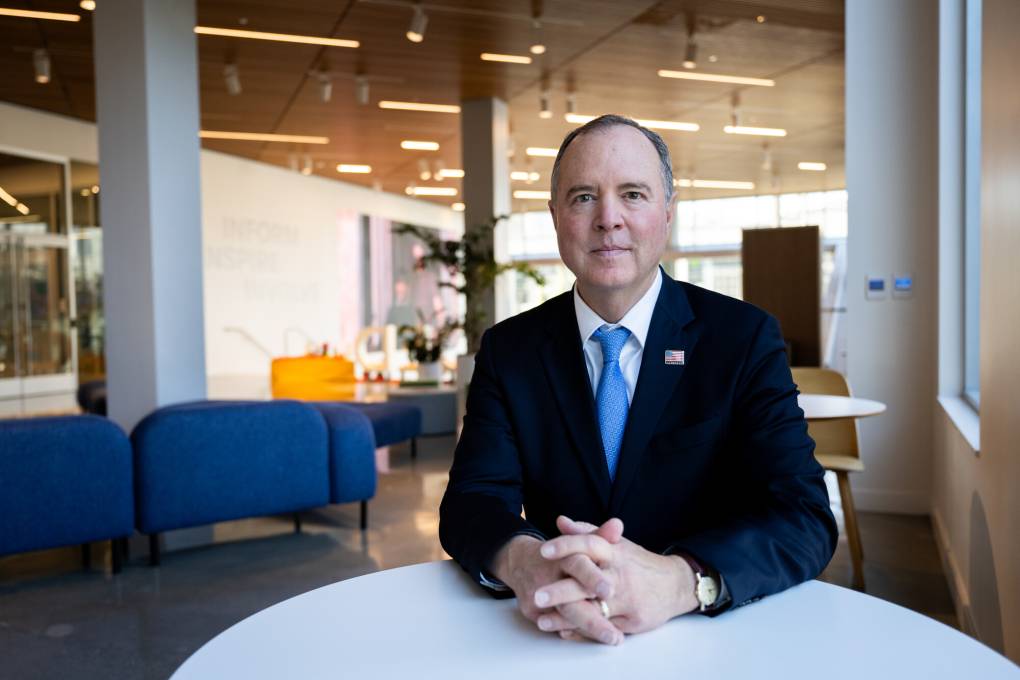
"title": "Rep. Adam Schiff at the KQED offices in San Francisco on Nov. 4, 2024.",
"publishDate": 1730752276,
"status": "inherit",
"parent": 12031373,
"modified": 1742243704,
"caption": "Rep. Adam Schiff at the KQED offices in San Francisco on Nov. 4, 2024.",
"credit": "Beth LaBerge/KQED",
"altTag": null,
"description": null,
"imgSizes": {
"medium": {
"file": "https://cdn.kqed.org/wp-content/uploads/sites/10/2024/11/241104-AdamSchiffCampaign-18-BL_qed-800x533.jpg",
"width": 800,
"height": 533,
"mimeType": "image/jpeg"
},
"large": {
"file": "https://cdn.kqed.org/wp-content/uploads/sites/10/2024/11/241104-AdamSchiffCampaign-18-BL_qed-1020x680.jpg",
"width": 1020,
"height": 680,
"mimeType": "image/jpeg"
},
"thumbnail": {
"file": "https://cdn.kqed.org/wp-content/uploads/sites/10/2024/11/241104-AdamSchiffCampaign-18-BL_qed-160x107.jpg",
"width": 160,
"height": 107,
"mimeType": "image/jpeg"
},
"1536x1536": {
"file": "https://cdn.kqed.org/wp-content/uploads/sites/10/2024/11/241104-AdamSchiffCampaign-18-BL_qed-1536x1024.jpg",
"width": 1536,
"height": 1024,
"mimeType": "image/jpeg"
},
"post-thumbnail": {
"file": "https://cdn.kqed.org/wp-content/uploads/sites/10/2024/11/241104-AdamSchiffCampaign-18-BL_qed-672x372.jpg",
"width": 672,
"height": 372,
"mimeType": "image/jpeg"
},
"twentyfourteen-full-width": {
"file": "https://cdn.kqed.org/wp-content/uploads/sites/10/2024/11/241104-AdamSchiffCampaign-18-BL_qed-1038x576.jpg",
"width": 1038,
"height": 576,
"mimeType": "image/jpeg"
},
"full-width": {
"file": "https://cdn.kqed.org/wp-content/uploads/sites/10/2024/11/241104-AdamSchiffCampaign-18-BL_qed-1920x1280.jpg",
"width": 1920,
"height": 1280,
"mimeType": "image/jpeg"
},
"kqedFullSize": {
"file": "https://cdn.kqed.org/wp-content/uploads/sites/10/2024/11/241104-AdamSchiffCampaign-18-BL_qed.jpg",
"width": 2000,
"height": 1333
}
},
"isLoading": false,
"fetchFailed": false
},
"news_12012404": {
"type": "attachments",
"id": "news_12012404",
"meta": {
"index": "attachments_1716263798",
"site": "news",
"id": "12012404",
"found": true
},
"title": "uncontested-races-6728dcd955f56",
"publishDate": 1730731256,
"status": "inherit",
"parent": 12012403,
"modified": 1730731657,
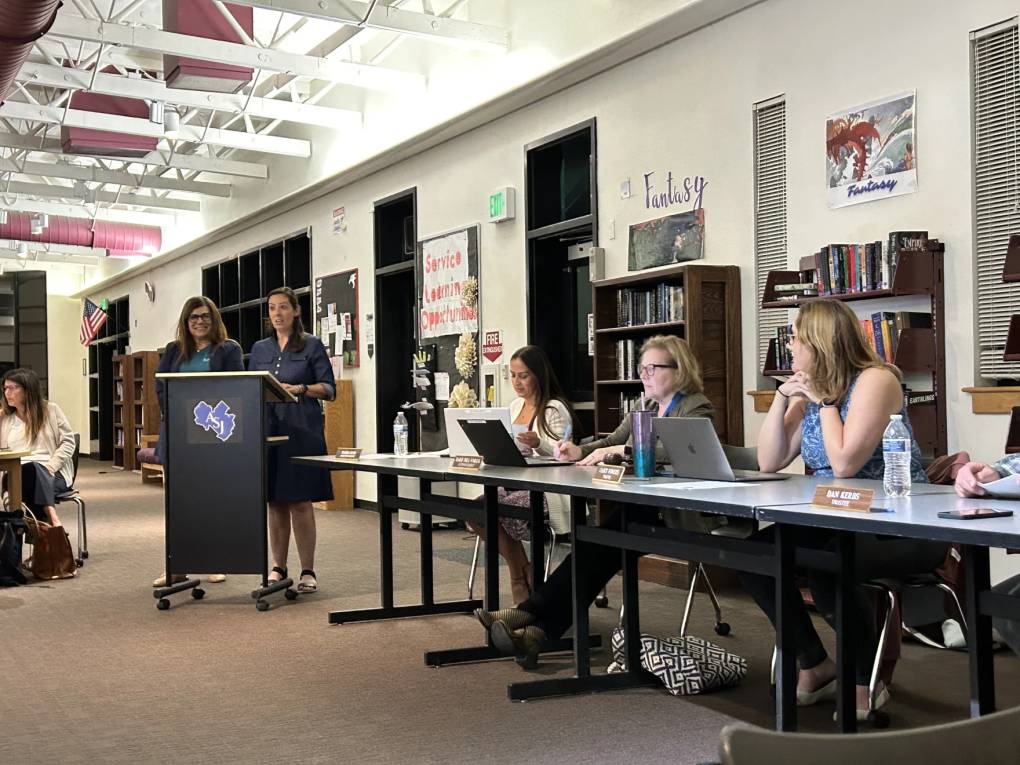
"caption": "Anzar High School Principal Angela Crawley gives a presentation to the Board of Trustees during a public meeting on Oct. 9, 2024",
"credit": "Elena Neale-Sacks/KAZU",
"altTag": null,
"description": null,
"imgSizes": {
"medium": {
"file": "https://cdn.kqed.org/wp-content/uploads/sites/10/2024/11/uncontested-races-6728dcd955f56-800x600.jpg",
"width": 800,
"height": 600,
"mimeType": "image/jpeg"
},
"large": {
"file": "https://cdn.kqed.org/wp-content/uploads/sites/10/2024/11/uncontested-races-6728dcd955f56-1020x765.jpg",
"width": 1020,
"height": 765,
"mimeType": "image/jpeg"
},
"thumbnail": {
"file": "https://cdn.kqed.org/wp-content/uploads/sites/10/2024/11/uncontested-races-6728dcd955f56-160x120.jpg",
"width": 160,
"height": 120,
"mimeType": "image/jpeg"
},
"1536x1536": {
"file": "https://cdn.kqed.org/wp-content/uploads/sites/10/2024/11/uncontested-races-6728dcd955f56-1536x1152.jpg",
"width": 1536,
"height": 1152,
"mimeType": "image/jpeg"
},
"post-thumbnail": {
"file": "https://cdn.kqed.org/wp-content/uploads/sites/10/2024/11/uncontested-races-6728dcd955f56-672x372.jpg",
"width": 672,
"height": 372,
"mimeType": "image/jpeg"
},
"twentyfourteen-full-width": {
"file": "https://cdn.kqed.org/wp-content/uploads/sites/10/2024/11/uncontested-races-6728dcd955f56-1038x576.jpg",
"width": 1038,
"height": 576,
"mimeType": "image/jpeg"
},
"kqedFullSize": {
"file": "https://cdn.kqed.org/wp-content/uploads/sites/10/2024/11/uncontested-races-6728dcd955f56.jpg",
"width": 1760,
"height": 1320
}
},
"isLoading": false,
"fetchFailed": false
},
"news_12012286": {
"type": "attachments",
"id": "news_12012286",
"meta": {
"index": "attachments_1716263798",
"site": "news",
"id": "12012286",
"found": true
},
"title": "241101-REPROHEALTHCAREPROF-01-BL-KQED",
"publishDate": 1730505363,
"status": "inherit",
"parent": 0,
"modified": 1730743418,
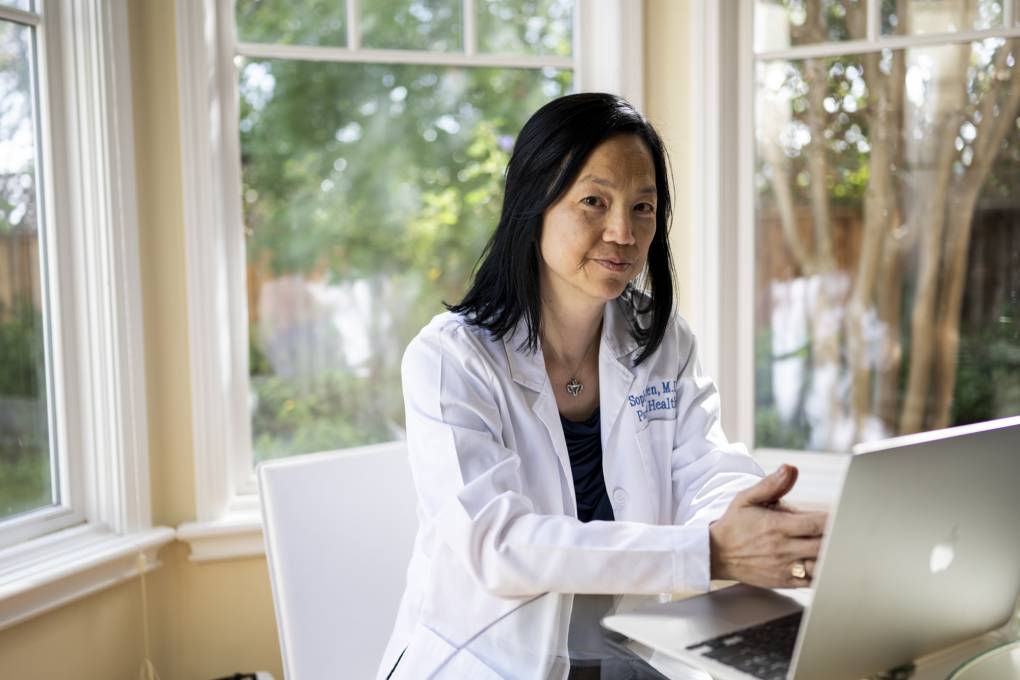
"caption": "Dr. Sophia Yen, an advocate of women's health rights, works from her home in Los Altos on Nov. 1, 2024.",
"credit": "Beth LaBerge/KQED",
"altTag": null,
"description": null,
"imgSizes": {
"medium": {
"file": "https://cdn.kqed.org/wp-content/uploads/sites/10/2024/11/241101-REPROHEALTHCAREPROF-01-BL-KQED-800x533.jpg",
"width": 800,
"height": 533,
"mimeType": "image/jpeg"
},
"large": {
"file": "https://cdn.kqed.org/wp-content/uploads/sites/10/2024/11/241101-REPROHEALTHCAREPROF-01-BL-KQED-1020x680.jpg",
"width": 1020,
"height": 680,
"mimeType": "image/jpeg"
},
"thumbnail": {
"file": "https://cdn.kqed.org/wp-content/uploads/sites/10/2024/11/241101-REPROHEALTHCAREPROF-01-BL-KQED-160x107.jpg",
"width": 160,
"height": 107,
"mimeType": "image/jpeg"
},
"1536x1536": {
"file": "https://cdn.kqed.org/wp-content/uploads/sites/10/2024/11/241101-REPROHEALTHCAREPROF-01-BL-KQED-1536x1024.jpg",
"width": 1536,
"height": 1024,
"mimeType": "image/jpeg"
},
"post-thumbnail": {
"file": "https://cdn.kqed.org/wp-content/uploads/sites/10/2024/11/241101-REPROHEALTHCAREPROF-01-BL-KQED-672x372.jpg",
"width": 672,
"height": 372,
"mimeType": "image/jpeg"
},
"twentyfourteen-full-width": {
"file": "https://cdn.kqed.org/wp-content/uploads/sites/10/2024/11/241101-REPROHEALTHCAREPROF-01-BL-KQED-1038x576.jpg",
"width": 1038,
"height": 576,
"mimeType": "image/jpeg"
},
"full-width": {
"file": "https://cdn.kqed.org/wp-content/uploads/sites/10/2024/11/241101-REPROHEALTHCAREPROF-01-BL-KQED-1920x1280.jpg",
"width": 1920,
"height": 1280,
"mimeType": "image/jpeg"
},
"kqedFullSize": {
"file": "https://cdn.kqed.org/wp-content/uploads/sites/10/2024/11/241101-REPROHEALTHCAREPROF-01-BL-KQED.jpg",
"width": 2000,
"height": 1333
}
},
"isLoading": false,
"fetchFailed": false
},
"news_12011335": {
"type": "attachments",
"id": "news_12011335",
"meta": {
"index": "attachments_1716263798",
"site": "news",
"id": "12011335",
"found": true
},
"title": "241023-POLLWORKERS-17-BL-KQED",
"publishDate": 1730135042,
"status": "inherit",
"parent": 0,
"modified": 1730135157,
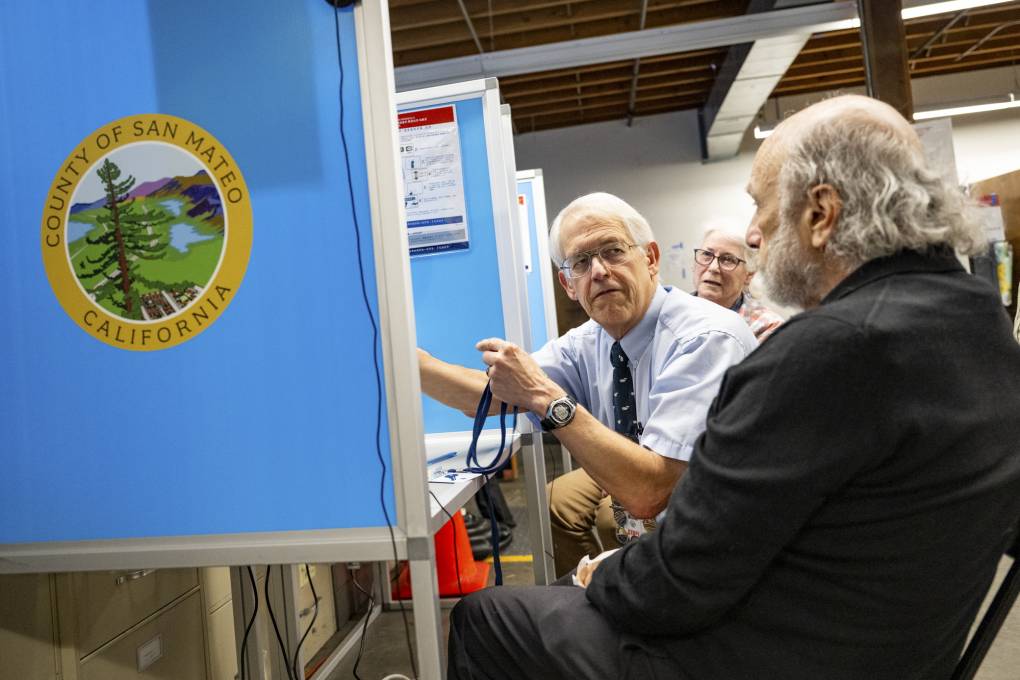
"caption": "Kevin Ashley (left) leads a training session for election workers at the San Mateo County voter registration office on Oct. 23, 2024.",
"credit": "Beth LaBerge/KQED",
"altTag": null,
"description": null,
"imgSizes": {
"medium": {
"file": "https://cdn.kqed.org/wp-content/uploads/sites/10/2024/10/241023-POLLWORKERS-17-BL-KQED-800x533.jpg",
"width": 800,
"height": 533,
"mimeType": "image/jpeg"
},
"large": {
"file": "https://cdn.kqed.org/wp-content/uploads/sites/10/2024/10/241023-POLLWORKERS-17-BL-KQED-1020x680.jpg",
"width": 1020,
"height": 680,
"mimeType": "image/jpeg"
},
"thumbnail": {
"file": "https://cdn.kqed.org/wp-content/uploads/sites/10/2024/10/241023-POLLWORKERS-17-BL-KQED-160x107.jpg",
"width": 160,
"height": 107,
"mimeType": "image/jpeg"
},
"1536x1536": {
"file": "https://cdn.kqed.org/wp-content/uploads/sites/10/2024/10/241023-POLLWORKERS-17-BL-KQED-1536x1024.jpg",
"width": 1536,
"height": 1024,
"mimeType": "image/jpeg"
},
"post-thumbnail": {
"file": "https://cdn.kqed.org/wp-content/uploads/sites/10/2024/10/241023-POLLWORKERS-17-BL-KQED-672x372.jpg",
"width": 672,
"height": 372,
"mimeType": "image/jpeg"
},
"twentyfourteen-full-width": {
"file": "https://cdn.kqed.org/wp-content/uploads/sites/10/2024/10/241023-POLLWORKERS-17-BL-KQED-1038x576.jpg",
"width": 1038,
"height": 576,
"mimeType": "image/jpeg"
},
"full-width": {
"file": "https://cdn.kqed.org/wp-content/uploads/sites/10/2024/10/241023-POLLWORKERS-17-BL-KQED-1920x1280.jpg",
"width": 1920,
"height": 1280,
"mimeType": "image/jpeg"
},
"kqedFullSize": {
"file": "https://cdn.kqed.org/wp-content/uploads/sites/10/2024/10/241023-POLLWORKERS-17-BL-KQED.jpg",
"width": 2000,
"height": 1333
}
},
"isLoading": false,
"fetchFailed": false
},
"news_12004890": {
"type": "attachments",
"id": "news_12004890",
"meta": {
"index": "attachments_1716263798",
"site": "news",
"id": "12004890",
"found": true
},
"title": "091124_InmateVoting_FM_CM-08",
"publishDate": 1726516319,
"status": "inherit",
"parent": 12004883,
"modified": 1726520151,
"caption": "Ronald Latney, 44, from San Francisco, speaks about voting while incarcerated in a San Francisco County Jail in San Bruno on Sept. 11, 2024.",
"credit": "Florence Middleton/CalMatters",
"altTag": "A Black, bearded, incarcerated man in an orange shirt sits at a table in front of a bookcase of legal books.",
"description": null,
"imgSizes": {
"medium": {
"file": "https://cdn.kqed.org/wp-content/uploads/sites/10/2024/09/091124_InmateVoting_FM_CM-08-800x533.jpeg",
"width": 800,
"height": 533,
"mimeType": "image/jpeg"
},
"large": {
"file": "https://cdn.kqed.org/wp-content/uploads/sites/10/2024/09/091124_InmateVoting_FM_CM-08-1020x680.jpeg",
"width": 1020,
"height": 680,
"mimeType": "image/jpeg"
},
"thumbnail": {
"file": "https://cdn.kqed.org/wp-content/uploads/sites/10/2024/09/091124_InmateVoting_FM_CM-08-160x107.jpeg",
"width": 160,
"height": 107,
"mimeType": "image/jpeg"
},
"1536x1536": {
"file": "https://cdn.kqed.org/wp-content/uploads/sites/10/2024/09/091124_InmateVoting_FM_CM-08-1536x1024.jpeg",
"width": 1536,
"height": 1024,
"mimeType": "image/jpeg"
},
"post-thumbnail": {
"file": "https://cdn.kqed.org/wp-content/uploads/sites/10/2024/09/091124_InmateVoting_FM_CM-08-672x372.jpeg",
"width": 672,
"height": 372,
"mimeType": "image/jpeg"
},
"twentyfourteen-full-width": {
"file": "https://cdn.kqed.org/wp-content/uploads/sites/10/2024/09/091124_InmateVoting_FM_CM-08-1038x576.jpeg",
"width": 1038,
"height": 576,
"mimeType": "image/jpeg"
},
"full-width": {
"file": "https://cdn.kqed.org/wp-content/uploads/sites/10/2024/09/091124_InmateVoting_FM_CM-08-1920x1280.jpeg",
"width": 1920,
"height": 1280,
"mimeType": "image/jpeg"
},
"kqedFullSize": {
"file": "https://cdn.kqed.org/wp-content/uploads/sites/10/2024/09/091124_InmateVoting_FM_CM-08.jpeg",
"width": 2000,
"height": 1333
}
},
"isLoading": false,
"fetchFailed": false
},
"news_12012233": {
"type": "attachments",
"id": "news_12012233",
"meta": {
"index": "attachments_1716263798",
"site": "news",
"id": "12012233",
"found": true
},
"title": "10.28.2024_MeasureS-01-scaled",
"publishDate": 1730501149,
"status": "inherit",
"parent": 0,
"modified": 1730501368,
"caption": "Noncitizens make up 14% of Oakland’s population. Including immigrant parents in conversations about curriculum, staff and language used in class could lead to better academic outcomes for students, the original resolution for Measure S stated.",
"credit": "Hiram Alejandro Durán for El Tímpano/CatchLight Local/Report for America corps member",
"altTag": null,
"description": null,
"imgSizes": {
"medium": {
"file": "https://cdn.kqed.org/wp-content/uploads/sites/10/2024/11/10.28.2024_MeasureS-01-scaled-1-800x532.jpeg",
"width": 800,
"height": 532,
"mimeType": "image/jpeg"
},
"large": {
"file": "https://cdn.kqed.org/wp-content/uploads/sites/10/2024/11/10.28.2024_MeasureS-01-scaled-1-1020x679.jpeg",
"width": 1020,
"height": 679,
"mimeType": "image/jpeg"
},
"thumbnail": {
"file": "https://cdn.kqed.org/wp-content/uploads/sites/10/2024/11/10.28.2024_MeasureS-01-scaled-1-160x106.jpeg",
"width": 160,
"height": 106,
"mimeType": "image/jpeg"
},
"1536x1536": {
"file": "https://cdn.kqed.org/wp-content/uploads/sites/10/2024/11/10.28.2024_MeasureS-01-scaled-1-1536x1022.jpeg",
"width": 1536,
"height": 1022,
"mimeType": "image/jpeg"
},
"post-thumbnail": {
"file": "https://cdn.kqed.org/wp-content/uploads/sites/10/2024/11/10.28.2024_MeasureS-01-scaled-1-672x372.jpeg",
"width": 672,
"height": 372,
"mimeType": "image/jpeg"
},
"twentyfourteen-full-width": {
"file": "https://cdn.kqed.org/wp-content/uploads/sites/10/2024/11/10.28.2024_MeasureS-01-scaled-1-1038x576.jpeg",
"width": 1038,
"height": 576,
"mimeType": "image/jpeg"
},
"full-width": {
"file": "https://cdn.kqed.org/wp-content/uploads/sites/10/2024/11/10.28.2024_MeasureS-01-scaled-1-1920x1278.jpeg",
"width": 1920,
"height": 1278,
"mimeType": "image/jpeg"
},
"kqedFullSize": {
"file": "https://cdn.kqed.org/wp-content/uploads/sites/10/2024/11/10.28.2024_MeasureS-01-scaled-1.jpeg",
"width": 2000,
"height": 1331
}
},
"isLoading": false,
"fetchFailed": false
},
"news_12012301": {
"type": "attachments",
"id": "news_12012301",
"meta": {
"index": "attachments_1716263798",
"site": "news",
"id": "12012301",
"found": true
},
"title": "103024-Shasta-County-Election-Ballots-MG-CM-14 copy",
"publishDate": 1730507189,
"status": "inherit",
"parent": 12012295,
"modified": 1730507222,
"caption": "An election observer watches as workers process ballots at the Shasta County Clerk Registrar of Voters office in Redding on Oct. 30, 2024.",
"credit": "Miguel Gutierrez Jr./CalMatters",
"altTag": null,
"description": null,
"imgSizes": {
"medium": {
"file": "https://cdn.kqed.org/wp-content/uploads/sites/10/2024/11/103024-Shasta-County-Election-Ballots-MG-CM-14-copy-800x533.jpg",
"width": 800,
"height": 533,
"mimeType": "image/jpeg"
},
"large": {
"file": "https://cdn.kqed.org/wp-content/uploads/sites/10/2024/11/103024-Shasta-County-Election-Ballots-MG-CM-14-copy-1020x680.jpg",
"width": 1020,
"height": 680,
"mimeType": "image/jpeg"
},
"thumbnail": {
"file": "https://cdn.kqed.org/wp-content/uploads/sites/10/2024/11/103024-Shasta-County-Election-Ballots-MG-CM-14-copy-160x107.jpg",
"width": 160,
"height": 107,
"mimeType": "image/jpeg"
},
"1536x1536": {
"file": "https://cdn.kqed.org/wp-content/uploads/sites/10/2024/11/103024-Shasta-County-Election-Ballots-MG-CM-14-copy-1536x1024.jpg",
"width": 1536,
"height": 1024,
"mimeType": "image/jpeg"
},
"post-thumbnail": {
"file": "https://cdn.kqed.org/wp-content/uploads/sites/10/2024/11/103024-Shasta-County-Election-Ballots-MG-CM-14-copy-672x372.jpg",
"width": 672,
"height": 372,
"mimeType": "image/jpeg"
},
"twentyfourteen-full-width": {
"file": "https://cdn.kqed.org/wp-content/uploads/sites/10/2024/11/103024-Shasta-County-Election-Ballots-MG-CM-14-copy-1038x576.jpg",
"width": 1038,
"height": 576,
"mimeType": "image/jpeg"
},
"full-width": {
"file": "https://cdn.kqed.org/wp-content/uploads/sites/10/2024/11/103024-Shasta-County-Election-Ballots-MG-CM-14-copy-1920x1280.jpg",
"width": 1920,
"height": 1280,
"mimeType": "image/jpeg"
},
"kqedFullSize": {
"file": "https://cdn.kqed.org/wp-content/uploads/sites/10/2024/11/103024-Shasta-County-Election-Ballots-MG-CM-14-copy.jpg",
"width": 2000,
"height": 1333
}
},
"isLoading": false,
"fetchFailed": false
},
"news_12011469": {
"type": "attachments",
"id": "news_12011469",
"meta": {
"index": "attachments_1716263798",
"site": "news",
"id": "12011469",
"found": true
},
"title": "20241028_MEASUREJ_GC-19-KQED",
"publishDate": 1730158316,
"status": "inherit",
"parent": 0,
"modified": 1730480800,
"caption": "Mike Weber collects eggs from a barn of Rhode Island Red chickens at Weber Family Farms in Petaluma on Oct. 28, 2024.",
"credit": "Gina Castro/KQED",
"altTag": null,
"description": null,
"imgSizes": {
"medium": {
"file": "https://cdn.kqed.org/wp-content/uploads/sites/10/2024/10/20241028_MEASUREJ_GC-19-KQED-800x533.jpg",
"width": 800,
"height": 533,
"mimeType": "image/jpeg"
},
"large": {
"file": "https://cdn.kqed.org/wp-content/uploads/sites/10/2024/10/20241028_MEASUREJ_GC-19-KQED-1020x680.jpg",
"width": 1020,
"height": 680,
"mimeType": "image/jpeg"
},
"thumbnail": {
"file": "https://cdn.kqed.org/wp-content/uploads/sites/10/2024/10/20241028_MEASUREJ_GC-19-KQED-160x107.jpg",
"width": 160,
"height": 107,
"mimeType": "image/jpeg"
},
"1536x1536": {
"file": "https://cdn.kqed.org/wp-content/uploads/sites/10/2024/10/20241028_MEASUREJ_GC-19-KQED-1536x1024.jpg",
"width": 1536,
"height": 1024,
"mimeType": "image/jpeg"
},
"post-thumbnail": {
"file": "https://cdn.kqed.org/wp-content/uploads/sites/10/2024/10/20241028_MEASUREJ_GC-19-KQED-672x372.jpg",
"width": 672,
"height": 372,
"mimeType": "image/jpeg"
},
"twentyfourteen-full-width": {
"file": "https://cdn.kqed.org/wp-content/uploads/sites/10/2024/10/20241028_MEASUREJ_GC-19-KQED-1038x576.jpg",
"width": 1038,
"height": 576,
"mimeType": "image/jpeg"
},
"full-width": {
"file": "https://cdn.kqed.org/wp-content/uploads/sites/10/2024/10/20241028_MEASUREJ_GC-19-KQED-1920x1280.jpg",
"width": 1920,
"height": 1280,
"mimeType": "image/jpeg"
},
"kqedFullSize": {
"file": "https://cdn.kqed.org/wp-content/uploads/sites/10/2024/10/20241028_MEASUREJ_GC-19-KQED.jpg",
"width": 2000,
"height": 1333
}
},
"isLoading": false,
"fetchFailed": false
},
"news_12011901": {
"type": "attachments",
"id": "news_12011901",
"meta": {
"index": "attachments_1716263798",
"site": "news",
"id": "12011901",
"found": true
},
"title": "Early voting process ahead of presidential election in San Francisco",
"publishDate": 1730399191,
"status": "inherit",
"parent": 12011898,
"modified": 1730490547,
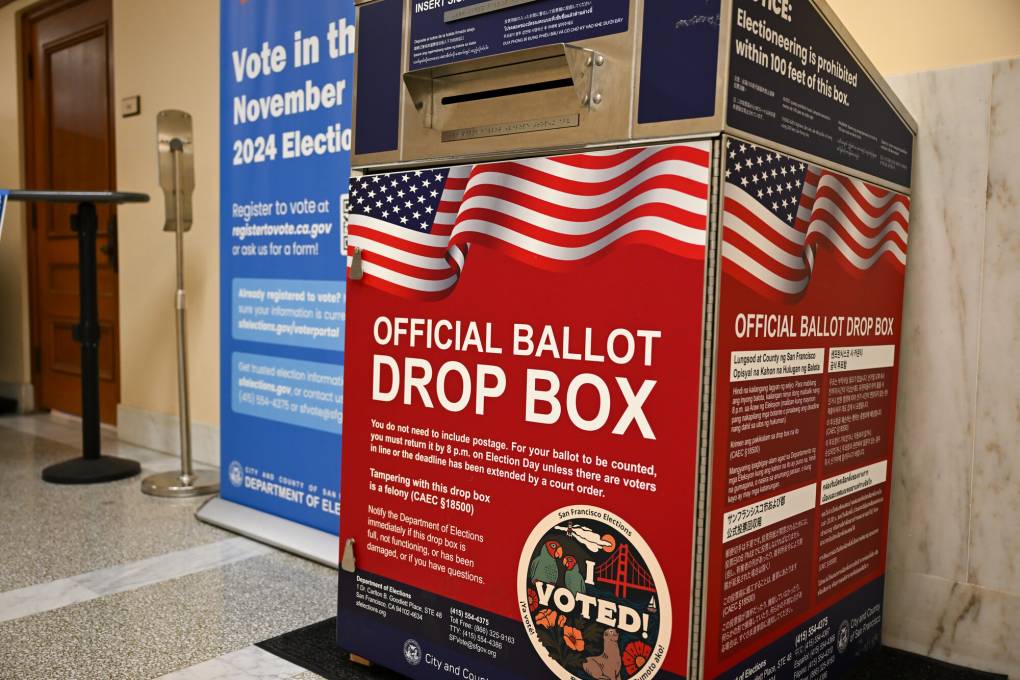
"caption": "A view of an official ballot drop box next to the Department of Elections at City Hall in San Francisco on Oct. 24, 2024. ",
"credit": "Tayfun Coskun/Anadolu via Getty Images",
"altTag": null,
"description": null,
"imgSizes": {
"medium": {
"file": "https://cdn.kqed.org/wp-content/uploads/sites/10/2025/10/GettyImages-2180061713_qed-800x533.jpg",
"width": 800,
"height": 533,
"mimeType": "image/jpeg"
},
"large": {
"file": "https://cdn.kqed.org/wp-content/uploads/sites/10/2025/10/GettyImages-2180061713_qed-1020x680.jpg",
"width": 1020,
"height": 680,
"mimeType": "image/jpeg"
},
"thumbnail": {
"file": "https://cdn.kqed.org/wp-content/uploads/sites/10/2025/10/GettyImages-2180061713_qed-160x107.jpg",
"width": 160,
"height": 107,
"mimeType": "image/jpeg"
},
"1536x1536": {
"file": "https://cdn.kqed.org/wp-content/uploads/sites/10/2025/10/GettyImages-2180061713_qed-1536x1024.jpg",
"width": 1536,
"height": 1024,
"mimeType": "image/jpeg"
},
"post-thumbnail": {
"file": "https://cdn.kqed.org/wp-content/uploads/sites/10/2025/10/GettyImages-2180061713_qed-672x372.jpg",
"width": 672,
"height": 372,
"mimeType": "image/jpeg"
},
"twentyfourteen-full-width": {
"file": "https://cdn.kqed.org/wp-content/uploads/sites/10/2025/10/GettyImages-2180061713_qed-1038x576.jpg",
"width": 1038,
"height": 576,
"mimeType": "image/jpeg"
},
"full-width": {
"file": "https://cdn.kqed.org/wp-content/uploads/sites/10/2025/10/GettyImages-2180061713_qed-1920x1280.jpg",
"width": 1920,
"height": 1280,
"mimeType": "image/jpeg"
},
"kqedFullSize": {
"file": "https://cdn.kqed.org/wp-content/uploads/sites/10/2025/10/GettyImages-2180061713_qed.jpg",
"width": 2000,
"height": 1333
}
},
"isLoading": false,
"fetchFailed": false
},
"news_12012046": {
"type": "attachments",
"id": "news_12012046",
"meta": {
"index": "attachments_1716263798",
"site": "news",
"id": "12012046",
"found": true
},
"title": "npr.brightspotcdn copy",
"publishDate": 1730418450,
"status": "inherit",
"parent": 12012045,
"modified": 1730418518,
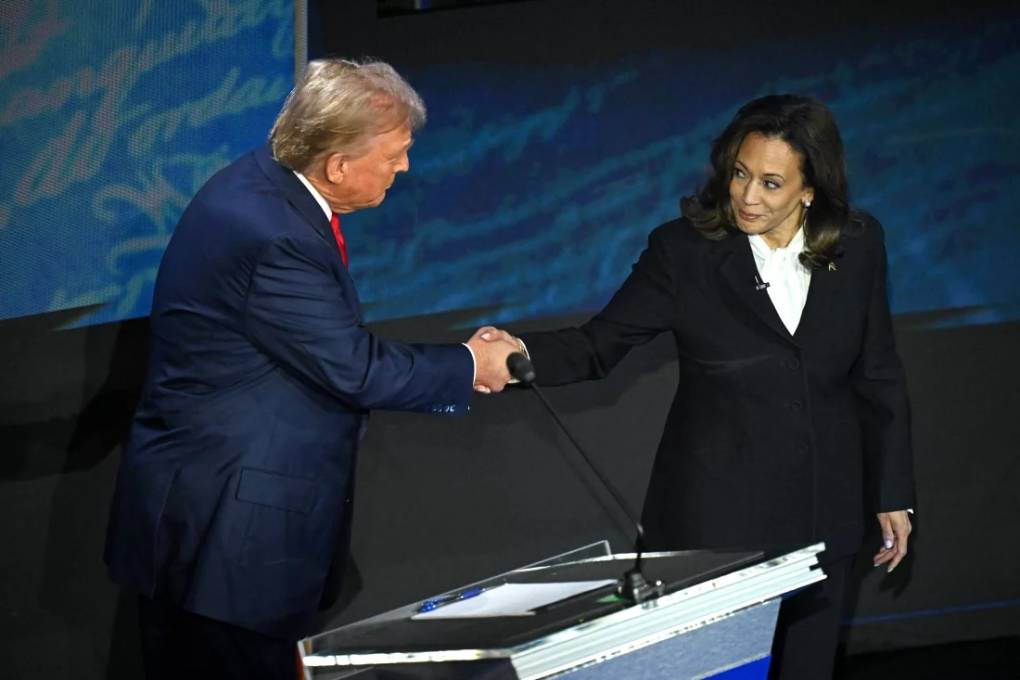
"caption": "US Vice President and Democratic presidential candidate Kamala Harris (right) shakes hands with former US President and Republican presidential candidate Donald Trump during a presidential debate at the National Constitution Center in Philadelphia, Pennsylvania, on Sept. 10, 2024.",
"credit": "Saul Loeb/AFP",
"altTag": null,
"description": null,
"imgSizes": {
"medium": {
"file": "https://cdn.kqed.org/wp-content/uploads/sites/10/2024/10/npr.brightspotcdn-copy-3-800x533.jpg",
"width": 800,
"height": 533,
"mimeType": "image/jpeg"
},
"large": {
"file": "https://cdn.kqed.org/wp-content/uploads/sites/10/2024/10/npr.brightspotcdn-copy-3-1020x680.jpg",
"width": 1020,
"height": 680,
"mimeType": "image/jpeg"
},
"thumbnail": {
"file": "https://cdn.kqed.org/wp-content/uploads/sites/10/2024/10/npr.brightspotcdn-copy-3-160x107.jpg",
"width": 160,
"height": 107,
"mimeType": "image/jpeg"
},
"post-thumbnail": {
"file": "https://cdn.kqed.org/wp-content/uploads/sites/10/2024/10/npr.brightspotcdn-copy-3-672x372.jpg",
"width": 672,
"height": 372,
"mimeType": "image/jpeg"
},
"twentyfourteen-full-width": {
"file": "https://cdn.kqed.org/wp-content/uploads/sites/10/2024/10/npr.brightspotcdn-copy-3-1038x576.jpg",
"width": 1038,
"height": 576,
"mimeType": "image/jpeg"
},
"kqedFullSize": {
"file": "https://cdn.kqed.org/wp-content/uploads/sites/10/2024/10/npr.brightspotcdn-copy-3.jpg",
"width": 1100,
"height": 733
}
},
"isLoading": false,
"fetchFailed": false
},
"news_12011410": {
"type": "attachments",
"id": "news_12011410",
"meta": {
"index": "attachments_1716263798",
"site": "news",
"id": "12011410",
"found": true
},
"title": "2024_PROGRESSIVEUNITYMOB_172-KQED",
"publishDate": 1730152176,
"status": "inherit",
"parent": 0,
"modified": 1730416583,
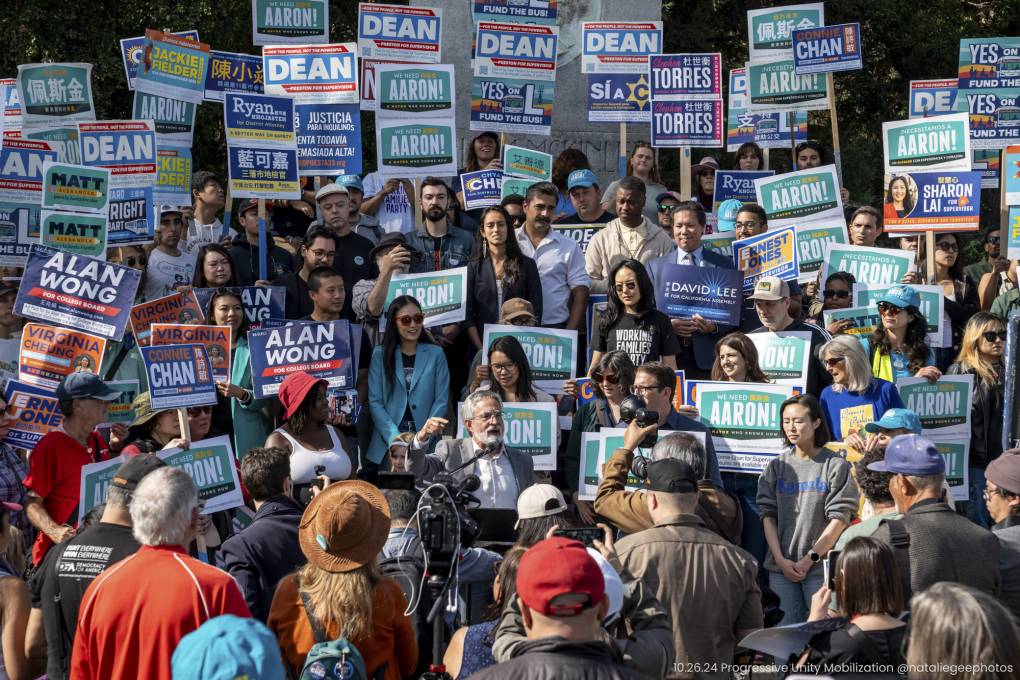
"caption": "Supporters for Supervisors Dean Preston, Connie Chan and Aaron Peskin gather with supporters for supervisor candidates Jackie Fielder, Stephen Torres, Ernest Jones and other progressive candidates as Peskin speaks (center) in the Panhandle neighborhood in San Francisco on Oct. 26, 2024.",
"credit": "Courtesy of Natalie Gee",
"altTag": null,
"description": null,
"imgSizes": {
"medium": {
"file": "https://cdn.kqed.org/wp-content/uploads/sites/10/2024/10/2024_PROGRESSIVEUNITYMOB_172-KQED-800x533.jpg",
"width": 800,
"height": 533,
"mimeType": "image/jpeg"
},
"large": {
"file": "https://cdn.kqed.org/wp-content/uploads/sites/10/2024/10/2024_PROGRESSIVEUNITYMOB_172-KQED-1020x680.jpg",
"width": 1020,
"height": 680,
"mimeType": "image/jpeg"
},
"thumbnail": {
"file": "https://cdn.kqed.org/wp-content/uploads/sites/10/2024/10/2024_PROGRESSIVEUNITYMOB_172-KQED-160x107.jpg",
"width": 160,
"height": 107,
"mimeType": "image/jpeg"
},
"1536x1536": {
"file": "https://cdn.kqed.org/wp-content/uploads/sites/10/2024/10/2024_PROGRESSIVEUNITYMOB_172-KQED-1536x1024.jpg",
"width": 1536,
"height": 1024,
"mimeType": "image/jpeg"
},
"post-thumbnail": {
"file": "https://cdn.kqed.org/wp-content/uploads/sites/10/2024/10/2024_PROGRESSIVEUNITYMOB_172-KQED-672x372.jpg",
"width": 672,
"height": 372,
"mimeType": "image/jpeg"
},
"twentyfourteen-full-width": {
"file": "https://cdn.kqed.org/wp-content/uploads/sites/10/2024/10/2024_PROGRESSIVEUNITYMOB_172-KQED-1038x576.jpg",
"width": 1038,
"height": 576,
"mimeType": "image/jpeg"
},
"full-width": {
"file": "https://cdn.kqed.org/wp-content/uploads/sites/10/2024/10/2024_PROGRESSIVEUNITYMOB_172-KQED-1920x1280.jpg",
"width": 1920,
"height": 1280,
"mimeType": "image/jpeg"
},
"kqedFullSize": {
"file": "https://cdn.kqed.org/wp-content/uploads/sites/10/2024/10/2024_PROGRESSIVEUNITYMOB_172-KQED.jpg",
"width": 2000,
"height": 1333
}
},
"isLoading": false,
"fetchFailed": false
},
"news_12012030": {
"type": "attachments",
"id": "news_12012030",
"meta": {
"index": "attachments_1716263798",
"site": "news",
"id": "12012030",
"found": true
},
"title": "241022-Prop36-01-BL_qed",
"publishDate": 1730416468,
"status": "inherit",
"parent": 12012013,
"modified": 1730416534,
"caption": "A group holds signs during a rally against Proposition 36 at the Upper Haight bookstore, Booksmith, in San Francisco on Oct. 22, 2024.",
"credit": "Beth LaBerge/KQED",
"altTag": null,
"description": null,
"imgSizes": {
"medium": {
"file": "https://cdn.kqed.org/wp-content/uploads/sites/10/2024/11/241022-Prop36-01-BL_qed-800x533.jpg",
"width": 800,
"height": 533,
"mimeType": "image/jpeg"
},
"large": {
"file": "https://cdn.kqed.org/wp-content/uploads/sites/10/2024/11/241022-Prop36-01-BL_qed-1020x680.jpg",
"width": 1020,
"height": 680,
"mimeType": "image/jpeg"
},
"thumbnail": {
"file": "https://cdn.kqed.org/wp-content/uploads/sites/10/2024/11/241022-Prop36-01-BL_qed-160x107.jpg",
"width": 160,
"height": 107,
"mimeType": "image/jpeg"
},
"1536x1536": {
"file": "https://cdn.kqed.org/wp-content/uploads/sites/10/2024/11/241022-Prop36-01-BL_qed-1536x1024.jpg",
"width": 1536,
"height": 1024,
"mimeType": "image/jpeg"
},
"post-thumbnail": {
"file": "https://cdn.kqed.org/wp-content/uploads/sites/10/2024/11/241022-Prop36-01-BL_qed-672x372.jpg",
"width": 672,
"height": 372,
"mimeType": "image/jpeg"
},
"twentyfourteen-full-width": {
"file": "https://cdn.kqed.org/wp-content/uploads/sites/10/2024/11/241022-Prop36-01-BL_qed-1038x576.jpg",
"width": 1038,
"height": 576,
"mimeType": "image/jpeg"
},
"full-width": {
"file": "https://cdn.kqed.org/wp-content/uploads/sites/10/2024/11/241022-Prop36-01-BL_qed-1920x1280.jpg",
"width": 1920,
"height": 1280,
"mimeType": "image/jpeg"
},
"kqedFullSize": {
"file": "https://cdn.kqed.org/wp-content/uploads/sites/10/2024/11/241022-Prop36-01-BL_qed.jpg",
"width": 2000,
"height": 1333
}
},
"isLoading": false,
"fetchFailed": false
}
},
"audioPlayerReducer": {
"postId": "stream_live",
"isPaused": true,
"isPlaying": false,
"pfsActive": false,
"pledgeModalIsOpen": true,
"playerDrawerIsOpen": false,
"liveAudioPlayStartedAt": 0,
"liveAudioPlayContext": ""
},
"authorsReducer": {
"byline_news_12012228": {
"type": "authors",
"id": "byline_news_12012228",
"meta": {
"override": true
},
"slug": "byline_news_12012228",
"name": "Vanessa Flores and Ximena Loeza, El Tímpano",
"isLoading": false
},
"byline_news_12012295": {
"type": "authors",
"id": "byline_news_12012295",
"meta": {
"override": true
},
"slug": "byline_news_12012295",
"name": "\u003ca href=\"https://calmatters.org/author/sergio-olmos/\">Sergio Olmos\u003c/a>",
"isLoading": false
},
"byline_news_12012045": {
"type": "authors",
"id": "byline_news_12012045",
"meta": {
"override": true
},
"slug": "byline_news_12012045",
"name": "\u003ca href=\"https://www.npr.org/people/2101289/nina-totenberg\">Nina Totenberg\u003c/a>",
"isLoading": false
},
"gmarzorati": {
"type": "authors",
"id": "227",
"meta": {
"index": "authors_1716337520",
"id": "227",
"found": true
},
"name": "Guy Marzorati",
"firstName": "Guy",
"lastName": "Marzorati",
"slug": "gmarzorati",
"email": "gmarzorati@KQED.org",
"display_author_email": true,
"staff_mastheads": [
"news"
],
"title": "Correspondent",
"bio": "Guy Marzorati is a correspondent on KQED's California Politics and Government Desk, based in San Jose. A graduate of Santa Clara University, Guy joined KQED in 2013. He reports on state and local politics and produces KQED's digital voter guide.",
"avatar": "https://secure.gravatar.com/avatar/e7038b8dbfd55b104369b76b1cd0b9de?s=600&d=blank&r=g",
"twitter": "guymarzorati",
"facebook": null,
"instagram": null,
"linkedin": null,
"sites": [
{
"site": "",
"roles": [
"editor"
]
},
{
"site": "news",
"roles": [
"editor"
]
},
{
"site": "science",
"roles": [
"editor"
]
},
{
"site": "forum",
"roles": [
"editor"
]
},
{
"site": "elections",
"roles": [
"editor"
]
},
{
"site": "liveblog",
"roles": [
"editor"
]
}
],
"headData": {
"title": "Guy Marzorati | KQED",
"description": "Correspondent",
"ogImgSrc": "https://secure.gravatar.com/avatar/e7038b8dbfd55b104369b76b1cd0b9de?s=600&d=blank&r=g",
"twImgSrc": "https://secure.gravatar.com/avatar/e7038b8dbfd55b104369b76b1cd0b9de?s=600&d=blank&r=g"
},
"isLoading": false,
"link": "/author/gmarzorati"
},
"scottshafer": {
"type": "authors",
"id": "255",
"meta": {
"index": "authors_1716337520",
"id": "255",
"found": true
},
"name": "Scott Shafer",
"firstName": "Scott",
"lastName": "Shafer",
"slug": "scottshafer",
"email": "sshafer@kqed.org",
"display_author_email": false,
"staff_mastheads": [
"news"
],
"title": "KQED Contributor",
"bio": "Scott Shafer is a senior editor with the KQED Politics and Government desk. He is co-host of Political Breakdown, the award-winning radio show and podcast with a personal take on the world of politics. Scott came to KQED in 1998 to host the statewide\u003cem> California Report\u003c/em>. Prior to that he had extended stints in politics and government\u003cem>.\u003c/em> He uses that inside experience at KQED in his, reporting, hosting and analysis for the politics desk. Scott collaborated \u003cem>Political Breakdown a\u003c/em>nd on \u003cem>The Political Mind of Jerry Brown, \u003c/em>an eight-part series about the life and extraordinary political career of the former governor. For fun, he plays water polo with the San Francisco Tsunami.",
"avatar": "https://secure.gravatar.com/avatar/a62ebae45b79d7aed1a39a0e3bf68104?s=600&d=blank&r=g",
"twitter": "scottshafer",
"bluesky": null,
"facebook": null,
"instagram": null,
"linkedin": null,
"sites": [
{
"site": "news",
"roles": [
"editor"
]
},
{
"site": "stateofhealth",
"roles": [
"author"
]
},
{
"site": "science",
"roles": [
"author"
]
},
{
"site": "forum",
"roles": [
"subscriber"
]
},
{
"site": "liveblog",
"roles": [
"author"
]
}
],
"headData": {
"title": "Scott Shafer | KQED",
"description": "KQED Contributor",
"ogImgSrc": "https://secure.gravatar.com/avatar/a62ebae45b79d7aed1a39a0e3bf68104?s=600&d=blank&r=g",
"twImgSrc": "https://secure.gravatar.com/avatar/a62ebae45b79d7aed1a39a0e3bf68104?s=600&d=blank&r=g"
},
"isLoading": false,
"link": "/author/scottshafer"
},
"mlagos": {
"type": "authors",
"id": "3239",
"meta": {
"index": "authors_1716337520",
"id": "3239",
"found": true
},
"name": "Marisa Lagos",
"firstName": "Marisa",
"lastName": "Lagos",
"slug": "mlagos",
"email": "mlagos@kqed.org",
"display_author_email": false,
"staff_mastheads": [
"news"
],
"title": "KQED Contributor",
"bio": "Marisa Lagos is a correspondent for KQED’s California Politics and Government Desk and co-hosts the award-winning show and podcast, Political Breakdown. At KQED, Lagos also conducts reporting, analysis and investigations into state, local and national politics for radio, TV, online and onstage. In 2022, she and co-host, Scott Shafer, moderated the only gubernatorial debate in California. In 2020, the \u003ci>Washington Post\u003c/i> named her one of the top political journalists in California; she was nominated for a Peabody and won several other awards for her work investigating the 2017 California wildfires. She has worked at the \u003ci>San Francisco Chronicle\u003c/i>, \u003ci>San Francisco Examiner\u003c/i> and \u003ci>Los Angeles Times\u003c/i>. A UC Santa Barbara graduate, she lives in San Francisco with her two sons and husband.",
"avatar": "https://secure.gravatar.com/avatar/a261a0d3696fc066871ef96b85b5e7d2?s=600&d=blank&r=g",
"twitter": "@mlagos",
"facebook": null,
"instagram": null,
"linkedin": null,
"sites": [
{
"site": "arts",
"roles": [
"author"
]
},
{
"site": "news",
"roles": [
"editor"
]
},
{
"site": "science",
"roles": [
"editor"
]
},
{
"site": "forum",
"roles": [
"author"
]
},
{
"site": "liveblog",
"roles": [
"author"
]
}
],
"headData": {
"title": "Marisa Lagos | KQED",
"description": "KQED Contributor",
"ogImgSrc": "https://secure.gravatar.com/avatar/a261a0d3696fc066871ef96b85b5e7d2?s=600&d=blank&r=g",
"twImgSrc": "https://secure.gravatar.com/avatar/a261a0d3696fc066871ef96b85b5e7d2?s=600&d=blank&r=g"
},
"isLoading": false,
"link": "/author/mlagos"
},
"ecruzguevarra": {
"type": "authors",
"id": "8654",
"meta": {
"index": "authors_1716337520",
"id": "8654",
"found": true
},
"name": "Ericka Cruz Guevarra",
"firstName": "Ericka",
"lastName": "Cruz Guevarra",
"slug": "ecruzguevarra",
"email": "ecruzguevarra@kqed.org",
"display_author_email": true,
"staff_mastheads": [
"news"
],
"title": "Producer, The Bay Podcast",
"bio": "Ericka Cruz Guevarra is host of \u003ca href=\"https://www.kqed.org/podcasts/thebay\">\u003cem>The Bay\u003c/em>\u003c/a> podcast at KQED. Before host, she was the show’s producer. Her work in that capacity includes a three-part reported series on policing in Vallejo, which won a 2020 excellence in journalism award from the Society of Professional Journalists. Ericka has worked as a breaking news reporter at Oregon Public Broadcasting, helped produce the Code Switch podcast, and was KQED’s inaugural Raul Ramirez Diversity Fund intern. She’s also an alumna of NPR’s Next Generation Radio program. Send her an email if you have strong feelings about whether Fairfield and Suisun City are the Bay. Ericka is represented by SAG-AFTRA.",
"avatar": "https://secure.gravatar.com/avatar/accefc1de4bafc7e234b69bcb9b6f6536c130fd84709bc3069ef11a78787e1bb?s=600&d=blank&r=g",
"twitter": "NotoriousECG",
"bluesky": null,
"facebook": null,
"instagram": null,
"linkedin": null,
"sites": [
{
"site": "arts",
"roles": [
"subscriber"
]
},
{
"site": "news",
"roles": [
"editor",
"manage_categories"
]
},
{
"site": "futureofyou",
"roles": [
"subscriber"
]
},
{
"site": "stateofhealth",
"roles": [
"subscriber"
]
},
{
"site": "science",
"roles": [
"editor"
]
},
{
"site": "forum",
"roles": [
"subscriber"
]
}
],
"headData": {
"title": "Ericka Cruz Guevarra | KQED",
"description": "Producer, The Bay Podcast",
"ogImgSrc": "https://secure.gravatar.com/avatar/accefc1de4bafc7e234b69bcb9b6f6536c130fd84709bc3069ef11a78787e1bb?s=600&d=blank&r=g",
"twImgSrc": "https://secure.gravatar.com/avatar/accefc1de4bafc7e234b69bcb9b6f6536c130fd84709bc3069ef11a78787e1bb?s=600&d=blank&r=g"
},
"isLoading": false,
"link": "/author/ecruzguevarra"
},
"dcronin": {
"type": "authors",
"id": "11362",
"meta": {
"index": "authors_1716337520",
"id": "11362",
"found": true
},
"name": "Dana Cronin",
"firstName": "Dana",
"lastName": "Cronin",
"slug": "dcronin",
"email": "dcronin@KQED.org",
"display_author_email": true,
"staff_mastheads": [],
"title": "KQED Contributor",
"bio": "Dana Cronin is a reporter for KQED News. She loves writing stories about climate change, environmental issues, food and agriculture. She's reported across the country, from Colorado to Washington D.C. to Illinois, and has won numerous awards for her coverage. Her work is regularly featured on national broadcasts, including NPR’s Morning Edition, All Things Considered, PBS Newshour and Science Friday. She lives in Oakland and has an avocado tree in her back yard.",
"avatar": "https://secure.gravatar.com/avatar/bcf89e3455ff7235f96ab6fa7258dd95?s=600&d=blank&r=g",
"twitter": "DanaHCronin",
"facebook": null,
"instagram": null,
"linkedin": null,
"sites": [
{
"site": "arts",
"roles": [
"author"
]
},
{
"site": "news",
"roles": [
"editor"
]
},
{
"site": "science",
"roles": [
"author"
]
},
{
"site": "liveblog",
"roles": [
"author"
]
}
],
"headData": {
"title": "Dana Cronin | KQED",
"description": "KQED Contributor",
"ogImgSrc": "https://secure.gravatar.com/avatar/bcf89e3455ff7235f96ab6fa7258dd95?s=600&d=blank&r=g",
"twImgSrc": "https://secure.gravatar.com/avatar/bcf89e3455ff7235f96ab6fa7258dd95?s=600&d=blank&r=g"
},
"isLoading": false,
"link": "/author/dcronin"
},
"amontecillo": {
"type": "authors",
"id": "11649",
"meta": {
"index": "authors_1716337520",
"id": "11649",
"found": true
},
"name": "Alan Montecillo",
"firstName": "Alan",
"lastName": "Montecillo",
"slug": "amontecillo",
"email": "amontecillo@kqed.org",
"display_author_email": false,
"staff_mastheads": [
"news"
],
"title": "KQED Contributor",
"bio": "Alan Montecillo is the senior editor of \u003cem>\u003ca href=\"http://kqed.org/thebay\">The Bay\u003c/a>, \u003c/em> KQED's local news podcast. Before moving to the Bay Area, he worked as a senior talk show producer for WILL in Champaign-Urbana, Illinois and at Oregon Public Broadcasting in Portland, Oregon. He has won journalism awards from the Society of Professional Journalists Northern California, the Public Media Journalists Association, The Signal Awards, and has also received a regional Edward R. Murrow award. Alan is a Filipino American from Hong Kong and a graduate of Reed College.",
"avatar": "https://secure.gravatar.com/avatar/268f53a2066899ea9efdd8a5900218b17c822d9862cbc9326cccec53ef41d349?s=600&d=blank&r=g",
"twitter": "alanmontecillo",
"bluesky": null,
"facebook": null,
"instagram": null,
"linkedin": null,
"sites": [
{
"site": "",
"roles": [
"editor"
]
},
{
"site": "news",
"roles": [
"editor",
"manage_categories"
]
}
],
"headData": {
"title": "Alan Montecillo | KQED",
"description": "KQED Contributor",
"ogImgSrc": "https://secure.gravatar.com/avatar/268f53a2066899ea9efdd8a5900218b17c822d9862cbc9326cccec53ef41d349?s=600&d=blank&r=g",
"twImgSrc": "https://secure.gravatar.com/avatar/268f53a2066899ea9efdd8a5900218b17c822d9862cbc9326cccec53ef41d349?s=600&d=blank&r=g"
},
"isLoading": false,
"link": "/author/amontecillo"
},
"kmizuguchi": {
"type": "authors",
"id": "11739",
"meta": {
"index": "authors_1716337520",
"id": "11739",
"found": true
},
"name": "Keith Mizuguchi",
"firstName": "Keith",
"lastName": "Mizuguchi",
"slug": "kmizuguchi",
"email": "kmizuguchi@kqed.org",
"display_author_email": false,
"staff_mastheads": [],
"title": "KQED Contributor",
"bio": null,
"avatar": "https://secure.gravatar.com/avatar/64d8a7de0723d4099b9fe4e915136103febcc20809abce228ee4415bcb237023?s=600&d=blank&r=g",
"twitter": null,
"bluesky": null,
"facebook": null,
"instagram": null,
"linkedin": null,
"sites": [
{
"site": "news",
"roles": [
"editor"
]
},
{
"site": "science",
"roles": [
"editor"
]
}
],
"headData": {
"title": "Keith Mizuguchi | KQED",
"description": "KQED Contributor",
"ogImgSrc": "https://secure.gravatar.com/avatar/64d8a7de0723d4099b9fe4e915136103febcc20809abce228ee4415bcb237023?s=600&d=blank&r=g",
"twImgSrc": "https://secure.gravatar.com/avatar/64d8a7de0723d4099b9fe4e915136103febcc20809abce228ee4415bcb237023?s=600&d=blank&r=g"
},
"isLoading": false,
"link": "/author/kmizuguchi"
},
"adahlstromeckman": {
"type": "authors",
"id": "11785",
"meta": {
"index": "authors_1716337520",
"id": "11785",
"found": true
},
"name": "Azul Dahlstrom-Eckman",
"firstName": "Azul",
"lastName": "Dahlstrom-Eckman",
"slug": "adahlstromeckman",
"email": "adahlstrom-eckman@kqed.org",
"display_author_email": true,
"staff_mastheads": [],
"title": "Reporter",
"bio": "Azul is a reporter for KQED focusing on transportation and features. He joined KQED in 2021 as an alumna of KALW's Audio Academy radio journalism training program.",
"avatar": "https://secure.gravatar.com/avatar/9cb750298435add7815a777f55bf1f46845c1386bb8452555c60a7b820b5aba3?s=600&d=blank&r=g",
"twitter": "@zuliemann",
"bluesky": "@azul415.bsky.social",
"facebook": null,
"instagram": null,
"linkedin": null,
"sites": [
{
"site": "arts",
"roles": [
"editor"
]
},
{
"site": "news",
"roles": [
"editor"
]
},
{
"site": "science",
"roles": [
"editor"
]
},
{
"site": "liveblog",
"roles": [
"author"
]
}
],
"headData": {
"title": "Azul Dahlstrom-Eckman | KQED",
"description": "Reporter",
"ogImgSrc": "https://secure.gravatar.com/avatar/9cb750298435add7815a777f55bf1f46845c1386bb8452555c60a7b820b5aba3?s=600&d=blank&r=g",
"twImgSrc": "https://secure.gravatar.com/avatar/9cb750298435add7815a777f55bf1f46845c1386bb8452555c60a7b820b5aba3?s=600&d=blank&r=g"
},
"isLoading": false,
"link": "/author/adahlstromeckman"
},
"jessicakariisa": {
"type": "authors",
"id": "11831",
"meta": {
"index": "authors_1716337520",
"id": "11831",
"found": true
},
"name": "Jessica Kariisa",
"firstName": "Jessica",
"lastName": "Kariisa",
"slug": "jessicakariisa",
"email": "jkariisa@kqed.org",
"display_author_email": false,
"staff_mastheads": [],
"title": "Producer, The Bay",
"bio": "Jessica Kariisa is the producer of The Bay. She first joined KQED as an intern for The California Report Magazine, after which she became an on-call producer. She reported a Bay Curious episode on the use of rap lyrics in criminal trials which won a Society of Professional Journalists award in 2023 for Excellence in Features Journalism and the 2023 Signal Award for Best Conversation Starter. She’s worked on podcasts for Snap Judgment and American Public Media. Before embarking on her audio career, she was a music journalist.\r\n\r\nJessica Kariisa is represented by SAG-AFTRA.",
"avatar": "https://secure.gravatar.com/avatar/522e97b28ac0b3d411621c0fde8f3419c7b71ea2c5c262c57c4bb600963f328c?s=600&d=blank&r=g",
"twitter": null,
"bluesky": null,
"facebook": null,
"instagram": null,
"linkedin": null,
"sites": [
{
"site": "arts",
"roles": [
"author"
]
},
{
"site": "news",
"roles": [
"editor",
"manage_categories"
]
}
],
"headData": {
"title": "Jessica Kariisa | KQED",
"description": "Producer, The Bay",
"ogImgSrc": "https://secure.gravatar.com/avatar/522e97b28ac0b3d411621c0fde8f3419c7b71ea2c5c262c57c4bb600963f328c?s=600&d=blank&r=g",
"twImgSrc": "https://secure.gravatar.com/avatar/522e97b28ac0b3d411621c0fde8f3419c7b71ea2c5c262c57c4bb600963f328c?s=600&d=blank&r=g"
},
"isLoading": false,
"link": "/author/jessicakariisa"
},
"sjohnson": {
"type": "authors",
"id": "11840",
"meta": {
"index": "authors_1716337520",
"id": "11840",
"found": true
},
"name": "Sydney Johnson",
"firstName": "Sydney",
"lastName": "Johnson",
"slug": "sjohnson",
"email": "sjohnson@kqed.org",
"display_author_email": false,
"staff_mastheads": [
"news"
],
"title": "KQED Reporter",
"bio": "Sydney Johnson is a general assignment reporter at KQED. She previously reported on public health and city government at the San Francisco Examiner, and before that, she covered statewide education policy for EdSource. Her reporting has won multiple local, state and national awards. Sydney is a graduate of the University of California, Berkeley and lives in San Francisco.",
"avatar": "https://secure.gravatar.com/avatar/97855f2719b72ad6190b7c535fe642c8?s=600&d=blank&r=g",
"twitter": "sydneyfjohnson",
"facebook": null,
"instagram": null,
"linkedin": null,
"sites": [
{
"site": "news",
"roles": [
"editor"
]
}
],
"headData": {
"title": "Sydney Johnson | KQED",
"description": "KQED Reporter",
"ogImgSrc": "https://secure.gravatar.com/avatar/97855f2719b72ad6190b7c535fe642c8?s=600&d=blank&r=g",
"twImgSrc": "https://secure.gravatar.com/avatar/97855f2719b72ad6190b7c535fe642c8?s=600&d=blank&r=g"
},
"isLoading": false,
"link": "/author/sjohnson"
},
"nkhan": {
"type": "authors",
"id": "11867",
"meta": {
"index": "authors_1716337520",
"id": "11867",
"found": true
},
"name": "Nisa Khan",
"firstName": "Nisa",
"lastName": "Khan",
"slug": "nkhan",
"email": "nkhan@kqed.org",
"display_author_email": false,
"staff_mastheads": [],
"title": "KQED Contributor",
"bio": "Nisa Khan is a reporter for KQED's Audience News Desk. She was formerly a data reporter at Michigan Radio. She earned a Bachelor of Science in Information from the University of Michigan and a Master of Arts in Communication from Stanford University.",
"avatar": "https://secure.gravatar.com/avatar/8720459eef081ff64582b3506b124d58523e80e120704a0cbd9892533c914991?s=600&d=blank&r=g",
"twitter": "mnisakhan",
"bluesky": null,
"facebook": null,
"instagram": null,
"linkedin": null,
"sites": [
{
"site": "arts",
"roles": [
"editor"
]
},
{
"site": "news",
"roles": [
"editor"
]
},
{
"site": "science",
"roles": [
"editor",
"author"
]
},
{
"site": "forum",
"roles": [
"editor"
]
},
{
"site": "liveblog",
"roles": [
"contributor"
]
}
],
"headData": {
"title": "Nisa Khan | KQED",
"description": "KQED Contributor",
"ogImgSrc": "https://secure.gravatar.com/avatar/8720459eef081ff64582b3506b124d58523e80e120704a0cbd9892533c914991?s=600&d=blank&r=g",
"twImgSrc": "https://secure.gravatar.com/avatar/8720459eef081ff64582b3506b124d58523e80e120704a0cbd9892533c914991?s=600&d=blank&r=g"
},
"isLoading": false,
"link": "/author/nkhan"
}
},
"pagesReducer": {
"news_tag_election-2024": {
"type": "terms",
"id": "news_32839",
"meta": {
"index": "terms_1716263798",
"site": "news",
"id": "32839",
"score": 8.937057
},
"featImg": null,
"name": "Election 2024",
"description": null,
"taxonomy": "tag",
"headData": {
"twImgId": null,
"twTitle": null,
"ogTitle": null,
"ogImgId": null,
"twDescription": null,
"description": null,
"title": "Election 2024 Archives | KQED News",
"ogDescription": null
},
"ttid": 32856,
"slug": "election-2024",
"isLoading": false,
"title": "Election 2024",
"pageMeta": {
"site": "news",
"WpPageTemplate": "page-topic-editorial",
"currentPage": 9
},
"blocks": [
{
"blockName": "kqed/post-list",
"attrs": {
"layout": "cardArticle2",
"query": "posts/news?tag=election-2024",
"seeMore": false,
"paginated": true,
"page": 9
}
},
{
"blockName": "kqed/ad"
}
]
}
},
"pfsSessionReducer": {},
"postsReducer": {
"stream_live": {
"type": "live",
"id": "stream_live",
"audioUrl": "https://streams.kqed.org/kqedradio",
"title": "Live Stream",
"excerpt": "Live Stream information currently unavailable.",
"link": "/radio",
"featImg": "",
"label": {
"name": "KQED Live",
"link": "/"
}
},
"stream_kqedNewscast": {
"type": "posts",
"id": "stream_kqedNewscast",
"audioUrl": "https://www.kqed.org/.stream/anon/radio/RDnews/newscast.mp3?_=1",
"title": "KQED Newscast",
"featImg": "",
"label": {
"name": "88.5 FM",
"link": "/"
}
},
"news_12012408": {
"type": "posts",
"id": "news_12012408",
"meta": {
"index": "posts_1716263798",
"site": "news",
"id": "12012408",
"score": null,
"sort": [
1730753199000
]
},
"guestAuthors": [],
"slug": "adam-schiff-is-confident-harris-will-win-but-worried-about-maga-election-deniers",
"title": "Adam Schiff Is Confident Harris Will Win, But Worried About ‘MAGA Election Deniers’",
"publishDate": 1730753199,
"format": "standard",
"headTitle": "Adam Schiff Is Confident Harris Will Win, But Worried About ‘MAGA Election Deniers’ | KQED",
"labelTerm": {
"site": "news"
},
"content": "\u003cp>U.S. Senate candidate \u003ca href=\"https://www.kqed.org/news/tag/adam-schiff\">Adam Schiff\u003c/a> is ready to “turn the page on this pretty dark chapter,” and he’s confident Tuesday’s election will go in Democrats’ favor.\u003c/p>\n\u003cp>But it could be a bumpy road to victory, the Los Angeles-area representative said in an interview with KQED.\u003c/p>\n\u003cp>Regardless of official vote counts, Republican nominee \u003ca href=\"https://www.kqed.org/news/tag/donald-trump\">Donald Trump\u003c/a> is likely to declare victory, Schiff said — raising stark concerns over the former president’s \u003ca href=\"https://www.kqed.org/news/11983070/how-trump-election-deniers-and-barriers-to-voting-threaten-our-democracy\">refusal to accept the results of the 2020 election\u003c/a> and the violent insurrection that followed.\u003c/p>\n\u003cp>[ad fullwidth]\u003c/p>\n\u003cp>“He has already been propagating that same big lie that he did four years ago, and we saw where that led on January 6th,” Schiff said. “So I am profoundly concerned about it.”\u003c/p>\n\u003cp>Though \u003cspan style=\"margin: 0px;padding: 0px\">\u003ca href=\"https://campaignlegal.org/results-lawsuits-regarding-2020-elections\">dozens of judges threw out\u003c/a> Republican legal challenges to the 2020 election\u003c/span>, Schiff said that this time, the GOP’s litigation could be more sophisticated.\u003c/p>\n\u003cfigure id=\"attachment_12012474\" class=\"wp-caption aligncenter\" style=\"max-width: 1999px\">\u003cimg loading=\"lazy\" decoding=\"async\" class=\"size-full wp-image-12012474\" src=\"https://cdn.kqed.org/wp-content/uploads/sites/10/2024/11/241104-AdamSchiffCampaign-07-BL_qed.jpg\" alt=\"\" width=\"1999\" height=\"1333\" srcset=\"https://cdn.kqed.org/wp-content/uploads/sites/10/2024/11/241104-AdamSchiffCampaign-07-BL_qed.jpg 1999w, https://cdn.kqed.org/wp-content/uploads/sites/10/2024/11/241104-AdamSchiffCampaign-07-BL_qed-800x533.jpg 800w, https://cdn.kqed.org/wp-content/uploads/sites/10/2024/11/241104-AdamSchiffCampaign-07-BL_qed-1020x680.jpg 1020w, https://cdn.kqed.org/wp-content/uploads/sites/10/2024/11/241104-AdamSchiffCampaign-07-BL_qed-160x107.jpg 160w, https://cdn.kqed.org/wp-content/uploads/sites/10/2024/11/241104-AdamSchiffCampaign-07-BL_qed-1536x1024.jpg 1536w, https://cdn.kqed.org/wp-content/uploads/sites/10/2024/11/241104-AdamSchiffCampaign-07-BL_qed-1920x1280.jpg 1920w\" sizes=\"(max-width: 1999px) 100vw, 1999px\">\u003cfigcaption class=\"wp-caption-text\">Rep. Adam Schiff speaks with KQED politics reporter Scott Shafer at the KQED offices in San Francisco on Nov. 4, 2024. \u003ccite>(Beth LaBerge/KQED)\u003c/cite>\u003c/figcaption>\u003c/figure>\n\u003cp>“They have seeded some of these local elections boards with MAGA election deniers. They have tried to change the law in certain states and thankfully been unsuccessful in many cases because we have litigated against them,” Schiff said. “But the biggest concern, frankly, is we are dealing with a very different Supreme Court now where Americans just can’t have confidence in that court anymore.”\u003c/p>\n\u003cp>Schiff does not look or act like a candidate worried about winning \u003ca href=\"https://www.kqed.org/voterguide/california/senator\">his U.S. Senate race\u003c/a> on Tuesday. The 64-year-old has spent the last few weeks traveling the state and country campaigning with Democrats locked in tough fights for the Senate and House.\u003c/p>\n\u003cp>Over the weekend, Schiff campaigned with Democratic House candidates \u003ca href=\"https://www.kqed.org/news/12010811/balance-of-power-democrats-are-hoping-an-aerospace-executive-can-beat-a-republican-navy-combat-pilot\">George Whitesides\u003c/a> in Los Angeles County, \u003ca href=\"https://www.kqed.org/news/12007594/democrats-are-hoping-to-flip-this-central-valley-house-seat-it-wont-be-easy\">Rudy Salas\u003c/a> in the Bakersfield area and \u003ca href=\"https://www.kqed.org/news/12011869/young-voters-could-decide-key-central-valley-congressional-race\">Adam Gray\u003c/a> in the Central Valley. He has also campaigned in Orange County with Democrat \u003ca href=\"https://www.kqed.org/news/12008573/asian-american-voters-are-key-in-this-orange-county-congressional-race\">Derek Tran\u003c/a>, who is challenging Republican incumbent Michelle Steel, and \u003ca href=\"https://www.kqed.org/news/12011642/how-the-diploma-divide-is-reshaping-politics-in-a-key-california-house-race\">Dave Min\u003c/a>, who is vying to succeed Katie Porter after she gave up the seat to run against Schiff in the Senate primary.\u003c/p>\n\u003cp>“They’re all ahead at the moment, so I’m pretty optimistic about all of them,” he said.\u003c/p>\n\u003cp>[aside label=\"2024 California Voter Guide\" link1='https://www.kqed.org/voterguide,Learn everything you need to cast an informed ballot for the 2024 general election' hero=https://cdn.kqed.org/wp-content/uploads/sites/80/2024/09/Aside-California-Voter-Guide-2024-General-Election-1200x1200-1.png]\u003c/p>\n\u003cp>In addition to helping fellow Democrats in California win their election, Schiff is also making friends with people he hopes will be his colleagues in the Senate come January.\u003c/p>\n\u003cp>In the past week, he has appeared with U.S. Senators Jacky Rosen in Nevada and Tammy Baldwin in Wisconsin, in addition to making a swing through Arizona to help Senate candidate Ruben Gallego. Gallego hopes to replace Kyrsten Sinema, the former Democrat who became an independent in 2022 and chose not to run for reelection. Schiff also attended a Democratic fundraiser in Minneapolis with Sen. Amy Klobuchar.\u003c/p>\n\u003cp>And he’ll need allies if, as expected, he wins this race. The 2016 retirement of \u003ca href=\"https://www.kqed.org/news/12006391/barbara-boxer-is-retired-but-still-deeply-engaged-in-politics\">Sen. Barbara Boxer\u003c/a>, Harris’ vacating her Senate seat to \u003ca href=\"https://www.kqed.org/news/11855838/vice-president-elect-harris-formally-resigns-senate-seat-gov-newsom-appoints-replacement\">become President Biden’s vice president\u003c/a>, and the \u003ca href=\"https://www.kqed.org/news/11946670/dianne-feinstein-californias-longest-serving-us-senator-dies-at-age-90\">death of Sen. Dianne Feinstein\u003c/a> have left California with two relatively junior senators in a chamber where seniority helps determine committee assignments and overall clout.\u003c/p>\n\u003cp>Schiff said that if he wins, his top priority in the Senate will be addressing the “twin” issues facing Californians: \u003ca href=\"https://www.kqed.org/housing\">housing and homelessness\u003c/a>.\u003c/p>\n\u003cp>“We need to be building hundreds of thousands of units every year. We need to be able to build them quickly. We need to be able to build them affordably,” he said.\u003c/p>\n\u003cp>A \u003ca href=\"https://escholarship.org/uc/item/42b060s9\" target=\"_blank\" rel=\"noopener\">Berkeley IGS Poll\u003c/a> published Friday showed him holding a 21-point lead over his Republican opponent, Steve Garvey, 55% to 34%, with 11% undecided, a margin similar to the last two IGS polls since the March primary. He’s also vastly outraised Garvey, 75, since the March primary.\u003c/p>\n\u003cp>\u003cem>KQED’s \u003c/em>\u003ca href=\"https://www.kqed.org/author/dcronin\">\u003cem>Dana Cronin\u003c/em>\u003c/a>\u003cem> contributed to this report.\u003c/em>\u003c/p>\n\u003cp>\u003c/p>\n",
"blocks": [],
"excerpt": "On the eve of Election Day, U.S. Senate candidate Adam Schiff told KQED that Kamala Harris has the momentum to win. But he’s worried about election denialism and potential lawsuits.",
"status": "publish",
"parent": 0,
"modified": 1730759199,
"stats": {
"hasAudio": false,
"hasVideo": false,
"hasChartOrMap": false,
"iframeSrcs": [],
"hasGoogleForm": false,
"hasGallery": false,
"hasHearkenModule": false,
"hasPolis": false,
"paragraphCount": 19,
"wordCount": 720
},
"headData": {
"title": "Adam Schiff Is Confident Harris Will Win, But Worried About ‘MAGA Election Deniers’ | KQED",
"description": "On the eve of Election Day, U.S. Senate candidate Adam Schiff told KQED that Kamala Harris has the momentum to win. But he’s worried about election denialism and potential lawsuits.",
"ogTitle": "",
"ogDescription": "",
"ogImgId": "",
"twTitle": "",
"twDescription": "",
"twImgId": "",
"schema": {
"@context": "https://schema.org",
"@type": "NewsArticle",
"headline": "Adam Schiff Is Confident Harris Will Win, But Worried About ‘MAGA Election Deniers’",
"datePublished": "2024-11-04T12:46:39-08:00",
"dateModified": "2024-11-04T14:26:39-08:00",
"image": "https://cdn.kqed.org/wp-content/uploads/2020/02/KQED-OG-Image@1x.png",
"isAccessibleForFree": "True",
"publisher": {
"@type": "NewsMediaOrganization",
"@id": "https://www.kqed.org/#organization",
"name": "KQED",
"logo": "https://cdn.kqed.org/wp-content/uploads/2020/02/KQED-OG-Image@1x.png",
"url": "https://www.kqed.org",
"sameAs": [
"https://www.facebook.com/KQED",
"https://twitter.com/KQED",
"https://www.instagram.com/kqed/",
"https://www.tiktok.com/@kqedofficial",
"https://www.linkedin.com/company/kqed",
"https://www.youtube.com/channel/UCeC0IOo7i1P_61zVUWbJ4nw"
]
}
}
},
"sticky": false,
"nprStoryId": "kqed-12012408",
"excludeFromSiteSearch": "Include",
"articleAge": "0",
"path": "/news/12012408/adam-schiff-is-confident-harris-will-win-but-worried-about-maga-election-deniers",
"audioTrackLength": null,
"parsedContent": [
{
"type": "contentString",
"content": "\u003cdiv class=\"post-body\">\u003cp>\u003cp>U.S. Senate candidate \u003ca href=\"https://www.kqed.org/news/tag/adam-schiff\">Adam Schiff\u003c/a> is ready to “turn the page on this pretty dark chapter,” and he’s confident Tuesday’s election will go in Democrats’ favor.\u003c/p>\n\u003cp>But it could be a bumpy road to victory, the Los Angeles-area representative said in an interview with KQED.\u003c/p>\n\u003cp>Regardless of official vote counts, Republican nominee \u003ca href=\"https://www.kqed.org/news/tag/donald-trump\">Donald Trump\u003c/a> is likely to declare victory, Schiff said — raising stark concerns over the former president’s \u003ca href=\"https://www.kqed.org/news/11983070/how-trump-election-deniers-and-barriers-to-voting-threaten-our-democracy\">refusal to accept the results of the 2020 election\u003c/a> and the violent insurrection that followed.\u003c/p>\n\u003cp>\u003c/p>\u003c/div>",
"attributes": {
"named": {},
"numeric": []
}
},
{
"type": "component",
"content": "",
"name": "ad",
"attributes": {
"named": {
"label": "fullwidth"
},
"numeric": [
"fullwidth"
]
}
},
{
"type": "contentString",
"content": "\u003cdiv class=\"post-body\">\u003cp>\u003c/p>\n\u003cp>“He has already been propagating that same big lie that he did four years ago, and we saw where that led on January 6th,” Schiff said. “So I am profoundly concerned about it.”\u003c/p>\n\u003cp>Though \u003cspan style=\"margin: 0px;padding: 0px\">\u003ca href=\"https://campaignlegal.org/results-lawsuits-regarding-2020-elections\">dozens of judges threw out\u003c/a> Republican legal challenges to the 2020 election\u003c/span>, Schiff said that this time, the GOP’s litigation could be more sophisticated.\u003c/p>\n\u003cfigure id=\"attachment_12012474\" class=\"wp-caption aligncenter\" style=\"max-width: 1999px\">\u003cimg loading=\"lazy\" decoding=\"async\" class=\"size-full wp-image-12012474\" src=\"https://cdn.kqed.org/wp-content/uploads/sites/10/2024/11/241104-AdamSchiffCampaign-07-BL_qed.jpg\" alt=\"\" width=\"1999\" height=\"1333\" srcset=\"https://cdn.kqed.org/wp-content/uploads/sites/10/2024/11/241104-AdamSchiffCampaign-07-BL_qed.jpg 1999w, https://cdn.kqed.org/wp-content/uploads/sites/10/2024/11/241104-AdamSchiffCampaign-07-BL_qed-800x533.jpg 800w, https://cdn.kqed.org/wp-content/uploads/sites/10/2024/11/241104-AdamSchiffCampaign-07-BL_qed-1020x680.jpg 1020w, https://cdn.kqed.org/wp-content/uploads/sites/10/2024/11/241104-AdamSchiffCampaign-07-BL_qed-160x107.jpg 160w, https://cdn.kqed.org/wp-content/uploads/sites/10/2024/11/241104-AdamSchiffCampaign-07-BL_qed-1536x1024.jpg 1536w, https://cdn.kqed.org/wp-content/uploads/sites/10/2024/11/241104-AdamSchiffCampaign-07-BL_qed-1920x1280.jpg 1920w\" sizes=\"(max-width: 1999px) 100vw, 1999px\">\u003cfigcaption class=\"wp-caption-text\">Rep. Adam Schiff speaks with KQED politics reporter Scott Shafer at the KQED offices in San Francisco on Nov. 4, 2024. \u003ccite>(Beth LaBerge/KQED)\u003c/cite>\u003c/figcaption>\u003c/figure>\n\u003cp>“They have seeded some of these local elections boards with MAGA election deniers. They have tried to change the law in certain states and thankfully been unsuccessful in many cases because we have litigated against them,” Schiff said. “But the biggest concern, frankly, is we are dealing with a very different Supreme Court now where Americans just can’t have confidence in that court anymore.”\u003c/p>\n\u003cp>Schiff does not look or act like a candidate worried about winning \u003ca href=\"https://www.kqed.org/voterguide/california/senator\">his U.S. Senate race\u003c/a> on Tuesday. The 64-year-old has spent the last few weeks traveling the state and country campaigning with Democrats locked in tough fights for the Senate and House.\u003c/p>\n\u003cp>Over the weekend, Schiff campaigned with Democratic House candidates \u003ca href=\"https://www.kqed.org/news/12010811/balance-of-power-democrats-are-hoping-an-aerospace-executive-can-beat-a-republican-navy-combat-pilot\">George Whitesides\u003c/a> in Los Angeles County, \u003ca href=\"https://www.kqed.org/news/12007594/democrats-are-hoping-to-flip-this-central-valley-house-seat-it-wont-be-easy\">Rudy Salas\u003c/a> in the Bakersfield area and \u003ca href=\"https://www.kqed.org/news/12011869/young-voters-could-decide-key-central-valley-congressional-race\">Adam Gray\u003c/a> in the Central Valley. He has also campaigned in Orange County with Democrat \u003ca href=\"https://www.kqed.org/news/12008573/asian-american-voters-are-key-in-this-orange-county-congressional-race\">Derek Tran\u003c/a>, who is challenging Republican incumbent Michelle Steel, and \u003ca href=\"https://www.kqed.org/news/12011642/how-the-diploma-divide-is-reshaping-politics-in-a-key-california-house-race\">Dave Min\u003c/a>, who is vying to succeed Katie Porter after she gave up the seat to run against Schiff in the Senate primary.\u003c/p>\n\u003cp>“They’re all ahead at the moment, so I’m pretty optimistic about all of them,” he said.\u003c/p>\n\u003cp>\u003c/p>\u003c/div>",
"attributes": {
"named": {},
"numeric": []
}
},
{
"type": "component",
"content": "",
"name": "aside",
"attributes": {
"named": {
"label": "2024 California Voter Guide ",
"link1": "https://www.kqed.org/voterguide,Learn everything you need to cast an informed ballot for the 2024 general election",
"hero": "https://cdn.kqed.org/wp-content/uploads/sites/80/2024/09/Aside-California-Voter-Guide-2024-General-Election-1200x1200-1.png"
},
"numeric": []
}
},
{
"type": "contentString",
"content": "\u003cdiv class=\"post-body\">\u003cp>\u003c/p>\n\u003cp>In addition to helping fellow Democrats in California win their election, Schiff is also making friends with people he hopes will be his colleagues in the Senate come January.\u003c/p>\n\u003cp>In the past week, he has appeared with U.S. Senators Jacky Rosen in Nevada and Tammy Baldwin in Wisconsin, in addition to making a swing through Arizona to help Senate candidate Ruben Gallego. Gallego hopes to replace Kyrsten Sinema, the former Democrat who became an independent in 2022 and chose not to run for reelection. Schiff also attended a Democratic fundraiser in Minneapolis with Sen. Amy Klobuchar.\u003c/p>\n\u003cp>And he’ll need allies if, as expected, he wins this race. The 2016 retirement of \u003ca href=\"https://www.kqed.org/news/12006391/barbara-boxer-is-retired-but-still-deeply-engaged-in-politics\">Sen. Barbara Boxer\u003c/a>, Harris’ vacating her Senate seat to \u003ca href=\"https://www.kqed.org/news/11855838/vice-president-elect-harris-formally-resigns-senate-seat-gov-newsom-appoints-replacement\">become President Biden’s vice president\u003c/a>, and the \u003ca href=\"https://www.kqed.org/news/11946670/dianne-feinstein-californias-longest-serving-us-senator-dies-at-age-90\">death of Sen. Dianne Feinstein\u003c/a> have left California with two relatively junior senators in a chamber where seniority helps determine committee assignments and overall clout.\u003c/p>\n\u003cp>Schiff said that if he wins, his top priority in the Senate will be addressing the “twin” issues facing Californians: \u003ca href=\"https://www.kqed.org/housing\">housing and homelessness\u003c/a>.\u003c/p>\n\u003cp>“We need to be building hundreds of thousands of units every year. We need to be able to build them quickly. We need to be able to build them affordably,” he said.\u003c/p>\n\u003cp>A \u003ca href=\"https://escholarship.org/uc/item/42b060s9\" target=\"_blank\" rel=\"noopener\">Berkeley IGS Poll\u003c/a> published Friday showed him holding a 21-point lead over his Republican opponent, Steve Garvey, 55% to 34%, with 11% undecided, a margin similar to the last two IGS polls since the March primary. He’s also vastly outraised Garvey, 75, since the March primary.\u003c/p>\n\u003cp>\u003cem>KQED’s \u003c/em>\u003ca href=\"https://www.kqed.org/author/dcronin\">\u003cem>Dana Cronin\u003c/em>\u003c/a>\u003cem> contributed to this report.\u003c/em>\u003c/p>\n\u003cp>\u003c/p>\n\u003c/div>\u003c/p>",
"attributes": {
"named": {},
"numeric": []
}
}
],
"link": "/news/12012408/adam-schiff-is-confident-harris-will-win-but-worried-about-maga-election-deniers",
"authors": [
"255"
],
"categories": [
"news_31795",
"news_8",
"news_13"
],
"tags": [
"news_20716",
"news_18538",
"news_32839",
"news_34377",
"news_61",
"news_17968",
"news_29111",
"news_19379"
],
"featImg": "news_12012473",
"label": "news"
},
"news_12012403": {
"type": "posts",
"id": "news_12012403",
"meta": {
"index": "posts_1716263798",
"site": "news",
"id": "12012403",
"score": null,
"sort": [
1730748062000
]
},
"guestAuthors": [],
"slug": "several-school-board-races-not-even-on-november-ballot",
"title": "Several School Board Races Not Even On November Ballot",
"publishDate": 1730748062,
"format": "audio",
"headTitle": "Several School Board Races Not Even On November Ballot | KQED",
"labelTerm": {},
"content": "\u003cp>\u003cb>Here are the morning’s top stories on Monday, November 4, 2024…\u003c/b>\u003c/p>\n\u003cul>\n\u003cli style=\"font-weight: 400\">\u003cspan style=\"font-weight: 400\">In recent years, you’ve likely heard news stories about fiery school board meetings. But most often, they’re pretty routine. In the November election, there are several school board races on the ballot. But \u003c/span>\u003ca href=\"https://www.kazu.org/kazu-news/2024-10-29/only-one-san-benito-county-school-board-race-is-on-the-ballot-why-the-rest-are-uncontested\">\u003cspan style=\"font-weight: 400\">many are not\u003c/span>\u003c/a>\u003cspan style=\"font-weight: 400\">, because the races have not attracted more than one candidate.\u003c/span>\u003c/li>\n\u003cli>Shasta County in far Northern California has been the epicenter of election denialism in the state, and the tension is taking a toll on election workers. Officials have confirmed that \u003ca href=\"https://calmatters.org/politics/2024/11/shasta-county-election-workers/\">10 out of 21 workers\u003c/a> with the Shasta County Registrar of Voters have quit as of last week.\u003c/li>\n\u003c/ul>\n\u003ch2 class=\"ArtP-headline\">\u003ca href=\"https://www.kazu.org/kazu-news/2024-10-29/only-one-san-benito-county-school-board-race-is-on-the-ballot-why-the-rest-are-uncontested\">\u003cstrong>Only One San Benito County School Board Race Is On The Ballot. Why? \u003c/strong>\u003c/a>\u003c/h2>\n\u003cp>Aromas-San Juan is a small school district located primarily in San Benito County. Over the past 20 years, enrollment has declined by 25%. Last year, there were just under 1,000 students in its three schools.\u003c/p>\n\u003cp>Three out of five seats in the district have terms that expire this year, but trustee Dan Kerbs and another board member are not running for re-election. Across San Benito County, 26 school board races are up for election. Local voters wouldn’t know it, though, because only one of those races is on the ballot. The rest are uncontested or, in some cases, no one is running at all.\u003c/p>\n\u003cp>To be clear, uncontested races, especially for school board and special district seats, are common across the Monterey Bay area and in many other parts of the state and country. But 25 uncontested races out of 26 is striking. “We actually have historically had fairly competitive races,” said Casey Powers, the sole Aromas-San Juan trustee who is running for re-election this year, albeit unopposed. She first ran six years ago. “Mine was actually one of the first ones, in 2018, that was uncontested. So 2018, 2020, 2022 and 2024 all were uncontested and that was actually really rare,” she said.\u003c/p>\n\u003ch2 class=\"entry-title \">\u003ca href=\"https://calmatters.org/politics/2024/11/shasta-county-election-workers/\">\u003cstrong>Election Workers Quit In Shasta As Self-Appointed Observers Roam Office\u003c/strong>\u003c/a>\u003c/h2>\n\u003cp>Election results in Shasta County have come under question in recent years, as the Northern California county has been at the epicenter of the state’s election denial movement since 2020.\u003c/p>\n\u003cp>[ad fullwidth]\u003c/p>\n\u003cp>\u003cspan style=\"font-weight: 400\">Last year, three members of the Shasta County Board of Supervisors \u003c/span>\u003ca href=\"https://www.ijpr.org/politics-government/2023-03-10/a-california-county-has-dumped-dominion-leaving-its-election-operations-up-in-the-air\">\u003cspan style=\"font-weight: 400\">voted to cancel the county’s contract\u003c/span>\u003c/a>\u003cspan style=\"font-weight: 400\"> with Dominion Voting Systems. That’s the company that was at the center of a lot of the conspiracy theories around the 2020 election. And they voted to hand count ballots instead, although that decision was overridden by \u003c/span>\u003ca href=\"https://www.npr.org/2023/09/08/1198395036/shasta-county-hand-counting-ballots-california-legislation\">\u003cspan style=\"font-weight: 400\">a new law in Sacramento.\u003c/span>\u003c/a>\u003cspan style=\"font-weight: 400\"> \u003c/span>\u003c/p>\n\u003cp>Officials have confirmed that 10 out of 21 workers with the Shasta County Registrar of voters have quit as of last week. Tanner Johnson is one of those who recently quit. “A lot of people who have left just because it’s not worth it,” he said. “I make $19.64 an hour. I’m not going to be a martyr for $19.60 an hour.”\u003c/p>\n\u003cp>\u003c/p>\n\u003cp>Voters are legally allowed to enter the office and observe the election process. Johnson said a lot of them, however, are on edge and “very angry.” “They want to catch us in a lie, so they’ll try to trick you into saying something,” he said. “A lot of times they’ll be secretly videotaping you or recording you.”\u003c/p>\n\n",
"blocks": [],
"excerpt": "In San Benito County, 26 school board races are up for election, but almost all are uncontested and not on the ballot. ",
"status": "publish",
"parent": 0,
"modified": 1730748062,
"stats": {
"hasAudio": false,
"hasVideo": false,
"hasChartOrMap": false,
"iframeSrcs": [],
"hasGoogleForm": false,
"hasGallery": false,
"hasHearkenModule": false,
"hasPolis": false,
"paragraphCount": 10,
"wordCount": 589
},
"headData": {
"title": "Several School Board Races Not Even On November Ballot | KQED",
"description": "In San Benito County, 26 school board races are up for election, but almost all are uncontested and not on the ballot. ",
"ogTitle": "",
"ogDescription": "",
"ogImgId": "",
"twTitle": "",
"twDescription": "",
"twImgId": "",
"schema": {
"@context": "https://schema.org",
"@type": "NewsArticle",
"headline": "Several School Board Races Not Even On November Ballot",
"datePublished": "2024-11-04T11:21:02-08:00",
"dateModified": "2024-11-04T11:21:02-08:00",
"image": "https://cdn.kqed.org/wp-content/uploads/2020/02/KQED-OG-Image@1x.png",
"isAccessibleForFree": "True",
"publisher": {
"@type": "NewsMediaOrganization",
"@id": "https://www.kqed.org/#organization",
"name": "KQED",
"logo": "https://cdn.kqed.org/wp-content/uploads/2020/02/KQED-OG-Image@1x.png",
"url": "https://www.kqed.org",
"sameAs": [
"https://www.facebook.com/KQED",
"https://twitter.com/KQED",
"https://www.instagram.com/kqed/",
"https://www.tiktok.com/@kqedofficial",
"https://www.linkedin.com/company/kqed",
"https://www.youtube.com/channel/UCeC0IOo7i1P_61zVUWbJ4nw"
]
}
}
},
"source": "The California Report",
"sourceUrl": "https://www.kqed.org/news/tag/tcrarchive/",
"audioUrl": "https://www.podtrac.com/pts/redirect.mp3/chrt.fm/track/G6C7C3/traffic.megaphone.fm/KQINC7152056390.mp3?updated=1730733171",
"sticky": false,
"nprStoryId": "kqed-12012403",
"excludeFromSiteSearch": "Include",
"articleAge": "0",
"path": "/news/12012403/several-school-board-races-not-even-on-november-ballot",
"audioTrackLength": null,
"parsedContent": [
{
"type": "contentString",
"content": "\u003cdiv class=\"post-body\">\u003cp>\u003cp>\u003cb>Here are the morning’s top stories on Monday, November 4, 2024…\u003c/b>\u003c/p>\n\u003cul>\n\u003cli style=\"font-weight: 400\">\u003cspan style=\"font-weight: 400\">In recent years, you’ve likely heard news stories about fiery school board meetings. But most often, they’re pretty routine. In the November election, there are several school board races on the ballot. But \u003c/span>\u003ca href=\"https://www.kazu.org/kazu-news/2024-10-29/only-one-san-benito-county-school-board-race-is-on-the-ballot-why-the-rest-are-uncontested\">\u003cspan style=\"font-weight: 400\">many are not\u003c/span>\u003c/a>\u003cspan style=\"font-weight: 400\">, because the races have not attracted more than one candidate.\u003c/span>\u003c/li>\n\u003cli>Shasta County in far Northern California has been the epicenter of election denialism in the state, and the tension is taking a toll on election workers. Officials have confirmed that \u003ca href=\"https://calmatters.org/politics/2024/11/shasta-county-election-workers/\">10 out of 21 workers\u003c/a> with the Shasta County Registrar of Voters have quit as of last week.\u003c/li>\n\u003c/ul>\n\u003ch2 class=\"ArtP-headline\">\u003ca href=\"https://www.kazu.org/kazu-news/2024-10-29/only-one-san-benito-county-school-board-race-is-on-the-ballot-why-the-rest-are-uncontested\">\u003cstrong>Only One San Benito County School Board Race Is On The Ballot. Why? \u003c/strong>\u003c/a>\u003c/h2>\n\u003cp>Aromas-San Juan is a small school district located primarily in San Benito County. Over the past 20 years, enrollment has declined by 25%. Last year, there were just under 1,000 students in its three schools.\u003c/p>\n\u003cp>Three out of five seats in the district have terms that expire this year, but trustee Dan Kerbs and another board member are not running for re-election. Across San Benito County, 26 school board races are up for election. Local voters wouldn’t know it, though, because only one of those races is on the ballot. The rest are uncontested or, in some cases, no one is running at all.\u003c/p>\n\u003cp>To be clear, uncontested races, especially for school board and special district seats, are common across the Monterey Bay area and in many other parts of the state and country. But 25 uncontested races out of 26 is striking. “We actually have historically had fairly competitive races,” said Casey Powers, the sole Aromas-San Juan trustee who is running for re-election this year, albeit unopposed. She first ran six years ago. “Mine was actually one of the first ones, in 2018, that was uncontested. So 2018, 2020, 2022 and 2024 all were uncontested and that was actually really rare,” she said.\u003c/p>\n\u003ch2 class=\"entry-title \">\u003ca href=\"https://calmatters.org/politics/2024/11/shasta-county-election-workers/\">\u003cstrong>Election Workers Quit In Shasta As Self-Appointed Observers Roam Office\u003c/strong>\u003c/a>\u003c/h2>\n\u003cp>Election results in Shasta County have come under question in recent years, as the Northern California county has been at the epicenter of the state’s election denial movement since 2020.\u003c/p>\n\u003cp>\u003c/p>\u003c/div>",
"attributes": {
"named": {},
"numeric": []
}
},
{
"type": "component",
"content": "",
"name": "ad",
"attributes": {
"named": {
"label": "fullwidth"
},
"numeric": [
"fullwidth"
]
}
},
{
"type": "contentString",
"content": "\u003cdiv class=\"post-body\">\u003cp>\u003c/p>\n\u003cp>\u003cspan style=\"font-weight: 400\">Last year, three members of the Shasta County Board of Supervisors \u003c/span>\u003ca href=\"https://www.ijpr.org/politics-government/2023-03-10/a-california-county-has-dumped-dominion-leaving-its-election-operations-up-in-the-air\">\u003cspan style=\"font-weight: 400\">voted to cancel the county’s contract\u003c/span>\u003c/a>\u003cspan style=\"font-weight: 400\"> with Dominion Voting Systems. That’s the company that was at the center of a lot of the conspiracy theories around the 2020 election. And they voted to hand count ballots instead, although that decision was overridden by \u003c/span>\u003ca href=\"https://www.npr.org/2023/09/08/1198395036/shasta-county-hand-counting-ballots-california-legislation\">\u003cspan style=\"font-weight: 400\">a new law in Sacramento.\u003c/span>\u003c/a>\u003cspan style=\"font-weight: 400\"> \u003c/span>\u003c/p>\n\u003cp>Officials have confirmed that 10 out of 21 workers with the Shasta County Registrar of voters have quit as of last week. Tanner Johnson is one of those who recently quit. “A lot of people who have left just because it’s not worth it,” he said. “I make $19.64 an hour. I’m not going to be a martyr for $19.60 an hour.”\u003c/p>\n\u003cp>\u003c/p>\n\u003cp>Voters are legally allowed to enter the office and observe the election process. Johnson said a lot of them, however, are on edge and “very angry.” “They want to catch us in a lie, so they’ll try to trick you into saying something,” he said. “A lot of times they’ll be secretly videotaping you or recording you.”\u003c/p>\n\n\u003c/div>\u003c/p>",
"attributes": {
"named": {},
"numeric": []
}
}
],
"link": "/news/12012403/several-school-board-races-not-even-on-november-ballot",
"authors": [
"11739"
],
"programs": [
"news_72"
],
"categories": [
"news_33520",
"news_34018"
],
"tags": [
"news_32839",
"news_31987",
"news_22895",
"news_21998",
"news_21268"
],
"featImg": "news_12012404",
"label": "source_news_12012403"
},
"news_12012326": {
"type": "posts",
"id": "news_12012326",
"meta": {
"index": "posts_1716263798",
"site": "news",
"id": "12012326",
"score": null,
"sort": [
1730734239000
]
},
"guestAuthors": [],
"slug": "californian-votes-really-matter-what-the-election-could-mean-for-reproductive-health",
"title": "‘Californian Votes Really Matter’: What the Election Could Mean for Reproductive Health",
"publishDate": 1730734239,
"format": "standard",
"headTitle": "‘Californian Votes Really Matter’: What the Election Could Mean for Reproductive Health | KQED",
"labelTerm": {
"site": "news"
},
"content": "\u003cp>Dr. Sophia Yen finds it difficult to talk about the future her daughters could face under a second Trump presidency without tearing up.\u003c/p>\n\u003cp>Yen, co-founder of an organization specializing in reproductive care, fears their access to such vital care could be further limited if former President Donald Trump wins the election. And she’s not alone.\u003c/p>\n\u003cp>“How do I get two girls through college?” Yen asked, pointing to the fact that \u003ca href=\"https://www.aau.edu/sites/default/files/AAU-Files/Key-Issues/Campus-Safety/Revised%20Aggregate%20report%20%20and%20appendices%201-7_(01-16-2020_FINAL).pdf\">1 in 4 undergraduate women\u003c/a> have reported being sexually assaulted.\u003c/p>\n\u003cp>Nationwide, she said, reproductive rights have “already gone back. And we need to fix it.”\u003c/p>\n\u003cp>After the Supreme Court \u003ca href=\"https://www.kqed.org/news/11917776/supreme-court-overturns-roe-v-wade\">overturned \u003cem>Roe v. Wade\u003c/em>\u003c/a> in 2022, spurring some states to limit \u003ca href=\"https://www.kqed.org/news/tag/abortion\">access to abortion\u003c/a>, \u003ca href=\"https://jamanetwork.com/journals/jamapediatrics/fullarticle/2825201?guestAccessKey=e7e9550e-5563-4801-bc4f-b743bed9ccff&utm_source=for_the_media&utm_medium=referral&utm_campaign=ftm_links&utm_content=tfl&utm_term=102124\">infant mortality rates increased\u003c/a> — in Texas, by \u003ca href=\"https://jamanetwork.com/journals/jamapediatrics/article-abstract/2819785\">as much as 13%\u003c/a>. Pinning down the \u003ca href=\"https://www.propublica.org/article/tracking-maternal-deaths-under-abortion-bans\">maternal mortality rate\u003c/a> is harder. According to \u003ca href=\"https://www.commonwealthfund.org/publications/scorecard/2024/jul/2024-state-scorecard-womens-health-and-reproductive-care\">a recent study\u003c/a> from the Commonwealth Fund, \u003ca href=\"https://www.bloomberg.com/news/articles/2024-07-18/maternal-deaths-were-highest-in-states-that-restrict-abortion\">women were more at risk\u003c/a> of dying at or around childbirth in \u003ca href=\"https://www.bloomberg.com/news/articles/2024-07-18/maternal-deaths-were-highest-in-states-that-restrict-abortion\">states with stricter abortion laws\u003c/a>. In Texas, the \u003ca href=\"https://www.nbcnews.com/health/womens-health/texas-abortion-ban-deaths-pregnant-women-sb8-analysis-rcna171631\">maternal mortality rate rose 56%\u003c/a> from 2019 to 2022, while nationally, it ticked up 11%, according to the research nonprofit Gender Equity Policy Institute.\u003c/p>\n\u003cp>According to a \u003ca href=\"https://news.gallup.com/poll/645836/record-share-electorate-pro-choice-voting.aspx\">Gallup Poll\u003c/a> released this summer, 54% of Americans identify as pro-choice, maintaining “historically high levels” of support for abortion rights since the overturning of \u003cem>Roe v. Wade\u003c/em>. And 32% of registered voters said they would only vote for a candidate that shared the same views as them on abortion, up 8 points since 2020.\u003c/p>\n\u003cp>In an election featuring two candidates with wildly differing views on abortion who are \u003ca href=\"https://www.reuters.com/world/us/harris-lead-over-trump-dwindles-single-point-44-43-reutersipsos-poll-finds-2024-10-29/\">polling extremely closely\u003c/a>, Bay Area residents and experts are left to wait and see what the future of healthcare holds.\u003c/p>\n\u003cp>Even though \u003ca href=\"https://abortion.ca.gov/your-rights/your-legal-right-to-an-abortion/index.html\">state laws\u003c/a> protect the right to an abortion in California, Yen — who is also a professor at Stanford Medical School — said the stakes are still high for abortion-rights voters in the Bay Area.\u003c/p>\n\u003cp>“For Californians, we think we’re protected,” she said. “But we’re not.”\u003c/p>\n\u003cp>[ad fullwidth]\u003c/p>\n\u003ch2>What could reproductive health care look like under a second Trump term?\u003c/h2>\n\u003cp>Though the Dobbs decision, which overturned \u003cem>Roe v. Wade\u003c/em>, left it to \u003ca href=\"https://www.hrw.org/news/2023/04/18/human-rights-crisis-abortion-united-states-after-dobbs\">states to regulate abortion\u003c/a>, Nancy Cohen of \u003ca href=\"https://thegepi.org/about/\">the Gender Equity Policy Institute\u003c/a> said, “A national abortion ban is absolutely coming” if Trump is elected a second time.\u003c/p>\n\u003cp>Project 2025 — \u003ca href=\"https://www.kqed.org/news/11998288/what-is-project-2025-donald-trump-heritage-foundation-director-steps-down\">a detailed, 900-page policy agenda for the next Republican presidency\u003c/a> authored and supported by Trump allies, former and current Trump staffers and his running mate JD Vance — has called for \u003ca href=\"https://calmatters.org/politics/2024/09/project2025-trump-california-abortion-surveillance/\">a national database\u003c/a> where states would report abortions. Cohen described this proposal as “basically Big Brother.”[aside postID=news_11998288 hero='https://cdn.kqed.org/wp-content/uploads/sites/10/2024/07/GettyImages-2162596915-scaled.jpg']\u003c/p>\n\u003cp>Project 2025 also aims to revive parts of the \u003ca href=\"https://www.americanprogress.org/article/project-2025s-distortion-of-a-reconstruction-era-law-could-enact-a-national-abortion-ban/\">Comstock Act\u003c/a>, a law from the late 1800s that bans the mailing of \u003ca href=\"https://www.kff.org/womens-health-policy/issue-brief/the-comstock-act-implications-for-abortion-care-nationwide/\">“obscene” items\u003c/a> such as \u003ca href=\"https://www.pbs.org/wgbh/americanexperience/features/pill-anthony-comstocks-chastity-laws/\">contraceptives\u003c/a>. (The act faced intense criticism at the time and was restricted in 1930, but it was \u003ca href=\"https://time.com/7014473/comstock-act-project-2025/\">never fully repealed\u003c/a>. \u003cem>Roe v. Wade\u003c/em> overruled it, and when \u003cem>Roe v. Wade\u003c/em> was overturned, the Biden administration said it would \u003ca href=\"https://www.justice.gov/olc/opinion/application-comstock-act-mailing-prescription-drugs-can-be-used-abortions\">not apply\u003c/a> the Comstock Act.)\u003c/p>\n\u003cp>“States like California and New York that have constitutional protections for abortion rights and reproductive health care in general … those become meaningless,” Cohen said. “Federal law will trump state protection.”\u003c/p>\n\u003cp>Another Trump term would mean he could \u003ca href=\"https://nysba.org/6-to-3-the-impact-of-the-supreme-courts-conservative-super-majority/\">appoint more conservative-leaning\u003c/a> Supreme Court justices and federal judges. \u003ca href=\"https://www.npr.org/2024/03/14/1238102768/fetal-personhood-alabama-ivf\">In states like Alabama\u003c/a>, Cohen noted, right-leaning judges have increasingly wielded arguments that personhood begins at conception.\u003c/p>\n\u003cp>“Something like that would outlaw the IUD,” she said.\u003c/p>\n\u003cp>“A lot of the anti-abortion movement believes that they should also \u003ca href=\"https://www.vox.com/24087411/anti-abortion-roe-dobbs-birth-control-contraception-ivf\">outlaw birth control\u003c/a>,” Cohen said. “So we are looking at really terrifying scenarios under a Trump presidency.”\u003c/p>\n\u003ch2>How the Supreme Court still has the final say\u003c/h2>\n\u003cp>Experts predict the \u003ca href=\"https://www.npr.org/2024/10/30/nx-s1-5161578/supreme-court-harris-trump\">future of the judicial branch\u003c/a> will also be a political battle, depending on who wins the presidency and the Senate.\u003c/p>\n\u003cp>For example, if Kamala Harris is elected president but Republicans take control of the Senate, her administration is likely to struggle to get appointments to lower courts confirmed, \u003ca href=\"https://www.npr.org/2024/10/30/nx-s1-5161578/supreme-court-harris-trump\">similar to Barack Obama’s term\u003c/a>.\u003c/p>\n\u003cp>Yen hopes that if there is \u003ca href=\"https://www.kqed.org/news/12001799/kamala-harris-put-abortion-at-the-center-of-the-election-what-her-california-record-shows\">a Harris presidency\u003c/a>, Democrats would “become bold enough to balance the court” — \u003ca href=\"https://demandjustice.org/priorities/supreme-court-reform/\">a common call\u003c/a> from left-leaning advocates critical of lifetime appointments to the Supreme Court.\u003c/p>\n\u003cp>This summer, President Joe Biden \u003ca href=\"https://www.wsj.com/podcasts/opinion-potomac-watch/kamala-harris-wants-to-reform-the-supreme-court/af03b7fe-5e17-44de-ac6d-cd4d0c0e0a63\">endorsed the idea of term limits\u003c/a> for justices in the country’s highest court. While Harris disavowed “\u003ca href=\"https://www.rutgers.edu/news/what-court-packing\">court-packing\u003c/a>,” she has called for \u003ca href=\"https://www.wsj.com/podcasts/opinion-potomac-watch/kamala-harris-wants-to-reform-the-supreme-court/af03b7fe-5e17-44de-ac6d-cd4d0c0e0a63\">reforms in the Supreme Court\u003c/a>, citing a growing lack of trust in the judicial branch.\u003c/p>\n\u003cp>“The current people on the Supreme Court are not neutral on reproductive rights, are not neutral on abortion, not neutral on reproductive freedom, and seem to tend towards a theocracy,” Yen said.\u003c/p>\n\u003cfigure id=\"attachment_12012287\" class=\"wp-caption alignnone\" style=\"max-width: 2000px\">\u003cimg loading=\"lazy\" decoding=\"async\" class=\"size-full wp-image-12012287\" src=\"https://cdn.kqed.org/wp-content/uploads/sites/10/2024/11/241101-REPROHEALTHCAREPROF-05-BL-KQED.jpg\" alt=\"\" width=\"2000\" height=\"1333\" srcset=\"https://cdn.kqed.org/wp-content/uploads/sites/10/2024/11/241101-REPROHEALTHCAREPROF-05-BL-KQED.jpg 2000w, https://cdn.kqed.org/wp-content/uploads/sites/10/2024/11/241101-REPROHEALTHCAREPROF-05-BL-KQED-800x533.jpg 800w, https://cdn.kqed.org/wp-content/uploads/sites/10/2024/11/241101-REPROHEALTHCAREPROF-05-BL-KQED-1020x680.jpg 1020w, https://cdn.kqed.org/wp-content/uploads/sites/10/2024/11/241101-REPROHEALTHCAREPROF-05-BL-KQED-160x107.jpg 160w, https://cdn.kqed.org/wp-content/uploads/sites/10/2024/11/241101-REPROHEALTHCAREPROF-05-BL-KQED-1536x1024.jpg 1536w, https://cdn.kqed.org/wp-content/uploads/sites/10/2024/11/241101-REPROHEALTHCAREPROF-05-BL-KQED-1920x1280.jpg 1920w\" sizes=\"(max-width: 2000px) 100vw, 2000px\">\u003cfigcaption class=\"wp-caption-text\">Dr. Sophia Yen, an advocate of women’s health rights, wears a uterus necklace at her home in Los Altos on Nov. 1, 2024. \u003ccite>(Beth LaBerge/KQED)\u003c/cite>\u003c/figcaption>\u003c/figure>\n\u003ch2>How reproductive rights show up in California’s local races\u003c/h2>\n\u003cp>Advocates stress that the stakes of reproductive health in the U.S. do not just lie with the executive office and the Supreme Court. Democrats need just \u003ca href=\"https://www.pbs.org/newshour/politics/how-democrats-could-take-the-house\">five seats to win control of the House\u003c/a>, and whether this happens “really depends on elections in California and New York,” Cohen said.\u003c/p>\n\u003cp>This summer, when Senate Republicans blocked \u003ca href=\"https://www.washingtonpost.com/politics/interactive/2024/06/05/senate-vote-right-to-contraception-act-birth-control-access/\">the Right to Contraception Act\u003c/a>, San Francisco Rep. Nancy Pelosi wrote in a statement that GOP resistance “should come as no surprise,” citing the 195 Republicans who voted against the House’s version of the act in 2022. Though eight House Republicans voted in favor of the act, \u003ca href=\"https://www.businessinsider.com/the-8-republicans-vote-to-protect-federal-right-to-contraception-2022-7\">none of them\u003c/a> were from California.\u003c/p>\n\u003cp>The California Republicans who voted against the 2022 act are up for reelection. They include \u003ca href=\"https://justfacts.votesmart.org/bill/33019/87001/26777/right-to-contraception-act#87001\">Rep. Ken Calvert\u003c/a>, who is facing a challenge from Democrat Will Rollins in Southern California’s Riverside County. (Calvert said he supported competing Republican-backed bills that \u003ca href=\"https://calvert.house.gov/media/press-releases/rep-calvert-votes-expand-access-contraceptives\">expanded contraceptive use\u003c/a> but kept protections for religious health care providers.)\u003c/p>\n\u003cp>In the Central Valley, Rep. David Valadao, who co-sponsored the \u003ca href=\"https://www.congress.gov/bill/117th-congress/house-bill/1011\">Life at Conception Act in 2022\u003c/a>, is running against Democrat Rudy Salas. The anti-abortion incumbent \u003ca href=\"https://www.sacbee.com/news/politics-government/capitol-alert/article294294674.html\">did not co-sponsor\u003c/a> the legislation again in 2023.\u003c/p>\n\u003cp>For Yen, these Democratic challengers “could help us gain control in the House for those that support reproductive rights, voting rights and \u003ca href=\"https://tennesseelookout.com/2022/08/26/jewish-congregations-mount-legal-challenges-to-state-abortion-bans/\">freedom of religion\u003c/a>.”\u003c/p>\n\u003cp>“For Californians who care about abortion rights and live in \u003ca href=\"https://calmatters.org/politics/elections/2024/10/california-abortion-election-congress/\">one of these districts\u003c/a>, it’s very important to look at their record and see a lot of them are obfuscating and outright lying about where they are on this issue,” Cohen said.\u003c/p>\n\u003cp>And at the local level, anti-abortion candidates for \u003ca href=\"https://www.kqed.org/news/11959451/culture-wars-escalate-as-state-takes-on-school-boards-over-lgbtq-rights\">school boards\u003c/a> and city councils could potentially also seek to enact “really extreme measures that are out of sync with Californians’ inclusive and pro-rights values,” Cohen said.\u003c/p>\n\u003cp>“Californian votes really matter.”\u003c/p>\n\u003cfigure id=\"attachment_11926872\" class=\"wp-caption aligncenter\" style=\"max-width: 1920px\">\u003cimg loading=\"lazy\" decoding=\"async\" class=\"size-full wp-image-11926872\" src=\"https://cdn.kqed.org/wp-content/uploads/sites/10/2022/09/Prop1_KQED_AbortionRallySF.jpg\" alt='A crowd of people gather holding signs with messages like, \"My body, my choice\" written on them in colorful marker.' width=\"1920\" height=\"1278\" srcset=\"https://cdn.kqed.org/wp-content/uploads/sites/10/2022/09/Prop1_KQED_AbortionRallySF.jpg 1920w, https://cdn.kqed.org/wp-content/uploads/sites/10/2022/09/Prop1_KQED_AbortionRallySF-800x533.jpg 800w, https://cdn.kqed.org/wp-content/uploads/sites/10/2022/09/Prop1_KQED_AbortionRallySF-1020x679.jpg 1020w, https://cdn.kqed.org/wp-content/uploads/sites/10/2022/09/Prop1_KQED_AbortionRallySF-160x107.jpg 160w, https://cdn.kqed.org/wp-content/uploads/sites/10/2022/09/Prop1_KQED_AbortionRallySF-1536x1022.jpg 1536w\" sizes=\"(max-width: 1920px) 100vw, 1920px\">\u003cfigcaption class=\"wp-caption-text\">Hundreds of people gather during a rally for abortion rights outside the Phillip Burton Federal Building in San Francisco on May 3, 2022, as part of a nationwide response against the leaked draft of the Supreme Court’s decision that ultimately overturned Roe v. Wade. Recent polling shows 71% of Californians say they’ll vote yes on Proposition 1, which would enshrine abortion and contraception access into the state constitution. \u003ccite>(Beth LaBerge/KQED)\u003c/cite>\u003c/figcaption>\u003c/figure>\n\u003ch2>California abortion — for residents and visitors\u003c/h2>\n\u003cp>California has stronger protections for reproductive rights than much of the country, especially after voters added the right to an abortion to the state constitution in 2022.\u003c/p>\n\u003cp>However, reports have shown that people in the state’s rural areas have a hard time accessing care due to the lack of facilities nearby that \u003ca href=\"https://www.kqed.org/news/11934819/for-rural-californians-abortion-is-legal-but-its-not-always-accessible\">can perform abortions\u003c/a>. Last month, \u003ca href=\"https://www.kqed.org/news/12007119/california-sues-a-catholic-hospital-for-denying-patient-an-emergency-abortion\">the state sued a Catholic hospital\u003c/a> for refusing to perform an emergency abortion. The patient in question, Dr. Anna Nusslock, was rushed to another hospital for a life-saving surgery.\u003c/p>\n\u003cp>Just last week, the attorney general’s office found that Beverly Hills officials had \u003ca href=\"https://www.oag.ca.gov/news/press-releases/attorney-general-bonta-holds-beverly-hills-accountable-preventing-reproductive\">pressured a landlord\u003c/a> to prevent an abortion clinic from opening.[aside postID=news_12001799 hero='https://cdn.kqed.org/wp-content/uploads/sites/10/2024/08/031424_Kamala-Reproductive-Health_AP_CM_01-copy.jpg']\u003c/p>\n\u003cp>“It is troubling that, even here in California where access to reproductive healthcare is a constitutional right, Beverly Hills officials have taken actions reminiscent of those in extremist red states by illegally interfering with, and ultimately preventing a new reproductive healthcare clinic from opening,” Attorney General Rob Bonta said in a statement.\u003c/p>\n\u003cp>There is also the influx of \u003ca href=\"https://www.plannedparenthood.org/planned-parenthood-orange-san-bernardino/about-us/news/demand-has-quadrupled-at-some-california-abortion-clinics-since-roe-fell\">out-of-state patients\u003c/a> traveling to California for abortion care when access is restricted in their own states, leading to increased wait times and crowded clinics.\u003c/p>\n\u003cp>The Bay Area “provides care for the millions of women of reproductive age in the region” and out of state, Cohen said.\u003c/p>\n\u003cp>“But the system is a little stressed,” she said, \u003ca href=\"https://thegepi.org/gepi-sfdosw-report-bay-area-abortion-rights/\">citing the need\u003c/a> for “better coordination” and increased resources across the state.\u003c/p>\n\u003cp>Dr. Katherine Brown, medical director of the \u003ca href=\"https://obgyn.ucsf.edu/gynecology/katherine-brown-md-mas\">Black Wellness Clinic at UCSF\u003c/a>, said she and her colleagues have seen “people from all over the country more than we did before. We have patients coming from places like Texas, Oklahoma, Tennessee.”\u003c/p>\n\u003cp>“My patients already went through a lot prior to the Dobbs decision. But now, they have to go through a lot more hoops to even get the care that they need,” she said, noting the high costs of such cross-country travel.\u003c/p>\n\u003cp>“I always wonder about the people that don’t make it,” she added.\u003c/p>\n\u003cfigure id=\"attachment_11974146\" class=\"wp-caption aligncenter\" style=\"max-width: 2000px\">\u003cimg loading=\"lazy\" decoding=\"async\" class=\"size-full wp-image-11974146\" src=\"https://cdn.kqed.org/wp-content/uploads/sites/10/2024/01/240129-KAMALA-HARRIS-SAN-JOSE-MD-05-KQED.jpg\" alt=\"Vice President Kamala Harris is pictured sitting in a yellow seat on a stage.\" width=\"2000\" height=\"1333\" srcset=\"https://cdn.kqed.org/wp-content/uploads/sites/10/2024/01/240129-KAMALA-HARRIS-SAN-JOSE-MD-05-KQED.jpg 2000w, https://cdn.kqed.org/wp-content/uploads/sites/10/2024/01/240129-KAMALA-HARRIS-SAN-JOSE-MD-05-KQED-800x533.jpg 800w, https://cdn.kqed.org/wp-content/uploads/sites/10/2024/01/240129-KAMALA-HARRIS-SAN-JOSE-MD-05-KQED-1020x680.jpg 1020w, https://cdn.kqed.org/wp-content/uploads/sites/10/2024/01/240129-KAMALA-HARRIS-SAN-JOSE-MD-05-KQED-160x107.jpg 160w, https://cdn.kqed.org/wp-content/uploads/sites/10/2024/01/240129-KAMALA-HARRIS-SAN-JOSE-MD-05-KQED-1536x1024.jpg 1536w, https://cdn.kqed.org/wp-content/uploads/sites/10/2024/01/240129-KAMALA-HARRIS-SAN-JOSE-MD-05-KQED-1920x1280.jpg 1920w\" sizes=\"(max-width: 2000px) 100vw, 2000px\">\u003cfigcaption class=\"wp-caption-text\">Vice President Kamala Harris speaks during the ‘Fight for Reproductive Freedoms’ tour at Mexican Heritage Plaza in San José on Jan. 29, 2024. \u003ccite>(Martin do Nascimento/KQED)\u003c/cite>\u003c/figcaption>\u003c/figure>\n\u003ch2>What could a Harris presidency look like when it comes to reproductive rights?\u003c/h2>\n\u003cp>As a California prosecutor, Harris had a strong record of \u003ca href=\"https://www.kqed.org/news/12001799/kamala-harris-put-abortion-at-the-center-of-the-election-what-her-california-record-shows\">protecting abortion rights\u003c/a>. She has said that if she were to win the presidency, she would \u003ca href=\"https://time.com/7096543/kamala-harris-abortion-plan-2024/\">sign a bill\u003c/a> reinstating \u003cem>Roe’s\u003c/em> protections into law if Congress passes it. Harris could also use her authority to \u003ca href=\"https://www.npr.org/2024/10/31/g-s1-31186/up-first-newsletter-voter-fraud-conspiracy-theories-kamala-harris-donald-trump-abortion-policies\">strengthen privacy laws\u003c/a>, which could protect people with uteruses from being prosecuted.\u003c/p>\n\u003cp>Brown said there are opportunities with this election to amend the inequities that have faced some Americans. For example, she said \u003cem>Roe v. Wade\u003c/em> was “imperfect” — noting that \u003ca href=\"https://www.kff.org/womens-health-policy/issue-brief/the-hyde-amendment-and-coverage-for-abortion-services-under-medicaid-in-the-post-roe-era/#:~:text=Starting%20in%201977%2C%20the%20Hyde,result%20from%20rape%20or%20incest.\">due to federal law\u003c/a>, many people on Medicaid could not have the costs of their abortion covered. (California’s version of the program, Medi-Cal, \u003ca href=\"https://mcweb.apps.prd.cammis.medi-cal.ca.gov/assets/26092CC9-AAAF-432E-A672-85D649215F8A/abort.pdf?access_token=6UyVkRRfByXTZEWIh8j8QaYylPyP5ULO\">does cover abortion\u003c/a>, however.)\u003c/p>\n\u003cp>“Access to abortion needs to be a protected right no matter where you are,” she said. “Insurance needs to be able to cover it, no matter what type of insurance you have.”\u003c/p>\n\u003cp>While she is anxious for Election Day, she said she is also “guardedly hopeful.”\u003c/p>\n\u003cp>“We have the opportunity to move beyond \u003cem>Roe\u003c/em> and find something that’s better,” she said. “That really honors reproductive freedom, reproductive autonomy.”\u003c/p>\n\u003cp>“So that’s where I find my hope.”\u003c/p>\n\u003cp>[ad floatright]\u003c/p>\n",
"blocks": [],
"excerpt": "Even though California protects abortion rights, experts say the stakes for reproductive health care are high under a potential second Trump presidency. ",
"status": "publish",
"parent": 0,
"modified": 1730753416,
"stats": {
"hasAudio": false,
"hasVideo": false,
"hasChartOrMap": false,
"iframeSrcs": [],
"hasGoogleForm": false,
"hasGallery": false,
"hasHearkenModule": false,
"hasPolis": false,
"paragraphCount": 47,
"wordCount": 1911
},
"headData": {
"title": "‘Californian Votes Really Matter’: What the Election Could Mean for Reproductive Health | KQED",
"description": "Even though California protects abortion rights, experts say the stakes for reproductive health care are high under a potential second Trump presidency. ",
"ogTitle": "",
"ogDescription": "",
"ogImgId": "",
"twTitle": "",
"twDescription": "",
"twImgId": "",
"schema": {
"@context": "https://schema.org",
"@type": "NewsArticle",
"headline": "‘Californian Votes Really Matter’: What the Election Could Mean for Reproductive Health",
"datePublished": "2024-11-04T07:30:39-08:00",
"dateModified": "2024-11-04T12:50:16-08:00",
"image": "https://cdn.kqed.org/wp-content/uploads/2020/02/KQED-OG-Image@1x.png",
"isAccessibleForFree": "True",
"publisher": {
"@type": "NewsMediaOrganization",
"@id": "https://www.kqed.org/#organization",
"name": "KQED",
"logo": "https://cdn.kqed.org/wp-content/uploads/2020/02/KQED-OG-Image@1x.png",
"url": "https://www.kqed.org",
"sameAs": [
"https://www.facebook.com/KQED",
"https://twitter.com/KQED",
"https://www.instagram.com/kqed/",
"https://www.tiktok.com/@kqedofficial",
"https://www.linkedin.com/company/kqed",
"https://www.youtube.com/channel/UCeC0IOo7i1P_61zVUWbJ4nw"
]
}
}
},
"sticky": false,
"nprStoryId": "kqed-12012326",
"excludeFromSiteSearch": "Include",
"articleAge": "0",
"path": "/news/12012326/californian-votes-really-matter-what-the-election-could-mean-for-reproductive-health",
"audioTrackLength": null,
"parsedContent": [
{
"type": "contentString",
"content": "\u003cdiv class=\"post-body\">\u003cp>\u003cp>Dr. Sophia Yen finds it difficult to talk about the future her daughters could face under a second Trump presidency without tearing up.\u003c/p>\n\u003cp>Yen, co-founder of an organization specializing in reproductive care, fears their access to such vital care could be further limited if former President Donald Trump wins the election. And she’s not alone.\u003c/p>\n\u003cp>“How do I get two girls through college?” Yen asked, pointing to the fact that \u003ca href=\"https://www.aau.edu/sites/default/files/AAU-Files/Key-Issues/Campus-Safety/Revised%20Aggregate%20report%20%20and%20appendices%201-7_(01-16-2020_FINAL).pdf\">1 in 4 undergraduate women\u003c/a> have reported being sexually assaulted.\u003c/p>\n\u003cp>Nationwide, she said, reproductive rights have “already gone back. And we need to fix it.”\u003c/p>\n\u003cp>After the Supreme Court \u003ca href=\"https://www.kqed.org/news/11917776/supreme-court-overturns-roe-v-wade\">overturned \u003cem>Roe v. Wade\u003c/em>\u003c/a> in 2022, spurring some states to limit \u003ca href=\"https://www.kqed.org/news/tag/abortion\">access to abortion\u003c/a>, \u003ca href=\"https://jamanetwork.com/journals/jamapediatrics/fullarticle/2825201?guestAccessKey=e7e9550e-5563-4801-bc4f-b743bed9ccff&utm_source=for_the_media&utm_medium=referral&utm_campaign=ftm_links&utm_content=tfl&utm_term=102124\">infant mortality rates increased\u003c/a> — in Texas, by \u003ca href=\"https://jamanetwork.com/journals/jamapediatrics/article-abstract/2819785\">as much as 13%\u003c/a>. Pinning down the \u003ca href=\"https://www.propublica.org/article/tracking-maternal-deaths-under-abortion-bans\">maternal mortality rate\u003c/a> is harder. According to \u003ca href=\"https://www.commonwealthfund.org/publications/scorecard/2024/jul/2024-state-scorecard-womens-health-and-reproductive-care\">a recent study\u003c/a> from the Commonwealth Fund, \u003ca href=\"https://www.bloomberg.com/news/articles/2024-07-18/maternal-deaths-were-highest-in-states-that-restrict-abortion\">women were more at risk\u003c/a> of dying at or around childbirth in \u003ca href=\"https://www.bloomberg.com/news/articles/2024-07-18/maternal-deaths-were-highest-in-states-that-restrict-abortion\">states with stricter abortion laws\u003c/a>. In Texas, the \u003ca href=\"https://www.nbcnews.com/health/womens-health/texas-abortion-ban-deaths-pregnant-women-sb8-analysis-rcna171631\">maternal mortality rate rose 56%\u003c/a> from 2019 to 2022, while nationally, it ticked up 11%, according to the research nonprofit Gender Equity Policy Institute.\u003c/p>\n\u003cp>According to a \u003ca href=\"https://news.gallup.com/poll/645836/record-share-electorate-pro-choice-voting.aspx\">Gallup Poll\u003c/a> released this summer, 54% of Americans identify as pro-choice, maintaining “historically high levels” of support for abortion rights since the overturning of \u003cem>Roe v. Wade\u003c/em>. And 32% of registered voters said they would only vote for a candidate that shared the same views as them on abortion, up 8 points since 2020.\u003c/p>\n\u003cp>In an election featuring two candidates with wildly differing views on abortion who are \u003ca href=\"https://www.reuters.com/world/us/harris-lead-over-trump-dwindles-single-point-44-43-reutersipsos-poll-finds-2024-10-29/\">polling extremely closely\u003c/a>, Bay Area residents and experts are left to wait and see what the future of healthcare holds.\u003c/p>\n\u003cp>Even though \u003ca href=\"https://abortion.ca.gov/your-rights/your-legal-right-to-an-abortion/index.html\">state laws\u003c/a> protect the right to an abortion in California, Yen — who is also a professor at Stanford Medical School — said the stakes are still high for abortion-rights voters in the Bay Area.\u003c/p>\n\u003cp>“For Californians, we think we’re protected,” she said. “But we’re not.”\u003c/p>\n\u003cp>\u003c/p>\u003c/div>",
"attributes": {
"named": {},
"numeric": []
}
},
{
"type": "component",
"content": "",
"name": "ad",
"attributes": {
"named": {
"label": "fullwidth"
},
"numeric": [
"fullwidth"
]
}
},
{
"type": "contentString",
"content": "\u003cdiv class=\"post-body\">\u003cp>\u003c/p>\n\u003ch2>What could reproductive health care look like under a second Trump term?\u003c/h2>\n\u003cp>Though the Dobbs decision, which overturned \u003cem>Roe v. Wade\u003c/em>, left it to \u003ca href=\"https://www.hrw.org/news/2023/04/18/human-rights-crisis-abortion-united-states-after-dobbs\">states to regulate abortion\u003c/a>, Nancy Cohen of \u003ca href=\"https://thegepi.org/about/\">the Gender Equity Policy Institute\u003c/a> said, “A national abortion ban is absolutely coming” if Trump is elected a second time.\u003c/p>\n\u003cp>Project 2025 — \u003ca href=\"https://www.kqed.org/news/11998288/what-is-project-2025-donald-trump-heritage-foundation-director-steps-down\">a detailed, 900-page policy agenda for the next Republican presidency\u003c/a> authored and supported by Trump allies, former and current Trump staffers and his running mate JD Vance — has called for \u003ca href=\"https://calmatters.org/politics/2024/09/project2025-trump-california-abortion-surveillance/\">a national database\u003c/a> where states would report abortions. Cohen described this proposal as “basically Big Brother.”\u003c/p>\u003c/div>",
"attributes": {
"named": {},
"numeric": []
}
},
{
"type": "component",
"content": "",
"name": "aside",
"attributes": {
"named": {
"postid": "news_11998288",
"hero": "https://cdn.kqed.org/wp-content/uploads/sites/10/2024/07/GettyImages-2162596915-scaled.jpg",
"label": ""
},
"numeric": []
}
},
{
"type": "contentString",
"content": "\u003cdiv class=\"post-body\">\u003cp>\u003c/p>\n\u003cp>Project 2025 also aims to revive parts of the \u003ca href=\"https://www.americanprogress.org/article/project-2025s-distortion-of-a-reconstruction-era-law-could-enact-a-national-abortion-ban/\">Comstock Act\u003c/a>, a law from the late 1800s that bans the mailing of \u003ca href=\"https://www.kff.org/womens-health-policy/issue-brief/the-comstock-act-implications-for-abortion-care-nationwide/\">“obscene” items\u003c/a> such as \u003ca href=\"https://www.pbs.org/wgbh/americanexperience/features/pill-anthony-comstocks-chastity-laws/\">contraceptives\u003c/a>. (The act faced intense criticism at the time and was restricted in 1930, but it was \u003ca href=\"https://time.com/7014473/comstock-act-project-2025/\">never fully repealed\u003c/a>. \u003cem>Roe v. Wade\u003c/em> overruled it, and when \u003cem>Roe v. Wade\u003c/em> was overturned, the Biden administration said it would \u003ca href=\"https://www.justice.gov/olc/opinion/application-comstock-act-mailing-prescription-drugs-can-be-used-abortions\">not apply\u003c/a> the Comstock Act.)\u003c/p>\n\u003cp>“States like California and New York that have constitutional protections for abortion rights and reproductive health care in general … those become meaningless,” Cohen said. “Federal law will trump state protection.”\u003c/p>\n\u003cp>Another Trump term would mean he could \u003ca href=\"https://nysba.org/6-to-3-the-impact-of-the-supreme-courts-conservative-super-majority/\">appoint more conservative-leaning\u003c/a> Supreme Court justices and federal judges. \u003ca href=\"https://www.npr.org/2024/03/14/1238102768/fetal-personhood-alabama-ivf\">In states like Alabama\u003c/a>, Cohen noted, right-leaning judges have increasingly wielded arguments that personhood begins at conception.\u003c/p>\n\u003cp>“Something like that would outlaw the IUD,” she said.\u003c/p>\n\u003cp>“A lot of the anti-abortion movement believes that they should also \u003ca href=\"https://www.vox.com/24087411/anti-abortion-roe-dobbs-birth-control-contraception-ivf\">outlaw birth control\u003c/a>,” Cohen said. “So we are looking at really terrifying scenarios under a Trump presidency.”\u003c/p>\n\u003ch2>How the Supreme Court still has the final say\u003c/h2>\n\u003cp>Experts predict the \u003ca href=\"https://www.npr.org/2024/10/30/nx-s1-5161578/supreme-court-harris-trump\">future of the judicial branch\u003c/a> will also be a political battle, depending on who wins the presidency and the Senate.\u003c/p>\n\u003cp>For example, if Kamala Harris is elected president but Republicans take control of the Senate, her administration is likely to struggle to get appointments to lower courts confirmed, \u003ca href=\"https://www.npr.org/2024/10/30/nx-s1-5161578/supreme-court-harris-trump\">similar to Barack Obama’s term\u003c/a>.\u003c/p>\n\u003cp>Yen hopes that if there is \u003ca href=\"https://www.kqed.org/news/12001799/kamala-harris-put-abortion-at-the-center-of-the-election-what-her-california-record-shows\">a Harris presidency\u003c/a>, Democrats would “become bold enough to balance the court” — \u003ca href=\"https://demandjustice.org/priorities/supreme-court-reform/\">a common call\u003c/a> from left-leaning advocates critical of lifetime appointments to the Supreme Court.\u003c/p>\n\u003cp>This summer, President Joe Biden \u003ca href=\"https://www.wsj.com/podcasts/opinion-potomac-watch/kamala-harris-wants-to-reform-the-supreme-court/af03b7fe-5e17-44de-ac6d-cd4d0c0e0a63\">endorsed the idea of term limits\u003c/a> for justices in the country’s highest court. While Harris disavowed “\u003ca href=\"https://www.rutgers.edu/news/what-court-packing\">court-packing\u003c/a>,” she has called for \u003ca href=\"https://www.wsj.com/podcasts/opinion-potomac-watch/kamala-harris-wants-to-reform-the-supreme-court/af03b7fe-5e17-44de-ac6d-cd4d0c0e0a63\">reforms in the Supreme Court\u003c/a>, citing a growing lack of trust in the judicial branch.\u003c/p>\n\u003cp>“The current people on the Supreme Court are not neutral on reproductive rights, are not neutral on abortion, not neutral on reproductive freedom, and seem to tend towards a theocracy,” Yen said.\u003c/p>\n\u003cfigure id=\"attachment_12012287\" class=\"wp-caption alignnone\" style=\"max-width: 2000px\">\u003cimg loading=\"lazy\" decoding=\"async\" class=\"size-full wp-image-12012287\" src=\"https://cdn.kqed.org/wp-content/uploads/sites/10/2024/11/241101-REPROHEALTHCAREPROF-05-BL-KQED.jpg\" alt=\"\" width=\"2000\" height=\"1333\" srcset=\"https://cdn.kqed.org/wp-content/uploads/sites/10/2024/11/241101-REPROHEALTHCAREPROF-05-BL-KQED.jpg 2000w, https://cdn.kqed.org/wp-content/uploads/sites/10/2024/11/241101-REPROHEALTHCAREPROF-05-BL-KQED-800x533.jpg 800w, https://cdn.kqed.org/wp-content/uploads/sites/10/2024/11/241101-REPROHEALTHCAREPROF-05-BL-KQED-1020x680.jpg 1020w, https://cdn.kqed.org/wp-content/uploads/sites/10/2024/11/241101-REPROHEALTHCAREPROF-05-BL-KQED-160x107.jpg 160w, https://cdn.kqed.org/wp-content/uploads/sites/10/2024/11/241101-REPROHEALTHCAREPROF-05-BL-KQED-1536x1024.jpg 1536w, https://cdn.kqed.org/wp-content/uploads/sites/10/2024/11/241101-REPROHEALTHCAREPROF-05-BL-KQED-1920x1280.jpg 1920w\" sizes=\"(max-width: 2000px) 100vw, 2000px\">\u003cfigcaption class=\"wp-caption-text\">Dr. Sophia Yen, an advocate of women’s health rights, wears a uterus necklace at her home in Los Altos on Nov. 1, 2024. \u003ccite>(Beth LaBerge/KQED)\u003c/cite>\u003c/figcaption>\u003c/figure>\n\u003ch2>How reproductive rights show up in California’s local races\u003c/h2>\n\u003cp>Advocates stress that the stakes of reproductive health in the U.S. do not just lie with the executive office and the Supreme Court. Democrats need just \u003ca href=\"https://www.pbs.org/newshour/politics/how-democrats-could-take-the-house\">five seats to win control of the House\u003c/a>, and whether this happens “really depends on elections in California and New York,” Cohen said.\u003c/p>\n\u003cp>This summer, when Senate Republicans blocked \u003ca href=\"https://www.washingtonpost.com/politics/interactive/2024/06/05/senate-vote-right-to-contraception-act-birth-control-access/\">the Right to Contraception Act\u003c/a>, San Francisco Rep. Nancy Pelosi wrote in a statement that GOP resistance “should come as no surprise,” citing the 195 Republicans who voted against the House’s version of the act in 2022. Though eight House Republicans voted in favor of the act, \u003ca href=\"https://www.businessinsider.com/the-8-republicans-vote-to-protect-federal-right-to-contraception-2022-7\">none of them\u003c/a> were from California.\u003c/p>\n\u003cp>The California Republicans who voted against the 2022 act are up for reelection. They include \u003ca href=\"https://justfacts.votesmart.org/bill/33019/87001/26777/right-to-contraception-act#87001\">Rep. Ken Calvert\u003c/a>, who is facing a challenge from Democrat Will Rollins in Southern California’s Riverside County. (Calvert said he supported competing Republican-backed bills that \u003ca href=\"https://calvert.house.gov/media/press-releases/rep-calvert-votes-expand-access-contraceptives\">expanded contraceptive use\u003c/a> but kept protections for religious health care providers.)\u003c/p>\n\u003cp>In the Central Valley, Rep. David Valadao, who co-sponsored the \u003ca href=\"https://www.congress.gov/bill/117th-congress/house-bill/1011\">Life at Conception Act in 2022\u003c/a>, is running against Democrat Rudy Salas. The anti-abortion incumbent \u003ca href=\"https://www.sacbee.com/news/politics-government/capitol-alert/article294294674.html\">did not co-sponsor\u003c/a> the legislation again in 2023.\u003c/p>\n\u003cp>For Yen, these Democratic challengers “could help us gain control in the House for those that support reproductive rights, voting rights and \u003ca href=\"https://tennesseelookout.com/2022/08/26/jewish-congregations-mount-legal-challenges-to-state-abortion-bans/\">freedom of religion\u003c/a>.”\u003c/p>\n\u003cp>“For Californians who care about abortion rights and live in \u003ca href=\"https://calmatters.org/politics/elections/2024/10/california-abortion-election-congress/\">one of these districts\u003c/a>, it’s very important to look at their record and see a lot of them are obfuscating and outright lying about where they are on this issue,” Cohen said.\u003c/p>\n\u003cp>And at the local level, anti-abortion candidates for \u003ca href=\"https://www.kqed.org/news/11959451/culture-wars-escalate-as-state-takes-on-school-boards-over-lgbtq-rights\">school boards\u003c/a> and city councils could potentially also seek to enact “really extreme measures that are out of sync with Californians’ inclusive and pro-rights values,” Cohen said.\u003c/p>\n\u003cp>“Californian votes really matter.”\u003c/p>\n\u003cfigure id=\"attachment_11926872\" class=\"wp-caption aligncenter\" style=\"max-width: 1920px\">\u003cimg loading=\"lazy\" decoding=\"async\" class=\"size-full wp-image-11926872\" src=\"https://cdn.kqed.org/wp-content/uploads/sites/10/2022/09/Prop1_KQED_AbortionRallySF.jpg\" alt='A crowd of people gather holding signs with messages like, \"My body, my choice\" written on them in colorful marker.' width=\"1920\" height=\"1278\" srcset=\"https://cdn.kqed.org/wp-content/uploads/sites/10/2022/09/Prop1_KQED_AbortionRallySF.jpg 1920w, https://cdn.kqed.org/wp-content/uploads/sites/10/2022/09/Prop1_KQED_AbortionRallySF-800x533.jpg 800w, https://cdn.kqed.org/wp-content/uploads/sites/10/2022/09/Prop1_KQED_AbortionRallySF-1020x679.jpg 1020w, https://cdn.kqed.org/wp-content/uploads/sites/10/2022/09/Prop1_KQED_AbortionRallySF-160x107.jpg 160w, https://cdn.kqed.org/wp-content/uploads/sites/10/2022/09/Prop1_KQED_AbortionRallySF-1536x1022.jpg 1536w\" sizes=\"(max-width: 1920px) 100vw, 1920px\">\u003cfigcaption class=\"wp-caption-text\">Hundreds of people gather during a rally for abortion rights outside the Phillip Burton Federal Building in San Francisco on May 3, 2022, as part of a nationwide response against the leaked draft of the Supreme Court’s decision that ultimately overturned Roe v. Wade. Recent polling shows 71% of Californians say they’ll vote yes on Proposition 1, which would enshrine abortion and contraception access into the state constitution. \u003ccite>(Beth LaBerge/KQED)\u003c/cite>\u003c/figcaption>\u003c/figure>\n\u003ch2>California abortion — for residents and visitors\u003c/h2>\n\u003cp>California has stronger protections for reproductive rights than much of the country, especially after voters added the right to an abortion to the state constitution in 2022.\u003c/p>\n\u003cp>However, reports have shown that people in the state’s rural areas have a hard time accessing care due to the lack of facilities nearby that \u003ca href=\"https://www.kqed.org/news/11934819/for-rural-californians-abortion-is-legal-but-its-not-always-accessible\">can perform abortions\u003c/a>. Last month, \u003ca href=\"https://www.kqed.org/news/12007119/california-sues-a-catholic-hospital-for-denying-patient-an-emergency-abortion\">the state sued a Catholic hospital\u003c/a> for refusing to perform an emergency abortion. The patient in question, Dr. Anna Nusslock, was rushed to another hospital for a life-saving surgery.\u003c/p>\n\u003cp>Just last week, the attorney general’s office found that Beverly Hills officials had \u003ca href=\"https://www.oag.ca.gov/news/press-releases/attorney-general-bonta-holds-beverly-hills-accountable-preventing-reproductive\">pressured a landlord\u003c/a> to prevent an abortion clinic from opening.\u003c/p>\u003c/div>",
"attributes": {
"named": {},
"numeric": []
}
},
{
"type": "component",
"content": "",
"name": "aside",
"attributes": {
"named": {
"postid": "news_12001799",
"hero": "https://cdn.kqed.org/wp-content/uploads/sites/10/2024/08/031424_Kamala-Reproductive-Health_AP_CM_01-copy.jpg",
"label": ""
},
"numeric": []
}
},
{
"type": "contentString",
"content": "\u003cdiv class=\"post-body\">\u003cp>\u003c/p>\n\u003cp>“It is troubling that, even here in California where access to reproductive healthcare is a constitutional right, Beverly Hills officials have taken actions reminiscent of those in extremist red states by illegally interfering with, and ultimately preventing a new reproductive healthcare clinic from opening,” Attorney General Rob Bonta said in a statement.\u003c/p>\n\u003cp>There is also the influx of \u003ca href=\"https://www.plannedparenthood.org/planned-parenthood-orange-san-bernardino/about-us/news/demand-has-quadrupled-at-some-california-abortion-clinics-since-roe-fell\">out-of-state patients\u003c/a> traveling to California for abortion care when access is restricted in their own states, leading to increased wait times and crowded clinics.\u003c/p>\n\u003cp>The Bay Area “provides care for the millions of women of reproductive age in the region” and out of state, Cohen said.\u003c/p>\n\u003cp>“But the system is a little stressed,” she said, \u003ca href=\"https://thegepi.org/gepi-sfdosw-report-bay-area-abortion-rights/\">citing the need\u003c/a> for “better coordination” and increased resources across the state.\u003c/p>\n\u003cp>Dr. Katherine Brown, medical director of the \u003ca href=\"https://obgyn.ucsf.edu/gynecology/katherine-brown-md-mas\">Black Wellness Clinic at UCSF\u003c/a>, said she and her colleagues have seen “people from all over the country more than we did before. We have patients coming from places like Texas, Oklahoma, Tennessee.”\u003c/p>\n\u003cp>“My patients already went through a lot prior to the Dobbs decision. But now, they have to go through a lot more hoops to even get the care that they need,” she said, noting the high costs of such cross-country travel.\u003c/p>\n\u003cp>“I always wonder about the people that don’t make it,” she added.\u003c/p>\n\u003cfigure id=\"attachment_11974146\" class=\"wp-caption aligncenter\" style=\"max-width: 2000px\">\u003cimg loading=\"lazy\" decoding=\"async\" class=\"size-full wp-image-11974146\" src=\"https://cdn.kqed.org/wp-content/uploads/sites/10/2024/01/240129-KAMALA-HARRIS-SAN-JOSE-MD-05-KQED.jpg\" alt=\"Vice President Kamala Harris is pictured sitting in a yellow seat on a stage.\" width=\"2000\" height=\"1333\" srcset=\"https://cdn.kqed.org/wp-content/uploads/sites/10/2024/01/240129-KAMALA-HARRIS-SAN-JOSE-MD-05-KQED.jpg 2000w, https://cdn.kqed.org/wp-content/uploads/sites/10/2024/01/240129-KAMALA-HARRIS-SAN-JOSE-MD-05-KQED-800x533.jpg 800w, https://cdn.kqed.org/wp-content/uploads/sites/10/2024/01/240129-KAMALA-HARRIS-SAN-JOSE-MD-05-KQED-1020x680.jpg 1020w, https://cdn.kqed.org/wp-content/uploads/sites/10/2024/01/240129-KAMALA-HARRIS-SAN-JOSE-MD-05-KQED-160x107.jpg 160w, https://cdn.kqed.org/wp-content/uploads/sites/10/2024/01/240129-KAMALA-HARRIS-SAN-JOSE-MD-05-KQED-1536x1024.jpg 1536w, https://cdn.kqed.org/wp-content/uploads/sites/10/2024/01/240129-KAMALA-HARRIS-SAN-JOSE-MD-05-KQED-1920x1280.jpg 1920w\" sizes=\"(max-width: 2000px) 100vw, 2000px\">\u003cfigcaption class=\"wp-caption-text\">Vice President Kamala Harris speaks during the ‘Fight for Reproductive Freedoms’ tour at Mexican Heritage Plaza in San José on Jan. 29, 2024. \u003ccite>(Martin do Nascimento/KQED)\u003c/cite>\u003c/figcaption>\u003c/figure>\n\u003ch2>What could a Harris presidency look like when it comes to reproductive rights?\u003c/h2>\n\u003cp>As a California prosecutor, Harris had a strong record of \u003ca href=\"https://www.kqed.org/news/12001799/kamala-harris-put-abortion-at-the-center-of-the-election-what-her-california-record-shows\">protecting abortion rights\u003c/a>. She has said that if she were to win the presidency, she would \u003ca href=\"https://time.com/7096543/kamala-harris-abortion-plan-2024/\">sign a bill\u003c/a> reinstating \u003cem>Roe’s\u003c/em> protections into law if Congress passes it. Harris could also use her authority to \u003ca href=\"https://www.npr.org/2024/10/31/g-s1-31186/up-first-newsletter-voter-fraud-conspiracy-theories-kamala-harris-donald-trump-abortion-policies\">strengthen privacy laws\u003c/a>, which could protect people with uteruses from being prosecuted.\u003c/p>\n\u003cp>Brown said there are opportunities with this election to amend the inequities that have faced some Americans. For example, she said \u003cem>Roe v. Wade\u003c/em> was “imperfect” — noting that \u003ca href=\"https://www.kff.org/womens-health-policy/issue-brief/the-hyde-amendment-and-coverage-for-abortion-services-under-medicaid-in-the-post-roe-era/#:~:text=Starting%20in%201977%2C%20the%20Hyde,result%20from%20rape%20or%20incest.\">due to federal law\u003c/a>, many people on Medicaid could not have the costs of their abortion covered. (California’s version of the program, Medi-Cal, \u003ca href=\"https://mcweb.apps.prd.cammis.medi-cal.ca.gov/assets/26092CC9-AAAF-432E-A672-85D649215F8A/abort.pdf?access_token=6UyVkRRfByXTZEWIh8j8QaYylPyP5ULO\">does cover abortion\u003c/a>, however.)\u003c/p>\n\u003cp>“Access to abortion needs to be a protected right no matter where you are,” she said. “Insurance needs to be able to cover it, no matter what type of insurance you have.”\u003c/p>\n\u003cp>While she is anxious for Election Day, she said she is also “guardedly hopeful.”\u003c/p>\n\u003cp>“We have the opportunity to move beyond \u003cem>Roe\u003c/em> and find something that’s better,” she said. “That really honors reproductive freedom, reproductive autonomy.”\u003c/p>\n\u003cp>“So that’s where I find my hope.”\u003c/p>\n\u003cp>\u003c/p>\u003c/div>",
"attributes": {
"named": {},
"numeric": []
}
},
{
"type": "component",
"content": "",
"name": "ad",
"attributes": {
"named": {
"label": "floatright"
},
"numeric": [
"floatright"
]
}
},
{
"type": "contentString",
"content": "\u003cdiv class=\"post-body\">\u003cp>\u003c/p>\n\u003c/div>\u003c/p>",
"attributes": {
"named": {},
"numeric": []
}
}
],
"link": "/news/12012326/californian-votes-really-matter-what-the-election-could-mean-for-reproductive-health",
"authors": [
"11867"
],
"categories": [
"news_31795",
"news_457",
"news_28250",
"news_8",
"news_13"
],
"tags": [
"news_866",
"news_32839",
"news_27626",
"news_18543",
"news_17968",
"news_29111"
],
"featImg": "news_12012286",
"label": "news"
},
"news_12012096": {
"type": "posts",
"id": "news_12012096",
"meta": {
"index": "posts_1716263798",
"site": "news",
"id": "12012096",
"score": null,
"sort": [
1730721675000
]
},
"guestAuthors": [],
"slug": "thousands-of-bay-area-poll-workers-are-trained-and-ready-for-the-2024-election",
"title": "Thousands of Bay Area Poll Workers Are Trained and Ready for the 2024 Election",
"publishDate": 1730721675,
"format": "standard",
"headTitle": "Thousands of Bay Area Poll Workers Are Trained and Ready for the 2024 Election | KQED",
"labelTerm": {
"site": "news"
},
"content": "\u003cp>Bay Area election offices are fully staffed in advance of Election Day, elections registrars from nearly all of the region’s nine counties told KQED.\u003c/p>\n\u003cp>“This election, we had just an overwhelming amount of applications,” said Clint Wolfrom, manager of the poll worker division at the San Francisco Department of Elections.\u003c/p>\n\u003cp>Several counties — including Contra Costa, Sonoma and San Francisco — report receiving a surplus of applicants from people wanting to be poll workers. County elections offices recruit these temporary workers and volunteers to pull off essential election-related tasks, like picking up ballots from drop boxes, scanning ballots and verifying signatures.\u003c/p>\n\u003cfigure id=\"attachment_12011333\" class=\"wp-caption alignnone\" style=\"max-width: 2000px\">\u003cimg loading=\"lazy\" decoding=\"async\" class=\"size-full wp-image-12011333\" src=\"https://cdn.kqed.org/wp-content/uploads/sites/10/2024/10/241023-POLLWORKERS-08-BL-KQED.jpg\" alt=\"\" width=\"2000\" height=\"1333\" srcset=\"https://cdn.kqed.org/wp-content/uploads/sites/10/2024/10/241023-POLLWORKERS-08-BL-KQED.jpg 2000w, https://cdn.kqed.org/wp-content/uploads/sites/10/2024/10/241023-POLLWORKERS-08-BL-KQED-800x533.jpg 800w, https://cdn.kqed.org/wp-content/uploads/sites/10/2024/10/241023-POLLWORKERS-08-BL-KQED-1020x680.jpg 1020w, https://cdn.kqed.org/wp-content/uploads/sites/10/2024/10/241023-POLLWORKERS-08-BL-KQED-160x107.jpg 160w, https://cdn.kqed.org/wp-content/uploads/sites/10/2024/10/241023-POLLWORKERS-08-BL-KQED-1536x1024.jpg 1536w, https://cdn.kqed.org/wp-content/uploads/sites/10/2024/10/241023-POLLWORKERS-08-BL-KQED-1920x1280.jpg 1920w\" sizes=\"(max-width: 2000px) 100vw, 2000px\">\u003cfigcaption class=\"wp-caption-text\">Election employees help voters at the San Mateo County voter registration office on Oct. 23, 2024. \u003ccite>(Beth LaBerge/KQED)\u003c/cite>\u003c/figcaption>\u003c/figure>\n\u003cp>According to Wolfrom, this year, San Francisco County saw the most applications to be poll workers since at least the 2016 general election — over 6,000 applications to fill nearly 3,000 positions. Wolfrom added that much like voter turnout, interest in working the polls typically spikes for presidential elections.\u003c/p>\n\u003cp>Contra Costa and Solano county officials told KQED that they are training around 1,000 workers each to staff polling places in the days before Election Day.\u003c/p>\n\u003cp>Counties with fewer registered voters, like Napa and Marin, have fewer election workers — approximately 70 and 175 poll workers recruited for the November election, respectively.\u003c/p>\n\u003cp>KQED reached out multiple times to Alameda County’s Registrar of Voters about their poll worker hiring efforts this election but did not receive a response.\u003cbr>\n[ad fullwidth]\u003cbr>\nIn San Mateo County, the work of training its more than 500 temporary election workers falls to people like Kevin Ashley. On a recent Wednesday afternoon, he led a poll worker training in the basement of the county’s elections headquarters.\u003c/p>\n\u003cp>“This is my twelfth election, my seventh as a trainer,” Ashley said, pointing to the pins he wears on his nametag, commemorating each election he has worked.\u003c/p>\n\u003cfigure id=\"attachment_12011338\" class=\"wp-caption alignnone\" style=\"max-width: 2000px\">\u003cimg loading=\"lazy\" decoding=\"async\" class=\"size-full wp-image-12011338\" src=\"https://cdn.kqed.org/wp-content/uploads/sites/10/2024/10/241023-POLLWORKERS-21-BL-KQED.jpg\" alt=\"\" width=\"2000\" height=\"1333\" srcset=\"https://cdn.kqed.org/wp-content/uploads/sites/10/2024/10/241023-POLLWORKERS-21-BL-KQED.jpg 2000w, https://cdn.kqed.org/wp-content/uploads/sites/10/2024/10/241023-POLLWORKERS-21-BL-KQED-800x533.jpg 800w, https://cdn.kqed.org/wp-content/uploads/sites/10/2024/10/241023-POLLWORKERS-21-BL-KQED-1020x680.jpg 1020w, https://cdn.kqed.org/wp-content/uploads/sites/10/2024/10/241023-POLLWORKERS-21-BL-KQED-160x107.jpg 160w, https://cdn.kqed.org/wp-content/uploads/sites/10/2024/10/241023-POLLWORKERS-21-BL-KQED-1536x1024.jpg 1536w, https://cdn.kqed.org/wp-content/uploads/sites/10/2024/10/241023-POLLWORKERS-21-BL-KQED-1920x1280.jpg 1920w\" sizes=\"(max-width: 2000px) 100vw, 2000px\">\u003cfigcaption class=\"wp-caption-text\">Election trainer Kevin Ashley wears pins he received from working prior elections at the San Mateo County voter registration office on Oct. 23, 2024. \u003ccite>(Beth LaBerge/KQED)\u003c/cite>\u003c/figcaption>\u003c/figure>\n\u003cp>Regardless of folks’ prior experience, the class is mandatory because the processes and rules around voting often change between elections.\u003c/p>\n\u003cp>The pay for this job in San Mateo County is $22 an hour, and in order to qualify, workers need to complete an online class and pass a background check and a skills test. In total, it’s about 11 hours of training.\u003c/p>\n\u003cp>Ashley said it’s all in the service of making sure things go smoothly once they start working the vote center floor. At the training itself, workers learn the ins and outs of voting, from how to look up a voter’s registration to how to clear a paper jam out of a printer.\u003c/p>\n\u003cp>“We bring them in here, and we let them have hands-on experience, so they go, ‘Oh, is that the button I should press? Oh, is that what a seal looks like?’” he said.\u003c/p>\n\u003cfigure id=\"attachment_12011334\" class=\"wp-caption alignnone\" style=\"max-width: 2000px\">\u003cimg loading=\"lazy\" decoding=\"async\" class=\"size-full wp-image-12011334\" src=\"https://cdn.kqed.org/wp-content/uploads/sites/10/2024/10/241023-POLLWORKERS-11-BL-KQED.jpg\" alt=\"\" width=\"2000\" height=\"1333\" srcset=\"https://cdn.kqed.org/wp-content/uploads/sites/10/2024/10/241023-POLLWORKERS-11-BL-KQED.jpg 2000w, https://cdn.kqed.org/wp-content/uploads/sites/10/2024/10/241023-POLLWORKERS-11-BL-KQED-800x533.jpg 800w, https://cdn.kqed.org/wp-content/uploads/sites/10/2024/10/241023-POLLWORKERS-11-BL-KQED-1020x680.jpg 1020w, https://cdn.kqed.org/wp-content/uploads/sites/10/2024/10/241023-POLLWORKERS-11-BL-KQED-160x107.jpg 160w, https://cdn.kqed.org/wp-content/uploads/sites/10/2024/10/241023-POLLWORKERS-11-BL-KQED-1536x1024.jpg 1536w, https://cdn.kqed.org/wp-content/uploads/sites/10/2024/10/241023-POLLWORKERS-11-BL-KQED-1920x1280.jpg 1920w\" sizes=\"(max-width: 2000px) 100vw, 2000px\">\u003cfigcaption class=\"wp-caption-text\">Election trainees Ken Einstein (left) and Chihying Wu practice setting up voting machines at the San Mateo County voter registration office on Oct. 23, 2024. \u003ccite>(Beth LaBerge/KQED)\u003c/cite>\u003c/figcaption>\u003c/figure>\n\u003cp>Ken Einstein, a 75-year-old semi-retired software design consultant from San Mateo, attended Ashley’s training. Einstein is among those who will be working the polls for the first time.\u003c/p>\n\u003cp>“So far, I’m very impressed with how complete and thorough the training has been,” Einstein said. “It’s a lot of work!”\u003c/p>\n\u003cp>With the passage of the \u003ca href=\"https://www.sos.ca.gov/voters-choice-act\">Voters Choice Act\u003c/a> in California in 2016, the roles of poll workers have expanded. The law allows counties to opt in to a model where voters can cast a ballot at any vote center within their county instead of at their assigned precinct. These vote centers also provide more services and are open days earlier than precinct polling places. (Of the nine Bay Area counties, only San Francisco, Contra Costa and Solano counties have not opted in.)\u003c/p>\n\u003cfigure id=\"attachment_12011336\" class=\"wp-caption alignnone\" style=\"max-width: 2000px\">\u003cimg loading=\"lazy\" decoding=\"async\" class=\"size-full wp-image-12011336\" src=\"https://cdn.kqed.org/wp-content/uploads/sites/10/2024/10/241023-POLLWORKERS-18-BL-KQED.jpg\" alt=\"\" width=\"2000\" height=\"1333\" srcset=\"https://cdn.kqed.org/wp-content/uploads/sites/10/2024/10/241023-POLLWORKERS-18-BL-KQED.jpg 2000w, https://cdn.kqed.org/wp-content/uploads/sites/10/2024/10/241023-POLLWORKERS-18-BL-KQED-800x533.jpg 800w, https://cdn.kqed.org/wp-content/uploads/sites/10/2024/10/241023-POLLWORKERS-18-BL-KQED-1020x680.jpg 1020w, https://cdn.kqed.org/wp-content/uploads/sites/10/2024/10/241023-POLLWORKERS-18-BL-KQED-160x107.jpg 160w, https://cdn.kqed.org/wp-content/uploads/sites/10/2024/10/241023-POLLWORKERS-18-BL-KQED-1536x1024.jpg 1536w, https://cdn.kqed.org/wp-content/uploads/sites/10/2024/10/241023-POLLWORKERS-18-BL-KQED-1920x1280.jpg 1920w\" sizes=\"(max-width: 2000px) 100vw, 2000px\">\u003cfigcaption class=\"wp-caption-text\">A poll worker trains for the upcoming election at the San Mateo County voter registration office on Oct. 23, 2024. \u003ccite>(Beth LaBerge/KQED)\u003c/cite>\u003c/figcaption>\u003c/figure>\n\u003cp>Jim Irizarry, the assistant chief elections officer for San Mateo County, said that poll workers have many different duties they perform, but election security is among the top priorities — in light of the \u003ca href=\"https://www.kqed.org/news/12011743/a-far-right-california-county-appointed-him-registrar-now-his-election-views-have-changed\">increasingly contentious\u003c/a> climate related to elections in recent years.\u003c/p>\n\u003cp>“Election workers are trained to be vigilant for threats on-site that could disrupt voting,” Irizarry said. “These workers are the eyes and ears of the elections department at the field level. Their job is to make sure things are safe and secure.”\u003c/p>\n\u003cp>That means maintaining a safe, apolitical environment for people to cast their ballot, but it also means ensuring timely pickup of ballots from drop boxes and verifying all voter information with the state’s online database.\u003c/p>\n\u003cp>Einstein said he was motivated to get involved because he was fed up with hearing reports of people spreading misinformation and expressing mistrust about the process. He said he wanted to do what he could to help out locally and make sure the election ran smoothly.\u003c/p>\n\u003cp>“As many people have said, the system is only as strong as the people who are making it run and maintaining it,” Einstein said. “That meant a lot to me.”\u003c/p>\n\u003cfigure id=\"attachment_12011332\" class=\"wp-caption alignnone\" style=\"max-width: 2000px\">\u003cimg loading=\"lazy\" decoding=\"async\" class=\"size-full wp-image-12011332\" src=\"https://cdn.kqed.org/wp-content/uploads/sites/10/2024/10/241023-POLLWORKERS-07-BL-KQED.jpg\" alt=\"\" width=\"2000\" height=\"1333\" srcset=\"https://cdn.kqed.org/wp-content/uploads/sites/10/2024/10/241023-POLLWORKERS-07-BL-KQED.jpg 2000w, https://cdn.kqed.org/wp-content/uploads/sites/10/2024/10/241023-POLLWORKERS-07-BL-KQED-800x533.jpg 800w, https://cdn.kqed.org/wp-content/uploads/sites/10/2024/10/241023-POLLWORKERS-07-BL-KQED-1020x680.jpg 1020w, https://cdn.kqed.org/wp-content/uploads/sites/10/2024/10/241023-POLLWORKERS-07-BL-KQED-160x107.jpg 160w, https://cdn.kqed.org/wp-content/uploads/sites/10/2024/10/241023-POLLWORKERS-07-BL-KQED-1536x1024.jpg 1536w, https://cdn.kqed.org/wp-content/uploads/sites/10/2024/10/241023-POLLWORKERS-07-BL-KQED-1920x1280.jpg 1920w\" sizes=\"(max-width: 2000px) 100vw, 2000px\">\u003cfigcaption class=\"wp-caption-text\">Election employee Lynn Khor (right) works with Gail Bennett at the San Mateo County voter registration office on Oct. 23, 2024. \u003ccite>(Beth LaBerge/KQED)\u003c/cite>\u003c/figcaption>\u003c/figure>\n\u003cp>Since 2018, Lynn Khor, a 60-year-old retired chemical engineer from Belmont, has worked seasonally as a vote center representative. She immigrated to the U.S. from Malaysia decades ago as a student and eventually became a naturalized citizen. She said being someone who had to earn the right to vote in this country gives her a different perspective.\u003c/p>\n\u003cp>“Knowing how involved the voting process is, you will see how serious this country takes democracy,” she said. “You go through so much work in order to preserve that democracy, and that’s why you gotta have the deepest appreciation for it.”\u003c/p>\n\u003cp>\u003c/p>\n",
"blocks": [],
"excerpt": "Thousands of poll workers across the Bay Area are gearing up for Election Day, Nov. 5. Several Bay Area counties have reported record numbers of people who want to work this election.",
"status": "publish",
"parent": 0,
"modified": 1730740373,
"stats": {
"hasAudio": false,
"hasVideo": false,
"hasChartOrMap": false,
"iframeSrcs": [],
"hasGoogleForm": false,
"hasGallery": false,
"hasHearkenModule": false,
"hasPolis": false,
"paragraphCount": 23,
"wordCount": 1049
},
"headData": {
"title": "Thousands of Bay Area Poll Workers Are Trained and Ready for the 2024 Election | KQED",
"description": "Thousands of poll workers across the Bay Area are gearing up for Election Day, Nov. 5. Several Bay Area counties have reported record numbers of people who want to work this election.",
"ogTitle": "",
"ogDescription": "",
"ogImgId": "",
"twTitle": "",
"twDescription": "",
"twImgId": "",
"schema": {
"@context": "https://schema.org",
"@type": "NewsArticle",
"headline": "Thousands of Bay Area Poll Workers Are Trained and Ready for the 2024 Election",
"datePublished": "2024-11-04T04:01:15-08:00",
"dateModified": "2024-11-04T09:12:53-08:00",
"image": "https://cdn.kqed.org/wp-content/uploads/2020/02/KQED-OG-Image@1x.png",
"isAccessibleForFree": "True",
"publisher": {
"@type": "NewsMediaOrganization",
"@id": "https://www.kqed.org/#organization",
"name": "KQED",
"logo": "https://cdn.kqed.org/wp-content/uploads/2020/02/KQED-OG-Image@1x.png",
"url": "https://www.kqed.org",
"sameAs": [
"https://www.facebook.com/KQED",
"https://twitter.com/KQED",
"https://www.instagram.com/kqed/",
"https://www.tiktok.com/@kqedofficial",
"https://www.linkedin.com/company/kqed",
"https://www.youtube.com/channel/UCeC0IOo7i1P_61zVUWbJ4nw"
]
}
}
},
"audioUrl": "https://traffic.omny.fm/d/clips/0af137ef-751e-4b19-a055-aaef00d2d578/ffca7e9f-6831-41c5-bcaf-aaef00f5a073/fe786134-f20d-43b7-be6b-b21e01132d93/audio.mp3",
"sticky": false,
"nprStoryId": "kqed-12012096",
"subhead": "County elections offices rely on a surge of temporary workers each election cycle. This year, there has been a surplus of applications. ",
"excludeFromSiteSearch": "Include",
"articleAge": "0",
"path": "/news/12012096/thousands-of-bay-area-poll-workers-are-trained-and-ready-for-the-2024-election",
"audioTrackLength": null,
"parsedContent": [
{
"type": "contentString",
"content": "\u003cdiv class=\"post-body\">\u003cp>\u003cp>Bay Area election offices are fully staffed in advance of Election Day, elections registrars from nearly all of the region’s nine counties told KQED.\u003c/p>\n\u003cp>“This election, we had just an overwhelming amount of applications,” said Clint Wolfrom, manager of the poll worker division at the San Francisco Department of Elections.\u003c/p>\n\u003cp>Several counties — including Contra Costa, Sonoma and San Francisco — report receiving a surplus of applicants from people wanting to be poll workers. County elections offices recruit these temporary workers and volunteers to pull off essential election-related tasks, like picking up ballots from drop boxes, scanning ballots and verifying signatures.\u003c/p>\n\u003cfigure id=\"attachment_12011333\" class=\"wp-caption alignnone\" style=\"max-width: 2000px\">\u003cimg loading=\"lazy\" decoding=\"async\" class=\"size-full wp-image-12011333\" src=\"https://cdn.kqed.org/wp-content/uploads/sites/10/2024/10/241023-POLLWORKERS-08-BL-KQED.jpg\" alt=\"\" width=\"2000\" height=\"1333\" srcset=\"https://cdn.kqed.org/wp-content/uploads/sites/10/2024/10/241023-POLLWORKERS-08-BL-KQED.jpg 2000w, https://cdn.kqed.org/wp-content/uploads/sites/10/2024/10/241023-POLLWORKERS-08-BL-KQED-800x533.jpg 800w, https://cdn.kqed.org/wp-content/uploads/sites/10/2024/10/241023-POLLWORKERS-08-BL-KQED-1020x680.jpg 1020w, https://cdn.kqed.org/wp-content/uploads/sites/10/2024/10/241023-POLLWORKERS-08-BL-KQED-160x107.jpg 160w, https://cdn.kqed.org/wp-content/uploads/sites/10/2024/10/241023-POLLWORKERS-08-BL-KQED-1536x1024.jpg 1536w, https://cdn.kqed.org/wp-content/uploads/sites/10/2024/10/241023-POLLWORKERS-08-BL-KQED-1920x1280.jpg 1920w\" sizes=\"(max-width: 2000px) 100vw, 2000px\">\u003cfigcaption class=\"wp-caption-text\">Election employees help voters at the San Mateo County voter registration office on Oct. 23, 2024. \u003ccite>(Beth LaBerge/KQED)\u003c/cite>\u003c/figcaption>\u003c/figure>\n\u003cp>According to Wolfrom, this year, San Francisco County saw the most applications to be poll workers since at least the 2016 general election — over 6,000 applications to fill nearly 3,000 positions. Wolfrom added that much like voter turnout, interest in working the polls typically spikes for presidential elections.\u003c/p>\n\u003cp>Contra Costa and Solano county officials told KQED that they are training around 1,000 workers each to staff polling places in the days before Election Day.\u003c/p>\n\u003cp>Counties with fewer registered voters, like Napa and Marin, have fewer election workers — approximately 70 and 175 poll workers recruited for the November election, respectively.\u003c/p>\n\u003cp>KQED reached out multiple times to Alameda County’s Registrar of Voters about their poll worker hiring efforts this election but did not receive a response.\u003cbr>\n\u003c/p>\u003c/div>",
"attributes": {
"named": {},
"numeric": []
}
},
{
"type": "component",
"content": "",
"name": "ad",
"attributes": {
"named": {
"label": "fullwidth"
},
"numeric": [
"fullwidth"
]
}
},
{
"type": "contentString",
"content": "\u003cdiv class=\"post-body\">\u003cp>\u003cbr>\nIn San Mateo County, the work of training its more than 500 temporary election workers falls to people like Kevin Ashley. On a recent Wednesday afternoon, he led a poll worker training in the basement of the county’s elections headquarters.\u003c/p>\n\u003cp>“This is my twelfth election, my seventh as a trainer,” Ashley said, pointing to the pins he wears on his nametag, commemorating each election he has worked.\u003c/p>\n\u003cfigure id=\"attachment_12011338\" class=\"wp-caption alignnone\" style=\"max-width: 2000px\">\u003cimg loading=\"lazy\" decoding=\"async\" class=\"size-full wp-image-12011338\" src=\"https://cdn.kqed.org/wp-content/uploads/sites/10/2024/10/241023-POLLWORKERS-21-BL-KQED.jpg\" alt=\"\" width=\"2000\" height=\"1333\" srcset=\"https://cdn.kqed.org/wp-content/uploads/sites/10/2024/10/241023-POLLWORKERS-21-BL-KQED.jpg 2000w, https://cdn.kqed.org/wp-content/uploads/sites/10/2024/10/241023-POLLWORKERS-21-BL-KQED-800x533.jpg 800w, https://cdn.kqed.org/wp-content/uploads/sites/10/2024/10/241023-POLLWORKERS-21-BL-KQED-1020x680.jpg 1020w, https://cdn.kqed.org/wp-content/uploads/sites/10/2024/10/241023-POLLWORKERS-21-BL-KQED-160x107.jpg 160w, https://cdn.kqed.org/wp-content/uploads/sites/10/2024/10/241023-POLLWORKERS-21-BL-KQED-1536x1024.jpg 1536w, https://cdn.kqed.org/wp-content/uploads/sites/10/2024/10/241023-POLLWORKERS-21-BL-KQED-1920x1280.jpg 1920w\" sizes=\"(max-width: 2000px) 100vw, 2000px\">\u003cfigcaption class=\"wp-caption-text\">Election trainer Kevin Ashley wears pins he received from working prior elections at the San Mateo County voter registration office on Oct. 23, 2024. \u003ccite>(Beth LaBerge/KQED)\u003c/cite>\u003c/figcaption>\u003c/figure>\n\u003cp>Regardless of folks’ prior experience, the class is mandatory because the processes and rules around voting often change between elections.\u003c/p>\n\u003cp>The pay for this job in San Mateo County is $22 an hour, and in order to qualify, workers need to complete an online class and pass a background check and a skills test. In total, it’s about 11 hours of training.\u003c/p>\n\u003cp>Ashley said it’s all in the service of making sure things go smoothly once they start working the vote center floor. At the training itself, workers learn the ins and outs of voting, from how to look up a voter’s registration to how to clear a paper jam out of a printer.\u003c/p>\n\u003cp>“We bring them in here, and we let them have hands-on experience, so they go, ‘Oh, is that the button I should press? Oh, is that what a seal looks like?’” he said.\u003c/p>\n\u003cfigure id=\"attachment_12011334\" class=\"wp-caption alignnone\" style=\"max-width: 2000px\">\u003cimg loading=\"lazy\" decoding=\"async\" class=\"size-full wp-image-12011334\" src=\"https://cdn.kqed.org/wp-content/uploads/sites/10/2024/10/241023-POLLWORKERS-11-BL-KQED.jpg\" alt=\"\" width=\"2000\" height=\"1333\" srcset=\"https://cdn.kqed.org/wp-content/uploads/sites/10/2024/10/241023-POLLWORKERS-11-BL-KQED.jpg 2000w, https://cdn.kqed.org/wp-content/uploads/sites/10/2024/10/241023-POLLWORKERS-11-BL-KQED-800x533.jpg 800w, https://cdn.kqed.org/wp-content/uploads/sites/10/2024/10/241023-POLLWORKERS-11-BL-KQED-1020x680.jpg 1020w, https://cdn.kqed.org/wp-content/uploads/sites/10/2024/10/241023-POLLWORKERS-11-BL-KQED-160x107.jpg 160w, https://cdn.kqed.org/wp-content/uploads/sites/10/2024/10/241023-POLLWORKERS-11-BL-KQED-1536x1024.jpg 1536w, https://cdn.kqed.org/wp-content/uploads/sites/10/2024/10/241023-POLLWORKERS-11-BL-KQED-1920x1280.jpg 1920w\" sizes=\"(max-width: 2000px) 100vw, 2000px\">\u003cfigcaption class=\"wp-caption-text\">Election trainees Ken Einstein (left) and Chihying Wu practice setting up voting machines at the San Mateo County voter registration office on Oct. 23, 2024. \u003ccite>(Beth LaBerge/KQED)\u003c/cite>\u003c/figcaption>\u003c/figure>\n\u003cp>Ken Einstein, a 75-year-old semi-retired software design consultant from San Mateo, attended Ashley’s training. Einstein is among those who will be working the polls for the first time.\u003c/p>\n\u003cp>“So far, I’m very impressed with how complete and thorough the training has been,” Einstein said. “It’s a lot of work!”\u003c/p>\n\u003cp>With the passage of the \u003ca href=\"https://www.sos.ca.gov/voters-choice-act\">Voters Choice Act\u003c/a> in California in 2016, the roles of poll workers have expanded. The law allows counties to opt in to a model where voters can cast a ballot at any vote center within their county instead of at their assigned precinct. These vote centers also provide more services and are open days earlier than precinct polling places. (Of the nine Bay Area counties, only San Francisco, Contra Costa and Solano counties have not opted in.)\u003c/p>\n\u003cfigure id=\"attachment_12011336\" class=\"wp-caption alignnone\" style=\"max-width: 2000px\">\u003cimg loading=\"lazy\" decoding=\"async\" class=\"size-full wp-image-12011336\" src=\"https://cdn.kqed.org/wp-content/uploads/sites/10/2024/10/241023-POLLWORKERS-18-BL-KQED.jpg\" alt=\"\" width=\"2000\" height=\"1333\" srcset=\"https://cdn.kqed.org/wp-content/uploads/sites/10/2024/10/241023-POLLWORKERS-18-BL-KQED.jpg 2000w, https://cdn.kqed.org/wp-content/uploads/sites/10/2024/10/241023-POLLWORKERS-18-BL-KQED-800x533.jpg 800w, https://cdn.kqed.org/wp-content/uploads/sites/10/2024/10/241023-POLLWORKERS-18-BL-KQED-1020x680.jpg 1020w, https://cdn.kqed.org/wp-content/uploads/sites/10/2024/10/241023-POLLWORKERS-18-BL-KQED-160x107.jpg 160w, https://cdn.kqed.org/wp-content/uploads/sites/10/2024/10/241023-POLLWORKERS-18-BL-KQED-1536x1024.jpg 1536w, https://cdn.kqed.org/wp-content/uploads/sites/10/2024/10/241023-POLLWORKERS-18-BL-KQED-1920x1280.jpg 1920w\" sizes=\"(max-width: 2000px) 100vw, 2000px\">\u003cfigcaption class=\"wp-caption-text\">A poll worker trains for the upcoming election at the San Mateo County voter registration office on Oct. 23, 2024. \u003ccite>(Beth LaBerge/KQED)\u003c/cite>\u003c/figcaption>\u003c/figure>\n\u003cp>Jim Irizarry, the assistant chief elections officer for San Mateo County, said that poll workers have many different duties they perform, but election security is among the top priorities — in light of the \u003ca href=\"https://www.kqed.org/news/12011743/a-far-right-california-county-appointed-him-registrar-now-his-election-views-have-changed\">increasingly contentious\u003c/a> climate related to elections in recent years.\u003c/p>\n\u003cp>“Election workers are trained to be vigilant for threats on-site that could disrupt voting,” Irizarry said. “These workers are the eyes and ears of the elections department at the field level. Their job is to make sure things are safe and secure.”\u003c/p>\n\u003cp>That means maintaining a safe, apolitical environment for people to cast their ballot, but it also means ensuring timely pickup of ballots from drop boxes and verifying all voter information with the state’s online database.\u003c/p>\n\u003cp>Einstein said he was motivated to get involved because he was fed up with hearing reports of people spreading misinformation and expressing mistrust about the process. He said he wanted to do what he could to help out locally and make sure the election ran smoothly.\u003c/p>\n\u003cp>“As many people have said, the system is only as strong as the people who are making it run and maintaining it,” Einstein said. “That meant a lot to me.”\u003c/p>\n\u003cfigure id=\"attachment_12011332\" class=\"wp-caption alignnone\" style=\"max-width: 2000px\">\u003cimg loading=\"lazy\" decoding=\"async\" class=\"size-full wp-image-12011332\" src=\"https://cdn.kqed.org/wp-content/uploads/sites/10/2024/10/241023-POLLWORKERS-07-BL-KQED.jpg\" alt=\"\" width=\"2000\" height=\"1333\" srcset=\"https://cdn.kqed.org/wp-content/uploads/sites/10/2024/10/241023-POLLWORKERS-07-BL-KQED.jpg 2000w, https://cdn.kqed.org/wp-content/uploads/sites/10/2024/10/241023-POLLWORKERS-07-BL-KQED-800x533.jpg 800w, https://cdn.kqed.org/wp-content/uploads/sites/10/2024/10/241023-POLLWORKERS-07-BL-KQED-1020x680.jpg 1020w, https://cdn.kqed.org/wp-content/uploads/sites/10/2024/10/241023-POLLWORKERS-07-BL-KQED-160x107.jpg 160w, https://cdn.kqed.org/wp-content/uploads/sites/10/2024/10/241023-POLLWORKERS-07-BL-KQED-1536x1024.jpg 1536w, https://cdn.kqed.org/wp-content/uploads/sites/10/2024/10/241023-POLLWORKERS-07-BL-KQED-1920x1280.jpg 1920w\" sizes=\"(max-width: 2000px) 100vw, 2000px\">\u003cfigcaption class=\"wp-caption-text\">Election employee Lynn Khor (right) works with Gail Bennett at the San Mateo County voter registration office on Oct. 23, 2024. \u003ccite>(Beth LaBerge/KQED)\u003c/cite>\u003c/figcaption>\u003c/figure>\n\u003cp>Since 2018, Lynn Khor, a 60-year-old retired chemical engineer from Belmont, has worked seasonally as a vote center representative. She immigrated to the U.S. from Malaysia decades ago as a student and eventually became a naturalized citizen. She said being someone who had to earn the right to vote in this country gives her a different perspective.\u003c/p>\n\u003cp>“Knowing how involved the voting process is, you will see how serious this country takes democracy,” she said. “You go through so much work in order to preserve that democracy, and that’s why you gotta have the deepest appreciation for it.”\u003c/p>\n\u003cp>\u003c/p>\n\u003c/div>\u003c/p>",
"attributes": {
"named": {},
"numeric": []
}
}
],
"link": "/news/12012096/thousands-of-bay-area-poll-workers-are-trained-and-ready-for-the-2024-election",
"authors": [
"11785"
],
"categories": [
"news_31795",
"news_8",
"news_13"
],
"tags": [
"news_1467",
"news_32839",
"news_27626",
"news_3729",
"news_6565",
"news_17968",
"news_24473",
"news_551",
"news_23938"
],
"featImg": "news_12011335",
"label": "news"
},
"news_12012201": {
"type": "posts",
"id": "news_12012201",
"meta": {
"index": "posts_1716263798",
"site": "news",
"id": "12012201",
"score": null,
"sort": [
1730718039000
]
},
"guestAuthors": [],
"slug": "why-many-eligible-voters-in-jail-cant-cast-a-ballot",
"title": "Why Many Eligible Voters in Jail Can’t Cast a Ballot",
"publishDate": 1730718039,
"format": "audio",
"headTitle": "Why Many Eligible Voters in Jail Can’t Cast a Ballot | KQED",
"labelTerm": {},
"content": "\u003cp>Thousands of people locked up in California jails are eligible to vote, but by Tuesday, most won’t. CalMatters politics reporter Sameea Kamal explains why it’s hard to vote from the inside of county jails.\u003c/p>\n\u003cp>\u003c!-- iframe plugin v.4.3 wordpress.org/plugins/iframe/ -->\u003cbr>\n\u003ciframe loading=\"lazy\" frameborder=\"0\" height=\"200\" scrolling=\"no\" src=\"https://playlist.megaphone.fm?e=KQINC6789178556\" width=\"100%\" class=\"iframe-class\">\u003c/iframe>\u003c/p>\n\u003cp>\u003cstrong>Links:\u003c/strong>\u003c/p>\n\u003cul>\n\u003cli>\u003ca href=\"https://www.kqed.org/voterguide\" target=\"_blank\" rel=\"noopener noreferrer\">KQED voter guide\u003c/a>\u003c/li>\n\u003c/ul>\n\u003cp>\u003cem>This is a computer-generated transcript. While our team has reviewed it, there may be errors.\u003c/em>\u003c/p>\n\u003cp style=\"font-weight: 400\">\u003cstrong>Sameea Kamal \u003c/strong>[00:01:06] California has over the past decade or two, expanded access to those who have criminal histories and to some people who are currently incarcerated. You can vote if you’re, you know, in county jail awaiting trial. If you’re in jail and serving a misdemeanor sentence or if it’s, you know, a condition of probation, you can’t vote if you’re in federal prison serving a felony sentence or in state prison serving a felony sentence. There’s a lot of sort of specific things. It’s not really like if you’re in this kind of facility or that kind of facility or strictly one kind of sentence or another. It’s a bit of, you know, a little bit of everything that you have to look at this matrix.\u003c/p>\n\u003cp>[ad fullwidth]\u003c/p>\n\u003cp style=\"font-weight: 400\">\u003cstrong>Ericka Cruz Guevarra \u003c/strong>[00:01:59] But that’s still quite a few people sort of waiting in jail for their trials. Right. Or on probation. Like how many people are we talking about?\u003c/p>\n\u003cp style=\"font-weight: 400\">\u003cstrong>Sameea Kamal \u003c/strong>[00:02:09] There are about 78,000 people in county jails right now. And that’s according to the Prison Policy initiative. About 60% of those folks have not been convicted of a crime. They’re in jail or awaiting trial. So they’re eligible to vote.\u003c/p>\n\u003cp style=\"font-weight: 400\">\u003cstrong>Ericka Cruz Guevarra \u003c/strong>[00:02:23] And I know to learn more about this, you went to a jail in San Bruno. What was that like?\u003c/p>\n\u003cp style=\"font-weight: 400\">\u003cstrong>Sameea Kamal \u003c/strong>[00:02:30] It was, you know, this on the on the hilltop in the hills of San Bruno. And it is technically part of San Francisco city and county, but it’s in San Bruno, which is San Mateo County.\u003c/p>\n\u003cp style=\"font-weight: 400\">\u003cstrong>Ronald Latney \u003c/strong>[00:02:42] I always wanted to know what our rights were as far as prisoners voting. Here I am years later and I had to ask Ruby again, like when is the voting?\u003c/p>\n\u003cp style=\"font-weight: 400\">\u003cstrong>Sameea Kamal \u003c/strong>[00:02:50] I met with a man named Ronald Latney, he is incarcerated there. He has been someone in and out of the system.\u003c/p>\n\u003cp style=\"font-weight: 400\">\u003cstrong>Ronald Latney \u003c/strong>[00:02:58] There was things on the ballot that could change my stay in here. I would love to have a positive influence on that.\u003c/p>\n\u003cp style=\"font-weight: 400\">\u003cstrong>Sameea Kamal \u003c/strong>[00:03:04] I met him in the library room of the jail where they had these old boxes on the shelves where they typically collect the ballots. He came prepared to our chat, which had been arranged by the sheriff’s office with this red folder in his hand. And he had this write up of, you know, his experience with the system and like specifics on, you know, why he thought cash bail policies needed to be reformed.\u003c/p>\n\u003cp style=\"font-weight: 400\">\u003cstrong>Ronald Latney \u003c/strong>[00:03:30] It’s like you come in here, it’s no bail. So I don’t think that’s right because in.\u003c/p>\n\u003cp style=\"font-weight: 400\">\u003cstrong>Sameea Kamal \u003c/strong>[00:03:35] In and, you know, all of that was to say that this is why he thinks voting is so important because it really directly impacts him.\u003c/p>\n\u003cp style=\"font-weight: 400\">\u003cstrong>Ronald Latney \u003c/strong>[00:03:43] Sometimes we feel like we’re forgotten about like, so to speak, as for our family. But this does definitely make me feel like I’m a part of something.\u003c/p>\n\u003cp style=\"font-weight: 400\">\u003cstrong>Sameea Kamal \u003c/strong>[00:03:50] Like he used to feel like his vote didn’t matter. But after returning to jail this year, he realized it can make a big difference, especially with either specific policies or who is elected on the local level and who oversees, you know, that county’s policies as well as on statewide level.\u003c/p>\n\u003cp style=\"font-weight: 400\">\u003cstrong>Ronald Latney \u003c/strong>[00:04:10] Our lives depend on this. It really does have everything to do when you kick in who the public defender or whoever the D.A. is going to be. That’s very impactful on me and what I’m going through now.\u003c/p>\n\u003cp style=\"font-weight: 400\">\u003cstrong>Ericka Cruz Guevarra \u003c/strong>[00:04:27] It occurs to me too, that I mean, two of the statewide ballot propositions on the California ballot this year have to do with involuntary servitude in jails and prisons. And another one on on changes to sentencing in California like these. These issues really do affect many incarcerated people. Is Ronald voting in this year’s election? And and how does that literally work for him?\u003c/p>\n\u003cp style=\"font-weight: 400\">\u003cstrong>Sameea Kamal \u003c/strong>[00:04:55] How old is voting is through vote by mail ballot, which has been a really helpful development, I think, for both those who are incarcerated and the, you know, people who work for the county jails that try to enable people to do so, because before they used to have to go to each person who was interested and fill out an absentee ballot form, cast that ballot. And then it was just an added step in the process. But there are other examples, like Los Angeles has an actual voting center in the jail. That program paused in L.A. County due to the pandemic, but they have restarted it. And yeah, they have seen some success with that.\u003c/p>\n\u003cp style=\"font-weight: 400\">\u003cstrong>Ericka Cruz Guevarra \u003c/strong>[00:05:35] And I guess, how would you characterize most other incarcerated people’s experience around voting in jail?\u003c/p>\n\u003cp style=\"font-weight: 400\">\u003cstrong>Sameea Kamal \u003c/strong>[00:05:43] I think it’s been challenging. You know, some jails don’t allow and materials that have staples in them. So that includes the voter guide or it can’t be over a certain number of pages or they don’t have access to a pen. At the very basic level, the basic things that you need to vote.\u003c/p>\n\u003cp style=\"font-weight: 400\">\u003cstrong>Melinda Benson \u003c/strong>[00:05:59] There is a lot of confusion around eligibility for incarcerated or justice involved people.\u003c/p>\n\u003cp style=\"font-weight: 400\">\u003cstrong>Sameea Kamal \u003c/strong>[00:06:05] Melinda Benson is the director of Prisoner Legal Services for the San Francisco Sheriff’s Office.\u003c/p>\n\u003cp style=\"font-weight: 400\">\u003cstrong>Melinda Benson \u003c/strong>[00:06:11] I think one of the obstacles really was educating people in registrar’s offices about what the law actually was.\u003c/p>\n\u003cp style=\"font-weight: 400\">\u003cstrong>Sameea Kamal \u003c/strong>[00:06:21] The program that she oversees provides legal services to those who are incarcerated throughout San Francisco city and county, not pertaining to their cases. So it can be issues that they’re facing while incarcerated. And it also includes this voting access program.\u003c/p>\n\u003cp style=\"font-weight: 400\">\u003cstrong>Melinda Benson \u003c/strong>[00:06:39] Every visit to a jail is a challenge. You have to get through many different doors and barriers, even though we have full jail clearance. It’s still a burden.\u003c/p>\n\u003cp style=\"font-weight: 400\">\u003cstrong>Sameea Kamal \u003c/strong>[00:06:51] What I heard from Melinda was, yes, people are eligible, but they often don’t know it. People have to really be proactive on both sides, like people who want to vote have to often request information. Or if the folks who work at the jail who oversee the programs want to have this kind of work, they have to sort of go above and beyond to do that work. A lot of it is. You know, I heard from advocates, it’s like the most effective way is to go to each individual person because everyone’s circumstances are so different.\u003c/p>\n\u003cp style=\"font-weight: 400\">\u003cstrong>Ericka Cruz Guevarra \u003c/strong>[00:07:23] It strikes me that your situation also could be different depending on where it is that you are jailed. I mean, we’re talking about this one in San Francisco County that has a person like Melinda. But I imagine in other parts of the state, maybe a sheriff or a county jail isn’t so amenable.\u003c/p>\n\u003cp style=\"font-weight: 400\">\u003cstrong>Sameea Kamal \u003c/strong>[00:07:43] I did speak to one other incarcerated person at the San Bruno jail who told me that San Francisco’s program was better than in other places where, you know, you kind of had to fight for the right to even just get resources, even just get, you know, information. And I did hear from advocacy groups who, you know, struggle with kind of the accountability or the access issues.\u003c/p>\n\u003cp style=\"font-weight: 400\">\u003cstrong>Melinda Benson \u003c/strong>[00:08:05] The rule is that, you know, the Department of Elections has to make that opportunity available. But that’s that’s really the only guidance. So you really need dedicated staff that are familiar with the jail that’s that support, making sure that this entitlement is provided in all of the jails.\u003c/p>\n\u003cp style=\"font-weight: 400\">\u003cstrong>Sameea Kamal \u003c/strong>[00:08:24] And sometimes it’s not even you know, there might be some political differences, but it’s also sometimes like in San Diego, for example, the sheriff’s department denied access to this advocacy group called Pillars of the Community. And that was because a lot of the people who are doing this work outside the system, they may have been formerly incarcerated and therefore they don’t have access to go back in. They don’t get the security clearance. So what pillars of the community did in San Diego County was to partner with the League of Women Voters because the League of Women Voters already had access. So it’s like, you know, trying to find these workarounds and partnerships. But yeah, I think you’re right that it’s a combination of logistics and someone to champion.\u003c/p>\n\u003cp style=\"font-weight: 400\">\u003cstrong>Ericka Cruz Guevarra \u003c/strong>[00:09:17] But there’s also just this feeling among folks that they can’t possibly have this right to vote in jail. Right, can you tell me a little bit more about that?\u003c/p>\n\u003cp style=\"font-weight: 400\">\u003cstrong>Sameea Kamal \u003c/strong>[00:09:30] Yeah. You know, Melinda herself told me she she’s a lawyer and she’ll tell people, you do have the right to vote and they don’t believe. And that’s why I really like that person to person approach is so important. I spoke with one advocate. His name is Thanh Tran.\u003c/p>\n\u003cp style=\"font-weight: 400\">\u003cstrong>Thanh Tran \u003c/strong>[00:09:46] The dehumanization and abuse that I suffered when I was incarcerated made me ask myself would I have been treated this way, if I was a taxpaying voting citizen.\u003c/p>\n\u003cp style=\"font-weight: 400\">\u003cstrong>Sameea Kamal \u003c/strong>[00:09:58] He served two and a half years of his ten year sentence in jail, and he told me about how just being in the jail, being shackled, for example, having like the belly chain just to walk down the hall, he couldn’t even fathom that, like being restricted in this way. He could still have the right to vote. So, yes.\u003c/p>\n\u003cp style=\"font-weight: 400\">\u003cstrong>Thanh Tran \u003c/strong>[00:10:17] There’s the there’s the rehabilitative factor of voting. There’s the disenfranchisement that is happening, the lack of standard best practices. Right. But also there is the humanizing effect.\u003c/p>\n\u003cp style=\"font-weight: 400\">\u003cstrong>Ericka Cruz Guevarra \u003c/strong>[00:10:30] What would it take to help more people in jail to vote?\u003c/p>\n\u003cp style=\"font-weight: 400\">\u003cstrong>Sameea Kamal \u003c/strong>[00:10:36] Dedicated funding was the big thing that I heard. Being able to fund either hiring staff to do this work, to do the outreach or being able to give grants to advocacy groups who can go in and do this work. There was one bill introduced this past session. It was Assembly Bill 544 by Assembly member Isaac Bryan. It would have required the Secretary of State to provide grants to election offices in San Benito County, Santa Cruz and San Mateo counties to set up in-person voting in jails, which is something that has been tried in Los Angeles County. The bill got watered down over the session to not be statewide and just to be, you know, three counties and a pilot program. And also depending on when the legislature decides there’s enough money for that, which given the budget challenges that the state is facing and may continue to face, was already, you know, kind of an uphill battle. But that bill, it passed, but it was vetoed by the governor.\u003c/p>\n\u003cp style=\"font-weight: 400\">\u003cstrong>Ericka Cruz Guevarra \u003c/strong>[00:11:39] I do want to come back to to Thanh Tran, because he was incarcerated but never actually exercised his right to vote in jail. Is that right?\u003c/p>\n\u003cp style=\"font-weight: 400\">\u003cstrong>Sameea Kamal \u003c/strong>[00:11:49] He told me that, you know, if he knew he could participate, he would have done it. But it was never, you know, specifically offered to him. And he just didn’t know it was a thing. He didn’t think he could do it.\u003c/p>\n\u003cp style=\"font-weight: 400\">\u003cstrong>Thanh Tran \u003c/strong>[00:12:00] I had never voted before in my life up to this point. Right. So there was a few there was many, many barriers stopping me from even conceiving of I thought of voting.\u003c/p>\n\u003cp style=\"font-weight: 400\">\u003cstrong>Sameea Kamal \u003c/strong>[00:12:10] During his sentence, he spent a lot of time reading about reading the news, reading books on politics, and he ended up going on to work for the Ella Baker Center for Human Rights.\u003c/p>\n\u003cp style=\"font-weight: 400\">\u003cstrong>Thanh Tran \u003c/strong>[00:12:21] Like, I was very, like intellectually engaged. And if I knew that I could participate in voting, I would have done it.\u003c/p>\n\u003cp style=\"font-weight: 400\">\u003cstrong>Sameea Kamal \u003c/strong>[00:12:34] I heard this from Thanh, I heard this from Ronald, that it makes you feel connected to the world outside. You know, you’re voting on issues that will affect maybe your family members, your friends and and yourself. It’s like part of that whole process of civic engagement and helping to reduce recidivism, ideally, not not going back to prison or jail after you’re out to make those decisions, to fight for something and in the form of voting.\u003c/p>\n\u003cp style=\"font-weight: 400\">\u003cstrong>Ericka Cruz Guevarra \u003c/strong>[00:13:07] Well, Cynthia, thanks so much for sharing your reporting with us. I appreciate it.\u003c/p>\n\u003cp>[ad floatright]\u003c/p>\n\u003cp style=\"font-weight: 400\">\u003cstrong>Sameea Kamal \u003c/strong>[00:13:11] Thank you.\u003c/p>\n\n",
"blocks": [],
"excerpt": "Thousands of people locked up in California jails are eligible to vote, but by Tuesday, most won’t.",
"status": "publish",
"parent": 0,
"modified": 1730741399,
"stats": {
"hasAudio": true,
"hasVideo": false,
"hasChartOrMap": false,
"iframeSrcs": [],
"hasGoogleForm": false,
"hasGallery": false,
"hasHearkenModule": false,
"hasPolis": false,
"paragraphCount": 6,
"wordCount": 2409
},
"headData": {
"title": "Why Many Eligible Voters in Jail Can’t Cast a Ballot | KQED",
"description": "Thousands of people locked up in California jails are eligible to vote, but by Tuesday, most won’t.",
"ogTitle": "",
"ogDescription": "",
"ogImgId": "",
"twTitle": "",
"twDescription": "",
"twImgId": "",
"schema": {
"@context": "https://schema.org",
"@type": "NewsArticle",
"headline": "Why Many Eligible Voters in Jail Can’t Cast a Ballot",
"datePublished": "2024-11-04T03:00:39-08:00",
"dateModified": "2024-11-04T09:29:59-08:00",
"image": "https://cdn.kqed.org/wp-content/uploads/2020/02/KQED-OG-Image@1x.png",
"isAccessibleForFree": "True",
"publisher": {
"@type": "NewsMediaOrganization",
"@id": "https://www.kqed.org/#organization",
"name": "KQED",
"logo": "https://cdn.kqed.org/wp-content/uploads/2020/02/KQED-OG-Image@1x.png",
"url": "https://www.kqed.org",
"sameAs": [
"https://www.facebook.com/KQED",
"https://twitter.com/KQED",
"https://www.instagram.com/kqed/",
"https://www.tiktok.com/@kqedofficial",
"https://www.linkedin.com/company/kqed",
"https://www.youtube.com/channel/UCeC0IOo7i1P_61zVUWbJ4nw"
]
}
}
},
"source": "The Bay",
"sourceUrl": "https://www.kqed.org/podcasts/thebay",
"audioUrl": "https://www.podtrac.com/pts/redirect.mp3/chrt.fm/track/G6C7C3/traffic.megaphone.fm/KQINC6789178556.mp3?updated=1730496873",
"sticky": false,
"nprStoryId": "kqed-12012201",
"excludeFromSiteSearch": "Include",
"articleAge": "0",
"path": "/news/12012201/why-many-eligible-voters-in-jail-cant-cast-a-ballot",
"audioTrackLength": null,
"parsedContent": [
{
"type": "contentString",
"content": "\u003cdiv class=\"post-body\">\u003cp>\u003cp>Thousands of people locked up in California jails are eligible to vote, but by Tuesday, most won’t. CalMatters politics reporter Sameea Kamal explains why it’s hard to vote from the inside of county jails.\u003c/p>\n\u003cp>\u003c!-- iframe plugin v.4.3 wordpress.org/plugins/iframe/ -->\u003cbr>\n\u003ciframe loading=\"lazy\" frameborder=\"0\" height=\"200\" scrolling=\"no\" src=\"https://playlist.megaphone.fm?e=KQINC6789178556\" width=\"100%\" class=\"iframe-class\">\u003c/iframe>\u003c/p>\n\u003cp>\u003cstrong>Links:\u003c/strong>\u003c/p>\n\u003cul>\n\u003cli>\u003ca href=\"https://www.kqed.org/voterguide\" target=\"_blank\" rel=\"noopener noreferrer\">KQED voter guide\u003c/a>\u003c/li>\n\u003c/ul>\n\u003cp>\u003cem>This is a computer-generated transcript. While our team has reviewed it, there may be errors.\u003c/em>\u003c/p>\n\u003cp style=\"font-weight: 400\">\u003cstrong>Sameea Kamal \u003c/strong>[00:01:06] California has over the past decade or two, expanded access to those who have criminal histories and to some people who are currently incarcerated. You can vote if you’re, you know, in county jail awaiting trial. If you’re in jail and serving a misdemeanor sentence or if it’s, you know, a condition of probation, you can’t vote if you’re in federal prison serving a felony sentence or in state prison serving a felony sentence. There’s a lot of sort of specific things. It’s not really like if you’re in this kind of facility or that kind of facility or strictly one kind of sentence or another. It’s a bit of, you know, a little bit of everything that you have to look at this matrix.\u003c/p>\n\u003cp>\u003c/p>\u003c/div>",
"attributes": {
"named": {},
"numeric": []
}
},
{
"type": "component",
"content": "",
"name": "ad",
"attributes": {
"named": {
"label": "fullwidth"
},
"numeric": [
"fullwidth"
]
}
},
{
"type": "contentString",
"content": "\u003cdiv class=\"post-body\">\u003cp>\u003c/p>\n\u003cp style=\"font-weight: 400\">\u003cstrong>Ericka Cruz Guevarra \u003c/strong>[00:01:59] But that’s still quite a few people sort of waiting in jail for their trials. Right. Or on probation. Like how many people are we talking about?\u003c/p>\n\u003cp style=\"font-weight: 400\">\u003cstrong>Sameea Kamal \u003c/strong>[00:02:09] There are about 78,000 people in county jails right now. And that’s according to the Prison Policy initiative. About 60% of those folks have not been convicted of a crime. They’re in jail or awaiting trial. So they’re eligible to vote.\u003c/p>\n\u003cp style=\"font-weight: 400\">\u003cstrong>Ericka Cruz Guevarra \u003c/strong>[00:02:23] And I know to learn more about this, you went to a jail in San Bruno. What was that like?\u003c/p>\n\u003cp style=\"font-weight: 400\">\u003cstrong>Sameea Kamal \u003c/strong>[00:02:30] It was, you know, this on the on the hilltop in the hills of San Bruno. And it is technically part of San Francisco city and county, but it’s in San Bruno, which is San Mateo County.\u003c/p>\n\u003cp style=\"font-weight: 400\">\u003cstrong>Ronald Latney \u003c/strong>[00:02:42] I always wanted to know what our rights were as far as prisoners voting. Here I am years later and I had to ask Ruby again, like when is the voting?\u003c/p>\n\u003cp style=\"font-weight: 400\">\u003cstrong>Sameea Kamal \u003c/strong>[00:02:50] I met with a man named Ronald Latney, he is incarcerated there. He has been someone in and out of the system.\u003c/p>\n\u003cp style=\"font-weight: 400\">\u003cstrong>Ronald Latney \u003c/strong>[00:02:58] There was things on the ballot that could change my stay in here. I would love to have a positive influence on that.\u003c/p>\n\u003cp style=\"font-weight: 400\">\u003cstrong>Sameea Kamal \u003c/strong>[00:03:04] I met him in the library room of the jail where they had these old boxes on the shelves where they typically collect the ballots. He came prepared to our chat, which had been arranged by the sheriff’s office with this red folder in his hand. And he had this write up of, you know, his experience with the system and like specifics on, you know, why he thought cash bail policies needed to be reformed.\u003c/p>\n\u003cp style=\"font-weight: 400\">\u003cstrong>Ronald Latney \u003c/strong>[00:03:30] It’s like you come in here, it’s no bail. So I don’t think that’s right because in.\u003c/p>\n\u003cp style=\"font-weight: 400\">\u003cstrong>Sameea Kamal \u003c/strong>[00:03:35] In and, you know, all of that was to say that this is why he thinks voting is so important because it really directly impacts him.\u003c/p>\n\u003cp style=\"font-weight: 400\">\u003cstrong>Ronald Latney \u003c/strong>[00:03:43] Sometimes we feel like we’re forgotten about like, so to speak, as for our family. But this does definitely make me feel like I’m a part of something.\u003c/p>\n\u003cp style=\"font-weight: 400\">\u003cstrong>Sameea Kamal \u003c/strong>[00:03:50] Like he used to feel like his vote didn’t matter. But after returning to jail this year, he realized it can make a big difference, especially with either specific policies or who is elected on the local level and who oversees, you know, that county’s policies as well as on statewide level.\u003c/p>\n\u003cp style=\"font-weight: 400\">\u003cstrong>Ronald Latney \u003c/strong>[00:04:10] Our lives depend on this. It really does have everything to do when you kick in who the public defender or whoever the D.A. is going to be. That’s very impactful on me and what I’m going through now.\u003c/p>\n\u003cp style=\"font-weight: 400\">\u003cstrong>Ericka Cruz Guevarra \u003c/strong>[00:04:27] It occurs to me too, that I mean, two of the statewide ballot propositions on the California ballot this year have to do with involuntary servitude in jails and prisons. And another one on on changes to sentencing in California like these. These issues really do affect many incarcerated people. Is Ronald voting in this year’s election? And and how does that literally work for him?\u003c/p>\n\u003cp style=\"font-weight: 400\">\u003cstrong>Sameea Kamal \u003c/strong>[00:04:55] How old is voting is through vote by mail ballot, which has been a really helpful development, I think, for both those who are incarcerated and the, you know, people who work for the county jails that try to enable people to do so, because before they used to have to go to each person who was interested and fill out an absentee ballot form, cast that ballot. And then it was just an added step in the process. But there are other examples, like Los Angeles has an actual voting center in the jail. That program paused in L.A. County due to the pandemic, but they have restarted it. And yeah, they have seen some success with that.\u003c/p>\n\u003cp style=\"font-weight: 400\">\u003cstrong>Ericka Cruz Guevarra \u003c/strong>[00:05:35] And I guess, how would you characterize most other incarcerated people’s experience around voting in jail?\u003c/p>\n\u003cp style=\"font-weight: 400\">\u003cstrong>Sameea Kamal \u003c/strong>[00:05:43] I think it’s been challenging. You know, some jails don’t allow and materials that have staples in them. So that includes the voter guide or it can’t be over a certain number of pages or they don’t have access to a pen. At the very basic level, the basic things that you need to vote.\u003c/p>\n\u003cp style=\"font-weight: 400\">\u003cstrong>Melinda Benson \u003c/strong>[00:05:59] There is a lot of confusion around eligibility for incarcerated or justice involved people.\u003c/p>\n\u003cp style=\"font-weight: 400\">\u003cstrong>Sameea Kamal \u003c/strong>[00:06:05] Melinda Benson is the director of Prisoner Legal Services for the San Francisco Sheriff’s Office.\u003c/p>\n\u003cp style=\"font-weight: 400\">\u003cstrong>Melinda Benson \u003c/strong>[00:06:11] I think one of the obstacles really was educating people in registrar’s offices about what the law actually was.\u003c/p>\n\u003cp style=\"font-weight: 400\">\u003cstrong>Sameea Kamal \u003c/strong>[00:06:21] The program that she oversees provides legal services to those who are incarcerated throughout San Francisco city and county, not pertaining to their cases. So it can be issues that they’re facing while incarcerated. And it also includes this voting access program.\u003c/p>\n\u003cp style=\"font-weight: 400\">\u003cstrong>Melinda Benson \u003c/strong>[00:06:39] Every visit to a jail is a challenge. You have to get through many different doors and barriers, even though we have full jail clearance. It’s still a burden.\u003c/p>\n\u003cp style=\"font-weight: 400\">\u003cstrong>Sameea Kamal \u003c/strong>[00:06:51] What I heard from Melinda was, yes, people are eligible, but they often don’t know it. People have to really be proactive on both sides, like people who want to vote have to often request information. Or if the folks who work at the jail who oversee the programs want to have this kind of work, they have to sort of go above and beyond to do that work. A lot of it is. You know, I heard from advocates, it’s like the most effective way is to go to each individual person because everyone’s circumstances are so different.\u003c/p>\n\u003cp style=\"font-weight: 400\">\u003cstrong>Ericka Cruz Guevarra \u003c/strong>[00:07:23] It strikes me that your situation also could be different depending on where it is that you are jailed. I mean, we’re talking about this one in San Francisco County that has a person like Melinda. But I imagine in other parts of the state, maybe a sheriff or a county jail isn’t so amenable.\u003c/p>\n\u003cp style=\"font-weight: 400\">\u003cstrong>Sameea Kamal \u003c/strong>[00:07:43] I did speak to one other incarcerated person at the San Bruno jail who told me that San Francisco’s program was better than in other places where, you know, you kind of had to fight for the right to even just get resources, even just get, you know, information. And I did hear from advocacy groups who, you know, struggle with kind of the accountability or the access issues.\u003c/p>\n\u003cp style=\"font-weight: 400\">\u003cstrong>Melinda Benson \u003c/strong>[00:08:05] The rule is that, you know, the Department of Elections has to make that opportunity available. But that’s that’s really the only guidance. So you really need dedicated staff that are familiar with the jail that’s that support, making sure that this entitlement is provided in all of the jails.\u003c/p>\n\u003cp style=\"font-weight: 400\">\u003cstrong>Sameea Kamal \u003c/strong>[00:08:24] And sometimes it’s not even you know, there might be some political differences, but it’s also sometimes like in San Diego, for example, the sheriff’s department denied access to this advocacy group called Pillars of the Community. And that was because a lot of the people who are doing this work outside the system, they may have been formerly incarcerated and therefore they don’t have access to go back in. They don’t get the security clearance. So what pillars of the community did in San Diego County was to partner with the League of Women Voters because the League of Women Voters already had access. So it’s like, you know, trying to find these workarounds and partnerships. But yeah, I think you’re right that it’s a combination of logistics and someone to champion.\u003c/p>\n\u003cp style=\"font-weight: 400\">\u003cstrong>Ericka Cruz Guevarra \u003c/strong>[00:09:17] But there’s also just this feeling among folks that they can’t possibly have this right to vote in jail. Right, can you tell me a little bit more about that?\u003c/p>\n\u003cp style=\"font-weight: 400\">\u003cstrong>Sameea Kamal \u003c/strong>[00:09:30] Yeah. You know, Melinda herself told me she she’s a lawyer and she’ll tell people, you do have the right to vote and they don’t believe. And that’s why I really like that person to person approach is so important. I spoke with one advocate. His name is Thanh Tran.\u003c/p>\n\u003cp style=\"font-weight: 400\">\u003cstrong>Thanh Tran \u003c/strong>[00:09:46] The dehumanization and abuse that I suffered when I was incarcerated made me ask myself would I have been treated this way, if I was a taxpaying voting citizen.\u003c/p>\n\u003cp style=\"font-weight: 400\">\u003cstrong>Sameea Kamal \u003c/strong>[00:09:58] He served two and a half years of his ten year sentence in jail, and he told me about how just being in the jail, being shackled, for example, having like the belly chain just to walk down the hall, he couldn’t even fathom that, like being restricted in this way. He could still have the right to vote. So, yes.\u003c/p>\n\u003cp style=\"font-weight: 400\">\u003cstrong>Thanh Tran \u003c/strong>[00:10:17] There’s the there’s the rehabilitative factor of voting. There’s the disenfranchisement that is happening, the lack of standard best practices. Right. But also there is the humanizing effect.\u003c/p>\n\u003cp style=\"font-weight: 400\">\u003cstrong>Ericka Cruz Guevarra \u003c/strong>[00:10:30] What would it take to help more people in jail to vote?\u003c/p>\n\u003cp style=\"font-weight: 400\">\u003cstrong>Sameea Kamal \u003c/strong>[00:10:36] Dedicated funding was the big thing that I heard. Being able to fund either hiring staff to do this work, to do the outreach or being able to give grants to advocacy groups who can go in and do this work. There was one bill introduced this past session. It was Assembly Bill 544 by Assembly member Isaac Bryan. It would have required the Secretary of State to provide grants to election offices in San Benito County, Santa Cruz and San Mateo counties to set up in-person voting in jails, which is something that has been tried in Los Angeles County. The bill got watered down over the session to not be statewide and just to be, you know, three counties and a pilot program. And also depending on when the legislature decides there’s enough money for that, which given the budget challenges that the state is facing and may continue to face, was already, you know, kind of an uphill battle. But that bill, it passed, but it was vetoed by the governor.\u003c/p>\n\u003cp style=\"font-weight: 400\">\u003cstrong>Ericka Cruz Guevarra \u003c/strong>[00:11:39] I do want to come back to to Thanh Tran, because he was incarcerated but never actually exercised his right to vote in jail. Is that right?\u003c/p>\n\u003cp style=\"font-weight: 400\">\u003cstrong>Sameea Kamal \u003c/strong>[00:11:49] He told me that, you know, if he knew he could participate, he would have done it. But it was never, you know, specifically offered to him. And he just didn’t know it was a thing. He didn’t think he could do it.\u003c/p>\n\u003cp style=\"font-weight: 400\">\u003cstrong>Thanh Tran \u003c/strong>[00:12:00] I had never voted before in my life up to this point. Right. So there was a few there was many, many barriers stopping me from even conceiving of I thought of voting.\u003c/p>\n\u003cp style=\"font-weight: 400\">\u003cstrong>Sameea Kamal \u003c/strong>[00:12:10] During his sentence, he spent a lot of time reading about reading the news, reading books on politics, and he ended up going on to work for the Ella Baker Center for Human Rights.\u003c/p>\n\u003cp style=\"font-weight: 400\">\u003cstrong>Thanh Tran \u003c/strong>[00:12:21] Like, I was very, like intellectually engaged. And if I knew that I could participate in voting, I would have done it.\u003c/p>\n\u003cp style=\"font-weight: 400\">\u003cstrong>Sameea Kamal \u003c/strong>[00:12:34] I heard this from Thanh, I heard this from Ronald, that it makes you feel connected to the world outside. You know, you’re voting on issues that will affect maybe your family members, your friends and and yourself. It’s like part of that whole process of civic engagement and helping to reduce recidivism, ideally, not not going back to prison or jail after you’re out to make those decisions, to fight for something and in the form of voting.\u003c/p>\n\u003cp style=\"font-weight: 400\">\u003cstrong>Ericka Cruz Guevarra \u003c/strong>[00:13:07] Well, Cynthia, thanks so much for sharing your reporting with us. I appreciate it.\u003c/p>\n\u003cp>\u003c/p>\u003c/div>",
"attributes": {
"named": {},
"numeric": []
}
},
{
"type": "component",
"content": "",
"name": "ad",
"attributes": {
"named": {
"label": "floatright"
},
"numeric": [
"floatright"
]
}
},
{
"type": "contentString",
"content": "\u003cdiv class=\"post-body\">\u003cp>\u003c/p>\n\u003cp style=\"font-weight: 400\">\u003cstrong>Sameea Kamal \u003c/strong>[00:13:11] Thank you.\u003c/p>\n\n\u003c/div>\u003c/p>",
"attributes": {
"named": {},
"numeric": []
}
}
],
"link": "/news/12012201/why-many-eligible-voters-in-jail-cant-cast-a-ballot",
"authors": [
"8654",
"11831",
"11649"
],
"categories": [
"news_8"
],
"tags": [
"news_17725",
"news_32839",
"news_33812",
"news_22598"
],
"featImg": "news_12004890",
"label": "source_news_12012201"
},
"news_12012228": {
"type": "posts",
"id": "news_12012228",
"meta": {
"index": "posts_1716263798",
"site": "news",
"id": "12012228",
"score": null,
"sort": [
1730656836000
]
},
"guestAuthors": [],
"slug": "after-two-years-of-waiting-noncitizen-parents-still-cant-vote-in-oakland-school-board-elections",
"title": "After 2 Years of Waiting, Noncitizen Parents Still Can’t Vote in Oakland School Board Elections",
"publishDate": 1730656836,
"format": "standard",
"headTitle": "After 2 Years of Waiting, Noncitizen Parents Still Can’t Vote in Oakland School Board Elections | KQED",
"labelTerm": {},
"content": "\u003cp>\u003cem>This story was produced by \u003ca href=\"https://www.eltimpano.org/\">El Tímpano\u003c/a>, a bilingual nonprofit news outlet that amplifies the voices of Latino and Mayan immigrants in Oakland and the wider Bay Area. The original version of the story can be found \u003ca href=\"https://www.eltimpano.org/education/after-two-years-of-waiting-noncitizen-parents-still-cant-vote-in-oakland-school-board-elections/\">here\u003c/a>.\u003c/em>\u003c/p>\n\u003cp>[dropcap]N[/dropcap]oncitizen parents and guardians with students enrolled in Oakland Unified School District won the right to vote in school board elections two years ago. But they won’t be casting their ballots anytime soon.\u003c/p>\n\u003cp>Oakland ballot Measure S, passed in 2022, allows noncitizen parents, including those lacking permanent legal status, green card holders and asylum seekers, to vote in school board elections. But the city has yet to begin creating a process for people to register and cast ballots as noncitizens, El Tímpano found.\u003c/p>\n\u003cp>The delay has disappointed immigrant parents like Maria Cordova, a 47-year-old immigrant from El Salvador. Her 12-year-old daughter is in fifth grade at Fruitvale Elementary, and she said she was looking forward to voting. “I want to be able to vote because we can decide who can offer better opportunities for the children,” Cordova said. “So that we all, as parents and our children, have the opportunity to have a better life.”\u003c/p>\n\u003cp>A coalition of groups that support immigrants and their families in Oakland also \u003ca href=\"https://www.oaklandca.gov/news/councilmembers-vote-to-send-non-citizen-voting-ballot-measure-for-ousd-school-board-elections-to-november-general-election-ballot\">supported\u003c/a> Measure S, including The Unity Council and Homies Empowerment.\u003c/p>\n\u003cp>[ad fullwidth]\u003c/p>\n\u003cp>The failure of an \u003ca href=\"https://www.sfchronicle.com/politics/article/New-court-order-means-noncitizen-parents-can-vote-17430973.php\">appeals court case\u003c/a> challenging a similar ordinance in San Francisco cleared the way for Measure S to move forward without facing potential legal complications in late 2023.\u003c/p>\n\u003cp>Oakland City Council supported the \u003ca href=\"https://cao-94612.s3.amazonaws.com/documents/RESO-89281-Non-Citizen-Vote-filed-materials_2022-07-30-033334_eazb.pdf\">resolution\u003c/a> from councilmembers Treva Reid and Dan Kalb to include Measure S on the 2022 general election ballot. The measure allowed the city to amend the Oakland city charter and permit undocumented residents who are the parents, legal guardians or legally recognized caregivers of a child residing in Oakland to vote in elections for Oakland Unified School District. Most Oaklanders — \u003ca href=\"https://ballotpedia.org/Oakland,_California,_Measure_S,_Noncitizen_Residents_Voting_Measure_(November_2022)\">66%\u003c/a> of voters — approved the measure.\u003c/p>\n\u003cp>\u003cspan style=\"font-weight: 400\">[aside label=\"2024 California Voter Guide\" link1='https://www.kqed.org/voterguide,Learn everything you need to cast an informed ballot for the 2024 general election' hero=https://cdn.kqed.org/wp-content/uploads/sites/80/2024/09/Aside-California-Voter-Guide-2024-General-Election-1200x1200-1.png]\u003c/span>\u003c/p>\n\u003cp>“The hope is that parents of school-aged children should be able to decide who runs the [Oakland] school system,” Councilmember Kalb told El Tímpano. “Those parents, whether they’re citizens or not, shouldn’t be a factor [in voting], and so we want that to be a reality.”\u003c/p>\n\u003cp>Noncitizens make up 14% of Oakland’s population, and there are more than 13,000 noncitizen parents who send their children to school in Oakland, the resolution noted. Including immigrant parents in conversations about curriculum, staff and language used in class could lead to better academic outcomes for students, it stated.\u003c/p>\n\u003cp>Kalb attributed the delay in implementing Measure S to another measure passed in 2020, Measure QQ, allowing 16 and 17-year-old students in Oakland Unified School District to vote in school board elections. That process has now been created, and 16 and 17-year-old students can vote in the upcoming elections for the first time.\u003c/p>\n\u003cp>According to Kalb, the Oakland city clerk recommended pausing Measure S until after the 2024 election, as they were still managing the complexities of rolling out the youth vote.\u003c/p>\n\u003cp>Currently, Measure S has no timeline for implementation.\u003c/p>\n\u003cp>Kalb said he intends to meet with the city clerk after the November elections to set in motion the process of allowing noncitizen parents to vote. “The hope is that the council will pass an ordinance sometime in the next few months or next six months,” he said.\u003c/p>\n\u003cp>Oakland’s city clerk referred El Tímpano’s questions about implementing Measure S to an Oakland public information officer, who did not comment on the record for this story.\u003c/p>\n\u003cfigure id=\"attachment_12012234\" class=\"wp-caption alignnone\" style=\"max-width: 1200px\">\u003cimg loading=\"lazy\" decoding=\"async\" class=\"wp-image-12012234 size-full\" src=\"https://cdn.kqed.org/wp-content/uploads/sites/10/2024/11/10.28.2024_MeasureS-03-scaled-1.jpeg\" alt=\"\" width=\"1200\" height=\"798\" srcset=\"https://cdn.kqed.org/wp-content/uploads/sites/10/2024/11/10.28.2024_MeasureS-03-scaled-1.jpeg 1200w, https://cdn.kqed.org/wp-content/uploads/sites/10/2024/11/10.28.2024_MeasureS-03-scaled-1-800x532.jpeg 800w, https://cdn.kqed.org/wp-content/uploads/sites/10/2024/11/10.28.2024_MeasureS-03-scaled-1-1020x678.jpeg 1020w, https://cdn.kqed.org/wp-content/uploads/sites/10/2024/11/10.28.2024_MeasureS-03-scaled-1-160x106.jpeg 160w\" sizes=\"(max-width: 1200px) 100vw, 1200px\">\u003cfigcaption class=\"wp-caption-text\">Councilmember Dan Kalb attributed the delay in implementing Measure S to another measure passed in 2020, Measure QQ, allowing 16 and 17-year-old students in Oakland Unified School District to vote in school board elections. That process has now been created, and 16 and 17-year-old students can vote in the upcoming elections for the first time. \u003ccite>(Hiram Alejandro Durán for El Tímpano/CatchLight Local/Report for America corps member)\u003c/cite>\u003c/figcaption>\u003c/figure>\n\u003ch2>Creating a new category of voters\u003c/h2>\n\u003cp>San Francisco and \u003ca href=\"https://www.newsweek.com/immigrants-are-getting-right-vote-cities-across-america-664467\">other cities\u003c/a> have already made noncitizen voting a reality. In 2016, San Francisco voters approved Proposition N, which extended voting rights to noncitizens at the school board level. The law took effect in 2018.\u003c/p>\n\u003cp>School board members have several key responsibilities that directly affect the district’s quality of education and student experience. They include overseeing the district’s budget, developing and approving policies, negotiating teacher and staff contracts and other key decisions that shape the educational landscape.\u003c/p>\n\u003cp>Parents who voted in San Francisco’s school board election said the experience motivated them to become more involved with their children’s school, according to a \u003ca href=\"https://caasf.org/wp-content/uploads/2023/09/23-CAA-ImmigrationVotingReport-F2.pdf\">report\u003c/a> by Chinese for Affirmative Action, which supported giving noncitizens the right to vote in school board elections. One parent said they were inspired to volunteer and assume leadership positions in school committees and councils after voting for the first time in a school board election.\u003c/p>\n\u003ch2>Protecting noncitizen voters\u003c/h2>\n\u003cp>Voting rights for noncitizens come as part of a long push-back against anti-immigrant sentiment. Proposition 187, passed in 1993, mobilized immigrant organizations to create and back measures that expanded rights and access to services, said Ron Hayduk, a political science professor at San Francisco State University and co-author of the study “Immigrant Voting and the Movement for Inclusion in San Francisco.”\u003c/p>\n\u003cp>“California went from being worse on immigrant rights to first on immigrant rights in a lot of ways,” he added.\u003c/p>\n\u003cp>Figuring out how to better protect immigrants can make a difference in how or if they want to participate in local elections. The number of noncitizen voters in San Francisco has fluctuated between small and nearly nonexistent: 59 parents voted in the \u003ca href=\"https://abc7news.com/noncitizen-voting-san-francisco-recall-election-rights-jose/11556464/\">2018 election\u003c/a>, but only two noncitizens voted in \u003ca href=\"https://www.sfexaminer.com/news/politics/why-more-noncitizens-arent-voting-in-sf-school-races/article_be7cd5b4-37d1-11ee-bc57-97bd1533bffd.html\">2019\u003c/a>. The low turnout was attributed mainly to fear, though language barriers and a need for better voter mobilization likely also contributed to the low initial turnout, according to the report from Chinese for Affirmative Action.\u003c/p>\n\u003cp>More than 300 noncitizen parents voted in a \u003ca href=\"https://sfstandard.com/2022/09/16/sf-noncitizen-parents/\">2022 recall election\u003c/a>, but no noncitizen parents voted in 2023 because of a pending court challenge to the law’s constitutionality. Because the law has now been ruled constitutional, noncitizen parents can resume voting, starting with the 2024 school board election.\u003c/p>\n\u003cp>Noncitizen voting has become a flashpoint amid unfounded accusations that people lacking permanent legal status have been voting in federal and state elections. Multiple news outlets have noted that former president Donald Trump’s 2024 campaign has spread \u003ca href=\"https://www.npr.org/2024/10/12/nx-s1-5147789/voting-election-2024-noncitizen-fact-check-trump\">misinformation\u003c/a> about noncitizen voting to set the stage for \u003ca href=\"https://www.nbcnews.com/politics/2024-election/trump-election-results-2024-noncitizens-voting-big-lie-rcna175552\">challenging\u003c/a> the \u003ca href=\"https://www.theguardian.com/us-news/2024/oct/03/trump-republicans-non-citizen-voters-myth-stolen-election\">legitimacy\u003c/a> of the presidential election if Trump loses.\u003c/p>\n\u003cp>People lacking permanent legal status may be reluctant to call attention to their status by registering to vote as noncitizens in local elections, Hayduk said.\u003c/p>\n\u003cp>“Some folks have looked into whether or not people’s names could be protected like victims of domestic violence or police officers — they can register to vote, but their names don’t appear on a public voter registration list,” he said. “So, why not for immigrants? But that change needs to happen at the state level.”\u003c/p>\n\u003cp>Yet, despite the fear, there are parents who still want to vote in Oakland’s school board elections and are disappointed that they cannot vote in 2024.\u003c/p>\n\u003cp>[ad floatright]\u003c/p>\n\u003cp>“It frustrates me,” OUSD parent Cordova said. “It feels like we are not taken into account just because we are immigrants.”\u003c/p>\n\n",
"blocks": [],
"excerpt": null,
"status": "publish",
"parent": 0,
"modified": 1730505192,
"stats": {
"hasAudio": false,
"hasVideo": false,
"hasChartOrMap": false,
"iframeSrcs": [],
"hasGoogleForm": false,
"hasGallery": false,
"hasHearkenModule": false,
"hasPolis": false,
"paragraphCount": 29,
"wordCount": 1346
},
"headData": {
"title": "After 2 Years of Waiting, Noncitizen Parents Still Can’t Vote in Oakland School Board Elections | KQED",
"description": "This story was produced by El Tímpano, a bilingual nonprofit news outlet that amplifies the voices of Latino and Mayan immigrants in Oakland and the wider Bay Area. The original version of the story can be found here. oncitizen parents and guardians with students enrolled in Oakland Unified School District won the right to vote in school",
"ogTitle": "",
"ogDescription": "",
"ogImgId": "",
"twTitle": "",
"twDescription": "",
"twImgId": "",
"schema": {
"@context": "https://schema.org",
"@type": "NewsArticle",
"headline": "After 2 Years of Waiting, Noncitizen Parents Still Can’t Vote in Oakland School Board Elections",
"datePublished": "2024-11-03T10:00:36-08:00",
"dateModified": "2024-11-01T16:53:12-07:00",
"image": "https://cdn.kqed.org/wp-content/uploads/2020/02/KQED-OG-Image@1x.png",
"isAccessibleForFree": "True",
"publisher": {
"@type": "NewsMediaOrganization",
"@id": "https://www.kqed.org/#organization",
"name": "KQED",
"logo": "https://cdn.kqed.org/wp-content/uploads/2020/02/KQED-OG-Image@1x.png",
"url": "https://www.kqed.org",
"sameAs": [
"https://www.facebook.com/KQED",
"https://twitter.com/KQED",
"https://www.instagram.com/kqed/",
"https://www.tiktok.com/@kqedofficial",
"https://www.linkedin.com/company/kqed",
"https://www.youtube.com/channel/UCeC0IOo7i1P_61zVUWbJ4nw"
]
}
}
},
"source": "El Tímpano",
"sourceUrl": "https://www.eltimpano.org/",
"sticky": false,
"nprByline": "Vanessa Flores and Ximena Loeza, El Tímpano",
"subhead": "A 2022 ballot measure gave noncitizen parents the right to vote for their school boards, but the city hasn’t yet moved to make their right a reality.",
"excludeFromSiteSearch": "Include",
"showOnAuthorArchivePages": "No",
"articleAge": "0",
"path": "/news/12012228/after-two-years-of-waiting-noncitizen-parents-still-cant-vote-in-oakland-school-board-elections",
"audioTrackLength": null,
"parsedContent": [
{
"type": "contentString",
"content": "\u003cdiv class=\"post-body\">\u003cp>\u003cp>\u003cem>This story was produced by \u003ca href=\"https://www.eltimpano.org/\">El Tímpano\u003c/a>, a bilingual nonprofit news outlet that amplifies the voices of Latino and Mayan immigrants in Oakland and the wider Bay Area. The original version of the story can be found \u003ca href=\"https://www.eltimpano.org/education/after-two-years-of-waiting-noncitizen-parents-still-cant-vote-in-oakland-school-board-elections/\">here\u003c/a>.\u003c/em>\u003c/p>\n\u003cp>\u003c/p>\u003cp>\u003cspan class=\"utils-parseShortcode-shortcodes-__dropcapShortcode__dropcap\">N\u003c/span>\u003c/p>\u003cp>oncitizen parents and guardians with students enrolled in Oakland Unified School District won the right to vote in school board elections two years ago. But they won’t be casting their ballots anytime soon.\u003c/p>\n\u003cp>Oakland ballot Measure S, passed in 2022, allows noncitizen parents, including those lacking permanent legal status, green card holders and asylum seekers, to vote in school board elections. But the city has yet to begin creating a process for people to register and cast ballots as noncitizens, El Tímpano found.\u003c/p>\n\u003cp>The delay has disappointed immigrant parents like Maria Cordova, a 47-year-old immigrant from El Salvador. Her 12-year-old daughter is in fifth grade at Fruitvale Elementary, and she said she was looking forward to voting. “I want to be able to vote because we can decide who can offer better opportunities for the children,” Cordova said. “So that we all, as parents and our children, have the opportunity to have a better life.”\u003c/p>\n\u003cp>A coalition of groups that support immigrants and their families in Oakland also \u003ca href=\"https://www.oaklandca.gov/news/councilmembers-vote-to-send-non-citizen-voting-ballot-measure-for-ousd-school-board-elections-to-november-general-election-ballot\">supported\u003c/a> Measure S, including The Unity Council and Homies Empowerment.\u003c/p>\n\u003cp>\u003c/p>\u003c/div>",
"attributes": {
"named": {},
"numeric": []
}
},
{
"type": "component",
"content": "",
"name": "ad",
"attributes": {
"named": {
"label": "fullwidth"
},
"numeric": [
"fullwidth"
]
}
},
{
"type": "contentString",
"content": "\u003cdiv class=\"post-body\">\u003cp>\u003c/p>\n\u003cp>The failure of an \u003ca href=\"https://www.sfchronicle.com/politics/article/New-court-order-means-noncitizen-parents-can-vote-17430973.php\">appeals court case\u003c/a> challenging a similar ordinance in San Francisco cleared the way for Measure S to move forward without facing potential legal complications in late 2023.\u003c/p>\n\u003cp>Oakland City Council supported the \u003ca href=\"https://cao-94612.s3.amazonaws.com/documents/RESO-89281-Non-Citizen-Vote-filed-materials_2022-07-30-033334_eazb.pdf\">resolution\u003c/a> from councilmembers Treva Reid and Dan Kalb to include Measure S on the 2022 general election ballot. The measure allowed the city to amend the Oakland city charter and permit undocumented residents who are the parents, legal guardians or legally recognized caregivers of a child residing in Oakland to vote in elections for Oakland Unified School District. Most Oaklanders — \u003ca href=\"https://ballotpedia.org/Oakland,_California,_Measure_S,_Noncitizen_Residents_Voting_Measure_(November_2022)\">66%\u003c/a> of voters — approved the measure.\u003c/p>\n\u003cp>\u003cspan style=\"font-weight: 400\">\u003c/p>\u003c/div>",
"attributes": {
"named": {},
"numeric": []
}
},
{
"type": "component",
"content": "",
"name": "aside",
"attributes": {
"named": {
"label": "2024 California Voter Guide ",
"link1": "https://www.kqed.org/voterguide,Learn everything you need to cast an informed ballot for the 2024 general election",
"hero": "https://cdn.kqed.org/wp-content/uploads/sites/80/2024/09/Aside-California-Voter-Guide-2024-General-Election-1200x1200-1.png"
},
"numeric": []
}
},
{
"type": "contentString",
"content": "\u003cdiv class=\"post-body\">\u003cp>\u003c/span>\u003c/p>\n\u003cp>“The hope is that parents of school-aged children should be able to decide who runs the [Oakland] school system,” Councilmember Kalb told El Tímpano. “Those parents, whether they’re citizens or not, shouldn’t be a factor [in voting], and so we want that to be a reality.”\u003c/p>\n\u003cp>Noncitizens make up 14% of Oakland’s population, and there are more than 13,000 noncitizen parents who send their children to school in Oakland, the resolution noted. Including immigrant parents in conversations about curriculum, staff and language used in class could lead to better academic outcomes for students, it stated.\u003c/p>\n\u003cp>Kalb attributed the delay in implementing Measure S to another measure passed in 2020, Measure QQ, allowing 16 and 17-year-old students in Oakland Unified School District to vote in school board elections. That process has now been created, and 16 and 17-year-old students can vote in the upcoming elections for the first time.\u003c/p>\n\u003cp>According to Kalb, the Oakland city clerk recommended pausing Measure S until after the 2024 election, as they were still managing the complexities of rolling out the youth vote.\u003c/p>\n\u003cp>Currently, Measure S has no timeline for implementation.\u003c/p>\n\u003cp>Kalb said he intends to meet with the city clerk after the November elections to set in motion the process of allowing noncitizen parents to vote. “The hope is that the council will pass an ordinance sometime in the next few months or next six months,” he said.\u003c/p>\n\u003cp>Oakland’s city clerk referred El Tímpano’s questions about implementing Measure S to an Oakland public information officer, who did not comment on the record for this story.\u003c/p>\n\u003cfigure id=\"attachment_12012234\" class=\"wp-caption alignnone\" style=\"max-width: 1200px\">\u003cimg loading=\"lazy\" decoding=\"async\" class=\"wp-image-12012234 size-full\" src=\"https://cdn.kqed.org/wp-content/uploads/sites/10/2024/11/10.28.2024_MeasureS-03-scaled-1.jpeg\" alt=\"\" width=\"1200\" height=\"798\" srcset=\"https://cdn.kqed.org/wp-content/uploads/sites/10/2024/11/10.28.2024_MeasureS-03-scaled-1.jpeg 1200w, https://cdn.kqed.org/wp-content/uploads/sites/10/2024/11/10.28.2024_MeasureS-03-scaled-1-800x532.jpeg 800w, https://cdn.kqed.org/wp-content/uploads/sites/10/2024/11/10.28.2024_MeasureS-03-scaled-1-1020x678.jpeg 1020w, https://cdn.kqed.org/wp-content/uploads/sites/10/2024/11/10.28.2024_MeasureS-03-scaled-1-160x106.jpeg 160w\" sizes=\"(max-width: 1200px) 100vw, 1200px\">\u003cfigcaption class=\"wp-caption-text\">Councilmember Dan Kalb attributed the delay in implementing Measure S to another measure passed in 2020, Measure QQ, allowing 16 and 17-year-old students in Oakland Unified School District to vote in school board elections. That process has now been created, and 16 and 17-year-old students can vote in the upcoming elections for the first time. \u003ccite>(Hiram Alejandro Durán for El Tímpano/CatchLight Local/Report for America corps member)\u003c/cite>\u003c/figcaption>\u003c/figure>\n\u003ch2>Creating a new category of voters\u003c/h2>\n\u003cp>San Francisco and \u003ca href=\"https://www.newsweek.com/immigrants-are-getting-right-vote-cities-across-america-664467\">other cities\u003c/a> have already made noncitizen voting a reality. In 2016, San Francisco voters approved Proposition N, which extended voting rights to noncitizens at the school board level. The law took effect in 2018.\u003c/p>\n\u003cp>School board members have several key responsibilities that directly affect the district’s quality of education and student experience. They include overseeing the district’s budget, developing and approving policies, negotiating teacher and staff contracts and other key decisions that shape the educational landscape.\u003c/p>\n\u003cp>Parents who voted in San Francisco’s school board election said the experience motivated them to become more involved with their children’s school, according to a \u003ca href=\"https://caasf.org/wp-content/uploads/2023/09/23-CAA-ImmigrationVotingReport-F2.pdf\">report\u003c/a> by Chinese for Affirmative Action, which supported giving noncitizens the right to vote in school board elections. One parent said they were inspired to volunteer and assume leadership positions in school committees and councils after voting for the first time in a school board election.\u003c/p>\n\u003ch2>Protecting noncitizen voters\u003c/h2>\n\u003cp>Voting rights for noncitizens come as part of a long push-back against anti-immigrant sentiment. Proposition 187, passed in 1993, mobilized immigrant organizations to create and back measures that expanded rights and access to services, said Ron Hayduk, a political science professor at San Francisco State University and co-author of the study “Immigrant Voting and the Movement for Inclusion in San Francisco.”\u003c/p>\n\u003cp>“California went from being worse on immigrant rights to first on immigrant rights in a lot of ways,” he added.\u003c/p>\n\u003cp>Figuring out how to better protect immigrants can make a difference in how or if they want to participate in local elections. The number of noncitizen voters in San Francisco has fluctuated between small and nearly nonexistent: 59 parents voted in the \u003ca href=\"https://abc7news.com/noncitizen-voting-san-francisco-recall-election-rights-jose/11556464/\">2018 election\u003c/a>, but only two noncitizens voted in \u003ca href=\"https://www.sfexaminer.com/news/politics/why-more-noncitizens-arent-voting-in-sf-school-races/article_be7cd5b4-37d1-11ee-bc57-97bd1533bffd.html\">2019\u003c/a>. The low turnout was attributed mainly to fear, though language barriers and a need for better voter mobilization likely also contributed to the low initial turnout, according to the report from Chinese for Affirmative Action.\u003c/p>\n\u003cp>More than 300 noncitizen parents voted in a \u003ca href=\"https://sfstandard.com/2022/09/16/sf-noncitizen-parents/\">2022 recall election\u003c/a>, but no noncitizen parents voted in 2023 because of a pending court challenge to the law’s constitutionality. Because the law has now been ruled constitutional, noncitizen parents can resume voting, starting with the 2024 school board election.\u003c/p>\n\u003cp>Noncitizen voting has become a flashpoint amid unfounded accusations that people lacking permanent legal status have been voting in federal and state elections. Multiple news outlets have noted that former president Donald Trump’s 2024 campaign has spread \u003ca href=\"https://www.npr.org/2024/10/12/nx-s1-5147789/voting-election-2024-noncitizen-fact-check-trump\">misinformation\u003c/a> about noncitizen voting to set the stage for \u003ca href=\"https://www.nbcnews.com/politics/2024-election/trump-election-results-2024-noncitizens-voting-big-lie-rcna175552\">challenging\u003c/a> the \u003ca href=\"https://www.theguardian.com/us-news/2024/oct/03/trump-republicans-non-citizen-voters-myth-stolen-election\">legitimacy\u003c/a> of the presidential election if Trump loses.\u003c/p>\n\u003cp>People lacking permanent legal status may be reluctant to call attention to their status by registering to vote as noncitizens in local elections, Hayduk said.\u003c/p>\n\u003cp>“Some folks have looked into whether or not people’s names could be protected like victims of domestic violence or police officers — they can register to vote, but their names don’t appear on a public voter registration list,” he said. “So, why not for immigrants? But that change needs to happen at the state level.”\u003c/p>\n\u003cp>Yet, despite the fear, there are parents who still want to vote in Oakland’s school board elections and are disappointed that they cannot vote in 2024.\u003c/p>\n\u003cp>\u003c/p>\u003c/div>",
"attributes": {
"named": {},
"numeric": []
}
},
{
"type": "component",
"content": "",
"name": "ad",
"attributes": {
"named": {
"label": "floatright"
},
"numeric": [
"floatright"
]
}
},
{
"type": "contentString",
"content": "\u003cdiv class=\"post-body\">\u003cp>\u003c/p>\n\u003cp>“It frustrates me,” OUSD parent Cordova said. “It feels like we are not taken into account just because we are immigrants.”\u003c/p>\n\n\u003c/div>\u003c/p>",
"attributes": {
"named": {},
"numeric": []
}
}
],
"link": "/news/12012228/after-two-years-of-waiting-noncitizen-parents-still-cant-vote-in-oakland-school-board-elections",
"authors": [
"byline_news_12012228"
],
"categories": [
"news_31795",
"news_1169",
"news_8",
"news_13"
],
"tags": [
"news_32839",
"news_20202",
"news_34054",
"news_4281",
"news_1826"
],
"featImg": "news_12012233",
"label": "source_news_12012228"
},
"news_12012295": {
"type": "posts",
"id": "news_12012295",
"meta": {
"index": "posts_1716263798",
"site": "news",
"id": "12012295",
"score": null,
"sort": [
1730563207000
]
},
"guestAuthors": [],
"slug": "election-workers-quit-in-shasta-as-self-appointed-observers-roam-office",
"title": "Election Workers Quit in Shasta as Self-Appointed Observers Roam Office",
"publishDate": 1730563207,
"format": "standard",
"headTitle": "Election Workers Quit in Shasta as Self-Appointed Observers Roam Office | KQED",
"labelTerm": {
"term": 18481,
"site": "news"
},
"content": "\u003cp>On Wednesday, as the workers of the Shasta County Registrar of Voters office busily sifted through the ballots that have already been cast, they had company.\u003c/p>\n\u003cp>A group of nine people, holding clipboards and taking notes, stood in a hallway peering through wired glass as workers took ballots out of envelopes. Across the hallway another group of observers hovered over computer screens, watching a live video feed of workers in a room verifying signatures. These self-appointed election observers spent their day looking for proof of tomfoolery.\u003c/p>\n\u003cp>One woman wasn’t satisfied with watching the election administration through the buttressed window. She wanted to be in the room while they sifted through ballots.[aside postID=news_12011743 hero='https://cdn.kqed.org/wp-content/uploads/sites/10/2024/10/241004-SHASTACOUNTYELECTIONS-78-BL-KQED.jpg']“It isn’t transparent,” said a woman named Elizabeth who wouldn’t give her last name. “To be transparent we have to be able to hear them.”\u003c/p>\n\u003cp>So far, while these observers don’t appear to have unearthed any evidence of fraud, they are having an impact. The assistant clerk put up a rope to stop the observers from following workers into their breakroom to ask questions. They’ve also had to put locks on the offices, after observers tried to open doors and see what was happening inside each office. This comes as election officials across the nation \u003ca href=\"https://fractured.news21.com/america-confronts-voting-intimidation-political-violence-election-2024/\">received death threats\u003c/a> following the 2020 and 2022 elections, fomented by former President Donald Trump’s false claims that the election was stolen.\u003c/p>\n\u003cp>Workers in Shasta are quitting. Tanner Johnson signed up to be an account clerk because he wanted to help protect democracy. “I felt called to do this job,” he said. But, after a little more than a year in the registrar’s office, he quit on Wednesday.\u003c/p>\n\u003cfigure id=\"attachment_12012300\" class=\"wp-caption aligncenter\" style=\"max-width: 2500px\">\u003cimg loading=\"lazy\" decoding=\"async\" class=\"size-full wp-image-12012300\" src=\"https://cdn.kqed.org/wp-content/uploads/sites/10/2024/11/Copy-of-KQED-side-by-side-downpage-image-1.jpg\" alt=\"\" width=\"2500\" height=\"833\" srcset=\"https://cdn.kqed.org/wp-content/uploads/sites/10/2024/11/Copy-of-KQED-side-by-side-downpage-image-1.jpg 2500w, https://cdn.kqed.org/wp-content/uploads/sites/10/2024/11/Copy-of-KQED-side-by-side-downpage-image-1-800x267.jpg 800w, https://cdn.kqed.org/wp-content/uploads/sites/10/2024/11/Copy-of-KQED-side-by-side-downpage-image-1-1020x340.jpg 1020w, https://cdn.kqed.org/wp-content/uploads/sites/10/2024/11/Copy-of-KQED-side-by-side-downpage-image-1-160x53.jpg 160w, https://cdn.kqed.org/wp-content/uploads/sites/10/2024/11/Copy-of-KQED-side-by-side-downpage-image-1-1536x512.jpg 1536w, https://cdn.kqed.org/wp-content/uploads/sites/10/2024/11/Copy-of-KQED-side-by-side-downpage-image-1-2048x682.jpg 2048w, https://cdn.kqed.org/wp-content/uploads/sites/10/2024/11/Copy-of-KQED-side-by-side-downpage-image-1-1920x640.jpg 1920w\" sizes=\"(max-width: 2500px) 100vw, 2500px\">\u003cfigcaption class=\"wp-caption-text\">Left: Election observers discuss with each other as they watch workers process ballots at the Shasta County Clerk Registrar of Voters office in Redding on Oct. 30, 2024. Right: Election observers look over signatures at the Shasta County Clerk Registrar of Voters office in Redding on Oct. 30, 2024. \u003ccite>(Miguel Gutierrez Jr./CalMatters)\u003c/cite>\u003c/figcaption>\u003c/figure>\n\u003cp>Voters are legally allowed to enter the office and observe the election process. Johnson said a lot of them, however, are on edge and “very angry.”\u003c/p>\n\u003cp>“They want to catch us in a lie, so they’ll try to trick you into saying something,” he said. “A lot of times they’ll be secretly videotaping you or recording you.”\u003c/p>\n\u003cp>Ten of the registrar’s 21 employees have left, he said. Many of the people who remain are working their first election. “A lot of people have left just because it’s not worth it,” he said. “I make $19.64 an hour. I’m not going to be a martyr for $19.60 an hour.”\u003c/p>\n\u003cp>While the most high-profile election conspiracies emanate from swing states like Michigan and Georgia, the battle over democracy continues to rage across California. Most California Republicans in Congress \u003ca href=\"https://calmatters.org/politics/elections/2024/10/presidential-election-california-republicans-certify/\">won’t commit to certifying the results\u003c/a> of the presidential election. And in Shasta County, the epicenter of the state’s election denial movement since 2020, a fight over what was once a mundane bureaucracy — the registrar of voters office — \u003ca href=\"https://calmatters.org/politics/2024/06/shasta-county-election-administration/\">threatens to tear the community apart\u003c/a>.\u003c/p>\n\u003cp>With tensions mounting, the longtime registrar of voters, \u003ca href=\"https://www.kqed.org/news/12011743/a-far-right-california-county-appointed-him-registrar-now-his-election-views-have-changed\">Cathy Darling Allen, retired early in May\u003c/a> after being diagnosed with heart failure. To replace her, the county Board of Supervisors passed over Darling Allen’s longtime No. 2, Joanna Francescut, and hired a prosecutor with no election administration experience in June, with just months to go before the presidential election.\u003c/p>\n\u003cp>[ad fullwidth]\u003c/p>\n\u003cp>\u003ca href=\"https://www.kqed.org/news/12011743/a-far-right-california-county-appointed-him-registrar-now-his-election-views-have-changed\">The new registrar, Tom Toller\u003c/a>, impressed Republicans on the board with his stated willingness to stand up to the California Secretary of State’s Office. But just three months into his tenure, one of those supervisors, Patrick Jones, has already turned on him, according to \u003ca href=\"https://www.redding.com/story/news/politics/2024/10/24/2024-election-doubts-grab-hold-of-shasta-county-4-years-later/75796476007/\">the Redding Record Searchlight\u003c/a>.\u003c/p>\n\u003cp>Jones said at a recent supervisors meeting that he met with Toller to see tests of the voting system, and alleged seeing election law violations and mistakes.\u003c/p>\n\u003cp>Toller originally agreed to meet with CalMatters on Tuesday, but when a reporter arrived, he was out sick.\u003c/p>\n\u003cp>Johnson said Francescut, who stayed on as deputy, handles much of the day-to-day work at the office. “He’s really busy dealing with the political aspect of it,” Johnson said. “People aren’t happy with him. County supervisors show up all the time.”\u003c/p>\n\u003cfigure id=\"attachment_12012297\" class=\"wp-caption aligncenter\" style=\"max-width: 1568px\">\u003cimg loading=\"lazy\" decoding=\"async\" class=\"size-full wp-image-12012297\" src=\"https://cdn.kqed.org/wp-content/uploads/sites/10/2024/11/103024-Shasta-County-Election-Ballots-MG-CM-23-copy.jpg\" alt=\"\" width=\"1568\" height=\"1045\" srcset=\"https://cdn.kqed.org/wp-content/uploads/sites/10/2024/11/103024-Shasta-County-Election-Ballots-MG-CM-23-copy.jpg 1568w, https://cdn.kqed.org/wp-content/uploads/sites/10/2024/11/103024-Shasta-County-Election-Ballots-MG-CM-23-copy-800x533.jpg 800w, https://cdn.kqed.org/wp-content/uploads/sites/10/2024/11/103024-Shasta-County-Election-Ballots-MG-CM-23-copy-1020x680.jpg 1020w, https://cdn.kqed.org/wp-content/uploads/sites/10/2024/11/103024-Shasta-County-Election-Ballots-MG-CM-23-copy-160x107.jpg 160w, https://cdn.kqed.org/wp-content/uploads/sites/10/2024/11/103024-Shasta-County-Election-Ballots-MG-CM-23-copy-1536x1024.jpg 1536w\" sizes=\"(max-width: 1568px) 100vw, 1568px\">\u003cfigcaption class=\"wp-caption-text\">Tanner Johnson outside of the Shasta County Clerk Registrar of Voters office in Redding on Oct. 30, 2024. Johnson recently resigned from his position as an election worker at the office, he says, because of the stress and fear of intimidation from election observers. \u003ccite>(Miguel Gutierrez Jr./CalMatters)\u003c/cite>\u003c/figcaption>\u003c/figure>\n\u003cp>Francescut said the staff departures just compound the pressure. “This is a high stress job when things are going well, when things are going smooth, when we have staff trained,” she said.\u003c/p>\n\u003cp>“Nobody goes to school and says, ‘Hey, I wanna be an elections official.’ There isn’t official training on that. It’s a lot of on-the-job training, on-the-job experience,” Francescut said.\u003c/p>\n\u003cp>The departures worried Darling Allen. “I’m just very distressed that we have people at this time in the calendar so upset and so concerned about their own safety that they’re going to walk out,” she said. “But it’s not worth anyone’s life. And you know, no election official was hired as a first responder, and they certainly aren’t trained as first responders, nor are they paid as first responders.”\u003c/p>\n\u003cp>Darling Allen said they had to begin keeping Narcan — a medication that reverses drug overdoses — in the office after other election offices, including Yuba County, received \u003ca href=\"https://www.sos.ca.gov/administration/news-releases-and-advisories/2024-news-releases-and-advisories/presumptively-dangerous-substance-found-california-county-elections-office\">mail containing fentanyl\u003c/a>.\u003c/p>\n\u003cp>She called Shasta a microcosm of what’s happening nationally. “You know, this is happening all over the place,” she said.\u003c/p>\n\u003cp>\u003c/p>\n",
"blocks": [],
"excerpt": "Shasta County supervisors hired an elections chief without experience just months before the election. He’s already falling out of favor.",
"status": "publish",
"parent": 0,
"modified": 1730508838,
"stats": {
"hasAudio": false,
"hasVideo": false,
"hasChartOrMap": false,
"iframeSrcs": [],
"hasGoogleForm": false,
"hasGallery": false,
"hasHearkenModule": false,
"hasPolis": false,
"paragraphCount": 21,
"wordCount": 1051
},
"headData": {
"title": "Election Workers Quit in Shasta as Self-Appointed Observers Roam Office | KQED",
"description": "Shasta County supervisors hired an elections chief without experience just months before the election. He’s already falling out of favor.",
"ogTitle": "",
"ogDescription": "",
"ogImgId": "",
"twTitle": "",
"twDescription": "",
"twImgId": "",
"schema": {
"@context": "https://schema.org",
"@type": "NewsArticle",
"headline": "Election Workers Quit in Shasta as Self-Appointed Observers Roam Office",
"datePublished": "2024-11-02T09:00:07-07:00",
"dateModified": "2024-11-01T17:53:58-07:00",
"image": "https://cdn.kqed.org/wp-content/uploads/2020/02/KQED-OG-Image@1x.png",
"isAccessibleForFree": "True",
"publisher": {
"@type": "NewsMediaOrganization",
"@id": "https://www.kqed.org/#organization",
"name": "KQED",
"logo": "https://cdn.kqed.org/wp-content/uploads/2020/02/KQED-OG-Image@1x.png",
"url": "https://www.kqed.org",
"sameAs": [
"https://www.facebook.com/KQED",
"https://twitter.com/KQED",
"https://www.instagram.com/kqed/",
"https://www.tiktok.com/@kqedofficial",
"https://www.linkedin.com/company/kqed",
"https://www.youtube.com/channel/UCeC0IOo7i1P_61zVUWbJ4nw"
]
}
}
},
"sticky": false,
"nprByline": "\u003ca href=\"https://calmatters.org/author/sergio-olmos/\">Sergio Olmos\u003c/a>",
"excludeFromSiteSearch": "Include",
"showOnAuthorArchivePages": "No",
"articleAge": "0",
"path": "/news/12012295/election-workers-quit-in-shasta-as-self-appointed-observers-roam-office",
"audioTrackLength": null,
"parsedContent": [
{
"type": "contentString",
"content": "\u003cdiv class=\"post-body\">\u003cp>\u003cp>On Wednesday, as the workers of the Shasta County Registrar of Voters office busily sifted through the ballots that have already been cast, they had company.\u003c/p>\n\u003cp>A group of nine people, holding clipboards and taking notes, stood in a hallway peering through wired glass as workers took ballots out of envelopes. Across the hallway another group of observers hovered over computer screens, watching a live video feed of workers in a room verifying signatures. These self-appointed election observers spent their day looking for proof of tomfoolery.\u003c/p>\n\u003cp>One woman wasn’t satisfied with watching the election administration through the buttressed window. She wanted to be in the room while they sifted through ballots.\u003c/p>\u003c/div>",
"attributes": {
"named": {},
"numeric": []
}
},
{
"type": "component",
"content": "",
"name": "aside",
"attributes": {
"named": {
"postid": "news_12011743",
"hero": "https://cdn.kqed.org/wp-content/uploads/sites/10/2024/10/241004-SHASTACOUNTYELECTIONS-78-BL-KQED.jpg",
"label": ""
},
"numeric": []
}
},
{
"type": "contentString",
"content": "\u003cdiv class=\"post-body\">\u003cp>“It isn’t transparent,” said a woman named Elizabeth who wouldn’t give her last name. “To be transparent we have to be able to hear them.”\u003c/p>\n\u003cp>So far, while these observers don’t appear to have unearthed any evidence of fraud, they are having an impact. The assistant clerk put up a rope to stop the observers from following workers into their breakroom to ask questions. They’ve also had to put locks on the offices, after observers tried to open doors and see what was happening inside each office. This comes as election officials across the nation \u003ca href=\"https://fractured.news21.com/america-confronts-voting-intimidation-political-violence-election-2024/\">received death threats\u003c/a> following the 2020 and 2022 elections, fomented by former President Donald Trump’s false claims that the election was stolen.\u003c/p>\n\u003cp>Workers in Shasta are quitting. Tanner Johnson signed up to be an account clerk because he wanted to help protect democracy. “I felt called to do this job,” he said. But, after a little more than a year in the registrar’s office, he quit on Wednesday.\u003c/p>\n\u003cfigure id=\"attachment_12012300\" class=\"wp-caption aligncenter\" style=\"max-width: 2500px\">\u003cimg loading=\"lazy\" decoding=\"async\" class=\"size-full wp-image-12012300\" src=\"https://cdn.kqed.org/wp-content/uploads/sites/10/2024/11/Copy-of-KQED-side-by-side-downpage-image-1.jpg\" alt=\"\" width=\"2500\" height=\"833\" srcset=\"https://cdn.kqed.org/wp-content/uploads/sites/10/2024/11/Copy-of-KQED-side-by-side-downpage-image-1.jpg 2500w, https://cdn.kqed.org/wp-content/uploads/sites/10/2024/11/Copy-of-KQED-side-by-side-downpage-image-1-800x267.jpg 800w, https://cdn.kqed.org/wp-content/uploads/sites/10/2024/11/Copy-of-KQED-side-by-side-downpage-image-1-1020x340.jpg 1020w, https://cdn.kqed.org/wp-content/uploads/sites/10/2024/11/Copy-of-KQED-side-by-side-downpage-image-1-160x53.jpg 160w, https://cdn.kqed.org/wp-content/uploads/sites/10/2024/11/Copy-of-KQED-side-by-side-downpage-image-1-1536x512.jpg 1536w, https://cdn.kqed.org/wp-content/uploads/sites/10/2024/11/Copy-of-KQED-side-by-side-downpage-image-1-2048x682.jpg 2048w, https://cdn.kqed.org/wp-content/uploads/sites/10/2024/11/Copy-of-KQED-side-by-side-downpage-image-1-1920x640.jpg 1920w\" sizes=\"(max-width: 2500px) 100vw, 2500px\">\u003cfigcaption class=\"wp-caption-text\">Left: Election observers discuss with each other as they watch workers process ballots at the Shasta County Clerk Registrar of Voters office in Redding on Oct. 30, 2024. Right: Election observers look over signatures at the Shasta County Clerk Registrar of Voters office in Redding on Oct. 30, 2024. \u003ccite>(Miguel Gutierrez Jr./CalMatters)\u003c/cite>\u003c/figcaption>\u003c/figure>\n\u003cp>Voters are legally allowed to enter the office and observe the election process. Johnson said a lot of them, however, are on edge and “very angry.”\u003c/p>\n\u003cp>“They want to catch us in a lie, so they’ll try to trick you into saying something,” he said. “A lot of times they’ll be secretly videotaping you or recording you.”\u003c/p>\n\u003cp>Ten of the registrar’s 21 employees have left, he said. Many of the people who remain are working their first election. “A lot of people have left just because it’s not worth it,” he said. “I make $19.64 an hour. I’m not going to be a martyr for $19.60 an hour.”\u003c/p>\n\u003cp>While the most high-profile election conspiracies emanate from swing states like Michigan and Georgia, the battle over democracy continues to rage across California. Most California Republicans in Congress \u003ca href=\"https://calmatters.org/politics/elections/2024/10/presidential-election-california-republicans-certify/\">won’t commit to certifying the results\u003c/a> of the presidential election. And in Shasta County, the epicenter of the state’s election denial movement since 2020, a fight over what was once a mundane bureaucracy — the registrar of voters office — \u003ca href=\"https://calmatters.org/politics/2024/06/shasta-county-election-administration/\">threatens to tear the community apart\u003c/a>.\u003c/p>\n\u003cp>With tensions mounting, the longtime registrar of voters, \u003ca href=\"https://www.kqed.org/news/12011743/a-far-right-california-county-appointed-him-registrar-now-his-election-views-have-changed\">Cathy Darling Allen, retired early in May\u003c/a> after being diagnosed with heart failure. To replace her, the county Board of Supervisors passed over Darling Allen’s longtime No. 2, Joanna Francescut, and hired a prosecutor with no election administration experience in June, with just months to go before the presidential election.\u003c/p>\n\u003cp>\u003c/p>\u003c/div>",
"attributes": {
"named": {},
"numeric": []
}
},
{
"type": "component",
"content": "",
"name": "ad",
"attributes": {
"named": {
"label": "fullwidth"
},
"numeric": [
"fullwidth"
]
}
},
{
"type": "contentString",
"content": "\u003cdiv class=\"post-body\">\u003cp>\u003c/p>\n\u003cp>\u003ca href=\"https://www.kqed.org/news/12011743/a-far-right-california-county-appointed-him-registrar-now-his-election-views-have-changed\">The new registrar, Tom Toller\u003c/a>, impressed Republicans on the board with his stated willingness to stand up to the California Secretary of State’s Office. But just three months into his tenure, one of those supervisors, Patrick Jones, has already turned on him, according to \u003ca href=\"https://www.redding.com/story/news/politics/2024/10/24/2024-election-doubts-grab-hold-of-shasta-county-4-years-later/75796476007/\">the Redding Record Searchlight\u003c/a>.\u003c/p>\n\u003cp>Jones said at a recent supervisors meeting that he met with Toller to see tests of the voting system, and alleged seeing election law violations and mistakes.\u003c/p>\n\u003cp>Toller originally agreed to meet with CalMatters on Tuesday, but when a reporter arrived, he was out sick.\u003c/p>\n\u003cp>Johnson said Francescut, who stayed on as deputy, handles much of the day-to-day work at the office. “He’s really busy dealing with the political aspect of it,” Johnson said. “People aren’t happy with him. County supervisors show up all the time.”\u003c/p>\n\u003cfigure id=\"attachment_12012297\" class=\"wp-caption aligncenter\" style=\"max-width: 1568px\">\u003cimg loading=\"lazy\" decoding=\"async\" class=\"size-full wp-image-12012297\" src=\"https://cdn.kqed.org/wp-content/uploads/sites/10/2024/11/103024-Shasta-County-Election-Ballots-MG-CM-23-copy.jpg\" alt=\"\" width=\"1568\" height=\"1045\" srcset=\"https://cdn.kqed.org/wp-content/uploads/sites/10/2024/11/103024-Shasta-County-Election-Ballots-MG-CM-23-copy.jpg 1568w, https://cdn.kqed.org/wp-content/uploads/sites/10/2024/11/103024-Shasta-County-Election-Ballots-MG-CM-23-copy-800x533.jpg 800w, https://cdn.kqed.org/wp-content/uploads/sites/10/2024/11/103024-Shasta-County-Election-Ballots-MG-CM-23-copy-1020x680.jpg 1020w, https://cdn.kqed.org/wp-content/uploads/sites/10/2024/11/103024-Shasta-County-Election-Ballots-MG-CM-23-copy-160x107.jpg 160w, https://cdn.kqed.org/wp-content/uploads/sites/10/2024/11/103024-Shasta-County-Election-Ballots-MG-CM-23-copy-1536x1024.jpg 1536w\" sizes=\"(max-width: 1568px) 100vw, 1568px\">\u003cfigcaption class=\"wp-caption-text\">Tanner Johnson outside of the Shasta County Clerk Registrar of Voters office in Redding on Oct. 30, 2024. Johnson recently resigned from his position as an election worker at the office, he says, because of the stress and fear of intimidation from election observers. \u003ccite>(Miguel Gutierrez Jr./CalMatters)\u003c/cite>\u003c/figcaption>\u003c/figure>\n\u003cp>Francescut said the staff departures just compound the pressure. “This is a high stress job when things are going well, when things are going smooth, when we have staff trained,” she said.\u003c/p>\n\u003cp>“Nobody goes to school and says, ‘Hey, I wanna be an elections official.’ There isn’t official training on that. It’s a lot of on-the-job training, on-the-job experience,” Francescut said.\u003c/p>\n\u003cp>The departures worried Darling Allen. “I’m just very distressed that we have people at this time in the calendar so upset and so concerned about their own safety that they’re going to walk out,” she said. “But it’s not worth anyone’s life. And you know, no election official was hired as a first responder, and they certainly aren’t trained as first responders, nor are they paid as first responders.”\u003c/p>\n\u003cp>Darling Allen said they had to begin keeping Narcan — a medication that reverses drug overdoses — in the office after other election offices, including Yuba County, received \u003ca href=\"https://www.sos.ca.gov/administration/news-releases-and-advisories/2024-news-releases-and-advisories/presumptively-dangerous-substance-found-california-county-elections-office\">mail containing fentanyl\u003c/a>.\u003c/p>\n\u003cp>She called Shasta a microcosm of what’s happening nationally. “You know, this is happening all over the place,” she said.\u003c/p>\n\u003cp>\u003c/p>\n\u003c/div>\u003c/p>",
"attributes": {
"named": {},
"numeric": []
}
}
],
"link": "/news/12012295/election-workers-quit-in-shasta-as-self-appointed-observers-roam-office",
"authors": [
"byline_news_12012295"
],
"categories": [
"news_8",
"news_13"
],
"tags": [
"news_32839"
],
"affiliates": [
"news_18481"
],
"featImg": "news_12012301",
"label": "news_18481"
},
"news_12012012": {
"type": "posts",
"id": "news_12012012",
"meta": {
"index": "posts_1716263798",
"site": "news",
"id": "12012012",
"score": null,
"sort": [
1730559646000
]
},
"guestAuthors": [],
"slug": "a-sonoma-county-ballot-measure-seeks-to-outlaw-big-animal-farms-farmers-say-it-would-be-devastating",
"title": "A Sonoma County Ballot Measure Seeks to Outlaw Big Animal Farms. Farmers Say It Would Be Devastating",
"publishDate": 1730559646,
"format": "standard",
"headTitle": "A Sonoma County Ballot Measure Seeks to Outlaw Big Animal Farms. Farmers Say It Would Be Devastating | KQED",
"labelTerm": {},
"content": "\u003cp>\u003cspan style=\"font-weight: 400\">More than 300,000 hens live on Weber Family Farms in Petaluma. Some are certified organic, meaning they eat organic food and roam cage-free through an old, wooden hen house, clucking in the fresh air. The rest are conventional hens and inhabit a dimly lit warehouse where they lay eggs once a day, which ultimately end up in supermarkets around the Bay Area and in southern California. \u003c/span>\u003c/p>\n\u003cp>\u003cspan style=\"font-weight: 400\">The farm has been in the Weber family for four generations. Mike Weber is the current co-owner, and while his farm is humane-certified — meaning a third-party animal welfare expert has visited and given their stamp of approval — he’s facing closure \u003c/span>\u003ca href=\"https://www.kqed.org/voterguide/sonoma/measures#measure-j\">\u003cspan style=\"font-weight: 400\">if Sonoma County voters approve Measure J\u003c/span>\u003c/a>\u003cspan style=\"font-weight: 400\">.\u003c/span>\u003c/p>\n\u003cp>\u003cspan style=\"font-weight: 400\">“This is designed to put agricultural interests like ours out of business,” Weber said about the measure, which asks voters to ban certain large farms in the county in this November election.\u003c/span>\u003c/p>\n\u003cfigure id=\"attachment_12011472\" class=\"wp-caption alignnone\" style=\"max-width: 2000px\">\u003cimg loading=\"lazy\" decoding=\"async\" class=\"wp-image-12011472 size-full\" src=\"https://cdn.kqed.org/wp-content/uploads/sites/10/2024/10/20241028_MEASUREJ_GC-33-KQED.jpg\" alt=\"\" width=\"2000\" height=\"1333\" srcset=\"https://cdn.kqed.org/wp-content/uploads/sites/10/2024/10/20241028_MEASUREJ_GC-33-KQED.jpg 2000w, https://cdn.kqed.org/wp-content/uploads/sites/10/2024/10/20241028_MEASUREJ_GC-33-KQED-800x533.jpg 800w, https://cdn.kqed.org/wp-content/uploads/sites/10/2024/10/20241028_MEASUREJ_GC-33-KQED-1020x680.jpg 1020w, https://cdn.kqed.org/wp-content/uploads/sites/10/2024/10/20241028_MEASUREJ_GC-33-KQED-160x107.jpg 160w, https://cdn.kqed.org/wp-content/uploads/sites/10/2024/10/20241028_MEASUREJ_GC-33-KQED-1536x1024.jpg 1536w, https://cdn.kqed.org/wp-content/uploads/sites/10/2024/10/20241028_MEASUREJ_GC-33-KQED-1920x1280.jpg 1920w\" sizes=\"(max-width: 2000px) 100vw, 2000px\">\u003cfigcaption class=\"wp-caption-text\">Mike Weber, farmer and co-owner of Weber Family Farms, poses for a photo at the farm in Petaluma on Oct. 28, 2024. \u003ccite>(Gina Castro/KQED)\u003c/cite>\u003c/figcaption>\u003c/figure>\n\u003cp>\u003cspan style=\"font-weight: 400\">Measure J borrows the federal definition of a large concentrated animal feeding operation or CAFO. Under the Clean Water Act, the Environmental Protection Agency \u003c/span>\u003ca href=\"https://www3.epa.gov/npdes/pubs/cafo_permitmanual_chapter2.pdf\">\u003cspan style=\"font-weight: 400\">defines a large CAFO (PDF) \u003c/span>\u003c/a>\u003cspan style=\"font-weight: 400\">by the number of animals it has — 700 or more cows, 82,000 or more laying hens, for example. \u003c/span>\u003c/p>\n\u003cp>\u003cspan style=\"font-weight: 400\">“It’s not based on how well you manage your flocks, how well you take care of your animals and the level of animal welfare you have,” Weber said. “It’s all about a number. And if you exceed that number, you’re punished, and you’re shut down.”\u003c/span>\u003c/p>\n\u003cp>[ad fullwidth]\u003c/p>\n\u003cp>\u003ca href=\"https://www.endfactoryfarming.vote/cafos\">\u003cspan style=\"font-weight: 400\">Proponents of Measure J have identified 21 large CAFOs\u003c/span>\u003c/a>\u003cspan style=\"font-weight: 400\"> in Sonoma County — including Weber’s — that fall under this CAFO definition and would be forced to downsize or shut down altogether if it passes. \u003c/span>\u003c/p>\n\u003cp>\u003cspan style=\"font-weight: 400\">“This is a pretty drastic measure,” said Silvia Secchi, a professor who studies agriculture at the University of Iowa. “I think it’s really interesting because, finally, there are some stakes attached to this definition that have not been there before.”\u003c/span>\u003c/p>\n\u003cp>\u003cspan style=\"font-weight: 400\">According to Secchi, this is the first attempt ever in the U.S. to ban large CAFOs outright. Other states, including North Carolina, \u003c/span>\u003ca href=\"https://www.deq.nc.gov/about/divisions/water-resources/water-quality-permitting/animal-feeding-operations/program-summary\">\u003cspan style=\"font-weight: 400\">have passed moratoria\u003c/span>\u003c/a>\u003cspan style=\"font-weight: 400\">, but this is the first time they would be eliminated altogether, and existing ones would have to shut down or be forced to move.\u003c/span>\u003c/p>\n\u003cp>\u003cspan style=\"font-weight: 400\">Proponents of Measure J argue these kinds of large farms are inherently cruel to the animals. \u003c/span>\u003c/p>\n\u003cp>\u003cspan style=\"font-weight: 400\">Mary Bull, a fruit and vegetable farmer in Sebastopol, plans to vote “yes” on J. She said she has seen photos of farms like Weber’s and doesn’t think they should exist in Sonoma County.\u003c/span>\u003c/p>\n\u003cp>\u003cspan style=\"font-weight: 400\">“It’s just too crowded,” she said. “It’s just devastating, horrendous cruelty to the animals.”\u003c/span>\u003c/p>\n\u003cfigure id=\"attachment_12011471\" class=\"wp-caption alignnone\" style=\"max-width: 2000px\">\u003cimg loading=\"lazy\" decoding=\"async\" class=\"wp-image-12011471 size-full\" src=\"https://cdn.kqed.org/wp-content/uploads/sites/10/2024/10/20241028_MEASUREJ_GC-31-KQED.jpg\" alt=\"\" width=\"2000\" height=\"1333\" srcset=\"https://cdn.kqed.org/wp-content/uploads/sites/10/2024/10/20241028_MEASUREJ_GC-31-KQED.jpg 2000w, https://cdn.kqed.org/wp-content/uploads/sites/10/2024/10/20241028_MEASUREJ_GC-31-KQED-800x533.jpg 800w, https://cdn.kqed.org/wp-content/uploads/sites/10/2024/10/20241028_MEASUREJ_GC-31-KQED-1020x680.jpg 1020w, https://cdn.kqed.org/wp-content/uploads/sites/10/2024/10/20241028_MEASUREJ_GC-31-KQED-160x107.jpg 160w, https://cdn.kqed.org/wp-content/uploads/sites/10/2024/10/20241028_MEASUREJ_GC-31-KQED-1536x1024.jpg 1536w, https://cdn.kqed.org/wp-content/uploads/sites/10/2024/10/20241028_MEASUREJ_GC-31-KQED-1920x1280.jpg 1920w\" sizes=\"(max-width: 2000px) 100vw, 2000px\">\u003cfigcaption class=\"wp-caption-text\">Workers package eggs in cartons at Weber Family Farms in Petaluma on Oct. 28, 2024. \u003ccite>(Gina Castro/KQED)\u003c/cite>\u003c/figcaption>\u003c/figure>\n\u003cp>\u003cspan style=\"font-weight: 400\">The \u003c/span>\u003ca href=\"https://www.endfactoryfarming.vote/\">\u003cspan style=\"font-weight: 400\">Coalition to End Factory Farming\u003c/span>\u003c/a>\u003cspan style=\"font-weight: 400\">, a group of animal rights and environmental organizations, put forward the measure. Another big sponsor is \u003c/span>\u003ca href=\"https://www.directactioneverywhere.com/campaigns/end-factory-farming-in-sonoma-county\">\u003cspan style=\"font-weight: 400\">Direct Action Everywhere\u003c/span>\u003c/a>\u003cspan style=\"font-weight: 400\">, a Berkeley-based animal rights activist group known for its open rescue demonstrations. Last year, \u003c/span>\u003ca href=\"https://www.pressdemocrat.com/article/news/animal-activist-sentenced-in-conspiracy-case-involving-petaluma-poultry-far/\">\u003cspan style=\"font-weight: 400\">the organization’s cofounder was jailed\u003c/span>\u003c/a>\u003cspan style=\"font-weight: 400\"> for breaking into Petaluma poultry farms — including Weber’s — as part of an animal welfare demonstration. \u003c/span>\u003cbr>\n[aside label=\"From the 2024 Voter Guide\" link1='https://www.kqed.org/voterguide/sonoma,Sonoma County: Your Voter Guide to Navigate the Candidates and Issues on Your Ballot' hero=https://cdn.kqed.org/wp-content/uploads/sites/80/2024/02/Aside-Voter-Guide-Local-Elections-Sonoma-County-1200x1200-1.png]\u003cbr>\n\u003cspan style=\"font-weight: 400\">All the large poultry and dairy farms in Sonoma County are \u003c/span>\u003ca href=\"https://www.usda.gov/media/blog/2012/03/22/organic-101-what-usda-organic-label-means\">\u003cspan style=\"font-weight: 400\">certified organic\u003c/span>\u003c/a>\u003cspan style=\"font-weight: 400\"> — which addresses both the manner in which foods are grown and animals are raised.\u003c/span>\u003c/p>\n\u003cp>\u003cspan style=\"font-weight: 400\">As for the environmental concerns, CAFOs \u003c/span>\u003ca href=\"https://www.nrdc.org/resources/cafos-what-we-dont-know-hurting-us\">\u003cspan style=\"font-weight: 400\">are a major source\u003c/span>\u003c/a>\u003cspan style=\"font-weight: 400\"> of air and water pollution nationally. \u003c/span>\u003ca href=\"https://www.endfactoryfarming.vote/why-measure-j\">\u003cspan style=\"font-weight: 400\">Supporters of Measure J say\u003c/span>\u003c/a>\u003cspan style=\"font-weight: 400\"> outlawing them in Sonoma County would benefit local waterways.\u003c/span>\u003c/p>\n\u003cp>\u003cspan style=\"font-weight: 400\">“They’re one of the most egregious trashers of the planet, and they’ve got to go,” Bull said.\u003c/span>\u003c/p>\n\u003cp>\u003cspan style=\"font-weight: 400\">However, according to the local water quality control board, animal agriculture does not pose an outsized threat to waterways in Sonoma County when compared to other land uses, including commercial vineyards and residential areas.\u003c/span>\u003c/p>\n\u003cp>\u003cspan style=\"font-weight: 400\">That’s because of “very low herd densities on grazing lands, the predominance of pasture-based, organic dairies (which sharply contrasts with operations located in the Central Valley), and the ongoing implementation of the Regional Water Boards’ regulatory permitting programs for animal-based ag operations,” a spokesperson for the \u003c/span>\u003ca href=\"https://www.waterboards.ca.gov/northcoast/\">\u003cspan style=\"font-weight: 400\">North Coast Regional Water Quality Control Board\u003c/span>\u003c/a>\u003cspan style=\"font-weight: 400\"> wrote in an email to KQED. “These programs are designed to ensure that such operations do not cause or contribute to water quality impairments, and rates of compliance are relatively high.”\u003c/span>\u003c/p>\n\u003cfigure id=\"attachment_12011473\" class=\"wp-caption alignnone\" style=\"max-width: 800px\">\u003cimg loading=\"lazy\" decoding=\"async\" class=\"size-medium wp-image-12011473\" src=\"https://cdn.kqed.org/wp-content/uploads/sites/10/2024/10/20241028_MEASUREJ_GC-36-KQED-800x533.jpg\" alt=\"\" width=\"800\" height=\"533\" srcset=\"https://cdn.kqed.org/wp-content/uploads/sites/10/2024/10/20241028_MEASUREJ_GC-36-KQED-800x533.jpg 800w, https://cdn.kqed.org/wp-content/uploads/sites/10/2024/10/20241028_MEASUREJ_GC-36-KQED-1020x680.jpg 1020w, https://cdn.kqed.org/wp-content/uploads/sites/10/2024/10/20241028_MEASUREJ_GC-36-KQED-160x107.jpg 160w, https://cdn.kqed.org/wp-content/uploads/sites/10/2024/10/20241028_MEASUREJ_GC-36-KQED-1536x1024.jpg 1536w, https://cdn.kqed.org/wp-content/uploads/sites/10/2024/10/20241028_MEASUREJ_GC-36-KQED-1920x1280.jpg 1920w, https://cdn.kqed.org/wp-content/uploads/sites/10/2024/10/20241028_MEASUREJ_GC-36-KQED.jpg 2000w\" sizes=\"(max-width: 800px) 100vw, 800px\">\u003cfigcaption class=\"wp-caption-text\">A ‘No on J’ sign is posted along Stony Point Road in Petaluma on Oct. 28, 2024. \u003ccite>(Gina Castro/KQED)\u003c/cite>\u003c/figcaption>\u003c/figure>\n\u003cp>\u003cspan style=\"font-weight: 400\">Measure J’s opponents include the county board of supervisors, various city councils and both the Democratic and Republican parties of Sonoma County. \u003c/span>\u003c/p>\n\u003cp>\u003cspan style=\"font-weight: 400\">Whether it passes or not, Secchi said the measure could still have ripple effects outside of Sonoma County and even outside California. She points to other pieces of legislation that have passed via ballot measure in the state, \u003c/span>\u003ca href=\"https://www.cdfa.ca.gov/AHFSS/AnimalCare/\">\u003cspan style=\"font-weight: 400\">like Proposition 12\u003c/span>\u003c/a>\u003cspan style=\"font-weight: 400\">, which prohibits producing and selling meat in California from animals that were raised in “extreme confinement.” The measure faced intense backlash from the pork industry and even \u003c/span>\u003ca href=\"https://www.supremecourt.gov/opinions/22pdf/21-468_5if6.pdf\">\u003cspan style=\"font-weight: 400\">went before the U.S. Supreme Court (PDF)\u003c/span>\u003c/a>\u003cspan style=\"font-weight: 400\">.\u003c/span>\u003c/p>\n\u003cp>\u003cspan style=\"font-weight: 400\">If a ban on large CAFOs went into effect across California, it could just displace livestock operations to places like Secchi’s home state of Iowa that have looser regulations for animal welfare, environmental pollution and even child labor laws. \u003c/span>\u003c/p>\n\u003cp>\u003cspan style=\"font-weight: 400\">“People need to also understand that depending on how you do things in California, you do have these indirect effects out of state and need to be mindful of that,” she said.\u003c/span>\u003c/p>\n\u003cp>\u003cspan style=\"font-weight: 400\">Still, she added, it’s important to keep scrutinizing the livestock industry. Most meat eaters in the U.S. don’t think hard enough about where their food comes from, she said. \u003c/span>\u003c/p>\n\u003cp>[ad floatright]\u003c/p>\n\u003cp>\u003cspan style=\"font-weight: 400\">“I do think that all this attention is a signal that people are thinking about these issues,” Secchi said. \u003c/span>\u003c/p>\n\n",
"blocks": [],
"excerpt": "Measure J asks voters to ban large animal farms in Sonoma County. Proponents are concerned about animal welfare and environmental pollution. Opponents say those concerns are unfounded and, if approved, the proposal would devastate the long-standing agriculture industry in the region.",
"status": "publish",
"parent": 0,
"modified": 1730589572,
"stats": {
"hasAudio": false,
"hasVideo": false,
"hasChartOrMap": false,
"iframeSrcs": [],
"hasGoogleForm": false,
"hasGallery": false,
"hasHearkenModule": false,
"hasPolis": false,
"paragraphCount": 24,
"wordCount": 1107
},
"headData": {
"title": "A Sonoma County Ballot Measure Seeks to Outlaw Big Animal Farms. Farmers Say It Would Be Devastating | KQED",
"description": "Measure J asks voters to ban large animal farms in Sonoma County. Proponents are concerned about animal welfare and environmental pollution. Opponents say those concerns are unfounded and, if approved, the proposal would devastate the long-standing agriculture industry in the region.",
"ogTitle": "",
"ogDescription": "",
"ogImgId": "",
"twTitle": "",
"twDescription": "",
"twImgId": "",
"schema": {
"@context": "https://schema.org",
"@type": "NewsArticle",
"headline": "A Sonoma County Ballot Measure Seeks to Outlaw Big Animal Farms. Farmers Say It Would Be Devastating",
"datePublished": "2024-11-02T08:00:46-07:00",
"dateModified": "2024-11-02T16:19:32-07:00",
"image": "https://cdn.kqed.org/wp-content/uploads/2020/02/KQED-OG-Image@1x.png",
"isAccessibleForFree": "True",
"publisher": {
"@type": "NewsMediaOrganization",
"@id": "https://www.kqed.org/#organization",
"name": "KQED",
"logo": "https://cdn.kqed.org/wp-content/uploads/2020/02/KQED-OG-Image@1x.png",
"url": "https://www.kqed.org",
"sameAs": [
"https://www.facebook.com/KQED",
"https://twitter.com/KQED",
"https://www.instagram.com/kqed/",
"https://www.tiktok.com/@kqedofficial",
"https://www.linkedin.com/company/kqed",
"https://www.youtube.com/channel/UCeC0IOo7i1P_61zVUWbJ4nw"
]
}
}
},
"source": "Food",
"sourceUrl": "https://www.kqed.org/food",
"audioUrl": "https://traffic.omny.fm/d/clips/0af137ef-751e-4b19-a055-aaef00d2d578/ffca7e9f-6831-4[…]f-aaef00f5a073/58dcfdd4-4d99-49ec-b46c-b21a0105283f/audio.mp3",
"sticky": false,
"nprStoryId": "kqed-12012012",
"excludeFromSiteSearch": "Include",
"showOnAuthorArchivePages": "Yes",
"articleAge": "0",
"path": "/news/12012012/a-sonoma-county-ballot-measure-seeks-to-outlaw-big-animal-farms-farmers-say-it-would-be-devastating",
"audioTrackLength": null,
"parsedContent": [
{
"type": "contentString",
"content": "\u003cdiv class=\"post-body\">\u003cp>\u003cp>\u003cspan style=\"font-weight: 400\">More than 300,000 hens live on Weber Family Farms in Petaluma. Some are certified organic, meaning they eat organic food and roam cage-free through an old, wooden hen house, clucking in the fresh air. The rest are conventional hens and inhabit a dimly lit warehouse where they lay eggs once a day, which ultimately end up in supermarkets around the Bay Area and in southern California. \u003c/span>\u003c/p>\n\u003cp>\u003cspan style=\"font-weight: 400\">The farm has been in the Weber family for four generations. Mike Weber is the current co-owner, and while his farm is humane-certified — meaning a third-party animal welfare expert has visited and given their stamp of approval — he’s facing closure \u003c/span>\u003ca href=\"https://www.kqed.org/voterguide/sonoma/measures#measure-j\">\u003cspan style=\"font-weight: 400\">if Sonoma County voters approve Measure J\u003c/span>\u003c/a>\u003cspan style=\"font-weight: 400\">.\u003c/span>\u003c/p>\n\u003cp>\u003cspan style=\"font-weight: 400\">“This is designed to put agricultural interests like ours out of business,” Weber said about the measure, which asks voters to ban certain large farms in the county in this November election.\u003c/span>\u003c/p>\n\u003cfigure id=\"attachment_12011472\" class=\"wp-caption alignnone\" style=\"max-width: 2000px\">\u003cimg loading=\"lazy\" decoding=\"async\" class=\"wp-image-12011472 size-full\" src=\"https://cdn.kqed.org/wp-content/uploads/sites/10/2024/10/20241028_MEASUREJ_GC-33-KQED.jpg\" alt=\"\" width=\"2000\" height=\"1333\" srcset=\"https://cdn.kqed.org/wp-content/uploads/sites/10/2024/10/20241028_MEASUREJ_GC-33-KQED.jpg 2000w, https://cdn.kqed.org/wp-content/uploads/sites/10/2024/10/20241028_MEASUREJ_GC-33-KQED-800x533.jpg 800w, https://cdn.kqed.org/wp-content/uploads/sites/10/2024/10/20241028_MEASUREJ_GC-33-KQED-1020x680.jpg 1020w, https://cdn.kqed.org/wp-content/uploads/sites/10/2024/10/20241028_MEASUREJ_GC-33-KQED-160x107.jpg 160w, https://cdn.kqed.org/wp-content/uploads/sites/10/2024/10/20241028_MEASUREJ_GC-33-KQED-1536x1024.jpg 1536w, https://cdn.kqed.org/wp-content/uploads/sites/10/2024/10/20241028_MEASUREJ_GC-33-KQED-1920x1280.jpg 1920w\" sizes=\"(max-width: 2000px) 100vw, 2000px\">\u003cfigcaption class=\"wp-caption-text\">Mike Weber, farmer and co-owner of Weber Family Farms, poses for a photo at the farm in Petaluma on Oct. 28, 2024. \u003ccite>(Gina Castro/KQED)\u003c/cite>\u003c/figcaption>\u003c/figure>\n\u003cp>\u003cspan style=\"font-weight: 400\">Measure J borrows the federal definition of a large concentrated animal feeding operation or CAFO. Under the Clean Water Act, the Environmental Protection Agency \u003c/span>\u003ca href=\"https://www3.epa.gov/npdes/pubs/cafo_permitmanual_chapter2.pdf\">\u003cspan style=\"font-weight: 400\">defines a large CAFO (PDF) \u003c/span>\u003c/a>\u003cspan style=\"font-weight: 400\">by the number of animals it has — 700 or more cows, 82,000 or more laying hens, for example. \u003c/span>\u003c/p>\n\u003cp>\u003cspan style=\"font-weight: 400\">“It’s not based on how well you manage your flocks, how well you take care of your animals and the level of animal welfare you have,” Weber said. “It’s all about a number. And if you exceed that number, you’re punished, and you’re shut down.”\u003c/span>\u003c/p>\n\u003cp>\u003c/p>\u003c/div>",
"attributes": {
"named": {},
"numeric": []
}
},
{
"type": "component",
"content": "",
"name": "ad",
"attributes": {
"named": {
"label": "fullwidth"
},
"numeric": [
"fullwidth"
]
}
},
{
"type": "contentString",
"content": "\u003cdiv class=\"post-body\">\u003cp>\u003c/p>\n\u003cp>\u003ca href=\"https://www.endfactoryfarming.vote/cafos\">\u003cspan style=\"font-weight: 400\">Proponents of Measure J have identified 21 large CAFOs\u003c/span>\u003c/a>\u003cspan style=\"font-weight: 400\"> in Sonoma County — including Weber’s — that fall under this CAFO definition and would be forced to downsize or shut down altogether if it passes. \u003c/span>\u003c/p>\n\u003cp>\u003cspan style=\"font-weight: 400\">“This is a pretty drastic measure,” said Silvia Secchi, a professor who studies agriculture at the University of Iowa. “I think it’s really interesting because, finally, there are some stakes attached to this definition that have not been there before.”\u003c/span>\u003c/p>\n\u003cp>\u003cspan style=\"font-weight: 400\">According to Secchi, this is the first attempt ever in the U.S. to ban large CAFOs outright. Other states, including North Carolina, \u003c/span>\u003ca href=\"https://www.deq.nc.gov/about/divisions/water-resources/water-quality-permitting/animal-feeding-operations/program-summary\">\u003cspan style=\"font-weight: 400\">have passed moratoria\u003c/span>\u003c/a>\u003cspan style=\"font-weight: 400\">, but this is the first time they would be eliminated altogether, and existing ones would have to shut down or be forced to move.\u003c/span>\u003c/p>\n\u003cp>\u003cspan style=\"font-weight: 400\">Proponents of Measure J argue these kinds of large farms are inherently cruel to the animals. \u003c/span>\u003c/p>\n\u003cp>\u003cspan style=\"font-weight: 400\">Mary Bull, a fruit and vegetable farmer in Sebastopol, plans to vote “yes” on J. She said she has seen photos of farms like Weber’s and doesn’t think they should exist in Sonoma County.\u003c/span>\u003c/p>\n\u003cp>\u003cspan style=\"font-weight: 400\">“It’s just too crowded,” she said. “It’s just devastating, horrendous cruelty to the animals.”\u003c/span>\u003c/p>\n\u003cfigure id=\"attachment_12011471\" class=\"wp-caption alignnone\" style=\"max-width: 2000px\">\u003cimg loading=\"lazy\" decoding=\"async\" class=\"wp-image-12011471 size-full\" src=\"https://cdn.kqed.org/wp-content/uploads/sites/10/2024/10/20241028_MEASUREJ_GC-31-KQED.jpg\" alt=\"\" width=\"2000\" height=\"1333\" srcset=\"https://cdn.kqed.org/wp-content/uploads/sites/10/2024/10/20241028_MEASUREJ_GC-31-KQED.jpg 2000w, https://cdn.kqed.org/wp-content/uploads/sites/10/2024/10/20241028_MEASUREJ_GC-31-KQED-800x533.jpg 800w, https://cdn.kqed.org/wp-content/uploads/sites/10/2024/10/20241028_MEASUREJ_GC-31-KQED-1020x680.jpg 1020w, https://cdn.kqed.org/wp-content/uploads/sites/10/2024/10/20241028_MEASUREJ_GC-31-KQED-160x107.jpg 160w, https://cdn.kqed.org/wp-content/uploads/sites/10/2024/10/20241028_MEASUREJ_GC-31-KQED-1536x1024.jpg 1536w, https://cdn.kqed.org/wp-content/uploads/sites/10/2024/10/20241028_MEASUREJ_GC-31-KQED-1920x1280.jpg 1920w\" sizes=\"(max-width: 2000px) 100vw, 2000px\">\u003cfigcaption class=\"wp-caption-text\">Workers package eggs in cartons at Weber Family Farms in Petaluma on Oct. 28, 2024. \u003ccite>(Gina Castro/KQED)\u003c/cite>\u003c/figcaption>\u003c/figure>\n\u003cp>\u003cspan style=\"font-weight: 400\">The \u003c/span>\u003ca href=\"https://www.endfactoryfarming.vote/\">\u003cspan style=\"font-weight: 400\">Coalition to End Factory Farming\u003c/span>\u003c/a>\u003cspan style=\"font-weight: 400\">, a group of animal rights and environmental organizations, put forward the measure. Another big sponsor is \u003c/span>\u003ca href=\"https://www.directactioneverywhere.com/campaigns/end-factory-farming-in-sonoma-county\">\u003cspan style=\"font-weight: 400\">Direct Action Everywhere\u003c/span>\u003c/a>\u003cspan style=\"font-weight: 400\">, a Berkeley-based animal rights activist group known for its open rescue demonstrations. Last year, \u003c/span>\u003ca href=\"https://www.pressdemocrat.com/article/news/animal-activist-sentenced-in-conspiracy-case-involving-petaluma-poultry-far/\">\u003cspan style=\"font-weight: 400\">the organization’s cofounder was jailed\u003c/span>\u003c/a>\u003cspan style=\"font-weight: 400\"> for breaking into Petaluma poultry farms — including Weber’s — as part of an animal welfare demonstration. \u003c/span>\u003cbr>\n\u003c/p>\u003c/div>",
"attributes": {
"named": {},
"numeric": []
}
},
{
"type": "component",
"content": "",
"name": "aside",
"attributes": {
"named": {
"label": "From the 2024 Voter Guide ",
"link1": "https://www.kqed.org/voterguide/sonoma,Sonoma County: Your Voter Guide to Navigate the Candidates and Issues on Your Ballot",
"hero": "https://cdn.kqed.org/wp-content/uploads/sites/80/2024/02/Aside-Voter-Guide-Local-Elections-Sonoma-County-1200x1200-1.png"
},
"numeric": []
}
},
{
"type": "contentString",
"content": "\u003cdiv class=\"post-body\">\u003cp>\u003cbr>\n\u003cspan style=\"font-weight: 400\">All the large poultry and dairy farms in Sonoma County are \u003c/span>\u003ca href=\"https://www.usda.gov/media/blog/2012/03/22/organic-101-what-usda-organic-label-means\">\u003cspan style=\"font-weight: 400\">certified organic\u003c/span>\u003c/a>\u003cspan style=\"font-weight: 400\"> — which addresses both the manner in which foods are grown and animals are raised.\u003c/span>\u003c/p>\n\u003cp>\u003cspan style=\"font-weight: 400\">As for the environmental concerns, CAFOs \u003c/span>\u003ca href=\"https://www.nrdc.org/resources/cafos-what-we-dont-know-hurting-us\">\u003cspan style=\"font-weight: 400\">are a major source\u003c/span>\u003c/a>\u003cspan style=\"font-weight: 400\"> of air and water pollution nationally. \u003c/span>\u003ca href=\"https://www.endfactoryfarming.vote/why-measure-j\">\u003cspan style=\"font-weight: 400\">Supporters of Measure J say\u003c/span>\u003c/a>\u003cspan style=\"font-weight: 400\"> outlawing them in Sonoma County would benefit local waterways.\u003c/span>\u003c/p>\n\u003cp>\u003cspan style=\"font-weight: 400\">“They’re one of the most egregious trashers of the planet, and they’ve got to go,” Bull said.\u003c/span>\u003c/p>\n\u003cp>\u003cspan style=\"font-weight: 400\">However, according to the local water quality control board, animal agriculture does not pose an outsized threat to waterways in Sonoma County when compared to other land uses, including commercial vineyards and residential areas.\u003c/span>\u003c/p>\n\u003cp>\u003cspan style=\"font-weight: 400\">That’s because of “very low herd densities on grazing lands, the predominance of pasture-based, organic dairies (which sharply contrasts with operations located in the Central Valley), and the ongoing implementation of the Regional Water Boards’ regulatory permitting programs for animal-based ag operations,” a spokesperson for the \u003c/span>\u003ca href=\"https://www.waterboards.ca.gov/northcoast/\">\u003cspan style=\"font-weight: 400\">North Coast Regional Water Quality Control Board\u003c/span>\u003c/a>\u003cspan style=\"font-weight: 400\"> wrote in an email to KQED. “These programs are designed to ensure that such operations do not cause or contribute to water quality impairments, and rates of compliance are relatively high.”\u003c/span>\u003c/p>\n\u003cfigure id=\"attachment_12011473\" class=\"wp-caption alignnone\" style=\"max-width: 800px\">\u003cimg loading=\"lazy\" decoding=\"async\" class=\"size-medium wp-image-12011473\" src=\"https://cdn.kqed.org/wp-content/uploads/sites/10/2024/10/20241028_MEASUREJ_GC-36-KQED-800x533.jpg\" alt=\"\" width=\"800\" height=\"533\" srcset=\"https://cdn.kqed.org/wp-content/uploads/sites/10/2024/10/20241028_MEASUREJ_GC-36-KQED-800x533.jpg 800w, https://cdn.kqed.org/wp-content/uploads/sites/10/2024/10/20241028_MEASUREJ_GC-36-KQED-1020x680.jpg 1020w, https://cdn.kqed.org/wp-content/uploads/sites/10/2024/10/20241028_MEASUREJ_GC-36-KQED-160x107.jpg 160w, https://cdn.kqed.org/wp-content/uploads/sites/10/2024/10/20241028_MEASUREJ_GC-36-KQED-1536x1024.jpg 1536w, https://cdn.kqed.org/wp-content/uploads/sites/10/2024/10/20241028_MEASUREJ_GC-36-KQED-1920x1280.jpg 1920w, https://cdn.kqed.org/wp-content/uploads/sites/10/2024/10/20241028_MEASUREJ_GC-36-KQED.jpg 2000w\" sizes=\"(max-width: 800px) 100vw, 800px\">\u003cfigcaption class=\"wp-caption-text\">A ‘No on J’ sign is posted along Stony Point Road in Petaluma on Oct. 28, 2024. \u003ccite>(Gina Castro/KQED)\u003c/cite>\u003c/figcaption>\u003c/figure>\n\u003cp>\u003cspan style=\"font-weight: 400\">Measure J’s opponents include the county board of supervisors, various city councils and both the Democratic and Republican parties of Sonoma County. \u003c/span>\u003c/p>\n\u003cp>\u003cspan style=\"font-weight: 400\">Whether it passes or not, Secchi said the measure could still have ripple effects outside of Sonoma County and even outside California. She points to other pieces of legislation that have passed via ballot measure in the state, \u003c/span>\u003ca href=\"https://www.cdfa.ca.gov/AHFSS/AnimalCare/\">\u003cspan style=\"font-weight: 400\">like Proposition 12\u003c/span>\u003c/a>\u003cspan style=\"font-weight: 400\">, which prohibits producing and selling meat in California from animals that were raised in “extreme confinement.” The measure faced intense backlash from the pork industry and even \u003c/span>\u003ca href=\"https://www.supremecourt.gov/opinions/22pdf/21-468_5if6.pdf\">\u003cspan style=\"font-weight: 400\">went before the U.S. Supreme Court (PDF)\u003c/span>\u003c/a>\u003cspan style=\"font-weight: 400\">.\u003c/span>\u003c/p>\n\u003cp>\u003cspan style=\"font-weight: 400\">If a ban on large CAFOs went into effect across California, it could just displace livestock operations to places like Secchi’s home state of Iowa that have looser regulations for animal welfare, environmental pollution and even child labor laws. \u003c/span>\u003c/p>\n\u003cp>\u003cspan style=\"font-weight: 400\">“People need to also understand that depending on how you do things in California, you do have these indirect effects out of state and need to be mindful of that,” she said.\u003c/span>\u003c/p>\n\u003cp>\u003cspan style=\"font-weight: 400\">Still, she added, it’s important to keep scrutinizing the livestock industry. Most meat eaters in the U.S. don’t think hard enough about where their food comes from, she said. \u003c/span>\u003c/p>\n\u003cp>\u003c/p>\u003c/div>",
"attributes": {
"named": {},
"numeric": []
}
},
{
"type": "component",
"content": "",
"name": "ad",
"attributes": {
"named": {
"label": "floatright"
},
"numeric": [
"floatright"
]
}
},
{
"type": "contentString",
"content": "\u003cdiv class=\"post-body\">\u003cp>\u003c/p>\n\u003cp>\u003cspan style=\"font-weight: 400\">“I do think that all this attention is a signal that people are thinking about these issues,” Secchi said. \u003c/span>\u003c/p>\n\n\u003c/div>\u003c/p>",
"attributes": {
"named": {},
"numeric": []
}
}
],
"link": "/news/12012012/a-sonoma-county-ballot-measure-seeks-to-outlaw-big-animal-farms-farmers-say-it-would-be-devastating",
"authors": [
"11362"
],
"categories": [
"news_1758",
"news_19906",
"news_24114",
"news_8",
"news_13"
],
"tags": [
"news_32839",
"news_34683",
"news_27626",
"news_34574",
"news_17968",
"news_4981"
],
"featImg": "news_12011469",
"label": "source_news_12012012"
},
"news_12012218": {
"type": "posts",
"id": "news_12012218",
"meta": {
"index": "posts_1716263798",
"site": "news",
"id": "12012218",
"score": null,
"sort": [
1730503444000
]
},
"guestAuthors": [],
"slug": "last-minute-election-questions-and-key-below-the-radar-races",
"title": "Last Minute Election Questions and Key Below the Radar Races",
"publishDate": 1730503444,
"format": "audio",
"headTitle": "Last Minute Election Questions and Key Below the Radar Races | KQED",
"labelTerm": {},
"content": "\u003cp>On their final Friday roundtable before election day, Marisa, Scott and Guy share their top under-the-radar races they’re following and discuss the biggest burning questions they have ahead of Tuesday’s vote.\u003c/p>\n\u003cp>[ad fullwidth]\u003c/p>\u003cp>\u003c/p>\n",
"blocks": [],
"excerpt": null,
"status": "publish",
"parent": 0,
"modified": 1730504413,
"stats": {
"hasAudio": false,
"hasVideo": false,
"hasChartOrMap": false,
"iframeSrcs": [],
"hasGoogleForm": false,
"hasGallery": false,
"hasHearkenModule": false,
"hasPolis": false,
"paragraphCount": 3,
"wordCount": 39
},
"headData": {
"title": "Last Minute Election Questions and Key Below the Radar Races | KQED",
"description": "On their final Friday roundtable before election day, Marisa, Scott and Guy share their top under-the-radar races they're following and discuss the biggest burning questions they have ahead of Tuesday's vote.",
"ogTitle": "",
"ogDescription": "",
"ogImgId": "",
"twTitle": "",
"twDescription": "",
"twImgId": "",
"schema": {
"@context": "https://schema.org",
"@type": "NewsArticle",
"headline": "Last Minute Election Questions and Key Below the Radar Races",
"datePublished": "2024-11-01T16:24:04-07:00",
"dateModified": "2024-11-01T16:40:13-07:00",
"image": "https://cdn.kqed.org/wp-content/uploads/2020/02/KQED-OG-Image@1x.png",
"isAccessibleForFree": "True",
"publisher": {
"@type": "NewsMediaOrganization",
"@id": "https://www.kqed.org/#organization",
"name": "KQED",
"logo": "https://cdn.kqed.org/wp-content/uploads/2020/02/KQED-OG-Image@1x.png",
"url": "https://www.kqed.org",
"sameAs": [
"https://www.facebook.com/KQED",
"https://twitter.com/KQED",
"https://www.instagram.com/kqed/",
"https://www.tiktok.com/@kqedofficial",
"https://www.linkedin.com/company/kqed",
"https://www.youtube.com/channel/UCeC0IOo7i1P_61zVUWbJ4nw"
]
}
}
},
"source": "Political Breakdown",
"audioUrl": "https://www.podtrac.com/pts/redirect.mp3/chrt.fm/track/G6C7C3/traffic.megaphone.fm/KQINC3909364581.mp3?updated=1730503726",
"sticky": false,
"nprStoryId": "kqed-12012218",
"excludeFromSiteSearch": "Include",
"articleAge": "0",
"path": "/news/12012218/last-minute-election-questions-and-key-below-the-radar-races",
"audioTrackLength": null,
"parsedContent": [
{
"type": "contentString",
"content": "\u003cdiv class=\"post-body\">\u003cp>\u003cp>On their final Friday roundtable before election day, Marisa, Scott and Guy share their top under-the-radar races they’re following and discuss the biggest burning questions they have ahead of Tuesday’s vote.\u003c/p>\n\u003cp>\u003c/p>\u003c/div>",
"attributes": {
"named": {},
"numeric": []
}
},
{
"type": "component",
"content": "",
"name": "ad",
"attributes": {
"named": {
"label": "fullwidth"
},
"numeric": [
"fullwidth"
]
}
},
{
"type": "contentString",
"content": "\u003cdiv class=\"post-body\">\u003cp>\u003c/p>\u003cp>\u003c/p>\n\u003c/div>\u003c/p>",
"attributes": {
"named": {},
"numeric": []
}
}
],
"link": "/news/12012218/last-minute-election-questions-and-key-below-the-radar-races",
"authors": [
"3239",
"255",
"227"
],
"programs": [
"news_33544"
],
"categories": [
"news_21291"
],
"tags": [
"news_32839",
"news_22235",
"news_17968",
"news_34624"
],
"featImg": "news_12011901",
"label": "source_news_12012218"
},
"news_12012045": {
"type": "posts",
"id": "news_12012045",
"meta": {
"index": "posts_1716263798",
"site": "news",
"id": "12012045",
"score": null,
"sort": [
1730487638000
]
},
"guestAuthors": [],
"slug": "what-could-happen-at-the-supreme-court-under-harris-and-trump",
"title": "What Could Happen at the Supreme Court Under Harris and Trump",
"publishDate": 1730487638,
"format": "standard",
"headTitle": "What Could Happen at the Supreme Court Under Harris and Trump | KQED",
"labelTerm": {
"term": 253,
"site": "news"
},
"content": "\u003cp>The \u003ca href=\"https://www.npr.org/sections/elections/\">upcoming election\u003c/a>, less than a week away, could reshape the U.S. Supreme Court — or not, depending on retirements, deaths, or other unforeseen events. The only certainty is political struggle.\u003c/p>\n\u003cp>Depending on who wins the presidential election, \u003cem>and\u003c/em> control of the Senate, the current 6–to–3 conservative supermajority could remain the same, be trimmed to 5–to–4, or expand to an even larger and more lopsided conservative majority.\u003c/p>\n\u003cp>[aside label=\"From the 2024 Voter Guide\" link1='https://www.kqed.org/voterguide/president,Learn about the U.S. Presidential Election' hero=https://cdn.kqed.org/wp-content/uploads/sites/80/2024/09/Aside-Presidential-2024-General-Election-1200x1200-1.png]\u003c/p>\n\u003cp>The public, for the most part, understands that if there is a Supreme Court vacancy, the president’s nominee will generally reflect the president’s views. But, there is a genuine possibility that if the Senate is controlled by the opposition party, the open seat will remain unfilled — not for months, but for years.\u003c/p>\n\u003cp>Indeed, there is also a real possibility that lower court seats will go unfilled, unless there is significant backroom horse-trading. In short, with power split between the White House and the Senate, there could be unprecedented gridlock on judicial nominations that extends all the way up to the Supreme Court and down to the appellate and even district courts.\u003c/p>\n\u003ch2>‘The Merrick Garland treatment’\u003c/h2>\n\u003cp>In recent years, Republicans have wielded their power in unprecedented ways to prevent a president’s Supreme Court nominee from being confirmed. When conservative Justice Antonin Scalia died unexpectedly in 2016, Senate Republican leader Mitch McConnell immediately announced that no Obama nominee would be considered at all prior to the election that was nearly a year away.\u003c/p>\n\u003cp>Obama \u003ca href=\"https://www.npr.org/2018/06/29/624467256/what-happened-with-merrick-garland-in-2016-and-why-it-matters-now\">went ahead anyway\u003c/a>, figuring that old norms would prevail if he nominated a respected and centrist judge, someone acceptable to both Democrats and Republicans. Judge Merrick Garland seemed the best fit, but Garland didn’t even get a hearing, much less a vote. Four years later, after the \u003ca href=\"https://www.npr.org/2020/09/18/100306972/justice-ruth-bader-ginsburg-champion-of-gender-equality-dies-at-87\">death of Justice Ruth Bader Ginsburg\u003c/a>, Senate Republicans put the pedal to the metal just weeks before the election, rapidly \u003ca href=\"https://www.npr.org/2020/10/26/927640619/senate-confirms-amy-coney-barrett-to-the-supreme-court\">pushing through the confirmation of judge, now Justice, Amy Coney Barrett\u003c/a>.\u003c/p>\n\u003cp>This year, conservatives are just as determined to keep or expand their 6–to–3 Supreme Court majority. So what happens if Kamala Harris is elected president, but the Senate flips to Republican control?\u003c/p>\n\u003cp>“We’ll give you the Merrick Garland treatment,” says conservative scholar Josh Blackman, a professor at South Texas College of Law, Houston. “We’ll have the seat open for three or four years,” he says.\u003c/p>\n\u003cp>[ad fullwidth]\u003c/p>\n\u003ch2>A Trump win and a Democratic Senate\u003c/h2>\n\u003cp>Would the reverse happen if Trump is elected but the Senate remains in Democratic hands?\u003c/p>\n\u003cp>Democrats like to think of themselves as “more responsible” than Republicans, but the pressures would be enormous to do unto the Republicans what they did to the Democrats.\u003c/p>\n\u003cp>Republicans “essentially crossed the Rubicon” in 2016 with the Garland nomination, says Harvard law professor Noah Feldman, who has written extensively about the court’s history.\u003c/p>\n\u003cp>“Given that we’re in a world of … controversial revolutionary decisions, neither party would be likely to give a positive vote to a nominee of the president from the opposite party,” he said.\u003c/p>\n\u003cp>NYU law professor Bob Bauer, who served as White House counsel for two years in the Obama administration, notes that institutional norms aren’t necessarily permanent.\u003c/p>\n\u003cp>The whole notion that “a certain process has to be respected, regardless of the potential impact on one party or another,” he says. “It’s not a norm if it doesn’t command general adherence anymore.”\u003c/p>\n\u003cp>So what if Trump is elected, and the Senate flips, as expected, to Republican control? The only thing then standing between nominating and confirming a new Trump-appointed justice would be two moderate Republican senators, Lisa Murkowski of Alaska and Susan Collins of Maine. If the Republican margin in the Senate is 52–48, their votes aren’t needed; JD Vance would cast the tie-breaking vote as vice president even if Murkowski and Collins voted against the nominee.\u003c/p>\n\u003cp>So, what recourse would the Democrats have in a situation like that? How would they fight a Trump nomination? After all, there is no filibuster anymore to block a vote. Democrats abolished the filibuster for lower court nominations in 2011 in response to Republicans routinely blocking judicial nominations. Republicans then abolished the filibuster for Supreme Court nominations in 2017 after Trump was elected and nominated Neil Gorsuch to fill the seat that GOP leader McConnell had held open after Scalia’s death.\u003c/p>\n\u003cp>Democrats are only candid about this when speaking not for attribution. As one put it, “We would largely be left with the politics of personal destruction, investigating every aspect of a nominee’s life to find something that is disqualifying.”\u003c/p>\n\u003ch2>Unforeseen circumstances\u003c/h2>\n\u003cp>Of course, right now, there is no vacant seat at the Supreme Court.\u003c/p>\n\u003cp>Although the deaths of Justices Scalia and Ginsburg prove that nothing is certain, they were far older than any member of the current court. Scalia was just days shy of turning 80 and Ginsburg was 87. In contrast, the oldest members of the current court are also among its most conservative. Justice Clarence Thomas is 76 and Justice Samuel Alito is 74, followed by liberal Justice Sonia Sotomayor, 70, and Chief Justice Roberts, 69.\u003c/p>\n\u003cp>Some of the most politically active conservative thinkers would like to see Thomas and Alito step down for younger conservative judges who could serve for many decades longer and move the conservative needle even further to the right. They see as their “farm team” the ultra-conservative Fifth Circuit Court of appeals, populated with former Thomas and Alito clerks whose decisions are often reversed even by the current conservatives on the Supreme Court, including the men they once clerked for.\u003c/p>\n\u003cp>But those who know Thomas and Alito well are adamant that neither man would leave the court at this point. Several NPR spoke to would only speak candidly on condition of anonymity. “What would he do, go home and fly flags with his wife at the beach?” said one Alito ally, adding that the court is “Alito’s life.” As for Thomas, his friends and former clerks say he would see retirement as “caving into his critics” and being “driven off the court.”\u003c/p>\n\u003cp>So if there are no retirements or unexpected health crises, the court could well remain as is.\u003c/p>\n\u003ch2>A period of dysfunction\u003c/h2>\n\u003cp>That leaves the lower courts, which get less attention than the Supreme Court, but decide many more cases. During the last year of the Obama administration, when Republicans controlled the Senate, not one nominee to a regional appeals court was confirmed, though 10 trial court judges, a tiny fraction of vacancies, were. The result was that on the day Trump was sworn in, there were 105 judicial vacancies to fill.[aside label=\"Related Stories\" postID=\"news_11992718,forum_2010101906513,news_12011637\"]Professor Blackman expects that if Harris is elected and Republicans control the Senate, something similar could happen for a full four years.\u003c/p>\n\u003cp>“They may just stop, confirming” any lower court judges, he says.\u003c/p>\n\u003cp>Other conservatives think that is far too dire a prediction. They expect that especially in states where both senators are Democrats, there would be horse-trading and a deal that allocates judicial seats — basically, the Democrats get one, for example, for every two or three GOP nominees.\u003c/p>\n\u003cp>Harvard’s Feldman says he sees no light at the end of the tunnel when the parties are split, with a president of one party, and a Senate controlled by the other party. But dysfunction, he thinks could lead to change … eventually.\u003c/p>\n\u003cp>“We might have what I call the incredible shrinking Supreme Court,” he says, adding that “if we have divided government and we have justices naturally retiring or dying and they don’t get replaced, we could go down to eight, to seven, to six and eventually the public might start to notice and complain about it, and then some sort of compromise formation might be reached.” That said, he acknowledges a process like that could take 15 or 20 years.\u003c/p>\n\u003cp>If he’s right, the end of dysfunction is a long way of off.\u003c/p>\n\u003cp>In the meantime, Justice Clarence Thomas, the most senior and seasoned Supreme Court justice, provides a lesson of longevity and power. If he serves another three years, he will break Justice William O. Douglas’ 36-year record for length of service on the court. Indeed, even sooner, when the next president is sworn in this January, Thomas will be making decisions that directly effect his 11th presidential administration.\u003c/p>\n\u003cp>[ad floatright]\u003c/p>\n",
"blocks": [],
"excerpt": "The upcoming election could reshape the US Supreme Court — or not, depending on retirements, deaths, or other unforeseen events. ",
"status": "publish",
"parent": 0,
"modified": 1730477832,
"stats": {
"hasAudio": false,
"hasVideo": false,
"hasChartOrMap": false,
"iframeSrcs": [],
"hasGoogleForm": false,
"hasGallery": false,
"hasHearkenModule": false,
"hasPolis": false,
"paragraphCount": 32,
"wordCount": 1517
},
"headData": {
"title": "What Could Happen at the Supreme Court Under Harris and Trump | KQED",
"description": "The upcoming election could reshape the US Supreme Court — or not, depending on retirements, deaths, or other unforeseen events. ",
"ogTitle": "",
"ogDescription": "",
"ogImgId": "",
"twTitle": "",
"twDescription": "",
"twImgId": "",
"schema": {
"@context": "https://schema.org",
"@type": "NewsArticle",
"headline": "What Could Happen at the Supreme Court Under Harris and Trump",
"datePublished": "2024-11-01T12:00:38-07:00",
"dateModified": "2024-11-01T09:17:12-07:00",
"image": "https://cdn.kqed.org/wp-content/uploads/2020/02/KQED-OG-Image@1x.png",
"isAccessibleForFree": "True",
"publisher": {
"@type": "NewsMediaOrganization",
"@id": "https://www.kqed.org/#organization",
"name": "KQED",
"logo": "https://cdn.kqed.org/wp-content/uploads/2020/02/KQED-OG-Image@1x.png",
"url": "https://www.kqed.org",
"sameAs": [
"https://www.facebook.com/KQED",
"https://twitter.com/KQED",
"https://www.instagram.com/kqed/",
"https://www.tiktok.com/@kqedofficial",
"https://www.linkedin.com/company/kqed",
"https://www.youtube.com/channel/UCeC0IOo7i1P_61zVUWbJ4nw"
]
}
}
},
"sticky": false,
"nprByline": "\u003ca href=\"https://www.npr.org/people/2101289/nina-totenberg\">Nina Totenberg\u003c/a>",
"excludeFromSiteSearch": "Include",
"showOnAuthorArchivePages": "No",
"articleAge": "0",
"path": "/news/12012045/what-could-happen-at-the-supreme-court-under-harris-and-trump",
"audioTrackLength": null,
"parsedContent": [
{
"type": "contentString",
"content": "\u003cdiv class=\"post-body\">\u003cp>\u003cp>The \u003ca href=\"https://www.npr.org/sections/elections/\">upcoming election\u003c/a>, less than a week away, could reshape the U.S. Supreme Court — or not, depending on retirements, deaths, or other unforeseen events. The only certainty is political struggle.\u003c/p>\n\u003cp>Depending on who wins the presidential election, \u003cem>and\u003c/em> control of the Senate, the current 6–to–3 conservative supermajority could remain the same, be trimmed to 5–to–4, or expand to an even larger and more lopsided conservative majority.\u003c/p>\n\u003cp>\u003c/p>\u003c/div>",
"attributes": {
"named": {},
"numeric": []
}
},
{
"type": "component",
"content": "",
"name": "aside",
"attributes": {
"named": {
"label": "From the 2024 Voter Guide ",
"link1": "https://www.kqed.org/voterguide/president,Learn about the U.S. Presidential Election",
"hero": "https://cdn.kqed.org/wp-content/uploads/sites/80/2024/09/Aside-Presidential-2024-General-Election-1200x1200-1.png"
},
"numeric": []
}
},
{
"type": "contentString",
"content": "\u003cdiv class=\"post-body\">\u003cp>\u003c/p>\n\u003cp>The public, for the most part, understands that if there is a Supreme Court vacancy, the president’s nominee will generally reflect the president’s views. But, there is a genuine possibility that if the Senate is controlled by the opposition party, the open seat will remain unfilled — not for months, but for years.\u003c/p>\n\u003cp>Indeed, there is also a real possibility that lower court seats will go unfilled, unless there is significant backroom horse-trading. In short, with power split between the White House and the Senate, there could be unprecedented gridlock on judicial nominations that extends all the way up to the Supreme Court and down to the appellate and even district courts.\u003c/p>\n\u003ch2>‘The Merrick Garland treatment’\u003c/h2>\n\u003cp>In recent years, Republicans have wielded their power in unprecedented ways to prevent a president’s Supreme Court nominee from being confirmed. When conservative Justice Antonin Scalia died unexpectedly in 2016, Senate Republican leader Mitch McConnell immediately announced that no Obama nominee would be considered at all prior to the election that was nearly a year away.\u003c/p>\n\u003cp>Obama \u003ca href=\"https://www.npr.org/2018/06/29/624467256/what-happened-with-merrick-garland-in-2016-and-why-it-matters-now\">went ahead anyway\u003c/a>, figuring that old norms would prevail if he nominated a respected and centrist judge, someone acceptable to both Democrats and Republicans. Judge Merrick Garland seemed the best fit, but Garland didn’t even get a hearing, much less a vote. Four years later, after the \u003ca href=\"https://www.npr.org/2020/09/18/100306972/justice-ruth-bader-ginsburg-champion-of-gender-equality-dies-at-87\">death of Justice Ruth Bader Ginsburg\u003c/a>, Senate Republicans put the pedal to the metal just weeks before the election, rapidly \u003ca href=\"https://www.npr.org/2020/10/26/927640619/senate-confirms-amy-coney-barrett-to-the-supreme-court\">pushing through the confirmation of judge, now Justice, Amy Coney Barrett\u003c/a>.\u003c/p>\n\u003cp>This year, conservatives are just as determined to keep or expand their 6–to–3 Supreme Court majority. So what happens if Kamala Harris is elected president, but the Senate flips to Republican control?\u003c/p>\n\u003cp>“We’ll give you the Merrick Garland treatment,” says conservative scholar Josh Blackman, a professor at South Texas College of Law, Houston. “We’ll have the seat open for three or four years,” he says.\u003c/p>\n\u003cp>\u003c/p>\u003c/div>",
"attributes": {
"named": {},
"numeric": []
}
},
{
"type": "component",
"content": "",
"name": "ad",
"attributes": {
"named": {
"label": "fullwidth"
},
"numeric": [
"fullwidth"
]
}
},
{
"type": "contentString",
"content": "\u003cdiv class=\"post-body\">\u003cp>\u003c/p>\n\u003ch2>A Trump win and a Democratic Senate\u003c/h2>\n\u003cp>Would the reverse happen if Trump is elected but the Senate remains in Democratic hands?\u003c/p>\n\u003cp>Democrats like to think of themselves as “more responsible” than Republicans, but the pressures would be enormous to do unto the Republicans what they did to the Democrats.\u003c/p>\n\u003cp>Republicans “essentially crossed the Rubicon” in 2016 with the Garland nomination, says Harvard law professor Noah Feldman, who has written extensively about the court’s history.\u003c/p>\n\u003cp>“Given that we’re in a world of … controversial revolutionary decisions, neither party would be likely to give a positive vote to a nominee of the president from the opposite party,” he said.\u003c/p>\n\u003cp>NYU law professor Bob Bauer, who served as White House counsel for two years in the Obama administration, notes that institutional norms aren’t necessarily permanent.\u003c/p>\n\u003cp>The whole notion that “a certain process has to be respected, regardless of the potential impact on one party or another,” he says. “It’s not a norm if it doesn’t command general adherence anymore.”\u003c/p>\n\u003cp>So what if Trump is elected, and the Senate flips, as expected, to Republican control? The only thing then standing between nominating and confirming a new Trump-appointed justice would be two moderate Republican senators, Lisa Murkowski of Alaska and Susan Collins of Maine. If the Republican margin in the Senate is 52–48, their votes aren’t needed; JD Vance would cast the tie-breaking vote as vice president even if Murkowski and Collins voted against the nominee.\u003c/p>\n\u003cp>So, what recourse would the Democrats have in a situation like that? How would they fight a Trump nomination? After all, there is no filibuster anymore to block a vote. Democrats abolished the filibuster for lower court nominations in 2011 in response to Republicans routinely blocking judicial nominations. Republicans then abolished the filibuster for Supreme Court nominations in 2017 after Trump was elected and nominated Neil Gorsuch to fill the seat that GOP leader McConnell had held open after Scalia’s death.\u003c/p>\n\u003cp>Democrats are only candid about this when speaking not for attribution. As one put it, “We would largely be left with the politics of personal destruction, investigating every aspect of a nominee’s life to find something that is disqualifying.”\u003c/p>\n\u003ch2>Unforeseen circumstances\u003c/h2>\n\u003cp>Of course, right now, there is no vacant seat at the Supreme Court.\u003c/p>\n\u003cp>Although the deaths of Justices Scalia and Ginsburg prove that nothing is certain, they were far older than any member of the current court. Scalia was just days shy of turning 80 and Ginsburg was 87. In contrast, the oldest members of the current court are also among its most conservative. Justice Clarence Thomas is 76 and Justice Samuel Alito is 74, followed by liberal Justice Sonia Sotomayor, 70, and Chief Justice Roberts, 69.\u003c/p>\n\u003cp>Some of the most politically active conservative thinkers would like to see Thomas and Alito step down for younger conservative judges who could serve for many decades longer and move the conservative needle even further to the right. They see as their “farm team” the ultra-conservative Fifth Circuit Court of appeals, populated with former Thomas and Alito clerks whose decisions are often reversed even by the current conservatives on the Supreme Court, including the men they once clerked for.\u003c/p>\n\u003cp>But those who know Thomas and Alito well are adamant that neither man would leave the court at this point. Several NPR spoke to would only speak candidly on condition of anonymity. “What would he do, go home and fly flags with his wife at the beach?” said one Alito ally, adding that the court is “Alito’s life.” As for Thomas, his friends and former clerks say he would see retirement as “caving into his critics” and being “driven off the court.”\u003c/p>\n\u003cp>So if there are no retirements or unexpected health crises, the court could well remain as is.\u003c/p>\n\u003ch2>A period of dysfunction\u003c/h2>\n\u003cp>That leaves the lower courts, which get less attention than the Supreme Court, but decide many more cases. During the last year of the Obama administration, when Republicans controlled the Senate, not one nominee to a regional appeals court was confirmed, though 10 trial court judges, a tiny fraction of vacancies, were. The result was that on the day Trump was sworn in, there were 105 judicial vacancies to fill.\u003c/p>\u003c/div>",
"attributes": {
"named": {},
"numeric": []
}
},
{
"type": "component",
"content": "",
"name": "aside",
"attributes": {
"named": {
"label": "Related Stories ",
"postid": "news_11992718,forum_2010101906513,news_12011637"
},
"numeric": []
}
},
{
"type": "contentString",
"content": "\u003cdiv class=\"post-body\">\u003cp>Professor Blackman expects that if Harris is elected and Republicans control the Senate, something similar could happen for a full four years.\u003c/p>\n\u003cp>“They may just stop, confirming” any lower court judges, he says.\u003c/p>\n\u003cp>Other conservatives think that is far too dire a prediction. They expect that especially in states where both senators are Democrats, there would be horse-trading and a deal that allocates judicial seats — basically, the Democrats get one, for example, for every two or three GOP nominees.\u003c/p>\n\u003cp>Harvard’s Feldman says he sees no light at the end of the tunnel when the parties are split, with a president of one party, and a Senate controlled by the other party. But dysfunction, he thinks could lead to change … eventually.\u003c/p>\n\u003cp>“We might have what I call the incredible shrinking Supreme Court,” he says, adding that “if we have divided government and we have justices naturally retiring or dying and they don’t get replaced, we could go down to eight, to seven, to six and eventually the public might start to notice and complain about it, and then some sort of compromise formation might be reached.” That said, he acknowledges a process like that could take 15 or 20 years.\u003c/p>\n\u003cp>If he’s right, the end of dysfunction is a long way of off.\u003c/p>\n\u003cp>In the meantime, Justice Clarence Thomas, the most senior and seasoned Supreme Court justice, provides a lesson of longevity and power. If he serves another three years, he will break Justice William O. Douglas’ 36-year record for length of service on the court. Indeed, even sooner, when the next president is sworn in this January, Thomas will be making decisions that directly effect his 11th presidential administration.\u003c/p>\n\u003cp>\u003c/p>\u003c/div>",
"attributes": {
"named": {},
"numeric": []
}
},
{
"type": "component",
"content": "",
"name": "ad",
"attributes": {
"named": {
"label": "floatright"
},
"numeric": [
"floatright"
]
}
},
{
"type": "contentString",
"content": "\u003cdiv class=\"post-body\">\u003cp>\u003c/p>\n\u003c/div>\u003c/p>",
"attributes": {
"named": {},
"numeric": []
}
}
],
"link": "/news/12012045/what-could-happen-at-the-supreme-court-under-harris-and-trump",
"authors": [
"byline_news_12012045"
],
"categories": [
"news_8",
"news_13"
],
"tags": [
"news_1323",
"news_32839",
"news_61",
"news_17968",
"news_29111",
"news_1172"
],
"affiliates": [
"news_253"
],
"featImg": "news_12012046",
"label": "news_253"
},
"news_12012016": {
"type": "posts",
"id": "news_12012016",
"meta": {
"index": "posts_1716263798",
"site": "news",
"id": "12012016",
"score": null,
"sort": [
1730471437000
]
},
"guestAuthors": [],
"slug": "aaron-peskin-sees-boost-in-final-stretch-for-sf-mayor-can-he-keep-momentum-up",
"title": "Aaron Peskin Sees Boost in Final Stretch for SF Mayor. Can He Keep Momentum Up?",
"publishDate": 1730471437,
"format": "standard",
"headTitle": "Aaron Peskin Sees Boost in Final Stretch for SF Mayor. Can He Keep Momentum Up? | KQED",
"labelTerm": {
"site": "news"
},
"content": "\u003cp>Moderate candidates in \u003ca href=\"https://www.kqed.org/news/tag/san-francisco-mayor-election\">San Francisco’s mayoral race\u003c/a> — and their well-funded backers — are \u003ca href=\"https://www.sfchronicle.com/politics/article/sf-ads-farrell-lurie-trump-catch-19863235.php\">directing\u003c/a> \u003ca href=\"https://sfstandard.com/2024/10/07/mark-farrell-ranked-choice-london-breed/\">more\u003c/a> \u003ca href=\"https://missionlocal.org/2024/09/see-how-they-run-breed-and-farrells-mutual-attacks-overshadow-mayoral-debate/\">attacks\u003c/a> against one another in the final stretch of the race, leading some political analysts to see a pathway to victory for the \u003ca href=\"https://www.kqed.org/news/12003700/aaron-peskin-wants-to-lead-san-franciscos-journey-to-recovery\">sole progressive on the ticket\u003c/a>.\u003c/p>\n\u003cp>Board of Supervisors President Aaron Peskin has trailed moderate opponents in voter polls for months. But \u003ca href=\"https://www.kqed.org/news/12010336/new-polls-san-francisco-mayors-race-peskin-lurie-surging\">recent polling shows an uptick in his support\u003c/a>, prompting his progressive allies across the city to amplify their unified messaging in hopes of reaching undecided and late voters. But Peskin, still an underdog in the race between Democrats, faces a tough fight in the final days ahead.\u003c/p>\n\u003cp>“The narrative seven months ago when this race started was that the moderates were united and the progressives were divided. Well, seven months later, it is absolutely the opposite,” Peskin said at a party on Monday hosted by Small Business Forward, which \u003ca href=\"https://smallbusinessforward.org/\">endorsed\u003c/a> him for mayor. “You hear all of this billionaire-on-billionaire violence going on. And meanwhile, we’ve really come together.”\u003c/p>\n\u003cp>[ad fullwidth]\u003c/p>\n\u003cp>Shortly after announcing he would run, Peskin, who campaigns on policies like expanding rent control, became the target of his political rivals, such as the billionaire-backed political organizing group GrowSF’s \u003ca href=\"https://www.kqed.org/news/11986162/anybody-could-win-san-francisco-mayoral-race-poll-suggests-with-many-voters-undecided\">“anybody but Peskin”\u003c/a> message. Early polling showed incumbent Mayor London Breed neck-and-neck with former interim Mayor Mark Farrell, who has tacked himself to the right of Breed, while nonprofit founder Daniel Lurie, who has never run for elected office, led with voters’ second-choice picks.\u003c/p>\n\u003cp>However, more recent polling shows that early enthusiasm for Farrell has waned while Peskin’s support has steadily increased.\u003c/p>\n\u003cp>“Right now, it’s a fight to get into the top two, and it’s pretty clear three candidates that could get there are Lurie, Breed and Peskin,” said progressive political consultant Jim Ross. “It feels like Mark Farrell is fading in a lot of the polling we are seeing. Usually, in San Francisco politics, if you slide in the polls in the last two weeks, it’s really hard to regain that momentum.”\u003c/p>\n\u003cp>[aside label=\"From the 2024 Voter Guide\" link1='https://www.kqed.org/voterguide/sanfrancisco,San Francisco: Your Voter Guide to Navigate the Candidates and Issues on Your Ballot' hero=https://cdn.kqed.org/wp-content/uploads/sites/80/2024/02/Aside-Voter-Guide-Local-Elections-San-Francisco-1200x1200-1.png]That shift may be due to older, conservative-leaning voters tending to decide and vote earlier, while younger, more progressive voters often decide later, explained political consultant Eric Jaye.\u003c/p>\n\u003cp>“In San Francisco mayoral campaigns, voters tend to break out into their key allegiances later in the campaign,” said Jaye, who works with a PAC formed by labor unions supporting Peskin. “Peskin’s core constituencies tend to be late-breaking. And Farrell coalesced his base early with the most conservative voters.”\u003c/p>\n\u003cp>At a sprawling “Unity Rally” on Saturday, Peskin appeared alongside supporters for supervisor candidates Jackie Fielder, Stephen Torres, incumbents Dean Preston and Connie Chan, and other progressives on the November ballot. The campaigns gathered at a park in the Panhandle, holding signs and tabling for their candidates.\u003c/p>\n\u003cp>“This is go time,” said rally attendee Christin Evans, a small business owner and city commissioner who is voting for Peskin and has been door-knocking for Fielder. “It feels exactly like the right time. We have been watching submissions of ballots to the Department of Elections and know people will vote the two weekends leading into the election.”\u003c/p>\n\u003cp>San Francisco has elected Democratic mayors exclusively since 1964, and most in recent years have led moderate administrations. However, in 2019, voters elected a progressive-majority Board of Supervisors, and progressive leaders hope to retain that power in City Hall, even as the county’s official Democratic Party shifted to a moderate majority on its governing board this spring.\u003c/p>\n\u003cp>“You’re seeing much more participation of some of the wealthiest residents in this city’s politics,” political writer and analyst Steve Phillips said. “And [it] does have the effect of shifting the city’s political balance of power more to the right.”\u003c/p>\n\u003cp>As the race enters its final phase, moderate candidates are increasingly targeting each other with attack ads on TV, text message blasts and mailers. Farrell, for example, has faced criticism for allegedly violating campaign finance laws. Farrell has repeatedly defended his strategy, saying that his legal team approved it. Meanwhile, text message ads from the Yes on D PAC criticized Lurie’s lack of government experience as “dangerous.”\u003c/p>\n\u003cfigure id=\"attachment_11998907\" class=\"wp-caption aligncenter\" style=\"max-width: 2000px\">\u003cimg loading=\"lazy\" decoding=\"async\" class=\"size-full wp-image-11998907\" src=\"https://cdn.kqed.org/wp-content/uploads/sites/10/2024/08/240612-SFMayoralDebate-90-BL_qed.jpg\" alt=\"\" width=\"2000\" height=\"1333\" srcset=\"https://cdn.kqed.org/wp-content/uploads/sites/10/2024/08/240612-SFMayoralDebate-90-BL_qed.jpg 2000w, https://cdn.kqed.org/wp-content/uploads/sites/10/2024/08/240612-SFMayoralDebate-90-BL_qed-800x533.jpg 800w, https://cdn.kqed.org/wp-content/uploads/sites/10/2024/08/240612-SFMayoralDebate-90-BL_qed-1020x680.jpg 1020w, https://cdn.kqed.org/wp-content/uploads/sites/10/2024/08/240612-SFMayoralDebate-90-BL_qed-160x107.jpg 160w, https://cdn.kqed.org/wp-content/uploads/sites/10/2024/08/240612-SFMayoralDebate-90-BL_qed-1536x1024.jpg 1536w, https://cdn.kqed.org/wp-content/uploads/sites/10/2024/08/240612-SFMayoralDebate-90-BL_qed-1920x1280.jpg 1920w\" sizes=\"(max-width: 2000px) 100vw, 2000px\">\u003cfigcaption class=\"wp-caption-text\">Daniel Lurie speaks during a San Francisco mayoral debate flanked by former Mayor Mark Farrell (left), Mayor London Breed, and Aaron Peskin (right) on June 12. \u003ccite>(Beth LaBerge/KQED)\u003c/cite>\u003c/figcaption>\u003c/figure>\n\u003cp>Phillips said Peskin isn’t the only one benefiting from the wave of anti-Farrell and anti-Lurie media. Breed, the only woman and person of color among the leading four candidates, has focused her campaign on understanding San Francisco’s biggest issues because she’s the only one on the ticket who has lived and overcome them firsthand.\u003c/p>\n\u003cp>[aside postID=news_12008296]“My sister suffered from addiction. She lost her battle with drugs and lost her life,” \u003ca href=\"https://www.kqed.org/news/12008296/mayor-london-breed-says-shes-just-getting-started\">Breed told KQED’s Political Breakdown\u003c/a>. “When I think about why I’m in public service in the first place, it’s because I’m trying to make sure this city makes the right kinds of investments to stop that kind of thing from happening again.”\u003c/p>\n\u003cp>Her track record of bringing that lived experience to programs and decisions at City Hall has resonated particularly among voters in the city’s Black and Latino communities. An \u003ca href=\"https://www.sfchronicle.com/election/article/mayor-breed-black-latino-19858152.php\">October poll from the \u003cem>San Francisco Chronicle\u003c/em>\u003c/a> found that nearly half of Black San Francisco voters listed Breed as their top pick for mayor, followed by 37% of Latino voters.\u003c/p>\n\u003cp>“As a resident of San Francisco, there is a tsunami of materials coming in the mail, largely for the white guys, so it does bring in a reconsideration of London Breed in this context. I do think she may be getting a second look because of that,” Phillips said. “The challenge that Peskin faces is the challenge that white progressives face in this city. His base may not be wide enough to necessarily capture communities of color’s enthusiasm, and that will be a barrier.”\u003c/p>\n\u003cp>Breed has also faced pushback for championing punitive policing measures that in San Francisco are likely to fall disproportionately on communities of color, such as increasing arrests of drug users or requiring drug screening for welfare recipients.\u003c/p>\n\u003cp>Despite the shifts, most polls still show Peskin trailing Breed and Lurie for first-choice votes. And Lurie — an heir to the Levi Strauss fortune who has raised more than any mayoral candidate in the city’s history — continues to poll strongly among both first and second-choice votes.\u003c/p>\n\u003cp>[aside label='Related Coverage' tag='san-francisco-mayor-election']Peskin’s campaign has fundraised a modest amount \u003ca href=\"https://www.kqed.org/news/12010904/whos-pouring-millions-into-san-franciscos-expensive-mayors-race\">in comparison to his billionaire-supported competitors\u003c/a>. He has nabbed big donations from labor unions and a broad base of small, individual contributions, totaling around $2.5 million — a far cry from a pro-Lurie PAC totaling nearly $10 million, which includes $8.7 million from his own fortune. Breed’s campaign has raised $3.1 million, including $1.45 million from former New York City Mayor Michael Bloomberg and $850,000 from cryptocurrency investor Chris Larsen.\u003c/p>\n\u003cp>Farrell received nearly $1 million from conservative donor William Oberndorf and $500,000 from real estate investor Thomas Coates. Meanwhile, billionaire venture capitalist Michael Moritz, who penned an \u003ca href=\"https://www.nytimes.com/2024/10/16/opinion/aaron-peskin-san-francisco-politics-housing.html\">op-ed in the \u003cem>New York Times\u003c/em> attacking Peskin in October\u003c/a>, has contributed nearly $3.1 million to Proposition D, a measure that would cut the number of city commissions in half.\u003c/p>\n\u003cp>“The only candidate with momentum at this point is Aaron Peskin and the candidate who is fading apparently under the weight of very, very serious allegations around campaign finance impropriety is Mark Farrell,” Jaye says.\u003c/p>\n\u003cp>The question now, he said, remains: “Will Peskin’s momentum continue?”\u003c/p>\n\u003cp>[ad floatright]\u003c/p>\n",
"blocks": [],
"excerpt": "Progressive mayoral candidate Aaron Peskin is gaining momentum as moderate opponents direct attack ads at one another. But there’s still no clear frontrunner in the race.",
"status": "publish",
"parent": 0,
"modified": 1730496483,
"stats": {
"hasAudio": false,
"hasVideo": false,
"hasChartOrMap": false,
"iframeSrcs": [],
"hasGoogleForm": false,
"hasGallery": false,
"hasHearkenModule": false,
"hasPolis": false,
"paragraphCount": 25,
"wordCount": 1405
},
"headData": {
"title": "Aaron Peskin Sees Boost in Final Stretch for SF Mayor. Can He Keep Momentum Up? | KQED",
"description": "Progressive mayoral candidate Aaron Peskin is gaining momentum as moderate opponents direct attack ads at one another. But there’s still no clear frontrunner in the race.",
"ogTitle": "",
"ogDescription": "",
"ogImgId": "",
"twTitle": "",
"twDescription": "",
"twImgId": "",
"schema": {
"@context": "https://schema.org",
"@type": "NewsArticle",
"headline": "Aaron Peskin Sees Boost in Final Stretch for SF Mayor. Can He Keep Momentum Up?",
"datePublished": "2024-11-01T07:30:37-07:00",
"dateModified": "2024-11-01T14:28:03-07:00",
"image": "https://cdn.kqed.org/wp-content/uploads/2020/02/KQED-OG-Image@1x.png",
"isAccessibleForFree": "True",
"publisher": {
"@type": "NewsMediaOrganization",
"@id": "https://www.kqed.org/#organization",
"name": "KQED",
"logo": "https://cdn.kqed.org/wp-content/uploads/2020/02/KQED-OG-Image@1x.png",
"url": "https://www.kqed.org",
"sameAs": [
"https://www.facebook.com/KQED",
"https://twitter.com/KQED",
"https://www.instagram.com/kqed/",
"https://www.tiktok.com/@kqedofficial",
"https://www.linkedin.com/company/kqed",
"https://www.youtube.com/channel/UCeC0IOo7i1P_61zVUWbJ4nw"
]
}
}
},
"sticky": false,
"nprStoryId": "kqed-12012016",
"excludeFromSiteSearch": "Include",
"articleAge": "0",
"path": "/news/12012016/aaron-peskin-sees-boost-in-final-stretch-for-sf-mayor-can-he-keep-momentum-up",
"audioTrackLength": null,
"parsedContent": [
{
"type": "contentString",
"content": "\u003cdiv class=\"post-body\">\u003cp>\u003cp>Moderate candidates in \u003ca href=\"https://www.kqed.org/news/tag/san-francisco-mayor-election\">San Francisco’s mayoral race\u003c/a> — and their well-funded backers — are \u003ca href=\"https://www.sfchronicle.com/politics/article/sf-ads-farrell-lurie-trump-catch-19863235.php\">directing\u003c/a> \u003ca href=\"https://sfstandard.com/2024/10/07/mark-farrell-ranked-choice-london-breed/\">more\u003c/a> \u003ca href=\"https://missionlocal.org/2024/09/see-how-they-run-breed-and-farrells-mutual-attacks-overshadow-mayoral-debate/\">attacks\u003c/a> against one another in the final stretch of the race, leading some political analysts to see a pathway to victory for the \u003ca href=\"https://www.kqed.org/news/12003700/aaron-peskin-wants-to-lead-san-franciscos-journey-to-recovery\">sole progressive on the ticket\u003c/a>.\u003c/p>\n\u003cp>Board of Supervisors President Aaron Peskin has trailed moderate opponents in voter polls for months. But \u003ca href=\"https://www.kqed.org/news/12010336/new-polls-san-francisco-mayors-race-peskin-lurie-surging\">recent polling shows an uptick in his support\u003c/a>, prompting his progressive allies across the city to amplify their unified messaging in hopes of reaching undecided and late voters. But Peskin, still an underdog in the race between Democrats, faces a tough fight in the final days ahead.\u003c/p>\n\u003cp>“The narrative seven months ago when this race started was that the moderates were united and the progressives were divided. Well, seven months later, it is absolutely the opposite,” Peskin said at a party on Monday hosted by Small Business Forward, which \u003ca href=\"https://smallbusinessforward.org/\">endorsed\u003c/a> him for mayor. “You hear all of this billionaire-on-billionaire violence going on. And meanwhile, we’ve really come together.”\u003c/p>\n\u003cp>\u003c/p>\u003c/div>",
"attributes": {
"named": {},
"numeric": []
}
},
{
"type": "component",
"content": "",
"name": "ad",
"attributes": {
"named": {
"label": "fullwidth"
},
"numeric": [
"fullwidth"
]
}
},
{
"type": "contentString",
"content": "\u003cdiv class=\"post-body\">\u003cp>\u003c/p>\n\u003cp>Shortly after announcing he would run, Peskin, who campaigns on policies like expanding rent control, became the target of his political rivals, such as the billionaire-backed political organizing group GrowSF’s \u003ca href=\"https://www.kqed.org/news/11986162/anybody-could-win-san-francisco-mayoral-race-poll-suggests-with-many-voters-undecided\">“anybody but Peskin”\u003c/a> message. Early polling showed incumbent Mayor London Breed neck-and-neck with former interim Mayor Mark Farrell, who has tacked himself to the right of Breed, while nonprofit founder Daniel Lurie, who has never run for elected office, led with voters’ second-choice picks.\u003c/p>\n\u003cp>However, more recent polling shows that early enthusiasm for Farrell has waned while Peskin’s support has steadily increased.\u003c/p>\n\u003cp>“Right now, it’s a fight to get into the top two, and it’s pretty clear three candidates that could get there are Lurie, Breed and Peskin,” said progressive political consultant Jim Ross. “It feels like Mark Farrell is fading in a lot of the polling we are seeing. Usually, in San Francisco politics, if you slide in the polls in the last two weeks, it’s really hard to regain that momentum.”\u003c/p>\n\u003cp>\u003c/p>\u003c/div>",
"attributes": {
"named": {},
"numeric": []
}
},
{
"type": "component",
"content": "",
"name": "aside",
"attributes": {
"named": {
"label": "From the 2024 Voter Guide ",
"link1": "https://www.kqed.org/voterguide/sanfrancisco,San Francisco: Your Voter Guide to Navigate the Candidates and Issues on Your Ballot",
"hero": "https://cdn.kqed.org/wp-content/uploads/sites/80/2024/02/Aside-Voter-Guide-Local-Elections-San-Francisco-1200x1200-1.png"
},
"numeric": []
}
},
{
"type": "contentString",
"content": "\u003cdiv class=\"post-body\">\u003cp>That shift may be due to older, conservative-leaning voters tending to decide and vote earlier, while younger, more progressive voters often decide later, explained political consultant Eric Jaye.\u003c/p>\n\u003cp>“In San Francisco mayoral campaigns, voters tend to break out into their key allegiances later in the campaign,” said Jaye, who works with a PAC formed by labor unions supporting Peskin. “Peskin’s core constituencies tend to be late-breaking. And Farrell coalesced his base early with the most conservative voters.”\u003c/p>\n\u003cp>At a sprawling “Unity Rally” on Saturday, Peskin appeared alongside supporters for supervisor candidates Jackie Fielder, Stephen Torres, incumbents Dean Preston and Connie Chan, and other progressives on the November ballot. The campaigns gathered at a park in the Panhandle, holding signs and tabling for their candidates.\u003c/p>\n\u003cp>“This is go time,” said rally attendee Christin Evans, a small business owner and city commissioner who is voting for Peskin and has been door-knocking for Fielder. “It feels exactly like the right time. We have been watching submissions of ballots to the Department of Elections and know people will vote the two weekends leading into the election.”\u003c/p>\n\u003cp>San Francisco has elected Democratic mayors exclusively since 1964, and most in recent years have led moderate administrations. However, in 2019, voters elected a progressive-majority Board of Supervisors, and progressive leaders hope to retain that power in City Hall, even as the county’s official Democratic Party shifted to a moderate majority on its governing board this spring.\u003c/p>\n\u003cp>“You’re seeing much more participation of some of the wealthiest residents in this city’s politics,” political writer and analyst Steve Phillips said. “And [it] does have the effect of shifting the city’s political balance of power more to the right.”\u003c/p>\n\u003cp>As the race enters its final phase, moderate candidates are increasingly targeting each other with attack ads on TV, text message blasts and mailers. Farrell, for example, has faced criticism for allegedly violating campaign finance laws. Farrell has repeatedly defended his strategy, saying that his legal team approved it. Meanwhile, text message ads from the Yes on D PAC criticized Lurie’s lack of government experience as “dangerous.”\u003c/p>\n\u003cfigure id=\"attachment_11998907\" class=\"wp-caption aligncenter\" style=\"max-width: 2000px\">\u003cimg loading=\"lazy\" decoding=\"async\" class=\"size-full wp-image-11998907\" src=\"https://cdn.kqed.org/wp-content/uploads/sites/10/2024/08/240612-SFMayoralDebate-90-BL_qed.jpg\" alt=\"\" width=\"2000\" height=\"1333\" srcset=\"https://cdn.kqed.org/wp-content/uploads/sites/10/2024/08/240612-SFMayoralDebate-90-BL_qed.jpg 2000w, https://cdn.kqed.org/wp-content/uploads/sites/10/2024/08/240612-SFMayoralDebate-90-BL_qed-800x533.jpg 800w, https://cdn.kqed.org/wp-content/uploads/sites/10/2024/08/240612-SFMayoralDebate-90-BL_qed-1020x680.jpg 1020w, https://cdn.kqed.org/wp-content/uploads/sites/10/2024/08/240612-SFMayoralDebate-90-BL_qed-160x107.jpg 160w, https://cdn.kqed.org/wp-content/uploads/sites/10/2024/08/240612-SFMayoralDebate-90-BL_qed-1536x1024.jpg 1536w, https://cdn.kqed.org/wp-content/uploads/sites/10/2024/08/240612-SFMayoralDebate-90-BL_qed-1920x1280.jpg 1920w\" sizes=\"(max-width: 2000px) 100vw, 2000px\">\u003cfigcaption class=\"wp-caption-text\">Daniel Lurie speaks during a San Francisco mayoral debate flanked by former Mayor Mark Farrell (left), Mayor London Breed, and Aaron Peskin (right) on June 12. \u003ccite>(Beth LaBerge/KQED)\u003c/cite>\u003c/figcaption>\u003c/figure>\n\u003cp>Phillips said Peskin isn’t the only one benefiting from the wave of anti-Farrell and anti-Lurie media. Breed, the only woman and person of color among the leading four candidates, has focused her campaign on understanding San Francisco’s biggest issues because she’s the only one on the ticket who has lived and overcome them firsthand.\u003c/p>\n\u003cp>\u003c/p>\u003c/div>",
"attributes": {
"named": {},
"numeric": []
}
},
{
"type": "component",
"content": "",
"name": "aside",
"attributes": {
"named": {
"postid": "news_12008296",
"label": ""
},
"numeric": []
}
},
{
"type": "contentString",
"content": "\u003cdiv class=\"post-body\">\u003cp>“My sister suffered from addiction. She lost her battle with drugs and lost her life,” \u003ca href=\"https://www.kqed.org/news/12008296/mayor-london-breed-says-shes-just-getting-started\">Breed told KQED’s Political Breakdown\u003c/a>. “When I think about why I’m in public service in the first place, it’s because I’m trying to make sure this city makes the right kinds of investments to stop that kind of thing from happening again.”\u003c/p>\n\u003cp>Her track record of bringing that lived experience to programs and decisions at City Hall has resonated particularly among voters in the city’s Black and Latino communities. An \u003ca href=\"https://www.sfchronicle.com/election/article/mayor-breed-black-latino-19858152.php\">October poll from the \u003cem>San Francisco Chronicle\u003c/em>\u003c/a> found that nearly half of Black San Francisco voters listed Breed as their top pick for mayor, followed by 37% of Latino voters.\u003c/p>\n\u003cp>“As a resident of San Francisco, there is a tsunami of materials coming in the mail, largely for the white guys, so it does bring in a reconsideration of London Breed in this context. I do think she may be getting a second look because of that,” Phillips said. “The challenge that Peskin faces is the challenge that white progressives face in this city. His base may not be wide enough to necessarily capture communities of color’s enthusiasm, and that will be a barrier.”\u003c/p>\n\u003cp>Breed has also faced pushback for championing punitive policing measures that in San Francisco are likely to fall disproportionately on communities of color, such as increasing arrests of drug users or requiring drug screening for welfare recipients.\u003c/p>\n\u003cp>Despite the shifts, most polls still show Peskin trailing Breed and Lurie for first-choice votes. And Lurie — an heir to the Levi Strauss fortune who has raised more than any mayoral candidate in the city’s history — continues to poll strongly among both first and second-choice votes.\u003c/p>\n\u003cp>\u003c/p>\u003c/div>",
"attributes": {
"named": {},
"numeric": []
}
},
{
"type": "component",
"content": "",
"name": "aside",
"attributes": {
"named": {
"label": "Related Coverage ",
"tag": "san-francisco-mayor-election"
},
"numeric": []
}
},
{
"type": "contentString",
"content": "\u003cdiv class=\"post-body\">\u003cp>Peskin’s campaign has fundraised a modest amount \u003ca href=\"https://www.kqed.org/news/12010904/whos-pouring-millions-into-san-franciscos-expensive-mayors-race\">in comparison to his billionaire-supported competitors\u003c/a>. He has nabbed big donations from labor unions and a broad base of small, individual contributions, totaling around $2.5 million — a far cry from a pro-Lurie PAC totaling nearly $10 million, which includes $8.7 million from his own fortune. Breed’s campaign has raised $3.1 million, including $1.45 million from former New York City Mayor Michael Bloomberg and $850,000 from cryptocurrency investor Chris Larsen.\u003c/p>\n\u003cp>Farrell received nearly $1 million from conservative donor William Oberndorf and $500,000 from real estate investor Thomas Coates. Meanwhile, billionaire venture capitalist Michael Moritz, who penned an \u003ca href=\"https://www.nytimes.com/2024/10/16/opinion/aaron-peskin-san-francisco-politics-housing.html\">op-ed in the \u003cem>New York Times\u003c/em> attacking Peskin in October\u003c/a>, has contributed nearly $3.1 million to Proposition D, a measure that would cut the number of city commissions in half.\u003c/p>\n\u003cp>“The only candidate with momentum at this point is Aaron Peskin and the candidate who is fading apparently under the weight of very, very serious allegations around campaign finance impropriety is Mark Farrell,” Jaye says.\u003c/p>\n\u003cp>The question now, he said, remains: “Will Peskin’s momentum continue?”\u003c/p>\n\u003cp>\u003c/p>\u003c/div>",
"attributes": {
"named": {},
"numeric": []
}
},
{
"type": "component",
"content": "",
"name": "ad",
"attributes": {
"named": {
"label": "floatright"
},
"numeric": [
"floatright"
]
}
},
{
"type": "contentString",
"content": "\u003cdiv class=\"post-body\">\u003cp>\u003c/p>\n\u003c/div>\u003c/p>",
"attributes": {
"named": {},
"numeric": []
}
}
],
"link": "/news/12012016/aaron-peskin-sees-boost-in-final-stretch-for-sf-mayor-can-he-keep-momentum-up",
"authors": [
"11840"
],
"categories": [
"news_8",
"news_13"
],
"tags": [
"news_195",
"news_32839",
"news_6931",
"news_17968",
"news_38",
"news_34371"
],
"featImg": "news_12011410",
"label": "news"
},
"news_12012013": {
"type": "posts",
"id": "news_12012013",
"meta": {
"index": "posts_1716263798",
"site": "news",
"id": "12012013",
"score": null,
"sort": [
1730469624000
]
},
"guestAuthors": [],
"slug": "can-tough-on-crime-prop-36-solve-theft-drug-use-and-homelessness-despite-no-new-funding",
"title": "Can Tough-on-Crime Proposition 36 Solve Theft, Drug Use and Homelessness, Despite No New Funding?",
"publishDate": 1730469624,
"format": "standard",
"headTitle": "Can Tough-on-Crime Proposition 36 Solve Theft, Drug Use and Homelessness, Despite No New Funding? | KQED",
"labelTerm": {
"site": "news"
},
"content": "\u003cp>Backers of Proposition 36, appearing before voters on next week’s ballot, promise their tough-on-crime measure will create “real accountability” for retail theft, fentanyl use and homelessness. But with no funding for drug treatment, police hiring or housing, experts say the measure could instead reduce money for existing rehabilitation programs if it passes as is widely expected.\u003c/p>\n\u003cp>Proposition 36 would make it easier for prosecutors to send repeat shoplifters and drug users to jail or prison — and aims to use those felony charges to pressure drug addicts into treatment.\u003c/p>\n\u003cp>It would do that by rolling back provisions of a ballot initiative passed by state voters in 2014, known as Proposition 47. Proposition 47 downgraded low-level thefts and drug possession to misdemeanors, and it diverted state savings from incarcerating fewer people into programs, including mental health and drug treatment, school truancy and dropout prevention and victim services.\u003c/p>\n\u003cp>[ad fullwidth]\u003c/p>\n\u003cp>Since Proposition 47’s passage, the state has rerouted approximately $800 million to those programs through grants — funding that could diminish significantly if Proposition 36 passes.\u003c/p>\n\u003cp>“It’s unfunded and unfortunately, it may impact some existing drug treatment and mental health services,” Gov. Gavin Newsom said at a news conference on Oct. 28 when asked about his opposition to Proposition 36.\u003c/p>\n\u003cp>While critics, including the governor, frame the measure as a return to the tough-on-crime policies of the 1980s and 1990s, which led to overcrowded prisons, backers, including Napa County District Attorney Allison Haley, argue the ballot measure is “reasoned and thoughtful, designed to narrowly address issues that are reducing the quality of life of Californians.”[aside postID='elections_1915' label='2024 Voter Guide: California Propositions' hero='https://cdn.kqed.org/wp-content/uploads/sites/80/2024/09/Aside-California-Propositions-2024-General-Election-1200x1200-1.png' herolink='https://www.kqed.org/voterguide/california']At a Sept. 10 hearing in the state Capitol, Haley identified those issues as rising homelessness and retail theft and “a startling proliferation of opioid-related deaths.”\u003c/p>\n\u003cp>“Prop. 36 incentivizes drug treatment for addicts by giving them choices, by giving them determinative agency in their own lives. … It allows prosecutors to treat an offender with a single theft differently than someone who is a serial offender,” she said. “And it allows prosecutors to treat fentanyl-like the scourge that it is.”\u003c/p>\n\u003cp>But experts say those promises may be difficult to keep without a huge influx of resources, given the state’s limited drug treatment capacity, its shortage of police officers and the ongoing housing crisis. Meanwhile, the ballot measure is likely to drive up jail and prison spending, \u003ca href=\"https://lao.ca.gov/BallotAnalysis/Proposition?number=36&year=2024\">according to the nonpartisan Legislative Analyst Office. \u003c/a>\u003c/p>\n\u003cp>The LAO estimates Proposition 36 would cost taxpayers hundreds of millions of dollars a year, partly by increasing the state prison population “by around a few thousand people,” roughly the capacity of one state prison. It would also increase the number of people in local jails and on probation supervision and decrease the money from Proposition 47 for treatment programs by tens of millions of dollars each year.\u003c/p>\n\u003cp>All this comes as the state, as well as many local governments, are facing \u003ca href=\"https://www.kqed.org/news/11985932/newsoms-solution-to-a-45-billion-budget-deficit\">budget shortfalls\u003c/a>. San Diego County supervisors recently declined to endorse Proposition 36 after conducting an analysis that concluded the ballot measure would cost the county $58 million a year, could push its jail population beyond its system capacity and would reduce funding for Proposition 47 programs.\u003c/p>\n\u003ch2>\u003cstrong>Law enforcement staffing \u003c/strong>\u003c/h2>\n\u003cp>Supporters of Proposition 36 argue that by making shoplifting and other low-level thefts misdemeanors, it has undercut police officers’ ability to hold people accountable for those crimes. But there’s nothing preventing police from arresting misdemeanor offenders now — except, according to many in law enforcement, their own resources.\u003c/p>\n\u003cp>Sacramento County Sheriff Jim Cooper, a former lawmaker and longtime critic of criminal justice reforms, told lawmakers at the September hearing that his department doesn’t “have the resources to go after every misdemeanor offender” — and that when faced with a decision between responding to a violent offense or a property crime, they will choose the more serious incident.\u003c/p>\n\u003cp>“We don’t have the resources for the misdemeanor stuff, the day in and day out stuff because of Prop. 47,” he said. “We only have so much capacity.”\u003c/p>\n\u003cp>Cooper blamed Proposition 47 for limiting police response to minor crimes. However, that measure didn’t directly impact police staffing, \u003ca href=\"https://porac.org/wp-content/uploads/PORAC-Police-Staffing-Brief-2023-Updates.pdf\">which hit a 30-year low in California\u003c/a>, with 3,600 officers lost between 2020–2022, according to the Police Officers Research Association of California.\u003c/p>\n\u003cp>Proposition 36 wouldn’t change that staffing crisis said Tom Hoffman, who headed the state’s parole department from 2006–2009 and spent over 30 years as a police officer. The measure does not include any new money for police agencies — and in most cases, police officers will have no way of knowing when a shoplifting call comes in whether it will qualify as a felony.\u003c/p>\n\u003cp>“These cases are the lowest priority,” he said, adding that they should be. “There are 35,000 (misdemeanor) warrants for people in Sacramento County alone for violations of these crimes. And the sheriff freely admits he’s not going to go find them, he’s not going to arrest them, and he won’t accept them being booked into his jail. And [Proposition] 36 isn’t going to change that.”\u003c/p>\n\u003cp>San Joaquin Probation Chief Steve Jackson supports Proposition 36, saying it would “return balance” to the criminal justice system by allowing more severe penalties for repeat offenders. But he acknowledged that some of its promises may not be easy to achieve.\u003c/p>\n\u003cp>“There’s no money written into it to fund any of this,” he said.\u003c/p>\n\u003ch2>\u003cstrong>A solution to fentanyl and homelessness?\u003c/strong>\u003c/h2>\n\u003cp>Proposition 36 backers are leaning heavily on the ballot measure’s provisions related to drug possession and use — and what they frame as a connection to homelessness.\u003c/p>\n\u003cp>They note that since Proposition 47 passed, there’s been a sharp decline in participation in drug courts and other diversion programs, which offer someone facing a criminal charge the option of participating in treatment and having those charges dropped. They connect that decline to the rise in homelessness.\u003c/p>\n\u003cp>“We’ve had a massive explosion in drug addiction, particularly fentanyl, in the last ten years in California since Prop. 47 passed. And that’s associated also with a massive increase in homelessness,” Yolo County District Attorney Jeff Reisig, who helped craft Proposition 36, said at an Oct. 23 news conference.[aside label=\"Related Stories\" postID=\"news_12005230,forum_2010101907188,news_12009603\"]“There are lots of reasons for people being homeless, but one of the reasons we know very well is serious addiction,” he added. “And because of Prop. 47, they can use fentanyl and heroin every single day, multiple times a day. And it’s a ticket. There’s literally no incentive for them to get help.”\u003c/p>\n\u003cp>Proposition 36 would let prosecutors charge someone with a felony if they’re caught possessing “hard drugs” like fentanyl more than twice — and offer them court-mandated drug treatment to avoid that felony. Reisig said this would fix what he sees as one of Proposition 47’s major shortcomings: that because drug possession was lowered to a misdemeanor, people have no reason to agree to treatment when they’re arrested.\u003c/p>\n\u003cp>\u003ca href=\"https://www.kqed.org/news/11975692/prop-47s-impact-on-californias-criminal-justice-system#courts\">A KQED analysis\u003c/a> of more than a dozen counties shows he’s right that drug court participation is down sharply since Proposition 47’s passage — but drug treatment programs are still widely utilized, said Gary McCoy, vice president of policy at HealthRIGHT 360, which provides substance use disorder treatment, mental health services and other health care to over 49,000 Californians annually.\u003c/p>\n\u003cp>He said that in San Francisco, which has some of the most robust treatment networks in the state, \u003ca href=\"https://www.findtreatment-sf.org/\">fewer than 40 residential treatment beds are available\u003c/a> out of the city’s 575 total. And in some rural counties, the options are even slimmer, he said.\u003c/p>\n\u003cp>“There’s no money to expand treatment in the proposition,” he said, noting that if someone can’t get into treatment and is facing a felony charge, they will likely be kept in jail. “It’s promising to incarcerate people again.”\u003c/p>\n\u003cp>Reisig rejects this argument, saying that Proposition 36 isn’t “reinventing the wheel” but simply bringing back programs that existed prior to 2014. Jackson, the probation chief, said some counties may struggle to find treatment space, but he believes many, including San Joaquin County, do have space available.\u003c/p>\n\u003cp>Critics argue the measure’s only impact on homelessness would come through increased incarceration, noting it contains no provisions or funding for housing or shelter beds.\u003c/p>\n\u003cp>Proponents point to recent state laws and initiatives to expand mental health and drug treatment options, including Proposition 1 in March, which Newsom wrote. Proposition 1 was a $6.4 billion bond to increase mental health and substance abuse services and build supportive housing.\u003c/p>\n\u003cp>Newsom said that the ballot measure was carefully crafted to help people with chronic mental illness get off the streets — and that Proposition 36 will increase demand for treatment beds and staff that wasn’t anticipated as part of the multiyear process that led to Proposition 1.\u003c/p>\n\u003cp>“So I guess what they’re trying to say is, well, we’ll just attach Prop. 1 dollars,” Newsom said. “It’s a very lazy response to a very serious issue and a complicated issue.”\u003c/p>\n\u003cp>Hoffman, the former parole chief, called it “absurd to suggest that there is a solution to any one of those super complicated social, economic, political and criminal problems” in one ballot measure.\u003c/p>\n\u003cp>“Homelessness is going to be impacted, fixed by Prop. 36. Really?” he asked. “For me, it just seems beyond logical.”\u003c/p>\n\u003cp>[ad floatright]\u003c/p>\n",
"blocks": [],
"excerpt": "Proposition 36 promises to address California’s crime and fentanyl challenges. However, with no new funding, experts warn it could actually reduce money for existing programs while increasing prison populations.",
"status": "publish",
"parent": 0,
"modified": 1730492124,
"stats": {
"hasAudio": false,
"hasVideo": false,
"hasChartOrMap": false,
"iframeSrcs": [],
"hasGoogleForm": false,
"hasGallery": false,
"hasHearkenModule": false,
"hasPolis": false,
"paragraphCount": 34,
"wordCount": 1717
},
"headData": {
"title": "Can Tough-on-Crime Proposition 36 Solve Theft, Drug Use and Homelessness, Despite No New Funding? | KQED",
"description": "Proposition 36 promises to address California’s crime and fentanyl challenges. However, with no new funding, experts warn it could actually reduce money for existing programs while increasing prison populations.",
"ogTitle": "",
"ogDescription": "",
"ogImgId": "",
"twTitle": "",
"twDescription": "",
"twImgId": "",
"schema": {
"@context": "https://schema.org",
"@type": "NewsArticle",
"headline": "Can Tough-on-Crime Proposition 36 Solve Theft, Drug Use and Homelessness, Despite No New Funding?",
"datePublished": "2024-11-01T07:00:24-07:00",
"dateModified": "2024-11-01T13:15:24-07:00",
"image": "https://cdn.kqed.org/wp-content/uploads/2020/02/KQED-OG-Image@1x.png",
"isAccessibleForFree": "True",
"publisher": {
"@type": "NewsMediaOrganization",
"@id": "https://www.kqed.org/#organization",
"name": "KQED",
"logo": "https://cdn.kqed.org/wp-content/uploads/2020/02/KQED-OG-Image@1x.png",
"url": "https://www.kqed.org",
"sameAs": [
"https://www.facebook.com/KQED",
"https://twitter.com/KQED",
"https://www.instagram.com/kqed/",
"https://www.tiktok.com/@kqedofficial",
"https://www.linkedin.com/company/kqed",
"https://www.youtube.com/channel/UCeC0IOo7i1P_61zVUWbJ4nw"
]
}
}
},
"sticky": false,
"nprStoryId": "kqed-12012013",
"excludeFromSiteSearch": "Include",
"articleAge": "0",
"path": "/news/12012013/can-tough-on-crime-prop-36-solve-theft-drug-use-and-homelessness-despite-no-new-funding",
"audioTrackLength": null,
"parsedContent": [
{
"type": "contentString",
"content": "\u003cdiv class=\"post-body\">\u003cp>\u003cp>Backers of Proposition 36, appearing before voters on next week’s ballot, promise their tough-on-crime measure will create “real accountability” for retail theft, fentanyl use and homelessness. But with no funding for drug treatment, police hiring or housing, experts say the measure could instead reduce money for existing rehabilitation programs if it passes as is widely expected.\u003c/p>\n\u003cp>Proposition 36 would make it easier for prosecutors to send repeat shoplifters and drug users to jail or prison — and aims to use those felony charges to pressure drug addicts into treatment.\u003c/p>\n\u003cp>It would do that by rolling back provisions of a ballot initiative passed by state voters in 2014, known as Proposition 47. Proposition 47 downgraded low-level thefts and drug possession to misdemeanors, and it diverted state savings from incarcerating fewer people into programs, including mental health and drug treatment, school truancy and dropout prevention and victim services.\u003c/p>\n\u003cp>\u003c/p>\u003c/div>",
"attributes": {
"named": {},
"numeric": []
}
},
{
"type": "component",
"content": "",
"name": "ad",
"attributes": {
"named": {
"label": "fullwidth"
},
"numeric": [
"fullwidth"
]
}
},
{
"type": "contentString",
"content": "\u003cdiv class=\"post-body\">\u003cp>\u003c/p>\n\u003cp>Since Proposition 47’s passage, the state has rerouted approximately $800 million to those programs through grants — funding that could diminish significantly if Proposition 36 passes.\u003c/p>\n\u003cp>“It’s unfunded and unfortunately, it may impact some existing drug treatment and mental health services,” Gov. Gavin Newsom said at a news conference on Oct. 28 when asked about his opposition to Proposition 36.\u003c/p>\n\u003cp>While critics, including the governor, frame the measure as a return to the tough-on-crime policies of the 1980s and 1990s, which led to overcrowded prisons, backers, including Napa County District Attorney Allison Haley, argue the ballot measure is “reasoned and thoughtful, designed to narrowly address issues that are reducing the quality of life of Californians.”\u003c/p>\u003c/div>",
"attributes": {
"named": {},
"numeric": []
}
},
{
"type": "component",
"content": "",
"name": "aside",
"attributes": {
"named": {
"postid": "elections_1915",
"label": "2024 Voter Guide: California Propositions ",
"hero": "https://cdn.kqed.org/wp-content/uploads/sites/80/2024/09/Aside-California-Propositions-2024-General-Election-1200x1200-1.png",
"herolink": "https://www.kqed.org/voterguide/california"
},
"numeric": []
}
},
{
"type": "contentString",
"content": "\u003cdiv class=\"post-body\">\u003cp>At a Sept. 10 hearing in the state Capitol, Haley identified those issues as rising homelessness and retail theft and “a startling proliferation of opioid-related deaths.”\u003c/p>\n\u003cp>“Prop. 36 incentivizes drug treatment for addicts by giving them choices, by giving them determinative agency in their own lives. … It allows prosecutors to treat an offender with a single theft differently than someone who is a serial offender,” she said. “And it allows prosecutors to treat fentanyl-like the scourge that it is.”\u003c/p>\n\u003cp>But experts say those promises may be difficult to keep without a huge influx of resources, given the state’s limited drug treatment capacity, its shortage of police officers and the ongoing housing crisis. Meanwhile, the ballot measure is likely to drive up jail and prison spending, \u003ca href=\"https://lao.ca.gov/BallotAnalysis/Proposition?number=36&year=2024\">according to the nonpartisan Legislative Analyst Office. \u003c/a>\u003c/p>\n\u003cp>The LAO estimates Proposition 36 would cost taxpayers hundreds of millions of dollars a year, partly by increasing the state prison population “by around a few thousand people,” roughly the capacity of one state prison. It would also increase the number of people in local jails and on probation supervision and decrease the money from Proposition 47 for treatment programs by tens of millions of dollars each year.\u003c/p>\n\u003cp>All this comes as the state, as well as many local governments, are facing \u003ca href=\"https://www.kqed.org/news/11985932/newsoms-solution-to-a-45-billion-budget-deficit\">budget shortfalls\u003c/a>. San Diego County supervisors recently declined to endorse Proposition 36 after conducting an analysis that concluded the ballot measure would cost the county $58 million a year, could push its jail population beyond its system capacity and would reduce funding for Proposition 47 programs.\u003c/p>\n\u003ch2>\u003cstrong>Law enforcement staffing \u003c/strong>\u003c/h2>\n\u003cp>Supporters of Proposition 36 argue that by making shoplifting and other low-level thefts misdemeanors, it has undercut police officers’ ability to hold people accountable for those crimes. But there’s nothing preventing police from arresting misdemeanor offenders now — except, according to many in law enforcement, their own resources.\u003c/p>\n\u003cp>Sacramento County Sheriff Jim Cooper, a former lawmaker and longtime critic of criminal justice reforms, told lawmakers at the September hearing that his department doesn’t “have the resources to go after every misdemeanor offender” — and that when faced with a decision between responding to a violent offense or a property crime, they will choose the more serious incident.\u003c/p>\n\u003cp>“We don’t have the resources for the misdemeanor stuff, the day in and day out stuff because of Prop. 47,” he said. “We only have so much capacity.”\u003c/p>\n\u003cp>Cooper blamed Proposition 47 for limiting police response to minor crimes. However, that measure didn’t directly impact police staffing, \u003ca href=\"https://porac.org/wp-content/uploads/PORAC-Police-Staffing-Brief-2023-Updates.pdf\">which hit a 30-year low in California\u003c/a>, with 3,600 officers lost between 2020–2022, according to the Police Officers Research Association of California.\u003c/p>\n\u003cp>Proposition 36 wouldn’t change that staffing crisis said Tom Hoffman, who headed the state’s parole department from 2006–2009 and spent over 30 years as a police officer. The measure does not include any new money for police agencies — and in most cases, police officers will have no way of knowing when a shoplifting call comes in whether it will qualify as a felony.\u003c/p>\n\u003cp>“These cases are the lowest priority,” he said, adding that they should be. “There are 35,000 (misdemeanor) warrants for people in Sacramento County alone for violations of these crimes. And the sheriff freely admits he’s not going to go find them, he’s not going to arrest them, and he won’t accept them being booked into his jail. And [Proposition] 36 isn’t going to change that.”\u003c/p>\n\u003cp>San Joaquin Probation Chief Steve Jackson supports Proposition 36, saying it would “return balance” to the criminal justice system by allowing more severe penalties for repeat offenders. But he acknowledged that some of its promises may not be easy to achieve.\u003c/p>\n\u003cp>“There’s no money written into it to fund any of this,” he said.\u003c/p>\n\u003ch2>\u003cstrong>A solution to fentanyl and homelessness?\u003c/strong>\u003c/h2>\n\u003cp>Proposition 36 backers are leaning heavily on the ballot measure’s provisions related to drug possession and use — and what they frame as a connection to homelessness.\u003c/p>\n\u003cp>They note that since Proposition 47 passed, there’s been a sharp decline in participation in drug courts and other diversion programs, which offer someone facing a criminal charge the option of participating in treatment and having those charges dropped. They connect that decline to the rise in homelessness.\u003c/p>\n\u003cp>“We’ve had a massive explosion in drug addiction, particularly fentanyl, in the last ten years in California since Prop. 47 passed. And that’s associated also with a massive increase in homelessness,” Yolo County District Attorney Jeff Reisig, who helped craft Proposition 36, said at an Oct. 23 news conference.\u003c/p>\u003c/div>",
"attributes": {
"named": {},
"numeric": []
}
},
{
"type": "component",
"content": "",
"name": "aside",
"attributes": {
"named": {
"label": "Related Stories ",
"postid": "news_12005230,forum_2010101907188,news_12009603"
},
"numeric": []
}
},
{
"type": "contentString",
"content": "\u003cdiv class=\"post-body\">\u003cp>“There are lots of reasons for people being homeless, but one of the reasons we know very well is serious addiction,” he added. “And because of Prop. 47, they can use fentanyl and heroin every single day, multiple times a day. And it’s a ticket. There’s literally no incentive for them to get help.”\u003c/p>\n\u003cp>Proposition 36 would let prosecutors charge someone with a felony if they’re caught possessing “hard drugs” like fentanyl more than twice — and offer them court-mandated drug treatment to avoid that felony. Reisig said this would fix what he sees as one of Proposition 47’s major shortcomings: that because drug possession was lowered to a misdemeanor, people have no reason to agree to treatment when they’re arrested.\u003c/p>\n\u003cp>\u003ca href=\"https://www.kqed.org/news/11975692/prop-47s-impact-on-californias-criminal-justice-system#courts\">A KQED analysis\u003c/a> of more than a dozen counties shows he’s right that drug court participation is down sharply since Proposition 47’s passage — but drug treatment programs are still widely utilized, said Gary McCoy, vice president of policy at HealthRIGHT 360, which provides substance use disorder treatment, mental health services and other health care to over 49,000 Californians annually.\u003c/p>\n\u003cp>He said that in San Francisco, which has some of the most robust treatment networks in the state, \u003ca href=\"https://www.findtreatment-sf.org/\">fewer than 40 residential treatment beds are available\u003c/a> out of the city’s 575 total. And in some rural counties, the options are even slimmer, he said.\u003c/p>\n\u003cp>“There’s no money to expand treatment in the proposition,” he said, noting that if someone can’t get into treatment and is facing a felony charge, they will likely be kept in jail. “It’s promising to incarcerate people again.”\u003c/p>\n\u003cp>Reisig rejects this argument, saying that Proposition 36 isn’t “reinventing the wheel” but simply bringing back programs that existed prior to 2014. Jackson, the probation chief, said some counties may struggle to find treatment space, but he believes many, including San Joaquin County, do have space available.\u003c/p>\n\u003cp>Critics argue the measure’s only impact on homelessness would come through increased incarceration, noting it contains no provisions or funding for housing or shelter beds.\u003c/p>\n\u003cp>Proponents point to recent state laws and initiatives to expand mental health and drug treatment options, including Proposition 1 in March, which Newsom wrote. Proposition 1 was a $6.4 billion bond to increase mental health and substance abuse services and build supportive housing.\u003c/p>\n\u003cp>Newsom said that the ballot measure was carefully crafted to help people with chronic mental illness get off the streets — and that Proposition 36 will increase demand for treatment beds and staff that wasn’t anticipated as part of the multiyear process that led to Proposition 1.\u003c/p>\n\u003cp>“So I guess what they’re trying to say is, well, we’ll just attach Prop. 1 dollars,” Newsom said. “It’s a very lazy response to a very serious issue and a complicated issue.”\u003c/p>\n\u003cp>Hoffman, the former parole chief, called it “absurd to suggest that there is a solution to any one of those super complicated social, economic, political and criminal problems” in one ballot measure.\u003c/p>\n\u003cp>“Homelessness is going to be impacted, fixed by Prop. 36. Really?” he asked. “For me, it just seems beyond logical.”\u003c/p>\n\u003cp>\u003c/p>\u003c/div>",
"attributes": {
"named": {},
"numeric": []
}
},
{
"type": "component",
"content": "",
"name": "ad",
"attributes": {
"named": {
"label": "floatright"
},
"numeric": [
"floatright"
]
}
},
{
"type": "contentString",
"content": "\u003cdiv class=\"post-body\">\u003cp>\u003c/p>\n\u003c/div>\u003c/p>",
"attributes": {
"named": {},
"numeric": []
}
}
],
"link": "/news/12012013/can-tough-on-crime-prop-36-solve-theft-drug-use-and-homelessness-despite-no-new-funding",
"authors": [
"3239"
],
"categories": [
"news_31795",
"news_34167",
"news_8",
"news_13"
],
"tags": [
"news_17626",
"news_17725",
"news_2587",
"news_32839",
"news_27626",
"news_17968",
"news_3611"
],
"featImg": "news_12012030",
"label": "news"
}
},
"podcastsReducer": {
"isFetching": false,
"fetchFailed": false,
"hasFetched": false,
"podcasts": {}
},
"radioProgramsReducer": {
"isFetching": false,
"fetchFailed": false,
"hasFetched": false,
"radioPrograms": {}
},
"radioSearchSegmentsReducer": {},
"programsReducer": {
"all-things-considered": {
"id": "all-things-considered",
"title": "All Things Considered",
"info": "Every weekday, \u003cem>All Things Considered\u003c/em> hosts Robert Siegel, Audie Cornish, Ari Shapiro, and Kelly McEvers present the program's trademark mix of news, interviews, commentaries, reviews, and offbeat features. Michel Martin hosts on the weekends.",
"airtime": "MON-FRI 1pm-2pm, 4:30pm-6:30pm\u003cbr />SAT-SUN 5pm-6pm",
"imageSrc": "https://cdn.kqed.org/wp-content/uploads/2024/04/All-Things-Considered-Podcast-Tile-360x360-1.jpg",
"officialWebsiteLink": "https://www.npr.org/programs/all-things-considered/",
"meta": {
"site": "news",
"source": "npr"
},
"link": "/radio/program/all-things-considered"
},
"american-suburb-podcast": {
"id": "american-suburb-podcast",
"title": "American Suburb: The Podcast",
"tagline": "The flip side of gentrification, told through one town",
"info": "Gentrification is changing cities across America, forcing people from neighborhoods they have long called home. Call them the displaced. Now those priced out of the Bay Area are looking for a better life in an unlikely place. American Suburb follows this migration to one California town along the Delta, 45 miles from San Francisco. But is this once sleepy suburb ready for them?",
"imageSrc": "https://cdn.kqed.org/wp-content/uploads/2024/04/American-Suburb-Podcast-Tile-703x703-1.jpg",
"officialWebsiteLink": "/news/series/american-suburb-podcast",
"meta": {
"site": "news",
"source": "kqed",
"order": 19
},
"link": "/news/series/american-suburb-podcast/",
"subscribe": {
"npr": "https://rpb3r.app.goo.gl/RBrW",
"apple": "https://itunes.apple.com/WebObjects/MZStore.woa/wa/viewPodcast?mt=2&id=1287748328",
"tuneIn": "https://tunein.com/radio/American-Suburb-p1086805/",
"rss": "https://ww2.kqed.org/news/series/american-suburb-podcast/feed/podcast",
"google": "https://podcasts.google.com/feed/aHR0cHM6Ly9mZWVkcy5tZWdhcGhvbmUuZm0vS1FJTkMzMDExODgxNjA5"
}
},
"baycurious": {
"id": "baycurious",
"title": "Bay Curious",
"tagline": "Exploring the Bay Area, one question at a time",
"info": "KQED’s new podcast, Bay Curious, gets to the bottom of the mysteries — both profound and peculiar — that give the Bay Area its unique identity. And we’ll do it with your help! You ask the questions. You decide what Bay Curious investigates. And you join us on the journey to find the answers.",
"imageSrc": "https://cdn.kqed.org/wp-content/uploads/2024/04/Bay-Curious-Podcast-Tile-703x703-1.jpg",
"imageAlt": "KQED Bay Curious",
"officialWebsiteLink": "/news/series/baycurious",
"meta": {
"site": "news",
"source": "kqed",
"order": 3
},
"link": "/podcasts/baycurious",
"subscribe": {
"apple": "https://podcasts.apple.com/us/podcast/bay-curious/id1172473406",
"npr": "https://www.npr.org/podcasts/500557090/bay-curious",
"rss": "https://ww2.kqed.org/news/category/bay-curious-podcast/feed/podcast",
"amazon": "https://music.amazon.com/podcasts/9a90d476-aa04-455d-9a4c-0871ed6216d4/bay-curious",
"stitcher": "https://www.stitcher.com/podcast/kqed/bay-curious",
"spotify": "https://open.spotify.com/show/6O76IdmhixfijmhTZLIJ8k"
}
},
"bbc-world-service": {
"id": "bbc-world-service",
"title": "BBC World Service",
"info": "The day's top stories from BBC News compiled twice daily in the week, once at weekends.",
"airtime": "MON-FRI 9pm-10pm, TUE-FRI 1am-2am",
"imageSrc": "https://cdn.kqed.org/wp-content/uploads/2024/04/BBC-World-Service-Podcast-Tile-360x360-1.jpg",
"officialWebsiteLink": "https://www.bbc.co.uk/sounds/play/live:bbc_world_service",
"meta": {
"site": "news",
"source": "BBC World Service"
},
"link": "/radio/program/bbc-world-service",
"subscribe": {
"apple": "https://itunes.apple.com/us/podcast/global-news-podcast/id135067274?mt=2",
"tuneIn": "https://tunein.com/radio/BBC-World-Service-p455581/",
"rss": "https://podcasts.files.bbci.co.uk/p02nq0gn.rss"
}
},
"californiareport": {
"id": "californiareport",
"title": "The California Report",
"tagline": "California, day by day",
"info": "KQED’s statewide radio news program providing daily coverage of issues, trends and public policy decisions.",
"imageSrc": "https://cdn.kqed.org/wp-content/uploads/2024/04/The-California-Report-Podcast-Tile-703x703-1.jpg",
"imageAlt": "KQED The California Report",
"officialWebsiteLink": "/californiareport",
"meta": {
"site": "news",
"source": "kqed",
"order": 8
},
"link": "/californiareport",
"subscribe": {
"apple": "https://podcasts.apple.com/us/podcast/kqeds-the-california-report/id79681292",
"amazon": "https://music.amazon.com/podcasts/26099305-72af-4542-9dde-ac1807fe36d5/kqed-s-the-california-report",
"npr": "https://www.npr.org/podcasts/432285393/the-california-report",
"stitcher": "https://www.stitcher.com/podcast/kqedfm-kqeds-the-california-report-podcast-8838",
"rss": "https://ww2.kqed.org/news/tag/tcram/feed/podcast"
}
},
"californiareportmagazine": {
"id": "californiareportmagazine",
"title": "The California Report Magazine",
"tagline": "Your state, your stories",
"info": "Every week, The California Report Magazine takes you on a road trip for the ears: to visit the places and meet the people who make California unique. The in-depth storytelling podcast from the California Report.",
"airtime": "FRI 4:30pm-5pm, 6:30pm-7pm, 11pm-11:30pm",
"imageSrc": "https://cdn.kqed.org/wp-content/uploads/2024/04/The-California-Report-Magazine-Podcast-Tile-703x703-1.jpg",
"imageAlt": "KQED The California Report Magazine",
"officialWebsiteLink": "/californiareportmagazine",
"meta": {
"site": "news",
"source": "kqed",
"order": 10
},
"link": "/californiareportmagazine",
"subscribe": {
"apple": "https://podcasts.apple.com/us/podcast/the-california-report-magazine/id1314750545",
"google": "https://podcasts.google.com/feed/aHR0cHM6Ly9mZWVkcy5tZWdhcGhvbmUuZm0vS1FJTkM3NjkwNjk1OTAz",
"npr": "https://www.npr.org/podcasts/564733126/the-california-report-magazine",
"stitcher": "https://www.stitcher.com/podcast/kqed/the-california-report-magazine",
"rss": "https://ww2.kqed.org/news/tag/tcrmag/feed/podcast"
}
},
"city-arts": {
"id": "city-arts",
"title": "City Arts & Lectures",
"info": "A one-hour radio program to hear celebrated writers, artists and thinkers address contemporary ideas and values, often discussing the creative process. Please note: tapes or transcripts are not available",
"imageSrc": "https://ww2.kqed.org/radio/wp-content/uploads/sites/50/2018/05/cityartsandlecture-300x300.jpg",
"officialWebsiteLink": "https://www.cityarts.net/",
"airtime": "SUN 1pm-2pm, TUE 10pm, WED 1am",
"meta": {
"site": "news",
"source": "City Arts & Lectures"
},
"link": "https://www.cityarts.net",
"subscribe": {
"tuneIn": "https://tunein.com/radio/City-Arts-and-Lectures-p692/",
"rss": "https://www.cityarts.net/feed/"
}
},
"closealltabs": {
"id": "closealltabs",
"title": "Close All Tabs",
"tagline": "Your irreverent guide to the trends redefining our world",
"info": "Close All Tabs breaks down how digital culture shapes our world through thoughtful insights and irreverent humor.",
"imageSrc": "https://cdn.kqed.org/wp-content/uploads/2025/02/CAT_2_Tile-scaled.jpg",
"imageAlt": "KQED Close All Tabs",
"officialWebsiteLink": "/podcasts/closealltabs",
"meta": {
"site": "news",
"source": "kqed",
"order": 1
},
"link": "/podcasts/closealltabs",
"subscribe": {
"apple": "https://podcasts.apple.com/us/podcast/close-all-tabs/id214663465",
"rss": "https://feeds.megaphone.fm/KQINC6993880386",
"amazon": "https://music.amazon.com/podcasts/92d9d4ac-67a3-4eed-b10a-fb45d45b1ef2/close-all-tabs",
"spotify": "https://open.spotify.com/show/6LAJFHnGK1pYXYzv6SIol6?si=deb0cae19813417c"
}
},
"code-switch-life-kit": {
"id": "code-switch-life-kit",
"title": "Code Switch / Life Kit",
"info": "\u003cem>Code Switch\u003c/em>, which listeners will hear in the first part of the hour, has fearless and much-needed conversations about race. Hosted by journalists of color, the show tackles the subject of race head-on, exploring how it impacts every part of society — from politics and pop culture to history, sports and more.\u003cbr />\u003cbr />\u003cem>Life Kit\u003c/em>, which will be in the second part of the hour, guides you through spaces and feelings no one prepares you for — from finances to mental health, from workplace microaggressions to imposter syndrome, from relationships to parenting. The show features experts with real world experience and shares their knowledge. Because everyone needs a little help being human.\u003cbr />\u003cbr />\u003ca href=\"https://www.npr.org/podcasts/510312/codeswitch\">\u003cem>Code Switch\u003c/em> offical site and podcast\u003c/a>\u003cbr />\u003ca href=\"https://www.npr.org/lifekit\">\u003cem>Life Kit\u003c/em> offical site and podcast\u003c/a>\u003cbr />",
"airtime": "SUN 9pm-10pm",
"imageSrc": "https://cdn.kqed.org/wp-content/uploads/2024/04/Code-Switch-Life-Kit-Podcast-Tile-360x360-1.jpg",
"meta": {
"site": "radio",
"source": "npr"
},
"link": "/radio/program/code-switch-life-kit",
"subscribe": {
"apple": "https://podcasts.apple.com/podcast/1112190608?mt=2&at=11l79Y&ct=nprdirectory",
"google": "https://podcasts.google.com/feed/aHR0cHM6Ly93d3cubnByLm9yZy9yc3MvcG9kY2FzdC5waHA_aWQ9NTEwMzEy",
"spotify": "https://open.spotify.com/show/3bExJ9JQpkwNhoHvaIIuyV",
"rss": "https://feeds.npr.org/510312/podcast.xml"
}
},
"commonwealth-club": {
"id": "commonwealth-club",
"title": "Commonwealth Club of California Podcast",
"info": "The Commonwealth Club of California is the nation's oldest and largest public affairs forum. As a non-partisan forum, The Club brings to the public airwaves diverse viewpoints on important topics. The Club's weekly radio broadcast - the oldest in the U.S., dating back to 1924 - is carried across the nation on public radio stations and is now podcasting. Our website archive features audio of our recent programs, as well as selected speeches from our long and distinguished history. This podcast feed is usually updated twice a week and is always un-edited.",
"airtime": "THU 10pm, FRI 1am",
"imageSrc": "https://cdn.kqed.org/wp-content/uploads/2024/04/Commonwealth-Club-Podcast-Tile-360x360-1.jpg",
"officialWebsiteLink": "https://www.commonwealthclub.org/podcasts",
"meta": {
"site": "news",
"source": "Commonwealth Club of California"
},
"link": "/radio/program/commonwealth-club",
"subscribe": {
"apple": "https://itunes.apple.com/us/podcast/commonwealth-club-of-california-podcast/id976334034?mt=2",
"google": "https://podcasts.google.com/feed/aHR0cDovL3d3dy5jb21tb253ZWFsdGhjbHViLm9yZy9hdWRpby9wb2RjYXN0L3dlZWtseS54bWw",
"tuneIn": "https://tunein.com/radio/Commonwealth-Club-of-California-p1060/"
}
},
"forum": {
"id": "forum",
"title": "Forum",
"tagline": "The conversation starts here",
"info": "KQED’s live call-in program discussing local, state, national and international issues, as well as in-depth interviews.",
"airtime": "MON-FRI 9am-11am, 10pm-11pm",
"imageSrc": "https://cdn.kqed.org/wp-content/uploads/2024/04/Forum-Podcast-Tile-703x703-1.jpg",
"imageAlt": "KQED Forum with Mina Kim and Alexis Madrigal",
"officialWebsiteLink": "/forum",
"meta": {
"site": "news",
"source": "kqed",
"order": 9
},
"link": "/forum",
"subscribe": {
"apple": "https://podcasts.apple.com/us/podcast/kqeds-forum/id73329719",
"google": "https://podcasts.google.com/feed/aHR0cHM6Ly9mZWVkcy5tZWdhcGhvbmUuZm0vS1FJTkM5NTU3MzgxNjMz",
"npr": "https://www.npr.org/podcasts/432307980/forum",
"stitcher": "https://www.stitcher.com/podcast/kqedfm-kqeds-forum-podcast",
"rss": "https://feeds.megaphone.fm/KQINC9557381633"
}
},
"freakonomics-radio": {
"id": "freakonomics-radio",
"title": "Freakonomics Radio",
"info": "Freakonomics Radio is a one-hour award-winning podcast and public-radio project hosted by Stephen Dubner, with co-author Steve Levitt as a regular guest. It is produced in partnership with WNYC.",
"imageSrc": "https://ww2.kqed.org/news/wp-content/uploads/sites/10/2018/05/freakonomicsRadio.png",
"officialWebsiteLink": "http://freakonomics.com/",
"airtime": "SUN 1am-2am, SAT 3pm-4pm",
"meta": {
"site": "radio",
"source": "WNYC"
},
"link": "/radio/program/freakonomics-radio",
"subscribe": {
"npr": "https://rpb3r.app.goo.gl/4s8b",
"apple": "https://itunes.apple.com/us/podcast/freakonomics-radio/id354668519",
"tuneIn": "https://tunein.com/podcasts/WNYC-Podcasts/Freakonomics-Radio-p272293/",
"rss": "https://feeds.feedburner.com/freakonomicsradio"
}
},
"fresh-air": {
"id": "fresh-air",
"title": "Fresh Air",
"info": "Hosted by Terry Gross, \u003cem>Fresh Air from WHYY\u003c/em> is the Peabody Award-winning weekday magazine of contemporary arts and issues. One of public radio's most popular programs, Fresh Air features intimate conversations with today's biggest luminaries.",
"airtime": "MON-FRI 7pm-8pm",
"imageSrc": "https://cdn.kqed.org/wp-content/uploads/2024/04/Fresh-Air-Podcast-Tile-360x360-1.jpg",
"officialWebsiteLink": "https://www.npr.org/programs/fresh-air/",
"meta": {
"site": "radio",
"source": "npr"
},
"link": "/radio/program/fresh-air",
"subscribe": {
"npr": "https://rpb3r.app.goo.gl/4s8b",
"apple": "https://itunes.apple.com/WebObjects/MZStore.woa/wa/viewPodcast?s=143441&mt=2&id=214089682&at=11l79Y&ct=nprdirectory",
"tuneIn": "https://tunein.com/radio/Fresh-Air-p17/",
"rss": "https://feeds.npr.org/381444908/podcast.xml"
}
},
"here-and-now": {
"id": "here-and-now",
"title": "Here & Now",
"info": "A live production of NPR and WBUR Boston, in collaboration with stations across the country, Here & Now reflects the fluid world of news as it's happening in the middle of the day, with timely, in-depth news, interviews and conversation. Hosted by Robin Young, Jeremy Hobson and Tonya Mosley.",
"airtime": "MON-THU 11am-12pm",
"imageSrc": "https://cdn.kqed.org/wp-content/uploads/2024/04/Here-And-Now-Podcast-Tile-360x360-1.jpg",
"officialWebsiteLink": "http://www.wbur.org/hereandnow",
"meta": {
"site": "news",
"source": "npr"
},
"link": "/radio/program/here-and-now",
"subsdcribe": {
"apple": "https://itunes.apple.com/WebObjects/MZStore.woa/wa/viewPodcast?mt=2&id=426698661",
"tuneIn": "https://tunein.com/radio/Here--Now-p211/",
"rss": "https://feeds.npr.org/510051/podcast.xml"
}
},
"hidden-brain": {
"id": "hidden-brain",
"title": "Hidden Brain",
"info": "Shankar Vedantam uses science and storytelling to reveal the unconscious patterns that drive human behavior, shape our choices and direct our relationships.",
"imageSrc": "https://ww2.kqed.org/radio/wp-content/uploads/sites/50/2018/05/hiddenbrain.jpg",
"officialWebsiteLink": "https://www.npr.org/series/423302056/hidden-brain",
"airtime": "SUN 7pm-8pm",
"meta": {
"site": "news",
"source": "NPR"
},
"link": "/radio/program/hidden-brain",
"subscribe": {
"apple": "https://itunes.apple.com/us/podcast/hidden-brain/id1028908750?mt=2",
"tuneIn": "https://tunein.com/podcasts/Science-Podcasts/Hidden-Brain-p787503/",
"rss": "https://feeds.npr.org/510308/podcast.xml"
}
},
"how-i-built-this": {
"id": "how-i-built-this",
"title": "How I Built This with Guy Raz",
"info": "Guy Raz dives into the stories behind some of the world's best known companies. How I Built This weaves a narrative journey about innovators, entrepreneurs and idealists—and the movements they built.",
"imageSrc": "https://ww2.kqed.org/news/wp-content/uploads/sites/10/2018/05/howIBuiltThis.png",
"officialWebsiteLink": "https://www.npr.org/podcasts/510313/how-i-built-this",
"airtime": "SUN 7:30pm-8pm",
"meta": {
"site": "news",
"source": "npr"
},
"link": "/radio/program/how-i-built-this",
"subscribe": {
"npr": "https://rpb3r.app.goo.gl/3zxy",
"apple": "https://itunes.apple.com/us/podcast/how-i-built-this-with-guy-raz/id1150510297?mt=2",
"tuneIn": "https://tunein.com/podcasts/Arts--Culture-Podcasts/How-I-Built-This-p910896/",
"rss": "https://feeds.npr.org/510313/podcast.xml"
}
},
"hyphenacion": {
"id": "hyphenacion",
"title": "Hyphenación",
"tagline": "Where conversation and cultura meet",
"info": "What kind of no sabo word is Hyphenación? For us, it’s about living within a hyphenation. Like being a third-gen Mexican-American from the Texas border now living that Bay Area Chicano life. Like Xorje! Each week we bring together a couple of hyphenated Latinos to talk all about personal life choices: family, careers, relationships, belonging … everything is on the table. ",
"imageSrc": "https://cdn.kqed.org/wp-content/uploads/2025/03/Hyphenacion_FinalAssets_PodcastTile.png",
"imageAlt": "KQED Hyphenación",
"officialWebsiteLink": "/podcasts/hyphenacion",
"meta": {
"site": "news",
"source": "kqed",
"order": 15
},
"link": "/podcasts/hyphenacion",
"subscribe": {
"apple": "https://podcasts.apple.com/us/podcast/hyphenaci%C3%B3n/id1191591838",
"spotify": "https://open.spotify.com/show/2p3Fifq96nw9BPcmFdIq0o?si=39209f7b25774f38",
"youtube": "https://www.youtube.com/c/kqedarts",
"amazon": "https://music.amazon.com/podcasts/6c3dd23c-93fb-4aab-97ba-1725fa6315f1/hyphenaci%C3%B3n",
"rss": "https://feeds.megaphone.fm/KQINC2275451163"
}
},
"jerrybrown": {
"id": "jerrybrown",
"title": "The Political Mind of Jerry Brown",
"tagline": "Lessons from a lifetime in politics",
"info": "The Political Mind of Jerry Brown brings listeners the wisdom of the former Governor, Mayor, and presidential candidate. Scott Shafer interviewed Brown for more than 40 hours, covering the former governor's life and half-century in the political game – and Brown has some lessons he'd like to share. ",
"imageSrc": "https://cdn.kqed.org/wp-content/uploads/2024/04/The-Political-Mind-of-Jerry-Brown-Podcast-Tile-703x703-1.jpg",
"imageAlt": "KQED The Political Mind of Jerry Brown",
"officialWebsiteLink": "/podcasts/jerrybrown",
"meta": {
"site": "news",
"source": "kqed",
"order": 18
},
"link": "/podcasts/jerrybrown",
"subscribe": {
"npr": "https://www.npr.org/podcasts/790253322/the-political-mind-of-jerry-brown",
"apple": "https://itunes.apple.com/us/podcast/id1492194549",
"rss": "https://ww2.kqed.org/news/series/jerrybrown/feed/podcast/",
"tuneIn": "http://tun.in/pjGcK",
"stitcher": "https://www.stitcher.com/podcast/kqed/the-political-mind-of-jerry-brown",
"spotify": "https://open.spotify.com/show/54C1dmuyFyKMFttY6X2j6r?si=K8SgRCoISNK6ZbjpXrX5-w",
"amazon": "https://music.amazon.com/podcasts/44420f75-3b0e-4301-ab3b-16da6b09e543/the-political-mind-of-jerry-brown"
}
},
"latino-usa": {
"id": "latino-usa",
"title": "Latino USA",
"airtime": "MON 1am-2am, SUN 6pm-7pm",
"info": "Latino USA, the radio journal of news and culture, is the only national, English-language radio program produced from a Latino perspective.",
"imageSrc": "https://ww2.kqed.org/radio/wp-content/uploads/sites/50/2018/04/latinoUsa.jpg",
"officialWebsiteLink": "http://latinousa.org/",
"meta": {
"site": "news",
"source": "npr"
},
"link": "/radio/program/latino-usa",
"subscribe": {
"npr": "https://rpb3r.app.goo.gl/xtTd",
"apple": "https://itunes.apple.com/WebObjects/MZStore.woa/wa/viewPodcast?s=143441&mt=2&id=79681317&at=11l79Y&ct=nprdirectory",
"tuneIn": "https://tunein.com/radio/Latino-USA-p621/",
"rss": "https://feeds.npr.org/510016/podcast.xml"
}
},
"marketplace": {
"id": "marketplace",
"title": "Marketplace",
"info": "Our flagship program, helmed by Kai Ryssdal, examines what the day in money delivered, through stories, conversations, newsworthy numbers and more. Updated Monday through Friday at about 3:30 p.m. PT.",
"airtime": "MON-FRI 4pm-4:30pm, MON-WED 6:30pm-7pm",
"imageSrc": "https://cdn.kqed.org/wp-content/uploads/2024/04/Marketplace-Podcast-Tile-360x360-1.jpg",
"officialWebsiteLink": "https://www.marketplace.org/",
"meta": {
"site": "news",
"source": "American Public Media"
},
"link": "/radio/program/marketplace",
"subscribe": {
"apple": "https://itunes.apple.com/WebObjects/MZStore.woa/wa/viewPodcast?s=143441&mt=2&id=201853034&at=11l79Y&ct=nprdirectory",
"tuneIn": "https://tunein.com/radio/APM-Marketplace-p88/",
"rss": "https://feeds.publicradio.org/public_feeds/marketplace-pm/rss/rss"
}
},
"masters-of-scale": {
"id": "masters-of-scale",
"title": "Masters of Scale",
"info": "Masters of Scale is an original podcast in which LinkedIn co-founder and Greylock Partner Reid Hoffman sets out to describe and prove theories that explain how great entrepreneurs take their companies from zero to a gazillion in ingenious fashion.",
"airtime": "Every other Wednesday June 12 through October 16 at 8pm (repeats Thursdays at 2am)",
"imageSrc": "https://cdn.kqed.org/wp-content/uploads/2024/04/Masters-of-Scale-Podcast-Tile-360x360-1.jpg",
"officialWebsiteLink": "https://mastersofscale.com/",
"meta": {
"site": "radio",
"source": "WaitWhat"
},
"link": "/radio/program/masters-of-scale",
"subscribe": {
"apple": "http://mastersofscale.app.link/",
"rss": "https://rss.art19.com/masters-of-scale"
}
},
"mindshift": {
"id": "mindshift",
"title": "MindShift",
"tagline": "A podcast about the future of learning and how we raise our kids",
"info": "The MindShift podcast explores the innovations in education that are shaping how kids learn. Hosts Ki Sung and Katrina Schwartz introduce listeners to educators, researchers, parents and students who are developing effective ways to improve how kids learn. We cover topics like how fed-up administrators are developing surprising tactics to deal with classroom disruptions; how listening to podcasts are helping kids develop reading skills; the consequences of overparenting; and why interdisciplinary learning can engage students on all ends of the traditional achievement spectrum. This podcast is part of the MindShift education site, a division of KQED News. KQED is an NPR/PBS member station based in San Francisco. You can also visit the MindShift website for episodes and supplemental blog posts or tweet us \u003ca href=\"https://twitter.com/MindShiftKQED\">@MindShiftKQED\u003c/a> or visit us at \u003ca href=\"/mindshift\">MindShift.KQED.org\u003c/a>",
"imageSrc": "https://cdn.kqed.org/wp-content/uploads/2024/04/Mindshift-Podcast-Tile-703x703-1.jpg",
"imageAlt": "KQED MindShift: How We Will Learn",
"officialWebsiteLink": "/mindshift/",
"meta": {
"site": "news",
"source": "kqed",
"order": 12
},
"link": "/podcasts/mindshift",
"subscribe": {
"apple": "https://podcasts.apple.com/us/podcast/mindshift-podcast/id1078765985",
"google": "https://podcasts.google.com/feed/aHR0cHM6Ly9mZWVkcy5tZWdhcGhvbmUuZm0vS1FJTkM1NzY0NjAwNDI5",
"npr": "https://www.npr.org/podcasts/464615685/mind-shift-podcast",
"stitcher": "https://www.stitcher.com/podcast/kqed/stories-teachers-share",
"spotify": "https://open.spotify.com/show/0MxSpNYZKNprFLCl7eEtyx"
}
},
"morning-edition": {
"id": "morning-edition",
"title": "Morning Edition",
"info": "\u003cem>Morning Edition\u003c/em> takes listeners around the country and the world with multi-faceted stories and commentaries every weekday. Hosts Steve Inskeep, David Greene and Rachel Martin bring you the latest breaking news and features to prepare you for the day.",
"airtime": "MON-FRI 3am-9am",
"imageSrc": "https://cdn.kqed.org/wp-content/uploads/2024/04/Morning-Edition-Podcast-Tile-360x360-1.jpg",
"officialWebsiteLink": "https://www.npr.org/programs/morning-edition/",
"meta": {
"site": "news",
"source": "npr"
},
"link": "/radio/program/morning-edition"
},
"onourwatch": {
"id": "onourwatch",
"title": "On Our Watch",
"tagline": "Deeply-reported investigative journalism",
"info": "For decades, the process for how police police themselves has been inconsistent – if not opaque. In some states, like California, these proceedings were completely hidden. After a new police transparency law unsealed scores of internal affairs files, our reporters set out to examine these cases and the shadow world of police discipline. On Our Watch brings listeners into the rooms where officers are questioned and witnesses are interrogated to find out who this system is really protecting. Is it the officers, or the public they've sworn to serve?",
"imageSrc": "https://cdn.kqed.org/wp-content/uploads/2024/04/On-Our-Watch-Podcast-Tile-703x703-1.jpg",
"imageAlt": "On Our Watch from NPR and KQED",
"officialWebsiteLink": "/podcasts/onourwatch",
"meta": {
"site": "news",
"source": "kqed",
"order": 11
},
"link": "/podcasts/onourwatch",
"subscribe": {
"apple": "https://podcasts.apple.com/podcast/id1567098962",
"google": "https://podcasts.google.com/feed/aHR0cHM6Ly9mZWVkcy5ucHIub3JnLzUxMDM2MC9wb2RjYXN0LnhtbD9zYz1nb29nbGVwb2RjYXN0cw",
"npr": "https://rpb3r.app.goo.gl/onourwatch",
"spotify": "https://open.spotify.com/show/0OLWoyizopu6tY1XiuX70x",
"tuneIn": "https://tunein.com/radio/On-Our-Watch-p1436229/",
"stitcher": "https://www.stitcher.com/show/on-our-watch",
"rss": "https://feeds.npr.org/510360/podcast.xml"
}
},
"on-the-media": {
"id": "on-the-media",
"title": "On The Media",
"info": "Our weekly podcast explores how the media 'sausage' is made, casts an incisive eye on fluctuations in the marketplace of ideas, and examines threats to the freedom of information and expression in America and abroad. For one hour a week, the show tries to lift the veil from the process of \"making media,\" especially news media, because it's through that lens that we see the world and the world sees us",
"airtime": "SUN 2pm-3pm, MON 12am-1am",
"imageSrc": "https://ww2.kqed.org/radio/wp-content/uploads/sites/50/2018/04/onTheMedia.png",
"officialWebsiteLink": "https://www.wnycstudios.org/shows/otm",
"meta": {
"site": "news",
"source": "wnyc"
},
"link": "/radio/program/on-the-media",
"subscribe": {
"apple": "https://itunes.apple.com/us/podcast/on-the-media/id73330715?mt=2",
"tuneIn": "https://tunein.com/radio/On-the-Media-p69/",
"rss": "http://feeds.wnyc.org/onthemedia"
}
},
"pbs-newshour": {
"id": "pbs-newshour",
"title": "PBS NewsHour",
"info": "Analysis, background reports and updates from the PBS NewsHour putting today's news in context.",
"airtime": "MON-FRI 3pm-4pm",
"imageSrc": "https://cdn.kqed.org/wp-content/uploads/2024/04/PBS-News-Hour-Podcast-Tile-360x360-1.jpg",
"officialWebsiteLink": "https://www.pbs.org/newshour/",
"meta": {
"site": "news",
"source": "pbs"
},
"link": "/radio/program/pbs-newshour",
"subscribe": {
"apple": "https://itunes.apple.com/us/podcast/pbs-newshour-full-show/id394432287?mt=2",
"tuneIn": "https://tunein.com/radio/PBS-NewsHour---Full-Show-p425698/",
"rss": "https://www.pbs.org/newshour/feeds/rss/podcasts/show"
}
},
"perspectives": {
"id": "perspectives",
"title": "Perspectives",
"tagline": "KQED's series of daily listener commentaries since 1991",
"info": "KQED's series of daily listener commentaries since 1991.",
"imageSrc": "https://cdn.kqed.org/wp-content/uploads/2025/01/Perspectives_Tile_Final.jpg",
"imageAlt": "KQED Perspectives",
"officialWebsiteLink": "/perspectives/",
"meta": {
"site": "radio",
"source": "kqed",
"order": 14
},
"link": "/perspectives",
"subscribe": {
"apple": "https://podcasts.apple.com/us/podcast/id73801135",
"npr": "https://www.npr.org/podcasts/432309616/perspectives",
"rss": "https://ww2.kqed.org/perspectives/category/perspectives/feed/",
"google": "https://podcasts.google.com/feed/aHR0cHM6Ly93dzIua3FlZC5vcmcvcGVyc3BlY3RpdmVzL2NhdGVnb3J5L3BlcnNwZWN0aXZlcy9mZWVkLw"
}
},
"planet-money": {
"id": "planet-money",
"title": "Planet Money",
"info": "The economy explained. Imagine you could call up a friend and say, Meet me at the bar and tell me what's going on with the economy. Now imagine that's actually a fun evening.",
"airtime": "SUN 3pm-4pm",
"imageSrc": "https://ww2.kqed.org/radio/wp-content/uploads/sites/50/2018/04/planetmoney.jpg",
"officialWebsiteLink": "https://www.npr.org/sections/money/",
"meta": {
"site": "news",
"source": "npr"
},
"link": "/radio/program/planet-money",
"subscribe": {
"npr": "https://rpb3r.app.goo.gl/M4f5",
"apple": "https://itunes.apple.com/us/podcast/planet-money/id290783428?mt=2",
"tuneIn": "https://tunein.com/podcasts/Business--Economics-Podcasts/Planet-Money-p164680/",
"rss": "https://feeds.npr.org/510289/podcast.xml"
}
},
"politicalbreakdown": {
"id": "politicalbreakdown",
"title": "Political Breakdown",
"tagline": "Politics from a personal perspective",
"info": "Political Breakdown is a new series that explores the political intersection of California and the nation. Each week hosts Scott Shafer and Marisa Lagos are joined with a new special guest to unpack politics -- with personality — and offer an insider’s glimpse at how politics happens.",
"airtime": "THU 6:30pm-7pm",
"imageSrc": "https://cdn.kqed.org/wp-content/uploads/2024/04/Political-Breakdown-2024-Podcast-Tile-703x703-1.jpg",
"imageAlt": "KQED Political Breakdown",
"officialWebsiteLink": "/podcasts/politicalbreakdown",
"meta": {
"site": "radio",
"source": "kqed",
"order": 5
},
"link": "/podcasts/politicalbreakdown",
"subscribe": {
"apple": "https://podcasts.apple.com/us/podcast/political-breakdown/id1327641087",
"amazon": "https://music.amazon.com/podcasts/e0c2d153-ad36-4c8d-901d-f1da6a724824/political-breakdown",
"npr": "https://www.npr.org/podcasts/572155894/political-breakdown",
"stitcher": "https://www.stitcher.com/podcast/kqed/political-breakdown",
"spotify": "https://open.spotify.com/show/07RVyIjIdk2WDuVehvBMoN",
"rss": "https://ww2.kqed.org/news/tag/political-breakdown/feed/podcast"
}
},
"possible": {
"id": "possible",
"title": "Possible",
"info": "Possible is hosted by entrepreneur Reid Hoffman and writer Aria Finger. Together in Possible, Hoffman and Finger lead enlightening discussions about building a brighter collective future. The show features interviews with visionary guests like Trevor Noah, Sam Altman and Janette Sadik-Khan. Possible paints an optimistic portrait of the world we can create through science, policy, business, art and our shared humanity. It asks: What if everything goes right for once? How can we get there? Each episode also includes a short fiction story generated by advanced AI GPT-4, serving as a thought-provoking springboard to speculate how humanity could leverage technology for good.",
"airtime": "SUN 2pm",
"imageSrc": "https://cdn.kqed.org/wp-content/uploads/2024/04/Possible-Podcast-Tile-360x360-1.jpg",
"officialWebsiteLink": "https://www.possible.fm/",
"meta": {
"site": "news",
"source": "Possible"
},
"link": "/radio/program/possible",
"subscribe": {
"apple": "https://podcasts.apple.com/us/podcast/possible/id1677184070",
"spotify": "https://open.spotify.com/show/730YpdUSNlMyPQwNnyjp4k"
}
},
"pri-the-world": {
"id": "pri-the-world",
"title": "PRI's The World: Latest Edition",
"info": "Each weekday, host Marco Werman and his team of producers bring you the world's most interesting stories in an hour of radio that reminds us just how small our planet really is.",
"airtime": "MON-FRI 2pm-3pm",
"imageSrc": "https://cdn.kqed.org/wp-content/uploads/2024/04/The-World-Podcast-Tile-360x360-1.jpg",
"officialWebsiteLink": "https://www.pri.org/programs/the-world",
"meta": {
"site": "news",
"source": "PRI"
},
"link": "/radio/program/pri-the-world",
"subscribe": {
"apple": "https://itunes.apple.com/us/podcast/pris-the-world-latest-edition/id278196007?mt=2",
"tuneIn": "https://tunein.com/podcasts/News--Politics-Podcasts/PRIs-The-World-p24/",
"rss": "http://feeds.feedburner.com/pri/theworld"
}
},
"radiolab": {
"id": "radiolab",
"title": "Radiolab",
"info": "A two-time Peabody Award-winner, Radiolab is an investigation told through sounds and stories, and centered around one big idea. In the Radiolab world, information sounds like music and science and culture collide. Hosted by Jad Abumrad and Robert Krulwich, the show is designed for listeners who demand skepticism, but appreciate wonder. WNYC Studios is the producer of other leading podcasts including Freakonomics Radio, Death, Sex & Money, On the Media and many more.",
"airtime": "SUN 12am-1am, SAT 2pm-3pm",
"imageSrc": "https://ww2.kqed.org/radio/wp-content/uploads/sites/50/2018/04/radiolab1400.png",
"officialWebsiteLink": "https://www.wnycstudios.org/shows/radiolab/",
"meta": {
"site": "science",
"source": "WNYC"
},
"link": "/radio/program/radiolab",
"subscribe": {
"apple": "https://itunes.apple.com/us/podcast/radiolab/id152249110?mt=2",
"tuneIn": "https://tunein.com/radio/RadioLab-p68032/",
"rss": "https://feeds.wnyc.org/radiolab"
}
},
"reveal": {
"id": "reveal",
"title": "Reveal",
"info": "Created by The Center for Investigative Reporting and PRX, Reveal is public radios first one-hour weekly radio show and podcast dedicated to investigative reporting. Credible, fact based and without a partisan agenda, Reveal combines the power and artistry of driveway moment storytelling with data-rich reporting on critically important issues. The result is stories that inform and inspire, arming our listeners with information to right injustices, hold the powerful accountable and improve lives.Reveal is hosted by Al Letson and showcases the award-winning work of CIR and newsrooms large and small across the nation. In a radio and podcast market crowded with choices, Reveal focuses on important and often surprising stories that illuminate the world for our listeners.",
"airtime": "SAT 4pm-5pm",
"imageSrc": "https://ww2.kqed.org/radio/wp-content/uploads/sites/50/2018/04/reveal300px.png",
"officialWebsiteLink": "https://www.revealnews.org/episodes/",
"meta": {
"site": "news",
"source": "npr"
},
"link": "/radio/program/reveal",
"subscribe": {
"apple": "https://itunes.apple.com/us/podcast/reveal/id886009669",
"tuneIn": "https://tunein.com/radio/Reveal-p679597/",
"rss": "http://feeds.revealradio.org/revealpodcast"
}
},
"rightnowish": {
"id": "rightnowish",
"title": "Rightnowish",
"tagline": "Art is where you find it",
"info": "Rightnowish digs into life in the Bay Area right now… ish. Journalist Pendarvis Harshaw takes us to galleries painted on the sides of liquor stores in West Oakland. We'll dance in warehouses in the Bayview, make smoothies with kids in South Berkeley, and listen to classical music in a 1984 Cutlass Supreme in Richmond. Every week, Pen talks to movers and shakers about how the Bay Area shapes what they create, and how they shape the place we call home.",
"imageSrc": "https://cdn.kqed.org/wp-content/uploads/2024/04/Rightnowish-Podcast-Tile-500x500-1.jpg",
"imageAlt": "KQED Rightnowish with Pendarvis Harshaw",
"officialWebsiteLink": "/podcasts/rightnowish",
"meta": {
"site": "arts",
"source": "kqed",
"order": 16
},
"link": "/podcasts/rightnowish",
"subscribe": {
"npr": "https://www.npr.org/podcasts/721590300/rightnowish",
"rss": "https://ww2.kqed.org/arts/programs/rightnowish/feed/podcast",
"apple": "https://podcasts.apple.com/us/podcast/rightnowish/id1482187648",
"stitcher": "https://www.stitcher.com/podcast/kqed/rightnowish",
"google": "https://podcasts.google.com/feed/aHR0cHM6Ly9mZWVkcy5tZWdhcGhvbmUuZm0vS1FJTkMxMjU5MTY3NDc4",
"spotify": "https://open.spotify.com/show/7kEJuafTzTVan7B78ttz1I"
}
},
"science-friday": {
"id": "science-friday",
"title": "Science Friday",
"info": "Science Friday is a weekly science talk show, broadcast live over public radio stations nationwide. Each week, the show focuses on science topics that are in the news and tries to bring an educated, balanced discussion to bear on the scientific issues at hand. Panels of expert guests join host Ira Flatow, a veteran science journalist, to discuss science and to take questions from listeners during the call-in portion of the program.",
"airtime": "FRI 11am-1pm",
"imageSrc": "https://cdn.kqed.org/wp-content/uploads/2024/04/Science-Friday-Podcast-Tile-360x360-1.jpg",
"officialWebsiteLink": "https://www.wnycstudios.org/shows/science-friday",
"meta": {
"site": "news",
"source": "npr"
},
"link": "/radio/program/science-friday",
"subscribe": {
"apple": "https://itunes.apple.com/WebObjects/MZStore.woa/wa/viewPodcast?s=143441&mt=2&id=73329284&at=11l79Y&ct=nprdirectory",
"tuneIn": "https://tunein.com/radio/Science-Friday-p394/",
"rss": "http://feeds.wnyc.org/science-friday"
}
},
"snap-judgment": {
"id": "snap-judgment",
"title": "Snap Judgment",
"tagline": "Real stories with killer beats",
"info": "The Snap Judgment radio show and podcast mixes real stories with killer beats to produce cinematic, dramatic radio. Snap's musical brand of storytelling dares listeners to see the world through the eyes of another. This is storytelling... with a BEAT!! Snap first aired on public radio stations nationwide in July 2010. Today, Snap Judgment airs on over 450 public radio stations and is brought to the airwaves by KQED & PRX.",
"airtime": "SAT 1pm-2pm, 9pm-10pm",
"imageSrc": "https://cdn.kqed.org/wp-content/uploads/2024/05/Snap-Judgment-Podcast-Tile-703x703-1.jpg",
"imageAlt": "KQED Snap Judgment",
"officialWebsiteLink": "https://snapjudgment.org",
"meta": {
"site": "arts",
"source": "kqed",
"order": 4
},
"link": "https://snapjudgment.org",
"subscribe": {
"apple": "https://podcasts.apple.com/us/podcast/snap-judgment/id283657561",
"npr": "https://www.npr.org/podcasts/449018144/snap-judgment",
"stitcher": "https://www.pandora.com/podcast/snap-judgment/PC:241?source=stitcher-sunset",
"spotify": "https://open.spotify.com/show/3Cct7ZWmxHNAtLgBTqjC5v",
"rss": "https://snap.feed.snapjudgment.org/"
}
},
"soldout": {
"id": "soldout",
"title": "SOLD OUT: Rethinking Housing in America",
"tagline": "A new future for housing",
"info": "Sold Out: Rethinking Housing in America",
"imageSrc": "https://cdn.kqed.org/wp-content/uploads/2024/04/Sold-Out-Podcast-Tile-703x703-1.jpg",
"imageAlt": "KQED Sold Out: Rethinking Housing in America",
"officialWebsiteLink": "/podcasts/soldout",
"meta": {
"site": "news",
"source": "kqed",
"order": 13
},
"link": "/podcasts/soldout",
"subscribe": {
"npr": "https://www.npr.org/podcasts/911586047/s-o-l-d-o-u-t-a-new-future-for-housing",
"apple": "https://podcasts.apple.com/us/podcast/introducing-sold-out-rethinking-housing-in-america/id1531354937",
"rss": "https://feeds.megaphone.fm/soldout",
"spotify": "https://open.spotify.com/show/38dTBSk2ISFoPiyYNoKn1X",
"stitcher": "https://www.stitcher.com/podcast/kqed/sold-out-rethinking-housing-in-america",
"tunein": "https://tunein.com/radio/SOLD-OUT-Rethinking-Housing-in-America-p1365871/"
}
},
"spooked": {
"id": "spooked",
"title": "Spooked",
"tagline": "True-life supernatural stories",
"info": "",
"imageSrc": "https://cdn.kqed.org/wp-content/uploads/2024/10/Spooked-Podcast-Tile-703x703-1.jpg",
"imageAlt": "KQED Spooked",
"officialWebsiteLink": "https://spookedpodcast.org/",
"meta": {
"site": "news",
"source": "kqed",
"order": 7
},
"link": "https://spookedpodcast.org/",
"subscribe": {
"apple": "https://podcasts.apple.com/us/podcast/spooked/id1279361017",
"npr": "https://www.npr.org/podcasts/549547848/snap-judgment-presents-spooked",
"spotify": "https://open.spotify.com/show/76571Rfl3m7PLJQZKQIGCT",
"rss": "https://feeds.simplecast.com/TBotaapn"
}
},
"tech-nation": {
"id": "tech-nation",
"title": "Tech Nation Radio Podcast",
"info": "Tech Nation is a weekly public radio program, hosted by Dr. Moira Gunn. Founded in 1993, it has grown from a simple interview show to a multi-faceted production, featuring conversations with noted technology and science leaders, and a weekly science and technology-related commentary.",
"airtime": "FRI 10pm",
"imageSrc": "https://cdn.kqed.org/wp-content/uploads/2024/04/Tech-Nation-Radio-Podcast-Tile-360x360-1.jpg",
"officialWebsiteLink": "http://technation.podomatic.com/",
"meta": {
"site": "science",
"source": "Tech Nation Media"
},
"link": "/radio/program/tech-nation",
"subscribe": {
"rss": "https://technation.podomatic.com/rss2.xml"
}
},
"ted-radio-hour": {
"id": "ted-radio-hour",
"title": "TED Radio Hour",
"info": "The TED Radio Hour is a journey through fascinating ideas, astonishing inventions, fresh approaches to old problems, and new ways to think and create.",
"airtime": "SUN 3pm-4pm, SAT 10pm-11pm",
"imageSrc": "https://ww2.kqed.org/radio/wp-content/uploads/sites/50/2018/04/tedRadioHour.jpg",
"officialWebsiteLink": "https://www.npr.org/programs/ted-radio-hour/?showDate=2018-06-22",
"meta": {
"site": "news",
"source": "npr"
},
"link": "/radio/program/ted-radio-hour",
"subscribe": {
"npr": "https://rpb3r.app.goo.gl/8vsS",
"apple": "https://itunes.apple.com/WebObjects/MZStore.woa/wa/viewPodcast?s=143441&mt=2&id=523121474&at=11l79Y&ct=nprdirectory",
"tuneIn": "https://tunein.com/radio/TED-Radio-Hour-p418021/",
"rss": "https://feeds.npr.org/510298/podcast.xml"
}
},
"thebay": {
"id": "thebay",
"title": "The Bay",
"tagline": "Local news to keep you rooted",
"info": "Host Devin Katayama walks you through the biggest story of the day with reporters and newsmakers.",
"imageSrc": "https://cdn.kqed.org/wp-content/uploads/2024/04/The-Bay-Podcast-Tile-703x703-1.jpg",
"imageAlt": "KQED The Bay",
"officialWebsiteLink": "/podcasts/thebay",
"meta": {
"site": "radio",
"source": "kqed",
"order": 2
},
"link": "/podcasts/thebay",
"subscribe": {
"apple": "https://podcasts.apple.com/us/podcast/the-bay/id1350043452",
"amazon": "https://music.amazon.com/podcasts/d800ea4c-7a2c-42f2-b861-edaf78a5db0b/the-bay",
"npr": "https://www.npr.org/podcasts/586725995/the-bay",
"stitcher": "https://www.stitcher.com/podcast/kqed/the-bay",
"spotify": "https://open.spotify.com/show/4BIKBKIujizLHlIlBNaAqQ",
"rss": "https://feeds.megaphone.fm/KQINC8259786327"
}
},
"thelatest": {
"id": "thelatest",
"title": "The Latest",
"tagline": "Trusted local news in real time",
"info": "",
"imageSrc": "https://cdn.kqed.org/wp-content/uploads/2025/05/The-Latest-2025-Podcast-Tile-703x703-1.jpg",
"imageAlt": "KQED The Latest",
"officialWebsiteLink": "/thelatest",
"meta": {
"site": "news",
"source": "kqed",
"order": 6
},
"link": "/thelatest",
"subscribe": {
"apple": "https://podcasts.apple.com/us/podcast/the-latest-from-kqed/id1197721799",
"npr": "https://www.npr.org/podcasts/1257949365/the-latest-from-k-q-e-d",
"spotify": "https://open.spotify.com/show/5KIIXMgM9GTi5AepwOYvIZ?si=bd3053fec7244dba",
"rss": "https://feeds.megaphone.fm/KQINC9137121918"
}
},
"theleap": {
"id": "theleap",
"title": "The Leap",
"tagline": "What if you closed your eyes, and jumped?",
"info": "Stories about people making dramatic, risky changes, told by award-winning public radio reporter Judy Campbell.",
"imageSrc": "https://cdn.kqed.org/wp-content/uploads/2024/04/The-Leap-Podcast-Tile-703x703-1.jpg",
"imageAlt": "KQED The Leap",
"officialWebsiteLink": "/podcasts/theleap",
"meta": {
"site": "news",
"source": "kqed",
"order": 17
},
"link": "/podcasts/theleap",
"subscribe": {
"apple": "https://podcasts.apple.com/us/podcast/the-leap/id1046668171",
"npr": "https://www.npr.org/podcasts/447248267/the-leap",
"stitcher": "https://www.stitcher.com/podcast/kqed/the-leap",
"spotify": "https://open.spotify.com/show/3sSlVHHzU0ytLwuGs1SD1U",
"rss": "https://ww2.kqed.org/news/programs/the-leap/feed/podcast"
}
},
"the-moth-radio-hour": {
"id": "the-moth-radio-hour",
"title": "The Moth Radio Hour",
"info": "Since its launch in 1997, The Moth has presented thousands of true stories, told live and without notes, to standing-room-only crowds worldwide. Moth storytellers stand alone, under a spotlight, with only a microphone and a roomful of strangers. The storyteller and the audience embark on a high-wire act of shared experience which is both terrifying and exhilarating. Since 2008, The Moth podcast has featured many of our favorite stories told live on Moth stages around the country. For information on all of our programs and live events, visit themoth.org.",
"airtime": "SAT 8pm-9pm and SUN 11am-12pm",
"imageSrc": "https://ww2.kqed.org/radio/wp-content/uploads/sites/50/2018/04/theMoth.jpg",
"officialWebsiteLink": "https://themoth.org/",
"meta": {
"site": "arts",
"source": "prx"
},
"link": "/radio/program/the-moth-radio-hour",
"subscribe": {
"apple": "https://itunes.apple.com/us/podcast/the-moth-podcast/id275699983?mt=2",
"tuneIn": "https://tunein.com/radio/The-Moth-p273888/",
"rss": "http://feeds.themoth.org/themothpodcast"
}
},
"the-new-yorker-radio-hour": {
"id": "the-new-yorker-radio-hour",
"title": "The New Yorker Radio Hour",
"info": "The New Yorker Radio Hour is a weekly program presented by the magazine's editor, David Remnick, and produced by WNYC Studios and The New Yorker. Each episode features a diverse mix of interviews, profiles, storytelling, and an occasional burst of humor inspired by the magazine, and shaped by its writers, artists, and editors. This isn't a radio version of a magazine, but something all its own, reflecting the rich possibilities of audio storytelling and conversation. Theme music for the show was composed and performed by Merrill Garbus of tUnE-YArDs.",
"airtime": "SAT 10am-11am",
"imageSrc": "https://cdn.kqed.org/wp-content/uploads/2024/04/The-New-Yorker-Podcast-Tile-360x360-1.jpg",
"officialWebsiteLink": "https://www.wnycstudios.org/shows/tnyradiohour",
"meta": {
"site": "arts",
"source": "WNYC"
},
"link": "/radio/program/the-new-yorker-radio-hour",
"subscribe": {
"apple": "https://itunes.apple.com/us/podcast/id1050430296",
"tuneIn": "https://tunein.com/podcasts/WNYC-Podcasts/New-Yorker-Radio-Hour-p803804/",
"rss": "https://feeds.feedburner.com/newyorkerradiohour"
}
},
"the-sam-sanders-show": {
"id": "the-sam-sanders-show",
"title": "The Sam Sanders Show",
"info": "One of public radio's most dynamic voices, Sam Sanders helped launch The NPR Politics Podcast and hosted NPR's hit show It's Been A Minute. Now, the award-winning host returns with something brand new, The Sam Sanders Show. Every week, Sam Sanders and friends dig into the culture that shapes our lives: what's driving the biggest trends, how artists really think, and even the memes you can't stop scrolling past. Sam is beloved for his way of unpacking the world and bringing you up close to fresh currents and engaging conversations. The Sam Sanders Show is smart, funny and always a good time.",
"airtime": "FRI 12-1pm AND SAT 11am-12pm",
"imageSrc": "https://cdn.kqed.org/wp-content/uploads/2025/11/The-Sam-Sanders-Show-Podcast-Tile-400x400-1.jpg",
"officialWebsiteLink": "https://www.kcrw.com/shows/the-sam-sanders-show/latest",
"meta": {
"site": "arts",
"source": "KCRW"
},
"link": "https://www.kcrw.com/shows/the-sam-sanders-show/latest",
"subscribe": {
"rss": "https://feed.cdnstream1.com/zjb/feed/download/ac/28/59/ac28594c-e1d0-4231-8728-61865cdc80e8.xml"
}
},
"the-splendid-table": {
"id": "the-splendid-table",
"title": "The Splendid Table",
"info": "\u003cem>The Splendid Table\u003c/em> hosts our nation's conversations about cooking, sustainability and food culture.",
"imageSrc": "https://cdn.kqed.org/wp-content/uploads/2024/04/The-Splendid-Table-Podcast-Tile-360x360-1.jpg",
"officialWebsiteLink": "https://www.splendidtable.org/",
"airtime": "SUN 10-11 pm",
"meta": {
"site": "radio",
"source": "npr"
},
"link": "/radio/program/the-splendid-table"
},
"this-american-life": {
"id": "this-american-life",
"title": "This American Life",
"info": "This American Life is a weekly public radio show, heard by 2.2 million people on more than 500 stations. Another 2.5 million people download the weekly podcast. It is hosted by Ira Glass, produced in collaboration with Chicago Public Media, delivered to stations by PRX The Public Radio Exchange, and has won all of the major broadcasting awards.",
"airtime": "SAT 12pm-1pm, 7pm-8pm",
"imageSrc": "https://ww2.kqed.org/radio/wp-content/uploads/sites/50/2018/04/thisAmericanLife.png",
"officialWebsiteLink": "https://www.thisamericanlife.org/",
"meta": {
"site": "news",
"source": "wbez"
},
"link": "/radio/program/this-american-life",
"subscribe": {
"apple": "https://itunes.apple.com/WebObjects/MZStore.woa/wa/viewPodcast?s=143441&mt=2&id=201671138&at=11l79Y&ct=nprdirectory",
"rss": "https://www.thisamericanlife.org/podcast/rss.xml"
}
},
"tinydeskradio": {
"id": "tinydeskradio",
"title": "Tiny Desk Radio",
"info": "We're bringing the best of Tiny Desk to the airwaves, only on public radio.",
"airtime": "SUN 8pm and SAT 9pm",
"imageSrc": "https://cdn.kqed.org/wp-content/uploads/2025/04/300x300-For-Member-Station-Logo-Tiny-Desk-Radio-@2x.png",
"officialWebsiteLink": "https://www.npr.org/series/g-s1-52030/tiny-desk-radio",
"meta": {
"site": "news",
"source": "npr"
},
"link": "/radio/program/tinydeskradio",
"subscribe": {
"rss": "https://feeds.npr.org/g-s1-52030/rss.xml"
}
},
"wait-wait-dont-tell-me": {
"id": "wait-wait-dont-tell-me",
"title": "Wait Wait... Don't Tell Me!",
"info": "Peter Sagal and Bill Kurtis host the weekly NPR News quiz show alongside some of the best and brightest news and entertainment personalities.",
"airtime": "SUN 10am-11am, SAT 11am-12pm, SAT 6pm-7pm",
"imageSrc": "https://cdn.kqed.org/wp-content/uploads/2024/04/Wait-Wait-Podcast-Tile-300x300-1.jpg",
"officialWebsiteLink": "https://www.npr.org/programs/wait-wait-dont-tell-me/",
"meta": {
"site": "news",
"source": "npr"
},
"link": "/radio/program/wait-wait-dont-tell-me",
"subscribe": {
"npr": "https://rpb3r.app.goo.gl/Xogv",
"apple": "https://itunes.apple.com/WebObjects/MZStore.woa/wa/viewPodcast?s=143441&mt=2&id=121493804&at=11l79Y&ct=nprdirectory",
"tuneIn": "https://tunein.com/radio/Wait-Wait-Dont-Tell-Me-p46/",
"rss": "https://feeds.npr.org/344098539/podcast.xml"
}
},
"weekend-edition-saturday": {
"id": "weekend-edition-saturday",
"title": "Weekend Edition Saturday",
"info": "Weekend Edition Saturday wraps up the week's news and offers a mix of analysis and features on a wide range of topics, including arts, sports, entertainment, and human interest stories. The two-hour program is hosted by NPR's Peabody Award-winning Scott Simon.",
"airtime": "SAT 5am-10am",
"imageSrc": "https://cdn.kqed.org/wp-content/uploads/2024/04/Weekend-Edition-Podcast-Tile-360x360-1.jpg",
"officialWebsiteLink": "https://www.npr.org/programs/weekend-edition-saturday/",
"meta": {
"site": "news",
"source": "npr"
},
"link": "/radio/program/weekend-edition-saturday"
},
"weekend-edition-sunday": {
"id": "weekend-edition-sunday",
"title": "Weekend Edition Sunday",
"info": "Weekend Edition Sunday features interviews with newsmakers, artists, scientists, politicians, musicians, writers, theologians and historians. The program has covered news events from Nelson Mandela's 1990 release from a South African prison to the capture of Saddam Hussein.",
"airtime": "SUN 5am-10am",
"imageSrc": "https://cdn.kqed.org/wp-content/uploads/2024/04/Weekend-Edition-Podcast-Tile-360x360-1.jpg",
"officialWebsiteLink": "https://www.npr.org/programs/weekend-edition-sunday/",
"meta": {
"site": "news",
"source": "npr"
},
"link": "/radio/program/weekend-edition-sunday"
}
},
"racesReducer": {},
"racesGenElectionReducer": {},
"racesGenElection2026Reducer": {},
"radioSchedulesReducer": {},
"listsReducer": {
"posts/news?tag=election-2024": {
"isFetching": false,
"latestQuery": {
"from": 96,
"size": 12
},
"vitalsOnly": false,
"totalRequested": 12,
"isLoading": false,
"isLoadingMore": true,
"total": {
"value": 442,
"relation": "eq"
},
"items": [
"news_12012408",
"news_12012403",
"news_12012326",
"news_12012096",
"news_12012201",
"news_12012228",
"news_12012295",
"news_12012012",
"news_12012218",
"news_12012045",
"news_12012016",
"news_12012013"
],
"complete": true
}
},
"recallGuideReducer": {
"intros": {},
"policy": {},
"candidates": {}
},
"savedArticleReducer": {
"articles": [],
"status": {}
},
"newslettersReducer": {
"isFetching": false,
"fetchFailed": false,
"hasFetched": false,
"newsletters": {},
"isSubscribing": false,
"isUnsubscribing": false,
"subscribedNewsletters": {}
},
"termsReducer": {
"about": {
"name": "About",
"type": "terms",
"id": "about",
"slug": "about",
"link": "/about",
"taxonomy": "site"
},
"arts": {
"name": "Arts & Culture",
"grouping": [
"arts",
"pop",
"trulyca"
],
"description": "KQED Arts provides daily in-depth coverage of the Bay Area's music, art, film, performing arts, literature and arts news, as well as cultural commentary and criticism.",
"type": "terms",
"id": "arts",
"slug": "arts",
"link": "/arts",
"taxonomy": "site"
},
"artschool": {
"name": "Art School",
"parent": "arts",
"type": "terms",
"id": "artschool",
"slug": "artschool",
"link": "/artschool",
"taxonomy": "site"
},
"bayareabites": {
"name": "KQED food",
"grouping": [
"food",
"bayareabites",
"checkplease"
],
"parent": "food",
"type": "terms",
"id": "bayareabites",
"slug": "bayareabites",
"link": "/food",
"taxonomy": "site"
},
"bayareahiphop": {
"name": "Bay Area Hiphop",
"type": "terms",
"id": "bayareahiphop",
"slug": "bayareahiphop",
"link": "/bayareahiphop",
"taxonomy": "site"
},
"campaign21": {
"name": "Campaign 21",
"type": "terms",
"id": "campaign21",
"slug": "campaign21",
"link": "/campaign21",
"taxonomy": "site"
},
"careers": {
"name": "Careers",
"type": "terms",
"id": "careers",
"slug": "careers",
"link": "/careers",
"taxonomy": "site"
},
"checkplease": {
"name": "KQED food",
"grouping": [
"food",
"bayareabites",
"checkplease"
],
"parent": "food",
"type": "terms",
"id": "checkplease",
"slug": "checkplease",
"link": "/food",
"taxonomy": "site"
},
"education": {
"name": "Education",
"grouping": [
"education"
],
"type": "terms",
"id": "education",
"slug": "education",
"link": "/education",
"taxonomy": "site"
},
"elections": {
"name": "Elections",
"type": "terms",
"id": "elections",
"slug": "elections",
"link": "/elections",
"taxonomy": "site"
},
"events": {
"name": "Events",
"type": "terms",
"id": "events",
"slug": "events",
"link": "/events",
"taxonomy": "site"
},
"event": {
"name": "Event",
"alias": "events",
"type": "terms",
"id": "event",
"slug": "event",
"link": "/event",
"taxonomy": "site"
},
"filmschoolshorts": {
"name": "Film School Shorts",
"type": "terms",
"id": "filmschoolshorts",
"slug": "filmschoolshorts",
"link": "/filmschoolshorts",
"taxonomy": "site"
},
"food": {
"name": "KQED food",
"grouping": [
"food",
"bayareabites",
"checkplease"
],
"type": "terms",
"id": "food",
"slug": "food",
"link": "/food",
"taxonomy": "site"
},
"forum": {
"name": "Forum",
"relatedContentQuery": "posts/forum?",
"parent": "news",
"type": "terms",
"id": "forum",
"slug": "forum",
"link": "/forum",
"taxonomy": "site"
},
"futureofyou": {
"name": "Future of You",
"grouping": [
"science",
"futureofyou"
],
"parent": "science",
"type": "terms",
"id": "futureofyou",
"slug": "futureofyou",
"link": "/futureofyou",
"taxonomy": "site"
},
"jpepinheart": {
"name": "KQED food",
"relatedContentQuery": "posts/food,bayareabites,checkplease",
"parent": "food",
"type": "terms",
"id": "jpepinheart",
"slug": "jpepinheart",
"link": "/food",
"taxonomy": "site"
},
"liveblog": {
"name": "Live Blog",
"type": "terms",
"id": "liveblog",
"slug": "liveblog",
"link": "/liveblog",
"taxonomy": "site"
},
"livetv": {
"name": "Live TV",
"parent": "tv",
"type": "terms",
"id": "livetv",
"slug": "livetv",
"link": "/livetv",
"taxonomy": "site"
},
"lowdown": {
"name": "The Lowdown",
"relatedContentQuery": "posts/lowdown?",
"parent": "news",
"type": "terms",
"id": "lowdown",
"slug": "lowdown",
"link": "/lowdown",
"taxonomy": "site"
},
"mindshift": {
"name": "Mindshift",
"parent": "news",
"description": "MindShift explores the future of education by highlighting the innovative – and sometimes counterintuitive – ways educators and parents are helping all children succeed.",
"type": "terms",
"id": "mindshift",
"slug": "mindshift",
"link": "/mindshift",
"taxonomy": "site"
},
"news": {
"name": "News",
"grouping": [
"news",
"forum"
],
"type": "terms",
"id": "news",
"slug": "news",
"link": "/news",
"taxonomy": "site"
},
"newsletters": {
"name": "newsletters",
"type": "terms",
"id": "newsletters",
"slug": "newsletters",
"link": "/newsletters",
"taxonomy": "site"
},
"perspectives": {
"name": "Perspectives",
"parent": "radio",
"type": "terms",
"id": "perspectives",
"slug": "perspectives",
"link": "/perspectives",
"taxonomy": "site"
},
"podcasts": {
"name": "Podcasts",
"type": "terms",
"id": "podcasts",
"slug": "podcasts",
"link": "/podcasts",
"taxonomy": "site"
},
"pop": {
"name": "Pop",
"parent": "arts",
"type": "terms",
"id": "pop",
"slug": "pop",
"link": "/pop",
"taxonomy": "site"
},
"pressroom": {
"name": "Pressroom",
"type": "terms",
"id": "pressroom",
"slug": "pressroom",
"link": "/pressroom",
"taxonomy": "site"
},
"quest": {
"name": "Quest",
"parent": "science",
"type": "terms",
"id": "quest",
"slug": "quest",
"link": "/quest",
"taxonomy": "site"
},
"radio": {
"name": "Radio",
"grouping": [
"forum",
"perspectives"
],
"description": "Listen to KQED Public Radio – home of Forum and The California Report – on 88.5 FM in San Francisco, 89.3 FM in Sacramento, 88.3 FM in Santa Rosa and 88.1 FM in Martinez.",
"type": "terms",
"id": "radio",
"slug": "radio",
"link": "/radio",
"taxonomy": "site"
},
"root": {
"name": "KQED",
"image": "https://ww2.kqed.org/app/uploads/2020/02/KQED-OG-Image@1x.png",
"imageWidth": 1200,
"imageHeight": 630,
"headData": {
"title": "KQED | News, Radio, Podcasts, TV | Public Media for Northern California",
"description": "KQED provides public radio, television, and independent reporting on issues that matter to the Bay Area. We’re the NPR and PBS member station for Northern California."
},
"type": "terms",
"id": "root",
"slug": "root",
"link": "/root",
"taxonomy": "site"
},
"science": {
"name": "Science",
"grouping": [
"science",
"futureofyou"
],
"description": "KQED Science brings you award-winning science and environment coverage from the Bay Area and beyond.",
"type": "terms",
"id": "science",
"slug": "science",
"link": "/science",
"taxonomy": "site"
},
"stateofhealth": {
"name": "State of Health",
"parent": "science",
"type": "terms",
"id": "stateofhealth",
"slug": "stateofhealth",
"link": "/stateofhealth",
"taxonomy": "site"
},
"support": {
"name": "Support",
"type": "terms",
"id": "support",
"slug": "support",
"link": "/support",
"taxonomy": "site"
},
"thedolist": {
"name": "The Do List",
"parent": "arts",
"type": "terms",
"id": "thedolist",
"slug": "thedolist",
"link": "/thedolist",
"taxonomy": "site"
},
"trulyca": {
"name": "Truly CA",
"grouping": [
"arts",
"pop",
"trulyca"
],
"parent": "arts",
"type": "terms",
"id": "trulyca",
"slug": "trulyca",
"link": "/trulyca",
"taxonomy": "site"
},
"tv": {
"name": "TV",
"type": "terms",
"id": "tv",
"slug": "tv",
"link": "/tv",
"taxonomy": "site"
},
"voterguide": {
"name": "Voter Guide",
"parent": "elections",
"alias": "elections",
"type": "terms",
"id": "voterguide",
"slug": "voterguide",
"link": "/voterguide",
"taxonomy": "site"
},
"guiaelectoral": {
"name": "Guia Electoral",
"parent": "elections",
"alias": "elections",
"type": "terms",
"id": "guiaelectoral",
"slug": "guiaelectoral",
"link": "/guiaelectoral",
"taxonomy": "site"
},
"news_tag_election-2024": {
"isLoading": true
},
"news_32839": {
"type": "terms",
"id": "news_32839",
"meta": {
"index": "terms_1716263798",
"site": "news",
"id": "32839",
"found": true
},
"relationships": {},
"featImg": null,
"name": "Election 2024",
"description": null,
"taxonomy": "tag",
"headData": {
"twImgId": null,
"twTitle": null,
"ogTitle": null,
"ogImgId": null,
"twDescription": null,
"description": null,
"title": "Election 2024 Archives | KQED News",
"ogDescription": null
},
"ttid": 32856,
"slug": "election-2024",
"isLoading": false,
"link": "/news/tag/election-2024"
},
"source_news_12012403": {
"type": "terms",
"id": "source_news_12012403",
"meta": {
"override": true
},
"name": "The California Report",
"link": "https://www.kqed.org/news/tag/tcrarchive/",
"isLoading": false
},
"source_news_12012201": {
"type": "terms",
"id": "source_news_12012201",
"meta": {
"override": true
},
"name": "The Bay",
"link": "https://www.kqed.org/podcasts/thebay",
"isLoading": false
},
"source_news_12012228": {
"type": "terms",
"id": "source_news_12012228",
"meta": {
"override": true
},
"name": "El Tímpano",
"link": "https://www.eltimpano.org/",
"isLoading": false
},
"source_news_12012012": {
"type": "terms",
"id": "source_news_12012012",
"meta": {
"override": true
},
"name": "Food",
"link": "https://www.kqed.org/food",
"isLoading": false
},
"source_news_12012218": {
"type": "terms",
"id": "source_news_12012218",
"meta": {
"override": true
},
"name": "Political Breakdown",
"isLoading": false
},
"news_31795": {
"type": "terms",
"id": "news_31795",
"meta": {
"index": "terms_1716263798",
"site": "news",
"id": "31795",
"found": true
},
"relationships": {},
"featImg": null,
"name": "California",
"description": null,
"taxonomy": "category",
"headData": {
"twImgId": null,
"twTitle": null,
"ogTitle": null,
"ogImgId": null,
"twDescription": null,
"description": null,
"title": "California Archives | KQED News",
"ogDescription": null
},
"ttid": 31812,
"slug": "california",
"isLoading": false,
"link": "/news/category/california"
},
"news_8": {
"type": "terms",
"id": "news_8",
"meta": {
"index": "terms_1716263798",
"site": "news",
"id": "8",
"found": true
},
"relationships": {},
"featImg": null,
"name": "News",
"description": null,
"taxonomy": "category",
"headData": {
"twImgId": null,
"twTitle": null,
"ogTitle": null,
"ogImgId": null,
"twDescription": null,
"description": null,
"title": "News Archives | KQED News",
"ogDescription": null
},
"ttid": 8,
"slug": "news",
"isLoading": false,
"link": "/news/category/news"
},
"news_13": {
"type": "terms",
"id": "news_13",
"meta": {
"index": "terms_1716263798",
"site": "news",
"id": "13",
"found": true
},
"relationships": {},
"name": "Politics",
"slug": "politics",
"taxonomy": "category",
"description": null,
"featImg": null,
"headData": {
"title": "Politics | KQED News",
"description": null,
"ogTitle": null,
"ogDescription": null,
"ogImgId": null,
"twTitle": null,
"twDescription": null,
"twImgId": null
},
"ttid": 13,
"isLoading": false,
"link": "/news/category/politics"
},
"news_20716": {
"type": "terms",
"id": "news_20716",
"meta": {
"index": "terms_1716263798",
"site": "news",
"id": "20716",
"found": true
},
"relationships": {},
"featImg": null,
"name": "Adam Schiff",
"description": null,
"taxonomy": "tag",
"headData": {
"twImgId": null,
"twTitle": null,
"ogTitle": null,
"ogImgId": null,
"twDescription": null,
"description": null,
"title": "Adam Schiff Archives | KQED News",
"ogDescription": null
},
"ttid": 20733,
"slug": "adam-schiff",
"isLoading": false,
"link": "/news/tag/adam-schiff"
},
"news_18538": {
"type": "terms",
"id": "news_18538",
"meta": {
"index": "terms_1716263798",
"site": "news",
"id": "18538",
"found": true
},
"relationships": {},
"featImg": null,
"name": "California",
"description": null,
"taxonomy": "tag",
"headData": {
"twImgId": null,
"twTitle": null,
"ogTitle": null,
"ogImgId": null,
"twDescription": null,
"description": null,
"title": "California Archives | KQED News",
"ogDescription": null
},
"ttid": 31,
"slug": "california",
"isLoading": false,
"link": "/news/tag/california"
},
"news_34377": {
"type": "terms",
"id": "news_34377",
"meta": {
"index": "terms_1716263798",
"site": "news",
"id": "34377",
"found": true
},
"relationships": {},
"name": "featured-politics",
"slug": "featured-politics",
"taxonomy": "tag",
"description": null,
"featImg": null,
"headData": {
"title": "featured-politics Archives | KQED News",
"description": null,
"ogTitle": null,
"ogDescription": null,
"ogImgId": null,
"twTitle": null,
"twDescription": null,
"twImgId": null
},
"ttid": 34394,
"isLoading": false,
"link": "/news/tag/featured-politics"
},
"news_61": {
"type": "terms",
"id": "news_61",
"meta": {
"index": "terms_1716263798",
"site": "news",
"id": "61",
"found": true
},
"relationships": {},
"name": "Kamala Harris",
"slug": "kamala-harris",
"taxonomy": "tag",
"description": "Browse all our stories on Vice President Kamala Harris, including archive coverage of her accomplishments — and controversies — during her time in Bay Area and California politics before 2020.\r\n\r\nThe Oakland-born, Berkeley-raised Harris was San Francisco district attorney from 2004–10, California attorney general from 2011–17 and United States senator for California from 2017–21. In 2020, she became the first woman, the first Black woman and the first South Asian woman to be elected to vice president.",
"featImg": null,
"headData": {
"title": "Kamala Harris Archives | KQED News",
"description": "Browse all our stories on Vice President Kamala Harris, including archive coverage of her accomplishments — and controversies — during her time in Bay Area and California politics before 2020. The Oakland-born, Berkeley-raised Harris was San Francisco district attorney from 2004–10, California attorney general from 2011–17 and United States senator for California from 2017–21. In 2020, she became the first woman, the first Black woman and the first South Asian woman to be elected to vice president.",
"ogTitle": null,
"ogDescription": null,
"ogImgId": null,
"twTitle": null,
"twDescription": null,
"twImgId": null
},
"ttid": 62,
"isLoading": false,
"link": "/news/tag/kamala-harris"
},
"news_17968": {
"type": "terms",
"id": "news_17968",
"meta": {
"index": "terms_1716263798",
"site": "news",
"id": "17968",
"found": true
},
"relationships": {},
"name": "Politics",
"slug": "politics",
"taxonomy": "tag",
"description": null,
"featImg": null,
"headData": {
"title": "Politics | KQED News",
"description": null,
"ogTitle": null,
"ogDescription": null,
"ogImgId": null,
"twTitle": null,
"twDescription": null,
"twImgId": null
},
"ttid": 18002,
"isLoading": false,
"link": "/news/tag/politics"
},
"news_29111": {
"type": "terms",
"id": "news_29111",
"meta": {
"index": "terms_1716263798",
"site": "news",
"id": "29111",
"found": true
},
"relationships": {},
"name": "Presidential Election",
"slug": "presidential-election",
"taxonomy": "tag",
"description": null,
"featImg": null,
"headData": {
"title": "Presidential Election Archives | KQED News",
"description": null,
"ogTitle": null,
"ogDescription": null,
"ogImgId": null,
"twTitle": null,
"twDescription": null,
"twImgId": null
},
"ttid": 29128,
"isLoading": false,
"link": "/news/tag/presidential-election"
},
"news_19379": {
"type": "terms",
"id": "news_19379",
"meta": {
"index": "terms_1716263798",
"site": "news",
"id": "19379",
"found": true
},
"relationships": {},
"featImg": null,
"name": "U.S. Senate race",
"description": null,
"taxonomy": "tag",
"headData": {
"twImgId": null,
"twTitle": null,
"ogTitle": null,
"ogImgId": null,
"twDescription": null,
"description": null,
"title": "U.S. Senate race Archives | KQED News",
"ogDescription": null
},
"ttid": 19396,
"slug": "u-s-senate-race",
"isLoading": false,
"link": "/news/tag/u-s-senate-race"
},
"news_33738": {
"type": "terms",
"id": "news_33738",
"meta": {
"index": "terms_1716263798",
"site": "news",
"id": "33738",
"found": true
},
"relationships": {},
"featImg": null,
"name": "California",
"description": null,
"taxonomy": "interest",
"headData": {
"twImgId": null,
"twTitle": null,
"ogTitle": null,
"ogImgId": null,
"twDescription": null,
"description": null,
"title": "California Archives | KQED News",
"ogDescription": null
},
"ttid": 33755,
"slug": "california",
"isLoading": false,
"link": "/news/interest/california"
},
"news_33734": {
"type": "terms",
"id": "news_33734",
"meta": {
"index": "terms_1716263798",
"site": "news",
"id": "33734",
"found": true
},
"relationships": {},
"featImg": null,
"name": "Local Politics",
"description": null,
"taxonomy": "interest",
"headData": {
"twImgId": null,
"twTitle": null,
"ogTitle": null,
"ogImgId": null,
"twDescription": null,
"description": null,
"title": "Local Politics Archives | KQED News",
"ogDescription": null
},
"ttid": 33751,
"slug": "local-politics",
"isLoading": false,
"link": "/news/interest/local-politics"
},
"news_33733": {
"type": "terms",
"id": "news_33733",
"meta": {
"index": "terms_1716263798",
"site": "news",
"id": "33733",
"found": true
},
"relationships": {},
"featImg": null,
"name": "News",
"description": null,
"taxonomy": "interest",
"headData": {
"twImgId": null,
"twTitle": null,
"ogTitle": null,
"ogImgId": null,
"twDescription": null,
"description": null,
"title": "News Archives | KQED News",
"ogDescription": null
},
"ttid": 33750,
"slug": "news",
"isLoading": false,
"link": "/news/interest/news"
},
"news_72": {
"type": "terms",
"id": "news_72",
"meta": {
"index": "terms_1716263798",
"site": "news",
"id": "72",
"found": true
},
"relationships": {},
"featImg": "https://ww2.kqed.org/app/uploads/sites/10/2014/10/TCR-2-Logo-Web-Banners-03.png",
"name": "The California Report",
"description": null,
"taxonomy": "program",
"headData": {
"twImgId": null,
"twTitle": null,
"ogTitle": null,
"ogImgId": null,
"twDescription": null,
"description": null,
"title": "The California Report Archives | KQED News",
"ogDescription": null
},
"ttid": 6969,
"slug": "the-california-report",
"isLoading": false,
"link": "/news/program/the-california-report"
},
"news_33520": {
"type": "terms",
"id": "news_33520",
"meta": {
"index": "terms_1716263798",
"site": "news",
"id": "33520",
"found": true
},
"relationships": {},
"featImg": null,
"name": "Podcast",
"description": null,
"taxonomy": "category",
"headData": {
"twImgId": null,
"twTitle": null,
"ogTitle": null,
"ogImgId": null,
"twDescription": null,
"description": null,
"title": "Podcast Archives | KQED News",
"ogDescription": null
},
"ttid": 33537,
"slug": "podcast",
"isLoading": false,
"link": "/news/category/podcast"
},
"news_34018": {
"type": "terms",
"id": "news_34018",
"meta": {
"index": "terms_1716263798",
"site": "news",
"id": "34018",
"found": true
},
"relationships": {},
"featImg": null,
"name": "tcr",
"description": null,
"taxonomy": "category",
"headData": {
"twImgId": null,
"twTitle": null,
"ogTitle": null,
"ogImgId": null,
"twDescription": null,
"description": null,
"title": "tcr Archives | KQED News",
"ogDescription": null
},
"ttid": 34035,
"slug": "tcr",
"isLoading": false,
"link": "/news/category/tcr"
},
"news_31987": {
"type": "terms",
"id": "news_31987",
"meta": {
"index": "terms_1716263798",
"site": "news",
"id": "31987",
"found": true
},
"relationships": {},
"featImg": null,
"name": "school board races",
"description": null,
"taxonomy": "tag",
"headData": {
"twImgId": null,
"twTitle": null,
"ogTitle": null,
"ogImgId": null,
"twDescription": null,
"description": null,
"title": "school board races Archives | KQED News",
"ogDescription": null
},
"ttid": 32004,
"slug": "school-board-races",
"isLoading": false,
"link": "/news/tag/school-board-races"
},
"news_22895": {
"type": "terms",
"id": "news_22895",
"meta": {
"index": "terms_1716263798",
"site": "news",
"id": "22895",
"found": true
},
"relationships": {},
"featImg": null,
"name": "Shasta County",
"description": null,
"taxonomy": "tag",
"headData": {
"twImgId": null,
"twTitle": null,
"ogTitle": null,
"ogImgId": null,
"twDescription": null,
"description": null,
"title": "Shasta County Archives | KQED News",
"ogDescription": null
},
"ttid": 22912,
"slug": "shasta-county",
"isLoading": false,
"link": "/news/tag/shasta-county"
},
"news_21998": {
"type": "terms",
"id": "news_21998",
"meta": {
"index": "terms_1716263798",
"site": "news",
"id": "21998",
"found": true
},
"relationships": {},
"featImg": null,
"name": "TCRAM",
"description": null,
"taxonomy": "tag",
"headData": {
"twImgId": null,
"twTitle": null,
"ogTitle": null,
"ogImgId": null,
"twDescription": null,
"description": null,
"title": "TCRAM Archives | KQED News",
"ogDescription": null
},
"ttid": 22015,
"slug": "tcram",
"isLoading": false,
"link": "/news/tag/tcram"
},
"news_21268": {
"type": "terms",
"id": "news_21268",
"meta": {
"index": "terms_1716263798",
"site": "news",
"id": "21268",
"found": true
},
"relationships": {},
"featImg": null,
"name": "tcrarchive",
"description": null,
"taxonomy": "tag",
"headData": {
"twImgId": null,
"twTitle": null,
"ogTitle": null,
"ogImgId": null,
"twDescription": null,
"description": null,
"title": "tcrarchive Archives | KQED News",
"ogDescription": null
},
"ttid": 21285,
"slug": "tcrarchive",
"isLoading": false,
"link": "/news/tag/tcrarchive"
},
"news_457": {
"type": "terms",
"id": "news_457",
"meta": {
"index": "terms_1716263798",
"site": "news",
"id": "457",
"found": true
},
"relationships": {},
"featImg": null,
"name": "Health",
"description": null,
"taxonomy": "category",
"headData": {
"twImgId": null,
"twTitle": null,
"ogTitle": null,
"ogImgId": null,
"twDescription": null,
"description": null,
"title": "Health Archives | KQED News",
"ogDescription": null
},
"ttid": 16998,
"slug": "health",
"isLoading": false,
"link": "/news/category/health"
},
"news_28250": {
"type": "terms",
"id": "news_28250",
"meta": {
"index": "terms_1716263798",
"site": "news",
"id": "28250",
"found": true
},
"relationships": {},
"featImg": null,
"name": "Local",
"description": null,
"taxonomy": "category",
"headData": {
"twImgId": null,
"twTitle": null,
"ogTitle": null,
"ogImgId": null,
"twDescription": null,
"description": null,
"title": "Local Archives | KQED News",
"ogDescription": null
},
"ttid": 28267,
"slug": "local",
"isLoading": false,
"link": "/news/category/local"
},
"news_866": {
"type": "terms",
"id": "news_866",
"meta": {
"index": "terms_1716263798",
"site": "news",
"id": "866",
"found": true
},
"relationships": {},
"featImg": null,
"name": "abortion",
"description": null,
"taxonomy": "tag",
"headData": {
"twImgId": null,
"twTitle": null,
"ogTitle": null,
"ogImgId": null,
"twDescription": null,
"description": null,
"title": "abortion Archives | KQED News",
"ogDescription": null
},
"ttid": 876,
"slug": "abortion",
"isLoading": false,
"link": "/news/tag/abortion"
},
"news_27626": {
"type": "terms",
"id": "news_27626",
"meta": {
"index": "terms_1716263798",
"site": "news",
"id": "27626",
"found": true
},
"relationships": {},
"featImg": null,
"name": "featured-news",
"description": null,
"taxonomy": "tag",
"headData": {
"twImgId": null,
"twTitle": null,
"ogTitle": null,
"ogImgId": null,
"twDescription": null,
"description": null,
"title": "featured-news Archives | KQED News",
"ogDescription": null
},
"ttid": 27643,
"slug": "featured-news",
"isLoading": false,
"link": "/news/tag/featured-news"
},
"news_18543": {
"type": "terms",
"id": "news_18543",
"meta": {
"index": "terms_1716263798",
"site": "news",
"id": "18543",
"found": true
},
"relationships": {},
"featImg": null,
"name": "Health",
"description": null,
"taxonomy": "tag",
"headData": {
"twImgId": null,
"twTitle": null,
"ogTitle": null,
"ogImgId": null,
"twDescription": null,
"description": null,
"title": "Health Archives | KQED News",
"ogDescription": null
},
"ttid": 466,
"slug": "health",
"isLoading": false,
"link": "/news/tag/health"
},
"news_33747": {
"type": "terms",
"id": "news_33747",
"meta": {
"index": "terms_1716263798",
"site": "news",
"id": "33747",
"found": true
},
"relationships": {},
"featImg": null,
"name": "Health",
"description": null,
"taxonomy": "interest",
"headData": {
"twImgId": null,
"twTitle": null,
"ogTitle": null,
"ogImgId": null,
"twDescription": null,
"description": null,
"title": "Health Archives | KQED News",
"ogDescription": null
},
"ttid": 33764,
"slug": "health",
"isLoading": false,
"link": "/news/interest/health"
},
"news_33743": {
"type": "terms",
"id": "news_33743",
"meta": {
"index": "terms_1716263798",
"site": "news",
"id": "33743",
"found": true
},
"relationships": {},
"featImg": null,
"name": "North Bay",
"description": null,
"taxonomy": "interest",
"headData": {
"twImgId": null,
"twTitle": null,
"ogTitle": null,
"ogImgId": null,
"twDescription": null,
"description": null,
"title": "North Bay Archives | KQED News",
"ogDescription": null
},
"ttid": 33760,
"slug": "north-bay",
"isLoading": false,
"link": "/news/interest/north-bay"
},
"news_33730": {
"type": "terms",
"id": "news_33730",
"meta": {
"index": "terms_1716263798",
"site": "news",
"id": "33730",
"found": true
},
"relationships": {},
"featImg": null,
"name": "Oakland",
"description": null,
"taxonomy": "interest",
"headData": {
"twImgId": null,
"twTitle": null,
"ogTitle": null,
"ogImgId": null,
"twDescription": null,
"description": null,
"title": "Oakland Archives | KQED News",
"ogDescription": null
},
"ttid": 33747,
"slug": "oakland",
"isLoading": false,
"link": "/news/interest/oakland"
},
"news_33729": {
"type": "terms",
"id": "news_33729",
"meta": {
"index": "terms_1716263798",
"site": "news",
"id": "33729",
"found": true
},
"relationships": {},
"featImg": null,
"name": "San Francisco",
"description": null,
"taxonomy": "interest",
"headData": {
"twImgId": null,
"twTitle": null,
"ogTitle": null,
"ogImgId": null,
"twDescription": null,
"description": null,
"title": "San Francisco Archives | KQED News",
"ogDescription": null
},
"ttid": 33746,
"slug": "san-francisco",
"isLoading": false,
"link": "/news/interest/san-francisco"
},
"news_33731": {
"type": "terms",
"id": "news_33731",
"meta": {
"index": "terms_1716263798",
"site": "news",
"id": "33731",
"found": true
},
"relationships": {},
"featImg": null,
"name": "South Bay",
"description": null,
"taxonomy": "interest",
"headData": {
"twImgId": null,
"twTitle": null,
"ogTitle": null,
"ogImgId": null,
"twDescription": null,
"description": null,
"title": "South Bay Archives | KQED News",
"ogDescription": null
},
"ttid": 33748,
"slug": "south-bay",
"isLoading": false,
"link": "/news/interest/south-bay"
},
"news_1467": {
"type": "terms",
"id": "news_1467",
"meta": {
"index": "terms_1716263798",
"site": "news",
"id": "1467",
"found": true
},
"relationships": {},
"featImg": null,
"name": "Contra Costa County",
"description": null,
"taxonomy": "tag",
"headData": {
"twImgId": null,
"twTitle": null,
"ogTitle": null,
"ogImgId": null,
"twDescription": null,
"description": null,
"title": "Contra Costa County Archives | KQED News",
"ogDescription": null
},
"ttid": 1479,
"slug": "contra-costa-county",
"isLoading": false,
"link": "/news/tag/contra-costa-county"
},
"news_3729": {
"type": "terms",
"id": "news_3729",
"meta": {
"index": "terms_1716263798",
"site": "news",
"id": "3729",
"found": true
},
"relationships": {},
"featImg": null,
"name": "Marin County",
"description": null,
"taxonomy": "tag",
"headData": {
"twImgId": null,
"twTitle": null,
"ogTitle": null,
"ogImgId": null,
"twDescription": null,
"description": null,
"title": "Marin County Archives | KQED News",
"ogDescription": null
},
"ttid": 3747,
"slug": "marin-county",
"isLoading": false,
"link": "/news/tag/marin-county"
},
"news_6565": {
"type": "terms",
"id": "news_6565",
"meta": {
"index": "terms_1716263798",
"site": "news",
"id": "6565",
"found": true
},
"relationships": {},
"featImg": null,
"name": "Napa County",
"description": null,
"taxonomy": "tag",
"headData": {
"twImgId": null,
"twTitle": null,
"ogTitle": null,
"ogImgId": null,
"twDescription": null,
"description": null,
"title": "Napa County Archives | KQED News",
"ogDescription": null
},
"ttid": 6589,
"slug": "napa-county",
"isLoading": false,
"link": "/news/tag/napa-county"
},
"news_24473": {
"type": "terms",
"id": "news_24473",
"meta": {
"index": "terms_1716263798",
"site": "news",
"id": "24473",
"found": true
},
"relationships": {},
"featImg": null,
"name": "polls",
"description": null,
"taxonomy": "tag",
"headData": {
"twImgId": null,
"twTitle": null,
"ogTitle": null,
"ogImgId": null,
"twDescription": null,
"description": null,
"title": "polls Archives | KQED News",
"ogDescription": null
},
"ttid": 24490,
"slug": "polls",
"isLoading": false,
"link": "/news/tag/polls"
},
"news_551": {
"type": "terms",
"id": "news_551",
"meta": {
"index": "terms_1716263798",
"site": "news",
"id": "551",
"found": true
},
"relationships": {},
"featImg": null,
"name": "San Mateo County",
"description": null,
"taxonomy": "tag",
"headData": {
"twImgId": null,
"twTitle": null,
"ogTitle": null,
"ogImgId": null,
"twDescription": null,
"description": null,
"title": "San Mateo County Archives | KQED News",
"ogDescription": null
},
"ttid": 560,
"slug": "san-mateo-county",
"isLoading": false,
"link": "/news/tag/san-mateo-county"
},
"news_23938": {
"type": "terms",
"id": "news_23938",
"meta": {
"index": "terms_1716263798",
"site": "news",
"id": "23938",
"found": true
},
"relationships": {},
"featImg": null,
"name": "Solano County",
"description": null,
"taxonomy": "tag",
"headData": {
"twImgId": null,
"twTitle": null,
"ogTitle": null,
"ogImgId": null,
"twDescription": null,
"description": null,
"title": "Solano County Archives | KQED News",
"ogDescription": null
},
"ttid": 23955,
"slug": "solano-county",
"isLoading": false,
"link": "/news/tag/solano-county"
},
"news_33741": {
"type": "terms",
"id": "news_33741",
"meta": {
"index": "terms_1716263798",
"site": "news",
"id": "33741",
"found": true
},
"relationships": {},
"featImg": null,
"name": "East Bay",
"description": null,
"taxonomy": "interest",
"headData": {
"twImgId": null,
"twTitle": null,
"ogTitle": null,
"ogImgId": null,
"twDescription": null,
"description": null,
"title": "East Bay Archives | KQED News",
"ogDescription": null
},
"ttid": 33758,
"slug": "east-bay",
"isLoading": false,
"link": "/news/interest/east-bay"
},
"news_33744": {
"type": "terms",
"id": "news_33744",
"meta": {
"index": "terms_1716263798",
"site": "news",
"id": "33744",
"found": true
},
"relationships": {},
"featImg": null,
"name": "Peninsula",
"description": null,
"taxonomy": "interest",
"headData": {
"twImgId": null,
"twTitle": null,
"ogTitle": null,
"ogImgId": null,
"twDescription": null,
"description": null,
"title": "Peninsula Archives | KQED News",
"ogDescription": null
},
"ttid": 33761,
"slug": "peninsula",
"isLoading": false,
"link": "/news/interest/peninsula"
},
"news_17725": {
"type": "terms",
"id": "news_17725",
"meta": {
"index": "terms_1716263798",
"site": "news",
"id": "17725",
"found": true
},
"relationships": {},
"featImg": null,
"name": "criminal justice",
"description": null,
"taxonomy": "tag",
"headData": {
"twImgId": null,
"twTitle": null,
"ogTitle": null,
"ogImgId": null,
"twDescription": null,
"description": null,
"title": "criminal justice Archives | KQED News",
"ogDescription": null
},
"ttid": 17759,
"slug": "criminal-justice",
"isLoading": false,
"link": "/news/tag/criminal-justice"
},
"news_33812": {
"type": "terms",
"id": "news_33812",
"meta": {
"index": "terms_1716263798",
"site": "news",
"id": "33812",
"found": true
},
"relationships": {},
"featImg": null,
"name": "Interests",
"description": null,
"taxonomy": "tag",
"headData": {
"twImgId": null,
"twTitle": null,
"ogTitle": null,
"ogImgId": null,
"twDescription": null,
"description": null,
"title": "Interests Archives | KQED News",
"ogDescription": null
},
"ttid": 33829,
"slug": "interests",
"isLoading": false,
"link": "/news/tag/interests"
},
"news_22598": {
"type": "terms",
"id": "news_22598",
"meta": {
"index": "terms_1716263798",
"site": "news",
"id": "22598",
"found": true
},
"relationships": {},
"featImg": null,
"name": "The Bay",
"description": "\u003cimg class=\"alignnone size-medium wp-image-11638190\" src=\"https://ww2.kqed.org/news/wp-content/uploads/sites/10/2018/02/TheBay_1200x6301.png\" alt=\"\" />\r\n\u003cbr/>\r\n\r\nEvery good story starts local. So that’s where we start. \u003ci>The Bay\u003c/i> is storytelling for daily news. KQED host Devin Katayama talks with reporters to help us make sense of what’s happening in the Bay Area. One story. One conversation. One idea.\r\n\r\n\u003cstrong>Subscribe to The Bay:\u003c/strong>\r\n\r\n\u003ca href=\"https://itunes.apple.com/us/podcast/the-bay/id1350043452?mt=2\">\u003cimg src=\"https://ww2.kqed.org/news/wp-content/uploads/sites/10/2018/01/Listen_on_Apple_Podcasts_sRGB_US-e1515635079510.png\" />\u003c/a>",
"taxonomy": "tag",
"headData": {
"twImgId": null,
"twTitle": null,
"ogTitle": null,
"ogImgId": null,
"twDescription": null,
"description": "Every good story starts local. So that’s where we start. The Bay is storytelling for daily news. KQED host Devin Katayama talks with reporters to help us make sense of what’s happening in the Bay Area. One story. One conversation. One idea. Subscribe to The Bay:",
"title": "The Bay Archives | KQED News",
"ogDescription": null
},
"ttid": 22615,
"slug": "the-bay",
"isLoading": false,
"link": "/news/tag/the-bay"
},
"news_1169": {
"type": "terms",
"id": "news_1169",
"meta": {
"index": "terms_1716263798",
"site": "news",
"id": "1169",
"found": true
},
"relationships": {},
"featImg": null,
"name": "Immigration",
"description": null,
"taxonomy": "category",
"headData": {
"twImgId": null,
"twTitle": null,
"ogTitle": null,
"ogImgId": null,
"twDescription": null,
"description": null,
"title": "Immigration Archives | KQED News",
"ogDescription": null
},
"ttid": 1180,
"slug": "immigration",
"isLoading": false,
"link": "/news/category/immigration"
},
"news_20202": {
"type": "terms",
"id": "news_20202",
"meta": {
"index": "terms_1716263798",
"site": "news",
"id": "20202",
"found": true
},
"relationships": {},
"featImg": null,
"name": "immigration",
"description": null,
"taxonomy": "tag",
"headData": {
"twImgId": null,
"twTitle": null,
"ogTitle": null,
"ogImgId": null,
"twDescription": null,
"description": null,
"title": "immigration Archives | KQED News",
"ogDescription": null
},
"ttid": 20219,
"slug": "immigration",
"isLoading": false,
"link": "/news/tag/immigration"
},
"news_34054": {
"type": "terms",
"id": "news_34054",
"meta": {
"index": "terms_1716263798",
"site": "news",
"id": "34054",
"found": true
},
"relationships": {},
"featImg": null,
"name": "oakland",
"description": null,
"taxonomy": "tag",
"headData": {
"twImgId": null,
"twTitle": null,
"ogTitle": null,
"ogImgId": null,
"twDescription": null,
"description": null,
"title": "oakland Archives | KQED News",
"ogDescription": null
},
"ttid": 34071,
"slug": "oakland",
"isLoading": false,
"link": "/news/tag/oakland"
},
"news_4281": {
"type": "terms",
"id": "news_4281",
"meta": {
"index": "terms_1716263798",
"site": "news",
"id": "4281",
"found": true
},
"relationships": {},
"featImg": null,
"name": "Oakland School Board",
"description": null,
"taxonomy": "tag",
"headData": {
"twImgId": null,
"twTitle": null,
"ogTitle": null,
"ogImgId": null,
"twDescription": null,
"description": null,
"title": "Oakland School Board Archives | KQED News",
"ogDescription": null
},
"ttid": 4300,
"slug": "oakland-school-board",
"isLoading": false,
"link": "/news/tag/oakland-school-board"
},
"news_1826": {
"type": "terms",
"id": "news_1826",
"meta": {
"index": "terms_1716263798",
"site": "news",
"id": "1826",
"found": true
},
"relationships": {},
"featImg": null,
"name": "Oakland Unified School District",
"description": null,
"taxonomy": "tag",
"headData": {
"twImgId": null,
"twTitle": null,
"ogTitle": null,
"ogImgId": null,
"twDescription": null,
"description": null,
"title": "Oakland Unified School District Archives | KQED News",
"ogDescription": null
},
"ttid": 1841,
"slug": "oakland-unified-school-district",
"isLoading": false,
"link": "/news/tag/oakland-unified-school-district"
},
"news_33746": {
"type": "terms",
"id": "news_33746",
"meta": {
"index": "terms_1716263798",
"site": "news",
"id": "33746",
"found": true
},
"relationships": {},
"featImg": null,
"name": "Education",
"description": null,
"taxonomy": "interest",
"headData": {
"twImgId": null,
"twTitle": null,
"ogTitle": null,
"ogImgId": null,
"twDescription": null,
"description": null,
"title": "Education Archives | KQED News",
"ogDescription": null
},
"ttid": 33763,
"slug": "education",
"isLoading": false,
"link": "/news/interest/education"
},
"news_33748": {
"type": "terms",
"id": "news_33748",
"meta": {
"index": "terms_1716263798",
"site": "news",
"id": "33748",
"found": true
},
"relationships": {},
"featImg": null,
"name": "Immigration",
"description": null,
"taxonomy": "interest",
"headData": {
"twImgId": null,
"twTitle": null,
"ogTitle": null,
"ogImgId": null,
"twDescription": null,
"description": null,
"title": "Immigration Archives | KQED News",
"ogDescription": null
},
"ttid": 33765,
"slug": "immigration",
"isLoading": false,
"link": "/news/interest/immigration"
},
"news_18481": {
"type": "terms",
"id": "news_18481",
"meta": {
"index": "terms_1716263798",
"site": "news",
"id": "18481",
"found": true
},
"relationships": {},
"featImg": null,
"name": "CALmatters",
"description": null,
"taxonomy": "affiliate",
"headData": {
"twImgId": null,
"twTitle": null,
"ogTitle": null,
"ogImgId": null,
"twDescription": null,
"description": null,
"title": "CALmatters Archives | KQED Arts",
"ogDescription": null
},
"ttid": 18515,
"slug": "calmatters",
"isLoading": false,
"link": "/news/affiliate/calmatters"
},
"news_1758": {
"type": "terms",
"id": "news_1758",
"meta": {
"index": "terms_1716263798",
"site": "news",
"id": "1758",
"found": true
},
"relationships": {},
"featImg": null,
"name": "Economy",
"description": null,
"taxonomy": "category",
"headData": {
"twImgId": null,
"twTitle": null,
"ogTitle": null,
"ogImgId": null,
"twDescription": null,
"description": "Full coverage of the economy",
"title": "Economy Archives | KQED News",
"ogDescription": null
},
"ttid": 2648,
"slug": "economy",
"isLoading": false,
"link": "/news/category/economy"
},
"news_19906": {
"type": "terms",
"id": "news_19906",
"meta": {
"index": "terms_1716263798",
"site": "news",
"id": "19906",
"found": true
},
"relationships": {},
"featImg": null,
"name": "Environment",
"description": null,
"taxonomy": "category",
"headData": {
"twImgId": null,
"twTitle": null,
"ogTitle": null,
"ogImgId": null,
"twDescription": null,
"description": null,
"title": "Environment Archives | KQED News",
"ogDescription": null
},
"ttid": 19923,
"slug": "environment",
"isLoading": false,
"link": "/news/category/environment"
},
"news_24114": {
"type": "terms",
"id": "news_24114",
"meta": {
"index": "terms_1716263798",
"site": "news",
"id": "24114",
"found": true
},
"relationships": {},
"featImg": null,
"name": "Food",
"description": null,
"taxonomy": "category",
"headData": {
"twImgId": null,
"twTitle": null,
"ogTitle": null,
"ogImgId": null,
"twDescription": null,
"description": null,
"title": "Food Archives | KQED News",
"ogDescription": null
},
"ttid": 24131,
"slug": "food",
"isLoading": false,
"link": "/news/category/food"
},
"news_34683": {
"type": "terms",
"id": "news_34683",
"meta": {
"index": "terms_1716263798",
"site": "news",
"id": "34683",
"found": true
},
"relationships": {},
"name": "farming",
"slug": "farming",
"taxonomy": "tag",
"description": null,
"featImg": null,
"headData": {
"title": "farming | KQED News",
"description": null,
"ogTitle": null,
"ogDescription": null,
"ogImgId": null,
"twTitle": null,
"twDescription": null,
"twImgId": null
},
"ttid": 34700,
"isLoading": false,
"link": "/news/tag/farming"
},
"news_34574": {
"type": "terms",
"id": "news_34574",
"meta": {
"index": "terms_1716263798",
"site": "news",
"id": "34574",
"found": true
},
"relationships": {},
"name": "measure j",
"slug": "measure-j",
"taxonomy": "tag",
"description": null,
"featImg": null,
"headData": {
"title": "measure j | KQED News",
"description": null,
"ogTitle": null,
"ogDescription": null,
"ogImgId": null,
"twTitle": null,
"twDescription": null,
"twImgId": null,
"metaRobotsNoIndex": "noindex"
},
"ttid": 34591,
"isLoading": false,
"link": "/news/tag/measure-j"
},
"news_4981": {
"type": "terms",
"id": "news_4981",
"meta": {
"index": "terms_1716263798",
"site": "news",
"id": "4981",
"found": true
},
"relationships": {},
"featImg": null,
"name": "Sonoma County",
"description": null,
"taxonomy": "tag",
"headData": {
"twImgId": null,
"twTitle": null,
"ogTitle": null,
"ogImgId": null,
"twDescription": null,
"description": null,
"title": "Sonoma County Archives | KQED News",
"ogDescription": null
},
"ttid": 5000,
"slug": "sonoma-county",
"isLoading": false,
"link": "/news/tag/sonoma-county"
},
"news_33735": {
"type": "terms",
"id": "news_33735",
"meta": {
"index": "terms_1716263798",
"site": "news",
"id": "33735",
"found": true
},
"relationships": {},
"featImg": null,
"name": "Food and Drink",
"description": null,
"taxonomy": "interest",
"headData": {
"twImgId": null,
"twTitle": null,
"ogTitle": null,
"ogImgId": null,
"twDescription": null,
"description": null,
"title": "Food and Drink Archives | KQED News",
"ogDescription": null
},
"ttid": 33752,
"slug": "food-and-drink",
"isLoading": false,
"link": "/news/interest/food-and-drink"
},
"news_33544": {
"type": "terms",
"id": "news_33544",
"meta": {
"index": "terms_1716263798",
"site": "news",
"id": "33544",
"found": true
},
"relationships": {},
"featImg": null,
"name": "Political Breakdown",
"description": null,
"taxonomy": "program",
"headData": {
"twImgId": null,
"twTitle": null,
"ogTitle": null,
"ogImgId": null,
"twDescription": null,
"description": null,
"title": "Political Breakdown Archives | KQED News",
"ogDescription": null
},
"ttid": 33561,
"slug": "political-breakdown",
"isLoading": false,
"link": "/news/program/political-breakdown"
},
"news_21291": {
"type": "terms",
"id": "news_21291",
"meta": {
"index": "terms_1716263798",
"site": "news",
"id": "21291",
"found": true
},
"relationships": {},
"featImg": null,
"name": "Uncategorized",
"description": null,
"taxonomy": "category",
"headData": {
"twImgId": null,
"twTitle": null,
"ogTitle": null,
"ogImgId": null,
"twDescription": null,
"description": null,
"title": "Uncategorized Archives | KQED News",
"ogDescription": null
},
"ttid": 21308,
"slug": "uncategorized",
"isLoading": false,
"link": "/news/category/uncategorized"
},
"news_22235": {
"type": "terms",
"id": "news_22235",
"meta": {
"index": "terms_1716263798",
"site": "news",
"id": "22235",
"found": true
},
"relationships": {},
"featImg": null,
"name": "Political Breakdown",
"description": "\u003cimg class=\"alignnone size-medium wp-image-11638190\" src=\"https://ww2.kqed.org/news/wp-content/uploads/sites/10/2018/01/PB-for-FB-links.png\" alt=\"\" />\r\n\r\nJoin hosts\u003cstrong> Scott Shafer\u003c/strong> and \u003cstrong>Marisa Lagos\u003c/strong> as they unpack the week in politics with a California perspective. Featuring interviews with reporters and other insiders involved in the craft of politics—including elected officials, candidates, pollsters, campaign managers, fundraisers, and other political players—\u003ci>Political Breakdown \u003c/i>pulls back the curtain to offer an insider’s glimpse at how politics works today.\r\n\r\n\u003ca href=\"https://itunes.apple.com/us/podcast/political-breakdown/id1327641087?mt=2\">\u003cimg src=\"https://ww2.kqed.org/news/wp-content/uploads/sites/10/2018/01/Listen_on_Apple_Podcasts_sRGB_US-e1515635079510.png\" />\u003c/a>",
"taxonomy": "tag",
"headData": {
"twImgId": null,
"twTitle": null,
"ogTitle": null,
"ogImgId": null,
"twDescription": null,
"description": "Join hosts Scott Shafer and Marisa Lagos as they unpack the week in politics with a California perspective. Featuring interviews with reporters and other insiders involved in the craft of politics—including elected officials, candidates, pollsters, campaign managers, fundraisers, and other political players—Political Breakdown pulls back the curtain to offer an insider’s glimpse at how politics works today.",
"title": "Political Breakdown Archives | KQED News",
"ogDescription": null
},
"ttid": 22252,
"slug": "political-breakdown",
"isLoading": false,
"link": "/news/tag/political-breakdown"
},
"news_34624": {
"type": "terms",
"id": "news_34624",
"meta": {
"index": "terms_1716263798",
"site": "news",
"id": "34624",
"found": true
},
"relationships": {},
"name": "politics featured",
"slug": "politics-featured",
"taxonomy": "tag",
"description": null,
"featImg": null,
"headData": {
"title": "politics featured | KQED News",
"description": null,
"ogTitle": null,
"ogDescription": null,
"ogImgId": null,
"twTitle": null,
"twDescription": null,
"twImgId": null
},
"ttid": 34641,
"isLoading": false,
"link": "/news/tag/politics-featured"
},
"news_1323": {
"type": "terms",
"id": "news_1323",
"meta": {
"index": "terms_1716263798",
"site": "news",
"id": "1323",
"found": true
},
"relationships": {},
"featImg": null,
"name": "Donald Trump",
"description": null,
"taxonomy": "tag",
"headData": {
"twImgId": null,
"twTitle": null,
"ogTitle": null,
"ogImgId": null,
"twDescription": null,
"description": null,
"title": "Donald Trump Archives | KQED News",
"ogDescription": null
},
"ttid": 1335,
"slug": "donald-trump",
"isLoading": false,
"link": "/news/tag/donald-trump"
},
"news_1172": {
"type": "terms",
"id": "news_1172",
"meta": {
"index": "terms_1716263798",
"site": "news",
"id": "1172",
"found": true
},
"relationships": {},
"featImg": null,
"name": "U.S. Supreme Court",
"description": null,
"taxonomy": "tag",
"headData": {
"twImgId": null,
"twTitle": null,
"ogTitle": null,
"ogImgId": null,
"twDescription": null,
"description": null,
"title": "U.S. Supreme Court Archives | KQED News",
"ogDescription": null
},
"ttid": 1183,
"slug": "u-s-supreme-court",
"isLoading": false,
"link": "/news/tag/u-s-supreme-court"
},
"news_253": {
"type": "terms",
"id": "news_253",
"meta": {
"index": "terms_1716263798",
"site": "news",
"id": "253",
"found": true
},
"relationships": {},
"featImg": null,
"name": "NPR",
"description": null,
"taxonomy": "affiliate",
"headData": {
"twImgId": null,
"twTitle": null,
"ogTitle": null,
"ogImgId": null,
"twDescription": null,
"description": "KQED is the NPR station for the Bay Area, providing award-winning news, programming, and community engagement.",
"title": "NPR Archives - Get the Latest News and Reports from California | KQED",
"ogDescription": null
},
"ttid": 7083,
"slug": "npr",
"isLoading": false,
"link": "/news/affiliate/npr"
},
"news_195": {
"type": "terms",
"id": "news_195",
"meta": {
"index": "terms_1716263798",
"site": "news",
"id": "195",
"found": true
},
"relationships": {},
"featImg": null,
"name": "Aaron Peskin",
"description": null,
"taxonomy": "tag",
"headData": {
"twImgId": null,
"twTitle": null,
"ogTitle": null,
"ogImgId": null,
"twDescription": null,
"description": null,
"title": "Aaron Peskin Archives | KQED News",
"ogDescription": null
},
"ttid": 203,
"slug": "aaron-peskin",
"isLoading": false,
"link": "/news/tag/aaron-peskin"
},
"news_6931": {
"type": "terms",
"id": "news_6931",
"meta": {
"index": "terms_1716263798",
"site": "news",
"id": "6931",
"found": true
},
"relationships": {},
"featImg": null,
"name": "London Breed",
"description": null,
"taxonomy": "tag",
"headData": {
"twImgId": null,
"twTitle": null,
"ogTitle": null,
"ogImgId": null,
"twDescription": null,
"description": null,
"title": "London Breed Archives | KQED News",
"ogDescription": null
},
"ttid": 6955,
"slug": "london-breed",
"isLoading": false,
"link": "/news/tag/london-breed"
},
"news_38": {
"type": "terms",
"id": "news_38",
"meta": {
"index": "terms_1716263798",
"site": "news",
"id": "38",
"found": true
},
"relationships": {},
"featImg": null,
"name": "San Francisco",
"description": null,
"taxonomy": "tag",
"headData": {
"twImgId": null,
"twTitle": null,
"ogTitle": null,
"ogImgId": null,
"twDescription": null,
"description": null,
"title": "San Francisco Archives | KQED News",
"ogDescription": null
},
"ttid": 58,
"slug": "san-francisco",
"isLoading": false,
"link": "/news/tag/san-francisco"
},
"news_34371": {
"type": "terms",
"id": "news_34371",
"meta": {
"index": "terms_1716263798",
"site": "news",
"id": "34371",
"found": true
},
"relationships": {},
"name": "San Francisco Mayor Election",
"slug": "san-francisco-mayor-election",
"taxonomy": "tag",
"description": null,
"featImg": null,
"headData": {
"title": "San Francisco Mayor Election Archives | KQED News",
"description": null,
"ogTitle": null,
"ogDescription": null,
"ogImgId": null,
"twTitle": null,
"twDescription": null,
"twImgId": null
},
"ttid": 34388,
"isLoading": false,
"link": "/news/tag/san-francisco-mayor-election"
},
"news_34167": {
"type": "terms",
"id": "news_34167",
"meta": {
"index": "terms_1716263798",
"site": "news",
"id": "34167",
"found": true
},
"relationships": {},
"name": "Criminal Justice",
"slug": "criminal-justice",
"taxonomy": "category",
"description": null,
"featImg": null,
"headData": {
"title": "Criminal Justice Archives | KQED News",
"description": null,
"ogTitle": null,
"ogDescription": null,
"ogImgId": null,
"twTitle": null,
"twDescription": null,
"twImgId": null
},
"ttid": 34184,
"isLoading": false,
"link": "/news/category/criminal-justice"
},
"news_17626": {
"type": "terms",
"id": "news_17626",
"meta": {
"index": "terms_1716263798",
"site": "news",
"id": "17626",
"found": true
},
"relationships": {},
"featImg": null,
"name": "crime",
"description": null,
"taxonomy": "tag",
"headData": {
"twImgId": null,
"twTitle": null,
"ogTitle": null,
"ogImgId": null,
"twDescription": null,
"description": null,
"title": "crime Archives | KQED News",
"ogDescription": null
},
"ttid": 17660,
"slug": "crime",
"isLoading": false,
"link": "/news/tag/crime"
},
"news_2587": {
"type": "terms",
"id": "news_2587",
"meta": {
"index": "terms_1716263798",
"site": "news",
"id": "2587",
"found": true
},
"relationships": {},
"featImg": null,
"name": "drugs",
"description": null,
"taxonomy": "tag",
"headData": {
"twImgId": null,
"twTitle": null,
"ogTitle": null,
"ogImgId": null,
"twDescription": null,
"description": null,
"title": "drugs Archives | KQED News",
"ogDescription": null
},
"ttid": 2603,
"slug": "drugs",
"isLoading": false,
"link": "/news/tag/drugs"
},
"news_3611": {
"type": "terms",
"id": "news_3611",
"meta": {
"index": "terms_1716263798",
"site": "news",
"id": "3611",
"found": true
},
"relationships": {},
"featImg": null,
"name": "Proposition 36",
"description": null,
"taxonomy": "tag",
"headData": {
"twImgId": null,
"twTitle": null,
"ogTitle": null,
"ogImgId": null,
"twDescription": null,
"description": null,
"title": "Proposition 36 Archives | KQED News",
"ogDescription": null
},
"ttid": 3629,
"slug": "proposition-36",
"isLoading": false,
"link": "/news/tag/proposition-36"
},
"news_33745": {
"type": "terms",
"id": "news_33745",
"meta": {
"index": "terms_1716263798",
"site": "news",
"id": "33745",
"found": true
},
"relationships": {},
"featImg": null,
"name": "Criminal Justice",
"description": null,
"taxonomy": "interest",
"headData": {
"twImgId": null,
"twTitle": null,
"ogTitle": null,
"ogImgId": null,
"twDescription": null,
"description": null,
"title": "Criminal Justice Archives | KQED News",
"ogDescription": null
},
"ttid": 33762,
"slug": "criminal-justice",
"isLoading": false,
"link": "/news/interest/criminal-justice"
}
},
"userPermissionsReducer": {
"wpLoggedIn": false
},
"eventsReducer": {},
"fssReducer": {},
"tvDailyScheduleReducer": {},
"tvWeeklyScheduleReducer": {},
"tvPrimetimeScheduleReducer": {},
"tvMonthlyScheduleReducer": {},
"userAccountReducer": {
"user": {
"email": null,
"emailStatus": "EMAIL_UNVALIDATED",
"loggedStatus": "LOGGED_OUT",
"loggingChecked": false,
"articles": [],
"firstName": null,
"lastName": null,
"phoneNumber": null,
"fetchingMembership": false,
"membershipError": false,
"memberships": [
{
"id": null,
"startDate": null,
"firstName": null,
"lastName": null,
"familyNumber": null,
"memberNumber": null,
"memberSince": null,
"expirationDate": null,
"pfsEligible": false,
"isSustaining": false,
"membershipLevel": "Prospect",
"membershipStatus": "Non Member",
"lastGiftDate": null,
"renewalDate": null,
"lastDonationAmount": null
}
]
},
"authModal": {
"isOpen": false,
"view": "LANDING_VIEW"
},
"error": null
},
"youthMediaReducer": {},
"checkPleaseReducer": {
"filterData": {
"region": {
"key": "Restaurant Region",
"filters": [
"Any Region"
]
},
"cuisine": {
"key": "Restaurant Cuisine",
"filters": [
"Any Cuisine"
]
}
},
"restaurantDataById": {},
"restaurantIdsSorted": [],
"error": null
},
"userAgentReducer": {
"userAgent": "Mozilla/5.0 AppleWebKit/537.36 (KHTML, like Gecko; compatible; ClaudeBot/1.0; +claudebot@anthropic.com)",
"isBot": true
},
"requestOutcomesReducer": {
"notFound": []
}
}