window.__IS_SSR__=true
window.__INITIAL_STATE__={
"attachmentsReducer": {
"audio_0": {
"type": "attachments",
"id": "audio_0",
"imgSizes": {
"kqedFullSize": {
"file": "https://ww2.kqed.org/news/wp-content/themes/KQED-unified/img/audio_bgs/background0.jpg"
}
}
},
"audio_1": {
"type": "attachments",
"id": "audio_1",
"imgSizes": {
"kqedFullSize": {
"file": "https://ww2.kqed.org/news/wp-content/themes/KQED-unified/img/audio_bgs/background1.jpg"
}
}
},
"audio_2": {
"type": "attachments",
"id": "audio_2",
"imgSizes": {
"kqedFullSize": {
"file": "https://ww2.kqed.org/news/wp-content/themes/KQED-unified/img/audio_bgs/background2.jpg"
}
}
},
"audio_3": {
"type": "attachments",
"id": "audio_3",
"imgSizes": {
"kqedFullSize": {
"file": "https://ww2.kqed.org/news/wp-content/themes/KQED-unified/img/audio_bgs/background3.jpg"
}
}
},
"audio_4": {
"type": "attachments",
"id": "audio_4",
"imgSizes": {
"kqedFullSize": {
"file": "https://ww2.kqed.org/news/wp-content/themes/KQED-unified/img/audio_bgs/background4.jpg"
}
}
},
"placeholder": {
"type": "attachments",
"id": "placeholder",
"imgSizes": {
"thumbnail": {
"file": "https://cdn.kqed.org/wp-content/uploads/2024/12/KQED-Default-Image-816638274-2000x1333-1-160x107.jpg",
"width": 160,
"height": 107,
"mimeType": "image/jpeg"
},
"medium": {
"file": "https://cdn.kqed.org/wp-content/uploads/2024/12/KQED-Default-Image-816638274-2000x1333-1-800x533.jpg",
"width": 800,
"height": 533,
"mimeType": "image/jpeg"
},
"medium_large": {
"file": "https://cdn.kqed.org/wp-content/uploads/2024/12/KQED-Default-Image-816638274-2000x1333-1-768x512.jpg",
"width": 768,
"height": 512,
"mimeType": "image/jpeg"
},
"large": {
"file": "https://cdn.kqed.org/wp-content/uploads/2024/12/KQED-Default-Image-816638274-2000x1333-1-1020x680.jpg",
"width": 1020,
"height": 680,
"mimeType": "image/jpeg"
},
"1536x1536": {
"file": "https://cdn.kqed.org/wp-content/uploads/2024/12/KQED-Default-Image-816638274-2000x1333-1-1536x1024.jpg",
"width": 1536,
"height": 1024,
"mimeType": "image/jpeg"
},
"fd-lrg": {
"file": "https://cdn.kqed.org/wp-content/uploads/2024/12/KQED-Default-Image-816638274-2000x1333-1-1536x1024.jpg",
"width": 1536,
"height": 1024,
"mimeType": "image/jpeg"
},
"fd-med": {
"file": "https://cdn.kqed.org/wp-content/uploads/2024/12/KQED-Default-Image-816638274-2000x1333-1-1020x680.jpg",
"width": 1020,
"height": 680,
"mimeType": "image/jpeg"
},
"fd-sm": {
"file": "https://cdn.kqed.org/wp-content/uploads/2024/12/KQED-Default-Image-816638274-2000x1333-1-800x533.jpg",
"width": 800,
"height": 533,
"mimeType": "image/jpeg"
},
"post-thumbnail": {
"file": "https://cdn.kqed.org/wp-content/uploads/2024/12/KQED-Default-Image-816638274-2000x1333-1-672x372.jpg",
"width": 672,
"height": 372,
"mimeType": "image/jpeg"
},
"twentyfourteen-full-width": {
"file": "https://cdn.kqed.org/wp-content/uploads/2024/12/KQED-Default-Image-816638274-2000x1333-1-1038x576.jpg",
"width": 1038,
"height": 576,
"mimeType": "image/jpeg"
},
"xxsmall": {
"file": "https://cdn.kqed.org/wp-content/uploads/2024/12/KQED-Default-Image-816638274-2000x1333-1-160x107.jpg",
"width": 160,
"height": 107,
"mimeType": "image/jpeg"
},
"xsmall": {
"file": "https://cdn.kqed.org/wp-content/uploads/2024/12/KQED-Default-Image-816638274-2000x1333-1-672x372.jpg",
"width": 672,
"height": 372,
"mimeType": "image/jpeg"
},
"small": {
"file": "https://cdn.kqed.org/wp-content/uploads/2024/12/KQED-Default-Image-816638274-2000x1333-1-672x372.jpg",
"width": 672,
"height": 372,
"mimeType": "image/jpeg"
},
"xlarge": {
"file": "https://cdn.kqed.org/wp-content/uploads/2024/12/KQED-Default-Image-816638274-2000x1333-1-1020x680.jpg",
"width": 1020,
"height": 680,
"mimeType": "image/jpeg"
},
"full-width": {
"file": "https://cdn.kqed.org/wp-content/uploads/2024/12/KQED-Default-Image-816638274-2000x1333-1-1920x1280.jpg",
"width": 1920,
"height": 1280,
"mimeType": "image/jpeg"
},
"guest-author-32": {
"file": "https://cdn.kqed.org/wp-content/uploads/2025/01/KQED-Default-Image-816638274-1333x1333-1-160x160.jpg",
"width": 32,
"height": 32,
"mimeType": "image/jpeg"
},
"guest-author-50": {
"file": "https://cdn.kqed.org/wp-content/uploads/2025/01/KQED-Default-Image-816638274-1333x1333-1-160x160.jpg",
"width": 50,
"height": 50,
"mimeType": "image/jpeg"
},
"guest-author-64": {
"file": "https://cdn.kqed.org/wp-content/uploads/2025/01/KQED-Default-Image-816638274-1333x1333-1-160x160.jpg",
"width": 64,
"height": 64,
"mimeType": "image/jpeg"
},
"guest-author-96": {
"file": "https://cdn.kqed.org/wp-content/uploads/2025/01/KQED-Default-Image-816638274-1333x1333-1-160x160.jpg",
"width": 96,
"height": 96,
"mimeType": "image/jpeg"
},
"guest-author-128": {
"file": "https://cdn.kqed.org/wp-content/uploads/2025/01/KQED-Default-Image-816638274-1333x1333-1-160x160.jpg",
"width": 128,
"height": 128,
"mimeType": "image/jpeg"
},
"detail": {
"file": "https://cdn.kqed.org/wp-content/uploads/2025/01/KQED-Default-Image-816638274-1333x1333-1-160x160.jpg",
"width": 160,
"height": 160,
"mimeType": "image/jpeg"
},
"kqedFullSize": {
"file": "https://cdn.kqed.org/wp-content/uploads/2024/12/KQED-Default-Image-816638274-2000x1333-1.jpg",
"width": 2000,
"height": 1333
}
}
},
"news_12005198": {
"type": "attachments",
"id": "news_12005198",
"meta": {
"index": "attachments_1716263798",
"site": "news",
"id": "12005198",
"found": true
},
"title": "Santa Clara County Demonstrates Its Voting Center Operations And Guidelines",
"publishDate": 1726680583,
"status": "inherit",
"parent": 12005193,
"modified": 1726682932,
"caption": "A voter fills out his ballot while early voting at the Santa Clara County registrar of voters office on Oct. 13, 2020, in San José.",
"credit": "Justin Sullivan/Getty Images",
"altTag": "A man wearing a mask votes at a voting booth.",
"description": null,
"imgSizes": {
"medium": {
"file": "https://cdn.kqed.org/wp-content/uploads/sites/10/2024/09/GettyImages-1280031491-800x519.jpg",
"width": 800,
"height": 519,
"mimeType": "image/jpeg"
},
"large": {
"file": "https://cdn.kqed.org/wp-content/uploads/sites/10/2024/09/GettyImages-1280031491-1020x661.jpg",
"width": 1020,
"height": 661,
"mimeType": "image/jpeg"
},
"thumbnail": {
"file": "https://cdn.kqed.org/wp-content/uploads/sites/10/2024/09/GettyImages-1280031491-160x104.jpg",
"width": 160,
"height": 104,
"mimeType": "image/jpeg"
},
"post-thumbnail": {
"file": "https://cdn.kqed.org/wp-content/uploads/sites/10/2024/09/GettyImages-1280031491-672x372.jpg",
"width": 672,
"height": 372,
"mimeType": "image/jpeg"
},
"twentyfourteen-full-width": {
"file": "https://cdn.kqed.org/wp-content/uploads/sites/10/2024/09/GettyImages-1280031491-1024x576.jpg",
"width": 1024,
"height": 576,
"mimeType": "image/jpeg"
},
"kqedFullSize": {
"file": "https://cdn.kqed.org/wp-content/uploads/sites/10/2024/09/GettyImages-1280031491.jpg",
"width": 1024,
"height": 664
}
},
"isLoading": false,
"fetchFailed": false
},
"news_12012744": {
"type": "attachments",
"id": "news_12012744",
"meta": {
"index": "attachments_1716263798",
"site": "news",
"id": "12012744",
"found": true
},
"title": "JoaquinMillerCommunityCenter2",
"publishDate": 1730839598,
"status": "inherit",
"parent": 12012685,
"modified": 1730839955,
"caption": "Due to a Red Flag Warning, the Joaquin Miller Community Center polling location, No. 73, at 3594 Sanborn Drive in Oakland, will be closed. All voters will be directed to Vote Center No. 72 at Montera Middle School, located at 5555 Ascot Drive.",
"credit": "Courtesy City of Oakland",
"altTag": null,
"description": null,
"imgSizes": {
"medium": {
"file": "https://cdn.kqed.org/wp-content/uploads/sites/10/2024/11/JoaquinMillerCommunityCenter2-800x533.jpg",
"width": 800,
"height": 533,
"mimeType": "image/jpeg"
},
"large": {
"file": "https://cdn.kqed.org/wp-content/uploads/sites/10/2024/11/JoaquinMillerCommunityCenter2-1020x680.jpg",
"width": 1020,
"height": 680,
"mimeType": "image/jpeg"
},
"thumbnail": {
"file": "https://cdn.kqed.org/wp-content/uploads/sites/10/2024/11/JoaquinMillerCommunityCenter2-160x107.jpg",
"width": 160,
"height": 107,
"mimeType": "image/jpeg"
},
"1536x1536": {
"file": "https://cdn.kqed.org/wp-content/uploads/sites/10/2024/11/JoaquinMillerCommunityCenter2-1536x1024.jpg",
"width": 1536,
"height": 1024,
"mimeType": "image/jpeg"
},
"post-thumbnail": {
"file": "https://cdn.kqed.org/wp-content/uploads/sites/10/2024/11/JoaquinMillerCommunityCenter2-672x372.jpg",
"width": 672,
"height": 372,
"mimeType": "image/jpeg"
},
"twentyfourteen-full-width": {
"file": "https://cdn.kqed.org/wp-content/uploads/sites/10/2024/11/JoaquinMillerCommunityCenter2-1038x576.jpg",
"width": 1038,
"height": 576,
"mimeType": "image/jpeg"
},
"full-width": {
"file": "https://cdn.kqed.org/wp-content/uploads/sites/10/2024/11/JoaquinMillerCommunityCenter2-1920x1280.jpg",
"width": 1920,
"height": 1280,
"mimeType": "image/jpeg"
},
"kqedFullSize": {
"file": "https://cdn.kqed.org/wp-content/uploads/sites/10/2024/11/JoaquinMillerCommunityCenter2.jpg",
"width": 2000,
"height": 1333
}
},
"isLoading": false,
"fetchFailed": false
},
"news_12012692": {
"type": "attachments",
"id": "news_12012692",
"meta": {
"index": "attachments_1716263798",
"site": "news",
"id": "12012692",
"found": true
},
"title": "241105-ELECTIONDAY-20-BL-KQED",
"publishDate": 1730832332,
"status": "inherit",
"parent": 12082075,
"modified": 1777660281,
"caption": "'I Voted' stickers sit on a table during Election Day at City Hall in San Francisco on Nov. 5, 2024.",
"credit": "Beth LaBerge/KQED",
"altTag": null,
"description": null,
"imgSizes": {
"medium": {
"file": "https://cdn.kqed.org/wp-content/uploads/sites/10/2024/11/241105-ELECTIONDAY-20-BL-KQED-800x533.jpg",
"width": 800,
"height": 533,
"mimeType": "image/jpeg"
},
"large": {
"file": "https://cdn.kqed.org/wp-content/uploads/sites/10/2024/11/241105-ELECTIONDAY-20-BL-KQED-1020x680.jpg",
"width": 1020,
"height": 680,
"mimeType": "image/jpeg"
},
"thumbnail": {
"file": "https://cdn.kqed.org/wp-content/uploads/sites/10/2024/11/241105-ELECTIONDAY-20-BL-KQED-160x107.jpg",
"width": 160,
"height": 107,
"mimeType": "image/jpeg"
},
"1536x1536": {
"file": "https://cdn.kqed.org/wp-content/uploads/sites/10/2024/11/241105-ELECTIONDAY-20-BL-KQED-1536x1024.jpg",
"width": 1536,
"height": 1024,
"mimeType": "image/jpeg"
},
"post-thumbnail": {
"file": "https://cdn.kqed.org/wp-content/uploads/sites/10/2024/11/241105-ELECTIONDAY-20-BL-KQED-672x372.jpg",
"width": 672,
"height": 372,
"mimeType": "image/jpeg"
},
"twentyfourteen-full-width": {
"file": "https://cdn.kqed.org/wp-content/uploads/sites/10/2024/11/241105-ELECTIONDAY-20-BL-KQED-1038x576.jpg",
"width": 1038,
"height": 576,
"mimeType": "image/jpeg"
},
"full-width": {
"file": "https://cdn.kqed.org/wp-content/uploads/sites/10/2024/11/241105-ELECTIONDAY-20-BL-KQED-1920x1280.jpg",
"width": 1920,
"height": 1280,
"mimeType": "image/jpeg"
},
"kqedFullSize": {
"file": "https://cdn.kqed.org/wp-content/uploads/sites/10/2024/11/241105-ELECTIONDAY-20-BL-KQED.jpg",
"width": 2000,
"height": 1333
}
},
"isLoading": false,
"fetchFailed": false
},
"news_11978456": {
"type": "attachments",
"id": "news_11978456",
"meta": {
"index": "attachments_1716263798",
"site": "news",
"id": "11978456",
"found": true
},
"parent": 11978451,
"imgSizes": {
"twentyfourteen-full-width": {
"file": "https://cdn.kqed.org/wp-content/uploads/sites/10/2024/03/AP24065760278294-1038x576.jpg",
"width": 1038,
"mimeType": "image/jpeg",
"height": 576
},
"thumbnail": {
"file": "https://cdn.kqed.org/wp-content/uploads/sites/10/2024/03/AP24065760278294-160x107.jpg",
"width": 160,
"mimeType": "image/jpeg",
"height": 107
},
"post-thumbnail": {
"file": "https://cdn.kqed.org/wp-content/uploads/sites/10/2024/03/AP24065760278294-672x372.jpg",
"width": 672,
"mimeType": "image/jpeg",
"height": 372
},
"kqedFullSize": {
"file": "https://cdn.kqed.org/wp-content/uploads/sites/10/2024/03/AP24065760278294-scaled.jpg",
"width": 2560,
"height": 1707
},
"2048x2048": {
"file": "https://cdn.kqed.org/wp-content/uploads/sites/10/2024/03/AP24065760278294-2048x1365.jpg",
"width": 2048,
"mimeType": "image/jpeg",
"height": 1365
},
"large": {
"file": "https://cdn.kqed.org/wp-content/uploads/sites/10/2024/03/AP24065760278294-1020x680.jpg",
"width": 1020,
"mimeType": "image/jpeg",
"height": 680
},
"1536x1536": {
"file": "https://cdn.kqed.org/wp-content/uploads/sites/10/2024/03/AP24065760278294-1536x1024.jpg",
"width": 1536,
"mimeType": "image/jpeg",
"height": 1024
},
"full-width": {
"file": "https://cdn.kqed.org/wp-content/uploads/sites/10/2024/03/AP24065760278294-1920x1280.jpg",
"width": 1920,
"mimeType": "image/jpeg",
"height": 1280
},
"medium": {
"file": "https://cdn.kqed.org/wp-content/uploads/sites/10/2024/03/AP24065760278294-800x533.jpg",
"width": 800,
"mimeType": "image/jpeg",
"height": 533
}
},
"publishDate": 1709762109,
"modified": 1709764623,
"caption": "A ballot is dropped off on Election Day at the Registrar of Voters office in Norwalk, Los Angeles County, on Tuesday, March 5, 2024.",
"description": null,
"title": "Election 2024 California",
"credit": "Marcio Jose Sanchez/AP Photo",
"status": "inherit",
"altTag": "A woman with dark brown hair drops a ballot into a ballot box.",
"isLoading": false,
"fetchFailed": false
},
"news_12008775": {
"type": "attachments",
"id": "news_12008775",
"meta": {
"index": "attachments_1716263798",
"site": "news",
"id": "12008775",
"found": true
},
"title": "241009-OAKLAND YOUTH VOTE-MD-01-KQED",
"publishDate": 1728508954,
"status": "inherit",
"parent": 0,
"modified": 1728509043,
"caption": "A student in Isabel Toscano's class looks over a voter registration form at Oakland High School in Oakland on Oct. 9, 2024.",
"credit": "Martin do Nascimento/KQED",
"altTag": null,
"description": null,
"imgSizes": {
"medium": {
"file": "https://cdn.kqed.org/wp-content/uploads/sites/10/2024/10/241009-OAKLAND-YOUTH-VOTE-MD-01-KQED-800x533.jpg",
"width": 800,
"height": 533,
"mimeType": "image/jpeg"
},
"large": {
"file": "https://cdn.kqed.org/wp-content/uploads/sites/10/2024/10/241009-OAKLAND-YOUTH-VOTE-MD-01-KQED-1020x680.jpg",
"width": 1020,
"height": 680,
"mimeType": "image/jpeg"
},
"thumbnail": {
"file": "https://cdn.kqed.org/wp-content/uploads/sites/10/2024/10/241009-OAKLAND-YOUTH-VOTE-MD-01-KQED-160x107.jpg",
"width": 160,
"height": 107,
"mimeType": "image/jpeg"
},
"1536x1536": {
"file": "https://cdn.kqed.org/wp-content/uploads/sites/10/2024/10/241009-OAKLAND-YOUTH-VOTE-MD-01-KQED-1536x1024.jpg",
"width": 1536,
"height": 1024,
"mimeType": "image/jpeg"
},
"post-thumbnail": {
"file": "https://cdn.kqed.org/wp-content/uploads/sites/10/2024/10/241009-OAKLAND-YOUTH-VOTE-MD-01-KQED-672x372.jpg",
"width": 672,
"height": 372,
"mimeType": "image/jpeg"
},
"twentyfourteen-full-width": {
"file": "https://cdn.kqed.org/wp-content/uploads/sites/10/2024/10/241009-OAKLAND-YOUTH-VOTE-MD-01-KQED-1038x576.jpg",
"width": 1038,
"height": 576,
"mimeType": "image/jpeg"
},
"full-width": {
"file": "https://cdn.kqed.org/wp-content/uploads/sites/10/2024/10/241009-OAKLAND-YOUTH-VOTE-MD-01-KQED-1920x1280.jpg",
"width": 1920,
"height": 1280,
"mimeType": "image/jpeg"
},
"kqedFullSize": {
"file": "https://cdn.kqed.org/wp-content/uploads/sites/10/2024/10/241009-OAKLAND-YOUTH-VOTE-MD-01-KQED.jpg",
"width": 2000,
"height": 1333
}
},
"isLoading": false,
"fetchFailed": false
},
"news_12011911": {
"type": "attachments",
"id": "news_12011911",
"meta": {
"index": "attachments_1716263798",
"site": "news",
"id": "12011911",
"found": true
},
"title": "A sign says, 'Vote Here!' outside of San Francisco City Hall on Oct. 28, 2024.",
"publishDate": 1730400017,
"status": "inherit",
"parent": 0,
"modified": 1730860327,
"caption": "A sign reads, 'Vote Here!' outside of San Francisco City Hall on Oct. 28, 2024.",
"credit": "Beth LaBerge/KQED",
"altTag": "A sign says 'Vote Here!' with an arrow pointing to a polling place.",
"description": null,
"imgSizes": {
"medium": {
"file": "https://cdn.kqed.org/wp-content/uploads/sites/10/2024/10/241028-EarlyVoting-30-BL_qed-800x533.jpg",
"width": 800,
"height": 533,
"mimeType": "image/jpeg"
},
"large": {
"file": "https://cdn.kqed.org/wp-content/uploads/sites/10/2024/10/241028-EarlyVoting-30-BL_qed-1020x680.jpg",
"width": 1020,
"height": 680,
"mimeType": "image/jpeg"
},
"thumbnail": {
"file": "https://cdn.kqed.org/wp-content/uploads/sites/10/2024/10/241028-EarlyVoting-30-BL_qed-160x107.jpg",
"width": 160,
"height": 107,
"mimeType": "image/jpeg"
},
"1536x1536": {
"file": "https://cdn.kqed.org/wp-content/uploads/sites/10/2024/10/241028-EarlyVoting-30-BL_qed-1536x1024.jpg",
"width": 1536,
"height": 1024,
"mimeType": "image/jpeg"
},
"post-thumbnail": {
"file": "https://cdn.kqed.org/wp-content/uploads/sites/10/2024/10/241028-EarlyVoting-30-BL_qed-672x372.jpg",
"width": 672,
"height": 372,
"mimeType": "image/jpeg"
},
"twentyfourteen-full-width": {
"file": "https://cdn.kqed.org/wp-content/uploads/sites/10/2024/10/241028-EarlyVoting-30-BL_qed-1038x576.jpg",
"width": 1038,
"height": 576,
"mimeType": "image/jpeg"
},
"full-width": {
"file": "https://cdn.kqed.org/wp-content/uploads/sites/10/2024/10/241028-EarlyVoting-30-BL_qed-1920x1280.jpg",
"width": 1920,
"height": 1280,
"mimeType": "image/jpeg"
},
"kqedFullSize": {
"file": "https://cdn.kqed.org/wp-content/uploads/sites/10/2024/10/241028-EarlyVoting-30-BL_qed.jpg",
"width": 2000,
"height": 1333
}
},
"isLoading": false,
"fetchFailed": false
},
"news_11887351": {
"type": "attachments",
"id": "news_11887351",
"meta": {
"index": "attachments_1716263798",
"site": "news",
"id": "11887351",
"found": true
},
"title": "when-will-election-results-arrive-2024",
"publishDate": 1630546435,
"status": "inherit",
"parent": 11887225,
"modified": 1730865578,
"caption": "Workers sort through mail-in ballots at the Santa Clara County registrar of voters office on Aug. 25, 2021, in San José. The Santa Clara County registrar of voters is preparing to take in and process thousands of ballots in the recall election of Gov. Gavin Newsom as early voting is underway across California.",
"credit": "Justin Sullivan/Getty Images",
"altTag": "A woman wearing a face mask and gloves sits at her desk with dozens of envelopes in front of her. Other staff members work nearby.",
"description": "Workers sort through mail-in-ballots at the Santa Clara County registrar of voters office on August 25, 2021 in San Jose, California.",
"imgSizes": {
"medium": {
"file": "https://cdn.kqed.org/wp-content/uploads/sites/10/2021/09/GettyImages-1336372849-800x533.jpg",
"width": 800,
"height": 533,
"mimeType": "image/jpeg"
},
"large": {
"file": "https://cdn.kqed.org/wp-content/uploads/sites/10/2021/09/GettyImages-1336372849-1020x680.jpg",
"width": 1020,
"height": 680,
"mimeType": "image/jpeg"
},
"thumbnail": {
"file": "https://cdn.kqed.org/wp-content/uploads/sites/10/2021/09/GettyImages-1336372849-160x107.jpg",
"width": 160,
"height": 107,
"mimeType": "image/jpeg"
},
"1536x1536": {
"file": "https://cdn.kqed.org/wp-content/uploads/sites/10/2021/09/GettyImages-1336372849-1536x1024.jpg",
"width": 1536,
"height": 1024,
"mimeType": "image/jpeg"
},
"2048x2048": {
"file": "https://cdn.kqed.org/wp-content/uploads/sites/10/2021/09/GettyImages-1336372849-2048x1365.jpg",
"width": 2048,
"height": 1365,
"mimeType": "image/jpeg"
},
"post-thumbnail": {
"file": "https://cdn.kqed.org/wp-content/uploads/sites/10/2021/09/GettyImages-1336372849-672x372.jpg",
"width": 672,
"height": 372,
"mimeType": "image/jpeg"
},
"twentyfourteen-full-width": {
"file": "https://cdn.kqed.org/wp-content/uploads/sites/10/2021/09/GettyImages-1336372849-1038x576.jpg",
"width": 1038,
"height": 576,
"mimeType": "image/jpeg"
},
"full-width": {
"file": "https://cdn.kqed.org/wp-content/uploads/sites/10/2021/09/GettyImages-1336372849-1920x1280.jpg",
"width": 1920,
"height": 1280,
"mimeType": "image/jpeg"
},
"kqedFullSize": {
"file": "https://cdn.kqed.org/wp-content/uploads/sites/10/2021/09/GettyImages-1336372849-scaled.jpg",
"width": 2560,
"height": 1707
}
},
"isLoading": false,
"fetchFailed": false
},
"news_12012632": {
"type": "attachments",
"id": "news_12012632",
"meta": {
"index": "attachments_1716263798",
"site": "news",
"id": "12012632",
"found": true
},
"title": "2016Election1",
"publishDate": 1730767969,
"status": "inherit",
"parent": 12012421,
"modified": 1730768166,
"caption": "Protests in Oakland on Nov. 9, 2016, in reaction to the election of Donald Trump to President of the United States.",
"credit": "Alex Emslie/KQED",
"altTag": null,
"description": null,
"imgSizes": {
"medium": {
"file": "https://cdn.kqed.org/wp-content/uploads/sites/10/2024/11/2016Election1-800x600.jpg",
"width": 800,
"height": 600,
"mimeType": "image/jpeg"
},
"large": {
"file": "https://cdn.kqed.org/wp-content/uploads/sites/10/2024/11/2016Election1-1020x765.jpg",
"width": 1020,
"height": 765,
"mimeType": "image/jpeg"
},
"thumbnail": {
"file": "https://cdn.kqed.org/wp-content/uploads/sites/10/2024/11/2016Election1-160x120.jpg",
"width": 160,
"height": 120,
"mimeType": "image/jpeg"
},
"1536x1536": {
"file": "https://cdn.kqed.org/wp-content/uploads/sites/10/2024/11/2016Election1-1536x1152.jpg",
"width": 1536,
"height": 1152,
"mimeType": "image/jpeg"
},
"post-thumbnail": {
"file": "https://cdn.kqed.org/wp-content/uploads/sites/10/2024/11/2016Election1-672x372.jpg",
"width": 672,
"height": 372,
"mimeType": "image/jpeg"
},
"twentyfourteen-full-width": {
"file": "https://cdn.kqed.org/wp-content/uploads/sites/10/2024/11/2016Election1-1038x576.jpg",
"width": 1038,
"height": 576,
"mimeType": "image/jpeg"
},
"full-width": {
"file": "https://cdn.kqed.org/wp-content/uploads/sites/10/2024/11/2016Election1-1920x1440.jpg",
"width": 1920,
"height": 1440,
"mimeType": "image/jpeg"
},
"kqedFullSize": {
"file": "https://cdn.kqed.org/wp-content/uploads/sites/10/2024/11/2016Election1.jpg",
"width": 2000,
"height": 1500
}
},
"isLoading": false,
"fetchFailed": false
},
"news_11907152": {
"type": "attachments",
"id": "news_11907152",
"meta": {
"index": "attachments_1716263798",
"site": "news",
"id": "11907152",
"found": true
},
"title": "where-to-vote-today",
"publishDate": 1646357766,
"status": "inherit",
"parent": 11907125,
"modified": 1730762246,
"caption": "Dax Strane drops off his mail-in ballot at the Alameda County Registrar of Voters in Oakland on Oct. 27, 2020. Alameda was one of the dozens of counties that consolidated voting locations in 2020. ",
"credit": "Beth LaBerge/KQED",
"altTag": null,
"description": null,
"imgSizes": {
"medium": {
"file": "https://cdn.kqed.org/wp-content/uploads/sites/10/2022/03/RS45463_011_KQED_Oakland_RegistrarofVoters_10272020-qut-800x533.jpg",
"width": 800,
"height": 533,
"mimeType": "image/jpeg"
},
"large": {
"file": "https://cdn.kqed.org/wp-content/uploads/sites/10/2022/03/RS45463_011_KQED_Oakland_RegistrarofVoters_10272020-qut-1020x680.jpg",
"width": 1020,
"height": 680,
"mimeType": "image/jpeg"
},
"thumbnail": {
"file": "https://cdn.kqed.org/wp-content/uploads/sites/10/2022/03/RS45463_011_KQED_Oakland_RegistrarofVoters_10272020-qut-160x107.jpg",
"width": 160,
"height": 107,
"mimeType": "image/jpeg"
},
"1536x1536": {
"file": "https://cdn.kqed.org/wp-content/uploads/sites/10/2022/03/RS45463_011_KQED_Oakland_RegistrarofVoters_10272020-qut-1536x1024.jpg",
"width": 1536,
"height": 1024,
"mimeType": "image/jpeg"
},
"post-thumbnail": {
"file": "https://cdn.kqed.org/wp-content/uploads/sites/10/2022/03/RS45463_011_KQED_Oakland_RegistrarofVoters_10272020-qut-672x372.jpg",
"width": 672,
"height": 372,
"mimeType": "image/jpeg"
},
"twentyfourteen-full-width": {
"file": "https://cdn.kqed.org/wp-content/uploads/sites/10/2022/03/RS45463_011_KQED_Oakland_RegistrarofVoters_10272020-qut-1038x576.jpg",
"width": 1038,
"height": 576,
"mimeType": "image/jpeg"
},
"kqedFullSize": {
"file": "https://cdn.kqed.org/wp-content/uploads/sites/10/2022/03/RS45463_011_KQED_Oakland_RegistrarofVoters_10272020-qut.jpg",
"width": 1920,
"height": 1280
}
},
"isLoading": false,
"fetchFailed": false
},
"news_12012637": {
"type": "attachments",
"id": "news_12012637",
"meta": {
"index": "attachments_1716263798",
"site": "news",
"id": "12012637",
"found": true
},
"title": "United States Capitol",
"publishDate": 1730768532,
"status": "inherit",
"parent": 12012631,
"modified": 1730768532,
"caption": "03 October 2024, USA, Washington: The dome of the US Capitol. Photo: Valerie Plesch/dpa (Photo by Valerie Plesch/picture alliance via Getty Images)",
"credit": null,
"altTag": null,
"description": null,
"imgSizes": {
"medium": {
"file": "https://cdn.kqed.org/wp-content/uploads/sites/10/2024/11/GettyImages-2175609573-800x534.jpg",
"width": 800,
"height": 534,
"mimeType": "image/jpeg"
},
"large": {
"file": "https://cdn.kqed.org/wp-content/uploads/sites/10/2024/11/GettyImages-2175609573-1020x680.jpg",
"width": 1020,
"height": 680,
"mimeType": "image/jpeg"
},
"thumbnail": {
"file": "https://cdn.kqed.org/wp-content/uploads/sites/10/2024/11/GettyImages-2175609573-160x107.jpg",
"width": 160,
"height": 107,
"mimeType": "image/jpeg"
},
"1536x1536": {
"file": "https://cdn.kqed.org/wp-content/uploads/sites/10/2024/11/GettyImages-2175609573-1536x1024.jpg",
"width": 1536,
"height": 1024,
"mimeType": "image/jpeg"
},
"2048x2048": {
"file": "https://cdn.kqed.org/wp-content/uploads/sites/10/2024/11/GettyImages-2175609573-2048x1366.jpg",
"width": 2048,
"height": 1366,
"mimeType": "image/jpeg"
},
"post-thumbnail": {
"file": "https://cdn.kqed.org/wp-content/uploads/sites/10/2024/11/GettyImages-2175609573-672x372.jpg",
"width": 672,
"height": 372,
"mimeType": "image/jpeg"
},
"twentyfourteen-full-width": {
"file": "https://cdn.kqed.org/wp-content/uploads/sites/10/2024/11/GettyImages-2175609573-1038x576.jpg",
"width": 1038,
"height": 576,
"mimeType": "image/jpeg"
},
"full-width": {
"file": "https://cdn.kqed.org/wp-content/uploads/sites/10/2024/11/GettyImages-2175609573-1920x1281.jpg",
"width": 1920,
"height": 1281,
"mimeType": "image/jpeg"
},
"kqedFullSize": {
"file": "https://cdn.kqed.org/wp-content/uploads/sites/10/2024/11/GettyImages-2175609573-scaled.jpg",
"width": 2560,
"height": 1707
}
},
"isLoading": false,
"fetchFailed": false
},
"news_12011410": {
"type": "attachments",
"id": "news_12011410",
"meta": {
"index": "attachments_1716263798",
"site": "news",
"id": "12011410",
"found": true
},
"title": "2024_PROGRESSIVEUNITYMOB_172-KQED",
"publishDate": 1730152176,
"status": "inherit",
"parent": 0,
"modified": 1730416583,
"caption": "Supporters for Supervisors Dean Preston, Connie Chan and Aaron Peskin gather with supporters for supervisor candidates Jackie Fielder, Stephen Torres, Ernest Jones and other progressive candidates as Peskin speaks (center) in the Panhandle neighborhood in San Francisco on Oct. 26, 2024.",
"credit": "Courtesy of Natalie Gee",
"altTag": null,
"description": null,
"imgSizes": {
"medium": {
"file": "https://cdn.kqed.org/wp-content/uploads/sites/10/2024/10/2024_PROGRESSIVEUNITYMOB_172-KQED-800x533.jpg",
"width": 800,
"height": 533,
"mimeType": "image/jpeg"
},
"large": {
"file": "https://cdn.kqed.org/wp-content/uploads/sites/10/2024/10/2024_PROGRESSIVEUNITYMOB_172-KQED-1020x680.jpg",
"width": 1020,
"height": 680,
"mimeType": "image/jpeg"
},
"thumbnail": {
"file": "https://cdn.kqed.org/wp-content/uploads/sites/10/2024/10/2024_PROGRESSIVEUNITYMOB_172-KQED-160x107.jpg",
"width": 160,
"height": 107,
"mimeType": "image/jpeg"
},
"1536x1536": {
"file": "https://cdn.kqed.org/wp-content/uploads/sites/10/2024/10/2024_PROGRESSIVEUNITYMOB_172-KQED-1536x1024.jpg",
"width": 1536,
"height": 1024,
"mimeType": "image/jpeg"
},
"post-thumbnail": {
"file": "https://cdn.kqed.org/wp-content/uploads/sites/10/2024/10/2024_PROGRESSIVEUNITYMOB_172-KQED-672x372.jpg",
"width": 672,
"height": 372,
"mimeType": "image/jpeg"
},
"twentyfourteen-full-width": {
"file": "https://cdn.kqed.org/wp-content/uploads/sites/10/2024/10/2024_PROGRESSIVEUNITYMOB_172-KQED-1038x576.jpg",
"width": 1038,
"height": 576,
"mimeType": "image/jpeg"
},
"full-width": {
"file": "https://cdn.kqed.org/wp-content/uploads/sites/10/2024/10/2024_PROGRESSIVEUNITYMOB_172-KQED-1920x1280.jpg",
"width": 1920,
"height": 1280,
"mimeType": "image/jpeg"
},
"kqedFullSize": {
"file": "https://cdn.kqed.org/wp-content/uploads/sites/10/2024/10/2024_PROGRESSIVEUNITYMOB_172-KQED.jpg",
"width": 2000,
"height": 1333
}
},
"isLoading": false,
"fetchFailed": false
},
"news_12008271": {
"type": "attachments",
"id": "news_12008271",
"meta": {
"index": "attachments_1716263798",
"site": "news",
"id": "12008271",
"found": true
},
"title": "20241007_FARRELL ETHICS_GC-1-KQED",
"publishDate": 1728326540,
"status": "inherit",
"parent": 0,
"modified": 1728329509,
"caption": "Former San Francisco Mayor Mark Farrell speaks during a press conference at his campaign headquarters on Oct. 7, 2024.",
"credit": "Gina Castro/KQED",
"altTag": null,
"description": null,
"imgSizes": {
"medium": {
"file": "https://cdn.kqed.org/wp-content/uploads/sites/10/2024/10/20241007_FARRELL-ETHICS_GC-1-KQED-800x533.jpg",
"width": 800,
"height": 533,
"mimeType": "image/jpeg"
},
"large": {
"file": "https://cdn.kqed.org/wp-content/uploads/sites/10/2024/10/20241007_FARRELL-ETHICS_GC-1-KQED-1020x680.jpg",
"width": 1020,
"height": 680,
"mimeType": "image/jpeg"
},
"thumbnail": {
"file": "https://cdn.kqed.org/wp-content/uploads/sites/10/2024/10/20241007_FARRELL-ETHICS_GC-1-KQED-160x107.jpg",
"width": 160,
"height": 107,
"mimeType": "image/jpeg"
},
"1536x1536": {
"file": "https://cdn.kqed.org/wp-content/uploads/sites/10/2024/10/20241007_FARRELL-ETHICS_GC-1-KQED-1536x1024.jpg",
"width": 1536,
"height": 1024,
"mimeType": "image/jpeg"
},
"post-thumbnail": {
"file": "https://cdn.kqed.org/wp-content/uploads/sites/10/2024/10/20241007_FARRELL-ETHICS_GC-1-KQED-672x372.jpg",
"width": 672,
"height": 372,
"mimeType": "image/jpeg"
},
"twentyfourteen-full-width": {
"file": "https://cdn.kqed.org/wp-content/uploads/sites/10/2024/10/20241007_FARRELL-ETHICS_GC-1-KQED-1038x576.jpg",
"width": 1038,
"height": 576,
"mimeType": "image/jpeg"
},
"full-width": {
"file": "https://cdn.kqed.org/wp-content/uploads/sites/10/2024/10/20241007_FARRELL-ETHICS_GC-1-KQED-1920x1280.jpg",
"width": 1920,
"height": 1280,
"mimeType": "image/jpeg"
},
"kqedFullSize": {
"file": "https://cdn.kqed.org/wp-content/uploads/sites/10/2024/10/20241007_FARRELL-ETHICS_GC-1-KQED.jpg",
"width": 2000,
"height": 1333
}
},
"isLoading": false,
"fetchFailed": false
}
},
"audioPlayerReducer": {
"postId": "stream_live",
"isPaused": true,
"isPlaying": false,
"pfsActive": false,
"pledgeModalIsOpen": true,
"playerDrawerIsOpen": false,
"liveAudioPlayStartedAt": 0,
"liveAudioPlayContext": ""
},
"authorsReducer": {
"gmarzorati": {
"type": "authors",
"id": "227",
"meta": {
"index": "authors_1716337520",
"id": "227",
"found": true
},
"name": "Guy Marzorati",
"firstName": "Guy",
"lastName": "Marzorati",
"slug": "gmarzorati",
"email": "gmarzorati@KQED.org",
"display_author_email": true,
"staff_mastheads": [
"news"
],
"title": "Correspondent",
"bio": "Guy Marzorati is a correspondent on KQED's California Politics and Government Desk, based in San Jose. A graduate of Santa Clara University, Guy joined KQED in 2013. He reports on state and local politics and produces KQED's digital voter guide.",
"avatar": "https://secure.gravatar.com/avatar/e7038b8dbfd55b104369b76b1cd0b9de?s=600&d=blank&r=g",
"twitter": "guymarzorati",
"facebook": null,
"instagram": null,
"linkedin": null,
"sites": [
{
"site": "",
"roles": [
"editor"
]
},
{
"site": "news",
"roles": [
"editor"
]
},
{
"site": "science",
"roles": [
"editor"
]
},
{
"site": "forum",
"roles": [
"editor"
]
},
{
"site": "elections",
"roles": [
"editor"
]
},
{
"site": "liveblog",
"roles": [
"editor"
]
}
],
"headData": {
"title": "Guy Marzorati | KQED",
"description": "Correspondent",
"ogImgSrc": "https://secure.gravatar.com/avatar/e7038b8dbfd55b104369b76b1cd0b9de?s=600&d=blank&r=g",
"twImgSrc": "https://secure.gravatar.com/avatar/e7038b8dbfd55b104369b76b1cd0b9de?s=600&d=blank&r=g"
},
"isLoading": false,
"link": "/author/gmarzorati"
},
"scottshafer": {
"type": "authors",
"id": "255",
"meta": {
"index": "authors_1716337520",
"id": "255",
"found": true
},
"name": "Scott Shafer",
"firstName": "Scott",
"lastName": "Shafer",
"slug": "scottshafer",
"email": "sshafer@kqed.org",
"display_author_email": false,
"staff_mastheads": [
"news"
],
"title": "KQED Contributor",
"bio": "Scott Shafer is a senior editor with the KQED Politics and Government desk. He is co-host of Political Breakdown, the award-winning radio show and podcast with a personal take on the world of politics. Scott came to KQED in 1998 to host the statewide\u003cem> California Report\u003c/em>. Prior to that he had extended stints in politics and government\u003cem>.\u003c/em> He uses that inside experience at KQED in his, reporting, hosting and analysis for the politics desk. Scott collaborated \u003cem>Political Breakdown a\u003c/em>nd on \u003cem>The Political Mind of Jerry Brown, \u003c/em>an eight-part series about the life and extraordinary political career of the former governor. For fun, he plays water polo with the San Francisco Tsunami.",
"avatar": "https://secure.gravatar.com/avatar/a62ebae45b79d7aed1a39a0e3bf68104?s=600&d=blank&r=g",
"twitter": "scottshafer",
"bluesky": null,
"facebook": null,
"instagram": null,
"linkedin": null,
"sites": [
{
"site": "news",
"roles": [
"editor"
]
},
{
"site": "stateofhealth",
"roles": [
"author"
]
},
{
"site": "science",
"roles": [
"author"
]
},
{
"site": "forum",
"roles": [
"subscriber"
]
},
{
"site": "liveblog",
"roles": [
"author"
]
}
],
"headData": {
"title": "Scott Shafer | KQED",
"description": "KQED Contributor",
"ogImgSrc": "https://secure.gravatar.com/avatar/a62ebae45b79d7aed1a39a0e3bf68104?s=600&d=blank&r=g",
"twImgSrc": "https://secure.gravatar.com/avatar/a62ebae45b79d7aed1a39a0e3bf68104?s=600&d=blank&r=g"
},
"isLoading": false,
"link": "/author/scottshafer"
},
"carlysevern": {
"type": "authors",
"id": "3243",
"meta": {
"index": "authors_1716337520",
"id": "3243",
"found": true
},
"name": "Carly Severn",
"firstName": "Carly",
"lastName": "Severn",
"slug": "carlysevern",
"email": "csevern@kqed.org",
"display_author_email": false,
"staff_mastheads": [
"news"
],
"title": "Senior Editor, Audience News ",
"bio": "Carly is KQED's Senior Editor of Audience News on the Digital News team, and has reported for the California Report Magazine, Bay Curious and KQED Arts. She's formerly the host of \u003ca href=\"http://ww2.kqed.org/pop/category/the-cooler/\" rel=\"noopener noreferrer\">The Cooler\u003c/a> podcast.",
"avatar": "https://secure.gravatar.com/avatar/54037bf5c128fe678f0ef26cec97a93f2e7f220a22d7285703328f12c42c1b1d?s=600&d=blank&r=g",
"twitter": "teacupinthebay",
"bluesky": null,
"facebook": null,
"instagram": null,
"linkedin": null,
"sites": [
{
"site": "",
"roles": [
"editor"
]
},
{
"site": "arts",
"roles": [
"editor"
]
},
{
"site": "news",
"roles": [
"administrator"
]
},
{
"site": "pop",
"roles": [
"editor"
]
},
{
"site": "futureofyou",
"roles": [
"editor"
]
},
{
"site": "about",
"roles": [
"administrator"
]
},
{
"site": "mindshift",
"roles": [
"editor"
]
},
{
"site": "bayareabites",
"roles": [
"editor"
]
},
{
"site": "stateofhealth",
"roles": [
"editor"
]
},
{
"site": "science",
"roles": [
"editor"
]
},
{
"site": "food",
"roles": [
"contributor"
]
},
{
"site": "forum",
"roles": [
"editor"
]
},
{
"site": "perspectives",
"roles": [
"administrator"
]
},
{
"site": "liveblog",
"roles": [
"editor"
]
}
],
"headData": {
"title": "Carly Severn | KQED",
"description": "Senior Editor, Audience News ",
"ogImgSrc": "https://secure.gravatar.com/avatar/54037bf5c128fe678f0ef26cec97a93f2e7f220a22d7285703328f12c42c1b1d?s=600&d=blank&r=g",
"twImgSrc": "https://secure.gravatar.com/avatar/54037bf5c128fe678f0ef26cec97a93f2e7f220a22d7285703328f12c42c1b1d?s=600&d=blank&r=g"
},
"isLoading": false,
"link": "/author/carlysevern"
},
"dcronin": {
"type": "authors",
"id": "11362",
"meta": {
"index": "authors_1716337520",
"id": "11362",
"found": true
},
"name": "Dana Cronin",
"firstName": "Dana",
"lastName": "Cronin",
"slug": "dcronin",
"email": "dcronin@KQED.org",
"display_author_email": true,
"staff_mastheads": [],
"title": "KQED Contributor",
"bio": "Dana Cronin is a reporter for KQED News. She loves writing stories about climate change, environmental issues, food and agriculture. She's reported across the country, from Colorado to Washington D.C. to Illinois, and has won numerous awards for her coverage. Her work is regularly featured on national broadcasts, including NPR’s Morning Edition, All Things Considered, PBS Newshour and Science Friday. She lives in Oakland and has an avocado tree in her back yard.",
"avatar": "https://secure.gravatar.com/avatar/bcf89e3455ff7235f96ab6fa7258dd95?s=600&d=blank&r=g",
"twitter": "DanaHCronin",
"facebook": null,
"instagram": null,
"linkedin": null,
"sites": [
{
"site": "arts",
"roles": [
"author"
]
},
{
"site": "news",
"roles": [
"editor"
]
},
{
"site": "science",
"roles": [
"author"
]
},
{
"site": "liveblog",
"roles": [
"author"
]
}
],
"headData": {
"title": "Dana Cronin | KQED",
"description": "KQED Contributor",
"ogImgSrc": "https://secure.gravatar.com/avatar/bcf89e3455ff7235f96ab6fa7258dd95?s=600&d=blank&r=g",
"twImgSrc": "https://secure.gravatar.com/avatar/bcf89e3455ff7235f96ab6fa7258dd95?s=600&d=blank&r=g"
},
"isLoading": false,
"link": "/author/dcronin"
},
"kmizuguchi": {
"type": "authors",
"id": "11739",
"meta": {
"index": "authors_1716337520",
"id": "11739",
"found": true
},
"name": "Keith Mizuguchi",
"firstName": "Keith",
"lastName": "Mizuguchi",
"slug": "kmizuguchi",
"email": "kmizuguchi@kqed.org",
"display_author_email": false,
"staff_mastheads": [],
"title": "KQED Contributor",
"bio": null,
"avatar": "https://secure.gravatar.com/avatar/64d8a7de0723d4099b9fe4e915136103febcc20809abce228ee4415bcb237023?s=600&d=blank&r=g",
"twitter": null,
"bluesky": null,
"facebook": null,
"instagram": null,
"linkedin": null,
"sites": [
{
"site": "news",
"roles": [
"editor"
]
},
{
"site": "science",
"roles": [
"editor"
]
}
],
"headData": {
"title": "Keith Mizuguchi | KQED",
"description": "KQED Contributor",
"ogImgSrc": "https://secure.gravatar.com/avatar/64d8a7de0723d4099b9fe4e915136103febcc20809abce228ee4415bcb237023?s=600&d=blank&r=g",
"twImgSrc": "https://secure.gravatar.com/avatar/64d8a7de0723d4099b9fe4e915136103febcc20809abce228ee4415bcb237023?s=600&d=blank&r=g"
},
"isLoading": false,
"link": "/author/kmizuguchi"
},
"afinney": {
"type": "authors",
"id": "11772",
"meta": {
"index": "authors_1716337520",
"id": "11772",
"found": true
},
"name": "Annelise Finney",
"firstName": "Annelise",
"lastName": "Finney",
"slug": "afinney",
"email": "afinney@kqed.org",
"display_author_email": true,
"staff_mastheads": [
"news"
],
"title": "Reporter",
"bio": "Annelise reports on reparations in California and East Bay politics. She co-produced the Sunday Music Drop, a limited-term radio series featuring Bay Area musicians that aired between Sept 2022 and Oct 2024. She joined KQED in 2021 as a general assignment reporter and is an alumna of KALW's Audio Academy. She was born and raised in the East Bay. She is currently away from KQED completing a year-long reporting project in Berlin, Germany as a Alexander Von Humboldt German Chancellor Fellow.",
"avatar": "https://secure.gravatar.com/avatar/5fded66cae47704cdfc5021cde0f3aa4?s=600&d=blank&r=g",
"twitter": null,
"facebook": null,
"instagram": null,
"linkedin": null,
"sites": [
{
"site": "news",
"roles": [
"editor"
]
},
{
"site": "liveblog",
"roles": [
"author"
]
}
],
"headData": {
"title": "Annelise Finney | KQED",
"description": "Reporter",
"ogImgSrc": "https://secure.gravatar.com/avatar/5fded66cae47704cdfc5021cde0f3aa4?s=600&d=blank&r=g",
"twImgSrc": "https://secure.gravatar.com/avatar/5fded66cae47704cdfc5021cde0f3aa4?s=600&d=blank&r=g"
},
"isLoading": false,
"link": "/author/afinney"
},
"sjohnson": {
"type": "authors",
"id": "11840",
"meta": {
"index": "authors_1716337520",
"id": "11840",
"found": true
},
"name": "Sydney Johnson",
"firstName": "Sydney",
"lastName": "Johnson",
"slug": "sjohnson",
"email": "sjohnson@kqed.org",
"display_author_email": false,
"staff_mastheads": [
"news"
],
"title": "KQED Reporter",
"bio": "Sydney Johnson is a general assignment reporter at KQED. She previously reported on public health and city government at the San Francisco Examiner, and before that, she covered statewide education policy for EdSource. Her reporting has won multiple local, state and national awards. Sydney is a graduate of the University of California, Berkeley and lives in San Francisco.",
"avatar": "https://secure.gravatar.com/avatar/97855f2719b72ad6190b7c535fe642c8?s=600&d=blank&r=g",
"twitter": "sydneyfjohnson",
"facebook": null,
"instagram": null,
"linkedin": null,
"sites": [
{
"site": "news",
"roles": [
"editor"
]
}
],
"headData": {
"title": "Sydney Johnson | KQED",
"description": "KQED Reporter",
"ogImgSrc": "https://secure.gravatar.com/avatar/97855f2719b72ad6190b7c535fe642c8?s=600&d=blank&r=g",
"twImgSrc": "https://secure.gravatar.com/avatar/97855f2719b72ad6190b7c535fe642c8?s=600&d=blank&r=g"
},
"isLoading": false,
"link": "/author/sjohnson"
},
"kdebenedetti": {
"type": "authors",
"id": "11913",
"meta": {
"index": "authors_1716337520",
"id": "11913",
"found": true
},
"name": "Katie DeBenedetti",
"firstName": "Katie",
"lastName": "DeBenedetti",
"slug": "kdebenedetti",
"email": "kdebenedetti@kqed.org",
"display_author_email": false,
"staff_mastheads": [
"news",
"science"
],
"title": "KQED Contributor",
"bio": "Katie DeBenedetti is a digital reporter covering daily news for the Express Desk. Prior to joining KQED as a culture reporting intern in January 2024, she covered education and city government for the Napa Valley Register.",
"avatar": "https://secure.gravatar.com/avatar/6e31073cb8f7e4214ab03f42771d0f45?s=600&d=blank&r=g",
"twitter": null,
"facebook": null,
"instagram": null,
"linkedin": null,
"sites": [
{
"site": "news",
"roles": [
"author"
]
},
{
"site": "science",
"roles": [
"author"
]
},
{
"site": "liveblog",
"roles": [
"author"
]
}
],
"headData": {
"title": "Katie DeBenedetti | KQED",
"description": "KQED Contributor",
"ogImgSrc": "https://secure.gravatar.com/avatar/6e31073cb8f7e4214ab03f42771d0f45?s=600&d=blank&r=g",
"twImgSrc": "https://secure.gravatar.com/avatar/6e31073cb8f7e4214ab03f42771d0f45?s=600&d=blank&r=g"
},
"isLoading": false,
"link": "/author/kdebenedetti"
}
},
"pagesReducer": {
"news_tag_election-2024": {
"type": "terms",
"id": "news_32839",
"meta": {
"index": "terms_1716263798",
"site": "news",
"id": "32839",
"score": 8.937076
},
"featImg": null,
"name": "Election 2024",
"description": null,
"taxonomy": "tag",
"headData": {
"twImgId": null,
"twTitle": null,
"ogTitle": null,
"ogImgId": null,
"twDescription": null,
"description": null,
"title": "Election 2024 Archives | KQED News",
"ogDescription": null
},
"ttid": 32856,
"slug": "election-2024",
"isLoading": false,
"title": "Election 2024",
"pageMeta": {
"site": "news",
"WpPageTemplate": "page-topic-editorial",
"currentPage": 8
},
"blocks": [
{
"blockName": "kqed/post-list",
"attrs": {
"layout": "cardArticle2",
"query": "posts/news?tag=election-2024",
"seeMore": false,
"paginated": true,
"page": 8
}
},
{
"blockName": "kqed/ad"
}
]
}
},
"pfsSessionReducer": {},
"postsReducer": {
"stream_live": {
"type": "live",
"id": "stream_live",
"audioUrl": "https://streams.kqed.org/kqedradio",
"title": "Live Stream",
"excerpt": "Live Stream information currently unavailable.",
"link": "/radio",
"featImg": "",
"label": {
"name": "KQED Live",
"link": "/"
}
},
"stream_kqedNewscast": {
"type": "posts",
"id": "stream_kqedNewscast",
"audioUrl": "https://www.kqed.org/.stream/anon/radio/RDnews/newscast.mp3?_=1",
"title": "KQED Newscast",
"featImg": "",
"label": {
"name": "88.5 FM",
"link": "/"
}
},
"news_12012660": {
"type": "posts",
"id": "news_12012660",
"meta": {
"index": "posts_1716263798",
"site": "news",
"id": "12012660",
"score": null,
"sort": [
1730838924000
]
},
"guestAuthors": [],
"slug": "answering-last-minute-voter-questions-before-election",
"title": "Answering Last Minute Voter Questions Before Election",
"publishDate": 1730838924,
"format": "audio",
"headTitle": "Answering Last Minute Voter Questions Before Election | KQED",
"labelTerm": {},
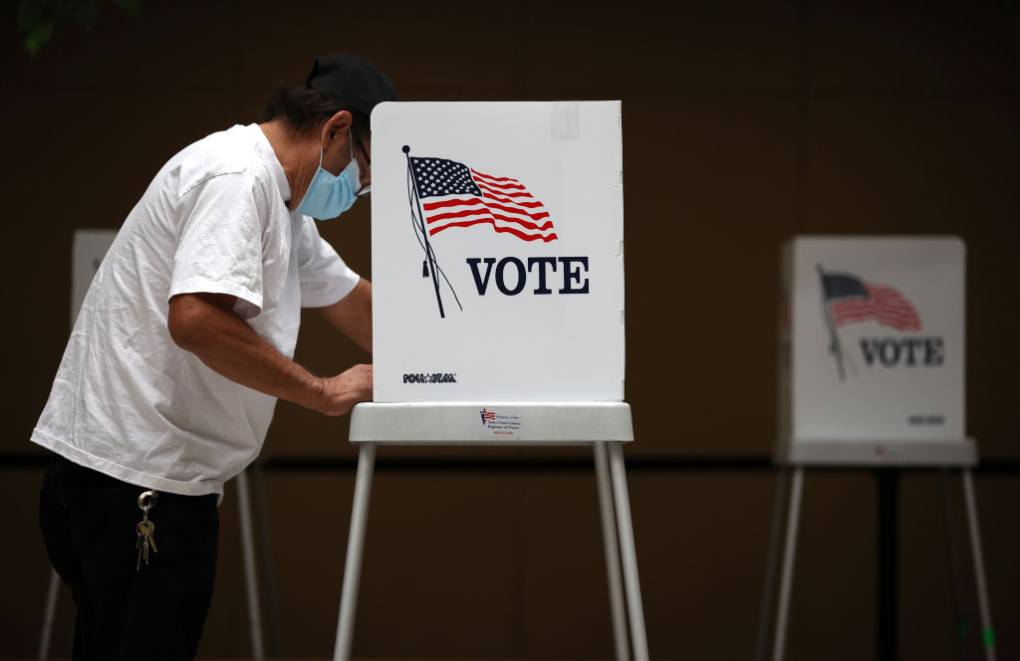
"content": "\u003cp>\u003cb>Here are the morning’s top stories on Tuesday, November 5, 2024…\u003c/b>\u003c/p>\n\u003cul>\n\u003cli style=\"font-weight: 400\">\u003cspan style=\"font-weight: 400\">Millions of Californians are expected to head to the polls Tuesday in \u003c/span>\u003ca href=\"https://www.kqed.org/voterguide\">\u003cspan style=\"font-weight: 400\">the 2024 general election.\u003c/span>\u003c/a>\u003cspan style=\"font-weight: 400\"> They’ll be voting on local measures, state propositions and our next president. If you’re one of those people and you’ve got some last minute questions you’re too afraid to ask, we’ve got you covered.\u003c/span>\u003c/li>\n\u003cli>PG&E says as many as 15,000 in 17 counties across its sprawling area \u003ca href=\"https://www.kqed.org/news/12012685/california-polling-places-likely-lose-power-after-voting-ends-pge\">could lose power\u003c/a> starting Tuesday night, because of the onset of dangerous fire weather.\u003c/li>\n\u003c/ul>\n\u003ch2>\u003ca href=\"https://www.kqed.org/voterguide#faq\">\u003cstrong>Voters Head To The Polls On Election Day\u003c/strong>\u003c/a>\u003c/h2>\n\u003cp>It’s the final day to vote in the 2024 general election. While millions of Californians have already cast their ballots, many more will head to the polls Tuesday to vote on local measures, state propositions and our next president.\u003c/p>\n\u003cp>Kim Alexander, President of the California Voter Foundation, says if you haven’t voted yet, there’s still time. “Vote as early as you can. It could get busy. You are entitled under California law to take up to two hours off of work to vote. You needed to ask for that last Friday from your boss. So if you didn’t, they may not grant it, but it doesn’t hurt to ask,” Alexander said.\u003c/p>\n\u003cp>Another question that many voters have is what if they make a mistake on their ballot? “They might decide that they voted for someone they didn’t mean to vote for, and they want to vote for a different candidate. You can simply cross out the choice that you made, fill in the choice that you want to make and write yes next to it or draw an arrow,” Alexander said. “And under California law, election officials are required to respect voter intent when voters are voting. So they will get a ballot like that and they will remake a ballot that has an error that’s been corrected.”\u003c/p>\n\u003cp>Remember that polls close at 8 p.m.\u003c/p>\n\u003ch2 class=\"routes-Site-routes-Post-Title-__Title__title\">\u003ca href=\"https://www.kqed.org/news/12012685/california-polling-places-likely-lose-power-after-voting-ends-pge\">\u003cstrong>More California Polling Places Likely To Lose Power After Voting Ends, PG&E Says\u003c/strong>\u003c/a>\u003c/h2>\n\u003cp>PG&E is widening its planned \u003ca href=\"https://www.kqed.org/news/11836990/pge-shutoffs-are-here-again-what-to-know-about-power-outages-today\">public safety power shut-offs\u003c/a>, leaving more polling places in the outage footprint as dry, windy weather raises the potential for dangerous wildfires.\u003c/p>\n\u003cp>[ad fullwidth]\u003c/p>\n\u003cp>\u003c/p>\n\u003cp>Although fire weather conditions are expected to ramp up by midday Tuesday, the utility said it would not shut off power until after polls close at 8 p.m. It will likely cut power to approximately 22,000 customers across 17 counties to prevent wildfires sparked by one of its lines — and up to five polling places could be affected, PG&E said.\u003c/p>\n\n",
"blocks": [],
"excerpt": "Haven't voted yet? We try to answer the questions you may have.",
"status": "publish",
"parent": 0,
"modified": 1730838924,
"stats": {
"hasAudio": false,
"hasVideo": false,
"hasChartOrMap": false,
"iframeSrcs": [],
"hasGoogleForm": false,
"hasGallery": false,
"hasHearkenModule": false,
"hasPolis": false,
"paragraphCount": 9,
"wordCount": 471
},
"headData": {
"title": "Answering Last Minute Voter Questions Before Election | KQED",
"description": "Haven't voted yet? We try to answer the questions you may have.",
"ogTitle": "",
"ogDescription": "",
"ogImgId": "",
"twTitle": "",
"twDescription": "",
"twImgId": "",
"schema": {
"@context": "https://schema.org",
"@type": "NewsArticle",
"headline": "Answering Last Minute Voter Questions Before Election",
"datePublished": "2024-11-05T12:35:24-08:00",
"dateModified": "2024-11-05T12:35:24-08:00",
"image": "https://cdn.kqed.org/wp-content/uploads/2020/02/KQED-OG-Image@1x.png",
"isAccessibleForFree": "True",
"publisher": {
"@type": "NewsMediaOrganization",
"@id": "https://www.kqed.org/#organization",
"name": "KQED",
"logo": "https://cdn.kqed.org/wp-content/uploads/2020/02/KQED-OG-Image@1x.png",
"url": "https://www.kqed.org",
"sameAs": [
"https://www.facebook.com/KQED",
"https://twitter.com/KQED",
"https://www.instagram.com/kqed/",
"https://www.tiktok.com/@kqedofficial",
"https://www.linkedin.com/company/kqed",
"https://www.youtube.com/channel/UCeC0IOo7i1P_61zVUWbJ4nw"
]
}
}
},
"source": "The California Report",
"sourceUrl": "https://www.kqed.org/news/tag/tcrarchive/",
"audioUrl": "https://www.podtrac.com/pts/redirect.mp3/chrt.fm/track/G6C7C3/traffic.megaphone.fm/KQINC2748437824.mp3?updated=1730819669",
"sticky": false,
"nprStoryId": "kqed-12012660",
"excludeFromSiteSearch": "Include",
"articleAge": "0",
"path": "/news/12012660/answering-last-minute-voter-questions-before-election",
"audioTrackLength": null,
"parsedContent": [
{
"type": "contentString",
"content": "\u003cdiv class=\"post-body\">\u003cp>\u003cp>\u003cb>Here are the morning’s top stories on Tuesday, November 5, 2024…\u003c/b>\u003c/p>\n\u003cul>\n\u003cli style=\"font-weight: 400\">\u003cspan style=\"font-weight: 400\">Millions of Californians are expected to head to the polls Tuesday in \u003c/span>\u003ca href=\"https://www.kqed.org/voterguide\">\u003cspan style=\"font-weight: 400\">the 2024 general election.\u003c/span>\u003c/a>\u003cspan style=\"font-weight: 400\"> They’ll be voting on local measures, state propositions and our next president. If you’re one of those people and you’ve got some last minute questions you’re too afraid to ask, we’ve got you covered.\u003c/span>\u003c/li>\n\u003cli>PG&E says as many as 15,000 in 17 counties across its sprawling area \u003ca href=\"https://www.kqed.org/news/12012685/california-polling-places-likely-lose-power-after-voting-ends-pge\">could lose power\u003c/a> starting Tuesday night, because of the onset of dangerous fire weather.\u003c/li>\n\u003c/ul>\n\u003ch2>\u003ca href=\"https://www.kqed.org/voterguide#faq\">\u003cstrong>Voters Head To The Polls On Election Day\u003c/strong>\u003c/a>\u003c/h2>\n\u003cp>It’s the final day to vote in the 2024 general election. While millions of Californians have already cast their ballots, many more will head to the polls Tuesday to vote on local measures, state propositions and our next president.\u003c/p>\n\u003cp>Kim Alexander, President of the California Voter Foundation, says if you haven’t voted yet, there’s still time. “Vote as early as you can. It could get busy. You are entitled under California law to take up to two hours off of work to vote. You needed to ask for that last Friday from your boss. So if you didn’t, they may not grant it, but it doesn’t hurt to ask,” Alexander said.\u003c/p>\n\u003cp>Another question that many voters have is what if they make a mistake on their ballot? “They might decide that they voted for someone they didn’t mean to vote for, and they want to vote for a different candidate. You can simply cross out the choice that you made, fill in the choice that you want to make and write yes next to it or draw an arrow,” Alexander said. “And under California law, election officials are required to respect voter intent when voters are voting. So they will get a ballot like that and they will remake a ballot that has an error that’s been corrected.”\u003c/p>\n\u003cp>Remember that polls close at 8 p.m.\u003c/p>\n\u003ch2 class=\"routes-Site-routes-Post-Title-__Title__title\">\u003ca href=\"https://www.kqed.org/news/12012685/california-polling-places-likely-lose-power-after-voting-ends-pge\">\u003cstrong>More California Polling Places Likely To Lose Power After Voting Ends, PG&E Says\u003c/strong>\u003c/a>\u003c/h2>\n\u003cp>PG&E is widening its planned \u003ca href=\"https://www.kqed.org/news/11836990/pge-shutoffs-are-here-again-what-to-know-about-power-outages-today\">public safety power shut-offs\u003c/a>, leaving more polling places in the outage footprint as dry, windy weather raises the potential for dangerous wildfires.\u003c/p>\n\u003cp>\u003c/p>\u003c/div>",
"attributes": {
"named": {},
"numeric": []
}
},
{
"type": "component",
"content": "",
"name": "ad",
"attributes": {
"named": {
"label": "fullwidth"
},
"numeric": [
"fullwidth"
]
}
},
{
"type": "contentString",
"content": "\u003cdiv class=\"post-body\">\u003cp>\u003c/p>\n\u003cp>\u003c/p>\n\u003cp>Although fire weather conditions are expected to ramp up by midday Tuesday, the utility said it would not shut off power until after polls close at 8 p.m. It will likely cut power to approximately 22,000 customers across 17 counties to prevent wildfires sparked by one of its lines — and up to five polling places could be affected, PG&E said.\u003c/p>\n\n\u003c/div>\u003c/p>",
"attributes": {
"named": {},
"numeric": []
}
}
],
"link": "/news/12012660/answering-last-minute-voter-questions-before-election",
"authors": [
"11739"
],
"programs": [
"news_72"
],
"categories": [
"news_33520",
"news_34018"
],
"tags": [
"news_32839",
"news_140",
"news_20592",
"news_21998",
"news_21268"
],
"featImg": "news_12005198",
"label": "source_news_12012660"
},
"news_12012685": {
"type": "posts",
"id": "news_12012685",
"meta": {
"index": "posts_1716263798",
"site": "news",
"id": "12012685",
"score": null,
"sort": [
1730835753000
]
},
"guestAuthors": [],
"slug": "california-polling-places-likely-lose-power-after-voting-ends-pge",
"title": "Oakland Hills Polling Place Closed Due to Fire Risk, More Likely to Lose Power Election Night",
"publishDate": 1730835753,
"format": "standard",
"headTitle": "Oakland Hills Polling Place Closed Due to Fire Risk, More Likely to Lose Power Election Night | KQED",
"labelTerm": {
"site": "news"
},
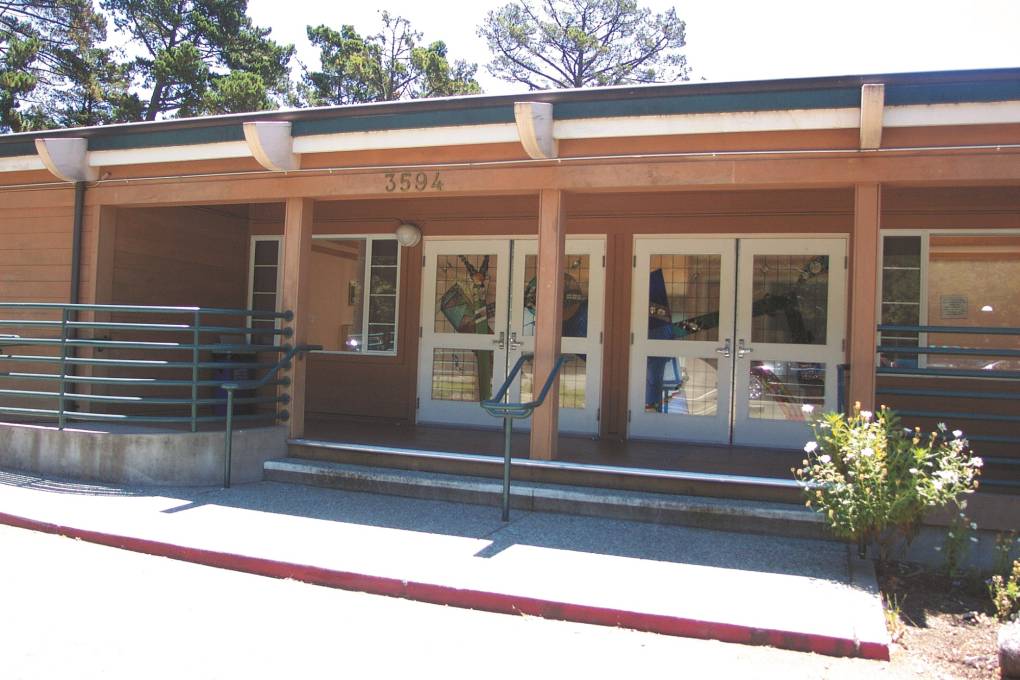
"content": "\u003cp>\u003cem>Updated 12:45 p.m. Tuesday\u003c/em>\u003c/p>\n\u003cp>Dangerous fire weather conditions shut down a vote center in the Oakland hills on Tuesday morning, coming as PG&E announced it is widening its planned \u003ca href=\"https://www.kqed.org/news/11836990/pge-shutoffs-are-here-again-what-to-know-about-power-outages-today\">public safety power shut-offs\u003c/a>, leaving more polling places in the outage footprint.\u003c/p>\n\u003cp>The Joaquin Miller Community Center polling place was closed due to a red-flag warning, according to the \u003ca href=\"https://alamedacountyca.gov/rovapps/maps/vca/\">Alameda County Registrar of Voters\u003c/a>. Residents were instead directed to a nearby site at Montera Middle School.\u003c/p>\n\u003cp>[ad fullwidth]\u003c/p>\n\u003cp>Although dry, windy weather was expected to raise the potential for dangerous wildfires by midday Tuesday, PG&E said it would not shut off power until after polls close at 8 p.m. It will likely cut power to approximately 22,000 customers across 17 counties to prevent wildfires sparked by one of its lines — and up to five polling places could be affected, PG&E said.\u003c/p>\n\u003cp>The utility previously said only two polling places would potentially be in the outage areas.\u003c/p>\n\u003cp>[aside label=\"From the 2024 Voter Guide\" link1='https://www.kqed.org/voterguide/alameda,Alameda County: Your Voter Guide to Navigate the Candidates and Issues on Your Ballot' hero=https://cdn.kqed.org/wp-content/uploads/sites/80/2024/02/Aside-Voter-Guide-Local-Elections-Alameda-County-1200x1200-1.png]\u003c/p>\n\u003cp>Most affected customers are located in the North Bay, East Bay hills and the western Sacramento Valley. Two polling places in Vacaville and one each in Los Gatos, Fairfield and Middletown could lose power Tuesday night.\u003c/p>\n\u003cp>“PG&E has delivered temporary generation for each of these polling locations,” the utility \u003ca href=\"https://www.pge.com/en/newsroom/currents/safety/pg-e-calls-for-public-safety-power-shutoff.html\">said in an update on its website\u003c/a>. “However, if power needs to be shut off for safety, it would occur after in-person voting has ended.”\u003c/p>\n\u003cp>A \u003ca href=\"https://x.com/NWSBayArea/status/1853395160652304771\">red flag warning\u003c/a> is now in effect across much of the Bay Area until Thursday morning, as the National Weather Service expects a strong offshore wind event to bring dry, gusty weather. That combined with low fuel moisture increases the risk of dangerous wildfires.\u003c/p>\n\u003cp>Gusts up to 70 mph are forecast at some high elevations, including the Geysers, Mount St. Helena and Mount Diablo.\u003c/p>\n\u003cp>Given recent rain, the Bay Area is at relatively low risk of major fires, \u003ca href=\"https://weatherwest.com/archives/43099\">according to UCLA climate scientist Daniel Swain\u003c/a>. Parts of central and southern California, which haven’t yet had significant rainfall, could be more heavily affected.\u003c/p>\n\u003cp>PG&E expects the power shutoffs to last until Thursday when winds are expected to die down.\u003c/p>\n\u003cp>\u003c/p>\n",
"blocks": [],
"excerpt": "Alameda County elections officials closed an Oakland polling place, and PG&E plans to cut power to about 22,000 customers across 17 counties amid dangerous fire conditions. ",
"status": "publish",
"parent": 0,
"modified": 1730856787,
"stats": {
"hasAudio": false,
"hasVideo": false,
"hasChartOrMap": false,
"iframeSrcs": [],
"hasGoogleForm": false,
"hasGallery": false,
"hasHearkenModule": false,
"hasPolis": false,
"paragraphCount": 14,
"wordCount": 422
},
"headData": {
"title": "Oakland Hills Polling Place Closed Due to Fire Risk, More Likely to Lose Power Election Night | KQED",
"description": "Alameda County elections officials closed an Oakland polling place, and PG&E plans to cut power to about 22,000 customers across 17 counties amid dangerous fire conditions. ",
"ogTitle": "",
"ogDescription": "",
"ogImgId": "",
"twTitle": "",
"twDescription": "",
"twImgId": "",
"schema": {
"@context": "https://schema.org",
"@type": "NewsArticle",
"headline": "Oakland Hills Polling Place Closed Due to Fire Risk, More Likely to Lose Power Election Night",
"datePublished": "2024-11-05T11:42:33-08:00",
"dateModified": "2024-11-05T17:33:07-08:00",
"image": "https://cdn.kqed.org/wp-content/uploads/2020/02/KQED-OG-Image@1x.png",
"isAccessibleForFree": "True",
"publisher": {
"@type": "NewsMediaOrganization",
"@id": "https://www.kqed.org/#organization",
"name": "KQED",
"logo": "https://cdn.kqed.org/wp-content/uploads/2020/02/KQED-OG-Image@1x.png",
"url": "https://www.kqed.org",
"sameAs": [
"https://www.facebook.com/KQED",
"https://twitter.com/KQED",
"https://www.instagram.com/kqed/",
"https://www.tiktok.com/@kqedofficial",
"https://www.linkedin.com/company/kqed",
"https://www.youtube.com/channel/UCeC0IOo7i1P_61zVUWbJ4nw"
]
}
}
},
"sticky": false,
"nprStoryId": "kqed-12012685",
"excludeFromSiteSearch": "Include",
"articleAge": "0",
"path": "/news/12012685/california-polling-places-likely-lose-power-after-voting-ends-pge",
"audioTrackLength": null,
"parsedContent": [
{
"type": "contentString",
"content": "\u003cdiv class=\"post-body\">\u003cp>\u003cp>\u003cem>Updated 12:45 p.m. Tuesday\u003c/em>\u003c/p>\n\u003cp>Dangerous fire weather conditions shut down a vote center in the Oakland hills on Tuesday morning, coming as PG&E announced it is widening its planned \u003ca href=\"https://www.kqed.org/news/11836990/pge-shutoffs-are-here-again-what-to-know-about-power-outages-today\">public safety power shut-offs\u003c/a>, leaving more polling places in the outage footprint.\u003c/p>\n\u003cp>The Joaquin Miller Community Center polling place was closed due to a red-flag warning, according to the \u003ca href=\"https://alamedacountyca.gov/rovapps/maps/vca/\">Alameda County Registrar of Voters\u003c/a>. Residents were instead directed to a nearby site at Montera Middle School.\u003c/p>\n\u003cp>\u003c/p>\u003c/div>",
"attributes": {
"named": {},
"numeric": []
}
},
{
"type": "component",
"content": "",
"name": "ad",
"attributes": {
"named": {
"label": "fullwidth"
},
"numeric": [
"fullwidth"
]
}
},
{
"type": "contentString",
"content": "\u003cdiv class=\"post-body\">\u003cp>\u003c/p>\n\u003cp>Although dry, windy weather was expected to raise the potential for dangerous wildfires by midday Tuesday, PG&E said it would not shut off power until after polls close at 8 p.m. It will likely cut power to approximately 22,000 customers across 17 counties to prevent wildfires sparked by one of its lines — and up to five polling places could be affected, PG&E said.\u003c/p>\n\u003cp>The utility previously said only two polling places would potentially be in the outage areas.\u003c/p>\n\u003cp>\u003c/p>\u003c/div>",
"attributes": {
"named": {},
"numeric": []
}
},
{
"type": "component",
"content": "",
"name": "aside",
"attributes": {
"named": {
"label": "From the 2024 Voter Guide ",
"link1": "https://www.kqed.org/voterguide/alameda,Alameda County: Your Voter Guide to Navigate the Candidates and Issues on Your Ballot",
"hero": "https://cdn.kqed.org/wp-content/uploads/sites/80/2024/02/Aside-Voter-Guide-Local-Elections-Alameda-County-1200x1200-1.png"
},
"numeric": []
}
},
{
"type": "contentString",
"content": "\u003cdiv class=\"post-body\">\u003cp>\u003c/p>\n\u003cp>Most affected customers are located in the North Bay, East Bay hills and the western Sacramento Valley. Two polling places in Vacaville and one each in Los Gatos, Fairfield and Middletown could lose power Tuesday night.\u003c/p>\n\u003cp>“PG&E has delivered temporary generation for each of these polling locations,” the utility \u003ca href=\"https://www.pge.com/en/newsroom/currents/safety/pg-e-calls-for-public-safety-power-shutoff.html\">said in an update on its website\u003c/a>. “However, if power needs to be shut off for safety, it would occur after in-person voting has ended.”\u003c/p>\n\u003cp>A \u003ca href=\"https://x.com/NWSBayArea/status/1853395160652304771\">red flag warning\u003c/a> is now in effect across much of the Bay Area until Thursday morning, as the National Weather Service expects a strong offshore wind event to bring dry, gusty weather. That combined with low fuel moisture increases the risk of dangerous wildfires.\u003c/p>\n\u003cp>Gusts up to 70 mph are forecast at some high elevations, including the Geysers, Mount St. Helena and Mount Diablo.\u003c/p>\n\u003cp>Given recent rain, the Bay Area is at relatively low risk of major fires, \u003ca href=\"https://weatherwest.com/archives/43099\">according to UCLA climate scientist Daniel Swain\u003c/a>. Parts of central and southern California, which haven’t yet had significant rainfall, could be more heavily affected.\u003c/p>\n\u003cp>PG&E expects the power shutoffs to last until Thursday when winds are expected to die down.\u003c/p>\n\u003cp>\u003c/p>\n\u003c/div>\u003c/p>",
"attributes": {
"named": {},
"numeric": []
}
}
],
"link": "/news/12012685/california-polling-places-likely-lose-power-after-voting-ends-pge",
"authors": [
"11362"
],
"categories": [
"news_31795",
"news_8",
"news_13"
],
"tags": [
"news_260",
"news_32839",
"news_34377",
"news_34054",
"news_17968",
"news_17648",
"news_4463"
],
"featImg": "news_12012744",
"label": "news"
},
"news_12012670": {
"type": "posts",
"id": "news_12012670",
"meta": {
"index": "posts_1716263798",
"site": "news",
"id": "12012670",
"score": null,
"sort": [
1730834410000
]
},
"guestAuthors": [],
"slug": "pro-trump-internet-provocateur-disrupts-sf-democratic-headquarters",
"title": "Pro-Trump ‘Internet Provocateur’ Disrupts SF Democratic Headquarters",
"publishDate": 1730834410,
"format": "standard",
"headTitle": "Pro-Trump ‘Internet Provocateur’ Disrupts SF Democratic Headquarters | KQED",
"labelTerm": {
"site": "news"
},
"content": "\u003cp>On the final night of the contentious \u003ca href=\"https://www.kqed.org/elections/results/president\">presidential campaign\u003c/a>, a pro-Trump social media influencer caused a disruption at the San Francisco Democratic Party headquarters, leading to a tense altercation as he was escorted out.\u003c/p>\n\u003cp>A video circulating on social media shows a heated exchange between party staffers and Danny Mullen, whose YouTube channel has more than 800,000 subscribers, and another man. The men are dressed in American flag shirts, MAGA hats and a Trump flag, which is worn like a cape.\u003c/p>\n\u003cp>“It really was disruptive to the operations in our headquarters,” said Nancy Tung, the chair of the Democratic County Central Committee. “People are there to work. Volunteers are there to make phone calls into our battleground states and congressional districts.”\u003c/p>\n\u003cp>[ad fullwidth]\u003c/p>\n\u003cp>While there’s little doubt San Francisco voters will go for the Bay Area’s own Kamala Harris, the disruption at the party’s Market Street office — the city’s center for national, state-level and local campaigning for Democratic candidates — inflamed Election Day tensions over the potential for confrontations. Mullen, whose videos often latch on to right-wing conspiracy theories and rile up progressives, recently posted clips of him “\u003ca href=\"https://www.youtube.com/watch?v=hsxnTGcxTec\">schooling brainwashed protesters\u003c/a>” at UCLA and another “\u003ca href=\"https://www.youtube.com/watch?v=lkqDpFzu2h4\">fighting migrant crime\u003c/a>” in New York City.\u003c/p>\n\u003cp>“He’s kind of like an internet provocateur,” Tung told KQED. “He goes into situations where he tries to get a rise out of people by taking extreme positions and knowing that they are extreme positions to whoever he’s talking to.”\u003c/p>\n\u003cfigure id=\"attachment_11996722\" class=\"wp-caption aligncenter\" style=\"max-width: 2000px\">\u003cimg loading=\"lazy\" decoding=\"async\" class=\"size-full wp-image-11996722\" src=\"https://cdn.kqed.org/wp-content/uploads/sites/10/2024/07/240722-SFKamalaHarrisRally-56-BL_qed.jpg\" alt=\"\" width=\"2000\" height=\"1333\" srcset=\"https://cdn.kqed.org/wp-content/uploads/sites/10/2024/07/240722-SFKamalaHarrisRally-56-BL_qed.jpg 2000w, https://cdn.kqed.org/wp-content/uploads/sites/10/2024/07/240722-SFKamalaHarrisRally-56-BL_qed-800x533.jpg 800w, https://cdn.kqed.org/wp-content/uploads/sites/10/2024/07/240722-SFKamalaHarrisRally-56-BL_qed-1020x680.jpg 1020w, https://cdn.kqed.org/wp-content/uploads/sites/10/2024/07/240722-SFKamalaHarrisRally-56-BL_qed-160x107.jpg 160w, https://cdn.kqed.org/wp-content/uploads/sites/10/2024/07/240722-SFKamalaHarrisRally-56-BL_qed-1536x1024.jpg 1536w, https://cdn.kqed.org/wp-content/uploads/sites/10/2024/07/240722-SFKamalaHarrisRally-56-BL_qed-1920x1280.jpg 1920w\" sizes=\"(max-width: 2000px) 100vw, 2000px\">\u003cfigcaption class=\"wp-caption-text\">San Francisco Democratic Party Chair Nancy Tung speaks during a rally in support of the presidential nomination of Vice President Kamala Harris at City Hall in San Francisco on July 22, 2024. \u003ccite>(Beth LaBerge/KQED)\u003c/cite>\u003c/figcaption>\u003c/figure>\n\u003cp>In a \u003ca href=\"https://x.com/sfstandard/status/1853619302001180966?s=46&t=Mcofn3g7oWGvKWDCnPKDAA\">video\u003c/a> posted by the \u003cem>San Francisco Standard,\u003c/em> Mullen and another man are seen in the headquarters’ doorway, arguing with volunteers and staff. They arrived around 4:15 p.m. Monday and said they were there to “convert people,” according to Tung.\u003c/p>\n\u003cp>She said Mullen was also with a woman he said was formerly unhoused and questioned why there was so much feces on San Francisco’s streets.\u003c/p>\n\u003cp>Staff and volunteers called for them to “leave the premises” and accused Mullen and his supporters of trespassing, and eventually, Tung and others got them to leave.\u003c/p>\n\u003cp>Tung said that the six or so weeks San Francisco Democrats have spent in their headquarters have been pretty smooth, but safety is still top of mind.\u003c/p>\n\u003cp>[aside label=\"2024 Bay Area Voter Guide\" link1='https://www.kqed.org/voterguide/bayarea,Learn about every single race and measure across the nine Bay Area counties' hero=https://cdn.kqed.org/wp-content/uploads/sites/80/2024/02/Aside-Bay-Area-Voter-Guide-2024-Primary-Election-1200x1200-1.png]\u003c/p>\n\u003cp>“Our volunteers are not naive to the environment that we’re in,” Tung said. “Obviously, they feel very strongly about making sure that we elect a qualified candidate, Kamala Harris, as the president.”\u003c/p>\n\u003cp>The altercation could foreshadow what’s to come as results stream on Tuesday night and throughout the week.\u003c/p>\n\u003cp>Law enforcement agencies and universities around the Bay Area are \u003ca href=\"https://www.kqed.org/news/12012421/law-enforcement-schools-bay-area-prepare-post-election-turmoil\">making preparations\u003c/a> for political unrest, which is likely no matter which way the presidential contest goes.\u003c/p>\n\u003cp>Across the state, jurisdictions are already struggling to retain staff and calm tensions as “self-appointed election observers” with clipboards and notepads watch officials count mail-in and early ballots. In \u003ca href=\"https://www.kqed.org/news/12012295/election-workers-quit-in-shasta-as-self-appointed-observers-roam-office\">Shasta County\u003c/a>, about half of the registrar’s 21 employees have quit over the hostile environment.\u003c/p>\n\u003cp>The 2020 and 2022 elections were met with mass protests from \u003ca href=\"https://www.kqed.org/news/12012408/adam-schiff-is-confident-harris-will-win-but-worried-about-maga-election-deniers\">election deniers\u003c/a>, and former President Donald Trump — along with many \u003ca href=\"https://www.kqed.org/news/12010914/we-wont-commit-to-certifying-election-results-say-most-california-gop-congressmembers\">Republican representatives\u003c/a> — still denies that he lost the 2020 presidential race. This time, he’s gone on the offensive about alleged election fraud, starting an “election integrity effort” and encouraging supporters to observe vote counting.\u003c/p>\n\u003cp>Various news organizations have \u003ca href=\"https://apnews.com/article/trump-cheating-fraud-lies-52832138394282b8a3355b45c0b913a9\">warned\u003c/a> that Trump’s remarks at closing rallies have laid the foundation for denying the results of Tuesday’s race.\u003c/p>\n\u003cp>Last week, he told a crowd in Arizona that the “only thing that can stop us is the cheating.” In Pennsylvania, he’s saying thousands of “fraudulent” mail-in ballot applications and voter registration forms have been sent in by a “third-party group.” He’s not said whether he will accept the election results.\u003c/p>\n\u003cp>For Mullen’s part, following a series of clips of Monday’s altercation, he posted on \u003ca href=\"https://www.instagram.com/dannymullen\">Instagram\u003c/a> a photo with the caption “more tomorrow.”\u003c/p>\n\u003cp>\u003c/p>\n",
"blocks": [],
"excerpt": "The disruption by a social media influencer at the San Francisco Democratic Party headquarters comes as the election has many on edge over the potential for confrontations.",
"status": "publish",
"parent": 0,
"modified": 1730840839,
"stats": {
"hasAudio": false,
"hasVideo": false,
"hasChartOrMap": false,
"iframeSrcs": [],
"hasGoogleForm": false,
"hasGallery": false,
"hasHearkenModule": false,
"hasPolis": false,
"paragraphCount": 20,
"wordCount": 796
},
"headData": {
"title": "Pro-Trump ‘Internet Provocateur’ Disrupts SF Democratic Headquarters | KQED",
"description": "The disruption by a social media influencer at the San Francisco Democratic Party headquarters comes as the election has many on edge over the potential for confrontations.",
"ogTitle": "",
"ogDescription": "",
"ogImgId": "",
"twTitle": "",
"twDescription": "",
"twImgId": "",
"schema": {
"@context": "https://schema.org",
"@type": "NewsArticle",
"headline": "Pro-Trump ‘Internet Provocateur’ Disrupts SF Democratic Headquarters",
"datePublished": "2024-11-05T11:20:10-08:00",
"dateModified": "2024-11-05T13:07:19-08:00",
"image": "https://cdn.kqed.org/wp-content/uploads/2020/02/KQED-OG-Image@1x.png",
"isAccessibleForFree": "True",
"publisher": {
"@type": "NewsMediaOrganization",
"@id": "https://www.kqed.org/#organization",
"name": "KQED",
"logo": "https://cdn.kqed.org/wp-content/uploads/2020/02/KQED-OG-Image@1x.png",
"url": "https://www.kqed.org",
"sameAs": [
"https://www.facebook.com/KQED",
"https://twitter.com/KQED",
"https://www.instagram.com/kqed/",
"https://www.tiktok.com/@kqedofficial",
"https://www.linkedin.com/company/kqed",
"https://www.youtube.com/channel/UCeC0IOo7i1P_61zVUWbJ4nw"
]
}
}
},
"sticky": false,
"nprStoryId": "kqed-12012670",
"excludeFromSiteSearch": "Include",
"articleAge": "0",
"path": "/news/12012670/pro-trump-internet-provocateur-disrupts-sf-democratic-headquarters",
"audioTrackLength": null,
"parsedContent": [
{
"type": "contentString",
"content": "\u003cdiv class=\"post-body\">\u003cp>\u003cp>On the final night of the contentious \u003ca href=\"https://www.kqed.org/elections/results/president\">presidential campaign\u003c/a>, a pro-Trump social media influencer caused a disruption at the San Francisco Democratic Party headquarters, leading to a tense altercation as he was escorted out.\u003c/p>\n\u003cp>A video circulating on social media shows a heated exchange between party staffers and Danny Mullen, whose YouTube channel has more than 800,000 subscribers, and another man. The men are dressed in American flag shirts, MAGA hats and a Trump flag, which is worn like a cape.\u003c/p>\n\u003cp>“It really was disruptive to the operations in our headquarters,” said Nancy Tung, the chair of the Democratic County Central Committee. “People are there to work. Volunteers are there to make phone calls into our battleground states and congressional districts.”\u003c/p>\n\u003cp>\u003c/p>\u003c/div>",
"attributes": {
"named": {},
"numeric": []
}
},
{
"type": "component",
"content": "",
"name": "ad",
"attributes": {
"named": {
"label": "fullwidth"
},
"numeric": [
"fullwidth"
]
}
},
{
"type": "contentString",
"content": "\u003cdiv class=\"post-body\">\u003cp>\u003c/p>\n\u003cp>While there’s little doubt San Francisco voters will go for the Bay Area’s own Kamala Harris, the disruption at the party’s Market Street office — the city’s center for national, state-level and local campaigning for Democratic candidates — inflamed Election Day tensions over the potential for confrontations. Mullen, whose videos often latch on to right-wing conspiracy theories and rile up progressives, recently posted clips of him “\u003ca href=\"https://www.youtube.com/watch?v=hsxnTGcxTec\">schooling brainwashed protesters\u003c/a>” at UCLA and another “\u003ca href=\"https://www.youtube.com/watch?v=lkqDpFzu2h4\">fighting migrant crime\u003c/a>” in New York City.\u003c/p>\n\u003cp>“He’s kind of like an internet provocateur,” Tung told KQED. “He goes into situations where he tries to get a rise out of people by taking extreme positions and knowing that they are extreme positions to whoever he’s talking to.”\u003c/p>\n\u003cfigure id=\"attachment_11996722\" class=\"wp-caption aligncenter\" style=\"max-width: 2000px\">\u003cimg loading=\"lazy\" decoding=\"async\" class=\"size-full wp-image-11996722\" src=\"https://cdn.kqed.org/wp-content/uploads/sites/10/2024/07/240722-SFKamalaHarrisRally-56-BL_qed.jpg\" alt=\"\" width=\"2000\" height=\"1333\" srcset=\"https://cdn.kqed.org/wp-content/uploads/sites/10/2024/07/240722-SFKamalaHarrisRally-56-BL_qed.jpg 2000w, https://cdn.kqed.org/wp-content/uploads/sites/10/2024/07/240722-SFKamalaHarrisRally-56-BL_qed-800x533.jpg 800w, https://cdn.kqed.org/wp-content/uploads/sites/10/2024/07/240722-SFKamalaHarrisRally-56-BL_qed-1020x680.jpg 1020w, https://cdn.kqed.org/wp-content/uploads/sites/10/2024/07/240722-SFKamalaHarrisRally-56-BL_qed-160x107.jpg 160w, https://cdn.kqed.org/wp-content/uploads/sites/10/2024/07/240722-SFKamalaHarrisRally-56-BL_qed-1536x1024.jpg 1536w, https://cdn.kqed.org/wp-content/uploads/sites/10/2024/07/240722-SFKamalaHarrisRally-56-BL_qed-1920x1280.jpg 1920w\" sizes=\"(max-width: 2000px) 100vw, 2000px\">\u003cfigcaption class=\"wp-caption-text\">San Francisco Democratic Party Chair Nancy Tung speaks during a rally in support of the presidential nomination of Vice President Kamala Harris at City Hall in San Francisco on July 22, 2024. \u003ccite>(Beth LaBerge/KQED)\u003c/cite>\u003c/figcaption>\u003c/figure>\n\u003cp>In a \u003ca href=\"https://x.com/sfstandard/status/1853619302001180966?s=46&t=Mcofn3g7oWGvKWDCnPKDAA\">video\u003c/a> posted by the \u003cem>San Francisco Standard,\u003c/em> Mullen and another man are seen in the headquarters’ doorway, arguing with volunteers and staff. They arrived around 4:15 p.m. Monday and said they were there to “convert people,” according to Tung.\u003c/p>\n\u003cp>She said Mullen was also with a woman he said was formerly unhoused and questioned why there was so much feces on San Francisco’s streets.\u003c/p>\n\u003cp>Staff and volunteers called for them to “leave the premises” and accused Mullen and his supporters of trespassing, and eventually, Tung and others got them to leave.\u003c/p>\n\u003cp>Tung said that the six or so weeks San Francisco Democrats have spent in their headquarters have been pretty smooth, but safety is still top of mind.\u003c/p>\n\u003cp>\u003c/p>\u003c/div>",
"attributes": {
"named": {},
"numeric": []
}
},
{
"type": "component",
"content": "",
"name": "aside",
"attributes": {
"named": {
"label": "2024 Bay Area Voter Guide ",
"link1": "https://www.kqed.org/voterguide/bayarea,Learn about every single race and measure across the nine Bay Area counties",
"hero": "https://cdn.kqed.org/wp-content/uploads/sites/80/2024/02/Aside-Bay-Area-Voter-Guide-2024-Primary-Election-1200x1200-1.png"
},
"numeric": []
}
},
{
"type": "contentString",
"content": "\u003cdiv class=\"post-body\">\u003cp>\u003c/p>\n\u003cp>“Our volunteers are not naive to the environment that we’re in,” Tung said. “Obviously, they feel very strongly about making sure that we elect a qualified candidate, Kamala Harris, as the president.”\u003c/p>\n\u003cp>The altercation could foreshadow what’s to come as results stream on Tuesday night and throughout the week.\u003c/p>\n\u003cp>Law enforcement agencies and universities around the Bay Area are \u003ca href=\"https://www.kqed.org/news/12012421/law-enforcement-schools-bay-area-prepare-post-election-turmoil\">making preparations\u003c/a> for political unrest, which is likely no matter which way the presidential contest goes.\u003c/p>\n\u003cp>Across the state, jurisdictions are already struggling to retain staff and calm tensions as “self-appointed election observers” with clipboards and notepads watch officials count mail-in and early ballots. In \u003ca href=\"https://www.kqed.org/news/12012295/election-workers-quit-in-shasta-as-self-appointed-observers-roam-office\">Shasta County\u003c/a>, about half of the registrar’s 21 employees have quit over the hostile environment.\u003c/p>\n\u003cp>The 2020 and 2022 elections were met with mass protests from \u003ca href=\"https://www.kqed.org/news/12012408/adam-schiff-is-confident-harris-will-win-but-worried-about-maga-election-deniers\">election deniers\u003c/a>, and former President Donald Trump — along with many \u003ca href=\"https://www.kqed.org/news/12010914/we-wont-commit-to-certifying-election-results-say-most-california-gop-congressmembers\">Republican representatives\u003c/a> — still denies that he lost the 2020 presidential race. This time, he’s gone on the offensive about alleged election fraud, starting an “election integrity effort” and encouraging supporters to observe vote counting.\u003c/p>\n\u003cp>Various news organizations have \u003ca href=\"https://apnews.com/article/trump-cheating-fraud-lies-52832138394282b8a3355b45c0b913a9\">warned\u003c/a> that Trump’s remarks at closing rallies have laid the foundation for denying the results of Tuesday’s race.\u003c/p>\n\u003cp>Last week, he told a crowd in Arizona that the “only thing that can stop us is the cheating.” In Pennsylvania, he’s saying thousands of “fraudulent” mail-in ballot applications and voter registration forms have been sent in by a “third-party group.” He’s not said whether he will accept the election results.\u003c/p>\n\u003cp>For Mullen’s part, following a series of clips of Monday’s altercation, he posted on \u003ca href=\"https://www.instagram.com/dannymullen\">Instagram\u003c/a> a photo with the caption “more tomorrow.”\u003c/p>\n\u003cp>\u003c/p>\n\u003c/div>\u003c/p>",
"attributes": {
"named": {},
"numeric": []
}
}
],
"link": "/news/12012670/pro-trump-internet-provocateur-disrupts-sf-democratic-headquarters",
"authors": [
"11913"
],
"categories": [
"news_31795",
"news_8",
"news_13"
],
"tags": [
"news_20251",
"news_27166",
"news_32839",
"news_34377",
"news_17968",
"news_29111",
"news_38",
"news_559",
"news_34371",
"news_17648"
],
"featImg": "news_12012692",
"label": "news"
},
"news_12011221": {
"type": "posts",
"id": "news_12011221",
"meta": {
"index": "posts_1716263798",
"site": "news",
"id": "12011221",
"score": null,
"sort": [
1730820644000
]
},
"guestAuthors": [],
"slug": "how-to-check-my-ballot-was-counted-results-election-2024-harris-trump",
"title": "How Do I Know My Ballot Was Counted in the 2024 Election? Here's How to Check",
"publishDate": 1730820644,
"format": "standard",
"headTitle": "How Do I Know My Ballot Was Counted in the 2024 Election? Here’s How to Check | KQED",
"labelTerm": {
"site": "news"
},
"content": "\u003cp>Election Day is finally here. And if you’ve already voted — either in person or by \u003ca href=\"https://www.kqed.org/news/12012472/election-2024-where-do-i-vote-in-person-find-my-polling-place\">submitting your mail-in ballot \u003c/a>— all there’s left to do is wait. Especially as \u003ca href=\"https://www.kqed.org/news/12012418/when-election-results-2024-california-presidential-race\">the results of the neck-and-neck presidential race between Vice President Kamala Harris and former President Donald Trump may take a while.\u003c/a>\u003c/p>\n\u003cp>One positive, actionable step you can take? Go online and use the state’s \u003ca href=\"https://california.ballottrax.net/voter/\">“Where’s My Ballot?”\u003c/a> tool to confirm that your county election officials received your ballot and will be counted.\u003c/p>\n\u003cp>This way, you’ll know that your vote and your voice were heard in California, from the presidential election to the state propositions and \u003ca href=\"https://www.kqed.org/voterguide\">local measures that can affect the lives of everyone in our communities\u003c/a>.\u003c/p>\n\u003cul>\n\u003cli>\u003cstrong>Jump straight to: \u003ca href=\"#ballot-rejected\">Why was my ballot rejected, and what can I do?\u003c/a>\u003c/strong>\u003c/li>\n\u003c/ul>\n\u003cp>You’ll also be alerted in the case that there’s an issue with your ballot, giving you time to work with your local election officials to fix any problems. This process is called “curing” your ballot so that your vote can still be counted, and \u003ca href=\"https://www.kqed.org/news/11840343/how-to-make-sure-your-mail-in-ballot-isnt-rejected-in-california\">there’s a whole system in place\u003c/a> to help you do that.\u003c/p>\n\u003cp>Keep reading for everything to know about tracking your ballot and what you can do if the tool flags an issue with counting your vote.\u003c/p>\n\u003ch3>How to use California’s ‘Where’s My Ballot’ tool\u003c/h3>\n\u003cp>Visit the state’s \u003ca href=\"https://california.ballottrax.net/voter/\">“Where’s My Ballot?”\u003c/a> site and put in your details: name, date of birth and ZIP code. If you \u003ca href=\"https://elections.cdn.sos.ca.gov/pdfs/ballottrax-troubleshooting.pdf\">registered to vote with a mailing address that’s different from your residential address\u003c/a>, use your residential address ZIP code.\u003c/p>\n\u003cp>The tool will then show you the status of your ballot. By hitting “Details,” you can expand the notes and see exactly where your ballot is in the process.\u003c/p>\n\u003cfigure id=\"attachment_12012093\" class=\"wp-caption alignnone\" style=\"max-width: 1037px\">\u003cimg loading=\"lazy\" decoding=\"async\" class=\"size-full wp-image-12012093\" src=\"https://cdn.kqed.org/wp-content/uploads/sites/10/2024/11/ballot-status.png\" alt=\"\" width=\"1037\" height=\"877\" srcset=\"https://cdn.kqed.org/wp-content/uploads/sites/10/2024/11/ballot-status.png 1037w, https://cdn.kqed.org/wp-content/uploads/sites/10/2024/11/ballot-status-800x677.png 800w, https://cdn.kqed.org/wp-content/uploads/sites/10/2024/11/ballot-status-1020x863.png 1020w, https://cdn.kqed.org/wp-content/uploads/sites/10/2024/11/ballot-status-160x135.png 160w\" sizes=\"(max-width: 1037px) 100vw, 1037px\">\u003cfigcaption class=\"wp-caption-text\">A screenshot from the “Where’s My Ballot” tool showing a ballot that the voter’s county has accepted. \u003ccite>(BallotTrax)\u003c/cite>\u003c/figcaption>\u003c/figure>\n\u003cp>If you see this “Completed” message, your work is done, and you can rest a little easier knowing your ballot is being counted and your voice will be heard in this election.\u003c/p>\n\u003ch2>\u003ca id=\"ballot-rejected\">\u003c/a>Help: I’m seeing a message saying my ballot has been ‘Rejected’?\u003c/h2>\n\u003cp>If your ballot shows as ‘Rejected: Curable’, you’ll see a message saying “there is an issue with your returned ballot and it can’t be accepted.”\u003c/p>\n\u003cp>But as scary as the word “rejected” is, \u003cem>don’t\u003c/em> panic: “curable” means that the problem with your ballot is one that can, luckily, be resolved.\u003c/p>\n\u003cp>Why might a ballot be initially rejected but curable? It’s most likely an issue with your signature: you might have forgotten to sign your ballot envelope entirely or have made a signature that doesn’t match the one on your voter registration. \u003ca href=\"https://www.kqed.org/news/12003469/election-2024-how-to-correct-a-mistake-on-your-ballot-correction#signature-problem-ballot\">Read more about common issues with signatures on ballots and how they get fixed.\u003c/a>\u003c/p>\n\u003cfigure id=\"attachment_12010929\" class=\"wp-caption alignnone\" style=\"max-width: 1993px\">\u003cimg loading=\"lazy\" decoding=\"async\" class=\"size-full wp-image-12010929\" src=\"https://cdn.kqed.org/wp-content/uploads/sites/10/2024/10/004_Oakland_ItzelDiazandFamily_09092021_qed-e1729796712493.jpg\" alt=\"\" width=\"1993\" height=\"1323\" srcset=\"https://cdn.kqed.org/wp-content/uploads/sites/10/2024/10/004_Oakland_ItzelDiazandFamily_09092021_qed-e1729796712493.jpg 1993w, https://cdn.kqed.org/wp-content/uploads/sites/10/2024/10/004_Oakland_ItzelDiazandFamily_09092021_qed-e1729796712493-800x531.jpg 800w, https://cdn.kqed.org/wp-content/uploads/sites/10/2024/10/004_Oakland_ItzelDiazandFamily_09092021_qed-e1729796712493-1020x677.jpg 1020w, https://cdn.kqed.org/wp-content/uploads/sites/10/2024/10/004_Oakland_ItzelDiazandFamily_09092021_qed-e1729796712493-160x106.jpg 160w, https://cdn.kqed.org/wp-content/uploads/sites/10/2024/10/004_Oakland_ItzelDiazandFamily_09092021_qed-e1729796712493-1536x1020.jpg 1536w, https://cdn.kqed.org/wp-content/uploads/sites/10/2024/10/004_Oakland_ItzelDiazandFamily_09092021_qed-e1729796712493-1920x1275.jpg 1920w\" sizes=\"(max-width: 1993px) 100vw, 1993px\">\u003cfigcaption class=\"wp-caption-text\">A Bay Area resident prepares to fill out their mail-in ballot in 2021. \u003ccite>(Beth LaBerge/KQED)\u003c/cite>\u003c/figcaption>\u003c/figure>\n\u003cp>In these cases, your county elections office will reach out to you — almost certainly by mail — to “cure” (resolve) the issue with your ballot so that your vote can be counted after all. For example, if there was an issue with your signature, you’ll be sent a form to sign again, which you’ll then mail back to your county elections office.\u003c/p>\n\u003cp>Where’s My Ballot will also show you a message telling you that if your ballot has been rejected and is curable, but if you don’t receive “a letter or postcard from your county within 7 days of the election,” you should contact your county elections office yourself by phone or email. \u003ca href=\"#find-my-county-elections-office\">Find your county elections office’s contact details in our list.\u003c/a>\u003c/p>\n\u003cp>But even if that mailer from your county elections office doesn’t arrive soon, don’t stress: \u003ca href=\"https://www.calvoter.org/content/close-count-transparency-project#template\">Your county has a whole month after Election Day — until Dec. 5 — to resolve these kinds of issues\u003c/a> with voters and certify the election results.\u003c/p>\n\u003ch2>\u003cstrong>What if my ballot can’t be cured?\u003c/strong>\u003c/h2>\n\u003cp>In some cases, Where’s My Ballot will show a message that your ballot has been “Rejected,” with no note about it being curable.\u003c/p>\n\u003cp>Unfortunately, this happens when your ballot is not received in time or your ballot is missing from the envelope. It means the issue with your ballot can’t be resolved, and your vote will not be counted.\u003c/p>\n\u003cp>To be counted by your county elections office, your ballot must be postmarked by Election Day (Nov. 5) at the latest and reach them by Nov. 12. One way to ensure your ballot arrives on time to be counted is to submit it into an official elections drop-box, or hand-deliver it at your closest open voting location before polls close at 8 p.m. on Nov. 5. \u003ca href=\"https://www.kqed.org/news/12008419/ballot-drop-off-location-near-me-early-voting-site-election-2024\">Find where to submit your ballot near you.\u003c/a>\u003c/p>\n\u003cp>Another reason \u003ca href=\"https://www.kqed.org/news/12003469/election-2024-how-to-correct-a-mistake-on-your-ballot-correction\">some ballots arrive too late to be counted:\u003c/a> voters place them in a USPS mailbox on Election Day that’s already had its last collection for the day, which in many areas is 5 p.m. or earlier. Make sure to check the last pick-up time on a mailbox before dropping in your ballot, and if you’re unsure, \u003ca href=\"https://www.kqed.org/news/12008419/ballot-drop-off-location-near-me-early-voting-site-election-2024\">deliver it by hand to a voting location or into an official drop-box before polls close instead\u003c/a>.\u003c/p>\n\u003cfigure id=\"attachment_12008918\" class=\"wp-caption alignnone\" style=\"max-width: 2121px\">\u003cimg loading=\"lazy\" decoding=\"async\" class=\"size-full wp-image-12008918\" src=\"https://cdn.kqed.org/wp-content/uploads/sites/10/2024/10/GettyImages-1271621099.jpg\" alt=\"A young woman places her absentee voter ballot for the 2020 presidential election into a blue United States Postal mailbox.\" width=\"2121\" height=\"1414\" srcset=\"https://cdn.kqed.org/wp-content/uploads/sites/10/2024/10/GettyImages-1271621099.jpg 2121w, https://cdn.kqed.org/wp-content/uploads/sites/10/2024/10/GettyImages-1271621099-800x533.jpg 800w, https://cdn.kqed.org/wp-content/uploads/sites/10/2024/10/GettyImages-1271621099-1020x680.jpg 1020w, https://cdn.kqed.org/wp-content/uploads/sites/10/2024/10/GettyImages-1271621099-160x107.jpg 160w, https://cdn.kqed.org/wp-content/uploads/sites/10/2024/10/GettyImages-1271621099-1536x1024.jpg 1536w, https://cdn.kqed.org/wp-content/uploads/sites/10/2024/10/GettyImages-1271621099-2048x1365.jpg 2048w, https://cdn.kqed.org/wp-content/uploads/sites/10/2024/10/GettyImages-1271621099-1920x1280.jpg 1920w\" sizes=\"(max-width: 2121px) 100vw, 2121px\">\u003cfigcaption class=\"wp-caption-text\">A young woman places her absentee voter ballot for the presidential election into a blue United States Postal mailbox. \u003ccite>(Spiderstock via Getty Images)\u003c/cite>\u003c/figcaption>\u003c/figure>\n\u003cp>[ad fullwidth]\u003c/p>\n\u003ch2>\u003ca id=\"find-my-county-elections-office\">\u003c/a>Contact your county directly about your ballot\u003c/h2>\n\u003cp>Across the Bay Area, elections officials are encouraging voters to reach out with any questions or concerns. Here’s the contact information for your county:\u003c/p>\n\u003cul>\n\u003cli>\u003cstrong>\u003ca href=\"https://www.acvote.org/index\">Alameda\u003c/a>\u003c/strong>: For information about voting by mail, registration and polling place lookup, call 510-267-8683.\u003c/li>\n\u003cli>\u003cstrong>\u003ca href=\"https://www.cocovote.us/\">Contra Costa\u003c/a>\u003c/strong>: Call 925-335-7800 or email voter.services@vote.cccounty.us.\u003c/li>\n\u003cli>\u003cstrong>\u003ca href=\"https://www.marincounty.org/depts/rv\">Marin\u003c/a>\u003c/strong>: Call 415-473-6456 or go to the Marin County elections webpage to \u003ca href=\"https://www.marincounty.org/depts/rv/contact-us\">send a form email\u003c/a>.\u003c/li>\n\u003cli>\u003cstrong>\u003ca href=\"https://www.countyofnapa.org/396/Elections\">Napa\u003c/a>\u003c/strong>: Call 707-253-4321 or email the elections office at elections@countyofnapa.org.\u003c/li>\n\u003cli>\u003cstrong>\u003ca href=\"https://sfelections.sfgov.org/\">San Francisco\u003c/a>\u003c/strong>: Call 415-554-4375 or email sfvote@sfgov.org.\u003c/li>\n\u003cli>\u003cstrong>\u003ca href=\"https://www.smcacre.org/elections\">San Mateo\u003c/a>\u003c/strong>: Call toll-free at 888-762-8683 or email registrar@smcacre.org.\u003c/li>\n\u003cli>\u003ca href=\"https://www.sccgov.org/sites/rov/Pages/Registrar-of-Voters.aspx\">\u003cstrong>Santa Clara\u003c/strong>\u003c/a>: Call toll-free at 866-430-VOTE (8683) or email registrar@rov.sccgov.org.\u003c/li>\n\u003cli>\u003cstrong>\u003ca href=\"https://www.solanocounty.com/depts/rov/default.asp\">Solano\u003c/a>\u003c/strong>\u003cstrong>: \u003c/strong>Call 707-784-6675 or toll-free at 888-933-VOTE (8683). You can also email elections@solanocounty.com.\u003c/li>\n\u003cli>\u003cstrong>\u003ca href=\"https://sonomacounty.ca.gov/CRA/Registrar-of-Voters/\">Sonoma\u003c/a>\u003c/strong>: Call 707-565-6800 or toll-free at 800-750-8683.\u003c/li>\n\u003c/ul>\n\u003cp>The state also has a full list of \u003ca href=\"https://www.sos.ca.gov/elections/voting-resources/county-elections-offices/\">every county elections office in California\u003c/a>.\u003c/p>\n\u003cp>\u003cem>This story contains reporting from Lisa Pickoff-White.\u003c/em>\u003c/p>\n\u003cp>[ad floatright]\u003c/p>\n",
"blocks": [],
"excerpt": "Already voted and wondering what you can do on Election Day, while we all wait for polls to close and results to start arriving? Check your ballot has been received and will be counted without issues.",
"status": "publish",
"parent": 0,
"modified": 1730856824,
"stats": {
"hasAudio": false,
"hasVideo": false,
"hasChartOrMap": false,
"iframeSrcs": [],
"hasGoogleForm": false,
"hasGallery": false,
"hasHearkenModule": false,
"hasPolis": false,
"paragraphCount": 23,
"wordCount": 1177
},
"headData": {
"title": "How Do I Know My Ballot Was Counted in the 2024 Election? Here's How to Check | KQED",
"description": "Already voted and wondering what you can do on Election Day, while we all wait for polls to close and results to start arriving? Check your ballot has been received and will be counted without issues.",
"ogTitle": "",
"ogDescription": "",
"ogImgId": "",
"twTitle": "",
"twDescription": "",
"twImgId": "",
"schema": {
"@context": "https://schema.org",
"@type": "NewsArticle",
"headline": "How Do I Know My Ballot Was Counted in the 2024 Election? Here's How to Check",
"datePublished": "2024-11-05T07:30:44-08:00",
"dateModified": "2024-11-05T17:33:44-08:00",
"image": "https://cdn.kqed.org/wp-content/uploads/2020/02/KQED-OG-Image@1x.png",
"isAccessibleForFree": "True",
"publisher": {
"@type": "NewsMediaOrganization",
"@id": "https://www.kqed.org/#organization",
"name": "KQED",
"logo": "https://cdn.kqed.org/wp-content/uploads/2020/02/KQED-OG-Image@1x.png",
"url": "https://www.kqed.org",
"sameAs": [
"https://www.facebook.com/KQED",
"https://twitter.com/KQED",
"https://www.instagram.com/kqed/",
"https://www.tiktok.com/@kqedofficial",
"https://www.linkedin.com/company/kqed",
"https://www.youtube.com/channel/UCeC0IOo7i1P_61zVUWbJ4nw"
]
}
}
},
"sticky": false,
"excludeFromSiteSearch": "Include",
"articleAge": "0",
"path": "/news/12011221/how-to-check-my-ballot-was-counted-results-election-2024-harris-trump",
"audioTrackLength": null,
"parsedContent": [
{
"type": "contentString",
"content": "\u003cdiv class=\"post-body\">\u003cp>\u003cp>Election Day is finally here. And if you’ve already voted — either in person or by \u003ca href=\"https://www.kqed.org/news/12012472/election-2024-where-do-i-vote-in-person-find-my-polling-place\">submitting your mail-in ballot \u003c/a>— all there’s left to do is wait. Especially as \u003ca href=\"https://www.kqed.org/news/12012418/when-election-results-2024-california-presidential-race\">the results of the neck-and-neck presidential race between Vice President Kamala Harris and former President Donald Trump may take a while.\u003c/a>\u003c/p>\n\u003cp>One positive, actionable step you can take? Go online and use the state’s \u003ca href=\"https://california.ballottrax.net/voter/\">“Where’s My Ballot?”\u003c/a> tool to confirm that your county election officials received your ballot and will be counted.\u003c/p>\n\u003cp>This way, you’ll know that your vote and your voice were heard in California, from the presidential election to the state propositions and \u003ca href=\"https://www.kqed.org/voterguide\">local measures that can affect the lives of everyone in our communities\u003c/a>.\u003c/p>\n\u003cul>\n\u003cli>\u003cstrong>Jump straight to: \u003ca href=\"#ballot-rejected\">Why was my ballot rejected, and what can I do?\u003c/a>\u003c/strong>\u003c/li>\n\u003c/ul>\n\u003cp>You’ll also be alerted in the case that there’s an issue with your ballot, giving you time to work with your local election officials to fix any problems. This process is called “curing” your ballot so that your vote can still be counted, and \u003ca href=\"https://www.kqed.org/news/11840343/how-to-make-sure-your-mail-in-ballot-isnt-rejected-in-california\">there’s a whole system in place\u003c/a> to help you do that.\u003c/p>\n\u003cp>Keep reading for everything to know about tracking your ballot and what you can do if the tool flags an issue with counting your vote.\u003c/p>\n\u003ch3>How to use California’s ‘Where’s My Ballot’ tool\u003c/h3>\n\u003cp>Visit the state’s \u003ca href=\"https://california.ballottrax.net/voter/\">“Where’s My Ballot?”\u003c/a> site and put in your details: name, date of birth and ZIP code. If you \u003ca href=\"https://elections.cdn.sos.ca.gov/pdfs/ballottrax-troubleshooting.pdf\">registered to vote with a mailing address that’s different from your residential address\u003c/a>, use your residential address ZIP code.\u003c/p>\n\u003cp>The tool will then show you the status of your ballot. By hitting “Details,” you can expand the notes and see exactly where your ballot is in the process.\u003c/p>\n\u003cfigure id=\"attachment_12012093\" class=\"wp-caption alignnone\" style=\"max-width: 1037px\">\u003cimg loading=\"lazy\" decoding=\"async\" class=\"size-full wp-image-12012093\" src=\"https://cdn.kqed.org/wp-content/uploads/sites/10/2024/11/ballot-status.png\" alt=\"\" width=\"1037\" height=\"877\" srcset=\"https://cdn.kqed.org/wp-content/uploads/sites/10/2024/11/ballot-status.png 1037w, https://cdn.kqed.org/wp-content/uploads/sites/10/2024/11/ballot-status-800x677.png 800w, https://cdn.kqed.org/wp-content/uploads/sites/10/2024/11/ballot-status-1020x863.png 1020w, https://cdn.kqed.org/wp-content/uploads/sites/10/2024/11/ballot-status-160x135.png 160w\" sizes=\"(max-width: 1037px) 100vw, 1037px\">\u003cfigcaption class=\"wp-caption-text\">A screenshot from the “Where’s My Ballot” tool showing a ballot that the voter’s county has accepted. \u003ccite>(BallotTrax)\u003c/cite>\u003c/figcaption>\u003c/figure>\n\u003cp>If you see this “Completed” message, your work is done, and you can rest a little easier knowing your ballot is being counted and your voice will be heard in this election.\u003c/p>\n\u003ch2>\u003ca id=\"ballot-rejected\">\u003c/a>Help: I’m seeing a message saying my ballot has been ‘Rejected’?\u003c/h2>\n\u003cp>If your ballot shows as ‘Rejected: Curable’, you’ll see a message saying “there is an issue with your returned ballot and it can’t be accepted.”\u003c/p>\n\u003cp>But as scary as the word “rejected” is, \u003cem>don’t\u003c/em> panic: “curable” means that the problem with your ballot is one that can, luckily, be resolved.\u003c/p>\n\u003cp>Why might a ballot be initially rejected but curable? It’s most likely an issue with your signature: you might have forgotten to sign your ballot envelope entirely or have made a signature that doesn’t match the one on your voter registration. \u003ca href=\"https://www.kqed.org/news/12003469/election-2024-how-to-correct-a-mistake-on-your-ballot-correction#signature-problem-ballot\">Read more about common issues with signatures on ballots and how they get fixed.\u003c/a>\u003c/p>\n\u003cfigure id=\"attachment_12010929\" class=\"wp-caption alignnone\" style=\"max-width: 1993px\">\u003cimg loading=\"lazy\" decoding=\"async\" class=\"size-full wp-image-12010929\" src=\"https://cdn.kqed.org/wp-content/uploads/sites/10/2024/10/004_Oakland_ItzelDiazandFamily_09092021_qed-e1729796712493.jpg\" alt=\"\" width=\"1993\" height=\"1323\" srcset=\"https://cdn.kqed.org/wp-content/uploads/sites/10/2024/10/004_Oakland_ItzelDiazandFamily_09092021_qed-e1729796712493.jpg 1993w, https://cdn.kqed.org/wp-content/uploads/sites/10/2024/10/004_Oakland_ItzelDiazandFamily_09092021_qed-e1729796712493-800x531.jpg 800w, https://cdn.kqed.org/wp-content/uploads/sites/10/2024/10/004_Oakland_ItzelDiazandFamily_09092021_qed-e1729796712493-1020x677.jpg 1020w, https://cdn.kqed.org/wp-content/uploads/sites/10/2024/10/004_Oakland_ItzelDiazandFamily_09092021_qed-e1729796712493-160x106.jpg 160w, https://cdn.kqed.org/wp-content/uploads/sites/10/2024/10/004_Oakland_ItzelDiazandFamily_09092021_qed-e1729796712493-1536x1020.jpg 1536w, https://cdn.kqed.org/wp-content/uploads/sites/10/2024/10/004_Oakland_ItzelDiazandFamily_09092021_qed-e1729796712493-1920x1275.jpg 1920w\" sizes=\"(max-width: 1993px) 100vw, 1993px\">\u003cfigcaption class=\"wp-caption-text\">A Bay Area resident prepares to fill out their mail-in ballot in 2021. \u003ccite>(Beth LaBerge/KQED)\u003c/cite>\u003c/figcaption>\u003c/figure>\n\u003cp>In these cases, your county elections office will reach out to you — almost certainly by mail — to “cure” (resolve) the issue with your ballot so that your vote can be counted after all. For example, if there was an issue with your signature, you’ll be sent a form to sign again, which you’ll then mail back to your county elections office.\u003c/p>\n\u003cp>Where’s My Ballot will also show you a message telling you that if your ballot has been rejected and is curable, but if you don’t receive “a letter or postcard from your county within 7 days of the election,” you should contact your county elections office yourself by phone or email. \u003ca href=\"#find-my-county-elections-office\">Find your county elections office’s contact details in our list.\u003c/a>\u003c/p>\n\u003cp>But even if that mailer from your county elections office doesn’t arrive soon, don’t stress: \u003ca href=\"https://www.calvoter.org/content/close-count-transparency-project#template\">Your county has a whole month after Election Day — until Dec. 5 — to resolve these kinds of issues\u003c/a> with voters and certify the election results.\u003c/p>\n\u003ch2>\u003cstrong>What if my ballot can’t be cured?\u003c/strong>\u003c/h2>\n\u003cp>In some cases, Where’s My Ballot will show a message that your ballot has been “Rejected,” with no note about it being curable.\u003c/p>\n\u003cp>Unfortunately, this happens when your ballot is not received in time or your ballot is missing from the envelope. It means the issue with your ballot can’t be resolved, and your vote will not be counted.\u003c/p>\n\u003cp>To be counted by your county elections office, your ballot must be postmarked by Election Day (Nov. 5) at the latest and reach them by Nov. 12. One way to ensure your ballot arrives on time to be counted is to submit it into an official elections drop-box, or hand-deliver it at your closest open voting location before polls close at 8 p.m. on Nov. 5. \u003ca href=\"https://www.kqed.org/news/12008419/ballot-drop-off-location-near-me-early-voting-site-election-2024\">Find where to submit your ballot near you.\u003c/a>\u003c/p>\n\u003cp>Another reason \u003ca href=\"https://www.kqed.org/news/12003469/election-2024-how-to-correct-a-mistake-on-your-ballot-correction\">some ballots arrive too late to be counted:\u003c/a> voters place them in a USPS mailbox on Election Day that’s already had its last collection for the day, which in many areas is 5 p.m. or earlier. Make sure to check the last pick-up time on a mailbox before dropping in your ballot, and if you’re unsure, \u003ca href=\"https://www.kqed.org/news/12008419/ballot-drop-off-location-near-me-early-voting-site-election-2024\">deliver it by hand to a voting location or into an official drop-box before polls close instead\u003c/a>.\u003c/p>\n\u003cfigure id=\"attachment_12008918\" class=\"wp-caption alignnone\" style=\"max-width: 2121px\">\u003cimg loading=\"lazy\" decoding=\"async\" class=\"size-full wp-image-12008918\" src=\"https://cdn.kqed.org/wp-content/uploads/sites/10/2024/10/GettyImages-1271621099.jpg\" alt=\"A young woman places her absentee voter ballot for the 2020 presidential election into a blue United States Postal mailbox.\" width=\"2121\" height=\"1414\" srcset=\"https://cdn.kqed.org/wp-content/uploads/sites/10/2024/10/GettyImages-1271621099.jpg 2121w, https://cdn.kqed.org/wp-content/uploads/sites/10/2024/10/GettyImages-1271621099-800x533.jpg 800w, https://cdn.kqed.org/wp-content/uploads/sites/10/2024/10/GettyImages-1271621099-1020x680.jpg 1020w, https://cdn.kqed.org/wp-content/uploads/sites/10/2024/10/GettyImages-1271621099-160x107.jpg 160w, https://cdn.kqed.org/wp-content/uploads/sites/10/2024/10/GettyImages-1271621099-1536x1024.jpg 1536w, https://cdn.kqed.org/wp-content/uploads/sites/10/2024/10/GettyImages-1271621099-2048x1365.jpg 2048w, https://cdn.kqed.org/wp-content/uploads/sites/10/2024/10/GettyImages-1271621099-1920x1280.jpg 1920w\" sizes=\"(max-width: 2121px) 100vw, 2121px\">\u003cfigcaption class=\"wp-caption-text\">A young woman places her absentee voter ballot for the presidential election into a blue United States Postal mailbox. \u003ccite>(Spiderstock via Getty Images)\u003c/cite>\u003c/figcaption>\u003c/figure>\n\u003cp>\u003c/p>\u003c/div>",
"attributes": {
"named": {},
"numeric": []
}
},
{
"type": "component",
"content": "",
"name": "ad",
"attributes": {
"named": {
"label": "fullwidth"
},
"numeric": [
"fullwidth"
]
}
},
{
"type": "contentString",
"content": "\u003cdiv class=\"post-body\">\u003cp>\u003c/p>\n\u003ch2>\u003ca id=\"find-my-county-elections-office\">\u003c/a>Contact your county directly about your ballot\u003c/h2>\n\u003cp>Across the Bay Area, elections officials are encouraging voters to reach out with any questions or concerns. Here’s the contact information for your county:\u003c/p>\n\u003cul>\n\u003cli>\u003cstrong>\u003ca href=\"https://www.acvote.org/index\">Alameda\u003c/a>\u003c/strong>: For information about voting by mail, registration and polling place lookup, call 510-267-8683.\u003c/li>\n\u003cli>\u003cstrong>\u003ca href=\"https://www.cocovote.us/\">Contra Costa\u003c/a>\u003c/strong>: Call 925-335-7800 or email voter.services@vote.cccounty.us.\u003c/li>\n\u003cli>\u003cstrong>\u003ca href=\"https://www.marincounty.org/depts/rv\">Marin\u003c/a>\u003c/strong>: Call 415-473-6456 or go to the Marin County elections webpage to \u003ca href=\"https://www.marincounty.org/depts/rv/contact-us\">send a form email\u003c/a>.\u003c/li>\n\u003cli>\u003cstrong>\u003ca href=\"https://www.countyofnapa.org/396/Elections\">Napa\u003c/a>\u003c/strong>: Call 707-253-4321 or email the elections office at elections@countyofnapa.org.\u003c/li>\n\u003cli>\u003cstrong>\u003ca href=\"https://sfelections.sfgov.org/\">San Francisco\u003c/a>\u003c/strong>: Call 415-554-4375 or email sfvote@sfgov.org.\u003c/li>\n\u003cli>\u003cstrong>\u003ca href=\"https://www.smcacre.org/elections\">San Mateo\u003c/a>\u003c/strong>: Call toll-free at 888-762-8683 or email registrar@smcacre.org.\u003c/li>\n\u003cli>\u003ca href=\"https://www.sccgov.org/sites/rov/Pages/Registrar-of-Voters.aspx\">\u003cstrong>Santa Clara\u003c/strong>\u003c/a>: Call toll-free at 866-430-VOTE (8683) or email registrar@rov.sccgov.org.\u003c/li>\n\u003cli>\u003cstrong>\u003ca href=\"https://www.solanocounty.com/depts/rov/default.asp\">Solano\u003c/a>\u003c/strong>\u003cstrong>: \u003c/strong>Call 707-784-6675 or toll-free at 888-933-VOTE (8683). You can also email elections@solanocounty.com.\u003c/li>\n\u003cli>\u003cstrong>\u003ca href=\"https://sonomacounty.ca.gov/CRA/Registrar-of-Voters/\">Sonoma\u003c/a>\u003c/strong>: Call 707-565-6800 or toll-free at 800-750-8683.\u003c/li>\n\u003c/ul>\n\u003cp>The state also has a full list of \u003ca href=\"https://www.sos.ca.gov/elections/voting-resources/county-elections-offices/\">every county elections office in California\u003c/a>.\u003c/p>\n\u003cp>\u003cem>This story contains reporting from Lisa Pickoff-White.\u003c/em>\u003c/p>\n\u003cp>\u003c/p>\u003c/div>",
"attributes": {
"named": {},
"numeric": []
}
},
{
"type": "component",
"content": "",
"name": "ad",
"attributes": {
"named": {
"label": "floatright"
},
"numeric": [
"floatright"
]
}
},
{
"type": "contentString",
"content": "\u003cdiv class=\"post-body\">\u003cp>\u003c/p>\n\u003c/div>\u003c/p>",
"attributes": {
"named": {},
"numeric": []
}
}
],
"link": "/news/12011221/how-to-check-my-ballot-was-counted-results-election-2024-harris-trump",
"authors": [
"3243"
],
"categories": [
"news_8",
"news_13"
],
"tags": [
"news_32707",
"news_31072",
"news_32839",
"news_28639"
],
"featImg": "news_11978456",
"label": "news"
},
"news_12012537": {
"type": "posts",
"id": "news_12012537",
"meta": {
"index": "posts_1716263798",
"site": "news",
"id": "12012537",
"score": null,
"sort": [
1730820634000
]
},
"guestAuthors": [],
"slug": "young-people-in-oakland-and-berkeley-are-casting-ballots-for-the-first-time-heres-what-it-looks-like",
"title": "'They Will Be Lifelong Voters': Oakland and Berkeley Youth Get Ready to Vote for the First Time",
"publishDate": 1730820634,
"format": "standard",
"headTitle": "‘They Will Be Lifelong Voters’: Oakland and Berkeley Youth Get Ready to Vote for the First Time | KQED",
"labelTerm": {
"site": "news"
},
"content": "\u003cp>For Oakland High School senior Soliyana Dawit, one thing is clear: To get her vote, a school board candidate needs to have deep ties to Oakland schools.\u003c/p>\n\u003cp>“Someone who knows how schooling in Oakland is,” Dawit said on a gray October morning in her U.S. Government class. “Someone who’s gone to school here and knows what the problems are and understands it at a personal level.”\u003c/p>\n\u003cp>A first for California, Dawit is one of an estimated 3,500 \u003ca href=\"https://www.kqed.org/news/12002068/in-oakland-and-berkeley-16-and-17-year-olds-can-now-vote-for-school-board\">16- and 17-year-olds in Oakland now able to cast a vote in local school board races\u003c/a>. Teens in Berkeley will also be voting in school board elections for the first time this November. The city overwhelmingly passed youth voting in 2016, and Oakland followed suit in 2020. Delays in the county registrar’s office to implement the new system postponed the first vote until this year.\u003c/p>\n\u003cfigure id=\"attachment_12008778\" class=\"wp-caption aligncenter\" style=\"max-width: 2000px\">\u003cimg loading=\"lazy\" decoding=\"async\" class=\"size-full wp-image-12008778\" src=\"https://cdn.kqed.org/wp-content/uploads/sites/10/2024/10/241009-OAKLAND-YOUTH-VOTE-MD-04-KQED.jpg\" alt=\"\" width=\"2000\" height=\"1333\" srcset=\"https://cdn.kqed.org/wp-content/uploads/sites/10/2024/10/241009-OAKLAND-YOUTH-VOTE-MD-04-KQED.jpg 2000w, https://cdn.kqed.org/wp-content/uploads/sites/10/2024/10/241009-OAKLAND-YOUTH-VOTE-MD-04-KQED-800x533.jpg 800w, https://cdn.kqed.org/wp-content/uploads/sites/10/2024/10/241009-OAKLAND-YOUTH-VOTE-MD-04-KQED-1020x680.jpg 1020w, https://cdn.kqed.org/wp-content/uploads/sites/10/2024/10/241009-OAKLAND-YOUTH-VOTE-MD-04-KQED-160x107.jpg 160w, https://cdn.kqed.org/wp-content/uploads/sites/10/2024/10/241009-OAKLAND-YOUTH-VOTE-MD-04-KQED-1536x1024.jpg 1536w, https://cdn.kqed.org/wp-content/uploads/sites/10/2024/10/241009-OAKLAND-YOUTH-VOTE-MD-04-KQED-1920x1280.jpg 1920w\" sizes=\"auto, (max-width: 2000px) 100vw, 2000px\">\u003cfigcaption class=\"wp-caption-text\">Soliyana Dawit and other students raise their hands in Isabel Toscano’s class at Oakland High School in Oakland on Oct. 9, 2024. \u003ccite>(Martin do Nascimento/KQED)\u003c/cite>\u003c/figcaption>\u003c/figure>\n\u003cp>Across the U.S., some smaller cities in Vermont, Maryland and New Jersey already allow youth voting in some local elections, but Oakland is the largest American city to give young people this right.\u003c/p>\n\u003cp>As the results come in from the Nov. 5 election, we’ll see how many young people in Oakland took advantage of this new power and what impact that had on four school board seats up for grabs.\u003c/p>\n\u003cp>Leading up to the election, an alliance of organizations forming the Oakland Youth Vote Coalition created \u003ca href=\"https://www.oaklandyouthvote.org/civic-engagement-curriculum/\">a curriculum for teachers\u003c/a> to help prepare young Oaklanders to vote.\u003c/p>\n\u003cp>[ad fullwidth]\u003c/p>\n\u003cp>During KQED’s recent visit to Oakland High School, Dawit’s teacher, Isabel Toscano, was using the curriculum to help students fill out voter registration forms and familiarize them with Oakland’s school board candidates.\u003c/p>\n\u003cp>Toscano, who grew up in the Fremont suburbs and came of age in the 1970s, wished voting had been a part of her high school experience.\u003c/p>\n\u003cp>“I think if I would have gotten a lesson like this, I think I would have been a stronger activist,” Toscano said. “It’s exciting to see young people are registering now and getting that habit of not just registering but hopefully voting. They will be lifelong voters.”\u003c/p>\n\u003cp>\u003cimg loading=\"lazy\" decoding=\"async\" class=\"aligncenter size-full wp-image-12008777\" src=\"https://cdn.kqed.org/wp-content/uploads/sites/10/2024/10/241009-OAKLAND-YOUTH-VOTE-MD-03-KQED.jpg\" alt=\"\" width=\"2000\" height=\"1333\" srcset=\"https://cdn.kqed.org/wp-content/uploads/sites/10/2024/10/241009-OAKLAND-YOUTH-VOTE-MD-03-KQED.jpg 2000w, https://cdn.kqed.org/wp-content/uploads/sites/10/2024/10/241009-OAKLAND-YOUTH-VOTE-MD-03-KQED-800x533.jpg 800w, https://cdn.kqed.org/wp-content/uploads/sites/10/2024/10/241009-OAKLAND-YOUTH-VOTE-MD-03-KQED-1020x680.jpg 1020w, https://cdn.kqed.org/wp-content/uploads/sites/10/2024/10/241009-OAKLAND-YOUTH-VOTE-MD-03-KQED-160x107.jpg 160w, https://cdn.kqed.org/wp-content/uploads/sites/10/2024/10/241009-OAKLAND-YOUTH-VOTE-MD-03-KQED-1536x1024.jpg 1536w, https://cdn.kqed.org/wp-content/uploads/sites/10/2024/10/241009-OAKLAND-YOUTH-VOTE-MD-03-KQED-1920x1280.jpg 1920w\" sizes=\"auto, (max-width: 2000px) 100vw, 2000px\">\u003c/p>\n\u003cfigure id=\"attachment_12012536\" class=\"wp-caption aligncenter\" style=\"max-width: 2500px\">\u003cimg loading=\"lazy\" decoding=\"async\" class=\"size-full wp-image-12012536\" src=\"https://cdn.kqed.org/wp-content/uploads/sites/10/2024/11/Copy-of-KQED-side-by-side-downpage-image-4.jpg\" alt=\"\" width=\"2500\" height=\"833\" srcset=\"https://cdn.kqed.org/wp-content/uploads/sites/10/2024/11/Copy-of-KQED-side-by-side-downpage-image-4.jpg 2500w, https://cdn.kqed.org/wp-content/uploads/sites/10/2024/11/Copy-of-KQED-side-by-side-downpage-image-4-800x267.jpg 800w, https://cdn.kqed.org/wp-content/uploads/sites/10/2024/11/Copy-of-KQED-side-by-side-downpage-image-4-1020x340.jpg 1020w, https://cdn.kqed.org/wp-content/uploads/sites/10/2024/11/Copy-of-KQED-side-by-side-downpage-image-4-160x53.jpg 160w, https://cdn.kqed.org/wp-content/uploads/sites/10/2024/11/Copy-of-KQED-side-by-side-downpage-image-4-1536x512.jpg 1536w, https://cdn.kqed.org/wp-content/uploads/sites/10/2024/11/Copy-of-KQED-side-by-side-downpage-image-4-2048x682.jpg 2048w, https://cdn.kqed.org/wp-content/uploads/sites/10/2024/11/Copy-of-KQED-side-by-side-downpage-image-4-1920x640.jpg 1920w\" sizes=\"auto, (max-width: 2500px) 100vw, 2500px\">\u003cfigcaption class=\"wp-caption-text\">Isabel Toscano teaches (top) at Oakland High School in Oakland on Oct. 9, 2024. She brings candidate promotional material to the classroom (bottom left) and shows students how to fill out a voter registration form (bottom right). \u003ccite>(Martin do Nascimento/KQED)\u003c/cite>\u003c/figcaption>\u003c/figure>\n\u003cp>A recent study from \u003ca href=\"https://uccs.ucdavis.edu/sites/g/files/dgvnsk12071/files/inline-files/White%20Paper%202024%20FINAL.pdf\">the University of California, Los Angeles,\u003c/a> found it’s easier to initiate voting habits in high schoolers before barriers such as work and moving to new places separate them from civic institutions. Another\u003ca href=\"https://alexandercoppock.com/coppock_green_2016.pdf\"> 2016 study\u003c/a> found that people who start voting regularly early in life are more likely to vote consistently throughout their lives.\u003c/p>\n\u003cp>These findings help explain why more jurisdictions are granting voting rights to minors. Oakland’s youth vote is part of a trend across Bay Area cities that have recently voted on or are considering legislation to give young people more say in how their schools — and, in some cases, cities — work. In \u003ca href=\"https://www.politico.com/news/2024/08/12/california-teens-voting-rights-00173719\">Albany\u003c/a>, residents will vote on whether to give 16- and 17-year-olds the right to vote in all municipal races.\u003c/p>\n\u003cp>In San Francisco, voters rejected a law similar to the one under consideration in Albany in 2016 and in 2020, though the measure saw growing support. Youth organizers \u003ca href=\"https://www.cbsnews.com/sanfrancisco/news/sf-youth-3rd-attempt-lower-voting-age-16-years-old-city-elections/\">are now pushing to bring the issue back\u003c/a> to voters for a third vote.\u003c/p>\n\u003cfigure id=\"attachment_12008785\" class=\"wp-caption aligncenter\" style=\"max-width: 2000px\">\u003cimg loading=\"lazy\" decoding=\"async\" class=\"size-full wp-image-12008785\" src=\"https://cdn.kqed.org/wp-content/uploads/sites/10/2024/10/241009-OAKLAND-YOUTH-VOTE-MD-11-KQED.jpg\" alt=\"\" width=\"2000\" height=\"1333\" srcset=\"https://cdn.kqed.org/wp-content/uploads/sites/10/2024/10/241009-OAKLAND-YOUTH-VOTE-MD-11-KQED.jpg 2000w, https://cdn.kqed.org/wp-content/uploads/sites/10/2024/10/241009-OAKLAND-YOUTH-VOTE-MD-11-KQED-800x533.jpg 800w, https://cdn.kqed.org/wp-content/uploads/sites/10/2024/10/241009-OAKLAND-YOUTH-VOTE-MD-11-KQED-1020x680.jpg 1020w, https://cdn.kqed.org/wp-content/uploads/sites/10/2024/10/241009-OAKLAND-YOUTH-VOTE-MD-11-KQED-160x107.jpg 160w, https://cdn.kqed.org/wp-content/uploads/sites/10/2024/10/241009-OAKLAND-YOUTH-VOTE-MD-11-KQED-1536x1024.jpg 1536w, https://cdn.kqed.org/wp-content/uploads/sites/10/2024/10/241009-OAKLAND-YOUTH-VOTE-MD-11-KQED-1920x1280.jpg 1920w\" sizes=\"auto, (max-width: 2000px) 100vw, 2000px\">\u003cfigcaption class=\"wp-caption-text\">Students on campus at Oakland High School in Oakland on Oct. 9, 2024. \u003ccite>(Martin do Nascimento/KQED)\u003c/cite>\u003c/figcaption>\u003c/figure>\n\u003cp>At Oakland High School, seniors Ojiugo Egeonu and Chiagozim Chima are part of a group of student organizers drumming up enthusiasm about the election on campus. They put up youth vote posters in the school’s hallways, presented in classrooms, posted on the school’s social media channels and tabled in the cafeteria at lunch.\u003c/p>\n\u003cp>“I feel like there’s still a long way to go,” Egeonu said. “Now people know what it is, but they’re still asking questions, like, ‘Who are the candidates? What district do I live in?’ And they know the basics. They need to go further in depth.”\u003c/p>\n\u003cp>Chima said talking with her peers about what changes they want at Oakland schools and explaining what the school board does and doesn’t have power over can help motivate the students to engage with candidates and fill out their ballots.\u003c/p>\n\u003cp>The top issues she wants to see addressed are bathroom cleanliness and teacher retention.\u003c/p>\n\u003cp>“One of our AP teachers quit in the middle of Thanksgiving break, and she made us write a 10-page paper that she never graded,” Chima said. “Then we had no World History teacher until like January, which I was like, ‘So what’s the point of having a teacher if the school year is almost over?’” She added that she has asthma and students smoking in the bathrooms sometimes makes it hard to breathe after using the restroom.\u003c/p>\n\u003cfigure id=\"attachment_12012544\" class=\"wp-caption aligncenter\" style=\"max-width: 2500px\">\u003cimg loading=\"lazy\" decoding=\"async\" class=\"size-full wp-image-12012544\" src=\"https://cdn.kqed.org/wp-content/uploads/sites/10/2024/11/Copy-of-KQED-side-by-side-downpage-image-3.jpg\" alt=\"\" width=\"2500\" height=\"833\" srcset=\"https://cdn.kqed.org/wp-content/uploads/sites/10/2024/11/Copy-of-KQED-side-by-side-downpage-image-3.jpg 2500w, https://cdn.kqed.org/wp-content/uploads/sites/10/2024/11/Copy-of-KQED-side-by-side-downpage-image-3-800x267.jpg 800w, https://cdn.kqed.org/wp-content/uploads/sites/10/2024/11/Copy-of-KQED-side-by-side-downpage-image-3-1020x340.jpg 1020w, https://cdn.kqed.org/wp-content/uploads/sites/10/2024/11/Copy-of-KQED-side-by-side-downpage-image-3-160x53.jpg 160w, https://cdn.kqed.org/wp-content/uploads/sites/10/2024/11/Copy-of-KQED-side-by-side-downpage-image-3-1536x512.jpg 1536w, https://cdn.kqed.org/wp-content/uploads/sites/10/2024/11/Copy-of-KQED-side-by-side-downpage-image-3-2048x682.jpg 2048w, https://cdn.kqed.org/wp-content/uploads/sites/10/2024/11/Copy-of-KQED-side-by-side-downpage-image-3-1920x640.jpg 1920w\" sizes=\"auto, (max-width: 2500px) 100vw, 2500px\">\u003cfigcaption class=\"wp-caption-text\">Ojiugo Egeonu (left) at Oakland High School in Oakland on Oct. 9, 2024, and Chiagozin Chima (right). \u003ccite>(Martin do Nascimento/KQED)\u003c/cite>\u003c/figcaption>\u003c/figure>\n\u003cp>The push for the youth vote in Oakland started in 2019. Oakland Unified School District was facing budget cuts and students were fighting to save foster student caseworker positions and restorative justice and AAPI student support programs. Despite student protests, cuts to those services and programs were made anyway.\u003c/p>\n\u003cp>UC Berkeley sophomore Natalie Gallegos Chavez was a student in OUSD at the time and helped kick off the fight for youth voting in the aftermath.\u003c/p>\n\u003cp>At a press conference organized by the Oakland Youth Vote Coalition on Oct. 16, Chavez reflected on why students wanted this right.\u003c/p>\n\u003cp>“We initiated this movement because we observed our school board directors making decisions without adequately considering student perspectives,” Chavez said from the steps of the Rene C. Davidson Courthouse by Oakland’s Lake Merritt. “We were losing valuable programs and witnessing our school board directors make decisions that weren’t in the interest of our students.”\u003c/p>\n\u003cfigure id=\"attachment_12012276\" class=\"wp-caption aligncenter\" style=\"max-width: 2000px\">\u003cimg loading=\"lazy\" decoding=\"async\" class=\"size-full wp-image-12012276\" src=\"https://cdn.kqed.org/wp-content/uploads/sites/10/2024/11/IMG_2084-KQED.jpg\" alt=\"\" width=\"2000\" height=\"1333\" srcset=\"https://cdn.kqed.org/wp-content/uploads/sites/10/2024/11/IMG_2084-KQED.jpg 2000w, https://cdn.kqed.org/wp-content/uploads/sites/10/2024/11/IMG_2084-KQED-800x533.jpg 800w, https://cdn.kqed.org/wp-content/uploads/sites/10/2024/11/IMG_2084-KQED-1020x680.jpg 1020w, https://cdn.kqed.org/wp-content/uploads/sites/10/2024/11/IMG_2084-KQED-160x107.jpg 160w, https://cdn.kqed.org/wp-content/uploads/sites/10/2024/11/IMG_2084-KQED-1536x1024.jpg 1536w, https://cdn.kqed.org/wp-content/uploads/sites/10/2024/11/IMG_2084-KQED-1920x1280.jpg 1920w\" sizes=\"auto, (max-width: 2000px) 100vw, 2000px\">\u003cfigcaption class=\"wp-caption-text\">Maximus Simmons, a student representative on the Oakland Board of Education, asked his peers what it felt like to be a part of history at a youth-led press conference at the Rene C. Davidson Courthouse on Oct. 16, 2024. \u003ccite>(Annelise Finney/KQED)\u003c/cite>\u003c/figcaption>\u003c/figure>\n\u003cp>Chavez was there along with a handful of other students to mark the moment and cheer on students dropping their completed ballots in an Alameda County ballot drop box.\u003c/p>\n\u003cp>As of Monday, Oakland Youth Vote Coalition said they registered more than 1,000 16- and 17-year-olds to vote in Tuesday’s election.\u003c/p>\n\u003cp>Maximus Simmons, a junior at Oakland High and one of two nonvoting student representatives on OUSD’s Board of Education, said this election marks a real change for student power in Oakland.\u003c/p>\n\u003cp>“This is a seat at the table,” Simmons said to the students assembled around him and the gaggle of journalists looking up at him from the courthouse’s stone steps. “We’re not at the kiddie table anymore.”\u003c/p>\n\u003cfigure id=\"attachment_12012277\" class=\"wp-caption aligncenter\" style=\"max-width: 2000px\">\u003cimg loading=\"lazy\" decoding=\"async\" class=\"size-full wp-image-12012277\" src=\"https://cdn.kqed.org/wp-content/uploads/sites/10/2024/11/IMG_2094-KQED.jpg\" alt=\"\" width=\"2000\" height=\"1333\" srcset=\"https://cdn.kqed.org/wp-content/uploads/sites/10/2024/11/IMG_2094-KQED.jpg 2000w, https://cdn.kqed.org/wp-content/uploads/sites/10/2024/11/IMG_2094-KQED-800x533.jpg 800w, https://cdn.kqed.org/wp-content/uploads/sites/10/2024/11/IMG_2094-KQED-1020x680.jpg 1020w, https://cdn.kqed.org/wp-content/uploads/sites/10/2024/11/IMG_2094-KQED-160x107.jpg 160w, https://cdn.kqed.org/wp-content/uploads/sites/10/2024/11/IMG_2094-KQED-1536x1024.jpg 1536w, https://cdn.kqed.org/wp-content/uploads/sites/10/2024/11/IMG_2094-KQED-1920x1280.jpg 1920w\" sizes=\"auto, (max-width: 2000px) 100vw, 2000px\">\u003cfigcaption class=\"wp-caption-text\">Castlemont High School senior Tommy Lemasney celebrates submitting his ballot at the Rene C. Davidson courthouse in Oakland on Oct. 16, 2024. \u003ccite>(Annelise Finney/KQED)\u003c/cite>\u003c/figcaption>\u003c/figure>\n\u003cp>Student votes, he said, are “not just a recommendation to old leaders, but a way to make sure that our input actually counts and matters.”\u003c/p>\n\u003cp>This year’s vote is just the beginning, he added. “We’re not gonna stop until everything, and I mean everything, we know we deserve and we know will help us thrive in schools becomes a reality.”\u003c/p>\n\u003cp>[ad floatright]\u003c/p>\n",
"blocks": [],
"excerpt": "Oakland and Berkeley teens are making history as the first 16- and 17-year-old California youth to vote in school board elections this November. KQED visited one Oakland classroom getting ready for today’s election to take you behind the scenes of the city’s first youth vote.",
"status": "publish",
"parent": 0,
"modified": 1738869823,
"stats": {
"hasAudio": false,
"hasVideo": false,
"hasChartOrMap": false,
"iframeSrcs": [],
"hasGoogleForm": false,
"hasGallery": false,
"hasHearkenModule": false,
"hasPolis": false,
"paragraphCount": 30,
"wordCount": 1341
},
"headData": {
"title": "'They Will Be Lifelong Voters': Oakland and Berkeley Youth Get Ready to Vote for the First Time | KQED",
"description": "Oakland and Berkeley teens are making history as the first 16- and 17-year-old California youth to vote in school board elections this November. KQED visited one Oakland classroom getting ready for today’s election to take you behind the scenes of the city’s first youth vote.",
"ogTitle": "",
"ogDescription": "",
"ogImgId": "",
"twTitle": "",
"twDescription": "",
"twImgId": "",
"schema": {
"@context": "https://schema.org",
"@type": "NewsArticle",
"headline": "'They Will Be Lifelong Voters': Oakland and Berkeley Youth Get Ready to Vote for the First Time",
"datePublished": "2024-11-05T07:30:34-08:00",
"dateModified": "2025-02-06T11:23:43-08:00",
"image": "https://cdn.kqed.org/wp-content/uploads/2020/02/KQED-OG-Image@1x.png",
"isAccessibleForFree": "True",
"publisher": {
"@type": "NewsMediaOrganization",
"@id": "https://www.kqed.org/#organization",
"name": "KQED",
"logo": "https://cdn.kqed.org/wp-content/uploads/2020/02/KQED-OG-Image@1x.png",
"url": "https://www.kqed.org",
"sameAs": [
"https://www.facebook.com/KQED",
"https://twitter.com/KQED",
"https://www.instagram.com/kqed/",
"https://www.tiktok.com/@kqedofficial",
"https://www.linkedin.com/company/kqed",
"https://www.youtube.com/channel/UCeC0IOo7i1P_61zVUWbJ4nw"
]
}
}
},
"audioUrl": "https://traffic.omny.fm/d/clips/0af137ef-751e-4b19-a055-aaef00d2d578/ffca7e9f-6831-4[…]f-aaef00f5a073/b5490dfe-a9f7-425a-a4b8-b21400f058d6/audio.mp3",
"sticky": false,
"nprStoryId": "kqed-12012537",
"excludeFromSiteSearch": "Include",
"articleAge": "0",
"path": "/news/12012537/young-people-in-oakland-and-berkeley-are-casting-ballots-for-the-first-time-heres-what-it-looks-like",
"audioTrackLength": null,
"parsedContent": [
{
"type": "contentString",
"content": "\u003cdiv class=\"post-body\">\u003cp>\u003cp>For Oakland High School senior Soliyana Dawit, one thing is clear: To get her vote, a school board candidate needs to have deep ties to Oakland schools.\u003c/p>\n\u003cp>“Someone who knows how schooling in Oakland is,” Dawit said on a gray October morning in her U.S. Government class. “Someone who’s gone to school here and knows what the problems are and understands it at a personal level.”\u003c/p>\n\u003cp>A first for California, Dawit is one of an estimated 3,500 \u003ca href=\"https://www.kqed.org/news/12002068/in-oakland-and-berkeley-16-and-17-year-olds-can-now-vote-for-school-board\">16- and 17-year-olds in Oakland now able to cast a vote in local school board races\u003c/a>. Teens in Berkeley will also be voting in school board elections for the first time this November. The city overwhelmingly passed youth voting in 2016, and Oakland followed suit in 2020. Delays in the county registrar’s office to implement the new system postponed the first vote until this year.\u003c/p>\n\u003cfigure id=\"attachment_12008778\" class=\"wp-caption aligncenter\" style=\"max-width: 2000px\">\u003cimg loading=\"lazy\" decoding=\"async\" class=\"size-full wp-image-12008778\" src=\"https://cdn.kqed.org/wp-content/uploads/sites/10/2024/10/241009-OAKLAND-YOUTH-VOTE-MD-04-KQED.jpg\" alt=\"\" width=\"2000\" height=\"1333\" srcset=\"https://cdn.kqed.org/wp-content/uploads/sites/10/2024/10/241009-OAKLAND-YOUTH-VOTE-MD-04-KQED.jpg 2000w, https://cdn.kqed.org/wp-content/uploads/sites/10/2024/10/241009-OAKLAND-YOUTH-VOTE-MD-04-KQED-800x533.jpg 800w, https://cdn.kqed.org/wp-content/uploads/sites/10/2024/10/241009-OAKLAND-YOUTH-VOTE-MD-04-KQED-1020x680.jpg 1020w, https://cdn.kqed.org/wp-content/uploads/sites/10/2024/10/241009-OAKLAND-YOUTH-VOTE-MD-04-KQED-160x107.jpg 160w, https://cdn.kqed.org/wp-content/uploads/sites/10/2024/10/241009-OAKLAND-YOUTH-VOTE-MD-04-KQED-1536x1024.jpg 1536w, https://cdn.kqed.org/wp-content/uploads/sites/10/2024/10/241009-OAKLAND-YOUTH-VOTE-MD-04-KQED-1920x1280.jpg 1920w\" sizes=\"auto, (max-width: 2000px) 100vw, 2000px\">\u003cfigcaption class=\"wp-caption-text\">Soliyana Dawit and other students raise their hands in Isabel Toscano’s class at Oakland High School in Oakland on Oct. 9, 2024. \u003ccite>(Martin do Nascimento/KQED)\u003c/cite>\u003c/figcaption>\u003c/figure>\n\u003cp>Across the U.S., some smaller cities in Vermont, Maryland and New Jersey already allow youth voting in some local elections, but Oakland is the largest American city to give young people this right.\u003c/p>\n\u003cp>As the results come in from the Nov. 5 election, we’ll see how many young people in Oakland took advantage of this new power and what impact that had on four school board seats up for grabs.\u003c/p>\n\u003cp>Leading up to the election, an alliance of organizations forming the Oakland Youth Vote Coalition created \u003ca href=\"https://www.oaklandyouthvote.org/civic-engagement-curriculum/\">a curriculum for teachers\u003c/a> to help prepare young Oaklanders to vote.\u003c/p>\n\u003cp>\u003c/p>\u003c/div>",
"attributes": {
"named": {},
"numeric": []
}
},
{
"type": "component",
"content": "",
"name": "ad",
"attributes": {
"named": {
"label": "fullwidth"
},
"numeric": [
"fullwidth"
]
}
},
{
"type": "contentString",
"content": "\u003cdiv class=\"post-body\">\u003cp>\u003c/p>\n\u003cp>During KQED’s recent visit to Oakland High School, Dawit’s teacher, Isabel Toscano, was using the curriculum to help students fill out voter registration forms and familiarize them with Oakland’s school board candidates.\u003c/p>\n\u003cp>Toscano, who grew up in the Fremont suburbs and came of age in the 1970s, wished voting had been a part of her high school experience.\u003c/p>\n\u003cp>“I think if I would have gotten a lesson like this, I think I would have been a stronger activist,” Toscano said. “It’s exciting to see young people are registering now and getting that habit of not just registering but hopefully voting. They will be lifelong voters.”\u003c/p>\n\u003cp>\u003cimg loading=\"lazy\" decoding=\"async\" class=\"aligncenter size-full wp-image-12008777\" src=\"https://cdn.kqed.org/wp-content/uploads/sites/10/2024/10/241009-OAKLAND-YOUTH-VOTE-MD-03-KQED.jpg\" alt=\"\" width=\"2000\" height=\"1333\" srcset=\"https://cdn.kqed.org/wp-content/uploads/sites/10/2024/10/241009-OAKLAND-YOUTH-VOTE-MD-03-KQED.jpg 2000w, https://cdn.kqed.org/wp-content/uploads/sites/10/2024/10/241009-OAKLAND-YOUTH-VOTE-MD-03-KQED-800x533.jpg 800w, https://cdn.kqed.org/wp-content/uploads/sites/10/2024/10/241009-OAKLAND-YOUTH-VOTE-MD-03-KQED-1020x680.jpg 1020w, https://cdn.kqed.org/wp-content/uploads/sites/10/2024/10/241009-OAKLAND-YOUTH-VOTE-MD-03-KQED-160x107.jpg 160w, https://cdn.kqed.org/wp-content/uploads/sites/10/2024/10/241009-OAKLAND-YOUTH-VOTE-MD-03-KQED-1536x1024.jpg 1536w, https://cdn.kqed.org/wp-content/uploads/sites/10/2024/10/241009-OAKLAND-YOUTH-VOTE-MD-03-KQED-1920x1280.jpg 1920w\" sizes=\"auto, (max-width: 2000px) 100vw, 2000px\">\u003c/p>\n\u003cfigure id=\"attachment_12012536\" class=\"wp-caption aligncenter\" style=\"max-width: 2500px\">\u003cimg loading=\"lazy\" decoding=\"async\" class=\"size-full wp-image-12012536\" src=\"https://cdn.kqed.org/wp-content/uploads/sites/10/2024/11/Copy-of-KQED-side-by-side-downpage-image-4.jpg\" alt=\"\" width=\"2500\" height=\"833\" srcset=\"https://cdn.kqed.org/wp-content/uploads/sites/10/2024/11/Copy-of-KQED-side-by-side-downpage-image-4.jpg 2500w, https://cdn.kqed.org/wp-content/uploads/sites/10/2024/11/Copy-of-KQED-side-by-side-downpage-image-4-800x267.jpg 800w, https://cdn.kqed.org/wp-content/uploads/sites/10/2024/11/Copy-of-KQED-side-by-side-downpage-image-4-1020x340.jpg 1020w, https://cdn.kqed.org/wp-content/uploads/sites/10/2024/11/Copy-of-KQED-side-by-side-downpage-image-4-160x53.jpg 160w, https://cdn.kqed.org/wp-content/uploads/sites/10/2024/11/Copy-of-KQED-side-by-side-downpage-image-4-1536x512.jpg 1536w, https://cdn.kqed.org/wp-content/uploads/sites/10/2024/11/Copy-of-KQED-side-by-side-downpage-image-4-2048x682.jpg 2048w, https://cdn.kqed.org/wp-content/uploads/sites/10/2024/11/Copy-of-KQED-side-by-side-downpage-image-4-1920x640.jpg 1920w\" sizes=\"auto, (max-width: 2500px) 100vw, 2500px\">\u003cfigcaption class=\"wp-caption-text\">Isabel Toscano teaches (top) at Oakland High School in Oakland on Oct. 9, 2024. She brings candidate promotional material to the classroom (bottom left) and shows students how to fill out a voter registration form (bottom right). \u003ccite>(Martin do Nascimento/KQED)\u003c/cite>\u003c/figcaption>\u003c/figure>\n\u003cp>A recent study from \u003ca href=\"https://uccs.ucdavis.edu/sites/g/files/dgvnsk12071/files/inline-files/White%20Paper%202024%20FINAL.pdf\">the University of California, Los Angeles,\u003c/a> found it’s easier to initiate voting habits in high schoolers before barriers such as work and moving to new places separate them from civic institutions. Another\u003ca href=\"https://alexandercoppock.com/coppock_green_2016.pdf\"> 2016 study\u003c/a> found that people who start voting regularly early in life are more likely to vote consistently throughout their lives.\u003c/p>\n\u003cp>These findings help explain why more jurisdictions are granting voting rights to minors. Oakland’s youth vote is part of a trend across Bay Area cities that have recently voted on or are considering legislation to give young people more say in how their schools — and, in some cases, cities — work. In \u003ca href=\"https://www.politico.com/news/2024/08/12/california-teens-voting-rights-00173719\">Albany\u003c/a>, residents will vote on whether to give 16- and 17-year-olds the right to vote in all municipal races.\u003c/p>\n\u003cp>In San Francisco, voters rejected a law similar to the one under consideration in Albany in 2016 and in 2020, though the measure saw growing support. Youth organizers \u003ca href=\"https://www.cbsnews.com/sanfrancisco/news/sf-youth-3rd-attempt-lower-voting-age-16-years-old-city-elections/\">are now pushing to bring the issue back\u003c/a> to voters for a third vote.\u003c/p>\n\u003cfigure id=\"attachment_12008785\" class=\"wp-caption aligncenter\" style=\"max-width: 2000px\">\u003cimg loading=\"lazy\" decoding=\"async\" class=\"size-full wp-image-12008785\" src=\"https://cdn.kqed.org/wp-content/uploads/sites/10/2024/10/241009-OAKLAND-YOUTH-VOTE-MD-11-KQED.jpg\" alt=\"\" width=\"2000\" height=\"1333\" srcset=\"https://cdn.kqed.org/wp-content/uploads/sites/10/2024/10/241009-OAKLAND-YOUTH-VOTE-MD-11-KQED.jpg 2000w, https://cdn.kqed.org/wp-content/uploads/sites/10/2024/10/241009-OAKLAND-YOUTH-VOTE-MD-11-KQED-800x533.jpg 800w, https://cdn.kqed.org/wp-content/uploads/sites/10/2024/10/241009-OAKLAND-YOUTH-VOTE-MD-11-KQED-1020x680.jpg 1020w, https://cdn.kqed.org/wp-content/uploads/sites/10/2024/10/241009-OAKLAND-YOUTH-VOTE-MD-11-KQED-160x107.jpg 160w, https://cdn.kqed.org/wp-content/uploads/sites/10/2024/10/241009-OAKLAND-YOUTH-VOTE-MD-11-KQED-1536x1024.jpg 1536w, https://cdn.kqed.org/wp-content/uploads/sites/10/2024/10/241009-OAKLAND-YOUTH-VOTE-MD-11-KQED-1920x1280.jpg 1920w\" sizes=\"auto, (max-width: 2000px) 100vw, 2000px\">\u003cfigcaption class=\"wp-caption-text\">Students on campus at Oakland High School in Oakland on Oct. 9, 2024. \u003ccite>(Martin do Nascimento/KQED)\u003c/cite>\u003c/figcaption>\u003c/figure>\n\u003cp>At Oakland High School, seniors Ojiugo Egeonu and Chiagozim Chima are part of a group of student organizers drumming up enthusiasm about the election on campus. They put up youth vote posters in the school’s hallways, presented in classrooms, posted on the school’s social media channels and tabled in the cafeteria at lunch.\u003c/p>\n\u003cp>“I feel like there’s still a long way to go,” Egeonu said. “Now people know what it is, but they’re still asking questions, like, ‘Who are the candidates? What district do I live in?’ And they know the basics. They need to go further in depth.”\u003c/p>\n\u003cp>Chima said talking with her peers about what changes they want at Oakland schools and explaining what the school board does and doesn’t have power over can help motivate the students to engage with candidates and fill out their ballots.\u003c/p>\n\u003cp>The top issues she wants to see addressed are bathroom cleanliness and teacher retention.\u003c/p>\n\u003cp>“One of our AP teachers quit in the middle of Thanksgiving break, and she made us write a 10-page paper that she never graded,” Chima said. “Then we had no World History teacher until like January, which I was like, ‘So what’s the point of having a teacher if the school year is almost over?’” She added that she has asthma and students smoking in the bathrooms sometimes makes it hard to breathe after using the restroom.\u003c/p>\n\u003cfigure id=\"attachment_12012544\" class=\"wp-caption aligncenter\" style=\"max-width: 2500px\">\u003cimg loading=\"lazy\" decoding=\"async\" class=\"size-full wp-image-12012544\" src=\"https://cdn.kqed.org/wp-content/uploads/sites/10/2024/11/Copy-of-KQED-side-by-side-downpage-image-3.jpg\" alt=\"\" width=\"2500\" height=\"833\" srcset=\"https://cdn.kqed.org/wp-content/uploads/sites/10/2024/11/Copy-of-KQED-side-by-side-downpage-image-3.jpg 2500w, https://cdn.kqed.org/wp-content/uploads/sites/10/2024/11/Copy-of-KQED-side-by-side-downpage-image-3-800x267.jpg 800w, https://cdn.kqed.org/wp-content/uploads/sites/10/2024/11/Copy-of-KQED-side-by-side-downpage-image-3-1020x340.jpg 1020w, https://cdn.kqed.org/wp-content/uploads/sites/10/2024/11/Copy-of-KQED-side-by-side-downpage-image-3-160x53.jpg 160w, https://cdn.kqed.org/wp-content/uploads/sites/10/2024/11/Copy-of-KQED-side-by-side-downpage-image-3-1536x512.jpg 1536w, https://cdn.kqed.org/wp-content/uploads/sites/10/2024/11/Copy-of-KQED-side-by-side-downpage-image-3-2048x682.jpg 2048w, https://cdn.kqed.org/wp-content/uploads/sites/10/2024/11/Copy-of-KQED-side-by-side-downpage-image-3-1920x640.jpg 1920w\" sizes=\"auto, (max-width: 2500px) 100vw, 2500px\">\u003cfigcaption class=\"wp-caption-text\">Ojiugo Egeonu (left) at Oakland High School in Oakland on Oct. 9, 2024, and Chiagozin Chima (right). \u003ccite>(Martin do Nascimento/KQED)\u003c/cite>\u003c/figcaption>\u003c/figure>\n\u003cp>The push for the youth vote in Oakland started in 2019. Oakland Unified School District was facing budget cuts and students were fighting to save foster student caseworker positions and restorative justice and AAPI student support programs. Despite student protests, cuts to those services and programs were made anyway.\u003c/p>\n\u003cp>UC Berkeley sophomore Natalie Gallegos Chavez was a student in OUSD at the time and helped kick off the fight for youth voting in the aftermath.\u003c/p>\n\u003cp>At a press conference organized by the Oakland Youth Vote Coalition on Oct. 16, Chavez reflected on why students wanted this right.\u003c/p>\n\u003cp>“We initiated this movement because we observed our school board directors making decisions without adequately considering student perspectives,” Chavez said from the steps of the Rene C. Davidson Courthouse by Oakland’s Lake Merritt. “We were losing valuable programs and witnessing our school board directors make decisions that weren’t in the interest of our students.”\u003c/p>\n\u003cfigure id=\"attachment_12012276\" class=\"wp-caption aligncenter\" style=\"max-width: 2000px\">\u003cimg loading=\"lazy\" decoding=\"async\" class=\"size-full wp-image-12012276\" src=\"https://cdn.kqed.org/wp-content/uploads/sites/10/2024/11/IMG_2084-KQED.jpg\" alt=\"\" width=\"2000\" height=\"1333\" srcset=\"https://cdn.kqed.org/wp-content/uploads/sites/10/2024/11/IMG_2084-KQED.jpg 2000w, https://cdn.kqed.org/wp-content/uploads/sites/10/2024/11/IMG_2084-KQED-800x533.jpg 800w, https://cdn.kqed.org/wp-content/uploads/sites/10/2024/11/IMG_2084-KQED-1020x680.jpg 1020w, https://cdn.kqed.org/wp-content/uploads/sites/10/2024/11/IMG_2084-KQED-160x107.jpg 160w, https://cdn.kqed.org/wp-content/uploads/sites/10/2024/11/IMG_2084-KQED-1536x1024.jpg 1536w, https://cdn.kqed.org/wp-content/uploads/sites/10/2024/11/IMG_2084-KQED-1920x1280.jpg 1920w\" sizes=\"auto, (max-width: 2000px) 100vw, 2000px\">\u003cfigcaption class=\"wp-caption-text\">Maximus Simmons, a student representative on the Oakland Board of Education, asked his peers what it felt like to be a part of history at a youth-led press conference at the Rene C. Davidson Courthouse on Oct. 16, 2024. \u003ccite>(Annelise Finney/KQED)\u003c/cite>\u003c/figcaption>\u003c/figure>\n\u003cp>Chavez was there along with a handful of other students to mark the moment and cheer on students dropping their completed ballots in an Alameda County ballot drop box.\u003c/p>\n\u003cp>As of Monday, Oakland Youth Vote Coalition said they registered more than 1,000 16- and 17-year-olds to vote in Tuesday’s election.\u003c/p>\n\u003cp>Maximus Simmons, a junior at Oakland High and one of two nonvoting student representatives on OUSD’s Board of Education, said this election marks a real change for student power in Oakland.\u003c/p>\n\u003cp>“This is a seat at the table,” Simmons said to the students assembled around him and the gaggle of journalists looking up at him from the courthouse’s stone steps. “We’re not at the kiddie table anymore.”\u003c/p>\n\u003cfigure id=\"attachment_12012277\" class=\"wp-caption aligncenter\" style=\"max-width: 2000px\">\u003cimg loading=\"lazy\" decoding=\"async\" class=\"size-full wp-image-12012277\" src=\"https://cdn.kqed.org/wp-content/uploads/sites/10/2024/11/IMG_2094-KQED.jpg\" alt=\"\" width=\"2000\" height=\"1333\" srcset=\"https://cdn.kqed.org/wp-content/uploads/sites/10/2024/11/IMG_2094-KQED.jpg 2000w, https://cdn.kqed.org/wp-content/uploads/sites/10/2024/11/IMG_2094-KQED-800x533.jpg 800w, https://cdn.kqed.org/wp-content/uploads/sites/10/2024/11/IMG_2094-KQED-1020x680.jpg 1020w, https://cdn.kqed.org/wp-content/uploads/sites/10/2024/11/IMG_2094-KQED-160x107.jpg 160w, https://cdn.kqed.org/wp-content/uploads/sites/10/2024/11/IMG_2094-KQED-1536x1024.jpg 1536w, https://cdn.kqed.org/wp-content/uploads/sites/10/2024/11/IMG_2094-KQED-1920x1280.jpg 1920w\" sizes=\"auto, (max-width: 2000px) 100vw, 2000px\">\u003cfigcaption class=\"wp-caption-text\">Castlemont High School senior Tommy Lemasney celebrates submitting his ballot at the Rene C. Davidson courthouse in Oakland on Oct. 16, 2024. \u003ccite>(Annelise Finney/KQED)\u003c/cite>\u003c/figcaption>\u003c/figure>\n\u003cp>Student votes, he said, are “not just a recommendation to old leaders, but a way to make sure that our input actually counts and matters.”\u003c/p>\n\u003cp>This year’s vote is just the beginning, he added. “We’re not gonna stop until everything, and I mean everything, we know we deserve and we know will help us thrive in schools becomes a reality.”\u003c/p>\n\u003cp>\u003c/p>\u003c/div>",
"attributes": {
"named": {},
"numeric": []
}
},
{
"type": "component",
"content": "",
"name": "ad",
"attributes": {
"named": {
"label": "floatright"
},
"numeric": [
"floatright"
]
}
},
{
"type": "contentString",
"content": "\u003cdiv class=\"post-body\">\u003cp>\u003c/p>\n\u003c/div>\u003c/p>",
"attributes": {
"named": {},
"numeric": []
}
}
],
"link": "/news/12012537/young-people-in-oakland-and-berkeley-are-casting-ballots-for-the-first-time-heres-what-it-looks-like",
"authors": [
"11772"
],
"categories": [
"news_18540",
"news_8",
"news_13",
"news_27832"
],
"tags": [
"news_32839",
"news_34377",
"news_34054",
"news_1826",
"news_17968",
"news_3457",
"news_34464"
],
"featImg": "news_12008775",
"label": "news"
},
"news_12012643": {
"type": "posts",
"id": "news_12012643",
"meta": {
"index": "posts_1716263798",
"site": "news",
"id": "12012643",
"score": null,
"sort": [
1730815531000
]
},
"guestAuthors": [],
"slug": "when-it-comes-to-turnout-2024-and-2020-are-nothing-alike",
"title": "When It Comes to Turnout, 2024 and 2020 Are Nothing Alike",
"publishDate": 1730815531,
"format": "audio",
"headTitle": "When It Comes to Turnout, 2024 and 2020 Are Nothing Alike | KQED",
"labelTerm": {},
"content": "\u003cp>Tens of millions of Americans have already cast their ballots in early voting, including more than 8 million here in California. Scott is joined by Paul Mitchell, vice president at Political Data Inc, which collects political data to help Democratic campaigns. They discuss voter behavior and how redistricting, race and gender affect how people vote.\u003c/p>\n\u003cp>[ad fullwidth]\u003c/p>\u003cp>\u003c/p>\n",
"blocks": [],
"excerpt": null,
"status": "publish",
"parent": 0,
"modified": 1730781758,
"stats": {
"hasAudio": false,
"hasVideo": false,
"hasChartOrMap": false,
"iframeSrcs": [],
"hasGoogleForm": false,
"hasGallery": false,
"hasHearkenModule": false,
"hasPolis": false,
"paragraphCount": 3,
"wordCount": 57
},
"headData": {
"title": "When It Comes to Turnout, 2024 and 2020 Are Nothing Alike | KQED",
"description": "Tens of millions of Americans have already cast their ballots in early voting, including more than 8 million here in California. Scott is joined by Paul Mitchell, vice president at Political Data Inc, which collects political data to help Democratic campaigns. They discuss voter behavior and how redistricting, race and gender affect how people vote.",
"ogTitle": "",
"ogDescription": "",
"ogImgId": "",
"twTitle": "",
"twDescription": "",
"twImgId": "",
"schema": {
"@context": "https://schema.org",
"@type": "NewsArticle",
"headline": "When It Comes to Turnout, 2024 and 2020 Are Nothing Alike",
"datePublished": "2024-11-05T06:05:31-08:00",
"dateModified": "2024-11-04T20:42:38-08:00",
"image": "https://cdn.kqed.org/wp-content/uploads/2020/02/KQED-OG-Image@1x.png",
"isAccessibleForFree": "True",
"publisher": {
"@type": "NewsMediaOrganization",
"@id": "https://www.kqed.org/#organization",
"name": "KQED",
"logo": "https://cdn.kqed.org/wp-content/uploads/2020/02/KQED-OG-Image@1x.png",
"url": "https://www.kqed.org",
"sameAs": [
"https://www.facebook.com/KQED",
"https://twitter.com/KQED",
"https://www.instagram.com/kqed/",
"https://www.tiktok.com/@kqedofficial",
"https://www.linkedin.com/company/kqed",
"https://www.youtube.com/channel/UCeC0IOo7i1P_61zVUWbJ4nw"
]
}
}
},
"source": "Political Breakdown",
"audioUrl": "https://www.podtrac.com/pts/redirect.mp3/chrt.fm/track/G6C7C3/traffic.megaphone.fm/KQINC4914412339.mp3?updated=1730772259",
"sticky": false,
"excludeFromSiteSearch": "Include",
"articleAge": "0",
"path": "/news/12012643/when-it-comes-to-turnout-2024-and-2020-are-nothing-alike",
"audioTrackLength": null,
"parsedContent": [
{
"type": "contentString",
"content": "\u003cdiv class=\"post-body\">\u003cp>\u003cp>Tens of millions of Americans have already cast their ballots in early voting, including more than 8 million here in California. Scott is joined by Paul Mitchell, vice president at Political Data Inc, which collects political data to help Democratic campaigns. They discuss voter behavior and how redistricting, race and gender affect how people vote.\u003c/p>\n\u003cp>\u003c/p>\u003c/div>",
"attributes": {
"named": {},
"numeric": []
}
},
{
"type": "component",
"content": "",
"name": "ad",
"attributes": {
"named": {
"label": "fullwidth"
},
"numeric": [
"fullwidth"
]
}
},
{
"type": "contentString",
"content": "\u003cdiv class=\"post-body\">\u003cp>\u003c/p>\u003cp>\u003c/p>\n\u003c/div>\u003c/p>",
"attributes": {
"named": {},
"numeric": []
}
}
],
"link": "/news/12012643/when-it-comes-to-turnout-2024-and-2020-are-nothing-alike",
"authors": [
"255"
],
"programs": [
"news_33544"
],
"categories": [
"news_8"
],
"tags": [
"news_32839",
"news_22235",
"news_17968",
"news_34624"
],
"featImg": "news_12011911",
"label": "source_news_12012643"
},
"news_12012418": {
"type": "posts",
"id": "news_12012418",
"meta": {
"index": "posts_1716263798",
"site": "news",
"id": "12012418",
"score": null,
"sort": [
1730808040000
]
},
"guestAuthors": [],
"slug": "when-election-results-2024-california-presidential-race",
"title": "When Will We Get Election Results in California?",
"publishDate": 1730808040,
"format": "standard",
"headTitle": "When Will We Get Election Results in California? | KQED",
"labelTerm": {
"site": "news"
},
"content": "\u003cp>\u003cem>\u003cstrong>\u003ca href=\"https://www.kqed.org/elections/results\">Follow KQED’s election results for California and the Bay Area as they come in\u003c/a>\u003c/strong>\u003c/em>\u003c/p>\n\u003cp>We’ve finally made it. It’s\u003ca href=\"https://www.kqed.org/voterguide\"> Election Day in California\u003c/a> and just a few hours remain to cast your ballot. \u003ca href=\"https://www.kqed.org/news/12012472/election-2024-where-do-i-vote-in-person-find-my-polling-place\">Voting locations and ballot drop boxes\u003c/a> close at 8:00 p.m. PST.\u003c/p>\n\u003cp>If you’ve already voted, keep reading for a guide to what will happen next when it comes to when results will be announced, how votes are counted and more.\u003c/p>\n\u003cp>[aside label=\"2024 California Voter Guide\" link1='https://www.kqed.org/voterguide,Learn everything you need to cast an informed ballot for the 2024 general election' hero=https://cdn.kqed.org/wp-content/uploads/sites/80/2024/09/Aside-California-Voter-Guide-2024-General-Election-1200x1200-1.png]\u003c/p>\n\u003cp>Still need to vote or just submit your ballot? \u003ca href=\"https://www.kqed.org/voterguide\">Take a look at KQED’s Voter Guide\u003c/a> for information on every race and ballot measure in the Bay Area, find out how you can \u003ca href=\"https://www.kqed.org/news/12010355/last-chance-to-register-to-vote-california-deadline-election-2024-same-day-conditional-registration\">register to vote\u003c/a> at the last minute and \u003ca href=\"https://www.kqed.org/news/12003469/election-2024-how-to-correct-a-mistake-on-your-ballot-correction\">what to do if you made a mistake on your ballot\u003c/a>. And remember: At this stage, it’s best to\u003ca href=\"https://www.kqed.org/news/12011386/why-is-my-county-saying-i-should-mail-in-my-ballot-a-whole-week-before-election-day\"> submit your ballot by hand in your nearest official drop box or at a voting location\u003c/a> rather than mailing it via USPS.\u003c/p>\n\u003cp>\u003cb>Jump straight to:\u003c/b>\u003c/p>\n\u003cul>\n\u003cli>\u003cstrong>\u003ca href=\"#when-results-president-election\">When will we know the results of the presidential election?\u003c/a>\u003c/strong>\u003c/li>\n\u003cli>\u003cstrong>\u003ca href=\"#who-calls-results-election-2024\">Who calls the winner of an election?\u003c/a>\u003c/strong>\u003c/li>\n\u003c/ul>\n\u003ch2>\u003cb>When will we get results for California races? \u003c/b>\u003c/h2>\n\u003cp>Results will be reported by county election officials minutes after 8:00 p.m. The first batch of results posted are typically mail-in ballots received before Election Day.\u003c/p>\n\u003cp>“Those early arriving vote-by-mail ballots are what we see on live election results on the Secretary of State and county election websites as soon as polls close,” Kim Alexander, president of the California Voter Foundation, said on \u003ca href=\"https://www.kqed.org/forum/2010101907667/your-last-minute-voting-questions-answered\">KQED Forum\u003c/a>.\u003c/p>\n\u003cp>As the night goes on, some counties will begin to add ballots cast in person on Tuesday to the results. Vote-by-mail ballots returned through the postal service or drop boxes will be added in the days and weeks to come.\u003c/p>\n\u003cp>[ad fullwidth]\u003c/p>\n\u003ch2>\u003cb>How can election offices know results so quickly? \u003c/b>\u003c/h2>\n\u003cp>In California, election officials are allowed to process ballots when they are received — or to prepare them to be counted once polls close.\u003c/p>\n\u003cp>In Sonoma, as in many counties, that process begins before Election Day, when ballots received early are placed through a sorting machine and review of the signature the voter wrote on their ballot envelope begins.\u003c/p>\n\u003cp>[aside postID=news_12012096]“In Sonoma County, you sign underneath the flap of the envelope, and then you seal it closed,” said Deva Marie Proto, the county’s registrar of voters. “Our machine will actually laser off the portion of the envelope above that signature while still leaving it sealed.”\u003c/p>\n\u003cp>After signatures are reviewed by a machine and compared to the voter’s signature on file, Proto said election workers still then manually review those signatures.\u003c/p>\n\u003cp>“We have humans in our office, staff members that are trained in signature checking, and they will check every signature against the voter registration signature, as well as previous voter registration signatures and previous vote-by-mail signatures,” she added. \u003ca href=\"https://www.kqed.org/news/12003469/election-2024-how-to-correct-a-mistake-on-your-ballot-correction#signature-problem-ballot\">Read more about how signatures are verified and how your county elections office resolves issues\u003c/a>.\u003c/p>\n\u003cp>Once the voters’ information is verified, the ballots are loaded into a machine for counting and results are tabulated when polls close.\u003c/p>\n\u003cfigure id=\"attachment_11931364\" class=\"wp-caption alignnone\" style=\"max-width: 2560px\">\u003cimg loading=\"lazy\" decoding=\"async\" class=\"size-full wp-image-11931364\" src=\"https://cdn.kqed.org/wp-content/uploads/sites/10/2022/11/gettyimages-1244492905_slide-5deaa0568f592af447cda2eb7a316911f783700e-scaled.jpg\" alt=\"A stack of green and white envelopes on a table.\" width=\"2560\" height=\"1707\" srcset=\"https://cdn.kqed.org/wp-content/uploads/sites/10/2022/11/gettyimages-1244492905_slide-5deaa0568f592af447cda2eb7a316911f783700e-scaled.jpg 2560w, https://cdn.kqed.org/wp-content/uploads/sites/10/2022/11/gettyimages-1244492905_slide-5deaa0568f592af447cda2eb7a316911f783700e-800x533.jpg 800w, https://cdn.kqed.org/wp-content/uploads/sites/10/2022/11/gettyimages-1244492905_slide-5deaa0568f592af447cda2eb7a316911f783700e-1020x680.jpg 1020w, https://cdn.kqed.org/wp-content/uploads/sites/10/2022/11/gettyimages-1244492905_slide-5deaa0568f592af447cda2eb7a316911f783700e-160x107.jpg 160w, https://cdn.kqed.org/wp-content/uploads/sites/10/2022/11/gettyimages-1244492905_slide-5deaa0568f592af447cda2eb7a316911f783700e-1536x1024.jpg 1536w, https://cdn.kqed.org/wp-content/uploads/sites/10/2022/11/gettyimages-1244492905_slide-5deaa0568f592af447cda2eb7a316911f783700e-2048x1365.jpg 2048w, https://cdn.kqed.org/wp-content/uploads/sites/10/2022/11/gettyimages-1244492905_slide-5deaa0568f592af447cda2eb7a316911f783700e-1920x1280.jpg 1920w\" sizes=\"(max-width: 2560px) 100vw, 2560px\">\u003cfigcaption class=\"wp-caption-text\">Early voting ballots move through a ballot and signature verification machine at the Utah County Election offices in Provo, Utah, on Nov. 4, 2022. \u003ccite>(George Frey/ AFP via Getty Images)\u003c/cite>\u003c/figcaption>\u003c/figure>\n\u003ch2>\u003ca id=\"who-calls-results-election-2024\">\u003c/a>How does KQED call the winner of an election?\u003c/h2>\n\u003cp>KQED does not independently call a winner in elections.\u003c/p>\n\u003cp>Instead, for state and federal races (Senate, Congress, state Legislature and state propositions), KQED relies on election services provided by the Associated Press to call a winner. This year, the AP is also providing a race call in the election for San Francisco mayor and the recall elections against the Oakland mayor and Alameda County district attorney.\u003cbr>\n[aside postID=news_12008419]When the AP calls a winner, you’ll see a check mark next to the candidate or measure’s name on our \u003ca href=\"https://www.kqed.org/voterguide\">KQED elections results page\u003c/a>. The AP will only make a call when it has the utmost confidence a race has been won, which the organization defines as “the moment the trailing candidates no longer have a path to victory.”\u003c/p>\n\u003cp>Election analysts at the AP are looking at the incoming vote totals and the estimated number of ballots left to be counted — along with pre-election voter surveys — to make their call.\u003c/p>\n\u003ch2>\u003cb>Will down-ballot races such as local measures, city council and school board be ‘called’? \u003c/b>\u003c/h2>\n\u003cp>No. For local races, KQED will retrieve vote results directly from county elections offices. So, in these elections, we won’t declare a winner. Instead, you may read or hear our reporters describe a measure as “appearing to pass” or a candidate “leading” a race.\u003c/p>\n\u003cp>[aside postID=news_12008332]We’ll report on campaign reactions to the \u003ca href=\"https://www.kqed.org/voterguide\">results\u003c/a>, such as if a candidate issues a concession. But we \u003ci>won’t \u003c/i>add a checkmark next to local candidates or measure results, except in the three races mentioned above that the AP is following: the San Francisco mayoral contest and the recall elections against the Oakland mayor and Alameda County district attorney.\u003c/p>\n\u003cp>We will continue to update \u003ca href=\"https://www.kqed.org/voterguide\">election results on our website\u003c/a> until Dec. 5, which is the deadline for county election officials to certify the election results.\u003c/p>\n\u003cfigure id=\"attachment_10346835\" class=\"wp-caption alignnone\" style=\"max-width: 1280px\">\u003cimg loading=\"lazy\" decoding=\"async\" class=\"size-full wp-image-10346835\" src=\"https://cdn.kqed.org/wp-content/uploads/sites/10/2014/11/pic-1.jpg\" alt=\"By state law, the registrar of voters can start counting returned vote by mail ballots 11 days before the election. (Beth Willon/KQED)\" width=\"1280\" height=\"960\" srcset=\"https://cdn.kqed.org/wp-content/uploads/sites/10/2014/11/pic-1.jpg 1280w, https://cdn.kqed.org/wp-content/uploads/sites/10/2014/11/pic-1-400x300.jpg 400w, https://cdn.kqed.org/wp-content/uploads/sites/10/2014/11/pic-1-800x600.jpg 800w\" sizes=\"(max-width: 1280px) 100vw, 1280px\">\u003cfigcaption class=\"wp-caption-text\">By state law, the registrar of voters can start counting returned vote-by-mail ballots 11 days before the election. (Beth Willon/KQED)\u003c/figcaption>\u003c/figure>\n\u003ch2>\u003cb>The results say ‘100% of precincts are reporting.’ What does that mean? \u003c/b>\u003c/h2>\n\u003cp>Following “precincts reporting” used to be a good way of measuring the progress of vote counting, but the widespread adoption of vote-by-mail has changed that.\u003c/p>\n\u003cp>A race with 100% of precincts reporting may just mean that some early vote-by-mail ballots have been counted in every precinct.\u003c/p>\n\u003cp>Some other counties don’t include vote-by-mail ballots at all in their precinct count, so early returns could show results with “0% of precincts reporting.” Don’t worry: Those aren’t “zombie” ballots.\u003c/p>\n\u003ch2>\u003cb>How long will vote counting take? \u003c/b>\u003c/h2>\n\u003cp>It could take days or weeks for conclusive results in many closely watched races. In 2022, winners weren’t called in competitive races for Congress in the Central Valley and Southern California until mid-November and early December.\u003c/p>\n\u003cp>[aside postID=news_12011916]We likely won’t even have a clear picture of how many ballots are left to count until Wednesday or Thursday this week. Even then, the number of uncounted ballots is just an estimate, as ballots postmarked before polls close can still be counted if they arrive before Nov. 12.\u003c/p>\n\u003cp>\u003cb>“\u003c/b>One of the things that I think is challenging for people is election results are reported in this river of information,” the California Voter Foundation’s Alexander said. “It’s very dynamic, and the number of ballots that counties have that can be counted can fluctuate after the election as they get more ballots in from the U.S. [Postal Service] that are postmarked by Election Day.”\u003c/p>\n\u003cp>Officially, vote counting will continue until late November or early December as election officials work to resolve any issues with ballots cast before the deadline. For example, \u003ca href=\"https://www.kqed.org/news/12003469/election-2024-how-to-correct-a-mistake-on-your-ballot-correction#signature-problem-ballot\">if a voter’s signature does not match the signature on their voter file\u003c/a>, election officials will reach out to the voter and seek to resolve the issue before votes are certified.\u003c/p>\n\u003ch2>\u003ca id=\"when-results-president-election\">\u003c/a>And finally … when will we know the results of the presidential election?\u003c/h2>\n\u003cp>Election Day in the United States is now often considered election week as each state follows its own rules and practices for counting ballots — not to mention the legal challenges — that can delay the results.\u003c/p>\n\u003cp>But the truth is, nobody knows how long it will take for the winner to be announced this time.\u003cbr>\n[aside postID=news_12010355]In 2020, \u003ca href=\"https://blog.ap.org/behind-the-news/calling-the-2020-presidential-race-state-by-state\">the Associated Press declared President Joe Biden the winner\u003c/a> on Saturday afternoon — four days after polls closed. But even then, the AP called North Carolina for Trump 10 days after Election Day and Georgia for Biden 16 days later after hand recounts.\u003c/p>\n\u003cp>Four years earlier, the 2016 election was decided just hours after most polls closed. The AP declared Trump the winner on election night at 2:29 a.m. EST.\u003c/p>\n\u003cp>This time, both campaigns believe the race is extremely close across the seven swing states that are expected to decide the election, barring a major surprise: Arizona, Georgia, Michigan, Nevada, North Carolina, Pennsylvania and Wisconsin.\u003c/p>\n\u003cp>The large number of swing states and the tightness of the race make it hard to predict when a winner could be declared.\u003c/p>\n\u003cp>\u003cem>This story includes reporting from the Associated Press’ Steve Peoples.\u003c/em>\u003c/p>\n\u003cp>[ad floatright]\u003c/p>\n",
"blocks": [],
"excerpt": "Here’s how long it could take to count all those Election 2024 ballots and how races are called after polls close.",
"status": "publish",
"parent": 0,
"modified": 1730868897,
"stats": {
"hasAudio": false,
"hasVideo": false,
"hasChartOrMap": false,
"iframeSrcs": [],
"hasGoogleForm": false,
"hasGallery": false,
"hasHearkenModule": false,
"hasPolis": false,
"paragraphCount": 36,
"wordCount": 1535
},
"headData": {
"title": "When Will We Get Election Results in California? | KQED",
"description": "Here’s how long it could take to count all those Election 2024 ballots and how races are called after polls close.",
"ogTitle": "",
"ogDescription": "",
"ogImgId": "",
"twTitle": "",
"twDescription": "",
"twImgId": "",
"schema": {
"@context": "https://schema.org",
"@type": "NewsArticle",
"headline": "When Will We Get Election Results in California?",
"datePublished": "2024-11-05T04:00:40-08:00",
"dateModified": "2024-11-05T20:54:57-08:00",
"image": "https://cdn.kqed.org/wp-content/uploads/2020/02/KQED-OG-Image@1x.png",
"isAccessibleForFree": "True",
"publisher": {
"@type": "NewsMediaOrganization",
"@id": "https://www.kqed.org/#organization",
"name": "KQED",
"logo": "https://cdn.kqed.org/wp-content/uploads/2020/02/KQED-OG-Image@1x.png",
"url": "https://www.kqed.org",
"sameAs": [
"https://www.facebook.com/KQED",
"https://twitter.com/KQED",
"https://www.instagram.com/kqed/",
"https://www.tiktok.com/@kqedofficial",
"https://www.linkedin.com/company/kqed",
"https://www.youtube.com/channel/UCeC0IOo7i1P_61zVUWbJ4nw"
]
}
}
},
"sticky": false,
"nprStoryId": "kqed-12012418",
"excludeFromSiteSearch": "Include",
"articleAge": "0",
"path": "/news/12012418/when-election-results-2024-california-presidential-race",
"audioTrackLength": null,
"parsedContent": [
{
"type": "contentString",
"content": "\u003cdiv class=\"post-body\">\u003cp>\u003cp>\u003cem>\u003cstrong>\u003ca href=\"https://www.kqed.org/elections/results\">Follow KQED’s election results for California and the Bay Area as they come in\u003c/a>\u003c/strong>\u003c/em>\u003c/p>\n\u003cp>We’ve finally made it. It’s\u003ca href=\"https://www.kqed.org/voterguide\"> Election Day in California\u003c/a> and just a few hours remain to cast your ballot. \u003ca href=\"https://www.kqed.org/news/12012472/election-2024-where-do-i-vote-in-person-find-my-polling-place\">Voting locations and ballot drop boxes\u003c/a> close at 8:00 p.m. PST.\u003c/p>\n\u003cp>If you’ve already voted, keep reading for a guide to what will happen next when it comes to when results will be announced, how votes are counted and more.\u003c/p>\n\u003cp>\u003c/p>\u003c/div>",
"attributes": {
"named": {},
"numeric": []
}
},
{
"type": "component",
"content": "",
"name": "aside",
"attributes": {
"named": {
"label": "2024 California Voter Guide ",
"link1": "https://www.kqed.org/voterguide,Learn everything you need to cast an informed ballot for the 2024 general election",
"hero": "https://cdn.kqed.org/wp-content/uploads/sites/80/2024/09/Aside-California-Voter-Guide-2024-General-Election-1200x1200-1.png"
},
"numeric": []
}
},
{
"type": "contentString",
"content": "\u003cdiv class=\"post-body\">\u003cp>\u003c/p>\n\u003cp>Still need to vote or just submit your ballot? \u003ca href=\"https://www.kqed.org/voterguide\">Take a look at KQED’s Voter Guide\u003c/a> for information on every race and ballot measure in the Bay Area, find out how you can \u003ca href=\"https://www.kqed.org/news/12010355/last-chance-to-register-to-vote-california-deadline-election-2024-same-day-conditional-registration\">register to vote\u003c/a> at the last minute and \u003ca href=\"https://www.kqed.org/news/12003469/election-2024-how-to-correct-a-mistake-on-your-ballot-correction\">what to do if you made a mistake on your ballot\u003c/a>. And remember: At this stage, it’s best to\u003ca href=\"https://www.kqed.org/news/12011386/why-is-my-county-saying-i-should-mail-in-my-ballot-a-whole-week-before-election-day\"> submit your ballot by hand in your nearest official drop box or at a voting location\u003c/a> rather than mailing it via USPS.\u003c/p>\n\u003cp>\u003cb>Jump straight to:\u003c/b>\u003c/p>\n\u003cul>\n\u003cli>\u003cstrong>\u003ca href=\"#when-results-president-election\">When will we know the results of the presidential election?\u003c/a>\u003c/strong>\u003c/li>\n\u003cli>\u003cstrong>\u003ca href=\"#who-calls-results-election-2024\">Who calls the winner of an election?\u003c/a>\u003c/strong>\u003c/li>\n\u003c/ul>\n\u003ch2>\u003cb>When will we get results for California races? \u003c/b>\u003c/h2>\n\u003cp>Results will be reported by county election officials minutes after 8:00 p.m. The first batch of results posted are typically mail-in ballots received before Election Day.\u003c/p>\n\u003cp>“Those early arriving vote-by-mail ballots are what we see on live election results on the Secretary of State and county election websites as soon as polls close,” Kim Alexander, president of the California Voter Foundation, said on \u003ca href=\"https://www.kqed.org/forum/2010101907667/your-last-minute-voting-questions-answered\">KQED Forum\u003c/a>.\u003c/p>\n\u003cp>As the night goes on, some counties will begin to add ballots cast in person on Tuesday to the results. Vote-by-mail ballots returned through the postal service or drop boxes will be added in the days and weeks to come.\u003c/p>\n\u003cp>\u003c/p>\u003c/div>",
"attributes": {
"named": {},
"numeric": []
}
},
{
"type": "component",
"content": "",
"name": "ad",
"attributes": {
"named": {
"label": "fullwidth"
},
"numeric": [
"fullwidth"
]
}
},
{
"type": "contentString",
"content": "\u003cdiv class=\"post-body\">\u003cp>\u003c/p>\n\u003ch2>\u003cb>How can election offices know results so quickly? \u003c/b>\u003c/h2>\n\u003cp>In California, election officials are allowed to process ballots when they are received — or to prepare them to be counted once polls close.\u003c/p>\n\u003cp>In Sonoma, as in many counties, that process begins before Election Day, when ballots received early are placed through a sorting machine and review of the signature the voter wrote on their ballot envelope begins.\u003c/p>\n\u003cp>\u003c/p>\u003c/div>",
"attributes": {
"named": {},
"numeric": []
}
},
{
"type": "component",
"content": "",
"name": "aside",
"attributes": {
"named": {
"postid": "news_12012096",
"label": ""
},
"numeric": []
}
},
{
"type": "contentString",
"content": "\u003cdiv class=\"post-body\">\u003cp>“In Sonoma County, you sign underneath the flap of the envelope, and then you seal it closed,” said Deva Marie Proto, the county’s registrar of voters. “Our machine will actually laser off the portion of the envelope above that signature while still leaving it sealed.”\u003c/p>\n\u003cp>After signatures are reviewed by a machine and compared to the voter’s signature on file, Proto said election workers still then manually review those signatures.\u003c/p>\n\u003cp>“We have humans in our office, staff members that are trained in signature checking, and they will check every signature against the voter registration signature, as well as previous voter registration signatures and previous vote-by-mail signatures,” she added. \u003ca href=\"https://www.kqed.org/news/12003469/election-2024-how-to-correct-a-mistake-on-your-ballot-correction#signature-problem-ballot\">Read more about how signatures are verified and how your county elections office resolves issues\u003c/a>.\u003c/p>\n\u003cp>Once the voters’ information is verified, the ballots are loaded into a machine for counting and results are tabulated when polls close.\u003c/p>\n\u003cfigure id=\"attachment_11931364\" class=\"wp-caption alignnone\" style=\"max-width: 2560px\">\u003cimg loading=\"lazy\" decoding=\"async\" class=\"size-full wp-image-11931364\" src=\"https://cdn.kqed.org/wp-content/uploads/sites/10/2022/11/gettyimages-1244492905_slide-5deaa0568f592af447cda2eb7a316911f783700e-scaled.jpg\" alt=\"A stack of green and white envelopes on a table.\" width=\"2560\" height=\"1707\" srcset=\"https://cdn.kqed.org/wp-content/uploads/sites/10/2022/11/gettyimages-1244492905_slide-5deaa0568f592af447cda2eb7a316911f783700e-scaled.jpg 2560w, https://cdn.kqed.org/wp-content/uploads/sites/10/2022/11/gettyimages-1244492905_slide-5deaa0568f592af447cda2eb7a316911f783700e-800x533.jpg 800w, https://cdn.kqed.org/wp-content/uploads/sites/10/2022/11/gettyimages-1244492905_slide-5deaa0568f592af447cda2eb7a316911f783700e-1020x680.jpg 1020w, https://cdn.kqed.org/wp-content/uploads/sites/10/2022/11/gettyimages-1244492905_slide-5deaa0568f592af447cda2eb7a316911f783700e-160x107.jpg 160w, https://cdn.kqed.org/wp-content/uploads/sites/10/2022/11/gettyimages-1244492905_slide-5deaa0568f592af447cda2eb7a316911f783700e-1536x1024.jpg 1536w, https://cdn.kqed.org/wp-content/uploads/sites/10/2022/11/gettyimages-1244492905_slide-5deaa0568f592af447cda2eb7a316911f783700e-2048x1365.jpg 2048w, https://cdn.kqed.org/wp-content/uploads/sites/10/2022/11/gettyimages-1244492905_slide-5deaa0568f592af447cda2eb7a316911f783700e-1920x1280.jpg 1920w\" sizes=\"(max-width: 2560px) 100vw, 2560px\">\u003cfigcaption class=\"wp-caption-text\">Early voting ballots move through a ballot and signature verification machine at the Utah County Election offices in Provo, Utah, on Nov. 4, 2022. \u003ccite>(George Frey/ AFP via Getty Images)\u003c/cite>\u003c/figcaption>\u003c/figure>\n\u003ch2>\u003ca id=\"who-calls-results-election-2024\">\u003c/a>How does KQED call the winner of an election?\u003c/h2>\n\u003cp>KQED does not independently call a winner in elections.\u003c/p>\n\u003cp>Instead, for state and federal races (Senate, Congress, state Legislature and state propositions), KQED relies on election services provided by the Associated Press to call a winner. This year, the AP is also providing a race call in the election for San Francisco mayor and the recall elections against the Oakland mayor and Alameda County district attorney.\u003cbr>\n\u003c/p>\u003c/div>",
"attributes": {
"named": {},
"numeric": []
}
},
{
"type": "component",
"content": "",
"name": "aside",
"attributes": {
"named": {
"postid": "news_12008419",
"label": ""
},
"numeric": []
}
},
{
"type": "contentString",
"content": "\u003cdiv class=\"post-body\">\u003cp>When the AP calls a winner, you’ll see a check mark next to the candidate or measure’s name on our \u003ca href=\"https://www.kqed.org/voterguide\">KQED elections results page\u003c/a>. The AP will only make a call when it has the utmost confidence a race has been won, which the organization defines as “the moment the trailing candidates no longer have a path to victory.”\u003c/p>\n\u003cp>Election analysts at the AP are looking at the incoming vote totals and the estimated number of ballots left to be counted — along with pre-election voter surveys — to make their call.\u003c/p>\n\u003ch2>\u003cb>Will down-ballot races such as local measures, city council and school board be ‘called’? \u003c/b>\u003c/h2>\n\u003cp>No. For local races, KQED will retrieve vote results directly from county elections offices. So, in these elections, we won’t declare a winner. Instead, you may read or hear our reporters describe a measure as “appearing to pass” or a candidate “leading” a race.\u003c/p>\n\u003cp>\u003c/p>\u003c/div>",
"attributes": {
"named": {},
"numeric": []
}
},
{
"type": "component",
"content": "",
"name": "aside",
"attributes": {
"named": {
"postid": "news_12008332",
"label": ""
},
"numeric": []
}
},
{
"type": "contentString",
"content": "\u003cdiv class=\"post-body\">\u003cp>We’ll report on campaign reactions to the \u003ca href=\"https://www.kqed.org/voterguide\">results\u003c/a>, such as if a candidate issues a concession. But we \u003ci>won’t \u003c/i>add a checkmark next to local candidates or measure results, except in the three races mentioned above that the AP is following: the San Francisco mayoral contest and the recall elections against the Oakland mayor and Alameda County district attorney.\u003c/p>\n\u003cp>We will continue to update \u003ca href=\"https://www.kqed.org/voterguide\">election results on our website\u003c/a> until Dec. 5, which is the deadline for county election officials to certify the election results.\u003c/p>\n\u003cfigure id=\"attachment_10346835\" class=\"wp-caption alignnone\" style=\"max-width: 1280px\">\u003cimg loading=\"lazy\" decoding=\"async\" class=\"size-full wp-image-10346835\" src=\"https://cdn.kqed.org/wp-content/uploads/sites/10/2014/11/pic-1.jpg\" alt=\"By state law, the registrar of voters can start counting returned vote by mail ballots 11 days before the election. (Beth Willon/KQED)\" width=\"1280\" height=\"960\" srcset=\"https://cdn.kqed.org/wp-content/uploads/sites/10/2014/11/pic-1.jpg 1280w, https://cdn.kqed.org/wp-content/uploads/sites/10/2014/11/pic-1-400x300.jpg 400w, https://cdn.kqed.org/wp-content/uploads/sites/10/2014/11/pic-1-800x600.jpg 800w\" sizes=\"(max-width: 1280px) 100vw, 1280px\">\u003cfigcaption class=\"wp-caption-text\">By state law, the registrar of voters can start counting returned vote-by-mail ballots 11 days before the election. (Beth Willon/KQED)\u003c/figcaption>\u003c/figure>\n\u003ch2>\u003cb>The results say ‘100% of precincts are reporting.’ What does that mean? \u003c/b>\u003c/h2>\n\u003cp>Following “precincts reporting” used to be a good way of measuring the progress of vote counting, but the widespread adoption of vote-by-mail has changed that.\u003c/p>\n\u003cp>A race with 100% of precincts reporting may just mean that some early vote-by-mail ballots have been counted in every precinct.\u003c/p>\n\u003cp>Some other counties don’t include vote-by-mail ballots at all in their precinct count, so early returns could show results with “0% of precincts reporting.” Don’t worry: Those aren’t “zombie” ballots.\u003c/p>\n\u003ch2>\u003cb>How long will vote counting take? \u003c/b>\u003c/h2>\n\u003cp>It could take days or weeks for conclusive results in many closely watched races. In 2022, winners weren’t called in competitive races for Congress in the Central Valley and Southern California until mid-November and early December.\u003c/p>\n\u003cp>\u003c/p>\u003c/div>",
"attributes": {
"named": {},
"numeric": []
}
},
{
"type": "component",
"content": "",
"name": "aside",
"attributes": {
"named": {
"postid": "news_12011916",
"label": ""
},
"numeric": []
}
},
{
"type": "contentString",
"content": "\u003cdiv class=\"post-body\">\u003cp>We likely won’t even have a clear picture of how many ballots are left to count until Wednesday or Thursday this week. Even then, the number of uncounted ballots is just an estimate, as ballots postmarked before polls close can still be counted if they arrive before Nov. 12.\u003c/p>\n\u003cp>\u003cb>“\u003c/b>One of the things that I think is challenging for people is election results are reported in this river of information,” the California Voter Foundation’s Alexander said. “It’s very dynamic, and the number of ballots that counties have that can be counted can fluctuate after the election as they get more ballots in from the U.S. [Postal Service] that are postmarked by Election Day.”\u003c/p>\n\u003cp>Officially, vote counting will continue until late November or early December as election officials work to resolve any issues with ballots cast before the deadline. For example, \u003ca href=\"https://www.kqed.org/news/12003469/election-2024-how-to-correct-a-mistake-on-your-ballot-correction#signature-problem-ballot\">if a voter’s signature does not match the signature on their voter file\u003c/a>, election officials will reach out to the voter and seek to resolve the issue before votes are certified.\u003c/p>\n\u003ch2>\u003ca id=\"when-results-president-election\">\u003c/a>And finally … when will we know the results of the presidential election?\u003c/h2>\n\u003cp>Election Day in the United States is now often considered election week as each state follows its own rules and practices for counting ballots — not to mention the legal challenges — that can delay the results.\u003c/p>\n\u003cp>But the truth is, nobody knows how long it will take for the winner to be announced this time.\u003cbr>\n\u003c/p>\u003c/div>",
"attributes": {
"named": {},
"numeric": []
}
},
{
"type": "component",
"content": "",
"name": "aside",
"attributes": {
"named": {
"postid": "news_12010355",
"label": ""
},
"numeric": []
}
},
{
"type": "contentString",
"content": "\u003cdiv class=\"post-body\">\u003cp>In 2020, \u003ca href=\"https://blog.ap.org/behind-the-news/calling-the-2020-presidential-race-state-by-state\">the Associated Press declared President Joe Biden the winner\u003c/a> on Saturday afternoon — four days after polls closed. But even then, the AP called North Carolina for Trump 10 days after Election Day and Georgia for Biden 16 days later after hand recounts.\u003c/p>\n\u003cp>Four years earlier, the 2016 election was decided just hours after most polls closed. The AP declared Trump the winner on election night at 2:29 a.m. EST.\u003c/p>\n\u003cp>This time, both campaigns believe the race is extremely close across the seven swing states that are expected to decide the election, barring a major surprise: Arizona, Georgia, Michigan, Nevada, North Carolina, Pennsylvania and Wisconsin.\u003c/p>\n\u003cp>The large number of swing states and the tightness of the race make it hard to predict when a winner could be declared.\u003c/p>\n\u003cp>\u003cem>This story includes reporting from the Associated Press’ Steve Peoples.\u003c/em>\u003c/p>\n\u003cp>\u003c/p>\u003c/div>",
"attributes": {
"named": {},
"numeric": []
}
},
{
"type": "component",
"content": "",
"name": "ad",
"attributes": {
"named": {
"label": "floatright"
},
"numeric": [
"floatright"
]
}
},
{
"type": "contentString",
"content": "\u003cdiv class=\"post-body\">\u003cp>\u003c/p>\n\u003c/div>\u003c/p>",
"attributes": {
"named": {},
"numeric": []
}
}
],
"link": "/news/12012418/when-election-results-2024-california-presidential-race",
"authors": [
"227"
],
"categories": [
"news_31795",
"news_8",
"news_13"
],
"tags": [
"news_32707",
"news_18538",
"news_30830",
"news_32839",
"news_28639",
"news_27626",
"news_28403",
"news_34661",
"news_29647",
"news_21766",
"news_2027"
],
"featImg": "news_11887351",
"label": "news"
},
"news_12012421": {
"type": "posts",
"id": "news_12012421",
"meta": {
"index": "posts_1716263798",
"site": "news",
"id": "12012421",
"score": null,
"sort": [
1730808025000
]
},
"guestAuthors": [],
"slug": "law-enforcement-schools-bay-area-prepare-post-election-turmoil",
"title": "Law Enforcement, Schools in the Bay Area Prepare for Post-Election Turmoil",
"publishDate": 1730808025,
"format": "standard",
"headTitle": "Law Enforcement, Schools in the Bay Area Prepare for Post-Election Turmoil | KQED",
"labelTerm": {
"site": "news"
},
"content": "\u003cp>\u003cem>Updated 11:30 a.m. Tuesday\u003c/em>\u003c/p>\n\u003cp>State and local law enforcement officers are preparing for the possibility of mass protests — and even violent riots — if Republican nominee Donald Trump wins the 2024 presidential election.\u003c/p>\n\u003cp>His 2016 election win \u003ca href=\"https://www.kqed.org/news/11168447/photos-days-of-protest-in-the-bay-area-after-the-election\">touched off a week of continuous protests\u003c/a> across the Bay Area, including in Oakland, Berkeley, San Francisco and San José. A few turned violent, \u003ca href=\"https://www.kqed.org/forum/2010101857514/after-trump-victory-protest-conflict-at-bay-area-schools\">including at some schools across the region\u003c/a>.\u003c/p>\n\u003cp>“There was a lot of vandalism, destruction, things set on fire, things like that,” said Huy Nguyen, president of the Oakland Police Officers’ Association.\u003c/p>\n\u003cp>[ad fullwidth]\u003c/p>\n\u003cp>Law enforcement agencies are calling for peaceful demonstrations this week should there be similar unrest as election results roll in.\u003c/p>\n\u003cp>“Our officers are out there to help make sure that every resident out there has the opportunity to express their First Amendment right, the freedom of speech,” Nguyen said.\u003c/p>\n\u003cfigure id=\"attachment_12012625\" class=\"wp-caption aligncenter\" style=\"max-width: 1920px\">\u003cimg loading=\"lazy\" decoding=\"async\" class=\"size-full wp-image-12012625\" src=\"https://cdn.kqed.org/wp-content/uploads/sites/10/2024/11/161109_OaklandProtest_bhs08.jpg\" alt=\"\" width=\"1920\" height=\"1280\" srcset=\"https://cdn.kqed.org/wp-content/uploads/sites/10/2024/11/161109_OaklandProtest_bhs08.jpg 1920w, https://cdn.kqed.org/wp-content/uploads/sites/10/2024/11/161109_OaklandProtest_bhs08-800x533.jpg 800w, https://cdn.kqed.org/wp-content/uploads/sites/10/2024/11/161109_OaklandProtest_bhs08-1020x680.jpg 1020w, https://cdn.kqed.org/wp-content/uploads/sites/10/2024/11/161109_OaklandProtest_bhs08-160x107.jpg 160w, https://cdn.kqed.org/wp-content/uploads/sites/10/2024/11/161109_OaklandProtest_bhs08-1536x1024.jpg 1536w\" sizes=\"(max-width: 1920px) 100vw, 1920px\">\u003cfigcaption class=\"wp-caption-text\">Thousands of people attended the anti-Trump protest in Oakland, California, on Nov. 9, 2016 \u003ccite>(Alex Emslie/KQED)\u003c/cite>\u003c/figcaption>\u003c/figure>\n\u003cp>The Oakland Police Department, which \u003ca href=\"https://abc7news.com/donald-trump-protest-oakland-protests/1599421/\">dealt with vandalism, Molotov cocktails and fires\u003c/a> in 2016, said it plans to provide extra staffing this year “to facilitate people’s rights to peaceful gatherings and to address any crime-related incidents.” The department also said it’s coordinating with law enforcement agencies in other cities, “enabling a regional response if needed.”\u003c/p>\n\u003cp>Some buildings in downtown Oakland were reportedly boarded up Monday night, and Oakland police headquarters was surrounded by barricades.\u003c/p>\n\u003cp>The Berkeley Police Department declined to share its plans to address potential civil unrest, but a spokesperson said the department is unaware of any specific threats or large-scale events related to the election.\u003c/p>\n\u003cp>In San Francisco, the police department said its stations are fully staffed and prepared to respond to emergencies on the day and night of Tuesday’s election.\u003c/p>\n\u003cp>“People are welcome to exercise their First Amendment rights. We will not tolerate acts of violence nor the destruction of property,” a spokesperson for SFPD said in a statement.\u003c/p>\n\u003cp>\u003ca href=\"https://x.com/SanJosePD/status/1851388772535132217\">In a statement on social media platform X\u003c/a>, the San José Police Department said it won’t be sending officers to polling locations but that it’s in close contact with the registrar of voters to ensure a safe voting environment.\u003c/p>\n\u003cp>Some Bay Area schools are also preparing for potential demonstrations in the coming days.\u003c/p>\n\u003cp>[aside label=\"From the 2024 Voter Guide\" link1='https://www.kqed.org/voterguide/president,Learn about the U.S. Presidential Election' hero=https://cdn.kqed.org/wp-content/uploads/sites/80/2024/09/Aside-Presidential-2024-General-Election-1200x1200-1.png]\u003c/p>\n\u003cp>At Sonoma State University, school staff and campus police officers recently participated in a preparation exercise with local and state agencies.\u003c/p>\n\u003cp>Some states have \u003ca href=\"https://www.cnn.com/2024/11/02/us/washington-oregon-nevada-national-guard-election/index.html\">National Guard troops on standby\u003c/a>, including Washington and Oregon, where officials say \u003ca href=\"https://www.kqed.org/news/12011898/after-ballot-box-fires-elsewhere-bay-area-elections-officials-urge-trust-in-the-vote\">hundreds of ballots were damaged\u003c/a> or destroyed after three ballot boxes were set on fire.\u003c/p>\n\u003cp>So far, Gov. Gavin Newsom has not taken similar precautions, though his department is coordinating with the secretary of state and the attorney general’s office, as well as federal, state and local law enforcement agencies to ensure potential demonstrations remain peaceful.\u003c/p>\n\u003cp>“Californians’ right to vote, demonstrate peacefully, and live safely and free from violence, intimidation and fear are core democratic values that our state will always stand ready to protect,” Newsom’s office said in a statement.\u003c/p>\n\u003cp>The Bay Area is no stranger to mass demonstrations, and public safety experts say \u003ca href=\"https://www.kqed.org/news/11821950/how-to-safely-attend-a-protest-in-the-bay-area\">there are a number\u003c/a> of ways participants can keep themselves safe, including making a plan ahead of time.\u003c/p>\n\u003cp>“Suss out the location that you’re going to for the protest. Understand what precautions have been put in place, understand that location in terms of exits and where you will be situated,” said Stephanie Cyr, faculty lecturer of personal defense at San Francisco State University.\u003c/p>\n\u003cp>If you’re out there, she said, stay aware and use your internal alarm system, as things can change quickly.\u003c/p>\n\u003cp>“Listen to your gut. Take a look around. Always, even when you’re relaxed and alert, you should be scanning your environment,” she said.\u003c/p>\n\u003cp>If a protest turns violent, Cyr’s advice is simple: run.\u003c/p>\n\u003cp>\u003c/p>\n",
"blocks": [],
"excerpt": "Bay Area law enforcement agencies in Oakland, San Francisco and Berkeley are bracing for unrest, depending on who wins the presidential election.\r\n",
"status": "publish",
"parent": 0,
"modified": 1730856862,
"stats": {
"hasAudio": false,
"hasVideo": false,
"hasChartOrMap": false,
"iframeSrcs": [],
"hasGoogleForm": false,
"hasGallery": false,
"hasHearkenModule": false,
"hasPolis": false,
"paragraphCount": 25,
"wordCount": 720
},
"headData": {
"title": "Law Enforcement, Schools in the Bay Area Prepare for Post-Election Turmoil | KQED",
"description": "Bay Area law enforcement agencies in Oakland, San Francisco and Berkeley are bracing for unrest, depending on who wins the presidential election.\r\n",
"ogTitle": "",
"ogDescription": "",
"ogImgId": "",
"twTitle": "",
"twDescription": "",
"twImgId": "",
"schema": {
"@context": "https://schema.org",
"@type": "NewsArticle",
"headline": "Law Enforcement, Schools in the Bay Area Prepare for Post-Election Turmoil",
"datePublished": "2024-11-05T04:00:25-08:00",
"dateModified": "2024-11-05T17:34:22-08:00",
"image": "https://cdn.kqed.org/wp-content/uploads/2020/02/KQED-OG-Image@1x.png",
"isAccessibleForFree": "True",
"publisher": {
"@type": "NewsMediaOrganization",
"@id": "https://www.kqed.org/#organization",
"name": "KQED",
"logo": "https://cdn.kqed.org/wp-content/uploads/2020/02/KQED-OG-Image@1x.png",
"url": "https://www.kqed.org",
"sameAs": [
"https://www.facebook.com/KQED",
"https://twitter.com/KQED",
"https://www.instagram.com/kqed/",
"https://www.tiktok.com/@kqedofficial",
"https://www.linkedin.com/company/kqed",
"https://www.youtube.com/channel/UCeC0IOo7i1P_61zVUWbJ4nw"
]
}
}
},
"sticky": false,
"nprStoryId": "kqed-12012421",
"excludeFromSiteSearch": "Include",
"articleAge": "0",
"path": "/news/12012421/law-enforcement-schools-bay-area-prepare-post-election-turmoil",
"audioTrackLength": null,
"parsedContent": [
{
"type": "contentString",
"content": "\u003cdiv class=\"post-body\">\u003cp>\u003cp>\u003cem>Updated 11:30 a.m. Tuesday\u003c/em>\u003c/p>\n\u003cp>State and local law enforcement officers are preparing for the possibility of mass protests — and even violent riots — if Republican nominee Donald Trump wins the 2024 presidential election.\u003c/p>\n\u003cp>His 2016 election win \u003ca href=\"https://www.kqed.org/news/11168447/photos-days-of-protest-in-the-bay-area-after-the-election\">touched off a week of continuous protests\u003c/a> across the Bay Area, including in Oakland, Berkeley, San Francisco and San José. A few turned violent, \u003ca href=\"https://www.kqed.org/forum/2010101857514/after-trump-victory-protest-conflict-at-bay-area-schools\">including at some schools across the region\u003c/a>.\u003c/p>\n\u003cp>“There was a lot of vandalism, destruction, things set on fire, things like that,” said Huy Nguyen, president of the Oakland Police Officers’ Association.\u003c/p>\n\u003cp>\u003c/p>\u003c/div>",
"attributes": {
"named": {},
"numeric": []
}
},
{
"type": "component",
"content": "",
"name": "ad",
"attributes": {
"named": {
"label": "fullwidth"
},
"numeric": [
"fullwidth"
]
}
},
{
"type": "contentString",
"content": "\u003cdiv class=\"post-body\">\u003cp>\u003c/p>\n\u003cp>Law enforcement agencies are calling for peaceful demonstrations this week should there be similar unrest as election results roll in.\u003c/p>\n\u003cp>“Our officers are out there to help make sure that every resident out there has the opportunity to express their First Amendment right, the freedom of speech,” Nguyen said.\u003c/p>\n\u003cfigure id=\"attachment_12012625\" class=\"wp-caption aligncenter\" style=\"max-width: 1920px\">\u003cimg loading=\"lazy\" decoding=\"async\" class=\"size-full wp-image-12012625\" src=\"https://cdn.kqed.org/wp-content/uploads/sites/10/2024/11/161109_OaklandProtest_bhs08.jpg\" alt=\"\" width=\"1920\" height=\"1280\" srcset=\"https://cdn.kqed.org/wp-content/uploads/sites/10/2024/11/161109_OaklandProtest_bhs08.jpg 1920w, https://cdn.kqed.org/wp-content/uploads/sites/10/2024/11/161109_OaklandProtest_bhs08-800x533.jpg 800w, https://cdn.kqed.org/wp-content/uploads/sites/10/2024/11/161109_OaklandProtest_bhs08-1020x680.jpg 1020w, https://cdn.kqed.org/wp-content/uploads/sites/10/2024/11/161109_OaklandProtest_bhs08-160x107.jpg 160w, https://cdn.kqed.org/wp-content/uploads/sites/10/2024/11/161109_OaklandProtest_bhs08-1536x1024.jpg 1536w\" sizes=\"(max-width: 1920px) 100vw, 1920px\">\u003cfigcaption class=\"wp-caption-text\">Thousands of people attended the anti-Trump protest in Oakland, California, on Nov. 9, 2016 \u003ccite>(Alex Emslie/KQED)\u003c/cite>\u003c/figcaption>\u003c/figure>\n\u003cp>The Oakland Police Department, which \u003ca href=\"https://abc7news.com/donald-trump-protest-oakland-protests/1599421/\">dealt with vandalism, Molotov cocktails and fires\u003c/a> in 2016, said it plans to provide extra staffing this year “to facilitate people’s rights to peaceful gatherings and to address any crime-related incidents.” The department also said it’s coordinating with law enforcement agencies in other cities, “enabling a regional response if needed.”\u003c/p>\n\u003cp>Some buildings in downtown Oakland were reportedly boarded up Monday night, and Oakland police headquarters was surrounded by barricades.\u003c/p>\n\u003cp>The Berkeley Police Department declined to share its plans to address potential civil unrest, but a spokesperson said the department is unaware of any specific threats or large-scale events related to the election.\u003c/p>\n\u003cp>In San Francisco, the police department said its stations are fully staffed and prepared to respond to emergencies on the day and night of Tuesday’s election.\u003c/p>\n\u003cp>“People are welcome to exercise their First Amendment rights. We will not tolerate acts of violence nor the destruction of property,” a spokesperson for SFPD said in a statement.\u003c/p>\n\u003cp>\u003ca href=\"https://x.com/SanJosePD/status/1851388772535132217\">In a statement on social media platform X\u003c/a>, the San José Police Department said it won’t be sending officers to polling locations but that it’s in close contact with the registrar of voters to ensure a safe voting environment.\u003c/p>\n\u003cp>Some Bay Area schools are also preparing for potential demonstrations in the coming days.\u003c/p>\n\u003cp>\u003c/p>\u003c/div>",
"attributes": {
"named": {},
"numeric": []
}
},
{
"type": "component",
"content": "",
"name": "aside",
"attributes": {
"named": {
"label": "From the 2024 Voter Guide ",
"link1": "https://www.kqed.org/voterguide/president,Learn about the U.S. Presidential Election",
"hero": "https://cdn.kqed.org/wp-content/uploads/sites/80/2024/09/Aside-Presidential-2024-General-Election-1200x1200-1.png"
},
"numeric": []
}
},
{
"type": "contentString",
"content": "\u003cdiv class=\"post-body\">\u003cp>\u003c/p>\n\u003cp>At Sonoma State University, school staff and campus police officers recently participated in a preparation exercise with local and state agencies.\u003c/p>\n\u003cp>Some states have \u003ca href=\"https://www.cnn.com/2024/11/02/us/washington-oregon-nevada-national-guard-election/index.html\">National Guard troops on standby\u003c/a>, including Washington and Oregon, where officials say \u003ca href=\"https://www.kqed.org/news/12011898/after-ballot-box-fires-elsewhere-bay-area-elections-officials-urge-trust-in-the-vote\">hundreds of ballots were damaged\u003c/a> or destroyed after three ballot boxes were set on fire.\u003c/p>\n\u003cp>So far, Gov. Gavin Newsom has not taken similar precautions, though his department is coordinating with the secretary of state and the attorney general’s office, as well as federal, state and local law enforcement agencies to ensure potential demonstrations remain peaceful.\u003c/p>\n\u003cp>“Californians’ right to vote, demonstrate peacefully, and live safely and free from violence, intimidation and fear are core democratic values that our state will always stand ready to protect,” Newsom’s office said in a statement.\u003c/p>\n\u003cp>The Bay Area is no stranger to mass demonstrations, and public safety experts say \u003ca href=\"https://www.kqed.org/news/11821950/how-to-safely-attend-a-protest-in-the-bay-area\">there are a number\u003c/a> of ways participants can keep themselves safe, including making a plan ahead of time.\u003c/p>\n\u003cp>“Suss out the location that you’re going to for the protest. Understand what precautions have been put in place, understand that location in terms of exits and where you will be situated,” said Stephanie Cyr, faculty lecturer of personal defense at San Francisco State University.\u003c/p>\n\u003cp>If you’re out there, she said, stay aware and use your internal alarm system, as things can change quickly.\u003c/p>\n\u003cp>“Listen to your gut. Take a look around. Always, even when you’re relaxed and alert, you should be scanning your environment,” she said.\u003c/p>\n\u003cp>If a protest turns violent, Cyr’s advice is simple: run.\u003c/p>\n\u003cp>\u003c/p>\n\u003c/div>\u003c/p>",
"attributes": {
"named": {},
"numeric": []
}
}
],
"link": "/news/12012421/law-enforcement-schools-bay-area-prepare-post-election-turmoil",
"authors": [
"11362"
],
"categories": [
"news_31795",
"news_8",
"news_13"
],
"tags": [
"news_1386",
"news_129",
"news_18199",
"news_32839",
"news_34377",
"news_19903",
"news_34054",
"news_416",
"news_17968",
"news_29111",
"news_745",
"news_38",
"news_559",
"news_34371",
"news_545",
"news_18541",
"news_20331"
],
"featImg": "news_12012632",
"label": "news"
},
"news_12012472": {
"type": "posts",
"id": "news_12012472",
"meta": {
"index": "posts_1716263798",
"site": "news",
"id": "12012472",
"score": null,
"sort": [
1730808002000
]
},
"guestAuthors": [],
"slug": "election-2024-where-do-i-vote-in-person-find-my-polling-place",
"title": "Still Need to Vote on Election Day? How to Find Your Polling Place or Drop Off Your Ballot",
"publishDate": 1730808002,
"format": "standard",
"headTitle": "Still Need to Vote on Election Day? How to Find Your Polling Place or Drop Off Your Ballot | KQED",
"labelTerm": {
"site": "news"
},
"content": "\u003cp>It’s finally Election Day: your last day to vote.\u003c/p>\n\u003cp>If you haven’t already voted, keep reading for everything you need to know about where you can vote in person today, where to drop off your ballot before polls close at 8 p.m. PST today and how to get a new ballot if you need one.\u003c/p>\n\u003cp>\u003cstrong>Jump straight to: \u003c/strong>\u003c/p>\n\u003cul>\n\u003cli>\u003cstrong>\u003ca href=\"#where-is-my-polling-place\">Where can I find my polling place on Election Day?\u003c/a>\u003c/strong>\u003c/li>\n\u003cli>\u003cstrong>\u003ca href=\"#mail-ballot-usps\">Should I mail my ballot today or use a drop box?\u003c/a>\u003c/strong>\u003c/li>\n\u003cli>\u003cstrong>\u003ca href=\"#contact-my-county-elections-office\">How can I contact my county directly about voting?\u003c/a>\u003c/strong>\u003c/li>\n\u003c/ul>\n\u003cp>Or maybe you’re looking for last-minute information about what’s on your ballot before you submit it? \u003ca href=\"https://www.kqed.org/voterguide\">Take a look at KQED’s Voter Guide\u003c/a>, which unpacks ballot measures and compares candidates in every race in the Bay Area. It’ll be online until 8 p.m. tonight, after which time \u003ca href=\"https://www.kqed.org/voterguide\">it’ll become our election results page\u003c/a>.\u003c/p>\n\u003ch2>\u003ca id=\"where-early-vote-ballot-dropoff\">\u003c/a>Where should I drop off my completed ballot on Election Day?\u003c/h2>\n\u003cp>Dropping your ballot into a secure official ballot drop box means from there, it’ll go straight to your county elections office \u003cspan style=\"font-weight: 400;\">—\u003c/span> and it’ll be processed and counted quicker.[aside label=\"2024 Bay Area Voter Guide\" link1='https://www.kqed.org/voterguide/bayarea,Learn about every single race and measure across the nine Bay Area counties' hero=https://cdn.kqed.org/wp-content/uploads/sites/80/2024/02/Aside-Bay-Area-Voter-Guide-2024-Primary-Election-1200x1200-1.png]\u003c/p>\n\u003cp>You can also return your ballot in person to your county election office, any voting site or a drive-through ballot drop-off location up to 8 p.m. on Nov. 5.\u003c/p>\n\u003cp>To find your nearest ballot drop box or voting location, visit the \u003ca href=\"https://caearlyvoting.sos.ca.gov/\">state of California lookup tool:\u003c/a>\u003c/p>\n\u003cul>\n\u003cli>Enter your county (adding your city or ZIP code will give more localized results, but it’s optional)\u003c/li>\n\u003cli>Check the “Early Voting” and/or “Drop Off Location” boxes\u003c/li>\n\u003cli>Hit “Search” to see all the drop-off locations in that area, as well as the voting locations where you can vote in person or drop off a ballot.\u003c/li>\n\u003c/ul>\n\u003cp>(In 2020, we had a lot of people asking us if you could drop off your ballot in a drop box that isn’t actually in your county if that’s more convenient to you. And the answer is: “Yes, you can.”\u003c/p>\n\u003cp>California election officials say they have eight days after receiving your ballot to forward it to your actual county to be processed. This will, of course, give your ballot another journey to make and will mean it doesn’t get to your own county’s election officials as fast as it could — which may affect your decision.)\u003c/p>\n\u003ch2>\u003ca id=\"mail-ballot-usps\">\u003c/a>Can’t I still use a USPS collection box to submit my ballot?\u003c/h2>\n\u003cp>Yes, you \u003cem>could\u003c/em> still mail your completed ballot via the USPS at any collection box. The envelope doesn’t require a stamp, and it’ll be counted as long as it’s postmarked by Nov. 5 (i.e., it makes the last postal collection on Election Day.)\u003c/p>\n\u003cp>But in order to count your ballot, your county elections office must receive it no later than Nov. 12, one week after Election Day. And sometimes, even ballots mailed through USPS on time don’t make it to the county elections office by that “one week after Election Day” deadline to be counted.\u003c/p>\n\u003cp>While USPS is not reporting any particular delays, the agency said it “anticipates similar service performance as demonstrated in the 2020 general election,” in which 99.89% of ballots mailed from voters nationwide to election officials were delivered within a week. This, of course, means that 0.11% nationwide — around 715,000 ballots — were \u003cem>not \u003c/em>successfully delivered to county elections offices in time to be counted, according to \u003ca href=\"https://www.pewresearch.org/short-reads/2020/11/10/most-mail-and-provisional-ballots-got-counted-in-past-u-s-elections-but-many-did-not/\" target=\"_blank\" rel=\"noopener\">the number of overall ballots cast that year\u003c/a>.\u003c/p>\n\u003cp>Also, some people who mail their ballot on Election Day before 8 p.m. may \u003ci>think \u003c/i>they’ve successfully gotten it in on time but have accidentally placed it in a USPS collection box that’s past its last collection for the day — which in many places is 5 p.m. or earlier. That means your ballot won’t be postmarked on Nov. 5, and your county elections office won’t count your vote.\u003c/p>\n\u003cp>All in all, \u003ca href=\"https://www.kqed.org/news/12008419/ballot-drop-off-location-near-me-early-voting-site-election-2024\">delivering your ballot by hand via a drop-box or at a voting location\u003c/a> by 8 p.m. on Nov. 5 guarantees it’ll reach your county elections office, bringing you peace of mind that you’ve made the deadline.\u003c/p>\n\u003cul>\n\u003cli>\u003cstrong>\u003ca href=\"#tellus\">Tell us: What else do you need to know about voting in the 2024 general election right now?\u003c/a>\u003c/strong>\u003c/li>\n\u003c/ul>\n\u003cp>[aside postID='news_12010355, news_12008419,news_12003469,news_12009039,news_12008332' label='More Election Explainers']\u003c/p>\n\u003ch2>\u003ca id=\"where-is-my-polling-place\">\u003c/a>\u003cstrong>Where can I vote in person on Election Day?\u003c/strong>\u003c/h2>\n\u003cp>If you live in San Francisco, Contra Costa or Solano counties, you are assigned a specific polling place, though Contra Costa County election officials say they can process your ballot no matter where you show up to vote. Voting at the county registrar’s office (at City Hall, in San Francisco’s case) is still an option on Election Day, even if you live in a county that assigns you a particular polling place.\u003c/p>\n\u003cp>If you live in Alameda, Marin, Napa, San Mateo, Santa Clara or Sonoma counties, you can vote at any voting location, known as Vote Centers, including your county registrar’s office.\u003c/p>\n\u003cp>\u003ca href=\"https://caearlyvoting.sos.ca.gov/\">Wherever you live, find your voting location or your polling place through the state’s lookup tool:\u003c/a>\u003c/p>\n\u003cul>\n\u003cli>Enter your county (adding your city or ZIP code will give more localized results, but it’s optional)\u003c/li>\n\u003cli>Check the “Early Voting” and/or “Drop Off Location” boxes\u003c/li>\n\u003cli>Hit “Search” to see where you can vote in person, as well as drop off a ballot.\u003c/li>\n\u003c/ul>\n\u003cp>You can also check the mail-in ballot you were sent to see where you can vote and whether you’ve been assigned a specific polling place. If in doubt, you can\u003ca href=\"#contact-my-county-elections-office\"> call your county directly about voting on Election Day.\u003c/a>\u003c/p>\n\u003cp>If you choose to vote in person on Nov. 5, make a plan to ensure you don’t run out of time or arrive at your voting location after polls close at 8 p.m. Otherwise, you’ll be turned away and unable to vote. \u003ca href=\"https://laist.com/news/vote-before-8-pm-if-in-line-at-polls-california\">As long as you’re in line to vote before 8 p.m., you can stay in line and vote.\u003c/a>\u003c/p>\n\u003ch2>Do I have to bring my mail-in ballot with me to vote IRL?\u003c/h2>\n\u003cp>Yes, it’s a good idea to bring the blank ballot you were mailed, as some counties may require you to vote provisionally if you don’t bring it. If you’re issued a new ballot when you vote in person, any ballot you left at home will be canceled.\u003c/p>\n\u003cp>Provisional votes are subject to extra checks — confirming that you’re actually registered to vote in California or that you didn’t already complete and mail your ballot — and this extra layer of confirmation takes time. That means that although your vote will eventually be counted, it might not be tallied on Election Day itself.\u003c/p>\n\u003cp>[ad fullwidth]\u003c/p>\n\u003ch2>My ballot never showed up. Can I still vote?\u003c/h2>\n\u003cp>First, look up your voter registration at \u003ca href=\"https://voterstatus.sos.ca.gov/\">voterstatus.sos.ca.gov\u003c/a> to check your registration status, which will show you whether you’re correctly registered to vote and to which address. It should also show whether your ballot was mailed out.\u003c/p>\n\u003cp>If you’re correctly registered to the right address, your county elections office won’t mail you a ballot six days or less before Election Day (because it can’t be sure the ballot will reach you in time.) So go to your county elections office or your voting location in person, explain what’s happened and request a replacement ballot. \u003ca href=\"https://caearlyvoting.sos.ca.gov/\">Find your voting location or your polling place through the state’s lookup tool.\u003c/a>\u003c/p>\n\u003cp>If it turns out you were not actually registered to vote or need to re-register to update details like your address or your legal name, you always have the option of Same Day Registration at an open voting location, where you can then fill out and submit your ballot, too.\u003c/p>\n\u003ch2>I made a mistake on my ballot, and now it’s Election Day. What do I do?\u003c/h2>\n\u003cp>There’s no one-size-fits-all approach to correcting a mistake on your ballot in California — how a voter corrects a mistake is up to your county, and their advice for how to fix a mistake on your ballot is almost certainly printed on the ballot itself. So check there first.\u003c/p>\n\u003cp>In the Bay Area, the advice ranges from “X out the incorrect choice and fill in the oval of your actual choice” to “get a new ballot entirely.” \u003ca href=\"https://www.kqed.org/news/12003469/election-2024-how-to-correct-a-mistake-on-your-ballot-correction#how-to-correct-mistake-ballot\">See what your county said here.\u003c/a>\u003c/p>\n\u003cp>And if you’ve really messed up your ballot (coffee spills happen), remember you can go to \u003ca href=\"https://caearlyvoting.sos.ca.gov/\">your county elections office or a voting location\u003c/a> on Nov. 5 to turn in your spoiled ballot there and get a new one before polls close at 8 p.m.\u003c/p>\n\u003ch2>Is it too late to register to vote?\u003c/h2>\n\u003cp>No. If you’re eligible to vote, \u003ca href=\"https://www.kqed.org/news/12010355/last-chance-to-register-to-vote-california-deadline-election-2024-same-day-conditional-registration\">you can register in person and cast your vote all the way up until polls close\u003c/a> at 8 p.m. on Election Day.\u003c/p>\n\u003cp>This is possible through \u003ca href=\"https://www.sos.ca.gov/elections/voter-registration/same-day-reg\">Same Day Voter Registration\u003c/a> (also known as conditional voter registration), and you can also \u003ca href=\"https://www.kqed.org/news/12010355/last-chance-to-register-to-vote-california-deadline-election-2024-same-day-conditional-registration\">use this to re-register\u003c/a> if you need to update your address or your legal name. \u003ca href=\"https://www.kqed.org/news/12008419/ballot-drop-off-location-near-me-early-voting-site-election-2024\">Find your nearest polling place or voting location.\u003c/a>\u003c/p>\n\u003cp>Regardless of how you deliver it, you can \u003ca href=\"https://california.ballottrax.net/voter/\">sign up to track your ballot’s progress with the “Where’s My Ballot?” online tool\u003c/a> and be reassured it’s on its way to being counted.\u003c/p>\n\u003cp>If you’re still waiting to receive your ballot entirely, you can use that same tool to verify it was sent out or use \u003ca href=\"https://voterstatus.sos.ca.gov/\">voterstatus.sos.ca.gov\u003c/a>. \u003ca href=\"https://www.kqed.org/news/12008332/where-is-my-ballot-missing-presidential-election-2024\">Read more about what to do if your ballot has gone missing.\u003c/a>\u003c/p>\n\u003ch2>\u003cstrong>If I’m voting at the last minute, do I have to fill out the whole ballot?\u003c/strong>\u003c/h2>\n\u003cp>No. In an ideal world, you’d have the time to read up on every measure and candidate on your ballot and make an informed choice about your vote on every single race. (This is the part where we remind you of \u003ca href=\"https://www.kqed.org/voterguide\">the KQED Voter Guide\u003c/a>, which breaks down every race in the Bay Area and will be available online until polls close at 8 p.m. on Tuesday.)\u003c/p>\n\u003cp>But sometimes, things don’t work out that way — and while you might \u003ca href=\"https://www.kqed.org/voterguide/president\">know your choice for president\u003c/a> or how you want to vote in the U.S. Senate contest, perhaps you’re less certain about \u003ca href=\"https://www.kqed.org/voterguide/california\">the statewide propositions\u003c/a> or water district, and you’re running out of time to vote.\u003c/p>\n\u003cp>In this case, remember: You can vote in as many or as few races on your ballot as you want, and leaving certain races blank won’t invalidate your ballot or the other things you \u003cem>have \u003c/em>voted on.\u003c/p>\n\u003ch2>\u003ca id=\"contact-my-county-elections-office\">\u003c/a>How can I contact my county directly about voting?\u003c/h2>\n\u003cp>Across the Bay Area, elections officials are encouraging voters to reach out — early — with any questions or concerns. Here’s the contact information for your county:\u003c/p>\n\u003cul>\n\u003cli>\u003cstrong>\u003ca href=\"https://www.acvote.org/index\">Alameda\u003c/a>\u003c/strong>: For information about voting by mail, registration and polling place lookup, call 510-267-8683.\u003c/li>\n\u003cli>\u003cstrong>\u003ca href=\"https://www.cocovote.us/\">Contra Costa\u003c/a>\u003c/strong>: Call 925-335-7800 or email voter.services@vote.cccounty.us.\u003c/li>\n\u003cli>\u003cstrong>\u003ca href=\"https://www.marincounty.org/depts/rv\">Marin\u003c/a>\u003c/strong>: Call 415-473-6456 or go to the Marin County elections webpage to \u003ca href=\"https://www.marincounty.org/depts/rv/contact-us\">send a form email\u003c/a>.\u003c/li>\n\u003cli>\u003cstrong>\u003ca href=\"https://www.countyofnapa.org/396/Elections\">Napa\u003c/a>\u003c/strong>: Call 707-253-4321 or email the elections office at elections@countyofnapa.org.\u003c/li>\n\u003cli>\u003cstrong>\u003ca href=\"https://sfelections.sfgov.org/\">San Francisco\u003c/a>\u003c/strong>: Call 415-554-4375 or email sfvote@sfgov.org.\u003c/li>\n\u003cli>\u003cstrong>\u003ca href=\"https://www.smcacre.org/elections\">San Mateo\u003c/a>\u003c/strong>: Call toll-free at 888-762-8683 or email registrar@smcacre.org.\u003c/li>\n\u003cli>\u003ca href=\"https://www.sccgov.org/sites/rov/Pages/Registrar-of-Voters.aspx\">\u003cstrong>Santa Clara\u003c/strong>\u003c/a>: Call toll-free at 866-430-VOTE (8683) or email registrar@rov.sccgov.org.\u003c/li>\n\u003cli>\u003cstrong>\u003ca href=\"https://www.solanocounty.com/depts/rov/default.asp\">Solano\u003c/a>\u003c/strong>\u003cstrong>: \u003c/strong>Call 707-784-6675 or toll-free at 888-933-VOTE (8683). You can also email elections@solanocounty.com.\u003c/li>\n\u003cli>\u003cstrong>\u003ca href=\"https://sonomacounty.ca.gov/CRA/Registrar-of-Voters/\">Sonoma\u003c/a>\u003c/strong>: Call 707-565-6800 or toll-free at 800-750-8683.\u003c/li>\n\u003c/ul>\n\u003cp>The state also has a full list of \u003ca href=\"https://www.sos.ca.gov/elections/voting-resources/county-elections-offices/\">every county elections office in California\u003c/a>.\u003c/p>\n\u003ch2>\u003ca id=\"tellus\">\u003c/a>Tell us: What else do you need information about?\u003c/h2>\n\u003cp>At KQED News, we know that it can sometimes be hard to track down the answers to navigate life in the Bay Area in 2024. We’ve published \u003ca href=\"https://www.kqed.org/news/tag/coronavirus-resources-and-explainers\">clear, practical explainers and guides about COVID-19\u003c/a>, \u003ca href=\"https://www.kqed.org/news/11936674/how-to-prepare-for-this-weeks-atmospheric-river-storm-sandbags-emergency-kits-and-more\">coping with intense winter weather\u003c/a>, and \u003ca href=\"https://www.kqed.org/news/11821950/how-to-safely-attend-a-protest-in-the-bay-area\">exercising your right to protest safely\u003c/a>.\u003c/p>\n\u003cp>So tell us: What do you need to know more about? Tell us, and you could see your question answered online or on social media. What you submit will make our reporting stronger and help us decide what to cover here on our site and on KQED Public Radio, too.\u003c/p>\n\u003cp>[hearken id=\"10483\" src=\"https://modules.wearehearken.com/kqed/embed/10483.js\"]\u003c/p>\n\u003cp>[ad floatright]\u003c/p>\n",
"blocks": [],
"excerpt": "Everything you need to know about voting on Election Day (Nov. 5), from where to drop off your mail-in ballot to how to find your polling place.",
"status": "publish",
"parent": 0,
"modified": 1730856745,
"stats": {
"hasAudio": false,
"hasVideo": false,
"hasChartOrMap": false,
"iframeSrcs": [],
"hasGoogleForm": false,
"hasGallery": false,
"hasHearkenModule": true,
"hasPolis": false,
"paragraphCount": 42,
"wordCount": 2251
},
"headData": {
"title": "Still Need to Vote on Election Day? How to Find Your Polling Place or Drop Off Your Ballot | KQED",
"description": "Early voting in California has begun. Here's how to find your early voting location, or where to drop off your mail-in ballot.",
"ogTitle": "",
"ogDescription": "",
"ogImgId": "",
"twTitle": "",
"twDescription": "",
"twImgId": "",
"socialDescription": "Early voting in California has begun. Here's how to find your early voting location, or where to drop off your mail-in ballot.",
"schema": {
"@context": "https://schema.org",
"@type": "NewsArticle",
"headline": "Still Need to Vote on Election Day? How to Find Your Polling Place or Drop Off Your Ballot",
"datePublished": "2024-11-05T04:00:02-08:00",
"dateModified": "2024-11-05T17:32:25-08:00",
"image": "https://cdn.kqed.org/wp-content/uploads/2020/02/KQED-OG-Image@1x.png",
"isAccessibleForFree": "True",
"publisher": {
"@type": "NewsMediaOrganization",
"@id": "https://www.kqed.org/#organization",
"name": "KQED",
"logo": "https://cdn.kqed.org/wp-content/uploads/2020/02/KQED-OG-Image@1x.png",
"url": "https://www.kqed.org",
"sameAs": [
"https://www.facebook.com/KQED",
"https://twitter.com/KQED",
"https://www.instagram.com/kqed/",
"https://www.tiktok.com/@kqedofficial",
"https://www.linkedin.com/company/kqed",
"https://www.youtube.com/channel/UCeC0IOo7i1P_61zVUWbJ4nw"
]
}
}
},
"sticky": false,
"excludeFromSiteSearch": "Include",
"articleAge": "0",
"path": "/news/12012472/election-2024-where-do-i-vote-in-person-find-my-polling-place",
"audioTrackLength": null,
"parsedContent": [
{
"type": "contentString",
"content": "\u003cdiv class=\"post-body\">\u003cp>\u003cp>It’s finally Election Day: your last day to vote.\u003c/p>\n\u003cp>If you haven’t already voted, keep reading for everything you need to know about where you can vote in person today, where to drop off your ballot before polls close at 8 p.m. PST today and how to get a new ballot if you need one.\u003c/p>\n\u003cp>\u003cstrong>Jump straight to: \u003c/strong>\u003c/p>\n\u003cul>\n\u003cli>\u003cstrong>\u003ca href=\"#where-is-my-polling-place\">Where can I find my polling place on Election Day?\u003c/a>\u003c/strong>\u003c/li>\n\u003cli>\u003cstrong>\u003ca href=\"#mail-ballot-usps\">Should I mail my ballot today or use a drop box?\u003c/a>\u003c/strong>\u003c/li>\n\u003cli>\u003cstrong>\u003ca href=\"#contact-my-county-elections-office\">How can I contact my county directly about voting?\u003c/a>\u003c/strong>\u003c/li>\n\u003c/ul>\n\u003cp>Or maybe you’re looking for last-minute information about what’s on your ballot before you submit it? \u003ca href=\"https://www.kqed.org/voterguide\">Take a look at KQED’s Voter Guide\u003c/a>, which unpacks ballot measures and compares candidates in every race in the Bay Area. It’ll be online until 8 p.m. tonight, after which time \u003ca href=\"https://www.kqed.org/voterguide\">it’ll become our election results page\u003c/a>.\u003c/p>\n\u003ch2>\u003ca id=\"where-early-vote-ballot-dropoff\">\u003c/a>Where should I drop off my completed ballot on Election Day?\u003c/h2>\n\u003cp>Dropping your ballot into a secure official ballot drop box means from there, it’ll go straight to your county elections office \u003cspan style=\"font-weight: 400;\">—\u003c/span> and it’ll be processed and counted quicker.\u003c/p>\u003c/div>",
"attributes": {
"named": {},
"numeric": []
}
},
{
"type": "component",
"content": "",
"name": "aside",
"attributes": {
"named": {
"label": "2024 Bay Area Voter Guide ",
"link1": "https://www.kqed.org/voterguide/bayarea,Learn about every single race and measure across the nine Bay Area counties",
"hero": "https://cdn.kqed.org/wp-content/uploads/sites/80/2024/02/Aside-Bay-Area-Voter-Guide-2024-Primary-Election-1200x1200-1.png"
},
"numeric": []
}
},
{
"type": "contentString",
"content": "\u003cdiv class=\"post-body\">\u003cp>\u003c/p>\n\u003cp>You can also return your ballot in person to your county election office, any voting site or a drive-through ballot drop-off location up to 8 p.m. on Nov. 5.\u003c/p>\n\u003cp>To find your nearest ballot drop box or voting location, visit the \u003ca href=\"https://caearlyvoting.sos.ca.gov/\">state of California lookup tool:\u003c/a>\u003c/p>\n\u003cul>\n\u003cli>Enter your county (adding your city or ZIP code will give more localized results, but it’s optional)\u003c/li>\n\u003cli>Check the “Early Voting” and/or “Drop Off Location” boxes\u003c/li>\n\u003cli>Hit “Search” to see all the drop-off locations in that area, as well as the voting locations where you can vote in person or drop off a ballot.\u003c/li>\n\u003c/ul>\n\u003cp>(In 2020, we had a lot of people asking us if you could drop off your ballot in a drop box that isn’t actually in your county if that’s more convenient to you. And the answer is: “Yes, you can.”\u003c/p>\n\u003cp>California election officials say they have eight days after receiving your ballot to forward it to your actual county to be processed. This will, of course, give your ballot another journey to make and will mean it doesn’t get to your own county’s election officials as fast as it could — which may affect your decision.)\u003c/p>\n\u003ch2>\u003ca id=\"mail-ballot-usps\">\u003c/a>Can’t I still use a USPS collection box to submit my ballot?\u003c/h2>\n\u003cp>Yes, you \u003cem>could\u003c/em> still mail your completed ballot via the USPS at any collection box. The envelope doesn’t require a stamp, and it’ll be counted as long as it’s postmarked by Nov. 5 (i.e., it makes the last postal collection on Election Day.)\u003c/p>\n\u003cp>But in order to count your ballot, your county elections office must receive it no later than Nov. 12, one week after Election Day. And sometimes, even ballots mailed through USPS on time don’t make it to the county elections office by that “one week after Election Day” deadline to be counted.\u003c/p>\n\u003cp>While USPS is not reporting any particular delays, the agency said it “anticipates similar service performance as demonstrated in the 2020 general election,” in which 99.89% of ballots mailed from voters nationwide to election officials were delivered within a week. This, of course, means that 0.11% nationwide — around 715,000 ballots — were \u003cem>not \u003c/em>successfully delivered to county elections offices in time to be counted, according to \u003ca href=\"https://www.pewresearch.org/short-reads/2020/11/10/most-mail-and-provisional-ballots-got-counted-in-past-u-s-elections-but-many-did-not/\" target=\"_blank\" rel=\"noopener\">the number of overall ballots cast that year\u003c/a>.\u003c/p>\n\u003cp>Also, some people who mail their ballot on Election Day before 8 p.m. may \u003ci>think \u003c/i>they’ve successfully gotten it in on time but have accidentally placed it in a USPS collection box that’s past its last collection for the day — which in many places is 5 p.m. or earlier. That means your ballot won’t be postmarked on Nov. 5, and your county elections office won’t count your vote.\u003c/p>\n\u003cp>All in all, \u003ca href=\"https://www.kqed.org/news/12008419/ballot-drop-off-location-near-me-early-voting-site-election-2024\">delivering your ballot by hand via a drop-box or at a voting location\u003c/a> by 8 p.m. on Nov. 5 guarantees it’ll reach your county elections office, bringing you peace of mind that you’ve made the deadline.\u003c/p>\n\u003cul>\n\u003cli>\u003cstrong>\u003ca href=\"#tellus\">Tell us: What else do you need to know about voting in the 2024 general election right now?\u003c/a>\u003c/strong>\u003c/li>\n\u003c/ul>\n\u003cp>\u003c/p>\u003c/div>",
"attributes": {
"named": {},
"numeric": []
}
},
{
"type": "component",
"content": "",
"name": "aside",
"attributes": {
"named": {
"postid": "news_12010355, news_12008419,news_12003469,news_12009039,news_12008332",
"label": "More Election Explainers "
},
"numeric": []
}
},
{
"type": "contentString",
"content": "\u003cdiv class=\"post-body\">\u003cp>\u003c/p>\n\u003ch2>\u003ca id=\"where-is-my-polling-place\">\u003c/a>\u003cstrong>Where can I vote in person on Election Day?\u003c/strong>\u003c/h2>\n\u003cp>If you live in San Francisco, Contra Costa or Solano counties, you are assigned a specific polling place, though Contra Costa County election officials say they can process your ballot no matter where you show up to vote. Voting at the county registrar’s office (at City Hall, in San Francisco’s case) is still an option on Election Day, even if you live in a county that assigns you a particular polling place.\u003c/p>\n\u003cp>If you live in Alameda, Marin, Napa, San Mateo, Santa Clara or Sonoma counties, you can vote at any voting location, known as Vote Centers, including your county registrar’s office.\u003c/p>\n\u003cp>\u003ca href=\"https://caearlyvoting.sos.ca.gov/\">Wherever you live, find your voting location or your polling place through the state’s lookup tool:\u003c/a>\u003c/p>\n\u003cul>\n\u003cli>Enter your county (adding your city or ZIP code will give more localized results, but it’s optional)\u003c/li>\n\u003cli>Check the “Early Voting” and/or “Drop Off Location” boxes\u003c/li>\n\u003cli>Hit “Search” to see where you can vote in person, as well as drop off a ballot.\u003c/li>\n\u003c/ul>\n\u003cp>You can also check the mail-in ballot you were sent to see where you can vote and whether you’ve been assigned a specific polling place. If in doubt, you can\u003ca href=\"#contact-my-county-elections-office\"> call your county directly about voting on Election Day.\u003c/a>\u003c/p>\n\u003cp>If you choose to vote in person on Nov. 5, make a plan to ensure you don’t run out of time or arrive at your voting location after polls close at 8 p.m. Otherwise, you’ll be turned away and unable to vote. \u003ca href=\"https://laist.com/news/vote-before-8-pm-if-in-line-at-polls-california\">As long as you’re in line to vote before 8 p.m., you can stay in line and vote.\u003c/a>\u003c/p>\n\u003ch2>Do I have to bring my mail-in ballot with me to vote IRL?\u003c/h2>\n\u003cp>Yes, it’s a good idea to bring the blank ballot you were mailed, as some counties may require you to vote provisionally if you don’t bring it. If you’re issued a new ballot when you vote in person, any ballot you left at home will be canceled.\u003c/p>\n\u003cp>Provisional votes are subject to extra checks — confirming that you’re actually registered to vote in California or that you didn’t already complete and mail your ballot — and this extra layer of confirmation takes time. That means that although your vote will eventually be counted, it might not be tallied on Election Day itself.\u003c/p>\n\u003cp>\u003c/p>\u003c/div>",
"attributes": {
"named": {},
"numeric": []
}
},
{
"type": "component",
"content": "",
"name": "ad",
"attributes": {
"named": {
"label": "fullwidth"
},
"numeric": [
"fullwidth"
]
}
},
{
"type": "contentString",
"content": "\u003cdiv class=\"post-body\">\u003cp>\u003c/p>\n\u003ch2>My ballot never showed up. Can I still vote?\u003c/h2>\n\u003cp>First, look up your voter registration at \u003ca href=\"https://voterstatus.sos.ca.gov/\">voterstatus.sos.ca.gov\u003c/a> to check your registration status, which will show you whether you’re correctly registered to vote and to which address. It should also show whether your ballot was mailed out.\u003c/p>\n\u003cp>If you’re correctly registered to the right address, your county elections office won’t mail you a ballot six days or less before Election Day (because it can’t be sure the ballot will reach you in time.) So go to your county elections office or your voting location in person, explain what’s happened and request a replacement ballot. \u003ca href=\"https://caearlyvoting.sos.ca.gov/\">Find your voting location or your polling place through the state’s lookup tool.\u003c/a>\u003c/p>\n\u003cp>If it turns out you were not actually registered to vote or need to re-register to update details like your address or your legal name, you always have the option of Same Day Registration at an open voting location, where you can then fill out and submit your ballot, too.\u003c/p>\n\u003ch2>I made a mistake on my ballot, and now it’s Election Day. What do I do?\u003c/h2>\n\u003cp>There’s no one-size-fits-all approach to correcting a mistake on your ballot in California — how a voter corrects a mistake is up to your county, and their advice for how to fix a mistake on your ballot is almost certainly printed on the ballot itself. So check there first.\u003c/p>\n\u003cp>In the Bay Area, the advice ranges from “X out the incorrect choice and fill in the oval of your actual choice” to “get a new ballot entirely.” \u003ca href=\"https://www.kqed.org/news/12003469/election-2024-how-to-correct-a-mistake-on-your-ballot-correction#how-to-correct-mistake-ballot\">See what your county said here.\u003c/a>\u003c/p>\n\u003cp>And if you’ve really messed up your ballot (coffee spills happen), remember you can go to \u003ca href=\"https://caearlyvoting.sos.ca.gov/\">your county elections office or a voting location\u003c/a> on Nov. 5 to turn in your spoiled ballot there and get a new one before polls close at 8 p.m.\u003c/p>\n\u003ch2>Is it too late to register to vote?\u003c/h2>\n\u003cp>No. If you’re eligible to vote, \u003ca href=\"https://www.kqed.org/news/12010355/last-chance-to-register-to-vote-california-deadline-election-2024-same-day-conditional-registration\">you can register in person and cast your vote all the way up until polls close\u003c/a> at 8 p.m. on Election Day.\u003c/p>\n\u003cp>This is possible through \u003ca href=\"https://www.sos.ca.gov/elections/voter-registration/same-day-reg\">Same Day Voter Registration\u003c/a> (also known as conditional voter registration), and you can also \u003ca href=\"https://www.kqed.org/news/12010355/last-chance-to-register-to-vote-california-deadline-election-2024-same-day-conditional-registration\">use this to re-register\u003c/a> if you need to update your address or your legal name. \u003ca href=\"https://www.kqed.org/news/12008419/ballot-drop-off-location-near-me-early-voting-site-election-2024\">Find your nearest polling place or voting location.\u003c/a>\u003c/p>\n\u003cp>Regardless of how you deliver it, you can \u003ca href=\"https://california.ballottrax.net/voter/\">sign up to track your ballot’s progress with the “Where’s My Ballot?” online tool\u003c/a> and be reassured it’s on its way to being counted.\u003c/p>\n\u003cp>If you’re still waiting to receive your ballot entirely, you can use that same tool to verify it was sent out or use \u003ca href=\"https://voterstatus.sos.ca.gov/\">voterstatus.sos.ca.gov\u003c/a>. \u003ca href=\"https://www.kqed.org/news/12008332/where-is-my-ballot-missing-presidential-election-2024\">Read more about what to do if your ballot has gone missing.\u003c/a>\u003c/p>\n\u003ch2>\u003cstrong>If I’m voting at the last minute, do I have to fill out the whole ballot?\u003c/strong>\u003c/h2>\n\u003cp>No. In an ideal world, you’d have the time to read up on every measure and candidate on your ballot and make an informed choice about your vote on every single race. (This is the part where we remind you of \u003ca href=\"https://www.kqed.org/voterguide\">the KQED Voter Guide\u003c/a>, which breaks down every race in the Bay Area and will be available online until polls close at 8 p.m. on Tuesday.)\u003c/p>\n\u003cp>But sometimes, things don’t work out that way — and while you might \u003ca href=\"https://www.kqed.org/voterguide/president\">know your choice for president\u003c/a> or how you want to vote in the U.S. Senate contest, perhaps you’re less certain about \u003ca href=\"https://www.kqed.org/voterguide/california\">the statewide propositions\u003c/a> or water district, and you’re running out of time to vote.\u003c/p>\n\u003cp>In this case, remember: You can vote in as many or as few races on your ballot as you want, and leaving certain races blank won’t invalidate your ballot or the other things you \u003cem>have \u003c/em>voted on.\u003c/p>\n\u003ch2>\u003ca id=\"contact-my-county-elections-office\">\u003c/a>How can I contact my county directly about voting?\u003c/h2>\n\u003cp>Across the Bay Area, elections officials are encouraging voters to reach out — early — with any questions or concerns. Here’s the contact information for your county:\u003c/p>\n\u003cul>\n\u003cli>\u003cstrong>\u003ca href=\"https://www.acvote.org/index\">Alameda\u003c/a>\u003c/strong>: For information about voting by mail, registration and polling place lookup, call 510-267-8683.\u003c/li>\n\u003cli>\u003cstrong>\u003ca href=\"https://www.cocovote.us/\">Contra Costa\u003c/a>\u003c/strong>: Call 925-335-7800 or email voter.services@vote.cccounty.us.\u003c/li>\n\u003cli>\u003cstrong>\u003ca href=\"https://www.marincounty.org/depts/rv\">Marin\u003c/a>\u003c/strong>: Call 415-473-6456 or go to the Marin County elections webpage to \u003ca href=\"https://www.marincounty.org/depts/rv/contact-us\">send a form email\u003c/a>.\u003c/li>\n\u003cli>\u003cstrong>\u003ca href=\"https://www.countyofnapa.org/396/Elections\">Napa\u003c/a>\u003c/strong>: Call 707-253-4321 or email the elections office at elections@countyofnapa.org.\u003c/li>\n\u003cli>\u003cstrong>\u003ca href=\"https://sfelections.sfgov.org/\">San Francisco\u003c/a>\u003c/strong>: Call 415-554-4375 or email sfvote@sfgov.org.\u003c/li>\n\u003cli>\u003cstrong>\u003ca href=\"https://www.smcacre.org/elections\">San Mateo\u003c/a>\u003c/strong>: Call toll-free at 888-762-8683 or email registrar@smcacre.org.\u003c/li>\n\u003cli>\u003ca href=\"https://www.sccgov.org/sites/rov/Pages/Registrar-of-Voters.aspx\">\u003cstrong>Santa Clara\u003c/strong>\u003c/a>: Call toll-free at 866-430-VOTE (8683) or email registrar@rov.sccgov.org.\u003c/li>\n\u003cli>\u003cstrong>\u003ca href=\"https://www.solanocounty.com/depts/rov/default.asp\">Solano\u003c/a>\u003c/strong>\u003cstrong>: \u003c/strong>Call 707-784-6675 or toll-free at 888-933-VOTE (8683). You can also email elections@solanocounty.com.\u003c/li>\n\u003cli>\u003cstrong>\u003ca href=\"https://sonomacounty.ca.gov/CRA/Registrar-of-Voters/\">Sonoma\u003c/a>\u003c/strong>: Call 707-565-6800 or toll-free at 800-750-8683.\u003c/li>\n\u003c/ul>\n\u003cp>The state also has a full list of \u003ca href=\"https://www.sos.ca.gov/elections/voting-resources/county-elections-offices/\">every county elections office in California\u003c/a>.\u003c/p>\n\u003ch2>\u003ca id=\"tellus\">\u003c/a>Tell us: What else do you need information about?\u003c/h2>\n\u003cp>At KQED News, we know that it can sometimes be hard to track down the answers to navigate life in the Bay Area in 2024. We’ve published \u003ca href=\"https://www.kqed.org/news/tag/coronavirus-resources-and-explainers\">clear, practical explainers and guides about COVID-19\u003c/a>, \u003ca href=\"https://www.kqed.org/news/11936674/how-to-prepare-for-this-weeks-atmospheric-river-storm-sandbags-emergency-kits-and-more\">coping with intense winter weather\u003c/a>, and \u003ca href=\"https://www.kqed.org/news/11821950/how-to-safely-attend-a-protest-in-the-bay-area\">exercising your right to protest safely\u003c/a>.\u003c/p>\n\u003cp>So tell us: What do you need to know more about? Tell us, and you could see your question answered online or on social media. What you submit will make our reporting stronger and help us decide what to cover here on our site and on KQED Public Radio, too.\u003c/p>\n\u003cp>\u003c/p>\u003c/div>",
"attributes": {
"named": {},
"numeric": []
}
},
{
"type": "component",
"content": "",
"name": "hearken",
"attributes": {
"named": {
"id": "10483",
"src": "https://modules.wearehearken.com/kqed/embed/10483.js",
"label": ""
},
"numeric": []
}
},
{
"type": "contentString",
"content": "\u003cdiv class=\"post-body\">\u003cp>\u003c/p>\n\u003cp>\u003c/p>\u003c/div>",
"attributes": {
"named": {},
"numeric": []
}
},
{
"type": "component",
"content": "",
"name": "ad",
"attributes": {
"named": {
"label": "floatright"
},
"numeric": [
"floatright"
]
}
},
{
"type": "contentString",
"content": "\u003cdiv class=\"post-body\">\u003cp>\u003c/p>\n\u003c/div>\u003c/p>",
"attributes": {
"named": {},
"numeric": []
}
}
],
"link": "/news/12012472/election-2024-where-do-i-vote-in-person-find-my-polling-place",
"authors": [
"3243"
],
"categories": [
"news_34168",
"news_8",
"news_13"
],
"tags": [
"news_32707",
"news_18538",
"news_32839",
"news_28639",
"news_27626",
"news_17968",
"news_27808",
"news_2027"
],
"featImg": "news_11907152",
"label": "news"
},
"news_12012631": {
"type": "posts",
"id": "news_12012631",
"meta": {
"index": "posts_1716263798",
"site": "news",
"id": "12012631",
"score": null,
"sort": [
1730769412000
]
},
"guestAuthors": [],
"slug": "will-california-decide-which-party-controls-the-house-of-representatives",
"title": "Will California Decide Which Party Controls the House of Representatives?",
"publishDate": 1730769412,
"format": "audio",
"headTitle": "Will California Decide Which Party Controls the House of Representatives? | KQED",
"labelTerm": {},
"content": "\u003cp>\u003cspan style=\"font-weight: 400\">With one day before the election, Scott is joined by Erin Covey, the editor of the non-partisan Cook Political Report’s coverage of the U.S. House of Representatives. They discuss the toss-up House contests that could decide which party controls the lower chamber next year. \u003c/span>\u003c/p>\n\u003cp>[ad fullwidth]\u003c/p>\u003cp>\u003c/p>\n",
"blocks": [],
"excerpt": null,
"status": "publish",
"parent": 0,
"modified": 1730769412,
"stats": {
"hasAudio": false,
"hasVideo": false,
"hasChartOrMap": false,
"iframeSrcs": [],
"hasGoogleForm": false,
"hasGallery": false,
"hasHearkenModule": false,
"hasPolis": false,
"paragraphCount": 3,
"wordCount": 52
},
"headData": {
"title": "Will California Decide Which Party Controls the House of Representatives? | KQED",
"description": "With one day before the election, Scott is joined by Erin Covey, the editor of the non-partisan Cook Political Report’s coverage of the U.S. House of Representatives. They discuss the toss-up House contests that could decide which party controls the lower chamber next year. ",
"ogTitle": "",
"ogDescription": "",
"ogImgId": "",
"twTitle": "",
"twDescription": "",
"twImgId": "",
"schema": {
"@context": "https://schema.org",
"@type": "NewsArticle",
"headline": "Will California Decide Which Party Controls the House of Representatives?",
"datePublished": "2024-11-04T17:16:52-08:00",
"dateModified": "2024-11-04T17:16:52-08:00",
"image": "https://cdn.kqed.org/wp-content/uploads/2020/02/KQED-OG-Image@1x.png",
"isAccessibleForFree": "True",
"publisher": {
"@type": "NewsMediaOrganization",
"@id": "https://www.kqed.org/#organization",
"name": "KQED",
"logo": "https://cdn.kqed.org/wp-content/uploads/2020/02/KQED-OG-Image@1x.png",
"url": "https://www.kqed.org",
"sameAs": [
"https://www.facebook.com/KQED",
"https://twitter.com/KQED",
"https://www.instagram.com/kqed/",
"https://www.tiktok.com/@kqedofficial",
"https://www.linkedin.com/company/kqed",
"https://www.youtube.com/channel/UCeC0IOo7i1P_61zVUWbJ4nw"
]
}
}
},
"source": "Political Breakdown",
"audioUrl": "https://www.podtrac.com/pts/redirect.mp3/chrt.fm/track/G6C7C3/traffic.megaphone.fm/KQINC9220478683.mp3?updated=1730769466",
"sticky": false,
"nprStoryId": "kqed-12012631",
"excludeFromSiteSearch": "Include",
"articleAge": "0",
"path": "/news/12012631/will-california-decide-which-party-controls-the-house-of-representatives",
"audioTrackLength": null,
"parsedContent": [
{
"type": "contentString",
"content": "\u003cdiv class=\"post-body\">\u003cp>\u003cp>\u003cspan style=\"font-weight: 400\">With one day before the election, Scott is joined by Erin Covey, the editor of the non-partisan Cook Political Report’s coverage of the U.S. House of Representatives. They discuss the toss-up House contests that could decide which party controls the lower chamber next year. \u003c/span>\u003c/p>\n\u003cp>\u003c/p>\u003c/div>",
"attributes": {
"named": {},
"numeric": []
}
},
{
"type": "component",
"content": "",
"name": "ad",
"attributes": {
"named": {
"label": "fullwidth"
},
"numeric": [
"fullwidth"
]
}
},
{
"type": "contentString",
"content": "\u003cdiv class=\"post-body\">\u003cp>\u003c/p>\u003cp>\u003c/p>\n\u003c/div>\u003c/p>",
"attributes": {
"named": {},
"numeric": []
}
}
],
"link": "/news/12012631/will-california-decide-which-party-controls-the-house-of-representatives",
"authors": [
"255"
],
"programs": [
"news_33544"
],
"categories": [
"news_21291"
],
"tags": [
"news_32839",
"news_22235",
"news_17968",
"news_34624"
],
"featImg": "news_12012637",
"label": "source_news_12012631"
},
"news_12012416": {
"type": "posts",
"id": "news_12012416",
"meta": {
"index": "posts_1716263798",
"site": "news",
"id": "12012416",
"score": null,
"sort": [
1730765775000
]
},
"guestAuthors": [],
"slug": "san-franciscos-elections-big-money-against-progressive-incumbents",
"title": "In San Francisco’s Local Elections, It’s Big Money Against Progressive Incumbents",
"publishDate": 1730765775,
"format": "standard",
"headTitle": "In San Francisco’s Local Elections, It’s Big Money Against Progressive Incumbents | KQED",
"labelTerm": {
"site": "news"
},
"content": "\u003cp>While San Francisco’s mayoral race is likely the \u003ca href=\"https://www.kqed.org/news/12010904/whos-pouring-millions-into-san-franciscos-expensive-mayors-race\">most expensive\u003c/a> in at least 20 years, money is also pouring into \u003ca href=\"https://www.kqed.org/voterguide/sanfrancisco/races#supervisor-district-1\">Board of Supervisors elections\u003c/a> — especially where battles are brewing between progressive incumbents and candidates running to their right.\u003c/p>\n\u003cp>Much of the money is being raised and spent by moderate political action groups, which have grown in numbers and power over the last four years. This year, the wealthy tech investors and real estate interests \u003ca href=\"https://missionlocal.org/2024/02/explore-big-money-san-francisco-growsf-togethersf-neighbors-larsen-moritz-tan-web/\">backing the groups\u003c/a> are angling to have an outsize say in some of the city’s tight races.\u003c/p>\n\u003cp>In this consequential election cycle, they’ve been pushing for a harsher crackdown on homelessness and the fentanyl crisis, more market-rate housing, public school reform and other issues.\u003c/p>\n\u003cp>[ad fullwidth]\u003c/p>\n\u003cp>Among the most influential are Grow SF, which was founded by two tech workers and funded by Silicon Valley founders like Chris Larsen, Garry Tan and his Y Combinator high-ups; \u003ca href=\"https://www.kqed.org/news/11999003/billionaire-backed-moderate-political-group-hit-with-ethics-fine-for-2022-chesa-boudin-recall\">Neighbors for a Better San Francisco\u003c/a>, which has been backed by major Republican donor William Oberndorf and other wealthy Silicon Valley leaders as well as real estate interests like Kilroy Realty; and \u003ca href=\"https://www.kqed.org/news/11992466/san-francisco-sees-competing-proposals-to-reform-byzantine-city-commissions\">Together SF\u003c/a>, which is funded in large part by venture capitalist Michael Moritz.\u003c/p>\n\u003cp>Their chief targets include \u003ca href=\"https://www.kqed.org/news/tag/dean-preston\">Supervisor Dean Preston\u003c/a>, who has become a lightning rod for the anti-progressive movement in San Francisco and is running for reelection in what has become the most expensive Board of Supervisors race.\u003c/p>\n\u003cp>https://twitter.com/garrytan/status/1853197073908424942\u003c/p>\n\u003cp>Some of the largest contributions in the District 5 election come from Larsen and Tan, along with Y Combinator co-founder Jessica Livingston and current visiting partner Emmett Shear. Each has donated $50,000 to a Grow SF political action committee aimed at ousting Preston from office.\u003c/p>\n\u003cp>It’s the latest in a string of efforts by big-money moderate groups to reshape San Francisco’s political landscape. The groups helped fund the recalls of progressive District Attorney \u003ca href=\"https://www.kqed.org/news/11916212/chesa-boudin-recall-sf-voters-on-track-to-oust-district-attorney\">Chesa Boudin\u003c/a> and \u003ca href=\"https://www.kqed.org/news/11904879/sf-school-board-recall-results-alison-collins-gabriela-lopez-and-faauuga-moliga-headed-for-recall\">three school board members\u003c/a> in 2022. In March, moderates took control of the city’s official Democratic Party, flipping the previously progressive Democratic County Central Committee.\u003c/p>\n\u003cp>“We’ve created a system in which whichever way the wealthiest Americans happen to feel about our politics, that side of things gets a gigantic megaphone to talk about their views,” said Jonathan Mehta Stein, executive director of nonprofit good-government advocacy group California Common Cause.\u003c/p>\n\u003cp>Big money groups often fund TV ads and mailers, which can only be so effective, Mehta Stein said. However, in San Francisco, they have built coalitions of support to become extremely effective in the city’s recent elections.\u003c/p>\n\u003cp>“Big money in San Francisco has gotten very smart and is putting money into those sort of traditional forms of political advertising, but also is using their money to build civic organizations and a broader civic infrastructure,” he said. “When you pair that sort of people power funded by big money with campaign advertising funded by big money, I think it’s a very powerful and potent combination.”\u003c/p>\n\u003cfigure id=\"attachment_11990536\" class=\"wp-caption aligncenter\" style=\"max-width: 1920px\">\u003cimg loading=\"lazy\" decoding=\"async\" class=\"size-full wp-image-11990536\" src=\"https://cdn.kqed.org/wp-content/uploads/sites/10/2024/06/240613-DeanPreston-29-BL_qut.jpg\" alt=\"\" width=\"1920\" height=\"1280\" srcset=\"https://cdn.kqed.org/wp-content/uploads/sites/10/2024/06/240613-DeanPreston-29-BL_qut.jpg 1920w, https://cdn.kqed.org/wp-content/uploads/sites/10/2024/06/240613-DeanPreston-29-BL_qut-800x533.jpg 800w, https://cdn.kqed.org/wp-content/uploads/sites/10/2024/06/240613-DeanPreston-29-BL_qut-1020x680.jpg 1020w, https://cdn.kqed.org/wp-content/uploads/sites/10/2024/06/240613-DeanPreston-29-BL_qut-160x107.jpg 160w, https://cdn.kqed.org/wp-content/uploads/sites/10/2024/06/240613-DeanPreston-29-BL_qut-1536x1024.jpg 1536w\" sizes=\"(max-width: 1920px) 100vw, 1920px\">\u003cfigcaption class=\"wp-caption-text\">Supervisor Dean Preston speaks to a local resident at a bus stop at McAllister and Divisadero in San Francisco on June 13 while campaigning for reelection to the Board of Supervisors District 5. \u003ccite>(Beth LaBerge/KQED)\u003c/cite>\u003c/figcaption>\u003c/figure>\n\u003cp>Grow SF’s PAC, for example, has poured money into Preston’s opposition. The “Dump Dean” campaign has raised nearly $300,000. It created a website listing 31 reasons to oppose Preston and commissioned billboards around the district blasting his housing record — while they say he \u003ca href=\"https://www.kqed.org/news/11992055/san-francisco-supervisor-defends-housing-record-calling-lawsuit-a-publicity-stunt\">blocks development\u003c/a>, he has \u003ca href=\"https://www.kqed.org/news/11997837/yimby-lawsuit-over-sf-supervisor-dean-prestons-housing-record-is-thrown-out\">staunchly defended\u003c/a> his pro-housing platform. Some of the billboards express support for Preston’s main challenger, Bilal Mahmood, a tech entrepreneur himself.\u003c/p>\n\u003cp>Preston’s and Mahmood’s campaigns have each raised around half a million dollars. Scotty Jacobs and Autumn Looijen — two other moderates in the race who have voiced strong opposition to Preston — have each raised almost $140,000.\u003c/p>\n\u003cp>Big-money donors have been integral in funding Preston’s opponents.\u003c/p>\n\u003cp>Hilary Shirazi, a Grow SF board member, gave $10,000 to the organization’s PAC to oust Preston. She and fellow board member Carolyn Chatham each donated $500 to Mahmood. Tech founder Zack Rosen, co-founder of another group, Abundant SF, and former Larsen colleague Asheesh Birla have also donated to Mahmood.\u003c/p>\n\u003cp>The network of funders is also involved in District 1, where another Grow SF PAC, colloquially called “Clear Out Connie Chan,” is spending to oust the progressive supervisor. It has raised about $82,000, while Chan and her main opponent, Marjan Philhour, have each raised between $400,000 and $500,000.\u003c/p>\n\u003cp>[aside label=\"From the 2024 Voter Guide\" link1='https://www.kqed.org/voterguide/sanfrancisco,San Francisco: Your Voter Guide to Navigate the Candidates and Issues on Your Ballot' hero=https://cdn.kqed.org/wp-content/uploads/sites/80/2024/02/Aside-Voter-Guide-Local-Elections-San-Francisco-1200x1200-1.png]\u003c/p>\n\u003cp>Several Grow SF backers are among Philhour’s donors. Jeremy Liew — who was a major contributor to Grow SF’s efforts to recall Boudin — has given to Philhour’s campaign, along with Zynga founder Mark Pincus and real estate developer Nick Podell.\u003c/p>\n\u003cp>Late in the lead-up to Election Day, one of the first and most endowed of the groups — Neighbors for a Better San Francisco — also jumped into a supervisors’ race, this one through a proxy committee.\u003c/p>\n\u003cp>The group donated $75,000 this week to a committee opposed to closing the Upper Great Highway and backing District 7 candidate Matt Boschetto. Boschetto, who created the anti-Proposition K committee, is challenging incumbent Myrna Melgar, who represents West Portal, the Inner Sunset and much of the west side.\u003c/p>\n\u003cp>Money donated to his committee opposing Proposition K can, in practice, be used to promote him if the money goes toward door-knocking, canvassing or putting out mailers and ads coupled with his stance that the highway should remain open.\u003c/p>\n\u003cp>Neighbors for a Better San Francisco board member Steve Merrill has also donated $25,500 to support Boschetto — the maximum $500 to him directly and $25,000 more to a committee backing his run.\u003c/p>\n\u003cp>Whether the influx of money shifts San Francisco’s Board of Supervisors toward the center remains to be seen after polls close Tuesday. Six of the 11 seats on the board are up for grabs, along with the tight — and expensive — mayoral race and 15 propositions.\u003c/p>\n\u003cp>“Whichever side that millionaires and billionaires happen to believe in at any given time, the American political system, as currently constructed, gives them a gigantic advantage if they’re smart about it,” Mehta Stein said.\u003c/p>\n\u003cp>[ad floatright]\u003c/p>\n",
"blocks": [],
"excerpt": "Moderate political groups funded by tech billionaires and real estate interests have poured hundreds of thousands of dollars into Board of Supervisors races.",
"status": "publish",
"parent": 0,
"modified": 1730768792,
"stats": {
"hasAudio": false,
"hasVideo": false,
"hasChartOrMap": false,
"iframeSrcs": [],
"hasGoogleForm": false,
"hasGallery": false,
"hasHearkenModule": false,
"hasPolis": false,
"paragraphCount": 25,
"wordCount": 1143
},
"headData": {
"title": "In San Francisco’s Local Elections, It’s Big Money Against Progressive Incumbents | KQED",
"description": "Moderate political groups funded by tech billionaires and real estate interests have poured hundreds of thousands of dollars into Board of Supervisors races.",
"ogTitle": "",
"ogDescription": "",
"ogImgId": "",
"twTitle": "",
"twDescription": "",
"twImgId": "",
"schema": {
"@context": "https://schema.org",
"@type": "NewsArticle",
"headline": "In San Francisco’s Local Elections, It’s Big Money Against Progressive Incumbents",
"datePublished": "2024-11-04T16:16:15-08:00",
"dateModified": "2024-11-04T17:06:32-08:00",
"image": "https://cdn.kqed.org/wp-content/uploads/2020/02/KQED-OG-Image@1x.png",
"isAccessibleForFree": "True",
"publisher": {
"@type": "NewsMediaOrganization",
"@id": "https://www.kqed.org/#organization",
"name": "KQED",
"logo": "https://cdn.kqed.org/wp-content/uploads/2020/02/KQED-OG-Image@1x.png",
"url": "https://www.kqed.org",
"sameAs": [
"https://www.facebook.com/KQED",
"https://twitter.com/KQED",
"https://www.instagram.com/kqed/",
"https://www.tiktok.com/@kqedofficial",
"https://www.linkedin.com/company/kqed",
"https://www.youtube.com/channel/UCeC0IOo7i1P_61zVUWbJ4nw"
]
}
}
},
"sticky": false,
"nprStoryId": "kqed-12012416",
"excludeFromSiteSearch": "Include",
"articleAge": "0",
"path": "/news/12012416/san-franciscos-elections-big-money-against-progressive-incumbents",
"audioTrackLength": null,
"parsedContent": [
{
"type": "contentString",
"content": "\u003cdiv class=\"post-body\">\u003cp>\u003cp>While San Francisco’s mayoral race is likely the \u003ca href=\"https://www.kqed.org/news/12010904/whos-pouring-millions-into-san-franciscos-expensive-mayors-race\">most expensive\u003c/a> in at least 20 years, money is also pouring into \u003ca href=\"https://www.kqed.org/voterguide/sanfrancisco/races#supervisor-district-1\">Board of Supervisors elections\u003c/a> — especially where battles are brewing between progressive incumbents and candidates running to their right.\u003c/p>\n\u003cp>Much of the money is being raised and spent by moderate political action groups, which have grown in numbers and power over the last four years. This year, the wealthy tech investors and real estate interests \u003ca href=\"https://missionlocal.org/2024/02/explore-big-money-san-francisco-growsf-togethersf-neighbors-larsen-moritz-tan-web/\">backing the groups\u003c/a> are angling to have an outsize say in some of the city’s tight races.\u003c/p>\n\u003cp>In this consequential election cycle, they’ve been pushing for a harsher crackdown on homelessness and the fentanyl crisis, more market-rate housing, public school reform and other issues.\u003c/p>\n\u003cp>\u003c/p>\u003c/div>",
"attributes": {
"named": {},
"numeric": []
}
},
{
"type": "component",
"content": "",
"name": "ad",
"attributes": {
"named": {
"label": "fullwidth"
},
"numeric": [
"fullwidth"
]
}
},
{
"type": "contentString",
"content": "\u003cdiv class=\"post-body\">\u003cp>\u003c/p>\n\u003cp>Among the most influential are Grow SF, which was founded by two tech workers and funded by Silicon Valley founders like Chris Larsen, Garry Tan and his Y Combinator high-ups; \u003ca href=\"https://www.kqed.org/news/11999003/billionaire-backed-moderate-political-group-hit-with-ethics-fine-for-2022-chesa-boudin-recall\">Neighbors for a Better San Francisco\u003c/a>, which has been backed by major Republican donor William Oberndorf and other wealthy Silicon Valley leaders as well as real estate interests like Kilroy Realty; and \u003ca href=\"https://www.kqed.org/news/11992466/san-francisco-sees-competing-proposals-to-reform-byzantine-city-commissions\">Together SF\u003c/a>, which is funded in large part by venture capitalist Michael Moritz.\u003c/p>\n\u003cp>Their chief targets include \u003ca href=\"https://www.kqed.org/news/tag/dean-preston\">Supervisor Dean Preston\u003c/a>, who has become a lightning rod for the anti-progressive movement in San Francisco and is running for reelection in what has become the most expensive Board of Supervisors race.\u003c/p>\u003c/p>\u003c/div>",
"attributes": {
"named": {},
"numeric": []
}
},
{
"type": "component",
"content": "",
"name": "singleTwitterStatus",
"attributes": {
"named": {
"id": "1853197073908424942"
},
"numeric": []
}
},
{
"type": "contentString",
"content": "\u003cdiv class=\"post-body\">\u003cp>\n\u003cp>Some of the largest contributions in the District 5 election come from Larsen and Tan, along with Y Combinator co-founder Jessica Livingston and current visiting partner Emmett Shear. Each has donated $50,000 to a Grow SF political action committee aimed at ousting Preston from office.\u003c/p>\n\u003cp>It’s the latest in a string of efforts by big-money moderate groups to reshape San Francisco’s political landscape. The groups helped fund the recalls of progressive District Attorney \u003ca href=\"https://www.kqed.org/news/11916212/chesa-boudin-recall-sf-voters-on-track-to-oust-district-attorney\">Chesa Boudin\u003c/a> and \u003ca href=\"https://www.kqed.org/news/11904879/sf-school-board-recall-results-alison-collins-gabriela-lopez-and-faauuga-moliga-headed-for-recall\">three school board members\u003c/a> in 2022. In March, moderates took control of the city’s official Democratic Party, flipping the previously progressive Democratic County Central Committee.\u003c/p>\n\u003cp>“We’ve created a system in which whichever way the wealthiest Americans happen to feel about our politics, that side of things gets a gigantic megaphone to talk about their views,” said Jonathan Mehta Stein, executive director of nonprofit good-government advocacy group California Common Cause.\u003c/p>\n\u003cp>Big money groups often fund TV ads and mailers, which can only be so effective, Mehta Stein said. However, in San Francisco, they have built coalitions of support to become extremely effective in the city’s recent elections.\u003c/p>\n\u003cp>“Big money in San Francisco has gotten very smart and is putting money into those sort of traditional forms of political advertising, but also is using their money to build civic organizations and a broader civic infrastructure,” he said. “When you pair that sort of people power funded by big money with campaign advertising funded by big money, I think it’s a very powerful and potent combination.”\u003c/p>\n\u003cfigure id=\"attachment_11990536\" class=\"wp-caption aligncenter\" style=\"max-width: 1920px\">\u003cimg loading=\"lazy\" decoding=\"async\" class=\"size-full wp-image-11990536\" src=\"https://cdn.kqed.org/wp-content/uploads/sites/10/2024/06/240613-DeanPreston-29-BL_qut.jpg\" alt=\"\" width=\"1920\" height=\"1280\" srcset=\"https://cdn.kqed.org/wp-content/uploads/sites/10/2024/06/240613-DeanPreston-29-BL_qut.jpg 1920w, https://cdn.kqed.org/wp-content/uploads/sites/10/2024/06/240613-DeanPreston-29-BL_qut-800x533.jpg 800w, https://cdn.kqed.org/wp-content/uploads/sites/10/2024/06/240613-DeanPreston-29-BL_qut-1020x680.jpg 1020w, https://cdn.kqed.org/wp-content/uploads/sites/10/2024/06/240613-DeanPreston-29-BL_qut-160x107.jpg 160w, https://cdn.kqed.org/wp-content/uploads/sites/10/2024/06/240613-DeanPreston-29-BL_qut-1536x1024.jpg 1536w\" sizes=\"(max-width: 1920px) 100vw, 1920px\">\u003cfigcaption class=\"wp-caption-text\">Supervisor Dean Preston speaks to a local resident at a bus stop at McAllister and Divisadero in San Francisco on June 13 while campaigning for reelection to the Board of Supervisors District 5. \u003ccite>(Beth LaBerge/KQED)\u003c/cite>\u003c/figcaption>\u003c/figure>\n\u003cp>Grow SF’s PAC, for example, has poured money into Preston’s opposition. The “Dump Dean” campaign has raised nearly $300,000. It created a website listing 31 reasons to oppose Preston and commissioned billboards around the district blasting his housing record — while they say he \u003ca href=\"https://www.kqed.org/news/11992055/san-francisco-supervisor-defends-housing-record-calling-lawsuit-a-publicity-stunt\">blocks development\u003c/a>, he has \u003ca href=\"https://www.kqed.org/news/11997837/yimby-lawsuit-over-sf-supervisor-dean-prestons-housing-record-is-thrown-out\">staunchly defended\u003c/a> his pro-housing platform. Some of the billboards express support for Preston’s main challenger, Bilal Mahmood, a tech entrepreneur himself.\u003c/p>\n\u003cp>Preston’s and Mahmood’s campaigns have each raised around half a million dollars. Scotty Jacobs and Autumn Looijen — two other moderates in the race who have voiced strong opposition to Preston — have each raised almost $140,000.\u003c/p>\n\u003cp>Big-money donors have been integral in funding Preston’s opponents.\u003c/p>\n\u003cp>Hilary Shirazi, a Grow SF board member, gave $10,000 to the organization’s PAC to oust Preston. She and fellow board member Carolyn Chatham each donated $500 to Mahmood. Tech founder Zack Rosen, co-founder of another group, Abundant SF, and former Larsen colleague Asheesh Birla have also donated to Mahmood.\u003c/p>\n\u003cp>The network of funders is also involved in District 1, where another Grow SF PAC, colloquially called “Clear Out Connie Chan,” is spending to oust the progressive supervisor. It has raised about $82,000, while Chan and her main opponent, Marjan Philhour, have each raised between $400,000 and $500,000.\u003c/p>\n\u003cp>\u003c/p>\u003c/div>",
"attributes": {
"named": {},
"numeric": []
}
},
{
"type": "component",
"content": "",
"name": "aside",
"attributes": {
"named": {
"label": "From the 2024 Voter Guide ",
"link1": "https://www.kqed.org/voterguide/sanfrancisco,San Francisco: Your Voter Guide to Navigate the Candidates and Issues on Your Ballot",
"hero": "https://cdn.kqed.org/wp-content/uploads/sites/80/2024/02/Aside-Voter-Guide-Local-Elections-San-Francisco-1200x1200-1.png"
},
"numeric": []
}
},
{
"type": "contentString",
"content": "\u003cdiv class=\"post-body\">\u003cp>\u003c/p>\n\u003cp>Several Grow SF backers are among Philhour’s donors. Jeremy Liew — who was a major contributor to Grow SF’s efforts to recall Boudin — has given to Philhour’s campaign, along with Zynga founder Mark Pincus and real estate developer Nick Podell.\u003c/p>\n\u003cp>Late in the lead-up to Election Day, one of the first and most endowed of the groups — Neighbors for a Better San Francisco — also jumped into a supervisors’ race, this one through a proxy committee.\u003c/p>\n\u003cp>The group donated $75,000 this week to a committee opposed to closing the Upper Great Highway and backing District 7 candidate Matt Boschetto. Boschetto, who created the anti-Proposition K committee, is challenging incumbent Myrna Melgar, who represents West Portal, the Inner Sunset and much of the west side.\u003c/p>\n\u003cp>Money donated to his committee opposing Proposition K can, in practice, be used to promote him if the money goes toward door-knocking, canvassing or putting out mailers and ads coupled with his stance that the highway should remain open.\u003c/p>\n\u003cp>Neighbors for a Better San Francisco board member Steve Merrill has also donated $25,500 to support Boschetto — the maximum $500 to him directly and $25,000 more to a committee backing his run.\u003c/p>\n\u003cp>Whether the influx of money shifts San Francisco’s Board of Supervisors toward the center remains to be seen after polls close Tuesday. Six of the 11 seats on the board are up for grabs, along with the tight — and expensive — mayoral race and 15 propositions.\u003c/p>\n\u003cp>“Whichever side that millionaires and billionaires happen to believe in at any given time, the American political system, as currently constructed, gives them a gigantic advantage if they’re smart about it,” Mehta Stein said.\u003c/p>\n\u003cp>\u003c/p>\u003c/div>",
"attributes": {
"named": {},
"numeric": []
}
},
{
"type": "component",
"content": "",
"name": "ad",
"attributes": {
"named": {
"label": "floatright"
},
"numeric": [
"floatright"
]
}
},
{
"type": "contentString",
"content": "\u003cdiv class=\"post-body\">\u003cp>\u003c/p>\n\u003c/div>\u003c/p>",
"attributes": {
"named": {},
"numeric": []
}
}
],
"link": "/news/12012416/san-franciscos-elections-big-money-against-progressive-incumbents",
"authors": [
"11913"
],
"categories": [
"news_31795",
"news_8",
"news_13"
],
"tags": [
"news_32839",
"news_34377",
"news_17968",
"news_38",
"news_196",
"news_34371",
"news_3181"
],
"featImg": "news_12011410",
"label": "news"
},
"news_12012419": {
"type": "posts",
"id": "news_12012419",
"meta": {
"index": "posts_1716263798",
"site": "news",
"id": "12012419",
"score": null,
"sort": [
1730756161000
]
},
"guestAuthors": [],
"slug": "sf-mayoral-candidate-mark-farrell-pay-largest-ethics-fine-citys-history",
"title": "SF Mayoral Candidate Mark Farrell to Pay Largest Ethics Fine in City’s History",
"publishDate": 1730756161,
"format": "standard",
"headTitle": "SF Mayoral Candidate Mark Farrell to Pay Largest Ethics Fine in City’s History | KQED",
"labelTerm": {
"site": "news"
},
"content": "\u003cp>Mayoral candidate Mark Farrell has \u003ca href=\"https://sfethics.org/wp-content/uploads/2024/11/2024.11.08-Agenda-Item-6-24-817-Farrell-Herrera-and-Committees-Final-Setttlement-Agreement-Signed.pdf\">agreed to pay the largest campaign finance ethics\u003c/a> fine in San Francisco’s history over allegations that he double-dipped by using money meant for a city ballot measure campaign.\u003c/p>\n\u003cp>Farrell, a former interim mayor and supervisor, will pay nearly $108,000 to settle eight counts of campaign finance violations, according to the San Francisco Ethics Commission. The settlement was announced on the eve of Election Day and comes on the heels of \u003ca href=\"https://www.kqed.org/news/tag/san-francisco-mayor-election\">a tight race\u003c/a> that has been studded with ethics complaints against Farrell.\u003c/p>\n\u003cp>“This record penalty reflects the serious harm that was done to the public’s right to have timely and accurate information about how campaigns are funded in San Francisco,” Enforcement Director Olabisi Matthews said in a statement. “It also reflects the severity of violating the $500 contribution limit, which is one of the most basic rules that all candidates have to follow.”\u003c/p>\n\u003cp>[ad fullwidth]\u003c/p>\n\u003cp>For months, Farrell’s opponents and critics — \u003ca href=\"https://www.kqed.org/news/12008288/former-san-francisco-mayors-call-for-investigation-into-mark-farrells-campaign-financing\">including three former San Francisco mayors\u003c/a> — alleged that Farrell’s campaign had skirted campaign finance rules by taking advantage of contributions to a political action committee Farrell created to support Proposition D.\u003c/p>\n\u003cp>Individual campaign contributions to candidates are capped at $500. However, the same limits don’t apply to ballot measures, and \u003ca href=\"https://www.kqed.org/voterguide/sanfrancisco/propositions#proposition-d\">Proposition D\u003c/a> — which aims to cut the number of city commissions in half and cap it at 65 — has raked in millions of dollars from billionaires like venture capitalist Michael Moritz.\u003c/p>\n\u003cp>The commission alleges that Farrell’s mayoral campaign took $93,000 in contributions from his Proposition D PAC without refunding it.\u003c/p>\n\u003cp>“Investigators calculate the outstanding payments from the Ballot Measure Committee to account for approximately 50% of all staff salary, canvassers, rent, insurance, utility, contractor, and food and drink expenses for the Mayoral Committee between April and September,” a letter from the Ethics Commission reads.\u003c/p>\n\u003cp>[aside label=\"From the 2024 Voter Guide\" link1='https://www.kqed.org/voterguide/sanfrancisco,San Francisco: Your Voter Guide to Navigate the Candidates and Issues on Your Ballot' hero=https://cdn.kqed.org/wp-content/uploads/sites/80/2024/02/Aside-Voter-Guide-Local-Elections-San-Francisco-1200x1200-1.png]\u003c/p>\n\u003cp>Farrell attributed the issue to an accounting error from earlier this summer that was previously resolved.\u003c/p>\n\u003cp>“We agreed to a settlement for an accounting error that we corrected and publicly disclosed months ago and over a disagreement about staff time allocation during the campaign, which led us to terminate our prior legal counsel for this matter,” Farrell said in a statement. “As the person responsible for both campaigns, I take full ownership of these issues — this is the kind of accountability I am modeling for my children.”\u003c/p>\n\u003cp>It’s not the first time Farrell, or his leading opponents for mayor, have faced campaign finance questions or fines.\u003c/p>\n\u003cp>Farrell was similarly fined $191,000 — which would have been the largest ethics violation fine in the city’s history — after being accused of illegally coordinating with a PAC during his campaign for supervisor in 2010. In 2016, he agreed to settle the case and paid $25,000.\u003c/p>\n\u003cp>In 2021, incumbent Mayor London Breed paid $22,000 in fines related to ethics violations for using her official title for personal gain during her tenure. In 2018, Board of Supervisors President Aaron Peskin, now a candidate for mayor, faced an $8,000 fine for ads placed in Chinese-language newspapers during his 2015 campaign for supervisor.\u003c/p>\n\u003cp>Farrell, meanwhile, said he is calling on the Ethics Commission to create better guidelines around the issue, saying “the public deserves certainty and transparency.”\u003c/p>\n\u003cp>Some political watchdogs questioned the timing of the commission’s announcement, one day before polls close.\u003c/p>\n\u003cp>“Since the allegations at issue have been widely reported and the facts and legal issues are complex and contested, it does not appear to me that the Ethics Commission should have expedited this case toward a pre-election announcement, which could influence the voters,” Dan Schnur, former chairman of the California Fair Political Practices Commission, said in a statement.\u003c/p>\n\u003cp>Matthews disagreed, saying that the Ethics Commission “did everything in its power to publicly resolve this case prior to Election Day so that the public would have information about these violations when it matters most.”\u003c/p>\n\u003cp>The Ethics Commission will vote on the settlement at its meeting on Friday.\u003c/p>\n\u003cp>\u003c/p>\n",
"blocks": [],
"excerpt": "The San Francisco Ethics Commission alleges that Farrell’s mayoral campaign took $93,000 in contributions from a political action committee he created to back Proposition D.",
"status": "publish",
"parent": 0,
"modified": 1730760187,
"stats": {
"hasAudio": false,
"hasVideo": false,
"hasChartOrMap": false,
"iframeSrcs": [],
"hasGoogleForm": false,
"hasGallery": false,
"hasHearkenModule": false,
"hasPolis": false,
"paragraphCount": 20,
"wordCount": 750
},
"headData": {
"title": "SF Mayoral Candidate Mark Farrell to Pay Largest Ethics Fine in City’s History | KQED",
"description": "The San Francisco Ethics Commission alleges that Farrell’s mayoral campaign took $93,000 in contributions from a political action committee he created to back Proposition D.",
"ogTitle": "",
"ogDescription": "",
"ogImgId": "",
"twTitle": "",
"twDescription": "",
"twImgId": "",
"schema": {
"@context": "https://schema.org",
"@type": "NewsArticle",
"headline": "SF Mayoral Candidate Mark Farrell to Pay Largest Ethics Fine in City’s History",
"datePublished": "2024-11-04T13:36:01-08:00",
"dateModified": "2024-11-04T14:43:07-08:00",
"image": "https://cdn.kqed.org/wp-content/uploads/2020/02/KQED-OG-Image@1x.png",
"isAccessibleForFree": "True",
"publisher": {
"@type": "NewsMediaOrganization",
"@id": "https://www.kqed.org/#organization",
"name": "KQED",
"logo": "https://cdn.kqed.org/wp-content/uploads/2020/02/KQED-OG-Image@1x.png",
"url": "https://www.kqed.org",
"sameAs": [
"https://www.facebook.com/KQED",
"https://twitter.com/KQED",
"https://www.instagram.com/kqed/",
"https://www.tiktok.com/@kqedofficial",
"https://www.linkedin.com/company/kqed",
"https://www.youtube.com/channel/UCeC0IOo7i1P_61zVUWbJ4nw"
]
}
}
},
"sticky": false,
"nprStoryId": "kqed-12012419",
"excludeFromSiteSearch": "Include",
"articleAge": "0",
"path": "/news/12012419/sf-mayoral-candidate-mark-farrell-pay-largest-ethics-fine-citys-history",
"audioTrackLength": null,
"parsedContent": [
{
"type": "contentString",
"content": "\u003cdiv class=\"post-body\">\u003cp>\u003cp>Mayoral candidate Mark Farrell has \u003ca href=\"https://sfethics.org/wp-content/uploads/2024/11/2024.11.08-Agenda-Item-6-24-817-Farrell-Herrera-and-Committees-Final-Setttlement-Agreement-Signed.pdf\">agreed to pay the largest campaign finance ethics\u003c/a> fine in San Francisco’s history over allegations that he double-dipped by using money meant for a city ballot measure campaign.\u003c/p>\n\u003cp>Farrell, a former interim mayor and supervisor, will pay nearly $108,000 to settle eight counts of campaign finance violations, according to the San Francisco Ethics Commission. The settlement was announced on the eve of Election Day and comes on the heels of \u003ca href=\"https://www.kqed.org/news/tag/san-francisco-mayor-election\">a tight race\u003c/a> that has been studded with ethics complaints against Farrell.\u003c/p>\n\u003cp>“This record penalty reflects the serious harm that was done to the public’s right to have timely and accurate information about how campaigns are funded in San Francisco,” Enforcement Director Olabisi Matthews said in a statement. “It also reflects the severity of violating the $500 contribution limit, which is one of the most basic rules that all candidates have to follow.”\u003c/p>\n\u003cp>\u003c/p>\u003c/div>",
"attributes": {
"named": {},
"numeric": []
}
},
{
"type": "component",
"content": "",
"name": "ad",
"attributes": {
"named": {
"label": "fullwidth"
},
"numeric": [
"fullwidth"
]
}
},
{
"type": "contentString",
"content": "\u003cdiv class=\"post-body\">\u003cp>\u003c/p>\n\u003cp>For months, Farrell’s opponents and critics — \u003ca href=\"https://www.kqed.org/news/12008288/former-san-francisco-mayors-call-for-investigation-into-mark-farrells-campaign-financing\">including three former San Francisco mayors\u003c/a> — alleged that Farrell’s campaign had skirted campaign finance rules by taking advantage of contributions to a political action committee Farrell created to support Proposition D.\u003c/p>\n\u003cp>Individual campaign contributions to candidates are capped at $500. However, the same limits don’t apply to ballot measures, and \u003ca href=\"https://www.kqed.org/voterguide/sanfrancisco/propositions#proposition-d\">Proposition D\u003c/a> — which aims to cut the number of city commissions in half and cap it at 65 — has raked in millions of dollars from billionaires like venture capitalist Michael Moritz.\u003c/p>\n\u003cp>The commission alleges that Farrell’s mayoral campaign took $93,000 in contributions from his Proposition D PAC without refunding it.\u003c/p>\n\u003cp>“Investigators calculate the outstanding payments from the Ballot Measure Committee to account for approximately 50% of all staff salary, canvassers, rent, insurance, utility, contractor, and food and drink expenses for the Mayoral Committee between April and September,” a letter from the Ethics Commission reads.\u003c/p>\n\u003cp>\u003c/p>\u003c/div>",
"attributes": {
"named": {},
"numeric": []
}
},
{
"type": "component",
"content": "",
"name": "aside",
"attributes": {
"named": {
"label": "From the 2024 Voter Guide ",
"link1": "https://www.kqed.org/voterguide/sanfrancisco,San Francisco: Your Voter Guide to Navigate the Candidates and Issues on Your Ballot",
"hero": "https://cdn.kqed.org/wp-content/uploads/sites/80/2024/02/Aside-Voter-Guide-Local-Elections-San-Francisco-1200x1200-1.png"
},
"numeric": []
}
},
{
"type": "contentString",
"content": "\u003cdiv class=\"post-body\">\u003cp>\u003c/p>\n\u003cp>Farrell attributed the issue to an accounting error from earlier this summer that was previously resolved.\u003c/p>\n\u003cp>“We agreed to a settlement for an accounting error that we corrected and publicly disclosed months ago and over a disagreement about staff time allocation during the campaign, which led us to terminate our prior legal counsel for this matter,” Farrell said in a statement. “As the person responsible for both campaigns, I take full ownership of these issues — this is the kind of accountability I am modeling for my children.”\u003c/p>\n\u003cp>It’s not the first time Farrell, or his leading opponents for mayor, have faced campaign finance questions or fines.\u003c/p>\n\u003cp>Farrell was similarly fined $191,000 — which would have been the largest ethics violation fine in the city’s history — after being accused of illegally coordinating with a PAC during his campaign for supervisor in 2010. In 2016, he agreed to settle the case and paid $25,000.\u003c/p>\n\u003cp>In 2021, incumbent Mayor London Breed paid $22,000 in fines related to ethics violations for using her official title for personal gain during her tenure. In 2018, Board of Supervisors President Aaron Peskin, now a candidate for mayor, faced an $8,000 fine for ads placed in Chinese-language newspapers during his 2015 campaign for supervisor.\u003c/p>\n\u003cp>Farrell, meanwhile, said he is calling on the Ethics Commission to create better guidelines around the issue, saying “the public deserves certainty and transparency.”\u003c/p>\n\u003cp>Some political watchdogs questioned the timing of the commission’s announcement, one day before polls close.\u003c/p>\n\u003cp>“Since the allegations at issue have been widely reported and the facts and legal issues are complex and contested, it does not appear to me that the Ethics Commission should have expedited this case toward a pre-election announcement, which could influence the voters,” Dan Schnur, former chairman of the California Fair Political Practices Commission, said in a statement.\u003c/p>\n\u003cp>Matthews disagreed, saying that the Ethics Commission “did everything in its power to publicly resolve this case prior to Election Day so that the public would have information about these violations when it matters most.”\u003c/p>\n\u003cp>The Ethics Commission will vote on the settlement at its meeting on Friday.\u003c/p>\n\u003cp>\u003c/p>\n\u003c/div>\u003c/p>",
"attributes": {
"named": {},
"numeric": []
}
}
],
"link": "/news/12012419/sf-mayoral-candidate-mark-farrell-pay-largest-ethics-fine-citys-history",
"authors": [
"11840"
],
"categories": [
"news_31795",
"news_8",
"news_13"
],
"tags": [
"news_32839",
"news_27626",
"news_34377",
"news_5587",
"news_22439",
"news_17968",
"news_38",
"news_34371"
],
"featImg": "news_12008271",
"label": "news"
}
},
"podcastsReducer": {
"isFetching": false,
"fetchFailed": false,
"hasFetched": false,
"podcasts": {}
},
"radioProgramsReducer": {
"isFetching": false,
"fetchFailed": false,
"hasFetched": false,
"radioPrograms": {}
},
"radioSearchSegmentsReducer": {},
"programsReducer": {
"all-things-considered": {
"id": "all-things-considered",
"title": "All Things Considered",
"info": "Every weekday, \u003cem>All Things Considered\u003c/em> hosts Robert Siegel, Audie Cornish, Ari Shapiro, and Kelly McEvers present the program's trademark mix of news, interviews, commentaries, reviews, and offbeat features. Michel Martin hosts on the weekends.",
"airtime": "MON-FRI 1pm-2pm, 4:30pm-6:30pm\u003cbr />SAT-SUN 5pm-6pm",
"imageSrc": "https://cdn.kqed.org/wp-content/uploads/2024/04/All-Things-Considered-Podcast-Tile-360x360-1.jpg",
"officialWebsiteLink": "https://www.npr.org/programs/all-things-considered/",
"meta": {
"site": "news",
"source": "npr"
},
"link": "/radio/program/all-things-considered"
},
"american-suburb-podcast": {
"id": "american-suburb-podcast",
"title": "American Suburb: The Podcast",
"tagline": "The flip side of gentrification, told through one town",
"info": "Gentrification is changing cities across America, forcing people from neighborhoods they have long called home. Call them the displaced. Now those priced out of the Bay Area are looking for a better life in an unlikely place. American Suburb follows this migration to one California town along the Delta, 45 miles from San Francisco. But is this once sleepy suburb ready for them?",
"imageSrc": "https://cdn.kqed.org/wp-content/uploads/2024/04/American-Suburb-Podcast-Tile-703x703-1.jpg",
"officialWebsiteLink": "/news/series/american-suburb-podcast",
"meta": {
"site": "news",
"source": "kqed",
"order": 19
},
"link": "/news/series/american-suburb-podcast/",
"subscribe": {
"npr": "https://rpb3r.app.goo.gl/RBrW",
"apple": "https://itunes.apple.com/WebObjects/MZStore.woa/wa/viewPodcast?mt=2&id=1287748328",
"tuneIn": "https://tunein.com/radio/American-Suburb-p1086805/",
"rss": "https://ww2.kqed.org/news/series/american-suburb-podcast/feed/podcast",
"google": "https://podcasts.google.com/feed/aHR0cHM6Ly9mZWVkcy5tZWdhcGhvbmUuZm0vS1FJTkMzMDExODgxNjA5"
}
},
"baycurious": {
"id": "baycurious",
"title": "Bay Curious",
"tagline": "Exploring the Bay Area, one question at a time",
"info": "KQED’s new podcast, Bay Curious, gets to the bottom of the mysteries — both profound and peculiar — that give the Bay Area its unique identity. And we’ll do it with your help! You ask the questions. You decide what Bay Curious investigates. And you join us on the journey to find the answers.",
"imageSrc": "https://cdn.kqed.org/wp-content/uploads/2024/04/Bay-Curious-Podcast-Tile-703x703-1.jpg",
"imageAlt": "KQED Bay Curious",
"officialWebsiteLink": "/news/series/baycurious",
"meta": {
"site": "news",
"source": "kqed",
"order": 3
},
"link": "/podcasts/baycurious",
"subscribe": {
"apple": "https://podcasts.apple.com/us/podcast/bay-curious/id1172473406",
"npr": "https://www.npr.org/podcasts/500557090/bay-curious",
"rss": "https://ww2.kqed.org/news/category/bay-curious-podcast/feed/podcast",
"amazon": "https://music.amazon.com/podcasts/9a90d476-aa04-455d-9a4c-0871ed6216d4/bay-curious",
"stitcher": "https://www.stitcher.com/podcast/kqed/bay-curious",
"spotify": "https://open.spotify.com/show/6O76IdmhixfijmhTZLIJ8k"
}
},
"bbc-world-service": {
"id": "bbc-world-service",
"title": "BBC World Service",
"info": "The day's top stories from BBC News compiled twice daily in the week, once at weekends.",
"airtime": "MON-FRI 9pm-10pm, TUE-FRI 1am-2am",
"imageSrc": "https://cdn.kqed.org/wp-content/uploads/2024/04/BBC-World-Service-Podcast-Tile-360x360-1.jpg",
"officialWebsiteLink": "https://www.bbc.co.uk/sounds/play/live:bbc_world_service",
"meta": {
"site": "news",
"source": "BBC World Service"
},
"link": "/radio/program/bbc-world-service",
"subscribe": {
"apple": "https://itunes.apple.com/us/podcast/global-news-podcast/id135067274?mt=2",
"tuneIn": "https://tunein.com/radio/BBC-World-Service-p455581/",
"rss": "https://podcasts.files.bbci.co.uk/p02nq0gn.rss"
}
},
"californiareport": {
"id": "californiareport",
"title": "The California Report",
"tagline": "California, day by day",
"info": "KQED’s statewide radio news program providing daily coverage of issues, trends and public policy decisions.",
"imageSrc": "https://cdn.kqed.org/wp-content/uploads/2024/04/The-California-Report-Podcast-Tile-703x703-1.jpg",
"imageAlt": "KQED The California Report",
"officialWebsiteLink": "/californiareport",
"meta": {
"site": "news",
"source": "kqed",
"order": 8
},
"link": "/californiareport",
"subscribe": {
"apple": "https://podcasts.apple.com/us/podcast/kqeds-the-california-report/id79681292",
"amazon": "https://music.amazon.com/podcasts/26099305-72af-4542-9dde-ac1807fe36d5/kqed-s-the-california-report",
"npr": "https://www.npr.org/podcasts/432285393/the-california-report",
"stitcher": "https://www.stitcher.com/podcast/kqedfm-kqeds-the-california-report-podcast-8838",
"rss": "https://ww2.kqed.org/news/tag/tcram/feed/podcast"
}
},
"californiareportmagazine": {
"id": "californiareportmagazine",
"title": "The California Report Magazine",
"tagline": "Your state, your stories",
"info": "Every week, The California Report Magazine takes you on a road trip for the ears: to visit the places and meet the people who make California unique. The in-depth storytelling podcast from the California Report.",
"airtime": "FRI 4:30pm-5pm, 6:30pm-7pm, 11pm-11:30pm",
"imageSrc": "https://cdn.kqed.org/wp-content/uploads/2024/04/The-California-Report-Magazine-Podcast-Tile-703x703-1.jpg",
"imageAlt": "KQED The California Report Magazine",
"officialWebsiteLink": "/californiareportmagazine",
"meta": {
"site": "news",
"source": "kqed",
"order": 10
},
"link": "/californiareportmagazine",
"subscribe": {
"apple": "https://podcasts.apple.com/us/podcast/the-california-report-magazine/id1314750545",
"google": "https://podcasts.google.com/feed/aHR0cHM6Ly9mZWVkcy5tZWdhcGhvbmUuZm0vS1FJTkM3NjkwNjk1OTAz",
"npr": "https://www.npr.org/podcasts/564733126/the-california-report-magazine",
"stitcher": "https://www.stitcher.com/podcast/kqed/the-california-report-magazine",
"rss": "https://ww2.kqed.org/news/tag/tcrmag/feed/podcast"
}
},
"city-arts": {
"id": "city-arts",
"title": "City Arts & Lectures",
"info": "A one-hour radio program to hear celebrated writers, artists and thinkers address contemporary ideas and values, often discussing the creative process. Please note: tapes or transcripts are not available",
"imageSrc": "https://ww2.kqed.org/radio/wp-content/uploads/sites/50/2018/05/cityartsandlecture-300x300.jpg",
"officialWebsiteLink": "https://www.cityarts.net/",
"airtime": "SUN 1pm-2pm, TUE 10pm, WED 1am",
"meta": {
"site": "news",
"source": "City Arts & Lectures"
},
"link": "https://www.cityarts.net",
"subscribe": {
"tuneIn": "https://tunein.com/radio/City-Arts-and-Lectures-p692/",
"rss": "https://www.cityarts.net/feed/"
}
},
"closealltabs": {
"id": "closealltabs",
"title": "Close All Tabs",
"tagline": "Your irreverent guide to the trends redefining our world",
"info": "Close All Tabs breaks down how digital culture shapes our world through thoughtful insights and irreverent humor.",
"imageSrc": "https://cdn.kqed.org/wp-content/uploads/2025/02/CAT_2_Tile-scaled.jpg",
"imageAlt": "KQED Close All Tabs",
"officialWebsiteLink": "/podcasts/closealltabs",
"meta": {
"site": "news",
"source": "kqed",
"order": 1
},
"link": "/podcasts/closealltabs",
"subscribe": {
"apple": "https://podcasts.apple.com/us/podcast/close-all-tabs/id214663465",
"rss": "https://feeds.megaphone.fm/KQINC6993880386",
"amazon": "https://music.amazon.com/podcasts/92d9d4ac-67a3-4eed-b10a-fb45d45b1ef2/close-all-tabs",
"spotify": "https://open.spotify.com/show/6LAJFHnGK1pYXYzv6SIol6?si=deb0cae19813417c"
}
},
"code-switch-life-kit": {
"id": "code-switch-life-kit",
"title": "Code Switch / Life Kit",
"info": "\u003cem>Code Switch\u003c/em>, which listeners will hear in the first part of the hour, has fearless and much-needed conversations about race. Hosted by journalists of color, the show tackles the subject of race head-on, exploring how it impacts every part of society — from politics and pop culture to history, sports and more.\u003cbr />\u003cbr />\u003cem>Life Kit\u003c/em>, which will be in the second part of the hour, guides you through spaces and feelings no one prepares you for — from finances to mental health, from workplace microaggressions to imposter syndrome, from relationships to parenting. The show features experts with real world experience and shares their knowledge. Because everyone needs a little help being human.\u003cbr />\u003cbr />\u003ca href=\"https://www.npr.org/podcasts/510312/codeswitch\">\u003cem>Code Switch\u003c/em> offical site and podcast\u003c/a>\u003cbr />\u003ca href=\"https://www.npr.org/lifekit\">\u003cem>Life Kit\u003c/em> offical site and podcast\u003c/a>\u003cbr />",
"airtime": "SUN 9pm-10pm",
"imageSrc": "https://cdn.kqed.org/wp-content/uploads/2024/04/Code-Switch-Life-Kit-Podcast-Tile-360x360-1.jpg",
"meta": {
"site": "radio",
"source": "npr"
},
"link": "/radio/program/code-switch-life-kit",
"subscribe": {
"apple": "https://podcasts.apple.com/podcast/1112190608?mt=2&at=11l79Y&ct=nprdirectory",
"google": "https://podcasts.google.com/feed/aHR0cHM6Ly93d3cubnByLm9yZy9yc3MvcG9kY2FzdC5waHA_aWQ9NTEwMzEy",
"spotify": "https://open.spotify.com/show/3bExJ9JQpkwNhoHvaIIuyV",
"rss": "https://feeds.npr.org/510312/podcast.xml"
}
},
"commonwealth-club": {
"id": "commonwealth-club",
"title": "Commonwealth Club of California Podcast",
"info": "The Commonwealth Club of California is the nation's oldest and largest public affairs forum. As a non-partisan forum, The Club brings to the public airwaves diverse viewpoints on important topics. The Club's weekly radio broadcast - the oldest in the U.S., dating back to 1924 - is carried across the nation on public radio stations and is now podcasting. Our website archive features audio of our recent programs, as well as selected speeches from our long and distinguished history. This podcast feed is usually updated twice a week and is always un-edited.",
"airtime": "THU 10pm, FRI 1am",
"imageSrc": "https://cdn.kqed.org/wp-content/uploads/2024/04/Commonwealth-Club-Podcast-Tile-360x360-1.jpg",
"officialWebsiteLink": "https://www.commonwealthclub.org/podcasts",
"meta": {
"site": "news",
"source": "Commonwealth Club of California"
},
"link": "/radio/program/commonwealth-club",
"subscribe": {
"apple": "https://itunes.apple.com/us/podcast/commonwealth-club-of-california-podcast/id976334034?mt=2",
"google": "https://podcasts.google.com/feed/aHR0cDovL3d3dy5jb21tb253ZWFsdGhjbHViLm9yZy9hdWRpby9wb2RjYXN0L3dlZWtseS54bWw",
"tuneIn": "https://tunein.com/radio/Commonwealth-Club-of-California-p1060/"
}
},
"forum": {
"id": "forum",
"title": "Forum",
"tagline": "The conversation starts here",
"info": "KQED’s live call-in program discussing local, state, national and international issues, as well as in-depth interviews.",
"airtime": "MON-FRI 9am-11am, 10pm-11pm",
"imageSrc": "https://cdn.kqed.org/wp-content/uploads/2024/04/Forum-Podcast-Tile-703x703-1.jpg",
"imageAlt": "KQED Forum with Mina Kim and Alexis Madrigal",
"officialWebsiteLink": "/forum",
"meta": {
"site": "news",
"source": "kqed",
"order": 9
},
"link": "/forum",
"subscribe": {
"apple": "https://podcasts.apple.com/us/podcast/kqeds-forum/id73329719",
"google": "https://podcasts.google.com/feed/aHR0cHM6Ly9mZWVkcy5tZWdhcGhvbmUuZm0vS1FJTkM5NTU3MzgxNjMz",
"npr": "https://www.npr.org/podcasts/432307980/forum",
"stitcher": "https://www.stitcher.com/podcast/kqedfm-kqeds-forum-podcast",
"rss": "https://feeds.megaphone.fm/KQINC9557381633"
}
},
"freakonomics-radio": {
"id": "freakonomics-radio",
"title": "Freakonomics Radio",
"info": "Freakonomics Radio is a one-hour award-winning podcast and public-radio project hosted by Stephen Dubner, with co-author Steve Levitt as a regular guest. It is produced in partnership with WNYC.",
"imageSrc": "https://ww2.kqed.org/news/wp-content/uploads/sites/10/2018/05/freakonomicsRadio.png",
"officialWebsiteLink": "http://freakonomics.com/",
"airtime": "SUN 1am-2am, SAT 3pm-4pm",
"meta": {
"site": "radio",
"source": "WNYC"
},
"link": "/radio/program/freakonomics-radio",
"subscribe": {
"npr": "https://rpb3r.app.goo.gl/4s8b",
"apple": "https://itunes.apple.com/us/podcast/freakonomics-radio/id354668519",
"tuneIn": "https://tunein.com/podcasts/WNYC-Podcasts/Freakonomics-Radio-p272293/",
"rss": "https://feeds.feedburner.com/freakonomicsradio"
}
},
"fresh-air": {
"id": "fresh-air",
"title": "Fresh Air",
"info": "Hosted by Terry Gross, \u003cem>Fresh Air from WHYY\u003c/em> is the Peabody Award-winning weekday magazine of contemporary arts and issues. One of public radio's most popular programs, Fresh Air features intimate conversations with today's biggest luminaries.",
"airtime": "MON-FRI 7pm-8pm",
"imageSrc": "https://cdn.kqed.org/wp-content/uploads/2024/04/Fresh-Air-Podcast-Tile-360x360-1.jpg",
"officialWebsiteLink": "https://www.npr.org/programs/fresh-air/",
"meta": {
"site": "radio",
"source": "npr"
},
"link": "/radio/program/fresh-air",
"subscribe": {
"npr": "https://rpb3r.app.goo.gl/4s8b",
"apple": "https://itunes.apple.com/WebObjects/MZStore.woa/wa/viewPodcast?s=143441&mt=2&id=214089682&at=11l79Y&ct=nprdirectory",
"tuneIn": "https://tunein.com/radio/Fresh-Air-p17/",
"rss": "https://feeds.npr.org/381444908/podcast.xml"
}
},
"here-and-now": {
"id": "here-and-now",
"title": "Here & Now",
"info": "A live production of NPR and WBUR Boston, in collaboration with stations across the country, Here & Now reflects the fluid world of news as it's happening in the middle of the day, with timely, in-depth news, interviews and conversation. Hosted by Robin Young, Jeremy Hobson and Tonya Mosley.",
"airtime": "MON-THU 11am-12pm",
"imageSrc": "https://cdn.kqed.org/wp-content/uploads/2024/04/Here-And-Now-Podcast-Tile-360x360-1.jpg",
"officialWebsiteLink": "http://www.wbur.org/hereandnow",
"meta": {
"site": "news",
"source": "npr"
},
"link": "/radio/program/here-and-now",
"subsdcribe": {
"apple": "https://itunes.apple.com/WebObjects/MZStore.woa/wa/viewPodcast?mt=2&id=426698661",
"tuneIn": "https://tunein.com/radio/Here--Now-p211/",
"rss": "https://feeds.npr.org/510051/podcast.xml"
}
},
"hidden-brain": {
"id": "hidden-brain",
"title": "Hidden Brain",
"info": "Shankar Vedantam uses science and storytelling to reveal the unconscious patterns that drive human behavior, shape our choices and direct our relationships.",
"imageSrc": "https://ww2.kqed.org/radio/wp-content/uploads/sites/50/2018/05/hiddenbrain.jpg",
"officialWebsiteLink": "https://www.npr.org/series/423302056/hidden-brain",
"airtime": "SUN 7pm-8pm",
"meta": {
"site": "news",
"source": "NPR"
},
"link": "/radio/program/hidden-brain",
"subscribe": {
"apple": "https://itunes.apple.com/us/podcast/hidden-brain/id1028908750?mt=2",
"tuneIn": "https://tunein.com/podcasts/Science-Podcasts/Hidden-Brain-p787503/",
"rss": "https://feeds.npr.org/510308/podcast.xml"
}
},
"how-i-built-this": {
"id": "how-i-built-this",
"title": "How I Built This with Guy Raz",
"info": "Guy Raz dives into the stories behind some of the world's best known companies. How I Built This weaves a narrative journey about innovators, entrepreneurs and idealists—and the movements they built.",
"imageSrc": "https://ww2.kqed.org/news/wp-content/uploads/sites/10/2018/05/howIBuiltThis.png",
"officialWebsiteLink": "https://www.npr.org/podcasts/510313/how-i-built-this",
"airtime": "SUN 7:30pm-8pm",
"meta": {
"site": "news",
"source": "npr"
},
"link": "/radio/program/how-i-built-this",
"subscribe": {
"npr": "https://rpb3r.app.goo.gl/3zxy",
"apple": "https://itunes.apple.com/us/podcast/how-i-built-this-with-guy-raz/id1150510297?mt=2",
"tuneIn": "https://tunein.com/podcasts/Arts--Culture-Podcasts/How-I-Built-This-p910896/",
"rss": "https://feeds.npr.org/510313/podcast.xml"
}
},
"hyphenacion": {
"id": "hyphenacion",
"title": "Hyphenación",
"tagline": "Where conversation and cultura meet",
"info": "What kind of no sabo word is Hyphenación? For us, it’s about living within a hyphenation. Like being a third-gen Mexican-American from the Texas border now living that Bay Area Chicano life. Like Xorje! Each week we bring together a couple of hyphenated Latinos to talk all about personal life choices: family, careers, relationships, belonging … everything is on the table. ",
"imageSrc": "https://cdn.kqed.org/wp-content/uploads/2025/03/Hyphenacion_FinalAssets_PodcastTile.png",
"imageAlt": "KQED Hyphenación",
"officialWebsiteLink": "/podcasts/hyphenacion",
"meta": {
"site": "news",
"source": "kqed",
"order": 15
},
"link": "/podcasts/hyphenacion",
"subscribe": {
"apple": "https://podcasts.apple.com/us/podcast/hyphenaci%C3%B3n/id1191591838",
"spotify": "https://open.spotify.com/show/2p3Fifq96nw9BPcmFdIq0o?si=39209f7b25774f38",
"youtube": "https://www.youtube.com/c/kqedarts",
"amazon": "https://music.amazon.com/podcasts/6c3dd23c-93fb-4aab-97ba-1725fa6315f1/hyphenaci%C3%B3n",
"rss": "https://feeds.megaphone.fm/KQINC2275451163"
}
},
"jerrybrown": {
"id": "jerrybrown",
"title": "The Political Mind of Jerry Brown",
"tagline": "Lessons from a lifetime in politics",
"info": "The Political Mind of Jerry Brown brings listeners the wisdom of the former Governor, Mayor, and presidential candidate. Scott Shafer interviewed Brown for more than 40 hours, covering the former governor's life and half-century in the political game – and Brown has some lessons he'd like to share. ",
"imageSrc": "https://cdn.kqed.org/wp-content/uploads/2024/04/The-Political-Mind-of-Jerry-Brown-Podcast-Tile-703x703-1.jpg",
"imageAlt": "KQED The Political Mind of Jerry Brown",
"officialWebsiteLink": "/podcasts/jerrybrown",
"meta": {
"site": "news",
"source": "kqed",
"order": 18
},
"link": "/podcasts/jerrybrown",
"subscribe": {
"npr": "https://www.npr.org/podcasts/790253322/the-political-mind-of-jerry-brown",
"apple": "https://itunes.apple.com/us/podcast/id1492194549",
"rss": "https://ww2.kqed.org/news/series/jerrybrown/feed/podcast/",
"tuneIn": "http://tun.in/pjGcK",
"stitcher": "https://www.stitcher.com/podcast/kqed/the-political-mind-of-jerry-brown",
"spotify": "https://open.spotify.com/show/54C1dmuyFyKMFttY6X2j6r?si=K8SgRCoISNK6ZbjpXrX5-w",
"amazon": "https://music.amazon.com/podcasts/44420f75-3b0e-4301-ab3b-16da6b09e543/the-political-mind-of-jerry-brown"
}
},
"latino-usa": {
"id": "latino-usa",
"title": "Latino USA",
"airtime": "MON 1am-2am, SUN 6pm-7pm",
"info": "Latino USA, the radio journal of news and culture, is the only national, English-language radio program produced from a Latino perspective.",
"imageSrc": "https://ww2.kqed.org/radio/wp-content/uploads/sites/50/2018/04/latinoUsa.jpg",
"officialWebsiteLink": "http://latinousa.org/",
"meta": {
"site": "news",
"source": "npr"
},
"link": "/radio/program/latino-usa",
"subscribe": {
"npr": "https://rpb3r.app.goo.gl/xtTd",
"apple": "https://itunes.apple.com/WebObjects/MZStore.woa/wa/viewPodcast?s=143441&mt=2&id=79681317&at=11l79Y&ct=nprdirectory",
"tuneIn": "https://tunein.com/radio/Latino-USA-p621/",
"rss": "https://feeds.npr.org/510016/podcast.xml"
}
},
"marketplace": {
"id": "marketplace",
"title": "Marketplace",
"info": "Our flagship program, helmed by Kai Ryssdal, examines what the day in money delivered, through stories, conversations, newsworthy numbers and more. Updated Monday through Friday at about 3:30 p.m. PT.",
"airtime": "MON-FRI 4pm-4:30pm, MON-WED 6:30pm-7pm",
"imageSrc": "https://cdn.kqed.org/wp-content/uploads/2024/04/Marketplace-Podcast-Tile-360x360-1.jpg",
"officialWebsiteLink": "https://www.marketplace.org/",
"meta": {
"site": "news",
"source": "American Public Media"
},
"link": "/radio/program/marketplace",
"subscribe": {
"apple": "https://itunes.apple.com/WebObjects/MZStore.woa/wa/viewPodcast?s=143441&mt=2&id=201853034&at=11l79Y&ct=nprdirectory",
"tuneIn": "https://tunein.com/radio/APM-Marketplace-p88/",
"rss": "https://feeds.publicradio.org/public_feeds/marketplace-pm/rss/rss"
}
},
"masters-of-scale": {
"id": "masters-of-scale",
"title": "Masters of Scale",
"info": "Masters of Scale is an original podcast in which LinkedIn co-founder and Greylock Partner Reid Hoffman sets out to describe and prove theories that explain how great entrepreneurs take their companies from zero to a gazillion in ingenious fashion.",
"airtime": "Every other Wednesday June 12 through October 16 at 8pm (repeats Thursdays at 2am)",
"imageSrc": "https://cdn.kqed.org/wp-content/uploads/2024/04/Masters-of-Scale-Podcast-Tile-360x360-1.jpg",
"officialWebsiteLink": "https://mastersofscale.com/",
"meta": {
"site": "radio",
"source": "WaitWhat"
},
"link": "/radio/program/masters-of-scale",
"subscribe": {
"apple": "http://mastersofscale.app.link/",
"rss": "https://rss.art19.com/masters-of-scale"
}
},
"mindshift": {
"id": "mindshift",
"title": "MindShift",
"tagline": "A podcast about the future of learning and how we raise our kids",
"info": "The MindShift podcast explores the innovations in education that are shaping how kids learn. Hosts Ki Sung and Katrina Schwartz introduce listeners to educators, researchers, parents and students who are developing effective ways to improve how kids learn. We cover topics like how fed-up administrators are developing surprising tactics to deal with classroom disruptions; how listening to podcasts are helping kids develop reading skills; the consequences of overparenting; and why interdisciplinary learning can engage students on all ends of the traditional achievement spectrum. This podcast is part of the MindShift education site, a division of KQED News. KQED is an NPR/PBS member station based in San Francisco. You can also visit the MindShift website for episodes and supplemental blog posts or tweet us \u003ca href=\"https://twitter.com/MindShiftKQED\">@MindShiftKQED\u003c/a> or visit us at \u003ca href=\"/mindshift\">MindShift.KQED.org\u003c/a>",
"imageSrc": "https://cdn.kqed.org/wp-content/uploads/2024/04/Mindshift-Podcast-Tile-703x703-1.jpg",
"imageAlt": "KQED MindShift: How We Will Learn",
"officialWebsiteLink": "/mindshift/",
"meta": {
"site": "news",
"source": "kqed",
"order": 12
},
"link": "/podcasts/mindshift",
"subscribe": {
"apple": "https://podcasts.apple.com/us/podcast/mindshift-podcast/id1078765985",
"google": "https://podcasts.google.com/feed/aHR0cHM6Ly9mZWVkcy5tZWdhcGhvbmUuZm0vS1FJTkM1NzY0NjAwNDI5",
"npr": "https://www.npr.org/podcasts/464615685/mind-shift-podcast",
"stitcher": "https://www.stitcher.com/podcast/kqed/stories-teachers-share",
"spotify": "https://open.spotify.com/show/0MxSpNYZKNprFLCl7eEtyx"
}
},
"morning-edition": {
"id": "morning-edition",
"title": "Morning Edition",
"info": "\u003cem>Morning Edition\u003c/em> takes listeners around the country and the world with multi-faceted stories and commentaries every weekday. Hosts Steve Inskeep, David Greene and Rachel Martin bring you the latest breaking news and features to prepare you for the day.",
"airtime": "MON-FRI 3am-9am",
"imageSrc": "https://cdn.kqed.org/wp-content/uploads/2024/04/Morning-Edition-Podcast-Tile-360x360-1.jpg",
"officialWebsiteLink": "https://www.npr.org/programs/morning-edition/",
"meta": {
"site": "news",
"source": "npr"
},
"link": "/radio/program/morning-edition"
},
"onourwatch": {
"id": "onourwatch",
"title": "On Our Watch",
"tagline": "Deeply-reported investigative journalism",
"info": "For decades, the process for how police police themselves has been inconsistent – if not opaque. In some states, like California, these proceedings were completely hidden. After a new police transparency law unsealed scores of internal affairs files, our reporters set out to examine these cases and the shadow world of police discipline. On Our Watch brings listeners into the rooms where officers are questioned and witnesses are interrogated to find out who this system is really protecting. Is it the officers, or the public they've sworn to serve?",
"imageSrc": "https://cdn.kqed.org/wp-content/uploads/2024/04/On-Our-Watch-Podcast-Tile-703x703-1.jpg",
"imageAlt": "On Our Watch from NPR and KQED",
"officialWebsiteLink": "/podcasts/onourwatch",
"meta": {
"site": "news",
"source": "kqed",
"order": 11
},
"link": "/podcasts/onourwatch",
"subscribe": {
"apple": "https://podcasts.apple.com/podcast/id1567098962",
"google": "https://podcasts.google.com/feed/aHR0cHM6Ly9mZWVkcy5ucHIub3JnLzUxMDM2MC9wb2RjYXN0LnhtbD9zYz1nb29nbGVwb2RjYXN0cw",
"npr": "https://rpb3r.app.goo.gl/onourwatch",
"spotify": "https://open.spotify.com/show/0OLWoyizopu6tY1XiuX70x",
"tuneIn": "https://tunein.com/radio/On-Our-Watch-p1436229/",
"stitcher": "https://www.stitcher.com/show/on-our-watch",
"rss": "https://feeds.npr.org/510360/podcast.xml"
}
},
"on-the-media": {
"id": "on-the-media",
"title": "On The Media",
"info": "Our weekly podcast explores how the media 'sausage' is made, casts an incisive eye on fluctuations in the marketplace of ideas, and examines threats to the freedom of information and expression in America and abroad. For one hour a week, the show tries to lift the veil from the process of \"making media,\" especially news media, because it's through that lens that we see the world and the world sees us",
"airtime": "SUN 2pm-3pm, MON 12am-1am",
"imageSrc": "https://ww2.kqed.org/radio/wp-content/uploads/sites/50/2018/04/onTheMedia.png",
"officialWebsiteLink": "https://www.wnycstudios.org/shows/otm",
"meta": {
"site": "news",
"source": "wnyc"
},
"link": "/radio/program/on-the-media",
"subscribe": {
"apple": "https://itunes.apple.com/us/podcast/on-the-media/id73330715?mt=2",
"tuneIn": "https://tunein.com/radio/On-the-Media-p69/",
"rss": "http://feeds.wnyc.org/onthemedia"
}
},
"pbs-newshour": {
"id": "pbs-newshour",
"title": "PBS NewsHour",
"info": "Analysis, background reports and updates from the PBS NewsHour putting today's news in context.",
"airtime": "MON-FRI 3pm-4pm",
"imageSrc": "https://cdn.kqed.org/wp-content/uploads/2024/04/PBS-News-Hour-Podcast-Tile-360x360-1.jpg",
"officialWebsiteLink": "https://www.pbs.org/newshour/",
"meta": {
"site": "news",
"source": "pbs"
},
"link": "/radio/program/pbs-newshour",
"subscribe": {
"apple": "https://itunes.apple.com/us/podcast/pbs-newshour-full-show/id394432287?mt=2",
"tuneIn": "https://tunein.com/radio/PBS-NewsHour---Full-Show-p425698/",
"rss": "https://www.pbs.org/newshour/feeds/rss/podcasts/show"
}
},
"perspectives": {
"id": "perspectives",
"title": "Perspectives",
"tagline": "KQED's series of daily listener commentaries since 1991",
"info": "KQED's series of daily listener commentaries since 1991.",
"imageSrc": "https://cdn.kqed.org/wp-content/uploads/2025/01/Perspectives_Tile_Final.jpg",
"imageAlt": "KQED Perspectives",
"officialWebsiteLink": "/perspectives/",
"meta": {
"site": "radio",
"source": "kqed",
"order": 14
},
"link": "/perspectives",
"subscribe": {
"apple": "https://podcasts.apple.com/us/podcast/id73801135",
"npr": "https://www.npr.org/podcasts/432309616/perspectives",
"rss": "https://ww2.kqed.org/perspectives/category/perspectives/feed/",
"google": "https://podcasts.google.com/feed/aHR0cHM6Ly93dzIua3FlZC5vcmcvcGVyc3BlY3RpdmVzL2NhdGVnb3J5L3BlcnNwZWN0aXZlcy9mZWVkLw"
}
},
"planet-money": {
"id": "planet-money",
"title": "Planet Money",
"info": "The economy explained. Imagine you could call up a friend and say, Meet me at the bar and tell me what's going on with the economy. Now imagine that's actually a fun evening.",
"airtime": "SUN 3pm-4pm",
"imageSrc": "https://ww2.kqed.org/radio/wp-content/uploads/sites/50/2018/04/planetmoney.jpg",
"officialWebsiteLink": "https://www.npr.org/sections/money/",
"meta": {
"site": "news",
"source": "npr"
},
"link": "/radio/program/planet-money",
"subscribe": {
"npr": "https://rpb3r.app.goo.gl/M4f5",
"apple": "https://itunes.apple.com/us/podcast/planet-money/id290783428?mt=2",
"tuneIn": "https://tunein.com/podcasts/Business--Economics-Podcasts/Planet-Money-p164680/",
"rss": "https://feeds.npr.org/510289/podcast.xml"
}
},
"politicalbreakdown": {
"id": "politicalbreakdown",
"title": "Political Breakdown",
"tagline": "Politics from a personal perspective",
"info": "Political Breakdown is a new series that explores the political intersection of California and the nation. Each week hosts Scott Shafer and Marisa Lagos are joined with a new special guest to unpack politics -- with personality — and offer an insider’s glimpse at how politics happens.",
"airtime": "THU 6:30pm-7pm",
"imageSrc": "https://cdn.kqed.org/wp-content/uploads/2024/04/Political-Breakdown-2024-Podcast-Tile-703x703-1.jpg",
"imageAlt": "KQED Political Breakdown",
"officialWebsiteLink": "/podcasts/politicalbreakdown",
"meta": {
"site": "radio",
"source": "kqed",
"order": 5
},
"link": "/podcasts/politicalbreakdown",
"subscribe": {
"apple": "https://podcasts.apple.com/us/podcast/political-breakdown/id1327641087",
"amazon": "https://music.amazon.com/podcasts/e0c2d153-ad36-4c8d-901d-f1da6a724824/political-breakdown",
"npr": "https://www.npr.org/podcasts/572155894/political-breakdown",
"stitcher": "https://www.stitcher.com/podcast/kqed/political-breakdown",
"spotify": "https://open.spotify.com/show/07RVyIjIdk2WDuVehvBMoN",
"rss": "https://ww2.kqed.org/news/tag/political-breakdown/feed/podcast"
}
},
"possible": {
"id": "possible",
"title": "Possible",
"info": "Possible is hosted by entrepreneur Reid Hoffman and writer Aria Finger. Together in Possible, Hoffman and Finger lead enlightening discussions about building a brighter collective future. The show features interviews with visionary guests like Trevor Noah, Sam Altman and Janette Sadik-Khan. Possible paints an optimistic portrait of the world we can create through science, policy, business, art and our shared humanity. It asks: What if everything goes right for once? How can we get there? Each episode also includes a short fiction story generated by advanced AI GPT-4, serving as a thought-provoking springboard to speculate how humanity could leverage technology for good.",
"airtime": "SUN 2pm",
"imageSrc": "https://cdn.kqed.org/wp-content/uploads/2024/04/Possible-Podcast-Tile-360x360-1.jpg",
"officialWebsiteLink": "https://www.possible.fm/",
"meta": {
"site": "news",
"source": "Possible"
},
"link": "/radio/program/possible",
"subscribe": {
"apple": "https://podcasts.apple.com/us/podcast/possible/id1677184070",
"spotify": "https://open.spotify.com/show/730YpdUSNlMyPQwNnyjp4k"
}
},
"pri-the-world": {
"id": "pri-the-world",
"title": "PRI's The World: Latest Edition",
"info": "Each weekday, host Marco Werman and his team of producers bring you the world's most interesting stories in an hour of radio that reminds us just how small our planet really is.",
"airtime": "MON-FRI 2pm-3pm",
"imageSrc": "https://cdn.kqed.org/wp-content/uploads/2024/04/The-World-Podcast-Tile-360x360-1.jpg",
"officialWebsiteLink": "https://www.pri.org/programs/the-world",
"meta": {
"site": "news",
"source": "PRI"
},
"link": "/radio/program/pri-the-world",
"subscribe": {
"apple": "https://itunes.apple.com/us/podcast/pris-the-world-latest-edition/id278196007?mt=2",
"tuneIn": "https://tunein.com/podcasts/News--Politics-Podcasts/PRIs-The-World-p24/",
"rss": "http://feeds.feedburner.com/pri/theworld"
}
},
"radiolab": {
"id": "radiolab",
"title": "Radiolab",
"info": "A two-time Peabody Award-winner, Radiolab is an investigation told through sounds and stories, and centered around one big idea. In the Radiolab world, information sounds like music and science and culture collide. Hosted by Jad Abumrad and Robert Krulwich, the show is designed for listeners who demand skepticism, but appreciate wonder. WNYC Studios is the producer of other leading podcasts including Freakonomics Radio, Death, Sex & Money, On the Media and many more.",
"airtime": "SUN 12am-1am, SAT 2pm-3pm",
"imageSrc": "https://ww2.kqed.org/radio/wp-content/uploads/sites/50/2018/04/radiolab1400.png",
"officialWebsiteLink": "https://www.wnycstudios.org/shows/radiolab/",
"meta": {
"site": "science",
"source": "WNYC"
},
"link": "/radio/program/radiolab",
"subscribe": {
"apple": "https://itunes.apple.com/us/podcast/radiolab/id152249110?mt=2",
"tuneIn": "https://tunein.com/radio/RadioLab-p68032/",
"rss": "https://feeds.wnyc.org/radiolab"
}
},
"reveal": {
"id": "reveal",
"title": "Reveal",
"info": "Created by The Center for Investigative Reporting and PRX, Reveal is public radios first one-hour weekly radio show and podcast dedicated to investigative reporting. Credible, fact based and without a partisan agenda, Reveal combines the power and artistry of driveway moment storytelling with data-rich reporting on critically important issues. The result is stories that inform and inspire, arming our listeners with information to right injustices, hold the powerful accountable and improve lives.Reveal is hosted by Al Letson and showcases the award-winning work of CIR and newsrooms large and small across the nation. In a radio and podcast market crowded with choices, Reveal focuses on important and often surprising stories that illuminate the world for our listeners.",
"airtime": "SAT 4pm-5pm",
"imageSrc": "https://ww2.kqed.org/radio/wp-content/uploads/sites/50/2018/04/reveal300px.png",
"officialWebsiteLink": "https://www.revealnews.org/episodes/",
"meta": {
"site": "news",
"source": "npr"
},
"link": "/radio/program/reveal",
"subscribe": {
"apple": "https://itunes.apple.com/us/podcast/reveal/id886009669",
"tuneIn": "https://tunein.com/radio/Reveal-p679597/",
"rss": "http://feeds.revealradio.org/revealpodcast"
}
},
"rightnowish": {
"id": "rightnowish",
"title": "Rightnowish",
"tagline": "Art is where you find it",
"info": "Rightnowish digs into life in the Bay Area right now… ish. Journalist Pendarvis Harshaw takes us to galleries painted on the sides of liquor stores in West Oakland. We'll dance in warehouses in the Bayview, make smoothies with kids in South Berkeley, and listen to classical music in a 1984 Cutlass Supreme in Richmond. Every week, Pen talks to movers and shakers about how the Bay Area shapes what they create, and how they shape the place we call home.",
"imageSrc": "https://cdn.kqed.org/wp-content/uploads/2024/04/Rightnowish-Podcast-Tile-500x500-1.jpg",
"imageAlt": "KQED Rightnowish with Pendarvis Harshaw",
"officialWebsiteLink": "/podcasts/rightnowish",
"meta": {
"site": "arts",
"source": "kqed",
"order": 16
},
"link": "/podcasts/rightnowish",
"subscribe": {
"npr": "https://www.npr.org/podcasts/721590300/rightnowish",
"rss": "https://ww2.kqed.org/arts/programs/rightnowish/feed/podcast",
"apple": "https://podcasts.apple.com/us/podcast/rightnowish/id1482187648",
"stitcher": "https://www.stitcher.com/podcast/kqed/rightnowish",
"google": "https://podcasts.google.com/feed/aHR0cHM6Ly9mZWVkcy5tZWdhcGhvbmUuZm0vS1FJTkMxMjU5MTY3NDc4",
"spotify": "https://open.spotify.com/show/7kEJuafTzTVan7B78ttz1I"
}
},
"science-friday": {
"id": "science-friday",
"title": "Science Friday",
"info": "Science Friday is a weekly science talk show, broadcast live over public radio stations nationwide. Each week, the show focuses on science topics that are in the news and tries to bring an educated, balanced discussion to bear on the scientific issues at hand. Panels of expert guests join host Ira Flatow, a veteran science journalist, to discuss science and to take questions from listeners during the call-in portion of the program.",
"airtime": "FRI 11am-1pm",
"imageSrc": "https://cdn.kqed.org/wp-content/uploads/2024/04/Science-Friday-Podcast-Tile-360x360-1.jpg",
"officialWebsiteLink": "https://www.wnycstudios.org/shows/science-friday",
"meta": {
"site": "news",
"source": "npr"
},
"link": "/radio/program/science-friday",
"subscribe": {
"apple": "https://itunes.apple.com/WebObjects/MZStore.woa/wa/viewPodcast?s=143441&mt=2&id=73329284&at=11l79Y&ct=nprdirectory",
"tuneIn": "https://tunein.com/radio/Science-Friday-p394/",
"rss": "http://feeds.wnyc.org/science-friday"
}
},
"snap-judgment": {
"id": "snap-judgment",
"title": "Snap Judgment",
"tagline": "Real stories with killer beats",
"info": "The Snap Judgment radio show and podcast mixes real stories with killer beats to produce cinematic, dramatic radio. Snap's musical brand of storytelling dares listeners to see the world through the eyes of another. This is storytelling... with a BEAT!! Snap first aired on public radio stations nationwide in July 2010. Today, Snap Judgment airs on over 450 public radio stations and is brought to the airwaves by KQED & PRX.",
"airtime": "SAT 1pm-2pm, 9pm-10pm",
"imageSrc": "https://cdn.kqed.org/wp-content/uploads/2024/05/Snap-Judgment-Podcast-Tile-703x703-1.jpg",
"imageAlt": "KQED Snap Judgment",
"officialWebsiteLink": "https://snapjudgment.org",
"meta": {
"site": "arts",
"source": "kqed",
"order": 4
},
"link": "https://snapjudgment.org",
"subscribe": {
"apple": "https://podcasts.apple.com/us/podcast/snap-judgment/id283657561",
"npr": "https://www.npr.org/podcasts/449018144/snap-judgment",
"stitcher": "https://www.pandora.com/podcast/snap-judgment/PC:241?source=stitcher-sunset",
"spotify": "https://open.spotify.com/show/3Cct7ZWmxHNAtLgBTqjC5v",
"rss": "https://snap.feed.snapjudgment.org/"
}
},
"soldout": {
"id": "soldout",
"title": "SOLD OUT: Rethinking Housing in America",
"tagline": "A new future for housing",
"info": "Sold Out: Rethinking Housing in America",
"imageSrc": "https://cdn.kqed.org/wp-content/uploads/2024/04/Sold-Out-Podcast-Tile-703x703-1.jpg",
"imageAlt": "KQED Sold Out: Rethinking Housing in America",
"officialWebsiteLink": "/podcasts/soldout",
"meta": {
"site": "news",
"source": "kqed",
"order": 13
},
"link": "/podcasts/soldout",
"subscribe": {
"npr": "https://www.npr.org/podcasts/911586047/s-o-l-d-o-u-t-a-new-future-for-housing",
"apple": "https://podcasts.apple.com/us/podcast/introducing-sold-out-rethinking-housing-in-america/id1531354937",
"rss": "https://feeds.megaphone.fm/soldout",
"spotify": "https://open.spotify.com/show/38dTBSk2ISFoPiyYNoKn1X",
"stitcher": "https://www.stitcher.com/podcast/kqed/sold-out-rethinking-housing-in-america",
"tunein": "https://tunein.com/radio/SOLD-OUT-Rethinking-Housing-in-America-p1365871/"
}
},
"spooked": {
"id": "spooked",
"title": "Spooked",
"tagline": "True-life supernatural stories",
"info": "",
"imageSrc": "https://cdn.kqed.org/wp-content/uploads/2024/10/Spooked-Podcast-Tile-703x703-1.jpg",
"imageAlt": "KQED Spooked",
"officialWebsiteLink": "https://spookedpodcast.org/",
"meta": {
"site": "news",
"source": "kqed",
"order": 7
},
"link": "https://spookedpodcast.org/",
"subscribe": {
"apple": "https://podcasts.apple.com/us/podcast/spooked/id1279361017",
"npr": "https://www.npr.org/podcasts/549547848/snap-judgment-presents-spooked",
"spotify": "https://open.spotify.com/show/76571Rfl3m7PLJQZKQIGCT",
"rss": "https://feeds.simplecast.com/TBotaapn"
}
},
"tech-nation": {
"id": "tech-nation",
"title": "Tech Nation Radio Podcast",
"info": "Tech Nation is a weekly public radio program, hosted by Dr. Moira Gunn. Founded in 1993, it has grown from a simple interview show to a multi-faceted production, featuring conversations with noted technology and science leaders, and a weekly science and technology-related commentary.",
"airtime": "FRI 10pm",
"imageSrc": "https://cdn.kqed.org/wp-content/uploads/2024/04/Tech-Nation-Radio-Podcast-Tile-360x360-1.jpg",
"officialWebsiteLink": "http://technation.podomatic.com/",
"meta": {
"site": "science",
"source": "Tech Nation Media"
},
"link": "/radio/program/tech-nation",
"subscribe": {
"rss": "https://technation.podomatic.com/rss2.xml"
}
},
"ted-radio-hour": {
"id": "ted-radio-hour",
"title": "TED Radio Hour",
"info": "The TED Radio Hour is a journey through fascinating ideas, astonishing inventions, fresh approaches to old problems, and new ways to think and create.",
"airtime": "SUN 3pm-4pm, SAT 10pm-11pm",
"imageSrc": "https://ww2.kqed.org/radio/wp-content/uploads/sites/50/2018/04/tedRadioHour.jpg",
"officialWebsiteLink": "https://www.npr.org/programs/ted-radio-hour/?showDate=2018-06-22",
"meta": {
"site": "news",
"source": "npr"
},
"link": "/radio/program/ted-radio-hour",
"subscribe": {
"npr": "https://rpb3r.app.goo.gl/8vsS",
"apple": "https://itunes.apple.com/WebObjects/MZStore.woa/wa/viewPodcast?s=143441&mt=2&id=523121474&at=11l79Y&ct=nprdirectory",
"tuneIn": "https://tunein.com/radio/TED-Radio-Hour-p418021/",
"rss": "https://feeds.npr.org/510298/podcast.xml"
}
},
"thebay": {
"id": "thebay",
"title": "The Bay",
"tagline": "Local news to keep you rooted",
"info": "Host Devin Katayama walks you through the biggest story of the day with reporters and newsmakers.",
"imageSrc": "https://cdn.kqed.org/wp-content/uploads/2024/04/The-Bay-Podcast-Tile-703x703-1.jpg",
"imageAlt": "KQED The Bay",
"officialWebsiteLink": "/podcasts/thebay",
"meta": {
"site": "radio",
"source": "kqed",
"order": 2
},
"link": "/podcasts/thebay",
"subscribe": {
"apple": "https://podcasts.apple.com/us/podcast/the-bay/id1350043452",
"amazon": "https://music.amazon.com/podcasts/d800ea4c-7a2c-42f2-b861-edaf78a5db0b/the-bay",
"npr": "https://www.npr.org/podcasts/586725995/the-bay",
"stitcher": "https://www.stitcher.com/podcast/kqed/the-bay",
"spotify": "https://open.spotify.com/show/4BIKBKIujizLHlIlBNaAqQ",
"rss": "https://feeds.megaphone.fm/KQINC8259786327"
}
},
"thelatest": {
"id": "thelatest",
"title": "The Latest",
"tagline": "Trusted local news in real time",
"info": "",
"imageSrc": "https://cdn.kqed.org/wp-content/uploads/2025/05/The-Latest-2025-Podcast-Tile-703x703-1.jpg",
"imageAlt": "KQED The Latest",
"officialWebsiteLink": "/thelatest",
"meta": {
"site": "news",
"source": "kqed",
"order": 6
},
"link": "/thelatest",
"subscribe": {
"apple": "https://podcasts.apple.com/us/podcast/the-latest-from-kqed/id1197721799",
"npr": "https://www.npr.org/podcasts/1257949365/the-latest-from-k-q-e-d",
"spotify": "https://open.spotify.com/show/5KIIXMgM9GTi5AepwOYvIZ?si=bd3053fec7244dba",
"rss": "https://feeds.megaphone.fm/KQINC9137121918"
}
},
"theleap": {
"id": "theleap",
"title": "The Leap",
"tagline": "What if you closed your eyes, and jumped?",
"info": "Stories about people making dramatic, risky changes, told by award-winning public radio reporter Judy Campbell.",
"imageSrc": "https://cdn.kqed.org/wp-content/uploads/2024/04/The-Leap-Podcast-Tile-703x703-1.jpg",
"imageAlt": "KQED The Leap",
"officialWebsiteLink": "/podcasts/theleap",
"meta": {
"site": "news",
"source": "kqed",
"order": 17
},
"link": "/podcasts/theleap",
"subscribe": {
"apple": "https://podcasts.apple.com/us/podcast/the-leap/id1046668171",
"npr": "https://www.npr.org/podcasts/447248267/the-leap",
"stitcher": "https://www.stitcher.com/podcast/kqed/the-leap",
"spotify": "https://open.spotify.com/show/3sSlVHHzU0ytLwuGs1SD1U",
"rss": "https://ww2.kqed.org/news/programs/the-leap/feed/podcast"
}
},
"the-moth-radio-hour": {
"id": "the-moth-radio-hour",
"title": "The Moth Radio Hour",
"info": "Since its launch in 1997, The Moth has presented thousands of true stories, told live and without notes, to standing-room-only crowds worldwide. Moth storytellers stand alone, under a spotlight, with only a microphone and a roomful of strangers. The storyteller and the audience embark on a high-wire act of shared experience which is both terrifying and exhilarating. Since 2008, The Moth podcast has featured many of our favorite stories told live on Moth stages around the country. For information on all of our programs and live events, visit themoth.org.",
"airtime": "SAT 8pm-9pm and SUN 11am-12pm",
"imageSrc": "https://ww2.kqed.org/radio/wp-content/uploads/sites/50/2018/04/theMoth.jpg",
"officialWebsiteLink": "https://themoth.org/",
"meta": {
"site": "arts",
"source": "prx"
},
"link": "/radio/program/the-moth-radio-hour",
"subscribe": {
"apple": "https://itunes.apple.com/us/podcast/the-moth-podcast/id275699983?mt=2",
"tuneIn": "https://tunein.com/radio/The-Moth-p273888/",
"rss": "http://feeds.themoth.org/themothpodcast"
}
},
"the-new-yorker-radio-hour": {
"id": "the-new-yorker-radio-hour",
"title": "The New Yorker Radio Hour",
"info": "The New Yorker Radio Hour is a weekly program presented by the magazine's editor, David Remnick, and produced by WNYC Studios and The New Yorker. Each episode features a diverse mix of interviews, profiles, storytelling, and an occasional burst of humor inspired by the magazine, and shaped by its writers, artists, and editors. This isn't a radio version of a magazine, but something all its own, reflecting the rich possibilities of audio storytelling and conversation. Theme music for the show was composed and performed by Merrill Garbus of tUnE-YArDs.",
"airtime": "SAT 10am-11am",
"imageSrc": "https://cdn.kqed.org/wp-content/uploads/2024/04/The-New-Yorker-Podcast-Tile-360x360-1.jpg",
"officialWebsiteLink": "https://www.wnycstudios.org/shows/tnyradiohour",
"meta": {
"site": "arts",
"source": "WNYC"
},
"link": "/radio/program/the-new-yorker-radio-hour",
"subscribe": {
"apple": "https://itunes.apple.com/us/podcast/id1050430296",
"tuneIn": "https://tunein.com/podcasts/WNYC-Podcasts/New-Yorker-Radio-Hour-p803804/",
"rss": "https://feeds.feedburner.com/newyorkerradiohour"
}
},
"the-sam-sanders-show": {
"id": "the-sam-sanders-show",
"title": "The Sam Sanders Show",
"info": "One of public radio's most dynamic voices, Sam Sanders helped launch The NPR Politics Podcast and hosted NPR's hit show It's Been A Minute. Now, the award-winning host returns with something brand new, The Sam Sanders Show. Every week, Sam Sanders and friends dig into the culture that shapes our lives: what's driving the biggest trends, how artists really think, and even the memes you can't stop scrolling past. Sam is beloved for his way of unpacking the world and bringing you up close to fresh currents and engaging conversations. The Sam Sanders Show is smart, funny and always a good time.",
"airtime": "FRI 12-1pm AND SAT 11am-12pm",
"imageSrc": "https://cdn.kqed.org/wp-content/uploads/2025/11/The-Sam-Sanders-Show-Podcast-Tile-400x400-1.jpg",
"officialWebsiteLink": "https://www.kcrw.com/shows/the-sam-sanders-show/latest",
"meta": {
"site": "arts",
"source": "KCRW"
},
"link": "https://www.kcrw.com/shows/the-sam-sanders-show/latest",
"subscribe": {
"rss": "https://feed.cdnstream1.com/zjb/feed/download/ac/28/59/ac28594c-e1d0-4231-8728-61865cdc80e8.xml"
}
},
"the-splendid-table": {
"id": "the-splendid-table",
"title": "The Splendid Table",
"info": "\u003cem>The Splendid Table\u003c/em> hosts our nation's conversations about cooking, sustainability and food culture.",
"imageSrc": "https://cdn.kqed.org/wp-content/uploads/2024/04/The-Splendid-Table-Podcast-Tile-360x360-1.jpg",
"officialWebsiteLink": "https://www.splendidtable.org/",
"airtime": "SUN 10-11 pm",
"meta": {
"site": "radio",
"source": "npr"
},
"link": "/radio/program/the-splendid-table"
},
"this-american-life": {
"id": "this-american-life",
"title": "This American Life",
"info": "This American Life is a weekly public radio show, heard by 2.2 million people on more than 500 stations. Another 2.5 million people download the weekly podcast. It is hosted by Ira Glass, produced in collaboration with Chicago Public Media, delivered to stations by PRX The Public Radio Exchange, and has won all of the major broadcasting awards.",
"airtime": "SAT 12pm-1pm, 7pm-8pm",
"imageSrc": "https://ww2.kqed.org/radio/wp-content/uploads/sites/50/2018/04/thisAmericanLife.png",
"officialWebsiteLink": "https://www.thisamericanlife.org/",
"meta": {
"site": "news",
"source": "wbez"
},
"link": "/radio/program/this-american-life",
"subscribe": {
"apple": "https://itunes.apple.com/WebObjects/MZStore.woa/wa/viewPodcast?s=143441&mt=2&id=201671138&at=11l79Y&ct=nprdirectory",
"rss": "https://www.thisamericanlife.org/podcast/rss.xml"
}
},
"tinydeskradio": {
"id": "tinydeskradio",
"title": "Tiny Desk Radio",
"info": "We're bringing the best of Tiny Desk to the airwaves, only on public radio.",
"airtime": "SUN 8pm and SAT 9pm",
"imageSrc": "https://cdn.kqed.org/wp-content/uploads/2025/04/300x300-For-Member-Station-Logo-Tiny-Desk-Radio-@2x.png",
"officialWebsiteLink": "https://www.npr.org/series/g-s1-52030/tiny-desk-radio",
"meta": {
"site": "news",
"source": "npr"
},
"link": "/radio/program/tinydeskradio",
"subscribe": {
"rss": "https://feeds.npr.org/g-s1-52030/rss.xml"
}
},
"wait-wait-dont-tell-me": {
"id": "wait-wait-dont-tell-me",
"title": "Wait Wait... Don't Tell Me!",
"info": "Peter Sagal and Bill Kurtis host the weekly NPR News quiz show alongside some of the best and brightest news and entertainment personalities.",
"airtime": "SUN 10am-11am, SAT 11am-12pm, SAT 6pm-7pm",
"imageSrc": "https://cdn.kqed.org/wp-content/uploads/2024/04/Wait-Wait-Podcast-Tile-300x300-1.jpg",
"officialWebsiteLink": "https://www.npr.org/programs/wait-wait-dont-tell-me/",
"meta": {
"site": "news",
"source": "npr"
},
"link": "/radio/program/wait-wait-dont-tell-me",
"subscribe": {
"npr": "https://rpb3r.app.goo.gl/Xogv",
"apple": "https://itunes.apple.com/WebObjects/MZStore.woa/wa/viewPodcast?s=143441&mt=2&id=121493804&at=11l79Y&ct=nprdirectory",
"tuneIn": "https://tunein.com/radio/Wait-Wait-Dont-Tell-Me-p46/",
"rss": "https://feeds.npr.org/344098539/podcast.xml"
}
},
"weekend-edition-saturday": {
"id": "weekend-edition-saturday",
"title": "Weekend Edition Saturday",
"info": "Weekend Edition Saturday wraps up the week's news and offers a mix of analysis and features on a wide range of topics, including arts, sports, entertainment, and human interest stories. The two-hour program is hosted by NPR's Peabody Award-winning Scott Simon.",
"airtime": "SAT 5am-10am",
"imageSrc": "https://cdn.kqed.org/wp-content/uploads/2024/04/Weekend-Edition-Podcast-Tile-360x360-1.jpg",
"officialWebsiteLink": "https://www.npr.org/programs/weekend-edition-saturday/",
"meta": {
"site": "news",
"source": "npr"
},
"link": "/radio/program/weekend-edition-saturday"
},
"weekend-edition-sunday": {
"id": "weekend-edition-sunday",
"title": "Weekend Edition Sunday",
"info": "Weekend Edition Sunday features interviews with newsmakers, artists, scientists, politicians, musicians, writers, theologians and historians. The program has covered news events from Nelson Mandela's 1990 release from a South African prison to the capture of Saddam Hussein.",
"airtime": "SUN 5am-10am",
"imageSrc": "https://cdn.kqed.org/wp-content/uploads/2024/04/Weekend-Edition-Podcast-Tile-360x360-1.jpg",
"officialWebsiteLink": "https://www.npr.org/programs/weekend-edition-sunday/",
"meta": {
"site": "news",
"source": "npr"
},
"link": "/radio/program/weekend-edition-sunday"
}
},
"racesReducer": {},
"racesGenElectionReducer": {},
"racesGenElection2026Reducer": {},
"radioSchedulesReducer": {},
"listsReducer": {
"posts/news?tag=election-2024": {
"isFetching": false,
"latestQuery": {
"from": 84,
"size": 12
},
"vitalsOnly": false,
"totalRequested": 12,
"isLoading": false,
"isLoadingMore": true,
"total": {
"value": 442,
"relation": "eq"
},
"items": [
"news_12012660",
"news_12012685",
"news_12012670",
"news_12011221",
"news_12012537",
"news_12012643",
"news_12012418",
"news_12012421",
"news_12012472",
"news_12012631",
"news_12012416",
"news_12012419"
],
"complete": true
}
},
"recallGuideReducer": {
"intros": {},
"policy": {},
"candidates": {}
},
"savedArticleReducer": {
"articles": [],
"status": {}
},
"newslettersReducer": {
"isFetching": false,
"fetchFailed": false,
"hasFetched": false,
"newsletters": {},
"isSubscribing": false,
"isUnsubscribing": false,
"subscribedNewsletters": {}
},
"termsReducer": {
"about": {
"name": "About",
"type": "terms",
"id": "about",
"slug": "about",
"link": "/about",
"taxonomy": "site"
},
"arts": {
"name": "Arts & Culture",
"grouping": [
"arts",
"pop",
"trulyca"
],
"description": "KQED Arts provides daily in-depth coverage of the Bay Area's music, art, film, performing arts, literature and arts news, as well as cultural commentary and criticism.",
"type": "terms",
"id": "arts",
"slug": "arts",
"link": "/arts",
"taxonomy": "site"
},
"artschool": {
"name": "Art School",
"parent": "arts",
"type": "terms",
"id": "artschool",
"slug": "artschool",
"link": "/artschool",
"taxonomy": "site"
},
"bayareabites": {
"name": "KQED food",
"grouping": [
"food",
"bayareabites",
"checkplease"
],
"parent": "food",
"type": "terms",
"id": "bayareabites",
"slug": "bayareabites",
"link": "/food",
"taxonomy": "site"
},
"bayareahiphop": {
"name": "Bay Area Hiphop",
"type": "terms",
"id": "bayareahiphop",
"slug": "bayareahiphop",
"link": "/bayareahiphop",
"taxonomy": "site"
},
"campaign21": {
"name": "Campaign 21",
"type": "terms",
"id": "campaign21",
"slug": "campaign21",
"link": "/campaign21",
"taxonomy": "site"
},
"careers": {
"name": "Careers",
"type": "terms",
"id": "careers",
"slug": "careers",
"link": "/careers",
"taxonomy": "site"
},
"checkplease": {
"name": "KQED food",
"grouping": [
"food",
"bayareabites",
"checkplease"
],
"parent": "food",
"type": "terms",
"id": "checkplease",
"slug": "checkplease",
"link": "/food",
"taxonomy": "site"
},
"education": {
"name": "Education",
"grouping": [
"education"
],
"type": "terms",
"id": "education",
"slug": "education",
"link": "/education",
"taxonomy": "site"
},
"elections": {
"name": "Elections",
"type": "terms",
"id": "elections",
"slug": "elections",
"link": "/elections",
"taxonomy": "site"
},
"events": {
"name": "Events",
"type": "terms",
"id": "events",
"slug": "events",
"link": "/events",
"taxonomy": "site"
},
"event": {
"name": "Event",
"alias": "events",
"type": "terms",
"id": "event",
"slug": "event",
"link": "/event",
"taxonomy": "site"
},
"filmschoolshorts": {
"name": "Film School Shorts",
"type": "terms",
"id": "filmschoolshorts",
"slug": "filmschoolshorts",
"link": "/filmschoolshorts",
"taxonomy": "site"
},
"food": {
"name": "KQED food",
"grouping": [
"food",
"bayareabites",
"checkplease"
],
"type": "terms",
"id": "food",
"slug": "food",
"link": "/food",
"taxonomy": "site"
},
"forum": {
"name": "Forum",
"relatedContentQuery": "posts/forum?",
"parent": "news",
"type": "terms",
"id": "forum",
"slug": "forum",
"link": "/forum",
"taxonomy": "site"
},
"futureofyou": {
"name": "Future of You",
"grouping": [
"science",
"futureofyou"
],
"parent": "science",
"type": "terms",
"id": "futureofyou",
"slug": "futureofyou",
"link": "/futureofyou",
"taxonomy": "site"
},
"jpepinheart": {
"name": "KQED food",
"relatedContentQuery": "posts/food,bayareabites,checkplease",
"parent": "food",
"type": "terms",
"id": "jpepinheart",
"slug": "jpepinheart",
"link": "/food",
"taxonomy": "site"
},
"liveblog": {
"name": "Live Blog",
"type": "terms",
"id": "liveblog",
"slug": "liveblog",
"link": "/liveblog",
"taxonomy": "site"
},
"livetv": {
"name": "Live TV",
"parent": "tv",
"type": "terms",
"id": "livetv",
"slug": "livetv",
"link": "/livetv",
"taxonomy": "site"
},
"lowdown": {
"name": "The Lowdown",
"relatedContentQuery": "posts/lowdown?",
"parent": "news",
"type": "terms",
"id": "lowdown",
"slug": "lowdown",
"link": "/lowdown",
"taxonomy": "site"
},
"mindshift": {
"name": "Mindshift",
"parent": "news",
"description": "MindShift explores the future of education by highlighting the innovative – and sometimes counterintuitive – ways educators and parents are helping all children succeed.",
"type": "terms",
"id": "mindshift",
"slug": "mindshift",
"link": "/mindshift",
"taxonomy": "site"
},
"news": {
"name": "News",
"grouping": [
"news",
"forum"
],
"type": "terms",
"id": "news",
"slug": "news",
"link": "/news",
"taxonomy": "site"
},
"newsletters": {
"name": "newsletters",
"type": "terms",
"id": "newsletters",
"slug": "newsletters",
"link": "/newsletters",
"taxonomy": "site"
},
"perspectives": {
"name": "Perspectives",
"parent": "radio",
"type": "terms",
"id": "perspectives",
"slug": "perspectives",
"link": "/perspectives",
"taxonomy": "site"
},
"podcasts": {
"name": "Podcasts",
"type": "terms",
"id": "podcasts",
"slug": "podcasts",
"link": "/podcasts",
"taxonomy": "site"
},
"pop": {
"name": "Pop",
"parent": "arts",
"type": "terms",
"id": "pop",
"slug": "pop",
"link": "/pop",
"taxonomy": "site"
},
"pressroom": {
"name": "Pressroom",
"type": "terms",
"id": "pressroom",
"slug": "pressroom",
"link": "/pressroom",
"taxonomy": "site"
},
"quest": {
"name": "Quest",
"parent": "science",
"type": "terms",
"id": "quest",
"slug": "quest",
"link": "/quest",
"taxonomy": "site"
},
"radio": {
"name": "Radio",
"grouping": [
"forum",
"perspectives"
],
"description": "Listen to KQED Public Radio – home of Forum and The California Report – on 88.5 FM in San Francisco, 89.3 FM in Sacramento, 88.3 FM in Santa Rosa and 88.1 FM in Martinez.",
"type": "terms",
"id": "radio",
"slug": "radio",
"link": "/radio",
"taxonomy": "site"
},
"root": {
"name": "KQED",
"image": "https://ww2.kqed.org/app/uploads/2020/02/KQED-OG-Image@1x.png",
"imageWidth": 1200,
"imageHeight": 630,
"headData": {
"title": "KQED | News, Radio, Podcasts, TV | Public Media for Northern California",
"description": "KQED provides public radio, television, and independent reporting on issues that matter to the Bay Area. We’re the NPR and PBS member station for Northern California."
},
"type": "terms",
"id": "root",
"slug": "root",
"link": "/root",
"taxonomy": "site"
},
"science": {
"name": "Science",
"grouping": [
"science",
"futureofyou"
],
"description": "KQED Science brings you award-winning science and environment coverage from the Bay Area and beyond.",
"type": "terms",
"id": "science",
"slug": "science",
"link": "/science",
"taxonomy": "site"
},
"stateofhealth": {
"name": "State of Health",
"parent": "science",
"type": "terms",
"id": "stateofhealth",
"slug": "stateofhealth",
"link": "/stateofhealth",
"taxonomy": "site"
},
"support": {
"name": "Support",
"type": "terms",
"id": "support",
"slug": "support",
"link": "/support",
"taxonomy": "site"
},
"thedolist": {
"name": "The Do List",
"parent": "arts",
"type": "terms",
"id": "thedolist",
"slug": "thedolist",
"link": "/thedolist",
"taxonomy": "site"
},
"trulyca": {
"name": "Truly CA",
"grouping": [
"arts",
"pop",
"trulyca"
],
"parent": "arts",
"type": "terms",
"id": "trulyca",
"slug": "trulyca",
"link": "/trulyca",
"taxonomy": "site"
},
"tv": {
"name": "TV",
"type": "terms",
"id": "tv",
"slug": "tv",
"link": "/tv",
"taxonomy": "site"
},
"voterguide": {
"name": "Voter Guide",
"parent": "elections",
"alias": "elections",
"type": "terms",
"id": "voterguide",
"slug": "voterguide",
"link": "/voterguide",
"taxonomy": "site"
},
"guiaelectoral": {
"name": "Guia Electoral",
"parent": "elections",
"alias": "elections",
"type": "terms",
"id": "guiaelectoral",
"slug": "guiaelectoral",
"link": "/guiaelectoral",
"taxonomy": "site"
},
"news_tag_election-2024": {
"isLoading": true
},
"news_32839": {
"type": "terms",
"id": "news_32839",
"meta": {
"index": "terms_1716263798",
"site": "news",
"id": "32839",
"found": true
},
"relationships": {},
"featImg": null,
"name": "Election 2024",
"description": null,
"taxonomy": "tag",
"headData": {
"twImgId": null,
"twTitle": null,
"ogTitle": null,
"ogImgId": null,
"twDescription": null,
"description": null,
"title": "Election 2024 Archives | KQED News",
"ogDescription": null
},
"ttid": 32856,
"slug": "election-2024",
"isLoading": false,
"link": "/news/tag/election-2024"
},
"source_news_12012660": {
"type": "terms",
"id": "source_news_12012660",
"meta": {
"override": true
},
"name": "The California Report",
"link": "https://www.kqed.org/news/tag/tcrarchive/",
"isLoading": false
},
"source_news_12012643": {
"type": "terms",
"id": "source_news_12012643",
"meta": {
"override": true
},
"name": "Political Breakdown",
"isLoading": false
},
"source_news_12012631": {
"type": "terms",
"id": "source_news_12012631",
"meta": {
"override": true
},
"name": "Political Breakdown",
"isLoading": false
},
"news_72": {
"type": "terms",
"id": "news_72",
"meta": {
"index": "terms_1716263798",
"site": "news",
"id": "72",
"found": true
},
"relationships": {},
"featImg": "https://ww2.kqed.org/app/uploads/sites/10/2014/10/TCR-2-Logo-Web-Banners-03.png",
"name": "The California Report",
"description": null,
"taxonomy": "program",
"headData": {
"twImgId": null,
"twTitle": null,
"ogTitle": null,
"ogImgId": null,
"twDescription": null,
"description": null,
"title": "The California Report Archives | KQED News",
"ogDescription": null
},
"ttid": 6969,
"slug": "the-california-report",
"isLoading": false,
"link": "/news/program/the-california-report"
},
"news_33520": {
"type": "terms",
"id": "news_33520",
"meta": {
"index": "terms_1716263798",
"site": "news",
"id": "33520",
"found": true
},
"relationships": {},
"featImg": null,
"name": "Podcast",
"description": null,
"taxonomy": "category",
"headData": {
"twImgId": null,
"twTitle": null,
"ogTitle": null,
"ogImgId": null,
"twDescription": null,
"description": null,
"title": "Podcast Archives | KQED News",
"ogDescription": null
},
"ttid": 33537,
"slug": "podcast",
"isLoading": false,
"link": "/news/category/podcast"
},
"news_34018": {
"type": "terms",
"id": "news_34018",
"meta": {
"index": "terms_1716263798",
"site": "news",
"id": "34018",
"found": true
},
"relationships": {},
"featImg": null,
"name": "tcr",
"description": null,
"taxonomy": "category",
"headData": {
"twImgId": null,
"twTitle": null,
"ogTitle": null,
"ogImgId": null,
"twDescription": null,
"description": null,
"title": "tcr Archives | KQED News",
"ogDescription": null
},
"ttid": 34035,
"slug": "tcr",
"isLoading": false,
"link": "/news/category/tcr"
},
"news_140": {
"type": "terms",
"id": "news_140",
"meta": {
"index": "terms_1716263798",
"site": "news",
"id": "140",
"found": true
},
"relationships": {},
"featImg": null,
"name": "PG&E",
"description": null,
"taxonomy": "tag",
"headData": {
"twImgId": null,
"twTitle": null,
"ogTitle": null,
"ogImgId": null,
"twDescription": null,
"description": null,
"title": "PG&E Archives | KQED News",
"ogDescription": null
},
"ttid": 144,
"slug": "pge",
"isLoading": false,
"link": "/news/tag/pge"
},
"news_20592": {
"type": "terms",
"id": "news_20592",
"meta": {
"index": "terms_1716263798",
"site": "news",
"id": "20592",
"found": true
},
"relationships": {},
"featImg": null,
"name": "power",
"description": null,
"taxonomy": "tag",
"headData": {
"twImgId": null,
"twTitle": null,
"ogTitle": null,
"ogImgId": null,
"twDescription": null,
"description": null,
"title": "power Archives | KQED News",
"ogDescription": null
},
"ttid": 20609,
"slug": "power",
"isLoading": false,
"link": "/news/tag/power"
},
"news_21998": {
"type": "terms",
"id": "news_21998",
"meta": {
"index": "terms_1716263798",
"site": "news",
"id": "21998",
"found": true
},
"relationships": {},
"featImg": null,
"name": "TCRAM",
"description": null,
"taxonomy": "tag",
"headData": {
"twImgId": null,
"twTitle": null,
"ogTitle": null,
"ogImgId": null,
"twDescription": null,
"description": null,
"title": "TCRAM Archives | KQED News",
"ogDescription": null
},
"ttid": 22015,
"slug": "tcram",
"isLoading": false,
"link": "/news/tag/tcram"
},
"news_21268": {
"type": "terms",
"id": "news_21268",
"meta": {
"index": "terms_1716263798",
"site": "news",
"id": "21268",
"found": true
},
"relationships": {},
"featImg": null,
"name": "tcrarchive",
"description": null,
"taxonomy": "tag",
"headData": {
"twImgId": null,
"twTitle": null,
"ogTitle": null,
"ogImgId": null,
"twDescription": null,
"description": null,
"title": "tcrarchive Archives | KQED News",
"ogDescription": null
},
"ttid": 21285,
"slug": "tcrarchive",
"isLoading": false,
"link": "/news/tag/tcrarchive"
},
"news_31795": {
"type": "terms",
"id": "news_31795",
"meta": {
"index": "terms_1716263798",
"site": "news",
"id": "31795",
"found": true
},
"relationships": {},
"featImg": null,
"name": "California",
"description": null,
"taxonomy": "category",
"headData": {
"twImgId": null,
"twTitle": null,
"ogTitle": null,
"ogImgId": null,
"twDescription": null,
"description": null,
"title": "California Archives | KQED News",
"ogDescription": null
},
"ttid": 31812,
"slug": "california",
"isLoading": false,
"link": "/news/category/california"
},
"news_8": {
"type": "terms",
"id": "news_8",
"meta": {
"index": "terms_1716263798",
"site": "news",
"id": "8",
"found": true
},
"relationships": {},
"featImg": null,
"name": "News",
"description": null,
"taxonomy": "category",
"headData": {
"twImgId": null,
"twTitle": null,
"ogTitle": null,
"ogImgId": null,
"twDescription": null,
"description": null,
"title": "News Archives | KQED News",
"ogDescription": null
},
"ttid": 8,
"slug": "news",
"isLoading": false,
"link": "/news/category/news"
},
"news_13": {
"type": "terms",
"id": "news_13",
"meta": {
"index": "terms_1716263798",
"site": "news",
"id": "13",
"found": true
},
"relationships": {},
"name": "Politics",
"slug": "politics",
"taxonomy": "category",
"description": null,
"featImg": null,
"headData": {
"title": "Politics | KQED News",
"description": null,
"ogTitle": null,
"ogDescription": null,
"ogImgId": null,
"twTitle": null,
"twDescription": null,
"twImgId": null
},
"ttid": 13,
"isLoading": false,
"link": "/news/category/politics"
},
"news_260": {
"type": "terms",
"id": "news_260",
"meta": {
"index": "terms_1716263798",
"site": "news",
"id": "260",
"found": true
},
"relationships": {},
"featImg": null,
"name": "Alameda County",
"description": null,
"taxonomy": "tag",
"headData": {
"twImgId": null,
"twTitle": null,
"ogTitle": null,
"ogImgId": null,
"twDescription": null,
"description": null,
"title": "Alameda County Archives | KQED News",
"ogDescription": null
},
"ttid": 268,
"slug": "alameda-county",
"isLoading": false,
"link": "/news/tag/alameda-county"
},
"news_34377": {
"type": "terms",
"id": "news_34377",
"meta": {
"index": "terms_1716263798",
"site": "news",
"id": "34377",
"found": true
},
"relationships": {},
"name": "featured-politics",
"slug": "featured-politics",
"taxonomy": "tag",
"description": null,
"featImg": null,
"headData": {
"title": "featured-politics Archives | KQED News",
"description": null,
"ogTitle": null,
"ogDescription": null,
"ogImgId": null,
"twTitle": null,
"twDescription": null,
"twImgId": null
},
"ttid": 34394,
"isLoading": false,
"link": "/news/tag/featured-politics"
},
"news_34054": {
"type": "terms",
"id": "news_34054",
"meta": {
"index": "terms_1716263798",
"site": "news",
"id": "34054",
"found": true
},
"relationships": {},
"featImg": null,
"name": "oakland",
"description": null,
"taxonomy": "tag",
"headData": {
"twImgId": null,
"twTitle": null,
"ogTitle": null,
"ogImgId": null,
"twDescription": null,
"description": null,
"title": "oakland Archives | KQED News",
"ogDescription": null
},
"ttid": 34071,
"slug": "oakland",
"isLoading": false,
"link": "/news/tag/oakland"
},
"news_17968": {
"type": "terms",
"id": "news_17968",
"meta": {
"index": "terms_1716263798",
"site": "news",
"id": "17968",
"found": true
},
"relationships": {},
"name": "Politics",
"slug": "politics",
"taxonomy": "tag",
"description": null,
"featImg": null,
"headData": {
"title": "Politics | KQED News",
"description": null,
"ogTitle": null,
"ogDescription": null,
"ogImgId": null,
"twTitle": null,
"twDescription": null,
"twImgId": null
},
"ttid": 18002,
"isLoading": false,
"link": "/news/tag/politics"
},
"news_17648": {
"type": "terms",
"id": "news_17648",
"meta": {
"index": "terms_1716263798",
"site": "news",
"id": "17648",
"found": true
},
"relationships": {},
"featImg": null,
"name": "voter turnout",
"description": null,
"taxonomy": "tag",
"headData": {
"twImgId": null,
"twTitle": null,
"ogTitle": null,
"ogImgId": null,
"twDescription": null,
"description": null,
"title": "voter turnout Archives | KQED News",
"ogDescription": null
},
"ttid": 17682,
"slug": "voter-turnout",
"isLoading": false,
"link": "/news/tag/voter-turnout"
},
"news_4463": {
"type": "terms",
"id": "news_4463",
"meta": {
"index": "terms_1716263798",
"site": "news",
"id": "4463",
"found": true
},
"relationships": {},
"featImg": null,
"name": "wildfires",
"description": null,
"taxonomy": "tag",
"headData": {
"twImgId": null,
"twTitle": null,
"ogTitle": null,
"ogImgId": null,
"twDescription": null,
"description": null,
"title": "wildfires Archives | KQED News",
"ogDescription": null
},
"ttid": 4482,
"slug": "wildfires",
"isLoading": false,
"link": "/news/tag/wildfires"
},
"news_33738": {
"type": "terms",
"id": "news_33738",
"meta": {
"index": "terms_1716263798",
"site": "news",
"id": "33738",
"found": true
},
"relationships": {},
"featImg": null,
"name": "California",
"description": null,
"taxonomy": "interest",
"headData": {
"twImgId": null,
"twTitle": null,
"ogTitle": null,
"ogImgId": null,
"twDescription": null,
"description": null,
"title": "California Archives | KQED News",
"ogDescription": null
},
"ttid": 33755,
"slug": "california",
"isLoading": false,
"link": "/news/interest/california"
},
"news_33734": {
"type": "terms",
"id": "news_33734",
"meta": {
"index": "terms_1716263798",
"site": "news",
"id": "33734",
"found": true
},
"relationships": {},
"featImg": null,
"name": "Local Politics",
"description": null,
"taxonomy": "interest",
"headData": {
"twImgId": null,
"twTitle": null,
"ogTitle": null,
"ogImgId": null,
"twDescription": null,
"description": null,
"title": "Local Politics Archives | KQED News",
"ogDescription": null
},
"ttid": 33751,
"slug": "local-politics",
"isLoading": false,
"link": "/news/interest/local-politics"
},
"news_33733": {
"type": "terms",
"id": "news_33733",
"meta": {
"index": "terms_1716263798",
"site": "news",
"id": "33733",
"found": true
},
"relationships": {},
"featImg": null,
"name": "News",
"description": null,
"taxonomy": "interest",
"headData": {
"twImgId": null,
"twTitle": null,
"ogTitle": null,
"ogImgId": null,
"twDescription": null,
"description": null,
"title": "News Archives | KQED News",
"ogDescription": null
},
"ttid": 33750,
"slug": "news",
"isLoading": false,
"link": "/news/interest/news"
},
"news_20251": {
"type": "terms",
"id": "news_20251",
"meta": {
"index": "terms_1716263798",
"site": "news",
"id": "20251",
"found": true
},
"relationships": {},
"featImg": null,
"name": "California Democrats",
"description": null,
"taxonomy": "tag",
"headData": {
"twImgId": null,
"twTitle": null,
"ogTitle": null,
"ogImgId": null,
"twDescription": null,
"description": null,
"title": "California Democrats Archives | KQED News",
"ogDescription": null
},
"ttid": 20268,
"slug": "california-democrats",
"isLoading": false,
"link": "/news/tag/california-democrats"
},
"news_27166": {
"type": "terms",
"id": "news_27166",
"meta": {
"index": "terms_1716263798",
"site": "news",
"id": "27166",
"found": true
},
"relationships": {},
"featImg": null,
"name": "california voters",
"description": null,
"taxonomy": "tag",
"headData": {
"twImgId": null,
"twTitle": null,
"ogTitle": null,
"ogImgId": null,
"twDescription": null,
"description": null,
"title": "california voters Archives | KQED News",
"ogDescription": null
},
"ttid": 27183,
"slug": "california-voters",
"isLoading": false,
"link": "/news/tag/california-voters"
},
"news_29111": {
"type": "terms",
"id": "news_29111",
"meta": {
"index": "terms_1716263798",
"site": "news",
"id": "29111",
"found": true
},
"relationships": {},
"name": "Presidential Election",
"slug": "presidential-election",
"taxonomy": "tag",
"description": null,
"featImg": null,
"headData": {
"title": "Presidential Election Archives | KQED News",
"description": null,
"ogTitle": null,
"ogDescription": null,
"ogImgId": null,
"twTitle": null,
"twDescription": null,
"twImgId": null
},
"ttid": 29128,
"isLoading": false,
"link": "/news/tag/presidential-election"
},
"news_38": {
"type": "terms",
"id": "news_38",
"meta": {
"index": "terms_1716263798",
"site": "news",
"id": "38",
"found": true
},
"relationships": {},
"featImg": null,
"name": "San Francisco",
"description": null,
"taxonomy": "tag",
"headData": {
"twImgId": null,
"twTitle": null,
"ogTitle": null,
"ogImgId": null,
"twDescription": null,
"description": null,
"title": "San Francisco Archives | KQED News",
"ogDescription": null
},
"ttid": 58,
"slug": "san-francisco",
"isLoading": false,
"link": "/news/tag/san-francisco"
},
"news_559": {
"type": "terms",
"id": "news_559",
"meta": {
"index": "terms_1716263798",
"site": "news",
"id": "559",
"found": true
},
"relationships": {},
"featImg": null,
"name": "San Francisco District Attorney",
"description": null,
"taxonomy": "tag",
"headData": {
"twImgId": null,
"twTitle": null,
"ogTitle": null,
"ogImgId": null,
"twDescription": null,
"description": null,
"title": "San Francisco District Attorney Archives | KQED News",
"ogDescription": null
},
"ttid": 568,
"slug": "san-francisco-district-attorney",
"isLoading": false,
"link": "/news/tag/san-francisco-district-attorney"
},
"news_34371": {
"type": "terms",
"id": "news_34371",
"meta": {
"index": "terms_1716263798",
"site": "news",
"id": "34371",
"found": true
},
"relationships": {},
"name": "San Francisco Mayor Election",
"slug": "san-francisco-mayor-election",
"taxonomy": "tag",
"description": null,
"featImg": null,
"headData": {
"title": "San Francisco Mayor Election Archives | KQED News",
"description": null,
"ogTitle": null,
"ogDescription": null,
"ogImgId": null,
"twTitle": null,
"twDescription": null,
"twImgId": null
},
"ttid": 34388,
"isLoading": false,
"link": "/news/tag/san-francisco-mayor-election"
},
"news_33729": {
"type": "terms",
"id": "news_33729",
"meta": {
"index": "terms_1716263798",
"site": "news",
"id": "33729",
"found": true
},
"relationships": {},
"featImg": null,
"name": "San Francisco",
"description": null,
"taxonomy": "interest",
"headData": {
"twImgId": null,
"twTitle": null,
"ogTitle": null,
"ogImgId": null,
"twDescription": null,
"description": null,
"title": "San Francisco Archives | KQED News",
"ogDescription": null
},
"ttid": 33746,
"slug": "san-francisco",
"isLoading": false,
"link": "/news/interest/san-francisco"
},
"news_32707": {
"type": "terms",
"id": "news_32707",
"meta": {
"index": "terms_1716263798",
"site": "news",
"id": "32707",
"found": true
},
"relationships": {},
"featImg": null,
"name": "audience-news",
"description": null,
"taxonomy": "tag",
"headData": {
"twImgId": null,
"twTitle": null,
"ogTitle": null,
"ogImgId": null,
"twDescription": null,
"description": null,
"title": "audience-news Archives | KQED News",
"ogDescription": null
},
"ttid": 32724,
"slug": "audience-news",
"isLoading": false,
"link": "/news/tag/audience-news"
},
"news_31072": {
"type": "terms",
"id": "news_31072",
"meta": {
"index": "terms_1716263798",
"site": "news",
"id": "31072",
"found": true
},
"relationships": {},
"featImg": null,
"name": "election 2022 featured",
"description": null,
"taxonomy": "tag",
"headData": {
"twImgId": null,
"twTitle": null,
"ogTitle": null,
"ogImgId": null,
"twDescription": null,
"description": null,
"title": "election 2022 featured Archives | KQED News",
"ogDescription": null
},
"ttid": 31089,
"slug": "election-2022-featured",
"isLoading": false,
"link": "/news/tag/election-2022-featured"
},
"news_28639": {
"type": "terms",
"id": "news_28639",
"meta": {
"index": "terms_1716263798",
"site": "news",
"id": "28639",
"found": true
},
"relationships": {},
"featImg": null,
"name": "Election Explainers",
"description": null,
"taxonomy": "tag",
"headData": {
"twImgId": null,
"twTitle": null,
"ogTitle": null,
"ogImgId": null,
"twDescription": null,
"description": null,
"title": "Election Explainers Archives | KQED News",
"ogDescription": null
},
"ttid": 28656,
"slug": "election-explainers",
"isLoading": false,
"link": "/news/tag/election-explainers"
},
"news_18540": {
"type": "terms",
"id": "news_18540",
"meta": {
"index": "terms_1716263798",
"site": "news",
"id": "18540",
"found": true
},
"relationships": {},
"featImg": null,
"name": "Education",
"description": null,
"taxonomy": "category",
"headData": {
"twImgId": null,
"twTitle": null,
"ogTitle": null,
"ogImgId": null,
"twDescription": null,
"description": null,
"title": "Education Archives | KQED News",
"ogDescription": null
},
"ttid": 2595,
"slug": "education",
"isLoading": false,
"link": "/news/category/education"
},
"news_27832": {
"type": "terms",
"id": "news_27832",
"meta": {
"index": "terms_1716263798",
"site": "news",
"id": "27832",
"found": true
},
"relationships": {},
"featImg": null,
"name": "Youth Senior Year",
"description": null,
"taxonomy": "category",
"headData": {
"twImgId": null,
"twTitle": null,
"ogTitle": null,
"ogImgId": null,
"twDescription": null,
"description": null,
"title": "Youth Senior Year Archives | KQED News",
"ogDescription": null
},
"ttid": 27849,
"slug": "youth-senior-year",
"isLoading": false,
"link": "/news/category/youth-senior-year"
},
"news_1826": {
"type": "terms",
"id": "news_1826",
"meta": {
"index": "terms_1716263798",
"site": "news",
"id": "1826",
"found": true
},
"relationships": {},
"featImg": null,
"name": "Oakland Unified School District",
"description": null,
"taxonomy": "tag",
"headData": {
"twImgId": null,
"twTitle": null,
"ogTitle": null,
"ogImgId": null,
"twDescription": null,
"description": null,
"title": "Oakland Unified School District Archives | KQED News",
"ogDescription": null
},
"ttid": 1841,
"slug": "oakland-unified-school-district",
"isLoading": false,
"link": "/news/tag/oakland-unified-school-district"
},
"news_3457": {
"type": "terms",
"id": "news_3457",
"meta": {
"index": "terms_1716263798",
"site": "news",
"id": "3457",
"found": true
},
"relationships": {},
"name": "Students",
"slug": "students",
"taxonomy": "tag",
"description": null,
"featImg": null,
"headData": {
"title": "Students | KQED News",
"description": null,
"ogTitle": null,
"ogDescription": null,
"ogImgId": null,
"twTitle": null,
"twDescription": null,
"twImgId": null
},
"ttid": 3475,
"isLoading": false,
"link": "/news/tag/students"
},
"news_34464": {
"type": "terms",
"id": "news_34464",
"meta": {
"index": "terms_1716263798",
"site": "news",
"id": "34464",
"found": true
},
"relationships": {},
"name": "youth voting",
"slug": "youth-voting",
"taxonomy": "tag",
"description": null,
"featImg": null,
"headData": {
"title": "youth voting | KQED News",
"description": null,
"ogTitle": null,
"ogDescription": null,
"ogImgId": null,
"twTitle": null,
"twDescription": null,
"twImgId": null
},
"ttid": 34481,
"isLoading": false,
"link": "/news/tag/youth-voting"
},
"news_33746": {
"type": "terms",
"id": "news_33746",
"meta": {
"index": "terms_1716263798",
"site": "news",
"id": "33746",
"found": true
},
"relationships": {},
"featImg": null,
"name": "Education",
"description": null,
"taxonomy": "interest",
"headData": {
"twImgId": null,
"twTitle": null,
"ogTitle": null,
"ogImgId": null,
"twDescription": null,
"description": null,
"title": "Education Archives | KQED News",
"ogDescription": null
},
"ttid": 33763,
"slug": "education",
"isLoading": false,
"link": "/news/interest/education"
},
"news_33730": {
"type": "terms",
"id": "news_33730",
"meta": {
"index": "terms_1716263798",
"site": "news",
"id": "33730",
"found": true
},
"relationships": {},
"featImg": null,
"name": "Oakland",
"description": null,
"taxonomy": "interest",
"headData": {
"twImgId": null,
"twTitle": null,
"ogTitle": null,
"ogImgId": null,
"twDescription": null,
"description": null,
"title": "Oakland Archives | KQED News",
"ogDescription": null
},
"ttid": 33747,
"slug": "oakland",
"isLoading": false,
"link": "/news/interest/oakland"
},
"news_33544": {
"type": "terms",
"id": "news_33544",
"meta": {
"index": "terms_1716263798",
"site": "news",
"id": "33544",
"found": true
},
"relationships": {},
"featImg": null,
"name": "Political Breakdown",
"description": null,
"taxonomy": "program",
"headData": {
"twImgId": null,
"twTitle": null,
"ogTitle": null,
"ogImgId": null,
"twDescription": null,
"description": null,
"title": "Political Breakdown Archives | KQED News",
"ogDescription": null
},
"ttid": 33561,
"slug": "political-breakdown",
"isLoading": false,
"link": "/news/program/political-breakdown"
},
"news_22235": {
"type": "terms",
"id": "news_22235",
"meta": {
"index": "terms_1716263798",
"site": "news",
"id": "22235",
"found": true
},
"relationships": {},
"featImg": null,
"name": "Political Breakdown",
"description": "\u003cimg class=\"alignnone size-medium wp-image-11638190\" src=\"https://ww2.kqed.org/news/wp-content/uploads/sites/10/2018/01/PB-for-FB-links.png\" alt=\"\" />\r\n\r\nJoin hosts\u003cstrong> Scott Shafer\u003c/strong> and \u003cstrong>Marisa Lagos\u003c/strong> as they unpack the week in politics with a California perspective. Featuring interviews with reporters and other insiders involved in the craft of politics—including elected officials, candidates, pollsters, campaign managers, fundraisers, and other political players—\u003ci>Political Breakdown \u003c/i>pulls back the curtain to offer an insider’s glimpse at how politics works today.\r\n\r\n\u003ca href=\"https://itunes.apple.com/us/podcast/political-breakdown/id1327641087?mt=2\">\u003cimg src=\"https://ww2.kqed.org/news/wp-content/uploads/sites/10/2018/01/Listen_on_Apple_Podcasts_sRGB_US-e1515635079510.png\" />\u003c/a>",
"taxonomy": "tag",
"headData": {
"twImgId": null,
"twTitle": null,
"ogTitle": null,
"ogImgId": null,
"twDescription": null,
"description": "Join hosts Scott Shafer and Marisa Lagos as they unpack the week in politics with a California perspective. Featuring interviews with reporters and other insiders involved in the craft of politics—including elected officials, candidates, pollsters, campaign managers, fundraisers, and other political players—Political Breakdown pulls back the curtain to offer an insider’s glimpse at how politics works today.",
"title": "Political Breakdown Archives | KQED News",
"ogDescription": null
},
"ttid": 22252,
"slug": "political-breakdown",
"isLoading": false,
"link": "/news/tag/political-breakdown"
},
"news_34624": {
"type": "terms",
"id": "news_34624",
"meta": {
"index": "terms_1716263798",
"site": "news",
"id": "34624",
"found": true
},
"relationships": {},
"name": "politics featured",
"slug": "politics-featured",
"taxonomy": "tag",
"description": null,
"featImg": null,
"headData": {
"title": "politics featured | KQED News",
"description": null,
"ogTitle": null,
"ogDescription": null,
"ogImgId": null,
"twTitle": null,
"twDescription": null,
"twImgId": null
},
"ttid": 34641,
"isLoading": false,
"link": "/news/tag/politics-featured"
},
"news_18538": {
"type": "terms",
"id": "news_18538",
"meta": {
"index": "terms_1716263798",
"site": "news",
"id": "18538",
"found": true
},
"relationships": {},
"featImg": null,
"name": "California",
"description": null,
"taxonomy": "tag",
"headData": {
"twImgId": null,
"twTitle": null,
"ogTitle": null,
"ogImgId": null,
"twDescription": null,
"description": null,
"title": "California Archives | KQED News",
"ogDescription": null
},
"ttid": 31,
"slug": "california",
"isLoading": false,
"link": "/news/tag/california"
},
"news_30830": {
"type": "terms",
"id": "news_30830",
"meta": {
"index": "terms_1716263798",
"site": "news",
"id": "30830",
"found": true
},
"relationships": {},
"featImg": null,
"name": "District Attorney recall",
"description": null,
"taxonomy": "tag",
"headData": {
"twImgId": null,
"twTitle": null,
"ogTitle": null,
"ogImgId": null,
"twDescription": null,
"description": null,
"title": "District Attorney recall Archives | KQED News",
"ogDescription": null
},
"ttid": 30847,
"slug": "district-attorney-recall",
"isLoading": false,
"link": "/news/tag/district-attorney-recall"
},
"news_27626": {
"type": "terms",
"id": "news_27626",
"meta": {
"index": "terms_1716263798",
"site": "news",
"id": "27626",
"found": true
},
"relationships": {},
"featImg": null,
"name": "featured-news",
"description": null,
"taxonomy": "tag",
"headData": {
"twImgId": null,
"twTitle": null,
"ogTitle": null,
"ogImgId": null,
"twDescription": null,
"description": null,
"title": "featured-news Archives | KQED News",
"ogDescription": null
},
"ttid": 27643,
"slug": "featured-news",
"isLoading": false,
"link": "/news/tag/featured-news"
},
"news_28403": {
"type": "terms",
"id": "news_28403",
"meta": {
"index": "terms_1716263798",
"site": "news",
"id": "28403",
"found": true
},
"relationships": {},
"featImg": null,
"name": "mail-in voting",
"description": null,
"taxonomy": "tag",
"headData": {
"twImgId": null,
"twTitle": null,
"ogTitle": null,
"ogImgId": null,
"twDescription": null,
"description": null,
"title": "mail-in voting Archives | KQED News",
"ogDescription": null
},
"ttid": 28420,
"slug": "mail-in-voting",
"isLoading": false,
"link": "/news/tag/mail-in-voting"
},
"news_34661": {
"type": "terms",
"id": "news_34661",
"meta": {
"index": "terms_1716263798",
"site": "news",
"id": "34661",
"found": true
},
"relationships": {},
"name": "Oakland Mayor",
"slug": "oakland-mayor",
"taxonomy": "tag",
"description": null,
"featImg": null,
"headData": {
"title": "Oakland Mayor | KQED News",
"description": null,
"ogTitle": null,
"ogDescription": null,
"ogImgId": null,
"twTitle": null,
"twDescription": null,
"twImgId": null
},
"ttid": 34678,
"isLoading": false,
"link": "/news/tag/oakland-mayor"
},
"news_29647": {
"type": "terms",
"id": "news_29647",
"meta": {
"index": "terms_1716263798",
"site": "news",
"id": "29647",
"found": true
},
"relationships": {},
"featImg": null,
"name": "Recall election",
"description": null,
"taxonomy": "tag",
"headData": {
"twImgId": null,
"twTitle": null,
"ogTitle": null,
"ogImgId": null,
"twDescription": null,
"description": null,
"title": "Recall election Archives | KQED News",
"ogDescription": null
},
"ttid": 29664,
"slug": "recall-election",
"isLoading": false,
"link": "/news/tag/recall-election"
},
"news_21766": {
"type": "terms",
"id": "news_21766",
"meta": {
"index": "terms_1716263798",
"site": "news",
"id": "21766",
"found": true
},
"relationships": {},
"featImg": null,
"name": "Sonoma",
"description": null,
"taxonomy": "tag",
"headData": {
"twImgId": null,
"twTitle": null,
"ogTitle": null,
"ogImgId": null,
"twDescription": null,
"description": null,
"title": "Sonoma Archives | KQED News",
"ogDescription": null
},
"ttid": 21783,
"slug": "sonoma",
"isLoading": false,
"link": "/news/tag/sonoma"
},
"news_2027": {
"type": "terms",
"id": "news_2027",
"meta": {
"index": "terms_1716263798",
"site": "news",
"id": "2027",
"found": true
},
"relationships": {},
"featImg": null,
"name": "voting",
"description": null,
"taxonomy": "tag",
"headData": {
"twImgId": null,
"twTitle": null,
"ogTitle": null,
"ogImgId": null,
"twDescription": null,
"description": null,
"title": "voting Archives | KQED News",
"ogDescription": null
},
"ttid": 2042,
"slug": "voting",
"isLoading": false,
"link": "/news/tag/voting"
},
"news_33742": {
"type": "terms",
"id": "news_33742",
"meta": {
"index": "terms_1716263798",
"site": "news",
"id": "33742",
"found": true
},
"relationships": {},
"featImg": null,
"name": "Berkeley",
"description": null,
"taxonomy": "interest",
"headData": {
"twImgId": null,
"twTitle": null,
"ogTitle": null,
"ogImgId": null,
"twDescription": null,
"description": null,
"title": "Berkeley Archives | KQED News",
"ogDescription": null
},
"ttid": 33759,
"slug": "berkeley",
"isLoading": false,
"link": "/news/interest/berkeley"
},
"news_33741": {
"type": "terms",
"id": "news_33741",
"meta": {
"index": "terms_1716263798",
"site": "news",
"id": "33741",
"found": true
},
"relationships": {},
"featImg": null,
"name": "East Bay",
"description": null,
"taxonomy": "interest",
"headData": {
"twImgId": null,
"twTitle": null,
"ogTitle": null,
"ogImgId": null,
"twDescription": null,
"description": null,
"title": "East Bay Archives | KQED News",
"ogDescription": null
},
"ttid": 33758,
"slug": "east-bay",
"isLoading": false,
"link": "/news/interest/east-bay"
},
"news_33743": {
"type": "terms",
"id": "news_33743",
"meta": {
"index": "terms_1716263798",
"site": "news",
"id": "33743",
"found": true
},
"relationships": {},
"featImg": null,
"name": "North Bay",
"description": null,
"taxonomy": "interest",
"headData": {
"twImgId": null,
"twTitle": null,
"ogTitle": null,
"ogImgId": null,
"twDescription": null,
"description": null,
"title": "North Bay Archives | KQED News",
"ogDescription": null
},
"ttid": 33760,
"slug": "north-bay",
"isLoading": false,
"link": "/news/interest/north-bay"
},
"news_33731": {
"type": "terms",
"id": "news_33731",
"meta": {
"index": "terms_1716263798",
"site": "news",
"id": "33731",
"found": true
},
"relationships": {},
"featImg": null,
"name": "South Bay",
"description": null,
"taxonomy": "interest",
"headData": {
"twImgId": null,
"twTitle": null,
"ogTitle": null,
"ogImgId": null,
"twDescription": null,
"description": null,
"title": "South Bay Archives | KQED News",
"ogDescription": null
},
"ttid": 33748,
"slug": "south-bay",
"isLoading": false,
"link": "/news/interest/south-bay"
},
"news_1386": {
"type": "terms",
"id": "news_1386",
"meta": {
"index": "terms_1716263798",
"site": "news",
"id": "1386",
"found": true
},
"relationships": {},
"featImg": null,
"name": "Bay Area",
"description": null,
"taxonomy": "tag",
"headData": {
"twImgId": null,
"twTitle": null,
"ogTitle": null,
"ogImgId": null,
"twDescription": null,
"description": null,
"title": "Bay Area Archives | KQED News",
"ogDescription": null
},
"ttid": 1398,
"slug": "bay-area",
"isLoading": false,
"link": "/news/tag/bay-area"
},
"news_129": {
"type": "terms",
"id": "news_129",
"meta": {
"index": "terms_1716263798",
"site": "news",
"id": "129",
"found": true
},
"relationships": {},
"featImg": null,
"name": "Berkeley",
"description": null,
"taxonomy": "tag",
"headData": {
"twImgId": null,
"twTitle": null,
"ogTitle": null,
"ogImgId": null,
"twDescription": null,
"description": null,
"title": "Berkeley Archives | KQED News",
"ogDescription": null
},
"ttid": 133,
"slug": "berkeley",
"isLoading": false,
"link": "/news/tag/berkeley"
},
"news_18199": {
"type": "terms",
"id": "news_18199",
"meta": {
"index": "terms_1716263798",
"site": "news",
"id": "18199",
"found": true
},
"relationships": {},
"featImg": null,
"name": "Berkeley Police Department",
"description": null,
"taxonomy": "tag",
"headData": {
"twImgId": null,
"twTitle": null,
"ogTitle": null,
"ogImgId": null,
"twDescription": null,
"description": null,
"title": "Berkeley Police Department Archives | KQED News",
"ogDescription": null
},
"ttid": 18233,
"slug": "berkeley-police-department",
"isLoading": false,
"link": "/news/tag/berkeley-police-department"
},
"news_19903": {
"type": "terms",
"id": "news_19903",
"meta": {
"index": "terms_1716263798",
"site": "news",
"id": "19903",
"found": true
},
"relationships": {},
"featImg": null,
"name": "law enforcement",
"description": null,
"taxonomy": "tag",
"headData": {
"twImgId": null,
"twTitle": null,
"ogTitle": null,
"ogImgId": null,
"twDescription": null,
"description": null,
"title": "law enforcement Archives | KQED News",
"ogDescription": null
},
"ttid": 19920,
"slug": "law-enforcement",
"isLoading": false,
"link": "/news/tag/law-enforcement"
},
"news_416": {
"type": "terms",
"id": "news_416",
"meta": {
"index": "terms_1716263798",
"site": "news",
"id": "416",
"found": true
},
"relationships": {},
"featImg": null,
"name": "Oakland Police Department",
"description": null,
"taxonomy": "tag",
"headData": {
"twImgId": null,
"twTitle": null,
"ogTitle": null,
"ogImgId": null,
"twDescription": null,
"description": null,
"title": "Oakland Police Department Archives | KQED News",
"ogDescription": null
},
"ttid": 425,
"slug": "oakland-police-department",
"isLoading": false,
"link": "/news/tag/oakland-police-department"
},
"news_745": {
"type": "terms",
"id": "news_745",
"meta": {
"index": "terms_1716263798",
"site": "news",
"id": "745",
"found": true
},
"relationships": {},
"featImg": null,
"name": "protests",
"description": null,
"taxonomy": "tag",
"headData": {
"twImgId": null,
"twTitle": null,
"ogTitle": null,
"ogImgId": null,
"twDescription": null,
"description": null,
"title": "protests Archives | KQED News",
"ogDescription": null
},
"ttid": 754,
"slug": "protests",
"isLoading": false,
"link": "/news/tag/protests"
},
"news_545": {
"type": "terms",
"id": "news_545",
"meta": {
"index": "terms_1716263798",
"site": "news",
"id": "545",
"found": true
},
"relationships": {},
"featImg": null,
"name": "San Francisco Police Department",
"description": null,
"taxonomy": "tag",
"headData": {
"twImgId": null,
"twTitle": null,
"ogTitle": null,
"ogImgId": null,
"twDescription": null,
"description": null,
"title": "San Francisco Police Department Archives | KQED News",
"ogDescription": null
},
"ttid": 554,
"slug": "san-francisco-police-department",
"isLoading": false,
"link": "/news/tag/san-francisco-police-department"
},
"news_18541": {
"type": "terms",
"id": "news_18541",
"meta": {
"index": "terms_1716263798",
"site": "news",
"id": "18541",
"found": true
},
"relationships": {},
"featImg": null,
"name": "San Jose",
"description": null,
"taxonomy": "tag",
"headData": {
"twImgId": null,
"twTitle": null,
"ogTitle": null,
"ogImgId": null,
"twDescription": null,
"description": null,
"title": "San Jose Archives | KQED News",
"ogDescription": null
},
"ttid": 91,
"slug": "san-jose",
"isLoading": false,
"link": "/news/tag/san-jose"
},
"news_20331": {
"type": "terms",
"id": "news_20331",
"meta": {
"index": "terms_1716263798",
"site": "news",
"id": "20331",
"found": true
},
"relationships": {},
"featImg": null,
"name": "SFPD",
"description": null,
"taxonomy": "tag",
"headData": {
"twImgId": null,
"twTitle": null,
"ogTitle": null,
"ogImgId": null,
"twDescription": null,
"description": null,
"title": "SFPD Archives | KQED News",
"ogDescription": null
},
"ttid": 20348,
"slug": "sfpd",
"isLoading": false,
"link": "/news/tag/sfpd"
},
"news_34168": {
"type": "terms",
"id": "news_34168",
"meta": {
"index": "terms_1716263798",
"site": "news",
"id": "34168",
"found": true
},
"relationships": {},
"name": "Guides and Explainers",
"slug": "guides-and-explainers",
"taxonomy": "category",
"description": null,
"featImg": null,
"headData": {
"title": "Guides and Explainers Archives | KQED News",
"description": null,
"ogTitle": null,
"ogDescription": null,
"ogImgId": null,
"twTitle": null,
"twDescription": null,
"twImgId": null
},
"ttid": 34185,
"isLoading": false,
"link": "/news/category/guides-and-explainers"
},
"news_27808": {
"type": "terms",
"id": "news_27808",
"meta": {
"index": "terms_1716263798",
"site": "news",
"id": "27808",
"found": true
},
"relationships": {},
"featImg": null,
"name": "resource",
"description": null,
"taxonomy": "tag",
"headData": {
"twImgId": null,
"twTitle": null,
"ogTitle": null,
"ogImgId": null,
"twDescription": null,
"description": null,
"title": "resource Archives | KQED News",
"ogDescription": null
},
"ttid": 27825,
"slug": "resource",
"isLoading": false,
"link": "/news/tag/resource"
},
"news_21291": {
"type": "terms",
"id": "news_21291",
"meta": {
"index": "terms_1716263798",
"site": "news",
"id": "21291",
"found": true
},
"relationships": {},
"featImg": null,
"name": "Uncategorized",
"description": null,
"taxonomy": "category",
"headData": {
"twImgId": null,
"twTitle": null,
"ogTitle": null,
"ogImgId": null,
"twDescription": null,
"description": null,
"title": "Uncategorized Archives | KQED News",
"ogDescription": null
},
"ttid": 21308,
"slug": "uncategorized",
"isLoading": false,
"link": "/news/category/uncategorized"
},
"news_196": {
"type": "terms",
"id": "news_196",
"meta": {
"index": "terms_1716263798",
"site": "news",
"id": "196",
"found": true
},
"relationships": {},
"featImg": null,
"name": "San Francisco Board of Supervisors",
"description": null,
"taxonomy": "tag",
"headData": {
"twImgId": null,
"twTitle": null,
"ogTitle": null,
"ogImgId": null,
"twDescription": null,
"description": null,
"title": "San Francisco Board of Supervisors Archives | KQED News",
"ogDescription": null
},
"ttid": 204,
"slug": "san-francisco-board-of-supervisors",
"isLoading": false,
"link": "/news/tag/san-francisco-board-of-supervisors"
},
"news_3181": {
"type": "terms",
"id": "news_3181",
"meta": {
"index": "terms_1716263798",
"site": "news",
"id": "3181",
"found": true
},
"relationships": {},
"featImg": null,
"name": "Tenderloin",
"description": null,
"taxonomy": "tag",
"headData": {
"twImgId": null,
"twTitle": null,
"ogTitle": null,
"ogImgId": null,
"twDescription": null,
"description": null,
"title": "Tenderloin Archives | KQED News",
"ogDescription": null
},
"ttid": 3199,
"slug": "tenderloin",
"isLoading": false,
"link": "/news/tag/tenderloin"
},
"news_5587": {
"type": "terms",
"id": "news_5587",
"meta": {
"index": "terms_1716263798",
"site": "news",
"id": "5587",
"found": true
},
"relationships": {},
"name": "legal ethics",
"slug": "legal-ethics",
"taxonomy": "tag",
"description": null,
"featImg": null,
"headData": {
"title": "legal ethics | KQED News",
"description": null,
"ogTitle": null,
"ogDescription": null,
"ogImgId": null,
"twTitle": null,
"twDescription": null,
"twImgId": null,
"metaRobotsNoIndex": "noindex"
},
"ttid": 5611,
"isLoading": false,
"link": "/news/tag/legal-ethics"
},
"news_22439": {
"type": "terms",
"id": "news_22439",
"meta": {
"index": "terms_1716263798",
"site": "news",
"id": "22439",
"found": true
},
"relationships": {},
"featImg": null,
"name": "Mark Farrell",
"description": null,
"taxonomy": "tag",
"headData": {
"twImgId": null,
"twTitle": null,
"ogTitle": null,
"ogImgId": null,
"twDescription": null,
"description": null,
"title": "Mark Farrell Archives | KQED News",
"ogDescription": null
},
"ttid": 22456,
"slug": "mark-farrell",
"isLoading": false,
"link": "/news/tag/mark-farrell"
}
},
"userPermissionsReducer": {
"wpLoggedIn": false
},
"eventsReducer": {},
"fssReducer": {},
"tvDailyScheduleReducer": {},
"tvWeeklyScheduleReducer": {},
"tvPrimetimeScheduleReducer": {},
"tvMonthlyScheduleReducer": {},
"userAccountReducer": {
"user": {
"email": null,
"emailStatus": "EMAIL_UNVALIDATED",
"loggedStatus": "LOGGED_OUT",
"loggingChecked": false,
"articles": [],
"firstName": null,
"lastName": null,
"phoneNumber": null,
"fetchingMembership": false,
"membershipError": false,
"memberships": [
{
"id": null,
"startDate": null,
"firstName": null,
"lastName": null,
"familyNumber": null,
"memberNumber": null,
"memberSince": null,
"expirationDate": null,
"pfsEligible": false,
"isSustaining": false,
"membershipLevel": "Prospect",
"membershipStatus": "Non Member",
"lastGiftDate": null,
"renewalDate": null,
"lastDonationAmount": null
}
]
},
"authModal": {
"isOpen": false,
"view": "LANDING_VIEW"
},
"error": null
},
"youthMediaReducer": {},
"checkPleaseReducer": {
"filterData": {
"region": {
"key": "Restaurant Region",
"filters": [
"Any Region"
]
},
"cuisine": {
"key": "Restaurant Cuisine",
"filters": [
"Any Cuisine"
]
}
},
"restaurantDataById": {},
"restaurantIdsSorted": [],
"error": null
},
"userAgentReducer": {
"userAgent": "Mozilla/5.0 AppleWebKit/537.36 (KHTML, like Gecko; compatible; ClaudeBot/1.0; +claudebot@anthropic.com)",
"isBot": true
},
"requestOutcomesReducer": {
"notFound": []
}
}