window.__IS_SSR__=true
window.__INITIAL_STATE__={
"attachmentsReducer": {
"audio_0": {
"type": "attachments",
"id": "audio_0",
"imgSizes": {
"kqedFullSize": {
"file": "https://ww2.kqed.org/news/wp-content/themes/KQED-unified/img/audio_bgs/background0.jpg"
}
}
},
"audio_1": {
"type": "attachments",
"id": "audio_1",
"imgSizes": {
"kqedFullSize": {
"file": "https://ww2.kqed.org/news/wp-content/themes/KQED-unified/img/audio_bgs/background1.jpg"
}
}
},
"audio_2": {
"type": "attachments",
"id": "audio_2",
"imgSizes": {
"kqedFullSize": {
"file": "https://ww2.kqed.org/news/wp-content/themes/KQED-unified/img/audio_bgs/background2.jpg"
}
}
},
"audio_3": {
"type": "attachments",
"id": "audio_3",
"imgSizes": {
"kqedFullSize": {
"file": "https://ww2.kqed.org/news/wp-content/themes/KQED-unified/img/audio_bgs/background3.jpg"
}
}
},
"audio_4": {
"type": "attachments",
"id": "audio_4",
"imgSizes": {
"kqedFullSize": {
"file": "https://ww2.kqed.org/news/wp-content/themes/KQED-unified/img/audio_bgs/background4.jpg"
}
}
},
"placeholder": {
"type": "attachments",
"id": "placeholder",
"imgSizes": {
"thumbnail": {
"file": "https://cdn.kqed.org/wp-content/uploads/2024/12/KQED-Default-Image-816638274-2000x1333-1-160x107.jpg",
"width": 160,
"height": 107,
"mimeType": "image/jpeg"
},
"medium": {
"file": "https://cdn.kqed.org/wp-content/uploads/2024/12/KQED-Default-Image-816638274-2000x1333-1-800x533.jpg",
"width": 800,
"height": 533,
"mimeType": "image/jpeg"
},
"medium_large": {
"file": "https://cdn.kqed.org/wp-content/uploads/2024/12/KQED-Default-Image-816638274-2000x1333-1-768x512.jpg",
"width": 768,
"height": 512,
"mimeType": "image/jpeg"
},
"large": {
"file": "https://cdn.kqed.org/wp-content/uploads/2024/12/KQED-Default-Image-816638274-2000x1333-1-1020x680.jpg",
"width": 1020,
"height": 680,
"mimeType": "image/jpeg"
},
"1536x1536": {
"file": "https://cdn.kqed.org/wp-content/uploads/2024/12/KQED-Default-Image-816638274-2000x1333-1-1536x1024.jpg",
"width": 1536,
"height": 1024,
"mimeType": "image/jpeg"
},
"fd-lrg": {
"file": "https://cdn.kqed.org/wp-content/uploads/2024/12/KQED-Default-Image-816638274-2000x1333-1-1536x1024.jpg",
"width": 1536,
"height": 1024,
"mimeType": "image/jpeg"
},
"fd-med": {
"file": "https://cdn.kqed.org/wp-content/uploads/2024/12/KQED-Default-Image-816638274-2000x1333-1-1020x680.jpg",
"width": 1020,
"height": 680,
"mimeType": "image/jpeg"
},
"fd-sm": {
"file": "https://cdn.kqed.org/wp-content/uploads/2024/12/KQED-Default-Image-816638274-2000x1333-1-800x533.jpg",
"width": 800,
"height": 533,
"mimeType": "image/jpeg"
},
"post-thumbnail": {
"file": "https://cdn.kqed.org/wp-content/uploads/2024/12/KQED-Default-Image-816638274-2000x1333-1-672x372.jpg",
"width": 672,
"height": 372,
"mimeType": "image/jpeg"
},
"twentyfourteen-full-width": {
"file": "https://cdn.kqed.org/wp-content/uploads/2024/12/KQED-Default-Image-816638274-2000x1333-1-1038x576.jpg",
"width": 1038,
"height": 576,
"mimeType": "image/jpeg"
},
"xxsmall": {
"file": "https://cdn.kqed.org/wp-content/uploads/2024/12/KQED-Default-Image-816638274-2000x1333-1-160x107.jpg",
"width": 160,
"height": 107,
"mimeType": "image/jpeg"
},
"xsmall": {
"file": "https://cdn.kqed.org/wp-content/uploads/2024/12/KQED-Default-Image-816638274-2000x1333-1-672x372.jpg",
"width": 672,
"height": 372,
"mimeType": "image/jpeg"
},
"small": {
"file": "https://cdn.kqed.org/wp-content/uploads/2024/12/KQED-Default-Image-816638274-2000x1333-1-672x372.jpg",
"width": 672,
"height": 372,
"mimeType": "image/jpeg"
},
"xlarge": {
"file": "https://cdn.kqed.org/wp-content/uploads/2024/12/KQED-Default-Image-816638274-2000x1333-1-1020x680.jpg",
"width": 1020,
"height": 680,
"mimeType": "image/jpeg"
},
"full-width": {
"file": "https://cdn.kqed.org/wp-content/uploads/2024/12/KQED-Default-Image-816638274-2000x1333-1-1920x1280.jpg",
"width": 1920,
"height": 1280,
"mimeType": "image/jpeg"
},
"guest-author-32": {
"file": "https://cdn.kqed.org/wp-content/uploads/2025/01/KQED-Default-Image-816638274-1333x1333-1-160x160.jpg",
"width": 32,
"height": 32,
"mimeType": "image/jpeg"
},
"guest-author-50": {
"file": "https://cdn.kqed.org/wp-content/uploads/2025/01/KQED-Default-Image-816638274-1333x1333-1-160x160.jpg",
"width": 50,
"height": 50,
"mimeType": "image/jpeg"
},
"guest-author-64": {
"file": "https://cdn.kqed.org/wp-content/uploads/2025/01/KQED-Default-Image-816638274-1333x1333-1-160x160.jpg",
"width": 64,
"height": 64,
"mimeType": "image/jpeg"
},
"guest-author-96": {
"file": "https://cdn.kqed.org/wp-content/uploads/2025/01/KQED-Default-Image-816638274-1333x1333-1-160x160.jpg",
"width": 96,
"height": 96,
"mimeType": "image/jpeg"
},
"guest-author-128": {
"file": "https://cdn.kqed.org/wp-content/uploads/2025/01/KQED-Default-Image-816638274-1333x1333-1-160x160.jpg",
"width": 128,
"height": 128,
"mimeType": "image/jpeg"
},
"detail": {
"file": "https://cdn.kqed.org/wp-content/uploads/2025/01/KQED-Default-Image-816638274-1333x1333-1-160x160.jpg",
"width": 160,
"height": 160,
"mimeType": "image/jpeg"
},
"kqedFullSize": {
"file": "https://cdn.kqed.org/wp-content/uploads/2024/12/KQED-Default-Image-816638274-2000x1333-1.jpg",
"width": 2000,
"height": 1333
}
}
},
"news_12010957": {
"type": "attachments",
"id": "news_12010957",
"meta": {
"index": "attachments_1716263798",
"site": "news",
"id": "12010957",
"found": true
},
"title": "House Lawmakers Work Towards Electing New Speaker On Capitol Hill",
"publishDate": 1729799405,
"status": "inherit",
"parent": 12010914,
"modified": 1767722892,
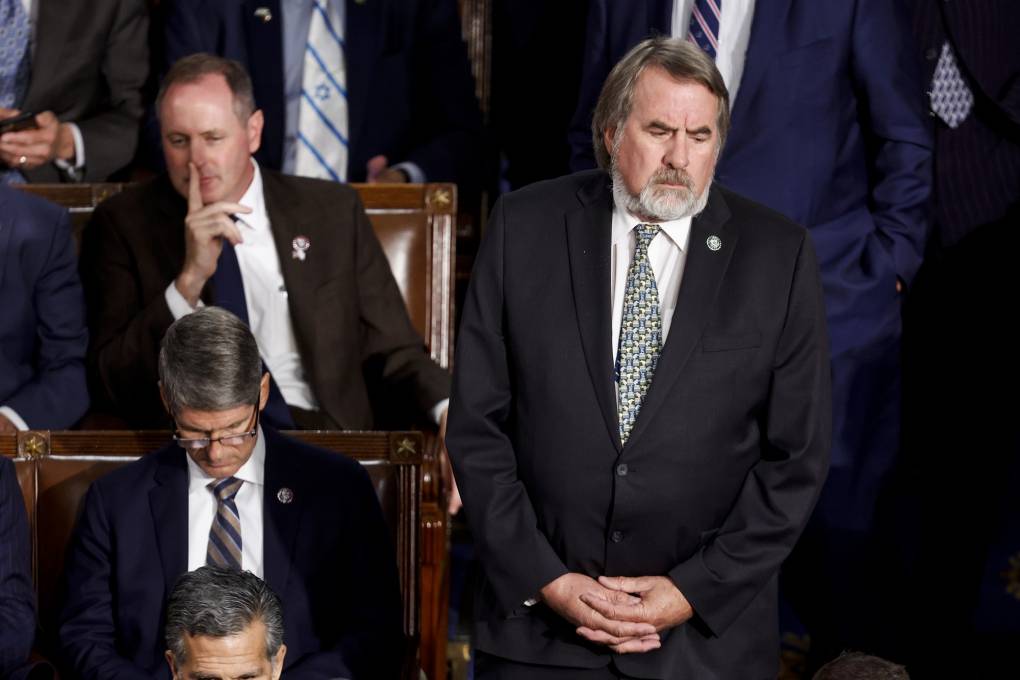
"caption": "U.S. Rep. Doug LaMalfa (R-California) looks on as the House of Representatives meets to elect a new Speaker of the House at the U.S. Capitol Building on Oct. 17, 2023, in Washington, D.C. ",
"credit": "Anna Moneymaker/Getty Images",
"altTag": null,
"description": null,
"imgSizes": {
"medium": {
"file": "https://cdn.kqed.org/wp-content/uploads/sites/10/2024/10/GettyImages-1741319840-resize-800x533.jpg",
"width": 800,
"height": 533,
"mimeType": "image/jpeg"
},
"large": {
"file": "https://cdn.kqed.org/wp-content/uploads/sites/10/2024/10/GettyImages-1741319840-resize-1020x680.jpg",
"width": 1020,
"height": 680,
"mimeType": "image/jpeg"
},
"thumbnail": {
"file": "https://cdn.kqed.org/wp-content/uploads/sites/10/2024/10/GettyImages-1741319840-resize-160x107.jpg",
"width": 160,
"height": 107,
"mimeType": "image/jpeg"
},
"1536x1536": {
"file": "https://cdn.kqed.org/wp-content/uploads/sites/10/2024/10/GettyImages-1741319840-resize-1536x1024.jpg",
"width": 1536,
"height": 1024,
"mimeType": "image/jpeg"
},
"post-thumbnail": {
"file": "https://cdn.kqed.org/wp-content/uploads/sites/10/2024/10/GettyImages-1741319840-resize-672x372.jpg",
"width": 672,
"height": 372,
"mimeType": "image/jpeg"
},
"twentyfourteen-full-width": {
"file": "https://cdn.kqed.org/wp-content/uploads/sites/10/2024/10/GettyImages-1741319840-resize-1038x576.jpg",
"width": 1038,
"height": 576,
"mimeType": "image/jpeg"
},
"full-width": {
"file": "https://cdn.kqed.org/wp-content/uploads/sites/10/2024/10/GettyImages-1741319840-resize-1920x1280.jpg",
"width": 1920,
"height": 1280,
"mimeType": "image/jpeg"
},
"kqedFullSize": {
"file": "https://cdn.kqed.org/wp-content/uploads/sites/10/2024/10/GettyImages-1741319840-resize.jpg",
"width": 2000,
"height": 1333
}
},
"isLoading": false,
"fetchFailed": false
},
"news_12010850": {
"type": "attachments",
"id": "news_12010850",
"meta": {
"index": "attachments_1716263798",
"site": "news",
"id": "12010850",
"found": true
},
"title": "241022-JAILVOTING-14-BL-KQED",
"publishDate": 1729722879,
"status": "inherit",
"parent": 0,
"modified": 1729723038,
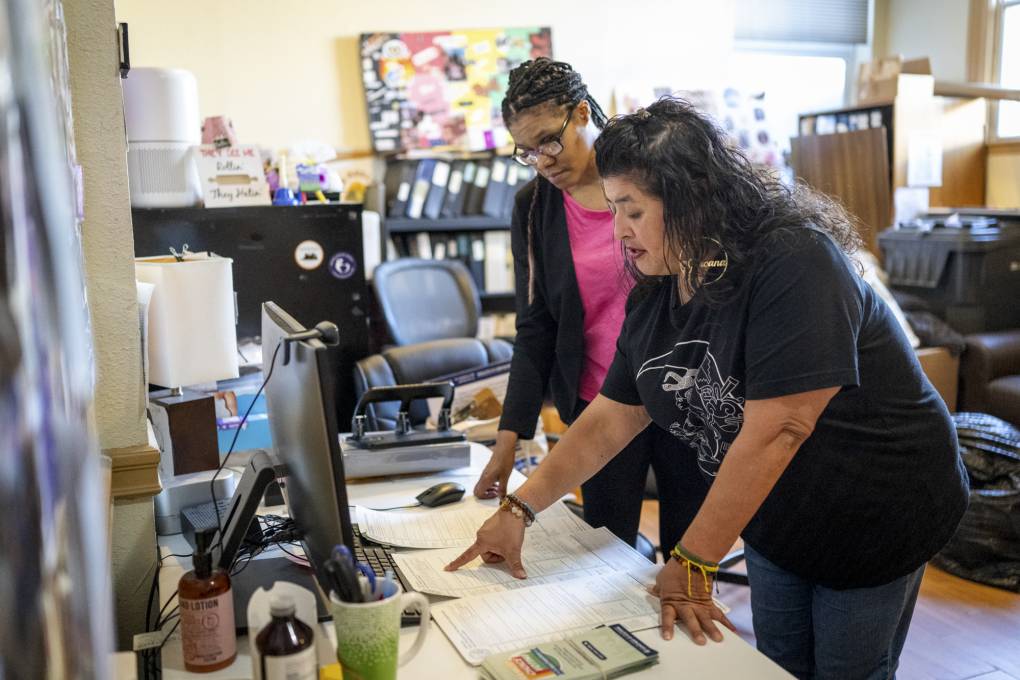
"caption": "Margaret Wilson (left) and Aurora Garza Jimenez, Cameo House program manager, review voting material for tabling events at Cameo House in San Francisco on Oct. 22, 2024.",
"credit": "Beth LaBerge/KQED",
"altTag": null,
"description": null,
"imgSizes": {
"medium": {
"file": "https://cdn.kqed.org/wp-content/uploads/sites/10/2024/10/241022-JAILVOTING-14-BL-KQED-800x533.jpg",
"width": 800,
"height": 533,
"mimeType": "image/jpeg"
},
"large": {
"file": "https://cdn.kqed.org/wp-content/uploads/sites/10/2024/10/241022-JAILVOTING-14-BL-KQED-1020x680.jpg",
"width": 1020,
"height": 680,
"mimeType": "image/jpeg"
},
"thumbnail": {
"file": "https://cdn.kqed.org/wp-content/uploads/sites/10/2024/10/241022-JAILVOTING-14-BL-KQED-160x107.jpg",
"width": 160,
"height": 107,
"mimeType": "image/jpeg"
},
"1536x1536": {
"file": "https://cdn.kqed.org/wp-content/uploads/sites/10/2024/10/241022-JAILVOTING-14-BL-KQED-1536x1024.jpg",
"width": 1536,
"height": 1024,
"mimeType": "image/jpeg"
},
"post-thumbnail": {
"file": "https://cdn.kqed.org/wp-content/uploads/sites/10/2024/10/241022-JAILVOTING-14-BL-KQED-672x372.jpg",
"width": 672,
"height": 372,
"mimeType": "image/jpeg"
},
"twentyfourteen-full-width": {
"file": "https://cdn.kqed.org/wp-content/uploads/sites/10/2024/10/241022-JAILVOTING-14-BL-KQED-1038x576.jpg",
"width": 1038,
"height": 576,
"mimeType": "image/jpeg"
},
"full-width": {
"file": "https://cdn.kqed.org/wp-content/uploads/sites/10/2024/10/241022-JAILVOTING-14-BL-KQED-1920x1280.jpg",
"width": 1920,
"height": 1280,
"mimeType": "image/jpeg"
},
"kqedFullSize": {
"file": "https://cdn.kqed.org/wp-content/uploads/sites/10/2024/10/241022-JAILVOTING-14-BL-KQED.jpg",
"width": 2000,
"height": 1333
}
},
"isLoading": false,
"fetchFailed": false
},
"news_12010909": {
"type": "attachments",
"id": "news_12010909",
"meta": {
"index": "attachments_1716263798",
"site": "news",
"id": "12010909",
"found": true
},
"title": "240919-MayoralDebate-086-BL_qed",
"publishDate": 1729791649,
"status": "inherit",
"parent": 12010904,
"modified": 1729797102,
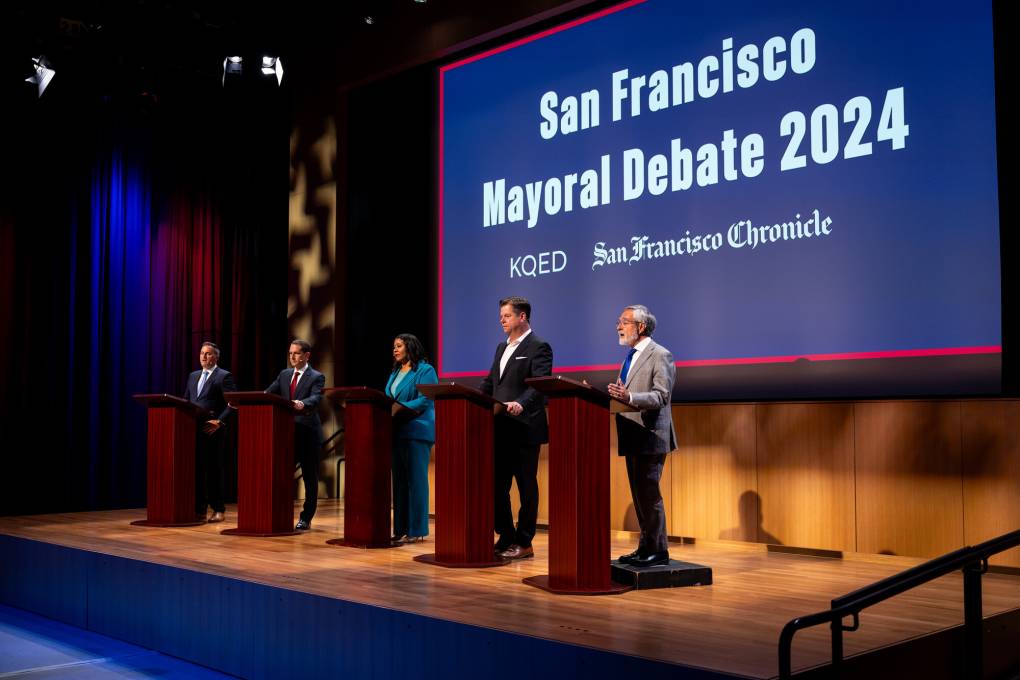
"caption": "San Francisco mayoral candidates (from left) Supervisor Ahsha Safaí, nonprofit founder Daniel Lurie, Mayor London Breed, former mayor Mark Farrell, and Supervisor Aaron Peskin participate in a debate at KQED in San Francisco, on Sept. 19, 2024.",
"credit": "Beth LaBerge/KQED",
"altTag": "A side view of five candidates (four men and one woman), each standing behind a podium on stage, with a screen behind them that says: 'San Francisco Mayoral Debate 2024'.",
"description": null,
"imgSizes": {
"medium": {
"file": "https://cdn.kqed.org/wp-content/uploads/sites/10/2024/10/240919-MayoralDebate-086-BL_qed-800x533.jpg",
"width": 800,
"height": 533,
"mimeType": "image/jpeg"
},
"large": {
"file": "https://cdn.kqed.org/wp-content/uploads/sites/10/2024/10/240919-MayoralDebate-086-BL_qed-1020x680.jpg",
"width": 1020,
"height": 680,
"mimeType": "image/jpeg"
},
"thumbnail": {
"file": "https://cdn.kqed.org/wp-content/uploads/sites/10/2024/10/240919-MayoralDebate-086-BL_qed-160x107.jpg",
"width": 160,
"height": 107,
"mimeType": "image/jpeg"
},
"1536x1536": {
"file": "https://cdn.kqed.org/wp-content/uploads/sites/10/2024/10/240919-MayoralDebate-086-BL_qed-1536x1024.jpg",
"width": 1536,
"height": 1024,
"mimeType": "image/jpeg"
},
"post-thumbnail": {
"file": "https://cdn.kqed.org/wp-content/uploads/sites/10/2024/10/240919-MayoralDebate-086-BL_qed-672x372.jpg",
"width": 672,
"height": 372,
"mimeType": "image/jpeg"
},
"twentyfourteen-full-width": {
"file": "https://cdn.kqed.org/wp-content/uploads/sites/10/2024/10/240919-MayoralDebate-086-BL_qed-1038x576.jpg",
"width": 1038,
"height": 576,
"mimeType": "image/jpeg"
},
"full-width": {
"file": "https://cdn.kqed.org/wp-content/uploads/sites/10/2024/10/240919-MayoralDebate-086-BL_qed-1920x1280.jpg",
"width": 1920,
"height": 1280,
"mimeType": "image/jpeg"
},
"kqedFullSize": {
"file": "https://cdn.kqed.org/wp-content/uploads/sites/10/2024/10/240919-MayoralDebate-086-BL_qed-e1729796962803.jpg",
"width": 2000,
"height": 1333
}
},
"isLoading": false,
"fetchFailed": false
},
"news_12010929": {
"type": "attachments",
"id": "news_12010929",
"meta": {
"index": "attachments_1716263798",
"site": "news",
"id": "12010929",
"found": true
},
"title": "004_Oakland_ItzelDiazandFamily_09092021_qed",
"publishDate": 1729795242,
"status": "inherit",
"parent": 12008332,
"modified": 1729795304,
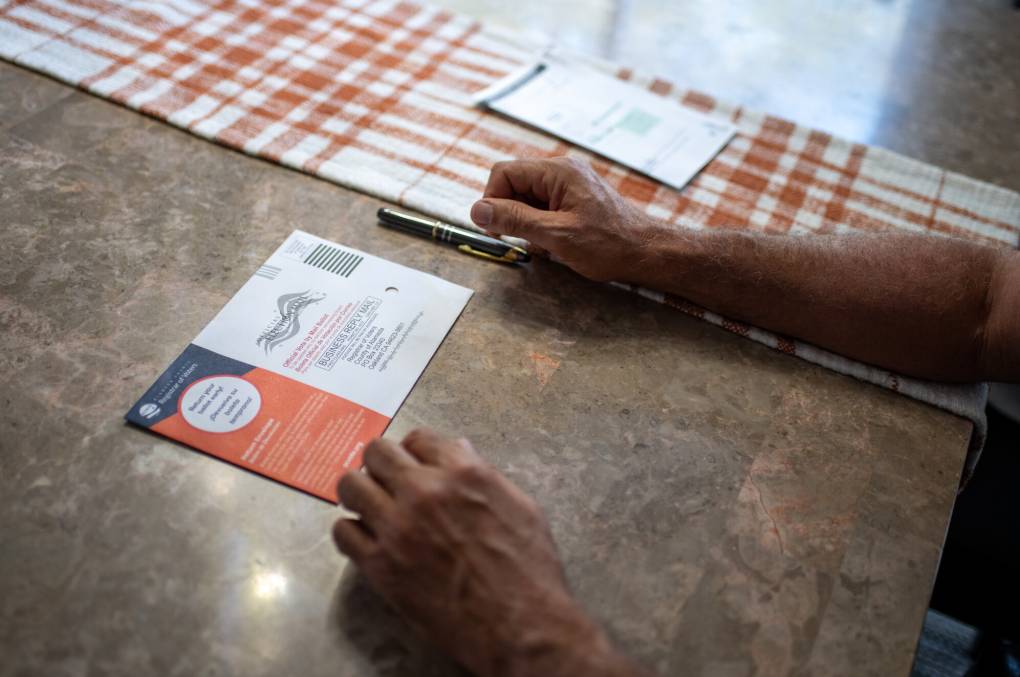
"caption": "A Bay Area resident prepares to fill out their mail-in ballot in 2021.",
"credit": "Beth LaBerge/KQED",
"altTag": null,
"description": null,
"imgSizes": {
"medium": {
"file": "https://cdn.kqed.org/wp-content/uploads/sites/10/2024/10/004_Oakland_ItzelDiazandFamily_09092021_qed-e1729796712493-800x531.jpg",
"width": 800,
"height": 531,
"mimeType": "image/jpeg"
},
"large": {
"file": "https://cdn.kqed.org/wp-content/uploads/sites/10/2024/10/004_Oakland_ItzelDiazandFamily_09092021_qed-e1729796712493-1020x677.jpg",
"width": 1020,
"height": 677,
"mimeType": "image/jpeg"
},
"thumbnail": {
"file": "https://cdn.kqed.org/wp-content/uploads/sites/10/2024/10/004_Oakland_ItzelDiazandFamily_09092021_qed-e1729796712493-160x106.jpg",
"width": 160,
"height": 106,
"mimeType": "image/jpeg"
},
"1536x1536": {
"file": "https://cdn.kqed.org/wp-content/uploads/sites/10/2024/10/004_Oakland_ItzelDiazandFamily_09092021_qed-e1729796712493-1536x1020.jpg",
"width": 1536,
"height": 1020,
"mimeType": "image/jpeg"
},
"post-thumbnail": {
"file": "https://cdn.kqed.org/wp-content/uploads/sites/10/2024/10/004_Oakland_ItzelDiazandFamily_09092021_qed-e1729796712493-672x372.jpg",
"width": 672,
"height": 372,
"mimeType": "image/jpeg"
},
"twentyfourteen-full-width": {
"file": "https://cdn.kqed.org/wp-content/uploads/sites/10/2024/10/004_Oakland_ItzelDiazandFamily_09092021_qed-e1729796712493-1038x576.jpg",
"width": 1038,
"height": 576,
"mimeType": "image/jpeg"
},
"full-width": {
"file": "https://cdn.kqed.org/wp-content/uploads/sites/10/2024/10/004_Oakland_ItzelDiazandFamily_09092021_qed-e1729796712493-1920x1275.jpg",
"width": 1920,
"height": 1275,
"mimeType": "image/jpeg"
},
"kqedFullSize": {
"file": "https://cdn.kqed.org/wp-content/uploads/sites/10/2024/10/004_Oakland_ItzelDiazandFamily_09092021_qed-e1729796712493.jpg",
"width": 1993,
"height": 1323
}
},
"isLoading": false,
"fetchFailed": false
},
"news_12010816": {
"type": "attachments",
"id": "news_12010816",
"meta": {
"index": "attachments_1716263798",
"site": "news",
"id": "12010816",
"found": true
},
"title": "Untitled design (3)",
"publishDate": 1729718202,
"status": "inherit",
"parent": 12010811,
"modified": 1729718266,
"caption": "Left: Republican Mike Garcia in a campaign photo. (Wikimedia Commons)\nRight: George Whitesides poses for a portrait in Lancaster, CA on Saturday, July 27, 2024. (Zoe Cranfill / Los Angeles Times via Getty Images)\n",
"credit": null,
"altTag": null,
"description": null,
"imgSizes": {
"thumbnail": {
"file": "https://cdn.kqed.org/wp-content/uploads/sites/10/2024/10/Untitled-design-3-160x116.jpg",
"width": 160,
"height": 116,
"mimeType": "image/jpeg"
},
"post-thumbnail": {
"file": "https://cdn.kqed.org/wp-content/uploads/sites/10/2024/10/Untitled-design-3-580x372.jpg",
"width": 580,
"height": 372,
"mimeType": "image/jpeg"
},
"kqedFullSize": {
"file": "https://cdn.kqed.org/wp-content/uploads/sites/10/2024/10/Untitled-design-3.jpg",
"width": 580,
"height": 422
}
},
"isLoading": false,
"fetchFailed": false
},
"news_12010427": {
"type": "attachments",
"id": "news_12010427",
"meta": {
"index": "attachments_1716263798",
"site": "news",
"id": "12010427",
"found": true
},
"title": "Polling place volunteer assisting black woman to sign up for voting during USA elections.",
"publishDate": 1729535954,
"status": "inherit",
"parent": 12010355,
"modified": 1729536089,
"caption": "You can register to vote online at registertovote.ca.gov before midnight on Oct. 21. You can also register to vote by printing off a paper application, but this must be postmarked by Oct. 21.",
"credit": "Drazen Zigic via iStock/Getty Images Plus",
"altTag": "Two Black women standing and looking at a clipboard over a table and signs that say \"Vote\" with other people waiting in line behind the woman with the red shirt.",
"description": null,
"imgSizes": {
"medium": {
"file": "https://cdn.kqed.org/wp-content/uploads/sites/10/2024/10/GettyImages-2042927844-800x533.jpg",
"width": 800,
"height": 533,
"mimeType": "image/jpeg"
},
"large": {
"file": "https://cdn.kqed.org/wp-content/uploads/sites/10/2024/10/GettyImages-2042927844-1020x680.jpg",
"width": 1020,
"height": 680,
"mimeType": "image/jpeg"
},
"thumbnail": {
"file": "https://cdn.kqed.org/wp-content/uploads/sites/10/2024/10/GettyImages-2042927844-160x107.jpg",
"width": 160,
"height": 107,
"mimeType": "image/jpeg"
},
"1536x1536": {
"file": "https://cdn.kqed.org/wp-content/uploads/sites/10/2024/10/GettyImages-2042927844-1536x1024.jpg",
"width": 1536,
"height": 1024,
"mimeType": "image/jpeg"
},
"2048x2048": {
"file": "https://cdn.kqed.org/wp-content/uploads/sites/10/2024/10/GettyImages-2042927844-2048x1365.jpg",
"width": 2048,
"height": 1365,
"mimeType": "image/jpeg"
},
"post-thumbnail": {
"file": "https://cdn.kqed.org/wp-content/uploads/sites/10/2024/10/GettyImages-2042927844-672x372.jpg",
"width": 672,
"height": 372,
"mimeType": "image/jpeg"
},
"twentyfourteen-full-width": {
"file": "https://cdn.kqed.org/wp-content/uploads/sites/10/2024/10/GettyImages-2042927844-1038x576.jpg",
"width": 1038,
"height": 576,
"mimeType": "image/jpeg"
},
"full-width": {
"file": "https://cdn.kqed.org/wp-content/uploads/sites/10/2024/10/GettyImages-2042927844-1920x1280.jpg",
"width": 1920,
"height": 1280,
"mimeType": "image/jpeg"
},
"kqedFullSize": {
"file": "https://cdn.kqed.org/wp-content/uploads/sites/10/2024/10/GettyImages-2042927844.jpg",
"width": 2121,
"height": 1414
}
},
"isLoading": false,
"fetchFailed": false
},
"news_12009650": {
"type": "attachments",
"id": "news_12009650",
"meta": {
"index": "attachments_1716263798",
"site": "news",
"id": "12009650",
"found": true
},
"title": "241004-ShastaCountyElections-41-BL",
"publishDate": 1729107214,
"status": "inherit",
"parent": 0,
"modified": 1730324901,
"caption": "Election employees sort test ballots, known as a ‘test deck,’ at the Shasta County Clerk and Registrar of Voters offices. The test ballots go through the ballot counting system to test the accuracy of the vote count. The tests are repeated until any issues are resolved and the results are accurate. ",
"credit": "Beth LaBerge/KQED",
"altTag": null,
"description": null,
"imgSizes": {
"medium": {
"file": "https://cdn.kqed.org/wp-content/uploads/sites/10/2024/10/241004-ShastaCountyElections-41-BL-800x533.jpg",
"width": 800,
"height": 533,
"mimeType": "image/jpeg"
},
"large": {
"file": "https://cdn.kqed.org/wp-content/uploads/sites/10/2024/10/241004-ShastaCountyElections-41-BL-1020x680.jpg",
"width": 1020,
"height": 680,
"mimeType": "image/jpeg"
},
"thumbnail": {
"file": "https://cdn.kqed.org/wp-content/uploads/sites/10/2024/10/241004-ShastaCountyElections-41-BL-160x107.jpg",
"width": 160,
"height": 107,
"mimeType": "image/jpeg"
},
"1536x1536": {
"file": "https://cdn.kqed.org/wp-content/uploads/sites/10/2024/10/241004-ShastaCountyElections-41-BL-1536x1024.jpg",
"width": 1536,
"height": 1024,
"mimeType": "image/jpeg"
},
"post-thumbnail": {
"file": "https://cdn.kqed.org/wp-content/uploads/sites/10/2024/10/241004-ShastaCountyElections-41-BL-672x372.jpg",
"width": 672,
"height": 372,
"mimeType": "image/jpeg"
},
"twentyfourteen-full-width": {
"file": "https://cdn.kqed.org/wp-content/uploads/sites/10/2024/10/241004-ShastaCountyElections-41-BL-1038x576.jpg",
"width": 1038,
"height": 576,
"mimeType": "image/jpeg"
},
"full-width": {
"file": "https://cdn.kqed.org/wp-content/uploads/sites/10/2024/10/241004-ShastaCountyElections-41-BL-1920x1280.jpg",
"width": 1920,
"height": 1280,
"mimeType": "image/jpeg"
},
"kqedFullSize": {
"file": "https://cdn.kqed.org/wp-content/uploads/sites/10/2024/10/241004-ShastaCountyElections-41-BL.jpg",
"width": 2000,
"height": 1333
}
},
"isLoading": false,
"fetchFailed": false
},
"news_12010481": {
"type": "attachments",
"id": "news_12010481",
"meta": {
"index": "attachments_1716263798",
"site": "news",
"id": "12010481",
"found": true
},
"title": "20240608_PriceRecallKickoff_GC-11_qed",
"publishDate": 1729551877,
"status": "inherit",
"parent": 12009700,
"modified": 1729552018,
"caption": "Elizabeth Kenny participates in a Pamela Price recall campaign kickoff rally in Oakland on June 8, 2024. Price faces a recall election in November.",
"credit": "Gina Castro/KQED",
"altTag": "A woman at a rally in front of a courthouse holds two signs that say 'Recall Price' and 'Justice for Murder Victims.' Behind her are other people holding signs, some with photos of people on them.",
"description": null,
"imgSizes": {
"medium": {
"file": "https://cdn.kqed.org/wp-content/uploads/sites/10/2024/10/20240608_PriceRecallKickoff_GC-11_qed-800x533.jpg",
"width": 800,
"height": 533,
"mimeType": "image/jpeg"
},
"large": {
"file": "https://cdn.kqed.org/wp-content/uploads/sites/10/2024/10/20240608_PriceRecallKickoff_GC-11_qed-1020x680.jpg",
"width": 1020,
"height": 680,
"mimeType": "image/jpeg"
},
"thumbnail": {
"file": "https://cdn.kqed.org/wp-content/uploads/sites/10/2024/10/20240608_PriceRecallKickoff_GC-11_qed-160x107.jpg",
"width": 160,
"height": 107,
"mimeType": "image/jpeg"
},
"1536x1536": {
"file": "https://cdn.kqed.org/wp-content/uploads/sites/10/2024/10/20240608_PriceRecallKickoff_GC-11_qed-1536x1024.jpg",
"width": 1536,
"height": 1024,
"mimeType": "image/jpeg"
},
"post-thumbnail": {
"file": "https://cdn.kqed.org/wp-content/uploads/sites/10/2024/10/20240608_PriceRecallKickoff_GC-11_qed-672x372.jpg",
"width": 672,
"height": 372,
"mimeType": "image/jpeg"
},
"twentyfourteen-full-width": {
"file": "https://cdn.kqed.org/wp-content/uploads/sites/10/2024/10/20240608_PriceRecallKickoff_GC-11_qed-1038x576.jpg",
"width": 1038,
"height": 576,
"mimeType": "image/jpeg"
},
"full-width": {
"file": "https://cdn.kqed.org/wp-content/uploads/sites/10/2024/10/20240608_PriceRecallKickoff_GC-11_qed-1920x1280.jpg",
"width": 1920,
"height": 1280,
"mimeType": "image/jpeg"
},
"kqedFullSize": {
"file": "https://cdn.kqed.org/wp-content/uploads/sites/10/2024/10/20240608_PriceRecallKickoff_GC-11_qed.jpg",
"width": 2000,
"height": 1333
}
},
"isLoading": false,
"fetchFailed": false
},
"news_12010473": {
"type": "attachments",
"id": "news_12010473",
"meta": {
"index": "attachments_1716263798",
"site": "news",
"id": "12010473",
"found": true
},
"title": "Donald Trump Campaigns For President In Pennsylvania",
"publishDate": 1729550671,
"status": "inherit",
"parent": 12010472,
"modified": 1729550671,
"caption": "LANCASTER, PENNSYLVANIA - OCTOBER 20: Republican presidential nominee, former U.S. President Donald Trump, speaks during a town hall campaign event at the Lancaster County Convention Center on October 20, 2024 in Lancaster, Pennsylvania. Trump is campaigning the entire day in the state of Pennsylvania. Trump and Democratic presidential nominee Vice President Kamala Harris continue to campaign in battleground swing states ahead of the November 5 election. (Photo by Win McNamee/Getty Images)",
"credit": null,
"altTag": null,
"description": null,
"imgSizes": {
"medium": {
"file": "https://cdn.kqed.org/wp-content/uploads/sites/10/2024/10/GettyImages-2179848448-800x534.jpg",
"width": 800,
"height": 534,
"mimeType": "image/jpeg"
},
"large": {
"file": "https://cdn.kqed.org/wp-content/uploads/sites/10/2024/10/GettyImages-2179848448-1020x680.jpg",
"width": 1020,
"height": 680,
"mimeType": "image/jpeg"
},
"thumbnail": {
"file": "https://cdn.kqed.org/wp-content/uploads/sites/10/2024/10/GettyImages-2179848448-160x107.jpg",
"width": 160,
"height": 107,
"mimeType": "image/jpeg"
},
"1536x1536": {
"file": "https://cdn.kqed.org/wp-content/uploads/sites/10/2024/10/GettyImages-2179848448-1536x1025.jpg",
"width": 1536,
"height": 1025,
"mimeType": "image/jpeg"
},
"2048x2048": {
"file": "https://cdn.kqed.org/wp-content/uploads/sites/10/2024/10/GettyImages-2179848448-2048x1366.jpg",
"width": 2048,
"height": 1366,
"mimeType": "image/jpeg"
},
"post-thumbnail": {
"file": "https://cdn.kqed.org/wp-content/uploads/sites/10/2024/10/GettyImages-2179848448-672x372.jpg",
"width": 672,
"height": 372,
"mimeType": "image/jpeg"
},
"twentyfourteen-full-width": {
"file": "https://cdn.kqed.org/wp-content/uploads/sites/10/2024/10/GettyImages-2179848448-1038x576.jpg",
"width": 1038,
"height": 576,
"mimeType": "image/jpeg"
},
"full-width": {
"file": "https://cdn.kqed.org/wp-content/uploads/sites/10/2024/10/GettyImages-2179848448-1920x1281.jpg",
"width": 1920,
"height": 1281,
"mimeType": "image/jpeg"
},
"kqedFullSize": {
"file": "https://cdn.kqed.org/wp-content/uploads/sites/10/2024/10/GettyImages-2179848448-scaled.jpg",
"width": 2560,
"height": 1708
}
},
"isLoading": false,
"fetchFailed": false
},
"news_11927933": {
"type": "attachments",
"id": "news_11927933",
"meta": {
"index": "attachments_1716263798",
"site": "news",
"id": "11927933",
"found": true
},
"parent": 11927744,
"imgSizes": {
"twentyfourteen-full-width": {
"file": "https://ww2.kqed.org/app/uploads/sites/10/2022/10/RS45235_027_KQED_SanFrancisco_VotingCenter_10052020-qut-1038x576.jpg",
"width": 1038,
"mimeType": "image/jpeg",
"height": 576
},
"thumbnail": {
"file": "https://ww2.kqed.org/app/uploads/sites/10/2022/10/RS45235_027_KQED_SanFrancisco_VotingCenter_10052020-qut-160x107.jpg",
"width": 160,
"mimeType": "image/jpeg",
"height": 107
},
"post-thumbnail": {
"file": "https://ww2.kqed.org/app/uploads/sites/10/2022/10/RS45235_027_KQED_SanFrancisco_VotingCenter_10052020-qut-672x372.jpg",
"width": 672,
"mimeType": "image/jpeg",
"height": 372
},
"kqedFullSize": {
"file": "https://ww2.kqed.org/app/uploads/sites/10/2022/10/RS45235_027_KQED_SanFrancisco_VotingCenter_10052020-qut.jpg",
"width": 1920,
"height": 1280
},
"large": {
"file": "https://ww2.kqed.org/app/uploads/sites/10/2022/10/RS45235_027_KQED_SanFrancisco_VotingCenter_10052020-qut-1020x680.jpg",
"width": 1020,
"mimeType": "image/jpeg",
"height": 680
},
"1536x1536": {
"file": "https://ww2.kqed.org/app/uploads/sites/10/2022/10/RS45235_027_KQED_SanFrancisco_VotingCenter_10052020-qut-1536x1024.jpg",
"width": 1536,
"mimeType": "image/jpeg",
"height": 1024
},
"medium": {
"file": "https://ww2.kqed.org/app/uploads/sites/10/2022/10/RS45235_027_KQED_SanFrancisco_VotingCenter_10052020-qut-800x533.jpg",
"width": 800,
"mimeType": "image/jpeg",
"height": 533
}
},
"publishDate": 1665087663,
"modified": 1666600425,
"caption": "Un votante deja una papeleta en un nuevo centro de votación al aire libre cerca de Civic Center Plaza en San Francisco el 5 de octubre de 2020, el primer día de votación anticipada.",
"description": null,
"title": null,
"credit": "Beth LaBerge/KQED",
"status": "inherit",
"altTag": null,
"isLoading": false,
"fetchFailed": false
},
"news_12010375": {
"type": "attachments",
"id": "news_12010375",
"meta": {
"index": "attachments_1716263798",
"site": "news",
"id": "12010375",
"found": true
},
"title": "7-11 Photo",
"publishDate": 1729529588,
"status": "inherit",
"parent": 12010323,
"modified": 1729530019,
"caption": "Local leaders, business owners and supporters of Prop. 36 pose out front of a 7-Eleven franchise owned by Jawad Ursani in Los Angeles on Oct. 10, 2024. - Saul Gonzalez, KQED",
"credit": null,
"altTag": null,
"description": "Local leaders, business owners and supporters of Prop. 36 pose out front of a 7-Eleven franchise owned by Jawad Ursani in Los Angeles on Oct. 10, 2024.",
"imgSizes": {
"medium": {
"file": "https://cdn.kqed.org/wp-content/uploads/sites/10/2024/10/7-11-Photo-800x600.jpeg",
"width": 800,
"height": 600,
"mimeType": "image/jpeg"
},
"large": {
"file": "https://cdn.kqed.org/wp-content/uploads/sites/10/2024/10/7-11-Photo-1020x765.jpeg",
"width": 1020,
"height": 765,
"mimeType": "image/jpeg"
},
"thumbnail": {
"file": "https://cdn.kqed.org/wp-content/uploads/sites/10/2024/10/7-11-Photo-160x120.jpeg",
"width": 160,
"height": 120,
"mimeType": "image/jpeg"
},
"1536x1536": {
"file": "https://cdn.kqed.org/wp-content/uploads/sites/10/2024/10/7-11-Photo-1536x1152.jpeg",
"width": 1536,
"height": 1152,
"mimeType": "image/jpeg"
},
"2048x2048": {
"file": "https://cdn.kqed.org/wp-content/uploads/sites/10/2024/10/7-11-Photo-2048x1536.jpeg",
"width": 2048,
"height": 1536,
"mimeType": "image/jpeg"
},
"post-thumbnail": {
"file": "https://cdn.kqed.org/wp-content/uploads/sites/10/2024/10/7-11-Photo-672x372.jpeg",
"width": 672,
"height": 372,
"mimeType": "image/jpeg"
},
"twentyfourteen-full-width": {
"file": "https://cdn.kqed.org/wp-content/uploads/sites/10/2024/10/7-11-Photo-1038x576.jpeg",
"width": 1038,
"height": 576,
"mimeType": "image/jpeg"
},
"full-width": {
"file": "https://cdn.kqed.org/wp-content/uploads/sites/10/2024/10/7-11-Photo-1920x1440.jpeg",
"width": 1920,
"height": 1440,
"mimeType": "image/jpeg"
},
"kqedFullSize": {
"file": "https://cdn.kqed.org/wp-content/uploads/sites/10/2024/10/7-11-Photo-scaled.jpeg",
"width": 2560,
"height": 1920
}
},
"isLoading": false,
"fetchFailed": false
},
"news_12010141": {
"type": "attachments",
"id": "news_12010141",
"meta": {
"index": "attachments_1716263798",
"site": "news",
"id": "12010141",
"found": true
},
"title": "Coastal Cattle,Portrait of cow standing by cows on field,Sonoma County,California,United States,USA",
"publishDate": 1729285900,
"status": "inherit",
"parent": 12010140,
"modified": 1729285928,
"caption": null,
"credit": "JC Shamrock/Getty Images",
"altTag": null,
"description": null,
"imgSizes": {
"medium": {
"file": "https://cdn.kqed.org/wp-content/uploads/sites/10/2024/10/GettyImages-1367862091-800x444.jpg",
"width": 800,
"height": 444,
"mimeType": "image/jpeg"
},
"large": {
"file": "https://cdn.kqed.org/wp-content/uploads/sites/10/2024/10/GettyImages-1367862091-1020x565.jpg",
"width": 1020,
"height": 565,
"mimeType": "image/jpeg"
},
"thumbnail": {
"file": "https://cdn.kqed.org/wp-content/uploads/sites/10/2024/10/GettyImages-1367862091-160x89.jpg",
"width": 160,
"height": 89,
"mimeType": "image/jpeg"
},
"1536x1536": {
"file": "https://cdn.kqed.org/wp-content/uploads/sites/10/2024/10/GettyImages-1367862091-1536x852.jpg",
"width": 1536,
"height": 852,
"mimeType": "image/jpeg"
},
"2048x2048": {
"file": "https://cdn.kqed.org/wp-content/uploads/sites/10/2024/10/GettyImages-1367862091-2048x1135.jpg",
"width": 2048,
"height": 1135,
"mimeType": "image/jpeg"
},
"post-thumbnail": {
"file": "https://cdn.kqed.org/wp-content/uploads/sites/10/2024/10/GettyImages-1367862091-672x372.jpg",
"width": 672,
"height": 372,
"mimeType": "image/jpeg"
},
"twentyfourteen-full-width": {
"file": "https://cdn.kqed.org/wp-content/uploads/sites/10/2024/10/GettyImages-1367862091-1038x576.jpg",
"width": 1038,
"height": 576,
"mimeType": "image/jpeg"
},
"full-width": {
"file": "https://cdn.kqed.org/wp-content/uploads/sites/10/2024/10/GettyImages-1367862091-1920x1064.jpg",
"width": 1920,
"height": 1064,
"mimeType": "image/jpeg"
},
"kqedFullSize": {
"file": "https://cdn.kqed.org/wp-content/uploads/sites/10/2024/10/GettyImages-1367862091-e1729285943276.jpg",
"width": 1440,
"height": 798
}
},
"isLoading": false,
"fetchFailed": false
}
},
"audioPlayerReducer": {
"postId": "stream_live",
"isPaused": true,
"isPlaying": false,
"pfsActive": false,
"pledgeModalIsOpen": true,
"playerDrawerIsOpen": false,
"liveAudioPlayStartedAt": 0,
"liveAudioPlayContext": ""
},
"authorsReducer": {
"byline_news_12010914": {
"type": "authors",
"id": "byline_news_12010914",
"meta": {
"override": true
},
"slug": "byline_news_12010914",
"name": "Yue Stella Yu and Jenna Peterson, CalMatters",
"isLoading": false
},
"gmeline": {
"type": "authors",
"id": "185",
"meta": {
"index": "authors_1716337520",
"id": "185",
"found": true
},
"name": "Gabe Meline",
"firstName": "Gabe",
"lastName": "Meline",
"slug": "gmeline",
"email": "gmeline@kqed.org",
"display_author_email": true,
"staff_mastheads": [
"arts"
],
"title": "Senior Editor, KQED Arts & Culture",
"bio": "Gabe Meline entered journalism at age 15 making photocopied zines, and has since earned awards from the Edward R. Murrow Awards, the Society for Professional Journalists, the Online Journalism Awards, the Association of Alternative Newsweeklies and the California Newspaper Publishers Association. Prior to KQED, he was the editor of the \u003cem>North Bay Bohemian\u003c/em> and a touring musician. He lives with his wife and daughter in his hometown of Santa Rosa, CA.",
"avatar": "https://secure.gravatar.com/avatar/5bebe57be0d8bc2dd318934feb47299e2d2d10cba28d09d8d7afb389a2ce2bdd?s=600&d=blank&r=g",
"twitter": null,
"bluesky": null,
"facebook": null,
"instagram": null,
"linkedin": null,
"sites": [
{
"site": "",
"roles": [
"editor"
]
},
{
"site": "arts",
"roles": [
"administrator"
]
},
{
"site": "artschool",
"roles": [
"editor"
]
},
{
"site": "news",
"roles": [
"author"
]
},
{
"site": "pop",
"roles": [
"editor"
]
},
{
"site": "bayareabites",
"roles": [
"editor"
]
},
{
"site": "food",
"roles": [
"editor"
]
},
{
"site": "forum",
"roles": [
"administrator"
]
},
{
"site": "liveblog",
"roles": [
"editor"
]
},
{
"site": "hiphop",
"roles": [
"editor"
]
}
],
"headData": {
"title": "Gabe Meline | KQED",
"description": "Senior Editor, KQED Arts & Culture",
"ogImgSrc": "https://secure.gravatar.com/avatar/5bebe57be0d8bc2dd318934feb47299e2d2d10cba28d09d8d7afb389a2ce2bdd?s=600&d=blank&r=g",
"twImgSrc": "https://secure.gravatar.com/avatar/5bebe57be0d8bc2dd318934feb47299e2d2d10cba28d09d8d7afb389a2ce2bdd?s=600&d=blank&r=g"
},
"isLoading": false,
"link": "/author/gmeline"
},
"gmarzorati": {
"type": "authors",
"id": "227",
"meta": {
"index": "authors_1716337520",
"id": "227",
"found": true
},
"name": "Guy Marzorati",
"firstName": "Guy",
"lastName": "Marzorati",
"slug": "gmarzorati",
"email": "gmarzorati@KQED.org",
"display_author_email": true,
"staff_mastheads": [
"news"
],
"title": "Correspondent",
"bio": "Guy Marzorati is a correspondent on KQED's California Politics and Government Desk, based in San Jose. A graduate of Santa Clara University, Guy joined KQED in 2013. He reports on state and local politics and produces KQED's digital voter guide.",
"avatar": "https://secure.gravatar.com/avatar/e7038b8dbfd55b104369b76b1cd0b9de?s=600&d=blank&r=g",
"twitter": "guymarzorati",
"facebook": null,
"instagram": null,
"linkedin": null,
"sites": [
{
"site": "",
"roles": [
"editor"
]
},
{
"site": "news",
"roles": [
"editor"
]
},
{
"site": "science",
"roles": [
"editor"
]
},
{
"site": "forum",
"roles": [
"editor"
]
},
{
"site": "elections",
"roles": [
"editor"
]
},
{
"site": "liveblog",
"roles": [
"editor"
]
}
],
"headData": {
"title": "Guy Marzorati | KQED",
"description": "Correspondent",
"ogImgSrc": "https://secure.gravatar.com/avatar/e7038b8dbfd55b104369b76b1cd0b9de?s=600&d=blank&r=g",
"twImgSrc": "https://secure.gravatar.com/avatar/e7038b8dbfd55b104369b76b1cd0b9de?s=600&d=blank&r=g"
},
"isLoading": false,
"link": "/author/gmarzorati"
},
"scottshafer": {
"type": "authors",
"id": "255",
"meta": {
"index": "authors_1716337520",
"id": "255",
"found": true
},
"name": "Scott Shafer",
"firstName": "Scott",
"lastName": "Shafer",
"slug": "scottshafer",
"email": "sshafer@kqed.org",
"display_author_email": false,
"staff_mastheads": [
"news"
],
"title": "KQED Contributor",
"bio": "Scott Shafer is a senior editor with the KQED Politics and Government desk. He is co-host of Political Breakdown, the award-winning radio show and podcast with a personal take on the world of politics. Scott came to KQED in 1998 to host the statewide\u003cem> California Report\u003c/em>. Prior to that he had extended stints in politics and government\u003cem>.\u003c/em> He uses that inside experience at KQED in his, reporting, hosting and analysis for the politics desk. Scott collaborated \u003cem>Political Breakdown a\u003c/em>nd on \u003cem>The Political Mind of Jerry Brown, \u003c/em>an eight-part series about the life and extraordinary political career of the former governor. For fun, he plays water polo with the San Francisco Tsunami.",
"avatar": "https://secure.gravatar.com/avatar/a62ebae45b79d7aed1a39a0e3bf68104?s=600&d=blank&r=g",
"twitter": "scottshafer",
"bluesky": null,
"facebook": null,
"instagram": null,
"linkedin": null,
"sites": [
{
"site": "news",
"roles": [
"editor"
]
},
{
"site": "stateofhealth",
"roles": [
"author"
]
},
{
"site": "science",
"roles": [
"author"
]
},
{
"site": "forum",
"roles": [
"subscriber"
]
},
{
"site": "liveblog",
"roles": [
"author"
]
}
],
"headData": {
"title": "Scott Shafer | KQED",
"description": "KQED Contributor",
"ogImgSrc": "https://secure.gravatar.com/avatar/a62ebae45b79d7aed1a39a0e3bf68104?s=600&d=blank&r=g",
"twImgSrc": "https://secure.gravatar.com/avatar/a62ebae45b79d7aed1a39a0e3bf68104?s=600&d=blank&r=g"
},
"isLoading": false,
"link": "/author/scottshafer"
},
"matthewgreen": {
"type": "authors",
"id": "1263",
"meta": {
"index": "authors_1716337520",
"id": "1263",
"found": true
},
"name": "Matthew Green",
"firstName": "Matthew",
"lastName": "Green",
"slug": "matthewgreen",
"email": "mgreen@kqed.org",
"display_author_email": false,
"staff_mastheads": [],
"title": "KQED Editor/Reporter",
"bio": "Matthew Green is a digital media producer for KQED News. He previously produced \u003ca href=\"http://www.kqed.org/lowdown\">The Lowdown\u003c/a>, KQED’s multimedia news education blog. Matthew's written for numerous Bay Area publications, including the Oakland Tribune and San Francisco Chronicle. He also taught journalism classes at Fremont High School in East Oakland.\r\n\r\nEmail: mgreen@kqed.org; Twitter: @MGreenKQED",
"avatar": "https://secure.gravatar.com/avatar/3bf498d1267ca02c8494f33d8cfc575e?s=600&d=blank&r=g",
"twitter": "MGreenKQED",
"facebook": null,
"instagram": null,
"linkedin": null,
"sites": [
{
"site": "news",
"roles": []
},
{
"site": "lowdown",
"roles": []
},
{
"site": "science",
"roles": []
},
{
"site": "education",
"roles": []
},
{
"site": "quest",
"roles": []
},
{
"site": "liveblog",
"roles": []
}
],
"headData": {
"title": "Matthew Green | KQED",
"description": "KQED Editor/Reporter",
"ogImgSrc": "https://secure.gravatar.com/avatar/3bf498d1267ca02c8494f33d8cfc575e?s=600&d=blank&r=g",
"twImgSrc": "https://secure.gravatar.com/avatar/3bf498d1267ca02c8494f33d8cfc575e?s=600&d=blank&r=g"
},
"isLoading": false,
"link": "/author/matthewgreen"
},
"mlagos": {
"type": "authors",
"id": "3239",
"meta": {
"index": "authors_1716337520",
"id": "3239",
"found": true
},
"name": "Marisa Lagos",
"firstName": "Marisa",
"lastName": "Lagos",
"slug": "mlagos",
"email": "mlagos@kqed.org",
"display_author_email": false,
"staff_mastheads": [
"news"
],
"title": "KQED Contributor",
"bio": "Marisa Lagos is a correspondent for KQED’s California Politics and Government Desk and co-hosts the award-winning show and podcast, Political Breakdown. At KQED, Lagos also conducts reporting, analysis and investigations into state, local and national politics for radio, TV, online and onstage. In 2022, she and co-host, Scott Shafer, moderated the only gubernatorial debate in California. In 2020, the \u003ci>Washington Post\u003c/i> named her one of the top political journalists in California; she was nominated for a Peabody and won several other awards for her work investigating the 2017 California wildfires. She has worked at the \u003ci>San Francisco Chronicle\u003c/i>, \u003ci>San Francisco Examiner\u003c/i> and \u003ci>Los Angeles Times\u003c/i>. A UC Santa Barbara graduate, she lives in San Francisco with her two sons and husband.",
"avatar": "https://secure.gravatar.com/avatar/a261a0d3696fc066871ef96b85b5e7d2?s=600&d=blank&r=g",
"twitter": "@mlagos",
"facebook": null,
"instagram": null,
"linkedin": null,
"sites": [
{
"site": "arts",
"roles": [
"author"
]
},
{
"site": "news",
"roles": [
"editor"
]
},
{
"site": "science",
"roles": [
"editor"
]
},
{
"site": "forum",
"roles": [
"author"
]
},
{
"site": "liveblog",
"roles": [
"author"
]
}
],
"headData": {
"title": "Marisa Lagos | KQED",
"description": "KQED Contributor",
"ogImgSrc": "https://secure.gravatar.com/avatar/a261a0d3696fc066871ef96b85b5e7d2?s=600&d=blank&r=g",
"twImgSrc": "https://secure.gravatar.com/avatar/a261a0d3696fc066871ef96b85b5e7d2?s=600&d=blank&r=g"
},
"isLoading": false,
"link": "/author/mlagos"
},
"carlysevern": {
"type": "authors",
"id": "3243",
"meta": {
"index": "authors_1716337520",
"id": "3243",
"found": true
},
"name": "Carly Severn",
"firstName": "Carly",
"lastName": "Severn",
"slug": "carlysevern",
"email": "csevern@kqed.org",
"display_author_email": false,
"staff_mastheads": [
"news"
],
"title": "Senior Editor, Audience News ",
"bio": "Carly is KQED's Senior Editor of Audience News on the Digital News team, and has reported for the California Report Magazine, Bay Curious and KQED Arts. She's formerly the host of \u003ca href=\"http://ww2.kqed.org/pop/category/the-cooler/\" rel=\"noopener noreferrer\">The Cooler\u003c/a> podcast.",
"avatar": "https://secure.gravatar.com/avatar/54037bf5c128fe678f0ef26cec97a93f2e7f220a22d7285703328f12c42c1b1d?s=600&d=blank&r=g",
"twitter": "teacupinthebay",
"bluesky": null,
"facebook": null,
"instagram": null,
"linkedin": null,
"sites": [
{
"site": "",
"roles": [
"editor"
]
},
{
"site": "arts",
"roles": [
"editor"
]
},
{
"site": "news",
"roles": [
"administrator"
]
},
{
"site": "pop",
"roles": [
"editor"
]
},
{
"site": "futureofyou",
"roles": [
"editor"
]
},
{
"site": "about",
"roles": [
"administrator"
]
},
{
"site": "mindshift",
"roles": [
"editor"
]
},
{
"site": "bayareabites",
"roles": [
"editor"
]
},
{
"site": "stateofhealth",
"roles": [
"editor"
]
},
{
"site": "science",
"roles": [
"editor"
]
},
{
"site": "food",
"roles": [
"contributor"
]
},
{
"site": "forum",
"roles": [
"editor"
]
},
{
"site": "perspectives",
"roles": [
"administrator"
]
},
{
"site": "liveblog",
"roles": [
"editor"
]
}
],
"headData": {
"title": "Carly Severn | KQED",
"description": "Senior Editor, Audience News ",
"ogImgSrc": "https://secure.gravatar.com/avatar/54037bf5c128fe678f0ef26cec97a93f2e7f220a22d7285703328f12c42c1b1d?s=600&d=blank&r=g",
"twImgSrc": "https://secure.gravatar.com/avatar/54037bf5c128fe678f0ef26cec97a93f2e7f220a22d7285703328f12c42c1b1d?s=600&d=blank&r=g"
},
"isLoading": false,
"link": "/author/carlysevern"
},
"ecruzguevarra": {
"type": "authors",
"id": "8654",
"meta": {
"index": "authors_1716337520",
"id": "8654",
"found": true
},
"name": "Ericka Cruz Guevarra",
"firstName": "Ericka",
"lastName": "Cruz Guevarra",
"slug": "ecruzguevarra",
"email": "ecruzguevarra@kqed.org",
"display_author_email": true,
"staff_mastheads": [
"news"
],
"title": "Producer, The Bay Podcast",
"bio": "Ericka Cruz Guevarra is host of \u003ca href=\"https://www.kqed.org/podcasts/thebay\">\u003cem>The Bay\u003c/em>\u003c/a> podcast at KQED. Before host, she was the show’s producer. Her work in that capacity includes a three-part reported series on policing in Vallejo, which won a 2020 excellence in journalism award from the Society of Professional Journalists. Ericka has worked as a breaking news reporter at Oregon Public Broadcasting, helped produce the Code Switch podcast, and was KQED’s inaugural Raul Ramirez Diversity Fund intern. She’s also an alumna of NPR’s Next Generation Radio program. Send her an email if you have strong feelings about whether Fairfield and Suisun City are the Bay. Ericka is represented by SAG-AFTRA.",
"avatar": "https://secure.gravatar.com/avatar/accefc1de4bafc7e234b69bcb9b6f6536c130fd84709bc3069ef11a78787e1bb?s=600&d=blank&r=g",
"twitter": "NotoriousECG",
"bluesky": null,
"facebook": null,
"instagram": null,
"linkedin": null,
"sites": [
{
"site": "arts",
"roles": [
"subscriber"
]
},
{
"site": "news",
"roles": [
"editor",
"manage_categories"
]
},
{
"site": "futureofyou",
"roles": [
"subscriber"
]
},
{
"site": "stateofhealth",
"roles": [
"subscriber"
]
},
{
"site": "science",
"roles": [
"editor"
]
},
{
"site": "forum",
"roles": [
"subscriber"
]
}
],
"headData": {
"title": "Ericka Cruz Guevarra | KQED",
"description": "Producer, The Bay Podcast",
"ogImgSrc": "https://secure.gravatar.com/avatar/accefc1de4bafc7e234b69bcb9b6f6536c130fd84709bc3069ef11a78787e1bb?s=600&d=blank&r=g",
"twImgSrc": "https://secure.gravatar.com/avatar/accefc1de4bafc7e234b69bcb9b6f6536c130fd84709bc3069ef11a78787e1bb?s=600&d=blank&r=g"
},
"isLoading": false,
"link": "/author/ecruzguevarra"
},
"ahall": {
"type": "authors",
"id": "11490",
"meta": {
"index": "authors_1716337520",
"id": "11490",
"found": true
},
"name": "Alex Hall",
"firstName": "Alex",
"lastName": "Hall",
"slug": "ahall",
"email": "ahall@kqed.org",
"display_author_email": false,
"staff_mastheads": [
"news"
],
"title": "KQED Enterprise & Accountability Reporter",
"bio": "Alex Hall is KQED's Enterprise and Accountability Reporter. She previously covered the Central Valley for five years from KQED's bureau in Fresno. Before joining KQED, Alex was an investigative reporting fellow at Wisconsin Public Radio and the Wisconsin Center for Investigative Journalism. She has also worked as a bilingual producer for NPR's investigative unit and freelance video producer for Reuters TV on the Latin America desk. She got her start in journalism in South America, where she worked as a radio producer and Spanish-English translator for CNN Chile. Her documentary and investigation into the series of deadly COVID-19 outbreaks at Foster Farms won a national Edward R. Murrow award and was named an Investigative Reporters & Editors award finalist. Alex's reporting for Reveal on the Wisconsin dairy industry's reliance on undocumented immigrant labor was made into a film, Los Lecheros, which won a regional Edward R. Murrow award for best news documentary.",
"avatar": "https://secure.gravatar.com/avatar/defcbeb88b0bf591ff9af41f22644051?s=600&d=blank&r=g",
"twitter": "@chalexhall",
"facebook": null,
"instagram": null,
"linkedin": null,
"sites": [
{
"site": "news",
"roles": [
"editor"
]
},
{
"site": "liveblog",
"roles": [
"author"
]
}
],
"headData": {
"title": "Alex Hall | KQED",
"description": "KQED Enterprise & Accountability Reporter",
"ogImgSrc": "https://secure.gravatar.com/avatar/defcbeb88b0bf591ff9af41f22644051?s=600&d=blank&r=g",
"twImgSrc": "https://secure.gravatar.com/avatar/defcbeb88b0bf591ff9af41f22644051?s=600&d=blank&r=g"
},
"isLoading": false,
"link": "/author/ahall"
},
"amontecillo": {
"type": "authors",
"id": "11649",
"meta": {
"index": "authors_1716337520",
"id": "11649",
"found": true
},
"name": "Alan Montecillo",
"firstName": "Alan",
"lastName": "Montecillo",
"slug": "amontecillo",
"email": "amontecillo@kqed.org",
"display_author_email": false,
"staff_mastheads": [
"news"
],
"title": "KQED Contributor",
"bio": "Alan Montecillo is the senior editor of \u003cem>\u003ca href=\"http://kqed.org/thebay\">The Bay\u003c/a>, \u003c/em> KQED's local news podcast. Before moving to the Bay Area, he worked as a senior talk show producer for WILL in Champaign-Urbana, Illinois and at Oregon Public Broadcasting in Portland, Oregon. He has won journalism awards from the Society of Professional Journalists Northern California, the Public Media Journalists Association, The Signal Awards, and has also received a regional Edward R. Murrow award. Alan is a Filipino American from Hong Kong and a graduate of Reed College.",
"avatar": "https://secure.gravatar.com/avatar/268f53a2066899ea9efdd8a5900218b17c822d9862cbc9326cccec53ef41d349?s=600&d=blank&r=g",
"twitter": "alanmontecillo",
"bluesky": null,
"facebook": null,
"instagram": null,
"linkedin": null,
"sites": [
{
"site": "",
"roles": [
"editor"
]
},
{
"site": "news",
"roles": [
"editor",
"manage_categories"
]
}
],
"headData": {
"title": "Alan Montecillo | KQED",
"description": "KQED Contributor",
"ogImgSrc": "https://secure.gravatar.com/avatar/268f53a2066899ea9efdd8a5900218b17c822d9862cbc9326cccec53ef41d349?s=600&d=blank&r=g",
"twImgSrc": "https://secure.gravatar.com/avatar/268f53a2066899ea9efdd8a5900218b17c822d9862cbc9326cccec53ef41d349?s=600&d=blank&r=g"
},
"isLoading": false,
"link": "/author/amontecillo"
},
"afinney": {
"type": "authors",
"id": "11772",
"meta": {
"index": "authors_1716337520",
"id": "11772",
"found": true
},
"name": "Annelise Finney",
"firstName": "Annelise",
"lastName": "Finney",
"slug": "afinney",
"email": "afinney@kqed.org",
"display_author_email": true,
"staff_mastheads": [
"news"
],
"title": "Reporter",
"bio": "Annelise reports on reparations in California and East Bay politics. She co-produced the Sunday Music Drop, a limited-term radio series featuring Bay Area musicians that aired between Sept 2022 and Oct 2024. She joined KQED in 2021 as a general assignment reporter and is an alumna of KALW's Audio Academy. She was born and raised in the East Bay. She is currently away from KQED completing a year-long reporting project in Berlin, Germany as a Alexander Von Humboldt German Chancellor Fellow.",
"avatar": "https://secure.gravatar.com/avatar/5fded66cae47704cdfc5021cde0f3aa4?s=600&d=blank&r=g",
"twitter": null,
"facebook": null,
"instagram": null,
"linkedin": null,
"sites": [
{
"site": "news",
"roles": [
"editor"
]
},
{
"site": "liveblog",
"roles": [
"author"
]
}
],
"headData": {
"title": "Annelise Finney | KQED",
"description": "Reporter",
"ogImgSrc": "https://secure.gravatar.com/avatar/5fded66cae47704cdfc5021cde0f3aa4?s=600&d=blank&r=g",
"twImgSrc": "https://secure.gravatar.com/avatar/5fded66cae47704cdfc5021cde0f3aa4?s=600&d=blank&r=g"
},
"isLoading": false,
"link": "/author/afinney"
},
"jessicakariisa": {
"type": "authors",
"id": "11831",
"meta": {
"index": "authors_1716337520",
"id": "11831",
"found": true
},
"name": "Jessica Kariisa",
"firstName": "Jessica",
"lastName": "Kariisa",
"slug": "jessicakariisa",
"email": "jkariisa@kqed.org",
"display_author_email": false,
"staff_mastheads": [],
"title": "Producer, The Bay",
"bio": "Jessica Kariisa is the producer of The Bay. She first joined KQED as an intern for The California Report Magazine, after which she became an on-call producer. She reported a Bay Curious episode on the use of rap lyrics in criminal trials which won a Society of Professional Journalists award in 2023 for Excellence in Features Journalism and the 2023 Signal Award for Best Conversation Starter. She’s worked on podcasts for Snap Judgment and American Public Media. Before embarking on her audio career, she was a music journalist.\r\n\r\nJessica Kariisa is represented by SAG-AFTRA.",
"avatar": "https://secure.gravatar.com/avatar/522e97b28ac0b3d411621c0fde8f3419c7b71ea2c5c262c57c4bb600963f328c?s=600&d=blank&r=g",
"twitter": null,
"bluesky": null,
"facebook": null,
"instagram": null,
"linkedin": null,
"sites": [
{
"site": "arts",
"roles": [
"author"
]
},
{
"site": "news",
"roles": [
"editor",
"manage_categories"
]
}
],
"headData": {
"title": "Jessica Kariisa | KQED",
"description": "Producer, The Bay",
"ogImgSrc": "https://secure.gravatar.com/avatar/522e97b28ac0b3d411621c0fde8f3419c7b71ea2c5c262c57c4bb600963f328c?s=600&d=blank&r=g",
"twImgSrc": "https://secure.gravatar.com/avatar/522e97b28ac0b3d411621c0fde8f3419c7b71ea2c5c262c57c4bb600963f328c?s=600&d=blank&r=g"
},
"isLoading": false,
"link": "/author/jessicakariisa"
},
"sjohnson": {
"type": "authors",
"id": "11840",
"meta": {
"index": "authors_1716337520",
"id": "11840",
"found": true
},
"name": "Sydney Johnson",
"firstName": "Sydney",
"lastName": "Johnson",
"slug": "sjohnson",
"email": "sjohnson@kqed.org",
"display_author_email": false,
"staff_mastheads": [
"news"
],
"title": "KQED Reporter",
"bio": "Sydney Johnson is a general assignment reporter at KQED. She previously reported on public health and city government at the San Francisco Examiner, and before that, she covered statewide education policy for EdSource. Her reporting has won multiple local, state and national awards. Sydney is a graduate of the University of California, Berkeley and lives in San Francisco.",
"avatar": "https://secure.gravatar.com/avatar/97855f2719b72ad6190b7c535fe642c8?s=600&d=blank&r=g",
"twitter": "sydneyfjohnson",
"facebook": null,
"instagram": null,
"linkedin": null,
"sites": [
{
"site": "news",
"roles": [
"editor"
]
}
],
"headData": {
"title": "Sydney Johnson | KQED",
"description": "KQED Reporter",
"ogImgSrc": "https://secure.gravatar.com/avatar/97855f2719b72ad6190b7c535fe642c8?s=600&d=blank&r=g",
"twImgSrc": "https://secure.gravatar.com/avatar/97855f2719b72ad6190b7c535fe642c8?s=600&d=blank&r=g"
},
"isLoading": false,
"link": "/author/sjohnson"
},
"nkhan": {
"type": "authors",
"id": "11867",
"meta": {
"index": "authors_1716337520",
"id": "11867",
"found": true
},
"name": "Nisa Khan",
"firstName": "Nisa",
"lastName": "Khan",
"slug": "nkhan",
"email": "nkhan@kqed.org",
"display_author_email": false,
"staff_mastheads": [],
"title": "KQED Contributor",
"bio": "Nisa Khan is a reporter for KQED's Audience News Desk. She was formerly a data reporter at Michigan Radio. She earned a Bachelor of Science in Information from the University of Michigan and a Master of Arts in Communication from Stanford University.",
"avatar": "https://secure.gravatar.com/avatar/8720459eef081ff64582b3506b124d58523e80e120704a0cbd9892533c914991?s=600&d=blank&r=g",
"twitter": "mnisakhan",
"bluesky": null,
"facebook": null,
"instagram": null,
"linkedin": null,
"sites": [
{
"site": "arts",
"roles": [
"editor"
]
},
{
"site": "news",
"roles": [
"editor"
]
},
{
"site": "science",
"roles": [
"editor",
"author"
]
},
{
"site": "forum",
"roles": [
"editor"
]
},
{
"site": "liveblog",
"roles": [
"contributor"
]
}
],
"headData": {
"title": "Nisa Khan | KQED",
"description": "KQED Contributor",
"ogImgSrc": "https://secure.gravatar.com/avatar/8720459eef081ff64582b3506b124d58523e80e120704a0cbd9892533c914991?s=600&d=blank&r=g",
"twImgSrc": "https://secure.gravatar.com/avatar/8720459eef081ff64582b3506b124d58523e80e120704a0cbd9892533c914991?s=600&d=blank&r=g"
},
"isLoading": false,
"link": "/author/nkhan"
},
"bsiavoshy": {
"type": "authors",
"id": "11890",
"meta": {
"index": "authors_1716337520",
"id": "11890",
"found": true
},
"name": "Bejan Siavoshy",
"firstName": "Bejan",
"lastName": "Siavoshy",
"slug": "bsiavoshy",
"email": "bsiavoshy@kqed.org",
"display_author_email": false,
"staff_mastheads": [],
"title": "KQED Contributor",
"bio": null,
"avatar": "https://secure.gravatar.com/avatar/ead3e7c509634b37a73b1f57677e49f9?s=600&d=blank&r=g",
"twitter": null,
"facebook": null,
"instagram": null,
"linkedin": null,
"sites": [
{
"site": "news",
"roles": [
"editor"
]
}
],
"headData": {
"title": "Bejan Siavoshy | KQED",
"description": "KQED Contributor",
"ogImgSrc": "https://secure.gravatar.com/avatar/ead3e7c509634b37a73b1f57677e49f9?s=600&d=blank&r=g",
"twImgSrc": "https://secure.gravatar.com/avatar/ead3e7c509634b37a73b1f57677e49f9?s=600&d=blank&r=g"
},
"isLoading": false,
"link": "/author/bsiavoshy"
}
},
"pagesReducer": {
"news_tag_election-2024": {
"type": "terms",
"id": "news_32839",
"meta": {
"index": "terms_1716263798",
"site": "news",
"id": "32839",
"score": 8.937076
},
"featImg": null,
"name": "Election 2024",
"description": null,
"taxonomy": "tag",
"headData": {
"twImgId": null,
"twTitle": null,
"ogTitle": null,
"ogImgId": null,
"twDescription": null,
"description": null,
"title": "Election 2024 Archives | KQED News",
"ogDescription": null
},
"ttid": 32856,
"slug": "election-2024",
"isLoading": false,
"title": "Election 2024",
"pageMeta": {
"site": "news",
"WpPageTemplate": "page-topic-editorial",
"currentPage": 12
},
"blocks": [
{
"blockName": "kqed/post-list",
"attrs": {
"layout": "cardArticle2",
"query": "posts/news?tag=election-2024",
"seeMore": false,
"paginated": true,
"page": 12
}
},
{
"blockName": "kqed/ad"
}
]
}
},
"pfsSessionReducer": {},
"postsReducer": {
"stream_live": {
"type": "live",
"id": "stream_live",
"audioUrl": "https://streams.kqed.org/kqedradio",
"title": "Live Stream",
"excerpt": "Live Stream information currently unavailable.",
"link": "/radio",
"featImg": "",
"label": {
"name": "KQED Live",
"link": "/"
}
},
"stream_kqedNewscast": {
"type": "posts",
"id": "stream_kqedNewscast",
"audioUrl": "https://www.kqed.org/.stream/anon/radio/RDnews/newscast.mp3?_=1",
"title": "KQED Newscast",
"featImg": "",
"label": {
"name": "88.5 FM",
"link": "/"
}
},
"news_12010914": {
"type": "posts",
"id": "news_12010914",
"meta": {
"index": "posts_1716263798",
"site": "news",
"id": "12010914",
"score": null,
"sort": [
1729803612000
]
},
"guestAuthors": [],
"slug": "we-wont-commit-to-certifying-election-results-say-most-california-gop-congressmembers",
"title": "We Won't Commit to Certifying Election Results, Say Most California GOP Congressmembers",
"publishDate": 1729803612,
"format": "standard",
"headTitle": "We Won’t Commit to Certifying Election Results, Say Most California GOP Congressmembers | KQED",
"labelTerm": {},
"content": "\u003cp>In January 2021, \u003ca href=\"https://www.washingtonpost.com/graphics/2021/politics/congress-electoral-college-count-tracker/\">seven of the 11 California Republicans in Congress\u003c/a> refused to certify the 2020 presidential election results, boosting former President Donald Trump’s false claim that he lost in a rigged vote.\u003c/p>\n\u003cp>Now, as Trump attempts a return to the White House, only a third of California’s Republican U.S. representatives have pledged to certify the results this November.\u003c/p>\n\u003cp>Only four of the 12 GOP incumbents — who are all seeking another term — have promised to uphold the election results. Of the three GOP challengers in California’s most competitive districts, two — \u003ca href=\"https://www.kqed.org/news/12009870/dave-min-scott-baugh-vie-for-competitive-orange-county-house-seat\">Scott Baugh in Orange County\u003c/a> and Kevin Lincoln in the Central Valley — made the same pledge in response to a CalMatters inquiry. And in California’s U.S. Senate race, GOP candidate Steve Garvey made the commitment in \u003ca href=\"https://calmatters.org/politics/elections/2024/02/senate-debate-california/\">February\u003c/a>.\u003c/p>\n\u003cp>The refusal to commit by most GOP congressional candidates comes as Trump and his allies are already casting doubt on the outcome of the November election, stoking fear among election officials of \u003ca href=\"https://apnews.com/article/election-workers-2024-threats-security-police-trump-kamala-biden-steal-c4f27414a5a90b67983b0349a370dd13\">disruptions and violence\u003c/a>. Trump has peddled unsubstantiated claims about widespread \u003ca href=\"https://www.cnn.com/2024/07/09/politics/republicans-noncitizen-voting-elections-trump/index.html\">voting by non-citizens\u003c/a>, argued that \u003ca href=\"https://www.kqed.org/news/tag/kamala-harris\">Vice President Kamala Harris\u003c/a> will \u003ca href=\"https://www.cnn.com/2024/09/30/politics/fact-check-trump-election-lies-2024/index.html\">only win if the Democrats cheat\u003c/a> and questioned the constitutionality of Democrats replacing President Joe Biden at the top of the ticket.\u003c/p>\n\u003cp>The vote by Congress to count all electoral votes that are already certified by each state is the final step in electing a president. Usually a formality, it was anything but after Trump lost the 2020 election to Biden.\u003c/p>\n\u003cp>[ad fullwidth]\u003c/p>\n\u003cp>On Jan. 6, 2021, a mob of Trump supporters stormed the U.S. Capitol. Early the next morning, \u003ca href=\"https://www.washingtonpost.com/graphics/2021/politics/congress-electoral-college-count-tracker/\">147 Republican members of Congress\u003c/a> voted to object to the counting of Electoral College votes from \u003ca href=\"https://www.npr.org/sections/insurrection-at-the-capitol/2021/01/07/954380156/here-are-the-republicans-who-objected-to-the-electoral-college-count\">either Arizona or Pennsylvania, or both\u003c/a>.\u003c/p>\n\u003cp>All 44 California Democrats in the U.S. House and Senate at the time voted to certify the election.\u003c/p>\n\u003cp>Eight of California’s current Republican members of Congress were in office, but only Rep. Young Kim — who \u003ca href=\"https://www.latimes.com/california/story/2020-11-13/orange-county-house-election-results-young-kim-wins\">flipped her northern Orange County seat in 2020\u003c/a> — voted to certify the results without casting doubt on the election outcome. “The constitution does not give Congress the authority to overturn elections. To take such action would undermine the authority of the states,” she said in a \u003ca href=\"https://youngkim.house.gov/2021/01/05/young-kim-statement-joint-session-congress/\">statement \u003c/a>in 2021.\u003c/p>\n\u003cp>She told CalMatters she plans to uphold the results of this election as well.\u003c/p>\n\u003cfigure id=\"attachment_12010969\" class=\"wp-caption alignnone\" style=\"max-width: 800px\">\u003cimg loading=\"lazy\" decoding=\"async\" class=\"size-medium wp-image-12010969\" src=\"https://cdn.kqed.org/wp-content/uploads/sites/10/2024/10/DSCF0776_qed-800x450.jpg\" alt=\"\" width=\"800\" height=\"450\" srcset=\"https://cdn.kqed.org/wp-content/uploads/sites/10/2024/10/DSCF0776_qed-800x450.jpg 800w, https://cdn.kqed.org/wp-content/uploads/sites/10/2024/10/DSCF0776_qed-1020x574.jpg 1020w, https://cdn.kqed.org/wp-content/uploads/sites/10/2024/10/DSCF0776_qed-160x90.jpg 160w, https://cdn.kqed.org/wp-content/uploads/sites/10/2024/10/DSCF0776_qed-1536x864.jpg 1536w, https://cdn.kqed.org/wp-content/uploads/sites/10/2024/10/DSCF0776_qed-1920x1080.jpg 1920w, https://cdn.kqed.org/wp-content/uploads/sites/10/2024/10/DSCF0776_qed.jpg 2000w\" sizes=\"(max-width: 800px) 100vw, 800px\">\u003cfigcaption class=\"wp-caption-text\">Young Kim talking to Republicans at the California GOP Convention in Indian Wells in 2019. (Saul Gonzalez/KQED)\u003c/figcaption>\u003c/figure>\n\u003cp>Rep. Tom McClintock was the only other California Republican to vote to certify the election. But \u003ca href=\"https://mcclintock.house.gov/newsroom/columns/respecting-an-imperfect-system\">he said\u003c/a> it was because he believed Congress did not have the constitutional authority to reject the electoral votes — not because he didn’t have concerns about how the election was conducted.\u003c/p>\n\u003cp>In December 2020, however, McClintock was one of four California Republicans in Congress to file an amicus brief with the U.S. Supreme Court to \u003ca href=\"https://www.supremecourt.gov/DocketPDF/22/22O155/163550/20201211132250339_Texas%20v.%20Pennsylvania%20Amicus%20Brief%20of%20126%20Representatives%20--%20corrected.pdf\">challenge the election outcome in Pennsylvania\u003c/a>, arguing that mail balloting “invites fraud and incubates suspicion of fraud” and claiming that “ballot harvesters” collected ballots with “no chain of custody.” \u003ca href=\"https://www.reuters.com/article/factcheck-usa-mules-idUSL2N2XJ0OQ/\">Multiple fact checks\u003c/a> found \u003ca href=\"https://www.reuters.com/world/us/trumps-false-claims-debunked-2020-election-jan-6-riot-2022-01-06/\">no evidence\u003c/a> that there was widespread ballot harvesting or voter fraud during the 2020 election, and courts rejected more than 50 lawsuits Trump and his allies brought to challenge the election results.\u003c/p>\n\u003cp>McClintock told CalMatters he will vote to uphold the electoral votes for the upcoming election. “Congress’ only role in the matter is to witness the counting of the ballots. Period,” he said.\u003c/p>\n\u003cp>In 2022, Congress passed the \u003ca href=\"https://www.congress.gov/bill/117th-congress/senate-bill/4573\">Electoral Count Reform Act\u003c/a>, which made it more difficult for Congress to object to election results and clarified the vote-counting process. All California Republican incumbents who were in office at the time voted against it.\u003c/p>\n\u003cp>But even with that new guardrail, political experts say efforts to overturn the election are to be expected now. That’s a stark departure from a decade ago, said Kim Nalder, a political science professor at California State University in Sacramento.\u003c/p>\n\u003cp>“It’s really kind of horrifying that we’ve normalized this abnormal sort of situation,” she said. “We can’t survive with this level of distrust in our basic institutions, and I don’t know what will give to change that, but something has to.”\u003c/p>\n\u003cp>Veteran lobbyist Chris Micheli said the presidential election results could be challenged again, partly because of how close\u003ca href=\"https://www.washingtonpost.com/politics/2024/10/21/harris-trump-post-schar-school-poll/\"> polls say the race is in seven battleground states\u003c/a>. Both Harris and Trump are preparing legal teams in the case of a challenge.\u003c/p>\n\u003cp>\u003cspan style=\"font-weight: 400\">[aside label=\"2024 California Voter Guide\" link1='https://www.kqed.org/voterguide,Learn everything you need to cast an informed ballot for the 2024 general election' hero=https://cdn.kqed.org/wp-content/uploads/sites/80/2024/09/Aside-California-Voter-Guide-2024-General-Election-1200x1200-1.png]\u003c/span>\u003c/p>\n\u003cp>“It’s definitely a dark period of American history, both what transpired on Jan. 6, but also earlier that prior December, when members of Congress voted against certifying the election of the clear victor in the presidential election,” Micheli said. “Those votes raised the ire of a lot of voters, particularly in California.”\u003c/p>\n\u003cp>The California Republican Party is confident that the election results will be certified, spokesperson Ellie Hockenbury said in a statement to CalMatters. Still, the party is preparing for issues that may arise.\u003c/p>\n\u003cp>“To make sure we didn’t leave anything to chance,” she said, the national and state GOP “have invested heavily in an \u003ca href=\"https://cagop.org/election-integrity/\">Election Integrity operation\u003c/a> to ensure that all concerns are addressed in real-time and that Californians can cast a ballot with confidence that it will be received and counted.”\u003c/p>\n\u003cp>The state Republican Party is \u003ca href=\"https://calmatters.org/politics/2023/09/donald-trump-california-republicans/\">firmly behind Trump\u003c/a>, who — despite losing to Biden 63% to 34% in 2020 — still won \u003ca href=\"https://www.cnn.com/election/2020/results/president\">more votes in California than any other state\u003c/a>. In a \u003ca href=\"https://www.ppic.org/publication/ppic-statewide-survey-californians-and-their-government-october-2024/\">new Public Policy Institute of California poll\u003c/a> released Wednesday night, Harris leads Trump 59% to 33% among likely voters. But in the swing congressional districts, likely voters are generally evenly divided.\u003c/p>\n\u003cp>Rep. Ken Calvert, who represents the \u003ca href=\"https://calmatters.org/california-voter-guide-2024/us-house/#district-41\">41st District in Riverside County\u003c/a>, is the only California Republican member of Congress to commit to certifying the presidential election results this time after objecting four years ago. He also joined in the \u003ca href=\"https://www.supremecourt.gov/DocketPDF/22/22O155/163550/20201211132250339_Texas%20v.%20Pennsylvania%20Amicus%20Brief%20of%20126%20Representatives%20--%20corrected.pdf\">court brief\u003c/a> challenging Pennsylvania’s results in 2020 and advocated for a “thorough investigation” of \u003ca href=\"https://calvert.house.gov/media/press-releases/rep-calvert-statement-counting-electoral-college-votes\">voter fraud allegations\u003c/a> in 2021.\u003c/p>\n\u003cp>Calvert’s campaign did not say why his position has shifted from four years ago.\u003c/p>\n\u003cp>Rep. Jay Obernolte, who voted to object to the count, \u003ca href=\"https://www.dailynews.com/2022/01/05/what-southern-california-house-republicans-say-about-jan-6-riot-one-year-later/amp/\">told Southern California News Group\u003c/a> in 2022 that he still had “serious constitutional reservations about the things that happened in those two states” — Arizona and Pennsylvania.\u003c/p>\n\u003cp>Reps. David Valadao and Michelle Steel missed the vote in 2021. Steel said she \u003ca href=\"https://www.capradio.org/articles/2021/01/07/heres-how-california-representatives-voted-on-certifying-bidens-election-and-who-is-calling-for-trumps-removal/\">had tested positive for COVID-19\u003c/a>, while Valadao \u003ca href=\"https://abc30.com/david-valadao-covid-coronavirus/9265460/\">had not been sworn in yet\u003c/a> because he also tested positive. However, Valadao said\u003ca href=\"https://x.com/RepDavidValadao/status/1346872202298355715\"> on social media\u003c/a> he would have voted to certify the election.\u003c/p>\n\u003cp>The three incumbents who took office in 2023 will face that decision for the first time if they win re-election. But not everyone is answering the question: Rep. John Duarte — a Modesto farmer \u003ca href=\"https://calmatters.org/california-voter-guide-2024/us-house/#district-13\">facing a fierce challenge\u003c/a> from Democrat Adam Gray — is the only one to state his position publicly, telling The Sacramento Bee he would vote to certify the presidential election. (Duarte did not respond to a CalMatters inquiry.)\u003c/p>\n\u003cp>Reps. Kevin Kiley, Vince Fong, Doug LaMalfa, Darrell Issa and Mike Garcia, as well as Obernolte and Valadao, also did not respond to CalMatters inquiries. Matt Gunderson, a candidate for the toss-up 49th District in San Diego County, did not respond to CalMatters.\u003c/p>\n\u003cp>Republicans are reluctant to speak publicly about the issue because they’re concerned about losing votes from Trump supporters, strategists say.\u003c/p>\n\u003cp>“It puts Republicans in competitive districts in a difficult position,” said Jon Fleischman, former executive director of the California Republican Party.\u003c/p>\n\u003cp>“Of course, they’re going to vote to certify the election results, but they don’t really want to inflame the conservative grassroots side either because they need them for their Get Out the Vote. So this is an issue that’s divisive for Republicans, and so I don’t think they want to talk about it much.”\u003c/p>\n\u003cp>For Republicans running in swing districts, the answer to whether they will uphold the election outcome depends on which voters they want to court, Nalder said.\u003c/p>\n\u003cp>“Coming out strongly in support of certification would make sense if the goal was to recruit some moderate voters or some voters from the other party in these close races,” she said. “But if the strategy is more about turnouts amongst their base … it probably makes sense to equivocate.”\u003c/p>\n\u003cp>For GOP members of Congress in safe Republican districts, however, the calculation is more about their “future in the party,” Nalder said.\u003c/p>\n\u003cp>[ad floatright]\u003c/p>\n\u003cp>“Assuming Trump wins, they will need to have loyalty exhibited within the party, and so having committed beforehand to something that the party maybe goes against later would not be helpful for their political career,” she said.\u003c/p>\n\n",
"blocks": [],
"excerpt": "Only one-third of California's GOP congressional delegation has pledged to accept the 2024 presidential election results.",
"status": "publish",
"parent": 0,
"modified": 1729804474,
"stats": {
"hasAudio": false,
"hasVideo": false,
"hasChartOrMap": false,
"iframeSrcs": [],
"hasGoogleForm": false,
"hasGallery": false,
"hasHearkenModule": false,
"hasPolis": false,
"paragraphCount": 36,
"wordCount": 1618
},
"headData": {
"title": "We Won't Commit to Certifying Election Results, Say Most California GOP Congressmembers | KQED",
"description": "Only one-third of California's GOP congressional delegation has pledged to accept the 2024 presidential election results.",
"ogTitle": "",
"ogDescription": "",
"ogImgId": "",
"twTitle": "",
"twDescription": "",
"twImgId": "",
"schema": {
"@context": "https://schema.org",
"@type": "NewsArticle",
"headline": "We Won't Commit to Certifying Election Results, Say Most California GOP Congressmembers",
"datePublished": "2024-10-24T14:00:12-07:00",
"dateModified": "2024-10-24T14:14:34-07:00",
"image": "https://cdn.kqed.org/wp-content/uploads/2020/02/KQED-OG-Image@1x.png",
"isAccessibleForFree": "True",
"publisher": {
"@type": "NewsMediaOrganization",
"@id": "https://www.kqed.org/#organization",
"name": "KQED",
"logo": "https://cdn.kqed.org/wp-content/uploads/2020/02/KQED-OG-Image@1x.png",
"url": "https://www.kqed.org",
"sameAs": [
"https://www.facebook.com/KQED",
"https://twitter.com/KQED",
"https://www.instagram.com/kqed/",
"https://www.tiktok.com/@kqedofficial",
"https://www.linkedin.com/company/kqed",
"https://www.youtube.com/channel/UCeC0IOo7i1P_61zVUWbJ4nw"
]
}
}
},
"source": "CalMatters",
"sourceUrl": "https://calmatters.org/",
"sticky": false,
"nprByline": "Yue Stella Yu and Jenna Peterson, CalMatters",
"nprStoryId": "kqed-12010914",
"excludeFromSiteSearch": "Include",
"showOnAuthorArchivePages": "No",
"articleAge": "0",
"path": "/news/12010914/we-wont-commit-to-certifying-election-results-say-most-california-gop-congressmembers",
"audioTrackLength": null,
"parsedContent": [
{
"type": "contentString",
"content": "\u003cdiv class=\"post-body\">\u003cp>\u003cp>In January 2021, \u003ca href=\"https://www.washingtonpost.com/graphics/2021/politics/congress-electoral-college-count-tracker/\">seven of the 11 California Republicans in Congress\u003c/a> refused to certify the 2020 presidential election results, boosting former President Donald Trump’s false claim that he lost in a rigged vote.\u003c/p>\n\u003cp>Now, as Trump attempts a return to the White House, only a third of California’s Republican U.S. representatives have pledged to certify the results this November.\u003c/p>\n\u003cp>Only four of the 12 GOP incumbents — who are all seeking another term — have promised to uphold the election results. Of the three GOP challengers in California’s most competitive districts, two — \u003ca href=\"https://www.kqed.org/news/12009870/dave-min-scott-baugh-vie-for-competitive-orange-county-house-seat\">Scott Baugh in Orange County\u003c/a> and Kevin Lincoln in the Central Valley — made the same pledge in response to a CalMatters inquiry. And in California’s U.S. Senate race, GOP candidate Steve Garvey made the commitment in \u003ca href=\"https://calmatters.org/politics/elections/2024/02/senate-debate-california/\">February\u003c/a>.\u003c/p>\n\u003cp>The refusal to commit by most GOP congressional candidates comes as Trump and his allies are already casting doubt on the outcome of the November election, stoking fear among election officials of \u003ca href=\"https://apnews.com/article/election-workers-2024-threats-security-police-trump-kamala-biden-steal-c4f27414a5a90b67983b0349a370dd13\">disruptions and violence\u003c/a>. Trump has peddled unsubstantiated claims about widespread \u003ca href=\"https://www.cnn.com/2024/07/09/politics/republicans-noncitizen-voting-elections-trump/index.html\">voting by non-citizens\u003c/a>, argued that \u003ca href=\"https://www.kqed.org/news/tag/kamala-harris\">Vice President Kamala Harris\u003c/a> will \u003ca href=\"https://www.cnn.com/2024/09/30/politics/fact-check-trump-election-lies-2024/index.html\">only win if the Democrats cheat\u003c/a> and questioned the constitutionality of Democrats replacing President Joe Biden at the top of the ticket.\u003c/p>\n\u003cp>The vote by Congress to count all electoral votes that are already certified by each state is the final step in electing a president. Usually a formality, it was anything but after Trump lost the 2020 election to Biden.\u003c/p>\n\u003cp>\u003c/p>\u003c/div>",
"attributes": {
"named": {},
"numeric": []
}
},
{
"type": "component",
"content": "",
"name": "ad",
"attributes": {
"named": {
"label": "fullwidth"
},
"numeric": [
"fullwidth"
]
}
},
{
"type": "contentString",
"content": "\u003cdiv class=\"post-body\">\u003cp>\u003c/p>\n\u003cp>On Jan. 6, 2021, a mob of Trump supporters stormed the U.S. Capitol. Early the next morning, \u003ca href=\"https://www.washingtonpost.com/graphics/2021/politics/congress-electoral-college-count-tracker/\">147 Republican members of Congress\u003c/a> voted to object to the counting of Electoral College votes from \u003ca href=\"https://www.npr.org/sections/insurrection-at-the-capitol/2021/01/07/954380156/here-are-the-republicans-who-objected-to-the-electoral-college-count\">either Arizona or Pennsylvania, or both\u003c/a>.\u003c/p>\n\u003cp>All 44 California Democrats in the U.S. House and Senate at the time voted to certify the election.\u003c/p>\n\u003cp>Eight of California’s current Republican members of Congress were in office, but only Rep. Young Kim — who \u003ca href=\"https://www.latimes.com/california/story/2020-11-13/orange-county-house-election-results-young-kim-wins\">flipped her northern Orange County seat in 2020\u003c/a> — voted to certify the results without casting doubt on the election outcome. “The constitution does not give Congress the authority to overturn elections. To take such action would undermine the authority of the states,” she said in a \u003ca href=\"https://youngkim.house.gov/2021/01/05/young-kim-statement-joint-session-congress/\">statement \u003c/a>in 2021.\u003c/p>\n\u003cp>She told CalMatters she plans to uphold the results of this election as well.\u003c/p>\n\u003cfigure id=\"attachment_12010969\" class=\"wp-caption alignnone\" style=\"max-width: 800px\">\u003cimg loading=\"lazy\" decoding=\"async\" class=\"size-medium wp-image-12010969\" src=\"https://cdn.kqed.org/wp-content/uploads/sites/10/2024/10/DSCF0776_qed-800x450.jpg\" alt=\"\" width=\"800\" height=\"450\" srcset=\"https://cdn.kqed.org/wp-content/uploads/sites/10/2024/10/DSCF0776_qed-800x450.jpg 800w, https://cdn.kqed.org/wp-content/uploads/sites/10/2024/10/DSCF0776_qed-1020x574.jpg 1020w, https://cdn.kqed.org/wp-content/uploads/sites/10/2024/10/DSCF0776_qed-160x90.jpg 160w, https://cdn.kqed.org/wp-content/uploads/sites/10/2024/10/DSCF0776_qed-1536x864.jpg 1536w, https://cdn.kqed.org/wp-content/uploads/sites/10/2024/10/DSCF0776_qed-1920x1080.jpg 1920w, https://cdn.kqed.org/wp-content/uploads/sites/10/2024/10/DSCF0776_qed.jpg 2000w\" sizes=\"(max-width: 800px) 100vw, 800px\">\u003cfigcaption class=\"wp-caption-text\">Young Kim talking to Republicans at the California GOP Convention in Indian Wells in 2019. (Saul Gonzalez/KQED)\u003c/figcaption>\u003c/figure>\n\u003cp>Rep. Tom McClintock was the only other California Republican to vote to certify the election. But \u003ca href=\"https://mcclintock.house.gov/newsroom/columns/respecting-an-imperfect-system\">he said\u003c/a> it was because he believed Congress did not have the constitutional authority to reject the electoral votes — not because he didn’t have concerns about how the election was conducted.\u003c/p>\n\u003cp>In December 2020, however, McClintock was one of four California Republicans in Congress to file an amicus brief with the U.S. Supreme Court to \u003ca href=\"https://www.supremecourt.gov/DocketPDF/22/22O155/163550/20201211132250339_Texas%20v.%20Pennsylvania%20Amicus%20Brief%20of%20126%20Representatives%20--%20corrected.pdf\">challenge the election outcome in Pennsylvania\u003c/a>, arguing that mail balloting “invites fraud and incubates suspicion of fraud” and claiming that “ballot harvesters” collected ballots with “no chain of custody.” \u003ca href=\"https://www.reuters.com/article/factcheck-usa-mules-idUSL2N2XJ0OQ/\">Multiple fact checks\u003c/a> found \u003ca href=\"https://www.reuters.com/world/us/trumps-false-claims-debunked-2020-election-jan-6-riot-2022-01-06/\">no evidence\u003c/a> that there was widespread ballot harvesting or voter fraud during the 2020 election, and courts rejected more than 50 lawsuits Trump and his allies brought to challenge the election results.\u003c/p>\n\u003cp>McClintock told CalMatters he will vote to uphold the electoral votes for the upcoming election. “Congress’ only role in the matter is to witness the counting of the ballots. Period,” he said.\u003c/p>\n\u003cp>In 2022, Congress passed the \u003ca href=\"https://www.congress.gov/bill/117th-congress/senate-bill/4573\">Electoral Count Reform Act\u003c/a>, which made it more difficult for Congress to object to election results and clarified the vote-counting process. All California Republican incumbents who were in office at the time voted against it.\u003c/p>\n\u003cp>But even with that new guardrail, political experts say efforts to overturn the election are to be expected now. That’s a stark departure from a decade ago, said Kim Nalder, a political science professor at California State University in Sacramento.\u003c/p>\n\u003cp>“It’s really kind of horrifying that we’ve normalized this abnormal sort of situation,” she said. “We can’t survive with this level of distrust in our basic institutions, and I don’t know what will give to change that, but something has to.”\u003c/p>\n\u003cp>Veteran lobbyist Chris Micheli said the presidential election results could be challenged again, partly because of how close\u003ca href=\"https://www.washingtonpost.com/politics/2024/10/21/harris-trump-post-schar-school-poll/\"> polls say the race is in seven battleground states\u003c/a>. Both Harris and Trump are preparing legal teams in the case of a challenge.\u003c/p>\n\u003cp>\u003cspan style=\"font-weight: 400\">\u003c/p>\u003c/div>",
"attributes": {
"named": {},
"numeric": []
}
},
{
"type": "component",
"content": "",
"name": "aside",
"attributes": {
"named": {
"label": "2024 California Voter Guide ",
"link1": "https://www.kqed.org/voterguide,Learn everything you need to cast an informed ballot for the 2024 general election",
"hero": "https://cdn.kqed.org/wp-content/uploads/sites/80/2024/09/Aside-California-Voter-Guide-2024-General-Election-1200x1200-1.png"
},
"numeric": []
}
},
{
"type": "contentString",
"content": "\u003cdiv class=\"post-body\">\u003cp>\u003c/span>\u003c/p>\n\u003cp>“It’s definitely a dark period of American history, both what transpired on Jan. 6, but also earlier that prior December, when members of Congress voted against certifying the election of the clear victor in the presidential election,” Micheli said. “Those votes raised the ire of a lot of voters, particularly in California.”\u003c/p>\n\u003cp>The California Republican Party is confident that the election results will be certified, spokesperson Ellie Hockenbury said in a statement to CalMatters. Still, the party is preparing for issues that may arise.\u003c/p>\n\u003cp>“To make sure we didn’t leave anything to chance,” she said, the national and state GOP “have invested heavily in an \u003ca href=\"https://cagop.org/election-integrity/\">Election Integrity operation\u003c/a> to ensure that all concerns are addressed in real-time and that Californians can cast a ballot with confidence that it will be received and counted.”\u003c/p>\n\u003cp>The state Republican Party is \u003ca href=\"https://calmatters.org/politics/2023/09/donald-trump-california-republicans/\">firmly behind Trump\u003c/a>, who — despite losing to Biden 63% to 34% in 2020 — still won \u003ca href=\"https://www.cnn.com/election/2020/results/president\">more votes in California than any other state\u003c/a>. In a \u003ca href=\"https://www.ppic.org/publication/ppic-statewide-survey-californians-and-their-government-october-2024/\">new Public Policy Institute of California poll\u003c/a> released Wednesday night, Harris leads Trump 59% to 33% among likely voters. But in the swing congressional districts, likely voters are generally evenly divided.\u003c/p>\n\u003cp>Rep. Ken Calvert, who represents the \u003ca href=\"https://calmatters.org/california-voter-guide-2024/us-house/#district-41\">41st District in Riverside County\u003c/a>, is the only California Republican member of Congress to commit to certifying the presidential election results this time after objecting four years ago. He also joined in the \u003ca href=\"https://www.supremecourt.gov/DocketPDF/22/22O155/163550/20201211132250339_Texas%20v.%20Pennsylvania%20Amicus%20Brief%20of%20126%20Representatives%20--%20corrected.pdf\">court brief\u003c/a> challenging Pennsylvania’s results in 2020 and advocated for a “thorough investigation” of \u003ca href=\"https://calvert.house.gov/media/press-releases/rep-calvert-statement-counting-electoral-college-votes\">voter fraud allegations\u003c/a> in 2021.\u003c/p>\n\u003cp>Calvert’s campaign did not say why his position has shifted from four years ago.\u003c/p>\n\u003cp>Rep. Jay Obernolte, who voted to object to the count, \u003ca href=\"https://www.dailynews.com/2022/01/05/what-southern-california-house-republicans-say-about-jan-6-riot-one-year-later/amp/\">told Southern California News Group\u003c/a> in 2022 that he still had “serious constitutional reservations about the things that happened in those two states” — Arizona and Pennsylvania.\u003c/p>\n\u003cp>Reps. David Valadao and Michelle Steel missed the vote in 2021. Steel said she \u003ca href=\"https://www.capradio.org/articles/2021/01/07/heres-how-california-representatives-voted-on-certifying-bidens-election-and-who-is-calling-for-trumps-removal/\">had tested positive for COVID-19\u003c/a>, while Valadao \u003ca href=\"https://abc30.com/david-valadao-covid-coronavirus/9265460/\">had not been sworn in yet\u003c/a> because he also tested positive. However, Valadao said\u003ca href=\"https://x.com/RepDavidValadao/status/1346872202298355715\"> on social media\u003c/a> he would have voted to certify the election.\u003c/p>\n\u003cp>The three incumbents who took office in 2023 will face that decision for the first time if they win re-election. But not everyone is answering the question: Rep. John Duarte — a Modesto farmer \u003ca href=\"https://calmatters.org/california-voter-guide-2024/us-house/#district-13\">facing a fierce challenge\u003c/a> from Democrat Adam Gray — is the only one to state his position publicly, telling The Sacramento Bee he would vote to certify the presidential election. (Duarte did not respond to a CalMatters inquiry.)\u003c/p>\n\u003cp>Reps. Kevin Kiley, Vince Fong, Doug LaMalfa, Darrell Issa and Mike Garcia, as well as Obernolte and Valadao, also did not respond to CalMatters inquiries. Matt Gunderson, a candidate for the toss-up 49th District in San Diego County, did not respond to CalMatters.\u003c/p>\n\u003cp>Republicans are reluctant to speak publicly about the issue because they’re concerned about losing votes from Trump supporters, strategists say.\u003c/p>\n\u003cp>“It puts Republicans in competitive districts in a difficult position,” said Jon Fleischman, former executive director of the California Republican Party.\u003c/p>\n\u003cp>“Of course, they’re going to vote to certify the election results, but they don’t really want to inflame the conservative grassroots side either because they need them for their Get Out the Vote. So this is an issue that’s divisive for Republicans, and so I don’t think they want to talk about it much.”\u003c/p>\n\u003cp>For Republicans running in swing districts, the answer to whether they will uphold the election outcome depends on which voters they want to court, Nalder said.\u003c/p>\n\u003cp>“Coming out strongly in support of certification would make sense if the goal was to recruit some moderate voters or some voters from the other party in these close races,” she said. “But if the strategy is more about turnouts amongst their base … it probably makes sense to equivocate.”\u003c/p>\n\u003cp>For GOP members of Congress in safe Republican districts, however, the calculation is more about their “future in the party,” Nalder said.\u003c/p>\n\u003cp>\u003c/p>\u003c/div>",
"attributes": {
"named": {},
"numeric": []
}
},
{
"type": "component",
"content": "",
"name": "ad",
"attributes": {
"named": {
"label": "floatright"
},
"numeric": [
"floatright"
]
}
},
{
"type": "contentString",
"content": "\u003cdiv class=\"post-body\">\u003cp>\u003c/p>\n\u003cp>“Assuming Trump wins, they will need to have loyalty exhibited within the party, and so having committed beforehand to something that the party maybe goes against later would not be helpful for their political career,” she said.\u003c/p>\n\n\u003c/div>\u003c/p>",
"attributes": {
"named": {},
"numeric": []
}
}
],
"link": "/news/12010914/we-wont-commit-to-certifying-election-results-say-most-california-gop-congressmembers",
"authors": [
"byline_news_12010914"
],
"categories": [
"news_8",
"news_13"
],
"tags": [
"news_32839",
"news_17968",
"news_29111",
"news_387"
],
"affiliates": [
"news_18481"
],
"featImg": "news_12010957",
"label": "source_news_12010914"
},
"news_12009162": {
"type": "posts",
"id": "news_12009162",
"meta": {
"index": "posts_1716263798",
"site": "news",
"id": "12009162",
"score": null,
"sort": [
1729803313000
]
},
"guestAuthors": [],
"slug": "election-2024-what-are-the-voting-rights-of-current-and-formerly-incarcerated-californians",
"title": "What to Know About Your Voting Rights If You Are Currently or Formerly Incarcerated in California",
"publishDate": 1729803313,
"format": "standard",
"headTitle": "What to Know About Your Voting Rights If You Are Currently or Formerly Incarcerated in California | KQED",
"labelTerm": {
"site": "news"
},
"content": "\u003cp>When Margaret Wilson was in a California jail in 2022, county officials came in to talk about the midterm election. The women in her housing unit — known as a pod — didn’t want to attend the talk however, telling Wilson that if they couldn’t vote themselves, it wasn’t of relevance.\u003c/p>\n\u003cp>But for many of them, that was not actually accurate. \u003ca href=\"https://www.kqed.org/news/12004883/thousands-in-california-jails-have-the-right-to-vote-heres-why-many-wont\">Since 2016\u003c/a>, with some exceptions, Californians like Wilson \u003cem>can \u003c/em>vote while they are in jail.\u003c/p>\n\u003cp>“A lot of the people just didn’t have awareness,” Wilson recalled. Discovering this disconnect prompted her to reach out to family members, asking them to print news articles and resources for her and the people in her pod. “Little by little, they just started to surround me and ask questions,’” she said.\u003c/p>\n\u003cp>\u003cstrong>Jump straight to:\u003c/strong>\u003c/p>\n\u003cul>\n\u003cli>\u003cstrong>\u003ca href=\"#who\">Who can vote if they’re currently or formerly incarcerated?\u003c/a>\u003c/strong>\u003c/li>\n\u003cli>\u003cstrong>\u003ca href=\"#felony\">How can people previously convicted of a felony vote?\u003c/a>\u003c/strong>\u003c/li>\n\u003cli>\u003cstrong>\u003ca href=\"#assist\">How can family and friends on the outside assist someone in being able to vote?\u003c/a>\u003c/strong>\u003c/li>\n\u003c/ul>\n\u003cp>The experience left its mark on Wilson after she left jail, and she now works with the \u003ca href=\"https://www.cjcj.org/our-programs/cjcj-voter-restoration-outreach-project\">Voter Restoration Project\u003c/a>, which is run by the San Francisco-based Center on Juvenile and Criminal Justice’s \u003ca href=\"https://www.cjcj.org/our-programs/cameo-house\">Cameo House\u003c/a>. With Cameo House, Wilson attends events for formerly incarcerated individuals, setting up voter registration booths and trying to get the word out about people’s right to vote.\u003c/p>\n\u003cfigure id=\"attachment_12010849\" class=\"wp-caption alignnone\" style=\"max-width: 2000px\">\u003cimg loading=\"lazy\" decoding=\"async\" class=\"size-full wp-image-12010849\" src=\"https://cdn.kqed.org/wp-content/uploads/sites/10/2024/10/241022-JAILVOTING-02-BL-KQED.jpg\" alt=\"\" width=\"2000\" height=\"1333\" srcset=\"https://cdn.kqed.org/wp-content/uploads/sites/10/2024/10/241022-JAILVOTING-02-BL-KQED.jpg 2000w, https://cdn.kqed.org/wp-content/uploads/sites/10/2024/10/241022-JAILVOTING-02-BL-KQED-800x533.jpg 800w, https://cdn.kqed.org/wp-content/uploads/sites/10/2024/10/241022-JAILVOTING-02-BL-KQED-1020x680.jpg 1020w, https://cdn.kqed.org/wp-content/uploads/sites/10/2024/10/241022-JAILVOTING-02-BL-KQED-160x107.jpg 160w, https://cdn.kqed.org/wp-content/uploads/sites/10/2024/10/241022-JAILVOTING-02-BL-KQED-1536x1024.jpg 1536w, https://cdn.kqed.org/wp-content/uploads/sites/10/2024/10/241022-JAILVOTING-02-BL-KQED-1920x1280.jpg 1920w\" sizes=\"(max-width: 2000px) 100vw, 2000px\">\u003cfigcaption class=\"wp-caption-text\">Margaret Wilson, a formerly incarcerated person, works on her computer in her room at Cameo House in San Francisco on Oct. 22, 2024. Cameo House, run by the Center on Juvenile and Criminal Justice (CJCJ), provides a residential alternative to incarceration, offering a supportive environment where participants can live with their children while receiving comprehensive support services. \u003ccite>(Beth LaBerge/KQED)\u003c/cite>\u003c/figcaption>\u003c/figure>\n\u003cp>Many of the people she spoke with at a recent reentry conference in the Bay Area were hesitant about the idea of voting, Wilson said — but opened up once they realized she had been “in our shoes” as a person also newly out of the system.\u003c/p>\n\u003cp>\u003ca href=\"https://digitaldemocracy.calmatters.org/bills/ca_202320240ab544?slug=CA_202320240AB544\">Many advocates\u003c/a> are \u003ca href=\"https://calmatters.org/newsletters/whatmatters/2023/02/california-voting-prison-inmates/\">trying\u003c/a> to\u003ca href=\"https://www.kqed.org/news/12004883/thousands-in-california-jails-have-the-right-to-vote-heres-why-many-wont\"> streamline and expand accessibility for people in jail\u003c/a>, but the details of voter eligibility for those involved with the justice system can be confusing for many. According to \u003ca href=\"https://www.kqed.org/news/12004883/thousands-in-california-jails-have-the-right-to-vote-heres-why-many-wont\">a CalMatters report\u003c/a>, many people in the system won’t be given sufficient time \u003cem>to\u003c/em> vote.\u003c/p>\n\u003cp>Keep reading for what people who have interacted with the justice system need to know about voting — and how friends and family members outside can be of assistance.\u003c/p>\n\u003cfigure id=\"attachment_12010854\" class=\"wp-caption alignnone\" style=\"max-width: 2000px\">\u003cimg loading=\"lazy\" decoding=\"async\" class=\"size-full wp-image-12010854\" src=\"https://cdn.kqed.org/wp-content/uploads/sites/10/2024/10/241022-JAILVOTING-28-BL-KQED.jpg\" alt=\"\" width=\"2000\" height=\"1333\" srcset=\"https://cdn.kqed.org/wp-content/uploads/sites/10/2024/10/241022-JAILVOTING-28-BL-KQED.jpg 2000w, https://cdn.kqed.org/wp-content/uploads/sites/10/2024/10/241022-JAILVOTING-28-BL-KQED-800x533.jpg 800w, https://cdn.kqed.org/wp-content/uploads/sites/10/2024/10/241022-JAILVOTING-28-BL-KQED-1020x680.jpg 1020w, https://cdn.kqed.org/wp-content/uploads/sites/10/2024/10/241022-JAILVOTING-28-BL-KQED-160x107.jpg 160w, https://cdn.kqed.org/wp-content/uploads/sites/10/2024/10/241022-JAILVOTING-28-BL-KQED-1536x1024.jpg 1536w, https://cdn.kqed.org/wp-content/uploads/sites/10/2024/10/241022-JAILVOTING-28-BL-KQED-1920x1280.jpg 1920w\" sizes=\"(max-width: 2000px) 100vw, 2000px\">\u003cfigcaption class=\"wp-caption-text\">Aurora Garza Jimenez (left), Cameo House program manager, and resident Margaret Wilson pose for a photo at Cameo House in San Francisco on Oct. 22, 2024. \u003ccite>(Beth LaBerge/KQED)\u003c/cite>\u003c/figcaption>\u003c/figure>\n\u003ch2>\u003ca id=\"who\">\u003c/a>\u003cstrong>Can someone vote if they were involved with the justice system?\u003c/strong>\u003c/h2>\n\u003cp>Short answer: Yes, with some exceptions.\u003c/p>\n\u003cp>Aurora Jimenez — Cameo House’s program manager who runs the \u003ca href=\"https://www.cjcj.org/our-programs/cjcj-voter-restoration-outreach-project\">Voter Restoration Project\u003c/a> and worked with Wilson at the reentry conference — said she spent a lot of time combatting people’s assumptions about voting.\u003c/p>\n\u003cp>“A lot of people have the misconception of thinking, ‘I can’t do it because I have a record. I can’t do it because I’m on parole or probation or I was in prison,’” Jimenez said. “‘Can I register [to vote] even if I have a misdemeanor, or even if I was in jail?’” is a particular question she “kept hearing.”[aside postID=news_11841345 hero='https://cdn.kqed.org/wp-content/uploads/sites/10/2020/10/RS45273_002_KQED_ElectionStockPhotos_JoshYule_10062020-qut-1020x680.jpg']\u003c/p>\n\u003cp>However, there are some factors that could prevent someone from voting. In general, someone can vote as long as they are not currently incarcerated with a felony for a state or federal prison sentence. If a person is \u003ca href=\"https://sfelections.org/tools/criminalhistory/\">serving a felony jail sentence in a county jail\u003c/a> and it’s not a state prison sentence, they can still vote.\u003c/p>\n\u003cp>San Francisco’s Department of Elections even has \u003ca href=\"https://sfelections.org/tools/criminalhistory/\">a quick quiz\u003c/a> where you can look up specific scenarios.\u003c/p>\n\u003cp>\u003ca href=\"https://www.sf.gov/voters-involved-justice-system\">The following circumstances\u003c/a> will \u003cem>not\u003c/em> impact someone’s access to voting:\u003c/p>\n\u003cul>\n\u003cli>Being in a \u003cem>local\u003c/em> detention facility (jail) and:\n\u003cul>\n\u003cli>Serving a misdemeanor sentence\u003c/li>\n\u003cli>Serving jail time as a condition of probation\u003c/li>\n\u003cli>Awaiting trial\u003c/li>\n\u003c/ul>\n\u003c/li>\n\u003cli>Being on parole or probation (California voters helped this happen with \u003ca href=\"https://www.kqed.org/news/11841345/proposition-17-and-the-history-of-voting-rights-for-formerly-incarcerated-californians\">Prop 17, which was on the 2020 ballot\u003c/a>.)\u003c/li>\n\u003cli>Being on mandatory supervision\u003c/li>\n\u003cli>Being on post-release community supervision\u003c/li>\n\u003cli>Being on federal supervised release\u003c/li>\n\u003cli>Having a \u003ca href=\"https://selfhelp.courts.ca.gov/juvenile-justice/court-process\">juvenile wardship adjudication\u003c/a>\u003c/li>\n\u003c/ul>\n\u003cp>The state of California has this information in \u003ca href=\"https://www.sos.ca.gov/elections/voting-resources/voting-california/who-can-vote-california/voting-rights-californians\">several other languages\u003c/a>, including \u003ca href=\"https://elections.cdn.sos.ca.gov//pdfs/voting-rights-persons-with-prior-felony-flyer-sp.pdf\">Spanish\u003c/a>, \u003ca href=\"https://elections.cdn.sos.ca.gov//pdfs/voting-rights-persons-with-prior-felony-flyer-zht.pdf\">Chinese\u003c/a>, \u003ca href=\"https://elections.cdn.sos.ca.gov//pdfs/voting-rights-persons-with-prior-felony-flyer-hi.pdf\">Hindi\u003c/a>, and \u003ca href=\"https://elections.cdn.sos.ca.gov//pdfs/voting-rights-persons-with-prior-felony-flyer-ja.pdf\">Japanese\u003c/a>.\u003c/p>\n\u003cfigure id=\"attachment_12010851\" class=\"wp-caption alignnone\" style=\"max-width: 2000px\">\u003cimg loading=\"lazy\" decoding=\"async\" class=\"size-full wp-image-12010851\" src=\"https://cdn.kqed.org/wp-content/uploads/sites/10/2024/10/241022-JAILVOTING-15-BL-KQED.jpg\" alt=\"\" width=\"2000\" height=\"1333\" srcset=\"https://cdn.kqed.org/wp-content/uploads/sites/10/2024/10/241022-JAILVOTING-15-BL-KQED.jpg 2000w, https://cdn.kqed.org/wp-content/uploads/sites/10/2024/10/241022-JAILVOTING-15-BL-KQED-800x533.jpg 800w, https://cdn.kqed.org/wp-content/uploads/sites/10/2024/10/241022-JAILVOTING-15-BL-KQED-1020x680.jpg 1020w, https://cdn.kqed.org/wp-content/uploads/sites/10/2024/10/241022-JAILVOTING-15-BL-KQED-160x107.jpg 160w, https://cdn.kqed.org/wp-content/uploads/sites/10/2024/10/241022-JAILVOTING-15-BL-KQED-1536x1024.jpg 1536w, https://cdn.kqed.org/wp-content/uploads/sites/10/2024/10/241022-JAILVOTING-15-BL-KQED-1920x1280.jpg 1920w\" sizes=\"(max-width: 2000px) 100vw, 2000px\">\u003cfigcaption class=\"wp-caption-text\">Aurora Garza Jimenez (left), Cameo House program manager, and Margaret Wilson review voting material for tabling events at Cameo House in San Francisco on Oct. 22, 2024. \u003ccite>(Beth LaBerge/KQED)\u003c/cite>\u003c/figcaption>\u003c/figure>\n\u003ch2>\u003ca id=\"felony\">\u003c/a>\u003cstrong>What if someone in California has previously served a felony?\u003c/strong>\u003c/h2>\n\u003cp>If a person has completed their felony sentence, they can register to vote after they are released.\u003c/p>\n\u003cp>A person’s right to vote is \u003ca href=\"https://www.cjcj.org/our-programs/cjcj-voter-restoration-outreach-project\">restored immediately\u003c/a> after they leave prison. If a person is released before Election Day (Nov. 5), they can register at their new address. The deadline to register to vote online is Oct. 21, but a person can still register to vote in person up until the polls close on Election Day (called “conditional registration” or “provisional registration”).\u003c/p>\n\u003cp>Read more in \u003ca href=\"https://www.kqed.org/news/12003124/how-do-i-know-if-im-registered-to-vote-heres-how-to-check\">KQED’s guide to making sure you are registered in California\u003c/a>.\u003c/p>\n\u003cp>[ad fullwidth]\u003c/p>\n\u003ch2>\u003cstrong>Someone I know is in jail. How can they vote?\u003c/strong>\u003c/h2>\n\u003cp>Some jails partner with local organizations — or have the county’s election department — \u003ca href=\"https://www.aclunc.org/sites/default/files/2021%20Update_ACLU%20Jail%20Voting%20Toolkit_English.pdf\">go into facilities\u003c/a> to explain voting rights to incarcerated people, as well as provide voting registration and materials. And some — but not all — justice systems have \u003ca href=\"https://www.sfsheriff.com/services/jail-services/prisoner-legal-services\">a dedicated office\u003c/a> to which you can reach out about the electoral process.[aside label=\"Related Stories\" tag=\"election-explainers\"]\u003c/p>\n\u003cp>An example of how this works in Santa Cruz County, according to the \u003ca href=\"https://www.aclunc.org/sites/default/files/2021%20Update_ACLU%20Jail%20Voting%20Toolkit_English.pdf\">American Civil Liberties Union Nor Cal’s Community Toolkit\u003c/a>: The County Election Office partners with the sheriff’s office to conduct several trips for voter information and registration before the election. Election officials track registration among these voters, creating a list to hand to the sheriff’s office, which in turn is responsible for distributing election material. \u003ca href=\"https://www.aclunc.org/sites/default/files/2021%20Update_ACLU%20Jail%20Voting%20Toolkit_English.pdf\">Election outreach staff then work with vote-by-mail program staff at the jail “to arrange for the hand delivery of voter information guides and ballots and time return of ballots.”\u003c/a>\u003c/p>\n\u003cp>San Francisco jails also have a similar program, said Melinda Benson from \u003ca href=\"https://www.sfsheriff.com/services/jail-services/prisoner-legal-services\">Prisoner Legal Services in San Francisco\u003c/a>. Program staff go cell to cell to help with voter registration, handing out ballots and collecting them to return to the city’s elections department. A sealed ballot drop-off box in each house is open until 8 p.m. on Election Day.\u003c/p>\n\u003cp>But this work is not a seamless process across all jails. A \u003ca href=\"https://www.kqed.org/news/12004883/thousands-in-california-jails-have-the-right-to-vote-heres-why-many-wont\">CalMatters investigation\u003c/a> found that some incarcerated people don’t get their voter guides in time — or can’t get their guides at all because their mail may have a page limit. And while some advocates and representatives are trying to make casting one’s ballot easier, Newsom \u003ca href=\"https://digitaldemocracy.calmatters.org/bills/ca_202320240ab544?slug=CA_202320240AB544\">recently vetoed a bill\u003c/a> that would have allowed a pilot program to try in-person voting at county jails.\u003c/p>\n\u003cp>The \u003ca href=\"https://www.aclunc.org/sites/default/files/2021%20Update_ACLU%20Jail%20Voting%20Toolkit_English.pdf\">ACLU guide\u003c/a> also suggested that ahead of time, family members or friends should make a plan to communicate clearly with their loved ones inside about all of their voter information so they can fully prepare to cast their ballot. This includes making sure the person has information like their driver’s license or state ID number if it’s their first time voting.\u003c/p>\n\u003cfigure id=\"attachment_12010853\" class=\"wp-caption alignnone\" style=\"max-width: 2000px\">\u003cimg loading=\"lazy\" decoding=\"async\" class=\"size-full wp-image-12010853\" src=\"https://cdn.kqed.org/wp-content/uploads/sites/10/2024/10/241022-JAILVOTING-23-BL-KQED.jpg\" alt=\"\" width=\"2000\" height=\"1333\" srcset=\"https://cdn.kqed.org/wp-content/uploads/sites/10/2024/10/241022-JAILVOTING-23-BL-KQED.jpg 2000w, https://cdn.kqed.org/wp-content/uploads/sites/10/2024/10/241022-JAILVOTING-23-BL-KQED-800x533.jpg 800w, https://cdn.kqed.org/wp-content/uploads/sites/10/2024/10/241022-JAILVOTING-23-BL-KQED-1020x680.jpg 1020w, https://cdn.kqed.org/wp-content/uploads/sites/10/2024/10/241022-JAILVOTING-23-BL-KQED-160x107.jpg 160w, https://cdn.kqed.org/wp-content/uploads/sites/10/2024/10/241022-JAILVOTING-23-BL-KQED-1536x1024.jpg 1536w, https://cdn.kqed.org/wp-content/uploads/sites/10/2024/10/241022-JAILVOTING-23-BL-KQED-1920x1280.jpg 1920w\" sizes=\"(max-width: 2000px) 100vw, 2000px\">\u003cfigcaption class=\"wp-caption-text\">Educational voting materials sit on a desk at Cameo House in San Francisco on Oct. 22, 2024. \u003ccite>(Beth LaBerge/KQED)\u003c/cite>\u003c/figcaption>\u003c/figure>\n\u003ch2>\u003cstrong>Which address should an eligible voter in jail use?\u003c/strong>\u003c/h2>\n\u003cp>For a person’s voter registration, the ACLU suggests people \u003ca href=\"https://www.aclunc.org/sites/default/files/2021%20Update_ACLU%20Jail%20Voting%20Toolkit_English.pdf\">use their most permanent home address\u003c/a> — or note their cross streets if they were unhoused before entering jail.\u003c/p>\n\u003cp>They should then work with family outside and representatives in the jail ahead of time to make sure they get a ballot from their home county to vote on issues and for candidates in their local community.\u003c/p>\n\u003cp>\u003ca href=\"https://www.aclunc.org/sites/default/files/2021%20Update_ACLU%20Jail%20Voting%20Toolkit_English.pdf\">For receiving voting materials like their voter guide\u003c/a>, however, a person should use the address of the jail as their mailing address. They \u003ca href=\"https://www.aclunc.org/sites/default/files/2021%20Update_ACLU%20Jail%20Voting%20Toolkit_English.pdf\">should include their booking number\u003c/a> to make things easier to track, in case they are transferred to a different jail.\u003c/p>\n\u003ch2>\u003ca id=\"assist\">\u003c/a>\u003cstrong>Can I mail voter information to people in jail?\u003c/strong>\u003c/h2>\n\u003cp>People held in \u003ca href=\"https://www.cdcr.ca.gov/insidecdcr/2021/03/01/tablet-project-enhances-communications-for-incarcerated-population/\">prison and jails\u003c/a> \u003ca href=\"https://www.cdcr.ca.gov/family-resources/tablets/\">have access to tablets\u003c/a> (although costs for \u003ca href=\"https://www.gettingout.com/mobile/\">messaging and calls\u003c/a> can add up over time, making access prohibitive for many.) People would also have to pay for \u003ca href=\"https://web.connectnetwork.com/inmate-devices-content/newsfeed/\">access to a newsfeed\u003c/a> while inside, and there is \u003ca href=\"https://www.capradio.org/articles/2023/07/19/almost-all-people-incarcerated-in-california-now-have-free-tablets/\">no permitted way to get on social media or an Internet browser\u003c/a>.\u003c/p>\n\u003cp>Wilson said during her time in jail in 2022, she and the women in her pod were able to see limited news content using jail-issued tablets. However, Wilson also asked her family and kids to print out more thorough articles about criminal justice and advocacy and mail them to her inside — so she could then show the women around her that “people are fighting for us on the outside.”[aside postID=news_12004883 hero='https://cdn.kqed.org/wp-content/uploads/sites/10/2024/09/091124_InmateVoting_FM_CM-08-1020x680.jpeg']\u003c/p>\n\u003cp>Mailing voting information directly to people was also the ACLU of Southern California’s strategy when \u003ca href=\"https://www.aclunc.org/sites/default/files/2021%20Update_ACLU%20Jail%20Voting%20Toolkit_English.pdf\">the Orange County sheriff’s\u003c/a> office denied their entry into jails for voter registration and providing voter information.\u003c/p>\n\u003cp>It’s worth emphasizing that \u003ca href=\"https://www.venturasheriff.org/inmate-information/inmate-mail/\">mail going into jails is screened\u003c/a>. If you’re hoping to send mail to a facility, you should first check with your specific local county jail on what is or is not allowed to be mailed and how to address said mail. For example, \u003ca href=\"https://www.sfsheriff.com/services/jail-services/send-mail-or-order-commissary-items-person-jail\">in San Francisco\u003c/a>, a person cannot mail in an entire magazine or newspaper or anything larger than 8 1/2 inches by 14 inches.\u003c/p>\n\u003cp>You should also not send anything with \u003ca href=\"https://www.aclunc.org/sites/default/files/2021%20Update_ACLU%20Jail%20Voting%20Toolkit_English.pdf\">paper clips or staples\u003c/a> since this could be considered contraband. You should also not forward \u003ca href=\"https://www.sfsheriff.com/services/jail-services/send-mail-or-order-commissary-items-person-jail\">stationery items or postage\u003c/a>.\u003c/p>\n\u003cp>California — \u003ca href=\"https://www.prisonpolicy.org/blog/2022/10/25/jail_voting/\">like the rest of the United States\u003c/a> — still has a \u003ca href=\"https://calmatters.org/politics/elections/2024/09/california-voters-jails-barriers/\">ways to go\u003c/a> in expanding voter accessibility, Jimenez said. However, she emphasized the importance of people being able to contribute their opinions on local and national issues.\u003c/p>\n\u003cp>“A lot of people have the misconception of thinking, ‘My voice doesn’t count.’ And it really does,” Jimenez said. “They add up. It really does make a difference.”\u003c/p>\n\u003cp>\u003cem>This story was originally published on October 13.\u003c/em>\u003c/p>\n\u003cp>[ad floatright]\u003c/p>\n",
"blocks": [],
"excerpt": "In general, a person can vote in California as long as they are not currently incarcerated with a felony for a state or federal prison sentence.",
"status": "publish",
"parent": 0,
"modified": 1729803929,
"stats": {
"hasAudio": false,
"hasVideo": false,
"hasChartOrMap": false,
"iframeSrcs": [],
"hasGoogleForm": false,
"hasGallery": false,
"hasHearkenModule": false,
"hasPolis": false,
"paragraphCount": 36,
"wordCount": 1835
},
"headData": {
"title": "What to Know About Your Voting Rights If You Are Currently or Formerly Incarcerated in California | KQED",
"description": "In general, a person can vote in California as long as they are not currently incarcerated with a felony for a state or federal prison sentence.",
"ogTitle": "",
"ogDescription": "",
"ogImgId": "",
"twTitle": "",
"twDescription": "",
"twImgId": "",
"schema": {
"@context": "https://schema.org",
"@type": "NewsArticle",
"headline": "What to Know About Your Voting Rights If You Are Currently or Formerly Incarcerated in California",
"datePublished": "2024-10-24T13:55:13-07:00",
"dateModified": "2024-10-24T14:05:29-07:00",
"image": "https://cdn.kqed.org/wp-content/uploads/2020/02/KQED-OG-Image@1x.png",
"isAccessibleForFree": "True",
"publisher": {
"@type": "NewsMediaOrganization",
"@id": "https://www.kqed.org/#organization",
"name": "KQED",
"logo": "https://cdn.kqed.org/wp-content/uploads/2020/02/KQED-OG-Image@1x.png",
"url": "https://www.kqed.org",
"sameAs": [
"https://www.facebook.com/KQED",
"https://twitter.com/KQED",
"https://www.instagram.com/kqed/",
"https://www.tiktok.com/@kqedofficial",
"https://www.linkedin.com/company/kqed",
"https://www.youtube.com/channel/UCeC0IOo7i1P_61zVUWbJ4nw"
]
}
}
},
"sticky": false,
"nprStoryId": "kqed-12009162",
"excludeFromSiteSearch": "Include",
"articleAge": "0",
"path": "/news/12009162/election-2024-what-are-the-voting-rights-of-current-and-formerly-incarcerated-californians",
"audioTrackLength": null,
"parsedContent": [
{
"type": "contentString",
"content": "\u003cdiv class=\"post-body\">\u003cp>\u003cp>When Margaret Wilson was in a California jail in 2022, county officials came in to talk about the midterm election. The women in her housing unit — known as a pod — didn’t want to attend the talk however, telling Wilson that if they couldn’t vote themselves, it wasn’t of relevance.\u003c/p>\n\u003cp>But for many of them, that was not actually accurate. \u003ca href=\"https://www.kqed.org/news/12004883/thousands-in-california-jails-have-the-right-to-vote-heres-why-many-wont\">Since 2016\u003c/a>, with some exceptions, Californians like Wilson \u003cem>can \u003c/em>vote while they are in jail.\u003c/p>\n\u003cp>“A lot of the people just didn’t have awareness,” Wilson recalled. Discovering this disconnect prompted her to reach out to family members, asking them to print news articles and resources for her and the people in her pod. “Little by little, they just started to surround me and ask questions,’” she said.\u003c/p>\n\u003cp>\u003cstrong>Jump straight to:\u003c/strong>\u003c/p>\n\u003cul>\n\u003cli>\u003cstrong>\u003ca href=\"#who\">Who can vote if they’re currently or formerly incarcerated?\u003c/a>\u003c/strong>\u003c/li>\n\u003cli>\u003cstrong>\u003ca href=\"#felony\">How can people previously convicted of a felony vote?\u003c/a>\u003c/strong>\u003c/li>\n\u003cli>\u003cstrong>\u003ca href=\"#assist\">How can family and friends on the outside assist someone in being able to vote?\u003c/a>\u003c/strong>\u003c/li>\n\u003c/ul>\n\u003cp>The experience left its mark on Wilson after she left jail, and she now works with the \u003ca href=\"https://www.cjcj.org/our-programs/cjcj-voter-restoration-outreach-project\">Voter Restoration Project\u003c/a>, which is run by the San Francisco-based Center on Juvenile and Criminal Justice’s \u003ca href=\"https://www.cjcj.org/our-programs/cameo-house\">Cameo House\u003c/a>. With Cameo House, Wilson attends events for formerly incarcerated individuals, setting up voter registration booths and trying to get the word out about people’s right to vote.\u003c/p>\n\u003cfigure id=\"attachment_12010849\" class=\"wp-caption alignnone\" style=\"max-width: 2000px\">\u003cimg loading=\"lazy\" decoding=\"async\" class=\"size-full wp-image-12010849\" src=\"https://cdn.kqed.org/wp-content/uploads/sites/10/2024/10/241022-JAILVOTING-02-BL-KQED.jpg\" alt=\"\" width=\"2000\" height=\"1333\" srcset=\"https://cdn.kqed.org/wp-content/uploads/sites/10/2024/10/241022-JAILVOTING-02-BL-KQED.jpg 2000w, https://cdn.kqed.org/wp-content/uploads/sites/10/2024/10/241022-JAILVOTING-02-BL-KQED-800x533.jpg 800w, https://cdn.kqed.org/wp-content/uploads/sites/10/2024/10/241022-JAILVOTING-02-BL-KQED-1020x680.jpg 1020w, https://cdn.kqed.org/wp-content/uploads/sites/10/2024/10/241022-JAILVOTING-02-BL-KQED-160x107.jpg 160w, https://cdn.kqed.org/wp-content/uploads/sites/10/2024/10/241022-JAILVOTING-02-BL-KQED-1536x1024.jpg 1536w, https://cdn.kqed.org/wp-content/uploads/sites/10/2024/10/241022-JAILVOTING-02-BL-KQED-1920x1280.jpg 1920w\" sizes=\"(max-width: 2000px) 100vw, 2000px\">\u003cfigcaption class=\"wp-caption-text\">Margaret Wilson, a formerly incarcerated person, works on her computer in her room at Cameo House in San Francisco on Oct. 22, 2024. Cameo House, run by the Center on Juvenile and Criminal Justice (CJCJ), provides a residential alternative to incarceration, offering a supportive environment where participants can live with their children while receiving comprehensive support services. \u003ccite>(Beth LaBerge/KQED)\u003c/cite>\u003c/figcaption>\u003c/figure>\n\u003cp>Many of the people she spoke with at a recent reentry conference in the Bay Area were hesitant about the idea of voting, Wilson said — but opened up once they realized she had been “in our shoes” as a person also newly out of the system.\u003c/p>\n\u003cp>\u003ca href=\"https://digitaldemocracy.calmatters.org/bills/ca_202320240ab544?slug=CA_202320240AB544\">Many advocates\u003c/a> are \u003ca href=\"https://calmatters.org/newsletters/whatmatters/2023/02/california-voting-prison-inmates/\">trying\u003c/a> to\u003ca href=\"https://www.kqed.org/news/12004883/thousands-in-california-jails-have-the-right-to-vote-heres-why-many-wont\"> streamline and expand accessibility for people in jail\u003c/a>, but the details of voter eligibility for those involved with the justice system can be confusing for many. According to \u003ca href=\"https://www.kqed.org/news/12004883/thousands-in-california-jails-have-the-right-to-vote-heres-why-many-wont\">a CalMatters report\u003c/a>, many people in the system won’t be given sufficient time \u003cem>to\u003c/em> vote.\u003c/p>\n\u003cp>Keep reading for what people who have interacted with the justice system need to know about voting — and how friends and family members outside can be of assistance.\u003c/p>\n\u003cfigure id=\"attachment_12010854\" class=\"wp-caption alignnone\" style=\"max-width: 2000px\">\u003cimg loading=\"lazy\" decoding=\"async\" class=\"size-full wp-image-12010854\" src=\"https://cdn.kqed.org/wp-content/uploads/sites/10/2024/10/241022-JAILVOTING-28-BL-KQED.jpg\" alt=\"\" width=\"2000\" height=\"1333\" srcset=\"https://cdn.kqed.org/wp-content/uploads/sites/10/2024/10/241022-JAILVOTING-28-BL-KQED.jpg 2000w, https://cdn.kqed.org/wp-content/uploads/sites/10/2024/10/241022-JAILVOTING-28-BL-KQED-800x533.jpg 800w, https://cdn.kqed.org/wp-content/uploads/sites/10/2024/10/241022-JAILVOTING-28-BL-KQED-1020x680.jpg 1020w, https://cdn.kqed.org/wp-content/uploads/sites/10/2024/10/241022-JAILVOTING-28-BL-KQED-160x107.jpg 160w, https://cdn.kqed.org/wp-content/uploads/sites/10/2024/10/241022-JAILVOTING-28-BL-KQED-1536x1024.jpg 1536w, https://cdn.kqed.org/wp-content/uploads/sites/10/2024/10/241022-JAILVOTING-28-BL-KQED-1920x1280.jpg 1920w\" sizes=\"(max-width: 2000px) 100vw, 2000px\">\u003cfigcaption class=\"wp-caption-text\">Aurora Garza Jimenez (left), Cameo House program manager, and resident Margaret Wilson pose for a photo at Cameo House in San Francisco on Oct. 22, 2024. \u003ccite>(Beth LaBerge/KQED)\u003c/cite>\u003c/figcaption>\u003c/figure>\n\u003ch2>\u003ca id=\"who\">\u003c/a>\u003cstrong>Can someone vote if they were involved with the justice system?\u003c/strong>\u003c/h2>\n\u003cp>Short answer: Yes, with some exceptions.\u003c/p>\n\u003cp>Aurora Jimenez — Cameo House’s program manager who runs the \u003ca href=\"https://www.cjcj.org/our-programs/cjcj-voter-restoration-outreach-project\">Voter Restoration Project\u003c/a> and worked with Wilson at the reentry conference — said she spent a lot of time combatting people’s assumptions about voting.\u003c/p>\n\u003cp>“A lot of people have the misconception of thinking, ‘I can’t do it because I have a record. I can’t do it because I’m on parole or probation or I was in prison,’” Jimenez said. “‘Can I register [to vote] even if I have a misdemeanor, or even if I was in jail?’” is a particular question she “kept hearing.”\u003c/p>\u003c/div>",
"attributes": {
"named": {},
"numeric": []
}
},
{
"type": "component",
"content": "",
"name": "aside",
"attributes": {
"named": {
"postid": "news_11841345",
"hero": "https://cdn.kqed.org/wp-content/uploads/sites/10/2020/10/RS45273_002_KQED_ElectionStockPhotos_JoshYule_10062020-qut-1020x680.jpg",
"label": ""
},
"numeric": []
}
},
{
"type": "contentString",
"content": "\u003cdiv class=\"post-body\">\u003cp>\u003c/p>\n\u003cp>However, there are some factors that could prevent someone from voting. In general, someone can vote as long as they are not currently incarcerated with a felony for a state or federal prison sentence. If a person is \u003ca href=\"https://sfelections.org/tools/criminalhistory/\">serving a felony jail sentence in a county jail\u003c/a> and it’s not a state prison sentence, they can still vote.\u003c/p>\n\u003cp>San Francisco’s Department of Elections even has \u003ca href=\"https://sfelections.org/tools/criminalhistory/\">a quick quiz\u003c/a> where you can look up specific scenarios.\u003c/p>\n\u003cp>\u003ca href=\"https://www.sf.gov/voters-involved-justice-system\">The following circumstances\u003c/a> will \u003cem>not\u003c/em> impact someone’s access to voting:\u003c/p>\n\u003cul>\n\u003cli>Being in a \u003cem>local\u003c/em> detention facility (jail) and:\n\u003cul>\n\u003cli>Serving a misdemeanor sentence\u003c/li>\n\u003cli>Serving jail time as a condition of probation\u003c/li>\n\u003cli>Awaiting trial\u003c/li>\n\u003c/ul>\n\u003c/li>\n\u003cli>Being on parole or probation (California voters helped this happen with \u003ca href=\"https://www.kqed.org/news/11841345/proposition-17-and-the-history-of-voting-rights-for-formerly-incarcerated-californians\">Prop 17, which was on the 2020 ballot\u003c/a>.)\u003c/li>\n\u003cli>Being on mandatory supervision\u003c/li>\n\u003cli>Being on post-release community supervision\u003c/li>\n\u003cli>Being on federal supervised release\u003c/li>\n\u003cli>Having a \u003ca href=\"https://selfhelp.courts.ca.gov/juvenile-justice/court-process\">juvenile wardship adjudication\u003c/a>\u003c/li>\n\u003c/ul>\n\u003cp>The state of California has this information in \u003ca href=\"https://www.sos.ca.gov/elections/voting-resources/voting-california/who-can-vote-california/voting-rights-californians\">several other languages\u003c/a>, including \u003ca href=\"https://elections.cdn.sos.ca.gov//pdfs/voting-rights-persons-with-prior-felony-flyer-sp.pdf\">Spanish\u003c/a>, \u003ca href=\"https://elections.cdn.sos.ca.gov//pdfs/voting-rights-persons-with-prior-felony-flyer-zht.pdf\">Chinese\u003c/a>, \u003ca href=\"https://elections.cdn.sos.ca.gov//pdfs/voting-rights-persons-with-prior-felony-flyer-hi.pdf\">Hindi\u003c/a>, and \u003ca href=\"https://elections.cdn.sos.ca.gov//pdfs/voting-rights-persons-with-prior-felony-flyer-ja.pdf\">Japanese\u003c/a>.\u003c/p>\n\u003cfigure id=\"attachment_12010851\" class=\"wp-caption alignnone\" style=\"max-width: 2000px\">\u003cimg loading=\"lazy\" decoding=\"async\" class=\"size-full wp-image-12010851\" src=\"https://cdn.kqed.org/wp-content/uploads/sites/10/2024/10/241022-JAILVOTING-15-BL-KQED.jpg\" alt=\"\" width=\"2000\" height=\"1333\" srcset=\"https://cdn.kqed.org/wp-content/uploads/sites/10/2024/10/241022-JAILVOTING-15-BL-KQED.jpg 2000w, https://cdn.kqed.org/wp-content/uploads/sites/10/2024/10/241022-JAILVOTING-15-BL-KQED-800x533.jpg 800w, https://cdn.kqed.org/wp-content/uploads/sites/10/2024/10/241022-JAILVOTING-15-BL-KQED-1020x680.jpg 1020w, https://cdn.kqed.org/wp-content/uploads/sites/10/2024/10/241022-JAILVOTING-15-BL-KQED-160x107.jpg 160w, https://cdn.kqed.org/wp-content/uploads/sites/10/2024/10/241022-JAILVOTING-15-BL-KQED-1536x1024.jpg 1536w, https://cdn.kqed.org/wp-content/uploads/sites/10/2024/10/241022-JAILVOTING-15-BL-KQED-1920x1280.jpg 1920w\" sizes=\"(max-width: 2000px) 100vw, 2000px\">\u003cfigcaption class=\"wp-caption-text\">Aurora Garza Jimenez (left), Cameo House program manager, and Margaret Wilson review voting material for tabling events at Cameo House in San Francisco on Oct. 22, 2024. \u003ccite>(Beth LaBerge/KQED)\u003c/cite>\u003c/figcaption>\u003c/figure>\n\u003ch2>\u003ca id=\"felony\">\u003c/a>\u003cstrong>What if someone in California has previously served a felony?\u003c/strong>\u003c/h2>\n\u003cp>If a person has completed their felony sentence, they can register to vote after they are released.\u003c/p>\n\u003cp>A person’s right to vote is \u003ca href=\"https://www.cjcj.org/our-programs/cjcj-voter-restoration-outreach-project\">restored immediately\u003c/a> after they leave prison. If a person is released before Election Day (Nov. 5), they can register at their new address. The deadline to register to vote online is Oct. 21, but a person can still register to vote in person up until the polls close on Election Day (called “conditional registration” or “provisional registration”).\u003c/p>\n\u003cp>Read more in \u003ca href=\"https://www.kqed.org/news/12003124/how-do-i-know-if-im-registered-to-vote-heres-how-to-check\">KQED’s guide to making sure you are registered in California\u003c/a>.\u003c/p>\n\u003cp>\u003c/p>\u003c/div>",
"attributes": {
"named": {},
"numeric": []
}
},
{
"type": "component",
"content": "",
"name": "ad",
"attributes": {
"named": {
"label": "fullwidth"
},
"numeric": [
"fullwidth"
]
}
},
{
"type": "contentString",
"content": "\u003cdiv class=\"post-body\">\u003cp>\u003c/p>\n\u003ch2>\u003cstrong>Someone I know is in jail. How can they vote?\u003c/strong>\u003c/h2>\n\u003cp>Some jails partner with local organizations — or have the county’s election department — \u003ca href=\"https://www.aclunc.org/sites/default/files/2021%20Update_ACLU%20Jail%20Voting%20Toolkit_English.pdf\">go into facilities\u003c/a> to explain voting rights to incarcerated people, as well as provide voting registration and materials. And some — but not all — justice systems have \u003ca href=\"https://www.sfsheriff.com/services/jail-services/prisoner-legal-services\">a dedicated office\u003c/a> to which you can reach out about the electoral process.\u003c/p>\u003c/div>",
"attributes": {
"named": {},
"numeric": []
}
},
{
"type": "component",
"content": "",
"name": "aside",
"attributes": {
"named": {
"label": "Related Stories ",
"tag": "election-explainers"
},
"numeric": []
}
},
{
"type": "contentString",
"content": "\u003cdiv class=\"post-body\">\u003cp>\u003c/p>\n\u003cp>An example of how this works in Santa Cruz County, according to the \u003ca href=\"https://www.aclunc.org/sites/default/files/2021%20Update_ACLU%20Jail%20Voting%20Toolkit_English.pdf\">American Civil Liberties Union Nor Cal’s Community Toolkit\u003c/a>: The County Election Office partners with the sheriff’s office to conduct several trips for voter information and registration before the election. Election officials track registration among these voters, creating a list to hand to the sheriff’s office, which in turn is responsible for distributing election material. \u003ca href=\"https://www.aclunc.org/sites/default/files/2021%20Update_ACLU%20Jail%20Voting%20Toolkit_English.pdf\">Election outreach staff then work with vote-by-mail program staff at the jail “to arrange for the hand delivery of voter information guides and ballots and time return of ballots.”\u003c/a>\u003c/p>\n\u003cp>San Francisco jails also have a similar program, said Melinda Benson from \u003ca href=\"https://www.sfsheriff.com/services/jail-services/prisoner-legal-services\">Prisoner Legal Services in San Francisco\u003c/a>. Program staff go cell to cell to help with voter registration, handing out ballots and collecting them to return to the city’s elections department. A sealed ballot drop-off box in each house is open until 8 p.m. on Election Day.\u003c/p>\n\u003cp>But this work is not a seamless process across all jails. A \u003ca href=\"https://www.kqed.org/news/12004883/thousands-in-california-jails-have-the-right-to-vote-heres-why-many-wont\">CalMatters investigation\u003c/a> found that some incarcerated people don’t get their voter guides in time — or can’t get their guides at all because their mail may have a page limit. And while some advocates and representatives are trying to make casting one’s ballot easier, Newsom \u003ca href=\"https://digitaldemocracy.calmatters.org/bills/ca_202320240ab544?slug=CA_202320240AB544\">recently vetoed a bill\u003c/a> that would have allowed a pilot program to try in-person voting at county jails.\u003c/p>\n\u003cp>The \u003ca href=\"https://www.aclunc.org/sites/default/files/2021%20Update_ACLU%20Jail%20Voting%20Toolkit_English.pdf\">ACLU guide\u003c/a> also suggested that ahead of time, family members or friends should make a plan to communicate clearly with their loved ones inside about all of their voter information so they can fully prepare to cast their ballot. This includes making sure the person has information like their driver’s license or state ID number if it’s their first time voting.\u003c/p>\n\u003cfigure id=\"attachment_12010853\" class=\"wp-caption alignnone\" style=\"max-width: 2000px\">\u003cimg loading=\"lazy\" decoding=\"async\" class=\"size-full wp-image-12010853\" src=\"https://cdn.kqed.org/wp-content/uploads/sites/10/2024/10/241022-JAILVOTING-23-BL-KQED.jpg\" alt=\"\" width=\"2000\" height=\"1333\" srcset=\"https://cdn.kqed.org/wp-content/uploads/sites/10/2024/10/241022-JAILVOTING-23-BL-KQED.jpg 2000w, https://cdn.kqed.org/wp-content/uploads/sites/10/2024/10/241022-JAILVOTING-23-BL-KQED-800x533.jpg 800w, https://cdn.kqed.org/wp-content/uploads/sites/10/2024/10/241022-JAILVOTING-23-BL-KQED-1020x680.jpg 1020w, https://cdn.kqed.org/wp-content/uploads/sites/10/2024/10/241022-JAILVOTING-23-BL-KQED-160x107.jpg 160w, https://cdn.kqed.org/wp-content/uploads/sites/10/2024/10/241022-JAILVOTING-23-BL-KQED-1536x1024.jpg 1536w, https://cdn.kqed.org/wp-content/uploads/sites/10/2024/10/241022-JAILVOTING-23-BL-KQED-1920x1280.jpg 1920w\" sizes=\"(max-width: 2000px) 100vw, 2000px\">\u003cfigcaption class=\"wp-caption-text\">Educational voting materials sit on a desk at Cameo House in San Francisco on Oct. 22, 2024. \u003ccite>(Beth LaBerge/KQED)\u003c/cite>\u003c/figcaption>\u003c/figure>\n\u003ch2>\u003cstrong>Which address should an eligible voter in jail use?\u003c/strong>\u003c/h2>\n\u003cp>For a person’s voter registration, the ACLU suggests people \u003ca href=\"https://www.aclunc.org/sites/default/files/2021%20Update_ACLU%20Jail%20Voting%20Toolkit_English.pdf\">use their most permanent home address\u003c/a> — or note their cross streets if they were unhoused before entering jail.\u003c/p>\n\u003cp>They should then work with family outside and representatives in the jail ahead of time to make sure they get a ballot from their home county to vote on issues and for candidates in their local community.\u003c/p>\n\u003cp>\u003ca href=\"https://www.aclunc.org/sites/default/files/2021%20Update_ACLU%20Jail%20Voting%20Toolkit_English.pdf\">For receiving voting materials like their voter guide\u003c/a>, however, a person should use the address of the jail as their mailing address. They \u003ca href=\"https://www.aclunc.org/sites/default/files/2021%20Update_ACLU%20Jail%20Voting%20Toolkit_English.pdf\">should include their booking number\u003c/a> to make things easier to track, in case they are transferred to a different jail.\u003c/p>\n\u003ch2>\u003ca id=\"assist\">\u003c/a>\u003cstrong>Can I mail voter information to people in jail?\u003c/strong>\u003c/h2>\n\u003cp>People held in \u003ca href=\"https://www.cdcr.ca.gov/insidecdcr/2021/03/01/tablet-project-enhances-communications-for-incarcerated-population/\">prison and jails\u003c/a> \u003ca href=\"https://www.cdcr.ca.gov/family-resources/tablets/\">have access to tablets\u003c/a> (although costs for \u003ca href=\"https://www.gettingout.com/mobile/\">messaging and calls\u003c/a> can add up over time, making access prohibitive for many.) People would also have to pay for \u003ca href=\"https://web.connectnetwork.com/inmate-devices-content/newsfeed/\">access to a newsfeed\u003c/a> while inside, and there is \u003ca href=\"https://www.capradio.org/articles/2023/07/19/almost-all-people-incarcerated-in-california-now-have-free-tablets/\">no permitted way to get on social media or an Internet browser\u003c/a>.\u003c/p>\n\u003cp>Wilson said during her time in jail in 2022, she and the women in her pod were able to see limited news content using jail-issued tablets. However, Wilson also asked her family and kids to print out more thorough articles about criminal justice and advocacy and mail them to her inside — so she could then show the women around her that “people are fighting for us on the outside.”\u003c/p>\u003c/div>",
"attributes": {
"named": {},
"numeric": []
}
},
{
"type": "component",
"content": "",
"name": "aside",
"attributes": {
"named": {
"postid": "news_12004883",
"hero": "https://cdn.kqed.org/wp-content/uploads/sites/10/2024/09/091124_InmateVoting_FM_CM-08-1020x680.jpeg",
"label": ""
},
"numeric": []
}
},
{
"type": "contentString",
"content": "\u003cdiv class=\"post-body\">\u003cp>\u003c/p>\n\u003cp>Mailing voting information directly to people was also the ACLU of Southern California’s strategy when \u003ca href=\"https://www.aclunc.org/sites/default/files/2021%20Update_ACLU%20Jail%20Voting%20Toolkit_English.pdf\">the Orange County sheriff’s\u003c/a> office denied their entry into jails for voter registration and providing voter information.\u003c/p>\n\u003cp>It’s worth emphasizing that \u003ca href=\"https://www.venturasheriff.org/inmate-information/inmate-mail/\">mail going into jails is screened\u003c/a>. If you’re hoping to send mail to a facility, you should first check with your specific local county jail on what is or is not allowed to be mailed and how to address said mail. For example, \u003ca href=\"https://www.sfsheriff.com/services/jail-services/send-mail-or-order-commissary-items-person-jail\">in San Francisco\u003c/a>, a person cannot mail in an entire magazine or newspaper or anything larger than 8 1/2 inches by 14 inches.\u003c/p>\n\u003cp>You should also not send anything with \u003ca href=\"https://www.aclunc.org/sites/default/files/2021%20Update_ACLU%20Jail%20Voting%20Toolkit_English.pdf\">paper clips or staples\u003c/a> since this could be considered contraband. You should also not forward \u003ca href=\"https://www.sfsheriff.com/services/jail-services/send-mail-or-order-commissary-items-person-jail\">stationery items or postage\u003c/a>.\u003c/p>\n\u003cp>California — \u003ca href=\"https://www.prisonpolicy.org/blog/2022/10/25/jail_voting/\">like the rest of the United States\u003c/a> — still has a \u003ca href=\"https://calmatters.org/politics/elections/2024/09/california-voters-jails-barriers/\">ways to go\u003c/a> in expanding voter accessibility, Jimenez said. However, she emphasized the importance of people being able to contribute their opinions on local and national issues.\u003c/p>\n\u003cp>“A lot of people have the misconception of thinking, ‘My voice doesn’t count.’ And it really does,” Jimenez said. “They add up. It really does make a difference.”\u003c/p>\n\u003cp>\u003cem>This story was originally published on October 13.\u003c/em>\u003c/p>\n\u003cp>\u003c/p>\u003c/div>",
"attributes": {
"named": {},
"numeric": []
}
},
{
"type": "component",
"content": "",
"name": "ad",
"attributes": {
"named": {
"label": "floatright"
},
"numeric": [
"floatright"
]
}
},
{
"type": "contentString",
"content": "\u003cdiv class=\"post-body\">\u003cp>\u003c/p>\n\u003c/div>\u003c/p>",
"attributes": {
"named": {},
"numeric": []
}
}
],
"link": "/news/12009162/election-2024-what-are-the-voting-rights-of-current-and-formerly-incarcerated-californians",
"authors": [
"11867"
],
"categories": [
"news_34168",
"news_8",
"news_13"
],
"tags": [
"news_32707",
"news_18538",
"news_32839",
"news_28639",
"news_32212",
"news_28654",
"news_17968",
"news_2027"
],
"featImg": "news_12010850",
"label": "news"
},
"news_12010904": {
"type": "posts",
"id": "news_12010904",
"meta": {
"index": "posts_1716263798",
"site": "news",
"id": "12010904",
"score": null,
"sort": [
1729796512000
]
},
"guestAuthors": [],
"slug": "whos-pouring-millions-into-san-franciscos-expensive-mayors-race",
"title": "Who's Pouring Millions Into San Francisco's Expensive Mayor's Race?",
"publishDate": 1729796512,
"format": "standard",
"headTitle": "Who’s Pouring Millions Into San Francisco’s Expensive Mayor’s Race? | KQED",
"labelTerm": {
"site": "news"
},
"content": "\u003cp>If money speaks, then San Francisco’s mayoral race sure is a talker.\u003c/p>\n\u003cp>Campaign contributions have soared past $28 million, making it likely the most expensive race since San Francisco adopted ranked choice voting in 2004. So, who are the biggest donors influencing the election?\u003c/p>\n\u003cp>Recent \u003ca href=\"https://sfethics.org/ethics/2023/12/campaign-finance-dashboards-november-5-2024.html\">campaign finance reports\u003c/a> show that this year, tech investors and wealthy real estate developers have emerged as an influential donor class spending millions of dollars in the highly competitive mayoral race and a local proposition that would limit city commissions and expand the powers of the mayor.\u003c/p>\n\u003cp>“This is certainly a big money race with a lot of special interests involved,” said Sean McMorris, program manager for California Common Cause. “You can just assume those special interests, more often than not, are trying to improve their bottom line in some way that will benefit them.”\u003c/p>\n\u003cp>\u003c!-- iframe plugin v.4.3 wordpress.org/plugins/iframe/ -->\u003cbr>\n\u003ciframe loading=\"lazy\" title=\"Total Funds Received by Top Candidates in SF Mayor's Race (as of Oct. 24)\" aria-label=\"Stacked Bars\" id=\"datawrapper-chart-FS87r\" src=\"https://datawrapper.dwcdn.net/FS87r/4/\" scrolling=\"no\" frameborder=\"0\" style=\"border: none;\" width=\"1200\" height=\"314\" data-external=\"1\" class=\"iframe-class\">\u003c/iframe>\u003c/p>\n\u003cp>Tech money has long influenced Bay Area politics, but the landscape shifted dramatically during the pandemic. New political organizing groups like TogetherSF and GrowSF channeled public frustration over the city’s sluggish economy, street conditions and crime. They’ve since become pivotal players — and fundraisers — hoping to move progressive City Hall seats to the center and center-right, aligning with \u003ca href=\"https://sfstandard.com/2024/03/05/san-francisco-election-2024-democratic-county-central-committee-dccc/\">the moderate takeover\u003c/a> of the county’s Democratic Party governing board last spring.[aside label=\"From the 2024 Voter Guide\" link1='https://www.kqed.org/voterguide/sanfrancisco,San Francisco: Your Voter Guide to Navigate the Candidates and Issues on Your Ballot' hero=https://cdn.kqed.org/wp-content/uploads/sites/80/2024/02/Aside-Voter-Guide-Local-Elections-San-Francisco-1200x1200-1.png]Venture capitalist Michael Moritz, a primary financier of the moderate group TogetherSF, has contributed $3.5 million this election, including $3 million for Proposition D to reduce city commissions and $500,000 to former interim mayor and supervisor Mark Farrell’s PAC supporting the measure. Arthur Patterson, another venture capitalist, recently gave $100,000 to Farrell’s PAC for Proposition D.\u003c/p>\n\u003cp>The California Association of Realtors also contributed $123,000 to support Proposition D.\u003c/p>\n\u003cp>Recent filings show that investor Sameer Gandhi gave $100,000 to a PAC supporting Farrell, which has raised $2.5 million in total. Developer Angus McCarthy chipped in $124,500 to the PAC backing Farrell, and investor Kamran Moghtaderi has given $250,500 to the pro-Farrell effort.\u003c/p>\n\u003cp>San Francisco caps contributions to individual candidates at $500. However, there are no donation limits for independent expenditure committees that support candidates or ballot measures, and according to McMorris, “wealthy interests are bankrolling ballot measures” in this election, too.\u003c/p>\n\u003cp>“You see candidates all the time try to get sneaky and circumvent those limits. And that in and of itself is a red flag,” he said. “Just because the Supreme Court has given us a broken system doesn’t mean we shouldn’t do what we can to mitigate areas of potential corruption.”\u003c/p>\n\u003cp>\u003c!-- iframe plugin v.4.3 wordpress.org/plugins/iframe/ -->\u003cbr>\n\u003ciframe loading=\"lazy\" title=\"Contributions to PACs for and against Propositions C, D and E (as of Oct. 24) \" aria-label=\"Stacked Bars\" id=\"datawrapper-chart-rcPb3\" src=\"https://datawrapper.dwcdn.net/rcPb3/7/\" scrolling=\"no\" frameborder=\"0\" style=\"border: none;\" width=\"1200\" height=\"220\" data-external=\"1\" class=\"iframe-class\">\u003c/iframe>\u003c/p>\n\u003cp>Conservative donors William Oberndorf ($450,000) and Thomas Coates ($500,000) have both backed a PAC supporting Farrell.\u003c/p>\n\u003cp>Incumbent Mayor London Breed’s campaign has received $600,000 from crypto and tech investor Chris Larsen, and former New York City Mayor Michael Bloomberg gave $1.2 million to a PAC supporting Breed.\u003c/p>\n\u003cp>Meanwhile, mayoral candidate and philanthropist Daniel Lurie, an heir to the Levi Strauss fortune, has largely self-funded a PAC supporting his campaign that now totals $9.28 million. Lurie has contributed more than $8 million of his own money into his campaign, most recently adding $2.1 million. Miriam Haas, Lurie’s mother, previously gave $1 million to a PAC supporting his campaign, as well.\u003c/p>\n\u003cp>[ad fullwidth]\u003c/p>\n\u003cp>“But being a billionaire doesn’t always mean you’re going to win,” McMorris said. “But certainly, his wealth helps because he is able to get out his message and say, ‘Hey, I’m an alternative choice here.”\u003c/p>\n\u003cp>A PAC supporting Board of Supervisors President Aaron Peskin, who is the only Democrat running on a progressive agenda, has raised just over $1.5 million, largely from small contributions.\u003c/p>\n\u003cp>[aside label=\"more on the SF mayoral race\" tag=\"san-francisco-mayor-election\"]\u003c/p>\n\u003cp>But he faces opposition from major tech figures, including billionaire angel investor Ron Conway, who contributed $100,000 to an anti-Peskin committee.\u003c/p>\n\u003cp>“We expect a massive wave of attacks from billionaire-funded Super PACs during this final stretch as the city realizes the power of our campaign,” Peskin wrote in a campaign email this week. “That’s why Ron Conway is coming at us. But he has tried to defeat us before. He failed, and he will fail again now. And we will win again.”\u003c/p>\n\u003cp>This isn’t the first clash between Peskin and Conway. In 2015, the investor backed Peskin’s opponent for an open Board of Supervisors seat, which Peskin ultimately won.\u003c/p>\n\u003cp>Unions are also putting in big bucks to sway the race. Recent campaign finance reports show Service Employees International Union Local 1021 dropped $476,000 into an anti-Farrell committee. The National Union of Healthcare Workers has contributed $175,000 to a pro-Peskin PAC.\u003c/p>\n\u003cp>\u003c!-- iframe plugin v.4.3 wordpress.org/plugins/iframe/ -->\u003cbr>\n\u003ciframe loading=\"lazy\" title=\"Top 10 Contributors to SF Mayoral Candidates (as of Oct. 23)\" aria-label=\"Bar Chart\" id=\"datawrapper-chart-gQiZ1\" src=\"https://datawrapper.dwcdn.net/gQiZ1/11/\" scrolling=\"no\" frameborder=\"0\" style=\"border: none;\" width=\"1200\" height=\"502\" data-external=\"1\" class=\"iframe-class\">\u003c/iframe>\u003c/p>\n\u003cp>The candidates are spending their funds on TV ad buys, text message blasts and heaps of mailers. Lurie, in particular, has put a significant amount into attack ads against Farrell, who has faced \u003ca href=\"https://www.kqed.org/news/12008288/former-san-francisco-mayors-call-for-investigation-into-mark-farrells-campaign-financing\" target=\"_blank\" rel=\"noopener\">allegations of skirting campaign finance laws\u003c/a> by using funding intended for Proposition D to boost his mayoral campaign.\u003c/p>\n\u003cp>Despite candidates’ funding gaps, political consultant Eric Jaye, founder of Storefront Political Media, said it’s still anybody’s race to win.\u003c/p>\n\u003cp>\u003ca href=\"https://www.kqed.org/news/12010336/new-polls-san-francisco-mayors-race-peskin-lurie-surging\">Three polls released Monday\u003c/a> paint a tight race among the leading candidates. A Public Policy Polling survey commissioned by Peskin’s campaign shows him tied with Lurie at 25% of first-choice votes. The \u003cem>San Francisco Chronicle\u003c/em>’s poll put Lurie and Breed neck-and-neck at 27% of first-choice picks, with Peskin at 21%. The third poll from TogetherSF Action and LDI Research shows Breed leading with 25% of first-place votes, followed by Lurie and Farrell tied at 21%.\u003c/p>\n\u003cp>“You want to look at trend lines, which tend to predict what might happen. The only candidate with momentum right now is Aaron Peskin and the candidate who is fading … is Mark Farrell,” Jaye said. “Daniel Lurie, by virtue of his very aggressive personal spending, has created a base for himself. But in San Francisco campaigns, push generally comes to shove.”\u003c/p>\n\u003cp>\u003c/p>\n",
"blocks": [],
"excerpt": "Campaign contributions have soared past $27 million, making it likely the most expensive mayoral race since San Francisco adopted ranked choice voting in 2004. Here are the biggest donors shaping the contest.",
"status": "publish",
"parent": 0,
"modified": 1729801449,
"stats": {
"hasAudio": false,
"hasVideo": false,
"hasChartOrMap": true,
"iframeSrcs": [
"https://datawrapper.dwcdn.net/FS87r/4/",
"https://datawrapper.dwcdn.net/rcPb3/7/",
"https://datawrapper.dwcdn.net/gQiZ1/11/"
],
"hasGoogleForm": false,
"hasGallery": false,
"hasHearkenModule": false,
"hasPolis": false,
"paragraphCount": 28,
"wordCount": 1103
},
"headData": {
"title": "Who's Pouring Millions Into San Francisco's Expensive Mayor's Race? | KQED",
"description": "Campaign contributions have soared past $27 million, making it likely the most expensive mayoral race since San Francisco adopted ranked choice voting in 2004. Here are the biggest donors shaping the contest.",
"ogTitle": "",
"ogDescription": "",
"ogImgId": "",
"twTitle": "",
"twDescription": "",
"twImgId": "",
"schema": {
"@context": "https://schema.org",
"@type": "NewsArticle",
"headline": "Who's Pouring Millions Into San Francisco's Expensive Mayor's Race?",
"datePublished": "2024-10-24T12:01:52-07:00",
"dateModified": "2024-10-24T13:24:09-07:00",
"image": "https://cdn.kqed.org/wp-content/uploads/2020/02/KQED-OG-Image@1x.png",
"isAccessibleForFree": "True",
"publisher": {
"@type": "NewsMediaOrganization",
"@id": "https://www.kqed.org/#organization",
"name": "KQED",
"logo": "https://cdn.kqed.org/wp-content/uploads/2020/02/KQED-OG-Image@1x.png",
"url": "https://www.kqed.org",
"sameAs": [
"https://www.facebook.com/KQED",
"https://twitter.com/KQED",
"https://www.instagram.com/kqed/",
"https://www.tiktok.com/@kqedofficial",
"https://www.linkedin.com/company/kqed",
"https://www.youtube.com/channel/UCeC0IOo7i1P_61zVUWbJ4nw"
]
}
}
},
"sticky": false,
"nprStoryId": "kqed-12010904",
"templateType": "standard",
"featuredImageType": "standard",
"excludeFromSiteSearch": "Include",
"articleAge": "0",
"path": "/news/12010904/whos-pouring-millions-into-san-franciscos-expensive-mayors-race",
"audioTrackLength": null,
"parsedContent": [
{
"type": "contentString",
"content": "\u003cdiv class=\"post-body\">\u003cp>\u003cp>If money speaks, then San Francisco’s mayoral race sure is a talker.\u003c/p>\n\u003cp>Campaign contributions have soared past $28 million, making it likely the most expensive race since San Francisco adopted ranked choice voting in 2004. So, who are the biggest donors influencing the election?\u003c/p>\n\u003cp>Recent \u003ca href=\"https://sfethics.org/ethics/2023/12/campaign-finance-dashboards-november-5-2024.html\">campaign finance reports\u003c/a> show that this year, tech investors and wealthy real estate developers have emerged as an influential donor class spending millions of dollars in the highly competitive mayoral race and a local proposition that would limit city commissions and expand the powers of the mayor.\u003c/p>\n\u003cp>“This is certainly a big money race with a lot of special interests involved,” said Sean McMorris, program manager for California Common Cause. “You can just assume those special interests, more often than not, are trying to improve their bottom line in some way that will benefit them.”\u003c/p>\n\u003cp>\u003c!-- iframe plugin v.4.3 wordpress.org/plugins/iframe/ -->\u003cbr>\n\u003ciframe loading=\"lazy\" title=\"Total Funds Received by Top Candidates in SF Mayor's Race (as of Oct. 24)\" aria-label=\"Stacked Bars\" id=\"datawrapper-chart-FS87r\" src=\"https://datawrapper.dwcdn.net/FS87r/4/\" scrolling=\"no\" frameborder=\"0\" style=\"border: none;\" width=\"1200\" height=\"314\" data-external=\"1\" class=\"iframe-class\">\u003c/iframe>\u003c/p>\n\u003cp>Tech money has long influenced Bay Area politics, but the landscape shifted dramatically during the pandemic. New political organizing groups like TogetherSF and GrowSF channeled public frustration over the city’s sluggish economy, street conditions and crime. They’ve since become pivotal players — and fundraisers — hoping to move progressive City Hall seats to the center and center-right, aligning with \u003ca href=\"https://sfstandard.com/2024/03/05/san-francisco-election-2024-democratic-county-central-committee-dccc/\">the moderate takeover\u003c/a> of the county’s Democratic Party governing board last spring.\u003c/p>\u003c/div>",
"attributes": {
"named": {},
"numeric": []
}
},
{
"type": "component",
"content": "",
"name": "aside",
"attributes": {
"named": {
"label": "From the 2024 Voter Guide ",
"link1": "https://www.kqed.org/voterguide/sanfrancisco,San Francisco: Your Voter Guide to Navigate the Candidates and Issues on Your Ballot",
"hero": "https://cdn.kqed.org/wp-content/uploads/sites/80/2024/02/Aside-Voter-Guide-Local-Elections-San-Francisco-1200x1200-1.png"
},
"numeric": []
}
},
{
"type": "contentString",
"content": "\u003cdiv class=\"post-body\">\u003cp>Venture capitalist Michael Moritz, a primary financier of the moderate group TogetherSF, has contributed $3.5 million this election, including $3 million for Proposition D to reduce city commissions and $500,000 to former interim mayor and supervisor Mark Farrell’s PAC supporting the measure. Arthur Patterson, another venture capitalist, recently gave $100,000 to Farrell’s PAC for Proposition D.\u003c/p>\n\u003cp>The California Association of Realtors also contributed $123,000 to support Proposition D.\u003c/p>\n\u003cp>Recent filings show that investor Sameer Gandhi gave $100,000 to a PAC supporting Farrell, which has raised $2.5 million in total. Developer Angus McCarthy chipped in $124,500 to the PAC backing Farrell, and investor Kamran Moghtaderi has given $250,500 to the pro-Farrell effort.\u003c/p>\n\u003cp>San Francisco caps contributions to individual candidates at $500. However, there are no donation limits for independent expenditure committees that support candidates or ballot measures, and according to McMorris, “wealthy interests are bankrolling ballot measures” in this election, too.\u003c/p>\n\u003cp>“You see candidates all the time try to get sneaky and circumvent those limits. And that in and of itself is a red flag,” he said. “Just because the Supreme Court has given us a broken system doesn’t mean we shouldn’t do what we can to mitigate areas of potential corruption.”\u003c/p>\n\u003cp>\u003c!-- iframe plugin v.4.3 wordpress.org/plugins/iframe/ -->\u003cbr>\n\u003ciframe loading=\"lazy\" title=\"Contributions to PACs for and against Propositions C, D and E (as of Oct. 24) \" aria-label=\"Stacked Bars\" id=\"datawrapper-chart-rcPb3\" src=\"https://datawrapper.dwcdn.net/rcPb3/7/\" scrolling=\"no\" frameborder=\"0\" style=\"border: none;\" width=\"1200\" height=\"220\" data-external=\"1\" class=\"iframe-class\">\u003c/iframe>\u003c/p>\n\u003cp>Conservative donors William Oberndorf ($450,000) and Thomas Coates ($500,000) have both backed a PAC supporting Farrell.\u003c/p>\n\u003cp>Incumbent Mayor London Breed’s campaign has received $600,000 from crypto and tech investor Chris Larsen, and former New York City Mayor Michael Bloomberg gave $1.2 million to a PAC supporting Breed.\u003c/p>\n\u003cp>Meanwhile, mayoral candidate and philanthropist Daniel Lurie, an heir to the Levi Strauss fortune, has largely self-funded a PAC supporting his campaign that now totals $9.28 million. Lurie has contributed more than $8 million of his own money into his campaign, most recently adding $2.1 million. Miriam Haas, Lurie’s mother, previously gave $1 million to a PAC supporting his campaign, as well.\u003c/p>\n\u003cp>\u003c/p>\u003c/div>",
"attributes": {
"named": {},
"numeric": []
}
},
{
"type": "component",
"content": "",
"name": "ad",
"attributes": {
"named": {
"label": "fullwidth"
},
"numeric": [
"fullwidth"
]
}
},
{
"type": "contentString",
"content": "\u003cdiv class=\"post-body\">\u003cp>\u003c/p>\n\u003cp>“But being a billionaire doesn’t always mean you’re going to win,” McMorris said. “But certainly, his wealth helps because he is able to get out his message and say, ‘Hey, I’m an alternative choice here.”\u003c/p>\n\u003cp>A PAC supporting Board of Supervisors President Aaron Peskin, who is the only Democrat running on a progressive agenda, has raised just over $1.5 million, largely from small contributions.\u003c/p>\n\u003cp>\u003c/p>\u003c/div>",
"attributes": {
"named": {},
"numeric": []
}
},
{
"type": "component",
"content": "",
"name": "aside",
"attributes": {
"named": {
"label": "more on the SF mayoral race ",
"tag": "san-francisco-mayor-election"
},
"numeric": []
}
},
{
"type": "contentString",
"content": "\u003cdiv class=\"post-body\">\u003cp>\u003c/p>\n\u003cp>But he faces opposition from major tech figures, including billionaire angel investor Ron Conway, who contributed $100,000 to an anti-Peskin committee.\u003c/p>\n\u003cp>“We expect a massive wave of attacks from billionaire-funded Super PACs during this final stretch as the city realizes the power of our campaign,” Peskin wrote in a campaign email this week. “That’s why Ron Conway is coming at us. But he has tried to defeat us before. He failed, and he will fail again now. And we will win again.”\u003c/p>\n\u003cp>This isn’t the first clash between Peskin and Conway. In 2015, the investor backed Peskin’s opponent for an open Board of Supervisors seat, which Peskin ultimately won.\u003c/p>\n\u003cp>Unions are also putting in big bucks to sway the race. Recent campaign finance reports show Service Employees International Union Local 1021 dropped $476,000 into an anti-Farrell committee. The National Union of Healthcare Workers has contributed $175,000 to a pro-Peskin PAC.\u003c/p>\n\u003cp>\u003c!-- iframe plugin v.4.3 wordpress.org/plugins/iframe/ -->\u003cbr>\n\u003ciframe loading=\"lazy\" title=\"Top 10 Contributors to SF Mayoral Candidates (as of Oct. 23)\" aria-label=\"Bar Chart\" id=\"datawrapper-chart-gQiZ1\" src=\"https://datawrapper.dwcdn.net/gQiZ1/11/\" scrolling=\"no\" frameborder=\"0\" style=\"border: none;\" width=\"1200\" height=\"502\" data-external=\"1\" class=\"iframe-class\">\u003c/iframe>\u003c/p>\n\u003cp>The candidates are spending their funds on TV ad buys, text message blasts and heaps of mailers. Lurie, in particular, has put a significant amount into attack ads against Farrell, who has faced \u003ca href=\"https://www.kqed.org/news/12008288/former-san-francisco-mayors-call-for-investigation-into-mark-farrells-campaign-financing\" target=\"_blank\" rel=\"noopener\">allegations of skirting campaign finance laws\u003c/a> by using funding intended for Proposition D to boost his mayoral campaign.\u003c/p>\n\u003cp>Despite candidates’ funding gaps, political consultant Eric Jaye, founder of Storefront Political Media, said it’s still anybody’s race to win.\u003c/p>\n\u003cp>\u003ca href=\"https://www.kqed.org/news/12010336/new-polls-san-francisco-mayors-race-peskin-lurie-surging\">Three polls released Monday\u003c/a> paint a tight race among the leading candidates. A Public Policy Polling survey commissioned by Peskin’s campaign shows him tied with Lurie at 25% of first-choice votes. The \u003cem>San Francisco Chronicle\u003c/em>’s poll put Lurie and Breed neck-and-neck at 27% of first-choice picks, with Peskin at 21%. The third poll from TogetherSF Action and LDI Research shows Breed leading with 25% of first-place votes, followed by Lurie and Farrell tied at 21%.\u003c/p>\n\u003cp>“You want to look at trend lines, which tend to predict what might happen. The only candidate with momentum right now is Aaron Peskin and the candidate who is fading … is Mark Farrell,” Jaye said. “Daniel Lurie, by virtue of his very aggressive personal spending, has created a base for himself. But in San Francisco campaigns, push generally comes to shove.”\u003c/p>\n\u003cp>\u003c/p>\n\u003c/div>\u003c/p>",
"attributes": {
"named": {},
"numeric": []
}
}
],
"link": "/news/12010904/whos-pouring-millions-into-san-franciscos-expensive-mayors-race",
"authors": [
"11840"
],
"categories": [
"news_8",
"news_13"
],
"tags": [
"news_195",
"news_28255",
"news_20118",
"news_19905",
"news_34055",
"news_32839",
"news_27626",
"news_34377",
"news_6931",
"news_22439",
"news_17968",
"news_34371"
],
"featImg": "news_12010909",
"label": "news"
},
"news_12008332": {
"type": "posts",
"id": "news_12008332",
"meta": {
"index": "posts_1716263798",
"site": "news",
"id": "12008332",
"score": null,
"sort": [
1729794619000
]
},
"guestAuthors": [],
"slug": "where-is-my-ballot-missing-presidential-election-2024",
"title": "My Election 2024 Ballot Hasn't Arrived Yet. What Should I Do?",
"publishDate": 1729794619,
"format": "standard",
"headTitle": "My Election 2024 Ballot Hasn’t Arrived Yet. What Should I Do? | KQED",
"labelTerm": {
"site": "news"
},
"content": "\u003cp>Election Day — your last day to \u003ca href=\"https://www.kqed.org/voterguide/california\">vote\u003c/a> — is less than two weeks away, on Tuesday, Nov. 5. And at this point, every registered California voter should have automatically received their mail-in ballot.\u003c/p>\n\u003cp>But what if your ballot still hasn’t shown up yet?\u003c/p>\n\u003cp>The deadline for Bay Area counties to start mailing out their ballots was Oct. 7, but don’t panic if there’s no sign of your ballot in your mailbox. Even if something’s gone wrong, you have time — and several options — to fix things and make sure you get to cast your vote by the time polls close at 8 p.m. on Nov. 5.\u003c/p>\n\u003cp>(Looking for information about what’s on your ballot? \u003ca href=\"https://www.kqed.org/voterguide\">Take a look at KQED’s Voter Guide\u003c/a>, which unpacks ballot measures and compares candidates in every race in the Bay Area. And if you’ve made a mistake on your ballot, we have a guide to \u003ca href=\"https://www.kqed.org/news/12003469/election-2024-how-to-correct-a-mistake-on-your-ballot-correction\">how to address different kinds of ballot — and signature — goofs.\u003c/a> )\u003c/p>\n\u003cp>\u003cstrong>Jump straight to:\u003c/strong>\u003c/p>\n\u003cul>\n\u003cli>\u003cstrong>\u003ca href=\"#ballot-sent-wrong-address\">My ballot was sent to the wrong address\u003c/a>\u003c/strong>\u003c/li>\n\u003cli>\u003cstrong>\u003ca href=\"#ballot-missing\">I think my ballot got lost in the mail\u003c/a>\u003c/strong>\u003c/li>\n\u003c/ul>\n\u003cp>[aside postID='news_12010355, news_12008419,news_12003469,news_12009039,news_12008332' label='More Election Explainers']\u003c/p>\n\u003ch2>First, check if your voter registration is correct — and if your ballot was actually sent out\u003c/h2>\n\u003cp>\u003ca href=\"https://voterstatus.sos.ca.gov/\">Input your details on the secretary of state’s voter status page\u003c/a> to check your registration status.\u003c/p>\n\u003cp>This site will show whether you’re correctly registered to vote and to which address. It should also show whether your ballot was mailed out. \u003ca href=\"https://www.kqed.org/news/12003124/how-do-i-know-if-im-registered-to-vote-heres-how-to-check\">Read our guide to making sure you’re correctly registered to vote.\u003c/a>\u003c/p>\n\u003cp>You can also use \u003ca href=\"https://california.ballottrax.net/voter/\">the Where’s My Ballot? Tool\u003c/a> to check whether your ballot has been sent.\u003c/p>\n\u003cp>Finding out if your voter registration is correct will help you determine next steps in getting your ballot.\u003c/p>\n\u003cul>\n\u003cli>\u003cstrong>\u003ca href=\"#tellus\">Tell us: What else do you need to know about voting in 2024?\u003c/a>\u003c/strong>\u003c/li>\n\u003c/ul>\n\u003ch2>\u003ca id=\"ballot-sent-wrong-address\">\u003c/a>If your ballot was sent to the wrong address\u003c/h2>\n\u003cp>If it turns out your ballot was missing because your voter registration wasn’t updated, don’t feel bad — people move all the time and forget to update their registrations accordingly.\u003c/p>\n\u003cp>The deadline to update your voter registration online using \u003ca href=\"https://voterstatus.sos.ca.gov/\">the secretary of state’s voter status page\u003c/a> was Oct. 21, so now you’ll need to \u003ca href=\"https://www.kqed.org/news/12010355/last-chance-to-register-to-vote-california-deadline-election-2024-same-day-conditional-registration#deadline-to-register-to-vote\">re-register with your new address in person through Same Day Registration (also called “conditional registration”.) \u003c/a>You can do this in person right up until when polls close on 8 p.m. on Election Day, Nov. 5.\u003c/p>\n\u003cp>You can re-register to vote at\u003ca href=\"https://www.kqed.org/news/12010355/last-chance-to-register-to-vote-california-deadline-election-2024-same-day-conditional-registration#countylist\"> your county elections office during business hours\u003c/a>, which is now open for early voting. You can also ask for Same Day Registration at an open voting location near you when many early voting locations open around the Bay Area on Oct. 26. \u003ca href=\"https://www.kqed.org/news/12008419/ballot-drop-off-location-near-me-early-voting-site-election-2024\">Read more about how to find your closest voting location.\u003c/a>\u003c/p>\n\u003cp>When you do this, your county will cancel the ballot that went to your old address and give you a new one to vote with.\u003c/p>\n\u003cp>\u003ca href=\"https://www.kqed.org/news/12010355/last-chance-to-register-to-vote-california-deadline-election-2024-same-day-conditional-registration#deadline-to-register-to-vote\">Read more about registering (or re-registering) to vote in person.\u003c/a>\u003c/p>\n\u003ch2>\u003ca id=\"ballot-missing\">\u003c/a>If your voter registration address was correct but your ballot never showed up\u003c/h2>\n\u003cp>If it’s more than six days before Election Day, you can \u003ca href=\"https://www.sos.ca.gov/elections/voting-resources/county-elections-offices\">call your county elections office \u003c/a>and ask them to send a new ballot. \u003ca href=\"https://www.kqed.org/news/11973915/11973915-revision-v1#countylist\">Jump straight to our list of Bay Area county elections offices\u003c/a>.\u003c/p>\n\u003cp>Your county elections office won’t mail you a ballot six days or less before Election Day because it can’t be sure the ballot will reach you in time. So, if you’re trying to get a ballot in the immediate run-up to Election Day, go to your county elections office in person and request one at the counter.\u003c/p>\n\u003cp>Your county elections office is also open as of Oct. 7 for early voting through Election Day on Nov. 5, so you could also go there and vote in person at the same time. \u003ca href=\"https://caearlyvoting.sos.ca.gov/\">More early voting locations will be opening throughout October.\u003c/a>[aside label=\"2024 California Voter Guide\" link1='https://www.kqed.org/voterguide,Learn everything you need to cast an informed ballot for the 2024 general election' hero=https://cdn.kqed.org/wp-content/uploads/sites/80/2024/09/Aside-California-Voter-Guide-2024-General-Election-1200x1200-1.png]\u003c/p>\n\u003cp>And remember, if you’re \u003cem>not\u003c/em> actually registered to vote or need to re-register to update details like your address or your legal name, you always have the option of \u003ca href=\"https://www.sos.ca.gov/elections/voter-registration/same-day-reg\">Same Day Registration\u003c/a> at an open voting location, where you can then fill out and submit your ballot, too.\u003c/p>\n\u003ch2>If your ballot showed up but it has your former name on it\u003c/h2>\n\u003cp>If you’ve legally changed your name since you last voted in California, you’ll need to re-register to vote with your current (new) name.\u003c/p>\n\u003cp>The deadline to update your voter registration online using \u003ca href=\"https://voterstatus.sos.ca.gov/\">the secretary of state’s voter status page\u003c/a> was Oct. 21, so now you’ll need to \u003ca href=\"https://www.kqed.org/news/12010355/last-chance-to-register-to-vote-california-deadline-election-2024-same-day-conditional-registration#deadline-to-register-to-vote\">re-register with your new address in person through Same Day Registration (also called “conditional registration”.) \u003c/a>You can do this in person right up until when polls close on 8 p.m. on Election Day, Nov. 5.\u003c/p>\n\u003cp>You can re-register to vote at\u003ca href=\"https://www.kqed.org/news/12010355/last-chance-to-register-to-vote-california-deadline-election-2024-same-day-conditional-registration#countylist\"> your county elections office during business hours\u003c/a>, which is now open for early voting. You can also ask for Same Day Registration at an open voting location near you when many early voting locations open around the Bay Area on Oct. 26. \u003ca href=\"https://www.kqed.org/news/12008419/ballot-drop-off-location-near-me-early-voting-site-election-2024\">Read more about how to find your closest voting location.\u003c/a>\u003c/p>\n\u003cp>When you do this, your county will cancel the ballot that went to your old address and give you a new one to vote with.\u003c/p>\n\u003cp>\u003ca href=\"https://www.kqed.org/news/12010355/last-chance-to-register-to-vote-california-deadline-election-2024-same-day-conditional-registration#deadline-to-register-to-vote\">Read more about registering (or re-registering) to vote in person.\u003c/a>\u003c/p>\n\u003cp>[ad fullwidth]\u003c/p>\n\u003ch2>\u003ca id=\"contact\">\u003c/a>How to contact your county directly\u003c/h2>\n\u003cp>Across the Bay Area, elections officials are encouraging voters to reach out — early — with any questions or concerns. Here’s the contact information for your county:\u003c/p>\n\u003cul>\n\u003cli>\u003cstrong>\u003ca href=\"https://www.acvote.org/index\">Alameda\u003c/a>\u003c/strong>: For information about voting by mail, registration and polling place lookup, call 510-267-8683.\u003c/li>\n\u003cli>\u003cstrong>\u003ca href=\"https://www.cocovote.us\">Contra Costa\u003c/a>\u003c/strong>: Call 925-335-7800 or email voter.services@vote.cccounty.us.\u003c/li>\n\u003cli>\u003cstrong>\u003ca href=\"https://www.marincounty.org/depts/rv\">Marin\u003c/a>\u003c/strong>: Call 415-473-6456 or go to the Marin County elections webpage to \u003ca href=\"https://www.marincounty.org/depts/rv/contact-us\">send a form email\u003c/a>.\u003c/li>\n\u003cli>\u003cstrong>\u003ca href=\"https://www.countyofnapa.org/396/Elections\">Napa\u003c/a>\u003c/strong>: Call 707-253-4321 or email the elections office at elections@countyofnapa.org.\u003c/li>\n\u003cli>\u003cstrong>\u003ca href=\"https://sfelections.sfgov.org\">San Francisco\u003c/a>\u003c/strong>: Call 415-554-4375 or email sfvote@sfgov.org.\u003c/li>\n\u003cli>\u003cstrong>\u003ca href=\"https://www.smcacre.org/elections\">San Mateo\u003c/a>\u003c/strong>: Call 888-762-8683 or email registrar@smcacre.org.\u003c/li>\n\u003cli>\u003ca href=\"https://www.sccgov.org/sites/rov/Pages/Registrar-of-Voters.aspx\">\u003cstrong>Santa Clara\u003c/strong>\u003c/a>: Call toll-free at 866-430-VOTE (8683) or email registrar@rov.sccgov.org.\u003c/li>\n\u003cli>\u003cstrong>\u003ca href=\"https://www.solanocounty.com/depts/rov/default.asp\">Solano\u003c/a>\u003c/strong>\u003cstrong>: \u003c/strong>Call 707-784-6675 or 888-933-VOTE (8683). You can also email elections@solanocounty.com.\u003c/li>\n\u003cli>\u003cstrong>\u003ca href=\"https://sonomacounty.ca.gov/CRA/Registrar-of-Voters/\">Sonoma\u003c/a>\u003c/strong>: Call 707-565-6800 or toll-free at 800-750-8683.\u003c/li>\n\u003c/ul>\n\u003cp>The state also has a full list of \u003ca href=\"https://www.sos.ca.gov/elections/voting-resources/county-elections-offices/\">every county elections office in California\u003c/a>.\u003c/p>\n\u003cp>Bookmark \u003ca href=\"https://www.sos.ca.gov/elections/upcoming-elections/pres-prim-march-2024?mc_cid=638980d345&mc_eid=b5c444f6a0\">the state’s full list of deadlines for the California Presidential Primary Election\u003c/a>.\u003c/p>\n\u003ch2>\u003ca id=\"tellus\">\u003c/a>Tell us: What else do you need information about?\u003c/h2>\n\u003cp>At KQED News, we’ve published \u003ca href=\"https://www.kqed.org/news/tag/election-explainers\">many guides to voting in California elections\u003c/a>. So tell us below: What do you need to know more about when it comes to voting?\u003c/p>\n\u003cp>You could see your question answered online or on social media. What you submit will make our reporting stronger and help us decide what to cover here on our site and on KQED Public Radio, too.\u003c/p>\n\u003cp>[hearken id=\"10483\" src=\"https://modules.wearehearken.com/kqed/embed/10483.js\"]\u003c/p>\n\u003cp>\u003cem>A version of this story originally published on Oct. 11.\u003c/em>\u003c/p>\n\u003cp>[ad floatright]\u003c/p>\n",
"blocks": [],
"excerpt": "If you're worried your mail-in ballot has gone missing, here's how to check — and how to make sure your vote is counted in Election 2024.",
"status": "publish",
"parent": 0,
"modified": 1729796740,
"stats": {
"hasAudio": false,
"hasVideo": false,
"hasChartOrMap": false,
"iframeSrcs": [],
"hasGoogleForm": false,
"hasGallery": false,
"hasHearkenModule": true,
"hasPolis": false,
"paragraphCount": 33,
"wordCount": 1306
},
"headData": {
"title": "My Election 2024 Ballot Hasn't Arrived Yet. What Should I Do? | KQED",
"description": "If you're worried your mail-in ballot has gone missing, here's how to check — and how to make sure your vote is counted in Election 2024.",
"ogTitle": "",
"ogDescription": "",
"ogImgId": "",
"twTitle": "",
"twDescription": "",
"twImgId": "",
"schema": {
"@context": "https://schema.org",
"@type": "NewsArticle",
"headline": "My Election 2024 Ballot Hasn't Arrived Yet. What Should I Do?",
"datePublished": "2024-10-24T11:30:19-07:00",
"dateModified": "2024-10-24T12:05:40-07:00",
"image": "https://cdn.kqed.org/wp-content/uploads/2020/02/KQED-OG-Image@1x.png",
"isAccessibleForFree": "True",
"publisher": {
"@type": "NewsMediaOrganization",
"@id": "https://www.kqed.org/#organization",
"name": "KQED",
"logo": "https://cdn.kqed.org/wp-content/uploads/2020/02/KQED-OG-Image@1x.png",
"url": "https://www.kqed.org",
"sameAs": [
"https://www.facebook.com/KQED",
"https://twitter.com/KQED",
"https://www.instagram.com/kqed/",
"https://www.tiktok.com/@kqedofficial",
"https://www.linkedin.com/company/kqed",
"https://www.youtube.com/channel/UCeC0IOo7i1P_61zVUWbJ4nw"
]
}
}
},
"sticky": false,
"excludeFromSiteSearch": "Include",
"articleAge": "0",
"path": "/news/12008332/where-is-my-ballot-missing-presidential-election-2024",
"audioTrackLength": null,
"parsedContent": [
{
"type": "contentString",
"content": "\u003cdiv class=\"post-body\">\u003cp>\u003cp>Election Day — your last day to \u003ca href=\"https://www.kqed.org/voterguide/california\">vote\u003c/a> — is less than two weeks away, on Tuesday, Nov. 5. And at this point, every registered California voter should have automatically received their mail-in ballot.\u003c/p>\n\u003cp>But what if your ballot still hasn’t shown up yet?\u003c/p>\n\u003cp>The deadline for Bay Area counties to start mailing out their ballots was Oct. 7, but don’t panic if there’s no sign of your ballot in your mailbox. Even if something’s gone wrong, you have time — and several options — to fix things and make sure you get to cast your vote by the time polls close at 8 p.m. on Nov. 5.\u003c/p>\n\u003cp>(Looking for information about what’s on your ballot? \u003ca href=\"https://www.kqed.org/voterguide\">Take a look at KQED’s Voter Guide\u003c/a>, which unpacks ballot measures and compares candidates in every race in the Bay Area. And if you’ve made a mistake on your ballot, we have a guide to \u003ca href=\"https://www.kqed.org/news/12003469/election-2024-how-to-correct-a-mistake-on-your-ballot-correction\">how to address different kinds of ballot — and signature — goofs.\u003c/a> )\u003c/p>\n\u003cp>\u003cstrong>Jump straight to:\u003c/strong>\u003c/p>\n\u003cul>\n\u003cli>\u003cstrong>\u003ca href=\"#ballot-sent-wrong-address\">My ballot was sent to the wrong address\u003c/a>\u003c/strong>\u003c/li>\n\u003cli>\u003cstrong>\u003ca href=\"#ballot-missing\">I think my ballot got lost in the mail\u003c/a>\u003c/strong>\u003c/li>\n\u003c/ul>\n\u003cp>\u003c/p>\u003c/div>",
"attributes": {
"named": {},
"numeric": []
}
},
{
"type": "component",
"content": "",
"name": "aside",
"attributes": {
"named": {
"postid": "news_12010355, news_12008419,news_12003469,news_12009039,news_12008332",
"label": "More Election Explainers "
},
"numeric": []
}
},
{
"type": "contentString",
"content": "\u003cdiv class=\"post-body\">\u003cp>\u003c/p>\n\u003ch2>First, check if your voter registration is correct — and if your ballot was actually sent out\u003c/h2>\n\u003cp>\u003ca href=\"https://voterstatus.sos.ca.gov/\">Input your details on the secretary of state’s voter status page\u003c/a> to check your registration status.\u003c/p>\n\u003cp>This site will show whether you’re correctly registered to vote and to which address. It should also show whether your ballot was mailed out. \u003ca href=\"https://www.kqed.org/news/12003124/how-do-i-know-if-im-registered-to-vote-heres-how-to-check\">Read our guide to making sure you’re correctly registered to vote.\u003c/a>\u003c/p>\n\u003cp>You can also use \u003ca href=\"https://california.ballottrax.net/voter/\">the Where’s My Ballot? Tool\u003c/a> to check whether your ballot has been sent.\u003c/p>\n\u003cp>Finding out if your voter registration is correct will help you determine next steps in getting your ballot.\u003c/p>\n\u003cul>\n\u003cli>\u003cstrong>\u003ca href=\"#tellus\">Tell us: What else do you need to know about voting in 2024?\u003c/a>\u003c/strong>\u003c/li>\n\u003c/ul>\n\u003ch2>\u003ca id=\"ballot-sent-wrong-address\">\u003c/a>If your ballot was sent to the wrong address\u003c/h2>\n\u003cp>If it turns out your ballot was missing because your voter registration wasn’t updated, don’t feel bad — people move all the time and forget to update their registrations accordingly.\u003c/p>\n\u003cp>The deadline to update your voter registration online using \u003ca href=\"https://voterstatus.sos.ca.gov/\">the secretary of state’s voter status page\u003c/a> was Oct. 21, so now you’ll need to \u003ca href=\"https://www.kqed.org/news/12010355/last-chance-to-register-to-vote-california-deadline-election-2024-same-day-conditional-registration#deadline-to-register-to-vote\">re-register with your new address in person through Same Day Registration (also called “conditional registration”.) \u003c/a>You can do this in person right up until when polls close on 8 p.m. on Election Day, Nov. 5.\u003c/p>\n\u003cp>You can re-register to vote at\u003ca href=\"https://www.kqed.org/news/12010355/last-chance-to-register-to-vote-california-deadline-election-2024-same-day-conditional-registration#countylist\"> your county elections office during business hours\u003c/a>, which is now open for early voting. You can also ask for Same Day Registration at an open voting location near you when many early voting locations open around the Bay Area on Oct. 26. \u003ca href=\"https://www.kqed.org/news/12008419/ballot-drop-off-location-near-me-early-voting-site-election-2024\">Read more about how to find your closest voting location.\u003c/a>\u003c/p>\n\u003cp>When you do this, your county will cancel the ballot that went to your old address and give you a new one to vote with.\u003c/p>\n\u003cp>\u003ca href=\"https://www.kqed.org/news/12010355/last-chance-to-register-to-vote-california-deadline-election-2024-same-day-conditional-registration#deadline-to-register-to-vote\">Read more about registering (or re-registering) to vote in person.\u003c/a>\u003c/p>\n\u003ch2>\u003ca id=\"ballot-missing\">\u003c/a>If your voter registration address was correct but your ballot never showed up\u003c/h2>\n\u003cp>If it’s more than six days before Election Day, you can \u003ca href=\"https://www.sos.ca.gov/elections/voting-resources/county-elections-offices\">call your county elections office \u003c/a>and ask them to send a new ballot. \u003ca href=\"https://www.kqed.org/news/11973915/11973915-revision-v1#countylist\">Jump straight to our list of Bay Area county elections offices\u003c/a>.\u003c/p>\n\u003cp>Your county elections office won’t mail you a ballot six days or less before Election Day because it can’t be sure the ballot will reach you in time. So, if you’re trying to get a ballot in the immediate run-up to Election Day, go to your county elections office in person and request one at the counter.\u003c/p>\n\u003cp>Your county elections office is also open as of Oct. 7 for early voting through Election Day on Nov. 5, so you could also go there and vote in person at the same time. \u003ca href=\"https://caearlyvoting.sos.ca.gov/\">More early voting locations will be opening throughout October.\u003c/a>\u003c/p>\u003c/div>",
"attributes": {
"named": {},
"numeric": []
}
},
{
"type": "component",
"content": "",
"name": "aside",
"attributes": {
"named": {
"label": "2024 California Voter Guide ",
"link1": "https://www.kqed.org/voterguide,Learn everything you need to cast an informed ballot for the 2024 general election",
"hero": "https://cdn.kqed.org/wp-content/uploads/sites/80/2024/09/Aside-California-Voter-Guide-2024-General-Election-1200x1200-1.png"
},
"numeric": []
}
},
{
"type": "contentString",
"content": "\u003cdiv class=\"post-body\">\u003cp>\u003c/p>\n\u003cp>And remember, if you’re \u003cem>not\u003c/em> actually registered to vote or need to re-register to update details like your address or your legal name, you always have the option of \u003ca href=\"https://www.sos.ca.gov/elections/voter-registration/same-day-reg\">Same Day Registration\u003c/a> at an open voting location, where you can then fill out and submit your ballot, too.\u003c/p>\n\u003ch2>If your ballot showed up but it has your former name on it\u003c/h2>\n\u003cp>If you’ve legally changed your name since you last voted in California, you’ll need to re-register to vote with your current (new) name.\u003c/p>\n\u003cp>The deadline to update your voter registration online using \u003ca href=\"https://voterstatus.sos.ca.gov/\">the secretary of state’s voter status page\u003c/a> was Oct. 21, so now you’ll need to \u003ca href=\"https://www.kqed.org/news/12010355/last-chance-to-register-to-vote-california-deadline-election-2024-same-day-conditional-registration#deadline-to-register-to-vote\">re-register with your new address in person through Same Day Registration (also called “conditional registration”.) \u003c/a>You can do this in person right up until when polls close on 8 p.m. on Election Day, Nov. 5.\u003c/p>\n\u003cp>You can re-register to vote at\u003ca href=\"https://www.kqed.org/news/12010355/last-chance-to-register-to-vote-california-deadline-election-2024-same-day-conditional-registration#countylist\"> your county elections office during business hours\u003c/a>, which is now open for early voting. You can also ask for Same Day Registration at an open voting location near you when many early voting locations open around the Bay Area on Oct. 26. \u003ca href=\"https://www.kqed.org/news/12008419/ballot-drop-off-location-near-me-early-voting-site-election-2024\">Read more about how to find your closest voting location.\u003c/a>\u003c/p>\n\u003cp>When you do this, your county will cancel the ballot that went to your old address and give you a new one to vote with.\u003c/p>\n\u003cp>\u003ca href=\"https://www.kqed.org/news/12010355/last-chance-to-register-to-vote-california-deadline-election-2024-same-day-conditional-registration#deadline-to-register-to-vote\">Read more about registering (or re-registering) to vote in person.\u003c/a>\u003c/p>\n\u003cp>\u003c/p>\u003c/div>",
"attributes": {
"named": {},
"numeric": []
}
},
{
"type": "component",
"content": "",
"name": "ad",
"attributes": {
"named": {
"label": "fullwidth"
},
"numeric": [
"fullwidth"
]
}
},
{
"type": "contentString",
"content": "\u003cdiv class=\"post-body\">\u003cp>\u003c/p>\n\u003ch2>\u003ca id=\"contact\">\u003c/a>How to contact your county directly\u003c/h2>\n\u003cp>Across the Bay Area, elections officials are encouraging voters to reach out — early — with any questions or concerns. Here’s the contact information for your county:\u003c/p>\n\u003cul>\n\u003cli>\u003cstrong>\u003ca href=\"https://www.acvote.org/index\">Alameda\u003c/a>\u003c/strong>: For information about voting by mail, registration and polling place lookup, call 510-267-8683.\u003c/li>\n\u003cli>\u003cstrong>\u003ca href=\"https://www.cocovote.us\">Contra Costa\u003c/a>\u003c/strong>: Call 925-335-7800 or email voter.services@vote.cccounty.us.\u003c/li>\n\u003cli>\u003cstrong>\u003ca href=\"https://www.marincounty.org/depts/rv\">Marin\u003c/a>\u003c/strong>: Call 415-473-6456 or go to the Marin County elections webpage to \u003ca href=\"https://www.marincounty.org/depts/rv/contact-us\">send a form email\u003c/a>.\u003c/li>\n\u003cli>\u003cstrong>\u003ca href=\"https://www.countyofnapa.org/396/Elections\">Napa\u003c/a>\u003c/strong>: Call 707-253-4321 or email the elections office at elections@countyofnapa.org.\u003c/li>\n\u003cli>\u003cstrong>\u003ca href=\"https://sfelections.sfgov.org\">San Francisco\u003c/a>\u003c/strong>: Call 415-554-4375 or email sfvote@sfgov.org.\u003c/li>\n\u003cli>\u003cstrong>\u003ca href=\"https://www.smcacre.org/elections\">San Mateo\u003c/a>\u003c/strong>: Call 888-762-8683 or email registrar@smcacre.org.\u003c/li>\n\u003cli>\u003ca href=\"https://www.sccgov.org/sites/rov/Pages/Registrar-of-Voters.aspx\">\u003cstrong>Santa Clara\u003c/strong>\u003c/a>: Call toll-free at 866-430-VOTE (8683) or email registrar@rov.sccgov.org.\u003c/li>\n\u003cli>\u003cstrong>\u003ca href=\"https://www.solanocounty.com/depts/rov/default.asp\">Solano\u003c/a>\u003c/strong>\u003cstrong>: \u003c/strong>Call 707-784-6675 or 888-933-VOTE (8683). You can also email elections@solanocounty.com.\u003c/li>\n\u003cli>\u003cstrong>\u003ca href=\"https://sonomacounty.ca.gov/CRA/Registrar-of-Voters/\">Sonoma\u003c/a>\u003c/strong>: Call 707-565-6800 or toll-free at 800-750-8683.\u003c/li>\n\u003c/ul>\n\u003cp>The state also has a full list of \u003ca href=\"https://www.sos.ca.gov/elections/voting-resources/county-elections-offices/\">every county elections office in California\u003c/a>.\u003c/p>\n\u003cp>Bookmark \u003ca href=\"https://www.sos.ca.gov/elections/upcoming-elections/pres-prim-march-2024?mc_cid=638980d345&mc_eid=b5c444f6a0\">the state’s full list of deadlines for the California Presidential Primary Election\u003c/a>.\u003c/p>\n\u003ch2>\u003ca id=\"tellus\">\u003c/a>Tell us: What else do you need information about?\u003c/h2>\n\u003cp>At KQED News, we’ve published \u003ca href=\"https://www.kqed.org/news/tag/election-explainers\">many guides to voting in California elections\u003c/a>. So tell us below: What do you need to know more about when it comes to voting?\u003c/p>\n\u003cp>You could see your question answered online or on social media. What you submit will make our reporting stronger and help us decide what to cover here on our site and on KQED Public Radio, too.\u003c/p>\n\u003cp>\u003c/p>\u003c/div>",
"attributes": {
"named": {},
"numeric": []
}
},
{
"type": "component",
"content": "",
"name": "hearken",
"attributes": {
"named": {
"id": "10483",
"src": "https://modules.wearehearken.com/kqed/embed/10483.js",
"label": ""
},
"numeric": []
}
},
{
"type": "contentString",
"content": "\u003cdiv class=\"post-body\">\u003cp>\u003c/p>\n\u003cp>\u003cem>A version of this story originally published on Oct. 11.\u003c/em>\u003c/p>\n\u003cp>\u003c/p>\u003c/div>",
"attributes": {
"named": {},
"numeric": []
}
},
{
"type": "component",
"content": "",
"name": "ad",
"attributes": {
"named": {
"label": "floatright"
},
"numeric": [
"floatright"
]
}
},
{
"type": "contentString",
"content": "\u003cdiv class=\"post-body\">\u003cp>\u003c/p>\n\u003c/div>\u003c/p>",
"attributes": {
"named": {},
"numeric": []
}
}
],
"link": "/news/12008332/where-is-my-ballot-missing-presidential-election-2024",
"authors": [
"3243",
"227"
],
"categories": [
"news_34168",
"news_8",
"news_13"
],
"tags": [
"news_32707",
"news_18538",
"news_32839",
"news_28639",
"news_28403",
"news_23969",
"news_17968",
"news_2027"
],
"featImg": "news_12010929",
"label": "news"
},
"news_12010811": {
"type": "posts",
"id": "news_12010811",
"meta": {
"index": "posts_1716263798",
"site": "news",
"id": "12010811",
"score": null,
"sort": [
1729728351000
]
},
"guestAuthors": [],
"slug": "balance-of-power-democrats-are-hoping-an-aerospace-executive-can-beat-a-republican-navy-combat-pilot",
"title": "Balance of Power: Democrats Are Hoping An Aerospace Executive Can Beat A Republican Navy Combat Pilot",
"publishDate": 1729728351,
"format": "audio",
"headTitle": "Balance of Power: Democrats Are Hoping An Aerospace Executive Can Beat A Republican Navy Combat Pilot | KQED",
"labelTerm": {},
"content": "\u003cp>Political Breakdown continues their series “Balance of Power” covering California’s key congressional districts that could determine the balance of power in Congress next year.\u003c/p>\n\u003cp>Today, Scott and Marisa are joined by Los Angeles Times enterprise reporter Hailey Branson-Potts to talk about the 27th congressional district race in northern Los Angeles County. Republican incumbent and former Navy combat pilot Mike Garcia is facing Democrat George Whitesides, who’s a former chief of staff at NASA.\u003c/p>\n\u003cp>[ad fullwidth]\u003c/p>\u003cp>\u003c/p>\n",
"blocks": [],
"excerpt": null,
"status": "publish",
"parent": 0,
"modified": 1729722371,
"stats": {
"hasAudio": false,
"hasVideo": false,
"hasChartOrMap": false,
"iframeSrcs": [],
"hasGoogleForm": false,
"hasGallery": false,
"hasHearkenModule": false,
"hasPolis": false,
"paragraphCount": 4,
"wordCount": 82
},
"headData": {
"title": "Balance of Power: Democrats Are Hoping An Aerospace Executive Can Beat A Republican Navy Combat Pilot | KQED",
"description": "Political Breakdown continues their series “Balance of Power” covering California’s key congressional districts that could determine the balance of power in Congress next year. Today, Scott and Marisa are joined by Los Angeles Times enterprise reporter Hailey Branson-Potts to talk about the 27th congressional district race in northern Los Angeles County. Republican incumbent and former Navy combat pilot Mike Garcia is facing Democrat George Whitesides, who’s a former chief of staff at NASA.",
"ogTitle": "",
"ogDescription": "",
"ogImgId": "",
"twTitle": "",
"twDescription": "",
"twImgId": "",
"schema": {
"@context": "https://schema.org",
"@type": "NewsArticle",
"headline": "Balance of Power: Democrats Are Hoping An Aerospace Executive Can Beat A Republican Navy Combat Pilot",
"datePublished": "2024-10-23T17:05:51-07:00",
"dateModified": "2024-10-23T15:26:11-07:00",
"image": "https://cdn.kqed.org/wp-content/uploads/2020/02/KQED-OG-Image@1x.png",
"isAccessibleForFree": "True",
"publisher": {
"@type": "NewsMediaOrganization",
"@id": "https://www.kqed.org/#organization",
"name": "KQED",
"logo": "https://cdn.kqed.org/wp-content/uploads/2020/02/KQED-OG-Image@1x.png",
"url": "https://www.kqed.org",
"sameAs": [
"https://www.facebook.com/KQED",
"https://twitter.com/KQED",
"https://www.instagram.com/kqed/",
"https://www.tiktok.com/@kqedofficial",
"https://www.linkedin.com/company/kqed",
"https://www.youtube.com/channel/UCeC0IOo7i1P_61zVUWbJ4nw"
]
}
}
},
"source": "Political Breakdown",
"audioUrl": "https://www.podtrac.com/pts/redirect.mp3/chrt.fm/track/G6C7C3/traffic.megaphone.fm/KQINC4095350521.mp3?updated=1729722655",
"sticky": false,
"excludeFromSiteSearch": "Include",
"articleAge": "0",
"path": "/news/12010811/balance-of-power-democrats-are-hoping-an-aerospace-executive-can-beat-a-republican-navy-combat-pilot",
"audioTrackLength": null,
"parsedContent": [
{
"type": "contentString",
"content": "\u003cdiv class=\"post-body\">\u003cp>\u003cp>Political Breakdown continues their series “Balance of Power” covering California’s key congressional districts that could determine the balance of power in Congress next year.\u003c/p>\n\u003cp>Today, Scott and Marisa are joined by Los Angeles Times enterprise reporter Hailey Branson-Potts to talk about the 27th congressional district race in northern Los Angeles County. Republican incumbent and former Navy combat pilot Mike Garcia is facing Democrat George Whitesides, who’s a former chief of staff at NASA.\u003c/p>\n\u003cp>\u003c/p>\u003c/div>",
"attributes": {
"named": {},
"numeric": []
}
},
{
"type": "component",
"content": "",
"name": "ad",
"attributes": {
"named": {
"label": "fullwidth"
},
"numeric": [
"fullwidth"
]
}
},
{
"type": "contentString",
"content": "\u003cdiv class=\"post-body\">\u003cp>\u003c/p>\u003cp>\u003c/p>\n\u003c/div>\u003c/p>",
"attributes": {
"named": {},
"numeric": []
}
}
],
"link": "/news/12010811/balance-of-power-democrats-are-hoping-an-aerospace-executive-can-beat-a-republican-navy-combat-pilot",
"authors": [
"255",
"3239"
],
"categories": [
"news_8"
],
"tags": [
"news_23728",
"news_32839",
"news_22235",
"news_17968",
"news_34624"
],
"featImg": "news_12010816",
"label": "source_news_12010811"
},
"news_12010355": {
"type": "posts",
"id": "news_12010355",
"meta": {
"index": "posts_1716263798",
"site": "news",
"id": "12010355",
"score": null,
"sort": [
1729710935000
]
},
"guestAuthors": [],
"slug": "last-chance-to-register-to-vote-california-deadline-election-2024-same-day-conditional-registration",
"title": "Still Need to Register to Vote in California? It's Not Too Late",
"publishDate": 1729710935,
"format": "standard",
"headTitle": "Still Need to Register to Vote in California? It’s Not Too Late | KQED",
"labelTerm": {
"site": "news"
},
"content": "\u003cp>Monday, Oct. 21, was your last chance to \u003ca href=\"https://www.kqed.org/news/12003124/how-do-i-know-if-im-registered-to-vote-heres-how-to-check\">register to vote online in California.\u003c/a>\u003c/p>\n\u003cp>But don’t panic: this was the \u003cem>online\u003c/em> deadline, not the absolute deadline. And if you missed it, you still have several in-person options that will allow you to register to vote and cast your ballot before polls close at 8 p.m. on Election Day, Nov. 5.\u003c/p>\n\u003cul>\n\u003cli>\u003cstrong>Jump straight to: \u003ca href=\"#deadline-to-register-to-vote\">If I miss the Oct. 21 deadline to register to vote, what do I do?\u003c/a>\u003c/strong>\u003c/li>\n\u003c/ul>\n\u003cp>Remember, it’s not just first-time voters who need to register to vote — and there are several reasons that folks who are \u003cem>already\u003c/em> registered to vote might need to update their registration.\u003c/p>\n\u003cp>Keep reading for everything you need to know about registering —or re-registering — to vote in person in California. And if you’ve already registered to vote and maybe even submitted your ballot already, send this PSA to someone you know who might appreciate the heads-up.[aside postID='news_12008419,news_12003469,news_12009039,news_12008332' label='More Election Explainers']\u003c/p>\n\u003ch2>\u003ca id=\"deadline-to-register-to-vote\">\u003c/a>How to register to vote in person if you missed the Oct. 21 online deadline\u003c/h2>\n\u003cp>If you weren’t able to register to vote online at \u003ca href=\"https://registertovote.ca.gov/\">registertovote.ca.gov \u003c/a>by midnight on Monday, you can register to vote in person right up until when polls close on 8 p.m. on Election Day, Nov. 5, through \u003ca href=\"https://www.sos.ca.gov/elections/voter-registration/same-day-reg?os=wtmbTQtAJk9ya&ref=app\">Same Day Registration (also called “conditional registration.”)\u003c/a>\u003c/p>\n\u003cp>You can register to vote in person at\u003ca href=\"#countylist\"> your county elections office during business hours\u003c/a>, which is now open for early voting.\u003c/p>\n\u003cp>You can also ask for Same Day Registration at an open voting location near you when many early voting locations open around the Bay Area on Oct. 26. \u003ca href=\"https://www.kqed.org/news/12008419/ballot-drop-off-location-near-me-early-voting-site-election-2024\">Read more about how to find your closest voting location.\u003c/a>\u003c/p>\n\u003ch2>Who needs to register in person after Oct. 21?\u003c/h2>\n\u003cp>\u003ca id=\"register-to-vote-first-time\">\u003c/a>\u003cstrong>Register to vote if: you’re a first-time voter\u003c/strong>\u003c/p>\n\u003cp>You can register to vote if you’re:\u003c/p>\n\u003cul>\n\u003cli>A United States citizen and a resident of California\u003c/li>\n\u003cli>18 years old or older on Election Day\u003c/li>\n\u003c/ul>\n\u003cp>People who are currently serving a state or federal prison term for the conviction of a felony cannot vote or register to vote, but many other people who are currently involved with the justice system can still vote. \u003ca href=\"https://www.kqed.org/news/12009162/election-2024-what-are-the-voting-rights-of-current-and-formerly-incarcerated-californians\">Read our guide to your voting rights if you’re currently or formerly incarcerated.\u003c/a>\u003c/p>\n\u003cp>If you’re unhoused or have no fixed address, you can still register to vote by describing where you spend most of your time if you don’t have a street address, including cross streets.\u003c/p>\n\u003cul>\n\u003cli>\u003cstrong>Jump straight to: \u003ca href=\"#deadline-to-register-to-vote\">What to do if you missed the Oct. 21 deadline to register to vote online\u003c/a>\u003c/strong>\u003c/li>\n\u003c/ul>\n\u003ch2>Who needs to \u003cem>re\u003c/em>-register to vote in person after Oct. 21?\u003c/h2>\n\u003cp>Updating your registration is also known as “re-registering” to vote because to update elements of your voter record you’ll need to register to vote \u003cem>again\u003c/em> as if you were making a new application.\u003c/p>\n\u003cp>Because your voter registration is tied to your social security number and your driver’s license or state ID card number, your new voter registration will be matched with your \u003cem>existing\u003c/em> voter registration and your details will be updated that way. (The state won’t think you’re fraudulently trying to register to vote twice, in other words.)\u003c/p>\n\u003cp>\u003cstrong>Re-register if: your ballot was sent to your old address\u003c/strong>\u003c/p>\n\u003cp>You can use both \u003ca href=\"https://voterstatus.sos.ca.gov/\">voterstatus.sos.ca.gov\u003c/a> and the state’s \u003ca href=\"https://california.ballottrax.net/voter/\">Where’s My Ballot? Tool\u003c/a> to check whether your ballot has been sent out, and to which address. You can also double-check your voter registration status itself at \u003ca href=\"https://voterstatus.sos.ca.gov/\">voterstatus.sos.ca.gov\u003c/a>.\u003c/p>\n\u003cp>If you find your ballot has been sent to your old address, first off, don’t feel bad. People move all the time and forget to update their registrations accordingly.\u003c/p>\n\u003cp>You’ll now need to \u003ca href=\"#deadline-to-register-to-vote\">update your voter registration with your new address by re-registering in person through Same Day Registration. \u003c/a>Your county will cancel the ballot that went to your old address and send you a new one.[aside postID='news_12009162,news_12004754' label='More Election Explainers']\u003c/p>\n\u003cp>\u003cstrong>Re-register if: your ballot arrived but with your ‘old name’ on it\u003c/strong>\u003c/p>\n\u003cp>If you’ve legally changed your name since you last voted in California, you’ll need to re-register to vote with your current (new) name.\u003c/p>\n\u003cp>You can \u003ca href=\"#deadline-to-register-to-vote\">update your voter registration with your new name (and signature) by re-registering in person through Same Day Registration\u003c/a>, and your county will cancel the ballot that was sent out under your previous name and send you a new one.\u003c/p>\n\u003ch2>And if you’re registered correctly but your ballot still hasn’t shown up yet…\u003c/h2>\n\u003cp>Oct. 7 was the deadline for Bay Area counties to start mailing out ballots. And if your ballot hasn’t shown up yet this relatively close to Election Day, it’s probably time to check up on it.\u003c/p>\n\u003cp>You can use both \u003ca href=\"https://voterstatus.sos.ca.gov/\">voterstatus.sos.ca.gov\u003c/a> and the state’s \u003ca href=\"https://california.ballottrax.net/voter/\">Where’s My Ballot? Tool\u003c/a> to check whether your ballot has been sent out, and to which address. You can also double-check your voter registration status itself at \u003ca href=\"https://voterstatus.sos.ca.gov/\">voterstatus.sos.ca.gov\u003c/a>.\u003c/p>\n\u003cp>If your voter registration shows as active, and your address and name are all up-to-date, but your ballot still doesn’t show up soon, you can \u003ca href=\"https://www.sos.ca.gov/elections/voting-resources/county-elections-offices\">call your county elections office \u003c/a>to ask them to cancel that ballot and send you a fresh one. \u003ca href=\"https://www.kqed.org/news/12008332/where-is-my-ballot-missing-presidential-election-2024\">Read more about what to do if your ballot doesn’t show up.\u003c/a>\u003c/p>\n\u003cp>[ad fullwidth]\u003c/p>\n\u003ch2>\u003ca id=\"countylist\">\u003c/a>How can I contact my county directly about voting?\u003c/h2>\n\u003cp>Across the Bay Area, elections officials are encouraging voters to reach out — early — with any questions or concerns. Here’s the contact information for your county:\u003c/p>\n\u003cul>\n\u003cli>\u003cstrong>\u003ca href=\"https://www.acvote.org/index\">Alameda\u003c/a>\u003c/strong>: For information about voting by mail, registration and polling place lookup, call 510-267-8683\u003c/li>\n\u003cli>\u003cstrong>\u003ca href=\"https://www.cocovote.us/\">Contra Costa\u003c/a>\u003c/strong>: Call 925-335-7800 or email voter.services@vote.cccounty.us\u003c/li>\n\u003cli>\u003cstrong>\u003ca href=\"https://www.marincounty.org/depts/rv\">Marin\u003c/a>\u003c/strong>: Call 415-473-6456 or go to the Marin County elections webpage to \u003ca href=\"https://www.marincounty.org/depts/rv/contact-us\">send a form email\u003c/a>\u003c/li>\n\u003cli>\u003cstrong>\u003ca href=\"https://www.countyofnapa.org/396/Elections\">Napa\u003c/a>\u003c/strong>: Call 707-253-4321 or email the elections office at elections@countyofnapa.org\u003c/li>\n\u003cli>\u003cstrong>\u003ca href=\"https://sfelections.sfgov.org/\">San Francisco\u003c/a>\u003c/strong>: Call 415-554-4375 or email sfvote@sfgov.org\u003c/li>\n\u003cli>\u003cstrong>\u003ca href=\"https://www.smcacre.org/elections\">San Mateo\u003c/a>\u003c/strong>: Call 888-762-8683 or email registrar@smcacre.org\u003c/li>\n\u003cli>\u003ca href=\"https://www.sccgov.org/sites/rov/Pages/Registrar-of-Voters.aspx\">\u003cstrong>Santa Clara\u003c/strong>\u003c/a>: Call toll-free at 866-430-VOTE (8683) or email registrar@rov.sccgov.org\u003c/li>\n\u003cli>\u003cstrong>\u003ca href=\"https://www.solanocounty.com/depts/rov/default.asp\">Solano\u003c/a>\u003c/strong>\u003cstrong>: \u003c/strong>Call 707-784-6675 or 888-933-VOTE (8683). You can also email elections@solanocounty.com\u003c/li>\n\u003cli>\u003cstrong>\u003ca href=\"https://sonomacounty.ca.gov/CRA/Registrar-of-Voters/\">Sonoma\u003c/a>\u003c/strong>: Call 707-565-6800 or toll-free at 800-750-8683\u003c/li>\n\u003c/ul>\n\u003cp>The state also has a full list of \u003ca href=\"https://www.sos.ca.gov/elections/voting-resources/county-elections-offices/\">every county elections office in California\u003c/a>.\u003c/p>\n\u003ch2>\u003ca id=\"tellus\">\u003c/a>Tell us: What else do you need to know about voting in 2024?\u003c/h2>\n\u003cp>Use the comment box below, and you may see your question answered online or on social media.\u003c/p>\n\u003cp>We can’t respond to everyone who sends a question, but what you submit will make our reporting stronger and help us decide what to cover here on our site and on KQED Public Radio, too.\u003c/p>\n\u003cp>[hearken id=\"10483\" src=\"https://modules.wearehearken.com/kqed/embed/10483.js\"]\u003c/p>\n\u003cp>\u003cem>This story was originally published on Oct. 21\u003c/em>\u003c/p>\n\u003cp>[ad floatright]\u003c/p>\n",
"blocks": [],
"excerpt": "It's not too late to register to vote in California. Here's how to check your voter registration and make sure you can vote by the time polls close at 8 p.m. on Election Day, Nov. 5.",
"status": "publish",
"parent": 0,
"modified": 1729787539,
"stats": {
"hasAudio": false,
"hasVideo": false,
"hasChartOrMap": false,
"iframeSrcs": [],
"hasGoogleForm": false,
"hasGallery": false,
"hasHearkenModule": true,
"hasPolis": false,
"paragraphCount": 31,
"wordCount": 1231
},
"headData": {
"title": "Still Need to Register to Vote in California? It's Not Too Late | KQED",
"description": "It's not too late to register to vote in California. Here's how to check your voter registration and make sure you can vote by the time polls close at 8 p.m. on Election Day, Nov. 5.",
"ogTitle": "",
"ogDescription": "",
"ogImgId": "",
"twTitle": "",
"twDescription": "",
"twImgId": "",
"schema": {
"@context": "https://schema.org",
"@type": "NewsArticle",
"headline": "Still Need to Register to Vote in California? It's Not Too Late",
"datePublished": "2024-10-23T12:15:35-07:00",
"dateModified": "2024-10-24T09:32:19-07:00",
"image": "https://cdn.kqed.org/wp-content/uploads/2020/02/KQED-OG-Image@1x.png",
"isAccessibleForFree": "True",
"publisher": {
"@type": "NewsMediaOrganization",
"@id": "https://www.kqed.org/#organization",
"name": "KQED",
"logo": "https://cdn.kqed.org/wp-content/uploads/2020/02/KQED-OG-Image@1x.png",
"url": "https://www.kqed.org",
"sameAs": [
"https://www.facebook.com/KQED",
"https://twitter.com/KQED",
"https://www.instagram.com/kqed/",
"https://www.tiktok.com/@kqedofficial",
"https://www.linkedin.com/company/kqed",
"https://www.youtube.com/channel/UCeC0IOo7i1P_61zVUWbJ4nw"
]
}
}
},
"sticky": false,
"nprStoryId": "kqed-12010355",
"excludeFromSiteSearch": "Include",
"articleAge": "0",
"path": "/news/12010355/last-chance-to-register-to-vote-california-deadline-election-2024-same-day-conditional-registration",
"audioTrackLength": null,
"parsedContent": [
{
"type": "contentString",
"content": "\u003cdiv class=\"post-body\">\u003cp>\u003cp>Monday, Oct. 21, was your last chance to \u003ca href=\"https://www.kqed.org/news/12003124/how-do-i-know-if-im-registered-to-vote-heres-how-to-check\">register to vote online in California.\u003c/a>\u003c/p>\n\u003cp>But don’t panic: this was the \u003cem>online\u003c/em> deadline, not the absolute deadline. And if you missed it, you still have several in-person options that will allow you to register to vote and cast your ballot before polls close at 8 p.m. on Election Day, Nov. 5.\u003c/p>\n\u003cul>\n\u003cli>\u003cstrong>Jump straight to: \u003ca href=\"#deadline-to-register-to-vote\">If I miss the Oct. 21 deadline to register to vote, what do I do?\u003c/a>\u003c/strong>\u003c/li>\n\u003c/ul>\n\u003cp>Remember, it’s not just first-time voters who need to register to vote — and there are several reasons that folks who are \u003cem>already\u003c/em> registered to vote might need to update their registration.\u003c/p>\n\u003cp>Keep reading for everything you need to know about registering —or re-registering — to vote in person in California. And if you’ve already registered to vote and maybe even submitted your ballot already, send this PSA to someone you know who might appreciate the heads-up.\u003c/p>\u003c/div>",
"attributes": {
"named": {},
"numeric": []
}
},
{
"type": "component",
"content": "",
"name": "aside",
"attributes": {
"named": {
"postid": "news_12008419,news_12003469,news_12009039,news_12008332",
"label": "More Election Explainers "
},
"numeric": []
}
},
{
"type": "contentString",
"content": "\u003cdiv class=\"post-body\">\u003cp>\u003c/p>\n\u003ch2>\u003ca id=\"deadline-to-register-to-vote\">\u003c/a>How to register to vote in person if you missed the Oct. 21 online deadline\u003c/h2>\n\u003cp>If you weren’t able to register to vote online at \u003ca href=\"https://registertovote.ca.gov/\">registertovote.ca.gov \u003c/a>by midnight on Monday, you can register to vote in person right up until when polls close on 8 p.m. on Election Day, Nov. 5, through \u003ca href=\"https://www.sos.ca.gov/elections/voter-registration/same-day-reg?os=wtmbTQtAJk9ya&ref=app\">Same Day Registration (also called “conditional registration.”)\u003c/a>\u003c/p>\n\u003cp>You can register to vote in person at\u003ca href=\"#countylist\"> your county elections office during business hours\u003c/a>, which is now open for early voting.\u003c/p>\n\u003cp>You can also ask for Same Day Registration at an open voting location near you when many early voting locations open around the Bay Area on Oct. 26. \u003ca href=\"https://www.kqed.org/news/12008419/ballot-drop-off-location-near-me-early-voting-site-election-2024\">Read more about how to find your closest voting location.\u003c/a>\u003c/p>\n\u003ch2>Who needs to register in person after Oct. 21?\u003c/h2>\n\u003cp>\u003ca id=\"register-to-vote-first-time\">\u003c/a>\u003cstrong>Register to vote if: you’re a first-time voter\u003c/strong>\u003c/p>\n\u003cp>You can register to vote if you’re:\u003c/p>\n\u003cul>\n\u003cli>A United States citizen and a resident of California\u003c/li>\n\u003cli>18 years old or older on Election Day\u003c/li>\n\u003c/ul>\n\u003cp>People who are currently serving a state or federal prison term for the conviction of a felony cannot vote or register to vote, but many other people who are currently involved with the justice system can still vote. \u003ca href=\"https://www.kqed.org/news/12009162/election-2024-what-are-the-voting-rights-of-current-and-formerly-incarcerated-californians\">Read our guide to your voting rights if you’re currently or formerly incarcerated.\u003c/a>\u003c/p>\n\u003cp>If you’re unhoused or have no fixed address, you can still register to vote by describing where you spend most of your time if you don’t have a street address, including cross streets.\u003c/p>\n\u003cul>\n\u003cli>\u003cstrong>Jump straight to: \u003ca href=\"#deadline-to-register-to-vote\">What to do if you missed the Oct. 21 deadline to register to vote online\u003c/a>\u003c/strong>\u003c/li>\n\u003c/ul>\n\u003ch2>Who needs to \u003cem>re\u003c/em>-register to vote in person after Oct. 21?\u003c/h2>\n\u003cp>Updating your registration is also known as “re-registering” to vote because to update elements of your voter record you’ll need to register to vote \u003cem>again\u003c/em> as if you were making a new application.\u003c/p>\n\u003cp>Because your voter registration is tied to your social security number and your driver’s license or state ID card number, your new voter registration will be matched with your \u003cem>existing\u003c/em> voter registration and your details will be updated that way. (The state won’t think you’re fraudulently trying to register to vote twice, in other words.)\u003c/p>\n\u003cp>\u003cstrong>Re-register if: your ballot was sent to your old address\u003c/strong>\u003c/p>\n\u003cp>You can use both \u003ca href=\"https://voterstatus.sos.ca.gov/\">voterstatus.sos.ca.gov\u003c/a> and the state’s \u003ca href=\"https://california.ballottrax.net/voter/\">Where’s My Ballot? Tool\u003c/a> to check whether your ballot has been sent out, and to which address. You can also double-check your voter registration status itself at \u003ca href=\"https://voterstatus.sos.ca.gov/\">voterstatus.sos.ca.gov\u003c/a>.\u003c/p>\n\u003cp>If you find your ballot has been sent to your old address, first off, don’t feel bad. People move all the time and forget to update their registrations accordingly.\u003c/p>\n\u003cp>You’ll now need to \u003ca href=\"#deadline-to-register-to-vote\">update your voter registration with your new address by re-registering in person through Same Day Registration. \u003c/a>Your county will cancel the ballot that went to your old address and send you a new one.\u003c/p>\u003c/div>",
"attributes": {
"named": {},
"numeric": []
}
},
{
"type": "component",
"content": "",
"name": "aside",
"attributes": {
"named": {
"postid": "news_12009162,news_12004754",
"label": "More Election Explainers "
},
"numeric": []
}
},
{
"type": "contentString",
"content": "\u003cdiv class=\"post-body\">\u003cp>\u003c/p>\n\u003cp>\u003cstrong>Re-register if: your ballot arrived but with your ‘old name’ on it\u003c/strong>\u003c/p>\n\u003cp>If you’ve legally changed your name since you last voted in California, you’ll need to re-register to vote with your current (new) name.\u003c/p>\n\u003cp>You can \u003ca href=\"#deadline-to-register-to-vote\">update your voter registration with your new name (and signature) by re-registering in person through Same Day Registration\u003c/a>, and your county will cancel the ballot that was sent out under your previous name and send you a new one.\u003c/p>\n\u003ch2>And if you’re registered correctly but your ballot still hasn’t shown up yet…\u003c/h2>\n\u003cp>Oct. 7 was the deadline for Bay Area counties to start mailing out ballots. And if your ballot hasn’t shown up yet this relatively close to Election Day, it’s probably time to check up on it.\u003c/p>\n\u003cp>You can use both \u003ca href=\"https://voterstatus.sos.ca.gov/\">voterstatus.sos.ca.gov\u003c/a> and the state’s \u003ca href=\"https://california.ballottrax.net/voter/\">Where’s My Ballot? Tool\u003c/a> to check whether your ballot has been sent out, and to which address. You can also double-check your voter registration status itself at \u003ca href=\"https://voterstatus.sos.ca.gov/\">voterstatus.sos.ca.gov\u003c/a>.\u003c/p>\n\u003cp>If your voter registration shows as active, and your address and name are all up-to-date, but your ballot still doesn’t show up soon, you can \u003ca href=\"https://www.sos.ca.gov/elections/voting-resources/county-elections-offices\">call your county elections office \u003c/a>to ask them to cancel that ballot and send you a fresh one. \u003ca href=\"https://www.kqed.org/news/12008332/where-is-my-ballot-missing-presidential-election-2024\">Read more about what to do if your ballot doesn’t show up.\u003c/a>\u003c/p>\n\u003cp>\u003c/p>\u003c/div>",
"attributes": {
"named": {},
"numeric": []
}
},
{
"type": "component",
"content": "",
"name": "ad",
"attributes": {
"named": {
"label": "fullwidth"
},
"numeric": [
"fullwidth"
]
}
},
{
"type": "contentString",
"content": "\u003cdiv class=\"post-body\">\u003cp>\u003c/p>\n\u003ch2>\u003ca id=\"countylist\">\u003c/a>How can I contact my county directly about voting?\u003c/h2>\n\u003cp>Across the Bay Area, elections officials are encouraging voters to reach out — early — with any questions or concerns. Here’s the contact information for your county:\u003c/p>\n\u003cul>\n\u003cli>\u003cstrong>\u003ca href=\"https://www.acvote.org/index\">Alameda\u003c/a>\u003c/strong>: For information about voting by mail, registration and polling place lookup, call 510-267-8683\u003c/li>\n\u003cli>\u003cstrong>\u003ca href=\"https://www.cocovote.us/\">Contra Costa\u003c/a>\u003c/strong>: Call 925-335-7800 or email voter.services@vote.cccounty.us\u003c/li>\n\u003cli>\u003cstrong>\u003ca href=\"https://www.marincounty.org/depts/rv\">Marin\u003c/a>\u003c/strong>: Call 415-473-6456 or go to the Marin County elections webpage to \u003ca href=\"https://www.marincounty.org/depts/rv/contact-us\">send a form email\u003c/a>\u003c/li>\n\u003cli>\u003cstrong>\u003ca href=\"https://www.countyofnapa.org/396/Elections\">Napa\u003c/a>\u003c/strong>: Call 707-253-4321 or email the elections office at elections@countyofnapa.org\u003c/li>\n\u003cli>\u003cstrong>\u003ca href=\"https://sfelections.sfgov.org/\">San Francisco\u003c/a>\u003c/strong>: Call 415-554-4375 or email sfvote@sfgov.org\u003c/li>\n\u003cli>\u003cstrong>\u003ca href=\"https://www.smcacre.org/elections\">San Mateo\u003c/a>\u003c/strong>: Call 888-762-8683 or email registrar@smcacre.org\u003c/li>\n\u003cli>\u003ca href=\"https://www.sccgov.org/sites/rov/Pages/Registrar-of-Voters.aspx\">\u003cstrong>Santa Clara\u003c/strong>\u003c/a>: Call toll-free at 866-430-VOTE (8683) or email registrar@rov.sccgov.org\u003c/li>\n\u003cli>\u003cstrong>\u003ca href=\"https://www.solanocounty.com/depts/rov/default.asp\">Solano\u003c/a>\u003c/strong>\u003cstrong>: \u003c/strong>Call 707-784-6675 or 888-933-VOTE (8683). You can also email elections@solanocounty.com\u003c/li>\n\u003cli>\u003cstrong>\u003ca href=\"https://sonomacounty.ca.gov/CRA/Registrar-of-Voters/\">Sonoma\u003c/a>\u003c/strong>: Call 707-565-6800 or toll-free at 800-750-8683\u003c/li>\n\u003c/ul>\n\u003cp>The state also has a full list of \u003ca href=\"https://www.sos.ca.gov/elections/voting-resources/county-elections-offices/\">every county elections office in California\u003c/a>.\u003c/p>\n\u003ch2>\u003ca id=\"tellus\">\u003c/a>Tell us: What else do you need to know about voting in 2024?\u003c/h2>\n\u003cp>Use the comment box below, and you may see your question answered online or on social media.\u003c/p>\n\u003cp>We can’t respond to everyone who sends a question, but what you submit will make our reporting stronger and help us decide what to cover here on our site and on KQED Public Radio, too.\u003c/p>\n\u003cp>\u003c/p>\u003c/div>",
"attributes": {
"named": {},
"numeric": []
}
},
{
"type": "component",
"content": "",
"name": "hearken",
"attributes": {
"named": {
"id": "10483",
"src": "https://modules.wearehearken.com/kqed/embed/10483.js",
"label": ""
},
"numeric": []
}
},
{
"type": "contentString",
"content": "\u003cdiv class=\"post-body\">\u003cp>\u003c/p>\n\u003cp>\u003cem>This story was originally published on Oct. 21\u003c/em>\u003c/p>\n\u003cp>\u003c/p>\u003c/div>",
"attributes": {
"named": {},
"numeric": []
}
},
{
"type": "component",
"content": "",
"name": "ad",
"attributes": {
"named": {
"label": "floatright"
},
"numeric": [
"floatright"
]
}
},
{
"type": "contentString",
"content": "\u003cdiv class=\"post-body\">\u003cp>\u003c/p>\n\u003c/div>\u003c/p>",
"attributes": {
"named": {},
"numeric": []
}
}
],
"link": "/news/12010355/last-chance-to-register-to-vote-california-deadline-election-2024-same-day-conditional-registration",
"authors": [
"3243"
],
"categories": [
"news_34168",
"news_8",
"news_13"
],
"tags": [
"news_32707",
"news_32839",
"news_28639",
"news_2027"
],
"featImg": "news_12010427",
"label": "news"
},
"news_12010499": {
"type": "posts",
"id": "news_12010499",
"meta": {
"index": "posts_1716263798",
"site": "news",
"id": "12010499",
"score": null,
"sort": [
1729641447000
]
},
"guestAuthors": [],
"slug": "how-california-election-officials-are-bracing-for-misinformation-and-mistrust",
"title": "How California Election Officials are Bracing for Misinformation and Mistrust",
"publishDate": 1729641447,
"format": "audio",
"headTitle": "How California Election Officials are Bracing for Misinformation and Mistrust | KQED",
"labelTerm": {},
"content": "\u003cp>Election day is just two weeks away and local officials are bracing for what happens before and after the voting ends. In conservative Shasta County, a new election chief is trying to carry out an election that is secure and accurate in the face of widespread rumors, misinformation and false conspiracy theories from local residents. KQED’s enterprise and accountability reporter Alex Hall has been reporting on the political climate in Shasta — a county Trump won with 65% of the vote in 2020 — and other counties to see how partisanship and general distrust of government are playing out this election season.\u003c/p>\n\u003cp>[ad fullwidth]\u003c/p>\u003cp>\u003c/p>\n",
"blocks": [],
"excerpt": null,
"status": "publish",
"parent": 0,
"modified": 1729808554,
"stats": {
"hasAudio": false,
"hasVideo": false,
"hasChartOrMap": false,
"iframeSrcs": [],
"hasGoogleForm": false,
"hasGallery": false,
"hasHearkenModule": false,
"hasPolis": false,
"paragraphCount": 3,
"wordCount": 106
},
"headData": {
"title": "How California Election Officials are Bracing for Misinformation and Mistrust | KQED",
"description": "Election day is just two weeks away and local officials are bracing for what happens before and after the voting ends. In conservative Shasta County, a new election chief is trying to carry out an election that is secure and accurate in the face of widespread rumors, misinformation and false conspiracy theories from local residents. KQED's enterprise and accountability reporter Alex Hall has been reporting on the political climate in Shasta — a county Trump won with 65% of the vote in 2020 — and other counties to see how partisanship and general distrust of government are playing out this",
"ogTitle": "",
"ogDescription": "",
"ogImgId": "",
"twTitle": "",
"twDescription": "",
"twImgId": "",
"schema": {
"@context": "https://schema.org",
"@type": "NewsArticle",
"headline": "How California Election Officials are Bracing for Misinformation and Mistrust",
"datePublished": "2024-10-22T16:57:27-07:00",
"dateModified": "2024-10-24T15:22:34-07:00",
"image": "https://cdn.kqed.org/wp-content/uploads/2020/02/KQED-OG-Image@1x.png",
"isAccessibleForFree": "True",
"publisher": {
"@type": "NewsMediaOrganization",
"@id": "https://www.kqed.org/#organization",
"name": "KQED",
"logo": "https://cdn.kqed.org/wp-content/uploads/2020/02/KQED-OG-Image@1x.png",
"url": "https://www.kqed.org",
"sameAs": [
"https://www.facebook.com/KQED",
"https://twitter.com/KQED",
"https://www.instagram.com/kqed/",
"https://www.tiktok.com/@kqedofficial",
"https://www.linkedin.com/company/kqed",
"https://www.youtube.com/channel/UCeC0IOo7i1P_61zVUWbJ4nw"
]
}
}
},
"source": "Political Breakdown",
"audioUrl": "https://www.podtrac.com/pts/redirect.mp3/chrt.fm/track/G6C7C3/traffic.megaphone.fm/KQINC3105284913.mp3?updated=1729641737",
"sticky": false,
"nprStoryId": "kqed-12010499",
"excludeFromSiteSearch": "Include",
"articleAge": "0",
"path": "/news/12010499/how-california-election-officials-are-bracing-for-misinformation-and-mistrust",
"audioTrackLength": null,
"parsedContent": [
{
"type": "contentString",
"content": "\u003cdiv class=\"post-body\">\u003cp>\u003cp>Election day is just two weeks away and local officials are bracing for what happens before and after the voting ends. In conservative Shasta County, a new election chief is trying to carry out an election that is secure and accurate in the face of widespread rumors, misinformation and false conspiracy theories from local residents. KQED’s enterprise and accountability reporter Alex Hall has been reporting on the political climate in Shasta — a county Trump won with 65% of the vote in 2020 — and other counties to see how partisanship and general distrust of government are playing out this election season.\u003c/p>\n\u003cp>\u003c/p>\u003c/div>",
"attributes": {
"named": {},
"numeric": []
}
},
{
"type": "component",
"content": "",
"name": "ad",
"attributes": {
"named": {
"label": "fullwidth"
},
"numeric": [
"fullwidth"
]
}
},
{
"type": "contentString",
"content": "\u003cdiv class=\"post-body\">\u003cp>\u003c/p>\u003cp>\u003c/p>\n\u003c/div>\u003c/p>",
"attributes": {
"named": {},
"numeric": []
}
}
],
"link": "/news/12010499/how-california-election-officials-are-bracing-for-misinformation-and-mistrust",
"authors": [
"255",
"11490"
],
"programs": [
"news_33544"
],
"categories": [
"news_21291"
],
"tags": [
"news_34033",
"news_32839",
"news_22235",
"news_17968",
"news_34624",
"news_22895"
],
"featImg": "news_12009650",
"label": "source_news_12010499"
},
"news_12009700": {
"type": "posts",
"id": "news_12009700",
"meta": {
"index": "posts_1716263798",
"site": "news",
"id": "12009700",
"score": null,
"sort": [
1729594815000
]
},
"guestAuthors": [],
"slug": "whos-paying-for-the-recall-of-alameda-county-da-pamela-price-these-charts-break-it-down",
"title": "Who's Paying for the Campaign to Recall Alameda County DA Pamela Price? These Charts Break It Down",
"publishDate": 1729594815,
"format": "standard",
"headTitle": "Who’s Paying for the Campaign to Recall Alameda County DA Pamela Price? These Charts Break It Down | KQED",
"labelTerm": {
"site": "news"
},
"content": "\u003cp>Over the last year and a half, money poured into a series of fundraising committees supporting the effort to recall Alameda County District Attorney Pamela Price, and it’s still coming in.\u003c/p>\n\u003cp>That money paid political consultants and signature gatherers, and in the final weeks before the election, is increasingly going towards political advertising. Money impacts how and what people hear about the recall, and it can shape the decisions voters make as they fill out their ballots.\u003c/p>\n\u003cp>The challenge to Price, \u003ca href=\"https://www.kqed.org/news/11983091/recall-of-alameda-county-district-attorney-pamela-price-qualifies-for-a-vote\">which qualified for the ballot in April, \u003c/a>marks the second effort in just two years to recall a progressive district attorney in the Bay Area following the \u003ca href=\"https://www.kqed.org/news/11916212/chesa-boudin-recall-sf-voters-on-track-to-oust-district-attorney\">2022 ouster of San Francisco DA Chesa Boudin\u003c/a>.\u003c/p>\n\u003cp>If successful, the current recall push would be another blow to criminal justice reform, a platform embraced by both Price and Boudin. A rejection of the effort, however, would be a powerful signal that voters are doubling down on Price’s vision for progressive reform, one that a majority embraced in 2022 when they elected her to serve a 6-year term – becoming Alameda County’s first Black district attorney.\u003c/p>\n\u003cp>[aside label=\"2024 Bay Area Voter Guide\" link1='https://www.kqed.org/voterguide/bayarea,Learn about every single race and measure across the nine Bay Area counties' hero=https://cdn.kqed.org/wp-content/uploads/sites/80/2024/02/Aside-Bay-Area-Voter-Guide-2024-Primary-Election-1200x1200-1.png]\u003c/p>\n\u003cp>To better understand the money behind the push both for and against the Price recall, we culled \u003ca href=\"https://www.netfile.com/agency/coa/\">campaign finance reports\u003c/a> filed with the Alameda County Registrar of Voters. Using that data, we dug into where funding is coming from and who the biggest spenders are to create the following charts. These numbers do not include independent expenditures.\u003c/p>\n\u003ch2>Who is the money coming from?\u003c/h2>\n\u003cp>The campaign to recall Price, called Save Alameda for Everyone, or SAFE, filed its official paperwork with the county in July 2023. The campaign is publicly headed by two county residents: Brenda Grisham, a victim advocate and small business owner, and Carl Chan, a realtor and the board chair of Oakland Chinatown’s Asian Health Services. They’ve lately been joined on the campaign trail by SAFE campaign manager Chris Moore, a realtor and former county supervisor candidate.\u003c/p>\n\u003cp>Behind them, there is a network of campaign consultants and deep-pocketed donors who run a coordinated secondary fundraising committee called Supporters of Recall Pamela Price.\u003c/p>\n\u003cp>“SAFE works in close collaboration with the Supporters of Recall Pamela Price,” Moore said at a press conference earlier this month. “Typically, the larger check donations go to [Supporters of Recall Pamela Price], and those checks go right into the larger expenditures of the campaign.”\u003c/p>\n\u003cp>The California Fair Political Practices Commission \u003ca href=\"https://www.fppc.ca.gov/enforcement/EnfDivCaseResults/stipulated-agreements/2024-sdo/august-sdo/supporters-of-recall-pamela-price.html\">fined Supporters of Recall Pamela Price $3,700\u003c/a> in August for failing to meet campaign finance filing deadlines, among other violations of state campaign finance rules.\u003c/p>\n\u003cp>Over the summer, a third fundraising group, Revitalize East Bay Committee, was started by Oakland resident Isaac Abid. Initially, the committee gave exclusively to Supporters of Recall Pamela Price. This month, the committee also donated to efforts supporting Oakland City Council candidates Warren Logan and Leronne Armstrong — the city’s former police chief — and paid for advertisements supporting John Bauters, an Emeryville council member running for a seat on the county Board of Supervisors.\u003c/p>\n\u003cp>[ad fullwidth]\u003c/p>\n\u003cp>While the county registrar’s website has fillings showing where a portion of Revitalize East Bay’s funding is coming from, some records are missing and a significant portion of its funding remains unaccounted for. The committee did not respond to requests for comment.\u003c/p>\n\u003cp>Abid is the founder of Lakeside Group, a real estate investment and management firm with more than a dozen properties in Alameda County. He works closely with Oakland’s Uptown Downtown Community Benefits Districts and is on the board of the Oakland School for the Arts.\u003c/p>\n\u003cp>Together, SAFE and Supporters of Recall Pamela Price have raised more than $2.6 million from more than 875 individuals, companies and fundraising committees as of Oct. 15. The top 10 funders work in real estate investment, finance and technology.\u003c/p>\n\u003cp>\u003c!-- iframe plugin v.4.3 wordpress.org/plugins/iframe/ -->\u003cbr>\n\u003ciframe loading=\"lazy\" class=\"flourish-embed-iframe\" style=\"width: 100%; height: 900px;\" title=\"Interactive or visual content\" src=\"https://flo.uri.sh/visualisation/19856260/embed\" frameborder=\"0\" scrolling=\"no\" sandbox=\"allow-same-origin allow-forms allow-scripts allow-downloads allow-popups allow-popups-to-escape-sandbox allow-top-navigation-by-user-activation\" width=\"100%\" height=\"500\">\u003c/iframe>\u003c/p>\n\u003cp>Meanwhile, Price’s campaign against the recall — Protect the Win For Public Safety, Oppose the Recall of DA Price — formed in September 2023 and has cycled through a few campaign managers, spending its money mostly on rallies, lawyers and advertising.\u003c/p>\n\u003cp>As of Oct. 15, Protect the Win had received nearly $340,000 from more than 440 individuals, fundraising committees and businesses. The top 10 donors include personal injury lawyers and police reform advocates, mostly from outside California.\u003c/p>\n\u003cp>\u003c!-- iframe plugin v.4.3 wordpress.org/plugins/iframe/ -->\u003cbr>\n\u003ciframe loading=\"lazy\" class=\"flourish-embed-iframe\" style=\"width: 100%; height: 900px;\" title=\"Interactive or visual content\" src=\"https://flo.uri.sh/visualisation/19839626/embed\" frameborder=\"0\" scrolling=\"no\" sandbox=\"allow-same-origin allow-forms allow-scripts allow-downloads allow-popups allow-popups-to-escape-sandbox allow-top-navigation-by-user-activation\" width=\"100%\" height=\"500\">\u003c/iframe>\u003c/p>\n\u003cp>In addition to Protect the Win, four additional groups have cropped up in support of Price, although none are fundraising for the campaign, according to their filings with the county.\u003c/p>\n\u003cp>The ACLU of Northern California Committee to Oppose the Recall of District Attorney Price was formed in December 2023 and has paid for email outreach supporting Price’s anti-recall efforts.\u003c/p>\n\u003cp>Another committee formed last month is organized by the Center for Empowered Politics, which helps develop grassroots organizations and funds Oakland Rising, a social justice and political advocacy group. It has paid for polling.\u003c/p>\n\u003cp>[aside label=\"more on DA Pamela Price\" tag=\"pamela-price\"]\u003c/p>\n\u003cp>A coalition of organizations called \u003ca href=\"https://www.kqed.org/news/12001150/anti-recall-movement-picks-up-steam-in-alameda-county\">Respect Our Vote, No Recalls\u003c/a> formed in August. The coalition includes the Oakland-based Latino Task Force, the Wellstone Democratic Club, Asian Americans for a Progressive Alameda (AAPA) and Bay Area Christian Connection, among other groups that have hosted rallies and handed out posters and yard signs. Coalition organizer Walter Riley, a civil rights attorney, said the group isn’t accepting donations, and the Oakland Rising and AAPA cover its printing costs.\u003c/p>\n\u003cp>Finally, Fxk Yo Recalls, Oppose the Recalls of Thao and Price, formed earlier this month. So far, the committee hasn’t reported any fundraising. Its principal officers are Jennifer Findlay and Nathan Peterson. Both list Oakland addresses in filings.\u003c/p>\n\u003ch2>Where is the money from?\u003c/h2>\n\u003cp>There are few state or county limits on campaign spending for recall elections, largely because they are considered ballot measures, not candidate races. Unlike most candidate races, money can come from anywhere and in any amount.\u003c/p>\n\u003cp>Opponents of the recall have claimed supporters are largely “outsiders” trying to overrule the will of local voters. And indeed, the recall effort has generated significant amounts of money from outside the county: Nearly 40% of its funding, or about $963,000, has come from outside of Alameda County.\u003c/p>\n\u003cp>\u003c!-- iframe plugin v.4.3 wordpress.org/plugins/iframe/ -->\u003cbr>\n\u003ciframe loading=\"lazy\" id=\"datawrapper-chart-nu5Ml\" style=\"border: none;\" title=\"Contributions to Price recall campaign, by region\" src=\"https://datawrapper.dwcdn.net/nu5Ml/17/\" width=\"1000\" height=\"600\" frameborder=\"0\" scrolling=\"no\" aria-label=\"Donut Chart\" data-external=\"1\" class=\"iframe-class\">\u003c/iframe>\u003c/p>\n\u003cp>Interestingly, more than 60% of funding for the campaign against the recall also comes from outside the county. However, with just over $200,000, it is a fraction of the outside funding supporting the recall.\u003c/p>\n\u003cp>\u003c!-- iframe plugin v.4.3 wordpress.org/plugins/iframe/ -->\u003cbr>\n\u003ciframe loading=\"lazy\" id=\"datawrapper-chart-2Cnkk\" style=\"border: none;\" title=\"Contributions to campaign opposing recall of Pamela Price, by region\" src=\"https://datawrapper.dwcdn.net/2Cnkk/1/\" width=\"1000\" height=\"625\" frameborder=\"0\" scrolling=\"no\" aria-label=\"Donut Chart\" data-external=\"1\" class=\"iframe-class\">\u003c/iframe>\u003c/p>\n\u003cp>Ann Ravel, a UC Berkeley Law professor and former chair of the California Fair Political Practices Commission and the Federal Election Commission, said it’s not uncommon for political candidates and ballot measure committees to receive funding from outside the jurisdiction the election takes place in.\u003c/p>\n\u003cp>“A candidate may have personal and professional connections out of state,” Ravel said. “Supporters may have businesses locally or family members, even though they live somewhere else.”\u003c/p>\n\u003cp>“When there’s localities or cities, or in this case counties, that are particularly influential nationwide, it’s not uncommon for outside money to be flowing into those,” said David Shor, money in politics program manager for Common Cause California, an advocacy group pushing for more transparent democracy in the state.\u003c/p>\n\u003cp>“When money is flooding in from outside the district or outside of localities, oftentimes that ends up leading to those candidates not being accountable to the people who they should be,” Shor added.\u003c/p>\n\u003cp>Within Alameda County, the bulk of pro-recall donations comes from just a few neighborhoods in the north end of the county — primarily from one ZIP code in Piedmont and two in Oakland, covering the residential neighborhoods in the hills east of Lake Merritt and downtown Oakland. Nearly a million dollars came from the Piedmont ZIP code, while around $200,000 came from the two Oakland ZIP codes, including residential neighborhoods in the hills east of Lake Merritt and Oakland’s downtown.\u003c/p>\n\u003cp>\u003c!-- iframe plugin v.4.3 wordpress.org/plugins/iframe/ -->\u003cbr>\n\u003ciframe loading=\"lazy\" id=\"datawrapper-chart-9AgdZ\" style=\"border: none;\" title=\"Contributions in Alameda County to Price recall campaign, by ZIP code\" src=\"https://datawrapper.dwcdn.net/9AgdZ/21/\" width=\"1000\" height=\"700\" frameborder=\"0\" scrolling=\"no\" aria-label=\"Map\" data-external=\"1\" class=\"iframe-class\">\u003c/iframe>\u003c/p>\n\u003cp>According to U.S. Census data, wealth is concentrated in the southeastern end of the county, with the exception of Piedmont— which has the highest median household income in the county— and certain ZIP codes in the Oakland and Berkeley hills. Overall, Oakland has the lowest median household income in the county.\u003c/p>\n\u003cp>Donations opposing the recall are less concentrated. A ZIP code in Pleasanton contributed the most – $11,000. Pleasanton residents have the third-highest household median income in the county, according to census data.\u003c/p>\n\u003cp>\u003ciframe loading=\"lazy\" id=\"datawrapper-chart-g9wTx\" style=\"border: none;\" title=\"Contributions in Alameda County to campaign against Price recall, by ZIP code\" src=\"https://datawrapper.dwcdn.net/g9wTx/13/\" width=\"1000\" height=\"700\" frameborder=\"0\" scrolling=\"no\" aria-label=\"Map\" data-external=\"1\">\u003c/iframe>\u003c/p>\n\u003cp>[ad floatright]\u003c/p>\n",
"blocks": [],
"excerpt": "The effort to recall Alameda County District Attorney Pamela Price has drawn in millions of dollars, while recall opponents have pulled in a much smaller sum. Where is this money coming from and who are the donors?\r\n",
"status": "publish",
"parent": 0,
"modified": 1729625653,
"stats": {
"hasAudio": false,
"hasVideo": false,
"hasChartOrMap": true,
"iframeSrcs": [
"https://flo.uri.sh/visualisation/19856260/embed",
"https://flo.uri.sh/visualisation/19839626/embed",
"https://datawrapper.dwcdn.net/nu5Ml/17/",
"https://datawrapper.dwcdn.net/2Cnkk/1/",
"https://datawrapper.dwcdn.net/9AgdZ/21/",
"https://datawrapper.dwcdn.net/g9wTx/13/"
],
"hasGoogleForm": false,
"hasGallery": false,
"hasHearkenModule": false,
"hasPolis": false,
"paragraphCount": 40,
"wordCount": 1476
},
"headData": {
"title": "Who's Paying for the Campaign to Recall Alameda County DA Pamela Price? These Charts Break It Down | KQED",
"description": "The effort to recall Alameda County District Attorney Pamela Price has drawn in millions of dollars, while recall opponents have pulled in a much smaller sum. Where is this money coming from and who are the donors?\r\n",
"ogTitle": "",
"ogDescription": "",
"ogImgId": "",
"twTitle": "",
"twDescription": "",
"twImgId": "",
"schema": {
"@context": "https://schema.org",
"@type": "NewsArticle",
"headline": "Who's Paying for the Campaign to Recall Alameda County DA Pamela Price? These Charts Break It Down",
"datePublished": "2024-10-22T04:00:15-07:00",
"dateModified": "2024-10-22T12:34:13-07:00",
"image": "https://cdn.kqed.org/wp-content/uploads/2020/02/KQED-OG-Image@1x.png",
"isAccessibleForFree": "True",
"publisher": {
"@type": "NewsMediaOrganization",
"@id": "https://www.kqed.org/#organization",
"name": "KQED",
"logo": "https://cdn.kqed.org/wp-content/uploads/2020/02/KQED-OG-Image@1x.png",
"url": "https://www.kqed.org",
"sameAs": [
"https://www.facebook.com/KQED",
"https://twitter.com/KQED",
"https://www.instagram.com/kqed/",
"https://www.tiktok.com/@kqedofficial",
"https://www.linkedin.com/company/kqed",
"https://www.youtube.com/channel/UCeC0IOo7i1P_61zVUWbJ4nw"
]
}
}
},
"sticky": false,
"nprStoryId": "kqed-12009700",
"excludeFromSiteSearch": "Include",
"articleAge": "0",
"path": "/news/12009700/whos-paying-for-the-recall-of-alameda-county-da-pamela-price-these-charts-break-it-down",
"audioTrackLength": null,
"parsedContent": [
{
"type": "contentString",
"content": "\u003cdiv class=\"post-body\">\u003cp>\u003cp>Over the last year and a half, money poured into a series of fundraising committees supporting the effort to recall Alameda County District Attorney Pamela Price, and it’s still coming in.\u003c/p>\n\u003cp>That money paid political consultants and signature gatherers, and in the final weeks before the election, is increasingly going towards political advertising. Money impacts how and what people hear about the recall, and it can shape the decisions voters make as they fill out their ballots.\u003c/p>\n\u003cp>The challenge to Price, \u003ca href=\"https://www.kqed.org/news/11983091/recall-of-alameda-county-district-attorney-pamela-price-qualifies-for-a-vote\">which qualified for the ballot in April, \u003c/a>marks the second effort in just two years to recall a progressive district attorney in the Bay Area following the \u003ca href=\"https://www.kqed.org/news/11916212/chesa-boudin-recall-sf-voters-on-track-to-oust-district-attorney\">2022 ouster of San Francisco DA Chesa Boudin\u003c/a>.\u003c/p>\n\u003cp>If successful, the current recall push would be another blow to criminal justice reform, a platform embraced by both Price and Boudin. A rejection of the effort, however, would be a powerful signal that voters are doubling down on Price’s vision for progressive reform, one that a majority embraced in 2022 when they elected her to serve a 6-year term – becoming Alameda County’s first Black district attorney.\u003c/p>\n\u003cp>\u003c/p>\u003c/div>",
"attributes": {
"named": {},
"numeric": []
}
},
{
"type": "component",
"content": "",
"name": "aside",
"attributes": {
"named": {
"label": "2024 Bay Area Voter Guide ",
"link1": "https://www.kqed.org/voterguide/bayarea,Learn about every single race and measure across the nine Bay Area counties",
"hero": "https://cdn.kqed.org/wp-content/uploads/sites/80/2024/02/Aside-Bay-Area-Voter-Guide-2024-Primary-Election-1200x1200-1.png"
},
"numeric": []
}
},
{
"type": "contentString",
"content": "\u003cdiv class=\"post-body\">\u003cp>\u003c/p>\n\u003cp>To better understand the money behind the push both for and against the Price recall, we culled \u003ca href=\"https://www.netfile.com/agency/coa/\">campaign finance reports\u003c/a> filed with the Alameda County Registrar of Voters. Using that data, we dug into where funding is coming from and who the biggest spenders are to create the following charts. These numbers do not include independent expenditures.\u003c/p>\n\u003ch2>Who is the money coming from?\u003c/h2>\n\u003cp>The campaign to recall Price, called Save Alameda for Everyone, or SAFE, filed its official paperwork with the county in July 2023. The campaign is publicly headed by two county residents: Brenda Grisham, a victim advocate and small business owner, and Carl Chan, a realtor and the board chair of Oakland Chinatown’s Asian Health Services. They’ve lately been joined on the campaign trail by SAFE campaign manager Chris Moore, a realtor and former county supervisor candidate.\u003c/p>\n\u003cp>Behind them, there is a network of campaign consultants and deep-pocketed donors who run a coordinated secondary fundraising committee called Supporters of Recall Pamela Price.\u003c/p>\n\u003cp>“SAFE works in close collaboration with the Supporters of Recall Pamela Price,” Moore said at a press conference earlier this month. “Typically, the larger check donations go to [Supporters of Recall Pamela Price], and those checks go right into the larger expenditures of the campaign.”\u003c/p>\n\u003cp>The California Fair Political Practices Commission \u003ca href=\"https://www.fppc.ca.gov/enforcement/EnfDivCaseResults/stipulated-agreements/2024-sdo/august-sdo/supporters-of-recall-pamela-price.html\">fined Supporters of Recall Pamela Price $3,700\u003c/a> in August for failing to meet campaign finance filing deadlines, among other violations of state campaign finance rules.\u003c/p>\n\u003cp>Over the summer, a third fundraising group, Revitalize East Bay Committee, was started by Oakland resident Isaac Abid. Initially, the committee gave exclusively to Supporters of Recall Pamela Price. This month, the committee also donated to efforts supporting Oakland City Council candidates Warren Logan and Leronne Armstrong — the city’s former police chief — and paid for advertisements supporting John Bauters, an Emeryville council member running for a seat on the county Board of Supervisors.\u003c/p>\n\u003cp>\u003c/p>\u003c/div>",
"attributes": {
"named": {},
"numeric": []
}
},
{
"type": "component",
"content": "",
"name": "ad",
"attributes": {
"named": {
"label": "fullwidth"
},
"numeric": [
"fullwidth"
]
}
},
{
"type": "contentString",
"content": "\u003cdiv class=\"post-body\">\u003cp>\u003c/p>\n\u003cp>While the county registrar’s website has fillings showing where a portion of Revitalize East Bay’s funding is coming from, some records are missing and a significant portion of its funding remains unaccounted for. The committee did not respond to requests for comment.\u003c/p>\n\u003cp>Abid is the founder of Lakeside Group, a real estate investment and management firm with more than a dozen properties in Alameda County. He works closely with Oakland’s Uptown Downtown Community Benefits Districts and is on the board of the Oakland School for the Arts.\u003c/p>\n\u003cp>Together, SAFE and Supporters of Recall Pamela Price have raised more than $2.6 million from more than 875 individuals, companies and fundraising committees as of Oct. 15. The top 10 funders work in real estate investment, finance and technology.\u003c/p>\n\u003cp>\u003c!-- iframe plugin v.4.3 wordpress.org/plugins/iframe/ -->\u003cbr>\n\u003ciframe loading=\"lazy\" class=\"flourish-embed-iframe\" style=\"width: 100%; height: 900px;\" title=\"Interactive or visual content\" src=\"https://flo.uri.sh/visualisation/19856260/embed\" frameborder=\"0\" scrolling=\"no\" sandbox=\"allow-same-origin allow-forms allow-scripts allow-downloads allow-popups allow-popups-to-escape-sandbox allow-top-navigation-by-user-activation\" width=\"100%\" height=\"500\">\u003c/iframe>\u003c/p>\n\u003cp>Meanwhile, Price’s campaign against the recall — Protect the Win For Public Safety, Oppose the Recall of DA Price — formed in September 2023 and has cycled through a few campaign managers, spending its money mostly on rallies, lawyers and advertising.\u003c/p>\n\u003cp>As of Oct. 15, Protect the Win had received nearly $340,000 from more than 440 individuals, fundraising committees and businesses. The top 10 donors include personal injury lawyers and police reform advocates, mostly from outside California.\u003c/p>\n\u003cp>\u003c!-- iframe plugin v.4.3 wordpress.org/plugins/iframe/ -->\u003cbr>\n\u003ciframe loading=\"lazy\" class=\"flourish-embed-iframe\" style=\"width: 100%; height: 900px;\" title=\"Interactive or visual content\" src=\"https://flo.uri.sh/visualisation/19839626/embed\" frameborder=\"0\" scrolling=\"no\" sandbox=\"allow-same-origin allow-forms allow-scripts allow-downloads allow-popups allow-popups-to-escape-sandbox allow-top-navigation-by-user-activation\" width=\"100%\" height=\"500\">\u003c/iframe>\u003c/p>\n\u003cp>In addition to Protect the Win, four additional groups have cropped up in support of Price, although none are fundraising for the campaign, according to their filings with the county.\u003c/p>\n\u003cp>The ACLU of Northern California Committee to Oppose the Recall of District Attorney Price was formed in December 2023 and has paid for email outreach supporting Price’s anti-recall efforts.\u003c/p>\n\u003cp>Another committee formed last month is organized by the Center for Empowered Politics, which helps develop grassroots organizations and funds Oakland Rising, a social justice and political advocacy group. It has paid for polling.\u003c/p>\n\u003cp>\u003c/p>\u003c/div>",
"attributes": {
"named": {},
"numeric": []
}
},
{
"type": "component",
"content": "",
"name": "aside",
"attributes": {
"named": {
"label": "more on DA Pamela Price ",
"tag": "pamela-price"
},
"numeric": []
}
},
{
"type": "contentString",
"content": "\u003cdiv class=\"post-body\">\u003cp>\u003c/p>\n\u003cp>A coalition of organizations called \u003ca href=\"https://www.kqed.org/news/12001150/anti-recall-movement-picks-up-steam-in-alameda-county\">Respect Our Vote, No Recalls\u003c/a> formed in August. The coalition includes the Oakland-based Latino Task Force, the Wellstone Democratic Club, Asian Americans for a Progressive Alameda (AAPA) and Bay Area Christian Connection, among other groups that have hosted rallies and handed out posters and yard signs. Coalition organizer Walter Riley, a civil rights attorney, said the group isn’t accepting donations, and the Oakland Rising and AAPA cover its printing costs.\u003c/p>\n\u003cp>Finally, Fxk Yo Recalls, Oppose the Recalls of Thao and Price, formed earlier this month. So far, the committee hasn’t reported any fundraising. Its principal officers are Jennifer Findlay and Nathan Peterson. Both list Oakland addresses in filings.\u003c/p>\n\u003ch2>Where is the money from?\u003c/h2>\n\u003cp>There are few state or county limits on campaign spending for recall elections, largely because they are considered ballot measures, not candidate races. Unlike most candidate races, money can come from anywhere and in any amount.\u003c/p>\n\u003cp>Opponents of the recall have claimed supporters are largely “outsiders” trying to overrule the will of local voters. And indeed, the recall effort has generated significant amounts of money from outside the county: Nearly 40% of its funding, or about $963,000, has come from outside of Alameda County.\u003c/p>\n\u003cp>\u003c!-- iframe plugin v.4.3 wordpress.org/plugins/iframe/ -->\u003cbr>\n\u003ciframe loading=\"lazy\" id=\"datawrapper-chart-nu5Ml\" style=\"border: none;\" title=\"Contributions to Price recall campaign, by region\" src=\"https://datawrapper.dwcdn.net/nu5Ml/17/\" width=\"1000\" height=\"600\" frameborder=\"0\" scrolling=\"no\" aria-label=\"Donut Chart\" data-external=\"1\" class=\"iframe-class\">\u003c/iframe>\u003c/p>\n\u003cp>Interestingly, more than 60% of funding for the campaign against the recall also comes from outside the county. However, with just over $200,000, it is a fraction of the outside funding supporting the recall.\u003c/p>\n\u003cp>\u003c!-- iframe plugin v.4.3 wordpress.org/plugins/iframe/ -->\u003cbr>\n\u003ciframe loading=\"lazy\" id=\"datawrapper-chart-2Cnkk\" style=\"border: none;\" title=\"Contributions to campaign opposing recall of Pamela Price, by region\" src=\"https://datawrapper.dwcdn.net/2Cnkk/1/\" width=\"1000\" height=\"625\" frameborder=\"0\" scrolling=\"no\" aria-label=\"Donut Chart\" data-external=\"1\" class=\"iframe-class\">\u003c/iframe>\u003c/p>\n\u003cp>Ann Ravel, a UC Berkeley Law professor and former chair of the California Fair Political Practices Commission and the Federal Election Commission, said it’s not uncommon for political candidates and ballot measure committees to receive funding from outside the jurisdiction the election takes place in.\u003c/p>\n\u003cp>“A candidate may have personal and professional connections out of state,” Ravel said. “Supporters may have businesses locally or family members, even though they live somewhere else.”\u003c/p>\n\u003cp>“When there’s localities or cities, or in this case counties, that are particularly influential nationwide, it’s not uncommon for outside money to be flowing into those,” said David Shor, money in politics program manager for Common Cause California, an advocacy group pushing for more transparent democracy in the state.\u003c/p>\n\u003cp>“When money is flooding in from outside the district or outside of localities, oftentimes that ends up leading to those candidates not being accountable to the people who they should be,” Shor added.\u003c/p>\n\u003cp>Within Alameda County, the bulk of pro-recall donations comes from just a few neighborhoods in the north end of the county — primarily from one ZIP code in Piedmont and two in Oakland, covering the residential neighborhoods in the hills east of Lake Merritt and downtown Oakland. Nearly a million dollars came from the Piedmont ZIP code, while around $200,000 came from the two Oakland ZIP codes, including residential neighborhoods in the hills east of Lake Merritt and Oakland’s downtown.\u003c/p>\n\u003cp>\u003c!-- iframe plugin v.4.3 wordpress.org/plugins/iframe/ -->\u003cbr>\n\u003ciframe loading=\"lazy\" id=\"datawrapper-chart-9AgdZ\" style=\"border: none;\" title=\"Contributions in Alameda County to Price recall campaign, by ZIP code\" src=\"https://datawrapper.dwcdn.net/9AgdZ/21/\" width=\"1000\" height=\"700\" frameborder=\"0\" scrolling=\"no\" aria-label=\"Map\" data-external=\"1\" class=\"iframe-class\">\u003c/iframe>\u003c/p>\n\u003cp>According to U.S. Census data, wealth is concentrated in the southeastern end of the county, with the exception of Piedmont— which has the highest median household income in the county— and certain ZIP codes in the Oakland and Berkeley hills. Overall, Oakland has the lowest median household income in the county.\u003c/p>\n\u003cp>Donations opposing the recall are less concentrated. A ZIP code in Pleasanton contributed the most – $11,000. Pleasanton residents have the third-highest household median income in the county, according to census data.\u003c/p>\n\u003cp>\u003ciframe loading=\"lazy\" id=\"datawrapper-chart-g9wTx\" style=\"border: none;\" title=\"Contributions in Alameda County to campaign against Price recall, by ZIP code\" src=\"https://datawrapper.dwcdn.net/g9wTx/13/\" width=\"1000\" height=\"700\" frameborder=\"0\" scrolling=\"no\" aria-label=\"Map\" data-external=\"1\">\u003c/iframe>\u003c/p>\n\u003cp>\u003c/p>\u003c/div>",
"attributes": {
"named": {},
"numeric": []
}
},
{
"type": "component",
"content": "",
"name": "ad",
"attributes": {
"named": {
"label": "floatright"
},
"numeric": [
"floatright"
]
}
},
{
"type": "contentString",
"content": "\u003cdiv class=\"post-body\">\u003cp>\u003c/p>\n\u003c/div>\u003c/p>",
"attributes": {
"named": {},
"numeric": []
}
}
],
"link": "/news/12009700/whos-paying-for-the-recall-of-alameda-county-da-pamela-price-these-charts-break-it-down",
"authors": [
"11772",
"1263"
],
"categories": [
"news_34167",
"news_8",
"news_13"
],
"tags": [
"news_260",
"news_23318",
"news_17725",
"news_32839",
"news_24461",
"news_17968",
"news_21509"
],
"featImg": "news_12010481",
"label": "news"
},
"news_12010472": {
"type": "posts",
"id": "news_12010472",
"meta": {
"index": "posts_1716263798",
"site": "news",
"id": "12010472",
"score": null,
"sort": [
1729555556000
]
},
"guestAuthors": [],
"slug": "the-guardrails-that-preserved-democracy-under-trumps-first-presidency-might-not-work-the-next-time",
"title": "The Guardrails That Preserved Democracy Under Trump’s First Presidency Might Not Work The Next Time",
"publishDate": 1729555556,
"format": "audio",
"headTitle": "The Guardrails That Preserved Democracy Under Trump’s First Presidency Might Not Work The Next Time | KQED",
"labelTerm": {},
"content": "\u003cp>In the closing weeks of his campaign, former President Donald Trump has ratcheted up threats that if he wins, he’ll use federal agencies like the FBI, the IRS and even the U.S. military to go after perceived enemies who oppose his agenda or criticize him. Scott and Marisa talk about this with Protect Democracy’s Ben Raderstorf, who says the Supreme Court’s decision on presidential immunity makes those threats a real possibility.\u003c/p>\n\u003cp>For more, check out our series from the summer examining Project 2025 and what a second Trump presidency might look like:\u003c/p>\n\u003cp>\u003ca href=\"https://www.kqed.org/news/11993255/if-trump-wins-project-2025\" target=\"_blank\" rel=\"noopener noreferrer\">If Trump Wins: Project 2025\u003c/a>\u003c/p>\n\u003cp>\u003ca href=\"https://www.kqed.org/news/11993392/if-trump-wins-government-and-democracy\" target=\"_blank\" rel=\"noopener noreferrer\">If Trump Wins: Government and Democracy\u003c/a>\u003c/p>\n\u003cp>\u003ca href=\"https://www.kqed.org/news/11993427/if-trump-wins-immigration-and-foreign-affairs\" target=\"_blank\" rel=\"noopener noreferrer\">If Trump Wins: Immigration and Foreign Affairs\u003c/a>\u003c/p>\n\u003cp>[ad fullwidth]\u003c/p>\n\u003cp>\u003ca href=\"https://www.kqed.org/news/11993747/if-trump-wins-climate\" target=\"_blank\" rel=\"noopener noreferrer\">If Trump Wins: Climate\u003c/a>\u003c/p>\n\u003cp>\u003ca href=\"https://www.kqed.org/news/11993757/if-trump-wins-economy\" target=\"_blank\" rel=\"noopener noreferrer\">If Trump Wins: Economy\u003c/a>\u003c/p>\n\u003cp>\u003c/p>\n\u003cp>Plus, listen back to our interview with Raderstorf from June: \u003ca href=\"https://www.kqed.org/news/11991317/protect-democracy-warns-how-trump-2-0-could-lead-to-authoritarianism\" target=\"_blank\" rel=\"noopener noreferrer\">“Protect Democracy” Warns How Trump 2.0 Could Lead to Authoritarianism\u003c/a>\u003c/p>\n\n",
"blocks": [],
"excerpt": null,
"status": "publish",
"parent": 0,
"modified": 1738180396,
"stats": {
"hasAudio": false,
"hasVideo": false,
"hasChartOrMap": false,
"iframeSrcs": [],
"hasGoogleForm": false,
"hasGallery": false,
"hasHearkenModule": false,
"hasPolis": false,
"paragraphCount": 10,
"wordCount": 150
},
"headData": {
"title": "The Guardrails That Preserved Democracy Under Trump’s First Presidency Might Not Work The Next Time | KQED",
"description": "In the closing weeks of his campaign, former President Donald Trump has ratcheted up threats that if he wins, he’ll use federal agencies like the FBI, the IRS and even the U.S. military to go after perceived enemies who oppose his agenda or criticize him. Scott and Marisa talk about this with Protect Democracy’s Ben Raderstorf, who says the Supreme Court’s decision on presidential immunity makes those threats a real possibility. For more, check out our series from the summer examining Project 2025 and what a second Trump presidency might look like: If Trump Wins: Project 2025 If Trump Wins: Government",
"ogTitle": "",
"ogDescription": "",
"ogImgId": "",
"twTitle": "",
"twDescription": "",
"twImgId": "",
"schema": {
"@context": "https://schema.org",
"@type": "NewsArticle",
"headline": "The Guardrails That Preserved Democracy Under Trump’s First Presidency Might Not Work The Next Time",
"datePublished": "2024-10-21T17:05:56-07:00",
"dateModified": "2025-01-29T11:53:16-08:00",
"image": "https://cdn.kqed.org/wp-content/uploads/2020/02/KQED-OG-Image@1x.png",
"isAccessibleForFree": "True",
"publisher": {
"@type": "NewsMediaOrganization",
"@id": "https://www.kqed.org/#organization",
"name": "KQED",
"logo": "https://cdn.kqed.org/wp-content/uploads/2020/02/KQED-OG-Image@1x.png",
"url": "https://www.kqed.org",
"sameAs": [
"https://www.facebook.com/KQED",
"https://twitter.com/KQED",
"https://www.instagram.com/kqed/",
"https://www.tiktok.com/@kqedofficial",
"https://www.linkedin.com/company/kqed",
"https://www.youtube.com/channel/UCeC0IOo7i1P_61zVUWbJ4nw"
]
}
}
},
"source": "Political Breakdown",
"audioUrl": "https://www.podtrac.com/pts/redirect.mp3/chrt.fm/track/G6C7C3/traffic.megaphone.fm/KQINC9952777509.mp3?updated=1729552015",
"sticky": false,
"excludeFromSiteSearch": "Include",
"articleAge": "0",
"path": "/news/12010472/the-guardrails-that-preserved-democracy-under-trumps-first-presidency-might-not-work-the-next-time",
"audioTrackLength": null,
"parsedContent": [
{
"type": "contentString",
"content": "\u003cdiv class=\"post-body\">\u003cp>\u003cp>In the closing weeks of his campaign, former President Donald Trump has ratcheted up threats that if he wins, he’ll use federal agencies like the FBI, the IRS and even the U.S. military to go after perceived enemies who oppose his agenda or criticize him. Scott and Marisa talk about this with Protect Democracy’s Ben Raderstorf, who says the Supreme Court’s decision on presidential immunity makes those threats a real possibility.\u003c/p>\n\u003cp>For more, check out our series from the summer examining Project 2025 and what a second Trump presidency might look like:\u003c/p>\n\u003cp>\u003ca href=\"https://www.kqed.org/news/11993255/if-trump-wins-project-2025\" target=\"_blank\" rel=\"noopener noreferrer\">If Trump Wins: Project 2025\u003c/a>\u003c/p>\n\u003cp>\u003ca href=\"https://www.kqed.org/news/11993392/if-trump-wins-government-and-democracy\" target=\"_blank\" rel=\"noopener noreferrer\">If Trump Wins: Government and Democracy\u003c/a>\u003c/p>\n\u003cp>\u003ca href=\"https://www.kqed.org/news/11993427/if-trump-wins-immigration-and-foreign-affairs\" target=\"_blank\" rel=\"noopener noreferrer\">If Trump Wins: Immigration and Foreign Affairs\u003c/a>\u003c/p>\n\u003cp>\u003c/p>\u003c/div>",
"attributes": {
"named": {},
"numeric": []
}
},
{
"type": "component",
"content": "",
"name": "ad",
"attributes": {
"named": {
"label": "fullwidth"
},
"numeric": [
"fullwidth"
]
}
},
{
"type": "contentString",
"content": "\u003cdiv class=\"post-body\">\u003cp>\u003c/p>\n\u003cp>\u003ca href=\"https://www.kqed.org/news/11993747/if-trump-wins-climate\" target=\"_blank\" rel=\"noopener noreferrer\">If Trump Wins: Climate\u003c/a>\u003c/p>\n\u003cp>\u003ca href=\"https://www.kqed.org/news/11993757/if-trump-wins-economy\" target=\"_blank\" rel=\"noopener noreferrer\">If Trump Wins: Economy\u003c/a>\u003c/p>\n\u003cp>\u003c/p>\n\u003cp>Plus, listen back to our interview with Raderstorf from June: \u003ca href=\"https://www.kqed.org/news/11991317/protect-democracy-warns-how-trump-2-0-could-lead-to-authoritarianism\" target=\"_blank\" rel=\"noopener noreferrer\">“Protect Democracy” Warns How Trump 2.0 Could Lead to Authoritarianism\u003c/a>\u003c/p>\n\n\u003c/div>\u003c/p>",
"attributes": {
"named": {},
"numeric": []
}
}
],
"link": "/news/12010472/the-guardrails-that-preserved-democracy-under-trumps-first-presidency-might-not-work-the-next-time",
"authors": [
"255",
"3239"
],
"programs": [
"news_33544"
],
"categories": [
"news_8"
],
"tags": [
"news_1323",
"news_32839",
"news_22235",
"news_17968",
"news_34624",
"news_34224",
"news_34702"
],
"featImg": "news_12010473",
"label": "source_news_12010472"
},
"news_12010256": {
"type": "posts",
"id": "news_12010256",
"meta": {
"index": "posts_1716263798",
"site": "news",
"id": "12010256",
"score": null,
"sort": [
1729539053000
]
},
"guestAuthors": [],
"slug": "elecciones-2024-cometio-un-error-al-llenar-su-boleta-electoral",
"title": "Elecciones 2024: ¿Cometió un error al llenar su boleta electoral? Le explicamos cómo corregirlo",
"publishDate": 1729539053,
"format": "standard",
"headTitle": "Elecciones 2024: ¿Cometió un error al llenar su boleta electoral? Le explicamos cómo corregirlo | KQED",
"labelTerm": {},
"content": "\u003cp>\u003cem>\u003ca href=\"https://www.kqed.org/news/12003469/election-2024-how-to-correct-a-mistake-on-your-ballot-correction\">Read in English\u003c/a>\u003c/em>\u003c/p>\n\u003cp>Faltan pocos días para las elecciones de Estados Unidos: el último día para presentar su voto si está registrado para votar en California es el 5 de noviembre.\u003c/p>\n\u003cp>En California, hay varias opciones para presentar su voto a tiempo: una de ellas es completar antes del 5 de noviembre la boleta (también conocido como una papeleta) que recibió por correo postal y enviarla a la oficina electoral de su condado a través del correo o entregándola en persona en un centro de votación o buzón electoral.\u003c/p>\n\u003cp>Si usted ha decidido completar su boleta antes del 5 de noviembre, pero cometió un error, ¿qué puede hacer para corregirlo? Y si tiene otras dudas de cómo completar su boleta, siga leyendo.\u003cbr>\n[ad fullwidth]\u003cbr>\nSi busca detalles sobre las contiendas que aparecen en su boleta, también le recomendamos que \u003ca href=\"https://www.kqed.org/guiaelectoral\">revise la Guía Electoral de KQED\u003c/a>, la cual está repleta de detalles sobre cada contienda clave en el Área de la Bahía y compara los candidatos y sus propuestas.\u003c/p>\n\u003cfigure id=\"attachment_12010260\" class=\"wp-caption aligncenter\" style=\"max-width: 1920px\">\u003cimg loading=\"lazy\" decoding=\"async\" class=\"size-full wp-image-12010260\" src=\"https://cdn.kqed.org/wp-content/uploads/sites/10/2024/10/RS45270_008_KQED_ElectionStockPhotos_TikaHall_10062020-qut.jpg\" alt=\"Una mujer abre un buzún del Servicio Postal en el cual coloca una boleta electoral. La boleta está dentro de un sobre y no se ve el rostro de la mujer.\" width=\"1920\" height=\"1280\" srcset=\"https://cdn.kqed.org/wp-content/uploads/sites/10/2024/10/RS45270_008_KQED_ElectionStockPhotos_TikaHall_10062020-qut.jpg 1920w, https://cdn.kqed.org/wp-content/uploads/sites/10/2024/10/RS45270_008_KQED_ElectionStockPhotos_TikaHall_10062020-qut-800x533.jpg 800w, https://cdn.kqed.org/wp-content/uploads/sites/10/2024/10/RS45270_008_KQED_ElectionStockPhotos_TikaHall_10062020-qut-1020x680.jpg 1020w, https://cdn.kqed.org/wp-content/uploads/sites/10/2024/10/RS45270_008_KQED_ElectionStockPhotos_TikaHall_10062020-qut-160x107.jpg 160w, https://cdn.kqed.org/wp-content/uploads/sites/10/2024/10/RS45270_008_KQED_ElectionStockPhotos_TikaHall_10062020-qut-1536x1024.jpg 1536w\" sizes=\"(max-width: 1920px) 100vw, 1920px\">\u003cfigcaption class=\"wp-caption-text\">Una residente de San Francisco deposita su boleta electoral en un buzón del Servicio Postal el 6 de octubre del 2020. \u003ccite>(Beth LaBerge/KQED)\u003c/cite>\u003c/figcaption>\u003c/figure>\n\u003ch2>\u003ca id=\"corregir\">\u003c/a>¿Cómo puedo corregir un error en mi papeleta?\u003c/h2>\n\u003cp>Primero, no entre en pánico.\u003c/p>\n\u003cp>Recuerde que cada condado del Área de la Bahía tiene un proeso diferente para que un votante corrija un error en la boleta. Estas reglas se encuentran escritas en la propia papeleta. KQED también contactó a las oficinas electorales de cada condado para confirmar esta información. Siga leyendo para saber qué nos dijo su condado.\u003c/p>\n\u003cp>\u003cstrong>Condado de Alameda\u003c/strong>\u003c/p>\n\u003cp>El condado de Alameda no respondió a las varias solicitudes por parte de KQED sobre qué instrucciones ofrecen a los votantes que cometen un error en su boleta, pero en la boleta misma, el condado explica que los votantes deben solicitar una nueva boleta si cometen un error, en lugar de intentar corregirlo.\u003c/p>\n\u003cp>\u003ca href=\"#nueva\">Pase directamente a nuestra sección de cómo puede pedir una nueva boleta.\u003c/a> También puede llamar al Registro de electores del condado de Alameda al (510) 267-8683 o al 800-345-VOTE (8683) si tiene preguntas sobre su boleta individual.\u003c/p>\n\u003cp>\u003cstrong>Condado de Contra Costa\u003c/strong>\u003c/p>\n\u003cp>Si comete un error, la funcionara electoral del condado de Contra Costa, Kristin Connelly, dijo: “Basta con marcar con una X el óvalo de la opción que escogió por error y luego rellene el óvalo de la opción correcta”.\u003c/p>\n\u003cp>“Con tan solo que podamos determinar cuál es la intención del votante, podemos contar su voto correctamente”, dijo Connelly. Pero si aún le preocupa su voto, \u003ca href=\"#nueva\">siempre puede solicitar una nueva boleta\u003c/a>, ya sea para enviarla por correo o para votar en persona. “Todo esto depende totalmente del votante y de lo que lo haga sentir cómodo y seguro”, agregó la funcionaria.\u003c/p>\n\u003cp>\u003cstrong>Condado de Santa Clara\u003c/strong>\u003c/p>\n\u003cp>Steve Goltiao, oficial de comunicaciones del Registro de electores del condado de Santa Clara, dijo que un votante puede “corregir su error tachando la opción incorrecta y completando el óvalo correcto como se muestra en la imagen” a continuación. No debe firmar ni poner sus iniciales a lado de la opción correcta, dijo Goltiao.\u003c/p>\n\u003cfigure id=\"attachment_12010264\" class=\"wp-caption aligncenter\" style=\"max-width: 500px\">\u003cimg loading=\"lazy\" decoding=\"async\" class=\"size-full wp-image-12010264\" src=\"https://cdn.kqed.org/wp-content/uploads/sites/10/2024/10/Ballot-mistake-EDIT.png\" alt=\"Un dibujo que muestra una pregunta de opción multiple en una boleta. Una mano sostiene un bolígrafo, el cual ha tachado por completo una opción y ha rellenado el óvalo de otra opción.\" width=\"500\" height=\"100\" srcset=\"https://cdn.kqed.org/wp-content/uploads/sites/10/2024/10/Ballot-mistake-EDIT.png 500w, https://cdn.kqed.org/wp-content/uploads/sites/10/2024/10/Ballot-mistake-EDIT-160x32.png 160w\" sizes=\"(max-width: 500px) 100vw, 500px\">\u003cfigcaption class=\"wp-caption-text\">Cómo el condado de Santa Clara recomienda a los votantes que corrijan un error en sus boletas. \u003ccite>(Condado de Santa Clara)\u003c/cite>\u003c/figcaption>\u003c/figure>\n\u003cp>También puede solicitar una nueva boleta llamando al (408) 299-VOTE [8683] o al 866-430-VOTE [8683]. “Los votantes también pueden usar el Sistema para votar por correo de manera remota (RAVBM, por sus siglas en inglés) para descargar una copia de la boleta la cual puede imprimir y devolver por correo”, dijo Goltiao. \u003ca href=\"https://files.santaclaracounty.gov/2023-11/spa-opticalscanballotinstructions.pdf?VersionId=HQf_8TE6zyvjJt_GX_xmuozml3e.uhWM\">Lea más información para los votantes de Santa Clara sobre cómo marcar y devolver las boletas.\u003c/a>\u003c/p>\n\u003cp>\u003cstrong>San Francisco\u003c/strong>\u003c/p>\n\u003cp>“Los votantes pueden pedir una nueva boleta si se equivocan al marcar sus selecciones”, dijo a KQED el director del Departamento de elecciones de San Francisco, John Arntz. Puede solicitar esa nueva boleta en persona en su centro de votación, yendo a la Oficina de elecciones de San Francisco en el Ayuntamiento, o contactando al Departamento de elecciones por correo o llamada telefónica (\u003ca href=\"#contactar\">encontrará la información de contacto de esta dependencia hasta el final de esta guía\u003c/a>). También puede acceder a su portal del elector \u003ca href=\"https://sfelections.org/tools/portal/index_s.php\">en la página web de la Ciudad de San Francisco para solicitar una nueva boleta\u003c/a>.\u003c/p>\n\u003cp>Pero si un votante no quiere (o no puede) solicitar una nueva boleta, dijo Arntz, “les decimos que también pueden tachar la selección incorrecta, llenar el óvalo correcto y anotar en la tarjeta que cometieron un error”. Cuando un votante hace esto, dijo Artnz, las máquinas que procesan los votos reconocerá estas marcas. Luego, la boleta se “traslada a revisión o adjudicación manual”, y los funcionarios electorales mirarán personalmente la boleta para averiguar cuál fue la decisión final de ese votante.\u003c/p>\n\u003cp>“Cuando los votantes indican que han cometido un error, nuestro personal corregirá la situación para que la elección correcta de los votantes sea contada”, dijo Artnz.\u003c/p>\n\u003cp>\u003cstrong>Condado de San Mateo\u003c/strong>\u003c/p>\n\u003cfigure id=\"attachment_12010266\" class=\"wp-caption aligncenter\" style=\"max-width: 1920px\">\u003cimg loading=\"lazy\" decoding=\"async\" class=\"size-full wp-image-12010266\" src=\"https://cdn.kqed.org/wp-content/uploads/sites/10/2024/10/San-Mateo-voting.png\" alt=\"Una sección de la boleta del condado de San Mateo donde se explica las varias opciones que tiene un votante si cometió un error al completar la boleta.\" width=\"1920\" height=\"431\" srcset=\"https://cdn.kqed.org/wp-content/uploads/sites/10/2024/10/San-Mateo-voting.png 1920w, https://cdn.kqed.org/wp-content/uploads/sites/10/2024/10/San-Mateo-voting-800x180.png 800w, https://cdn.kqed.org/wp-content/uploads/sites/10/2024/10/San-Mateo-voting-1020x229.png 1020w, https://cdn.kqed.org/wp-content/uploads/sites/10/2024/10/San-Mateo-voting-160x36.png 160w, https://cdn.kqed.org/wp-content/uploads/sites/10/2024/10/San-Mateo-voting-1536x345.png 1536w\" sizes=\"(max-width: 1920px) 100vw, 1920px\">\u003cfigcaption class=\"wp-caption-text\">Cómo es que el condado de San Mateo recomienda que un votante corrija un error en la boleta. \u003ccite>(Condado de San Mateo)\u003c/cite>\u003c/figcaption>\u003c/figure>\n\u003cp>Mark Church, funcionario electoral del condado de San Mateo, dijo a KQED que “cualquier marca adicional que haga un votante en su boleta, como una ‘X’”, resultará que esta boleta sea impugnada. Luego, la boleta será enviada a una de las estaciones de adjudicación del condado, donde un funcionara revisará su boleta cuidadosamente para identificar cuál es la elección correcta del votante.\u003c/p>\n\u003cp>“Por lo tanto, es preferible que un votante solicite una nueva boleta si comete un error al completar su boleta”, dijo Church. Esto lo puede hacer en persona visitando uno de \u003ca href=\"https://caearlyvoting.sos.ca.gov/ES\">los 49 centros de votación del condado\u003c/a> o llamando a la Oficina de elecciones al (650) 312-5222.\u003c/p>\n\u003cp>\u003cstrong>Condado de Marín\u003c/strong>\u003c/p>\n\u003cp>Los votantes del condado de Marín “pueden tachar el error y marcar su elección correcta”, dijo Lynda Roberts, funcionaria del registro de electores del condado, a KQED. “Siempre que podamos distinguir cuál era su intención, podemos contar el voto”.\u003c/p>\n\u003cp>Sin embargo, los votantes de Marin “no deben poner sus iniciales ni escribir su nombre junto a las correciones que hacen, ya que las boletas deben permanecer anónimas”, agregó Roberts.\u003c/p>\n\u003cp>\u003cstrong>Condado de Napa\u003c/strong>\u003c/p>\n\u003cp>John Tuteur, quien dirige el Registro de electores del condado de Napa, dijo que si alguien comete un error en su boleta, “debe marcar con un círculo la opción correcta y dibujar una flecha que apunte hacia ella”. Las máquinas del condado que procesan las boletas identificarán las marcas adicionales y luego la enviarán automáticamente al personal capacitado del condado para que se pueda determinar cuál es la elección correcta del votante.\u003c/p>\n\u003cp>Todo este proceso está documentado, agregó Tuteur, por lo que los funcionarios electorales siempre saben quién revisó cuál boleta y qué fue la decisión final.\u003c/p>\n\u003cp>\u003cstrong>Condado de Solano\u003c/strong>\u003c/p>\n\u003cp>“Como es el caso con muchas otras cosas, las circunstancias individuales y cuánto falta para el día de elecciones son factores clave”, dijo John Gardner, funcionario del Registro de electores del condado de Solano. Pero, como regla general, recomienda a los votantes de Solano a \u003ca href=\"https://www.solanocounty.com/depts/rov/contact_us.asp\">“llamar a nuestra oficina y hablar con el personal para que podamos analizar las opciones”\u003c/a> o enviarles un correo electrónico.\u003c/p>\n\u003cp>Cuando llame al condado, un funcionario electoral le dirá qué opciones tiene, una de ellas siendo escribir notas en su boleta para dejar clara su intención. “O sea, dibuje flechas que apunten hacia la opción correcta y escriba ‘Quiero esta’ al lado”, dijo Gardner, para que el funcionario que revise su boleta pueda entender lo qué pasó. Otra opción es pedir que le manden una nueva boleta.\u003c/p>\n\u003cp>“Tenemos muchas opciones para los votantes, pero lo mejor es que se pongan en contacto con nosotros para que les expliquemos qué opciones aplican a su situación y necesidades”, dijo Gardner.\u003c/p>\n\u003cp>\u003cstrong>Condado de Sonoma\u003c/strong>\u003c/p>\n\u003cp>“Los votantes deben marcar una X sobre la opción incorrecta y marcar la correcta”, dijo Deva Proto, funcionaria del Registro de electores del condado de Sonoma.\u003c/p>\n\u003cp>“Los votantes también pueden solicitar una nueva boleta, si es que lo prefieren, ir en persona a cualquier centro de votación o conseguir una nueva boleta”, explicó Proto.\u003c/p>\n\u003cfigure id=\"attachment_11930159\" class=\"wp-caption aligncenter\" style=\"max-width: 800px\">\u003cimg loading=\"lazy\" decoding=\"async\" class=\"size-medium wp-image-11930159\" src=\"https://ww2.kqed.org/app/uploads/sites/10/2022/10/female-in-yellow-top-with-I-Voted-sticker-800x533.jpg\" alt=\"\" width=\"800\" height=\"533\" srcset=\"https://cdn.kqed.org/wp-content/uploads/sites/10/2022/10/female-in-yellow-top-with-I-Voted-sticker-800x533.jpg 800w, https://cdn.kqed.org/wp-content/uploads/sites/10/2022/10/female-in-yellow-top-with-I-Voted-sticker-1020x680.jpg 1020w, https://cdn.kqed.org/wp-content/uploads/sites/10/2022/10/female-in-yellow-top-with-I-Voted-sticker-160x107.jpg 160w, https://cdn.kqed.org/wp-content/uploads/sites/10/2022/10/female-in-yellow-top-with-I-Voted-sticker-1536x1024.jpg 1536w, https://cdn.kqed.org/wp-content/uploads/sites/10/2022/10/female-in-yellow-top-with-I-Voted-sticker.jpg 1920w\" sizes=\"(max-width: 800px) 100vw, 800px\">\u003cfigcaption class=\"wp-caption-text\">Un residente de San Francisco se pone una pegatina de “¡He votado!” después de completar su voto por correo el 9 de octubre de 2020. \u003ccite>(Beth LaBerge/KQED)\u003c/cite>\u003c/figcaption>\u003c/figure>\n\u003ch2>\u003ca id=\"nueva\">\u003c/a>¿Qué pasa si sólo quiero una nueva papeleta?\u003c/h2>\n\u003cp>Si ha cometido un error demasiado grande en su papeleta para arreglarlo, su mejor plan de acción puede ser enfocarse en conseguir una nueva, y eso está muy bien. Lo puede hacer así:\u003c/p>\n\u003cul>\n\u003cli>Llamar a la oficina electoral de su condado para pedir que cancelen esa papeleta y le emitan una nueva.\u003c/li>\n\u003cli>Ir a la oficina electoral de su condado con su papeleta estropeada en horario de oficina y votar allí mismo en el mostrador.\u003c/li>\n\u003cli>Aproveche las opciones de votación anticipada disponibles en muchos condados.\u003c/li>\n\u003cli>Acuda a un centro de votación el día de las elecciones, el 5 de noviembre, entregue allí su papeleta estropeada y obtenga una nueva papeleta.\u003c/li>\n\u003c/ul>\n\u003cp>También puede hacer esto si ha dañado accidentalmente su papeleta de alguna manera (los derrames de café también suceden).\u003c/p>\n\u003ch2>¿Qué hago si me equivoqué a la hora de firmar la boleta?\u003c/h2>\n\u003cp>Cuando termine de llenar su papeleta, debe firmar el sobre, pero su boleta no será procesada si el sobre no está firmado o si la firma no coincide con la firma en su archivo de votante.\u003c/p>\n\u003cp>¿Por qué no podría coincidir su firma con la que está archivada? Si se registró para votar a una edad temprana, tal vez su firma haya cambiado con el tiempo. O tal vez se registró para votar en el Departamento de Vehículos Motorizados (DMV, por sus siglas en inglés), y proporcionó su firma en una pantalla con un lápiz óptico, lo que no replica del todo cómo haría su firma con un bolígrafo en papel.\u003c/p>\n\u003cp>Si se registró de esta manera, vea la firma que aparece en su licencia de conducir, o en su documento de identidad estatal, porque esa es la que quiere que coincida con la firma de su papeleta.\u003c/p>\n\u003cp>Incluso si no se ha registrado en el DMV, es muy probable que la firma que aparece en su licencia o identificación estatal más reciente sea la que debe emular. Esto se debe a que cuando se registre para votar en línea, la oficina electoral de su condado solicitará electrónicamente una copia de la firma que el DMV tiene actualmente de usted, y esta información se actualiza regularmente.\u003c/p>\n\u003cp>Para tranquilizarse aún más, debe saber que California no es un estado de “coincidencia exacta” y no exige que las firmas de los votantes repliquen al 100% la firma que está archivada.\u003c/p>\n\u003ch2>¿Y si no sé cuál es la firma “correcta” con la que debo firmar el sobre?\u003c/h2>\n\u003cp>Si realmente le preocupa que la firma de su sobre no coincida con la firma con la que está registrado para votar, existen dos soluciones.\u003c/p>\n\u003cp>Primero, si es el 21 de octubre o antes, \u003ca href=\"https://registertovote.ca.gov/es-mx\">puede volver a registrarse para votar con su firma actual\u003c/a>, para asegurarse de que el estado tiene la firma más reciente en sus archivos. Si se vuelve a registrar después del 21 de octubre, tendrá que completar el proceso de \u003ca href=\"https://www.sos.ca.gov/elections/voter-registration/same-day-reg\">registro de electores en el mismo día\u003c/a> (también conocido como “voto condicional”) y solicitar su papeleta en persona en la oficina electoral de su condado o en el centro de votación.\u003c/p>\n\u003cp>En 2021, Kim Alexander, presidenta de la fundación no partidista \u003ca href=\"https://www.calvoter.org/\">California Voter Foundation\u003c/a>, nos dijo que hay otra solución si le preocupa su firma: Si puede, vaya a votar en persona.\u003c/p>\n\u003cp>Eso es porque la firma va sólo en el sobre de su boleta, y si usted está votando en persona, no hay sobre, porque esa boleta luego va directamente a la urna sin necesidad de ese sobre en absoluto.\u003c/p>\n\u003ch2>Yo ya envié mi boleta, pero ahora me siento nervioso de cómo escribí mi firma. ¿Qué hago?\u003c/h2>\n\u003cp>No se preocupe: Existe todo un sistema para ayudarle a corregir su error.\u003c/p>\n\u003cp>Si la oficina electoral de su condado detecta un error de firma en su papeleta, se pondrán en contacto con usted por correo para verificarlo y trabajar con usted para corregirlo, de modo que su papeleta pueda ser contada después de todo. Es lo que se llama “curar” una boleta.\u003c/p>\n\u003cp>Este sistema también se aplica cuando parece que un miembro de la familia de un votante puede haber firmado su papeleta, en lugar del votante. Esto ocurre con frecuencia, cuando en un hogar hay varios votantes que reciben todos una papeleta por correo.\u003c/p>\n\u003cp>Una manera de estar tranquilo es \u003ca href=\"https://california.ballottrax.net/voter/\">registrarse para hacer un seguimiento de su papeleta\u003c/a>, así se enterará rápidamente de cualquier problema con su papeleta o su firma.\u003c/p>\n\u003cfigure id=\"attachment_11930158\" class=\"wp-caption aligncenter\" style=\"max-width: 800px\">\u003cimg loading=\"lazy\" decoding=\"async\" class=\"size-medium wp-image-11930158\" src=\"https://ww2.kqed.org/app/uploads/sites/10/2022/10/ballot-given-to-postal-worker-800x533.jpg\" alt=\"\" width=\"800\" height=\"533\" srcset=\"https://cdn.kqed.org/wp-content/uploads/sites/10/2022/10/ballot-given-to-postal-worker-800x533.jpg 800w, https://cdn.kqed.org/wp-content/uploads/sites/10/2022/10/ballot-given-to-postal-worker-1020x680.jpg 1020w, https://cdn.kqed.org/wp-content/uploads/sites/10/2022/10/ballot-given-to-postal-worker-160x107.jpg 160w, https://cdn.kqed.org/wp-content/uploads/sites/10/2022/10/ballot-given-to-postal-worker-1536x1024.jpg 1536w, https://cdn.kqed.org/wp-content/uploads/sites/10/2022/10/ballot-given-to-postal-worker.jpg 1920w\" sizes=\"(max-width: 800px) 100vw, 800px\">\u003cfigcaption class=\"wp-caption-text\">Un residente de San Francisco entrega su papeleta de voto por correo a Elmer Padilla, empleado del Servicio Postal de Estados Unidos, el 9 de octubre de 2020. \u003ccite>(Beth LaBerge/KQED)\u003c/cite>\u003c/figcaption>\u003c/figure>\n\u003ch2>Creo que escribí la fecha equivocada en el sobre\u003c/h2>\n\u003cp>En primer lugar, esa fecha debe ser la fecha en la que firmó su sobre, no su fecha de nacimiento. (Muchos tuvieron esta duda durante las elecciones de 2020).\u003c/p>\n\u003cp>Pero si se siente preocupado porque se confundió de fecha, no se preocupe. Los funcionarios electorales dicen que la fecha que realmente están buscando es la fecha del matasellos de la boleta, para asegurarse de que se presentó a tiempo.\u003c/p>\n\u003cp>Los funcionarios electorales sólo examinarán realmente la fecha que ha escrito si reciben tu papeleta después del día de las elecciones.\u003c/p>\n\u003cp>“Como por ejemplo, si la envió por correo el lunes antes del día de las elecciones”, nos dijo John Gardner, registrador asistente de votantes del condado de Solano en 2020. “Es entonces cuando tenemos que empezar a revisar los matasellos de la papeleta, o la fecha en que el votante firmó el sobre, para determinar si podemos contar la papeleta o no”.\u003c/p>\n\u003cp>Y si aún no ha enviado su sobre por correo, se puede corregir, sólo basta con tachar claramente la fecha incorrecta en el sobre y escribir encima la correcta.\u003c/p>\n\u003ch2>¿Qué pasa si utilizo tecnología de asistencia para llenar los formularios?\u003c/h2>\n\u003cp>Se permite recibir ayuda física de alguien de confianza para llenar su boleta, tanto si vota en casa, como en un centro de votación. Sólo tiene que asegurarse de que su firma sea la suya y coincida con la que está registrado para votar.\u003c/p>\n\u003cp>Los votantes discapacitados también pueden optar por utilizar el sistema de \u003ca href=\"https://www.sos.ca.gov/elections/voting-resources/remote-accessible-vote-mail\">voto por correo accesible a distancia\u003c/a> para votar de forma privada e independiente en casa, utilizando su dispositivo de asistencia habitual en su computadora para llenar la papeleta en su pantalla y luego imprimirla y enviarla por correo.\u003c/p>\n\u003cp>Todos los centros de votación de California también están equipados con una unidad de votación accesible. Ahí, los votantes invidentes o visión reducida, o que tengan una discapacidad que limite su destreza, podrán utilizar el dispositivo de ayuda de su preferencia que les permita votar de forma privada e independiente.\u003c/p>\n\u003ch2>¿Cómo puedo asegurarme de que mi voto por correo llegue a tiempo?\u003c/h2>\n\u003cp>Recuerde que una de las principales razones por las que se descalifican las papeletas en las elecciones es porque los votantes las envían por correo demasiado tarde, demasiado tarde el mismo día de las elecciones (después de que el Servicio Postal ya haya recolectado lo que está en los buzones), o después del día de las elecciones.\u003c/p>\n\u003cp>Para que su papeleta sea contabilizada en estas elecciones, debe llevar el sello postal del día de las elecciones, el 5 de noviembre. Su papeleta tiene siete días para llegar a la oficina electoral de su condado.\u003c/p>\n\u003cp>Por lo tanto, es tan importante como siempre asegurarse de tener un plan para emitir su voto a tiempo, y si no va a votar en persona, eso significa asegurarse de llevar su papeleta a un buzón del Servicio Postal, a un buzón de votación seguro, en un centro de votación, o en la oficina electoral de su condado antes de que cierren las urnas el 5 de noviembre.\u003c/p>\n\u003ch2>Otros errores comunes que debe tener en cuenta sobre su boleta …\u003c/h2>\n\u003cp>\u003cstrong>Asegúrese de llenar y firmar la papeleta y el sobre con su nombre.\u003c/strong> Es común ver a parejas o compañeros de piso confundir accidentalmente sus papeletas.\u003c/p>\n\u003cp>\u003cstrong>Asegúrese de utilizar un bolígrafo negro o azul.\u003c/strong> Se lee mejor y no retrasa a los trabajadores cuando tienen que comprobar la intención del votante. (No utilices un rotulador o un Sharpie que traspasa el papel y marca otras páginas de su papeleta).\u003c/p>\n\u003cp>\u003cstrong>No envíe un sobre vacío.\u003c/strong> Esto ocurre. Mantener el sobre y la papeleta juntos en su casa puede ser una forma de evitar este problema. Y, por supuesto, cuando esté listo para enviar su papeleta, asegúrese de que está realmente dentro del sobre antes de sellarlo.\u003c/p>\n\u003cp>\u003cstrong>No ponga un sello postal.\u003c/strong> El sobre de la papeleta está franqueado, no lo necesita.\u003c/p>\n\u003cfigure id=\"attachment_11930160\" class=\"wp-caption aligncenter\" style=\"max-width: 800px\">\u003cimg loading=\"lazy\" decoding=\"async\" class=\"size-medium wp-image-11930160\" src=\"https://ww2.kqed.org/app/uploads/sites/10/2022/10/asian-female-holding-I-Voted-sticker-in-hand-800x533.jpg\" alt=\"\" width=\"800\" height=\"533\" srcset=\"https://cdn.kqed.org/wp-content/uploads/sites/10/2022/10/asian-female-holding-I-Voted-sticker-in-hand-800x533.jpg 800w, https://cdn.kqed.org/wp-content/uploads/sites/10/2022/10/asian-female-holding-I-Voted-sticker-in-hand-1020x680.jpg 1020w, https://cdn.kqed.org/wp-content/uploads/sites/10/2022/10/asian-female-holding-I-Voted-sticker-in-hand-160x107.jpg 160w, https://cdn.kqed.org/wp-content/uploads/sites/10/2022/10/asian-female-holding-I-Voted-sticker-in-hand-1536x1024.jpg 1536w, https://cdn.kqed.org/wp-content/uploads/sites/10/2022/10/asian-female-holding-I-Voted-sticker-in-hand.jpg 1920w\" sizes=\"(max-width: 800px) 100vw, 800px\">\u003cfigcaption class=\"wp-caption-text\">Bei Kao sostiene su calcomonía ‘I Voted’ después de votar en Oakland el 27 de octubre de 2020. \u003ccite>(Beth LaBerge/KQED)\u003c/cite>\u003c/figcaption>\u003c/figure>\n\u003ch2>Y recuerde, no es necesario que vote por correo postal\u003c/h2>\n\u003cp>Desde 2020, cada votante que está registrado en California recibe una boleta por el correo postal de manera automatica, sin tener que pedirla. Pero esta es tan sólo una opción de muchas.\u003c/p>\n\u003cp>Todavía puede votar en persona, sea en un centro de votación (en el día de elecciones o antes). Si vive en Alameda, Marín, Napa, San Mateo, Santa Clara o Sonoma, los centros de votación comienzan a recibir votantes a partir del 26 de octubre. En San Francisco, Contra Costa y Solano, los centros de votación se habilitarán unos días después, pero una opción que actualmente tiene disponible: ya puede presentar su boleta o votar en persona en la oficina electoral de su condado.\u003c/p>\n\u003cp>\u003ca href=\"https://caearlyvoting.sos.ca.gov/ES\">Vea las opciones que están disponible en su condado para votar de manera adelantada.\u003c/a>\u003c/p>\n\u003ch2>\u003ca id=\"contactar\">\u003c/a>Póngase directamente en contacto con su condado\u003c/h2>\n\u003cp>En toda el Área de la Bahía, los funcionarios electorales están animando a los votantes a que se pongan en contacto, temprano, con cualquier pregunta o preocupación. Aquí está la información de contacto de su condado:\u003c/p>\n\u003cul>\n\u003cli>\u003ca href=\"https://www.acvote.org/index\">Alameda:\u003c/a> Para información sobre el voto por correo, registro y centros de votación, llame al (510) 267-8683.\u003c/li>\n\u003cli>\u003ca href=\"https://www.contracostavote.gov/\">Contra Costa:\u003c/a> Llame al (925) 335-7800 o envíe un correo electrónico a voter.services@vote.cccounty.us.\u003c/li>\n\u003cli>\u003ca href=\"https://www.marincounty.org/depts/rv\">Marin:\u003c/a> Llame al (415) 473-6456 o vaya a la página electoral del condado de Marín en línea para \u003ca href=\"https://www.marincounty.org/depts/rv/contact-us\">enviar un formulario por correo electrónico\u003c/a>.\u003c/li>\n\u003cli>\u003ca href=\"https://www.countyofnapa.org/396/Elections\">Napa:\u003c/a> Llame al (707) 253-4321 o envíe un correo electrónico a la oficina de elecciones en elections@countyofnapa.org.\u003c/li>\n\u003cli>\u003ca href=\"https://sfelections.sfgov.org/home-sp\">San Francisco:\u003c/a> Llame al (415) 554-4375 o envíe un correo electrónico a sfvote@sfgov.org.\u003c/li>\n\u003cli>\u003ca href=\"https://www.smcacre.org/elections#\">San Mateo:\u003c/a> Llame al (888) 762-8683 o envíe un correo electrónico a registrar@smcacre.org.\u003c/li>\n\u003cli>\u003ca href=\"https://sccvote.sccgov.org/espanol\">Santa Clara:\u003c/a> Llame gratis al (866) 430-VOTE (8683) o envíe un correo electrónico a registrar@rov.sccgov.org.\u003c/li>\n\u003cli>\u003ca href=\"https://www.solanocounty.com/depts/rov/default.asp\">Solano:\u003c/a> Llame al (707) 784-6675 o al (888) 933-VOTE (8683). También puede enviar un correo electrónico a elections@solanocounty.com.\u003c/li>\n\u003cli>\u003ca href=\"https://sonomacounty.ca.gov/administrative-support-and-fiscal-services/clerk-recorder-assessor-registrar-of-voters/registrar-of-voters\">Sonoma:\u003c/a> Llame al (707) 565-6800 o al número gratuito (800) 750-8683.\u003c/li>\n\u003c/ul>\n\u003cp>\u003cem>Este artículo fue traducido por la periodista \u003ca href=\"https://www.kqed.org/author/mpena/\">María Peña\u003c/a> y esa traducción fue editada por el periodista \u003ca href=\"https://www.kqed.org/author/ccabreralomeli\">Carlos Cabrera-Lomelí\u003c/a>.\u003c/em>\u003c/p>\n\u003cp>[ad floatright]\u003c/p>\n",
"blocks": [],
"excerpt": "Para los votantes de California en las elecciones de 2024: Infórmese que debe de hacer si comete un error al completar su boleta, además de otros consejos útiles para votar.",
"status": "publish",
"parent": 0,
"modified": 1729734673,
"stats": {
"hasAudio": false,
"hasVideo": false,
"hasChartOrMap": false,
"iframeSrcs": [],
"hasGoogleForm": false,
"hasGallery": false,
"hasHearkenModule": false,
"hasPolis": false,
"paragraphCount": 71,
"wordCount": 3768
},
"headData": {
"title": "Elecciones 2024: ¿Cometió un error al llenar su boleta electoral? Le explicamos cómo corregirlo | KQED",
"description": "Para los votantes de California en las elecciones de 2024: Infórmese que debe de hacer si comete un error al completar su boleta, además de otros consejos útiles para votar.",
"ogTitle": "",
"ogDescription": "",
"ogImgId": "",
"twTitle": "",
"twDescription": "",
"twImgId": "",
"schema": {
"@context": "https://schema.org",
"@type": "NewsArticle",
"headline": "Elecciones 2024: ¿Cometió un error al llenar su boleta electoral? Le explicamos cómo corregirlo",
"datePublished": "2024-10-21T12:30:53-07:00",
"dateModified": "2024-10-23T18:51:13-07:00",
"image": "https://cdn.kqed.org/wp-content/uploads/2020/02/KQED-OG-Image@1x.png",
"isAccessibleForFree": "True",
"publisher": {
"@type": "NewsMediaOrganization",
"@id": "https://www.kqed.org/#organization",
"name": "KQED",
"logo": "https://cdn.kqed.org/wp-content/uploads/2020/02/KQED-OG-Image@1x.png",
"url": "https://www.kqed.org",
"sameAs": [
"https://www.facebook.com/KQED",
"https://twitter.com/KQED",
"https://www.instagram.com/kqed/",
"https://www.tiktok.com/@kqedofficial",
"https://www.linkedin.com/company/kqed",
"https://www.youtube.com/channel/UCeC0IOo7i1P_61zVUWbJ4nw"
]
}
}
},
"source": "KQED En Español",
"sourceUrl": "https://www.kqed.org/kqedenespanol/",
"sticky": false,
"excludeFromSiteSearch": "Include",
"articleAge": "0",
"path": "/news/12010256/elecciones-2024-cometio-un-error-al-llenar-su-boleta-electoral",
"audioTrackLength": null,
"parsedContent": [
{
"type": "contentString",
"content": "\u003cdiv class=\"post-body\">\u003cp>\u003cp>\u003cem>\u003ca href=\"https://www.kqed.org/news/12003469/election-2024-how-to-correct-a-mistake-on-your-ballot-correction\">Read in English\u003c/a>\u003c/em>\u003c/p>\n\u003cp>Faltan pocos días para las elecciones de Estados Unidos: el último día para presentar su voto si está registrado para votar en California es el 5 de noviembre.\u003c/p>\n\u003cp>En California, hay varias opciones para presentar su voto a tiempo: una de ellas es completar antes del 5 de noviembre la boleta (también conocido como una papeleta) que recibió por correo postal y enviarla a la oficina electoral de su condado a través del correo o entregándola en persona en un centro de votación o buzón electoral.\u003c/p>\n\u003cp>Si usted ha decidido completar su boleta antes del 5 de noviembre, pero cometió un error, ¿qué puede hacer para corregirlo? Y si tiene otras dudas de cómo completar su boleta, siga leyendo.\u003cbr>\n\u003c/p>\u003c/div>",
"attributes": {
"named": {},
"numeric": []
}
},
{
"type": "component",
"content": "",
"name": "ad",
"attributes": {
"named": {
"label": "fullwidth"
},
"numeric": [
"fullwidth"
]
}
},
{
"type": "contentString",
"content": "\u003cdiv class=\"post-body\">\u003cp>\u003cbr>\nSi busca detalles sobre las contiendas que aparecen en su boleta, también le recomendamos que \u003ca href=\"https://www.kqed.org/guiaelectoral\">revise la Guía Electoral de KQED\u003c/a>, la cual está repleta de detalles sobre cada contienda clave en el Área de la Bahía y compara los candidatos y sus propuestas.\u003c/p>\n\u003cfigure id=\"attachment_12010260\" class=\"wp-caption aligncenter\" style=\"max-width: 1920px\">\u003cimg loading=\"lazy\" decoding=\"async\" class=\"size-full wp-image-12010260\" src=\"https://cdn.kqed.org/wp-content/uploads/sites/10/2024/10/RS45270_008_KQED_ElectionStockPhotos_TikaHall_10062020-qut.jpg\" alt=\"Una mujer abre un buzún del Servicio Postal en el cual coloca una boleta electoral. La boleta está dentro de un sobre y no se ve el rostro de la mujer.\" width=\"1920\" height=\"1280\" srcset=\"https://cdn.kqed.org/wp-content/uploads/sites/10/2024/10/RS45270_008_KQED_ElectionStockPhotos_TikaHall_10062020-qut.jpg 1920w, https://cdn.kqed.org/wp-content/uploads/sites/10/2024/10/RS45270_008_KQED_ElectionStockPhotos_TikaHall_10062020-qut-800x533.jpg 800w, https://cdn.kqed.org/wp-content/uploads/sites/10/2024/10/RS45270_008_KQED_ElectionStockPhotos_TikaHall_10062020-qut-1020x680.jpg 1020w, https://cdn.kqed.org/wp-content/uploads/sites/10/2024/10/RS45270_008_KQED_ElectionStockPhotos_TikaHall_10062020-qut-160x107.jpg 160w, https://cdn.kqed.org/wp-content/uploads/sites/10/2024/10/RS45270_008_KQED_ElectionStockPhotos_TikaHall_10062020-qut-1536x1024.jpg 1536w\" sizes=\"(max-width: 1920px) 100vw, 1920px\">\u003cfigcaption class=\"wp-caption-text\">Una residente de San Francisco deposita su boleta electoral en un buzón del Servicio Postal el 6 de octubre del 2020. \u003ccite>(Beth LaBerge/KQED)\u003c/cite>\u003c/figcaption>\u003c/figure>\n\u003ch2>\u003ca id=\"corregir\">\u003c/a>¿Cómo puedo corregir un error en mi papeleta?\u003c/h2>\n\u003cp>Primero, no entre en pánico.\u003c/p>\n\u003cp>Recuerde que cada condado del Área de la Bahía tiene un proeso diferente para que un votante corrija un error en la boleta. Estas reglas se encuentran escritas en la propia papeleta. KQED también contactó a las oficinas electorales de cada condado para confirmar esta información. Siga leyendo para saber qué nos dijo su condado.\u003c/p>\n\u003cp>\u003cstrong>Condado de Alameda\u003c/strong>\u003c/p>\n\u003cp>El condado de Alameda no respondió a las varias solicitudes por parte de KQED sobre qué instrucciones ofrecen a los votantes que cometen un error en su boleta, pero en la boleta misma, el condado explica que los votantes deben solicitar una nueva boleta si cometen un error, en lugar de intentar corregirlo.\u003c/p>\n\u003cp>\u003ca href=\"#nueva\">Pase directamente a nuestra sección de cómo puede pedir una nueva boleta.\u003c/a> También puede llamar al Registro de electores del condado de Alameda al (510) 267-8683 o al 800-345-VOTE (8683) si tiene preguntas sobre su boleta individual.\u003c/p>\n\u003cp>\u003cstrong>Condado de Contra Costa\u003c/strong>\u003c/p>\n\u003cp>Si comete un error, la funcionara electoral del condado de Contra Costa, Kristin Connelly, dijo: “Basta con marcar con una X el óvalo de la opción que escogió por error y luego rellene el óvalo de la opción correcta”.\u003c/p>\n\u003cp>“Con tan solo que podamos determinar cuál es la intención del votante, podemos contar su voto correctamente”, dijo Connelly. Pero si aún le preocupa su voto, \u003ca href=\"#nueva\">siempre puede solicitar una nueva boleta\u003c/a>, ya sea para enviarla por correo o para votar en persona. “Todo esto depende totalmente del votante y de lo que lo haga sentir cómodo y seguro”, agregó la funcionaria.\u003c/p>\n\u003cp>\u003cstrong>Condado de Santa Clara\u003c/strong>\u003c/p>\n\u003cp>Steve Goltiao, oficial de comunicaciones del Registro de electores del condado de Santa Clara, dijo que un votante puede “corregir su error tachando la opción incorrecta y completando el óvalo correcto como se muestra en la imagen” a continuación. No debe firmar ni poner sus iniciales a lado de la opción correcta, dijo Goltiao.\u003c/p>\n\u003cfigure id=\"attachment_12010264\" class=\"wp-caption aligncenter\" style=\"max-width: 500px\">\u003cimg loading=\"lazy\" decoding=\"async\" class=\"size-full wp-image-12010264\" src=\"https://cdn.kqed.org/wp-content/uploads/sites/10/2024/10/Ballot-mistake-EDIT.png\" alt=\"Un dibujo que muestra una pregunta de opción multiple en una boleta. Una mano sostiene un bolígrafo, el cual ha tachado por completo una opción y ha rellenado el óvalo de otra opción.\" width=\"500\" height=\"100\" srcset=\"https://cdn.kqed.org/wp-content/uploads/sites/10/2024/10/Ballot-mistake-EDIT.png 500w, https://cdn.kqed.org/wp-content/uploads/sites/10/2024/10/Ballot-mistake-EDIT-160x32.png 160w\" sizes=\"(max-width: 500px) 100vw, 500px\">\u003cfigcaption class=\"wp-caption-text\">Cómo el condado de Santa Clara recomienda a los votantes que corrijan un error en sus boletas. \u003ccite>(Condado de Santa Clara)\u003c/cite>\u003c/figcaption>\u003c/figure>\n\u003cp>También puede solicitar una nueva boleta llamando al (408) 299-VOTE [8683] o al 866-430-VOTE [8683]. “Los votantes también pueden usar el Sistema para votar por correo de manera remota (RAVBM, por sus siglas en inglés) para descargar una copia de la boleta la cual puede imprimir y devolver por correo”, dijo Goltiao. \u003ca href=\"https://files.santaclaracounty.gov/2023-11/spa-opticalscanballotinstructions.pdf?VersionId=HQf_8TE6zyvjJt_GX_xmuozml3e.uhWM\">Lea más información para los votantes de Santa Clara sobre cómo marcar y devolver las boletas.\u003c/a>\u003c/p>\n\u003cp>\u003cstrong>San Francisco\u003c/strong>\u003c/p>\n\u003cp>“Los votantes pueden pedir una nueva boleta si se equivocan al marcar sus selecciones”, dijo a KQED el director del Departamento de elecciones de San Francisco, John Arntz. Puede solicitar esa nueva boleta en persona en su centro de votación, yendo a la Oficina de elecciones de San Francisco en el Ayuntamiento, o contactando al Departamento de elecciones por correo o llamada telefónica (\u003ca href=\"#contactar\">encontrará la información de contacto de esta dependencia hasta el final de esta guía\u003c/a>). También puede acceder a su portal del elector \u003ca href=\"https://sfelections.org/tools/portal/index_s.php\">en la página web de la Ciudad de San Francisco para solicitar una nueva boleta\u003c/a>.\u003c/p>\n\u003cp>Pero si un votante no quiere (o no puede) solicitar una nueva boleta, dijo Arntz, “les decimos que también pueden tachar la selección incorrecta, llenar el óvalo correcto y anotar en la tarjeta que cometieron un error”. Cuando un votante hace esto, dijo Artnz, las máquinas que procesan los votos reconocerá estas marcas. Luego, la boleta se “traslada a revisión o adjudicación manual”, y los funcionarios electorales mirarán personalmente la boleta para averiguar cuál fue la decisión final de ese votante.\u003c/p>\n\u003cp>“Cuando los votantes indican que han cometido un error, nuestro personal corregirá la situación para que la elección correcta de los votantes sea contada”, dijo Artnz.\u003c/p>\n\u003cp>\u003cstrong>Condado de San Mateo\u003c/strong>\u003c/p>\n\u003cfigure id=\"attachment_12010266\" class=\"wp-caption aligncenter\" style=\"max-width: 1920px\">\u003cimg loading=\"lazy\" decoding=\"async\" class=\"size-full wp-image-12010266\" src=\"https://cdn.kqed.org/wp-content/uploads/sites/10/2024/10/San-Mateo-voting.png\" alt=\"Una sección de la boleta del condado de San Mateo donde se explica las varias opciones que tiene un votante si cometió un error al completar la boleta.\" width=\"1920\" height=\"431\" srcset=\"https://cdn.kqed.org/wp-content/uploads/sites/10/2024/10/San-Mateo-voting.png 1920w, https://cdn.kqed.org/wp-content/uploads/sites/10/2024/10/San-Mateo-voting-800x180.png 800w, https://cdn.kqed.org/wp-content/uploads/sites/10/2024/10/San-Mateo-voting-1020x229.png 1020w, https://cdn.kqed.org/wp-content/uploads/sites/10/2024/10/San-Mateo-voting-160x36.png 160w, https://cdn.kqed.org/wp-content/uploads/sites/10/2024/10/San-Mateo-voting-1536x345.png 1536w\" sizes=\"(max-width: 1920px) 100vw, 1920px\">\u003cfigcaption class=\"wp-caption-text\">Cómo es que el condado de San Mateo recomienda que un votante corrija un error en la boleta. \u003ccite>(Condado de San Mateo)\u003c/cite>\u003c/figcaption>\u003c/figure>\n\u003cp>Mark Church, funcionario electoral del condado de San Mateo, dijo a KQED que “cualquier marca adicional que haga un votante en su boleta, como una ‘X’”, resultará que esta boleta sea impugnada. Luego, la boleta será enviada a una de las estaciones de adjudicación del condado, donde un funcionara revisará su boleta cuidadosamente para identificar cuál es la elección correcta del votante.\u003c/p>\n\u003cp>“Por lo tanto, es preferible que un votante solicite una nueva boleta si comete un error al completar su boleta”, dijo Church. Esto lo puede hacer en persona visitando uno de \u003ca href=\"https://caearlyvoting.sos.ca.gov/ES\">los 49 centros de votación del condado\u003c/a> o llamando a la Oficina de elecciones al (650) 312-5222.\u003c/p>\n\u003cp>\u003cstrong>Condado de Marín\u003c/strong>\u003c/p>\n\u003cp>Los votantes del condado de Marín “pueden tachar el error y marcar su elección correcta”, dijo Lynda Roberts, funcionaria del registro de electores del condado, a KQED. “Siempre que podamos distinguir cuál era su intención, podemos contar el voto”.\u003c/p>\n\u003cp>Sin embargo, los votantes de Marin “no deben poner sus iniciales ni escribir su nombre junto a las correciones que hacen, ya que las boletas deben permanecer anónimas”, agregó Roberts.\u003c/p>\n\u003cp>\u003cstrong>Condado de Napa\u003c/strong>\u003c/p>\n\u003cp>John Tuteur, quien dirige el Registro de electores del condado de Napa, dijo que si alguien comete un error en su boleta, “debe marcar con un círculo la opción correcta y dibujar una flecha que apunte hacia ella”. Las máquinas del condado que procesan las boletas identificarán las marcas adicionales y luego la enviarán automáticamente al personal capacitado del condado para que se pueda determinar cuál es la elección correcta del votante.\u003c/p>\n\u003cp>Todo este proceso está documentado, agregó Tuteur, por lo que los funcionarios electorales siempre saben quién revisó cuál boleta y qué fue la decisión final.\u003c/p>\n\u003cp>\u003cstrong>Condado de Solano\u003c/strong>\u003c/p>\n\u003cp>“Como es el caso con muchas otras cosas, las circunstancias individuales y cuánto falta para el día de elecciones son factores clave”, dijo John Gardner, funcionario del Registro de electores del condado de Solano. Pero, como regla general, recomienda a los votantes de Solano a \u003ca href=\"https://www.solanocounty.com/depts/rov/contact_us.asp\">“llamar a nuestra oficina y hablar con el personal para que podamos analizar las opciones”\u003c/a> o enviarles un correo electrónico.\u003c/p>\n\u003cp>Cuando llame al condado, un funcionario electoral le dirá qué opciones tiene, una de ellas siendo escribir notas en su boleta para dejar clara su intención. “O sea, dibuje flechas que apunten hacia la opción correcta y escriba ‘Quiero esta’ al lado”, dijo Gardner, para que el funcionario que revise su boleta pueda entender lo qué pasó. Otra opción es pedir que le manden una nueva boleta.\u003c/p>\n\u003cp>“Tenemos muchas opciones para los votantes, pero lo mejor es que se pongan en contacto con nosotros para que les expliquemos qué opciones aplican a su situación y necesidades”, dijo Gardner.\u003c/p>\n\u003cp>\u003cstrong>Condado de Sonoma\u003c/strong>\u003c/p>\n\u003cp>“Los votantes deben marcar una X sobre la opción incorrecta y marcar la correcta”, dijo Deva Proto, funcionaria del Registro de electores del condado de Sonoma.\u003c/p>\n\u003cp>“Los votantes también pueden solicitar una nueva boleta, si es que lo prefieren, ir en persona a cualquier centro de votación o conseguir una nueva boleta”, explicó Proto.\u003c/p>\n\u003cfigure id=\"attachment_11930159\" class=\"wp-caption aligncenter\" style=\"max-width: 800px\">\u003cimg loading=\"lazy\" decoding=\"async\" class=\"size-medium wp-image-11930159\" src=\"https://ww2.kqed.org/app/uploads/sites/10/2022/10/female-in-yellow-top-with-I-Voted-sticker-800x533.jpg\" alt=\"\" width=\"800\" height=\"533\" srcset=\"https://cdn.kqed.org/wp-content/uploads/sites/10/2022/10/female-in-yellow-top-with-I-Voted-sticker-800x533.jpg 800w, https://cdn.kqed.org/wp-content/uploads/sites/10/2022/10/female-in-yellow-top-with-I-Voted-sticker-1020x680.jpg 1020w, https://cdn.kqed.org/wp-content/uploads/sites/10/2022/10/female-in-yellow-top-with-I-Voted-sticker-160x107.jpg 160w, https://cdn.kqed.org/wp-content/uploads/sites/10/2022/10/female-in-yellow-top-with-I-Voted-sticker-1536x1024.jpg 1536w, https://cdn.kqed.org/wp-content/uploads/sites/10/2022/10/female-in-yellow-top-with-I-Voted-sticker.jpg 1920w\" sizes=\"(max-width: 800px) 100vw, 800px\">\u003cfigcaption class=\"wp-caption-text\">Un residente de San Francisco se pone una pegatina de “¡He votado!” después de completar su voto por correo el 9 de octubre de 2020. \u003ccite>(Beth LaBerge/KQED)\u003c/cite>\u003c/figcaption>\u003c/figure>\n\u003ch2>\u003ca id=\"nueva\">\u003c/a>¿Qué pasa si sólo quiero una nueva papeleta?\u003c/h2>\n\u003cp>Si ha cometido un error demasiado grande en su papeleta para arreglarlo, su mejor plan de acción puede ser enfocarse en conseguir una nueva, y eso está muy bien. Lo puede hacer así:\u003c/p>\n\u003cul>\n\u003cli>Llamar a la oficina electoral de su condado para pedir que cancelen esa papeleta y le emitan una nueva.\u003c/li>\n\u003cli>Ir a la oficina electoral de su condado con su papeleta estropeada en horario de oficina y votar allí mismo en el mostrador.\u003c/li>\n\u003cli>Aproveche las opciones de votación anticipada disponibles en muchos condados.\u003c/li>\n\u003cli>Acuda a un centro de votación el día de las elecciones, el 5 de noviembre, entregue allí su papeleta estropeada y obtenga una nueva papeleta.\u003c/li>\n\u003c/ul>\n\u003cp>También puede hacer esto si ha dañado accidentalmente su papeleta de alguna manera (los derrames de café también suceden).\u003c/p>\n\u003ch2>¿Qué hago si me equivoqué a la hora de firmar la boleta?\u003c/h2>\n\u003cp>Cuando termine de llenar su papeleta, debe firmar el sobre, pero su boleta no será procesada si el sobre no está firmado o si la firma no coincide con la firma en su archivo de votante.\u003c/p>\n\u003cp>¿Por qué no podría coincidir su firma con la que está archivada? Si se registró para votar a una edad temprana, tal vez su firma haya cambiado con el tiempo. O tal vez se registró para votar en el Departamento de Vehículos Motorizados (DMV, por sus siglas en inglés), y proporcionó su firma en una pantalla con un lápiz óptico, lo que no replica del todo cómo haría su firma con un bolígrafo en papel.\u003c/p>\n\u003cp>Si se registró de esta manera, vea la firma que aparece en su licencia de conducir, o en su documento de identidad estatal, porque esa es la que quiere que coincida con la firma de su papeleta.\u003c/p>\n\u003cp>Incluso si no se ha registrado en el DMV, es muy probable que la firma que aparece en su licencia o identificación estatal más reciente sea la que debe emular. Esto se debe a que cuando se registre para votar en línea, la oficina electoral de su condado solicitará electrónicamente una copia de la firma que el DMV tiene actualmente de usted, y esta información se actualiza regularmente.\u003c/p>\n\u003cp>Para tranquilizarse aún más, debe saber que California no es un estado de “coincidencia exacta” y no exige que las firmas de los votantes repliquen al 100% la firma que está archivada.\u003c/p>\n\u003ch2>¿Y si no sé cuál es la firma “correcta” con la que debo firmar el sobre?\u003c/h2>\n\u003cp>Si realmente le preocupa que la firma de su sobre no coincida con la firma con la que está registrado para votar, existen dos soluciones.\u003c/p>\n\u003cp>Primero, si es el 21 de octubre o antes, \u003ca href=\"https://registertovote.ca.gov/es-mx\">puede volver a registrarse para votar con su firma actual\u003c/a>, para asegurarse de que el estado tiene la firma más reciente en sus archivos. Si se vuelve a registrar después del 21 de octubre, tendrá que completar el proceso de \u003ca href=\"https://www.sos.ca.gov/elections/voter-registration/same-day-reg\">registro de electores en el mismo día\u003c/a> (también conocido como “voto condicional”) y solicitar su papeleta en persona en la oficina electoral de su condado o en el centro de votación.\u003c/p>\n\u003cp>En 2021, Kim Alexander, presidenta de la fundación no partidista \u003ca href=\"https://www.calvoter.org/\">California Voter Foundation\u003c/a>, nos dijo que hay otra solución si le preocupa su firma: Si puede, vaya a votar en persona.\u003c/p>\n\u003cp>Eso es porque la firma va sólo en el sobre de su boleta, y si usted está votando en persona, no hay sobre, porque esa boleta luego va directamente a la urna sin necesidad de ese sobre en absoluto.\u003c/p>\n\u003ch2>Yo ya envié mi boleta, pero ahora me siento nervioso de cómo escribí mi firma. ¿Qué hago?\u003c/h2>\n\u003cp>No se preocupe: Existe todo un sistema para ayudarle a corregir su error.\u003c/p>\n\u003cp>Si la oficina electoral de su condado detecta un error de firma en su papeleta, se pondrán en contacto con usted por correo para verificarlo y trabajar con usted para corregirlo, de modo que su papeleta pueda ser contada después de todo. Es lo que se llama “curar” una boleta.\u003c/p>\n\u003cp>Este sistema también se aplica cuando parece que un miembro de la familia de un votante puede haber firmado su papeleta, en lugar del votante. Esto ocurre con frecuencia, cuando en un hogar hay varios votantes que reciben todos una papeleta por correo.\u003c/p>\n\u003cp>Una manera de estar tranquilo es \u003ca href=\"https://california.ballottrax.net/voter/\">registrarse para hacer un seguimiento de su papeleta\u003c/a>, así se enterará rápidamente de cualquier problema con su papeleta o su firma.\u003c/p>\n\u003cfigure id=\"attachment_11930158\" class=\"wp-caption aligncenter\" style=\"max-width: 800px\">\u003cimg loading=\"lazy\" decoding=\"async\" class=\"size-medium wp-image-11930158\" src=\"https://ww2.kqed.org/app/uploads/sites/10/2022/10/ballot-given-to-postal-worker-800x533.jpg\" alt=\"\" width=\"800\" height=\"533\" srcset=\"https://cdn.kqed.org/wp-content/uploads/sites/10/2022/10/ballot-given-to-postal-worker-800x533.jpg 800w, https://cdn.kqed.org/wp-content/uploads/sites/10/2022/10/ballot-given-to-postal-worker-1020x680.jpg 1020w, https://cdn.kqed.org/wp-content/uploads/sites/10/2022/10/ballot-given-to-postal-worker-160x107.jpg 160w, https://cdn.kqed.org/wp-content/uploads/sites/10/2022/10/ballot-given-to-postal-worker-1536x1024.jpg 1536w, https://cdn.kqed.org/wp-content/uploads/sites/10/2022/10/ballot-given-to-postal-worker.jpg 1920w\" sizes=\"(max-width: 800px) 100vw, 800px\">\u003cfigcaption class=\"wp-caption-text\">Un residente de San Francisco entrega su papeleta de voto por correo a Elmer Padilla, empleado del Servicio Postal de Estados Unidos, el 9 de octubre de 2020. \u003ccite>(Beth LaBerge/KQED)\u003c/cite>\u003c/figcaption>\u003c/figure>\n\u003ch2>Creo que escribí la fecha equivocada en el sobre\u003c/h2>\n\u003cp>En primer lugar, esa fecha debe ser la fecha en la que firmó su sobre, no su fecha de nacimiento. (Muchos tuvieron esta duda durante las elecciones de 2020).\u003c/p>\n\u003cp>Pero si se siente preocupado porque se confundió de fecha, no se preocupe. Los funcionarios electorales dicen que la fecha que realmente están buscando es la fecha del matasellos de la boleta, para asegurarse de que se presentó a tiempo.\u003c/p>\n\u003cp>Los funcionarios electorales sólo examinarán realmente la fecha que ha escrito si reciben tu papeleta después del día de las elecciones.\u003c/p>\n\u003cp>“Como por ejemplo, si la envió por correo el lunes antes del día de las elecciones”, nos dijo John Gardner, registrador asistente de votantes del condado de Solano en 2020. “Es entonces cuando tenemos que empezar a revisar los matasellos de la papeleta, o la fecha en que el votante firmó el sobre, para determinar si podemos contar la papeleta o no”.\u003c/p>\n\u003cp>Y si aún no ha enviado su sobre por correo, se puede corregir, sólo basta con tachar claramente la fecha incorrecta en el sobre y escribir encima la correcta.\u003c/p>\n\u003ch2>¿Qué pasa si utilizo tecnología de asistencia para llenar los formularios?\u003c/h2>\n\u003cp>Se permite recibir ayuda física de alguien de confianza para llenar su boleta, tanto si vota en casa, como en un centro de votación. Sólo tiene que asegurarse de que su firma sea la suya y coincida con la que está registrado para votar.\u003c/p>\n\u003cp>Los votantes discapacitados también pueden optar por utilizar el sistema de \u003ca href=\"https://www.sos.ca.gov/elections/voting-resources/remote-accessible-vote-mail\">voto por correo accesible a distancia\u003c/a> para votar de forma privada e independiente en casa, utilizando su dispositivo de asistencia habitual en su computadora para llenar la papeleta en su pantalla y luego imprimirla y enviarla por correo.\u003c/p>\n\u003cp>Todos los centros de votación de California también están equipados con una unidad de votación accesible. Ahí, los votantes invidentes o visión reducida, o que tengan una discapacidad que limite su destreza, podrán utilizar el dispositivo de ayuda de su preferencia que les permita votar de forma privada e independiente.\u003c/p>\n\u003ch2>¿Cómo puedo asegurarme de que mi voto por correo llegue a tiempo?\u003c/h2>\n\u003cp>Recuerde que una de las principales razones por las que se descalifican las papeletas en las elecciones es porque los votantes las envían por correo demasiado tarde, demasiado tarde el mismo día de las elecciones (después de que el Servicio Postal ya haya recolectado lo que está en los buzones), o después del día de las elecciones.\u003c/p>\n\u003cp>Para que su papeleta sea contabilizada en estas elecciones, debe llevar el sello postal del día de las elecciones, el 5 de noviembre. Su papeleta tiene siete días para llegar a la oficina electoral de su condado.\u003c/p>\n\u003cp>Por lo tanto, es tan importante como siempre asegurarse de tener un plan para emitir su voto a tiempo, y si no va a votar en persona, eso significa asegurarse de llevar su papeleta a un buzón del Servicio Postal, a un buzón de votación seguro, en un centro de votación, o en la oficina electoral de su condado antes de que cierren las urnas el 5 de noviembre.\u003c/p>\n\u003ch2>Otros errores comunes que debe tener en cuenta sobre su boleta …\u003c/h2>\n\u003cp>\u003cstrong>Asegúrese de llenar y firmar la papeleta y el sobre con su nombre.\u003c/strong> Es común ver a parejas o compañeros de piso confundir accidentalmente sus papeletas.\u003c/p>\n\u003cp>\u003cstrong>Asegúrese de utilizar un bolígrafo negro o azul.\u003c/strong> Se lee mejor y no retrasa a los trabajadores cuando tienen que comprobar la intención del votante. (No utilices un rotulador o un Sharpie que traspasa el papel y marca otras páginas de su papeleta).\u003c/p>\n\u003cp>\u003cstrong>No envíe un sobre vacío.\u003c/strong> Esto ocurre. Mantener el sobre y la papeleta juntos en su casa puede ser una forma de evitar este problema. Y, por supuesto, cuando esté listo para enviar su papeleta, asegúrese de que está realmente dentro del sobre antes de sellarlo.\u003c/p>\n\u003cp>\u003cstrong>No ponga un sello postal.\u003c/strong> El sobre de la papeleta está franqueado, no lo necesita.\u003c/p>\n\u003cfigure id=\"attachment_11930160\" class=\"wp-caption aligncenter\" style=\"max-width: 800px\">\u003cimg loading=\"lazy\" decoding=\"async\" class=\"size-medium wp-image-11930160\" src=\"https://ww2.kqed.org/app/uploads/sites/10/2022/10/asian-female-holding-I-Voted-sticker-in-hand-800x533.jpg\" alt=\"\" width=\"800\" height=\"533\" srcset=\"https://cdn.kqed.org/wp-content/uploads/sites/10/2022/10/asian-female-holding-I-Voted-sticker-in-hand-800x533.jpg 800w, https://cdn.kqed.org/wp-content/uploads/sites/10/2022/10/asian-female-holding-I-Voted-sticker-in-hand-1020x680.jpg 1020w, https://cdn.kqed.org/wp-content/uploads/sites/10/2022/10/asian-female-holding-I-Voted-sticker-in-hand-160x107.jpg 160w, https://cdn.kqed.org/wp-content/uploads/sites/10/2022/10/asian-female-holding-I-Voted-sticker-in-hand-1536x1024.jpg 1536w, https://cdn.kqed.org/wp-content/uploads/sites/10/2022/10/asian-female-holding-I-Voted-sticker-in-hand.jpg 1920w\" sizes=\"(max-width: 800px) 100vw, 800px\">\u003cfigcaption class=\"wp-caption-text\">Bei Kao sostiene su calcomonía ‘I Voted’ después de votar en Oakland el 27 de octubre de 2020. \u003ccite>(Beth LaBerge/KQED)\u003c/cite>\u003c/figcaption>\u003c/figure>\n\u003ch2>Y recuerde, no es necesario que vote por correo postal\u003c/h2>\n\u003cp>Desde 2020, cada votante que está registrado en California recibe una boleta por el correo postal de manera automatica, sin tener que pedirla. Pero esta es tan sólo una opción de muchas.\u003c/p>\n\u003cp>Todavía puede votar en persona, sea en un centro de votación (en el día de elecciones o antes). Si vive en Alameda, Marín, Napa, San Mateo, Santa Clara o Sonoma, los centros de votación comienzan a recibir votantes a partir del 26 de octubre. En San Francisco, Contra Costa y Solano, los centros de votación se habilitarán unos días después, pero una opción que actualmente tiene disponible: ya puede presentar su boleta o votar en persona en la oficina electoral de su condado.\u003c/p>\n\u003cp>\u003ca href=\"https://caearlyvoting.sos.ca.gov/ES\">Vea las opciones que están disponible en su condado para votar de manera adelantada.\u003c/a>\u003c/p>\n\u003ch2>\u003ca id=\"contactar\">\u003c/a>Póngase directamente en contacto con su condado\u003c/h2>\n\u003cp>En toda el Área de la Bahía, los funcionarios electorales están animando a los votantes a que se pongan en contacto, temprano, con cualquier pregunta o preocupación. Aquí está la información de contacto de su condado:\u003c/p>\n\u003cul>\n\u003cli>\u003ca href=\"https://www.acvote.org/index\">Alameda:\u003c/a> Para información sobre el voto por correo, registro y centros de votación, llame al (510) 267-8683.\u003c/li>\n\u003cli>\u003ca href=\"https://www.contracostavote.gov/\">Contra Costa:\u003c/a> Llame al (925) 335-7800 o envíe un correo electrónico a voter.services@vote.cccounty.us.\u003c/li>\n\u003cli>\u003ca href=\"https://www.marincounty.org/depts/rv\">Marin:\u003c/a> Llame al (415) 473-6456 o vaya a la página electoral del condado de Marín en línea para \u003ca href=\"https://www.marincounty.org/depts/rv/contact-us\">enviar un formulario por correo electrónico\u003c/a>.\u003c/li>\n\u003cli>\u003ca href=\"https://www.countyofnapa.org/396/Elections\">Napa:\u003c/a> Llame al (707) 253-4321 o envíe un correo electrónico a la oficina de elecciones en elections@countyofnapa.org.\u003c/li>\n\u003cli>\u003ca href=\"https://sfelections.sfgov.org/home-sp\">San Francisco:\u003c/a> Llame al (415) 554-4375 o envíe un correo electrónico a sfvote@sfgov.org.\u003c/li>\n\u003cli>\u003ca href=\"https://www.smcacre.org/elections#\">San Mateo:\u003c/a> Llame al (888) 762-8683 o envíe un correo electrónico a registrar@smcacre.org.\u003c/li>\n\u003cli>\u003ca href=\"https://sccvote.sccgov.org/espanol\">Santa Clara:\u003c/a> Llame gratis al (866) 430-VOTE (8683) o envíe un correo electrónico a registrar@rov.sccgov.org.\u003c/li>\n\u003cli>\u003ca href=\"https://www.solanocounty.com/depts/rov/default.asp\">Solano:\u003c/a> Llame al (707) 784-6675 o al (888) 933-VOTE (8683). También puede enviar un correo electrónico a elections@solanocounty.com.\u003c/li>\n\u003cli>\u003ca href=\"https://sonomacounty.ca.gov/administrative-support-and-fiscal-services/clerk-recorder-assessor-registrar-of-voters/registrar-of-voters\">Sonoma:\u003c/a> Llame al (707) 565-6800 o al número gratuito (800) 750-8683.\u003c/li>\n\u003c/ul>\n\u003cp>\u003cem>Este artículo fue traducido por la periodista \u003ca href=\"https://www.kqed.org/author/mpena/\">María Peña\u003c/a> y esa traducción fue editada por el periodista \u003ca href=\"https://www.kqed.org/author/ccabreralomeli\">Carlos Cabrera-Lomelí\u003c/a>.\u003c/em>\u003c/p>\n\u003cp>\u003c/p>\u003c/div>",
"attributes": {
"named": {},
"numeric": []
}
},
{
"type": "component",
"content": "",
"name": "ad",
"attributes": {
"named": {
"label": "floatright"
},
"numeric": [
"floatright"
]
}
},
{
"type": "contentString",
"content": "\u003cdiv class=\"post-body\">\u003cp>\u003c/p>\n\u003c/div>\u003c/p>",
"attributes": {
"named": {},
"numeric": []
}
}
],
"link": "/news/12010256/elecciones-2024-cometio-un-error-al-llenar-su-boleta-electoral",
"authors": [
"3243",
"227"
],
"series": [
"news_28487"
],
"categories": [
"news_31795",
"news_28523",
"news_28250",
"news_13"
],
"tags": [
"news_32707",
"news_28422",
"news_32839",
"news_28586",
"news_29517",
"news_30152",
"news_27775",
"news_28444"
],
"featImg": "news_11927933",
"label": "source_news_12010256"
},
"news_12010323": {
"type": "posts",
"id": "news_12010323",
"meta": {
"index": "posts_1716263798",
"site": "news",
"id": "12010323",
"score": null,
"sort": [
1729532877000
]
},
"guestAuthors": [],
"slug": "a-small-business-owner-weighs-in-on-californias-tough-on-crime-legislation",
"title": "A Small Business Owner Weighs in on California's \"Tough on Crime\" Legislation",
"publishDate": 1729532877,
"format": "audio",
"headTitle": "A Small Business Owner Weighs in on California’s “Tough on Crime” Legislation | KQED",
"labelTerm": {},
"content": "\u003cp>\u003cstrong>Here are the Headlines Today\u003c/strong>\u003c/p>\n\u003cul>\n\u003cli>Over the weekend, firefighters gained the upper hand on a number of small blazes in Northern and Southern California, as dry and windy conditions gave way to an uptick in humidity. In the Oakland hills, the Keller Fire damaged two homes and forced more than 500 people to evacuate before crews started to contain the fire. \u003ca href=\"https://www.sfchronicle.com/eastbay/article/oakland-hills-fire-evacuation-containment-cause-19851775.php\">The evacuation order was fully lifted last night\u003c/a>. Meanwhile in Riverside County, crews contained \u003ca href=\"https://www.latimes.com/california/story/2024-10-18/california-red-flag-conditions-weekend-power-shutoffs\">a blaze\u003c/a> burning through heavy vegetation on the Santa Ana River bottom.\u003c/li>\n\u003c/ul>\n\u003cp> \u003c/p>\n\u003cul>\n\u003cli>Technology giant Intel has filed a notice with state authorities indicating that \u003ca href=\"https://www.sfgate.com/tech/article/bay-area-tech-giant-intel-california-layoffs-19842472.php\">it will cut part of its California workforce\u003c/a>. Two-hundred and seventy two Intel workers could lose their jobs at a facility in Folsom and 47 others in San Jose, effective November 15th.\u003c/li>\n\u003c/ul>\n\u003cp> \u003c/p>\n\u003cul>\n\u003cli>Workers at the Marriott Union Square hotel in Downtown San Francisco have \u003ca href=\"https://www.kqed.org/news/12010145/were-going-to-fight-more-than-100-sf-marriott-workers-go-on-strike-joining-other-hotel-walkouts-across-city\">been striking since Friday\u003c/a>, calling for higher wages and affordable healthcare That’s after their contract expired in August. It’s one of several hotel strikes currently taking place across the city. The latest happened Sunday, when workers at San Francisco’s Palace Hotel went on strike. That hotel is also owned by Marriott.\u003c/li>\n\u003c/ul>\n\u003cp>\u003cstrong>His Experience as a Store Owner Shaped His Support for Prop 36\u003c/strong>\u003c/p>\n\u003cp>One of the most high-profile ballot measures that Californians will vote on come November 5th, is \u003ca href=\"https://www.kqed.org/forum/2010101907188/election-2024-california-proposition-36-would-increase-penalties-for-theft-and-drug-offenses\">Proposition 36\u003c/a>. The bill would undo criminal justice reforms that voters approved more than a decade ago; that means tougher sentencing on non-violent crimes, reclassifying some misdemeanors as felonies, and placing harsher penalties on repeat offenders.\u003c/p>\n\u003cp>[ad fullwidth]\u003c/p>\n\u003cp>A few weeks ago, we spoke with an \u003ca href=\"https://www.kqed.org/news/12007099/former-offender-provides-unique-view-on-prop-36\">opponent of Prop 36\u003c/a>, a woman who was placed in a rehab program after she was arrested for theft, instead of being sent to prison. She told us how the alternative to incarceration helped turn her life around.\u003c/p>\n\u003cp>Now, we hear from the owner of a 7-Eleven franchise in Los Angeles, whose store has been targeted by thieves at least twice. He tells us how his experience shaped his feelings about the “tough on crime” legislation.\u003c/p>\n\u003cp>\u003ca href=\"https://calmatters.org/health/mental-health/2024/10/kaiser-mental-health-strike-begins/\">\u003cstrong>Kaiser Permanente Workers in Southern California Get Ready to Go on Strike\u003c/strong>\u003c/a>\u003c/p>\n\u003cp>More than 2,400 mental health workers with Kaiser Permanente in Southern California went on strike this morning, setting up picket lines at facilities from Los Angeles to San Diego.\u003c/p>\n\u003cp>Represented by the National Union of Healthcare Workers, the mental health professionals \u003ca href=\"https://laist.com/news/health/kaiser-mental-health-workers-strike\">mobilized to strike\u003c/a> over the weekend, after rejecting Kaiser’s terms on Friday.\u003c/p>\n\u003cp>The workers are asking for more time between appointments to prepare for patients, along with the same wage increases and pension benefits that Kaiser gives its Northern California workers.\u003c/p>\n\u003cp>One clinician told CalMatters that their current workload includes having one-hour sessions with between 32 to 35 patients per week.\u003c/p>\n\u003cp>\u003c/p>\n\u003cp>Other Headline News Happening This Morning\u003c/p>\n\n",
"blocks": [],
"excerpt": null,
"status": "publish",
"parent": 0,
"modified": 1729712458,
"stats": {
"hasAudio": false,
"hasVideo": false,
"hasChartOrMap": false,
"iframeSrcs": [],
"hasGoogleForm": false,
"hasGallery": false,
"hasHearkenModule": false,
"hasPolis": false,
"paragraphCount": 13,
"wordCount": 482
},
"headData": {
"title": "A Small Business Owner Weighs in on California's \"Tough on Crime\" Legislation | KQED",
"description": "Here are the Headlines Today Over the weekend, firefighters gained the upper hand on a number of small blazes in Northern and Southern California, as dry and windy conditions gave way to an uptick in humidity. In the Oakland hills, the Keller Fire damaged two homes and forced more than 500 people to evacuate before crews started to contain the fire. The evacuation order was fully lifted last night. Meanwhile in Riverside County, crews contained a blaze burning through heavy vegetation on the Santa Ana River bottom. Technology giant Intel has filed a notice with state authorities indicating that",
"ogTitle": "",
"ogDescription": "",
"ogImgId": "",
"twTitle": "",
"twDescription": "",
"twImgId": "",
"schema": {
"@context": "https://schema.org",
"@type": "NewsArticle",
"headline": "A Small Business Owner Weighs in on California's \"Tough on Crime\" Legislation",
"datePublished": "2024-10-21T10:47:57-07:00",
"dateModified": "2024-10-23T12:40:58-07:00",
"image": "https://cdn.kqed.org/wp-content/uploads/2020/02/KQED-OG-Image@1x.png",
"isAccessibleForFree": "True",
"publisher": {
"@type": "NewsMediaOrganization",
"@id": "https://www.kqed.org/#organization",
"name": "KQED",
"logo": "https://cdn.kqed.org/wp-content/uploads/2020/02/KQED-OG-Image@1x.png",
"url": "https://www.kqed.org",
"sameAs": [
"https://www.facebook.com/KQED",
"https://twitter.com/KQED",
"https://www.instagram.com/kqed/",
"https://www.tiktok.com/@kqedofficial",
"https://www.linkedin.com/company/kqed",
"https://www.youtube.com/channel/UCeC0IOo7i1P_61zVUWbJ4nw"
]
}
}
},
"source": "The California Report",
"audioUrl": "https://www.podtrac.com/pts/redirect.mp3/chrt.fm/track/G6C7C3/traffic.megaphone.fm/KQINC3887619331.mp3?updated=1729531070",
"sticky": false,
"nprStoryId": "kqed-12010323",
"excludeFromSiteSearch": "Include",
"articleAge": "0",
"path": "/news/12010323/a-small-business-owner-weighs-in-on-californias-tough-on-crime-legislation",
"audioTrackLength": null,
"parsedContent": [
{
"type": "contentString",
"content": "\u003cdiv class=\"post-body\">\u003cp>\u003cp>\u003cstrong>Here are the Headlines Today\u003c/strong>\u003c/p>\n\u003cul>\n\u003cli>Over the weekend, firefighters gained the upper hand on a number of small blazes in Northern and Southern California, as dry and windy conditions gave way to an uptick in humidity. In the Oakland hills, the Keller Fire damaged two homes and forced more than 500 people to evacuate before crews started to contain the fire. \u003ca href=\"https://www.sfchronicle.com/eastbay/article/oakland-hills-fire-evacuation-containment-cause-19851775.php\">The evacuation order was fully lifted last night\u003c/a>. Meanwhile in Riverside County, crews contained \u003ca href=\"https://www.latimes.com/california/story/2024-10-18/california-red-flag-conditions-weekend-power-shutoffs\">a blaze\u003c/a> burning through heavy vegetation on the Santa Ana River bottom.\u003c/li>\n\u003c/ul>\n\u003cp> \u003c/p>\n\u003cul>\n\u003cli>Technology giant Intel has filed a notice with state authorities indicating that \u003ca href=\"https://www.sfgate.com/tech/article/bay-area-tech-giant-intel-california-layoffs-19842472.php\">it will cut part of its California workforce\u003c/a>. Two-hundred and seventy two Intel workers could lose their jobs at a facility in Folsom and 47 others in San Jose, effective November 15th.\u003c/li>\n\u003c/ul>\n\u003cp> \u003c/p>\n\u003cul>\n\u003cli>Workers at the Marriott Union Square hotel in Downtown San Francisco have \u003ca href=\"https://www.kqed.org/news/12010145/were-going-to-fight-more-than-100-sf-marriott-workers-go-on-strike-joining-other-hotel-walkouts-across-city\">been striking since Friday\u003c/a>, calling for higher wages and affordable healthcare That’s after their contract expired in August. It’s one of several hotel strikes currently taking place across the city. The latest happened Sunday, when workers at San Francisco’s Palace Hotel went on strike. That hotel is also owned by Marriott.\u003c/li>\n\u003c/ul>\n\u003cp>\u003cstrong>His Experience as a Store Owner Shaped His Support for Prop 36\u003c/strong>\u003c/p>\n\u003cp>One of the most high-profile ballot measures that Californians will vote on come November 5th, is \u003ca href=\"https://www.kqed.org/forum/2010101907188/election-2024-california-proposition-36-would-increase-penalties-for-theft-and-drug-offenses\">Proposition 36\u003c/a>. The bill would undo criminal justice reforms that voters approved more than a decade ago; that means tougher sentencing on non-violent crimes, reclassifying some misdemeanors as felonies, and placing harsher penalties on repeat offenders.\u003c/p>\n\u003cp>\u003c/p>\u003c/div>",
"attributes": {
"named": {},
"numeric": []
}
},
{
"type": "component",
"content": "",
"name": "ad",
"attributes": {
"named": {
"label": "fullwidth"
},
"numeric": [
"fullwidth"
]
}
},
{
"type": "contentString",
"content": "\u003cdiv class=\"post-body\">\u003cp>\u003c/p>\n\u003cp>A few weeks ago, we spoke with an \u003ca href=\"https://www.kqed.org/news/12007099/former-offender-provides-unique-view-on-prop-36\">opponent of Prop 36\u003c/a>, a woman who was placed in a rehab program after she was arrested for theft, instead of being sent to prison. She told us how the alternative to incarceration helped turn her life around.\u003c/p>\n\u003cp>Now, we hear from the owner of a 7-Eleven franchise in Los Angeles, whose store has been targeted by thieves at least twice. He tells us how his experience shaped his feelings about the “tough on crime” legislation.\u003c/p>\n\u003cp>\u003ca href=\"https://calmatters.org/health/mental-health/2024/10/kaiser-mental-health-strike-begins/\">\u003cstrong>Kaiser Permanente Workers in Southern California Get Ready to Go on Strike\u003c/strong>\u003c/a>\u003c/p>\n\u003cp>More than 2,400 mental health workers with Kaiser Permanente in Southern California went on strike this morning, setting up picket lines at facilities from Los Angeles to San Diego.\u003c/p>\n\u003cp>Represented by the National Union of Healthcare Workers, the mental health professionals \u003ca href=\"https://laist.com/news/health/kaiser-mental-health-workers-strike\">mobilized to strike\u003c/a> over the weekend, after rejecting Kaiser’s terms on Friday.\u003c/p>\n\u003cp>The workers are asking for more time between appointments to prepare for patients, along with the same wage increases and pension benefits that Kaiser gives its Northern California workers.\u003c/p>\n\u003cp>One clinician told CalMatters that their current workload includes having one-hour sessions with between 32 to 35 patients per week.\u003c/p>\n\u003cp>\u003c/p>\n\u003cp>Other Headline News Happening This Morning\u003c/p>\n\n\u003c/div>\u003c/p>",
"attributes": {
"named": {},
"numeric": []
}
}
],
"link": "/news/12010323/a-small-business-owner-weighs-in-on-californias-tough-on-crime-legislation",
"authors": [
"11890"
],
"programs": [
"news_72"
],
"categories": [
"news_33520",
"news_34018"
],
"tags": [
"news_17626",
"news_32839",
"news_21442",
"news_34686",
"news_17968",
"news_21998",
"news_21268",
"news_21616",
"news_20147",
"news_2027"
],
"featImg": "news_12010375",
"label": "source_news_12010323"
},
"news_12010140": {
"type": "posts",
"id": "news_12010140",
"meta": {
"index": "posts_1716263798",
"site": "news",
"id": "12010140",
"score": null,
"sort": [
1729504854000
]
},
"guestAuthors": [],
"slug": "sonoma-measure-j-thebay",
"title": "Sonoma County's Measure J Could Reshape Farming",
"publishDate": 1729504854,
"format": "audio",
"headTitle": "Sonoma County’s Measure J Could Reshape Farming | KQED",
"labelTerm": {},
"content": "\u003cp>\u003cspan style=\"font-weight: 400\">In Sonoma County, no ballot measure has gotten more attention than Measure J.\u003c/span>\u003c/p>\n\u003cp>\u003cspan style=\"font-weight: 400\">Put on the ballot by animal rights groups, Measure J would ban “Concentrated Animal Feeding Operations” in the county. It would be the first law of its kind in the nation. \u003c/span>\u003c/p>\n\u003cp>\u003cspan style=\"font-weight: 400\">Supporters say this ban on so-called factory farms is an issue of animal welfare and environmental protection, while opponents see it as an existential threat to the farming economy.\u003c/span>\u003c/p>\n\u003cp>\u003c!-- iframe plugin v.4.3 wordpress.org/plugins/iframe/ -->\u003cbr>\n\u003ciframe loading=\"lazy\" frameborder=\"0\" height=\"200\" scrolling=\"no\" src=\"https://playlist.megaphone.fm?e=KQINC1990897213&light=true\" width=\"100%\" class=\"iframe-class\">\u003c/iframe>\u003c/p>\n\u003cp>\u003cem>This is a computer-generated transcript. While our team has reviewed it, there may be errors.\u003c/em>\u003c/p>\n\u003cp>[ad fullwidth]\u003c/p>\n\u003cp style=\"font-weight: 400\">\u003cstrong>Gabe Meline \u003c/strong>[00:02:53] Locals will tell you about the “Sonoma aroma,” which is on certain days when the weather conditions are right, there’s a waft of manure smell all over the valley.\u003c/p>\n\u003cp style=\"font-weight: 400\">\u003cstrong>Ericka Cruz Guevarra \u003c/strong>[00:03:09] Gabe Malin is senior editor of arts and culture for KQED. He’s based in Sonoma County.\u003c/p>\n\u003cp style=\"font-weight: 400\">\u003cstrong>Gabe Meline \u003c/strong>[00:03:16] Any drive out to like the coast or on Petaluma Hill Road or between Petaluma and Point Reyes – just cows on the hills everywhere. Cows. Sheep. Goats. And there are some big dairy brands up there too, that everybody knows. Clover Farms and Strauss Creamery.\u003c/p>\n\u003cp style=\"font-weight: 400\">\u003cstrong>Ericka Cruz Guevarra \u003c/strong>[00:03:36] I’ve never actually heard that idea of the Sonoma aroma. Yeah.\u003c/p>\n\u003cp style=\"font-weight: 400\">\u003cstrong>Gabe Meline \u003c/strong>[00:03:41] It’s like our version of the Santa Ana winds or something.\u003c/p>\n\u003cp style=\"font-weight: 400\">\u003cstrong>Ericka Cruz Guevarra \u003c/strong>[00:03:44] Yeah. Yeah. And I feel like that smell is actually something I associate with a place like the Central Valley, which Sonoma County is not, right? Like, at the end of the day, it is still in the Bay Area and is therefore also still a liberal place compared to maybe an Iowa or a central valley.\u003c/p>\n\u003cp style=\"font-weight: 400\">\u003cstrong>Gabe Meline \u003c/strong>[00:04:05] It is really interesting in Sonoma County because it is this progressive liberal place and then you think of farming or animal farming as like, the heartland, the old way of doing things, the more conservative way of doing things. I think we coexist pretty well up there. There is a history of support for animal welfare in Sonoma County. There are a number of propositions on the ballot recently, Prop 2 and Prop 12 that Sonoma County voters were in favor of. And proponents of Measure J are saying, hey, Sonoma County, you voted for these animal welfare props before. Why wouldn’t you also vote for this one?\u003c/p>\n\u003cp style=\"font-weight: 400\">\u003cstrong>Ericka Cruz Guevarra \u003c/strong>[00:04:44] Yeah, let’s get into Measure J. How did this get on the ballot, Gabe?\u003c/p>\n\u003cp style=\"font-weight: 400\">\u003cstrong>Gabe Meline \u003c/strong>[00:04:49] A measure J was put on the ballot by a group based in Berkeley called the Coalition to End Factory Farming, and that is a group of advocacy organizations and activist organizations and animal welfare organizations. They got the signatures and they put it on the ballot. So Measure J would ban concentrated animal feeding operations, CAFOs for short. The Yes on J people like to refer to them as factory farms, and the No on J people refute that. It’s a EPA designation. It’s a water permit requirement, but it does set numbers for the amount of animals that can be held at a farm before they are considered a for. Large CFOs are defined as having 700 mature dairy cows or 85,000 egg laying hens or 25,000 meat producing chickens. The numbers are a little bit lower for medium CAFOs, but one of the designations of a medium CAFO is if it has a manmade ditch or pipe. Transferring waste to surface water. There’s some debate about how what that would actually apply to in Sonoma County. This measure would ban or it would force large farms to curtail operations to be under these limits. It would affect at least 11, very likely, 21 of the largest farms in Sonoma County.\u003c/p>\n\u003cp style=\"font-weight: 400\">\u003cstrong>Ericka Cruz Guevarra \u003c/strong>[00:06:23] Who are the proponents of Measure J, Gabe?\u003c/p>\n\u003cp style=\"font-weight: 400\">\u003cstrong>Gabe Meline \u003c/strong>[00:06:27] Supporters on the Yes on J site are Coalition To End Factory Farming and all of the people that make up that coalition. The Peace and Justice Center, a very lefty liberal group in Santa Rosa, the Green Party, which some people may scoff at. But Sebastopol at one point had all Green Party members on it, City Council in Sonoma County. So the Green Party does have influence in Sonoma County in defense of animals. Other animal advocacy organizations.\u003c/p>\n\u003cp style=\"font-weight: 400\">\u003cstrong>Ericka Cruz Guevarra \u003c/strong>[00:06:59] And also notably this group, Direct Action Everywhere. Yes. Tell me a little bit about them.\u003c/p>\n\u003cp style=\"font-weight: 400\">\u003cstrong>Gabe Meline \u003c/strong>[00:07:06] Ah yes, the boogie man. Direct action everywhere has been brought up so many times in relation to Measure J. Some people think that they directly put it on the ballot. I direct action Everywhere is a is an activist group based in Berkeley.\u003c/p>\n\u003cp style=\"font-weight: 400\">\u003cstrong>Footage \u003c/strong>[00:07:22] (sound of ducks) Put down that gate. Yeah, you can run.\u003c/p>\n\u003cp style=\"font-weight: 400\">\u003cstrong>Gabe Meline \u003c/strong>[00:07:26] In Sonoma County. They’re best known for breaking into farms in the middle of the night and filming operations, you know, unannounced, which they say is the only way that the public can get a true picture of how animals are treated in these farms.\u003c/p>\n\u003cp style=\"font-weight: 400\">\u003cstrong>Lewis Bernier \u003c/strong>[00:07:43] We have a right under California penal code 597 E to enter any facility where we know animals are sick or injured or do not have access to food and water.\u003c/p>\n\u003cp style=\"font-weight: 400\">\u003cstrong>Gabe Meline \u003c/strong>[00:07:52] Some people think that they’re operating in the shadows with marionette strings. But it is true that there is a lot of overlap between direct action everywhere and Measure J.\u003c/p>\n\u003cp style=\"font-weight: 400\">\u003cstrong>Ericka Cruz Guevarra \u003c/strong>[00:08:04] And what are the arguments for Measure J?\u003c/p>\n\u003cp style=\"font-weight: 400\">\u003cstrong>Gabe Meline \u003c/strong>[00:08:09] These people believe that animals feel emotions and they feel things like stress and fear and that they are being mistreated as a as a result of some of these exposes by direct action everywhere.\u003c/p>\n\u003cp style=\"font-weight: 400\">\u003cstrong>Kristina Garfinkel \u003c/strong>[00:08:21] The CAFOs in Sonoma County have been exposed for rampant animal cruelty, including birds that have been left sick and injured to just starve to death.\u003c/p>\n\u003cp style=\"font-weight: 400\">\u003cstrong>Gabe Meline \u003c/strong>[00:08:31] Kristina Garfinkel is a lead organizer of the Coalition to End Factory Farming. She spoke at a KRCB town hall at a local library recently.\u003c/p>\n\u003cp style=\"font-weight: 400\">\u003cstrong>Kristina Garfinkel \u003c/strong>[00:08:41] They’ve also polluted our local water sources with key waterways like the Petaluma River, Laguna de Santa Rosa being impaired with nitrates and phosphates, which are key indicators of CAFO waste pollution.\u003c/p>\n\u003cp style=\"font-weight: 400\">\u003cstrong>Gabe Meline \u003c/strong>[00:08:56] Her support of Measure J is about animal welfare, is about environmental protection. It’s about public health and this perceived threat to small farms in Sonoma County.\u003c/p>\n\u003cp style=\"font-weight: 400\">\u003cstrong>Kristina Garfinkel \u003c/strong>[00:09:06] But over the last few decades, large companies have been coming in. They’ve been consolidating and they’ve been taking over the market. And they’ve done so at the cost of small farms, of animal welfare, of the environment and the health of the residents.\u003c/p>\n\u003cp style=\"font-weight: 400\">\u003cstrong>Ericka Cruz Guevarra \u003c/strong>[00:09:26] Why are there eyes set on Sonoma County though?\u003c/p>\n\u003cp style=\"font-weight: 400\">\u003cstrong>Gabe Meline \u003c/strong>[00:09:30] Gabe I think because Sonoma County is more likely to vote for it than say, Tulare County or San Joaquin County. Like there’s enough of that progressive mindset in Sonoma County that might say, ban factory farms. Of course, they think it has a chance in Sonoma County. It’s also really seen as a bellwether measure. Like if it passes in Sonoma County, they’ve essentially said we’re going to try it in other counties as well.\u003c/p>\n\u003cp style=\"font-weight: 400\">\u003cstrong>Ericka Cruz Guevarra \u003c/strong>[00:10:03] And who’s coming out against Measure J and what are their arguments?\u003c/p>\n\u003cp style=\"font-weight: 400\">\u003cstrong>Gabe Meline \u003c/strong>[00:10:07] Well, Ericka, can you read the tiny, small print on this mailer that I got in the mail the other day?\u003c/p>\n\u003cp style=\"font-weight: 400\">\u003cstrong>Ericka Cruz Guevarra \u003c/strong>[00:10:14] That is a long list.\u003c/p>\n\u003cp style=\"font-weight: 400\">\u003cstrong>Gabe Meline \u003c/strong>[00:10:16] I didn’t count, but it looks like hundreds and hundreds and hundreds. A funny moment in this measure. History is when the the board of supervisors has to rubber stamp it and say, okay, it’s going on the ballot. And they did so plugging their noses. They almost protested in place while they were doing it. Similarly, in just about every city council in Sonoma County, except for Cotati, which was neutral, but all the other city councils in Sonoma County have passed resolutions against it. You know, there are some obvious ones like the Marin Agricultural Land Trust, the Sonoma County Farm Bureau, both the Sonoma County Republican Party and Sonoma Valley Democrats are against it. Sonoma County Conservation Action and the Sonoma County Farm Bureau oppose it. When you have in Sonoma County, you know, those are strange bedfellows. North Bay Labor Council are recognizable businesses like Dellinger Winery, Freedman Brothers, Martinelli Winery, and the list goes on and on and on and on. They’ve really gotten a lot of people to sign up against this.\u003c/p>\n\u003cp style=\"font-weight: 400\">\u003cstrong>Ericka Cruz Guevarra \u003c/strong>[00:11:18] What is the main argument, you would say, Gabe, that they’re making against Measure J.\u003c/p>\n\u003cp style=\"font-weight: 400\">\u003cstrong>Gabe Meline \u003c/strong>[00:11:24] The argument is that it would put out of business, you know, these family owned farms that have been around for over 100 years, some of them that it would create higher food costs and have less locally sourced food. They’re saying that it comes with certain mandates with no plan for funding them, so it would cost taxpayers millions of dollars. They cite a University of California study that has estimated the damage to the economy in Sonoma County at $500 million. The details of that are a little bit in dispute. Really, you know, making a major, major devastating impact on farming in Sonoma County and the economy as a whole.\u003c/p>\n\u003cp style=\"font-weight: 400\">\u003cstrong>Mike Weber \u003c/strong>[00:12:07] Well, it’s it’s pretty clear that the measure is designed to ban farming in Sonoma County.\u003c/p>\n\u003cp style=\"font-weight: 400\">\u003cstrong>Gabe Meline \u003c/strong>[00:12:13] Mike Weber is the owner of Weber Family Farms Poultry Farm in Sonoma County. One of his big points is you can’t do this regulating size.\u003c/p>\n\u003cp style=\"font-weight: 400\">\u003cstrong>Mike Weber \u003c/strong>[00:12:24] Size doesn’t matter. This has got to be about merit. If you’re doing something wrong, if you’re breaking the rules, then you need the punishment. Otherwise, it’s on merit. And this has nothing to do with merit.\u003c/p>\n\u003cp style=\"font-weight: 400\">\u003cstrong>Gabe Meline \u003c/strong>[00:12:34] Farms are already under audits and investigations and county, state, federal regulations. You know, these auditors and regulators come and show up and do very, very in-depth inspections of their farms. And when there’s a bad actor, they get penalized or they get sued. So if you have a good actor, what’s the point of reducing the size of their operation if their operation is operating within the regulations that have been set?\u003c/p>\n\u003cp style=\"font-weight: 400\">\u003cstrong>Mike Weber \u003c/strong>[00:13:01] This measure will go to put us out of business. We won’t have milk, eggs and other fresh produce from this community. We’ll be left with nothing.\u003c/p>\n\u003cp style=\"font-weight: 400\">\u003cstrong>Gabe Meline \u003c/strong>[00:13:10] There’s some interesting language in this measure. One of them is about authorizing citizen enforcement. But there’s another one about job retraining program for people who would lose their jobs. People who work at these farms who would lose their jobs. The county agricultural commissioner would have to develop and execute and manage a job retraining program for people who lose their jobs on farms. That would close. The No on J. Crowd is saying it’s not just the people who work at the farms. This is going to cause exponential job losses. You know, everyone down the food chain, the truckers, the grocers, the suppliers.\u003c/p>\n\u003cp style=\"font-weight: 400\">\u003cstrong>Ericka Cruz Guevarra \u003c/strong>[00:13:48] It seems like the yes and the no sides are not quite on the same page in a lot of ways, even just in the language that they’re using around this measure, around what to call these farms, whether they’re factory farms versus family farms. I mean, those mean very different things.\u003c/p>\n\u003cp style=\"font-weight: 400\">\u003cstrong>Gabe Meline \u003c/strong>[00:14:09] They do mean very different things. I mean, this is not new in politics, but the. Yes. Underside prefers the term factory farms, I think because it has that resonance with people when you hear factory farm. I think most people in the Bay Area think of Harris Ranch, which is on I-5, halfway to L.A. You know it because you smell it before you see it. It is a gigantic, gigantic factory farm. It’s a really big there’s no farms in Sonoma County that are even remotely close to Harris Ranch. A lot of them that would fall under this ban are pasture grazing farms, which means that cows can roam the hills. They’re not confined in these like, dirty, smelly warehouses. But the No and J crowd loves to say family farms. And yeah, they’re definitely family farms. They’ve been in the family for a long time. Does that mean that they’re inherently good or bad? I mean, the Koch brothers is a family business, technically, Right? So but I think that’s all just about resonance with voters. You know, family farms, good factory farms, bad.\u003c/p>\n\u003cp style=\"font-weight: 400\">\u003cstrong>Ericka Cruz Guevarra \u003c/strong>[00:15:18] You brought into the studio, these large mailers that you got in your man box. I’m curious how they fit those in there. There seems to be a lot of campaign spending. What do we know about how much has been spent?\u003c/p>\n\u003cp style=\"font-weight: 400\">\u003cstrong>Gabe Meline \u003c/strong>[00:15:31] There’s been at least it might be more by now, but there’s been at least $2 million in campaign spending that has just poured in, a lot of it from outside the county. Because like I said, this is seen as a canary in the coal mine for other counties to face bans on their ballots, too. Most of it is no longer spending, but $2 million is a lot of money, especially from Sonoma County.\u003c/p>\n\u003cp style=\"font-weight: 400\">\u003cstrong>Ericka Cruz Guevarra \u003c/strong>[00:16:02] You’ve lived there your whole life. I’m curious what the last couple of months have been like in Sonoma County. How do you see Measure J in your community and how it’s sort of being received? And have you ever seen anything like it?\u003c/p>\n\u003cp style=\"font-weight: 400\">\u003cstrong>Gabe Meline \u003c/strong>[00:16:17] I’ve never seen this much money poured in for a county measure, and I’ve never seen this many billboards for and against it. But I’m also not seeing like fistfights at the soccer game, you know, on the weekend .\u003c/p>\n\u003cp style=\"font-weight: 400\">\u003cstrong>Protesters \u003c/strong>[00:16:31] Protect our water, Yes on J!\u003c/p>\n\u003cp style=\"font-weight: 400\">\u003cstrong>Gabe Meline \u003c/strong>[00:16:36] There, there have been large protests. And in downtown Santa Rosa, we’d like to protest one side on one side of the street and one on the other. So there’s been, you know, large. Yes on J people and large no on J people. The No on J crowd has been bigger and louder.\u003c/p>\n\u003cp style=\"font-weight: 400\">\u003cstrong>Ericka Cruz Guevarra \u003c/strong>[00:16:58] This ballot measure, should it pass, would be the first of its kind in the country. Really, Gabe, what do you think this story tells us about, I guess, the broader struggle between. Animal rights activists and the agricultural industry. It’s sort of feels like a very Bay Area struggle to me.\u003c/p>\n\u003cp style=\"font-weight: 400\">\u003cstrong>Gabe Meline \u003c/strong>[00:17:20] It does. It’s a little bit of a generational one, too, I’ve noticed. Have you ever heard of Clo the Cow?\u003c/p>\n\u003cp style=\"font-weight: 400\">\u003cstrong>Ericka Cruz Guevarra \u003c/strong>[00:17:26] I have heard of Clo the Cow.\u003c/p>\n\u003cp style=\"font-weight: 400\">\u003cstrong>Gabe Meline \u003c/strong>[00:17:28] The cow is like our mascot. Clo the cow is the mascot for Clover Stornetta Farms. Clo the cow gives out free ice cream and free chocolate milk to kids at the fair. Clo The cow is that Wednesday night market at every single street fair like. And there’s a billboard right near Rohnert Park that says Save Clo, Vote No.\u003c/p>\n\u003cp>[ad floatright]\u003c/p>\n\u003cp style=\"font-weight: 400\">\u003cstrong>Gabe Meline \u003c/strong>[00:17:56] It’s also an industry that you can’t really whitewash it. It kills animals. Voting against Measure J is going with the status quo, literally. And, you know, if you’re against killing animals, even for food. Voting for it is pushing in a, you know, ostensibly moral direction.\u003c/p>\n\n",
"blocks": [],
"excerpt": "In Sonoma County, no ballot measure has gotten more attention than Measure J.",
"status": "publish",
"parent": 0,
"modified": 1742667741,
"stats": {
"hasAudio": true,
"hasVideo": false,
"hasChartOrMap": false,
"iframeSrcs": [],
"hasGoogleForm": false,
"hasGallery": false,
"hasHearkenModule": false,
"hasPolis": false,
"paragraphCount": 7,
"wordCount": 2882
},
"headData": {
"title": "Sonoma County's Measure J Could Reshape Farming | KQED",
"description": "In Sonoma County, no ballot measure has gotten more attention than Measure J.",
"ogTitle": "",
"ogDescription": "",
"ogImgId": "",
"twTitle": "",
"twDescription": "",
"twImgId": "",
"schema": {
"@context": "https://schema.org",
"@type": "NewsArticle",
"headline": "Sonoma County's Measure J Could Reshape Farming",
"datePublished": "2024-10-21T03:00:54-07:00",
"dateModified": "2025-03-22T11:22:21-07:00",
"image": "https://cdn.kqed.org/wp-content/uploads/2020/02/KQED-OG-Image@1x.png",
"isAccessibleForFree": "True",
"publisher": {
"@type": "NewsMediaOrganization",
"@id": "https://www.kqed.org/#organization",
"name": "KQED",
"logo": "https://cdn.kqed.org/wp-content/uploads/2020/02/KQED-OG-Image@1x.png",
"url": "https://www.kqed.org",
"sameAs": [
"https://www.facebook.com/KQED",
"https://twitter.com/KQED",
"https://www.instagram.com/kqed/",
"https://www.tiktok.com/@kqedofficial",
"https://www.linkedin.com/company/kqed",
"https://www.youtube.com/channel/UCeC0IOo7i1P_61zVUWbJ4nw"
]
}
}
},
"source": "The Bay",
"sourceUrl": "https://www.kqed.org/podcasts/thebay",
"audioUrl": "https://www.podtrac.com/pts/redirect.mp3/chrt.fm/track/G6C7C3/traffic.megaphone.fm/KQINC1990897213.mp3?updated=1729286652",
"sticky": false,
"nprStoryId": "kqed-12010140",
"templateType": "standard",
"featuredImageType": "standard",
"excludeFromSiteSearch": "Include",
"articleAge": "0",
"path": "/news/12010140/sonoma-measure-j-thebay",
"audioTrackLength": null,
"parsedContent": [
{
"type": "contentString",
"content": "\u003cdiv class=\"post-body\">\u003cp>\u003cp>\u003cspan style=\"font-weight: 400\">In Sonoma County, no ballot measure has gotten more attention than Measure J.\u003c/span>\u003c/p>\n\u003cp>\u003cspan style=\"font-weight: 400\">Put on the ballot by animal rights groups, Measure J would ban “Concentrated Animal Feeding Operations” in the county. It would be the first law of its kind in the nation. \u003c/span>\u003c/p>\n\u003cp>\u003cspan style=\"font-weight: 400\">Supporters say this ban on so-called factory farms is an issue of animal welfare and environmental protection, while opponents see it as an existential threat to the farming economy.\u003c/span>\u003c/p>\n\u003cp>\u003c!-- iframe plugin v.4.3 wordpress.org/plugins/iframe/ -->\u003cbr>\n\u003ciframe loading=\"lazy\" frameborder=\"0\" height=\"200\" scrolling=\"no\" src=\"https://playlist.megaphone.fm?e=KQINC1990897213&light=true\" width=\"100%\" class=\"iframe-class\">\u003c/iframe>\u003c/p>\n\u003cp>\u003cem>This is a computer-generated transcript. While our team has reviewed it, there may be errors.\u003c/em>\u003c/p>\n\u003cp>\u003c/p>\u003c/div>",
"attributes": {
"named": {},
"numeric": []
}
},
{
"type": "component",
"content": "",
"name": "ad",
"attributes": {
"named": {
"label": "fullwidth"
},
"numeric": [
"fullwidth"
]
}
},
{
"type": "contentString",
"content": "\u003cdiv class=\"post-body\">\u003cp>\u003c/p>\n\u003cp style=\"font-weight: 400\">\u003cstrong>Gabe Meline \u003c/strong>[00:02:53] Locals will tell you about the “Sonoma aroma,” which is on certain days when the weather conditions are right, there’s a waft of manure smell all over the valley.\u003c/p>\n\u003cp style=\"font-weight: 400\">\u003cstrong>Ericka Cruz Guevarra \u003c/strong>[00:03:09] Gabe Malin is senior editor of arts and culture for KQED. He’s based in Sonoma County.\u003c/p>\n\u003cp style=\"font-weight: 400\">\u003cstrong>Gabe Meline \u003c/strong>[00:03:16] Any drive out to like the coast or on Petaluma Hill Road or between Petaluma and Point Reyes – just cows on the hills everywhere. Cows. Sheep. Goats. And there are some big dairy brands up there too, that everybody knows. Clover Farms and Strauss Creamery.\u003c/p>\n\u003cp style=\"font-weight: 400\">\u003cstrong>Ericka Cruz Guevarra \u003c/strong>[00:03:36] I’ve never actually heard that idea of the Sonoma aroma. Yeah.\u003c/p>\n\u003cp style=\"font-weight: 400\">\u003cstrong>Gabe Meline \u003c/strong>[00:03:41] It’s like our version of the Santa Ana winds or something.\u003c/p>\n\u003cp style=\"font-weight: 400\">\u003cstrong>Ericka Cruz Guevarra \u003c/strong>[00:03:44] Yeah. Yeah. And I feel like that smell is actually something I associate with a place like the Central Valley, which Sonoma County is not, right? Like, at the end of the day, it is still in the Bay Area and is therefore also still a liberal place compared to maybe an Iowa or a central valley.\u003c/p>\n\u003cp style=\"font-weight: 400\">\u003cstrong>Gabe Meline \u003c/strong>[00:04:05] It is really interesting in Sonoma County because it is this progressive liberal place and then you think of farming or animal farming as like, the heartland, the old way of doing things, the more conservative way of doing things. I think we coexist pretty well up there. There is a history of support for animal welfare in Sonoma County. There are a number of propositions on the ballot recently, Prop 2 and Prop 12 that Sonoma County voters were in favor of. And proponents of Measure J are saying, hey, Sonoma County, you voted for these animal welfare props before. Why wouldn’t you also vote for this one?\u003c/p>\n\u003cp style=\"font-weight: 400\">\u003cstrong>Ericka Cruz Guevarra \u003c/strong>[00:04:44] Yeah, let’s get into Measure J. How did this get on the ballot, Gabe?\u003c/p>\n\u003cp style=\"font-weight: 400\">\u003cstrong>Gabe Meline \u003c/strong>[00:04:49] A measure J was put on the ballot by a group based in Berkeley called the Coalition to End Factory Farming, and that is a group of advocacy organizations and activist organizations and animal welfare organizations. They got the signatures and they put it on the ballot. So Measure J would ban concentrated animal feeding operations, CAFOs for short. The Yes on J people like to refer to them as factory farms, and the No on J people refute that. It’s a EPA designation. It’s a water permit requirement, but it does set numbers for the amount of animals that can be held at a farm before they are considered a for. Large CFOs are defined as having 700 mature dairy cows or 85,000 egg laying hens or 25,000 meat producing chickens. The numbers are a little bit lower for medium CAFOs, but one of the designations of a medium CAFO is if it has a manmade ditch or pipe. Transferring waste to surface water. There’s some debate about how what that would actually apply to in Sonoma County. This measure would ban or it would force large farms to curtail operations to be under these limits. It would affect at least 11, very likely, 21 of the largest farms in Sonoma County.\u003c/p>\n\u003cp style=\"font-weight: 400\">\u003cstrong>Ericka Cruz Guevarra \u003c/strong>[00:06:23] Who are the proponents of Measure J, Gabe?\u003c/p>\n\u003cp style=\"font-weight: 400\">\u003cstrong>Gabe Meline \u003c/strong>[00:06:27] Supporters on the Yes on J site are Coalition To End Factory Farming and all of the people that make up that coalition. The Peace and Justice Center, a very lefty liberal group in Santa Rosa, the Green Party, which some people may scoff at. But Sebastopol at one point had all Green Party members on it, City Council in Sonoma County. So the Green Party does have influence in Sonoma County in defense of animals. Other animal advocacy organizations.\u003c/p>\n\u003cp style=\"font-weight: 400\">\u003cstrong>Ericka Cruz Guevarra \u003c/strong>[00:06:59] And also notably this group, Direct Action Everywhere. Yes. Tell me a little bit about them.\u003c/p>\n\u003cp style=\"font-weight: 400\">\u003cstrong>Gabe Meline \u003c/strong>[00:07:06] Ah yes, the boogie man. Direct action everywhere has been brought up so many times in relation to Measure J. Some people think that they directly put it on the ballot. I direct action Everywhere is a is an activist group based in Berkeley.\u003c/p>\n\u003cp style=\"font-weight: 400\">\u003cstrong>Footage \u003c/strong>[00:07:22] (sound of ducks) Put down that gate. Yeah, you can run.\u003c/p>\n\u003cp style=\"font-weight: 400\">\u003cstrong>Gabe Meline \u003c/strong>[00:07:26] In Sonoma County. They’re best known for breaking into farms in the middle of the night and filming operations, you know, unannounced, which they say is the only way that the public can get a true picture of how animals are treated in these farms.\u003c/p>\n\u003cp style=\"font-weight: 400\">\u003cstrong>Lewis Bernier \u003c/strong>[00:07:43] We have a right under California penal code 597 E to enter any facility where we know animals are sick or injured or do not have access to food and water.\u003c/p>\n\u003cp style=\"font-weight: 400\">\u003cstrong>Gabe Meline \u003c/strong>[00:07:52] Some people think that they’re operating in the shadows with marionette strings. But it is true that there is a lot of overlap between direct action everywhere and Measure J.\u003c/p>\n\u003cp style=\"font-weight: 400\">\u003cstrong>Ericka Cruz Guevarra \u003c/strong>[00:08:04] And what are the arguments for Measure J?\u003c/p>\n\u003cp style=\"font-weight: 400\">\u003cstrong>Gabe Meline \u003c/strong>[00:08:09] These people believe that animals feel emotions and they feel things like stress and fear and that they are being mistreated as a as a result of some of these exposes by direct action everywhere.\u003c/p>\n\u003cp style=\"font-weight: 400\">\u003cstrong>Kristina Garfinkel \u003c/strong>[00:08:21] The CAFOs in Sonoma County have been exposed for rampant animal cruelty, including birds that have been left sick and injured to just starve to death.\u003c/p>\n\u003cp style=\"font-weight: 400\">\u003cstrong>Gabe Meline \u003c/strong>[00:08:31] Kristina Garfinkel is a lead organizer of the Coalition to End Factory Farming. She spoke at a KRCB town hall at a local library recently.\u003c/p>\n\u003cp style=\"font-weight: 400\">\u003cstrong>Kristina Garfinkel \u003c/strong>[00:08:41] They’ve also polluted our local water sources with key waterways like the Petaluma River, Laguna de Santa Rosa being impaired with nitrates and phosphates, which are key indicators of CAFO waste pollution.\u003c/p>\n\u003cp style=\"font-weight: 400\">\u003cstrong>Gabe Meline \u003c/strong>[00:08:56] Her support of Measure J is about animal welfare, is about environmental protection. It’s about public health and this perceived threat to small farms in Sonoma County.\u003c/p>\n\u003cp style=\"font-weight: 400\">\u003cstrong>Kristina Garfinkel \u003c/strong>[00:09:06] But over the last few decades, large companies have been coming in. They’ve been consolidating and they’ve been taking over the market. And they’ve done so at the cost of small farms, of animal welfare, of the environment and the health of the residents.\u003c/p>\n\u003cp style=\"font-weight: 400\">\u003cstrong>Ericka Cruz Guevarra \u003c/strong>[00:09:26] Why are there eyes set on Sonoma County though?\u003c/p>\n\u003cp style=\"font-weight: 400\">\u003cstrong>Gabe Meline \u003c/strong>[00:09:30] Gabe I think because Sonoma County is more likely to vote for it than say, Tulare County or San Joaquin County. Like there’s enough of that progressive mindset in Sonoma County that might say, ban factory farms. Of course, they think it has a chance in Sonoma County. It’s also really seen as a bellwether measure. Like if it passes in Sonoma County, they’ve essentially said we’re going to try it in other counties as well.\u003c/p>\n\u003cp style=\"font-weight: 400\">\u003cstrong>Ericka Cruz Guevarra \u003c/strong>[00:10:03] And who’s coming out against Measure J and what are their arguments?\u003c/p>\n\u003cp style=\"font-weight: 400\">\u003cstrong>Gabe Meline \u003c/strong>[00:10:07] Well, Ericka, can you read the tiny, small print on this mailer that I got in the mail the other day?\u003c/p>\n\u003cp style=\"font-weight: 400\">\u003cstrong>Ericka Cruz Guevarra \u003c/strong>[00:10:14] That is a long list.\u003c/p>\n\u003cp style=\"font-weight: 400\">\u003cstrong>Gabe Meline \u003c/strong>[00:10:16] I didn’t count, but it looks like hundreds and hundreds and hundreds. A funny moment in this measure. History is when the the board of supervisors has to rubber stamp it and say, okay, it’s going on the ballot. And they did so plugging their noses. They almost protested in place while they were doing it. Similarly, in just about every city council in Sonoma County, except for Cotati, which was neutral, but all the other city councils in Sonoma County have passed resolutions against it. You know, there are some obvious ones like the Marin Agricultural Land Trust, the Sonoma County Farm Bureau, both the Sonoma County Republican Party and Sonoma Valley Democrats are against it. Sonoma County Conservation Action and the Sonoma County Farm Bureau oppose it. When you have in Sonoma County, you know, those are strange bedfellows. North Bay Labor Council are recognizable businesses like Dellinger Winery, Freedman Brothers, Martinelli Winery, and the list goes on and on and on and on. They’ve really gotten a lot of people to sign up against this.\u003c/p>\n\u003cp style=\"font-weight: 400\">\u003cstrong>Ericka Cruz Guevarra \u003c/strong>[00:11:18] What is the main argument, you would say, Gabe, that they’re making against Measure J.\u003c/p>\n\u003cp style=\"font-weight: 400\">\u003cstrong>Gabe Meline \u003c/strong>[00:11:24] The argument is that it would put out of business, you know, these family owned farms that have been around for over 100 years, some of them that it would create higher food costs and have less locally sourced food. They’re saying that it comes with certain mandates with no plan for funding them, so it would cost taxpayers millions of dollars. They cite a University of California study that has estimated the damage to the economy in Sonoma County at $500 million. The details of that are a little bit in dispute. Really, you know, making a major, major devastating impact on farming in Sonoma County and the economy as a whole.\u003c/p>\n\u003cp style=\"font-weight: 400\">\u003cstrong>Mike Weber \u003c/strong>[00:12:07] Well, it’s it’s pretty clear that the measure is designed to ban farming in Sonoma County.\u003c/p>\n\u003cp style=\"font-weight: 400\">\u003cstrong>Gabe Meline \u003c/strong>[00:12:13] Mike Weber is the owner of Weber Family Farms Poultry Farm in Sonoma County. One of his big points is you can’t do this regulating size.\u003c/p>\n\u003cp style=\"font-weight: 400\">\u003cstrong>Mike Weber \u003c/strong>[00:12:24] Size doesn’t matter. This has got to be about merit. If you’re doing something wrong, if you’re breaking the rules, then you need the punishment. Otherwise, it’s on merit. And this has nothing to do with merit.\u003c/p>\n\u003cp style=\"font-weight: 400\">\u003cstrong>Gabe Meline \u003c/strong>[00:12:34] Farms are already under audits and investigations and county, state, federal regulations. You know, these auditors and regulators come and show up and do very, very in-depth inspections of their farms. And when there’s a bad actor, they get penalized or they get sued. So if you have a good actor, what’s the point of reducing the size of their operation if their operation is operating within the regulations that have been set?\u003c/p>\n\u003cp style=\"font-weight: 400\">\u003cstrong>Mike Weber \u003c/strong>[00:13:01] This measure will go to put us out of business. We won’t have milk, eggs and other fresh produce from this community. We’ll be left with nothing.\u003c/p>\n\u003cp style=\"font-weight: 400\">\u003cstrong>Gabe Meline \u003c/strong>[00:13:10] There’s some interesting language in this measure. One of them is about authorizing citizen enforcement. But there’s another one about job retraining program for people who would lose their jobs. People who work at these farms who would lose their jobs. The county agricultural commissioner would have to develop and execute and manage a job retraining program for people who lose their jobs on farms. That would close. The No on J. Crowd is saying it’s not just the people who work at the farms. This is going to cause exponential job losses. You know, everyone down the food chain, the truckers, the grocers, the suppliers.\u003c/p>\n\u003cp style=\"font-weight: 400\">\u003cstrong>Ericka Cruz Guevarra \u003c/strong>[00:13:48] It seems like the yes and the no sides are not quite on the same page in a lot of ways, even just in the language that they’re using around this measure, around what to call these farms, whether they’re factory farms versus family farms. I mean, those mean very different things.\u003c/p>\n\u003cp style=\"font-weight: 400\">\u003cstrong>Gabe Meline \u003c/strong>[00:14:09] They do mean very different things. I mean, this is not new in politics, but the. Yes. Underside prefers the term factory farms, I think because it has that resonance with people when you hear factory farm. I think most people in the Bay Area think of Harris Ranch, which is on I-5, halfway to L.A. You know it because you smell it before you see it. It is a gigantic, gigantic factory farm. It’s a really big there’s no farms in Sonoma County that are even remotely close to Harris Ranch. A lot of them that would fall under this ban are pasture grazing farms, which means that cows can roam the hills. They’re not confined in these like, dirty, smelly warehouses. But the No and J crowd loves to say family farms. And yeah, they’re definitely family farms. They’ve been in the family for a long time. Does that mean that they’re inherently good or bad? I mean, the Koch brothers is a family business, technically, Right? So but I think that’s all just about resonance with voters. You know, family farms, good factory farms, bad.\u003c/p>\n\u003cp style=\"font-weight: 400\">\u003cstrong>Ericka Cruz Guevarra \u003c/strong>[00:15:18] You brought into the studio, these large mailers that you got in your man box. I’m curious how they fit those in there. There seems to be a lot of campaign spending. What do we know about how much has been spent?\u003c/p>\n\u003cp style=\"font-weight: 400\">\u003cstrong>Gabe Meline \u003c/strong>[00:15:31] There’s been at least it might be more by now, but there’s been at least $2 million in campaign spending that has just poured in, a lot of it from outside the county. Because like I said, this is seen as a canary in the coal mine for other counties to face bans on their ballots, too. Most of it is no longer spending, but $2 million is a lot of money, especially from Sonoma County.\u003c/p>\n\u003cp style=\"font-weight: 400\">\u003cstrong>Ericka Cruz Guevarra \u003c/strong>[00:16:02] You’ve lived there your whole life. I’m curious what the last couple of months have been like in Sonoma County. How do you see Measure J in your community and how it’s sort of being received? And have you ever seen anything like it?\u003c/p>\n\u003cp style=\"font-weight: 400\">\u003cstrong>Gabe Meline \u003c/strong>[00:16:17] I’ve never seen this much money poured in for a county measure, and I’ve never seen this many billboards for and against it. But I’m also not seeing like fistfights at the soccer game, you know, on the weekend .\u003c/p>\n\u003cp style=\"font-weight: 400\">\u003cstrong>Protesters \u003c/strong>[00:16:31] Protect our water, Yes on J!\u003c/p>\n\u003cp style=\"font-weight: 400\">\u003cstrong>Gabe Meline \u003c/strong>[00:16:36] There, there have been large protests. And in downtown Santa Rosa, we’d like to protest one side on one side of the street and one on the other. So there’s been, you know, large. Yes on J people and large no on J people. The No on J crowd has been bigger and louder.\u003c/p>\n\u003cp style=\"font-weight: 400\">\u003cstrong>Ericka Cruz Guevarra \u003c/strong>[00:16:58] This ballot measure, should it pass, would be the first of its kind in the country. Really, Gabe, what do you think this story tells us about, I guess, the broader struggle between. Animal rights activists and the agricultural industry. It’s sort of feels like a very Bay Area struggle to me.\u003c/p>\n\u003cp style=\"font-weight: 400\">\u003cstrong>Gabe Meline \u003c/strong>[00:17:20] It does. It’s a little bit of a generational one, too, I’ve noticed. Have you ever heard of Clo the Cow?\u003c/p>\n\u003cp style=\"font-weight: 400\">\u003cstrong>Ericka Cruz Guevarra \u003c/strong>[00:17:26] I have heard of Clo the Cow.\u003c/p>\n\u003cp style=\"font-weight: 400\">\u003cstrong>Gabe Meline \u003c/strong>[00:17:28] The cow is like our mascot. Clo the cow is the mascot for Clover Stornetta Farms. Clo the cow gives out free ice cream and free chocolate milk to kids at the fair. Clo The cow is that Wednesday night market at every single street fair like. And there’s a billboard right near Rohnert Park that says Save Clo, Vote No.\u003c/p>\n\u003cp>\u003c/p>\u003c/div>",
"attributes": {
"named": {},
"numeric": []
}
},
{
"type": "component",
"content": "",
"name": "ad",
"attributes": {
"named": {
"label": "floatright"
},
"numeric": [
"floatright"
]
}
},
{
"type": "contentString",
"content": "\u003cdiv class=\"post-body\">\u003cp>\u003c/p>\n\u003cp style=\"font-weight: 400\">\u003cstrong>Gabe Meline \u003c/strong>[00:17:56] It’s also an industry that you can’t really whitewash it. It kills animals. Voting against Measure J is going with the status quo, literally. And, you know, if you’re against killing animals, even for food. Voting for it is pushing in a, you know, ostensibly moral direction.\u003c/p>\n\n\u003c/div>\u003c/p>",
"attributes": {
"named": {},
"numeric": []
}
}
],
"link": "/news/12010140/sonoma-measure-j-thebay",
"authors": [
"8654",
"185",
"11831",
"11649"
],
"programs": [
"news_28779"
],
"categories": [
"news_8",
"news_33520"
],
"tags": [
"news_4092",
"news_2549",
"news_32839",
"news_34683",
"news_33812",
"news_34574",
"news_4981",
"news_22598"
],
"featImg": "news_12010141",
"label": "source_news_12010140"
}
},
"podcastsReducer": {
"isFetching": false,
"fetchFailed": false,
"hasFetched": false,
"podcasts": {}
},
"radioProgramsReducer": {
"isFetching": false,
"fetchFailed": false,
"hasFetched": false,
"radioPrograms": {}
},
"radioSearchSegmentsReducer": {},
"programsReducer": {
"all-things-considered": {
"id": "all-things-considered",
"title": "All Things Considered",
"info": "Every weekday, \u003cem>All Things Considered\u003c/em> hosts Robert Siegel, Audie Cornish, Ari Shapiro, and Kelly McEvers present the program's trademark mix of news, interviews, commentaries, reviews, and offbeat features. Michel Martin hosts on the weekends.",
"airtime": "MON-FRI 1pm-2pm, 4:30pm-6:30pm\u003cbr />SAT-SUN 5pm-6pm",
"imageSrc": "https://cdn.kqed.org/wp-content/uploads/2024/04/All-Things-Considered-Podcast-Tile-360x360-1.jpg",
"officialWebsiteLink": "https://www.npr.org/programs/all-things-considered/",
"meta": {
"site": "news",
"source": "npr"
},
"link": "/radio/program/all-things-considered"
},
"american-suburb-podcast": {
"id": "american-suburb-podcast",
"title": "American Suburb: The Podcast",
"tagline": "The flip side of gentrification, told through one town",
"info": "Gentrification is changing cities across America, forcing people from neighborhoods they have long called home. Call them the displaced. Now those priced out of the Bay Area are looking for a better life in an unlikely place. American Suburb follows this migration to one California town along the Delta, 45 miles from San Francisco. But is this once sleepy suburb ready for them?",
"imageSrc": "https://cdn.kqed.org/wp-content/uploads/2024/04/American-Suburb-Podcast-Tile-703x703-1.jpg",
"officialWebsiteLink": "/news/series/american-suburb-podcast",
"meta": {
"site": "news",
"source": "kqed",
"order": 19
},
"link": "/news/series/american-suburb-podcast/",
"subscribe": {
"npr": "https://rpb3r.app.goo.gl/RBrW",
"apple": "https://itunes.apple.com/WebObjects/MZStore.woa/wa/viewPodcast?mt=2&id=1287748328",
"tuneIn": "https://tunein.com/radio/American-Suburb-p1086805/",
"rss": "https://ww2.kqed.org/news/series/american-suburb-podcast/feed/podcast",
"google": "https://podcasts.google.com/feed/aHR0cHM6Ly9mZWVkcy5tZWdhcGhvbmUuZm0vS1FJTkMzMDExODgxNjA5"
}
},
"baycurious": {
"id": "baycurious",
"title": "Bay Curious",
"tagline": "Exploring the Bay Area, one question at a time",
"info": "KQED’s new podcast, Bay Curious, gets to the bottom of the mysteries — both profound and peculiar — that give the Bay Area its unique identity. And we’ll do it with your help! You ask the questions. You decide what Bay Curious investigates. And you join us on the journey to find the answers.",
"imageSrc": "https://cdn.kqed.org/wp-content/uploads/2024/04/Bay-Curious-Podcast-Tile-703x703-1.jpg",
"imageAlt": "KQED Bay Curious",
"officialWebsiteLink": "/news/series/baycurious",
"meta": {
"site": "news",
"source": "kqed",
"order": 3
},
"link": "/podcasts/baycurious",
"subscribe": {
"apple": "https://podcasts.apple.com/us/podcast/bay-curious/id1172473406",
"npr": "https://www.npr.org/podcasts/500557090/bay-curious",
"rss": "https://ww2.kqed.org/news/category/bay-curious-podcast/feed/podcast",
"amazon": "https://music.amazon.com/podcasts/9a90d476-aa04-455d-9a4c-0871ed6216d4/bay-curious",
"stitcher": "https://www.stitcher.com/podcast/kqed/bay-curious",
"spotify": "https://open.spotify.com/show/6O76IdmhixfijmhTZLIJ8k"
}
},
"bbc-world-service": {
"id": "bbc-world-service",
"title": "BBC World Service",
"info": "The day's top stories from BBC News compiled twice daily in the week, once at weekends.",
"airtime": "MON-FRI 9pm-10pm, TUE-FRI 1am-2am",
"imageSrc": "https://cdn.kqed.org/wp-content/uploads/2024/04/BBC-World-Service-Podcast-Tile-360x360-1.jpg",
"officialWebsiteLink": "https://www.bbc.co.uk/sounds/play/live:bbc_world_service",
"meta": {
"site": "news",
"source": "BBC World Service"
},
"link": "/radio/program/bbc-world-service",
"subscribe": {
"apple": "https://itunes.apple.com/us/podcast/global-news-podcast/id135067274?mt=2",
"tuneIn": "https://tunein.com/radio/BBC-World-Service-p455581/",
"rss": "https://podcasts.files.bbci.co.uk/p02nq0gn.rss"
}
},
"californiareport": {
"id": "californiareport",
"title": "The California Report",
"tagline": "California, day by day",
"info": "KQED’s statewide radio news program providing daily coverage of issues, trends and public policy decisions.",
"imageSrc": "https://cdn.kqed.org/wp-content/uploads/2024/04/The-California-Report-Podcast-Tile-703x703-1.jpg",
"imageAlt": "KQED The California Report",
"officialWebsiteLink": "/californiareport",
"meta": {
"site": "news",
"source": "kqed",
"order": 8
},
"link": "/californiareport",
"subscribe": {
"apple": "https://podcasts.apple.com/us/podcast/kqeds-the-california-report/id79681292",
"amazon": "https://music.amazon.com/podcasts/26099305-72af-4542-9dde-ac1807fe36d5/kqed-s-the-california-report",
"npr": "https://www.npr.org/podcasts/432285393/the-california-report",
"stitcher": "https://www.stitcher.com/podcast/kqedfm-kqeds-the-california-report-podcast-8838",
"rss": "https://ww2.kqed.org/news/tag/tcram/feed/podcast"
}
},
"californiareportmagazine": {
"id": "californiareportmagazine",
"title": "The California Report Magazine",
"tagline": "Your state, your stories",
"info": "Every week, The California Report Magazine takes you on a road trip for the ears: to visit the places and meet the people who make California unique. The in-depth storytelling podcast from the California Report.",
"airtime": "FRI 4:30pm-5pm, 6:30pm-7pm, 11pm-11:30pm",
"imageSrc": "https://cdn.kqed.org/wp-content/uploads/2024/04/The-California-Report-Magazine-Podcast-Tile-703x703-1.jpg",
"imageAlt": "KQED The California Report Magazine",
"officialWebsiteLink": "/californiareportmagazine",
"meta": {
"site": "news",
"source": "kqed",
"order": 10
},
"link": "/californiareportmagazine",
"subscribe": {
"apple": "https://podcasts.apple.com/us/podcast/the-california-report-magazine/id1314750545",
"google": "https://podcasts.google.com/feed/aHR0cHM6Ly9mZWVkcy5tZWdhcGhvbmUuZm0vS1FJTkM3NjkwNjk1OTAz",
"npr": "https://www.npr.org/podcasts/564733126/the-california-report-magazine",
"stitcher": "https://www.stitcher.com/podcast/kqed/the-california-report-magazine",
"rss": "https://ww2.kqed.org/news/tag/tcrmag/feed/podcast"
}
},
"city-arts": {
"id": "city-arts",
"title": "City Arts & Lectures",
"info": "A one-hour radio program to hear celebrated writers, artists and thinkers address contemporary ideas and values, often discussing the creative process. Please note: tapes or transcripts are not available",
"imageSrc": "https://ww2.kqed.org/radio/wp-content/uploads/sites/50/2018/05/cityartsandlecture-300x300.jpg",
"officialWebsiteLink": "https://www.cityarts.net/",
"airtime": "SUN 1pm-2pm, TUE 10pm, WED 1am",
"meta": {
"site": "news",
"source": "City Arts & Lectures"
},
"link": "https://www.cityarts.net",
"subscribe": {
"tuneIn": "https://tunein.com/radio/City-Arts-and-Lectures-p692/",
"rss": "https://www.cityarts.net/feed/"
}
},
"closealltabs": {
"id": "closealltabs",
"title": "Close All Tabs",
"tagline": "Your irreverent guide to the trends redefining our world",
"info": "Close All Tabs breaks down how digital culture shapes our world through thoughtful insights and irreverent humor.",
"imageSrc": "https://cdn.kqed.org/wp-content/uploads/2025/02/CAT_2_Tile-scaled.jpg",
"imageAlt": "KQED Close All Tabs",
"officialWebsiteLink": "/podcasts/closealltabs",
"meta": {
"site": "news",
"source": "kqed",
"order": 1
},
"link": "/podcasts/closealltabs",
"subscribe": {
"apple": "https://podcasts.apple.com/us/podcast/close-all-tabs/id214663465",
"rss": "https://feeds.megaphone.fm/KQINC6993880386",
"amazon": "https://music.amazon.com/podcasts/92d9d4ac-67a3-4eed-b10a-fb45d45b1ef2/close-all-tabs",
"spotify": "https://open.spotify.com/show/6LAJFHnGK1pYXYzv6SIol6?si=deb0cae19813417c"
}
},
"code-switch-life-kit": {
"id": "code-switch-life-kit",
"title": "Code Switch / Life Kit",
"info": "\u003cem>Code Switch\u003c/em>, which listeners will hear in the first part of the hour, has fearless and much-needed conversations about race. Hosted by journalists of color, the show tackles the subject of race head-on, exploring how it impacts every part of society — from politics and pop culture to history, sports and more.\u003cbr />\u003cbr />\u003cem>Life Kit\u003c/em>, which will be in the second part of the hour, guides you through spaces and feelings no one prepares you for — from finances to mental health, from workplace microaggressions to imposter syndrome, from relationships to parenting. The show features experts with real world experience and shares their knowledge. Because everyone needs a little help being human.\u003cbr />\u003cbr />\u003ca href=\"https://www.npr.org/podcasts/510312/codeswitch\">\u003cem>Code Switch\u003c/em> offical site and podcast\u003c/a>\u003cbr />\u003ca href=\"https://www.npr.org/lifekit\">\u003cem>Life Kit\u003c/em> offical site and podcast\u003c/a>\u003cbr />",
"airtime": "SUN 9pm-10pm",
"imageSrc": "https://cdn.kqed.org/wp-content/uploads/2024/04/Code-Switch-Life-Kit-Podcast-Tile-360x360-1.jpg",
"meta": {
"site": "radio",
"source": "npr"
},
"link": "/radio/program/code-switch-life-kit",
"subscribe": {
"apple": "https://podcasts.apple.com/podcast/1112190608?mt=2&at=11l79Y&ct=nprdirectory",
"google": "https://podcasts.google.com/feed/aHR0cHM6Ly93d3cubnByLm9yZy9yc3MvcG9kY2FzdC5waHA_aWQ9NTEwMzEy",
"spotify": "https://open.spotify.com/show/3bExJ9JQpkwNhoHvaIIuyV",
"rss": "https://feeds.npr.org/510312/podcast.xml"
}
},
"commonwealth-club": {
"id": "commonwealth-club",
"title": "Commonwealth Club of California Podcast",
"info": "The Commonwealth Club of California is the nation's oldest and largest public affairs forum. As a non-partisan forum, The Club brings to the public airwaves diverse viewpoints on important topics. The Club's weekly radio broadcast - the oldest in the U.S., dating back to 1924 - is carried across the nation on public radio stations and is now podcasting. Our website archive features audio of our recent programs, as well as selected speeches from our long and distinguished history. This podcast feed is usually updated twice a week and is always un-edited.",
"airtime": "THU 10pm, FRI 1am",
"imageSrc": "https://cdn.kqed.org/wp-content/uploads/2024/04/Commonwealth-Club-Podcast-Tile-360x360-1.jpg",
"officialWebsiteLink": "https://www.commonwealthclub.org/podcasts",
"meta": {
"site": "news",
"source": "Commonwealth Club of California"
},
"link": "/radio/program/commonwealth-club",
"subscribe": {
"apple": "https://itunes.apple.com/us/podcast/commonwealth-club-of-california-podcast/id976334034?mt=2",
"google": "https://podcasts.google.com/feed/aHR0cDovL3d3dy5jb21tb253ZWFsdGhjbHViLm9yZy9hdWRpby9wb2RjYXN0L3dlZWtseS54bWw",
"tuneIn": "https://tunein.com/radio/Commonwealth-Club-of-California-p1060/"
}
},
"forum": {
"id": "forum",
"title": "Forum",
"tagline": "The conversation starts here",
"info": "KQED’s live call-in program discussing local, state, national and international issues, as well as in-depth interviews.",
"airtime": "MON-FRI 9am-11am, 10pm-11pm",
"imageSrc": "https://cdn.kqed.org/wp-content/uploads/2024/04/Forum-Podcast-Tile-703x703-1.jpg",
"imageAlt": "KQED Forum with Mina Kim and Alexis Madrigal",
"officialWebsiteLink": "/forum",
"meta": {
"site": "news",
"source": "kqed",
"order": 9
},
"link": "/forum",
"subscribe": {
"apple": "https://podcasts.apple.com/us/podcast/kqeds-forum/id73329719",
"google": "https://podcasts.google.com/feed/aHR0cHM6Ly9mZWVkcy5tZWdhcGhvbmUuZm0vS1FJTkM5NTU3MzgxNjMz",
"npr": "https://www.npr.org/podcasts/432307980/forum",
"stitcher": "https://www.stitcher.com/podcast/kqedfm-kqeds-forum-podcast",
"rss": "https://feeds.megaphone.fm/KQINC9557381633"
}
},
"freakonomics-radio": {
"id": "freakonomics-radio",
"title": "Freakonomics Radio",
"info": "Freakonomics Radio is a one-hour award-winning podcast and public-radio project hosted by Stephen Dubner, with co-author Steve Levitt as a regular guest. It is produced in partnership with WNYC.",
"imageSrc": "https://ww2.kqed.org/news/wp-content/uploads/sites/10/2018/05/freakonomicsRadio.png",
"officialWebsiteLink": "http://freakonomics.com/",
"airtime": "SUN 1am-2am, SAT 3pm-4pm",
"meta": {
"site": "radio",
"source": "WNYC"
},
"link": "/radio/program/freakonomics-radio",
"subscribe": {
"npr": "https://rpb3r.app.goo.gl/4s8b",
"apple": "https://itunes.apple.com/us/podcast/freakonomics-radio/id354668519",
"tuneIn": "https://tunein.com/podcasts/WNYC-Podcasts/Freakonomics-Radio-p272293/",
"rss": "https://feeds.feedburner.com/freakonomicsradio"
}
},
"fresh-air": {
"id": "fresh-air",
"title": "Fresh Air",
"info": "Hosted by Terry Gross, \u003cem>Fresh Air from WHYY\u003c/em> is the Peabody Award-winning weekday magazine of contemporary arts and issues. One of public radio's most popular programs, Fresh Air features intimate conversations with today's biggest luminaries.",
"airtime": "MON-FRI 7pm-8pm",
"imageSrc": "https://cdn.kqed.org/wp-content/uploads/2024/04/Fresh-Air-Podcast-Tile-360x360-1.jpg",
"officialWebsiteLink": "https://www.npr.org/programs/fresh-air/",
"meta": {
"site": "radio",
"source": "npr"
},
"link": "/radio/program/fresh-air",
"subscribe": {
"npr": "https://rpb3r.app.goo.gl/4s8b",
"apple": "https://itunes.apple.com/WebObjects/MZStore.woa/wa/viewPodcast?s=143441&mt=2&id=214089682&at=11l79Y&ct=nprdirectory",
"tuneIn": "https://tunein.com/radio/Fresh-Air-p17/",
"rss": "https://feeds.npr.org/381444908/podcast.xml"
}
},
"here-and-now": {
"id": "here-and-now",
"title": "Here & Now",
"info": "A live production of NPR and WBUR Boston, in collaboration with stations across the country, Here & Now reflects the fluid world of news as it's happening in the middle of the day, with timely, in-depth news, interviews and conversation. Hosted by Robin Young, Jeremy Hobson and Tonya Mosley.",
"airtime": "MON-THU 11am-12pm",
"imageSrc": "https://cdn.kqed.org/wp-content/uploads/2024/04/Here-And-Now-Podcast-Tile-360x360-1.jpg",
"officialWebsiteLink": "http://www.wbur.org/hereandnow",
"meta": {
"site": "news",
"source": "npr"
},
"link": "/radio/program/here-and-now",
"subsdcribe": {
"apple": "https://itunes.apple.com/WebObjects/MZStore.woa/wa/viewPodcast?mt=2&id=426698661",
"tuneIn": "https://tunein.com/radio/Here--Now-p211/",
"rss": "https://feeds.npr.org/510051/podcast.xml"
}
},
"hidden-brain": {
"id": "hidden-brain",
"title": "Hidden Brain",
"info": "Shankar Vedantam uses science and storytelling to reveal the unconscious patterns that drive human behavior, shape our choices and direct our relationships.",
"imageSrc": "https://ww2.kqed.org/radio/wp-content/uploads/sites/50/2018/05/hiddenbrain.jpg",
"officialWebsiteLink": "https://www.npr.org/series/423302056/hidden-brain",
"airtime": "SUN 7pm-8pm",
"meta": {
"site": "news",
"source": "NPR"
},
"link": "/radio/program/hidden-brain",
"subscribe": {
"apple": "https://itunes.apple.com/us/podcast/hidden-brain/id1028908750?mt=2",
"tuneIn": "https://tunein.com/podcasts/Science-Podcasts/Hidden-Brain-p787503/",
"rss": "https://feeds.npr.org/510308/podcast.xml"
}
},
"how-i-built-this": {
"id": "how-i-built-this",
"title": "How I Built This with Guy Raz",
"info": "Guy Raz dives into the stories behind some of the world's best known companies. How I Built This weaves a narrative journey about innovators, entrepreneurs and idealists—and the movements they built.",
"imageSrc": "https://ww2.kqed.org/news/wp-content/uploads/sites/10/2018/05/howIBuiltThis.png",
"officialWebsiteLink": "https://www.npr.org/podcasts/510313/how-i-built-this",
"airtime": "SUN 7:30pm-8pm",
"meta": {
"site": "news",
"source": "npr"
},
"link": "/radio/program/how-i-built-this",
"subscribe": {
"npr": "https://rpb3r.app.goo.gl/3zxy",
"apple": "https://itunes.apple.com/us/podcast/how-i-built-this-with-guy-raz/id1150510297?mt=2",
"tuneIn": "https://tunein.com/podcasts/Arts--Culture-Podcasts/How-I-Built-This-p910896/",
"rss": "https://feeds.npr.org/510313/podcast.xml"
}
},
"hyphenacion": {
"id": "hyphenacion",
"title": "Hyphenación",
"tagline": "Where conversation and cultura meet",
"info": "What kind of no sabo word is Hyphenación? For us, it’s about living within a hyphenation. Like being a third-gen Mexican-American from the Texas border now living that Bay Area Chicano life. Like Xorje! Each week we bring together a couple of hyphenated Latinos to talk all about personal life choices: family, careers, relationships, belonging … everything is on the table. ",
"imageSrc": "https://cdn.kqed.org/wp-content/uploads/2025/03/Hyphenacion_FinalAssets_PodcastTile.png",
"imageAlt": "KQED Hyphenación",
"officialWebsiteLink": "/podcasts/hyphenacion",
"meta": {
"site": "news",
"source": "kqed",
"order": 15
},
"link": "/podcasts/hyphenacion",
"subscribe": {
"apple": "https://podcasts.apple.com/us/podcast/hyphenaci%C3%B3n/id1191591838",
"spotify": "https://open.spotify.com/show/2p3Fifq96nw9BPcmFdIq0o?si=39209f7b25774f38",
"youtube": "https://www.youtube.com/c/kqedarts",
"amazon": "https://music.amazon.com/podcasts/6c3dd23c-93fb-4aab-97ba-1725fa6315f1/hyphenaci%C3%B3n",
"rss": "https://feeds.megaphone.fm/KQINC2275451163"
}
},
"jerrybrown": {
"id": "jerrybrown",
"title": "The Political Mind of Jerry Brown",
"tagline": "Lessons from a lifetime in politics",
"info": "The Political Mind of Jerry Brown brings listeners the wisdom of the former Governor, Mayor, and presidential candidate. Scott Shafer interviewed Brown for more than 40 hours, covering the former governor's life and half-century in the political game – and Brown has some lessons he'd like to share. ",
"imageSrc": "https://cdn.kqed.org/wp-content/uploads/2024/04/The-Political-Mind-of-Jerry-Brown-Podcast-Tile-703x703-1.jpg",
"imageAlt": "KQED The Political Mind of Jerry Brown",
"officialWebsiteLink": "/podcasts/jerrybrown",
"meta": {
"site": "news",
"source": "kqed",
"order": 18
},
"link": "/podcasts/jerrybrown",
"subscribe": {
"npr": "https://www.npr.org/podcasts/790253322/the-political-mind-of-jerry-brown",
"apple": "https://itunes.apple.com/us/podcast/id1492194549",
"rss": "https://ww2.kqed.org/news/series/jerrybrown/feed/podcast/",
"tuneIn": "http://tun.in/pjGcK",
"stitcher": "https://www.stitcher.com/podcast/kqed/the-political-mind-of-jerry-brown",
"spotify": "https://open.spotify.com/show/54C1dmuyFyKMFttY6X2j6r?si=K8SgRCoISNK6ZbjpXrX5-w",
"amazon": "https://music.amazon.com/podcasts/44420f75-3b0e-4301-ab3b-16da6b09e543/the-political-mind-of-jerry-brown"
}
},
"latino-usa": {
"id": "latino-usa",
"title": "Latino USA",
"airtime": "MON 1am-2am, SUN 6pm-7pm",
"info": "Latino USA, the radio journal of news and culture, is the only national, English-language radio program produced from a Latino perspective.",
"imageSrc": "https://ww2.kqed.org/radio/wp-content/uploads/sites/50/2018/04/latinoUsa.jpg",
"officialWebsiteLink": "http://latinousa.org/",
"meta": {
"site": "news",
"source": "npr"
},
"link": "/radio/program/latino-usa",
"subscribe": {
"npr": "https://rpb3r.app.goo.gl/xtTd",
"apple": "https://itunes.apple.com/WebObjects/MZStore.woa/wa/viewPodcast?s=143441&mt=2&id=79681317&at=11l79Y&ct=nprdirectory",
"tuneIn": "https://tunein.com/radio/Latino-USA-p621/",
"rss": "https://feeds.npr.org/510016/podcast.xml"
}
},
"marketplace": {
"id": "marketplace",
"title": "Marketplace",
"info": "Our flagship program, helmed by Kai Ryssdal, examines what the day in money delivered, through stories, conversations, newsworthy numbers and more. Updated Monday through Friday at about 3:30 p.m. PT.",
"airtime": "MON-FRI 4pm-4:30pm, MON-WED 6:30pm-7pm",
"imageSrc": "https://cdn.kqed.org/wp-content/uploads/2024/04/Marketplace-Podcast-Tile-360x360-1.jpg",
"officialWebsiteLink": "https://www.marketplace.org/",
"meta": {
"site": "news",
"source": "American Public Media"
},
"link": "/radio/program/marketplace",
"subscribe": {
"apple": "https://itunes.apple.com/WebObjects/MZStore.woa/wa/viewPodcast?s=143441&mt=2&id=201853034&at=11l79Y&ct=nprdirectory",
"tuneIn": "https://tunein.com/radio/APM-Marketplace-p88/",
"rss": "https://feeds.publicradio.org/public_feeds/marketplace-pm/rss/rss"
}
},
"masters-of-scale": {
"id": "masters-of-scale",
"title": "Masters of Scale",
"info": "Masters of Scale is an original podcast in which LinkedIn co-founder and Greylock Partner Reid Hoffman sets out to describe and prove theories that explain how great entrepreneurs take their companies from zero to a gazillion in ingenious fashion.",
"airtime": "Every other Wednesday June 12 through October 16 at 8pm (repeats Thursdays at 2am)",
"imageSrc": "https://cdn.kqed.org/wp-content/uploads/2024/04/Masters-of-Scale-Podcast-Tile-360x360-1.jpg",
"officialWebsiteLink": "https://mastersofscale.com/",
"meta": {
"site": "radio",
"source": "WaitWhat"
},
"link": "/radio/program/masters-of-scale",
"subscribe": {
"apple": "http://mastersofscale.app.link/",
"rss": "https://rss.art19.com/masters-of-scale"
}
},
"mindshift": {
"id": "mindshift",
"title": "MindShift",
"tagline": "A podcast about the future of learning and how we raise our kids",
"info": "The MindShift podcast explores the innovations in education that are shaping how kids learn. Hosts Ki Sung and Katrina Schwartz introduce listeners to educators, researchers, parents and students who are developing effective ways to improve how kids learn. We cover topics like how fed-up administrators are developing surprising tactics to deal with classroom disruptions; how listening to podcasts are helping kids develop reading skills; the consequences of overparenting; and why interdisciplinary learning can engage students on all ends of the traditional achievement spectrum. This podcast is part of the MindShift education site, a division of KQED News. KQED is an NPR/PBS member station based in San Francisco. You can also visit the MindShift website for episodes and supplemental blog posts or tweet us \u003ca href=\"https://twitter.com/MindShiftKQED\">@MindShiftKQED\u003c/a> or visit us at \u003ca href=\"/mindshift\">MindShift.KQED.org\u003c/a>",
"imageSrc": "https://cdn.kqed.org/wp-content/uploads/2024/04/Mindshift-Podcast-Tile-703x703-1.jpg",
"imageAlt": "KQED MindShift: How We Will Learn",
"officialWebsiteLink": "/mindshift/",
"meta": {
"site": "news",
"source": "kqed",
"order": 12
},
"link": "/podcasts/mindshift",
"subscribe": {
"apple": "https://podcasts.apple.com/us/podcast/mindshift-podcast/id1078765985",
"google": "https://podcasts.google.com/feed/aHR0cHM6Ly9mZWVkcy5tZWdhcGhvbmUuZm0vS1FJTkM1NzY0NjAwNDI5",
"npr": "https://www.npr.org/podcasts/464615685/mind-shift-podcast",
"stitcher": "https://www.stitcher.com/podcast/kqed/stories-teachers-share",
"spotify": "https://open.spotify.com/show/0MxSpNYZKNprFLCl7eEtyx"
}
},
"morning-edition": {
"id": "morning-edition",
"title": "Morning Edition",
"info": "\u003cem>Morning Edition\u003c/em> takes listeners around the country and the world with multi-faceted stories and commentaries every weekday. Hosts Steve Inskeep, David Greene and Rachel Martin bring you the latest breaking news and features to prepare you for the day.",
"airtime": "MON-FRI 3am-9am",
"imageSrc": "https://cdn.kqed.org/wp-content/uploads/2024/04/Morning-Edition-Podcast-Tile-360x360-1.jpg",
"officialWebsiteLink": "https://www.npr.org/programs/morning-edition/",
"meta": {
"site": "news",
"source": "npr"
},
"link": "/radio/program/morning-edition"
},
"onourwatch": {
"id": "onourwatch",
"title": "On Our Watch",
"tagline": "Deeply-reported investigative journalism",
"info": "For decades, the process for how police police themselves has been inconsistent – if not opaque. In some states, like California, these proceedings were completely hidden. After a new police transparency law unsealed scores of internal affairs files, our reporters set out to examine these cases and the shadow world of police discipline. On Our Watch brings listeners into the rooms where officers are questioned and witnesses are interrogated to find out who this system is really protecting. Is it the officers, or the public they've sworn to serve?",
"imageSrc": "https://cdn.kqed.org/wp-content/uploads/2024/04/On-Our-Watch-Podcast-Tile-703x703-1.jpg",
"imageAlt": "On Our Watch from NPR and KQED",
"officialWebsiteLink": "/podcasts/onourwatch",
"meta": {
"site": "news",
"source": "kqed",
"order": 11
},
"link": "/podcasts/onourwatch",
"subscribe": {
"apple": "https://podcasts.apple.com/podcast/id1567098962",
"google": "https://podcasts.google.com/feed/aHR0cHM6Ly9mZWVkcy5ucHIub3JnLzUxMDM2MC9wb2RjYXN0LnhtbD9zYz1nb29nbGVwb2RjYXN0cw",
"npr": "https://rpb3r.app.goo.gl/onourwatch",
"spotify": "https://open.spotify.com/show/0OLWoyizopu6tY1XiuX70x",
"tuneIn": "https://tunein.com/radio/On-Our-Watch-p1436229/",
"stitcher": "https://www.stitcher.com/show/on-our-watch",
"rss": "https://feeds.npr.org/510360/podcast.xml"
}
},
"on-the-media": {
"id": "on-the-media",
"title": "On The Media",
"info": "Our weekly podcast explores how the media 'sausage' is made, casts an incisive eye on fluctuations in the marketplace of ideas, and examines threats to the freedom of information and expression in America and abroad. For one hour a week, the show tries to lift the veil from the process of \"making media,\" especially news media, because it's through that lens that we see the world and the world sees us",
"airtime": "SUN 2pm-3pm, MON 12am-1am",
"imageSrc": "https://ww2.kqed.org/radio/wp-content/uploads/sites/50/2018/04/onTheMedia.png",
"officialWebsiteLink": "https://www.wnycstudios.org/shows/otm",
"meta": {
"site": "news",
"source": "wnyc"
},
"link": "/radio/program/on-the-media",
"subscribe": {
"apple": "https://itunes.apple.com/us/podcast/on-the-media/id73330715?mt=2",
"tuneIn": "https://tunein.com/radio/On-the-Media-p69/",
"rss": "http://feeds.wnyc.org/onthemedia"
}
},
"pbs-newshour": {
"id": "pbs-newshour",
"title": "PBS NewsHour",
"info": "Analysis, background reports and updates from the PBS NewsHour putting today's news in context.",
"airtime": "MON-FRI 3pm-4pm",
"imageSrc": "https://cdn.kqed.org/wp-content/uploads/2024/04/PBS-News-Hour-Podcast-Tile-360x360-1.jpg",
"officialWebsiteLink": "https://www.pbs.org/newshour/",
"meta": {
"site": "news",
"source": "pbs"
},
"link": "/radio/program/pbs-newshour",
"subscribe": {
"apple": "https://itunes.apple.com/us/podcast/pbs-newshour-full-show/id394432287?mt=2",
"tuneIn": "https://tunein.com/radio/PBS-NewsHour---Full-Show-p425698/",
"rss": "https://www.pbs.org/newshour/feeds/rss/podcasts/show"
}
},
"perspectives": {
"id": "perspectives",
"title": "Perspectives",
"tagline": "KQED's series of daily listener commentaries since 1991",
"info": "KQED's series of daily listener commentaries since 1991.",
"imageSrc": "https://cdn.kqed.org/wp-content/uploads/2025/01/Perspectives_Tile_Final.jpg",
"imageAlt": "KQED Perspectives",
"officialWebsiteLink": "/perspectives/",
"meta": {
"site": "radio",
"source": "kqed",
"order": 14
},
"link": "/perspectives",
"subscribe": {
"apple": "https://podcasts.apple.com/us/podcast/id73801135",
"npr": "https://www.npr.org/podcasts/432309616/perspectives",
"rss": "https://ww2.kqed.org/perspectives/category/perspectives/feed/",
"google": "https://podcasts.google.com/feed/aHR0cHM6Ly93dzIua3FlZC5vcmcvcGVyc3BlY3RpdmVzL2NhdGVnb3J5L3BlcnNwZWN0aXZlcy9mZWVkLw"
}
},
"planet-money": {
"id": "planet-money",
"title": "Planet Money",
"info": "The economy explained. Imagine you could call up a friend and say, Meet me at the bar and tell me what's going on with the economy. Now imagine that's actually a fun evening.",
"airtime": "SUN 3pm-4pm",
"imageSrc": "https://ww2.kqed.org/radio/wp-content/uploads/sites/50/2018/04/planetmoney.jpg",
"officialWebsiteLink": "https://www.npr.org/sections/money/",
"meta": {
"site": "news",
"source": "npr"
},
"link": "/radio/program/planet-money",
"subscribe": {
"npr": "https://rpb3r.app.goo.gl/M4f5",
"apple": "https://itunes.apple.com/us/podcast/planet-money/id290783428?mt=2",
"tuneIn": "https://tunein.com/podcasts/Business--Economics-Podcasts/Planet-Money-p164680/",
"rss": "https://feeds.npr.org/510289/podcast.xml"
}
},
"politicalbreakdown": {
"id": "politicalbreakdown",
"title": "Political Breakdown",
"tagline": "Politics from a personal perspective",
"info": "Political Breakdown is a new series that explores the political intersection of California and the nation. Each week hosts Scott Shafer and Marisa Lagos are joined with a new special guest to unpack politics -- with personality — and offer an insider’s glimpse at how politics happens.",
"airtime": "THU 6:30pm-7pm",
"imageSrc": "https://cdn.kqed.org/wp-content/uploads/2024/04/Political-Breakdown-2024-Podcast-Tile-703x703-1.jpg",
"imageAlt": "KQED Political Breakdown",
"officialWebsiteLink": "/podcasts/politicalbreakdown",
"meta": {
"site": "radio",
"source": "kqed",
"order": 5
},
"link": "/podcasts/politicalbreakdown",
"subscribe": {
"apple": "https://podcasts.apple.com/us/podcast/political-breakdown/id1327641087",
"amazon": "https://music.amazon.com/podcasts/e0c2d153-ad36-4c8d-901d-f1da6a724824/political-breakdown",
"npr": "https://www.npr.org/podcasts/572155894/political-breakdown",
"stitcher": "https://www.stitcher.com/podcast/kqed/political-breakdown",
"spotify": "https://open.spotify.com/show/07RVyIjIdk2WDuVehvBMoN",
"rss": "https://ww2.kqed.org/news/tag/political-breakdown/feed/podcast"
}
},
"possible": {
"id": "possible",
"title": "Possible",
"info": "Possible is hosted by entrepreneur Reid Hoffman and writer Aria Finger. Together in Possible, Hoffman and Finger lead enlightening discussions about building a brighter collective future. The show features interviews with visionary guests like Trevor Noah, Sam Altman and Janette Sadik-Khan. Possible paints an optimistic portrait of the world we can create through science, policy, business, art and our shared humanity. It asks: What if everything goes right for once? How can we get there? Each episode also includes a short fiction story generated by advanced AI GPT-4, serving as a thought-provoking springboard to speculate how humanity could leverage technology for good.",
"airtime": "SUN 2pm",
"imageSrc": "https://cdn.kqed.org/wp-content/uploads/2024/04/Possible-Podcast-Tile-360x360-1.jpg",
"officialWebsiteLink": "https://www.possible.fm/",
"meta": {
"site": "news",
"source": "Possible"
},
"link": "/radio/program/possible",
"subscribe": {
"apple": "https://podcasts.apple.com/us/podcast/possible/id1677184070",
"spotify": "https://open.spotify.com/show/730YpdUSNlMyPQwNnyjp4k"
}
},
"pri-the-world": {
"id": "pri-the-world",
"title": "PRI's The World: Latest Edition",
"info": "Each weekday, host Marco Werman and his team of producers bring you the world's most interesting stories in an hour of radio that reminds us just how small our planet really is.",
"airtime": "MON-FRI 2pm-3pm",
"imageSrc": "https://cdn.kqed.org/wp-content/uploads/2024/04/The-World-Podcast-Tile-360x360-1.jpg",
"officialWebsiteLink": "https://www.pri.org/programs/the-world",
"meta": {
"site": "news",
"source": "PRI"
},
"link": "/radio/program/pri-the-world",
"subscribe": {
"apple": "https://itunes.apple.com/us/podcast/pris-the-world-latest-edition/id278196007?mt=2",
"tuneIn": "https://tunein.com/podcasts/News--Politics-Podcasts/PRIs-The-World-p24/",
"rss": "http://feeds.feedburner.com/pri/theworld"
}
},
"radiolab": {
"id": "radiolab",
"title": "Radiolab",
"info": "A two-time Peabody Award-winner, Radiolab is an investigation told through sounds and stories, and centered around one big idea. In the Radiolab world, information sounds like music and science and culture collide. Hosted by Jad Abumrad and Robert Krulwich, the show is designed for listeners who demand skepticism, but appreciate wonder. WNYC Studios is the producer of other leading podcasts including Freakonomics Radio, Death, Sex & Money, On the Media and many more.",
"airtime": "SUN 12am-1am, SAT 2pm-3pm",
"imageSrc": "https://ww2.kqed.org/radio/wp-content/uploads/sites/50/2018/04/radiolab1400.png",
"officialWebsiteLink": "https://www.wnycstudios.org/shows/radiolab/",
"meta": {
"site": "science",
"source": "WNYC"
},
"link": "/radio/program/radiolab",
"subscribe": {
"apple": "https://itunes.apple.com/us/podcast/radiolab/id152249110?mt=2",
"tuneIn": "https://tunein.com/radio/RadioLab-p68032/",
"rss": "https://feeds.wnyc.org/radiolab"
}
},
"reveal": {
"id": "reveal",
"title": "Reveal",
"info": "Created by The Center for Investigative Reporting and PRX, Reveal is public radios first one-hour weekly radio show and podcast dedicated to investigative reporting. Credible, fact based and without a partisan agenda, Reveal combines the power and artistry of driveway moment storytelling with data-rich reporting on critically important issues. The result is stories that inform and inspire, arming our listeners with information to right injustices, hold the powerful accountable and improve lives.Reveal is hosted by Al Letson and showcases the award-winning work of CIR and newsrooms large and small across the nation. In a radio and podcast market crowded with choices, Reveal focuses on important and often surprising stories that illuminate the world for our listeners.",
"airtime": "SAT 4pm-5pm",
"imageSrc": "https://ww2.kqed.org/radio/wp-content/uploads/sites/50/2018/04/reveal300px.png",
"officialWebsiteLink": "https://www.revealnews.org/episodes/",
"meta": {
"site": "news",
"source": "npr"
},
"link": "/radio/program/reveal",
"subscribe": {
"apple": "https://itunes.apple.com/us/podcast/reveal/id886009669",
"tuneIn": "https://tunein.com/radio/Reveal-p679597/",
"rss": "http://feeds.revealradio.org/revealpodcast"
}
},
"rightnowish": {
"id": "rightnowish",
"title": "Rightnowish",
"tagline": "Art is where you find it",
"info": "Rightnowish digs into life in the Bay Area right now… ish. Journalist Pendarvis Harshaw takes us to galleries painted on the sides of liquor stores in West Oakland. We'll dance in warehouses in the Bayview, make smoothies with kids in South Berkeley, and listen to classical music in a 1984 Cutlass Supreme in Richmond. Every week, Pen talks to movers and shakers about how the Bay Area shapes what they create, and how they shape the place we call home.",
"imageSrc": "https://cdn.kqed.org/wp-content/uploads/2024/04/Rightnowish-Podcast-Tile-500x500-1.jpg",
"imageAlt": "KQED Rightnowish with Pendarvis Harshaw",
"officialWebsiteLink": "/podcasts/rightnowish",
"meta": {
"site": "arts",
"source": "kqed",
"order": 16
},
"link": "/podcasts/rightnowish",
"subscribe": {
"npr": "https://www.npr.org/podcasts/721590300/rightnowish",
"rss": "https://ww2.kqed.org/arts/programs/rightnowish/feed/podcast",
"apple": "https://podcasts.apple.com/us/podcast/rightnowish/id1482187648",
"stitcher": "https://www.stitcher.com/podcast/kqed/rightnowish",
"google": "https://podcasts.google.com/feed/aHR0cHM6Ly9mZWVkcy5tZWdhcGhvbmUuZm0vS1FJTkMxMjU5MTY3NDc4",
"spotify": "https://open.spotify.com/show/7kEJuafTzTVan7B78ttz1I"
}
},
"science-friday": {
"id": "science-friday",
"title": "Science Friday",
"info": "Science Friday is a weekly science talk show, broadcast live over public radio stations nationwide. Each week, the show focuses on science topics that are in the news and tries to bring an educated, balanced discussion to bear on the scientific issues at hand. Panels of expert guests join host Ira Flatow, a veteran science journalist, to discuss science and to take questions from listeners during the call-in portion of the program.",
"airtime": "FRI 11am-1pm",
"imageSrc": "https://cdn.kqed.org/wp-content/uploads/2024/04/Science-Friday-Podcast-Tile-360x360-1.jpg",
"officialWebsiteLink": "https://www.wnycstudios.org/shows/science-friday",
"meta": {
"site": "news",
"source": "npr"
},
"link": "/radio/program/science-friday",
"subscribe": {
"apple": "https://itunes.apple.com/WebObjects/MZStore.woa/wa/viewPodcast?s=143441&mt=2&id=73329284&at=11l79Y&ct=nprdirectory",
"tuneIn": "https://tunein.com/radio/Science-Friday-p394/",
"rss": "http://feeds.wnyc.org/science-friday"
}
},
"snap-judgment": {
"id": "snap-judgment",
"title": "Snap Judgment",
"tagline": "Real stories with killer beats",
"info": "The Snap Judgment radio show and podcast mixes real stories with killer beats to produce cinematic, dramatic radio. Snap's musical brand of storytelling dares listeners to see the world through the eyes of another. This is storytelling... with a BEAT!! Snap first aired on public radio stations nationwide in July 2010. Today, Snap Judgment airs on over 450 public radio stations and is brought to the airwaves by KQED & PRX.",
"airtime": "SAT 1pm-2pm, 9pm-10pm",
"imageSrc": "https://cdn.kqed.org/wp-content/uploads/2024/05/Snap-Judgment-Podcast-Tile-703x703-1.jpg",
"imageAlt": "KQED Snap Judgment",
"officialWebsiteLink": "https://snapjudgment.org",
"meta": {
"site": "arts",
"source": "kqed",
"order": 4
},
"link": "https://snapjudgment.org",
"subscribe": {
"apple": "https://podcasts.apple.com/us/podcast/snap-judgment/id283657561",
"npr": "https://www.npr.org/podcasts/449018144/snap-judgment",
"stitcher": "https://www.pandora.com/podcast/snap-judgment/PC:241?source=stitcher-sunset",
"spotify": "https://open.spotify.com/show/3Cct7ZWmxHNAtLgBTqjC5v",
"rss": "https://snap.feed.snapjudgment.org/"
}
},
"soldout": {
"id": "soldout",
"title": "SOLD OUT: Rethinking Housing in America",
"tagline": "A new future for housing",
"info": "Sold Out: Rethinking Housing in America",
"imageSrc": "https://cdn.kqed.org/wp-content/uploads/2024/04/Sold-Out-Podcast-Tile-703x703-1.jpg",
"imageAlt": "KQED Sold Out: Rethinking Housing in America",
"officialWebsiteLink": "/podcasts/soldout",
"meta": {
"site": "news",
"source": "kqed",
"order": 13
},
"link": "/podcasts/soldout",
"subscribe": {
"npr": "https://www.npr.org/podcasts/911586047/s-o-l-d-o-u-t-a-new-future-for-housing",
"apple": "https://podcasts.apple.com/us/podcast/introducing-sold-out-rethinking-housing-in-america/id1531354937",
"rss": "https://feeds.megaphone.fm/soldout",
"spotify": "https://open.spotify.com/show/38dTBSk2ISFoPiyYNoKn1X",
"stitcher": "https://www.stitcher.com/podcast/kqed/sold-out-rethinking-housing-in-america",
"tunein": "https://tunein.com/radio/SOLD-OUT-Rethinking-Housing-in-America-p1365871/"
}
},
"spooked": {
"id": "spooked",
"title": "Spooked",
"tagline": "True-life supernatural stories",
"info": "",
"imageSrc": "https://cdn.kqed.org/wp-content/uploads/2024/10/Spooked-Podcast-Tile-703x703-1.jpg",
"imageAlt": "KQED Spooked",
"officialWebsiteLink": "https://spookedpodcast.org/",
"meta": {
"site": "news",
"source": "kqed",
"order": 7
},
"link": "https://spookedpodcast.org/",
"subscribe": {
"apple": "https://podcasts.apple.com/us/podcast/spooked/id1279361017",
"npr": "https://www.npr.org/podcasts/549547848/snap-judgment-presents-spooked",
"spotify": "https://open.spotify.com/show/76571Rfl3m7PLJQZKQIGCT",
"rss": "https://feeds.simplecast.com/TBotaapn"
}
},
"tech-nation": {
"id": "tech-nation",
"title": "Tech Nation Radio Podcast",
"info": "Tech Nation is a weekly public radio program, hosted by Dr. Moira Gunn. Founded in 1993, it has grown from a simple interview show to a multi-faceted production, featuring conversations with noted technology and science leaders, and a weekly science and technology-related commentary.",
"airtime": "FRI 10pm",
"imageSrc": "https://cdn.kqed.org/wp-content/uploads/2024/04/Tech-Nation-Radio-Podcast-Tile-360x360-1.jpg",
"officialWebsiteLink": "http://technation.podomatic.com/",
"meta": {
"site": "science",
"source": "Tech Nation Media"
},
"link": "/radio/program/tech-nation",
"subscribe": {
"rss": "https://technation.podomatic.com/rss2.xml"
}
},
"ted-radio-hour": {
"id": "ted-radio-hour",
"title": "TED Radio Hour",
"info": "The TED Radio Hour is a journey through fascinating ideas, astonishing inventions, fresh approaches to old problems, and new ways to think and create.",
"airtime": "SUN 3pm-4pm, SAT 10pm-11pm",
"imageSrc": "https://ww2.kqed.org/radio/wp-content/uploads/sites/50/2018/04/tedRadioHour.jpg",
"officialWebsiteLink": "https://www.npr.org/programs/ted-radio-hour/?showDate=2018-06-22",
"meta": {
"site": "news",
"source": "npr"
},
"link": "/radio/program/ted-radio-hour",
"subscribe": {
"npr": "https://rpb3r.app.goo.gl/8vsS",
"apple": "https://itunes.apple.com/WebObjects/MZStore.woa/wa/viewPodcast?s=143441&mt=2&id=523121474&at=11l79Y&ct=nprdirectory",
"tuneIn": "https://tunein.com/radio/TED-Radio-Hour-p418021/",
"rss": "https://feeds.npr.org/510298/podcast.xml"
}
},
"thebay": {
"id": "thebay",
"title": "The Bay",
"tagline": "Local news to keep you rooted",
"info": "Host Devin Katayama walks you through the biggest story of the day with reporters and newsmakers.",
"imageSrc": "https://cdn.kqed.org/wp-content/uploads/2024/04/The-Bay-Podcast-Tile-703x703-1.jpg",
"imageAlt": "KQED The Bay",
"officialWebsiteLink": "/podcasts/thebay",
"meta": {
"site": "radio",
"source": "kqed",
"order": 2
},
"link": "/podcasts/thebay",
"subscribe": {
"apple": "https://podcasts.apple.com/us/podcast/the-bay/id1350043452",
"amazon": "https://music.amazon.com/podcasts/d800ea4c-7a2c-42f2-b861-edaf78a5db0b/the-bay",
"npr": "https://www.npr.org/podcasts/586725995/the-bay",
"stitcher": "https://www.stitcher.com/podcast/kqed/the-bay",
"spotify": "https://open.spotify.com/show/4BIKBKIujizLHlIlBNaAqQ",
"rss": "https://feeds.megaphone.fm/KQINC8259786327"
}
},
"thelatest": {
"id": "thelatest",
"title": "The Latest",
"tagline": "Trusted local news in real time",
"info": "",
"imageSrc": "https://cdn.kqed.org/wp-content/uploads/2025/05/The-Latest-2025-Podcast-Tile-703x703-1.jpg",
"imageAlt": "KQED The Latest",
"officialWebsiteLink": "/thelatest",
"meta": {
"site": "news",
"source": "kqed",
"order": 6
},
"link": "/thelatest",
"subscribe": {
"apple": "https://podcasts.apple.com/us/podcast/the-latest-from-kqed/id1197721799",
"npr": "https://www.npr.org/podcasts/1257949365/the-latest-from-k-q-e-d",
"spotify": "https://open.spotify.com/show/5KIIXMgM9GTi5AepwOYvIZ?si=bd3053fec7244dba",
"rss": "https://feeds.megaphone.fm/KQINC9137121918"
}
},
"theleap": {
"id": "theleap",
"title": "The Leap",
"tagline": "What if you closed your eyes, and jumped?",
"info": "Stories about people making dramatic, risky changes, told by award-winning public radio reporter Judy Campbell.",
"imageSrc": "https://cdn.kqed.org/wp-content/uploads/2024/04/The-Leap-Podcast-Tile-703x703-1.jpg",
"imageAlt": "KQED The Leap",
"officialWebsiteLink": "/podcasts/theleap",
"meta": {
"site": "news",
"source": "kqed",
"order": 17
},
"link": "/podcasts/theleap",
"subscribe": {
"apple": "https://podcasts.apple.com/us/podcast/the-leap/id1046668171",
"npr": "https://www.npr.org/podcasts/447248267/the-leap",
"stitcher": "https://www.stitcher.com/podcast/kqed/the-leap",
"spotify": "https://open.spotify.com/show/3sSlVHHzU0ytLwuGs1SD1U",
"rss": "https://ww2.kqed.org/news/programs/the-leap/feed/podcast"
}
},
"the-moth-radio-hour": {
"id": "the-moth-radio-hour",
"title": "The Moth Radio Hour",
"info": "Since its launch in 1997, The Moth has presented thousands of true stories, told live and without notes, to standing-room-only crowds worldwide. Moth storytellers stand alone, under a spotlight, with only a microphone and a roomful of strangers. The storyteller and the audience embark on a high-wire act of shared experience which is both terrifying and exhilarating. Since 2008, The Moth podcast has featured many of our favorite stories told live on Moth stages around the country. For information on all of our programs and live events, visit themoth.org.",
"airtime": "SAT 8pm-9pm and SUN 11am-12pm",
"imageSrc": "https://ww2.kqed.org/radio/wp-content/uploads/sites/50/2018/04/theMoth.jpg",
"officialWebsiteLink": "https://themoth.org/",
"meta": {
"site": "arts",
"source": "prx"
},
"link": "/radio/program/the-moth-radio-hour",
"subscribe": {
"apple": "https://itunes.apple.com/us/podcast/the-moth-podcast/id275699983?mt=2",
"tuneIn": "https://tunein.com/radio/The-Moth-p273888/",
"rss": "http://feeds.themoth.org/themothpodcast"
}
},
"the-new-yorker-radio-hour": {
"id": "the-new-yorker-radio-hour",
"title": "The New Yorker Radio Hour",
"info": "The New Yorker Radio Hour is a weekly program presented by the magazine's editor, David Remnick, and produced by WNYC Studios and The New Yorker. Each episode features a diverse mix of interviews, profiles, storytelling, and an occasional burst of humor inspired by the magazine, and shaped by its writers, artists, and editors. This isn't a radio version of a magazine, but something all its own, reflecting the rich possibilities of audio storytelling and conversation. Theme music for the show was composed and performed by Merrill Garbus of tUnE-YArDs.",
"airtime": "SAT 10am-11am",
"imageSrc": "https://cdn.kqed.org/wp-content/uploads/2024/04/The-New-Yorker-Podcast-Tile-360x360-1.jpg",
"officialWebsiteLink": "https://www.wnycstudios.org/shows/tnyradiohour",
"meta": {
"site": "arts",
"source": "WNYC"
},
"link": "/radio/program/the-new-yorker-radio-hour",
"subscribe": {
"apple": "https://itunes.apple.com/us/podcast/id1050430296",
"tuneIn": "https://tunein.com/podcasts/WNYC-Podcasts/New-Yorker-Radio-Hour-p803804/",
"rss": "https://feeds.feedburner.com/newyorkerradiohour"
}
},
"the-sam-sanders-show": {
"id": "the-sam-sanders-show",
"title": "The Sam Sanders Show",
"info": "One of public radio's most dynamic voices, Sam Sanders helped launch The NPR Politics Podcast and hosted NPR's hit show It's Been A Minute. Now, the award-winning host returns with something brand new, The Sam Sanders Show. Every week, Sam Sanders and friends dig into the culture that shapes our lives: what's driving the biggest trends, how artists really think, and even the memes you can't stop scrolling past. Sam is beloved for his way of unpacking the world and bringing you up close to fresh currents and engaging conversations. The Sam Sanders Show is smart, funny and always a good time.",
"airtime": "FRI 12-1pm AND SAT 11am-12pm",
"imageSrc": "https://cdn.kqed.org/wp-content/uploads/2025/11/The-Sam-Sanders-Show-Podcast-Tile-400x400-1.jpg",
"officialWebsiteLink": "https://www.kcrw.com/shows/the-sam-sanders-show/latest",
"meta": {
"site": "arts",
"source": "KCRW"
},
"link": "https://www.kcrw.com/shows/the-sam-sanders-show/latest",
"subscribe": {
"rss": "https://feed.cdnstream1.com/zjb/feed/download/ac/28/59/ac28594c-e1d0-4231-8728-61865cdc80e8.xml"
}
},
"the-splendid-table": {
"id": "the-splendid-table",
"title": "The Splendid Table",
"info": "\u003cem>The Splendid Table\u003c/em> hosts our nation's conversations about cooking, sustainability and food culture.",
"imageSrc": "https://cdn.kqed.org/wp-content/uploads/2024/04/The-Splendid-Table-Podcast-Tile-360x360-1.jpg",
"officialWebsiteLink": "https://www.splendidtable.org/",
"airtime": "SUN 10-11 pm",
"meta": {
"site": "radio",
"source": "npr"
},
"link": "/radio/program/the-splendid-table"
},
"this-american-life": {
"id": "this-american-life",
"title": "This American Life",
"info": "This American Life is a weekly public radio show, heard by 2.2 million people on more than 500 stations. Another 2.5 million people download the weekly podcast. It is hosted by Ira Glass, produced in collaboration with Chicago Public Media, delivered to stations by PRX The Public Radio Exchange, and has won all of the major broadcasting awards.",
"airtime": "SAT 12pm-1pm, 7pm-8pm",
"imageSrc": "https://ww2.kqed.org/radio/wp-content/uploads/sites/50/2018/04/thisAmericanLife.png",
"officialWebsiteLink": "https://www.thisamericanlife.org/",
"meta": {
"site": "news",
"source": "wbez"
},
"link": "/radio/program/this-american-life",
"subscribe": {
"apple": "https://itunes.apple.com/WebObjects/MZStore.woa/wa/viewPodcast?s=143441&mt=2&id=201671138&at=11l79Y&ct=nprdirectory",
"rss": "https://www.thisamericanlife.org/podcast/rss.xml"
}
},
"tinydeskradio": {
"id": "tinydeskradio",
"title": "Tiny Desk Radio",
"info": "We're bringing the best of Tiny Desk to the airwaves, only on public radio.",
"airtime": "SUN 8pm and SAT 9pm",
"imageSrc": "https://cdn.kqed.org/wp-content/uploads/2025/04/300x300-For-Member-Station-Logo-Tiny-Desk-Radio-@2x.png",
"officialWebsiteLink": "https://www.npr.org/series/g-s1-52030/tiny-desk-radio",
"meta": {
"site": "news",
"source": "npr"
},
"link": "/radio/program/tinydeskradio",
"subscribe": {
"rss": "https://feeds.npr.org/g-s1-52030/rss.xml"
}
},
"wait-wait-dont-tell-me": {
"id": "wait-wait-dont-tell-me",
"title": "Wait Wait... Don't Tell Me!",
"info": "Peter Sagal and Bill Kurtis host the weekly NPR News quiz show alongside some of the best and brightest news and entertainment personalities.",
"airtime": "SUN 10am-11am, SAT 11am-12pm, SAT 6pm-7pm",
"imageSrc": "https://cdn.kqed.org/wp-content/uploads/2024/04/Wait-Wait-Podcast-Tile-300x300-1.jpg",
"officialWebsiteLink": "https://www.npr.org/programs/wait-wait-dont-tell-me/",
"meta": {
"site": "news",
"source": "npr"
},
"link": "/radio/program/wait-wait-dont-tell-me",
"subscribe": {
"npr": "https://rpb3r.app.goo.gl/Xogv",
"apple": "https://itunes.apple.com/WebObjects/MZStore.woa/wa/viewPodcast?s=143441&mt=2&id=121493804&at=11l79Y&ct=nprdirectory",
"tuneIn": "https://tunein.com/radio/Wait-Wait-Dont-Tell-Me-p46/",
"rss": "https://feeds.npr.org/344098539/podcast.xml"
}
},
"weekend-edition-saturday": {
"id": "weekend-edition-saturday",
"title": "Weekend Edition Saturday",
"info": "Weekend Edition Saturday wraps up the week's news and offers a mix of analysis and features on a wide range of topics, including arts, sports, entertainment, and human interest stories. The two-hour program is hosted by NPR's Peabody Award-winning Scott Simon.",
"airtime": "SAT 5am-10am",
"imageSrc": "https://cdn.kqed.org/wp-content/uploads/2024/04/Weekend-Edition-Podcast-Tile-360x360-1.jpg",
"officialWebsiteLink": "https://www.npr.org/programs/weekend-edition-saturday/",
"meta": {
"site": "news",
"source": "npr"
},
"link": "/radio/program/weekend-edition-saturday"
},
"weekend-edition-sunday": {
"id": "weekend-edition-sunday",
"title": "Weekend Edition Sunday",
"info": "Weekend Edition Sunday features interviews with newsmakers, artists, scientists, politicians, musicians, writers, theologians and historians. The program has covered news events from Nelson Mandela's 1990 release from a South African prison to the capture of Saddam Hussein.",
"airtime": "SUN 5am-10am",
"imageSrc": "https://cdn.kqed.org/wp-content/uploads/2024/04/Weekend-Edition-Podcast-Tile-360x360-1.jpg",
"officialWebsiteLink": "https://www.npr.org/programs/weekend-edition-sunday/",
"meta": {
"site": "news",
"source": "npr"
},
"link": "/radio/program/weekend-edition-sunday"
}
},
"racesReducer": {},
"racesGenElectionReducer": {},
"racesGenElection2026Reducer": {},
"radioSchedulesReducer": {},
"listsReducer": {
"posts/news?tag=election-2024": {
"isFetching": false,
"latestQuery": {
"from": 132,
"size": 12
},
"vitalsOnly": false,
"totalRequested": 12,
"isLoading": false,
"isLoadingMore": true,
"total": {
"value": 442,
"relation": "eq"
},
"items": [
"news_12010914",
"news_12009162",
"news_12010904",
"news_12008332",
"news_12010811",
"news_12010355",
"news_12010499",
"news_12009700",
"news_12010472",
"news_12010256",
"news_12010323",
"news_12010140"
],
"complete": true
}
},
"recallGuideReducer": {
"intros": {},
"policy": {},
"candidates": {}
},
"savedArticleReducer": {
"articles": [],
"status": {}
},
"newslettersReducer": {
"isFetching": false,
"fetchFailed": false,
"hasFetched": false,
"newsletters": {},
"isSubscribing": false,
"isUnsubscribing": false,
"subscribedNewsletters": {}
},
"termsReducer": {
"about": {
"name": "About",
"type": "terms",
"id": "about",
"slug": "about",
"link": "/about",
"taxonomy": "site"
},
"arts": {
"name": "Arts & Culture",
"grouping": [
"arts",
"pop",
"trulyca"
],
"description": "KQED Arts provides daily in-depth coverage of the Bay Area's music, art, film, performing arts, literature and arts news, as well as cultural commentary and criticism.",
"type": "terms",
"id": "arts",
"slug": "arts",
"link": "/arts",
"taxonomy": "site"
},
"artschool": {
"name": "Art School",
"parent": "arts",
"type": "terms",
"id": "artschool",
"slug": "artschool",
"link": "/artschool",
"taxonomy": "site"
},
"bayareabites": {
"name": "KQED food",
"grouping": [
"food",
"bayareabites",
"checkplease"
],
"parent": "food",
"type": "terms",
"id": "bayareabites",
"slug": "bayareabites",
"link": "/food",
"taxonomy": "site"
},
"bayareahiphop": {
"name": "Bay Area Hiphop",
"type": "terms",
"id": "bayareahiphop",
"slug": "bayareahiphop",
"link": "/bayareahiphop",
"taxonomy": "site"
},
"campaign21": {
"name": "Campaign 21",
"type": "terms",
"id": "campaign21",
"slug": "campaign21",
"link": "/campaign21",
"taxonomy": "site"
},
"careers": {
"name": "Careers",
"type": "terms",
"id": "careers",
"slug": "careers",
"link": "/careers",
"taxonomy": "site"
},
"checkplease": {
"name": "KQED food",
"grouping": [
"food",
"bayareabites",
"checkplease"
],
"parent": "food",
"type": "terms",
"id": "checkplease",
"slug": "checkplease",
"link": "/food",
"taxonomy": "site"
},
"education": {
"name": "Education",
"grouping": [
"education"
],
"type": "terms",
"id": "education",
"slug": "education",
"link": "/education",
"taxonomy": "site"
},
"elections": {
"name": "Elections",
"type": "terms",
"id": "elections",
"slug": "elections",
"link": "/elections",
"taxonomy": "site"
},
"events": {
"name": "Events",
"type": "terms",
"id": "events",
"slug": "events",
"link": "/events",
"taxonomy": "site"
},
"event": {
"name": "Event",
"alias": "events",
"type": "terms",
"id": "event",
"slug": "event",
"link": "/event",
"taxonomy": "site"
},
"filmschoolshorts": {
"name": "Film School Shorts",
"type": "terms",
"id": "filmschoolshorts",
"slug": "filmschoolshorts",
"link": "/filmschoolshorts",
"taxonomy": "site"
},
"food": {
"name": "KQED food",
"grouping": [
"food",
"bayareabites",
"checkplease"
],
"type": "terms",
"id": "food",
"slug": "food",
"link": "/food",
"taxonomy": "site"
},
"forum": {
"name": "Forum",
"relatedContentQuery": "posts/forum?",
"parent": "news",
"type": "terms",
"id": "forum",
"slug": "forum",
"link": "/forum",
"taxonomy": "site"
},
"futureofyou": {
"name": "Future of You",
"grouping": [
"science",
"futureofyou"
],
"parent": "science",
"type": "terms",
"id": "futureofyou",
"slug": "futureofyou",
"link": "/futureofyou",
"taxonomy": "site"
},
"jpepinheart": {
"name": "KQED food",
"relatedContentQuery": "posts/food,bayareabites,checkplease",
"parent": "food",
"type": "terms",
"id": "jpepinheart",
"slug": "jpepinheart",
"link": "/food",
"taxonomy": "site"
},
"liveblog": {
"name": "Live Blog",
"type": "terms",
"id": "liveblog",
"slug": "liveblog",
"link": "/liveblog",
"taxonomy": "site"
},
"livetv": {
"name": "Live TV",
"parent": "tv",
"type": "terms",
"id": "livetv",
"slug": "livetv",
"link": "/livetv",
"taxonomy": "site"
},
"lowdown": {
"name": "The Lowdown",
"relatedContentQuery": "posts/lowdown?",
"parent": "news",
"type": "terms",
"id": "lowdown",
"slug": "lowdown",
"link": "/lowdown",
"taxonomy": "site"
},
"mindshift": {
"name": "Mindshift",
"parent": "news",
"description": "MindShift explores the future of education by highlighting the innovative – and sometimes counterintuitive – ways educators and parents are helping all children succeed.",
"type": "terms",
"id": "mindshift",
"slug": "mindshift",
"link": "/mindshift",
"taxonomy": "site"
},
"news": {
"name": "News",
"grouping": [
"news",
"forum"
],
"type": "terms",
"id": "news",
"slug": "news",
"link": "/news",
"taxonomy": "site"
},
"newsletters": {
"name": "newsletters",
"type": "terms",
"id": "newsletters",
"slug": "newsletters",
"link": "/newsletters",
"taxonomy": "site"
},
"perspectives": {
"name": "Perspectives",
"parent": "radio",
"type": "terms",
"id": "perspectives",
"slug": "perspectives",
"link": "/perspectives",
"taxonomy": "site"
},
"podcasts": {
"name": "Podcasts",
"type": "terms",
"id": "podcasts",
"slug": "podcasts",
"link": "/podcasts",
"taxonomy": "site"
},
"pop": {
"name": "Pop",
"parent": "arts",
"type": "terms",
"id": "pop",
"slug": "pop",
"link": "/pop",
"taxonomy": "site"
},
"pressroom": {
"name": "Pressroom",
"type": "terms",
"id": "pressroom",
"slug": "pressroom",
"link": "/pressroom",
"taxonomy": "site"
},
"quest": {
"name": "Quest",
"parent": "science",
"type": "terms",
"id": "quest",
"slug": "quest",
"link": "/quest",
"taxonomy": "site"
},
"radio": {
"name": "Radio",
"grouping": [
"forum",
"perspectives"
],
"description": "Listen to KQED Public Radio – home of Forum and The California Report – on 88.5 FM in San Francisco, 89.3 FM in Sacramento, 88.3 FM in Santa Rosa and 88.1 FM in Martinez.",
"type": "terms",
"id": "radio",
"slug": "radio",
"link": "/radio",
"taxonomy": "site"
},
"root": {
"name": "KQED",
"image": "https://ww2.kqed.org/app/uploads/2020/02/KQED-OG-Image@1x.png",
"imageWidth": 1200,
"imageHeight": 630,
"headData": {
"title": "KQED | News, Radio, Podcasts, TV | Public Media for Northern California",
"description": "KQED provides public radio, television, and independent reporting on issues that matter to the Bay Area. We’re the NPR and PBS member station for Northern California."
},
"type": "terms",
"id": "root",
"slug": "root",
"link": "/root",
"taxonomy": "site"
},
"science": {
"name": "Science",
"grouping": [
"science",
"futureofyou"
],
"description": "KQED Science brings you award-winning science and environment coverage from the Bay Area and beyond.",
"type": "terms",
"id": "science",
"slug": "science",
"link": "/science",
"taxonomy": "site"
},
"stateofhealth": {
"name": "State of Health",
"parent": "science",
"type": "terms",
"id": "stateofhealth",
"slug": "stateofhealth",
"link": "/stateofhealth",
"taxonomy": "site"
},
"support": {
"name": "Support",
"type": "terms",
"id": "support",
"slug": "support",
"link": "/support",
"taxonomy": "site"
},
"thedolist": {
"name": "The Do List",
"parent": "arts",
"type": "terms",
"id": "thedolist",
"slug": "thedolist",
"link": "/thedolist",
"taxonomy": "site"
},
"trulyca": {
"name": "Truly CA",
"grouping": [
"arts",
"pop",
"trulyca"
],
"parent": "arts",
"type": "terms",
"id": "trulyca",
"slug": "trulyca",
"link": "/trulyca",
"taxonomy": "site"
},
"tv": {
"name": "TV",
"type": "terms",
"id": "tv",
"slug": "tv",
"link": "/tv",
"taxonomy": "site"
},
"voterguide": {
"name": "Voter Guide",
"parent": "elections",
"alias": "elections",
"type": "terms",
"id": "voterguide",
"slug": "voterguide",
"link": "/voterguide",
"taxonomy": "site"
},
"guiaelectoral": {
"name": "Guia Electoral",
"parent": "elections",
"alias": "elections",
"type": "terms",
"id": "guiaelectoral",
"slug": "guiaelectoral",
"link": "/guiaelectoral",
"taxonomy": "site"
},
"news_tag_election-2024": {
"isLoading": true
},
"news_32839": {
"type": "terms",
"id": "news_32839",
"meta": {
"index": "terms_1716263798",
"site": "news",
"id": "32839",
"found": true
},
"relationships": {},
"featImg": null,
"name": "Election 2024",
"description": null,
"taxonomy": "tag",
"headData": {
"twImgId": null,
"twTitle": null,
"ogTitle": null,
"ogImgId": null,
"twDescription": null,
"description": null,
"title": "Election 2024 Archives | KQED News",
"ogDescription": null
},
"ttid": 32856,
"slug": "election-2024",
"isLoading": false,
"link": "/news/tag/election-2024"
},
"source_news_12010914": {
"type": "terms",
"id": "source_news_12010914",
"meta": {
"override": true
},
"name": "CalMatters",
"link": "https://calmatters.org/",
"isLoading": false
},
"source_news_12010811": {
"type": "terms",
"id": "source_news_12010811",
"meta": {
"override": true
},
"name": "Political Breakdown",
"isLoading": false
},
"source_news_12010499": {
"type": "terms",
"id": "source_news_12010499",
"meta": {
"override": true
},
"name": "Political Breakdown",
"isLoading": false
},
"source_news_12010472": {
"type": "terms",
"id": "source_news_12010472",
"meta": {
"override": true
},
"name": "Political Breakdown",
"isLoading": false
},
"source_news_12010256": {
"type": "terms",
"id": "source_news_12010256",
"meta": {
"override": true
},
"name": "KQED En Español",
"link": "https://www.kqed.org/kqedenespanol/",
"isLoading": false
},
"source_news_12010323": {
"type": "terms",
"id": "source_news_12010323",
"meta": {
"override": true
},
"name": "The California Report",
"isLoading": false
},
"source_news_12010140": {
"type": "terms",
"id": "source_news_12010140",
"meta": {
"override": true
},
"name": "The Bay",
"link": "https://www.kqed.org/podcasts/thebay",
"isLoading": false
},
"news_8": {
"type": "terms",
"id": "news_8",
"meta": {
"index": "terms_1716263798",
"site": "news",
"id": "8",
"found": true
},
"relationships": {},
"featImg": null,
"name": "News",
"description": null,
"taxonomy": "category",
"headData": {
"twImgId": null,
"twTitle": null,
"ogTitle": null,
"ogImgId": null,
"twDescription": null,
"description": null,
"title": "News Archives | KQED News",
"ogDescription": null
},
"ttid": 8,
"slug": "news",
"isLoading": false,
"link": "/news/category/news"
},
"news_13": {
"type": "terms",
"id": "news_13",
"meta": {
"index": "terms_1716263798",
"site": "news",
"id": "13",
"found": true
},
"relationships": {},
"name": "Politics",
"slug": "politics",
"taxonomy": "category",
"description": null,
"featImg": null,
"headData": {
"title": "Politics | KQED News",
"description": null,
"ogTitle": null,
"ogDescription": null,
"ogImgId": null,
"twTitle": null,
"twDescription": null,
"twImgId": null
},
"ttid": 13,
"isLoading": false,
"link": "/news/category/politics"
},
"news_17968": {
"type": "terms",
"id": "news_17968",
"meta": {
"index": "terms_1716263798",
"site": "news",
"id": "17968",
"found": true
},
"relationships": {},
"name": "Politics",
"slug": "politics",
"taxonomy": "tag",
"description": null,
"featImg": null,
"headData": {
"title": "Politics | KQED News",
"description": null,
"ogTitle": null,
"ogDescription": null,
"ogImgId": null,
"twTitle": null,
"twDescription": null,
"twImgId": null
},
"ttid": 18002,
"isLoading": false,
"link": "/news/tag/politics"
},
"news_29111": {
"type": "terms",
"id": "news_29111",
"meta": {
"index": "terms_1716263798",
"site": "news",
"id": "29111",
"found": true
},
"relationships": {},
"name": "Presidential Election",
"slug": "presidential-election",
"taxonomy": "tag",
"description": null,
"featImg": null,
"headData": {
"title": "Presidential Election Archives | KQED News",
"description": null,
"ogTitle": null,
"ogDescription": null,
"ogImgId": null,
"twTitle": null,
"twDescription": null,
"twImgId": null
},
"ttid": 29128,
"isLoading": false,
"link": "/news/tag/presidential-election"
},
"news_387": {
"type": "terms",
"id": "news_387",
"meta": {
"index": "terms_1716263798",
"site": "news",
"id": "387",
"found": true
},
"relationships": {},
"featImg": null,
"name": "U.S. House of Representatives",
"description": null,
"taxonomy": "tag",
"headData": {
"twImgId": null,
"twTitle": null,
"ogTitle": null,
"ogImgId": null,
"twDescription": null,
"description": null,
"title": "U.S. House of Representatives Archives | KQED News",
"ogDescription": null
},
"ttid": 395,
"slug": "u-s-house-of-representatives",
"isLoading": false,
"link": "/news/tag/u-s-house-of-representatives"
},
"news_18481": {
"type": "terms",
"id": "news_18481",
"meta": {
"index": "terms_1716263798",
"site": "news",
"id": "18481",
"found": true
},
"relationships": {},
"featImg": null,
"name": "CALmatters",
"description": null,
"taxonomy": "affiliate",
"headData": {
"twImgId": null,
"twTitle": null,
"ogTitle": null,
"ogImgId": null,
"twDescription": null,
"description": null,
"title": "CALmatters Archives | KQED Arts",
"ogDescription": null
},
"ttid": 18515,
"slug": "calmatters",
"isLoading": false,
"link": "/news/affiliate/calmatters"
},
"news_33738": {
"type": "terms",
"id": "news_33738",
"meta": {
"index": "terms_1716263798",
"site": "news",
"id": "33738",
"found": true
},
"relationships": {},
"featImg": null,
"name": "California",
"description": null,
"taxonomy": "interest",
"headData": {
"twImgId": null,
"twTitle": null,
"ogTitle": null,
"ogImgId": null,
"twDescription": null,
"description": null,
"title": "California Archives | KQED News",
"ogDescription": null
},
"ttid": 33755,
"slug": "california",
"isLoading": false,
"link": "/news/interest/california"
},
"news_33734": {
"type": "terms",
"id": "news_33734",
"meta": {
"index": "terms_1716263798",
"site": "news",
"id": "33734",
"found": true
},
"relationships": {},
"featImg": null,
"name": "Local Politics",
"description": null,
"taxonomy": "interest",
"headData": {
"twImgId": null,
"twTitle": null,
"ogTitle": null,
"ogImgId": null,
"twDescription": null,
"description": null,
"title": "Local Politics Archives | KQED News",
"ogDescription": null
},
"ttid": 33751,
"slug": "local-politics",
"isLoading": false,
"link": "/news/interest/local-politics"
},
"news_33733": {
"type": "terms",
"id": "news_33733",
"meta": {
"index": "terms_1716263798",
"site": "news",
"id": "33733",
"found": true
},
"relationships": {},
"featImg": null,
"name": "News",
"description": null,
"taxonomy": "interest",
"headData": {
"twImgId": null,
"twTitle": null,
"ogTitle": null,
"ogImgId": null,
"twDescription": null,
"description": null,
"title": "News Archives | KQED News",
"ogDescription": null
},
"ttid": 33750,
"slug": "news",
"isLoading": false,
"link": "/news/interest/news"
},
"news_34168": {
"type": "terms",
"id": "news_34168",
"meta": {
"index": "terms_1716263798",
"site": "news",
"id": "34168",
"found": true
},
"relationships": {},
"name": "Guides and Explainers",
"slug": "guides-and-explainers",
"taxonomy": "category",
"description": null,
"featImg": null,
"headData": {
"title": "Guides and Explainers Archives | KQED News",
"description": null,
"ogTitle": null,
"ogDescription": null,
"ogImgId": null,
"twTitle": null,
"twDescription": null,
"twImgId": null
},
"ttid": 34185,
"isLoading": false,
"link": "/news/category/guides-and-explainers"
},
"news_32707": {
"type": "terms",
"id": "news_32707",
"meta": {
"index": "terms_1716263798",
"site": "news",
"id": "32707",
"found": true
},
"relationships": {},
"featImg": null,
"name": "audience-news",
"description": null,
"taxonomy": "tag",
"headData": {
"twImgId": null,
"twTitle": null,
"ogTitle": null,
"ogImgId": null,
"twDescription": null,
"description": null,
"title": "audience-news Archives | KQED News",
"ogDescription": null
},
"ttid": 32724,
"slug": "audience-news",
"isLoading": false,
"link": "/news/tag/audience-news"
},
"news_18538": {
"type": "terms",
"id": "news_18538",
"meta": {
"index": "terms_1716263798",
"site": "news",
"id": "18538",
"found": true
},
"relationships": {},
"featImg": null,
"name": "California",
"description": null,
"taxonomy": "tag",
"headData": {
"twImgId": null,
"twTitle": null,
"ogTitle": null,
"ogImgId": null,
"twDescription": null,
"description": null,
"title": "California Archives | KQED News",
"ogDescription": null
},
"ttid": 31,
"slug": "california",
"isLoading": false,
"link": "/news/tag/california"
},
"news_28639": {
"type": "terms",
"id": "news_28639",
"meta": {
"index": "terms_1716263798",
"site": "news",
"id": "28639",
"found": true
},
"relationships": {},
"featImg": null,
"name": "Election Explainers",
"description": null,
"taxonomy": "tag",
"headData": {
"twImgId": null,
"twTitle": null,
"ogTitle": null,
"ogImgId": null,
"twDescription": null,
"description": null,
"title": "Election Explainers Archives | KQED News",
"ogDescription": null
},
"ttid": 28656,
"slug": "election-explainers",
"isLoading": false,
"link": "/news/tag/election-explainers"
},
"news_32212": {
"type": "terms",
"id": "news_32212",
"meta": {
"index": "terms_1716263798",
"site": "news",
"id": "32212",
"found": true
},
"relationships": {},
"featImg": null,
"name": "formerly incarcerated",
"description": null,
"taxonomy": "tag",
"headData": {
"twImgId": null,
"twTitle": null,
"ogTitle": null,
"ogImgId": null,
"twDescription": null,
"description": null,
"title": "formerly incarcerated Archives | KQED News",
"ogDescription": null
},
"ttid": 32229,
"slug": "formerly-incarcerated",
"isLoading": false,
"link": "/news/tag/formerly-incarcerated"
},
"news_28654": {
"type": "terms",
"id": "news_28654",
"meta": {
"index": "terms_1716263798",
"site": "news",
"id": "28654",
"found": true
},
"relationships": {},
"featImg": null,
"name": "incarcerated",
"description": null,
"taxonomy": "tag",
"headData": {
"twImgId": null,
"twTitle": null,
"ogTitle": null,
"ogImgId": null,
"twDescription": null,
"description": null,
"title": "incarcerated Archives | KQED News",
"ogDescription": null
},
"ttid": 28671,
"slug": "incarcerated",
"isLoading": false,
"link": "/news/tag/incarcerated"
},
"news_2027": {
"type": "terms",
"id": "news_2027",
"meta": {
"index": "terms_1716263798",
"site": "news",
"id": "2027",
"found": true
},
"relationships": {},
"featImg": null,
"name": "voting",
"description": null,
"taxonomy": "tag",
"headData": {
"twImgId": null,
"twTitle": null,
"ogTitle": null,
"ogImgId": null,
"twDescription": null,
"description": null,
"title": "voting Archives | KQED News",
"ogDescription": null
},
"ttid": 2042,
"slug": "voting",
"isLoading": false,
"link": "/news/tag/voting"
},
"news_33745": {
"type": "terms",
"id": "news_33745",
"meta": {
"index": "terms_1716263798",
"site": "news",
"id": "33745",
"found": true
},
"relationships": {},
"featImg": null,
"name": "Criminal Justice",
"description": null,
"taxonomy": "interest",
"headData": {
"twImgId": null,
"twTitle": null,
"ogTitle": null,
"ogImgId": null,
"twDescription": null,
"description": null,
"title": "Criminal Justice Archives | KQED News",
"ogDescription": null
},
"ttid": 33762,
"slug": "criminal-justice",
"isLoading": false,
"link": "/news/interest/criminal-justice"
},
"news_195": {
"type": "terms",
"id": "news_195",
"meta": {
"index": "terms_1716263798",
"site": "news",
"id": "195",
"found": true
},
"relationships": {},
"featImg": null,
"name": "Aaron Peskin",
"description": null,
"taxonomy": "tag",
"headData": {
"twImgId": null,
"twTitle": null,
"ogTitle": null,
"ogImgId": null,
"twDescription": null,
"description": null,
"title": "Aaron Peskin Archives | KQED News",
"ogDescription": null
},
"ttid": 203,
"slug": "aaron-peskin",
"isLoading": false,
"link": "/news/tag/aaron-peskin"
},
"news_28255": {
"type": "terms",
"id": "news_28255",
"meta": {
"index": "terms_1716263798",
"site": "news",
"id": "28255",
"found": true
},
"relationships": {},
"featImg": null,
"name": "Ahsha Safai",
"description": null,
"taxonomy": "tag",
"headData": {
"twImgId": null,
"twTitle": null,
"ogTitle": null,
"ogImgId": null,
"twDescription": null,
"description": null,
"title": "Ahsha Safai Archives | KQED News",
"ogDescription": null
},
"ttid": 28272,
"slug": "ahsha-safai",
"isLoading": false,
"link": "/news/tag/ahsha-safai"
},
"news_20118": {
"type": "terms",
"id": "news_20118",
"meta": {
"index": "terms_1716263798",
"site": "news",
"id": "20118",
"found": true
},
"relationships": {},
"featImg": null,
"name": "campaign contributions",
"description": null,
"taxonomy": "tag",
"headData": {
"twImgId": null,
"twTitle": null,
"ogTitle": null,
"ogImgId": null,
"twDescription": null,
"description": null,
"title": "campaign contributions Archives | KQED News",
"ogDescription": null
},
"ttid": 20135,
"slug": "campaign-contributions",
"isLoading": false,
"link": "/news/tag/campaign-contributions"
},
"news_19905": {
"type": "terms",
"id": "news_19905",
"meta": {
"index": "terms_1716263798",
"site": "news",
"id": "19905",
"found": true
},
"relationships": {},
"featImg": null,
"name": "campaign finance",
"description": null,
"taxonomy": "tag",
"headData": {
"twImgId": null,
"twTitle": null,
"ogTitle": null,
"ogImgId": null,
"twDescription": null,
"description": null,
"title": "campaign finance Archives | KQED News",
"ogDescription": null
},
"ttid": 19922,
"slug": "campaign-finance",
"isLoading": false,
"link": "/news/tag/campaign-finance"
},
"news_34055": {
"type": "terms",
"id": "news_34055",
"meta": {
"index": "terms_1716263798",
"site": "news",
"id": "34055",
"found": true
},
"relationships": {},
"name": "Daniel Lurie",
"slug": "daniel-lurie",
"taxonomy": "tag",
"description": null,
"featImg": null,
"headData": {
"title": "Daniel Lurie | KQED News",
"description": null,
"ogTitle": null,
"ogDescription": null,
"ogImgId": null,
"twTitle": null,
"twDescription": null,
"twImgId": null
},
"ttid": 34072,
"isLoading": false,
"link": "/news/tag/daniel-lurie"
},
"news_27626": {
"type": "terms",
"id": "news_27626",
"meta": {
"index": "terms_1716263798",
"site": "news",
"id": "27626",
"found": true
},
"relationships": {},
"featImg": null,
"name": "featured-news",
"description": null,
"taxonomy": "tag",
"headData": {
"twImgId": null,
"twTitle": null,
"ogTitle": null,
"ogImgId": null,
"twDescription": null,
"description": null,
"title": "featured-news Archives | KQED News",
"ogDescription": null
},
"ttid": 27643,
"slug": "featured-news",
"isLoading": false,
"link": "/news/tag/featured-news"
},
"news_34377": {
"type": "terms",
"id": "news_34377",
"meta": {
"index": "terms_1716263798",
"site": "news",
"id": "34377",
"found": true
},
"relationships": {},
"name": "featured-politics",
"slug": "featured-politics",
"taxonomy": "tag",
"description": null,
"featImg": null,
"headData": {
"title": "featured-politics Archives | KQED News",
"description": null,
"ogTitle": null,
"ogDescription": null,
"ogImgId": null,
"twTitle": null,
"twDescription": null,
"twImgId": null
},
"ttid": 34394,
"isLoading": false,
"link": "/news/tag/featured-politics"
},
"news_6931": {
"type": "terms",
"id": "news_6931",
"meta": {
"index": "terms_1716263798",
"site": "news",
"id": "6931",
"found": true
},
"relationships": {},
"featImg": null,
"name": "London Breed",
"description": null,
"taxonomy": "tag",
"headData": {
"twImgId": null,
"twTitle": null,
"ogTitle": null,
"ogImgId": null,
"twDescription": null,
"description": null,
"title": "London Breed Archives | KQED News",
"ogDescription": null
},
"ttid": 6955,
"slug": "london-breed",
"isLoading": false,
"link": "/news/tag/london-breed"
},
"news_22439": {
"type": "terms",
"id": "news_22439",
"meta": {
"index": "terms_1716263798",
"site": "news",
"id": "22439",
"found": true
},
"relationships": {},
"featImg": null,
"name": "Mark Farrell",
"description": null,
"taxonomy": "tag",
"headData": {
"twImgId": null,
"twTitle": null,
"ogTitle": null,
"ogImgId": null,
"twDescription": null,
"description": null,
"title": "Mark Farrell Archives | KQED News",
"ogDescription": null
},
"ttid": 22456,
"slug": "mark-farrell",
"isLoading": false,
"link": "/news/tag/mark-farrell"
},
"news_34371": {
"type": "terms",
"id": "news_34371",
"meta": {
"index": "terms_1716263798",
"site": "news",
"id": "34371",
"found": true
},
"relationships": {},
"name": "San Francisco Mayor Election",
"slug": "san-francisco-mayor-election",
"taxonomy": "tag",
"description": null,
"featImg": null,
"headData": {
"title": "San Francisco Mayor Election Archives | KQED News",
"description": null,
"ogTitle": null,
"ogDescription": null,
"ogImgId": null,
"twTitle": null,
"twDescription": null,
"twImgId": null
},
"ttid": 34388,
"isLoading": false,
"link": "/news/tag/san-francisco-mayor-election"
},
"news_33729": {
"type": "terms",
"id": "news_33729",
"meta": {
"index": "terms_1716263798",
"site": "news",
"id": "33729",
"found": true
},
"relationships": {},
"featImg": null,
"name": "San Francisco",
"description": null,
"taxonomy": "interest",
"headData": {
"twImgId": null,
"twTitle": null,
"ogTitle": null,
"ogImgId": null,
"twDescription": null,
"description": null,
"title": "San Francisco Archives | KQED News",
"ogDescription": null
},
"ttid": 33746,
"slug": "san-francisco",
"isLoading": false,
"link": "/news/interest/san-francisco"
},
"news_28403": {
"type": "terms",
"id": "news_28403",
"meta": {
"index": "terms_1716263798",
"site": "news",
"id": "28403",
"found": true
},
"relationships": {},
"featImg": null,
"name": "mail-in voting",
"description": null,
"taxonomy": "tag",
"headData": {
"twImgId": null,
"twTitle": null,
"ogTitle": null,
"ogImgId": null,
"twDescription": null,
"description": null,
"title": "mail-in voting Archives | KQED News",
"ogDescription": null
},
"ttid": 28420,
"slug": "mail-in-voting",
"isLoading": false,
"link": "/news/tag/mail-in-voting"
},
"news_23969": {
"type": "terms",
"id": "news_23969",
"meta": {
"index": "terms_1716263798",
"site": "news",
"id": "23969",
"found": true
},
"relationships": {},
"featImg": null,
"name": "midterms",
"description": null,
"taxonomy": "tag",
"headData": {
"twImgId": null,
"twTitle": null,
"ogTitle": null,
"ogImgId": null,
"twDescription": null,
"description": null,
"title": "midterms Archives | KQED News",
"ogDescription": null
},
"ttid": 23986,
"slug": "midterms",
"isLoading": false,
"link": "/news/tag/midterms"
},
"news_23728": {
"type": "terms",
"id": "news_23728",
"meta": {
"index": "terms_1716263798",
"site": "news",
"id": "23728",
"found": true
},
"relationships": {},
"featImg": null,
"name": "Congressional races",
"description": null,
"taxonomy": "tag",
"headData": {
"twImgId": null,
"twTitle": null,
"ogTitle": null,
"ogImgId": null,
"twDescription": null,
"description": null,
"title": "Congressional races Archives | KQED News",
"ogDescription": null
},
"ttid": 23745,
"slug": "congressional-races",
"isLoading": false,
"link": "/news/tag/congressional-races"
},
"news_22235": {
"type": "terms",
"id": "news_22235",
"meta": {
"index": "terms_1716263798",
"site": "news",
"id": "22235",
"found": true
},
"relationships": {},
"featImg": null,
"name": "Political Breakdown",
"description": "\u003cimg class=\"alignnone size-medium wp-image-11638190\" src=\"https://ww2.kqed.org/news/wp-content/uploads/sites/10/2018/01/PB-for-FB-links.png\" alt=\"\" />\r\n\r\nJoin hosts\u003cstrong> Scott Shafer\u003c/strong> and \u003cstrong>Marisa Lagos\u003c/strong> as they unpack the week in politics with a California perspective. Featuring interviews with reporters and other insiders involved in the craft of politics—including elected officials, candidates, pollsters, campaign managers, fundraisers, and other political players—\u003ci>Political Breakdown \u003c/i>pulls back the curtain to offer an insider’s glimpse at how politics works today.\r\n\r\n\u003ca href=\"https://itunes.apple.com/us/podcast/political-breakdown/id1327641087?mt=2\">\u003cimg src=\"https://ww2.kqed.org/news/wp-content/uploads/sites/10/2018/01/Listen_on_Apple_Podcasts_sRGB_US-e1515635079510.png\" />\u003c/a>",
"taxonomy": "tag",
"headData": {
"twImgId": null,
"twTitle": null,
"ogTitle": null,
"ogImgId": null,
"twDescription": null,
"description": "Join hosts Scott Shafer and Marisa Lagos as they unpack the week in politics with a California perspective. Featuring interviews with reporters and other insiders involved in the craft of politics—including elected officials, candidates, pollsters, campaign managers, fundraisers, and other political players—Political Breakdown pulls back the curtain to offer an insider’s glimpse at how politics works today.",
"title": "Political Breakdown Archives | KQED News",
"ogDescription": null
},
"ttid": 22252,
"slug": "political-breakdown",
"isLoading": false,
"link": "/news/tag/political-breakdown"
},
"news_34624": {
"type": "terms",
"id": "news_34624",
"meta": {
"index": "terms_1716263798",
"site": "news",
"id": "34624",
"found": true
},
"relationships": {},
"name": "politics featured",
"slug": "politics-featured",
"taxonomy": "tag",
"description": null,
"featImg": null,
"headData": {
"title": "politics featured | KQED News",
"description": null,
"ogTitle": null,
"ogDescription": null,
"ogImgId": null,
"twTitle": null,
"twDescription": null,
"twImgId": null
},
"ttid": 34641,
"isLoading": false,
"link": "/news/tag/politics-featured"
},
"news_33544": {
"type": "terms",
"id": "news_33544",
"meta": {
"index": "terms_1716263798",
"site": "news",
"id": "33544",
"found": true
},
"relationships": {},
"featImg": null,
"name": "Political Breakdown",
"description": null,
"taxonomy": "program",
"headData": {
"twImgId": null,
"twTitle": null,
"ogTitle": null,
"ogImgId": null,
"twDescription": null,
"description": null,
"title": "Political Breakdown Archives | KQED News",
"ogDescription": null
},
"ttid": 33561,
"slug": "political-breakdown",
"isLoading": false,
"link": "/news/program/political-breakdown"
},
"news_21291": {
"type": "terms",
"id": "news_21291",
"meta": {
"index": "terms_1716263798",
"site": "news",
"id": "21291",
"found": true
},
"relationships": {},
"featImg": null,
"name": "Uncategorized",
"description": null,
"taxonomy": "category",
"headData": {
"twImgId": null,
"twTitle": null,
"ogTitle": null,
"ogImgId": null,
"twDescription": null,
"description": null,
"title": "Uncategorized Archives | KQED News",
"ogDescription": null
},
"ttid": 21308,
"slug": "uncategorized",
"isLoading": false,
"link": "/news/category/uncategorized"
},
"news_34033": {
"type": "terms",
"id": "news_34033",
"meta": {
"index": "terms_1716263798",
"site": "news",
"id": "34033",
"found": true
},
"relationships": {},
"name": "dominion voting",
"slug": "dominion-voting",
"taxonomy": "tag",
"description": null,
"featImg": null,
"headData": {
"title": "dominion voting | KQED News",
"description": null,
"ogTitle": null,
"ogDescription": null,
"ogImgId": null,
"twTitle": null,
"twDescription": null,
"twImgId": null,
"metaRobotsNoIndex": "noindex"
},
"ttid": 34050,
"isLoading": false,
"link": "/news/tag/dominion-voting"
},
"news_22895": {
"type": "terms",
"id": "news_22895",
"meta": {
"index": "terms_1716263798",
"site": "news",
"id": "22895",
"found": true
},
"relationships": {},
"featImg": null,
"name": "Shasta County",
"description": null,
"taxonomy": "tag",
"headData": {
"twImgId": null,
"twTitle": null,
"ogTitle": null,
"ogImgId": null,
"twDescription": null,
"description": null,
"title": "Shasta County Archives | KQED News",
"ogDescription": null
},
"ttid": 22912,
"slug": "shasta-county",
"isLoading": false,
"link": "/news/tag/shasta-county"
},
"news_34167": {
"type": "terms",
"id": "news_34167",
"meta": {
"index": "terms_1716263798",
"site": "news",
"id": "34167",
"found": true
},
"relationships": {},
"name": "Criminal Justice",
"slug": "criminal-justice",
"taxonomy": "category",
"description": null,
"featImg": null,
"headData": {
"title": "Criminal Justice Archives | KQED News",
"description": null,
"ogTitle": null,
"ogDescription": null,
"ogImgId": null,
"twTitle": null,
"twDescription": null,
"twImgId": null
},
"ttid": 34184,
"isLoading": false,
"link": "/news/category/criminal-justice"
},
"news_260": {
"type": "terms",
"id": "news_260",
"meta": {
"index": "terms_1716263798",
"site": "news",
"id": "260",
"found": true
},
"relationships": {},
"featImg": null,
"name": "Alameda County",
"description": null,
"taxonomy": "tag",
"headData": {
"twImgId": null,
"twTitle": null,
"ogTitle": null,
"ogImgId": null,
"twDescription": null,
"description": null,
"title": "Alameda County Archives | KQED News",
"ogDescription": null
},
"ttid": 268,
"slug": "alameda-county",
"isLoading": false,
"link": "/news/tag/alameda-county"
},
"news_23318": {
"type": "terms",
"id": "news_23318",
"meta": {
"index": "terms_1716263798",
"site": "news",
"id": "23318",
"found": true
},
"relationships": {},
"featImg": null,
"name": "Alameda County District Attorney's Office",
"description": null,
"taxonomy": "tag",
"headData": {
"twImgId": null,
"twTitle": null,
"ogTitle": null,
"ogImgId": null,
"twDescription": null,
"description": null,
"title": "Alameda County District Attorney's Office Archives | KQED News",
"ogDescription": null
},
"ttid": 23335,
"slug": "alameda-county-district-attorneys-office",
"isLoading": false,
"link": "/news/tag/alameda-county-district-attorneys-office"
},
"news_17725": {
"type": "terms",
"id": "news_17725",
"meta": {
"index": "terms_1716263798",
"site": "news",
"id": "17725",
"found": true
},
"relationships": {},
"featImg": null,
"name": "criminal justice",
"description": null,
"taxonomy": "tag",
"headData": {
"twImgId": null,
"twTitle": null,
"ogTitle": null,
"ogImgId": null,
"twDescription": null,
"description": null,
"title": "criminal justice Archives | KQED News",
"ogDescription": null
},
"ttid": 17759,
"slug": "criminal-justice",
"isLoading": false,
"link": "/news/tag/criminal-justice"
},
"news_24461": {
"type": "terms",
"id": "news_24461",
"meta": {
"index": "terms_1716263798",
"site": "news",
"id": "24461",
"found": true
},
"relationships": {},
"name": "Pamela Price",
"slug": "pamela-price",
"taxonomy": "tag",
"description": null,
"featImg": null,
"headData": {
"title": "Pamela Price | KQED News",
"description": null,
"ogTitle": null,
"ogDescription": null,
"ogImgId": null,
"twTitle": null,
"twDescription": null,
"twImgId": null
},
"ttid": 24478,
"isLoading": false,
"link": "/news/tag/pamela-price"
},
"news_21509": {
"type": "terms",
"id": "news_21509",
"meta": {
"index": "terms_1716263798",
"site": "news",
"id": "21509",
"found": true
},
"relationships": {},
"featImg": null,
"name": "recall",
"description": null,
"taxonomy": "tag",
"headData": {
"twImgId": null,
"twTitle": null,
"ogTitle": null,
"ogImgId": null,
"twDescription": null,
"description": null,
"title": "recall Archives | KQED News",
"ogDescription": null
},
"ttid": 21526,
"slug": "recall",
"isLoading": false,
"link": "/news/tag/recall"
},
"news_33741": {
"type": "terms",
"id": "news_33741",
"meta": {
"index": "terms_1716263798",
"site": "news",
"id": "33741",
"found": true
},
"relationships": {},
"featImg": null,
"name": "East Bay",
"description": null,
"taxonomy": "interest",
"headData": {
"twImgId": null,
"twTitle": null,
"ogTitle": null,
"ogImgId": null,
"twDescription": null,
"description": null,
"title": "East Bay Archives | KQED News",
"ogDescription": null
},
"ttid": 33758,
"slug": "east-bay",
"isLoading": false,
"link": "/news/interest/east-bay"
},
"news_33730": {
"type": "terms",
"id": "news_33730",
"meta": {
"index": "terms_1716263798",
"site": "news",
"id": "33730",
"found": true
},
"relationships": {},
"featImg": null,
"name": "Oakland",
"description": null,
"taxonomy": "interest",
"headData": {
"twImgId": null,
"twTitle": null,
"ogTitle": null,
"ogImgId": null,
"twDescription": null,
"description": null,
"title": "Oakland Archives | KQED News",
"ogDescription": null
},
"ttid": 33747,
"slug": "oakland",
"isLoading": false,
"link": "/news/interest/oakland"
},
"news_1323": {
"type": "terms",
"id": "news_1323",
"meta": {
"index": "terms_1716263798",
"site": "news",
"id": "1323",
"found": true
},
"relationships": {},
"featImg": null,
"name": "Donald Trump",
"description": null,
"taxonomy": "tag",
"headData": {
"twImgId": null,
"twTitle": null,
"ogTitle": null,
"ogImgId": null,
"twDescription": null,
"description": null,
"title": "Donald Trump Archives | KQED News",
"ogDescription": null
},
"ttid": 1335,
"slug": "donald-trump",
"isLoading": false,
"link": "/news/tag/donald-trump"
},
"news_34224": {
"type": "terms",
"id": "news_34224",
"meta": {
"index": "terms_1716263798",
"site": "news",
"id": "34224",
"found": true
},
"relationships": {},
"name": "project 2025",
"slug": "project-2025",
"taxonomy": "tag",
"description": null,
"featImg": null,
"headData": {
"title": "project 2025 Archives | KQED News",
"description": null,
"ogTitle": null,
"ogDescription": null,
"ogImgId": null,
"twTitle": null,
"twDescription": null,
"twImgId": null
},
"ttid": 34241,
"isLoading": false,
"link": "/news/tag/project-2025"
},
"news_34702": {
"type": "terms",
"id": "news_34702",
"meta": {
"index": "terms_1716263798",
"site": "news",
"id": "34702",
"found": true
},
"relationships": {},
"name": "protect democracy",
"slug": "protect-democracy",
"taxonomy": "tag",
"description": null,
"featImg": null,
"headData": {
"title": "protect democracy | KQED News",
"description": null,
"ogTitle": null,
"ogDescription": null,
"ogImgId": null,
"twTitle": null,
"twDescription": null,
"twImgId": null,
"metaRobotsNoIndex": "noindex"
},
"ttid": 34719,
"isLoading": false,
"link": "/news/tag/protect-democracy"
},
"news_28487": {
"type": "terms",
"id": "news_28487",
"meta": {
"index": "terms_1716263798",
"site": "news",
"id": "28487",
"found": true
},
"relationships": {},
"featImg": null,
"name": "KQED en Espanol",
"description": null,
"taxonomy": "series",
"headData": {
"twImgId": null,
"twTitle": null,
"ogTitle": null,
"ogImgId": null,
"twDescription": null,
"description": null,
"title": "KQED en Espanol Archives | KQED News",
"ogDescription": null
},
"ttid": 28504,
"slug": "kqed-en-espanol",
"isLoading": false,
"link": "/news/series/kqed-en-espanol"
},
"news_31795": {
"type": "terms",
"id": "news_31795",
"meta": {
"index": "terms_1716263798",
"site": "news",
"id": "31795",
"found": true
},
"relationships": {},
"featImg": null,
"name": "California",
"description": null,
"taxonomy": "category",
"headData": {
"twImgId": null,
"twTitle": null,
"ogTitle": null,
"ogImgId": null,
"twDescription": null,
"description": null,
"title": "California Archives | KQED News",
"ogDescription": null
},
"ttid": 31812,
"slug": "california",
"isLoading": false,
"link": "/news/category/california"
},
"news_28523": {
"type": "terms",
"id": "news_28523",
"meta": {
"index": "terms_1716263798",
"site": "news",
"id": "28523",
"found": true
},
"relationships": {},
"featImg": null,
"name": "KQED en Español",
"description": null,
"taxonomy": "category",
"headData": {
"twImgId": null,
"twTitle": null,
"ogTitle": null,
"ogImgId": null,
"twDescription": null,
"description": null,
"title": "KQED en Español Archives | KQED News",
"ogDescription": null
},
"ttid": 28540,
"slug": "kqed-en-espanol",
"isLoading": false,
"link": "/news/category/kqed-en-espanol"
},
"news_28250": {
"type": "terms",
"id": "news_28250",
"meta": {
"index": "terms_1716263798",
"site": "news",
"id": "28250",
"found": true
},
"relationships": {},
"featImg": null,
"name": "Local",
"description": null,
"taxonomy": "category",
"headData": {
"twImgId": null,
"twTitle": null,
"ogTitle": null,
"ogImgId": null,
"twDescription": null,
"description": null,
"title": "Local Archives | KQED News",
"ogDescription": null
},
"ttid": 28267,
"slug": "local",
"isLoading": false,
"link": "/news/category/local"
},
"news_28422": {
"type": "terms",
"id": "news_28422",
"meta": {
"index": "terms_1716263798",
"site": "news",
"id": "28422",
"found": true
},
"relationships": {},
"featImg": null,
"name": "elecciones",
"description": null,
"taxonomy": "tag",
"headData": {
"twImgId": null,
"twTitle": null,
"ogTitle": null,
"ogImgId": null,
"twDescription": null,
"description": null,
"title": "elecciones Archives | KQED News",
"ogDescription": null
},
"ttid": 28439,
"slug": "elecciones",
"isLoading": false,
"link": "/news/tag/elecciones"
},
"news_28586": {
"type": "terms",
"id": "news_28586",
"meta": {
"index": "terms_1716263798",
"site": "news",
"id": "28586",
"found": true
},
"relationships": {},
"featImg": null,
"name": "en español",
"description": null,
"taxonomy": "tag",
"headData": {
"twImgId": null,
"twTitle": null,
"ogTitle": null,
"ogImgId": null,
"twDescription": null,
"description": null,
"title": "en español Archives | KQED News",
"ogDescription": null
},
"ttid": 28603,
"slug": "en-espanol",
"isLoading": false,
"link": "/news/tag/en-espanol"
},
"news_29517": {
"type": "terms",
"id": "news_29517",
"meta": {
"index": "terms_1716263798",
"site": "news",
"id": "29517",
"found": true
},
"relationships": {},
"featImg": null,
"name": "guías",
"description": null,
"taxonomy": "tag",
"headData": {
"twImgId": null,
"twTitle": null,
"ogTitle": null,
"ogImgId": null,
"twDescription": null,
"description": null,
"title": "guías Archives | KQED News",
"ogDescription": null
},
"ttid": 29534,
"slug": "guias",
"isLoading": false,
"link": "/news/tag/guias"
},
"news_30152": {
"type": "terms",
"id": "news_30152",
"meta": {
"index": "terms_1716263798",
"site": "news",
"id": "30152",
"found": true
},
"relationships": {},
"featImg": null,
"name": "guías de KQED",
"description": null,
"taxonomy": "tag",
"headData": {
"twImgId": null,
"twTitle": null,
"ogTitle": null,
"ogImgId": null,
"twDescription": null,
"description": null,
"title": "guías de KQED Archives | KQED News",
"ogDescription": null
},
"ttid": 30169,
"slug": "guias-de-kqed",
"isLoading": false,
"link": "/news/tag/guias-de-kqed"
},
"news_27775": {
"type": "terms",
"id": "news_27775",
"meta": {
"index": "terms_1716263798",
"site": "news",
"id": "27775",
"found": true
},
"relationships": {},
"featImg": null,
"name": "kqed en español",
"description": null,
"taxonomy": "tag",
"headData": {
"twImgId": null,
"twTitle": null,
"ogTitle": null,
"ogImgId": null,
"twDescription": null,
"description": null,
"title": "kqed en español Archives | KQED News",
"ogDescription": null
},
"ttid": 27792,
"slug": "kqed-en-espanol",
"isLoading": false,
"link": "/news/tag/kqed-en-espanol"
},
"news_28444": {
"type": "terms",
"id": "news_28444",
"meta": {
"index": "terms_1716263798",
"site": "news",
"id": "28444",
"found": true
},
"relationships": {},
"featImg": null,
"name": "kqedenespanol",
"description": null,
"taxonomy": "tag",
"headData": {
"twImgId": null,
"twTitle": null,
"ogTitle": null,
"ogImgId": null,
"twDescription": null,
"description": null,
"title": "kqedenespanol Archives | KQED News",
"ogDescription": null
},
"ttid": 28461,
"slug": "kqedenespanol",
"isLoading": false,
"link": "/news/tag/kqedenespanol"
},
"news_72": {
"type": "terms",
"id": "news_72",
"meta": {
"index": "terms_1716263798",
"site": "news",
"id": "72",
"found": true
},
"relationships": {},
"featImg": "https://ww2.kqed.org/app/uploads/sites/10/2014/10/TCR-2-Logo-Web-Banners-03.png",
"name": "The California Report",
"description": null,
"taxonomy": "program",
"headData": {
"twImgId": null,
"twTitle": null,
"ogTitle": null,
"ogImgId": null,
"twDescription": null,
"description": null,
"title": "The California Report Archives | KQED News",
"ogDescription": null
},
"ttid": 6969,
"slug": "the-california-report",
"isLoading": false,
"link": "/news/program/the-california-report"
},
"news_33520": {
"type": "terms",
"id": "news_33520",
"meta": {
"index": "terms_1716263798",
"site": "news",
"id": "33520",
"found": true
},
"relationships": {},
"featImg": null,
"name": "Podcast",
"description": null,
"taxonomy": "category",
"headData": {
"twImgId": null,
"twTitle": null,
"ogTitle": null,
"ogImgId": null,
"twDescription": null,
"description": null,
"title": "Podcast Archives | KQED News",
"ogDescription": null
},
"ttid": 33537,
"slug": "podcast",
"isLoading": false,
"link": "/news/category/podcast"
},
"news_34018": {
"type": "terms",
"id": "news_34018",
"meta": {
"index": "terms_1716263798",
"site": "news",
"id": "34018",
"found": true
},
"relationships": {},
"featImg": null,
"name": "tcr",
"description": null,
"taxonomy": "category",
"headData": {
"twImgId": null,
"twTitle": null,
"ogTitle": null,
"ogImgId": null,
"twDescription": null,
"description": null,
"title": "tcr Archives | KQED News",
"ogDescription": null
},
"ttid": 34035,
"slug": "tcr",
"isLoading": false,
"link": "/news/category/tcr"
},
"news_17626": {
"type": "terms",
"id": "news_17626",
"meta": {
"index": "terms_1716263798",
"site": "news",
"id": "17626",
"found": true
},
"relationships": {},
"featImg": null,
"name": "crime",
"description": null,
"taxonomy": "tag",
"headData": {
"twImgId": null,
"twTitle": null,
"ogTitle": null,
"ogImgId": null,
"twDescription": null,
"description": null,
"title": "crime Archives | KQED News",
"ogDescription": null
},
"ttid": 17660,
"slug": "crime",
"isLoading": false,
"link": "/news/tag/crime"
},
"news_21442": {
"type": "terms",
"id": "news_21442",
"meta": {
"index": "terms_1716263798",
"site": "news",
"id": "21442",
"found": true
},
"relationships": {},
"featImg": null,
"name": "law",
"description": null,
"taxonomy": "tag",
"headData": {
"twImgId": null,
"twTitle": null,
"ogTitle": null,
"ogImgId": null,
"twDescription": null,
"description": null,
"title": "law Archives | KQED News",
"ogDescription": null
},
"ttid": 21459,
"slug": "law",
"isLoading": false,
"link": "/news/tag/law"
},
"news_34686": {
"type": "terms",
"id": "news_34686",
"meta": {
"index": "terms_1716263798",
"site": "news",
"id": "34686",
"found": true
},
"relationships": {},
"name": "legal",
"slug": "legal",
"taxonomy": "tag",
"description": null,
"featImg": null,
"headData": {
"title": "legal | KQED News",
"description": null,
"ogTitle": null,
"ogDescription": null,
"ogImgId": null,
"twTitle": null,
"twDescription": null,
"twImgId": null
},
"ttid": 34703,
"isLoading": false,
"link": "/news/tag/legal"
},
"news_21998": {
"type": "terms",
"id": "news_21998",
"meta": {
"index": "terms_1716263798",
"site": "news",
"id": "21998",
"found": true
},
"relationships": {},
"featImg": null,
"name": "TCRAM",
"description": null,
"taxonomy": "tag",
"headData": {
"twImgId": null,
"twTitle": null,
"ogTitle": null,
"ogImgId": null,
"twDescription": null,
"description": null,
"title": "TCRAM Archives | KQED News",
"ogDescription": null
},
"ttid": 22015,
"slug": "tcram",
"isLoading": false,
"link": "/news/tag/tcram"
},
"news_21268": {
"type": "terms",
"id": "news_21268",
"meta": {
"index": "terms_1716263798",
"site": "news",
"id": "21268",
"found": true
},
"relationships": {},
"featImg": null,
"name": "tcrarchive",
"description": null,
"taxonomy": "tag",
"headData": {
"twImgId": null,
"twTitle": null,
"ogTitle": null,
"ogImgId": null,
"twDescription": null,
"description": null,
"title": "tcrarchive Archives | KQED News",
"ogDescription": null
},
"ttid": 21285,
"slug": "tcrarchive",
"isLoading": false,
"link": "/news/tag/tcrarchive"
},
"news_21616": {
"type": "terms",
"id": "news_21616",
"meta": {
"index": "terms_1716263798",
"site": "news",
"id": "21616",
"found": true
},
"relationships": {},
"featImg": null,
"name": "vote",
"description": null,
"taxonomy": "tag",
"headData": {
"twImgId": null,
"twTitle": null,
"ogTitle": null,
"ogImgId": null,
"twDescription": null,
"description": null,
"title": "vote Archives | KQED News",
"ogDescription": null
},
"ttid": 21633,
"slug": "vote",
"isLoading": false,
"link": "/news/tag/vote"
},
"news_20147": {
"type": "terms",
"id": "news_20147",
"meta": {
"index": "terms_1716263798",
"site": "news",
"id": "20147",
"found": true
},
"relationships": {},
"featImg": null,
"name": "voters",
"description": null,
"taxonomy": "tag",
"headData": {
"twImgId": null,
"twTitle": null,
"ogTitle": null,
"ogImgId": null,
"twDescription": null,
"description": null,
"title": "voters Archives | KQED News",
"ogDescription": null
},
"ttid": 20164,
"slug": "voters",
"isLoading": false,
"link": "/news/tag/voters"
},
"news_28779": {
"type": "terms",
"id": "news_28779",
"meta": {
"index": "terms_1716263798",
"site": "news",
"id": "28779",
"found": true
},
"relationships": {},
"featImg": null,
"name": "The Bay",
"description": null,
"taxonomy": "program",
"headData": {
"twImgId": null,
"twTitle": null,
"ogTitle": null,
"ogImgId": null,
"twDescription": null,
"description": "The Bay is a daily news and culture program from KQED that covers the latest headlines, trends, and stories that matter to the Bay Area.",
"title": "The Bay Area Archives | KQED",
"ogDescription": null
},
"ttid": 28796,
"slug": "the-bay",
"isLoading": false,
"link": "/news/program/the-bay"
},
"news_4092": {
"type": "terms",
"id": "news_4092",
"meta": {
"index": "terms_1716263798",
"site": "news",
"id": "4092",
"found": true
},
"relationships": {},
"featImg": null,
"name": "agriculture",
"description": null,
"taxonomy": "tag",
"headData": {
"twImgId": null,
"twTitle": null,
"ogTitle": null,
"ogImgId": null,
"twDescription": null,
"description": null,
"title": "agriculture Archives | KQED News",
"ogDescription": null
},
"ttid": 4111,
"slug": "agriculture-2",
"isLoading": false,
"link": "/news/tag/agriculture-2"
},
"news_2549": {
"type": "terms",
"id": "news_2549",
"meta": {
"index": "terms_1716263798",
"site": "news",
"id": "2549",
"found": true
},
"relationships": {},
"featImg": null,
"name": "animal rights",
"description": null,
"taxonomy": "tag",
"headData": {
"twImgId": null,
"twTitle": null,
"ogTitle": null,
"ogImgId": null,
"twDescription": null,
"description": null,
"title": "animal rights Archives | KQED News",
"ogDescription": null
},
"ttid": 2564,
"slug": "animal-rights",
"isLoading": false,
"link": "/news/tag/animal-rights"
},
"news_34683": {
"type": "terms",
"id": "news_34683",
"meta": {
"index": "terms_1716263798",
"site": "news",
"id": "34683",
"found": true
},
"relationships": {},
"name": "farming",
"slug": "farming",
"taxonomy": "tag",
"description": null,
"featImg": null,
"headData": {
"title": "farming | KQED News",
"description": null,
"ogTitle": null,
"ogDescription": null,
"ogImgId": null,
"twTitle": null,
"twDescription": null,
"twImgId": null
},
"ttid": 34700,
"isLoading": false,
"link": "/news/tag/farming"
},
"news_33812": {
"type": "terms",
"id": "news_33812",
"meta": {
"index": "terms_1716263798",
"site": "news",
"id": "33812",
"found": true
},
"relationships": {},
"featImg": null,
"name": "Interests",
"description": null,
"taxonomy": "tag",
"headData": {
"twImgId": null,
"twTitle": null,
"ogTitle": null,
"ogImgId": null,
"twDescription": null,
"description": null,
"title": "Interests Archives | KQED News",
"ogDescription": null
},
"ttid": 33829,
"slug": "interests",
"isLoading": false,
"link": "/news/tag/interests"
},
"news_34574": {
"type": "terms",
"id": "news_34574",
"meta": {
"index": "terms_1716263798",
"site": "news",
"id": "34574",
"found": true
},
"relationships": {},
"name": "measure j",
"slug": "measure-j",
"taxonomy": "tag",
"description": null,
"featImg": null,
"headData": {
"title": "measure j | KQED News",
"description": null,
"ogTitle": null,
"ogDescription": null,
"ogImgId": null,
"twTitle": null,
"twDescription": null,
"twImgId": null,
"metaRobotsNoIndex": "noindex"
},
"ttid": 34591,
"isLoading": false,
"link": "/news/tag/measure-j"
},
"news_4981": {
"type": "terms",
"id": "news_4981",
"meta": {
"index": "terms_1716263798",
"site": "news",
"id": "4981",
"found": true
},
"relationships": {},
"featImg": null,
"name": "Sonoma County",
"description": null,
"taxonomy": "tag",
"headData": {
"twImgId": null,
"twTitle": null,
"ogTitle": null,
"ogImgId": null,
"twDescription": null,
"description": null,
"title": "Sonoma County Archives | KQED News",
"ogDescription": null
},
"ttid": 5000,
"slug": "sonoma-county",
"isLoading": false,
"link": "/news/tag/sonoma-county"
},
"news_22598": {
"type": "terms",
"id": "news_22598",
"meta": {
"index": "terms_1716263798",
"site": "news",
"id": "22598",
"found": true
},
"relationships": {},
"featImg": null,
"name": "The Bay",
"description": "\u003cimg class=\"alignnone size-medium wp-image-11638190\" src=\"https://ww2.kqed.org/news/wp-content/uploads/sites/10/2018/02/TheBay_1200x6301.png\" alt=\"\" />\r\n\u003cbr/>\r\n\r\nEvery good story starts local. So that’s where we start. \u003ci>The Bay\u003c/i> is storytelling for daily news. KQED host Devin Katayama talks with reporters to help us make sense of what’s happening in the Bay Area. One story. One conversation. One idea.\r\n\r\n\u003cstrong>Subscribe to The Bay:\u003c/strong>\r\n\r\n\u003ca href=\"https://itunes.apple.com/us/podcast/the-bay/id1350043452?mt=2\">\u003cimg src=\"https://ww2.kqed.org/news/wp-content/uploads/sites/10/2018/01/Listen_on_Apple_Podcasts_sRGB_US-e1515635079510.png\" />\u003c/a>",
"taxonomy": "tag",
"headData": {
"twImgId": null,
"twTitle": null,
"ogTitle": null,
"ogImgId": null,
"twDescription": null,
"description": "Every good story starts local. So that’s where we start. The Bay is storytelling for daily news. KQED host Devin Katayama talks with reporters to help us make sense of what’s happening in the Bay Area. One story. One conversation. One idea. Subscribe to The Bay:",
"title": "The Bay Archives | KQED News",
"ogDescription": null
},
"ttid": 22615,
"slug": "the-bay",
"isLoading": false,
"link": "/news/tag/the-bay"
}
},
"userPermissionsReducer": {
"wpLoggedIn": false
},
"eventsReducer": {},
"fssReducer": {},
"tvDailyScheduleReducer": {},
"tvWeeklyScheduleReducer": {},
"tvPrimetimeScheduleReducer": {},
"tvMonthlyScheduleReducer": {},
"userAccountReducer": {
"user": {
"email": null,
"emailStatus": "EMAIL_UNVALIDATED",
"loggedStatus": "LOGGED_OUT",
"loggingChecked": false,
"articles": [],
"firstName": null,
"lastName": null,
"phoneNumber": null,
"fetchingMembership": false,
"membershipError": false,
"memberships": [
{
"id": null,
"startDate": null,
"firstName": null,
"lastName": null,
"familyNumber": null,
"memberNumber": null,
"memberSince": null,
"expirationDate": null,
"pfsEligible": false,
"isSustaining": false,
"membershipLevel": "Prospect",
"membershipStatus": "Non Member",
"lastGiftDate": null,
"renewalDate": null,
"lastDonationAmount": null
}
]
},
"authModal": {
"isOpen": false,
"view": "LANDING_VIEW"
},
"error": null
},
"youthMediaReducer": {},
"checkPleaseReducer": {
"filterData": {
"region": {
"key": "Restaurant Region",
"filters": [
"Any Region"
]
},
"cuisine": {
"key": "Restaurant Cuisine",
"filters": [
"Any Cuisine"
]
}
},
"restaurantDataById": {},
"restaurantIdsSorted": [],
"error": null
},
"userAgentReducer": {
"userAgent": "Mozilla/5.0 AppleWebKit/537.36 (KHTML, like Gecko; compatible; ClaudeBot/1.0; +claudebot@anthropic.com)",
"isBot": true
},
"requestOutcomesReducer": {
"notFound": []
}
}